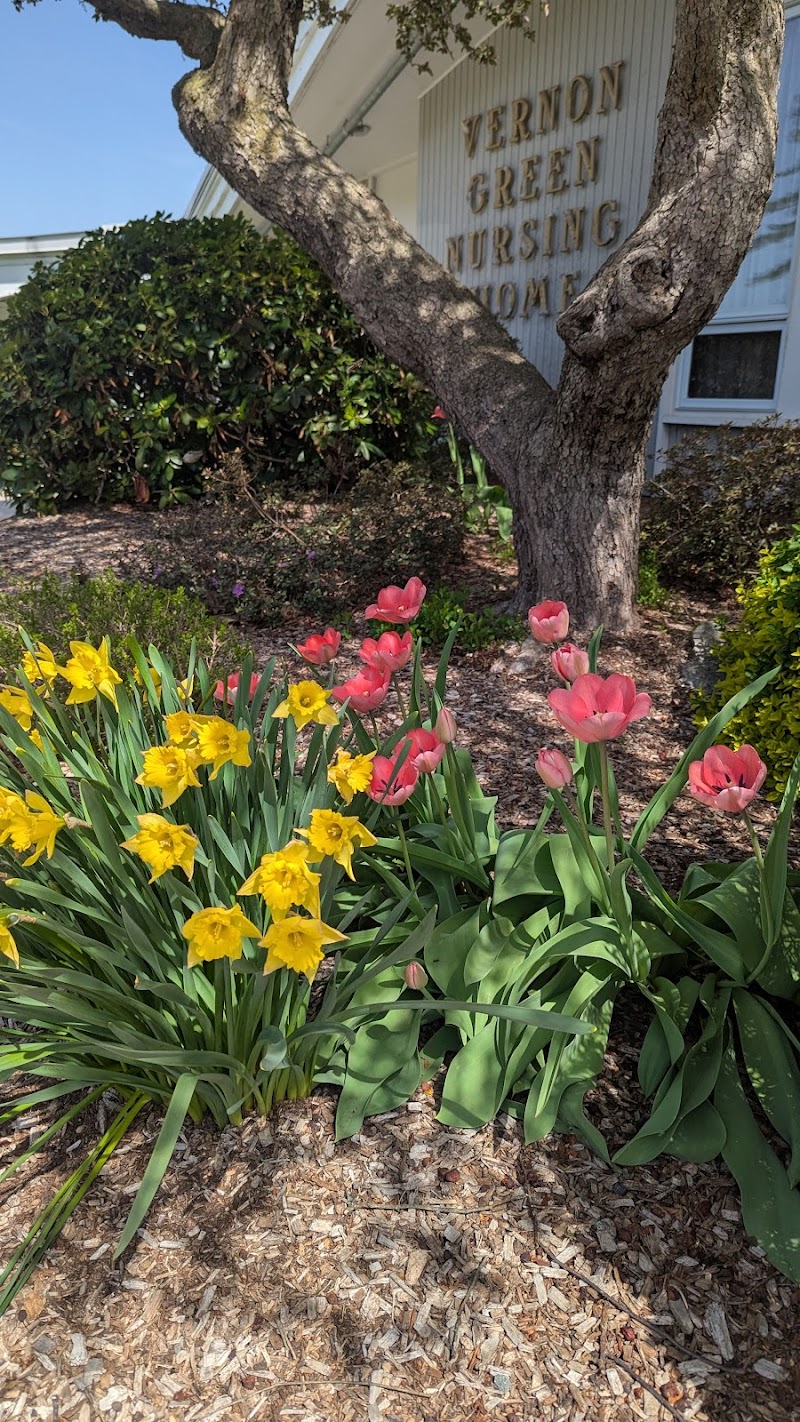
Vernon Green Nursing Home
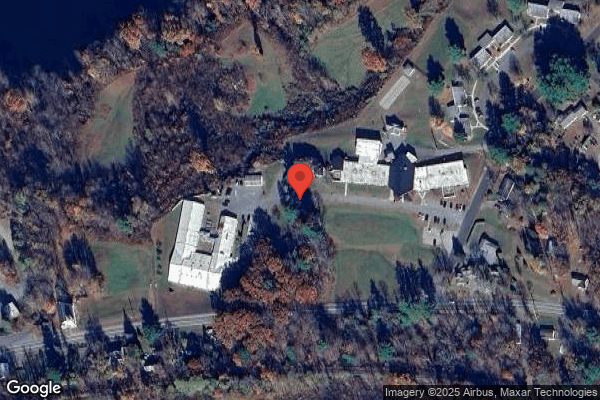
61 Greenway Drive, Vernon, VT 05354 (802) 254-6041
Non profit - Corporation 60 Beds Independent Data: November 2025 1 Immediate Jeopardy citation
Trust Grade
13/100
#25 of 33 in VT
Last Inspection: October 2024

Within standard 12-15 month inspection cycle. Federal law requires annual inspections.

Overview

Vernon Green Nursing Home has received a Trust Grade of F, indicating significant concerns about its overall quality and care. It ranks #25 out of 33 facilities in Vermont, placing it in the bottom half of nursing homes in the state, and #3 out of 3 in Windham County, meaning there are no better local options available. While the facility is improving-reducing issues from 22 in 2023 to 7 in 2024-there are still serious concerns, including a critical incident where residents faced the risk of burns due to dangerously high water temperatures. Staffing is a relative strength with a 4/5 star rating and a turnover rate of 47%, which is lower than the Vermont average. However, the facility has faced $87,896 in fines, suggesting persistent compliance problems, and there were serious findings related to inadequate assistance for residents, leading to feelings of humiliation and neglect.
Trust Score
F
13/100
In Vermont
#25/33
Bottom 25%
Safety Record
High Risk
Review needed
Inspections
Getting Better
22 → 7 violations
Staff Stability
⚠ Watch
47% turnover. Above average. Higher turnover means staff may not know residents' routines.
Penalties
✓ Good
$87,896 in fines. Lower than most Vermont facilities. Relatively clean record.
Skilled Nurses
✓ Good
Each resident gets 43 minutes of Registered Nurse (RN) attention daily — more than average for Vermont. RNs are trained to catch health problems early.
Violations
⚠ Watch
37 deficiencies on record. Higher than average. Multiple issues found across inspections.
★★☆☆☆
2.0
Overall Rating
★★★★☆
4.0
Staff Levels
★★☆☆☆
2.0
Care Quality
★★☆☆☆
2.0
Inspection Score
Stable
2023: 22 issues
2024: 7 issues

The Good

  • 4-Star Staffing Rating · Above-average nurse staffing levels
  • Full Sprinkler Coverage · Fire safety systems throughout facility
  • No fines on record

Facility shows strength in staffing levels, fire safety.

The Bad

2-Star Overall Rating

Below Vermont average (2.8)

Below average - review inspection findings carefully

Staff Turnover: 47%

Near Vermont avg (46%)

Higher turnover may affect care consistency

Federal Fines: $87,896

Well above median ($33,413)

Moderate penalties - review what triggered them

The Ugly 37 deficiencies on record

1 life-threatening 3 actual harm
Oct 2024 7 deficiencies
CONCERN (D) 📢 Someone Reported This

A family member, employee, or ombudsman was alarmed enough to file a formal complaint

Potential for Harm - no one hurt, but risky conditions existed

Free from Abuse/Neglect (Tag F0600)

Could have caused harm · This affected 1 resident

Based upon interview and record review, the facility failed to ensure one resident [Res. #35] of 21 sampled residents remained free from physical abuse. Findings include: Per record review of Progres...

Read full inspector narrative →
Based upon interview and record review, the facility failed to ensure one resident [Res. #35] of 21 sampled residents remained free from physical abuse. Findings include: Per record review of Progress Notes for Res. #35 dated 7/22/24 Other resident was in [h/her] room when [Res.#35] tried to enter the room. [Res.#35] asked the person to leave [h/her] room and they got agitated and would not let [h/her] in [h/her] own room. They took [Res.35's] glasses off and threw them across the room, poured a soda on [h/her] head and then was moving [h/her] wheelchair from side to side until [s/he] ultimately fell out of the wheelchair. [Res.#35] did call for help and staff arrived as soon as heard [h/her]. Per review of the facility's investigation of the incident, the investigation concluded the allegation was verified by evidence collected during the investigation and was witnessed by staff. Per review of corrective actions taken by the facility after the incident, the residents were immediately separated after the incident and assessed for injuries. Close supervision was provided. Care plans for both residents were updated. Family, physician, and authorities were notified, the incident was reported to the State Agency and investigated in the appropriate time frame. The perpetrator was psychologically evaluated and medications were adjusted. Res. #35 was moved off the perpetrator's unit, and Social Services and Behavioral Health Services were involved in care and treatment for both residents post incident. Review of Res.#35's medical record reveals no negative physical or psychological outcomes from the incident. The facility conducted a Behavior Analysis Report regarding the perpetrator's behaviors before and after the incident. Behaviors that were monitored included grabbing others, hitting others, pushing others, cursing at others, screaming at others, threatening others, and rejection of care. The facility monitored the number of behaviors, when they occurred, the intervention[s] provided, and whether the interventions were effective. Per review of the Behavior Analysis Report, interventions implemented to halt the behavior during the incident on 7/21/24 and new interventions implemented to prevent future incidents were documented and noted effective. Per interview with staff Licensed Practical Nurse [LPN] on 10/30/24 at 8:34 AM, the LPN confirmed the perpetrator's past behaviors and improvement post incident. The facility completed corrective actions after identifying this deficient practice, prior to the survey entrance; therefore, this deficiency is considered past noncompliance.
CONCERN (D)

Potential for Harm - no one hurt, but risky conditions existed

Comprehensive Care Plan (Tag F0656)

Could have caused harm · This affected 1 resident

2. Per observation on 10/28/2024, at 05:19 PM Resident #30 was sitting at the dining table in a reclining chair. S/he was leaned over the left side of the chair with his/her face at eye level with the...

Read full inspector narrative →
2. Per observation on 10/28/2024, at 05:19 PM Resident #30 was sitting at the dining table in a reclining chair. S/he was leaned over the left side of the chair with his/her face at eye level with the edge of the table. Resident #30 was not repositioned from his/her side prior to being given his/her meal. At 5:30 PM on 10/28/2024 the License Nursing Assistant (LNA) brought resident's tray to the table and without repositioning Resident #30, s/he handed the resident a half a sandwich. Resident #30 remained in the leaned over to the left side of the chair and was not repositioned prior to his/her meal. Resident #30 remained on his/her left side at eye level with the table while s/he attempted to eat the sandwich. Per record review Resident #30 was admitted to the facility with a diagnosis of Vascular Dementia, dysphasia and reflux disease. His/her care plan included .due to my medical diagnosis of dysphasia, I am an aspiration risk . Approach starting 3/14/2023 I need to be seated upright in the chair at 90 degrees for all intake . I need to be seated upright for 45-60 minutes after every meal to decrease my chance of reflux. Per further record review Speech, Language and Pathology note dated 6/8/2024 in section titled Impact on burden of care / daily living without interventions implemented, [Resident #30] is at risk for aspiration and general discomfort during intake due to severity of [his/her] cough [and] clearing [his/her] airway . Per interview on 10/28/2024 at 5:45 PM with the LNA staff confirmed that Resident #30 should have been repositioned and sat up prior to meal, and that s/he requires observation and assistance with all meals. Based on observation, interview, and record review the facility failed to implement care planned interventions for 2 of 29 Residents in the sample (Resident # 30) related to positioning, and (Resident #25) related to pressure ulcer prevention, pain control, and nutritional risks. Findings include: 1. Per recd review Resident #25 has advanced dementia. S/he developed an in house acquired stage 2 (partial thickness loss of dermis presenting as a shallow open ulcer with a red or pink wound bed, without slough. May also present as an open/ruptured serum-filled blister) pressure ulcer on her/his left heel and has experienced a significant weight loss of 11.84% over 3 months. A Nurses Progress note dated 9/10/2024 12:12 PM reads a fluid-filled blister was noted at outer edge of left heel found this AM during therapy session; resident c/o discomfort when blister was pushed on; the skin over the blister is dry/calloused; the right heel is slight pink . A Care Plan Problem with a start date of 2/19/2022 stated that Resident #25 has the potential for skin breakdown related to incontinence and decreased mobility, as well as a decline in ability to participate in ADL (Activities of Daily Living) care. A listed approach to care with a start date of 10/17/2024 reads Provide me with pressure relief boots on in r/c [reclining chair]. Another approach with a start date of 2/19/2022 is Assist me with frequent position changes. Per observation on 10/28/2024 at 3:00 PM Resident #25 was observed lying in a reclining chair. There were no pressure relief boots on her/his feet. During an interview on 10/28/24 at approximately 4:15 PM a Licensed Nurse Assistant (LNA) who is familiar with Resident #25 confirmed that the Resident should have pressure relief boots on when up in the reclining chair, and that s/he did not have them on. The LNA retrieved the boots from the Resident's room and applied them to the Resident's feet. During observations on 10/29/2024 at 12:40 PM Resident #25 was seen asleep in a reclining chair leaning to the right with a pillow on the arm of the chair under the right side of her/his head. There were no pressure relief boots on her/his feet. This Surveyor observed the Resident lying in the recliner from 12:40 PM - 4:10 PM without being assisted with repositioning. At 4:10 PM s/he was still lying in a recliner leaning to the right with her/his head on a pillow on the arm of the chair. S/he had not been repositioned and there were no pressure relief boots on her feet per care plan. Per interview with a LNA on 10/29/2024 at 4:20 PM Residents are usually toileted and repositioned about every two hours. The LNA confirmed that Resident #25 did not have pressure relief boots on her/his feet and that s/he should. The LNA retrieved the boots and applied them to Resident #25's feet. Further review of Resident 25's record revealed a Dieticians Progress Note dated 9/11/2024 that states Recommend increase in supplement to TID [three times per day] to provide 750 cal/27 gm pro., and Centrum silver QD [every day] to support wound healing and deter weight loss. See care plan. A Care Plan Problem for Nutritional Status last edited on 10/23/24 states I have a [history] of weight loss along with behavioral changes, and I am at risk for additional weight loss. I have increased pro/cal/vit [protein/calories/vitamin] needs for wound healing (Stage] II area 9/10/24). I can no longer feed myself due to decline in cognition. Care Plan interventions last edited on 9/11/24 state Provide me with my nutritional supplement as ordered. Increase to TID recommended 9/11/24 to support wound healing. Provide vitamins as ordered to support wound healing-centrum silver recommended. A Dietician Progress Notes dated 10/28/2024 reveals that Resident #25 had not started centrum tab or had any increase in her/his dietary supplement; this [was] recommended by dietician to support wound healing; sent fax to Doctor [name omitted] r/t [related to] this;. Review of Resident #25's October 2024 Medication Administration Record (MAR) revealed that the increase in dietary supplement and the administration of the Centrum Silver did not start until 10/29/2024. During an interview on 10/30/2024 at 3:33 PM the Director of Nursing confirmed that the the recommendations made by the dietician on 9/11/2024 had not been implemented until 10/29/2024.
CONCERN (D)

Potential for Harm - no one hurt, but risky conditions existed

Deficiency F0657 (Tag F0657)

Could have caused harm · This affected 1 resident

Based on observations, staff interviews and record reviews, the facility failed to revise the comprehensive care plan for two of twenty nine Residents in the sample (Resident #9 and Resident #15) as t...

Read full inspector narrative →
Based on observations, staff interviews and record reviews, the facility failed to revise the comprehensive care plan for two of twenty nine Residents in the sample (Resident #9 and Resident #15) as the Residents' plans of care changed related to Activities of Daily Living (ADLs) and Nutritional Status for Resident #9, and a fall with major injury at the facility for Resident #15. Findings include: 1. Per Observation on 10/28/24 and 10/29/2024, Staff were seen assisting Resident #9 with eating a meal. This surveyor observed the need for total assistance. Per record review, Resident #9's current Care Plan Problem category Nutritional Status states I have a history of weight loss. I continue to be at risk for weight loss and altered fluid status due to my variable meal intake at times, related to my cognitive/ mood state, as well as possible medication side effects. This Problem category has an Approach dated 12/04/2023 that states I am dependent on you to assist me with my meal to help me have sufficient intake. I will occasionally feed myself a drink. There is another Approach, dated 04/29/2021 that states Set my meal up for me to encourage my independent eating Resident #9's current Care Plan Problem category ADLs Functional Status/ Rehabilitation Potential states I have a self care deficit secondary to my physical limitations, as well as a decline in my functional strength and endurance with poor activity tolerance. This Problem category has an Approach dated 09/26/2022 that states Cue me for mouth and hair care and assist me as needed and as I will allow. There is another Approach that states Provide setup for my ADL care at my bedside or in my bathroom, which ever I may prefer. Encourage and cue me as needed to wash what I can and provide me with assistance as needed. Per interview on 10/30/2024, at 3:37 pm with Licensed Nursing Assistant (LNA) Resident #9 will open his/her mouth to be fed and to allow us to brush his/her teeth, but otherwise is dependent on staff for all ADLs. Per interview 10/30/24, at 3:45 pm, MDS Coordinator confirmed that the current Care Plan is incorrect/ contradictory and has not been revised. 2. Per the facility's Falls Risk Assessment and Care Planning policy, 5. Assessment data shall be used to identify underlying medical conditions that may increase the risk of injury from falls . 6. The staff, with the support of the Attending Physician and therapy department, will evaluate functional and psychological factors that may increase fall risk, including ambulation, mobility, gait, balance, excessive motor activity, Activities of Daily Living (ADL) capabilities, activity tolerance, continence, and cognition .The care plan will be reviewed and revised by the charge nurse or designee after each fall and additional nursing staff will be notified through shift reports and communication logs. Per record review, on 9/28/24 at approximately 7:54 PM Resident #15 had an unwitnessed fall in his/her room. Resident #15 was transported to the hospital by EMS [Emergency Medical Services]. Per record review of physician documentation, Resident #15 was admitted to the hospital for Left Hip fracture with small extraperitoneal pelvic hemorrhage (a left broken hip with some internal bleeding). S/he had surgery to fix his/her broken hip. Per record review of Resident #15's care plan states I am at risk for falling R/T my decreased activity tolerance, as well as my decreased safety awareness. This was last edited on 9/5/24. There are no new revisions in this section of the care plan after Resident #15's fall and hospitalization. Per interview with the DON [Director of Nursing] on 10/30/24 at 10:06 AM it was confirmed that Resident #15's care plan was not revised after his/her fall with major injury.
CONCERN (D)

Potential for Harm - no one hurt, but risky conditions existed

Deficiency F0658 (Tag F0658)

Could have caused harm · This affected 1 resident

**NOTE- TERMS IN BRACKETS HAVE BEEN EDITED TO PROTECT CONFIDENTIALITY** Based on observation, interview and record review the facility failed to meet professional standards related to a Licenced Nursi...

Read full inspector narrative →
**NOTE- TERMS IN BRACKETS HAVE BEEN EDITED TO PROTECT CONFIDENTIALITY** Based on observation, interview and record review the facility failed to meet professional standards related to a Licenced Nursing Assistant (LNA) acting outside his/her scope of practice by administrating medications to one resident in the sample (Resident # 205). Findings include Per observation at approimately 2:00 PM on 10/28/2024 the LNA was observed administrating medications to Resident #205 while at the nurse's station. Per Interview with a Licensed Nurse on 10/28/2024 at approximately 2:05 PM s/he stated that s/he or the other Nurse were unable to administer the medication to the Resident. S/He stated that they delegated the task to the LNA because s/he had a good rapport with Resident #205. Per Interview with the LNA on 10/28/2024 at 3:40 PM s/he confirmed that s/he gave Resident #205 his/her medications crushed in ice cream. The LNA stated that this was not the first time s/he has been delegated by nurses to give medications. The LNA stated that s/he has not been trained by the facility to give medications. According to the [NAME] State Board of Nursing and the LNA scope of practice An LNA may not perform activities which exceed the scope of practice defined by their level of licensure. This means that the LNA may not perform, even if directed to do so, an activity not appropriate to their level of licensure or otherwise prohibited by law. Examples of activities not within the LNA scope of practice include: nursing assessments, nursing judgments, and development of the plan of care. Durnig interview on 10/30/2024 at approximately 4:00 PM the Director of Nursing confirmed that administrating medications to residents is not in a LNA's scope of practice, and that the LNA should not do so.
CONCERN (D)

Potential for Harm - no one hurt, but risky conditions existed

Accident Prevention (Tag F0689)

Could have caused harm · This affected 1 resident

**NOTE- TERMS IN BRACKETS HAVE BEEN EDITED TO PROTECT CONFIDENTIALITY** Based on interviews and record review the facility failed to provide adequate supervision to maintain safety for one (1) residen...

Read full inspector narrative →
**NOTE- TERMS IN BRACKETS HAVE BEEN EDITED TO PROTECT CONFIDENTIALITY** Based on interviews and record review the facility failed to provide adequate supervision to maintain safety for one (1) resident (Resident #15) out 2 sampled residents. Findings include: Per record review Resident #15 was admitted to the facility on [DATE] with diagnoses of Atrial Fibrillation (an irregular heartbeat), depression, hypertension (high blood pressure), and dementia. Resident #15's care plan states I am at risk for falling R/T [related to] my decreased activity tolerance, as well as my decreased safety awareness. This was last edited on 9/5/24. Per record review, on 9/28/24 at approximately 7:54 PM Resident #15 had an unwitnessed fall in his/her room. Resident #15 was transported to the hospital by EMS [Emergency Medical Services]. Per record review of physician documentation, Resident #15 was admitted to the hospital for Left Hip fracture with small extraperitoneal pelvic hemorrhage (a left broken hip with some internal bleeding). S/he had surgery to fix his/her broken hip. Per the facility's Falls Risk Assessment and Care Planning policy, 5. Assessment data shall be used to identify underlying medical conditions that may increase the risk of injury from falls . 6. The staff, with the support of the Attending Physician and therapy department, will evaluate functional and psychological factors that may increase fall risk, including ambulation, mobility, gait, balance, excessive motor activity, Activities of Daily Living (ADL) capabilities, activity tolerance, continence, and cognition. 7. The staff will seek to identify environmental factors that may contribute to falling, such as lighting and room layout. Per record review of the facility's internal report, there is no documentation of an evaluation and analysis of hazards and risks in Resident #15's environment that could have caused the unwitnessed fall. There is no implementation of individualized, resident-centered interventions to reduce Resident #15's risks for falls related to possible hazards in the environment.
CONCERN (D)

Potential for Harm - no one hurt, but risky conditions existed

Deficiency F0692 (Tag F0692)

Could have caused harm · This affected 1 resident

Based on interview and record review the facility failed to ensure that recommendations made by the Registered Dietician were implemented to support wound healing and deter weight loss for 1 of 29 Res...

Read full inspector narrative →
Based on interview and record review the facility failed to ensure that recommendations made by the Registered Dietician were implemented to support wound healing and deter weight loss for 1 of 29 Residents in the sample (Resident #25). Per record review Resident #25 had experienced a significant weight loss of 11.48% over 3 months, and had a stage 2 (partial thickness loss of dermis presenting as a shallow open ulcer with a red or pink wound bed, without slough. May also present as an open/ruptured serum-filled blister) facility acquired pressure ulcer. A Registered Dietician's Progress Note dated 9/11/2024 states Recommend increase in supplement to TID [three times per day] to provide 750 cal/27 gm pro., and Centrum silver QD [every day] to support wound healing and deter weight loss . Further review of the record revealed a Dietician Progress Notes dated 10/28/2024 that states that Resident #25 had not started centrum tab or had any increase in her/his dietary supplement; this [was] recommended by dietician to support wound healing; sent fax to Doctor [name omitted] r/t [related to] this;. Review of Resident #25's October 2024 Medication Administration Record (MAR) revealed that the increase in dietary supplement and the administration of the Centrum Silver did not start until 10/29/2024. During an interview on 10/30/2024 at 3:33 PM the Director of Nursing confirmed that the the recommendations made by the dietician on 9/11/2024 had not been implemented until 10/29/2024.
CONCERN (E)

Potential for Harm - no one hurt, but risky conditions existed

Medication Errors (Tag F0758)

Could have caused harm · This affected multiple residents

**NOTE- TERMS IN BRACKETS HAVE BEEN EDITED TO PROTECT CONFIDENTIALITY** 3. Per record review, Resident #45 was admitted to the facility on [DATE] with diagnoses of bipolar disorder (a mental illness c...

Read full inspector narrative →
**NOTE- TERMS IN BRACKETS HAVE BEEN EDITED TO PROTECT CONFIDENTIALITY** 3. Per record review, Resident #45 was admitted to the facility on [DATE] with diagnoses of bipolar disorder (a mental illness causing extreme mood swings) and vascular dementia (chronic cognitive impairment due to decreased blood flow to the brain). Per further record review Resident #45 had the following medication order: Lorazepam (a medication used to treat anxiety) 0.5 milligram (mg) tablet: Take one tablet by mouth once daily as needed. The medication order was placed on 9/19/24 with a stop date of 12/15/24. There is no Medical Provider documentation to support a prescribed as needed order beyond 14 days for Resident #45. Per interview with Registered Nurse #1 on 10/29/24 at 3:43 PM it was confirmed that Resident #45's order for Lorazepam had been extended past 14 days with no physician rationale. Based on record review and interview, the facility failed to implement 14 day stop dates on prescribed as needed (PRN) psychotropic medications for 3 out of 5 residents in the sample (Resident's #24, #205 and #45). Findings include 1. Per record review, Resident #24 was admitted with a diagnosis of Alzheimer dementia and had the following medication orders written by the facility Provider on 10/7/2024: Quetiapine tablet; 25 mg; amt: 1 tab; oral .Twice A Day - PRN There was no documented evidence in the orders of a stop date for the antipsychotic medication as required or rationale by the Provider to extend the medications. 2. Per record review, Resident #205 was admitted on [DATE] with a diagnosis of lewy body dementia. S/He had the following PRN medication orders written by the facility Provider on 10/22/2024: Trazodone tablet; 50 mg: 1/2 tablet PRN three times a day without a stop date and Risperidone 0.25 mg, 1 tablet as needed without evidence of a stop date. Per interview with the Director of Nursing [DON] on 10/30/2024 at 10:20 AM. The DON stated and confirmed that PRN medications for Resident #24 and #205 did not have a stop date and should have. Per facility policy titled (PRN Psychotropic Medications) reviewed on 7/11/2024 PRN orders for psychotropic drugs are limited to 14 days. If the attending physician or prescribing practitioner believes it is appropriate for the PRN order to be extended beyond 14 days, the following must be met i. The attending physician or prescribing practitioner evaluates the resident for appropriateness of that medication and ii. The rationale for extending the PRN order for more than 14 days is documented in the resident ' S medical record. The duration of the PRN order must also be documented. 5. PRN orders for antipsychotic drugs are limited to 14 days and cannot be renewed unless the attending physician or prescribing practitioner evaluates the resident for the appropriateness of that medication.
Dec 2023 20 deficiencies 1 IJ (1 facility-wide)
CRITICAL (L)

Immediate Jeopardy (IJ) - the most serious Medicare violation

Accident Prevention (Tag F0689)

Someone could have died · This affected most or all residents

⚠️ Facility-wide issue

**NOTE- TERMS IN BRACKETS HAVE BEEN EDITED TO PROTECT CONFIDENTIALITY** Based on observation, staff interview, and record review, the facility failed to ensure that resident environments were free of ...

Read full inspector narrative →
**NOTE- TERMS IN BRACKETS HAVE BEEN EDITED TO PROTECT CONFIDENTIALITY** Based on observation, staff interview, and record review, the facility failed to ensure that resident environments were free of accident hazards related to safe handwashing water and bathing water temperatures. The facility failed to have an adequate water temperature monitoring process in place that resulted in critically high water temperatures in resident rooms and in a shower/tub room. These failures resulted a likely risk of serious burns to residents and created an immediate jeopardy situation. Findings include: Per observation on 11/27/23 at 11:45 AM, the water from the resident handwashing faucet in room [ROOM NUMBER] was too hot to use when this surveyor went to wash their hands following resident interview. The faucets are located outside of the resident bathrooms in the main part of the resident rooms. The water temperature was taken at this faucet with a digital thermometer, which read exactly 120 degrees Fahrenheit at its hottest. The water temperature was then taken in additional resident rooms and in shower/tub rooms used for resident bathing. At 11:50 AM, the faucet water in resident room [ROOM NUMBER] read 124.1 degrees Fahrenheit at its hottest. At 11:52 AM, the faucet water in resident room [ROOM NUMBER] read 126.0 degrees Fahrenheit at its hottest. At approximately 12:00 PM, the B wing bathtub faucet water read 123.9 degrees Fahrenheit at its hottest. Per interview on 11/27/23 at 12:15 PM, the facility's Maintenance Director stated that the boiler with the mixer valve for hot water is set at 115 degrees Fahrenheit and is located under the main dining room in the basement. Rooms closer to the boiler are likely to be hotter, as the water takes less time to travel from the boiler to the faucets the closer they are to the boiler. The Maintenance Director stated that they check and record water temperatures every day at approximately 7:30 AM, when water usage is at its highest in the facility due to morning care. They confirmed that water temperatures are not taken in resident rooms, also due to morning care, and that water temperatures are taken from somewhere in the common areas or main lobby. When asked if they were ever aware of water temperatures being hot before, they confirmed that they had been made aware of it in the past, but that when the temperature of the boiler was turned down, the staff and residents would complain that there is not enough hot water at high usage times. For this reason, they set the boiler temperature back at 115 degrees Fahrenheit. When asked, the Maintenance Director confirmed that residents wash their hands and receive showers/baths at all times of the day. The Maintenance Director then confirmed that the facility's policy regarding water temperatures states that any water temperature above 120 degrees Fahrenheit is too hot and unacceptable. After the interview at approximately 12:30 PM, this surveyor and the Maintenance Director measured the temperature of the water in room [ROOM NUMBER] with our respective thermometers. This surveyor's thermometer read 122.1 degrees Fahrenheit, and the Maintenance Director's thermometer read 121.9 degrees Fahrenheit. The Maintenance Director confirmed that this is too hot for the water that residents have access to. Per review of the facility policy titled Water Temperature Precautions - Anti Scald, the policy states, water heaters that service resident rooms, bathrooms, common areas, and tub/shower areas shall be set to temperatures of no more than 120 degrees Fahrenheit . Review of the facility's water temperature monitoring log for November 2023 shows that no temperatures exceeded 120 degrees Fahrenheit, but that water temperatures were recorded at 119.3 on the 7th, 119.6 on the 15th, 119.1 on the 23rd, and 119.2 on the 24th at times of high water use in the facility. Serious burns are likely within minutes of skin exposure to water around 120 degrees Fahrenheit or greater. Resident rooms #109 and #111 are on the long-term care unit and rooms #210 and the B wing tub room are located on the memory care unit where the facility's most cognitively impaired and vulnerable residents are located. Resident room faucets are easily accessible to anyone entering a resident room. The facility confirmed their water temperature monitoring process does not include a way to ensure measuring temperatures in resident rooms or at varying times of day. The facility also confirmed that they had been alerted to hot water concerns in the past but took no lasting action to address the issue. For these reasons, there was an immediate risk of harm to residents that was likely to result in serious burns.
SERIOUS (G)

Actual Harm - a resident was hurt due to facility failures

Free from Abuse/Neglect (Tag F0600)

A resident was harmed · This affected 1 resident

**NOTE- TERMS IN BRACKETS HAVE BEEN EDITED TO PROTECT CONFIDENTIALITY** 2. Per record review, Resident #33 has resided at the facility since 10/17/2022 with diagnoses that include Depression, muscle w...

Read full inspector narrative →
**NOTE- TERMS IN BRACKETS HAVE BEEN EDITED TO PROTECT CONFIDENTIALITY** 2. Per record review, Resident #33 has resided at the facility since 10/17/2022 with diagnoses that include Depression, muscle weakness, and a BIMS of 12 (A cognitive screening measure that evaluates memory and orientation, indicating moderately impaired cognition). Per interview on 11/27/2023, at 2:10 PM, Resident #33 expressed feeling humiliated about being incontinent of urine and feces, and is told to go in her/his underwear, and they will clean her/him up. Per the resident, there was a urinal and a bedpan provided, but they are no longer available to her/him. Resident #33 explains that although it is difficult to transfer using the Hoyer lift (a mechanical lift used to move residents from one point to another), which requires additional staff, staff do not come back in time when s/he needs assistance, and s/he ends up soiling her/his clothes. Resident #33 says, I know I am a lot of work, and I feel bad if I ask for help; I'm a veteran and fought for my country; this feels bad. Per record review: A care plan problem reviewed on 9/7/2023 reads, s/he may experience episodes of incontinence . I require your assistance using the bathroom, secondary to my cognitive and physical limitations. Another progress note, dated 09/14/23, S/he may experience episodes of incontinence .S/he requires assistance using the bathroom and may choose to keep a urinal at the bedside. A progress note dated 9/22/23 I need to have a BM (bowel movement). It's stinging my butt, [incontinent of large BM and urine]. Another care plan intervention implemented on 10/17/2022: Offer me the bedpan or bedside commode with my routine comfort checks during the night . I prefer to use the urinal at night, but I may spill it and need staff assistance to empty it. Another intervention dated 10/17/2022 offer and assist me with using the bathroom pre and post-mealtime and at HS (before bed) and on request . Remind me to ask you for assistance whenever I need the bathroom. The facility is failing to implement Resident # 33's interventions as identified in her/his care plan, by not offering the bed pan and urinal, resulting in the resident waiting for extended periods of time and urinating in her/his clothes resulting in embarrassment and humiliation. Although there was no evidence that this practice caused physical harm to the Resident, the fact that Resident #33 expressed feelings of embarrassment and humiliation reflects psychological harm. Per interview on 11/28/2023 at 2:49 PM, Licensed Nursing Assistant (LNA) #1 stated Resident #33 must be moved to the bed using the Hoyer lift and then offered the bedpan. S/he says,A bedpan is kept in the bathroom for that purpose. S/he was unable to produce a bedpan when asked. Per interview on 11/28/2023 at 2:53 PM with LNA #2, s/he explained they may try to provide toileting or the bedpan to Resident # 33, but it's hard, s/he is a Hoyer lift, and we need a second person, so s/he wears an incontinence brief, it makes it easier . We don't have the staff to manage the residents who need the Hoyer to move them . Usually, s/he is incontinent anyway by the time we return, so we just put him/her on the bed and change her/him. On 11/29/2023 at 1:28 PM two LNAs were observed checking Resident #33 incontinence brief. S/he was incontinent of urine and was not offered to use the bedpan or urinal. Per interview with the LNA after the observation, at approximately 1:45 PM, the LNA stated, Resident #33 was already incontinent, so they provided incontinent care and did not offer the urinal. An interview with Resident #33 on 11/29/2023 at approximately 1:55 PM revealed that s/he had not been offered the bedpan, toilet, or urinal since s/he was given morning care at approximately 6:55 AM. On 11/28/2023 at approximately 3:25 PM, the Director of Nursing confirmed that staff was not providing the necessary care and assistance to Resident #33 by not implementing his/her care plan and not offering him/her the use of the bedpan, urinal, or bathroom. Based on observations, interviews, and record review, the facility failed to protect the resident's right to be free from sexual abuse by a resident for 1 of 25 residents in the sample (Resident # 19), and the facility failed to protect the resident's right to be free from neglect for 1 of 25 residents in the sample (Resident #33). Findings include: 1. Per record review, Resident #19 has diagnoses that include major depressive disorder, advanced dementia with behavioral disturbances, and delusional disorders. Resident # 19's Activities of Daily Living (ADL)/Rehab Potential care plan reflects that s/he requires extensive to total staff assistance with ADLs. Review of Resident #19's Behavioral Symptoms care plan reveals that s/he wanders about the unit in her/his wheelchair. An MDS (Minimum Data Set, an assessment tool used for implementing standardized assessment and for facilitating care management in Long Term Care) dated 9/22/23 states that Resident #19 was unable to participate in the BIMS (Brief Interview for Mental Status) assessment due to severe cognitive impairment. Per Reveiw of the facility internal investigation a witness statement written by a licensed nursing assistant (LNA)dated 8/12/23 states I came out of [another resident's room] and saw (Resident #19) chair in [Resident #53's room], so I went to remove [him/her]. As I came around the corner I saw (Resident #53) holding (Resident #19) by the wrist, as (Resident #53) mastersterbated in close proximity to (Resident #19) face. Resident #19 appered to be covered in urine from the chest down. Resident #53's pant legs were soaked as well. (Resident #19) was removed from the room and (Resident #53) was put back to bed. A nurse progress note written on 8/13/23 at 8:38 PM reveals that the day after the incident Resident #19 was monitored and redirected all shift attempting to go into other residents' rooms several times. Wandering excessively all shift, very unsettled Had to be kept in [NAME] room for supper due to excessive wandering, attempted several unsafe risings during the shift from his/her wheelchair, continued to redirect and occupy resident all shift. Very resistant and combative during HS [hour of sleep] care. Per resident care plan dated 9/21/23 Resident #19 I may look to go home, and may wander about the unit in my wheelchair looking for away out, and I may be difficult to redirect at times. Without meaning to, I may wander into other's personal spaces I may be resistive or combative with care. I may become combative/aggressive with attempts at redirection or repositioning in my wheelchair. Further record review reveals that Resident #19's care plan last updated on 9/21/23 does not reflect that s/he is vulnerable to, at risk for, or an actual victim of abuse after the 8/12/23 incident. The care plan also has no interventions in place to protect Resident #19 from further incidents of abuse. Per review of Resident #53's medical record, s/he has a diagnosis of Alzheimer's disease and had been exhibiting a recent increase in sexual behaviors toward staff and other residents. An MDS quarterly assessment dated [DATE] reflects that Resident #53 has a BIMS score of 3 indicating severe cognitive impairment. S/he ambulated independently with a walker. Per a Nursing Progress Note dated 8/7/2023 a new physician order was recieved on 7/31/23 to increase daily Aricept to 10 mg. The Progress Note states that Residnet #3 had some copies of clinic notes in chart that came from The Memory Clinic. The notes state that 7/15/19 Aricept 10 mg seemed to precipitate an increase in agitation in patient. The Physician was notified of the notes from the Memory Clinic and nursing will continue to document every shift to monitor x 21 days. Nurses progress notes written between 8/8/23 and 8/13/23, both prior to and after the incident reflect that Resident #53 had required redirection by staff due to sexual comments and requests made to staff and other residents, fondling her/his own genitals, touching staff's buttocks and crotch areas, and attempting to kiss staff and another resident. A nurses progress note written on 8/12/23 at 2:22 PM states Since 7/31/23 [Resident #53] has had a documented increase in sexual libido and acting on urges in inappropriate places . The progress note also reflected that Resident #53's bed alarm should be re-positioned to the end of the bed to ensure that s/he cannot turn it off, alerting staff to his/her movement within his/her room. A nurses progress note written on 8/13/23 states during the night Resident #53 wandered into another resident's room bed alarm was in place resident was able to turn it off alarm. Resident #53's care plan initiated on 8/10/23 identifies a problem of I may be sexually inappropriate towards staff and other residents. There were no documented interventions implemented to protect other residents until 8/12/23 after the incident that involved Resident #19. There is also no evidence in the record that the Physician was notified of the increase in behaviors until 8/12/23 after the incident that involved Resident #19. During an interview on 11/27/23 at 2:30 PM a Licensed Practical Nurse (LPN) confirmed that Resident #19 is always in eyesight during his/her shift but does wander in his/her wheelchair and will attempt to go into other resident rooms. During an interview on 11/30/23 at 12:37 PM the Social Services Director confirmed that she/he was aware of the resident-to-resident abuse incident between residents #19 and #53. She/he also confirmed there is no care plan in place that addresses the fact that Resident #19 is at risk for or is an actual victim of abuse.
SERIOUS (G)

Actual Harm - a resident was hurt due to facility failures

Pressure Ulcer Prevention (Tag F0686)

A resident was harmed · This affected 1 resident

**NOTE- TERMS IN BRACKETS HAVE BEEN EDITED TO PROTECT CONFIDENTIALITY** Based on observations, interviews, and record reviews the facility failed to ensure that 1 of 25 residents in the applicable sam...

Read full inspector narrative →
**NOTE- TERMS IN BRACKETS HAVE BEEN EDITED TO PROTECT CONFIDENTIALITY** Based on observations, interviews, and record reviews the facility failed to ensure that 1 of 25 residents in the applicable sample (Resident #3) received necessary treatment and services consistent with professional standards of practice to promote healing, prevent infection, and prevent new ulcers from developing. As a result, Resident #3 developed two stage 2 (partial-thickness loss of skin with exposed dermis) pressure ulcers after admission to the facility. Findings include: Per record review Resident #3 was admitted to the facility on [DATE] with diagnoses that include heart failure, atrial fibrillation (an irregular, often rapid heart rate), and peripheral vascular disease (circulation disorder). An admission Nursing Assessment completed on 9/12/23 reflects that Resident #3 had a red rash on areas of their upper body, scabs on their right and left elbows and knees, and a small mark on their left side buttock fold. There were no pressure wounds identified on the admission assessment. A 48 Hour Post admission Interdisciplinary Care Plan dated 9/14/23 reflected that the resident required Routine skin care, had no special treatments, and no pressure ulcers. A care plan focus started on 9/14/23 states that Resident #3 has the potential for skin breakdown related to incontinence and decreased mobility. Interventions implemented on 9/14/23 include check my skin thoroughly with my ADL care, incontinence care, and with my weekly shower. Report any [signs or symptoms] of breakdown to the nurse in charge and my [physician]. There are no preventative interventions in place to protect against the increased risk of development of pressure ulcers related to impaired circulation. Review of Resident #3's admission MDS (Minimum Data Set, an assessment tool used for implementing standardized assessment and for facilitating care management in Long Term Care) dated 9/21/23 the facility had determined that Resident #3 was at increased risk for developing pressure ulcers. It also revealed that Resident #3 did not have pressure ulcers but was at risk for pressure injury and should s/he experience impaired skin integrity, s/he may experience delayed wound healing not only due to hypothyroidism, but also altered perfusion related to atrial fibrillation and congestive heart failure. Progress notes reveal that Resident #3 developed injuries that progressed to bilateral heel stage two pressure ulcers. A progress note dated 11/23/2023 states During hs [hour of sleep] care [Licensed Nursing Assistant] noted heel leaking. When [Licensed Practical Nurse] took a look, it appears to be an old wound. It has a scab on it. The area around is very dry and cracking. It was cleaned with wound cleanser and mepilex applied. Notified [physician] via fax. There is no evidence in the record that reflects the date the pressure ulcers were developed. A Physicians Progress Note dated 11/24/23 reflects that nursing had sent the Physician a fax about potential areas of concern on [bilateral] heels . Left heel has open pressure wound that was draining moderate amount of serous material and sticking to [her/his] sock - area cleaned and mepilex applied. Right heel has mild amount of serous drainage from heel and area cleaned and mepilex [foam dressing] applied there as well. The progress note further states pressure ulcer of right heel stage 2. Area cleaned and mepilex applied. Elevate legs when able. Avoid pressure on heels. Pressure ulcer of left heel stage 2. Area cleaned and mepilex applied. Elevate legs when able. Avoid pressure on heels. There is no documentation of measurements in the record to establish the size of the pressure ulcers. Further record review revealed that there was no evidence of wound assessment of the bilateral heel pressure ulcers. There were no interventions implemented in the care plan that reflect preventive measures for heel pressure ulcers. In addition, the care plan was not revised to reflect the pressure ulcers when they developed, including interventions for pressure ulcer treatments, daily wound monitoring, weekly wound assessments related to the actual ulcers, or the Physicians recommendations to elevate legs when able and avoid pressure on heels. There was no evidence that weekly skin checks were performed as per the care plan. Per interview on 11/30/23 at 12:08 PM the MDS Coordinator confirmed that the care plan did not address the bilateral heel stage two pressure areas and interventions specific to the risk of developing pressure ulcers to the lower extremities related to impaired circulation. During an interview on 11/29/23 at approximately 1:00 PM the Director of Nursing confirmed that s/he had recently identified that wounds were not being assessed per policy.
CONCERN (D)

Potential for Harm - no one hurt, but risky conditions existed

Comprehensive Care Plan (Tag F0656)

Could have caused harm · This affected 1 resident

**NOTE- TERMS IN BRACKETS HAVE BEEN EDITED TO PROTECT CONFIDENTIALITY** Based on observation, interview, and record review the facility failed to develop a comprehensive person-centered care plan that...

Read full inspector narrative →
**NOTE- TERMS IN BRACKETS HAVE BEEN EDITED TO PROTECT CONFIDENTIALITY** Based on observation, interview, and record review the facility failed to develop a comprehensive person-centered care plan that addresses preventative measures related to skin care for 1 of 25 residents in the sample (Resident #3) and a resident's communication needs for 1 of 25 residents (Resident #52). Findings include: 1. Per record review Resident #3 was admitted to the facility on [DATE] with diagnoses that include heart failure, atrial fibrillation (an irregular, often rapid heart rate), and peripheral vascular disease (PVD) (circulation disorder). An admission Nursing Assessment completed on 9/12/23 reflects that there were no pressure or vascular wounds identified and the resident only required routine skin care. An admission Physicians Progress Note dated 9/13/2023 reflects dermal stasis changes consistent with PVD . decreased sensation to feet. Review of Resident #3's care plan does not identify dermal stasis changes or interventions related to the risks related to decreased sensation to feet such as elevating legs and avoiding pressure on heels. A Nursing Progress Note written on 11/23/2023 states During hs [hour of sleep] care LNA [licensed nursing assistant] noted heel leaking. When LPN [licensed practical nurse] took a look. It appears to be an old wound. It has a scab on it. The area around is very dry and cracking. It was cleaned with wound cleanser and mepilex applied . A physicians Progress Note dated 11/24/23 reflects pressure ulcers of right and left heels stage 2 (partial-thickness loss of skin with exposed dermis) with recommendations to elevate legs when able and avoid pressure on heels. Per observations made on 11/27/23 at 1:00 PM Resident #3's left hand was noted to be dusky reddish in color and swollen. There were three necrotic (death of cells or tissue through disease or injury) areas noted on the first and third finger of the left hand. The right hand was also red and dusky. The thumb had two callous areas and the first finger had a large necrotic area. A Physicians Progress note dated 11/29/23 states [Name omitted] has PVD [peripheral vascular disease] and has had dermal stasis changes (caused by poor circulation and blood flow) to hands and feet since admission. [S/he] has thickened skin and red/purple discoloration to hands and feet. [S/he] has several small scabbed over necrotic areas that are present and have been being monitored without any signs of infection. One of those areas is on her left ring finger where had necrotic area to fingertip and today was noted to have lifted up nail and was asked to examine. [Name omitted] is aware that finger hurts today but does not recall any trauma to hand. No drainage noted by staff . [S/he] has upcoming [appointment] with wound care center regarding an area on RLE [right lower extremity] and will ask them to assess PVD changes to hands and feet as well. [Representative] is aware of these areas of concern. A care plan was not initiated to address the risks associated with, or specific interventions related to the resident's dermal stasis of their hands and feet. During interview on 11/30/23 at 12:08 PM the MDS Coordinator confirmed that the care plan did not address the actual status of #3's skin and did not include appropriate interventions. 2. Per record review Resident # 52 was admitted to the facility with diagnoses that include Alzheimer's Disease and anxiety. A Progress Note written on 5/19/23 by Social Services states that Resident #52 is being reviewed for [her/his] admission care plan, [name omitted] is from Colombia and [her/his] first language is Spanish. [S/he] speaks a mix of Spanish and English and when [s/he] starts becoming upset, will mostly speak quickly/progressively louder in Spanish . Per review of Resident #52's Care Area Assessment (CAA - Process that provides guidance on how to focus on key issues identified during a comprehensive assessment and directs facility staff and health professionals to evaluate triggered care areas to be addressed in the care plan) within the Minimum Data Set (MDS, an assessment tool used for implementing standardized assessment and for facilitating care management in Long Term Care) dated 5/18/23 and 8/13/23 documented under section 4. Communication: states Resident triggers for communication [due to] difficulties [s/he] experiences in communicating [with] others. [S/he] experiences difficulties [with] word finding [due to] English being a second language, as [s/he] is originally from Colombia, but is normally able to speak English unless [s/he] is anxious or frustrated, when [s/he] will revert to Spanish. [Her/his] word finding difficulties are also impacted by [her/his] impaired cognition and altered thought patterns [due to her/his] dementia as well as [her/his] daily antipsychotic and antidepressant medications, which are used to help [her/him] manage the [symptoms] of [her/his] dementia, including behavioral outbursts. The CAA also states that Resident # 52 is at risk for continued impaired communication [due to] resident's dementia, medication regimen, and bilingual status as noted above. Resident #52's care plan does not address impaired communication as identified in the MDS CAA. During interview on 11/29/23 at 3:46 PM the MDS Coordinator confirmed that the MDS/CAA assessments dated 5/18/23 and 8/13/23 determined that the Resident #52 triggered for communication and that a care plan should have been developed to identify care needs related to potential language/communication barrier.
CONCERN (D)

Potential for Harm - no one hurt, but risky conditions existed

Deficiency F0658 (Tag F0658)

Could have caused harm · This affected 1 resident

**NOTE- TERMS IN BRACKETS HAVE BEEN EDITED TO PROTECT CONFIDENTIALITY** Based on staff interview and record review, the facility failed to provide services related to nutritional maintenance that meet...

Read full inspector narrative →
**NOTE- TERMS IN BRACKETS HAVE BEEN EDITED TO PROTECT CONFIDENTIALITY** Based on staff interview and record review, the facility failed to provide services related to nutritional maintenance that meet professional standards for one of 5 sampled residents (Resident #18). Findings include: Per record review, Resident #18 was admitted to the facility on [DATE] with a diagnosis of Dementia. The record did not show any documented weights in the last 3 years for Resident #18. Per review of the care plan, there is a care plan problem that states, I am at risk for weight loss and altered fluid status. I have variable meal intake related to my decline in visual function and variations in my cognitive mood state. I am dependent on staff for all meal and fluid consumption. My Weight monitoring was discontinued 5/29/18. There is no weight monitoring order in Resident #18's chart. Per interview on 11/28/23 at approximately 3:00 PM, the Minimum Data Set (MDS) nurse confirmed that weights have been discontinued for Resident #18. They stated that the reason the weights were continued is for comfort and dignity related to [their] advancing dementia and that sometimes they discontinue weights for residents with diagnoses of dementia because their weight loss is unavoidable. On 11/28/23 at approximately 4:00 PM, the MDS nurse provided a faxed order request dated 5/28/18 from a nurse to the Medical Director at the time. The faxed order states we are unable [to] obtain weight due to difficulty. [they are] no longer able to ambulate onto [the] scale and we are unable to get [them] on the scale with the chair [they use]. May we discontinue? The Medical Director's response is yes and the order was signed on 5/29/18. Per phone interview on 11/28/23 at approximately 3:30 PM, the current Medical Director stated that they could not provide specific details about Resident #18 at that time due to not having access to the records, but that some residents with Dementia are determined to be at risk for unintended weight loss despite intervention. For their comfort and dignity, weights may be discontinued and other data used as the primary tool for identifying changes in nutritional status. Per interview on 11/29/23 at approximately 12:30 PM, the current Medical Director stated that Resident #18 is not currently on end-of-life or comfort care, as they have been stable for years with the care they have been receiving. The Medical Director confirmed that Resident #18 appears to have had their weights discontinued by the former Medical Director for staff convenience and not for reasons related to Resident #18's best interests. Rapid unintentional weight loss in elderly is usually indicative of underlying disease. Weight loss and low BMI in older persons are associated with mortality in many studies. Consistent and accurate weight tracking for those residents who are not considered end of life is essential for identifying the need for intervention to promote health and monitoring overall health status. [NAME], S.L., [NAME], R.R. The danger of weight loss in the elderly. J Nutr Health Aging 12, 487-491 (2008). https://doi.org/10.1007/BF02982710
CONCERN (D)

Potential for Harm - no one hurt, but risky conditions existed

Quality of Care (Tag F0684)

Could have caused harm · This affected 1 resident

**NOTE- TERMS IN BRACKETS HAVE BEEN EDITED TO PROTECT CONFIDENTIALITY** Based on observations, interviews, and record reviews the facility failed to provide care for a resident with bilateral necrotic...

Read full inspector narrative →
**NOTE- TERMS IN BRACKETS HAVE BEEN EDITED TO PROTECT CONFIDENTIALITY** Based on observations, interviews, and record reviews the facility failed to provide care for a resident with bilateral necrotic (death of cells or tissue through disease or injury) wounds as identified in physician's progress notes. Findings include: Per record review Resident #3 was admitted to the facility on [DATE] with diagnoses that include heart failure, atrial fibrillation (an irregular, often rapid heart rate), and peripheral vascular disease (circulation disorder). A Physicians Progress note dated 11/29/23 states [Name omitted] has PVD [peripheral vascular disease] and has had dermal stasis changes (caused by poor circulation and blood flow) to hands and feet since admission. [S/he] has thickened skin and red/purple discoloration to hands and feet. [S/he] has several small scabbed over necrotic areas that are present and have been being monitored without any signs of infection. One of those areas is on her left ring finger where had necrotic area to fingertip and today was noted to have lifted up nail and was asked to examine. [Name omitted] is aware that finger hurts today but does not recall any trauma to hand. No drainage noted by staff . [S/he] has upcoming [appointment] with wound care center regarding an area on RLE [right lower extremity] and will ask them to assess PVD changes to hands and feet as well. [Representative] is aware of these areas of concern. Per observations made on 11/27/23 at 1:00 PM Resident #3's left hand was noted to be dusky reddish in color and swollen. There were three necrotic areas noted on the first and third finger of the left hand. The right hand was also red and dusky. The thumb had two callous areas and the first finger had a large necrotic area. Further record review revealed that there was no evidence of wound assessment of the necrotic wounds. The care plan did not reflect the necrotic wounds, including interventions for treatments, daily wound monitoring, weekly wound assessments related to the actual wounds. During an interview on 11/29/23 at approximately 1:00 PM the Director of Nursing confirmed that s/he had recently identified that wounds were not being assessed throughout the facility.
CONCERN (E)

Potential for Harm - no one hurt, but risky conditions existed

Resident Rights (Tag F0550)

Could have caused harm · This affected multiple residents

Based on observation, resident interview, staff interview, and record review, the facility failed to provide a respectful and dignified dining experience that enhances residents' quality of life as ev...

Read full inspector narrative →
Based on observation, resident interview, staff interview, and record review, the facility failed to provide a respectful and dignified dining experience that enhances residents' quality of life as evidenced by failure to serve meals to residents at a table at approximately the same time, and the facility failed to ensure care was provided to residents with respect and dignity as evidenced by the failure to assist with care related to toileting for one 1of 25 sampled residents (Resident #33). Findings include: 1. Per record review, Resident #33 has resided at the facility since 10/17/2022 with diagnoses that include Depression, muscle weakness, and a BIMS of 12 (A cognitive screening measure that evaluates memory and orientation indicating moderately impaired cognition). Per interview with Resident # 33 on 11/27/2023 at approximately 2:10 PM, Resident # 33 expressed feeling humiliated about being incontinent of urine and feces. S/He is not offered the bedpan, urinal, or bathroom but is instructed to go in my underwear, and they will clean me., stating I know I'm a lot of work, and I feel bad if I ask for help; I'm a veteran and fought for my country; this feels bad. The resident was noticeably upset while speaking of this. Per interview on 11/28/2023 at 2:49 PM, Licensed Nursing Assistant (LNA) #1 stated Resident #33 is moved to the bed by using a mechanical lift that requires two people to use and then assisted to use the bedpan. S/he says, A bedpan is kept in the bathroom for that purpose. S/he was unable to produce a bedpan when asked. Per interview on 11/28/2023 at 2:53 PM with LNA #2, s/he explained they may try to provide toileting or the bedpan to Resident # 33, but it's hard, s/he is a Hoyer lift, and we need a second person, so s/he wears an incontinence brief, it makes it easier . We don't have the staff to manage the residents who need the Hoyer to move them . Usually, s/he is incontinent anyway by the time we return, so we just put her/him on the bed and change her/him. On 11/29/2023 at 1:28 PM, two LNAs were observed checking Resident #33's incontinence brief. S/he was incontinent of urine and was not assisted to use a bedpan or urinal. Per interview with LNA on 11/29/2023 at approximately 1:45 PM, the LNA stated that Resident#33 was already incontinent, so they provided incontinent care and did not offer the resident assistance using the urinal. On 11/28/2023 at approximately 3:25 PM, the Director of Nursing confirmed that it was undignified and disrespectful to Resident #33 to instruct her/him to urinate in his incontinence briefs and not assist her/him to use the urinal or bedpan. 2. Per observation of the dinner meal on 11/27/23 at approximately 5:30 PM, Resident #26 was sitting at a table with another resident. Resident #26 had been served their meal but was not eating. This was noticed by a staff member who asked Resident #26 why they weren't eating. Resident #26 stated I'm waiting for [them] to get [their] tray before I eat and pointed to the other resident sitting at the table who had not yet been served. Shortly after, Resident #22 was observed sitting at a large table with 5 other residents. All 5 of the other residents had been served their meals and were eating. Resident #22 was visibly upset with a scowl expression and tense body language. Some of the other residents at the table were observed giving small bits of their own food to Resident #22 on a napkin. When interviewed, Resident #22 stated my tray is at the bottom of the [meal tray] cart. I always get served last, even while the rest of the table has their food. It was another several minutes before Resident #22 was served their dinner meal. Per observation of the lunch meal on 11/28/23 at approximately 11:30 AM, Resident #20 was observed sitting at a table with two other residents. Resident #20 had not been served the lunch meal. One of the other residents at their table had eaten half of their lunch while the second resident had just been served. When asked how long they had been waiting for their lunch meal, Resident #20 stated that it had been several minutes. I usually don't mind waiting but I really like the cheeseburgers, so I hope that I get mine soon. It was another two minutes before a staff member noticed that Resident #20 did not have their lunch yet. In between the other two residents at the table receiving their lunch and Resident #20 receiving their lunch, a separate table of 4 residents had been served. Per interview on 11/28/23 at approximately 3:30 PM, the Director of Nursing confirmed that these residents had not been served their meals in a dignified manner.
CONCERN (E)

Potential for Harm - no one hurt, but risky conditions existed

Deficiency F0657 (Tag F0657)

Could have caused harm · This affected multiple residents

**NOTE- TERMS IN BRACKETS HAVE BEEN EDITED TO PROTECT CONFIDENTIALITY** 2. Per record review, Resident #11 has diagnoses of Dementia without Behavioral Disturbance as well as Major Depressive Disorder...

Read full inspector narrative →
**NOTE- TERMS IN BRACKETS HAVE BEEN EDITED TO PROTECT CONFIDENTIALITY** 2. Per record review, Resident #11 has diagnoses of Dementia without Behavioral Disturbance as well as Major Depressive Disorder. Resident #11's medication list includes the following order: Seroquel (Quetiapine) tablet 25 mg twice a day for Major Depressive Disorder with psychotic features. Resident #11's care plan includes a Problem focus that states, I have a diagnosis of Depression. I no longer take any antidepressant medication. Per interview on 11/29/23 at approximately 4:00 PM, the Director of Nursing confirmed that this care plan was not updated to match the current medication regimen. Based on staff interview and record review, the facility failed to revise the comprehensive care plan as the resident's plan of care changes for 2 of 21 sampled residents (Resident #3, and #11). Findings include: 1. Per record review Resident #3 was admitted to the facility on [DATE] with diagnoses that include heart failure, atrial fibrillation (an irregular, often rapid heart rate), and peripheral vascular disease (PVD) (circulation disorder). An admission Nursing Assessment completed on 9/12/23 reflects that there were no pressure or vascular wounds identified and the resident only required routine skin care. An admission Physicians Progress Note dated 9/13/2023 reflects dermal stasis changes consistent with PVD . decreased sensation to feet. A Nursing Progress Note written on 11/23/2023 states During hs [hour of sleep] care LNA [licensed nursing assistant] noted heel leaking. When LPN [licensed practical nurse] took a look. It appears to be an old wound. It has a scab on it. The area around is very dry and cracking. It was cleaned with wound cleanser and mepilex applied . A physicians Progress Note dated 11/24/23 reflects pressure ulcers of right and left heels stage 2 (partial-thickness loss of skin with exposed dermis) with recommendations to elevate legs when able and avoid pressure on heels. Review of Resident #3's care plan does not identify dermal stasis changes or interventions related to the risks related to decreased sensation to feet such as elevating legs and avoiding pressure on heels. The care plan was not updated to address the stage 2 pressure ulcers to bilateral heels identified on 11/23/23.
CONCERN (E)

Potential for Harm - no one hurt, but risky conditions existed

Deficiency F0730 (Tag F0730)

Could have caused harm · This affected multiple residents

Based on record review and staff interviews, the facility failed to complete a performance review of every nurse aide at least once every 12 months and therefore could not provide the requiered in-ser...

Read full inspector narrative →
Based on record review and staff interviews, the facility failed to complete a performance review of every nurse aide at least once every 12 months and therefore could not provide the requiered in-service education based on the outcome of the reviews, for 3 of 3 in the applicable sample. Findings include: A review of three Licensed Nursing Assistants (LNA) revealed there was no evidence that annual evaluations had been conducted; additionally, there was no evidence of yearly competencies in any of the five employee files. An interview on 11/29/2023 at approximately 4:39 PM with the Administrator and the Director of Nursing confirmed they could not produce documentation of either performance reviews or competencies related to the performance review.
CONCERN (E)

Potential for Harm - no one hurt, but risky conditions existed

Deficiency F0740 (Tag F0740)

Could have caused harm · This affected multiple residents

**NOTE- TERMS IN BRACKETS HAVE BEEN EDITED TO PROTECT CONFIDENTIALITY** Based on observation, interview, and record review the facility failed to assess for and provide residents with the necessary be...

Read full inspector narrative →
**NOTE- TERMS IN BRACKETS HAVE BEEN EDITED TO PROTECT CONFIDENTIALITY** Based on observation, interview, and record review the facility failed to assess for and provide residents with the necessary behavioral health care and services to maintain the highest practicable, mental, and psychosocial well-being for 1 of 25 residents sampled. (Resident #48). Findings include; During a telephone interview on 11/27/23 at 3:04 PM conducted with Resident #48's Representative, the family is working with the facility regarding the resident's history of mental illness and trauma. The Representative has communicated the resident's history of growing up in an extremely abusive environment to the facility. Per record review there is no mental illness other than anxiety listed on the resident diagnosis/problem list, and a history of trauma is not reflected on the resident's diagnosis/problem list. The resident's care plan does not address a history of trauma. Review of Physician orders included an order for psychiatric evaluation/consult as needed (PRN). Resident #48 also has a physician's order for Lorazepam (Lorazepam is in a class of medications called benzodiazepines. It works by slowing activity in the brain to allow for relaxation) 0.5 mg by mouth, give AM dose before performing AM care. There is also a physician order for Buspirone (an anxiolytic agent used for short-term treatment of generalized anxiety and second-line treatment of depression) to be given three times a day. Review of resident care plan reveals Behavioral Symptom problems stating I may be combative or verbally abusive towards others, including swearing, biting, digging my nails into staff, or pinching I also have a history of wandering into other's personal spaces and rummaging through their belongings. The following events are documented in Resident #48's care plan; aggressive during care, aggressive to staff during comfort check causing injury to staff, slapping another resident on the face (unwitnessed), grabbed and slapped another resident, slapped Licensed Nurse Aide (LNA) across the face, pinched LNA, dug, and clawed staff during transfers. Review of facility assessment; Page 4, Types of diseases and conditions that are common to [NAME] residents and the care that is provided, under Category is psychiatric/mood disorders including impaired cognition, mental disorders, Depression, Bipolar Disorder, Post-Traumatic Stress Disorder, Anxiety Disorder, and behaviors that need interventions. On 11/29/23 at 9:51 AM, an interview with the Director of Nursing (DON) confirms there are no behavioral health services or mental health services offered to the residents in the facility. On 11/30/23 at 3:19 PM, an interview with Social Services Director reveals that s/he does not do any kind of post-traumatic stress disorder (PTSD) or trauma assessment for the residents and does not know if nursing does an assessment of this type. S/he confirms that there is no PTSD or trauma assessment in place for Resident #48. S/he also states that the facility has not been able to obtain a Mental Health/Behavioral service provider. S/he confirms that there are currently no behavioral health services available for any of the residents in the facility. On 11/30/23 at 03:23 PM, an interview with Minimum Data Set (MDS) Coordinator Registered Nurse reveals that s/he does not do any kind of Trauma or PTSD assessment for the residents and that S/he goes by the admission paperwork. On 11/30/23 at 2:30 PM, an interview with the facility administrator confirms that Behavioral Health services are not being offered to the residents in the facility, as there is no provider for the facility contracted and there has not been a provider since 2022.
CONCERN (E)

Potential for Harm - no one hurt, but risky conditions existed

Drug Regimen Review (Tag F0756)

Could have caused harm · This affected multiple residents

2. Per record review Resident #27 receives Seroquel 25 milligrams (mg) once a day. Seroquel is an antipsychotic medication that requires the Abnormal Involuntary Movement Scale testing (AIMS) which is...

Read full inspector narrative →
2. Per record review Resident #27 receives Seroquel 25 milligrams (mg) once a day. Seroquel is an antipsychotic medication that requires the Abnormal Involuntary Movement Scale testing (AIMS) which is a rating scale that was designed to measure involuntary movements known as tardive dyskinesia (TD). TD is a disorder that sometimes develops as a side effect of long-term treatment with neuroleptic antipsychotic medications. Pharmacist consultant progress notes dated 8/28/23, 9/26/23, and 10/25/23 state Medication regimen reviewed; see report for recommendations. Further review revealed that the three reports were not available in the record. Per interview on 11/29/23 at 4:23 PM with the Director of Nursing (DON), S/he was able to get copies of the reports from 8/28/23, 9/26/23, and 10/25/23 from the pharmacy, all 3 reports indicated the AIMS testing was past due to be done for resident #27. The DON confirmed that the pharmacy recommendations were not addressed by the facility and the AIMS testing had not been done during those three months. The DON reveals that S/he performed the AIMS testing herself for the November pharmacy consults when S/he started the DON position. 3. Per record review Resident #19, receives Seroquel 25 milligrams (mg) twice a day, which is an antipsychotic medication that requires AIMS testing. The pharmacist consultant progress notes dated 8/28/23, and 9/26/23, state medication regimen reviewed; see report for recommendations. Further review revealed that both reports were not available in the record. Per interview on 11/30/23 at 1:25 PM with the Director of Nursing (DON), S/he was able to get copies of the reports from 8/28/23, and 9/26/23, from the pharmacy. The reports indicated the AIMS testing was due in August and then overdue in September. The DON confirmed that the pharmacy recommendations were not addressed by the facility and the AIMS testing had not been done during those two months. Based on staff interview and record review, the facility failed to ensure that monthly pharmacist drug regimen reviews, recommendations, and attending physician responses are completed and documented in the resident record for 3 of 5 sampled residents (Resident #11, #27, and #19). Findings include: 1. Per Resident # 11 record review, two progress notes from the facility's pharmacist consultant on 9/26/23 and 10/25/23 state, Medication regimen reviewed: see report for recommendations. Both reports were requested from the Director of Nursing (DON). Per interview on 11/29/23 at 4:00 PM, the DON confirmed that the documented reports containing the pharmacist's recommendations and any physician response taken could not be located or verified as having been completed.
CONCERN (E)

Potential for Harm - no one hurt, but risky conditions existed

Deficiency F0761 (Tag F0761)

Could have caused harm · This affected multiple residents

4. On 11/28/23 at 2:10 PM, it was observed that the medication cart that was in the hallway on the A-wing unit was left unattended with the keys that unlock the cart in the lock and the lock was in th...

Read full inspector narrative →
4. On 11/28/23 at 2:10 PM, it was observed that the medication cart that was in the hallway on the A-wing unit was left unattended with the keys that unlock the cart in the lock and the lock was in the open position. The drawer of the med cart was easily opened, and medications were easily accessible. There were residents present at this time as it is also a common area for residents to ambulate and sit. The keys were removed from the cart and the cart was locked. Interview on 11/28/23 at 2:13 PM with the licensed Practical Nurse (LPN) who was assigned to the med cart that was left unattended and unlocked. The LPN confirms that she should not have left the medication cart unlocked and should not have left the keys in the lock and that doing so is unsafe practice. 11/28/23 2:30 PM Interview with the Director of Nurses informed of LPN leaving keys in the med cart unlocked. S/he confirms that is an unacceptable practice and will provide re-education to that nurse. Based on observation, interview, and record review, the facility failed to ensure that all drugs and biologicals are kept in locked compartments only accessible to authorized personnel as evidenced by medication carts being left unlocked and unattended. Findings include: 1. Per an Adult Protective Services (APS) report filed in June of 2022 and forwarded to the State Agency, an Licensed Practical Nurse (LPN) abandoned their shift on 6/15/2022, leaving the medication cart keys with the medication cart, unattended. Per interview on 11/29/23 at approximately 11:00 AM, the Administrator confirmed that this incident occurred. They also provided a copy of an email from the former Director of Nursing confirming that this had occurred. 2. Per observation on 11/28/23 at approximately 12:00 PM, an RN was seen leaving their medication cart to administer a resident's medication in their room. The cart was unlocked and a drawer of resident medications was open. The RN confirmed that the medication cart should not be left like this. 3. Per observation on 11/29/23 at approximately 8:20 AM, an LPN was seen leaving their medication cart to administer a resident's medication across the dining room. The cart was left unlocked. The LPN confirmed that the medication cart should not be left like this.
CONCERN (F)

Potential for Harm - no one hurt, but risky conditions existed

Food Safety (Tag F0812)

Could have caused harm · This affected most or all residents

Based on observation and staff interview the facility failed to store and prepare food in accordance with professional standards for food safety. Findings include: During a tour of the facility kitche...

Read full inspector narrative →
Based on observation and staff interview the facility failed to store and prepare food in accordance with professional standards for food safety. Findings include: During a tour of the facility kitchen accompanied by the Food Service Manager (FSM) on 11/27/23 at 11:00 AM the canned food shelf was noted to contain two dented cans of tomatoes. The FSM removed the dented cans and confirmed that they should not have been placed on the shelf for use. In the walk-in freezer there was a tray of bowls filled with scoops of ice cream that was unlabeled. The FSM stated that they were from yesterday and they should be dated. There was a tray of birthday cakes on the shelf that was not covered or wrapped, the FSM confirmed that the cakes should be covered and stated that they will not be used. In the walk-in refrigerator there were 3 open containers of cottage cheese that were not dated, the FSM removed them. Other open food items with no labels were a can of beef base and Italian dressing. There was a large block of butter that was half used and open on top shelf with no date or wrap. There was dust and residue noted on the sprinkler head, and around the creases of the wall and ceiling and dust on the fans and lights. In the food prep area, there was a large pipe above the prep table that had a large amount of dust in the vents and on the outer pipe. The FSM stated that s/he thought it was part of the air conditioning unit and that it was not in use. During the tour on 11/27/23 at 11:00 - 11:30 AM the FSM confirmed the above findings.
CONCERN (F)

Potential for Harm - no one hurt, but risky conditions existed

Administration (Tag F0835)

Could have caused harm · This affected most or all residents

Based on observations, interviews, and review of facility records, policies, and procedures, the facility Administration failed to use its resources efficiently to attain or maintain the highest pract...

Read full inspector narrative →
Based on observations, interviews, and review of facility records, policies, and procedures, the facility Administration failed to use its resources efficiently to attain or maintain the highest practicable well-being of each resident. Findings include: During the extended recertification survey conducted from 11/27/23 through 12/4/23 the survey team determined that the facility provided substandard care, including a concern that rose to the level of immediate jeopardy, and identified numerous other patterns of ineffective management of the facility. The survey team determined that the facility had failed to ensure the resident environments were free from the risk of serious harm related to water temperatures, failed to ensure residents were free from abuse and neglect, failed to provide behavioral health services to residents requiring these services, and failed to ensure that the facility had a complete Infection Prevention and Control Program. Additionally, the facility failed to have proper systems in place to ensure that all residents had appropriate care plans and drug regimen reviews completed and that all staff received necessary competencies and trainings to provide quality care. Many times throughout the extended survey, supporting documentation for residents and staff was requested without the facility being able to provide the documentation. Many times, the Administrator and/or current Director of Nursing (DON) would state that the former DON retained all responsibility and accountability for ensuring that various aspects of facility management were completed. Furthermore, it was also stated many times throughout the survey that when the former DON left, that no other facility staff member had been made aware during the former DON's employment how the former DON retained or organized critical documentation such as staff competencies and infection tracking. These issues highlighted how the Administrator was not involved enough in the day-to-day management of the facility to ensure that systems were in place or working appropriately to provide high-level care to residents. Per interview on 11/27/23 at approximately 12:30 PM, the Administrator was not aware of previous concerns regarding the temperature of resident water or the details of the Maintenance Director's system for monitoring water temperatures. Similarly, per interview on 11/29/23 at approximately 10:45 AM, the Administrator confirmed that they had not taken any action to ensure that an allegation of misappropriation and neglect by a staff member had been investigated and reported, despite having awareness of the incident. Neither the Administrator nor the current DON could offer explanation how the facility was conducting infection and communicable disease surveillance or antibiotic stewardship when the former DON was employed. The Administrator also confirmed on 11/29/23 at 3:20 PM that the facility had no legionella testing/surveillance program despite knowing that this was a regulatory requirement. An interview on 11/29/2023 at approximately 4:39 PM revealed the Administrator could not produce staff evaluations for 3 of 3 sampled files of Licensed Nursing Assistants (LNAs); s/he shared that as far as s/he knows the process was that the Director of Nursing (DON) would provide a list of evaluations that were due, and s/he would sign off on them. After that, s/he did not know the next step in the process or if the process was completed. An interview on 11/29/2023 at approximately 11:15 AM with Human Resource manager confirmed that s/he had been in the position since January 2023 and that s/he was consolidating data that was all over the place. S/he also confirmed that s/he could not produce the annual evaluations or competencies for the Staff. She confirmed the process to be that the evaluations and the competencies were filed in the hard files; however, the documents were not in the sampled files. The Administrator could not offer any additional information on where these files could be. The Administrator further demonstrated a lack of knowledge of the regulatory requirements when they confirmed on 12/4/23 at 1:15 PM that the facility did not have a transfer agreement with a hospital, arrangements for laboratory/behavioral health services, or facility-wide QAPI training due to an unawareness of the requirements for such agreements/trainings.
CONCERN (F)

Potential for Harm - no one hurt, but risky conditions existed

Deficiency F0837 (Tag F0837)

Could have caused harm · This affected most or all residents

Based on observation, interview, and record review, the facility failed to have a governing body that is responsible for implementing policies regarding the management and operations of the facility a...

Read full inspector narrative →
Based on observation, interview, and record review, the facility failed to have a governing body that is responsible for implementing policies regarding the management and operations of the facility and that holds the facility Administrator accountable for the management of the facility. Findings include: The facility's Governing Body is made up of a Board of Directors (BOD). Per review of a member list for the facility's Board of Directors, the BOD consists of a Chair, a [NAME] Chair, A Treasurer, a Clerk, a President/COO, and 7 other elected members. A Board of Directors Policies and Procedures document was provided dated 2/4/2011. No more-recent version of the policy could be found or provided by the facility. The policy includes the following: Vision, Values, and Mission Procedures: Responsibility: Chairperson, President, Board of Directors Action: Oversees implementation, receives regular reports of progress, determines corrective action, celebrates success. Policy Oversight Process . It is the role of the board to review and approve a policy development process, ensure that there is accountability for compliance and there are means of monitoring and updating. The board also reviews and approves specific policies. Responsibility: Board of Directors (BOD) Action: Establishes the policy oversight process, sets priorities for policy development, reviews and gives final approval to recommended policies Board Job Description The specific functions of the Board are as follows: . 2. Select the Chief Executive 3. support the executive and monitor his performance 4. ensure effective organizational planning . 8. Establish and monitor organizational policies . 10. Ensure compliance with laws and ethical standards for governance Per review of the Facility Assessment, the assessment states that the Executive Director (Administrator) reports to the Board of Directors but nowhere in the assessment is the BOD's role in the management of the facility outlined. There is no evidence that the BOD had any participation in the Facility Assessment. Per interview on 11/29/23 at approximately 1:35 PM, the BOD Chair described the BOD's current level of involvement with the management of the facility. They stated that the BOD has a quarterly meeting with the administrator in which the administrator reports to the BOD on several areas of performance, including financial, personnel, and quality (including survey results). They went on to say if there are any areas of performance that don't meet expectations, the administrator is expected to develop and present a plan to the BOD on how it will be addressed. When asked what role the BOD plays in assisting the Administrator with corrective actions, the Chair stated that they rely on [the Administrator] to say what [they need] and follow through with plans of correction. The Chair confirmed that they play no part in validating that corrective actions have been successful or participating in the creation or revision of corrective actions. When asked to what level is the BOD aware of the operations of the facility, the Chair stated that they receive a high level review of operations but they do not have detailed knowledge of what the Administrator does to run the facility. Finally, the Chair confirmed that the BOD plays no role in the day-to-day operations of the facility, nor in the creation or implementation of policies and procedures. Per interview on 12/4/23 at approximately 1:15 PM, the Administrator was discussing challenges they have faced in obtaining necessary resources for the facility's residents. When asked if the BOD is aware of these challenges, the Administrator confirmed that they have brought them to their attention. When asked if the BOD has done anything to assist the Administrator in obtaining these resources, the Administrator stated, It's not that type of relationship.
CONCERN (F)

Potential for Harm - no one hurt, but risky conditions existed

Deficiency F0840 (Tag F0840)

Could have caused harm · This affected most or all residents

Based on staff interview and record review, the facility failed to have written arrangements with agencies outside the facility that furnish laboratory and behavioral health services. Findings include...

Read full inspector narrative →
Based on staff interview and record review, the facility failed to have written arrangements with agencies outside the facility that furnish laboratory and behavioral health services. Findings include: Per review of all written arrangements with outside services provided by the facility, written arrangements for behavioral health services and laboratory services could not be found. Per review of the facility assessment, psychiatric/mood disorders is among the list of Types of diseases and conditions that are common to [the facility's] residents and the care that is provided. The Facility Resources section also includes laboratory services in the Services subsection. Per interview on 12/4/23 at approximately 11:30 AM, the Administrator confirmed that they receive laboratory services from a local hospital that supplies the facility with lab equipment and processes their lab samples. The Administrator also confirmed that they were receiving behavioral health services through an outside agency up until 2022 when the agency stopped sending staff in to provide those services. Per interview on 12/4/23 at approximately 1:15 PM, the Administrator confirmed that the facility does not have an arrangement in writing with the local hospital that furnishes their laboratory services. The Administrator also confirmed that the facility never had a written arrangement with the agency that was providing behavioral health services prior to that agency abruptly ending their services. The Administrator stated that this cessation of behavioral health services was unexpected and undesired by the facility, and that they have had no success finding alternative behavioral health services since then.
CONCERN (F)

Potential for Harm - no one hurt, but risky conditions existed

Deficiency F0843 (Tag F0843)

Could have caused harm · This affected most or all residents

Based on staff interview and record review, the facility failed to have a written transfer agreement with one or more hospitals approved for participation under the Medicare and Medicaid programs that...

Read full inspector narrative →
Based on staff interview and record review, the facility failed to have a written transfer agreement with one or more hospitals approved for participation under the Medicare and Medicaid programs that meets requirements of the regulation. Findings include: During entrance conference on 12/4/23 at approximately 9:45 AM, the facility's written transfer agreement with a local hospital was requested. Per interview on 12/4/23 at approximately 11:30 AM, the Administrator stated that the facility has never had a written transfer agreement with a hospital.
CONCERN (F)

Potential for Harm - no one hurt, but risky conditions existed

Infection Control (Tag F0880)

Could have caused harm · This affected most or all residents

Based on staff interview and record review, the facility failed to maintain an infection control program that is reviewed/updated annually and includes a system for preventing and tracking infections ...

Read full inspector narrative →
Based on staff interview and record review, the facility failed to maintain an infection control program that is reviewed/updated annually and includes a system for preventing and tracking infections and communicable diseases for residents and staff as evidenced by lack of an infection surveillance system or water management program. The facility failed to ensure staff uses proper Personal Protection Equiptment (PPE) and hand hygiene for 1 of 25 residents sampled (Resident #14). Findings include: 1. Per review of the facility's policy and procedure manual titled Infection Prevention and Control, the issue date on the manual reads 10/25/21. This is the policy/procedure manual used by the facility as the foundation for their Infection Prevention and Control Program. Per interview on 11/28/23 at approximately 1:45 PM, the Director of Nursing (DON) was asked to provide evidence that the Infection Prevention and Control Program has been reviewed and updated (as necessary) since 10/25/21. On 11/29/23 at approximately 11:30 AM, the DON confirmed that the facility's Infection Prevention and Control Program is not updated and reviewed on an annual basis. 2. Per review of the facility's policy and procedure manual titled Infection Prevention and Surveillance, the following section titled Data Collection states the following: 1. The unit charge nurses will identify residents with symptoms or identified infections and complete the Criteria for Infection Report Forms for the respective type of infection: a. Urinary Tract Infection b. Respiratory Tract Infection c. Gastrointestinal Tract Infection d. Skin, Soft Issue, and Mucosal Infection 2. The Infection Preventionist (IP) will ensure data collection to complete a Comprehensive Monthly infection Control Log for surveillance activities on: a. The infection site b. Pathogen c. Signs and symptoms d. Resident location e. Summary and analysis of number of residents/staff with infections 3. The Infection Preventionist or designee will be alerted to identify any necessary interventions in order to identify trends or clusters for action. 4. The Infection Preventionist will keep an updated map of infections to identify any clusters or trends. Per interview on 11/28/23 at approximately 1:45 PM, the DON/IP stated that they had only been in their role for about 6 weeks. During their onboarding, they only had a week of overlap with the outgoing DON/IP and they spent a total of two working days together. There was much that was not formally handed off. There are many files and folders from the former DON/IP that have not been sorted through and the current DON/IP is unsure of what documentation has been maintained and what has not. Since starting, the current DON/IP has implemented a Comprehensive Monthly Infection Control Log but has not yet located any logs, maps, or reporting forms used by the previous DON/IP to track facility-wide infections and concerning symptoms for staff and residents. Per interview on 11/29/23 at approximately 11:30 AM, the current DON/IP confirmed that neither they or the Administrator could locate any evidence that the former DON/IP was collecting comprehensive infection and symptom data for the facility to track infections and communicable diseases. 3. Per interview on 11/29/23 at 3:20 PM, the Administrator stated that the facility does not have a program or system for testing their water for legionella or identifying risk areas where legionella can grow. They stated that they chlorinate their water, which is supposed to kill legionella but could not provide evidence of a process or policy for this. The Administrator confirmed that they were aware of the requirement for legionella testing but had hoped that chlorinating the water would be sufficient. 4. During observation on 11/28/23 at 2:07 PM, Resident #14 was in the day room area for A wing and C wing units. Resident #14 was sitting in a recliner chair in the company of 8 other residents in the same area. A licensed Practical Nurse (LPN ) approached Resident # 14 and proceeded to roll up his/her left pant leg and remove a dressing from the resident's shin, it was observed that the LPN did not have gloves on when s/he removed the dressing and did not perform hand hygiene. The LPN left the pant leg rolled up and then asked Resident #14 if he/she could look at his/her elbow, still not performing hand hygiene or applying gloves with the old dressing from the Left shin in his/her hand. The LPN first rolled up the resident's left sleeve and stated, That's a good elbow, then went to the right elbow rolled up the resident's sleeve, and removed a dressing from that site, again with no gloves applied or hand hygiene performed. The LPN returned to the medication cart and brought back a dressing for the resident's right elbow, this time returning with gloves on to apply the new dressing. The nurse then walked back to the medication cart and removed his/her gloves and performed hand hygiene with hand sanitizer. During interview on 11/28/23 at 2:13 PM the LPN confirmed that s/he should have asked the resident to move to a private area for the dressing change and that s/he should have worn gloves while removing the dressings from the left shin and right elbow, s/he also confirmed that s/he should have performed hand hygiene between sites stating I have only been working here for a week. I'm just getting to know the residents. During an interview on 11/28/23 at 2:30 PM with the Director of Nurses (DON) regarding the observation of the LPN removing dressings in a public area, not wearing gloves, and not performing hand hygiene properly. The DON confirmed that this is poor practice.
CONCERN (F)

Potential for Harm - no one hurt, but risky conditions existed

Antibiotic Stewardship (Tag F0881)

Could have caused harm · This affected most or all residents

Based on staff interview and record review, the facility failed to establish an antibiotic stewardship program that includes antibiotic use protocols. Findings include: Per review of the facility's po...

Read full inspector narrative →
Based on staff interview and record review, the facility failed to establish an antibiotic stewardship program that includes antibiotic use protocols. Findings include: Per review of the facility's policy and procedure manual titled Infection Prevention and Control, it states the following: The Infection Prevention and Control Program includes: 4. an antibiotic use program that includes antibiotic use protocols and a system to monitor antibiotic use. Elements of the program include: - Antibiotic Stewardship and review including reviewing data to monitor the appropriate use of antibiotics in the resident population. Per review of the facility provided antibiotic tracking documents, there is evidence that the facility had been running monthly reports on all residents who were receiving antibiotics and the reasons for antibiotic use. However, no policy or procedure manual was provided by the facility for the Antibiotic Stewardship Program. There was no evidence provided of a formalized program for Antibiotic Stewardship with protocols for antibiotic use, participating staff and their responsibilities, definitions of appropriate antibiotic use, or procedures that the facility will implement to decrease unnecessary use of antibiotics. Per interview on 11/29/23 at approximately 11:30 AM, the Director of Nursing confirmed that the facility could not provide evidence of protocols for antibiotic use or any policies governing the Antibiotic Stewardship Program.
MINOR (C)

Minor Issue - procedural, no safety impact

Deficiency F0944 (Tag F0944)

Minor procedural issue · This affected most or all residents

Based on staff interview and record review, the facility failed to include mandatory training that outlines and informs staff of the elements and goals of the facility's QAPI program as part of the QA...

Read full inspector narrative →
Based on staff interview and record review, the facility failed to include mandatory training that outlines and informs staff of the elements and goals of the facility's QAPI program as part of the QAPI program. Findings include: Per review of the training records for 7 sampled staff members, none of the 7 staff members had any evidence of training on the facility's QAPI program. Per interview on 12/4/23 at approximately 12:00 PM, the Assistant Administrator stated that the elements and goals of the facility's QAPI program are discussed with staff informally on orientation. They also said that the Administrator shares information in morning meeting following the quarterly QAPI meetings, but that there is no attendance taken to ensure that all staff receive this information. Per interview on 12/4/23 at approximately 1:15 PM, the Administrator confirmed that the facility has no formal mandatory training for staff regarding the facility's QAPI program.
Oct 2023 2 deficiencies
CONCERN (D) 📢 Someone Reported This

A family member, employee, or ombudsman was alarmed enough to file a formal complaint

Potential for Harm - no one hurt, but risky conditions existed

Deficiency F0692 (Tag F0692)

Could have caused harm · This affected 1 resident

Based on observation, interview, and medical record review the facility failed to ensure the resident maintained or did not experience an avoidable decline in nutritional status related to the residen...

Read full inspector narrative →
Based on observation, interview, and medical record review the facility failed to ensure the resident maintained or did not experience an avoidable decline in nutritional status related to the resident's oral/dental condition for 1of 4 residents sampled. Findings include: Per observation on 10/04/23 at 11:21 A.M. Resident #1 was seen sitting in the common area of the unit. The Licensed Nurse Assistant (LNA) set a lunch tray in front of Resident #1, uncovered the food, and left the resident to eat his/her meal. The resident was observed to sit back in his/her chair not attempting to eat his/her lunch. During interview at 11:30 A.M. Resident #1 was asked how his/her meal was, and the resident stated, I am not hungry. Resident #1 confirmed at this time that he/she had lost his/her dentures and stated, I don't know what happened to them. Resident #1 was asked if he/she was getting new dentures and the resident stated, I don't know. When asked if he/she had difficulty eating without his/her dentures Resident #1 stated, Well yes. Per record review, a Nutrition Weight loss follow-up note dated 7/28/23 states After maintaining relatively stable weight from 2/6-7/11/23, Resident lost 6.8# x 1-week 7/11-7/18. This is likely the result of the loss of his/her dentures. A Social Services progress note dated 08/15/23 reveals that on 08/10/23 Social Services placed a call to the facility dentist informing him/her that Resident #1's dentures were missing. The note further states that the dentist stated during the phone conversation that it may take 3-4 visits to make the impressions to replace the dentures. Another Social Services progress note dated 09/21/23 indicates that the dentist was in on 09/21/23 and that Resident #1 declined the visit. On 10/04/23 a note was written that reflects that the dentist was in to see resident #1 on 9/26/23 and the resident was compliant with the dental visit. A review of Dental service notes reveals the following: 8/22/23 Dentures were lost a month ago. 9/12/23 I attempted final impressions, but the patient was not close to receptive enough to allow treatment. 9/26/23 Final impressions. The patient was better today. Further record review revealed that Resident #1 weight obtained on 7/11/23 was 150.6 pounds. The resident's most current weight obtained on 10/03/23 is 138.2 pounds. This represents a 12.4-pound, 8.23% weight loss. This is considered a severe weight loss (Excessive Weight Loss without Prescribed Weight Loss program: Resident(s) with an unintended (not on a prescribed weight loss program) weight loss > 5% within the past 30 days 7.5% in 3 months, or >10% within the past 180 days (cms.gov)). Progress notes written by the Registered Dietitian on 07/28/23 include There is a noted decline in his/her meal and fluid intake since the last review. This is likely related to the loss of his/her dentures. The Speech Language Pathologist (SLP, which is a Licensed Therapist who works to prevent, assess, diagnose, and treat speech, language, social communication, cognitive-communication, and swallowing disorders in children and adults; the SLP will make recommendations for diet consistency) screened Resident #1 on 8/28/23, and at that time the SLP recommended to change Resident #1 diet to House finely chopped with bread and thin finger food. This was 36 days after Resident #1 dentures went missing. The resident had lost 7.6 pounds by the time the screen and recommendations were given. Per interview on 10/4/23 at 1:45 P.M. the Director of Nurses (DON) confirmed the loss of Resident #1's dentures in July 2023, the subsequent weight loss that occurred, and that the SLP screen and recommendations were not completed until 8/28/23.
CONCERN (D) 📢 Someone Reported This

A family member, employee, or ombudsman was alarmed enough to file a formal complaint

Potential for Harm - no one hurt, but risky conditions existed

Dental Services (Tag F0791)

Could have caused harm · This affected 1 resident

Based on observation, interview, and record review the facility failed to ensure that a resident who lost the dentures were referred to dental services within 3 days and failed to ensure the resident ...

Read full inspector narrative →
Based on observation, interview, and record review the facility failed to ensure that a resident who lost the dentures were referred to dental services within 3 days and failed to ensure the resident could still eat adequately while awaiting dental services for 1 of 4 residents sampled. Findings include: Per observation on 10/04/23 at 11:21 a.m. Resident #1 was seen sitting in the common area of the unit. The Licensed Nurse Assistant (LNA) set a lunch tray in front of Resident #1, uncovered the food, and left the resident to eat his/her meal. The resident was observed to sit back in his/her chair not attempting to eat his/her lunch. During interview at 11:30 A.M. Resident #1 confirmed that he/she had lost his/her dentures stating, I don't know what happened to them. Resident #1 was asked if he/she was getting new dentures and stated, I don't know. When asked if she had difficulty eating without his/her dentures Resident #1 stated, Well yes. Per record review, a Nutrition Weight loss follow-up note dated 7/28/23 states After maintaining relatively stable weight from 2/6-7/11/23, Resident lost 6.8# x 1-week 7/11-7/18. This is likely the result of the loss of his/her dentures. A Social Services progress note dated 08/15/23 reveals that on 08/10/23 Social Services placed a call to the facility dentist informing him/her that Resident #1's dentures were missing. This was 30 days after the dentures were noted to have been missing. A review of Dental service note dated 8/22/23 states Dentures were lost a month ago. Further record review revealed that Resident #1's weight obtained on 7/11/23 was 150.6 pounds. The resident's most current weight obtained on 10/03/23 is 138.2 pounds. This represents a 12.4-pound, 8.23% weight loss. This is considered a severe weight loss (Excessive Weight Loss without Prescribed Weight Loss program: Resident(s) with an unintended (not on a prescribed weight loss program) weight loss > 5% within the past 30 days 7.5% in 3 months, or >10% within the past 180 days. Medicare (cms.gov). Progress notes written by the Registered Dietitian on 07/28/23 include There is a noted decline in his/her meal and fluid intake since the last review. This is likely related to the loss of his/her dentures. The Speech Language Pathologist (SLP is a Licensed Therapist who works to prevent, assess, diagnose, and treat speech, language, social communication, cognitive-communication, and swallowing disorders and will make recommendations for diet consistency) did not screen Resident #1 until 8/28/23 at that time the SLP recommended to change Resident #1 diet to house finely chopped with bread and thin finger food. This was 49 days after Resident #1 dentures went missing. The resident had lost 7.6 pounds by the time the screen and recommendations were given. Per interview on 10/4/23 at 1:45 P.M. the Director of Nurses (DON) confirmed the loss of Resident #1's dentures in July 2023, the subsequent weight loss that occurred, and that the SLP screen and recommendations were not completed until 8/28/23.
Nov 2022 8 deficiencies 1 Harm
SERIOUS (G)

Actual Harm - a resident was hurt due to facility failures

Accident Prevention (Tag F0689)

A resident was harmed · This affected 1 resident

Based on staff interview and record review the facility failed to provide adequate supervision for 1 of 4 residents who were at risk for falls in the applicable sample (Resident #39). Findings include...

Read full inspector narrative →
Based on staff interview and record review the facility failed to provide adequate supervision for 1 of 4 residents who were at risk for falls in the applicable sample (Resident #39). Findings include: Per record review Resident #39's care plan reflects that s/he is at risk for falls. On 12/20/2021 after s/he experienced a fall, a care plan intervention was added that states ensure the resident is in line of sight of staff when out of room. S/he has since experienced falls on the following dates; 01/03/2022, 2/24/2022, 2/26/22, 2/28/22, 6/30/22, 7/3/22, 7/21/22, 7/29/22, 8/3/2022, 8/15/22 10:40 am, and 1:00 PM. The fall on 8/15/2022 resulted in a hip fracture. Review of the care plan reflects that the resident is at risk for falls. On 12/20/2021 after a fall, a care plan intervention was added to ensure the resident is in line of sight of staff when out of room. However, after 10 additional falls the resident continued to ambulate throughout the unit independently and without being in the line of sight at all times. The care plan had not updated to reflect a need for increased supervision or additional assistance prior to the last fall on 8/15/2022 that resulted in a fractured hip. A progress note written on 8/8/2022 at 2:45 PM states [Name omitted] is ambulating on the unit today with [her/his] rolling walker. [S/he] is leaning to the right while ambulating. [Her/his] walker is drifting to the right as well, and [s/he] is often bumping into objects. On 8/15/2022 at 10:40 am the resident was found by a [Licensed Nurse Assistant] (LNA) in [her/his] bathroom on the floor. [S/he] was laying on [her/his] right side, holding [her/his] walker which was also laying on it's side. The walker was facing backwards. [S/he] complained of a sore hip from being on the floor. She was able to move all extremities. [S/he] denied hitting [her/his] head. When [s/he] was stood up with 3 assist, [s/he] went pale, became clammy and passed out. [S/he] did not fall at that time. This writer held [her/him] up by placing [her/him] on a knee. [S/he] came to moments later . On 8/15/2022 at 1:00 PM, [Name omitted} attempted to stand from [her/his] wheelchair. [S/he] fell, hitting [her/his] head on the floor. [S/he] landed again on [her/his] right side. [S/he] reports increasing discomfort in [her/his] right hip. [Her/his] right leg appears to be a half inch shorter than the left. [S/he] has a skin tear to the right external elbow, and complaints of a headache . [Name omitted} will remain one-on-one with staff. During an interview with the MDS Coordinator on 11/16/2022 at 11:20 AM s/he stated that s/he and the Assistant Director of Nursing are responsible for updating the care plan as needed. When asked how s/he knew when the care plan needed to be updated s/he stated that the ADNS will tell her/him or s/he gets information from staff on the unit. The MDS Coordinator also confirmed that the resident's care plan did not reflect a need for assistance or increased supervision from being in line of sight when out of room.
CONCERN (D)

Potential for Harm - no one hurt, but risky conditions existed

Deficiency F0657 (Tag F0657)

Could have caused harm · This affected 1 resident

Based on observation, record review, and interview, it was determined that the facility failed to revise/update care plans as necessary to ensure person-centered goals for 1 of 23 residents in a stand...

Read full inspector narrative →
Based on observation, record review, and interview, it was determined that the facility failed to revise/update care plans as necessary to ensure person-centered goals for 1 of 23 residents in a standard survey sample. (Resident #4) Observation on 11/14/22 at approximately 10 AM of Resident #4 who was sitting in a chair in her/his bedroom. Prior to entering the residents room, a staff nurse stated that the resident has a communication board in the basket of her/his walker that staff use it to communicate with her/him. The communication board was retrieved from the basket on her/his walker along with a black erasable marker. Interview on 11/14/22 at approximately 10:05 PM with Resident#4, utilizing the communication board revealed that she/he is very hard of hearing. She/he had no complaints with the care she/he receives at this facility. Review of Resident #4's care plan revealed a Problem and was listed as Category: Communication I have Expressive aphasia secondary to my CVA [cerebral vascular accident]. The goal associated with this problem was revealed as I will have my needs anticipated daily. The residents communication board was not listed on this or any other care plan created for this resident. Interview on 11/16/22 at 9:50 AM with the facility's Social Worker (SW), it was confirmed that the resident had a communication board and a white board. On 11/16/22 at 10:05 AM the SW brought a black book with pictures on a metal ring to the surveyor and explained that the resident uses this book to show the staff what [pronoun omitted] would like by pointing to the pictures. When the SW was asked if this picture book is care planned the SW stated, It should be. On 11/16/22 at 10:12 AM the SW returned to the conference room and stated that she/he spoke with the MDS person and she/he stated, It's in there now. It was confirmed on 11/16/22 at 10:15 AM by the SW that Resident #4's communication book and white board was not care planned until it was brought to the attention of the SW on 11/16/22.
CONCERN (D)

Potential for Harm - no one hurt, but risky conditions existed

Deficiency F0661 (Tag F0661)

Could have caused harm · This affected 1 resident

Based on record review and interview the facility failed to create a discharge summary including a recapitulation of the resident's stay for 1 of 23 residents in a standard survey sample. (Resident #5...

Read full inspector narrative →
Based on record review and interview the facility failed to create a discharge summary including a recapitulation of the resident's stay for 1 of 23 residents in a standard survey sample. (Resident #53) Findings include: Record review on 11/15/22 of Resident #53's medical record revealed the facility did not create a discharge summary. The discharge summary is completed at the time of discharge and is to include a recapitulation of the resident's stay that includes, but is not limited to, diagnoses, course of illness/treatment or therapy, and pertinent lab, radiology, and consultation results, as well as discharge instructions for the resident and/or resident's caregiver(s). Interview on 11/15/22 at 1:45 PM with the Minimum Data Set (MDS) Nurse who stated that there was not a discharge summary in the residents medical record. Interview on 11/15/22 at 2:00 PM with the Director of Nursing (DON) who stated she/he would expect a discharge summary that included a recapitulation of the resident's stay and a final summary of the residents status, to include resident's discharge instructions and medications.
CONCERN (D)

Potential for Harm - no one hurt, but risky conditions existed

Pressure Ulcer Prevention (Tag F0686)

Could have caused harm · This affected 1 resident

Based on observations, interviews, and record reviews the facility failed to ensure that 1 of 4 residents in the applicable sample (Resident #51) received necessary treatment and services consistent w...

Read full inspector narrative →
Based on observations, interviews, and record reviews the facility failed to ensure that 1 of 4 residents in the applicable sample (Resident #51) received necessary treatment and services consistent with professional standards of practice to promote healing, prevent infection, and prevent new ulcers from developing. Findings include: Per record review Resident #51 was transferred to the hospital for evaluation after a fall on 9/29/2022. A potential stage l pressure ulcer was identified on the resident's coccyx while at the hospital. Upon return from the hospital on 9/29/2022 a progress note states Upon return from the ED, [s/he] is noted to have an open area on [her/his] coccyx about the size of a pencil eraser. The skin is red and blanchable around it. There were no measurements of the wound documented. Review of additional progress notes reveal that there was no further documentation regarding the residents coccyx wound until 10/9/2022, 10 days later. Progress notes regarding the wound continue on 10/5, 10/9, 10/14, 10/22, 10/24, 10/26, 10/27, 10/31, 11/1, and 11/3/2022. There is no further documentation in the progress notes regarding the coccyx wound after 11/3/2022. A fax addressed to the resident's doctor written by the assistant director of nursing (ADON) on 10/11/2022 states area noted to right side of coccyx at this time: Stage lll slough to bed 1.2 x 2 cm and a stage ll 0.4 x 0.4 cm. The fax included a request to change the treatment to cleanse, apply Hydrofera Blue to wound bed every other day and cover with mepilex 4x4 Another fax dated 10/24/2022 states that the area is improving from last update with measurements of 1.9 X 1,1cm and 0.6 x 0.3cm. This was signed by the physician on 10/31/2022. A care plan focus started on 7/14/2022 and edited on 10/27/2022 states Pressure Ulcer: I have the potential for skin breakdown r/t my incontinence and decreased mobility, as well as a decline in my ability to participate in my ADL care. Interventions included reflect care provided to prevent skin breakdown. However, there is no care plan for actual skin breakdown related to the resident's stage three pressure ulcer. Resident #51 also has an active physician's order that states UNNA boot dressing to right lower extremity. Apply mepilex absorbent dressing to dorsal aspect of right foot then wrap; Change UNNA boot dressing every three days on Mon, Wed, Fri. An ADL (activity of daily living) Functional / Rehabilitation Potential care plan reflects I have recently developed some significant edema in bilateral lower extremities. I am at risk for infection, weight gain, decreased functional activity. Interventions include: Continue with f/u as scheduled and treatments to lower legs as ordered by [physician]. Monitor lower extremity circulation [every shift due to] Unna Boot placement. During interview on 11/16/2022 at 2:15 PM the MDS Coordinator confirmed that there was no physician order for the coccyx wound in the Electronic Medical Record, there was no documentation of dressing changes being completed in the Electronic Treatment Administration Record, and the resident's coccyx wound was not addressed in the care plan. Per interview with the assistant director of nursing (ADON) on 11/16/2022 at 2:30 PM the resident does have a wound that is probably almost healed by now. The ADON stated that their last visit to assess was in October and s/he is going to go look at it now. This surveyor escorted to observe the wound. There was a mepilex dressing on the resident's coccyx with a date written on it in black marker that stated 11/9/2022, seven days prior to this change. There was a purple piece of Hydrofera Blue dressing and what appeared to be a closed wound with pinkish and purple border on the resident's coccyx. The ADON cleaned and measured the wound and stated that it was healing well. At this time the ADON confirmed that there was no Physicians order in the electronic medical record and that the nurses were not signing the treatments off in the electronic treatment administration record (TAR). During the observation the ADON was also asked if the resident had the Unna Boot treatment in place, s/he lifted up the resident's pant leg to look and stated No, it is no longer needed. However, there is an active order and the care plan reflects that it is still in use. This was also confirmed by the ADON.
CONCERN (D)

Potential for Harm - no one hurt, but risky conditions existed

Food Safety (Tag F0812)

Could have caused harm · This affected 1 resident

Based on observation and interview, it was determined that the facility failed to store resident foods seperate from staff foods and opened beverages were not dated for 1 of 2 kitchenettes. Observati...

Read full inspector narrative →
Based on observation and interview, it was determined that the facility failed to store resident foods seperate from staff foods and opened beverages were not dated for 1 of 2 kitchenettes. Observation on 11/13/22 at 8:40 PM of 1 kitchenette refrigerator revealed an opened and undated bottle of light cranberry juice - 64 ounce; a bottle of lemonade on the door with the first name written on the side of the bottle; a bottle of soda that had been opened and was not dated and did not have a persons name on it; a box of thickened water that was open and was not dated; and a paper plate with another paper plate on top, wrapped in plastic wrap with the same first name on the bottle of lemonade (referenced above) was written on the plastic wrap on the top of the plate; a paper plate with another paper plate on top and wrapped in plastic wrap with a different persons name was written on the plastic wrap on the top. Interview on 11/13/22 at 8:55 PM with an Licensed Practical Nurse (LPN) who confirmed the fridge in the kitchenette was for residents. She/he stated that staff have their own designated fridge in the staff breakroom and staff food and drink should not be commingled with resident food. The LPN confirmed that the thickened water and light cranberry juice were opened and not dated. The LPN confirmed that the bottle of lemonade and the bottle of soda belonged to staff, and the 2 paper plates were staff meals as well.
CONCERN (D)

Potential for Harm - no one hurt, but risky conditions existed

Medical Records (Tag F0842)

Could have caused harm · This affected 1 resident

Based on staff interview and record review, the facility failed to ensure that records are complete, accurately documented, readily accessible, and systematically organized related to a resident's Adv...

Read full inspector narrative →
Based on staff interview and record review, the facility failed to ensure that records are complete, accurately documented, readily accessible, and systematically organized related to a resident's Advanced Directives for 1 of 23 sampled residents (Resident # 39). Findings include: Per record review Resident #39's Physician ordered code status reflected in the electronic medical record (EMR) is Full Code indicating that if the resident were to experience cardiac or respiratory arrest, s/he would want life sustaining measures performed in attempt to prolong their life. Per review of the resident's COLST (Clinicians Orders for Life Sustaining Treatment) located in the resident's paper chart, the resident's desired code status is a DNR (Do not Resuscitate). During interview with the unit Licensed Practical Nurse (LPN) on 11/15/22 at 2:03 PM s/he confirmed that the physicians order in the EMR was full code and the COLST form indicating that the resident's code status was DNR did contraindicate each other. When asked how a nurse would determine treatment in the event of an arrest s/he stated that they would refer to the documented code status flagged on the EMAR (electronic medication administration record) or look to the COLST form in the paper chart. When the resident's EMAR was reviewed with this LPN, the place where the code status would be flagged was blank, there was no code status indicated.
CONCERN (D)

Potential for Harm - no one hurt, but risky conditions existed

Infection Control (Tag F0880)

Could have caused harm · This affected 1 resident

**NOTE- TERMS IN BRACKETS HAVE BEEN EDITED TO PROTECT CONFIDENTIALITY** Based on observations, interviews and review of facility documentation, the facility failed to maintain their infection preventi...

Read full inspector narrative →
**NOTE- TERMS IN BRACKETS HAVE BEEN EDITED TO PROTECT CONFIDENTIALITY** Based on observations, interviews and review of facility documentation, the facility failed to maintain their infection prevention process to prevent the development and transmission of communicable diseases and infections. Findings include: On 11/16/22 at 10:30 AM while enroute to the bathroom, upon entrance to a locker/storage room and attached bathroom located in the A Unit resident hall, next to a conference room, surveyors observed a used COVID-19 Polymerase Chain Reaction (PCR) test card on the carpeted floor. The card contained the nasal swab placed for testing purposes. Test results were positive for COVID-19 indicated by two red lines in the results window of the card. The (Minimum Data Set) MDS assessment coordinator observed the test on the floor and positive results. S/he was not aware of who's test this was and confirmed that it should not have been left on the floor, and that testing is to be done in a room located at the front of the building before entering resident care areas. S/he proceeded to find a receptacle to dispose of the test card. In the meantime, a Licensed Nurse Assistant (LNA) entered the room, looking for the test and noticed it on the floor. S/he proceeded to bend forward to pick it up without wearing gloves. S/he was wearing an N95 mask, as the facility had a handful of residents who were positive for COVID-19. A surveyor questioned the LNA as to why s/he was attempting to pick up the card ungloved and who the card belonged to. The LNA was aware that the test was positive and who it belonged to. S/he had received a phone call from a co-worker located outside of the building to find the card because s/he dropped it. The LNA was not thinking when she attempted to pick up the card ungloved and would not reveal the coworkers name but stated that the Director of Nursing (DON) knew who this employee was. The Director of Nursing (DON) was conversing with someone in an office behind closed doors at the time of this incident, which was discussed after, with surveyors. The DON confirmed who the staff member was. S/he had lost the card after retesting. This person had initially tested positive a few weeks ago. Per review of employee immunization documentation, nursing work schedules and COVID-19 Policies and procedures, this employee was immunized with two COVID boosters as well as the LNA who attempted to pick up the positive test card. The employee who lost his/her test card had worked on 11/03/22 from 5:21 am-2:01 PM, tested positive later, and was out of work until 11/12/22 (10 days). S/he proceeded to randomly test with positive results on 11/16/22 the same day s/he lost the test card found by surveyors. This staff member did not display symptoms per the DON. Facility policy Titled: COVID-19 Testing and Cohorting (05/04/20) state under paragraph Testing: indicates Staff with a positive COVID-19 test result are able to come off isolation and return to work on day 6 if they are asymptomatic for at least 24-hours and two consecutive negative test results. The other policy, Novel Coronavirus (2019-nCoV) employment Management (Origination Date 03/23/20, Issue date 09/22/22) under paragraph, Employee Return to Work Criteria states the same information as the above policy. According to [NAME] State Long Term Care Guidance for Operations During COVID-19 Health Emergency (10/19/22). If COVID-19 is confirmed, staff should follow Centers for Disease Control and Prevention (CDC) guidelines Criteria for Return to Work for Healthcare Personnel with SARS-CoV2 Infection. Which includes the following: Health Care Professionals (HCP) with mild to moderate illness who are not moderately to severely immunocompromised could return to work after the following criteria have been met: At least 7 days have passed since symptoms first appeared if a negative viral test* is obtained within 48 hours prior to returning to work (or 10 days if testing is not performed or if a positive test at day 5-7 HCP who were asymptomatic throughout their infection and are not moderately to severely immunocompromised could return to work after the following criteria have been met: At least 7 days have passed since the date of their first positive viral test if a negative viral test* is obtained within 48 hours prior to returning to work (or 10 days if testing is not performed or if a positive test at day 5-7. In addition to the above, per [NAME] State Long Term Care Guidance, testing is not necessary for asymptomatic people who have recovered from SARS CoV-2 infection in the prior 30 days. Testing should be considered for asymptomatic individuals who have recovered in the prior 31-90 days using an antigen test instead of a nucleic acid amplification test (NAAT). This is because some people may remain NAAT positive but not be infectious during this period. Interview on 11/16/22 at 11:35AM with the DON, confirms that staff COVID-19 testing should have been done in an area located before entrance to resident care areas and although an accidental misplacement, the test card should have been disposed of properly and if handled by a non-tester, the correct Personal Protective Equipment (PPE) i.e., mask, gown, and gloves should have been worn. The asymptomatic employee that tested positive on day 14 was well past the return date for work which does follow the guidance according to [NAME] State Guidance and the Centers for Disease Control (CDC), however, the facility policies and procedures conflict with this guidance because of the different time frames for return to work and the need for two consecutive negative test results. Both facility policies have not been revised as necessary to reflect the most current [NAME] State and CDC guidance.
CONCERN (E)

Potential for Harm - no one hurt, but risky conditions existed

Comprehensive Care Plan (Tag F0656)

Could have caused harm · This affected multiple residents

2. During observation of Resident #11 on 11/14/22 at 3:17 PM, it was noted that the resident did not have glasses on while sitting in his/her chair, in his/her room. On observation of the resident on ...

Read full inspector narrative →
2. During observation of Resident #11 on 11/14/22 at 3:17 PM, it was noted that the resident did not have glasses on while sitting in his/her chair, in his/her room. On observation of the resident on 11/16/22 at 2:03 PM it was noted that the resident did not have glasses on while ambulating in their room with a walker. Interview with Licensed Practical Nurse (LPN) indicated that the resident does not consistently wear her/his glasses s/he takes them off frequently and can get angry and agitated if staff encourage her/him to put them on. The care plan does not indicate this information. Interview with Minimum Data Set (MDS) Coordinator, Registered Nurse (RN) on 11/16/22 at 2:45 PM confirms that resident's care plan does reflect that the resident wears glasses daily and that staff should assist her/him with them. The MDS Coordinator also confirmed that the care plan is not accurate related to the resident taking off her/his glasses frequently and becoming agitated when staff encourages her/him to put them on. 3. Record review on 11/15/22 revealed there was not a care plan for Resident #53's discharge from the facility. Interview on 11/15/22 at 1:45 PM with the MDS Nurse, confirmed there was not a care plan created for discharge planning. She/he stated that the discharge was managed by social services and activities and a care plan for discharge was not necessary. Interview on 11/15/22 at 2:00 PM with the Director of Nurses (DON) who stated she/he would expect a discharge care plan for a resident discharging home. The DON confirmed that a discharge care plan was not created. The DON also confirmed that she/he would expect this resident to have a discharge care plan. Based on observations, interviews, and record review it was determined that the facility failed to develop comprehensive person-centered care plans for 3 of 23 resident's in a standard survey sample (Resident #11, #51, and #53). Findings include: 1. Per record review Resident #51 was transferred to the hospital for evaluation after a fall on 9/29/2022. A potential stage l pressure ulcer was identified on the resident's coccyx while at the hospital. Upon return from the hospital the area was assessed as an open area however, a care plan to address actual skin breakdown was not implemented. A progress note written when the resident returned from the hospital on 9/29/2022 states Upon return from the ED, [s/he] is noted to have an open area on [her/his] coccyx about the size of a pencil eraser. The skin is red and blanchable around it. A fax addressed to the resident's doctor written by the assistant director of nursing (ADON) on 10/11/2022 states area noted to right side of coccyx at this time: Stage lll slough to bed 1.2 x 2 cm and a stage ll 0.4 x 0.4 cm. Another fax dated 10/24/2022 states that the area is improving from last update with measurements of 1.9 X 1,1cm and 0.6 x 0.3cm. This was signed by the physician on 10/31/2022. A care plan focus started on 7/14/2022 and edited on 10/27/2022 states Pressure Ulcer: I have the potential for skin breakdown r/t my incontinence and decreased mobility, as well as a decline in my ability to participate in my ADL (activities of daily living) care. Interventions included reflect care provided to prevent skin breakdown. However, there is no care plan for actual skin breakdown related to the resident's stage 3 pressure ulcer. During interview on 11/16/2022 at 2:15 PM the MDS Coordinator confirmed that the resident's stage 3 coccyx wound should have been addressed in the care plan and that it was not. See F-686
Understanding Severity Codes (click to expand)
Life-Threatening (Immediate Jeopardy)
J - Isolated K - Pattern L - Widespread
Actual Harm
G - Isolated H - Pattern I - Widespread
Potential for Harm
D - Isolated E - Pattern F - Widespread
No Harm (Minor)
A - Isolated B - Pattern C - Widespread

Questions to Ask on Your Visit

  • "What changes have you made since the serious inspection findings?"
  • "Can I speak with families of current residents?"
  • "What's your RN coverage like on weekends and overnight?"

Our Honest Assessment

Strengths
  • • Licensed and certified facility. Meets minimum state requirements.
Concerns
  • • Multiple safety concerns identified: 1 life-threatening violation(s), 3 harm violation(s), $87,896 in fines, Payment denial on record. Review inspection reports carefully.
  • • 37 deficiencies on record, including 1 critical (life-threatening) violation. These warrant careful review before choosing this facility.
  • • $87,896 in fines. Extremely high, among the most fined facilities in Vermont. Major compliance failures.
  • • Grade F (13/100). Below average facility with significant concerns.
Bottom line: Trust Score of 13/100 indicates significant concerns. Thoroughly evaluate alternatives.

About This Facility

What is Vernon Green Nursing Home's CMS Rating?

CMS assigns Vernon Green Nursing Home an overall rating of 2 out of 5 stars, which is considered below average nationally. Within Vermont, this rating places the facility higher than 0% of the state's 100 nursing homes. A rating at this level reflects concerns identified through health inspections, staffing assessments, or quality measures that families should carefully consider.
How is Vernon Green Nursing Home Staffed?
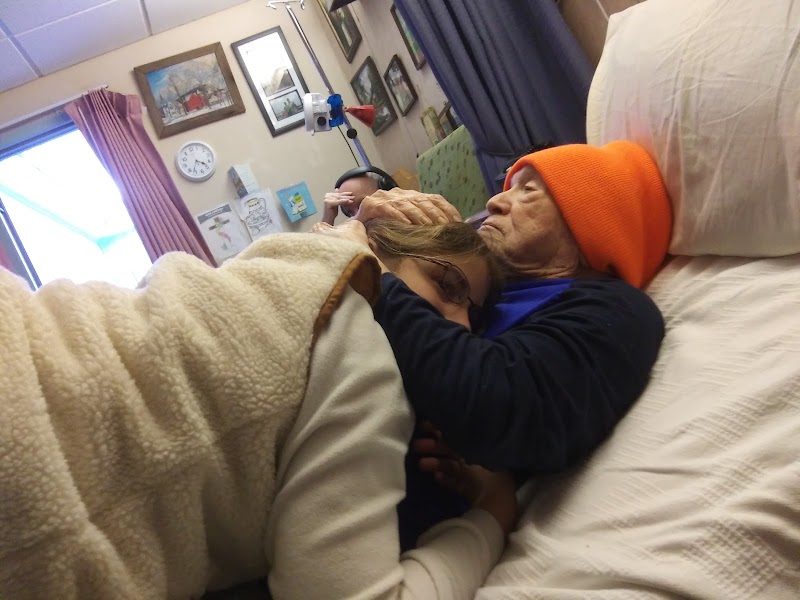
CMS rates Vernon Green Nursing Home's staffing level at 4 out of 5 stars, which is above average compared to other nursing homes. Staff turnover is 47%, compared to the Vermont average of 46%.

What Have Inspectors Found at Vernon Green Nursing Home?

State health inspectors documented 37 deficiencies at Vernon Green Nursing Home during 2022 to 2024. These included: 1 Immediate Jeopardy (the most serious level, indicating potential for serious harm or death), 3 that caused actual resident harm, 32 with potential for harm, and 1 minor or isolated issues. Immediate Jeopardy findings are rare and represent the most serious regulatory concerns. They require immediate corrective action.

Who Owns and Operates Vernon Green Nursing Home?

Vernon Green Nursing Home is owned by a non-profit organization. Non-profit facilities reinvest revenue into operations rather than distributing to shareholders. The facility operates independently rather than as part of a larger chain. With 60 certified beds and approximately 53 residents (about 88% occupancy), it is a smaller facility located in Vernon, Vermont.

How Does Vernon Green Nursing Home Compare to Other Vermont Nursing Homes?

Compared to the 100 nursing homes in Vermont, Vernon Green Nursing Home's overall rating (2 stars) is below the state average of 2.8, staff turnover (47%) is near the state average of 46%, and health inspection rating (2 stars) is below the national benchmark.

What Should Families Ask When Visiting Vernon Green Nursing Home?

Based on this facility's data, families visiting should ask: "What changes have been made since the serious inspection findings, and how are you preventing similar issues?" "Can I visit during a mealtime to observe dining assistance and food quality?" "How do you handle medical emergencies, and what is your hospital transfer rate?" "Can I speak with family members of current residents about their experience?" These questions are particularly relevant given the facility's Immediate Jeopardy citations.

Is Vernon Green Nursing Home Safe?

Based on CMS inspection data, Vernon Green Nursing Home has documented safety concerns. Inspectors have issued 1 Immediate Jeopardy citation (the most serious violation level indicating risk of serious injury or death). The facility has a 2-star overall rating and ranks #100 of 100 nursing homes in Vermont. Families considering this facility should ask detailed questions about what corrective actions have been taken since these incidents.

Do Nurses at Vernon Green Nursing Home Stick Around?

Vernon Green Nursing Home has a staff turnover rate of 47%, which is about average for Vermont nursing homes (state average: 46%). Moderate turnover is common in nursing homes, but families should still ask about staff tenure and how the facility maintains care continuity when employees leave.

Was Vernon Green Nursing Home Ever Fined?

Vernon Green Nursing Home has been fined $87,896 across 1 penalty action. This is above the Vermont average of $33,958. Fines in this range indicate compliance issues significant enough for CMS to impose meaningful financial consequences. Common causes include delayed correction of deficiencies, repeat violations, or care failures affecting resident safety. Families should ask facility leadership what changes have been made since these penalties.

Is Vernon Green Nursing Home on Any Federal Watch List?

Vernon Green Nursing Home is not on any federal watch list. The most significant is the Special Focus Facility (SFF) program, which identifies the bottom 1% of nursing homes nationally based on persistent, serious quality problems. Not being on this list means the facility has avoided the pattern of deficiencies that triggers enhanced federal oversight. This is a positive indicator, though families should still review the facility's inspection history directly.