Cedar Hill Health Care Center
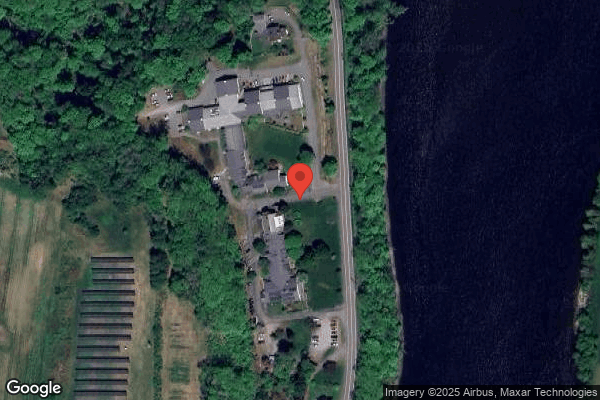

49 Cedar Hill Drive, Windsor, VT 05089 (802) 674-6609
For profit - Corporation 39 Beds Independent Data: November 2025
Trust Grade
85/100
#1 of 33 in VT
Last Inspection: June 2024

Within standard 12-15 month inspection cycle. Federal law requires annual inspections.

Overview

Cedar Hill Health Care Center in Windsor, Vermont, has a Trust Grade of B+, indicating it is above average and recommended for families considering care options. It ranks #1 out of 33 facilities in Vermont and #1 out of 3 in Windsor County, placing it at the top of the local options. However, the facility's trend is concerning as issues increased from 4 in 2023 to 5 in 2024, suggesting a decline in quality. Staffing is a strength, with a 5/5 star rating and a turnover rate of 47%, which is better than the state average. Notably, there were incidents where two residents did not have access to a working call system, putting them at risk for delayed assistance, and a lack of competency assessments for new staff was identified, raising questions about the quality of care. Overall, while Cedar Hill has strong staffing and no fines, the recent increase in issues and specific concerns should be carefully considered.
Trust Score
B+
85/100
In Vermont
#1/33
Top 3%
Safety Record
Low Risk
No red flags
Inspections
Getting Worse
4 → 5 violations
Staff Stability
⚠ Watch
47% turnover. Above average. Higher turnover means staff may not know residents' routines.
Penalties
✓ Good
No fines on record. Clean compliance history, better than most Vermont facilities.
Skilled Nurses
✓ Good
Each resident gets 50 minutes of Registered Nurse (RN) attention daily — more than average for Vermont. RNs are trained to catch health problems early.
Violations
⚠ Watch
13 deficiencies on record. Higher than average. Multiple issues found across inspections.
★★★★★
5.0
Overall Rating
★★★★★
5.0
Staff Levels
★★★★☆
4.0
Care Quality
★★★★☆
4.0
Inspection Score
Stable
2023: 4 issues
2024: 5 issues

The Good

  • 5-Star Staffing Rating · Excellent nurse staffing levels
  • 4-Star Quality Measures · Strong clinical quality outcomes
  • Full Sprinkler Coverage · Fire safety systems throughout facility
  • No fines on record

Facility shows strength in staffing levels, quality measures, fire safety.

The Bad

Staff Turnover: 47%

Near Vermont avg (46%)

Higher turnover may affect care consistency

The Ugly 13 deficiencies on record

Jun 2024 5 deficiencies
CONCERN (D)

Potential for Harm - no one hurt, but risky conditions existed

Report Alleged Abuse (Tag F0609)

Could have caused harm · This affected 1 resident

**NOTE- TERMS IN BRACKETS HAVE BEEN EDITED TO PROTECT CONFIDENTIALITY** Based on resident and staff interviews and record review the facility failed to report an incident of alleged abuse to the state...

Read full inspector narrative →
**NOTE- TERMS IN BRACKETS HAVE BEEN EDITED TO PROTECT CONFIDENTIALITY** Based on resident and staff interviews and record review the facility failed to report an incident of alleged abuse to the state licensing agency for 1 resident (Resident #30) of 21 sampled residents. Findings include: Per resident interview on 6/19/24 at 11:36 AM Resident #30 stated that a staff member on the overnight shift had made a fist at her/him and stated, You can't even walk. I can knock the shit out of you. Resident #30 stated that s/he had reported this incident to a Licensed Nursing Assistant (LNA) that morning. Per record review of the facility's Abuse, Neglect, and Exploitation policy [last reviewed on 1/27/23], Reporting of all alleged violations are brought to the charge nurse and then the nurse on call. The nurse on call notifies the director of nursing and the administrator. The Director of Nursing, administrator, or designate will notify the state agency ([NAME]), Adult Protective Services [APS] . On 6/19/24 at 12:02 an interview was conducted with the DON [Director of Nursing] and the facility Administrator [ADM]. The DON and facility administrator confirmed that Resident #30 had reported the incident to a staff member and the staff did not inform the DON and ADM. The DON confirmed the incident was not reported as required to APS or the state agency.
CONCERN (D)

Potential for Harm - no one hurt, but risky conditions existed

Deficiency F0657 (Tag F0657)

Could have caused harm · This affected 1 resident

Based upon interview and record review, the facility failed to revise resident care plans related to fall prevention for 1 resident [Res.#25] of 21 sampled residents. Findings include: Per review of ...

Read full inspector narrative →
Based upon interview and record review, the facility failed to revise resident care plans related to fall prevention for 1 resident [Res.#25] of 21 sampled residents. Findings include: Per review of the facility's Falls-Clinical Protocol policy, the staff and physician will identify pertinent interventions to try to prevent subsequent falls. [Nursing Services Policy and Procedure Manual for Long Term Care- revised March 2018] Review of the facility's Nursing Floor Communication Resource reveals under 'Falls' Update the resident's care plan with a new intervention EVERY time a fall occurs with the resident. An interview was conducted with the facility's Director of Nursing [DON] on 6/19/24 at 9:09 AM. The DON stated that the facility's procedure after a resident fall is to update the resident's care plan with new intervention[s] to prevent future falls. The DON confirmed that incident reports and Nursing Notes documented Res.#25 suffering falls on 12/8/23, 12/10/23, 1/8/24, 1/10/24 and 3/24/24. The DON confirmed that Res.#25's care plan contained no new interventions to prevent future falls after falls on 12/8, 1/8, 1/10. The DON confirmed that after the falls in January with no new interventions, the resident fell again on 3/24/24. Nursing Notes dated 3/24/24 record staff reported to this nurse that resident was lying on the floor of [h/her] room . Did begin to complain of pain in [h/her] Left wrist. Tender to touch or move . DON made aware and an x-ray of Left wrist will be ordered tomorrow (Monday 3/25/24). Nursing Notes dated the next day, 3/25/24, reveal Results of Xray returned and show acute, nondisplaced fracture of the left wrist. Per interview and record review, the DON confirmed that new interventions should have been added to Res.#25's care plan after each fall to prevent future falls and injury but were not.
CONCERN (D)

Potential for Harm - no one hurt, but risky conditions existed

Medical Records (Tag F0842)

Could have caused harm · This affected 1 resident

**NOTE- TERMS IN BRACKETS HAVE BEEN EDITED TO PROTECT CONFIDENTIALITY** Based on staff interview and record review, the facility failed to ensure that records are complete, readily accessible, and sys...

Read full inspector narrative →
**NOTE- TERMS IN BRACKETS HAVE BEEN EDITED TO PROTECT CONFIDENTIALITY** Based on staff interview and record review, the facility failed to ensure that records are complete, readily accessible, and systematically organized related to a resident's required pharmacy review for 1 out of 5 sampled residents (Resident # 3). Findings include: Per record review, Resident # 3 was admitted to the facility on [DATE]. There was no evidence in the record that pharmacist conducted a monthly medical record review since admission. During an interview with the Director of Nursing (DON) on 06/18/2024 at approximately 3:30 PM s/he stated that the facility recently changed pharmacy providers. The new pharmacist visited the facility and removed the previous pharmacy recommendations from paper charts and brought them home to review. The DON confirmed at the time of interview that the pharmacy recommendations were not on site or in Resident # 3's medical record. The DON stated that the pharmacist was currently on vacation and was unsure if s/he would be able to obtain the reviews. The DON was able to produce a copy of the pharmacy review form prior to the end of the survey however, s/he did confirm that the pharmacy reviews should have been in the medical record.
CONCERN (E)

Potential for Harm - no one hurt, but risky conditions existed

Deficiency F0726 (Tag F0726)

Could have caused harm · This affected multiple residents

Based on interview and record review the facility failed to ensure that 1 of 4 sampled licensed nursing assistants (LNAs) and 2 of 2 sampled Licensed Practical Nurses (LPNs) were assessed for competen...

Read full inspector narrative →
Based on interview and record review the facility failed to ensure that 1 of 4 sampled licensed nursing assistants (LNAs) and 2 of 2 sampled Licensed Practical Nurses (LPNs) were assessed for competency in the skills required to care for the resident needs based on resident care plans. Findings include: 1. Review of 1 LNA education and competency file revealed an orientation checklist that was signed off by another LNA; however, there was no evidence that the LNA was assessed for competency by a licensed nurse. 2. Review of the education and competency file for 1 LPN who was hired on 5/29/2024 revealed no evidence that they were assessed for competency in the skills needed to care for the residents. 3. Review of the education and competency file for 1 LPN who was hired on 8/23/17 revealed no evidence of annual competency evaluation of the skills needed to care for the residents. Durning interview on 6/19/2024 at 2:04 PM the Director of Nursing and the Human Resource Director confirmed that there was no evidence that the above LNAs and LPNs had been assessed for competency.
CONCERN (F)

Potential for Harm - no one hurt, but risky conditions existed

Deficiency F0919 (Tag F0919)

Could have caused harm · This affected most or all residents

Based on observation, interview, and record review the facility failed to ensure that each resident had access to an effective call system at their bedside for 2 of 21 residents sampled (Resident #1 a...

Read full inspector narrative →
Based on observation, interview, and record review the facility failed to ensure that each resident had access to an effective call system at their bedside for 2 of 21 residents sampled (Resident #1 and #7). This deficient practice has the potential to affect all residents who reside in the facility. Findings include: 1. During unit observations and resident interview on 6/17/24 at 3:03 PM, Resident #1 was observed sitting in a recliner in their room trying to get assistance to go to the bathroom. Resident #1 was asked by the Surveyor if they could ring their call bell to alert staff that s/he needed assistance. The Resident stated that s/he had been ringing and ringing and nobody was coming. The Surveyor pushed the call light button, and nothing happened. Resident #1 was pleading for help to get to the bathroom. The Surveyor went to get a Licensed Nursing Assistant (LNA) to assist. The LNA stated that s/he was not aware that Resident #1 was in need of assistance. The LNA also stated that the call lights don't work a lot of the time, and that the residents have been given hand bells to ring for help if the call light doesn't work. Upon looking for the hand bell in Resident #1's room the LNA discovered and confirmed that there was no hand bell available for Resident #1. The LNA said that s/he would get Resident #1 a hand bell and tell maintenance that the call light was not working after they assisted the resident to the bathroom. Per interview with the Administrator and Director of Nursing on 6/17/24 at approximately 5:15 PM they were unaware of Resident #1's light not working. The Administrator stated that they do have this issue on occasion, and they provide hand bells so the Residents can summon staff. 2. During unit observations on 6/18/24 at 10:44 AM while in Resident #7's room the Surveyor pushed the call light button that was attached to the wall. The call light indicator (a box that lights up when the call button is pushed) in the hall did not light up and there was no audible signal that occurs when the call light is activated. Per interview with the Administrator and the Assistant Administrator on 6/19/24 at 9:00 AM there are times when call lights get pulled from the wall a bit and need to be repositioned to work. When a call bell is not working, and staff are unable to fix it they must complete a TELS (Maintenance) request. The Assistant Administrator stated that about 10 call light checks are done weekly to ensure that they are working, and there has been a significant improvement. However, when asked if there was a system in place to check all call lights to ensure that residents could always call for assistance the Assistant Administrator and Administrator both confirmed that there was not. When asked if staff had made them aware that Resident #1's call light was not working on 6/17/24 the Assistant Administrator confirmed that the LNA had not informed anyone to fix it.
Apr 2023 4 deficiencies
MINOR (B)

Minor Issue - procedural, no safety impact

Deficiency F0582 (Tag F0582)

Minor procedural issue · This affected multiple residents

Based on staff interview and record review, the facility failed to provide notice of changes in coverage by Medicare for three of three sampled residents (Residents #11, #30, and #4). Findings include...

Read full inspector narrative →
Based on staff interview and record review, the facility failed to provide notice of changes in coverage by Medicare for three of three sampled residents (Residents #11, #30, and #4). Findings include: Per record review, Residents #11, #30, and #4 were provided with the Skilled Nursing Facility Advanced Beneficiary Notice (SNF ABN) for services that would no longer be covered by Medicare due to no longer being necessary. These 3 Residents did not receive a Notification of Medicare Non-Coverage (NOMNC). All 3 Residents remained in the facility after coverage ended. Per interview on 4/18/23 at approximately 11:30 AM, the Director of Financial Services confirmed that Residents who remained in the facility after the coverage end date had not been receiving a NOMNC to date.
MINOR (B)

Minor Issue - procedural, no safety impact

Transfer Notice (Tag F0623)

Minor procedural issue · This affected multiple residents

Based on staff interview and record review the facility failed to provide facility transfer notices prior to transfer for residents and/or their representatives, and to send the same transfer notice (...

Read full inspector narrative →
Based on staff interview and record review the facility failed to provide facility transfer notices prior to transfer for residents and/or their representatives, and to send the same transfer notice (or a copy of it) to a representative of the Office of the State Long-Term Care Ombudsman for 10 out of 10 sampled residents (Residents #1, #2, #3, #7, #8, #10, #11, #13, #18 and #38). Findings include: Record review on 04/18/23 of a hospitalization for Resident #18 shows this resident was transferred to the emergency room (ER) on the date of 01/14/23 with no evidence found of a transfer notice being provided to the resident or resident representative. Interview with the Director of Nursing (DNS) on 04/18/23 revealed that the facility has not provided transfer or discharge notices to any of their residents or to the Ombudsman in the past year. The DNS stated this was, an oversight maybe due to staffing changes. On 04/19/23 An Action Summary list was provided to this surveyor showing ten ER transfers from 04/17/22 through 04/18/23. The list was comprised of all resident ER transfers in this time period. The DNS stated, none of the residents on the list, or their representatives, or the Ombudsman had been provided with a transfer notice at any time. On 04/20/23 the regulatory requirements for transfer and discharge notices were discussed with the DNS, the regulation was shown to her/him, and the DNS confirmed Residents #1, #2, #3, #7, #8, #10, #11, #13, #18 and #38 were not provided with a transfer notice at any time, nor were their representatives or the local Long-Term Care Ombudsman.
MINOR (B)

Minor Issue - procedural, no safety impact

Deficiency F0625 (Tag F0625)

Minor procedural issue · This affected multiple residents

**NOTE- TERMS IN BRACKETS HAVE BEEN EDITED TO PROTECT CONFIDENTIALITY** Based on staff interview and record review the facility failed to provide a written copy of a Bed-Hold notice to residents and/o...

Read full inspector narrative →
**NOTE- TERMS IN BRACKETS HAVE BEEN EDITED TO PROTECT CONFIDENTIALITY** Based on staff interview and record review the facility failed to provide a written copy of a Bed-Hold notice to residents and/or their representatives prior to transfer or discharge or in case of emergency, within 24 hours for 3 of 10 sampled residents (Residents #18, #8, and #7). Findings include: Record review on 04/18/23 of a hospitalization for Resident #18 shows this resident was transferred to the emergency room (ER) on the date of 01/14/23 with no evidence found of a written Bed-Hold notice being given to the resident or resident representative. At the time of the record review the Director of Nursing was asked if s/he could provide evidence of the required Bed-Hold Notice but s/he could not produce this. It was noted that the Bed-Hold Notice is provided in the facility's admission packet and reviewed with residents or their representatives upon admission, however Federal regulations require facilities to issue two notices related to bed-hold policies. On 04/19/23 An Action Summary list was provided to this surveyor showing ten ER transfers since April of 2022. Two additional resident ER transfers were performed without the required Bed-Hold Notice; the additional residents were Resident #8 who was transferred to the ER on [DATE], and Resident #7 who was transferred to the ER on [DATE]. On 04/19/23 at 12:55 PM, the Director of Nursing (DON) confirmed there was no documentation to show that the required Bed-Hold notices for Residents #18, #8, and #7 had been given to the residents and/or their representatives at the time of the ER transfers, or within 24 hours of those transfers.
MINOR (B)

Minor Issue - procedural, no safety impact

Staffing Information (Tag F0732)

Minor procedural issue · This affected multiple residents

Based on observations and interviews the facility failed to update the required posted staffing information at the beginning of each shift. Findings include: On 4/19/23 at 9:30 am, 11:00 am and 12:18...

Read full inspector narrative →
Based on observations and interviews the facility failed to update the required posted staffing information at the beginning of each shift. Findings include: On 4/19/23 at 9:30 am, 11:00 am and 12:18 pm, observation of the facility's staffing posting in the lobby revealed that the schedule posted was dated for 4/18/23. The posting was not updated at the beginning of each shift as required.
Apr 2022 4 deficiencies
CONCERN (D)

Potential for Harm - no one hurt, but risky conditions existed

Safe Environment (Tag F0584)

Could have caused harm · This affected 1 resident

**NOTE- TERMS IN BRACKETS HAVE BEEN EDITED TO PROTECT CONFIDENTIALITY** Based on observation and staff interview the facility failed to provide housekeeping and maintenance services necessary to maint...

Read full inspector narrative →
**NOTE- TERMS IN BRACKETS HAVE BEEN EDITED TO PROTECT CONFIDENTIALITY** Based on observation and staff interview the facility failed to provide housekeeping and maintenance services necessary to maintain a sanitary environment, specifically in one shared resident bathroom for 2 of 22 resident rooms. Findings include: During unit observations on 4/18/2022 at 11:45 AM and 3:30 PM, in the bathroom located between rooms [ROOM NUMBERS] there was dried splattered feces on the wall next to the toilet. This was observed again the next day, on 4/19/2022 at 2:24 PM. On 4/19/2022 at 2:24 PM the Environmental Manager (EM) was shown the feces on the wall next to the toilet. The EM stated Okay, the housekeeper has not been in here today because the residents were in and out of the bathroom all day. As you can see the trash is full and has not been emptied. When told that the feces had been there the prior day s/he stated I will get [her/him] in here now to clean this.
CONCERN (E)

Potential for Harm - no one hurt, but risky conditions existed

Deficiency F0583 (Tag F0583)

Could have caused harm · This affected multiple residents

**NOTE- TERMS IN BRACKETS HAVE BEEN EDITED TO PROTECT CONFIDENTIALITY** 2. Observation on 4/20/22 10:50 AM - 11:03 AM revealed an unlocked medication cart, and upon the medication cart was noted a 24 ...

Read full inspector narrative →
**NOTE- TERMS IN BRACKETS HAVE BEEN EDITED TO PROTECT CONFIDENTIALITY** 2. Observation on 4/20/22 10:50 AM - 11:03 AM revealed an unlocked medication cart, and upon the medication cart was noted a 24 hour report that included resident names, and room numbers. A computer that was on top of the medication cart was left open at a the Clinical and Current residents screen. It showed a list of resident names and room numbers - this allowed access to all residents medical records. The nurse was observed behind a tall wall in the nurses station that separated the nurses station from the medication carts and prohibited a constant visual of the medication cart. Upon the nurses return to the medication cart at 11:03 AM, s/he immediately locked the medication cart, closed out of the patient care records screen on the computer and, turned over the 24 hour report sheet so the information on that sheet was not upright and available for others to see. Interview with the nurse at 11:04 AM, confirmed that the medication cart should not have been left unlocked, and all resident information should not have left out in the open for anyone passing by or standing at the medication cart to have easy access to. Based on observation, staff interview, and record review the facility failed to ensure that resident personal and medical information was maintained in a secure and confidential manner, so that others would not have access to it for 1 of 19 sampled residents and 1 of 2 medication carts with identifying information for all residents. Findings include: 1. Per observation on 4/20/2022 at 2:11 PM a sign was posted on the outside of the door, toward the hallway of room [ROOM NUMBER] that stated: Infection Prevention and Control Policy for Suspected or Confirmed Coronavirus (COVID 19); Room log: Residents with suspected or confirmed Coronavirus (COVID 19); Residents name: [The resident's name was written in]; Employee or Visitor Name: Date: Time In: Time Out: An employee had signed in on 4/19/22 at 7:20 AM and 9:30 AM. This sign in sheet was located on the door next to a sign that stated STOP: Modified DROPLET PRECAUTIONS. Visitors MUST report to Nursing Station before entering. visitors and staff must: Wear a mask Wear eye protection (goggles or face shield) when entering room On 4/20/22 at 3:09 PM when asked about the signs and documentation, the Director of Nursing (DNS) stated that the sign in sheet should not be on the door as it is not necessary for staff to sign in and out of the room. The DNS confirmed that the resident's name should not be posted on the sign in sheet for others to see, which discloses a potential health condition.
CONCERN (E)

Potential for Harm - no one hurt, but risky conditions existed

Deficiency F0657 (Tag F0657)

Could have caused harm · This affected multiple residents

2. Per observation on 4/18/2022 at 11:52 am, Resident #15 was sitting in the common area in a wheelchair without footrests. A licensed nursing assistant (LNA) asked him/her to pick up his/her feet and...

Read full inspector narrative →
2. Per observation on 4/18/2022 at 11:52 am, Resident #15 was sitting in the common area in a wheelchair without footrests. A licensed nursing assistant (LNA) asked him/her to pick up his/her feet and began to push the resident to the dining room. The resident lifted his/her feet approximately an inch off the ground for a couple seconds and then began to drag his/her feet while being pushed down the hall. Review of Resident #15's medical record lists history of falling, muscle weakness (generalized), and other abnormalities of gait and mobility as diagnoses. Per review of Resident #15's care plan revealed, the resident is able to complete wheelchair mobility for short distances independently, dependent on staff for purposeful movement and requires vocal cues to lift feet when staff are assisting with WC [wheelchair] mobility. Per review of ADL (Activities of Daily Living) documentation for the month of April, of the 68 instances of locomotion documented for Resident #15, 50 were extensive assistance or total dependence. Per observation on 4/19/2022 at 11:36 AM, Resident #15 was seen sitting in his/her wheelchair and was being pushed to the dining room by a staff member. It was noted that his/her feet were dragging on the floor while being pushed down the hall to the dining room. Per interview on 4/20/2022 at 10:34 AM, a licensed practical nurse (LPN) stated that foot pedals are in the Resident's room. The LPN explained that staff know when to use foot pedals by referring to the sheet on the resident's closet door (Physical Mobility Sheet) and the resident's care plan. Reviewed of Resident #15's Physical Mobility Sheet with the LPN, s/he confirmed the I on Resident #15's Physical Mobility sheet indicated that the resident was independent in his/her wheelchair, and it did not explain when to use foot pedals. Upon review of Resident #15's care plan with this LPN, s/he confirmed that the care plan does not direct staff when to use foot pedals. Per interview on 4/20/2022 at 10:55 AM, a LNA stated that each resident has a mobility sheet on the inside of their closet door that's shows when to use wheelchair foot pedals. S/he would put foot pedals on the wheelchair while bringing a resident for a walk outside, if their feet/legs are swelling, or they can't keep their feet up. Some foot pedals would be considered a restraint. The LNA confirmed that the use of foot pedals would also be in the care plan. On 4/20/2022 at 11:40 AM during an interview with the Director of Nursing (DON), he/she confirmed the use of foot pedals should be on the care plan and that Resident #15's care plan did not provide direction as to when staff would need to use the residents foot pedals. S/he stated that Resident #15's care plan needed to be updated to include when to use foot pedals. Based on observations, interviews, and record reviews, the facility failed to ensure the plan of care for 2 of 19 sampled residents in a standard survey sample were revised to reflect necessary care and services. (Residents #9, and #15). Findings include: 1. Observation on 4/18/2022 at 11:50 am, Resident #9 was sitting in the common area in a wheelchair without footrests. A licensed nursing assistant (LNA) asked her/him to pick up her/his feet and began to push the resident to the dining room. The resident did lift her/his feet up while the LNA pushed her/him to the dining room although she/he did put her/his feet down a few times during the transport. Observation on 4/18/22 at 11:52 AM, revealed a pair of wheelchair foot pedals on top of Resident #9's dresser in her/his room. Review of Resident #9's care plan revealed, has limited physical mobility r/t [related to] Parkinson's Disease, dementia and a non-repaired left hip fracture with the following intervention Resident needs assistance with moving [pronoun omitted] scoot w/c [wheelchair] but can also self-propel short distances. Per interview on 4/20/2022 at 10:34 AM, a licensed practical nurse (LPN) stated that foot pedals are in the resident's room. The LPN explained that staff know when to use foot pedals by referring to the sheet on the resident's closet door (Physical Mobility Sheet) and the resident's care plan. Reviewed of Resident #9's Physical Mobility Sheet with the LPN, s/he confirmed the I on Resident's Physical Mobility sheet indicated that the resident was independent in her/his wheelchair. There was no direction indicated on the Physical Mobility Sheet explaining when to use foot pedals. Upon review of Resident #9's care plan with this LPN, s/he confirmed that the care plan does not direct staff when to use foot pedals. Interview on 4/20/2022 at 10:55 AM, a licensed nurse aid (LNA) stated that each resident has a mobility sheet on the inside of their closet door that's shows when to use wheelchair foot pedals. S/he would put foot pedals on the wheelchair while bringing a resident for a walk outside, if their feet/legs are swelling, or they can't keep their feet up. Some foot pedals would be considered a restraint. The LNA confirmed that the use of foot pedals would also be in the care plan. On 4/20/2022 at 11:40 AM during an interview with the Director of Nursing, she/he confirmed the use of foot pedals should be on the care plan and that Resident #9's care plan did not provide direction as to when staff would need to use the residents foot pedals. S/he stated that Resident #9's care plan needed to be updated to include when to use foot pedals. The DON also confirmed that the use of foot pedals should be listed on the Physical Mobility Sheet, which is on the inside of the residents closet door and on each residents care plan. Review of Resident #9's Physical Mobility Sheet revealed no indication for use of his/her foot pedals and there was no mention of foot pedals on the residents care plan.
CONCERN (E)

Potential for Harm - no one hurt, but risky conditions existed

Deficiency F0761 (Tag F0761)

Could have caused harm · This affected multiple residents

Based on observation and interview, the facility failed to ensure drugs and biologicals are stored in accordance with accepted professional standards for 1 of 2 medication carts. Findings include: Ob...

Read full inspector narrative →
Based on observation and interview, the facility failed to ensure drugs and biologicals are stored in accordance with accepted professional standards for 1 of 2 medication carts. Findings include: Observation on 4/20/22 10:50 AM - 11:03 AM revealed an unlocked medication cart. The nurse was observed behind a tall wall in the nurses station that separated the nurses station from the medication carts and prohibited a constant visual of the medication cart. Upon the nurses return to the medication cart at 11:03 AM, s/he immediately locked the medication cart.
Understanding Severity Codes (click to expand)
Life-Threatening (Immediate Jeopardy)
J - Isolated K - Pattern L - Widespread
Actual Harm
G - Isolated H - Pattern I - Widespread
Potential for Harm
D - Isolated E - Pattern F - Widespread
No Harm (Minor)
A - Isolated B - Pattern C - Widespread

Questions to Ask on Your Visit

  • "Can I speak with families of current residents?"
  • "What's your RN coverage like on weekends and overnight?"

Our Honest Assessment

Strengths
  • • Grade B+ (85/100). Above average facility, better than most options in Vermont.
  • • No major safety red flags. No abuse findings, life-threatening violations, or SFF status.
  • • No fines on record. Clean compliance history, better than most Vermont facilities.
Concerns
  • • 13 deficiencies on record. Higher than average. Multiple issues found across inspections.
Bottom line: Generally positive indicators. Standard due diligence and a personal visit recommended.

About This Facility

What is Cedar Hill Health Care Center's CMS Rating?

CMS assigns Cedar Hill Health Care Center an overall rating of 5 out of 5 stars, which is considered much above average nationally. Within Vermont, this rating places the facility higher than 99% of the state's 100 nursing homes. This rating reflects solid performance across the metrics CMS uses to evaluate nursing home quality.

How is Cedar Hill Health Care Center Staffed?
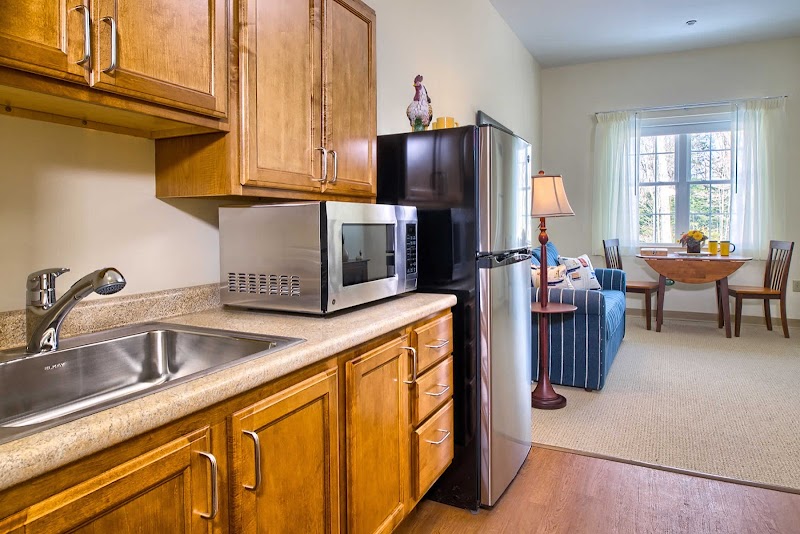
CMS rates Cedar Hill Health Care Center's staffing level at 5 out of 5 stars, which is much above average compared to other nursing homes. Staff turnover is 47%, compared to the Vermont average of 46%.

What Have Inspectors Found at Cedar Hill Health Care Center?

State health inspectors documented 13 deficiencies at Cedar Hill Health Care Center during 2022 to 2024. These included: 9 with potential for harm and 4 minor or isolated issues.

Who Owns and Operates Cedar Hill Health Care Center?

Cedar Hill Health Care Center is owned by a for-profit company. For-profit facilities operate as businesses with obligations to shareholders or private owners. The facility operates independently rather than as part of a larger chain. With 39 certified beds and approximately 34 residents (about 87% occupancy), it is a smaller facility located in Windsor, Vermont.

How Does Cedar Hill Health Care Center Compare to Other Vermont Nursing Homes?

Compared to the 100 nursing homes in Vermont, Cedar Hill Health Care Center's overall rating (5 stars) is above the state average of 2.8, staff turnover (47%) is near the state average of 46%, and health inspection rating (4 stars) is above the national benchmark.

What Should Families Ask When Visiting Cedar Hill Health Care Center?

Based on this facility's data, families visiting should ask: "Can I visit during a mealtime to observe dining assistance and food quality?" "How do you handle medical emergencies, and what is your hospital transfer rate?" "Can I speak with family members of current residents about their experience?"

Is Cedar Hill Health Care Center Safe?

Based on CMS inspection data, Cedar Hill Health Care Center has a clean safety record: no substantiated abuse findings (meaning no confirmed cases of resident harm), no Immediate Jeopardy citations (the most serious violation level indicating risk of serious injury or death), and is not on the Special Focus Facility watch list (a federal program monitoring the lowest-performing 1% of nursing homes). The facility has a 5-star overall rating and ranks #1 of 100 nursing homes in Vermont. While no facility is perfect, families should still ask about staff-to-resident ratios and recent inspection results during their visit.

Do Nurses at Cedar Hill Health Care Center Stick Around?

Cedar Hill Health Care Center has a staff turnover rate of 47%, which is about average for Vermont nursing homes (state average: 46%). Moderate turnover is common in nursing homes, but families should still ask about staff tenure and how the facility maintains care continuity when employees leave.

Was Cedar Hill Health Care Center Ever Fined?

Cedar Hill Health Care Center has no federal fines on record. CMS issues fines when nursing homes fail to meet care standards or don't correct problems found during inspections. The absence of fines suggests the facility has either maintained compliance or corrected any issues before penalties were assessed. This is a positive indicator, though families should still review recent inspection reports for the full picture.

Is Cedar Hill Health Care Center on Any Federal Watch List?

Cedar Hill Health Care Center is not on any federal watch list. The most significant is the Special Focus Facility (SFF) program, which identifies the bottom 1% of nursing homes nationally based on persistent, serious quality problems. Not being on this list means the facility has avoided the pattern of deficiencies that triggers enhanced federal oversight. This is a positive indicator, though families should still review the facility's inspection history directly.