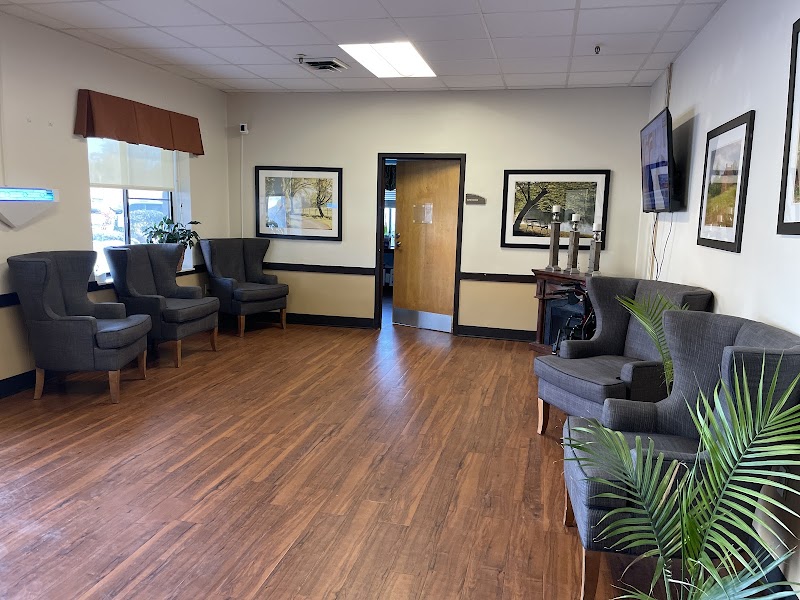
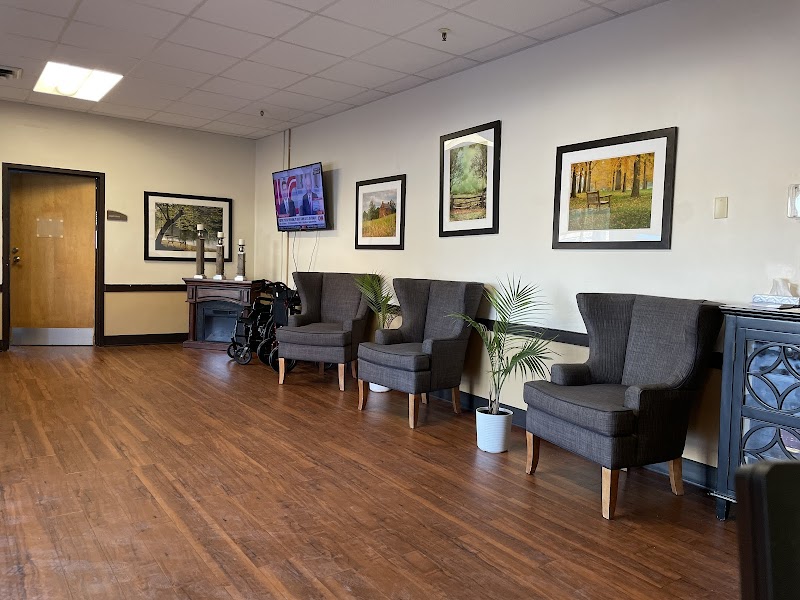
ROSE HILL HEALTH AND REHAB

110 CHALMERS COURT, BERRYVILLE, VA 22611 (540) 955-9995
For profit - Corporation 120 Beds TRIO HEALTHCARE Data: November 2025
Trust Grade
23/100
#273 of 285 in VA
Last Inspection: June 2023

Over 2 years since last inspection. Current conditions may differ from available data.

Overview

Rose Hill Health and Rehab has received a Trust Grade of F, indicating significant concerns about the quality of care provided. It ranks #273 out of 285 facilities in Virginia, placing it in the bottom half of nursing homes in the state, although it is the only option in Clarke County. The facility is showing an improving trend, with issues decreasing from 42 in 2023 to just 3 in 2024. However, staffing is a major concern, with a low rating of 1 out of 5 stars and an alarming turnover rate of 98%, significantly higher than the state average of 48%. The home has faced fines totaling $24,921, which is concerning and reflects compliance issues. Specific incidents of concern include the failure to prevent and treat pressure injuries for two residents, resulting in one needing hospital care, and not maintaining adequate infection control logs for two out of three months. Additionally, there were instances where staff did not notify doctors when medications were unavailable, raising serious questions about medication management. While the facility has shown some improvement in recent months, the high turnover and serious compliance issues present significant weaknesses that families should carefully consider.

Trust Score
F
23/100
In Virginia
#273/285
Bottom 5%
Safety Record
Moderate
Needs review
Inspections
Getting Better
42 → 3 violations
Staff Stability
⚠ Watch
98% turnover. Very high, 50 points above average. Constant new faces learning your loved one's needs.
Penalties
✓ Good
$24,921 in fines. Lower than most Virginia facilities. Relatively clean record.
Skilled Nurses
⚠ Watch
Each resident gets only 27 minutes of Registered Nurse (RN) attention daily — below average for Virginia. Fewer RN minutes means fewer trained eyes watching for problems.
Violations
⚠ Watch
89 deficiencies on record. Higher than average. Multiple issues found across inspections.
★☆☆☆☆
1.0
Overall Rating
★☆☆☆☆
1.0
Staff Levels
★★★★☆
4.0
Care Quality
★★☆☆☆
2.0
Inspection Score
Stable
2023: 42 issues
2024: 3 issues

The Good

  • 4-Star Quality Measures · Strong clinical quality outcomes
  • Full Sprinkler Coverage · Fire safety systems throughout facility
  • No fines on record

Facility shows strength in quality measures, fire safety.

The Bad

1-Star Overall Rating

Below Virginia average (3.0)

Significant quality concerns identified by CMS

Staff Turnover: 98%

52pts above Virginia avg (47%)

Frequent staff changes - ask about care continuity

Federal Fines: $24,921

Below median ($33,413)

Minor penalties assessed

Chain: TRIO HEALTHCARE

Part of a multi-facility chain

Ask about local staffing decisions and management

Staff turnover is very high (98%)

50 points above Virginia average of 48%

The Ugly 89 deficiencies on record

1 actual harm
Aug 2024 3 deficiencies
CONCERN (D) 📢 Someone Reported This

A family member, employee, or ombudsman was alarmed enough to file a formal complaint

Potential for Harm - no one hurt, but risky conditions existed

Abuse Prevention Policies (Tag F0607)

Could have caused harm · This affected 1 resident

Based on staff interview and facility document review, the facility staff failed to implement their policy to prevent misappropriation of resident property for three of thirteen residents in the surve...

Read full inspector narrative →
Based on staff interview and facility document review, the facility staff failed to implement their policy to prevent misappropriation of resident property for three of thirteen residents in the survey sample, Residents #10, #11, and #12. The findings include: For Residents #10 (R10), #11 (R11), and #12 (R12), the facility staff failed to investigate and/or report an allegation of staff misappropriation of resident property to the state agency between July and November 2023. A review of the facility policy, Resident Abuse, revealed, in part: Misappropriation or resident property .means 'the deliberate misplacement, exploitation or wrongful, temporary, or permanent use of a resident's belongings or money without the resident's consent .Investigation .Immediately upon report of an incident .the suspect(s) shall be segregated from the resident .An incident report shall be filed by the individual in charge who received the report .The facility shall report to the state agency and one or more law enforcement entities any reasonable suspicion of a crime against any individual who is a resident of, or is receiving care from, the facility .The Abuse Coordinator and/or Director of Nursing shall take written statements from the victim, the suspect(s), and all possible witnesses including all other employees in the vicinity of the alleged abuse. He/she shall also secure all physical evidence. Upon completion of the investigation, a detailed report shall be prepared. Any suspect(s), once he/she has (have) been identified will be suspended pending the investigation. On 8/13/24, OSM (other staff member) #1's (the director of social services) employee folder was reviewed. This review revealed an Employee Progressive Action Memorandum dated 11/28/23. This document contained, in part, the following information: Employee Name [OSM #1] .Supervisor Name [ASM #3] .Date 11/28/23 .Type of Violation Category 2 Violation .The offenses are considered improper conduct subject to progressive discipline up to, and including, termination .You failed to follow the .protocol for processing, dispersing and record keeping for the Residents Trust Accounts .You were given funds in excess of $9,000 and tasked with purchasing items for residents .policy requires that receipts for all purchases are turned in within 24 hours. You failed to insure receipts were provided for purchases you made .policy requires that a list of items to be purchased and an estimated value be given to the Business Office Prior to receiving any funds. You also failed to make these estimates prior to taking money .Outcome of Violation .Step 3: 3rd Disciplinary Action .You must follow the .policy of providing a list of items to be purchased when requesting funds from the resident trust accounts. You must turn in receipts for money spent within 24 hours of receiving funds. If you are unable to complete shopping within 24 hours you must turn in receipts you have and account for the balance of the money drawn daily until shopping is completed. Violations of handling Resident Trust Funds could be considered level 1 violations resulting in immediate termination. On 8/13/24, OSM (other staff member) #2's (the former business office manager) employee folder was reviewed. This review revealed an Employee Progressive Action Memorandum dated 11/28/23. This document contained, in part, the following information: Employee Name [OSM #1] .Supervisor Name [ASM #3] .Date 11/28/23 .Type of Violation Category 2 Violation .The offenses are considered improper conduct subject to progressive discipline up to, and including, termination .You failed to follow the .protocol for processing, dispersing and record keeping for the Residents Trust Accounts .You knowing (sic) dispensed cash to another employee on more than one occasion in amounts in excess of $1000 without getting the receipts within 24 hours as specified. To compound the matter you allowed that condition to exist for more than 120 days with (sic) reporting the condition to anyone. When you did report the occurrence, you reported it to the HR (human resources) Generalist not the administrator or other person in your line of authority. A review of Resident Funds Account activity revealed checks were written and cashed out of petty cash for the following residents on these dates in these amounts: R10 - 7/6/23 - $3000; R11 - 7/6/23 - $2000; R12 - 7/6/23 - $2000. On 8/14/24 at 8:35 a.m., ASM (administrative staff member) #1, the administrator, was asked to provide evidence of an investigation related to these petty cash withdrawals, including documentation of who handled the cash, how much cash was exchanged among employees, copies of receipts, witness statements, resident interviews, and other staff interviews. ASM #1 was also asked to provide evidence that the facility reported the allegation of the misappropriation of resident funds, and that the employees involved (OSMs #1 and #2) were suspended pending the results of the investigation. On 8/14/24 at 10:29 a.m., OSM #1 was interviewed. She stated ASM #4, the administrator in July 2023, and OSM #2 instructed her that she needed to do a spend down for several residents because they had too much money in their account for Medicaid. She stated she could not recall all of the names of the residents for whom she received this instruction. She stated OSM #2 wrote one big check which was cashed by ASM #4. She stated the cash was given to her in an envelope, and she could not recall whether or not she verified the amount of cash she received, or whether or not she signed any sort of receipt for the large amount of cash. She stated: I think it was around $9000. She continued: I did the spend down. I went to Wal Mart, Ross, and lots of other places. She stated she bought televisions, hygiene products, hair products, nail care products, clothes, and accessories. She stated when she returned to the facility, she gave the receipts to OSM #2, but did not keep any copies for herself. She stated she had a witness to her providing the receipts immediately to OSM #2. She stated she now realizes she should have kept the copies. She stated approximately six months later, OSM #2 went to her and asked for all the receipts from the July 2023 spend down. OSM #1 stated she had already turned in all receipts to OSM #2, and did not have copies as back up. She stated she believes at the time OSM #2 asked again for the receipts, OSM #2 had already completed Medicaid renewals on some of the residents included in the July 2023 spend down. She stated Medicaid would not have renewed any resident's payment if receipts were not provided for the spend down. She also stated she actually overspent for some of the residents, and was personally reimbursed for these charges in cash immediately after the July 2023 spend down. OSM #1 stated she was never suspended from work pending an investigation of these events. On 8/14/24 at 10:45 a.m., ASM #1, the administrator, and ASM #2, the director of nursing, were informed of these concerns. ASM #1 stated if anyone is suspected of misappropriating resident property or funds, it becomes a part of the facility's abuse and neglect protocol. He stated the allegation should be reported to proper authorities, and an investigation should be started. He stated the employee who is the alleged perpetrator should be suspended pending the outcome of the investigation. Once the investigation has been thoroughly completed, the facility's policy guides the outcome for the employee and affected residents. ASM #1 and ASM #2 were informed of concerns regarding a lack of reporting, a lack of an investigation, and a lack of the facility's following its own policy. On 8/14/24 at 11:18 a.m., ASM #2 stated they had identified the witness to the receipt exchange as OSM #3, the admissions and marketing director. On 8/14/24 at 11:21 a.m., OSM #3 was interviewed. She stated she remembered seeing OSM #1 copying a large amount of receipts. OSM #3 had been in line at the copier behind OSM #1 as she copied the receipts and remembered remarking to OSM #1 about how long it was going to take her to get everything copied. She said OSM #2 walked into the area where OSM #1 was making the copies and said something to the effect of: Hurry up and give me the receipts. OSM #3 stated: I feel like there were receipts there for everything. There was a lot of stuff bought for the residents. It was spread out all over everywhere. When asked if she knew of any evidence that this was true, she stated she did not have evidence, but was only going by what she could see. On 8/14/24 at 12:19 p.m., ASM #3, the administrator in the facility in December 2023, was interviewed. He stated he was not working in the facility in July 2023 when the alleged spend down occurred, and only became aware of a problem when an internal complaint was filed through the corporate compliance line. He stated the complaint was about OSM #1 not providing receipts for purchases made out of resident personal funds accounts. He stated OSM #1 was adamant that she had provided some of the receipts, and had made copies of all of them. However, OSM #1's vehicle with some of the receipts and all of the copies was repossessed shortly after the shopping had occurred in July 2023 and OSM #1 had no way to retrieve the original receipts or the copies. He stated OSM #2 was equally adamant that most of the receipts had never been returned. He stated he was unclear about what happened to any leftover cash that would have been owed back to various resident funds accounts. He stated he did not remember any such records. He stated OSM #1 recreated, as best she could, lists of what she had bought for each resident in the spend down. He stated he took the list and went room to room for each resident to verify that what was on the list had made it into the residents' rooms. He stated: I didn't find anything in terms of misappropriation. It didn't appear like there was misappropriation. The value was approximately the value of the money attributed to each resident's account. When asked the location of documentation of the efforts he had made, he stated he could not recall for sure what, if any documentation he had made. He stated OSM #2 told him that she had initially reported this concern to ASM #4, who had not done anything about it. When asked if he had interviewed any residents or other staff members, he stated he had not. When asked if he had reported this allegation of possible misappropriation of resident property to the state agency or other agencies, he stated: Overall it appeared to me that the money taken from the PFAs was properly spent to buy things for residents. He stated it was more of an internal process problem than a concern about misappropriation of funds. He stated: What was presented to me was that someone purchased goods and did not turn in receipts. I did not take this to be an allegation of misappropriation of money. I understand now that it might be taken that way. When asked why, if he was not concerned about the possibility of misappropriation of funds, he needed to go room to room to verify what had been purchased, he did not answer. On 8/14/24 at 1:00 p.m., ASM #1 was asked if this allegation had been thoroughly investigated. He stated: We always go by facts. If I am doing an investigation, I get witness statements, and I would have documentation of everything I did. I would have a statement of my conclusion. Unfortunately there has been a large turnover of staff. I don't see those things here. On 8/14/24 at 1:35 p.m., ASM #2 stated she had heard from the corporate office staff. A corporate vice-president had called her and asked her to tell the surveyor that the corporate staff did not report this to the state because it was no misappropriation of funds. The staff members were disciplined because they did not follow internal policy; all items bought matched the money spent; the corporate office reconciled everything. When asked the possible consequences of staff not following the policy regarding cash disbursements from resident personal funds accounts, ASM #2 said: A misappropriation of the resident's money. When asked if she or ASM #1 had located any evidence of the corporate office's reconciliation of cash disbursed with items bought, she stated they had not. No further information was provided prior to exit.
CONCERN (D) 📢 Someone Reported This

A family member, employee, or ombudsman was alarmed enough to file a formal complaint

Potential for Harm - no one hurt, but risky conditions existed

Report Alleged Abuse (Tag F0609)

Could have caused harm · This affected 1 resident

Based on staff interview and facility document review, the facility staff failed to report an allegation of misappropriation of resident property to the state agency for three of thirteen residents in...

Read full inspector narrative →
Based on staff interview and facility document review, the facility staff failed to report an allegation of misappropriation of resident property to the state agency for three of thirteen residents in the survey sample, Residents #10, #11, and #12. The findings include: For Residents #10 (R10), #11 (R11), and #12 (R12), the facility staff failed to report an allegation of staff misappropriation of resident property to the state agency between July and November 2023. On 8/13/24, OSM (other staff member) #1's (the director of social services) employee folder was reviewed. This review revealed an Employee Progressive Action Memorandum dated 11/28/23. This document contained, in part, the following information: Employee Name [OSM #1] .Supervisor Name [ASM #3] .Date 11/28/23 .Type of Violation Category 2 Violation .The offenses are considered improper conduct subject to progressive discipline up to, and including, termination .You failed to follow the .protocol for processing, dispersing and record keeping for the Residents Trust Accounts .You were given funds in excess of $9,000 and tasked with purchasing items for residents .policy requires that receipts for all purchases are turned in within 24 hours. You failed to insure receipts were provided for purchases you made .policy requires that a list of items to be purchased and an estimated value be given to the Business Office Prior to receiving any funds. You also failed to make these estimates prior to taking money .Outcome of Violation .Step 3: 3rd Disciplinary Action .You must follow the .policy of providing a list of items to be purchased when requesting funds from the resident trust accounts. You must turn in receipts for money spent within 24 hours of receiving funds. If you are unable to complete shopping within 24 hours you must turn in receipts you have and account for the balance of the money drawn daily until shopping is completed. Violations of handling Resident Trust Funds could be considered level 1 violations resulting in immediate termination. On 8/13/24, OSM (other staff member) #2's (the former business office manager) employee folder was reviewed. This review revealed an Employee Progressive Action Memorandum dated 11/28/23. This document contained, in part, the following information: Employee Name [OSM #1] .Supervisor Name [ASM #3] .Date 11/28/23 .Type of Violation Category 2 Violation .The offenses are considered improper conduct subject to progressive discipline up to, and including, termination .You failed to follow the .protocol for processing, dispersing and record keeping for the Residents Trust Accounts .You knowing (sic) dispensed cash to another employee on more than one occasion in amounts in excess of $1000 without getting the receipts within 24 hours as specified. To compound the matter you allowed that condition to exist for more than 120 days with (sic) reporting the condition to anyone. When you did report the occurrence, you reported it to the HR (human resources) Generalist not the administrator or other person in your line of authority. A review of Resident Funds Account activity revealed checks were written and cashed out of petty cash for the following residents on these dates in these amounts: R10 - 7/6/23 - $3000; R11 - 7/6/23 - $2000; R12 - 7/6/23 - $2000. On 8/14/24 at 8:35 a.m., ASM (administrative staff member) #1, the administrator, was asked to provide evidence of an investigation related to these petty cash withdrawals, including documentation of who handled the cash, how much cash was exchanged among employees, copies of receipts, witness statements, resident interviews, and other staff interviews. ASM #1 was also asked to provide evidence that the facility reported the allegation of the misappropriation of resident funds, and that the employees involved (OSMs #1 and #2) were suspended pending the results of the investigation. On 8/14/24 at 10:29 a.m., OSM #1 was interviewed. She stated ASM #4, the administrator in July 2023, and OSM #2 instructed her that she needed to do a spend down for several residents because they had too much money in their account for Medicaid. She stated she could not recall all of the names of the residents for whom she received this instruction. She stated OSM #2 wrote one big check which was cashed by ASM #4. She stated the cash was given to her in an envelope, and she could not recall whether or not she verified the amount of cash she received, or whether or not she signed any sort of receipt for the large amount of cash. She stated: I think it was around $9000. She continued: I did the spend down. I went to Wal Mart, Ross, and lots of other places. She stated she bought televisions, hygiene products, hair products, nail care products, clothes, and accessories. She stated when she returned to the facility, she gave the receipts to OSM #2, but did not keep any copies for herself. She stated she had a witness to her providing the receipts immediately to OSM #2. She stated she now realizes she should have kept the copies. She stated approximately six months later, OSM #2 went to her and asked for all the receipts from the July 2023 spend down. OSM #1 stated she had already turned in all receipts to OSM #2, and did not have copies as back up. She stated she believes at the time OSM #2 asked again for the receipts, OSM #2 had already completed Medicaid renewals on some of the residents included in the July 2023 spend down. She stated Medicaid would not have renewed any resident's payment if receipts were not provided for the spend down. She also stated she actually overspent for some of the residents, and was personally reimbursed for these charges in cash immediately after the July 2023 spend down. OSM #1 stated she was never suspended from work pending an investigation of these events. On 8/14/24 at 10:45 a.m., ASM #1, the administrator, and ASM #2, the director of nursing, were informed of these concerns. ASM #1 stated if anyone is suspected of misappropriating resident property or funds, it becomes a part of the facility's abuse and neglect protocol. He stated the allegation should be reported to proper authorities, and an investigation should be started. He stated the employee who is the alleged perpetrator should be suspended pending the outcome of the investigation. Once the investigation has been thoroughly completed, the facility's policy guides the outcome for the employee and affected residents. ASM #1 and ASM #2 were informed of concerns regarding a lack of reporting, a lack of an investigation, and a lack of the facility's following its own policy. On 8/14/24 at 11:18 a.m., ASM #2 stated they had identified the witness to the receipt exchange as OSM #3, the admissions and marketing director. On 8/14/24 at 11:21 a.m., OSM #3 was interviewed. She stated she remembered seeing OSM #1 copying a large amount of receipts. OSM #3 had been in line at the copier behind OSM #1 as she copied the receipts and remembered remarking to OSM #1 about how long it was going to take her to get everything copied. She said OSM #2 walked into the area where OSM #1 was making the copies and said something to the effect of: Hurry up and give me the receipts. OSM #3 stated: I feel like there were receipts there for everything. There was a lot of stuff bought for the residents. It was spread out all over everywhere. When asked if she knew of any evidence that this was true, she stated she did not have evidence, but was only going by what she could see. On 8/14/24 at 12:19 p.m., ASM #3, the administrator in the facility in December 2023, was interviewed. He stated he was not working in the facility in July 2023 when the alleged spend down occurred, and only became aware of a problem when an internal complaint was filed through the corporate compliance line. He stated the complaint was about OSM #1 not providing receipts for purchases made out of resident personal funds accounts. He stated OSM #1 was adamant that she had provided some of the receipts, and had made copies of all of them. However, OSM #1's vehicle with some of the receipts and all of the copies was repossessed shortly after the shopping had occurred in July 2023 and OSM #1 had no way to retrieve the original receipts or the copies. He stated OSM #2 was equally adamant that most of the receipts had never been returned. He stated he was unclear about what happened to any leftover cash that would have been owed back to various resident funds accounts. He stated he did not remember any such records. He stated OSM #1 recreated, as best she could, lists of what she had bought for each resident in the spend down. He stated he took the list and went room to room for each resident to verify that what was on the list had made it into the residents' rooms. He stated: I didn't find anything in terms of misappropriation. It didn't appear like there was misappropriation. The value was approximately the value of the money attributed to each resident's account. When asked the location of documentation of the efforts he had made, he stated he could not recall for sure what, if any documentation he had made. He stated OSM #2 told him that she had initially reported this concern to ASM #4, who had not done anything about it. When asked if he had interviewed any residents or other staff members, he stated he had not. When asked if he had reported this allegation of possible misappropriation of resident property to the state agency or other agencies, he stated: Overall it appeared to me that the money taken from the PFAs was properly spent to buy things for residents. He stated it was more of an internal process problem than a concern about misappropriation of funds. He stated: What was presented to me was that someone purchased goods and did not turn in receipts. I did not take this to be an allegation of misappropriation of money. I understand now that it might be taken that way. When asked why, if he was not concerned about the possibility of misappropriation of funds, he needed to go room to room to verify what had been purchased, he did not answer. On 8/14/24 at 1:00 p.m., ASM #1 was asked if this allegation had been thoroughly investigated. He stated: We always go by facts. If I am doing an investigation, I get witness statements, and I would have documentation of everything I did. I would have a statement of my conclusion. Unfortunately there has been a large turnover of staff. I don't see those things here. On 8/14/24 at 1:35 p.m., ASM #2 stated she had heard from the corporate office staff. A corporate vice-president had called her and asked her to tell the surveyor that the corporate staff did not report this to the state because it was no misappropriation of funds. The staff members were disciplined because they did not follow internal policy; all items bought matched the money spent; the corporate office reconciled everything. When asked the possible consequences of staff not following the policy regarding cash disbursements from resident personal funds accounts, ASM #2 said: A misappropriation of the resident's money. When asked if she or ASM #1 had located any evidence of the corporate office's reconciliation of cash disbursed with items bought, she stated they had not. A review of the facility policy, Resident Abuse, revealed, in part: Misappropriation or resident property .means 'the deliberate misplacement, exploitation or wrongful, temporary, or permanent use of a resident's belongings or money without the resident's consent .Investigation .Immediately upon report of an incident .the suspect(s) shall be segregated from the resident .An incident report shall be filed by the individual in charge who received the report .The facility shall report to the state agency and one or more law enforcement entities any reasonable suspicion of a crime against any individual who is a resident of, or is receiving care from, the facility. No further information was provided prior to exit.
CONCERN (D) 📢 Someone Reported This

A family member, employee, or ombudsman was alarmed enough to file a formal complaint

Potential for Harm - no one hurt, but risky conditions existed

Investigate Abuse (Tag F0610)

Could have caused harm · This affected 1 resident

Based on staff interview and facility document review, the facility staff failed to report an allegation of misappropriation of resident property to the state agency for two of thirteen residents in t...

Read full inspector narrative →
Based on staff interview and facility document review, the facility staff failed to report an allegation of misappropriation of resident property to the state agency for two of thirteen residents in the survey sample, Residents #11 and #12. The findings include: For Residents #11 (R11) and #12 (R12), the facility staff failed to investigate an allegation of staff misappropriation of resident property to the state agency between July and November 2023. On 8/13/24, OSM (other staff member) #1's (the director of social services) employee folder was reviewed. This review revealed an Employee Progressive Action Memorandum dated 11/28/23. This document contained, in part, the following information: Employee Name [OSM #1] .Supervisor Name [ASM #3] .Date 11/28/23 .Type of Violation Category 2 Violation .The offenses are considered improper conduct subject to progressive discipline up to, and including, termination .You failed to follow the .protocol for processing, dispersing and record keeping for the Residents Trust Accounts .You were given funds in excess of $9,000 and tasked with purchasing items for residents .policy requires that receipts for all purchases are turned in within 24 hours. You failed to insure receipts were provided for purchases you made .policy requires that a list of items to be purchased and an estimated value be given to the Business Office Prior to receiving any funds. You also failed to make these estimates prior to taking money .Outcome of Violation .Step 3: 3rd Disciplinary Action .You must follow the .policy of providing a list of items to be purchased when requesting funds from the resident trust accounts. You must turn in receipts for money spent within 24 hours of receiving funds. If you are unable to complete shopping within 24 hours you must turn in receipts you have and account for the balance of the money drawn daily until shopping is completed. Violations of handling Resident Trust Funds could be considered level 1 violations resulting in immediate termination. On 8/13/24, OSM (other staff member) #2's (the former business office manager) employee folder was reviewed. This review revealed an Employee Progressive Action Memorandum dated 11/28/23. This document contained, in part, the following information: Employee Name [OSM #1] .Supervisor Name [ASM #3] .Date 11/28/23 .Type of Violation Category 2 Violation .The offenses are considered improper conduct subject to progressive discipline up to, and including, termination .You failed to follow the .protocol for processing, dispersing and record keeping for the Residents Trust Accounts .You knowing (sic) dispensed cash to another employee on more than one occasion in amounts in excess of $1000 without getting the receipts within 24 hours as specified. To compound the matter you allowed that condition to exist for more than 120 days with (sic) reporting the condition to anyone. When you did report the occurrence, you reported it to the HR (human resources) Generalist not the administrator or other person in your line of authority. A review of Resident Funds Account activity revealed checks were written and cashed out of petty cash for the following residents on these dates in these amounts: R11 - 7/6/23 - $2000; R12 - 7/6/23 - $2000. On 8/14/24 at 8:35 a.m., ASM (administrative staff member) #1, the administrator, was asked to provide evidence of an investigation related to these petty cash withdrawals, including documentation of who handled the cash, how much cash was exchanged among employees, copies of receipts, witness statements, resident interviews, and other staff interviews. On 8/14/24 at 10:29 a.m., OSM #1 was interviewed. She stated ASM #4, the administrator in July 2023, and OSM #2 instructed her that she needed to do a spend down for several residents because they had too much money in their account for Medicaid. She stated she could not recall all of the names of the residents for whom she received this instruction. She stated OSM #2 wrote one big check which was cashed by ASM #4. She stated the cash was given to her in an envelope, and she could not recall whether or not she verified the amount of cash she received, or whether or not she signed any sort of receipt for the large amount of cash. She stated: I think it was around $9000. She continued: I did the spend down. I went to Wal Mart, Ross, and lots of other places. She stated she bought televisions, hygiene products, hair products, nail care products, clothes, and accessories. She stated when she returned to the facility, she gave the receipts to OSM #2, but did not keep any copies for herself. She stated she had a witness to her providing the receipts immediately to OSM #2. She stated she now realizes she should have kept the copies. She stated approximately six months later, OSM #2 went to her and asked for all the receipts from the July 2023 spend down. OSM #1 stated she had already turned in all receipts to OSM #2, and did not have copies as back up. She stated she believes at the time OSM #2 asked again for the receipts, OSM #2 had already completed Medicaid renewals on some of the residents included in the July 2023 spend down. She stated Medicaid would not have renewed any resident's payment if receipts were not provided for the spend down. She also stated she actually overspent for some of the residents, and was personally reimbursed for these charges in cash immediately after the July 2023 spend down. OSM #1 stated she was never suspended from work pending an investigation of these events. On 8/14/24 at 10:45 a.m., ASM #1, the administrator, and ASM #2, the director of nursing, were informed of these concerns. ASM #1 stated if anyone is suspected of misappropriating resident property or funds, it becomes a part of the facility's abuse and neglect protocol. He stated the allegation should be reported to proper authorities, and an investigation should be started. He stated the employee who is the alleged perpetrator should be suspended pending the outcome of the investigation. Once the investigation has been thoroughly completed, the facility's policy guides the outcome for the employee and affected residents. ASM #1 and ASM #2 were informed of concerns regarding a lack of reporting, a lack of an investigation, and a lack of the facility's following its own policy. On 8/14/24 at 11:18 a.m., ASM #2 stated they had identified the witness to the receipt exchange as OSM #3, the admissions and marketing director. On 8/14/24 at 11:21 a.m., OSM #3 was interviewed. She stated she remembered seeing OSM #1 copying a large amount of receipts. OSM #3 had been in line at the copier behind OSM #1 as she copied the receipts and remembered remarking to OSM #1 about how long it was going to take her to get everything copied. She said OSM #2 walked into the area where OSM #1 was making the copies and said something to the effect of: Hurry up and give me the receipts. OSM #3 stated: I feel like there were receipts there for everything. There was a lot of stuff bought for the residents. It was spread out all over everywhere. When asked if she knew of any evidence that this was true, she stated she did not have evidence, but was only going by what she could see. On 8/14/24 at 12:19 p.m., ASM #3, the administrator in the facility in December 2023, was interviewed. He stated he was not working in the facility in July 2023 when the alleged spend down occurred, and only became aware of a problem when an internal complaint was filed through the corporate compliance line. He stated the complaint was about OSM #1 not providing receipts for purchases made out of resident personal funds accounts. He stated OSM #1 was adamant that she had provided some of the receipts, and had made copies of all of them. However, OSM #1's vehicle with some of the receipts and all of the copies was repossessed shortly after the shopping had occurred in July 2023 and OSM #1 had no way to retrieve the original receipts or the copies. He stated OSM #2 was equally adamant that most of the receipts had never been returned. He stated he was unclear about what happened to any leftover cash that would have been owed back to various resident funds accounts. He stated he did not remember any such records. He stated OSM #1 recreated, as best she could, lists of what she had bought for each resident in the spend down. He stated he took the list and went room to room for each resident to verify that what was on the list had made it into the residents' rooms. He stated: I didn't find anything in terms of misappropriation. It didn't appear like there was misappropriation. The value was approximately the value of the money attributed to each resident's account. When asked the location of documentation of the efforts he had made, he stated he could not recall for sure what, if any documentation he had made. He stated OSM #2 told him that she had initially reported this concern to ASM #4, who had not done anything about it. When asked if he had interviewed any residents or other staff members, he stated he had not. When asked if he had reported this allegation of possible misappropriation of resident property to the state agency or other agencies, he stated: Overall it appeared to me that the money taken from the PFAs was properly spent to buy things for residents. He stated it was more of an internal process problem than a concern about misappropriation of funds. He stated: What was presented to me was that someone purchased goods and did not turn in receipts. I did not take this to be an allegation of misappropriation of money. I understand now that it might be taken that way. When asked why, if he was not concerned about the possibility of misappropriation of funds, he needed to go room to room to verify what had been purchased, he did not answer. On 8/14/24 at 1:00 p.m., ASM #1 was asked if this allegation had been thoroughly investigated. He stated: We always go by facts. If I am doing an investigation, I get witness statements, and I would have documentation of everything I did. I would have a statement of my conclusion. Unfortunately there has been a large turnover of staff. I don't see those things here. On 8/14/24 at 1:35 p.m., ASM #2 stated she had heard from the corporate office staff. A corporate vice-president had called her and asked her to tell the surveyor that the corporate staff did not report this to the state because it was no misappropriation of funds. The staff members were disciplined because they did not follow internal policy; all items bought matched the money spent; the corporate office reconciled everything. When asked the possible consequences of staff not following the policy regarding cash disbursements from resident personal funds accounts, ASM #2 said: A misappropriation of the resident's money. When asked if she or ASM #1 had located any evidence of the corporate office's reconciliation of cash disbursed with items bought, she stated they had not. A review of the facility policy, Resident Abuse, revealed, in part: Misappropriation or resident property .means 'the deliberate misplacement, exploitation or wrongful, temporary, or permanent use of a resident's belongings or money without the resident's consent .Investigation .Immediately upon report of an incident .the suspect(s) shall be segregated from the resident .An incident report shall be filed by the individual in charge who received the report .The Abuse Coordinator and/or Director of Nursing shall take written statements from the victim, the suspect(s), and all possible witnesses including all other employees in the vicinity of the alleged abuse. He/she shall also secure all physical evidence. Upon completion of the investigation, a detailed report shall be prepared. Any suspect(s), once he/she has (have) been identified will be suspended pending the investigation. No further information was provided prior to exit.
Dec 2023 9 deficiencies
CONCERN (D) 📢 Someone Reported This

A family member, employee, or ombudsman was alarmed enough to file a formal complaint

Potential for Harm - no one hurt, but risky conditions existed

Comprehensive Care Plan (Tag F0656)

Could have caused harm · This affected 1 resident

Based on staff interview, facility document review, and clinical record review, it was determined the facility staff failed to implement the comprehensive care plan for three of 13 residents in the su...

Read full inspector narrative →
Based on staff interview, facility document review, and clinical record review, it was determined the facility staff failed to implement the comprehensive care plan for three of 13 residents in the survey sample, Residents #7, #11, and #10. The findings include: 1. For Resident #7, the facility staff failed to implement the comprehensive care plan for administering medications per the physician orders. The comprehensive care plan documented, in part, the following: Focus: Resident at risk for hyper/hypoglycemic episodes due to diagnosis of DM (diabetes mellitus). Insulin dependent. Interventions: Administer medications per order observing affect. Focus: Resident is taking two anticoagulant and at risk for side effects/complications Interventions: Administer medication per order. Focus: Resident is taking an antidepressant for depression and anti-manic for Chronic pain. Interventions: Administer anti manic medication per order observing effect. Administer antidepressant per order observing effect. Medicate for pain as order observing effect. Focus: Resident is taking an antipsychotic medication placing resident at risk for side effects. Interventions: Administer medications per order observing effect. Focus: Resident is at risk for cardiac disease due to ASHD (arteriosclerotic heart disease), high blood pressure .Taking antihypertensive medications daily. Interventions: Administer antihypertensive medications per order. Review of the October 2023 MAR (medication administration record) failed to evidence the following medications were administered on 10/27/2023 at 9:00 p.m.: -Donepezil HCL Oral Tablet 10 mg; Give 2 tablets by mouth at bedtime for dementia. -Melatonin Oral Tablet (used for sleep) 3 mg; Give 1 tablet by mouth at bedtime for anemia. -Carvedilol Oral tablet 25 mg; give 1 tablet by mouth two times a day for high blood pressure. -Depakote Oral Tablet Delayed Release 125 mg; give 1 tablet by mouth two times a day for MMD (myotonic muscular dystrophy) -Eliquis Oral Tablet 2.5 mg; give 1 tablet by mouth two times a day for ASHD (arteriosclerotic heart disease). -Memantine HCL Oral Tablet 10 mg; Give 1 tablet by mouth two times a day related to dementia. -Olanzapine Oral Tablet 2.5 mg; Give 1 tablet by mouth two times a day related to anxiety. -Tramadol HCL Oral Tablet 50 mg; Give 1 tablet by mouth every 12 hours for pain. -Gabapentin Oral Capsule 300 mg; Give 1 capsule by mouth three times a day for chronic pain. -Trazadone HCL Oral Tablet 50 mg; Give 1 tablet by mouth three times a day for anxiety and dementia. An interview was conducted with RN (registered nurse) #1, on 12/12/2023 at 3:19 p.m. When asked the purpose of the care plan, RN #1 stated it so that everyone know how to take care of that resident, what special utensils, devices needed and why residents are on medications. RN #1 was asked if medications were not given, per the physician order, and it's written on the care plan, is that following the care plan, RN #1 stated, no. The facility policy, Care Plan documented in part, All staff must be familiar with each resident's Care Plan and all approaches must be implemented. ASM #1, the interim administrator, ASM #2, the interim director of nursing, ASM #3, the regional clinical director and ASM #4 the interim assistant director of nursing, were made aware of the above findings on 12/12/2023 at 4:45 p.m. No further information was provided prior to exit. 2. For Resident #11, the facility staff failed to implement the comprehensive care plan for administering medications per the physician orders. The comprehensive care plan documented, in part, the following: Focus: Altered skin integrity non pressure related to: per family my skin is fragile and I have a history of skin tears. Interventions: Treatments as ordered. Focus: I have increased pain in my right knee during therapy. Interventions: Medicate for pain as ordered by physician and follow up for effectiveness. Review of the October 2023 MAR (medication administration record) failed to evidence the following medications were administered on 10/27/2023 at 9:00 p.m.: -Hydrocortisone External gel 1%; apply to bilateral hands and leg topically two time a day for rash/itching for 7 days. -Keflex Oral Capsule (antibiotic) 500 mg (milligram); give 1 capsule by mouth two times a day for cellulitis lower legs for 5 days. -Lotrimin AF external cream 1%; apply to plantar of B. feet topically two times a day for tinea pedis (fungal rash) for 7 days. -Tylenol Extra Strength Oral tablet - 500 mg; give 2 tablets by mouth two times day for pain. An interview was conducted with RN (registered nurse) #1, on 12/12/2023 at 3:19 p.m. When asked the purpose of the care plan, RN #1 stated it so that everyone know how to take care of that resident, what special utensils, devices needed and why residents are on medications. RN #1 was asked if medications were not given, per the physician order, and it's written on the care plan, is that following the care plan, RN #1 stated, no. ASM #1, the interim administrator, ASM #2, the interim director of nursing, ASM #3, the regional clinical director and ASM #4 the interim assistant director of nursing, were made aware of the above findings on 12/12/2023 at 4:45 p.m. No further information was provided prior to exit. 3. For Resident #10, the facility staff failed to implement the comprehensive care plan for administering medications per the physician orders. The comprehensive care plan documented in part, the following: Focus: I am a diabetic placing resident at risk for hypo/hyperglycemia episodes. Resident is receiving insulin and diet as treatment. Interventions: Diabetic medications as ordered by physician. The physician order dated, 10/5/2023, documented, Trulicity Subcutaneous Solution Pen-injector (2) 1.5 MG/0.5ML (milligrams per milliliter) (Dulaglutide); inject 0.5 ml subcutaneously one time a day every Mon (Monday) for DM (diabetes mellitus). The October MAR documented the above order. On 10/16/2023 a 5 was documented in the box for the administration of the Trulicity. A 5 indicated, LOA (leave of absence). Review of the nurse's note failed to evidence documentation of the reason the medications was not given, nor documentation of the physician and/or nurse practitioner being notified that is wasn't given. An interview was conducted with RN (registered nurse) #1, on 12/12/2023 at 3:19 p.m. When asked the purpose of the care plan, RN #1 stated it so that everyone know how to take care of that resident, what special utensils, devices needed and why residents are on medications. RN #1 was asked if medications were not given, per the physician order, and it's written on the care plan, is that following the care plan, RN #1 stated, no. ASM #1, the interim administrator, ASM #2, the interim director of nursing, ASM #3, the regional clinical director and ASM #4 the interim assistant director of nursing, were made aware of the above findings on 12/12/2023 at 4:45 p.m. No further information was provided prior to exit.
CONCERN (D) 📢 Someone Reported This

A family member, employee, or ombudsman was alarmed enough to file a formal complaint

Potential for Harm - no one hurt, but risky conditions existed

Deficiency F0657 (Tag F0657)

Could have caused harm · This affected 1 resident

Based on observation, resident interview, staff interview, and clinical record review, it was determined the facility staff failed to review and revise the care plan for one of 13 residents in the sur...

Read full inspector narrative →
Based on observation, resident interview, staff interview, and clinical record review, it was determined the facility staff failed to review and revise the care plan for one of 13 residents in the survey sample, Resident #12. The findings include: For Resident #12, the facility staff failed to revise the care plan for a physician order to monitor the resident when the resident signs himself out of the building. On the most recent MDS (minimum data set) assessment, a quarterly assessment, with an assessment reference date of 10/3/2023, the resident scored a 15 out of 15 on the BIMS (brief interview for mental status) score, indicating the resident was not cognitively impaired for making daily decisions. Resident #12 was coded as being able to self-propel his wheelchair 150 feet and can walk 150 feet. The resident was not coded as having any behaviors. The resident was not coded as having had any falls since the previous assessment. The comprehensive care plan dated, 7/4/2023, and last revised on 12/4/2023, documented in part, Focus: Resident is at risk for falls, related to: history of falls, use of medication, complicated by seizure disorder, required walked for independent ambulation. The Interventions documented in part, 12/4/2023: Re-educate resident of the danger of signing out to go to downtown alone and drinking. The physician order dated 11/28/2023, documented, For patient safety - need supervision at all times when he signs himself out of the building. A request was made for the resident sign-out logs for October, November, and December 2023. The only logs presented were for October and November. ASM (administrative staff member) #1 stated they could not locate the sign out logs for December. The October and November logs only documented R12's name once for each month. An interview was conducted with ASM #5, the nurse practitioner that wrote the above order, on 12/12/2023 at 11:07 a.m. When asked why she wrote the order, ASM #5 stated the resident has been falling a lot lately and some are in the parking lot. ASM #5 was asked who she felt is the expected person to go outside with him, a staff member? ASM #5 stated he should have a responsible person. When asked if it could be another resident, ASM #5 stated no, just a person that is responsible. An interview was conducted with Resident #12 on 12/12/2023 at 3:51 p.m. When asked if he still goes outside to the property line to smoke, R12 stated he still goes out with the other residents that smoke. When asked if a staff member goes outside with him, R12 stated no. R12 was asked if he still walked into the town, R12 stated he didn't because it was too cold now. An interview was conducted with RN (registered nurse) #1, on 12/12/2023 at 3:19 p.m. When asked the purpose of the care plan, RN #1 stated it so that everyone know how to take care of that resident, what special utensils, devices needed and why residents are on medications. RN #1 was asked if the physician wrote an order for supervision of a resident when they sign themselves out of the building, should that be on the care plan, RN #1 stated, yes. The facility policy, Care Plan documented in part, An interdisciplinary plan of care will be established for every resident and updated in accordance with state and federal regulatory requirements and on an as needed basis. ASM #1, the interim administrator, ASM #2, the interim director of nursing, ASM #3, the regional clinical director and ASM #4 the interim assistant director of nursing, were made aware of the above findings on 12/12/2023 at 4:45 p.m. No further information was obtained prior to exit.
CONCERN (D) 📢 Someone Reported This

A family member, employee, or ombudsman was alarmed enough to file a formal complaint

Potential for Harm - no one hurt, but risky conditions existed

Accident Prevention (Tag F0689)

Could have caused harm · This affected 1 resident

Based on observation, resident interview, staff interview and facility document review, it was determined the facility staff failed to implement a physician order for supervision of a resident when th...

Read full inspector narrative →
Based on observation, resident interview, staff interview and facility document review, it was determined the facility staff failed to implement a physician order for supervision of a resident when the resident signs himself out of the building, for one of 13 residents in the survey sample, Resident #12. The findings include: For Resident #12 (R12), the physician orders revealed an order for the resident to be supervised at all times when he signs himself out of the building, however no supervision was observed to occur on two occasions. On the most recent MDS (minimum data set) assessment, a quarterly assessment, with an assessment reference date of 10/3/2023, the resident scored a 15 out of 15 on the BIMS (brief interview for mental status) score, indicating the resident was not cognitively impaired for making daily decisions. Resident #12 was coded as being able to self-propel his wheelchair 150 feet and can walk 150 feet. The resident was not coded as having any behaviors. The resident was not coded as having had any falls since the previous assessment. The physician order dated 11/28/2023, documented, For patient safety - need supervision at all times when he signs himself out of the building. A request was made for the resident sign-out logs for October, November, and December. The only logs presented were the October and November. ASM (administrative staff member) #1 stated they could not locate the sign out logs for December. The October and November logs only documented R12's name once for each month. An interview was conducted with Resident #12 on 12/12/2023 at 3:51 p.m. When asked if he still goes outside to the property line to smoke, R12 stated he still goes out with the other residents that smoke. When asked if a staff member goes outside with him, R12 stated no. R12 was asked if he still walked into the town, R12 stated he didn't because it was too cold now. An interview was conducted with ASM #2, the interim director of nursing, on 12/12/2023 at 3:58 p.m. The order above was reviewed with ASM #2. When asked what the order entails, ASM #2 stated, it means he should be monitored. The comprehensive care plan dated, 7/4/2023, and last revised on 12/4/2023, documented in part, Focus: Resident is at risk for falls, related to: history of falls, use of medication, complicated by seizure disorder, required walked for independent ambulation. The Interventions documented in part, 12/4/2023: Re-educate resident of the danger of signing out to go to downtown alone and drinking. Resident #12 was observed self-propelling in the wheelchair outside the front door and went to the side of the property line on 12/12/2023 at 5:06 p.m., and 12/13/2023 at 10:46 a.m. No other person was with him. An interview was conducted with ASM #5, the nurse practitioner that wrote the above order, on 12/12/2023 at 11:07 a.m. When asked why she wrote the order, ASM #5 stated the resident has been falling a lot lately and some are in the parking lot. ASM #5 was asked who she felt was the expected person to go outside with him, a staff member? ASM #5 stated he should have a responsible person. When asked if it could be another resident, ASM #5 stated no, just a person that is responsible. An interview was conducted with ASM #2, the interim director of nursing, on 12/12/2023 at 3:58 p.m. The order above was reviewed with ASM #2. When asked what the order entails, ASM #2 stated, it means he should be monitored. A policy on resident safety was requested and none was provided prior to exit. ASM #1, the interim administrator, ASM #2, the interim director of nursing, ASM #3, the regional clinical director and ASM #4 the interim assistant director of nursing, were made aware of the above findings on 12/12/2023 at 4:45 p.m. No further information was obtained prior to exit.
CONCERN (D) 📢 Someone Reported This

A family member, employee, or ombudsman was alarmed enough to file a formal complaint

Potential for Harm - no one hurt, but risky conditions existed

Pharmacy Services (Tag F0755)

Could have caused harm · This affected 1 resident

Based on staff interview, facility document review and clinical record review, it was determined the facility staff failed to provide pharmacy services for one of 13 residents in the survey sample, Re...

Read full inspector narrative →
Based on staff interview, facility document review and clinical record review, it was determined the facility staff failed to provide pharmacy services for one of 13 residents in the survey sample, Resident #1. The findings include: For Resident #1, the facility staff failed to ensure two medications were available for administration, Meloxicam (used for pain) and Toprol XL (used for high blood pressure). The physician order dated, 8/22/2023, documented, Mobic (Meloxicam) Oral tablet 15 mg (milligrams); give 1 tablet by mouth one time a day for pain. The November 2023 MAR (medication administration record) documented the above order. On the following dates at the 9:00 a.m. dose, a 7 was documented, a 7 indicated, other/see nurse note: 11/2/2023 11/3/2023 11/6/2023 11/7/2022 11/8/2023 The nurse's note for 11/2/2023, documented in part, Awaiting pharmacy delivery, not in back up box. The nurse's note for 11/3/2023, documented in part, Reordered - pharmacy notified. The nurse's note dated, 11/4/2023, documented, This nurse outreached (name of pharmacy) to request a RF (refill) on Meloxicam and Metoprolol but the pharmacy states they are unable to do so. Meloxicam cannot be RF until 11/16 and Metoprolol on 11/22. Placed in MD (medical doctor) book for review. The nurse's note for 11/6/2023, there was no nurse's note for this missed dose. The nurse's note dated, 11/7/2023, documented in part, pharmacy was notified of not being delivered. The nurse's note dated, 11/8/2023, documented in part, pharmacy was notified several times - no delivery at this time. The physician order dated, 11/15/2023, documented in part, Mobic Oral Tablet 15 mg; Give 1 tablet by mouth one time a day for back pain. The November MAR documented the above order. on 11/16/2023 and 11/17/2023 for the 9:00 a.m. dose, a 7 was documented. The nurse's note dated, 11/16/2023, documented in part, Not available at this time. The nurse's note dated, 11/17/2023, documented in part, Medication on order from Pharmacy. The physician order dated, 4/19/2023, documented, Toprol XL Oral Tablet Extended Release 24 hour 50 mg (Metoprolol Succinate); Give 1 tablet by mouth one time a day for HTN (high blood pressure). The November MAR documented the above order. On 11/2/2023, 11/14/2023, 11/16/2023, and 11/17/2023, there was documented a 7 for the 9:00 a.m. doses of Toprol XL. The nurse's notes dated, 11/2/2023, documented in part, Awaiting pharmacy delivery, not available in back up box. The nurse's note dated, 11/14/2023, documented in part, Medication on order from Pharmacy. The nurse's note dated, 11/16/2023, documented in part, On order from Pharmacy. The nurse's note dated, 11/17/2023, documented in part, Medication on order from Pharmacy. The list of the contents of the backup pharmacy box failed to evidence the two medications. An interview was conducted with LPN (licensed practical nurse) #2, on 12/12/2023 at 2:25 p.m. When asked the steps a nurse takes when a medication is not available at the scheduled time of administration, LPN #2 stated you first look in the bottom of the cart to see if the medication is there, where extra medication is stored. If not there, the nurse should go to the backup box. If not there the nurse should call the pharmacy to see if it's been sent and the status of it. If you still can't administer the medication, the nurse should notify the doctor and the resident and/or responsible party. LPN #2 was asked where all the steps they have taken are documented, LPN #2 stated, in the progress notes. The facility policy, Provider Pharmacy Requirements, documented in part, 4. The provider pharmacy agrees to perform the following pharmaceutical services, including but not limited to: a. Assisting the nursing care center, as necessary, in determining the appropriate acquisition, receipt, dispensing and administration of all medications and biologicals to meet the medication needs of the resident and the nursing care center. b. Accurately dispensing prescriptions based on authorized prescriber orders. ASM #1, the interim administrator, ASM #2, the interim director of nursing, ASM #3, the regional clinical director and ASM #4 the interim assistant director of nursing, were made aware of the above findings on 12/12/2023 at 4:45 p.m. No further information was obtained prior to exit.
CONCERN (D) 📢 Someone Reported This

A family member, employee, or ombudsman was alarmed enough to file a formal complaint

Potential for Harm - no one hurt, but risky conditions existed

Deficiency F0760 (Tag F0760)

Could have caused harm · This affected 1 resident

**NOTE- TERMS IN BRACKETS HAVE BEEN EDITED TO PROTECT CONFIDENTIALITY** Based on staff interview, facility document review and clinical record review, it was determined the facility staff failed to en...

Read full inspector narrative →
**NOTE- TERMS IN BRACKETS HAVE BEEN EDITED TO PROTECT CONFIDENTIALITY** Based on staff interview, facility document review and clinical record review, it was determined the facility staff failed to ensure two of 13 residents were free of significant medication errors, Residents #7 and Resident #10. The findings include: 1. For Resident #7, the facility staff failed to administer Lantus Insulin on 10/27/2023 and the resident's blood sugar was elevated the next morning. On the most recent MDS (minimum data set) assessment, a quarterly assessment, with an assessment reference date of 10/7/2023, the resident scored a five out of 15 on the BIMS (brief interview for mental status) score, indicating the resident was severely impaired for making daily decisions. In Section N - Medications, the resident was coded as receiving insulin injections for seven days of the look back period. The physician order dated, 8/17/2023, documented, Lantus Subcutaneous Solution (1) 100 UNIT/ML (milliliters); Inject 34 units subcutaneously two times a day for diabetes. The October 2023 MAR (medication administration record) documented the above order. The place for the 10/27/2023 dose at 9:00 p.m. was blank on the MAR. The MAR documented the resident's blood sugar on 10/28/2023 at 324. Review of the MAR documented the resident's morning blood sugars from 110 to 299. The comprehensive care plan dated, 7/3/2023, documented in part, Focus: Resident is at risk for hyper/hypoglycemic episodes due to diagnosis of DM (diabetes mellitus). Insulin dependent. The Interventions documented in part, Administer medications per order observing affect. An interview was conducted with LPN (licensed practical nurse) #2 on 12/12/2023 at 2:25 p.m. An interview was conducted with LPN (licensed practical nurse) #2, who worked the wing Resident #7 resided on, on 10/27/2023. She stated the interim director of nursing was going to work the floor that evening, but something came up with one of the employees and she didn't get to give all of the scheduled medications. LPN #2 stated she tried to give some of the medications that night, but she was busy with her assignment too. An interview was conducted with RN (registered nurse) #1, on 12/12/2023 at 3:19 p.m. When asked what blanks on the MAR indicated, RN #1 stated, it wasn't given. The facility policy, Medication Administration - General Guidelines, documented in part, Policy: Medications are administered as prescribed in accordance with manufacturers' specifications, good nursing principles and practices and only by persons legally authorized to do so .The individual who administers the medication dose, records the administration on the resident's MAR immediately following the medication being given. In no case should the individual who administered the medications report off-duty without first recording the administration of any medications. ASM (administrative staff member) #1, the interim administrator, ASM #2, the interim director of nursing, ASM #3, the regional clinical director and ASM #4 the interim assistant director of nursing, were made aware of the above findings on 12/12/2023 at 4:45 p.m. No further information was provided prior to exit, (1) Lantus is used to treat diabetes. This information was obtained from the following website: https://medlineplus.gov/druginfo/meds/a600027.html. 2. For Resident #10, the facility failed to administer Trulicity injection on 10/16/2023. On the most recent MDS (minimum data set) assessment, an admission assessment, with an assessment reference date of 10/11/2023, the resident was coded as scoring a 14 out of 15 on the BIMS (brief interview for mental status) score, indicating the resident is not cognitively impaired for making daily decisions. In Section N - Medications, the resident was coded as receiving insulin injections for seven days of the look back period. The physician order dated, 10/5/2023, documented, Trulicity Subcutaneous Solution Pen-injector (2) 1.5 MG/0.5ML (milligrams per milliliter) (Dulaglutide); inject 0.5 ml subcutaneously one time a day every Mon (Monday) for DM (diabetes mellitus). The October MAR documented the above order. On 10/16/2023 a 5 was documented in the box for the administration of the Trulicity. A 5 indicated, LOA (leave of absence). Review of the nurse's note failed to evidence documentation of the reason the medications was not given, nor documentation of the physician and/or nurse practitioner being notified that is wasn't given. The resident had a physician order dated, 10/5/2023, documented in part, Resident has dialysis Mon, Wed, Fri, pick up is 9:15 a.m. The comprehensive care plan dated, 10/6/2023, documented in part, Focus: I am a diabetic placing resident at risk for hypo/hyperglycemia episodes. Resident is receiving insulin and diet as treatment. The Interventions documented in part, Diabetic medications as ordered by physician. An interview was conducted with RN #1 on 12/12/2023 at 3:19 p.m. When asked if a medication is not given due to the resident going to dialysis, and it's a weekly medication, what steps should the nurse take, RN #1 stated first I would see what the medication is, if it can be given later but mostly call the physician and follow their orders. It could have been given once the resident got back from dialysis since it's only a weekly medication. RN #1 stated if she had seen that order, she would have called the physician and scheduled it around the resident's dialysis schedule, but the nurse should have called the physician or nurse practitioner and told them it wasn't given. ASM (administrative staff member) #1, the interim administrator, ASM #2, the interim director of nursing, ASM #3, the regional clinical director and ASM #4 the interim assistant director of nursing, were made aware of the above findings on 12/12/2023 at 4:45 p.m. No further information was provided prior to exit. (2) Dulaglutide injection is used with a diet and exercise program to control blood sugar levels in adults and children [AGE] years of age or older with type 2 diabetes (condition in which the body does not use insulin normally and therefore cannot control the amount of sugar in the blood). This information was obtained from the following website: https://medlineplus.gov/druginfo/meds/a614047.html.
CONCERN (D) 📢 Someone Reported This

A family member, employee, or ombudsman was alarmed enough to file a formal complaint

Potential for Harm - no one hurt, but risky conditions existed

Medical Records (Tag F0842)

Could have caused harm · This affected 1 resident

Based on resident interview, staff interview and clinical record review, it was determined the facility staff failed to maintain a complete and accurate clinical record for one of 13 residents in the ...

Read full inspector narrative →
Based on resident interview, staff interview and clinical record review, it was determined the facility staff failed to maintain a complete and accurate clinical record for one of 13 residents in the survey sample, Resident #3. The findings include: For Resident #3, the facility staff failed to document accuracy of a podiatrist visit. The nurse's note dated 11/1/2023 at 4:53 p.m. documented, Resident received routine podiatry care on 10/31/23. A request was made for the copy of the podiatry note dated, 10/31/2023 on 12/12/2023 at 11:14 a.m. An interview was conducted with OSM (other staff member) #1 on 12/12/2023 at 12:32 p.m. OSM #1 informed this writer that Resident #3 was not seen by the podiatrist on 10/31/2023. The resident was scheduled to be seen on 11/15/2023 but due to COVID-19, the resident was not seen. OSM #1 stated the resident has not been seen by the podiatrist since September of 2023. When asked if this documentation is accurate in this resident's medical record, OSM #1 stated she doesn't know why the documentation is in (Resident #3)'s medical record. ASM #1, the interim administrator, ASM #2, the interim director of nursing, ASM #3, the regional clinical director and ASM #4 the interim assistant director of nursing, were made aware of the above findings on 12/12/2023 at 4:45 p.m. No further information was provided prior to exit.
CONCERN (E) 📢 Someone Reported This

A family member, employee, or ombudsman was alarmed enough to file a formal complaint

Potential for Harm - no one hurt, but risky conditions existed

Notification of Changes (Tag F0580)

Could have caused harm · This affected multiple residents

Based on staff interview. facility document review, and clinical record review, it was determined the facility staff failed to notify the physician/nurse practitioner when medications were not availab...

Read full inspector narrative →
Based on staff interview. facility document review, and clinical record review, it was determined the facility staff failed to notify the physician/nurse practitioner when medications were not available or administered for three of 13 residents in the survey sample, Residents #1, #10, and #11. The findings include: 1. For Resident #1, the facility staff failed to notify the physician/nurse practitioner (NP) when Toprol XL and Meloxicam were not available administration. The physician order dated, 8/22/2023, documented, Mobic (Meloxicam) Oral tablet 15 mg (milligrams); give 1 tablet by mouth one time a day for pain. The November 2023 MAR (medication administration record) documented the above order. On the following dates at the 9:00 a.m. dose, a 7 was documented, a 7 indicated, other/see nurse note: 11/2/2023 11/3/2023 11/6/2023 11/7/2022 11/8/2023 The nurse's note for 11/2/2023, documented in part, Awaiting pharmacy delivery, not in back up box. The nurse's note for 11/3/2023, documented in part, Reordered - pharmacy notified. The nurse's note for 11/6/2023, there was no nurse's note for this missed dose. The nurse's note dated, 11/7/2023, documented in part, pharmacy was notified of not being delivered. The nurse's note dated, 11/8/2023, documented in part, pharmacy was notified several times - no delivery at this time. The physician order dated, 11/15/2023, documented in part, Mobic Oral Tablet 15 mg; Give 1 tablet by mouth one time a day for back pain. The November MAR documented the above order. On 11/16/2023 and 11/17/2023 for the 9:00 a.m. dose, a 7 was documented. The nurse's note dated, 11/16/2023, documented in part, Not available at this time. The nurse's note dated, 11/17/2023, documented in part, Medication on order from Pharmacy. The physician order dated, 4/19/2023, documented, Toprol XL Oral Tablet Extended Release 24 hour 50 mg (Metoprolol Succinate); Give 1 tablet by mouth one time a day for HTN (high blood pressure). The November MAR documented the above order. On 11/2/2023, 11/14/2023, 11/16/2023, and 11/17/2023, there was documented a 7for the 9:00 a.m. doses of Toprol XL. The nurse's notes dated, 11/2/2023, documented in part, Awaiting pharmacy delivery, not available in back up box. The nurse's note dated, 11/14/2023, documented in part, Medication on order from Pharmacy. The nurse's note dated, 11/16/2023, documented in part, On order from Pharmacy. The nurse's note dated, 11/17/2023, documented in part, Medication on order from Pharmacy. An interview was conducted with LPN (licensed practical nurse) #2, on 12/12/2023 at 2:25 p.m. When asked the steps a nurse takes when a medication is not available at the scheduled time of administration, LPN #2 stated you first look in the bottom of the cart to see if the medication is there, where extra medication is stored. If not there, the nurse should go to the backup box. If not there the nurse should call the pharmacy to see if it's been sent and the status of it. If you still can't administer the medication, the nurse should notify the doctor and the resident and/or responsible party. LPN #2 was asked where all the steps they have taken are documented, LPN #2 stated, in the progress notes. The facility policy, Medication Administration documented in part, 2. If a dose of regularly scheduled medications is withheld, refused, or given at other than the scheduled time (for example, the resident is not in the nursing care center at scheduled does time, or a starter dose of antibiotic is needed), the space provided on the front of the MAR for that dosage administration is initiated and circled. An explanatory note is entered on the reverse side of the record provided for PRN (as needed) documentation. If two consecutive doses of a vital mediation are withheld or refuse, the physician is notified. ASM #1, the interim administrator, ASM #2, the interim director of nursing, ASM #3, the regional clinical director and ASM #4 the interim assistant director of nursing, were made aware of the above findings on 12/12/2023 at 4:45 p.m. No further information was obtained prior to exit. 2. For Resident #10, the facility staff failed to notify the physician/NP when a dose of Trulicity not administered. The physician order dated, 10/5/2023, documented, Trulicity Subcutaneous Solution Pen-injector (2) 1.5 MG/0.5ML (milligrams per milliliter) (Dulaglutide); inject 0.5 ml subcutaneously one time a day every Mon (Monday) for DM (diabetes mellitus). The October MAR documented the above order. On 10/16/2023 a 5 was documented in the box for the administration of the Trulicity. A 5 indicated, LOA (leave of absence). Review of the nurse's note failed to evidence documentation of the reason the medications was not given. Nor documentation of the physician and/or nurse practitioner being notified that is wasn't given. The resident had a physician order dated, 10/5/2023, documented in part, Resident has dialysis Mon, Wed, Fri, pick up is 9:15 a.m. An interview was conducted with RN #1 on 12/12/2023 at 3:19 p.m. When asked if a medication is not given due to the resident going to dialysis, and it's a weekly medication, what steps should the nurse take, RN #1 stated first I would see what the medication is if it can be given later but mostly call the physician and follow their orders. It could have been given once the resident got back from dialysis since it's only a weekly medication. RN #1 stated if she had seen that order, she would have called the physician and scheduled it around the resident's dialysis schedule, but the nurse should have called the physician or nurse practitioner and told them it wasn't given. ASM (administrative staff member) #1, the interim administrator, ASM #2, the interim director of nursing, ASM #3, the regional clinical director and ASM #4 the interim assistant director of nursing, were made aware of the above findings on 12/12/2023 at 4:45 p.m. No further information was provided prior to exit. 3. For Resident #11, the facility staff failed to notify the physician/NP when medications were not given on 10/27/2023. Review of the October 2023 MAR (medication administration record) failed to evidence the following medications were administered on 10/27/2023 at 9:00 p.m.: -Hydrocortisone External gel 1%; apply to bilateral hands and leg topically two time a day for rash/itching for 7 days. -Keflex Oral Capsule (antibiotic) 500 mg (milligram); give 1 capsule by mouth two times a day for cellulitis lower legs for 5 days. -Lotrimin AF external cream 1%; apply to plantar of B. feet topically two times a day for tinea pedis (fungal rash) for 7 days. -Tylenol Extra Strength Oral tablet - 500 mg; give 2 tablets by mouth two times day for pain. Review of the physician orders documented the above orders. The nurse's notes were reviewed and failed to evidence any documentation as to why the medications were not administered or the notification to the physician that the medications were not given. An interview was conducted with LPN (licensed practical nurse) #2 on 12/12/2023 at 2:25 p.m. LPN #2 was shown the above MAR. When asked what do the blanks on 10/27/2023 indicate, LPN #2 stated it means the medications were not given. LPN #2 was asked if it was found that the medications were not given, should the nurse do anything, LPN #2 stated the nurse should notify the physician that the medications were not given. ASM (administrative staff member) #1, the interim administrator, ASM #2, the interim director of nursing, ASM #3, the regional clinical director and ASM #4 the interim assistant director of nursing, were made aware of the above findings on 12/12/2023 at 4:45 p.m. No further information was provided prior to exit.
CONCERN (E) 📢 Someone Reported This

A family member, employee, or ombudsman was alarmed enough to file a formal complaint

Potential for Harm - no one hurt, but risky conditions existed

Deficiency F0658 (Tag F0658)

Could have caused harm · This affected multiple residents

Based on staff interview, facility document review, and clinical record review, it was determined the facility staff failed to follow professional standards of practice for the administration of medic...

Read full inspector narrative →
Based on staff interview, facility document review, and clinical record review, it was determined the facility staff failed to follow professional standards of practice for the administration of medications for three of 13 residents in the survey sample, Residents #11, #2, and #7. The findings include: 1. For Resident #11, the facility staff failed to administer the physician ordered medications on 10/27/2023. Review of the October 2023 MAR (medication administration record) failed to evidence the following medications were administered on 10/27/2023 at 9:00 p.m.: -Hydrocortisone External gel 1%; apply to bilateral hands and leg topically two time a day for rash/itching for 7 days. -Keflex Oral Capsule (antibiotic) 500 mg (milligram); give 1 capsule by mouth two times a day for cellulitis lower legs for 5 days. -Lotrimin AF external cream 1%; apply to plantar of B. feet topically two times a day for tinea pedis (fungal rash) for 7 days. -Tylenol Extra Strength Oral tablet - 500 mg; give 2 tablets by mouth two times day for pain. Review of the physician orders documented the above orders. The nurse's notes were reviewed and failed to evidence any documentation as to why the medications were not administered or notification to the physician that the medications were not given. An interview was conducted with LPN (licensed practical nurse) #2 on 12/12/2023 at 2:25 p.m. LPN #2 was shown the above MAR. When asked what do the blanks on 10/27/2023 indicate, LPN #2 stated it means the medications were not given. When asked if she was working that evening, LPN #2 stated she was working the other two medication carts on that evening. The previous interim director of nursing (DON) was supposed to work on the other two carts that evening. A situation with an employee came up and the DON had to deal with that. She stated she did the best she could but never got down to some of the residents, as she was trying to get her scheduled work done. An interview was conducted with ASM #2, the interim director of nursing, on 12/12/2023 at 3:58 p.m. When asked what blanks on the MAR indicated, ASM #2 stated they weren't given. The facility policy, Medication Administration documented in part, Medications are administered as prescribed in accordance with manufacturer's specifications, good nursing principles and practices and only by legally authorized to do so .Documentation: 1. The individual who administers the medication dose, records the administration on the resident's MAR immediately following the medication being given. In no case should the individual who administered the medications report off-duty without first recording the administration of any medications. ASM #1, the interim administrator, ASM #2, the interim director of nursing, ASM #3, the regional clinical director and ASM #4 the interim assistant director of nursing, were made aware of the above findings on 12/12/2023 at 4:45 p.m. No further information was obtained prior to exit. 2. For Resident #2, the facility staff failed to administer the physician ordered medications on 10/27/2023. Review of the October 2023 MAR (medication administration record) failed to evidence the following medications were administered on 10/27/2023 at 9:00 p.m.: -Atorvastatin Calcium Oral Tablet - high cholesterol - 40 mg; Give 1 tablet by mouth at bedtime for hyperlipidemia. -Loratadine Oral Tablet 10 mg; Give 1 tablet one time a day for allergies. -Trazadone HCL Oral tablet - 50 mg; Give 1 tablet by mouth at bedtime for depression. -Buspirone HCL Oral tablet 10 mg - Give 1 tablet by mouth two times a day for anxiety. -Famotidine Oral tablet 20 mg; Give 1 tablet by mouth two times a day for GERD (gastroesophageal reflux disease). -Furosemide Oral tablet 40 mg; Give 1 tablet by mouth two times a day for CHF (congestive heart failure). -Levetiracetam Oral tablet 750 mg; Give 1 tablet by mouth two times a day for Seizure disorder. -Magnesium Oxide Tablet; Give 400 mg by mouth two times a day for GERD. -Potassium Chloride ER (extended release) Oral Tablet 20 mEq (milliequivalents); give 1 tablet by mouth two times a day for hypokalemia. -Tylenol Extra Strength Tablet 500 mg; Give 2 tablets by mouth two times a day for pain until 10/30/2023. -Baclofen Oral Tablet 10 mg; Give 1 tablet by mouth every 8 hours for muscle spasms. -Glucophage Oral Tablet 500 mg; Give 1 tablet by mouth three times a day for DM (diabetes mellitus). -Ipratropium Bromide Solution 0.02%; Give 1 vial by mouth three times a day for SOB (shortness of breath). -Sodium Bicarbonate Oral tablet 650 mg; give 1 tablet by mouth four times a day for GERD. -Sucralfate Oral tablet 1 GM (gram); Give 1 tablet four times a day for GERD. Review of the physician orders documented the above orders. The nurse's notes were reviewed and failed to evidence any documentation as to why the medications were not administered or notification to the physician that the medications were not given. An interview was conducted with LPN (licensed practical nurse) #2 on 12/12/2023 at 2:25 p.m. LPN #2 was shown the above MAR. When asked what do the blanks on 10/27/2023 indicate, LPN #2 stated it means the medications were not given. When asked if she was working that evening, LPN #2 stated she was working the other two medication carts on that evening. The previous interim director of nursing (DON) was supposed to work on the other two carts that evening. A situation with an employee came up and the DON had to deal with that. She stated she did the best she could but never got down to some of the residents, as she was trying to get her scheduled work done. An interview was conducted with ASM #2, the interim director of nursing, on 12/12/2023 at 3:58 p.m. When asked what blanks on the MAR indicated, ASM #2 stated they weren't given. ASM #1, the interim administrator, ASM #2, the interim director of nursing, ASM #3, the regional clinical director and ASM #4 the interim assistant director of nursing, were made aware of the above findings on 12/12/2023 at 4:45 p.m. No further information was provided prior to exit. 3. For Resident #7, the facility staff failed to administer the physician ordered medications on 10/27/2023. Review of the October 2023 MAR (medication administration record) failed to evidence the following medications were administered on 10/27/2023 at 9:00 p.m.: -Donepezil HCL Oral Tablet 10 mg; Give 2 tablets by mouth at bedtime for dementia. -Melatonin Oral Tablet (used for sleep) 3 mg; Give 1 tablet by mouth at bedtime for anemia. -Carvedilol Oral tablet 25 mg; give 1 tablet by mouth two times a day for high blood pressure. -Depakote Oral Tablet Delayed Release 125 mg; give 1 tablet by mouth two times a day for MMD (myotonic muscular dystrophy) -Eliquis Oral Tablet 2.5 mg; give 1 tablet by mouth two times a day for ASHD (arteriosclerotic heart disease). -Memantine HCL Oral Tablet 10 mg; Give 1 tablet by mouth two times a day related to dementia. -Olanzapine Oral Tablet 2.5 mg; Give 1 tablet by mouth two times a day related to anxiety. -Tramadol HCL Oral Tablet 50 mg; Give 1 tablet by mouth every 12 hours for pain. -Gabapentin Oral Capsule 300 mg; Give 1 capsule by mouth three times a day for chronic pain. -Trazadone HCL Oral Tablet 50 mg; Give 1 tablet by mouth three times a day for anxiety and dementia. Review of the physician orders documented the above orders. The nurse's notes were reviewed and failed to evidence any documentation as to why the medications were not administered or notification to the physician that the medications were not given. An interview was conducted with LPN (licensed practical nurse) #2 on 12/12/2023 at 2:25 p.m. LPN #2 was shown the above MAR. When asked what do the blanks on 10/27/2023 indicate, LPN #2 stated it means the medications were not given. When asked if she was working that evening, LPN #2 stated she was working the other two medication carts on that evening. The previous interim director of nursing (DON) was supposed to work on the other two carts that evening. A situation with an employee came up and the DON had to deal with that. LPN #2 stated she did the best she could but never got down to some of the residents, as she was trying to get her scheduled work done. An interview was conducted with ASM #2, the interim director of nursing, on 12/12/2023 at 3:58 p.m. When asked what blanks on the MAR indicated, ASM #2 stated they weren't given. ASM #1, the interim administrator, ASM #2, the interim director of nursing, ASM #3, the regional clinical director and ASM #4 the interim assistant director of nursing, were made aware of the above findings on 12/12/2023 at 4:45 p.m. No further information was provided prior to exit.
CONCERN (F) 📢 Someone Reported This

A family member, employee, or ombudsman was alarmed enough to file a formal complaint

Potential for Harm - no one hurt, but risky conditions existed

Infection Control (Tag F0880)

Could have caused harm · This affected most or all residents

Based on staff interview and facility document review, it was determined the facility staff failed to maintain infection control tracking logs for two of the three months requested. The findings incl...

Read full inspector narrative →
Based on staff interview and facility document review, it was determined the facility staff failed to maintain infection control tracking logs for two of the three months requested. The findings include: Upon entrance on 12/11/2023 at 9:15 a.m. a request was made for the infection control tracking logs for October, November, and December 2023. On 12/11/2023 at approximately 11:00 a.m. ASM (administrative staff member) #2, the director of nursing, provided a copy of the October 2023 infection control logs. She also provided a copy of a list from the pharmacy that documented what antibiotics were prescribed, but not the full documentation of a tracking log. She stated she could not find the November logs and the December logs have not been started. The facility policy, Infection Control Surveillance documented in part, 1. The Infection Control Committee (ICC) directs the infection control program and maintains minutes of all activities. The scope of surveillance includes: a. Establishing baseline nosocomial infection rates. B. Review of microbiological reports. C. Review resident infections to determine whether an infection is nosocomial, using the CDC (centers for disease control) guidelines. D. i. Review and analysis of surveillance data to include: i. Infections due to unusual pathogens. ii. Clusters of infections. iii. Unusual epidemics. iv. Nosocomial infection rate exceeds the baseline. v. Infections, populations, procedure or policies which are: a. high risk. b. high volume. c. problem prone. 2. Surveillance sampling of staff or the environment for infective agents is not done unless approved by the ICC an in accordance with applicable regulations. Analysis of surveillance data should include: A. Date of onset. B. Body site. C. Geographic location. D. Appropriate culture information. 3. The surveillance worksheet will be used as a tool to determine trends. ASM (administrative staff member) #1, the interim administrator, ASM #2, the interim director of nursing, ASM #3, the regional clinical director and ASM #4 the interim assistant director of nursing, were made aware of the above findings on 12/12/2023 at 4:45 p.m. No further information was obtained prior to exit.
Jun 2023 19 deficiencies
CONCERN (D)

Potential for Harm - no one hurt, but risky conditions existed

Deficiency F0552 (Tag F0552)

Could have caused harm · This affected 1 resident

**NOTE- TERMS IN BRACKETS HAVE BEEN EDITED TO PROTECT CONFIDENTIALITY** Based on staff interview and clinical record review, the facility staff failed to inform a resident/resident representative of t...

Read full inspector narrative →
**NOTE- TERMS IN BRACKETS HAVE BEEN EDITED TO PROTECT CONFIDENTIALITY** Based on staff interview and clinical record review, the facility staff failed to inform a resident/resident representative of the risks and benefits of medication treatment for one of 35 residents in the survey sample, Resident #5. The findings include: For Resident #5 (R5), the facility staff failed to inform the resident/resident representative of the risks and benefits for the use of the anti-psychotic medication Seroquel (1). R5 was re-admitted to the facility on [DATE] with a diagnosis of schizoaffective disorder and a physician's order for Seroquel 50 mg (milligrams) in the morning and 25 mg in the evening. A review of R5's clinical record failed to reveal that the facility staff informed the resident or the resident's representative of the risks and benefits for the use of Seroquel. On 6/29/23 at 9:38 a.m., an interview was conducted with RN (registered nurse) #1. RN #1 stated that any time anti-psychotic medication is initiated, the staff should ask the resident or resident representative to sign a consent form. RN #1 stated the form contains information such as the name of the medication, the reason the medication is prescribed, and the side effects that are associated with the medication. Further review of R5's clinical record revealed a consent to use antipsychotic medication form that documented consent for the use of Seroquel; however, the form did not evidence R5, or the resident's representative was made aware of the reason the medication was prescribed or the risks and benefits. The sections to document the reason for the medication and acknowledgment that R5 or the resident's representative was made aware of potential side effects of the medication were blank. On 6/29/23 at 11:43 a.m., ASM (administrative staff member) #1 (the Executive Director) and ASM #2 (the interim Director of Nursing) were made aware of the above concern. The facility policy titled, Chemical Restraint failed to document information regarding the above concern. Reference: (1) Seroquel is used to treat schizophrenia. Side effects include but are not limited to fainting, falling, seizures, uncontrollable movements, fast or irregular heartbeat, confusion, hives, blisters and difficulty breathing or swallowing. This information was obtained from the website: https://medlineplus.gov/druginfo/meds/a698019.html
CONCERN (D)

Potential for Harm - no one hurt, but risky conditions existed

Deficiency F0553 (Tag F0553)

Could have caused harm · This affected 1 resident

Based on family interview, staff interview, facility document review, and clinical record review, it was determined the facility staff failed to invite the responsible party to the care plan meeting f...

Read full inspector narrative →
Based on family interview, staff interview, facility document review, and clinical record review, it was determined the facility staff failed to invite the responsible party to the care plan meeting for one of 35 residents in the survey sample, Resident #100. The findings include: For Resident #100 (R100) the facility staff failed to invite the family member/responsible party, to the care plan meeting held on 6/6/2023. On the most recent MDS (minimum data set) assessment, an admission assessment, with an assessment reference date of 6/5/2023, the resident scored a three out of 15 on the BIMS (brief interview for mental status) score, indicating the resident was severely impaired for making daily decisions. An interview was conducted on 6/27/2023 at approximately 1:00 p.m. with the family member/responsible party of R100. The family member stated she was told she would have monthly meetings with the facility regarding her father's plan of care, but she hadn't had any and her father had been there since 5/26/2023. The progress note dated, 6/6/2023 at 1:15 p.m. documented, Care plan meeting conducted with patient. There were no concerns addressed. An interview was conducted with OSM (other staff member) #3, the director of social services, on 6/28/2023 at 3:34 p.m. When asked who sends the invitations for the care plan meetings, OSM #3 stated initially they were sent through the mail but she felt that wasn't efficient, so she's been calling the families to invite them. When asked if she called R100's family member to invite them to the care plan meeting held on 6/6/2023, OSM #3 stated, she thought she did. A request was made for the documentation of the call. OSM #3 was asked if a care plan meeting should be held with a resident with a BIMS of three, OSM #3 stated, Now that I think about it, I did the care plan with (R100). I should have had her with R100 for the care plan meeting. The facility policy, Family Notification, documented in part, It is the policy of this facility to: 1. Keep families informed. 2. Keep families involved. ASM (administrative staff member) #1, the executive director, ASM #2, the interim director of nursing, ASM #4, the regional clinical consultant and ASM #5, regional vice president of operations, were made aware of the above findings on 6/28/2023 at 5:30 p.m. No further information was provided prior to exit.
CONCERN (D)

Potential for Harm - no one hurt, but risky conditions existed

Deficiency F0578 (Tag F0578)

Could have caused harm · This affected 1 resident

**NOTE- TERMS IN BRACKETS HAVE BEEN EDITED TO PROTECT CONFIDENTIALITY** Based on staff interview, facility document review, and clinical record review, the facility staff failed to conduct a periodic ...

Read full inspector narrative →
**NOTE- TERMS IN BRACKETS HAVE BEEN EDITED TO PROTECT CONFIDENTIALITY** Based on staff interview, facility document review, and clinical record review, the facility staff failed to conduct a periodic review of advance directives with residents and/or their RRs (resident representatives) to determine if they wished to make changes to their existing advance directives or maintain them as written, for two of 35 residents in the survey sample, Residents #36 and #2. The findings include: 1. For Resident #36 (R36), the facility staff failed to conduct a periodic review of the resident's advance directives (1). R36 was admitted to the facility on [DATE]. A review of R36's clinical record revealed medical power of attorney and durable power of attorney documents dated 3/15/2015. Further review of R36's clinical record failed to reveal a periodic review of all aspects of advance directives was conducted with R36 or the resident's representative. On 6/28/23 at 3:41 p.m., an interview was conducted with OSM (other staff member) #3 (the director of social services). OSM #3 stated she holds an advance directive discussion with residents and/or their representatives upon admission and during quarterly care plan meetings. OSM #3 stated the discussion consists of if the residents want cardiopulmonary resuscitation, artificial means of nutrition/hydration and artificial respiration. OSM #3 stated she does not document the discussions held in quarterly care plan meetings unless there are changes. On 6/29/23 at 11:43 a.m., ASM (administrative staff member) #1 (the Executive Director) and ASM #2 (the interim Director of Nursing) were made aware of the above concern. The facility policy titled, Advance Directive-Admissions/Social Services documented, 5. Advanced Directives will be reviewed at least annually . Reference: (1) What kind of medical care would you want if you were too ill or hurt to express your wishes? Advance directives are legal documents that allow you to spell out your decisions about end-of-life care ahead of time. They give you a way to tell your wishes to family, friends, and health care professionals and to avoid confusion later on. A living will tells which treatments you want if you are dying or permanently unconscious. You can accept or refuse medical care. You might want to include instructions on ·The use of dialysis and breathing machines ·If you want to be resuscitated if your breathing or heartbeat stops ·Tube feeding ·Organ or tissue donation A durable power of attorney for health care is a document that names your health care proxy. Your proxy is someone you trust to make health decisions for you if you are unable to do so. This information was obtained from the website: https://medlineplus.gov/advancedirectives.html 2. For Resident #2 (R2), the facility staff failed to conduct a periodic review of the resident's advance directives (1). R2 was admitted to the facility on [DATE]. A review of R2's clinical record revealed an advance medical directive form dated 2013 (the day and month was illegible). Further review of R2's clinical record failed to reveal a periodic review of all aspects of advance directives was conducted with R2 or the resident's representative. On 6/28/23 at 3:41 p.m., an interview was conducted with OSM (other staff member) #3 (the director of social services). OSM #3 stated she holds an advance directive discussion with residents and/or their representatives upon admission and during quarterly care plan meetings. OSM #3 stated the discussion consists of if the residents want cardiopulmonary resuscitation, artificial means of nutrition/hydration and artificial respiration. OSM #3 stated she does not document the discussions held in quarterly care plan meetings unless there are changes. On 6/29/23 at 11:43 a.m., ASM (administrative staff member) #1 (the Executive Director) and ASM #2 (the interim Director of Nursing) were made aware of the above concern.
CONCERN (D)

Potential for Harm - no one hurt, but risky conditions existed

Notification of Changes (Tag F0580)

Could have caused harm · This affected 1 resident

Based on staff interview, facility document review and clinical record review, the facility staff failed to notify the physician of a possible need to alter treatment for two of 35 residents in the su...

Read full inspector narrative →
Based on staff interview, facility document review and clinical record review, the facility staff failed to notify the physician of a possible need to alter treatment for two of 35 residents in the survey sample, Residents #51 and #2. The findings include: 1. For Resident #51 (R51), the facility staff failed to notify the physician when the medication Pradaxa (1) was not administered on 6/12/23 and 6/13/23. A review of R51's clinical record revealed a physician's order dated 12/3/19 for Pradaxa 150 mg (milligrams) two times a day for atrial fibrillation. A review of R51's June 2023 MAR (medication administration record) revealed the same physician's order for Pradaxa. On 6/12/23 and 6/13/23, the MAR documented the code, 7=Other/See Nurse Notes. Nurses' notes dated 6/12/23 and 6/13/23 documented, Medication on order from pharmacy. Further review of nurses' notes and the June 2023 MAR failed to reveal documentation that Pradaxa was administered to R51 on 6/12/23 and 6/13/23, and failed to reveal documentation that R51's physician was notified. On 6/28/23 at 4:18 p.m., an interview was conducted with RN (registered nurse) #1. RN #1 stated the physician should absolutely be notified when a medication is not administered so the physician can adjust treatment. On 6/29/23 at 11:43 a.m., ASM (administrative staff member) #1 (the Executive Director) and ASM #2 (the interim Director of Nursing) were made aware of the above concern. The facility staff did not provide a policy regarding physician notification. Reference: (1) Dabigatran (Pradaxa) is also used to help prevent strokes or serious blood clots in adults who have atrial fibrillation (a condition in which the heart beats irregularly, increasing the chance of clots forming in the body, and possibly causing strokes) without heart valve disease. If you have atrial fibrillation and are taking dabigatran to help prevent strokes or serious blood clots, you are at a higher risk of having a stroke after you stop taking this medication. Do not stop taking dabigatran without talking to your doctor. Continue to take dabigatran even if you feel well. Be sure to refill your prescription before you run out of medication so that you will not miss any doses of dabigatran. This information was obtained from the website: https://medlineplus.gov/druginfo/meds/a610024.html 2. For Resident #2 (R2), the facility staff failed to notify the physician when the medication buspirone was not administered on 6/17/23. A review of R2's clinical record revealed a physician's order dated 3/4/22 for buspirone 10 mg (milligrams) one time a day for anxiety disorder. A review of R2's June 2023 MAR (medication administration record) revealed the same physician's order for buspirone. On 6/17/23, the MAR documented the code, 7=Other/See Nurse Notes. A nurse's note dated 6/17/23 documented, Medication on order. Further review of nurses' notes and the June 2023 MAR failed to reveal documentation that buspirone was administered to R2 on 6/17/23 and failed to reveal documentation that R2's physician was notified. On 6/28/23 at 4:18 p.m., an interview was conducted with RN (registered nurse) #1. RN #1 stated the physician should absolutely be notified when a medication is not administered so the physician can adjust treatment. On 6/29/23 at 11:43 a.m., ASM (administrative staff member) #1 (the Executive Director) and ASM #2 (the interim Director of Nursing) were made aware of the above concern. Reference: (1) Buspirone is used to treat anxiety. This information was obtained from the website: https://medlineplus.gov/druginfo/meds/a688005.html
CONCERN (D)

Potential for Harm - no one hurt, but risky conditions existed

Safe Environment (Tag F0584)

Could have caused harm · This affected 1 resident

Based on observation, resident interview, staff interview and clinical record review, the facility staff failed to maintain a clean, comfortable, homelike environment for one of 35 residents in the su...

Read full inspector narrative →
Based on observation, resident interview, staff interview and clinical record review, the facility staff failed to maintain a clean, comfortable, homelike environment for one of 35 residents in the survey sample, Resident #51. The findings include: For Resident #51 (R51), the facility staff failed to maintain the resident's room in a clean and homelike manner. Dirt and debris were observed on the resident's floor and bed frame on 6/27/23 and on 6/28/23. On the most recent MDS (minimum data set), a quarterly assessment with an ARD (assessment reference date) of 2/9/23, the resident scored 14 out of 15 on the BIMS (brief interview for mental status), indicating the resident was cognitively intact. On 6/27/23 at 11:39 a.m. and 6/28/23 at 9:12 a.m., observation of R51's room was conducted. The floor on the right side of the bed and under the bed contained dirt, multiple plastic medication cups, scraps of paper and a dried, brown, smeared substance. A dried brown substance, a dried orange substance and a macaroni noodle was observed on the bed frame. On 6/28/23 at 9:12 a.m., an interview was conducted with R51 who stated the facility staff does not clean the room and he couldn't remember the last time the room was cleaned. On 6/28/23 at 10:28 a.m., an interview was conducted with OSM (other staff member) #4 (the housekeeping account manager). OSM #4 stated every resident room should be cleaned daily, and the cleaning should consist of wiping down the bedside table, wiping down the nightstand, removing the trash, cleaning the sink, cleaning the mirror, cleaning the toilet, wiping down the bed frame, sweeping the floor, and mopping the floor. On 6/28/23 at 10:37 a.m., R51's room was observed with OSM #4 who stated the dirt and debris consisted of drinks, food and pill cups. OSM #4 stated R51's room was unacceptable and was not clean, comfortable, and homelike. On 6/29/23 at 11:43 a.m., ASM (administrative staff member) #1 (the Executive Director) and ASM #2 (the interim Director of Nursing) were made aware of the above concern. The facility did not have a policy regarding a clean, comfortable, homelike environment.
CONCERN (D)

Potential for Harm - no one hurt, but risky conditions existed

Deficiency F0625 (Tag F0625)

Could have caused harm · This affected 1 resident

2. For Resident #89, the facility staff failed to evidence that a written bed hold notice was provided to the resident or Resident #89's responsible party at the time of a hospital transfer on 5/17/23...

Read full inspector narrative →
2. For Resident #89, the facility staff failed to evidence that a written bed hold notice was provided to the resident or Resident #89's responsible party at the time of a hospital transfer on 5/17/23. A nurse's note dated 5/17/23 documented, CNA (Certified Nursing Assistant) reported that res had been reported to have vomited, then started with labored respirations On call notified, O2 (oxygen) placed & (and) ordered to send to ED (emergency department), res (resident) (family member) also notified There was no documentation to evidence that the resident or the resident's responsible party was provided with written bed-hold notification at the time of the hospital transfer on 5/17/23. On 6/29/23 at 9:32 AM, an interview was conducted with RN #1 (Registered Nurse). When asked when a resident goes to the hospital, do you provide a bed-hold notice, she stated that it is in a packet and when the nurses send someone out they need to be completing the form and provide it to the resident. When asked where is it documented that one was provided, she stated that it is not documented that the bed-hold was provided. When asked if it is given to the resident's responsible party, she stated that it probably was not if it wasn't given to them on the way out the door. On 6/29/23 at 9:42 AM, ASM #4 (Administrative Staff Member) the Regional Clinical Consultant, provided a copy of a bed-hold notice dated 2/16/23, from time of admission but none was provided at the time of the hospital transfer on 5/17/23. No further information was provided by the end of the survey. Based on staff interview, facility document review, and clinical record review, it was determined the facility staff failed to provide a bed hold notice upon transfer to the hospital for two of 35 residents in the survey sample, Residents #45 and #89. The findings include: 1. For Resident #45 (R45) the facility staff failed to provide a bed hold notice upon transfer on 3/11/2023 and 4/9/2023. The nurse's note dated, 3/11/2023 at 9:45 p.m. documented, Contacted (Name of Hospital) for an update on resident, admitted with PNE (pneumonia) and low H&H (hemoglobin and hematocrit) need transfusion. There was no further documentation related to the 3/11/2023 transfer to the hospital. The nurse's note dated 4/8/2023 at 6:41 p.m. documented in part, FSBS (fingerstick blood sugar) is 516. Awaiting return call and orders from on call services. The nurse's note dated 4/12/2023 at 3:54 p.m. documented in part, Resident returned from (initials of hospital). There was no further documentation related to the 4/9/2023 transfer to the hospital. On 6/28/23, a request was made for the bed hold documentation. On 6/28/2023 at 5:21 p.m. ASM (administrative staff member) #1, the executive director, and ASM #2, the interim director of nursing, stated the had no documentation of what was sent to the hospital on 3/11/2023 and 4/9/2023. An interview was conducted with RN (registered nurse) #1, on 6/29/2023 at 9:32 a.m. When asked if the nurses provide a bed hold notice to the resident and/or responsible party upon transfer to the hospital, RN #1 stated, many times it's an emergency so it doesn't get given to the resident as it doesn't get filled in, in time. RN #1 was asked if they send it to the hospital with the resident, RN #1 stated, it should be going. When asked if she documents that the bed hold was sent with the resident or given to the responsible party, RN #1 stated, No, not me personally. The facility policy, Transfer a Resident to a Hospital Policy documented in part, 9. Send a copy of Bed Hold Policy and Involuntary Transfer form with the resident. On 6/28/2023 at 5:30 p.m. ASM #1, ASM #2, ASM #4, the regional clinical consultant, and ASM #5, regional vice president of operations, were made aware of the above findings. No further information was provided prior to exit.
CONCERN (D)

Potential for Harm - no one hurt, but risky conditions existed

Assessment Accuracy (Tag F0641)

Could have caused harm · This affected 1 resident

Based on staff interview and clinical record review, the facility staff failed to maintain a complete and accurate MDS (minimum data set) assessment for one of 35 residents in the survey sample, Resid...

Read full inspector narrative →
Based on staff interview and clinical record review, the facility staff failed to maintain a complete and accurate MDS (minimum data set) assessment for one of 35 residents in the survey sample, Resident #5. The findings include: For Resident #5 (R5), the facility staff failed to code the resident's significant weight loss on the quarterly MDS assessment with an ARD (assessment reference date) of 4/28/23. A review of R5's clinical record revealed the resident weighed 163.8 pounds on 10/4/22 and weighed 138 pounds on 4/12/23. A note signed by the registered dietitian on 4/18/23 documented R5 presented with a weight loss of 15.9 percent in the last 180 days. Section K of R5's quarterly MDS with an ARD of 4/28/23 documented no weight loss of ten percent or more in the last six months. On 6/29/23 at 9:09 a.m., an interview was conducted with RN (registered nurse) #3 (the MDS coordinator). RN #3 stated R5 clearly had a weight loss, and this should have been coded on the 4/18/23 MDS assessment. RN #3 stated she references the CMS (Centers for Medicare and Medicaid Services) RAI (Resident Assessment Instrument) manual when completing MDS assessments. The CMS RAI manual documented, K0300 Weight Loss: Code 0, no or unknown: if the resident has not experienced weight loss of 5% or more in the past 30 days or 10% or more in the last 180 days or if information about prior weight is not available. ·Code 1, yes on physician-prescribed weight-loss regimen: if the resident has experienced a weight loss of 5% or more in the past 30 days or 10% or more in the last 180 days, and the weight loss was planned and pursuant to a physician's order. ·Code 2, yes, not on physician-prescribed weight-loss regimen: if the resident has experienced a weight loss of 5% or more in the past 30 days or 10% or more in the last 180 days, and the weight loss was not planned and prescribed by a physician. On 6/29/23 at 11:43 a.m., ASM (administrative staff member) #1 (the Executive Director) and ASM #2 (the interim Director of Nursing) were made aware of the above concern.
CONCERN (D)

Potential for Harm - no one hurt, but risky conditions existed

Deficiency F0658 (Tag F0658)

Could have caused harm · This affected 1 resident

Based on staff interview, facility document review, and clinical record review, it was determined the facility staff failed to clarify a physician order for the diagnosis for the use of Seroquel, for ...

Read full inspector narrative →
Based on staff interview, facility document review, and clinical record review, it was determined the facility staff failed to clarify a physician order for the diagnosis for the use of Seroquel, for one of 35 residents in the survey sample, Resident #157. The findings include: For Resident #157 (R157) the facility staff failed to clarify the diagnosis in a physician order for Seroquel, an antipsychotic medication. The physician order dated, 6/23/2023, documented, Seroquel (1) 25 mg (milligrams) po (by mouth) TID (three times a day) 8 am, 2 pm, 8 pm. DX (diagnosis): 0.3.90. An interview was conducted with RN (registered nurse) #2, on 6/29/2023. When asked what Seroquel is used for, RN #2 stated, It's used to calm people down. Off label, it's used for sleep. It's an antipsychotic medication. The above order was reviewed with RN #2. RN #2 was asked if they knew the diagnosis for the use of the Seroquel, RN #2 stated they didn't know what that meant. When asked if this order should be clarified, RN #2 stated, yes. Review of the electronic and paper medical record, failed to evidence any psychiatry notes. On 06/29/23 at 9:57 a.m., a conversation was held with ASM (administrative staff member) #4, the regional clinical consultant. The above order was shared with ASM #4 that there were no notes for psychiatry in the record. ASM #4 stated she would investigate it. On 6/29/2023 at 10:30 a.m. ASM #4 presented the psychiatrist nurse practitioner notes. When asked if the order containing the diagnosis of DX: 0.3.90 needed to be clarified, ASM #4 stated, yes. The psychiatric nurse practitioner notes dated 6/23/2023, documented in part, Primary Diagnosis: Adjustment Disorder with Disturbance of Emotions & Conduct. Dementia in other diseases classified elsewhere, mild with other behavioral disturbance. A policy was requested for the clarification of physician orders, however none was provided. On 6/29/2023 at 11:43 a.m., ASM #1, the executive director, ASM #2, the interim director of nursing, ASM #4, and ASM #5, the regional vice president of operations, were made aware of the above concern. No further information was provided prior to exit. (1) Seroquel is also used along with other medications to treat depression. This information was obtained from the following website: https://medlineplus.gov/druginfo/meds/a698019.html.
CONCERN (D)

Potential for Harm - no one hurt, but risky conditions existed

Deficiency F0676 (Tag F0676)

Could have caused harm · This affected 1 resident

Based on family interview, staff interview, facility document review, and clinical record review, it was determined the facility staff failed to consistently provide ADL (activities of daily living) c...

Read full inspector narrative →
Based on family interview, staff interview, facility document review, and clinical record review, it was determined the facility staff failed to consistently provide ADL (activities of daily living) care for one of 35 residents in the survey sample, Resident #100. The findings include: For Resident #100 (R100), the facility staff failed to provide bathing/showers twice a week from 5/26/2023 through 6/28/2023. On the most recent MDS (minimum data set) assessment, an admission assessment, with an assessment reference date of 6/5/2023, the resident scored a three out of 15 on the BIMS (brief interview for mental status) score, indicating the resident was severely impaired for making daily decisions. In Section G - Functional Status, R100 was coded as not received any bathing during the look back period. The resident was coded as requiring extensive assistance of two to three staff members for toileting and limited assistance of one staff member for personal hygiene. An interview was conducted on 6/27/2023 at approximately 1:00 p.m. with the family member/responsible party of R100. The family member stated she doesn't think her father has had a shower since he's been there. She stated he smelled all the time. The ADL (activities of daily living) documentation for May 2023, failed to document any bathing from 5/26/2023 through 5/31/2023. The ADL documentation for June 2023, documented the resident received a bed bath on 6/9/2023, and received a shower on 6/20/2023 and 6/23/2023. It was documented on 6/27/2023, that R100 refused a shower/bath. The review of the nurse's notes from 5/26/2023 through 6/27/2023 failed to evidence documentation of the resident refusing any other showers/baths. An interview was conducted with RN (registered nurse) #1, on 6/28/2023 at approximately 4:15 p.m. When asked how often the resident receive showers, RN #1 stated they are to get one twice a week. RN #1 was asked where the baths/showers are given is documented, RN #1 stated, the aides document in the ADL documentation. When asked where it is documented if a resident refuses a shower, RN #1 stated if a resident refuses, then the nurse goes in to encourage a shower, if they still refuse the nurse must write a nurses note that the resident refused their shower. An interview was conducted with CNA (certified nursing assistant) #16 on 6/29/2023 at 9:00 a.m. When asked how often showers are given, CNA #1 stated they should be given twice a week. CNA #16 was asked if a resident refuses a shower, what happens, CNA #1 stated the aides reapproach and offer again later. If the resident still refuses the aide reports it to the nurse and the nurse has to go in and talk to the resident. When asked where the aides document what type of bath/shower was given or the resident refused the shower, CNA #1 stated in the computer (ADL documentation record). A request was made for the policy on showers/bathing on 6/28/2023, however none was provided. On 6/29/23 at 11:43 a.m., ASM (administrative staff member) #1, the executive director, ASM #2, the interim director of nursing, ASM #4, the regional clinical consultant, and ASM #5, the regional vice president of operations, were made aware of the above concern. No further information was provided prior to exit.
CONCERN (D)

Potential for Harm - no one hurt, but risky conditions existed

Deficiency F0692 (Tag F0692)

Could have caused harm · This affected 1 resident

Based on staff interview, facility document review and clinical record review, the facility staff failed to monitor a resident's weight for one of 35 residents in the survey sample, Resident #12. The ...

Read full inspector narrative →
Based on staff interview, facility document review and clinical record review, the facility staff failed to monitor a resident's weight for one of 35 residents in the survey sample, Resident #12. The findings include: For Resident #12 (R12), the facility staff failed to obtain physician ordered weekly weights. The weekly weights were ordered due to a significant weight loss. Review of R12's clinical record revealed a note signed by the registered dietician on 3/7/23 that documented, Summary: Significant wt (weight) loss -5% x 30 days and-9% x 90 days. PO (By mouth) intake is sufficient to meet EEN at this time. BMI (Body Mass Index) is WNL (Within Normal Limits), but on the lower end of normal (18.9-24.9 is normal). Interventions in place for wt loss. Recommend increasing fortified foods to TID (three times a day) with all meals and weekly wt x 1 month. RD (Registered Dietician) will continue to monitor. Further review of R12's clinical record revealed a physician's order dated 3/13/23 for weekly weights for one month due to significant weight loss. A review of R12's weights for 3/13/23 through 4/13/23 revealed only one weight was obtained on 4/12/23. R12 weighed 100 lbs on 3/1/23 and 103 lbs on 4/12/23. On 6/29/23 at 9:38 a.m., an interview was conducted with RN (registered nurse) #1. RN #1 stated residents who are losing weight, gaining weight, on a fluid restriction, or who aren't eating well are monitored for weekly weights. RN #1 stated a physician's order for weekly weights should be entered under the weights section in the computer system so the CNA (certified nursing assistant) who obtains weekly weights will see the order and obtain the weights. On 6/29/23 at 11:43 a.m., ASM (administrative staff member) #1 (the Executive Director) and ASM #2 (the interim Director of Nursing) were made aware of the above concern. The facility policy titled, Weight Loss Prevention Program documented, Obtain weights-monthly by the 5th of each month-ensure accurate weights and reweighs are timely. Consistent staff to weigh residents weekly and monthly at consistent times. Document-monthly and weekly weights on the Monthly/Weekly Weight Record .
CONCERN (D)

Potential for Harm - no one hurt, but risky conditions existed

Deficiency F0698 (Tag F0698)

Could have caused harm · This affected 1 resident

Based on staff interview, facility document review, and clinical record review, it was determined the facility staff failed to provide evidence of communication to the dialysis center for one of 35 re...

Read full inspector narrative →
Based on staff interview, facility document review, and clinical record review, it was determined the facility staff failed to provide evidence of communication to the dialysis center for one of 35 residents in the survey sample, Resident #45. The findings include: For Resident #45, the facility staff failed to evidence communication with the dialysis center every time the resident went to dialysis. The physician order dated, 5/17/2023 documented, Dialysis (name, address and phone number of dialysis center) MWF (Monday/Wednesday/Friday) one tine a day every Mon, Wed, Fri related to end stage renal disease. Chair time 12:45 p.m. until 17:00 p.m. (5:00 p.m.). The review of the clinical record failed to evidence communication with the dialysis center on the following dates: May 2023: 5/17/2023, 5/19/2023, 5/26/2023, 5/29/2023 and 5/31/2023. June 2023: 6/2/2023, 6/5/2023, 6/7/2023, 6/9/2023, 6/12/2023, 6/14/2023, 6/16/2023, 6/19/2023, 6/23/2023, and 6/26/2023. The comprehensive care plan dated, 12/12/2022, documented in part, Focus: Alteration in Kidney Function due to end stage renal disease (ESRD) with dialysis on M - W - F. The Interventions documented in part, Written communication form with review of weights and any change of condition between dialysis provider and living center. An interview was conducted with LPN (licensed practical nurse) #5 on 6/28/2023 at 5:32 p.m. When asked the process for resident going to dialysis, LPN #5 stated a paper goes with the resident, it is filled out by the nurse here (at the facility) and then dialysis fills it out, sometimes, and sends it back. When asked how the paper is taken to the dialysis center, LPN #5 stated, it is put in an envelope and sent with the resident. A request was made on 6/28/2023 at approximately 6:00 p.m. for the missing dialysis communication forms. On 6/29/2023 at 8:30 a.m., ASM (administrative staff member) #4, the regional clinical consultant, presented some missing communication forms. When asked if there were any other forms, ASM #4 stated that is all they could find. ASM #4 was asked if there should be a communication form for each time the resident goes to dialysis, ASM #4 stated, yes. The facility policy, Coordination of Hemodialysis, documented in part, Procedure: 1. A communication format will be initiated by the facility for any resident going to an ESRD facility for hemodialysis .2. Nursing will collect information regarding the resident to send to the ESRD facility with the resident - information recommended but not limited to: A. Resident information - face sheet. B. Copy of current physician orders. C. Copy of plan of care. D. Blank Progress Note. E. Blank ESRD Communication form. 3. Nursing will send the resident information with the resident to the designated appointments at the ESRD facility. Nursing will give a brief summary of the resident's physical, mental, and emotional condition, oral intake, activity tolerance and change in physician orders since the last appointment. 4. The ESRD facility it to review and complete the ESRD communication form at each visit. 5. Upon the resident's return to the facility, nursing will review the ESRD communication form and communicate with the resident's physician and of the ancillary departments as needed. 6. The facility will notify the ESRD facility of scheduled resident care conferences through the communication forms. 7. The completed ESRD form must be maintained as part of the medical record. ASM (administrative staff member) #1, the executive director, ASM #2, the interim director of nursing, ASM #4, the regional clinical consultant, and ASM #5, the regional vice president of operations, were made aware of the above concern on 6/29/2023 at 11:43 a.m. No further information was provided prior to exit.
CONCERN (D)

Potential for Harm - no one hurt, but risky conditions existed

Deficiency F0700 (Tag F0700)

Could have caused harm · This affected 1 resident

2. For Resident #96 (R96), the facility staff implemented bed rails without a documented recommended clinical need, failed to review the risks and benefits of bed rails, and failed to obtain informed ...

Read full inspector narrative →
2. For Resident #96 (R96), the facility staff implemented bed rails without a documented recommended clinical need, failed to review the risks and benefits of bed rails, and failed to obtain informed consent for the use of bed rails. On 6/27/23 at 11:27 a.m., R96 was observed lying in bed with bilateral bed rails (grab bars) in the upright position. A review of R96's clinical record failed to reveal a physician's order for bed rails, failed to reveal evidence that the risks and benefits of bed rails were explained to the resident (or resident representative), and failed to reveal evidence that informed consent for the use of bed rails was obtained. The side rail assessment section of an admission data collection form dated 4/27/23 documented, 14. Recommendations: None. 15. Does not have Ambulatory Ability . On 6/28/23 at 4:18 p.m., an interview was conducted with RN (registered nurse) #1. RN #1 stated the need for bed rails is more so assessed by the therapy staff, to see if the resident has the strength to turn. RN #1 stated if a resident does not have the strength to turn then there is no reason for bed rails to be on the bed. RN #1 stated that if a resident uses bed rails, then the nurses explain the need and risks to the resident, but she had never seen a physical form where informed consent is documented. Further review of R96's clinical record failed to reveal documentation that the therapy staff decided R96 needed bed rails. On 6/29/23 at 11:43 a.m., ASM (administrative staff member) #1 (the Executive Director) and ASM #2 (the interim Director of Nursing) were made aware of the above concern. Based on observation, staff interview, clinical record review, and facility document review, it was determined that the facility staff failed to ensure residents were assessed for, informed of risk and benefits of, and signed a consent for the use of siderails/bedrails for two of 35 residents in the survey sample; Residents #40 and #96. The findings include: 1. For Resident #40, the facility staff failed to ensure that the resident was informed of the risk and benefits of, and signed a consent for the use of siderails prior to using them. On 6/28/23 at 8:35 AM, Resident #40 was observed in bed, with the head of his bed elevated and the siderails were up on both sides. A review of the clinical record revealed that on 4/14/23, the therapy department had assessed Resident #40 for the use of siderails and determined that they were necessary for the resident for increased safety and independence for bed mobility. Further review of the clinical record failed to reveal any evidence of risk and benefits of the use of siderails (i.e., entrapment) was provided to Resident #40, and there was no evidence of a signed consent. On 6/28/23 at 4:18, an interview was conducted with RN #1 (Registered Nurse), the unit manager. When asked what was the process if residents are to have siderails, she stated that nursing can make a suggestion for it, and the therapy department evaluates the resident and determines if the resident would benefit from siderails and then maintenance should be notified to add them onto the bed. She stated that siderails are there to assist the resident and if the resident cannot use them then they shouldn't have them. She stated that residents should be assessed for the use of siderails. When asked if anyone explains the risk and benefits and obtain an informed consent for the use of siderails, she stated that the resident is educated if they are cognitively intact, and are explained the risk of entrapment. She stated that she had never seen a paper consent form at the facility for siderails. A review of the clinical record revealed the comprehensive care plan. The care plan did not address the use of the siderails. On 6/29/23 at 9:20 AM, ASM #1 (Administrative Staff Member) the Executive Director, and ASM #4 the Regional Clinical Consultant, were made aware of the findings. No further information was provided by the end of the survey. No further information was provided by the end of the survey.
CONCERN (D)

Potential for Harm - no one hurt, but risky conditions existed

Pharmacy Services (Tag F0755)

Could have caused harm · This affected 1 resident

Based on staff interview, facility document review and clinical record review, the facility staff failed to ensure medications were available for administration for two of 35 residents in the survey s...

Read full inspector narrative →
Based on staff interview, facility document review and clinical record review, the facility staff failed to ensure medications were available for administration for two of 35 residents in the survey sample, Residents #51 and #2. The findings include: 1. For Resident #51 (R51), the facility staff failed to administer the physician ordered medication Pradaxa (1) on 6/12/23 and 6/13/23. A review of R51's clinical record revealed a physician's order dated 12/3/19 for Pradaxa 150 mg (milligrams) two times a day for atrial fibrillation. A review of R51's June 2023 MAR (medication administration record) revealed the same physician's order for Pradaxa. On 6/12/23 and 6/13/23, the MAR documented the code, 7=Other/See Nurse Notes. Nurses' notes dated 6/12/23 and 6/13/23 documented, Medication on order from pharmacy. Further review of nurses' notes and the June 2023 MAR failed to reveal documentation that Pradaxa was administered to R51 on 6/12/23 and 6/13/23. A review of the facility backup medication supply list revealed Pradaxa was not stocked in the supply. On 6/28/23 at 4:18 p.m., an interview was conducted with RN (registered nurse) #1. RN #1 stated medications should be ordered from the pharmacy when there are seven pills remaining. RN #1 stated if a medication is not available for administration, then she checks the bottom of medication cart, where extra medications are stored, and if the medication is not there, then she checks the backup medication supply box and calls the pharmacy. On 6/29/23 at 11:43 a.m., ASM (administrative staff member) #1 (the Executive Director) and ASM #2 (the interim Director of Nursing) were made aware of the above concern. The facility staff did not provide a policy regarding the administration of medications per physician's orders. Reference: (1) Dabigatran (Pradaxa) is also used to help prevent strokes or serious blood clots in adults who have atrial fibrillation (a condition in which the heart beats irregularly, increasing the chance of clots forming in the body, and possibly causing strokes) without heart valve disease. If you have atrial fibrillation and are taking dabigatran to help prevent strokes or serious blood clots, you are at a higher risk of having a stroke after you stop taking this medication. Do not stop taking dabigatran without talking to your doctor. Continue to take dabigatran even if you feel well. Be sure to refill your prescription before you run out of medication so that you will not miss any doses of dabigatran. This information was obtained from the website: https://medlineplus.gov/druginfo/meds/a610024.html 2. For Resident #2 (R2), the facility staff failed to administer the physician ordered medication buspirone (1) on 6/17/23. A review of R2's clinical record revealed a physician's order dated 3/4/22 for buspirone 10 mg (milligrams) one time a day for anxiety disorder. A review of R2's June 2023 MAR (medication administration record) revealed the same physician's order for buspirone. On 6/17/23, the MAR documented the code, 7=Other/See Nurse Notes. A nurse's note dated 6/17/23 documented, Medication on order. Further review of nurses' notes and the June 2023 MAR failed to reveal documentation that buspirone was administered to R2 on 6/17/23. A review of the facility backup medication supply list revealed buspirone was not stocked in the supply. On 6/28/23 at 4:18 p.m., an interview was conducted with RN (registered nurse) #1. RN #1 stated medications should be ordered from the pharmacy when there are seven pills remaining. RN #1 stated if a medication is not available for administration, then she checks the bottom of medication cart, where extra medications are stored and if the medication is not there, then she checks the backup medication supply box and calls the pharmacy. On 6/29/23 at 11:43 a.m., ASM (administrative staff member) #1 (the Executive Director) and ASM #2 (the interim Director of Nursing) were made aware of the above concern. Reference: (1) Buspirone is used to treat anxiety. This information was obtained from the website: https://medlineplus.gov/druginfo/meds/a688005.html
CONCERN (D)

Potential for Harm - no one hurt, but risky conditions existed

Deficiency F0760 (Tag F0760)

Could have caused harm · This affected 1 resident

Based on staff interview, facility document review and clinical record review, the facility staff failed to ensure one of 35 residents in the survey sample was free from a significant medication error...

Read full inspector narrative →
Based on staff interview, facility document review and clinical record review, the facility staff failed to ensure one of 35 residents in the survey sample was free from a significant medication error; Resident #51. The findings include: For Resident #51 (R51), the facility staff failed to administer the physician ordered medication Pradaxa (1) on 6/12/23 and 6/13/23 used for the treatment of atrial fibrillation. A review of R51's clinical record revealed a physician's order dated 12/3/19 for Pradaxa 150 mg (milligrams) two times a day for atrial fibrillation. A review of R51's June 2023 MAR (medication administration record) revealed the same physician's order for Pradaxa. On 6/12/23 and 6/13/23, the MAR documented the code, 7=Other/See Nurse Notes. Nurses' notes dated 6/12/23 and 6/13/23 documented, Medication on order from pharmacy. Further review of nurses' notes and the June 2023 MAR failed to reveal documentation that Pradaxa was administered to R51 on 6/12/23 and 6/13/23. A review of the facility backup medication supply list revealed Pradaxa was not stocked in the supply. On 6/28/23 at 4:18 p.m., an interview was conducted with RN (registered nurse) #1. RN #1 stated medications should be ordered from the pharmacy when there are seven pills remaining. RN #1 stated if a medication is not available for administration, then she checks the bottom of medication cart, where extra medications are stored, and if the medication is not there, then she checks the backup medication supply box and calls the pharmacy. On 6/29/23 at 11:43 a.m., ASM (administrative staff member) #1 (the Executive Director) and ASM #2 (the interim Director of Nursing) were made aware of the above concern. The facility staff did not provide a policy regarding the administration of medications per physician's orders. Reference: (1) Dabigatran (Pradaxa) is also used to help prevent strokes or serious blood clots in adults who have atrial fibrillation (a condition in which the heart beats irregularly, increasing the chance of clots forming in the body, and possibly causing strokes) without heart valve disease. If you have atrial fibrillation and are taking dabigatran to help prevent strokes or serious blood clots, you are at a higher risk of having a stroke after you stop taking this medication. Do not stop taking dabigatran without talking to your doctor. Continue to take dabigatran even if you feel well. Be sure to refill your prescription before you run out of medication so that you will not miss any doses of dabigatran. This information was obtained from the website: https://medlineplus.gov/druginfo/meds/a610024.html
CONCERN (D)

Potential for Harm - no one hurt, but risky conditions existed

Food Safety (Tag F0812)

Could have caused harm · This affected 1 resident

Based on observation and staff interview, it was determined that the facility staff failed to serve food in a sanitary manner in one of one resident dining rooms. The findings include: The facility st...

Read full inspector narrative →
Based on observation and staff interview, it was determined that the facility staff failed to serve food in a sanitary manner in one of one resident dining rooms. The findings include: The facility staff assembled a resident's hamburger and cut it in half using their bare hands. On 06/27/2023 at approximately 12:40 p.m., an observation of the facility's dining room during the lunch meal was conducted. CNA (certified nursing assistant) #1 was observed with bare hands, to place the top of a hamburger roll on a hamburger, then held the hamburger together and cut it in half with a knife. On 06/27/23 at approximately 2:23 p.m., an interview was conducted with CNA #1. After being informed of the observation, CNA #1 stated that recalled the incident and that she should have been wearing gloves. When asked why it was important to wear gloves when handling a resident's food CNA #1 stated that it would prevent cross contamination. The facility policy titled, Meal Distribution documented, 6. Proper food handling techniques to prevent contamination and temperature maintenance controls will be used for point-of-service dining. On 06/28/2023 at approximately 5:50 p.m., ASM #1, executive director and ASM #2, were made aware of the above findings. No further information was provided prior to exit.
CONCERN (E)

Potential for Harm - no one hurt, but risky conditions existed

Transfer Requirements (Tag F0622)

Could have caused harm · This affected multiple residents

**NOTE- TERMS IN BRACKETS HAVE BEEN EDITED TO PROTECT CONFIDENTIALITY** 2. For Resident #102 (R102), the facility staff failed to evidence required documentation was provided to the receiving facility...

Read full inspector narrative →
**NOTE- TERMS IN BRACKETS HAVE BEEN EDITED TO PROTECT CONFIDENTIALITY** 2. For Resident #102 (R102), the facility staff failed to evidence required documentation was provided to the receiving facility for a transfer to the hospital on [DATE]. The facility's nursing progress noted for (R102) dated 05/27/2023 documented, Per Social Worker information, resident was admitted at (Name of Hospital). Review of the EHR (electronic health record) failed to evidence documentation of required information provided to the hospital on [DATE] for (R102). On 06/28/32 at approximately 5:00 p.m., an interview was conducted with ASM (administrative staff member) #2, the interim director of nursing. When asked to describe the procedure when a resident is transferred to the hospital ASM #2 stated that the resident's face sheet, care plan goals, medication list and transfer paperwork are sent to the hospital. When asked about the documentation for (R102's) transfer on 05/26/2023 she stated that she could not locate it. On 06/28/2023 at approximately 5:50 p.m., ASM #1, executive director and ASM #2, were made aware of the above findings. No further information was provided prior to exit. 3. For Resident #43, the facility staff failed to evidence required documentation was provided to the receiving facility upon a hospital transfer on 5/14/23 . A review of the clinical record revealed the following: A nurse's note dated 5/14/23 documented, Nurse aide (name) reported resident has had two episodes of thick black liquid stool in large amounts. NP (Nurse Practitioner) (name) was notified, awaiting further instructions. A second nurse's note dated 5/14/23 documented, (Name of) NP advised to send resident out to ED (emergency department) for suspected GI (gastrointestinal) bleed. A nurse's note dated 5/16/23 documented, S/P (status post) return from ER (emergency room), dx (diagnosis) internal hemorrhoids. No c/o (complaints of) pain or discomfort. No acute distress. Resting in bed with eyes closed and call bell in reach. A physician's progress note dated 5/16/23 documented, Asked to see patient following recent ER visit. Patient was sent to the ER from this facility related to dark stools. Patient evaluated in the ER determined black stools related to iron supplementation. Stool was tested in ER and found to be negative for blood. There was no documentation in the clinical record that evidenced documentation was sent to the hospital, including but not limited to: (1) Contact information of the practitioner responsible for the care of the resident. (2) Resident representative information including contact information. (3) Advance Directive information. (4) All special instructions or precautions for ongoing care, as appropriate. (5) Comprehensive care plan goals. (6) All other necessary information, including a copy of the resident's discharge summary. (7) Any other documentation, as applicable, to ensure a safe and effective transition of care. On 06/28/23 at approximately 5:00 p.m., an interview was conducted with ASM (Administrative Staff Member) #2, the interim Director of Nursing. When asked to describe the procedure when a resident is transferred to the hospital ASM #2 stated that the resident's face sheet, care plan goals, medication list and transfer paperwork are sent to the hospital. When asked about evidence of what documentation was sent for Resident #43, she stated, We don't have it. No further information was provided by the end of the survey. 4. For Resident #89, the facility staff failed to evidence what required documentation was provided to the receiving facility upon hospital transfers on 4/5/23, 5/17/23 and 6/20/23. A review of the clinical record revealed the following: A. For the hospital transfer on 4/5/23: A nurse's note dated 4/5/23 documented, Critical labs value called to facility. NP (Nurse Practitioner) notified. gave verbal order to send to ER (emergency room) for further evaluation. Emergency contact notified. DON (Director of Nursing) notified, Admin (Administrator) notified. 911 called to transport resident to ER. A nurse's note dated 4/5/23 documented, Resident returned to facility on stretcher via Ambulance with 2 staff. Alert and awake. (Name of doctor) on call paged to be notified of resident return and new orders as well. (Name of doctor) called back and was made aware (name of family member), also notified of resident return. B. For the hospital transfer on 5/17/23: A nurse's note dated 5/17/23 documented, CNA (Certified Nursing Assistant) reported that res had been reported to have vomited, then started with labored respirations On call notified, O2 (oxygen) placed & (and) ordered to send to ED (emergency department), res (resident) (family member) also notified C. For the hospital transfer on 6/20/23: A nurse's note dated 6/20/23 documented, Resident had a fall at 0415 (4:15 AM) this morning incurred multiple skin tears on right and left forearms. Hours later resident had complaint of hip pain. NP (nurse practitioner) notified , DON (Director of Nursing) notified and resident was sent vis (sic) 911 for evaluation and to rule out possible hip fracture. (Family member) notified and will be meeting resident there at (name of hospital). A nurse's note dated 6/20/23 documented, Resident is returning to facility via (family member). No fractures and is doing well. For all three hospital visits, there was no documentation to evidence required documentation was sent to the hospital, including but not limited to: (1) Contact information of the practitioner responsible for the care of the resident. (2) Resident representative information including contact information. (3) Advance Directive information. (4) All special instructions or precautions for ongoing care, as appropriate. (5) Comprehensive care plan goals. (6) All other necessary information, including a copy of the resident's discharge summary. (7) Any other documentation, as applicable, to ensure a safe and effective transition of care. On 06/28/23 at approximately 5:00 p.m., an interview was conducted with ASM (Administrative Staff Member) #2, the interim Director of Nursing. When asked to describe the procedure when a resident is transferred to the hospital ASM #2 stated that the resident's face sheet, care plan goals, medication list and transfer paperwork are sent to the hospital. When asked about evidence of what documentation was sent for Resident #89, she stated, We don't have it. No further information was provided by the end of the survey. Based on staff interview, facility document review and clinical record review, it was determined the facility staff failed to evidence the required documents were sent with residents upon transfer to the hospital for four of 35 residents, Residents #45, #102, #43 and #89. The findings include: 1. For Resident #45 (R45), the facility staff failed to evidence the required documents were sent with the resident upon transfer to the hospital on 3/11/2023 and 4/9/2023. The nurse's note dated, 3/11/2023 at 9:45 p.m. documented, Contacted (Name of Hospital) for an update on resident, admitted with PNE (pneumonia) and low H&H (hemoglobin and hematocrit) need transfusion. There was no further documentation related to the 3/11/2023 transfer to the hospital. The nurse's note dated 4/8/2023 at 6:41 p.m. documented in part, FSBS (fingerstick blood sugar) is 516. Awaiting return call and orders from on call services. The nurse's note dated 4/12/2023 at 3:54 p.m. documented in part, Resident returned from (initials of hospital). There was no further documentation related to the 4/9/2023 transfer to the hospital. On 6/28/2023 at 5:21 p.m. ASM (administrative staff member) #1, the executive director, and ASM #2, the interim director of nursing, stated the had no documentation of what was sent to the hospital on 3/11/2023 and 4/9/2023. An interview was conducted with RN (registered nurse) #1 on 6/29/2023. When asked the process for when a resident goes to the hospital, RN #1 stated., the nurse should provide the transfer out packet, that includes the resident medication list, four or five pages of information regarding the resident, and a face sheet. RN #1 was asked if the care plan goals are sent with the resident, RN #1 stated she didn't believe that was in the packet. When asked where what is sent to the hospital is documented, RN #1 stated the only thing they were told to copy is the transfer out form. The facility policy, Transfer a Resident to a Hospital Policy: When the transfer of a resident is imminent, based on medical necessity, the primary nurse will report on the Nurse) to promote continuity of care. Procedure Emergency Transfer: 1. Call the physician and obtain an order to transfer the resident. 2. Call the ambulance 3. Complete the Interact Facility Transfer Form. 4. Print two copies of the resident's chart via PCC (see attached instructions) A. One copy for EMS and one for the hospital. 5. Place printed content into 2 transfer envelopes .13. Write discharge note. Include: A. Notification of family. B. Reason or transfer. ASM #1, ASM #2, ASM #4, the regional clinical consultant and ASM #5, regional vice president of operations, were made aware of the above findings on 6/28/2023 at 5:30 p.m. No further information was provided prior to exit.
CONCERN (E)

Potential for Harm - no one hurt, but risky conditions existed

Transfer Notice (Tag F0623)

Could have caused harm · This affected multiple residents

**NOTE- TERMS IN BRACKETS HAVE BEEN EDITED TO PROTECT CONFIDENTIALITY** 2. For Resident #120 (R102), the facility staff failed to evidence the ombudsman, resident, or the resident's responsible party ...

Read full inspector narrative →
**NOTE- TERMS IN BRACKETS HAVE BEEN EDITED TO PROTECT CONFIDENTIALITY** 2. For Resident #120 (R102), the facility staff failed to evidence the ombudsman, resident, or the resident's responsible party was notified of the transfer to the hospital on [DATE]. The facility's nursing progress noted for (R102) dated 05/27/2023 documented, Per Social Worker information, resident was admitted at (Name of Hospital). Review of the EHR (electronic health record) for (R102) failed to evidence written notification of transfer was provided to the ombudsman, (R102) or (R102's) representative for the transfer on 05/26/2023. On 06/28/32 at approximately 5:00 p.m., an interview was conducted with ASM (administrative staff member) #2, the interim director of nursing. When asked to describe the procedure of notifying the resident, resident's representative and ombudsman when a resident is transferred to the hospital ASM #2 stated that she did not know what the facility's policy was. On 06/28/2023 at approximately 5:50 p.m., ASM #1, executive director and ASM #2, were made aware of the above findings. No further information was provided prior to exit. 3. For Resident #43, the facility staff failed to evidence that written notification was provided to Resident #43's responsible party and the ombudsman for a hospital transfer on 5/14/23. A review of the clinical record revealed the following: A nurse's note dated 5/14/23 documented, (Name of) NP advised to send resident out to ED (emergency department) for suspected GI (gastrointestinal) bleed. A nurse's note dated 5/15/23 documented, (Name of family member) was notified of resident's transport out to (name of hospital) for possible GI bleed last night on the 14th of May. He called this morning asking for an update on the resident. Update was given. There was no documentation to evidence that the resident's responsible party and the ombudsman was provided with written notification of the hospital transfer on 5/14/23. On 06/28/23 at approximately 5:00 p.m., an interview was conducted with ASM #2 (Administrative Staff Member), the interim Director of Nursing. When asked to describe the procedure of notifying the resident, resident's representative and ombudsman when a resident is transferred to the hospital ASM #2 stated that she did not know what the facility's policy was. When asked about evidence of a written notice to the resident's responsible party and the ombudsman, she stated, We don't have it. 4. For Resident #89, the facility staff failed to evidence that written notification was provided to Resident #89's responsible party and the ombudsman for hospital transfers on 4/5/23 and 5/17/23. A review of the clinical record revealed the following: A. For the hospital transfer on 4/5/23: A nurse's note dated 4/5/23 documented, Critical labs value called to facility. NP (Nurse Practitioner) notified. gave verbal order to send to ER (emergency room) for further evaluation. Emergency contact notified. DON (Director of Nursing) notified, Admin (Administrator) notified. 911 called to transport resident to ER. A nurse's note dated 4/5/23 documented, Residents family called about the 911 send out due to elevated and critical lab results. There was no documentation to evidence that the resident's responsible party and the ombudsman was provided with written notification of the hospital transfer on 4/5/23. On 06/28/23 at approximately 5:00 p.m., an interview was conducted with ASM #2 (Administrative Staff Member), the interim Director of Nursing. When asked to describe the procedure of notifying the resident, resident's representative and ombudsman when a resident is transferred to the hospital ASM #2 stated that she did not know what the facility's policy was. When asked about evidence of a written notice to the resident's responsible party and the ombudsman, she stated, We don't have it. No further information was provided by the end of the survey. B. For the hospital transfer on 5/17/23: A nurse's note dated 5/17/23 documented, CNA (Certified Nursing Assistant) reported that res had been reported to have vomited, then started with labored respirations On call notified, O2 (oxygen) placed & (and) ordered to send to ED (emergency department), res (resident) (family member) also notified There was no documentation to evidence that the resident's responsible party and the ombudsman was provided with written notification of the hospital transfer on 5/17/23. On 06/28/23 at approximately 5:00 p.m., an interview was conducted with ASM #2 (Administrative Staff Member), the interim Director of Nursing. When asked to describe the procedure of notifying the resident, resident's representative and ombudsman when a resident is transferred to the hospital ASM #2 stated that she did not know what the facility's policy was. When asked about evidence of a written notice to the resident's responsible party and the ombudsman, she stated, We don't have it. No further information was provided by the end of the survey. Based on staff interview, facility document review and clinical record review it was determined the facility staff failed to notify the Office of the State Long-Term Care Ombudsman and the resident and/or responsible party of a transfer to the hospital for four of 35 residents in the survey sample, Residents #45, #102, #43, and #89. The findings include: 1. For Resident #45 (R45), the facility staff failed to notify the ombudsman of transfers to the hospital on 3/11/2023 and 4/12/2023. The nurse's note dated, 3/11/2023 at 9:45 p.m. documented, Contacted (Name of Hospital) for an update on resident, admitted with PNE (pneumonia) and low H&H (hemoglobin and hematocrit) need transfusion. There was no further documentation related to the 3/11/2023 transfer to the hospital. The nurse's note dated 4/8/2023 at 6:41 p.m. documented in part, FSBS (fingerstick blood sugar) is 516. Awaiting return call and orders from on call services. The nurse's note dated 4/12/2023 at 3:54 p.m. documented in part, Resident returned from (initials of hospital). There was no further documentation related to the 4/9/2023 transfer to the hospital. On 6/28/2023 a request was made for documentation that the ombudsman was notified of the transfer. On 6/28/2023 at 5:21 p.m. ASM (administrative staff member) #1, the executive director, and ASM #2, the interim director of nursing, stated they had no evidence of notification to the ombudsman. The facility policy, Transfer a Resident to a Hospital Policy documented in part, 9. Send a copy of Bed Hold Policy and Involuntary Transfer form with the resident .Please note: Notification of Involuntary Transfers from the facility must be sent to the Ombudsman. Coordinate with local Ombudsman to determine communication frequency. (Must be at least monthly). ASM #1, ASM #2, ASM #4, the regional clinical consultant, and ASM #5, regional vice president of operations, were made aware of the above findings on 6/28/2023 at 5:30 p.m. No further information was provided prior to exit.
CONCERN (E)

Potential for Harm - no one hurt, but risky conditions existed

Comprehensive Care Plan (Tag F0656)

Could have caused harm · This affected multiple residents

**NOTE- TERMS IN BRACKETS HAVE BEEN EDITED TO PROTECT CONFIDENTIALITY** 5. For Resident #54 (R54), the facility staff failed to develop a care plan for the resident's diagnosis of PTSD (post-traumatic...

Read full inspector narrative →
**NOTE- TERMS IN BRACKETS HAVE BEEN EDITED TO PROTECT CONFIDENTIALITY** 5. For Resident #54 (R54), the facility staff failed to develop a care plan for the resident's diagnosis of PTSD (post-traumatic stress disorder). R54 was admitted to the facility on [DATE] with a diagnosis of PTSD. A review of R54's comprehensive care plan dated 2/2/22 failed to reveal a care plan to address PTSD. On 6/28/23 at 4:18 p.m., an interview was conducted with RN (registered nurse) #1 who stated a care plan for PTSD should be developed, reflect the resident's behaviors, and document interventions to address the behaviors. On 6/29/23 at 11:43 a.m., ASM (administrative staff member) #1 (the Executive Director) and ASM #2 (the interim Director of Nursing) were made aware of the above concern. 6. For Resident #51 (R51), the facility staff failed to implement the resident's comprehensive care plan for cardiovascular medication administration on 6/12/23 and 6/13/23. R51's comprehensive care plan dated 4/22/19 documented, Impaired Cardiovascular status related to: Hypertension, Peripheral Vascular Disease (PVD), HLD (hyperlipidemia), A-fib (atrial fibrillation), hx (history) of cva (cerebrovascular accident) and hemiplegia (paralysis). Interventions: medications as ordered by physician . A review of R51's clinical record revealed a physician's order dated 12/3/19 for Pradaxa (1) 150 mg (milligrams) two times a day for atrial fibrillation. A review of R51's June 2023 MAR (medication administration record) revealed the same physician's order for Pradaxa. On 6/12/23 and 6/13/23, the MAR documented the code, 7=Other/See Nurse Notes. Nurses' notes dated 6/12/23 and 6/13/23 documented, Medication on order from pharmacy. Further review of nurses' notes and the June 2023 MAR failed to reveal documentation that Pradaxa was administered to R51 on 6/12/23 and 6/13/23. On 6/28/23 at 4:18 p.m., an interview was conducted with RN (registered nurse) #1 who stated the purpose of the care plan is to direct staff how to care for residents. RN #1 stated medications should be ordered from the pharmacy when there are seven pills remaining. RN #1 stated if a medication is not available for administration, then she checks the bottom of medication cart, where extra medications are stored, and if the medication is not there, then she checks the backup medication supply box and calls the pharmacy. On 6/29/23 at 9:38 a.m., another interview was conducted with RN #1. RN #1 stated nurses need to give medications as ordered, and nurses have access to residents' care plans. On 6/29/23 at 11:43 a.m., ASM (administrative staff member) #1 (the Executive Director) and ASM #2 (the interim Director of Nursing) were made aware of the above concern. Reference: (1) Dabigatran (Pradaxa) is also used to help prevent strokes or serious blood clots in adults who have atrial fibrillation (a condition in which the heart beats irregularly, increasing the chance of clots forming in the body, and possibly causing strokes) without heart valve disease. If you have atrial fibrillation and are taking dabigatran to help prevent strokes or serious blood clots, you are at a higher risk of having a stroke after you stop taking this medication. Do not stop taking dabigatran without talking to your doctor. Continue to take dabigatran even if you feel well. Be sure to refill your prescription before you run out of medication so that you will not miss any doses of dabigatran. This information was obtained from the website: https://medlineplus.gov/druginfo/meds/a610024.html 7. For Resident #2 (R2), the facility staff failed to implement the resident's comprehensive care plan for anti-anxiety medication administration on 6/17/23. R2's comprehensive care plan dated 7/10/19 documented, Potential for drug related complications associated with use of psychotropic medications related to: prescribed Anti-Depressant medication, anti-anxiety medication. Interventions: provide medications as ordered by physician . A review of R2's clinical record revealed a physician's order dated 3/4/22 for buspirone (1) 10 mg (milligrams) one time a day for anxiety disorder. A review of R2's June 2023 MAR (medication administration record) revealed the same physician's order for buspirone. On 6/17/23, the MAR documented the code, 7=Other/See Nurse Notes. A nurse's note dated 6/17/23 documented, Medication on order. Further review of nurses' notes and the June 2023 MAR failed to reveal documentation that buspirone was administered to R2 on 6/17/23. On 6/28/23 at 4:18 p.m., an interview was conducted with RN (registered nurse) #1. RN #1 stated the purpose of the care plan is to direct staff how to care for residents. RN #1 stated medications should be ordered from the pharmacy when there are seven pills remaining. RN #1 stated if a medication is not available for administration, then she checks the bottom of medication cart, where extra medications are stored and if the medication is not there, then she checks the backup medication supply box and calls the pharmacy. On 6/29/23 at 9:38 a.m., another interview was conducted with RN #1. RN #1 stated nurses need to give medications as ordered, and nurses have access to residents' care plans. On 6/29/23 at 11:43 a.m., ASM (administrative staff member) #1 (the Executive Director) and ASM #2 (the interim Director of Nursing) were made aware of the above concern. Reference: (1) Buspirone is used to treat anxiety. This information was obtained from the website: https://medlineplus.gov/druginfo/meds/a688005.html Based on observation, staff interview, clinical record review and facility document review, it was determined that the facility staff failed to develop and/or implement the comprehensive care plan for 7 of 35 residents in the survey sample; Residents #67, #40, 76, #45, #54, #51, and #2. The findings include: 1. For Resident #67, the facility staff failed to develop a comprehensive care plan related to smoking. On 6/26/23 at approximately 11:30 AM, the facility staff provided a list of residents who smoked. Resident #67 was on the list. On 6/27/23 at 4:45 PM in an interview conducted with Resident #67, he stated that he smokes about one small sized cigar a week. He stated that staff are to store his cigars and lighter and that he is to obtain them from the staff and then he walks up to the store about two blocks away to get a cup of coffee and sits on a bench drinking his coffee and smoking his cigar off campus. The clinical record documented the resident as not being a smoker as follows: 1. The most recent Quarterly Data Collection Tool dated 11/21/22 documented, Does the resident smoke? The box for No was marked. 2. A physician's progress note dated 4/21/23 documented, (-) (negative) smoker . A review of the comprehensive care plan failed to reveal any evidence that Resident #67 was care planned for smoking related concerns and interventions. On 6/28/23 at 4:18 PM, an interview was conducted with RN #1 (Registered Nurse). When asked what was the purpose of the care plan, she stated that it is what the staff go by to provide resident preferences, resident needs, etc. When asked if a resident who goes off property to smoke should have a care plan, she stated that they should have a care plan for smokers even though it is a non-smoking facility, they should be care planned that they leave to smoke. She stated there should be a care plan for residents who freely leaves the facility frequently. The facility policy, Care Plan Preparation was reviewed. This policy documented, A care plan direct's the patient's nursing care from admission to discharge. This written action plan is based on nursing diagnoses that have been formulated after reviewing assessment findings, and it embodies the components of the nursing process: assessment, diagnosis, planning, implementation and evaluation . On 6/29/23 at 9:20 AM, ASM #1 (Administrative Staff Member) the Executive Director, and ASM #4 the Regional Clinical Consultant, were made aware of the findings. No further information was provided by the end of the survey. 2. For Resident #40, the facility staff failed to develop a comprehensive care plan for the use of siderails. On 6/28/23 at 8:35 AM, Resident #40 was observed in bed, with the head of his bed elevated and the siderails were up on both sides. A review of the clinical record revealed that on 4/14/23, the therapy department had assessed Resident #40 for the use of siderails and determined that they were necessary for the resident for increased safety and independence for bed mobility. A review of the clinical record revealed the comprehensive care plan. The care plan did not address the use of the siderails. On 6/28/23 at 4:18 PM, an interview was conducted with RN #1 (Registered Nurse). When asked what was the purpose of the care plan, she stated that it is what the staff go by to provide resident preferences, resident needs, etc. When asked if a resident had siderails, should they be on the care plan, she stated, Definitely. She stated the siderails are to help residents assist themselves with positioning, like rolling over, to help them not roll off the bed. When asked why should they be on the care plan, she stated that staff need to know the resident is needing the assistance of siderails and they need to be used. The facility policy, Care Plan Preparation was reviewed. This policy documented, A care plan direct's the patient's nursing care from admission to discharge. This written action plan is based on nursing diagnoses that have been formulated after reviewing assessment findings, and it embodies the components of the nursing process: assessment, diagnosis, planning, implementation and evaluation . On 6/29/23 at 9:20 AM, ASM #1 (Administrative Staff Member) the Executive Director, and ASM #4 the Regional Clinical Consultant, were made aware of the findings. No further information was provided by the end of the survey. 3. For Resident #76 (R76), the facility staff failed to develop a care plan to address the resident's smoking. On the most recent MDS (minimum data set) assessment, a quarterly assessment, with an assessment reference date (ARD) of 5/3/2023, the resident scored a 15 out of 15 on the BIMS (brief interview for mental status) score, indicating the resident was not cognitively impaired for making daily decisions. In Section G - Functional Status, the resident was coded as only requiring supervision after set up assistance if needed. An interview was conducted with R76 on 6/27/2023 at approximately 1:30 p.m. When asked if he goes out to smoke, R76 stated he goes out about three times a day for smoking and does go out other times just to walk. R76 was asked who keeps his cigarettes, R76 stated they are kept in the social workers office during the week, but the nurses have them on the weekends and after the social worker goes home. When asked where he smokes since this is a non-smoking facility, R76 stated he walks to the end of the building and goes across the road where the telephone poles are, that's not the facility property. R76 also stated he walks up behind the building, through the path in the woods to an open field just to get away from the facility. R76 stated he also walks in the town and goes to the store a few blocks away. When asked if he signs out if he is going smoking outside, R76 stated that he doesn't bother to sign out now because they give me my cigarettes, so they know where I'm going. The comprehensive care plan, revised on 11/22/2022, failed to evidence a care plan for being a smoker. An interview was conducted with RN (registered nurse) #1, a unit manager, on 6/28/2023 at 4:30 p.m. When asked the purpose of the care plan, RN #1 stated it's a disciplinary team effort to see what is good for the resident. That's what the staff go by to care for the resident. It should contain the resident's preferences, likes and dislikes, and how to care for them. RN #1 was asked if a resident should be care planned if they independently goes off the property, RN #1 stated, yes, if they are going out frequently. When asked if they had knowledge the resident is smoking and going off property to do so, even though the facility is a non-smoking facility, should that be care planned, RN #1 stated, The residents even sign a paper that says they can't smoke. I would want it care planned. ASM (administrative staff member) #1, the executive director, ASM #2, the interim director of nursing, ASM #4, regional clinical consultant, and ASM #5, the regional vice president of operations, were made aware of the above concern on 6/28/2023 at 5:30 p.m. No further information was provided prior to exit. 4. For Resident #45, the facility staff failed to implement the comprehensive care plan for communicating with the dialysis center each time the resident went to dialysis. The comprehensive care plan dated, 12/12/2022, documented in part, Focus: Alteration in Kidney Function due to end stage renal disease (ESRD) with dialysis on M - W - F. The Interventions documented in part, Written communication form with review of weights and any change of condition between dialysis provider and living center. The physician order dated, 5/17/2023 documented, Dialysis (name, address and phone number of dialysis center) MWF (Monday/Wednesday/Friday) one tine a day every Mon, Wed, Fri related to end stage renal disease. Chair time 12:45 p.m. until 17:00 p.m. (5:00 p.m.). The review of the clinical record failed to evidence communication with the dialysis center on the following dates: May 2023: 5/17/2023, 5/19/2023, 5/26/2023, 5/29/2023 and 5/31/2023. June 2023: 6/2/2023, 6/5/2023, 6/7/2023, 6/9/2023, 6/12/2023, 6/14/2023, 6/16/2023, 6/19/2023, 6/23/2023, and 6/26/2023. An interview was conducted with LPN (licensed practical nurse) #5 on 6/28/2023 at 5:32 p.m. When asked the process for resident going to dialysis, LPN #5 stated a paper goes with the resident, it is filled out by the nurse here [at the facility] and then dialysis fills it out, sometimes, and sends it back. When asked how the paper is taken to the dialysis center, LPN #5 stated, it is put in an envelope and sent with the resident. An interview was conducted with RN (registered nurse) #1, a unit manager, on 6/28/2023 at 4:30 p.m. When asked the purpose of the care plan, RN #1 stated it's a disciplinary team effort to see what is good for the resident. That's what the staff go by to care for the resident. It should contain the resident's preferences, likes and dislikes, and how to care for them. ASM (administrative staff member) #1, the executive director, ASM #2, the interim director of nursing, ASM #4, regional clinical consultant, and ASM #5, the regional vice president of operations, were made aware of the above concern on 6/29/2023 at 11:43 a.m. No further information was provided prior to exit.
CONCERN (E)

Potential for Harm - no one hurt, but risky conditions existed

Accident Prevention (Tag F0689)

Could have caused harm · This affected multiple residents

**NOTE- TERMS IN BRACKETS HAVE BEEN EDITED TO PROTECT CONFIDENTIALITY** 4. For Resident #307 (R307), the facility staff failed to complete a safe smoking assessment. On 6/27/23 at approximately 10:30 ...

Read full inspector narrative →
**NOTE- TERMS IN BRACKETS HAVE BEEN EDITED TO PROTECT CONFIDENTIALITY** 4. For Resident #307 (R307), the facility staff failed to complete a safe smoking assessment. On 6/27/23 at approximately 10:30 a.m., an interview was conducted with ASM (administrative staff member) #1 (the executive director). ASM #1 stated the facility was a non-smoking facility but there were some residents who walked off the property to smoke. ASM #1 stated these residents were deemed physically safe to walk off the property and were required to sign themselves out, but smoking assessments had not been completed. ASM #1 further stated these residents had to obtain their cigarettes and lighters from the nurses or social services employees. ASM #1 provided a list of the residents who went off the property to smoke and R307's name was on the list. On the most recent MDS (minimum data set), an admission assessment with an ARD (assessment reference date) of 1/19/23, the resident scored 14 out of 15 on the BIMS (brief interview for mental status), indicating the resident was cognitively intact. On 6/27/23 at 4:45 p.m., an interview was conducted with R307. R307 stated he obtains his smoking materials at the nurses' station, signs himself out, and walks off the property once or twice a day to smoke. A review of R307's clinical record failed to reveal a safe smoking assessment to ensure the resident could safely, independently smoke. On 6/28/23 at 418 p.m., an interview was conducted with RN (registered nurse) #1. RN #1 stated a smoking assessment should be completed for residents who leave the property to smoke. RN #1 stated this should be done for the residents' safety and to ensure the residents can safely hold a cigarette, light a cigarette, and to ensure the residents know to not wear oxygen while smoking. On 6/29/23 at 11:43 a.m., ASM #1 and ASM #2 (the interim Director of Nursing) were made aware of the above concern. 3. For Resident #67, the facility staff failed to complete a safe smoking assessment. On 6/26/23 at approximately 11:30 AM, the facility staff provided a list of residents who smoked. Resident #67 was on the list. On 6/27/23 at 4:45 PM in an interview conducted with Resident #67, he stated that he smokes about one small sized cigar a week. He stated that staff are to store his cigars and lighter and that he is to obtain them from the staff and then he walks up to the store about two blocks away to get a cup of coffee and sits on a bench drinking his coffee and smoking his cigar off campus. A review of the clinical record failed to reveal any evidence that a safe smoking assessment was completed for Resident #67. There was no evidence that Resident #67 had any accidents, burns, etc. while smoking. On 6/28/23 at 1:35 PM, an interview was conducted with LPN #2 (Licensed Practical Nurse). When asked if any of the residents on her unit smokes, she stated, Yes. I didn't know about it but apparently they sneak across the road (off campus but in eyesight of the facility) and smoke. She stated that the Administration confiscated everything from the residents that they could find (smoking materials) because the residents had signed a no smoking policy. She stated that the smoking materials are locked up in a cart and that residents will ask for the smoking materials but they have to leave the property to smoke. When asked if, for the residents who do smoke, has smoking assessments been completed on them, she stated. No. When asked what was the purpose of a smoking assessment, she stated that some residents may have medication related issues, be on oxygen, have COPD (chronic obstructive pulmonary disease), and to ensure they can light their own cigarette and put it out. On 6/28/23 at 2:08 PM an interview was conducted with ASM #1 (Administrative Staff Member) the Executive Director. He stated that he was new to the facility as of the week prior to this survey, and on Friday (6/23/23) he had identified that this was a concern and started addressing it. He stated that so far, he had addressed the accessibility of the smoking materials by having them locked up and residents have to ask for them, go off campus to smoke, and return the materials upon return to the facility. He stated that the concern would be residents who were not cognitively intact potentially getting access to a lighter or cigarette. When asked about residents being assessed for safe smoking, he stated that they were not because 1) there is no smoking assessment form in the electronic health record system that could be utilized because the facility was supposed to be a smoke-free facility, and 2) that when the residents leave the facility property to smoke and are cognitively intact, they are responsible for their own safety offsite. A review of the comprehensive care plan failed to reveal any evidence that Resident #67 was care planned for smoking related concerns and interventions. No further information was provided by the end of the survey. Based on resident interview, staff interview, facility document review, and clinical record review, the facility staff failed to complete smoking assessments for four of 35 residents in the survey sample, Residents #76, #38, #67, and #307. The findings include: 1. For Resident #76 (R76), the facility staff failed to complete a safe smoking assessment. During the entrance conference on 6/27/2023 at approximately 10:20 a.m. a request was made for the list of smokers. ASM (administrative staff member) #1, the executive director, presented a list of residents that smoke but stated they are a non-smoking facility. ASM #1 stated when he came, he found out that residents were going outside to smoke. He then asked where the residents keep their cigarettes and lighters and found out the residents were keeping them in their rooms. He immediately removed them from the resident rooms, and they are kept by the staff, locked up. ASM #1 stated they were in the process of assessing the residents to see if they were capable of navigating outside to smoke. On the most recent MDS (minimum data set) assessment, a quarterly assessment, with an assessment reference date (ARD) of 5/3/2023, the resident scored a 15 out of 15 on the BIMS (brief interview for mental status) score, indicating the resident was not cognitively impaired for making daily decisions. In Section G - Functional Status, the resident was coded as only requiring supervision after set up assistance if needed. An interview was conducted with R76 on 6/27/2023 at approximately 1:30 p.m. When asked if he goes out to smoke, R76 stated he goes out about three times a day for smoking. He does go out other times just to walk. R76 was asked who keeps his cigarettes, R76 stated they are kept in the social workers office during the week, but the nurses have them on the weekends and after the social worker goes home. When asked where he smokes as this is a non-smoking facility, R76 stated he walks to the end of the building and goes across the road where the telephone poles are, that's not the facility property. R76 also stated he walks up behind the building, through the path in the woods to an open field just to get away from the facility. R76 stated he also walks in the town and goes to the store a few blocks away. When asked if he signs out if he is going smoking outside, R76 stated that he doesn't bother to sign out now because they give me my cigarettes, so they know where I'm going. An interview was conducted with ASM #1 on 6/27/2023 at 4:11 p.m. When asked if residents were assessed for safe smoking, ASM #1 stated he didn't believe so. Review of the clinical record failed to evidence a smoking assessment for R76. The comprehensive care plan dated, revised on 11/22/2022 failed to evidence a care plan for being a smoker. There was no evidence that R76 had any accidents, burns, etc. while smoking. A document in the admission packet, Non-Smoking Policy documented, Smoking (including the use of e-cigarettes) is prohibited for everyone on the property operated by the Center, including residents, employees, visitors, volunteers, consultants, contractors, and government representatives. This policy applies to: All areas of the interior of the Facility and any outbuildings on the property. Parking lots and common outdoor areas within the boundaries of the facility. The facility may have specific Residents who are allowed to smoke because there were admitted prior to the implementation of this non-smoking policy. Violations of the Facility's smoking policy may result in your involuntary discharge from the facility. THIS NON-SMOKING POLICY EFFECTIVE MAY 9, 2017. Resident #76 signed this document on 1/26/2022. The South Resident Sign Out documents contained 15 pages, that were not labeled with a date. The sheets for May 2023 did not have any sheets prior to 5/3/2023. R76 signed out on 5/3/2023 six times, 5/4/2023 seven times, 5/8/2023 two times. Unable to tell dates until 5/11/2023 when the resident signed out three times. May 12, 2023 the resident signed out four times. There were no papers dated 5/13/2023. On 5/14/2023 R76 signed out two times. On 5/15/2023, the resident signed out three times. There was nothing for 5/16/2023. On 5/17/2023 R76 signed out five times. Nothing documented for 5/18/2023. A sheet dated 5/6/2023 through 5/22/2023 failed to evidence documentation of R76 signing out. R76 signed out twice on 5/19/2023. R76 signed out once on 5/20/2023, 5/21/2023 and 5/22/2023. Then the papers jump to 5/26/2023 where R76 signed out twice. Documentation on 5/27/2023, R76 signed out twice. On 5/28/2023, the resident signed out once. There was no documentation for 5/29/2023, that R76 signed out. R76 signed out once on 5/30/2023. On 5/31/2023 the resident signed out once. For the month of June 2023, R76 signed out once on 6/1/2023 and 6/2/2023. There was no dated documentation of R76 signing out until 6/7/2023 when he signed out once. On June 8, 2023, R76 did not sign out. There was no dated documentation for 6/9/2023. R76 signed out twice on 6/10/2023. There is no documentation for 6/11/2023. On 6/12/2023, R76 signed out once. There was no documentation for 6/13/2023. On 6/14/2023, the resident signed out once. There was no documentation for 6/15/2023 or 6/16/2023. There was no further documentation in the book. An interview was conducted with LPN (licensed practical nurse) #2 on 6/28/2023 at 1:35 p.m. When asked if there were any residents that smoke, LPN #2 stated, I don't know about this, but they sneak across the road. The nurses took everything away from them. They (nurses) locked them up in a cart that is not used. When asked who gives them their cigarettes, LPN #2 stated, They have to asked up for them. LPN #2 was asked who watches them go off the property, LPN #2 stated an aide is supposed to. The residents are supposed to be alert and oriented and sign out in the book. LPN #2 stated there is a book up front the resident have to sign out in. LPN #2 stated this has only been recently. The residents had already signed the no smoking policy, it needs to be stopped all together. LPN #2 stated, We weren't aware of it. When asked if she had any cigarettes for R76, LPN #2 stated she had not be asked by them for any cigarettes from her today. LPN #2 was asked for the residents that do smoke, has a smoking assessment been completed, LPN #2 stated she had never done a smoking assessment. When asked the purpose of the smoking assessment, LPN #2 stated it's to review their medications, if the resident has COPD (chronic obstructive pulmonary disease), if they are on oxygen, it is a danger. LPN #2 was asked if the smoking assessment reviewed the ability of the resident to light a cigarette, if they have ashes or burn holes in their clothing, LPN #2 stated she hadn't done one. An interview was conducted with ASM #1, and ASM #5, the regional vice president of operations, on 6/28/2023 at 2:08 p.m. When asked what prompted taking the cigarettes away from residents, ASM #1 stated he was told about it when he was updating the survey readiness book. ASM #1 was asked what he was told, ASM #1 stated he was told the residents were going off property to smoke. This is a smoke-building. ASM #1 stated last Friday, 6/23/2023, he asked where the cigarettes and lighters were kept and was told the residents had them in their rooms. ASM #1 stated he immediately took them away. They are stored in social services Monday through Friday and nursing has them locked up on the weekend, holidays and after social services goes home. When asked if the residents have been assessed for safe smoking, ASM #1 stated, a smoking assessment in not done, there is nothing in (name of computer program). An interview was conducted with ASM #4, the regional clinical consultant, and ASM #5, on 6/28/2023 at 2:54 p.m. ASM #5 stated that the residents are signing out, and going off property, they are responsible for their safety. They are on LOA (leave of absence). There would be no need to do a smoking assessment or care plan it. When asked if a resident doesn't sign out, ASM #5 stated he didn't know. At 4:11 p.m. ASM #5 stated that if a resident doesn't sign out then the resident will be educated on the process. Then if they still don't sign out, we would have to take each individual case and work through the process of education and if needed transfer out. The facility policy, FACILITY NON-SMOKING POLICY documented in part, It is the policy of the facility to promote a healthier environment by becoming a non-smoking facility. The facility will have smoking residents that will be grandfathered in but new admission will be made aware upon admission that the facility is a non-smoking facility. This policy applies to all smoking and tobacco related products including but not limited to: Cigarettes, cigars, E-Cigarettes, Vaporizers (aka Vapes), hookahs and pipes .While the facility leadership will attempt to accommodate those current residents who desire to smoke, the primary obligation is to the safety of the facility population as a whole. Therefore, any resident or visitor who does not comply with rules regarding smoking will be asked to restrict or forfeit smoking or visiting privileges. IF the smoking infraction or lack of compliance is serious enough, it will warrant discharge in accordance with state and federal law. Anytime the administrator or designee determines there is a reasonable suspicion of a violation of the smoking policy, such as a resident retaining their smoking materials or having others bring in smoking materials that are not retained according to policy, a room search may be conducted of all involved persons and areas .All residents must be supervised while smoking by a facility staff member .Smoking is prohibited to ALL staff while on facility property. ASM #1, ASM #2, the interim director of nursing, ASM #4 and ASM #5 were made aware of the above concern on 6/28/2023 at 5:30 p.m. No further information was provided prior to exit. 2. For Resident #38 (R38), the facility staff failed to complete a safe smoking assessment. On the most recent MDS assessment, a quarterly assessment, with an ARD of 5/10/2023, the resident scored a 15 out of 15 on the BIMS score, indicating the resident was not cognitively impaired for making daily decisions. In Section G - Functional Status, the resident was coded as requiring supervision with set up help only for transfers, walking in the room and moving on and off the unit. R38 was discharged from the facility on 6/14/2023 and readmitted on [DATE]. During the entrance conference on 6/27/2023 at approximately 10:20 a.m. a request was made for the list of smokers. ASM (administrative staff member) #1, the executive director, presented a list of residents that smoke but stated they are a non-smoking facility. ASM #1 stated when he came, he found out that residents were going outside to smoke. He then asked where the residents keep their cigarettes and lighters and found out the residents were keeping them in their rooms. He immediately removed them from the resident rooms and they are kept by the staff, locked up. ASM #1 stated they were in the process of assessing the residents to see if they were capable of navigating outside to smoke. Review of the clinical record failed to evidence a smoking assessment for R38. The care plan dated 6/28/2023 failed to evidence documentation related to smoking. There was no evidence that R38 had any accidents, burns, etc. while smoking. A document in the admission packet, Non-Smoking Policy documented, Smoking (including the use of e-cigarettes) is prohibited for everyone on the property operated by the Center, including residents, employees, visitors, volunteers, consultants, contractors, and government representatives. This policy applies to: All areas of the interior of the Facility and any outbuildings on the property. Parking lots and common outdoor areas within the boundaries of the facility. The facility may have specific Residents who are allowed to smoke because there were admitted prior to the implementation of this non-smoking policy. Violations of the Facility's smoking policy may result in your involuntary discharge from the facility. THIS NON-SMOKING POLICY EFFECTIVE MAY 9, 2017. Resident #38 signed this document on 6/23/2023. An interview was conducted with ASM #1 on 6/27/2023 at 4:11 p.m. When asked if residents were assessed for safe smoking, ASM #1 stated he didn't believe so. An interview was conducted with LPN (licensed practical nurse) #2 on 6/28/2023 at 1:35 p.m. When asked if there were any residents that smoke, LPN #2 stated, I don't know about this, but they sneak across the road. The nurses took everything away from the. They (nurses) locked them up in a cart that is not used. When asked who gives them their cigarettes, LPN #2 stated, They have to asked up for them. LPN #2 was asked who watches them go off the property, LPN #2 stated an aide is supposed to. The residents are supposed to be alert and oriented and sign out in the book. LPN #2 stated there is a book up front the resident have to sign out in. LPN #2 stated this has only been recently. The residents had already signed the no smoking policy, it needs to be stopped all together. LPN #2 stated, We weren't aware of it. When asked if she had any cigarettes for R38, LPN #2 stated she had not been asked by them for any cigarettes from her today. LPN #2 was asked for the residents that do smoke, has a smoking assessment been completed, LPN #2 stated she had never done a smoking assessment. When asked the purpose of the smoking assessment, LPN #2 stated it's to review their medications, if the resident has COPD (chronic obstructive pulmonary disease), if they are on oxygen, it is a danger. LPN #2 was asked if the smoking assessment reviewed the ability of the resident to light a cigarette, if they have ashes or burn holes in their clothing, LPN #2 stated she hadn't done one. An interview was conducted with ASM #1, and ASM #5, the regional vice president of operations, on 6/28/2023 at 2:08 p.m. When asked what prompted taking the cigarettes away from residents, ASM #1 stated he was told about it when he was updating the survey readiness book. ASM #1 was asked what he was told, ASM #1 stated he was told the residents were going off property to smoke. This is a smoke-building. ASM #1 stated last Friday, 6/23/2023, he asked where the cigarettes and lighters were kept and was told the residents had them in their rooms. ASM #1 stated he immediately took them away. They are stored in social services Monday through Friday and nursing has them locked up on the weekend, holidays and after social services goes home. When asked if the residents have been assessed for safe smoking, ASM #1 stated, a smoking assessment in not done, there is nothing in (name of computer program). An interview was conducted with ASM #4, the regional clinical consultant, and ASM #5, on 6/28/2023 at 2:54 p.m. ASM #5 stated that the residents are signing out, and going off property, they are responsible for their safety. They are on LOA (leave of absence). There would be no need to do a smoking assessment or care plan it. ASM #1, ASM #2, the interim director of nursing, ASM #4 and ASM #5 were made aware of the above concern on 6/28/2023 at 5:30 p.m. No further information was provided prior to exit.
Mar 2023 14 deficiencies 1 Harm
SERIOUS (G) 📢 Someone Reported This

A family member, employee, or ombudsman was alarmed enough to file a formal complaint

Actual Harm - a resident was hurt due to facility failures

Pressure Ulcer Prevention (Tag F0686)

A resident was harmed · This affected 1 resident

**NOTE- TERMS IN BRACKETS HAVE BEEN EDITED TO PROTECT CONFIDENTIALITY** Based on staff interview, facility document review, and clinical record review, it was determined that the facility staff failed...

Read full inspector narrative →
**NOTE- TERMS IN BRACKETS HAVE BEEN EDITED TO PROTECT CONFIDENTIALITY** Based on staff interview, facility document review, and clinical record review, it was determined that the facility staff failed to provide care and services to prevent and/or treat pressure injuries for two of 21 residents in the survey sample, Residents #3 and #13, resulting in harm for Resident #3. The findings include: 1. For Resident #3, the facility staff failed to prevent an avoidable pressure injury from developing and being found at an advanced stage. The facility staff also failed to transcribe and implement the wound physician's treatment order dated 12/15/22. Resident #3 subsequently went to the hospital for surgical debridement (1) and had findings consistent of osteomyelitis (2). A Braden Scale for Predicting Pressure Sore Risk document dated 11/22/22 scored the resident as a 17 - Low Risk for developing pressure injuries. A weekly skin assessment dated [DATE] revealed no findings, documenting, Skin clear, no change of condition assessed. A Change of Condition note dated 12/12/22 at 9:41 PM documented, Situation: 5 cm (centimeters) circular pressure wound, Black in color noted by CNA (certified nursing assistant.) Response: Foam dressing applied. Resident positioned on side to relieve pressure. An Initial Pressure Injury report dated 12/12/22 at 12:13 PM documented, Site: Left buttock. Type: Pressure. Length: 5 cm (centimeters) .Stage III .Is there drainage? No. Is there tunneling or undermining present? No. Describe Current Treatment Plan: Clean with wound cleanser and apply foam boarder dressing QD (everyday) . A review of the physician's orders revealed one dated 12/12/22 for Cleanse coccyx wound with wound cleanser, pat dry, apply foam dressing QD (everyday), and PRN (as needed) every evening shift for Pressure wound. There was no documentation between the 12/6/22 skin assessment and the 12/12/22 identification of the wound, to indicate that any skin breakdown was identified and treated before becoming an advanced stage wound, or that preventative measures were in place. A review of the wound care physician's progress notes revealed that the wound care physician first evaluated the resident's wound on 12/15/22 and documented, .Unstageable necrosis 6 x 4 x not measurable .Thick adherent devitalized necrotic tissue - 100% Dressing treatment plan: Santyl apply once daily for 30 days; Gauze island w/ bdr (with border) apply once daily for 30 days . Further review of the clinical record revealed that this treatment plan order was not transcribed and implemented. A review of the December 2022 TAR (Treatment Administration Record) revealed that the initial treatment (foam dressing) that was started on 12/12/22 was administered each day through 12/23/22, except for 12/17/22, however, the new treatment should have been ordered and implemented, per the above wound care physician's note dated 12/15/22. Further review of the clinical record revealed a second wound physician progress note dated 12/23/22, one week after the above note of 12/15/22. This note documented, .Stage 4 (3) .5 x 6.5 x 0.1 .Thick adherent devitalized necrotic tissue - 100% Wound progress: Improved .Dressing treatment plan: Santyl apply once daily for 22 days; Gauze island w/ bdr (with border) apply once daily for 22 days Additional Note: Post-debridement assessment of this previously unstageable necrotic wound has revealed the underlying deep tissue at the muscle/fascia level, which had been obscured by necrosis (4) prior to this point. This wound has now revealed itself to be a Stage 4 pressure injury. This is not a wound deterioration. A nurse practitioner note dated 12/23/22 documented, .Stage 4 sacral wound, acute, possibly infected .New recommendations given for management but family wants pt (patient) to go to the ER (emergency room.) . A review of the hospital record, dated 12/26/22 documented, .Date of Operation: 12/24/22 .Operative Procedure: INCISIONAL DEBRIDEMENT & IRRIGATION OF SACRAL WOUND, INCLUDING SKIN, SUB Q FAT, AND BONE - Wound Class: Dirty or Infected .Findings: Extensive necrotic tissue involving skin subcutaneous fat muscle and bone, stage 4 sacral decub, purulent drainage . As part of the hospital record, a 12/25/22 radiology exam documented, .Large posterior decubitus ulcer with components extending into the gluteus maximus muscle bilaterally with greatest involvement on the left. Marrow changes in the S4, S5, and proximal coccyx, adjacent to the ulceration, suggesting osteomyelitis. Abscess collection along the inferior medial aspect of the left gluteus maximus measuring 3 cm in greatest dimension Also, as part of the hospital record was an MRI exam dated 12/25/22 that documented, .There is a large decubitus ulcer in the midline measuring 10.2 cm in width by 2.6 cm in depth by 7.8 cm in craniocaudad dimension findings consistent with osteomyelitis . A review of the comprehensive care plan revealed one dated 11/17/22 and most recently revised on 12/22/22, documented, at risk for skin breakdown r/t Assistance required in bed mobility current tx for unstag ulcer. Interventions that were in place prior to the wound, all dated 11/17/22, included: Complete Braden Scale. Conduct weekly skin inspection. Moisturize skin with lotion as needed. Turning and repositioning schedule per assessment. Interventions added after the wound developed included: For residents who are ambulatory, encourage activity as tolerated (added 12/15/22). Provide pressure reduction/relieving mattress (added 12/15/22). Treatments as ordered (added 12/15/22). Weekly Wound assessment (added 12/15/22). On 3/28/23 at 11:37 AM, an interview was conducted with ASM #3 (Administrative Staff Member) the Regional Clinical Consultant, who provided information regarding the resident's pressure injury. When asked if it was a concern that the wound was not identified until an advanced stage, she stated that it was, and should have been identified before reaching an advanced stage. When asked if there was a concern that the Santyl treatment ordered by the wound care physician on 12/15/22 was not transcribed and implemented, she stated that it was. On 3/29/23 at 10:23 AM, an interview was conducted with RN #1 (Registered Nurse). When asked what it means if a wound treatment is not signed off as being done, she stated that if it isn't charted it isn't done. When asked if the wound physician writes a treatment plan on his wound evaluation notes, what is to be done with that, she stated that it should be transcribed as an order and implemented. When asked what systems are in place to prevent pressure injuries, she stated that residents who are not able to turn themselves should be turned every two hours and that during incontinent care, staff should apply barrier cream to the resident. RN #1 stated the main thing is to keep residents off the pressure points and to keep them clean and dry; and that skin assessments are done weekly and that this assessment is a head to toe assessment. When asked about identifying wounds at the earliest possible time, before it becomes an advanced stage, RN #1 stated that the aides are trained to identify if something is new or different with a resident's skin and should be identifying these changes during bathing and incontinent care. The aides cannot identify what a wound is or the stage, but can identify if something wasn't there before, but is now, that the nurse should be notified, or if something looks different than it did before, they should notify the nurse, and the aides should be looking for this every time they provide care to a resident. She stated that if residents are being turned and repositioned, provided bathing and frequent incontinent care, that wounds could and should be identified early and treatment initiated before a wound becomes an advanced stage. It would be rare for a wound to not be identified at an early stage if the skin is being monitored as it should be. On 3/29/23 at 11:33 AM, ASM #1 the Administrator, ASM #2 the Director of Nursing, ASM #3 the Regional Clinical Consultant, and ASM #4 the Regional VP of Operations, were notified of the findings and the concern for harm. ASM #3 stated that the facility had no further information regarding this pressure injury. References: (1) Debridement: This is a type of debridement where devitalized tissue (slough, necrotic, or eschar) in the presence of underlying infection is removed using sharp instruments such as a scalpel, Metzenbaum, and curettes, among others. This can be done bedside, in the office or wound care center, or the operating room, depending on the adequacy of anesthesia and the ability to control perioperative complications like bleeding. https://www.ncbi.nlm.nih.gov/books/NBK507882/ (2) Osteomyelitis: Osteomyelitis is an infection in a bone. Infections can reach a bone by traveling through the bloodstream or spreading from nearby tissue. Infections can also begin in the bone itself if an injury exposes the bone to germs. https://www.mayoclinic.org/diseases-conditions/osteomyelitis/symptoms-causes/syc-20375913 (3) Stage 4: full thickness ulcer with the involvement of the muscle or bone. https://www.ncbi.nlm.nih.gov/books/NBK532897/#:~:text=Stage%201%3A%20just%20erythema%20of,of%20the%20muscle%20or%20bone (4) Necrosis: Necrosis is the medical term for the death of your body tissue. When the cells in your tissues die, it can affect many different areas of your body, including your bones, skin and organs. Necrosis can occur because of illness, infection, injury, disease or lack of blood flow to your tissues. https://my.clevelandclinic.org/health/diseases/23959-necrosis#:~:text=Necrosis%20is%20the%20medical%20term,Questions%20216.444.2538 2. For Resident #13, the facility staff failed to provide care and services to treat pressure injuries. A review of the clinical record revealed that Resident #13 had a history of pressure injuries. A left ischial stage 3 pressure injury which was being treated with negative pressure wound therapy (wound vac) upon admission on [DATE], an unavoidable stage 4 sacral wound that developed on or about 5/20/22, an unavoidable right lower back stage 3 wound that develop on or about 8/25/22 (at which time the left ischial wound was determined to be resolved), and an unavoidable re-emergence of the left ischial wound on or about 1/12/23. First left ischial wound: A review of the nurse's notes, physicians' orders and TAR revealed the following: A review of the clinical record revealed that the resident was admitted on [DATE] with a wound vac to a pressure injury. A physician's order dated 4/13/22 documented Change wound Vac. 3 x weekly to under left ischial. Ensure proper seal and suctioning at all times. 125 mmhg (millimeters of mercury) negative pressure every day shift every Mon, Wed, Fri (Monday, Wednesday, Friday) for Wound. The resident was readmitted to the hospital on [DATE] and this order was subsequently discontinued on 4/19/22. Further review of the clinical record revealed that the resident was readmitted on [DATE]. A nurse's note dated 4/22/22 documented, Wound [name of wound care physician] into see this resident for the 2 pressure wounds. Left ischium improved. Size: 2.3x2.5x3.6cm (centimeters). Moderate serous. 15% slough and 85% granulated tissue Wound vac intact and draining properly. No s/s distress or discomfort. Will continue to monitor. A nurse's note dated 4/24/22 documented, .wound vac that is attached & functioning properly to left ischium A nurse's note dated 4/29/22 documented, Wound vac intact and draining properly Further review of the clinical record revealed a physician's order dated 4/29/22 that documented, Change wound Vac. 3 x weekly to under left ischial. Ensure proper seal and suctioning at all times. 125 mmhg negative pressure every day shift every Mon, Wed, Fri. This order was set with a start date of 5/2/22. This order was discontinued on 5/9/22. A review of the physician's orders failed to reveal any evidence that an order was in place for this treatment from the time of readmission on [DATE] through 4/29/22 when the above order was written. A review of the treatment administration record (TAR) for April and May 2022 revealed that the wound vac was not included as an order to be followed upon the resident's readmission on [DATE] through 4/29/22. Based on the notes that documented the presence of the wound vac from the time of readmission on [DATE], the resident was receiving wound vac therapy at times, but without an order, and therefore, the use of the wound vac therapy was not evidenced on the treatment administration record from the readmission on [DATE] through 4/29/22. Therefore, there was no evidence other than the sporadic nurses' note, that the treatment was provided daily, and that the required settings of 125 mmhg was implemented, and that the three times a week associated dressing change for wound vac dressings was completed. Therefore, the facility could not evidence that the wound vac therapy, if provided, was provided in accordance with standards of wound vac therapy to include machine settings and dressing changes. Sacral stage 4 wound: A review of the physician's orders and TAR revealed the following: On 5/20/22, the wound physician ordered calcium alginate, dressing, daily, to the sacral wound. This order was discontinued on 10/17/22. A review of the TAR from May 2022 through October 2022 revealed this treatment was not provided on 8/1/22, 8/9/22, 9/24/22, 10/1/22, 10/5/22, and 10/10/22. On 8/25/22, an order was written for calcium alginate and Santyl, daily. This order was discontinued on 11/10/22. A review of the TAR from August 2022 through November 2022 revealed this treatment was not provided on 9/24/22, 10/1/22, 10/5/22, 10/10/22, 10/20/22, 10/22/22, 10/23/22, 11/5/22, and 11/6/22. On 11/10/22, an order was written for collagen sheet with silver alginate cream, daily. This order was discontinued on 3/17/23. A review of the TAR from November 2022 through March 2023 revealed this treatment was not provided on 11/30/22, 12/3/22, 12/12/22, 12/25/22, 1/9/23, 1/17/23, 1/31/23, 2/9/23, and 2/11/23. On 3/17/23 an order was written for collagen sheet and cover with gauze island with border, daily. A review of the March 2023 TAR revealed this treatment was not provided on 3/19/23, 3/20/23, and 3/26/23. Lower right back wound: A review of the physician's orders and TAR revealed the following: On 8/25/22, an order was written for calcium and alginate. This order was discontinued on 11/10/22. A review of the TAR from August 2022 through November 2022 revealed this treatment was not provided on 9/24/22, 10/5/22, 10/10/22, 10/22/22, 10/23/22, 11/5/22, and 11/6/22. On 11/22/22 an order was written for collagen with silver sheet, daily. This order was discontinued on 3/17/23. A review of the TAR from November 2022 through March 2023 revealed this treatment was not provided on 11/30/22, 12/3/22, 12/12/22, 1/9/23, 1/17/23, 1/31/23, 2/9/23, and 2/11/23. On 3/17/23 an order was written for collagen with silver sheet and cover with boarder gauze, daily. A review of the TAR for March 2023 revealed this treatment was not provided on 3/19/23, 3/20/23, and 3/26/23. Re-emerged left ischial wound: On 1/12/23 an order was written by the wound physician on the wound evaluation notes for alginate calcium with silver, to be done daily. This order was not transcribed and not implemented. The wound physician documented on 1/19/23 on the weekly wound evaluation note to discontinue this order. On 1/19/23 an order was written for alginate calcium and Santyl, daily. This order was discontinued on 3/17/23. A review of the TAR for January 2023 through March 2023 revealed this treatment was not done on 1/31/23, 2/9/23, and 2/11/23. On 3/17/23 an order was written for alginate calcium and island gauze with border. A review of the TAR for March 2023 revealed this treatment was not provided on 3/19/23, 3/20/23, and 3/26/23. On 3/29/23 at 10:23 AM, an interview was conducted with RN #1 (Registered Nurse). When asked what it means if a wound treatment is not signed off as being done, she stated that if it isn't charted it isn't done. On 3/29/23 at 11:33 AM, ASM #1 the Administrator, ASM #2 the Director of Nursing, ASM #3 the Regional Clinical Consultant, and ASM #4 the Regional VP of Operations, were notified of the findings. No further information was provided.
CONCERN (D) 📢 Someone Reported This

A family member, employee, or ombudsman was alarmed enough to file a formal complaint

Potential for Harm - no one hurt, but risky conditions existed

Notification of Changes (Tag F0580)

Could have caused harm · This affected 1 resident

2. For Resident #4 (R4), the facility staff failed to notify the resident's RP (responsible party) of a change in condition and a new physician's order for antibiotics on 11/19/22 and 2/23/23. On the ...

Read full inspector narrative →
2. For Resident #4 (R4), the facility staff failed to notify the resident's RP (responsible party) of a change in condition and a new physician's order for antibiotics on 11/19/22 and 2/23/23. On the most recent MDS (minimum data set), a quarterly assessment with an ARD (assessment reference date) of 1/23/23, the resident scored 6 out of 15 on the BIMS (brief interview for mental status), indicating the resident was severely cognitively impaired for making daily decisions. A review of R4's clinical record revealed a physician's order dated 11/19/22 for Keflex (an antibiotic used to treat infection) 500 mg (milligrams) twice a day for seven days for cellulitis of a right lower abdomen boil. A nurse's note dated 11/19/22 documented, Res (Resident) will be starting ABX (antibiotic) for cellulitis of boil on right lower abdomen later this morning, offers no c/o (complaint of) discomfort. Further review of R4's clinical record (including progress notes) failed to reveal the resident's RP was made aware of the change in condition and the new physician's order. A review of R4's clinical record revealed a physician's order dated 2/23/23 for Keflex 500 mg twice a day for seven days for acute bronchitis. A nurse's note dated 2/24/23 documented, Res is to start on ABX therapy in the morning for acute bronchitis . Further review of R4's clinical record (including progress notes) failed to reveal the resident's RP was made aware of the change in condition and the new physician's order. On 3/29/23 at 12:48 p.m., an interview was conducted with LPN (licensed practical nurse) #1. LPN #1 stated residents' responsible parties should be notified for any change in condition and any new orders to keep them informed and updated. LPN #1 stated RP notification should be documented in a progress note. On 3/29/23 at 1:45 p.m., ASM (administrative staff member) #1 (the administrator) and ASM #2 (the director of nursing) were made aware of the above concern. Based on staff interview, facility document review, and clinical record review, it was determined that the facility staff failed to notify the resident's responsible party of a change of condition for two of 21 residents in the survey sample; Residents #3 and #4. The findings include: 1. Resident #3 developed a new pressure injury identified on 12/12/22. There was no evidence that the resident's responsible party was notified that this wound had developed until 12/23/22. A Change of Condition note dated 12/12/22 at 9:41 PM documented, Situation: 5 cm (centimeters) circular pressure wound, Black in color noted by CNA (certified nursing assistant.) Response: Foam dressing applied. Resident positioned on side to relieve pressure. This note did not evidence that the responsible party was notified of the wound. An Initial Pressure Injury report dated 12/12/22 at 12:13 PM documented, Site: Left buttock. Type: Pressure. Length: 5 cm (centimeters) .Stage III (3) .Is there drainage? No. Is there tunneling or undermining present? No. Describe Current Treatment Plan: Clean with wound cleanser and apply foam boarder dressing QD (everyday) .Care Plan review and updated as needed: (multiple items were listed and checked). This report did not evidence that the responsible party was notified of the wound. A review of the wound care physician's progress notes revealed that the wound care physician evaluated the resident's wound on 12/15/22 and documented, .Unstageable necrosis 6 x 4 x not measurable .Thick adherent devitalized necrotic tissue - 100% Dressing treatment plan: Santyl apply once daily for 30 days; Gauze island w/ bdr (with border) apply once daily for 30 days .Treatment options-risks-benefits and the possible need for subsequent additional procedures on this wound were explained on 12/15/2022 to the patient who indicated agreement to proceed with the procedure(s) . This documented that the resident themselves provided consent for the procedure and no evidence that the resident's responsible party was notified. A nurse practitioner note dated 12/23/22 documented, .Stage 4 sacral wound, acute, possibly infected .New recommendations given for management but family wants pt (patient) to go to the ER (emergency room.) . This note was the first indication of the responsible party being notified, which was 11 days after the wound was identified. On 3/29/23 at 10:23 AM, an interview was conducted with RN #1 (Registered Nurse). When asked about notifying a resident's responsible party about the development of a new wound, RN #1 stated that it should be done immediately, and certainly within 24 hours. The facility policy Reporting Change of Condition: POA, Responsible Party v. Emergency Contact was reviewed. This policy documented, .C. When a change of condition is identified the staff must verify if there is a responsible party or a POA. Once they have been verified the staff may notify them of the change of condition E. Once the appropriate person is contacted it should be noted in the medical record On 3/29/23 at 11:33 AM, ASM #1 (Administrative Staff Member) the Administrator, ASM #2 the Director of Nursing, ASM #3 the Regional Clinical Consultant, and ASM #4 the Regional VP of Operations, were notified of the findings. No further information was provided.
CONCERN (D) 📢 Someone Reported This

A family member, employee, or ombudsman was alarmed enough to file a formal complaint

Potential for Harm - no one hurt, but risky conditions existed

Grievances (Tag F0585)

Could have caused harm · This affected 1 resident

Based on staff interview and facility document review, it was determined the facility staff failed to maintain grievance logs prior to September 2022. This is being cited as past non-compliance. The ...

Read full inspector narrative →
Based on staff interview and facility document review, it was determined the facility staff failed to maintain grievance logs prior to September 2022. This is being cited as past non-compliance. The findings include: The facility staff failed to maintain the grievance logs prior to September 2022. Upon entrance to the facility on 3/27/2023, a request was made for the grievance logs from July 2022 to present. The facility presented grievance logs starting 9/19/2022. On 3/28/2023 at 1:05 p.m. ASM (administrative staff member) #1, the administrator, presented a document from their QA (quality assurance) meeting of 10/21/2022. The document documented, Grievance Binder was possibly taken by former Social Worker as she left abruptly without notice. Some grievances were found that were still laying around her desk area and Social Services Assistant compiled new Grievance Binder. Grievances have now been kept up firm, fair and consistent. Grievances are also reviewed and recorded in Morning Meeting Minutes should binder go missing again. Binder is now kept in Administrator's office for safe keeping. The document further documented, Date of compliance 9/14/2022, last day of employment for Social Services. The Grievance Logs presented were dated 9/19/2022 through 3/24/2023. All grievances were documented with resolutions. ASM #1, the administrator, ASM #2, the director of nursing, ASM #3, the regional clinical consultant, and ASM #4, the regional vice president of operations, were made aware of the above concern on 3/29/2023 at 11:37 a.m. Past Non-Compliance.
CONCERN (D) 📢 Someone Reported This

A family member, employee, or ombudsman was alarmed enough to file a formal complaint

Potential for Harm - no one hurt, but risky conditions existed

Deficiency F0657 (Tag F0657)

Could have caused harm · This affected 1 resident

Based on observation, staff interview, facility document review, and clinical record review, the facility staff failed to review and revise the care plan for one of 21 residents in the survey sample, ...

Read full inspector narrative →
Based on observation, staff interview, facility document review, and clinical record review, the facility staff failed to review and revise the care plan for one of 21 residents in the survey sample, Resident # 15. The findings include: For Resident #15 (R15), the facility staff failed to review and revise the comprehensive care plan to include a urinary tract infection resulting in isolation precautions, and the care for a midline venous catheter (1). On the following dates and times, R15 was observed sitting up in bed in the room. The door to the room contained signs which read that the resident was on isolation precautions, and PPE (personal protection equipment) hung on the outside of the door: 3/27/23 at 3:42 p.m., 3/28/23 at 7:53 a.m. and 11:45 a.m. A review of R15's progress notes revealed the following note dated 3/23/23: [POA] (power of attorney) notified of recent labs and new orders for midline placement and iv (intravenous) antibiotics .gave verbal consent for new orders. Resident will start IV antibiotics .Droplet isolation in place. Will continue to monitor. A review of R15's comprehensive care plan dated 3/9/22 revealed no information related to the resident's infection, isolation status, antibiotics or midline venous catheter. On 3/28/23 at 4:17 p.m., LPN (licensed practical nurse) #2 interviewed. She stated everyone is responsible for updating care plans, including floor nurses, unit managers, and the MDS (minimum data set) nurse. She stated when any new orders are generated for a resident, or if a resident's status changes, the care plan should be updated as soon as possible. She stated a new antibiotic, an infection, and midline catheter placement should be included in a resident's care plan. She stated, The care plan tells us how to provide care for the resident. It gives us an idea of what we are supposed to be doing. On 3/29/23 at 1:35 p.m., ASM (administrative staff member) #1, the administrator, ASM #2, the director of nursing, ASM #3, the regional clinical consultant, and ASM #4, the regional vice president of operations, were informed of these concerns. A review of the facility policy, Care Plan Preparation, revealed no information related to reviewing and revising a care plan. No further information was provided prior to exit. Reference: (1) Midline catheters are peripheral venous access devices between 3 to 10 inches in length (8 to 25 cm). Midlines are usually placed in an upper arm vein, such as the brachial or cephalic, and the distal extreme ends below the level of the axillary line. This information is taken from the website https://pubmed.ncbi.nlm.nih.gov/24624619/.
CONCERN (D) 📢 Someone Reported This

A family member, employee, or ombudsman was alarmed enough to file a formal complaint

Potential for Harm - no one hurt, but risky conditions existed

Deficiency F0658 (Tag F0658)

Could have caused harm · This affected 1 resident

**NOTE- TERMS IN BRACKETS HAVE BEEN EDITED TO PROTECT CONFIDENTIALITY** Based on staff interview, facility document review and clinical record review, it was determined that the facility staff failed ...

Read full inspector narrative →
**NOTE- TERMS IN BRACKETS HAVE BEEN EDITED TO PROTECT CONFIDENTIALITY** Based on staff interview, facility document review and clinical record review, it was determined that the facility staff failed to follow professional standards of practice for one of 21 residents in the survey sample, Resident #13. The findings include: For Resident #13, the facility staff failed to obtain an order for the use of negative pressure wound therapy (wound vac); and failed to clarify conflicting treatment orders with the physician. A review of the clinical record revealed that the resident was admitted on [DATE] with a wound vac to a pressure injury. A physician's order dated 4/13/22 documented Change wound Vac. 3 x weekly to under left ischial. Ensure proper seal and suctioning at all times. 125 mmhg (millimeters of mercury) negative pressure every day shift every Mon, Wed, Fri (Monday, Wednesday, Friday) for Wound. The resident was readmitted to the hospital on [DATE] and this order was subsequently discontinued on 4/19/22. Further review of the clinical record revealed that the resident was readmitted on [DATE]. A nurse's note dated 4/22/22 documented, Wound [name of wound care physician] into see this resident for the 2 pressure wounds. Left ischium improved. Size: 2.3x2.5x3.6cm (centimeters). Moderate serous. 15% slough and 85% granulated tissue. Stage 2 on her left heel improved. Size 1.4x1.5cm. No exudate. Dry. Continue with same treatment orders. No s/s (signs/symptoms) infection. Wound vac intact and draining properly. No s/s distress or discomfort. Will continue to monitor. A nurse's note dated 4/24/22 documented, .wound vac that is attached & functioning properly to left ischium A nurse's note dated 4/29/22 documented, Wound vac intact and draining properly Further review of the clinical record revealed a physician's order dated 4/29/22 that documented, Change wound Vac. 3 x weekly to under left ischial. Ensure proper seal and suctioning at all times. 125 mmhg negative pressure every day shift every Mon, Wed, Fri. This order was set with a start date of 5/2/22. As evidenced in the nurses notes, the resident was receiving wound vac therapy from the time of readmission on [DATE] through the start date of 5/2/22, without a physician's order in place. On 5/9/22 the above order for the wound vac was discontinued and an order dated 5/9/22 documented, Cleanse stage 4 on left ischium with cleanser, apply calcium with silver and cover with a border gauze dressing daily every day shift for Stage 4. This treatment was implemented starting on 5/10/22 and discontinued on 6/2/22. Wound care physician notes dated 5/12/22, 5/20/22, 5/27/22 documented, .Dressing treatment plan: Negative pressure wound therapy apply three times per week . This treatment conflicted with the treatment dated 5/9/22. The treatment dated 5/9/22 was implemented and documented as being done daily. The wound vac treatment was not being implemented. Facility staff failed to clarify with the wound care physician regarding which above treatment modality he wanted to utilize as both could not be done at the same time. On 3/29/23 at 10:23 AM, an interview was conducted with RN #1 (Registered Nurse). When asked if the use of a wound vac requires an order, she stated that it does because there are settings that have to be ordered and frequency of the dressing change for the wound vac have to be ordered. When asked what should be done if there were conflicting treatment orders, she stated that the nurse should clarify which order the physician wants. According to [NAME] at LWW.Com (1), .Confirm the medical order for the application of NPWT (negative pressure wound therapy). Check the patient's chart and question the patient about current treatments and medications that may make the application contraindicated. Assess the situation to determine the need for a dressing change. Confirm any medical orders relevant to wound care and any wound care included in the nursing plan of care . On 3/29/23 at 11:33 AM, ASM #1 (Administrative Staff Member) the Administrator, ASM #2 the Director of Nursing, ASM #3 the Regional Clinical Consultant, and ASM #4 the Regional VP of Operations, were notified of the findings. No further information was provided. References: (1) [NAME] at LWW.com: https://downloads.lww.com/wolterskluwer_vitalstream_com/sample-content/9780781793841_lynn/samples/chapter08.pdf
CONCERN (D) 📢 Someone Reported This

A family member, employee, or ombudsman was alarmed enough to file a formal complaint

Potential for Harm - no one hurt, but risky conditions existed

ADL Care (Tag F0677)

Could have caused harm · This affected 1 resident

2. For Resident #9 (R9), the facility staff failed to provide the resident with a shower between 3/8/23 and 3/15/23. A review of R9's clinical record revealed a physician's order dated 7/29/22 for sh...

Read full inspector narrative →
2. For Resident #9 (R9), the facility staff failed to provide the resident with a shower between 3/8/23 and 3/15/23. A review of R9's clinical record revealed a physician's order dated 7/29/22 for showers every Wednesday and Saturday. On the most recent MDS (minimum data set), a quarterly assessment with an ARD (assessment reference date) of 1/12/23, the resident scored 15 out of 15 on the BIMS (brief interview for mental status), indicating the resident was cognitively intact for making daily decisions. Section G coded R9 as requiring physical help in part of bathing activity. On 3/27/23 at 11:03 a.m., an interview was conducted with R9. The resident voiced concern about not getting showers. Further review of R9's clinical record (including the activities of daily living documentation, nurses' notes, shower sheets and the treatment administration record) failed to reveal R9 received a shower between 3/8/23 and 3/15/23. On 3/28/23 at 3:44 p.m., an interview was conducted with CNA (certified nursing assistant) #4. CNA #4 stated residents should be provided showers twice a week and this should be documented in the computer (electronic clinical record) and on shower sheets. On 3/29/23 at 1:45 p.m., ASM (administrative staff member) #1 (the administrator) and ASM #2 (the director of nursing) were made aware of the above concern. Based on resident interview, staff interview, and clinical record review, it was determined the facility staff failed to provide showers/bathing per physician orders for two of 21 residents in the survey sample, Resident #1 and Resident #9. The findings include: 1. For Resident #1 (R1), the facility staff failed to provide showers/bathing during their stay at the facility. On the most recent MDS (minimum data set) assessment, an admission assessment with an assessment reference date (ARD) of 7/24/2022, the resident scored a 13 out of 15 on the BIMS (brief interview for mental status) score, indicating the resident was not cognitively impaired for making daily decisions. In Section G - Functional Status, for the activity of bathing, R1 was coded as the activity did not occur. On the discharge MDS assessment, with an ARD of 8/1/2022, in Section G - Functional Status, for the activity of bathing, R1 was coded as the activity did not occur. The physician order dated, 7/23/2022, documented, Shower days every day shift, every Wed (Wednesday) and Sat (Saturday) for weekly. The July 2022 TAR (treatment administration record) documented the above order. It was documented on 7/27/2022 that a shower was given. Review of the POC (point of care) documentation for July 2022, where the CNAs (certified nursing assistants) document activity of daily living care, the above order was documented, with the shower days being Tuesday and Friday. Nothing was documented for the day shift for the month of July. The evening and night shifts documented, N/A which indicated not applicable. On 3/28/2023 at 2:37 p.m., an interview was conducted with LPN (licensed practical nurse) #3. LPN stated she thought residents were provided showers twice a week. When asked if she verifies that showers are given when she signs them off on the treatment administration record, LPN #3 stated, You are hoping and praying they have been done. Sometimes you have time to check and sometimes you don't. An interview was conducted with CNA #4 on 3/28/2023 at 3:30 p.m. CNA #4 stated residents get showers twice a week and it is documented in the computer program. On 3/28/2023 at 4:53 p.m. ASM (administrative staff member) #3, the regional clinical consultant, presented the POC documentation for July 2022 and stated this resident did not get any showers. ASM #1, the administrator, ASM #2, the director of nursing, ASM #3, and ASM #4, the regional vice president of operations, were made aware of the above concern on 3/29/2023 at 11:37 a.m. A request was made for the facility policy on showers on 3/29/2023 at approximately 11:45 a.m. On 3/29/2023 at 2:55 p.m., ASM (administrative staff member) #1, the administrator, stated the facility does not have a policy for showers. No further information was provided prior to exit.
CONCERN (D) 📢 Someone Reported This

A family member, employee, or ombudsman was alarmed enough to file a formal complaint

Potential for Harm - no one hurt, but risky conditions existed

Deficiency F0757 (Tag F0757)

Could have caused harm · This affected 1 resident

Based on staff interview, facility document review and clinical record review, the facility staff failed to ensure a resident was free from an unnecessary medication for one of 21 residents in the sur...

Read full inspector narrative →
Based on staff interview, facility document review and clinical record review, the facility staff failed to ensure a resident was free from an unnecessary medication for one of 21 residents in the survey sample, Resident #6. The findings include: For Resident #6 (R6), the facility staff failed to ensure the correct type of insulin was administered to the resident on 3/2/23. A review of R6's clinical record revealed a physician's order dated 2/8/23 for insulin glargine (Lantus) (used to treat diabetes) 40 units two times a day (scheduled at 9:00 a.m. and 9:00 p.m.) and a physician's order dated 2/8/23 for insulin lispro (used to treat diabetes, the amount to be given based on the resident's blood sugar and not to exceed 12 units, before meals and at breakfast. A facility synopsis of events dated 3/8/23 documented that on 3/2/23 at 9:00 a.m., a nurse mistakenly administered the incorrect insulin to R6 (40 units of Lispro instead of the physician ordered 40 units of Lantus). Per the synopsis, the director of nursing attempted to notify the nurse practitioner but R6 called 911 to transfer to the hospital and would not allow staff to provide further care. R6 returned to the facility on the same date without any new orders. A physician's note dated 3/3/23 documented, Patient was sent to the ER (emergency room) yesterday 3/2/23 after resident was given Lispro 40 units SC (subcutaneously). (The resident) was monitored for hypoglycemia (low blood sugar). Accuchecks were @ 144-190. (The resident) was sent back to the facility. Upon return to the facility, resident continues to be clinically stable with accuchecks of 167 and 254 mg/dl (milligrams/deciliter) . The nurse who mistakenly administered the incorrect insulin to R6 was no longer employed at the facility and was not available for interview. On 3/28/23 at 2:37 p.m., an interview was conducted with LPN (licensed practical nurse) #3, in regard to ensuring the correct medication is administered to a resident. LPN #3 stated, You compare it to the MAR (medication administration record). Look at the MAR, look at what you got, make sure it matches. On 3/29/23 at 1:45 p.m., ASM (administrative staff member) #1 (the administrator) and ASM #2 (the director of nursing) were made aware of the above concern. The facility policy titled, Medication Administration documented, 3. Prior to administration, review and confirm medication orders for each individual resident on the Medication Administration Record. Compare the medication and dosage schedule on the resident's MAR (medication administration record) with the medication label. A facility plan of correction with an allegation of compliance date of 3/3/23 documented, Nurse administered wrong insulin . 1. Resident audit of insulin, psychosocial follow-up. 2. MAR to CART audit of insulin/nurse med pass audits. 3. Education to nurses. 4. Med observations/insulin sheet observation/mar to cart audit weekly x 4. 5. QAPI (Quality Assurance Performance Improvement). All credible evidence for the plan of correction was verified on 3/29/23. Past non-compliance.
CONCERN (D) 📢 Someone Reported This

A family member, employee, or ombudsman was alarmed enough to file a formal complaint

Potential for Harm - no one hurt, but risky conditions existed

Medication Errors (Tag F0758)

Could have caused harm · This affected 1 resident

Based on staff interview, facility document review, and clinical record review, the facility staff failed to administer medications in a manner to prevent unnecessary psychoactive medications for one ...

Read full inspector narrative →
Based on staff interview, facility document review, and clinical record review, the facility staff failed to administer medications in a manner to prevent unnecessary psychoactive medications for one of 21 residents in the survey sample, Resident #11. The findings include: For Resident #11 (R11), the facility staff failed to document the reason to continue the prn (as needed) use of Lorazepam (1) beyond 14 days, and failed to monitor for side effects of Lorazepam. On the most recent MDS (minimum data set), an admission assessment with an ARD (assessment reference date) of 3/17/23, R11 was coded as having no cognitive impairment for making daily decisions, having scored 15 out of 15 on the BIMS (brief interview for mental status). The resident was coded as having difficulty sleeping two to six days during the look back period. R11 was coded as having received an anti-anxiety medication one day during the look back period. A review of R11's physician orders revealed the following: Lorazepam Oral Tablet 0.5 MG (milligrams) (Lorazepam) Give 0.25 mg by mouth every 12 hours as needed for anxiety. This order was written 3/7/23 and discontinued 3/25/23. A review of R11's March 2023 MAR (medication administration record) revealed the resident received the prn Lorazepam on 3/15/23, 3/23/23, and 3/24/23. Further review of R11's clinical record revealed no evidence that the resident was monitored for side effects of the Lorazepam. The review also revealed no evidence of physician documentation regarding the usage of the Lorazepam on an as needed basis beyond 14 days. On 3/29/23 at 12:53 p.m., ASM (administrative staff member) #2, the director of nursing, was interviewed. She stated prn psychoactive medications like Lorazepam have a 14 day limit. She stated the nurse putting the order into the electronic medical record should have entered a stop date 14 days from the initial order. She stated the facility staff should be monitoring for side effects of the medication in case the resident does not have a typical response to it. She stated the side effect monitoring should be documented in the medical record. After reviewing R11's clinical record, she stated she could not locate documentation regarding the use of the medication beyond the 14 days, and could not locate any evidence that the facility staff monitored R11 for side effects of the Lorazepam. On 3/29/23 at 1:35 p.m., ASM #1, the administrator, ASM #2, ASM #3, the regional clinical consultant, and ASM #4, the regional vice president of operations, were informed of these concerns. On 3/29/23 at 2:55, ASM #4 stated the facility did not have a policy on the administration, ordering, or monitoring of psychoactive medications. No further information was provided prior to exit. Reference: (1) Lorazepam (brand name Ativan) is used to relieve anxiety. Lorazepam is in a class of medications called benzodiazepines. It works by slowing activity in the brain to allow for relaxation. This information is taken from the website https://medlineplus.gov/druginfo/meds/a682053.html.
CONCERN (D) 📢 Someone Reported This

A family member, employee, or ombudsman was alarmed enough to file a formal complaint

Potential for Harm - no one hurt, but risky conditions existed

Medical Records (Tag F0842)

Could have caused harm · This affected 1 resident

Based on staff interview and clinical record review, it was determined that the facility staff failed to ensure a complete and accurate clinical record for one of 11 residents in the survey sample; Re...

Read full inspector narrative →
Based on staff interview and clinical record review, it was determined that the facility staff failed to ensure a complete and accurate clinical record for one of 11 residents in the survey sample; Resident #101. The findings include: For Resident #101, the facility staff failed to document on the April 2023 TAR (Treatment Administration Record) the provision of care on 4/28/23 for multiple areas. A review of the clinical record revealed on 4/28/23, day shift, the following areas were not documented on the TAR as being completed. The spaces where completion of treatment would be documented were left blank; there were no nurse's initials. 1. Snacks twice a day every day and even every day and evening shift for weight loss. 2. Anchor Foley bag to leg dignity bag over drainage bag to maintain dignity, keep ensure proper drainage every shift. 3. Foley catheter care every shift every shift. 4. Monitor air mattress for functioning every shift for wound healing. 5. Monitor for signs and symptoms of bleeding and bruising every shift for monitor. 6. Monitor resident receiving antidepressant medication for worsening of depression, suicidal behavior/thinking. Monitor for signs of adverse reactions such as dizziness, nausea, diarrhea, anxiety, nervousness, insomnia, somnolence, weight gain, anorexia, or increased appetite. 7. Record urinary output from Foley catheter every shift. On 5/9/23 at 11:30 AM, an interview was conducted with LPN #4 (Licensed Practical Nurse). She stated that she had done the care but forgot to sign off on the TAR. On 5/9/23 at 12:20 PM, LPN #4 and ASM #2 (Administrative Staff Member) the Director of Nursing (DON) presented a worksheet from 4/28/23 that contained LPN #4's notes from that shift, which indicated care was done and included a specific amount of urinary output from the Foley catheter that date. ASM #2 stated that the plan was for LPN #4 to complete late documentation at this time related to the missed documentation, since the worksheet was still available as evidence of the care provided but not documented. A facility policy regarding a complete and accurate clinical record was requested. On 5/9/23 at 2:35 PM, ASM #3 the Regional Director of Clinical Services stated that the facility did not have one. On 5/9/23 at 1:11 PM, ASM #1 the Administrator, ASM #2 and ASM #3 were made aware of the findings. No further information was provided by the end of the survey.
CONCERN (D) 📢 Someone Reported This

A family member, employee, or ombudsman was alarmed enough to file a formal complaint

Potential for Harm - no one hurt, but risky conditions existed

Infection Control (Tag F0880)

Could have caused harm · This affected 1 resident

Based on observation, staff interview, facility document review and clinical record review, it was determined the facility staff failed to provide wound care in a sanitary manner for one of 21 residen...

Read full inspector narrative →
Based on observation, staff interview, facility document review and clinical record review, it was determined the facility staff failed to provide wound care in a sanitary manner for one of 21 residents in the survey sample, Resident #12 (R12). The findings include: For R12, the facility staff failed to change gloves and perform hand hygiene while performing a pressure injury dressing change. On the most recent MDS (minimum data set) assessment, a quarterly assessment, with an assessment reference date of 1/18/2023, the resident scored a 10 out of 15 on the BIMS (brief interview for mental status) score, indicating the resident is moderately cognitively impaired for making daily decisions. In Section M - Skin Conditions, R12 was coded as having one unhealed pressure ulcer/injury, that was coded as a stage 4 (2). The physician order dated 3/13/2023 documented, Cleanse sacrum with wound cleanser, apply collagen with silver and apply border dry dressing daily and PRN (as needed) when soiled. Monitor for s/s (signs and symptoms) of infection. For treatment of stage 4 pressure injury. On 3/28/2023 at 11:40 a.m. RN (registered nurse) #1 was observed performing the wound dressing change for R12. RN #1 proceeded to gather the supplies and place them on the clean field on the cleaned bedside table. RN #1 took gloves out of her pants pocket and put them on. RN #1 proceeded to remove the dressing from the resident's sacral area, sprayed the wound with wound cleanser, then pat it dry. She discarded the gauze in the trash can. RN #1 then took the collagen with silver dressing out of the package and applied it to the wound using her gloved fingers. She then placed the border dry dressing over the wound. RN#1 didn't change her gloves or perform hand hygiene after removing the old dressing and before applying the new dressing. An interview was conducted with RN #1 on 3/25/2023 at 11:50 a.m. When asked if she is supposed to change gloves while performing a wound care dressing, RN #1 stated, Yes, I had four gloves in my pocket, one for taking off the dressing and one for putting on the dressing, I forgot to change them. The facility policy provided, documented in part, Hand Hygiene: Washing with soap and water is appropriate when hands are visibly soiled or contaminated with blood or other body fluids, when exposure to potential spore-forming pathogen (such as Clostridium difficile or Bacillus anthracis) is strongly suspected or proven, and after using the restroom,. Using an alcohol based hand sanitizer is appropriate for decontaminating the hands before director patient contact, before putting on gloves, before inserting an invasive device, after contact with the patient, when moving from a contaminated body site to a clean body site during patient care, after contact with body fluids, excretion, mucous membranes, nonintact skin or wound dressing (if hands aren't visibly soiled) after removing gloves, and after contact with inanimate objects in the patient's environment. ASM (administrative staff member) #1, the administrator, ASM #2, the director of nursing, ASM #3, the regional clinical consultant, and ASM #4, the regional vice president of operations, were made aware of the above on 3/28/2023 at 5:30 p.m. No further information was provided prior to exit. (1) A pressure injury is localized damage to the skin and underlying soft tissue usually over a bony prominence or related to a medical or other device. The injury can present as intact skin or an open ulcer and may be painful. The injury occurs as a result of intense and/or prolonged pressure or pressure in combination with shear. The tolerance of soft tissue for pressure and shear may also be affected by microclimate, nutrition, perfusion, co-morbidities and condition of the soft tissue. This information was obtained from the following website: https://cdn.ymaws.com/npuap.siteym.com/resource/resmgr/npuap_pressure_injury_stages.pdf (2) Stage 4 Pressure Injury: Full-thickness skin and tissue loss Full-thickness skin and tissue loss with exposed or directly palpable fascia, muscle, tendon, ligament, cartilage or bone in the ulcer. Slough and/or eschar may be visible. Epibole (rolled edges), undermining and/or tunneling often occur. Depth varies by anatomical location. If slough or eschar obscures the extent of tissue loss this is an Unstageable Pressure Injury. This information was obtained from the following website: https://cdn.ymaws.com/npuap.site-m.com/resource/resmgr/npuap_pressure_injury_stages.pdf
CONCERN (D) 📢 Someone Reported This

A family member, employee, or ombudsman was alarmed enough to file a formal complaint

Potential for Harm - no one hurt, but risky conditions existed

Deficiency F0883 (Tag F0883)

Could have caused harm · This affected 1 resident

Based on staff interview, facility document review, and clinical record review, the facility staff failed to evidence documentation of influenza immunization consent and/or refusal, for one of five re...

Read full inspector narrative →
Based on staff interview, facility document review, and clinical record review, the facility staff failed to evidence documentation of influenza immunization consent and/or refusal, for one of five resident immunization record reviews, Resident #11. The findings include: For Resident #11 (R11), the facility staff failed to ensure the resident's clinical record contained documentation that the resident received the influenza immunization, or did not receive the immunization due to refusal. A review of R11's clinical record was conducted and revealed an influenza and pneumonia immunization consent form dated 3/7/23 that failed to document if the resident wished to receive or did not wish to receive the influenza immunization. The form documented a section for consent and a section for refusal but neither section was checked. On 3/29/23 at 9:12 a.m., an interview was conducted with ASM (administrative staff member) #2 (the Director of Nursing/Infection Control Nurse). ASM #2 stated the nurse who admits a resident is responsible for completing the immunization consent or declination forms. ASM #2 was shown R11's influenza consent form. ASM #2 stated the nurse should have made sure that either the consent or the refusal section was checked to ensure the appropriate request was being followed. On 3/29/23 at 1:45 p.m., ASM #1 (the administrator) and ASM #2 were made aware of the above concern. The facility policy titled, Influenza Vaccine- Resident Health Program documented, Have resident/responsible party sign the consent, indicating the desire to receive the vaccine, or the wish to decline .viii. Document in Medical Record.
CONCERN (E) 📢 Someone Reported This

A family member, employee, or ombudsman was alarmed enough to file a formal complaint

Potential for Harm - no one hurt, but risky conditions existed

Comprehensive Care Plan (Tag F0656)

Could have caused harm · This affected multiple residents

**NOTE- TERMS IN BRACKETS HAVE BEEN EDITED TO PROTECT CONFIDENTIALITY** 3. For Resident #6 (R6), the facility staff failed to implement the resident's comprehensive care plan for diabetic medication a...

Read full inspector narrative →
**NOTE- TERMS IN BRACKETS HAVE BEEN EDITED TO PROTECT CONFIDENTIALITY** 3. For Resident #6 (R6), the facility staff failed to implement the resident's comprehensive care plan for diabetic medication administration. R6's comprehensive care plan dated 12/1/21 documented, Alteration in Blood Glucose due to: dm (diabetes mellitus). Administer medications as ordered . A review of R6's clinical record revealed a physician's order dated 2/8/23 for insulin glargine (Lantus) (used to treat diabetes) 40 units two times a day (scheduled at 9:00 a.m. and 9:00 p.m.) and a physician's order dated 2/8/23 for insulin lispro (used to treat diabetes), the amount to be given based on the resident's blood sugar and not to exceed 12 units, before meals and at breakfast. A facility synopsis of events dated 3/8/23 documented that on 3/2/23 at 9:00 a.m., a nurse mistakenly administered the incorrect insulin to R6 (40 units of Lispro instead of the physician ordered 40 units of Lantus). Per the synopsis, the director of nursing attempted to notify the nurse practitioner but R6 called 911 to transfer to the hospital and would not allow staff to provide further care. R6 returned to the facility on the same date without any new orders. A physician's note dated 3/3/23 documented, Patient was sent to the ER (emergency room) yesterday 3/2/23 after resident was given Lispro 40 units SC (subcutaneously). (The resident) was monitored for hypoglycemia (low blood sugar). Accuchecks were @ 144-190. (The resident) was sent back to the facility. Upon return to the facility, resident continues to be clinically stable with accuchecks of 167 and 254 mg/dl (milligrams/deciliter) . On 3/28/23 at 2:37 p.m., an interview was conducted with LPN (licensed practical nurse) #3, in regard to the purpose of residents' care plans. LPN #3 stated, It's to get some sort of goal orientation for that patient. What are we trying to do? Where are our problems? Where should we be in three weeks, four weeks? In regard to care plan implementation, LPN #3 stated, Usually if it's anything significant, it comes up on our MAR (medication administration record). In regard to ensuring the correct medication is administered to a resident, LPN #3 stated, You compare it to the MAR. Look at the MAR, look at what you got, make sure it matches. On 3/29/23 at 1:45 p.m., ASM (administrative staff member) #1 (the administrator) and ASM #2 (the director of nursing) were made aware of the above concern. Based on staff interview, facility document review and clinical record review, it was determined that the facility staff failed to implement the comprehensive care plan for three of 21 residents in the survey sample, Residents #3, #13, #6. The findings include: 1. For Resident #3, the facility staff failed to implement the comprehensive care plan for administering treatments as ordered for a pressure injury. The facility staff did not perform a physician ordered treatment on 12/17/22, and did not implement a new treatment that was ordered on 12/15/22. A review of the comprehensive care plan revealed one dated 11/17/22 and most recently revised on 12/15/22 documented, at risk for skin breakdown r/t Assistance required in bed mobility current tx for unstag [unstageable] ulcer. Interventions included, Treatments as ordered (added 12/15/22). A Change of Condition note dated 12/12/22 at 9:41 PM documented, Situation: 5 cm (centimeters) circular pressure wound, Black in color noted by CNA (certified nursing assistant.) Response: Foam dressing applied. Resident positioned on side to relieve pressure. An Initial Pressure Injury report dated 12/12/22 at 12:13 PM documented, Site: Left buttock. Type: Pressure. Length: 5 cm (centimeters) .Stage III (3) .Is there drainage? No. Is there tunneling or undermining present? No. Describe Current Treatment Plan: Clean with wound cleanser and apply foam boarder dressing QD (everyday) . A review of the physician's orders revealed one dated 12/12/22 for Cleanse coccyx wound with wound cleanser, pat dry, apply foam dressing QD (everyday), and PRN (as needed) every evening shift for Pressure wound. A review of the wound care physician's progress notes revealed that the wound care physician first evaluated the resident's wound on 12/15/22 and documented, .Unstageable necrosis 6 x 4 x not measurable .Thick adherent devitalized necrotic tissue - 100% Dressing treatment plan: Santyl apply once daily for 30 days; Gauze island w/ bdr (with border) apply once daily for 30 days . A review of the December 2022 TAR (Treatment Administration Record) revealed that the initial treatment that was started on 12/12/22 was administered each day through 12/23/22, with the exception of 12/17/22. Further review revealed that the above wound physician note dated 12/15/22 contained a treatment order that was never transcribed and implemented. The resident did not get this treatment from the time it was ordered, through their discharge on [DATE]. On 3/29/23 at 10:23 AM, an interview was conducted with RN #1 (Registered Nurse). When asked what was the purpose of the care plan, she stated that it was to make sure the staff followed through with what needed to be done to meet the resident's needs. When asked, if a care plan documented to do treatments as ordered, and a treatment was not done, was the care plan followed, she stated it was not. The facility policy, Care Plan Preparation was reviewed. This policy documented, A care plan direct's the patient's nursing care from admission to discharge. This written action plan is based on nursing diagnoses that have been formulated after reviewing assessment findings, and it embodies the components of the nursing process: assessment, diagnosis, planning, implementation and evaluation . On 3/29/23 at 11:33 AM, ASM #1 the Administrator, ASM #2 the Director of Nursing, ASM #3 the Regional Clinical Consultant, and ASM #4 the Regional VP of Operations, were notified of the findings. No further information was provided. 2. For Resident #13, the facility staff failed to implement the comprehensive care plan to administer treatments as ordered for pressure injuries. A review of the clinical record revealed that Resident #13 had a history of pressure injuries. A left ischial stage 3 pressure injury which was being treated with negative pressure wound therapy (wound vac) upon admission on [DATE], an unavoidable stage 4 sacral wound that developed on or about 5/20/22, an unavoidable right lower back stage 3 wound that develop on or about 8/25/22 (at which time the left ischial wound was determined to be resolved), and an unavoidable re-emergence of the left ischial wound on or about 1/12/23. A review of the comprehensive care plan revealed one dated 4/15/22 for Pressure ulcer actual to: Stage 4 on left ischium and stage 4 on sacrum which included the intervention, dated 4/15/22 for Treatments as ordered. First left ischial wound: A review of the nurse's notes, physicians orders and TAR revealed the following: A review of the clinical record revealed that the resident was admitted on [DATE] with a wound vac to a pressure injury. A physician's order dated 4/13/22 documented Change wound Vac. 3 x weekly to under left ischial. Ensure proper seal and suctioning at all times. 125 mmhg (millimeters of mercury) negative pressure every day shift every Mon, Wed, Fri (Monday, Wednesday, Friday) for Wound. The resident was readmitted to the hospital on [DATE] and this order was subsequently discontinued on 4/19/22. Further review of the clinical record revealed that the resident was readmitted on [DATE]. A nurse's note dated 4/22/22 documented, Wound [name of wound care physician] into see this resident for the 2 pressure wounds. Left ischium improved. Size: 2.3x2.5x3.6cm (centimeters). Moderate serous. 15% slough and 85% granulated tissue Wound vac intact and draining properly. No s/s distress or discomfort. Will continue to monitor. A nurse's note dated 4/24/22 documented, .wound vac that is attached & functioning properly to left ischium A nurse's note dated 4/29/22 documented, Wound vac intact and draining properly Further review of the clinical record revealed a physician's order dated 4/29/22 that documented, Change wound Vac. 3 x weekly to under left ischial. Ensure proper seal and suctioning at all times. 125 mmhg negative pressure every day shift every Mon, Wed, Fri. This order was set with a start date of 5/2/22. This order was discontinued on 5/9/22. A review of the physician's orders failed to reveal any evidence that an order was in place for this treatment from the time of readmission on [DATE] through 4/29/22 when the above order was written. A review of the treatment administration record (TAR) for April and May 2022 revealed that the wound vac was not included as an order to be followed upon the resident's readmission on [DATE] through 4/29/22. Based on the notes that documented the presence of the wound vac from the time of readmission on [DATE], the resident was receiving wound vac therapy at times, but without an order, and therefore, the use of the wound vac therapy was not evidenced on the treatment administration record from the readmission on [DATE] through 4/29/22. Therefore, there was no evidence other than the sporadic nurses' note, that the treatment was provided daily, and that the required settings of 125 mmhg was implemented, and that the three times a week associated dressing change for wound vac dressings was completed. Therefore the facility could not evidence that the wound vac therapy, if provided, was provided in accordance to standards of wound vac therapy to include machine settings and dressing changes. Sacral wound: A review of the physicians orders and TAR revealed the following: On 5/20/22, the wound physician ordered calcium alginate, dressing, daily, to the sacral wound. This order was discontinued on 10/17/22. A review of the TAR from May 2022 through October 2022 revealed this treatment was not provided on 8/1/22, 8/9/22, 9/24/22, 10/1/22, 10/5/22, and 10/10/22. On 8/25/22, an order was written for calcium alginate and Santyl, daily. This order was discontinued on 11/10/22. A review of the TAR from August 2022 through November 2022 revealed this treatment was not provided on 9/24/22, 10/1/22, 10/5/22, 10/10/22, 10/20/22, 10/22/22, 10/23/22, 11/5/22, and 11/6/22. On 11/10/22, an order was written for collagen sheet with silver alginate cream, daily. This order was discontinued on 3/17/23. A review of the TAR from November 2022 through March 2023 revealed this treatment was not provided on 11/30/22, 12/3/22, 12/12/22, 12/25/22, 1/9/23, 1/17/23, 1/31/23, 2/9/23, and 2/11/23. On 3/17/23 an order was written for collagen sheet and cover with gauze island with border, daily. A review of the March 2023 TAR revealed this treatment was not provided on 3/19/23, 3/20/23, and 3/26/23. Lower right back wound: A review of the physicians orders and TAR revealed the following: On 8/25/22, an order was written for calcium and alginate. This order was discontinued on 11/10/22. A review of the TAR from August 2022 through November 2022 revealed this treatment was not provided on 9/24/22, 10/5/22, 10/10/22, 10/22/22, 10/23/22, 11/5/22, and 11/6/22. On 11/22/22 an order was written for collagen with silver sheet, daily. This order was discontinued on 3/17/23. A review of the TAR from November 2022 through March 2023 revealed this treatment was not provided on 11/30/22, 12/3/22, 12/12/22, 1/9/23, 1/17/23, 1/31/23, 2/9/23, and 2/11/23. On 3/17/23 an order was written for collagen with silver sheet and cover with boarder gauze, daily. A review of the TAR for March 2023 revealed this treatment was not provided on 3/19/23, 3/20/23, and 2/26/23. Re-emerged left ischial wound: On 1/12/23 an order was written by the wound physician on the wound evaluation notes for alginate calcium with silver, to be done daily. This order was not transcribed and implemented. Therefore it wasn't done. The wound physician documented on 1/19/23 on the weekly wound evaluation note to discontinue this order. On 1/19/23 an order was written for alginate calcium and Santyl, daily. This order was discontinued on 3/17/23. A review of the TAR for January 2023 through March 2023 revealed this treatment was not done on 1/31/23, 2/9/23, and 2/11/23. On 3/17/23 an order was written for alginate calcium and island gauze with border. A review of the TAR for March 2023 revealed this treatment was not provided on 3/19/23, 2/20/23, and 2/26/23. On 3/29/23 at 10:23 AM, an interview was conducted with RN #1 (Registered Nurse). When asked what does it mean if a wound treatment is not signed off as being done, she stated that if it isn't charted it isn't done. On 3/29/23 at 11:33 AM, ASM #1 the Administrator, ASM #2 the Director of Nursing, ASM #3 the Regional Clinical Consultant, and ASM #4 the Regional VP of Operations, were notified of the findings. No further information was provided.
CONCERN (E) 📢 Someone Reported This

A family member, employee, or ombudsman was alarmed enough to file a formal complaint

Potential for Harm - no one hurt, but risky conditions existed

Quality of Care (Tag F0684)

Could have caused harm · This affected multiple residents

Based on resident interview, staff interview, facility document review, and clinical record review, the facility staff failed to administer medications in a timely manner for one of 21 residents in th...

Read full inspector narrative →
Based on resident interview, staff interview, facility document review, and clinical record review, the facility staff failed to administer medications in a timely manner for one of 21 residents in the survey sample, Resident #11. The findings include: For Resident #11 (R11), the facility staff failed to administer Clonidine (1) and Doxazosin as scheduled multiple times in March 2023. R11 was admitted to the facility with a diagnosis of high blood pressure. On 3/27/23 at 10:40 a.m., R11 was interviewed. The resident stated they had not been receiving medications to treat high blood pressure at the correct times, and had received these medications after midnight at least one time. A review of R11's physician orders revealed: Clonidine HCl Oral Tablet 0.1 MG (milligram) (Clonidine HCl) Give 1 tablet by mouth two times a day for Hypertension. This order was written 3/10/23 at 6:07 a.m., and scheduled to be administered at 9:00 a.m. and 9:00 p.m. daily. Doxazosin Mesylate Oral Tablet 2 MG (Doxazosin Mesylate) Give 1 tablet by mouth every 12 hours for HTN (hypertension). This order was written 3/7/23 at 5:23 p.m., and scheduled to be administered at 9:00 a.m. and 9:00 p.m. daily. A review of R11's March 2023 MAR (medication administration record) revealed the following medications (due times in parentheses) were administered at the following times: 3/7/23 Doxazosin (9:00 p.m.) at 10:39 p.m. 3/7/23 Clonidine (9:00 p.m.) at 11:04 p.m. 3/10/23 Clonidine and Doxazosin (9:00 p.m.) at 11:14 p.m. 3/11/23 Clonidine and Doxazosin (9:00 a.m.) at 12:15 p.m. 3/14/23 Clonidine and Doxazosin (9:00 a.m.) at 11:10 a.m. 3/15/23 Clonidine and Doxazosin (9:00 a.m.) at 11:13 a.m. 3/16/23 Clonidine and Doxazosin (9:00 p.m.) 12:43 a.m. on 3/17/23 3/24/23 Clonidine and Doxazosin (9:00 a.m.) at 11:51 a.m. 3/27/23 Clonidine and Doxazosin (9:00 a.m.) at 11:46 a.m. On 3/28/23 at 4:20 p.m., LPN (licensed practical nurse) #8 was interviewed. When asked if there was a time frame for administering medications, she stated: We should give medications within either an hour before or an hour after it is scheduled to be given. She stated sometimes she forgets to click on the medication at the time she administers it. When asked if she can remember exactly which times and for which medications this has happened, she stated she could not. On 3/28/23 at 5:34 p.m., LPN #9 was interviewed. When asked if there was a time frame for administering medications, she stated she tries to give the medications exactly when they are due. She stated this is not always possible, so she tries to administer the medications within either 30 minutes before or after the medication is scheduled. She stated she had been trained that it is acceptable to give a medication either an hour before or after it is scheduled to be given. She stated she floats to R11's unit sometimes, and is unfamiliar with those residents. She stated there are more residents on R11's unit than the other facility unit, and she gets behind in her medication administration sometimes. On 3/29/23 at 1:35 p.m., ASM (administrative staff member) #1, the administrator, ASM #2, the director of nursing, ASM #3, the regional clinical consultant, and ASM #4, the regional vice president of operations, were informed of these concerns. A review of the facility policy, Medication Administration General Guidelines, revealed, in part: Medications are administered within 60 minutes of scheduled time, except before or after meal orders .Unless otherwise specified by the prescriber, routine medications are administered according to the established medication administration schedule for the nursing care center. No further information was provided prior to exit. References: (1) Clonidine tablets (Catapres) are used alone or in combination with other medications to treat high blood pressure. Clonidine extended-release (long-acting) tablets (Kapvay) are used alone or in combination with other medications as part of a treatment program to control symptoms of attention deficit hyperactivity disorder (ADHD; more difficulty focusing, controlling actions, and remaining still or quiet than other people who are the same age) in children. Clonidine is in a class of medications called centrally acting alpha-agonist hypotensive agents. Clonidine treats high blood pressure by decreasing your heart rate and relaxing the blood vessels so that blood can flow more easily through the body. Clonidine extended-release tablets may treat ADHD by affecting the part of the brain that controls attention and impulsivity. This information is taken from the website https://medlineplus.gov/druginfo/meds/a682243.html. (2) Doxazosin is used in men to treat the symptoms of an enlarged prostate (benign prostatic hyperplasia or BPH), which include difficulty urinating (hesitation, dribbling, weak stream, and incomplete bladder emptying), painful urination, and urinary frequency and urgency. It is also used alone or in combination with other medications to treat high blood pressure. Doxazosin is in a class of medications called alpha-blockers. This information is taken from the website https://medlineplus.gov/druginfo/meds/a693045.html#:~:text=Doxazosin%20is%20used%20in%20men,and%20urinary%20frequency%20and%20urgency.
CONCERN (E) 📢 Someone Reported This

A family member, employee, or ombudsman was alarmed enough to file a formal complaint

Potential for Harm - no one hurt, but risky conditions existed

Pharmacy Services (Tag F0755)

Could have caused harm · This affected multiple residents

2. For Resident #18 (R18), the facility staff failed to administer Ferrex 150 mg (milligram) (1) and Systane ophthalmic gel (2) as ordered on multiple dates in January 2023, February 2023 and March 20...

Read full inspector narrative →
2. For Resident #18 (R18), the facility staff failed to administer Ferrex 150 mg (milligram) (1) and Systane ophthalmic gel (2) as ordered on multiple dates in January 2023, February 2023 and March 2023. These medications were documented as not administered and being on order from the pharmacy. On 3/28/2023 at 8:07 a.m., LPN (licensed practical nurse) #1 was observed preparing morning medications for R18. After preparing the available medications in a medication cup, LPN #1 stated that R18 was scheduled to received Ferrex 150 and Systane ophthalmic gel at that time, however they did not have the medications on the cart and they had been ordered stat (urgently) from the pharmacy. The physician orders for R18 documented in part, - Ferrex 150 Capsule (Polysaccharide Iron Complex) Give 1 capsule by mouth one time a day related to Iron Deficiency Anemia, Unspecified. Order Date: 10/13/2022. Start Date: 10/14/2022. - Systane Ophthalmic Gel 0.4-0.3 % (Polyethylene Glycol-Propylene Glycol (Ophth)) Instill 1 drop in both eyes two times a day for dry eyes. Order Date: 01/23/2023. Start Date: 01/23/2023. A review of R18's January 2023 MAR (medication administration record) failed to reveal evidence that Ferrex 150 was administered on 1/3/2023, 1/6/2023, 1/10/2023, 1/11/2023, 1/12/2023, 1/13/2023, 1/15/2023, 1/19/2023, 1/22/2023, 1/23/2023, 1/24/2023, 1/27/2023 and 1/31/2023. The MAR documented a 7 in the administration area for each of the dates listed. The MAR chart codes documented 7 meaning 7=Other/See Nurses notes. A review of R18's February 2023 MAR failed to reveal evidence that Ferrex 150 was administered on 2/5/2023, 2/7/2023, 2/9/2023, 2/10/2023, 2/13/2023, 2/14/2023, 2/15/2023, 2/16/2023, 2/18/2023, 2/19/2023, 2/21/2023, 2/22/2023, 2/24/2023 and 2/28/2023. The MAR further failed to evidence that Systane ophthalmic gel was administered on 2/2/2023 at 9:00 a.m., 2/4/2023 at 9:00 p.m., 2/5/2023 at 9:00 a.m. and 9:00 p.m., 2/9/2023 at 9:00 a.m., 2/10/2023 at 9:00 a.m., 2/12/2023 at 9:00 p.m., 2/13/2023 at 9:00 a.m., 2/14/2023 at 9:00 a.m., 2/15/2023 at 9:00 a.m., 2/16/2023 at 9:00 a.m., 2/18/2023 at 9:00 a.m., 2/19/2023 at 9:00 a.m., 2/21/2023 at 9:00 a.m., 2/22/2023 at 9:00 a.m., 2/23/2023 at 9:00 a.m., 2/24/2023 at 9:00 a.m. and 9:00 p.m., and 2/28/2023 at 9:00 a.m. The MAR documented a 7 in the administration area for each of the dates listed. The MAR chart codes documented 7 meaning 7=Other/See Nurses notes. A review of R18's March 2023 MAR failed to reveal evidence that Ferrex 150 was administered on 3/2/2023, 3/4/2023, 3/6/2023, 3/7/2023, 3/8/2023, 3/9/2023, 3/10/2023, 3/13/2023, 3/14/2023, 3/16/2023, 3/18/2023, 3/19/2023, 3/24/2023, 3/27/2023 and 3/28/2023. The MAR further failed to evidence that Systane ophthalmic gel was administered on 3/1/2023 at 9:00 a.m., 3/2/2023 at 9:00 a.m. and 9:00 p.m., 3/3/2023 at 9:00 a.m., 3/4/2023 at 9:00 a.m. and 9:00 p.m., 3/5/2023 at 9:00 a.m. and 9:00 p.m., 3/7/2023 at 9:00 a.m. and 9:00 p.m., 3/8/2023 at 9:00 a.m., 3/9/2023 at 9:00 a.m., 3/10/2023 at 9:00 a.m. and 9:00 p.m., 3/15/2023 at 9:00 a.m., 3/16/2023 at 9:00 a.m., 3/18/2023 at 9:00 a.m., 3/19/2023 at 9:00 a.m. and 9:00 p.m., 3/21/2023 at 9:00 a.m., 3/23/2023 at 9:00 a.m., 3/24/2023 at 9:00 p.m., 3/25/2023 at 9:00 p.m., and 3/28/2023 at 9:00 a.m. The MAR documented a 7 in the administration area for each of the dates listed. The MAR chart codes documented 7 meaning 7=Other/See Nurses notes. Review of the nurses notes for R18 included Medication Administration notes for the dates listed above which documented the Ferrex 150 and the Systane ophthalmic gel as being on order from the pharmacy. On 3/28/2023 at 1:45 p.m., an interview was conducted with LPN #1. LPN #1 stated that they had been calling the pharmacy every other day to request the Systane ophthalmic gel and Ferrex 150 for R18. LPN #1 stated that the pharmacy always told them that they would send the medication but it never came. LPN #1 stated that they had the medication for awhile but it had run out and had never come in. LPN #1 stated that normally the pharmacy was good about getting the medications to them the same day or the next day and they did not have to wait so long. LPN #1 stated that they had not spoken to the physician or the nurse practitioner about the medication not being sent from the pharmacy. On 3/28/2023 at 2:06 p.m., an interview was conducted with OSM (other staff member) #3, pharmacist. OSM #3 stated that the Systane ophthalmic gel and Ferrex 150 ordered for R18 were not filled by the pharmacy. OSM #3 stated that they had not received any phone calls from the facility to fill the prescriptions and the facility staff had entered the order as a profile only order which meant that it would only show on the residents profile and would be filled as stock medication from the facility. OSM #3 stated that the facility normally did this for medications that they purchased from medical supply vendors in bulk and kept as house stock rather than filled for each resident. OSM #3 stated that the person who entered the electronic order completed the section to make the medication a profile only medication or one that they filled. OSM #3 stated that they would be able to fill these prescriptions for R18 if the facility requested them but had not done this. On 3/28/2023 at 2:47 p.m., a request was made to ASM (administrative staff member) #4, the regional vice president of operations for a list of the facility stock medications available. The facility policy Medication Administration dated 12/12 documented in part, .If two consecutive doses of a vital medication are withheld or refused, the physician is notified . The policy failed to provide information regarding medications not provided from pharmacy. On 3/28/2023 at 3:45 p.m., ASM #1, the administrator, ASM #3, the regional clinical consultant and ASM #4, the regional vice president of operations were made aware of the above concern. On 3/28/2023 at approximately 4:45 p.m., ASM #1 stated that they were waiting for the pharmacy to send them a list of the facility stock medications. ASM #3 confirmed that Ferrex and Systane ophthalmic gel were not facility stock medications and were filled by the pharmacy. No further information was provided prior to exit. References: (1) Ferrex It is used to treat or prevent low iron in the body. This information was obtained from the website: https://www.drugs.com/cdi/ferrex-150-forte.html (2) Systane ophthalmic gel Systane is used in adults to relieve burning, irritation, and discomfort caused by dry eyes. This information was obtained from the website: https://www.drugs.com/mtm/systane.html Based on observation, staff interview, facility document review, and clinical record review, the facility staff failed to provide pharmacy services for two of 21 residents in the survey sample, Residents #7 and #18. The findings include: 1. For Resident #7, the facility staff failed to accurately reconcile a controlled substance. The facility staff failed to document the disposal of two tramadol pills (medication used to treat pain) and failed to visualize each pill during the reconciliation count, to ensure the number of pills documented matched the amount of pills present. A facility synopsis of events dated 3/5/23 documented, On 3/5/2023, controlled drug count did not match on evening change of shift when two Nurses noted two tramadol hcl 50 mgs (milligrams) missing from card. Investigation commenced The following morning, (Name of LPN [licensed practical nurse] #7), LPN Charge Nurse called DON (Director of Nursing) to inform her that on 3/4/23, her and (name of LPN #3), LPN Charge Nurse wasted the two tramadol pills in the sharps container as they thought the count was over. Due to two nurse verification of wasted tramadol, controlled substance is accounted for. Nurses' statements congruent and validate disposal of the medication . On 3/28/23 at 2:37 p.m., an interview was conducted with LPN #3 who was the nurse who worked the evening shift on 3/4/23. LPN #3 stated, The first week I was here, I was leaving from the evening shift, and she [LPN #7] was coming on for the night shift. I counted with her. She pulled the card. I didn't look at the card. I told her a total [based on the controlled substance reconciliation sheet] and she said it wasn't right and pulled two [tramadol tablets] and put in the [sharps] box. Two were wasted to make the count right but it turned out the count was right. On 3/28/23 at 4:07 p.m., a telephone interview was conducted with LPN #5 who was the nurse who worked the day shift on 3/5/23. LPN #5 stated that when she arrived at the facility during the morning of 3/5/23, she and LPN #7 (the night shift nurse) completed the controlled substance count (reconciliation) for R7's tramadol. LPN #5 stated that LPN #7 reviewed the controlled substance count sheet, and she [LPN #5] counted the medication cards that contained the pills. LPN #5 stated that while completing the count, R7's tramadol was in three different packs that were banded together with a rubber band. LPN #5 stated that she did not remove the rubber band and fully visualize each pill in each pack, but she should have done so. LPN #5 stated that she realized the tramadol count was incorrect (the number of pills documented on the count sheet did not match the number of actual pills in the packs) when she completed the controlled substance count with the evening shift nurse on 3/5/23. LPN #5 stated that at this time, the Director of Nursing was notified and began an investigation. On 3/29/23 at 8:09 a.m., a telephone interview was conducted with LPN #7 (the nurse who worked the night shift on 3/4/23 into 3/5/23). LPN #7 stated that on 3/4/23, she and LPN #3 (the evening shift nurse) completed the controlled substance count while she (LPN #7) was upset for personal reasons. LPN #7 stated the pills were packaged into three packs containing space for 30 pills and when she looked at each pack, she thought each pack contained 30 pills. LPN #7 stated she thought the count was over, meaning she thought the count sheet documented 88 pills while there were 90 pills present. LPN #7 stated she wasted two pills to correct the count. LPN #7 stated that she did not document the two wasted pills on the controlled substance count sheet. LPN #7 stated that the next morning, she realized what she had done and called the Director of Nursing. LPN #7 stated the pharmacy only dispensed 28 pills into the last pack instead of 30. Therefore, the count was accurate when she wasted the two pills. On 3/29/23 at 8:57 a.m., an interview was conducted with ASM (administrative staff member) #2 (the Director of Nursing). ASM #2 stated that on the date a nurse realized R6's tramadol count was incorrect (3/5/23), she received a call from one of the nurses and went to the facility and began an investigation. ASM #2 stated LPN #7 later called her and said she had wasted two of R6's tramadol pills with another nurse because she thought the count was over (more pills documented on the count sheet than actual pills present) but there was nothing on paper to document this. ASM #2 stated she verified this with the other nurse. In regard to how a controlled substance reconciliation should be done, ASM #2 stated a reconciliation should be done at the beginning of each shift between the off going and oncoming nurses. ASM #2 stated both nurses should simultaneously look at the number of pills documented on the count sheet and verify the amount by observing each pill. ASM #2 stated that if the count is incorrect then the nurses should look for the discrepancy and immediately call her. ASM #2 stated that if nurses dispose of any controlled substances, then this should be documented. On 3/29/23 at 1:45 p.m., ASM #1 (the administrator) and ASM #2 were made aware of the above concern. The facility policy titled, Controlled Drug Medication Disposal documented, C. The disposal is documented on the Controlled Drug Declining Inventory Sheet on the line representing that dose and signed by the two nurses witnessing the destruction of the above medication. The facility policy titled, Controlled Drug Count documented, 4. The 2 nurses will count the number of individual controlled drugs: A. Look at each medication and verify that the number of individual controlled drugs matches the number on the declining inventory sheet. B. If the number does not match, STOP: i. DO NOT SIGN THE CONTROLLED DRUG COUNT SHEET. ii. NO ONE IS TO LEAVE THE UNIT. iii. DETERMINE WHY THERE IS A DISCREPENCY. iv. CALL THE DIRECTOR OF NURSING .
Dec 2021 22 deficiencies
CONCERN (D)

Potential for Harm - no one hurt, but risky conditions existed

Deficiency F0565 (Tag F0565)

Could have caused harm · This affected 1 resident

Based on staff interview and facility document review, it was determined that the facility staff failed to respond to a grievance expressed during a resident council meeting for one of three resident ...

Read full inspector narrative →
Based on staff interview and facility document review, it was determined that the facility staff failed to respond to a grievance expressed during a resident council meeting for one of three resident council meetings reviewed. The facility staff failed to ensure a concern expressed regarding laundry during the August 2021 resident council meeting was responded to and addressed. The findings include: A review of Resident Council Minutes from August 2021 revealed the following entry: Residents complained that laundry isn't coming back and or they are getting the wrong clothing items. On 12/1/21 at 4:50 p.m., ASM (administrative staff member) #1, the interim administrator, ASM #2, the director of nursing, ASM #4, the regional director of clinical operations, and ASM #5, the regional vice president of operations, were informed of these concerns. Evidence that the concern regarding laundry had been addressed and resolved was requested. On 12/2/21 at 8:56 a.m., ASM #1 presented a facility concern form. This form stated: 7/13/21 Resident Council .Documentation of Concern: 10 residents complained that laundry isn't coming back and they are getting the wrong clothes back .Documentation of Facility Follow-Up (blank lines) .Resolution of Concern (blank lines). ASM #1 stated: We had this documented as a concern on a concern form, but I can't find that it was followed up. On 12/2/21 at 9:07 a.m., OSM (other staff member) #10, the social services assistant, was interviewed. She stated she has only been in her position for five days. She stated her understanding of the resident council process is that when a concern is expressed by the resident, the concern is documented on a formal concern form. The form is given to the staff person responsible for the area of concern. The staff member addresses the concern and documents their actions. The form then goes to the administrator, who discusses the outcome with leadership staff at the daily morning meeting. After this discussion, OSM #10 is responsible for logging the concern in the concern log she keeps. The staff member responsible for attending the August 2021 resident council meeting and distributing the concerns was not available for interview during the time of the survey. A review of the facility policy, Concerns, revealed, in part: Upon identification of a patient or representative concern, staff completes the Concern Form identifying the issue and forward the form to the Administrator or designee .The Administrator .copies and forwards the Concern Form to the appropriate department head for follow-up and resolution during the morning meeting .The assigned department head investigates the identified concern timely and interviews staff and patients as appropriate to identify root cause of the issue or concern. Once the root cause of the concern is identified, corrective action is taken to resolve the issue for the identified party as well as potential systemic changes to reduce risk of recurrence or occurrence for others. The assigned department head contacts the appropriate party once resolution has been completed. Once resolved, the concern form is updated with the resolution of the concern and returned to the Administrator. No further information was provided prior to exit.
CONCERN (D)

Potential for Harm - no one hurt, but risky conditions existed

Notification of Changes (Tag F0580)

Could have caused harm · This affected 1 resident

Based on clinical record review, facility document review and staff interview it was determined that the facility staff failed to notify the physician that a resident's medications were not available ...

Read full inspector narrative →
Based on clinical record review, facility document review and staff interview it was determined that the facility staff failed to notify the physician that a resident's medications were not available for administration for one of 46 residents in the survey sample, Resident # 201. The facility staff failed to notify Resident # 201's physician that the medications, metoprolol, zestoretic, gabapentin, glimepiride, and ozempic, were not available for administration on 05/22/2021 and 05/23/2021. The findings include: Resident # 210 was admitted to the facility with diagnoses that included but were not limited to: breast cancer, pain, diabetes mellitus [6] and kidney disease, high blood pressure. Resident # 201's MDS (minimum data set), an admission 5-day assessment with an ARD (assessment reference date) of 05/24/2021 coded Resident # 201 as scoring a 15 on the brief interview for mental status (BIMS) of a score of 0 - 15, 15 - being cognitively intact for making daily decisions. Review of Resident #201's clinical record revealed a physician's order dated 5/21/21, signed by the physician on 5/24/21, which documented in part: Metoprolol [1] ER [extended release] 25mg [milligrams]. Give 1 [one] tablet by mouth one time a day for htn [hypertension - high blood pressure]; Zestoretic [2] 20-25 mg. Give 1 [one] tablet by mouth one time a day for htn [hypertension - high blood pressure]; Gabapentin [3] Capsule. Give 300 mg by mouth two times a day for neuropathy; Glimepiride [4] Tablet. Give 2mg by mouth two times a day for DM [diabetes mellitus]; Ozempic [5] (0.25 or 0.5 MG/DOSE) Solution Pen-Injector 2 MG/1.5ML [milliliter]. Inject 0.5 mg subcutaneously [beneath the skin] one time a day every Sun [Sunday] for dm. Review of the eMAR [electronic medication administration record] dated May 2021 for Resident # 201 documented the physician's orders as stated above from 05/21/2021 through 05/24/2021. The eMAR further documented the code 3 [three] = Hold/See Nurse's Notes for metoprolol on 5/22/2021 and 05/23/2021 at 9:00 a.m.; ozempic on 05/23/2021 at 9:00 a.m.; zestoretic on 05/22/2021 and 05/23/2021 at 9:00 a.m.; gabapentin on 05/22/2021 at 9:00 a.m.; glimepiride 5/22/2021 and 05/23/2021 at 9:00 a.m. and coded 7 [seven] = See Nurse's Notes on 05/24/2021 at 9:00 a.m. The nurse's Progress Notes dated 05/22/2021 and 05/23/2021 for Resident # 201 documented, Gabapentin Capsule. Give 300 mg by mouth two times a day for neuropathy. Pharm [pharmacy] sent wrong dose; Metoprolol Succinate ER Tablet Extended Release 24 Hour 25 MG. Give 1 tablet by mouth one time a day for htn. awaiting delivery; Glimepiride Tablet. Give 2 mg by mouth two times a day for DM. awaiting delivery. The nurse's Progress Notes dated 05/23/2021 Ozempic (0.25 or 0.5 MG/DOSE) Solution Pen-injector 2 MG/1.5ML. Inject 0.5 mg subcutaneously one time a day every Sun [Sunday] for dm. awaiting delivery. Further review of Resident # 201's clinical record failed to reveal that the physician was notified that the above medications were not available or administered. On 12/01/2021 at 8:18 a.m., a request to interview the nurse who admitted resident # 201 was made to ASM [administrative staff member] # 1, interim administrator. ASM # 1 stated that the nurse was no longer employed by the facility. On 12/01/2021 at approximately 10:05 a.m., an interview was conducted with ASM # 2, director of nursing. When asked to describe the procedure to obtain medications for newly admitted residents that is followed by nursing, ASM # 2 stated, Before they arrive, we get a report from the hospital or they arrive with a discharge summary with their medications. The admitting nurse calls the nurse practitioner [NP] or the physician to go over the resident's medications and make any necessary changes and then they give a verbal order for the medications. The order is then faxed to the pharmacy If there is a narcotic, the nurse gets a written order. If the resident is a late day admission the medications arrive the next morning, if the admission is early in the day, the medications arrive by the end of the day. When asked about the procedure staff follow when a resident's medication are not available, ASM # 2 stated, They [nurse] checks the STAT [immediate]-drug box [prepared by the pharmacy to provide for initiating therapy prior to the receipt of ordered drug from the pharmacy] and the house stock of medications. If they [medications] are not in the STAT-drug box or in the house stock, the nurse should call the pharmacy, notify the NP or physician, and let the resident and/or responsible party know. When asked where it was documented that a medication was not available and that the pharmacy and NP/physician were notified, ASM # 2 stated, On the eMAR and or the nurse's progress notes. After reviewing Resident # 201's eMAR dated May 2021, nurse's progress notes dated 05/21/2021 through 05/24/2021, the STAT-drug box list and the facility's house stock list, ASM # 2 was asked if the pharmacy, NP/ Physician was notified of Resident # 201's medications listed above were not available and administered. ASM # 2 stated no. The facility policies regarding medication administration failed to document specific information regarding physician notification for medications not available for administration. On 12/01/2021 at approximately 4:10 p.m., ASM [administrative staff member] # 1, the interim administrator, ASM # 2, director of nursing, ASM # 4, director of clinical operations and ASM # 5, regional vice president of operations, were made aware of the findings. No further information was provided prior to exit. Complaint deficiency References: [1] Used alone or in combination with other medications to treat high blood pressure. This information was obtained from the website: https://medlineplus.gov/druginfo/meds/a682864.html. [2] The combination of lisinopril and hydrochlorothiazide is used to treat high blood pressure. This information was obtained from the website: https://medlineplus.gov/druginfo/meds/a601070.html. [3] Used to help control certain types of seizures in people who have epilepsy. Gabapentin capsules, tablets, and oral solution are also used to relieve the pain of postherpetic neuralgia (PHN; the burning, stabbing pain or aches that may last for months or years after an attack of shingles). This information was obtained from the website: https://medlineplus.gov/druginfo/meds/a694007.html. [4] Used along with diet and exercise, and sometimes with other medications, to treat type 2 diabetes (condition in which the body does not use insulin normally and, therefore, cannot control the amount of sugar in the blood). This information was obtained from the website: https://medlineplus.gov/druginfo/meds/a696016.html. [5] Used along with a diet and exercise program to control blood sugar levels in adults with type 2 diabetes (condition in which the body does not use insulin normally and therefore cannot control the amount of sugar in the blood) when other medications did not control the sugar levels well enough. This information was obtained from the website: https://medlineplus.gov/druginfo/meds/a618008.html. [6] A chronic disease in which the body cannot regulate the amount of sugar in the blood. This information was obtained from the website: https://www.nlm.nih.gov/medlineplus/ency/article/001214.htm.
CONCERN (D)

Potential for Harm - no one hurt, but risky conditions existed

Abuse Prevention Policies (Tag F0607)

Could have caused harm · This affected 1 resident

**NOTE- TERMS IN BRACKETS HAVE BEEN EDITED TO PROTECT CONFIDENTIALITY** Based on staff interview, facility document review and clinical record review, it was determined that the facility staff failed ...

Read full inspector narrative →
**NOTE- TERMS IN BRACKETS HAVE BEEN EDITED TO PROTECT CONFIDENTIALITY** Based on staff interview, facility document review and clinical record review, it was determined that the facility staff failed to implement the facility abuse policy for one of 46 residents in the survey sample, Resident #7. The facility staff failed to implement the facility abuse policy for investigating and reporting an injury of unknown origin when Resident #7 sustained a bruise on 8/5/21. The findings include: The facility policy titled, Resident Abuse- Injuries of Unknown Origin documented, 4. The Administrator, Director of Nursing, or their designee, must begin a documented investigation for the cause of the injury. 5. The investigation will include interviews with the resident, all staff involved (directly or indirectly), any family, visitors or volunteers which may have had contact with the resident and may help with the investigation. Obtain written statements as deemed necessary. 7. All injuries of unknown origin must be reported to the appropriate agencies per state specific protocols . Resident #7 was admitted to the facility on [DATE]. Resident #7's diagnoses included but were not limited to diabetes, paralysis and dementia. Resident #7's five day Medicare minimum data set assessment with an assessment reference date of 11/11/21, coded the resident's cognitive skills for daily decision making as severely impaired. Section G coded Resident #7 as requiring extensive assistance of two or more staff with bed mobility. Review of Resident #7's clinical record revealed a nurse's note dated 8/5/21 and signed by LPN (licensed practical nurse) #1 that documented, Situation: Resident observed with a dark purple bruise that is starting to have faded green on her R. (right) upper arm from elbow to the shoulder. Front and posterior (back) shoulder and axilla (armpit). Resident alert with some confusion episodes. Does not voice her concerns very well. No s/s (signs or symptoms) distress or discomfort. Resting in her room at this time with call bell in reach Background: CVA (cerebrovascular accident [stroke]), falls, Assessment: Head to toe Response: MD (medical doctor) and RP (responsible party) aware. Will continue to monitor. A bruise investigation dated 8/5/21 documented, Describe the bruise: Dark purple and some green faded. Location: R arm, shoulder, axilla. Size: whole upper arm & shoulder (front) (posterior). Color: Dark purple and some green faded. Caregiver/Employee reporting: (name of LPN #1). Date reported: 8/5/21. Time reported: 1100 AM. Resident cognition: alert w/ (with) confusion. Does the resident ambulate alone- No. Does the resident wheel themselves around in a W/C (wheelchair) - No .Administrator Notified- Yes. Director of Nursing Notified- Yes .Based on investigation, determination of the cause of the bruise: (blank). DON (Director of nursing) or designee to complete interviews of staff and document responses. Caregiver/Employee's Name: (LPN #1). Date: 8/5/21. Shift: 7-3. Response: I have been off for a month when I removed her sheet I observed the bruise. Supervisor Report. (An X beside) In my professional opinion, no abuse, neglect or mistreatment occurred. Further Investigation Required- (blank). Details of investigation and resolution: (blank). Signature of DON: (blank). Date: (blank). Review of the above investigation and nurses' notes for August 2021 failed to reveal a complete and thorough investigation. Also, a FRI (facility reported investigation) was not submitted to the SA (state agency) or any other agency. On 12/1/21 at 8:04 a.m., an interview was conducted with LPN #1. LPN #1 stated she had been off of work for a month and returned on 8/5/21. LPN #1 stated that on 8/5/21 she noticed Resident #7 had purplish but greenish and yellowing bruising from her right shoulder to her right elbow. LPN #1 stated it looked like the bruising was fading. LPN #1 stated she completed the above nurse's note, completed an incident report and gave the report to the DON. LPN #1 stated the DON is responsible for investigating bruises. On 12/1/21 at 1:48 p.m., an interview was conducted with ASM (administrative staff member) #3 (the DON). ASM #3 was not the DON on 8/5/21. ASM #3 stated the DON is responsible for investigating resident bruises. ASM #3 stated the investigation should consist of a complete head to toe assessment, speaking with the resident if he/she is alert and oriented, speaking to staff possibly the staff on the last several shifts, depending on the looks of the bruise, and possibly speaking with the resident's roommate. ASM #3 stated if the cause of the bruise is unknown then the bruise should be reported as an injury of unknown origin to the state agency and other required agencies. ASM #3 was shown the above bruise investigation form. ASM #3 stated she thought she remembered the former DON and LPN #1 talking about Resident #7's bruise. ASM #3 stated she thought the former DON thought the bruise was from a mechanical lift and that could be why the former DON did not submit a FRI. ASM #3 stated this is the information she heard but by looking at the bruise investigation form, she did see where it looked like an investigation was completed. On 12/1/21 at 4:56 p.m., ASM (administrative staff member) #1 (the interim administrator), ASM #2 (the director of nursing), ASM #4 (the regional director of clinical operations) and ASM #5 (the regional vice president of operations) were made aware of the above concern. No further information was presented prior to exit.
CONCERN (D)

Potential for Harm - no one hurt, but risky conditions existed

Report Alleged Abuse (Tag F0609)

Could have caused harm · This affected 1 resident

**NOTE- TERMS IN BRACKETS HAVE BEEN EDITED TO PROTECT CONFIDENTIALITY** Based on staff interview, facility document review and clinical record review, it was determined that the facility staff failed ...

Read full inspector narrative →
**NOTE- TERMS IN BRACKETS HAVE BEEN EDITED TO PROTECT CONFIDENTIALITY** Based on staff interview, facility document review and clinical record review, it was determined that the facility staff failed to report an injury of unknown origin for one of 46 residents in the survey sample, Resident #7. Resident #7 sustained a bruise of unknown origin on the right arm extending from the shoulder to elbow that was found on 8/5/21. The facility staff failed to report this injury of unknown origin to the SA (state agency) and other required agencies. The findings include: Resident #7 was admitted to the facility on [DATE]. Resident #7's diagnoses included but were not limited to diabetes, paralysis and dementia. Resident #7's five day Medicare minimum data set assessment with an assessment reference date of 11/11/21, coded the resident's cognitive skills for daily decision making as severely impaired. Section G coded Resident #7 as requiring extensive assistance of two or more staff with bed mobility. Review of Resident #7's clinical record revealed a nurse's note dated 8/5/21 and signed by LPN (licensed practical nurse) #1 that documented, Situation: Resident observed with a dark purple bruise that is starting to have faded green on her R. (right) upper arm from elbow to the shoulder. Front and posterior (back) shoulder and axilla (armpit). Resident alert with some confusion episodes. Does not voice her concerns very well. No s/s (signs or symptoms) distress or discomfort. Resting in her room at this time with call bell in reach Background: CVA (cerebrovascular accident [stroke]), falls, Assessment: Head to toe Response: MD (medical doctor) and RP (responsible party) aware. Will continue to monitor. A bruise investigation dated 8/5/21 documented, Describe the bruise: Dark purple and some green faded. Location: R arm, shoulder, axilla. Size: whole upper arm & shoulder (front) (posterior). Color: Dark purple and some green faded. Caregiver/Employee reporting: (name of LPN #1). Date reported: 8/5/21. Time reported: 1100 AM. Resident cognition: alert w/ (with) confusion. Does the resident ambulate alone- No. Does the resident wheel themselves around in a W/C (wheelchair) - No .Administrator Notified- Yes. Director of Nursing Notified- Yes .Based on investigation, determination of the cause of the bruise: (blank). DON (Director of nursing) or designee to complete interviews of staff and document responses. Caregiver/Employee's Name: (LPN #1). Date: 8/5/21. Shift: 7-3. Response: I have been off for a month when I removed her sheet I observed the bruise. Supervisor Report. (An X beside) In my professional opinion, no abuse, neglect or mistreatment occurred. Further Investigation Required- (blank). Details of investigation and resolution: (blank). Signature of DON: (blank). Date: (blank). The investigation failed to document a potential cause for the bruise. A FRI (facility reported investigation) regarding Resident #7's bruise of unknown origin was not submitted to the SA (state agency) or any other required agency. On 12/1/21 at 8:04 a.m., an interview was conducted with LPN #1. LPN #1 stated she had been off of work for a month and returned on 8/5/21. LPN #1 stated that on 8/5/21 she noticed Resident #7 had purplish but greenish and yellowing bruising from her right shoulder to her right elbow. LPN #1 stated it looked like the bruising was fading. LPN #1 stated she completed the above nurse's note, completed an incident report and gave the report to the DON. On 12/1/21 at 1:48 p.m., an interview was conducted with ASM (administrative staff member) #3 (the DON). ASM #3 was not the DON on 8/5/21. ASM #3 stated the DON is responsible for investigating resident bruises. ASM #3 stated if the cause of the bruise is unknown then the bruise should be reported as an injury of unknown origin to the state agency and other required agencies. ASM #3 was shown the above bruise investigation form. ASM #3 stated she thought she remembered the former DON and LPN #1 talking about Resident #7's bruise. ASM #3 stated she thought the former DON thought the bruise was from a mechanical lift and that could be why the former DON did not submit a FRI. However, there was no documented cause of the bruise. On 12/1/21 at 4:56 p.m., ASM (administrative staff member) #1 (the interim administrator), ASM #2 (the director of nursing), ASM #4 (the regional director of clinical operations) and ASM #5 (the regional vice president of operations) were made aware of the above concern. The facility policy titled, Resident Abuse- Injuries of Unknown Origin documented, 7. All injuries of unknown origin must be reported to the appropriate agencies per state specific protocols . No further information was presented prior to exit.
CONCERN (D)

Potential for Harm - no one hurt, but risky conditions existed

Investigate Abuse (Tag F0610)

Could have caused harm · This affected 1 resident

**NOTE- TERMS IN BRACKETS HAVE BEEN EDITED TO PROTECT CONFIDENTIALITY** Based on staff interview, facility document review and clinical record review, it was determined that the facility staff failed ...

Read full inspector narrative →
**NOTE- TERMS IN BRACKETS HAVE BEEN EDITED TO PROTECT CONFIDENTIALITY** Based on staff interview, facility document review and clinical record review, it was determined that the facility staff failed to investigate an injury of unknown origin for one of 46 residents in the survey sample, Resident #7. Resident #7 sustained a bruise of unknown origin on the right arm extending from the shoulder to elbow on 8/5/21. The facility staff failed to complete a thorough investigation to determine the cause of the bruise. The findings include: Resident #7 was admitted to the facility on [DATE]. Resident #7's diagnoses included but were not limited to diabetes, paralysis and dementia. Resident #7's five day Medicare minimum data set assessment with an assessment reference date of 11/11/21, coded the resident's cognitive skills for daily decision making as severely impaired. Section G coded Resident #7 as requiring extensive assistance of two or more staff with bed mobility. Review of Resident #7's clinical record revealed a nurse's note dated 8/5/21 and signed by LPN (licensed practical nurse) #1 that documented, Situation: Resident observed with a dark purple bruise that is starting to have faded green on her R. (right) upper arm from elbow to the shoulder. Front and posterior (back) shoulder and axilla (armpit). Resident alert with some confusion episodes. Does not voice her concerns very well. No s/s (signs or symptoms) distress or discomfort. Resting in her room at this time with call bell in reach Background: CVA (cerebrovascular accident [stroke]), falls, Assessment: Head to toe Response: MD (medical doctor) and RP (responsible party) aware. Will continue to monitor. A bruise investigation dated 8/5/21 documented, Describe the bruise: Dark purple and some green faded. Location: R arm, shoulder, axilla. Size: whole upper arm & shoulder (front) (posterior). Color: Dark purple and some green faded. Caregiver/Employee reporting: (name of LPN #1). Date reported: 8/5/21. Time reported: 1100 AM. Resident cognition: alert w/ (with) confusion. Does the resident ambulate alone- No. Does the resident wheel themselves around in a W/C (wheelchair) - No .Administrator Notified- Yes. Director of Nursing Notified- Yes .Based on investigation, determination of the cause of the bruise: (blank). DON (Director of nursing) or designee to complete interviews of staff and document responses. Caregiver/Employee's Name: (LPN #1). Date: 8/5/21. Shift: 7-3. Response: I have been off for a month when I removed her sheet I observed the bruise. Supervisor Report. (An X beside) In my professional opinion, no abuse, neglect or mistreatment occurred. Further Investigation Required- (blank). Details of investigation and resolution: (blank). Signature of DON: (blank). Date: (blank). Review of the above investigation and nurses' notes for August 2021 failed to reveal a complete and thorough investigation. On 12/1/21 at 8:04 a.m., an interview was conducted with LPN #1. LPN #1 stated she had been off of work for a month and returned on 8/5/21. LPN #1 stated that on 8/5/21 she noticed Resident #7 had purplish but greenish and yellowing bruising from her right shoulder to her right elbow. LPN #1 stated it looked like the bruising was fading. LPN #1 stated she completed the above nurse's note, completed an incident report and gave the report to the DON. LPN #1 stated the DON is responsible for investigating bruises. On 12/1/21 at 1:48 p.m., an interview was conducted with ASM (administrative staff member) #3 (the DON). ASM #3 was not the DON on 8/5/21. ASM #3 stated the DON is responsible for investigating resident bruises. ASM #3 stated the investigation should consist of a complete head to toe assessment, speaking with the resident if he/she is alert and oriented, speaking to staff (possibly the staff on the last several shifts, depending on the looks of the bruise), and possibly speaking with the resident's roommate. ASM #3 was shown the above bruise investigation form. ASM #3 stated she thought she remembered the former DON and LPN #1 talking about Resident #7's bruise. ASM #3 stated she thought the former DON thought the bruise was from a mechanical lift. ASM #3 stated this is the information she heard but by looking at the bruise investigation form, she did see where it looked like an investigation was completed. On 12/1/21 at 4:56 p.m., ASM (administrative staff member) #1 (the interim administrator), ASM #2 (the director of nursing), ASM #4 (the regional director of clinical operations) and ASM #5 (the regional vice president of operations) were made aware of the above concern. The facility policy titled, Resident Abuse- Injuries of Unknown Origin documented, 4. The Administrator, Director of Nursing, or their designee, must begin a documented investigation for the cause of the injury. 5. The investigation will include interviews with the resident, all staff involved (directly or indirectly), any family, visitors or volunteers which may have had contact with the resident and may help with the investigation. Obtain written statements as deemed necessary . No further information was presented prior to exit.
CONCERN (D)

Potential for Harm - no one hurt, but risky conditions existed

Assessment Accuracy (Tag F0641)

Could have caused harm · This affected 1 resident

Based on observation, clinical record review and staff interview, it was determined that the facility staff failed to ensure an accurate MDS [minimum data set] assessment for one of 46 residents in th...

Read full inspector narrative →
Based on observation, clinical record review and staff interview, it was determined that the facility staff failed to ensure an accurate MDS [minimum data set] assessment for one of 46 residents in the survey sample, Resident # 86. The facility staff failed to code Resident # 86 for the use of oxygen in Section O Special Treatments on the residents 5 day MDS (minimum data set) assessment with an ARD (assessment reference date) of 11/05/2021. The findings include: Resident # 86 was admitted to the facility with diagnoses that included but were not limited to: shortness of breath, respiratory failure [1], and congestive heart failure [2]. Resident # 86's most recent MDS (minimum data set), a 5-day assessment with an ARD (assessment reference date) of 11/05/2021, coded Resident # 86 as scoring a 10 on the brief interview for mental status (BIMS) of a score of 0 - 15, 10 - being moderately impaired of cognition for making daily decisions. Section O Special Treatments, Procedures and Programs failed to code Resident # 86 for the use of oxygen. On 11/29/21 at approximately 3:45 P.M., an observation of Resident # 86 revealed the resident lying in bed receiving oxygen by nasal cannula connected to an oxygen concentrator. Observation of the flow meter on the oxygen concentrator revealed Resident # 86 was receiving oxygen at three liters per minute. The comprehensive care plan for Resident # 86 dated 01/28/2020 documented. FOCUS: I have alteration in Respiratory Status Due to Chronic Obstructive Pulmonary Disease, Congestive Heart Failure, risk for shortness of Breath and hx [history] of respiratory failure with hypoxia. Date Initiated: 01/28/2020. Under Interventions it documented in part, Administer oxygen at 3 lpm [liters per minute] via [by] nasal cannula per Physician order. Monitor oxygen saturations on room air and/or oxygen. Monitor oxygen flow rate and response. Date Initiated: 01/28/2020. Revision on: 03/31/2020. The physician's order for Resident # 86 documented, O2 [oxygen] at 3L [three liters] via [by] NC [nasal cannula] continuously every shift for chf [congestive heart failure]. Order Date: 3/26/2020. On 11/30/2021 at approximately 3:35 p.m., an interview was conducted with RN [registered nurse] # 1, MDS coordinator. RN #1 reviewed Resident # 86's MDS assessment with an ARD of 11/05/2021, the comprehensive care plan dated 01/28/2020, and the physician's order for Resident # 86's oxygen and was informed of the above observation. RN #1 then stated, Oxygen should have been coded on the MDS. When asked what she uses as guidance for completing the MDS assessment, RN # 1 stated she uses the RAI (Resident Assessment Instrument) manual. CMS's (Centers for Medicare/Medicaid Services) Long-Term Care RAI (Resident Assessment Instrument) Version 3.0 Manual documented, O0100: Special Treatments, Procedures, and Programs (cont.) O0100C, Oxygen therapy. Code continuous or intermittent oxygen administered via mask, cannula, etc., delivered to a resident to relieve hypoxia in this item. Code oxygen used in Bi-level Positive Airway Pressure/Continuous Positive Airway Pressure (BiPAP/CPAP) here. Do not code hyperbaric oxygen for wound therapy in this item. This item may be coded if the resident places or removes his/her own oxygen mask, cannula. On 12/01/2021 at approximately 4:10 p.m., ASM [administrative staff member] # 1, the interim administrator, ASM # 2, director of nursing, ASM # 4, director of clinical operations and ASM # 5, regional vice president of operations, were made aware of the findings. No further information was provided prior to exit. References: [1] When not enough oxygen passes from your lungs into your blood. This information was obtained from the website: https://www.nlm.nih.gov/medlineplus/respiratoryfailure.html. [2] A condition in which the heart can't pump enough blood to meet the body's needs. Heart failure does not mean that your heart has stopped or is about to stop working. It means that your heart is not able to pump blood the way it should. It can affect one or both sides of the heart. This information was obtained from the website: https://medlineplus.gov/heartfailure.html
CONCERN (D)

Potential for Harm - no one hurt, but risky conditions existed

Comprehensive Care Plan (Tag F0656)

Could have caused harm · This affected 1 resident

**NOTE- TERMS IN BRACKETS HAVE BEEN EDITED TO PROTECT CONFIDENTIALITY** Based on staff interview and clinical record review, it was determined that the facility staff failed to implement the comprehen...

Read full inspector narrative →
**NOTE- TERMS IN BRACKETS HAVE BEEN EDITED TO PROTECT CONFIDENTIALITY** Based on staff interview and clinical record review, it was determined that the facility staff failed to implement the comprehensive care plan for one of 46 residents in the survey sample, Resident # 62. The facility staff failed implement Resident # 62's comprehensive care plan to keep the catheter collection bag off the floor and failed implement Resident # 62's comprehensive care plan to administer oxygen at two liters per minute. The findings include: Resident # 62 was admitted to the facility with diagnoses that included but were not limited to: obstructive uropathy [1]. Resident # 62's most recent MDS (minimum data set), a quarterly assessment with an ARD (assessment reference date) of 11/02/2021, coded Resident # 62 as scoring a 9 [nine] on the brief interview for mental status (BIMS) of a score of 0 - 15, 9 - being moderately impaired of cognition for making daily decisions. Section H Bladder and Bowel coded Resident # 62 as having an indwelling catheter. Observations of Resident # 62 on 11/30/21 at approximately 8:45 a.m., 10:17 a.m., and 1:00 p.m., revealed the resident lying in bed receiving oxygen by nasal cannula connected to an oxygen concentrator. During each observation the flow meter on the resident's oxygen concentrator revealed an oxygen flow rate between one-half and one liter per minute. Each observation revealed Resident #62's catheter collection bag was lying on the floor next to the bed. Review of Resident #62's physician orders revealed in part the following: • Change catheter Q [every] month and prn [as needed]/when collecting urine specimen with 16 french/10cc [cubic centimeter] coude catheter. Order Date: 3/16/2021. • O2 [oxygen] @ [at] 2 [two] liters continuously check O2 sats [saturation (1)] Q [every] shift for copd [chronic obstructive pulmonary disease]. Order Date 2/15/2021. The comprehensive care plan for Resident # 62 dated 04/22/2020 documented, Focus: Alteration in elimination of bowel and bladder Indwelling Urinary Catheter Date Initiated: 04/22/2020. Under Interventions it documented, Keep drainage bag of catheter below the level of the bladder at all times and off floor. Date Initiated: 04/22/2020. The comprehensive care plan for Resident # 62 dated 01/11/2017 documented in part, Focus: Impaired Cardiovascular status related to: Congestive Heart Failure (CHF), Hypertension Date Initiated: 01/11/2017. Under Intervention it documented, Administer Oxygen 2L/NC [two liters by nasal cannula] per MD [medical doctor] order for COPD. Date Initiated: 06/21/2019. Revision on: 03/15/2020. On 12/01/2021 at approximately 2:37 p.m. an interview with LPN [licensed practical nurse] # 1. After reviewing Resident # 62's comprehensive care plan for an indwelling catheter and the administration of oxygen, LPN # 1 was asked if Resident #62's care plan was being followed based on the observations documented above. LPN # 1 stated, No. When asked to describe the purpose of a care plan LPN # 1 stated, So we can meet their specific cares. On 11/29/2021 at approximately 3:00 p.m., during the entrance conference with ASM [administrative staff member] # 1, interim administrator, they were asked what standard of practice the nursing staff follows. ASM # 1 stated, that they follow [NAME] and provided a copy of the cover of the standard that documented in part, [NAME]. Nursing EIGHT EDITION. Copyright @ 2019. Review of the [NAME]. Nursing EIGHT EDITION. Copyright @ 2019 page 130 Care Plan Preparation provided by the facility on 12/02/2021 failed to document information regarding the implementation of a resident's care plan. On 12/01/2021 at approximately 4:10 p.m., ASM [administrative staff member] # 1, the interim administrator, ASM # 2, director of nursing, ASM # 4, director of clinical operations and ASM # 5, regional vice president of operations, were made aware of the findings. No further information was provided prior to exit. References: [1] A condition in which the flow of urine is blocked. This causes the urine to back up and injure one or both kidneys. This information was obtained from the website: https://medlineplus.gov/ency/article/000507.htm.
CONCERN (D)

Potential for Harm - no one hurt, but risky conditions existed

Deficiency F0657 (Tag F0657)

Could have caused harm · This affected 1 resident

**NOTE- TERMS IN BRACKETS HAVE BEEN EDITED TO PROTECT CONFIDENTIALITY** Based on observation, staff interview and facility document review it was determined facility staff failed to review and revise ...

Read full inspector narrative →
**NOTE- TERMS IN BRACKETS HAVE BEEN EDITED TO PROTECT CONFIDENTIALITY** Based on observation, staff interview and facility document review it was determined facility staff failed to review and revise the comprehensive care plan for three of 46 residents in the survey sample, Resident #3, Resident #31 and Resident #15. 1. The facility staff failed to revise the Resident #3's comprehensive care plan to address the resident beginning a restorative program following completion of physical therapy on 3/26/21. 2. The facility staff failed to review and revise Resident #15's comprehensive care plan to address the administration of an anticoagulant prescribed by the physician on 05/27/2021. 3. The facility staff failed to review and revise Resident #31's comprehensive care plan for the use of bed rails. The findings include: 1. Resident #3 was admitted to the facility on [DATE] with diagnosis that included but were not limited to: multiple sclerosis (progressive disease in which the nerve fibers of the brain and spinal cord lose their myelin cover) (1), scoliosis (abnormal lateral or sideward curve to the spine) (2) dementia (progressive state of mental decline, including memory function and judgement) (3). The most recent MDS (minimum data set) assessment, a quarterly assessment, with an ARD (assessment reference date) of 11/17/21, coded Resident #3 as scoring a 14 out of 15 on the BIMS (brief interview for mental status) score, indicating the resident was cognitively intact. A review of the MDS Section G-functional status coded Resident #3 as requiring extensive assistance for bed mobility, transfer, locomotion, dressing, hygiene; dependent for bathing and supervision for eating. Walking did not occur. A review of the physical therapy notes documented in part, Treatment began 3/6/21 ended 3/26/21. Discharge Plans: to remain in the same skilled nursing facility with reduced burden on caregivers and continue RNP (restorative nursing program). A review of the facility Restorative Program form, which was not dated, documented the following: Restorative Program: Active ROM (range of motion) and ambulation. Precaution: gait belt and monitor exertion. A review of the orders failed to evidence orders for restorative program for Resident #13 beginning March 2021. A review of the comprehensive care plan initiated on 7/26/18 with revision 11/24/21, documented in part, FOCUS: At risk for falls related to multiple sclerosis. Interventions: Restorative programs and Therapy referral- dated 7/26/18 with revision 11/7/18. The comprehensive care plan failed to evidence a revision to address include a restorative program for Resident #13 beginning after the 3/26/21, completion of physical therapy. An interview was conducted on 12/1/21 at 1:55 PM with ASM (administrative staff person) #2, the director of nursing. When asked about the purpose of the comprehensive care plan, ASM #2 stated, The care plan is to provide the framework and goals of care for the resident. When asked who is responsible for reviewing and revising the care plan, ASM #2 stated, The care plan is updated by the MDS person after our meeting on Mondays. An interview was conducted on 12/1/21 at 2:10 PM with RN (registered nurse) #1, the MDS Coordinator. When asked, who is responsible to review and revise the care plan, RN #1 stated, Interdisciplinary team, MDS coordinator and nursing, nursing is ultimately responsible. Both to develop and review/revise the care plan. An interview was conducted on 12/2/21 at 8:30 AM with LPN (licensed practical nurse) #1. When asked who is responsible to review and revise the care plan, LPN #1 stated, All nursing, the MDS coordinator, social services and the IDT. LPN #1 stated, Revisions are usually made when there is a change in the resident's condition, goals or treatment. On 12/1/21 at 5:00 PM, ASM #1, the interim administrator, ASM #2, the director of nursing, ASM #3, the director of nursing, ASM #4, the regional director of clinical operations and ASM #5, the regional vice president of operations were informed of the findings. A review of the facility's policy Care Plan Preparation, which documented in part, A care plan directs the patient's nursing care from admission to discharge. A nursing care plan serves as a database for planning assignments, giving change-of-shift reports, conferring with the practitioner or other members of the health care team, planning patient discharge and documenting patient care. No further information was provided prior to exit. References: (1) Barron's Dictionary of Medical Terms for the Non-Medical Reader, 5th edition, Rothenberg and [NAME], page 378. (2) Barron's Dictionary of Medical Terms for the Non-Medical Reader, 5th edition, Rothenberg and [NAME], page 519. (3) Barron's Dictionary of Medical Terms for the Non-Medical Reader, 5th edition, Rothenberg and [NAME], page 154. 2. Resident #15 was admitted to the facility on [DATE], and most recently readmitted on [DATE], with diagnoses including chronic obstructive lung disease, heart disease, and chronic blood clots. On the most recent MDS (minimum data set), a quarterly assessment with an ARD (assessment reference date) of 9/7/21, Resident #15 was coded as having no cognitive impairment for making daily decisions, having scored 15 out of 15 on the BIMS (brief interview for mental status). A review of Resident #15's clinical record revealed the following physician's order: Eliquis [Apixaban (1)] Tablet 5 MG (milligrams) Give 5 mg by mouth two times a day for DVT (deep vein blood clot). Monitor for s/s [signs and symptoms] of bleeding/bruising .Order Date 05/27/2021 10:06 a.m. A review of Resident #15's MARs (medication administration records) for September, October, and November 2021 revealed the resident received the Eliquis as ordered. A review of Resident #15's comprehensive care plan, dated 9/20/18, with an updated date of 3/19/21, failed to reveal information regarding Resident #15 receiving the anticoagulant Eliquis. On 11/30/21 at 3:34 pm, RN (registered nurse) #1, the MDS coordinator, was interviewed. She stated she is responsible for developing the care plan for medications which residents are receiving. RN #1 stated the purpose of the care plan is to individualize resident care, and to make sure the staff know exactly what the residents need to best meet their needs. When asked about Resident #15's care plan for anticoagulants, RN #1 stated she would need to check. On 11/30/21 at 4:45 p.m., RN #1 stated she had checked Resident #15's care plan, and did not find any information related to the Eliquis. RN #1 stated, I will add it. It should have been on there. RN #1 stated she must have just missed it, as her usual process is to develop a care plan for any anticoagulants a resident is receiving. An interview was conducted on 12/1/21 at 1:55 p.m. with ASM (administrative staff person) #2, the director of nursing. When asked the purpose of the comprehensive care plan, ASM #2 stated, The care plan is to provide the framework and goals of care for the resident. When asked who is responsible for reviewing and revising the care plan, ASM #2 stated, The care plan is updated by the MDS person after our meeting on Mondays. An interview was conducted on 12/1/21 at 2:10 p.m. with RN (registered nurse) #1, the MDS Coordinator. When asked the purpose of the comprehensive care plan, RN #1 stated, It is to provide goals and interventions of care based on resident's needs. When asked who is responsible for the review and revision of the comprehensive care plan, RN #1 stated, Interdisciplinary team (IDT), MDS coordinator and nursing, nursing is ultimately responsible. Both to develop and review, revise the care plan. An interview was conducted on 12/2/21 at 8:30 a.m. with LPN (licensed practical nurse) #1. When asked who is responsible to review and revise the care plan, LPN #1 stated, All nursing, the MDS coordinator, social services and the IDT. LPN #1 stated, Revisions are usually made when there is a change in the resident's condition, goals or treatment. On 12/1/21 at 4:50 p.m., ASM (administrative staff member) #1, the interim administrator, ASM #2, the director of nursing, ASM #4, the regional director of clinical operations, and ASM #5, the regional vice president of operations, were informed of these concerns. No further information was provided prior to exit. REFERENCES (1)Apixaban is used help prevent strokes or blood clots in people who have atrial fibrillation (a condition in which the heart beats irregularly, increasing the chance of clots forming in the body and possibly causing strokes) that is not caused by heart valve disease. Apixaban is also used to prevent deep vein thrombosis (DVT; a blood clot, usually in the leg) and pulmonary embolism (PE; a blood clot in the lung) in people who are having hip replacement or knee replacement surgery. Apixaban is also used to treat DVT and PE and may be continued to prevent DVT and PE from happening again after the initial treatment is completed. Apixaban is in a class of medications called factor Xa inhibitors. It works by blocking the action of a certain natural substance that helps blood clots to form. This information was taken from the website https://medlineplus.gov/druginfo/meds/a613032.html. 3. Resident #31 was admitted to the facility on [DATE]. Resident #31's diagnoses included but were not limited to muscle weakness, high blood pressure and seizures. Resident #31's quarterly minimum data set assessment with an assessment reference date of 10/4/21, coded the resident as being cognitively intact. Review of Resident #31's clinical record revealed a physician's order dated 4/22/21 for halos (bed rails) to bilateral sides of the bed to aid in repositioning and turning. Review of Resident #31's comprehensive care plan dated 4/23/20 failed to reveal documentation regarding bed rails. On 12/1/21 at 2:07 p.m., an interview was conducted with RN (registered nurse) #1 (the minimum data set coordinator). RN #1 stated the purpose of the care plan is to come up with the plan of care for that patient during their time in the facility so that everyone including the patient is aware of what the goals are. RN #1 stated the reviewing and revising of care plans is shared by the interdisciplinary team but the nurses are ultimately responsible. RN #1 stated the care plan should be reviewed and revised for the use of bed rails because the use of bed rails is a part of the resident's day to day care. On 12/1/21 at 4:56 p.m., ASM (administrative staff member) #1 (the interim administrator), ASM #2 (the director of nursing), ASM #4 (the regional director of clinical operations) and ASM #5 (the regional vice president of operations) were made aware of the above concern. No further information was presented prior to exit.
CONCERN (D)

Potential for Harm - no one hurt, but risky conditions existed

Quality of Care (Tag F0684)

Could have caused harm · This affected 1 resident

Based on clinical record review, facility document review and staff interview it was determined that the facility staff failed to ensure treatment and care in accordance with professional standards of...

Read full inspector narrative →
Based on clinical record review, facility document review and staff interview it was determined that the facility staff failed to ensure treatment and care in accordance with professional standards of practice, and the comprehensive plan of care for one of 46 residents in the survey sample, Resident # 201. The facility staff failed to administer Gabapentin to Resident #201 on 05/22/2021, according to the physician's orders. The findings include: Resident # 210 was admitted to the facility with diagnoses that included but were not limited to: breast cancer, pain, diabetes mellitus [2] and kidney disease, high blood pressure. Resident # 201's MDS (minimum data set), an admission 5-day assessment with an ARD (assessment reference date) of 05/24/2021 coded Resident # 201 as scoring a 15 on the brief interview for mental status (BIMS) of a score of 0 - 15, 15 - being cognitively intact for making daily decisions. Review of Resident #201's clinical record revealed a physician's order dated 5/21/21 and signed by the physician on 5/24/21 documented in part: Gabapentin Capsule. Give 300 mg (milligram) by mouth two times a day for neuropathy. Review of Resident #201's eMAR [electronic medication administration record] dated May 2021 documented the physician's orders as stated above from 05/21/2021 through 05/24/2021. The eMAR further documented the code 3 [three] = Hold/See Nurse's Notes for the Gabapentin on 05/22/2021 at 9:00 a.m. The nurse's Progress Notes dated 05/22/2021 for Resident # 201 documented, Gabapentin Capsule. Give 300 mg by mouth two times a day for neuropathy. Pharm [pharmacy] sent wrong dose. The facility's STAT [immediate]-drug box inventory list documented in part, Gabapentin 100mg Tablet. Qty [quantity] 10. On 12/01/2021 at 8:18 a.m., a request to interview the nurse who admitted resident # 201 was made to ASM [administrative staff member] # 1, interim administrator. ASM # 1 stated that the nurse was no longer employed by the facility. On 12/01/2021 at approximately 10:05 a.m., an interview was conducted with ASM # 2, director of nursing. ASM #2 was asked to describe the procedure the nursing staff follows to obtain medications for newly admitted residents. ASM # 2 stated, Before they arrive, we get a report from the hospital or they arrive with a discharge summary with their medications. The admitting nurse calls the nurse practitioner [NP] or the physician to go over the resident's medications and make any necessary changes and then they give a verbal order for the medications. The order is then faxed to the pharmacy if there is a narcotic, the nurse gets a written order. If the resident is a late day admission the medications arrive the next morning, if the admission is early in the day, the medication arrives by the end of the day. When asked about the procedure staff follows when a resident's medications are not available, ASM # 2 stated, They [nurse] checks the STAT-drug box [prepared by the pharmacy to provide for initiating therapy prior to the receipt of ordered drug from the pharmacy] and the house stock of medications. If they are not in the STAT-drug box or in the house stock, the nurse should call the pharmacy, notify the NP or physician, and let the resident and/or responsible party know. After reviewing Resident # 201's eMAR dated May 2021, nurse's progress notes dated 05/22/2021, the STAT-drug box list and the facility's house stock list, ASM # 2 was asked if the facility STAT-drug box contained the appropriate dosage of gabapentin that could have been administered to Resident # 201 on 05/22/2021. ASM # 2 stated yes. The facility policy for medication administration failed to document instructions for obtaining medications from the STAT-drug box. On 12/01/2021 at approximately 4:10 p.m., ASM [administrative staff member] # 1, the interim administrator, ASM # 2, director of nursing, ASM # 4, director of clinical operations and ASM # 5, regional vice president of operations, were made aware of the findings. No further information was provided prior to exit. Complaint deficiency References: [1] Used to help control certain types of seizures in people who have epilepsy. Gabapentin capsules, tablets, and oral solution are also used to relieve the pain of postherpetic neuralgia (PHN; the burning, stabbing pain or aches that may last for months or years after an attack of shingles). This information was obtained from the website: https://medlineplus.gov/druginfo/meds/a694007.html. [2] A chronic disease in which the body cannot regulate the amount of sugar in the blood. This information was obtained from the website: https://www.nlm.nih.gov/medlineplus/ency/article/001214.htm.
CONCERN (D)

Potential for Harm - no one hurt, but risky conditions existed

Deficiency F0688 (Tag F0688)

Could have caused harm · This affected 1 resident

**NOTE- TERMS IN BRACKETS HAVE BEEN EDITED TO PROTECT CONFIDENTIALITY** Based on observation, resident interview staff interview and facility document review it was determined that the facility staff ...

Read full inspector narrative →
**NOTE- TERMS IN BRACKETS HAVE BEEN EDITED TO PROTECT CONFIDENTIALITY** Based on observation, resident interview staff interview and facility document review it was determined that the facility staff failed to provide treatment and services to maintain or improve mobility for one of 46 residents in the survey sample, Resident #3. The facility staff failed to implement a RNP (restorative nursing program) for Resident #3 following completion of physical therapy 3/26/21. The findings include: Resident #3 was admitted to the facility on [DATE] with diagnosis that included but were not limited to: multiple sclerosis (progressive disease in which the nerve fibers of the brain and spinal cord lose their myelin cover) (1), scoliosis (abnormal lateral or sideward curve to the spine) (2) dementia (progressive state of mental decline, including memory function and judgement) (3). The most recent MDS (minimum data set) assessment, a quarterly assessment, with an ARD (assessment reference date) of 11/17/21, coded Resident #3 as scoring a 14 out of 15 on the BIMS (brief interview for mental status) score, indicating the resident was cognitively intact. A review of the MDS Section G-functional status coded Resident #3 as requiring extensive assistance for bed mobility, transfer, locomotion, dressing, hygiene; dependent for bathing and supervision for eating. Walking did not occur. An interview was conducted on 11/29/21 at 5:15 PM with Resident #3. When asked if she was receiving therapy services, Resident #3 stated, I have multiple sclerosis. I finished physical therapy many months ago and was supposed to start another program. A review of the physical therapy notes documented in part, Treatment began 3/6/21 ended 3/26/21. Discharge Plans: to remain in the same skilled nursing facility with reduced burden on caregivers and continue RNP (restorative nursing program). A review of the facility Restorative Program form, which was not dated, documented the following: Restorative Program: Active ROM (range of motion) and ambulation. Precaution: gait belt and monitor exertion. A review of the physician's orders failed to evidence orders for restorative program for Resident #13 beginning March 2021. A review of Resident #3's comprehensive care plan initiated on 7/26/18 with revision 11/24/21, documented in part, FOCUS: At risk for falls related to multiple sclerosis. Interventions: Restorative programs and Therapy referral- dated 7/26/18 with revision 11/7/18. The comprehensive care plan failed to evidence a revision to address include a restorative program for Resident #13 beginning after the 3/26/21, completion of physical therapy. An interview was conducted on 11/30/21 at 3:50 PM with OSM (other staff member) #1, the physical therapist. When asked if services were being provided for Resident #3, OSM #1 stated, No, we finished therapy with her in March 2021 and she was transitioned to RNP. When asked who provides RNP, OSM #1 stated, Nursing provides those services. When asked why there was not an order for the RNP, OSM #1 stated, I don't know why, we give nursing the papers for RNP and they put in the order. OSM #1 stated I didn't know she wasn't receiving restorative. An interview was conducted on 11/30/21 at 4:30 PM with Resident #3. When asked if she was receiving restorative nursing services, Resident #3 stated, No, there is no restorative program and I do not know why. I have tried to find out but cannot get an answer. An interview was conducted on 12/1/21 at 8:37 AM with CNA (certified nursing assistant) #1, the restorative aide. CNA #1 was asked about the process staff follows for a resident to be placed into the RNP. CNA #1 stated, The resident goes to therapy and then therapy fills out restorative papers with one copy to myself and the other restorative aide and the second copy goes to the restorative nurse who puts the order into the computer. We cannot do restorative nursing if we do not have orders. I believe we have the restorative paper for Resident #3, and will bring to you. We have not had a nurse in charge of the restorative program for several months. When asked if they had, a nurse in charge of the program back in March or April 2021, CNA #1 stated, I don't believe so, but I can't be certain. If she (Resident #3) hasn't received the services, I guess we didn't. An interview was conducted on 12/1/21 at 9:05 AM with ASM (administrative staff member) #1, the interim administrator. ASM #1 provided the restorative order form for Resident #3. When asked about the form, ASM #1 stated, Yes, this is the order for restorative care for Resident #3. Yes, I do not know the date but that is the most recent paper from PT. ASM #1 stated, I do not know what the process is for entering the order into the EMR (electronic medical record) if there is not a restorative nurse here. I will find out. ASM #1 was asked about the last time the restorative nurse position was filled. ASM #1 stated, I'm not sure and I don't know the process, but I will find out. When informed staff had stated the position was vacant in March or April, ASM #1 stated, That is possible. An interview was conducted on 12/1/21 at 9:43 AM with OSM #2, physical therapist. When shown the order for restorative care form for Resident #3, OSM #2 stated, Yes, this is the form we fill out when the resident is finished with PT (physical therapy), when they are completed with their skilled therapy, so the RNP can carry on their function and it is the plan to follow. An interview was conducted on 12/1/21 at 11:15 AM with ASM #2, the director of nursing. When asked about the process for the RNP, ASM #2 stated, I was hired 6/22/21. If I were to be honest with you, we have restorative aides and we have not had a restorative nurse in this year. There has not been anyone in nursing in charge of the program. We just have not had staff to fill that position and there is not any designated back up. I don't know if Resident #3 is getting the care. On 12/1/21 at 5:00 PM, ASM #1, the interim administrator, ASM #2, the director of nursing, ASM #3, the director of nursing, ASM #4, the regional director of clinical operations and ASM #5, the regional vice president of operations were informed of the findings. A review of the facility's Restorative Nursing Program manual dated 2017, documents in part, The restorative nursing program is developed to serve as a guide in establishing individualized restorative care to assist each resident in achieving the highest level of self-care and independence possible. Restorative care refers to nursing interventions that promote the resident's ability to adapt and adjust to living as independently and safely as possible. Restorative nursing is indicated when the resident displays potential for functional decline following the end of therapy or has achievable goals for functional improvement through restorative care. Restorative nursing is essential for carryover of therapeutic teaching. Implementation of restorative interventions is provided by Certified Nursing Assistants, under the supervision of a licensed nurse. No further information was provided prior to exit. References: (1) Barron's Dictionary of Medical Terms for the Non-Medical Reader, 5th edition, Rothenberg and [NAME], page 378. (2) Barron's Dictionary of Medical Terms for the Non-Medical Reader, 5th edition, Rothenberg and [NAME], page 519. (3) Barron's Dictionary of Medical Terms for the Non-Medical Reader, 5th edition, Rothenberg and [NAME], page 154
CONCERN (D)

Potential for Harm - no one hurt, but risky conditions existed

Incontinence Care (Tag F0690)

Could have caused harm · This affected 1 resident

**NOTE- TERMS IN BRACKETS HAVE BEEN EDITED TO PROTECT CONFIDENTIALITY** Based on observation, staff interview, and clinical record review, it was determined that facility staff failed to ensure care a...

Read full inspector narrative →
**NOTE- TERMS IN BRACKETS HAVE BEEN EDITED TO PROTECT CONFIDENTIALITY** Based on observation, staff interview, and clinical record review, it was determined that facility staff failed to ensure care and services for an indwelling catheter to prevent infection for one of 46 residents in the survey sample, Residents # 62. The facility staff failed to keep Resident # 62's catheter collection bag off the floor. The findings include: Resident # 62 was admitted to the facility with diagnoses that included but were not limited to: obstructive uropathy [1]. Resident # 62's most recent MDS (minimum data set), a quarterly assessment with an ARD (assessment reference date) of 11/02/2021, coded Resident # 62 as scoring a 9 [nine] on the brief interview for mental status (BIMS) of a score of 0 - 15, 9 - being moderately impaired of cognition for making daily decisions. Section H Bladder and Bowel coded Resident # 62 as having an indwelling catheter. On 11/30/21 at approximately 8:45 a.m., an observation of Resident # 62's catheter collection bag revealed it was lying on the floor next to the bed. On 11/30/21 at approximately 10:17 a.m., an observation of Resident # 62's catheter collection bag revealed it was lying on the floor next to the bed. On 11/30/21 at approximately 1:00 p.m., an observation of Resident # 62's catheter collection bag revealed it was lying on the floor next to the bed. The physician's order for Resident # 62 documented, Change catheter Q [every] month and prn [as needed]/when collecting urine specimen with 16 french/10cc [cubic centimeter] coude catheter. Order Date: 3/16/2021. The comprehensive care plan for Resident # 62 dated 04/22/2020 documented, Focus: Alteration in elimination of bowel and bladder Indwelling Urinary Catheter Date Initiated: 04/22/2020. Under Interventions it documented, Keep drainage bag of catheter below the level of the bladder at all times and off floor. Date Initiated: 04/22/2020. On 11/30/2021 at approximately 2:37 p.m. an interview and observation of Resident # 62's catheter collection bag was conducted with LPN [licensed practical nurse] # 7. Upon entering Resident # 62's room, LPN # 7 was asked to observe and describe where Resident # 62's catheter collection bag was located. LPN # 7 stated that it was lying on the floor next to the bed. LPN # 7 further stated that the collection bag should be hanging on the side of the bed off the floor. When asked why it was important to keep the catheter collection bag off the floor, LPN # 7 stated, To prevent infection. On 11/29/2021 at approximately 3:00 p.m., during the entrance conference with ASM [administrative staff member] # 1, interim administrator, they were asked what standard of practice the nursing staff follow. ASM # 1 stated, that they follow [NAME] and provided a copy of the cover of the standard that documented in part, [NAME]. Nursing EIGHT EDITION. Copyright @ 2019. According [NAME]. Nursing EIGHT EDITION. Copyright @ 2019 documented in part. Nursing Alert: Don't place the drainage bag on the floor to reduce the risk of contamination . p387. On 12/01/2021 at approximately 4:10 p.m., ASM [administrative staff member] # 1, the interim administrator, ASM # 2, director of nursing, ASM # 4, director of clinical operations and ASM # 5, regional vice president of operations, were made aware of the findings. No further information was provided prior to exit. References: [1] A condition in which the flow of urine is blocked. This causes the urine to back up and injure one or both kidneys. This information was obtained from the website: https://medlineplus.gov/ency/article/000507.htm
CONCERN (D)

Potential for Harm - no one hurt, but risky conditions existed

Respiratory Care (Tag F0695)

Could have caused harm · This affected 1 resident

Based on observation, staff interview, clinical record review, and facility document review, it was determined that the facility staff failed to provide respiratory services according to the physician...

Read full inspector narrative →
Based on observation, staff interview, clinical record review, and facility document review, it was determined that the facility staff failed to provide respiratory services according to the physician's orders one of 46 residents in the survey sample, Residents # 62. The facility staff failed to administer Resident # 62's oxygen at two liters per minute according to the physician's orders. The findings include: Resident # 62 was admitted to the facility with diagnoses that included but were not limited to: respiratory failure [1] and chronic obstructive pulmonary disease [2]. Resident # 62's most recent MDS (minimum data set), a quarterly assessment with an ARD (assessment reference date) of 11/02/2021, coded Resident # 62 as scoring a 9 [nine] on the brief interview for mental status (BIMS) of a score of 0 - 15, 9 - being moderately impaired of cognition for making daily decisions. Section O Special Treatments, Procedures and Programs coded Resident # 15 for Oxygen Therapy while a resident. On 11/30/21 at approximately 8:45 a.m., an observation of Resident # 62 revealed the resident lying in bed receiving oxygen by nasal cannula connected to an oxygen concentrator. Observation of the flow meter on oxygen Resident #62's oxygen concentrator revealed an oxygen flow rate between one-half and one liter per minute. On 11/30/21 at approximately 10:17 a.m., an observation of Resident # 62 revealed the resident lying in bed receiving oxygen by nasal cannula connected to an oxygen concentrator. Observation of the flow meter on oxygen Resident #62's oxygen concentrator revealed an oxygen flow rate between one-half and one liter per minute. On 11/30/21 at approximately 1:00 p.m., an observation of Resident # 62 revealed the resident lying in bed receiving oxygen by nasal cannula connected to an oxygen concentrator. Observation of the flow meter on oxygen Resident #62's oxygen concentrator revealed an oxygen flow rate between one-half and one liter per minute. The physician order for Resident # 62 documented O2 [oxygen] @ [at] 2 [two] liters continuously check O2 sats [saturation] Q [every] shift for copd [chronic obstructive pulmonary disease]. Order Date: 2/15/2021. The comprehensive care plan for Resident # 62 dated 01/11/2017 documented in part, Focus: Impaired Cardiovascular status related to: Congestive Heart Failure (CHF), Hypertension Date Initiated: 01/11/2017. Under Intervention it documented, Administer Oxygen 2L/NC [two liters by nasal cannula] per MD [medical doctor] order for COPD. Date Initiated: 06/21/2019. Revision on: 03/15/2020. On 11/30/2021 at approximately 2:37 p.m. an interview and observation of Resident # 62's oxygen concentrator flow meter was conducted with LPN [licensed practical nurse] # 7. Upon entering Resident # 62's room, LPN # 7 was asked to read the flow meter on Resident # 62's oxygen concentrator. LPN # 7 stated that the flow meter read one liter per minute. When asked what the oxygen flow rate should be for Resident # 62, LPN # 7 stated they would need to check the physician's order. After LPN #7 looked up the physician's order for Resident # 62's oxygen flow rate, LPN # 7 stated, It is two liters per minute. When asked why it was important for a resident to receive the correct amount of oxygen, LPN # 7 stated, A low rate could cause hypoxia [3]. On 12/01/2021 at approximately 4:10 p.m., ASM [administrative staff member] # 1, the interim administrator, ASM # 2, director of nursing, ASM # 4, director of clinical operations and ASM # 5, regional vice president of operations, were made aware of the findings. No further information was provided prior to exit. References: [1] When not enough oxygen passes from your lungs into your blood. This information was obtained from the website: https://www.nlm.nih.gov/medlineplus/respiratoryfailure.html. [2 Disease that makes it difficult to breath that can lead to shortness of breath. This information was obtained from the website: https://www.nlm.nih.gov/medlineplus/copd.html. [3] Hypoxia: a state in which oxygen is not available in sufficient amounts at the tissue level to maintain adequate homeostasis; this can result from inadequate oxygen delivery to the tissues either due to low blood supply or low oxygen content in the blood (hypoxemia). This information was obtained from the website: https://pubmed.ncbi.nlm.nih.gov/29493941/
CONCERN (D)

Potential for Harm - no one hurt, but risky conditions existed

Deficiency F0730 (Tag F0730)

Could have caused harm · This affected 1 resident

Based on staff interview and facility document review, it was determined that the facility staff failed to complete an annual CNA (certified nursing aide) performance review for two of five CNA record...

Read full inspector narrative →
Based on staff interview and facility document review, it was determined that the facility staff failed to complete an annual CNA (certified nursing aide) performance review for two of five CNA record reviews, CNA #6 and CNA #7. The facility staff failed to complete an annual performance review for CNA #6, hired on 8/29/19 and CNA #7, hired on 1/7/20. The findings include: CNA #6 was hired on 8/29/19. Review of CNA #6's record revealed a performance review with no date. CNA #7 was hired on 4/2/18. Review of CNA #7's record revealed the last performance review was completed on 1/7/20. On 12/1/21 at 4:56 p.m., an interview was conducted with ASM (administrative staff member) #5 (the regional vice president of operations). ASM #5 stated CNA performance reviews should be completed by the CNA's supervisor annually. At this time, ASM #1 (the interim administrator), ASM #2 (the director of nursing), ASM #4 (the regional director of clinical operations) and ASM #5 were made aware of the above concern. The facility policy titled, Performance Evaluations documented, 2. A performance evaluation must be completed on each employee within 30 days of their original service date utilizing the Annual Performance Review Forms- employee and management . No further information was presented prior to exit.
CONCERN (D)

Potential for Harm - no one hurt, but risky conditions existed

Pharmacy Services (Tag F0755)

Could have caused harm · This affected 1 resident

Based on clinical record review and staff interview it was determined that the facility staff failed to provide pharmacy services for one of 46 residents in the survey sample, Resident # 201. The faci...

Read full inspector narrative →
Based on clinical record review and staff interview it was determined that the facility staff failed to provide pharmacy services for one of 46 residents in the survey sample, Resident # 201. The facility staff failed to ensure the medications, Metoprolol [1] Zestoretic [2], Glimepiride [3] and Ozempic [4] were available for administration to Resident # 201 as ordered by the physician on 5/22/21, 5/23/21 and 5/24/21. The findings include: Resident # 210 was admitted to the facility with diagnoses that included but were not limited to: breast cancer, pain, diabetes mellitus [5] and kidney disease, high blood pressure. Resident # 201's MDS (minimum data set), an admission 5-day assessment with an ARD (assessment reference date) of 05/24/2021 coded Resident # 201 as scoring a 15 on the brief interview for mental status (BIMS) of a score of 0 - 15, 15 - being cognitively intact for making daily decisions. Review of Resident #201's clinical record revealed a physician's order dated 5/21/21, signed by the physician on 5/24/21, that documented in part: Metoprolol ER [extended release] 25mg [milligrams]. Give 1 [one] tablet by mouth one time a day for htn [hypertension - high blood pressure]; Zestoretic 20-25 mg. Give 1 [one] tablet by mouth one time a day for htn [hypertension - high blood pressure]; Glimepiride Tablet. Give 2mg by mouth two times a day for DM [diabetes mellitus]; Ozempic [5] (0.25 or 0.5 MG/DOSE) Solution Pen-Injector 2 MG/1.5ML [milliliter]. Inject 0.5 mg subcutaneously [beneath the skin] one time a day every Sun [Sunday] for dm. Review of the Resident #201's eMAR [electronic medication administration record] dated May 2021, documented the physician's orders as stated above from 05/21/2021 through 05/24/2021. The eMAR further documented the code 3 [three] = Hold/See Nurse's Notes for metoprolol on 5/22/2021 and 05/23/2021 at 9:00 a.m.; ozempic on 05/23/2021 at 9:00 a.m.; zestoretic on 05/22/2021 and 05/23/2021 at 9:00 a.m.; glimepiride 5/22/2021 and 05/23/2021 at 9:00 a.m. and coded 7 [seven] = See Nurse's Notes on 05/24/2021 at 9:00 a.m. The nurse's Progress Notes dated 05/22/2021 and 05/23/2021 for Resident # 201 documented, Gabapentin Capsule. Give 300 mg by mouth two times a day for neuropathy. Pharm [pharmacy] sent wrong dose; Metoprolol Succinate ER Tablet Extended Release 24 Hour 25 MG. Give 1 tablet by mouth one time a day for htn. awaiting delivery; Glimepiride Tablet. Give 2 mg by mouth two times a day for DM. awaiting delivery. The nurse's Progress Notes dated 05/23/2021 Ozempic (0.25 or 0.5 MG/DOSE) Solution Pen-injector 2 MG/1.5ML. Inject 0.5 mg subcutaneously one time a day every Sun for dm. awaiting delivery. The facility's STAT [immediate]-drug box inventory list was reviewed. The STAT-drug box failed to evidence the medications metoprolol, zestoretic, glimepiride and ozempic. On 12/01/2021 at 8:18 a.m., a request to interview the nurse who admitted resident # 201 was made to ASM [administrative staff member] # 1, interim administrator. ASM # 1 stated that the nurse was no longer employed by the facility. On 12/01/2021 at approximately 10:05 a.m., an interview was conducted with ASM # 2, director of nursing. When asked to describe the procedure the nursing staff follows to obtain medications for newly admitted residents, ASM # 2 stated, Before they arrive, we get a report from the hospital or they arrive with a discharge summary with their medications. The admitting nurse calls the nurse practitioner [NP] or the physician to go over the resident's medications and make any necessary changes and then they give a verbal order for the medications. The order is then faxed to the pharmacy If there is a narcotic, the nurse gets a written order. If the resident is a late day admission the medications arrive the next morning, if the admission is early in the day, the medication arrive by the end of the day. When asked about the procedure staff follows when a resident's medications are not available, ASM # 2 stated, They [nurse] checks the STAT-drug box [prepared by the pharmacy to provide for initiating therapy prior to the receipt of ordered drug from the pharmacy] and the house stock of medications. If they are not in the STAT-drug box or in the house stock, the nurse should call the pharmacy, notify the NP or physician, and let the resident and/or responsible party know. After reviewing Resident # 201's eMAR dated May 2021, nurse's progress notes dated 05/21/2021 through 05/24/2021, and the STAT-drug box list, ASM # 2 was asked if the STAT-drug box contained the above medications for Resident # 201's medications. ASM # 2 stated no. The facility pharmacy policy titled, Medication Management failed to specifically document steps to take if a medication is not available and not in the STAT box. On 12/01/2021 at approximately 4:10 p.m., ASM [administrative staff member] # 1, the interim administrator, ASM # 2, director of nursing, ASM # 4, director of clinical operations and ASM # 5, regional vice president of operations, were made aware of the findings. No further information was provided prior to exit. Complaint deficiency References: [1] Used alone or in combination with other medications to treat high blood pressure. This information was obtained from the website: https://medlineplus.gov/druginfo/meds/a682864.html. [2] The combination of lisinopril and hydrochlorothiazide is used to treat high blood pressure. This information was obtained from the website: https://medlineplus.gov/druginfo/meds/a601070.html. [3] Used along with diet and exercise, and sometimes with other medications, to treat type 2 diabetes (condition in which the body does not use insulin normally and, therefore, cannot control the amount of sugar in the blood). This information was obtained from the website: https://medlineplus.gov/druginfo/meds/a696016.html. [4] Used along with a diet and exercise program to control blood sugar levels in adults with type 2 diabetes (condition in which the body does not use insulin normally and therefore cannot control the amount of sugar in the blood) when other medications did not control the sugar levels well enough. This information was obtained from the website: https://medlineplus.gov/druginfo/meds/a618008.html. [5] A chronic disease in which the body cannot regulate the amount of sugar in the blood. This information was obtained from the website: https://www.nlm.nih.gov/medlineplus/ency/article/001214.htm.
CONCERN (D)

Potential for Harm - no one hurt, but risky conditions existed

Medical Records (Tag F0842)

Could have caused harm · This affected 1 resident

**NOTE- TERMS IN BRACKETS HAVE BEEN EDITED TO PROTECT CONFIDENTIALITY** Based on observation, clinical record review and facility staff interview it was determined that the facility staff failed to ma...

Read full inspector narrative →
**NOTE- TERMS IN BRACKETS HAVE BEEN EDITED TO PROTECT CONFIDENTIALITY** Based on observation, clinical record review and facility staff interview it was determined that the facility staff failed to maintain a complete and accurate record for one of 46 residents in the survey sample, Resident #29. The findings include: Resident #29 was admitted to the facility with diagnoses that included but were not limited to sepsis (1) and gastrostomy (2). Resident #29's most recent MDS, a quarterly assessment with an ARD of 9/3/2021, coded Resident #29 as being moderately impaired for making daily decisions. Section M documented Resident #29 having one stage III pressure ulcer (3) on admission and three stage IV pressure ulcers, one being present on admission. The eTAR (electronic treatment administration record) for Resident #29 dated 10/1/2021-10/31/2021 failed to evidence documentation of the following treatments completed on the following dates, - On 10/14/2021 and 10/21/2021- Night, Cleanse around g-tube (gastrostomy tube) site with wound cleanser pat dry apply zinc oxide around g-tube site and cover with dressing QD (every day), every night shift for wound prevention. Order Date 04/23/2021. - On 10/5/2021 and 10/17/2021- Eve 3 (evening shift), wound care to bilateral hips as follows: cleanse with wound cleanser, apply calcium alginate to wound bed and cover with dry dressing. Change daily every evening shift for stage IV pressure ulcer. Order Date: 09/22/2021. - On 10/5/2021, 10/17/2021 and 10/22/2021- Eve 3, wound care to right heel as follows: cleanse with wound cleanser, apply calcium alginate to wound bed and cover with dry dressing. Change daily every evening shift for stage III pressure ulcer. Order Date: 09/22/2021. The progress notes for Resident #29 failed to evidence documentation of the treatments listed above completed on the dates listed above. On 12/1/2021 at 3:20 p.m., an interview was conducted with LPN (licensed practical nurse) #9. LPN #9 stated that treatments were completed as ordered and documented on the eTAR. LPN #9 stated that if there were blanks on the eTAR in the treatment areas that the nurse who was working that day probably forgot to sign off on it after they did the treatment. On 12/1/2021 at 4:30 p.m., an interview was conducted with LPN #10. LPN #10 stated that treatments were documented on the eTAR after they were completed. LPN #10 stated that nurses often get busy or pulled away for an emergency and may forget to sign off on the treatments. LPN #10 stated that there would be blanks on the eTAR if the nurse forgot to sign off but it did not mean that the care was not provided. On 11/29/2021 at approximately 3:15 p.m., the ASM (administrative staff member) #1, the interim administrator was asked about the standard of practice that the facility nurse's follow. ASM #1 stated that they would look into it. At approximately 4:50 p.m. ASM #1 stated that the nursing staff follow [NAME] as their standard of practice. On 11/29/2021 at 5:40 p.m., ASM #1 provided via email a copy of the cover and table of contents for Lippincott Nursing Eighth Edition Procedures, 2019. According to Fundamentals of Nursing, [NAME] and [NAME] Philadelphia 2007 page 53. Accurate documentation shows the care that you (nurses) provide meets the patient's needs and expressed wishes. It proves you are following the accepted standards of nursing care mandated by the law, your profession, and your health care facility . and on page 93, The medical record is the main source of information and communication among nurses, doctors, physical therapists, social workers, and caregivers. Everyone's notes and documentation is important because together they represent a complete picture of the patient's care. On 12/1/2021 at approximately 5:10 p.m., ASM #1, the interim administrator, ASM #2, the director of nursing, ASM #4, the regional director of clinical operations and ASM #5, the regional vice president of operations were made aware of the findings. No further information was provided prior to exit. References: 1. Sepsis: An illness in which the body has a severe, inflammatory response to bacteria or other germs. The symptoms of sepsis are not caused by the germs themselves. Instead, chemicals the body releases cause the response. This information was obtained from the website: <https://medlineplus.gov/ency/article/000666.htm>. 2. Gastrostomy (G-Tube): A gastrostomy feeding tube insertion is the placement of a feeding tube through the skin and the stomach wall. It goes directly into the stomach. This information was obtained from the website: https://medlineplus.gov/ency/article/002937.htm. 3. Pressure ulcer: A pressure sore is an area of the skin that breaks down when something keeps rubbing or pressing against the skin. Pressure sores are grouped by the severity of symptoms. Stage I is the mildest stage. Stage IV is the worst. Stage I: A reddened, painful area on the skin that does not turn white when pressed. This is a sign that a pressure ulcer is forming. The skin may be warm or cool, firm or soft. Stage II: The skin blisters or forms an open sore. The area around the sore may be red and irritated. Stage III: The skin now develops an open, sunken hole called a crater. The tissue below the skin is damaged. You may be able to see body fat in the crater. Stage IV: The pressure ulcer has become so deep that there is damage to the muscle and bone, and sometimes to tendons and joints. This information was obtained from the website: https://medlineplus.gov/ency/patientinstructions/000740.htm.
CONCERN (D)

Potential for Harm - no one hurt, but risky conditions existed

Deficiency F0947 (Tag F0947)

Could have caused harm · This affected 1 resident

Based on staff interview and facility document review, it was determined that the facility staff failed to ensure CNAs (certified nursing aides) completed required annual in-service training for two o...

Read full inspector narrative →
Based on staff interview and facility document review, it was determined that the facility staff failed to ensure CNAs (certified nursing aides) completed required annual in-service training for two of five CNA record reviews, CNA #2 and CNA #8. The facility staff failed to ensure CNA #2 and CNA #8 completed annual dementia training. The findings include: CNA #2 was hired on 12/16/16. Review of CNA #2's record failed to reveal evidence that the CNA had completed annual dementia training. CNA #8 was hired on 12/16/16. Review of CNA #8's record failed to reveal evidence that the CNA had completed annual dementia training. On 12/1/21 at 4:56 p.m., an interview was conducted with ASM (administrative staff member) #5 (the regional vice president of operations). ASM #5 stated dementia training should be completed annually by the CNAs within the computer training system and the human resources department tracks the percentage of completion in the computer training system. At this time, ASM #1 (the interim administrator), ASM #2 (the director of nursing), ASM #4 (the regional director of clinical operations) and ASM #5 were made aware of the above concern. On 12/2/21 at 10:20 a.m., ASM #1 stated the facility did not have a policy regarding required annual CNA training. No further information was presented prior to exit.
CONCERN (E)

Potential for Harm - no one hurt, but risky conditions existed

Transfer Requirements (Tag F0622)

Could have caused harm · This affected multiple residents

**NOTE- TERMS IN BRACKETS HAVE BEEN EDITED TO PROTECT CONFIDENTIALITY** 4. Resident #29 was admitted to the facility with diagnoses that included but were not limited to sepsis (1) and gastrostomy (2)...

Read full inspector narrative →
**NOTE- TERMS IN BRACKETS HAVE BEEN EDITED TO PROTECT CONFIDENTIALITY** 4. Resident #29 was admitted to the facility with diagnoses that included but were not limited to sepsis (1) and gastrostomy (2). Resident #29's most recent MDS, a quarterly assessment with an ARD of 9/3/2021, coded Resident #29 as being moderately impaired for making daily decisions. The progress notes for Resident #29 documented in part, - 10/23/2021 21:30 (9:30 p.m.) Late Entry: Note Text: While doing rounds, I noticed brown and clear drainage from resident's G-tube (gastrostomy tube). Tube seem to be leaking from somewhere. Resident's gown and bed was soaked. Per aid [Name of staff member], this was happening all day. Resident seem to be in more pain than usual, and more uncomfortable than usual. Feeding was stopped. Tube flushed well, and meds were given through tube in attempt to provide a little comfort. Called [Name of staff member], NP (nurse practitioner) for guidance. [Name of NP] told me to call the family and ask if they wanted me to send resident to the hospital because she would not be able to look at the tube until Monday. Spoke with family member and made the decision to go ahead and sent resident to the hospital. - 11/17/2021 17:15 (5:15 p.m.) Note Text: Resident arrived at facility @ 1530 via (at 3:30 p.m. by) transport. Residents orders have been NP notified. Resident is now DNR (do not resuscitate) vitals were taken and resident is in [Room number]. Kangaroo pump (feeding tube pump) set up. Resident currently resting with no complications or s/s (signs/symptoms) of pain or discomfort. The clinical record failed to evidence documentation of information provided to the hospital on [DATE] for Resident #29's transfer. On 11/30/2021 at approximately 4:30 p.m., a request was made by written list to ASM (administrative staff member) #1, the interim administrator for evidence of the documents provided to the receiving facility for the transfer of Resident #29 on 10/23/2021. On 12/1/2021 at approximately 5:00 p.m., ASM #4, the regional director of clinical operations stated that they did not have any documents to provide for Resident #29. On 12/2/2021 at 8:30 a.m., an interview was conducted with LPN (licensed practical nurse) #1. When asked about the process for hospital transfers, LPN #1 stated that they sent a face sheet, physician order summary, current labs, and bed hold notice, notice of transfer and SBAR (situation, background, assessment, recommendation) to the hospital with residents. LPN #1 stated that they also call a full verbal report to the emergency room. LPN #1 stated they contact the responsible party to notify of the discharge and send a written discharge notification in the paperwork to the hospital. LPN #1 stated that they were supposed to keep a copy of these documents and place it in the front of the chart to evidence that this information was sent. On 12/1/2021 at approximately 5:30 p.m., a request was made to ASM (administrative staff member) #1 for the facility policy for transfers and discharges. On 12/1/2021 at approximately 5:10 p.m., ASM #1, the interim administrator, ASM #2, the director of nursing, ASM #4, the regional director of clinical operations and ASM #5, the regional vice president of operations were made aware of the findings. No further information was provided prior to exit. References: 1. Sepsis: An illness in which the body has a severe, inflammatory response to bacteria or other germs. The symptoms of sepsis are not caused by the germs themselves. Instead, chemicals the body releases cause the response. This information was obtained from the website: <https://medlineplus.gov/ency/article/000666.htm>. 2. Gastrostomy (G-Tube): A gastrostomy feeding tube insertion is the placement of a feeding tube through the skin and the stomach wall. It goes directly into the stomach. This information was obtained from the website: https://medlineplus.gov/ency/article/002937.htm. 5. Resident #13 was admitted to the facility with diagnoses that included but were not limited to cellulitis (1) and dementia (2). Resident #13's most recent MDS, a significant change assessment with an ARD (assessment reference date) of 9/7/2021, coded Resident #13 as scoring a 3 on the BIMS- brief interview for mental status, 3- being severely impaired for making daily decisions. The progress notes for Resident #13 documented in part, that Resident #13 was transferred to the hospital on 8/19/21 at approximately 20:55 (8:55 p.m.) after staff found the resident on the floor with 2x2cm (centimeters) of bleeding to the scalp and complaints of head pain and was readmitted to the facility on [DATE]. Further review of the clinical record failed to evidence documentation of the information provided to the receiving hospital on 8/19/2021 for Resident #13. On 11/30/2021 at approximately 4:30 p.m., a request was made by written list to ASM (administrative staff member) #1, the interim administrator for evidence of the documents provided to the receiving facility for the transfer on 8/19/2021 for Resident #13. On 12/1/2021 at approximately 5:00 p.m., ASM #4, the regional director of clinical operations stated that they did not have any documents to provide for Resident #13. On 12/2/2021 at 8:30 a.m., an interview was conducted with LPN (licensed practical nurse) #1. When asked about the process for hospital transfers, LPN #1 stated that they sent a face sheet, physician order summary, current labs, and bed hold notice, notice of transfer and SBAR (situation, background, assessment, recommendation) to the hospital with residents. LPN #1 stated they also call a full verbal report to the emergency room. LPN #1 stated they contact the responsible party to notify of the discharge and send a written discharge notification in the paperwork to the hospital. LPN #1 stated that they were supposed to keep a copy of these documents and place it in the front of the chart to evidence that this information was sent. On 12/1/2021 at approximately 5:10 p.m., ASM #1, the interim administrator, ASM #2, the director of nursing, ASM #4, the regional director of clinical operations and ASM #5, the regional vice president of operations were made aware of the findings. No further information was provided prior to exit. References: 1. Cellulitis: A common skin infection caused by bacteria. It affects the middle layer of the skin (dermis) and the tissues below. Sometimes, muscle can be affected. This information was obtained from the website: https://medlineplus.gov/ency/article/000855.htm. 2. Dementia: A loss of brain function that occurs with certain diseases. It affects memory, thinking, language, judgment, and behavior. This information was obtained from the website: https://medlineplus.gov/ency/article/000739.htm. Based on staff interview, facility document review, and clinical record review, it was determined that the facility staff failed to evidence physician documentation of the rationale for and/or failed to provide all required documentation to the receiving facility for transfer to the hospital for five of 46 residents in the survey sample; Residents #91, #49, #26, #29 and #13. 1. The facility staff failed to evidence the physician wrote a note regarding the reason for Resident #91's hospital transfer on 10/26/21, and that all required documentation was provided to the receiving facility. 2. The facility staff failed to evidence the physician wrote a note regarding the reason for Resident #49's hospital transfer on 8/19/21 and 9/1/21, and that all required documentation was provided to the receiving facility for both transfers. 3. The facility staff failed to evidence that all required documentation was provided to the receiving facility when Resident #26 was transferred to the hospital on 9/15/21 and 11/4/21. The findings include: A review of the facility policy, Transfer a Resident to a Hospital documented: Emergency Transfer 1. Call the physician and obtain an order to transfer the resident. 2. Call the ambulance. 3. Complete the Interact Facility Transfer Form. 4. Print two copies of the residents chart via (electronic health record system). A. one copy for EMS and one for the hospital. 5. Place printed content into 2 transfer envelopes. 6. Notify the family or responsible party of the pending transfer, and the reasons for the move. 7. Obtain information necessary for telephone report. A. Vital signs. B. Medical history - Include allergies. C. Resident's status: i. Reason for admission. ii. Problems and goals identified and treatment plan. iii. Reason for transfer. D. Name and number of significant other. E. DNR [do not resuscitate] status. F. Precautions (respiratory/contact). 8. Identify equipment and belongings sent with resident on Inventory of Personal Effects. 9. Send a copy of Bed Hold Policy and Involuntary Transfer form with the resident. 10. Following ambulance pick-up of the resident, the primary nurse is to contact the ER Nurse receiving the resident by telephone, and give report. Include above information in addition to identifying self as primary nurse, with phone number for follow up. 11. Notify DON of the resident's transfer. 12. Report on 24-hour report. 13. Write discharge note. Include: A. Notification of family. B. Reason for transfer. C. Areas noted per #7 above. D. Status of resident's belongings. (Section on non-emergency transfers) Please note: Notification of Involuntary Transfers from the facility must be sent to the Ombudsman. Coordinate with local Ombudsman to determine communication frequency. Must be at least monthly. 1. Resident #91 was admitted to the facility on [DATE] with the diagnoses of but not limited to COVID-19, stroke, high blood pressure, chronic kidney disease, end stage renal disease and congestive heart failure. The most recent MDS (Minimum Data Set) was an annual assessment with an ARD (Assessment Reference Date) of 11/13/21. Resident #91 was coded as cognitively impaired in ability to make daily life decisions. A review of the clinical record revealed a nurse's note dated 10/26/21 at 2:47 PM that documented, Pt (patient) went out for dialysis @ (at) 9am and came back at 2:15pm very weak. Pt was assessed by MD (medical doctor) new order to send Pt to ER (emergency room) for confusion post dialysis. A nurse's note dated 10/26/21 at 9:22 PM documented, Resident return from (hospital) with no discharge paper work, Spoke with charge nurse ad she stated she would fax (fax number). Further review of the clinical record failed to evidence that the physician wrote a note documenting the rationale for Resident #91's hospital transfer, the specific resident need(s) that could not be met, facility attempts to meet the resident needs, and the service available at the receiving facility to meet the residents need(s). There was no evidence in the clinical record regarding any transfer documents or paperwork completed prior to transfer and what documentation, if any, was provided to the hospital for this transfer. On 12/2/2021 at 8:30 a.m., an interview was conducted with LPN (licensed practical nurse) #1. When asked about the process for hospital transfers, LPN #1 stated that they sent a face sheet, physician order summary, current labs [laboratory tests], bed hold notice, notice of transfer and SBAR (situation, background, assessment, recommendation) to the hospital with residents. LPN #1 stated they also call a full verbal report to the emergency room. LPN #1 stated they contact the responsible party to notify of the discharge and send a written discharge notification in the paperwork to the hospital. LPN #1 stated that they were supposed to keep a copy of these documents and place it in the front of the chart to evidence that this information was sent. On 12/1/21 at approximately 5:00 PM at the end of day meeting with ASM (Administrative Staff Member) #1 (the Administrator), ASM #2 (the Director of Nursing), ASM #4 (the Regional Director of Clinical), and ASM #5 (the Regional [NAME] President of Operations) were made aware of the findings. On 12/2/21 at 8:05 AM, ASM #1 stated that the facility did not have anything regarding the hospital transfer for Resident #91. No further information was provided by the end of the survey. 2. Resident #49 was admitted to the facility on [DATE] with the diagnoses of but not limited to congestive heart failure, chronic obstructive pulmonary disease, dementia, chronic kidney disease, morbid obesity, high blood pressure, atrial fibrillation, breast and skin cancer, and sleep apnea. The most recent MDS (Minimum Data Set) was a significant change assessment with an ARD (Assessment Reference Date) of 10/26/21. Resident #49 was coded as cognitively impaired in ability to make daily life decisions. A review of the clinical record revealed a nurse's note dated 8/19/21 at 9:35 PM that documented, Change of shift @ (at) 3:15 pm, pt (patient) was unable to verbally express herself, temp (temperature) was 100.9, BP (blood pressure) 90/52, O2 (oxygen) sat (saturation) 89% on 3lpm nc (3 liters per minute via nasal cannula) O2, BLE's (bilateral lower extremities) extremely swollen and RLE (right lower extremity) grayish white, LLE (left lower extremity) purplish from the knee down which is new. Daughter notified. Administrator notified as well as DON (Director of Nursing). Resident is DNR (Do Not Resuscitate). All in agreement to transfer to (hospital) with order from NP (nurse practitioner.) A nurse's note dated 8/23/21 at 10:25 PM documented in part, Resident arrived via transport from (hospital). Resident alert and not happy to be back per her words. Total assist to get in the bed . Further review of the clinical record failed to evidence that the physician wrote a note documenting the rationale for the transfer, the specific resident need(s) that could not be met, facility attempts to meet the resident needs, and the service available at the receiving facility to meet the residents need(s). There was no evidence in the clinical record regarding any transfer documents or paperwork completed prior to the 8/19/21, hospital transfer and what documentation, if any, was provided to the hospital for this transfer. A nurse's note dated 9/1/21 at 2:40 PM documented, STAT (immediate) labs [laboratory tests] ordered obtained and sent to lab, cxr (chest x-ray) done, Called (x-ray company) to set up echocardiogram, they will call back to schedule. If pt has hypoxia, pulse ox less than 92% on O2 (oxygen) @ (at) 2 liter/min (liters per minute) or if has dyspnea or increase AMS (altered mental status) transport to ER (emergency room) per MD (medical doctor). A physician's progress note dated 9/4/21 at 6:59 PM documented, The patient had been hospitalized for acute CHF (congestive heart failure) exacerbation and lymphedema. She was evaluated by (Hospice Company) but was recommended to come back to our facility for rehab [rehabilitation], and then the family plan is to admit her to hospice There was no evidence in the clinical record regarding any transfer documents or paperwork completed prior to the 9/1/2021, hospital transfer and what documentation, if any, was provided to the hospital for this transfer. On 12/2/2021 at 8:30 a.m., an interview was conducted with LPN (licensed practical nurse) #1. When asked about the process for hospital transfers, LPN #1 stated that they sent a face sheet, physician order summary, current labs, and bed hold notice, notice of transfer and SBAR (situation, background, assessment, recommendation) to the hospital with residents. LPN #1 stated they also call a full verbal report to the emergency room. LPN #1 stated they contact the responsible party to notify of the discharge and send a written discharge notification in the paperwork to the hospital. LPN #1 stated that they were supposed to keep a copy of these documents and place it in the front of the chart to evidence that this information was sent. On 12/1/21 at approximately 5:00 PM at the end of day meeting with ASM (Administrative Staff Member) #1 (the Administrator), ASM #2 (the Director of Nursing), ASM #4 (the Regional Director of Clinical), and ASM #5 (the Regional [NAME] President of Operations) were made aware of the findings. On 12/2/21 at 8:05 AM, ASM #1 stated that the facility did not have anything regarding the hospital transfer for Resident #49. No further information was provided by the end of the survey. 3. Resident #26 was admitted to the facility on [DATE] with the diagnoses of but not limited to stroke, respiratory failure, diabetes, COVID-19, morbid obesity, chronic kidney disease, congestive heart failure, high blood pressure, and alcohol abuse. In addition, Resident #26 was readmitted to the facility on [DATE] status post a scheduled surgery of the carotid artery. The most recent MDS (Minimum Data Set) was a quarterly assessment with an ARD (Assessment Reference Date) of 9/24/21. Resident #26 was coded as being cognitively intact in ability to make daily life decisions. A nurse's note dated 9/15/21 at 10:26 PM documented, Resident had c/o (complained of) involuntary movement of the right arm. Upon evaluation, residents VS (vital signs) were stable with no s/s (signs or symptoms) of any neurological deficit. Resident was very anxious. NP (nurse practitioner) was contacted c (with) VS and instructed staff to monitor patient Approximately an hour and a half later, resident was still complaining of involuntary movement. Resident appeared to be feeling better and her anxiety level had decreased. Resident insisted that something was wrong. Nurse contacted NP for further orders. Orders to send resident to ER. 911 called, resident left center at 8:05pm. Resident #26 was readmitted to the facility from the hospital on 9/22/21. A physician's progress note dated 9/26/21 at 6:04 AM documented, The patient has returned from (hospital) following a probable CVA (stroke) as a untoward event following her left carotid stenosis repair with stent placement She will continue f/u (follow up) with vascular surgery Review of the clinical record failed to evidence any transfer documents or paperwork completed prior to the 9/15/21, hospital transfer and what documentation, if any, was provided to the hospital for this transfer. A physician's progress note dated 11/3/21 at 8:19 AM documented, She is continuing to have intermittent GI (gastrointestinal) bleeding from both internal and external hemorrhoids, which frequently requires transfer to the ER [emergency room] / admission. She has had banding of hemorrhoids, and is planning for further surgical procedures A nurse's note dated 11/4/21 at 11:45 AM documented, Resident sent to ER for rectal bleeding. A nurse's note dated 11/5/21 at 5:08 AM documented, Resident returned from hospital. Report given from EMT (emergency medical technician) They kept an eye on bleeding which did not continue so resident was discharged . If problems with hemorrhoids again resident is to schedule apt (appointment) with primary care doctor. Review of the clinical record failed to evidence any transfer documents or paperwork completed prior to the 11/04/21, hospital transfer and what documentation, if any, was provided to the hospital for this transfer. On 12/2/2021 at 8:30 a.m., an interview was conducted with LPN (licensed practical nurse) #1. When asked about the process for hospital transfers, LPN #1 stated that they sent a face sheet, physician order summary, current labs, and bed hold notice, notice of transfer and SBAR (situation, background, assessment, recommendation) to the hospital with residents. LPN #1 stated they also call a full verbal report to the emergency room. LPN #1 stated they contact the responsible party to notify of the discharge and send a written discharge notification in the paperwork to the hospital. LPN #1 stated that they were supposed to keep a copy of these documents and place it in the front of the chart to evidence that this information was sent. On 12/1/21 at approximately 5:00 PM at the end of day meeting with ASM (Administrative Staff Member) #1 (the Administrator), ASM #2 (the Director of Nursing), ASM #4 (the Regional Director of Clinical), and ASM #5 (the Regional [NAME] President of Operations) were made aware of the findings. On 12/2/21 at 8:05 AM, ASM #1 stated that the facility did not have anything regarding the hospital transfer for Resident #26. No further information was provided by the end of the survey.
CONCERN (E)

Potential for Harm - no one hurt, but risky conditions existed

Transfer Notice (Tag F0623)

Could have caused harm · This affected multiple residents

**NOTE- TERMS IN BRACKETS HAVE BEEN EDITED TO PROTECT CONFIDENTIALITY** 4. Resident #29 was admitted to the facility with diagnoses that included but were not limited to sepsis (1) and gastrostomy (2)...

Read full inspector narrative →
**NOTE- TERMS IN BRACKETS HAVE BEEN EDITED TO PROTECT CONFIDENTIALITY** 4. Resident #29 was admitted to the facility with diagnoses that included but were not limited to sepsis (1) and gastrostomy (2). Resident #29's most recent MDS, a quarterly assessment with an ARD of 9/3/2021, coded Resident #29 as being moderately impaired for making daily decisions. The progress notes for Resident #29 documented in part the following: - 10/23/2021 21:30 (9:30 p.m.) Late Entry: Note Text: While doing rounds, I noticed brown and clear drainage from resident's G-tube (gastrostomy tube). Tube seem to be leaking from somewhere. Resident's gown and bed was soaked. Per aid [Name of staff member], this was happening all day. Resident seem to be in more pain than usual, and more uncomfortable than usual. Feeding was stopped. Tube flushed well, and meds were given through tube in attempt to provide a little comfort. Called [Name of staff member], NP (nurse practitioner) for guidance. [Name of NP] told me to call the family and ask if they wanted me to send resident to the hospital because she would not be able to look at the tube until Monday. Spoke with family member and made the decision to go ahead and sent resident to the hospital. Further review of the clinical record failed to evidence documentation of written notification provided to the responsible party or the ombudsman for the transfer on 10/23/2021 for Resident #29. On 11/30/2021 at approximately 4:30 p.m., a request was made by written list to ASM (administrative staff member) #1, the interim administrator for evidence of written notification provided to the responsible party and the ombudsman for the transfer on 10/23/2021 for Resident #29. On 12/1/2021 at approximately 1:38 p.m., ASM #1 stated that they did not have evidence of ombudsman notification of the transfer on 10/23/2021 for Resident #29. On 12/1/2021 at 4:25 p.m., ASM #1 provided via email a copy of the progress note dated 10/23/2021 documenting verbal notification of the responsible party of the transfer on 10/23/2021. On 12/1/2021 at approximately 5:00 p.m., a request was made for evidence of written notification of the responsible party for the transfer on 10/23/2021 for Resident #29. ASM #4, the regional director of clinical operations stated that they did not have any additional documents to provide for Resident #29. On 12/2/2021 at 8:25 a.m., an interview was conducted with OSM (other staff member) #8, director of social services. OSM #8 stated that it was the responsibility of the facility to follow up with the resident or responsible party within 24 hours to see if they wanted to hold the bed. OSM #8 stated that they were unsure of the process because they were new to the facility and would have to check on this. OSM #8 stated that they notified the ombudsman of discharges by fax weekly but had not sent any since they had started working at the facility. On 12/2/2021 at 8:30 a.m., an interview was conducted with LPN (licensed practical nurse) #1. When asked about the process for hospital transfers, LPN #1 stated that they sent a face sheet, physician order summary, current labs, and bed hold notice, notice of transfer and SBAR (situation, background, assessment, recommendation) to the hospital with residents. LPN #1 stated they also call a full verbal report to the emergency room. LPN #1 stated they contact the responsible party to notify of the discharge and send a written discharge notification in the paperwork to the hospital. LPN #1 stated that they were supposed to keep a copy of these documents and place it in the front of the chart to evidence that this information was sent. On 12/1/2021 at approximately 5:10 p.m., ASM #1, the interim administrator, ASM #2, the director of nursing, ASM #4, the regional director of clinical operations and ASM #5, the regional vice president of operations were made aware of the findings. No further information was provided prior to exit. References: 1. Sepsis: An illness in which the body has a severe, inflammatory response to bacteria or other germs. The symptoms of sepsis are not caused by the germs themselves. Instead, chemicals the body releases cause the response. This information was obtained from the website: <https://medlineplus.gov/ency/article/000666.htm>. 2. Gastrostomy (G-Tube): A gastrostomy feeding tube insertion is the placement of a feeding tube through the skin and the stomach wall. It goes directly into the stomach. This information was obtained from the website: https://medlineplus.gov/ency/article/002937.htm. 5. Resident #13 was admitted to the facility with diagnoses that included but were not limited to cellulitis (1) and dementia (2). Resident #13's most recent MDS, a significant change assessment with an ARD of 9/7/2021, coded Resident #13 as scoring a 3 on the BIMS- brief interview for mental status, 3- being severely impaired for making daily decisions. The progress notes for Resident #13 documented in part, that Resident #13 was transferred to the hospital on 8/19/21 at approximately 20:55 (8:55 p.m.) after staff found the resident on the floor with 2x2cm (centimeters) of bleeding to the scalp and complaints of head pain and was readmitted to the facility on [DATE]. The clinical record failed to evidence documentation of written notification of the responsible party or the ombudsman for the transfer on 8/19/2021 for Resident #13. On 11/30/2021 at approximately 4:30 p.m., a request was made by written list to ASM (administrative staff member) #1, the interim administrator for evidence of the written notification provided to the responsible party and the ombudsman for the transfer on 8/19/2021 for Resident #13. On 12/1/2021 at approximately 1:38 p.m., ASM #1 stated that they did not have evidence of ombudsman notification of the transfer on 8/19/2021. On 12/1/2021 at 4:25 p.m., ASM #1 provided via email a copy of the progress note dated 8/19/2021 documenting verbal notification of the responsible party of the transfer on 8/19/2021. On 12/1/2021 at approximately 5:00 p.m., a request was made for written notification to the responsible party of the transfer on 8/19/2021. ASM #4, the regional director of clinical operations stated that they did not have any additional documentation to provide for Resident #13. On 12/2/2021 at 8:25 a.m., an interview was conducted with OSM (other staff member) #8, director of social services. OSM #8 stated that it was the responsibility of the facility to follow up with the resident or responsible party within 24 hours to see if they wanted to hold the bed. OSM #8 stated that they were unsure of the process because they were new to the facility and would have to check on this. OSM #8 stated that they notified the ombudsman of discharges by fax weekly but had not sent any since they had started working at the facility. On 12/2/2021 at 8:30 a.m., an interview was conducted with LPN (licensed practical nurse) #1. When asked about the process for hospital transfers, LPN #1 stated that they sent a face sheet, physician order summary, current labs, and bed hold notice, notice of transfer and SBAR (situation, background, assessment, recommendation) to the hospital with residents. LPN #1 stated they also call a full verbal report to the emergency room. LPN #1 stated they contact the responsible party to notify of the discharge and send a written discharge notification in the paperwork to the hospital. LPN #1 stated that they were supposed to keep a copy of these documents and place it in the front of the chart to evidence that this information was sent. On 12/1/2021 at approximately 5:10 p.m., ASM #1, the interim administrator, ASM #2, the director of nursing, ASM #4, the regional director of clinical operations and ASM #5, the regional vice president of operations were made aware of the findings. No further information was provided prior to exit. References: 1. Cellulitis: A common skin infection caused by bacteria. It affects the middle layer of the skin (dermis) and the tissues below. Sometimes, muscle can be affected. This information was obtained from the website: https://medlineplus.gov/ency/article/000855.htm. 2. Dementia: A loss of brain function that occurs with certain diseases. It affects memory, thinking, language, judgment, and behavior. This information was obtained from the website: https://medlineplus.gov/ency/article/000739.htm. 6. Resident #100 was admitted to the facility with diagnoses that included but were not limited to Parkinson's disease (1) and dysphagia (2). Resident #100's most recent MDS, a quarterly assessment with an ARD of 9/10/2021, coded Resident #100 as scoring a 14 on the BIMS- brief interview for mental status, 14- being cognitively intact for making daily decisions. The progress notes for Resident #100 documented in part, 11/12/2021 19:19 (7:19 p.m.) Note Text: Resident sent out per [Name of nurse practitioner] to [Name of hospital] for evaluation and treatment. Skin-has buttocks open area. [Names of emergency contacts] both were made aware. The clinical record failed to evidence documentation of written notification provided to the resident/responsible party for the transfer on 11/1/2021 for Resident #100. On 12/02/2021 at approximately 8:00 a.m., a request was made by written list to ASM (administrative staff member) #1, the interim administrator for evidence of written notification of the responsible party and the ombudsman for the facility initiated transfer on 11/1/2021. On 12/2/2021 at approximately 9:57 a.m., ASM #1 stated that they did not have evidence of written notification of the responsible party for the transfer on 11/1/2021 and provided evidence of ombudsman notification faxed on 12/2/2021. On 12/2/2021 at 8:30 a.m., an interview was conducted with LPN (licensed practical nurse) #1. When asked about the process for hospital transfers, LPN #1 stated that they sent a face sheet, physician order summary, current labs, and bed hold notice, notice of transfer and SBAR (situation, background, assessment, recommendation) to the hospital with residents. LPN #1 stated they also call a full verbal report to the emergency room. LPN #1 stated they contact the responsible party to notify of the discharge and send a written discharge notification in the paperwork to the hospital. LPN #1 stated that they were supposed to keep a copy of these documents and place it in the front of the chart to evidence that this information was sent. On 12/2/2021 at approximately 10:09 a.m., ASM #1, the interim administrator and ASM #4, the regional director of clinical operations were made aware of the findings. No further information was provided prior to exit. References: 1. Parkinson's disease: A type of movement disorder. This information was obtained from the website: https://www.nlm.nih.gov/medlineplus/parkinsonsdisease.html. 2. Dysphagia: A swallowing disorder. This information was obtained from the website: https://www.nlm.nih.gov/medlineplus/swallowingdisorders.html Based on staff interview, facility document review, and clinical record review, it was determined that the facility staff failed to evidence that written notification of a hospital transfer was provided to the Ombudsman and/or Resident Representative upon a hospital transfer for six of 46 residents in the survey sample; Residents #91, #49, #26, #29, #13 and #100. The facility staff failed to evidence that written notification was provided to the resident representative and Ombudsman for Resident #91's hospital transfer on 10/26/21, Resident #49's hospital transfers on 8/19/21 and 9/1/21, Resident #26's hospital transfer on 9/15/21 and 11/4/21, Resident #29's hospital transfer on 10/23/2021, Resident #13's hospital transfer on 8/19/21, and Resident #100's hospital transfer on 11/1/2021. The findings include: A review of the facility policy, Transfer a Resident to a Hospital documented in part, 6. Notify the family or responsible party of the pending transfer, and the reasons for the move 13. Write discharge note. Include: A. Notification of family. B. Reason for transfer. C. Areas noted per #7 above. D. Status of resident's belongings Please note: Notification of Involuntary Transfers from the facility must be sent to the Ombudsman. Coordinate with local Ombudsman to determine communication frequency. Must be at least monthly. 1. Resident #91 was admitted to the facility on [DATE] with the diagnoses of but not limited to COVID-19, stroke, high blood pressure, chronic kidney disease, end stage renal disease and congestive heart failure. The most recent MDS (Minimum Data Set) was an annual assessment with an ARD (Assessment Reference Date) of 11/13/21. Resident #91 was coded as being cognitively impaired in ability to make daily life decisions. A review of the clinical record revealed a nurse's note dated 10/26/21 at 2:47 PM that documented, Pt (patient) went out for dialysis @ (at) 9am and came back at 2:15pm very weak. Pt was assessed by MD (medical doctor) new order to send Pt to ER (emergency room) for confusion post dialysis. Further review of the clinical record failed to evidence written notification regarding Resident #91's hospital transfer to the resident's representative and Ombudsman. On 12/2/2021 at 8:25 a.m., an interview was conducted with OSM (other staff member) #8, director of social services. OSM #8 stated it was the responsibility of the facility to follow up with the resident or responsible party within 24 hours to see if they wanted to hold the bed. OSM #8 stated that they were unsure of the process because they were new to the facility and would have to check on this. OSM #8 stated they notified the ombudsman of discharges by fax weekly but had not sent any since they had started working at the facility. On 12/1/21 at approximately 5:00 PM at the end of day meeting with ASM Administrative Staff Member) #1 (the Interim Administrator), #2 (the Director of Nursing), #4 (the Regional Director of Clinical), and #5 (the Regional [NAME] President of Operations) were made aware of the findings. On 12/2/21 at 8:05 AM, ASM #1 stated that the facility did not have anything regarding the hospital transfer for Resident #91. No further information was provided by the end of the survey. 2. Resident #49 was admitted to the facility on [DATE] with the diagnoses of but not limited to congestive heart failure, chronic obstructive pulmonary disease, dementia, chronic kidney disease, morbid obesity, high blood pressure, atrial fibrillation, breast and skin cancer, and sleep apnea. The most recent MDS (Minimum Data Set) was a significant change assessment with an ARD (Assessment Reference Date) of 10/26/21. Resident #49 was coded as cognitively impaired in ability to make daily life decisions. A review of the clinical record revealed a nurse's note dated 8/19/21 at 9:35 PM that documented, Change of shift @ (at) 3:15 pm, pt (patient) was unable to verbally express herself, temp (temperature) was 100.9, BP (blood pressure) 90/52, O2 (oxygen) sat (saturation) 89% on 3lpm nc (3 liters per minute via nasal cannula) O2, BLE's (bilateral lower extremities) extremely swollen and RLE (right lower extremity) grayish white, LLE (left lower extremity) purplish from the knee down which is new. Daughter notified. Administrator notified as well as DON (Director of Nursing). Resident is DNR (Do Not Resuscitate). All in agreement to transfer to (hospital) with order from NP (nurse practitioner.) Further review of the clinical record failed to evidence written notification regarding Resident #49's hospital transfer to the resident's representative and Ombudsman. A nurse's note dated 9/1/21 at 2:40 PM documented, STAT (immediate) labs ordered obtained and sent to lab, cxr (chest x-ray) done, Called (x-ray company) to set up echocardiogram, they will call back to schedule. If pt has hypoxia, pulse ox less than 92% on O2 (oxygen) @ (at) 2 liter/min (liters per minute) or if has dyspnea or increase AMS (altered mental status) transport to ER (emergency room) per MD (medical doctor). A physician's progress note dated 9/4/21 at 6:59 PM documented, The patient had been hospitalized for acute CHF (congestive heart failure) exacerbation and lymphedema. She was evaluated by (Hospice Company) but was recommended to come back to our facility for rehab [rehabilitation], and then the family plan is to admit her to hospice Further review of the clinical record failed to evidence written notification regarding Resident #49's hospital transfer to the resident's representative and Ombudsman. On 12/2/2021 at 8:25 a.m., an interview was conducted with OSM (other staff member) #8, director of social services. OSM #8 stated it was the responsibility of the facility to follow up with the resident or responsible party within 24 hours to see if they wanted to hold the bed. OSM #8 stated they were unsure of the process because they were new to the facility and would have to check on this. OSM #8 stated that they notified the ombudsman of discharges by fax weekly but had not sent any since they had started working at the facility. On 12/1/21 at approximately 5:00 PM at the end of day meeting with ASM Administrative Staff Member) #1 (the Interim Administrator), #2 (the Director of Nursing), #4 (the Regional Director of Clinical), and #5 (the Regional [NAME] President of Operations) were made aware of the findings. On 12/2/21 at 8:05 AM, ASM #1 stated that the facility did not have anything regarding the hospital transfer for Resident #49. No further information was provided by the end of the survey. 3. Resident #26 was admitted to the facility on [DATE] with the diagnoses of but not limited to stroke, respiratory failure, diabetes, COVID-19, morbid obesity, chronic kidney disease, congestive heart failure, high blood pressure, and alcohol abuse. Resident #26 was readmitted on [DATE] status post a scheduled surgery of the carotid artery. The most recent MDS (Minimum Data Set) was a quarterly assessment with an ARD (Assessment Reference Date) of 9/24/21. Resident #26 was coded as being cognitively intact in ability to make daily life decisions. A nurse's note dated 9/15/21 at 10:26 PM documented, Resident had c/o (complained of) involuntary movement of the right arm. Upon evaluation, residents VS (vital signs) were stable with no s/s (signs or symptoms) of any neurological deficit. Resident was very anxious. NP (nurse practitioner) was contacted c (with) VS and instructed staff to monitor patient Approximately an hour and a half later, resident was still complaining of involuntary movement. Resident appeared to be feeling better and her anxiety level had decreased. Resident insisted that something was wrong. Nurse contacted NP for further orders. Orders to send resident to ER. 911 called, resident left center at 8:05pm. Resident #26 was readmitted to the nursing facility on 9/22/21. A physician's progress note dated 9/26/21 at 6:04 AM documented, The patient has returned from (hospital) following a probable CVA (cerebrovascular accident) as a untoward event following her left carotid stenosis repair with stent placement She will continue f/u (follow up) with vascular surgery There was no evidence in the clinical record of written notification to the resident's representative and Ombudsman regarding Resident #26's hospital transfer. A physician's progress note dated 11/3/21 at 8:19 AM documented, She is continuing to have intermittent GI (gastrointestinal) bleeding from both internal and external hemorrhoids, which frequently requires transfer to the ER / admission. She has had banding of hemorrhoids, and is planning for further surgical procedures A nurse's note dated 11/4/21 at 11:45 AM documented, Resident sent to ER for rectal bleeding. There was no evidence in the clinical record written notification to the resident's representative and Ombudsman regarding Resident #26's hospital transfer. On 12/2/2021 at 8:25 a.m., an interview was conducted with OSM (other staff member) #8, director of social services. OSM #8 stated it was the responsibility of the facility to follow up with the resident or responsible party within 24 hours to see if they wanted to hold the bed. OSM #8 stated they were unsure of the process because they were new to the facility and would have to check on this. OSM #8 stated that they notified the ombudsman of discharges by fax weekly but had not sent any since they had started working at the facility. On 12/1/21 at approximately 5:00 PM at the end of day meeting with ASM Administrative Staff Member) #1 (the Interim Administrator), #2 (the Director of Nursing), #4 (the Regional Director of Clinical), and #5 (the Regional [NAME] President of Operations) were made aware of the findings. On 12/2/21 at 8:05 AM, ASM #1 stated that the facility did not have anything regarding the hospital transfer for Resident #26. No further information was provided by the end of the survey.
CONCERN (E)

Potential for Harm - no one hurt, but risky conditions existed

Deficiency F0625 (Tag F0625)

Could have caused harm · This affected multiple residents

**NOTE- TERMS IN BRACKETS HAVE BEEN EDITED TO PROTECT CONFIDENTIALITY** 3. Resident #68 was admitted to the facility on [DATE]. Resident #68's diagnoses included but were not limited to: diabetes mell...

Read full inspector narrative →
**NOTE- TERMS IN BRACKETS HAVE BEEN EDITED TO PROTECT CONFIDENTIALITY** 3. Resident #68 was admitted to the facility on [DATE]. Resident #68's diagnoses included but were not limited to: diabetes mellitus (inability of insulin to function normally in the body) (1), sepsis (life threatening organ dysfunction caused by deregulated response to infection) (2) and atrial fibrillation (rapid, random contraction of the upper portion of the heart) (3). Resident #68's most recent MDS (minimum data set) assessment, a quarterly and five day assessment, with an assessment reference date of 11/6/21, coded the resident as scoring 14 out of 15 on the BIMS (brief interview for mental status) score, indicating the resident was cognitively intact. A review of the comprehensive care plan revised 9/27/21, documented in part, FOCUS: Alteration in elimination of bowel and bladder incontinence, constipation history of urinary tract infections. I will be free of urinary tract infections through the next review period. INTERVENTION: Encourage fluids. Monitor and report S&S [signs and symptoms] of UTI [urinary tract infection]: changes in color, odor, or consistency of urine, dysuria, frequency, fever, pain. A review of the resident transfer form dated 10/27/21, documented in part, Fever, altered level of consciousness. Transfer to hospital. A review of the nursing progress note dated 10/27/21 at 10:35 PM, documented in part, Entered room at approximately 9:45 PM for medication pass, observed client to be flushed and altered mental status. Temperature-105.3 pulse-130 respirations-22 blood pressure-151/101 unable to acquire oxygen saturation due to client restlessness and removing monitor. Notified nurse practitioner notified of client status and order to send to hospital for evaluation. Resident is own RP (responsible party). Rescue squad arrived approximately 10:15 PM. Informed of client's limited mobility and refusal of care. Evaluation and transfer to stretcher via slide board. Resident left at approximately 10:30 PM. Report called to hospital. No additional progress note or form documenting a bed hold notice was provided to the resident and or resident representative was evidenced in the medical record. Request for evidence of documentation was returned on 12/1/21 at 8:15 AM by ASM (administrative staff member) #1, the interim administrator, who verbally stated, There is no evidence of bed hold for this resident. An interview was conducted on 12/2/21 at 8:10 AM with ASM #1. When asked, who does bed holds, ASM #1 stated, That's a good question, I don't know who is doing that. An interview was conducted on 12/2/21 at 8:25 AM with OSM (other staff member) #8, the social services director. When asked who was responsible for completing bed holds, OSM #8 stated, Social Services is responsible for the bed hold. When asked about the process followed, OSM #8 stated, The facility follows up with the patient or family within 24 hours to see if they want to hold the bed. When asked how that process occurs and what evidence there is that it was completed, OSM #8 stated, I'll have to get back with you. I've been here for 10 days and I haven't done social services at other facilities. I have a social services assistant has been here longer than I have and she will come into talk with you about the bed hold. An interview was conducted on 12/2/21 at 9:10 AM with OSM #10, the social services assistant. When asked when she started, OSM #10 stated, I started November 8, 2021. When asked about the bed hold process, OSM #10 stated, Upon admission the resident or RP (responsible party) is given the bed hold policy to sign and a copy is kept in their chart. If they go to the hospital then a bed hold form is done. I keep everything in a binder since I have been here. I contact the patient or family the next morning to find out about the bed hold. I have not had any transfers to hospital since I have been here, but I would document in the chart that the bed hold was done, I keep copies of letters we mail out and faxes about bed holds in the binder. On 12/1/21 at 5:00 PM, ASM #1, the interim administrator, ASM #2, the director of nursing, ASM #3, the director of nursing, ASM #4, the regional director of clinical operations and ASM #5, the regional vice president of operations were informed of the findings. No further information was provided prior to exit. References: (1) Barron's Dictionary of Medical Terms for the Non-Medical Reader, 7th edition, Rothenberg and [NAME], page 160. (2) Barron's Dictionary of Medical Terms for the Non-Medical Reader, 7th edition, Rothenberg and [NAME], page 524. (3) Barron's Dictionary of Medical Terms for the Non-Medical Reader, 7th edition, Rothenberg and [NAME], page 54. Based on staff interview, facility document review, and clinical record review, it was determined that the facility staff failed to evidence that a written bed hold notice was provided to the resident and/or resident representative prior to and or at the time of transfer to the hospital for three of 46 residents in the survey sample; Residents #49, #26 and #68. The facility staff failed to evidence that a written bed hold notice was provided to the resident and or resident representative for the hospital transfers of Resident #49 on 8/19/21 and 9/1/21, Resident #26 on 9/2/2021 and Resident #68 on 10/27/21. The findings include: A review of the facility policy, Transfer a Resident to a Hospital documented, Emergency Transfer 9. Send a copy of Bed Hold Policy and Involuntary Transfer form with the resident. 1. Resident #49 was admitted to the facility on [DATE] with the diagnoses of but not limited to congestive heart failure, chronic obstructive pulmonary disease, dementia, chronic kidney disease, morbid obesity, high blood pressure, atrial fibrillation, breast and skin cancer, and sleep apnea. The most recent MDS (Minimum Data Set) was a significant change assessment with an ARD (Assessment Reference Date) of 10/26/21. The resident was coded as cognitively impaired in ability to make daily life decisions. A review of the clinical record revealed a nurse's note dated 8/19/21 at 9:35 PM that documented, Change of shift @ (at) 3:15 pm, pt (patient) was unable to verbally express herself, temp (temperature) was 100.9, BP (blood pressure) 90/52, O2 (oxygen) sat (saturation) 89% on 3lpm nc (3 liters per minute via nasal cannula) O2, BLE's (bilateral lower extremities) extremely swollen and RLE (right lower extremity) grayish white, LLE (left lower extremity) purplish from the knee down which is new. Daughter notified. Administrator notified as well as DON (Director of Nursing). Resident is DNR (Do Not Resuscitate). All in agreement to transfer to (hospital) with order from NP (nurse practitioner.) Further review of the clinical record failed to evidence that a written bed hold notice was provided to Resident #49 and or the resident representative prior to and or at the time of transfer to the hospital on 8/19/21. A nurse's note dated 9/1/21 at 2:40 PM documented, STAT (immediate) labs [laboratory tests] ordered obtained and sent to lab, cxr (chest x-ray) done, Called (x-ray company) to set up echocardiogram, they will call back to schedule. If pt has hypoxia, pulse ox less than 92% on O2 (oxygen) @ (at) 2 liter/min (liters per minute) or if has dyspnea or increase AMS (altered mental status) transport to ER (emergency room) per MD (medical doctor). A physician's progress note dated 9/4/21 at 6:59 PM documented, The patient had been hospitalized for acute CHF (congestive heart failure) exacerbation and lymphedema. She was evaluated by (Hospice Company) but was recommended to come back to our facility for rehab [rehabilitation], and then the family plan is to admit her to hospice There was no evidence in the clinical record that a written bed hold notice was provided with this hospital transfer. On 12/2/2021 at 9:10 a.m., an interview was conducted with OSM (other staff member) #10, social services assistant. OSM #10 stated that the bed hold policy was given to residents or responsible parties on admission to review and sign. OSM #10 stated that a copy of this was kept in the residents chart. OSM #10 stated that when a resident went to a hospital a bed hold form was completed and sent along with the resident transfer sheet. OSM #10 stated that a copy of the form was kept in a binder in the social services office and a follow up phone call the next day to see if a bed hold is requested. OSM #10 stated that they were new to the facility and had not completed a bed hold as of today but their process was to keep a copy of any letters sent out and a binder with the bed hold notices in them. OSM #10 stated that there was an existing binder for the bed hold notices but there was a gap in them when there was a change in social workers. On 12/1/21 at approximately 5:00 PM at the end of day meeting with ASM Administrative Staff Member) #1 (the Interim Administrator), #2 (the Director of Nursing), #4 (the Regional Director of Clinical), and #5 (the Regional [NAME] President of Operations) were made aware of the findings. On 12/2/21 at 8:05 AM, ASM #1 stated that the facility did not have anything regarding the hospital transfer for Resident #49. No further information was provided by the end of the survey. 2. Resident #26 was admitted to the facility on [DATE] with the diagnoses of but not limited to stroke, respiratory failure, diabetes, COVID-19, morbid obesity, chronic kidney disease, congestive heart failure, high blood pressure, and alcohol abuse. Resident #26 was readmitted on [DATE] status post a scheduled surgery of the carotid artery. The most recent MDS (Minimum Data Set) was a quarterly assessment with an ARD (Assessment Reference Date) of 9/24/21. The resident was coded as being cognitively intact in ability to make daily life decisions. The resident was coded as being independent for all areas of activities of daily living. A nurse's note dated 9/15/21 at 10:26 PM documented, Resident had c/o (complained of) involuntary movement of the right arm. Upon evaluation, residents VS (vital signs) were stable with no s/s (signs or symptoms) of any neurological deficit. Resident was very anxious. NP (nurse practitioner) was contacted c (with) VS and instructed staff to monitor patient Approximately an hour and a half later, resident was still complaining of involuntary movement. Resident appeared to be feeling better and her anxiety level had decreased. Resident insisted that something was wrong. Nurse contacted NP for further orders. Orders to send resident to ER. 911 called, resident left center at 8:05pm. Resident #26 was readmitted to the nursing facility on 9/22/21. A physician's progress note dated 9/26/21 at 6:04 AM documented, The patient has returned from (hospital) following a probable CVA (stroke) as a untoward event following her left carotid stenosis repair with stent placement She will continue f/u (follow up) with vascular surgery There was no evidence in the clinical record that a written bed hold notice was provided to the resident and or resident representative for this hospital transfer. On 12/2/2021 at 9:10 a.m., an interview was conducted with OSM #10, social services assistant. OSM #10 stated that the bed hold policy was given to residents or responsible parties on admission to review and sign. OSM #10 stated that a copy of this was kept in the residents chart. OSM #10 stated that when a resident went to a hospital a bed hold form was completed and sent along with the resident transfer sheet. OSM #10 stated that a copy of the form was kept in a binder in the social services office and a follow up phone call the next day to see if a bed hold is requested. OSM #10 stated that they were new to the facility and had not completed a bed hold as of today but their process was to keep a copy of any letters sent out and a binder with the bed hold notices in them. OSM #10 stated that there was an existing binder for the bed hold notices but there was a gap in them when there was a change in social workers. On 12/1/21 at approximately 5:00 PM at the end of day meeting with ASM Administrative Staff Member) #1 (the Interim Administrator), #2 (the Director of Nursing), #4 (the Regional Director of Clinical), and #5 (the Regional [NAME] President of Operations) were made aware of the findings. On 12/2/21 at 8:05 AM, ASM #1 stated that the facility did not have anything regarding the hospital transfer for Resident #26. No further information was provided by the end of the survey.
CONCERN (E)

Potential for Harm - no one hurt, but risky conditions existed

Deficiency F0761 (Tag F0761)

Could have caused harm · This affected multiple residents

Based on observation, staff interview and facility document review it was determined that the facility staff failed to ensure medications were labeled and stored in a secure manner in two of four medi...

Read full inspector narrative →
Based on observation, staff interview and facility document review it was determined that the facility staff failed to ensure medications were labeled and stored in a secure manner in two of four medication carts, (South Wing medication cart-one and South Wing medication cart-three). Observation of the South wing medication cart-one revealed two half-loose unidentified pills in drawer one, three whole-loose unidentified pills in drawer three and one whole-loose unidentified pill in drawer four of the medication cart. Observation of the South wing-cart three revealed, one whole-loose unidentified pill in drawer two, two half and one-loose unidentified pills in drawer three of the medication cart. The findings include: On 11/29/21 at approximately 5:35 PM, an observation of South wing-medication cart-one was conducted with LPN (licensed practical nurse) #5. Observation inside the drawers of South wing-medication cart-one revealed the following: -Drawer one: two half-loose unidentified pills. -Drawer two: three whole-loose unidentified pills. -Drawer four: one whole-loose unidentified pill. On 11/29/21 at approximately 5:55 PM, an observation of South wing medication cart three was conducted with LPN #4. Observation inside the drawers of South wing-medication cart-three revealed the following: -Drawer two: one whole-loose unidentified pills. -Drawer three: two half and one whole-loose unidentified pills. The loose pills in each drawer above were observed located behind the medication cards stored in each drawer. An interview was conducted on 11/29/21 at 5:35 PM with LPN #5. When asked about the loose medications in the medication cart drawers, LPN #5 stated, I need to throw those pills away. I don't know what the pills are, so we cannot use them because they are out of the packaging. An interview was conducted on 11/29/21 at 5:55 PM with LPN #4. When asked about the loose pills in the medication cart drawers, LPN #4 stated, No, they should not be in the drawers loose like that. You do not know what the pill is and you have to dispose of them. If I knew they were in the drawers like that, I would have thrown them out. On 11/29/21 at 5:40 PM, ASM (administrative staff member) #1, the interim administrator provided us with the title page to Lippincott Nursing Procedures, 8th Edition. On 12/1/21 at 5:00 PM, ASM #1, the interim administrator, ASM #2, the director of nursing, ASM #3, the director of nursing, ASM #4, the regional director of clinical operations and ASM #5, the regional vice president of operations were informed of the findings. According to the facility's Medication Storage policy, dated September 2010, documents in part, Medications and biologicals are stored properly, following manufacturers or pharmacy provider recommendations to maintain their integrity and to support safe, effective drug administration. Outdated, contaminated, discontinued or deteriorated medications and those in containers that are cracked, soiled or without secure closures are immediately removed from stock, disposed of according to procedures for medication disposal. No further information was provided prior to exit.
CONCERN (E)

Potential for Harm - no one hurt, but risky conditions existed

Food Safety (Tag F0812)

Could have caused harm · This affected multiple residents

Based on observation, staff interview, and facility document review it was determined that the facility staff failed to store food in two of two nourishment rooms in accordance with professional stand...

Read full inspector narrative →
Based on observation, staff interview, and facility document review it was determined that the facility staff failed to store food in two of two nourishment rooms in accordance with professional standards for food service safety. The findings include: A. The facility failed to properly label and date resident food items on the North unit nourishment room. On 11/30/2021 at 8:45 a.m., an observation was conducted of the nourishment room on the north unit. Observation of the refrigerator revealed a salad in a plastic container with no date or name, a 31 ounce container of spinach artichoke parmesan dip without a name or date, a container of an unidentified green paste without a name or date, two plastic food containers undated without names and a foil packet with the contents not visible and no date or name on them. Further observation revealed a pitcher of an orange colored liquid approximately 1/4 full without a cover, label identifying the contents or a date. Observation of the freezer revealed one ham and cheddar hot pocket without a name or date and a frozen meal out of it's box without a label or date. On 11/30/2021 at 9:00 a.m., an interview was conducted with OSM (other staff member) #4, interim dietary manager. OSM #4 stated that they had been at the facility for about a week covering and were not sure who was responsible for maintaining the nourishment rooms on the units. OSM #4 stated that there were no current dietary staff who knew the process and they did not know if dietary or nursing was responsible for this. On 11/30/2021 at 9:10 a.m., an interview was conducted with LPN (licensed practical nurse) #8. LPN #8 stated that dietary was responsible for checking the nourishment rooms daily and for throwing away anything that was not labeled or dated or expired. LPN #8 stated that nursing was responsible for dating and labeling anything that they received from residents and put in the nourishment room. LPN #8 observed the food items in the refrigerator and freezer of the North unit nourishment room and stated that they should all be thrown away because they were not labeled or dated and they could not identify how old they were or who they belonged to. LPN #8 stated that the orange liquid in the pitcher should be dated, labeled and covered and everything would be thrown away. B. The facility staff failed to dispose of expired food items in the South unit nourishment room. On 11/30/2021 at 4:20 p.m., an observation was conducted of the nourishment room on the south unit. Observation revealed one half pint of 2% milk with an expiration date of 11/28/21 on the carton and a 46 ounce container of thickened lemon flavored water dated 10/22/2021. On 11/30/2021 at 4:25 p.m., an interview was conducted with LPN (licensed practical nurse) #3. LPN #3 observed the one half pint of 2% milk with the date 11/28/21 and the carton of thickened lemon water dated 10/22/2021 and stated, Yes, they should have been thrown out because they are expired per the dates. I'll throw them out now. On 12/1/2021 at approximately 5:30 p.m., a request was made to ASM (administrative staff member) #1, the interim administrator for the facility policy on maintaining the nourishment rooms in the facility. The facility policy Basic Food Storage documented in part, .4. Discard foods that have exceeded their expiration date . The facility policy Use and Storage of Foods Brought to Residents by Family and Visitors dated 10/2017 documented in part, .Food item(s) will be labeled with the resident's name, content, the date it was prepared, if known, and a discard/use by date . On 12/1/2021 at approximately 5:10 p.m., ASM #1, the interim administrator, ASM #2, the director of nursing, ASM #4, the regional director of clinical operations and ASM #5, the regional vice president of operations were made aware of the findings. No further information was provided prior to exit.
CONCERN (E)

Potential for Harm - no one hurt, but risky conditions existed

QAPI Program (Tag F0867)

Could have caused harm · This affected multiple residents

Based on staff interview and facility document review, it was determined that the facility staff failed to maintain an effective Quality Assurance program. The facility staff failed to ensure the phys...

Read full inspector narrative →
Based on staff interview and facility document review, it was determined that the facility staff failed to maintain an effective Quality Assurance program. The facility staff failed to ensure the physician attended quarterly quality assurance meetings for three of three quarters The findings include: On 12/02/2021 at approximately 10:30 a.m., a review of the facility, QAPI [quality assurance performance improving] Meeting sign-in sheets dated April 2021 through October 2021 failed to evidence the signature of the facility's medical director. On 12/02/2021 at approximately 10:45 a.m., an interview was conducted with ASM [administrative staff member] # 1, interim administrator, regarding the missing signature of the medical director for the dates listed above. When asked about the missing signature of the facility's medical director ASM # 1 stated that they did not have any evidence that the medical director had attended. The facility's policy Quality Assurance Improvement Process documented in part, Procedure: 1. The committee may consist of: A. Medical Director. B. Administrator. C. Director of Nursing. D. At least three other staff members, which may include: i. Rehabilitation Manager, ii. Social Worker, iii. Activities Director, iv. Medical Records, v. Designated Staff Development, vi. Director of Dining Services, vii. Business Office, viii. Employee Health, ix. Laboratory Services Representative, x. Others as deemed by committee on consultant basis, xi. Pharmacy Consultant. No further information was provided by the end of the survey.
Mar 2020 22 deficiencies
CONCERN (D)

Potential for Harm - no one hurt, but risky conditions existed

Safe Environment (Tag F0584)

Could have caused harm · This affected 1 resident

**NOTE- TERMS IN BRACKETS HAVE BEEN EDITED TO PROTECT CONFIDENTIALITY** Based on observation, staff interview and clinical record review, it was determined that the facility staff failed to maintain a...

Read full inspector narrative →
**NOTE- TERMS IN BRACKETS HAVE BEEN EDITED TO PROTECT CONFIDENTIALITY** Based on observation, staff interview and clinical record review, it was determined that the facility staff failed to maintain a clean, comfortable, homelike environment for one of 50 residents in the survey sample, Resident #18. Multiple brown stains were observed on the resident's privacy curtain. The findings include: Resident #18 was admitted to the facility on [DATE]. Resident #18's diagnoses included but were not limited to repeated falls, diabetes and major depressive disorder. Resident #18's annual MDS (minimum data set) assessment with an ARD (assessment reference date) of 12/10/19, coded the resident's cognitive skills for daily decision-making as moderately impaired. On 3/8/20 at 1:09 p.m., and 3/9/20 at 8:21 a.m., observation of Resident #18's room was conducted. The resident was lying in bed. Approximately 15 brown stains were observed on the privacy curtain. All of the stains were approximately the size of a penny or smaller. On 3/9/20 at approximately 2:15 p.m., an interview was conducted with OSM (other staff member) #6 (the housekeeping manager) regarding the facility process for maintaining clean privacy curtains. OSM #6 stated privacy curtains are removed and washed once a month during the room deep cleaning and when a resident is discharged and when the housekeeping staff notices a torn area or stain. Resident #18's privacy curtain was observed with OSM #6. The brown stains remained on the curtain. OSM #6 was unable to identify the cause of the stains and stated the stains may have come from food, drink or feces. OSM #6 stated the stained privacy curtain was not homelike. On 3/9/20 at 7:07 p.m., ASM (administrative staff member) #1 (the executive director), ASM #2 (the director of nursing) and ASM #3 (the regional director of clinical services) were made aware of the above concern. A policy regarding privacy curtains was requested via a list given to ASM #1. No further information was presented prior to exit.
CONCERN (D)

Potential for Harm - no one hurt, but risky conditions existed

Incontinence Care (Tag F0690)

Could have caused harm · This affected 1 resident

**NOTE- TERMS IN BRACKETS HAVE BEEN EDITED TO PROTECT CONFIDENTIALITY** Based on staff interview and clinical record review, it was determined that the facility staff failed to provide treatment and s...

Read full inspector narrative →
**NOTE- TERMS IN BRACKETS HAVE BEEN EDITED TO PROTECT CONFIDENTIALITY** Based on staff interview and clinical record review, it was determined that the facility staff failed to provide treatment and services to maintain and/or restore a resident's bladder function for one of 50 residents in the survey sample, Resident #78. The facility staff failed to identify and address Resident #8's decline in urinary continence between a quarterly MDS (minimum data set) assessment with an ARD (assessment reference date) of 12/9/19 and a quarterly MDS assessment with an ARD of 2/12/20. The findings include: Resident #78 was admitted to the facility on [DATE]. Resident #78's diagnoses included but were not limited to diabetes, urinary incontinence and high blood pressure. Resident #78's quarterly MDS assessment with an ARD of 12/9/19 coded the resident as being cognitively intact, scoring a 14 out of 15 on the brief interview for mental status. Section H coded Resident #78 as occasionally incontinent of urine (less than seven episodes of incontinence during the seven-day look back period). Resident #78's quarterly MDS assessment with an ARD of 2/12/20 coded the resident's cognition as moderately impaired, scoring 12 out of 15 on the brief interview for mental status. Section H coded Resident #78 as frequently incontinent of urine (seven or more episodes of urinary incontinence during the seven-day look back period). Review of Resident #78's ADL (activities of daily living) records revealed the resident presented with four episodes of urinary incontinence from 12/3/19 through 12/9/19 and seven episodes of urinary incontinence from 2/6/20 through 2/12/20. Resident #78's comprehensive care plan dated 11/11/19 documented, Alteration in elimination of bowel and bladder Stress incontinence .Discuss medications with physician which may be contributing to incontinence; evaluate timing of medications which may cause increased urination; use of briefs/pads for incontinence protection . Review of Resident #78's clinical record, including nurses' notes and physical therapy notes, failed to reveal evidence that the facility staff identified and addressed the decline in the resident's urinary continence between the 12/9/19 MDS assessment and the 2/12/20 MDS assessment. On 3/10/20 at 8:35 a.m., an interview was conducted with LPN (licensed practical nurse) #1 (MDS coordinator) and LPN #3 (unit manager), regarding the decline in Resident #78's urinary continence from the 12/9/19 MDS assessment and the 2/12/20 MDS assessment. LPN #1 stated she does look at urinary changes including improvements and declines when coding MDS assessments but she probably did not do so when Resident #78's MDS assessments were completed because she (LPN #1) was new. The MDS assessments were reviewed with LPN #1. LPN #1 stated she now knows that Resident #78 cycles depending on what is going on with her oxygen level and her anxiety. When asked if frequently incontinent is a decline from occasionally incontinent, LPN #1 stated, Yeah, a little one. LPN #1 stated she did not remember if she identified the decline in Resident #78's continence because she was new. LPN #1 stated therapy referrals, toileting programs and physician notification should be implemented when a resident's continence level declines. LPN #1 and LPN #3 were asked if any interventions were implemented to address the decline in Resident #78's continence level. LPN #1 and LPN #3 both stated, No. On 3/10/20 at 1:04 p.m., an interview was conducted with OSM (other staff member) #10 (the rehabilitation director). OSM #10 stated Resident #78 received physical therapy for improved activity intolerance and walking distance in February 2020, but the resident was not evaluated or treated for bladder incontinence. On 3/10/20 at 1:32 p.m., ASM (administrative staff member) #1 (the executive director) and ASM #3 (the regional director of clinical services) were made aware of the above concern. The CMS (Centers for Medicare and Medicaid Services) RAI (Resident Assessment Instrument) manual, used for coding MDS assessments documented, SECTION H: BLADDER AND BOWEL Intent: The intent of the items in this section is to gather information on the use of bowel and bladder appliances, the use of and response to urinary toileting programs, urinary and bowel continence, bowel training programs, and bowel patterns. Each resident who is incontinent or at risk of developing incontinence should be identified, assessed, and provided with individualized treatment (medications, non-medicinal treatments and/or devices) and services to achieve or maintain as normal elimination function as possible. No further information was presented prior to exit.
CONCERN (D)

Potential for Harm - no one hurt, but risky conditions existed

Deficiency F0700 (Tag F0700)

Could have caused harm · This affected 1 resident

**NOTE- TERMS IN BRACKETS HAVE BEEN EDITED TO PROTECT CONFIDENTIALITY** Based on observation, staff interview, facility document review and clinical record review, it was determined that the facility ...

Read full inspector narrative →
**NOTE- TERMS IN BRACKETS HAVE BEEN EDITED TO PROTECT CONFIDENTIALITY** Based on observation, staff interview, facility document review and clinical record review, it was determined that the facility staff failed to implement bed rail requirements for three of 50 residents in the survey sample, (Residents #39, #107 and #43). The facility staff failed to assess Resident #39, #107 and #43 for the use of halo assist bar bed rails, failed to review risks and benefits with the residents (or the resident's representative) and failed to obtain informed consent for the use of halo assist bar bed rails. The findings include: 1. Resident #39 was admitted to the facility on [DATE]. Resident #39's diagnoses included but were not limited to seizures, high blood pressure and muscle weakness. Resident #39's quarterly MDS (minimum data set) assessment with an ARD (assessment reference date) of 1/14/20, coded the resident's cognition as severely impaired. Section G coded Resident #39 as requiring extensive assistance of two or more staff with bed mobility. Review of Resident #39's clinical record revealed a quarterly data collection tool dated 1/5/20 that documented, Side Rails do not Appear to be indicated at this Time. Further review of Resident #39's clinical record failed to reveal the facility staff assessed Resident #39 for the use of halo assist bar bed rails. There was no documentation that staff reviewed the risks and benefits for the use of bed rails with Resident #39 (or the resident's representative), prior to use and there was evidence an informed consent was obtained. Resident #39's comprehensive care plan dated 11/5/19 failed to document information regarding the resident's use of bed rails. On 3/9/20 at 8:21 a.m., Resident #39 was observed in bed with bilateral halo assist bars up. On 3/9/20 at 11:05 a.m., bed rail assessments, evidence that the risks and benefits for bed rails was provided and a bed rail informed consent for Resident #39 was requested via a list provided to ASM (administrative staff member) #1 (the executive director). On 3/9/20 at 4:59 p.m., an interview was conducted with LPN (licensed practical nurse) #1 regarding bed rails. LPN #1 stated the facility is a no rail facility with the exception of a few residents who have halo assist bars. LPN #1 stated the therapy staff completes assessments and recommendations for residents who need halo assist bars to turn and maneuver in bed. LPN #1 stated side rail assessments are completed by nurses upon admission, quarterly and as needed but these assessments are for longer side rails and not halo assist bars. LPN #1 stated the side rail assessment for Resident #39 was not an assessment for the halo assist bars and that is why the assessment documented side rails were not indicated. LPN #1 stated risks and benefits of the halo assist bars should be explained to residents and this should be documented but consent forms are not provided or signed by residents or their representatives. On 3/9/20 at 7:07 p.m., ASM #1, ASM #2 (the director of nursing) and ASM #3 (the regional director of clinical services) were made aware of the above concern. The facility policy titled, Side Rail Screening documented, It is the policy of the Facility that on admission and quarterly, all residents will be screened for the use of side rails as an enabler vs. restraint. The policy did not document information regarding halo assist bar bed rails. No further information was presented prior to exit. 2. Resident # 107 was admitted to the facility with diagnoses that included but were not limited to: muscle weakness, high blood pressure and history of falls. Resident # 107's most recent MDS (minimum data set), an admission assessment with an ARD (assessment reference date) of 02/25/2020, coded Resident # 107 as scoring an 13 on the brief interview for mental status (BIMS) of a score of 0 - 15, 13 - being cognitively intact for making daily decisions. Section G coded Resident # 107 as requiring extensive assistance of two staff members for bed mobility. On 03/08/20 at 1:32 p.m., an observation revealed Resident # 107 lying in bed with right and left upper bed rails/Halos raised. On 03/09/20 at 8:04 a.m., an observation revealed Resident # 107 lying in bed with right and left upper bed rails/Halos raised. The comprehensive care plan for Resident # 107 dated 02/21/2020 documented in part, Focus. At risk for falls related to: Fell in the past 30 days, Fell in the past 31-180 days. History of falls. New environment. Date initiated: 02/21/2020. Under Interventions, it documented in part, Halo to assist resident with turning/repositioning due to CVA [cerebral vascular accident (stroke)]/Hemi [hemiparesis] left side. Date Initiated: 02/21/2020. Review of the EHR (electronic health record) for Resident # 107 failed to evidence a physical device evaluation. Further review of EHR (electronic health record) for Resident # 107 failed to evidence informed consent was obtained, the risks, benefits, and for bed rail use was provided. On 3/9/20 at 4:59 p.m., an interview was conducted with LPN (licensed practical nurse) #1 regarding bed rails. LPN #1 stated the facility is a no rail facility with the exception for a few residents who have halo assist bars. LPN #1 stated the therapy staff completes assessments and recommendations for residents who need halo assist bars to turn and maneuver in bed. LPN #1 stated side rail assessments are completed by nurses upon admission, quarterly and as needed but these assessments are for longer side rails and not halo assist bars. LPN #1 stated the side rail assessment for Resident # 107 was not an assessment for the halo assist bars and that is why the assessment documented side rails were not indicated. LPN #1 stated risks and benefits of the halo assist bars should be explained to residents and this should be documented but consent forms are not provided or signed by residents or their representatives. On 03/09/2020 at approximately 6:55 p.m. ASM [administrative staff member] # 1, executive director, ASM # 2, director of nursing, and ASM # 3, regional director of clinical services, were made aware of the findings. No further information was provided prior to exit. 3. Resident # 43 was admitted to the facility with diagnoses that included but were not limited to: muscle weakness, swallowing difficulties and pain. Resident # 43's most recent MDS (minimum data set), a quarterly assessment with an ARD (assessment reference date) of 01/15/2020, coded Resident # 43 as scoring a six on the brief interview for mental status (BIMS) of a score of 0 - 15, six - being severely impaired of cognition for making daily decisions. Section G coded Resident # 43 as requiring extensive assistance of two staff members for bed mobility. On 03/08/20 at 3:15 p.m., an observation revealed Resident # 43 lying in bed with right and left upper bed rails/Halos raised. On 03/09/20 at 8:05 a.m., an observation revealed Resident # 43 lying in bed with right and left upper bed rails/Halos raised. The comprehensive care plan for Resident # 43 dated 09/10/2019 failed to evidence the use of bed rails. Review of the EHR (electronic health record) for Resident # 43 failed to evidence a physical device evaluation. Further review of EHR (electronic health record) for Resident # 107 failed to evidence informed consent was obtained, the risks, benefits, and for bed rail use was provided. On 3/9/20 at 4:59 p.m., an interview was conducted with LPN (licensed practical nurse) #1 regarding bed rails. LPN #1 stated the facility is a no rail facility with the exception for a few residents who have halo assist bars. LPN #1 stated the therapy staff completes assessments and recommendations for residents who need halo assist bars to turn and maneuver in bed. LPN #1 stated side rail assessments are completed by nurses upon admission, quarterly and as needed but these assessments are for longer side rails and not halo assist bars. LPN #1 stated the side rail assessment for Resident # 43 was not an assessment for the halo assist bars and that is why the assessment documented side rails were not indicated. LPN #1 stated risks and benefits of the halo assist bars should be explained to residents and this should be documented but consent forms are not provided or signed by residents or their representatives. On 03/09/2020 at approximately 6:55 p.m. ASM [administrative staff member] # 1, executive director, ASM # 2, director of nursing, and ASM # 3, regional director of clinical services, were made aware of the findings.No further information was provided prior to exit.
CONCERN (D)

Potential for Harm - no one hurt, but risky conditions existed

Pharmacy Services (Tag F0755)

Could have caused harm · This affected 1 resident

**NOTE- TERMS IN BRACKETS HAVE BEEN EDITED TO PROTECT CONFIDENTIALITY** Based on staff interview, facility document review and clinical record review, it was determined that the facility staff failed ...

Read full inspector narrative →
**NOTE- TERMS IN BRACKETS HAVE BEEN EDITED TO PROTECT CONFIDENTIALITY** Based on staff interview, facility document review and clinical record review, it was determined that the facility staff failed to ensure physician prescribed medication were available for administration as ordered for one of 50 residents in the survey sample, Resident #18. On 12/31/19, the facility staff failed to administer the medication trazadone (1) to Resident #18 because the medication was on order from the pharmacy. The findings include: Resident #18 was admitted to the facility on [DATE]. Resident #18's diagnoses included but were not limited to dementia, high cholesterol and major depressive disorder. Resident #18's annual MDS (minimum data set), assessment with an ARD (assessment reference date) of 12/10/19, coded the resident's cognitive skills for daily decision-making as moderately impaired. Review of Resident #18's clinical record revealed a physician's order dated 11/7/19 for trazodone 25 mg (milligrams) by mouth at bedtime. The medication was scheduled for 8:00 p.m. on Resident #18's December 2019 MAR (medication administration record). On 12/31/19, LPN (licensed practical nurse) #11 failed to document trazodone was administered to Resident #18 on the MAR. LPN #11 documented the code, 7= Other/ See Nurse Notes. An eMAR (electronic medication administration record) note regarding trazodone and dated 12/31/19 documented, Waiting to be sent from pharmacy. There was no further documentation regarding the administration of trazodone on 12/31/19. Resident #18's comprehensive care plan dated 12/18/18 documented, Potential for drug related complications associated with use of psychotropic medications related to: Anti-Depressant medication .Provide medications as ordered by physician . Review of the facility medication back up box list (a box containing various medications that are available for administration to residents) revealed that only 50 mg tablets of trazodone were available in the box. On 3/9/20 at 4:38 p.m., an interview was conducted with LPN #5 regarding the facility process for ensuring medication is available for administration as prescribed. LPN #5 stated she re-orders medications from the pharmacy when ten tablets are left available for administration. LPN #5 stated if a medication is scheduled for administration and she cannot find the medication, she contacts the pharmacy and if possible, obtains the medication from the back up box. LPN #5 stated if the needed medication is not available in the back up box then she contacts the pharmacy and asks for the medication to be immediately sent or asks the nurse practitioner to call in an order to the local pharmacy. LPN #5 stated that after she obtains and administers the medication, she documents a follow up note that the medication was given. On 3/9/20 at 5:57 p.m., a telephone interview was conducted with LPN #11 regarding Resident #18's medication administration on 12/31/19. LPN #11 stated it had been a while since 12/31/19 and he could not recall if he contacted the pharmacy or if he administered trazodone to Resident #18 on that date. On 3/9/20 at 7:07 p.m., ASM (administrative staff member) #1 (the executive director), ASM #2 (the director of nursing) and ASM #3 (the regional director of clinical services) were made aware of the above concern. The facility pharmacy policy titled, Medication Administration- General Guidelines documented, 1. Medications are administered in accordance with written orders of the prescriber . The facility pharmacy policy titled, ORDER AND RECEIVING NON-CONTROLLED MEDICATIONS documented, Medications and related products are received from the provider pharmacy on a timely basis . No further information was presented prior to exit. Reference: (1) Trazodone is used to treat depression. This information was obtained from the website: https://medlineplus.gov/ency/article/002559.htm
CONCERN (D)

Potential for Harm - no one hurt, but risky conditions existed

Deficiency F0883 (Tag F0883)

Could have caused harm · This affected 1 resident

**NOTE- TERMS IN BRACKETS HAVE BEEN EDITED TO PROTECT CONFIDENTIALITY** Based on staff interview, facility document review and clinical record review, it was determined that the facility staff failed ...

Read full inspector narrative →
**NOTE- TERMS IN BRACKETS HAVE BEEN EDITED TO PROTECT CONFIDENTIALITY** Based on staff interview, facility document review and clinical record review, it was determined that the facility staff failed to administer the pneumococcal immunization for one of five influenza and pneumococcal resident reviews, Resident #7. Consent for Resident #7 to receive the pneumococcal immunization was obtained on 10/5/19 and the facility staff failed to administer the immunization. The findings include: Resident #7 was admitted to the facility on [DATE]. Resident #7's diagnoses included but were not limited to stroke, diabetes and muscle weakness. Resident #7's quarterly MDS (minimum data set) assessment with an ARD (assessment reference date) of 12/6/19 coded the resident as being cognitively intact. Section O0300 documented Resident #7's pneumococcal vaccination was not up to date. Review of Resident #7's clinical record revealed a pneumococcal vaccine consent form dated 10/5/19, that was signed by two nurses and documented Resident #7 did wish to receive the pneumococcal vaccine (immunization). Further review of Resident #7's clinical record, including the October 2019 medication administration record, October 2019 nurses' notes and Resident #7's immunization record failed to reveal evidence that the pneumococcal immunization was provided to the resident. On 3/9/20 at 4:38 p.m., an interview was conducted with LPN (licensed practical nurse) #5, regarding the facility process for administering the pneumococcal immunization. LPN #5 stated upon admission, residents are provided a consent form for the immunization. LPN #5 stated if a resident does wish to receive the immunization, the nurses make sure the resident is not allergic to the immunization, obtains an order for the immunization, administers the immunization, documents the immunization administration in the clinical record and monitors the resident for side effects. Review of Resident #7's clinical record revealed Resident #7's only documented allergies was penicillin (antibiotics). On 3/9/20 at 7:07 p.m., ASM (administrative staff member) #1 (the executive director), ASM #2 (the director of nursing) and ASM #3 (the regional director of clinical services) were made aware of the above concern. On 3/10/20 at 9:47 a.m., an interview was conducted with LPN #1, one of the nurses who signed Resident #7's pneumococcal vaccine consent form on 10/5/19. LPN #1 stated she could not provide any information regarding Resident #7 and the pneumococcal immunization. The facility policy titled, Pneumococcal Vaccinations documented, All residents admitted to the facility will be given the opportunity to receive to receive the pneumococcal vaccine per physician's order .9. The vaccine should be documented on the MAR (medication administration record) . No further information was presented prior to exit.
CONCERN (E)

Potential for Harm - no one hurt, but risky conditions existed

Notification of Changes (Tag F0580)

Could have caused harm · This affected multiple residents

**NOTE- TERMS IN BRACKETS HAVE BEEN EDITED TO PROTECT CONFIDENTIALITY** Based on staff interview, facility document review and clinical record review, it was determined that the facility staff failed ...

Read full inspector narrative →
**NOTE- TERMS IN BRACKETS HAVE BEEN EDITED TO PROTECT CONFIDENTIALITY** Based on staff interview, facility document review and clinical record review, it was determined that the facility staff failed to notify the physician and/or responsible party of resident to resident incidents or the need to alter treatment for one of 50 residents in the survey sample, Residents #18. The facility staff failed to notify the physician and/or the nurse practitioner when Resident #18's medications were not administered on 12/31/19. The findings include: Resident #18 was admitted to the facility on [DATE]. Resident #18's diagnoses included but were not limited to dementia, high cholesterol and major depressive disorder. Resident #18's annual MDS (minimum data set), assessment with an ARD (assessment reference date) of 12/10/19, coded the resident's cognitive skills for daily decision-making as moderately impaired. Review of Resident #18's clinical record revealed a physician's order dated 12/14/18 for simvastatin (1) 40 mg (milligrams) by mouth at bedtime, a physician's order dated 1/3/19 for donepezil (2) 10 mg by mouth once a day, and a physician's order dated 11/7/19 for trazodone (3) 25 mg (milligrams) by mouth at bedtime. The medications were scheduled for 8:00 p.m. on Resident #18's December 2019 MAR (medication administration record). On 12/31/19, LPN (licensed practical nurse) #11 failed to document simvastatin, donepezil and trazodone was administered to Resident #18 on the MAR. LPN #11 documented the code, 7= Other/ See Nurse Notes. An eMAR (electronic medication administration record) note regarding simvastatin, dated 12/31/19 documented, Waiting to be sent from pharmacy. An eMAR note regarding donepezil, dated 12/31/19 documented, Waiting for pharmacy. An eMAR (electronic medication administration record) note regarding trazodone, dated 12/31/19 documented, Waiting to be sent from pharmacy. There was no further documentation regarding the administration of simvastatin, donepezil or trazodone on 12/31/19 and no documentation that Resident #18's physician and/or nurse practitioner were notified. Resident #18's comprehensive care plan dated 12/18/19 and 12/19/18 documented, Impaired Cardiovascular status related to: HDL (high density lipoproteins [cholesterol]) .Medications as ordered by physician . The care plan further documented, Impaired neurological status related to: Dementia .Medication as ordered by physician .Potential for drug related complications associated with use of psychotropic medications related to: Anti-Depressant medication .Provide medications as ordered by physician . On 3/9/20 at 4:38 p.m., an interview was conducted with LPN (licensed practical nurse) #5 regarding physician/nurse practitioner notification if medications are not administered. LPN #5 stated the physician and/or nurse practitioner should be notified if medications are not administered because the resident is missing a needed dose and staff needs to see what the physician/nurse practitioner recommends and what actions they would like for staff to take. On 3/9/20 at 5:57 p.m., a telephone interview was conducted with LPN #11 regarding Resident #18's medication administration on 12/31/19. LPN #11 stated it had been a while since 12/31/19 and he could not recall if he administered simvastatin, donepezil or trazodone to Resident #18 on that date or if he notified the physician and/or nurse practitioner. On 3/9/20 at 7:07 p.m., ASM (administrative staff member) #1 (the executive director), ASM #2 (the director of nursing) and ASM #3 (the regional director of clinical services) were made aware of the above concern. The facility pharmacy policy titled, Medication Administration- General Guidelines documented, If two consecutive doses of a vital medication are withheld or refused, the physician is notified . No further information was presented prior to exit. References: (1) Simvastatin is used to treat high cholesterol. This information was obtained from the website: https://medlineplus.gov/druginfo/meds/a692030.html (2) Donepezil is used to treat dementia (a brain disorder that affects the ability to remember, think clearly, communicate, and perform daily activities and may cause changes in mood and personality). This information was obtained from the website: https://medlineplus.gov/druginfo/meds/a697032.html (3) Trazodone is used to treat depression. This information was obtained from the website: https://medlineplus.gov/ency/article/002559.htm
CONCERN (E)

Potential for Harm - no one hurt, but risky conditions existed

Free from Abuse/Neglect (Tag F0600)

Could have caused harm · This affected multiple residents

**NOTE- TERMS IN BRACKETS HAVE BEEN EDITED TO PROTECT CONFIDENTIALITY** Based on staff interview, facility document review and clinical record review, it was determined that the facility staff failed ...

Read full inspector narrative →
**NOTE- TERMS IN BRACKETS HAVE BEEN EDITED TO PROTECT CONFIDENTIALITY** Based on staff interview, facility document review and clinical record review, it was determined that the facility staff failed to maintain the resident right to be free from abuse for nine of 50 residents in the survey sample, Residents #69, #67, #650, #652, #7, #651, #22, #41, and #39. - On 1/22/19, facility staff failed to ensure that Resident #69 and Resident #67 were free from abuse from each other. Resident #67 hit Resident #69, and then Resident #69 hit Resident #67 back. - On 2/26/19, facility staff failed to ensure that Resident #650 was free from abuse, when Resident #69 hit Resident #650 in the face on the nose and forehead. - On 2/15/19, facility staff failed to ensure that Resident #652 was free from abuse, when Resident #69 grabbed Resident #652 by the neck. - On 3/18/19, facility staff failed to ensure that Resident #7 was free from abuse, when Resident #69 hit Resident #7 in the face without injury. - On 6/20/19, facility staff failed to ensure that Resident #651 was free from abuse, when Resident #69 hit Resident #651 in the chest and eye, causing a small laceration treated by staff with first aide. - On 10/17/19, facility staff failed to ensure that Resident #22 was free from abuse, when Resident #69 hit Resident #22 on the left arm with a closed fist. - On 1/12/20, facility staff failed to ensure that Resident #41 was free from abuse from, when Resident #69 hit Resident #41 in the right side of her face with a closed fist. - On 3/6/20, facility staff failed to ensure that Resident #39 was free from abuse, when Resident #69 pulled Resident #39 out of his chair to the floor. The findings include: A review of the facility policy, Resident Abuse dated February 2017 and revised January 2020, documented, Policy: It is inherent in the nature and dignity of each resident at Facility that he/she be afforded basic human rights, including the right to be free from abuse, neglect, mistreatment, and/or misappropriation of property. The management of the facility recognizes these rights and hereby establishes the following statements, policies, and procedures to protect these rights and to establish a disciplinary policy, which results in the fair and timely treatment of occurrences of resident abuse .Procedure: c. Questions may arise as to what actions constitute abuse of a resident. Any action that may cause or causes actual physical, psychological, or emotional harm, which is not caused by simple negligence, constitutes abuse Procedure for Reporting Abuse: A. All incidents of resident abuse are to be reported immediately to the Licensed Nurse in Charge, Director of Nursing, or the Administrator. Once reported to one of those three officials, the prescribed forms are to be completed and delivered to the Abuse Coordinator or his/her designee for an investigation. B. The facility shall report to the state agency and one or more law enforcement entities any reasonable suspicion of a crime against any individual who is a resident of, or is receiving care from, the facility. C. And if the events that caused the suspicion resulted in serious bodily injury the facility must report within 2 hours after forming the suspicion. If the events that caused the suspicion did not result in serious bodily injury the facility shall report within 24 hours Investigation: a. The Abuse Coordinator and/or Director of Nursing shall take written statements from the victim, the suspect(s) and all possible witnesses including all other employees in the vicinity of the alleged abuse. He/she shall also secure all physical evidence. Upon completion of the investigation, a detailed report shall be prepared A review of the facility policy, Resident Abuse - Resident to Resident dated February 2017, no revision dates, documented, Residents must not be subjected to abuse by anyone, including but not limited to facility staff, other residents, consultants or volunteers, staff of other agencies serving the individual, family members or legal guardians, friends, or other individuals. Abuse means the willful infliction of injury, unreasonable confinement, intimidation, or punishment with resulting physical harm, or pain, or mental anguish, or deprivation by an individual, including a caretaker, of goods and services that are necessary to attain or maintain physical, mental and psychosocial well-being. This includes verbal abuse, sexual abuse, physical abuse, mental abuse, involuntary seclusion, and misappropriation of resident property. Protocol: Resident to Resident Abuse: 1. Remove the residents from danger immediately. 2. If applicable, move the resident causing the danger to another room or unit, pending investigation of the incident. 3. Closely monitor and document the behavior and condition of the residents involved to evaluate for any injury and to prevent recurrence of the incident. 4. Notification must be made to the following of all residents involved in the incident: a. attending physician. b. responsible party. 5. A documented investigation by the Administrator, Director of Nursing, or their designee must be initiated within twenty-four (24) hours of our knowledge of the alleged incident. This investigation includes talking with all involved (directly or indirectly), any family involved, all residents involved and any visitors or volunteers involved. Obtain written statements as deemed necessary. 6. An Incident/Accident Report form must be completed by the nurse in charge. 7. The Administrator must notify the Regional [NAME] President or Operations and the Director of Clinical Services of alleged and/or actual incidences of abuse and the on-going investigation. 8. The Administrator, Director of Nursing, or their designee, must notify the Adult Protective Service Agency and the local Ombudsman of any alleged abuse per state specific protocols of our knowledge of the alleged incident. If no local Ombudsman is available, notify the state Ombudsman, APS usually works with the local Ombudsman to determine if a protected environment is needed for the residents involved. 9. The State Department of Health is to be notified by the Administrator, Director of Nursing, or their designee of the facility's knowledge of resident to resident altercations in which a resident is injured to the extent that physical intervention and/or transfer or discharge to a hospital is required per state specific protocols. 10. The local law enforcement authorities are to be notified by the Administrator, Director of Nursing, or their designee of any instance of resident abuse, mistreatment, neglect, or misappropriation of personal property which is a Criminal Act and in accordance with Elder Justice Act. 11. If any injury has occurred to the resident, or there is potential for a lawsuit, the Administrator is to notify the Regional [NAME] President of Operations immediately, and a copy of the investigative report must be sent to the Regional Clinical Director. 12. The facility must develop measures to prevent reoccurrence and document these measures in the resident's medical record to include revision of the plan of care. 13. Other measures to be considered during this process include: a. Medication review and/or change; b. Obtaining orders for a psych consult to determine if there are organic reasons for the behavior, and if the resident can be treated with medication or other treatment modalities to alleviate the behavior. 1. On 1/22/19, facility staff failed to ensure that Resident #69 and Resident #67 were free from abuse from each other. Resident #67 hit Resident #69, and then Resident #69 hit Resident #67 back. Resident #69 was admitted to the facility on [DATE]; diagnoses include, but are not limited to stroke, dementia with behaviors, hemiplegia and hemiparesis, depression, pain in leg and shoulder, dysphagia, adjustment disorder, epilepsy, and high blood pressure. The quarterly MDS (Minimum Data Set) with an ARD (Assessment Reference Date) of 2/4/20 coded the resident as being severely impaired in ability to make daily life decisions. The resident was coded as requiring total care for bathing; extensive care for transfers, dressing, toileting and hygiene; supervision for eating and locomotion; and was frequently incontinent of bowel and bladder. Resident #67 was admitted to the facility on [DATE] with the diagnoses of but not limited to stroke, diabetes, hemiplegia, dysphagia, dementia with behaviors, adjustment disorder, insomnia, glaucoma, chronic obstructive pulmonary disease, depression, convulsions, high blood pressure, and bipolar disorder. The quarterly MDS (Minimum Data Set) with an ARD (Assessment Reference Date) of 2/3/20 coded the resident as being cognitively impaired in ability to make daily life decisions. The resident was coded as requiring total care for bathing and toileting; extensive assistance for transfers, dressing, and hygiene; and supervision for eating. Resident #69: A review of the clinical record for Resident #69 revealed a nurse's note dated 1/22/19 that documented, Resident [Resident #69] was arguing with another resident [Resident #67] when the other resident [Resident #67] began swearing at him. When approached by staff, the other resident [Resident #67] punched him [Resident #69] in the arm at which point he [Resident #69] punched back and exchanged punches until separated by staff. Further review of the clinical record for Resident #69 revealed a physician psych eval (psychological evaluation) note dated 1/22/19 that documented, Patient seen to evaluate mental status and to adjust medications Treatment Plan / Recommendations 2. Continue current psychotropic medications as follows: seroquel (1) for psychosis related to dementia/BPSD (behavioral and psychological symptoms of dementia), Depakote (2) for mood stabilization, 3. monitor mood and behaviors After careful consideration, the benefits of anti-psychotic medications in this patient outweigh the potential risks of tardive dyskinesia, hyperglycemia and stroke. They help in modifying the behavior such that normal care is possible while the patient is in the nursing facility. GDR (Gradual Dose Reduction) not indicated at this time. Resident has failed a previous gradual dose reduction and is not a candidate for another attempt because benefits of the medication outweigh risks of negative side effects. A review of the comprehensive care plan for Resident #69 revealed one dated 6/24/15 for I have a hx (history) of the following behaviors which include following and cursing at staff, wheeling behind staff desk and packing up my things, claiming I am going home with a staff member. I can become attached to certain staff and believe that they are my partner and are going to take me home with them. I have a hx of sexual inappropriate behavior, I have a hx of being aggressive towards staff/others rt's (residents) by grabbing, hitting and squeezing arm, calling out when care needs have been addressed, and rejecting care when offered, refuses therapy prn (as needed), At times I will refuse rest periods when encouraged/offered. This care plan included the following interventions: Aggressor of Resident to altercation, residents separated dated 10/17/19 and revised 1/14/20. Ask me if I would like a cup of coffee and see if I would like to go to the activities room and watch TV. Or if there is any other activity I would enjoy dated 6/26/19. Assist with moving others out of the way to clear a path so that I can move freely up and down the hall way dated 6/20/19 and revised 1/14/20. Attempt interventions before my behaviors begin dated 6/20/19 and revised 6/26/19. Complete an activity referral dated 9/5/17. Do not seat me around others who disturb me such as people who yell out dated 6/20/19 and revised 6/26/19. Enc (encourage) smaller groups to avoid over stimulation dated 6/20/19 and revised 6/26/19. Give me my medications as my doctor has ordered dated 2/1/17. Help me maintain my favorite place to sit dated 2/1/17. Help me to avoid situations or people that are upsetting to me dated 6/20/19 and revised 6/26/19. Keep me separated from other residents who are too close to me dated 6/20/19 and revised 6/26/19. Let my physician know if I (sic) my behaviors are interfering with my daily living dated 6/24/15. Make sure I am not in pain or uncomfortable dated 2/1/17. Offer me something I like as a diversion dated 6/20/19 and revised 6/26/19. Offer rt (resident) his own sugar packs dated 2/1/17. Please refer me to my psychologist/psychiatrist as needed refer back to psych for eval dated 6/24/15 and revised 1/14/20. Please tell me what you are going to do before you begin dated 6/24/15. Re-approach me if I become upset/combative, explain what you want/need me to do first dated 12/30/19. Resident requires a great distance from other residents. Feels crowded when people get too close to his space dated 6/20/19 and revised 6/26/19. Speak to me unhurriedly and in a calm voice dated 6/26/19. The comprehensive care plan for Resident #69 also included one dated 3/12/17 for I sometimes have behaviors which include hitting during activities. This care plan included the following interventions: Assess dining room seating set-up. Sit me where I am not too close to other residents dated 6/20/19 and revised 6/26/19. Attempt interventions before my behavior begin. Offer me my favorite drink (coffee) or food dated 6/20//19 and revised 6/26/19. Do not seat me around others who disturb me dated 10/17/19 and revised 10/20/19. Give me my medications as my doctor has ordered dated 8/1/18. Help me maintain my favorite place to sit dated 6/20/19 and revised 6/26/19. Help me to avoid situations or people that are upsetting to me dated 6/20/19 and revised 6/26/19. Make sure I am not in pain or uncomfortable dated 8/1/18. Pharmacy medication review dated 3/13/17. Please refer me to my psychologist/psychiatrist as needed dated 3/12/17. Separate me from another (sic) residents if they sit to (sic) close within my space dated 6/20/19 and revised 6/26/19. Resident #67: A review of the clinical record for Resident #67 revealed a nurse's note dated 1/22/19 that documented, Resident [Resident #67] was arguing with another resident [Resident #69] swearing at the other resident [Resident #69]. When approached by staff, this resident [Resident #67] punched the other resident in the arm, when the other resident [Resident #69] hit back, they began exchanging blows until they were separated. Further review of the clinical record for Resident #67 failed to reveal any additional notes regarding this incident other than to document that the resident was status post aggressor of a resident-to-resident incident and did not display any further behaviors. A review of the comprehensive care plan for Resident #67 failed to reveal any for behaviors; or any updates after this incident. The resident did have a care plan, dated 6/11/15, for I have dxs (diagnoses) of Bipolar Disorder and Adjustment Disorder. This care plan included the following interventions: Encourage me to get involved in activities related to my interests dated 6/24/19. Help me to keep in contact with family and friends dated 6/11/15. Introduce me to others with similar interests dated 6/24/19. Please give me my medications that help me with my depression and manage any side effects dated 6/11/15. Please tell my doctor if my symptoms are not improving to see if I need a change in my medication dated 6/11/15. Take the time to discuss my feelings when I'm feeling sad dated 6/24/19. On 3/9/20 at 10:10 AM, ASM #1 and ASM #3 (Administrative Staff Members, the Executive Director and Regional Director of Clinical Services) were made aware of the identified incident. Additional information such as an incident report was requested. None was provided. On 3/09/20 at 3:20 PM, ASM #1 stated that part of the process is to notify the doctor and the responsible party, and if psych [psychiatric] is following the resident, identify if any new interventions are needed, and the care plan should be looked at and updated. ASM #1 stated due to the cognitive status of the residents, the facility did not consider this as abuse, or reportable, and did not complete an investigation on the incident. On 3/10/20 at 2:30 PM, ASM #1 was made aware of the concern. No further information was provided. References: (1) Seroquel is an antipsychotic used to treat symptoms of schizophrenia, or symptoms of mania or depression related to bipolar disorder. Information obtained from https://medlineplus.gov/druginfo/meds/a698019.html (2) Depakote is used to treat seizures or symptoms of mania related to bipolar disorder. Information obtained from https://medlineplus.gov/druginfo/meds/a682412.html 2. On 2/26/19, facility staff failed to ensure that Resident #650 was free from abuse when Resident #69 hit Resident #650 in the face on the nose and forehead. Resident #69 was admitted to the facility on [DATE]; diagnoses include, but are not limited to stroke, dementia with behaviors, hemiplegia and hemiparesis, depression, pain in leg and shoulder, dysphagia, adjustment disorder, epilepsy, and high blood pressure. The quarterly MDS (Minimum Data Set) with an ARD (Assessment Reference Date) of 2/4/20 coded the resident as being severely impaired in ability to make daily life decisions. The resident was coded as requiring total care for bathing; extensive care for transfers, dressing, toileting and hygiene; supervision for eating and locomotion; and was frequently incontinent of bowel and bladder. Resident #650 was admitted to the facility on [DATE]; diagnoses include but are not limited to femur fracture, depression, chronic obstructive sleep apnea, high blood pressure, heart disease, atrial fibrillation, congestive heart failure, acute respiratory failure, and cardiac pacemaker. The resident expired at the facility on 8/5/19 and therefore was not a current resident in the facility at the time of survey. The significant change MDS (Minimum Data Set) with an ARD (Assessment Reference Date) of 6/28/19 coded the resident as being severely impaired in ability to make daily life decisions. The resident was coded as requiring total care for bathing, hygiene, toileting, eating and dressing; and extensive assistance for transfers. Resident #69: A review of the clinical record for Resident #69 revealed a nurses note dated 2/26/19 that documented, Resident to resident altercation with resident [#650] at 1730 (5:30 PM). Staff CNA (Certified Nursing Assistant) alerted this writer that resident (#650) bumped into residents [#69] w/c (wheel chair) in dining room. Resident [#69] turned around and hit resident [#650] twice in the face. Resident separated from area and was taken into restorative dining room with two staff LPN's (Licensed Practical Nurse) to eat his evening meal .Resident alert times one. When this writer questioned resident [#69] about incident he denied allegations. No further behaviors noted. Resident [#69] cooperative with staff and other residents. Resident [#69] monitored frequently for inappropriate behaviors. NP [nurse practitioner], DON [director of nursing] and POA [power of attorney] aware of incident. Care plan updated. Further review of the clinical record for Resident #69 revealed a physician's note dated 2/26/19 that documented, Called by the nurse to report an incident. Resident had hit a resident in her nose twice at the dining room and was witnessed by the staff. Found resident sitting in wheelchair in the hall way (Sic.) looking out the window. He is alert to him self (Sic.) and denied the episode. As per staff he does have a tendency to get violant (sic). 2/7/19 blood work with Valproic acid level 23.0, electrolytes WNL (within normal limits). Monitor resident closely. Will refer to the psych [psychological] for evaluation of his medications. Further review of the clinical record for Resident #69 revealed a psych eval (psychological evaluation) note dated 3/4/19, that documented, Patient seen to evaluate mental status and to adjust medications . Follow up requested by PCP-NP [primary care physician - nurse practitioner] for recent altercation with another resident in which he hit another resident in the face after she accidentally bumped into his WC Treatment Plan / Recommendations 2. Continue current psychotropic medications as follows: seroquel (1) for psychosis related to dementia/BPSD (behavioral and psychological symptoms of dementia) - change to 50 mg oral BID (twice a day] due negative behaviors including physical aggression, Depakote (2) for mood stabilization, 3. monitor mood and behaviors After careful consideration, the benefits of anti-psychotic medications in this patient outweigh the potential risks of tardive dyskinesia, hyperglycemia and stroke. They help in modifying the behavior such that normal care is possible while the patient is in the nursing facility. A review of the comprehensive care plan for Resident #69 revealed one dated 6/24/15 for I have a hx (history) of the following behaviors which include following and cursing at staff, wheeling behind staff desk and packing up my things, claiming I am going home with a staff member. I can become attached to certain staff and believe that they are my partner and are going to take me home with them. I have a hx of sexual inappropriate behavior, I have a hx of being aggressive towards staff/others rt's (residents) by grabbing, hitting and squeezing arm, calling out when care needs have been addressed, and rejecting care when offered, refuses therapy prn (as needed), At times I will refuse rest periods when encouraged/offered. This care plan included the following interventions: Aggressor of Resident to altercation, residents separated dated 10/17/19 and revised 1/14/20. Ask me if I would like a cup of coffee and see if I would like to go to the activities room and watch TV. Or if there is any other activity I would enjoy dated 6/26/19. Assist with moving others out of the way to clear a path so that I can move freely up and down the hall way dated 6/20/19 and revised 1/14/20. Attempt interventions before my behaviors begin dated 6/20/19 and revised 6/26/19. Complete an activity referral dated 9/5/17. Do not seat me around others who disturb me such as people who yell out dated 6/20/19 and revised 6/26/19. Enc (encourage) smaller groups to avoid over stimulation dated 6/20/19 and revised 6/26/19. Give me my medications as my doctor has ordered dated 2/1/17. Help me maintain my favorite place to sit dated 2/1/17. Help me to avoid situations or people that are upsetting to me dated 6/20/19 and revised 6/26/19. Keep me separated from other residents who are too close to me dated 6/20/19 and revised 6/26/19. Let my physician know if I (sic) my behaviors are interfering with my daily living dated 6/24/15. Make sure I am not in pain or uncomfortable dated 2/1/17. Offer me something I like as a diversion dated 6/20/19 and revised 6/26/19. Offer rt (resident) his own sugar packs dated 2/1/17. Please refer me to my psychologist/psychiatrist as needed refer back to psych for eval dated 6/24/15 and revised 1/14/20. Please tell me what you are going to do before you begin dated 6/24/15. Re-approach me if I become upset/combative, explain what you want/need me to do first dated 12/30/19. Resident requires a great distance from other residents. Feels crowded when people get too close to his space dated 6/20/19 and revised 6/26/19. Speak to me unhurriedly and in a calm voice dated 6/26/19. The comprehensive care plan for Resident #69 also included one dated 3/12/17 for I sometimes have behaviors which include hitting during activities. This care plan included the following interventions: Assess dining room seating set-up. Sit me where I am not too close to other residents dated 6/20/19 and revised 6/26/19. Attempt interventions before my behavior begin. Offer me my favorite drink (coffee) or food dated 6/20//19 and revised 6/26/19. Do not seat me around others who disturb me dated 10/17/19 and revised 10/20/19. Give me my medications as my doctor has ordered dated 8/1/18. Help me maintain my favorite place to sit dated 6/20/19 and revised 6/26/19. Help me to avoid situations or people that are upsetting to me dated 6/20/19 and revised 6/26/19. Make sure I am not in pain or uncomfortable dated 8/1/18. Pharmacy medication review dated 3/13/17. Please refer me to my psychologist/psychiatrist as needed dated 3/12/17. Separate me from another (sic) residents if they sit to (sic) close within my space dated 6/20/19 and revised 6/26/19. Resident #650: A review of the clinical record for Resident #650 revealed a physician note dated 2/26/19 that documented, Called by the nurse to evaluate resident [#650] as she was assaulted. At the dining room she was punched in to her nose by another resident. She was tearful and anxious. No injuries. No bruising but mild erythema on dorsum of the nose noted. Further review of the clinical record for Resident #650 revealed a nurse's note dated 2/26/19 that documented, Assaulted by another resident during supper in the dining hall. No injuries noted. Resident tearful and upset. Slight redness on nose initially. Resident calmed down after consoling from staff. NP [Nurse Practitioner], POA [Power of Attorney], DON [Director of Nursing] notified. Resident remained calm and sociable through the rest of the evening. Will continue to monitor. A review of the comprehensive care plan for Resident #650 failed to reveal any care plans for behaviors, potential for abuse, or any revisions, to address this incident. On 3/9/20 at 10:10 AM, ASM #1 and ASM #3 (Administrative Staff Members, the Executive Director and Regional Director of Clinical Services) were made aware of the identified incident. Additional information such as an incident report was requested. Per this request, the facility provided a Behavioral Outburst Assault of Another Resident or Staff Member form dated 2/26/19. This form documented, Resident (#69) hit Resident (#650) in face on nose and forehead in the dining room .Resident (#650) was close to his chair and hit w/c (wheel chair). Resident (#69) turned around and hit her (Resident #650). On 3/09/20 at 3:20 PM, ASM #1 stated that due to the cognitive status of the residents, the facility did not consider this as abuse, or reportable, and did not complete an investigation on the incident beyond the above identified incident report, which was not a complete and thorough investigation. On 3/10/20 at 2:30 PM, ASM #1 was made aware of the concern. No further information was provided. References: (1) Seroquel is an antipsychotic used to treat symptoms of schizophrenia, or symptoms of mania or depression related to bipolar disorder. Information obtained from https://medlineplus.gov/druginfo/meds/a698019.html (2) Depakote is used to treat seizures or symptoms of mania related to bipolar disorder. Information obtained from https://medlineplus.gov/druginfo/meds/a682412.html 3. On 2/15/19, facility staff failed to ensure that Resident #652 was free from abuse, Resident #69 grabbed Resident #652 by the neck Resident #69 was admitted to the facility on [DATE]; diagnoses include, but are not limited to stroke, dementia with behaviors, hemiplegia and hemiparesis, depression, pain in leg and shoulder, dysphagia, adjustment disorder, epilepsy, and high blood pressure. The quarterly MDS (Minimum Data Set) with an ARD (Assessment Reference Date) of 2/4/20 coded the resident as being severely impaired in ability to make daily life decisions. The resident was coded as requiring total care for bathing; extensive care for transfers, dressing, toileting and hygiene; supervision for eating and locomotion; and was frequently incontinent of bowel and bladder. Resident #652 was admitted to the facility on [DATE]; diagnoses include but are not limited to heart failure, insomnia, dysphagia, dementia with behaviors, and high blood pressure. The resident expired on 2/19/19 and was not a current resident in the facility at the time of the survey. The admission MDS (Minimum Data Set) with an ARD (Assessment Reference Date) of 2/6/19 coded the resident as being severely impaired in ability to make daily life decisions. The resident was coded as requiring total care for bathing; extensive care for transfers, dressing, toileting and hygiene; and supervision for eating. Resident #69: A review of the clinical record for Resident #69 revealed a nurses note dated 2/15/19 that documented, Resident [#69] grabbed another resident [#652] by the neck during supper in the dining room. Removed resident [#69] from dining room and kept him with nurse for supper. Resident [#69] has remained calm since removing. Other resident [#652] has no apparent injuries. Notified POA (Power of Attorney). Notified DON (Director of Nursing). Notified NP (Nurse Practitioner). Further review of the clinical record for Resident #69 revealed a physician psych eval (psychological evaluation) note dated 2/19/19 that documented, Patient seen to evaluate mental status and to adjust medications Recent incident in which resident was an aggressor in resident to resident altercation in which he grabbed other resident by the neck; no injuries sustained. Wanders unit in WC (wheel chair) independently. Previous failure to reduce seroquel (1) Treatment Plan / Recommendations 2. Continue current psychotropic medications as follows: seroquel for psychosis related to dementia/BPSD (behavioral and psychological symptoms of dementia), Depakote (2) for mood stabilization, 3. monitor mood and behaviors After careful consideration, the benefits of anti-psychotic medications in this patient outweigh the potential risks of tardive dyskinesia, hyperglycemia and stroke. They help in modifying the behavior such that normal care is possible while the patient is in the nursing facility. A review of the comprehensive care plan for Resident #69 revealed one dated 6/24/15 for I have a hx (history) of the following behaviors which include following and cursing at staff, wheeling behind staff desk and packing up my things, claiming I am going home with a staff member. I can become attached to certain staff and believe that they are my partner and are going to take me home with them. I have a hx of sexual inappropriate behavior, I have a hx of being aggressive towards staff/others rt's (residents) by grabbing, hitting and squeezing arm, calling out when care needs have been addressed, and rejecting care when offered, refuses therapy prn (as needed), At times I will refuse rest periods when encouraged/offered. This care plan included the following interventions: Aggressor of Resident to altercation, residents separated dated 10/17/19 and revised 1/14/20. Ask me if I would like a cup of coffee and see if I would like to go to the activities room and watch TV. Or if there is any other activity I would enjoy dated 6/26/19. Assist with moving others out of the way to clear a path so that I can move freely up and down the hall way dated 6/20/19 and revised 1/14/20. Attempt interventions before my behaviors begin dated 6/20/19 and revised 6/26/19. Complete an [TRUNCATED]
CONCERN (E)

Potential for Harm - no one hurt, but risky conditions existed

Abuse Prevention Policies (Tag F0607)

Could have caused harm · This affected multiple residents

**NOTE- TERMS IN BRACKETS HAVE BEEN EDITED TO PROTECT CONFIDENTIALITY** Based on staff interview, facility document review and clinical record review, it was determined that the facility staff failed ...

Read full inspector narrative →
**NOTE- TERMS IN BRACKETS HAVE BEEN EDITED TO PROTECT CONFIDENTIALITY** Based on staff interview, facility document review and clinical record review, it was determined that the facility staff failed to implement the facility abuse policy to report and investigate allegations of abuse to the required State agency for eight of 50 residents in the survey sample, (Residents #69, #67, #7, #41, #22, #39, #650, and #652). On 1/22/19, Resident #67 hit Resident #69, and then Resident #69 hit Resident #67 back. On 3/18/19, Resident #69 hit Resident #7 in the face. On 1/12/20, Resident #69 hit Resident #41 in the right side of her face with a closed fist. The facility staff failed to implement the facility abuse policy to investigate and report the incident to the required state agency and failed to notify Resident #67's, #7's and #41's physicians and responsible parties per the policy. On 10/17/19, Resident #69 hit Resident #22 in the left arm with a closed fist. On 3/6/20, Resident #69 pulled Resident #39 out of his chair to the floor. On 2/26/19, Resident #69 hit Resident #650 in the face. On 2/15/19, Resident #69 grabbed Resident #652 by the neck. The facility staff failed to implement the facility abuse policy to investigate and report the allegations of abuse for Resident #22, #39, #650, and #652, to the required state agency. The findings include: A review of the facility policy, Resident Abuse dated February 2017 and revised January 2020, documented, Policy: It is inherent in the nature and dignity of each resident at Facility that he/she be afforded basic human rights, including the right to be free from abuse, neglect, mistreatment, and/or misappropriation of property. The management of the facility recognizes these rights and hereby establishes the following statements, policies, and procedures to protect these rights and to establish a disciplinary policy, which results in the fair and timely treatment of occurrences of resident abuse .Procedure: c. Questions may arise as to what actions constitute abuse of a resident. Any action that may cause or causes actual physical, psychological, or emotional harm, which is not caused by simple negligence, constitutes abuse .Procedure for Reporting Abuse: A. All incidents of resident abuse are to be reported immediately to the Licensed Nurse in Charge, Director of Nursing, or the Administrator. Once reported to one of those three officials, the prescribed forms are to be completed and delivered to the Abuse Coordinator or his/her designee for an investigation. B. The facility shall report to the state agency and one or more law enforcement entities any reasonable suspicion of a crime against any individual who is a resident of, or is receiving care from, the facility. C. And if the events that caused the suspicion resulted in serious bodily injury the facility must report within 2 hours after forming the suspicion. If the events that caused the suspicion did not result in serious bodily injury the facility shall report within 24 hours .Investigation: a. The Abuse Coordinator and/or Director of Nursing shall take written statements from the victim, the suspect(s) and all possible witnesses including all other employees in the vicinity of the alleged abuse. He/she shall also secure all physical evidence. Upon completion of the investigation, a detailed report shall be prepared A review of the facility policy, Resident Abuse - Resident to Resident dated February 2017, no revision dates, documented, Residents must not be subjected to abuse by anyone, including but not limited to facility staff, other residents, consultants or volunteers, staff of other agencies serving the individual, family members or legal guardians, friends, or other individuals. Abuse means the willful infliction of injury, unreasonable confinement, intimidation, or punishment with resulting physical harm, or pain, or mental anguish, or deprivation by an individual, including a caretaker, of goods and services that are necessary to attain or maintain physical, mental and psychosocial well-being. This includes verbal abuse, sexual abuse, physical abuse, mental abuse, involuntary seclusion, and misappropriation of resident property. Protocol: Resident to Resident Abuse: 1. Remove the residents from danger immediately .4. Notification must be made to the following of all residents involved in the incident: a. attending physician. b. responsible party. 5. A documented investigation by the Administrator, Director of Nursing, or their designee must be initiated within twenty-four (24) hours of our knowledge of the alleged incident. This investigation includes talking with all involved (directly or indirectly), any family involved, all residents involved and any visitors or volunteers involved. Obtain written statements as deemed necessary. 6. An Incident/Accident Report form must be completed by the nurse in charge .8. The Administrator, Director of Nursing, or their designee, must notify the Adult Protective Service Agency and the local Ombudsman of any alleged abuse per state specific protocols of our knowledge of the alleged incident .9. The State Department of Health is to be notified by the Administrator, Director of Nursing, or their designee of the facility's knowledge of resident to resident altercations in which a resident is injured to the extent that physical intervention and/or transfer or discharge to a hospital is required per state specific protocols. 10. The local law enforcement authorities are to be notified by the Administrator, Director of Nursing, or their designee of any instance of resident abuse, mistreatment, neglect, or misappropriation of personal property which is a Criminal Act and in accordance with Elder Justice Act 1. On 1/22/19, Resident #67 hit Resident #69, and then Resident #69 hit Resident #67 back. Punches were exchanged until separated by staff. The facility staff failed to implement the facility abuse policy to investigate and report the incident to the required state agency and failed to notify Resident #67's physician and responsible party. Resident #69 was admitted to the facility on [DATE]; diagnoses include but are not limited to stroke, dementia with behaviors, hemiplegia and hemiparesis, depression, pain in leg and shoulder, dysphagia, adjustment disorder, epilepsy, and high blood pressure. The quarterly MDS (Minimum Data Set) with an ARD (Assessment Reference Date) of 2/4/20 coded the resident as being severely impaired in ability to make daily life decisions. The resident was coded as requiring total care for bathing; extensive care for transfers, dressing, toileting and hygiene; supervision for eating and locomotion; and was frequently incontinent of bowel and bladder. Resident #67 was admitted to the facility on [DATE]; diagnoses include but are not limited to stroke, diabetes, hemiplegia, dysphagia, dementia with behaviors, adjustment disorder, insomnia, glaucoma, chronic obstructive pulmonary disease, depression, convulsions, high blood pressure, and bipolar disorder. The quarterly MDS (Minimum Data Set) with an ARD (Assessment Reference Date) of 2/3/20 coded the resident as being cognitively impaired in ability to make daily life decisions. The resident was coded as requiring total care for bathing and toileting; extensive assistance for transfers, dressing, and hygiene; and supervision for eating. A review of the clinical record for Resident #69 revealed a nurse's note dated 1/22/19 that documented, Resident [#69] was arguing with another resident [#67] when the other resident began swearing at him. When approached by staff, the other resident [#67] punched him [Resident #69] in the arm at which point he punched back and exchanged punches until separated by staff. A review of the clinical record for Resident #67 revealed a nurse's note dated 1/22/19 that documented, Resident [Resident #67] was arguing with another resident [Resident #69] swearing at the other resident [Resident #69]. When approached by staff, this resident [Resident #67] punched the other resident in the arm, when the other resident [Resident #69] hit back, they began exchanging blows until they were separated. This note, and follow up documentation, regarding this incident, did not document that Resident #67's responsible party and physician were notified of the incident. On 3/9/20 at 10:10 AM, ASM #1 and ASM #3 (Administrative Staff Members, the Executive Director and Regional Director of Clinical Services) were made aware of the identified incident. Additional information such as an incident report was requested. None was provided. On 3/09/20 at 3:20 PM, ASM #1 stated that part of the process is to notify the doctor and the responsible party, and if psych is following the resident, identify if any new interventions are needed, and the care plan should be looked at and updated. ASM #1 stated that due to the cognitive status of the residents, the facility did not consider this as abuse, or reportable, and did not complete an investigation on the incident or report it to the required state agency. On 3/10/20 at 2:30 PM, ASM #1 (Administrative Staff Member, the Executive Director) was made aware of the concern. No further information was provided. 2. On 3/18/19, Resident #69 hit Resident #7 in the face. The facility staff failed to implement the facility abuse policy to investigate and report the incident to the required state agency and failed to notify Resident #7's physician and responsible party, per the abuse policy. Resident #69 was admitted to the facility on [DATE]; diagnoses include but are not limited to stroke, dementia with behaviors, hemiplegia and hemiparesis, depression, pain in leg and shoulder, dysphagia, adjustment disorder, epilepsy, and high blood pressure. The quarterly MDS (Minimum Data Set) with an ARD (Assessment Reference Date) of 2/4/20 coded the resident as being severely impaired in ability to make daily life decisions. The resident was coded as requiring total care for bathing; extensive care for transfers, dressing, toileting and hygiene; supervision for eating and locomotion; and was frequently incontinent of bowel and bladder. Resident #7 was admitted to the facility on [DATE]; diagnoses include but are not limited to stroke, hemiplegia, hemiparesis, diabetes, dysphagia, depression, high blood pressure, and chronic obstructive pulmonary disease. The quarterly MDS (Minimum Data Set) with an ARD (Assessment Reference Date) of 12/6/19 coded the resident as being cognitively intact in ability to make daily life decisions. The resident was coded as requiring total care for bathing; extensive assistance for transfers, dressing, toileting and hygiene; and supervision for eating. A review of the clinical record for Resident #69 revealed a nurses note dated 3/18/19 that documented, Resident [#69] was in dining room at 1730 (5:30 PM). He was going behind resident [#7] then [Resident #7] back into his w/c (wheel chair). Resident [#69] became agitated and hit her [Resident #7] on the side of the face. No injuries noted. Residents separated and resident taken to restorative dining room to eat his meal. Resident [#7] nurse was notified. DON, POA, and NP [director of nursing, power of attorney, and nurse practitioner] aware of incident. Care plan updated. A review of the clinical record for Resident #7 revealed a nurses note dated 3/18/19 that documented, Resident [#7] was smacked by another resident [#69] during dinner. The other resident [#69] was removed from the dining room. No injuries on the face. Resident [#7] was upset but remained in the dining room and had supper with others. Resident [#7] was upset later but no redness or injury noted. This note, and follow up documentation, regarding this incident, did not identify that Resident #7's responsible party or the physician were notified of the incident. On 3/9/20 at 10:10 AM, ASM #1 and ASM #3 (Administrative Staff Members, the Administrator and Regional Clinical Nurse) were made aware of the identified incident and additional information was requested. Per this request, the facility provided a Behavioral Outburst Assault of Another Resident or Staff Member form dated 3/18/19. This form documented, Resident (#69) hit Resident (#7) on face in dining room. (Resident #69) was behind (Resident #7) and she backed into his w/c (wheel chair). On 3/09/20 at 3:20 PM, ASM #1 stated that part of the process is to notify the doctor and the responsible party, and if psych is following the resident, identify if any new interventions are needed, and the care plan should be looked at and updated. ASM #1 stated that due to the cognitive status of the residents, the facility did not consider this as abuse, or reportable, and did not complete an investigation on the incident or report it to the required state agency. On 3/10/20 at 2:30 PM, ASM #1 (Administrative Staff Member, the Executive Director) was made aware of the concern. No further information was provided. 3. On 1/12/20, Resident #69 hit Resident #41 in the right side of her face with a closed fist. The facility staff failed to implement the facility abuse policy to investigate and report the incident to the required state agency, and failed to notify Resident #41's physician and responsible party per the abuse policy. Resident #69 was admitted to the facility on [DATE]; diagnoses include but are not limited to stroke, dementia with behaviors, hemiplegia and hemiparesis, depression, pain in leg and shoulder, dysphagia, adjustment disorder, epilepsy, and high blood pressure. The quarterly MDS (Minimum Data Set) with an ARD (Assessment Reference Date) of 2/4/20 coded the resident as being severely impaired in ability to make daily life decisions. The resident was coded as requiring total care for bathing; extensive care for transfers, dressing, toileting and hygiene; supervision for eating and locomotion; and was frequently incontinent of bowel and bladder. Resident #41 was admitted to the facility on [DATE]; diagnoses include but are not limited to congestive heart failure, dysphagia, depression, dementia with behaviors, and high blood pressure. The quarterly MDS (Minimum Data Set) with an ARD (Assessment Reference Date) of 1/15/20 coded the resident as being moderately impaired in ability to make daily life decisions. The resident was coded as requiring total care for bathing; extensive assistance for transfers, dressing, toileting, and hygiene; and supervision for eating. A review of the clinical record for Resident #69 revealed a nurses note dated 1/12/20 that documented, On 3-11 shift 1/11/20 around dinner time. It was told this writer that, resident [#69] was sitting at the nurses station in his wheel chair. Staff/CNA was passing by resident with meal cart and resident in room [Resident #41] was behind her (the staff member) and tried kicking at the CNA who was in front of her to move out of her way. When this resident [#69] saw this take place he landed his closed fist on the right side of her [Resident #41] face. [Resident #41] hollered out and was holding the right side of her face. NP [nurse practitioner] was made aware. A review of the clinical record for Resident #41 revealed a nurses note dated 1/12/20 that documented, Alert, s/p (status post) being the recipient in a res to res (resident to resident) altercation. Denied pain or discomfort. No apparent injuries noted to right eye area s/p episode. OOB (out of bed) in w/c (wheelchair) as tolerated. Needs to be re-directed from time to time to her room and away from other res [resident] doorway This note, and follow up documentation regarding this incident did not identify that the responsible party for Resident #41 was notified of the incident. On 3/9/20 at 10:10 AM, ASM #1 and ASM #3 (Administrative Staff Members, the Administrator and Regional Clinical Nurse) were made aware of the identified incident and additional information was requested. Per this request, the facility provided a Behavioral Outburst Assault of Another Resident or Staff Member form dated 1/11/20 (misdated?). This form documented, Resident (#69) in front of nurses station sitting beside resident (#41). Saw this resident (#41) kicking at her (a staff member that was pushing a food cart). Took his (Resident #69) right fist and connected with the other resident (#41) right cheek he (Resident #69) was defending aide's honor. On 3/09/20 at 3:20 PM, ASM #1 stated, There was a lady pushing the meal cart, she was trying to get down the hall by the residents sitting in the area. (Resident #41) reached out attempting to kick the lady from kitchen. (Resident #69) interceded to defend a staff member. She stated that part of the process is to notify the doctor and the responsible party, and if psych is following the resident, identify if any new interventions are needed, and the care plan should be looked at and updated. ASM #1 stated that due to the cognitive status of the residents, the facility did not consider this as abuse, or reportable, and did not complete an investigation on the incident beyond the above identified incident report, which was not a complete and thorough investigation or report it to the required state agency. On 3/10/20 at 2:30 PM, ASM #1 (Administrative Staff Member, the Executive Director) was made aware of the concern. No further information was provided. 4. On 10/17/19, Resident #69 hit Resident #22 in the left arm with a closed fist. The facility staff failed to implement the facility abuse policy to investigate and report the incident to the required state agency. Resident #69 was admitted to the facility on [DATE]; diagnoses include but are not limited to stroke, dementia with behaviors, hemiplegia and hemiparesis, depression, pain in leg and shoulder, dysphagia, adjustment disorder, epilepsy, and high blood pressure. The quarterly MDS (Minimum Data Set) with an ARD (Assessment Reference Date) of 2/4/20 coded the resident as being severely impaired in ability to make daily life decisions. The resident was coded as requiring total care for bathing; extensive care for transfers, dressing, toileting and hygiene; supervision for eating and locomotion; and was frequently incontinent of bowel and bladder. Resident #22 was admitted to the facility on [DATE]; diagnoses include but are not limited to dementia with behaviors, anxiety disorder, hallucinations, and dyspnea. The quarterly MDS (Minimum Data Set) with an ARD (Assessment Reference Date) of 12/10/19 coded the resident as being severely impaired in ability to make daily life decisions. The resident was coded as requiring total care for bathing; limited assistance for dressing, eating, toileting and hygiene; and supervision for transfers. A review of the clinical record for Resident #69 revealed a nurses note dated 10/17/19 that documented, This resident [#69] and resident [#22] were passing each other in hall and this resident punched resident [#22] in the left arm with a closed fist. Residents separated. NP and RP [nurse practitioner and responsible party] notified. A review of the clinical record for Resident #22 revealed a nurse note dated 10/17/19 that documented, This resident walking in hallway near north nurses station. Not behaving in a provocative manner. Encountered resident [#69] who, for no apparent reason, punched her [Resident #22] in upper right arm. The two residents were quickly separated and no further conflict ensued. The resident suffered no injuries as a result of this incident. Appropriate notifications done in a timely manner. On 3/9/20 at 10:10 AM, ASM #1 and ASM #3 (Administrative Staff Members, the Executive Director and Regional Director of Clinical Services) were made aware of the identified incident. Additional information such as an incident report was requested. Per this request, the facility provided a Behavioral Outburst Assault of Another Resident or Staff Member form dated 10/17/19. This form documented, This resident (Resident #69) was passing resident (#22) in hall and this resident punched resident (#22) in left arm with closed fist. On 3/09/20 at 3:20 PM, ASM #1 stated that due to the cognitive status of the residents, the facility did not consider this as abuse, or reportable, and did not complete an investigation on the incident beyond the above identified incident report, which was not a complete and thorough investigation or report it to the required state agency. On 3/10/20 at 2:30 PM, ASM #1 (Administrative Staff Member, the Executive Director) was made aware of the concern. No further information was provided. 5. On 3/6/20, Resident #69 pulled Resident #39 out of his chair to the floor. The facility staff failed to implement the facility abuse policy to investigate and report the incident to the required state agency. Resident #69 was admitted to the facility on [DATE]; diagnoses include but are not limited to stroke, dementia with behaviors, hemiplegia and hemiparesis, depression, pain in leg and shoulder, dysphagia, adjustment disorder, epilepsy, and high blood pressure. The quarterly MDS (Minimum Data Set) with an ARD (Assessment Reference Date) of 2/4/20 coded the resident as being severely impaired in ability to make daily life decisions. The resident was coded as requiring total care for bathing; extensive care for transfers, dressing, toileting and hygiene; supervision for eating and locomotion; and was frequently incontinent of bowel and bladder. Resident #39 was admitted to the facility on [DATE]; diagnoses include but are not limited to brain disorders, dementia without behaviors, alcohol dependence, depression, post-traumatic stress disorder, epilepsy, high blood pressure and dystonia. The quarterly MDS (Minimum Data Set) with an ARD (Assessment Reference Date) of 1/14/20 coded the resident as being severely impaired in ability to make daily life decisions. The resident was coded as requiring total care for bathing and extensive assistance for all other areas of activities of daily living. A review of the clinical record for Resident #69 revealed a nurses note dated 3/6/20 that documented, Resident [#39] grabbed silverware off of this residents meal tray. This resident [#69] grabbed his arm and pulled him to the floor. Residents separated. No further behaviors. A review of the clinical record for Resident #39 revealed a nurses note dated 3/6/20 that documented, This resident [#39] grabbed silverware of resident [#69] tray and he [Resident #69] grabbed this resident's arm and pulled him to the floor. No injury noted. Offers no c/o (complaints of) pain or discomfort. RP (responsible party) present. NP (nurse practitioner) notified. On 3/9/20 at 10:10 AM, ASM #1 and ASM #3 (Administrative Staff Members, the Executive Director and Regional Director of Clinical Services) were made aware of the identified incident. Additional information such as an incident report was requested. Per this request, the facility provided a Behavioral Outburst Assault of Another Resident or Staff Member form dated 3/6/20. This form documented, Resident (#39) reached for the silverware on this resident's (#69) tray and this resident (#69) grabbed (#39) by the arm and pulled him out of his chair. On 3/09/20 at 3:20 PM, ASM #1 stated that due to the cognitive status of the residents, the facility did not consider this as abuse, or reportable, and did not conduct an initial report to the required state agency. On 3/10/20 at 2:30 PM, ASM #1 (Administrative Staff Member, the Executive Director) was made aware of the concern. ASM #1 was asked if an initial report had been sent to the required state agency. She stated it had not been as it was the facility's position that due to the cognitive status of the residents, it was not abuse. No further information was provided. 6. On 2/26/19, Resident #69 hit Resident #650 in the face. The facility staff failed to implement the facility abuse policy to investigate and report the incident to the required state agency. Resident #69 was admitted to the facility on [DATE]; diagnoses include but are not limited to stroke, dementia with behaviors, hemiplegia and hemiparesis, depression, pain in leg and shoulder, dysphagia, adjustment disorder, epilepsy, and high blood pressure. The quarterly MDS (Minimum Data Set) with an ARD (Assessment Reference Date) of 2/4/20 coded the resident as being severely impaired in ability to make daily life decisions. The resident was coded as requiring total care for bathing; extensive care for transfers, dressing, toileting and hygiene; supervision for eating and locomotion; and was frequently incontinent of bowel and bladder. Resident #650 was admitted to the facility on [DATE]; diagnoses include but are not limited to femur fracture, depression, chronic obstructive sleep apnea, high blood pressure, heart disease, atrial fibrillation, congestive heart failure, acute respiratory failure, and cardiac pacemaker. The resident expired at the facility on 8/5/19 and therefore was not a current resident in the facility at the time of survey. The significant change MDS (Minimum Data Set) with an ARD (Assessment Reference Date) of 6/28/19 coded the resident as severely impaired in ability to make daily life decisions. The resident was coded as requiring total care for bathing, hygiene, toileting, eating and dressing; and extensive assistance for transfers. A review of the clinical record for Resident #69 revealed a nurses note dated 2/26/19 that documented, Resident to resident altercation with resident [#650] at 1730 (5:30 PM). Staff CNA (Certified Nursing Assistant) alerted this writer that resident [#650] bumped into residents w/c (wheel chair) in dining room. Resident [#69] turned around and hit resident [#650] twice in the face. Resident [#69] separated from area and was taken into restorative dining room with two staff LPN's (Licensed Practical Nurse) to eat his evening meal Resident alert times one. When this writer questioned resident about incident he denied allegations. No further behaviors noted. Resident [#69] cooperative with staff and other residents. Resident [#69] monitored frequently for inappropriate behaviors. NP, DON and POA, [nurse practitioner, director of nursing, power of attorney] aware of incident. Care plan updated. A review of the clinical record for Resident #650 revealed a physician note dated 2/26/19 that documented, Called by the nurse to evaluate resident as she was assaulted. At the dining room she was punched in to her nose by another resident [#69]. She was tearful and anxious. No injuries. No bruising but mild erythema on dorsum of the nose noted. On 3/9/20 at 10:10 AM, ASM #1 and ASM #3 (Administrative Staff Members, the Executive Director and Regional Director of Clinical Services) were made aware of the identified incident. Additional information such as an incident report was requested. Per this request, the facility provided a Behavioral Outburst Assault of Another Resident or Staff Member form dated 2/26/19. This form documented, Resident (#69) hit Resident (#650) in face on nose and forehead in the dining room Resident (#650) was close to his chair and hit w/c (wheel chair). Resident (#69) turned around and hit her (Resident #650). On 3/09/20 at 3:20 PM, ASM #1 stated that due to the cognitive status of the residents, the facility did not consider this as abuse, or reportable, and did not complete an investigation on the incident beyond the above identified incident report, which was not a complete and thorough investigation or report it to the required state agency. On 3/10/20 at 2:30 PM, ASM #1 (Administrative Staff Member, the Executive Director) was made aware of the concern. No further information was provided. 7. On 2/15/19, Resident #69 grabbed Resident #652 by the neck. The facility staff failed to implement the facility abuse policy to investigate and report the incident to the required state agency. Resident #69 was admitted to the facility on [DATE]; diagnoses include but are not limited to stroke, dementia with behaviors, hemiplegia and hemiparesis, depression, pain in leg and shoulder, dysphagia, adjustment disorder, epilepsy, and high blood pressure. The quarterly MDS (Minimum Data Set) with an ARD (Assessment Reference Date) of 2/4/20 coded the resident as being severely impaired in ability to make daily life decisions. The resident was coded as requiring total care for bathing; extensive care for transfers, dressing, toileting and hygiene; supervision for eating and locomotion; and was frequently incontinent of bowel and bladder. Resident #652 was admitted to the facility on [DATE]; diagnoses include but are not limited to heart failure, insomnia, dysphagia, dementia with behaviors, and high blood pressure. The resident expired on 2/19/19 and was not a current resident in the facility at the time of the survey. The admission MDS (Minimum Data Set) with an ARD (Assessment Reference Date) of 2/6/19 coded the resident as being severely impaired in ability to make daily life decisions. The resident was coded as requiring total care for bathing; extensive care for transfers, dressing, toileting and hygiene; and supervision for eating. A review of the clinical record for Resident #69 revealed a nurses note dated 2/15/19 that documented, Resident [#69] grabbed another resident [#652] by the neck during supper in the dining room. Removed resident [#69] from dining room and kept him with nurse for supper. Resident has remained calm since removing. Other resident [#652] has no apparent injuries. Notified POA (Power of Attorney). Notified DON (Director of Nursing). Notified NP (Nurse Practitioner). A review of the clinical record for Resident #652 revealed a nurses note dated 2/15/19, which had also been crossed out, but documented, Late Entry: .On 2.15.19 [Resident #652] was chocked (sic) by another resident [#69] in a dining room. Staff had been monitoring her skin in a neck area. No further abrasions had been noticed. No increased anxiety and distress had been noted. Family members had been notified. On 3/9/20 at 10:10 AM, ASM #1 and ASM #3 (Administrative Staff Members, the Executive Director and Regional Director of Clinical Services) were made aware of the identified incident. Additional information such as an incident report was requested. Per this request, the facility provided a Behavioral Outburst Assault of Another Resident or Staff Member form dated 2/15/19. This form documented, (Resident #69) was at dinner table, resident (#652) wheeled and spoke past (Resident #69) and (Resident #69) reached out and grabbed her (Resident #652) by the neck On 3/09/20 at 3:20 PM, ASM #1 stated that due to the cognitive status of the residents, the facility did not consider this as abuse, or reportable, and did not complete an investigation on the incident beyond the above identified incident report, which was not a complete and thorough investigation or report it to the required state agency. On 3/10/20 at 2:30 PM, ASM #1 (Administrative Staff Member, the Executive Director) was made aware of the concern. No further information was provided.
CONCERN (E)

Potential for Harm - no one hurt, but risky conditions existed

Report Alleged Abuse (Tag F0609)

Could have caused harm · This affected multiple residents

**NOTE- TERMS IN BRACKETS HAVE BEEN EDITED TO PROTECT CONFIDENTIALITY** Based on staff interview, facility document review and clinical record review, it was determined that the facility staff failed ...

Read full inspector narrative →
**NOTE- TERMS IN BRACKETS HAVE BEEN EDITED TO PROTECT CONFIDENTIALITY** Based on staff interview, facility document review and clinical record review, it was determined that the facility staff failed to report allegations of abuse, for eight of 50 residents in the survey sample, (Residents #69, #67, #7, #41, #22, #39, #650, and #652). On 1/22/19, Resident #67 hit by Resident #69 and then Resident #69 hit Resident #67 back. On 3/18/19, Resident #69 hit Resident #7 in the face. On 1/12/20, Resident #69 hit Resident #41 in the right side of her face with a closed fist. On 10/17/19, Resident #69 hit Resident #22 in the left arm with a closed fist. On 3/6/20, Resident #69 pulled Resident #39 out of his chair to the floor. On 2/26/19, Resident #69 hit Resident #650 in the face. On 2/15/19, Resident #69 grabbed Resident #652 by the neck. The facility staff failed to report immediately the allegations of abuse for Resident # 69, #67, #7, #41, #22, #39, #650 and #652 to the required state agency. The findings include: A review of the facility policy, Resident Abuse dated February 2017 and revised January 2020, documented, Policy: It is inherent in the nature and dignity of each resident at Facility that he/she be afforded basic human rights, including the right to be free from abuse, neglect, mistreatment, and/or misappropriation of property. The management of the facility recognizes these rights and hereby establishes the following statements, policies, and procedures to protect these rights and to establish a disciplinary policy, which results in the fair and timely treatment of occurrences of resident abuse .Procedure for Reporting Abuse: A. All incidents of resident abuse are to be reported immediately to the Licensed Nurse in Charge, Director of Nursing, or the Administrator. Once reported to one of those three officials, the prescribed forms are to be completed and delivered to the Abuse Coordinator or his/her designee for an investigation. B. The facility shall report to the state agency and one or more law enforcement entities any reasonable suspicion of a crime against any individual who is a resident of, or is receiving care from, the facility. C. And if the events that caused the suspicion resulted in serious bodily injury the facility must report within 2 hours after forming the suspicion. If the events that caused the suspicion did not result in serious bodily injury the facility shall report within 24 hours Investigation: a. The Abuse Coordinator and/or Director of Nursing shall take written statements from the victim, the suspect(s) and all possible witnesses including all other employees in the vicinity of the alleged abuse. He/she shall also secure all physical evidence. Upon completion of the investigation, a detailed report shall be prepared A review of the facility policy, Resident Abuse - Resident to Resident dated February 2017, no revision dates, documented, Residents must not be subjected to abuse by anyone, including but not limited to facility staff, other residents, consultants or volunteers, staff of other agencies serving the individual, family members or legal guardians, friends, or other individuals 6. An Incident/Accident Report form must be completed by the nurse in charge 9. The State Department of Health is to be notified by the Administrator, Director of Nursing, or their designee of the facility's knowledge of resident to resident altercations in which a resident is injured to the extent that physical intervention and/or transfer or discharge to a hospital is required per state specific protocols. 10. The local law enforcement authorities are to be notified by the Administrator, Director of Nursing, or their designee of any instance of resident abuse, mistreatment, neglect, or misappropriation of personal property which is a Criminal Act and in accordance with Elder Justice Act 1. The facility staff failed to report immediately to the required state agency an allegation of abuse for Residents #69 and #67. On 1/22/19, Resident #67 hit by Resident #69 and then Resident #69 hit Resident #67 back. Resident #69 was admitted to the facility on [DATE]; diagnoses include but are not limited to stroke, dementia with behaviors, hemiplegia and hemiparesis, depression, pain in leg and shoulder, dysphagia, adjustment disorder, epilepsy, and high blood pressure. The quarterly MDS (Minimum Data Set) with an ARD (Assessment Reference Date) of 2/4/20 coded the resident as being severely impaired in ability to make daily life decisions. The resident was coded as requiring total care for bathing; extensive care for transfers, dressing, toileting and hygiene; supervision for eating and locomotion; and was frequently incontinent of bowel and bladder. Resident #67 was admitted to the facility on [DATE]; diagnoses include but are not limited to stroke, diabetes, hemiplegia, dysphagia, dementia with behaviors, adjustment disorder, insomnia, glaucoma, chronic obstructive pulmonary disease, depression, convulsions, high blood pressure, and bipolar disorder. The quarterly MDS (Minimum Data Set) with an ARD (Assessment Reference Date) of 2/3/20 coded the resident as being cognitively impaired in ability to make daily life decisions. The resident was coded as requiring total care for bathing and toileting; extensive assistance for transfers, dressing, and hygiene; and supervision for eating. A review of the clinical record for Resident #69 revealed a nurse's note dated 1/22/19 that documented, Resident [#69] was arguing with another resident [#67] when the other resident began swearing at him. When approached by staff, the other resident [#67] punched him [Resident #69] in the arm at which point he punched back and exchanged punches until separated by staff. A review of the clinical record for Resident #67 revealed a nurse's note dated 1/22/19 that documented, Resident [Resident #67] was arguing with another resident [Resident #69] swearing at the other resident [Resident #69]. When approached by staff, this resident [Resident #67] punched the other resident in the arm, when the other resident [Resident #69] hit back, they began exchanging blows until they were separated. On 3/9/20 at 10:10 AM, ASM #1 and ASM #3 (Administrative Staff Members, the Executive Director and Regional Director of Clinical Services) were made aware of the identified incident. Additional information such as an incident report was requested. None was provided. On 3/09/20 at 3:20 PM, ASM #1 stated that due to the cognitive status of the residents, the facility did not consider this as abuse, or reportable, and did not complete an investigation on the incident or report it to the required state agency. On 3/10/20 at 2:30 PM, ASM #1 was made aware of the concern. No further information was provided. 2. On 3/18/19, Resident #69 hit Resident #7 in the face and the facility staff failed to report immediately the allegation of abuse for Resident #7 to the required state agency. Resident #69 was admitted to the facility on [DATE]; diagnoses include but are not limited to stroke, dementia with behaviors, hemiplegia and hemiparesis, depression, pain in leg and shoulder, dysphagia, adjustment disorder, epilepsy, and high blood pressure. The quarterly MDS (Minimum Data Set) with an ARD (Assessment Reference Date) of 2/4/20 coded the resident as being severely impaired in ability to make daily life decisions. The resident was coded as requiring total care for bathing; extensive care for transfers, dressing, toileting and hygiene; supervision for eating and locomotion; and was frequently incontinent of bowel and bladder. Resident #7 was admitted to the facility on [DATE]; diagnoses include but are not limited to stroke, hemiplegia, hemiparesis, diabetes, dysphagia, depression, high blood pressure, and chronic obstructive pulmonary disease. The quarterly MDS (Minimum Data Set) with an ARD (Assessment Reference Date) of 12/6/19 coded the resident as being cognitively intact in ability to make daily life decisions. The resident was coded as requiring total care for bathing; extensive assistance for transfers, dressing, toileting and hygiene; and supervision for eating. A review of the clinical record for Resident #69 revealed a nurses note dated 3/18/19 that documented, Resident [#69] was in dining room at 1730 (5:30 PM). He was going behind resident [#7] then [Resident #7] back into his w/c (wheel chair). Resident [#69] became agitated and hit her [Resident #7] on the side of the face. No injuries noted. Residents separated and resident taken to restorative dining room to eat his meal. Resident [#7] nurse was notified. DON, POA, and NP [director of nursing, power of attorney, and nurse practitioner] aware of incident. Care plan updated. A review of the clinical record for Resident #7 revealed a nurses note dated 3/18/19 that documented, Resident [#7] was smacked by another resident [#69] during dinner. The other resident [#69] was removed from the dining room. No injuries on the face. Resident [#7] was upset but remained in the dining room and had supper with others. Resident [#7] was upset later but no redness or injury noted. On 3/9/20 at 10:10 AM, ASM #1 and ASM #3 (Administrative Staff Members, the Administrator and Regional Clinical Nurse) were made aware of the identified incident and additional information was requested. Per this request, the facility provided a Behavioral Outburst Assault of Another Resident or Staff Member form dated 3/18/19. This form documented, Resident (#69) hit Resident (#7) on face in dining room. (Resident #69) was behind (Resident #7) and she backed into his w/c (wheel chair). On 3/09/20 at 3:20 PM, ASM #1 stated that due to the cognitive status of the residents, the facility did not consider this as abuse, or reportable, and did not complete an investigation on the incident beyond the above identified incident report, which was not a complete and thorough investigation or report it to the required state agency. On 3/10/20 at 2:30 PM, ASM #1 was made aware of the concern. No further information was provided. 3. Resident #41 was hit in the right side of her face with a closed fist by Resident #69, on 1/12/20. The facility staff failed to report immediately the allegation of abuse for Resident #41to the required state agency. Resident #69 was admitted to the facility on [DATE]; diagnoses include but are not limited to stroke, dementia with behaviors, hemiplegia and hemiparesis, depression, pain in leg and shoulder, dysphagia, adjustment disorder, epilepsy, and high blood pressure. The quarterly MDS (Minimum Data Set) with an ARD (Assessment Reference Date) of 2/4/20 coded the resident as being severely impaired in ability to make daily life decisions. The resident was coded as requiring total care for bathing; extensive care for transfers, dressing, toileting and hygiene; supervision for eating and locomotion; and was frequently incontinent of bowel and bladder. Resident #41 was admitted to the facility on [DATE]; diagnoses include but are not limited to congestive heart failure, dysphagia, depression, dementia with behaviors, and high blood pressure. The quarterly MDS (Minimum Data Set) with an ARD (Assessment Reference Date) of 1/15/20 coded the resident as being moderately impaired in ability to make daily life decisions. The resident was coded as requiring total care for bathing; extensive assistance for transfers, dressing, toileting, and hygiene; and supervision for eating. A review of the clinical record for Resident #69 revealed a nurses note dated 1/12/20 that documented, On 3-11 shift 1/11/20 around dinner time. It was told this writer that, resident [#69] was sitting at the nurses station in his wheel chair. Staff/CNA was passing by resident with meal cart and resident in room [Resident #41] was behind her (the staff member) and tried kicking at the CNA who was in front of her to move out of her way. When this resident [#69] saw this take place he landed his closed fist on the right side of her [Resident #41] face. [Resident #41] hollered out and was holding the right side of her face. NP [nurse practitioner] was made aware. A review of the clinical record for Resident #41 revealed a nurses note dated 1/12/20 that documented, Alert, s/p (status post) being the recipient in a res to res (resident to resident) altercation. Denied pain or discomfort. No apparent injuries noted to right eye area s/p episode. OOB (out of bed) in w/c (wheelchair) as tolerated. Needs to be re-directed from time to time to her room and away from other res [resident] doorway On 3/9/20 at 10:10 AM, ASM #1 and ASM #3 (Administrative Staff Members, the Administrator and Regional Clinical Nurse) were made aware of the identified incident and additional information was requested. Per this request, the facility provided a Behavioral Outburst Assault of Another Resident or Staff Member form dated 1/11/20 (misdated?). This form documented, Resident (#69) in front of nurses station sitting beside resident (#41). Saw this resident (#41) kicking at her (a staff member that was pushing a food cart). Took his (Resident #69) right fist and connected with the other resident (#41) right cheek he (Resident #69) was defending aide's honor. On 3/09/20 at 3:20 PM, ASM #1 stated, There was a lady pushing the meal cart, she was trying to get down the hall by the residents sitting in the area. (Resident #41) reached out attempting to kick the lady from kitchen. (Resident #69) interceded to defend a staff member. ASM #1 also stated that due to the cognitive status of the residents, the facility did not consider this as abuse, or reportable, and did not complete an investigation on the incident beyond the above identified incident report, which was not a complete and thorough investigation or report it to the required state agency. On 3/10/20 at 2:30 PM, ASM #1 was made aware of the concern. No further information was provided. 4. Resident #22 was hit in the left arm with a closed fist by Resident #69, on 10/17/19. The facility staff failed to report immediately an allegation of abuse for Resident #22 to the required state agency. Resident #69 was admitted to the facility on [DATE]; diagnoses include but are not limited to stroke, dementia with behaviors, hemiplegia and hemiparesis, depression, pain in leg and shoulder, dysphagia, adjustment disorder, epilepsy, and high blood pressure. The quarterly MDS (Minimum Data Set) with an ARD (Assessment Reference Date) of 2/4/20 coded the resident as being severely impaired in ability to make daily life decisions. The resident was coded as requiring total care for bathing; extensive care for transfers, dressing, toileting and hygiene; supervision for eating and locomotion; and was frequently incontinent of bowel and bladder. Resident #22 was admitted to the facility on [DATE]; diagnoses include but are not limited to dementia with behaviors, anxiety disorder, hallucinations, and dyspnea. The quarterly MDS (Minimum Data Set) with an ARD (Assessment Reference Date) of 12/10/19 coded the resident as being severely impaired in ability to make daily life decisions. The resident was coded as requiring total care for bathing; limited assistance for dressing, eating, toileting and hygiene; and supervision for transfers. A review of the clinical record for Resident #69 revealed a nurses note dated 10/17/19 that documented, This resident [#69] and resident [#22] were passing each other in hall and this resident punched resident [#22] in the left arm with a closed fist. Residents separated. NP and RP [nurse practitioner and responsible party] notified. A review of the clinical record for Resident #22 revealed a nurse note dated 10/17/19 that documented, This resident walking in hallway near north nurses station. Not behaving in a provocative manner. Encountered resident [#69] who, for no apparent reason, punched her [Resident #22] in upper right arm. The two residents were quickly separated and no further conflict ensued. The resident suffered no injuries as a result of this incident. Appropriate notifications done in a timely manner. On 3/9/20 at 10:10 AM, ASM #1 and ASM #3 (Administrative Staff Members, the Executive Director and Regional Director of Clinical Services) were made aware of the identified incident. Additional information such as an incident report was requested. Per this request, the facility provided a Behavioral Outburst Assault of Another Resident or Staff Member form dated 10/17/19. This form documented, This resident (Resident #69) was passing resident (#22) in hall and this resident punched resident (#22) in left arm with closed fist. On 3/09/20 at 3:20 PM, ASM #1 stated that due to the cognitive status of the residents, the facility did not consider this as abuse, or reportable, and did not complete an investigation on the incident beyond the above identified incident report, which was not a complete and thorough investigation or report it to the required state agency. On 3/10/20 at 2:30 PM, ASM #1 was made aware of the concern. No further information was provided. 5. Resident #39 was pulled out of his chair to the floor by Resident #69 on 3/6/20. The facility staff failed to report immediately an allegation of abuse for Resident #39 to the required state agency. Resident #69 was admitted to the facility on [DATE]; diagnoses include but are not limited to stroke, dementia with behaviors, hemiplegia and hemiparesis, depression, pain in leg and shoulder, dysphagia, adjustment disorder, epilepsy, and high blood pressure. The quarterly MDS (Minimum Data Set) with an ARD (Assessment Reference Date) of 2/4/20 coded the resident as being severely impaired in ability to make daily life decisions. The resident was coded as requiring total care for bathing; extensive care for transfers, dressing, toileting and hygiene; supervision for eating and locomotion; and was frequently incontinent of bowel and bladder. Resident #39 was admitted to the facility on [DATE]; diagnoses include but are not limited to brain disorders, dementia without behaviors, alcohol dependence, depression, post-traumatic stress disorder, epilepsy, high blood pressure and dystonia. The quarterly MDS (Minimum Data Set) with an ARD (Assessment Reference Date) of 1/14/20 coded the resident as being severely impaired in ability to make daily life decisions. The resident was coded as requiring total care for bathing and extensive assistance for all other areas of activities of daily living. A review of the clinical record for Resident #69 revealed a nurses note dated 3/6/20 that documented, Resident [#39] grabbed silverware off of this residents meal tray. This resident [#69] grabbed his arm and pulled him to the floor. Residents separated. No further behaviors. A review of the clinical record for Resident #39 revealed a nurses note dated 3/6/20 that documented, This resident [#39] grabbed silverware of resident [#69] tray and he [Resident #69] grabbed this resident's arm and pulled him to the floor. No injury noted. Offers no c/o (complaints of) pain or discomfort. RP (responsible party) present. NP (nurse practitioner) notified. On 3/9/20 at 10:10 AM, ASM #1 and ASM #3 (Administrative Staff Members, the Executive Director and Regional Director of Clinical Services) were made aware of the identified incident. Additional information such as an incident report was requested. Per this request, the facility provided a Behavioral Outburst Assault of Another Resident or Staff Member form dated 3/6/20. This form documented, Resident (#39) reached for the silverware on this resident's (#69) tray and this resident (#69) grabbed (#39) by the arm and pulled him out of his chair. On 3/09/20 at 3:20 PM, ASM #1 stated that due to the cognitive status of the residents, the facility did not consider this as abuse, or reportable, and did not conduct an initial report it to the required state agency. On 3/10/20 at 2:30 PM, ASM #1 was made aware of the concern. ASM #1 was asked if an initial report had been sent to the required state agency. ASM #1 stated it had not been as it was the facility's position that due to the cognitive status of the residents, it was not abuse. No further information was provided. 6. Resident #650 was hit in the face by Resident #69 on 2/26/19. The facility staff failed to report immediately an allegation of abuse for Resident #650 to the required state agency. Resident #69 was admitted to the facility on [DATE]; diagnoses include but are not limited to stroke, dementia with behaviors, hemiplegia and hemiparesis, depression, pain in leg and shoulder, dysphagia, adjustment disorder, epilepsy, and high blood pressure. The quarterly MDS (Minimum Data Set) with an ARD (Assessment Reference Date) of 2/4/20 coded the resident as being severely impaired in ability to make daily life decisions. The resident was coded as requiring total care for bathing; extensive care for transfers, dressing, toileting and hygiene; supervision for eating and locomotion; and was frequently incontinent of bowel and bladder. Resident #650 was admitted to the facility on [DATE]; diagnoses include but are not limited to femur fracture, depression, chronic obstructive sleep apnea, high blood pressure, heart disease, atrial fibrillation, congestive heart failure, acute respiratory failure, and cardiac pacemaker. The resident expired at the facility on 8/5/19 and therefore was not a current resident in the facility at the time of survey. The significant change MDS (Minimum Data Set) with an ARD (Assessment Reference Date) of 6/28/19 coded the resident as severely impaired in ability to make daily life decisions. The resident was coded as requiring total care for bathing, hygiene, toileting, eating and dressing; and extensive assistance for transfers. A review of the clinical record for Resident #69 revealed a nurses note dated 2/26/19 that documented, Resident to resident altercation with resident [#650] at 1730 (5:30 PM). Staff CNA (Certified Nursing Assistant) alerted this writer that resident [#650] bumped into residents w/c (wheel chair) in dining room. Resident [#69] turned around and hit resident [#650] twice in the face. Resident [#69] separated from area and was taken into restorative dining room with two staff LPN's (Licensed Practical Nurse) to eat his evening meal Resident alert times one. When this writer questioned resident about incident he denied allegations. No further behaviors noted. Resident [#69] cooperative with staff and other residents. Resident [#69] monitored frequently for inappropriate behaviors. NP, DON and POA, [nurse practitioner, director of nursing, power of attorney] aware of incident. Care plan updated. A review of the clinical record for Resident #650 revealed a physician note dated 2/26/19 that documented, Called by the nurse to evaluate resident as she was assaulted. At the dining room she was punched in to her nose by another resident [#69]. She was tearful and anxious. No injuries. No bruising but mild erythema on dorsum of the nose noted. On 3/9/20 at 10:10 AM, ASM #1 and ASM #3 (Administrative Staff Members, the Executive Director and Regional Director of Clinical Services) were made aware of the identified incident. Additional information such as an incident report was requested. Per this request, the facility provided a Behavioral Outburst Assault of Another Resident or Staff Member form dated 2/26/19. This form documented, Resident (#69) hit Resident (#650) in face on nose and forehead in the dining room Resident (#650) was close to his chair and hit w/c (wheel chair). Resident (#69) turned around and hit her (Resident #650). On 3/09/20 at 3:20 PM, ASM #1 stated that due to the cognitive status of the residents, the facility did not consider this as abuse, or reportable, and did not complete an investigation on the incident beyond the above identified incident report, which was not a complete and thorough investigation or report it to the required state agency. On 3/10/20 at 2:30 PM, ASM #1 was made aware of the concern. No further information was provided. 7. Resident #652 was grabbed by the neck by Resident #69 on 2/15/19. The facility staff failed to report immediately an allegation of abuse for Resident #652 to the required state agency. Resident #69 was admitted to the facility on [DATE]; diagnoses include but are not limited to stroke, dementia with behaviors, hemiplegia and hemiparesis, depression, pain in leg and shoulder, dysphagia, adjustment disorder, epilepsy, and high blood pressure. The quarterly MDS (Minimum Data Set) with an ARD (Assessment Reference Date) of 2/4/20 coded the resident as being severely impaired in ability to make daily life decisions. The resident was coded as requiring total care for bathing; extensive care for transfers, dressing, toileting and hygiene; supervision for eating and locomotion; and was frequently incontinent of bowel and bladder. Resident #652 was admitted to the facility on [DATE]; diagnoses include but are not limited to heart failure, insomnia, dysphagia, dementia with behaviors, and high blood pressure. The resident expired on 2/19/19 and was not a current resident in the facility at the time of the survey. The admission MDS (Minimum Data Set) with an ARD (Assessment Reference Date) of 2/6/19 coded the resident as being severely impaired in ability to make daily life decisions. The resident was coded as requiring total care for bathing; extensive care for transfers, dressing, toileting and hygiene; and supervision for eating. A review of the clinical record for Resident #69 revealed a nurses note dated 2/15/19 that documented, Resident [#69] grabbed another resident [#652] by the neck during supper in the dining room. Removed resident [#69] from dining room and kept him with nurse for supper. Resident has remained calm since removing. Other resident [#652] has no apparent injuries. Notified POA (Power of Attorney). Notified DON (Director of Nursing). Notified NP (Nurse Practitioner). A review of the clinical record for Resident #652 revealed a nurses note dated 2/15/19, which had also been crossed out, but documented, Late Entry: .On 2.15.19 [Resident #652] was chocked (sic) by another resident [#69] in a dining room. Staff had been monitoring her skin in a neck area. No further abrasions had been noticed. No increased anxiety and distress had been noted. Family members had been notified. On 3/9/20 at 10:10 AM, ASM #1 and ASM #3 (Administrative Staff Members, the Executive Director and Regional Director of Clinical Services) were made aware of the identified incident. Additional information such as an incident report was requested. Per this request, the facility provided a Behavioral Outburst Assault of Another Resident or Staff Member form dated 2/15/19. This form documented, (Resident #69) was at dinner table, resident (#652) wheeled and spoke past (Resident #69) and (Resident #69) reached out and grabbed her (Resident #652) by the neck On 3/09/20 at 3:20 PM, ASM #1 stated that due to the cognitive status of the residents, the facility did not consider this as abuse, or reportable, and did not complete an investigation on the incident beyond the above identified incident report, which was not a complete and thorough investigation or report it to the required state agency. On 3/10/20 at 2:30 PM, ASM #1 was made aware of the concern. No further information was provided.
CONCERN (E)

Potential for Harm - no one hurt, but risky conditions existed

Investigate Abuse (Tag F0610)

Could have caused harm · This affected multiple residents

**NOTE- TERMS IN BRACKETS HAVE BEEN EDITED TO PROTECT CONFIDENTIALITY** Based on staff interview, facility document review and clinical record review, it was determined that the facility staff failed ...

Read full inspector narrative →
**NOTE- TERMS IN BRACKETS HAVE BEEN EDITED TO PROTECT CONFIDENTIALITY** Based on staff interview, facility document review and clinical record review, it was determined that the facility staff failed to investigate allegations of abuse, for seven of 50 residents in the survey sample, Residents #69, #67, #7, #41, #22, #650, and #652. On 1/22/19, Resident #67 hit by Resident #69 and then Resident #69 hit Resident #67 back. On 3/18/19, Resident #69 hit Resident #7 in the face. On 1/12/20, Resident #69 hit Resident #41 in the right side of her face with a closed fist. On 10/17/19, Resident #69 hit Resident #22 in the left arm with a closed fist. On 2/26/19, Resident #69 hit Resident #650 in the face. On 2/15/19, Resident #69 grabbed Resident #652 by the neck. The facility staff failed to investigate the allegations of abuse for Residents# 69, #67, #7, #41, #22, #650 and #652. The findings include: A review of the facility policy, Resident Abuse dated February 2017 and revised January 2020, documented, Policy: It is inherent in the nature and dignity of each resident at Facility that he/she be afforded basic human rights, including the right to be free from abuse, neglect, mistreatment, and/or misappropriation of property. The management of the facility recognizes these rights and hereby establishes the following statements, policies, and procedures to protect these rights and to establish a disciplinary policy, which results in the fair and timely treatment of occurrences of resident abuse .Procedure for Reporting Abuse: A. All incidents of resident abuse are to be reported immediately to the Licensed Nurse in Charge, Director of Nursing, or the Administrator. Once reported to one of those three officials, the prescribed forms are to be completed and delivered to the Abuse Coordinator or his/her designee for an investigation. B. The facility shall report to the state agency and one or more law enforcement entities any reasonable suspicion of a crime against any individual who is a resident of, or is receiving care from, the facility. C. And if the events that caused the suspicion resulted in serious bodily injury the facility must report within 2 hours after forming the suspicion. If the events that caused the suspicion did not result in serious bodily injury the facility shall report within 24 hours Investigation: a. The Abuse Coordinator and/or Director of Nursing shall take written statements from the victim, the suspect(s) and all possible witnesses including all other employees in the vicinity of the alleged abuse. He/she shall also secure all physical evidence. Upon completion of the investigation, a detailed report shall be prepared A review of the facility policy, Resident Abuse - Resident to Resident dated February 2017, no revision dates, documented, Residents must not be subjected to abuse by anyone, including but not limited to facility staff, other residents, consultants or volunteers, staff of other agencies serving the individual, family members or legal guardians, friends, or other individuals 6. An Incident/Accident Report form must be completed by the nurse in charge 9. The State Department of Health is to be notified by the Administrator, Director of Nursing, or their designee of the facility's knowledge of resident to resident altercations in which a resident is injured to the extent that physical intervention and/or transfer or discharge to a hospital is required per state specific protocols. 10. The local law enforcement authorities are to be notified by the Administrator, Director of Nursing, or their designee of any instance of resident abuse, mistreatment, neglect, or misappropriation of personal property which is a Criminal Act and in accordance with Elder Justice Act 1. On 1/22/19, Resident #67 hit by Resident #69 and then Resident #69 hit Resident #67 back. The facility staff failed to investigate the allegation of abuse for Residents #69 and #67. Resident #69 was admitted to the facility on [DATE]; diagnoses include but are not limited to stroke, dementia with behaviors, hemiplegia and hemiparesis, depression, pain in leg and shoulder, dysphagia, adjustment disorder, epilepsy, and high blood pressure. The quarterly MDS (Minimum Data Set) with an ARD (Assessment Reference Date) of 2/4/20 coded the resident as being severely impaired in ability to make daily life decisions. The resident was coded as requiring total care for bathing; extensive care for transfers, dressing, toileting and hygiene; supervision for eating and locomotion; and was frequently incontinent of bowel and bladder. Resident #67 was admitted to the facility on [DATE]; diagnoses include but are not limited to stroke, diabetes, hemiplegia, dysphagia, dementia with behaviors, adjustment disorder, insomnia, glaucoma, chronic obstructive pulmonary disease, depression, convulsions, high blood pressure, and bipolar disorder. The quarterly MDS (Minimum Data Set) with an ARD (Assessment Reference Date) of 2/3/20 coded the resident as being cognitively impaired in ability to make daily life decisions. The resident was coded as requiring total care for bathing and toileting; extensive assistance for transfers, dressing, and hygiene; and supervision for eating. A review of the clinical record for Resident #69 revealed a nurse's note dated 1/22/19 that documented, Resident [#69] was arguing with another resident [#67] when the other resident began swearing at him. When approached by staff, the other resident [#67] punched him [Resident #69] in the arm at which point he punched back and exchanged punches until separated by staff. A review of the clinical record for Resident #67 revealed a nurse's note dated 1/22/19 that documented, Resident [Resident #67] was arguing with another resident [Resident #69] swearing at the other resident [Resident #69]. When approached by staff, this resident [Resident #67] punched the other resident in the arm, when the other resident [Resident #69] hit back, they began exchanging blows until they were separated. On 3/9/20 at 10:10 AM, ASM #1 and ASM #3 (Administrative Staff Members, the Executive Director and Regional Director of Clinical Services) were made aware of the identified incident. Additional information such as an incident report was requested. None was provided. On 3/09/20 at 3:20 PM, ASM #1 stated that due to the cognitive status of the residents, the facility did not consider this as abuse, or reportable, and did not complete an investigation on the incident or report it to the required state agency. On 3/10/20 at 2:30 PM, ASM #1 was made aware of the concern. No further information was provided. 2. On 3/18/19, Resident #69 hit Resident #7 in the face. The facility staff failed to investigate the allegation of abuse for Resident #7. Resident #69 was admitted to the facility on [DATE]; diagnoses include but are not limited to stroke, dementia with behaviors, hemiplegia and hemiparesis, depression, pain in leg and shoulder, dysphagia, adjustment disorder, epilepsy, and high blood pressure. The quarterly MDS (Minimum Data Set) with an ARD (Assessment Reference Date) of 2/4/20 coded the resident as being severely impaired in ability to make daily life decisions. The resident was coded as requiring total care for bathing; extensive care for transfers, dressing, toileting and hygiene; supervision for eating and locomotion; and was frequently incontinent of bowel and bladder. Resident #7 was admitted to the facility on [DATE]; diagnoses include but are not limited to stroke, hemiplegia, hemiparesis, diabetes, dysphagia, depression, high blood pressure, and chronic obstructive pulmonary disease. The quarterly MDS (Minimum Data Set) with an ARD (Assessment Reference Date) of 12/6/19 coded the resident as being cognitively intact in ability to make daily life decisions. The resident was coded as requiring total care for bathing; extensive assistance for transfers, dressing, toileting and hygiene; and supervision for eating. A review of the clinical record for Resident #69 revealed a nurses note dated 3/18/19 that documented, Resident [#69] was in dining room at 1730 (5:30 PM). He was going behind resident [#7] then [Resident #7] back into his w/c (wheel chair). Resident [#69] became agitated and hit her [Resident #7] on the side of the face. No injuries noted. Residents separated and resident taken to restorative dining room to eat his meal. Resident [#7] nurse was notified. DON, POA, and NP [director of nursing, power of attorney, and nurse practitioner] aware of incident. Care plan updated. A review of the clinical record for Resident #7 revealed a nurses note dated 3/18/19 that documented, Resident [#7] was smacked by another resident [#69] during dinner. The other resident [#69] was removed from the dining room. No injuries on the face. Resident [#7] was upset but remained in the dining room and had supper with others. Resident [#7] was upset later but no redness or injury noted. On 3/9/20 at 10:10 AM, ASM #1 and ASM #3 (Administrative Staff Members, the Administrator and Regional Clinical Nurse) were made aware of the identified incident and additional information was requested. Per this request, the facility provided a Behavioral Outburst Assault of Another Resident or Staff Member form dated 3/18/19. This form documented, Resident (#69) hit Resident (#7) on face in dining room. (Resident #69) was behind (Resident #7) and she backed into his w/c (wheel chair). On 3/09/20 at 3:20 PM, ASM #1 stated that due to the cognitive status of the residents, the facility did not consider this as abuse, or reportable, and did not complete an investigation on the incident beyond the above identified incident report, which was not a complete and thorough investigation or report it to the required state agency. On 3/10/20 at 2:30 PM, ASM #1 was made aware of the concern. No further information was provided. 3. Resident #41 was hit in the right side of her face with a closed fist by Resident #69, on 1/12/20. The facility staff failed to investigate the allegation of abuse for Resident #41. Resident #69 was admitted to the facility on [DATE]; diagnoses include but are not limited to stroke, dementia with behaviors, hemiplegia and hemiparesis, depression, pain in leg and shoulder, dysphagia, adjustment disorder, epilepsy, and high blood pressure. The quarterly MDS (Minimum Data Set) with an ARD (Assessment Reference Date) of 2/4/20 coded the resident as being severely impaired in ability to make daily life decisions. The resident was coded as requiring total care for bathing; extensive care for transfers, dressing, toileting and hygiene; supervision for eating and locomotion; and was frequently incontinent of bowel and bladder. Resident #41 was admitted to the facility on [DATE]; diagnoses include but are not limited to congestive heart failure, dysphagia, depression, dementia with behaviors, and high blood pressure. The quarterly MDS (Minimum Data Set) with an ARD (Assessment Reference Date) of 1/15/20 coded the resident as being moderately impaired in ability to make daily life decisions. The resident was coded as requiring total care for bathing; extensive assistance for transfers, dressing, toileting, and hygiene; and supervision for eating. A review of the clinical record for Resident #69 revealed a nurses note dated 1/12/20 that documented, On 3-11 shift 1/11/20 around dinner time. It was told this writer that, resident [#69] was sitting at the nurses station in his wheel chair. Staff/CNA was passing by resident with meal cart and resident in room [Resident #41] was behind her (the staff member) and tried kicking at the CNA who was in front of her to move out of her way. When this resident [#69] saw this take place he landed his closed fist on the right side of her [Resident #41] face. [Resident #41] hollered out and was holding the right side of her face. NP [nurse practitioner] was made aware. A review of the clinical record for Resident #41 revealed a nurses note dated 1/12/20 that documented, Alert, s/p (status post) being the recipient in a res to res (resident to resident) altercation. Denied pain or discomfort. No apparent injuries noted to right eye area s/p episode. OOB (out of bed) in w/c (wheelchair) as tolerated. Needs to be re-directed from time to time to her room and away from other res [resident] doorway On 3/9/20 at 10:10 AM, ASM #1 and ASM #3 (Administrative Staff Members, the Administrator and Regional Clinical Nurse) were made aware of the identified incident and additional information was requested. Per this request, the facility provided a Behavioral Outburst Assault of Another Resident or Staff Member form dated 1/11/20 (misdated?). This form documented, Resident (#69) in front of nurses station sitting beside resident (#41). Saw this resident (#41) kicking at her (a staff member that was pushing a food cart). Took his (Resident #69) right fist and connected with the other resident (#41) right cheek he (Resident #69) was defending aide's honor. On 3/09/20 at 3:20 PM, ASM #1 stated, There was a lady pushing the meal cart, she was trying to get down the hall by the residents sitting in the area. (Resident #41) reached out attempting to kick the lady from kitchen. (Resident #69) interceded to defend a staff member. ASM #1 also stated that due to the cognitive status of the residents, the facility did not consider this as abuse, or reportable, and did not complete an investigation on the incident beyond the above identified incident report, which was not a complete and thorough investigation or report it to the required state agency. On 3/10/20 at 2:30 PM, ASM #1 was made aware of the concern. No further information was provided. 4. Resident #22 was hit in the left arm with a closed fist by Resident #69, on 10/17/19. The facility staff failed to investigate the allegation of abuse for Resident #22. Resident #69 was admitted to the facility on [DATE]; diagnoses include but are not limited to stroke, dementia with behaviors, hemiplegia and hemiparesis, depression, pain in leg and shoulder, dysphagia, adjustment disorder, epilepsy, and high blood pressure. The quarterly MDS (Minimum Data Set) with an ARD (Assessment Reference Date) of 2/4/20 coded the resident as being severely impaired in ability to make daily life decisions. The resident was coded as requiring total care for bathing; extensive care for transfers, dressing, toileting and hygiene; supervision for eating and locomotion; and was frequently incontinent of bowel and bladder. Resident #22 was admitted to the facility on [DATE]; diagnoses include but are not limited to dementia with behaviors, anxiety disorder, hallucinations, and dyspnea. The quarterly MDS (Minimum Data Set) with an ARD (Assessment Reference Date) of 12/10/19 coded the resident as being severely impaired in ability to make daily life decisions. The resident was coded as requiring total care for bathing; limited assistance for dressing, eating, toileting and hygiene; and supervision for transfers. A review of the clinical record for Resident #69 revealed a nurses note dated 10/17/19 that documented, This resident [#69] and resident [#22] were passing each other in hall and this resident punched resident [#22] in the left arm with a closed fist. Residents separated. NP and RP [nurse practitioner and responsible party] notified. A review of the clinical record for Resident #22 revealed a nurse note dated 10/17/19 that documented, This resident walking in hallway near north nurses station. Not behaving in a provocative manner. Encountered resident [#69] who, for no apparent reason, punched her [Resident #22] in upper right arm. The two residents were quickly separated and no further conflict ensued. The resident suffered no injuries as a result of this incident. Appropriate notifications done in a timely manner. On 3/9/20 at 10:10 AM, ASM #1 and ASM #3 (Administrative Staff Members, the Executive Director and Regional Director of Clinical Services) were made aware of the identified incident. Additional information such as an incident report was requested. Per this request, the facility provided a Behavioral Outburst Assault of Another Resident or Staff Member form dated 10/17/19. This form documented, This resident (Resident #69) was passing resident (#22) in hall and this resident punched resident (#22) in left arm with closed fist. On 3/09/20 at 3:20 PM, ASM #1 stated that due to the cognitive status of the residents, the facility did not consider this as abuse, or reportable, and did not complete an investigation on the incident beyond the above identified incident report, which was not a complete and thorough investigation or report it to the required state agency. On 3/10/20 at 2:30 PM, ASM #1 was made aware of the concern. No further information was provided. 5. Resident #650 was hit in the face by Resident #69 on 2/26/19. The facility staff failed to investigate the allgation of abuse for Resident #650. Resident #69 was admitted to the facility on [DATE]; diagnoses include but are not limited to stroke, dementia with behaviors, hemiplegia and hemiparesis, depression, pain in leg and shoulder, dysphagia, adjustment disorder, epilepsy, and high blood pressure. The quarterly MDS (Minimum Data Set) with an ARD (Assessment Reference Date) of 2/4/20 coded the resident as being severely impaired in ability to make daily life decisions. The resident was coded as requiring total care for bathing; extensive care for transfers, dressing, toileting and hygiene; supervision for eating and locomotion; and was frequently incontinent of bowel and bladder. Resident #650 was admitted to the facility on [DATE]; diagnoses include but are not limited to femur fracture, depression, chronic obstructive sleep apnea, high blood pressure, heart disease, atrial fibrillation, congestive heart failure, acute respiratory failure, and cardiac pacemaker. The resident expired at the facility on 8/5/19 and therefore was not a current resident in the facility at the time of survey. The significant change MDS (Minimum Data Set) with an ARD (Assessment Reference Date) of 6/28/19 coded the resident as severely impaired in ability to make daily life decisions. The resident was coded as requiring total care for bathing, hygiene, toileting, eating and dressing; and extensive assistance for transfers. A review of the clinical record for Resident #69 revealed a nurses note dated 2/26/19 that documented, Resident to resident altercation with resident [#650] at 1730 (5:30 PM). Staff CNA (Certified Nursing Assistant) alerted this writer that resident [#650] bumped into residents w/c (wheel chair) in dining room. Resident [#69] turned around and hit resident [#650] twice in the face. Resident [#69] separated from area and was taken into restorative dining room with two staff LPN's (Licensed Practical Nurse) to eat his evening meal Resident alert times one. When this writer questioned resident about incident he denied allegations. No further behaviors noted. Resident [#69] cooperative with staff and other residents. Resident [#69] monitored frequently for inappropriate behaviors. NP, DON and POA, [nurse practitioner, director of nursing, power of attorney] aware of incident. Care plan updated. A review of the clinical record for Resident #650 revealed a physician note dated 2/26/19 that documented, Called by the nurse to evaluate resident as she was assaulted. At the dining room she was punched in to her nose by another resident [#69]. She was tearful and anxious. No injuries. No bruising but mild erythema on dorsum of the nose noted. On 3/9/20 at 10:10 AM, ASM #1 and ASM #3 (Administrative Staff Members, the Executive Director and Regional Director of Clinical Services) were made aware of the identified incident. Additional information such as an incident report was requested. Per this request, the facility provided a Behavioral Outburst Assault of Another Resident or Staff Member form dated 2/26/19. This form documented, Resident (#69) hit Resident (#650) in face on nose and forehead in the dining room Resident (#650) was close to his chair and hit w/c (wheel chair). Resident (#69) turned around and hit her (Resident #650). On 3/09/20 at 3:20 PM, ASM #1 stated that due to the cognitive status of the residents, the facility did not consider this as abuse, or reportable, and did not complete an investigation on the incident beyond the above identified incident report, which was not a complete and thorough investigation or report it to the required state agency. On 3/10/20 at 2:30 PM, ASM #1 was made aware of the concern. No further information was provided. 6. Resident #652 was grabbed by the neck by Resident #69 on 2/15/19. The facility staff failed to invetsigate the allegation of abuse for Resident #652. Resident #69 was admitted to the facility on [DATE]; diagnoses include but are not limited to stroke, dementia with behaviors, hemiplegia and hemiparesis, depression, pain in leg and shoulder, dysphagia, adjustment disorder, epilepsy, and high blood pressure. The quarterly MDS (Minimum Data Set) with an ARD (Assessment Reference Date) of 2/4/20 coded the resident as being severely impaired in ability to make daily life decisions. The resident was coded as requiring total care for bathing; extensive care for transfers, dressing, toileting and hygiene; supervision for eating and locomotion; and was frequently incontinent of bowel and bladder. Resident #652 was admitted to the facility on [DATE]; diagnoses include but are not limited to heart failure, insomnia, dysphagia, dementia with behaviors, and high blood pressure. The resident expired on 2/19/19 and was not a current resident in the facility at the time of the survey. The admission MDS (Minimum Data Set) with an ARD (Assessment Reference Date) of 2/6/19 coded the resident as being severely impaired in ability to make daily life decisions. The resident was coded as requiring total care for bathing; extensive care for transfers, dressing, toileting and hygiene; and supervision for eating. A review of the clinical record for Resident #69 revealed a nurses note dated 2/15/19 that documented, Resident [#69] grabbed another resident [#652] by the neck during supper in the dining room. Removed resident [#69] from dining room and kept him with nurse for supper. Resident has remained calm since removing. Other resident [#652] has no apparent injuries. Notified POA (Power of Attorney). Notified DON (Director of Nursing). Notified NP (Nurse Practitioner). A review of the clinical record for Resident #652 revealed a nurses note dated 2/15/19, which had also been crossed out, but documented, Late Entry: .On 2.15.19 [Resident #652] was chocked (sic) by another resident [#69] in a dining room. Staff had been monitoring her skin in a neck area. No further abrasions had been noticed. No increased anxiety and distress had been noted. Family members had been notified. On 3/9/20 at 10:10 AM, ASM #1 and ASM #3 (Administrative Staff Members, the Executive Director and Regional Director of Clinical Services) were made aware of the identified incident. Additional information such as an incident report was requested. Per this request, the facility provided a Behavioral Outburst Assault of Another Resident or Staff Member form dated 2/15/19. This form documented, (Resident #69) was at dinner table, resident (#652) wheeled and spoke past (Resident #69) and (Resident #69) reached out and grabbed her (Resident #652) by the neck On 3/09/20 at 3:20 PM, ASM #1 stated that due to the cognitive status of the residents, the facility did not consider this as abuse, or reportable, and did not complete an investigation on the incident beyond the above identified incident report, which was not a complete and thorough investigation or report it to the required state agency. On 3/10/20 at 2:30 PM, ASM #1 was made aware of the concern. No further information was provided.
CONCERN (E)

Potential for Harm - no one hurt, but risky conditions existed

Transfer Requirements (Tag F0622)

Could have caused harm · This affected multiple residents

**NOTE- TERMS IN BRACKETS HAVE BEEN EDITED TO PROTECT CONFIDENTIALITY** 4. Resident #7 was admitted to the facility on [DATE], with a readmission on [DATE] with diagnoses that included but were not li...

Read full inspector narrative →
**NOTE- TERMS IN BRACKETS HAVE BEEN EDITED TO PROTECT CONFIDENTIALITY** 4. Resident #7 was admitted to the facility on [DATE], with a readmission on [DATE] with diagnoses that included but were not limited to cerebral infarction (1) and pneumonia (2). Resident #7's most recent MDS (minimum data set), a quarterly assessment with an ARD (assessment reference date) of 12/06/2019, coded Resident #7 as scoring a 13 on the brief interview for mental status (BIMS) of a score of 0 - 15, 13 - being cognitively intact for making daily decisions. The Progress Notes dated 1/3/2020 16:18 (4:18 p.m.) for Resident #7 documented, Resident had low O2 (oxygen) sat (saturation) and put on 2L (two liters) of oxygen. VS (vital signs) have been stable, but resident did not seem like herself. Family came in and also had noticed that she was not herself. Spoke to DON (director of nursing) about my concerns about resident. Need to speak to Doctor. Left message, NP (nurse practitioner) called and notified her of concerns. Orders were given, then changed as residents condition worsened. Decision was made to send her to hospital for further evaluation . The Progress Notes dated 1/4/2020 01:11 (1:11 a.m.) for Resident #7 documented, Patient admitted to [Name of Hospital] with diagnosis of pneumonia. Review of the clinical record and the EHR (electronic health record) for Resident #7 failed to evidence documentation of the information provided to the receiving provider for the facility-initiated transfer on 1/3/2020. On 3/8/20 at approximately 4:30 p.m., a request was made via a list provided to ASM (administrative staff member) #1, the executive director for evidence that all required documentation and information was provided to the receiving provider for the facility-initiated transfer of Resident #7 on 1/3/2020. On 3/9/20 at approximately 9:00 a.m., ASM #1 provided the bed hold notice provided to Resident #7's representative and the notice of discharge sent to the ombudsman for the facility-initiated transfer on 1/3/2020. The documentation failed to evidence any resident information provided to the receiving provider for the facility-initiated transfer on 1/3/2020. On 3/9/20 at 4:38 p.m., an interview was conducted with LPN (licensed practical nurse) #5 regarding facility-initiated transfers of residents. LPN #5 stated that the facility sends demographic information, a copy of the face sheet (an information document with basic resident information), nurse's notes, SBAR (communication document containing situation, background, assessment and recommendation), medication list, and any blood work that was done with the resident for a facility-initiated transfer. LPN #5 stated that the resident's care plan goals or care plan summary are not sent with the resident to the receiving facility. On 3/9/2020 at approximately 6:55 p.m., ASM (administrative staff member) #3, the regional director of clinical services, stated that they did not have any additional evidence to provide for the required information being provided to the receiving provider for a facility-initiated transfer of Resident #7 on 1/3/2020. On 3/9/20 at approximately 7:00 p.m., ASM #1, the executive director, ASM #2, the director of nursing, and ASM #3, the regional director of clinical services were made aware of the findings. No further information was presented prior to exit. References: 1. Cerebrovascular disease, infarction or accident: A stroke. When blood flow to a part of the brain stops. A stroke is sometimes called a brain attack. If blood flow is cut off for longer than a few seconds, the brain cannot get nutrients and oxygen. Brain cells can die, causing lasting damage. This information was obtained from the website: https://medlineplus.gov/ency/article/000726.htm . 2. Pneumonia: An infection in one or both of the lungs. Many germs, such as bacteria, viruses, and fungi, can cause pneumonia. You can also get pneumonia by inhaling a liquid or chemical. This information was obtained from the website: https://medlineplus.gov/pneumonia.html. Based on staff interview, facility document review, and clinical record review, it was determined that the facility staff failed to provide the required information to the receiving facility at the time of facility initiated transfers for six of 50 residents in the survey sample, Residents #114, #60, #36, #7, #59 and #40. The facility staff failed to evidence that the comprehensive care plan goals were provided to the receiving facility for: Resident # 114 transferred on 01/03/2020; Resident # 60 transferred on 02/27/2020 and for Resident # 36 transferred on 01/09/2020. For Resident #7's transfer on 1/3/2020, for Resident #59's hospital transfer on 1/13/20 and for Resident #40's hospital transfer on 12/29/19. The findings include: 1. Resident # 114 was admitted to the facility with diagnoses that included but were not limited to: high blood pressure, sepsis [1], and diabetes mellitus [2]. Resident # 114's MDS [minimum data set], was not due at the time of survey. The facility's admission Assessment for Resident # 114 dated 01/03/2020 documented in part, Moderately impaired for daily decision making. The nurse's note for Resident # 114 dated 01/03/2020 documented, At 1835 [6:45 p.m.] res [resident] was noted to be on the floor in her room on left side and was in severe pain. NP [nurse practitioner] was notified and ordered XRAY of left hip via [by] [Name of Radiology Company]. All appropriate parties notified of incident immediately. At 1855 [6:55 p.m.] [Name of Radiology Company] arrived and obtained xray. At 2030 [8:30 p.m.] res family came into facility and demanded she be sent to ED [emergency department] now because it was taking to long. Received order to send res to ED for eval [evaluation]. Called 911 and they transported to ED. The physician's order for Resident # 114 dated 1/3/2020 1910 [7:10 p.m.] documented, Sent to ED for left hip eval. Review of the EHR [electronic health record] and the paper clinical record for Resident # 114 failed to evidence that the comprehensive care plan goals were sent to the receiving facility at the time of Resident # 114's hospital transfer. On 03/09/20 at 4:38 p.m., an interview was conducted with LPN [licensed practical nurse] # 5 regarding transfers of residents. When asked to describe the paperwork that is sent to the receiving facility, LPN # 5 stated that they send demographic information, a copy of the face sheet, nurse's notes, SBAR [Situation, Background, Assessment, Response form], medication list, and any blood work that was done. When asked if they send the resident's comprehensive care plan goals or care plan summary, LPN # 5 stated no. On 03/09/2020 at approximately 6:55 p.m. ASM [administrative staff member] # 1, executive director, ASM # 2, director of nursing, and ASM # 3, regional director of clinical services, were made aware of the findings. No further information was provided prior to exit. References: [1] An illness in which the body has a severe, inflammatory response to bacteria or other germs. The symptoms of sepsis are not caused by the germs themselves. Instead, chemicals the body releases cause the response. This information was obtained from the website: https://medlineplus.gov/ency/article/000666.htm. [2]A chronic disease in which the body cannot regulate the amount of sugar in the blood. This information was obtained from the website: https://www.nlm.nih.gov/medlineplus/ency/article/001214.htm. 2. Resident # 60 was admitted to the facility with diagnoses that included but were not limited to: pain, muscle weakness and low iron. Resident # 60's most recent MDS [minimum data set], a quarterly assessment with an ARD (assessment reference date) of 01/27/2020, coded Resident # 60 as scoring a 13 on the brief interview for mental status (BIMS) of a score of 0 - 15, 13 - being cognitively intact for making daily decisions. The nurse's note for Resident # 60 dated 02/27/2020 documented, Resident observed with fall and AMS [altered mental status] at 1850 [6:30 p.m.]. Bruise to top right of scalp and forehead. Background: Resident alert an oriented, has upcoming apt [appointment] for cardiac cath [catheter] next month. Assessment: 92/56 [ninety-two over fifty-six blood pressure], 97.5 [temperature], 93% [percent] RA [room air], 20 [respiration]. Response: NP [nurse practitioner] updated with new orders to send out non emergent transfer. [Name of Responsible Party] called and updated of pending transfer. The physician's order for Resident # 60 dated 2/27/20 1910 [7:10 p.m.] documented, Sent to ER [emergency room] for eval [evaluation] + [and] tx [treatment] due to fall + AMS [altered mental status]. Review of the EHR [electronic health record] and the paper clinical record for Resident # 60 failed to evidence that the comprehensive care plan goals were sent to the receiving facility at the time of Resident # 60's facility initiated transfer. On 03/09/20 at 4:38 p.m., an interview was conducted with LPN [licensed practical nurse] # 5 regarding facility initiated transfers of residents. When asked to describe the paperwork that is sent to the receiving facility for a facility initiated transfer, LPN # 5 stated that they send demographic information, a copy of the face sheet, nurse's notes, SBAR [Situation, Background, Assessment, Response form], medication list, and any blood work that was done. When asked if they send the resident's comprehensive care plan goals or care plan summary, LPN # 5stated no. On 03/09/2020 at approximately 6:55 p.m. ASM [administrative staff member] # 1, executive director, ASM # 2, director of nursing, and ASM # 3, regional director of clinical services, were made aware of the findings. No further information was provided prior to exit. 3. Resident # 36 was admitted to the facility with diagnoses that included but were not limited to: high blood pressure, muscle weakness, and high cholesterol. Resident # 36's most recent MDS [minimum data set], a quarterly assessment with an ARD (assessment reference date) of 01/08/2020, coded Resident # 36 as scoring a 14 on the brief interview for mental status (BIMS) of a score of 0 - 15, 14 - being cognitively intact for making daily decisions. The nurse's note for Resident # 36 dated 01/09/2020 documented in part, Situation: resident found on the floor in the bathroom. Background: resident slept in the evening. Surroundings free of hazard material, call light is not on. His [sic] not witnessed. Assessment: resident alert/oriented and diaphoresis diastolic BP [blood pressure] was low 105/38 [one hundred five over thirty-eight] then went up to 120/78 after 15 min [minutes]. Complain [sic] neck pain, stabled the neck until the EMS [emergency medical service] arrived, he mentioned he was depressed today and yesterday. Called on call NP [nurse practitioner] and [sic] get the order to send him to the hospital. Review of the EHR [electronic health record] and the paper clinical record for Resident # 36 failed to evidence that the comprehensive care plan goals were sent to the receiving facility at the time of Resident # 36's facility initiated transfer. On 03/09/20 at 4:38 p.m., an interview was conducted with LPN [licensed practical nurse] # 5 regarding facility initiated transfers of residents. When asked to describe the paperwork that is sent to the receiving facility for a facility initiated transfer, LPN # 5 stated that they send demographic information, a copy of the face sheet, nurse's notes, SBAR [Situation, Background, Assessment, Response form], medication list, and any blood work that was done. When asked if they send the resident's comprehensive care plan goals or care plan summary, LPN # 5 stated no. On 03/09/2020 at approximately 6:55 p.m. ASM [administrative staff member] # 1, executive director, ASM # 2, director of nursing, and ASM # 3, regional director of clinical services, were made aware of the findings. No further information was provided prior to exit. 5. Resident #59 was admitted to the facility on [DATE]; diagnoses include but are not limited to congestive heart failure, chronic kidney disease, atrial fibrillation, peripheral vascular disease, anxiety disorder, diabetes, sleep apnea, high blood pressure, dementia, and dyspnea. The quarterly MDS (Minimum Data Set) with an ARD (Assessment Reference Date) of 1/24/20 coded the resident as being mildly impaired in ability to make daily life decisions. A review of the clinical record revealed a nurses note dated 1/13/20 that documented, Resident laying (Sic.) in bed crying please help me, oh God please help me while holding her stomach Resident has slow bowel sounds to right upper quad (quadrant) and no bowel sounds to the other 3 quads NP notified and gave N.O, (new order) to send to ER (emergency room) for eval (evaluation). RP (responsible party) notified. Further review revealed a Physician's note dated 1/13/20 that documented, Nurse reported c/o (complaints of) severe abdominal pain. She is crying and asking for help with her abdominal pain. Stated she did had a bowel movement yesterday, denies nausea but stated does not feel like eating. On 1/11/20 she did c/o abdominal discomfort and constipation for two days. At the time with good bowel sounds and pain level was very mild. Bowel regiment started and MiraLax (1) was given and nurses reported her having a large past bowel movement abdomen soft, NT (non-tender), bowel sounds positive on right upper quadrants, rest of three abdomen very hypoactive bowel sounds. None distended. Not rigid or board like Send to ER for evaluation . Further review of the clinical record failed to reveal any evidence of what, if any, required documentation was provided to the hospital upon transfer. On 3/09/20 at 4:38 p.m., an interview was conducted with LPN (licensed practical nurse) #5 regarding facility initiated transfers of residents. When asked to describe the paperwork that is sent to the receiving facility for a facility initiated transfer of a resident, LPN #5 stated that they send demographic information, a copy of the face sheet, nurse's notes, SBAR, medication list, and any blood work that was done. When asked if they send the resident's comprehensive care plan goals or care plan summary, LPN #5 stated no. When asked where staff document the information sent to the hospital for a resident transfer, LPN #5 stated that the facility has envelopes that has what information to send. A copy of this information was requested for Resident #59's hospital transfer. LPN stated, I was informed today that we are supposed to do that (make copies). I was never told that we had to retain the copies of what was sent. A copy of the transfer packet was requested at this time from LPN #5. None was provided. On 3/10/20 at 2:30 PM, ASM #1 (Administrative Staff Member, the Executive Director) was made aware of the concern. No further information was provided. (1) MiraLax - is used to treat occasional constipation. Information obtained from https://medlineplus.gov/druginfo/meds/a603032.html 6. Resident #40 was admitted to the facility on [DATE]; diagnoses include but are not limited to stroke, dysphagia, hemiplegia, diabetes, depression, high blood pressure, and contractures. The significant change MDS (Minimum Data Set) with an ARD (Assessment Reference Date) of 1/14/20 coded the resident as being severely impaired in ability to make daily life decisions. A review of the clinical record revealed a nurses note dated 12/29/19 that documented, Called to resident room for patient not responding .Hx (history of) stroke and has dementia .Resident with AMS (altered mental status) responsive only after sternum rub completed, non-verbal to staff, not responding to painful stimuli .Send to ER (emergency room) for eval (evaluation) and tx (treatment). Further review revealed a physician's note dated 12/30/19 that documented, Reason for visit: c/o (complaint of) acute change in mental status .he was sent out to ER last night .blood work and chest x-ray completed and send him back to facility there is definitely change in his mental status from his base line Further review of the clinical record failed to reveal any evidence of what, if any, required documentation was provided to the hospital upon transfer. On 3/09/20 at 4:38 p.m., an interview was conducted with LPN (licensed practical nurse) #5 regarding facility initiated transfers of residents. When asked to describe the paperwork that is sent to the receiving facility for a facility initiated transfer LPN #5 stated that they send demographic information, a copy of the face sheet, nurse's notes, SBAR, medication list, and any blood work that was done. When asked if they send the resident's care plan goals or care plan summary LPN #5 stated no. When asked where staff documented what information was sent to the hospital, LPN #5 stated that the facility has envelopes that have what to information send. A copy of this information was requested for Resident #40's hospital transfer. LPN #5 stated, I was informed today that we are supposed to do that (make copies). I was never told that we had to retain the copies of what was sent. A copy of the transfer packet was requested at this time from LPN #5. None was provided. On 3/10/20 at 2:30 PM, ASM #1 (Administrative Staff Member, the Executive Director) was made aware of the concern. No further information was provided.
CONCERN (E)

Potential for Harm - no one hurt, but risky conditions existed

Transfer Notice (Tag F0623)

Could have caused harm · This affected multiple residents

**NOTE- TERMS IN BRACKETS HAVE BEEN EDITED TO PROTECT CONFIDENTIALITY** 4. Resident #7 was admitted to the facility on [DATE], with a readmission on [DATE] with diagnoses that included but were not li...

Read full inspector narrative →
**NOTE- TERMS IN BRACKETS HAVE BEEN EDITED TO PROTECT CONFIDENTIALITY** 4. Resident #7 was admitted to the facility on [DATE], with a readmission on [DATE] with diagnoses that included but were not limited to cerebral infarction (1) and pneumonia (2). Resident #7's most recent MDS (minimum data set), a quarterly assessment with an ARD (assessment reference date) of 12/06/2019, coded Resident #7 as scoring a 13 on the brief interview for mental status (BIMS) of a score of 0 - 15, 13 - being cognitively intact for making daily decisions. The Progress Notes dated 1/3/2020 16:18 (4:18 p.m.) for Resident #7 documented, Resident had low O2 (oxygen) sat (saturation) and put on 2L (two liters) of oxygen. VS (vital signs) have been stable, but resident did not seem like herself. Family came in and also had noticed that she was not herself. Spoke to DON (director of nursing) about my concerns about resident. Need to speak to Doctor. Left message, NP (nurse practitioner) called and notified her of concerns. Orders were given, then changed as residents condition worsened. Decision was made to send her to hospital for further evaluation . The Progress Notes dated 1/4/2020 01:11 (1:11 a.m.) for Resident #7 documented, Patient admitted to [Name of Hospital] with diagnosis of pneumonia. Review of the clinical record and the EHR (electronic health record) for Resident #7 failed to evidence documentation of written notice of the reason for transfer was provided to Resident #7 or the resident responsible party, for the facility-initiated transfer on 1/3/2020. On 3/8/20 at approximately 4:30 p.m., a request was made via a list provided to ASM (administrative staff member) #1, the executive director for evidence that written notification was provided to the resident and or the responsible party for the facility-initiated transfer of Resident #7 on 1/3/2020. On 3/9/20 at approximately 9:00 a.m., ASM #1 provided the bed hold notice provided to Resident #7's representative and the notice of discharge sent to the ombudsman for the facility-initiated transfer on 1/3/2020. The documentation failed to evidence a written notification to the Resident #7 and or the responsible party for the facility-initiated transfer on 1/3/2020. On 3/9/20 at 4:38 p.m., an interview was conducted with LPN (licensed practical nurse) #5 regarding facility-initiated transfers of residents. LPN #5 stated that they contact the responsible party by telephone to let them know the resident is being sent to the hospital. LPN #5 stated that a written notification to the responsible party is not sent by nursing. On 3/9/20 at 5:55 p.m., an interview was conducted with OSM (other staff member) #4, the director of social services, regarding written notification to the resident and or resident's responsible party. OSM #4 stated that she does not send written notification to the responsible party, that the nursing staff notifies them. On 3/9/2020 at approximately 6:55 p.m., ASM (administrative staff member) #3, the regional director of clinical services, stated that they did not have any additional evidence to provide for a written notification of the reason for transfer being provided to Resident #7 and or the responsible party for a facility-initiated transfer on 1/3/2020. On 3/9/20 at approximately 7:00 p.m., ASM #1, the executive director, ASM #2, the director of nursing, and ASM #3, the regional director of clinical services were made aware of the findings. No further information was presented prior to exit. References: 1. Cerebrovascular disease, infarction or accident: A stroke. When blood flow to a part of the brain stops. A stroke is sometimes called a brain attack. If blood flow is cut off for longer than a few seconds, the brain cannot get nutrients and oxygen. Brain cells can die, causing lasting damage. This information was obtained from the website: https://medlineplus.gov/ency/article/000726.htm . 2. Pneumonia: An infection in one or both of the lungs. Many germs, such as bacteria, viruses, and fungi, can cause pneumonia. You can also get pneumonia by inhaling a liquid or chemical. This information was obtained from the website: https://medlineplus.gov/pneumonia.html. Based on staff interview, facility document review, and clinical record review, it was determined that the facility staff failed to provide written notification to the ombudsman and/or the resident and the resident's representative of a facility/resident-initiated transfer for six of 50 residents in the survey sample, Residents #114, #60, #36, #7, #59 and #40. The facility staff failed to evidence that written notification of the reason for transfer was provided to resident # 114 and Resident # 114's responsible party for the resident hospital transfer on 01/03/2020. To Resident # 60, Resident # 60's representative and /or the ombudsman for the facility-initiated transfer of Resident # 60 on 02/27/2020, and to Resident # 36, Resident # 36's representative and the ombudsman for the facility-initiated transfer of Resident # 36 on 01/09/2020. The facility staff failed to evidence written notification was provided to the responsible party for a facility-initiated transfer of Resident #7, and to Resident #59's responsible party for Resident #59's hospital transfer on 1/13/20. The facility staff failed to evidence that written notification of a hospital transfer was provided to the Resident #40's representative and the Ombudsman for the residents hospital transfer on 12/29/19. The findings include: 1. Resident # 114 was admitted to the facility with diagnoses that included but were not limited to: high blood pressure, sepsis [1], and diabetes mellitus [2]. Resident # 114's MDS [minimum data set], was not due at the time of survey. The facility's admission Assessment for Resident # 114 dated 01/03/2020 documented in part, Moderately impaired for daily decision making. The nurse's note for Resident # 114 dated 01/03/2020 documented, At 1835 [6:45 p.m.] res [resident] was noted to be on the floor in her room on left side and was in severe pain. NP [nurse practitioner] was notified and ordered XRAY of left hip via [by] [Name of Radiology Company]. All appropriate parties notified of incident immediately. At 1855 [6:55 p.m.] [Name of Radiology Company] arrived and obtained xray. At 2030 [8:30 p.m.] res family came into facility and demanded she be sent to ED [emergency department] now because it was taking to long. Received order to send res to ED for eval [evaluation]. Called 911 and they transported to ED. The physician's order for Resident # 114 dated 1/3/2020 1910 documented, Sent to ED for left hip eval. Review of the EHR [electronic health record] and the paper clinical record for Resident # 114 failed to evidence written notification of the transfer on 01/03/2020, to Resident # 114 and Resident # 114's representative. On 03/09/20 at 4:38 p.m., an interview was conducted with LPN [licensed practical nurse] # 5 regarding transfers of residents. When asked to describe the procedure LPN # 5 stated that they contact the responsible party [RP] to let them know the resident is being sent to the hospital. When asked how the responsible party is contacted, LPN # 5 stated that they contact the RP by phone. When asked if the RP and the resident are provided with a written notification of the reason for transfer, LPN # 5 stated no. On 03/09/2020 at approximately 6:55 p.m. ASM [administrative staff member] # 1, executive director, ASM # 2, director of nursing, and ASM # 3, regional director of clinical services, were made aware of the findings. No further information was provided prior to exit. References: [1] An illness in which the body has a severe, inflammatory response to bacteria or other germs. The symptoms of sepsis are not caused by the germs themselves. Instead, chemicals the body releases cause the response. This information was obtained from the website: https://medlineplus.gov/ency/article/000666.htm. [2]A chronic disease in which the body cannot regulate the amount of sugar in the blood. This information was obtained from the website: https://www.nlm.nih.gov/medlineplus/ency/article/001214.htm. 2. Resident # 60 was admitted to the facility with diagnoses that included but were not limited to: pain, muscle weakness and low iron. Resident # 60's most recent MDS [minimum data set], a quarterly assessment with an ARD (assessment reference date) of 01/27/2020, coded Resident # 60 as scoring a 13 on the brief interview for mental status (BIMS) of a score of 0 - 15, 13 - being cognitively intact for making daily decisions. The nurse's note for Resident # 60 dated 02/27/2020, documented, Resident observed with fall and AMS [altered mental status] at 1850 [6:30 p.m.]. Bruise to top right of scalp and forehead. Background: Resident alert an oriented, has upcoming apt [appointment] for cardiac cath [catheter] next month. Assessment: 92/56 [ninety-two over fifty-six blood pressure], 97.5 [temperature], 93% [percent] RA [room air], 20 [respiration]. Response: NP [nurse practitioner] updated with new orders to send out non emergent transfer. [Name of Responsible Party] called and updated of pending transfer. The physician's order dated 2/27/20 1910 [7:10 p.m.] documented, Sent to ER [emergency room] for eval [evaluation] + [and] tx [treatment] due to fall + AMS [altered mental status]. Review of the EHR [electronic health record] and the paper clinical record for Resident # 60 failed to evidence Resident # 60's representative and /or the ombudsman were provided written notification of a facility-initiated transfer on 02/27/2020 for Resident # 60. On 03/09/20 at 4:38 p.m., an interview was conducted with LPN [licensed practical nurse] # 5 regarding facility initiated transfers of residents. When asked to describe the procedure LPN # 5 stated that they contact the responsible party [RP] to let them know the resident is being sent to the hospital. When asked how the responsible part is contacted, LPN # 5 stated that they contact the RP by phone. When asked if the send the RP and the resident a written notification of the transfer, LPN # 5 stated no. On 03/09/2020 at 5:55 p.m., an interview was conducted with OSM [other staff member] # 4, the director of social services, regarding written notification to the resident's responsible party and the ombudsman. When asked to describe the procedure, OSM # 4 stated that when a resident is discharged /transferred for more than 24 hours, their name appears on a discharge report and the ombudsman is notified of the names on the report. OSM # 4's further stated that if the resident was not gone more than 24 hours their name would not appear on the report and therefore the ombudsman would not be notified of their transfer. When asked about Resident # 60's transfer and notification to the ombudsman, OSM # 4 stated that they were not gone more than 24 hours so notification to the ombudsman was not sent. On 03/09/2020 at approximately 6:55 p.m. ASM [administrative staff member] # 1, executive director, ASM # 2, director of nursing, and ASM # 3, regional director of clinical services, were made aware of the findings. No further information was provided prior to exit. 3. Resident # 36 was admitted to the facility with diagnoses that included but were not limited to: high blood pressure, muscle weakness, and high cholesterol. Resident # 36's most recent MDS [minimum data set], a quarterly assessment with an ARD (assessment reference date) of 01/08/2020, coded Resident # 36 as scoring a 14 on the brief interview for mental status (BIMS) of a score of 0 - 15, 14 - being cognitively intact for making daily decisions. The nurse's note for Resident # 36 dated 01/09/2020 documented in part, Situation: resident found on the floor in the bathroom. Background: resident slept in the evening. Surroundings free of hazard material, call light is not on. His [sic] not witnessed. Assessment: resident alert/oriented and diaphoresis diastolic BP [blood pressure] was low 105/38 [one hundred five over thirty-eight] then went up to 120/78 after 15 min [minutes]. Complain [sic] neck pain , stabled the neck until the EMS [emergency medical service] arrived, he mentioned he was depressed today and yesterday. Called on call NP [nurse practitioner] and [sic] get the order to send him to the hospital. Review of the EHR [electronic health record] and the paper clinical record for Resident # 36 failed to evidence that Resident # 36, Resident # 36's representative and the ombudsman were provided with a written notification of the reason for the facility-initiated transfer on 01/09/2020. On 03/09/20 at 4:38 p.m., an interview was conducted with LPN [licensed practical nurse] # 5 regarding facility initiated transfers of residents. When asked to describe the procedure LPN # 5 stated that they contact the responsible party [RP] to let them know the resident is being sent to the hospital. When asked how the responsible party is contacted, LPN # 5 stated that they contact the RP by phone. When asked if the staff send the RP and the resident a written notification of the reason for transfer, LPN # 5 stated no. On 03/09/2020 at 5:55 p.m., an interview was conducted with OSM [other staff member] # 4, the director of social services, regarding written notification to the resident's responsible party and the ombudsman. When asked to describe the procedure, OSM # 4 stated that when a resident is discharged /transferred for more than 24 hours, their name appears on a discharge report and the ombudsman is notified of the names on the report. OSM # 4's further stated that if the resident was not gone more than 24 hours their name would not appear on the report and therefore the ombudsman would not be notified of their transfer. When asked about Resident # 36's transfer on 1/9/2020 and notification to the ombudsman, OSM # 4 stated that they were not gone more than 24 hours so notification to the ombudsman was not sent. On 03/09/2020 at approximately 6:55 p.m. ASM [administrative staff member] # 1, executive director, ASM # 2, director of nursing, and ASM # 3, regional director of clinical services, were made aware of the findings. No further information was provided prior to exit. 5. Resident #59 was admitted to the facility on [DATE]; diagnoses include but are not limited to congestive heart failure, chronic kidney disease, atrial fibrillation, peripheral vascular disease, anxiety disorder, diabetes, sleep apnea, high blood pressure, dementia, and dyspnea. The quarterly MDS (Minimum Data Set) with an ARD (Assessment Reference Date) of 1/24/20 coded the resident as being mildly impaired in ability to make daily life decisions. A review of the clinical record revealed a nurses note dated 1/13/20 that documented, Resident laying (Sic.) in bed crying please help me, oh God please help me while holding her stomach Resident has slow bowel sounds to right upper quad (quadrant) and no bowel sounds to the other 3 quads NP notified and gave N.O, (new order) to send to ER (emergency room) for eval (evaluation). RP (responsible party) notified. Further review revealed a Physician's note dated 1/13/20 that documented in part Send to ER for evaluation . Further review of the clinical record failed to reveal any evidence that written notification of the reason for transfer was provided to the responsible party. On 3/09/20 at 4:38 p.m., an interview was conducted with LPN (licensed practical nurse) #5 regarding facility initiated transfers of residents. When asked to describe the procedure, LPN #5 stated that they contact the responsible party (RP) to let them know the resident is being sent to the hospital. When asked how the responsible party is contacted, LPN #5 stated that they contact the RP by phone. When asked if the send the RP a written notification of the transfer, LPN #5 stated no. On 03/09/2020 at 5:55 p.m., an interview was conducted with OSM (other staff member) #4 (Social Services Director) regarding written notification to the resident's responsible party. When asked if they notify the responsible party in writing, OSM #4 stated no, nursing notifies them. On 3/10/20 at 2:30 PM, ASM #1 (Administrative Staff Member, the Executive Director) was made aware of the concern. No further information was provided. (1) MiraLax - is used to treat occasional constipation. Information obtained from https://medlineplus.gov/druginfo/meds/a603032.html 6. Resident #40 was admitted to the facility on [DATE]; diagnoses include but are not limited to stroke, dysphagia, hemiplegia, diabetes, depression, high blood pressure, and contractures. The significant change MDS (Minimum Data Set) with an ARD (Assessment Reference Date) of 1/14/20 coded the resident as severely impaired in ability to make daily life decisions. A review of the clinical record revealed a nurses note dated 12/29/19 that documented, Called to resident room for patient not responding .Hx (history of) stroke and has dementia .Resident with AMS (altered mental status) responsive only after sternum rub completed, non-verbal to staff, not responding to painful stimuli .Send to ER (emergency room) for eval (evaluation) and tx (treatment). Further review revealed the resident returned to the facility that night. Further review revealed a physician's note dated 12/30/19 that documented, Reason for visit: c/o acute change in mental status .he was sent out to ER last night .blood work and chest x-ray completed and send him back to facility there is definitely change in his mental status from his base line Further review of the clinical record failed to reveal any evidence that written notification of the reason for the transfer was provided to the responsible party and Ombudsman. On 3/09/20 at 4:38 p.m., an interview was conducted with LPN (licensed practical nurse) #5 regarding facility initiated transfers of residents. When asked to describe the procedure LPN #5 stated that they contact the responsible party (RP) to let them know the resident is being sent to the hospital. When asked how the responsible party is notified, LPN #5 stated that they contact the RP by phone. When asked if the send the RP a written notification of the transfer, LPN #5 stated no. On 03/09/2020 at 5:55 p.m., an interview was conducted with OSM (other staff member) #4 (Social Services Director) regarding written notification to the resident's responsible party and the ombudsman. When asked to describe the procedure, OSM #4 stated that when a resident is discharged /transferred for more than 24 hours, their name appears on a discharge report and she notifies the ombudsman of the names on the report. OSM #4 further stated that if the resident was not gone more than 24 hours their name would not appear on the report and therefore the ombudsman would not be notified of their transfer. When asked about Resident # 40's transfer and notification to the ombudsman, OSM stated that they were not gone more than 24 hours so notification to the ombudsman was not sent. When asked if they notify the responsible party in writing, OSM #4 stated no, nursing notifies them. On 3/10/20 at 2:30 PM, ASM #1 (Administrative Staff Member, the Executive Director) was made aware of the concern. No further information was provided.
CONCERN (E)

Potential for Harm - no one hurt, but risky conditions existed

Comprehensive Care Plan (Tag F0656)

Could have caused harm · This affected multiple residents

**NOTE- TERMS IN BRACKETS HAVE BEEN EDITED TO PROTECT CONFIDENTIALITY** Based on observation, staff interview, clinical record review and facility document review it was determined that the facility s...

Read full inspector narrative →
**NOTE- TERMS IN BRACKETS HAVE BEEN EDITED TO PROTECT CONFIDENTIALITY** Based on observation, staff interview, clinical record review and facility document review it was determined that the facility staff failed to develop and/or implement the comprehensive care plan for five of 50 residents in the survey sample, (Residents #313, 18, 11, 87, and 61). The facility staff failed to develop and implement a comprehensive care plan to address Resident #313's fall risk. The facility staff failed to implement Resident #18's comprehensive care plan for medication administration, failed to implement Resident #11's comprehensive care plan for oxygen administration, and failed to implement Resident # 87's comprehensive care plan for the use of oxygen. The facility staff failed to develop a comprehensive care plan to address Resident # 61's use of a C-PAP [Continuous Positive Airway Pressure]. The findings include: 1. The facility staff failed to develop and implement a comprehensive care plan to address Resident #313's fall risk. Resident #313 was admitted to the facility 3/2/2020 with diagnoses that included but were not limited to myocardial infarction (1), dementia (2) and muscle weakness. The most recent MDS (minimum data set), for Resident #313 was not due at the time of the survey. The facility's nursing admission assessment dated [DATE] coded Resident #313 as being disoriented x 3 (person, place and time) at all times. On 3/8/20 at approximately 1:00 p.m., an observation was conducted of Resident #313 in her room. Resident #313 was observed asleep in her bed. Resident #313's bed was observed in the lowest position to the floor with the call bell in reach. Review of the admission Data Collection Form dated 03/02/2020 1400 (2:00 p.m.) for Resident #313 documented the resident was non-ambulatory (not walking), having poor bed mobility or difficulty moving to a sitting position on the side of the bed, having difficulty with balance or poor trunk control and on medication that would require safety precautions in Section N. Section O documented Resident #313 had poor decision-making skills. Section I documented Resident #313 was always incontinent of bowel and bladder. Section L. Risk for Falls documented Resident #313 was disoriented x 3 at all times, ambulatory and continent and having adequate vision. Documentation areas for gait/balance, systolic blood pressure, medications, predisposing diseases and the total score for the fall assessment were not completed in Section L. The Baseline Care Plan Summary dated 3/2/20 for Resident #313 documented in part This is a written summary of the Baseline Care Plan developed on admission for [Blank Line] on 3/2/20. This temporary care plan is based on your needs, preferences and goals. It will be used until your overall assessment is completed and a comprehensive care plan is developed to reflect your ongoing needs, preferences and goals. This facility will also notify you in writing of any changes to this Baseline Care Plan. The Baseline care plan failed to evidence documentation of risk of falls for Resident #313 or fall precautions. The comprehensive care plan for Resident #313 dated 3/4/2020 failed to evidence documentation for a focus on falls. The Progress Notes dated 3/6/2020 02:35 (2:35 a.m.) documented, Res (resident) alert and oriented with periods of confusion. Resident was yelling out and upon CNA (certified nursing assistant) entering the room found resident on half on the bed with knees on the floor. Bed was in the lowest position. Resident stated she was just sitting there and she had not fallen or rolled out of the bed. VSS (vital signs stable) with no c/o (complaints of) pain. Resident did not hit anything when sitting. This nurse did an assessment and no injuries noted. Redirection provided to the resident about the importance of not trying to get out of bed on her own and reassurance that we would assist her if she used the call bell. Upon Neuro (neurological) checks (to check level of consciousness) resident was found to be sleeping quietly and no longer yelling out. Upon waking resident up she voiced she was not in pain and that she wanted to sleep but allowed me to take her vitals (vital signs). Resident sleeping at this time with no other incidents. Further review of the Progress Notes dated 3/9/2020 09:51 (9:51 a.m.) documented in part, .She is not lethargic now. She is alert and conversant. She denies any pain. Nurses stated she still not sleep [sic] all night, talking to herself and at times crying. Not crying this morning but awake and talking to herself, half her body (lower legs dangling down from the bed). Limited input from her due to dementia . On 3/10/20 at 8:05 a.m., an interview was conducted with LPN (licensed practical nurse) #6 regarding care planning residents at risk for falling. LPN #6 stated that the purpose of the care plan was to accommodate the care of the resident. LPN #6 stated that multiple factors were used in assessing residents including orientation status, transfer status and history of falling and diagnosis. LPN #6 stated that if a resident is at risk for falls, interventions were put into place such as putting the bed in the lowest position and placing a star on the door and a care plan was put into place. When asked when the care plan would be put into place, LPN #6 stated that it would be put into place within the first 24 hours after admission, if the resident was not assessed as a fall risk, they would be reassessed after a fall and the care plan would be updated then. When asked about Resident #313, LPN #6 stated that she had been a fall risk since admission and had fall risk interventions in place. LPN #6 stated that Resident #313 was checked every two hours and had her bed in the lowest position at all times. LPN #6 stated that Resident #6 should have had a care plan that addressed risk of falls. LPN #6 reviewed the progress note dated 3/6/2020, and stated that they did not consider the incident a fall because Resident #313 did not completely come out of the bed. LPN #6 stated that it would be considered a near fall and interventions that Resident #313 was observed closely after the incident for any further incidents. LPN #6 reviewed the baseline and comprehensive care plans for Resident #313 and stated that there was not a care plan that addressed Resident #313's risk of falls. On 3/9/20 at approximately 6:55 p.m., a request was made by written list to ASM (administrative staff member) #1, the executive director for the facility policy on developing and implementing the comprehensive care plan. On 3/10/20 at 10:40 a.m., ASM #3, the regional director of clinical services stated that the facility did not have a policy on developing, implementing the care plan, and that they follow [NAME] as their standard of practice. ASM #3 provided a copy of the document Lippincott Nursing Procedures, 8th Edition, Wolters Kluwer; pages 130-132 Care Plan Preparation. According to Lippincott Nursing Procedures, 8th Edition, Wolters Kluwer, pages 130-132 documented in part, A nursing care plan should be written for each patient, preferably within 24 hours of admission. It is usually started by the patient's primary nurse or the nurse who admits the patient. If the care plan contains more than one nursing diagnosis, assign priority to each diagnosis and implement those with the highest priority to each diagnosis and implement those with the highest priority first. Update and revise the plan throughout the patient's stay, based on the patient's response .Elements of a nursing diagnosis, Risk diagnosis; a risk-related nursing diagnosis contains two components: the identified risk and the risk factors. Identified risk- After assessing the patient's condition, choose a diagnostic label from a facility-approved list, or create a specific label for the patient that describes the condition for which the patient is at risk .Risk factors- For a risk diagnosis there are no etiological (cause) factors. You're identifying a patient's vulnerability for a potential problem, so the problem isn't yet present. List the risk factors that predispose the patient to the identified risk . On 3/10/20 at approximately 1:25 p.m., ASM #1, the executive director and ASM #3, the regional director of clinical services were made aware of the findings. No further information was provided prior to exit. Reference: 1. Myocardial infarction - Heart attack. Most heart attacks are caused by a blood clot that blocks one of the coronary arteries. The coronary arteries bring blood and oxygen to the heart. If the blood flow is blocked, the heart is starved of oxygen and heart cells die. This information was obtained from the website: https://medlineplus.gov/ency/article/000195.htm. 2. Dementia- A loss of brain function that occurs with certain diseases. It affects memory, thinking, language, judgment, and behavior. This information was obtained from the website: https://medlineplus.gov/ency/article/000739.htm. 2. The facility staff failed to implement Resident #18's comprehensive care plan for medication administration. Resident #18 was admitted to the facility on [DATE]. Resident #18's diagnoses included but were not limited to dementia, high cholesterol and major depressive disorder. Resident #18's annual MDS (minimum data set), assessment with an ARD (assessment reference date) of 12/10/19, coded the resident's cognitive skills for daily decision-making as moderately impaired. Resident #18's comprehensive care plan dated 12/18/19 and 12/19/18 documented, Impaired Cardiovascular status related to: HDL (high density lipoproteins [cholesterol]) .Medications as ordered by physician . The care plan further documented, Impaired neurological status related to: Dementia .Medication as ordered by physician .Potential for drug related complications associated with use of psychotropic medications related to: Anti-Depressant medication .Provide medications as ordered by physician . Review of Resident #18's clinical record revealed a physician's order dated 12/14/18 for simvastatin (1) 40 mg (milligrams) by mouth at bedtime, a physician's order dated 1/3/19 for donepezil (2) 10 mg by mouth once a day, and a physician's order dated 11/7/19 for trazodone (3) 25 mg (milligrams) by mouth at bedtime. The medications were scheduled for 8:00 p.m., on Resident #18's December 2019 MAR (medication administration record). On 12/31/19, LPN (licensed practical nurse) #11 failed to document simvastatin, donepezil and trazodone was administered to Resident #18 on the MAR. LPN #11 documented the code, 7= Other/ See Nurse Notes. An eMAR (electronic medication administration record) note regarding simvastatin dated 12/31/19, documented, Waiting to be sent from pharmacy. An eMAR note regarding donepezil dated 12/31/19, documented, Waiting for pharmacy. An eMAR (electronic medication administration record) note regarding trazodone dated 12/31/19, documented, Waiting to be sent from pharmacy. There was no further documentation regarding the administration of simvastatin, donepezil or trazodone to Resident #18 on 12/31/19. On 3/9/20 at 4:38 p.m., an interview was conducted with LPN (licensed practical nurse) #5 regarding comprehensive care plans. LPN #5 stated the purpose of the care plan was, To be able to make all needs known, to be able to make sure all the nurses see it and know what's going on. To know residents' needs and we have to implement what it says; how are we going to do this. In regards to the facility process for ensuring medications are available for administration, LPN #5 stated she re-orders medications from the pharmacy when ten tablets are left available for administration. LPN #5 stated if a medication is scheduled for administration and she cannot find the medication, she contacts the pharmacy and if possible, obtains the medication from the back up box (a box in the facility containing various medications available for administration). LPN #5 stated if the needed medication is not available in the back up box then she contacts the pharmacy and asks for the medication to be immediately sent or asks the nurse practitioner to call in an order to the local pharmacy. LPN #5 stated that after she obtains and administers the medication, she documents a follow up note that the medication was given. On 3/9/20 at 5:57 p.m., a telephone interview was conducted with LPN #11 regarding Resident #18's medication administration on 12/31/19. LPN #11 stated it had been a while since 12/31/19 and he could not recall if he contacted the pharmacy or if he administered simvastatin, donepezil or trazodone to Resident #18 on that date. On 3/9/20 at 7:07 p.m., ASM (administrative staff member) #1 (the executive director), ASM #2 (the director of nursing) and ASM #3 (the regional director of clinical services) were made aware of the above concern. No further information was presented prior to exit. References: (1) Simvastatin is used to treat high cholesterol. This information was obtained from the website: https://medlineplus.gov/druginfo/meds/a692030.html (2) Donepezil is used to treat dementia (a brain disorder that affects the ability to remember, think clearly, communicate, and perform daily activities and may cause changes in mood and personality). This information was obtained from the website: https://medlineplus.gov/druginfo/meds/a697032.html (3) Trazodone is used to treat depression. This information was obtained from the website: https://medlineplus.gov/ency/article/002559.htm 3. The facility staff failed to implement Resident #11's comprehensive plan of care for oxygen administration. Resident #11 was admitted to the facility on [DATE]. Resident #11's diagnoses included but were not limited to diabetes, heart failure and high blood pressure. Resident #11's quarterly MDS (minimum data set) assessment with an ARD (assessment reference date) of 12/10/19, coded the resident's cognition as moderately impaired. Section G coded Resident #11 as requiring extensive assistance of two or more staff with bed mobility and transfers. Section O coded the resident as having received oxygen therapy. Resident #11's comprehensive care plan dated 1/11/17 documented, Impaired Cardiovascular status related to Congestive Heart Failure (CHF), Hypertension (high blood pressure) .Oxygen 3L/NC (three liters via nasal cannula) . Review of Resident #11's clinical record revealed a physician's order dated 2/5/20 for continuous oxygen at two liters per minute. On 3/9/20 at 8:12 a.m., Resident #11 was observed lying in bed receiving oxygen via a nasal cannula connected to an oxygen concentrator that was running. The oxygen concentrator was set at a rate between two and a half and three liters as evidenced by the ball in the oxygen concentrator flow meter positioned between the two and a half and three-liter lines. This observation of the flow meter was conducted at eye level. On 3/9/20 at 4:38 p.m., an interview was conducted with LPN (licensed practical nurse) #5 regarding care plans. LPN #5 stated the purpose of the care plan was, To be able to make all needs known, to be able to make sure all the nurses see it and know what's going on. To know residents' needs and we have to implement what it says; how are we going to do this. LPN #5 was asked to describe where the ball in an oxygen concentrator flow meter should be if a resident has a physician's order for two liters. LPN #5 stated the two-liter line should pass through the middle of the ball at eye level. LPN #5 stated it was important to set oxygen at the correct rate because if too low, the resident could become hypoxic (an inadequate oxygen level) and if too high, the resident could become over oxygenated and experience bad side effects including hallucinations. On 3/9/20 at 7:07 p.m., ASM (administrative staff member) #1 (the executive director), ASM #2 (the director of nursing) and ASM #3 (the regional director of clinical services) were made aware of the above concern. No further information was presented prior to exit. 4. The facility staff failed to implement Resident # 87's comprehensive care plan for the use of oxygen. Resident # 87 was admitted to the facility with diagnoses that included but were not limited to chronic obstructive pulmonary disease [1]. Resident # 87's most recent MDS (minimum data set), a quarterly assessment with an ARD (assessment reference date) of 02/13/2020, coded Resident # 87 as scoring a 12 on the staff assessment for mental status (BIMS) of a score of 0 - 15, 12- being moderately impaired of cognition for making daily decisions. In Section O Special Treatments, Procedures and Programs Resident # 87 was coded for the use of oxygen. On 03/08/20 at 1:35 p.m., an observation of Resident # 87 revealed they were sitting in their wheelchair in their room watching television receiving oxygen by nasal cannula. Observation of the oxygen flow rate revealed the flow rate of the oxygen was between one-and -a half and two liters per minute. On 03/08/20 at 4:42 p.m., an observation of Resident # 87 revealed they were sitting in their wheelchair in their room watching television receiving oxygen by nasal cannula. Observation of the oxygen flow rate revealed the flow rate of the oxygen was between one-and -a half and two liters per minute. On 03/09/20 at 8:06 a.m., an observation of Resident # 87 revealed they were sitting in their wheelchair in their room watching television receiving oxygen by nasal cannula. Observation of the oxygen flow rate revealed the flow rate of the oxygen was between one-and -a half and two liters per minute. The POS [physician's order sheet] dated 03/2020 for Resident # 87 documented, Oxygen Concentrator at 2 [two] liters NC [nasal cannula] every shift. Order Date 10/25/2019. The comprehensive care plan for Resident # 87 dated of 11/20/2019 documented, Focus: I have alteration in Respiratory Status Due to Chronic Obstructive Pulmonary Disease, Congestive Heart Failure. Date Initiated 11/20/2019. Under Interventions, it documented in part, Administer medications as ordered. Observe labs, response to medication and treatments. Date Initiated 11/20/2019. On 03/09/20 at 4:38 p.m., an interview was conducted with LPN [licensed practical nurse] # 5 regarding how to read the flow rate on a resident's oxygen concentrator. LPN # 5 stated that the liter line on the flow meter of the oxygen concentrator should pass through the middle of the float ball at the appropriate flow rate. On 03/09/2020 at approximately 4:55 p.m., an observation of Resident # 87's flow meter on the oxygen concentrator was conducted with LPN # 5. When asked to observe the flow and read the oxygen flow rate LPN stated that the flow rate was set between one-and -a half and two liters per minute. When asked what flow rate of oxygen the physician ordered for Resident #87, LPN # 5 stated, Two liters per minute. LPN # 5 immediately adjusted the oxygen flow rate for Resident # 87. When asked to describe the purpose of a resident's care plan, LPN # 5 stated (the care plan) was to make all the resident care needs known and to implement what it says. When asked if Resident # 87's care plan was implemented for two liters of oxygen per minute based on the observations, LPN # 5 stated no. On 03/09/2020 at 5:07 p.m., an interview was conducted with ASM [administrative staff member] # 3, regional director of clinical services. When asked what standard the nursing staff follow ASM # 3 stated, Our policies and procedures and [NAME]. According to Fundamentals of Nursing [NAME] and [NAME] 2007 pages 65-77 documented, A written care plan serves as a communication tool among health care team members that helps ensure continuity of care .The nursing care plan is a vital source of information about the patient's problems, needs, and goals. It contains detailed instructions for achieving the goals established for the patient and is used to direct care .expect to review, revise and update the care plan regularly, when there are changes in condition, treatments, and with new orders . Fundamentals of Nursing [NAME] & [NAME] 2007 [NAME] Company Philadelphia pages 65-77. On 03/09/2020 at approximately 6:55 p.m. ASM [administrative staff member] # 1, executive director, ASM # 2, director of nursing, and ASM # 3, regional director of clinical services, were made aware of the findings. No further information was provided prior to exit. References: [1] Disease that makes it difficult to breath that can lead to shortness of breath. This information was obtained from the website: https://www.nlm.nih.gov/medlineplus/copd.html. 5. The facility staff failed to develop a comprehensive care plan for Resident # 61's use of a C-PAP [Continuous Positive Airway Pressure] [1]. Resident # 61 was admitted to the facility with diagnoses that included but were not limited to: obstructive sleep apnea [2]. Resident # 61's most recent comprehensive MDS (minimum data set), an admission assessment with an ARD (assessment reference date) of 09/10/2019, coded Resident # 61 as scoring a 15 on the staff assessment for mental status (BIMS) of a score of 0 - 15, 15- being cognitively intact for making daily decisions. In Section O Special Treatments, Procedures and Programs Resident # 61 was coded as having a C-PAP. On 03/08/20 at 3:20 p.m., and 4:44 p.m., observations of Resident # 61's room revealed a C-PAP mask lying on top of the bedside table uncovered. On 03/09/20 at 8:29 a.m., an observation of Resident # 61's room revealed a C-PAP mask lying on top of the bedside table uncovered. The POS [physician's order sheet] dated 03/2020 for Resident # 61 failed to evidence an order for the use of the C-PAP machine. The comprehensive care plan for Resident # 61 dated of 11/26/2019 failed to address the use of the C-PAP machine. On 03/09/2020 at approximately 8:30 a.m., an interview was conducted with Resident # 61. When asked how often they use the C-PAP mask, Resident #61 stated every night. When asked how long they had been using the C-PAP, Resident # 61 stated, I've been using it for the past 15 years. On 03/09/20 at 4:38 p.m., an interview was conducted with LPN [licensed practical nurse] # 5 regarding the storage of a C-PAP mask when not in use. LPN # 5 stated, It has to be cleaned should be covered to prevent bacteria on it. When asked to describe the purpose of a resident's comprehensive care plan, LPN # 5 stated was to make all the resident care needs known and to implement what it says. On 03/10/2020 at 10:05 a.m., an interview was conducted with LPN # 2 regarding a physician's order for Resident # 61's use of a C-PAP. After reviewing all of Resident # 61's discontinued and active physician orders, LPN # 2 stated that there was not an order for the use of a C-PAP. On 03/10/2020 at 10:05 a.m., an interview was conducted with LPN # 3, MDS coordinator regarding the missing documentation for Resident # 61's use of a C-PAP. LPN # 3 stated that a respiratory/C-PAP care plan was developed on 03/09/2020. When asked how they developed the care plan when there was no evidence of a physician's order for the use of a C-PAP, LPN # 3 stated, I knew she used one. On 03/09/2020 at approximately 6:55 p.m. ASM [administrative staff member] # 1, executive director, ASM # 2, director of nursing, and ASM # 3, regional director of clinical services, were made aware of the findings. No further information was provided prior to exit. References: [1] Positive airway pressure (PAP) treatment uses a machine to pump air under pressure into the airway of the lungs. This helps keep the windpipe open during sleep. The forced air delivered by CPAP (continuous positive airway pressure) prevents episodes of airway collapse that block the breathing in people with obstructive sleep apnea and other breathing problems. This information was obtained from the website: https://medlineplus.gov/ency/article/001916.htm. [2] Sleep apnea is a common disorder that causes your breathing to stop or get very shallow. Breathing pauses can last from a few seconds to minutes. They may occur 30 times or more an hour. This information was obtained from the website: https://medlineplus.gov/sleepapnea.html.
CONCERN (E)

Potential for Harm - no one hurt, but risky conditions existed

Deficiency F0657 (Tag F0657)

Could have caused harm · This affected multiple residents

**NOTE- TERMS IN BRACKETS HAVE BEEN EDITED TO PROTECT CONFIDENTIALITY** 6. The facility staff failed to review and revise Resident #39's comprehensive care plan for the use of halo assist bar bed rail...

Read full inspector narrative →
**NOTE- TERMS IN BRACKETS HAVE BEEN EDITED TO PROTECT CONFIDENTIALITY** 6. The facility staff failed to review and revise Resident #39's comprehensive care plan for the use of halo assist bar bed rails. Resident #39 was admitted to the facility on [DATE]. Resident #39's diagnoses included but were not limited to seizures, high blood pressure and muscle weakness. Resident #39's quarterly MDS (minimum data set) assessment with an ARD (assessment reference date) of 1/14/20, coded the resident's cognition as severely impaired. Section G coded Resident #39 as requiring extensive assistance of two or more staff with bed mobility. Resident #39's comprehensive care plan dated 11/5/19 failed to document information regarding the resident's use of halo assist bar bed rails. On 3/9/20 at 8:21 a.m., Resident #39 was observed in bed with bilateral halo assist bars up. On 3/9/20 at 5:20 p.m., an interview was conducted with LPN (licensed practical nurse) #1 regarding comprehensive care plan revisions for halo assist bars. LPN #1 stated the nurses obtain a recommendation from the therapy staff for residents who need halo assist bars, obtain a physician's order for the halo assist bars, then the residents' care plans are reviewed and revised for the use of halo assist bars. On 3/9/20 at 7:07 p.m., ASM (administrative staff member) #1 (the executive director), ASM #2 (the director of nursing) and ASM #3 (the regional director of clinical services) were made aware of the above concern. The facility document regarding care plans, an excerpt from Lippincott Nursing Procedures Eight Edition documented, CARE PLAN PREPARATION- A care plan directs the patient's nursing care from admission to discharge .Update and revise the plan throughout the patient's stay, based on the patient's response . No further information was presented prior to exit. 7. The facility staff failed to revise Resident # 43's comprehensive care plan to address the use of bedrails. Resident # 43 was admitted to the facility with diagnoses that included but were not limited to: muscle weakness, swallowing difficulties and pain. Resident # 43's most recent MDS (minimum data set), a quarterly assessment with an ARD (assessment reference date) of 01/15/2020, coded Resident # 43 as scoring a six on the brief interview for mental status (BIMS) of a score of 0 - 15, six - being severely impaired of cognition for making daily decisions. Section G coded Resident # 43 as requiring extensive assistance of two staff members for bed mobility. On 03/08/20 at 3:15 p.m., an observation revealed Resident # 43 lying in bed with right and left upper bed rails/Halos raised. On 03/09/20 at 8:05 a.m., an observation revealed Resident # 43 lying in bed with right and left upper bed rails/Halos raised. The comprehensive care plan for Resident # 43 dated 09/10/2019 failed to address the use of bed rails. On 3/9/20 at 5:20 p.m., an interview was conducted with LPN (licensed practical nurse) #1 regarding comprehensive care plan revisions to address the use of halo assist bars. LPN #1 stated the nurses obtain a recommendation from the therapy staff for residents who need halo assist bars, obtain a physician's order for the halo assist bars, then the residents' care plans are reviewed and then revised for the use of halo assist bars. On 03/09/2020 at approximately 6:55 p.m. ASM [administrative staff member] # 1, executive director, ASM # 2, director of nursing, and ASM # 3, regional director of clinical services, were made aware of the findings. No further information was provided prior to exit. 8. The facility staff failed to review and revise Resident #99's comprehensive care plan to address the administartion of physician orderd oxygen to Resident #99. Resident # 99 was admitted to the facility with diagnoses that included but were not limited to: history of pulmonary embolism [1]. Resident # 99's most recent MDS (minimum data set), a quarterly assessment with an ARD (assessment reference date) of 02/19/2020, coded Resident # 99 as scoring a 13 on the staff assessment for mental status (BIMS) of a score of 0 - 15, 13- being cognitively intact for making daily decisions. Section O Special Treatments, Procedures and Programs coded Resident # 99 for the use of oxygen. On 03/08/20 at 1:48 p.m., an observation of Resident # 99 revealed the resident sitting in their wheelchair in their room watching television receiving oxygen by nasal cannula connected to any oxygen concentrator that was running. Observation of the oxygen flow rate revealed the flow rate of the oxygen was between three-and-a half and four liters per minute. On 03/08/20 at 4:43 p.m., an observation of Resident # 99 revealed the resident sitting in their wheelchair in their room watching television receiving oxygen by nasal cannula connected to any oxygen concentrator that was running. Observation of the oxygen flow rate revealed the flow rate of the oxygen was between three-and-a half and four liters per minute. The POS [physician's order sheet] dated 03/2020 for Resident # 99 documented, O2 [oxygen] via nasal cannula 2L/min [two liters per minute]. Order Date 12/08/2019. The comprehensive care plan for Resident # 99 dated of 11/26/2019 failed to evidence documentation for respiratory care or the administration of oxygen. On 03/09/20 at 4:38 p.m., an interview was conducted with LPN [licensed practical nurse] # 5 regarding how to read the flow rate on a resident's oxygen concentrator. LPN # 5 stated that the liter line on the flow meter of the oxygen concentrator should pass through the middle of the float ball at the appropriate flow rate. When informed of the above observations of Resident # 99 oxygen flow rate, LPN # 5 stated that it was set incorrectly and that the physician ordered oxygen flow rate was to be set at two liters per minute. When asked to describe the purpose of a resident's comprehensive care plan, LPN # 5 stated was to make all the resident care needs known and to implement what it says. On 03/10/2020 at 8:05 a.m., an interview was conducted with LPN [licensed practical nurse] # 3, MDS coordinator regarding the missing documentation of Resident # 99's use of oxygen. After reviewing Resident # 99's comprehensive care plan dated 11/26/2019, LPN # 3 stated that the care plan was not updated for Resident # 99's use of oxygen. LPN # 3 further stated that nursing should have updated the care plan and that they, MDS, would have revised the care plan. On 03/09/2020 at approximately 6:55 p.m. ASM [administrative staff member] # 1, executive director, ASM # 2, director of nursing, and ASM # 3, regional director of clinical services, were made aware of the findings. No further information was provided prior to exit. References: [1] A blockage of an artery in the lungs. This information was obtained from the website: https://medlineplus.gov/ency/article/000132.htm. Based on staff interview, facility document review, and clinical record review, it was determined that the facility staff failed to review and revise the comprehensive care plan for eight of 50 residents in the survey sample, (Residents #69, #7, #41, #22, #650, #39, #43 and #99). The facility staff failed to revise the comprehensive care plans to address allegations of abuse for Resident #69, #67, #22, and #650. The facility staff failed to review and revise Resident #39's and Resident # 43's comprehensive care plans to address the use of halo assist bar bed rails. The facility staff failed to review and revise Resident #99's comprehensive care plan to address the administration of physician ordered oxygen to Resident #99. The findings include: 1. The facility staff failed to review and revise the comprehensive care plans for Resident #69 and Resident #67 to address a resident-to-resident incident on 1/22/19, when Resident #67 hit Resident #69 and then Resident #69 hit Resident #67 back. Resident #69 was admitted to the facility on [DATE]; diagnoses include but are not limited to stroke, dementia with behaviors, hemiplegia and hemiparesis, depression, pain in leg and shoulder, dysphagia, adjustment disorder, epilepsy, and high blood pressure. The quarterly MDS (Minimum Data Set) with an ARD (Assessment Reference Date) of 2/4/20 coded the resident as being severely impaired in ability to make daily life decisions. The resident was coded as requiring total care for bathing; extensive care for transfers, dressing, toileting and hygiene; supervision for eating and locomotion; and was frequently incontinent of bowel and bladder. Resident #67 was admitted to the facility on [DATE]; diagnoses include but are not limited to stroke, diabetes, hemiplegia, dysphagia, dementia with behaviors, adjustment disorder, insomnia, glaucoma, chronic obstructive pulmonary disease, depression, convulsions, high blood pressure, and bipolar disorder. The quarterly MDS (Minimum Data Set) with an ARD (Assessment Reference Date) of 2/3/20 coded the resident as being cognitively impaired in ability to make daily life decisions. The resident was coded as requiring total care for bathing and toileting; extensive assistance for transfers, dressing, and hygiene; and supervision for eating. A review of the clinical record for Resident #69 revealed a nurse's note dated 1/22/19 that documented, Resident was arguing with another resident when the other resident began swearing at him. When approached by staff, the other resident punched him in the arm at which point he punched back and exchanged punches until separated by staff. A review of the comprehensive care plan for Resident #69 revealed one dated 6/24/15 for I have a hx (history) of the following behaviors which include following and cursing at staff, wheeling behind staff desk and packing up my things, claiming I am going home with a staff member. I can become attached to certain staff and believe that they are my partner and are going to take me home with them. I have a hx of sexual inappropriate behavior, I have a hx of being aggressive towards staff/others rt's (residents) by grabbing, hitting and squeezing arm, calling out when care needs have been addressed, and rejecting care when offered, refuses therapy prn (as needed), At times I will refuse rest periods when encouraged/offered. This care plan included the following interventions: Aggressor of Resident to altercation, residents separated dated 10/17/19 and revised 1/14/20. Ask me if I would like a cup of coffee and see if I would like to go to the activities room and watch TV. Or if there is any other activity I would enjoy dated 6/26/19. Assist with moving others out of the way to clear a path so that I can move freely up and down the hall way dated 6/20/19 and revised 1/14/20. Attempt interventions before my behaviors begin dated 6/20/19 and revised 6/26/19. Complete an activity referral dated 9/5/17. Do not seat me around others who disturb me such as people who yell out dated 6/20/19 and revised 6/26/19. Enc (encourage) smaller groups to avoid over stimulation dated 6/20/19 and revised 6/26/19. Give me my medications as my doctor has ordered dated 2/1/17. Help me maintain my favorite place to sit dated 2/1/17. Help me to avoid situations or people that are upsetting to me dated 6/20/19 and revised 6/26/19. Keep me separated from other residents who are too close to me dated 6/20/19 and revised 6/26/19. Let my physician know if I (sic) my behaviors are interfering with my daily living dated 6/24/15. Make sure I am not in pain or uncomfortable dated 2/1/17. Offer me something I like as a diversion dated 6/20/19 and revised 6/26/19. Offer rt (resident) his own sugar packs dated 2/1/17. Please refer me to my psychologist/psychiatrist as needed refer back to psych for eval dated 6/24/15 and revised 1/14/20. Please tell me what you are going to do before you begin dated 6/24/15. Re-approach me if I become upset/combative, explain what you want/need me to do first dated 12/30/19. Resident requires a great distance from other residents. Feels crowded when people get too close to his space dated 6/20/19 and revised 6/26/19. Speak to me unhurriedly and in a calm voice dated 6/26/19. The comprehensive care plan for Resident #69 also included one dated 3/12/17 for I sometimes have behaviors which include hitting during activities. This care plan included the following interventions: Assess dining room seating set-up. Sit me where I am not too close to other residents dated 6/20/19 and revised 6/26/19. Attempt interventions before my behavior begin. Offer me my favorite drink (coffee) or food dated 6/20//19 and revised 6/26/19. Do not seat me around others who disturb me dated 10/17/19 and revised 10/20/19. Give me my medications as my doctor has ordered dated 8/1/18. Help me maintain my favorite place to sit dated 6/20/19 and revised 6/26/19. Help me to avoid situations or people that are upsetting to me dated 6/20/19 and revised 6/26/19. Make sure I am not in pain or uncomfortable dated 8/1/18. Pharmacy medication review dated 3/13/17. Please refer me to my psychologist/psychiatrist as needed dated 3/12/17. Separate me from another (sic) residents if they sit to (sic) close within my space dated 6/20/19 and revised 6/26/19. A review of the comprehensive care plan for Resident #69 failed to reveal any revisions to address this incident. A review of the clinical record for Resident #67 revealed a nurse's note dated 1/22/19 that documented, Resident was arguing with another resident swearing at the other resident. When approached by staff, this resident punched the other resident in the arm, when the other resident hit back, they began exchanging blows until they were separated. Further review of the clinical record for Resident #67 revealed a social services note dated 1/23/19 that documented, Care plan meeting held with IDT (Interdisciplinary team) and resident. Responsible party invited but did not attend Resident had an altercation with another resident on 1/22/19 and has no emotional distress from incident Plan of care reviewed and appropriate. A review of the comprehensive care plan for Resident #67 failed to reveal any for behaviors or any revision after this incident. The resident did have a care plan, dated 6/11/15, for I have dxs (diagnoses) of Bipolar Disorder and Adjustment Disorder. This care plan included the following interventions: Encourage me to get involved in activities related to my interests dated 6/24/19. Help me to keep in contact with family and friends dated 6/11/15. Introduce me to others with similar interests dated 6/24/19. Please give me my medications that help me with my depression and manage any side effects dated 6/11/15. Please tell my doctor if my symptoms are not improving to see if I need a change in my medication dated 6/11/15. Take the time to discuss my feelings when I'm feeling sad dated 6/24/19. On 3/9/20 at 10:10 AM, ASM #1 and ASM #3 (Administrative Staff Members, the Executive Director and Regional Director of Clinical Services) were made aware of the identified incident. Additional information such as an incident report was requested. None was provided. On 3/09/20 at 3:20 PM, ASM #1 stated that part of the process is to notify the doctor and the responsible party, and if psych is following the resident, identify if any new interventions are needed, and the care plan should be looked at and updated. The facility document regarding care plans, an excerpt from Lippincott Nursing Procedures Eight Edition documented, CARE PLAN PREPARATION- A care plan directs the patient's nursing care from admission to discharge .Update and revise the plan throughout the patient's stay, based on the patient's response . On 3/10/20 at 2:30 PM, ASM #1 was made aware of the concern. No further information was provided. 2. The facility staff failed to review and revise the comprehensive care plan for Resident #7 to address an allegation of abuse on 3/18/19, when Resident #69 hit Resident #7 in the face. Resident #7 was admitted to the facility on [DATE]; diagnoses include but are not limited to stroke, hemiplegia, hemiparesis, diabetes, dysphagia, depression, high blood pressure, and chronic obstructive pulmonary disease. The quarterly MDS (Minimum Data Set) with an ARD (Assessment Reference Date) of 12/6/19 coded the resident as being cognitively intact in ability to make daily life decisions. The resident was coded as requiring total care for bathing; extensive assistance for transfers, dressing, toileting and hygiene; and supervision for eating, requiring total care for bathing; extensive care for transfers, dressing, toileting and hygiene; supervision for eating and locomotion; and was frequently incontinent of bowel and bladder. Resident #69 was admitted to the facility on [DATE]; diagnoses include but are not limited to stroke, dementia with behaviors, hemiplegia and hemiparesis, depression, pain in leg and shoulder, dysphagia, adjustment disorder, epilepsy, and high blood pressure. The quarterly MDS (Minimum Data Set) with an ARD (Assessment Reference Date) of 2/4/20 coded the resident as being severely impaired in ability to make daily life decisions. The resident was coded as requiring total care for bathing; extensive care for transfers, dressing, toileting and hygiene; supervision for eating and locomotion; and was frequently incontinent of bowel and bladder. A review of the clinical record for Resident #7 revealed a nurses note dated 3/18/19 that documented, Resident was smacked by another resident during dinner. The other resident was removed from the dining room. No injuries on the face. Resident was upset but remained in the dining room and had supper with others. Resident was upset later but no redness or injury noted. A review of the comprehensive care plan for Resident #7 failed to reveal any revisions as a result of this incident. A review of the clinical record for Resident #69 revealed a nurses note dated 3/18/19 that documented, Resident was in dining room at 1730 (5:30 PM). He was going behind resident (#7) then (Resident #7) back into his w/c (wheel chair). Resident became agitated and hit her on the side of the face. No injuries noted. Residents separated and resident taken to restorative dining room to eat his meal. Resident (#7) nurse was notified. DON, POA, and NP [director of nursing, power of attorney, nurse practitioner] aware of incident. Care plan updated. On 3/9/20 at 10:10 AM, ASM #1 and ASM #3 (Administrative Staff Members, the Administrator and Regional Clinical Nurse) were made aware of the identified incident and additional information was requested. Per this request, the facility provided a Behavioral Outburst Assault of Another Resident or Staff Member form dated 3/18/19. This form documented, Resident (#69) hit Resident (#7) on face in dining room. (Resident #69) was behind (Resident #7) and she backed into his w/c (wheel chair). This form was specific to Resident #69 and did not address any care plan reviews for Resident #7. On 3/09/20 at 3:20 PM, ASM #1 stated that part of the process is to notify the doctor and the responsible party, and if psych [psychiatric] is following the resident, identify if any new interventions are needed, and the care plan should be looked at and updated. The facility document regarding care plans, an excerpt from Lippincott Nursing Procedures Eight Edition documented, CARE PLAN PREPARATION- A care plan directs the patient's nursing care from admission to discharge .Update and revise the plan throughout the patient's stay, based on the patient's response . On 3/10/20 at 2:30 PM, ASM #1 was made aware of the concern. No further information was provided. 3. The facility staff failed to ensure that Resident #41's comprehensive care plan was reviewed, revised to address an incident of alleged abuse when on 1/12/20, Resident #69 hit Resident #41 in the right side of her face with a closed fist. Resident #41 was admitted to the facility on [DATE]; diagnoses include but are not limited to congestive heart failure, dysphagia, depression, dementia with behaviors, and high blood pressure. The quarterly MDS (Minimum Data Set) with an ARD (Assessment Reference Date) of 1/15/20 coded the resident as being moderately impaired in ability to make daily life decisions. The resident was coded as requiring total care for bathing; extensive assistance for transfers, dressing, toileting, and hygiene; and supervision for eating. Resident #69 was admitted to the facility on [DATE]; diagnoses include but are not limited to stroke, dementia with behaviors, hemiplegia and hemiparesis, depression, pain in leg and shoulder, dysphagia, adjustment disorder, epilepsy, and high blood pressure. The quarterly MDS (Minimum Data Set) with an ARD (Assessment Reference Date) of 2/4/20 coded the resident as being severely impaired in ability to make daily life decisions. The resident was coded as requiring total care for bathing; extensive care for transfers, dressing, toileting and hygiene; supervision for eating and locomotion; and was frequently incontinent of bowel and bladder. A review of the clinical record for Resident #41 revealed a nurses note dated 1/12/20 that documented, Alert, s/p (status post) being the recipient in a res to res (resident to resident) altercation. Denied pain or discomfort. No apparent injuries noted to right eye area s/p episode. OOB (out of bed) in w/c (wheelchair) as tolerated. Needs to be re-directed from time to time to her room and away from other res doorway A review of the comprehensive care plan for Resident #41 revealed one dated 5/22/18 for I sometimes have behaviors which include yelling during activities, yelling during care, cursing, hitting others and attempting to take things that belong to others, wandering. This care plan included the following interventions: Attempt interventions before my behaviors begin. Resident may need to be separated from other residents at times when her behavior escalates dated 7/4/19 and revised 12/18/19. Do not seat me around others who disturb me dated 7/4/19. Help me maintain my favorite place to sit dated 5/22/18. Help me to avoid situations or people that are upsetting to me dated 7/4/19 and revised 9/19/19. Staff will key into precursors to violent outburst behaviors and attempt to de-escalate me before any adverse behaviors are manifested dated 1/5/20. A review of the comprehensive care plan for Resident #41 failed to reveal any revisions to address this incident. A review of the clinical record for Resident #69 revealed a nurses note dated 1/12/20 that documented, On 3-11 shift 1/11/20 around dinner time. It was told this writer that, resident was sitting at the nurses station in his wheel chair. Staff/CNA was passing by resident with meal cart and resident in room (Resident #41) was behind her (the staff member) and tried kicking at the CNA who was in front of her to move out of her way. When this resident (#69) saw this take place he landed his closed fist on the right side of her (Resident #41) face. (Resident #41) hollered out and was holding the right side of her face. NP was made aware. On 3/9/20 at 10:10 AM, ASM #1 and ASM #3 (Administrative Staff Members, the Administrator and Regional Clinical Nurse) were made aware of the identified incident and additional information was requested. Per this request, the facility provided a Behavioral Outburst Assault of Another Resident or Staff Member form dated 1/11/20 (misdated?). This form documented, Resident (#69) in front of nurses station sitting beside resident (#41). Saw this resident (#41) kicking at her (a staff member that was pushing a food cart). Took his (Resident #69) right fist and connected with the other resident (#41) right cheek he (Resident #69) was defending aide's honor. On 3/09/20 at 3:20 PM, ASM #1 stated, There was a lady pushing the meal cart, she was trying to get down the hall by the residents sitting in the area. (Resident #41) reached out attempting to kick the lady from kitchen. (Resident #69) interceded to defend a staff member. This form was specific to Resident #69 and did not address any care plan reviews for Resident #41. On 3/09/20 at 3:20 PM, ASM #1 stated that part of the process is to notify the doctor and the responsible party, and if psych is following the resident, identify if any new interventions are needed, and the care plan should be looked at and updated. The facility document regarding care plans, an excerpt from Lippincott Nursing Procedures Eight Edition documented, CARE PLAN PREPARATION- A care plan directs the patient's nursing care from admission to discharge .Update and revise the plan throughout the patient's stay, based on the patient's response . On 3/10/20 at 2:30 PM, ASM #1 was made aware of the concern. No further information was provided. 4. The facility staff failed to ensure that Resident #22's comprehensive care plan was reviewed and revised to address an allegation of abuse incident, on 10/17/19, Resident #22 was hit by Resident #69, in the left arm with a closed fist. Resident #22 was admitted to the facility on [DATE]; diagnoses include but are not limited to dementia with behaviors, anxiety disorder, hallucinations, and dyspnea. The quarterly MDS (Minimum Data Set) with an ARD (Assessment Reference Date) of 12/10/19 coded the resident as being severely impaired in ability to make daily life decisions. The resident was coded as requiring total care for bathing; limited assistance for dressing, eating, toileting and hygiene; and supervision for transfers. Resident #69 was admitted to the facility on [DATE]; diagnoses include but are not limited to stroke, dementia with behaviors, hemiplegia and hemiparesis, depression, pain in leg and shoulder, dysphagia, adjustment disorder, epilepsy, and high blood pressure. The quarterly MDS (Minimum Data Set) with an ARD (Assessment Reference Date) of 2/4/20 coded the resident as being severely impaired in ability to make daily life decisions. The resident was coded as requiring total care for bathing; extensive care for transfers, dressing, toileting and hygiene; supervision for eating and locomotion; and was frequently incontinent of bowel and bladder. A review of the clinical record for Resident #22 revealed a nurse note dated 10/17/19 that documented, This resident walking in hallway near north nurses station. Not behaving in a provocative manner. Encountered resident (#69) who, for no apparent reason, punched her in upper right arm. The two residents were quickly separated and no further conflict ensued. The resident suffered no injuries as a result of this incident. Appropriate notifications done in a timely manner. A review of the comprehensive care plan for Resident #22 revealed one dated 10/5/18 for I sometimes have behavior which include visual and auditory hallucinations, esp (especially) about seeing and hearing family members, refuses care, easily agitated. Resident places herself on the floor intentionally and is acting out behavior but has no injuries these falls. Will get into bed with male rt's (residents) thinks they are her husband, altercation with another rt. She leaves walker at different places and at times undresses self and takes off brief. This care plan included the following interventions: Attempt interventions before my behaviors begin dated 10/5/18 and revised 6/18/19. Do not seat me around others who disturb me dated 10/5/18. Help me maintain my favorite place to sit dated 10/5/18. Help me to avoid situations or people that are upsetting to me dated 10/5/18 and revised 6/18/19. Keep me separated from people that may become agitated from my behaviors dated 10/17/19 and revised 10/20/19. A review of the comprehensive care plan for Resident #22 failed to reveal any revisions to address this incident. A review of the clinical record for Resident #69 revealed a nurses note dated 10/17/19 that documented, This resident and resident (#22) were passing each other in hall and this resident punched resident (#22) in the left arm with a closed fist. Residents separated. NP and RP notified. On 3/9/20 at 10:10 AM, ASM #1 and ASM #3 (Administrative Staff Members, the Executive Director and Regional Director of Clinical Services) were made aware of the identified incident. Additional information such as an incident report was requested. Per this request, the facility provided a Behavioral Outburst Assault of Another Resident or Staff Member form dated 10/17/19. This form documented, This resident (Resident #69) was passing resident (#22) in hall and this resident punched resident (#22) in left arm with closed fist. This form was specific to Resident #69 and did not address any care plan reviews for Resident #22. On 3/09/20 at 3:20 PM, ASM #1 stated that part of the process is to notify the doctor and the responsible party, and if psych is following the resident, identify if any new interventions are needed, and the care plan should be looked at and updated. The facility document regarding care plans, an excerpt from Lippincott Nursing Procedures Eight Edition documented, CARE PLAN PREPARATION- A care plan directs the patient's nursing care from admission to discharge .Update and revise the plan throughout the patient's stay, based on the patient's response . On 3/10/20 at 2:30 PM, ASM #1 was made aware of the concern. No further information was provided. 5. facility staff failed to review and revise the comprehensive care plan for Resident #650 after an allegation of abuse between Resident #69 and Resident #650, when on 2/26/19, Resident #650 was hit in the face by Resident #69. Resident #650 was admitted to the facility on [DATE]; diagnoses include but are not limited to femur fracture, depression, chronic obstructive sleep apnea, high blood pressure, heart disease, atrial fibrillation, congestive heart failure, acute respiratory failure, and cardiac pacemaker. The resident expired at the facility on 8/5/19 and therefore was not a current resident in the facility at the time of survey. The significant change MDS (Minimum Data Set) with an ARD (Assessment Reference Date) of 6/28/19 coded the resident as severely impaired in ability to make daily life decisions. The resident was coded as requiring total care for bathing, hygiene, toileting, eating and dressing; and extensive assistance for transfers. Resident #69 was admitted to the facility on [DATE]; diagnoses include but are not limited to stroke, dementia with behaviors, hemiplegia and hemiparesis, depression, pain in leg and shoulder, dysphagia, adjustment disorder, epilepsy, and high blood pressure. The quarterly MDS (Minimum Data Set) with an ARD (Assessment Reference Date) of 2/4/20 coded the resident as being severely impaired in ability to make daily life decisions. The resident was coded as requiring total care for bathing; extensive care for transfers, dressing, toileting and hygiene; supervision for eating and locomotion; and was frequently incontinent of bowel and bladder. A review of the clinical record for Resident #650 revealed a physician note dated 2/26/19 that documented, Called by the nurse to evaluate resident as she was assaulted. At the dining room she was punched in to her nose by another resident. She was tearful and anxious. No injuries. No brusing but [TRUNCATED]
CONCERN (E)

Potential for Harm - no one hurt, but risky conditions existed

Deficiency F0658 (Tag F0658)

Could have caused harm · This affected multiple residents

**NOTE- TERMS IN BRACKETS HAVE BEEN EDITED TO PROTECT CONFIDENTIALITY** Based on observation, staff interview and clinical record review it was determined facility staff failed to follow professional ...

Read full inspector narrative →
**NOTE- TERMS IN BRACKETS HAVE BEEN EDITED TO PROTECT CONFIDENTIALITY** Based on observation, staff interview and clinical record review it was determined facility staff failed to follow professional standards of practice for two of 50 residents in the survey sample, Resident #99 and Resident #61. The facility staff failed to follow medication administration standards of practice during the administration of Protonix delayed release tablet on 3/9/20. RN (registered nurse) #1 crushed, opened and mixed the contents of one 40 mg (milligram) Protonix delayed release capsule with pudding and administered the medication to Resident #99. The facility staff failed to obtain an order for Resident #61 use of a CPAP [continuous positive airway pressure]. The findings include: 1. Resident #99 was admitted to the facility on [DATE] with diagnoses that included but were not limited to pulmonary embolism (2) and major depressive disorder (3). Resident #99's most recent MDS (minimum data set), a quarterly assessment with an ARD (Assessment Reference Date) of 2/19/2020 coded Resident #99 as scoring an 13 on the staff assessment for mental status (BIMS) of a score of 0 - 15, 13- being cognitively intact for making daily decisions. On 3/9/20 at approximately 8:20 a.m., an observation of medication administration for Resident #99 was conducted with RN (registered nurse) #1. RN #1 prepared medications to administer to Resident #99 including Protonix 40 mg (milligram) one tablet. Prior to administration of the Protonix tablet RN #1 used the plastic sleeve and pill crusher to crush the tablet and empty the contents into a medication cup. RN #1 then mixed the medication contents with pudding. RN #1 then proceeded to crush or open up the other capsules and mixed the pill contents with pudding. RN #1 was observed leaving one single tablet intact and placed it in pudding. When asked about the tablet, RN #1 stated that Resident #99 takes all of her medications crushed or opened up into pudding except for the Xarelto (blood thinner) which was left intact and placed in the pudding. RN #1 administered the medications to Resident #99. Review of the Order Summary Report dated Mar (March) 9, 2020 documented in part, Protonix Tablet Delayed Release 40 mg (Pantoprazole Sodium) (generic name for Protonix) Give 1 (one) tablet by mouth one time a day for GERD (gastroesophageal reflux disease) (4). Order Date: 11/26/2019. Start Date: 11/27/2019. The comprehensive care plan failed to evidence a care plan regarding administering medications as ordered. The Medication Administration Record dated 3/1/2020-3/31/2020 documented Resident #99 receiving the Protonix Tablet delayed release as documented above each day at 9:00 a.m. On 3/9/20 at approximately 4:45 p.m., a request was made to LPN (licensed practical nurse) #2, to interview RN #1. LPN #2 stated that RN #1 had already left for the day and RN #1 was not scheduled to work on 3/10/20. On 3/9/20 at approximately 5:00 p.m., an interview was conducted with LPN #1. LPN #1 stated that delayed release medications should not be crushed or opened. LPN #1 stated that delayed released means the medication is to be released over an extended period of time. LPN #1 stated that they needed to get an order for something that they could crush or a liquid medication for Resident #99 if she could not swallow the delayed release medication. On 3/9/20 at approximately 6:55 p.m., a request was made by written list to ASM (administrative staff member) #1, the executive director for the facility policy on medication administration. On 3/10/20 at 10:40 a.m., ASM #3, the regional director of clinical services stated that the facility followed their policies, the regulations and [NAME] as their standard of practice. ASM #3 provided a copy of the document Lippincott Nursing Procedures, 8th Edition, Wolters Kluwer; pages 678-680, Safe Medication Administration Practices, General. According to Lippincott Nursing Procedures, 8th Edition, Wolters Kluwer; pages 678-680, Safe medication administration practices, general failed to evidence guidance in the administration of delayed release medications. The facility policy Medication Administration Guidelines dated 12/12 (December 2012) documented in part, Medications are administered as prescribed in accordance with manufacturers' specifications, good nursing principles and practices and only by persons legally authorized to do so. Personnel authorized to administer medications do so only after they have familiarized themselves with the medication .5. If it is safe to do so, medication tablets may be crushed or capsules emptied out when a resident has difficulty swallowing or is tube-fed, using the following guidelines and with a specific order from prescriber .b. Long-acting, extended release or enteric-coated (coating to prevent dissolving in the stomach) dosage forms should generally not be crushed; an alternative should be sought. PROTONIX Delayed-Release Tablets should be swallowed whole, with or without food in the stomach should not be split, chewed, or crushed. [4] On 3/9/20 at 6:45 p.m., ASM (administrative staff member) #1, the executive director, ASM #2, the director of nursing and ASM #3, the regional director of clinical services were made aware of the findings. No further information was presented prior to exit. References: 1. Protonix- (pantoprazole) is a proton pump inhibitor that decreases the amount of acid produced in the stomach. Protonix is used to treat erosive esophagitis (damage to the esophagus from stomach acid caused by gastroesophageal reflux disease, or GERD) in adults and children who are at least 5 years old. Pantoprazole is usually given for up to 8 weeks at a time while your esophagus heals. This information was obtained from the website: https://www.drugs.com/protonix.html 2. Pulmonary embolus- (PE) is a sudden blockage in a lung artery. It usually happens when a when a blood clot breaks loose and travels through the bloodstream to the lungs. PE is a serious condition that can cause: Permanent damage to the lungs, Low oxygen levels in your blood, Damage to other organs in your body from not getting enough oxygen, PE can be life-threatening, especially if a clot is large, or if there are many clots. This information was obtained from the website: https://vsearch.nlm.nih.gov/vivisimo/cgi-bin/query-meta?v%3Aproject=medlineplus&v%3Asources=medlineplus-bundle&query=pulmonary+embolism 3. Major depressive disorder- is a mood disorder. It occurs when feelings of sadness, loss, anger, or frustration get in the way of your life over a long period of time. It also changes how your body works. This information was obtained from the website: https://medlineplus.gov/ency/article/000945.htm. 4. This information was taken formt the website: https://dailymed.nlm.nih.gov/dailymed/drugInfo.cfm?setid=cfeacb5c-8b1b-48f6-9acf-00044a8179b4 2. Resident # 61 was admitted to the facility with diagnoses that included but were not limited to: obstructive sleep apnea [2]. Resident # 61's most recent comprehensive MDS (minimum data set), an admission assessment with an ARD (assessment reference date) of 09/10/2019, coded Resident # 61 as scoring a 15 on the staff assessment for mental status (BIMS) of a score of 0 - 15, 15- being cognitively intact for making daily decisions. In Section O Special Treatments, Procedures and Programs Resident # 61 was coded as having a C-PAP [continuous positive airway pressure] [1]. On 03/08/20 at 3:20 p.m., and at 4:44 p.m., observations of Resident # 61's room revealed a C-PAP mask laying on top of the bedside table uncovered. On 03/09/20 at 8:29 a.m., an observation of Resident # 61's room revealed a C-PAP mask laying on top of the bedside table uncovered. The POS [physician's order sheet] dated 03/2020 for Resident # 61 failed to evidence an order for the use of the C-PAP machine. The comprehensive care plan for Resident # 61 dated of 11/26/2019 failed to evidence an order for the use of the C-PAP machine. On 03/09/2020 at approximately 8:30 a.m., an interview was conducted with Resident # 61. When asked how often they use the C-PAP mask, Resident #61 stated every night. When asked how long they had been using the C-PAP, Resident # 61 stated, I've been using it for the past 15 years. On 03/10/2020 at 10:05 a.m., an interview was conducted with LPN # 2 regarding a physician's order for Resident # 61's use of a C-PAP. After reviewing, all of Resident # 61's discontinued and active physician orders LPN # 2 stated that there was not an order for the use of a C-PAP. When asked to describe the procedure for the use of a C-PAP, LPN # 2 stated, Nursing should check for a physician's order, and set the machine according to the setting on the order. If there is no order, they need to notify the nurse practitioner and a respiratory company to verify the settings and notify the resident's responsible party. When asked if there could be any negative outcomes for the resident if they did not have the correct settings, LPN # 2 stated, The patient would not get the proper oxygen level and could have respiratory distress or hypoxia [not enough oxygen]. When asked if Resident # 61 was receiving respiratory treatment without a physician's order, LPN # 2 stated yes. On 03/09/2020 at approximately 6:55 p.m. ASM [administrative staff member] # 1, executive director, ASM # 2, director of nursing, and ASM # 3, regional director of clinical services, were made aware of the findings. No further information was provided prior to exit. References: [1] Positive airway pressure (PAP) treatment uses a machine to pump air under pressure into the airway of the lungs. This helps keep the windpipe open during sleep. The forced air delivered by CPAP (continuous positive airway pressure) prevents episodes of airway collapse that block the breathing in people with obstructive sleep apnea and other breathing problems. This information was obtained from the website: https://medlineplus.gov/ency/article/001916.htm. [2] Sleep apnea is a common disorder that causes your breathing to stop or get very shallow. Breathing pauses can last from a few seconds to minutes. They may occur 30 times or more an hour. This information was obtained from the website: https://medlineplus.gov/sleepapnea.html.
CONCERN (E)

Potential for Harm - no one hurt, but risky conditions existed

Quality of Care (Tag F0684)

Could have caused harm · This affected multiple residents

**NOTE- TERMS IN BRACKETS HAVE BEEN EDITED TO PROTECT CONFIDENTIALITY** Based on staff interview, facility document review and clinical record review, it was determined that the facility staff failed ...

Read full inspector narrative →
**NOTE- TERMS IN BRACKETS HAVE BEEN EDITED TO PROTECT CONFIDENTIALITY** Based on staff interview, facility document review and clinical record review, it was determined that the facility staff failed to provide care and services in accordance with professional standards of practice and the comprehensive plan of care for two of 50 residents in the survey sample, (Residents #18 and #40). The facility staff failed to administer physician prescribed medications to Resident #18 on 12/31/19. The facility staff failed to maintain a current physician's order for Resident #4 to received Hospice care and services. The findings include: 1. Resident #18 was admitted to the facility on [DATE]. Resident #18's diagnoses included but were not limited to dementia, high cholesterol and major depressive disorder. Resident #18's annual MDS (minimum data set), assessment with an ARD (assessment reference date) of 12/10/19, coded the resident's cognitive skills for daily decision making as moderately impaired. Review of Resident #18's clinical record revealed a physician's order dated 12/14/18 for simvastatin (1) 40 mg (milligrams) by mouth at bedtime and a physician's order dated 1/3/19 for donepezil (2) 10 mg by mouth once a day. The medications were scheduled for 8:00 p.m. on Resident #18's December 2019 MAR (medication administration record). On 12/31/19, LPN (licensed practical nurse) #11 failed to document simvastatin and donepezil was administered to Resident #18 on the MAR. LPN #11 documented the code, 7= Other/ See Nurse Notes. An eMAR (electronic medication administration record) note regarding simvastatin and dated 12/31/19 documented, Waiting to be sent from pharmacy. An eMAR note regarding donepezil and dated 12/31/19 documented, Waiting for pharmacy. There was no further documentation regarding the administration of simvastatin or donepezil on 12/31/19. Resident #18's comprehensive care plan dated 12/19/18 documented, Impaired Cardiovascular status related to: HDL (high density lipoproteins [cholesterol]) .Medications as ordered by physician . The care plan further documented, Impaired neurological status related to: Dementia .Medication as ordered by physician . Review of a pharmacy manifest dated 12/5/19 revealed a quantity of 30- 40 mg tablets of simvastatin and a quantity of 30- 10 mg tablets of donepezil for Resident #18 was delivered to the facility on that date. Review of the facility medication back up box list (a box containing various medications that are available for administration to residents) revealed ten 20 mg tablets of simvastatin was contained in the box. On 3/9/20 at 4:38 p.m., an interview was conducted with LPN #5 regarding the facility process for ensuring, physician prescribed medications are available for administration. LPN #5 stated she re-orders medications from the pharmacy when ten tablets are left available for administration. LPN #5 stated if a medication is scheduled for administration and she cannot find the medication, she contacts the pharmacy and if possible, obtains the medication from the back up box. LPN #5 stated that after she obtains and administers the medication, she documents a follow up note that the medication was given. On 3/9/20 at 5:57 p.m., a telephone interview was conducted with LPN #11 regarding Resident #18's medication administration on 12/31/19. LPN #11 stated it had been a while since 12/31/19 and he could not recall if he contacted the pharmacy or if he administered simvastatin or donepezil to Resident #18 on that date. On 3/9/20 at 7:07 p.m., ASM (administrative staff member) #1 (the executive director), ASM #2 (the director of nursing) and ASM #3 (the regional director of clinical services) were made aware of the above concern. ASM #2 and ASM #3 stated the facility staff follows [NAME] and policies as the facility standard of practice. The facility pharmacy policy titled, Medication Administration- General Guidelines documented, 1. Medications are administered in accordance with written orders of the prescriber . The facility document regarding safe medication administration practices, an excerpt from Lippincott Nursing Procedures Eight Edition documented, Follow a written or typed order or an order entered into a computer order-entry system . No further information was presented prior to exit. References: (1) Simvastatin is used to treat high cholesterol. This information was obtained from the website: https://medlineplus.gov/druginfo/meds/a692030.html (2) Donepezil is used to treat dementia (a brain disorder that affects the ability to remember, think clearly, communicate, and perform daily activities and may cause changes in mood and personality). This information was obtained from the website: https://medlineplus.gov/druginfo/meds/a697032.html 2. Resident #40 was admitted to the facility on [DATE]; diagnoses include but are not limited to stroke, dysphagia, hemiplegia, diabetes, depression, high blood pressure, and contractures. The significant change MDS (Minimum Data Set) with an ARD (Assessment Reference Date) of 1/14/20 coded the resident as being severely impaired in ability to make daily life decisions. The resident was coded as requiring total care for bathing, transfers, and hygiene; extensive assistance for dressing, eating, and toileting; and was incontinent of bowel and bladder. A review of the clinical record revealed a physician's order dated 12/30/19 for a hospice consult. Further review revealed the order was discontinued in the electronic clinical record system on 1/20/20. A review of the monthly POS (Physician's Order Sheets) printed on 1/26/20 and signed by the nurse practitioner on 1/29/20; and the POS printed on 2/27/20 and signed by the Nurse Practitioner on 2/27/20, revealed no current hospice orders were listed. A review of the nurses' notes revealed that on 1/20/20, 1/23/20, and on 3/2/20, documented the resident was seen by Hospice. A review of the comprehensive care plan revealed one dated 1/15/20 for Patient is on Hospice Care . This care plan included the intervention, dated 1/15/20, for Obtain Physician order and appropriate Referral. On 3/9/20 at 7:07 PM, ASM #1 (Administrative Staff Member, the Executive Director), ASM #2 (the Director of Nursing) and ASM #3 (the Regional Director of Clinical Services) were made aware of the findings. On 3/10/20 at 12:50 PM, an interview was conducted with ASM #3. She stated that for some reason the order was discontinued when it shouldn't have been. ASM #3 stated that an order is needed for hospice and that the resident was currently receiving hospice without an order from 1/20/20 up to the time when the facility was notified that there was not an order for hospice, on 3/9/20 at 7:07 PM. On 3/10/20 at 12:50 PM, ASM #3 stated that there wasn't a policy for hospice. No further information was provided.
CONCERN (E)

Potential for Harm - no one hurt, but risky conditions existed

Respiratory Care (Tag F0695)

Could have caused harm · This affected multiple residents

**NOTE- TERMS IN BRACKETS HAVE BEEN EDITED TO PROTECT CONFIDENTIALITY** Based on observation, staff interview, facility document review and clinical record review, it was determined that the facility ...

Read full inspector narrative →
**NOTE- TERMS IN BRACKETS HAVE BEEN EDITED TO PROTECT CONFIDENTIALITY** Based on observation, staff interview, facility document review and clinical record review, it was determined that the facility staff failed to provide respiratory care and services for four of 50 residents in the survey sample, Residents #11, #87, #99 and #61. The facility staff failed to administer oxygen to Resident #11, #87 and #99, at flow rate prescribed by the physician. The facility staff failed to store Resident # 61's C-PAP [Continuous Positive Airway Pressure] mask in a sanitary manner. The findings include: 1. The facility staff failed to administer oxygen to Resident #11 at the physician prescribed rate of two liters per minute. Resident #11 was admitted to the facility on [DATE]. Resident #11's diagnoses included but were not limited to diabetes, heart failure and high blood pressure. Resident #11's quarterly MDS (minimum data set) assessment with an ARD (assessment reference date) of 12/10/19, coded the resident's cognition as moderately impaired. Section G coded Resident #11 as requiring extensive assistance of two or more staff with bed mobility and transfers. Section O coded the resident as having received oxygen therapy. Resident #11's comprehensive care plan dated 1/11/17 documented, Impaired Cardiovascular status related to Congestive Heart Failure (CHF), Hypertension (high blood pressure) .Oxygen 3L/NC (three liters via nasal cannula) . Review of Resident #11's clinical record revealed a physician's order dated 2/5/20 for continuous oxygen at two liters per minute. On 3/9/20 at 8:12 a.m., Resident #11 was observed lying in bed receiving oxygen via a nasal cannula connected to an oxygen concentrator that was running. The oxygen concentrator was set at a rate between two and a half and three liters as evidenced by the ball in the concentrator flow meter positioned between the two and a half and three-liter lines. This observation of the flow meter was conducted at eye level. On 3/9/20 at 4:38 p.m., an interview was conducted with LPN (licensed practical nurse) #5. LPN #5 was asked to describe where the ball in an oxygen concentrator flow meter should be if a resident has a physician's order for two liters. LPN #5 stated the two-liter line should pass through the middle of the ball at eye level. LPN #5 stated it was important to set oxygen at the correct rate because if too low, the resident could become hypoxic (an inadequate oxygen level) and if too high, the resident could become over oxygenated and experience bad side effects including hallucinations. On 3/9/20 at 7:07 p.m., ASM (administrative staff member) #1 (the executive director), ASM #2 (the director of nursing) and ASM #3 (the regional director of clinical services) were made aware of the above concern. The oxygen concentrator manufacturer's instructions documented, To properly read the flowmeter, locate the prescribed flowrate line on the flowmeter. Next, turn the flow knob until the ball rises to the line. Now, center the ball on the L/min (liter per minute) line prescribed. The facility document regarding oxygen, an excerpt from Lippincott Nursing Procedures Eight Edition documented, Oxygen administration helps relieve hypoxemia (low level of oxygen) and maintain adequate oxygenation of tissues and vital organs .Verify the practitioner's order for the oxygen therapy, because oxygen is considered a medication or therapy and should be prescribed . No further information was presented prior to exit. 2. The facility staff failed to administer Resident # 87's oxygen according to the physician's orders. Resident # 87 was admitted to the facility with diagnoses that included but were not limited to chronic obstructive pulmonary disease [1]. Resident # 87's most recent MDS (minimum data set), a quarterly assessment with an ARD (assessment reference date) of 02/13/2020, coded Resident # 87 as scoring a 12 on the staff assessment for mental status (BIMS) of a score of 0 - 15, 12- being moderately impaired of cognition for making daily decisions. In Section O Special Treatments, Procedures and Programs Resident # 87was coded for the use of oxygen. On 03/08/20 at 1:35 p.m., an observation revealed Resident # 87 sitting in their room in a wheelchair watching television and receiving oxygen by nasal cannula connected to any oxygen concentrator that was running. Observation of the oxygen flow rate revealed the flow rate of the oxygen was between one-and -a half and two liters per minute. On 03/08/20 at 4:42 p.m., an observation of revealed Resident # 87 sitting in their wheelchair in their room watching television receiving oxygen by nasal cannula connected to an oxygen concentrator that was running. Observation of the oxygen flow rate revealed the flow rate of the oxygen was between one-and -a half and two liters per minute. On 03/09/20 at 8:06 a.m., an observation of Resident # 87 revealed they were sitting in their wheelchair in their room watching television receiving oxygen by nasal cannula. Observation of the oxygen flow rate revealed the flow rate of the oxygen was between one-and -a half and two liters per minute. The POS [physician's order sheet] dated 03/2020 for Resident # 87 documented, Oxygen Concentrator at 2 [two] liters NC [nasal cannula] every shift. Order Date 10/25/2019. The comprehensive care plan for Resident # 87 dated of 11/20/2019 documented, Focus: I have alteration in Respiratory Status Due to Chronic Obstructive Pulmonary Disease, Congestive Heart Failure. Date Initiated 11/20/2019. Under Interventions, it documented in part, Administer medications as ordered. Observe labs [laboratory tests], response to medication and treatments. Date Initiated 11/20/2019. On 03/09/20 at 4:38 p.m., an interview was conducted with LPN [licensed practical nurse] # 5 regarding how to read the flow rate on a resident's oxygen concentrator. LPN # 5 stated that the liter line on the flow meter of the oxygen concentrator should pass through the middle of the float ball at the appropriate flow rate. On 03/09/2020 at approximately 4:55 p.m., an observation of Resident # 87's flow meter on the oxygen concentrator was conducted with LPN # 5. When asked to observe the flow and read the oxygen flow rate, LPN stated that the flow rate was set between one-and -a half and two liters per minute. When asked what the physician prescribed oxygen flow rate was for Resident #87, LPN # 5 stated, two liters per minute. LPN # 5 immediately adjusted the oxygen flow rate for Resident # 87. The [Name of Manufacturer] User Manual for Resident # 87's oxygen concentrator documented in part, 6.3.4 Flowrate. To properly read the flowmeter, locate the prescribed flowrate line on the flowmeter. Next, turn the flow knob until the ball rises to the line. Now, center the ball on the L/min [liter per minute] line prescribed. On 03/09/2020 at 5:07 p.m., an interview was conducted with ASM [administrative staff member] # 3, regional director of clinical services. When asked what standard practice the facility follows, ASM # 3 stated, Our policies and procedures and [NAME]. According to [NAME], page 242, read in part: Nursing Assessment and Interventions: 3. Administer oxygen in the appropriate concentration. On 03/09/2020 at approximately 6:55 p.m. ASM [administrative staff member] # 1, executive director, ASM # 2, director of nursing, and ASM # 3, regional director of clinical services, were made aware of the findings. No further information was provided prior to exit. References: [1] Disease that makes it difficult to breath that can lead to shortness of breath. This information was obtained from the website: https://www.nlm.nih.gov/medlineplus/copd.html. 3. The facility staff failed to administer Resident # 99's oxygen according to the physician's orders. Resident # 99 was admitted to the facility with diagnoses that included but were not limited to: history of pulmonary embolism [1]. Resident # 99's most recent MDS (minimum data set), a quarterly assessment with an ARD (assessment reference date) of 02/19/2020, coded Resident # 99 as scoring a 13 on the staff assessment for mental status (BIMS) of a score of 0 - 15, 13- being cognitively intact for making daily decisions. In Section O Special Treatments, Procedures and Programs Resident # 99 was coded for the use of oxygen. On 03/08/20 at 1:48 p.m., an observation revealed Resident # 99 sitting in their wheelchair, in their room watching television, receiving oxygen by nasal cannula connected to an oxygen concentrator that was running. Observation of the oxygen flow rate revealed the flow rate of the oxygen was between three-and-a half and four liters per minute. On 03/08/20 at 4:43 p.m., an observation revealed Resident # 99 sitting in their wheelchair in their room watching television, receiving oxygen by nasal cannula, connected to an oxygen concentrator that was running. Observation of the oxygen flow rate revealed the flow rate of the oxygen was between three-and-a half and four liters per minute. The POS [physician's order sheet] dated 03/2020 for Resident # 99 documented, O2 [oxygen] via nasal cannula 2L/min [two liters per minute]. Order Date 12/08/2019. The comprehensive care plan for Resident # 99 dated of 11/26/2019 failed to evidence documentation for respiratory care or the administration of oxygen. On 03/09/20 at 4:38 p.m., an interview was conducted with LPN [licensed practical nurse] # 5 regarding how to read the flow rate on a resident's oxygen concentrator. LPN # 5 stated that the liter line on the flow meter of the oxygen concentrator should pass through the middle of the float ball at the appropriate flow rate. When informed of the above observations for Resident # 99's oxygen flow rate, LPN # 5 stated that it was set incorrectly and that the physician ordered oxygen flow rate was to be set at two liters per minute. The [Name of Manufacturer] User Manual for Resident # 87's oxygen concentrator documented in part, 6.3.4 Flowrate. To properly read the flowmeter, locate the prescribed flowrate line on the flowmeter. Next, turn the flow knob until the ball rises to the line. Now, center the ball on the L/min [liter per minute] line prescribed. On 03/09/2020 at 5:07 p.m., an interview was conducted with ASM [administrative staff member] # 3, regional director of clinical services. When asked what standard of practice the facility follows, ASM # 3 stated, Our policies and procedures and [NAME]. According to [NAME], page 242, read in part: Nursing Assessment and Interventions: 3. Administer oxygen in the appropriate concentration. On 03/09/2020 at approximately 6:55 p.m. ASM [administrative staff member] # 1, executive director, ASM # 2, director of nursing, and ASM # 3, regional director of clinical services, were made aware of the findings. No further information was provided prior to exit. References: [1] A blockage of an artery in the lungs. This information was obtained from the website: https://medlineplus.gov/ency/article/000132.htm. 4. The facility staff failed to store Resident # 61's C-PAP [Continuous Positive Airway Pressure] mask in a sanitary manner. Resident # 61 was admitted to the facility with diagnoses that included but were not limited to: obstructive sleep apnea [2]. Resident # 61's most recent comprehensive MDS (minimum data set), an admission assessment with an ARD (assessment reference date) of 09/10/2019, coded Resident # 61 as scoring a 15 on the staff assessment for mental status (BIMS) of a score of 0 - 15, 15- being cognitively intact for making daily decisions. In Section O Special Treatments, Procedures and Programs Resident # 3 was coded as having a C-PAP [Continuous Positive Airway Pressure] [1]. On 03/08/20 at 3:20 p.m., and at 4:44 p.m., observations of Resident # 61's room revealed a C-PAP mask laying on top of the bedside table uncovered. On 03/09/20 at 8:29 a.m., an observation of Resident # 61's room revealed a C-PAP mask laying on top of the bedside table uncovered. The POS [physician's order sheet] dated 03/2020 for Resident # 61 failed to evidence an order for the use of the C-PAP machine. The comprehensive care plan for Resident # 61 dated of 11/26/2019 failed to evidence an order for the use of the C-PAP machine. On 03/09/2020 at approximately 8:30 a.m., an interview was conducted with Resident # 61. When asked how often they use the C-PAP mask, Resident #61 stated every night. When asked how long they had been using the C-PAP, Resident # 61 stated, I've been using it for the past 15 years. On 03/09/20 at 4:38 p.m., an interview was conducted with LPN [licensed practical nurse] # 5 regarding the storage of a C-PAP mask when not in use. LPN # 5 stated, It has to be cleaned should be covered to prevent bacteria on it. On 03/09/2020 at approximately 6:55 p.m. ASM [administrative staff member] # 1, executive director, ASM # 2, director of nursing, and ASM # 3, regional director of clinical services, were made aware of the findings. No further information was provided prior to exit. References: [1] Positive airway pressure (PAP) treatment uses a machine to pump air under pressure into the airway of the lungs. This helps keep the windpipe open during sleep. The forced air delivered by CPAP (continuous positive airway pressure) prevents episodes of airway collapse that block the breathing in people with obstructive sleep apnea and other breathing problems. This information was obtained from the website: https://medlineplus.gov/ency/article/001916.htm. [2] Sleep apnea is a common disorder that causes your breathing to stop or get very shallow. Breathing pauses can last from a few seconds to minutes. They may occur 30 times or more an hour. This information was obtained from the website: https://medlineplus.gov/sleepapnea.html.
CONCERN (E)

Potential for Harm - no one hurt, but risky conditions existed

Deficiency F0761 (Tag F0761)

Could have caused harm · This affected multiple residents

**NOTE- TERMS IN BRACKETS HAVE BEEN EDITED TO PROTECT CONFIDENTIALITY** Based on observation and staff interview it was determined facility staff failed to ensure expired medications and biological's ...

Read full inspector narrative →
**NOTE- TERMS IN BRACKETS HAVE BEEN EDITED TO PROTECT CONFIDENTIALITY** Based on observation and staff interview it was determined facility staff failed to ensure expired medications and biological's were not available for use in two of four medication carts observed, (North Unit yellow and North Unit one medication cart), and one of one medication rooms observed, (South Unit medication room). On the North Unit yellow medication cart 2 bottles of medication expired were observed available for use a bottle of zinc sulfate (mineral supplement) 220mg (milligram) with Best by 12/19 labeled on the bottle, and a 10 (ten) oz. (ounce) bottle of Geri-mucil fiber laxative and dietary supplement with 09/19 printed on the bottle. On the North Unit Medication cart 1 (one) eleven plastic vials of Albuterol Sulfate inhalation solution 0.083% (percent) 2.5mg (milligram)/3ml (milliliter), labeled, Exp [expire]: Sep 2019, were available for resident use. In the medication room located on the South Unit of the facility, nine containers of expired Nepro with Carb steady 1.8cal (calorie) (ready to hang tube feeding) with use before 1 [DATE] were located on the top shelf of the storage cabinet. The findings include: On 3/9/20 at 4:20 p.m., an observation was made with LPN (licensed practical nurse) #1 of the medication room located on the South Unit of the facility. Observation of the medication room revealed 9 (nine) 1000 ml (milliliter) containers of Nepro with Carb steady 1.8cal (calorie) (ready to hang tube feeding) located on the top shelf of the storage cabinet. The package was observed to contain use before 1 [DATE] on the neck of the bottle. When asked what the date on the bottle meant, LPN #1 stated that it meant that the feeding expired on 12/1/2019 and should have been discarded. LPN #1 stated that they do not have any residents using this type of feeding so it had been overlooked. LPN #1 stated that it was available for use in the medication room and that central supply stocks the room and nursing double checks all supplies and medications they pull out prior to taking them out of the room to ensure they are in date. On 3/9/20 at 4:35 p.m., an observation was made with LPN (license practical nurse) #7 of the medication carts located on the North Unit of the facility. Observation of the medication cart yellow revealed a bottle of 100 tablets of zinc sulfate (mineral supplement) 220mg with Best by 12/19 labeled on the bottle. When asked what the date on the bottle meant, LPN #7 stated that the tablets expired in December of 2019 and should have been thrown away. When asked who maintained the supplies on the medication carts LPN #7 stated that the nurses on the 11-7 (11:00 p.m. - 7:00 a.m.) shift check the cart each night and she checked it each week as well, but it must have been overlooked. Further observation of the yellow medication cart revealed a 10 (ten) oz. (ounce) bottle of Geri-mucil fiber laxative and dietary supplement with 09/19 printed on the bottle. The bottle was observed to contain a hand written dated of 11-2-19 on the top lid of the bottle. When asked about the dates, LPN #7 stated that the 11-2-19 meant that the bottle had been opened by the facility staff on November 2, 2019 and that the 09/19 was the manufacturer's expiration date which meant that the medication had expired on September 2019. LPN #7 stated that it had been overlooked in the medication cart checks. On 3/9/20 at 4:45 p.m. further observation of the medication carts located on the North Unit of the facility were conducted with LPN #7. Observation of the medication cart 1 (one) revealed 11 (eleven) plastic vials (small container holding liquid medication) in a box labeled Albuterol Sulfate inhalation solution (medication used to increase air flow to lungs) 0.083% (percent) 2.5mg (milligram)/3ml (milliliter). The box was observed to be labeled Exp: Sep 2019. When asked what the date meant, LPN #7 stated that it meant that the medication expired in September of 2019 and should have been discarded. LPN #7 stated that it must have been overlooked during the cart checks. On 3/9/20 at approximately 6:55 p.m., a request was made by written list to ASM (administrative staff member) #1, the executive director for the facility policy on maintaining and stocking medication carts and medication rooms. On 3/10/20 at 10:40 a.m., ASM #3, the regional director of clinical services stated that the facility did not have a policy on maintaining and stocking the medication carts and medication rooms. ASM #3 stated that the facility uses their policies, the regulations and [NAME] as their standard of practice. According to Fundamentals of Nursing [NAME] and [NAME] 2007, Lippincot Company, page 174, Always note a drug's expiration date - the date after which it loses some amount of potency. Never administer an outdated drug .discard any drug that has reached its expiration date . On 3/9/20 at approximately 6:45 p.m., ASM (administrative staff member) #1, the executive director, ASM #2, the director of nursing and ASM #3, the regional director of clinical services were made aware of the findings. No further information was provided prior to exit.
CONCERN (E)

Potential for Harm - no one hurt, but risky conditions existed

Food Safety (Tag F0812)

Could have caused harm · This affected multiple residents

Based on observation, staff interview, and facility document review it was determined facility staff failed to prepare food in the facility's kitchen in a sanitary manner and store food in a sanitary ...

Read full inspector narrative →
Based on observation, staff interview, and facility document review it was determined facility staff failed to prepare food in the facility's kitchen in a sanitary manner and store food in a sanitary manner in two of two nutritional rooms. The findings include: On 03/08/2020 at 11:45 a.m., an observation of the facility's kitchen was conducted with OSM [other staff member] # 1, dietary manager with the following results: An observation of OSM # 3, dietary aide, revealed they were preparing resident lunch trays in the kitchen without their mustache covered. An observation of OSM # 2, cook, revealed they were handling dinner rolls with gloved hands after handling packages of salad dressings that had been stored facility's dry storage room without changing their gloves. Observation on 03/08/2020 of the south unit's nutritional room with OSM # 1, fine dining coordinator at 4:00p.m., revealed a plastic container containing eight slices of cheesecake in the refrigerator. Further observation revealed two slices of cheesecake wrapped in a napkin sitting on top of the cheesecake container. Observation of these food items failed to evidence a name or date on the items. OSM # 1 stated that when food is placed in the nutritional room refrigerators that it should be dated and have a name on it. OSM # 1 immediately removed the cheesecake and placed it in a trashcan. Observation on 03/08/2020 of the north unit's nutritional room with OSM # 1, fine dining coordinator at 4:05 p.m., revealed sliced peaches a 15 ounce can, without a name or date in the refrigerator. Observation of the freezer revealed six flavored ice-pops and a popsicle without a name or date on the food items. OSM # 1 stated that when food is placed in the nutritional room refrigerators that it should be dated and have a name on it. OSM # 1 immediately removed the six flavored ice-pops and a popsicle and placed it in a trashcan. On 03/08/2020 at 2:40 p.m., an interview was conducted with OSM # 1, fine dining coordinator and OSM # 2, cook. When asked about OSM # 3's mustache not being covered OSM # 1 stated that all facial hair should be covered. When asked why gloves were worn when plating the residents' food, OSM # 2 stated that it was to prevent cross contamination. At this time, OSM #1 was informed of the observation of OSM # 2 handling the dinner rolls with their hands after handling the packets of salad dressing OSM # 2 stated that they should have used a pair of tong to serve the rolls or had them individually wrapped. The facility's policy Staff Attire documented in part, 1. All staff members will have their hair off the shoulders, confined in a hair net or cap, and facial hair properly restrained. The facility policy, Food Preparation documented in part, 15. All staff will use serving utensils appropriately to prevent cross contamination. The facility policy Snacks documented in part, 3. Snacks will be assembled, labeled, and dated in accordance with the individual plan or care for each resident and those items will be delivered to patient care areas in a timely manner. On 03/09/2020 at approximately 6:55 p.m., ASM [administrative staff member] # 1, the executive director, ASM # 2, director of nursing, and ASM # 3, clinical services specialist were made aware of the findings. No further information was provided prior to exit.
CONCERN (E)

Potential for Harm - no one hurt, but risky conditions existed

Infection Control (Tag F0880)

Could have caused harm · This affected multiple residents

**NOTE- TERMS IN BRACKETS HAVE BEEN EDITED TO PROTECT CONFIDENTIALITY** 3. On 3/8/20 at approximately 12:10 p.m., an observation of the lunch dining service was conducted in the main dining room of th...

Read full inspector narrative →
**NOTE- TERMS IN BRACKETS HAVE BEEN EDITED TO PROTECT CONFIDENTIALITY** 3. On 3/8/20 at approximately 12:10 p.m., an observation of the lunch dining service was conducted in the main dining room of the facility. Twenty-two residents were observed seated at tables consisting of two to four table settings in the dining room. CNA (certified nursing assistant) #1 was observed serving residents drinks table-to-table wearing disposable gloves. At 12:25 p.m., after serving all residents drinks, CNA #1 was observed removing the gloves, washing her hands and dinning a new pair of disposable gloves. CNA #1 was then observed obtaining a large brown serving tray containing two lunch plates from the dining service door located in the dining room. CNA #1 placed the large serving tray containing the plates onto a folding serving tray stand and served the two residents their [NAME] wearing the disposable gloves. CNA #1 assisted the first resident at the table with set up of their plate, including opening the roll on the plate using her gloved fingers and applying the butter with the knife. CNA #1 then assisted the second resident with set up of their plate, including opening the roll on the plate using her gloved fingers and applying the butter with a knife. CNA #1 then picked up the empty serving tray with the gloved hands, and carried it back to the kitchen service door and returned the tray to a kitchen staff member. CNA #1 then moved the folding serving tray stand to the next table to be served. CNA #1 then retrieved a second serving tray containing three plates of food with the gloved hands and placed it on the folding serving tray stand. CNA #1 continued to serve the three residents seated at the table using her gloved fingers to open the rolls and butter them with a knife. CNA #1 then picked up the empty serving tray with the gloved hands and carried it back to the kitchen service door, and returned the tray to a kitchen staff member. CNA #1 then moved the folding serving tray stand to the next table to be served. CNA #1 then retrieved a third serving tray containing two plates of food with the gloved hands and placed it on the folding serving tray stand. CNA #1 continued to serve the two residents seated at the table using her gloved fingers to open the rolls and butter them with a knife. CNA #1 then picked up the serving tray with the gloved hands, and carried it back to the kitchen service door and returned the tray to a kitchen staff member. The last resident was served their lunch at 12:49 p.m. CNA #1 did not change the gloves donned after serving resident drinks. CNA #1 touched serving trays, folded and moved the serving tray stand and touched multiple resident food items, including dinner rolls, wearing the same pair of gloves On 3/8/20 at 2:40 p.m., an interview was conducted with CNA #1 regarding the lunch observation in the dining room. When asked how resident food is handled, CNA #1 stated that gloves are worn when handling things like rolls. When asked what else the gloves have touched prior to touching the rolls, CNA #1 stated that the gloves have touched the plates, trays and tray holder. CNA #1 stated that they have been taught to use gloves when serving food and she had never thought about touching the trays and then touching the rolls but that they would be contaminated from the trays. CNA #1 stated that the kitchen cleans the trays on the inside between uses but she would use a fork in the future to open the rolls and apply the butter rather than using her fingers to open the rolls to prevent any cross contamination. On 3/9/20 at approximately 6:55 p.m., a request was made by written list to ASM (administrative staff member) #1, the executive director for the facility policy on serving residents in the dining room. On 3/10/20 at 10:40 a.m., ASM #3, the regional director of clinical services stated that the facility did not have a policy on serving food in the dining room and that the facility follows the regulations in serving food to residents in the dining room. On 3/9/20 at approximately 6:45 p.m., ASM #1, the executive director, ASM #2, the director of nursing and ASM #3, the regional director of clinical services were made aware of the findings. No further information was provided prior to exit. 2. On 3/9/20 at 1:12 p.m., observation of the clean laundry area was conducted with OSM (other staff member) #6 (the housekeeping manager). Staff was folding clean clothes. Dust, dirt and lint was observed on the metal overhead conduit piping, vents and support beams in the clean laundry area. OSM #6 stated there was potential for the dust, dirt and lint to fall onto the clean clothes and she had tried to clean the pipes and beams but she would probably have to get a ladder. OSM #6 stated the amount of dust, dirt and lint was really bad. On 3/9/20 at 7:07 p.m., ASM (administrative staff member) #1 (the executive director), ASM #2 (the director of nursing) and ASM #3 (the regional director of clinical services) were made aware of the above concern. On 3/10/20 at 10:40 a.m., ASM #1 and ASM #3 stated the facility did not have a policy regarding the clean laundry area. No further information was presented prior to exit. Based on observation, staff interview, facility document review and clinical record review, it was determined that facility staff failed to implement infection control practices for the storage of a C-PAP mask for one of 50 residents in the survey sample, Residents # 61; in the laundry room and in one of two dining rooms, (the facility's main dining room). The facility staff failed to store Resident #61's CPAP [continuous positive airway pressure] mask in a manner to prevent infection. The facility staff failed to maintain the clean laundry area in a clean and sanitary manner. Dust, dirt and lint were observed on the metal overhead conduit piping, vents and support beams. During the lunch meal service in the main dining room on 3/8/20 at approximately 12:10 p.m., CNA (certified nursing assistant) #1 was observed touching resident food items, without changing gloves that were worn while touching multiple other items, such as serving trays, and stands. The findings include: 1. Resident # 61 was admitted to the facility with diagnoses that included but were not limited to: obstructive sleep apnea [2]. Resident # 61's most recent comprehensive MDS (minimum data set), an admission assessment with an ARD (assessment reference date) of 09/10/2019, coded Resident # 61 as scoring a 15 on the staff assessment for mental status (BIMS) of a score of 0 - 15, 15- being cognitively intact for making daily decisions. In Section O Special Treatments, Procedures and Programs Resident # 61 was coded as having a C-PAP. On 03/08/20 at 3:20 p.m., an observation of Resident # 61's room revealed a C-PAP mask laying on top of the bedside table uncovered. On 03/08/20 at 4:44 p.m., an observation of Resident # 61's room revealed a C-PAP mask laying on top of the bedside table uncovered. On 03/09/20 at 8:29 a.m., an observation of Resident # 61's room revealed a C-PAP mask laying on top of the bedside table uncovered. The POS [physician's order sheet] dated 03/2020 for Resident # 61 failed to evidence an order for the use of the C-PAP machine. The comprehensive care plan for Resident # 61 dated of 11/26/2019 failed to evidence an order for the use of the C-PAP machine. On 03/09/2020 at approximately 8:30 a.m., an interview was conducted with Resident # 61. When asked how often they use the C-PAP mask, Resident # 61 stated every night. When asked how long they had been using the C-PAP, Resident # 61 stated, I've been using it for the past 15 years. On 03/09/20 at 4:38 p.m., an interview was conducted with LPN [licensed practical nurse] # 5 regarding the storage of a C-PAP mask when not in use. LPN # 5 stated, It has to be cleaned should be covered to prevent bacteria on it. On 03/09/2020 at approximately 4:55 p.m., an observation of Resident # 61's C-PAP mask was conducted with LPN # 5. LPN #5 stated that it [CPAP mask] should have been placed in a bag. On 03/09/2020 at approximately 6:55 p.m. ASM [administrative staff member] # 1, executive director, ASM # 2, director of nursing, and ASM # 3, regional director of clinical services, were made aware of the findings. No further information was provided prior to exit. References: [1] Positive airway pressure (PAP) treatment uses a machine to pump air under pressure into the airway of the lungs. This helps keep the windpipe open during sleep. The forced air delivered by CPAP (continuous positive airway pressure) prevents episodes of airway collapse that block the breathing in people with obstructive sleep apnea and other breathing problems. This information was obtained from the website: https://medlineplus.gov/ency/article/001916.htm. [2] Sleep apnea is a common disorder that causes your breathing to stop or get very shallow. Breathing pauses can last from a few seconds to minutes. They may occur 30 times or more an hour. This information was obtained from the website: https://medlineplus.gov/sleepapnea.html.
MINOR (C)

Minor Issue - procedural, no safety impact

Deficiency F0608 (Tag F0608)

Minor procedural issue · This affected most or all residents

Based on observation, staff interview and facility document review, it was determined that the facility staff failed to post notice of employee rights regarding the reporting of suspicious crimes. The...

Read full inspector narrative →
Based on observation, staff interview and facility document review, it was determined that the facility staff failed to post notice of employee rights regarding the reporting of suspicious crimes. The findings include: On 3/9/20 at 1:19 p.m., observation of the facility halls, lobby and employee only hall containing the employee break room and time clock was conducted. No posted notice of employee rights regarding the reporting of suspicious crimes was observed. On 3/9/20 at 1:29 p.m., observation of those same areas was conducted with ASM (administrative staff member) #1 (the executive director). ASM #1 could not locate the posted notice. ASM #1 stated she thought the posted notice had been on the same board as the federal and state employment laws in the employee only hall but the notice may have torn and fallen off. ASM #1 stated information regarding employee rights for the reporting of suspicious crimes is reviewed during employee orientation and training. On 3/9/20 at 7:07 p.m., ASM #1, ASM #2 (the director of nursing) and ASM #3 (the regional director of clinical services) were made aware of the above concern. The facility policy for reporting suspected crimes under the federal elder justice act documented, Specifically, it is the Facility policy to: c. post a notice in a conspicuous location that informs all 'covered individuals' (including staff) of -their reporting obligation under the EJA (elder justice act) to report a suspicion of a crime to the SSA (state survey agency) and local law enforcement; and -their right to file a complaint with the state survey agency if they feel the Facility has retaliated against an employee who reported a suspected crime under this statute . No further information was presented prior to exit.
MINOR (C)

Minor Issue - procedural, no safety impact

Staffing Information (Tag F0732)

Minor procedural issue · This affected most or all residents

Based on observation and staff interview, it was determined that the facility staff failed to post the current nurse staffing information. Nurse staffing information for 3/8/20 was not posted on 3/8/2...

Read full inspector narrative →
Based on observation and staff interview, it was determined that the facility staff failed to post the current nurse staffing information. Nurse staffing information for 3/8/20 was not posted on 3/8/20. Instead, nurse staffing information for 3/7/20 was posted. The findings include: On 3/8/20 at 11:45 a.m. and 12:30 p.m., observation of the nurse staffing information posted in the facility lobby was conducted. Observation revealed nurse staffing information dated 3/7/20 and contained staffing information for that date, and not information regarding staffing for 3/8/2020. On 3/9/20 at 5:34 p.m., an interview was conducted with OSM (other staff member) #7 (the staffing coordinator), regarding the nurse staffing information posting. OSM #7 stated she is present in the facility Monday through Friday and sometimes on weekends. OSM #7 stated she generates the staffing report and posts the information in the lobby as soon as she arrives in the morning. OSM #7 stated on Fridays, she places nurse staffing information for weekend days in the posting sleeve, in the lobby for someone to post the current date when she is not in the facility. OSM #7 stated she was not sure who was responsible for posting the information when she was not present during the weekends but she assumed the receptionist did. On 3/9/20 at 5:38 p.m., an interview was conducted with OSM #8 (the receptionist who works from 5:00 p.m. to 8:00 p.m. during weekdays and 9:00 a.m. to 3:00 p.m. every other weekend). OSM #8 stated she had no responsibilities regarding the nurse staffing information posting. On 3/9/20 at 7:07 p.m., ASM (administrative staff member) #1 (the executive director), ASM #2 (the director of nursing) and ASM #3 (the regional director of clinical services) were made aware of the above concern. On 3/10/20 at 10:40 a.m., ASM #1 and ASM #3 stated the facility did not have a policy regarding the nurse staffing information posting and staff follows the regulations. No further information was presented prior to exit.
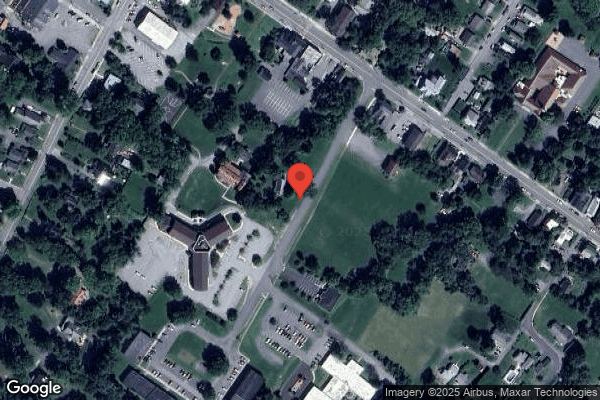
Understanding Severity Codes (click to expand)
Life-Threatening (Immediate Jeopardy)
J - Isolated K - Pattern L - Widespread
Actual Harm
G - Isolated H - Pattern I - Widespread
Potential for Harm
D - Isolated E - Pattern F - Widespread
No Harm (Minor)
A - Isolated B - Pattern C - Widespread

Questions to Ask on Your Visit

  • "Why is there high staff turnover? How do you retain staff?"
  • "Can I speak with families of current residents?"
  • "What's your RN coverage like on weekends and overnight?"

Our Honest Assessment

Strengths
  • • Licensed and certified facility. Meets minimum state requirements.
Concerns
  • • 89 deficiencies on record, including 1 serious (caused harm) violation. Ask about corrective actions taken.
  • • $24,921 in fines. Higher than 94% of Virginia facilities, suggesting repeated compliance issues.
  • • Grade F (23/100). Below average facility with significant concerns.
  • • 98% turnover. Very high, 50 points above average. Constant new faces learning your loved one's needs.
Bottom line: Trust Score of 23/100 indicates significant concerns. Thoroughly evaluate alternatives.

About This Facility

What is Rose Hill Health And Rehab's CMS Rating?

CMS assigns ROSE HILL HEALTH AND REHAB an overall rating of 1 out of 5 stars, which is considered much below average nationally. Within Virginia, this rating places the facility higher than 0% of the state's 100 nursing homes. A rating at this level reflects concerns identified through health inspections, staffing assessments, or quality measures that families should carefully consider.

How is Rose Hill Health And Rehab Staffed?

CMS rates ROSE HILL HEALTH AND REHAB's staffing level at 1 out of 5 stars, which is much below average compared to other nursing homes. Staff turnover is 98%, which is 52 percentage points above the Virginia average of 47%. High turnover can affect care consistency as new staff learn residents' individual needs. RN turnover specifically is 85%, which is notably high. RNs provide skilled clinical oversight, so turnover in this role can affect medical care quality.

What Have Inspectors Found at Rose Hill Health And Rehab?

State health inspectors documented 89 deficiencies at ROSE HILL HEALTH AND REHAB during 2020 to 2024. These included: 1 that caused actual resident harm, 86 with potential for harm, and 2 minor or isolated issues. Deficiencies causing actual harm indicate documented cases where residents experienced negative health consequences.

Who Owns and Operates Rose Hill Health And Rehab?

ROSE HILL HEALTH AND REHAB is owned by a for-profit company. For-profit facilities operate as businesses with obligations to shareholders or private owners. The facility is operated by TRIO HEALTHCARE, a chain that manages multiple nursing homes. With 120 certified beds and approximately 116 residents (about 97% occupancy), it is a mid-sized facility located in BERRYVILLE, Virginia.

How Does Rose Hill Health And Rehab Compare to Other Virginia Nursing Homes?

Compared to the 100 nursing homes in Virginia, ROSE HILL HEALTH AND REHAB's overall rating (1 stars) is below the state average of 3.0, staff turnover (98%) is significantly higher than the state average of 47%, and health inspection rating (2 stars) is below the national benchmark.

What Should Families Ask When Visiting Rose Hill Health And Rehab?

Based on this facility's data, families visiting should ask: "How do you ensure continuity of care given staff turnover, and what is your staff retention strategy?" "Can you walk me through typical staffing levels on day, evening, and night shifts?" "Can I visit during a mealtime to observe dining assistance and food quality?" "How do you handle medical emergencies, and what is your hospital transfer rate?" These questions are particularly relevant given the facility's high staff turnover rate and the below-average staffing rating.

Is Rose Hill Health And Rehab Safe?

Based on CMS inspection data, ROSE HILL HEALTH AND REHAB has a clean safety record: no substantiated abuse findings (meaning no confirmed cases of resident harm), no Immediate Jeopardy citations (the most serious violation level indicating risk of serious injury or death), and is not on the Special Focus Facility watch list (a federal program monitoring the lowest-performing 1% of nursing homes). The facility has a 1-star overall rating and ranks #100 of 100 nursing homes in Virginia. While no facility is perfect, families should still ask about staff-to-resident ratios and recent inspection results during their visit.

Do Nurses at Rose Hill Health And Rehab Stick Around?

Staff turnover at ROSE HILL HEALTH AND REHAB is high. At 98%, the facility is 52 percentage points above the Virginia average of 47%. Registered Nurse turnover is particularly concerning at 85%. RNs handle complex medical decisions and coordinate care — frequent RN changes can directly impact care quality. High turnover means new staff may not know residents' individual needs, medications, or preferences. It can also be disorienting for residents, especially those with dementia who rely on familiar faces. Families should ask: What is causing the turnover? What retention programs are in place? How do you ensure care continuity during staff transitions?

Was Rose Hill Health And Rehab Ever Fined?

ROSE HILL HEALTH AND REHAB has been fined $24,921 across 1 penalty action. This is below the Virginia average of $33,328. While any fine indicates a compliance issue, fines under $50,000 are relatively common and typically reflect isolated problems that were subsequently corrected. Families should ask what specific issues led to these fines and confirm they've been resolved.

Is Rose Hill Health And Rehab on Any Federal Watch List?

ROSE HILL HEALTH AND REHAB is not on any federal watch list. The most significant is the Special Focus Facility (SFF) program, which identifies the bottom 1% of nursing homes nationally based on persistent, serious quality problems. Not being on this list means the facility has avoided the pattern of deficiencies that triggers enhanced federal oversight. This is a positive indicator, though families should still review the facility's inspection history directly.