HERITAGE HALL BIG STONE GAP

2045 VALLEY VIEW DRIVE, BIG STONE GAP, VA 24219 (276) 523-3000
For profit - Corporation 180 Beds HERITAGE HALL Data: November 2025
Trust Grade
0/100
#195 of 285 in VA
Last Inspection: February 2023

Over 2 years since last inspection. Current conditions may differ from available data.

Overview

Heritage Hall Big Stone Gap has received a Trust Grade of F, indicating poor performance and significant concerns about care quality. It ranks #195 of 285 facilities in Virginia, placing it in the bottom half, and is the lowest-ranked option in Wise County. While the facility is improving, moving from 6 issues in 2023 to 4 in 2024, there are still serious deficiencies, including a failure to properly treat a resident's hand contractures, which led to skin breakdown and maggot infestation, as well as a medication error that caused another resident to receive the wrong drugs, resulting in hospitalization. Staffing is a relative strength with a 28% turnover rate, which is below the state average, but the overall and staffing ratings are still only 2 out of 5 stars. Additionally, the facility has concerning fines totaling $69,973, higher than 87% of Virginia facilities, and less RN coverage than 80% of state facilities, which raises questions about the adequacy of care provided.

Trust Score
F
0/100
In Virginia
#195/285
Bottom 32%
Safety Record
High Risk
Review needed
Inspections
Getting Better
6 → 4 violations
Staff Stability
✓ Good
28% annual turnover. Excellent stability, 20 points below Virginia's 48% average. Staff who stay learn residents' needs.
Penalties
✓ Good
$69,973 in fines. Lower than most Virginia facilities. Relatively clean record.
Skilled Nurses
⚠ Watch
Each resident gets only 20 minutes of Registered Nurse (RN) attention daily — below average for Virginia. Fewer RN minutes means fewer trained eyes watching for problems.
Violations
⚠ Watch
41 deficiencies on record. Higher than average. Multiple issues found across inspections.
★★☆☆☆
2.0
Overall Rating
★★☆☆☆
2.0
Staff Levels
★★★☆☆
3.0
Care Quality
★★☆☆☆
2.0
Inspection Score
Stable
2023: 6 issues
2024: 4 issues

The Good

  • Low Staff Turnover (28%) · Staff stability means consistent care
  • Full Sprinkler Coverage · Fire safety systems throughout facility
  • No fines on record
  • Staff turnover is low (28%)

    20 points below Virginia average of 48%

Facility shows strength in staff retention, fire safety.

The Bad

2-Star Overall Rating

Below Virginia average (3.0)

Below average - review inspection findings carefully

Federal Fines: $69,973

Well above median ($33,413)

Moderate penalties - review what triggered them

Chain: HERITAGE HALL

Part of a multi-facility chain

Ask about local staffing decisions and management

The Ugly 41 deficiencies on record

6 actual harm
Nov 2024 4 deficiencies 3 Harm
SERIOUS (G) 📢 Someone Reported This

A family member, employee, or ombudsman was alarmed enough to file a formal complaint

Actual Harm - a resident was hurt due to facility failures

Free from Abuse/Neglect (Tag F0600)

A resident was harmed · This affected 1 resident

Based on staff interviews, clinical record review, and facility document review, the facility staff failed to assess, monitor, and treat bilateral hand contractures resulting in skin breakdown with ma...

Read full inspector narrative →
Based on staff interviews, clinical record review, and facility document review, the facility staff failed to assess, monitor, and treat bilateral hand contractures resulting in skin breakdown with maggot infestation for (1) one of (7) seven sampled residents, Resident #2. The findings include: For Resident #2, the facility staff failed to follow the medical provider orders for a wound consult on 9/12/24 and failed to follow the comprehensive care plan to monitor and notify therapy of a decline in bilateral hand contractures resulting in increased pain, skin breakdown to both hands, maggot infestation in the right hand, and transfer to an acute care hospital for further treatment. This was a closed record review. Resident #2's diagnosis list indicated diagnoses that included, but were not limited to, Depression, Chronic Kidney Disease-Stage 3 (three), Anxiety Disorder, Type 2 (two) Diabetes Mellitus, Dementia, Mood Affective Disorder, Transient Ischemic Attack (TIA), and Cerebral Infarction. The most recent minimum data set (MDS) with an assessment reference date (ARD) of 10/16/24, assigned the resident a brief interview for mental status (BIMS) summary score of 0 out of 15 for cognitive abilities, indicating the resident was severely impaired in cognition. Section GG (functional abilities) was coded to indicate the resident had impairment on both sides of her upper extremity (shoulder, elbow, wrist, hand). Section O (special treatments, procedures, and programs) A. Range of motion (passive) was coded as 0 (zero) indicating PROM (passive range of motion) was none or less than 15 (fifteen) minutes daily and C. Splint or brace assistance was coded as 0 indicating splint and/or brace assistance was not completed. A review of Resident #2's comprehensive care plan revealed a Focus area that read in part, .Limited Mobility .The resident is at risk for .contractures . With Interventions that read in part, .Monitor/document/report PRN (as needed) any s/sx (signs and/or symptoms) of immobility: contractures forming or worsening .skin breakdown .PT (physical therapy), OT (occupational therapy) referrals as ordered, PRN . Review of Resident #2's clinical record revealed the following documentation: A nurse's note dated 09/12/2024, read in part, .This nurse called to Resident's room d/t (due to) scant amount of blood noted to bedding near right hand. Right hand remains contracted with blood noted to lateral side (thumb side). Unable to assess palm of hand d/t contracture and pain with manipulating fingers. Notified [name omitted] NP (nurse practitioner) and no new orders at this time. NP states for wound care to assess in the AM (morning) . A medical provider's progress note dated, 9/12/24, read in part, .Patient appears to be having pain related to her hand contractures .She has previously taken Tramadol for this but the PRN (as needed) order ran out. Patient has contraction of the hands and very stiff extremities from continued bedbound status .New orders written to renew Tramadol order for Tramadol 25 mg (milligrams) BID (twice a day) PRN. Will follow up as required, sooner if needed . A Therapy Screen dated 9/16/24, read in part, .Patient has documented contracture that occurred prior to admission .Patient was seen by occupational therapy services due to bilateral hand contractures, and was discharged .Patient is currently being seen by wound care due to skin breakdown in bilateral hands {sic}At this time, recommend a carrot hand splint (a device used to gently position a severely contracted hand for easier caregiving and patient comfort. The splint is shaped like a tapered carrot and comes with a plastic wand that allows the user to painlessly insert and draw the splint into place. The splint can be gradually inflated to reduce contractures), 2 (two) hours on {sic} 2 (two) hours off, and on at rest. Recommend positioning of upper extremities and hands, gentle passive range of motion, and edema management techniques to facilitate continued healing. Please monitor patient for any worsening contractures and skin irritation, redness, swelling, or pain associated with the contracture, and inform therapy services . A medical provider's progress note dated, 9/18/24, read in part, .Patient seen for acute visit. Nursing reported that patient has a lot of pain when messing with her hands. Her hands are contracted .New orders written to increase Tramadol from 25 mg BID to 25 mg TID (three times per day). Will follow up as required, sooner if needed . A nurse's note dated 10/08/2024, read in part, .Residents guest came up to this nurse and said her (resident's) hand was hurting . A nurse's note dated 10/22/2024, read in part, .This nurse called to residents room by Nurse [name omitted] and Wound Care Nurse [name omitted] to look at her (resident's) right hand for bloody thick drainage with maggots noted. This nurse, (doctor) Dr. [name omitted], Dr. [name omitted], and both above nurses went to residents room. Dr. [name omitted] looked at hand and noted maggots present. Dr. [name omitted] and Dr. [name omitted] called Dr. [name omitted] has agreed to see resident if admitted to hospital by hospitalist for further evaluation .ER (emergency room at hospital) called by this nurse and explained Dr. [name omitted] has agreed to see resident if admitted . DON (director of nursing) [name omitted] RN (registered nurse) notified. She has contacted [name omitted] APS (adult protective services) and notified her of situation . A medical providers order with a start date of 9/12/24 and an end date of 9/18/24 read in part, .Tramadol .25 mg .every 12 hours as needed for Pain . The September MAR (medication administration record revealed resident received the Tramadol seven times with pain levels documented as five out of ten on six instances and four out of ten on one instance from 9/12/24 through 9/18/24. A medical providers order with a start date of 9/18/24 read in part, .Tramadol .25 mg .every 8 hours as needed for pain . The September 2024 MAR and October 2024 MAR revealed resident received Tramadol from 9/18/24 through 10/19/24 thirty-five times with pain levels documented as two out of ten once, three out of ten six times, four out of ten twelve times, five out of ten fifteen times, and nine out of ten one time for the doses received. Surveyor reviewed Resident #2's current medical provider orders and was unable to locate orders for the care and/or monitoring of the resident's bilateral hand contractures. Review of the September 2024 and October 2024 TARs (treatment administration records) did not reveal any indicated treatments for Resident #2's bilateral hand contractures or skin breakdown on the resident's hands. Surveyor requested evidence of carrots being utilized and evidence of passive range of motion being performed for Resident #2, facility staff were unable to provide any evidence for these recommended treatments. A review of the Skin Assessments for September 2024 and October 2024 did not reveal Resident #2's bilateral hand contractures being acknowledged, did not recognize any form of monitoring/measuring for decline in the contractures or the skin surrounding/beneath the contractures and did not mention Resident #2's hands worsening, having any skin irritation, redness, swelling, or any other issues. Surveyor requested and received an ED (emergency department at the hospital) Provider Notes dated 10/22/24, that read in part, .patient presents to the ED .for wound check .reports that he found maggots in a wound on her right hand and states there is also a wound in palm of her left hand .Right hand: Deformity present. Decreased range of motion. Left hand: Deformity present. Decreased range of motion .Hands are contracted bilaterally .Photos taken by me of the right hand which there is maggots inside the curled up fingers .On exam .Her hands are contracted bilaterally with her fingers fixed into the palms of her hands. There are maggots visualized in the wound on her right and {sic}. There is purulent drainage with foul odor coming from both hands. Nursing flushed the right hand with sterile saline however there are still maggots coming from wound .Dr. [name omitted] was consulted and he presented at bedside to see patient. We are unable to fully visualize the wounds on her hands due to bilateral contractures of her hands. Imaging was obtained. Hand wounds were cleaned with hydrogen peroxide, maggots are still visualized in the right palm .Patient's family request patient be admitted for placement to a different facility. Patient is admitted to the hospitalist service .Problems addressed: Contracture of hand joint, right: complicated acute illness or injury. Maggot infestation: complicated acute illness or injury . On 11/18/24 at 2:45 PM, surveyor contacted Ombudsman via phone conversation. Ombudsman recalled Resident #2 and the maggots in her right hand. She stated resident's fingernails were long and embedded in her hands. She believed there was an order for wound care to put carrot in left hand 2 hours on and 2 hours off. Ombudsman stated she did not observe Resident #2's hands while she was a resident at the facility, but did observe them after resident went to another facility. She stated that APS had the hospital records and the report read that the hands smelled and maggots were executed from the right hand when the hospital irrigated it. She stated the hospital had to use a bucket to catch all the maggots. On 11/18/24 at 3:00 PM, surveyor discussed the allegation in this complaint during a meeting with the administrator in training (AIT), regional director of clinical services, director of nursing (DON), and an administrator from a sister-facility. On 11/18/24 at 3:12 PM, surveyor interviewed licensed practical nurse #1 (LPN#1) and she stated she was called to Resident #2's room (on 10/22/24) related to movement from larva. She stated she got the medical director and they could not see down under the resident's fingers because her hands were so contracted. She stated there was no room for a splint on the right hand and there were no orders for a splint, she did believe at one point that Resident #2 did have a carrot. Prior to the incident (10/22/24), she was not aware of any issues with the resident's hands and she was not aware of any wound care addressing the resident's contractures. On 11/19/24 at 8:17 AM, surveyor interviewed occupational therapist-other staff #2 (OS#2) and she stated she initially did bilateral carrots for Resident #2's hands and she was on therapy caseload in July 2024 and she was able to get the carrots in both hands at that time. It was difficult to get the carrot in the right hand, but they were able to. She stated during her screening in September (9/16/24) that she observed the resident's fingernails to be long and recalled the fingernails had been like that on both hands. OS#2 stated she recommended and gave the carrots for Resident #2 after the screen and she never asked staff to not use the carrots and they were to be worn 2 hours on, 2 hours off, and on at bedtime. She stated no one ever told her they could not get the carrots in the resident's hands. On 11/19/24 at 8:23 AM, surveyor interviewed CNAs (certified nursing assistant's) who gave the showers at the facility, CNA#1 and CNA#2. CNA#2 recalled Resident #2's hands being very contracted. CNA#1 stated they could not get her hands opened to wash them with soap, so they would wash the outside of the hand with soap and use the shower hose to try to rinse out the hand and clean under the contracture. CNA#1 and CNA#2 both agreed the resident would scream out in pain if they attempted to open her hands. CNA#1 stated therapy gave her a carrot. They could wash one of her hands and could get a washcloth down through that hand, but the other one they could not, she could not recall which hand. Both CNAs agreed they could not visualize Resident #2's fingernails on either hand. CNA#1 stated the resident would scream out in pain if you touched her hands because they hurt so much, and she (Resident #2) would tell them she would never try to break their fingers. On 11/19/24 at 9:11 AM, surveyor interviewed registered nurse#1 (RN#1) via phone conversation and reviewed the nurse's note she had written on 9/12/24. RN#1 stated she was not sure if the NP (nurse practitioner) followed-up with acquiring a wound consult for Resident #2 concerning her hands. RN#1 did recall resident having a couple of carrots and stated the caregiver would take them out. She also recalled resident having a white gauze type of thing for her left hand and the right hand used the carrot. She recalled resident's right hand being really contracted and it was painful for the resident to try to put the carrot in the hand, but she was always able to get the carrot in her hand, just not all the way. RN#1 stated she had tried to trim Resident #2's fingernails but was unable to get her fingers out and assumed resident was on wound care and they (wound care) were taking care of them (fingernails). On 11/19/24 at 9:41 AM, surveyor called RN#1 back and asked who she informed about the incident of Resident #2's right hand bleeding on 9/12/24 and she stated she informed registered nurse#2 (RN#2) [wound care nurse] about the resident's hand bleeding and stated there would be no documentation of that. On 11/19/24 at 9:25 AM, surveyor interviewed RN#2 and she stated she never received any referrals for Resident #2's hands. On 11/19/24 at 10:57 AM, surveyor interviewed nurse practitioner (NP) and she recalled being informed of the blood noted on Resident #2's right hand on 9/12/24 and stated she did visit the resident. She stated for any new skin issues, the nurse would put in as an order for wound care to look at. The NP recalled speaking with the wound care nurse at some point and stated the wound care nurse stated they were addressing cleaning Resident #2's hands. The NP recalls there was no drainage, but the hand did appear to have yeast when she looked at it. The NP did not recall carrots being used in Resident #2's hands but did recall wash cloths in both hands. The NP agreed her intent from the 9/12/24 note was for nursing to put in an order from her to have wound care look at Resident #2's hands and this was a verbal order, as she (the NP) had left for the day. On 11/19/24 at 12:16 PM, at the pre-exit meeting, surveyor reviewed the complaint with the director of nursing, administrator in training, regional director of clinical services, and the administrator from a sister-facility, and reported there was no documented evidence to support utilization of carrots, no documented evidence of passive range of motion, no evidence to support the comprehensive care plan was followed in regards to the contractures of Resident #2's hands, and no evidence the provider order was followed for a wound consult on 9/12/24. Surveyor requested and received a facility policy titled, Abuse, Neglect and Exploitation Prevention and Reporting that read in part, .Each resident has the right to be free from .neglect .8. Neglect means failure of the facility, its employees, or service providers to provide goods and services to a resident that are necessary to avoid physical harm, pain, mental anguish, or emotional distress .Identification of .Neglect .h. Failure to provide care needs . No further information was provided to the survey team prior to exit on 11/19/24.
SERIOUS (G) 📢 Someone Reported This

A family member, employee, or ombudsman was alarmed enough to file a formal complaint

Actual Harm - a resident was hurt due to facility failures

Quality of Care (Tag F0684)

A resident was harmed · This affected 1 resident

Based on staff interview, clinical record review, and facility document review, the facility staff failed to ensure residents receive treatment and care in accordance with the comprehensive care plan ...

Read full inspector narrative →
Based on staff interview, clinical record review, and facility document review, the facility staff failed to ensure residents receive treatment and care in accordance with the comprehensive care plan and medical provider orders for (2) two of (7) seven sampled residents, Resident #2 and Resident #7. The findings include: 1. For Resident #2, the facility staff failed to provide treatment and care in accordance with the comprehensive care plan to monitor and treat bilateral hand contractures and failed to follow the medical provider orders for a wound consult resulting in skin breakdown in both hands, maggot infestation of the right hand, and transfer to an acute care hospital for further treatment. This was a closed record review. Resident #2's diagnosis list indicated diagnoses that included, but were not limited to, Depression, Chronic Kidney Disease-Stage 3 (three), Anxiety Disorder, Type 2 (two) Diabetes Mellitus, Dementia, Mood Affective Disorder, Transient Ischemic Attack (TIA), and Cerebral Infarction. The most recent minimum data set (MDS) with an assessment reference date (ARD) of 10/16/24, assigned the resident a brief interview for mental status (BIMS) summary score of 0 out of 15 for cognitive abilities, indicating the resident was severely impaired in cognition. Section GG (functional abilities) was coded to indicate the resident had impairment on both sides of her upper extremity (shoulder, elbow, wrist, hand). Section O (special treatments, procedures, and programs) A. Range of motion (passive) was coded as 0 (zero) indicating PROM (passive range of motion) was none or less than 15 (fifteen) minutes daily and C. Splint or brace assistance was coded as 0 indicating splint and/or brace assistance was not completed. A review of Resident #2's comprehensive care plan revealed a Focus area that read in part, .Limited Mobility .The resident is at risk for .contractures . With Interventions that read in part, .Monitor/document/report PRN (as needed) any s/sx (signs and/or symptoms) of immobility: contractures forming or worsening .skin breakdown .PT (physical therapy), OT (occupational therapy) referrals as ordered, PRN . A review of the clinical record revealed a Therapy Screen dated 9/16/24, that read in part, .Patient has documented contracture that occurred prior to admission .Patient was seen by occupational therapy services due to bilateral hand contractures, and was discharged .Patient is currently being seen by wound care due to skin breakdown in bilateral hands {sic}At this time, recommend a carrot hand splint (a device used to gently position a severely contracted hand for easier caregiving and patient comfort. The splint is shaped like a tapered carrot and comes with a plastic wand that allows the user to painlessly insert and draw the splint into place. The splint can be gradually inflated to reduce contractures), 2 (two) hours on {sic} 2 (two) hours off, and on at rest. Recommend positioning of upper extremities and hands, gentle passive range of motion, and edema management techniques to facilitate continued healing. Please monitor patient for any worsening contractures and skin irritation, redness, swelling, or pain associated with the contracture, and inform therapy services . Surveyor reviewed Resident #2's current medical provider orders and was unable to locate orders for the care and/or monitoring of the resident's bilateral hand contractures. Review of the September 2024 and October 2024 TARs (treatment administration records) did not reveal any indicated treatments for Resident #2's bilateral hand contractures or skin breakdown on the resident's hands. Surveyor requested documented evidence of carrots being utilized and documented evidence of passive range of motion being performed for Resident #2, facility staff were unable to provide any documented evidence for these recommended treatments. Further review of Resident #2's clinical record revealed the following progress notes: A nurse's note dated 9/12/24 read in part, .This nurse called to Resident's room d/t (due to) scant amount of blood noted to bedding near right hand. Right hand remains contracted with blood noted to lateral side (thumb side). Unable to assess palm of hand d/t contracture and pain with manipulating fingers. Notified [name omitted] NP (nurse practitioner) and no new orders at this time. NP states for wound care to assess in the AM (morning) . A nurse's noted dated 10/22/2024, read in part, .This nurse called to residents room by Nurse [name omitted] and Wound Care Nurse [name omitted] to look at her (resident's) right hand for bloody thick drainage with maggots noted. This nurse, (doctor) Dr. [name omitted], Dr. [name omitted], and both above nurses went to residents room. Dr. [name omitted] looked at hand and noted maggots present. Dr. [name omitted] and Dr. [name omitted] called Dr. [name omitted] has agreed to see resident if admitted to hospital by hospitalist for further evaluation .ER (emergency room at hospital) called by this nurse and explained Dr. [name omitted] has agreed to see resident if admitted . DON (director of nursing) [name omitted] RN (registered nurse) notified. She has contacted [name omitted] APS (adult protective services) and notified her of situation . A review of the Skin Assessments for September 2024 and October 2024 did not reveal Resident #2's bilateral hand contractures being acknowledged, did not recognize any form of monitoring/measuring for decline in the contractures or the skin surrounding/beneath the contractures and did not mention Resident #2's hands worsening, having any skin irritation, redness, swelling, or any other issues. Surveyor was unable to locate any doucmented evidence in the clinical record that a wound consult was obtained for the resident as per the NP's verbal order on 9/12/24 and the facility staff was unable to provide any documented evidence of a wound consult. On 11/18/24 at 3:12 PM, surveyor interviewed licensed practical nurse #1 (LPN#1) and she stated she was called to Resident #2's room (on 10/22/24) related to movement from larva. She stated she got the medical director, and they could not see down under the resident's fingers because her hands were so contracted. She stated there was no room for a splint on the right hand and there were no orders for a splint, she did believe at one point that Resident #2 did have a carrot, but her care companion would take it out because the resident stated it hurt. Prior to the incident (10/22/24), she was not aware of any issues with the resident's hands, and she was not aware of any wound care addressing the resident's contractures. On 11/19/24 at 8:17 AM, surveyor interviewed occupational therapist-other staff #2 (OS#2) and she stated she initially did bilateral carrots for Resident #2's hands and she was on therapy caseload in July 2024, and she was able to get the carrots in both hands at that time. It was difficult to get the carrot in the right hand, but they were able to. She stated during her screening in September (9/16/24) that she observed the resident's fingernails to be long and recalled the fingernails had been like that on both hands. OS#2 stated she recommended and gave the carrots for Resident #2 after the screen and she never asked staff to not use the carrots and they were to be worn 2 hours on, 2 hours off, and on at bedtime. She stated no one ever told her they could not get the carrots in the resident's hands. On 11/19/24 at 8:23 AM, surveyor interviewed CNAs (certified nursing assistant's) who gave the showers at the facility, CNA#1 and CNA#2. CNA#2 recalled Resident #2's hands being very contracted. CNA#1 stated they could not get her hands opened to wash them with soap, so they would wash the outside of the hand with soap and use the shower hose to try to rinse out the hand and clean under the contracture. CNA#1 and CNA#2 both agreed the resident would scream out in pain if they attempted to open her hands. CNA#1 stated therapy gave her a carrot. They could wash one of her hands and could get a washcloth down through that hand, but the other one they could not, she could not recall which hand. Both CNAs agreed they could not visualize Resident #2's fingernails on either hand. CNA#1 stated the resident would scream out in pain if you touched her hands because they hurt so much, and she would tell them she would never try to break their fingers. On 11/19/24 at 9:11 AM, surveyor interviewed registered nurse#1 (RN#1) via phone conversation and reviewed the nurse's note she had written on 9/12/24. RN#1 stated she was not sure if the NP (nurse practitioner) followed-up with acquiring a wound consult for Resident #2 concerning her hands. RN#1 did recall resident having a couple of carrots at one point and stated the caregiver would take them out. She also recalled resident having a white gauze type of thing for her left hand and the right hand used the carrot. She recalled resident's right hand being really contracted and it was painful for the resident to try to put the carrot in the hand, but she was always able to get the carrot in her hand, just not very far. RN#1 stated she had tried to trim Resident #2's fingernails but was unable to get her fingers out and assumed resident was receiving wound care and that they were taking care of them (fingernails). On 11/19/24 at 9:41AM, surveyor called RN#1 back and asked who she informed about the incident of Resident #2's right hand bleeding on 9/12/24 and she stated she informed registered nurse#2 (RN#2) [wound care nurse] about the resident's hand bleeding and stated there would be no documentation of that. On 11/19/24 at 9:25 AM, surveyor interviewed RN#2, and she stated she never received any referrals for Resident #2's hands. On 11/19/24 at 10:57 AM, surveyor interviewed nurse practitioner (NP), and she recalled being informed of the blood noted on Resident #2's right hand on 9/12/24 and stated she did visit the resident. She stated for any new skin issues, the nurse would put in as an order for wound care to look at. The NP did not recall carrots being in Resident #2's hands but did recall wash cloths in both hands. The NP agreed her intent from the 9/12/24 incident was for nursing to put in an order from her to have wound care look at Resident #2's hands and this was a verbal order, as she (the NP) had left for the day. On 11/18/24 at 3:00 PM, during a meeting with the administrator in training (AIT), regional director of clinical services, director of nursing (DON), and an administrator from a sister-facility this surveyor discussed the concerns of Resident #2 having no documented evidence of receiving carrots for bilateral hand contractures, no documented evidence passive range of motion was performed on the resident's hands and no evidence the medical providers verbal order for a wound consult on 9/12/24 was addressed. Surveyor requested and received an ED (emergency department at the hospital) Provider Notes dated 10/22/24, that read in part, .patient presents to the ED .for wound check .reports that he found maggots in a wound on her right hand and states there is also a wound in palm of her left hand .Right hand: Deformity present. Decreased range of motion. Left hand: Deformity present. Decreased range of motion .Hands are contracted bilaterally .Photos taken by me of the right hand which there is maggots inside the curled up fingers .On exam .Her hands are contracted bilaterally with her fingers fixed into the palms of her hands. There are maggots visualized in the wound on her right and {sic}. There is purulent drainage with foul odor coming from both hands. Nursing flushed the right hand with sterile saline however there are still maggots coming from wound .Dr. [name omitted] was consulted and he presented at bedside to see patient. We are unable to fully visualize the wounds on her hands due to bilateral contractures of her hands. Imaging was obtained. Hand wounds were cleaned with hydrogen peroxide, maggots are still visualized in the right palm .Patient's family request patient be admitted for placement to a different facility. Patient is admitted to the hospitalist service .Problems addressed: Contracture of hand joint, right: complicated acute illness or injury. Maggot infestation: complicated acute illness or injury . No further information regarding this concern was presented to the survey team prior to the exit conference on 11/19/24. 2. For Resident #5, the facility staff failed to administer the oral medication Lactulose as ordered by the provider. Lactulose is used to treat constipation and may also be used to reduce ammonia levels in the blood due to liver disease. Resident #5's diagnosis list indicated diagnoses, which included, but not limited to Hepatic Failure, Schizophrenia, Bipolar Disorder, and Adult Failure to Thrive. The most recent minimum data set (MDS) with an assessment reference date (ARD) of 10/24/24 assigned the resident a Brief Interview for Mental Status (BIMS) summary score of 0 out of 15 indicating the resident was severely cognitively impaired. Resident #5's current comprehensive person-centered care plan included a focus area stating Resident #5 was in the facility for long term care due to current healthcare needs and medication management with an intervention for continued care by facility staff per primary care physician and physician orders. On 11/19/24 at 8:55 AM during a medication pass and pour observation, surveyor observed Licensed Practical Nurse (LPN) #4 prepare and administer Resident #5's morning medications. A review of Resident #5's current provider orders included a current order for Lactulose Oral Solution 10 gm/15 ml administer 15 ml by mouth two times a day for elevated ammonia level. According to the resident's November 2024 Medication Administration Record (MAR), Lactulose was scheduled to be administered at 9:00 AM. Surveyor did not observed LPN #4 administer Lactulose to Resident #5 during the medication pass and pour observation on 11/19/24. On 11/19/24 at 10:01 AM, surveyor returned and spoke with LPN #4 who stated she did not administer the Lactulose but would give it to him now. On 11/19/24 at 12:15 PM, the survey team met with the Administrator in Training, Director of Nursing, Regional Nurse Consultant, and an Administrator from a sister facility and discussed the concern of LPN #4 failing to administer Resident #5's Lactulose. No further information regarding this concern was presented to the survey team prior to the exit conference on 11/19/24.
SERIOUS (G) 📢 Someone Reported This

A family member, employee, or ombudsman was alarmed enough to file a formal complaint

Actual Harm - a resident was hurt due to facility failures

Deficiency F0760 (Tag F0760)

A resident was harmed · This affected 1 resident

Based on resident interview, staff interview, clinical record review, and facility document review, the facility staff failed to ensure residents were free of significant medication errors for 1 of 7 ...

Read full inspector narrative →
Based on resident interview, staff interview, clinical record review, and facility document review, the facility staff failed to ensure residents were free of significant medication errors for 1 of 7 sampled residents (Resident #1). Resident #1 received eight (8) separate medications in error placing the resident's health and safety in jeopardy resulting in transfer to a higher level of care. The findings included: For Resident #1, the facility staff failed to administer medications as ordered by the medical provider. On 10/21/24, Resident #1 ingested eight (8) separate medications including six (6) psychotropics that were ordered for another resident resulting in transfer to the emergency department where they were subjected to invasive medical procedures including intravenous fluids and blood work. According to The Centers for Medicare and Medicaid (CMS), a psychotropic drug is defined in the regulations at §483.45(c)(3), as any drug that affects brain activities associated with mental processes and behavior. Psychotropic drugs include, but are not limited to the following categories: anti-psychotics, anti-depressants, anti-anxiety, and hypnotics. Resident #1's diagnosis list indicated diagnoses, which included, but not limited to Chronic Cholecystitis, Chronic Obstructive Pulmonary Disease, Atrial Fibrillation, and Essential Hypertension. The most recent minimum data set (MDS) with an assessment reference date (ARD) of 8/27/24 assigned the resident a brief interview for mental status (BIMS) summary score of 13 out of 15 indicating the resident was cognitively intact. Resident #1 was coded as being independent in personal hygiene, toileting hygiene, and upper/lower body dressing. A review of Resident #1's clinical record revealed a nursing progress note dated 10/21/24 at 8:48 PM which read Resident was sitting at cart talking to this nurse while I stop what I was doing and started pre-pairing [sic] his medications. He ask 'hey where my medication' I stated on top of the cart. I bent over to get his nose sprays out of the bottom drew [sic] of cart. looking over I realized he had swallowed another resident medication. I RAN!! to call Dr. [name omitted] MD to explain situation: was notified per Dr. [name omitted] MD to notify resident and send to ER for eval. Called 911, told resident, Notified [director of nursing], Called [hospital name], called family. Vitals 111/69 [blood pressure] 98.3 [temperature] 89 [heart rate] 18 [respirations] 96% [oxygen saturation] WNL [within normal limits]. A nursing progress note dated 10/22/24 at 3:49 AM read Resident arrived back to facility from [hospital]. NO distress noted. Awake alert and pleasant mood. No new orders given. Surveyor requested and received the emergency room provider notes dated 10/21/24 which read in part .Nursing staff accidentally gave him the wrong medications at 9:00 p.m. tonight. They gave him Ativan, Zyprexa and lithium and called 911 to have him evaluated in the emergency department. Patient has no complaints . [Resident #1] is not in acute distress .Cardiovascular .Normal rate. Rhythm irregular .No respiratory distress .No focal deficit present .alert and oriented to person, place, and time .Mood normal .Behavior normal .ECG [electrocardiogram] unchanged from 8/01/2024 .The patient was stable in the emergency department. He was asymptomatic while in the department. Labs were unremarkable. Case discussed with poison control who initially recommended 8 hour observation. 01:29 Poison control was contacted again and noting that the patient was asymptomatic they stated that if the patient was still asymptomatic at 2 am, he would be medically cleared to return to the nursing home. 02:00 Patient was asymptomatic and is medically cleared to return to the nursing home . According to the ER provider notes, while at the hospital, Resident #1 received an ECG, blood work including a Comprehensive Metabolic Panel, Salicylate Level, Acetaminophen Level and a Complete Blood Count, and 500 ml of Sodium Chloride solution. Resident #1 was seen the following morning, 10/22/24, by the facility physician. The progress note read in part .Last night, patient accidentally took medications intended for another patient. There was a miscommunication due to patient's hearing loss and while his nurse turned to grab part of his medications, patient misunderstood her and took a different resident's medications. He ingested Ativan, Zyprexa, and lithium. Patient became weak and hard to respond and subsequently was sent to the emergency room, where he was observed for several hours without further worsening of symptoms. He was discharged and returned here. This morning, he is complaining that his legs still feel a litter [sic] weak and his stomach is hurting some .weakness in legs this morning worse than patient's baseline .Plan: PT [physical therapy] for focal leg weakness. Continue to monitor closely . On 11/18/24 at 1:10 PM surveyor spoke with Resident #1 in his room and asked if he had been out to the emergency room recently. Resident #1 stated a nurse had given him someone else's medicine and he had to go to the hospital. Resident #1 stated the nurse came into his room during the evening around 9 or 10 pm and gave him medicine, left the room and then she came back real fast and they rushed me out of here. Resident #1 said the nurse almost killed me stating his chest hurt and he was short of breath and could not breathe. The resident further stated, that stuff was dangerous, and it took him 10 to 11 days to get over it. Resident #1 stated when he returned from the hospital, the nurse spoke to him and cried about the situation. The resident stated this nurse continues to administer his medications. When asked how he felt about that, he stated, I'm okay if she gives me the right ones and I don't think she meant to kill me. Resident #1 stated he now looks at all his medicine before taking it. At 3:58 PM, surveyor again spoke with Resident #1 who stated he was lying in his bed when the nurse gave him his medications that evening. On 11/18/24 at 3:59 PM, with the verbal consent of Resident #1, surveyor spoke with Resident #1's roommate (Resident #7) and asked him about the incident on 10/21/24. Resident #7 stated the nurse brought the carriage around with the medicine and that night she gave him his medicine and then brought Resident #1's medicine to him and then came back into the room real quick. According to Resident #7's clinical record, his 9/11/24 MDS documented a BIMS score of 14 out of 15 indicating he was cognitively intact. On 11/18/24 at 2:49 PM, surveyor spoke with the local Long-Term Care (LTC) Ombudsman who stated Resident #1, and their roommate were adamant that the nurse brought the wrong medication into his room but the facility stated Resident #1 took the medication from the cart. On 11/19/24 at 1:28 AM, surveyor spoke with Licensed Practical Nurse (LPN) #5 (the writer of the 10/21/24 8:48 PM nursing progress note) and asked her to describe the incident on 10/21/24. LPN #5 immediately stated it's my fault and I panicked. LPN #5 stated the med cart was in the hall in front of Resident #1's room and he was sitting in his wheelchair in his doorway. LPN #5 stated she saw another resident in the hall, Resident #8, and decided to administer his medications while he was near and placed his oral medications in a cup and turned to give them and he was already gone so she sat Resident #8's medicine cup aside on the top of the cart. At that time LPN #5 began preparing Resident #1's medications and while talking to Resident #1, she bent over into the med cart to get nasal spray and Resident #1 reached onto the med cart and picked up Resident #8's medication cup and took everything inside of the cup which was all of Resident #8's oral medication. LPN #5 stated she knew what had happened as soon as he took them, and she ran and called the doctor and sent him to the ER. LPN #5 stated she had received proper training and been a nurse for a long time and understood the scolding she received and thought she would lose her job over it. LPN #5 stated she understood that she needed to own her mistake. A review of Resident #1's October 2024 Medication Administration Record (MAR) indicated Resident #1 was to receive the following medications on 10/21/24 from 9:00 to 10:00 PM: Eliquis 5 mg, Cardizem 15 mg, Digoxin 125 mcg, Midodrine 5 mg, Atorvastatin 10 mg, Flonase, Azelastine Nasal Spray, Colace 200 mg, Miralax 17 gm, and Debrox. However, Resident #1 received the following medications in error: Zyprexa 10 mg, Lithium 300 mg, Risperdal 1 mg, Oxcarbazepine 150 mg, Ativan 0.5 mg, Trazodone 50 mg, Bactrim DS 800-160 mg, and Simethicone 180 mg. Zyprexa and Risperdal are antipsychotic medications used to treat conditions such as Bipolar Disorder and Schizophrenia. Lithium is a mood stabilizing drug used to treat manic episodes associated with Bipolar Disorder. Ativan is a benzodiazepine used to treat anxiety and insomnia. Trazodone is an antidepressant used to treat depression. Oxcarbazepine is an anticonvulsant used to manage seizures. Bactrim is an antibiotic used to treat infection. Lastly, Simethicone is a medication used to relieve gas in the stomach and intestines. According to documents included in LPN #5's employee file, she was initially licensed as an LPN in 2007 and had a current license expiration date of 6/30/25. LPN #5 began working at the facility in September 2023. A RN/LPN Initial Nurse Orientation checklist indicated LPN #5 received training titled Safely Administer Meds/Med Error Process on 9/21/23. On 11/19/24 at 12:15 PM, the survey team met with the Administrator in Training (AIT), Regional Nurse Consultant (RNC), Director of Nursing (DON), and Administrator from a sister facility and discussed Resident #1's medication error. When discussing the discrepancies between Resident #1, Resident #7, and LPN #5's version of events, the DON stated this was the first she had heard of the resident stating LPN #5 brought the medications to him. Surveyor was unable to verify if the error occurred from the nurse handing the wrong medications to Resident #1 or from the nurse leaving Resident #8's medications unsecured on the top of the med cart resulting in Resident #1 picking up the wrong cup of medications and ingesting them. No further information regarding this concern was presented to the survey team prior to the exit conference on 11/19/24.
CONCERN (D) 📢 Someone Reported This

A family member, employee, or ombudsman was alarmed enough to file a formal complaint

Potential for Harm - no one hurt, but risky conditions existed

Infection Control (Tag F0880)

Could have caused harm · This affected 1 resident

Based on observation, staff interview, and facility document review, the facility staff failed to maintain an infection prevention and control program to provide a safe, sanitary, environment and help...

Read full inspector narrative →
Based on observation, staff interview, and facility document review, the facility staff failed to maintain an infection prevention and control program to provide a safe, sanitary, environment and help prevent the development and transmission of communicable disease and infection on 1 of 4 facility units (North Hall). The findings included: During a medication pass and pour observation, Licensed Practical Nurse (LPN) #4 failed to perform hand hygiene between residents. On 11/19/24 at 8:55 AM, during a medication pass and pour observation, surveyor observed LPN #4 administer medications to Resident #6. LPN #4 returned to the medication cart and began preparing medications for another resident, Resident #5, without performing hand hygiene. At 9:02 AM, LPN #4 donned gloves, entered Resident #5's room, administered oral and inhaled medications, removed gloves and returned to the medication cart without performing hand hygiene. In the presence of the surveyor, LPN #4 then proceeded to another nursing unit and obtained a medication from the in-house pharmacy supply system and then to another unit and obtained a bottle of house stock Fish Oil medication. At 9:10 AM, surveyor and LPN #4 returned to the medication cart, LPN #4 failed to perform hand hygiene once returning. LPN #4 removed the seal from the house stock bottle of Fish Oil and prepared two additional medications for Resident #5. LPN #4 entered Resident #5's room and administered the additional medications and while in the room, she held the resident's personal water pitcher by the handle with her bare hand. At 9:13 AM, LPN #4 returned to the medication cart and began preparing medications for another resident without performing hand hygiene. Surveyor requested and received the facility policy titled Handwashing/Hand Hygiene which read in part .7. Use an alcohol-based hand rub containing at least 62% alcohol; or alternately, soap (antimicrobial or non-antimicrobial) and water for the following situations .b. Before and after direct contact with residents; c. Before preparing or handling medications .l. After contact with objects (e.g., medical equipment) in the immediate vicinity of the resident; m. After removing gloves . On 11/19/24 at 12:15 PM, the survey team met with the Administrator in Training, Director of Nursing, Regional Nurse Consultant, and an Administrator from a sister facility and discussed the concern of LPN #4 failing to perform hand hygiene during the medication pass and pour observation. No further information regarding this concern was presented to the survey team prior to the exit conference on 11/19/24.
Aug 2023 1 deficiency 1 Harm
SERIOUS (G) 📢 Someone Reported This

A family member, employee, or ombudsman was alarmed enough to file a formal complaint

Actual Harm - a resident was hurt due to facility failures

Accident Prevention (Tag F0689)

A resident was harmed · This affected 1 resident

**NOTE- TERMS IN BRACKETS HAVE BEEN EDITED TO PROTECT CONFIDENTIALITY** Based on staff interview, resident interview, clinical record review, and facility document review, the facility staff failed to...

Read full inspector narrative →
**NOTE- TERMS IN BRACKETS HAVE BEEN EDITED TO PROTECT CONFIDENTIALITY** Based on staff interview, resident interview, clinical record review, and facility document review, the facility staff failed to provide adequate supervision to prevent accidents for 4 of 7 Residents (Resident #3, Resident #6, Resident #4, Resident #5). Resident #3 was found in the floor of the Alzheimer's unit with head wounds. Resident #3 was transferred to a local hospital. A CT (Cat Scan) was performed and showed a right occipitoparietal calvarial fracture, subdural hematoma, hemorrhagic parenchymal contusion in the right cerebellar hemisphere, and multifocal subarachnoid hemorrhage. Resident #3 was placed on comfort care and expired. This is harm. The findings included: Resident #3, was found in the floor of the Alzheimer's unit with head wounds, and was transferred to a local hospital. Resident #3 was placed on comfort care due to their injuries, and subsequently expired. Resident #2 reportedly hit Resident #3, resulting in a head wound. Resident #3's diagnoses included, but were not limited to, diabetes, peripheral vascular disease, and difficulty in walking. On [DATE], an entrance conference was conducted with the Director of Nursing. The DON stated that Resident #3 had passed away from their injuries. The DON further stated that the incident was not observed by staff, and the other resident involved, Resident #2 did not have any injuries and no memory of the incident. On [DATE], a review was conducted of Resident #3's clinical record. Resident #3's quarterly Minimum Data Set assessment with an assessment reference date of [DATE] included a brief interview for mental status summary score of 3 out of a possible 15 points, indicating severe cognitive impairment. Resident #3 required supervision of one person for bed mobility, transfers, walk in room/corridor, and locomotion on and off the unit. Resident #3 was not coded as having any limitations in range of motion in the upper and/or lower extremities or as using any mobility devices. Resident #3's comprehensive care plan (CCP) included the following: Requires supervision, assist with all activities of daily living (ADL's). Falls/Injuries: Requires assist with ADL's, ambulates with supervision. Has an unsteady gait, is unsteady with transitions, and receives psychotropic medication, diagnoses diabetes, peripheral vascular disease, repeated falls, dementia, and osteoporosis. Cognitive/Delirium/Communication/Visual: Is alert and verbal with confusion noted. Communicates verbally with clear speech. Understood and understands. Resides in a locked memory care unit. The Director of Nursing (DON) provided the surveyor with a physician order list indicating Resident #3 was receiving medications at the time of the incident on [DATE]. It included Isosorbide Mononitrate, Namenda, Escitalopram, and Seroquel. A review was conducted of the clinical record. It read: [DATE] 1:40 p.m., Certified Nursing Assistant [C.N.A. #1] stated they were at the nurses station with C.N.A. #2, and the Licensed Practical nurse [LPN #1]. We heard yelling, we ran down the hallway and we saw Resident #2 standing in the doorway of another residents room (Resident #6). C.N.A. #2 assisted Resident #2 to the desk. I saw Resident #3 in the floor, tried to wake them up, Resident #3 threw up, and they turned them onto their side. LPN #1 asked me to obtain vital signs, LPN #1 called 911 and we stayed with the resident until the ambulance arrived. C.N.A. #1 stated Resident #6 said they saw it all, and Resident #2 had hit Resident #3 in the face. [DATE] 8:26 p.m., LPN #1 documented, The cna's were standing at the nursing station when they heard yelling from the hall. When the nurses and aides got back there, that is where we saw another resident in the floor lying unconscious. The aides got The resident (Resident #2), who hit the other resident out of the room. Resident #2 is now sitting in a chair up at the nursing station. Resident is being sent out for psych evaluation. On [DATE] 3:55 p.m., an interview was conducted with Resident #6 (BIMS score 15) who stated they were in their room, Resident #3 had come in to talk with them,( Resident #2) came in here and smacked (Resident #3) in the head, who fell down to the floor in my room, and started bleeding. Resident #6 stated, When they turned (Resident #3) to the side (Resident #3) began puking. Regarding Resident #2, Resident #6 stated, [Resident #2] hit me too, but I only got a bruise on my arm. Due to prior altercations with other residents, Resident #2 was supposed to be closely supervised. On [DATE] at 12:28 p.m., the DON stated the incident happened on a Friday at approximately 6:00 p.m. and the activity person had gone, they had tried to find placement to supervise Resident #2, but were not having any luck. The following Facility Reported Incidents were reviewed: 1. [DATE]. Resident to Resident altercation. Resident #2 wandered into another Residents room (Resident #5). Residents are in different rooms but shared a bathroom with a connecting door. Resident #5 attempted to help Resident #2 out of the room and Resident #2 hit Resident #5, Resident #5 then hit Resident #2. No injuries to Resident #5, Resident #2 had 2 red areas on their face. Every 15 minutes checks X 72 hours initiated on both residents. Resident #2 was assessed by the NP [Nurse Practitioner] -patient stable at baseline requiring redirection due to dementia. A follow-up visit was completed on [DATE] NP-Stable. 2. [DATE]. Resident to Resident altercation involving Resident #2 and Resident #4. Resident #2 observed by staff hitting Resident #4 on the head with two shoes. Residents redirected; Resident #2 was moved to a different room. Every 15 minutes checks X 72 hours. No injuries. No further episodes. 3. [DATE], Resident to Resident altercation. Resident #6 told Resident #2 to get away from them. Resident #2 then slapped Resident #6 on the hand and back of head. Every 15 minutes checks continued for another 72 hours. No injuries. Residents separated. Resident #2 was assessed by the NP on [DATE]-stable. On the day of the incident, 2 police officers came to the facility. On [DATE] at approximately 4:25 p.m., an interview was conducted via telephone with both of them. Police Officer #1 stated that one of the workers at the nursing home had taken out an ECO (Emergency Custody Order) on Resident #2. They had taken Resident #2 to the hospital, they were violent, confused, couldn't remember what had happened, did not know where they were. Mental health made the decision to release the Resident back to the facility and they are still allowing the resident to roam free. The Resident was not charged due to their mental capacity but there is still a possibility they may be charged. [DATE] 9:10 a.m., Police Officer #2 stated when they got to the facility, the scene was chaotic on the Alzheimer's wing. We filtered through the issues and emotions and a resident named (Resident #6) had witnessed the assault. Staff stated a resident had hurt a resident. Resident was still in the floor and had vomit and blood in their hair, and the rescue squad personnel got them out pretty quick. Staff kept making statements that Resident #2 was violent, assaulting staff and other residents. Resident #2 was seated in front of the nurses station, staff present. Resident #2 was talking about past issues, fragments. We got word that Resident #3 was bleeding so severe they were placed on comfort care, and they had since passed away from their wounds. Police officer #2 stated Resident #2 was not violent in their presence (but stated they were not the first officer on the scene), they were seated, they had no clue of the incident. Police officer #2 stated Resident #3's autopsy was completed yesterday but they did not have any results of yet. ECO was done by staff, and the facility tried to refuse to take them back, the hospital had to release the resident. Police Officer #1 had spoken with the director or someone and they let Resident #2 come back. Police officer #2 stated they were unsure if Resident #2 was competent to stand trial. On [DATE] at 1:55 p.m., an observation of Resident #2 was made. Resident #2 was resting in bed, with his eyes open, and responding when spoken to. He stated he loved it back here. No mention of any incidents were made by resident. The DON provided the surveyor with copies of hospital records for Resident #3's admission to the hospital on [DATE]. An excerpt read: Emergency Department (ED) Provider Notes, date of service [DATE] 8:37 p.m. past medical history of dementia, hypertension, MI (myocardial infarction) . Patient was either pushed or struck by another patient. It was reported (Resident #3) fell to the ground hitting back of head had loss of consciousness. Physical Exam: Laceration to posterior scalp. Talked with daughter stated she wants patient changed from full code to Do Not Resuscitate [DNR]. I discussed case with palliative care nurse. Patient is given IV Zofran and Compazine for nausea will give Morphine IV. History and Physical, date of service [DATE] 9:35 p.m. admission date [DATE]. History of hypertension, dementia, with repeated falls presented to the emergency room (ER) from . (nursing home) reported by nursing home staff after they were shoved by another resident and lost consciousness approximately several minutes. When arrived in ER, patient was vomiting uncontrollably as soon (Resident #3) arrived via EMS. In the ER, patient's CT showed traumatic brain injury with subdural and subarachnoid hemorrhage. Patient is an assault and trauma patient. Daughter who is a trauma nurse is at bedside and wants (Resident #3) to be comfortable knowing their poor prognosis and likelihood of (Resident #3) coming out of this injury. (Resident #3) is hypoxic and already aspirated which would cause (Resident #3) to develop worsening respiratory distress. Palliative consulted and agreed to see the patient in consult. Will admit to (hospital) for comfort care. CT scan of the brain completed [DATE]. Impression: BRAIN: 1. Right occipitoparietal calvarial fracture. 2. Subdural hematoma involving the cerebellar tentorium bilaterally, greater on the right, with extension on the right inferiorly in the posterior fossa. There is mild mass effect exerted upon the right cerebellar hemisphere. 3. Hemorrhagic parenchymal contusion in the right cerebellar hemisphere. 4. Multifocal subarachnoid hemorrhage. History and Physical date of service [DATE] 5:03 p.m., Patient was admitted to the floor for intracranial hemorrhage due to injury, started on Phenobarbital for possible seizures, placed on comfort care and was ordered Dilaudid 0.5 every 2 hours as needed for pain. Hospice was consulted and hospice saw patient today and was admitted to inpatient hospice care. Discharge summary signed by the provider at the hospital on [DATE] at 3:54 p.m. admission Date [DATE]. Date of Discharge [DATE]. Discharge Diagnoses: Principal Problem: Intracranial hemorrhage following injury. Active Problems: Subarachnoid hemorrhage, subdural hemorrhage, closed fracture of occipital bone with routine healing, assault, scalp contusion, acute respiratory failure with hypoxia, and aspiration pneumonia of both lower lobes due to vomit. Resident #2's diagnoses included, but were not limited to, unspecified dementia unspecified severity with other behavioral disturbances, unspecified dementia severe with agitation, brief psychotic disorder, and bipolar disorder. Resident #2's quarterly MDS assessment with an ARD of [DATE] coded this resident as having problems with long- and short-term memory, and was severely impaired in cognitive skills for daily decision making. Resident #2 was not coded as using a mobility device. An excerpt from Resident #2's CCP read: Requires assist with some ADL's. Ambulates AD LIB {At Liberty} with supervision. Interventions included, assist with ADL's as needed. Alert and oriented to person. Limited mental abilities due to dementia, confusion, and agitation noted. Interventions included, allow rest breaks between activities, assist to get to preferred activities, provide diversional activities. Alert with confusion noted, communicates verbally with clear speech, usually understood and usually understands, no hearing problems, vision is adequate. Has a diagnosis of psychotic disorder, dementia, bipolar disorder. Resides in a locked memory care unit and is known to pace at times. Interventions included, Social Worker to visit as needed, meds/labs as ordered, pharmacy reviews, explain procedures prior to giving care, approach in a calm manner, reorient with care and as needed, if becomes agitated allow time to calm down before continuing/giving care, and provide a calm environment. Resident #2 was receiving the following medications at the time of the incident, [DATE]. Donepezil, and Rosuvastatin. Resident #2 was evaluated and medically cleared at a local hospital and returned to the facility. Resident #2 was placed on 1:1 upon their return. Resident #2 was assessed by the FNP on [DATE] and was placed on Seroquel 12.5 mg at bedtime. On [DATE] the provider discontinued the residents Gabapentin, added Depakote, increased the Seroquel to 25 mg every 12 hours for psychosis, and ordered Alprazolam twice a day as needed for agitation after speaking with the residents spouse. On [DATE] the provider discontinued Resident #2's 1:1 beginning [DATE] and started every 15-minute checks for 72 hours then every 2-hour checks for 72 hours. On [DATE] at 10:45 a.m., a meeting was conducted with the DON, Administrator, Nurse Consultant, and ADON. The DON stated that this unit had 35 residents and was staffed with 1 LPN and 3 C.N.A.'s at the time of the incident. The nurse and 2 C.N.A.'s were at the nurses station charting. The third C.N.A. was at the other end of the hall away from the room where the residents were found. There were no staff actively monitoring Resident #2, or the the other residents in the vicinity of the incident. No further information regarding the incident was presented prior to the exit conference.
Feb 2023 5 deficiencies
CONCERN (D)

Potential for Harm - no one hurt, but risky conditions existed

Comprehensive Care Plan (Tag F0656)

Could have caused harm · This affected 1 resident

Based on staff interview and clinical record review the facility staff failed to develop a comprehensive care plan for 1 of 31 residents, Resident #43. The findings included: For Resident #43, the fac...

Read full inspector narrative →
Based on staff interview and clinical record review the facility staff failed to develop a comprehensive care plan for 1 of 31 residents, Resident #43. The findings included: For Resident #43, the facility staff failed to develop a care plan for hospice services. Resident #43's face sheet listed diagnoses which included but not limited to mood disorder, type 2 diabetes mellitus, chronic obstructive pulmonary disease, and chronic kidney disease. The most recent minimum data set with an assessment reference date of 11/09/22 coded the resident as having both long- and short-term memory problems with severely impaired cognitive skills for daily decision making, in section C, cognitive patterns. Section O, special treatment, procedures and programs, coded the resident as receiving hospice care while a resident at the facility. This is a significant change assessment. Resident #43's comprehensive care plan was reviewed. Surveyor could not locate a hospice care plan. Resident #43's clinical record was reviewed and contained a physician's order summary for January 2023, which read in part 11/04/22 Do Not Transport-Resident admitted to . (name omitted) hospice services. Surveyor spoke with the registered nurse (RN) #1 on 01/26/23 at 10:40 am. Surveyor asked RN #1 if Resident #43's hospice services should be included on the comprehensive care plan, and RN #1 stated that it should be, and that they thought it was handwritten on the care plan. Surveyor requested and was provided with a copy of the resident's comprehensive care plan. Hospice services were not handwritten onto the care plan. The concern of not developing a hospice care plan was discussed with the administrator, director of nursing and regional nurse consultant on 01/31/23 at 4:30 pm. No further information provided prior to exit.
CONCERN (D)

Potential for Harm - no one hurt, but risky conditions existed

Deficiency F0657 (Tag F0657)

Could have caused harm · This affected 1 resident

Based on staff interview and clinical record review the facility staff failed to review and revise a care plan for 1 of 31 residents, Resident #79. The findings included: For Resident #79 the facility...

Read full inspector narrative →
Based on staff interview and clinical record review the facility staff failed to review and revise a care plan for 1 of 31 residents, Resident #79. The findings included: For Resident #79 the facility staff failed to review and revise the care plan to include a pressure ulcer. Resident #79's face sheet listed diagnoses which included but not limited to chronic obstructive pulmonary disease, peripheral vascular disease and atherosclerotic heart disease. The most recent minimum data set with an assessment reference date of 01/23/23 assigned the resident a brief interview for mental status score of 13 out of 15 in section C, cognitive patterns. Section M, skin conditions, coded the resident as a stage 4 pressure ulcer. Section M of the minimum data set with an assessment reference date of 10/24/22 coded the resident as having a stage 4 pressure ulcer. Resident #79's comprehensive care plan was reviewed and contained a care plan for Skin Condition This care plan has a goal of will have not skin breakdown noted thru the next 90 days and has a start date of 10/05/22. The care plan did not include that the resident currently has a stage 4 pressure ulcer. Surveyor spoke with registered nurse (RN) #1 on 01/26/23 at 10:40 am. Surveyor asked RN #1 is Resident #79's pressure ulcer should have been included on the care plan, and RN #1 stated He/she has a pressure ulcer? When did that happen? Surveyor referred RN #1 to Section M of the minimum data set, and then asked RN #1 if the pressure ulcer should have been included on the care plan, and RN #1 stated that it should have. The concern of not reviewing and revising the resident's care plan was discussed with the adminstrator, director of nursing, and regional nurse consultant on 01/31/23 at 4:30 pm. No further information was provided prior to exit.
CONCERN (D)

Potential for Harm - no one hurt, but risky conditions existed

Quality of Care (Tag F0684)

Could have caused harm · This affected 1 resident

Based on staff interview, clinical record review and facility document review the facility staff failed to provide care and services to meet the needs of the residents for 1 of 31 residents, Resident ...

Read full inspector narrative →
Based on staff interview, clinical record review and facility document review the facility staff failed to provide care and services to meet the needs of the residents for 1 of 31 residents, Resident #43. The findings included: For Resident #43, the facility staff failed to follow physician's orders for the administration of the pain medication hydrocodone. Resident #43's face sheet listed diagnoses which included but not limited to osteoarthritis, intervertebral disc degeneration, low back pain, and right hip pain. The most recent minimum data set with an assessment reference date of 11/09/22 coded the resident as having both long- and short-term memory problems with severely impaired cognitive skills for daily decision making, in section C, cognitive patterns. Resident #43's comprehensive care plan was reviewed and contained a care plan for . is at risk for alteration in comfort r/t (related to) dx (diagnosis): Chronic pain, low back pain, DDD (degenerative disc disease), osteoarthritis, diabetic neuropathy Resident #43's clinical record was reviewed and contained a physician's order summary for January 2023, which read in part hydrocodone-acetamin 5-325 mg. Give 1 tablet po (by mouth) q (every) 4 hours. Dx: pain Resident #43's medication administration record (MAR) for January 2023 was reviewed and contained an entry which read in part, Hydrocodone-acetamin 5-325 mg. Give 1 tablet po q4 hours. Dx: pain This entry was coded N on 01/21/23 for all scheduled administration times. The notes section on the MAR contained entries, which read in part 11:16 PM, 1/20/23 (Scheduled: 12: 00 AM, 1/21/23; Hydrocodone-acetamin 5-325 mg) Hydrocodone-acetamin 5-325 mg. Give 1 tab .schedules for 01/21/2023 12:00 AM. On hold until available//01/20/2023 11:16 PM, 5:11 AM, 1/21/23 . Hydrocodone-acetamin 5-325 mg. give 1 tab .scheduled for 01/21/2023 4:00 AM on hold until available // 01/21/2023 5:11 AM, 10:04 AM .Hydrocodone-acetamin 5-325 mg . scheduled for 01/21/2023 8:00 AM was held. On hold as per NP (nurse practitioner) order. Resident denies any c/o (complaints of) at this time. No s/s (signs/symptoms) of distress observed. //01/21/2023 10:04 AM, 12:49 PM, 1/21/23 .Hydrocodone-acetamin 5-325 mg . scheduled for 01/21/2023 12:00 PM was held. Held per NP order, awaiting arrival of med from pharmacy. // 01/21/2023 12:49 PM, 5:44 PM, 1/21/23 .Hydrocodone-acetamin 5-325 mg . scheduled for 01/21/2023 4:00 PM was held. Held per NP order. // 01/21/2023 5:44 PM, and 10:21 PM 1/21/23 . Hydrocodone-acetamin 5-325 mg . was held. Waiting on clarification from pharmacy Surveyor requested and was provided with a list of medications available in the facility stat supply. This list contained the medication hydrocodone-acetamin 5-325 mg and indicated that 30 tablets were available. Surveyor requested and was provided with a facility policy entitled Unavailable Medications, which read in part 2. A STAT supply of commonly used medication is maintained in-house for timely initiation of medications Surveyor spoke with the director of nursing (DON) on 01/31/23 at 2:00 pm. Surveyor asked the DON what N on the MAR indicated, and DON stated it meant the medication had not been administered. Surveyor then asked the DON to confirm that hydrocodone was available in the facility stat box. DON stated that it was. Surveyor then asked the DON what should have been done in this instance, and DON stated the medication should have been pulled from the stat box and administered as ordered. The concern of not administering Resident #43's medication per the physician's order was discussed with the administrator, director of nursing, and regional nurse consultant on 01/31/23 at 4:30 pm. No further information was provided prior to exit.
CONCERN (D)

Potential for Harm - no one hurt, but risky conditions existed

Deficiency F0692 (Tag F0692)

Could have caused harm · This affected 1 resident

**NOTE- TERMS IN BRACKETS HAVE BEEN EDITED TO PROTECT CONFIDENTIALITY** Based on staff interview, clinical record review and facility document review the facility staff failed to to obtain a diet orde...

Read full inspector narrative →
**NOTE- TERMS IN BRACKETS HAVE BEEN EDITED TO PROTECT CONFIDENTIALITY** Based on staff interview, clinical record review and facility document review the facility staff failed to to obtain a diet order targeted to address the clinical condition of the resident for 1 of 31 current residents in the survey sample (Resident #32). Resident #32 was admitted to the facility with diagnoses including hepatorenal syndrome, type 2 diabetes mellitus with diabetic neuropathy, morbid obesity, spinal stenosis without neurogenic caudication, chronic obstructive pulmonary disease. The resident received hemodialysis three times per week. The resident had orders for insulin per sliding scale before meals and at hour of sleep. The surveyor was unable to interview the resident who was out of the facility for hemodialysis three days per week and attended group activities, scheduled smoking opportunities, and a leave of absence. On 1/30/23 the surveyor reviewed the clinical record. Monthly weights documented in the electronic record indicated weights were stable: 10/26/22=250; 11/4/22=250; 12/5/22= 248; 1/5/23= 244. A nursing note dated 12/15/22, documented: consistency of diet to change to regular and leave other mods in place. The surveyor was unable to locate the prior diet order. On 1/30/23 at approximately 2 PM, the unit manager stated there was no diet order in chart( electronic or paper). admission orders were not in the paper chart. The registered dietician (RD) admission nutrition assessment dated [DATE] listed Diet: renal mechanical soft and noted that the diet was appropriate. On 1/30/23, the dietary manager told the surveyor the resident was on a regular diet. The director of nursing told the surveyor that the regular diet is the default diet in the facility. In the absence of an order for another diet, the resident's diet would default to regular. On 1/30/23, the surveyor reported to the director of nursing that the resident had no diet order in the record and stated that there was a concern that a resident with renal failure requiring hemodialysis and insulin dependent diabetes mellitus did not have a therapeutic diet order or an assessment that indicated that a therapeutic diet was not beneficial to the resident. The surveyor reported the ongoing concern during a summary meeting that included the administrator and director of nursing on 1/30/23.
CONCERN (D)

Potential for Harm - no one hurt, but risky conditions existed

Deficiency F0698 (Tag F0698)

Could have caused harm · This affected 1 resident

Based on staff interview, clinical record review and facility document review the facility staff failed to provide ongoing assessment of the resident's condition and monitoring for complications befor...

Read full inspector narrative →
Based on staff interview, clinical record review and facility document review the facility staff failed to provide ongoing assessment of the resident's condition and monitoring for complications before and after dialysis treatments received at a certified dialysis facility for 1 of 31 current residents in the survey sample (resident 32). Resident #32 was admitted to the facility with diagnoses including hepatorenal syndrome, type 2 diabetes mellitus wit diabetic neuropathy, morbid obesity, spinal stenosis without neurogenic caudication, chronic obstructive pulmonary disease. The surveyor was unable to interview the resident who was out of the facility for hemodialysis three days per week and attended group activities, scheduled smoking opportunities, and a leave of absence. On 1/26/23 the surveyor reviewed the clinical record. Found no evidence in the electronic clinical record or paper record of communication with the hemodialysis center. Nursing notes document the resident leaving and returning from dialysis. There were no notes about condition on leaving and returning. Vital signs were not documented. The surveyor asked the unit manager if there was a record of the resident's condition after dialysis. The unit manager stated there was not a record and remarked that it was difficult to get staff at the dialysis center to give routine condition information to facility nurses. Monthly weights documented in the electronic record indicated weights were stable: 10/26/22=250; 11/4/22=250; 12/5/22= 248; 1/5/23= 244. The surveyor discussed the concern with the director of nursing (DON) on 1/26/23. The DON acknowledged the dialysis center staff did not communicate the resident's status after dialysis with facility staff. The concern was reported as a continuing concern during a summary conference that included the director of nursing and administrator on 1/31/23.
May 2021 13 deficiencies 2 Harm
SERIOUS (G)

Actual Harm - a resident was hurt due to facility failures

Accident Prevention (Tag F0689)

A resident was harmed · This affected 1 resident

**NOTE- TERMS IN BRACKETS HAVE BEEN EDITED TO PROTECT CONFIDENTIALITY** Based on resident interview, staff interview, clinical record review, and during the course of a complaint investigation, facili...

Read full inspector narrative →
**NOTE- TERMS IN BRACKETS HAVE BEEN EDITED TO PROTECT CONFIDENTIALITY** Based on resident interview, staff interview, clinical record review, and during the course of a complaint investigation, facility staff failed to ensure the resident environment remained as free of accident hazards related to call light cord availability for 1 of 27 residents, Resident #121 and failed to include investigation of an elopement with identifying how the resident was able to exit the building for one (1) of 27 sampled current residents (Resident #64). The findings included: 1. For Resident #121, the facility staff failed to remove the resident's call light cord following three separate incidents in which the resident had the call light cord wrapped around their neck. Two incidents resulted in transfer to a higher level of care following incidents occurring on 2/04/21 and 4/11/21. In the 5/1/21 attempt, the resident was found in room laying in bed with eyes closed with call light tied tightly around neck. The resident was turning blue and when released and untied call light cord, resident stated (he/she) wished to die. This is harm. Resident #121's diagnosis list indicated diagnoses, which included, but not limited to Mood Disorder due to Known Physiological Condition, Schizoaffective Disorder Unspecified, Major Depressive Disorder Recurrent Unspecified, Unspecified Dementia with Behavioral Disturbance, Dysphagia following Unspecified Cerebrovascular Disease, Vitamin B12 Deficiency Anemia Unspecified, and Type 2 Diabetes Mellitus with Diabetic Neuropathy Unspecified. The most recent quarterly MDS (minimum data set) with an ARD (assessment reference date) of 4/02/21 assigned the resident a BIMS (brief interview for mental status) score of 3 out of 15 in section C, Cognitive Patterns. Resident #121 was coded as requiring supervision only for eating, extensive assistance with bed mobility, dressing, personal hygiene, and being totally dependent in transfers. On 5/04/21 at approximately 2:45 pm surveyor observed Resident #121 sitting up in a reclining chair in the common area with other residents watching television. Surveyor introduced self and asked the resident how they were doing, Resident #121 immediately responded depressed. The resident further stated I'd rather be dead and I pray every day that I will die. The resident had a hand-held looped strap with jingle bells attached within reach, surveyor asked what the bells were for and resident stated to get the nurses when I need them. On 5/04/21 at 6:34 pm, surveyor again spoke with the resident in the presence of Surveyor #2 and asked the resident if this surveyor could look at their neck. Resident #121 stated what's wrong with my neck, oh I tried to choke myself and resident further stated (he/she) turned it loose when it started to hurt. Resident then became tearful and stated they were tired of living. A nursing progress note dated 2/04/21 8:48 pm states this nurse was notified by cna (certified nursing assistant) when (he/she) went in to answer call bell call bell was pulled out of the wall and was laying behind and across res (resident) neck when asked about this res stated (he/she) didn't know it was that way. A subsequent nursing progress note dated 2/04/21 9:06 pm states this nurse went in to talk to res about (him/her) going to ER where (he/she) had call bell around neck res stated (he/she) didn't want to hurt (himself/herself) that (he/she) didn't know it was that way I explained to res were [sp] (he/she) had previously said (he/she) wanted to hurt (himself/herself) that (he/she) needs to go to ER res stated (he/she) didn't even remember saying that that I'm libel to say anything just because I say it doesn't mean I need it. Resident #121 was transported to the local ER and admitted on [DATE]. The (hospital name omitted) Discharge summary dated [DATE] states in part, [AGE] year-old (male/female) brought in for suspected suicidal intent. The nursing home reports that they found (him/her) with (his/her) nurse call light cord wrapped around (his/her) neck. The patient states that (he/she) does not remember this nor does (he/she) remember any intent to hurt (himself/herself). (He/she) admits to being depressed but states (he/she) has no intention of harming (himself/herself). In the ER (he/she) was found to have acute blood loss anemia with AKI (acute kidney injury) with UTI (urinary tract infection). (He/she) was admitted to the ICU with one-to-one; Crisis was consulted and initially recommended (he/she) go back to (facility name omitted) that can consult psychiatry NP (nurse practitioner), but (facility name omitted) declined. Today (he/she) was coordinate [sp] a bed with (facility name omitted) for inpatient psych, but require [sp] COVID 19 was positive today, after being negative (antigen and 4plex 2/05/21). Nursing home was notified and stated that patient had previously been COVID positive November 6th. Because of new COVID positive status patient was transferred to (facility name omitted). Patient is not able to make (his/her) own medical decisions with (his/her) confused status, continued suicidal ideations/depression/dementia. Resident #121's Physician Discharge Summary from (facility name omitted) dated 2/11/21 states in part, Patient was also seen by psychiatry. (He/she) is still actively suicidal/homicidal. (He/she) should continue full psych precautions; Patient is now medically stable for discharge. I have discussed with hospitalist at (facility name omitted) who agrees to accept patient in transfer and will assist in getting patient to (facility name omitted) inpatient psych as previously planned. Resident #121 was admitted to (facility name omitted) for inpatient psych care on 2/13/21 and discharged on 2/27/21. Surveyor requested the resident's clinical records on 5/10/21, however, as of 5/18/21 the records had not been received. Resident #121 was readmitted to the facility on [DATE] following inpatient psychiatric care at (facility name omitted). A nursing progress note dated 4/11/21 7:46 pm states this nurse was setting at desk was told by cna that res roommate had told (him/her) that res had put call bell around (his/her) neck when this nurse spoke with res (he/she) stated (he/she) was trying to kill herself but (he/she) stopped when it started to hurt. Addendum dated 4/11/21 9:44 pm states Upon assessment of res o [sp] injuries noted by this nurse. Resident #121 was transported to the local ER at 7:58 pm. The After Visit Summary from (facility name omitted) Emergency Department dated 4/11/21 states in part, Follow-up with behavioral medicine on an outpatient basis. Maintain suicidal precautions. Surveyor requested the resident's clinical records from (facility name omitted) emergency department on 5/05/21, however, as of 5/18/21 the records had not been received. A nursing progress note dated 4/11/21 11:58 pm states res back from (facility name omitted) ER on ly order is verbal order from hospital to follow up with (name omitted) on 4/12/21 res in bed with eyes closed. Resident #121 was seen by the psychiatric NP (nurse practitioner) the following day on 4/12/21, the progress note states in part, Per nursing patient had made a suicide attempt by wrapping call bell around (his/her) neck and was sent out to E.R. r/t suicide attempt and was returned back to the facility from (facility name omitted) with a diagnosis of memory problem. Subjective: Lying in bed (patient currently constant observation by CNA). Discussed with patient (his/her) attempt at suicide yesterday. Pt verbalized, 'I don't remember that, I'm glad I don't.' Denies thoughts of self harm/suicidal ideations. Endorses depressed; denies anxiety. Recommendations include continue constant observation. Resident #121 was seen by the licensed psychologist via telehealth on 4/14/21, progress note from the visit states in part, Approached Resident with progress note report of 4/11/21, 7:46 pm, finding Resident with call bell cord around (his/her) neck. However, no evidence of intent or plan or strength to tighten cord. When confronted, Resident said (he/she) had no recall of doing that (He/she) said (he/she) still wanted to die but denied intent or plan It is requested that with each shift change, a staff person be appointed, who would spend 10 mins. for a one on one with Resident for positive attention and support. Incident of 4/11 appears to be a suicide gesture w/o intent or plan to carry out. Resident #121 was seen by the licensed psychologist on 4/28/21 via telehealth and progress note states in part, Staff consult prior to session indicated that Resident keeps saying 'I don't want to live' . at end of session (he/she) started to cry saying (he/she) could not do it and (he/she) did not want to live. Resident has expressed in prior session (he/she) has no plan and no way or strength to do it. What Resident is expressing is not suicidal ideation but no will to live. Current risk factor for suicidal/self injury was documented as none. On 5/06/21 at 6:58 am, surveyor spoke with LPN (licensed practical nurse) #1 who was caring for Resident #121 on 2/04/21 and 4/11/21 during the aforementioned incidents with the call bell cord. LPN #1 stated that in February, the CNA found the resident with the call light cord looped around their neck and originally the resident said (he/she) wanted to hurt (himself/herself) but then said (he/she) did not say that. LPN #1 stated that the second time (he/she) put the call light cord around (his/her) neck the roommate told the CNA and the CNA came and got them. LPN #1 stated the resident had already taken the cord off and said it started to hurt and (he/she) took it off. Surveyor asked LPN #1 what was done each time to prevent it from happening again and LPN #1 responded CNAs came in both times and did one on one care I think for a couple days. A nursing progress note dated 5/01/21 12:33 am states in part Late note for 2158 (9:58 pm): Resident was found in room laying in bed with eyes closed with call light tied tightly around neck. Resident was turning blue and when released and untied call light cord, resident stated (he/she) wished to die and that I had not found (him/her) so soon. Vitals were taken B/P 118/76, Pulse 84, O2 96, Resp 18, Temp 98.4. Placed aide 1 on 1 while calling transport and notifying doctor and family. Subsequent progress note dated 5/01/21 12:39 am states in part late note for 2232 (10:32 pm) transport arrived .As resident was leaving (he/she) stated (he/she) didn't remember tying call light cord around (his/her) neck and (he/she) didn't know why (he/she) would do something like that. The After Visit Summary from (facility name omitted) Emergency Department dated 4/30/21 states in part, Patient is not truly 'suicidal' due to the severity of (his/her) dementia. ((He/she) can't really decide to commit suicide). And (he/she) is so disabled (bed bound) that (he/she) is not able to act on a suicidal impulse even if (he/she) did have one. There is no known treatment for (his/her) acting out and having another psych evaluation and treatment would not do (him/her) any good. (He/she) does not need protective custody at a psych facility to prevent suicide. There is just no value in this. Please remove the call cord from (his/her) reach. (Facility name omitted) is a safe and good place for (him/her) to stay. Surveyor requested the resident's clinical records from (facility name omitted) emergency department on 5/05/21, however, as of 5/18/21 the records had not been received. Nursing progress note dated 5/01/21 9:11 am states in part Resident back from ER for EVAL with no new orders noted. Resident denies suicidal ideations at this time. Placed on 1:1 observation and given hand bell to ring when needing assistance. Educated on use of hand bell and Resident states 'I'm not too far gone to understand how to use a bell'. On 5/10/21 at 1:54 pm, surveyor spoke with RN #3 who was Resident #121's nurse on 4/30/21. RN #3 stated Resident #121's call light was on and they went to answer it and found resident with the call light cord wrapped around (his/her) neck 2 to 3 times and had to get help to remove it. RN #3 stated the resident's neck had a reddish bruise place where the call light clip was in their neck and neck appeared like if you wear a rubber band on your wrist. RN #3 stated the call light cord became unplugged from the wall and caused the light to come on. RN #3 stated that after the fact I was told (he/she) had done it before. Resident #121's current care plan includes the problem area stating in part has hx (history) of suicidal ideations, care plan approaches include in part, monitor safety needs, 1 on 1 monitoring/sitter with res during times of crisis, hand call bell, In room visits 2x day by staff. On 5/05/21 at approximately 3:30 pm, surveyor spoke with the MDS nurse who stated they were the manager on Saturday, 5/01/21, and they gave the resident the hand bells that day and added it to the care plan. On 5/04/21 at approximately 6:40 pm, this surveyor and Surveyor #2 observed Resident #121's room, the resident's bed was positioned with the left side against the wall with the bed's electrical cord plugged into an outlet on the left side of the bed approximately two feet above the mattress. If the resident were in the bed, the electrical cord and outlet would be within arm's reach. Surveyor did not observe the resident in the bed on 5/04/21 during the first day of the survey. Both call light cords were plugged into the call light port on the wall and cords were lying on the other empty bed in the resident's room. The resident's over bed light had a string attached to turn the light on and off. At 6:55 pm Surveyor #2 discussed the room observations with the administrator, assistant administrator, DON (director of nursing), and nurse consultant #1. The following morning, on 5/05/21 at approximately 8:00 am, surveyor entered the resident's room and observed a maintenance staff member in the room. Maintenance worker stated they were moving the bed outlet and removing the call light from the room because the resident was suicidal and they needed to get all the cords out. Resident #121 was not in the room during this time. At 1:06 pm, surveyor observed the resident's room and noted the outlet on the left side of the bed had been replaced with a solid plate covering it and the bed was now plugged into an outlet to the right side of the bed's headboard with a cord cover covering over the cord going down the wall. The call light cords were removed and the call light plug in ports were covered with a solid plate. The string attached to the over bed light had been removed. On 5/06/21 at 1:50 pm, surveyor spoke with the administrator, DON, and the social worker and discussed precautions that were taken following each incident with the call bell cord. The DON stated that there were no recommendations from (facility name omitted) for suicide precautions when Resident #121 was readmitted to the facility. The administrator stated after the second incident, the resident was sent to the ER and the ER decided that (he/she) did not need evaluation and the facility put (him/her) on one to one checks until (he/she) was seen by (name omitted) psych nurse practitioner and (name omitted) psych services. The administrator stated the one to one checks were continued until the nurse practitioner and psych services decided to discontinue. The administrator further stated that after the third time (he/she) was sent to the ER and sent back, the call bell cord was taken away. The administrator stated that yesterday they took the outlet, put on a blank cover and wire molded the bed's electrical cord to the wall and removed the cord from the resident's radio and replaced it with batteries. On 5/10/21 at 1:45 pm, surveyor spoke with the administrator and DON and asked why Resident #121's call light cord was not removed prior to the third incident. The DON stated that following the second incident it was something that was missed and I didn't see it based on what the ER was saying. Surveyor requested and received the facility policy and procedure entitled, Suicidal Precautions which states in part: Policy The resident who requires closer observation because of possible suicide are: b. Depressed residents e. Confused residents f. Those with a history of previous suicide attempts g. Those who have expressed a wish to die From a nursing standpoint, suicide must always be kept in mind when caring for the resident with organic brain syndrome. Any attempt at suicide, any talk of death, uselessness of life or attempts (regardless of how minor), are considered serious and must be reported and written on the resident's chart. Procedures 2. Maintain safe environment by removing sharp objects, cleaning solutions etc. 3. Careful documentation of subjective/objective assessment in Clinical Record. On 5/12/21 at 12:30 pm during a meeting with the administrator, DON, nurse consultant #1, and nurse consultant #2 surveyor discussed the concern of Resident #121's call bell cord not being removed following two separate incidents of the resident wrapping the call light cord around their neck. No further information regarding this issue was presented to the survey team prior to the exit conference on 5/12/21. This is a complaint deficiency. 2. The facility's response to Resident #64's elopement failed to include documentation of an investigation into how the resident was able to exit the building without facility staff being aware. Resident #64's minimum data set (MDS) assessment, with an assessment reference date (ARD) of 3/1/21, had the resident assessed as being able to make self understood and as being able to understand others. Resident #64's brief interview for mental status (BIMS) summary score was documented as six (6) out of 15. Resident #64 was documented as requiring limited assistance with bed mobility, transfers, toilet use, and personal hygiene. Resident #64 was diagnosed with traumatic brain injury (TBI). Resident #64's clinical documentation included a nursing note dated 4/24/21 at 12:55 a.m. that appeared to be a late entry for 4/23/21 at 10:45 p.m. This note included the following information: A nurse from North Side Hall called this nurse asked if I had all my patients on the floor, I checked on all my patients everyone was present and accounted for with the exception of this (patient). The nurse stated (local ambulance service name omitted) seen a male wearing a hat and jacket walking down the hill past the (hospital) thought (the patient) might be a patient here (at) this facility. Two nurses drove down the road together picked (patient) up (at) (local church name omitted) (patient) transported back to this facility no acute distress noted. Documentation indicated Resident #64 was immediately placed on a secure unit in the facility and was also placed on 'every 15 minute' checks. On 5/11/21 at 10:22 a.m., the facility's Administrator, Director of Nursing (DON), and Nurse Consultant #2 was asked about the availability of recordings from facility security cameras. It was reported the facility does not have security cameras. On 5/11/21 at 4:25 p.m., the facility's Acting Maintenance Director (AMD) was interviewed about the facility's door alarms. The AMD reported that all doors exiting the building, with the exception of the front doors, had an alarm that when triggered would sound until someone turned the alarm off. The AMD explained that there was a door, prior to residents accessing the front doors, that when triggered would sound until someone turned the alarm off. On 5/12/21 at 11:13, the Assistant Administrator provided the survey team with staff members' written statements obtained in response to Resident #64's aforementioned elopement. No information was provided to indicate the facility's doors were checked after the elopement to evaluate the functioning of the door alarms. The survey team was provided documentation that showed the routine door checks were completed on 4/23/21 and 4/26/21; this documentation did not include the times of when the facility's doors were checked. No evaluation of the door alarm system was documented as part of the investigation into this event. The written statements provided by facility staff working at the time Resident #64 eloped on 4/23/21 addressed the discovery of the resident missing and the return of the resident. The written statements did not address an investigation into how Resident #64 was able to exit the building without staff being aware. The facility policy titled Wandering and Elopement (with a revision date of March 2019) included the following information: The facility will identify residents who are at risk of unsafe wandering and strive to prevent harm while maintaining the least restrictive environment for residents. This policy focused on the resident specific prevention of and response to an elopement; this policy did not address the investigation of facility factors that could have contributed to an elopement. The facility policy titled INCIDENT AND ACCIDENT REPORT (no date was found on this document) included the following information: - The Incident and Accident Report is completed for all unexplained bruises or abrasions, all accidents or incidents where there is injury, allegations of theft and abuse registered by residents, visitors or family members and resident altercations and associates. - Incident is defined as any happening, not consistent with the routine operation of the facility that does not result in bodily injury or property damage. - An investigation must be initiated immediately and the incident must be reported within 24 hours of the discovery to the OLC and APS within 5 days. The survey team had a meeting with the facility's Administrator, Director of Nursing, Nurse Consultant #1, and Nurse Consultant #2, on 5/12/21 at 12:27 p.m. During this meeting, the failure of facility staff's investigation, of this event, to attempt to address how the resident was able to exit the building without facility staff knowledge was discussed. No additional information related to this issue was provided to the survey team.
SERIOUS (G)

Actual Harm - a resident was hurt due to facility failures

Deficiency F0740 (Tag F0740)

A resident was harmed · This affected 1 resident

**NOTE- TERMS IN BRACKETS HAVE BEEN EDITED TO PROTECT CONFIDENTIALITY** Based on resident interview, staff interview, and clinical record review, the facility staff failed to coordinate necessary beha...

Read full inspector narrative →
**NOTE- TERMS IN BRACKETS HAVE BEEN EDITED TO PROTECT CONFIDENTIALITY** Based on resident interview, staff interview, and clinical record review, the facility staff failed to coordinate necessary behavioral health care services to attain the highest practicable physical, mental, and psychological well-being for 1 of 27 residents, Resident #121. The finding included: For Resident #121, facility staff failed coordinate behavioral health care services between the resident's guardian, facility staff, physician, and behavioral health care services following suicidal ideations resulting in three separate suicide attempts. In one of the attempts, The resident was found in room laying in bed with eyes closed with call light tied tightly around neck. The resident was turning blue and when released and untied call light cord, resident stated (he/she) wished to die. This is harm. Resident #121's diagnosis list indicated diagnoses, which included, but not limited to Mood Disorder due to Known Physiological Condition, Schizoaffective Disorder Unspecified, Major Depressive Disorder Recurrent Unspecified, Unspecified Dementia with Behavioral Disturbance, Dysphagia following Unspecified Cerebrovascular Disease, Vitamin B12 Deficiency Anemia Unspecified, and Type 2 Diabetes Mellitus with Diabetic Neuropathy Unspecified. The most recent quarterly MDS (minimum data set) with an ARD (assessment reference date) of 4/02/21 assigned the resident a BIMS (brief interview for mental status) score of 3 out of 15 in section C, Cognitive Patterns. Resident #121 was coded as requiring supervision only for eating, extensive assistance with bed mobility, dressing, personal hygiene, and being totally dependent in transfers. In section I, Active Diagnoses, Resident #121 was coded for the diagnoses of anxiety disorder, depression, schizophrenia, and schizoaffective disorder unspecified. On 5/04/21 at approximately 2:45 pm surveyor observed Resident #121 sitting up in a reclining chair in the common area with other residents watching television. Surveyor introduced self and asked the resident how they were doing, Resident #121 immediately responded depressed. The resident further stated I'd rather be dead and I pray every day that I will die. The resident had a hand-held looped strap with jingle bells attached within reach, surveyor asked what the bells were for and resident stated to get the nurses when I need them. On 5/04/21 at 6:34 pm, surveyor again spoke with the resident in the presence of Surveyor #2 and asked the resident if this surveyor could look at their neck. Resident #121 stated what's wrong with my neck, oh I tried to choke myself and resident further stated (he/she) turned it loose when it started to hurt. Resident then became tearful and stated they were tired of living. A nursing progress note dated 2/04/21 8:48 pm states this nurse was notified by cna (certified nursing assistant) when (he/she) went in to answer call bell call bell was pulled out of the wall and was laying behind and across res (resident) neck when asked about this res stated (he/she) didn't know it was that way. A subsequent nursing progress note dated 2/04/21 9:06 pm states this nurse went in to talk to res about (him/her) going to ER where (he/she) had call bell around neck res stated (he/she) didn't want to hurt (himself/herself) that (he/she) didn't know it was that way I explained to res were [sp] (he/she) had previously said (he/she) wanted to hurt (himself/herself) that (he/she) needs to go to ER res stated (he/she) didn't even remember saying that that I'm libel to say anything just because I say it doesn't mean I need it. Resident #121 was transported to the local ER and admitted on [DATE]. The (hospital name omitted) Discharge summary dated [DATE] states in part, [AGE] year-old (male/female) brought in for suspected suicidal intent. The nursing home reports that they found (him/her) with (his/her) nurse call light cord wrapped around (his/her) neck. The patient states that (he/she) does not remember this nor does (he/she) remember any intent to hurt (himself/herself). (He/she) admits to being depressed but states (he/she) has no intention of harming (himself/herself). In the ER (he/she) was found to have acute blood loss anemia with AKI (acute kidney injury) with UTI (urinary tract infection). (He/she) was admitted to the ICU with one-to-one; Crisis was consulted and initially recommended (he/she) go back to (facility name omitted) that can consult psychiatry NP (nurse practitioner), but (facility name omitted) declined. Today (he/she) was coordinate [sp] a bed with (facility name omitted) for inpatient psych, but require [sp] COVID 19 was positive today, after being negative (antigen and 4plex 2/05/21). Nursing home was notified and stated that patient had previously been COVID positive November 6th. Because of new COVID positive status patient was transferred to (facility name omitted). Patient is not able to make (his/her) own medical decisions with (his/her) confused status, continued suicidal ideations/depression/dementia. Resident #121's Physician Discharge Summary from (facility name omitted) dated 2/11/21 states in part, Patient was also seen by psychiatry. (He/she) is still actively suicidal/homicidal. (He/she) should continue full psych precautions; Patient is now medically stable for discharge. I have discussed with hospitalist at (facility name omitted) who agrees to accept patient in transfer and will assist in getting patient to (facility name omitted) inpatient psych as previously planned. Resident #121 was admitted to (facility name omitted) for inpatient psych care on 2/13/21 and discharged on 2/27/21. Surveyor requested the resident's clinical records on 5/10/21, however, as of 5/18/21 the records had not been received. Resident #121 was readmitted to the facility on [DATE] following inpatient psychiatric care at (facility name omitted). A nursing progress note dated 4/11/21 7:46 pm states this nurse was setting at desk was told by cna that res roommate had told (him/her) that res had put call bell around (his/her) neck when this nurse spoke with res (he/she) stated (he/she) was trying to kill herself but (he/she) stopped when it started to hurt. Addendum dated 4/11/21 9:44 pm states Upon assessment of res o [sp] injuries noted by this nurse. Resident #121 was transported to the local ER at 7:58 pm. The After Visit Summary from (facility name omitted) Emergency Department dated 4/11/21 states in part, Follow-up with behavioral medicine on an outpatient basis. Maintain suicidal precautions. Surveyor requested the resident's clinical records from (facility name omitted) emergency department on 5/05/21, however, as of 5/18/21 the records had not been received. A nursing progress note dated 4/11/21 11:58 pm states res back from (facility name omitted) ER on ly order is verbal order from hospital to follow up with (name omitted) on 4/12/21 res in bed with eyes closed. Resident #121 was seen by the psychiatric NP the following day on 4/12/21, the progress note states in part, Per nursing patient had made a suicide attempt by wrapping call bell around (his/her) neck and was sent out to E.R. r/t suicide attempt and was returned back to the facility from (facility name omitted) with a diagnosis of memory problem. Subjective: Lying in bed (patient currently constant observation by CNA). Discussed with patient (his/her) attempt at suicide yesterday. Pt verbalized, 'I don't remember that, I'm glad I don't.' Denies thoughts of self harm/suicidal ideations. Endorses depressed; denies anxiety. Recommendations include continue constant observation. On 5/06/21 at 1:50 pm, surveyor spoke with the administrator, DON (director of nursing), and the social worker and asked how long did the psychiatric NP want Resident #121 to remain under constant observation, the DON stated (he/she) didn't specify. Surveyor attempted to contact the psychiatric NP on 5/05/21, 5/06/21, and 5/10/21; however, the voice mailbox was full each time and surveyor was unable to leave a message. Resident #121 was seen by the licensed psychologist via telehealth on 4/14/21, progress note from the visit states in part, Approached Resident with progress note report of 4/11/21, 7:46 pm, finding Resident with call bell cord around (his/her) neck. However, no evidence of intent or plan or strength to tighten cord. When confronted, Resident said (he/she) had no recall of doing that (He/she) said (he/she) still wanted to die but denied intent or plan It is requested that with each shift change, a staff person be appointed, who would spend 10 mins. for a one on one with Resident for positive attention and support. Incident of 4/11 appears to be a suicide gesture w/o intent or plan to carry out. Resident #121 was seen by the licensed psychologist on 4/28/21 via telehealth and progress note states in part, Staff consult prior to session indicated that Resident keeps saying 'I don't want to live' . at end of session (he/she) started to cry saying (he/she) could not do it and (he/she) did not want to live. Resident has expressed in prior session (he/she) has no plan and no way or strength to do it. What Resident is expressing is not suicidal ideation but no will to live. Current risk factor for suicidal/self injury was documented as none. On 5/06/21 at 6:58 am, surveyor spoke with LPN (licensed practical nurse) #1 who was caring for Resident #121 on 2/04/21 and 4/11/21 during the aforementioned incidents with the call bell cord. LPN #1 stated that in February, the CNA found the resident with the call light cord looped around their neck and originally the resident said (he/she) wanted to hurt (himself/herself) but then said (he/she) did not say that. LPN #1 stated that the second time (he/she) put the call light cord around (his/her) neck the roommate told the CNA and the CNA came and got them. LPN #1 stated the resident had already taken the cord off and said it started to hurt and (he/she) took it off. Surveyor asked LPN #1 what was done each time to prevent it from happening again and LPN #1 responded CNAs came in both times and did one on one care I think for a couple days. A nursing progress note dated 5/01/21 12:33 am states in part Late note for 2158 (9:58 pm): Resident was found in room laying in bed with eyes closed with call light tied tightly around neck. Resident was turning blue and when released and untied call light cord, resident stated (he/she) wished to die and that I had not found (him/her) so soon. Vitals were taken B/P 118/76, Pulse 84, O2 96, Resp 18, Temp 98.4. Placed aide 1 on 1 while calling transport and notifying doctor and family. Subsequent progress note dated 5/01/21 12:39 am states in part late note for 2232 (10:32 pm) transport arrived .As resident was leaving (he/she) stated (he/she) didn't remember tying call light cord around (his/her) neck and (he/she) didn't know why (he/she) would do something like that. The After Visit Summary from (facility name omitted) Emergency Department dated 4/30/21 states in part, Patient is not truly 'suicidal' due to the severity of (his/her) dementia. ((He/she) can't really decide to commit suicide). And (he/she) is so disabled (bed bound) that (he/she) is not able to act on a suicidal impulse even if (he/she) did have one. There is no known treatment for (his/her) acting out and having another psych evaluation and treatment would not do (him/her) any good. (He/she) does not need protective custody at a psych facility to prevent suicide. There is just no value in this. Please remove the call cord from (his/her) reach. (Facility name omitted) is a safe and good place for (him/her) to stay. Surveyor requested the resident's clinical records from (facility name omitted) emergency department on 5/05/21, however, as of 5/18/21 the records had not been received. Nursing progress note dated 5/01/21 9:11 am states in part Resident back from ER for EVAL with no new orders noted. Resident denies suicidal ideations at this time. Placed on 1:1 observation and given hand bell to ring when needing assistance. Educated on use of hand bell and Resident states 'I'm not too far gone to understand how to use a bell'. On 5/10/21 at 1:54 pm, surveyor spoke with RN #3 who was Resident #121's nurse on 4/30/21. RN #3 stated Resident #121's call light was on and they went to answer it and found resident with the call light cord wrapped around (his/her) neck 2 to 3 times and had to get help to remove it. RN #3 stated the resident's neck had a reddish bruise place where the call light clip was in their neck and neck appeared like if you wear a rubber band on your wrist. RN #3 stated the call light cord became unplugged from the wall and caused the light to come on. RN #3 stated that after the fact I was told (he/she) had done it before. Resident #121's current care plan includes the problem area stating in part has hx of suicidal ideations, care plan approaches include in part, monitor safety needs, 1 on 1 monitoring/sitter with res during times of crisis, hand call bell, In room visits 2x day by staff. On 5/05/21 at approximately 3:30 pm, surveyor spoke with the MDS nurse who stated they were the manager on Saturday, 5/01/21, and they gave the resident the hand bells that day and added it to the care plan. Resident #121 was seen for their weekly telehealth visit with the licensed psychologist on 5/05/21, the progress note states in part, (He/she) added 'I'm depressed out of my mind. I don't want to live' .(He/she) continues to express low will to live in terms of praying for god to take (him/her), which is differentiated from active suicidal ideation, intent, or plan at this time. The progress note does not include any documentation of the incident on 4/30/21 when the resident wrapped the call bell cord around their neck. Surveyor could not locate documentation that the psychologist was notified of the 4/30/21 incident. Surveyor attempted to contact the licensed psychologist by leaving voice messages on 5/06/21 and 5/10/21, however, as of survey exit on 5/12/21 the calls had not been returned. Surveyor was unable to locate documentation in the resident's clinical record of the psychiatric NP being notified following the 4/30/21 incident. The last documented progress note from the psychiatric NP was dated 4/28/21. On 5/04/21 at approximately 6:40 pm, this surveyor and Surveyor #2 observed Resident #121's room, the resident's bed was positioned with the left side against the wall with the bed's electrical cord plugged into an outlet on the left side of the bed approximately two feet above the mattress. If the resident were in the bed, the electrical cord and outlet would be within arm's reach. Surveyor did not observe the resident in the bed on 5/04/21 during the first day of the survey. Both call light cords were plugged into the call light port on the wall and cords were lying on the other empty bed in the resident's room. The resident's over bed light had a string attached to turn the light on and off. At 6:55 pm Surveyor #2 discussed the room observations with the administrator, assistant administrator, DON, and nurse consultant #1. The following morning, on 5/05/21 at approximately 8:00 am, surveyor entered the resident's room and observed a maintenance staff member in the room. Maintenance worker stated they were moving the bed outlet and removing the call light from the room because the resident was suicidal and they needed to get all the cords out. Resident #121 was not in the room during this time. At 1:06 pm, surveyor observed the resident's room and noted the outlet on the left side of the bed had been replaced with a solid plate covering it and the bed was now plugged into an outlet to the right side of the bed's headboard with a cord cover covering over the cord going down the wall. The call light cords were removed and the call light plug in ports were covered with a solid plate. The string attached to the over bed light had been removed. On 5/06/21 at 1:50 pm, surveyor spoke with the administrator, DON (director of nursing), and the social worker and discussed precautions that were taken following each incident with the call bell cord. The DON stated that there were no recommendations from (facility name omitted) for suicide precautions when Resident #121 was readmitted to the facility. The administrator stated after the second incident, the resident was sent to the ER and the ER decided that (he/she) did not need evaluation and the facility put (him/her) on one to one checks until (he/she) was seen by (name omitted) psych nurse practitioner and (name omitted) psych services. The administrator stated the one to one checks were continued until the nurse practitioner and psych services decided to discontinue. The administrator further stated that after the third time (he/she) was sent to the ER and sent back, the call bell cord was taken away. The administrator stated that yesterday they took the outlet, put on a blank cover and wire molded the bed's electrical cord to the wall and removed the cord from the resident's radio and replaced it with batteries. On 5/10/21 at 1:45 pm, surveyor spoke with the administrator and DON and asked why Resident #121's call light cord was not removed prior to the third incident. The DON stated that following the second incident it was something that was missed and I didn't see it based on what the ER was saying. Surveyor requested and received the facility policy and procedure entitled Suicidal Precautions which states in part: Policy The resident who requires closer observation because of possible suicide are: b. Depressed residents e. Confused residents f. Those with a history of previous suicide attempts g. Those who have expressed a wish to die From a nursing standpoint, suicide must always be kept in mind when caring for the resident with organic brain syndrome. Any attempt at suicide, any talk of death, uselessness of life or attempts (regardless of how minor), are considered serious and must be reported and written on the resident's chart. Procedures 2. Maintain safe environment by removing sharp objects, cleaning solutions etc. 3. Careful documentation of subjective/objective assessment in Clinical Record. On 5/06/21 at 2:59 pm, surveyor spoke with the administrator and asked if the facility had discussed the resident's current situation with the resident's physician or the medical director for assistance, administrator stated maybe the DON has but I haven't. At 3:15 pm, the DON stated they had just spoken with the medical director and they are okay with the resident being here now but if it happens again and the ER will not provide services then discharge (him/her). A progress note written by the DON dated 5/06/21 3:16 pm states This nurse spoke with (name omitted), Medical Director of this facility in regards to resident's multiple discharges to ER d/t resident being found with cord wrapped around resident's neck. (Name omitted) advised that at this time (he/she) is comfortable with resident being in facility, however, if resident is discharged to ER from this facility for this or any other attempt to harm self and ER does not provide crisis services for resident that (name omitted) will request discharge from this facility d/t facility not being able to provide the extra services resident seems to need. Surveyor could not locate documentation of physician notification following the resident's return from the ER on [DATE] without a mental health evaluation. Surveyor could not locate documentation that the resident's physician had assessed (him/her) following the incident on 4/30/21. On 5/10/21 at approximately 3:30 pm, surveyor spoke with Resident #121's physician via telephone. The physician stated they had been in the facility in the last 2 weeks, they stated they were aware of the three suicide attempts by Resident #121. Physician stated they have a problem with the ER and have no control over them. The physician further stated it is almost impossible to get an appointment with a psychiatrist. Surveyor asked the physician if they feel that Resident #121 is safe in the facility and they stated that's a tough one but it is a guarded yes and overall I think it is. On 5/10/21 at 1:20 pm surveyor spoke with the facility medical director concerning Resident #121's history of suicide attempts. The medical director stated that he was not very familiar with Resident #121 as (he/she) is (name omitted) patient but the facility did notify them when the resident was sent out on 5/01/21. The medical director stated that they do not think the ER called in the crisis team for the resident on 5/01/21. The medical director also stated that it is very unlikely that an outpatient psychiatrist would see (him/her). They also stated that the facility could watch (him/her) carefully, remove things out of reach, continue to see the psychiatric nurse practitioner, and set something up with nursing to check on (him/her). On 5/06/21 at 2:32 pm, surveyor spoke with (name omitted) County Social Services APS (adult protective services) worker who stated they were present at the facility on 5/03/21 concerning the resident's suicide attempts, APS further stated that this is still an open investigation. APS worker stated they spoke to the resident's guardian via phone while onsite at the facility and asked about sending the resident out for further evaluation and the guardian stated the facility was not doing what (name omitted) the psychologist ordered and (he/she) did not want the resident sent out. The guardian also wanted the resident moved out to another facility. APS worker stated the area ombudsman was present during the call with the guardian. On 5/05/21 at 4:41 pm surveyor spoke with the facility social worker who stated the guardian does not want the resident sent out to a psych hospital but did not say why. On 5/06/21 at 9:45 am, surveyor spoke with the guardian listed on the resident's face sheet. Guardian #1 stated (name omitted) County DSS (Department of Social Services) has guardianship of Resident #121 and it includes three DSS employees. Guardian #1 stated the resident has had three suicide attempts and the first time they received conflicting stories and the resident said (he/she) did not do it. Guardian #1 stated they have been in contact with (name omitted), the licensed psychologist who recommended 20 minutes of one to one time each day, Resident #121 does not need to be sent out, they need to know someone cares. Guardian #1 states the psychologist believes the resident is doing this for attention. Guardian #1 stated the resident's guardianship is being changed to (name omitted) and it is currently in the court system. On 5/06/21 at 12:10 pm, surveyor meet with Guardian #1 and Guardian #2 onsite at the facility following their visit with Resident #121. On 5/11/21 at 11:30 am, surveyor spoke with Guardian #3 who stated they were present during the phone conversation between Guardian #1 and (name omitted) County APS when further evaluation of Resident #121 was declined. Guardian #3 stated they are in agreement with Guardian #1's decisions and does not see the reason to send the resident out as (he/she) is not suicidal unless (he/she) truly hurts themselves. Guardian #3 stated the resident is seeking attention and they are trying to follow the advice of the psychologist. On 5/06/21 at 1:50 pm, surveyor spoke with the administrator who stated after the third incident, (name omitted) County APS was onsite at the facility and had behavioral health on the phone willing to evaluate the resident and the guardian refused for (name omitted) behavioral health to evaluate (him/her). Surveyor asked if the facility feels the resident is appropriate to stay in the facility at this time and the administrator stated they are potentially looking at a discharge unless the guardian comes around or the new guardian allows evaluation and right now I think (he/she)'s okay. On 5/12/21 at 10:45 am, surveyor spoke with the administrator and asked why the facility did not contact the guardian to further discuss the need for a mental evaluation with the guardian after his/her refusal was voiced to the (name omitted) County APS worker. The administrator stated APS was the direct liaison and (he/she) said (he/she) did not want the resident sent out and did not want (him/her) in this facility. Surveyor also asked if the facility had spoken with either of the two additional guardians and the DON stated the resident's guardianship is with (name omitted) and if guardianship is shared that's news to us. The resident's face sheet lists Guardian #3 as the second contact with the relationship listed as guardian. Surveyor was unable to locate documentation of physician or medical director notification of the guardian's decision to decline the mental evaluation being offered by (name omitted) County DSS APS. On 5/12/21 at 12:30 pm during a meeting with the administrator, DON, nurse consultant #1, and nurse consultant #2 surveyor discussed the concern of facility failing to follow up and coordinate care decisions related to the resident's suicidal ideations with the guardian, physician, psychiatric NP, behavioral psychologist, or the medical director. No further information was presented to the survey team prior to the exit conference on 5/12/21.
CONCERN (D)

Potential for Harm - no one hurt, but risky conditions existed

Deficiency F0578 (Tag F0578)

Could have caused harm · This affected 1 resident

Based on staff interview and clinical record review, facility staff failed to ensure the resident's right to formulate an advanced directive by failing to ensure the correct code status for 1 of 27 re...

Read full inspector narrative →
Based on staff interview and clinical record review, facility staff failed to ensure the resident's right to formulate an advanced directive by failing to ensure the correct code status for 1 of 27 residents, Resident #116. The findings included: For Resident #116, facility staff failed to ensure the correct code status. Resident # 116's diagnosis list indicated diagnoses, which included, but not limited to COVID-19, Schizophrenia Unspecified, Bipolar Disorder Current Episode Manic Severe with Psychotic Features, Unspecified Dementia with Behavioral Disturbance, Unspecified Convulsions, Unspecified Atrial Fibrillation, and Atherosclerotic Heart Disease of Native Coronary Artery without Angina Pectoris. The most recent admission MDS (minimum data set) with an ARD (assessment reference date) of 4/02/21 assigned the resident a BIMS (brief interview for mental status) score of 5 out of 15 in section C, Cognitive Patterns. Resident #116's clinical record included an active physician's order dated 3/26/21 stating Do Not Resuscitate (DNR). The Facility was unable to provide a completed DNR form for Resident #116. On 5/06/21, the administrator provided surveyor with a copy of a verbal physician's order dated 5/06/21 stating Resident is Full Code. A nursing progress note dated 5/06/21 3:32 pm states Spoke with (physician name omitted) re full code status for this resident at this time verbal order obtained. On 5/11/21 at 9:16 am, surveyor spoke with the DON (director of nursing) who stated the resident was admitted with a DNR order but did not have a completed DNR form. DON stated they spoke with the nurse that wrote the order and the nurse said they must have seen it somewhere. DON stated that on 5/06/21, the facility contacted Resident #116's adult sibling who stated they did not want the resident to be a DNR and the order was changed to full code. Surveyor requested and received the facility policy entitled Do Not Resuscitate Order which states in part: 2. A Do Not Resuscitate (DNR) order form must be completed and signed by the Attending Physician and resident (or resident's legal surrogate, as permitted by State law) and placed in the front of the resident's medical record. a. Use only State-approved DNR forms. b. If no State form is required, use facility-approved form. On 5/12/21 at 12:30 pm, surveyor notified the administrator, DON, nurse consultant #1, and nurse consultant #2 of the concern of Resident #116 having an order for DNR without a completed DNR form. No further information regarding this issue was presented to the survey team prior to the exit conference on 5/12/21.
CONCERN (D)

Potential for Harm - no one hurt, but risky conditions existed

Notification of Changes (Tag F0580)

Could have caused harm · This affected 1 resident

**NOTE- TERMS IN BRACKETS HAVE BEEN EDITED TO PROTECT CONFIDENTIALITY** 1. For Resident #121, facility staff failed to notify the medical provider and the resident representative of a significant weig...

Read full inspector narrative →
**NOTE- TERMS IN BRACKETS HAVE BEEN EDITED TO PROTECT CONFIDENTIALITY** 1. For Resident #121, facility staff failed to notify the medical provider and the resident representative of a significant weight loss identified on 12/03/20, failed to notify the psychiatric nurse practitioner and psychologist of the resident's suicide attempt on 4/30/21, and failed to notify the physician of the ER's decision to send the resident back to the facility following suicide attempt on 4/30/21. Resident #121's diagnosis list indicated diagnoses, which included, but not limited to Mood Disorder due to Known Physiological Condition, Schizoaffective Disorder Unspecified, Major Depressive Disorder Recurrent Unspecified, Unspecified Dementia with Behavioral Disturbance, Dysphagia following Unspecified Cerebrovascular Disease, Vitamin B12 Deficiency Anemia Unspecified, and Type 2 Diabetes Mellitus with Diabetic Neuropathy Unspecified. The most recent quarterly MDS (minimum data set) with an ARD (assessment reference date) of 4/02/21 assigned the resident a BIMS (brief interview for mental status) score of 3 out of 15 in section C, Cognitive Patterns. In section K, Swallowing/Nutritional Status, Resident #121 was coded as having a weight loss of 5% or more in the last month or loss of 10% or more in the last 6 months while not on a physician-prescribed weight-loss regimen. A review of Resident #121's clinical record revealed the following documented weights: 10/01/20 120.0 lbs., 12/03/20 95.0 lbs., 1/04/21 94.0 lbs., 2/03/21 94.0 lbs., 3/03/21 98.0, and 4/01/21 99.0. A November 2020 weight was not obtained due to a facility COVID-19 outbreak. A dietician progress note dated 12/22/20 5:14 pm states in part, (He/she) is receiving Prostat 30 ml BID (twice a day) and Medpass 120 ml QID (four times a day). (He/she) is on a regular mechanical soft diet with ground meat. CBW (current body weight): 95# 12/3 which is a significant loss x 90 and 180 days. Supplements remain appropriate. Will monitor for additional needs. Surveyor was unable to locate documentation of provider or resident representative notification of the 25 lb. weight loss from 10/01/20 to 12/03/20. On 5/12/21 at 10:36 am, surveyor spoke with the DON (director of nursing) who stated they could not find physician or responsible party notification of the weight loss. Surveyor requested and received the facility policy entitled, Weight Assessment and Intervention which states in part Care planning for weight loss or impaired nutrition will be a multidisciplinary effort and will include the Physician, nursing staff, the Dietitian, the Consultant Pharmacist, and the resident or resident's legal surrogate. A nursing progress note dated 2/04/21 8:48 pm states this nurse was notified by cna (certified nursing assistant) when (he/she) went in to answer call bell call bell was pulled out of the wall and was laying behind and across res (resident) neck when asked about this res stated (he/she) didn't know it was that way. A subsequent nursing progress note dated 2/04/21 9:06 pm states this nurse went in to talk to res about (him/her) going to ER where (he/she) had call bell around neck res stated (he/she) didn't want to hurt (himself/herself) that (he/she) didn't know it was that way I explained to res were [sp] (he/she) had previously said (he/she) wanted to hurt (himself/herself) that (he/she) needs to go to ER res stated (he/she) didn't even remember saying that that I'm libel to say anything just because I say it doesn't mean I need it. Resident #121 was readmitted to the facility on [DATE] following inpatient psychiatric care at (facility name omitted). A nursing progress note dated 4/11/21 7:46 pm states this nurse was setting at desk was told by cna that res roommate had told (him/her) that res had put call bell around (his/her) neck when this nurse spoke with res (he/she) stated (he/she) was trying to kill herself but (he/she) stopped when it started to hurt. Addendum dated 4/11/21 9:44 pm states Upon assessment of res o [sp] injuries noted by this nurse. Resident #121 was transported to the local ER at 7:58 pm. The After Visit Summary from (facility name omitted) Emergency Department dated 4/11/21 states in part, Follow-up with behavioral medicine on an outpatient basis. Maintain suicidal precautions. Resident #121 was seen by the psychiatric NP (nurse practitioner) the following day on 4/12/21, the progress note states in part, Per nursing patient had made a suicide attempt by wrapping call bell around (his/her) neck and was sent out to E.R. r/t suicide attempt and was returned back to the facility from (facility name omitted) with a diagnosis of memory problem. Subjective: Lying in bed (patient currently constant observation by CNA). Discussed with patient (his/her) attempt at suicide yesterday. Pt verbalized, 'I don't remember that, I'm glad I don't.' Denies thoughts of self harm/suicidal ideations. Endorses depressed; denies anxiety. Recommendations include continue constant observation. Resident #121 was seen by the licensed psychologist via telehealth on 4/14/21, progress note from the visit states in part, Approached Resident with progress note report of 4/11/21, 7:46 pm, finding Resident with call bell cord around (his/her) neck. However, no evidence of intent or plan or strength to tighten cord. When confronted, Resident said (he/she) had no recall of doing that (He/she) said (he/she) still wanted to die but denied intent or plan It is requested that with each shift change, a staff person be appointed, who would spend 10 mins. for a one on one with Resident for positive attention and support. Incident of 4/11 appears to be a suicide gesture w/o intent or plan to carry out. A nursing progress note dated 5/01/21 12:33 am states in part Late note for 2158 (9:58 pm): Resident was found in room laying in bed with eyes closed with call light tied tightly around neck. Resident was turning blue and when released and untied call light cord, resident stated (he/she) wished to die and that I had not found (him/her) so soon. Vitals were taken B/P 118/76, Pulse 84, O2 96, Resp 18, Temp 98.4. Placed aide 1 on 1 while calling transport and notifying doctor and family. Subsequent progress note dated 5/01/21 12:39 am states in part late note for 2232 (10:32 pm) transport arrived .As resident was leaving (he/she) stated (he/she) didn't remember tying call light cord around (his/her) neck and (he/she) didn't know why (he/she) would do something like that. The After Visit Summary from (facility name omitted) Emergency Department dated 4/30/21 states in part, Patient is not truly 'suicidal' due to the severity of (his/her) dementia. ((He/she) can't really decide to commit suicide). And (he/she) is so disabled (bed bound) that (he/she) is not able to act on a suicidal impulse even if (he/she) did have one. There is no known treatment for (his/her) acting out and having another psych evaluation and treatment would not do (him/her) any good. (He/she) does not need protective custody at a psych facility to prevent suicide. There is just no value in this. Please remove the call cord from (his/her) reach. (Facility name omitted) is a safe and good place for (him/her) to stay. Resident #121 was seen for their weekly telehealth visit with the licensed psychologist on 5/05/21, the progress note states in part, (He/she) added 'I'm depressed out of my mind. I don't want to live' .(He/she) continues to express low will to live in terms of praying for god to take (him/her), which is differentiated from active suicidal ideation, intent, or plan at this time. The progress note does not include any documentation of the incident on 4/30/21 when the resident wrapped the call bell cord around their neck. Surveyor could not locate documentation that the psychologist was notified of the 4/30/21 incident. Surveyor attempted to contact the licensed psychologist by leaving voice messages on 5/06/21 and 5/10/21, however, as of survey exit on 5/12/21 the calls had not been returned. Surveyor was unable to locate documentation in the resident's clinical record of the psychiatric NP being notified following the 4/30/21 incident. The last documented progress note from the psychiatric NP was dated 4/28/21. Surveyor attempted to contact the psychiatric NP on 5/05/21, 5/06/21, and 5/10/21, however, the voice mailbox was full each time and surveyor was unable to leave a message. On 5/06/21 at 2:59 pm, surveyor spoke with the administrator and asked if the facility had discussed the resident's current situation with the resident's physician or the medical director for assistance, administrator stated maybe the DON has but I haven't. At 3:15 pm, the DON stated they had just spoken with the medical director and they are okay with the resident being here now but if it happens again and the ER will not provide services then discharge (him/her). A progress note written by the DON dated 5/06/21 3:16 pm states This nurse spoke with (name omitted), Medical Director of this facility in regards to resident's multiple discharges to ER d/t resident being found with cord wrapped around resident's neck. (Name omitted) advised that at this time (he/she) is comfortable with resident being in facility, however, if resident is discharged to ER from this facility for this or any other attempt to harm self and ER does not provide crisis services for resident that (name omitted) will request discharge from this facility d/t facility not being able to provide the extra services resident seems to need. Surveyor could not locate documentation of physician notification following the resident's return from the ER on [DATE] without a mental health evaluation. Surveyor could not locate documentation that the resident's physician had assessed (him/her) following the incident on 4/30/21. On 5/10/21 at approximately 3:30 pm, surveyor spoke with Resident #121's physician via telephone. The physician stated they had been in the facility in the last 2 weeks, they stated they were aware of the three suicide attempts by Resident #121. Physician stated they have a problem with the ER and have no control over them. The physician further stated it is almost impossible to get an appointment with a psychiatrist. Surveyor asked the physician if they feel that Resident #121 is safe in the facility and they stated that's a tough one but it is a guarded yes and overall I think it is. On 5/10/21 at 1:20 pm surveyor spoke with the facility medical director concerning Resident #121's history of suicide attempts. The medical director stated that he was not very familiar with Resident #121 as (he/she) is (name omitted) patient but the facility did notify them when the resident was sent out on 5/01/21. The medical director stated that they do not think the ER called in the crisis team for the resident on 5/01/21. The medical director also stated that it is very unlikely that an outpatient psychiatrist would see (him/her). They also stated that the facility could watch (him/her) carefully, remove things out of reach, continue to see the psychiatric nurse practitioner, and set something up with nursing to check on (him/her). On 5/12/21 at 12:30 pm, surveyor informed the administrator, DON, nurse consultant #1, and nurse consultant #2 that the resident's medical record did not include documentation of physician and resident representative notification of Resident #121's 25 lb. weight loss from October to December 2020 and of the concern of the facility failing to follow-up and coordinate care with the physician, psychologist, psychiatric NP, and the medical director. No further information regarding this issue was presented to the survey team prior to the exit conference on 5/12/21. Based on staff interviews and clinical record review, the facility failed to notify providing and/or RP (responsible party) for medication not available and a weight loss for one of twenty-seven residents (#121).
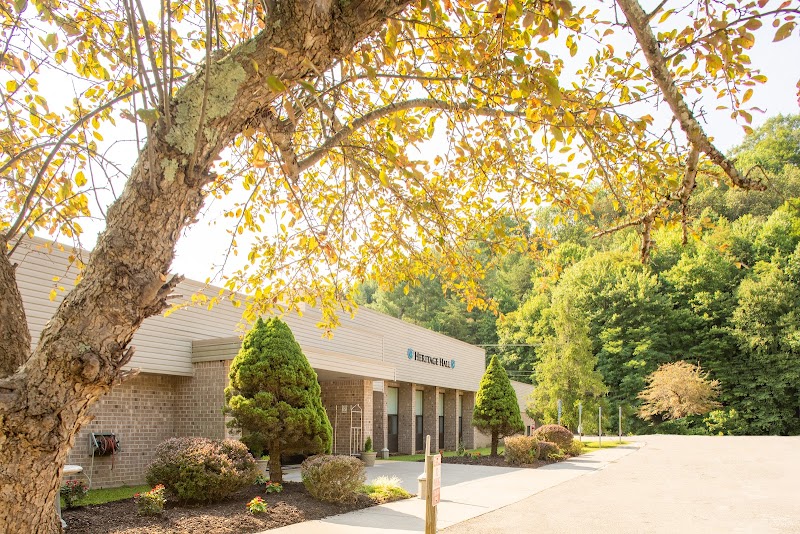
CONCERN (D)

Potential for Harm - no one hurt, but risky conditions existed

Report Alleged Abuse (Tag F0609)

Could have caused harm · This affected 1 resident

Based on staff interview and clinical record review, facility document review and Adult Protective Service (APS) report, facility staff failed to notify Office of Licensure and Certification of possib...

Read full inspector narrative →
Based on staff interview and clinical record review, facility document review and Adult Protective Service (APS) report, facility staff failed to notify Office of Licensure and Certification of possible misappropriation of property (narcotic pain medication) for 1of 27 residents in the survey sample (Resident #124). Resident #124 was admitted to the facility with diagnoses including hypertensive heart disease, paraplegia, cauda equina syndrome, spina bifida, back and wrist pain, and major depression. On the quarterly minimum data set assessment with assessment reference date 4/6/21, the resident scored 12/15 on the brief interview for mental status and was assessed as without signs of delirium, psychosis, or behaviors affecting care. The Office of Licensure and Certification received an adult protective service report that the resident's Percocet was missing and not available for administration on 2/14/2020 for the midnight and 6 AM doses. The report indicated that 52 doses of the medication were missing. OLC did not receive a facility reported incident concerning possible abuse related to this residents misappropriatio of property. When the surveyor interviewed the resident on 5/10/2021, the resident reported always receiving medication and generally having pain under control. The surveyor discussed the issues with the administrator and director of nursing during daily summary meetings over the course of the survey.
CONCERN (D)

Potential for Harm - no one hurt, but risky conditions existed

Deficiency F0646 (Tag F0646)

Could have caused harm · This affected 1 resident

**NOTE- TERMS IN BRACKETS HAVE BEEN EDITED TO PROTECT CONFIDENTIALITY** Based on resident interview, staff interview and clinical record review, facility staff failed to notify the state mental health...

Read full inspector narrative →
**NOTE- TERMS IN BRACKETS HAVE BEEN EDITED TO PROTECT CONFIDENTIALITY** Based on resident interview, staff interview and clinical record review, facility staff failed to notify the state mental health authority following a significant change in the mental condition of a resident who has mental illness for review for 1 of 27 residents, Resident #121. The findings included: For Resident #121, the facility staff failed to refer the resident to the state mental health authority for a Level II PASARR screening following expression of suicidal ideations resulting in three separate suicide attempts requiring transfer to a higher level of care following each incident. Resident #121's diagnosis list indicated diagnoses, which included, but not limited to Mood Disorder due to Known Physiological Condition, Schizoaffective Disorder Unspecified, Major Depressive Disorder Recurrent Unspecified, Unspecified Dementia with Behavioral Disturbance, Dysphagia following Unspecified Cerebrovascular Disease, Vitamin B12 Deficiency Anemia Unspecified, and Type 2 Diabetes Mellitus with Diabetic Neuropathy Unspecified. The most recent quarterly MDS (minimum data set) with an ARD (assessment reference date) of 4/02/21 assigned the resident a BIMS (brief interview for mental status) score of 3 out of 15 in section C, Cognitive Patterns. Resident #121 was coded as requiring supervision only for eating, extensive assistance with bed mobility, dressing, personal hygiene, and being totally dependent in transfers. On 5/04/21 at approximately 2:45 pm surveyor observed Resident #121 sitting up in a reclining chair in the common area with other residents watching television. Surveyor introduced self and asked the resident how they were doing, Resident #121 immediately responded depressed. The resident further stated I'd rather be dead and I pray every day that I will die. On 5/04/21 at 6:34 pm, surveyor again spoke with the resident in the presence of Surveyor #2 and asked the resident if this surveyor could look at their neck. Resident #121 stated what's wrong with my neck, oh I tried to choke myself and resident further stated (he/she) turned it loose when it started to hurt. Resident then became tearful and stated they were tired of living. A nursing progress note dated 2/04/21 8:48 pm states this nurse was notified by cna (certified nursing assistant) when (he/she) went in to answer call bell call bell was pulled out of the wall and was laying behind and across res (resident) neck when asked about this res stated (he/she) didn't know it was that way. A subsequent nursing progress note dated 2/04/21 9:06 pm states this nurse went in to talk to res about (him/her) going to ER where (he/she) had call bell around neck res stated (he/she) didn't want to hurt (himself/herself) that (he/she) didn't know it was that way I explained to res were [sp] (he/she) had previously said (he/she) wanted to hurt (himself/herself) that (he/she) needs to go to ER res stated (he/she) didn't even remember saying that that I'm libel to say anything just because I say it doesn't mean I need it. Resident #121 was transported to the local ER and admitted on [DATE]. The (hospital name omitted) Discharge summary dated [DATE] states in part, [AGE] year-old (male/female) brought in for suspected suicidal intent. The nursing home reports that they found (him/her) with (his/her) nurse call light cord wrapped around (his/her) neck. The patient states that (he/she) does not remember this nor does (he/she) remember any intent to hurt (himself/herself). (He/she) admits to being depressed but states (he/she) has no intention of harming (himself/herself). In the ER (he/she) was found to have acute blood loss anemia with AKI (acute kidney injury) with UTI (urinary tract infection). (He/she) was admitted to the ICU with one-to-one; Crisis was consulted and initially recommended (he/she) go back to (facility name omitted) that can consult psychiatry NP (nurse practitioner), but (facility name omitted) declined. Today (he/she) was coordinate [sp] a bed with (facility name omitted) for inpatient psych, but require [sp] COVID 19 was positive today, after being negative (antigen and 4plex 2/05/21). Nursing home was notified and stated that patient had previously been COVID positive November 6th. Because of new COVID positive status patient was transferred to (facility name omitted). Patient is not able to make (his/her) own medical decisions with (his/her) confused status, continued suicidal ideations/depression/dementia. Resident #121's Physician Discharge Summary from (facility name omitted) dated 2/11/21 states in part, Patient was also seen by psychiatry. (He/she) is still actively suicidal/homicidal. (He/she) should continue full psych precautions; Patient is now medically stable for discharge. I have discussed with hospitalist at (facility name omitted) who agrees to accept patient in transfer and will assist in getting patient to (facility name omitted) inpatient psych as previously planned. Resident #121 was admitted to (facility name omitted) for inpatient psych care on 2/13/21 and discharged on 2/27/21. Resident #121 was readmitted to the facility on [DATE] following inpatient psychiatric care at (facility name omitted). A nursing progress note dated 4/11/21 7:46 pm states this nurse was setting at desk was told by cna that res roommate had told (him/her) that res had put call bell around (his/her) neck when this nurse spoke with res (he/she) stated (he/she) was trying to kill herself but (he/she) stopped when it started to hurt. Addendum dated 4/11/21 9:44 pm states Upon assessment of res o [sp] injuries noted by this nurse. Resident #121 was transported to the local ER at 7:58 pm. The After Visit Summary from (facility name omitted) Emergency Department dated 4/11/21 states in part, Follow-up with behavioral medicine on an outpatient basis. Maintain suicidal precautions. Resident #121 was seen by the psychiatric NP the following day on 4/12/21, the progress note states in part, Per nursing patient had made a suicide attempt by wrapping call bell around (his/her) neck and was sent out to E.R. r/t suicide attempt and was returned back to the facility from (facility name omitted) with a diagnosis of memory problem. Subjective: Lying in bed (patient currently constant observation by CNA). Discussed with patient (his/her) attempt at suicide yesterday. Pt verbalized, 'I don't remember that, I'm glad I don't.' Denies thoughts of self harm/suicidal ideations. Endorses depressed; denies anxiety. Recommendations include continue constant observation. Resident #121 was seen by the licensed psychologist via telehealth on 4/14/21, progress note from the visit states in part, Approached Resident with progress note report of 4/11/21, 7:46 pm, finding Resident with call bell cord around (his/her) neck. However, no evidence of intent or plan or strength to tighten cord. When confronted, Resident said (he/she) had no recall of doing that (He/she) said (he/she) still wanted to die but denied intent or plan It is requested that with each shift change, a staff person be appointed, who would spend 10 mins. for a one on one with Resident for positive attention and support. Incident of 4/11 appears to be a suicide gesture w/o intent or plan to carry out. Resident #121 was seen by the licensed psychologist on 4/28/21 via telehealth and progress note states in part, Staff consult prior to session indicated that Resident keeps saying 'I don't want to live' . at end of session (he/she) started to cry saying (he/she) could not do it and (he/she) did not want to live. Resident has expressed in prior session (he/she) has no plan and no way or strength to do it. What Resident is expressing is not suicidal ideation but no will to live. Current risk factor for suicidal/self injury was documented as none. A nursing progress note dated 5/01/21 12:33 am states in part Late note for 2158 (9:58 pm): Resident was found in room laying in bed with eyes closed with call light tied tightly around neck. Resident was turning blue and when released and untied call light cord, resident stated (he/she) wished to die and that I had not found (him/her) so soon. Vitals were taken B/P 118/76, Pulse 84, O2 96, Resp 18, Temp 98.4. Placed aide 1 on 1 while calling transport and notifying doctor and family. Subsequent progress note dated 5/01/21 12:39 am states in part late note for 2232 (10:32 pm) transport arrived .As resident was leaving (he/she) stated (he/she) didn't remember tying call light cord around (his/her) neck and (he/she) didn't know why (he/she) would do something like that. The After Visit Summary from (facility name omitted) Emergency Department dated 4/30/21 states in part, Patient is not truly 'suicidal' due to the severity of (his/her) dementia. ((He/she) can't really decide to commit suicide). And (he/she) is so disabled (bed bound) that (he/she) is not able to act on a suicidal impulse even if (he/she) did have one. There is no known treatment for (his/her) acting out and having another psych evaluation and treatment would not do (him/her) any good. (He/she) does not need protective custody at a psych facility to prevent suicide. There is just no value in this. Please remove the call cord from (his/her) reach. (Facility name omitted) is a safe and good place for (him/her) to stay. On 5/06/21 at 12:33 pm, the DON (director of nursing) stated the facility does not have a policy addressing what triggers a PASARR to be done. The administrator provided with surveyor with Resident #121's Level I PASARR dated 10/12/18, which stated the resident met nursing facility criteria. On 5/11/12 at 4:54 pm, surveyor informed the administrator, assistant administrator, DON, nurse consultant #1, nurse consultant #2, and the VP of Operations of Resident #121 not being referred for a Level II PASARR screening following three separate suicide attempts. Surveyor spoke with the administrator and DON on 5/12/21 at 10:45 am, administrator stated they did not know why the resident was not referred for a Level II PASARR but (he/she) has now been referred. Administrator further stated that the social worker is brand new and they are ironing some things out. A progress note dated 5/11/21 6:02 pm states in part, SSD left a message with Ascend to call (him/her) back, so (he/she) can schedule a PASARR for the res at this time. No further information regarding this issue was presented to the survey team prior to the exit conference on 5/12/21.

CONCERN (D)

Potential for Harm - no one hurt, but risky conditions existed

Deficiency F0692 (Tag F0692)

Could have caused harm · This affected 1 resident

Based on interviews and the review of documents, it was determined the facility staff failed to provide services to address maintaining desirable body weight range for one (1) of 27 sampled current re...

Read full inspector narrative →
Based on interviews and the review of documents, it was determined the facility staff failed to provide services to address maintaining desirable body weight range for one (1) of 27 sampled current residents (Resident #44). The findings include: The facility staff failed to act upon dietary recommendations to address Resident #44's weight loss. Resident #44's minimum data set (MDS) assessment, with an assessment reference date (ARD) of 2/11/21, was signed as completed on 2/12/21. Resident #44 was assessed as being able to make self understood and as being able to understand others. Resident #44's brief interview for mental status (BIMS) summary score was documented as zero (0) out of 15. Resident #44 was documented as requiring assistance with bed mobility, dressing, toilet use, and personal hygiene. Resident #4 was documented as having total dependence for eating, transfers, and bathing. Resident #44's diagnoses included, but were not limited to: high blood pressure, Alzheimer's disease, depression, and lower back pain. Review of Resident #44's clinical documentation revealed the following weights: - 116 pounds on 6/2/20; - 120 pounds on 7/1/20; - 121 pounds on 8/3/20; - 120 pounds on 9/2/20; - 101 pounds on 10/1/20; - 98 pounds on 12/3/20; - 91 pounds on 1/4/21; - 92 pounds on 2/3/21; - 90 pounds on 3/3/21; - 91 pounds on 4/1/21; and - 92 pounds on 5/3/21. The following information was found in dietary notes: - On 10/7/20 at 12:57 p.m. - . 101 (pounds) revealing a significant weight loss of 15.9% in 30 and 90 (days) and 13.7% in 180 (days). (The resident) is (status post) (fractured) hip. (The resident) receives pureed diet and intake is (approximately) 50% of meals. Recommend the addition of MedPass 90cc (three times a day). May want to consider the addition of 7.5mg remeron [sic] in attempt to increase intake. Will follow. - On 12/31/20 at 2:15 p.m. - . 98 (pounds) (on) 12/3; 30 day (weight) not available; 90 day (weight): 120 (pounds) (on) 9/2; 180 day (weight): 116 (pounds) (on) 6/2. Weight loss is significant (times) 90 and 180 days. BMI (body mass index): 16.8 indicating underweight status. (The resident) receives a regular puree diet and is on Mirtazapine. Will recommend Medpass 60 ml (three times a day) for additional calories to support weight gain. Will continue to monitor. - On 1/28/21 at 9:39 a.m. - . 91 (pounds) (on) 1/4; 30 day (weight): 98 (pounds) (on) 12/3; 90 day (weight): 101 (pounds) (on) 10/1; 180 day (weight): 120 (pounds) (on) 7/1. Weight loss is significant (times) 30, 90 and 180 days. (The resident) is on a regular puree diet. (Oral) intake 7 day (average): (breakfast) - 67% (lunch) - 57% (dinner) - 67% . Will recommend start Medpass 120 ml (three times a day) and Prostat 30 ml (twice a day). Will monitor for additional needs. - On 2/25/21 at 6:53 a.m. - .92 (pounds) (on) 2/3; 30 day (weight): 91 (pounds) (on) 1/4; 90 day (weight): not (available); 180 day (weight): 121 (pounds) (on) 8/3. Weight loss is significant (times) 180 days. BMI (body mass index): 15.8 indicating underweight status. (The resident) is on a regular puree diet with no supplements. (Oral) intake 7 day (average): (breakfast) - 64% (lunch) - 68% (dinner) - 67%. Will recommend start Medpass 120 ml (three times a day) to support weight gain. Will continue to monitor. - On 3/31/21 at 4:10 P.M. - .90 (pounds) (on) 3/3 indicating a significant weight loss (times) 90 and 180 days. (The resident) is on a regular puree diet. Will recommend Medpass 120 ml (three times a day). Will monitor. The following information was found as part of a medical provider note dated 10/14/2020: Today we will start giving (the resident) 90cc of MedPass three times a day . I will continue to monitor (the resident) for weight loss and make further adjustments if needed. Resident #44's clinical documentation failed to show evidence of addressing the aforementioned Med Pass recommendations until 4/6/21 when Med Pass 120 ml (three times a day) was ordered by a medical provider. (Med Pass is a nutritional supplement.) Resident #44's care plan included the following approach: IF NOT ALREADY PRESCIBED, ASSESS NEED FOR SUPPLEMENT/ASSESS & MEET (the resident's) ORAL CARE NEEDS. The survey team had a meeting with the facility's Administrator, Director of Nursing, Nurse Consultant #1, and Nurse Consultant #2, on 5/12/21 at 12:27 p.m. During this meeting, the failure of facility staff to timely act on dietary recommendations to address Resident #44's weight loss was discussed. No additional information related to this issue was provided to the survey team.
CONCERN (D)

Potential for Harm - no one hurt, but risky conditions existed

Deficiency F0728 (Tag F0728)

Could have caused harm · This affected 1 resident

Based on staff interview, employee record review, and facility documentation review, the facility staff failed to ensure that one (Employee # 27) of four unlicensed nurse aides was able to demonstrate...

Read full inspector narrative →
Based on staff interview, employee record review, and facility documentation review, the facility staff failed to ensure that one (Employee # 27) of four unlicensed nurse aides was able to demonstrate competency in skills and techniques necessary to care for residents' needs. The findings included: For Employee # 27, the facility staff failed to ensure a competency skills proficiency checklist was documented. Review of Employee Records was conducted on 05/11/2021. Review of the personnel file for Employee # 27 revealed the following: Employee # 27 was hired on 7/17/2020 as an unlicensed nurses aide. Employee #27 finished the AHCA (American Health Care Association) -NCAL (National Center for Assisted Living) Temporary Nurse Aides online course on 7/15/2020. The facility staff was unable to provide a copy of the competency skills checklist for Employee # 27. On 5/12/2021 at 9:48 a.m., an interview was conducted with the Human Resources Director who stated the staff development coordinator could not find the competency skills check list for Employee 27. The Human Resources Director stated the expectation was that a skills checklist would be completed and in the file for each unlicensed nurses aide. The Administrator was advised of the issue on 05/12/2021 during the end of day debriefing. No further information was provided.
CONCERN (D)

Potential for Harm - no one hurt, but risky conditions existed

Pharmacy Services (Tag F0755)

Could have caused harm · This affected 1 resident

Based on observation, staff interview. and clinical record review, facility staff administered expired medications for 1 of 27 ( Resident #13). Resident # 13 was admitted to the facility [9/17/17] wit...

Read full inspector narrative →
Based on observation, staff interview. and clinical record review, facility staff administered expired medications for 1 of 27 ( Resident #13). Resident # 13 was admitted to the facility [9/17/17] with diagnoses including lymphedema, COPD, morbid obesity, type 2 diabetes mellitus, venous insufficiency, cellulitis of lower limb, major depressive disorder, and psychosis. On the quarterly minimum data set assessment (MDS) with assessment reference date 4/26/21, the resident scored 10/15 on the brief interview for mental status and was assessed as without signs of delirium, psychosis, or behaviors affecting care. On 5/06/21 at 2:38 PM, the surveyor examined the south front hall medication cart. The surveyor discovered a Lispro humalog insulin pen labeled for Resident #13 which was marked opened 3-22-21 expired 4-19-21. The resident's nurse was with the surveyor when the expired pen was discovered. Per the April medication administration record (MAR), the resident received 3 units per sliding scale for a blood sugar of 205 on 4/29/2021 at 4:30 PM; 3 units for blood sugar 211 per sliding scale on 5/1/2021 at 11:30 AM; 9 units per sliding scale for blood sugar 305 on 5/2/2021 at 7:30 AM; 3 units per sliding scale on 5/3/2021 at 4:30 PM; and 3 units per sliding scale for blood sugar 206 on 5/6/2021 at 11:30 AM. The resident did not have another Lispro pen in the medication cart. The facility's Storage of Medications policy stated, under Unusable Drugs or Biologicals, The facility shall not use discontinued, outdated, or deteriorated drugs or biologicals. All such drugs shall be returned to the dispensing pharmacy or destroyed. The director of nursing and administrator were notified of the concern during a summary meeting on 5/6/2021.
CONCERN (D)

Potential for Harm - no one hurt, but risky conditions existed

Deficiency F0761 (Tag F0761)

Could have caused harm · This affected 1 resident

Based on observation and staff interview, facility failed to remove from storage expired medications from the resident's medical supplies for 2 of 27 residents in the survey sample ( Residents #13 and...

Read full inspector narrative →
Based on observation and staff interview, facility failed to remove from storage expired medications from the resident's medical supplies for 2 of 27 residents in the survey sample ( Residents #13 and 78). The facility's Storage of Medications policy stated, under Unusable Drugs or Biologicals, The facility shall not use discontinued, outdated, or deteriorated drugs or biologicals. All such drugs shall be returned to the dispensing pharmacy or destroyed. 1. For Resident #13, facility staff failed to discard expired insulin. On 5/06/21 at 2:38 PM, the surveyor examined the south front hall medication cart. The surveyor discovered a Lispro humalog insulin pen labeled for Resident #13 which was marked opened 3-22-21 expired 4-19-21. The resident's nurse was with the surveyor when the expired pen was discovered. The resident did not have another Lispro pen in the medication cart. 2. For Resident #78, facility staff failed to discard expired Paroxetine. Resident #78 was admitted to the facility [8/16/16] with diagnoses including cerebral infarction, schizoaffective disorder, bipolar disorder, violent behavior and hemiplegia. On the quarterly minimum data set assessment (MDS) with assessment reference date 3/9/2021, the resident the resident scored 11/15 on the brief interview for mental status and was assessed as without signs of delirium. The resident did exhibit hallucinations and behavioral symptoms not directed toward others in the week prior to the assessment. On 5/06/21 at 10:06 AM, the surveyor examined the North front hall medication cart and discovered a card with one paroxetine 10 mg and expiration date 4/30/2021 labeled for Resident # 78. There was another, unexpired, card with paroxetine 10 mg in the medication cart. The director of nursing and administrator were notified of the concern during a summary meeting on 5/6/2021.
CONCERN (E)

Potential for Harm - no one hurt, but risky conditions existed

Abuse Prevention Policies (Tag F0607)

Could have caused harm · This affected multiple residents

**NOTE- TERMS IN BRACKETS HAVE BEEN EDITED TO PROTECT CONFIDENTIALITY** Based on staff interview, employee record review and facility documentation review, the facility staff failed to obtain verifica...

Read full inspector narrative →
**NOTE- TERMS IN BRACKETS HAVE BEEN EDITED TO PROTECT CONFIDENTIALITY** Based on staff interview, employee record review and facility documentation review, the facility staff failed to obtain verification of licensure from the Department of Health Professions prior to hire for 1 (Employee # 8) of 8 Registered Nurses, for 1(Employee # 20) of 6 Certified Nursing Assistants and failed to re-verify licensure after expired dates on three (Employees # 6, # 17 and # 19) of 8 Registered Nurses and failed to re-verify the expired license of one (Employee # 24) of 6 Licensed Practical Nurses. And the facility staff failed to obtain a Criminal Background Check for one (Employee # 22) of 4 Unlicensed Nurses Aide and one (Employee # 24) of 6 Licensed Practical Nurses to obtain a Criminal Background Check prior to hire. The Findings included: 1. For Employee # 8, the facility staff failed to obtain licensure verification prior to hire. On [DATE]- [DATE], a review was conducted of employee records. Review of the personnel file for Employee # 8 was conducted and revealed Employee # 8 was hired on [DATE] as the Director of Nursing. Employee # 8's Registered Nurse license was not verified by the facility staff with the Department of Health Professions until [DATE] at 13:38 (1:38 p.m.), after her date of hire. . On [DATE] at approximately 3:58 p.m., an interview was conducted with the Human Resources Director who confirmed that the license for Employee # 8 was verified after the date of hire. She stated the expectation was that licenses would be verified and current prior to hire. An interview was conducted with the facility Administrator (Employee A) who stated the expectation was for licenses to be verified prior to hire and re-verified upon expiration. On [DATE] at 4:30 p.m., an interview was conducted with the facility Administrator who was informed of the issue. A copy of the facility's policy on Hiring, Background Checks, Personnel Files and Terminations was requested. The Administrator stated he would submit a copy of the facility's policy. The Administrator stated background checks should be completed on all new employees prior to the hire date. The facility policy on Abuse, Neglect, Exploitation and Reporting, Revised 11/2016 was reviewed on [DATE]. On page 2 of 5 under the topic was written: The components of the facility's abuse prohibition plan, The Facility Must: 3. Not employ or otherwise engage individuals who: a. Have been found guilty of abuse, neglect, exploitation, misappropriation of property or mistreatment by a court of law; b. Have had a finding entered the State nurse aide registry concerning abuse, neglect, exploitation, misappropriation of property. c. Have a disciplinary action in effect against his or her professional license by a state licensure body as a result of abuse, neglect, exploitation, misappropriation of property. d. Background, references, and credentials' checks should be conducted on employees prior to or at the time of employment, by facility administration, in accordance with applicable state and federal regulations . Any person having knowledge that an employee's license or certification is in question should report such information to the Administrator. The Administrator was informed again of the findings during the end of day debriefing on [DATE]. No further information was provided. 2. For Employee # 20, the facility staff failed to have a license verification check with the Department of Health Professions (DHP) prior to hire. Employee # 20 was hired on [DATE] as a Certified Nursing Assistant. A copy of the license verification at the time of hire was not in the list of documents presented to the surveyor. Review revealed Employee # 20's license was not verified by the facility staff with the Department of Health Professions until [DATE] at 18:39 (6:39 p.m.) according to the License Look up document. On [DATE] at 3:58 p.m., an interview was conducted with the Human Resources Director who stated she could not locate any license verification document from prior to the hire date. The Human Resources Director stated she looked in a binder where the previous Human Resources Director kept copies of some documents but was unable to find the missing documentation. The Human Resources Director stated the expectation was that licenses would be verified and current prior to hire. An interview was conducted with the facility Administrator (Employee A) who stated the expectation was for licenses to be verified prior to hire and re-verified upon expiration. On [DATE] at 4:30 p.m., an interview was conducted with the facility Administrator who was informed of the issue. A copy of the facility's policy on Hiring, Background Checks, Personnel Files and Terminations was requested. The Administrator stated he would submit a copy of the facility's policy. The Administrator stated background checks should be completed on all new employees prior to the hire date. The facility policy on Abuse, Neglect, Exploitation and Reporting, Revised 11/2016 was reviewed on [DATE]. On page 2 of 5 under the topic was written: The components of the facility's abuse prohibition plan, The Facility Must: 3. Not employ or otherwise engage individuals who: a. Have been found guilty of abuse, neglect, exploitation, misappropriation of property or mistreatment by a court of law; b. Have had a finding entered the State nurse aide registry concerning abuse, neglect, exploitation, misappropriation of property. c. Have a disciplinary action in effect against his or her professional license by a state licensure body as a result of abuse, neglect, exploitation, misappropriation of property. d. Background, references, and credentials' checks should be conducted on employees prior to or at the time of employment, by facility administration, in accordance with applicable state and federal regulations . Any person having knowledge that an employee's license or certification is in question should report such information to the Administrator. On [DATE] at 11:05 a.m. during the end of day debriefing, the facility Administrator was again informed of the findings. The Administrator stated he had no questions about the findings. No further information was provided. 3. For Employee # 6, the facility staff failed to re-verify the license after the date of expiration. Review of the personnel file for Employee # 6 revealed that Employee # 6 was hired on [DATE] as a Registered Nurse in the position of the Staff Development Coordinator. At the time of hiring, Employee 6's Registered Nurse license was listed as expiring on [DATE]. Her license was not re-verified by the facility staff with the Department of Health Professions until [DATE] at 18:39 (6:39 p.m.). The issue was reviewed with the Human Resources Director on [DATE] at 3:58 p.m. She stated that she did not see any documentation that the license had been verified after the date it was listed to expire so she verified the license when she compiled the list of employee records for review. The findings were reviewed with the Human Resources Director who stated that she had been in that position for a couple of months. She stated she had developed some procedures to make sure the verification of all of the licenses were renewed on time. The Human Resources Director stated the Human Resource department would send a notice every month of employees whose licenses were due to expire. The notice would be readily visible for employees to view. The Unit Managers/supervisors would be informed as well of employees who needed to renew their licenses. The Human Resources Director would verify the renewal, print out a new copy, and place a copy in the Personnel Binder and in the employee's file. On [DATE] at 4:30 p.m., an interview was conducted with the facility Administrator who was informed of the issue. An interview was conducted with the facility Administrator (Employee A) who stated the expectation was for licenses to be verified prior to hire and re-verified upon expiration. On [DATE] at 11:05 a.m. during the end of day debriefing, the facility Administrator was again informed of the findings. The Administrator stated he had no questions about the findings. No further information was provided. 4. For Employee # 17, the facility staff failed to re-verify the license after the date of expiration. Review of the personnel file for Employee # 17 revealed: Employee # 17 was hired on [DATE] as a Registered Nurse. At the time of hire, her license was listed as expiring on [DATE]. Her license was not re-verified by the facility staff with the Department of Health Professions until [DATE] at 18:39 (6:39 p.m.). The issue was reviewed with the Human Resources Director on [DATE] at 3:58 p.m. She stated that she did not see any documentation that the license had been verified after the date it was listed to expire so she verified the license when she compiled the list of employee records for review. The findings were reviewed with the Human Resources Director who stated that she had been in that position for a couple of months. She stated she had developed some procedures to make sure the verification of all of the licenses were renewed on time. The Human Resources Director stated the Human Resource department would send a notice every month of employees whose licenses were due to expire. The notice would be readily visible for employees to view. The Unit Managers/supervisors would be informed as well of employees who needed to renew their licenses. The Human Resources Director would verify the renewal, print out a new copy, and place a copy in the Personnel Binder and in the employee's file. On [DATE] at 4:30 p.m., an interview was conducted with the facility Administrator who was informed of the issue. An interview was conducted with the facility Administrator (Employee A) who stated the expectation was for licenses to be verified prior to hire and re-verified upon expiration. On [DATE] at 11:05 a.m. during the end of day debriefing, the facility Administrator was again informed of the findings. The Administrator stated he had no questions about the findings. No further information was provided. 5. For Employee # 19, the facility staff failed to re-verify the license after the date of expiration. Review of the personnel file for Employee # 19 revealed: Employee # 19 was hired on [DATE] as a Registered Nurse. At the time of hire, her license was listed as expiring on [DATE]. Her license was not re-verified by the facility staff with the Department of Health Professions until [DATE] at 18:39 (6:39 p.m.). The issue was reviewed with the Human Resources Director on [DATE] at 3:58 p.m. She stated that she did not see any documentation that the license had been verified after the date it was listed to expire so she verified the license when she compiled the list of employee records for review. The findings were reviewed with the Human Resources Director who stated that she had been in that position for a couple of months. She stated she had developed some procedures to make sure the verification of all of the licenses were renewed on time. The Human Resources Director stated the Human Resource department would send a notice every month of employees whose licenses were due to expire. The notice would be readily visible for employees to view. The Unit Managers/supervisors would be informed as well of employees who needed to renew their licenses. The Human Resources Director would verify the renewal, print out a new copy, and place a copy in the Personnel Binder and in the employee's file. The Administrator was notified of the issue at 4:30 p.m. on [DATE]. An interview was conducted with the facility Administrator (Employee A) who stated the expectation was for licenses to be verified prior to hire and re-verified upon expiration. On [DATE] at 11:05 a.m. during the end of day debriefing, the facility Administrator was again informed of the findings. The Administrator stated he had no questions about the findings. No further information was provided. 6. For Employee # 24, the facility staff failed to re-verify the license after the date of expiration. Review of the personnel file for Employee # 24 revealed: Employee # 24 was hired on [DATE] as a Licensed Practical Nurse. Her license was verified prior to hire and listed as expiring on [DATE]. Her license was not re-verified by the facility staff with the Department of Health Professions until [DATE] at 18:49 (6:49 p.m.). Employee # 24 worked for over 3 months without verification of license renewal by facility staff. The issue was reviewed with the Human Resources Director on [DATE] at 3:58 p.m. She stated that she did not see any documentation that the license had been verified after the date it was listed to expire so she verified the license when she compiled the list of employee records for review. The findings were reviewed with the Human Resources Director who stated that she had been in that position for a couple of months. She stated she had developed some procedures to make sure the verification of all of the licenses were renewed on time. The Human Resources Director stated the Human Resource department would send a notice every month of employees whose licenses were due to expire. The notice would be readily visible for employees to view. The Unit Managers/supervisors would be informed as well of employees who needed to renew their licenses. The Human Resources Director would verify the renewal, print out a new copy, and place a copy in the Personnel Binder and in the employee's file. The Administrator was notified of the issue at 4:30 p.m. on [DATE]. An interview was conducted with the facility Administrator (Employee A) who stated the expectation was for licenses to be verified prior to hire and re-verified upon expiration. On [DATE] at 11:05 a.m. during the end of day debriefing, the facility Administrator was again informed of the findings. The Administrator stated he had no questions about the findings. No further information was provided. Based on staff interview, employee record review, and facility documentation review, the facility staff failed to ensure a criminal background check was completed for two (Employees # 22 and # 24) of 29 employees in the Employee Records Check sample. The findings included: 7. For Employee # 22, the facility staff failed to ensure a criminal background check was completed at the time of hire. On [DATE]- [DATE], Employee Record Reviews were conducted. Review of the personnel records revealed Employee #22 was hired on [DATE] as an Unlicensed Aide and enrolled in the Certified Nursing Assistant class. According to the Human Resources Director, the entire personnel file was empty for Employee # 22. Further review of the facility documentation of the spreadsheet list of all employees hired since 2019 revealed Employee # 22 was hired twice and disposition listed as termination twice during 2020. The two dates of hire were listed as [DATE] and [DATE]. An interview was conducted with the Human Resources Director on [DATE] at 3:58 p.m. The Human Resources Director stated Employee # 22's Personnel file was empty and did not have any documents for the dates of employment at the facility. The Human Resources Director stated she had been in her position for only a couple of months. She stated she contacted the previous Human Resources Director to inquire about what happened to Employee 22's record and was informed the entire file was sent to their sister facility when Employee 22 transferred there. According to the Human Resources Director, she was informed by the sister facility's staff that there was no record of any records being sent there. The sister facility sent copies of documents from Employee 22's employment at their facility. The Human Resources Director stated she knew those forms would not suffice for the current survey but did want to show what was sent. The facility Administrator was informed of the findings on [DATE] at 4:30 p.m. On [DATE] at 11:05 a.m. during the end of day debriefing, the facility Administrator was again informed of the findings. The Administrator stated he had no questions about the findings. No further information was provided. 8. For Employee # 24, the facility staff failed to ensure a Criminal Background Check was completed at the time of hire. Review of the employee file revealed that Employee # 24 was hired as a Licensed Practical Nurse on [DATE]. Employee # 24's Criminal Background Check was performed prior to hire on [DATE] with the search results documented as transaction is being processed. There was no documentation of the facility staff contacting the State Police to determine the status of the search. As of the end of survey, there was no final result of the search. On [DATE] at 3:58 PM, an interview was conducted with the Human Resources Director who stated she double checked and found there were no other records in the personnel file about the Criminal Background Check results being finalized. The Human Resources Director stated normally the State Police would mail a copy results to the facility. She stated she did not see a mailed copy of a result for Employee # 24. At the time of survey, no further documentation showing that the facility rechecked the status of Employee # 24's criminal background search was found in Employee #24's Human Resources (HR) File. On [DATE] at 3:58 p.m., an interview was conducted with the Human Resources Director who stated she double checked the personnel file and found there were no other records about the Criminal Background Check results being finalized. The Human Resources Director stated normally the State Police would mail a copy of the results to the facility. She stated she did not see a mailed copy of a final result for Employee # 24. On [DATE] at 4:30 p.m., an interview was conducted with the facility Administrator who was informed of the issue. A copy of the facility's policy on Hiring, Background Checks, Personnel Files and Terminations was requested. The Administrator stated he would submit a copy of the facility's policy. The Administrator stated background checks should be completed on all new employees prior to the hire date. The facility policy on Abuse, Neglect, Exploitation and Reporting, Revised 11/2016 was reviewed on [DATE]. On page 2 of 5 under the topic was written: The components of the facility's abuse prohibition plan, The Facility Must: 3. Not employ or otherwise engage individuals who: a. Have been found guilty of abuse, neglect, exploitation, misappropriation of property or mistreatment by a court of law; b. Have had a finding entered the State nurse aide registry concerning abuse, neglect, exploitation, misappropriation of property. c. Have a disciplinary action in effect against his or her professional license by a state licensure body as a result of abuse, neglect, exploitation, misappropriation of property. d. Background, references, and credentials' checks should be conducted on employees prior to or at the time of employment, by facility administration, in accordance with applicable state and federal regulations . Any person having knowledge that an employee's license or certification is in question should report such information to the Administrator. The Administrator was made aware of findings. During the end of day debriefing on [DATE], the facility Administrator was informed there was no documentation of a final result of the Criminal Background check or evidence of the facility staff contacting the State Police to determine the status of the search. On [DATE] at 11:05 a.m. during the end of day debriefing, the facility Administrator was again informed of the findings. The Administrator stated he had no questions about the findings. No further information was provided.
CONCERN (E)

Potential for Harm - no one hurt, but risky conditions existed

Medical Records (Tag F0842)

Could have caused harm · This affected multiple residents

6. For Resident #121, facility staff failed to document treatment to an unstageable pressure area to the resident's left heel. Resident #121's diagnosis list indicated diagnoses, which included, but ...

Read full inspector narrative →
6. For Resident #121, facility staff failed to document treatment to an unstageable pressure area to the resident's left heel. Resident #121's diagnosis list indicated diagnoses, which included, but not limited to Mood Disorder due to Known Physiological Condition, Schizoaffective Disorder Unspecified, Major Depressive Disorder Recurrent Unspecified, Unspecified Dementia with Behavioral Disturbance, Dysphagia following Unspecified Cerebrovascular Disease, Vitamin B12 Deficiency Anemia Unspecified, and Type 2 Diabetes Mellitus with Diabetic Neuropathy Unspecified. The most recent quarterly MDS (minimum data set) with an ARD (assessment reference date) of 4/02/21 assigned the resident a BIMS (brief interview for mental status) score of 3 out of 15 in section C, Cognitive Patterns. In section M, Skin Conditions, Resident #121 was coded as having one unstageable pressure ulcer due to coverage of wound bed by slough and/or eschar. Resident #121's clinical record included an active physician's order dated 2/27/21 stating US (unstageable) to left heel cleanse with NS (normal saline) initially pat dry apply polymem pink cut to fit wound cover with bordered foam and change QD (everyday). A review of Resident #121's April 2021 TAR (treatment administration record) and May 2021 TAR revealed the treatment to the left heel was not signed off as being completed on 4/20/21, 4/21/21, 4/22/21, 4/23/21, 4/24/21, 4/25/21, 4/26/21, 4/27/21, 4/28/21, 4/30/21, 5/01/21, 5/02/21, 5/03/21, 5/04/21, and 5/05/21. On 5/06/21 at 3:31 pm, surveyor observed RN (registered nurse) #1 perform the physician ordered treatment to the resident's left heel. RN #1 stated the area was looking much better. Surveyor observed the area to the resident's left heel, no redness or drainage were noted and no concerns were identified with the wound care observation. On 5/06/21 at 4:09 pm, surveyor notified the DON (director of nursing) of the treatment omissions on the April 2021 and May 2021 TARs for the treatment to the resident's left heel. The DON stated they would check into this. On 5/06/21 at 4:43 pm, surveyor spoke with RN #2 who stated I do (his/her) treatment every day and it's completely my fault for not signing off. RN #2 stated they worked and did the treatment on 4/20/21, 4/21/21, 4/25/21, 4/26/21, 5/03/21, and 5/04/21. Surveyor requested and received the facility policy entitled, Charting and Documentation which states in part: Policy Statement: All services provided to the resident, progress toward the care plan goals, or any changes in the resident's medical, physical, functional or psychosocial condition, shall be documented in the resident's medical record. The medical record should facilitate communication between the interdisciplinary team regarding the resident's condition and response to care. 2. The following information is to be documented in the resident medical record: c. Treatments or services performed; The concern of Resident #121's pressure ulcer treatment omissions were discussed with the administrator, DON, nurse consultant #1, and nurse consultant #2 during a meeting on 5/12/21 at 12:30 pm. No further information was provided to the survey team prior to the exit conference on 5/12/21. 5. For Resident #138 the facility staff failed to ensure that treatments were documented as completed. Resident #138's face sheet listed diagnoses which included but not limited to pressure ulcer to right ankle, unstageable, peripheral vascular disease, anemia, pressure ulcer of left heel, unstageable, pressure ulcer of sacral region, unstageable, type 2 diabetes, chronic obstructive pulmonary disease, and depression. The most admission MDS (minimum data set) with an ARD (assessment reference date) of 04/14/2021 assigned the resident a BIMS (brief interview for mental status) score of 00 in section C, cognitive patterns. A score of 00 indicates the resident is severely cognitively impaired. Resident #138's interim care plan was reviewed and contain a plan for has impaired skin integrity r/t (related to) stage 2 R (right) hip, bilateral heels, R ankle, sacrum. Interventions for plan included tx (treatment) as ordered. Resident #138's clinical record was reviewed and contained a signed physician's order summary for the months of April and May 2021, which read in part Cleanse Right heel wound with NS (normal saline), pat dry, apply Santyl ointment, adaptive, cover site daily and PRN (as needed), Cleanse left heel wound with normal saline, pat dry, apply Santyl ointment, adaptive, and cover site daily and PRN, Stage 3 to right lateral malleolus (ankle) cleanse with NS pat dry apply polymem pink oval and change Q (every) day, and Cleanse sacral wound with NS, pat dry, apply Santyl ointment, adaptive, 4 x 4, and cover site daily and PRN. Resident #138's TAR's (treatment administration record) for the month of April and May were reviewed and contained entries as above. The entries for Cleanse right heel wound with NS, pat dry, apply Santyl ointment, adaptive, and cover site daily and PRN, Cleanse left heel wound with normal saline, pat dry, apply Santyl ointment, adaptive and cover site daily and PRN and Cleanse sacral wound with NS, pat dry, apply Mesalt, adaptive 4x4 and cover daily were not initialed as completed on 04/20/21 and 04/26/21. The entries for Cleanse right heel wound with NS, pat dry, apply Santyl ointment, adaptive, and cover site daily and PRN, Cleanse left heel wound with normal saline, pat dry, apply Santyl ointment, adaptive and cover site daily and PRN, Stage 3 to right lateral malleolus cleanse with NS pat dry apply polymem pink oval and change Q (every) day, Cleanse sacral wound with NS, pat dry, apply Santyl ointment, adaptive, 4 x 4 , and cover site daily & PRN were not initialed as completed on 05/07//21. Surveyor spoke with the DON (director of nursing) and RNC (regional nurse consultant) #1 on 05/11/21 at approximately 2:45 pm regarding the blank areas on the TAR's. RNC #1 stated they felt it was a documentation issue. RNC #1 stated they would have the nurses that worked these days to speak with the surveyor. Surveyor spoke with RN (registered nurse) #1, who is the facility's staff development coordinator, on 05/11/21 at approximately 3:05 pm. RN #1 stated they were working the floor on 04/20/21. RN #1 stated that APS (adult protective services) came into the facility and called staff to the lobby of the building, and after this, they (RN#1) just forgot to initial the treatment sheet. RN #1 stated they do not normally work the floor. Surveyor spoke with UM (unit manager) on 05/11/21. Unit manager stated they completed Resident #138's treatment on 05/07/21, but just failed to initial the treatment sheet. RNC #1 stated that they had spoken with the nurse that was working on 04/26/21 and that nurse stated they had completed the treatment, but just failed to initial the treatment sheet. RNC #1 stated they would have said nurse to call surveyor to confirm, since they were not working at this time. The concern of failing to ensure treatments were documented as completed was discussed with the administrative team (administrator, assistant administrator, DON, RNC #1, RNC #2, regional vice-president of operations) on 05/12/21 at approximately 12:30 pm No further information was provided prior to exit. 2. For Resident #90, facility clinical documentation did not match the facility reported incident. Resident #90 was admitted with diagnoses including fracture, arthritis, effusion of the left knee, hypertension, and hepatitis. On the minimum data set assessment with assessment reference date 3/19/21, the resident scored 0/15 on the brief interview for mental status and was assessed as having signs of delirium consisting of constant inattention and disorganized thinking. The resident was assessed as without signs of psychosis or behaviors affecting care. A facility reported incident dated 4/19/21 under Describe incident, including location, and action taken: Resident [#90] was found outside the facility and resident was was assisted by facility by staff. The resident was assessed by nursing staff and no injuries were found. MD, RP, and APS notified. The resident was placed on 15 minute checks. Investigation initiated and final report to follow on five business days. Under Final Investigation: The incident involving Resident [#90] has been investigated by the facility. It was determined that Resident [#90] was found outside the facility and resident assisted back in the facility by staff. The resident was assessed by nursing staff and no injuries were found. MD, RP, and APS notified. There resident was placed on Q15 minute checks 72 hours. No other exit seeking occurrences similar to this has happened with Resident #90]. The only documentation in the clinical record on that date was a nursing note which read: 4/19/2021 2:00 AM Pt OOB in WC self propelling in hallway & in & out of other patients rooms rummaging redirected behavior numerous times pt's pants pockets full of straws, tissue papers, gloves, random stuff, pt tore through bottom of plastic in hallway crawled underneath ad opened the door leading outside pt redirected plastic restored per Maintenance, pt agitated @ times cussing @ staff, when this nurse was opening med cart drawer pt wheeled up beside the med cart slammed it shut twice stating ' you don't need anything in there get out' pt had a lighter acting like he was going to light the plastic barrier on fire in the hallway lighter confiscated when asked where he obtained the lighter he said shut the fuck up pt knocked down stack of folders on a rack, came behind the nurses desk numerous times rummaging through drawers trying to get in crash cart redirected pt numerous times pt would become angry using vulgar language @ staff, gave pt several snacks throughout the night, pt's (L) knee remains swollen. Called [redacted]NP regarding pt's behavior new order noted Give Vistaril 25 mg po X1 dose now DX-Anxiety. The surveyor was unable to determine from the record whether the resident actually left the building. The director of nursing indicated that crawling under the plastic and opening the door constituted an elopement. 3. For Resident #101, facility staff did not document the appearance or extent of wounds on the resident's sacrum and hip. Resident #1 was admitted to the facility with diagnoses including dementia, diabetes mellitus, essential hypertension, major depression, anxiety, and mood disorder. On the annual minimum data set assessment with assessment reference date 3/10/2021, the resident scored 4/15 on the brief interview for mental status and was assessed as having continuous signs of delirium (inattention and disorganized thinking). The resident was not assessed as exhibiting signs of psychosis or behaviors affecting care. Clinical Record review on 5/10/2021 revealed a physician order dated 4/26/21 to apply foam dressing to left hip Q3 days and PRN. Per the nurse practitioner (NP) note on that date, the NP had been notified there was an abscess or boil that needed assessment. The issue was not mentioned in nursing notes or skin assessments. A NP note dated 3/17/21 indicated staff asked the NP to assess a coccyx wound. The NP ordered a calcium alginate dressing to be changed every 3 days. No treatments of the sacral wound were documented on the May 2021 treatment administration record (TAR). The record did not include an order to discontinue the sacral dressing. The resident's care plan included at risk of skin breakdown related to decreased mobility, incontinence, and history of refusing care. The care plan did not address actual wounds. On 05/10/21, LPN #1 from the skilled unit had not seen the resident's wound. The TAR has no documented treatment of the sacral wound in May. The order was to clean with NS, apply Calcium alginate and apply border foam. LPN #1 went with the surveyor to assess the wound on 05/10/21 at 4:10 PM. There was no dressing on the sacral wound. The wound was several open areas with no depth. The most recent documented description of the wound was the one in the 3/17/21 NP note. LPN #1 stated she would get an order for a smaller dressing than the one ordered to better fit the affected area. At 05/10/21 at 4:21 PM, the nurse washed buttocks with normal saline and 4x4s ; patted dry with clean 4x4s; covered with a cut down calcium alginate dressing, and covered with a 3x3 bordered dressing. 4. For Resident #124, facility staff documented administering pain medication which was not administered. Resident #124 was admitted to the facility with diagnoses including hypertensive heart disease, paraplegia, cauda equina syndrome, spina bifida, back and wrist pain, and major depression. On the quarterly minimum data set assessment with assessment reference date 4/6/21, the resident scored 12/15 on the brief interview for mental status and was assessed as without signs of delirium, psychosis, or behaviors affecting care. Per adult protective service report and facility investigation documents, the resident's Percocet was missing and not available for administration on 2/14/2020 for the midnight and 6 AM doses. The nurse caring for the resident that night documented administering the resident's pain medication with a pain level of 9/10 at both midnight and 6 AM (February 2020 medication administration record). The administrator and director of nursing were notified of the concern during summary meetings on 5/6/2021. Based on interviews and the review of documents, it was determined the facility staff failed to ensure complete and/or accurate clinical documentation for six (6) out of 27 sampled current residents (Resident #13, Resident #90, Resident #101, Resident #121, Resident #124, and Resident #138). The findings include: 1. The facility staff failed to insure Resident #13's clinical record included information about an episode of vomiting the resident experienced. Resident #13's minimum data set (MDS) assessment, with an assessment reference date (ARD) of 4/26/21, was signed as completed on 4/27/21. Resident #13 was assessed as being able to make self understood and as being able to understand others. Resident #13's brief interview for mental status (BIMS) summary score was documented as 10 out of 15. Resident #13 was documented as requiring supervision with eating but not as requiring physical assistance with eating. Resident #13 was documented as requiring assistance with bed mobility, dressing, toilet use, and personal hygiene. Resident #13 was assessed as having total dependence for bathing. Resident #13's diagnoses included, but were not limited to: high blood pressure, diabetes, depression, and lung disease. During an interview on 5/6/21 at 8:05 a.m., the facility's Administrator reported they were present at the facility when Resident #13 was discovered to need to be cleaned due to having vomit on the clothes they were wearing. During an interview on 5/12/21 at 8:55 a.m., the facility's Administrator and Assistant Administrator confirmed the resident's clinical documentation did not include information related to Resident #13 being found with vomit on the clothes they were wearing. During an interview on 5/12/21 at 10:39 a.m., CNA (certified nursing assistant) #15 confirmed that Resident #13 had vomited on self as referenced above. The following information was found in a facility policy titled Charting and Documentation (with a revised date of July 2017): All services provided to the resident, progress toward the care plan goals, or any changes in the resident's medical, physical, functional or psychosocial condition, shall be documented in the resident's medical record. The medical record should facilitate communication between the interdisciplinary team regarding the resident's condition and response to care . Documentation in the medical record will be objective (not opinionated or speculative), complete, and accurate. The survey team had a meeting with the facility's Administrator, Director of Nursing, Nurse Consultant #1, and Nurse Consultant #2, on 5/12/21 at 12:27 p.m. During this meeting, the failure of facility staff to document an assessment and/or treatment for Resident #13 related to the resident being found with vomit on their clothes was discussed. No additional information related to this issue was provided to the survey team.
CONCERN (E)

Potential for Harm - no one hurt, but risky conditions existed

Deficiency F0886 (Tag F0886)

Could have caused harm · This affected multiple residents

**NOTE- TERMS IN BRACKETS HAVE BEEN EDITED TO PROTECT CONFIDENTIALITY** Based on staff interview, clinical record review, and facility document review, the facility staff failed to conduct COVID-19 ou...

Read full inspector narrative →
**NOTE- TERMS IN BRACKETS HAVE BEEN EDITED TO PROTECT CONFIDENTIALITY** Based on staff interview, clinical record review, and facility document review, the facility staff failed to conduct COVID-19 outbreak testing for asymptomatic staff and residents during an identified facility COVID-19 outbreak for 1 of 3 staff members (LPN #2) and 3 of 3 residents (Resident #92, #109, and #116). The findings included: The facility staff failed to conduct COVID-19 outbreak testing for one asymptomatic staff member and three residents. At the time of the survey, there were currently two COVID-19 positive residents and one positive staff member. On 5/04/21 at approximately 1:45 pm during the Entrance Conference with the survey team, the administrator stated the facility currently has two COVID-19 positive residents and one positive staff member. The first COVID-19 positive result during this current outbreak was identified on 4/12/21. The administrator stated the facility is testing residents with signs and symptoms or potential exposures only and testing unvaccinated staff twice weekly. Administrator further stated that the county positivity rate went to red status yesterday. CMS QSO-20-38-NH: August 2020, revised 4/27/21 documents in part, Upon identification of a single new case of COVID-19 infection in any staff or residents, all staff and residents, regardless of vaccination status, should be tested immediately, and all staff and residents that tested negative should be retested every 3 days to 7 days until testing identified no new cases of COVID-19 infection among staff or residents for a period of at least 14 days since the most recent positive result. A review of LPN (licensed practical nurse) #2's COVID-19 testing since the onset of the current COVID-19 outbreak on 4/12/21 revealed documentation of testing performed on 4/20/21 only. COVID-19 Test form dated 4/20/21 for LPN #2 documented a negative result. On 5/11/21 at 11:10 am surveyor spoke with the IP (infection preventionist) who stated staff that were present in the facility on 4/12/21 were tested at that time and the rest of the staff were tested on [DATE]. The IP stated that staff COVID-19 testing is not mandatory. A review of Resident #92's COVID-19 current outbreak testing documentation revealed the resident was tested on [DATE] with negative results and 5/06/21 with negative results. Surveyor was unable to locate documentation of COVID-19 testing results obtained between 4/12/21 and 5/06/21. A review of Resident #109's medical record revealed the last documented COVID-19 test was obtained on 3/24/21 with negative results. Surveyor was unable to locate documentation of COVID-19 testing results since the facility COVID-19 outbreak was identified on 4/12/21. A review of Resident #116's medical record revealed the resident was tested on [DATE] with negative results and the next documented COVID-19 test was performed on 4/26/21 with positive results. On 5/11/21 at 2:30 pm the DON (director of nursing) stated they don't have any of these as they returned the surveyor's list of missing COVID-19 testing results for Resident #92, 109, and 116. On 5/11/21 at 4:10 pm surveyor spoke with the IP and discussed the missing resident COVID-19 testing results. The IP stated they do not have any results for Resident #92 or Resident #109 for 4/19/21 or 4/26/21, stating both residents were tested but the results were not documented. The IP stated for Resident #116, COVID-19 results were probably not documented for 4/19/21. Surveyor requested and received the facility policy entitled COVID-19 Testing Plan which states in part: Testing in Response to an Outbreak 2. Upon identification of a single new case of COVID-19 infection in any staff or residents, all staff, vaccinated and unvaccinated, staff and residents should be tested, and all staff and residents that tested negative should be retested every 3 days to 7 days until testing identifies no new cases of COVID-19 infection among staff or residents for a period of at least 14 days since the most recent positive result. Filing of Confidential Lab Results 1. Employees: a. All hard copies are filed in the COVID-19 binder in the Infection Preventionist office. 2. Residents: a. Lab results are provided to the attending physician for signature, then place in the medical record. On 5/11/21 at 4:54 pm during a meeting with the administrator, assistant administrator, director of nursing, vice president of operations, nurse consultant #1, and nurse consultant #2, surveyor discussed the concern of LPN #2, Resident #92, Resident #109, and Resident #116's missing COVID-19 testing results. No further information regarding this issue was presented to the survey team prior to the exit conference on 5/12/21.
Jun 2019 18 deficiencies
CONCERN (D)

Potential for Harm - no one hurt, but risky conditions existed

Deficiency F0578 (Tag F0578)

Could have caused harm · This affected 1 resident

Based on staff interview and clinical record review, the facility staff failed to complete a DDNR (durable do not resuscitate) order form for 1 of 39 Residents, Resident #118. The findings included: ...

Read full inspector narrative →
Based on staff interview and clinical record review, the facility staff failed to complete a DDNR (durable do not resuscitate) order form for 1 of 39 Residents, Resident #118. The findings included: The facility staff failed to accurately complete the Residents DDNR. All the boxes on this form had been left unchecked. This form was part of the Resident clinical record and was located in the hard chart. The clinical record review revealed that Resident #118 had been admitted to the facility 09/07/18. Diagnoses included, but were not limited to, dementia, Alzheimer's, and seizures. Section C (cognitive patterns) of the Residents quarterly MDS (minimum data set) assessment with an ARD (assessment reference date) 05/21/19 included a BIMS (brief interview for mental status) summary score of 12 out of a possible 15 points. The Residents clinical record included a physicians order dated 09/15/18 that indicated the Resident was a DNR (do not resuscitate). The clinical record also included a DDNR form from the Virginia Department of Health. This DDNR had been signed by the physician and the Resident and was also dated 09/15/18. This DDNR read in part. Under section 1 I further certify [must check 1 or 2]: 1. The patient is CAPABLE of making an informed decision . 2. The patient is INCAPABLE of making an informed decision . Neither box had been checked. Section 2 read, If you checked 2 above, check A, B, or C below . All three boxes had been left blank. The administrative staff were notified of the incomplete DDNR during a meeting with the survey team on 06/26/19 at 2:44 p.m. No further information regarding this issue was provided to the survey team prior to the exit conference.
CONCERN (D)

Potential for Harm - no one hurt, but risky conditions existed

Abuse Prevention Policies (Tag F0607)

Could have caused harm · This affected 1 resident

Based on staff interview, clinical record review, facility document review, and during the course of a complaint investigation, the facility staff failed to implement their policy/procedure in regards...

Read full inspector narrative →
Based on staff interview, clinical record review, facility document review, and during the course of a complaint investigation, the facility staff failed to implement their policy/procedure in regards to preadmission screening of admissions to determine if a potential Resident was a convicted sex offenders for 1 of 39 Residents, Resident #59. The findings included: The facility staff failed to follow their policy in regards to preadmission screening. The facility failed to check the sex offender website when Resident #59 was admitted to the facility and only checked the website when it was brought to their attention by the survey team. The clinical record review revealed that Resident #59 had been admitted to the facility 10/26/17. Diagnoses included but were not limited to, hypertension, depressive disorder, mild cognitive impairment, conduct disorder, diabetes, and chronic kidney disease. Section C (cognitive patterns) of the Residents annual MDS (minimum data set) assessment with an ARD (assessment reference date) of 04/26/19 had been coded 1/1/3 to indicate the Resident had problems with long and short term memory and was severely impaired in cognitive skills for daily decision making. The surveyor was able to interview this Resident and the Resident was alert and orientated to self during these conversations. On 06/25/19, the surveyor requested the facility policy on screening of Residents in regard to sex offenders. The facility provided the surveyor with a copy of a document titled Preadmission Screening For Sex Offender This document read in part, .Any prospective resident who is expected to stay of (sic) longer than three (3) days shall have his named checked against the Virginia State Police Sex Offender Registry to determine whether he or she is a convicted sex offender .The director of admission shall submit any prospective residents name to the Virginia State Police Sex Offender Registry .prior to admission to the facility . The surveyor also requested from the facility documentation to indicate this procedure had been followed. On 06/25/19, the facility provided the surveyor with results of a search completed for this Resident on the sex offender registry. This search was not completed until 06/25/19 at 12:40 p.m. after the surveyor had asked for the information. This search did not match any offender in the database. Indicating the Resident was not listed as a sex offender. The administrative team were notified of the above issue during a meeting with the survey team on 06/27/19 at 12:35 p.m. On 06/27/19 at approximately 1:16 p.m., the administrator verbalized to the surveyor that he did not know how this Resident was missed being screened and the person that should have completed the screening no longer worked at the facility. The administrator was able to provide documentation to indicate they had completed checks for other Residents in the facility. No further information regarding this issue was provided to the survey team prior to the exit conference. THIS IS A COMPLAINT DEFICIENCY.
CONCERN (D)

Potential for Harm - no one hurt, but risky conditions existed

Assessment Accuracy (Tag F0641)

Could have caused harm · This affected 1 resident

Based on staff interview and clinical record review, the facility staff failed to ensure an accurate MDS (minimum data set) assessment for 1 of 39 Residents, Resident #169. The findings included: Fo...

Read full inspector narrative →
Based on staff interview and clinical record review, the facility staff failed to ensure an accurate MDS (minimum data set) assessment for 1 of 39 Residents, Resident #169. The findings included: For Resident #169, the MDS coordinator coded the Resident as being discharged to an acute hospital when in fact they had been discharged home. The record review revealed that Resident #169 had been admitted to the facility 08/08/17. Diagnoses included, but were not limited to, bipolar disorder, cellulitis, diabetes, anxiety disorder, and depressive disorder. Section C (cognitive patterns) of the Residents discharge MDS assessment with an ARD (assessment reference date) of 03/29/19 included a BIMS (brief interview for mental status) summary score of 15 out of a possible 15 points. Section A (identification information) had been coded to indicate the Resident was discharged to an acute care hospital. The clinical record included a nursing progress note dated 03/29/19 that indicated the Resident had went LOA (leave of absence) with their mother. A second note revealed that the Family returned to pick up res (resident) belongings and meds. On 06/27/19 at 11:15 a.m., after reviewing the Residents clinical record MDS coordinator #1 verbalized to the surveyor that the Residents discharge MDS should have been coded as a community discharge. The administrative team were made aware of the inaccurate MDS assessment during a meeting with the survey team on 06/27/19 at 12:35 p.m. No further information regarding this issue was provided to the survey team prior to the exit conference.
CONCERN (D)

Potential for Harm - no one hurt, but risky conditions existed

Deficiency F0657 (Tag F0657)

Could have caused harm · This affected 1 resident

**NOTE- TERMS IN BRACKETS HAVE BEEN EDITED TO PROTECT CONFIDENTIALITY** Based on clinical record review, staff interview, facility document review, and over the course of a complaint investigation, th...

Read full inspector narrative →
**NOTE- TERMS IN BRACKETS HAVE BEEN EDITED TO PROTECT CONFIDENTIALITY** Based on clinical record review, staff interview, facility document review, and over the course of a complaint investigation, the facility staff failed to review and revise the comprehensive plan of care for 1 of 39 Residents in the survey sample, Resident # 368. The findings included The facility staff failed to review and revise the comprehensive plan of care to address non-pharmacological interventions utilized to decrease combative behaviors for Resident # 368. Resident # 368 was a [AGE] year-old-male who was originally admitted to the facility on [DATE], with a readmission date of 3/21/19. Diagnoses included but were not limited to, urinary tract infection, dementia, altered mental status, and type 2 diabetes mellitus. The clinical record for Resident # 368 was reviewed on 6/25/19 at 4:02 pm. The most recent MDS (minimum data set) assessment for Resident # 368 was an admission assessment with an ARD (assessment reference date) of 3/1/19. Section C of the MDS assesses cognitive patterns. In Section C0500, the facility staff documented that Resident # 368 had a BIMS score of 5 out of 15, which indicated that Resident # 368's cognitive status was severely impaired. Section E of the MDS assesses behaviors. In Section E0200, the facility staff documented that Resident # 368 displayed physical and verbal behavioral symptoms directed toward others, and other behavioral symptoms not directed toward others on 1 to 3 days during the look back period for the 3/1/19 ARD. In Section E0600, the facility staff documented that Resident #368's identified symptoms put others at significant risk for physical injury. The plan of care for Resident #368 had been reviewed and revised on 3/5/19. The facility staff documented a problem area for Resident # 368 as, Psychotropic Drug Use/Behavior: Resident # 368 is alert with confusion. He is easily agitated has a history of verbal and physical aggression, cursing, hitting staff, and other residents, throw objects, rummaging, yelling and kicking DX: (diagnosis) dementia, AMS (altered mental status) symbolic dysfunctions. Upon review of the interventions documented for Resident # 368, the surveyor did not observe any Resident centered non-pharmacological interventions utilized to attempt to decrease Resident # 368's combative behaviors. On 6/26/19 at 1:48 pm, the surveyor spoke with MDS coordinator # 1 and MDS coordinator # 2. The surveyor asked MDS coordinator # 1 and MDS coordinator # 2 who updated the plans of care for the Residents in the facility. Both MDS coordinators stated that they were responsible for updating Resident care plans. The surveyor asked MDS coordinator # 1 and MDS coordinator # 2 to show documentation on Resident # 368's comprehensive plan of care that highlighted Resident centered non-pharmacological interventions utilized to decrease Resident # 368's combative behaviors. MDS # 1, MDS # 2, and the surveyor reviewed the comprehensive plan of care for Resident # 368. MDS coordinator # 1 and MDS coordinator # 2 agreed that there were no Resident centered non-pharmacological interventions to decrease combative behaviors documented on Resident # 368's comprehensive plan of care. The facility policy on Dementia-Clinical Protocol contained documentation that included but was not limited to, .Monitoring and Follow-Up 2. The IDT (interdisciplinary team) will adjust interventions and the overall plan depending on the individual's responses to those interventions, progression of dementia, development of new acute medical conditions or complications, changes in resident or family wishes, ect. The facility policy on Care Plans, Comprehensive Person-Centered contained documentation that included but was not limited to, .Policy Interpretation and Implementation 10. Identifying problem areas and their causes, and developing interventions that are targeted and meaningful to the resident, are the endpoint of an interdisciplinary process. 11. Care plan interventions are chosen only after careful data gathering proper sequencing of events, careful consideration of the relationship between the resident's problem areas and their causes, and relevant clinical decision making. 13. Assessments of residents are ongoing and care plans are revised as information about the residents and resident's condition change. On 6/27/19 at 11:43 am, the administrative team was made aware of the findings as stated above. No further information regarding this issue was provided to the survey team prior to the exit conference on 6/27/19.
CONCERN (D)

Potential for Harm - no one hurt, but risky conditions existed

Deficiency F0660 (Tag F0660)

Could have caused harm · This affected 1 resident

**NOTE- TERMS IN BRACKETS HAVE BEEN EDITED TO PROTECT CONFIDENTIALITY** Based on clinical record review, staff interview, Resident representative interview, facility document review, and during the co...

Read full inspector narrative →
**NOTE- TERMS IN BRACKETS HAVE BEEN EDITED TO PROTECT CONFIDENTIALITY** Based on clinical record review, staff interview, Resident representative interview, facility document review, and during the course of a complaint investigation, the facility staff failed to implement an effective discharge planning process for 1 of 39 residents in the survey sample, Resident # 368. The findings included: The facility staff failed to provide Resident # 368 and Resident # 368's representative with the status of the Resident upon discharge, and post-discharge planning instructions. The facility staff also failed to notify adult protective services of an unsafe discharge situation for Resident # 368. Resident # 368 was a [AGE] year-old-male who was originally admitted to the facility on [DATE], with a readmission date of 3/21/19. Diagnoses included but were not limited to, urinary tract infection, dementia, altered mental status, and type 2 diabetes mellitus. The clinical record for Resident # 368 was reviewed on 6/25/19 at 4:02 pm. The most recent MDS (minimum data set) assessment for Resident # 368 was an admission assessment with an ARD (assessment reference date) of 3/1/19. Section C of the MDS assesses cognitive patterns. In Section C0500, the facility staff documented that Resident # 368 had a BIMS score of 5 out of 15, which indicated that Resident # 368's cognitive status was severely impaired. The plan of care for Resident #368 had been reviewed and revised on 3/5/19. The facility staff documented a problem area for Resident # 368 as, LTC (long term care) is anticipated due to patient's current health care needs. Interventions included but were not limited to, Continued care by facility staff per PCP (primary care physician) and physician orders. On 6/25/19 at 5:47 pm, the surveyor informed the administrator of the complaint investigation and asked the administrator if he recalled when Resident # 368 was a resident in the facility. The administrator stated that he did remember Resident # 368, and that Resident # 368 had been involved in multiple Resident to Resident incidents. The surveyor asked the administrator if he had knowledge that the director of nursing called Resident # 368's daughter and had informed her that she would either have to come pick up Resident # 368, or the facility would have Resident # 368 arrested. The administrator stated that he was aware of the conversation held between the director of nursing and Resident # 368's daughter. The administrator stated the reason that the director of nursing made the phone call instead of him was that the director of nursing had a better relationship with Resident # 368's family. The administrator stated, We were running out of options. He was a danger to other Residents. The administrator stated that the facility contacted Resident # 368's daughter and that Resident # 368's daughter said that she would come pick him up. On 6/26/19 at 9:44 am, the surveyor conducted a phone interview with Resident # 368's daughter. The surveyor asked Resident # 368's daughter if she had been contacted by the director of nursing and told that she needed to come and pick up Resident # 368 or the facility would have him arrested. Resident # 368's daughter stated, Yes. The surveyor asked Resident # 368's daughter if she was aware of what prompted the director of nursing to call her and tell her that she needed to pick up Resident # 368 or the facility would have him arrested. Resident # 368's daughter stated that facility staff had informed her that Resident # 368 had gotten into several incidents with other Residents while in the facility. Resident # 368's daughter then stated, My dad got hit also when he was there. My dad is hard of hearing and he doesn't talk loud and my dad was trying to get closer to hear what the other man had to say and he kicked dad in the mouth and busted dad's mouth. Resident # 368's daughter informed the surveyor that she and her sister attended a care plan meeting for Resident # 368 to discuss his behaviors. Resident # 368's daughter stated that she and her sister had requested that Resident # 368 be sent out for an evaluation and was told that Resident # 368 could not be sent out for an evaluation, but was eventually sent out. Resident # 368's daughter stated that Resident # 368 had Terrible dementia, and had lived by himself until February of this year. The surveyor asked Resident # 368's daughter if she felt that she could safely care for Resident # 368 at home. Resident # 386's daughter stated, No that's the reason he is in a nursing home. If I could care for him at home I would have. The surveyor asked Resident # 368's daughter if the facility had given her instructions on how to care for Resident # 368 at home. Resident # 368's daughter stated, No. The surveyor asked Resident # 368's daughter if she had knowledge that the facility staff contacted adult protective services when Resident # 368 was discharged home with her. Resident # 368's daughter stated, Not that I am aware of. The surveyor asked Resident # 368's daughter what happened when Resident # 368 went home with her. Resident # 368's daughter stated that it was extremely difficult. Resident # 368's daughter stated that Resident # 368 stayed up all night and had Turned all the stove eyes on. Resident # 368's daughter stated that she did not know what to do and she called to the facility and spoke to the director of nursing who told her to take Resident # 368 to (Facility's name withheld). On 6/26/19 at 10:03 am, the surveyor reviewed the progress notes for Resident # 368. The surveyor observed a nursing note that had been documented on 3/22/19 at 2:44 pm. The nursing note stated, 1417 (2:17 pm) Resident alert no complaints voiced and no distressed observed or noted, resident being discharged to home with daughter at this time. The surveyor reviewed the facility Nursing and Rehab Interdisciplinary Discharge Summary. Upon review of the nursing and rehab interdisciplinary discharge summary, the surveyor observed that social services, nursing services, activities, and rehab services documented information on 3/26/19, which was 4 days after Resident # 368 had been discharged . The surveyor reviewed the interdisciplinary discharge summary form further and did not observe any documentation or signatures that reflected that Resident # 368's daughter had been provided information regarding Resident # 368's status and care post discharge. The surveyor also reviewed Resident # 368's clinical record further and did not locate any documentation that Resident # 368's daughter had been informed of Resident # 368's status and was provided with post discharge care instructions. The surveyor also reviewed the facility Discharge Summary for Resident # 368. The surveyor observed that a registered nurse signed the discharge summary on 3/26/19 and the physician signed the discharge summary on 3/28/19. The surveyor reviewed the discharge summary for Resident # 368 further and did not locate any signatures or documentation that supported that Resident # 368 or his family received information on status and post-discharge instructions. On 6/26/19 at 1:30 pm, the surveyor interviewed the facility director of nursing. The surveyor asked the director of nursing if she had called Resident # 368's daughter and told her that she needed to pick Resident # 368 up or the facility would call the police and have him arrested. The director of nursing stated that she did call Resident # 368's daughter that she needed to come pick up Resident # 368's daughter that she needed to pick him up or the facility would have him arrested because of the behaviors Resident # 368 displayed. The director of nursing stated that she had called Resident # 368's daughter late at night and she asked if we could keep Resident # 368 until the morning. The director of nursing stated, We did and she came and picked him up the next morning. The surveyor asked the director of nursing if the facility had a discharge meeting with Resident # 368 and his daughter to discuss current Resident status and care post discharge. The director of nursing stated, She just came in and picked him up. There wasn't really a formal meeting. The surveyor asked the director of nursing if the facility notified adult protective services when Resident # 368 was discharged from the facility. The director of nursing stated that she was not aware if adult protective services had been notified, but the facility social worker was the person responsible for notifying adult protective services. The surveyor asked the director of nursing if she felt that the facility ensured that Resident # 368 had a safe and appropriate discharge process. The director of nursing stated, I see what you mean. We could have done some things differently. On 6/26/19 at 2:05 pm, the surveyor interviewed the facility social worker. The surveyor asked the facility social worker if she had been involved in the discharge process with Resident # 368. The facility social worker reviewed her notes and stated, I don't see discharge planning. The facility social worker stated, I wasn't involved in his discharge. The surveyor asked the facility social worker if she was the person responsible for notifying adult protective services when she felt that a Resident was discharging from the facility to an unsafe situation. The facility social worker stated, Yes. The surveyor asked the facility social worker if she notified adult protective services when Resident # 368 was discharged on 3/22/19. The facility social worker reviewed her notes and stated that there was nothing documented in her notes and that she did not notify adult protective services. The surveyor asked the facility social worker why she did not notify adult protective services. The facility social worker stated, I didn't feel that it was an unsafe discharge. The surveyor spoke with the surveyor and reviewed that Resident # 368 was placed in the facility for long-term care due to his needs are unable to be met in the home setting. The surveyor and social worker discussed the Resident-to-Resident altercations as well as the excessive wandering mostly during the night that Resident # 368 displayed while a Resident in the facility. The surveyor asked the social worker if she still felt that the way Resident # 368 was discharged was safe. The facility social worker stated that she felt that it was a safe discharge because Resident # 368's daughters felt that they could handle Resident # 368. The facility policy on Discharge Summary and Plan contained documentation that included but was not limited to, .Policy Interpretation and Implementation 1. When the facility anticipated a resident's discharge to a private residence, another nursing care facility (i.e., skilled, intermediate care, ICF/IID, ect.), a discharge summary and post discharge plan will be developed which will assist the resident to adjust to his or her living environment. 2. The discharge summary will include a recapitulation of the resident's stay at the facility and a final summary of the resident's status at the time of discharge in accordance with established regulations governing release of resident information and as permitted by the resident. 5. The post discharge plan will be developed by the Care Planning/Interdisciplinary Team with the assistance of the resident and his or her family and will include: a. Where the individual plans to reside; b. Arrangements that have been made for follow-up care and services; c. A description of the resident's stated discharge goals; d. The degree of caregiver/support person availability, capacity and capability to perform required care; e. How the IDT (interdisciplinary team) will support the resident or representative in the transition to post-discharge care; f. What factors may make the resident vulnerable to preventable readmission; and g. How those factors will be addressed. 12. A member if the IDT will review the final post-discharge plan with the resident and family at least twenty four (24) hours before the discharge takes place. 13. A copy of the following will be provided to the resident and receiving facility and a copy will be filed in the resident's medical records: a. An evaluation of the resident's discharge needs; b. The post-discharge plan; and c. The discharge summary. On 6/27/19 at 11:43 am, the administrative team was made aware of the findings as stated above. No further information regarding this issue was presented to the survey team prior to the exit conference on 6/27/19. This is a complaint deficiency.
CONCERN (D)

Potential for Harm - no one hurt, but risky conditions existed

Quality of Care (Tag F0684)

Could have caused harm · This affected 1 resident

**NOTE- TERMS IN BRACKETS HAVE BEEN EDITED TO PROTECT CONFIDENTIALITY** Based on staff interview and clinical record review the facility staff failed to follow physician's orders for 1 of 39 Residents...

Read full inspector narrative →
**NOTE- TERMS IN BRACKETS HAVE BEEN EDITED TO PROTECT CONFIDENTIALITY** Based on staff interview and clinical record review the facility staff failed to follow physician's orders for 1 of 39 Residents, Resident #61. The findings included: For Resident #61 the facility staff failed to administer the scheduled pain medication Norco as prescribed by the physician. According to [NAME] Drug Guide, Norco is an opioid pain medication used to treat moderate to severe pain. Resident #61 was admitted to the facility on [DATE] and readmitted on [DATE]. Diagnoses included but not limited to anemia, hypertension, diabetes mellitus, hyperlipidemia, aphasia, cerebrovascular accident, hemiplegia, depression, psychotic disorder and chronic obstructive pulmonary disease. The most recent MDS (minimum data set) with an ARD of 05/30/19 coded the Resident as having both long and short-term memory loss with severely impaired cognitive skills for daily decision making. This is a 5-day MDS. Resident #61's comprehensive care plan was reviewed and contained a care plan for Is at risk for alteration of comfort r/t (related to) dx: (diagnosis) of chronic pain. Approaches for this care plan include pain meds as ordered. Resident #61's clinical record was reviewed on 0626/19. It contained a signed physician's order summary for May 2019, which read in part NORCO 7.5-325 TABLET give 1 tablet PO (by mouth) Q (every) 8hrs SCHEDULED DX: PAIN. The Resident's eMAR (electronic medication administration record) for May 2019 was reviewed. It contained as entry, which read in part NORCO 7.5-325 TABLET give 1 tablet PO (by mouth) Q (every) 8hrs SCHEDULED DX: PAIN. This entry was initialed with N on 05/14/19 at 10:00 PM. The administration notes for this entry read in part 11:33 PM, 5/14/19 (Scheduled: 10:00PM, 51419; Norco 7.5-325 Tablet) Norco 7.5-325 Tablet give 1 tablet PO Q .scheduled for 05/14/12019 10:00PM.sleeping). Surveyor spoke with the DON (director of nursing) on 0627/19 at approximately 1055 regarding Resident #61. Surveyor asked the DON what N on the eMAR indicated, and she stated that it meant the medication was not administered. Surveyor also asked the DON if a Resident sleeping is a valid reason for not administering a scheduled medication, and she stated that it is not. The concern of not following the physician's orders was discussed with the administrative team during a meeting on 06/27/19 at approximately 1230. No further information provided prior to exit.
CONCERN (D)

Potential for Harm - no one hurt, but risky conditions existed

Incontinence Care (Tag F0690)

Could have caused harm · This affected 1 resident

**NOTE- TERMS IN BRACKETS HAVE BEEN EDITED TO PROTECT CONFIDENTIALITY** Based on observation, clinical record review, staff interview, and facility document review, the facility staff failed to provid...

Read full inspector narrative →
**NOTE- TERMS IN BRACKETS HAVE BEEN EDITED TO PROTECT CONFIDENTIALITY** Based on observation, clinical record review, staff interview, and facility document review, the facility staff failed to provide care to prevent urinary tract infections for 1 of 39 Residents in the survey sample, Resident # 73. The findings included: The facility staff failed to ensure that Resident # 73's Foley catheter was secured, and failed to ensure that Resident # 73's urinary drainage bag was not touching the floor. Resident # 73 was a [AGE] year-old-female who was originally admitted to the facility on [DATE], and had a readmission date of 3/15/19. Diagnoses included but were not limited to, schizophrenia, attention and concentration deficit, anxiety, retention of urine. The clinical record for Resident # 73 was reviewed on 6/25/19 at 4:48 pm. The most recent MDS (minimum data set) assessment for Resident # 73 was a quarterly assessment with an ARD (assessment reference date) of 5/2/19. Section C of the MDS assesses cognitive patterns. In Section C1000, the facility staff documented that Resident # 73's cognitive status was severely impaired. Section H of the MDS assesses bladder and bowel. In Section H0100, the facility staff documented that Resident # 73 had an indwelling catheter. The current plan of care for Resident # 73 was reviewed and revised on 5/4/19. The facility staff documented a problem area for Resident # 73 as, Bowel & Bladder: Resident # 73 is incontinent bowel & currently requires the use of a Foley catheter r/t (related to) stage 2 & 4 pressure area to her buttocks, decrease in mobility & functional status r/t schizophrenia, seizures, MR (mental retardation)/see sct (section) notes for size and description. Interventions included but were not limited to, Cath care Q (every) shift and prn (as needed) change cath as ordered using sterile technique/anchor foley using leg strap/maintain drainage bag below level of bladder. Resident # 73 had orders that included but was not limited to, Change f/c (Foley catheter) size 20/30 prn dx (diagnosis) obstructive uropathy, which was initiated by the physician on 3/15/19. On 6/25/19 at 3:28 pm, the surveyor observed Resident # 73 lying in bed. The surveyor observed that Resident # 73's Foley catheter was not secured and that the urinary drainage bag was touching the floor. On 6/25/19 at 3:38 pm, the surveyor and LPN # 1 (licensed practical nurse) entered Resident # 73's room and observed Resident # 73 lying in bed. The surveyor and LPN # 1 observed that Resident # 73's Foley catheter was not secured and that Resident # 73's urinary drainage bag was touching the floor. The facility policy on Emptying a Urinary Drainage Bag contained documentation that included but was not limited to, . General Guidelines 9. Keep the drainage bag and tubing off the floor at all times to prevent contamination and damage. On 6/26/19 at 4:55 pm, the administrative team was made aware of the findings as stated above. No further information regarding this issue was provided to the survey team prior to the exit conference on 6/27/19.
CONCERN (D)

Potential for Harm - no one hurt, but risky conditions existed

Tube Feeding (Tag F0693)

Could have caused harm · This affected 1 resident

**NOTE- TERMS IN BRACKETS HAVE BEEN EDITED TO PROTECT CONFIDENTIALITY** Based on observation, clinical record review, staff interview, and facility document review, the facility staff failed to provid...

Read full inspector narrative →
**NOTE- TERMS IN BRACKETS HAVE BEEN EDITED TO PROTECT CONFIDENTIALITY** Based on observation, clinical record review, staff interview, and facility document review, the facility staff failed to provide appropriate gastrostomy care for 2 of 39 Residents in the survey sample, Resident # 73 and Resident # 115. The findings included: 1. The facility staff failed to ensure that Resident # 73 was receiving gastrostomy feedings as ordered. Resident # 73 was a [AGE] year-old-female who was originally admitted to the facility on [DATE], and had a readmission date of 3/15/19. Diagnoses included but were not limited to, schizophrenia, attention and concentration deficit, anxiety, retention of urine. The clinical record for Resident # 73 was reviewed on 6/25/19 at 4:48 pm. The most recent MDS (minimum data set) assessment for Resident # 73 was a quarterly assessment with an ARD (assessment reference date) of 5/2/19. Section C of the MDS assesses cognitive patterns. In Section C1000, the facility staff documented that Resident # 73's cognitive status was severely impaired. Section K of the MDS assesses swallowing and nutritional status. In Section K0510, the facility staff documented that Resident # 73 had a feeding tube. The current plan of care for Resident # 73 was reviewed and revised on 5/4/19. The facility staff documented a problem area for Resident # 73 as, Feeding tube: Resident # 73 requires a feeding tube r/t (related to) dysphagia her CBW (current body weight) is 136#, IBW (ideal body weight) is 140# with a range of (126-154#), chewing & swallowing problems, edentulous, has increase in edema at times in her lower extremities. Interventions included but were not limited to, Meds as ordered/ feeding as ordered/monitor for & report s/s (signs and symptoms) of intolerance to feedings ie (for example) vomiting, diarrhea, abdominal distension/HOB (head of bed) up at all times during feedings/verify tube placement before hanging feeding or giving meds. Resident # 73 had orders that included but was not limited to, Nutren 2.0 @ (at) 75 ml/hr (milliliters per hour) via peg tube, which was initiated by the physician on 3/15/19. On 6/25/19 at 3:34 pm, the surveyor observed Resident # 73 lying in bed in her room. The surveyor observed that Resident # 73's feeding was not connected to Resident # 73's gastrostomy tube, and that the feeding had drained on Resident # 73 and in Resident # 73's bed. The surveyor also observed an abdominal binder that was in place around Resident # 73's upper chest. The abdominal binder did not cover Resident # 73's gastrostomy tube. On 6/25/19 at 3:38 pm, the surveyor and LPN # 1 (licensed practical nurse) entered Resident # 73's room and observed Resident # 73 lying in bed. The surveyor and LPN # 1 observed that Resident # 73's feeding was not connected to her gastrostomy tube and that Resident # 73's feeding had drained on Resident # 73 and in Resident # 73's bed. LPN # 1 stated, She wiggles around a lot that's why we put the abdominal binder on her to try to keep things in place. We will get her cleaned up now. The facility policy on Enteral Feedings-Safety Precautions contained documentation that included but was not limited to, .Preventing skin breakdown 1. Keep skin around exit site clean, dry and lubricated (as necessary) 2. Assess for leaking around the gastrostomy or jejunostomy frequently during the first 48 hours after tube insertion, and then with each feeding or medication administration. On 6/26/19 at 4:55 pm, the administrative team was made aware of the findings as stated above. No further information regarding this issue was provided to the survey team prior to the exit conference on 6/27/19. 2 The facility staff failed to ensure that the transitional connector on Resident # 115's enteral feeding set was covered while not in use. Resident # 115 was a [AGE] year-old-female who was originally admitted to the facility on [DATE], and had a readmission date of 5/20/19. Diagnoses included but were not limited to, hypertension, end stage renal disease, anxiety, and anemia. The clinical record for Resident # 115 was reviewed on 6/26/19 at 9:08 am. The most recent MDS (minimum data set) assessment for Resident # 115 was a quarterly assessment with an ARD (assessment reference date) of 5/28/19. Section C of the MDS assesses cognitive patterns. In Section C1000, the facility staff documented that Resident # 115's cognitive status was severely impaired. Section K of the MDS assesses swallowing and nutritional status. In Section K0510, the facility staff documented that Resident # 115 had a feeding tube. The current plan of care for Resident # 115 was reviewed and revised on 5/30/19. The facility staff documented a problem area for Resident # 115 as, Nutrition/Feeding Tube/Dehydration: Resident # 115's CBW (current body weight) is 110# with IBW (ideal body weight) 120# she req. (requires) the use of a feeding tube d/t (due to) dysphagia, hx (history of) trach, hx resp (respiratory) failure, anemia, GERD (gastroesophageal reflux disease)/she has her own teeth/rec'd (received) IV (intravenous) meds with prev (previous) hospital adm (admission)/ rec's po (by mouth) diet & is fed per family member/ rec's (receives) ST (speech therapy). Interventions included but were not limited to, Feedings per MD (medical doctor) order/ oral care Q (every) shift & PRN (as needed)/verify tube placement before hanging feedings or med administration/monitor I&O (intake and output)/ST as ordered. Resident # 115 had orders that included but was not limited to, Novasource renal 50 cc/hr (cubic centimeters per hour) via g-tube via cont (continuous) feeding pump, which was initiated by the physician on 6/20/19. On 6/25/19 at 3:50 pm, the surveyor observed that Resident # 115 was not in her room. The surveyor observed the feeding pump in Resident # 115's room with the enteral feeding set hanging on the pole. The surveyor observed that the transition connector that attaches the feeding to Resident # 115's peg tube was uncovered and was touching the feeding pump. The facility policy on Enteral Tube Feeding via Continuous Pump contained documentation that included but was not limited to, .General Guidelines 1. Use aseptic technique when preparing or administering enteral feedings. On 6/26/19 at 4:55 pm, the administrative team was made aware of the findings as stated above. The surveyor asked the director of nursing in the presence of the survey team if she expected the transition connector to be covered when enteral feedings were not being administered. The director of nursing stated, Yes. No further information regarding this issue was provided to the survey team prior to the exit conference on 6/27/19.
CONCERN (D)

Potential for Harm - no one hurt, but risky conditions existed

Respiratory Care (Tag F0695)

Could have caused harm · This affected 1 resident

**NOTE- TERMS IN BRACKETS HAVE BEEN EDITED TO PROTECT CONFIDENTIALITY** Based on observation, clinical record review, and staff interview, the facility staff failed to properly maintain respiratory ca...

Read full inspector narrative →
**NOTE- TERMS IN BRACKETS HAVE BEEN EDITED TO PROTECT CONFIDENTIALITY** Based on observation, clinical record review, and staff interview, the facility staff failed to properly maintain respiratory care equipment, and failed to provide respiratory care services for 1 of 39 Residents in the survey sample, Resident # 73. The findings included: The facility staff failed to ensure that Resident # 73 was receiving oxygen as ordered and failed to ensure that Resident #73's nebulizer connections were covered and that nebulizer tubing was off the floor. Resident # 73 was a [AGE] year-old-female who was originally admitted to the facility on [DATE], and had a readmission date of 3/15/19. Diagnoses included but were not limited to, schizophrenia, attention and concentration deficit, anxiety, retention of urine. The clinical record for Resident # 73 was reviewed on 6/25/19 at 4:48 pm. The most recent MDS (minimum data set) assessment for Resident # 73 was a quarterly assessment with an ARD (assessment reference date) of 5/2/19. Section C of the MDS assesses cognitive patterns. In Section C1000, the facility staff documented that Resident # 73's cognitive status was severely impaired. Section O of the MDS assesses special treatments, procedures, and programs. In Section O0100, the facility staff documented that Resident # 73 had received oxygen therapy within the last 14 days during the look back period of the 5/2/19 ARD. The current plan of care for Resident # 73 was reviewed and revised on 5/4/19. The facility staff documented a problem area for Resident # 73 as, Respiratory: Resident # 73 has impaired respiratory status r/t (related to) tracheostomy s/t (secondary to) respiratory failure has a hx of pseudomosis of the sputum, resolved as of CP (care plan) date. Interventions included but were not limited to, Suction as ordered & prn (as needed) trach care Q (every) shift & PRN (as needed) using strict sterile technique O2 (oxygen) as ordered/assess for s/s of increase circulation or O2 impairment ie (for example) cyanosis, low SPO2 (peripherial capillary oxygen saturation), labored breathing, Ect (excetra). Resident # 73 had orders that included but were not limited to, O2 @ (at) 3lpm (3 liters per minute) via trach mask Q shift, which was initiated by the physician on 3/15/19, and Iprat-albut 0.5-3(2.5) mg/3 ML (milligrams per 3 milliliters) take 3 ML via inhalation Q 6 hours dx: wheezing/pneumonia, which was initiated by the physician on 3/19/19. On 6/25/19 at 3:23 pm, the surveyor observed Resident # 73 lying in bed. The surveyor observed that Resident # 73 had a tracheostomy and that a trach mash was around Resident # 73's neck, however the mask was observed by the surveyor in place on Resident # 73's mid chest. Upon further observation, the surveyor observed that the tubing that connected the oxygen from the oxygen concentrator to the connector on the trach mask was not attached and Resident # 73 was not receiving oxygen. The surveyor also observed nebulizer administration equipment on Resident # 73's nightstand that was uncovered and nebulizer tubing was observed lying on the floor. On 6/25/19 at 3:40 pm, LPN # 1 (licensed practical nurse) and the surveyor observed Resident # 73 in bed in her room. The surveyor and LPN # 1 observed that Resident # 73 was not receiving oxygen and that nebulizer supplies were uncovered on Resident # 73's nightstand, and observed nebulizer tubing lying on the floor. The surveyor observed LPN # 1 reconnect the oxygen to Resident # 73. The surveyor asked LPN # 1 if the nebulizer supplies should be uncovered and if the nebulizer tubing should be lying on the floor. LPN # 1 stated, No, I will take care of it. On 6/26/19 at 10:24 am, the surveyor observed nebulizer supplies on Resident # 73's nightstand that was uncovered. The surveyor also observed that the trach collar was located on Resident # 73's right upper chest and was not covering the tracheostomy. The facility policy on Departmental (Respiratory Therapy)-Prevention of Infection contained documentation that included but was not limited to, .Infection Control Considerations Related to Medication Nebulizers/Continuous Aerosol: 7. Store the circuit in plastic bag, marked with date and resident's name between uses. On 6/26/19 at 4:55 pm, the administrative team was made aware of the findings as stated above. No further information regarding this issue was provided to the survey team prior to the exit conference on 6/27/19.
CONCERN (D)

Potential for Harm - no one hurt, but risky conditions existed

Deficiency F0698 (Tag F0698)

Could have caused harm · This affected 1 resident

**NOTE- TERMS IN BRACKETS HAVE BEEN EDITED TO PROTECT CONFIDENTIALITY** Based on clinical record review, Resident Representative interview, and facility document review, the facility staff failed to e...

Read full inspector narrative →
**NOTE- TERMS IN BRACKETS HAVE BEEN EDITED TO PROTECT CONFIDENTIALITY** Based on clinical record review, Resident Representative interview, and facility document review, the facility staff failed to ensure that 1 of 39 Residents in the survey sample received dialysis services in accordance with professional standards of practice, Resident # 115. The findings included: The facility staff failed to ensure that Resident # 115 had an order for dialysis, and failed to ensure that the facility staff was monitoring the dialysis site. Resident # 115 was a [AGE] year-old-female who was originally admitted to the facility on [DATE], and had a readmission date of 5/20/19. Diagnoses included but were not limited to, hypertension, end stage renal disease, anxiety, and anemia. The clinical record for Resident # 115 was reviewed on 6/26/19 at 9:08 am. The most recent MDS (minimum data set) assessment for Resident # 115 was a quarterly assessment with an ARD (assessment reference date) of 5/28/19. Section C of the MDS assesses cognitive patterns. In Section C1000, the facility staff documented that Resident # 115's cognitive status was severely impaired. Section O of the MDS assesses special treatments, procedures, and programs. In Section O0100, the facility staff documented that Resident # 115 had received dialysis within the last 14 days during the look back period for the 5/28/19 ARD. The current plan of care for Resident # 115 was reviewed and revised on 5/30/19. The facility staff documented a problem area for Resident # 115 as, Bowel/Bladder: Resident # 115 is freq (frequently) inc (incontinent) urine & inc bowel r/t (related to) muscle weakness/ESRD (end stage renal disease), chronic kidney disease, lack of coordination, GERD (gastroesophageal reflux disease), epilepsy/She req dialysis & rec's (received) before adm (admission) to facility. Interventions included but were not limited to, Meds/labs as ordered inform MD (medical doctor) of any changes, monitor for s/s (signs and symptoms) of UTI (urinary tract infections), impaction or constipation. On 6/26/19 at 8:19 am, the surveyor was in Resident # 115's room conducting an interview with her Resident representative. The surveyor asked Resident # 115's representative if Resident # 115 went to dialysis. Resident # 115's representative stated, Yes she goes on Tuesdays, Thursdays, and Saturdays. On 6/26/19 at 8:33 am, the surveyor reviewed the current physician's orders for Resident # 115. Upon review of Resident # 115's current physician's orders, the surveyor did not locate orders for dialysis or orders to assess the dialysis site. The facility policy on Hemodialysis Access Care contained documentation that included but was not limited to, .Documentation The general medical nurse should document in the resident's medical record every shift as follows: 1. Location of catheter 2. Condition of dressing (interventions if needed). 3. If dialysis was done during shift. 4. Any part of report from dialysis nurse post-dialysis being given. 5. Observations post-dialysis. On 6/26/19 at 4:55 pm, the administrative team was made aware of the findings as stated above. No further information regarding this issue was provided to the survey team prior to the exit conference on 6/27/19.
CONCERN (D)

Potential for Harm - no one hurt, but risky conditions existed

Medication Errors (Tag F0758)

Could have caused harm · This affected 1 resident

**NOTE- TERMS IN BRACKETS HAVE BEEN EDITED TO PROTECT CONFIDENTIALITY** Based on clinical record review, staff interview, facility document review, and over the course of a complaint investigation, th...

Read full inspector narrative →
**NOTE- TERMS IN BRACKETS HAVE BEEN EDITED TO PROTECT CONFIDENTIALITY** Based on clinical record review, staff interview, facility document review, and over the course of a complaint investigation, the facility staff failed to ensure that 2 of 39 Residents in the survey sample were free of unnecessary psychotropic medications, Resident # 65 and Resident # 368. The findings included: 1. The facility staff failed to monitor Resident # 65 for side effects and effectiveness associated with the use of Rozerm, Remeron, and Sertraline. Resident # 65 was a [AGE] year-old-female who was originally admitted to the facility on [DATE], and had a readmission date of 5/29/19. Diagnoses included but were not limited to, anemia, type 2 diabetes, major depressive disorder, anxiety, and insomnia. The clinical record for Resident # 65 was reviewed on 6/26/19 at 10:52 am. The most recent MDS (minimum data set) assessment for Resident # 65 was a quarterly assessment with an ARD (assessment reference date) of 5/1/19. Section C of the MDS assesses cognitive patterns. In Section C0500, the facility staff documented that Resident # 65 had a BIMS score (brief interview for mental status) of 15 out of 15, which indicated that Resident # 65 was cognitively intact. The current plan of care was reviewed and revised on 5/28/19. The facility staff documented a problem area for Resident # 65 as, Psychotropic: Resident # 65 has a dx (diagnosis) of depression, anxiety, suicidal attempt & adjustment d/o (disorder) with severe depression & receives psychotropic meds daily, has a hx (history) of suicide attempt x 2, hx pacing in her w/c (wheelchair), refuses a meal at times, & disruptive & a hx of rummaging/will ref meds at X's (times) Rec's (receives) abt (antibiotics) d/t (due to) UTI (urinary tract infection). Interventions included but were not limited to, Meds as ordered/pharmacist will review med regimen monthly to establish an appropriate dose reduction, elimination plan/assess for medical conditions ie (for example) infection hypo/hyperglycemia, ect that may be causing increased confusion or behavioral disturbances. Resident # 65 had orders that included but was not limited to, Remeron 15 mg (milligram) tablet 1 po (by mouth) Q HS (at bedtime) dx depression, Rozerem 8 mg tablet 1 po Q HS dx insomnia, and Sertraline HCL 100 mg tablet 1 po Q (every) day dx depression. All orders listed above were initiated by the physician on 5/29/19. On 6/26/19 at 10:55 am, the surveyor reviewed the June 2019 medication administration record for Resident # 65. The surveyor did not observe any documentation on Resident # 65's June 2019 medication administration record that reflected that the facility staff had monitored Resident # 65 for side effects and effectiveness associated with the use of Remeron, Rozerem, and Sertraline. The surveyor reviewed the clinical record further for Resident # 65 and did not locate documentation that indicated that Resident # 65 had been monitored for side effects and effectiveness associated with the use of Remeron, Rozerem, and Sertraline. On 6/26/19 at 4:55 pm, the administrative team was made aware of the findings as stated above. No further information regarding this issue was provided to the survey team prior to the exit conference on 6/27/19. 2. The facility staff failed to assess Resident # 368 for underlying conditions associated with aggressive and combative behaviors prior to initiating antipsychotic medications. Resident # 368 was a [AGE] year-old-male who was originally admitted to the facility on [DATE], with a readmission date of 3/21/19. Diagnoses included but were not limited to, urinary tract infection, dementia, altered mental status, and type 2 diabetes mellitus. The clinical record for Resident # 368 was reviewed on 6/25/19 at 4:02 pm. The most recent MDS (minimum data set) assessment for Resident # 368 was an admission assessment with an ARD (assessment reference date) of 3/1/19. Section C of the MDS assesses cognitive patterns. In Section C0500, the facility staff documented that Resident # 368 had a BIMS score of 5 out of 15, which indicated that Resident # 368's cognitive status was severely impaired. Section E of the MDS assesses behaviors. In Section E0200, the facility staff documented that Resident # 368 displayed physical and verbal behavioral symptoms directed toward others, and other behavioral symptoms not directed toward others on 1 to 3 days during the look back period for the 3/1/19 ARD. In Section E0600, the facility staff documented that Resident #368's identified symptoms put others at significant risk for physical injury. The plan of care for Resident #368 had been reviewed and revised on 3/5/19. The facility staff documented a problem area for Resident # 368 as, Psychotropic Drug Use/Behavior: Resident # 368 is alert with confusion. He is easily agitated has a history of verbal and physical aggression, cursing, hitting staff, and other residents, throw objects, rummaging, yelling and kicking DX: (diagnosis) dementia, AMS (altered mental status) symbolic dysfunctions. Upon review of the interventions documented for Resident # 368, the surveyor did not observe any Resident centered non-pharmacological interventions utilized to attempt to decrease Resident # 368's combative behaviors. The surveyor reviewed the admission orders for Resident # 368 and did not observe any antipsychotic medications ordered for Resident # 368 upon his initial admission to the facility on 2/22/19. The surveyor observed a nursing note documented in Resident # 368's clinical record that had been documented on 2/24/19 at 12:19 am. The nursing note stated, Resident resting in bed at present, up earlier wandering hallways stated he needed to go to court. Explained to resident that it was the middle of the night and there was no court this late at night. Resident voiced understanding and went back to room. Remains on abt (antibiotic) therapy d/t (due to) pneumonia, no adverse reactions noted. Will monitor. The surveyor observed a nursing note documented in Resident # 368's clinical record that was documented on 2/24/19 at 3:04 am. The nursing note stated, Resident up wandering in and out of other resident's rooms, upon redirection resident noted to get verbally aggressive with staff, resident very hard to redirect, snacks given and accepted but continues to wander hallways will monitor. A nursing note was documented on 2/24/19 at 10:16 am. The nursing note stated, Pt (patient) is exit seeking behavior/ goes from one unit door, to the next door. States I want to get on that road out there do you see it? Pt can become combative at times and at times is hard to redirect also wandering into other patient's rooms Will cont (continue) to redirect. A nursing note documented on 2/24/19 at 3:13 pm stated, Right after family members arrived & gave pt his cane, he walked straight to Resident # 49 (unsampled) and tried to strike him with his cane. Resident # 49 then became upset & got up but by the time Resident # 49 got to the door Resident # 368's family member had gotten him out of Resident # 49's room. Pt could have been upset from earlier incident 1045 when he went to the back doors to look outside and Resident # 49 came out yelling at him. Family states they don't feel that it is safe to leave him here (Employee's name withheld) notified and pt changed rooms. The surveyor observed a physician's telephone order sheet that was written on 2/25/19 that contained an order for Abilify 2.5 mg (milligram) po (by mouth) daily. A physician's telephone order sheet was written on 2/25/19 that contained an order for Haldol 0.5 mg (milligram) give 1 dose po (by mouth) now if unable give IM-now dx (diagnosis) aggressive behavior. A nursing note was documented on 2/26/19 at 1:26 am. The nursing note was documented as, 2130 (9:30 pm) Pt up walking in facility screaming and cursing that he wants to smoke he is throwing objects anything that he can find off the nurse station, linen carts, nurses cart, he has hit a fer pt, several staff. The staff has offered to take him out to smoke to redirect him. It just made him more upset when we offered him a cig. I offered him his tobacco he hit me multiple times with it. 2200 (10:00 pm) I call (Physician's name withheld) received an order for a one time dose of Haldol This dose does not seem to help the pt he has cont to hit staff and take his fist to the painting on the wall. Tried to bust the windows out of the doors and trying to leave the facility. I called the family RP (responsible party) She stated that he was hitting her yesterday and I could try talking to him about working in the coal [NAME] or on the farm. The pt cont to hit staff and throw objects at staff and other pt. I called (Physician's name withheld) 2400 (12:00 am) received n/o (new order) for haldol. 0100 (1:00 am) pt is calmer sitting in his room watching tv at this time will cont to monitor cb (call bell) in reach. The surveyor observed a physician's telephone order sheet that was written on 2/26/19. The surveyor observed that the nurse signed the telephone order at 1700 (5:00 pm). An order was written for Haldol 1 mg IM (intramuscular) QHS (every night at bedtime) PRN (as needed) for aggressive behavior. The surveyor observed that this prn antipsychotic order did not have a stop date. The surveyor observed another physician's telephone order that was written on 2/26/19. The surveyor observed that the nurse signed the telephone order at 2400 (12:00 am). An order was written for Haldol 1 mg IM now-dx aggressive behavior. The surveyor observed a physician's telephone order that was written on 3/1/19. The nurse signed the telephone order at 0947 (9:47 am). An order was written to increase Abilify to 5 mg po daily and Haldol 1 mg IM Q 8 hours PRN for aggressive behavior. The surveyor observed that the prn antipsychotic order did not have a stop date. The surveyor observed a physician's telephone order that was written on 3/4/19. The nurse signed the telephone order at 0625 (6:25 am). An order was written for Haldol 2 mg IM PRN for one dose d/t (due to) excessive agitation. A nursing note was documented on 3/4/19 at 6:55 am. The nursing note stated, For 0610 (6:10 am) res going up and down hallway cursing at staff went into other res room that res started cursing at staff going into other res rooms yelling and cursing at other res to get out of the rooms unable to redirect. Res went into another res room told him to get out and grabbed at res ankles but staff was with res and got res away from another res before anything could happen res back out in hallway cursing hitting and kicking at staff res attempted to hit this nurse with bottle tc (telephone call) to (Physician's name withheld) with orders receive to give res 1 time order of Haldol 2 mg shot given per staff. An administration note was documented on 3/10/19 at 12:48 am. The administration note stated, Haldol 5 mg/ml (milliliter) ampul Give 2 mg IM x 1 do . given at this time d/t increased agitation trying to hit staff, spitting at staff, going into other residents rooms trying to get them out of bed, shaking rails on porch area. Shot given IM in left deltoid after explaining the procedure. A nursing note documented on 3/10/19 at 6:40 am, stated, 2430 (12:30 am) On call md (medical doctor) notified of resident becoming increasingly agitated trying to hit staff, spitting at staff, going into other residents rooms trying to get them out of the bed. Shaking the rails on the porch area unable to redirect. New order from (Physician's name withheld) Haldol 2 mg in now x 1 dose notify if not relief. A nursing note was documented on 3/10/19 at 1:00 pm that stated, Resident became extremely agitated earlier and punched his roommate in the face and left leg, threw water pitcher, tried to void on roommate and walked out into hallway into other residents room trying to grab and hit them. Family MD, DON (director of nursing) notified and (Facility name withheld) crisis worker along with LPN (licensed practical nurse and resident sent out at 1250 (12:50 pm) hours for psych eval at hospital. A nursing note was documented on 3/10/19 at 3:35 pm stated, Hospital called to give report on pt coming back dx severe UTI (urinary tract infection) stated they gave him 1 gm (gram) Rocephin and Keflex. A nursing note documented on 3/10/19 at 4:49 pm, stated New order rcvd (received) from hospital, Cephalexin (Keflex) 500 mg capsule take 1 capsule by mouth 4 times a day x 10 days qty 40 dx uti. The facility policy on Antipsychotic Medication Use contained documentation that included but was not limited to, .9. For acute psychiatric situations, antipsychotics medications use shall meet the following criteria: a. The acute treatment period is limited to 7 days or less; and A clinician in conjunction with the interdisciplinary team must evaluate and document the situation within 7 days, to identify and address any contributing and underlying causes of acute psychiatric condition and verify the continued need for antipsychotic medication. 10. For enduring psychiatric conditions, antipsychotic medications will not be used unless behavioral symptoms are: a. Not due to a medical condition or problem (e.g., headache or joint pain, fluid or electrolyte imbalance, pneumonia, hypoxia, unrecognized hearing or visual impairment) that can be expected to improve or resolve as the underlying condition is treated d. Not due to environmental stressors (e.g., alteration in the resident's customary location or daily routine, unfamiliar care provider, hunger or thirst, excessive noise for the individual, inadequate or inappropriate staff response, physical barriers) that can be addressed to improve the psychotic symptoms or maintain safety; and e. Not due to psychological stressors (e.g., loneliness, taunting, abuse), or anxiety or fear stemming from misunderstanding related to his or her cognitive impairment (e.g., the mistaken belief that this is not where je/she lives or inability to find his or her clothes or glasses) that can be expected to improve or resolve as the situation is addressed. On 6/27/19 at 11:43 am, the administrative team was made aware of the findings as stated above. The administrator voiced understanding. No further information regarding this issue was presented to the survey team prior to the exit conference on 6/27/19.
CONCERN (D)

Potential for Harm - no one hurt, but risky conditions existed

Deficiency F0760 (Tag F0760)

Could have caused harm · This affected 1 resident

**NOTE- TERMS IN BRACKETS HAVE BEEN EDITED TO PROTECT CONFIDENTIALITY** Based on staff interview, clinical record review and in the course of a complaint survey the facility staff failed to ensure 2 o...

Read full inspector narrative →
**NOTE- TERMS IN BRACKETS HAVE BEEN EDITED TO PROTECT CONFIDENTIALITY** Based on staff interview, clinical record review and in the course of a complaint survey the facility staff failed to ensure 2 of 39 Residents were free of significant medication errors, Resident #19 and Resident #117. The findings included: 1. For Resident #19 the facility staff administered another Resident's medications to Resident #19 in error. Resident #19 was admitted to the facility on [DATE]. Diagnoses included but not limited to hypertension, peripheral vascular disease, gastroesophageal reflux disease, diabetes mellitus, hyperlipidemia, cerebrovascular accident, hemiplegia, respiratory failure, and dementia. The most recent yearly MDS (minimum data set) with an ARD (assessment reference date) of 04/02/19 assigned the Resident a BIMS (brief interview for mental status) of 05 out of 15 in Section C, cognitive patterns. Surveyor spoke with the DON (director of nursing) on 06/26/19 at approximately 1530 regarding Resident #19. DON stated that Resident had received another Resident's medication on 05/02/19 for the evening medications. DON provided the surveyor with a written statement, which read in part On 05-2-19 at approximately 7:30, I received a phone call at home from .(name omitted), LPN (licensed practical nurse).(name omitted) was upset and stated she had given (Resident #19) the wrong medication. Stated that another Resident had fallen in the floor and she was assisting with that. Also stated when she came out of Resident's room, there were several patients lined up in hallway wanting their medication.(name omitted) stated she pulled another Resident's meds and Resident .(Resident #19) came to her and was yelling she wanted her meds and she accidentally gave .(Resident #19) the wrong medication. I advised her to check allergies and contact MD as soon as possible (now). The DON stated that she did re-education on medication administration with all nurses in the facility, and provided the surveyor with a copy of an inservice form dated 05/06/19. Surveyor was unable to speak with the LPN who accidentally administered the wrong medications. Resident #19's clinical record was reviewed on 06/26/19. It contained nurse's progress notes, which read in part 5/2/2019 11:25 PM 1900 Called .(MD name omitted) new orders neuro checks started as ordered will cont to monitor, 5/3/2019 2:30 AM Resident in bed at present very legargic (sic) and not easily aroused VSS (vital signs stable) Neuro Checks done per order.02 in use.Will continue to monitor, 5/3/2019 6:24 AM Notified .(MD name omitted) this AM concerning Resident being legargic (sic) throughout the night. New order received to Draw Stat BMP (basic metabolic panel) NPO (nothing by mouth) until further noticed and May start INT (intermittent needle therapy) if needed pending lab, 5/3/2019 6:34 AM Notified (RP) [responsible party] . (name omitted) made aware this am, 5/3/2019 12:46 PM @ 0900 .(MD name omitted) in to see Resident new orders change neb tx (treatment) q (every 4 hrs x 48 hrs, when able assist Resident to drink fluids try get in 1000cc via 6pm, notify .(MD name omitted) unable to start fluids by 2pm. Daughter .(name omitted) aware of new orders and spoke with .(MD name omitted), 5/3/2019 4:39PM @ 1400 Received new orders per .(MD name omitted) for 250cc NS (normal saline) IV bolus call Md for further orders, 5/3/2019 6:06 PM patient drowsy at this time unable to go pace pace notified by .(MD name omitted) she is lethargic md visited vitals taken as previous recorded 172/92 initial this am 830am 1170/78 she is still drowsy but able to respond unable to adm meds this am due to drowsiness and to hold at this time per order in a couple hrs attempt to give water takes small sips only and continue to try every hr and small sips taken at this time able to arouse Resident she is getting irritated when ask to respond by calling her name leave me alone she responds patient back to sleep no meds given this am per order. 5/3/2019 6:11 PM around 200PM order received for meds as ordered and were given at this time swallowing without problems now and responding to questions asked by this nurse, 5/3/2019 10:16 PM Vitals obtained per MD order, every 2 hours until 2200, when vitals are to be obtained at 2200 and every 4 hours after 2200. Resident has became more alert, able to take po medics (crushed in applesauce). Resident's blood pressure has been elevated with pulse, respiration rate, oxygen saturation% and temperature within normal limits. MD aware of vitals. Resident is stable at this time. Resident has been verbal. Slight confusion as to time of day. Will continue to monitor and 5/4/2019 3:43 PM Resident now requesting to be dressed and gotten up in w/c (wheelchair). Request granted, staff dressed Resident and assisted her into w/c. More like her old self at this time. Will continue to monitor. CB (call bell) in reach. The concern of administering the wrong medications was discussed with the administrative team during a meeting on 06/27/19 at approximately 1230. No further information was provided prior to exit. THIS IS A COMPLAINT DEFICIENCY 2. For Resident #117 the facility staff held the long-acting insulin, Levemir, without a physician's order. Resident #117 was admitted to the facility on [DATE]. Diagnoses included but not limited to congestive heart failure, hypertension, diabetes mellitus, hyperlipidemia, dementia, depression, psychotic disorder and chronic obstructive pulmonary disease. The most recent quarterly MDS (minimum data set) with an ARD (assessment reference date) of 05/28/19 assigned the Resident a BIMS (brief interview for mental status) score of 3 out of 15 in section C, cognitive patterns. Resident #117's clinical record was reviewed on 06/26/19. It contained a signed physician's order summary for the month of May 2019, which read in part Levemir 100 units/ml vial give 55 units Q (every) 12 hours. Resident #117's eMAR (electronic medication administration record) for the month of June 2019 was reviewed. It contained an entry, which read in part Levemir 100 units/ml vial give 55 units Q (every) 12 hours. This entry was initialed with N on 06/09/19 and 06/10/19 at 9:00PM. The administration record notes contained entries for these dates, which read in part 9:27PM, 6/09/19 (Scheduled: 9:00PM, 6/09/19; Levemir 100 unit/ml vial) Levemir 100 unit/ml vial sq (subcutaneously) give 55 uni .scheduled for 06.09/2019 9:00 was not administered-Other.special requirement not met. and 9:35PM, 6/10/19 (Scheduled: 09:00PM, 6/10/19; Levemir 100 unit/ml vial) Levemir 100 units/ml vial sq given 55 uni . scheduled for 06/101/2019 9:00PM was not administered-Other.special requirement not met. Surveyor spoke with the DON (director of nursing) on 06/27/19 at approximately 1055 regarding Resident #117. Surveyor asked DON what N on the eMAR stood for, and DON responded that it meant the medication was not administered. Surveyor then asked the DON of Resident #117's insulin should have been held, and the DON stated that it should have been administered as ordered. The concern of holding the Resident's insulin without a physician's order was discussed with the administrative team during a meeting on 06/27/19 at approximately 1230. No further information was provided prior to exit.
CONCERN (D)

Potential for Harm - no one hurt, but risky conditions existed

Deficiency F0761 (Tag F0761)

Could have caused harm · This affected 1 resident

2. The facility staff failed to ensure that medications were stored and labeled appropriately, and failed to discard expired medications. On 6/27/19 at 9:04 am, the surveyor inspected the south back m...

Read full inspector narrative →
2. The facility staff failed to ensure that medications were stored and labeled appropriately, and failed to discard expired medications. On 6/27/19 at 9:04 am, the surveyor inspected the south back medication cart with LPN # 2 (licensed practical nurse). Upon inspection of the medication cart, the surveyor observed 8 loose pills, and open 16-ounce bottle of mineral oil that did not have the date opened documented on the bottle. The surveyor also observed an expiration date of 4/2019 printed on the bottle of mineral oil. The surveyor also observed a package of Budesonide Inhalation Suspension 0.25 mg (milligram)/ 2 ml (milliliter) that had been opened and was not dated. The surveyor counted the narcotic medication on the medication cart with LPN # 2. While counting the medication, the surveyor observed documentation on the controlled substance log for Resident # S1 (not sampled), that reflected that 39 1 mg Clonazepam were in the medication bottle. While counting the medication with LPN # 2, the surveyor observed 38 blue tablets, and 1 yellow tablet. LPN # 2 stated to the surveyor, She brought these in from home this way, and we just counted it. The surveyor asked LPN # 2 if there was any documentation that supported what she had reported to the surveyor regarding the clonazepam discrepancy. LPN # 2 stated that she would check and get back with the surveyor. On 6/27/19 at 10:04 am, the surveyor inspected the medication room on the skilled hall along with the unit manager LPN # 3. Upon inspection of the refrigerator in the medication room, the surveyor observed a Novolog flexpen that had date opened as 5/29/18. Instructions on the Novolog Flexpen stated, Discard 28 days after use. Documentation on the package of Budesonide Inhalation Suspension contained documentation that included but was not limited to, Once the foil envelope is opened, use the vials within 2 weeks. The facility policy on Storage and Expiration of Medications, Biologicals, Syringes and Needles contained documentation that included but was not limited to, .2. Facility should ensure that medications and biologicals are stored in an orderly manner in cabinets, drawers, carts, refrigerators/freezers of sufficient size to prevent crowding. 4. Facility should ensure that medication and biologicals: 4.2 Have not been retained longer than recommended by manufacturer or supplier guidelines 5. Once any medication or biological package is opened, Facility should follow manufacturer/supplier guidelines with respect to expiration dates for opened medications. Facility should record the date opened on the medication container when the medication has a shortened expiration date once opened. On 6/27/19 at 11:43 am, the administrative team was made aware of the findings as stated above. The surveyor asked the director of nursing if she could locate any documentation regarding the discrepancy noted with the clonazepam on the south back medication cart. On 6/27/19 at 12:07 pm, the director of nursing informed the surveyor that there was no documentation regarding the discrepancy with the clonazepam on the south back medication cart. No further information regarding this issue was provided to the survey team prior to the exit conference on 6/27/19. Based on observation, staff interview, and facility document review, the facility staff failed to store medications appropriately for 1 of 39 Residents (Resident #27), on 1 of 4 medication carts, and in 1 of 2 medication rooms. The findings included: 1. For Resident #27, the facility staff failed to securely store the resident's medication. The resident had three unopened vials of ipratropium bromide/albuterol on his over the bed table. The clinical record review revealed that Resident #27 had been admitted to the facility 10/06/14. Diagnoses included, but were not limited to, chronic obstructive pulmonary disease, hypertensive heart disease, diabetes, glaucoma, and peripheral vascular disease. Section C (cognitive patterns) of the Residents quarterly MDS (minimum data set) assessment with an ARD (assessment reference date) of 04/04/19 included a BIMS (brief interview for mental status) summary score of 7 out of a possible 15 points. The resident's comprehensive care plan included the focus areas cognitive loss, alteration in vision, hard of hearing, and alteration in respiratory status. During initial tour of the facility on 06/25/19 at approximately 11:30 a.m., the surveyors observed 3 unopened vials of ipratropium bromide/albuterol on the Residents over the bed table. The surveyor observed 3 unopened vials of the same medication on 06/25/19 at 3:11 p.m. and again on 06/26/19 at 7:47 a.m. The Residents roommate was observed to be in this room during these observations. On 06/26/19 at 8:35 a.m., LPN (licensed practical nurse) #1 was asked about the medication and stated the resident could cut his nebulizer machine off and on but she did not leave the medication in his room. LPN #1 verbalized to the surveyor that she had removed the medication from the Residents room. The facility policy/procedure titled Storage and Expiration of Medications, Biologicals, Syringes and Needles read in part, .Facility should ensure that all medications and biologicals .are securely stored in a locked cabinet/cart or locked medication room that is inaccessible by residents and visitors . The clinical record did not include any information to indicate this Resident had been assessed for self-administration of medications. The administrative staff were notified of the unsecured medications during a meeting with the survey team on 06/26/19 at 2:44 p.m. No further information regarding this issue was provided to the survey team prior to the exit conference.
CONCERN (D)

Potential for Harm - no one hurt, but risky conditions existed

Medical Records (Tag F0842)

Could have caused harm · This affected 1 resident

**NOTE- TERMS IN BRACKETS HAVE BEEN EDITED TO PROTECT CONFIDENTIALITY** Based on staff interview and clinical record review the facility staff failed to ensure a complete and accurate clinical record ...

Read full inspector narrative →
**NOTE- TERMS IN BRACKETS HAVE BEEN EDITED TO PROTECT CONFIDENTIALITY** Based on staff interview and clinical record review the facility staff failed to ensure a complete and accurate clinical record for 1 of 33 Residents, Resident #19. The findings included: For Resident #19 the facility staff failed to document in the clinical record that the resident received medications not prescribed to her and what those medications were. Resident #19 was admitted to the facility on [DATE]. Diagnoses included but not limited to hypertension, peripheral vascular disease, gastroesophageal reflux disease, diabetes mellitus, hyperlipidemia, cerebrovascular accident, hemiplegia, respiratory failure, and dementia. The most recent yearly MDS (minimum data set) with an ARD (assessment reference date) of 04/02/19 assigned the Resident a BIMS (brief interview for mental status) of 05 out of 15 in Section C, cognitive patterns. Surveyor spoke with the DON (director of nursing) on 06/26/19 at approximately 1530 regarding Resident #19. DON stated that Resident had received another Resident's medication on 05/02/19 for the evening medications. DON provided the surveyor with a written statement, which read in part On 05-2-19 at approximately 7:30, I received a phone call at home from . (name omitted), LPN (licensed practical nurse). (name omitted) was upset and stated she had given (Resident #19) the wrong medication. Stated that another Resident had fallen in the floor and she was assisting with that. Also stated when she came out of Resident's room, there were several patients lined up in hallway wanting their medication. (name omitted) stated she pulled another Resident's meds and Resident . (Resident #19) came to her and was yelling she wanted her meds and she accidentally gave . (Resident #19) the wrong medication. I advised her to check allergies and contact MD as soon as possible (now). The DON stated that she did re-education on medication administration with all nurses in the facility, and provided the surveyor with a copy of an inservice form dated 05/06/19. Surveyor was unable to speak with the LPN who accidentally administered the wrong medications. Resident #19's clinical record was reviewed on 06/26/19. The surveyor could not find information in the clinical record that the Resident had received the wrong medications or the names of the medications administered in error. No further information was provided prior to exit.
CONCERN (D)

Potential for Harm - no one hurt, but risky conditions existed

Infection Control (Tag F0880)

Could have caused harm · This affected 1 resident

**NOTE- TERMS IN BRACKETS HAVE BEEN EDITED TO PROTECT CONFIDENTIALITY** Based on observation, staff interview, clinical record review, and facility document review, the facility staff failed to follow...

Read full inspector narrative →
**NOTE- TERMS IN BRACKETS HAVE BEEN EDITED TO PROTECT CONFIDENTIALITY** Based on observation, staff interview, clinical record review, and facility document review, the facility staff failed to follow established infection control guidelines for 1 of 39 Residents, Resident #153. The findings included: The facility staff failed to complete any hand hygiene or change their gloves between cleaning a stage III pressure ulcer and applying a new dressing. The clinical record review revealed that Resident #153 had been originally admitted to the facility 11/03/14 and had been readmitted on [DATE]. Diagnoses included, but were not limited to, stage III pressure ulcer, heart failure, muscle weakness, chronic obstructive pulmonary disease, dysphagia, hypertension, dementia, and chronic pain syndrome. Section C (cognitive patterns) of the Residents quarterly MDS (minimum data set) assessment with an ARD (assessment reference date) of 06/06/19 included a BIMS (brief interview for mental status) summary score of 4 out of a possible 15 points. Section M (skin conditions) had been coded to indicate the Resident had a stage III pressure ulcer. The Residents comprehensive care plan included the problem area stage III pressure ulcer to sacrum. The Residents clinical record included a physician orders dated 06/23/19 to clean the Residents stage III pressure ulcer with normal saline, pat dry lightly, pack with calcium alginate, cover with 4 X 4, cover with bordered foam, change daily and prn (as needed). On 06/26/19 at 11:53 a.m., the surveyor observed LPN (licensed practical nurse) #2 complete this treatment. LPN #3 assisted LPN #2. After gathering her supplies, disinfecting the Residents over the bed table, washing her hands, and applying gloves LPN #2 was observed to remove the Residents old dressing. LPN #2 then washed her hands, applied new gloves, and cleaned the open wound X 2 in a circular motion. After cleaning the wound, LPN #2 did not change her gloves or perform any hand hygiene. LPN #2 then placed the calcium alginate in the wound bed using a q tip, picked up a 4 x 4 with her gloved hands, folded the 4 x 4, and placed this over the open wound, picked up the bordered gauze with her gloved hand and covered the wound/dressing. LPN #2 then threw the old dressing and trash away and washed her hands. The surveyor interviewed the designated infection control nurse on 06/27/19 at 9:35 a.m., after reading the above scenario the infection control nurse verbalized to the surveyor that LPN #2 should have washed her hands between cleaning the wound and applying a new dressing. On 06/27/19 at 10:18 a.m., the surveyor interviewed LPN #2 when asked if she should have changed her gloves or washed her hands between cleaning the wound and applying a new dressing LPN #2 stated I guess my thinking was I didn't contaminate my hands when I cleaned the wound I just touched the outside of the gauze. The facility policy/procedure titled Handwashing/Hand Hygiene read in part, .This facility considers hand hygiene the primary means to prevent the spread of infections .Use an alcohol-based hand rub .or, alternatively, soap .and water for the following situations .Before moving from a contaminated body site to a clean body site during resident care .After contact with blood or bodily fluids. After handling used dressing, contaminated equipment . The facility policy/procedure titled Wound Care did not reference performing any hand hygiene between cleaning the dirty wound and applying a new clean dressing. Per the CDC (Centers for Disease Control and Prevention) website accessed 07/01/19 https://www.cdc.gov/handhygiene/providers/index.html Perform hand hygiene before moving from work on a soiled body site to a clean body site on the same patient, after touching a patient or the patient's immediate environment, and after contact with blood, body fluids or contaminated surfaces. The administrative staff were notified of the issue regarding hand hygiene during treatment of a stage III pressure ulcer on this Resident on 06/26/19 at 2:44 p.m. No other information regarding this issue was provided to the survey team prior to the exit conference.
CONCERN (E)

Potential for Harm - no one hurt, but risky conditions existed

Transfer Notice (Tag F0623)

Could have caused harm · This affected multiple residents

**NOTE- TERMS IN BRACKETS HAVE BEEN EDITED TO PROTECT CONFIDENTIALITY** Based on clinical record review, staff interview, and facility document review, the facility staff failed to provide appropriate...

Read full inspector narrative →
**NOTE- TERMS IN BRACKETS HAVE BEEN EDITED TO PROTECT CONFIDENTIALITY** Based on clinical record review, staff interview, and facility document review, the facility staff failed to provide appropriate notice of transfer or discharge for 5 of 39 Residents in the survey sample, Resident # 9, Resident # 65, Resident # 73, Resident # 115, and Resident # 151. The findings included: 1. The facility staff failed to provide Resident # 9 and her representative with written documentation of reason for transfer. Resident # 9 was a [AGE] year-old-female who was originally admitted to the facility on [DATE], and had a readmission date of 5/10/19. Diagnoses included but were not limited to, respiratory failure, type 2 diabetes mellitus, bipolar disorder, and schizophrenia. The clinical record for Resident # 9 was reviewed on 6/26/19 at 4:22 pm. The most recent MDS (minimum data set) assessment for Resident # 9 was a quarterly assessment with an ARD (assessment reference date) of 6/14/19. Section C of the MDS assesses cognitive patterns. In Section C0500, the facility staff documented that Resident # 9 had a BIMS (brief interview for mental status) score of 5 out of 15, which indicated that Resident # 9's cognitive status was severely impaired. On 6/26/19 at 4:22 pm, the surveyor reviewed Resident # 9's clinical record and observed documentation that reflected that Resident # 9 was transferred and admitted to the hospital on [DATE]. The surveyor reviewed Resident # 9's clinical record further and did not locate any documentation that reflected that Resident # 9, or Resident # 9's representative had been made aware of the reason for transfer and discharge in writing. On 6/26/19 at 4:55 pm, the administrative team was made aware of the findings as stated above. The surveyor asked administration to provide documentation that Resident # 9 and Resident # 9's representative had been made aware in writing of reason for transfer and discharge on [DATE]. The facility policy on Transfer or Discharge Documentation contained documentation that included but was not limited to, .Policy Interpretation and Implementation 4. When a resident is transferred or discharged despite his or her pending appeal, the following information will be documented in the medical record: b. That an appropriate notice was provided to the resident and/or legal representative. On 6/27/19 at 11:23 pm, the facility social worker informed the surveyor that the facility did not have documentation that Resident # 9 and Resident # 9's representative had been made aware in writing of the reason for transfer and discharge on [DATE]. No further information was provided to the survey team prior to the exit conference on 6/27/19. 2. The facility staff failed to provide Resident # 65 and her representative with written documentation of reason for transfer. Resident # 65 was a [AGE] year-old-female who was originally admitted to the facility on [DATE], and had a readmission date of 5/29/19. Diagnoses included but were not limited to, anemia, type 2 diabetes, major depressive disorder, anxiety, and insomnia. On 6/26/19 at 10:50 am, the surveyor reviewed Resident # 65's clinical record and observed documentation that reflected that Resident # 9 was transferred and admitted to the hospital on [DATE], 5/6/19, 5/18/19, and 5/28/19. The surveyor reviewed Resident # 65's clinical record further and did not locate any documentation that reflected that Resident # 65, or Resident # 65's representative had been made aware of the reason for transfers and discharges on the dates mentioned above in writing. On 6/26/19 at 4:55 pm, the administrative team was made aware of the findings as stated above. The surveyor asked administration to provide documentation that Resident # 65 and Resident # 65's representative had been made aware in writing of reason for transfer and discharge on [DATE], 5/6/19, 5/18/19, and 5/28/19. The facility policy on Transfer or Discharge Documentation contained documentation that included but was not limited to, .Policy Interpretation and Implementation 4. When a resident is transferred or discharged despite his or her pending appeal, the following information will be documented in the medical record: b. That an appropriate notice was provided to the resident and/or legal representative. On 6/27/19 at 11:23 pm, the facility social worker informed the surveyor that the facility did not have documentation that Resident # 65 and Resident # 65's representative had been made aware in writing of the reason for transfer and discharge on [DATE], 5/6/19, 5/18/19, and 5/28/19. No further information was provided to the survey team prior to the exit conference on 6/27/19. 3. The facility staff failed to provide Resident # 73 and her representative with written documentation of reason for transfer. Resident # 73 was a [AGE] year-old-female who was originally admitted to the facility on [DATE], and had a readmission date of 3/15/19. Diagnoses included but were not limited to, schizophrenia, attention and concentration deficit, anxiety, retention of urine. The clinical record for Resident # 73 was reviewed on 6/25/19 at 4:48 pm. The most recent MDS (minimum data set) assessment for Resident # 73 was a quarterly assessment with an ARD (assessment reference date) of 5/2/19. Section C of the MDS assesses cognitive patterns. In Section C1000, the facility staff documented that Resident # 73's cognitive status was severely impaired. On 6/25/19 at 4:48 pm, the surveyor reviewed Resident # 73's clinical record and observed documentation that reflected that Resident # 73 was transferred and admitted to the hospital on [DATE]. The surveyor reviewed Resident # 73's clinical record further and did not locate any documentation that reflected that Resident # 73, or Resident # 73's representative had been made aware of the reason for transfer and discharge on [DATE] in writing. On 6/26/19 at 4:55 pm, the administrative team was made aware of the findings as stated above. The surveyor asked administration to provide documentation that Resident # 73 and Resident # 73's representative had been made aware in writing of reason for transfer and discharge on [DATE]. The facility policy on Transfer or Discharge Documentation contained documentation that included but was not limited to, .Policy Interpretation and Implementation 4. When a resident is transferred or discharged despite his or her pending appeal, the following information will be documented in the medical record: b. That an appropriate notice was provided to the resident and/or legal representative. On 6/27/19 at 11:23 pm, the facility social worker informed the surveyor that the facility did not have documentation that Resident # 73 and Resident # 73's representative had been made aware in writing of the reason for transfer and discharge on [DATE]. No further information was provided to the survey team prior to the exit conference on 6/27/19. 4. The facility staff failed to provide Resident # 115 and her representative with written documentation of reason for transfer. Resident # 115 was a [AGE] year-old-female who was originally admitted to the facility on [DATE], and had a readmission date of 5/20/19. Diagnoses included but were not limited to, hypertension, end stage renal disease, anxiety, and anemia. The clinical record for Resident # 115 was reviewed on 6/26/19 at 9:08 am. The most recent MDS (minimum data set) assessment for Resident # 115 was a quarterly assessment with an ARD (assessment reference date) of 5/28/19. Section C of the MDS assesses cognitive patterns. In Section C1000, the facility staff documented that Resident # 115's cognitive status was severely impaired. On 6/26/19 at 4:22 pm, the surveyor reviewed Resident # 115's clinical record and observed documentation that reflected that Resident # 115 was transferred and admitted to the hospital on [DATE], 3/16/19, and 5/16/19. The surveyor reviewed Resident # 115's clinical record further and did not locate any documentation that reflected that Resident # 115, or Resident # 115's representative had been made aware of the reason for transfer and discharge on [DATE], 3/16/19, and 5/16/19 in writing. On 6/26/19 at 4:55 pm, the administrative team was made aware of the findings as stated above. The surveyor asked administration to provide documentation that Resident # 115 and Resident # 115's representative had been made aware in writing of reason for transfer and discharge on [DATE], 3/16/19, and 5/16/19. The facility policy on Transfer or Discharge Documentation contained documentation that included but was not limited to, .Policy Interpretation and Implementation 4. When a resident is transferred or discharged despite his or her pending appeal, the following information will be documented in the medical record: b. That an appropriate notice was provided to the resident and/or legal representative. On 6/27/19 at 11:23 pm, the facility social worker informed the surveyor that the facility did not have documentation that Resident # 115 and Resident # 115's representative had been made aware in writing of the reason for transfer and discharge on [DATE], 3/16/19, and 5/16/19. No further information was provided to the survey team prior to the exit conference on 6/27/19. 5. The facility staff failed to provide Resident # 151 and her representative with written documentation of reason for transfer, and failed to notify the ombudsman of Resident # 151's discharge on [DATE]. Resident # 151 was a [AGE] year-old-female who was originally admitted to the facility on [DATE], and had a readmission date of 5/31/19. Diagnoses included but were not limited to, hypertension, type 2 diabetes mellitus, bipolar disorder, and anxiety. The clinical record for Resident # 151 was reviewed on 6/26/19 at 10:43 am. The most recent MDS (minimum data set) assessment for Resident # 151 was a quarterly assessment with an ARD (assessment reference date) of 6/7/19. Section C of the MDS assesses cognitive patterns. In Section C0500, the facility staff documented that Resident # 151 had a BIMS (brief interview for mental status) score of 15 out of 15, which indicated that Resident # 151 was cognitively intact. On 6/26/19 at 10:43 am, the surveyor reviewed Resident # 151's clinical record and observed documentation that reflected that Resident # 151 was transferred and admitted to the hospital on [DATE]. The surveyor reviewed Resident # 151's clinical record further and did not locate any documentation that reflected that Resident # 151, or Resident # 151's representative had been made aware of the reason for transfer and discharge on [DATE] in writing. On 6/26/19 at 4:55 pm, the administrative team was made aware of the findings as stated above. The surveyor asked the administrative to provide documentation that Resident # 151 and Resident # 151's representative had been made aware in writing of reason for transfer and discharge on [DATE], and to provide information that the ombudsman had been notified of Resident # 151's discharge from the facility on 5/29/19. The facility policy on Transfer or Discharge Documentation contained documentation that included but was not limited to, .Policy Interpretation and Implementation 4. When a resident is transferred or discharged despite his or her pending appeal, the following information will be documented in the medical record: b. That an appropriate notice was provided to the resident and/or legal representative. On 6/27/19 at 11:23 pm, the facility social worker informed the surveyor that the facility did not have documentation that Resident # 151 and Resident # 151's representative had been made aware in writing of the reason for transfer and discharge on [DATE]. On 6/27/19 at 11:43 am, the director of nursing informed the surveyor that the facility did not notify the ombudsman of Resident # 151's discharge from the facility on 5/29/19. No further information was provided to the survey team prior to the exit conference on 6/27/19.
CONCERN (E)

Potential for Harm - no one hurt, but risky conditions existed

Deficiency F0625 (Tag F0625)

Could have caused harm · This affected multiple residents

**NOTE- TERMS IN BRACKETS HAVE BEEN EDITED TO PROTECT CONFIDENTIALITY** Based on clinical record review, staff interview, and facility document review, the facility staff failed to provide notice of b...

Read full inspector narrative →
**NOTE- TERMS IN BRACKETS HAVE BEEN EDITED TO PROTECT CONFIDENTIALITY** Based on clinical record review, staff interview, and facility document review, the facility staff failed to provide notice of bed hold 6 of 39 Residents in the survey sample, Resident # 9, Resident # 65, Resident # 73, Resident # 115, Resident # 151, and Resident # 153. The findings included 1. The facility staff failed to provide Resident # 9 with notice of bed hold upon transfer. Resident # 9 was a [AGE] year-old-female who was originally admitted to the facility on [DATE], and had a readmission date of 5/10/19. Diagnoses included but were not limited to, respiratory failure, type 2 diabetes mellitus, bipolar disorder, and schizophrenia. The clinical record for Resident # 9 was reviewed on 6/26/19 at 4:22 pm. The most recent MDS (minimum data set) assessment for Resident # 9 was a quarterly assessment with an ARD (assessment reference date) of 6/14/19. Section C of the MDS assesses cognitive patterns. In Section C0500, the facility staff documented that Resident # 9 had a BIMS (brief interview for mental status) score of 5 out of 15, which indicated that Resident # 9's cognitive status was severely impaired. On 6/26/19 at 4:22 pm, the surveyor reviewed Resident # 9's clinical record and observed documentation that reflected that Resident # 9 was transferred and admitted to the hospital on [DATE]. The surveyor reviewed Resident # 9's clinical record further and did not locate any documentation that reflected that Resident # 9 had received notice of bed hold upon transfer on 5/7/19. On 6/26/19 at 4:55 pm, the administrative team was made aware of the findings as stated above. The surveyor asked the administrative to provide documentation that Resident # 9 was provided notification of bed hold upon transfer on 5/7/19. The facility policy on Bed-Holds and Returns contained documentation that included but was not limited to, .Policy Interpretation and Implementation 3 Prior to a transfer, written information will be given to the residents and the resident representatives that explains in detail: a. The rights and limitations of the resident regarding bed-holds; b. B. The reserve bed payment policy as indicated by the state plan (Medicaid residents); c. The facility per diem rate required to hold a bed (non-Medicaid residents), or to hold a bed beyond the state bed-hold period (Medicaid residents); and d. The details of the transfer (per the Notice of Transfer). On 6/27/19 at 11:23 pm, the facility social worker informed the surveyor that the facility did not have documentation that Resident # 9 had been issued a notice of bed hold upon transfer on 5/7/19. No further information was provided to the survey team prior to the exit conference on 6/27/19. 2. The facility staff failed to provide Resident # 65 with notice of bed hold upon transfer. Resident # 65 was a [AGE] year-old-female who was originally admitted to the facility on [DATE], and had a readmission date of 5/29/19. Diagnoses included but were not limited to, anemia, type 2 diabetes, major depressive disorder, anxiety, and insomnia. On 6/26/19 at 10:50 am, the surveyor reviewed Resident # 65's clinical record and observed documentation that reflected that Resident # 9 was transferred and admitted to the hospital on [DATE], 5/6/19, 5/18/19, and 5/28/19. The surveyor reviewed Resident # 65's clinical record further and did not locate any documentation that reflected that Resident # 65, had been issued a notice of bed hold upon transfer on 4/8/19, 5/6/19, 5/18/19, and 5/28/19. On 6/26/19 at 4:55 pm, the administrative team was made aware of the findings as stated above. The surveyor asked the administrative to provide documentation that Resident # 65 had been issued a notice of bed hold upon transfer on 4/8/19, 5/6/19, 5/18/19, and 5/28/19. The facility policy on Bed-Holds and Returns contained documentation that included but was not limited to, .Policy Interpretation and Implementation 3 Prior to a transfer, written information will be given to the residents and the resident representatives that explains in detail: e. The rights and limitations of the resident regarding bed-holds; f. B. The reserve bed payment policy as indicated by the state plan (Medicaid residents); g. The facility per diem rate required to hold a bed (non-Medicaid residents), or to hold a bed beyond the state bed-hold period (Medicaid residents); and h. The details of the transfer (per the Notice of Transfer). On 6/27/19 at 11:23 pm, the facility social worker informed the surveyor that the facility did not have documentation that Resident # 65 had been issued a notice of bed hold upon transfer on 4/8/19, 5/6/19, 5/18/19, and 5/28/19. The facility social worker stated, We did it once and it drained her account and she told us to never do it again, but we don't have that documented. No further information was provided to the survey team prior to the exit conference on 6/27/19. 3. The facility staff failed to provide Resident # 73 and her representative with notice of bed hold upon transfer. Resident # 73 was a [AGE] year-old-female who was originally admitted to the facility on [DATE], and had a readmission date of 3/15/19. Diagnoses included but were not limited to, schizophrenia, attention and concentration deficit, anxiety, retention of urine. The clinical record for Resident # 73 was reviewed on 6/25/19 at 4:48 pm. The most recent MDS (minimum data set) assessment for Resident # 73 was a quarterly assessment with an ARD (assessment reference date) of 5/2/19. Section C of the MDS assesses cognitive patterns. In Section C1000, the facility staff documented that Resident # 73's cognitive status was severely impaired. On 6/25/19 at 4:48 pm, the surveyor reviewed Resident # 73's clinical record and observed documentation that reflected that Resident # 73 was transferred and admitted to the hospital on [DATE]. The surveyor reviewed Resident # 73's clinical record further and did not locate any documentation that reflected that Resident # 73, had been issued a notice of bed hold upon transfer on 3/12/19. On 6/26/19 at 4:55 pm, the administrative team was made aware of the findings as stated above. The surveyor asked the administrative to provide documentation that Resident # 73 had been issued a notice of bed hold upon transfer on 3/12/19. The facility policy on Bed-Holds and Returns contained documentation that included but was not limited to, .Policy Interpretation and Implementation 3 Prior to a transfer, written information will be given to the residents and the resident representatives that explains in detail: a. The rights and limitations of the resident regarding bed-holds; b. The reserve bed payment policy as indicated by the state plan (Medicaid residents); c. The facility per diem rate required to hold a bed (non-Medicaid residents), or to hold a bed beyond the state bed-hold period (Medicaid residents); and d. The details of the transfer (per the Notice of Transfer). On 6/27/19 at 11:23 pm, the facility social worker informed the surveyor that the facility did not have documentation that Resident # 73 had been issued a notice of bed hold upon transfer on 3/12/19. No further information was provided to the survey team prior to the exit conference on 6/27/19. 4. The facility staff failed to provide Resident # 115 with notice of bed hold upon transfer. Resident # 115 was a [AGE] year-old-female who was originally admitted to the facility on [DATE], and had a readmission date of 5/20/19. Diagnoses included but were not limited to, hypertension, end stage renal disease, anxiety, and anemia. The clinical record for Resident # 115 was reviewed on 6/26/19 at 9:08 am. The most recent MDS (minimum data set) assessment for Resident # 115 was a quarterly assessment with an ARD (assessment reference date) of 5/28/19. Section C of the MDS assesses cognitive patterns. In Section C1000, the facility staff documented that Resident # 115's cognitive status was severely impaired. On 6/26/19 at 4:22 pm, the surveyor reviewed Resident # 115's clinical record and observed documentation that reflected that Resident # 115 was transferred and admitted to the hospital on [DATE], 3/16/19, and 5/16/19. The surveyor reviewed Resident # 115's clinical record further and did not locate any documentation that reflected that Resident # 115, had been issued a notice of bed hold upon transfer on 3/9/19, 3/16/19, and 5/16/19. On 6/26/19 at 4:55 pm, the administrative team was made aware of the findings as stated above. The surveyor asked the administrative to provide documentation that Resident # had been issued a notice of bed hold upon transfer on 3/9/19, 3/16/19, and 5/16/19. The facility policy on Bed-Holds and Returns contained documentation that included but was not limited to, .Policy Interpretation and Implementation 3 Prior to a transfer, written information will be given to the residents and the resident representatives that explains in detail: a. The rights and limitations of the resident regarding bed-holds; b. B. The reserve bed payment policy as indicated by the state plan (Medicaid residents); c. The facility per diem rate required to hold a bed (non-Medicaid residents), or to hold a bed beyond the state bed-hold period (Medicaid residents); and d. The details of the transfer (per the Notice of Transfer). On 6/27/19 at 11:23 pm, the facility social worker informed the surveyor that the facility did not have documentation that Resident # 115 had been issued a notice of bed hold upon transfer on 3/9/19, 3/16/19, and 5/16/19. No further information was provided to the survey team prior to the exit conference on 6/27/19. 5. The facility staff failed to provide Resident # 151 had been issued a notice of bed hold upon transfer. Resident # 151 was a [AGE] year-old-female who was originally admitted to the facility on [DATE], and had a readmission date of 5/31/19. Diagnoses included but were not limited to, hypertension, type 2 diabetes mellitus, bipolar disorder, and anxiety. The clinical record for Resident # 151 was reviewed on 6/26/19 at 10:43 am. The most recent MDS (minimum data set) assessment for Resident # 151 was a quarterly assessment with an ARD (assessment reference date) of 6/7/19. Section C of the MDS assesses cognitive patterns. In Section C0500, the facility staff documented that Resident # 151 had a BIMS (brief interview for mental status) score of 15 out of 15, which indicated that Resident # 151 was cognitively intact. On 6/26/19 at 10:43 am, the surveyor reviewed Resident # 151's clinical record and observed documentation that reflected that Resident # 151 was transferred and admitted to the hospital on [DATE]. The surveyor reviewed Resident # 151's clinical record further and did not locate any documentation that reflected that Resident # 151, had been issued a notice of bed hold upon transfer on 5/29/19. On 6/26/19 at 4:55 pm, the administrative team was made aware of the findings as stated above. The surveyor asked the administrative to provide documentation that Resident # 151 had been issued a notice of bed hold upon transfer from the facility on 5/29/19. The facility policy on Bed-Holds and Returns contained documentation that included but was not limited to, .Policy Interpretation and Implementation 3 Prior to a transfer, written information will be given to the residents and the resident representatives that explains in detail: a. The rights and limitations of the resident regarding bed-holds; b. B. The reserve bed payment policy as indicated by the state plan (Medicaid residents); c. The facility per diem rate required to hold a bed (non-Medicaid residents), or to hold a bed beyond the state bed-hold period (Medicaid residents); and d. The details of the transfer (per the Notice of Transfer). On 6/27/19 at 11:23 pm, the facility social worker informed the surveyor that the facility did not have documentation that Resident # 151 had been issued a notice of bed hold upon transfer on 5/29/19. No further information was provided to the survey team prior to the exit conference on 6/27/19. 6. For Resident #153, the facility failed to offer a bed hold when they were transferred and admitted to an acute care hospital. The clinical record review revealed that Resident #153 had been originally admitted to the facility 11/03/14 and had been readmitted on [DATE]. Diagnoses included, but were not limited to, heart failure, muscle weakness, chronic obstructive pulmonary disease, dysphagia, hypertension, dementia, and chronic pain syndrome. Section C (cognitive patterns) of the Residents quarterly MDS (minimum data set) assessment with an ARD (assessment reference date) of 06/06/19 included a BIMS (brief interview for mental status) summary score of 4 out of a possible 15 points. The clinical record included information to indicate the Resident had been transferred and admitted to an acute care hospital on [DATE]. The clinical record did not include any information to indicate a bed hold had been offered to the Resident or the Residents family/authorized representative. On 06/27/19 at 9:25 a.m., the nurse consultant verbalized to the surveyor that they did not have any information to indicate that a bed hold had been offered when the Resident was admitted to the hospital. The administrative team were notified of the concern regarding a bed hold and this Resident on 06/27/19 at 12:35 p.m. No further information regarding this issue was provided to the survey team prior to the exit conference.
CONCERN (F)

Potential for Harm - no one hurt, but risky conditions existed

Deficiency F0868 (Tag F0868)

Could have caused harm · This affected most or all residents

Based on staff interview and facility document review, facility staff failed to ensure the quality assessment and assurance (QAA) committee met at least quarterly. The surveyor conducted the QAA revie...

Read full inspector narrative →
Based on staff interview and facility document review, facility staff failed to ensure the quality assessment and assurance (QAA) committee met at least quarterly. The surveyor conducted the QAA review with the director of nursing on 6/27/19. There were QA sign in sheets 4/23/19, 1/28/19, 8/20/18. There was a 5 month interval between meetings. The administrator and director of nursing were notified of the concern during a summary meeting on 6/12/19.
Understanding Severity Codes (click to expand)
Life-Threatening (Immediate Jeopardy)
J - Isolated K - Pattern L - Widespread
Actual Harm
G - Isolated H - Pattern I - Widespread
Potential for Harm
D - Isolated E - Pattern F - Widespread
No Harm (Minor)
A - Isolated B - Pattern C - Widespread

Questions to Ask on Your Visit

  • "What safeguards are in place to prevent abuse and neglect?"
  • "Can I speak with families of current residents?"
  • "What's your RN coverage like on weekends and overnight?"

Our Honest Assessment

Strengths
  • • 28% annual turnover. Excellent stability, 20 points below Virginia's 48% average. Staff who stay learn residents' needs.
Concerns
  • • Multiple safety concerns identified: Federal abuse finding, 6 harm violation(s), $69,973 in fines. Review inspection reports carefully.
  • • 41 deficiencies on record, including 6 serious (caused harm) violations. Ask about corrective actions taken.
  • • $69,973 in fines. Extremely high, among the most fined facilities in Virginia. Major compliance failures.
  • • Grade F (0/100). Below average facility with significant concerns.
Bottom line: This facility has a substantiated abuse finding. Extreme caution advised. Explore alternatives.

About This Facility

What is Heritage Hall Big Stone Gap's CMS Rating?

CMS assigns HERITAGE HALL BIG STONE GAP an overall rating of 2 out of 5 stars, which is considered below average nationally. Within Virginia, this rating places the facility higher than 0% of the state's 100 nursing homes. A rating at this level reflects concerns identified through health inspections, staffing assessments, or quality measures that families should carefully consider.

How is Heritage Hall Big Stone Gap Staffed?

CMS rates HERITAGE HALL BIG STONE GAP's staffing level at 2 out of 5 stars, which is below average compared to other nursing homes. Staff turnover is 28%, compared to the Virginia average of 46%. This relatively stable workforce can support continuity of care.

What Have Inspectors Found at Heritage Hall Big Stone Gap?

State health inspectors documented 41 deficiencies at HERITAGE HALL BIG STONE GAP during 2019 to 2024. These included: 6 that caused actual resident harm and 35 with potential for harm. Deficiencies causing actual harm indicate documented cases where residents experienced negative health consequences.

Who Owns and Operates Heritage Hall Big Stone Gap?

HERITAGE HALL BIG STONE GAP is owned by a for-profit company. For-profit facilities operate as businesses with obligations to shareholders or private owners. The facility is operated by HERITAGE HALL, a chain that manages multiple nursing homes. With 180 certified beds and approximately 162 residents (about 90% occupancy), it is a mid-sized facility located in BIG STONE GAP, Virginia.

How Does Heritage Hall Big Stone Gap Compare to Other Virginia Nursing Homes?

Compared to the 100 nursing homes in Virginia, HERITAGE HALL BIG STONE GAP's overall rating (2 stars) is below the state average of 3.0, staff turnover (28%) is significantly lower than the state average of 46%, and health inspection rating (2 stars) is below the national benchmark.

What Should Families Ask When Visiting Heritage Hall Big Stone Gap?

Based on this facility's data, families visiting should ask: "What safeguards and monitoring systems are in place to protect residents from abuse or neglect?" "Can you walk me through typical staffing levels on day, evening, and night shifts?" "Can I visit during a mealtime to observe dining assistance and food quality?" "How do you handle medical emergencies, and what is your hospital transfer rate?" These questions are particularly relevant given the substantiated abuse finding on record and the below-average staffing rating.

Is Heritage Hall Big Stone Gap Safe?

Based on CMS inspection data, HERITAGE HALL BIG STONE GAP has documented safety concerns. The facility has 1 substantiated abuse finding (meaning confirmed case of resident harm by staff or other residents). The facility has a 2-star overall rating and ranks #100 of 100 nursing homes in Virginia. Families considering this facility should ask detailed questions about what corrective actions have been taken since these incidents.

Do Nurses at Heritage Hall Big Stone Gap Stick Around?

Staff at HERITAGE HALL BIG STONE GAP tend to stick around. With a turnover rate of 28%, the facility is 18 percentage points below the Virginia average of 46%. Low turnover is a positive sign. It means caregivers have time to learn each resident's needs, medications, and personal preferences. Consistent staff also notice subtle changes in a resident's condition more quickly.

Was Heritage Hall Big Stone Gap Ever Fined?

HERITAGE HALL BIG STONE GAP has been fined $69,973 across 2 penalty actions. This is above the Virginia average of $33,779. Fines in this range indicate compliance issues significant enough for CMS to impose meaningful financial consequences. Common causes include delayed correction of deficiencies, repeat violations, or care failures affecting resident safety. Families should ask facility leadership what changes have been made since these penalties.

Is Heritage Hall Big Stone Gap on Any Federal Watch List?

HERITAGE HALL BIG STONE GAP is not on any federal watch list. The most significant is the Special Focus Facility (SFF) program, which identifies the bottom 1% of nursing homes nationally based on persistent, serious quality problems. Not being on this list means the facility has avoided the pattern of deficiencies that triggers enhanced federal oversight. This is a positive indicator, though families should still review the facility's inspection history directly.