SHENANDOAH VALLEY HEALTH AND REHAB
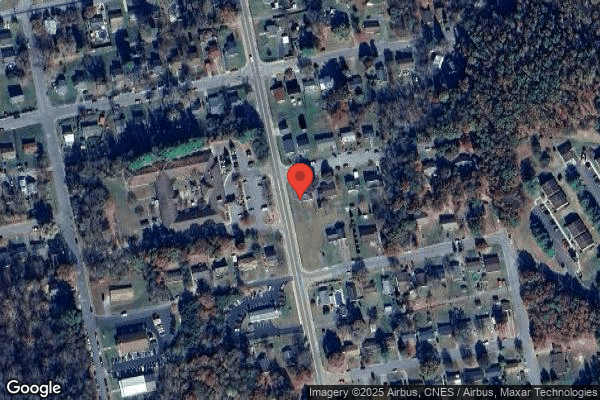

3737 CATALPA AVE, BUENA VISTA, VA 24416 (540) 261-7444
For profit - Corporation 93 Beds TRIO HEALTHCARE Data: November 2025
Trust Grade
0/100
#276 of 285 in VA
Last Inspection: February 2023

Over 2 years since last inspection. Current conditions may differ from available data.

Overview

Shenandoah Valley Health and Rehab has received a Trust Grade of F, indicating significant concerns about the quality of care provided. Ranking #276 out of 285 facilities in Virginia places them in the bottom half of state facilities, while being the only option in Buena Vista City County means families have no local alternatives. Although the facility is reportedly improving, with issues decreasing from 10 in 2024 to 2 in 2025, the overall staffing is a major concern with a rating of 1 out of 5 stars and a troubling 100% turnover rate, far exceeding the state average. Families should also note the significant fines totaling $61,692, which are higher than 93% of other Virginia facilities, suggesting ongoing compliance problems. Specific incidents reveal serious issues, such as a resident missing multiple dialysis treatments, leading to four hospitalizations, and another resident requiring two-person assistance but only receiving help from one staff member, resulting in a fatal fall. Overall, while there are some signs of improvement, the facility's serious deficiencies warrant careful consideration.

Trust Score
F
0/100
In Virginia
#276/285
Bottom 4%
Safety Record
High Risk
Review needed
Inspections
Getting Better
10 → 2 violations
Staff Stability
⚠ Watch
100% turnover. Very high, 52 points above average. Constant new faces learning your loved one's needs.
Penalties
✓ Good
$61,692 in fines. Lower than most Virginia facilities. Relatively clean record.
Skilled Nurses
⚠ Watch
Each resident gets only 28 minutes of Registered Nurse (RN) attention daily — below average for Virginia. Fewer RN minutes means fewer trained eyes watching for problems.
Violations
⚠ Watch
38 deficiencies on record. Higher than average. Multiple issues found across inspections.
★☆☆☆☆
1.0
Overall Rating
★☆☆☆☆
1.0
Staff Levels
★★★☆☆
3.0
Care Quality
★★☆☆☆
2.0
Inspection Score
Stable
2024: 10 issues
2025: 2 issues

The Good

  • Full Sprinkler Coverage · Fire safety systems throughout facility
  • No fines on record

Facility shows strength in fire safety.

The Bad

1-Star Overall Rating

Below Virginia average (3.0)

Significant quality concerns identified by CMS

Staff Turnover: 100%

53pts above Virginia avg (47%)

Frequent staff changes - ask about care continuity

Federal Fines: $61,692

Above median ($33,413)

Moderate penalties - review what triggered them

Chain: TRIO HEALTHCARE

Part of a multi-facility chain

Ask about local staffing decisions and management

Staff turnover is very high (100%)

52 points above Virginia average of 48%

The Ugly 38 deficiencies on record

4 actual harm
Jan 2025 2 deficiencies
CONCERN (D) 📢 Someone Reported This

A family member, employee, or ombudsman was alarmed enough to file a formal complaint

Potential for Harm - no one hurt, but risky conditions existed

Deficiency F0658 (Tag F0658)

Could have caused harm · This affected 1 resident

**NOTE- TERMS IN BRACKETS HAVE BEEN EDITED TO PROTECT CONFIDENTIALITY** Based on staff interview, facility document review, and clinical record review, the facility staff failed to follow professional...

Read full inspector narrative →
**NOTE- TERMS IN BRACKETS HAVE BEEN EDITED TO PROTECT CONFIDENTIALITY** Based on staff interview, facility document review, and clinical record review, the facility staff failed to follow professional standards of care regarding medication orders for one of eight residents in the survey sample (Resident #1). The findings include: Facility staff failed to clarify and enter updated admission orders for Resident #1, resulting in medications, that were recommended by the hospital to be discontinued, being ordered and administered to the resident. Resident #1 (R1) was admitted to the facility with diagnoses that included atrial fibrillation, retroperitoneal hematoma, renal hemorrhage, acute blood loss anemia, pleural effusion, hypertension, clostridium difficile (C-diff), acute kidney failure, sepsis, pneumonia, pyelonephritis with renal abscess, protein-calorie malnutrition, breast cancer and alcohol abuse. The minimum data set (MDS) dated [DATE] assessed R1 with moderately impaired cognitive skills. R1's clinical record documented a hospital discharge summary/order sheet dated 9/19/24 listing medication orders after R1's hospital stay from 9/16/24 to 9/19/24. This discharge summary/order sheet documented that R1 was to continue taking the medications apixaban (Eliquis) 5 mg (milligrams) twice per day, diltiazem 180 mg each day, lisinopril 10 mg each day, and enteric-coated aspirin 81 mg each day. R1 was admitted to the nursing facility on 11/7/24 following a hospital stay from 10/11/24 through 11/7/24. Medication orders entered upon R1's admission and signed by the physician on 11/12/24 included apixaban (Eliquis) 5 mg (milligrams) twice per day, diltiazem 180 mg each day, lisinopril 10 mg each day, enteric-coated aspirin 81 mg each day, which was also listed on the 9/19/24 hospital discharge summary. An additional order for Zosyn 4.5 grams intravenously (IV) every 8 hours for six days was entered at that time, which was not included on the 9/19/24 hospital discharge summary. R1's clinical record documented a nursing note dated 11/7/24 stating, .Resident arrived with discharge summary which did not list any IV medications. Called and spoke with discharging nurse who explained medication list for discharge had been updated. MD [hospitalist] with was [was with] nurse while speaking with this nurse on the phone. Faxed over a new list of medications and was told by MD [hospitalist] to use that med list for d/c [discharge] . R1's clinical record documented the updated hospital discharge summary/order sheet dated 11/7/24, referencing a hospital stay from 10/11/24 to 11/7/24. The 11/7/24 discharge/order sheet had a note written by licensed practical nurse (LPN) #1 stating, Updated list that was faxed for facility to use per MD for discharge and was signed by LPN #1 on 11/8/24. This discharge order summary documented that R1 was to stop taking apixaban, aspirin, diltiazem, and lisinopril, as well as including an order for the antibiotic Zosyn 4.5 grams intravenously every 8 hours for six days. R1's clinical record documented an admission Checklist dated 11/7/24. LPN #1 had checked that all orders had been verified by a second nurse (unit manager). R1's admission orders entered on 11/7/24 were not clarified and/or reconciled based upon the discharge summary/order sheet dated 11/7/24 but were entered from an outdated discharge instruction sheet from the previous hospital stay ending on 9/19/24. The order for the Zosyn was entered on 11/7/24 as listed on the updated order sheet but the orders for the apixaban, aspirin, diltiazem, and lisinopril remained active and were not discontinued. R1's medication administration record (MAR) documented the apixaban aspirin, diltiazem, and lisinopril were administered from 11/8/24 through 11/19/24 per the entered orders. The diltiazem, lisinopril and apixaban were discontinued on 11/19/24. The Zosyn was administered from 11/8/24 through 11/14/24 as ordered. A new order was entered on 11/14/24 to continue the Zosyn with administration documented through 11/19/24. R1's clinical record documented daily skilled nursing notes, and assessment by the physician and/or nurse practitioner (NP) on 11/11/24, 11/12/24, 11/14/24, /11/18/24 and 11/19/24, noting that R1 was assessed with no signs of bleeding or shortness of breath. The NP assessed R1 on 11/18/24 for low blood pressure of 82/50. R1 was ordered and administered a dose of midodrine 5 mg for low blood pressure and parameters were ordered to hold the medications lisinopril and diltiazem, if systolic blood pressure was less than 100. The NP documented a conversation with R1 on 11/19/24 about her medications. A physician's order was entered on 11/19/24 to discontinue the apixaban, diltiazem, and lisinopril and to monitor the resident's blood pressure twice per day for two weeks. On 11/19/24, R1 was assessed with a non-functioning PICC line, with arm swelling, low blood pressure, and was sent to the emergency room via 911 for evaluation and treatment. On 1/21/25 at 2:00 p.m., the administrator and the director of nursing (RN #2) during R1's stay were interviewed about R1's conflicting admission orders and resulting medication errors. The administrator stated R1 arrived for admission on [DATE] with a discharge summary/order sheet dated 9/19/24. The administrator stated LPN #1 saw that R1 had a PICC (peripherally inserted central catheter) upon admission but no orders for intravenous (IV) medications. The administrator stated LPN #1 called the hospital and was provided an updated order summary and medicine list dated 11/7/24. The administrator stated the unit manager (LPN #1) entered the order for the IV medication and failed to reconcile the other orders to discontinue the apixaban, aspirin, diltiazem and lisinopril. RN #2 stated, [LPN #1] focused on the antibiotic order and did not pay attention to the discontinued meds [medicines]. The administrator stated the updated admission order list was not uploaded into the clinical record for view by providers. The administrator stated the nurse should have reviewed all the medicines on the updated list, compared it to what was entered, made corrections to what had already been entered, and provided this updated list to providers. The administrator stated that this error was not discovered until a family member questioned R1's medication orders on 11/18/24. RN #2 stated that the nurse admitting a resident was expected to enter admission orders into the electronic health record. RN #2 stated a unit manager or director of nursing was supposed to perform a review and check of all orders within 24 hours. RN #2 stated RN #1 entered the original orders for R1 on 11/7/24 and LPN #1 was supposed to review/verify the orders for accuracy. RN #2 stated LPN #1 failed to thoroughly review/correct the updated admission orders for R1. On 1/21/25 at 3:30 p.m., the admissions director (other staff #2) was interviewed about R1's admission orders. The admissions director stated the hospital usually uploaded a discharge summary and admission orders in the electronic health care portal prior to admission. The admissions director stated upon R1's admission, the hospital had uploaded an outdated admission order list dated 9/19/24. The admissions director stated she did not notice that the discharge summary did not match the current admission date. On 1/21/25 at 4:32 p.m., RN #1 that admitted R1 on 11/7/24 was interviewed. RN #1 stated the admissions director had provided the chart and discharge summary with admission orders for R1. RN #1 stated she did not recognize that the discharge orders were outdated and from a previous hospitalization. RN #1 stated she entered the medicine orders as listed on the original discharge summary (dated 9/19/24) and the unit manager (LPN #1) was supposed to review them. RN #1 stated LPN #1 called the hospital about an order for the IV antibiotic and entered the order for the IV Zosyn. RN #1 stated she had not been aware of the updated admission orders for the other medicines. On 1/22/25 at 8:20 a.m., the physician/medical director (other staff #5) was interviewed about R1's conflicting admission orders. The physician stated he was aware prior to admission that R1 had a history of gastrointestinal bleeding. The physician stated that when he reviewed and signed the admission orders on 11/12/24 which included orders for apixaban, aspirin, diltiazem, and lisinopril, he was not aware that the discharge summary/history uploaded in the health record was outdated. The physician stated he and the nurse practitioner would typically but not always follow recommended medicine orders from the hospitalist. The physician stated R1 had chronic atrial fibrillation and even with a hemorrhage history, there was a risk of stroke/blood clots if the apixaban was discontinued. The physician stated he approved the orders based upon the available discharge summary (dated 9/19/24). The physician stated he was not aware of an updated list of admission orders that had been obtained by LPN #1 that indicated discontinued use of these medicines. The physician stated if he had reviewed the discharge summary and orders dated 11/7/24, he would have most likely discontinued the medicines as recommended by the hospitalist. The physician stated R1 had labs, was routinely assessed/monitored, and had developed no signs of bleeding. The physician stated R1 had the IV antibiotic Zosyn extended for continued treatment of the kidney abscess, in addition to an antibiotic for additional treatment for C-diff. The physician stated when the discrepancy was identified on 11/19/24, the apixaban, diltiazem, and lisinopril were discontinued. The physician stated R1 was discharged to the emergency room on [DATE] due to a migrated, non-functioning PICC line. The physician stated facility staff should have noticed the 9/19/24 date on the admission orders. The physician stated the outdated admission orders were not caught by staff and the updated list was not implemented. The physician stated facility staff should have had the most recent orders and discharge information for R1 so that medication recommendations could have been followed. On 1/22/5 at 10:07 a.m., LPN #1 that was the unit manager at the time of R1's admission on [DATE] was interviewed. LPN #1 stated on 11/7/24, RN #1 had entered the admission orders based upon the orders that came with the resident and that were uploaded in the electronic health record. LPN #1 stated she nor RN #1 noted that the orders were not current (dated 9/19/24). LPN #1 stated when she assisted with R1's skin assessment, she noted the resident had a PICC in the right arm. LPN #1 stated the admission orders she had included no order for IV antibiotics, so she called the hospital for clarification. LPN #1 stated the hospital nurse verified with the hospitalist that the IV Zosyn was to continue, and the hospital nurse faxed a new list of admission orders dated 11/7/24. LPN #1 stated she focused only on the order for the Zosyn and did not reconcile/review the other medication orders listed. LPN #1 stated it was her error as she was the unit manager and was supposed to perform the second check/verification of the admission orders. LPN #1 stated the apixaban, aspirin, diltiazem and lisinopril should have been discontinued upon admission according to the 11/7/24 admission orders. LPN #1 stated she thought she put the updated order list in the communicate book for the providers. LPN #1 stated, This was a very sloppy admission. LPN #1 stated that R1 . came with the wrong orders from the hospital and staff did not pay attention to the dates on the orders. LPN #1 stated, I did the chart check. When I did the check, I did not catch the errors. Apparently, I did not check them all [orders]. LPN #1 stated the apixaban, aspirin, diltiazem and lisinopril should have not been ordered and that she should have reconciled all the orders on the updated list, not just the IV antibiotic. The nurse practitioner (other staff #1) that cared for R1 during her stay was not available for interview as she no longer worked at the facility. The facility's policy titled Medication Administration General Guidelines (dated 1/2023) documented, .Medications are administered as prescribed in accordance with manufacturers' specifications, good nursing principles .Medications are administered in accordance with written orders of the prescriber. If a dose seems excessive considering the resident's age and condition, or a medication order seems to be unrelated to the resident's current diagnosis or condition, the nurse calls the provider pharmacy for clarification prior to the administration of the medication. If necessary, the nurse contacts the prescriber for clarification. This interaction with the pharmacy and the resulting order clarification are documented in the nursing notes and elsewhere in the medical record as appropriate . The facility's admission Checklist (undated) documented, .Place a check mark beside each task after completion. Leave the checklist in the Nurse notebook. All items MUST be complete . Checklist items for admission included, .Medication Orders entered in PCC [Point Click Care] per Hospital/another SNF Discharge Summary ONLY DO NOT USE PRINTED eMAR's .Orders are to be verified by a second Nurse . The Nursing 2022 Drug Handbook documents on page 1588 regarding unclear orders, A drug order with incomplete or unclear information can result in giving the wrong drug or wrong dose, by the wrong route, or at the wrong time .Clarify all incomplete or unclear orders with the prescriber . (1) On 1/22/25 at 2:40 p.m., the administrator stated the errors related to R1's outdated admission orders were reviewed by their quality assurance committee when identified on 11/19/24. The administrator presented a plan of correction to address failure to review/clarify admission orders that resulted in orders entered for medications (apixaban, aspirin, diltiazem and lisinopril) that should not have been entered. The plan documented that current residents and any new admissions had the potential to be affected by the deficient practice. Interventions implemented starting on 11/19/24 and included the following, with a correction date listed as 1/17/25. -DON notified nurse practitioner (NP) of discrepancies regarding discharge summaries. NP discontinued R1's apixaban, diltiazem and lisinopril. The DON documented a medication error report. - LPN #1 was re-educated on verifying orders, reconciliation with the discharge summary/admission orders and uploading documentation into electronic health record. - Admissions director was re-educated on ensuring that the discharge date on the discharge summary/admission orders corresponded to the admission date for all admission and readmissions. - Initiated practice for all orders for new admissions/readmissions to be reviewed in the morning meeting by the clinical team with the discharge summary reviewed in the electronic health record. Education provided to all unit managers and all department heads regarding admission order review protocol. -Audit completed by DON and/or designee of all admissions from 11/7/24 through 1/9/25 ensuring that the discharge date on the summary corresponded to the admission date and all medication orders were reviewed for accuracy with no identified discrepancies. -Weekly audits on all new admissions/readmission conducted starting on 12/31/24 for four weeks verifying correct admission orders, discharge summaries and medication orders with results reported to the quality assurance committee for review. -Date of correction listed as 1/17/25. Actions taken were reviewed. Education was documented as listed in the correction plan. Audits listed for all new admissions and readmissions were documented and revealed accurate admission orders from the hospital and no discrepancies in medication orders. Weekly audits of all new admissions/readmission were documented for week ending 1/4/25, 1/11/25, and 1/18/25, with no identified discrepancies. Interviews with staff that included the administrator, DON, unit managers, admissions director, and physician/medical director revealed knowledge of the admissions order review protocol and verification of admission orders. Seven of the most recent new admissions were reviewed. admission orders were accurate with properly dated discharge summaries and no discrepancies identified. This included a new admission since the correction date of 1/17/25, with no discrepancies identified with discharge summary, admission orders, or medication orders. This plan was accepted with correction date of 1/17/25. This deficiency was cited as past non-compliance. R1's emergency room records for 11/19/24 were requested but not received prior to the end of the survey. These findings were reviewed with the administrator and regional consultant during a meeting on 1/22/25 at 3:45 p.m. with no further information presented prior to the end of the survey. (1) Woods, [NAME] Dabrow. Nursing 2022 Drug Handbook. Philadelphia: Wolters Kluwer, 2022.
CONCERN (D) 📢 Someone Reported This

A family member, employee, or ombudsman was alarmed enough to file a formal complaint

Potential for Harm - no one hurt, but risky conditions existed

Deficiency F0760 (Tag F0760)

Could have caused harm · This affected 1 resident

**NOTE- TERMS IN BRACKETS HAVE BEEN EDITED TO PROTECT CONFIDENTIALITY** Based on staff interview, facility document review and clinical record review, the facility staff failed to ensure one of eight ...

Read full inspector narrative →
**NOTE- TERMS IN BRACKETS HAVE BEEN EDITED TO PROTECT CONFIDENTIALITY** Based on staff interview, facility document review and clinical record review, the facility staff failed to ensure one of eight residents in the survey sample was free from significant medication errors (Resident #1). The findings include: Resident #1 was ordered and administered the medications apixaban, aspirin, diltiazem and lisinopril for eleven days after admission when updated admission orders recommended these medicines be discontinued. Resident #1 (R1) was admitted to the facility with diagnoses that included atrial fibrillation, retroperitoneal hematoma, renal hemorrhage, acute blood loss anemia, pleural effusion, hypertension, clostridium difficile (C-diff), acute kidney failure, sepsis, pneumonia, pyelonephritis with renal abscess, protein-calorie malnutrition, breast cancer and alcohol abuse. The minimum data set (MDS) dated [DATE] assessed R1 with moderately impaired cognitive skills. R1's clinical record documented a hospital discharge summary/order sheet dated 9/19/24 listing medication orders after R1's hospital stay from 9/16/24 to 9/19/24. This discharge summary/order sheet documented that R1 was to continue taking the medications apixaban (Eliquis) 5 mg (milligrams) twice per day, diltiazem 180 mg each day, lisinopril 10 mg each day, and enteric-coated aspirin 81 mg each day. R1 was admitted to the nursing facility on 11/7/24 following a hospital stay from 10/11/24 through 11/7/24. Medication orders entered upon R1's admission and signed by the physician on 11/12/24 included apixaban (Eliquis) 5 mg (milligrams) twice per day, diltiazem 180 mg each day, lisinopril 10 mg each day, enteric-coated aspirin 81 mg each day, which was also listed on the 9/19/24 hospital discharge summary. An additional order for Zosyn 4.5 grams intravenously (IV) every 8 hours for six days was entered at that time, which was not included on the 9/19/24 hospital discharge summary. R1's clinical record documented a nursing note dated 11/7/24 stating, .Resident arrived with discharge summary which did not list any IV medications. Called and spoke with discharging nurse who explained medication list for discharge had been updated. MD [hospitalist] with was [was with] nurse while speaking with this nurse on the phone. Faxed over a new list of medications and was told by MD [hospitalist] to use that med list for d/c [discharge] . R1's clinical record documented the updated hospital discharge summary/order sheet dated 11/7/24, referencing a hospital stay from 10/11/24 to 11/7/24. The 11/7/24 discharge/order sheet had a note written by licensed practical nurse (LPN) #1 stating, Updated list that was faxed for facility to use per MD for discharge and was signed by LPN #1 on 11/8/24. This discharge order summary documented that R1 was to stop taking apixaban, aspirin, diltiazem, and lisinopril, as well as including an order for the antibiotic Zosyn 4.5 grams intravenously every 8 hours for six days. R1's clinical record documented an admission Checklist dated 11/7/24. LPN #1 had checked that all orders had been verified by a second nurse (unit manager). R1's admission orders entered on 11/7/24 were not clarified and/or reconciled based upon the discharge summary/order sheet dated 11/7/24 but were entered from an outdated discharge instruction sheet from the previous hospital stay ending on 9/19/24. The order for the Zosyn was entered on 11/7/24 as listed on the updated order sheet but the orders for the apixaban, aspirin, diltiazem, and lisinopril remained active and were not discontinued. R1's medication administration record (MAR) documented the apixaban aspirin, diltiazem, and lisinopril were administered from 11/8/24 through 11/19/24 per the entered orders. The diltiazem, lisinopril and apixaban were discontinued on 11/19/24. The Zosyn was administered from 11/8/24 through 11/14/24 as ordered. A new order was entered on 11/14/24 to continue the Zosyn with administration documented through 11/19/24. R1's clinical record documented daily skilled nursing notes, and assessment by the physician and/or nurse practitioner (NP) on 11/11/24, 11/12/24, 11/14/24, /11/18/24 and 11/19/24, noting that R1 was assessed with no signs of bleeding or shortness of breath. The NP assessed R1 on 11/18/24 for low blood pressure of 82/50. R1 was ordered and administered a dose of midodrine 5 mg for low blood pressure and parameters were ordered to hold the medications lisinopril and diltiazem, if systolic blood pressure was less than 100. The NP documented a conversation with R1 on 11/19/24 about her medications. A physician's order was entered on 11/19/24 to discontinue the apixaban, diltiazem, and lisinopril and to monitor the resident's blood pressure twice per day for two weeks. On 11/19/24, R1 was assessed with a non-functioning PICC line, with arm swelling, low blood pressure, and was sent to the emergency room via 911 for evaluation and treatment. On 1/21/25 at 2:00 p.m., the administrator and the director of nursing (RN #2) during R1's stay were interviewed about R1's conflicting admission orders and resulting medication errors. The administrator stated R1 arrived for admission on [DATE] with a discharge summary/order sheet dated 9/19/24. The administrator stated LPN #1 saw that R1 had a PICC (peripherally inserted central catheter) upon admission but no orders for intravenous (IV) medications. The administrator stated LPN #1 called the hospital and was provided an updated order summary and medicine list dated 11/7/24. The administrator stated the unit manager (LPN #1) entered the order for the IV medication and failed to reconcile the other orders to discontinue the apixaban, aspirin, diltiazem and lisinopril. RN #2 stated, [LPN #1] focused on the antibiotic order and did not pay attention to the discontinued meds [medicines]. The administrator stated the updated admission order list was not uploaded into the clinical record for view by providers. The administrator stated the nurse should have reviewed all the medicines on the updated list, compared to what was entered, made corrections to what had already been entered and provided this updated list to providers. The administrator stated this was not discovered until a family member questioned R1's medication orders on 11/18/24. RN #2 stated the nurse admitting a resident was expected to enter admission orders into the electronic health record. RN #2 stated a unit manager or director of nursing was supposed to perform a review and check of all orders within 24 hours. RN #2 stated RN #1 entered the original orders for R1 on 11/7/24 and LPN #1 was supposed to review/verify the orders for accuracy. RN #2 stated LPN #1 failed to thoroughly review/correct the updated admission orders for R1. On 1/21/25 at 3:30 p.m., the admissions director (other staff #2) was interviewed about R1's admission orders. The admissions director stated the hospital usually uploaded a discharge summary and admission orders in the electronic health care portal prior to admission. The admissions director stated upon R1's admission, the hospital had uploaded an outdated admission order list dated 9/19/24. The admissions director stated she did not notice that the discharge summary did not match the current admission date. On 1/21/25 at 4:32 p.m., RN #1 that admitted R1 on 11/7/24 was interviewed. RN #1 stated the admissions director had provided the chart and discharge summary with admission orders. RN #1 stated she did not recognize that the discharge orders were outdated and from a previous hospitalization. RN #1 stated she entered the medicine orders as listed on the original discharge summary (dated 9/19/24) and the unit manager (LPN #1) was supposed to review them. RN #1 stated LPN #1 called the hospital about an order for the IV antibiotic and entered the order for the IV Zosyn. RN #1 stated she was not aware of the updated admission orders for the other medicines. On 1/22/25 at 8:20 a.m., the physician/medical director (other staff #5) was interviewed about R1's conflicting admission orders. The physician stated he was aware prior to admission that R1 had a history of gastrointestinal bleeding. The physician stated when he reviewed and signed the admission orders on 11/12/24 that included orders for apixaban, aspirin, diltiazem, and lisinopril, he was not aware that the discharge summary/history uploaded in the health record was outdated. The physician stated he and the nurse practitioner would typically but not always follow recommended medicine orders from the hospitalist. The physician stated R1 had chronic atrial fibrillation and even with a hemorrhage history, there was a risk of stroke/blood clots if the apixaban was discontinued. The physician stated he approved the orders based upon the available discharge summary (dated 9/19/24). The physician stated he was not aware of an updated list of admission orders that had been obtained by LPN #1 that indicated discontinued use of these medicines. The physician stated if he had reviewed the discharge summary and orders dated 11/7/24, he would have most likely discontinued the medicines as recommended by the hospitalist. The physician stated R1 had labs and was routinely assessed/monitored. The physician stated R1 developed no signs of bleeding, had the IV antibiotic Zosyn extended for continued treatment of the kidney abscess in addition to an antibiotic for additional treatment for C-diff. The physician stated when the discrepancy was identified on 11/19/24, the apixaban, diltiazem and lisinopril were discontinued. The physician stated R1 was discharged to the emergency room on [DATE] due to a migrated, non-functioning PICC line. The physician stated facility staff should have noticed the 9/19/24 date on the admission orders. The physician stated the outdated admission orders were not caught by staff and the updated list was not implemented. The physician stated facility staff should have had the most recent orders and discharge information for R1 so that medication recommendations could have been followed. On 1/22/5 at 10:07 a.m., LPN #1 that was the unit manager at the time of R1's admission on [DATE] was interviewed. LPN #1 stated on 11/7/24, RN #1 had entered the admission orders based upon the orders that came with the resident and that were uploaded in the electronic health record. LPN #1 stated she nor RN #1 noted that the orders were not current (dated 9/19/24). LPN #1 stated when she assisted with the resident's skin assessment, she noted the resident had a PICC in the right arm. LPN #1 stated the admission orders she had included no order for IV antibiotics, so she called the hospital for clarification. LPN #1 stated the hospital nurse verified with the hospitalist that the IV Zosyn was to continue, and the hospital nurse faxed a new list of admission orders dated 11/7/24. LPN #1 stated she focused only on the order for the Zosyn and did not reconcile/review the other medication orders listed. LPN #1 stated it was her error as she was the unit manager and was supposed to perform the second check/verification of the admission orders. LPN #1 stated the apixaban, aspirin, diltiazem and lisinopril should have been discontinued upon admission according to the 11/7/24 admission orders. LPN #1 stated she thought she put the updated order list in the communicate book for the providers. LPN #1 stated, This was a very sloppy admission. LPN #1 stated R1 came with the wrong orders from the hospital and staff did not pay attention to the dates on the orders. LPN #1 stated, I did the chart check. When I did the check, I did not catch the errors. Apparently, I did not check them all [orders]. LPN #1 stated the apixaban, aspirin, diltiazem and lisinopril should have not been ordered and that she should have reconciled all the orders on the updated list, not just the IV antibiotic. The nurse practitioner (other staff #1) that cared for R1 during her stay was not available for interview as she no longer worked at the facility. The facility's policy titled Medication Administration General Guidelines (dated 1/2023) documented, .Medications are administered as prescribed in accordance with manufacturers' specifications, good nursing principles .Medications are administered in accordance with written orders of the prescriber. If a dose seems excessive considering the resident's age and condition, or a medication order seems to be unrelated to the resident's current diagnosis or condition, the nurse calls the provider pharmacy for clarification prior to the administration of the medication. If necessary, the nurse contacts the prescriber for clarification. This interaction with the pharmacy and the resulting order clarification are documented in the nursing notes and elsewhere in the medical record as appropriate . The facility's admission Checklist (undated) documented, .Place a check mark beside each task after completion. Leave the checklist in the Nurse notebook. All items MUST be complete . Checklist items for admission included, .Medication Orders entered in PCC [Point Click Care] per Hospital/another SNF Discharge Summary ONLY DO NOT USE PRINTED eMAR's .Orders are to be verified by a second Nurse . The Nursing 2022 Drug Handbook documents on page 1588 regarding unclear orders, A drug order with incomplete or unclear information can result in giving the wrong drug or wrong dose, by the wrong route, or at the wrong time .Clarify all incomplete or unclear orders with the prescriber . (1) On 1/22/25 at 2:40 p.m., the administrator stated the errors related to R1's outdated admission orders were reviewed by their quality assurance committee when identified on 11/19/24. The administrator presented a plan of correction to address failure to review/clarify admission orders that resulted in orders entered for medications (apixaban, aspirin, diltiazem and lisinopril) that should not have been entered. The plan documented that current residents and any new admissions had the potential to be affected by the deficient practice. Interventions implemented starting on 11/19/24 included the following with a correction date listed as 1/17/25. -DON notified nurse practitioner (NP) of discrepancies regarding discharge summaries. NP discontinued R1's apixaban, diltiazem and lisinopril. The DON documented a medication error report. - LPN #1 was re-educated on verifying orders, reconciliation with the discharge summary/admission orders and uploading documentation into electronic health record. - Admissions director was re-educated on ensuring that the discharge date on the discharge summary/admission orders corresponded to the admission date for all admission and readmissions. - Initiated practice for all orders for new admissions/readmissions to be reviewed in the morning meeting by the clinical team with the discharge summary reviewed in the electronic health record. Education provided to all unit managers and all department heads regarding admission order review protocol. -Audit completed by DON and/or designee of all admissions from 11/7/24 through 1/9/25 ensuring that the discharge date on the summary corresponded to the admission date and all medication orders were reviewed for accuracy with no identified discrepancies. -Weekly audits on all new admissions/readmission conducted starting on 12/31/24 for four weeks verifying correct admission orders, discharge summaries and medication orders with results reported to the quality assurance committee for review. -Date of correction listed as 1/17/25. Actions taken were reviewed. Education was documented a listed in the correction plan. Audits listed for all new admissions and readmissions were documented and revealed accurate admission orders from the hospital and no discrepancies in medication orders. Weekly audits of all new admissions/readmission were documented for week ending 1/4/25, 1/11/25 and 1/18/25 with no identified discrepancies. Interviews with staff that included the administrator, DON, unit managers, admissions director, and physician/medical director revealed knowledge of the admissions order review protocol and verification of admission orders. Seven of the most recent new admissions were reviewed. admission orders were accurate with properly dated discharge summaries and no discrepancies identified. This included a new admission since the correction date of 1/17/25, with no discrepancies identified with discharge summary, admission orders, or medication orders. This plan was accepted with correction date of 1/17/25. This deficiency was cited as past non-compliance. R1's emergency room records for 11/19/24 were requested but not received prior to the end of the survey. These findings were reviewed with the administrator and regional consultant during a meeting on 1/22/25 at 3:45 p.m. with no further information presented prior to the end of the survey. (1) Woods, [NAME] Dabrow. Nursing 2022 Drug Handbook. Philadelphia: Wolters Kluwer, 2022.
Jan 2024 10 deficiencies 2 Harm
SERIOUS (G) 📢 Someone Reported This

A family member, employee, or ombudsman was alarmed enough to file a formal complaint

Actual Harm - a resident was hurt due to facility failures

Deficiency F0657 (Tag F0657)

A resident was harmed · This affected 1 resident

**NOTE- TERMS IN BRACKETS HAVE BEEN EDITED TO PROTECT CONFIDENTIALITY** Based on staff interviews, clinical record review, and facility documentation review, the facility staff failed to conduct timel...

Read full inspector narrative →
**NOTE- TERMS IN BRACKETS HAVE BEEN EDITED TO PROTECT CONFIDENTIALITY** Based on staff interviews, clinical record review, and facility documentation review, the facility staff failed to conduct timely revisions of the comprehensive care plan for two residents (Resident #1 and Resident #5) in a survey sample of 14 residents. For Resident #1 (R1) the failure to revise the care plan and implement interventions that ensured R1 received the required dialysis treatments as ordered, resulted in R1 missing 3 dialysis sessions and 3 partial treatments, which resulted in four hospitalizations. This constituted four occurrences of harm. The findings included: 1. For R1, the facility staff failed to address and implement interventions to ensure that the resident received dialysis services when the family was unable to accompany the resident, which resulted in 3 missed sessions and 3 partial treatments. This failure resulted in four hospitalizations for urgent treatment of fluid overload, a potentially life-threatening condition which occurs when fluid & toxins are not removed as scheduled with dialysis. According to the closed record review, R1 was ordered to receive dialysis on Monday, Wednesday, and Fridays. From August 1, 2023, until October 17, 2023, R1 had four hospitalizations, (8/2/23, 10/4/23, 10/13/23, and 10/17/23). According to R1's clinical record, a physician's order dated 8/1/23 noted that R1 required a companion during dialysis. According to the clinical record, the comprehensive care plan was not revised to address this need until 10/13/23. The associated goal read, I will not have any ill effects from my dialysis treatment and will receive my treatment timely through next care plan review. The intervention was noted as: family member is aware of dialysis days/times, however, will often no show up at the dialysis center therefore resident does not receive dialysis as scheduled. No interventions were found to ensure that R1 received treatments when facility staff were aware that the family would frequently not be able to attend the dialysis treatments. A review of the progress notes revealed a progress note entry dated 07/31/2023 at 10:27 a.m., that read, Resident returned from dialysis @ approximately 0800 via [transport company name redacted]. No s/s [signs or symptoms] distress. NNO [no new orders]. Fistula to RUA [right upper arm], thrill and bruit present. Pressure dressing in place, CDI [clean, dry, intact]. VSS [vital signs stable]. Received call from dialysis that the resident received very little dialysis d/t [due to] pulling needles out. Dialysis nurse also stated that to continue dialysis the resident will need someone to sit with her during treatment time. Management notified. Will continue to monitor. On 08/02/2023 at 2:10 p.m., a progress note was entered that read, Resident sent back from dialysis without receiving treatment. Daughter did not attend appointment due to childcare. NP spoke with daughter. [name redacted] informed NP that she would not be able to meet resident at dialysis, but she also did not want resident changed from full code. Daughter requested that resident be sent to ED [emergency department]. EMS [emergency medical services] called, resident left facility at 1108. Report called to ED and daughter aware. On 08/02/2023, the nurse practitioner (NP) entered a note that read in part, Date of Service: 08/02/2023, . Chief Complaint / Nature of Presenting Problem: No dialysis x 6 days, pt pulling lines out, dtr [daughter] cannot go to dialysis with pt due to children and no money for childcare. Dialysis will not do pt dialysis without family member present to keep her from pulling out line. [daughter's name redacted], pt dtr will not be able to go to dialysis with pt, she requests pt go to hospital . Plan: N18.6: ESRD (end stage renal disease) Pt unable to receive dialysis any longer through our facility, as she keeps pulling lines out, risk of bleeding to death. Dtr was asked to be present when she receives dialysis, dtr declined as she has no childcare and cannot afford it. Pt has not had sufficient dialysis in a week, in danger of fluid overload, etc. Sent to ER . R1's hospital records dated 8/2/23 read, ED Triage Notes Addendum: Pt arrived via EMS. From [facility name redacted]. dialysis pt last dialysis July 20, 2023. facility states family has to go with pt when she goes but that been unable to get in touch with family. Pt takes stuff off, so she has to have someone with her On 10/04/2023 at 8:21 p.m., a progress note read, Received call from [dialysis clinic name redacted] nurse stating that they are sending pt to ED due to family not present to sit with her during dialysis appt this AM and increased facial swelling. Pt sent to ED from Dialysis-no updates at this time. Will continue to monitor and awaiting updates from ED. Hospital records in R1's chart dated 10/4/23 read, visit information: arrival: 10/4/23 6:55 p.m., Chief complaint: shortness of breath . ED notes . missed dialysis, edema in eye/[NAME], chest x-ray shows fluid on lungs, on bipap, had temp 100.7 additional EMS patient and scene information: confused/does not cooperate. went to dialysis today. Issues with family can only get dialysis with a sitter, family did not show up so no dialysis. cxr [chest x-ray] fluid on lungs. de-satted [oxygen saturation levels dropped] to 67% so they placed her on BIPAP. fever 100.7 so they gave Tylenol. BP there ran 230/90s. they placed a nitro patch The hospital discharge summary noted, diagnosis to include acute respiratory failure with hypoxia, volume overload state . concern for uremic encephalopathy . Presented to hospital with respiratory distress after missing dialysis, noted to have lethargy, concerning for acute metabolic encephalopathy, hyperkalemia noted, underwent emergent HD [hemodialysis], hypertensive urgency, likely secondary to volume overload state and missing dialysis . concern for uremic encephalopathy . at baseline after HD On 10/08/2023 at 8:15 p.m., a progress note entry read, . Spoke with hospice nurse-family unable to sit with pt tomorrow for Dialysis and [dialysis clinic name redacted] will not give pt dialysis unless family present. Placed in primary care book. No distress noted-will notify primary care of worsening changes. On 10/13/23, the nurse practitioner entered another note that read, Date of Service: 10/13/23 . discharged to hospital r/t not being able to receive dialysis MWF . Discharge . Facility Course: Sent to hospital for further eval. Pt daughter is to go with her for dialysis, pt daughter did not, [dialysis clinic name redacted] will not do dialysis without the daughter present. Pt sent to ER for dialysis, as she cannot miss it, or edema builds up extremely quickly. On 10/17/2023, the NP wrote a note that read, .Chief Complaint / Nature of Presenting Problem: Edema of eyelids . Plan: ESRD missed dialysis, edema eyelids, sent to ED for dialysis A facility nurse also documented on 10/17/23, Resident up to w/c in dayroom. Facial swelling noted. Due to resident not receiving dialysis. New order noted to send resident to ED for further eval. Daughter [name redacted] notified. Resident left facility at 11:11. The care plan was not updated to address these missed dialysis treatments, the increased symptoms, or the resulting hospitalizations. On 1/16/24 and 1/17/24, interviews were conducted with multiple facility staff. They included, LPN C, LPN B/unit manager, Employee C/social worker, Employee D/admissions director, the facility administrator, and nurse practitioner. All of which indicated they were aware that Resident #1 required someone to be present for dialysis treatments for safety reasons. Each of them verbalized that the resident's family was supposed to accompany her. None of the staff identified that the facility had an obligation to implement interventions to ensure the resident received these life sustaining care and services. No one voiced an explanation as to why the care plan had not been updated to address the lack of consistent support R1 needed while at dialysis or the outcomes of the missed treatments. On 1/16/24, when asked why the facility didn't implement alternate measures or send someone with the resident she responded, the administrator stated that facility doesn't provide one on one care and didn't have the staffing to do this. On 1/17/24, when asked what the facility did in terms of other interventions to ensure R1 received the needed dialysis treatments, when they were aware that R1's family was not able to meet the resident and stay with them during dialysis consistently, the administrator didn't respond. On the afternoon of 1/30/23, an interview was conducted with Employee L and Employee M, the MDS (minimum data set - an assessment tool) nurses. Both Employee L and M confirmed that they develop and revise care plans. When asked about the purpose of the care plan, Employee L said, it is to provide an individualized picture of the care the resident needs based on diagnosis, medications, and ADL's (activities of daily living). It is anything we are going to provide while they are here. When asked about resident changes, both employees agreed that changes are reflected on the care plan. R1 was discussed and noted that on 8/1/23, an order was noted that the Resident needed a sitter while at dialysis. Employee M confirmed that it was not added to the care plan until 10/17/23. When asked why the delay and what interventions had been implemented when they were aware the family was not able to meet R1 consistently, Employees L and M said, We aren't involved in those discussions, while we are nurses those discussions are held between administration and the clinical team and we were not involved. The facility policy titled; Care Plan was reviewed. The facility in part read, . 22. There may be additional problem areas not triggered by the MDS, which will need to be addressed in the care plan. 23. The IDT is to review the 24-hour report during morning meeting for significant changes or changes in resident's ADL status. The IDT will add minor changes in resident's status to the existing care plans . No further information was provided. 2. The facility staff failed to revise the care plan for Resident #5 (R5) who had a MRSA infection and required transmission-based precautions be implemented. On 1/16/24 at approximately 11:30 a.m., during a facility tour, R5 was observed from the hallway to be lying in bed with an IV pole at the bedside and a medication bag hanging from the pole. Within the room there was a red 55-gallon trash barrel and a yellow 55-gallon trash barrel. There was no signage outside the room to indicate that any special isolation requirements were in place. On 1/16/24, a clinical record review was conducted. According to the clinical record, R5 was readmitted to the facility on [DATE], with diagnoses that included, but were not limited to, MRSA and ESBL [highly resistant bacterial infections] in the wound rt foot, per the hospital discharge records. On 12/27/23, an order for contact isolation was entered, which remained an active order at the time of survey. Review of the care plan revealed no mention of the MRSA or ESBL infections nor the transmission-based precautions. On 1/17/24 at approximately 10:30 a.m., observations were conducted of R5's room and signage was noted on the outside of the room to indicate the resident was on isolation. When asked about these findings, the director of nursing, who is the facility infection preventionist, stated that R1 remains on precautions and should be included in the care plan. No further information was provided.
SERIOUS (G) 📢 Someone Reported This

A family member, employee, or ombudsman was alarmed enough to file a formal complaint

Actual Harm - a resident was hurt due to facility failures

Deficiency F0698 (Tag F0698)

A resident was harmed · This affected 1 resident

**NOTE- TERMS IN BRACKETS HAVE BEEN EDITED TO PROTECT CONFIDENTIALITY** Based on staff interviews, clinical record review, and facility documentation, the facility staff failed to ensure a Resident wh...

Read full inspector narrative →
**NOTE- TERMS IN BRACKETS HAVE BEEN EDITED TO PROTECT CONFIDENTIALITY** Based on staff interviews, clinical record review, and facility documentation, the facility staff failed to ensure a Resident who required dialysis received scheduled dialysis treatments as ordered by the physician for 1 Resident (Resident #1) in a survey sample of 3 dialysis Residents reviewed. Resident #1 (R1) was hospitalized 4 times during a 3-month period due to missed dialysis treatments, requiring hospitalization for urgent dialysis due to being symptomatic of fluid overload, this constituted harm. The findings included: According to the clinical record R1, was initially admitted to the facility on [DATE]. Diagnoses for R1 included but were not limited to end stage renal disease and legal blindness. On [DATE] and [DATE], a closed record review was conducted of R1's chart. This review revealed that R1 was ordered to receive dialysis on Monday, Wednesday, and Fridays. From [DATE], until [DATE], R1 had four hospitalizations, ([DATE], [DATE], [DATE], and [DATE]) due to missing multiple dialysis treatments and being symptomatic with fluid overload because of not being dialyzed due to not having someone accompany the resident to the treatments. According to the clinical record, the following details were documented: 1. A progress note entry dated [DATE] at 10:27 a.m., read, Resident returned from dialysis @ approximately 0800 via [transport company name redacted]. No s/s [signs or symptoms] distress. NNO [no new orders]. Fistula to RUA [right upper arm], thrill and bruit present. Pressure dressing in place, CDI [clean, dry, intact]. VSS [vital signs stable]. Received call from dialysis that the resident received very little dialysis d/t [due to] pulling needles out. Dialysis nurse also stated that to continue dialysis the resident will need someone to sit with her during time. Management notified. Will continue to monitor. 2. Another progress note dated [DATE] at 10:41 a.m., read, Dialysis called and informed staff at this point resident is no longer allowed to come to dialysis unless someone is with her. This nurse and SSD [social services director] called [sic] and spoke to daughter [name redacted] about this. She stated she was going to call and talk with her sister and weigh options between going with resident or placing on hospice. 3. On [DATE] at 1:49 p.m., a note read, SSD spoke with daughter [name redacted] who advised they would have family accompany resident with dialysis and will meet resident at [dialysis name redacted] at chair time. SSD and [name redacted] called [dialysis name redacted] together to request change in chair time since family will have to accompany resident for each treatment. [dialysis name redacted] advised chair time can be changed to 9am. 4. On [DATE] at 06:06 a.m., a SBAR - Change of Condition note read, Situation: Puffy, swollen eyes. Background: CNA reported change in condition. CNA noted puffiness, swelling to both eyes around 515am. Assessment: Resident able to open eyes without difficulty. Some puffiness noted. No redness or drainage noted at present. No c/o pain. Response: CNA wash resident face with warm bath cloth. Nurse assess resident for redness, drainage, and pain to both eyes, none noted or voiced at present. 5. On [DATE] at 10:46 a.m., the nursing note read, This nurse noted resident to have very swollen eyes. Resident stated she could feel they were swollen but she was not having any pain associated with it. NP [nurse practitioner] made aware and assessed. She noted resident's eyes. Lungs sounded clear. NP stated she would reassess later to check for changes. 6. On [DATE] at 2:10 p.m., a note was entered that read, Resident sent back from dialysis without receiving treatment. Daughter did not attend appointment due to childcare. NP spoke with daughter. [name redacted] informed NP that she would not be able to meet resident at dialysis, but she also did not want resident changed from full code. Daughter requested that resident be sent to ED [emergency department]. EMS [emergency medical services] called, resident left facility at 1108. Report called to ED and daughter aware. 7. On [DATE], the nurse practitioner (NP) entered a note that read, Date of Service: [DATE], . Chief Complaint / Nature of Presenting Problem: No dialysis x 6 days, pt pulling lines out, dtr cannot go to dialysis with pt due to children and no money for childcare. Dialysis will not do pt dialysis without family member present to keep her from pulling out line. [daughter's name redacted], pt dtr will not be able to go to dialysis with pt, she requests pt go to hospital . Plan: N18.6: ESRD (end stage renal disease) Pt unable to receive dialysis any longer through our facility, as she keeps pulling lines out, risk of bleeding to death. Dtr was asked to be present when she receives dialysis, dtr declined as she has no childcare and cannot afford it. Pt has not had sufficient dialysis in a week, in danger of fluid overload, etc. Sent to ER . 8. The hospital records that were included in R1's facility chart dated [DATE] read, ED Triage Notes Addendum: Pt arrived via EMS. From [facility name redacted]. dialysis pt last dialysis [DATE]. facility states family has to go with pt when she goes but that been unable to get in touch with family. Pt takes stuff off, so she has to have someone with her . 9. On [DATE], the nurse practitioner wrote a note in the chart of R1. Excerpts from the note read, . chief Complaint/Nature of Presenting Problem: Eyes puffy, bilaterally. No distress . Plan: ESRD [end stage renal disease] recent av fistula clotted, continue current medication, Dialysis MWF, con't with nephrology, monitor for fvo [fluid volume overload], particularly lungs, DM II on insulin, continue current medication, con't to monitor closely . 10. On [DATE] at 8:21 p.m., a note read, Received call from [dialysis clinic name redacted] nurse stating that they are sending pt to ED due to family not present to sit with her during dialysis appt this AM and increased facial swelling. Pt sent to ED from Dialysis-no updates at this time. Will continue to monitor and awaiting updates from ED. 11. Hospital records in R1's chart dated [DATE] read, visit information: arrival: [DATE] 6:55 p.m., Chief complaint: shortness of breath . ED notes . missed dialysis, edema in eye/[NAME], chest x-ray shows fluid on lungs, on bipap, had temp 100.7 additional EMS patient and scene information: confused/does not cooperate. went to dialysis today. Issues with family can only get dialysis with a sitter, family did not show up so no dialysis. cxr [chest x-ray] fluid on lungs. de-satted [oxygen saturation levels dropped] to 67% so they placed her on BIPAP. fever 100.7 so they gave Tylenol. BP there ran 230/90s. they placed a nitro patch . The discharge summary noted, diagnosis to include acute respiratory failure with hypoxia, volume overload state . concern for uremic encephalopathy . Presented to hospital with respiratory distress after missing dialysis, noted to have lethargy, concerning for acute metabolic encephalopathy, hyperkalemia noted, underwent emergent HD [hemodialysis], hypertensive urgency, likely secondary to volume overload state and missing dialysis . concern for uremic encephalopathy . at baseline after HD 12. On [DATE] at 8:15 p.m., a progress note entry read, S/P [status post] return from hospital-day 3-Pt alert/confused. Requires assist with all ADL's and transfers. Incontinent of bowel and bladder. Feeds self after tray set up. Requires Dialysis three times a week. Spoke with hospice nurse-family unable to sit with pt tomorrow for Dialysis and [dialysis clinic name redacted] will not give pt dialysis unless family present. Placed in primary care book. No distress noted-will notify primary care of worsening changes. 13. The nurse practitioner entered another note that read, Date of Service: [DATE], Transition of Care: No transition occurred . Discharge Summary . Chief Complaint / Nature of Presenting Problem: discharged to hospital r/t not being able to receive dialysis MWF . Discharge . Facility Course: Sent to hospital for further eval. Pt daughter is to go with her for dialysis, pt daughter did not, [dialysis clinic name redacted] will not do dialysis without the daughter present. Pt sent to ER for dialysis, as she cannot miss it, or edema builds up extremely quickly. 14. On [DATE], R1 was again sent to the hospital symptomatic for fluid overload. The NP wrote a note that read, .Chief Complaint / Nature of Presenting Problem: Edema of eyelids . Plan: ESRD [End Stage Renal Disease] missed dialysis, edema eyelids, sent to ED for dialysis. The NP wrote, Resident up to w/c in dayroom. Facial swelling noted. Due to resident not receiving dialysis. New order noted to send resident to ED for further eval. Daughter [name redacted] notified. Resident left facility at 11:11. 15. The hospital records dated [DATE] read, pt arrived to ED via EMS after dispatched as needs ride for dialysis pt complaining of increased swelling of face On [DATE] at approximately 2:15 p.m., an interview was conducted with LPN C. LPN C stated that R1 had been very pleasant and had started rubbing at their skin constantly. LPN C said that R1 did this at dialysis and at one point pulled the dialysis catheter out because she was rubbing at her skin so much. LPN C stated that dialysis told the facility if they couldn't get the resident calm, someone would have to sit with the resident through the dialysis sessions. LPN C said that the facility tried to pre-medicate R1 before dialysis, but it wasn't effective. LPN stated that at times R1 would have to be sent to the hospital for dialysis where they could sedate the resident. LPN C said that it went on for about a month and a half, when the family didn't meet the resident at dialysis, R1 would miss dialysis, and have to be sent to the hospital. LPN C said that it was her understanding that R1 was kept at the hospital and later expired. On [DATE] at 2:31 p.m., an interview was conducted with LPN B, who was the unit manager where R1 resided. LPN B explained that R1's rubbing caused him/her to not be able to do dialysis without someone being there, he/she was pulling out the dialysis line. LPN B stated that dialysis wouldn't let the resident in their building if the resident's daughter wasn't with them. LPN B said, The family wasn't always compliant. We would talk with them, and they would say they were on the way to meet the resident and then wouldn't show up. When asked why R1 didn't return to the facility, LPN B said, I don't know if it was a needs thing, I think the family put on Facebook they were going to put her on hospice. On [DATE] at 2:35 p.m., an interview was conducted with Employee C, the facility's social worker (SW). The SW stated R1 was a dialysis resident who had started to decline. The SW stated that the facility was having an issue with the family providing one on one to sit with the resident at dialysis and had gotten the ombudsman and adult protective services (APS) involved. Employee C said, The daughter locally was in agreement with meeting him/her at dialysis but wouldn't go, so dialysis would send her back. Because the daughters failed to meet the resident at the appointments it caused multiple hospitalizations. When asked why the resident had to have someone with them at dialysis, the SW said, They [dialysis] made that order because he/she was fidgety, restless and pulling at the line. The SW said that she had talked to APS about getting an order to make the daughters meet the resident, but that APS had said they were not able to do that. The SW went on to say that the family was getting the Resident's income and she felt they should have used that money to pay for a sitter so that the resident could get the needed treatment. On [DATE] at 2:55 p.m., an interview was conducted with Employee D, the admissions director. When asked about R1, Employee D said, Dialysis requested that he/she have a sitter due to restlessness. We would take [the resident's name redacted] back from the hospital and the family would agree they would meet them for dialysis, but they weren't consistent. [R1 name redacted] was sent out and due to them [the resident's family] not being able to provide what they said, they ended up just doing hospice at the hospital. On [DATE] at 3:10 p.m., an interview was conducted with the facility Administrator. The administrator said, We started having difficulty with dialysis. They put an order in that someone had to be with the resident [R1]. They [the family of R1] would quit going and dialysis would send the resident back. They said we couldn't send the resident unless the daughter would ride with her to the appointment. We would have to send the resident to the hospital, his/her eyes would swell shut from the fluid build-up, it put us at risk. On [DATE] at 8:43 a.m., the facility administrator requested to talk to the surveyor regarding R1. During the conversation the administrator said, . [R1's name redacted] would go 3 days maybe and we were having to send him/her back to the emergency room. The ER called and said we had to stop sending the resident. I explained the resident was a full code, and it was necessary because [R1] was short of breath and filling up with fluid When asked why they didn't send a staff member to accompany the resident so that R1 could get dialysis if the family didn't show up, the administrator said, We don't do one on one care here, we did it once, but we don't have the staffing here. The administrator further stated that the facility had tried to get the resident's family to change the dialysis to 2 days a week, but the family never followed through with that, but the doctor had said they didn't know if the resident could manage on two days. The administrator said, [R1 name redacted] couldn't manage missing one dialysis appointment and he/she would start filling up with fluid. On [DATE], an interview was conducted with the facility's nurse practitioner (NP). The NP was asked about R1 and the resident's discharge. The NP stated that it was her understanding that the resident's family decided to take the resident to another facility that could transport the resident to dialysis. The NP said that she was aware there were times that the family wouldn't meet R1 and the resident would have to be sent to the hospital for dialysis. When asked why the facility did not send someone to accompany the resident to dialysis so that R1 could have the dialysis treatment, the nurse practitioner said that she thought the facility had done that several times. On [DATE] and again on [DATE], when asked why the facility didn't implement steps or send someone with R1, the administrator responded, that the facility did not provide one on one care and don't have the staffing to do this. When asked when they were aware that R1's family was not able to meet the resident and stay with them during dialysis consistently, what did the facility do in terms of other interventions to ensure R1 received the needed dialysis treatments, the administrator didn't respond. On [DATE] at 2:32 p.m., a telephone call was placed to the daughter of R1. The family member stated that they were told they had to accompany R1 to dialysis and were told they didn't have the staff and it was our responsibility. R1's daughter went on to explain that R1 stayed in the hospital a month, before going to another facility where she passed away. On [DATE] at 3:14 p.m., an interview was conducted with Employee H, the activities director. Employee H stated that she had accompanied R1 to dialysis on one occasion and had her assistant accompany the resident at another time. When asked what had prompted her and her employee to accompany the resident on those 2 days, Employee H said, When we had trouble with the family. When asked why the facility didn't send someone with R1 on the other occasions when family was not able to accompany the resident, Employee H said, I wasn't asked to. On [DATE] at 3:40 p.m., an interview was conducted with Employee J, who coordinates transportation to outside appointments for residents. When asked about R1's transport to dialysis, Employee J said that transportation had not been a problem but the problem was the family meeting the resident at dialysis. When asked if the facility sends a staff member with residents to appointments, Employee J said, Usually not. When asked what happened in case a resident was confused and unable to communicate with the provider about what was going on, Employee J said, We would send someone in that case. I would not send someone who is not cognitively intact to an appointment alone, if the family can't go, then we have to send someone with them. Employee J went on to say that she is also a CNA and at times will accompany residents to appointments. When asked if she ever accompanied R1 to dialysis, Employee J said, No. On [DATE], during a review of the facility staffing, in the presence of the HRM (human resources manager)/Employee G, it was noted that on [DATE], the staff assignment sheet noted CNA E was assigned to provide one on one care. When asked about this provision of one on one care, Employee G stated that a resident had been having behaviors, so CNA E was called in to provide the one on one care. On [DATE], as CNA E was not working at the facility during the survey, a telephone call was placed to CNA E and an interview was conducted. CNA E identified that on [DATE], she was called by the HRM/Employee G and asked to come provide one-to-one care for Resident #12 (R12). CNA E went on to describe that R12 had been very anxious, wandering, and exit seeking. When asked what type of care was provided, CNA E stated that she had stayed with R12 and walked with them until they calmed down around 3 p.m. When asked if she had provided one-to-one care to any other residents, CNA E stated that she had provided one to one care for [name redacted - identified as Resident #11]. A closed clinical record review was conducted of Resident #11's chart. According to the clinical record documentation, Resident #11 (R11) received one on one care around the clock for at least a week in [DATE]. On the afternoon of [DATE], an interview was conducted with the Director of Nursing (DON) and administrator. When asked to explain how R11 and R12 having been provided one to one care, the DON stated that R12 could easily be mistaken for a visitor, ambulated without any assistive devices, and was exit seeking. The DON stated that despite having a wander guard on, with the increased visitors in the facility on the weekend, she had felt for the safety of R12 that one to one care was necessary. The DON and administrator explained that R11 had been having behaviors that required one to one supervision. When asked to explain how they identify when a person needs or is provided one to one supervision, the DON and administrator stated that when a resident has an altercation with another resident, the aggressor is usually put on 1:1. On [DATE] at 8:30 a.m., an interview was conducted with the administrator at the dialysis clinic R1 had attended for treatment. The dialysis administrator (DA) stated that the issue with R1 was that on two separate occasions R1 had pulled the dialysis lines out. DA stated that the governing body for the dialysis clinic met, ,which included the DA, medical director, clinical director, and others, because they didn't have a policy that covered such instances. DA stated that guidelines were developed and implemented to address this incident, which guided the doctor to order that R1 had to have someone at their side during treatment sessions at all times. The DA stated that they were very flexible in moving R1's treatment times to accommodate the family's ability to accompany R1, but on 3 occasions, the dialysis treatment was not provided due to no one being with R1. The DA stated that on numerous occasions R1 had shortened treatment sessions, which were not effective. The DA went on to say, transport was never the issue. When asked if the facility ever sent a staff member to accompany R1, the DA said reviewed the records and noted that there had been one occasion in October. The DA said they talked to the family on several occasions and encouraged them to talk to the facility for a care conference because the the family was having difficulty and had expressed concern about not being able to accompany R1 all the time. On [DATE], the DON provided the surveyor with an in-service sheet that had been provided to facility staff on [DATE]. The document read in part, . 1:1 for aggression or falls should be considered for 48-72 hours to allow the IDT [interdisciplinary team] to come up with a solid intervention. Then of course, based on your discretion. The DON was questioned about this, and she stated it was guidance she had gotten from their corporate office and was educating staff about it. The Surveyor pointed out that they have been saying they don't provide one to one with regards to R1 and that it was the family's responsibility to accompany the resident to dialysis, but it is clear they do, per the provided policy. The DON and Administrator did not respond. A review was conducted of the facility policy titled, Coordination of Hemodialysis. The policy read in part, Residents requiring an outside ESRD [end stage renal disease] facility will have services coordinated by the facility to include care planning, nursing, medications, nutritional, social services, activities, and physician services. There will be communication between the facility and the ESRD facility regarding the resident. The facility will establish a Dialysis Agreement/Arrangement if there are any residents requiring dialysis services. The agreement shall include how the residents care is to be managed. Two physicians wrote an article* for The American Journal of Kidney Diseases which included the following excerpts: Ultimately, missed dialysis treatments have a significant impact on mortality, morbidity, and resource use, in part due to increased emergency department visits and hospitalizations (including intensive care unit admissions) for urgent but often preventable hemodialysis treatments . Multilevel interventions targeting individual patients, patient-provider relationship/communication, and the process of care delivery should help improve overall dialysis treatment adherence, particularly missed hemodialysis treatments. On [DATE] and again on [DATE], during end of day meetings with the administrator and director of nursing, the above concerns were shared with them. When asked again why they didn't provide a staff member to accompany R1 to dialysis, they stated, We don't provide one on one and didn't have the staffing to do this. When it was reported that the facility had provided 1:1 to other residents, the director of nursing said, Yes, but that was short term, this was different. No further information was provided. *Menez, [NAME] and Jaar, [NAME] G. Missed Hemodialysis Treatments: A Modifiable But Unequal Burden in the World. American Journal of Kidney Disease 2018;72(5)625-627.
CONCERN (D) 📢 Someone Reported This

A family member, employee, or ombudsman was alarmed enough to file a formal complaint

Potential for Harm - no one hurt, but risky conditions existed

Safe Transfer (Tag F0626)

Could have caused harm · This affected 1 resident

**NOTE- TERMS IN BRACKETS HAVE BEEN EDITED TO PROTECT CONFIDENTIALITY** Based on staff interview, clinical record review, and facility documentation review, the facility staff failed to permit a resid...

Read full inspector narrative →
**NOTE- TERMS IN BRACKETS HAVE BEEN EDITED TO PROTECT CONFIDENTIALITY** Based on staff interview, clinical record review, and facility documentation review, the facility staff failed to permit a resident to return to the facility after hospitalization, affecting 1 resident (Resident #1- R1) in a survey sample of 14 residents. The findings included: On [DATE], a closed clinical record review was conducted of R1's chart. According to the clinical record, staff documented on [DATE] at 11:20 AM, Resident up to w/c [wheelchair] in dayroom. Facial swelling noted. Due to resident not receiving dialysis. New order noted to send resident to ED [emergency department] for further eval. [evaluation] Daughter [name redacted] notified. Resident left facility at 11:11 [am]. The clinical record had no information about R1 returning from the hospital. On [DATE] at approximately 2:15 p.m., an interview was conducted with LPN C. LPN C stated that R1 was a very pleasant lady and had started rubbing at her skin constantly. LPN C said that the Resident did this at dialysis and at one point pulled her dialysis catheter out and dialysis told the facility if they couldn't get her calm someone would have to sit with her through her dialysis sessions. LPN C said that the facility tried to pre-medicate the resident before dialysis, but it wasn't effective and at times R1 would have to be sent to the hospital for dialysis where they could sedate her. LPN C said that it went on for about a month and a half of the family not meeting her at dialysis and so the resident would miss treatment sessions and have to be sent to the hospital. LPN C said that it was her understanding that the resident was kept at the hospital and later expired. On [DATE] at 2:31 p.m., an interview was conducted with LPN B, who was the unit manager. LPN B explained that R1's rubbing caused her to not be able to do dialysis, [R1] was pulling out the dialysis line. They wouldn't see [R1] anymore and said they wouldn't let [R1] in their building if the daughter wasn't with the Resident. The family wasn't complaint. We would talk with them, and they would say they were on the way to meet the resident and then wouldn't show up. When asked why R1 didn't return to the facility, LPN B said, I don't know if it was a needs thing, I think the family put on Facebook they were going to put [R1] on hospice. On [DATE] at 2:35 p.m., an interview was conducted with Employee C, the facility's social worker (SW). The SW said, R1 was a dialysis resident here and had a decline. She went on to state that the facility was having an issue with the family providing one on one to sit with her at dialysis and they had gotten the ombudsman and adult protective services (APS) involved. Employee C said, the daughter locally was in agreement with meeting her at dialysis but wouldn't go, so dialysis would send her back. because the daughters failed to meet her at the appointments it caused multiple hospitalizations. When asked why the resident had to have someone with her at dialysis the social worker said, they [dialysis] made that order, [R1] was fidgety, restless and pulling at her line. The social worker said she had talked to APS about getting an order to make the daughters meet the resident, but they said they were not able to do that. The SW went on to say that the family was getting R1's income and she [the social worker] felt they should have used that money to pay for a sitter. On [DATE] at 2:55 p.m., an interview was conducted with Employee D, the admissions director. Employee D was asked about R1, and she said, dialysis requested that she have a sitter due to her restlessness, we would take her back from the hospital and the family would agree they would meet her for dialysis, but they weren't consistent. She was sent out and due to them not being able to provide what they said, they ended up just doing hospice at the hospital. When asked if the facility declined to or refused to take the resident back, Employee D said, no but if she didn't get her dialysis, we would have to send her to the hospital and the family just wouldn't meet her consistently. During the above interview with the admissions director, she was asked to access the referral information and communication with the hospital with regards to R1. She accessed the system and printed the notes for the surveyor. Those noted indicated that on [DATE], the hospital notified the facility that the resident would like to return. On [DATE] at 10:18 a.m., a communication was sent that the facility would accept the resident. Then on [DATE] at 8:35 a.m., there was a communication entered by the facility administrator that stated, Status changed to decline. Does not meet admission criteria. The hospital case manager asked, She was a LTC [long-term care] patient with you receiving hospice care. Why would she not be able to return?. Then on [DATE] at 1:12 p.m., a note was entered that read, Administrator spoke to hospital/CM [case manager] on details as to why the patient could not return. thanks. On [DATE] at 3:10 p.m., an interview was conducted with the facility Administrator. The administrator said, we started having difficulty with dialysis, they put an order in that someone had to be with her [R1]. They [the family of R1] would quit going and dialysis would send her back. They said we couldn't send her unless the daughter would ride with her to the appointment. We would have to send her to the hospital, her eyes would swell shut from the fluid build-up, it put us at risk. We couldn't meet her needs. I told the Ombudsman we couldn't take her back and APS [adult protective services] got involved. I told the Ombudsman he would have to do what he had to do because we couldn't meet her needs. When asked if they had issued a 30-day discharge notice to notify the resident and family they were not able to meet her needs, the administrator stated they had not. On [DATE] at 8:43 a.m., the facility administrator stated to the surveyor, I wanted to talk with you about my reason behind not taking her back. We don't disregard regulations, but [R1] would go 3 days maybe and we were having to send her back to the emergency room and the ER called and said we had to stop sending her. I explained [R1] was a full code, and it was necessary because she was short of breath and filling up with fluid. I was looking out for the safety and well-being of the resident. When asked why a staff member was not sent to accompany R1 to ensure that dialysis was provided, even if the family didn't show up, the Administrator said, We don't do one on one care here. We did it once, but we don't have the staffing here. They had tried to get her family to change her dialysis to 2 days a week, but her family never followed through with that, and the doctor said they didn't know if she could manage on two days. She couldn't manage missing one dialysis appointment and she would start filling up with fluid. On [DATE], an interview was conducted with the facility's nurse practitioner (NP). When asked about R1's discharge, stated that it was her understanding that the resident's family decided to take her to another facility that could transport her to dialysis. When asked if she was aware that the facility had refused to take R1 back, the NP said that she was not. When questioned further, the NP said that she was aware there were times that the family didn't meet the resident at dialysis and that the dialysis would not be performed, which would require R1 to be sent to the hospital for treatment. On [DATE] and [DATE], staff interviews and facility documentation/staffing records indicated that the facility had provided one to one (1:1) supervision/companion services. As recently as [DATE], evidence revealed that Resident #12 (R12) was provided 1:1 care for a full shift. According to the clinical record, Resident #11 received 1:1 supervision serivces for a week, around the clock, due to behaviors in [DATE]. R12 was all of which the Director of Nursing confirmed. On [DATE], an interview with the DON and Administrator was conducted regarding the provision of 1:1 supervision/care services. When questioned why the needed 1:1 was not provided to ensure that R1 received dialysis, both the DON and Administrator stated that the facility did not provide 1:1 care. When presented with the findings that R11 and R12 had been provided 1:1 care, both responded that those situations were limited, again repeating that the facility doesn't provide 1:1 care. The surveyor explained that R11 had been provided 1:1 care, around the clock for a week, which totalled 168 hours. When it was pointed out that R1 only needed 1:1 companion services for 9 hours a week, (3 hours, 3 days per week), the Administrator stated, We didn't look at it that way. The facility administrator confirmed having had a conversation with the ombudsman about the facility not allowing R1 to return without first issuing a discharge notice. The Administrator stated that she had again spoken with her superiors, who would not accept R1 back. A review was conducted of the facility's policy titled, Discharge and Transfers. The policy read in part, Reasons for Discharge and Required Documentation. The medical record must show documentation of the basis for transfer or discharge. This documentation must be made before, or as close as possible to the actual time of transfer or discharge. 1. The resident's needs cannot be met in the facility. Must be necessary for the resident's welfare . 2. the resident's health has improved sufficiently so the services provided by the facility are no longer needed . 3. The safety of individuals in the facility is endangered due to the clinical or behavioral status of the resident . 4. The health of individuals in the facility would otherwise be endangered . 5. Non-payment if the resident has failed to pay or failed to submit the necessary paperwork for third party payment . 6. Resident is a danger to themselves or others . 8. Residents sent to the ER must be permitted to return to the facility unless the resident meets any of the above criteria. A. Must not be based on the resident's condition when originally transferred to the hospital . On [DATE], [DATE], and again on [DATE], during end of day meeting and pre exit meetings, the facility administrator and director of nursing were presented with the findings that the facility had not allowed R1 to return and had not issued the proper discharge notice to R1 in advance. No further information was provided.
CONCERN (D) 📢 Someone Reported This

A family member, employee, or ombudsman was alarmed enough to file a formal complaint

Potential for Harm - no one hurt, but risky conditions existed

Pharmacy Services (Tag F0755)

Could have caused harm · This affected 1 resident

**NOTE- TERMS IN BRACKETS HAVE BEEN EDITED TO PROTECT CONFIDENTIALITY** Based on staff interview, clinical record review and facility documentation review, the facility staff failed to provide pharmac...

Read full inspector narrative →
**NOTE- TERMS IN BRACKETS HAVE BEEN EDITED TO PROTECT CONFIDENTIALITY** Based on staff interview, clinical record review and facility documentation review, the facility staff failed to provide pharmaceutical services to meet the needs of 3 residents (Resident #3- R3, Resident #8- R8 and Resident #9- R9), in a survey sample of 14 residents. The findings included: The facility staff failed to administer medications as ordered by the physician due to medications not being available for administration from the pharmacy. On 1/16/24 and 1/27/24, clinical record reviews were conducted. The reviews revealed the following: 1a. According to the medication administration record (MAR), R3 was not administered a lidocaine patch as ordered for pain on 1/4/24 and 1/5/24. The progress notes had entries that read medication on order. 1b. The MAR for R3 also noted that on 1/5/24, the doctor had ordered pregabalin oral capsule 100 mg to be given twice daily. There was no indication that the medication was administered on the evening of 1/5/24, and neither of the two doses were given on 1/6 or 1/7, for a total of 5 doses being missed. Prior to this, the Resident was ordered this same medication, Pregabalin 75 mg, to be given three times daily since August 2023. The Resident did not receive any of the doses scheduled on 1/1 or 1/2. The progress notes had entries to indicate they were waiting for the pharmacy to bring the medication. 2. According to the clinical record, R8 had a progress note dated 12/22/23 at 7:22 p.m , that read, New orders for Advair, Albuterol and Mucinex due to non-productive cough, expiratory wheezing-sats 96% on room air . The Resident did not receive the Advair on 12/26/23 in the morning and neither dose on 12/27, due to the medication not being available. The progress notes for those days indicated awaiting arrival from pharmacy. 3. R9 was a prior resident of this facility and was discharged on 1/7/24, to the hospital for respiratory failure. According to the clinical record R9 was then readmitted on [DATE]. Per the MAR, R9 missed many of his medications the morning of 1/17, due to them being unavailable. Those medications included: Toprol being given for hypertension, Tiotropium Bromide Monohydrate Inhalation Capsule 18 MCG for COPD (chronic obstructive pulmonary disease), Mupirocin External Ointment 2 % for MRSA, Fluticasone-Salmeterol Inhalation Aerosol Powder Breath Activated for COPD, Gabapentin for Neuropathy, Empagliflozin Oral Tablet 25 MG for diabetes, Ertapenem Sodium Injection Solution Reconstituted 1 GM which is an antibiotic, and Primidone. It was noted that since R9 had previously been a resident many of the medications the resident was scheduled, they were taking prior to being hospitalized . On 1/17/24, an interview was conducted with the director of nursing (DON). When asked why the previous supply of medications could not have been used so that R9 didn't miss doses. The DON said, We send the medications back to the pharmacy when they discharge, we don't have room to store them. On the morning of 1/17/24, an interview was conducted with the facility's nurse practitioner. When asked about orders that she gives, when she expects them to start new medication orders she said, as soon as possible. She went on to add, what I mean by that is, I know the pharmacy has to get it here but no later than the next morning. She said if medications are not administered as ordered she expects staff to call her so that she is not only aware but could give additional or substitution orders if needed. She stated she is not aways made aware when medications are not given. A review of the facility's medication administration policies was conducted. The policies just indicated that medications are administered as prescribed. It did not address how the lack of medications being available was to be handled. The contents of the STAT box, emergency supply of medications maintained on-site, was reviewed. None of the above medications were available at the correct dosage in the STAT box. On the afternoon of 1/17/24, the administrator and director of nursing were made aware that the surveyor had concerns with residents missing medications because they were not available from the pharmacy. The DON reported that the pharmacy delivers to the facility twice daily Monday through Fridays. Once on Saturdays and they did no delivers on Sunday. When asked if they had a back-up pharmacy that medications could be obtained from, she stated, not local. No additional information was provided.
CONCERN (D) 📢 Someone Reported This

A family member, employee, or ombudsman was alarmed enough to file a formal complaint

Potential for Harm - no one hurt, but risky conditions existed

Medical Records (Tag F0842)

Could have caused harm · This affected 1 resident

Based on staff interview, clinical record review and facility documentation review, the facility staff failed to maintain a complete and accurate medical record for one resident (Resident #1- R1) in a...

Read full inspector narrative →
Based on staff interview, clinical record review and facility documentation review, the facility staff failed to maintain a complete and accurate medical record for one resident (Resident #1- R1) in a survey sample of 10 Residents. The findings included: For R1, the facility staff failed to maintain an accurate and complete clinical record with regards to the communication with and between the dialysis clinic and failed to maintain documentation with regards to instances of dialysis not being able to be performed or shortened treatment sessions. On 1/16/24 and 1/17/24, a closed record review was conducted of R1's chart. According to the clinical record on 8/1/23, the dialysis clinic gave an order that R1 was to have a sitter with them at dialysis for safety reasons. The facility staff required that the family accompany R1 and when the family was not present the resident would not receive dialysis treatments or only received a partial treatments. As a result, R1 would become symptomatic with fluid overload and would be sent to the hospital for urgent treatment, which included dialysis treatment. The facility staff had no evidence of communication between the facility and the dialysis clinic. The facility administrator stated that when R1 went to dialysis in October 2023 the dialysis clinic kept the book and the facility had not gotten this information back. The facility did not have complete documentation within the clinical record to indicate the instances of when R1 was not able to receive dialysis due to the lack of being accompanied by another person. Review of the facility policy titled; Coordination of Hemodialysis was conducted. Excerpts from this policy read, 1. A communication format will be initiated by the facility for any resident going to an ESRD [end stage renal disease] facility for hemodialysis. 2. Nursing will collect information regarding the resident to send to the ESRD facility with the resident- information recommended but not limited to: . e. blank ESRD communication form . 5. Upon the resident's return to the facility, nursing will review the ESRD communication form and communicate with the resident's physician and other ancillary departments as needed . 7. The completed ESRD form must be maintained as part of the medical record. On 1/17/24, an interview was conducted with the facility administrator. During this interview the administrator stated that they were working to see if they could get the communication book back and confirmed the communication between them and dialysis is considered part of the resident's clinical record. The administrator also said they were trying to figure out when that R1 missed dialysis treatments because it wasn't documented in the chart. No further information was provided.
CONCERN (F) 📢 Someone Reported This

A family member, employee, or ombudsman was alarmed enough to file a formal complaint

Potential for Harm - no one hurt, but risky conditions existed

Deficiency F0730 (Tag F0730)

Could have caused harm · This affected most or all residents

Based on staff interview and facility documentation review, the facility staff failed to complete performance reviews of nurse aides and therefore failed to provide in-service education based on the o...

Read full inspector narrative →
Based on staff interview and facility documentation review, the facility staff failed to complete performance reviews of nurse aides and therefore failed to provide in-service education based on the outcome of the performance reviews, affecting all 40 nurse aides employed by the facility. The findings included: On 1/30/24 at 10 a.m., the survey team met with the human resources manager (HRM) and requested to review the employee files for three sampled CNAs (certified nursing assistants). The HRM asked what documents were requesting to be reviewed and the surveyor let her know that the performance reviews needed to be reviewed. The HRM said OK and stepped out of the room. A few moments later the HRM returned to the conference room and informed the surveyor that she had spoken with the DON (Director of Nursing) and said, we do not do performance evaluations. I don't know why, we do write-ups. The HRM was asked to have the DON and Administrator step in. On 1/30/24 at 10:20 a.m., the surveyor met with the HRM, administrator and DON. The Administrator said, I contacted corporate, and they said we are supposed to do them, but we don't. I haven't even had one. The DON was asked how she evaluates clinical staff's performance and educational needs if performance reviews are not conducted. The DON said, In October we did a competency fair, and they went around to each station, after that it is just as things come about or we have something new. The Adminnistrator and DON were made aware that regulations require that performance reviews be conducted at least every 12 months of nurse aides, and they provide regular in-service education based on the outcome of the reviews. A facility policy with regards to performance review and in-service education was requested. On the afternoon of 1/30/24, the DON reported that they do not have a policy as it relates to in-service education. The facility policy for performance reviews was received. The policy read in part, The performance evaluation provides a formal vehicle for the supervisor and employee to discuss the employee's overall work performance and developmental areas as it relates to the employee's job description. The policy mentioned that they are conducted within 30 days of the employee's original service date ., can be given at any time there is a significant change in job expectations or performance at management discretion. There was no mention in the policy about the evaluations being conducted on an annual basis nor that they would be used to identify in-service education opportunities for that employee. On 1/30/24, during an end of day meeting, the facility administrator was made aware of the above findings. No further information was provided.
CONCERN (F) 📢 Someone Reported This

A family member, employee, or ombudsman was alarmed enough to file a formal complaint

Potential for Harm - no one hurt, but risky conditions existed

Deficiency F0838 (Tag F0838)

Could have caused harm · This affected most or all residents

**NOTE- TERMS IN BRACKETS HAVE BEEN EDITED TO PROTECT CONFIDENTIALITY** Based on facility documentation and staff interviews, the facility staff failed to conduct and document a facility-wide assessme...

Read full inspector narrative →
**NOTE- TERMS IN BRACKETS HAVE BEEN EDITED TO PROTECT CONFIDENTIALITY** Based on facility documentation and staff interviews, the facility staff failed to conduct and document a facility-wide assessment to include the care required by the resident population, staff competencies necessary for the care needed for the resident population, ethnic/cultural/religious factors that may affect care provided by the facility, services provided, and health information technology resources, which have the potential to affect all 75 residents residing at the facility. The findings included: On 1/29/24, the facility administrator was asked to provide the survey team with the facility assessment. On 1/29/24, a 5-page document was provided to the survey team. It listed a facility acuity/ADL (activities of daily living) calculation which was represented by numbers with no explanation. It noted 0=9 residents, 1=0 residents, 2=0 residents, 3=1 residents, 4=6 residents . It noted BIMS (brief interview for mental status score) noting a BIMS score of 0-15, and how many residents had scored each number. The second page noted religions and noted 11 religious categories and noted how many total residents and then how many residents were male versus female for each denomination. The third page was titled, Facility Resources and gave a summary of the facility in paragraph form of the facility's geographic location, physical structures, roadways, and nearby businesses. There was a sentence that read, Please see attached manager listing of department managers and please see attached listing of employees staffed in facility. The bottom of page 3 and page 4 contained a listing of equipment, which included but was not limited to, beds, scales, bedside tables, and kitchen equipment. The fourth page also included statements that included full maintenance office with tools . The facility also has in place an emergency preparedness program that includes evacuation to another facility, . severe weather conditions, . other misc. issues . The last page indicated that the facility holds a monthly QAPI (quality assurance and performance improvement) meeting. It discussed that the facility is located on a hill, which could be a risk to a resident who would walk outside. The assessment mentions that the road is heavily traveled and could be a risk for cognitively impaired residents. It mentioned the facility is at minor risk for flooding, low risk for tornados and winter weather with snow and ice is a high risk for the facility. On the afternoon of 1/29/24, the surveyor asked the facility if the document presented was the entire facility assessment. The administrator stated that it was. The administrator was made aware that the document presented was woefully deficient in what was required to be included in a facility assessment. On 1/29/24 at approximately 4 p.m., the administrator provided the surveyor with 2 pages and stated these were to replace the previously submitted first two pages. The information contained was of the same nature but with different numbers for the ADLs (activities of daily living) and BIMS. The second page noted facility resources and now included: Services provided: Therapy, 24/7 Nursing, Pharmacy, Lab, Mobile Imagining, Psych [NAME], Counselor, Personnel: Management 16 staff members, 23 nurses (including PRN [as needed]), 42 C.N.A's [certified nursing assistants] (including PRN), 8 therapy staff members, 4 housekeeping staff, 4 dietary staff, 7 professionals, 2 volunteers, and 1 activities assistant. Contracts/Agreements: which listed hospice companies, transport, staffing agencies, sprinkler company, home health and Technology Resources. On 1/30/24, the facility administrator provided a listing of facility staff names and titles for managers and nursing. On 1/30/24, the surveyor discussed with the facility administrator and director of nursing that the facility assessment did not include the care required by the resident population, staff competencies necessary for the care needed for the resident population, ethnic/cultural/religious factors that may affect care provided by the facility, services provided, and health information technology resources. The administrator acknowledged that she had reviewed the regulatory requirement and noted that additional information was needed. On 1/31/24 at 8:30 a.m., the facility administrator provided a revised facility assessment and facility policy. The revised facility assessment included an acuity calculation that again listed numbers 0-16 and had how many residents had scored each of the number values. There was no indication what the numbers represented. There was a listing of BIMS scores, again with no explanation. Also attached was a QM (quality measures): Facility Summary. This gave information as to the number of residents with various conditions such as, how many residents had fallen, had pressure ulcers, were taking antianxiety medications, had received flu and pneumonia immunizations, etc. There was also information with regards to rehospitalization rates, a resident roster and a diagnosis report which listed all the diagnosis their current population had. The administrator also provided a facility policy titled, Facility Assessment with a date of 1/1/18. The policy in part read, To comply with F838 and conduct and document a facility wide assessment to determine what resources are necessary to care for its residents competently during both day-to-day operations and emergencies. The policy listed items that would be included in the assessment which were stated as: the facility resident population, number of residents and facility capacity, the care required by the population, cultural or ethnic and religious factors, all buildings or other physical structures and vehicles, equipment, services provided, contracts, agreements and technology resources. The policy did not mention the inclusion of the staff training and competencies required to care for the resident population served by the facility. No further information was provided.
CONCERN (F) 📢 Someone Reported This

A family member, employee, or ombudsman was alarmed enough to file a formal complaint

Potential for Harm - no one hurt, but risky conditions existed

Infection Control (Tag F0880)

Could have caused harm · This affected most or all residents

Based on observation, staff interview, clinical record review, and facility documentation review, the facility staff failed to implement infection control procedures and the Centers for Disease Contro...

Read full inspector narrative →
Based on observation, staff interview, clinical record review, and facility documentation review, the facility staff failed to implement infection control procedures and the Centers for Disease Control and Prevention recommendations to prevent the spread of infections within the facility which had the potential to affect residents and staff on 2 of 3 nursing units. The findings included: 1. For Resident #5 (R5), who had orders for contact isolation, there was no signage to indicate and alert staff and/or visitors of the isolation. On 1/16/24 at approximately 11:30 a.m., during a facility tour, R5 was observed from the hallway lying in bed with an IV pole at the bedside and a medication bag hanging from the pole. Within the room there was a red 55-gallon trash barrel and a yellow 55-gallon trash barrel. There was no signage outside the room to indicate that any special isolation requirements were in place. On 1/16/24 at approximately 11:50 a.m., an interview was conducted with LPN C. LPN C confirmed she was the nurse assigned to R5. LPN C reported that R5 was on two different antibiotics, had MRSA (Methicillin-resistant Staphylococcus aureus), and osteomyelitis. LPN C said, The precautions have ended. We are waiting for housekeeping to take the stuff out of the room. LPN C went on to say that this had happened this morning. LPN C stated that while she (LPN C) was calling the pharmacy to discuss dosing of one of the antibiotics, the unit manager had told her (LPN C) that R5 was no longer on precautions. On 1/16/24, a clinical record review was conducted. According to the clinical record, R5 was readmitted to this facility on 12/22/23, with diagnosis that included, but were not limited to, MRSA and ESBL in the wound rt foot, per the hospital discharge records. R5 did not have an order for contact isolation- +MRSA every shift until 12/27/23, which remained an active order at the time of survey. The nursing notes do not mention R5 being on isolation until 12/28/23. On 1/17/24, at 9:07 a.m., an interview was conducted with the facility's nurse practitioner (NP). The NP stated, I think [R5] is supposed to be on precautions from a scientific point of view. When asked how she determines when a person can come off precautions, the NP stated when the antibiotics are complete or she would consult with infectious disease, who is usually involved with such patients. On 1/17/24 at approximately 10:30 a.m., observations were conducted of R5's room and signage was noted on the outside of the room to indicate the resident was on isolation. When the director of nursing, who is the infection preventionist was asked about this, she stated that R5 remained on precautions. 2. The facility staff failed to follow The Centers for Disease Control and Prevention (CDC) guidance with regards to COVID-19 testing during an outbreak. On 1/17/24, a review of the facility's infection control program was conducted with the facility's director of nursing (DON), who is also the infection preventionist (IP). During the review it was noted that the facility experienced a COVID-19 outbreak on 1/8/24, due to a staff member testing positive for COVID-19. The facility had additional staff test positive on 1/9/24, 1/10/24, and 1/12/24. The DON stated the facility did contact tracing but had no evidence of such to present to the survey team. The IP stated that following a known exposure, in accordance with their policy and CDC guidance, they conduct testing on days 1, 3 and 5 for employees and exposed residents are tested on ce a week. The DON stated that residents on the 200 halls were tested following the exposure and would be tested again at the end of the week that the survey was being conducted. Review of a sample of clinical records confirmed that testing had not been conducted of the exposed residents on days 1, 3 and 5, with only one occurrence of testing conducted 1/17/24. The facility policy titled, Facility COVID-19 Testing with an effective date of 10/2022, was reviewed. Excerpts from the policy read as follows: . Higher-Risk Exposure or Close Contact Testing. Resident: 1. Asymptomatic residents with close contact with someone with SARS-CoV-2 infection should: A. Have a series of three viral tests for SARS-CoV-2 infection. i. Testing is recommended immediately (but not earlier than 24 hours after the exposure) ii. The testing will include an initial test and, if that test is negative, a 2nd test will be completed 48 hours after the first test. If the 2nd test is also negative, a 3rd test will be completed 48 hours after the 2nd test The CDC (Centers for Disease Prevention and Control) gives guidance to nursing facilities in their document titled, Interim Infection Prevention and Control Recommendations for Healthcare Personnel During the Coronavirus Disease 2019 (COVID-19) Pandemic, which was updated May 8, 2023. This document read, . Responding to a newly identified SARS-CoV-2-infected HCP or resident . Perform testing for all residents and HCP identified as close contacts or on the affected unit(s) if using a broad-based approach, regardless of vaccination status. Testing is recommended immediately (but not earlier than 24 hours after the exposure) and, if negative, again 48 hours after the first negative test and, if negative, again 48 hours after the second negative test. This will typically be at day 1 (where day of exposure is day 0), day 3, and day 5 During a end of day meetings and a pre-exit meeting with the facility, the administrator and director of nursing were made aware of the above findings. No additional information was provided.
CONCERN (F) 📢 Someone Reported This

A family member, employee, or ombudsman was alarmed enough to file a formal complaint

Potential for Harm - no one hurt, but risky conditions existed

Deficiency F0940 (Tag F0940)

Could have caused harm · This affected most or all residents

Based on staff interview, staff record reviews, and facility documentation review, the facility staff failed to develop a training plan based on the facility assessment, which had the potential to aff...

Read full inspector narrative →
Based on staff interview, staff record reviews, and facility documentation review, the facility staff failed to develop a training plan based on the facility assessment, which had the potential to affect all staff employed by the facility and all residents in their care. The findings included: On 1/29/24, the facility administrator was asked to provide the survey team with the facility assessment. On 1/29/24, a 5-page document was provided to the survey team. The facility assessment did not identify the resident needs of the population they service and did not address the competencies or training necessary for the facility staff to provide for the residents in their care. On 1/30/24, at approximately 10:30 a.m., a meeting was held with the director of nursing and facility administrator. When asked how they identify what training staff need, they stated they did a skills fair in October and staff went to each station and they do monthly staff meetings and as things come up, she will provide education. On 1/30/24 at approximately 10:40 a.m., the surveyor discussed with the facility administrator and director of nursing that the facility assessment did not include the staff competencies and education needs of staff that were necessary for the care for the resident population. The administrator agreed that it did not. On 1/31/24, the facility Administrator stated that they do not have a training plan, the only thing they had was an orientation policy. When asked about the staff training provided throughout the year and if there is a schedule of this, she stated, no we just tell them they have to go into Relias (a computer-based training system) and do their training. No further information was provided.
CONCERN (F) 📢 Someone Reported This

A family member, employee, or ombudsman was alarmed enough to file a formal complaint

Potential for Harm - no one hurt, but risky conditions existed

Deficiency F0944 (Tag F0944)

Could have caused harm · This affected most or all residents

Based on staff interviews and employee record reviews, the facility staff failed to provide QAPI (Quality Assurance and Performance Improvement) training to 9 of 9 sampled employees reviewed for educa...

Read full inspector narrative →
Based on staff interviews and employee record reviews, the facility staff failed to provide QAPI (Quality Assurance and Performance Improvement) training to 9 of 9 sampled employees reviewed for educational requirements. The findings included: On 1/29/24, a sample of nine employees was selected from a listing of current staff. The sample included management staff, CNAs (certified nursing assistants), LPNs (Licensed practical nurses) and RNs (registered nurses). The facility identified the Director of Nursing (DON) as overseeing staff education. The DON was given the names of the nine sampled staff and was asked to provide all education and in-service training for those employees. On 1/29/24, the facility provided a transcript for an electronic training system for the sampled employees and in-service sign in sheets. These documents were reviewed and revealed that none of the 9 sampled employees had received any training with regards to the elements and goals of the facility's QAPI program. During an end of day meeting held at 4:35 p.m., on 1/29/24, the facility Administrator and DON were made aware that they had no evidence that any of the sampled staff had received training on the elements and goals of the QAPI program. On 1/30/24, the facility administrator provided an in-service sign-in sheet dated 1/30/24 and stated that she had conducted training that morning and 6 of the 9 sampled staff had attended. The administrator also stated she had reveiwed their electronic training program and QAPI was not part of the training. The administrator also stated that she was aware that they still had staff that had not attended the training. On 1/30/24 and 1/31/24, The Administrator and DON stated that the facility did not have a policy as it relates to staff in-service training or QAPI training. No further information was provided.
May 2023 1 deficiency 1 Harm
SERIOUS (G) 📢 Someone Reported This

A family member, employee, or ombudsman was alarmed enough to file a formal complaint

Actual Harm - a resident was hurt due to facility failures

Accident Prevention (Tag F0689)

A resident was harmed · This affected 1 resident

**NOTE- TERMS IN BRACKETS HAVE BEEN EDITED TO PROTECT CONFIDENTIALITY** Based on staff interview, facility document review, and clinical record review, the facility staff failed to provide adequate su...

Read full inspector narrative →
**NOTE- TERMS IN BRACKETS HAVE BEEN EDITED TO PROTECT CONFIDENTIALITY** Based on staff interview, facility document review, and clinical record review, the facility staff failed to provide adequate supervision/support to ensure safety during a transfer, resulting in serious adverse outcome (harm) for one of six residents in the survey sample (Resident #1). The findings include: Assessed as requiring two-person assistance, Resident #1 fell forward, hitting head against the wall, while being provided one-person assistance with toileting/transferring. Resident #1 complained of head/neck pain directly after the incident, was emergently hospitalized , diagnosed with an intracranial bleed due to the head injury, and subsequently died. Resident #1 was admitted to the facility with diagnoses that included cerebral infarction with left-sided hemiparesis, atherosclerotic heart disease, hypertension, epilepsy, anxiety, osteoarthritis, atrial fibrillation, diabetes with neuropathy, depression, gastroesophageal reflux disease, adrenal gland neoplasm and obstructive uropathy. The minimum data set (MDS) dated [DATE] assessed Resident #1 as cognitively intact and as requiring the extensive assistance of two people for transfers and limited assistance of two people for toileting. Resident #1's clinical record documented a nursing note dated [DATE] at 7:15 p.m. stating, Resident states was in bathroom getting pants pulled up and CNA [certified nurses' aide] pulled up pants, legs became weak and he head head on wall and hand rail .Hx [history] of CVA [stroke], Hemiplegia and hemiparesis of Left side .Resident c/o [complained of] headache, neck pain, nauseated, very clammy and sweaty. BP [blood pressure] 198/116 P [pulse] 89. Top of head without redness but yells out in pain when touched. PERRLA [pupils equal, round, reactive to light and accommodation] .Became more confused as time went on. Refused to do hand grasps due to pain .Spoke with .NP [nurse practitioner] and made decision to send to ED [emergency department]. 911 called .left facility at approx [approximately] 1935 [7:35 p.m.] . (Sic) A nurse documented on [DATE] at 3:09 a.m. that the hospital called and reported that the resident had expired and that .DON [director of nursing] will be informed in the am [morning] . The local emergency room physician's report dated [DATE] documented, .presents to the ER with complaints of fall .Per patient he states while he was walking to the bathroom, with assistance he fell hitting the top of his head .He complains of HA [headache], nausea, neck pain and upper back pain .Pt is on Eliquis . The physician ordered a CT scan. Prior to the scan the resident became unresponsive and was intubated. The CT scan was then performed, and the resident diagnosed with an intracranial hemorrhage. Resident #1 was transferred to a larger medical center for hospitalization/treatment. The hospital record dated [DATE] documented, .presents to ED .for evaluation of intracranial hemorrhage .Per EMS patient fell in the bathroom at .nursing home and hit his head .Patient is anticoagulated by Eliquis .Despite best efforts at outside hospital, large ICH [intracranial hemorrhage] and low probability of neurological outcomes . The hospital record documented the family was consulted and chose comfort care for the resident due to his condition. The hospital record dated [DATE] documented the resident was pronounced dead at 2:48 a.m. and that the medical examiner's office was contacted. The facility's investigation of Resident #1's injury of [DATE] documented a written statement from CNA #11, who was with the resident at the time of the incident. CNA #11's statement dated [DATE] documented, On [DATE]th [Resident #1] rang his call bell to go [to] the bathroom. I went in to assist him he was sitting in the wheelchair .I pushed him in the wheelchair into the bathroom. I pushed chair close to toilet, resident was able to grab the hand bar and pull himself up. While resident was standing I removed the brief and assisted him to the toilet. I remained in the room outside the bathroom door to provide privacy. Resident rang the emergency bathroom light and I was still in the room. Resident grabbed hold of handrail and I assisted him into the standing position. I assisted with pulling brief up, while pulling the brief up resident stated 'I can not stand much longer'. Residents legs buckled and resident was still holding handrail and tapped his forehead against the wall. I was able to reach behind me to get wheelchair to position under resident. I then proceeded to pull him out of the bathroom and place him back in front of television. I asked resident if he needed anything else. resident said 'no, but my neck and head are hurting' Upon exiting the room I went to the kiosk across from the desk to document on resident because I did not see nurse at that time .Nurse exited resident's room and asked me 'did [Resident #1] fall'? I proceeded to notify the nurse of what occurred. (Sic) The investigation documented an undated written statement by the licensed practical nurse (LPN #1) caring for Resident #1 on the evening of [DATE]. LPN #1's written statement documented, On 5/10 @ approx [approximately] 1900 [7:00 p.m.] was told by CNA that [Resident #1] needed a 'pain pill' .no order for pain med [medicine] so I wrote a standing order for Tylenol. Approx 2 minutes [after] being told went into res [resident's] room [with] pain med and saw res. hunched over moaning in w/c [wheelchair]. Asked what was wrong, res stated could not move neck and head was severly [severely] hurting. Asked what happened res told me that aid went to pull up pants in bathroom and res legs became weak and when aid pulled up pants, res went forward hitting top of head in wall. Res. skin clammy and sweaty took BP [with] extremely high reading. Pupils responded to light. Would not squeeze hands due to hurting. Called physician on call .order given to send to ED .911 called . observed res becoming more confused, drowsey [drowsy] .asked aid .what happened was told res in bathroom @ bar, legs gave out and she assisted res towards toilet, resident bumped head against wall. (Sic) The facility's investigation documented CNA #11, who was with Resident #1 at the time of the injury, was suspended on [DATE] due to the incident. The administrator documented a verbal education with CNA #11 on [DATE] at 2:31 p.m. about checking the [NAME] for transfer status on each resident and that if listed as requiring two-persons, to make sure two certified staff members were providing transfer assistance. The administrator and CNA #11 signed the education sheet on [DATE]. Resident #1's death certificate issued on [DATE] documented the resident's primary cause of death as subdural and subarachnoid hemorrhage from a ground level fall that occurred on [DATE] at the nursing home. A facility report sent to the state agency dated [DATE] documented, On [DATE] the C.N.A [CNA #11] was assisting .[Resident #1] toileting. Resident bumped his head on wall while transferring off the toiilet [toilet]. Resident sent to ER .Resident declared dead at 2:48 am. Cause of death established on [DATE]. Cause of death Subdermal [subdural] hemorrage [hemorrhage] and subarachnoid hemorrage [hemorrhage] .Employee terminated. Staff re-educated on transfers and [NAME] usuage [usage] . The report documented notification to adult protection services, department of health professions, ombudsman, and the local police. The facility's investigation documented CNA #11 was terminated on [DATE] due to not following proper care protocol during Resident #1's transfer from the toilet. The facility documented that after completing the investigation and receiving the medical examiner's report with cause of death, it was determined that CNA #11 did not follow the [NAME] documentation or verbal reports provided that indicated a requirement for two-person assistance during transfers with Resident #1. The investigation documented re-education with all direct-care staff starting on [DATE] regarding use/reference of the [NAME] to determine proper transfer assistance requirements for each resident. Resident #1's [NAME], used by CNAs as a guide for individualized safety/care requirements, was reviewed. Resident #1's [NAME] in use on [DATE] documented the resident required the extensive assistance of two + persons for transfers and personal hygiene and required limited assistance of two + persons for toileting. This [NAME] documented the resident was not steady when moving from seated to standing, when walking, turning around, moving on/off toilet, and had limited function of upper and lower extremities. Resident #1's plan of care on [DATE] documented the resident was at risk of falls due to left sided hemiparesis, had a physical functioning/self-care deficit due to impaired mobility, limited range of motion and was at risk of bleeding due to use of anticoagulant medication. Interventions to prevent significant fall related injuries and complications from anticoagulant use included provision of needed assistance for toileting, transfers, personal hygiene, locomotion, task segmentation, and monitoring Resident #1 for signs of bleeding or changes in condition. On [DATE] at 1:15 p.m., the nurse practitioner (NP - other staff #1) that cared for Resident #1 was interviewed. The NP stated that she had assessed Resident #1 earlier in the day on [DATE] in follow up to recent treatment for nausea. The NP stated that Resident #1 was neurologically intact during that assessment and stated he felt great with no further nausea or gastrointestinal symptoms. The NP stated that Resident #1 had a history of strokes and was weak in the legs. The NP stated that she was notified on [DATE] around 7:00 p.m. by nursing that the resident bumped his head, when his pants were being pulled up after toileting, and that he had complaints of headache. The NP stated that she ordered Resident #1 immediately to the emergency room, due to the symptoms and Resident #1's use of an anticoagulant (Eliquis), which increases risk of bleeding. On [DATE] at 12:05 p.m., LPN #1 caring for Resident #1 at the time of the incident, was interviewed by telephone. LPN #1 stated she had cared for Resident #1 since 7:00 a.m. on [DATE] and Resident #1 'was fine that day. LPN #1 stated on [DATE] around 7:00 p.m., a CNA (not CNA #11) reported to her that Resident #1 said he was hurting and wanted something for pain. LPN #1 stated that she checked the orders and retrieved Tylenol. LPN #1 stated, As soon as I hit the door, I knew something was wrong. LPN #1 stated that Resident #1 reported he was not able to move his neck and that his head was pounding. LPN #1 stated that the resident said when the aide was pulling up his pants in the bathroom, he hit the top of his head against the wall as his legs gave way. LPN #1 stated that she checked Resident #1's vital signs and noted a high blood pressure. LPN #1 stated that the resident refused to squeeze her hands, as he said he was in too much pain. LPN #1 stated that she called the NP who ordered the resident immediately be sent to the emergency room. LPN #1 stated CNA #11 had not previously reported to her that Resident #1 hit his head during the toilet transfer. LPN #1 stated that she was not aware of the incident until she went to Resident #1's room to assess his report of pain. LPN #1 stated that Resident #1 required two-person assistance for transfers/toileting. LPN #1 stated that Resident #1 usually requested assistance to/from the bathroom and required more assistance later in the day. LPN #1 stated that Resident #1's [NAME], used by CNAs for care instructions, listed a requirement for two-person assistance. On [DATE] at 1:45 p.m., CNA #2 that routinely cared for Resident #1 was interviewed about level of assistance with transfers/toileting. CNA #2 stated that Resident #1 was a two-person assist. CNA #2 stated that Resident #1 was weak in the legs. When questioned further, CNA #2 stated that he referenced the [NAME] book to know what type of assistance/care residents required. On [DATE] at 2:00 p.m., the administrator and DON were interviewed about Resident #1's injury during transfer on [DATE]. The DON stated that she was notified that Resident #1 was sent to the hospital on the evening of [DATE] and was notified early the next morning ([DATE]) of the resident's death. The DON stated CNA #11 was suspended on [DATE] but came in and provided a written statement and demonstration of how the incident happened. The DON stated CNA #11 reported that Resident #1's legs got weak, and he hit his head against the wall as she was pulling up his pants/brief after toileting. The DON stated she was not sure of the exact time of the incident but stated CNA #11 reported to work on [DATE] at 6:00 p.m. and the nurse assessed the resident for headache/neck pain around 7:00 p.m. The DON stated that Resident #1 was listed as requiring two-person assistance during transfers/toileting, due to his weakness. The DON stated that when Resident #1 said his legs were weak, CNA #11 should have returned the resident to the toilet and called for help. The DON stated that Resident #1 was known to require two-person assistance especially late in the day. The DON stated that CNAs were expected to reference and follow the [NAME] instructions for resident care, including the requirement for two-person assistance with transfers for Resident #1. The DON stated that CNA #11 was re-educated on [DATE] regarding use of the [NAME] for resident care instructions and ensuring two certified staff members provided assisted for anyone listed as two-person assist for transfers. The DON stated CNA #11 did not work on [DATE], [DATE] or [DATE]. The DON stated CNA #11 worked on [DATE], but was terminated on [DATE] after the cause of death was provided. The administrator stated that when the cause of death was verified as intracranial hemorrhage from the head injury of [DATE], CNA #11 was terminated for not following Resident #1's [NAME] for provision of two-person assistance. The administrator stated that all [NAME] sheets were reviewed for accuracy on [DATE] and all direct-care staff were educated on [DATE] regarding provision of transfer assistance per the [NAME] instructions. On [DATE] at 7:36 p.m., CNA #6 that previously provided care for Resident #1 was interviewed. CNA #6 stated Resident #1 was a two-person assist for going to the bathroom and transferring to bed. CNA #6 stated that she cared for Resident #1 during her orientation and always provided transfer assistance to him along with another aide. CNA #6 stated that the [NAME] provided her with instructions for each resident's care. On [DATE] at 8:00 p.m., CNA #8 that previously provided care for Resident #1 was interviewed. CNA #8 stated Resident #1 was able to call for assistance to go/come from the bathroom and used the safety bar when transferring from the toilet. CNA #8 stated that Resident #1 required two-person assistance, especially when he was tired, and sometimes he was tired in the evening. CNA #8 was familiar with the [NAME] and stated that this was the reference aides used for resident care instructions. On [DATE] at 8:15 p.m., CNA #9 was interviewed about Resident #1. CNA #9 stated that she only cared for Resident #1 during her orientation and that transfers were provided then with two-person assistance. CNA #9 stated that if she encountered problems during a transfer, she would use the call bell to get assistance, assist the resident back down if possible, and would get additional help. CNA #9 stated that she was aware the [NAME] listed the care required for each resident. On [DATE] at 9:55 a.m., the registered nurse unit manager (RN #3) that cared for Resident #1 was interviewed. RN #3 stated the [NAME] was updated based upon data entered routinely by CNAs about assistance provided with activities of daily living. RN #3 stated that Resident #1 was in the MDS/[NAME] system as requiring two-person assistance for transfers/toileting and that CNAs were expected to follow the [NAME] for resident care. These findings were reviewed with the administrator and director of nursing on [DATE] at 8:40 a.m. During this meeting, the administrator presented a correction plan initiated on [DATE] regarding Resident #1's improper transfer on [DATE] that resulting in serious injury/death. The correction plan included the following. [DATE] - CNA #11 suspended; written statements obtained from CNA #11 and LPN #1; CNA #11 provided demonstration to administrator and DON of the incident events; drug test administered to CNA #11; CNA #11 re-educated on providing required transfer assistance and following [NAME] instructions for resident care. [DATE] - Cause of death verified through official medical examiner's report; CNA #11 terminated due to failure to provide required assistance that led to injury; Educated all administrative and direct-care staff on providing adequate transfer assistance and following [NAME] instructions for care; 100% audit of all resident [NAME] instructions for accuracy with updates made as needed; Initiated requirement for unit managers to bring [NAME] binders to each morning meeting for review and updates for any changes in condition, new falls/incidents or new admissions; Reported incident to state agency, ombudsman, adult protective services, department of health professions and local police. [DATE] - Meeting held with remaining staff with re-education about proper transfer assistance and use of [NAME] for care instructions. Audits were ongoing to ensure compliance. The administrator advised a date of compliance as [DATE]. The facility's incident and accident log for the past 30 days was reviewed with no other incidents/injuries involving staff assisted transfers listed. Five additional residents with injuries/incidents occurring after [DATE] were included in the survey sample with no deficient practice identified regarding transfer safety, falls and/or injuries. Care plan interventions for fall/injury prevention were observed in use. Education was documented for staff as listed in the correction plan. Interviews were conducted during the survey with direct-care staff from each unit and shift that included RN #1, CNA #1, CNA #2, LPN #1, CNA #2, CNA #3, CNA #4, CNA #5, CNA #6, CNA #7, RN #2, CNA #8, CNA #9, and CNA #10. All staff interviewed were aware of the care instructions provided on the [NAME], the expectation to follow the care instructions and knew where to access the [NAME] book or [NAME] information from a kiosk. The unit managers (LPN #3 and RN #3) were interviewed on [DATE] at 9:50 a.m. and stated they were now bringing the [NAME] binder to each morning meeting for review/updates. The plan of correction was accepted. This deficiency cited as past non-compliance. There was no further information presented to the survey team regarding Resident #1's injury/death prior to exit.
Feb 2023 6 deficiencies
CONCERN (D)

Potential for Harm - no one hurt, but risky conditions existed

Deficiency F0658 (Tag F0658)

Could have caused harm · This affected 1 resident

**NOTE- TERMS IN BRACKETS HAVE BEEN EDITED TO PROTECT CONFIDENTIALITY** Based on resident interview, staff interview, clinical record review, and facility document review the facility staff failed to ...

Read full inspector narrative →
**NOTE- TERMS IN BRACKETS HAVE BEEN EDITED TO PROTECT CONFIDENTIALITY** Based on resident interview, staff interview, clinical record review, and facility document review the facility staff failed to follow professional standards of practice during medication administration for one of 19 residents in the survey sample: Resident # 33. Findings include: Resident # 33 was admitted to the facility 2/20/20 with diagnoses to include, but were not limited to: end stage renal disease, heart disease, high blood pressure, and insomnia. The most recent MDS (minimum set) was quarterly assessment dated [DATE]. Resident # 33 was assessed as cognitively intact with a total summary score of 15/15. On 2/21/23 beginning at approximately 3:00 p.m. during review of the clinical record, a nurses note dated 2/15/23 at 3:48 p.m. documented Resident was given the medication of another resident by mistake. Medication was Bethanechol (helps with urination)10 mg, Xanax (anti-anxiety) 0.5 mg, Cipro (antibiotic) 500 mg, Iron 325 mg, Fluvoxamine (antidepressant) 50 mg, Gabapentin (anticonvulsant) 200 mg, Lisinopril (for high blood pressure), Metformin (lowers blood sugars) 500 mg, Probiotic, and Senna 8.6. NP was notified and neuro checks were ordered every 15 minutes for one hour and then every hour for 4 hours. Then vital signs every 4 hours x 3. Resident had no issues after this medication was given. His vital signs as well as neuro checks have all been within normal limits. Resident is aware of the situation. On 2/21/23 at approximately 3:30 p.m. the DON (director of nursing) was asked if there was an investigation for the medication error. She stated there was. She was asked to see it, and she stated she would get it to me. On 2/22/23 at approximately 9:30 a.m. Resident # 33, who had just returned from dialysis, was asked about the incident. Resident # 33 stated Yes; I was sitting in my doorway and the nurse came down the hall and handed me a cup of medicines. Then she came back and said she made a mistake and gave me the wrong medicines and then she gave me my medicines. I was alright though . On 2/22/23 at approximately 10:00 a.m. the facility's nurse practitioner (NP) was interviewed. She stated I was notified no more than 15 minutes after it happened. I was already in-house. I went to talk to the nurse; went to patient's room and saw him fact-to-face 30-45 minutes after he got the meds .any sooner would not have had time for any effect he was tired, fatigued, and drowsy, so they had started to take effect. The main concern was Xanax and Gabapentin; even though he isn't a diabetic Metformin does not have a big impact on blood sugars so we did not check his blood sugars. I then gave the orders you see for the neuro checks and vital signs. The resident did not have any adverse event from the incident. On 2/22/23 at approximately 10:50 a.m. the nurse who administered the medications was contacted by phone. RN (registered nurse) # 1 was interviewed about the medication error. RN # 1 stated I had gotten his medications ready, but he wasn't ready to take them so I put the cup in the medication cart drawer. I started working on another resident's medications, and in the middle of that (name of Resident # 33) came to the med cart for his meds. I got the cup of pills from the cart and set it on top of the cart. He had just gotten back from dialysis, and we always take his blood pressure and vitals when he gets back, so I took his vitals, picked up the cup of pills I thought was his,and gave them. I even had his initials on the cup but still picked up the wrong one. I immediately notified the unit manager, and we did a medication incident form . On 2/22/23 at approximately 11:15 a.m., the DON, administrator, unit manager, and regional nurse were interviewed about the incident, and asked for the facility policy for medication administration. The unit manager, LPN (licensed practical nurse) # 2 stated, I did do verbal education on medication administration after the incident for RN # 1 . On 2/22/23 at approximately 11:30, the medication incident form was reviewed as filled out by RN # 1. The form identified Resident # 33 and the date of the incident of 2/15/23. The form included the medications that had been administered in error to Resident # 33, and under Explanation RN # 1 had documented Resident came up to have his medicine given. There was another med cup sitting on top of the cart that had just been pulled. Wrong cup was picked up and given. The facility policy Medication Administration General Guidelines directed 1. Medications are administered in accordance with written orders of the presciber 4. Medications are to be administered at the time they are prepared. 9. Verify medication is correct three (3) times before administering medication (a) When pulling medication from med cart (b) When dose is prepared (c) Before dose is administered 16. Medications supplied for one resident are never administered to another resident . 17. During administration of medications, the medication cart is kept closed and locked .No medications are kept on top of cart. On 2/23/23 beginning at approximately 12:50 p.m., the administrator, DON, LPN # 2, and regional nurse were informed of the above findings. No further information was provided prior to the exit conference.
CONCERN (D)

Potential for Harm - no one hurt, but risky conditions existed

Unnecessary Medications (Tag F0759)

Could have caused harm · This affected 1 resident

Based on a medication pass and pour observation, staff interview, clinical record review, and facility document review, the facility staff failed to ensure a medication error rate of less than 5 perce...

Read full inspector narrative →
Based on a medication pass and pour observation, staff interview, clinical record review, and facility document review, the facility staff failed to ensure a medication error rate of less than 5 percent. The facility had two medication errors out of 28 medication opportunities, which resulted in a medication error rate of 7.14 percent. Findings include: On 02/22/23 at 8:29 AM, a medication pass and pour observation was completed with Licensed Practical Nurse (LPN) #1. LPN #1 prepared medications for Resident #35, which included Vitamin C 500 milligrams (mg) (one tablet), Ferrous Sulfate 325 /65 mg (one tablet), Losartan Potassium 100 mg (one tablet), Miralax 17 grams (mixed with water) and Pravastatin Sodium Tablet 40 MG (one tablet). The resident had a total of 4 tablets and the Miralax mixture. The LPN administered the medication to Resident #35. At approximately 9:45 AM, a medication reconciliation was completed for Resident #35. The resident's physician's orders revealed the resident had an order for Protonix 40 mg once daily. The Protonix 40 mg was ordered on 02/21/23 and was ordered to start on 02/22/23. LPN #1 did not administer Protonix 40 mg to Resident #35 during the medication pass and pour observation. The resident's physician orders did not show a current order for the medication Pravastatin Sodium Tablet 40 MG. Further review of the resident's physician's orders revealed that the Pravastatin Sodium Tablet 40 MG had been discontinued for Resident #35 on 02/09/23. On 02/22/23 at 10:42 AM, LPN #1 was asked to pull up the resident's MAR (medication administration records) and to pull medication cards from the med cart for Resident #35. The LPN pulled out the medication cards, including the medication card for the Pravastatin 40 mg. The LPN was made aware that she did not give the ordered Protonix 40 mg, the LPN stated this is it and pointed to the Pravastatin 40 mg card. The LPN then stated, I gave her the wrong thing. I made a med error. The medication Pravastatin 40 mg (the discontinued medication) was given instead of Protonix 40 mg (ordered medication). The LPN stated she didn't understand why that medication (the discontinued medication) was still in the medication cart. The LPN was then asked if the medication Protonix 40 mg was available for administration. The LPN looked again in the medication cart and found the card for the Protonix. The LPN was made aware that the medication observation had resulted in two medication errors, the wrong medication (discontinued medication) was administered and the medication that was ordered was not given and was omitted. On 02/22/23 at 11:13 AM, the nurse consultant, administrator and DON (director of nursing) were made aware of the above information in a meeting with the survey team. The facility staff were asked for a policy on medication administration. The facility's policy titled, Medication Administration General Guidelines documented, .Medications are administered as prescribed in accordance with manufacturer's specifications, good nursing principles and practices .prior to administration, review and confirm medication orders for each individual resident .compare the medication and dosage schedule on the resident's MAR with the medication label .medications are administered in accordance with written orders of the prescriber .Verify medication is correct three (3) times before administering the medication .When pulling medication package from med cart .when dose is prepared .before dose is administered . No further information and/or documentation was presented prior to the exit conference on 02/23/23 at 1:30 PM.
CONCERN (D)

Potential for Harm - no one hurt, but risky conditions existed

Deficiency F0760 (Tag F0760)

Could have caused harm · This affected 1 resident

**NOTE- TERMS IN BRACKETS HAVE BEEN EDITED TO PROTECT CONFIDENTIALITY** Based on resident interview, staff interview, clinical record review, and facility document review the facility staff failed to ...

Read full inspector narrative →
**NOTE- TERMS IN BRACKETS HAVE BEEN EDITED TO PROTECT CONFIDENTIALITY** Based on resident interview, staff interview, clinical record review, and facility document review the facility staff failed to ensure one of 19 residents in the survey sample was free from a significant medication error: Resident # 33. Findings include: Resident # 33 was admitted to the facility 2/20/20 with diagnoses to include, but were not limited to: end stage renal disease, heart disease, high blood pressure, and insomnia. The most recent MDS (minimum set) was quarterly assessment dated [DATE]. Resident # 33 was assessed as cognitively intact with a total summary score of 15/15. On 2/21/23 beginning at approximately 3:00 p.m. during review of the clinical record, a nurses note dated 2/15/23 at 3:48 p.m. documented Resident was given the medication of another resident by mistake. Medication was Bethanechol (helps with urination)10 mg, Xanax (anti-anxiety) 0.5 mg, Cipro (antibiotic) 500 mg, Iron 325 mg, Fluvoxamine (antidepressant) 50 mg, Gabapentin (anticonvulsant) 200 mg, Lisinopril (for high blood pressure), Metformin (lowers blood sugars) 500 mg, Probiotic, and Senna 8.6. NP was notified and neuro checks were ordered every 15 minutes for one hour and then every hour for 4 hours. Then vital signs every 4 hours x 3. Resident had no issues after this medication was given. His vital signs as well as neuro checks have all been within normal limits. Resident is aware of the situation. On 2/21/23 at approximately 3:30 p.m. the DON (director of nursing) was asked if there was an investigation for the medication error. She stated there was. She was asked to see it, and she stated she would get it to me. The DON returned a few minutes later and stated there had been a medication incident form completed, and a check sheet. She was then asked for a copy of the documentation. On 2/22/23 at approximately 8:45 a.m. the DON presented the requested information, as well as a copy of the facility medication administration policy. On 2/22/23 at approximately 9:30 a.m. Resident # 33, who had just returned from dialysis, was asked about the incident. Resident # 33 stated Yes; I was sitting in my doorway and the nurse came down the hall and handed me a cup of medicines. Then she came back and said she made a mistake and gave me the wrong medicines and then she gave me my medicines. I was alright though . On 2/22/23 at approximately 10:00 a.m. the facility's nurse practitioner (NP) was interviewed. She stated I was notified no more than 15 minutes after it happened. I was already in-house. I went to talk to the nurse; went to patient's room and saw him fact-to-face 30-45 minutes after he got the meds .any sooner would not have had time for any effect he was tired, fatigued, and drowsy, so they had started to take effect. The main concern was Xanax and Gabapentin; even though he isn't a diabetic Metformin does not have a big impact on blood sugars so we did not check his blood sugars. I then gave the orders you see for the neuro checks and vital signs. The resident did not have any adverse event from the incident. On 2/22/23 at approximately 10:50 a.m. the nurse who administered the medications was contacted by phone. RN (registered nurse) # 1 was interviewed about the medication error. RN # 1 stated I had gotten his medications ready, but he wasn't ready to take them so I put the cup in the medication cart drawer. I started working on another resident's medications, and in the middle of that (name of Resident # 33) came to the med cart for his meds. I got the cup of pills from the cart and set it on top of the cart. He had just gotten back from dialysis, and we always take his blood pressure and vitals when he gets back, so I took his vitals, picked up the cup of pills I thought was his,and gave them. I even had his initials on the cup but still picked up the wrong one. I immediately notified the unit manager, and we did a medication incident form . RN # 1 was asked if she had received any education following the incident, and if she had continued to give medications the rest of the shift. RN # 1 stated Yes, that happened around 10 or so in the morning. I finished my shift, and then was off 2/16/23 and 2/17/23. I came back to work 2/18/23 and worked that day, and 2/19/23, and 2/20/23. The unit manager came to me with education on medication administration, and I signed off on the policy I'm not positive a med pass observation being done with me . On 2/22/23 at approximately 11:15 a.m. the DON, administrator, unit manager, and regional nurse were interviewed about the incident, and asked for the facility policy for medication administration. The unit manager, LPN (licensed practical nurse) # 2 stated I did do verbal education on medication administration after the incident for RN # 1 .I don't have anything written. LPN # 2 confirmed RN # 1 stayed on the med cart until 7 p.m. on 2/15/23, was off 2/16/23 and 2/17/23, came back to work and gave meds 2/18/23, 2/19/23, and the morning of 2/20/23. The medication administration policy, which RN # 1 and LPN # 2 identified as the formal education piece was dated and signed by RN # 1 on 2/20/23. When asked about any reporting of the incident and for the complete investigation, the DON stated there was no investigation on paper. The administrator stated There was no harm to the resident so no reporting was done. On 2/22/23 at approximately 11:30 the medication incident form was reviewed as filled out by RN # 1. The form identified Resident # 33 and the date of the incident of 2/15/23. The form included the medications that had been administered in error to Resident # 33, and under Explanation RN # 1 had documented Resident came up to have his medicine given. There was another med cup sitting on top of the cart that had just been pulled. Wrong cup was picked up and given. The facility policy Medication Administration General Guidelines directed 1. Medications are administered in accordance with written orders of the presciber 4. Medications are to be administered at the time they are prepared. 9. Verify medication is correct three (3) times before administering medication (a) When pulling medication from med cart (b) When dose is prepared (c) Before dose is administered 16. Medications supplied for one resident are never administered to another resident . 17. During administration of medications, the medication cart is kept closed and locked .No medications are kept on top of cart. On 2/23/23 beginning at approximately 11:30 a.m. the administrator, DON, LPN # 2, and regional nurse were informed of the above findings. No further information was provided prior to the exit conference.
CONCERN (D)

Potential for Harm - no one hurt, but risky conditions existed

Medical Records (Tag F0842)

Could have caused harm · This affected 1 resident

**NOTE- TERMS IN BRACKETS HAVE BEEN EDITED TO PROTECT CONFIDENTIALITY** Based on resident interview, staff interview, and clinical record review, the facility staff failed to maintain a complete and a...

Read full inspector narrative →
**NOTE- TERMS IN BRACKETS HAVE BEEN EDITED TO PROTECT CONFIDENTIALITY** Based on resident interview, staff interview, and clinical record review, the facility staff failed to maintain a complete and accurate clinical record for one of 19 residents in the survey sample: Resident # 33. Findings include: Resident # 33 was admitted to the facility 2/20/20 with diagnoses to include, but were not limited to, end stage renal disease, heart disease, high blood pressure, and insomnia. The most recent MDS (minimum set) was quarterly assessment dated [DATE]. Resident # 33 was assessed as cognitively intact with a total summary score of 15/15. On 2/21/23 beginning at approximately 3:00 p.m. during review of the clinical record, a nurses note dated 2/15/23 at 3:48 p.m. documented Resident was given the medication of another resident by mistake. Medication was Bethanechol (helps with urination)10 mg, Xanax (anti-anxiety) 0.5 mg, Cipro (antibiotic) 500 mg, Iron 325 mg, Fluvoxamine (antidepressant) 50 mg, Gabapentin (anticonvulsant) 200 mg, Lisinopril (for high blood pressure), Metformin (lowers blood sugars) 500 mg, Probiotic, and Senna 8.6. NP was notified and neuro checks were ordered every 15 minutes for one hour and then every hour for 4 hours. Then vital signs every 4 hours x 3. Resident had no issues after this medication was given. His vital signs as well as neuro checks have all been within normal limits. Resident is aware of the situation. On 2/22/23 at approximately 9:30 a.m. Resident # 33, who had just returned from dialysis, was asked about the incident. Resident # 33 stated, Yes, I was sitting in my doorway and the nurse came down the hall and handed me a cup of medicines. Then she came back and said she made a mistake and gave me the wrong medicines and then she gave me my medicines. They took my blood pressure a couple of times .I was alright though . On 2/22/23 at approximately 10:00 a.m. the facility's nurse practitioner (NP) was interviewed. She stated, I was notified no more than 15 minutes after it happened. I was already in-house. I went to talk to the nurse; went to patient's room and saw him fact-to-face 30-45 minutes after he got the meds .any sooner would not have had time for any effect he was tired, fatigued, and drowsy, so they had started to take effect. The main concern was Xanax and Gabapentin; even though he isn't a diabetic Metformin does not have a big impact on blood sugars so we did not check his blood sugars. I then gave the orders you see for the neuro checks and vital signs. The NP was asked if it was known where the documentation for the neuro checks and vital signs were, as the current MAR (medication administration record) and TAR (treatment administration record) included the orders, but there were no staff initials to document the checks and vitals were done. The NP reviewed the record and stated, I don't know what was done on here; there's no documentation. Looks like there were 2 sets of vital signs done; there should have been 4 .there's nothing for the neuro checks . On 2/22/23 at approximately 10:50 a.m., the nurse who administered the medications was contacted by phone. RN (registered nurse) # 1 was interviewed about the medication error. RN # 1 stated, I had gotten his medications ready, but he wasn't ready to take them so I put the cup in the medication cart drawer. I started working on another resident's medications, and in the middle of that (name of Resident # 33) came to the med cart for his meds. I got the cup of pills from the cart and set it on top of the cart. He had just gotten back from dialysis, and we always take his blood pressure and vitals when he gets back, so I took his vitals, picked up the cup of pills I thought was his,and gave them. I even had his initials on the cup but still picked up the wrong one. I immediately notified the unit manager, and we did a medication incident form . RN # 1 was asked where the documentation for the vital signs were, as well as the neuro checks. She stated We did the vital signs and neuro checks; it's on a form that I turned in to the unit manager On 2/22/23 at approximately 11:15 a.m., the DON, administrator, unit manager, and regional nurse were interviewed about the incident. The unit manager, LPN (licensed practical nurse) # 2 was asked about the documentation for the vital signs and neuro checks that was turned in to her. LPN #2 stated she did not receive the documentation. The DON (director of nursing) added, [name of RN # 1] says she did the neuro checks, but we don't have anything that substantiates they were done .that includes the vital signs. On 2/23/23 beginning at approximately 12:50 p.m., the administrator, DON, LPN # 2, and regional nurse were informed of the above findings. No further information was provided prior to the exit conference.
CONCERN (D)

Potential for Harm - no one hurt, but risky conditions existed

Infection Control (Tag F0880)

Could have caused harm · This affected 1 resident

Based on a medication pass and pour observation, staff interview, and facility document review, the facility staff failed to ensure infection control practices during the administration of medications...

Read full inspector narrative →
Based on a medication pass and pour observation, staff interview, and facility document review, the facility staff failed to ensure infection control practices during the administration of medications. Findings include: On 02/22/23 at 8:29 AM, a medication pass and pour observation was conducted with LPN (Licensed Practical Nurse) #1. The LPN did not wash or sanitize her hands prior to preparing medications for Resident #67. The LPN prepared and administered the medications to Resident #67, left the resident's room and immediately began to prepare Resident #35. The LPN did not wash and/or sanitize her hands before proceeding to the next resident. LPN #1 prepared Resident #35's medications and administered the medications to the resident. LPN #1 left the resident's room, did not wash and/or sanitizer her hands and immediately began to prepare medications for Resident #9. LPN #1 prepared and administered medications to Resident #9, exited the room and then retrieved the hand sanitizer on the medication cart to cleanse her hands. At this time (8:53 AM), LPN #1 was made aware that she did not sanitize her hands at all between the residents' observed for the medication pass and pour observation (as described above). LPN #1 stated, I just realized that. The LPN sanitized her hands at that time. On 02/22/23 at 11:13 AM, the nurse consultant, the DON (director of nursing) and the administrator were made aware of the above information in a meeting with the survey team. The facility staff were asked for a policy on handwashing practices. The policy presented titled, Medication Administration General Guidelines documented, .Hands are washed with soap and water again after administration and with any resident contact .anti-microbial sanitizer may be used in place of soap and water as allowed by state nursing regulations and facility policy . The policy presented titled, Policies and Procedures Handwashing Technique documented, All personnel will wash hands before beginning the treatment/care of a resident and upon completion of such tasks, to prevent the spread of nosocomial infections . No further information and/or documentation was presented prior to the exit conference on 02/23/23 at 1:30 PM.
CONCERN (F)

Potential for Harm - no one hurt, but risky conditions existed

Deficiency F0847 (Tag F0847)

Could have caused harm · This affected most or all residents

Based on staff interview and facility document review, the facility staff failed to ensure the proper timeframe was in place to rescind a binding arbitration agreement for residents in the facility. F...

Read full inspector narrative →
Based on staff interview and facility document review, the facility staff failed to ensure the proper timeframe was in place to rescind a binding arbitration agreement for residents in the facility. Findings were: During the entrance conference on 02/21/2023 at approximately 1:00 p.m., the administrator was asked if residents or his/her representatives were asked to enter into a binding arbitration agreement with the facility. She responded, Yes. A copy of the facility arbitration agreement was requested. On 02/23/2023 at approximately 9:45 a.m., the VOLUNTARY ARBITRATION AGREEMENT PROGRAM GUIDE was reviewed and contained the following process listed under ARBITRATION PROCEDURES: If you sign the Agreement and later change your mind, you will have ten (10) business days from the date of execution of the Agreement to completely cancel and void the Agreement. Further review of the VOLUNTARY ARBITRATION AGREEMENT included the following: Right to Change Your Mind: The resident will receive from the Facility a copy of this agreement upon it being fully executed. This Agreement may be canceled via a written notice sent to the Facility administrator by certified mail, return receipt requested, within ten (10) business days of the date is is executed by the Resident. On the last page of the Agreement was a signature page with four bullets to be checked off the by the resident. The fourth bullet was : The Resident is aware that he/she may rescind this Agreement at any time within ten (10) business days of the date of its execution. The administrator was interviewed on 02/23/2023 at approximately 10:00 a.m. regarding the timeframe listed on the Agreement for residents to rescind their decision to enter the agreement. She stated she would look into it. At approximately 11:00 a.m., the administrator stated, We will be making changes to the Arbitration Agreement about the timeframe for the residents to rescind their decision. No further information was obtained prior to the exit conference on 02/23/2023.
May 2021 13 deficiencies 1 Harm
SERIOUS (G)

Actual Harm - a resident was hurt due to facility failures

Pressure Ulcer Prevention (Tag F0686)

A resident was harmed · This affected 1 resident

**NOTE- TERMS IN BRACKETS HAVE BEEN EDITED TO PROTECT CONFIDENTIALITY** Based on observation, resident interview, staff interview, facility document review and clinical record review, the facility sta...

Read full inspector narrative →
**NOTE- TERMS IN BRACKETS HAVE BEEN EDITED TO PROTECT CONFIDENTIALITY** Based on observation, resident interview, staff interview, facility document review and clinical record review, the facility staff failed to promptly assess, implement interventions, and provide immediate care for the prevention and/or treatment of pressure ulcers for one of 22 residents in the survey sample (Resident #50), resulting in harm. Resident #50 developed two pressure ulcers on the inside of both knees initially identified at an unstageable status with thick, necrotic tissue over the wounds. There was no prior assessment of impaired skin in those areas, and after treatment, were assessed as stage 4 pressure ulcers. Staff failed to follow physician orders and infection control practices during dressing changes to Resident #50's pressure ulcers. Facility staff failed to promptly assess and initiate treatment for Resident #50 regarding a newly identified pressure ulcer found during the dressing change observation and not previously reported to nursing. The findings include: Resident #50 was admitted to the facility on [DATE] with a readmission on [DATE]. Diagnoses for Resident #50 included multiple sclerosis, chronic pressure ulcers, diabetes, encephalopathy, reflex neuropathic bladder, insomnia, dementia and abnormal posture. The minimum data set (MDS) dated [DATE] assessed Resident #50 with moderately impaired cognitive skills and as requiring extensive assistance of two people for bed mobility, total assistance of two people for transfers and limited functional range of motion in both upper and lower extremities. a) Resident #50 developed two pressure ulcers on the inside of both knees initially identified at an unstageable status with thick, necrotic tissue covering the wound beds. Weekly skin checks never listed the knee wounds and the clinical record made no mention of the acquisition sequence of the new pressure ulcers. After treatment by the wound consultant, Resident #50's unstageable wounds were assessed as stage 4 pressure ulcers. Resident #50's clinical record documented the resident was currently treated for pressure ulcers that included two stage 4 pressure ulcers on the inside of both knees. The clinical record documented Resident #50 was evaluated by occupational therapy (OT) on 3/26/21 for positioning due to abnormal posture and contractures. The OT plan of care dated 3/26/21 documented as underlying impairments, .Wounds - pt [patient] has wound .medial aspect of B [both] knees . Resident #50's clinical record documented the initial assessment of the medial knee ulcers on 4/1/21 by the facility's licensed practical nurse responsible for wounds (LPN #6). These assessments documented the knee ulcers were unstageable upon the initial assessment on 4/1/21 and listed the following: 4/1/21 - Left medial knee - unstageable pressure ulcer measuring 4.0 cm x 1.8 cm (length by width), Pressure injury currently presenting with dry scab covering wound. No drainage .Periwound red without breakdown . 4/1/21 - Right medial knee - unstageable pressure ulcer measuring 2.0 cm x 2.5 cm, Pressure injury to right medial knee presenting with dry scab covering wound. Periwound red without breakdown . The clinical record documented weekly skin integrity checks performed by nursing. In the weeks prior to, and week of the assessed unstageable ulcers, the skin checks documented no new areas of skin impairment. Skin integrity check sheets dated 3/5/21, 3/12/21, 3/19/21, 3/26/21 and 4/2/21 documented, Wound/Skin condition Present/No new change of condition. Documentation already established on all existing Wound/Skin Conditions. The weekly skin integrity sheets including the 4/2/21 sheet did not mention or identify the newly acquired unstageable pressure ulcers on the resident's knees. Nursing notes included no documentation of who initially found the knee ulcers, when the ulcers were found or who reported the ulcers to the wound nurse and physician. The facility's wound nurse (LPN #6) documented the first notes about the knee pressure ulcers on 4/1/21. A nursing note by the wound nurse (LPN #6) dated 4/1/21 at 1:44 p.m. documented, .Left Medial Knee - Pressure: Length = 4.0, Width = 1.8, Depth = NM [not measurable], - Stage Unstageable Drainage? No .No tunnelling or undermining present. The wound nurse documented a note on 4/1/21 at 1:50 p.m. stating, -Other (specify): : -Pressure: Length = 2.0, Width = 1.5, Depth = NM, - Stage Unstageable Drainage? No .No tunnelling or undermining present. (Sic) Other than the OT note referencing bilateral knee wounds on 3/26/21, the clinical record made no mention of the pressure ulcers to the medial aspect of both knees until 4/1/21 when they were assessed by the wound nurse as unstageable. The facility's consultant wound physician (other staff #8) assessed the resident's knee ulcers on 4/1/21 and listed both wounds as unstageable with thick necrotic tissue covering 100% of the wound beds. The physician's wound evaluation dated 4/1/21 documented the following initial assessment of the medial knee pressure ulcers: Left medial knee - pressure ulcer; unstageable due to necrosis, wound size 1.5 cm x 2.5 cm x non-measurable depth; moderate serosanguineous drainage; Thick adherent devitalized necrotic tissue: 100%. Right medial knee - pressure ulcer unstageable due to necrosis; wound size 2 cm x 1.5 cm x non-measurable depth; moderate serosanguineous; Think adherent devitalized necrotic tissue: 100%. The wound physician surgically debrided the left knee ulcer on 4/1/21. The resident refused surgical debridement of the right knee ulcer. The wound physician's note on the 4/1/21 assessment documented, Debridement refused. Patient/surrogate made aware of risks of not removing necrosis including infection; sepsis; limb loss or death . The wound physician ordered treatment for both knee wounds that included Dakin's solution, Alginate calcium and Santyl debriding agent with dressing changes once daily. Follow up evaluations/treatments by the wound physician were documented on 4/8/21, 4/15/21, 4/22/21, 4/29/21, 5/6/21 and 5/13/21. The most recent wound physician assessment dated [DATE] documented the following status of the medial knee pressure ulcers. Left medial knee - stage 4 pressure, 3.9 cm x 3.9 cm x 0.2 cm, 10% granulation tissue Right medial knee - stage 4 pressure, 1.6 cm x 1 cm x 0.2 cm, 10% thick adherent devitalized tissue, granulation 90%. The most recent nursing assessment dated [DATE] documented the following assessments of the knee ulcers. Left medial knee - stage 4 measuring 3.4 cm x 4.0 cm x 0.4 cm (length x width x depth in centimeters) Right medial knee - stage 4 measuring 1.7 cm x 1.4 cm x 0.6 cm On 5/26/21 at 1:30 p.m., with the resident's permission and accompanied by licensed practical nurse (LPN) #5 and LPN #1, dressing changes to Resident #50's pressure ulcers were observed. The resident had a circular pressure ulcer on the inside of the left knee approximately the size of a 50-cent piece. The wound had serosanguineous drainage on the existing dressing with the edges of the wound slightly raised with the skin around the wound red. The resident had a circular wound on the inside of the right knee slightly smaller than a dime with small amount of black tissue noted in the wound bed. The skin around the right knee wound was red/pink. On 5/26/21 at 2:05 p.m., LPN #5 was interviewed about interventions in place prior to the resident's acquisition of unstageable pressure ulcers on both knees. LPN #5 stated they were using a pillow at one time between his knees but switched to a wedge after development of the knee wounds. On 5/26/21 at 3:06 p.m., Resident #50 was interviewed about the pressure ulcers on his knees. The resident stated a bed pillow was used prior to the knee wounds and now he had a firm wedge between his legs to keep his knees from resting against each other. Resident #50 stated he did not remember the exact dates of when the pillow and wedge were started. Resident #50 stated he had feeling in his extremities but was unable to move his legs and lower body due to severe contractures related to multiple sclerosis. When asked about the pillow used prior to the unstageable knee wounds, Resident #50 stated the pillow must not have been working because now he had wounds inside both knees. On 5/26/21 at 3:30 p.m., LPN #1 that worked on Resident #50's living unit was interviewed about the resident's wounds and any preventive interventions. LPN #1 stated that they tried to keep bed pillows between his knees. LPN #1 stated, I'm not 100% sure about whether they [pillows] have been there as she stated she worked mostly on the opposite end of Resident #50's unit. On 5/26/21 at 3:33 p.m., LPN #5 was interviewed again about Resident #50's knee wounds and why they were found covered with necrotic tissue. LPN #5 stated she did not know why the wounds were found at unstageable. LPN #5 stated nurses were assigned to perform weekly skin assessments and any new wounds or areas of concern were supposed to be reported immediately to the wound nurse. On 5/26/21 at 3:45 p.m., the certified nurses' aide (CNA #1) caring for Resident #50 was interviewed about any preventive measures regarding the knee wounds. CNA #1 stated, I'm agency. This is my second day. CNA #1 stated she was not familiar with Resident #50's wounds and did not know what preventive treatments were used in the past. CNA #1 stated she thought they were using pillows to keep his legs from rubbing. On 5/26/21 at 4:51 p.m., the registered nurse unit manager (RN #1) was interviewed about development of Resident #50's knee ulcers. RN #1 stated she remembered talking about the knee ulcers in the weekly wound meeting but did not remember the exact date. On 5/27/21 at 7:30 a.m., the director of nursing (DON) was interviewed about Resident #50's knee ulcers. The DON stated the resident's knee wounds started on 4/1/21 and care was initiated and had been provided since then. The DON stated, I read nursing notes. They were doing pillows. The DON stated the resident refused care at times. The DON stated she looked through the care plan and all the interventions used were listed. The DON stated she did not know who originally found the wounds or who reported the ulcers to the wound nurse. The DON stated the wound nurse did not document who reported or found the wounds. The DON stated the facility met weekly to review wounds. The DON stated prior to 4/1/21 she did not recall the knee ulcers being discussed in the weekly meeting. When asked why the weekly skin assessment sheets never documented the acquisition of the new knee pressure ulcers, the DON had no response. The wound nurse (LPN #6) was out on leave and not available for interview. On 5/27/21 at 7:50 a.m., LPN #4 that routinely cared for Resident #50 was interviewed about the acquisition of the knee ulcers at an unstageable status. LPN #4 stated they were using a blue cushion between the resident's knees prior to 4/1/21. LPN #4 stated when the blue cushion was in laundry, bed pillows were used. LPN #4 stated they attempted to keep the resident more on his left side to keep pressure off the right buttock wound. LPN #4 stated she did not know if this put more pressure on his knees. LPN #4 stated she did not know why the unstageable wounds were not identified earlier. LPN #4 stated nurses were assigned weekly skin assessments and were to report any new wounds to the wound nurse. On 5/27/21 at 8:10 a.m., the certified nurses' aide (CNA #2) that routinely cared for Resident #50 was interviewed. CNA #2 stated she used the blue cushion between the resident's legs when in bed and used the wedge when the resident was up in the wheelchair. CNA #2 did not know when the knee ulcers started and stated if she found new open skin areas she was supposed to be reported them immediately to a nurse. On 5/27/21 at 8:20 a.m., the physical therapist (PT - other staff #3) was interviewed about Resident #50. The PT stated he was not aware the resident had pressure ulcers on both knees. The PT stated the resident was very challenging due to his contractures and the best prevention was frequent repositioning. The PT stated occupational therapy (OT) evaluated the resident in March 2021 for positioning. On 5/27/21 at 9:25 a.m., the OT (other staff #4) that treated Resident #50 was interviewed. The OT stated she evaluated and treated the resident regarding bed and wheelchair positioning. The OT stated Resident #50 required constant monitoring due to contractures that caused his knees to rest against each other. The OT stated prior to 4/1/21 an abduction (blue) pillow was used with the resident when up in the wheelchair and bed pillows and/or a wedge were used when the resident was in bed. The OT stated all those interventions (pillow, blue cushion and wedge) were initiated months prior to 4/1/21. The OT stated the resident was very tight at the knees and she was concerned because his positioning was very complex and his contractures were aggressive. The OT stated that even with devices in place, there could be pressure created because the muscle tone/contractures were so aggressive. On 5/27/21 at 9:40 a.m., the DON was interviewed again about any explanation of why wounds were not identified prior to being found with adhered 100% necrotic tissue. The DON stated, No. I don't have that information. The DON stated nothing was documented about the knees until 4/1/21. The DON stated she did not have proof of how the wounds occurred or who found them because nothing was documented. The DON stated the wound nurse assessed the ulcers on 4/1/21 and we moved forward from there. On 5/27/21 at 10:07 a.m., the unit manager (RN #1) was interviewed again about Resident #50's knee wounds. RN #1 stated she knew a small wedge was implemented at some point but she did not go back and observe to see if the wedge contributed to any issues. RN #1 stated she did not know who originally found and/or reported the knee ulcers to the wound nurse as nothing was documented in the clinical record. RN #1 stated pressure ulcers typically did not begin as unstageable wounds and she had no explanation of why the knee ulcers were found at an unstageable status. On 5/27/21 at 11:15 a.m., the OT was interviewed again about her documented evaluation on 3/26/21 listing the resident had bilateral knee wounds. The OT reviewed the documented note and stated the information was not her observation but most likely came from communication from nursing or information shared during the weekly wound meeting. On 5/27/21 at 1:50 p.m., the wound physician (other staff #8) was interviewed by telephone about Resident #50. The physician stated he first assessed the knee ulcers on 4/1/21 and described the wounds upon his initial assessment as clearly unstageable. The physician stated after surgical debridement both wounds were assessed as stage 4. The physician stated Resident #50 was severely deconditioned and at high risk of skin breakdown due to contractures. The physician stated he performed a head-to-toe assessment only on new patients. The physician stated he was already treating Resident #50 for wounds on his foot and buttocks. The physician stated that for established patients like Resident #50, he depended on the wound nurses to perform assessments and notify him of changes or new wounds requiring treatment. The physician stated he knew they were using pillows for positioning at one time but did not know all the preventive interventions implemented. Resident #50's plan of care (revised 5/6/21) documented the resident had impaired mobility, self-care impairment, limited range of motion, right side weakness and contractures due to multiple sclerosis. Interventions to maintain physical functioning included, .Inspect skin with care. Report reddened areas, rashes, bruising, or open areas to charge nurse . This care plan documented the resident was at risk of pressure and non-pressure related skin impairment due to assistance required for bed mobility, deconditioning, diabetes, immobility, history of diabetic/pressure ulcers and history of moisture related skin impairment. Interventions to prevent/heal pressure ulcers were initiated on 12/28/20 and included Braden risk assessment, weekly skin inspection, float heels, heel boots, monitor labs, nutrition support, pressure reduction mattress, treatments as ordered, turning and repositioning in bed and weekly wound assessments. The care plan was updated on 5/6/21 listing the resident had stage 4 pressure ulcers on the right medial knee, right buttock/thigh, right proximal foot, left medial knee and right lateral foot. Interventions listed to prevent complications from pressure ulcers were dated 5/6/21 and included Braden risk assessment, weekly skin inspections, diabetic foot monitoring, do not massage bony prominences, lotion to skin, monitor labs, monitor under braces, splints, casts, nutrition support, pressure reducing wheelchair cushion, pressure reduction mattress, skin care after incontinence, therapy referral, treatments as ordered and weekly wound assessments. The care plan documented the resident had contractures due to multiple sclerosis and limited range of motion of all extremities. The care plan made no mention of the blue cushion, pillows or wedge referenced during staff interviews. The clinical record documented a physician's order dated 3/20/18 for an air/fluidized mattress and an order 10/28/20 to ensure resident was positioned on left side as much as possible for off-loading to right leg wound. A physician's order was entered on 4/26/21 to, Ensure Prevalon Boots are in place at all times. The clinical record documented Braden pressure ulcer risk assessments as part of a quarterly data collection tool. Resident #50's pressure ulcer risk assessment dated [DATE] and 4/20/21 listed the resident as a moderate risk for pressure ulcers with a total score of 13. Nursing notes from 3/1/21 through 5/25/21 made one reference to use of a pillow and wedge for positioning. A nursing note dated 4/25/21 documented, Resident is currently on ATB [antibiotic] therapy for cellulitis. Redness to back and legs almost resolved .Continue to provide pressure wound dsgs [dressings] per MD [physician] orders. Refused to get out of bed this weekend. Has been experiencing multiple loose stools both days. Positioning resident of left side with pillow in between knees, and under bil [bilateral] feet-wedges used to keep positioned properly . (Sic) A note dated 5/24/21 documented the resident refused the Prevalon boots. Nursing notes from 3/1/21 through 5/25/21 made no other mention of positioning devices or the resident's refusal of skin care interventions. The facility's policy titled Skin Assessment - Weekly (effective 1/2107) documented, A Licensed Nurse will complete a total body assessment on each resident weekly, paying particular attention to any skin tears, bruises, stasis ulcers, rashes, pressure ulcers, lesions, abrasions, reddened areas and skin turgor problems. The purpose of the Skin Assessment is to evaluate the condition of the resident's skin on a regular basis. As the nursing assistants are the residents' primary care giver, Licensed Nurses do not routinely observe the resident's skin. This process not only provides a system for Licensed Nurses to regularly assess each resident's skin condition, but also provides a means of evaluating the nursing assistant's reporting of and response to residents with skin problems . b) Staff failed to follow infection control practices during dressing changes to Resident #50's pressure ulcers, failed to have a physician ordered dressing in place on the right buttock/thigh pressure ulcer and failed to have Prevalon boots in use for pressure ulcer prevention as ordered by the physician. On 5/26/21 at 1:30 p.m., with the resident's permission and accompanied by licensed practical nurse (LPN) #5 and LPN #1, dressing changes to Resident #50's pressure ulcers were observed. The resident was observed in bed without Prevalon boots in place. Without prior hand hygiene, LPN #5 sanitized the bed table with a wipe, placed a clean barrier and positioned gauze and other supplies onto the clean field. LPN #5 washed her hands, applied clean gloves, removed and then discarded the dirty dressing from two wounds on the resident's right foot. LPN #5 removed her gloves and donned a new pair of gloves but performed no hand hygiene between the glove changes. LPN #5 then cleansed the larger right foot ulcer with a Dakin's solution and then cleansed the smaller right foot ulcer with a Dakin's soaked gauze. LPN #5 then patted the wounds dry, applied a Dakin's soaked gauze to the larger foot ulcer and covered it with a non-stick gauze and Hypafix adhesive dressing. LPN #5 removed her gloves and without performing hand hygiene put on clean gloves then applied the Dakin's soaked gauze dressing to the smaller foot ulcer. LPN #5 removed her gloves after the dressing application and without prior hand hygiene, donned a new pair of gloves. The resident was then positioned for a dressing change to the right buttock/thigh pressure ulcer. The right buttock/upper thigh pressure ulcer had no existing dressing in place at the time of the dressing change. A new open area was observed on the right buttock adjacent to the existing wound. This new area was approximately postage stamp size with a red wound bed. LPN #5 stated she did not know why the right buttock ulcer had no dressing and she had not been made aware of the new open area. LPN #5 proceeded to cleanse the right buttock ulcer then the smaller new open area with Dakin's solution, packed the existing ulcer wound with Dakin's soaked gauze, applied a non-stick gauze then covered the wound with Hypafix. LPN #5 removed her gloves, donned new gloves without prior hand hygiene and placed a non-stick gauze with Hypafix over the new open area. LPN #5 changed gloves again without hand hygiene between the glove changes. LPN #5 removed the dirty dressing for the right knee ulcer and then cleansed this ulcer with Dakin's solution. LPN #5 removed her gloves, without hand hygiene put on clean gloves and then applied Dakin's soaked gauze, non-stick gauze and Hypafix dressing to the right knee ulcer. LPN #5 took off gloves then left the room to get more gauze. Upon return to the room, LPN #5 washed her hands. LPN #5 put on clean gloves and then removed the drainage soaked dressing for the ulcer on the inside of the left knee. LPN #5 changed gloves again without hand hygiene between the glove changes. LPN #5 failed to cleanse the left knee ulcer prior to application of the Dakin's soaked gauze, non-stick gauze and Hypafix dressing. LPN #5 removed gloves, put on new gloves without prior hand hygiene and then moved the trash can to the other side of the bed. LPN #5 then changed gloves without hand hygiene between glove changes, removed the soiled dressing on the left hip ulcer and discarded it. LPN #5 took off gloves and without prior hand hygiene, donned clean gloves then applied the Dakin's soaked gauze, non-stick gauze and Hypafix dressing to the left hip wound. LPN #5 then changed gloves, assisted LPN #1 with a brief change for the resident, discarded gloves and supplies then went to the treatment cart and applied hand sanitizer. The resident's clinical record documented current physician orders as of 5/26/21 for wet to dry dressing changes twice per day as follows for all the resident's pressure ulcers: Cleanse with Dakin's solution, apply Dakin's soaked gauze and cover with dry dressing. The record documented a physician's order dated 4/26/21 for Prevalon boots in place at all times. On 5/26/21 at 2:05 p.m., LPN #5 was interviewed about the lack of hand hygiene between glove changes, no dressing in place on the right buttock wound and not cleansing the left knee ulcer prior to application of the dressings. LPN #5 stated, I was very nervous. LPN #5 stated she should have taken hand sanitizer in with the dressing change supplies. LPN #5 stated she was not familiar with the resident's wound as the wound nurse usually performed treatments. LPN #5 stated the wound nurse was out on leave so floor nurses were now doing wound care. LPN #5 stated she did not know why there was no dressing in place on the existing right buttock ulcer. LPN #5 stated if a dressing came off during care the aides were supposed to inform the nurse so the dressing could be replaced. LPN #5 stated she did not know why the boots were not in use and again stated she had not been made aware of the new open area on the right buttock. On 5/26/21 at 3:00 p.m., the director of nursing (DON) was interviewed about assessments and treatments for wounds. The DON stated the wound nurse had been out since 5/19/21. The DON stated it was hodge podge on who was performing care with the wound nurse out. The DON stated a nurse was assigned daily from the schedule to perform dressing changes in the facility. On 5/26/21 at 3:45 p.m., the DON was interviewed again about a dressing change policy. The DON stated she did not have a policy about dressing changes. The DON stated they reviewed competencies for all the nurses that included wound care, prevention, treatments, weekly skin assessments and infection control. When asked about LPN #5 not performing hand hygiene between the glove changes during the dressing changes to multiple wounds, the DON stated it was nursing 101 to perform hand hygiene between glove changes and between wounds. The DON stated that new open areas were supposed to be reported immediately to nursing for assessment and treatment. 5/26/21 at 4:51 p.m., the registered nurse (RN #1) responsible for the infection control program was interviewed about the dressing change observation. RN #1 stated the nurse should have washed hands prior to the start of the dressing change and then performed hand hygiene after each glove change. RN #1 stated the sequence for dressing changes should be hand hygiene, gloves on, remove dirty dressing, remove gloves, perform hand hygiene, put on clean gloves, cleanse wound, remove gloves, perform hand hygiene, apply new gloves, apply treatments/clean dressings, discard supplies, remove gloves and perform hand hygiene. RN #1 stated she did not have a specific policy about dressing changes but presented dressing change information included with the policy about documenting wounds. RN #1 stated any new open areas or displaced dressings were supposed to be reported immediately to the nurse caring for the resident. On 5/27/21 at 7:45 a.m., LPN #2 that was assigned to Resident #50 on 5/26/21 was interviewed about the dressing not in place on the right buttock ulcer and the new open area observed on the right buttock. LPN #2 stated, I had him [Resident #50] yesterday [5/26/21] and nobody reported a new wound, open area or that the dressing had come off. The dressing change policy provided was titled Non-Sterile Dressing Change and was undated. This policy documented the following steps for a dressing change, Non-sterile dressings protect open wounds from contamination and absorb drainage .Wash hands, apply gloves .Remove soiled dressing, place it in trash bag .Remove gloves, wash hands, apply new gloves .Cleanse wound with normal saline or prescribed cleanser .Pat the tissue surrounding the wound dry with a 4 x 4 .Assess wound characteristics .Remove gloves, wash hands, apply new gloves .Apply prescribed topical agent to wound .Apply wound dressing .Discard gloves and all used supplies in trash bag .Wash hands .Document the dressing change in medical record . Resident #50's care plan (revised 5/6/21) listed the resident had stage 4 pressure ulcers on the right medial knee, right buttock/thigh, right proximal foot, left medial knee and right lateral foot. Interventions listed to prevent complications from pressure ulcers were dated 5/6/21 and included Braden risk assessment, weekly skin inspections, diabetic foot monitoring, do not massage bony prominences, lotion to skin, monitor labs, monitor under braces, splints, casts, nutrition support, pressure reducing wheelchair cushion, pressure reduction mattress, skin care after incontinence, therapy referral, treatments as ordered and weekly wound assessments. The Lippincott Manual of Nursing Practice 11th edition documents on page 843 concerning hand hygiene, Hand hygiene is the single most recommended measure to reduce the risks of transmitting microorganisms .Hand hygiene should be performed between patient contacts; after contact with blood, body fluids, secretions, excretions, and contaminated equipment or articles; before donning and after removing gloves is vital for infection control. It may be necessary to clean hands between tasks on the same patient to prevent cross-contamination of different body sites . Page 847 of this reference documents, .Gloves are worn to provide a protective barrier and prevent gross contamination of the hands of health care workers; if used properly, they reduce the transmission of microorganisms and help prevent cross-contamination within a patient. Wearing gloves does not replace the need for hand hygiene because gloves may have small defects or may be torn during use, and during the removal of gloves, hands may become contaminated .Perform hand hygiene before putting on gloves .Change gloves after contact with infective material, such as feces and wound drainage .Remove gloves before leaving the patient's environment and perform appropriate hand hygiene immediately . (2) c) Facility staff failed to promptly assess, notify the provider and seek treatment orders for the newly found pressure ulcer on Resident #50's right buttock. On 5/26/21 at 1:30 p.m., with the resident's permission and accompanied by licensed practical nurse (LPN) #5 and LPN #1, dressing changes to Resident #50's pressure ulcers were observed. Observed during the dressing change was a new open wound to the resident's right buttock adjacent to an existing right buttock/thigh ulcer. The open wound was approximately postage stamp size with a red wound bed. LPN #5 cleansed the wound, applied a non-stick gauze and covered the wound with a Hypafix dressing. LPN #5 stated at the time of the dressing changes that she had not previously been made aware of this new wound. On 5/26/21 at 2:05 p.m., LPN #5 was interviewed about the new open area on the resident's right buttock. LPN #5 stated she had not been made aware of the any new wounds and the aides and other nurses had reported no newly impaired skin integrity. LPN #5 stated she covered the wound and would contact the nurse practitioner for treatment orders. On 5/26/21 at 3:33 p.m., LPN #5 stated nurses were required to perform weekly skin assessments and if a new area was found, report it immediately to the wound nurse who would assess and obtain treatment orders. LPN #5 states aides were also to report any new skin impairments seen during care with the residents. On 5/26/21 at 5:00 p.m., the new open area found on the resident's right buttock during the dressing changes was reviewed with the administrator, director of nursing (DON) and registered nurse unit manager (RN #1) during a meeting with the survey team. On 5/27/21 at 7:45 a.m., LPN #2 that cared for Resident #50 was interviewed about the new open wound found on the right buttock. LPN #2 stated she was assigned to Resident #50 yesterday (5/26/21) and nobody reported a new wound or open area to her during the shift. LPN #2 stated she was performing wound care today (5/27/21) but had not been made aware of any new open area on Resident #50's buttock. On 5/27/21 at 9:15 a.m., Resident #50's clinical record was reviewed. The clinical record including nursing notes made no mention of the open area on the resident's right buttock found on 5/26/21. There was no nursing note, no assessment of the wound, no notification to a provider
CONCERN (D)

Potential for Harm - no one hurt, but risky conditions existed

Deficiency F0558 (Tag F0558)

Could have caused harm · This affected 1 resident

**NOTE- TERMS IN BRACKETS HAVE BEEN EDITED TO PROTECT CONFIDENTIALITY** Based on observation, resident interview, staff interview and clinical record review, the facility staff failed to provide an ap...

Read full inspector narrative →
**NOTE- TERMS IN BRACKETS HAVE BEEN EDITED TO PROTECT CONFIDENTIALITY** Based on observation, resident interview, staff interview and clinical record review, the facility staff failed to provide an appropriate adaptive light switch and ensure accessibility to a call bell for one of 22 residents in the survey sample. Resident #50, with limited range of motion and mobility was observed with his call bell out of reach. The cord for Resident #50's over-bed light was too short for resident use and was modified with a plastic bag attached to the end of the cord. The findings include: Resident #50 was admitted to the facility on [DATE] with a re-admission on [DATE]. Diagnoses for Resident #50 included multiple sclerosis, chronic pressure ulcers, diabetes, encephalopathy, reflex neuropathic bladder, insomnia, dementia and abnormal posture. The minimum data set (MDS) dated [DATE] assessed Resident #50 with moderately impaired cognitive skills and as requiring extensive assistance of two people for bed mobility, total assistance of two people for transfers and limited functional range of motion in both upper and lower extremities. On 5/26/21 at 9:55 a.m., Resident #50 was observed in bed with the call bell and light switch string out of reach. The call bell was hanging on the wall behind the head of the bed near the center of the room. The string to the resident's over-bed light switch was hanging with the call bell on the wall. The cord to the light switch had a clear, plastic trash bag liner attached with a clip to the end of the cord. Resident #50 was interviewed at this time about the call bell and light switch cord. Resident #50 stated he had limited mobility in bed and he was frequently left without his call bell after being assisted to bed by staff. Resident #50 stated, It [call bell not accessible] happens all the time. Resident #50 stated the clear plastic clipped to the light switch cord was because the light switch string was too short. Resident #50 stated he did not know who tied the plastic to the cord but he used the cord to turn the over-bed light on/off. Resident #50 stated concerning the plastic attached to the light cord, I wish someone could fix something that looks better than that. On 5/27/21 at 8:00 a.m., accompanied by the licensed practical nurse (LPN #4), the plastic clipped to the end of the light switch cord was observed. LPN #4 was interviewed at this time about the short light switch string. LPN #4 stated the resident used to have a longer string allowing him to turn the light on/off. LPN #4 stated she did not know what happened to the string or who attached the section of plastic to the light switch string. LPN #4 stated any repairs needed were supposed to be reported to maintenance. On 5/27/21 at 8:06 a.m., Resident #50 was observed in his wheelchair positioned near the room's bathroom door. The resident's call bell was on the side of the bed opposite to where the resident was seated and out of the resident's reach. The resident asked a staff member in the hall to get his call bell and attach it to his wheelchair. On 5/27/21 at 8:07 a.m., Resident #50 was interviewed about the call bell. Resident #50 stated the call bell was frequently not placed with him when he was transferred from bed to chair or back to bed. Resident#50 stated if he did not think to ask about the call bell, he had to wait until staff members were near to request it as just happened. On 5/27/21 at 10:50 a.m., LPN #4 caring for Resident #50 was interviewed about the call bell accessibility. LPN #4 stated aides and nurses were told to keep call bells within a resident's reach. LPN #4 stated clips were used to attach the call bells to covers and/or chairs as needed. Resident #50's plan of care (revised 5/6/21) documented the resident had impaired mobility, impaired range of motion, right side weakness, contractures due to multiple sclerosis and impaired vision. Interventions to maintain current level of physical functioning included assistance with bed mobility and Call bell within reach. These findings were reviewed with the administrator, director of nursing and registered nurse unit manager (RN #1) during a meeting on 5/27/21 at 3:30 p.m.
CONCERN (D)

Potential for Harm - no one hurt, but risky conditions existed

Deficiency F0578 (Tag F0578)

Could have caused harm · This affected 1 resident

**NOTE- TERMS IN BRACKETS HAVE BEEN EDITED TO PROTECT CONFIDENTIALITY** Based on clinical record review, family interview, and staff interview, the facility staff failed to ensure an advance directive...

Read full inspector narrative →
**NOTE- TERMS IN BRACKETS HAVE BEEN EDITED TO PROTECT CONFIDENTIALITY** Based on clinical record review, family interview, and staff interview, the facility staff failed to ensure an advance directive was followed for one of 22 residents (Resident #60). Resident #60 had an advance directive prior to entry into the facility that appointed his wife as DPOA (durable power of attorney) to make medical decisions for the resident [in the event the resident could not]. The facility failed notify the resident's wife regarding code status of the resident, upon the resident's admission to the facility. The facility had Resident #60 sign his own DNR (do not resuscitate) after the facility had identified and assessed the resident with severe cognitive impairment. Finding include: Resident #60 was admitted to the facility on [DATE]. Diagnoses included, but were not limited to: CAD (coronary artery disease), heart failure with pace maker placement, high blood pressure and DM (diabetes mellitus) with severe vision loss, dementia, and encephalopathy. The most recent full MDS (minimum data set) was an admission assessment with an ARD (assessment reference date) of [DATE]. Resident #60 was assessed as having severe impairment in vision. The resident was also assessed with a cognitive score of 3, indicating the resident had severe impairment in daily decision making skills. This MDS also assessed the resident with inattention and disorganized thinking. Resident #60's clinical record was reviewed and included a Code Status Consent Form. The form documented, .for [name of Resident #60] .have discussed with the attending physician, the general nature of my/the resident's condition, the procedure, material risks, expected outcome and reasonable alternatives of the procedure and grant my consent to place myself or the resident on a specified code status. 1. Do Not Resuscitate (DNR)/No Code/No CPR: a. No cardio-pulmonary resuscitative measures will be instituted in the event of cardiac arrest and/or respiratory arrest. 2. Full Code: a. Cardio-pulmonary resuscitative measures will be instituted in the event of cardiac arrest and/or respiratory arrest. The first choice listed on the code status consent form, #1 was marked by a check mark, indicating Resident #60 was to be a Do Not Resuscitate (DNR)/No Code/No CPR. There were three signature lines; one for the resident/Responsible party, one for the facility representative [the admissions director] and one for a witness. In the resident's spot was an X, the facility representative signed, and the witness [registered nurse (RN) #3] signed the form. The form was dated [DATE], the date of admission for Resident #60. Further review of the resident's clinical records did not reveal an actual DNR order form. Resident #60's face sheet was reviewed and listed the resident's wife medical DPOA. The resident's admission assessment dated [DATE] documented Resident #60 had encephalopathy and dementia with behavioral disturbances. It also documented the resident had long and short term memory impairment with severe impairment in decision making skills. On [DATE] at 9:19 AM, during review of Resident #60's records it was found that the resident was admitted to a local hospital after having confusion with aggression at home. The resident's hospital discharge summary documented that the resident was exhibiting symptoms of advanced dementia with behaviors and that the wife could no longer handle the resident at home. The discharge summary also documented the exam; that Resident #60 was oriented to self, but not to time, place or situation. Resident #60 was diagnosed with encephalopathy and agitation due to dementia and discharged to this facility. On [DATE] at 9:49 AM, Resident #60's wife was interviewed about the DPOA and the code status sheet that was marked with an X by her husband. The wife stated that she had brought Resident #60's advance directive to the facility and was not sure why the facility did not contact her regarding this. On [DATE] at 5:03 PM, the DON (director of nursing) and administrator were interviewed regarding the resident signing his own DNR, when he had a designated DPOA on admission. The DON stated that she would look at the record and look for the resident's actual DNR order form. On [DATE] 9:38 AM, the DON presented Resident #60's DNR order sheet. The DNR order sheet had the resident's name and was dated [DATE] [one day after admission]. The sheet was marked on #1 with a check mark that says the resident is capable of making informed decisions . [Signature of patient is required]. The FNP [family nurse practitioner] signed the form in the physician's slot and there was the letter X marked in the area for the patient's signature. The DON stated that the FNP documented on the form that the resident was capable. The DON was made aware of the resident's discharge summary information, the resident's admission assessment to the this facility and the resident's admission MDS, all of which documented the resident had severe impairment in daily decision making. On [DATE] at 9:57 AM, the Admissions Director [facility representative], who completed the Code Status Consent Form for Resident #60, along with the DON were interviewed. The admission Director stated that she completed that form on admission and that everything was explained to the resident and stated, He did understand, and I spoke to the wife and verified prior to him coming in. The DON and admission Director were made aware that the resident was admitted from the hospital with behavioral issues, worsening [advanced] dementia [according to hospital records] and that the resident was assessed on his admission MDS as having a cognitive score of 3, indicating the resident had severe impairment in daily decision making skills. The DON and Admissions Director were also made aware that Resident #60 had an Advanced Directive that named the resident's wife as the designated DPOA [durable power of attorney] and as the person to be making medical decisions for the resident. The admission Director and DON did not provide any information as to why Resident #60, who was assessed as 3 cognitively was signing legal documents when he had an Advance Directive that designated his preferences for decision making. No further information and/or documentation was presented prior to the exit conference on [DATE] to evidence that the facility followed the advance directive for Resident #60 or that the facility attempted to contact or consult with the resident's DPOA [his wife] regarding his DNR code status.
CONCERN (D)

Potential for Harm - no one hurt, but risky conditions existed

Free from Abuse/Neglect (Tag F0600)

Could have caused harm · This affected 1 resident

**NOTE- TERMS IN BRACKETS HAVE BEEN EDITED TO PROTECT CONFIDENTIALITY** Based on observation, staff interview, facility document review and clinical record review, the facility staff failed to ensure ...

Read full inspector narrative →
**NOTE- TERMS IN BRACKETS HAVE BEEN EDITED TO PROTECT CONFIDENTIALITY** Based on observation, staff interview, facility document review and clinical record review, the facility staff failed to ensure one of 22 residents was free from neglect. Facility staff failed to promptly assess, notify the provider, and obtain treatment orders for Resident #50 regarding a newly identified pressure ulcer. The findings include: Resident #50 was admitted to the facility on [DATE] with a re-admission on [DATE]. Diagnoses for Resident #50 included multiple sclerosis, chronic pressure ulcers, diabetes, encephalopathy, reflex neuropathic bladder, insomnia, dementia and abnormal posture. The minimum data set (MDS) dated [DATE] assessed Resident #50 with moderately impaired cognitive skills and as requiring extensive assistance of two people for bed mobility, total assistance of two people for transfers and limited functional range of motion in both upper and lower extremities. Resident #50's clinical record documented the resident had a history of pressure ulcers and was currently treated for pressure ulcers on his right foot, right buttock/thigh, left hip, left medial knee and right medial knee. On 5/26/21 at 1:30 p.m., with the resident's permission and accompanied by licensed practical nurse (LPN) #5 and LPN #1, dressing changes to Resident #50's pressure ulcers were observed. Observed during the dressing change was a new open wound to the resident's right buttock adjacent to an existing right buttock/thigh ulcer. The open wound was approximately postage stamp size with a red wound bed. LPN #5 cleansed the wound, applied a non-stick gauze and covered the wound with a Hypafix dressing. LPN #5 stated at the time of the dressing changes that she had not previously been made aware of this new wound. On 5/26/21 at 2:05 p.m., LPN #5 was interviewed about the new open area on the resident's right buttock. LPN #5 stated she had not been made aware of the any new wounds and the aides and other nurses had reported no newly impaired skin integrity. LPN #5 stated she covered the wound and would contact the nurse practitioner for treatment orders. On 5/26/21 at 3:33 p.m., LPN #5 stated nurses were required to perform weekly skin assessments and if a new area was found, report it immediately to the wound nurse who would assess and obtain treatment orders. LPN #5 stated aides were also to report any new skin impairments seen during care with the residents. On 5/26/21 at 5:00 p.m., the new open area found on the resident's right buttock during the dressing changes was reviewed with the administrator, director of nursing (DON) and registered nurse unit manager (RN #1) during a meeting with the survey team. On 5/27/21 at 7:45 a.m., LPN #2 that cared for Resident #50 was interviewed about the new open wound found on the right buttock. LPN #2 stated she was assigned to Resident #50 yesterday (5/26/21) and nobody reported a new wound or open area to her during the shift. LPN #2 stated she was performing wound care today (5/27/21) but had not been made aware of any new open area on Resident #50's buttock. On 5/27/21 at 9:15 a.m., Resident #50's clinical record was reviewed. The clinical record including nursing notes made no mention of the open area on the resident's right buttock found on 5/26/21. There was no nursing note, no assessment of the wound, no notification to a provider, and no physician's order obtained regarding treatment of the wound. On 5/27/21 at 9:40 a.m., LPN #5 that observed the new open area during the dressing changes on 5/26/21 was interviewed about an assessment, notification or orders for care. LPN #5 stated, I completely forgot about it. It completely slipped my mind. LPN #5 stated she told the nurse practitioner (NP) that was in the building (other staff #11) and she was not sure what to put on it. LPN #5 stated this NP (other staff #11) told her to cover the wound and let the wound physician evaluate it today (5/27/21). LPN #5 stated she did not enter that as an order, did not make a note about discovering the new area and had not assessed the wound. LPN #5 stated, I was going to assess it [new wound] today and do measurements. LPN #5 stated the resident was in the wheelchair now and when he got back in bed, she would assess the area. On 5/27/21 at 10:07 a.m., the unit manager (RN #1) was interviewed about the new open wound on Resident #50's right buttock. RN #1 stated she talked with LPN #5 last evening (5/26/21) about assessing and getting orders for the wound. RN #1 stated as of this morning, there had been no assessment, documentation or orders for care of the new wound. RN #1 stated the nurse practitioner that LPN #5 told about the wound yesterday (5/26/21), was not Resident #50's provider. RN #1 stated a different physician service and NP provided care for Resident #50. RN #1 stated when the new wound was found the nurse should have placed a protective dressing, called the resident's physician and/or NP, described the area and obtained orders for care/treatment. RN #1 stated the nurse should have entered the order into the electronic health record, performed an assessment of the wound and documented it on appropriate forms. RN #1 stated the process for new wounds was to assess it, document it and notify. On 5/27/21 at 1:36 p.m., the director of nursing (DON) was interviewed about lack of action taken for assessment/care/treatment of Resident #50's new wound. The DON stated the nurse should have done an assessment, sought treatment and notified the provider. When asked about any action taken by the administrative staff after the review meeting with the survey team on 5/26/21, the DON stated, [RN #1] followed up with her [LPN #5]. The DON stated there was no reason why the wound was not assessed, treatment orders obtained or notifications made when the wound was initially found. On 5/27/21 at 2:00 p.m., RN #1 stated she had performed an assessment of Resident #50's new wound and presented a documented note of the assessment. RN #1's note dated 5/27/21 documented, .the wound was noted with partial skin loss and appears to be a Stage 2 pressure ulcer. (I will have this verified by the wound physician this afternoon .) The area measures 1.3 cm x 2.0 cm. Wound bed red in color. No drainage or odor noted. Skin surrounding the wound is white/pink in color .Message left .at physician's office for NP (other staff #12) to return my call in regards to new skin areas. The clinical record documented Braden pressure ulcer risk assessments as part of a quarterly data collection tool. Resident #50's pressure ulcer risk assessment dated [DATE] and 4/20/21 listed the resident as a moderate risk for pressure ulcers with a total score of 13. The resident's plan of care (revised 5/6/21) documented the resident was at risk of pressure and non-pressure related skin impairments due to impaired mobility, deconditioning, diabetes, history of diabetic/pressure ulcers and history of moisture related skin impairment, limited range of motion, right side weakness and contractures due to multiple sclerosis. Interventions to maintain physical functioning included, .Inspect skin with care. Report reddened areas, rashes, bruising, or open areas to charge nurse . The most recent nurse competency review for LPN #5 was requested. A Licensed Nurse Core Competency Review Checklist for LPN #5 dated 5/5/21 was presented. This form documented the unit manager (RN #1) had signed off a review and return demonstration observation for LPN #5 regarding competencies that included skin and wound prevention (weekly skin assessments, decubitus measurement/staging/tracking, dressing changes with aseptic technique, Braden risk scale, documentation on treatment record, communication with CNA's, treatments, devices, positioning devices, nutrition interventions) and infection control (hand washing/sanitizing, linen handling, standard precautions, sterile vs. non-sterile glove usage, biohazardous waste management, infection control reporting). The facility's policy titled Resident Abuse (effective 02/17) documented, It is inherent in the nature and dignity of each resident at Facility that he/she be afforded basic human rights, including the right to be free from abuse, neglect, mistreatment, and/or misappropriation of property .No employee may at any time commit an act of physical, psychological, or emotional abuse, neglect, mistreatment, and/or misappropriation of property against any resident .An abusive act is any act or omission, which may cause or causes actual physical, psychological or emotional harm or injury to a resident or any act which willfully deprives a resident of his right by law or as stated herein .Non-action, which results in emotional, psychological, or physical injury, is viewed in the same manner as that caused by improper or excessive action. All actions in which employees engage with residents must have as their legitimate goal, the healthful, proper, and humane care and treatment of the resident . These findings were reviewed with the administrator, DON and unit manager (RN #1) during a meeting on 5/27/21 at 3:30 p.m.
CONCERN (D)

Potential for Harm - no one hurt, but risky conditions existed

Comprehensive Care Plan (Tag F0656)

Could have caused harm · This affected 1 resident

**NOTE- TERMS IN BRACKETS HAVE BEEN EDITED TO PROTECT CONFIDENTIALITY** Based on staff interview, and clinical record review, the facility staff failed to develop a CCP (comprehensive care plan) for a...

Read full inspector narrative →
**NOTE- TERMS IN BRACKETS HAVE BEEN EDITED TO PROTECT CONFIDENTIALITY** Based on staff interview, and clinical record review, the facility staff failed to develop a CCP (comprehensive care plan) for a central line and transmission based precautions secondary to MRSA, for one of 22 residents in the survey sample (Resident #217) . Findings included: Resident #217 was admitted to the facility on [DATE]. Diagnoses for Resident #217 included: MRSA (methacillin resistant staphylococcus aureus), acute respiratory failure, pneumonia due to corona virus, and kidney transplant. The most current MDS (minimum data set) was a 5 day assessment with an ARD (assessment reference date) of 5/14/21. Resident #217 was assessed with a cognitive score of 11 indicating moderately cognitively intact. On 5/27/21 Resident #217's clinical record was reviewed. According to physician's orders, Resident #217 had a active case of MRSA and was receiving Vancomycin (antibiotic) via a PICC line (Peripherally Inserted Central Catheter). Resident #217's care plan was then reviewed and did not include a care plan for transmission based precautions (TBP) or for Resident #217's PICC line. On 05/27/21 at 10:56 AM, the infection control nurse, registered nurse (RN) #1, MDS coordinator, licensed practical nurse (LPN) #3, and MDS coordinator RN #2, were interviewed regarding missing care plans. RN #1 stated a care plan should have been developed for the PICC line and for MRSA due to infection control concerns. LPN #3 reviewed the comprehensive care plan (CCP) and stated that the CCP was completed on 5/24/21 and care plans for transmission based precautions and the PICC line should have been developed but were missed. On 5/27/21 at 3:40 PM the above information was presented to the administrator and director of nursing. No other information was provided prior to exit conference on 5/27/21.
CONCERN (D)

Potential for Harm - no one hurt, but risky conditions existed

Deficiency F0657 (Tag F0657)

Could have caused harm · This affected 1 resident

**NOTE- TERMS IN BRACKETS HAVE BEEN EDITED TO PROTECT CONFIDENTIALITY** Based on observation, staff interview and clinical record review, the facility staff failed to revise the comprehensive care pla...

Read full inspector narrative →
**NOTE- TERMS IN BRACKETS HAVE BEEN EDITED TO PROTECT CONFIDENTIALITY** Based on observation, staff interview and clinical record review, the facility staff failed to revise the comprehensive care plan for one of 22 residents in the survey sample. Resident #50's plan of care was not revised to include use of a cushion, wedge, and pillows for positioning and prevention of skin impairments. The findings include: Resident #50 was admitted to the facility on [DATE] with a re-admission on [DATE]. Diagnoses for Resident #50 included multiple sclerosis, chronic pressure ulcers, diabetes, encephalopathy, reflex neuropathic bladder, insomnia, dementia and abnormal posture. The minimum data set (MDS) dated [DATE] assessed Resident #50 with moderately impaired cognitive skills and as requiring extensive assistance of two people for bed mobility, total assistance of two people for transfers and limited functional range of motion in both upper and lower extremities. Resident #50's clinical record documented the resident was currently treated for pressure ulcers that included two stage 4 pressure ulcers on the inside of both knees. The clinical record documented Resident #50 was evaluated by occupational therapy (OT) on 3/26/21 for positioning due to abnormal posture and contractures. The OT plan of care dated 3/26/21 documented as underlying impairments, .Wounds - pt [patient] has wound .medial aspect of B [both] knees . Resident #50's clinical record documented the initial assessment of the medial knee ulcers on 4/1/21 by the facility's licensed practical nurse responsible for wounds (LPN #6). These assessments documented the knee ulcers as unstageable upon the initial assessment on 4/1/21 and listed the following: 4/1/21 - Left medial knee - unstageable pressure ulcer measuring 4.0 cm x 1.8 cm (length by width), Pressure injury currently presenting with dry scab covering wound. No drainage .Periwound red without breakdown . 4/1/21 - Right medial knee - unstageable pressure ulcer measuring 2.0 cm x 2.5 cm, Pressure injury to right medial knee presenting with dry scab covering wound. Periwound red without breakdown . The most recent nursing assessment dated [DATE] documented the following assessments of the knee ulcers. Left medial knee - stage 4 measuring 3.4 cm x 4.0 cm x 0.4 cm (length x width x depth in centimeters) Right medial knee - stage 4 measuring 1.7 cm x 1.4 cm x 0.6 cm On 5/26/21 at 1:30 p.m., with the resident's permission and accompanied by licensed practical nurse (LPN) #5 and LPN #1, dressing changes to Resident #50's pressure ulcers were observed. The resident had a circular pressure ulcer on the inside of the left knee approximately the size of a 50-cent piece. The wound had serosanguineous drainage on the existing dressing with the edges of the wound slightly raised with the skin around the wound red. The resident had a circular wound on the inside of the right knee slightly smaller than a dime with small amount of black tissue noted in the wound bed. The skin around the right knee wound was red/pink. A wedge was in place between the resident's thighs to prevent the knees from resting against each other. On 5/26/21 at 2:05 p.m., LPN #5 was interviewed about interventions in place prior to the resident's acquisition of unstageable pressure ulcers on both knees. LPN #5 stated they were using a pillow at one time between the knees but switched to a wedge after development of the knee wounds. On 5/26/21 at 3:06 p.m., Resident #50 was interviewed about the pressure ulcers on his knees. The resident stated a bed pillow was used prior to the knee wounds and now he had a firm wedge between his legs to keep his knees from resting against each other. Resident #50 stated he did not remember the exact dates of when the pillow and wedge were started. Resident #50 stated he had feeling in his extremities but was unable to move his legs and lower body due to severe contractures related to multiple sclerosis. On 5/26/21 at 3:30 p.m., LPN #1 that worked on Resident #50's living unit was interviewed about the resident's wounds and any preventive interventions. LPN #1 stated that they tried to keep bed pillows between his knees. LPN #1 stated, I'm not 100% sure about whether they [pillows] have been there as she worked mostly on the opposite end of Resident #50's unit. On 5/26/21 at 3:45 p.m., the certified nurses' aide (CNA #1) caring for Resident #50 was interviewed about any preventive measures regarding the knee wounds. CNA #1 stated, I'm agency. This is my second day. CNA #1 stated she was not familiar with Resident #50's wounds and did not know what preventive treatments were used in the past. CNA #1 stated she thought they were using pillows to keep his legs from rubbing. On 5/27/21 at 7:30 a.m., the director of nursing (DON) was interviewed about Resident #50's knee ulcers. The DON stated the resident's knee wounds started on 4/1/21 and care was initiated and had been provided since then. The DON stated, I read nursing notes. They were doing pillows. The DON stated the resident refused care at times. The DON stated she looked through the care plan and all the interventions used were listed. On 5/27/21 at 7:50 a.m., LPN #4 that routinely cared for Resident #50 was interviewed about interventions for pressure ulcer prevention. LPN #4 stated they was using a blue cushion between the resident's knees prior to 4/1/21. LPN #4 stated when the blue cushion was in laundry, bed pillows were used. LPN #4 stated they attempted to keep the resident more on his left side to keep pressure off the right buttock wound. On 5/27/21 at 8:10 a.m., the certified nurses' aide (CNA #2) that routinely cared for Resident #50 was interviewed. CNA #2 stated she used the blue cushion between the resident's legs when in bed and used the wedge when the resident was up in the wheelchair. On 5/27/21 at 9:25 a.m., the occupational therapist (OT - other staff #4) that treated Resident #50 was interviewed. The OT stated she evaluated and treated the resident regarding bed and wheelchair positioning. The OT stated Resident #50 required constant monitoring due to contractures that caused his knees to rest against each other. The OT stated prior to 4/1/21 an abduction (blue) pillow was used with the resident when up in the wheelchair and bed pillows and/or a wedge were used when the resident was in bed. The OT stated all those interventions (pillow, blue cushion, wedge) were initiated months prior to 4/1/21. The OT stated the resident was very tight at the knees and she was concerned because his positioning was very complex and his contractures were aggressive. The OT stated that even with devices in place, there could be pressure created because the muscle tone/contractures were so aggressive. The resident's plan of care (revised 5/6/21) made no mention of the abduction blue cushion, pillows or wedge referenced by staff as interventions for prevention of skin injury. Resident #50's care plan (revised 5/6/21) documented the resident was at risk of pressure and non-pressure related skin impairment due to impaired mobility, deconditioning, diabetes, history of diabetic/pressure ulcers, history of moisture related skin impairment, limited range of motion and contractures due to multiple sclerosis. Interventions to prevent/heal pressure ulcers were initiated on 12/28/20 and included Braden risk assessment, weekly skin inspection, float heels, heel boots, monitor labs, nutrition support, pressure reduction mattress, treatments as ordered, turning and repositioning in bed and weekly wound assessments. The care plan was updated on 5/6/21 listing the resident had stage 4 pressure ulcers on the right medial knee, right buttock/thigh, right proximal foot, left medial knee and right lateral foot. Interventions listed to prevent complications from pressure ulcers were dated 5/6/21 and included Braden risk assessment, weekly skin inspections, diabetic foot monitoring, do not massage bony prominences, lotion to skin, monitor labs, monitor under braces, splints, casts, nutrition support, pressure reducing wheelchair cushion, pressure reduction mattress, skin care after incontinence, therapy referral, treatments as ordered and weekly wound assessments. On 5/27/21 at 10:07 a.m., the unit manager (RN #1) was interviewed about Resident #50's plan of care for pressure ulcer prevention. RN #1 stated pillows were used for positioning and a small wedge was implemented at some point. RN #1 stated she did not know why the cushion, pillows and wedge were not added to or listed on the care plan. This finding was reviewed with the administrator, DON and unit manager (RN #1) during a meeting on 5/27/21 at 3:30 p.m.
CONCERN (D)

Potential for Harm - no one hurt, but risky conditions existed

Quality of Care (Tag F0684)

Could have caused harm · This affected 1 resident

**NOTE- TERMS IN BRACKETS HAVE BEEN EDITED TO PROTECT CONFIDENTIALITY** Based on clinical record review and staff interview, the facility staff failed to follow physician's orders for one of 22 reside...

Read full inspector narrative →
**NOTE- TERMS IN BRACKETS HAVE BEEN EDITED TO PROTECT CONFIDENTIALITY** Based on clinical record review and staff interview, the facility staff failed to follow physician's orders for one of 22 residents in the survey sample (Resident #60) for weekly weights. Finding include: Resident #60 was admitted to the facility on [DATE]. Diagnoses for Resident #60 included, but were not limited to: CAD (coronary artery disease), heart failure with pace maker placement, high blood pressure and DM (diabetes mellitus) with severe vision loss, dementia, and encephalopathy. The most recent full MDS (minimum data set) was an admission assessment with an ARD (assessment reference date) of 05/04/21. The resident was assessed on this MDS with a weight of 202.0 lbs [pounds]. The resident was assessed with a cognitive score of 3, indicating the resident had severe impairment in daily decision making skills, as well as inattention and disorganized thinking. The clinical record was reviewed on 05/26/21 9:13 AMz. Physician's orders included, .Weekly weights X [times] 4 every day shift every Mon for 4 weeks .Order date: 04/27/21 .Start date: 05/03/21 .End Date: 05/31/21 . Resident #60's weight record section was reviewed. There were two weights documented. A weight dated 04/27/21 (standing) of 202.0 lbs and a weight dated 05/24/21 of 203.0 lbs. No weights were found for 05/03/21, 05/10/21 or 05/17/21. The resident's CCP (comprehensive care plan) was reviewed and documented, .at risk for weight changes and altered nutrition .related to .encephalopathy, dementia .visual loss .receives therapeutic diet .diet as ordered .offer alternative .record percentage of meal . On 05/26/21 at 5:33 PM, the DON (director of nursing), administrator and RN (registered nurse) #1 were made aware of the above information. RN #1 stated that when residents first come in if they go to the isolation unit, staff will utilize their hospital weight until they come off the unit. The DON stated that they weren't supposed to come out or off the unit and the facility scale was in the shower room and further stated staff don't have a scale on that unit. The DON was asked how are those resident's supposed to be monitored for weight if there was no scale for those resident's to use. The DON stated, That would be a plan to get one. No further information and/or documetnation was presented prior to the exit conference on 05/27/21 to evidence that the physician's order for obtaining weights was followed for Resident #60.
CONCERN (D)

Potential for Harm - no one hurt, but risky conditions existed

Pharmacy Services (Tag F0755)

Could have caused harm · This affected 1 resident

Based on observation, staff interview and clinical record review, the facility staff failed to ensure a medication was available for administration to one of four residents in a medication pass observ...

Read full inspector narrative →
Based on observation, staff interview and clinical record review, the facility staff failed to ensure a medication was available for administration to one of four residents in a medication pass observation. The supplement PreserVision AREDS was not available for administration to Resident #33. The findings include: A medication pass observation was conducted on 5/26/21 at 8:00 a.m. with licensed practical nurse (LPN #2) administering medications to Resident #33. During this observation, LPN #2 administered a Thera-M multivitamin tablet instead of physician ordered PreserVision AREDS. Resident #33's clinical record documented a physician's order dated 1/5/21 for PreserVision AREDS once per day as a supplement. On 5/26/21 at 9:37 a.m., the consultant pharmacist (other staff #6) was interviewed about the administration of a multivitamin instead of PreserVision AREDS to Resident #33. The pharmacist stated the PreserVision AREDS had higher concentrations of vitamin C, vitamin A, vitamin E, zinc and copper for eye health and should be provided as ordered instead of the standard multivitamin. The pharmacist stated she could not speak to the availability of the PreserVision AREDS as the facility used an alternate drug supplier for over-the-counter medications. On 5/26/21 at 9:42 a.m., LPN #2 was interviewed about administering the multivitamin instead of the PreserVision AREDS to Resident #33. LPN #2 stated there was no PreserVision AREDS available. LPN #2 looked through the medication cart and no supply of PreserVision AREDS was found. LPN #2 stated this was her first day in the facility and she just walked into this today. On 5/26/21 at 9:45 a.m., LPN #5 that routinely worked on Resident #33's unit was interviewed about the availability of PreserVision AREDS. LPN #5 stated that central supply ordered over-the-counter medications for the facility. LPN #5 stated they used to have a supply of PreserVision AREDS but no longer had any available. On 5/26/21 at 10:06 a.m., the central supply supervisor (other staff #7) was interviewed about the supply of PreserVision AREDS for Resident #33. The supply supervisor stated there currently was no PreserVision AREDS available in the facility. The supply supervisor stated the facility ordered their own over-the-counter medications from a different supplier than the pharmacy that supplied prescription medicines. The supply supervisor stated nurses on each unit kept a list of needed over-the-counter medicines and she ordered each week according to the list. The supply supervisor stated PreserVision AREDS had not been on the need list so she was not ordered. The supply supervisor stated, Nobody wrote that down [PreserVision AREDS] so I haven't had it on the list to order. This finding was reviewed with the administrator, director of nursing and registered nurse unit manager (RN #1) during a meeting on 5/26/21 at 5:00 p.m.
CONCERN (D)

Potential for Harm - no one hurt, but risky conditions existed

Unnecessary Medications (Tag F0759)

Could have caused harm · This affected 1 resident

Based on observation, staff interview and clinical record review, the facility staff failed to ensure a medication error rate of less than 5%. A medication pass observation revealed two errors out of ...

Read full inspector narrative →
Based on observation, staff interview and clinical record review, the facility staff failed to ensure a medication error rate of less than 5%. A medication pass observation revealed two errors out of 38 opportunities resulting in a 5.26% error rate. Resident #33 was administered a multivitamin instead of physician ordered PreserVision AREDS and was administered Senna instead of physician ordered Senna-Docusate Sodium. The findings include: A medication pass observation was conducted on 5/26/21 at 8:00 a.m. with licensed practical nurse (LPN #2) administering medications to Resident #33. During this observation, LPN #2 administered a Thera-M multivitamin tablet and one tablet of Senna 8.6 mg (milligrams). Resident #33's clinical record documented a physician's order dated 1/5/21 for PreserVision AREDS once per day and an order dated 1/4/21 for Senna with Docusate Sodium 8.6-50 mg twice daily for constipation. On 5/26/21 at 9:37 a.m., the consultant pharmacist (other staff #6) was interviewed about the administration of a multivitamin instead of PreserVision AREDS to Resident #33. The pharmacist stated the PreserVision had higher concentrations of vitamin C, vitamin A, vitamin E, zinc and copper for eye health and should be given if ordered instead of a standard multivitamin. On 5/26/21 at 9:42 a.m., LPN #2 was interviewed about administering the multivitamin and the Senna instead of the PreserVision AREDS and Senna with Docusate Sodium as ordered. LPN #2 stated there was no PreserVision AREDS available. LPN #2 looked through the medication cart and no supply of PreserVision AREDS was found. LPN #2 stated she looked at the Senna wrong and chose the bottle of plain Senna instead of the Senna with the stool softener (Senna-Docusate Sodium). These findings were reviewed with the administrator, director of nursing and registered nurse unit manager (RN #1) during a meeting on 5/26/21 at 5:00 p.m.
CONCERN (D)

Potential for Harm - no one hurt, but risky conditions existed

Deficiency F0800 (Tag F0800)

Could have caused harm · This affected 1 resident

**NOTE- TERMS IN BRACKETS HAVE BEEN EDITED TO PROTECT CONFIDENTIALITY** Based on resident interview, staff interview, clinical record review, and facility document review, the facility staff failed to...

Read full inspector narrative →
**NOTE- TERMS IN BRACKETS HAVE BEEN EDITED TO PROTECT CONFIDENTIALITY** Based on resident interview, staff interview, clinical record review, and facility document review, the facility staff failed to implement food preferences for two of 22 residents in the survey sample. Resident # 365 and Resident #366 were not interviewed to discuss food and/or dining preferences. The findings include: 1. Resident #365 was admitted to the facility on [DATE] with diagnoses that included type 2 diabetes, chronic kidney disease - stage 3, hyperkalemia, hypertension, acidosis, and heart failure. The nursing admission assessment dated [DATE] documented Resident #365 as independent for daily decision-making. On 05/25/2021 at 12:35 p.m., Resident #365 was observed in her room eating lunch. Resident #365 was interviewed regarding her food preferences and dining experiences. Resident #365 stated, I have been to several facilities and the food here is to be desired. Look at my tray, I'm getting some kind of advanced chopped food instead of regular food that I want, and there are no condiments on here either. I enjoy cranberry juice but I would like something else to drink sometimes. Resident #365 was asked if anyone had discussed her food preferences/choices since her admission. Resident #365 stated, no ma'am no one has come in and asked me anything about my food choices. I know I have some health issues, but I know I should be able to have some things I like. Observed on Resident #365's lunch tray was a pulled BBQ chicken sandwich on a hamburger bun, green bean salad, mashed potatoes, banana pudding, a cup of tea, and a cup of cranberry juice. A review of the lunch meal ticket documented these items and documented the diet as Regular - DYS (dysphasia) Advanced. The meal ticket did not include any preferences. On 05/25/2021, Resident #365's clinical record was reviewed. Resident #365's baseline care plan documented the dietary order as Regular - Dysphasia Adv (Advanced). The Diet Requisition Form documented the diet order as Regular - Dysphasia Advanced, Thin Liquids. The clinical record did not document any food preferences. On 05/26/2021 at 8:20 a.m., Resident #365 was observed in her room eating breakfast. Resident #365 was asked how was her breakfast. Resident #365 stated, it's okay. Not exactly what I want every day but it will do. Resident #365 was asked if she had spoken to anyone concerning her food preferences. Resident #365 stated, no ma'am, no one still hasn't been in here to talk with me. Observed on the breakfast tray were scrambled eggs with cheese, oatmeal, coffee, orange juice, and 1 slice of bread. A review of the breakfast meal ticket documented these items and documented the diet as Regular - DYS Advanced. The meal ticket did not include any preferences. 2. Resident #366 was admitted to the facility on [DATE] with diagnoses that included acute kidney failure, chronic obstructive pulmonary disease, obesity, chronic kidney disease - stage 3, hypocalcemia, opioid dependence, factitious disorder, hypertension, and congestive heart failure. The nursing admission assessment dated [DATE] documented Resident #366 as modified independent for daily decision making. On 05/25/2021 at 12:45 p.m., Resident #366 was observed in her room with her lunch meal tray sitting beside her. Resident #366 was asked how was her meal and dining experience. Resident #366 stated, today it was good, but I don't like certain things, especially at breakfast. Resident #366 stated, I don't care for certain foods like eggs, I only want oatmeal for breakfast with a lot of sugar and I only want diet coke and water to drink. I don't care for coffee or tea. Resident #366 was asked if anyone had talked to her about her food preferences. Resident #366 stated, well you know sometimes I don't remember everything but I don't think they have. I seem to get eggs and coffee every day. I would be happy with a simple bowl of oatmeal with sugar, some milk, and my diet coke. Observed on Resident #366's lunch tray was a pulled BBQ chicken sandwich on a hamburger bun, cucumber and onion salad, french fries, banana pudding, and a cup of tea. A review of the lunch meal ticket documented these items and documented the diet as Regular - No Salt Packet. The meal ticket did not include any preferences. On 05/26/2021, Resident #366's clinical record was reviewed. Resident #366's baseline care plan documented the dietary order as Regular - NSA (no salt packet). The Diet Requisition Form documented the diet order as Regular - no salt added, Thin Liquids. The clinical record did not document any food preferences. On 05/26/2021 at 11:08 a.m., the dietary manager (OS #1) was interviewed regarding how and when were food preferences discussed with residents. OS #1 stated, I will be honest I got behind when we had the COVID outbreak a couple of weeks ago and I just have not met with [Resident #365 and #366] to discuss food preferences. OS #1 was asked what was the timeframe for gathering food preferences for new admits. OS #1 stated, within 48 hours of admission. OS #1 stated, I can show you I pulled the data collection forms and completed the basic resident information on the them and food preference forms to complete the interviews, but I never got around to the interviews. The above findings were shared with the administrator, director of nursing, and the infection control preventionist on 05/26/2021 at 4:49 p.m. On 05/27/2021 at 8:13 a.m., Resident #366 was observed laying in her bed in her room waiting for assistance with eating breakfast. Observed on her breakfast tray were the following items: scrambled eggs, breakfast ham, oatmeal, a biscuit a cup of coffee, and a carton of 2% milk. A review of the breakfast meal ticket documented scrambled eggs, breakfast ham, hot cereal (oatmeal), jelly, margarine, 2% milk, coffee or tea, orange juice, and biscuit. There were no preferences documented on the meal ticket. On 05/27/2021 at 9:30 a.m., the dietary manager (OS #1) was informed of Resident #366's food preferences concerns. OS #1 was asked if she had spoken with Resident #366 directly about her concerns. OS #1 stated, no, I need to gather a phone number to contact her husband so I can call him to discuss her preferences. The above findings were shared with the director of nursing on 05/27/2021 at 9:45 a.m. A review of the facility's Dining and Food Preferences policy (revised 9/2017) documented the following: . 2. The Dining Services Director, or designee, will interview the resident or the resident representative to complete a Food Preference Interview within 48 hours of admission. The purpose of identifying individual preferences for dining location, meal times, including times outside of the routine schedule, food, and beverage preferences. 3. The Food Preference Interview will be entered into the medical record. 4. Food allergies, food intolerance, food dislikes, and food and fluid preferences will be entered into the resident profile in the menu management software system
CONCERN (E)

Potential for Harm - no one hurt, but risky conditions existed

Deficiency F0838 (Tag F0838)

Could have caused harm · This affected multiple residents

Based on observation, facility document review and staff interview, the facility staff failed to ensure a facility wide assessment was completed and documented to include infection control practices r...

Read full inspector narrative →
Based on observation, facility document review and staff interview, the facility staff failed to ensure a facility wide assessment was completed and documented to include infection control practices related to COVID-19 for day to day operations and during emergencies. The facility assessment failed to include care required by the resident population considering infection control practices and/or for infection control related to COVID-19 residents, that were present within that population. The facility assessment also failed to include input from the administrator, the DON (director of nursing) and the medical director. Findings include: During the survey conducted 05/25/21 through 05//27/21, it was identified that the facility had an active outbreak of COVID-19. The facility had six active cases of COVID 19. The facility had utilized 6 rooms [hot unit] for active COVID residents, and 4 rooms for observation [warm unit], which was used for new admissions, readmissions, exposure residents or residents with suspected COVID 19. On 05/26/21 at approximately 10:15 AM, during a review of the infection control policies and procedures for TBP [transmission based precautions],that a policy for droplet precautions could not be located. On 05/26/21 at 3:45 PM, a complete review of the facility assessment was completed. The facility assessment did not include any information regarding infections, infection control practices, and no information regarding COVID-19. There was no evaluation found of the physical environment necessary to meet the needs of these residents. The assessment did not include an evaluation of how the facility needs to be equipped and/or maintained to protect and promote the health and safety of residents for any type of infection, or for infection control related to the COVID-19 pandemic. On 05/26/21 at approximately 4:30 PM, the administrator and DON were asked about the facility assessment and if they [including the medical director] had any input into the facility assessment. The administrator stated that it was completed by corporate and it [the assessment] was here when he came. The administrator stated that he and the DON add a sheet in the facility assessment book that includes resident acuity levels for evacuation purposes and that was done on a weekly basis, and other than that they have not and did not have input into the facility assessment. The administrator stated that there had been an annual review, which was dated 03/31/2021 and presented by four corporate staff members. The administrator and DON were then made aware that this assessment did not include any infection related information and there was no information related to COVID-19. The DON stated that it should. The administrator and DON both reviewed the facility assessment and no information regarding infections/COVID-19 was found in the facility assessment. According to the facility assessment, it been developed by corporate staff. The DON and administrator stated this was the facility assessment that they were provided and had for this facility. On 05/26/21 at 5:00 PM, the administrator and DON were made aware of concerns regarding the facility assessment not including any infection related information and that there was no information related to the COVID-19 pandemic, which had been and was currently within their resident population. No response was given or provided by the DON and/or administrator. No further information and/or documetnation was presented prior to the exit conference on 05/27/21.
CONCERN (E)

Potential for Harm - no one hurt, but risky conditions existed

Medical Records (Tag F0842)

Could have caused harm · This affected multiple residents

**NOTE- TERMS IN BRACKETS HAVE BEEN EDITED TO PROTECT CONFIDENTIALITY** Based on observation, staff interview and clinical record review, the facility staff failed to provide a complete and accurate r...

Read full inspector narrative →
**NOTE- TERMS IN BRACKETS HAVE BEEN EDITED TO PROTECT CONFIDENTIALITY** Based on observation, staff interview and clinical record review, the facility staff failed to provide a complete and accurate record for the documentation of dietary orders for 2 of 22 in the survey sample, Resident #365 and Resident #366; and failed to ensure a complete and accurate record for the documentation of immunization records for 3 of 22 in the survey sample, Resident #165, Resident #60, and Resident #366. The findings include: 1. Resident #365 was admitted to the facility on [DATE] with diagnoses that included type 2 diabetes, chronic kidney disease - stage 3, hyperkalemia, hypertension, acidosis, and heart failure. The nursing admission assessment dated [DATE] documented Resident #365 as independent for daily decision-making. On 05/25/2021 at 12:35 p.m., Resident #365 was observed in her room eating lunch. The lunch meal ticket documented the diet order as Regular - Dysphasia Advanced. Resident #365 was asked if she knew what type of diet she was supposed to have. Resident #365 stated, all I know is that because of my health issues I require a special diet, but I'm not exactly sure what that means. On 05/25/2021, Resident #365's electronic clinical record was reviewed. A review of the electronic health record did not include dietary orders. On 05/26/2021 at 11:25 a.m., the licensed practical nurse (LPN #1) who routinely provided care for Resident #365 was interviewed regarding the process for entering dietary orders into the electronic health record. LPN #1 stated, it varies, it may be the admitting nurse, the unit manager, or nurse on duty. LPN #1 was asked how were dietary orders communicated to staff. LPN #1 stated, the nurse completes a diet requisition form which is located in the paper chart and a copy of the form is given to the dietary manager. LPN #1 reviewed Resident #365's physician orders and stated, no, there are not any dietary orders documented. I'm not sure why. Let me look at the paper chart. A review of Resident #365's paper chart included a diet requisition form that documented the dietary order as Regular - Dysphasia Advanced, Thin Liquids. Resident #365's baseline care plan within the paper chart documented the dietary order as Regular - Dysphasia Advanced, Thin Liquids. LPN #1 was asked should the dietary orders have been entered into the electronic record. LPN #1 stated, yes, that is our main source for information. The above findings were shared with the administrator, director of nursing, and the infection control preventionist on 05/26/2021 at 4:49 p.m. 2. Resident #366 was admitted to the facility on [DATE] with diagnoses that included acute kidney failure, chronic obstructive pulmonary disease, obesity, chronic kidney disease - stage 3, hypocalcemia, opioid dependence, factitious disorder, hypertension, and congestive heart failure. The nursing admission assessment dated [DATE] documented Resident #366 as modified independent for daily decision making. On 05/25/2021, Resident #366's electronic clinical record was reviewed. A review of the electronic health record did not include dietary orders. On 05/26/2021 at 11:25 a.m., the licensed practical nurse (LPN #1) who routinely provided care for Resident #366 was interviewed regarding the process for entering dietary orders into the electronic health record. LPN #1 stated, it varies, it may be the admitting nurse, the unit manager, or nurse on duty. LPN #1 was asked how were dietary orders communicated to staff. LPN #1 stated, the nurse completes a diet requisition form which is located in the paper chart and a copy of the form is given to the dietary manager. LPN #1 reviewed Resident #366's physician orders and stated, no, there are not any dietary orders documented. I'm not sure why. Let me look at the paper chart. A review of Resident #366's paper chart included a diet requisition form that documented the dietary order as Regular - Regular Texture, no added salt, Thin Liquids. Resident #366's baseline care plan within the paper chart documented the dietary order as Regular - NSP (no salt packet). LPN #1 was asked should the dietary orders have been entered into the electronic record. LPN #1 stated, yes, that is our main source for information. The above findings were shared with the administrator, director of nursing, and the infection control preventionist on 05/26/2021 at 4:49 p.m.3. On 5/26/21/at 3:30 p.m a review of three clinical records was performed for documentation of immunizations. Resident # 165's immunization record documented Not Eligible for the COVID vaccine, and no documentation of Flu or Pnuemonia vaccines. Upon further review of the record, there was an immunization card for the Johnson and Johnson Covid vaccine given 4/1/21. Resident # 60 had no immunizations documented. Resident # 366 had no Flu or Pnuemonia vaccine documented. On 5/26/21 at 4:05 p.m. the ICP (Infection Control Preventionist) was interviewed about the immunization records. She stated that she was not technically in charge of the immunization program, but would help as best she could. At 9:15 a.m. on 5/27/21 the ICP stated I have gone in and corrected the immunization records for those three residents; we are going to do a 100 percent audit of resident records to ensure the information is in there. For Resident # 165, I put her Covid vaccine in the record. She had declined the flu vaccine and trying to get the pnuemonia vaccine info from the hospital. We lost power last night at 7:00 p.m. so I wasn't able to get the info for Resident #60 but I will get back to you on that. If you look at Resident # 366's information, you'll see I put in everything she's had. I got the shingles vaccine dates from the local pharmacy. For the shingles vaccine, the Varicella (Chicken pox) vaccine had been recorded. A drop down box on the immunization screen included the Zoster vaccine, which was the correct documantation for the shingles vaccine. The ICP was then asked why the Zoster vaccine had not been put in the system rather than the Varicella vaccine. She stated I did not see that option. On 5/27/21 the above findings were discussed with the DON (director of nursing). The policy and procudure for obtaining and documenting immunizations was requsted at that time. The policy did not specifically address a timeframe for the immunizations to entered into the clinical record. The DON was asked what she expected as a reasonable timeframe. She stated Two weeks. It should be noted here all three residents had been admitted within the two week timeframe. No further information was provided prior to the exit conference.
CONCERN (E)

Potential for Harm - no one hurt, but risky conditions existed

Infection Control (Tag F0880)

Could have caused harm · This affected multiple residents

**NOTE- TERMS IN BRACKETS HAVE BEEN EDITED TO PROTECT CONFIDENTIALITY** Based on observation, staff interview, facility document review and clinical record review, the facility staff failed to develop...

Read full inspector narrative →
**NOTE- TERMS IN BRACKETS HAVE BEEN EDITED TO PROTECT CONFIDENTIALITY** Based on observation, staff interview, facility document review and clinical record review, the facility staff failed to develop policies and procedures for infection control practices for droplet precautions, and failed to follow infection control practices during dressing changes for one of 22 residents in the survey sample (Resident #50). Findings include: On 05/25/21, upon entrance, the facility was found in an active outbreak of COVID-19. The facility reported six COVID positive residents who were in isolation on the hot unit, and reported six residents in isolation on the warm unit for precautionary measures. On 05/25/21 at approximately 10:45 AM, the DON (director of nursing) explained where the hot and warm units were. A tour of the hot unit was conducted. An industrial strip curtain was hanging as a barrier separating the hot unit from the cold area. There was no signage on the curtain or in that area to inform of what unit this was or what protocol to follow. Once through the hanging curtain, a holding area that had approximately 4 large trash cans, two which were red bagged, a table with clipboard that included a symptom checker, thermometer, PPE (personal protective equipment) and sanitation wipes, etc. A set of closed double doors were at the end of the holding area for exit (outside of facility) and another set of double doors which led to the hot unit (the double doors to the hot unit were closed and separated the holding area from the hot unit). There was no signage on the double doors leading to the hot unit to alert visitors/staff. There were no signs that would inform anyone of what type of transmission based precautions were used in this area. Once through the double doors, there were six rooms room #'s, each with one resident who was positive for COVID. There were four isolation drawers in the hall located at different areas outside the resident rooms, there was hand sanitizer outside of each room. On the door frame of each door was a hanging laminated sheet that documented, STOP .Report to Nurse before entering room. Behind that laminated stop sign hanging on the door frame, was another laminated sheet (that could not be seen). That laminated sign documented, HELP PREVENT THE SPREAD OF INFECTION .Before entering this room: Visitors: Please see staff to find out how you can help protect yourself and others. Staff: Every time, wear a mask upon room entry, and perform appropriate hand hygiene before & after resident contact, after contact with objects and surfaces in the resident's immediate vicinity, and after removing gloves (if worn) Droplet Precautions Questions? Please call your local health department. On the back of this laminated sheet was a list of organisms. At the end of the hot unit was another industrial strip (plastic) curtain hanging that separated the hot unit from the warm unit. There was no signage that distinguished one unit from the other. Inside of the warm unit were four rooms and then another industrial strip curtain hanging that separated the warm unit from cold unit. On this warm unit there were two isolation drawers with gowns, hand sanitizer was outside of each room. There was no signage at all on the resident doors, on the door frames or on the industrial strip curtains to distinguish what the unit was or what type of precautions were to be in place when on this unit. On 05/26/21 at 9:50 AM the units was again observed. Upon entry to the holding area [just prior to entering the hot unit] one of the double doors leading to the hot unit was propped open. LPN (licensed practical nurse) # 8 was asked if the door was supposed to be open. The LPN stated, No, it's supposed to be closed. The units were the same manner as before, without signage prior to entering the units that would distinguish which type of transmission based precautions (TBP) were being used. 05/26/21 at 10:17 AM, during a review of the infection control policies and procedures, no policy for TBP were found. On 05/26/21 at approximately 10:30 AM, the DON presented the airborne precautions, contact precautions and standard precautions policies. There was no policy and procedure found for droplet precautions. The infection control manual and the COVID manual were reviewed and no policy was found regarding droplet precautions. At approximately 10:45 AM, the DON stated that she had looked and could not find a policy that was specific to droplet precautions. The DON stated that she had reached out to their corporate nurse (Other Staff #10), who stated for them to refer to [NAME] as a standard of practice if they didn't have a policy. The policies reviewed did not have any information regarding appropriate signage to be used to ensure distinction of the isolation units. 05/26/21 at 11:00 AM, the DON, administrator and registered nurse (RN) #1 were interviewed and asked what type of precautions they were using on the warm unit. RN#1 stated for the warm unit they were using contact precautions. The DON stated that they were using a combination of both (droplet and contact). RN #1 and the DON were both asked how would visitors or staff know that if there was not signage to determine this. No response was given. RN #1 (infection control preventionist) was asked what about the warm unit isolation. The DON stated that they were using contact precautions, and they had not been using droplet precautions for those residents. The DON, RN #1 and administrator were made aware of concerns regarding the lack of a droplet precaution policy and lack of signage to distinguish between units to determine exactly what was to be done. The DON stated that the staff were wearing full PPE throughout the facility, even on the cold units. CDC (Centers for Disease Control and Prevention) guidance dated March 29, 2021, Ensure Proper Use and Handling of Personal Protective Equipment .Facilities should have policies and procedures addressing: Which PPE is required in which situations (e.g., residents with suspected or confirmed SARS-CoV-2 infection, residents placed in quarantine); Recommended sequence for safely donning and doffing PPE . (1 No other information was presented prior to exit. (1) CDC (Centers for Disease Control and Prevention), March 29, 2021, Interim Infection Prevention and Control Recommendations to Prevent SARS-CoV-2 Spread in Nursing Homes, accessed May 27, 2021, https://www.cdc.gov/coronavirus/2019-ncov/hcp/long-term-care.html2. Resident #50 was admitted to the facility on [DATE] with a re-admission on [DATE]. Diagnoses for Resident #50 included multiple sclerosis, chronic pressure ulcers, diabetes, encephalopathy, reflex neuropathic bladder, insomnia, dementia and abnormal posture. The minimum data set (MDS) dated [DATE] assessed Resident #50 with moderately impaired cognitive skills and as requiring extensive assistance of two people for bed mobility, total assistance of two people for transfers and limited functional range of motion in both upper and lower extremities. On 5/26/21 at 1:30 p.m., with the resident's permission and accompanied by licensed practical nurse (LPN) #5 and LPN #1, dressing changes to Resident #50's pressure ulcers were observed. The resident was observed in bed without Prevalon boots in place. Without prior hand hygiene, LPN #5 sanitized the bed table with a wipe, placed a clean barrier and positioned gauze and other supplies onto the clean field. LPN #5 washed her hands, applied clean gloves, removed and then discarded the dirty dressing from two wounds on the resident's right foot. LPN #5 removed her gloves, donned a new pair of gloves but performed no hand hygiene between the glove changes. LPN #5 then cleansed the larger right foot ulcer with a Dakin's solution and then cleansed the smaller right foot ulcer with a Dakin's soaked gauze. LPN #5 then patted the wounds dry, applied a Dakin's soaked gauze to the larger foot ulcer and covered it with a non-stick gauze and Hypafix adhesive dressing. LPN #5 removed her gloves and without hand hygiene, put on clean gloves then applied the Dakin's soaked gauze dressing to the smaller foot ulcer. LPN #5 removed her gloves after the dressing application and without prior hand hygiene, donned a new pair of gloves. The resident was then positioned for a dressing change to the right buttock/thigh pressure ulcer. The right buttock/upper thigh pressure ulcer had no existing dressing in place at the time of the dressing change. A new open area was observed on the right buttock adjacent to the existing wound. This new area was approximately postage stamp size with a red wound bed. LPN #5 stated she did not know why the right buttock ulcer had no dressing and she had not been made aware of the new open area. LPN #5 proceeded to cleanse the right buttock ulcer then the smaller new open area with Dakin's solution, packed the existing ulcer wound with Dakin's soaked gauze, applied a non-stick gauze then covered the wound with Hypafix. LPN #5 removed her gloves, donned new gloves without prior hand hygiene and placed a non-stick gauze with Hypafix over the new open area. LPN #5 changed gloves again without hand hygiene between the glove changes. LPN #5 removed the dirty dressing for the right knee ulcer and then cleansed this ulcer with Dakin's solution. LPN #5 removed her gloves, without hand hygiene put on clean gloves and then applied Dakin's soaked gauze, non-stick gauze and Hypafix dressing to the right knee ulcer. LPN #5 took off gloves then left the room to get more gauze. Upon return to the room, LPN #5 washed her hands. LPN #5 put on clean gloves and then removed the drainage soaked dressing for the ulcer on the inside of the left knee. LPN #5 changed gloves again without hand hygiene between the glove changes. LPN #5 failed to cleanse the left knee ulcer prior to application of the Dakin's soaked gauze, non-stick gauze and Hypafix dressing. LPN #5 removed gloves, put on new gloves without prior hand hygiene and then moved the trash can to the other side of the bed. LPN #5 then changed gloves without hand hygiene between glove changes, removed the soiled dressing on the left hip ulcer and discarded it. LPN #5 took off gloves and without prior hand hygiene, donned clean gloves then applied the Dakin's soaked gauze, non-stick gauze and Hypafix dressing to the left hip wound. LPN #5 then changed gloves, assisted LPN #1 with a brief change for the resident, discarded gloves and supplies then went to the treatment cart and applied hand sanitizer. After completion of the brief change, LPN #1 removed a soiled pillowcase and without removing gloves or performing hand hygiene, left the resident's room with the pillowcase in her hand. LPN #1 walked up the hall and entered the dirty utility room. The resident's clinical record documented current physician orders as of 5/26/21 for wet to dry dressing changes twice per day as follows for all the resident's pressure ulcers: Cleanse with Dakin's solution, apply Dakin's soaked gauze and cover with dry dressing. The record documented a physician's order dated 4/26/21 for Prevalon boots in place at all times. On 5/26/21 at 2:05 p.m., LPN #5 was interviewed about the lack of hand hygiene between glove changes, no dressing in place on the right buttock wound and not cleansing the left knee ulcer prior to application of the dressings. LPN #5 stated, I was very nervous. LPN #5 stated she should have taken hand sanitizer in with the dressing change supplies. LPN #5 stated she was not familiar with the resident's wound as the wound nurse usually performed treatments. LPN #5 stated the wound nurse was out on leave so floor nurses were now doing wound care. LPN #5 stated she did not know why there was no dressing in place on the existing right buttock ulcer. LPN #5 stated if a dressing came off during care the aides were supposed to inform the nurse so the dressing could be replaced. LPN #5 stated she did not know why the boots were not in use and again stated she had not been made aware of the new open area on the right buttock. On 5/26/21 at 3:00 p.m., the director of nursing (DON) was interviewed about assessments and treatments for wounds. The DON stated the wound nurse had been out since 5/19/21. The DON stated it was hodge podge on who was performing care with the wound nurse out. The DON stated a nurse was assigned daily from the schedule to perform dressing changes in the facility. On 5/26/21 at 3:30 p.m., LPN #1 was interviewed about not removing gloves or performing hand hygiene prior to leaving the room following the dressing/brief change. LPN #1 stated she did not perform hand hygiene because she had a dirty pillowcase in her hands. LPN #1 stated she did not wash her hands until after she put the soiled pillowcase in the dirty linen bin. LPN #1 stated she did not touch anything after leaving Resident #50's room. On 5/26/21 at 3:45 p.m., the DON was interviewed again about a dressing change policy. The DON stated she did not have a policy about dressing changes. The DON stated they reviewed competencies for all the nurses that included wound care, prevention, treatments, weekly skin assessments and infection control. When asked about LPN #5 not performing hand hygiene between the glove changes during the dressing changes to multiple wounds, the DON stated it was nursing 101 to perform hand hygiene between glove changes and between wounds. The DON stated that new open areas were supposed to be reported immediately to nursing for assessment and treatment. 5/26/21 at 4:51 p.m., the registered nurse (RN #1) responsible for the infection control program was interviewed about the dressing change observation. RN #1 stated the nurse should have washed hands prior to the start of the dressing change and then performed hand hygiene after each glove change. RN #1 stated the sequence for dressing changes should be hand hygiene, gloves on, remove dirty dressing, remove gloves, perform hand hygiene, put on clean gloves, cleanse wound, remove gloves, perform hand hygiene, apply new gloves, apply treatments/clean dressings, discard supplies, remove gloves and perform hand hygiene. RN #1 stated she did not have a specific policy about dressing changes but presented dressing change information included with the policy about documenting wounds. RN #1 stated any new open areas or displaced dressings were supposed to be reported immediately to the nurse caring for the resident. On 5/27/21 at 7:45 a.m., LPN #2 that was assigned to Resident #50 on 5/26/21 was interviewed about the dressing not in place on the right buttock ulcer and the new open area observed on the right buttock. LPN #2 stated, I had him [Resident #50] yesterday [5/26/21] and nobody reported a new wound, open area or that the dressing had come off. The dressing change policy provided was titled Non-Sterile Dressing Change and was undated. This policy documented the following steps for a dressing change, Non-sterile dressings protect open wounds from contamination and absorb drainage .Wash hands, apply gloves .Remove soiled dressing, place it in trash bag .Remove gloves, wash hands, apply new gloves .Cleanse wound with normal saline or prescribed cleanser .Pat the tissue surrounding the wound dry with a 4 x 4 .Assess wound characteristics .Remove gloves, wash hands, apply new gloves .Apply prescribed topical agent to wound .Apply wound dressing .Discard gloves and all used supplies in trash bag .Wash hands .Document the dressing change in medical record . The Lippincott Manual of Nursing Practice 11th edition documents on page 843 concerning hand hygiene, Hand hygiene is the single most recommended measure to reduce the risks of transmitting microorganisms .Hand hygiene should be performed between patient contacts; after contact with blood, body fluids, secretions, excretions, and contaminated equipment or articles; before donning and after removing gloves is vital for infection control. It may be necessary to clean hands between tasks on the same patient to prevent cross-contamination of different body sites . Page 847 of this reference documents, .Gloves are worn to provide a protective barrier and prevent gross contamination of the hands of health care workers; if used properly, they reduce the transmission of microorganisms and help prevent cross-contamination within a patient. Wearing gloves does not replace the need for hand hygiene because gloves may have small defects or may be torn during use, and during the removal of gloves, hands may become contaminated .Perform hand hygiene before putting on gloves .Change gloves after contact with infective material, such as feces and wound drainage .Remove gloves before leaving the patient's environment and perform appropriate hand hygiene immediately .As a general practice, examination gloves are not to be worn outside a patient's room . (2) These findings were reviewed with the administrator, director of nursing and registered nurse unit manager/infection preventionist (RN #1) during a meeting on 5/26/21 at 5:00 p.m. (2) [NAME], [NAME] M. Lippincott Manual of Nursing Practice. Philadelphia: Wolters Kluwer Health/[NAME] & [NAME], 2019.
Mar 2019 6 deficiencies
CONCERN (D)

Potential for Harm - no one hurt, but risky conditions existed

Safe Environment (Tag F0584)

Could have caused harm · This affected 1 resident

Based on observation and staff interview, the facility failed to ensure a homelike environment. In Resident #54's room, the drywall around the ceiling was in ill repair and the commode was not functio...

Read full inspector narrative →
Based on observation and staff interview, the facility failed to ensure a homelike environment. In Resident #54's room, the drywall around the ceiling was in ill repair and the commode was not functioning properly. The findings include: On 3/12/19 at 11 a.m., during the initial tour, Resident #54 stated there had been a problem with the commode and a crack in the ceiling since she had been admitted . The resident stated the commode constantly runs after you flush it, we try jiggling the handle and sometimes it cuts off and sometimes it does not. Resident #54 opened the bathroom door and the commode was observed constantly running for about 2 minutes. Resident #54 continued and pointed to the ceiling and stated look at that crack in the ceiling. A crack was observed running around the right edge of the ceiling near bed A for approximately 12 feet heading towards overtop of the closet area. Resident #54 said she was not sure of the repair status but staff were aware of the problem. Resident #54 stated she was concerned and did not want the ceiling to fall in on her and her roommate. Resident #54 continued and stated it is the small, piddly things that get overlooked. On 3/12/19 at 3:15 p.m., Resident #54 approached this surveyor and stated the commode is still running. The commode was again observed running for approximately 2 minutes. On 3/13/19 at 8:22 a.m., the commode was observed constantly running. Resident #73 who also resided in the room stated she had tried jiggling the handle about 30 minutes ago, but the commode continued running. On 3/13/19 at 8:24 a.m., the certified nursing assistant (CNA #1) who routinely provides care for Residents #54 and #73, was interviewed about the commode and ceiling issues in the room. CNA #1 stated she was not aware of the issues. She stated she would let maintenance know. CNA #1 was asked how work order requests were made. CNA #1 stated they are put in when we chart using the electronic system. On 3/13/19 at 8:26 a.m., the maintenance director (OS #3) was interviewed about the work order request for repairs. OS #3 stated he was told about the issue yesterday (3/12/19), but when he checked the commode was not running so there was not anything he could fix. Accompanied with OS #3 to the room, the commode was observed running. OS #3 removed the top off the back of the commode and stated the flapper/floater need replacing. OS #3 was interviewed about the crack in the ceiling. OS #3 stated he was sure it wasn't an actual ceiling issue more like a drywall issue. OS #3 was asked how did he receive work order requests. He stated the staff were able to enter them electronically. This findings were reviewed with the administrator, director of nursing and corporate staff during a meeting on 3/13/19 at 4:40 p.m. On 3/14/19, the facility administrator stated she and the maintenance director determined due to the nature of the ceiling repairs the residents would need to transfer to another room while the repairs were being made. The administrator stated Resident #54 did not want to transfer to another room at the time because she plans to discharge in a couple of weeks, therefore the ceiling repairs will be scheduled at a later date. No other information was received prior to the exit conference on 3/14/19 at 12:45 p.m.
CONCERN (D)

Potential for Harm - no one hurt, but risky conditions existed

Comprehensive Care Plan (Tag F0656)

Could have caused harm · This affected 1 resident

**NOTE- TERMS IN BRACKETS HAVE BEEN EDITED TO PROTECT CONFIDENTIALITY** Based on staff interview and clinical record review, the facility staff failed to develop a comprehensive plan of care for one o...

Read full inspector narrative →
**NOTE- TERMS IN BRACKETS HAVE BEEN EDITED TO PROTECT CONFIDENTIALITY** Based on staff interview and clinical record review, the facility staff failed to develop a comprehensive plan of care for one of 21 residents in the survey sample. Resident #13 did not have a comprehensive care plan developed regarding required supervision related to inappropriate behaviors. The findings include: Resident #13 was admitted to the facility on [DATE] with a re-admission on [DATE]. Diagnoses for Resident #13 included atrial fibrillation, diabetes, high blood pressure, COPD (chronic obstructive pulmonary disease), macular degeneration and depression. The minimum data set (MDS) dated [DATE] assessed Resident #13 as cognitively intact. Resident #13's clinical record documented on 1/11/19 that a staff member witnessed the resident with his hand down a female resident's shirt while in the dining room. A facility reported incident form sent to the State Agency dated 1/16/19 documented the resident was evaluated by psychiatry and had medications reviewed/adjusted in response to the incident. The facility also documented a motion detector was applied to the resident's doorway to alert staff of resident exiting room and staff were required to closely monitor the resident when in the corridor, when attending activities and when in the dining room. Resident #13's plan of care (revised 3/11/19) listed the resident had a history of inappropriate touching of female resident. The interventions listed included a sensor alarm to room to alert staff but documented no other interventions concerning the behavior. The care plan made no mention of the supervision required for the resident when out of the room. There were no problems, goals and/or interventions regarding the door alarm and the resident's response to the alarm placement. On 3/14/19 at 8:08 a.m., the director of nursing (DON) was interviewed about Resident #13's care plan. The DON stated staff were educated about supervising Resident #13 when out of the room to prevent other residents from any inappropriate behaviors. The DON reviewed Resident #13's care plan and stated she did not see anything on the plan about the supervision. The DON stated regarding the care plan for behaviors, I don't see the supervision piece on there. These findings were reviewed with the administrator and DON during a meeting on 3/14/19 at 11:45 a.m.
CONCERN (D)

Potential for Harm - no one hurt, but risky conditions existed

Incontinence Care (Tag F0690)

Could have caused harm · This affected 1 resident

**NOTE- TERMS IN BRACKETS HAVE BEEN EDITED TO PROTECT CONFIDENTIALITY** Based on observation, resident interview, staff interview and clinical record review, the facility staff failed to anchor the tu...

Read full inspector narrative →
**NOTE- TERMS IN BRACKETS HAVE BEEN EDITED TO PROTECT CONFIDENTIALITY** Based on observation, resident interview, staff interview and clinical record review, the facility staff failed to anchor the tubing for a Foley urinary catheter for one of 21 residents in the survey sample. Resident #184 did not have the Foley catheter tubing anchored to her thigh as required in her plan of care. The findings include: Resident #184 was admitted to the facility on [DATE] with diagnoses that included femur fracture, urinary retention, lung cancer, pleural effusion, diabetes and COPD (chronic obstructive pulmonary disease). The admission nursing assessment documented Resident #184 was alert and oriented with some confusion. On 3/12/19 at 4:11 p.m., Resident #184 was observed in bed. The resident's Foley catheter tubing was visible and not anchored to the resident's thigh. Resident #184 was interviewed at this time about the tubing. Resident #184 stated the tubing had not been attached to her thigh since her admission. Resident #184's clinical record documented a physician's order dated 3/11/19 for a Foley urinary catheter due to urinary retention. The resident's initial care plan (print date 3/13/19) documented the resident had an indwelling catheter due to urinary retention. Care plan interventions to prevent complications from catheter use included, Anchor catheter, avoid excessive tugging on the catheter during transfer and delivery of care . On 3/12/19 at 4:15 p.m., the licensed practical nurse (LPN #2) caring for Resident #184 was interviewed about a tubing anchor. LPN #2 stated the Foley catheter tubing was supposed to be attached and/or anchored. Accompanied by LPN #2, Resident #184 was observed in bed without an anchor for the tubing. LPN #2 stated at this time that thigh straps were available to anchor the tubing. On 3/13/19 at 12:53 p.m., the registered nurse unit manager (RN #3) was interviewed about an anchor for Resident #184's catheter tubing. RN #3 stated there was no standing order for a tubing anchor and she did not know if there was a protocol requiring an anchor. On 3/13/19 at 1:30 p.m., the director of nursing was interviewed about Resident #184's catheter tubing. The DON stated there was supposed to be enough play in the tubing so that it did not pull. On 3/13/19 at 4:30 p.m., the DON presented a copy of the facility's protocol for Foley catheter care. The protocol (undated) titled Indwelling Urinary Catheter Care and Removal documented, .Make sure the catheter is properly secured. Assess the securement device daily and change it when clinically indicated and as recommended by the manufacturer .If a securement device isn't available, use a piece of adhesive tape to secure the catheter .Provide enough slack before securing the catheter to prevent tension on the tubing, which could injure the urethral lumen and bladder wall . The Lippincott Manual of Nursing Practice 10th edition on page 781 documents regarding care of an indwelling catheter, .Secure the indwelling catheter to patient's thigh using tape, strap, adhesive anchor, or other securement device .Properly securing the catheter prevents catheter movement and traction on the urethra .Pulling on the catheter may be painful. Backward and forward displacement of the catheter introduces contaminants into the urinary tract . (1) These findings were reviewed with the administrator and director of nursing during a meeting on 3/13/19 at 4:40 p.m. (1) [NAME], [NAME] M. Lippincott Manual of Nursing Practice. Philadelphia: Wolters Kluwer Health/[NAME] & [NAME], 2014.
CONCERN (E)

Potential for Harm - no one hurt, but risky conditions existed

Deficiency F0657 (Tag F0657)

Could have caused harm · This affected multiple residents

**NOTE- TERMS IN BRACKETS HAVE BEEN EDITED TO PROTECT CONFIDENTIALITY** Based on staff interview, clinical record review, and facility document review, the facility staff failed to ensure an interdisc...

Read full inspector narrative →
**NOTE- TERMS IN BRACKETS HAVE BEEN EDITED TO PROTECT CONFIDENTIALITY** Based on staff interview, clinical record review, and facility document review, the facility staff failed to ensure an interdisciplinary team was in attendance at care plan meetings for two of 21 residents, Resident #57 and Resident #13. The facility also failed to invite one of 21 residents, Resident #13 to his care plan meeting. 1. Resident #53's, (a resident with significant weight loss) care plan was not reviewed by an interdisciplinary team from 06/12/2018 through 02/19/2019. 2. For two consecutive quarters, Resident #13's care plan was not reviewed/revised by an interdisciplinary team. In addition, Resident #13 was not invited to participate in his quarterly care plan meetings. Findings were: 1. Resident #53 was admitted to the facility on [DATE]. Her diagnoses included but were not limited to: Major depressive disorder, anxiety, hypertension, hypothyroidism, dementia with behavioral disturbances, atherosclerotic heart disease, atrioventricular block (with subsequent pacemaker insertion) and cancer (per facility staff report). A quarterly MDS (minimum data set) with an ARD (assessment reference date) of 02/13/2019, assessed Resident #53 as severely impaired in cognitive status with a summary score of 00. Resident #53 had a significant weight loss of 24.49 % in six months from September 2018 until March 2019. Her current weight at the time of the survey was 96.2 pounds. Resident #53's care plan meeting information was requested on 03/14/2019 at approximately 9:30 a.m. The care plan conference sheet contained information for care plan meetings held on the following dates: 06/12/2018, 09/04/2018, 11/27/2018, and 02/19/2019. The form, Resident Care Planning Conference had spaces for information to be entered regarding who was in attendance for the meeting and what was discussed. There were signature areas for all attendees to sign. There were no entries by the RD (registered dietitian) or the DM (dietary manager) that either of them had been in attendance at any of Resident #53's care plan meetings since June 2018; nor had the physician or nurse practitioner been in attendance at any of the meetings An end of survey meeting was held with the DON (director of nursing), the administrator, the MDS coordinator and the corporate nurse consultant. The above information was discussed. The MDS nurse stated that she did a schedule of when the care plan meetings would be held for each resident based on their MDS dates, and posted it with the staff that needed to attend. She was asked about involvement of the RD or the DM for Resident #53 who had a significant weight loss. She stated, The RD isn't always here on care plan days, the dietary manager sometimes attends .they have weight meetings every week and discuss the residents .the RD does all of her own care plans and she will go in and update them with information from the weight meetings. The administrator stated, We identified this as a problem and started a PIP [performance improvement plan] .the first part is to get everyone to the meeting the second part is to get the form filled out correctly. No further information was obtained prior to the exit conference on 03/14/2019. 2. Resident #13 was admitted to the facility on [DATE] with a re-admission on [DATE]. Diagnoses for Resident #13 included atrial fibrillation, diabetes, high blood pressure, COPD (chronic obstructive pulmonary disease), macular degeneration and depression. The minimum data set (MDS) dated [DATE] assessed Resident #13 as cognitively intact. On 3/12/19 at 3:30 p.m., Resident #13 was interviewed about quality of life/care in the facility. During this interview, Resident #13 stated he did not participate in his care plan meetings and did not recall any invitations to the meetings. Resident #13's clinical record documented no invitation, participation or refusals by the resident regarding his care plan meetings. There was no explanation included in the clinical record indicating the resident's participation in the care plan meeting was not practicable. On 3/13/19 at 2:25 p.m., the social worker was interviewed about Resident #13's involvement and/or invitation to care plan meetings. The social worker stated an invitation letter was sent to the resident's family member but nothing in writing was provided to the resident about the meetings. The social worker stated she thought the resident was verbally invited but nothing was documented about his refusal or attendance at the meetings. A copy of the care plan schedule for Resident #13 was requested at this time. The social worker stated residents were not routinely sent a written invitation to care conferences unless they were listed as their own responsible party. On 3/13/19 at 4:06 p.m., the social worker presented a copy of Resident #13's past care conference schedule. The social worker stated at this time that Resident #13's last care plan meeting was held on 1/4/19 and was only attended by one registered nurse (RN) and the MDS coordinator. The social worker stated the entire interdisciplinary team did not conduct care plan reviews. The social worker stated the facility did not routinely invite residents but only sent invitations to family members or designated representatives. The social worker stated the administration had recently recognized the lack of staff attendance at care plan meetings as a process improvement concern. The social worker stated no nurses from Resident #13's living unit attended the last care conference on 1/4/19. The care conference sheet provided by the social worker documented care plan meetings were held for Resident #13 on 10/17/18 and 1/4/19. These meetings did not include participation by an interdisciplinary team or the resident. Only the director of nursing (DON), MDS coordinator and the unit #1 manager (RN #3) attended the conference on 10/17/18. The care conference on 1/4/19 included the unit #2 manager (RN #1), who was not responsible for care of Resident #13, and the MDS coordinator. The care conferences on 10/18/18 and 1/4/19 did not include representation of a nurse aide involved with the resident's care, a staff member from food/nutrition services, social services or recreation/activities. On 3/13/19 at 4:15 p.m., the unit #2 manager (RN #1) was interviewed about Resident #13's care plan meetings. RN #1 stated care plans were reviewed as a team and that all staff members attending the conference signed the care conference sheets. RN #1 stated she was not responsible for the care of Resident #13 as he did not reside on her unit. RN #1 stated she did not know why staff members from unit #1 did not attend the care conference on 1/4/19. RN #1 stated the entire interdisciplinary team was supposed to review care plans and attend care conferences. On 3/13/19 at 4:20 p.m., the MDS coordinator (RN #4) was interviewed about lack of an interdisciplinary team at the care conferences and no invitation to Resident #13. RN #4 stated she set up the care conference schedules each month and the social worker sent the family/representative invitation letters for the meetings. RN #4 stated the resident was issued an invitation letter for the care conference only if they were listed as their own RP (responsible party). RN #4 stated for those residents not listed as their own RP, no formal invitation was provided. When asked why all the facility disciplines were not represented at the last two meetings for Resident #13, RN #4 stated she was not sure who was available on those days to attend. On 3/14/19 at 8:08 a.m., the DON was interviewed about Resident #13's care conferences. The DON stated they had recognized the lack of interdisciplinary team attendance at care conferences as a pattern throughout the facility. The DON stated the expectation was that all departments were to attend and/or be represented at care conferences. The DON stated there were no follow up notes documented in clinical records regarding resident participation or refusal in care conferences. The DON stated the administration started a process improvement project on 2/28/19 concerning the care conference attendees and the interventions were ongoing. These findings were reviewed with the administrator and DON during a meeting on 3/14/19 at 11:45 a.m.
CONCERN (E)

Potential for Harm - no one hurt, but risky conditions existed

Deficiency F0692 (Tag F0692)

Could have caused harm · This affected multiple residents

**NOTE- TERMS IN BRACKETS HAVE BEEN EDITED TO PROTECT CONFIDENTIALITY** Based on observation, staff interview, and clinical record review, the facility staff failed to maintained acceptable parameters...

Read full inspector narrative →
**NOTE- TERMS IN BRACKETS HAVE BEEN EDITED TO PROTECT CONFIDENTIALITY** Based on observation, staff interview, and clinical record review, the facility staff failed to maintained acceptable parameters of nutritional status for one of 21 residents in the survey sample, Resident #53. Resident #53 had a significant weight loss of 24.49 % in six months. Facility staff were not aware of what foods on Resident #53's tray were fortified at meal times, and minimal assistance was offered during meal time observations. Findings were: Resident #53 was admitted to the facility on [DATE]. Her diagnoses included but were not limited to: Major depressive disorder, anxiety, hypertension, hypothyroidism, dementia with behavioral disturbances, atherosclerotic heart disease, atrioventricular block (with subsequent pacemaker insertion) and cancer (per facility staff report). A quarterly MDS (minimum data set) with an ARD (assessment reference date) of 02/13/2019, assessed Resident #53 as severely impaired in cognitive status with a summary score of 00. Under Section G Functional Status, Resident #53 was coded as 2/2 for eating, indicating the need for limited assistance with one person physical assist. Under Section K Swallowing//Nutritional Status, Resident #53 was identified as having wt loss of 5 % or more in the last month or a loss of 10% or more in 6 months and not on a physician prescribed weight loss program. On 03/12/2019 during the lunchtime meal, a dining observation was done in the day room' area of the facility. On one side of the room was a square table with four chairs. Observed across the room was a wall that separated the day room from the hallway, a small table was attached to the wall. Directly around the corner from that table was another table also attached to the wall. At approximately 12:30 p.m., Resident #53 was brought to the day room area in her wheelchair. She was placed at the first table described above. Her view was only of the wall in front of her, she was unable to see the resident seated to her left around the corner at the second table, or the residents seated at the larger square table behind her. Her tray contained an egg salad sandwich, a tossed salad, green beans, butterscotch pudding, and a piece of garlic bread. The sandwich was on a plate, the beans and salad were in bowls. The garlic bread was not taken out of the wrapper and the pudding was not opened. Resident #53 pushed herself away from the table and self propelled around the day room area. She propelled herself over to the larger table where four residents were seated with staff members assisting them with lunch. No one spoke to Resident #53 or attempted to redirect her. CNA (Certified nursing assistant) #2 came to the day room area and assisted Resident #53 back to the table where her tray was. CNA #2 then pulled a folding chair over between Resident #53 and the other resident seated at the wall table. CNA #2 began assisting the other resident with her lunch. CNA #2 looked over at Resident #53's tray and stated, [Name] eat your sandwich, do you want some green beans? CNA #2 picked up Resident #53's fork and put some green beans on it. Resident #53 shook the green beans off of the fork and attempted to get some green beans out of the bowl for herself. She was unable to pick up the food with her fork, but after several attempts got one green bean to her mouth. Resident #53 then pushed herself away from the table, and self propelled down the hallway. Her tray card was observed and contained the following: Fortified foods; Loves [NAME] Beans. The clinical record was reviewed on 03/12/2019 at approximately 2:00 p.m. The physician orders for March contained the following: Regular diet mechanical Soft texture, Provide fortified foods Start date: 08/23/2018; Snacks TID [three times a day] between meals Start date: 06/09/2018; Weekly weights Start date: 12/24/2018 The following weights, recorded in pounds were observed in the clinical record: 08/06/2018: 134.2 (wheelchair) 08/13/2018: 129 09/01/2018: 127.4 (wheelchair) 10/03/2018: 114.8 (wheelchair) 10/08/2018: 116.6 (wheelchair) 10/22/2018: 112.8 (wheelchair) 10/29/2018: 110 (wheelchair) 11/05/2018: 111.4 (wheelchair) 11/12/2018: 117.8 (wheelchair) 11/14/2018: 114.6 (wheelchair) 11/21/2018: 115 (wheelchair) 12/05/2018: 111 (lift) 12/24/2018: 108.2 (wheelchair) 12/31/2018: 108.8 (wheelchair) 01/01/2019: 108.8 (lift) 01/07/2019: 103.6 (wheelchair) 01/10/2019: 103.4 (wheelchair) 01/14/2019: 103.8 (wheelchair) 01/21/2019: 105.4 (wheelchair) 01/28/2019: 106.3 (wheelchair) 02/04/2019: 101.6 (wheelchair) 02/11/2019: 102.2 (wheelchair) 02/18/2019: 104.5 (wheelchair) 02/25/2019: 101 (wheelchair) 03/04/2019: 100.8 (wheelchair) 03/11/2019: 96.2 (wheelchair) From 09/01/2018 until 03/11/2019 (six months), Resident #53 lost a total of 31.2 pounds equivalent to 24.49 % of her total body weight. On 03/13/2019 at approximately 8:00 a.m., Resident #53 was observed self propelling in the day area. Three residents and three CNAs were sitting at the square table. An unoccupied seat had a covered tray in front of it. Observed on the tray was Resident #53's tray card. The CNAs were asked if Resident #53 had eaten breakfast. One of the CNAs stated, She didn't want to eat. The tray lid was lifted. An egg covered with cheese, a piece of dry toast, and bowl of oatmeal were observed. Nothing on the tray appeared to have been eaten. The CNAs were asked which food on Resident #53's tray was fortified. All three stated that they did not know. At approximately 8:40 a.m., while observing medication pass, two of the three CNAs came up the hall. One stated, Ma'am, we have the answer now .the oatmeal was what was fortified on [name of Resident #53] tray .they put extra butter and sugar in it to increase the calories. They were asked who had given them the information. They stated, [Name of administrator] .[Name of RN-registered nurse #1] is going to try to get her to eat. Resident #53 was observed sitting in the day area at the square table at approximately 8:45 a.m. Her lap was covered with bread crumbs. RN #2 was coming down the hallway. She was asked if she had gotten Resident #53 to eat breakfast. She stated, Yes, she ate her toast .I gave her that because she can eat it on the go. RN #2 was asked if finger foods had been attempted with Resident #53 as part of her diet. She stated, I don't know .I know that we talked to her daughter, who is her RP [responsible party] about trying some supplements but she didn't want us to do it .she doesn't want her to have milk products .we tried to explain that they don't contain lactose but she still said no. On 3/13/2019 at approximately 12:30 p.m., Resident #53 was observed sitting in her wheelchair in the day area, a bedside table had been placed in front of her. She did not have a lunch tray. Two CNAs were observed sitting at the square table with other residents. They were asked about Resident #53's lunch tray. One CNA stated, Her tray is already over in the cart .she's done with it. Resident #53's lunch tray was observed in the tray cart. The lid was lifted. Resident #53's egg salad sandwich had been pulled apart, her bowl of cooked apples had not been opened. The CNAs sitting at the table were asked what Resident #53 had eaten. One CNA stated, We scraped the egg salad off of her sandwich and she ate some of that. Further review of the clinical record was conducted. A care plan was with the focus area: [Name] is at nutrition/hydration risk RT self-care deficit, severe dementia, AEB [as evidenced by] is dependant upon staff for provision of all food, fluids with diagnosis often accompanied by decreased PO intake and potentially unavoidable weight loss. Interventions included: Assist to dine as needed. Monitor for increased need of assistance; diet as ordered; honor food preferences; monitor lab data .; monitor meal consumption daily; provide mouth care as needed; RD to follow nutrition interventions as appropriate, supplements between meals; wt monitoring as ordered. A physician note dated 11/16/2018 was observed and contained the following information: .Dementia with behavior including aggression; pt has [sic] beginning to feed herself; continue to monitor. Dietary documentation in the clinical record was reviewed. A weight note dated 11/26/2018 written by the RD (registered dietitian) contained the following: .significant weight loss noted 10/3/2018 .team reviewed weight change of 13 [pounds]. MD aware at this time. Weight stable and slightly increased X 7 weeks. MD advises that with advanced age, 97 yo, and severe dementia, weight loss may be unavoidable. Appetite stimulant medication determined to be not best choice per MD. Continue to monitor weight. Honor all food/beverage preferences. Assist to dine as needed. A quarterly nutrition assessment dated [DATE] (date reflects a late entry assessment completed by the RD on 11/21/2018), contained the following information: Ideal weight range 113-138, current weight 115, average meal intake per day 50%. The summary note contained the following: Late entry for 11/21/2018. Significant weight loss. PO intake appears to continue to not meet 100% estimated needs for weight maintenance. MD aware, and suggests that weight loss may be unavoidable. Appetite stimulant declined by MD. Suggests not the best choice for this [AGE] year old patient at this time. Food preferences honored. Snacks provided TID. Follow with weights, team review and PRN [as needed]. A quarterly nutrition assessment dated [DATE] and completed by the dietary manager was reviewed. Resident #53's ideal body weight range was documented as 113-138 pounds. Her average meal intake percentage per day was listed as 33%. The summary note for the assessment contained the following: Labs drawn 1/3/19. Diet is mech. soft regular. weekly weights per order. Current weight is 102 [pounds]. August weight was 129 [pounds]. Significant loss noted in past 180 days (21% loss). Weight loss attributed to resident's advanced dementia, and loss of appetite, and may be unavoidable. RD weight note 11/26/18. 1/24/19 MD note: Appetite waxes and wanes .Snacks TID between meals per order. Diuretic per order .no chewing or swallowing difficulties noted in nurses notes .Resident's daughter fills out selective menus for her mother weekly. Resident feeds herself after tray set up. PO intake at meals averages 33% with occasional refusal per ADL documentation. Appetite stimulant medication determined to not be the best choice per MD (RD note 11/26/18). The RD (registered dietitian) and the administrator were interviewed on 03/13/2019 at approximately 1:30 p.m. regarding meal time observations. The administrator was asked why some residents ate in the day area and other residents that needed assistance to eat were in the dining room. She stated, The residents in the dining room are higher functioning .they may just need cueing or some assistance . the residents in the day room area need more assistance and feeding. The RD and the administrator were asked how weight losses such as Resident #53's were addressed in the facility. The administrator stated, We hold weekly weight meeting, [Name of Resident #53] is discussed each week. The RD stated, Her daughter does not want supplements, she believes because they look milky they are milk based, in spite of trying to educate her that they are lactose free .I have discussed her with [name of doctor] and he said that the weight loss may be unavoidable due to her advanced dementia. The RD and the administrator were asked who had spoken with the RP regarding the supplements. The RD stated that she wasn't sure. Concerns were voiced to the RD and the administrator regarding lack of staff involvement with Resident #53 during meal time observations and the CNA staff not knowing which foods on Resident #53's tray were fortified. The RD was asked if finger foods had been attempted with Resident #53. She stated, No, but we could try that. The RD was asked what percentage of snacks was Resident #53 consuming. The RD stated, I don't know but I will bring you the log. The snack log was presented at approximately 2:50 p.m. The RD stated, They just check off on the MAR [medication administration record] that they give her the snacks three times a day .it looks like she gets them at 9 [a.m.], 1 [p.m.] and again at 7 [p.m.] .the check just shows that they gave it to her, they don't track how much she eats .but we usually don't track snack percentages like we do for supplements. At approximately 3:15 p.m., the RD was seen in the hallway. She stated, I am inservicing the staff right now about fortified foods .we are going to start a new process we are going to put FF for fortified food on the lids of the items that are fortified so the staff will know. At 3:35 p.m. the nurse practitioner came to the conference room to discuss Resident #53's weight loss. The above observations were discussed. She stated, She does have advanced dementia, but I agree we need to educate the staff on what to feed her .we may need to get her daughter [RP] up here to discuss the supplements. The NP was asked if she or the physician had spoken with the RP in the past about the use of supplements for Resident #53. She stated, I have not .I can't speak for [name of physician] .we can give her what we can and we can certainly try finger foods that she can take on the go. The above information was discussed with the DON [director of nursing], the administrator, and the corporate nurse consultant on 03/13/2019 at approximately 4:45 p.m. On 03/14/2019 at approximately 7:50 a.m., Resident #53 was observed in the day room. She was holding a coffee cup with a lid and a straw. She was sitting still and drinking the liquid. When she was done she shook the cup and self propelled to the square table to set the cup down. She then self propelled around the day room to a vending machine. She stopped and looked at the food vending machine briefly then self propelled to the drink machine. She stopped in front of the machine for several seconds and then turned to leave the area. Breakfast trays were delivered and Resident #53 was brought back to the square table by facility staff. She was handed a glass of orange juice from her tray. She drank the entire glass, and pushed herself away from the table. CNA #1 was in the area and asked Resident #53 if she wanted more juice. She left and got a second orange juice glass for Resident #53. She drank all of the second glass. CNA #1 asked Resident #53 if she would like more. Resident #53 stated, No, that's enough. She then self propelled out of the day area. She did not eat any breakfast. The DON came to the conference room at approximately 9:30 a.m. She stated, I wanted to show you this .we have been adjusting [name of Resident #53] synthroid for some time now .she's up to 200 mcg [micrograms] now .I also called yesterday and we ordered some Boost Breeze which is more of a fruit juice base supplement. Her daughter agreed to that, it should be here today .also I found the original note about the supplements .they were ordered in September .it was 2 cal supplement and the daughter didn't want it se we discontinued it. The note referenced was reviewed and contained the following: 09/05/2018 05:26 [a.m.] Per resident's daughter, resident is lactose intolerant. Please d/c order for 2 calorie supplement. 09/05/2018 13:45 [1:45 p.m.] Pt seen by FNP this afternoon. New orders to d/c 2 cal supplement due to daughter requesting/stating patient is lactose intolerant. Will continue to monitor. At approximately 10:45 a.m., Resident #53's physician arrived at the facility to speak with this surveyor. He was asked about Resident #53's weight loss. He stated, I don't think this is any one thing .she has dementia, she has hypothyroidism, she has cancer on her face and her ear .I don't think you can say that any one thing is causing it [weight loss] .she wants to move, I don't want to force feed her .but we can certainly educate and work with the staff to provide additional assistance with her eating .I really hadn't thought about finger foods but we can try that. The RD was interviewed at approximately 11:25 a.m. She was asked why the boost breeze had not been implemented/suggested when the RP refused the 2 cal supplements for Resident #53. She stated, My memory is that I did speak to the daughter and she said, 'No Supplements'. I may not have heard that it was not milk based or creamy like the 2 cal, but my memory is that I did talk to her .but I can't find any documentation about it. The RD was asked if she or the DM had watched Resident #53 during meal time. She stated, Not lately. An end of survey meeting was held with the DON, the administrator, the MDS coordinator and the corporate nurse consultant. The above information was discussed. No further information was obtained prior to the exit conference on 03/14/2019.
CONCERN (E)

Potential for Harm - no one hurt, but risky conditions existed

Deficiency F0761 (Tag F0761)

Could have caused harm · This affected multiple residents

**NOTE- TERMS IN BRACKETS HAVE BEEN EDITED TO PROTECT CONFIDENTIALITY** Based on observation, staff interview, and facility document review the facility staff failed to ensure medications and biologic...

Read full inspector narrative →
**NOTE- TERMS IN BRACKETS HAVE BEEN EDITED TO PROTECT CONFIDENTIALITY** Based on observation, staff interview, and facility document review the facility staff failed to ensure medications and biologicals were properly stored and labeled on one of 2 units: Unit 2. One of 2 opened vials of PPD (tuberculin skin test) solution was expired and available for administration. The refrigerator temperatures for February 2019 and [DATE] were out of range with no adjustment made. Findings include: On [DATE] at 8:00 a.m. an inspection of the medication room and refrigerator was conducted with LPN (licensed practical nurse) # 1. One of 2 open PPD vials was opened and identified as expired. The vial had an open date of [DATE]. LPN # 1 was asked when it should be discarded. She stated I think 30 days after opening; let me check. LPN # 1 looked at a laminated sheet on a cork board and stated Yes, after 30 days. She then removed the vial of PPD from the refrigerator. A copy of the sheet referencing the storage instructions for the PPD was requested. The sheet, titled Special Storage Instructions from the facility pharmacy documented Please DATE (sic) the following medications when opened: 4. PPD (tuberculin) .Date box when opened, Expires 30 days from date opened. The refrigerator temperature log was reviewed and no temperature ranges were identified on sheet. Several dates in February 2019 recorded temps below 36 degrees. LPN # 1 was asked for clarification of ranges. She stated she was not sure but would find out. (It should be noted that at the top of the Special Storage Instructions Directed Medication refrigerator temperature should be between 36 and 46 degrees F.) The temperatures recorded for February 2019 documented three days the temperature was 36 degrees; for [DATE] one day was recorded at 36 degrees. LPN # 1 then left the medication room to get clarification for the temperature ranges. A few moments later, the unit manager, identified as RN (registered nurse) # 1 returned to the medication room with LPN # 1 and stated We are calling the pharmacy to see what we should do about the medications that are in the refrigerator. I will let you know what they tell us. RN # 1 further stated they were immediately implementing a new temperature log that had the temperature ranges clearly identified. On [DATE] at 9:45 a.m. the DON (director of nursing) stated The pharmacy stated that since the medications weren't visibly frozen they should be OK. The DON was then asked if that was per the manufacturer's guidelines since it is clearly documented the temperatures should be 36-46 degrees, why ensure the range was maintained? The DON stated that on further questioning the pharmacy was researching further. The DON was also asked for a copy of the package insert information for the medications stored in the refrigerator. During a meeting on [DATE] at 4:40 p.m. with the DON, Administrator, and corporate nurse consultant were informed of the above findings. The DON was asked again at that time for the package insert information of medications in the refrigerator. The requested information was not received. No further information was provided prior to the exit conference.
Understanding Severity Codes (click to expand)
Life-Threatening (Immediate Jeopardy)
J - Isolated K - Pattern L - Widespread
Actual Harm
G - Isolated H - Pattern I - Widespread
Potential for Harm
D - Isolated E - Pattern F - Widespread
No Harm (Minor)
A - Isolated B - Pattern C - Widespread

Questions to Ask on Your Visit

  • "Why is there high staff turnover? How do you retain staff?"
  • "Can I speak with families of current residents?"
  • "What's your RN coverage like on weekends and overnight?"

Our Honest Assessment

Strengths
  • • Licensed and certified facility. Meets minimum state requirements.
Concerns
  • • Multiple safety concerns identified: 4 harm violation(s), $61,692 in fines. Review inspection reports carefully.
  • • 38 deficiencies on record, including 4 serious (caused harm) violations. Ask about corrective actions taken.
  • • $61,692 in fines. Extremely high, among the most fined facilities in Virginia. Major compliance failures.
  • • Grade F (0/100). Below average facility with significant concerns.
Bottom line: Trust Score of 0/100 indicates significant concerns. Thoroughly evaluate alternatives.

About This Facility

What is Shenandoah Valley Health And Rehab's CMS Rating?

CMS assigns SHENANDOAH VALLEY HEALTH AND REHAB an overall rating of 1 out of 5 stars, which is considered much below average nationally. Within Virginia, this rating places the facility higher than 0% of the state's 100 nursing homes. A rating at this level reflects concerns identified through health inspections, staffing assessments, or quality measures that families should carefully consider.

How is Shenandoah Valley Health And Rehab Staffed?

CMS rates SHENANDOAH VALLEY HEALTH AND REHAB's staffing level at 1 out of 5 stars, which is much below average compared to other nursing homes. Staff turnover is 100%, which is 53 percentage points above the Virginia average of 47%. High turnover can affect care consistency as new staff learn residents' individual needs. RN turnover specifically is 100%, which is notably high. RNs provide skilled clinical oversight, so turnover in this role can affect medical care quality.

What Have Inspectors Found at Shenandoah Valley Health And Rehab?

State health inspectors documented 38 deficiencies at SHENANDOAH VALLEY HEALTH AND REHAB during 2019 to 2025. These included: 4 that caused actual resident harm and 34 with potential for harm. Deficiencies causing actual harm indicate documented cases where residents experienced negative health consequences.

Who Owns and Operates Shenandoah Valley Health And Rehab?

SHENANDOAH VALLEY HEALTH AND REHAB is owned by a for-profit company. For-profit facilities operate as businesses with obligations to shareholders or private owners. The facility is operated by TRIO HEALTHCARE, a chain that manages multiple nursing homes. With 93 certified beds and approximately 79 residents (about 85% occupancy), it is a smaller facility located in BUENA VISTA, Virginia.

How Does Shenandoah Valley Health And Rehab Compare to Other Virginia Nursing Homes?

Compared to the 100 nursing homes in Virginia, SHENANDOAH VALLEY HEALTH AND REHAB's overall rating (1 stars) is below the state average of 3.0, staff turnover (100%) is significantly higher than the state average of 47%, and health inspection rating (2 stars) is below the national benchmark.

What Should Families Ask When Visiting Shenandoah Valley Health And Rehab?

Based on this facility's data, families visiting should ask: "How do you ensure continuity of care given staff turnover, and what is your staff retention strategy?" "Can you walk me through typical staffing levels on day, evening, and night shifts?" "Can I visit during a mealtime to observe dining assistance and food quality?" "How do you handle medical emergencies, and what is your hospital transfer rate?" These questions are particularly relevant given the facility's high staff turnover rate and the below-average staffing rating.

Is Shenandoah Valley Health And Rehab Safe?

Based on CMS inspection data, SHENANDOAH VALLEY HEALTH AND REHAB has a clean safety record: no substantiated abuse findings (meaning no confirmed cases of resident harm), no Immediate Jeopardy citations (the most serious violation level indicating risk of serious injury or death), and is not on the Special Focus Facility watch list (a federal program monitoring the lowest-performing 1% of nursing homes). The facility has a 1-star overall rating and ranks #100 of 100 nursing homes in Virginia. While no facility is perfect, families should still ask about staff-to-resident ratios and recent inspection results during their visit.

Do Nurses at Shenandoah Valley Health And Rehab Stick Around?

Staff turnover at SHENANDOAH VALLEY HEALTH AND REHAB is high. At 100%, the facility is 53 percentage points above the Virginia average of 47%. Registered Nurse turnover is particularly concerning at 100%. RNs handle complex medical decisions and coordinate care — frequent RN changes can directly impact care quality. High turnover means new staff may not know residents' individual needs, medications, or preferences. It can also be disorienting for residents, especially those with dementia who rely on familiar faces. Families should ask: What is causing the turnover? What retention programs are in place? How do you ensure care continuity during staff transitions?

Was Shenandoah Valley Health And Rehab Ever Fined?

SHENANDOAH VALLEY HEALTH AND REHAB has been fined $61,692 across 2 penalty actions. This is above the Virginia average of $33,696. Fines in this range indicate compliance issues significant enough for CMS to impose meaningful financial consequences. Common causes include delayed correction of deficiencies, repeat violations, or care failures affecting resident safety. Families should ask facility leadership what changes have been made since these penalties.

Is Shenandoah Valley Health And Rehab on Any Federal Watch List?

SHENANDOAH VALLEY HEALTH AND REHAB is not on any federal watch list. The most significant is the Special Focus Facility (SFF) program, which identifies the bottom 1% of nursing homes nationally based on persistent, serious quality problems. Not being on this list means the facility has avoided the pattern of deficiencies that triggers enhanced federal oversight. This is a positive indicator, though families should still review the facility's inspection history directly.