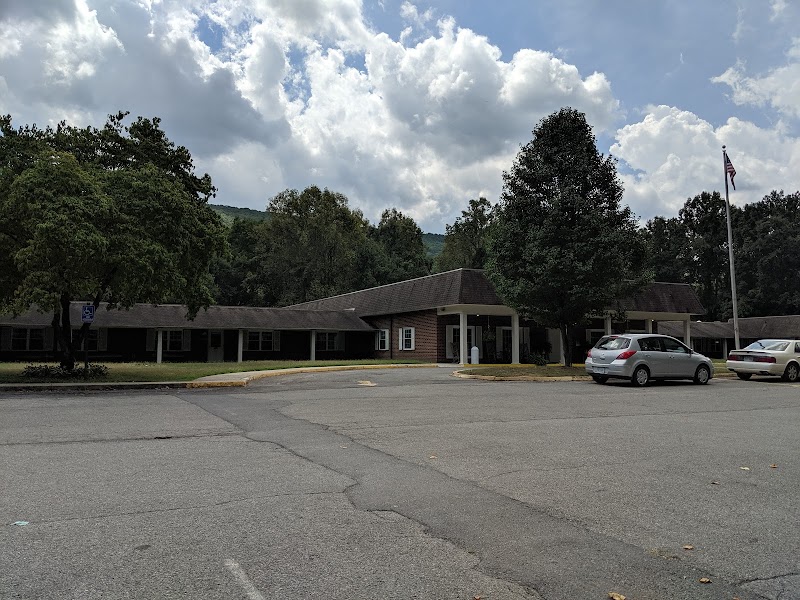
ALLEGHANY HEALTH AND REHAB

1725 MAIN STREET, CLIFTON FORGE, VA 24422 (540) 862-5791
For profit - Corporation 105 Beds TRIO HEALTHCARE Data: November 2025 4 Immediate Jeopardy citations
Trust Grade
0/100
#171 of 285 in VA
Last Inspection: April 2023

Over 2 years since last inspection. Current conditions may differ from available data.

Overview

Alleghany Health and Rehab has received a Trust Grade of F, indicating poor performance with significant concerns about care quality. Ranked #171 out of 285 facilities in Virginia, they are in the bottom half, and #3 out of 3 in Alleghany County, meaning only one local option is worse. The facility is worsening, having increased from 10 issues in 2024 to 17 in 2025, and has a concerning staff turnover rate of 99%, far above the state average. They have also accumulated $108,698 in fines, suggesting ongoing compliance problems. While they have good RN coverage, being better than 80% of facilities in the state, there are serious issues, including reports of abuse and neglect that have resulted in psychosocial harm to multiple residents, showing a troubling lack of safeguards and appropriate care.

Trust Score
F
0/100
In Virginia
#171/285
Bottom 40%
Safety Record
High Risk
Review needed
Inspections
Getting Worse
10 → 17 violations
Staff Stability
⚠ Watch
99% turnover. Very high, 51 points above average. Constant new faces learning your loved one's needs.
Penalties
✓ Good
$108,698 in fines. Lower than most Virginia facilities. Relatively clean record.
Skilled Nurses
○ Average
Each resident gets 36 minutes of Registered Nurse (RN) attention daily — about average for Virginia. RNs are the most trained staff who monitor for health changes.
Violations
⚠ Watch
54 deficiencies on record. Higher than average. Multiple issues found across inspections.
★★☆☆☆
2.0
Overall Rating
★★☆☆☆
2.0
Staff Levels
★★★★★
5.0
Care Quality
★☆☆☆☆
1.0
Inspection Score
Stable
2024: 10 issues
2025: 17 issues

The Good

  • 5-Star Quality Measures · Strong clinical quality outcomes
  • Full Sprinkler Coverage · Fire safety systems throughout facility
  • No fines on record

Facility shows strength in quality measures, fire safety.

The Bad

2-Star Overall Rating

Below Virginia average (3.0)

Below average - review inspection findings carefully

Staff Turnover: 99%

52pts above Virginia avg (47%)

Frequent staff changes - ask about care continuity

Federal Fines: $108,698

Well above median ($33,413)

Significant penalties indicating serious issues

Chain: TRIO HEALTHCARE

Part of a multi-facility chain

Ask about local staffing decisions and management

Staff turnover is very high (99%)

51 points above Virginia average of 48%

The Ugly 54 deficiencies on record

4 life-threatening
Jan 2025 17 deficiencies 3 IJ (2 affecting multiple)
CRITICAL (J) 📢 Someone Reported This

A family member, employee, or ombudsman was alarmed enough to file a formal complaint

Immediate Jeopardy (IJ) - the most serious Medicare violation

Deficiency F0742 (Tag F0742)

Someone could have died · This affected 1 resident

**NOTE- TERMS IN BRACKETS HAVE BEEN EDITED TO PROTECT CONFIDENTIALITY** Based on observation, resident and staff interviews, clinical record review, and facility documentation review, the facility sta...

Read full inspector narrative →
**NOTE- TERMS IN BRACKETS HAVE BEEN EDITED TO PROTECT CONFIDENTIALITY** Based on observation, resident and staff interviews, clinical record review, and facility documentation review, the facility staff failed to ensure residents with mental disorders and a history of trauma, receive appropriate treatment and services to attain their highest practicable mental and psychosocial well-being for two residents (Resident #8 and Resident #16) in a survey sample of 19 residents. The fidnings included: 1. For Resident #8 who had a known history of trauma, the facility staff failed to ensure she received appropriate treatment and services, including trauma-informed care, to attain the highest practicable mental and psychosocial well-being. On 1/22/25 at approximately 9:30 a.m., R8 was interviewed in her room. During the conversation, R8 began making reports of being threatened by the prior administrator. The surveyor requested that the resident allow the surveyor to get someone from facility administration to be a part of the conversation to hear what she was reporting. The facility's interim administrator then accompanied the surveyor back to R8's room. R8 identified resident #16 (R16) by name and reported, [R16's name redacted] says he is going to kill me or says suck my d*ck. I don't like it because I wasn't raised like that. I have been molested three times and I just can't do this! On 1/22/25 -1/23/25, a clinical record review was conducted of R8's clinical record. R8's diagnosis included, but were not limited to major depressive disorder, insomnia, generalized anxiety disorder, borderline personality disorder, bipolar disorder, and schizoaffective disorder. According to R8's most recent minimum data set (MDS) (an assessment tool) with an assessment reference date of 12/28/24, R8 scored a 13 out of 15 on the brief interview for mental status, which indicated she was cognitively intact. According to a Trauma Informed Care Screen dated 4/21/24 and 5/22/24, R8 reported having been a victim of physical abuse, verbal abuse, emotional neglect, having a family member who was an alcoholic/addict, and sexual violence. The most recent trauma screen noted that R8 answered yes to the following questions: Have you had a nightmare about event(s) or thought about the event (s) when you did not want to? Have you tried hard not to think about the event(s) or went out of your way to avoid situations that reminded you of the event(s)? Have you been constantly on guard, watchful, or easily startled? Have you ever felt numb or detached from people, activities, or your surroundings? According to the screening form R8 was asked, What if any mental health treatment have you had in the past? R8's response was recorded as, I see a doctor. According to R8's care plan included interventions that included, but were not limited to, Team Health to provide psych services and medication management, Psychiatric FNP [family nurse practitioner] has [R8's name redacted] on caseload and handles said medication management, Geri Med Psych services in following resident, I have counseling services available to me, Discuss with psych services need for medication and/or medication adjustment, and Coordinate psychology or psychiatric services on admission and as needed . According to R8's care plan, on 4/21/24 a Trauma Informed Care focus area was implemented in R8's care plan. The interventions read as, Coordinate psychology or psychiatric services on admission and as needed, Encourage to express feelings, concerns and thoughts in a private 1:1 setting., If increase in anxiety or sudden mood change occurs please observe for potential triggers and document., Provide meaningful activities- I enjoy Bingo, spending time with my friends, coloring, completing crafts, decorating my room, assisting in decorating the bulletin board, etc., and When I experience a trigger I often cry. Please observe for any environmental factors that could have been triggering to Resident and document. There was no evidence of identification of R8's triggers, nor any interventions with regards to R16's repeated abusive behaviors towards this resident. According to a psychiatry services progress note dated 3/13/24, it read in part, .Staff requested patient be seen today for follow-up as she was reportedly involved with receiving inappropriate comments from another resident a month ago. Patient endorses that she has not had any concerns with the other residents since then. Patient reports that she is always felt on edge and is unsafe in her environment even prior to coming to the facility due to past trauma . On 3/14/24, a note by the psychiatric provider read in part, . Patient continues to endorse difficulty with sleep and now reports that her difficulty with sleep may be associated with feeling uncomfortable about the resident across from her room she has had previous interactions with. Patient reports that they used to go together. At this time, patient does not get along well with this resident, and she feels that patient could get in his wheelchair and roll into her room. Therefore, patient reports that she does not sleep well at night because of this worry. Patient endorses a history of trauma including abuse from her previous husband. She endorses some intrusive thoughts, flashbacks, and paranoia related to past trauma. Patient does have history of schizoaffective disorder, but patient's paranoia appears to be more related to past trauma at this time. She reports that she has experienced auditory and visual hallucinations at times as well, but none noted at this moment. She endorses that she feels uncomfortable. She also endorses that there was another incident a couple of months ago with a different resident who touched her leg, and she has made this report to staff, and they have made appropriate investigation regarding this as this was just reported to staff yesterday. Patient endorses that she does feel comfortable moving about the facility otherwise. Patient has a friend at present today whom she wanted me to continue to talk with her with the friend present as well. Patient is alert oriented x 3 today. Will give more time for patient's Remeron to help with patient's insomnia and make referral for behavioral health therapist to start work with patient regarding past trauma. Will discuss alternatives with staff in regard to possibly offering patient a room change to a different hall to help her with feeling more comfortable . According to R8's clinical record, she was being seen at least monthly by a psychiatric provider through April 2024. The visits then went to quarterly, with visits noted on 6/20/24 and 9/3/24. There is no evidence that R8 had been seen by any mental health professional since 9/3/24 at the time of this inspection in January 2025, nor was there any reference to a room change. On 1/23/25, during a follow-up interview, R8 reported being afraid of R16 and gets another resident, identified as Resident #2, to accompany her because .she watches out for me. During this interview, R8 was observed breaking eye contact, tucking her head downwards while speaking, with hands slightly trembling. He said, 'Come on Baby, suck my d-ck!' He would say we need to go to bed in his room . I told him No! and he said, Ok, B-tch, I will just f-ck the hell out of you then! Sometimes I'm afraid to go to sleep. I've gotten so afraid at night, that he is gonna come in here. On 1/23/25, an interview was conducted with R2, who reports she has witnessed R16 threaten to hit R8, this can happen on a daily basis, she cries and gets upset about it, I have to calm her down. She (R8) is scared of him. At times, he says hateful things to her, sometimes he approaches her and intimidates her . her hands start shaking. [R8] said he makes her very nervous; I try to help and break it up. He says, Suck my d-ck b-tch, I will blow this place up. R2 went on to report that R8 would wake her up to go with her to the dining/activity room. R2 reported she is not personally afraid of R16, that R16 used to say those things to her, .but R8 gets so upset her hands shake. On 1/28/25 at approximately 9 a.m., another interview was conducted with R8. R8 reported, I have been sexually abused when I was [AGE] years old by my dad, then at school a guy molested me. Then I got married and my husband tied me to the bed and brought his buddies in and they cut me inside where I couldn't have kids anymore. It's been one nightmare after another. I wouldn't have another man if he was made of gold. I asked myself, why me? Its so hard to understand why people pick on me. When asked if the facility knew of her history of abuse, R8 said, Yes. R8 went on to state that she used to see a psychiatrist regularly which helped but until this week it has been a while since she saw someone. When asked about R16, R8 said, He has been after me a while. He pulled his pants down and said, 'I love you baby, and I want you.' He would get in front of me and say, 'I'll kill you b*tch, I will blow you up.' He tried to pour a cup of coffee on me. When asked if she feels safe and that the facility is trying to take measures to protect her, R8 said, At times but not all the time. They should have done more. When this one on one with him stops, its going to start right back up with him doing what he is doing, but God is going to take care of me. 2. For Resident #16, with known behaviors, the facility staff failed to provide appropriate treatment and services to correct the assessed problem for a resident who displays or is diagnosed with a mental disorder or psychosocial adjustment difficulty. Resident #16 (R16), who had a long-standing mental health history, was not being seen routinely by a psychiatric provider. R16's visits were routine until 8/12/24, then had another visit on 10/14/24 and no further visits until hospitalized in December 2024. According to R16's clinical record, the resident's diagnosis included, but were not limited to schizoaffective disorder, delusional disorders, insomnia, unspecified dementia, and major depressive disorder. Review of R16's clinical record revealed an entry dated 1/15/25 that read, resident cursing at another resident in dining room. he returned to his room. currently q15 minute checks. his mood at this time is pleasant and cooperative. According to R16's care plan, behaviors to include I can be physically abusive to others. I have a HX of assaultive behavior towards staff and throwing items (cups, etc.) at other residents, I can be verbally abusive to others. When I feel provoked, I can began [sic] to swear/cuss, I am to have my coffee placed in a thermal blue mug with a tight fitting lid. I have a history of tossing my coffee at others when I become agitated. Initiated on 10/23/23, the most recent revision to R16's behavioral care plan was performed on 5/15/24. According to interviews conducted by the survey team, the facility social worker, five CNA's, three nurses, the activities director, and the maintenance director had all been aware of and verbalized that R16 has long standing behaviors of saying he is going to blow this place up and shouting, Suck my d-ck. All 11 of the staff interviewed also expressed being aware of R16 making targeted sexual comments to R8 repeatedly. When asked about interventions implemented to address these inappropriate behaviors, staff stated that 15 min checks were done, but mostly offering snacks works, and that sometimes R16's escalating behaviors required the removal of the other residents from the dining room, which is where he likes to sit the most. According to the facility social worker, who also serves as the grievance coordinator, another resident, identified as R18, had also verbalized being upset about R16's ongoing verbally aggressive and sexually inappropriate comments in the dining/activity room. When questioned about R16's behaviors, the facility social worker stated that R16 is easily agitated, yells, curses, but stated that she doesn't know how to stop the cursing and allow him freedom of expression. According to the facility social worker, another resident (identified as Resident #18) had expressed concerns and had been upset about R16's verbal comments. R18 was interviewed on 1/23/25 and reported that R16 was yelling and cursing R8 and it upset her. R18 said she started to pray and avoids him (R18) because his cursing and yelling upsets her. According to nursing staff working the unit where R16 lives, R16 was placed on 15-minute checks. According to the facility documentation the checks were performed 1/15/25 from 4:45 p.m., until they were discontinued on 1/17/25 at 6:45 p.m. No explanation was provided as to why the checks were started or stopped. Staff was unable to identify any non-pharmalogical safeguards that were implemented to prohibit or prevent further potentially abusive behaviors. Each day of survey, R16 was observed to ambulate independently throughout the facility on two of three nursing units and in the dining room, without any direct supervision or restricted access to R8, whom he was known to target. According to R16's clinical record, the resident has diagnosis to include, but not limited to: schizoaffective disorder, dementia, delusional disorder, and major depressive disorder. According to a psychiatric progress note dated 7/29/24, R16 had a verbal altercation recently with another resident . staff report increased mood liability. R16 was last seen by a psychiatric provider on 12/7/24 while hospitalized , which noted in part, . confused at baseline but was cooperative with care until this morning prior to discharge, he became upset and threatened to blow up the building with people in it. Psychiatry was consulted for concern of his behavior . he states that he has to tell people he is going to kill them so he can go to sleep .Nursing staff was able to call and speak with the patient's regular nurse at [this nursing facility name redacted]. She reports that this behavior is typical for him . Patient has a long psychiatric history. He was admitted here in July of 2023 for threatening behaviors and outbursts . At the time of R16's discharge from the hospital, according to the psychiatry note and discharge summary, the hospital recommended R16's Seroquel dose return to previous dose of 250 mg twice daily to help maintain stability. Upon readmission to the facility on [DATE], R16 was receiving 50 mg of Seroquel three times daily until 12/27/24, when it was increased to 100 mg three times daily. As of 1/24/25, R16 continues to receive Seroquel 100 mg three times daily. R16's clinical record indicated no psychiatric services since R16 was readmitted on [DATE]. On 1/24/25 at 2:30 p.m., an interview was conducted with the medical nurse practitioner, who is the primary provider at the facility. During this interview, the nurse practitioner said, We have not had an on-site psychiatric provider since I have been here and have only had 1 telehealth psych visit. From what I am told, we now have a psych provider who will be coming. On 1/24/25 at 10:35 a.m., the survey team identified the facility was in immediate jeopardy and substandard quality of care, as confirmed by the state agency. The survey team met with the administrator, director of nursing, and corporate staff to make them aware that Immediate Jeopardy (IJ) was identified for failure to ensure residents with mental disorders and a history of trauma, receive appropriate treatment and services to attain their highest level of well-being. Specifically, IJ was determined to have started on 4/21/24, when R8 had a trauma screening that identified her past trauma and facility staff were made aware but failed to identify her triggers and how R16's repeated aggression towards her affects her and what interventions facility staff were to employ in those instances. On 1/24/25 at 6:15 p.m., the facility submitted an approved IJ removal plan that read as follows: The facility has taken immediate action to ensure residents who display behaviors or those who are diagnosed with mental disorder or psychosocial adjustment difficulty, as well as those who have a history of trauma and/or post-traumatic stress disorder, receive appropriate treatment and services to effectively address the assessed problems. 1. For Resident #8 Psychosocial assessments were completed Psych services was on-site to see resident. 2. For Resident #16 Psychiatric Services were onsite to see resident. Completed review of Resident #16 medications and changes made to psychotropic dosing. Resident has been placed on 1-1 to provide diversion if behaviors are exhibited. 3. Will identify residents that have exhibited behaviors in the last 7 days, residents with the diagnosis of PTSD, residents with a history of trauma and/or a mental disorder. The care plans of those residents identified above will be reviewed to ensure they have the appropriate interventions and updated as indicated. They will also refer to psych services as indicated. 4. All current residents will be reviewed to ensure they have received a trauma screening to identify triggers and care plans updated as indicated. 5. Medical Director notified. 6. Completion 1/24/25 at 11:59 p.m. On 1/27/25, the survey team completed the following to verify that the immediate jeopardy had been abated: Observations were made of R16 to ensure 1:1 supervision was being provided. A review of the logs from 1/24/25-1/27/24, were reviewed, which indicated R16 had been on continuous 1:1 supervision. R16's clinical record did reveal that R16's Seroquel dose had been increased on 1/24/25, to the pre-hospitalization dosage of 250 mg, BID [twice daily]. Progress notes from the psychiatric provider was reviewed to ensure Resident #16 and Resident #18 was seen. An audit of 100% of the residents was conducted to ensure each resident had a trauma screening. The residents the facility identified as having had behaviors in the past 7 days, those with a diagnosis of PTSD, and a history of trauma and/or a mental disorder were compared to the list of referrals made to the psychiatric provider. It was identified that psychiatric service referrals were not made until 1/27/25 and that numerous residents identified by the facility staff were not referred for psych services. A sample of the residents identified with behaviors, diagnosis of PTSD, and a history of trauma or a mental disorder was selected. The care plans for each of those sampled residents was reviewed to ensure interventions were in place for the identified area of concern. On 1/27/25 at 2:30 p.m., the facility administrator, director of nursing, and corporate staff were made aware that because multiple residents identified by the facility staff as being in the identified groups were not referred to psych services, the survey team was not able to abate IJ at F742. On 1/27/25 at approximately 4 p.m., the facility presented the survey team with a revised IJ removal plan that had a completion date of 1/27/25 at 4:45 p.m. On 1/28/25, the survey team again compared the list of residents identified with behaviors, diagnosis of PTSD, history of trauma, and/or mental disorders were referred to psych services. The previously identified residents who had not been interviewed were interviewed by facility staff and the omitted residents had been referred to psych services. Thus, verifying full implementation of the abatement plan and that the risk for serious injury, serious harm, serious impairment, or death had been eliminated, IJ was removed on 1/28/25 at 9:15 a.m., with the scope and severity of the remaining noncompliance lowered to a Level Three, Isolated. According to the facility assessment provided to the survey team, the facility plan read in part, [Facility name redacted] has a Psychiatric FNP who provides services in the facility a minimum of once weekly and provides on-call services when not in the building . If the resident's needs exceed what the facility can provide, [hospital name redacted] has a psychiatric wing that can provide hospitalization and stabilization for the resident. A Counselor provides services in the facility weekly On 1/28/25, the facility administrator and Regional [NAME] President of Operations (RVPO) reported that they had routine psychiatric services until their provider resigned around mid-October of 2024. They presented a typed document that read, [facility name redacted] entered into an agreement with [psychiatric provider name redacted] on 1/24/24. They provided psychiatric services through 10/14/24, at which time the provider resigned. From 10/14/24 until 1/23/25 [company name redacted] provided telehealth psychiatric services for acute needs and managed day to day by the primary care medical team. They also stated, a new provider visited the facility for the first time on 1/24/25. No further information was provided.
CRITICAL (K) 📢 Someone Reported This

A family member, employee, or ombudsman was alarmed enough to file a formal complaint

Immediate Jeopardy (IJ) - the most serious Medicare violation

Free from Abuse/Neglect (Tag F0600)

Someone could have died · This affected multiple residents

**NOTE- TERMS IN BRACKETS HAVE BEEN EDITED TO PROTECT CONFIDENTIALITY** Based on observation, resident interview, facility staff interview, clinical record review, and facility documentation review, t...

Read full inspector narrative →
**NOTE- TERMS IN BRACKETS HAVE BEEN EDITED TO PROTECT CONFIDENTIALITY** Based on observation, resident interview, facility staff interview, clinical record review, and facility documentation review, the facility staff failed to ensure residents were free from abuse and neglect having the potential to affect numerous residents on 2 of 3 nursing units. The abuse and neglect resulted in psychosocial harm for two residents (Resident #8- R8 and Resident #17-R17), which resulted in the identification of Immediate Jeopardy and Substandard Quality of Care. The findings included: 1. The facility staff failed to protect residents and implement safeguards for all residents residing on the A and B wings who shared the common areas, from being subjected to a hostile environment where verbal threats of physical harm and death, and sexual comments by Resident #16-R16 were ongoing. R16's behaviors resulted in psychosocial harm for R8 and R18. On 1/22/24 at approximately 9:30 a.m., during an interview with resident #8 (R8), the resident verbalized to the surveyor and facility Administrator that Resident #16 (R16) had told R8 to Suck my di*k. R8 went on to state that she had been molested three times in the past and just can't handle this. The current administrator was observed taking notes during this interview. On 1/22/25 -1/23/25, a clinical record review was conducted of R8 clinical record. R8's diagnosis included, but were not limited to major depressive disorder, insomnia, generalized anxiety disorder, borderline personality disorder, bipolar disorder, and schizoaffective disorder. According to R8's most recent minimum data set (MDS) (an assessment tool) with an assessment reference date of 12/28/24, R8 scored a 13 out of 15 on the brief interview for mental status, which indicated she was cognitively intact. According to a Trauma Informed Care Screen dated 4/21/24 and another dated 5/22/24, R8 reported having been a victim of physical abuse, verbal abuse, emotional neglect, having a family member who was an alcoholic/addict, and a victim of sexual violence. The most recent trauma screen noted that R8 answered yes to the following questions: Have you had a nightmare about event(s) or thought about the event (s) when you did not want to? Have you tried hard not to think about the event(s) or went out of your way to avoid situations that reminded you of the event(s)? Have you been constantly on guard, watchful, or easily startled? Have you ever felt numb or detached from people, activities, or your surroundings? According to the screening form R8 was asked, What if any mental health treatment have you had in the past? R8's response was recorded as, I see a doctor. According to the nursing progress notes, the following entries were noted: A note dated 6/25/23, read in part, Resident came to nursing station requesting pain medication at 1520. Resident [R16's medical record number redacted] was also sitting near the nursing station. Resident [R8] said she would be in her room and walked back to her room with the assistance of her rolling walker. When this nurse entered resident's room, she began crying out in pain and was holding her right foot. This nurse asked what was going on with her foot and the resident stated resident [R16's medical record number redacted] ran over her foot with his wheelchair. She also stated that resident [R16's medical record number redacted] threatened her life and she did not feel safe RN [registered nurse] supervisor was called and made aware of what resident was reporting. RN Supervisor came into the facility to access this situation. Will continue to observe resident On 1/21/25, a note was entered that read, During this time SSD (social services director) spoke with [R8's name redacted] after hearing her yell at another Resident [R16's medical record number redacted] to shut up across the hallway from her room. SSD let [R8's name redacted] know that she needed to be respectful of other Residents. The issue resolved following discussion. According to facility documentation, a facility investigation was initiated on 1/16/25, regarding R8 reporting that R16 had made inappropriate comments to her. There was a prior documentation dated 3/13/24, where R8 reported that R16 touched her leg and said, it made her uncomfortable . On 1/22/25 at 10:09 a.m., an interview was conducted with the facility's social worker (SW). During the interview with the SW, she was asked if she had any knowledge about R8 being a victim of sexual abuse. The SW said, I do recall her mentioning she had an ex-significant other that she had issues with. On 1/23/25, during a follow-up interview, R8 reported being afraid of R16 and gets another resident, identified as Resident #2, to accompany her because .she watches out for me. During this interview, R8 was observed breaking eye contact, tucking her head downwards while speaking, with hands slightly trembling. He said, 'Come on Baby, suck my d-ck!' He would say we need to go to bed in his room . I told him No! and he said, Ok, B-tch, I will just f-ck the hell out of you then! Sometimes I'm afraid to go to sleep. I've gotten so afraid at night, that he is gonna come in here. On 1/23/25, an interview was conducted with Resident #2 (R2), who reported that she has witnessed R16 threaten to hit R8, This can happen daily, [R8] cries and gets upset about it. I have to calm her down. [R8] is scared of him. At times, he says hateful things to her, sometimes he approaches her and intimidates her, and her hands start shaking. She said he makes her very nervous. I try to help and break it up. He says, Suck my d-ck b-tch, I will blow this place up. R2 went on to report that R8 would wake her to go with her to the dining/activity room. R2 reported she is not personally afraid of R16, and that he used to say that stuff to her, .but R8 gets so upset her hands shake. On 1/22/25-1/23/25, a clinical record review was conducted of R16's chart. This review revealed the following notes with regards to behaviors, in addition to almost daily refusals of treatment and medications: On 4/16/23, a behavioral charting note read, Describe Behavior/Mood: agitated, angry, hostile, combative. What was the resident doing prior to or at the time of behavior/mood: Resident was sitting in the dining room, staff offered resident another tea and resident started to make obscene sexual comments toward the staff member. Other residents began to get upset about the comments this resident was making towards the staff and other residents. Interventions attempted: Staff attempted to redirect sexual comments with other topics. Resident offered to have lunch delivered to his room. Staff attempted to ask resident what was wrong. Effectiveness of the Interventions: Resident continued to make sexual remarks. Resident attempted to throw hot coffee at staff. When asked what was wrong, resident continued to make obscene sexual comments to staff. Resident threatened to hurt staff and continued to ask for sexual favors. A progress note by the medical provider on 4/17/23, read in part, .Patient also noted to have more behaviors and is talking about bugs in his room that are not there. Patient has noted to have this in the past when he cycles. Patient has history of bipolar, anxiety, depression . On 4/25/23 a note titled, SSD [social services director] annual note read in part, . Relationships: Resident maintains a mostly positive relationship with all staff. Resident sometimes has trouble interacting appropriately with peers . Behavioral: Resident has behaviors of sometimes making sexual comments and can be verbally aggressive with staff and peers . On 5/6/23, the note read in part, Resident angry, cursing at staff in presence of other residents On 5/10/23, the note read, Resident had several episodes of behaviors this shift. Cussing and making threats but did not do any harm to others or himself On 5/14/23, a nursing entry read, Resident had behaviors in dining room during lunch. Resident used vulgar language and was making threats. Resident did not act on any of the threats . On 5/19/23, the note read, Resident had behaviors in dining room this shift and was taken to the front office to sit with BOM [business office manager] . On 6/8/23, a note read in part, Resident continues with behaviors. Resident cussing and yelling at other resident's and making threats. Resident re-directed several times throughout the shift . On 6/9/23, the entry read in part, Resident has had 2 outbursts of cussing and threatening others this shift. Resident was re-directed successfully both times On 6/10/23, the entry read, .Resident began displaying belligerent behavior, stating 'I/m going to burn this (expletive) down, people are dying in here'. Another entry the same day read, Patient became agitated in the dining room and began yelling that he was going to get gas and burn the building . He continued to curse and use sexual language as he left the dining room . On 6/10/23 at 8:20 p.m., an entry was noted that read, Resident being belligerent this shift towards staff and residents. Threatening to blow up the building, kill us all. On Call physician called . Family came to visit, and behaviors continued to get worse. Resident was taken to whirlpool room by family and CNA to get a bath, and he seen female resident [Resident #8's medical record number redacted] walk by and yelled I'm going to kill you b-tch while getting up from his wheelchair to grab her. This nurse, CNA, and resident's sister was able to stop him and get him back into his wheelchair. Resident continued with threatening behaviors and began to threaten his family . Squad was called, and resident was sent to ER [emergency room]. On 6/11/23, the nursing note read, Went to answer residents call light and noticed water in the hallway of adjoining room. When this RN opened the door clean water began flowing in the hall and the room floor was covered with water, including the adjoining bathroom. This RN went to open the door of this resident and water began seeping into the hall. The Resident's floor was also covered with water and his commode stuffed with toilet paper and overflowing. He stated he was going to flood the place . Another entry on 6/11/23 read in part, Resident continued with behaviors this shift but was able to be redirected after a few minutes. Family in to see resident again this shift. Resident was found this evening standing up without his O2 on taking apart the light above his bed. Fluorescent light bulb and light cover were laying across his bed. This nurse took the light and hardware from the patients' room and RN contacted maintenance supervisor to come and repair the light. Light was repaired . On 6/12/23, the note read, Resident stayed in room all night but became upset that his television would not work. Resident stated that he was gonna blow this place up. and cursed at staff. This morning it was found that resident had stuffed unknown items into toilet in his restroom On 6/17/23, the entry read, . Resident had an outburst this shift after another resident interfered with his conversation in the dining room. This nurse was able to re-direct resident, and he calmed down . On 6/22/23, the note read, Rsd [resident]. has had some behaviors of yelling/cursing rsd. redirected well thus far . On 6/23/23, the note read, Rsd. continues with behaviors. Rsd. woke up and came in the hall. Rsd. has had episodes of cursing staff and other rsd. Rsd. has thus far been redirected without issue . On 6/25/23, R16 was aggressive towards R8 as noted in the progress note entry that read, Resident kicked resident [R8's medical record number redacted] rolling walker in the dining room after [R8's medical record number redacted] did not move it out of his way. Resident was also threatening to kill everyone and blow up the building when asked to leave the dining room. Resident was brought back to A Wing. Resident eventually calmed down. RN supervisor was called in to help with the situation between the two residents. Will continue to observe resident. On 6/26/23, the entry read, Resident had belligerent behaviors this shift. Resident upset over not having money in his account and accusing the office of keeping his $13. Resident threatened to blow up the build and kill all of us. Eventually staff was able to redirect resident and calm him down. On 6/29/23, the late entry note read, This RN was assisting residents with breakfast in the dining room when [R16's name redacted] who had finished his breakfast, and two cups of coffee held his coffee cup up in the air and yelled out asking for a refill He put the cup down and began cursing. As I put the tray of food on the table he threw his cup toward me. The cup hit a table and fell to the floor. I ignored his behavior because any response to it yields more behaviors. Less than 5 minutes later he had confronted the resident next to him telling her he was going to kill her for looking at him. He began cursing, ranting about his sister, saying he was being held hostage. Several other staff members entered the dining room to talk with him and to try to calm him down and assist him back to his room or another area since he had finished his meal, eating 100 percent. He wanted to see the Administrator, [prior administrator's name redacted], and the Administrator took him to his office and made a behavioral contract with him. 1100 I was asked to check on resident and found him in the hallway on his wing The nursing assistant told him she would give him a whirlpool with the bubbles he liked and a few minutes later he was screaming, I will blow this MF place up. He continued screaming until Physical Therapy talked to him about coming to therapy. The PT assistant was taking him toward therapy when he met a female resident in the hallway outside the dining room and he began ranting again. His states were as follows: I will get gas and set this MF place on fire and burn all of you GD old people up. I will get a gun and shoot everyone in this building. I have scissors in my pocket, and I'll cut your mf eyes out I hate my GD MF sister, and I will kill her too. He then pulled his Oxygen out of his nose and began walking toward one of the nursing assistants telling her he had a pitcher of tea, and he would throw it all over her. I took the tea from his hand and assisted him back to the wheelchair and replaced the oxygen. The Administrator once again tried to talk with him remind him of the contract. He again became angry, aggressive, screamed threats and scared the residents who were gathering for lunch. He got up from his wheelchair the second time after jerking his oxygen off and began walking toward another staff member while screaming he would kill her. Resident continued for a period of more than an hour with aggressive behavior, racial slurs, cursing, threatening other residents and screaming as loud as he could scream. Staff reports the screaming and threats to blow everyone up, etc. has become an everyday event along with accusations of people stealing from him. Patient assisted to the courtyard while waiting ECO and stated he comes out to the courtyard to feed differed colored animals that come out from under a large flowerpot every day. Also says that there are bugs imbedded in his skin that he has to pick out. I told him he would be going to the hospital to see if he could have medications adjusted or to see if he could be helped. This behavior, per staff, began in April and has continued to escalate Progress notes entries in R16's chart continued to document ongoing behaviors being displayed on the following dates: 7/22/23, 7/23/23, 7/27/23, 7/28/23, and 9/5/23. On 9/29/23, the entry read in part, Resident was sitting at nurses' station when resident [resident number redacted] said something that upset this resident. This resident then began to yell out that no one was going to talk to him that way . and he will hurt someone for talking to him that way When social worker came to speak with resident, he became more upset and was very belligerent towards social worker. Other LPN [licensed practical nurse] came to speak with resident to try and calm resident down. Once social worker walked away other LPN was able to deescalate resident. Administrator also came and spoke with resident and took him to get coffee. Another entry on 9/29/23 spoke of an incident during lunch in the dining room that noted, .Resident started yelling and cursing at everything/everyone around him because he could not get to the seat, he wanted in the dining room . Additional behavior instances were documented on 9/30/23, 10/2/23, and 10/11/23. On 10/22/23, a nursing entry in R16's chart read, Resident had a behavior outburst during morning devotions. Resident threw coffee on resident [R8's medical record number redacted]. Staff was able deescalate the situation. The on-call nurse was notified, and the administrator was notified or the incident. On 10/23/23, 11/3/23, 11/6/23, and 11/8/23, R16 had documented behaviors. Then on 12/2/23, R16 was noted to be .cursing at other residents in dining room, hit another resident with shoe [other resident not identified]. On 12/6/23, the note indicates Resident [R16] does exhibit behaviors and aggression daily. A note dated 1/5/24, read in part, Resident occasionally becomes agitated by other residents' interactions with him. At other times the resident will refuse his medications and/or supplemental oxygen, stating I don't need that stuff, it doesn't help anyway. Resident will sometimes throw objects during these outbursts. Resident ambulates pushing w/c or uses w/c to move about the unit and the facility, resident enjoys eating meals in the dining room . On 2/3/24, a note by the medical provider noted, .Nursing staff requested that this patient be seen again today due to continued episodes of intermittent irritability as well as having occasional outbursts . According to a nursing progress note entry dated 3/22/24, scissors were removed from R16's possession following him being observed scraping dry skin off BLE [bilateral lower extremities] with a pair of scissors. On 3/24/24, R16 was noted to have been . agitated with resident in room adjacent to his, he stated, 'I'm a tough man, I'll mess him up .'. Then on 6/8/24, the note read, .Very angry. Yelling and cursing in the hallway while families at facility with their loved ones. What was the resident doing prior to or at the time of behavior/mood: Rsd just finished lunch; coming out of the dining room Interventions attempted: CNA tried to change out O2 tank This nurse tried to change out O2 tank Effectiveness of the interventions: Rsd refused for this nurse along with staff to touch him. Rsd stated I don't want that sh*t. It does nothing for me. As this nurse tried to give rsd oxygen tank; rsd stopped this nurse stating F@@k that G@d D@$N tank. It does nothing to help. I am going to blow this F@&king place up. Yall can suck my d&@k and go to hell. F&@k all of yall. I still have bugs all over my room and nobody gives a F&@k. Rsd then went into his room and shut his door . An entry dated 7/6/24, read in part, . resident exhibits occasional verbal outbursts when angry or frustrated . On 10/2/24, a note entry read, Agitated, verbally aggressive. Verbally expressing anger at staff members and various other residents. On 11/9/24, a nurse note documented in part, Resident was sitting at nurse's station making foul comments such as I'll blow this whole place up .You can suck my d-ck g-d d-mn for not giving me what I want . you can't give me what I want, then it's time to kill ya a** On 11/25/24, the nursing entry recorded .Resident then proceeded to make the comment 'I will go find me a woman to have sex with, I haven't had sex in a long time,' and asked this nurse if I would make love to him. educated resident that, that is a very inappropriate thing to say. Resident stated, I don't give a damn, I'll blown this damn place up. On 12/7/24, during R16's most recent hospitalization, behaviors were displayed that warranted a psychiatric consult. The note dated 12/7/24, read in part, . was cooperative with care until this morning prior to discharge, he became upset and threatened to blow up the building with people in it. Psychiatry was consulted for concern of this behavior . He states that he has to tell people he is going to kill them so he can go to sleep, but he would never harm anybody . He does state that he was 'cursing and stuff' he apologizes for this . there was concern that reduction in psychotropic medications may have contributed to his decompensation. Nursing staff was able to call and speak with patient's regular nurse at [this nursing facility's name redacted]. She reports that this behavior is typical for him. He will have an outburst like this wanted to time a week [sic] [one to two times a week] . This has quite consistent with behavior witnessed this morning . Patient has a long psychiatric history. He was admitted here in July of 2023 for threatening behaviors and outbursts . On 12/9/24, a progress note documented that Resident threw his oxygen tank and knocked over his dresser in his room. 'I'm going to kill everyone and blow this building up.' Resident stated that his neighbor beside him was coming into his room and moving his belongings. Resident takes his wheelchair and rams his neighbor's door. Resident is saying explicit words and other residents are complaining. On 12/15/24, the medical provider noted, .Please order a psych consult . On 12/26/24, a nursing note documented that resident was saying, I'm gonna blow this damn place up. I am a bad motherf-cker, yall can suck my d-ck ya'll got five minutes to get me my pain pills or I am gonna start killing people. On 12/27/24, a provider note indicated, .The patient has been experiencing increased behavioral outbursts, as noted by the staff. He was previously receiving Seroquel 250 mg PO BID prior to a hospital admission on [DATE]. Upon return from the hospital, his Seroquel dosage was adjusted to 50 mg TID. Staff reported a significant behavioral incident on 12/26/2024, during which the patient accused nurses of withholding his medications and giving his pain pills to other residents. He refused PRN pain medication and made threats of violence, stating he would blow the damn place up and start killing people if not given his pain pills On 1/15/25, a nursing progress note, which read in part, .resident cursing at another resident [identified as R8] in dining room. he returned to his room. currently q15 minute checks. his mood at this time is pleasant and cooperative. As of the survey being conducted 1/21/25, R16 had not seen a psychiatrist since hospitalization in early December 2024. Prior to that, the last psych visit onsite had been documented on 10/14/24. According to R16's care plan, listed behaviors that included I can be physically abusive to others. I have a HX [history] of assaultive behavior towards staff and throwing items (cups, etc.) at other residents, I can be verbally abusive to others. When I feel provoked, I can began [sic] to swear/cuss, I am to have my coffee placed in a thermal blue mug with a tight fitting lid. I have a history of tossing my coffee at others when I become agitated. This care plan was initiated on 10/23/23 and last revised on 5/15/24. According to the hospital discharge summary and psychiatry consultation dated 12/7/24, both documents noted that R16's Seroquel dose was to return to the prior dosage of 250 mg twice daily. According to R16's physician orders and medication administration records, upon readmission to the nursing facility R16 was receiving 50 mg three times daily 12/8/24-12/27/24. On 12/27/24, the dose was increased to 100 mg three times daily. On 1/23/25 at approximately 11:30 a.m., during an interview with certified nursing assistant #15 (CNA #15) and CNA #16, it was reported that R16 took the oxygen tank out to throw at us, we ran up the hall. CNA #15 reported they got the administrator to intervene, and that they had been scared that day R16, but neither CNA #15 & CNA #16 could recall specifically what date the incident had occurred. On 1/24/25 at 2:30 p.m., an interview was conducted with the nurse practitioner (NP). The NP was asked about R16's behaviors and Seroquel dosing. The NP stated that she was not aware of the order/recommendation from the hospital for R16's Seroquel to return to the dose of 250 mg twice daily and stated had she seen the addendum with that recommendation she would have followed it because, I do follow what is on the hospital discharge summary. The NP also stated she was aware of R16 having some behaviors, but it had been reported to her that it was related to his pain management and had just increased his Gabapentin (pain medication). The NP said, We have not had an on-site psych provider since I started in December. We have only had 1 telehealth psych visit; from what I am told we now have a psych provider starting. The NP went on to state that she was not aware of R16 making abusive sexual comments to other residents or the instances of R16 attempting to throw his oxygen cylinder. According to interviews conducted by the survey team, the facility social worker, five CNA's, three nurses, the activities director, and the maintenance director had all been aware of and verbalized that R16 has long standing behaviors of saying he is going to blow this place up and shouting, Suck my d*ck. All 11 of the staff interviewed expressed being aware of R16 making targeted sexual comments to R8 repeatedly. When asked about interventions implemented to address these inappropriate behaviors, staff stated that 15 min checks were done, but mostly offering snacks works, and that sometimes R16's escalating behaviors required the removal of the other residents from the dining room, which is where he likes to sit the most. According to the facility social worker, who also serves as the grievance coordinator, another resident, identified as R18, had also verbalized being upset about R16's ongoing verbally aggressive and sexually inappropriate comments in the dining/activity room. When questioned about R16's behaviors, the facility social worker stated that R16 is easily agitated, yells, curses, but stated that she doesn't know how to stop the cursing and allow him freedom of expression. When asked if these concerns had been reported, the social worker responded that the previous administrator had stated that grievances were not abuse allegations. On 1/23/25, R18 was interviewed and reported that R16 was often yelling and cursing, mostly at [R8] and that it upsets her. R18 said, I try to stay away from him . I don't like those words and wasn't raised like that. He was loud and kinda upset me .We were taught to turn our backs and walk away . I said a prayer. According to nursing staff working the unit where R16 resides, R16 was placed on 15-minute checks on 1/15/24, following the recent incident which targeted R8. According to the facility documentation the checks were performed 1/15/25 from 4:45 p.m., until they were discontinued on 1/17/25 at 6:45 p.m. Each day of survey, R16 was observed to ambulate independently throughout the facility on two of three nursing units, as well as in the dining room, without any direct supervision, which provided unrestricted access to R8 as well as other residents. On 1/23/25 at approximately 6 p.m., the survey team met with the facility administrator, director of nursing, and corporate level staff. When questioned about facility actions regarding R16's abusive behaviors, the administrator, DON, regional vice-president of operations, and the regional clinical director all stated that they had not been aware that the behaviors had been to the level of severity as shared by the survey team and indicated that he [R16] would be put on 1:1 supervision immediately. On 1/23/25 at approximately 6:15 p.m., Resident #16 was being escorted out of the dining room due to him becoming verbally aggressive. The survey team was exiting the conference room with the facility administration and corporate staff, while R16 was yelling, using racial slurs, and fussing about a caucasian being seated at his table. 2. For R17, who reported an allegation of abuse and neglect by certified nursing assistant #1 (CNA #1), which resulted in psychosocial harm, the facility staff failed to take measures to protect the resident and did not identify the incident as an allegation of abuse and neglect. On 1/22/25, during a review of facility documentation, it was noted that on 1/19/25, R17 reported an allegation of verbal abuse and neglect by CNA #1 to the nurse, who completed a grievance form. Within the grievance documentation it read, CNA [CNA #1's name redacted] became very smart and rude with resident when she asked to have her shower. Resident shower days are designated to Monday and Thursday. However, resident wanted one due to feeling unsanitary. Resident was very upset and even called her husband wanting to go home . resident became very emotional . Resident became hesitant on using her call light as well, because she didn't want any more attitude. According to a document dated 1/20/25, where the social worker interviewed R17, it was noted, Resident reports that when the aide came in and spoke to her about getting a shower Saturday the aide was very rude and told her 'Absolutely not tonight' and continued to state that 'Saturday was not her day' for a scheduled shower. [R17's name redacted] also reported that later that night she had an accident and needed to be changed she said that the other aide came in and told her that she was passing snacks and would have to come back after doing that to assist her. I don't want her in here if she's going to talk to me like that. Resident is concerned other people are being talked to that way. On 1/23/25 at 8:45 a.m., an interview was conducted with R17. R17 was very complimentary of the care she has received at the facility. When asked about the incident involving CNA #1, R17 said, I was told when I came that Wednesday and Saturdays were my shower days. I was so excited and told my husband I was going to get a shower. It was about 8:15 p.m., I rang to see when I would get the shower. She [CNA #1] came in and said, 'absolutely not, no ma'am, I'm not giving you a shower tonight. Tuesday and Fridays was your shower day and tomorrow, Sunday is the make up day. I called my husband crying and told him to come get me. Thank God they had me medicated. This girl needs to know if I have to deal with her I will slap her. If she talks to me like this, how is she talking to other residents. The next day my husband called and said I had 2 choices; I could tell them or he would be down here Monday morning. The next morning [nurse's name redacted, identified as registered nurse #2- RN #2] came in and knew something was wrong. I burst out crying. Sunday when [certified nursing assistant #4's name redacted] got her stuff done, she gave me a shower. On 1/23/25, the facility social
CRITICAL (K) 📢 Someone Reported This

A family member, employee, or ombudsman was alarmed enough to file a formal complaint

Immediate Jeopardy (IJ) - the most serious Medicare violation

Abuse Prevention Policies (Tag F0607)

Someone could have died · This affected multiple residents

**NOTE- TERMS IN BRACKETS HAVE BEEN EDITED TO PROTECT CONFIDENTIALITY** The facility staff have failed to implement abuse policies and procedures to protect residents from alleged perpetrators and fai...

Read full inspector narrative →
**NOTE- TERMS IN BRACKETS HAVE BEEN EDITED TO PROTECT CONFIDENTIALITY** The facility staff have failed to implement abuse policies and procedures to protect residents from alleged perpetrators and failed to report and investigate all allegations of abuse/neglect affecting multiple residents on 2 of 3 nursing units, resulting in psychosocial harm for two residents (Resident #8 and Resident #17). The facility staff have also failed to follow their abuse policy with regards to the prescreening of employees affecting 1 employee, in a sample of 13 employee records reviewed. This facility noncompliance led to the identification of Immediate Jeopardy and Substandard Quality of Care. The findings included: 1. The facility staff have failed to implement their abuse policies and procedures to protect residents from a perpetrator (Resident #16-R16) with known aggressive behaviors, failed to report instances of abuse, failed to conduct a thorough abuse investigation, and failed to implement appropriate safeguards to prevent further potential abuse. The abusive behaviors resulted in psychosocial harm for Resident #8. On 1/22/24, during an interview with resident #8 (R8), the resident verbalized to the surveyor and facility Administrator that Resident #16 (R16) had told R8 to Suck my di-k. R8 went on to state that she had been molested three times in the past and I just can't handle this. The current administrator was observed taking notes during this interview. Review of R16's clinical record revealed an entry dated 1/15/25 that read in part, .resident cursing at another resident in dining room. He returned to his room. currently q15 [every 15] minute checks. His mood at this time is pleasant and cooperative. According to R16's care plan, listed behaviors included I can be physically abusive to others. I have a HX [history] of assaultive behavior towards staff and throwing items (cups, etc.) at other residents, I can be verbally abusive to others. When I feel provoked, I can began [sic] to swear/cuss, I am to have my coffee placed in a thermal blue mug with a tight-fitting lid. I have a history of tossing my coffee at others when I become agitated. This care plan was initiated on 10/23/23 and last revised on 5/15/24. According to interviews conducted by the survey team, the facility social worker, five CNA's, three nurses, the activities director, and the maintenance director had all been aware of and verbalized that R16 has long standing behaviors of saying he is going to blow this place up and shouting, Suck my d-ck. All 11 of the staff interviewed expressed being aware of R16 repeatedly making targeted sexual comments to R8. When asked about interventions implemented to address these aggressive behaviors, staff stated that 15 min checks were done, but mostly offering snacks works, and that sometimes R16's escalating behaviors required the removal of the other residents from the dining room, which is where he likes to sit the most. According to the facility documentation, R16's 15-minute checks were only conducted from 4:45 p.m. on 1/15/25 until 1/17/25 at 6:45 p.m. The 15-minute checks were discontinued prior to the facility completing an investigation. On 1/23/25, during a meeting with the facility administrator and Regional [NAME] President of Operations, when asked why the 15-minute checks were discontinued, they reported, because he had no further behaviors. According to both R8's and R16's clinical records, multiple progress note entries indicated R16 had a propensity of displaying aggression towards R8. One note in R8's chart dated 6/25/23 read in part, Resident [R8] came to nursing station requesting pain medication at 1520. Resident [R16's medical record number redacted] was also sitting near the nursing station. Resident [R8] said she would be in her room and walked back to her room with the assistance of her rolling walker. When this nurse entered resident's room, she began crying out in pain and was holding her right foot. This nurse asked what was going on with her foot and the resident stated resident [R16's medical record number redacted] ran over her foot with his wheelchair. She also stated that resident [R16's medical record number redacted] threatened her life and she did not feel safe RN [registered nurse] supervisor was called and made aware of what resident was reporting. RN Supervisor came into the facility to access this situation. Will continue to observe resident R16's chart had an entry dated 6/25/23, which read, Resident kicked resident [R8's medical record number redacted] rolling walker in the dining room after [R8's medical record number redacted] did not move it out of his way. Resident was also threatening to kill everyone and blow up the building when asked to leave the dining room. On 10/22/23, a nursing entry in R16's chart read, Resident had a behavior outburst during morning devotions. Resident threw coffee on resident [R8's medical record number redacted]. Staff was able deescalate the situation. The on-call nurse was notified, and the administrator was notified or the incident. According to the facility social worker, who also serves as the grievance coordinator, another resident, identified as R18, had also verbalized being upset about R16's ongoing verbally aggressive and sexually inappropriate comments in the dining/activity room. When questioned about R16's behaviors, the facility social worker stated that R16 is easily agitated, yells, curses, but stated that she doesn't know how to stop the cursing and allow him freedom of expression. When asked if these concerns had been reported, the social worked responded that the previous administrator had stated that grievances were not abuse allegations. On 1/23/25, R18 was interviewed and reported that R16 was often yelling and cursing, mostly at [R8] and that it upsets her. R18 said, I try to stay away from him . I don't like those words and wasn't raised like that. He was loud and kinda upset me .We were taught to turn our backs and walk away . I said a prayer. Each day of survey, R16 was observed to ambulate independently throughout the facility on two of three nursing units, as well as in the dining room, without any direct supervision, which provided unrestricted access to R8 as well as other residents. On 1/23/25, during a follow-up interview, R8 reported being afraid of R16 and gets another resident, identified as Resident #2, to accompany her because she watches out for her. During this interview, R8 was observed breaking eye contact, tucking her head downwards while speaking, with hands slightly trembling. He said, Come on Baby, suck my d-ck! He would say we need to go to bed in his room. I told him, No, but he said, Ok, B-tch, I will just f-ck the hell out of you then! Sometimes I'm afraid to go to sleep. I've gotten so afraid at night, that he is gonna come in here. On 1/23/25, an interview was conducted with Resident #2 (R2), who reported that she has witnessed R16 threaten to hit R8, This can happen daily, [R8] cries and gets upset about it. I have to calm her down. [R8] is scared of him. At times, he says hateful things to her, sometimes he approaches her and intimidates her, and her hands start shaking. She said he makes her very nervous. I try to help and break it up. He says, Suck my d-ck, b-tch, I will blow this place up. R2 went on to report that R8 will wake her to go with her to the dining/activity room. R2 reported that she is not personally afraid of R16, that R16 has made those comments to her as well, but that R8 gets so upset, her hands shake. Additional entries in R16's clinical record revealed multiple and on-going instances of verbal aggression, threats, and physical violence towards other residents. Some of R16's charted documentation read as follows: On 4/16/23, a behavioral charting note read, Describe Behavior/Mood: agitated, angry, hostile, combative. What was the resident doing prior to or at the time of behavior/mood: Resident was sitting in the dining room, staff offered resident another tea and resident started to make obscene sexual comments toward the staff member. Other residents began to get upset about the comments this resident was making towards the staff and other residents. Interventions attempted: Staff attempted to redirect sexual comments with other topics. Resident offered to have lunch delivered to his room. Staff attempted to ask resident what was wrong. Effectiveness of the Interventions: Resident continued to make sexual remarks. Resident attempted to throw hot coffee at staff. When asked what was wrong, resident continued to make obscene sexual comments to staff. Resident threatened to hurt staff and continued to ask for sexual favors. On 4/25/23, a progress note titled SSD [social services director] annual note read in part, . Relationships: Resident maintains a mostly positive relationship with all staff. Resident sometimes has trouble interacting appropriately with peers . Behavioral: Resident has behaviors of sometimes making sexual comments and can be verbally aggressive with staff and peers . On 5/6/23, a progress note read in part, Resident angry, cursing at staff in presence of other residents On 5/10/23, a progress note read, Resident had several episodes of behaviors this shift. Cussing and making threats but did not do any harm to others or himself On 5/14/23, a nursing entry read, Resident had behaviors in dining room during lunch. Resident used vulgar language and was making threats. Resident did not act on any of the threats . On 5/19/23, a note partially read, Resident had behaviors in dining room this shift and was taken to the front office to sit with BOM [business office manager] . On 6/8/23, a note read in part, Resident continues with behaviors. Resident cussing and yelling at other resident's and making threats. Resident re-directed several times throughout the shift . On 6/9/23, the entry read in part, Resident has had 2 outbursts of cussing and threatening others this shift. Resident was re-directed successfully both times On 6/10/23, the entry read, .Resident began displaying belligerent behavior, stating 'I/m going to burn this (expletive) down, people are dying in here'. Another entry the same day read, Patient became agitated in the dining room and began yelling that he was going to get gas and burn the building . He continued to curse and use sexual language as he left the dining room . According to a late entry progress note dated 6/10/23, it read in part, Resident being belligerent this shift towards staff and residents. Threatening to blow up the building, kill us all. On Call physician called and 2mg Ativan PO one time order given and 100 mg Seroquel given. Family came to visit and behaviors continued to get worse. Resident was taken to whirlpool room by family and CNA to get a bath, and he seen female resident [Resident #8's medical record number redacted] walk by and yelled I'm going to kill you bitch while getting up from his wheel chair to grab her. This nurse, CNA, and resident's sister was able to stop him and get him back into his wheelchair. Resident continued with threatening behaviors and began to threaten his family . Squad was called and resident was sent to ER. On 6/17/23, the entry read, . Resident had an outburst this shift after another resident interfered with his conversation in the dining room. This nurse was able to re-direct resident, and he calmed down . On 6/22/23, the note read, Rsd [resident] has had some behaviors of yelling/cursing rsd. redirected well thus far . On 6/23/23, the note read, Rsd. continues with behaviors. Rsd. woke up and came in the hall. Rsd. has had episodes of cursing staff and other rsd . On 6/29/23, the late entry note read, This RN was assisting residents with breakfast in the dining room when [R16's name redacted] who had finished his breakfast, including two cups of coffee, held his coffee cup up in the air and yelled out asking for a refill. I explained to him I would get it as soon as I had finished handing out a tray of food that I was carrying to someone who had not eaten. He put the cup down and began cursing. As I put the tray of food on the table he threw his cup toward me. The cup hit a table and fell to the floor. I ignored his behavior because any response to it yields more behaviors. Less than 5 minutes later he had confronted the resident next to him telling her he was going to kill her for looking at him. He began cursing, ranting about his sister, saying he was being held hostage. Several other staff members entered the dining room to talk with him and to try to calm him down and assist him back to his room or another area since he had finished his meal, eating 100 percent. He wanted to see the Administrator, [prior administrator's name redacted], and the Administrator took him to his office and made a behavioral contract with him . His states were as follows: I will get gas and set this MF place on fire and burn all of you GD old people up. I will get a gun and shoot everyone in this building. 'I have scissors in my pocket, and I'll cut your mf eyes out. I hate my GD MF sister, and I will kill her too' . It was noted that R16 was sent to the hospital under an emergency custody order, but upon return had no interventions implemented to protect other residents from on-going abuse by R16. On 9/29/23, the entry read, Resident was sitting at nurses' station when resident [resident number redacted] said something that upset this resident. This resident then began to yell out that no one was going to talk to him that way . and he will hurt someone for talking to him that way.When social worker came to speak with resident, he became more upset and was very belligerent towards social worker. Other LPN [licensed practical nurse] came to speak with resident to try and calm resident down. Once social worker walked away other LPN was able to deescalate resident. Administrator also came and spoke with resident and took him to get coffee. At this time resident is calm and no longer yelling. On 9/29/23, another entry documented an incident during lunch in the dining room that noted, .Resident started yelling and cursing at everything/everyone around him because he could not get to the seat, he wanted in the dining room . On 10/23/23, 11/3/23, 11/6/23, and 11/8/23, R16 also had documented behaviors. Then on 12/2/23, R16 was noted to be .cursing at other residents in dining room, hit another resident with shoe [other resident not identified]. On 12/6/23, the note indicates Resident does exhibit behaviors and aggression daily. On 1/5/24, a note read in part, Resident occasionally becomes agitated by other residents' interactions with him . Resident will sometimes throw objects during these outbursts. Resident ambulates pushing w/c [wheelchair] or uses w/c to move about the unit and the facility . On 3/22/24, a nursing progress note entry dated documented that scissors were removed from R16's possession following him being observed scraping dry skin off BLE [bilateral lower extremities] with a pair of scissors. On 3/24/24, R16 was noted to have been . agitated with resident in room adjacent to his, he stated, 'I'm a tough man, I'll mess him up .'. On 6/8/24, the note read, .Very angry. Yelling and cursing in the hallway while families at facility with their loved ones . On 10/2/24, a note entry read, Agitated, verbally aggressive. Verbally expressing anger at staff members and various other residents. On 11/9/24, a nurse note documented in part, Resident was sitting at nurse's station making foul comments such as . I'll blow this whole place up . you can suck my d-ck g-d d-mn for not giving me what I want. and you can't give me what I want, then it's time to kill ya a** On 11/25/24, the nursing entry recorded .Resident then proceeded to make the comment 'I will go find me a woman to have sex with, I haven't had sex in a long time,' and asked this nurse if I would make love to him. educated resident that, that is a very inappropriate thing to say. Resident stated, I don't give a damn, I'll blown this damn place up. On 12/7/24, during R16's most recent hospitalization, behaviors were displayed that warranted a psychiatric consult. The note dated 12/7/24, read in part, . was cooperative with care until this morning prior to discharge, he became upset and threatened to blow up the building with people in it. Psychiatry was consulted for concern of this behavior . He states that he has to tell people he is going to kill them so he can go to sleep, but he would never harm anybody . He does state that he was 'cursing and stuff' he apologizes for this . there was concern that reduction in psychotropic medications may have contributed to his decompensation. Nursing staff was able to call and speak with patient's regular nurse at [this nursing facility's name redacted]. She reports that this behavior is typical for him. He will have an outburst like this wanted to time a week [sic] [one to two times a week] . This has quite consistent with behavior witnessed this morning . Patient has a long psychiatric history. He was admitted here in July of 2023 for threatening behaviors and outbursts . On 12/9/24, a note recorded Resident threw his oxygen tank and knocked over his dresser in his room. I'm going to kill everyone and blow this building up Resident stated that his neighbor beside him was coming into his room and moving his belongings. Resident takes his wheelchair and rams his neighbor's door. Resident is saying explicit words and other residents are complaining. On 12/15/24, the medical provider noted, .Please order a psych consult . On 12/26/24, a nursing note captured R16 as saying, I'm gonna blow this damn place up, I am a bad motherf-cker, y'all can suck my d-ck y'all got five minutes to get me my pain pills or I am gonna start killing people. On 12/27/24, provider note indicated, .The patient has been experiencing increased behavioral outbursts, as noted by the staff. He was previously receiving Seroquel 250 mg PO BID prior to a hospital admission on [DATE]. Upon return from the hospital, his Seroquel dosage was adjusted to 50 mg TID. Staff reported a significant behavioral incident on 12/26/2024, during which the patient accused nurses of withholding his medications and giving his pain pills to other residents. He refused PRN pain medication and made threats of violence, stating he would blow the damn place up and start killing people if not given his pain pills At the time of the survey being conducted in January 2025, there was no evidence that R16 had not seen a psychiatrist since hospitalization in early December 2024. According to the hospital discharge summary and psychiatry consultation dated 12/7/24, both documents directed that R16's Seroquel dose return to the prior dosage of 250 mg twice daily. According to R16's physician orders and medication administration records, upon readmission to the nursing facility R16 was receiving 50 mg three times daily from 12/8/24-12/27/24. On 12/27/24, the Seroquel dose was increased to 100 mg three times daily. When requested, the facility administration had no evidence that measures had been implemented to protect residents, or that the above allegations of abuse had been reported or investigated. On 1/24/25 at 2:30 p.m., an interview was conducted with the nurse practitioner (NP). The NP was asked about R16's behaviors and Seroquel dosing. The NP stated she was not aware of the order/recommendation from the hospital for R16's Seroquel to return to the dose of 250 mg twice daily and stated had she seen the addendum with that recommendation she would have followed it because, I do follow what is on the hospital discharge summary. The NP also stated she was aware of R16 having some behaviors, but it had been shared with her it surrounded his pain management and had just increased his Gabapentin. The NP said, We have not had an on-site psych provider since I started in December. We have only had 1 telehealth psych visit; from what I am told we now have a psych provider starting. The NP went on to state that she was not aware of R16 making abusive sexual comments to other residents or the instances of R16 attempting to throw his oxygen cylinder. On 1/23/25 at approximately 11:30 a.m., during an interview with certified nursing assistant #15 (CNA #15) and CNA #16, both reported R16 took the oxygen tank out to throw at us, we ran up the hall. CNA #15 stated they got the administrator to intervene, as they were both scared that R16 would throw the oxygen tank, but neither CNA #15 & CNA #16 could recall specifically when the incident occurred. On 1/23/25, the facility administrator provided the survey team with a copy of a facility incident summary and investigation initiated on 1/16/25, which was completed on 1/22/25. Review of this documentation revealed that during the investigation, the facility had not interviewed other residents to determine if they had been affected by R16's behaviors. The facility had also not interviewed facility staff or reviewed R16's chart to determine the severity of R16's behaviors. When questioned about facility actions regarding R16's aggressive behaviors, the administrator, DON, the regional vice-president of operations, and the regional clinical director all stated that they had not been aware that the behaviors had been to this severity and involved prior incidents with other residents, but indicated that R16 would be put on 1:1 supervision immediately. On 1/23/25 at approximately 6:15 p.m., Resident #16 was being escorted out of the dining room due to him becoming verbally aggressive. The survey team was exiting the conference room with the facility administration and corporate staff, when R16 was observed to be yelling racial slurs and fussing about a caucasian being sat at his table. 2. For Resident #17 (R17), the facility staff failed to take measures to protect residents from an alleged perpetrator, report the allegations of abuse/neglect, and failed to initiate an investigation, as required. On 1/22/25, during a review of facility documentation, it was noted that on 1/19/25, R17 reported an allegation of verbal abuse and neglect by CNA #1 to the nurse, who completed a grievance form. Within the grievance documentation it read, CNA [CNA #1's name redacted] became very smart and rude with resident when she asked to have her shower. Resident shower days are designated to Monday and Thursday. However, resident wanted one due to feeling unsanitary. Resident was very upset and even called her husband wanting to go home . resident became very emotional . Resident became hesitant on using her call light as well, because she didn't want any more attitude. According to a document dated 1/20/25, where the social worker interviewed R17, it was noted, Resident reports that when the aide came in and spoke to her about getting a shower Saturday the aide was very rude and told her 'Absolutely not tonight' and continued to state that 'Saturday was not her day' for a scheduled shower. [R17's name redacted] also reported that later that night she had an accident and needed to be changed she said that the other aide came in and told her that she was passing snacks and would have to come back after doing that to assist her. I don't want her in here if she's going to talk to me like that. Resident is concerned other people are being talked to that way. On 1/23/25 at 8:45 a.m., an interview was conducted with R17. R17 was very complimentary of the care she has received at the facility. When asked about the incident involving CNA #1, R17 said, I was told when I came that Wednesday and Saturdays were my shower days. I was so excited and told my husband I was going to get a shower. It was about 8:15 p.m., I rang to see when I would get the shower. She [CNA #1] came in and said, 'absolutely not, no ma'am, I'm not giving you a shower tonight. Tuesday and Fridays was your shower day and tomorrow, Sunday is the make-up day. I called my husband crying and told him to come get me. Thank God they had me medicated. This girl needs to know if I have to deal with her, I will slap her. If she talks to me like this, how is she talking to other residents. The next day my husband called and said I had 2 choices; I could tell them, or he would be down here Monday morning. The next morning [nurse's name redacted, identified as registered nurse #2- RN #2] came in and knew something was wrong. I burst out crying. Sunday when [certified nursing assistant #4's name redacted] got her stuff done, she gave me a shower. On 1/23/25, the facility social worker said during an interview that she felt the allegation rose to the level of abuse and neglect. She said when this happens, she takes the grievance to the administrator and in this case took R17's grievance to the administrator, who was the abuse coordinator. However, the facility administrator failed to respond to the incident as an allegation of abuse and treated it as a grievance. When asked about R17's abuse allegations, the facility administrator reported that he considered it a poor customer service issue, indicating that he had not reported or investigated the allegations. The administrator said, I may be wrong, but I will have to live with that. A review of CNA#1's timecard revealed that she continued to work, without any suspension, and was not restricted from having access to R17 and other residents. The facility administrator failed to respond to the incident as an allegation of abuse and treated it as a grievance. When asked about R17's abuse allegations, the facility administrator reported that he considered it a poor customer service issue, indicating that he had not reported nor investigated the allegations. I may be wrong, but I will have to live with that. A review of CNA#1's timecard revealed that she continued to work, without any suspension, and was not restricted from having access to R17 and other residents. 3. For the facility's interim administrator, also serving as the abuse coordinator, the facility staff failed to obtain a criminal background check within 30 days of employment to ensure the employee was free from barrier crimes. On 1/27/25 at approximately 2:00 p.m. the surveyor requested 10 employee's files for the sufficient staffing and extended survey training review. The list of employees was given to the staff development coordinator, a registered nurse, RN#5 (RN5). The human resource director stated he had to get the administrators employee file from the corporate office. On 1/28/25 at 9:00 a.m., the employee files were obtained from R5 and reviewed. During the review of the administrator's employee file, the administrators file did not have a license verification or a criminal background check. The human resource director stated that he was requesting the documentation from the corporate office. On 1/28/25 at 10:25 a.m., an interview was conducted with the human resource director. The human resource director stated that in the hiring process a verbal job offer will be made but the candidate cannot start work until the background check had been received. The human resource director stated that all new hires and rehires had to have a background check completed prior to starting employment. On 1/28/25 at 11:20 a.m., an interview was conducted with the administrator. The administrator stated that he was calling corporate to see if he was able to get the copy of his background check and license verification sent to the facility. On 1/28/25 at 12:55 p.m., an interview was conducted with the regional vice president of operations (RVPO). The RVPO stated that the administrator had been on the phone trying to get the copy of his background check sent to the facility. She also stated that the corporate office had sent a copy of a background check and that it was not the correct one, it was not the administrators background check, it was a different employee with the same last name. The RVPO said, I will work on the background check because when they handed me the other one, I told them this is not right. On 1/28/25 at 1:27 p.m., the RVPO came to the surveyor and said, [the administrator, name redacted] doesn't have a background check, one wasn't run for him, so I am suspending him effective immediately until his background check is run. On 1/28/25 at approximately 1:30 p.m., a review of facility documentation was conducted. The facility document titled, Hiring Policy, read in part, .after a decision has been made to hire a particular candidate, an offer will be made to that individual contingent on satisfactory completion of reference checks, background checks and OIG checks. On 1/24/25 at 10:35 a.m., the survey team identified that the facility was in immediate jeopardy, as well as substandard quality of care as confirmed by the state agency. The survey team met with the administrator, director of nursing and corporate staff to make them aware Immediate Jeopardy had been identified for the failure to implement their abuse policy by not implementing interventions to protect the residents and not reporting and investigating instances of abuse. Specifically, Immediate Jeopardy was identified as having started on 6/10/23, when the facility failed to implement their abuse policies to protect R8 from R16's targeted abuse, as well as reporting and investigating the incident as required. On 1/24/25 at 6:15 p.m., the facility submitted an approved IJ removal plan that read as follows: The facility has taken immediate action to ensure all staff are knowledgeable and compliant with reporting obligations as covered individuals that: a) Abuse policies and procedures are implemented to report any allegations of abuse/neglect, regardless of source. b) Ensure that a thorough investigation is conducted on all allegations of abuse/neglect, regardless of source. 1. Resident #16 was placed on 1:1 supervision to protect residents #2, #8, and #18. Resident #16 medications reviewed, and changes made to psychotropic dosing. 2. FRI submitted and investigation initiated based on Resident #17 allegation identified by surveyor. The alleged employee was immediately suspended protecting Resident #17 and investigation initiated. 3. Education will be completed with all current staff in the facility on the Abuse Policy which includes reporting and completing a thorough investigation. Staff not currently in the facility will not be able to work until education is completed. 4. NHA [nursing home administrator] conducting interviews with employees and residents and will be completed in the 5-day reporting timeframe related to resident #16 FRI. 5. Current residents on A wing and B wing will be interviewed by the Regional [NAME] President of Operations & Regional Clinical Director and other IDT [interdisciplinary team] members to determine if t[TRUNCATED]
CONCERN (D) 📢 Someone Reported This

A family member, employee, or ombudsman was alarmed enough to file a formal complaint

Potential for Harm - no one hurt, but risky conditions existed

Report Alleged Abuse (Tag F0609)

Could have caused harm · This affected 1 resident

Based on resident interview, staff interview, clinical record review, and facility documentation review, the facility staff failed to implement policies and procedures for ensuring the reporting of re...

Read full inspector narrative →
Based on resident interview, staff interview, clinical record review, and facility documentation review, the facility staff failed to implement policies and procedures for ensuring the reporting of reasonable suspicion of abuse violations, resulting in the failure to protect residents from further potential abuse by an alleged perpetrator, as required for three residents (Resident #8, Resident #16, and Resident #17), in a survey sample of 19 residents. The findings included: 1. For Resident #8 (R8) who was a target and victim of abuse by Resident #16 on multiple occurrences, the facility staff failed to protect R8 from further potential abuse and failed to report each of the alleged violations of abuse, as required. On 1/22/24 at approximately 9:30 a.m., during an interview with resident #8 (R8), the resident verbalized to the surveyor and facility Administrator that Resident #16 (R16) had told R8 to Suck my di*k. R8 went on to state that she had been molested three times in the past and I just can't handle this. The current administrator was observed taking notes during this interview. R8 reported being an ongoing victim of physical threats, verbal abuse, and unwanted sexual abuse by R16 on numerous occasions. On 1/22/25 -1/23/25, a clinical record review was conducted of R8's clinical record. R8's diagnosis included, but were not limited to major depressive disorder, insomnia, generalized anxiety disorder, borderline personality disorder, bipolar disorder, and schizoaffective disorder. According to R8's most recent minimum data set (MDS) (an assessment tool) with an assessment reference date of 12/28/24, R8 scored a 13 out of 15 on the brief interview for mental status, which indicated she was cognitively intact. According to the nursing progress notes within R8's and R16's clinical records, the following entries were noted: R16's chart contained a note dated 6/10/23 at 8:20 p.m., that read, Resident being belligerent this shift towards staff and residents. Threatening to blow up the building, kill us all. On Call physician called . Family came to visit, and behaviors continued to get worse. Resident was taken to whirlpool room by family and CNA to get a bath, and he seen female resident [Resident #8's medical record number redacted] walk by and yelled I'm going to kill you bitch while getting up from his wheelchair to grab her. This nurse, CNA, and resident's sister was able to stop him and get him back into his wheelchair. Resident continued with threatening behaviors and began to threaten his family . Squad was called, and resident was sent to ER [emergency room]. R16's progress note on 6/25/23, documented that R16 was aggressive towards R8. The entry read, Resident kicked resident [R8's medical record number redacted] rolling walker in the dining room after [R8's medical record number redacted] did not move it out of his way. Resident was also threatening to kill everyone and blow up the building when asked to leave the dining room. Resident was brought back to A Wing. Resident eventually calmed down. RN supervisor was called in to help with the situation between the two residents. Will continue to observe resident. According to R8's chart, a nursing entry dated 6/25/23, read in part, Resident came to nursing station requesting pain medication at 1520. Resident [R16's medical record number redacted] was also sitting near the nursing station. Resident [R8] said she would be in her room and walked back to her room with the assistance of her rolling walker. When this nurse entered resident's room, she began crying out in pain and was holding her right foot. This nurse asked what was going on with her foot and the resident stated resident [R16's medical record number redacted] ran over her foot with his wheelchair. She also stated that resident [R16's medical record number redacted] threatened her life and she did not feel safe RN [registered nurse] supervisor was called and made aware of what resident was reporting. RN Supervisor came into the facility to access this situation. Will continue to observe resident Review of the facility documentation revealed that neither of these instances had been reported to the state survey agency, adult protective services, or other agencies, as required. 2. Resident 16 (R16), who had on-going behavioral outbursts adversely affecting other residents, the facility staff failed to have evidence that alleged violations of abuse were reported to the state survey agency, adult protective services or other agencies, as required. According to documentation within R16's clinical record, multiple occurrences of abusive behaviors affecting other residents was identified. They included: On 4/16/23, a behavioral charting note read, Describe Behavior/Mood: agitated, angry, hostile, combative. What was the resident doing prior to or at the time of behavior/mood: Resident was sitting in the dining room, staff offered resident another tea and resident started to make obscene sexual comments toward the staff member. Other residents began to get upset about the comments this resident was making towards the staff and other residents. Interventions attempted: Staff attempted to redirect sexual comments with other topics. Resident offered to have lunch delivered to his room. Staff attempted to ask resident what was wrong. Effectiveness of the Interventions: Resident continued to make sexual remarks. Resident attempted to throw hot coffee at staff. When asked what was wrong, resident continued to make obscene sexual comments to staff. Resident threatened to hurt staff and continued to ask for sexual favors. On 5/6/23, the note read in part, Resident angry, cursing at staff in presence of other residents On 5/10/23, the note read, Resident had several episodes of behaviors this shift. Cussing and making threats but did not do any harm to others or himself On 5/14/23, a nursing entry read, Resident had behaviors in dining room during lunch. Resident used vulgar language and was making threats On 5/19/23, the note read, Resident had behaviors in dining room this shift and was taken to the front office to sit with BOM [business office manager] . On 6/8/23, a note read in part, Resident continues with behaviors. Resident cussing and yelling at other resident's and making threats. Resident re-directed several times throughout the shift . On 6/9/23, the entry read in part, Resident has had 2 outbursts of cussing and threatening others this shift . On 6/10/23, the entry read, .Resident began displaying belligerent behavior, stating 'I/m going to burn this (expletive) down, people are dying in here'. Another entry the same day read, Patient became agitated in the dining room and began yelling that he was going to get gas and burn the building . He continued to curse and use sexual language as he left the dining room . On 6/17/23, the entry read, . Resident had an outburst this shift after another resident interfered with his conversation in the dining room. The other resident involved in this incident, the victim, was not identified. On 6/23/23, the note read, Rsd. [resident] continues with behaviors. Rsd. woke up and came in the hall. Rsd. has had episodes of cursing staff and other rsd [residents] . On 6/29/23, the late entry note read, This RN was assisting residents with breakfast in the dining room when [R16's name redacted] who had finished his breakfast, including two cups of coffee, held his coffee cup up in the air and yelled out asking for a refill. He put the cup down and began cursing. As I put the tray of food on the table he threw his cup toward me. The cup hit a table and fell to the floor. I ignored his behavior because any response to it yields more behaviors. Less than 5 minutes later he had confronted the resident next to him telling her he was going to kill her for looking at him. He began cursing, ranting about his sister, saying he was being held hostage. Several other staff members entered the dining room to talk with him and to try to calm him down and assist him back to his room or another area since he had finished his meal, eating 100 percent. He wanted to see the Administrator, [prior administrator's name redacted], and the Administrator took him to his office and made a behavioral contract with him. 1100 I was asked to check on resident and found him in the hallway on his wing The nursing assistant told him she would give him a whirlpool with the bubbles he liked and a few minutes later he was screaming, I will blow this MF place up. He continued screaming until Physical Therapy talked to him about coming to therapy. The PT assistant was taking him toward therapy when he met a female resident in the hallway outside the dining room and he began ranting again. His states were as follows: I will get gas and set this MF place on fire and burn all of you GD old people up. I will get a gun and shoot everyone in this building. I have scissors in my pocket, and I'll cut your mf eyes out I hate my GD MF sister, and I will kill her too. He then pulled his Oxygen out of his nose and began walking toward one of the nursing assistants telling her he had a pitcher of tea, and he would throw it all over her. I took the tea from his hand and assisted him back to the wheelchair and replaced the oxygen. The Administrator once again tried to talk with him remind him of the contract. He again became angry, aggressive, screamed threats and scared the residents who were gathering for lunch. He got up from his wheelchair the second time after jerking his oxygen off and began walking toward another staff member while screaming he would kill her. Resident continued for a period of more than an hour with aggressive behavior, racial slurs, cursing, threatening other residents and screaming as loud as he could scream. Staff reports the screaming and threats to blow everyone up, etc. has become an everyday event along with accusations of people stealing from him This behavior, per staff, began in April and has continued to escalate On 9/29/23, the entry read, Resident was sitting at nurses' station when resident [resident number redacted] said something that upset this resident. This resident then began to yell out that no one was going to talk to him that way . and he will hurt someone for talking to him that way.When social worker came to speak with resident, he became more upset and was very belligerent towards social worker. Other LPN [licensed practical nurse] came to speak with resident to try and calm resident down. Once social worker walked away other LPN was able to deescalate resident. Administrator also came and spoke with resident and took him to get coffee. Another entry on 9/29/23 spoke of an incident during lunch in the dining room that noted, .Resident started yelling and cursing at everything/everyone around him because he could not get to the seat, he wanted in the dining room . On 12/2/23, R16 was noted to be .cursing at other residents in dining room, hit another resident with shoe . The resident who was the victim in this altecation was unidentified. On 10/2/24, a note entry read, Agitated, verbally aggressive. Verbally expressing anger at staff members and various other residents. On 12/9/24, the note read, Resident threw his oxygen tank and knocked over his dresser in his room. I'm going to kill everyone and blow this building up Resident stated that his neighbor beside him was coming into his room and moving his belongings. Resident takes his wheelchair and rams his neighbor's door. Resident is saying explicit words and other residents are complaining. Review of facility documentation revealed that none of the instances of targeted abuse towards other residents by R16 was reported to the state survey agency, adult protective services, or law enforcement agencies. On 1/22/25 at 3:25 p.m., during a meeting with the facility administrator, director of nursing, and Regional [NAME] President of Operations, they were asked to explain the protocol when an allegation of abuse is brought forward. The administrator explained that it goes on a facility reported incident form, We start an investigation and report the incident. On 1/23/25 at approximately 6 p.m., the survey team met with the facility administrator, director of nursing and corporate level staff. When questioned about facility actions regarding R16's abusive behaviors, the administrator, DON, regional vice-president of operations, and the regional clinical director all stated that they had not been aware that the behaviors had been to the level of severity as shared by the survey team and indicated that R16 would be put on 1:1 supervision immediately. On 1/23/25 at approximately 10 a.m., an interview was conducted with the facility Administrator and Regional [NAME] President of Operations (RVPO). The administrator was asked, can you tell me what abuse is? The administrator said, Not off the top of my head, I would like to refer to my policy. The administrator was asked the same question regarding neglect and gave the same response, wanting to refer to the policy. When asked the same questions, the RVPO defined abuse as willful intent causing harm and neglect as willful intent to not provide something. When asked if a resident had to suffer harm for it to be considered abuse, the RVPO stated no. On 1/28/25, the RVPO stated, in the review of R16's clinical chart, they had identified multiple instances of behaviors that rose to the level of being reported as abuse and would be preparing a report to cover each of the occurrences. 3. For R17, who reported an allegation of abuse and neglect by certified nursing assistant #1 (CNA #1), which resulted in psychosocial harm, the facility staff failed to take measures to protect the resident from the alleged perpetrator, did not identify the incident as an allegation of abuse and/ neglect, and failed to report the alleged violation as required. On 1/22/25, during a review of facility documentation, it was noted that on 1/19/25, R17 reported an allegation of verbal abuse and neglect by CNA #1 to the nurse, who completed a grievance form. Within the grievance documentation it read, CNA [CNA #1's name redacted] became very smart and rude with resident when she asked to have her shower. Resident shower days are designated to Monday and Thursday. However, resident wanted one due to feeling unsanitary. Resident was very upset and even called her husband wanting to go home . resident became very emotional . Resident became hesitant on using her call light as well, because she didn't want any more attitude. According to a document dated 1/20/25, where the social worker interviewed R17, it was noted, Resident reports that when the aide came in and spoke to her about getting a shower Saturday the aide was very rude and told her 'Absolutely not tonight' and continued to state that 'Saturday was not her day' for a scheduled shower. [R17's name redacted] also reported that later that night she had an accident and needed to be changed she said that the other aide came in and told her that she was passing snacks and would have to come back after doing that to assist her. I don't want her in here if she's going to talk to me like that. Resident is concerned other people are being talked to that way. On 1/23/25 at 8:45 a.m., an interview was conducted with R17. R17 was very complimentary of the care she has received at the facility. When asked about the incident involving CNA #1, R17 said, I was told when I came that Wednesday and Saturdays were my shower days. I was so excited and told my husband I was going to get a shower. It was about 8:15 p.m., I rang to see when I would get the shower. She [CNA #1] came in and said, 'not, no ma'am, I'm not giving you a shower tonight. Tuesday and Fridays was your shower day and tomorrow, Sunday is the make-up day. I called my husband crying and told him to come get me. Thank God they had me medicated. This girl needs to know if I have to deal with her, I will slap her. If she talks to me like this, how is she talking to other residents. The next day my husband called and said I had 2 choices; I could tell them, or he would be down here Monday morning. The next morning [nurse's name redacted, identified as registered nurse #2- RN #2] came in and knew something was wrong. I burst out crying. Sunday when [certified nursing assistant #4's name redacted] got her stuff done, she gave me a shower. On 1/23/25, the facility social worker said during an interview that she felt the allegation rose to the level of abuse and neglect. She said when this happens, she takes the grievance to the administrator and in this case took R17's grievance to the administrator, who was the abuse coordinator. However, the facility administrator failed to respond to the incident as an allegation of abuse and treated it as a grievance. On 1/23/25, the administrator was asked why this report from R17 wasn't handled as an abuse and neglect allegation. The administrator said, I thought it was p*ss poor customer service, I didn't think it was an allegation of neglect based on the information I received. If I'm wrong, I will have to live with that, it was bad customer service. On 1/23/25, after notification by the survey team, the facility administration reported R17's allegation to the required agencies. According to the facility's abuse policy, it noted in section 2. Types of Abuse: . G. Mental Abuse is the use of verbal or nonverbal conduct which causes or has the potential to cause the resident to experience humiliation, intimidation, fear, shame, agitation, or degradation. H. Verbal abuse may be considered to be a type of mental abuse. Verbal abuse includes the use of oral, written, or gestured communication, or sounds, to residents within hearing distance, regardless of age, ability to comprehend, or disability . The facility's abuse policy went on to read in part, . G. Procedure for Reporting Abuse. i. All incidents of resident abuse are to be reported immediately to the licensed nurse in charge, Director of nursing, or the Administrator. Once reported to one of those three officials, the prescribed forms are to be completed and delivered to the Abuse Coordinator or his/her designee for an investigation. ii. The facility shall report to the state agency and one or more law enforcement entities any reasonable suspicion of a crime against any individual who is a resident of, or is receiving care from, the facility. iii. And if the events that caused the suspicion resulted in serious bodily injury the facility must report within 2 hours after forming the suspicion. If the events that caused the suspicion did NOT result in serious bodily injury the facility shall report within 24 hours On 1/23/25 and again on 1/28/25, the above findings were reviewed with the facility administration. No additional information was provided.
CONCERN (D) 📢 Someone Reported This

A family member, employee, or ombudsman was alarmed enough to file a formal complaint

Potential for Harm - no one hurt, but risky conditions existed

Investigate Abuse (Tag F0610)

Could have caused harm · This affected 1 resident

Based on resident interview, staff interview, clinical record review, and facility documentation review, the facility staff failed to conduct a thorough investigation into allegation of abuse and negl...

Read full inspector narrative →
Based on resident interview, staff interview, clinical record review, and facility documentation review, the facility staff failed to conduct a thorough investigation into allegation of abuse and neglect involving two residents (Resident #8 and Resident #17) in a survey sample of 19 residents. The findings included: 1. For Resident #8 (R8), who reported an allegation of being abused by Resident #16 (R16), the facility administration failed to conduct a thorough investigation. On 1/22/24 at approximately 9:30 a.m., during an interview with resident #8 (R8), the resident verbalized to the surveyor and facility Administrator that Resident #16 (R16) had told R8 to Suck my di*k. R8 went on to state that she had been molested three times in the past and just can't handle this. The current administrator was observed taking notes during this interview. On 1/22/25 -1/23/25, a clinical record review was conducted of R8 clinical record. R8's diagnosis included, but were not limited to major depressive disorder, insomnia, generalized anxiety disorder, borderline personality disorder, bipolar disorder, and schizoaffective disorder. According to R8's most recent minimum data set (MDS) (an assessment tool) with an assessment reference date of 12/28/24, R8 scored a 13 out of 15 on the brief interview for mental status, which indicated she was cognitively intact. On 1/23/25, the facility administrator provided the survey team with the investigation documentation regarding R8's allegation. Within the investigation summary the question asked, Summary of interview(s) with other residents who may have had contact with the alleged perpetrator and the response was recorded as not applicable. The investigation summary also indicated that the incident had taken place in the dining room in the presence of other residents. Only R8, R16 and one other resident were interviewed. There was no evidence that facility staff were interviewed in the course of the investigation and the investigation findings were noted as inconclusive. In the course of the survey, the social worker identified another resident, Resident #18, who has expressed frustration over R16's behaviors and inappropriate sexual comments and verbal threats in the common areas. The facility administration failed to identify this information in the course of their investigation. 2. For Resident #17 (R17), who reported an allegation of abuse and neglect by which CNA #1 certified nursing assistant #1 (CNA #1), the facility staff failed to conduct an investigation into the allegation. On 1/22/25, during a review of facility documentation, it was noted that on 1/19/25, R17 reported an allegation of verbal abuse and neglect by CNA #1 that occurred on 1/18/25, to the nurse, who completed a grievance form. Within the grievance documentation it read, CNA [CNA #1's name redacted] became very smart and rude with resident when she asked to have her shower. Resident shower days are designated to Monday and Thursday. However, resident wanted one due to feeling unsanitary. Resident was very upset and even called her husband wanting to go home . resident became very emotional . Resident became hesitant on using her call light as well, because she didn't want any more attitude. According to a document dated 1/20/25, where the social worker interviewed R17, it was noted, Resident reports that when the aide came in and spoke to her about getting a shower Saturday the aide was very rude and told her 'Absolutely not tonight' and continued to state that 'Saturday was not her day' for a scheduled shower. [R17's name redacted] also reported that later that night she had an accident and needed to be changed she said that the other aide came in and told her that she was passing snacks and would have to come back after doing that to assist her. I don't want her in here if she's going to talk to me like that. Resident is concerned other people are being talked to that way. On 1/23/25 at 8:45 a.m., an interview was conducted with R17. R17 was very complimentary of the care she has received at the facility. When asked about the incident involving CNA #1, R17 said, I was told when I came that Wednesday and Saturdays were my shower days. I was so excited and told my husband I was going to get a shower. It was about 8:15 p.m., I rang to see when I would get the shower. She [CNA #1] came in and said, 'absolutely not, no ma'am, I'm not giving you a shower tonight. Tuesday and Fridays was your shower day and tomorrow, Sunday is the make-up day. I called my husband crying and told him to come get me. Thank God they had me medicated. This girl needs to know if I have to deal with her, I will slap her. If she talks to me like this, how is she talking to other residents. The next day my husband called and said I had 2 choices; I could tell them, or he would be down here Monday morning. The next morning [nurse's name redacted, identified as registered nurse #2- RN #2] came in and knew something was wrong. I burst out crying. Sunday when [certified nursing assistant #4's name redacted] got her stuff done, she gave me a shower. On 1/23/25, the facility social worker said during an interview that she felt the allegation rose to the level of abuse and neglect. She said when this happens, she takes the grievance to the administrator and in this case took R17's grievance to the administrator, who was the abuse coordinator. However, the facility administrator failed to respond to the incident as an allegation of abuse and treated it as a grievance. When asked about R17's abuse allegations, the facility administrator reported that he considered it a poor customer service issue, indicating that he had not reported or investigated the allegations. The administrator said, I may be wrong, but I will have to live with that. A review of CNA#1's timecard revealed that she continued to work, without any suspension, and was not restricted from having access to R17 and other residents. On 1/23/25 at approximately 11 a.m., an interview was conducted with the facility Administrator and Regional [NAME] President of Operations (RVPO). The surveyor read the grievance filed on behalf of R17 and asked how she would respond. The RVPO said, I would like to interview myself to get further details, it sounds like it would be neglect. The administrator was asked why this report from R17 wasn't handled as an abuse and neglect allegation and an investigation initiated. The administrator said, I thought it was p*ss poor customer service, I didn't think it was an allegation of neglect based on the information I received. If I'm wrong, I will have to live with that, it was bad customer service. According to R17's clinical record documentation for activities of daily living, CNA #1 signed off the on 1/18/25 and the following day, 1/19/25 as having provided care to R17, following the allegation being reported. According to CNA #1's timecard records, she continued to work as scheduled following facility staff being aware of the allegation of abuse and neglect. Review of the facility's abuse policy with a revision date of 1/2023, read in part in section 2.Types of Abuse: . G. Mental Abuse is the use of verbal or nonverbal conduct which causes or has the potential to cause the resident to experience humiliation, intimidation, fear, shame, agitation, or degradation. H. Verbal abuse may be considered to be a type of mental abuse. Verbal abuse includes the use of oral, written, or gestured communication, or sounds, to residents within hearing distance, regardless of age, ability to comprehend, or disability . 3. 8 Components of Abuse Prohibition . C. Prevention- the facility is committed to the prevention of abuse, neglect, or misappropriation of property . D. Identification. i. All reported events will be investigated by the Director of Nursing. Patterns or trends will be identified that might constitute abuse. This information will be forwarded to the Administrator, who will serve at the facility's abuse coordinator, and an abuse investigation will be conducted . The above findings were discussed with the facility administrator, director of nursing and corporate staff on 1/23/25. No additional information was provided.
CONCERN (D) 📢 Someone Reported This

A family member, employee, or ombudsman was alarmed enough to file a formal complaint

Potential for Harm - no one hurt, but risky conditions existed

Deficiency F0657 (Tag F0657)

Could have caused harm · This affected 1 resident

Based on observation, resident interviews, staff interviews, clinical record review, and facility documentation review, the facility staff failed to review and revise the care plan for two residents (...

Read full inspector narrative →
Based on observation, resident interviews, staff interviews, clinical record review, and facility documentation review, the facility staff failed to review and revise the care plan for two residents (Resident #8-R8 and Resident #16-R16), in a survey sample of 19 residents. The findings included: On 1/22/25 at approximately 9:30 a.m., R8 was interviewed in her room. During the conversation, R8 began making reports of being threatened by the prior administrator. The surveyor requested that the resident allow the surveyor to get someone from facility administration to be a part of the conversation to hear what she was reporting. The facility's interim administrator then accompanied the surveyor back to R8's room. R8 continued to report allegations with regards to the prior facility administrator and then identified resident #16 (R16) by name and reported, [R16's name redacted] says he is going to kill me or says suck my d**k. I don't like it because I wasn't raised like that. I have been molested three times and I just can't handle this! On 1/22/25 -1/23/25, a clinical record review was conducted of R8 and R16's clinical records. According to R8's most recent minimum data set (MDS) (an assessment tool) with an assessment reference date of 12/28/24, R8 scored a 13 out of 15 on the brief interview for mental status, which indicated she was cognitively intact. Review of R8's care plan revealed a focus area initiated 4/9/24, that read, I have stated that other residents' comments have made me uncomfortable. The interventions had not been revised since 5/20/24. Within the progress notes of R8 and R16's clinical records revealed documentation of multiple instances of on-going instances of R8 being a target of R16's behaviors that included threats of physical harm and violence, inappropriate sexual comments/requests, and physical aggression dating back to June 2023. According to facility documentation, an internal investigation was initiated on 1/16/25, regarding R8's having reported an allegation that [R16's name redacted] was verbally inappropriate in making a sexual statement to [R8's name redacted] while they were in the dining room. On 1/22/25-1/23/25, staff interviews included the facility social worker, five CNA's, three nurses, the activities director, and the maintenance director, who had all been aware of and verbalized that R16 has long standing behaviors of saying he is going to blow this place up and shouting, Suck my d*ck. All 11 of the staff interviewed expressed being aware of R16 repeatedly making targeted sexual comments to R8. On 1/23/25, during a follow-up interview, R8 reported being afraid of R16 and gets another resident, identified as Resident #2 to accompany her because she watches out for her. During this interview, R8 was observed breaking eye contact, tucking her head downwards while speaking, with hands slightly trembling. He said, Come on Baby, suck my d*ck! He would say we need to go to bed in his room. I told him, No, but he said, Ok, B*tch, I will just f-ck the hell out of you then! Sometimes I'm afraid to go to sleep. I've gotten so afraid at night, that he is gonna come in here. On 1/23/25, an interview was conducted with Resident #2 (R2), who reports she has witnessed R16 threaten to hit R8, This can happen daily, [R8] cries and gets upset about it. I have to calm her down. [R8] is scared of him. At times, he says hateful things to her, sometimes he approaches her and intimidates her, and her hands start shaking. She said he makes her very nervous. I try to help and break it up. He says, Suck my d*ck b*tch, I will blow this place up. R2 went on to report that R8 will wake her to go with her to the dining/activity room. R2 reported she is not personally afraid of R16, that R16 has made those comments to her, but [R8] gets so upset, her hands shake. According to R8's care plan, no revisions were made to R8's care plan to include interventions regarding R16's targeted behaviors towards her. There were no interventions within R8's care plan with regards to being a target of R16's aggression and inappropriate sexual comments/abuse. According to R16's care plan, the care plan's most recent revision was 4/23/24, which identified behaviors that included, uses foul language, makes verbal threats to staff and residents. The care plan with the focus area that noted, can be physically abusive to others . was most recently revised on 4/23/24. Another care plan focus area in R16's care plan read, can be verbally abusive to others. When I feel provoked, I can began to swear/cuss. The most recent revision to that care plan focus area was dated 5/15/24. There was no evidence that R16's care plan was reviewed and/or revised following the reported aggression and sexual abuse targeted at R8. On 1/27/25 in the afternoon, an interview was conducted with registered nurse #4 (RN #4), who was the care plan coordinator. RN #4 said that the care plan is a plan of care for the resident and encompasses the entire picture. It serves as a guide to ensure they get the care they need. When asked about the review and revision of care plan(s) frequency, RN #4 said, They are reviewed quarterly and revised as needed because it is an on-going thing. When asked if she would have expected additional interventions to have been put in place following a resident to resident incident, RN #4 stated she would have expected new interventions to have been added to the care plan. When asked why neither of R8's or R16's care plans had been updated or revised, RN #4 stated that she didn't know why they were not reviewed and revised appropriately. According to the facility titled, Care Plan, with a revision date of 4/2024, it read in part, . 7. The comprehensive care plan is reviewed and updated at least every 90 days by the interdisciplinary team . 22. The IDT [interdisciplinary team] is to review the 24-hour report during morning meeting for significant changes or changes in resident's ADL [activities of daily living] status. The IDT will add minor changes in resident's status to the existing care plans . On 1/28/25 at 11:20 a.m., the survey team met with the facility Administrator, Director of Nursing and three corporate management staff to discuss the facility staff had had failed to review and revise the care plans for R8 and R16 to include implementation of interventions following aggressive behaviors and alleged violations of abuse. No additional information was provided.
CONCERN (D) 📢 Someone Reported This

A family member, employee, or ombudsman was alarmed enough to file a formal complaint

Potential for Harm - no one hurt, but risky conditions existed

Deficiency F0740 (Tag F0740)

Could have caused harm · This affected 1 resident

**NOTE- TERMS IN BRACKETS HAVE BEEN EDITED TO PROTECT CONFIDENTIALITY** Based on resident interview, staff interview, clinical record review, and facility documentation review, the facility staff fail...

Read full inspector narrative →
**NOTE- TERMS IN BRACKETS HAVE BEEN EDITED TO PROTECT CONFIDENTIALITY** Based on resident interview, staff interview, clinical record review, and facility documentation review, the facility staff failed to provide behavioral health services to two residents (resident #8- R8 and resident #16-R16) in a survey sample of 19 residents. The findings included: 1. For R8, who had psychiatric conditions and was a trauma survivor, the facility failed to provide consistent behavioral health services. On 1/22/25 at approximately 9:30 a.m., R8 was interviewed in her room. During the conversation, R8 began making reports of being threatened by the prior administrator. The surveyor requested that the resident allow the surveyor to get someone from facility administration to be a part of the conversation to hear what she was reporting. The facility's interim administrator then accompanied the surveyor back to R8's room. R8 identified resident #16 (R16) by name and reported, [R16's name redacted] says he is going to kill me or says suck my d*ck. I don't like it because I wasn't raised like that. I have been molested three times and I can't do this! On 1/22/25 -1/23/25, a clinical record review was conducted of R8 and R16's clinical records. R8's diagnosis included, but were not limited to major depressive disorder, insomnia, generalized anxiety disorder, borderline personality disorder, bipolar disorder, and schizoaffective disorder. According to R8's most recent minimum data set (MDS) (an assessment tool) with an assessment reference date of 12/28/24, R8 scored a 13 out of 15 on the brief interview for mental status, which indicated she was cognitively intact. According to a Trauma Informed Care Screen dated 4/21/24 and 5/22/24, R8 reported having been a victim of physical abuse, verbal abuse, emotional neglect, having a family member who was an alcoholic/addict, and sexual violence. The most recent trauma screen noted that R8 answered yes to the following questions: Have you had a nightmare about event(s) or thought about the event (s) when you did not want to? Have you tried hard not to think about the event(s) or went out of your way to avoid situations that reminded you of the event(s)? Have you been constantly on guard, watchful, or easily startled? Have you ever felt numb or detached from people, activities, or your surroundings? According to the screening form R8 was asked, What if any mental health treatment have you had in the past? R8's response was recorded as, I see a doctor. According to R8's care plan included interventions that included, but were not limited to, Team Health to provide psych services and medication management, Psychiatric FNP [family nurse practitioner] has [R8's name redacted] on caseload and handles said medication management, Geri Med Psych services in following resident, I have counseling services available to me, Discuss with psych services need for medication and/or medication adjustment, and Coordinate psychology or psychiatric services on admission and as needed . According to a psychiatry services progress note dated 3/13/24, it read in part, .Staff requested patient be seen today for follow-up as she was reportedly involved with receiving inappropriate comments from another resident a month ago. Patient endorses that she has not had any concerns with the other residents since then. Patient reports that she is always felt on edge and is unsafe in her environment even prior to coming to the facility due to past trauma . On 3/14/24, a note by the psychiatric provider read in part, . Patient continues to endorse difficulty with sleep and now reports that her difficulty with sleep may be associated with feeling uncomfortable about the resident across from her room she has had previous interactions with. Patient reports that they used to go together. At this time, patient does not get along well with this resident, and she feels that patient could get in his wheelchair and rolled into her room. Therefore, patient reports that she does not sleep well at night because of this worry. Patient endorses a history of trauma including abuse from her previous husband. She endorses some intrusive thoughts, flashbacks, and paranoia related to past trauma. Patient does have history of schizoaffective disorder, but patient's paranoia appears to be more related to past trauma at this time. She reports that she has experienced auditory and visual hallucinations at times as well, but none noted at this moment. She endorses that she feels uncomfortable. She also endorses that there was another incident a couple of months ago with a different resident who touched her leg, and she has made this report to staff, and they have made appropriate investigation regarding this as this was just reported to staff yesterday. Patient endorses that she does feel comfortable moving about the facility otherwise. Patient has a friend at present today whom she wanted me to continue to talk with her with the friend present as well. Patient is alert oriented x 3 today. Will give more time for patient's Remeron to help with patient's insomnia and make referral for behavioral health therapist to start work with patient regarding past trauma. Will discuss alternatives with staff in regard to possibly offering patient a room change to a different hall to help her with feeling more comfortable . According to R8's clinical record, she was being seen at least monthly by a psychiatric provider through April 2024. The visits then went to quarterly, with visits noted on 6/20/24 and 9/3/24. There is no evidence that R8 had been seen by any mental health professional since 9/3/24 at the time of this inspection in January 2025. On 1/28/25 at approximately 9 a.m., another interview was conducted with R8. R8 reported, I have been sexually abused when I was [AGE] years old by my dad, then at school a guy molested me. Then I got married and my husband tied me to the bed and brought his buddies in and they cut me inside where I couldn't have kids anymore. It's been one nightmare after another. I wouldn't have another man if he was made of gold. I asked myself, why me? Its so hard to understand why people pick on me. When asked if the facility knew of her history of abuse, R8 said, yes. R8 went on to state that she used to see a psychiatrist regularly which helped but until this week it has been a while since she saw someone. When asked about R16, resident #8 said, he has been after me a while. He pulled his pants down and said, 'I love you baby, and I want you.' He would get in front of me and say, 'I'll kill you b*tch, I will blow you up.' He tried to pour a cup of coffee on me. When asked if she feels safe and that the facility is trying to take measures to protect her, R8 said, At times but not all the time. They should have done more. When this one on one with him stops its going to start right back up with him doing what he is doing, but God is going to take care of me. 2. For R16, who had a long-standing history of mental health issues that included a hospitalization due to behavior, and continued to exhibit on-going behaviors, the facility staff failed to provide ongoing behavioral health services. Resident #16 (R16), who had a long-standing mental health history, was not being seen routinely by a psychiatric provider. R16's visits were routine until 8/12/24, then had another visit on 10/14/24 and no further visits until hospitalized in December 2024. According to R16's clinical record, the resident's diagnosis included, but were not limited to schizoaffective disorder, delusional disorders, insomnia, unspecified dementia, and major depressive disorder. During R16's most recent hospitalization behaviors were displayed that warranted a psychiatric consult. The note dated 12/7/24, read in part, . was cooperative with care until this morning prior to discharge, he became upset and threatened to blow up the building with people in it. Psychiatry was consulted for concern of this behavior . He states that he has to tell people he is going to kill them so he can go to sleep, but he would never harm anybody . He does state that he was 'cursing and stuff' he apologizes for this . there was concern that reduction in psychotropic medications may have contributed to his decompensation. Nursing staff was able to call and speak with patient's regular nurse at [this nursing facility's name redacted]. She reports that this behavior is typical for him. He will have an outburst like this wanted to time a week [sic] [one to two times a week] . This has quite consistent with behavior witnessed this morning . Patient has a long psychiatric history. He was admitted here in July of 2023 for threatening behaviors and outbursts . R16 has not seen a psychiatric provider since his readmission to the facility on [DATE]. On 1/24/25 at 2:30 p.m., an interview was conducted with the medical nurse practitioner, who is the primary provider at the facility. During this interview, the nurse practitioner said, we have not had an on-site psychiatric provider since I have been here and have only had 1 telehealth psych visit. From what I am told, we now have a psych provider who will be coming. According to the facility assessment provided to the survey team, the facility plan read in part, [Facility name redacted] has a Psychiatric FNP who provides services in the facility a minimum of once weekly and provides on-call services when not in the building . If the resident's needs exceed what the facility can provide, [hospital name redacted] has a psychiatric wing that can provide hospitalization and stabilization for the resident. A Counselor provides services in the facility weekly On 1/28/25, the facility administrator and Regional [NAME] President of Operations (RVPO) reported that they had routine psychiatric services until their provider resigned around mid-October of 2024. They presented a typed document that read, [facility name redacted] entered into an agreement with [psychiatric provider name redacted] on 1/24/24. They provided psychiatric services through 10/14/24, at which time the provider resigned. From 10/14/24 until 1/23/25 [company name redacted] provided telehealth psychiatric services for acute needs and managed day to day by the primary care medical team. They also stated, a new provider visited the facility for the first time on 1/24/25. No further information was provided.
CONCERN (D) 📢 Someone Reported This

A family member, employee, or ombudsman was alarmed enough to file a formal complaint

Potential for Harm - no one hurt, but risky conditions existed

Deficiency F0804 (Tag F0804)

Could have caused harm · This affected 1 resident

Based on observation, staff interviews, resident interviews, and facility documentation, the facility staff failed to provide meals at an appetizing temperature for residents on one of three units. Th...

Read full inspector narrative →
Based on observation, staff interviews, resident interviews, and facility documentation, the facility staff failed to provide meals at an appetizing temperature for residents on one of three units. The findings included: The staff failed to serve residents food that reached an appropriate temperature to be appetizing. On 1/21/25 at 11:45 a.m., a tour of the kitchen was conducted. During the tour the temperature logs were reviewed and the steam table where the food was being served. No issues were noted during the tour. On 1/21/25 at 12:15 p.m., the lunchtime meal was observed. The meal cart reached the A-wing at 12:20 p.m. The surveyor had requested a test tray be placed on the meal cart, and the test tray was obtained at 12:35 p.m., as the last resident tray was being served. The meal served was a cheeseburger, mashed potatoes, cole slaw, and a fruit bowl. The regional dietary manager was present, and temperatures were obtained. The hot foods were observed as not reaching the proper temperatures. The cheeseburger temperature was 90 degrees, and mashed potatoes were 120 degrees. The temperatures were obtained of the cold foods and no concerns were noted. The surveyor and regional dietary manager both took bites of each of the food items and the regional dietary manager agreed, the meal was not appetizing in appearance, taste, or temperature. The cheeseburger and mashed potatoes were cold, observing that the cheese was not melted on the burger. On 1/21/25 at 12:45 p.m., an interview was conducted with the district dietary manager. The district dietary manager said, The meal is not appetizing, and we need to change how they plate the food. On 1/22/25 at 10:15 a.m., an interview was conducted with Resident #3 (R3). R3 said, The food is lousy and lukewarm a lot of the times, that's the way they serve the food. On 1/22/25 at 10:32 a.m., an interview was conducted with Resident #1 (R1). R1 said, Food is cold when served. Menus are not followed, and a lot of people don't eat the food. On 1/22/25 at approximately 2:00 p.m. a review of facility documentation was conducted. The facility document titled, Serving Food, read in part, .serve food at the proper temperatures, attractively and under sanitary conditions. Foods should be maintained on serving line outside the danger zone (below 41 degrees Fahrenheit or above 135 degrees or 140 degrees Fahrenheit per state guidelines). On 1/22/25 at 4:30 p.m., an end of day meeting was conducted with the administrator, director of nursing, and regional vice president of operations, during which the above concerns were discussed. No additional information was provided prior to exit conference.
CONCERN (D) 📢 Someone Reported This

A family member, employee, or ombudsman was alarmed enough to file a formal complaint

Potential for Harm - no one hurt, but risky conditions existed

Deficiency F0944 (Tag F0944)

Could have caused harm · This affected 1 resident

Based on staff interviews and facility documentation, the facility staff failed to provide Quality Assurance and Performance Improvement (QAPI) training for one employee (the director of nursing) in a...

Read full inspector narrative →
Based on staff interviews and facility documentation, the facility staff failed to provide Quality Assurance and Performance Improvement (QAPI) training for one employee (the director of nursing) in a survey sample of 10 employee records reviewed for training. The findings included: The facility staff failed to have the required QAPI training for one employee, the director of nursing. On 1/27/25 at approximately 2:00 p.m., the surveyor requested 10 employee's files as part of the sufficient staffing and extended survey training review. The list of employees was given to the staff development coordinator, a registered nurse, RN#5 (RN5). On 1/28/25 at 9:00 a.m., the employee files were obtained from R5 and reviewed. During the review of the staff files for training, the director of nursing had not completed Quality Assurance and Performance Improvement training for the year 2024. She completed her training on the morning of 1/28/25, after the training records has been requested by the surveyor. On 1/28/25 at 12:45 p.m., a meeting was held with the regional vice president of operations, administrator and the director of nursing. During this meeting they were made aware of the above concerns. No additional information was provided prior to exit conference.
CONCERN (D) 📢 Someone Reported This

A family member, employee, or ombudsman was alarmed enough to file a formal complaint

Potential for Harm - no one hurt, but risky conditions existed

Deficiency F0945 (Tag F0945)

Could have caused harm · This affected 1 resident

Based on staff interviews and facility documentation, the facility staff failed to provide annual infection control training for one employee (the director of nursing) in a survey sample of 10 employe...

Read full inspector narrative →
Based on staff interviews and facility documentation, the facility staff failed to provide annual infection control training for one employee (the director of nursing) in a survey sample of 10 employee records reviewed. The findings included: The facility staff failed to have the required annual infection control training for one employee. On 1/27/25 at approximately 2:00 p.m. the surveyor requested 10 employee's files for the sufficient staffing and extended survey training review. The list of employees was given to the staff development coordinator, a registered nurse, RN#5 (RN5). On 1/28/25 at 9:00 a.m. the employee files were obtained from R5 and were reviewed. During the review of the staff files for training, the director of nursing, who was the infection preventionist for the facility had not completed her annual infection control training for 2024. On 1/28/25 at 11:00 a.m. an interview was conducted with the director of nursing (DON). The director of nursing brought her infection control in long term care facilities certificate and stated that she was sure she had completed the annual infection control prevention training every year but was only able to show proof for the year of 2023. On 1/28/25 at 12:45 p.m. a meeting was held with the regional vice president of operations, administrator and the director of nursing. During this meeting they were made aware of the above concerns. The regional vice president of operations and director of nursing stated they would try to locate any prior training. No additional information was provided prior to exit conference.
CONCERN (E) 📢 Someone Reported This

A family member, employee, or ombudsman was alarmed enough to file a formal complaint

Potential for Harm - no one hurt, but risky conditions existed

Deficiency F0679 (Tag F0679)

Could have caused harm · This affected multiple residents

Based on staff interviews, resident interviews, clinical record review, and facility documentation review, the facility staff failed to provide an ongoing activity program to meet the needs of numerou...

Read full inspector narrative →
Based on staff interviews, resident interviews, clinical record review, and facility documentation review, the facility staff failed to provide an ongoing activity program to meet the needs of numerous residents on one of three units. The findings included: The facility staff failed to provide daily activities for the 27 residents residing on the memory care unit. On 1/21/25 at 2:00 p.m., an interview was conducted with a license practical nurse, LPN#4 (LPN4). LPN4 was unable to find a January activity calendar on the memory care unit. LPN4 stated that the activity director came on the unit last week and had the activity of watercolors with the residents. LPN4 said, The activity director doesn't come over on this unit daily. The residents get bored and need more things to do, we are kind of the forgotten wing. LPN4 stated that the previous activity director was not on the memory care unit weekly, and activities were seldom conducted on the memory care unit. On 1/21/25 at 2:15 p.m., an interview was conducted with the activity director assistant, other staff #1 (OS1). OS1 stated that she puts up the monthly activity calendars at the beginning of the month on each unit. OS1 said, On memory care there is usually an activity calendar posted. OS1 stated that there is no activity scheduled for today and said, I do activities three to four times weekly, not daily, on memory care. On 1/22/25 at 10:15 a.m., an interview was conducted with Resident #4 (R4). R4 stated that activities were not .what I consider activities . Devotions was at 10 a.m. and no devotions were done. It's just not what it says it's to be. On 1/22/25 at 10:32 a.m., an interview was conducted with Resident #1 (R1). R1 said, Not enough activities going on, needed more activities. Some days we don't have any activities and they don't follow their calendar. Activities have fallen off. On 1/22/25 at 11:00 a.m., an interview was conducted with the administrator. The administrator stated that his expectation of activities on memory care was for activities to be happening daily and to have the residents engaged in the activity. On 1/22/25 at 11:10 a.m., an interview was conducted with the regional vice president of operations (RVPO). The RVPO said, The expectation is for activities to be provided daily, to keep the residents engaged, and that memory care staff should do activities throughout the day also. On 1/22/25 at approximately 4:00 p.m., a review of the memory care residents, Activity Participation Record, was conducted. During the review of 27 residents on the memory care unit's activity participation record, only two residents had three check marks for an activity for the month of January. The other 25 resident's activity participation record sheets were blank and only had the residents name, indicating they had not attended any activities. On 1/22/25 at approximately 4:15 p.m., a review of the activity calendar was conducted. The calendar for January only had 3-4 activities a week on the calendar scheduled for the memory care unit. There was three to four days weekly that no activity was scheduled for the memory care unit. The calendar for November and December had two activities for five days of the week for the memory care residents. The morning chatter and activity box were scheduled on the activity calendar for memory care, but the memory care staff stated these activities never took place on the unit. On 1/23/25 at approximately 10:00 a.m. a review of facility documentation was conducted. The grievance log was reviewed with several concerns about activities not being done, not following the calendar, and needing more activities for the residents. The policy titled, Activity Program, read in part, .ongoing program is designed to meet the spiritual, intellectual, emotional, psychosocial and physical needs of each resident. Activities are scheduled daily. Scheduled activities are posted in the facility. On 1/23/25 at 6:00 p.m., an end of day meeting was conducted with the administrator, the director of nursing, and the RVPO, who were made aware of the above concerns. No additional information was provided prior to exit conference.
CONCERN (E) 📢 Someone Reported This

A family member, employee, or ombudsman was alarmed enough to file a formal complaint

Potential for Harm - no one hurt, but risky conditions existed

Deficiency F0730 (Tag F0730)

Could have caused harm · This affected multiple residents

Based on observation, staff interviews and facility documentation the facility staff failed to conduct annual performance reviews for one certified nursing assistant (CNA #14) in a sample of three cer...

Read full inspector narrative →
Based on observation, staff interviews and facility documentation the facility staff failed to conduct annual performance reviews for one certified nursing assistant (CNA #14) in a sample of three certified nursing assistants reviewed. The findings included: The facility staff failed to complete an annual evaluation yearly on one certified nursing assistant, CNA#14 (CNA14). On 1/28/25 at 10:00 a.m. a review of employee records was conducted. During the review of the employee records CNA14 was hired on 6/12/22 and the first evaluation in her record was completed on 1/27/25, which was after the surveyor had requested the employee files. On 1/28/25 at 11:00 a.m. an interview was conducted with the director of nursing (DON). The surveyor informed the DON that the evaluation had not been completed yearly and that the one in the employee file was completed on 1/27/25 and most of the evaluations was given verbal consent by the employee. The DON stated that the purpose of the annual evaluations was to keep up with the employee's performance and to discuss the area's that may need improvement. On 1/28/25 at 12:30 p.m. a review of facility documentation was conducted. The facility document that was reviewed was a policy titled, Performance Evaluations, read in part, .performance evaluation provides a formal vehicle for the supervisor and the employee to discuss the employee's overall work performance and developmental areas as it relates to the employee's job description. On 1/28/25 at 1:00 p.m. an end of day meeting was held with the administrator, regional vice president of operations, and the director of nursing. They were made aware of the above concerns. No additional information was provided prior to exit conference. .
CONCERN (E) 📢 Someone Reported This

A family member, employee, or ombudsman was alarmed enough to file a formal complaint

Potential for Harm - no one hurt, but risky conditions existed

Deficiency F0840 (Tag F0840)

Could have caused harm · This affected multiple residents

Based on resident interview, staff interview, clinical record review, and facility documentation review, the facility staff failed to utilize outside resources to ensure ongoing psychiatric services w...

Read full inspector narrative →
Based on resident interview, staff interview, clinical record review, and facility documentation review, the facility staff failed to utilize outside resources to ensure ongoing psychiatric services were available to residents needing such service, having the ability to affect residents on 3 of 3 nursing units. The findings included: The facility staff failed to provide outside resources to ensure ongoing and consistent psychiatric services were available to all residents who may have required mental health services, as they had no routine provider from October 2024 until 1/23/25. On 1/24/25 at 2:30 p.m., an interview was conducted with the medical nurse practitioner, who is the primary provider at the facility. During this interview, the nurse practitioner said, We have not had an on-site psychiatric provider since I have been here and have only had 1 telehealth psych visit. From what I am told, we now have a psych provider who will be coming. According to the facility assessment provided to the survey team, the facility noted, Resident/Facility Data which noted, 66 residents with dementia, 9 with sundowners, 32 with a behavioral health diagnosis and 32 being seen by behavioral health services. The facility plan read in part, [Facility name redacted] has a Psychiatric FNP who provides services in the facility a minimum of once weekly and provides on-call services when not in the building . If the resident's needs exceed what the facility can provide, [hospital name redacted] has a psychiatric wing that can provide hospitalization and stabilization for the resident. A Counselor provides services in the facility weekly On 1/28/25, the facility administrator and Regional [NAME] President of Operations (RVPO) reported that they had routine psychiatric services until their provider resigned around mid-October of 2024. A new provider visited the facility for the first time on 1/24/25. During the time from mid-October through January 23, 2025, the facility only had telehealth visits and management of mental health issues by the medical providers. No further information was provided.
CONCERN (F) 📢 Someone Reported This

A family member, employee, or ombudsman was alarmed enough to file a formal complaint

Potential for Harm - no one hurt, but risky conditions existed

Staffing Information (Tag F0732)

Could have caused harm · This affected most or all residents

Based on observation, staff interviews and facility documentation the facility staff failed to post daily staffing information, having the potential to affect residents on 3 of 3 nursing units. The fi...

Read full inspector narrative →
Based on observation, staff interviews and facility documentation the facility staff failed to post daily staffing information, having the potential to affect residents on 3 of 3 nursing units. The findings included: The facility staff failed to post the daily staffing information for residents and visitors to be able to view. On 1/27/25 at 3:30 p.m. during a walkthrough of the nursing facility the surveyor observed that the daily staffing post were not up to date. The posting that was in the lobby was dated 1/24/25 and the posting at the time clock area was dated 1/22/25. On 1/27/25 at 3:50 p.m. an interview was conducted with the director of nursing (DON). The DON said, the purpose is so anyone can see how many nurses and license staff are in the building for the day. The DON then walked with the surveyor to the areas that she stated the posting were usually posted. The DON went to the B-wing and said, well there isn't one even posted here, and then she went to the time clock and said, that is the wrong date, and then she went to the lobby and said, that is the wrong date also. The DON said, the human resource director posts the staffing and would let him know. On 1/27/25 at 4:15 p.m. an end of day meeting was conducted with the administrator, regional vice president of operations, the director of nursing and other corporate members. During the meeting the above concerns were discussed and the regional vice president of clinical said, the system for the daily postings is messing up so I instructed [human resource director name redacted] to hand write the daily postings and to get those posted. No additional information was provided prior to exit conference.
CONCERN (F) 📢 Someone Reported This

A family member, employee, or ombudsman was alarmed enough to file a formal complaint

Potential for Harm - no one hurt, but risky conditions existed

Administration (Tag F0835)

Could have caused harm · This affected most or all residents

**NOTE- TERMS IN BRACKETS HAVE BEEN EDITED TO PROTECT CONFIDENTIALITY** Based on resident interview, staff interview, clinical record review, and facility documentation review, the facility staff fail...

Read full inspector narrative →
**NOTE- TERMS IN BRACKETS HAVE BEEN EDITED TO PROTECT CONFIDENTIALITY** Based on resident interview, staff interview, clinical record review, and facility documentation review, the facility staff failed to effectively administer the facility to ensure residents are free from abuse and fully implement their abuse policy, having the potential to affect residents on 2 of 3 nursing units. The findings included: 1. For Residents #8, who suffered psychosocial harm, the facility administrator, who is the facility's abuse coordinator and was aware of R16's on-going behaviors resulting in mental abuse, verbal abuse, and sexual abuse, failed to implement effective corrective measures to protect all the residents sharing the same common areas with Resident #16, who was the alleged perpetrator. On 1/22/24 at approximately 9:30 a.m., during an interview with resident #8 (R8), the resident verbalized to the surveyor and facility administrator that Resident #16 (R16) had told R8 to Suck my di*k. R8 went on to state that she had been molested three times in the past and I just can't handle this. The administrator was observed making notes during this interview. A comprehensive review of R8's chart documented that facility staff had been aware of R8's history of abuse and trauma according to a Trauma Informed Care Screen dated 4/21/24 and another dated 5/22/24. In those assessments R8 reported having been a victim of physical abuse, verbal abuse, emotional neglect, having a family member who was an alcoholic/addict, and sexual violence. The most recent trauma screen noted that R8 answered Yes to the following questions: Have you had a nightmare about event(s) or thought about the event (s) when you did not want to? Have you tried hard not to think about the event(s) or went out of your way to avoid situations that reminded you of the event(s)? Have you been constantly on guard, watchful, or easily startled? Have you ever felt numb or detached from people, activities, or your surroundings? According to the screening form R8 was asked, What if any mental health treatment have you had in the past? R8's response was recorded as, I see a doctor. However, no triggers were identified or interventions to implement trauma informed care, as well no recent psych services to support R8's mental health needs. According to R8's nursing progress notes, multiple entries were noted that documented that R8 had been a victim of abuse by R16. On 6/10/23 at 8:20 p.m., an entry was noted in R16's chart that documented that it took three persons to restrain R16 from physically attacking R8, while cursing and threatening to kill her. The note also documented, Resident continued with threatening behaviors and began to threaten his family . Squad was called, and resident was sent to ER [emergency room]. According to R8's chart, a note dated 6/25/23 documented that R8 was found in her room crying, indicating that R16 had rolled over her foot with his wheelchair. This nurses' note indicated that R8 had reported that R16 had threatened her life and that she didn't feel safe, which was reported to the RN Supervisor, who came into the facility to access the altercation. R16's chart documented a note on 6/25/23, which read, Resident kicked resident [R8's medical record number redacted] rolling walker in the dining room after [R8's medical record number redacted] did not move it out of his way. Resident was also threatening to kill everyone and blow up the building when asked to leave the dining room RN supervisor was called in to help with the situation between the two residents. Will continue to observe resident. On 10/22/23, a nursing entry in R16's documented that R16 had thrown coffee on R8 and that both the on-call nurse and administrator had been notified of the altercation. According to facility documentation, a facility investigation was initiated on 1/16/25, regarding R8 reporting that R16 had made sexually inappropriate comments to her. On 1/21/25, a note was entered that read, During this time SSD (social services director) spoke with [R8's name redacted] after hearing her yell at another Resident [R16's medical record number redacted] to shut up across the hallway from her room. SSD let [R8's name redacted] know that she needed to be respectful of other Residents. The issue resolved following discussion. No further exploration of what preceded the outburst was documented. Starting 1/22/25 at 10:09 a.m., staff interviews conducted by the survey team included the facility social worker, five CNA's, three nurses, the activities director, and the maintenance director had all been aware of and verbalized that R16 has long standing behaviors of saying he is going to blow this place up and shouting, Suck my d*ck. All 11 of the staff interviewed expressed being aware of R16 making targeted sexual comments to R8 repeatedly. When asked about interventions implemented to address these inappropriate behaviors, staff stated that 15 min checks were done, but mostly offering snacks works, and that sometimes R16's escalating behaviors required the removal of the other residents from the dining room, which is where he likes to sit the most. Some of the staff reported that the prior Administrator, who was in that role until just a month ago, would go to [NAME] and buy R16 chicken to calm him down. was conducted with the facility's social worker (SW). When asked if she had any knowledge about R8 being a victim of sexual abuse, the SW said, I do recall her mentioning she had an ex-significant other that she had issues with. On 1/22/25-1/23/25, a clinical record review was conducted of R16's chart. This review revealed numerous entries notating behaviors that occurred in the presence of, or directed at other residents, in addition to almost daily refusals of treatment and medications. The notes were dated, 4/16/23, 4/17/23, 4/25/23, 5/6/23, 5/10/23, 5/14/23, 5/19/23, 6/8/23, 6/9/23, 6/10/23, 6/11/23, 6/12/23, 6/17/23, 6/22/23, 6/23/23, 6/25/23, 6/26/23, 6/29/23, 7/22/23, 7/23/23, 7/27/23, 7/28/23, 9/5/23, 9/29/23, 9/30/23, 10/2/23, and 10/11/23. On 10/23/23, 11/3/23, 11/6/23, 11/8/23, 12/2/23, 12/6/23, 1/5/24, 2/3/24, and on 3/22/24, scissors were removed from R16's possession. Additional entries regarding R16's behaviors were dated 3/24/24, 6/8/24, 7/6/24, 10/2/24, 11/9/24, and 11/25/24. A note dated 12/9/24 documented that R16 threw his oxygen tank, knocked over his dresser, and rammed his wheelchair into his neighbor's door, including that residents were complaining about his verbal abuse. No evidence was found that the facility had taken any action to implement safeguards to protect the targeted residents or to adequately investigate the documented resident to resident incidents. At the time of the survey being conducted in January 2025, there was no evidence that R16 had not seen a psychiatrist since hospitalization in early December 2024. According to the hospital discharge summary and psychiatry consultation dated 12/7/24, both documents directed that R16's Seroquel dose return to the prior dosage of 250 mg twice daily. According to R16's physician orders and medication administration records, upon readmission to the nursing facility R16 was receiving 50 mg three times daily from 12/8/24-12/27/24. On 12/27/24, the Seroquel dose was increased to 100 mg three times daily. On 1/23/25 at approximately 10 a.m., an interview was conducted with the facility administrator and Regional [NAME] President of Operations (RVPO). The administrator was asked, can you tell me what abuse is? The administrator said, Not off the top of my head, I would like to refer to my policy. The administrator was asked the same question regarding neglect and gave the same response, wanting to refer to the policy. When asked the same questions, the RVPO defined abuse as willful intent causing harm and neglect as willful intent to not provide something. When asked if a resident had to suffer harm for it to be considered abuse, the RVPO stated, No. On 1/23/25 at approximately 11:30 a.m., during an interview with certified nursing assistant #15 (CNA #15) and CNA #16, both reported R16 took the oxygen tank out to throw at us, we ran up the hall. CNA #15 stated they got the administrator to intervene, as they were both scared that R16 would throw the oxygen tank, but neither CNA #15 & CNA #16 could recall specifically when the incident occurred. On 1/23/25, during a later interview with the facility administration, the administrator, and director of nursing discussed that a daily meeting is held with the management team and interdisciplinary team, during which progress notes and grievances are reviewed. On 1/23/25, during a follow-up interview, R8 reported being afraid of R16 and gets another resident, identified as Resident #2, to accompany her because .she watches out for me. During this interview, R8 was observed breaking eye contact, tucking her head downwards while speaking, with hands slightly trembling. He said, 'Come on Baby, suck my d-ck!' He would say we need to go to bed in his room . I told him No! and he said, Ok, B-tch, I will just f-ck the hell out of you then! Sometimes I'm afraid to go to sleep. I've gotten so afraid at night, that he is gonna come in here. On 1/23/25, an interview was conducted with Resident #2 (R2), who reported that she has witnessed R16 threaten to hit R8, This can happen daily, [R8] cries and gets upset about it. I have to calm her down. [R8] is scared of him. At times, he says hateful things to her, sometimes he approaches her and intimidates her, and her hands start shaking. She said he makes her very nervous. I try to help and break it up. He says, Suck my d-ck b-tch, I will blow this place up. R2 went on to report that R8 would wake her to go with her to the dining/activity room. R2 reported she is not personally afraid of R16, and that he used to say that stuff to her, .but R8 gets so upset her hands shake. On 1/23/25 at approximately 6 p.m., the survey team met with the facility administrator, director of nursing, and corporate level staff. When questioned about facility actions regarding R16's abusive behaviors, the administrator, DON, regional vice-president of operations, and the regional clinical director all stated that they had not been aware that the behaviors had been to the level of severity as shared by the survey team and indicated that R16 would be put on 1:1 supervision immediately. On 1/23/25, the facility administrator provided the survey team with a copy of a facility incident summary and investigation initiated on 1/16/25, which was completed on 1/22/25. Review of this documentation revealed that during the investigation, the facility had not interviewed other residents to determine if they had been affected by R16's behaviors. The facility had also not interviewed facility staff or reviewed R16's chart to determine the severity of R16's behaviors. When questioned about facility actions regarding R16's aggressive behaviors, the administrator, DON, the regional vice-president of operations, and the regional clinical director all stated that they had not been aware that the behaviors had been to this severity and involved prior incidents with other residents, but indicated that R16 would be put on 1:1 supervision immediately. When requested, the facility administration had no evidence that measures had been implemented to protect residents, that interventions had been implemented to prevent or prohibit further abuse violations, or that all allegations of abuse had been reported or investigated as required. On 1/24/25 at 2:30 p.m., an interview was conducted with the nurse practitioner (NP). The NP was asked about R16's behaviors and Seroquel dosing. The NP stated she was not aware of the order/recommendation from the hospital for R16's Seroquel to return to the dose of 250 mg twice daily and stated had she seen the addendum with that recommendation she would have followed it because, I do follow what is on the hospital discharge summary. The NP also stated she was aware of R16 having some behaviors, but it had been reported the behaviors were related to his pain management and had just increased his Gabapentin. The NP said, We have not had an on-site psych provider since I started in December. We have only had 1 telehealth psych visit; from what I am told we now have a psych provider starting. The NP went on to state that she was not aware of R16 making abusive sexual comments to other residents or the instances of R16 attempting to throw his oxygen cylinder. On 1/28/25, the RVPO stated, in the review of R16's clinical chart, they had identified multiple instances of behaviors that rose to the level of being reported as abuse and would be preparing a report to cover each of the occurrences. 2. For R17, who reported an allegation of abuse and neglect by which certified nursing assistant #1 (CNA #1), which resulted in psychosocial harm, the facility administrator reviewed and signed off on the grievance without effectively responding to the allegations. On 1/22/25, during a review of facility documentation, it was noted that on 1/19/25, R17 reported an allegation of verbal abuse and neglect by CNA #1 to the nurse, who completed a grievance form. Within the grievance documentation it read, CNA [CNA #1's name redacted] became very smart and rude with resident when she asked to have her shower. Resident shower days are designated to Monday and Thursday. However, resident wanted one due to feeling unsanitary. Resident was very upset and even called her husband wanting to go home . resident became very emotional . Resident became hesitant on using her call light as well, because she didn't want any more attitude. According to a document dated 1/20/25, where the social worker interviewed R17, it was noted, Resident reports that when the aide came in and spoke to her about getting a shower Saturday the aide was very rude and told her 'Absolutely not tonight' and continued to state that 'Saturday was not her day' for a scheduled shower. [R17's name redacted] also reported that later that night she had an accident and needed to be changed she said that the other aide came in and told her that she was passing snacks and would have to come back after doing that to assist her. I don't want her in here if she's going to talk to me like that. Resident is concerned other people are being talked to that way. On 1/22/25 at 3:25 p.m., during a meeting with the facility administrator, director of nursing, and Regional [NAME] President of Operations, they were asked to explain the protocol when an allegation of abuse is brought forward. The administrator explained that it goes on a facility reported incident form, We start an investigation and report the incident. On 1/23/25 at 8:45 a.m., an interview was conducted with R17. R17 was very complimentary of the care she has received at the facility. When asked about the incident involving CNA #1, R17 said, I was told when I came that Wednesday and Saturdays were my shower days. I was so excited and told my husband I was going to get a shower. It was about 8:15 p.m., I rang to see when I would get the shower. She [CNA #1] came in and said, 'absolutely not, no ma'am, I'm not giving you a shower tonight. Tuesday and Fridays was your shower day and tomorrow, Sunday is the makeup day. I called my husband crying and told him to come get me. Thank God they had me medicated. This girl needs to know if I have to deal with her, I will slap her. If she talks to me like this, how is she talking to other residents. The next day my husband called and said I had 2 choices; I could tell them, or he would be down here Monday morning. The next morning [nurse's name redacted, identified as registered nurse #2- RN #2] came in and knew something was wrong. I burst out crying. Sunday when [certified nursing assistant #4's name redacted] got her stuff done, she gave me a shower. On 1/23/25, the facility social worker said during an interview that she felt the allegation rose to the level of abuse and neglect. She said when this happens, she takes the grievance to the administrator and in this case took R17's grievance to the administrator, who was the abuse coordinator. However, the facility administrator failed to respond to the incident as an allegation of abuse and treated it as a grievance. When asked about R17's abuse allegations, the facility administrator reported that he considered it a poor customer service issue, indicating that he had not reported or investigated the allegations. The administrator said, I may be wrong, but I will have to live with that. A review of CNA#1's timecard revealed that she continued to work, without any suspension, and was not restricted from having access to R17 and other residents. The job description of the facility administrator was reviewed. It read in part, General Purpose: To lead and direct the overall operations of the facility in accordance with customer needs, government regulations and company policies, with focus on maintaining excelling care for the residents while achieving the facility's business objectives. Oversee regular rounds to monitor delivery of nursing care, operation of support departments, cleanliness and appearance of the facility; morale of the staff; and ensure resident needs are being addressed . Protect residents from neglect, mistreatment, and abuse . According to the facility's abuse policy, it noted in section 2. Types of Abuse: . G. Mental Abuse is the use of verbal or nonverbal conduct which causes or has the potential to cause the resident to experience humiliation, intimidation, fear, shame, agitation, or degradation. H. Verbal abuse may be considered to be a type of mental abuse. Verbal abuse includes the use of oral, written, or gestured communication, or sounds, to residents within hearing distance, regardless of age, ability to comprehend, or disability . The facility's abuse policy went on to read in part, . G. Procedure for Reporting Abuse. i. All incidents of resident abuse are to be reported immediately to the licensed nurse in charge, Director of nursing, or the Administrator. Once reported to one of those three officials, the prescribed forms are to be completed and delivered to the Abuse Coordinator or his/her designee for an investigation. ii. The facility shall report to the state agency and one or more law enforcement entities any reasonable suspicion of a crime against any individual who is a resident of, or is receiving care from, the facility. iii. And if the events that caused the suspicion resulted in serious bodily injury the facility must report within 2 hours after forming the suspicion. If the events that caused the suspicion did NOT result in serious bodily injury the facility shall report within 24 hours The facility administration was or should have been aware of R16's ongoing behavioral issues, that R8 being a target of his behaviors on numerous occasions, and that other residents were being subjected to frequent abusive behaviors, particularly if the facilty's abuse policies and procedures had been fully implemented to conduct thorough investigations, to report alleged violations as required, and to implement safeguards to protect all residents from further potential abuse/neglect. The administrator was also aware of R17's allegations as indicated by his signature on the grievance form. Despite the knowledge of these allegations, the facility administrator failed to administer the facility in a manner to ensure abuse policies and procedures were fully implemented, to ensure residents were free from abuse, protected from alleged perpetrators, and that residents received appropriate services for their conditions/behaviors. On 1/28/25, mid-morning, the facility's administrator, director of nursing, and corporate staff was made aware of the concern that the facility was not being effectively administered. No additional information was provided.
CONCERN (F) 📢 Someone Reported This

A family member, employee, or ombudsman was alarmed enough to file a formal complaint

Potential for Harm - no one hurt, but risky conditions existed

Deficiency F0838 (Tag F0838)

Could have caused harm · This affected most or all residents

Based on staff interview and facility documentation review, the facility staff failed to have credible evidence that the facility assessment was reveiwed at least annually and failed to ensure that th...

Read full inspector narrative →
Based on staff interview and facility documentation review, the facility staff failed to have credible evidence that the facility assessment was reveiwed at least annually and failed to ensure that the facility assessment involved the appropriate participants, which had the potential to affect all operations and residents residing on 3 of 3 nursing units. The findings included: The facility staff failed to have credible evidence of the active involvement of direct care staff and solicit input from residents, resident representatives, and family members in the development of the facility assessment and that it was reviewed annually. On 1/27/25, a review of the facility assessment was conducted. This review revealed no evidence of when the facility assessment had been last reviewed and who had been involved in that process. Within the facility assessment the data listed included Quality Measure reports dated December 2018-February 2019, and August 2023-October 2023. The facility Administrator and Regional [NAME] President of Operations (RVPO) were asked to provide the survey team with the details of when it was reviewed and who was involved. On 1/27/25, in the afternoon the facility Administrator and RVPO told the survey team that they had been unable to find any further information with regards to the facility assessment. The Administrator stated it had been uploaded online in July 2024, so they can only assume it was discussed around that time frame. However, they had no evidence of who was involved in the process and development/revision of the facility assessment. On 1/28/25 at 11:20 a.m., the survey team met with the facility administrator, Director of Nursing and three corporate management staff to discuss that the facility had failed to provide credible evidence of direct care staff, residents, resident representatives or family members being involved and/or their input being solicited for the development of and/or review of the resident assessment and it being reviewed annually. The facility policy titled, Facility Assessment was received and reviewed. The document read in part, . The facility will review and update the facility assessment, as necessary, and at least annually . II. Scheduling of assessment and on-going process requirements: The governing body will assist with completion of the facility assessment. Members of the governing body include, but are not limited to the regional and corporate team . There was additional pages titled, Facility Assessment Addendum, which read in part, . Facility Assessment Meeting Planning: Meeting #1- discuss the purpose of the facility assessment, what information you will need from each member, decide who will be included and plan how you will engage the residents, RR's [resident representatives] and families- discuss a timeframe to gather the information to discuss in meeting #2 . No additional information was provided.
CONCERN (F) 📢 Someone Reported This

A family member, employee, or ombudsman was alarmed enough to file a formal complaint

Potential for Harm - no one hurt, but risky conditions existed

Deficiency F0843 (Tag F0843)

Could have caused harm · This affected most or all residents

Based on staff interview, the facility staff failed to maintain an active transfer agreement with a hospital, having the potential to affect residents on 3 of 3 nursing units. The findings included: ...

Read full inspector narrative →
Based on staff interview, the facility staff failed to maintain an active transfer agreement with a hospital, having the potential to affect residents on 3 of 3 nursing units. The findings included: On 1/27/25 at approximately 9 a.m., the facility administrator was asked to provide the survey team with a copy of their transfer agreement. On 1/27/25 in the mid-morning, the survey team was asked to provide clarification to the Administrator and corporate staff regarding the transfer agreement requested. The surveyor explained that the hospital transfer agreement as required in federal regulation F843 was being reviewed as part of the extended survey and was requested for review to determine compliance. According to the facility assessment provided to the survey team, the facility noted, Resident/Facility Data which noted, 66 residents with dementia, 9 with sundowners, 32 with a behavioral health diagnosis and 32 being seen by behavioral health services. The facility plan read in part, . If the resident's needs exceed what the facility can provide, [hospital name redacted] has a psychiatric wing that can provide hospitalization and stabilization for the resident On the afternoon of 1/27/25, the administrator returned the paper, which listed the survey team's requested items and had noted beside transfer agreement don't have one, and verbally told the survey team they did not have an active transfer agreement, nor a policy related to the transfer agreement. The facility had no evidence of having a transfer agreement with the said hospital for psychiatric services nor any other hospital for emergency medical services that may be needed by their resident population. On 1/28/25 at 11:20 a.m., the survey team met with the facility Administrator, Director of Nursing and three corporate management staff to discuss the above findings. No additional information was provided prior to conclusion of the survey. On 1/30/25, the facility administrator submitted via email a transfer agreement between the facility's prior ownership and a local hospital that was executed July 2009. Also included was another agreement dated 2006 between the hopsital and the facilities owner before the most recent prior owner of the nursing facility.
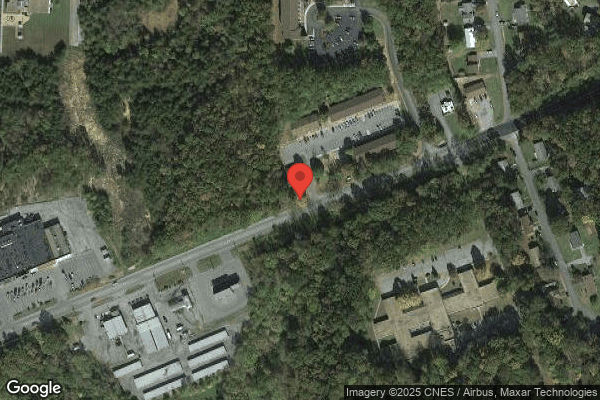
Mar 2024 10 deficiencies 1 IJ
CRITICAL (J) 📢 Someone Reported This

A family member, employee, or ombudsman was alarmed enough to file a formal complaint

Immediate Jeopardy (IJ) - the most serious Medicare violation

Free from Abuse/Neglect (Tag F0600)

Someone could have died · This affected 1 resident

**NOTE- TERMS IN BRACKETS HAVE BEEN EDITED TO PROTECT CONFIDENTIALITY** Based on resident interview, staff interview, clinical record review, and facility document review, the facility failed to prote...

Read full inspector narrative →
**NOTE- TERMS IN BRACKETS HAVE BEEN EDITED TO PROTECT CONFIDENTIALITY** Based on resident interview, staff interview, clinical record review, and facility document review, the facility failed to protect the resident's right to be free from abuse for three of 5 resident's (Resident #2, #3, and #4), resulting in immediate jeopardy (IJ), substandard quality of care, and a determination of a severity level three - isolated. The facility staff did not implement interventions to protect Resident #2 (R2) from sexual abuse. The facility staff also failed to put interventions in place to protect R3 and R4 from verbal abuse and aggressive behavior from R1. The Findings Include: According to R1's clinical record, medical diagnoses included Dementia, bipolar, anxiety, and mood disturbance. The most current MDS (minimum data set - assessment tool) was a quarterly assessment with an ARD (assessment reference date) of 11/30/23, which assessed R1 with a cognitive score of 14 out of 15, indicating cognitively intact for daily decision making. According to R2's clinical record, medical diagnoses included Dementia, anxiety, major depression, and cognitive communication deficit. The most current MDS (minimum data set - assessment tool) was an annual assessment with an ARD (assessment reference date) of 2/20/24, which assessed R2 with a cognitive score of 3 out of 15, indicating severely impaired cognition for daily decision making. A review of an event summary dated 7/20/23 included the following documentation: R2's social worker note dated 6/5/23 documented: SSD [social service director] contacts resident's guardian and leaves a message requesting a return call to discuss resident's relationship with another resident. R2's social worker note dated 6/5/23 documented: SSD speaks with resident's guardian who states that resident cannot be alone in her room or any other resident's room with any male resident. A progress noted (for R2) dated 6/11/23 read: Resident in dining room with male resident (95049) [identified as R1] from B-Wing inappropriately displaying affection. Resident was brought back to her room by CNA [certified nursing assistant]. Resident was later found with same male resident in the A wing lounge trying to go into the conference room with him. CNA locked conference room door and once again brought the resident back to her room. Resident has stayed on this wing for the remainder evening. A progress note for R2 dated 6/15/23 documented: Resident found in A wing lounge with male resident 95049 [R1] from B wing, engaging in PDA [public display of affection]. Residents were separated by CNA's and [R2's name] was brought back up to her room. Will continue to observe. A social worker quarterly note for R2 dated 7/17/23 read in part: Resident has had behaviors entering other's rooms/space; and lifting shirt in front of male resident. SSD will continue to observe and note any new or ongoing behavioral or psychosocial concerns for the resident. SSD will continue to advocate for resident's concerns, should they arise, as well as any and all ongoing needs. A progress note (for R2) dated 7/20/23 documented: This nurse was approached by resident #95555 [unidentified resident] who stated that this resident [R2] was in the activity room with resident #95049 [R1]. This resident was reported to have had her shirt pulled up with her breasts exposed and resident #95049 had his mouth on her breast. This nurse and CNA immediately went to the activity room to separate residents. This resident was observed bent over in front of resident #95049 with her buttocks in front of his face. Resident #95049 had his hand between this resident's legs. Both residents were fully clothed at this time. Resident were immediately separated and DON, Social Worker were notified. This resident returned to her room without incident. A review of R2's progress notes post 7/20/23 encounter, documented that the guardian was notified, a physical assessment was completed, a psychological assessment was completed with no identified concerns, psych services were also implemented and showed no changes from previous psych evaluations. Police were notified and implemented an emergency protective order for R2. R2 was moved to a locked unit on 7/22/23. A review of R2's care plan did not evidence that any of the non-consentual sexual contact, repeated inappropriate touching, the behavior change in baring breasts, or any protective interventions had been addressed. A review of R1's progress notes were reviewed for the same time period. There was no documentation in R1's progress notes regarding R1 demonstrating inappropriate displays of sexual behavior towards R2 on 6/5/23, 6/11/23, or 6/15/23. A review of R1's social worker note dated 7/6/23 documented: SSD and [name of nurse] RN, had a conversation with resident re his relationship with another resident. The other resident's guardian has expressed that there can be no intimate relationship. This resident expresses understanding that if he continues to try to be intimate with the other resident, it may become a legal matter. A review of R1's social worker note dated 7/20/23 documented: SSD attempts to contact resident's guardian re incident that occurred between this resident and a female resident. The guardian is out of the office and this worker left a detailed message with the guardian's paralegal. A review of R1's psychiatric note dated 7/21/23 indicated that R1 was being seen due to an intimate relationship between R1 and R2. The psych note included guidance to monitor for mood changes, continue medications, and notify of any changes. A review of R1's progress note written by the director of nursing (DON) dated 7/28/23 documented: Per psych services, [name of psych nurse]; one-to-one may be D/Cd at this time. New medication Paxil is on board x 48+ hours. Resident has exhibited no noted behaviors or indication of aggressive libido. Mr. Parks is aware and has verbalized understanding regarding the no-contact order that remains in place for resident [R2]. A review of R1's quarterly social worker note dated 8/2/23 documented in part: Behavioral: Resident had behaviors this quarter to include sexual acts with a female resident who is not competent and being physically aggressive with staff. SSD will continue to observe and note any new or ongoing behavioral or psychosocial concerns for the [SIC] resident. SSD will continue to advocate for resident's concerns, should they arise, as well as any and all ongoing needs. A psych evaluation was completed on 9/15/23, which indicated the change in medications from Celexa to Paxil (antidepressant) was in place due to R1's hypersexual tendencies. Celexa was stopped on 7/25/23 and the Paxil was started on 7/26/23. No recommendations were included to address the management of these behaviors. Another psych evaluation dated 2/19/24 documented that R1 was being seen due to making sexual comments to residents and agitating other residents. This documentation indicated that Buspar (used for anxiety) was discontinued as this can exacerbate sexual comments. The evaluation also documented the increase of Paxil to 40 MG daily. No recommendations for non-pharmacological interventions were included in this documentation. R1's care plan was reviewed but showed no evidence of care plans or interventions for sexual behaviors, except for R1 making sexual comments towards staff. There were also no psychosocial care plans in place for R1 to address the documented physical aggression, verbal aggression, targeting behaviors, or hypersexual tendancies. R1's nursing note dated 2/19/24, which was written by license practical nurse (LPN #2), documented: Resident noted with behaviors this shift. Resident attempting to go into other residents room. Staff redirected resident to his room and resident continues to come out of his room and attempt to go into other residents' rooms. On 3/12/24 at 11:00 a.m., registered nurse (RN #1, unit manager) was interviewed regarding the events between R1 and R2 on 6/11/23, 6/15/23, and 7/20/23. RN #1 verbalized not being totally aware of what was going on but felt R2 was not doing anything to provoke R1 and R1 had been seeking out R2. RN #1 said that R1 and R2 had been separated several times related to kissing and touching each other. RN #1 verbalized that there has been other sexual and verbal conduct by R1 towards other residents, but did not identify the other residents. On 3/12/24 at 11:30 a.m., RN#3 (unit manager where R1 resides) was interviewed. RN #3 verbalized that R1 and R2 had been separated several times due to kissing and touching prior to the 7/20/23 event and that staff were monitoring both Residents. RN #3 verbalized that R2 was cognitively impaired, was friendly, and would get close to people (regarding personal space). RN#3 expressed feeling that R1 knew what he was doing. The survey team extended the sample to include two additional Residents due to the nursing note dated 2/19/24 regarding R1's inappropriate behavior. The residents were identified as R3 and R4. The facility presented three Concern Form[s]. Two forms were documented for R3 dated 2/14/24 and 2/19/24. The concern form dated 2/14/24 indicated that R3 was being harassed by R1 with romantic advances and had expressed feeling unsafe and uncomfortable due to the advances and verbal statements. The documentation also indicated that R1 was spoken to and that R1 agreed to leave R3 alone. Another concern form for R3 was written on 2/19/24, which documented R3 was not wanting to leave her room because another Resident [R1] has been making unwanted advances. She stated by staying in her room she won't have to see him. According to R3's clinical record, medical diagnoses included anxiety and depression. R3's most current quarterly MDS was dated 1/11/24 and indicated that R3 was moderately intact cognition for daily decision making, with a score of 7 out of 15. R4's concern form dated 2/14/24 documented that R1 was verbally harassing her and reported that R1 said he hopes you go to bed tonight and die. The form documents that R4 reported the concern as being a continued issue. According to R4's clinical record, R4 had diagnoses of schizoaffective disorder, bipolar, anxiety, and depression. R4's current annual MDS dated [DATE] assessed R4 as being cognitively intact for daily decision making, with a score of 15 out of 15. On 3/12/24 at 2:00 p.m., R3 was interviewed. R3 said that R1 did not do anything physical or say anything sexually explicit, but would say things like he wanted to marry me. R3 stated that R1 was being suggestive of their having a relationship. R3 said she had never had anyone come on to her like that and it made R3 feel uncomfortable to the extent that she stayed in her room because of it. When questioned further, R3 stated that R1 would then try to come in to R3's room but was told to leave several times. R3 said that since R1 had been reported, R3 feels better, but still is guarded around R1. On 3/12/24 at 2:30 p.m., the administrator and director of nursing (DON) were interviewed regarding sexual contact between R1 and R2 between 6/5/23 and 6/15/23, as well as the verbal concerns expressed by R3 and R4 in February 2024. The administrator verbalized that the sexual and verbal abuse had not been reported, but that an undocumented investigation had been done, and that he had talked with R1 about his behavior. The administrator also verbalized that R1's medications were reviewed and changed due to inappropriate sexual behaviors. The DON verbalized that R1 was contracted in both hands and therefore was unable to do anything sexual. On 3/12/24 at 2:45 p.m., the social worker (other staff, OS #3) was interviewed. OS #3 verbalized not being employed at the time of the encounters between R1 and R2. When questioned regarding the concerns for R3 and R4, OS #3 stated having spoken to staff about being more observational and had spoken to R1 regarding the concerns of R3 and R4 but had not written a social worker note or conducted a psychological assessment. When questioned about action taken, OS #3 verbalized that R1 did have a psych evaluation and that medications were changed. On 3/13/24 at 9:30 a.m., LPN #2 (who works where R1, R3, and R4 reside) was interviewed. LPN #2 verbalized that R1 tries to go into other residents' room, even after being redirected and had tried to go into R4's room repeatedly on 2/19/24. LPN #2 said that when R1 is told that he is being inappropriate, R1 denies everything, but feels like R1 knows what he is doing. Review of the Resident Abuse policy with a revision date of 1/2023 read in part: It is inherent in nature and dignity of each resident at the facility that he/she be afforded basic human rights, including the right to be free from abuse, neglect, mistreatment On 3/13/24 at 12:45 p.m., the administrator was made aware in a meeting with the survey team of the above information and serious concerns regarding Resident #1. The administrator was notified at this time that the survey team had consulted and discussed the above information with the state agency and the survey team had identified IJ (Immediate Jeopardy) and substandard quality of care (SQC) due to the facilities failure to protect the resident's right to be free from abuse for three of 5 resident's, Resident #'s 2, 3, and #4 and failure to implement interventions to prevent abuse. At this time the survey team advised the administrator to develop and present a plan of removal regarding the above-mentioned findings. On 3/13/24 at 2:35 p.m., OS #3 (social worker) was interviewed regarding the process of concern forms. OS #3 stated that during morning meetings with all department heads, concern forms were reviewed, and staff would make suggestions. When asked if any suggestions were made regarding R1's behaviors towards other resident's, OS #3 stated recommending that R1 be moved, but other staff was concerned about payer source, and not having a bed for R1. OS #3 also stated that APS (Adult Protective Services) should have been contacted but was not. On 3/13/24 at 3:00 p.m., R4 was interviewed. R4 verbalized feeling that R1 is going to hit her and attempts to come into her room. R4 stated still feeling unsafe and doesn't sleep well because .he's right across the hall from me. On 3/13/24 at 3:45 p.m., psych service nurse practitioner (OS #6) was interviewed regarding R1, R3, and R4. OS #6 stated that she had just started coming to the facility about a month ago and has been reviewing resident's records regarding medications to get up to speed with each resident on case load. OS #6 stated that telephone face to face were completed for R1, R3, and R4 earlier that day. OS #6 stated that she felt R3 and R4 had no more issues and that R1 did have a medication change recently and felt at this time there was no concern. At this time, it was explained to OS #6 of R1's past with R2 and being sexually inappropriate. OS #6 then verbalized that this information was new to her and that it would have an impact on developing R1's behavioral plan. On 3/13/24 at 4:50 p.m., R2's guardian (OS #7) was contacted. OS #7 reviewed past notes sent by the facility, verbalized that he was aware of the situation, had expressed concern to the facility at that time, and now feels R2 is doing better on the dementia unit and has not had any more issues. On 3/13/24 at 18:15 p.m., the survey team accepted a plan of removal for failure to protect the resident's right to be free from abuse for three of 5 resident's, R2, R3, and R4 and failure to implement interventions to prevent abuse. The facility's plan of removal included the following interventions: Resident #1 was placed on one to one by staff beginning 3/14/24 until psych services deem safe to remove one to one supervision. Resident #2 sexual abuse psychosocial completed by social services director on 7/20/23. Resident #3 verbal abuse psychosocial assessment by social services director on 3/12/24. Resident #4 verbal abuse psychosocial assessment by social services director on 3/13/24. Interviews of 100% of interviewable residents residing on A and B units will be conducted regarding concerns with Resident #1. Resident #1 has no access to unit C. Resident #1's care plan updated to include sexual behaviors directed toward other residents on 3/12/24. Psych services will complete face to face with Resident's #1, #3, and #4 on 3/14/24. Behavioral contract was completed and signed by Resident #1 and Administrator. All staff on duty 3/12/24 and 3/13/24 were educated regarding when Resident #1 exhibits inappropriate behavior or comments towards another resident, staff are to immediately intervene with the following: - Remove Resident #1 from the situation. - Ensure the other resident is safe. - Notify supervisor and social service director of the incident. - Non-nursing staff will write a statement regarding incident. - Should you witness Resident #1 escalating, distract him, and redirect his attention with activities. - Nursing or social service director will document in in the behavior documentation and both resident records. - All staff will be educated beginning 3/13/24 regarding proper documentation of incident in the clinical record. All staff in house were educated on 3/13/24 regarding the following: Should staff observe a resident demonstrating sexually inappropriate behavior as evidence by groping, inappropriate touching, including sexual comments, staff must: -Ensure resident safety. -Place offending resident on 1 on 1 supervision. -Report the incident to your supervisor. -Nursing or social service director will document in in the behavior documentation and both resident records. All staff will be educated beginning 3/13/24 regarding proper documentation of incident in the clinical record. All subsequent staff will receive above noted education prior to their next scheduled shift. Medical Director notified on 3/13/24 of IJ and plan reviewed with him and accepted. Effective immediately, an audit will be completed 3 times a week to ensure that resident allegations of abuse have been followed up appropriately. Areas of deficiency will be submitted to the QAA committee and corrected immediately. On 3/14/24 at 11:05 a.m., OS #6 was interviewed. OS #6 verbalized being at the facility this morning conducting psych evaluations on all resident's involved. OS #6 verbalized that R2 had not been exhibiting residual effects from sexual behaviors from R1 and felt that R2 is appropriately placed on the dementia unit. OS #6 expressed that R3 needed to be monitored and felt that R4 had revealed some psychosis based on history and would benefit from a room change. OS #6 verbalized recommendations that at this time closer monitoring should be in place for R1 with a one-to-one supervision that will be titrated to 30 minutes checks and look into a room change. On 3/14/24, the survey team verified implementation of the plan of removal through repeated observations of R1 being on one-to-one staff supervision. Facility staff were interviewed regarding education on abuse policy and understanding of the need for interventions. The team also reviewed facility in-services, as well as verifying signatures of staff receiving education, and all other documentation indicated in the plan of removal. The survey team abated the IJ on 3/14/24 at 11:40 a.m. Based on the actual harm that is not immediate jeopardy and the findings of negative psychosocial outcomes, the facility's remaining compliance was determined to be at severity level three - isolated.
CONCERN (D) 📢 Someone Reported This

A family member, employee, or ombudsman was alarmed enough to file a formal complaint

Potential for Harm - no one hurt, but risky conditions existed

Comprehensive Care Plan (Tag F0656)

Could have caused harm · This affected 1 resident

**NOTE- TERMS IN BRACKETS HAVE BEEN EDITED TO PROTECT CONFIDENTIALITY** Based on staff interview, and clinical record review, the facility staff failed to develop a care plan for two of five residents...

Read full inspector narrative →
**NOTE- TERMS IN BRACKETS HAVE BEEN EDITED TO PROTECT CONFIDENTIALITY** Based on staff interview, and clinical record review, the facility staff failed to develop a care plan for two of five residents in the survey sample (Residents #3 and #4). 1. The facility did not develop a psychosocial care plan for Resident #3 (R3). 2. The facility did not develop a psychosocial care plan for Resident #4 (R4). The findings include: 1. During the review of an event summary related to abuse, the survey team added R3 to the sample. According to the clinical record, R3 has diagnoses of anxiety and depression. R3's most current quarterly MDS (minimum data set - assessment tool) dated 1/11/24, assessed R3 as being moderately intact cognitively for daily decision making, with a score of 7 out of 15. The facility presented two Concern Form[s] regarding R3 dated 2/14/24 and 2/19/24. The concern form dated 2/14/24 indicated R3 was being harassed by R1 with romantic advances and was feeling unsafe and uncomfortable due to the advances and verbal statements. The documentation indicates that R1 was spoken to and R1 agreed to leave R3 alone. The concern form dated 2/19/24 documented that R3 was not wanting to leave her room because another Resident [R1] has been making unwanted advances. She stated by staying in her room she won't have to see him. On 3/12/24 at 2:00 p.m.,R3 was interviewed. R3 said that R1 did not do anything physical or say anything sexually explicit but would say things like he wanted to marry me and that R1 was being suggestive of their having a relationship. R3 stated that she had never had anyone come on to her like that and it made R3 feel uncomfortable to the extent that she stayed in her room because of it. When questioned further, R3 stated that R1 would then try to come in to R3's room but was told to leave several times. R3 said that since R1 had been reported, R3 feels better, but still is guarded around R1. On 3/13/24 at 2:35 p.m., OS #3 (social worker) was interviewed regarding R3's concern forms. OS #3 verbalized filling the concern forms out, having had a conversation with R3 and R1, and having suggested moving R1 and reporting to APS (Adult Protection Agency) during a morning staff meeting, but OS#3 stated that a psychosocial care plan regarding R3's coping skills had not been implemented. On 3/14/24 at 9:15 a.m., OS #3 was interviewed again regarding how care plans are developed and updated. OS #3 stated that during morning meetings with all department heads, concern forms are reviewed, and that would staff will make suggestions for action. When questioned further, OS#3 stated that Nursing and the MDS coordinator would usually develop and update the care plan. On 3/14/24 at 12:00 p.m., the above findings were presented to the administrator and director of nursing. No other information was presented prior to exit conference on 3/14/24. 2. The facility did not develop a psychosocial care plan for Resident #4 (R4). The findings include: During the review of an event summary related to abuse, the survey team added R4 to the sample. R4 has diagnoses of schizoaffective disorder, bipolar, anxiety, and depression. R4's current annual MDS dated [DATE] indicates R4 is cognitively intact with a score of 15. The facility presented a Concern Form regarding R4 dated 2/14/24 that documented R1 is verbally harassing her and reports R1 said he hopes you go to bed tonight and die. She reports this being a continued issue. The form indicates R1 was spoken to and R1 agreed to not speak to R4 in this manner. On 3/13/24 at 3:00 p.m. R4 was interviewed. R4 verbalized feeling that R1 is going to hit her and attempts to come into her room and still feels unsafe and doesn't sleep well because R1 resides across the hall from R4. On 3/13/24 at 2:35 p.m., OS #3 (social worker) was interviewed regarding R4's concern form. OS #3 verbalized filling the concern forms out and having a conversation with R4 and R1 and suggested moving R1 and reporting to APS (Adult Protection Agency) during a morning staff meeting, but did not develop a psychosocial care plan regarding R3's coping skills. On 3/14/24 at 9:15 a.m., OS #3 was interviewed again regarding how care plans are developed and updated. OS #3 said that, during morning meetings with all department heads, concern forms are reviewed, and staff will make suggestions. Nursing and the MDS coordinator will usually develop and update the care plan. On 3/14/24 at 12:00 p.m., the above finding was presented to the administrator and director of nursing. No other information was presented prior to exit conference on 3/14/24.
CONCERN (D) 📢 Someone Reported This

A family member, employee, or ombudsman was alarmed enough to file a formal complaint

Potential for Harm - no one hurt, but risky conditions existed

Deficiency F0657 (Tag F0657)

Could have caused harm · This affected 1 resident

**NOTE- TERMS IN BRACKETS HAVE BEEN EDITED TO PROTECT CONFIDENTIALITY** Based on staff interview, and clinical record review, the facility staff failed to review and revise the comprehensive care plan...

Read full inspector narrative →
**NOTE- TERMS IN BRACKETS HAVE BEEN EDITED TO PROTECT CONFIDENTIALITY** Based on staff interview, and clinical record review, the facility staff failed to review and revise the comprehensive care plan for two of five residents in the survey sample (Residents #1 and #2). 1. Resident #1 (R1) behavior care plan was not revised to include sexual behaviors. 2. Resident #2 (R2) behavior care plan was not revised to include sexual behaviors. The findings include: 1. According to the clinical record, diagnoses for R1 included Dementia, bipolar, anxiety, and mood disturbance. The most current MDS (minimum data set - assessment tool) was a quarterly assessment with an ARD (assessment reference date) of 11/30/24, which assessed R1 with a cognitive score of 14 out of 15, indicating cognitively intact for daily decsion making. R1's social worker note dated 7/6/23 documented: SSD and [name of nurse] RN, have a conversation with resident re his relationship with another resident. The other resident's guardian has expressed that there can be no intimate relationship. This resident expresses understanding that if he continues to try to be intimate with the other resident, it may become a legal matter. R1's social worker note dated 7/20/23 documented: SSD attempts to contact resident's guardian re incident that occurred between this resident [R1] and a female resident. The guardian is out of the office and this worker left a detailed message with the guardian's paralegal. R1's psychiatric note dated 7/21/23 indicated R1 was being seen due to an intimate relationship between R1 and R2. The psych note documented to monitor for mood changes, continue medications, and notify of any changes. R1's progress note, written by the director of nursing (DON) and dated 7/28/23, documented: Per psych services, [name of psych nurse]; one-to-one may be D/Cd at this time. New medication Paxil is on board x 48+ hours. Resident has exhibited no noted behaviors or indication of aggressive libido. Mr. Parks is aware and has verbalized understanding regarding the no-contact order that remains in place for resident [R2]. R1's quarterly social worker note dated 8/2/23 documented in part: Behavioral: Resident had behaviors this quarter to include sexual acts with a female resident who is not competent and being physically aggressive with staff. SSD will continue to observe and note any new or ongoing behavioral or psychosocial concerns for the [SIC] resident. SSD will continue to advocate for resident's concerns, should they arise, as well as any and all ongoing needs. A psych evaluation was completed on 9/15/23 indicating the change in medications from Celexa to Paxil (antidepressant) was in place due to R1's hypersexual tendencies. Celexa was stopped on 7/25/23 and the Paxil was started on 7/26/23. Another psych evaluation dated 2/19/24 documented that R1 was being seen due to making sexual comments to residents and agitating other residents. The note indicated that Buspar (used for anxiety) was discontinued as this can exacerbate sexual comments and captured the increase of Paxil to 40 MG daily. On 3/12/24 at 11:00 a.m., registered nurse (RN #1, unit manager) was interviewed regarding the events between R1 and R2 (identified as resident R1 was sexually seeking) on 6/11/23, 6/15/23 and 7/20/23. RN #1 verbalized not being totally aware of what was going on but stated that R2 was not doing anything to provoke R1, that R1 had been seeking out R2. RN #1 said that R1 and R2 were separated several times related to kissing and touching each other. RN #1 verbalized that there has been other sexual and verbal conduct towards other resident,s but did not identify other residents. On 3/12/24 at 11:30 a.m., RN#3 (unit manager where R1 resides) was interviewed. RN #3 verbalized R1 and R2 had been separated several times due to kissing and touching prior to the 7/20/23 event and that staff were monitoring both Residents. RN #3 verbalized R2 was cognitively impaired, was friendly, and would get close to people (regarding personal space). RN#3 expressed feeling that R1 knew what he was doing. Review of R1's care plan evidenced a care plan for behaviors related to polysubstance abuse and traumatic [NAME] injury indicating R1 makes threats, refuses care, and inappropriate sexual comments towards staff. The care plan was initiated on 3/7/17 with the most recent revision on 11/26/21. There was no indication of being sexually inappropriate towards residents. On 3/12/24 at 2:30 p.m., the administrator and director of nursing (DON) were interviewed regarding being care planned for sexual behaviors. The DON verbalized that R1 had a behavioral care plan. It was explained to the administrator and DON that R1 does have a behavioral care plan, which does mention sexual behaviors towards staff, but does not indicate sexual behaviors towards other residents, nor does it include any interventions to address the behaviors. On 3/14/24 at 9:15 a.m., OS #3 (social worker) was interviewed regarding how care plans are developed and updated. OS #3 stated that during morning meetings with all department heads, concern forms are reviewed, and that staff would make suggestions. When questioned further, OS#3 stated that Nursing and the MDS coordinator would usually update the care plan. OS #3 verbalized that R1's care plan should have been addressed to reflect sexual aggressive behaviors towards residents. No other information was provided prior to exit conference on 3/14/24. 2. Resident #2 (R2) behavior care plan was not revised to include sexual behaviors. The findings include: Diagnoses for R2 included Dementia, anxiety, major depression, and cognitive communication deficit. The most current MDS (minimum data set) was an annual assessment with an ARD (assessment reference date) of 2/20/24, which assessed R2 with a cognitive score of 3 out of 15, indicating severely impaired cognition ofr daily decision making. Review of R2's social worker note dated 6/5/23 documented: SSD [social service director] contacts resident's guardian and leaves a message requesting a return call to discuss resident's relationship with another resident. R2's social worker note dated 6/5/23 documented: SSD speaks with resident's guardian who states that resident cannot be alone in her room or any other resident's room with any male resident. R2's progress noted dated 6/11/23 read: Resident in dining room with male resident (95049) [identified as R1] from B-Wing inappropriately displaying affection. Resident was brought back to her room by CNA [certified nursing assistant]. Resident was later found with same male resident in the A wing lounge trying to go into the conference room with him. CNA locked conference room door and once again brought the resident back to her room. Resident has stayed on this wing for the remainder evening. R2's progress note dated 6/15/23 documented: Resident found in A wing lounge with male resident 95049 [R1] from B wing, engaging in PDA [public display of affection]. Residents were separated by CNA's and [R2's name] was brought back up to her room. Will continue to observe. R2's social worker quarterly note dated 7/17/23 read in part: Resident has had behaviors entering other's rooms/space; and lifting shirt in front of male resident. SSD will continue to observe and note any new or ongoing behavioral or psychosocial concerns for the resident. SSD will continue to advocate for resident's concerns, should they arise, as well as any and all ongoing needs. R2's progress note dated 7/20/23 documented: This nurse was approached by resident #95555 [unidentified resident] who stated that this resident [R2] was in the activity room with resident #95049 [R1]. This resident was reported to have had her shirt pulled up with her breasts exposed and resident #95049 had his mouth on her breast. This nurse and CNA immediately went to the activity room to separate residents. This resident was observed bent over in front of resident #95049 with her buttocks in front of his face. Resident #95049 had his hand between this resident's legs. Both residents were fully clothed at this time. Resident were immediately separated and DON, Social Worker were notified. This resident returned to her room without incident. Review of R2's care plan evidenced a care plan for behaviors related to dementia indicating that R2 refuses ADL (Activities of Daily Living) care and verbal abuse towards others. There was no indication of being sexually inappropriate towards residents. On 3/12/24 at 2:30 p.m. the above finding was presented to the administrator and director of nursing (DON). On 3/14/24 at 9:15 a.m., OS #3 (social worker) was interviewed regarding how care plans are developed and updated. OS #3 stated that during morning meetings with all department heads, concern forms are reviewed, and that staff would make suggestions. When questioned further, OS#3 stated that Nursing and the MDS coordinator would usually update the care plans. No other information was provided prior to exit conference on 3/14/24.
CONCERN (D) 📢 Someone Reported This

A family member, employee, or ombudsman was alarmed enough to file a formal complaint

Potential for Harm - no one hurt, but risky conditions existed

Deficiency F0740 (Tag F0740)

Could have caused harm · This affected 1 resident

Based on resident interview, staff interview, and clinical record review, the facility staff failed to assess and implement behavioral health interventions regarding sexual and verbal abuse for one of...

Read full inspector narrative →
Based on resident interview, staff interview, and clinical record review, the facility staff failed to assess and implement behavioral health interventions regarding sexual and verbal abuse for one of five in the survey sample, Residents #1 (R1). The findings include: Facility staff failed to identify and implement non-pharmacological interventions to address Resident #1's sexual and aggressive behavioral health needs towards other residents. According to the clinical record, R1 was displaying sexual behaviors towards R2 (who is severely cognitively impaired with a BIMS score of 3 out of 15) on 6/11/23, 6/15/23, and 7/20/23. R1 also showed verbal abuse and aggressive behavior towards R3 on 2/14/24 and 2/19/24 and inappropriate behaviors toward R4 on 2/14/24. R1 was admitted to the facility with diagnoses that included dementia, bipolar, anxiety, and mood disturbance. The most current MDS (minimum data set) was a quarterly assessment with an ARD (assessment reference date) of 11/30/24, which assessed R1 with a cognitive score of 14 out of 15, indicating cognitively intact for daily decision making. R2's clinical record documented the following progress notes regarding R1: R2's progress noted dated 6/11/23 read: Resident in dining room with male resident (95049) [identified as R1] from B-Wing inappropriately displaying affection. Resident was brought back to her room by CNA [certified nursing assistant]. Resident was later found with same male resident in the A wing lounge trying to go into the conference room with him. CNA locked conference room door and once again brought the resident back to her room. Resident has stayed on this wing for the remainder evening. R2's progress note dated 6/15/23 documented: Resident found in A wing lounge with male resident 95049 [R1] from B wing, engaging in PDA [public display of affection]. Residents were separated by CNA's and [R2's name] was brought back up to her room. Will continue to observe. R2's progress note dated 7/20/23 documented: This nurse was approached by resident #95555 [unidentified resident] who stated that this resident [R2] was in the activity room with resident #95049 [R1]. This resident was reported to have had her shirt pulled up with her breasts exposed and resident #95049 had his mouth on her breast. This nurse and CNA immediately went to the activity room to separate residents. This resident was observed bent over in front of resident #95049 with her buttocks in front of his face. Resident #95049 had his hand between this resident's legs. Both residents were fully clothed at this time. Resident were immediately separated and DON, Social Worker were notified. This resident returned to her room without incident. There were no documentation in R1's progress notes indicating the above sexual encounters between R1 and R2 had occurred, with the exception of the 7/20/23 encounter that indicted R1's guardian had been notified, that R1 was placed on one-to-one supervision, and that psych services changed R1's antidepressant medication due to hypersexual behavior. On 3/12/24 at 11:00 a.m., registered nurse (RN #1, unit manager) was interviewed regarding the events between R1 and R2 on 6/11/23, 6/15/23 and 7/20/23. RN #1 verbalized not being totally aware of what was going on but felt R2 was not doing anything to provoke R1 and that R1 was seeking out R2. RN #1 said that R1 and R2 were separated several times related to kissing and touching each other. RN #1 verbalized that there has been other sexual and verbal conduct towards other residents by R1, but did not identify other residents. On 3/12/24 at 11:30 a.m., RN#3 (unit manager where R1 resides) was interviewed. RN #3 verbalized that R1 and R2 had been separated several times due to kissing and touching prior to the 7/20/23 event and that staff were monitoring both Residents. RN #3 verbalized that R2 was cognitively impaired, was friendly, and would get close to people (regarding personal space). RN#3 expressed feeling that R1 knew what he was doing. Further review of R1's progress notes dated 2/19/24 documented: Resident noted with behaviors this shift. Resident attempting to go into other residents room. Staff redirected resident to his room and resident continues to come out of his room and attempt to go into other resident's rooms. Written by license practical nurse (LPN #2). A psych services did an assessment on 2/19/24 for review of medications and seen today due to making sexual comments and agitation with residents. Recommend to discontinue Buspar and increase Paxil to 40mg po daily as Buspar can exacerbate sexual comments. The facility presented three Concern Form[s]. Two forms were documented for R3 dated 2/14/24 and 2/19/24. The concern form dated 2/14/24 indicated R3 was being harassed by R1 with romantic advances and that R3 was feeling unsafe and uncomfortable due to the advances and verbal statements. The documentation indicates R1 was spoken to and R1 agreed to leave R3 alone. The concern form dated 2/19/24 documented that R3 was not wanting to leave her room because another Resident [R1] has been making unwanted advances. She stated by staying in her room she won't have to see him. R4's concern form dated 2/14/24 documented that R1 is verbally harassing her and reports R1 said he hopes you go to bed tonight and die. She reports this being a continued issue. Review of R1's care plan evidenced a care plan for behaviors related to polysubstance abuse and traumatic brain injury indicating R1 makes threats, refuses care, and makes inappropriate sexual comments towards staff. The care plan was initiated on 3/7/17 with the most recent revision on 11/26/21. There was no indication of R1 being sexually inappropriate towards residents or that a care plan was in place for sexual behaviors toward residents. On 3/14/24 at 9:15 a.m., OS #3 (social worker) was interviewed regarding how care plans are developed and updated. OS #3 stated that during morning meetings with all department heads, concern forms are reviewed, and that staff would make suggestions.When questioned further, OS#3 stated that Nursing and the MDS coordinator would usually update the care plan. OS #3 verbalized that R1's care plan should have been addressed to reflect sexual aggressive behaviors towards residents. On 3/13/24 at 3:45 p.m., psych service nurse practitioner (OS #6) was interviewed (via telephone) regarding R1, R3, and R4. OS #6 stated that she had just started coming to the facility about a month ago and has been reviewing resident's records regarding medications to get up to speed with each resident on case load. OS #6 said that telephone face to face were completed for R1, R3, and R4 earlier that day, which indicated that R3 and R4 had no more issues, and that as R1 did have a medication change recently, at this time, there was no concern. At this time, it was explained to OS #6 of R1's sexual behaviors with R2, who could not give consent, and the recent sexually inappropriate behaviors. OS #6 verbalized this information was new to her and that it would have an impact on developing R1's behavioral health plan. On 3/14/24 at 11:05 a.m., OS #6 was again interviewed. OS #6 verbalized being at the facility that morning doing psych evaluations on all resident's involved. OS #6 verbalized that at this time closer monitoring should be in place for R1, with one-to-one supervision that will be titrated to 30 minutes checks, and look into a room change. On 3/14/24 at 12:00 p.m., the above finding was presented to the administrator and director of nursing. No other information was presented prior to exit conference on 3/14/24.
CONCERN (D) 📢 Someone Reported This

A family member, employee, or ombudsman was alarmed enough to file a formal complaint

Potential for Harm - no one hurt, but risky conditions existed

Deficiency F0745 (Tag F0745)

Could have caused harm · This affected 1 resident

**NOTE- TERMS IN BRACKETS HAVE BEEN EDITED TO PROTECT CONFIDENTIALITY** Based on resident interview, staff interview, and clinical record review, the facility staff failed to provide medically-related...

Read full inspector narrative →
**NOTE- TERMS IN BRACKETS HAVE BEEN EDITED TO PROTECT CONFIDENTIALITY** Based on resident interview, staff interview, and clinical record review, the facility staff failed to provide medically-related social services in response to verbal abuse for two of five residents (Residents #3 and #4). 1. The facility did not provide care planning and outside services related to coping with verbal abuse for Resident #3 (R3). 2. The facility did not provide care planning and outside services related to coping with verbal abuse for Resident #4 (R4). The findings include: 1. During the review of an event summary related to abuse, the survey team added R3 to the sample. According to the clinical record, R3 had diagnoses of anxiety and depression. R3's current quarterly MDS (minimum data set - assessment tool) dated 1/11/24, assessed R3 as having moderately intact cognition for daily decision making, with a score of 7 out of 15. The facility presented two Concern Form[s] regarding R3 dated 2/14/24 and 2/19/24. The concern form dated 2/14/24 indicated R3 was being harassed by R1 with romantic advances and that R3 reported feeling unsafe and uncomfortable due to the advances and verbal statements. The documentation indicated that R1 was spoken to and R1 agreed to leave R3 alone. The concern form dated 2/19/24 documented R3 was not wanting to leave her room because another Resident [R1] has been making unwanted advances. She stated by staying in her room she won't have to see him. On 3/12/24 at 2:00 p.m., R3 was interviewed. R3 said that R1 did not do anything physical or say anything sexually explicit but would say things like he wanted to marry me and that R1 was being suggestive of their having a relationship. R3 stated that she had never had anyone come on to her like that and it made R3 feel uncomfortable to the extent she stayed in her room because of it. When questioned further, R3 stated that R1 would then try to come in R3's room but was told to leave several times. R3 stated that since R1 had been reported, R3 feels better, but still is guarded around R1. With the exception of the concern forms being filled out by the social worker, there was no other documentation during this time period from the social worker. There was also no evidence of a care plan being developed, a psychologic assessment being completed, or a psych evaluation from an outside source related to coping skills for verbal abuse. On 3/13/24 at 2:35 p.m., OS #3 (social worker) was interviewed regarding R3's concern forms. OS #3 verbalized filling the concern forms out, having had a conversation with R3 and R1, having suggested moving R1 and reporting to APS (Adult Protection Agency) during a morning staff meeting, but OS#3 stated that a psychosocial care plan regarding R3's coping skills had not been completed. When questioned regarding the standards of care, OS #3 verbalized being recently employed at the facility and having never worked long term care before. On 3/14/24 at 12:00 p.m., the above finding was presented to the administrator and director of nursing. No other information was presented prior to exit conference on 3/14/24. 2. The facility did not provide care planning and outside services related to coping with verbal abuse for Resident #4 (R4). The findings include: During the review of an event summary related to abuse, the survey team added R4 to the sample. According to the clinical record, R4 has diagnoses of schizoaffective disorder, bipolar, anxiety, and depression. R4's current annual MDS dated [DATE] assessed R4 as being cognitively intact for daily decision making, with a score of 15 out of 15. The facility presented a Concern Form regarding R4 dated 2/14/24 that documented R1 is verbally harassing her and reports that R1 said he hopes you go to bed tonight and die. She reports this being a continued issue. The form indicates R1 was spoken to and R1 agreed to not speak to R4 in this manner. On 3/13/24 at 3:00 p.m., R4 was interviewed. R4 verbalized feeling that R1 is going to hit her, that R1 attempts to come into her room, and that R4 still feels unsafe and doesn't sleep well because .he resides across the hall from me. With the exception of the concern forms being filled out by the social worker, there was no other documentation during this time period from the social worker. There was also no evidence of a care plan being developed, a psychologic assessment being completed, or a psych evaluation from an outside source related to coping skills for the verbal abuse. On 3/13/24 at 2:35 p.m., OS #3 (social worker) was interviewed regarding R4's concern form. OS #3 verbalized filling the concern forms out, having had a conversation with R4 and R1, having suggested moving R1 and reporting to APS (Adult Protection Agency) during a morning staff meeting, but OS#3 stated that a psychosocial care plan had not been developed regarding R4's coping skills. On 3/14/24 at 9:15 a.m., OS #3 was interviewed again regarding how care plans are developed and updated. OS #3 stated that during morning meetings with all department heads, concern forms were reviewed, and that staff would make suggestions. When questioned further, OS#3 stated that Nursing and the MDS coordinator would usually develop and update the care plans. On 3/14/24 at 12:00 p.m., the above finding was presented to the administrator and director of nursing. No other information was presented prior to exit conference on 3/14/24.
CONCERN (E) 📢 Someone Reported This

A family member, employee, or ombudsman was alarmed enough to file a formal complaint

Potential for Harm - no one hurt, but risky conditions existed

Safe Environment (Tag F0584)

Could have caused harm · This affected multiple residents

Based on observation, staff interview and in the course of this investigation, it was determined that the facility staff failed to provide a home like environment on 3 of 3 units in the facility. The ...

Read full inspector narrative →
Based on observation, staff interview and in the course of this investigation, it was determined that the facility staff failed to provide a home like environment on 3 of 3 units in the facility. The findings include: On 3/12/24 at 8:00 AM the following was observed on A-wing: Resident room A-5 bedroom wallpaper beside the window and in bathroom was peeling off the wall, ceiling tiles in bedroom had brown stains Resident room A-6 bathroom wallpaper was peeling off the wall Resident room A-7 ceiling tiles in the bedroom had brown stains, sink was loose and in need of repair Resident room A-8 wallpaper was stapled to the wall, plaster on the wall had not been sanded and painted Resident room A-10 bedroom wall behind the bed had plaster that had not been sanded and painted Resident room A-16 bedroom ceiling tiles had brown stains Resident room A-18 bedroom had holes in the wall beside the bathroom, black scuff marks on the wall behind the bed Resident room A-19 ceiling tiles in bathroom had brown stains, bedroom had gouges in the wall with no repair Resident room A-21 bedroom wall had plaster that had not been sanded and painted Hallway between resident rooms A-2 and A-3 ceiling tiles had brown stains Therapy room ceiling tiles had brown stains On 3/12/24 at 8:00 AM the following was observed on B-wing: Brown stain on the corner ceiling tile in the day room; broken baseboard along the floor across from the nursing desk; and baseboard missing to the right of the door to the lift storage room. On 3/12/24 at 8:15 AM the following was observed on C-wing: Trim around the entire countertop on the nursing desk missing/torn; missing baseboard at the entrance to nursing desk area; missing baseboard along floor behind chart racks; desk drawers on nursing desk broken, hanging open; door to left, bottom cabinet on desk was missing, entire nursing desk was scratched with worn/missing; hallway to dining room had multiple scraped areas with no paint, scrapes/gouges in drywall; wall below nursing desk was scraped with missing paint; and missing section of baseboard between resident rooms C-5 and C-7. On 3/12/24 at 9:36 AM, accompanied by the maintenance director, other staff #4(OS#4) the above items were observed. OS#4 stated there were plans to replace the nursing desks. OS#4 stated the missing sections of baseboard were due to contact from wheelchairs and equipment. OS#4 stated the hallway on C-wing with scrapes/missing paint was caused by decorations placed and then ripped from the wall. In regard to the holes and plaster on bathroom walls, OS#4 stated that lines were pulled out in 2018. When questioned about the walls needing sanding and repair, OS#4 stated that they .try to paint once a year. Regarding the stained ceiling tiles, OS#4 stated that it was caused by condensation on the pipes. On 3/12/24 at 2:08 PM, the administrator was made aware of the above concerns. The administrator stated that the nursing station is being replaced and that rolls of baseboard have been ordered and received. The administrator also stated that ceiling tiles have been ordered and that the facility had a roof leak that was repaired in January 2024. When questioned if they have a contract to have the work done, the administrator replied No, not yet. On 3/14/24 at 12:00 PM, these findings were reviewed with the administrator and DON with no further information presented.
CONCERN (E) 📢 Someone Reported This

A family member, employee, or ombudsman was alarmed enough to file a formal complaint

Potential for Harm - no one hurt, but risky conditions existed

Abuse Prevention Policies (Tag F0607)

Could have caused harm · This affected multiple residents

**NOTE- TERMS IN BRACKETS HAVE BEEN EDITED TO PROTECT CONFIDENTIALITY** Based on resident interview, staff interview, clinical record review, and facility document review the facility failed to implem...

Read full inspector narrative →
**NOTE- TERMS IN BRACKETS HAVE BEEN EDITED TO PROTECT CONFIDENTIALITY** Based on resident interview, staff interview, clinical record review, and facility document review the facility failed to implement resident to resident abuse policies for three of five residents (Resident #2, #3, and #4). The facility failed to implement resident to resident abuse policies in regard to sexual abuse for Resident #2 (R2) and failed to implement resident to resident verbal abuse and aggressive behavior policies for R3 and R4. The Findings Include: According to the clinical record, diagnoses for R1 included Dementia, bipolar, anxiety, and mood disturbance. The most current MDS (minimum data set - assessment tool) was a quarterly assessment with an According to the clinical record,ARD (assessment reference date ) of 11/30/24, which assessed R1 with a cognitive score of 14 out of 15, indicating cognitively intact for daily decision making. According to the clinical record, diagnoses for R2 included Dementia, anxiety, major depression, and cognitive communication deficit. The most current MDS (minimum data set - assessment tool) was an annual assessment with an ARD (assessment reference date) of 2/20/24, which assessed R2 with a cognitive score of 3 out of 15, indicating severely impaired cognition. A review of an event summary dated 7/20/23 revealed the following documentation: R2's progress noted dated 6/11/23 read: Resident in dining room with male resident (95049) [identified as R1] from B-Wing inappropriately displaying affection. Resident was brought back to her room by CNA [certified nursing assistant]. Resident was later found with same male resident in the A wing lounge trying to go into the conference room with him. CNA locked conference room door and once again brought the resident back to her room. Resident has stayed on this wing for the remainder evening. R2's progress note dated 6/15/23 documented: Resident found in A wing lounge with male resident 95049 [R1] from B wing, engaging in PDA [public display of affection]. Residents were separated by CNA's and [R2's name] was brought back up to her room. Will continue to observe. On 3/12/24 at 11:00 a.m., registered nurse (RN #1, unit manager) was interviewed regarding the events between R1 and R2 on 6/11/23 and 6/15/23. RN #1 verbalized not being totally aware of what was going on but felt R2 was not doing anything to provoke R1 and that R1 was seeking R2. RN #1 stated that R1 and R2 were separated several times related to kissing and touching each other. RN #1 verbalized that there has been other sexual and verbal conduct towards other resident's but did not identify other residents. On 3/12/24 at 11:30 a.m., RN#3 (unit manager where R1 resides) was interviewed. RN #3 verbalized that R1 and R2 had been separated several times due to kissing and touching prior to the 7/20/23 event and that staff were monitoring both Residents. RN #3 verbalized R2 was cognitively impaired and was friendly and would get close to people (regarding personal space). RN#3 expressed feeling that R1 knew what he was doing. The survey team extended the sample to include two additional Residents due to a nursing note (in R1's record) dated 2/19/24 regarding R1's inappropriate behavior. The residents were identified as R3 and R4. The facility presented three Concern Form[s]. Two forms were documented for R3 dated 2/14/24 and 2/19/24. The concern form dated 2/14/24 indicated R3 was being harassed by R1 with romantic advances and feels unsafe and uncomfortable due to the advances and verbal statements. The documentation indicated that R1 was spoken to and that R1 agreed to leave R3 alone. Another concern form for R3 was written on 2/19/24 and documented R3 was not wanting to leave her room because another Resident [R1] has been making unwanted advances. She stated by staying in her room she won't have to see him. According to the clinical record, R3 had diagnoses of anxiety and depression. R3's most current quarterly MDS dated [DATE] indicated that R3 had moderately intact cognition, with a score of 7 out of 15. R4's concern form dated 2/14/24 documented that R1 is verbally harassing her and reports R1 said he hopes you go to bed tonight and die. She reports this being a continued issue. According to the clinical record, R4 has diagnoses of schizoaffective disorder, bipolar, anxiety, and depression. R4's current annual MDS dated [DATE] indicates R4 is cognitively intact, with a score of 15 out of 15. On 3/12/24 at 2:30 p.m., the administrator and director of nursing (DON) were interviewed regarding sexual contact between R1 and R2 on 6/11/23 and 6/15/23, and verbal concerns expressed by R3 and R4 in February 2024. The administrator verbalized not reporting the sexual and verbal abuse but stated that an undocumented investigation had been done, and that he had talked with R1 about his behavior. The administrator also verbalized that R1's medications were reviewed and changed due to inappropriate sexual behaviors. The DON verbalized that R1 was contracted in both hands and therefore was unable to do anything sexual. On 3/12/24 at 2:45 p.m. the social worker (other staff, OS #3) was interviewed. OS #3 verbalized not being employed at the time of the encounters between R1 and R2. Regarding R3 and R4, OS #3 stated that staff had spoken to about being more observational, had spoken to R1 regarding the concerns of R3 and R4, but did not write a social worker note or conduct a psychological assessment. When asked about interventions, OS #3 verbalized that R1 did have a psych evaluation and medications were changed. The facilities Resident to Resident abuse policy and procedure revised 4/2020 read in part: 1. Remove the residents from danger immediately. 2. If applicable, move the resident causing the danger to another room or unit [ .]. 3. Closely monitor and document the behavior and condition of the residents involved to evaluate for any injury and to prevent recurrence of the incident. [ .] 5. A DOCUMENTED investigation by the Administrator, Director of Nursing, or their designee MUST be initiated within twenty four (24) hours our knowledge of the alleged incident [ .]. 6. An Incident/Accident Report form must be completed by the nurse in charge. [ .]. 8. The Administrator, Director of Nursing or their designee, must notify the Adult Protective Service Agency and the local Ombudsman of any alleged abuse [ .]. No other information was provided prior to exit conference on 3/14/24.
CONCERN (E) 📢 Someone Reported This

A family member, employee, or ombudsman was alarmed enough to file a formal complaint

Potential for Harm - no one hurt, but risky conditions existed

Report Alleged Abuse (Tag F0609)

Could have caused harm · This affected multiple residents

**NOTE- TERMS IN BRACKETS HAVE BEEN EDITED TO PROTECT CONFIDENTIALITY** Based on resident interview, staff interview, clinical record review, and facility document review, the facility failed to repor...

Read full inspector narrative →
**NOTE- TERMS IN BRACKETS HAVE BEEN EDITED TO PROTECT CONFIDENTIALITY** Based on resident interview, staff interview, clinical record review, and facility document review, the facility failed to report suspicion of resident to resident sexual abuse for one of 5 residents and failed to report allegation of resident to resident verbal abuse for two of 5 residents. 1. The facility did not report resident to resident sexual encounters between Resident #1 (R1) and R2 on two occasions. 2. The facility failed to report resident to resident verbal and aggressive behavior between R1 and R3. 3. The facility failed to report resident to resident verbal and aggressive behavior between R1 and R4. The Findings Include: 1. Diagnoses for R1 included Dementia, bipolar, anxiety, and mood disturbance. The most current MDS (minimum data set - ) was a quarterly assessment with an ARD (assessment reference date) of 11/30/24, which assessed R1 with a cognitive score of 14 out of 15, indicating cognitively intact for dailyassessment tool decision making. Diagnoses for R2 included Dementia, anxiety, major depression, and cognitive communication deficit. The most current MDS (minimum data set - assessment tool) was an annual assessment with an ARD (assessment reference date) of 2/20/24, which assessed R2 with a cognitive score of 3 out of 15, indicating severely impaired cognition for daily decision making. A review of an event summary dated 7/20/23 revealed the following documentation. Review of R2's social worker note dated 6/5/23 documented: SSD [social service director] contacts resident's guardian and leaves a message requesting a return call to discuss resident's relationship with another resident. Review of R2's social worker note dated 6/5/23 documented: SSD speaks with resident's guardian who states that resident cannot be alone in her room or any other resident's room with any male resident. R2's progress noted dated 6/11/23 read: Resident in dining room with male resident (95049) [identified as R1] from B-Wing inappropriately displaying affection. Resident was brought back to her room by CNA [certified nursing assistant]. Resident was later found with same male resident in the A wing lounge trying to go into the conference room with him. CNA locked conference room door and once again brought the resident back to her room. Resident has stayed on this wing for the remainder evening. R2's progress note dated 6/15/23 documented: Resident found in A wing lounge with male resident 95049 [R1] from B wing, engaging in PDA [public display of affection]. Residents were separated by CNA's and [R2's name] was brought back up to her room. Will continue to observe. R2's social worker quarterly note dated 7/17/23 read in part: Resident has had behaviors entering other's rooms/space; and lifting shirt in front of male resident. SSD will continue to observe and note any new or ongoing behavioral or psychosocial concerns for the resident. SSD will continue to advocate for resident's concerns, should they arise, as well as any and all ongoing needs. On 3/12/24 at 11:00 a.m., registered nurse (RN #1, unit manager) was interviewed regarding the events between R1 and R2 on 6/5/23 to 6/15/23. RN #1 verbalized not being totally aware of what was going on but felt R2 was not doing anything to provoke R1 and that R1 had been seeking out R2. RN #1 said that R1 and R2 were separated several times related to kissing and touching each other. RN #1 verbalized that there has been other sexual and verbal conduct towards other resident's by R1 but did not identify the other residents. On 3/12/24 at 11:30 a.m., RN#3 (unit manager where R1 resides) was interviewed. RN #3 verbalized that R1 and R2 had been separated several times due to kissing and touching prior to the 7/20/23 event and that staff were monitoring both Residents. RN #3 verbalized that R2 was cognitively impaired, was friendly, and would get close to people (regarding personal space). RN#3 expressed feeling that R1 knew what he was doing. On 3/12/24 at 2:30 p.m., the administrator and director of nursing (DON) were interviewed regarding sexual contact between R1 and R2 on 6/11/23 and 6/15/23. The administrator verbalized not reporting the sexual abuse. The DON verbalized that R1 was contracted in both hands and therefore was unable to do anything sexual. On 3/12/24 at 2:45 p.m., the social worker (other staff, OS #3) was interviewed. OS #3 verbalized not being employed at the time of the encounters between R1 and R2, but would expect the incident to be reported. No other information was provided prior to exit conference on 3/14/24. 2. The facility failed to report resident to resident verbal and aggressive behavior between R1 and R3. The Findings Include: Diagnoses for R1 included Dementia, bipolar, anxiety, and mood disturbance. The most current MDS (minimum data set - assessment tool) was a quarterly assessment with an ARD (assessment reference date) of 11/30/24, which assessed R1 with a cognitive score of 14 out of 15, indicating cognitively intact for daily decision making. According to the clinical record, R3 has diagnoses of anxiety and depression. R3's most current quarterly MDS dated [DATE] indicated that R3 had moderately intact cognition for daily decision making, with a score of 7 out of 15. A review of the facilities Concern Form[s] indicated two forms were documented for R3, dated 2/14/24 and 2/19/24. The concern form dated 2/14/24 indicated that R3 was being harassed by R1 with romantic advances and that R3 felt unsafe and uncomfortable due to the advances and verbal statements. The concern form dated 2/19/24 documented that R3 was not wanting to leave her room because another Resident [R1] has been making unwanted advances. She stated by staying in her room she won't have to see him. On 3/12/24 at 2:00 p.m., R3 was interviewed. R3 said that R1 did not do anything physical or say anything sexually explicit but would say things like he wanted to marry me and that R1 was being suggestive of their having a relationship. R3 stated that she had never had anyone come on to her like that and it made R3 feel uncomfortable to the extent that she stayed in her room because of it. When questioned further, R3 stated that then R1 would try to come in to R3's room but was told to leave several times. R3 stated that since R1 had been reported, R3 feels better, but still is guarded around R1. On 3/12/24 at 2:30 p.m., the administrator and director of nursing (DON) were interviewed regarding verbal aggression/concerns between R1 and R3 in February 2024. The administrator verbalized not reporting the verbal abuse, but that an undocumented investigation had been done, and that he had talked with R1 about his behavior. The DON verbalized that R1 was contracted in both hands and therefore was unable to do anything sexual. On 3/13/24 at 2:35 a.m., OS #3 (social worker) was interviewed regarding the process of concern forms. OS #3 verbalized writing up the concern form for R3 and stated that during morning meetings with all department heads, concern forms were reviewed, and staff would make suggestions. When asked if any suggestions were made regarding reporting the concerns, OS #3 stated that APS (Adult Protective Services) should have been contacted but was not. No other information was provided prior to exit conference on 3/14/24. 3. The facility failed to report resident to resident verbal and aggressive behavior between R1 and R4. The Findings Include: Diagnoses for R1 included Dementia, bipolar, anxiety, and mood disturbance. The most current MDS (minimum data set - assessment tool) was a quarterly assessment with an ARD (assessment reference date) of 11/30/24, which assessed R1 with a cognitive score of 14 out of 15, indicating cognitively intact for daily decision making. According to the clinical record, R4 has diagnoses of schizoaffective disorder, bipolar, anxiety, and depression. R4's most current annual MDS dated [DATE] indicated that R4 was cognitively intact for daily decision making, with a score of 15 out of 15. Review of R4's Concern Form dated 2/14/24 documented that R4 had reported that R1 was verbally harassing her and reported that R1 said he hopes you go to bed tonight and die. She reports this being a continued issue. On 3/12/24 at 2:30 p.m., the administrator and director of nursing (DON) were interviewed regarding verbal aggression/concerns between R1 and R4 in February 2024. The administrator verbalized not reporting the verbal abuse but stated that an undocumented investigation had been done, and that he had talked with R1 about his behavior. On 3/13/24 at 2:35 p.m., OS #3 (social worker) was interviewed regarding the process of concern forms. OS #3 verbalized writing up the concern form for R4 and stated that during morning meetings with all department heads, concern forms were reviewed, and staff would make suggestions. When asked about if any suggestions were made regarding reporting the concerns, OS #3 stated that APS (Adult Protective Services) should have been contacted but was not. On 3/13/24 at 3:00 p.m., R4 was interviewed. R4 verbalized feeling that R1 is going to hit her and attempts to come into her room. R4 expressed still feeling unsafe and not sleeping well because he resides across the hall from me. The facilities abuse policy revised 1/2023 read in part: The facility shall report to the state agency and one more law enforcement entities any reasonable suspicion of a crime against any individual who is a resident of, or is receiving care from, the facility. No other information was provided prior to exit conference on 3/14/24.
CONCERN (E) 📢 Someone Reported This

A family member, employee, or ombudsman was alarmed enough to file a formal complaint

Potential for Harm - no one hurt, but risky conditions existed

Investigate Abuse (Tag F0610)

Could have caused harm · This affected multiple residents

**NOTE- TERMS IN BRACKETS HAVE BEEN EDITED TO PROTECT CONFIDENTIALITY** Based on resident interview, staff interview, clinical record review, and facility document review, the facility failed to thoro...

Read full inspector narrative →
**NOTE- TERMS IN BRACKETS HAVE BEEN EDITED TO PROTECT CONFIDENTIALITY** Based on resident interview, staff interview, clinical record review, and facility document review, the facility failed to thoroughly investigate resident to resident abuse allegations for three of five residents, Resident # 2, #3, and #4. The facility failed to investigate resident to resident abuse in regard to sexual abuse for Resident #2 (R2) and failed to investigate resident to resident verbal abuse and aggressive behavior for Resident #3 (R3) and Resident #4 (R4), which were perpetrated by Resident #1 (R1). The Findings Include: Diagnoses for R1 included Dementia, bipolar, anxiety, and mood disturbance. The most current MDS (minimum data set - assessment tool) was a quarterly assessment with an ARD (assessment reference date) of 11/30/24, which assessed R1 with a cognitive score of 14 out of 15, indicating cognitively intact for daily decision making. Diagnoses for R2 included Dementia, anxiety, major depression, and cognitive communication deficit. The most current MDS (minimum data set) was an annual assessment with an ARD (assessment reference date) of 2/20/24, which assessed R2 with a cognitive score of 3 out of 15, indicating severely impaired cognition for daily decision making. A review of an event summary dated 7/20/23 revealed the following documentation. R2's progress noted dated 6/11/23 read: Resident in dining room with male resident (95049) [identified as R1] from B-Wing inappropriately displaying affection. Resident was brought back to her room by CNA [certified nursing assistant]. Resident was later found with same male resident in the A wing lounge trying to go into the conference room with him. CNA locked conference room door and once again brought the resident back to her room. Resident has stayed on this wing for the remainder evening. R2's progress note dated 6/15/23 documented: Resident found in A wing lounge with male resident 95049 [R1] from B wing, engaging in PDA [public display of affection]. Residents were separated by CNA's and [R2's name] was brought back up to her room. Will continue to observe. On 3/12/24 at 11:00 a.m., registered nurse (RN #1, unit manager) was interviewed regarding the events between R1 and R2 on 6/5/23 to 6/15/23. RN #1 verbalized not being totally aware of what was going on but felt R2 was not doing anything to provoke R1, and that R1 was seeking out R2. RN #1 stated that R1 and R2 were separated several times related to kissing and touching each other. RN #1 verbalized that there has been other sexual and verbal conduct towards other residents by R1 but did not identify the other residents. On 3/12/24 at 11:30 a.m., RN#3 (unit manager where R1 resides) was interviewed. RN #3 verbalized R1 and R2 had been separated several times due to kissing and touching prior to the 7/20/23 event and that staff were monitoring both Residents. RN #3 verbalized that R2 was cognitively impaired, was friendly, and would get close to people (regarding personal space), RN#3 expressed feeling that R1 knew what he was doing. The survey team extended the sample to include two additional Residents due to a nursing note (in R1's record) dated 2/19/24 regarding R1's inappropriate behavior towards other residents. The residents were identified as R3 and R4. The facility presented three Concern Form[s]. Two forms were documented for R3 dated 2/14/24 and 2/19/24. The concern form dated 2/14/24 indicated R3 was being harassed by R1 with romantic advance, that R3 was feeling unsafe and uncomfortable due to the advances and verbal statements. The documentation indicates R1 was spoken to and R1 agreed to leave R3 alone. The concern form dated 2/19/24 documented that R3 was not wanting to leave her room because another Resident [R1] has been making unwanted advances. She stated by staying in her room she won't have to see him. Diagnoses for R3 included the diagnoses of anxiety and depression. R3's current quarterly MDS dated [DATE] assessed R3 as having moderately intact cognition for daily decision making, with a score of 7 out of 15. R4's concern form dated 2/14/24 documented that R1 is verbally harassing her and reported that R1 said he hopes you go to bed tonight and die. She reports this being a continued issue. Diagnoses for R4 included diagnoses of schizoaffective disorder, bipolar, anxiety, and depression. R4's current annual MDS dated [DATE] assessed R4 as being cognitively intact for daily decision making, with a score of 15 out of 15. On 3/12/24 at 2:30 p.m., the administrator and director of nursing (DON) were interviewed regarding sexual contact between R1 and R2 on 6/5/23 to 6/15/23, and the verbal concerns reported by R3 and R4 in February 2024. The administrator verbalized not reporting the sexual and verbal abuse but stated that an undocumented investigation was done, and that he had talked with R1 about his behavior. On 3/12/24 at 2:45 p.m., the social worker (other staff, OS #3) was interviewed. OS #3 verbalized not being employed at the time of the encounters between R1 and R2. Regarding the concerns expressed by R3 and R4, OS #3 stated that staff had been spoken to about being more observational and that R1 had been spoken to regarding the concerns of R3 and R4, but had not documented a social worker note or conducted a psychological assessment. The facilities Resident to Resident abuse policy and procedure revised 4/2020 read in part: [ .] 5. A DOCUMENTED investigation by the Administrator, Director of Nursing, or their designee MUST be initiated within twenty four (24) hours our knowledge of the alleged incident. This investigation includes talking with all involved (directly or indirectly), any family involved, all residents involved, and any visitors or volunteers involved [ .]. 6. An Incident/Accident Report form must be completed by the nurse in charge. [ .]. No other information was provided prior to exit conference on 3/14/24.
CONCERN (E) 📢 Someone Reported This

A family member, employee, or ombudsman was alarmed enough to file a formal complaint

Potential for Harm - no one hurt, but risky conditions existed

Administration (Tag F0835)

Could have caused harm · This affected multiple residents

**NOTE- TERMS IN BRACKETS HAVE BEEN EDITED TO PROTECT CONFIDENTIALITY** Based staff and resident interviews, clinical record reviews, and facility documentation reviews, the facility staff failed to p...

Read full inspector narrative →
**NOTE- TERMS IN BRACKETS HAVE BEEN EDITED TO PROTECT CONFIDENTIALITY** Based staff and resident interviews, clinical record reviews, and facility documentation reviews, the facility staff failed to provide effective administration regarding abuse prevention and the provision of behavioral health services, resulting in the identification of immediate jeopardy and substandard quality of care being identified, which had the potential to affect multiple residents. The findings included: The facility administration failed to administer the facility in an effective manner to address the behavioral health needs of 3 Residents for sexual and verbal abuse. On 3/12/24, during clinical record reviews, the following was noted: 1A. Review of a social worker note (for R2) dated 6/5/23 documented: SSD [social service director] contacts resident's guardian and leaves a message requesting a return call to discuss resident's relationship with another resident. Another social worker note (for R2) dated 6/5/23 documented: SSD speaks with resident's guardian who states that resident cannot be alone in her room or any other resident's room with any male resident. A progress note (for R2) dated 6/11/23 read: Resident in dining room with male resident (95049) [identified as R1] from B-Wing inappropriately displaying affection. Resident was brought back to her room by CNA [certified nursing assistant]. Resident was later found with same male resident in the A wing lounge trying to go into the conference room with him. CNA locked conference room door and once again brought the resident back to her room. Resident has stayed on this wing for the remainder evening. A progress note for R2 dated 6/15/23 documented: Resident found in A wing lounge with male resident 95049 [R1] from B wing, engaging in PDA [public display of affection]. Residents were separated by CNA's and [R2's name] was brought back up to her room. Will continue to observe. A social worker quarterly note for R2 dated 7/17/23 read in part: [ .] Resident has had behaviors entering other's rooms/space; and lifting shirt in front of male resident. SSD will continue to observe and note any new or ongoing behavioral or psychosocial concerns for the resident. SSD will continue to advocate for resident's concerns, should they arise, as well as any and all ongoing needs. Documentation did not evidence the facility reported the sexual encounters to the state agency, APS (Adult Protection Agency), and Ombudsman. Documentation did not evidence that the facility developed a care plan for sexual behaviors or sought outside psychiatric services to address behavioral health needs. On 3/12/24 at 11:00 a.m., registered nurse (RN #1, unit manager) was interviewed regarding the events between R1 and R2 on 6/11/23, 6/15/23 and 7/20/23. RN #1 verbalized not being totally aware of what was going on but felt R2 was not doing anything to provoke R1 and R1 was seeking R2. RN #1 said that R1 and R2 were separated several times related to kissing and touching each other. RN #1 verbalized that there has been other sexual and verbal conduct towards other resident's but did not identify other residents. On 3/12/24 at 11:30 a.m., RN#3 (unit manager where R1 resides) was interviewed. RN #3 verbalized R1 and R2 had been separated several times due to kissing and touching prior to the 7/20/23 event and that staff were monitoring both Residents. RN #3 verbalized that R2 was cognitively impaired, was friendly, and would get close to people (regarding personal space). RN#3 expressed feeling that R1 knew what he was doing. On 3/12/24 at 2:30 p.m. the administrator and director of nursing (DON) were interviewed regarding sexual contact between R1 and R2 on 6/11/23 and 6/15/23. The administrator verbalized not reporting the sexual abuse but that an undocumented investigation had been done, and that he had talked with R1 about his behavior. The survey team extended the sample to include two additional Residents due to the 2/19/24 nursing note, regarding R1's inappropriate behavior. The residents were identified as R3 and R4. 1B. The facility presented two Concern Form[s]. for R3 dated 2/14/24 and 2/19/24. The concern form dated 2/14/24 indicated R3 was being harassed by R1 with romantic advances and feels unsafe and uncomfortable due to the advances and verbal statements. The documentation indicates R1 was spoken to and R1 agreed to leave R3 alone. The concern form dated 2/19/24 documented that R3 was not wanting to leave her room because another Resident [R1] has been making unwanted advances. She stated by staying in her room she won't have to see him. On 3/12/24 at 2:00 p.m., R3 was interviewed. R3 said that R1 did not do anything physical or say anything sexually explicit but would say things like he wanted to marry me and that R1 was being suggestive of their having a relationship. R3 stated that she had never had anyone come on to her like that and it made R3 feel uncomfortable to the extent she stayed in her room because of it. When questioned further, R3 stated that R1 would then try to come in R3's room but was told to leave several times. R3 stated that since R1 had been reported, R3 feels better, but still is guarded around R1. Documentation did not evidence that the facility reported verbal abuse and aggression to APS and Ombudsman, or evidence the facility sought outside psychiatric services or develop a care plan for psychosocial coping. On 3/12/24 at 2:30 p.m. the administrator and director of nursing (DON) were interviewed regarding verbal abuse and aggression towards R3 in February 2024. When questioned about facility response to the allegations, the administrator verbalized not reporting the verbal abuse but that an undocumented investigation had been done, and that he had talked with R1 about his behavior. On 3/13/24 at 2:35 p.m., OS #3 (social worker) was interviewed regarding R3's concern forms. OS #3 verbalized filling the concern forms out, having had a conversation with R3 and R1, having suggested moving R1 and reporting to APS (Adult Protection Agency) during a morning staff meeting, but OS#3 reported that a psychosocial care plan had not been developed regarding R3's coping skills. When questioned regarding the standardsof care, OS #3 verbalized being recently employed at the facility and having never worked long term care. 1C. The facility presented a Concern Form. for R4 dated 2/14/24 that documented that R1 is verbally harassing her and reports R1 said he hopes you go to bed tonight and die. She reports this being a continued issue. Documentation did not evidence the facility reported verbal abuse and aggression to APS and Ombudsman, or evidence that the facility developed a care plan for psychosocial coping or sought sought outside psychiatric services for behavioral health needs. On 3/12/24 at 2:30 p.m., the administrator and director of nursing (DON) were interviewed regarding verbal abuse and aggression towards R4 in February 2024. The administrator verbalized not reporting the verbal abuse but stated that an undocumented investigation had been done, and that he had talked with R1 about his behavior. On 3/13/24 at 2:35 p.m., OS #3 (social worker) was interviewed regarding R4's concern form. OS #3 verbalized filling the concern forms out, having a conversation with R4 and R1, and having suggested moving R1 and reporting to APS (Adult Protection Agency) during a morning staff meeting, but OS#3 stated that a psychosocial care plan had not been developed regarding R4's coping skills. On 3/14/24 at 9:15 a.m., OS #3 was interviewed again regarding how care plans are developed and updated. OS #3 stated that during morning meetings with all department heads, concern forms were reviewed, and that staff would make suggestions. When questioned further, OS#3 stated that Nursing and the MDS coordinator would usually develop and update the care plans. On 3/14/24 at 9:26 a.m. the administrator was interviewed regarding sexual and verbal abuse towards R2, R3, and R4 and reasoning for not reporting and investigating as mandated. The administrator verbalized that when the June 2023 incidents occurred, the focus had been on talking about behaviors. The PDA (public display of affection) was hand holding and kissing and that R2 had started flashing her breasts. We were trying to deal with the behaviors and didn't feel like [R1] was pursuing her. When things escalated on July 20th, we reported it. When the incidents occurred in [DATE], we addressed it immediately and the behavior stopped. R3 said she felt OK. I felt like it was taken care of and the resident felt safe. Review of the Resident Abuse policy with a revision date of 1/2023 read in part: It is inherent in nature and dignity of each resident at the facility that he/she be afforded basic human rights, including the right to be free from abuse, neglect, mistreatment [ .]. The facilities Resident to Resident abuse policy and procedure revised 4/2020 read in part: 1. Remove the residents from danger immediately. 2. If applicable, move the resident causing the danger to another room or unit [ .]. 3. Closely monitor and document the behavior and condition of the residents involved to evaluate for any injury and to prevent recurrence of the incident. [ .] 5. A DOCUMENTED investigation by the Administrator, Director of Nursing, or their designee MUST be initiated within twenty four (24) hours our knowledge of the alleged incident [ .]. 6. An Incident/Accident Report form must be completed by the nurse in charge. [ .]. 8. The Administrator, Director of Nursing or their designee, must notify the Adult Protective Service Agency and the local Ombudsman of any alleged abuse [ .]. No other information was provided prior to exit conference on 3/14/24.
Apr 2023 12 deficiencies
CONCERN (D)

Potential for Harm - no one hurt, but risky conditions existed

Abuse Prevention Policies (Tag F0607)

Could have caused harm · This affected 1 resident

Based on staff interview, clinical record review, and facility document review, the facility staff failed to implement their abuse policy for reporting and investigating injuries of unknown origin for...

Read full inspector narrative →
Based on staff interview, clinical record review, and facility document review, the facility staff failed to implement their abuse policy for reporting and investigating injuries of unknown origin for one of 23 residents, Resident #69. Findings were: Resident #69 was admitted to the facility with the following diagnoses included but not limited to: Hypertension, Alzheimer's disease, unsteadiness on feet, conduct disorder, type II diabetes mellitus, anxiety, history of falling, and dementia. An annual MDS (minimum data set) with an ARD (assessment reference date) of 03/03/2023, assessed Resident #89 as severely impaired with a cognitive summary score of 00 out of 15. During initial tour of the facility on 04/25/2023 at approximately 11:15 a.m., Resident #69 was observed wandering in the hallway of the closed unit. Resident #69 did not respond when spoken to. The clinical record for Resident #69 was reviewed on 04/25/2023 at approximately 4:00 p.m. Review of the progress note section included a change of condition entry dated 03/04/2023 at 7:19 p.m. The note included the following: Staff heard screaming by staff. Resident found by staff in other resident room on floor with blood coming out of mouth and nose. Resident assisted to wheelchair and taken out of room. Background: Alzheimer's, fall risk. Assessment: Blood coming out of mouth and nose. [NAME] on forearms with bruising. Red marks on neck and chest. Response: Assessed resident, called for order to send resident to ED. 911 called. An additional note dated 03/05/2023 at 4:08 a.m. contained the following: Rsd returned from ED with Dx (diagnosis) of acute displaced fx of bilateral nasal bones, displaced fx of anterior septum, and frontal scalp and periorbital hematoma without osseous abnormality . On 04/26/2023 at approximately 9:30 a.m., the administrator was asked if there was a facility reported incident or an investigation regarding the above incident. A facility Fall Investigation form was presented. The top of the form had the following instruction: The Primary purpose is to determine the facts surrounding the fall. This information will help determine the trends that may be present, as well as the factors, which may help prevent falls in the future . Questions asked on the form included: blood pressure, were there complaints of dizziness, cognition, new medication information, pain, weakness, last time toileted, number of falls, when was the last meal/snack, what was the resident doing prior to the fall, any needed equipment, footwear, were the physician and family notified, interventions implemented after the fall, and what caused the accident. Resident #69's form included information that she had experienced four falls within 30 days of the current fall, she was up walking, the floor was dry, and she was wearing appropriate footwear. Indications for the cause of the fall were listed as: Falling, tripping over bed, struck face on floor in a different resident room. The supervisor section included information regarding the injuries Resident #69 sustained (acute displacement of bilateral nasal bone). The former DON (director of nursing) answered No, to the question Further investigation of falls required? One witness statement was attached which was written by LPN (licensed practical nurse) #1 who had also written the change of condition note on at the time of the incident. LPN #1's witness statement included, Resident found in other resident's room when this nurse heard crying .went to room to find resident on the floor by the bed next to the door. CNAs came to help .get resident from floor resident had blood coming from nose .asked the occupant of the room in which fall occurred 'what happened?' Resident stated 'She fell and hit the foot of the bed.asked resident what happened stated 'I don't know' .asked did someone hit you? .stated, 'No, no, I don't think so . There were no interviews with other staff on duty or with any residents attached to the investigation. There was no mention on the form of the red marks or bruising observed by LPN #1 at the time of the incident. The administrator was asked if any additional investigation had been done related to the red marks on resident #69's neck and chest, as well as forearm bruising as documented in the change of condition form. The Administrator stated, We didn't see a need for that .the resident in the room told us she fell over the bed. Resident #25 was the resident who provided the information regarding Resident #69's fall. Review of his clinical record included an MDS with an ARD of 01/10/2023. Resident #25 was assessed as severely impaired with a cognitive summary score of 03 out of 15. The administrator was asked if he thought Resident #25 was a reliable source of information since the cognitive status was assessed as severely impaired with a score of 03. The administrator stated that Resident #25 could recall what had just happened but would not be able to recall the incident at the present time. When asked if any other staff had been interviewed regarding the incident, the administrator stated he would look. At approximately 3:30 p.m., the administrator came to the conference room and stated that he had not found any additional interviews regarding the incident. He stated the DON who was employed at that time was no longer at the facility and he couldn't find any information that she may have had. The administrator stated, We didn't think it needed to be reported, [Resident #69] has a history of scratching herself, we thought that was what the marks were. The resident whose room she was in was laying in his bed on the other side of the room when the staff got in there .they responded immediately, he wasn't standing over her or anything. The administrator was told that review of the clinical record did not show entries regarding Resident #69 scratching herself, nor was there anything listed on her care plan about it. On 04/26/2023 at approximately 4:45 p.m., LPN #1 was interviewed regarding the above incident. She was asked if she remembered the fall. She stated, Yes, I went back and read my note .I should have edited it .I heard (Name of Resident #69) cry out .it wasn't another staff member .it wasn't her usual sound .I went running and found her she was in (Name of Resident #25) room. She was laying over next to the door .I saw her, the blood, and the scratches, I got a feeling that something had happened but neither one of the residents could tell me. When asked where Resident #25 was when she got to the room, LPN #1 stated, He was standing between the beds. LPN #1 was asked if Resident #25 was aggressive. LPN #1 stated, No, he is usually quiet. LPN #1 also stated, [Name of Resident #69] walks around and she will crawl in other resident's beds. We have to watch her. LPN #1 was asked if any other staff was with her. LPN #1 stated, It was right at change of shift [Name of CNA-certified nursing assistant #2] was with me. An end of the day meeting was held with the Administrator and the Regional [NAME] President of Operations on 04/26/2023 at approximately 5:00 p.m. Concerns were voiced that the injuries described in the change of condition note written 03/04/2023 were not consistent with a fall (i.e. red marks on neck and chest, forearm bruising). Concerns were also voiced that the facility policy had not been implemented to investigate and report the incident to the state agency. Any additional information regarding the incident that could be located was requested. On 04/27/2023 at approximately 9:20 a.m., CNA #2 was interviewed regarding the incident. CNA #2 stated, I was working day shift [7 am-7 pm] .It was change of shift and I was at the nurses station reviewing my shower sheets .I heard (Name of Resident #69) yell out .she was in [Name of Resident #25] room .she was laying on the floor on her back, her hands were up at her face .[Resident #25] was standing over between the beds, she was between the other bed and the door .[Name of LPN #1] was already in there .we got her up in a wheelchair and took her to the shower room .we wanted her to be in a safe environment and have privacy .we got washcloths and wiped some of the blood off her face [Name of LPN#1] called the squad. When the squad got here, [Name of Resident #25] walked out of his room and I heard them [the rescue squad] ask him if she fell and he said 'Yes.' We asked [Name of Resident #69] what had happened and she was all jumbled up, she kept saying, 'I don't know, I don't know.' .she was really upset. CNA #2 was asked what type of injuries she observed while assisting Resident #69 after the incident. CNA #2 stated, Her nose appeared to be broken, I thought maybe her mouth was bleeding too but I couldn't really tell. She had scratch marks on her neck and her chest .they weren't deep enough to be cuts just red marks like someone made contact . When asked if she had noticed any bruising on Resident #69's forearms, CNA stated, No, but I wasn't really looking at her arms. CNA #2 was asked if she had given a witness statement to anyone after the incident or had been interviewed by anyone. She stated, No, I've wondered about that night, I thought someone would talked to me about it but they didn't .I thought [Name of former DON] or the weekend supervisor would call me or something, but nobody did. The facility abuse policy Resident Abuse-Injuries of Unknown Origin was reviewed and contained the following: .Injuries of Unknown origin are bruises, skin tears, fractures, abrasion, etc. which have no known cause .The Administrator, Director of Nursing, or their designee, must begin a documented investigation for the cause of the injury. The investigation will include interviews with the resident, all staff involved (directly or indirectly), .which may have had contact with the resident and may help with the investigation. Obtain written statements as deemed necessary .All injuries of unknown origin must be reported to the appropriate agencies per state specific protocols. No further information was obtained prior to the exit conference on 04/27/2023.
CONCERN (D)

Potential for Harm - no one hurt, but risky conditions existed

Report Alleged Abuse (Tag F0609)

Could have caused harm · This affected 1 resident

Based on staff interview, clinical record review, and facility document review, the facility staff failed to report and thoroughly investigate injuries of unknown origin for one of 23 residents, Resid...

Read full inspector narrative →
Based on staff interview, clinical record review, and facility document review, the facility staff failed to report and thoroughly investigate injuries of unknown origin for one of 23 residents, Resident #69. Findings were: Resident #69 was admitted to the facility with the following diagnoses included but not limited to: Hypertension, Alzheimer's disease, unsteadiness on feet, conduct disorder, type II diabetes mellitus, anxiety, history of falling, and dementia. An annual MDS (minimum data set) with an ARD (assessment reference date) of 03/03/2023, assessed Resident #89 as severely impaired with a cognitive summary score of 00. During initial tour of the facility on 04/25/2023 at approximately 11:15 a.m., Resident #69 was observed wandering in the hallway of the closed unit. She did not respond when spoken to. The clinical record was reviewed on 04/25/2023 at approximately 4:00 p.m. Review of the progress note section included a change of condition entry dated 03/04/2023 at 7:19 p.m. The note included the following: Staff heard screaming by staff. Resident found by staff in other resident room on floor with blood coming out of mouth and nose. Resident assisted to wheelchair and taken out of room. Background: Alzheimer's, fall risk. Assessment: Blood coming out of mouth and nose. [NAME] on forearms with bruising. Red marks on neck and chest. Response: Assessed resident, called for order to send resident to ED. 911 called. An additional note, dated 03/05/2023 at 4:08 a.m., contained the following: Rsd returned from ED with Dx [diagnosis] of acute displaced fx of bilateral nasal bones, displaced fx of anterior septum, and frontal scalp and periorbital hematoma without osseous abnormality . On 04/26/2023 at approximately 9:30 a.m., the administrator was asked if there was a facility reported incident or an investigation regarding the above incident. A facility Fall Investigation form was presented. The top of the form had the following instruction: The Primary purpose is to determine the facts surrounding the fall. This information will help determine the trends that may be present, as well as the factors, which may help prevent falls in the future . Questions regarding falls included: blood pressure, were there complaints of dizziness, cognition, new medication information, pain, weakness, last time toileted, number of falls, when was the last meal/snack, what was the resident doing prior to the fall, any needed equipment, footwear, were the physician and family notified, interventions implemented after the fall, and what caused the accident. Resident 69's form included information that she had experienced four falls within 30 days of the current fall, she was up walking, the floor was dry, and she was wearing appropriate footwear. Indications for the cause of the fall were listed as: Falling, tripping over bed, struck face on floor in a different resident room. The supervisor section included information regarding the injuries Resident #69 sustained (acute displacement of bilateral nasal bone). The former DON (director of nursing)answered No, to the question, Further investigation of falls required? One witness statement was attached which was written by LPN (licensed practical nurse) #1 who had also written the change of condition note on at the time of the incident. Her witness statement included, Resident found in other resident's room when this nurse heard crying .went to room to find resident on the floor by the bed next to the door. CNAs came to help .get resident from floor resident had blood coming from nose .asked the occupant of the room in which fall occurred 'what happened?' Resident stated 'She fell and hit the foot of the bed.asked resident what happened stated 'I don't know' .asked did someone hit you? .stated, 'No, no, I don't think so . There were no interviews with other staff on duty or with any residents attached to the investigation. There was no mention on the form of the red marks or bruising observed by LPN #1 at the time of the incident. The administrator was asked if any additional investigation had been done related to the red marks on resident #69's neck and chest and forearm bruising as documented in the change of condition form. The administrator stated, We didn't see a need for that .the resident in the room told us she fell over the bed. Resident #25 was the resident who provided the information regarding Resident #69's fall. Review of his clinical record included an MDS with an ARD of 01/10/2023. Resident #25 was assessed as severely impaired with a cognitive summary score of 03 out of 15. The administrator was asked if Resident #25 was a reliable source of information since the cognitive status was assessed as severely impaired with a score of 03. The administrator stated that Resident #25 could recall what had just happened but would not be able to recall the incident at the present time. The administrator was asked if any other staff had been interviewed regarding the incident. The administrator stated that he would look. At approximately 3:30 p.m. the administrator returned to the conference room and stated no additional interviews regarding the incident had been found. The administrator stated the DON (director of nursing) who was employed at that time was no longer at the facility and he couldn't find any information that she may have had. The administrator stated, We didn't think it needed to be reported, she (Resident #69) has a history of scratching herself, we thought that was what the marks were. The resident whose room she was in was laying in his bed on the other side of the room when the staff got in there .they responded immediately, he wasn't standing over her or anything. The administrator was told that review of the clinical record did not show entries regarding Resident #69 scratching herself, nor was there anything listed on her care plan about it. On 04/26/2023 at approximately 4:45 p.m., LPN #1 was interviewed regarding the above incident. When asked if she remembered the fall, LPN #1 stated, Yes, I went back and read my note .I should have edited it .I heard [Name of Resident #69] cry out .not another staff member .it wasn't her usual sound .I went running and found her .she was in [Name of Resident #25]'s room. She was laying over next to the door .I saw her, the blood, and the scratches, I got a feeling that something had happened but neither one of the residents could tell me. LPN #1 was asked where Resident #25 was when she got to the room. LPN #1 stated, He was standing between the beds. When asked if Resident #25 was aggressive, LPN #1 stated, No, he is usually quiet. LPN #1 also stated, [Name of Resident #69] walks around and she will crawl in other resident's beds. We have to watch her. When asked if any other staff was with her, LPN #1 stated, It was right at change of shift [Name of CNA-certified nursing assistant #2] was with me. An end of the day meeting was held with the Administrator and the Regional [NAME] President of Operations on 04/26/2023 at approximately 5:00 p.m. Concerns were voiced that the injuries described in the change of condition note written 03/04/2023 were not consistent with a fall (i.e. red marks on neck and chest, forearm bruising). Concerns were also voiced that the facility policy had not been implemented to investigate and report the incident to the state agency. Any additional information regarding the incident that could be located was requested. On 04/27/2023 at approximately 9:20 a.m., CNA #2 was interviewed regarding the incident. She stated, I was working day shift (7 am - 7 pm) .It was change of shift and I was at the nurses station reviewing my shower sheets .I heard [Name of Resident #69] yell out .she was in [Name of Resident #25] room .she was laying on the floor on her back, her hands were up at her face .[Resident #25] was standing over between the beds, she was between the other bed and the door .[Name of LPN #1] was already in there .we got her up in a wheelchair and took her to the shower room .we wanted her to be in a safe environment and have privacy .we got washcloths and wiped some of the blood off her face [Name of LPN#1] called the squad. When the squad got here [Name of Resident #25] walked out of his room and I heard them [the rescue squad] ask him if she fell and he said 'Yes'. We asked [Name of Resident #69] what had happened and she was all jumbled up, she kept saying, 'I don't know, I don't know.' .she was really upset. CNA #2 was asked what type of injuries she observed while assisting Resident #69 after the incident. She stated, Her nose appeared to be broken, I thought maybe her mouth was bleeding too but I couldn't really tell. She had scratch marks on her neck and her chest .they weren't deep enough to be cuts just red marks like someone made contact . She was asked if she had noticed any bruising on Resident #69's forearms. CNA #2 stated, No, but I wasn't really looking at her arms. CNA #2 was asked if she had given a witness statement to anyone after the incident or had been interviewed by anyone. CNA #2 stated, No, I've wondered about that night, I thought someone would talked to me about it but they didn't .I thought [Name of former DON] or the weekend supervisor would call me or something, but nobody did. The facility abuse policy Resident Abuse-Injuries of Unknown Origin was reviewed and contained the following: .Injuries of Unknown origin are bruises, skin tears, fractures, abrasion, etc. which have no known cause .All injuries of unknown origin must be reported to the appropriate agencies per state specific protocols. Additionally the facility policy Abuse Policies and Elder Justice Guidance contained the following: .if the events that caused suspicion resulted in serious bodily injury the facility must report within 2 hours after forming the suspicion. IF the events that caused suspicion did not result in serious bodily injury the facility shall report within 24 hours. No further information was obtained prior to the exit conference on 04/27/2023.
CONCERN (D)

Potential for Harm - no one hurt, but risky conditions existed

Investigate Abuse (Tag F0610)

Could have caused harm · This affected 1 resident

Based on staff interview, clinical record review, and facility document review, the facility staff failed to thoroughly investigate injuries of unknown origin for one of 23 residents, Resident #69. Fi...

Read full inspector narrative →
Based on staff interview, clinical record review, and facility document review, the facility staff failed to thoroughly investigate injuries of unknown origin for one of 23 residents, Resident #69. Findings were: Resident #69 was admitted to the facility with the following diagnoses included but not limited to: Hypertension, Alzheimer's disease, unsteadiness on feet, conduct disorder, type II diabetes mellitus, anxiety, history of falling, and dementia. An annual MDS (minimum data set) with an ARD (assessment reference date) of 03/03/2023, assessed Resident #89 as severely impaired with a cognitive summary score of 00. During initial tour of the facility on 04/25/2023 at approximately 11:15 a.m., Resident #69 was observed wandering in the hallway of the closed unit. She did not respond when spoken to. The clinical record was reviewed on 04/25/2023 at approximately 4:00 p.m. Review of the progress note section included a change of condition entry dated 03/04/2023 at 7:19 p.m. The note included the following: Staff heard screaming by staff. Resident found by staff in other resident room on floor with blood coming out of mouth and nose. Resident assisted to wheelchair and taken out of room. Background: Alzheimer's, fall risk. Assessment: Blood coming out of mouth and nose. [NAME] on forearms with bruising. Red marks on neck and chest. Response: Assessed resident, called for order to send resident to ED. 911 called. An additional note dated 03/05/2023 at 4:08 a.m. contained the following: Rsd returned from ED with Dx (diagnosis) of acute displaced fx of bilateral nasal bones, displaced fx of anterior septum, and frontal scalp and periorbital hematoma without osseous abnormality . On 04/26/2023 at approximately 9:30 a.m. the administrator was asked if there was a facility reported incident or an investigation regarding the above incident. A facility Fall Investigation form was presented. The top of the form had the following instruction: The Primary purpose is to determine the facts surrounding the fall. This information will help determine the trends that may be present, as well as the factors, which may help prevent falls in the future . Information contained on the form included: blood pressure, were there complaints of dizziness, cognition, new medication information, pain, weakness, last time toileted, number of falls, when was the last meal/snack, what was the resident doing prior to the fall, any needed equipment, footwear, were the physician and family notified, interventions implemented after the fall, and what caused the accident. Resident 69's form included information that she had experienced four falls within 30 days of the fall, she was up walking, the floor was dry, she was wearing appropriate footwear. Indications for the cause of the fall were listed as: Falling, tripping over bed, struck face on floor in a different resident room. The supervisor section included information regarding the injuries Resident #69 sustained (acute displacement of bilateral nasal bone). The former DON (director of nursing) answered No, to the question, Further investigation of falls required? One witness statement was attached which was written by LPN (licensed practical nurse) #1 who had also written the change of condition note on at the time of the incident. Her witness statement included, Resident found in other resident's room when this nurse heard crying .went to room to find resident on the floor by the bed next to the door. CNAs came to help .get resident from floor resident had blood coming from nose .asked the occupant of the room in which fall occurred 'what happened?' Resident stated 'She fell and hit the foot of the bed.asked resident what happened stated 'I don't know' .asked did someone hit you? .stated, 'No, no, I don't think so . There were no interviews with other staff on duty or with any residents attached to the investigation. There was no mention on the form of the red marks or bruising observed by LPN #1 at the time of the incident. The administrator was asked if any additional investigation had been done related to the red marks on resident #69's neck and chest and forearm bruising as documented in the change of condition form. He stated, We didn't see a need for that .the resident in the room told us she fell over the bed. Resident #25 was the resident who provided the information regarding Resident #69's fall. Review of his clinical record included an MDS with an ARD of 01/10/2023. Resident #25 was assessed as severely impaired with a cognitive summary score of 03. The administrator was asked if he thought Resident #25 was a reliable source of information since his cognitive status was assessed as severely impaired with a score of 03. He stated that Resident #25 could recall what had just happened but would not be able to recall the incident at the present time. He was asked if any other staff had been interviewed regarding he incident. He stated he would look. At approximately 3:30 p.m. the administrator came to the conference room and stated that he had not found any additional interviews regarding the incident. He stated the DON (director of nursing) who was employed at that time was no longer at the facility and he couldn't find any information that she may have had. He stated, We didn't think it needed to be reported, she (Resident #69) has a history of scratching herself, we thought that was what the marks were. The resident whose room she was in was laying in his bed on the other side of the room when the staff got in there .they responded immediately, he wasn't standing over her or anything. The administrator was told that review of the clinical record did not show entries regarding Resident #69 scratching herself, nor was there anything listed on her care plan about it. On 04/26/2023 at approximately 4:45 p.m., LPN #1 was interviewed regarding the above incident. She was asked if she remembered the fall. She stated, Yes, I went back and read my note .I should have edited it .I heard (Name of Resident #69) cry out .not another staff member .it wasn't her usual sound .I went running and found her .she was in (Name of Resident #25) room. She was laying over next to the door .I saw her, the blood, and the scratches, I got a feeling that something had happened but neither one of the residents could tell me. She was asked where Resident #25 was when she got to the room. She stated, He was standing between the beds. She was asked if Resident #25 was aggressive. She stated, No, he is usually quiet. She also stated, (Name of Resident #69) walks around and she will crawl in other resident's beds. We have to watch her. She was asked if any other staff were with her. She stated, It was right at change of shift (Name of CNA-certified nursing assistant #2) was with me. An end of the day meeting was held with the Administrator and the Regional [NAME] President of Operations on 04/26/2023 at approximately 5:00 p.m. Concerns were voiced that the injuries described in the change of condition note written 03/04/2023 were not consistent with a fall (i.e. red marks on neck and chest, forearm bruising). Concerns were also voiced that the facility policy had not been implemented to investigate and report the incident to the state agency. Any additional information regarding the incident that could be located was requested. On 04/27/2023 at approximately 9:20 a.m., CNA #2 was interviewed regarding the incident. She stated, I was working day shift (7 am-7 pm) .It was change of shift and I was at the nurses station reviewing my shower sheets .I heard (Name of Resident #69) yell out .she was in (Name of Resident #25) room .she was laying on the floor on her back, her hands were up at her face .(Resident #25) was standing over between the beds, she was between the other bed and the door .(Name of LPN #1) was already in there .we got her up in a wheelchair and took her to the shower room .we wanted her to be in a safe environment and have privacy .we got washcloths and wiped some of the blood off her face (Name of LPN#1) called the squad. When the squad got here (Name of Resident #25) walked out of his room and I heard them (the rescue squad) ask him if she fell and he said 'Yes'. We asked (Name of Resident #69) what had happened and she was all jumbled up, she kept saying, 'I don't know, I don't know.' .she was really upset. CNA #2 was asked what type of injuries she observed while assisting Resident #69 after the incident. She stated, Her nose appeared to be broken, I thought maybe her mouth was bleeding too but I couldn't really tell. She had scratch marks on her neck and her chest .they weren't deep enough to be cuts just red marks like someone made contact . She was asked if she had noticed any bruising on Resident #69's forearms. She stated, No, but I wasn't really looking at her arms. CNA #2 was asked if she had given a witness statement to anyone after the incident or had been interviewed by anyone. She stated, No, I've wondered about that night, I thought someone would talked to me about it but they didn't .I thought (Name of former DON) or the weekend supervisor would call me or something, but nobody did. The facility abuse policy Resident Abuse-Injuries of Unknown Origin was reviewed and contained the following: .Injuries of Unknown origin are bruises, skin tears, fractures, abrasion, etc. which have no known cause .The Administrator, Director of Nursing, or their designee, must begin a documented investigation for the cause of the injury. The investigation will include interviews with the resident, all staff involved (directly or indirectly), .which may have had contact with the resident and may help with the investigation. Obtain written statements as deemed necessary .All injuries of unknown origin must be reported to the appropriate agencies per state specific protocols. No further information was obtained prior to the exit conference on 04/27/2023.
CONCERN (D) 📢 Someone Reported This

A family member, employee, or ombudsman was alarmed enough to file a formal complaint

Potential for Harm - no one hurt, but risky conditions existed

Comprehensive Care Plan (Tag F0656)

Could have caused harm · This affected 1 resident

Based on staff interview and clinical record review, the facility failed to develop a care plan for two of 23 residents. Resident #18 did not have a care plan for the care of an air cast and Resident ...

Read full inspector narrative →
Based on staff interview and clinical record review, the facility failed to develop a care plan for two of 23 residents. Resident #18 did not have a care plan for the care of an air cast and Resident #76 did not have a care plan for activities. The Findings Include: 1. Diagnoses for Resident #18 included; Atrial fibrillation, diabetes, schizocarp disorder, fractured left ankle. The most current MDS (minimum data set) was a annual assessment with an ARD (assessment reference date) of 2/8/23. Resident #18 was assessed with a cognitive score of 15 out of 15 indicating cognitively intact. On 4/25/23 at 4:35 PM during an interview with Resident #18, an air cast was observed on the left ankle, when asked what happened, Resident #18 verbalized that she had fallen in her room and fractured her ankle. Resident #18 stated the cast was placed at the hospital. Review of Resident #18's care plan did not evidence a care plan had been put in place for the care of the air cast. On 4/26/23 at 11:54 AM registered nurse (RN #1, unit manager) was asked if a care plan should be developed regarding the care and monitoring of the air cast. RN #1 reviewed the care plan and verbalized that a care plan should have been developed. On 4/26/23 at 4:28 PM the above finding was was presented to the administrator and regional vice president of operations during an end of day meeting. No other information was presented prior to exit conference on 4/27/23. 2. The care plan for Resident # 76 failed to address activities. Resident # 76 was admitted with diagnoses that included cervical spine fusion, spinal stenosis, anemia, left side hemiplegia, sleep disorder, anorexia, generalized muscle weakness, and history of nicotine dependence. According to a Quarterly Minimum Data Set (MDS), with an Assessment Reference Date (ARD) of 2/6/2023, the resident was assessed under Section C (Cognitive Patterns) as cognitively intact, with a Summary Score of 15 out of 15. During the orientation tour at 11:15 a.m. on 4/25/2023, the resident was observed in his room, sitting in a Broda chair with feet up on his bed, watching a movie. After obtaining permission to enter the room, Resident # 76 was asked about his activities. I watch movies, that's all I can do. I can't use my hands, so I can't play BINGO, resident #76 said. Under Section F (Preferences for Customary Routine and Activities), in the most recent Annual MDS, Resident #76 had indicated the following activities were very important: listening to music he liked, keeping up with the news, doing things with groups of people, and doing his favorite activities. Activities that were documented as somewhat important included being around animals/pets, going outside for fresh air, and religious services. At 2:30 p.m. on 4/26/2023, the Activities Director was interviewed regarding the activities care plan for Resident # 76. The Activities Director said Resident #76 goes to BINGO games and someone plays the card for him. The Activities Director went on to say the resident also attends group activities, as well as watching movies in his room. Asked if there was an Activities portion of the comprehensive care plan, the Activities Director said, There should be. After reviewing the comprehensive care plan, the Activities said there was no plan for activities. The findings were discussed at a meeting at 4:30 p.m. on 4/26/2023 that included the Administrator, [NAME] President of Operations, and the survey team. No other information was presented prior to exit conference on 4/27/23.
CONCERN (D)

Potential for Harm - no one hurt, but risky conditions existed

ADL Care (Tag F0677)

Could have caused harm · This affected 1 resident

**NOTE- TERMS IN BRACKETS HAVE BEEN EDITED TO PROTECT CONFIDENTIALITY** Based on observation, resident interview, staff interview and clinical record review, the facility staff failed to provide nail ...

Read full inspector narrative →
**NOTE- TERMS IN BRACKETS HAVE BEEN EDITED TO PROTECT CONFIDENTIALITY** Based on observation, resident interview, staff interview and clinical record review, the facility staff failed to provide nail care for one of twenty-three residents in the survey sample (Resident #78) The findings include: Resident #78, assessed to require assistance with activities of daily living, was observed with long, broken fingernails and toenails. Resident #78 was admitted to the facility with diagnoses that included COPD (chronic obstructive pulmonary disease), dysphagia, cognitive communication deficit, insomnia, schizophrenia, hypertension, and GERD (gastroesophageal reflux disease). The minimum data set (MDS) dated [DATE] assessed Resident #78 with moderately impaired cognitive skills and as requiring assistance of one person for personal hygiene. On 4/25/23 at 12:48 p.m., Resident #78 was interviewed about quality of care/life in the facility. Resident #78 was observed at this time with thick, long toenails on both feet. The big toenails extended approximately one-fourth inch beyond the end of the toes. The other toenails curled over the end of the toes with the nail edges uneven/jagged. Resident #78 displayed her fingernails that were long with several of the nails broken near the fingertips. Several fingernail edges were chipped/uneven. Resident #78 was interviewed at this time about the condition of her nails. Resident #78 stated her toenails needed cutting. Resident #78 stated, It's been a long time since someone cut them. Resident #78 stated she liked her fingernails long, but they needed trimming as several of them were broken. Resident #78 stated sometimes the aides cut her fingernails during showers, but she did not know who took care of her toenails. On 4/26/23 at 10:50 a.m., the certified nurses' aide (CNA #1) caring for Resident #78 was interviewed about the resident's long, jagged nails. CNA #1 stated the resident #78 usually liked her fingernails long. CNA #1 stated aides did not cut toenails for residents with diabetes. When asked if Resident #78 had diabetes, CNA #1 stated, No. She is not diabetic. After checking, CNA #1 stated Resident #78 was not currently on the list for podiatry care. On 4/26/23, accompanied by licensed practical nurse (LPN) #1), Resident #78's toenails and fingernails were observed. LPN #1 stated concerning the long, jagged toenails, They are pretty bad. They need cutting. LPN #1 stated Resident #78's toenails were too thick to cut and possible needed podiatry care. LPN #1 stated Resident #78 was not diabetic and was not currently on the list for podiatry. LPN #1 stated that she had not been aware that Resident #78's nails were long and in need of cutting. LPN #1 stated that regarding the fingernails, She likes them long, but they are extremely long. Resident #78's plan of care (print date 4/26/23) documented that the resident required assistance from staff for activities of daily living. Interventions to maintain activities of daily living included, Assist resident as needed and as requested by resident . This finding was reviewed with the administrator and regional vice-president of operations during a meeting on 4/26/23 at 4:30 p.m.
CONCERN (D) 📢 Someone Reported This

A family member, employee, or ombudsman was alarmed enough to file a formal complaint

Potential for Harm - no one hurt, but risky conditions existed

Pharmacy Services (Tag F0755)

Could have caused harm · This affected 1 resident

**NOTE- TERMS IN BRACKETS HAVE BEEN EDITED TO PROTECT CONFIDENTIALITY** Based on staff interview and clinical record review, the facility staff failed to ensure a medication was available for administ...

Read full inspector narrative →
**NOTE- TERMS IN BRACKETS HAVE BEEN EDITED TO PROTECT CONFIDENTIALITY** Based on staff interview and clinical record review, the facility staff failed to ensure a medication was available for administration to one of twenty-three residents in the survey sample (Resident #97). The findings include: The medication oxycodone was not available for administration to Resident #97 as ordered. Resident #97 was admitted to the facility with diagnoses that included hip fracture, atherosclerotic heart disease, hypertension, gastroesophageal reflux disease, hypothyroidism, chronic respiratory failure, anxiety, depression, and diabetes. The admission nursing assessment dated [DATE] assessed Resident #97 as alert, oriented, with independent decision-making, and no memory problems. Resident #97's clinical record documented a physician's order upon admission on [DATE] for oxycodone 5 mg to be given every 6 hours as needed (prn) for pain management. The quantity ordered upon admission was for three doses. Resident #97's MAR documented doses were administered on 8/20/22 at 10:19 a.m., 8/20/22 at 8:34 p.m. and on 8/21/22 at 6:29 a.m. for assessed pain associated with the resident's hip fracture. A nursing note dated 8/21/22 at 12:52 p.m. documented, Called Pharmacy earlier in shift about Oxycodone that she had only received 2 and they were gone already and she was requesting. They stated she only had an order for 3 total and one was given via authorizations yesterday morning and stated that the dr [physician] will have to write a new script if [Resident #97] is to have. Called the on call and got an order for now for Tylenol 650 mg PO [by mouth] Q6 [every 6 hours] PRN for pain. She requests to see Nurse Pract. [practitioner] tomorrow for a new script. On 4/26/23 at 3:37 p.m., the registered nurse unit manager (RN #1) was interviewed about no oxycodone available for Resident #97 after 6:30 a.m. on 8/21/22. RN #1 stated that Resident #97 was admitted late in the evening (after 7:00 p.m.) on a Friday (8/19/22) and the provider was not scheduled to see the resident until Monday morning (8/22/22). RN #1 stated that the three doses of the oxycodone did not last the resident through the weekend. RN #1 stated that when the provider was contacted about the need for additional doses of oxycodone, the on-call provider ordered only Tylenol. RN #1 stated that the oxycodone prn order was not discontinued but the provider did not provide a hard script for additional oxycodone. RN #1 stated that she thought the plan was to wait until the provider saw Resident #97 on Monday 8/22/22 for the renewal of the oxycodone. RN #1 stated that Resident #97 was administered a dose of Tylenol that was listed as effective. RN #1 stated Resident #97 was offered Tylenol again on the morning of 8/22/22 but she refused. RN #1 stated that nurses were unable to get additional doses of oxycodone for Resident #97 because no hard script was provided from the physician/practitioner. Nurses caring for Resident #97 on 8/21/22 and 8/22/22 were not available for interview as they no longer worked at the facility. This finding was reviewed with the administrator, director of nursing and vice-president of operations during a meeting on 4/27/23 at 12:15 p.m.
CONCERN (D)

Potential for Harm - no one hurt, but risky conditions existed

Dental Services (Tag F0791)

Could have caused harm · This affected 1 resident

**NOTE- TERMS IN BRACKETS HAVE BEEN EDITED TO PROTECT CONFIDENTIALITY** Based on observation, resident interview, staff interview and clinical record review, the facility staff failed to provide denta...

Read full inspector narrative →
**NOTE- TERMS IN BRACKETS HAVE BEEN EDITED TO PROTECT CONFIDENTIALITY** Based on observation, resident interview, staff interview and clinical record review, the facility staff failed to provide dental services for one of twenty-three residents in the survey sample (Resident #78). The findings include: Resident #78 was admitted to the facility with diagnoses that included COPD (chronic obstructive pulmonary disease), dysphagia, cognitive communication deficit, insomnia, schizophrenia, hypertension, and GERD (gastroesophageal reflux disease). The minimum data set (MDS) dated [DATE] assessed Resident #78 with moderately impaired cognitive skills. The annual MDS dated [DATE] documented that Resident #78 had no natural teeth. On 4/25/23 at 12:48 p.m., Resident #78 was interviewed about quality of life/care in the facility. When asked about any dental issues, Resident #78 stated that she had seen a dentist several months ago and was supposed to have work done for implants or dentures. Resident #78 was observed at this time with no upper or lower teeth. Resident #78 stated that she had no teeth and had dentures, but they were lost prior to her admission to the facility. Resident #78 stated she wanted to get dentures and/or implants. Resident #78's clinical record documented a dental consultation dated 10/14/22. The dental report dated 10/14/22 documented, Recommend extraction of remaining root tips to prevent infection . Patient expressed an interest in having implants done. Told patient that we would need to see local specialist to have that procedure completed. Recommend the extraction of retained root #22 and 27 by OS [oral surgeon]. If implants are not an option, I would recommend U/L [upper/lower] dentures to aid in mastication. Resident #78's clinical record documented no follow up regarding the dentist's recommendation of 10/14/22. The record made no mention of appointments, attempts to schedule an evaluation by an oral surgeon, or interventions toward extracting retained roots and obtaining dentures as recommended by the dentist. On 4/2/6/23 at 3:00 p.m., the facility's social worker (other staff #5) was interviewed about any follow up regarding Resident #78's dental recommendations. Other staff #5 stated, I don't know. When questioned further, Other staff #5 stated that nursing reviewed the dental recommendations and entered orders based upon the recommendations. Other staff #5 reviewed the consultation report of 10/14/22 and stated that it was initialed by the director of nursing (DON) on 10/17/22, but that no orders were entered regarding the recommendations. Other staff #5 stated nothing had been done regarding Resident #78's root extractions as recommended by the dentist. On 4/27/23 at 10:00 a.m., the scheduler/transportation coordinator (other staff #9) was interviewed about Resident #78's dental recommendations from October 2022. Other staff #9 stated no appointments had been made for Resident #78. [NAME] questioned further, Other staff #9 stated that the DON usually gave her a list of needed follow up appointments, following the dental visits. Other staff #9 stated, I don't remember seeing anything for [Resident #78]. The DON working in October 2022 was not available for interview as she no longer worked at the facility. This finding was reviewed with the administrator and vice-president of operations during a meeting on 4/26/23 at 4:30 p.m.
CONCERN (D)

Potential for Harm - no one hurt, but risky conditions existed

Menu Adequacy (Tag F0803)

Could have caused harm · This affected 1 resident

Based on observation, staff interview, and clinical record review, the facility staff failed to ensure the menu provided met resident needs for one of 23 residents, Resident #82. Findings were: Reside...

Read full inspector narrative →
Based on observation, staff interview, and clinical record review, the facility staff failed to ensure the menu provided met resident needs for one of 23 residents, Resident #82. Findings were: Resident #82 was admitted to the facility with the following diagnoses including but not limited to: hypertension, dementia, Alzheimer's disease, anxiety, localized edema, congestive heart failure, and cellulitis of her right and left lower limbs. A quarterly MDS (minimum data set) with an ARD (assessment reference date) of 03/22/2023 assessed Resident #82 as severely impaired with a cognitive summary score of 02 out of 15. On 04/25/2023, a meal observation was conducted during lunch on the closed unit of the facility. Resident #82's tray was observed. Her meal ticket/tray card contained the following: Regular-DYS ADV [dysphagia advanced] Chicken taco filling, flour tortilla, shredded lettuce, pureed cream style corn, pinto beans, sliced pears. Below that the ticket had the following entry: Main meal: Cook's choice: Corndog nuggets, mashed potatoes, pinto beans, bread, and pears. The food on the tray did not match the meal ticket. LPN (Licensed practical nurse) #1 came to the room and was asked what was on the tray. LPN #1 looked and stated that she didn't know but would go ask. After returning from the kitchen, LPN #1 stated that there were no tacos. This surveyor then went to the kitchen and requested the dietary manager to come to the unit. The dietary manager went to Resident #82's room and stated, That isn't taco meat, it is chopped up corndog with gravy, stuffing, pinto beans, and pears. When asked why gravy was on a corndog, the Dietary Manager stated, We put gravy on all our ground meat, it helps them swallow it. When asked about the tacos that were listed on the meal ticket, the dietary manager stated, We don't have those .the nurses say nobody likes them so we don't fix them. When asked why it was on the meal ticket, the DIetary Manager stated, I don't know how to take it off. When asked if she could just add it to the residents Dislikes, the Dietary Manager stated, Yes, but I would have to do that for everybody .we start a new menu tomorrow. Review of Resident #82's physician orders included the following dietary orders: Other: Three times a day for promotion of weight stability. Provide finger food snacks in between meals and Regular diet, dysphagia advanced texture, ice cream with lunch and dinner, encourage/provide finger foods. On 4/25/23, the Dietary Manager was interviewed at approximately 3:30 p.m. The Dietary Manager stated that she didn't know about anything about Resident #82 having orders for ice cream with her meals or for finger foods. An interview with the acting director of nursing and the unit manager where Resident #82 resided was held at approximately 3:45 p.m. They stated that the facility couldn't get ice cream. The unit manager stated we have been told that dietary will have nutritional fruit drinks for the residents that need them and they can make smoothies. The Unit Manager stated, I should have looked at the orders and changed them when we found out about the ice cream. The administrator came into the conference room and was asked about the ice cream. The Administator stated that corporate had purchased a Snack package from the dietary company, and only certain snacks were provided, ice cream wasn't one of them. The Administrator stated that residents only get ice cream if it is served for desert. The Administrator also stated that if there is an order for it, the resident should get it. On 04/26/23 at 2:20 p.m., the District Manager for Dietary, came to the conference room to discuss the menu from 04/25/2023. The District Manager stated that the substitutions should have been discussed with her, yesterday's were not. The District Manager stated that although the nurses said residents don't like tacos, that should have been preferenced out, and not be on the ticket at all. The District Manager stated that there shouldn't have been gravy on the corndogs nor should the stuffing have been served with the corn dogs. The order for Resident #82's ice cream and finger foods was also discussed. The District Manager stated ice cream isn't part of the snack package. The District Manager stated that a snack was something that occurred between meals. The District Manager stated that if there was an order for ice cream with meals, that would not be considered a snack, and that the resident should get it. The District Manager stated that the ice cream, as well as finger foods, should have been on the tray ticket. The above information was discussed during an end of the day meeting with the administrator and the Regional [NAME] President of Operations on 04/26/2023 at approximately 5:00 p.m. No further information was obtained prior to the exit conference on 04/27/2023.
CONCERN (D) 📢 Someone Reported This

A family member, employee, or ombudsman was alarmed enough to file a formal complaint

Potential for Harm - no one hurt, but risky conditions existed

Deficiency F0810 (Tag F0810)

Could have caused harm · This affected 1 resident

Based on observations, clinical record review, and staff interview, the facility staff failed for one of 23 residents in the survey sample, Resident # 147, to provide an assistive device to enhance dr...

Read full inspector narrative →
Based on observations, clinical record review, and staff interview, the facility staff failed for one of 23 residents in the survey sample, Resident # 147, to provide an assistive device to enhance drinking ability. Resident # 147 was not provided with a specialized drinking cup, and was not provided assistance to prevent spillage while drinking. The findings were: Resident #147 was admitted with diagnoses that included epilepsy, left side hemiplegia, history of traumatic brain injury, depression, anxiety disorder, psoriasis, Vitamin D deficiency, anemia, and urinary urgency. Resident #147 was a new admission and the Initial (Admission) Minimum Date Set was not yet completed. According to the baseline care plan, dated 4/19/2023, Resident #147's cognitive status was listed as Confused. Resident #147's diet order was for a regular diet, pureed texture, with nectar thickened liquids. Under Activities of Daily Living, Resident #147 was noted to need the assist of two for bed mobility and transfer; and was dependent on staff for toileting, grooming/hygiene, and bathing. During observation of Lunch in the Main Dining Room on 4/25/2023, Resident # 147 was seated in a Broda chair at a table by himself. Resident #147's left hand was in a splint, and the right hand was visibly shaking. At approximately 11:45 a.m., Resident # 147 was served a cup of coffee with a white, plastic to go lid. The lid, a DINEX DX3000, had an oblong opening for drinking measuring three-eights of an inch by three-sixteenths of an inch. After the cup of coffee was placed on the table, Resident #147 attempted to remove the lid, but was unable to do so. Resident #147 picked up the cup of coffee with his shaking right hand and attempted to drink. The coffee came out faster than he was able to drink, spilling on his shirt. Resident #147 was unable to swallow all the coffee and it ran out of his mouth, dripping on his shirt. At one point, Resident #147 was able to get some coffee in his mouth, but choked slightly, coughing several times. At no time did any of the staff present offer to assist Resident # 147 with the coffee. At approximately 12 noon, the Rehab Manager and two associates came to Resident #147 and examined the splint on his left hand. After they left, a staff member took Resident #147 out of the Dining Room and to change his shirt and pants in his room. A check with a nurse at the B Wing Nurses Station found that Resident #147 was assessed and had no burns or red areas to his torso. At approximately 12:15 p.m., Resident #147 was returned to the Dining Room wearing a clean shirt and pants. At approximately 2:30 p.m. on 4/25/2023, the Rehab Manager was interviewed regarding Resident #147 and the use of a specialized drinking cup. The Rehab Manager, who was familiar with the resident, said Resident #147 would benefit from a specialized cup, but they (Rehab) were unable to evaluate him pending approval by his insurance carrier. On 4/26/2023 at 4:30 p.m., the findings were discussed at a meeting that included the Administrator, [NAME] President of Operations, and the survey team.
CONCERN (E) 📢 Someone Reported This

A family member, employee, or ombudsman was alarmed enough to file a formal complaint

Potential for Harm - no one hurt, but risky conditions existed

Quality of Care (Tag F0684)

Could have caused harm · This affected multiple residents

**NOTE- TERMS IN BRACKETS HAVE BEEN EDITED TO PROTECT CONFIDENTIALITY** 2. Resident #82 did not have daily weights as ordered. Resident #82 was admitted to the facility with the following diagnoses in...

Read full inspector narrative →
**NOTE- TERMS IN BRACKETS HAVE BEEN EDITED TO PROTECT CONFIDENTIALITY** 2. Resident #82 did not have daily weights as ordered. Resident #82 was admitted to the facility with the following diagnoses including but not limited to: hypertension, dementia, Alzheimer's disease, anxiety, localized edema, congestive heart failure, and cellulitis of her right and left lower limbs. A quarterly MDS (minimum data set) with an ARD (assessment reference date) of 03/22/2023 assessed Resident #82 as severely impaired with a cognitive summary score of 02 out of 15. On 04/25/2023 at approximately 2:00 p.m., a review of the clinical record revealed a progress note written by the nurse practitioner on 03/27/2023 contained the following: Chief Complaint/Nature of Presenting Problem: BLE (bilateral lower extremity) edema and redness. History of Present Illness: .seen today at request of nursing staff to evaluate for bilateral lower extremity edema and redness. Patient is currently on Lasix 20 daily and Spironolactone 25 mg daily. Patient has history of CHF (congestive heart failure). Noted on today's exam bilateral lower extremity red, warm, swollen. Right lower extremity more red than left. Patient lungs sound clear. Patient also has a history of dementia .will increase lasix to 40 mg p.o. daily .daily weights .Patient with acute changes . The physician order section was reviewed. The following order was observed: 03/27/2023 Daily weight-Notify clinical of weight gain of 5 lbs/day. The weights were reviewed in the electronic record. Two weights were recorded on 03/07/2023: at 5:30 p.m. the weight was recorded at 139 pounds and at 5:50 p.m. the weight was recorded at 141 pounds. No other weights were recorded. The progress notes, electronic MAR (medication administration record), and TAR (treatment administration record) were reviewed. No additional weights were recorded in any of these places. On 4/25/23 at approximately 3:45 p.m., the acting DON (director of nursing) and the unit manager for the closed unit where Resident #82 resided were interviewed The unit manager stated that she did not know that Resident #82 was on daily weights, and didn't know why the order had not been carried over to the MAR or TAR. Both she and the DON stated that weights should be under the weight tab in the electronic record and if they were not, they were not done. The unit manager stated she would go get the resident weighed as soon as she left the conference room. At approximately 4:30 p.m., Resident #82's weight was reported as 148 pounds, an increase of 7 pounds since her last weight. The unit manager stated that she was contacting the physician. On 04/26/2023 at approximately 5:00 p.m., the above information was discussed during an end of the day meeting with the administrator and the Regional [NAME] President of Operations No further information was obtained prior to the exit conference on 04/27/2023. Based on observation, staff interview and clinical record review, the facility failed to provide and/or follow physician orders for three of 23 residents (Resident #18, Resident #82, & Resident #97). The Findings Include: 1. Resident #18 did not have physician orders for the placement and care of an air cast. Diagnoses for Resident #18 included; Atrial fibrillation, diabetes, schizocarp disorder, fractured left ankle. The most current MDS (minimum data set) was a annual assessment with an ARD (assessment reference date) of 2/8/23. Resident #18 was assessed with a cognitive score of 15 out of 15 indicating cognitively intact. On 4/25/23 at 4:35 PM during an interview with Resident #18, an air cast was observed on the left ankle, when asked what happened, Resident #18 verbalized that she had fallen in her room and fractured her ankle. Resident #18 stated that the cast was placed at the hospital. Review of Resident #18's physician orders did not indicate orders were in place for the use or care of a air cast for Resident #18. Hospital discharge instructions dated 3/29/23 indicated an orthopedic physician had seen Resident #18 .and wants [Resident #18] to stay in the air cast. On 4/26/23 at 11:54 AM, registered nurse (RN #1, unit manager) was asked to review the facilities physician's orders regarding care and placement of the air cast. After reviewing RN #1 agreed that orders should have been placed. On 4/26/23 at 4:28 PM the above finding was presented to the administrator and regional vice president of operations during an end of day meeting. No other information was presented prior to exit conference on 4/27/23. 3. Resident #97 was not administered the medication alprazolam as ordered by the physician. Resident #97 was admitted to the facility with diagnoses that included hip fracture, atherosclerotic heart disease, hypertension, gastroesophageal reflux disease, hypothyroidism, chronic respiratory failure, anxiety, depression, and diabetes. The admission nursing assessment dated [DATE] assessed Resident #97 as alert, oriented, with independent decision-making and no memory problems. Resident #97's clinical record documented a physician's order upon admission on [DATE] for alprazolam (Xanax) 1.0 milligram (mg) to be administered each morning and each bedtime for anxiety. Resident #97's medication administration record (MAR) listed the alprazolam was scheduled at 6:00 a.m. and 9:00 p.m. each day. Resident #97's MAR documented the 6:00 a.m. dose of alprazolam was not administered on 8/20/22 and on 8/22/22 as ordered. A MAR note dated 8/20/23 at 6:09 a.m. documented the alprazolam was on order from pharmacy. There was a note on 8/22/22 at 7:22 a.m. that listed the alprazolam dose but documented no explanation of why the medication was not given. On 4/26/23 at 3:37 p.m., the registered nurse unit manager (RN #1) was interviewed about the two doses of alprazolam not administered as ordered. RN #1 stated that Resident #97's was admitted to the facility after 7:00 p.m. on a Friday (8/19/22) with a hard script for four (4) tablets of alprazolam 1.0 mg. RN #1 stated the pharmacy supply had not arrived for the 6:00 a.m. dose on 8/20/22 but the medication was available in the emergency supply box. RN #1 stated that she did not know why the nurse did not get an authorization code to retrieve and administer this dose. RN #1 stated that she did not know why the 6:00 a.m. dose on 8/22/22 was not administered, as there should have been one tablet remaining from the hard script order. On 4/27/23 at 9:10 a.m., the licensed practical nurse (LPN #2) that cared for Resident #97 on the early morning of 8/20/22 was interviewed. LPN #2 stated she did not remember Resident #97 and did not know why the alprazolam was not administered on 8/20/22 at 6:00 a.m. LPN #2 stated that she had written the note that the medication had not arrived from pharmacy. LPN #2 stated alprazolam was available in the emergency supply box and she did not recall why she did not access and administer the dose. On 4/27/23 at 9:47 a.m., RN #1 was interviewed again about the medication (alprazolam) that had not been administered. RN #1 stated that alprazolam doses scheduled for 8/20/22 and 8/22/22 at 6:00 am. were missed. RN #1 stated that the 8/20/22 dose could have been accessed from the emergency box. RN #1 again stated that she did not know why the 6:00 a.m. dose for 8/22/22 was missed. The nurse caring for Resident #97 on 8/22/22 at 6:00 a.m. was not available for interview as she no longer worked at the facility. The director of nursing (DON) during Resident #97's stay was not available for interview as she no longer worked at the facility. This finding was reviewed with the administrator, director of nursing and vice-president of operations during a meeting on 4/27/23 at 12:15 p.m.
CONCERN (E) 📢 Someone Reported This

A family member, employee, or ombudsman was alarmed enough to file a formal complaint

Potential for Harm - no one hurt, but risky conditions existed

Deficiency F0809 (Tag F0809)

Could have caused harm · This affected multiple residents

Based on observations, Group Interview, clinical record review, and staff interview, the facility failed to serve Lunch in a timely manner in the Main Dining Room, and failed to provide evening snacks...

Read full inspector narrative →
Based on observations, Group Interview, clinical record review, and staff interview, the facility failed to serve Lunch in a timely manner in the Main Dining Room, and failed to provide evening snacks on one of three nursing units, Unit A. During the Group Meeting, the residents complained about late meal service and the lack of snacks in the evening. The findings include: 1. At 11:30 a.m. on 4/25/2023, an observation of Lunch in the Main Dining Room was conducted. At the time of the observation, there were approximately 15 residents in the Dining Room. Staff in the Dining Room were passing drinks, tea, coffee, milk, soda, etc., to the residents as they waited for their Lunch. Kitchen staff were plating food and preparing trays for distribution to the three nursing units. The kitchen staff were clearly visible to the residents in the Dining Room. Only after the trays for the nursing units were prepared and sent to the units did the kitchen staff begin plating food for the residents in the Dining Room. At approximately 11:30 a.m., Resident # 76, who self-propelled in a Broda chair, entered the Dining Room. At about 11:40 a.m., Resident # 760 was given a glass of tea and a cup of coffee with a straw placed in each. Resident # 76, who was unable to use his hands, leaned over to get to the straws to drink. At approximately 12:10 p.m., Resident # 76 laid his head down on the table, while waiting to be served. At 12:30 p.m., kitchen staff began plating and serving food to residents in the Dining Room. Resident # 76 was served his lunch at 12:40 p.m. At `12:43 p.m., a staff member sat next to Resident # 76, who needed to be fed, and began feeding him. During the Entrance Conference, the facility was asked to provide meal service times and dining locations. Review of the Meal Scheduled provided by the facility noted the following times for Lunch: B-Wing - 11:15 a.m.; C-Wing - 11:25 a.m.; A-Wing - 11:35 a.m.; Dining Room - 11:45 a.m. Based on observation, Lunch in the Dining Room was served 45 minutes late. During the Group Interview at 10:00 a.m. on 4/26/2023, all seven of the residents present said Lunch and Dinner are consistently late. Residents # 76, # 84, # 44, and # 87 stated the wait for Lunch and Dinner is at least an hour everyday. Resident # 58 said, That's why I eat in my room, because I get my meal sooner. The discussion during the Group Meeting included comments about the food. All of the residents present complained the food portions are getting smaller, that the food is either undercooked or overcooked, that they always get green beans or broccoli. We had lasagna one night and they ran out. Nine residents didn't get any so they gave them a stinking hamburger, Resident # 76 said. Another common complaint from the group was that they don't get what they ask for. Resident # 58 said, They took ice cream and yogurt off off the menu. Yogurt is an important food item. There are no more salads. Asked about ice cream, Resident # 76 said, I got ice cream for breakfast this morning. Who the hell wants ice cream for breakfast? The Group was asked about Lunch on 4/25/2023. According to the menu, Lunch was chicken soft taco, shredded cheese, shredded lettuce, diced tomato, Mexican corn, pinto beans, and sliced pears. The Group insisted that was not what was served. We got a corn dog with gravy on it, Resident # 76 said. That's nasty, Resident # 84 said. Review of the Resident Council Meeting Minutes for the months of January, February, March, and April 2023 revealed complaints about food was a common theme. Complaints included the following: January: Renewed complaints of food being either overcooked or undercooked, would like more diverse menu, better deserts/snacks. February: Food being overcooked, undercooked, cold and short supply. March: Renewed complaints about food not being cooked well, too much green beans, food inedible. April: No snacks for 4 days, renewed complaints re. amount of food, taste of food, more variety, don't receive what they ask for. 2. During the Group Interview, the matter of snacks was discussed. Asked if they get snacks at night, the Group responded that they do not. Of the residents present, four residents, Residents # 44, # 84, # 12, and # 87 identified themselves as diabetics. Specifically asked if they got snacks, all four said they do not. I asked for a snack one night, Resident # 76 said. The nurse went to the staff break room and made me a peanut butter and jelly sandwich. At approximately 2:45 p.m. on 4/26/2023, the Dietary Manager was interviewed regarding snacks. The Dietary Manager said snacks, including peanut butter sandwiches, peanut butter crackers, pudding, cookies, are sent to the nursing unit pantries everyday. At 10:00 a.m. on 4/27/2023, RN # 3 (Registered Nurse) was interviewed about evening snacks. RN # 3, who works the night shift (7:00 p.m. - 7:00 a.m.) said snacks are a touchy subject. Continuing, RN # 3 said, For a while, the nurses were bringing in snacks and treats for the residents because they [Dietary] weren't sending anything. RN # 3 went on to say, They [snacks] used to come on a cart, now they come on a tray. Now they have what they call a Snack Pack. According to RN # 3, the snacks, such as peanut butter and jelly sandwiches, used to come individually wrapped. They [the bread] was soft. Now the tray comes covered with saran wrap and the sandwiches are dried out, RN # 3 said. When asked if snacks are offered to residents at night, RN # 3 said that the residents know we have them. Especially on Unit A, they are 'walkie talkies' and can ask if they want a snack, RN # 3 said. The facility provided a list of the snack items in the Snack Program (Snack Pack) that included beverages, pudding, applesauce, cookies and crackers. The findings were discussed at a meeting at 4:30 p.m. on 4/26/2023 that included the Administrator, [NAME] President of Operations, and the survey team.
CONCERN (F)

Potential for Harm - no one hurt, but risky conditions existed

Food Safety (Tag F0812)

Could have caused harm · This affected most or all residents

Based on observation, staff interview, and facility document review, the facility staff failed to prepare and serve food in a sanitary manner from the main kitchen. The findings include: Food items we...

Read full inspector narrative →
Based on observation, staff interview, and facility document review, the facility staff failed to prepare and serve food in a sanitary manner from the main kitchen. The findings include: Food items were held and served from the steam table below 135 degrees F during lunch service on 4/25/23. The kitchen's fryer and stove top were dirty with accumulated grease/lint. Dishwashing was observed with the wash water temperature below the manufacturer's minimum temperature of 150 degrees F. On 4/25/23 at 11:37 a.m., food service from the main kitchen's steam table was observed. Temperatures of food held on the steam table included the following in degrees F: chopped corn dogs = 125, Salisbury steak = 130, cooked corn = 120, and plain hot dogs = 120. The cook did not remove any of the food items measured below 135 degrees from the steam table for reheating and continued to plate and serve food for residents onto the meal carts. On 4/25/23 at 11:48 a.m., the cook continued to plate food items including those below 135 degrees F onto plates for service to residents on the living units. On 4/25/23 at 11:50 a.m., accompanied by the dietary manager (other staff #1), the fryer and stove top were inspected. The top and inside surface of the fryer was covered with a dried, yellow/orange glaze. The fire suppression nozzle above the fryer was covered with dried, yellow substance with lint accumulated on the hose and nozzle. The stove top had black, flaking debris accumulated around each burner. The dietary manager was interviewed at this time about the cleaning of the fryer and stove burners. The dietary manager stated that she did not know who was supposed to clean the fryer or how often. The dietary manager stated, I'm new to the nursing home and not familiar with the fryer. On 4/25/23 at 12:01 p.m., the interview resumed with he dietary manager regarding the foods held on the steam table below 135 degrees F and the dirty stove and fryer. The dietary manager stated she cleaned the stove burner last Thursday and the burner had become dirty since then. The dietary manager stated that she was not sure of the policy about cleaning the stove or fryer. The dietary manager stated foods from the steam table were served to residents throughout the facility. The dietary manager stated foods on the steam table were supposed to be held above 135 degrees F. The dietary manager stated she checked the temperatures at 11:00 a.m. and they were all above 145 degrees. The dietary manager stated foods below the 135-degree minimum were supposed to be removed from the table and reheated prior to serving. The dietary manager stated that the cook should not have served the chopped corn dogs, hot dogs, Salisbury steak or corn without reheating. On 4/25/23 at 2:38 p.m., accompanied by the dishwasher (other staff #3), the high temperature dishwasher was observed processing lunch dishes and wares. The temperature gauge for the first cycle observed indicated a wash temperature of 126 degrees F. The dishwasher dumped the water and refilled the machine. The initial wash temperature after the refill indicated 155 degrees but the wash temperature dropped below 150 degrees as the cycle progressed. Three additional wash cycles were observed with the wash temperatures ranging from 145 to 148 degrees F. The manufacturer's label under the gauge stated the minimum wash temperature required was 150 degrees F. The dishwasher was interviewed at this time about the low wash temperatures. The dishwasher stated tha the wash temperatures were supposed to be 150 degrees or above. The dishwasher stated that she had experienced problems with the wash temperature going up and down during a cycle. The dishwasher stated that she had been told to refill the machine when that happened, but she stated that frequently there were problems with the temperature not staying above 150 degrees. On 4/25/23 at 2:50 p.m., the dietary manager (other staff #1) was interviewed about the dishwasher. The dietary manager stated that she ran the dishwasher over the weekend and the wash temperature was 150 or 151 degrees. On 4/25/23 at 4:20 p.m., the maintenance director (other staff #4) was interviewed about the dishwasher wash temperature below 150 degrees. The maintenance director stated that he checked the machine and the cold water supply was hooked in error to the detergent dispenser allowing cold water to enter the hot wash water when the detergent was dispensed. The maintenance director stated that this caused the temperature of the wash water to drop and/or fluctuate. The maintenance director stated that he was not sure how long the low wash temperatures had been a problem. On 4/26/23 at 2:40 p.m., the district dietary manager (other staff #11) was interviewed about the foods held/served below 135-degree minimum. The district manager stated that the cook did not remove/reheat the low temperature food items because lunch service .was behind. The district manager stated foods held below 135 degrees F were not to be served without proper reheating and kitchen employees were aware of the food temperature requirements. The facility's policy titled Food: Preparation (revised 9/2017) documented, .All foods are prepared in accordance with the FDA Food Code .The Dining Services Director/Cook(s) will be responsible for food preparation techniques which minimize the amount of time that food items are exposed to temperatures greater than 41 [degrees] F and/or less than 135 [degrees] F .When hot pureed, ground, or diced food drop into the danger zone (below 135), the mechanically altered food must be reheated to 165 [degrees] for 15 seconds if holding for hot service .When reheating, foods will be rapidly heated to 165 [degrees] F for 15 seconds .All foods will be held at appropriate temperatures, greater than 135 [degrees] F .for hot holding . The facility's policy titled Equipment (revised 9/2017) documented, .All food service equipment will be clean, sanitary, and in proper working order .All equipment will be routinely cleaned and maintained in accordance with manufacturer's directions and training materials .All food contact equipment will be cleaned and sanitized after every use .All non-food contact equipment will be clean and free of debris .The Dining Services Director will submit requests for maintenance or repair to the Administrator and/or Maintenance Director as needed . The facility's policy titled Warewashing (revised 9/2017) documented, .All dish machine water temperatures will be maintained in accordance with manufacturer recommendations for high temperature or low temperature machines . These findings were reviewed with the administrator and vice-president of operations during a meeting on 4/26/23 at 4:30 p.m.
Sept 2021 8 deficiencies
CONCERN (D)

Potential for Harm - no one hurt, but risky conditions existed

Resident Rights (Tag F0550)

Could have caused harm · This affected 1 resident

**NOTE- TERMS IN BRACKETS HAVE BEEN EDITED TO PROTECT CONFIDENTIALITY** Based on observation, staff interview and clinical record review, the facility staff failed to provide dignity for one of twenty...

Read full inspector narrative →
**NOTE- TERMS IN BRACKETS HAVE BEEN EDITED TO PROTECT CONFIDENTIALITY** Based on observation, staff interview and clinical record review, the facility staff failed to provide dignity for one of twenty residents in the survey sample, Resident #53. Resident #53, without clothing and wearing only an incontinence brief was visible to other residents and staff on her living unit. The findings include: Resident #53 was admitted to the facility on [DATE] with diagnoses that included Huntington's disease, COVID-19, myopia, anxiety, mood disorder, insomnia, cognitive communication deficit, major depressive disorder, gastroesophageal reflux disease, peptic ulcer disease, osteoarthritis and hypertension. The minimum data set (MDS) dated [DATE] assessed Resident #53 with severely impaired cognitive skills and as totally dependent upon staff for dressing and transfers. On 8/31/21 at 3:20 p.m., Resident #53 was observed in her room in a Broda specialized wheelchair with protective floor mats surrounding the chair. The resident had on no clothing other than an incontinence brief. Her upper body including her breasts and legs were exposed. The resident was visible from the hallway as the door to the resident's room was open. The resident was repeatedly moving back and forth in the Broda chair and had constant, spastic movements of her arms/hands. The resident's roommate (Resident #28) was in bed at the time of the observation. There was no privacy curtain installed in the room. Another resident on the unit was observed ambulating in the hallway outside Resident #53's room. On 9/1/21 at 10:20 a.m., Resident #53 was observed in the Broda chair in her room again without any clothing other than an incontinence brief. The resident's chair was positioned at the end of the roommate's bed with protective floor mats surrounding the chair. A hospital gown was observed in the floor beside the Broda chair. The resident's roommate was in bed at the time of the observation. The resident's breasts, upper body and legs were exposed and visible from the hallway. On 9/1/21 at 10:45 a.m., the certified nurses' aide (CNA #1) that routinely cared for Resident #53 was interviewed. CNA #1 stated Resident #53 stripped her clothes off all the time. CNA #1 stated, She [Resident #53] figures a way to take them off. CNA #1 stated she had tried shirts and a gown but the nothing stayed over her due to her constant movements and jerking. CNA #1 stated she had been told to check on the resident frequently and try to keep her covered but she was not sure what else to do and the resident stayed mostly exposed. CNA #1 stated the resident stayed in her room due to COVID-19 and there was no privacy curtain in her room. On 9/1/21 at 10:50 a.m., the licensed practical nurse (LPN #2) caring for Resident #53 was interviewed. LPN #2 stated, She does not like clothes. LPN #2 stated she was aware the resident was exposed but nothing they put on her stayed in place because of the constant movements. LPN #2 stated she put a sheet over her this morning but it did not stay in place. LPN #2 stated, She comes out of a shirt or gown. LPN #2 stated the resident was on another unit prior to coming onto the COVID-19 unit and she thought staff used onesies as clothing. LPN #2 stated the resident used to be in a private room with floor mats but she had a roommate on the COVID-19 unit. When asked about why the onesie was not on the resident, LPN #2 stated she had not seen the onesies since the resident came to the COVID unit and they were hard to keep clean. LPN #2 stated Resident #53 and her roommate (Resident #28) required assistance with activities of daily living. LPN #2 stated she was not sure if a privacy curtain could be mounted in their room. Resident #53 was still exposed and in the Broda chair at the end of the roommate's bed at the time of this interview. LPN #2 did not attempt to cover the exposed resident in any manner. On 9/1/21 at 10:55 a.m., Resident #53 was observed in the Broda chair in her room without any clothing other than an incontinence brief. Another resident walking on the unit stopped in the doorway to Resident #53's room, looked in and then continued walking up the hallway. On 9/1/21 at 1:54 p.m., the director of nursing (DON) was interviewed about Resident #53 exposed and without clothing. The DON stated that the resident previously tried to remove clothing and the onesies had worked pretty well but the resident still pulled at any type of clothing. The DON stated the removing of clothes was a recent problem and had been worse since the resident was moved to the quarantine unit. The DON stated the resident had always pulled at clothing but had not completely removed them until the room change. On 9/2/21 at 8:18 a.m., the social worker (LPN #3) that worked with Resident #3 on her previous living unit was interviewed. LPN #3 stated onesies were used with the resident on the previous unit. LPN #3 stated the resident did not like anything restricting her but the onesies had been the best intervention to prevent exposure. LPN #3 stated, We need to find her stuff. LPN #3 stated Resident #53's clothing got mixed up when she moved from the standard unit to the quarantine unit. LPN #3 stated she thought her clothing, including the onesies, went to laundry when she was diagnosed with COVID-19. On 9/2/21 at 8:40 a.m., the laundry supervisor (other staff #1) and day shift laundry employee (other staff #2) were interviewed about Resident #53's clothing including the onesies. The laundry supervisor stated when residents were diagnosed with COVID, their clothing was sent to laundry for washing/sanitizing. The laundry supervisor stated clothing sent to the laundry was usually processed the same day and returned to the units. The laundry employee stated Resident #53's clothing, including the onesies came to laundry when the resident moved to the quarantine unit. The laundry employee stated the resident's clothing had been washed and stored in a container in the laundry area. When asked why the clothing was not returned to the resident, the laundry employee stated she was not going on the COVID unit and nobody from the quarantine unit had requested the resident's clothing. The laundry employee stated Resident #53's clothing included seven onesies. Resident #53's clinical record documented the resident was diagnosed with COVID-19 and moved to the designated COVID-19 quarantine unit on 8/24/21. Resident #53's plan of care (revised 8/2/21) documented the resident had spastic/involuntary jerking movements due to Huntington's disease and required assistance with activities of daily living including dressing and transfers. The care plan made no mention of the resident removing clothing, issues with privacy or exposure and included no use of the onesies. The plan documented, .Will at times scoot buttocks or rock to the edge of chair .unable to express needs .chooses to sleep in clothes, refusing to remove at bedtime. Will at times refuse to go to bed at night until early morning . Interventions to manage behaviors included intervene prior to behaviors, notify physician if behaviors interfere with daily living, diversion activities and psychiatric services for medication management. The plan of care documented the resident required assistance for activities of daily living. Interventions to maintain functioning included, providing care as needed allowing as much independence as possible, encourage choices, report changes in physical functioning ability and provide dressing assistance as needed. This finding was reviewed with the administrator and director of nursing during a meeting on 9/1/21 at 3:00 p.m.
CONCERN (D)

Potential for Harm - no one hurt, but risky conditions existed

Deficiency F0583 (Tag F0583)

Could have caused harm · This affected 1 resident

**NOTE- TERMS IN BRACKETS HAVE BEEN EDITED TO PROTECT CONFIDENTIALITY** Based on observation, staff interview, facility policy review and clinical record review, the facility staff failed to ensure pr...

Read full inspector narrative →
**NOTE- TERMS IN BRACKETS HAVE BEEN EDITED TO PROTECT CONFIDENTIALITY** Based on observation, staff interview, facility policy review and clinical record review, the facility staff failed to ensure privacy during personal care for one of twenty residents in the survey sample, Resident #50. Staff provided incontinence care for Resident #50 with the door open and no use of the privacy curtain. The findings include: Resident #50 was admitted to the facility on [DATE] with diagnoses that included pulmonary embolism, COVID-19, diabetes, bipolar disorder, chronic kidney disease, atrial fibrillation, hypertension, anemia and dysphagia. The minimum data set (MDS) dated [DATE] assessed Resident #50 as cognitively intact, frequently incontinent of bowel/bladder and requiring extensive assistance of two people for toileting and hygiene. On 9/1/21 at 10:25 a.m., certified nurses' aides (CNA #1 and CNA #2) were observed from the hallway providing incontinence care and a brief change for Resident #50. The door to the resident's room was open and there was no privacy curtain pulled around the bed. The resident's roommate was in bed at the time of the observation. Resident #50 was uncovered from the waist down with her buttocks and peri-area visible as the CNAs turned and cleaned the resident. The door to the room directly across the hall from Resident #50's room was also open with two male residents in view of the resident. On 9/1/21 at 10:40 a.m., CNA #1 was interviewed about the lack of privacy during Resident #50's brief change. CNA #1 stated the privacy curtain was supposed to be pulled around the bed prior to providing care. CNA #1 stated she knew she was supposed to provide privacy but it had been a bad morning. On 9/1/21 at 1:10 p.m., the director of nursing (DON) was interviewed about the lack of privacy for Resident #50. The DON stated pulling the privacy curtain for care was a standard of practice and residents should always have privacy during personal care. On 9/2/21 at 10:30 a.m., the DON stated whenever performing personal care, staff were expected to pull the privacy curtain around the resident and shut the window blinds and/or door if necessary to ensure privacy. The facility's standard of practice (identified by the administrator as Lippincott Manual of Nursing Practice 8th edition) included on pages 382 and 384 in steps for fecal/urinary incontinence care, Provide privacy. Resident #50's plan of care (revised 8/6/21) documented the resident required assistance with activities of daily living due to poor mobility and obesity. Interventions for completion of activities of daily living included assist resident as needed and provide thorough skin care after incontinence. This finding was reviewed with the administrator and director of nursing during a meeting on 9/1/21 at 3:00 p.m.
CONCERN (D)

Potential for Harm - no one hurt, but risky conditions existed

Deficiency F0657 (Tag F0657)

Could have caused harm · This affected 1 resident

**NOTE- TERMS IN BRACKETS HAVE BEEN EDITED TO PROTECT CONFIDENTIALITY** Based on staff interview and clinical record review, the facility staff failed to review and revise the comprehensive care plan ...

Read full inspector narrative →
**NOTE- TERMS IN BRACKETS HAVE BEEN EDITED TO PROTECT CONFIDENTIALITY** Based on staff interview and clinical record review, the facility staff failed to review and revise the comprehensive care plan for two of twenty residents in the survey sample, Resident #26 and #25. Resident #26's care plan was not revised with problems, goals and interventions regarding a significant weight loss. Resident #25's care plan was not revised to include non-drug interventions for pain. The findings include: 1. Resident #26 was admitted to the facility on [DATE] with diagnoses that included hypothyroidism, vitamin deficiency, bradycardia, polyneuropathy, gastroesophageal reflux disease, hypertension, history of myocardial infarction, cerebral infarction with dysphagia, COPD (chronic obstructive pulmonary disease), peripheral vascular disease, hemiplegia and COVID-19. The minimum data set (MDS) dated [DATE] assessed Resident #26 with severely impaired cognitive skills, requiring extensive assistance of one person for eating and having a significant weight loss of 5% or more in last month. Resident #26's clinical record documented the resident was assessed with a significant weight loss of 5.5% on 4/26/21 with weight on 3/31/21 of 110 lbs. (pounds) and 104 lbs. on 4/26/21. The record documented a physician's order dated 4/28/21 for addition of 2-cal supplement three times per day. The resident's weight on 6/3/21 was 105 lbs. An order was entered on 6/3/21 for fortified foods, dysphagia-mechanical soft diet, two whole milks with each meal and maximum assistance with meals. On 7/15/21, an order was entered requiring monthly weights and a multivitamin was started on 7/28/21. The registered dietitian's (RD's) note dated 8/11/21 documented, .Regular, Dysphagia Soft PO intakes: >75% of all meals .Nutrition Interventions: fortified foods, 120 cc Medpass TID, whole milk with all trays Sig wt [significant weight] change: -8.49% x 3 months .Triggered for significant wt [weight] loss x 3 months .Spoke with RN [registered nurse] who reports ongoing good po [oral] intakes. All meals documented as > 75% consumed .Weights continue to trend down steadily. Nutrition interventions in place . Resident #26's plan of care (revised 6/25/21) documented the resident was on a pureed diet with thickened liquids and had not been updated regarding the resident's significant weight loss. Interventions listed were, Diet as ordered and Monitor meal consumption daily. There was no mention of the mechanical soft diet, 2-cal supplement, fortified foods, maximum assistance for meals or the whole milk with each meal. The nutrition section of the care plan had not been revised since 3/31/21. On 9/1/21 at 2:51 p.m., the registered nurse (RN #4) responsible for MDS and care plans was interviewed about Resident #26's nutrition plan. RN #4 stated the weight committee followed the resident and the RD usually revised the nutrition portion of the care plan as needed. RN #4 stated the RD entered a progress note on 8/11/21 about the resident's status but the care plan had not been revised about the weight loss. This finding was reviewed with the administrator and director of nursing during a meeting on 9/1/21 at 3:00 p.m. 2. Resident #25 was admitted to the facility on [DATE] with diagnoses that included right lower leg fracture, rheumatoid arthritis, lupus, gastroesophageal reflux disease, osteoporosis, dysphagia, cardiomyopathy with defibrillator, atrial fibrillation, hypertension, chronic kidney disease, anxiety, obesity, fibromyalgia, depression, COVID-19 and opioid dependence. The minimum data set (MDS) dated [DATE] assessed Resident #25 as cognitively intact and as frequently experiencing pain. Resident #25's clinical record documented a physician's order dated 6/25/21 for oxycodone 20 milligrams every 4 hours as needed for pain. The resident's medication administration record (MAR) for August 2021 documented 37 doses of oxycodone administered as needed for leg and generalized pain rated from 2 to 10 (scale of 0 = no pain, 10 = worst pain). Nursing notes documented non-drug interventions of repositioning, encouragement to be out of bed and therapy exercises but listed these as frequently refused by the resident. Resident #25's plan of care (revised 6/25/21) documented the resident required pain management due to ankle fracture, lupus and rheumatoid arthritis. Interventions to maintain comfort included administer medication, assess pain using numeric scale and evaluate pain medication effectiveness. The care plan made no mention of any non-drug interventions for comfort or pain reduction. On 9/1/21 at 10:50 a.m., the licensed practical nurse (LPN #2) caring for Resident #25 was interviewed about the care plan for pain. LPN #2 stated the resident requested as needed oxycodone almost daily for leg and generalized pain. LPN #2 stated repositioning, encouragement to get out of bed and therapy exercises were offered as non-drug interventions but the resident frequently refused them. LPN #2 stated the resident preferred to stay in bed and was non-compliant with requests to move frequently. LPN #2 stated she was not sure what was on the care plan about pain. On 9/1/21 at 2:51 p.m., the registered nurse (RN #5) responsible for MDS and care plans was interviewed about Resident #25's plan regarding pain and non-drug interventions. RN #5 stated the nurses offered and attempted repositioning and encouragement to get out of bed prior to the oxycodone. RN #5 stated the resident's plan of care had not been updated regarding non-drug interventions for pain relief. This finding was reviewed with the administrator and director of nursing during a meeting on 9/1/21 at 3:00 p.m.
CONCERN (D)

Potential for Harm - no one hurt, but risky conditions existed

Quality of Care (Tag F0684)

Could have caused harm · This affected 1 resident

**NOTE- TERMS IN BRACKETS HAVE BEEN EDITED TO PROTECT CONFIDENTIALITY** Based on observation, clinical record review, and staff interview, the facility staff failed to follow hospital discharge instru...

Read full inspector narrative →
**NOTE- TERMS IN BRACKETS HAVE BEEN EDITED TO PROTECT CONFIDENTIALITY** Based on observation, clinical record review, and staff interview, the facility staff failed to follow hospital discharge instructions for one of 20 residents in the survey sample, Resident 62. The facility failed to ensure Resident #62's hospital discharge orders/instructions to follow up with the resident's PCP (primary care physician) were followed. Findings include: Resident #62 was admitted to the facility on [DATE]. Diagnoses for Resident #62 included, but were not limited to: dementia, high blood pressure, chronic kidney disease, and hypothyroidism. The most current full MDS [minimum data set] assessment was an annual assessment dated [DATE]. This MDS assessed the resident with a cognitive score of 3, indicating the resident had severe impairment in daily decision making skills. Resident #62 was observed multiple times throughout the survey process on 08/31/21 through 09/02/21. The resident was in her room, on the isolation (COVID) unit, in bed with bilateral knees drawn up toward her abdomen. The resident was in a low bed. The resident was in the bed during all observations. During the resident's clinical record review on 09/01/21, the records revealed that Resident #62 was found on the floor in her room on 07/16/21 laying on her lefts side. According to nursing progress notes, their was no apparent injury. On 07/18/21 (two days after the resident's fall) it was documented in the resident's nursing notes that she was crying out in pain when staff were providing care for her and assisting with positioning changes. An X-ray was obtained on 07/18/21. The X-ray impression revealed, possible hairline subcapital fracture of the proximal femur. The X-ray also documented that a repeat hip series and a CT (computed tomography) scan was recommended for definitive diagnosis. On 07/19/20 the resident was sent to the hospital for a scan, per above recommendations and physician's order. The CT documented, Acute left greater trochanteric fracture with some mild avulsion . On 07/20/21, the resident was discharged from the hospital back to the facility. The hospital discharge instructions documented for the resident to follow up with the resident's PCP in 5 days. Resident #62's clinical records were reviewed and there was no evidence of a 5 day PCP follow up. There were no physician progress notes following Resident #62's discharge from the hospital until 08/18/21. This progress note documented, .Re-certification visit follow up of GERD [gastro-esophageal reflux disease] .patient is alert and oriented x 1 .independent of transfers and ambulation .does require assistance for ADL's [activities of daily living] .needed tramadol for chronic leg discomfort .tele-medicine was provided from a remote location .full physical exam could not be performed due to COVID 19 isolation .therapy to evaluate and treat as indicated to reduce fall risk and improve overall quality of life . The resident's CCP [comprehensive care plan] documented, .observe resident when walking for balance issues and assist as necessary [09/10/20] .functional deficit related to: left femur fracture [07/20/21] .monitor and report changes in physical functioning ability .monitor and report changes in ROM [range of motion] ability [07/20/21] .rehab services as ordered . The DON [director of nursing] and the administrator were made aware of the above information on 09/02/21 at approximately 10:00 AM. No further information and/or documentation was provided to evidence that Resident #62 had the 5 day PCP follow up after a fall with fracture, as recommended and ordered upon discharge from the hospital on [DATE].
CONCERN (D)

Potential for Harm - no one hurt, but risky conditions existed

Deficiency F0761 (Tag F0761)

Could have caused harm · This affected 1 resident

Based on a medication pass and pour observation, staff interview, clinical record review and facility document review, the facility staff failed to ensure drugs and biologicals were labeled during a m...

Read full inspector narrative →
Based on a medication pass and pour observation, staff interview, clinical record review and facility document review, the facility staff failed to ensure drugs and biologicals were labeled during a medication pass and pour observation for one of 4 residents in the medication pass, Resident #20. The facility failed to ensure Resident #20's insulin pen had a pharmacy label. Findings include: Resident #20 was admitted to the facility originally on 04/01/19. Diagnoses for Resident #20 included, but were not limited to: high blood pressure, anxiety, Alzheimer's dementia, hyponatremia, psychotic disorder, schizophrenia, and diabetes mellitus. The most current MDS (minimum data set) was a 5 day medicare assessment. This MDS assessed the resident with a cognitive score of 11, indicating the resident had moderate impairment in daily decision making skills. During a medication pass and pour observation on 09/01/21 at 8:15 AM, LPN (Licensed Practical Nurse]) #1 prepared medications for Resident #20. The medications included, but were not limited to: Levemir (insulin) FlexTouch Solution Pen-injector. The Levemir insulin pen did not have a pharmacy label at all. The insulin pen had the first three letters of the resident's last name written with a permanent marker on the insulin pen. The insulin pen also had a round sticker on the insulin pen that documented a space to put a date when the pen was opened, a date to discard the pen and a space for initials (for the person opening the insulin pen). This label was completely blank, there was no open date, no discard date and no initials. LPN #1 administered 36 units of Levemir insulin using the pen. At approximately 8:30 AM, LPN #1 was asked about the label. The LPN stated, It should be labeled. The LPN stated, It should be dated when opened. At approximately 2:00 PM, a policy and procedure was requested from the DON [director of nursing] for medication labeling. A policy titled, Medications and Medication Labels documented: .Medications are labeled in accordance with currently accepted professional principles .to promote safe medication use .Each prescription medication will be labeled to include: Resident's name .specific directions for use, including route of administration .medication name .name, address, and telephone number of dispensing pharmacy, prescription number, accessory/precautionary labels indicating storage requirements and special procedures .example: Shake well .dispensing pharmacist initials .the nurse shall place a date opened sticker on the medication if one is not provided by dispensing pharmacy and enter the date opened . At approximately 3:30 PM, the administrator, DON [director of nursing], and ICP [infection control preventionist] were made aware of the above information in an end of day meeting with the survey team. No further information and/or documetnation was presented prior to the exit conference on 09/02/21 at 12:15 PM.
CONCERN (D)

Potential for Harm - no one hurt, but risky conditions existed

Laboratory Services (Tag F0770)

Could have caused harm · This affected 1 resident

**NOTE- TERMS IN BRACKETS HAVE BEEN EDITED TO PROTECT CONFIDENTIALITY** Based on staff interview and clinical record review, the facility staff failed to ensure physician ordered laboratory services w...

Read full inspector narrative →
**NOTE- TERMS IN BRACKETS HAVE BEEN EDITED TO PROTECT CONFIDENTIALITY** Based on staff interview and clinical record review, the facility staff failed to ensure physician ordered laboratory services were obtained for one of 20 residents, Resident #6. The findings include: Resident #6 was admitted to the facility on [DATE] with diagnoses that include type 2 diabetes, dementia with behavioral disturbance, hypertension, hyperlipidemia, muscle weakness, bipolar disorder, mood disorder, depression, and anxiety. The most recent minimum data set (MDS) dated [DATE] was a quarterly assessment and assessed Resident #6 as severely cognitively impaired for daily decision making with a score of 7 out of 15. On 09/01/2021, Resident #6's electronic clinical record was reviewed. Observed on the physician's order report were the following laboratory orders: Dilantin Q3 (every 3) months: Jan, Apr, July, Oct. Start Date: 8/16/2018. Depakote Q3 (every 3) months: Jan, Apr, July, Oct. Start Date 8/6/2018. A review of Resident #6's electronic clinical record did not include the July laboratory results for the Dilantin and Depakote levels. A review of the Lab Administration record for the month of July did not document any labs were drawn nor a refusal from Resident #6. On 09/01/2021 at 9:15 a.m., the licensed practical nurse (LPN #3) was interviewed regarding the location of the laboratory results. LPN #3 stated the results could be find in the resident's paper (hard copy) chart and pending or upcoming laboratory orders could be found in the white [Lab Name] binder. A review of Resident #6's paper (hard copy) chart and the white laboratory binder did not include laboratory results or pending orders for the above referenced physician orders. On 09/01/2021 at 11:51 a.m., the director of nursing (DON) was asked about the missing laboratory results. The DON stated, he (Resident #6) may have refused the labs. I will follow-up and let you know. On 09/01/2021 at 3:00 p.m., these findings were discussed during a meeting with the administrator, DON, and infection control nurse. The DON was asked who was responsible for drawing the labs. The DON stated, it varies, it can be the nurse or the lab. The lab says they have an acquisition for the order, but they believe the resident refused. They are looking for documentation of his refusal. The DON was advised a review of the clinical record did not document Resident #6 refusing any labs for the month of July. On 09/02/2021 at 9:23 a.m., the administrator stated the lab was not able to locate any documentation that Resident #6 refused to have the labs drawn. No additional information was provided to the survey team prior to exit on 09/02/2021.
CONCERN (D)

Potential for Harm - no one hurt, but risky conditions existed

Infection Control (Tag F0880)

Could have caused harm · This affected 1 resident

**NOTE- TERMS IN BRACKETS HAVE BEEN EDITED TO PROTECT CONFIDENTIALITY** Based on a medication pass and pour observation, staff interview, clinical record review and facility document review, the facil...

Read full inspector narrative →
**NOTE- TERMS IN BRACKETS HAVE BEEN EDITED TO PROTECT CONFIDENTIALITY** Based on a medication pass and pour observation, staff interview, clinical record review and facility document review, the facility staff failed to to don gloves for insulin administration, and failed to perform appropriate hand washing after resident contact on one of three nursing wings, A wing (COVID 19 unit); and failed to follow infection control practices during incontinence care for one of 20 residents, Resident #50. Findings include: 1. During a medication pass and pour observation on 09/01/21 at 8:15 AM, LPN (Licensed Practical Nurse) #1 prepared medications for Resident #20. The medications included, but were not limited to: Levemir [insulin] FlexTouch Solution Pen-injector. LPN #1 adjusted the insulin pen to the prescribed number of units and took the prepared medications to the room of Resident #20. LPN #1 entered the room, went to the resident's bedside and administered the insulin in the resident's abdomen. LPN #1 did not have on gloves. LPN #1 administered the remainder of medications and then disposed of the medicine cup and water cup in the trash can near the sink. LPN #1 then turned on the water, got some soap and washed her hands for approximately 3 seconds, took some paper towels and wiped her hands and turned off the water. LPN #1 then left the room and went to the medication cart with the insulin pen. LPN #1 disposed of the insulin needle in the sharps container, reapplied the cap and put the insulin pen back into the medication cart. LPN #1 did not wipe the insulin pen off prior to putting it back into the medication cart. LPN #1 then proceeded to begin preparation for the next resident. LPN #1 was then made aware of the above observations and lack of hand washing. LPN #1 stopped what she was doing, went over to the nursing desk and got some hand sanitizer and cleansed her hands. When asked if gloves should be worn during insulin administration and how insulin pens should be handled after use, LPN #1 stated, Probably so, it's something we should do, I should have, I was a little nervous. At approximately 2:00 PM, a policy and procedure was requested from the DON (director of nursing) for hand washing/wearing gloves and infection practices for medication administration. A policy titled, Subcutaneous Insulin documented, .perform hand hygiene .determine correct amount of insulin .prepare syringe/pen and safety needle .dial correct dose on pen .Put on gloves .cleanse injection site .insert needle quickly .inject insulin slowly .remove needle .remove gloves . At approximately 3:30 PM, the administrator, DON, and ICP (infection control preventionist) were made aware of the above observations and information in an end of day meeting with the survey team. On 9/02/21 at approximately 10:30 AM, the DON stated that staff should wash their hands while singing the birthday song and gloves were expected to be worn for insulin administration. No further information and/or documetnation was presented prior to the exit conference on 09/02/21 at 12:15 PM. 2. Resident #50 was admitted to the facility on [DATE] with diagnoses that included pulmonary embolism, COVID-19, diabetes, bipolar disorder, chronic kidney disease, atrial fibrillation, hypertension, anemia and dysphagia. The minimum data set (MDS) dated [DATE] assessed Resident #50 as cognitively intact, frequently incontinent of bowel/bladder and requiring extensive assistance of two people for toileting and hygiene. On 9/1/21 at 10:25 a.m., certified nurses' aides (CNA #1 and CNA #2) were observed from the hallway providing incontinence care and a brief change for Resident #50. The door to the resident's room was open and there was no privacy curtain pulled around the resident's bed. CNA #1 and CNA #2 were observed wiping and cleaning the resident's buttocks and peri-area following fecal/urinary incontinence. On 9/1/21 at 10:28 a.m., CNA #1 came out of Resident #50's room into the hallway wearing the gloves used during incontinence care. CNA #1 then returned to the resident's room, removed her gloves and went to the sink. CNA #1 held her hands under the water for no more than two to three seconds and without scrubbing or applying soap, dried her hands with a paper towel. CNA #1 then exited the room and went down the hall to the supply room. After acquiring a new pack of briefs, CNA #1 returned to the resident's room, applied gloves and assisted the resident with the brief change. On 9/1/21 at 10:35 a.m., CNA #2 came out of Resident #50's room without removing her gloves and went to the clean linen cart positioned in the hall. CNA #2 removed her gloves in the hallway, placed the soiled gloves in her right hand, and searched through the clean linen with the left hand. CNA #2 then walked down the hall past several resident rooms to another linen cart, retrieved a clean gown and then returned to the resident's room. After completion of care, CNA #1 and CNA #2 removed gloves, washed hands and disposed of dirty linens. CNA #1 reported to licensed practical nurse (LPN) #2 that Resident #50 had diarrhea/loose stool. Resident #50's clinical record documented the resident was on droplet precautions due to COVID-19. On 9/1/21 at 10:40 a.m., CNA #1 was interviewed about not removing gloves and improper hand hygiene during/after incontinence care. CNA #1 stated she should have removed gloves and washed hands prior to leaving the room. CNA #1 stated it had been a bad morning and there was a lot going on back here. CNA #1 stated she was aware that hands were supposed to be washed following personal care. On 9/1/21 at 10:43 a.m., CNA #2 was interviewed about coming in the hall and accessing the linen cart with soiled gloves/hands. CNA #2 stated she was supposed to take gloves off before leaving the room and should have washed her hands after incontinence care. This finding was reviewed with the administrator and director of nursing (DON) during a meeting on 9/1/21 at 3:00 p.m. On 9/2/21 at 10:30 a.m., the DON was interviewed about the hand hygiene observed during Resident #50's incontinence care. The DON stated it was standard nursing practice to avoid wearing soiled gloves in the hallway and to wash hands after incontinence or any personal care. The DON stated aides were expected to sanitize or wash hands prior to care, put on gloves, provide care, dispose of gloves and wash hands prior to leaving the room. The DON stated all staff had been educated in proper hand washing technique that included scrubbing hands for the time it takes to sing the birthday song. The facility's policy titled Hand Washing Technique (effective 2/2017) documented, All personnel will wash hands before beginning the treatment/care of a resident and upon completion of such tasks, to prevent the spread of nosocomial infections. Wash hands after removal of gloves or other personal protective barrier equipment. This procedure included in steps for hand washing, .Wet your hands and wrists, keep fingers pointing downward, allowing for water to run from the least contaminated to the most contaminated areas .Apply soap to hands. Using friction, wash all parts of hands, between fingers, knuckles and wrists for 10 to 15 seconds .Rinse thoroughly .Dry your hands thoroughly with paper towels .your five moments for hand hygiene .before touching a patient .before clean/aseptic procedure .after body fluid exposure risk .after touching patient .after touching patient surroundings . The Lippincott Manual of Nursing Practice 11th edition documents on page 843, Hand hygiene is the single most recommended measure to reduce the risks of transmitting microorganisms .Hand hygiene should be performed between patient contacts; after contact with blood, body fluids, secretions, excretions, and contaminated equipment or articles; before donning and after removing gloves is vital for infection control .To perform hand hygiene, clean hands with soap and water, applying friction for 15 seconds upon all surfaces of the hands, or applying alcohol-based waterless hand sanitizer covering all surfaces of both hands until completely dry . Page 847 of this reference documents concerning glove use, .Gloves are worn to provide a protective barrier and prevent gross contamination of the hands .if used properly, they reduce the transmission of microorganisms .Perform hand hygiene before putting on gloves .Change gloves after contact with infective material, such as feces and wound drainage .Remove gloves before leaving the patient's environment and perform appropriate hand hygiene immediately with soap and water or alcohol-based waterless antiseptic agent .As a general practice, examination gloves are not to be worn outside a patient's room . (1) (1) [NAME], [NAME] M. Lippincott Manual of Nursing Practice. Philadelphia: Wolters Kluwer Health/[NAME] & [NAME], 2019.
CONCERN (D)

Potential for Harm - no one hurt, but risky conditions existed

Deficiency F0914 (Tag F0914)

Could have caused harm · This affected 1 resident

**NOTE- TERMS IN BRACKETS HAVE BEEN EDITED TO PROTECT CONFIDENTIALITY** Based on observation, staff interview and clinical record review, the facility staff failed to provide a privacy curtain for one...

Read full inspector narrative →
**NOTE- TERMS IN BRACKETS HAVE BEEN EDITED TO PROTECT CONFIDENTIALITY** Based on observation, staff interview and clinical record review, the facility staff failed to provide a privacy curtain for one of twenty residents in the survey sample, Resident #53. Resident #53's room had no suspended room curtain installed for privacy. The findings include: Resident #53 was admitted to the facility on [DATE] with diagnoses that included Huntington's disease, COVID-19, myopia, anxiety, mood disorder, insomnia, cognitive communication deficit, major depressive disorder, gastroesophageal reflux disease, peptic ulcer disease, osteoarthritis and hypertension. The minimum data set (MDS) dated [DATE] assessed Resident #53 with severely impaired cognitive skills and as totally dependent upon staff for dressing and transfers. On 8/31/21 at 3:20 p.m., Resident #53 was observed in her room in a specialized Broda wheelchair with protective floor mats surrounding the chair. The resident's roommate (Resident #28) was in bed at the time of the observation. There was no privacy curtain installed in the room. On 9/1/21 at 10:45 a.m., the certified nurses' aide (CNA #1) caring for Resident #53 was interviewed about the lack of a privacy curtain. CNA #1 stated Resident #53 and her roommate (Resident #28) required assistance with bathing, dressing and incontinence care. CNA #1 stated Resident #53 had a roommate since yesterday and she had provided care for both residents. CNA #1 stated there was no curtain in their room to pull for privacy when providing personal care. On 9/1/21 at 10:50 a.m., the licensed practical nurse (LPN #2) caring for Resident #53 was interviewed about the privacy curtain. LPN #2 stated the room was once private but now had two residents. LPN #2 stated she was not sure if a curtain could be mounted in Resident #53's room. On 9/1/21 at 1:54 p.m., the director of nursing (DON) was interviewed about the privacy curtain. The DON stated Resident #53's room should have a curtain mounted for privacy as two residents now resided in the room. This finding was reviewed with the administrator and DON during a meeting on 9/1/21 at 3:00 p.m.
Mar 2019 7 deficiencies
CONCERN (D)

Potential for Harm - no one hurt, but risky conditions existed

Assessment Accuracy (Tag F0641)

Could have caused harm · This affected 1 resident

**NOTE- TERMS IN BRACKETS HAVE BEEN EDITED TO PROTECT CONFIDENTIALITY** Based on observations, clinical record review, and staff interview, the facility staff failed for one of 21 residents in the sur...

Read full inspector narrative →
**NOTE- TERMS IN BRACKETS HAVE BEEN EDITED TO PROTECT CONFIDENTIALITY** Based on observations, clinical record review, and staff interview, the facility staff failed for one of 21 residents in the survey sample (Resident # 25) to ensure an accurate Minimum Data Set. Resident # 25 was identified on the most recent Quarterly Minimum Data Set as having a physical restraint. The findings were: Resident # 25 was admitted to the facility on [DATE], and most recently readmitted on [DATE] with diagnoses that included anemia, diabetes mellitus, anxiety disorder, depression, Gillain-Barre Syndrome, abdominal hernia without obstruction, generalized muscle weakness, dry eye syndrome, gastroesophageal reflux disease, Hypothyroidism, idiopathic progressive neuropathy, and acute kidney failure. According to the most recent Minimum Data Set (MDS), with an Assessment Reference Date (ARD) of 3/15/19, the resident was assessed under Section C (Cognitive Patterns) as being cognitively intact, with a Summary Score of 15 out of 15. Under Section G (Functional Status), the resident was assessed as totally dependent with two persons physical assist for bed mobility, personal hygiene, and bathing; as needing extensive assistance with two persons physical assist for dressing; as needing supervision with set-up help only for eating; as moving on and off the nursing unit via motorized wheelchair with no assistance from staff once or twice during the look-back period; as transferring only once or twice with two persons physical assist once or twice during the look-back period; and, as not walking in his room or on the unit corridor. Under Section P (Restraints), the resident was assessed as using bed rails daily as a restraint. Review of a Significant Change MDS, with an ARD of 1/16/19, revealed the resident was assessed under Section P (Restraints) as using bed (side) rails daily as a restraint. Resident # 25 also had the following physician's orders: 11/28/18 - Side rail x (times) 2 s/t (secondary to) dx (diagnosis) of Guillain-Barre Syndrome, every day and night shift. 12/6/18 - Hillrom (sic) total care bed with P500 pressure relieving mattress. Review of the clinical record evidenced a restraint assessment completed on 1/12/17. There was no additional or recent assessment. This assessment .found side rails not to be a restraint. At 3/20/19 at 10:00 a.m., Resident # 25 was observed in bed with both side rails in the raised position. At the time of the observation, the resident was sleeping. On 2/21/19 at 9:55 a.m., the resident was observed in bed with 1 side rail lowered while staff provided care. On 3/20/19 at 1:00 p.m., the Maintenance Director was interviewed regarding bed rails on the Hill-[NAME] total care bed. According to the Maintenance Director, the bed rails come standard on the Hill-[NAME] bed, they are not add on items. On 3/20/19 at 1:10 p.m., RN # 2 (Registered Nurse), the MDS Coordinator, was interviewed regarding the entry at Section P (Restraints) on the Significant Change and Quarterly MDS's that assessed Resident # 25 as using bed (side) rails as a physical restraint daily. RN # 2 was asked, given that Resident # 25 had a physician's order, accompanied by a diagnosis, for the use of side rails; and given that the resident was totally dependent on staff for bed mobility and transfers, what were the side rails preventing him from doing. RN # 2 replied that she, .thought all side rails were restraints. The accuracy of Resident # 25's MDS assessments for the use of side rails was discussed during a meeting on 3/20/19 at 3:20 p.m., that included the Administrator, Director of Nursing, Corporate Nurse Consultant, two Unit Managers, and the survey team.
CONCERN (D)

Potential for Harm - no one hurt, but risky conditions existed

Deficiency F0655 (Tag F0655)

Could have caused harm · This affected 1 resident

**NOTE- TERMS IN BRACKETS HAVE BEEN EDITED TO PROTECT CONFIDENTIALITY** Based on staff interview, and clinical record review, the facility staff failed to develop an initial care plan for one of 21 re...

Read full inspector narrative →
**NOTE- TERMS IN BRACKETS HAVE BEEN EDITED TO PROTECT CONFIDENTIALITY** Based on staff interview, and clinical record review, the facility staff failed to develop an initial care plan for one of 21 residents, Resident #184. Resident #184 did not have an initial care plan to address a feeding tube. The Findings Include: Resident #184 was admitted to the facility on [DATE]. Diagnoses for Resident #184 included: Skin Cancer of face receiving chemotherapy, CVA, traumatic brain injury, placement of feeding tube. The most current MDS (minimum data set) was an entry assessment with an ARD (assessment reference date) of 3/12/19. Resident #184 was not cognitively assessed at the time of the entry assessment. On 03/19/19 at 8:26 AM, Resident #184 was interviewed. During the interview Resident #184 verbalized that a feeding tube had been recently placed prior to being admitted to the facility. On 3/19/19 Resident #184's physician orders were reviewed and evidenced Resident #184 was to receive enteral feeding every 4 hours with a bolus of Osmolite. Resident #184's baseline care plan (dated 3/12/19) was reviewed. The care plan indicated that Resident #184 had a feeding tube, but did not evidence any interventions for the feeding tube. On 03/20/19 at 1:01 PM, registered nurse (RN) #2 was interviewed regarding the lack of interventions for Resident #184's feeding tube. RN #2 reviewed the care plan and verbalized that the feeding tube was placed due to oral cancer and there should be interventions in place for the feeding tube on the care plan. On 03/20/19 at 3:12 PM, the above information was presented to the director of nursing (DON) and administrator, the DON or administrator did not comment. No other information was provided prior to exit conference on 3/21/19.
CONCERN (D)

Potential for Harm - no one hurt, but risky conditions existed

Comprehensive Care Plan (Tag F0656)

Could have caused harm · This affected 1 resident

**NOTE- TERMS IN BRACKETS HAVE BEEN EDITED TO PROTECT CONFIDENTIALITY** Based on observations, clinical record review, and staff interview, the facility failed for one of 21 residents in the survey sa...

Read full inspector narrative →
**NOTE- TERMS IN BRACKETS HAVE BEEN EDITED TO PROTECT CONFIDENTIALITY** Based on observations, clinical record review, and staff interview, the facility failed for one of 21 residents in the survey sample (Resident # 25) to develop a person centered plan of care with measurable goals and objectives to meet the resident's care needs. The facility failed to develop a plan of care to address Resident # 25's use of side rails. The findings were: Resident # 25 was admitted to the facility on [DATE], and most recently readmitted on [DATE] with diagnoses that included anemia, diabetes mellitus, anxiety disorder, depression, Guillain-Barre Syndrome, abdominal hernia without obstruction, generalized muscle weakness, dry eye syndrome, gastroesophageal reflux disease, Hypothyroidism, idiopathic progressive neuropathy, and acute kidney failure. According to the most recent Minimum Data Set (MDS), with an Assessment Reference Date (ARD) of 3/15/19, the resident was assessed under Section C (Cognitive Patterns) as being cognitively intact, with a Summary Score of 15 out of 15. Under Section G (Functional Status), the resident was assessed as totally dependent with two persons physical assist for bed mobility, personal hygiene, and bathing; as needing extensive assistance with two persons physical assist for dressing; as needing supervision with set-up help only for eating; as moving on and off the nursing unit via motorized wheelchair with no assistance from staff once or twice during the look-back period; as transferring only once or twice with two persons physical assist once or twice during the look-back period; and, as not walking in his room or on the unit corridor. Under Section P (Restraints), the resident was assessed as using bed rails daily as a restraint. Review of a Significant Change MDS, with an ARD of 1/16/19, revealed the resident was assessed under Section P (Restraints) as using bed (side) rails daily as a restraint. Review of the clinical record evidenced a restraint assessment completed on 1/12/17. There was no recent assessment This assessment .found side rails not to be a restraint. At that time the assessment found that, the resident was not able to get in bed unassisted; that he did not attempt to get out of bed; that he was non-ambulatory, able to use the call bell; that the side rails did not restrict his freedom of movement or access to his body; that he could not get out of bed unassisted. At that time he was assessed as being able to turn from side to side, and that he used the rails for positioning and support, but the most recent MDS assessed him as being able to do so anymore. At 3/20/19 at 10:00 a.m., Resident # 25 was observed in bed with both side rails in the raised position. At the time of the observation, the resident was sleeping. On 2/21/19 at 9:55 a.m., the resident was observed in bed with 1 side rail lowered while staff provided care. Review of Resident # 25's care plan failed to reveal a care plan problem with goals and interventions specific to the use of side rails. The only care plan problem area where the use of side rails was mentioned was the problem of Impaired neurological status related to: Guillain-Barre Syndrome. Included as one of the interventions to the stated problem was Side rails per order. On 3/20/19 at 1:10 p.m., RN # 2 (Registered Nurse), the MDS Coordinator, was interviewed regarding the development of care plans. Asked who develops care plans for residents, RN # 2 replied, We (meaning the MDS office) do. RN # 2 went on to indicate they receive input from nursing staff. The lack of care planning for Resident # 25's use of side rails was discussed during a meeting on 3/20/19 at 3:20 p.m., that included the Administrator, Director of Nursing, Corporate Nurse Consultant, two Unit Managers, and the survey team.
CONCERN (D)

Potential for Harm - no one hurt, but risky conditions existed

Quality of Care (Tag F0684)

Could have caused harm · This affected 1 resident

**NOTE- TERMS IN BRACKETS HAVE BEEN EDITED TO PROTECT CONFIDENTIALITY** Based on staff interview, clinical record review, and in the course of a complaint investigation, facility staff failed to follo...

Read full inspector narrative →
**NOTE- TERMS IN BRACKETS HAVE BEEN EDITED TO PROTECT CONFIDENTIALITY** Based on staff interview, clinical record review, and in the course of a complaint investigation, facility staff failed to follow physician orders for one of 21 residents, Resident #285. Resident #285 was hospitalized from [DATE] through 10/04/2018. Upon her return to the facility, staff failed to correctly transcribe physician orders for Depakote. Resident #285 was ordered 750 mg of Depakote at bedtime. The orders were transcribed as 250 mg at bedtime. Resident #285 was under-medicated with her Depakote, which was ordered as a mood stabilizer. Findings were: Resident #285 was originally admitted to the facility on [DATE] and was readmitted on [DATE]. Her diagnoses included but were to limited to: Anxiety disorder, paranoid schizophrenia, COPD (chronic obstructive pulmonary disease), heart disease, diabetes mellitus (type II), and hypertension. The significant MDS (minimum data set) assessment, with an ARD (assessment reference date) of 10/11/2018, assessed Resident #285 as cognitively intact with a summary score of 14. The clinical record was reviewed on 03/20/2019. The progress notes were reviewed and contained information throughout regarding Resident #285's behaviors of yelling out, cursing, refusing medication, refusing showers, ringing the call bell and stating she didn't need anything, calling her doctor names, and believing that facility staff were poisoning her. Resident #285's behaviors continued to escalate at the facility and she was taken to a local hospital by the complainant on 09/15/2018 and admitted to the psych ward on with a TDO (temporary detention order) status. When she returned to the facility on [DATE] discharge orders from the hospital included Depakote 500 mg every morning and Depakote 750 mg at bedtime as a mood stabilizer. The order was not transcribed correctly by the facility staff and Resident #253 received Depakote 500 mg every morning and Depakote 250 mg at bedtime. During an end of the day meeting on 03/20/2019 at approximately 3:15 p.m., the above information was discussed. The facility staff were asked who transcribed the orders from the discharge summary to the orders to be used at the facility. RN (registered nurse) #3, a unit manager stated that the admitting nurse transcribed the orders and the unit manager reviewed them. On 03/21/2019 a Medication Incident Report dated 10/17/2018 was presented by RN #3 and RN #1 and contained the following: Medication Ordered: Depakote 750 mg at bedtime Medication Given: Depakote 250 mg at bedtime. Explanation: The above order was transcribed incorrectly. The resident was undermedicated. No ill-side effects suffered by resident. No further information obtained prior to the exit conference on 03/21/2019. This is a complaint deficiency.
CONCERN (D)

Potential for Harm - no one hurt, but risky conditions existed

Deficiency F0790 (Tag F0790)

Could have caused harm · This affected 1 resident

**NOTE- TERMS IN BRACKETS HAVE BEEN EDITED TO PROTECT CONFIDENTIALITY** Based on staff interview, clinical record review and in the course of a complaint investigation, facility staff failed to ensure...

Read full inspector narrative →
**NOTE- TERMS IN BRACKETS HAVE BEEN EDITED TO PROTECT CONFIDENTIALITY** Based on staff interview, clinical record review and in the course of a complaint investigation, facility staff failed to ensure dental services for one of 21 residents in the survey sample, Resident #334. Resident #334 did not receive any dental services while a resident in the facility. Findings included: Resident #334 was admitted to the facility on [DATE] with diagnoses including, but not limited to: Dementia, Schizoaffective Disorder, Delusions, Bipolar Disorder, Insomnia, and Hypertension. The most recent MDS (minimum data set) was a quarterly assessment with an ARD (assessment reference date) of 05/24/2018. Resident #334 was assessed as severely impaired in his cognitive status with a total cognitive score of zero out of 15. Resident #334's clinical record was reviewed on 03/19/2019 at 1:00 p.m. A Nutrition Data assessment dated [DATE] included documentation that stated, .Oral Intake Conditions: Conditions Impacting Oral Intake .1b. Dental Problems . An annual MDS with an ARD of 08/17/2017 and a significant change MDS with an ARD of 12/19/2017 included documentation under Section L. Dental .L0200 .E. Yes, Inflamed or bleeding gums or loose natural teeth . Further review of the clinical record did not locate any documentation concerning dental consults or dental visits. On 03/21/19 at 9:45 a.m. the Social Worker (SW) was interviewed regarding any dental consults for Resident #334. The SW looked through the resident's record and stated, I guess he didn't have one. I will go call the dental office and see if they have a note. At approximately 10:30 a.m. the SW approached the conference room and stated, [Name] dental office does not have any record of seeing this resident. I am waiting on the other dental office to call back. At approximately 11:00 a.m. RN #1 (registered nurse) approached the conference room and stated, [Name] SW asked me to tell you the other dental office did not see this resident either. The Corporate Nurse, ADON (assistant director of nursing), and UM (unit manager) were informed of the above findings during a meeting with the survey team on 03/21/2019 at approximately 11:10 a.m. No further information was received by the survey team prior to the exit conference on 03/21/2019. This is a complaint deficiency.
CONCERN (D)

Potential for Harm - no one hurt, but risky conditions existed

Infection Control (Tag F0880)

Could have caused harm · This affected 1 resident

**NOTE- TERMS IN BRACKETS HAVE BEEN EDITED TO PROTECT CONFIDENTIALITY** Based on observation and staff interview, facility staff failed to ensure infection control practices during a dressing change f...

Read full inspector narrative →
**NOTE- TERMS IN BRACKETS HAVE BEEN EDITED TO PROTECT CONFIDENTIALITY** Based on observation and staff interview, facility staff failed to ensure infection control practices during a dressing change for one of 21 Resident's, Resident #22. Proper hand hygiene was not performed during a wound dressing change. The Findings Include: Resident #22 was admitted to the facility on [DATE] with a readmission on [DATE]. The most current MDS (minimum data set) was a significant change assessment with an ARD (assessment reference date) of 1/17/19. Resident #22 was assessed as having long and short-term memory problems and assessed as being severely cognitively impaired. Diagnoses for Resident #22 included: Parkinson's disease, bilateral knee contractures, and unstageable pressure ulcers. On 03/19/19 at 12:55 PM, a dressing change was observed on Resident #22. Prior to the dressing change, certified nursing assistant (CNA) #1 was observed cleaning off the Resident's over-bed table with Clorox wipes, then threw the wipes and container in trash and pushed the container down into the trash can using gloved hands. CNA #1 then went to Resident #22's bed side and began to position Resident #22. CNA #1 did not wash hands after pushing the trash into the trash can. License practical nurse (LPN #2) then came into Resident #22's room carrying dressing supplies and a box of gloves, and put the supplies on the over bed table. CNA #1 then turned Resident #22 towards her while LPN #2 removed a dressing from Resident #22's lower back and sacrum. LPN #2 then began to clean both wounds simultaneously, removed gloves and put on new gloves, redressed the sacrum wound, then redressed the the lower back wound. During the time LPN #2 was redressing Resident #22's wounds, CNA #1 adjusted her hands and placed her right index finger directly on the lower back wound. After the dressing change was complete, this surveyor voiced concerns to LPN #2 and CNA #1 that hand washing was not observed at anytime prior to, or during the dressing change; and that both wounds were cleaned and changed simultaneously and CNA #1 put a finger directly on a wound. CNA #1 verbalized that hand washing should have been performed prior to, and after putting her hands down in the trash can. LPN #2 verbalized that she washed her hands prior to coming into Resident #22's room (this was not observed) and realized that she (LPN #2) should have completed one dressing change at a time and should have washed hands after cleaning the wounds and before putting on a clean pair of gloves. On 03/19/19 at 2:40 PM, registered nurse (RN) #1, the infection control nurse, was interviewed regarding the above finding. RN #1 verbalized that the nurses and CNAs should wash hands before starting a dressing change, should only be doing one dressing change at a time, should wash hands between each wound, and should wash hands before putting on clean gloves. RN #1 was asked if the facility had a policy and procedure for proper technique of a dressing change. On 03/20/19 at 3:12 PM, the above finding was presented to the director of nursing, administrator and nurse consultant during an end of day meeting. Staff did not comment regarding concerns except for saying there were no policies or procedures for wound care dressing changes in regards to infection control. No other information was presented prior to exit conference on 3/21/19.
CONCERN (E)

Potential for Harm - no one hurt, but risky conditions existed

Deficiency F0883 (Tag F0883)

Could have caused harm · This affected multiple residents

**NOTE- TERMS IN BRACKETS HAVE BEEN EDITED TO PROTECT CONFIDENTIALITY** Based on clinical record review, staff interview and facility document review the facility staff failed to correctly assess and ...

Read full inspector narrative →
**NOTE- TERMS IN BRACKETS HAVE BEEN EDITED TO PROTECT CONFIDENTIALITY** Based on clinical record review, staff interview and facility document review the facility staff failed to correctly assess and document flu and pneumonia vaccine status for one of 5 records reviewed: Resident # 61. Resident # 61 was admitted to the facility 10/28/18 with a readmission date of 12/8/18 with diagnoses to include, but were not limited to: cognitive communication deficit, COPD, chronic respiratory failure, diabetes, and chronic kidney disease. The most recent MDS (minimum data set) was a quarterly review with an ARD (assessment reference date) of 2/18/19 had Resident # 61 with moderate impairment in cognition with a total summary score of 07 out of 15. On 3/19/19 at 10:30 a.m. a review of Resident # 61's record revealed he was not offered pneumonia vaccine per the MDS admission assessment dated [DATE]. A quarterly MDS assessment dated [DATE] also documented the pneumonia vaccine was not offered. The information for the influenza vaccine, although resident admitted in October 2018, was not documented as given, offered, or refused. On 3/19/19 at 1:40 p.m. RN (registered nurse) # 2, an MDS coordinator, stated she looks under the immunization tab in the electronic health record to see if immunizations given. If there is nothing recorded, if not refused, the assumption is it was not offered. She stated she can look several other places for the information; she stated she does not ask the infection control nurse for the information. On 3/191/19 at 1:45 p.m. the unit manager, RN # 1, who was identified as the infection control nurse, was asked about the immunization information. She stated the information was to be obtained on admission; if not readily available, then they [staff] were to dig until we find it. RN # 1 was then asked if she kept a log to follow-up any outstanding immunization information still needed. She stated No; I don't have a log, or any tool to track that with. On 3/19/19 at 2:15 p.m. the hard copy of the resident's medical record included a sheet that was not filled out to identify the immunization information, if immunizations for flu and pneumonia vaccines were consented for or refused, or had already been received. RN # 1 was shown the form and she stated That's not the correct form; we have an updated one that should be in the front of the chart. She stated she would ask medical records to see if the form was in a thinned record. On 3/20/19 at 10:45 a.m. the administrator, DON (director of nursing) and RN # 1 met with the survey team to discuss the infection control program, specifically the immunization program. RN # 1 was asked how the immunization status for residents was obtained. She stated On admission, the immunizations are assessed and if the resident can't tell us if they have had a flu or pneumonia vaccine, we will either ask the family or the facility they were admitted from for the information. RN # 1 was then asked how the pneumonia vaccines were tracked to ensure the information needed from families or other entities had been obtained. She stated Well, if a resident can tell us, and they have a cognitive score of 10 or higher, we take their word for it. I don't have a tracking form or tool that I keep for follow-up . RN # 1 was then asked by the team that if there was no tracking form, how did she determine who needed follow-up to ensure the information had been obtained? The DON stated She [RN # 1] has a notebook she writes in for the morning meetings and has several residents on there she makes notes of and what they need . The DON was asked if this notebook was all inclusive for all residents, and was it specific to follow-up for the vaccine tracking. The DON stated Well, no . RN # 1 stated she did have a tool she used in the computer for the flu vaccine follow-up. She was asked for a copy of that information. On 3/20/19 beginning at 3:12 p.m. during an end of the day meeting with facility staff, RN # 1 stated, I misspoke about a tool for tracking flu vaccines in the computer; I start writing names down on paper when we send out the letters in October. I do my follow-up that way; as I write down who's had the vaccine I don't keep the paper .For [name of Resident # 61] I did get his immunization history today from the facility he was in prior to coming here. RN # 1 confirmed that prior to today, Resident # 61's immunization status was not known, and he had not been offered the influenza vaccine since his admission to this facility 10/28/18, during the time the facility was administering flu shots. Review of the information from the former facility was reviewed and revealed Resident # 61 had the recommended pneumonia vaccines in 2014 and 2015. He had not had a flu shot for the 2018-2019 season. No further information was provided prior to the exit conference.
Understanding Severity Codes (click to expand)
Life-Threatening (Immediate Jeopardy)
J - Isolated K - Pattern L - Widespread
Actual Harm
G - Isolated H - Pattern I - Widespread
Potential for Harm
D - Isolated E - Pattern F - Widespread
No Harm (Minor)
A - Isolated B - Pattern C - Widespread

Questions to Ask on Your Visit

  • "What changes have you made since the serious inspection findings?"
  • "What safeguards are in place to prevent abuse and neglect?"
  • "Why is there high staff turnover? How do you retain staff?"
  • "Can I speak with families of current residents?"
  • "What's your RN coverage like on weekends and overnight?"

Our Honest Assessment

Strengths
  • • Licensed and certified facility. Meets minimum state requirements.
Concerns
  • • Multiple safety concerns identified: Federal abuse finding, 4 life-threatening violation(s), $108,698 in fines. Review inspection reports carefully.
  • • 54 deficiencies on record, including 4 critical (life-threatening) violations. These warrant careful review before choosing this facility.
  • • $108,698 in fines. Extremely high, among the most fined facilities in Virginia. Major compliance failures.
  • • Grade F (0/100). Below average facility with significant concerns.
Bottom line: This facility has a substantiated abuse finding. Extreme caution advised. Explore alternatives.

About This Facility

What is Alleghany Health And Rehab's CMS Rating?

CMS assigns ALLEGHANY HEALTH AND REHAB an overall rating of 2 out of 5 stars, which is considered below average nationally. Within Virginia, this rating places the facility higher than 0% of the state's 100 nursing homes. A rating at this level reflects concerns identified through health inspections, staffing assessments, or quality measures that families should carefully consider.

How is Alleghany Health And Rehab Staffed?

CMS rates ALLEGHANY HEALTH AND REHAB's staffing level at 2 out of 5 stars, which is below average compared to other nursing homes. Staff turnover is 99%, which is 52 percentage points above the Virginia average of 47%. High turnover can affect care consistency as new staff learn residents' individual needs. RN turnover specifically is 95%, which is notably high. RNs provide skilled clinical oversight, so turnover in this role can affect medical care quality.

What Have Inspectors Found at Alleghany Health And Rehab?

State health inspectors documented 54 deficiencies at ALLEGHANY HEALTH AND REHAB during 2019 to 2025. These included: 4 Immediate Jeopardy (the most serious level, indicating potential for serious harm or death) and 50 with potential for harm. Immediate Jeopardy findings are rare and represent the most serious regulatory concerns. They require immediate corrective action.

Who Owns and Operates Alleghany Health And Rehab?

ALLEGHANY HEALTH AND REHAB is owned by a for-profit company. For-profit facilities operate as businesses with obligations to shareholders or private owners. The facility is operated by TRIO HEALTHCARE, a chain that manages multiple nursing homes. With 105 certified beds and approximately 87 residents (about 83% occupancy), it is a mid-sized facility located in CLIFTON FORGE, Virginia.

How Does Alleghany Health And Rehab Compare to Other Virginia Nursing Homes?

Compared to the 100 nursing homes in Virginia, ALLEGHANY HEALTH AND REHAB's overall rating (2 stars) is below the state average of 3.0, staff turnover (99%) is significantly higher than the state average of 47%, and health inspection rating (1 stars) is much below the national benchmark.

What Should Families Ask When Visiting Alleghany Health And Rehab?

Based on this facility's data, families visiting should ask: "What changes have been made since the serious inspection findings, and how are you preventing similar issues?" "What safeguards and monitoring systems are in place to protect residents from abuse or neglect?" "How do you ensure continuity of care given staff turnover, and what is your staff retention strategy?" "Can you walk me through typical staffing levels on day, evening, and night shifts?" These questions are particularly relevant given the facility's Immediate Jeopardy citations, the substantiated abuse finding on record, the facility's high staff turnover rate, and the below-average staffing rating.

Is Alleghany Health And Rehab Safe?

Based on CMS inspection data, ALLEGHANY HEALTH AND REHAB has documented safety concerns. The facility has 1 substantiated abuse finding (meaning confirmed case of resident harm by staff or other residents). Inspectors have issued 4 Immediate Jeopardy citations (the most serious violation level indicating risk of serious injury or death). The facility has a 2-star overall rating and ranks #100 of 100 nursing homes in Virginia. Families considering this facility should ask detailed questions about what corrective actions have been taken since these incidents.

Do Nurses at Alleghany Health And Rehab Stick Around?

Staff turnover at ALLEGHANY HEALTH AND REHAB is high. At 99%, the facility is 52 percentage points above the Virginia average of 47%. Registered Nurse turnover is particularly concerning at 95%. RNs handle complex medical decisions and coordinate care — frequent RN changes can directly impact care quality. High turnover means new staff may not know residents' individual needs, medications, or preferences. It can also be disorienting for residents, especially those with dementia who rely on familiar faces. Families should ask: What is causing the turnover? What retention programs are in place? How do you ensure care continuity during staff transitions?

Was Alleghany Health And Rehab Ever Fined?

ALLEGHANY HEALTH AND REHAB has been fined $108,698 across 2 penalty actions. This is 3.2x the Virginia average of $34,166. Fines at this level are uncommon and typically indicate a pattern of serious deficiencies, repeated violations, or failure to correct problems promptly. CMS reserves penalties of this magnitude for facilities that pose significant, documented risk to resident health or safety. Families should request specific documentation of what issues led to these fines and what systemic changes have been implemented.

Is Alleghany Health And Rehab on Any Federal Watch List?

ALLEGHANY HEALTH AND REHAB is not on any federal watch list. The most significant is the Special Focus Facility (SFF) program, which identifies the bottom 1% of nursing homes nationally based on persistent, serious quality problems. Not being on this list means the facility has avoided the pattern of deficiencies that triggers enhanced federal oversight. This is a positive indicator, though families should still review the facility's inspection history directly.