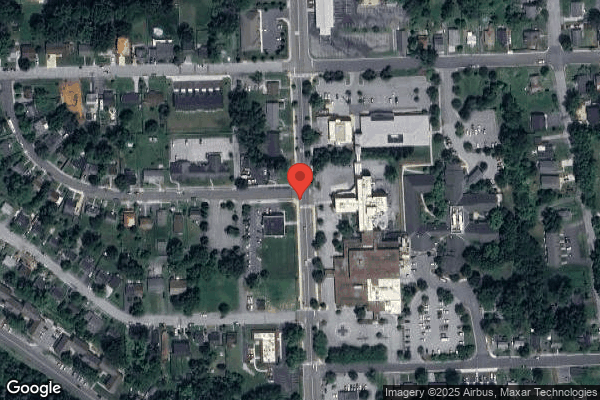

LYNN CARE CENTER

1000 SHENANDOAH AVENUE, FRONT ROYAL, VA 22630 (540) 636-0300
For profit - Individual 120 Beds HILL VALLEY HEALTHCARE Data: November 2025
Trust Grade
43/100
#144 of 285 in VA
Last Inspection: January 2023

Over 2 years since last inspection. Current conditions may differ from available data.

Overview

Lynn Care Center has a Trust Grade of D, indicating below-average performance with some significant concerns. It ranks #144 out of 285 nursing homes in Virginia, placing it in the bottom half, and it is the second-best option in Warren County, with only one local facility rated higher. The facility's trend is stable, with a consistent number of issues over the past two years. Staffing is a weakness, receiving only 2 out of 5 stars, with a 62% turnover rate that is concerning compared to the state average of 48%. The center was fined $23,989, which is higher than 85% of Virginia facilities, suggesting ongoing compliance problems. On the positive side, Lynn Care Center has better RN coverage than 86% of facilities in the state, ensuring better oversight for residents' needs. However, there have been serious incidents, including a fall resulting in a fracture due to inadequate supervision during a transfer, and a resident developing a pressure injury due to a lack of proper skin assessments and care. Additionally, there were issues with medication availability for some residents, indicating potential challenges in meeting care standards. Families considering this facility should weigh these strengths and weaknesses carefully.

Trust Score
D
43/100
In Virginia
#144/285
Top 50%
Safety Record
Moderate
Needs review
Inspections
Holding Steady
3 → 3 violations
Staff Stability
⚠ Watch
62% turnover. Above average. Higher turnover means staff may not know residents' routines.
Penalties
○ Average
$23,989 in fines. Higher than 60% of Virginia facilities. Some compliance issues.
Skilled Nurses
✓ Good
Each resident gets 51 minutes of Registered Nurse (RN) attention daily — more than average for Virginia. RNs are trained to catch health problems early.
Violations
⚠ Watch
44 deficiencies on record. Higher than average. Multiple issues found across inspections.
★★★☆☆
3.0
Overall Rating
★★☆☆☆
2.0
Staff Levels
★★★★★
5.0
Care Quality
★★☆☆☆
2.0
Inspection Score
Stable
2024: 3 issues
2025: 3 issues

The Good

  • 5-Star Quality Measures · Strong clinical quality outcomes
  • Full Sprinkler Coverage · Fire safety systems throughout facility
  • No fines on record

Facility shows strength in quality measures, fire safety.

The Bad

3-Star Overall Rating

Near Virginia average (3.0)

Meets federal standards, typical of most facilities

Staff Turnover: 62%

16pts above Virginia avg (46%)

Frequent staff changes - ask about care continuity

Federal Fines: $23,989

Below median ($33,413)

Minor penalties assessed

Chain: HILL VALLEY HEALTHCARE

Part of a multi-facility chain

Ask about local staffing decisions and management

Staff turnover is elevated (62%)

14 points above Virginia average of 48%

The Ugly 44 deficiencies on record

2 actual harm
Feb 2025 3 deficiencies
CONCERN (D) 📢 Someone Reported This

A family member, employee, or ombudsman was alarmed enough to file a formal complaint

Potential for Harm - no one hurt, but risky conditions existed

Notification of Changes (Tag F0580)

Could have caused harm · This affected 1 resident

**NOTE- TERMS IN BRACKETS HAVE BEEN EDITED TO PROTECT CONFIDENTIALITY** Based on staff interview, facility document review and clinical record review, it was determined the facility staff failed to no...

Read full inspector narrative →
**NOTE- TERMS IN BRACKETS HAVE BEEN EDITED TO PROTECT CONFIDENTIALITY** Based on staff interview, facility document review and clinical record review, it was determined the facility staff failed to notify the physician and/or responsible party when medications were not administered for three of six residents in the survey sample, Residents #1, #3, and #4. The findings include: 1. For Resident #1, the facility staff failed to notify the physican and the responsible party when medications were not available for administration. The physician orders dated 10/22/24 documented: 1. Pantoprazole Sodium Oral Packet 40 MG (milligrams); Give 1 packet [NAME] G-Tube (gastrostomy) one time a day for gastrostomy status. 2. Amantadine HCL (hydrochloride) Oral Solution 50 MG/5ML (milligrams per 5 milliliters); Give 10 ml via G-tube two times a day for epileptic seizures. 3. Diltiazem HCL Oral Tablet 30 MG; Give 1 tablet via G-tube two times a day for HTN (high blood pressure), hold for SBP (systolic blood pressure) < (less than) 100 or HR (heart rate) < 60. 4. Docusate Sodium Oral Liquid 50 MG/5ML; Give 10 ml via G-tube two times a day for constipation, hold for loose stools. 5. Levetiracetam Oral Solution; Give 12.5 ml via G-tube two times a day for seizures. 6. Oxybutynin Chloride Oral Tablet 5 MG; Give 1 tablet by mouth two times a day for bladder spasms. 7. Vimpat Oral Solution 10 MG/ML; Give 10 ml via G-tube two times a day for seizure. 8. Tizanidine HCL Oral Tablet 4 MG; Give 2 tablet via G-tube three times a day for spasticity. 9. Propranolol HCL Oral Solution 20 MG/5ML; Give 5 ml via G-tube every 8 hours for tachycardia, hold for HR <70. The October 2024 MAR (medication administration record) documented the above orders. On the following dates and times, the following medications were not administered. A 9 was documented on the MAR indicating, 9 indicates Other/See Progress Notes. 1. Pantoprazole - 10/24/24 - 7:00 a.m. dose 2. Amantadine - 1/22/24 - 9:00 p.m. dose and 1/23/24 - 9:00 a.m. dose 3. Diltiazem - 1/22/24 - 9:00 p.m. dose and 1/23/24 - 9:00 a.m. dose 4. Docusate - 1/22/24 - 9:00 p.m. dose and 1/23/24 at 9:00 a.m. dose 5. Levetiracetam - 1/22/24 - 9:00 p.m. dose and 1/23/24 - 9:00 a.m. dose 6. Oxybutynin - 1/22/24 - 9:00 p.m. dose 7. Vimpat - 1/22/24 - 9:00 p.m. dose; 1/23/24 - 9:00 a.m. and 9:00 p.m. dose; 1/24/24 - 9:00 a.m. dose. 8. Tizanidine - 1/22/24 - 9:00 a.m. dose 9. Propranolol - 1/22/24 - 10:00 p.m. dose and 1/23/24 - 6:00 a.m. dose. The nurse's note dated 1/23/24 at 1:50 a.m. for all the medications for 1/22/24 9:00 p.m. or 10:00 p.m. doses documented, On order from RX (pharmacy). The nurse's note dated 1/23/24 at 5:05 a.m. documented for the Propranolol, On order, not in Omnicell (back up pharmacy system in facility). The nurse's note dated 1/23/24 at 11:09 a.m. documented for all of the medications due on 1/23/24 at 9:00 a.m., Awaiting pharmacy. Have contacted pharmacy. The nurse's note dated 1/23/24 at 11:13 p.m. documented for the Vimpat, on order. The nurse's note dated 1/24/24 at 1:03 p.m., documented, On order, not available in Omnicell. There was no documentation the nurses called the physician and the responsible party to inform them the above medications were not administered. On 2/7/25 at 3:25 p.m., An interview was conducted with LPN (licensed practical nurse) #1,When asked the process for getting medications for a new admission, LPN #1 stated, The nurse puts the orders into the computer and that sends them to the pharmacy.The pharmacy is in another state, and the medications don't come right away. If it's time for administration, and the medications are not here, the nurse should check the Omnicell. If it's not there they should call the pharmacy and have them sent to the facility right away. The pharmacy will contact a local pharmacy and have them sent from there, if they have them. If the medications are still not here, the nurse needs to call the nurse practitioner or after-hours provider and get orders to hold until available or get new orders for medications that we can get. The nurse needs to contact the responsible party and let them know the situation with the medications also. All of this should be documented in a progress/nurse's note. The facility policy, Unavailable Medications documented in part, The facility must take every effort to ensure that medications are available to meet the needs of each resident .The nursing staff shall: 1. Notify the attending physician (or on-call physician when applicable) of the situation and explain the circumstances, expected availability, and alternative therapy available. ASM (administrative staff member) #1, the administrator, ASM #2, the director of nursing and ASM #3, regional nurse consultant, were made aware of the above concern on 2/7/25 at 5:30 p.m. No further information was provided prior to exit. References: (1) Pantoprazole is used to treat damage from gastroesophageal reflux disease (GERD), a condition in which backward flow of acid from the stomach causes heartburn and possible injury of the esophagus. This information was obtained from the following website: https://medlineplus.gov/druginfo/meds/a601246.html. (2) Amantadine is used to treat the symptoms of Parkinson's disease (PD; a disorder of the nervous system that causes difficulties with movement, muscle control, and balance) and other similar conditions. This information was obtained from the following website: https://medlineplus.gov/druginfo/meds/a682064.html. (3) Diltiazem is used to treat high blood pressure and to control angina (chest pain). This information was obtained from the following website: https://medlineplus.gov/druginfo/meds/a684027.html. (4) Docusate Sodium -Stool softeners are used on a short-term basis to relieve constipation by people who should avoid straining during bowel movements because of heart conditions, hemorrhoids, and other problems. They work by softening stools to make them easier to pass. This information was obtained from the following website: https://medlineplus.gov/druginfo/meds/a601113.html. (5) Levetiracetam is used alone and along with other medications to control partial-onset seizures (seizures that involve only one part of the brain) in adults, children, and infants 1 month of age or older. This information was obtained from the following website: https://medlineplus.gov/druginfo/meds/a699059.html. (6) Oxybutynin is used to treat overactive bladder (a condition in which the bladder muscles contract uncontrollably and cause frequent urination, urgent need to urinate, and inability to control urination) in certain adults and children. This information was obtained from the following website: https://medlineplus.gov/druginfo/meds/a682141.html (7) Lacosamide (Vimpat)is used to control partial onset seizures (seizures that involve only one part of the brain). Lacosamide is also used in combination with other medications to control primary generalized tonic-clonic seizures. This information was obtained from the following website: https://medlineplus.gov/druginfo/meds/a609028.html. (8) Tizanidine is used to relieve the spasms and increased muscle tone caused by multiple sclerosis (MS, a disease in which the nerves do not function properly, and patients may experience weakness, numbness, loss of muscle coordination and problems with vision, speech, and bladder control), stroke, or brain or spinal injury. This information was obtained from the following website: https://medlineplus.gov/druginfo/meds/a601121.html. (9) Propranolol is used alone or in combination with other medications to treat high blood pressure. This information was obtained from the following website: https://medlineplus.gov/druginfo/meds/a682607.html. 2. For Resident #3, the facility staff failed to notify the physician and responsible party when medications were not available for administration. The physician order dated 1/18/25, documented, Banatrol plus Oral Packet (banana flakes); Give 1 packet via G - tube (gastrostomy tube) one time a day for diarrhea. The physician order dated 1/4/25, documented, Ferrous Sulfate Oral Solution 300 Mg/5ML (milligrams per five milliliters); Give 5 ml via G-Tube one time a day every other day for anemia. The January 2025 and February 2025 MAR (medication administration record) documented the above orders. On 1/10/25, 1/12/25 and 1/14/25, a 9 was documented in the block for the documentation of administration of the Ferrous Sulfate at 9:00 a.m. A 9 indicates Other/See Progress Notes. On 1/19/25 at 3:00 p.m. the Banatrol was documented with a 9 in the block for administration. On 2/7/25 at 3:00 p.m. the Banatrol was documented with a 9 in the block for administration. Review of the nurse's notes dated 1/10/25 at 10:38 a.m. documented, Med (medication) not available, on order from pharmacy from EMR (electronic medical record). The nurse's note dated 1/12/25 at 10:04 a.m. documented, na. The nurse's note dated 1/14/25 at 1:40 p.m. documented, Med not available, ordered through pharmacy. The nurse's note dated, 1/19/25 at 3:57 p.m. documented, Medication unavailable, NP (nurse practitioner) notified. The nurse's note dated 2/7/25 at 10:24 a.m. documented, Medication on order from pharmacy. There was no documentation the nurses called the physician and the responsible party to inform them the above medications were not administered. On 2/7/25 at 3:25 p.m., An interview was conducted with LPN (licensed practical nurse) #1, When asked what a nurse is to do when a medication is not available for administration, LPN #,The nurse should check the medication cart, check the Omnicell, call the pharmacy. If still not available, the nurse should call the doctor/nurse practitioner and follow their recommendations. LPN #1 stated, after the nurse speaks to the doctor and gets orders, they need to notify the responsible party and document it all in the medical record. ASM (administrative staff member) #1, the administrator, ASM #2, the director of nursing and ASM #3, regional nurse consultant, were made aware of the above concern on 2/7/25 at 5:30 p.m. No further information was provided prior to exit. 3. For Resident #4, the facility staff failed to notify the physican and the responsible party when medications were not available for administration. The physician orders dated 1/14/25, documented: 1. Sennosides Oral Syrup 8.8 MG/5ML; Give 5 ml via G-tube at bedtime for BM (bowel movement) regimen. 2. Budesonide Inhalation Suspension 0.5 MG/2ML; Give 2 ml via trach (tracheostomy) two times a day for respiratory failure. 3. Humulin 70/30 Suspension 100UNIT/ML (insulin NPH Isophane & Regular); Inject 12 unit subcutaneously two times a day for T2DM (type 2 diabetes mellitus). 4. Glycopyrrolate Oral Tablet 1 MG; Give 1 tablet via G-tube every 8 hours for secretions. The January 2025 MAR (medication administration record) documented the above orders. On the following dates and times, the following medications were not administered. A 9 was documented on the MAR indicating, 9 indicates Other/See Progress Notes. 1. Sennoside Oral Syrup - 1/14/25, 1/17/25, 1/18/25, and 1/19/25 at 9:00 p.m. 2. Budesonide Inhalation Suspension - 1/14/25 at 9:00 p.m. 3. Humulin 70/30 - 1/14/25 at 8:00 p.m. 4. Glycopyrrolate Oral Tablet - 1/14/25 at 10:00 p.m. and 1/15/25 at 6:00 a.m. The nurse's note dated, 1/14/25 at 11:07 p.m. documented, Sennosides Oral Syrup - On order. The respiratory therapist note dated, 1/14/25 at 10:52 p.m. documented, Budesonide -Medication not available to dispense to the patient. The nurse's note dated, 1/14/25 at Humulin 70/30 -1:45 p.m. documented, On order. The nurse's note dated 1/14/25 at 11:06 p.m. - Glycopyrrolate - On order. The nurse's note dated 1/15/25 at 5:48 a.m. - Glycopyrrolate - On order, not available in Omnicell. There was no documentation the nurses called the physician and the responsible party to inform them the above medications were not administered. An interview was conducted with LPN (licensed practical nurse) #1, on 2/7/25 at 3:25 p.m. When asked the process for getting medications for a new admission, LPN #1 stated, The nurse puts the orders into the computer and that sends them to the pharmacy. The pharmacy is in another state, the medications don't come right away. If it's time for administration, and the medications are not here, the nurse should check the Omnicell. If it's not there they should call the pharmacy and have them sent to the facility right away. The pharmacy will contact a local pharmacy and have them sent from there, if they have them. If the medications are still not here, the nurse needs to call the nurse practitioner or after-hours provider and get orders to hold until available or get new orders for medications that we can get. The nurse needs to contact the responsible party and let them know the situation with the medications also. All of this should be documented in a progress/nurse's note. ASM (administrative staff member) #1, the administrator, ASM #2, the director of nursing and ASM #3, regional nurse consultant, were made aware of the above concern on 2/7/25 at 5:30 p.m. No further information was provided prior to exit. References: (1) Senna is in a class of medications called stimulant laxatives. It works by increasing activity of the intestines to cause a bowel movement. This information was obtained from the following website: https://medlineplus.gov/druginfo/meds/a601112.html. (2) Budesonide belongs to a class of medications called corticosteroids. It works by decreasing swelling and irritation in the airways to allow for easier breathing. This information was obtained from the following website: https://medlineplus.gov/druginfo/meds/a699056.html. (3) Human insulin is in a class of medications called hormones. Human insulin is used to take the place of insulin that is normally produced by the body. It works by helping move sugar from the blood into other body tissues where it is used for energy. It also stops the liver from producing more sugar. This information was obtained from the following website: https://medlineplus.gov/druginfo/meds/a682611.html. (4) Glycopyrrolate is in a class of medications called anticholinergics. It decreases stomach acid and saliva production by blocking the activity of a certain natural substance in the body. This information was obtained from the following website: https://medlineplus.gov/druginfo/meds/a602014.html.
CONCERN (D) 📢 Someone Reported This

A family member, employee, or ombudsman was alarmed enough to file a formal complaint

Potential for Harm - no one hurt, but risky conditions existed

Quality of Care (Tag F0684)

Could have caused harm · This affected 1 resident

Based on staff interview, facility document review and clinical record review, it was determined the facility staff failed to administer medications/supplements per the physician order for two of six ...

Read full inspector narrative →
Based on staff interview, facility document review and clinical record review, it was determined the facility staff failed to administer medications/supplements per the physician order for two of six residents in the survey sample, Residents #3 and #4. The findings include: 1. For Resident #3, the facility staff failed to administer Banatrol (1) and Ferrous Sulfate (2) per the physician orders. The physician order dated 1/18/25, documented, Banatrol plus Oral Packet (banana flakes); Give 1 packet via G - tube (gastrostomy tube) one time a day for diarrhea. The physician order dated 1/4/25, documented, Ferrous Sulfate Oral Solution 300 Mg/5ML (milligrams per five milliliters); Give 5 ml via G-Tube one time a day every other day for anemia. The January 2025 and February 2025 MAR (medication administration record) documented the above orders. On 1/10/25, 1/12/25 and 1/14/25, a 9 was documented in the block for the documentation of administration of the Ferrous Sulfate at 9:00 a.m. A 9 indicates Other/See Progress Notes. On 1/19/25 at 3:00 p.m. the Banatrol was documented with a 9 in the block for administration. On 2/7/25 at 3:00 p.m. the Banatrol was documented with a 9 in the block for administration. Review of the nurse's notes dated 1/10/25 at 10:38 a.m. documented, Med (medication) not available, on order from pharmacy from EMR (electronic medical record). The nurse's note dated 1/12/25 at 10:04 a.m. documented, na. The nurse's note dated 1/14/25 at 1:40 p.m. documented, Med not available, ordered through pharmacy. The nurse's note dated, 1/19/25 at 3:57 p.m. documented, Medication unavailable, NP (nurse practitioner) notified. The nurse's note dated 2/7/25 at 10:24 a.m. documented, Medication on order from pharmacy. An interview was conducted with LPN (licensed practical nurse) #1, on 2/7/25 at 3:25 p.m. When asked what a nurse is to do when a medication is not available for administration, LPN #1 stated the nurse should check the medication cart, check the Omnicell, call the pharmacy. If still not available, the nurse should call the doctor/nurse practitioner and follow their recommendations. LPN #1 stated, after the nurse speaks to the doctor and gets orders, they need to notify the responsible party and document it all in the medical record. When asked about Banatrol and Ferrous Sulfate, LPN #1 stated the Banatrol is on the medication cart and the extra is in the clean utility room, and the Ferrous Sulfate is floor stock. An interview was conducted with OSM (other staff member) #1, the central supply staff member, on 2/7/25 at 4:15 p.m. When asked if they stock Banatrol, OSM #1 stated they stock it in the storage room on each unit and she has it in the central supply closet. She stated she could not remember a time when they have run out of it. Observation was made of the clean utility room on the unit where Resident #2 is, and there were 13 packs of Banatrol on the shelf. A second interview was conducted on 2/7/25 at 5:01 p.m. with LPN #1. She stated that she looked in the medication cart and found the Ferrous Sulfate in the cart. There was no date on the bottle of when it was opened but it was there for administration. The facility policy, Unavailable Medications documented in part, The facility must take every effort to ensure that medications are available to meet the needs of each resident. ASM (administrative staff member) #1, the administrator, ASM #2, the director of nursing and ASM #3, regional nurse consultant, were made aware of the above concern on 2/7/25 at 5:30 p.m. No further information was provided prior to exit. (1) Banatrol - Manages chronic diarrhea and diarrhea from IBS-D, infections, medications, inflammatory bowel, loose stools, incontinence, C. diff, chemo and radiation, travelling and anxiety-related diarrhea. This information was obtained from the following website: https://store.medtrition.com/products/banatrol-plus. (2) Iron (ferrous fumarate, ferrous gluconate, ferrous sulfate) is used to treat or prevent anemia (a lower than normal number of red blood cells) when the amount of iron taken in from the diet is not enough. Iron is a mineral that is available as a dietary supplement. It works by helping the body to produce red blood cells. This information was obtained from the following website: https://medlineplus.gov/druginfo/meds/a682778.html. 2. For Resident #4, the facility staff failed to administer Banatrol per the physician order. The physician order dated, 1/21/25, documented, Banatrol plus Oral Packet (Banana Flakes); Give 1 unit via G-tube two times a day for diarrhea. The January 2025 and February 2025 MAR (medication administration record) documented the above order. On 1/24/25, a 9 was documented for the 9:00 p.m. dose. A 9 indicates Other/See Progress Notes. On 2/7/25, a 5 was documented for the 9:00 a.m. dose. A 5 indicates Hold See Progress Note. The nurse's note dated, 1/24/25 at 8:49 p.m. documented, On order. The nurse's note dated, 2/7/25 at 8:56 a.m. documented, Medication on order from pharmacy. An interview was conducted with LPN (licensed practical nurse) #1, on 2/7/25 at 3:25 p.m. When asked what a nurse is to do when a medication is not available for administration, LPN #1 stated the nurse should check the medication cart, check the Omnicell, call the pharmacy. If still not available, the nurse should call the doctor/nurse practitioner and follow their recommendations. LPN #1 stated, after the nurse speaks to the doctor and gets orders, they need to notify the responsible party and document it all in the medical record. When asked about Banatrol, LPN #1 stated the Banatrol is on the medication cart and the extra is in the clean utility room. An interview was conducted with OSM (other staff member) #1, the central supply staff member, on 2/7/25 at 4:15 p.m. When asked if they stock Banatrol, OSM #1 stated they stock it in the storage room on each unit and she has it in the central supply closet. She stated she could not remember a time when they have run out of it. Observation was made of the clean utility room on the unit where Resident #2 is, and there were 13 packs of Banatrol on the shelf. ASM (administrative staff member) #1, the administrator, ASM #2, the director of nursing and ASM #3, regional nurse consultant, were made aware of the above concern on 2/7/25 at 5:30 p.m. No further information was provided prior to exit.
CONCERN (E) 📢 Someone Reported This

A family member, employee, or ombudsman was alarmed enough to file a formal complaint

Potential for Harm - no one hurt, but risky conditions existed

Pharmacy Services (Tag F0755)

Could have caused harm · This affected multiple residents

**NOTE- TERMS IN BRACKETS HAVE BEEN EDITED TO PROTECT CONFIDENTIALITY** Based on staff interview, facility document review, and clinical record review, it was determined the facility staff failed to e...

Read full inspector narrative →
**NOTE- TERMS IN BRACKETS HAVE BEEN EDITED TO PROTECT CONFIDENTIALITY** Based on staff interview, facility document review, and clinical record review, it was determined the facility staff failed to ensure medications were available for administration for two of six residents in the survey sample, Residents #1 and #4. The findings include: 1. For Resident #1 (R1), the facility staff failed to ensure Pantoprazole (1), Amantadine (2), Diltiazem (3), Docusate (4), Levetiracetam (5), Oxybutynin (6), Vimpat (7), Tizanidine (8) and Propranolol (9) were available for the scheduled administration times. The nurse's note dated 10/22/24 at 3:45 p.m. documented in part, (R1) was admitted from nursing home via stretcher. The physician orders dated 10/22/24 documented: 1. Pantoprazole Sodium Oral Packet 40 MG (milligrams); Give 1 packet [NAME] G-Tube (gastrostomy) one time a day for gastrostomy status. 2. Amantadine HCL (hydrochloride) Oral Solution 50 MG/5ML (milligrams per 5 milliliters); Give 10 ml via G-tube two times a day for epileptic seizures. 3. Diltiazem HCL Oral Tablet 30 MG; Give 1 tablet via G-tube two times a day for HTN (high blood pressure), hold for SBP (systolic blood pressure) < (less than) 100 or HR (heart rate) < 60. 4. Docusate Sodium Oral Liquid 50 MG/5ML; Give 10 ml via G-tube two times a day for constipation, hold for loose stools. 5. Levetiracetam Oral Solution; Give 12.5 ml via G-tube two times a day for seizures. 6. Oxybutynin Chloride Oral Tablet 5 MG; Give 1 tablet by mouth two times a day for bladder spasms. 7. Vimpat Oral Solution 10 MG/ML; Give 10 ml via G-tube two times a day for seizure. 8. Tizanidine HCL Oral Tablet 4 MG; Give 2 tablet via G-tube three times a day for spasticity. 9. Propranolol HCL Oral Solution 20 MG/5ML; Give 5 ml via G-tube every 8 hours for tachycardia, hold for HR <70. The October 2024 MAR (medication administration record) documented the above orders. On the following dates and times, the following medications were not administered. A 9 was documented on the MAR indicating, 9 indicates Other/See Progress Notes. 1. Pantoprazole - 10/24/24 - 7:00 a.m. dose 2. Amantadine - 1/22/24 - 9:00 p.m. dose and 1/23/24 - 9:00 a.m. dose 3. Diltiazem - 1/22/24 - 9:00 p.m. dose and 1/23/24 - 9:00 a.m. dose 4. Docusate - 1/22/24 - 9:00 p.m. dose and 1/23/24 at 9:00 a.m. dose 5. Levetiracetam - 1/22/24 - 9:00 p.m. dose and 1/23/24 - 9:00 a.m. dose 6. Oxybutynin - 1/22/24 - 9:00 p.m. dose 7. Vimpat - 1/22/24 - 9:00 p.m. dose; 1/23/24 - 9:00 a.m. and 9:00 p.m. dose; 1/24/24 - 9:00 a.m. dose. 8. Tizanidine - 1/22/24 - 9:00 a.m. dose 9. Propranolol - 1/22/24 - 10:00 p.m. dose and 1/23/24 - 6:00 a.m. dose. The nurse's note dated 1/23/24 at 1:50 a.m. for all the medications for 1/22/24 9:00 p.m. or 10:00 p.m. doses documented, On order from RX (pharmacy). The nurse's note dated 1/23/24 at 5:05 a.m. documented for the Propranolol, On order, not in Omnicell (back up pharmacy system in facility). The nurse's note dated 1/23/24 at 11:09 a.m. documented for all of the medications due on 1/23/24 at 9:00 a.m., Awaiting pharmacy. Have contacted pharmacy. The nurse's note dated 1/23/24 at 11:13 p.m. documented for the Vimpat, on order. The nurse's note dated 1/24/24 at 1:03 p.m., documented, On order, not available in Omnicell. On 2/7/25 at 3:25 p.m. An interview was conducted with LPN (licensed practical nurse) #1, When asked the process for getting medications for a new admission, LPN #1 stated, The nurse puts the orders into the computer and that sends them to the pharmacy. The pharmacy is in another state, the medications don't come right away. If it's time for administration, and the medications are not here, the nurse should check the Omnicell. If it's not there they should call the pharmacy and have them sent to the facility right away. The pharmacy will contact a local pharmacy and have them sent from there, if they have them. If the medications are still not here, the nurse needs to call the nurse practitioner or after-hours provider and get orders to hold until available or get new orders for medications that we can get. The nurse needs to contact the responsible party and let them know the situation with the medications also. All of this should be documented in a progress/nurse's note. LPN #1 stated,The resident was admitted around 3:00 p.m., the medications should have come during the night so the resident wouldn't have missed the morning doses of their medications. The facility policy, Unavailable Medications documented in part, The facility must take every effort to ensure that medications are available to meet the needs of each resident .The nursing staff shall: 1. Notify the attending physician (or on-call physician when applicable) of the situation and explain the circumstances, expected availability, and alternative therapy available. ASM (administrative staff member) #1, the administrator, ASM #2, the director of nursing and ASM #3, regional nurse consultant, were made aware of the above concern on 2/7/25 at 5:30 p.m. No further information was provided prior to exit. References: (1) Pantoprazole is used to treat damage from gastroesophageal reflux disease (GERD), a condition in which backward flow of acid from the stomach causes heartburn and possible injury of the esophagus. This information was obtained from the following website: https://medlineplus.gov/druginfo/meds/a601246.html. (2) Amantadine is used to treat the symptoms of Parkinson's disease (PD; a disorder of the nervous system that causes difficulties with movement, muscle control, and balance) and other similar conditions. This information was obtained from the following website: https://medlineplus.gov/druginfo/meds/a682064.html. (3) Diltiazem is used to treat high blood pressure and to control angina (chest pain). This information was obtained from the following website: https://medlineplus.gov/druginfo/meds/a684027.html. (4) Docusate Sodium -Stool softeners are used on a short-term basis to relieve constipation by people who should avoid straining during bowel movements because of heart conditions, hemorrhoids, and other problems. They work by softening stools to make them easier to pass. This information was obtained from the following website: https://medlineplus.gov/druginfo/meds/a601113.html. (5) Levetiracetam is used alone and along with other medications to control partial-onset seizures (seizures that involve only one part of the brain) in adults, children, and infants 1 month of age or older. This information was obtained from the following website: https://medlineplus.gov/druginfo/meds/a699059.html. (6) Oxybutynin is used to treat overactive bladder (a condition in which the bladder muscles contract uncontrollably and cause frequent urination, urgent need to urinate, and inability to control urination) in certain adults and children. This information was obtained from the following website: https://medlineplus.gov/druginfo/meds/a682141.html (7) Lacosamide (Vimpat)is used to control partial onset seizures (seizures that involve only one part of the brain). Lacosamide is also used in combination with other medications to control primary generalized tonic-clonic seizures. This information was obtained from the following website: https://medlineplus.gov/druginfo/meds/a609028.html. (8) Tizanidine is used to relieve the spasms and increased muscle tone caused by multiple sclerosis (MS, a disease in which the nerves do not function properly and patients may experience weakness, numbness, loss of muscle coordination and problems with vision, speech, and bladder control), stroke, or brain or spinal injury. This information was obtained from the following website: https://medlineplus.gov/druginfo/meds/a601121.html. (9) Propranolol is used alone or in combination with other medications to treat high blood pressure. This information was obtained from the following website: https://medlineplus.gov/druginfo/meds/a682607.html. 2. For Resident #4, the facility staff failed to ensure Sennoside (1), Budesonide (2), Humulin 70/30 (3), and Glycopyrrolate (4) were available for the scheduled administration times. The nurse's note dated 1/14/25 at 6:53 p.m. documented in part, Pt (patient) arrived at facility at 1730 (5:30 p.m.) per transport. The physician orders dated 1/14/25, documented: 1. Sennosides Oral Syrup 8.8 MG/5ML; Give 5 ml via G-tube at bedtime for BM (bowel movement) regimen. 2. Budesonide Inhalation Suspension 0.5 MG/2ML; Give 2 ml via trach (tracheostomy) two times a day for respiratory failure. 3. Humulin 70/30 Suspension 100UNIT/ML (insulin NPH Isophane & Regular); Inject 12 unit subcutaneously two times a day for T2DM (type 2 diabetes mellitus). 4. Glycopyrrolate Oral Tablet 1 MG; Give 1 tablet via G-tube every 8 hours for secretions. The January 2025 MAR (medication administration record) documented the above orders. On the following dates and times, the following medications were not administered. A 9 was documented on the MAR indicating, 9 indicates Other/See Progress Notes. 1. Sennoside Oral Syrup - 1/14/25, 1/17/25, 1/18/25, and 1/19/25 at 9:00 p.m. 2. Budesonide Inhalation Suspension - 1/14/25 at 9:00 p.m. 3. Humulin 70/30 - 1/14/25 at 8:00 p.m. 4. Glycopyrrolate Oral Tablet - 1/14/25 at 10:00 p.m. and 1/15/25 at 6:00 a.m. The nurse's note dated, 1/14/25 at 11:07 p.m. documented, Sennosides Oral Syrup - On order. The respiratory therapist note dated, 1/14/25 at 10:52 p.m. documented, Budesonide -Medication not available to dispense to the patient. The nurse's note dated, 1/14/25 at Humulin 70/30 -1:45 p.m. documented, On order. The nurse's note dated 1/14/25 at 11:06 p.m. - Glycopyrrolate - On order. The nurse's note dated 1/15/25 at 5:48 a.m. - Glycopyrrolate - On order, not available in Omnicell. On 2/7/25 at 3:25 p.m., An interview was conducted with LPN (licensed practical nurse) #1, When asked the process for getting medications for a new admission, LPN #1 stated,The nurse puts the orders into the computer and that sends them to the pharmacy. The pharmacy is in another state, the medications don't come right away. If it's time for administration, and the medications are not here, the nurse should check the Omnicell. If it's not there they should call the pharmacy and have them sent to the facility right away. The pharmacy will contact a local pharmacy and have them sent from there, if they have them. If the medications are still not here, the nurse needs to call the nurse practitioner or after-hours provider and get orders to hold until available or get new orders for medications that we can get. The nurse needs to contact the responsible party and let them know the situation with the medications also. All of this should be documented in a progress/nurse's note. LPN #1 stated,For a new admission, the medications routinely arrive during the nighttime hours. ASM (administrative staff member) #1, the administrator, ASM #2, the director of nursing and ASM #3, regional nurse consultant, were made aware of the above concern on 2/7/25 at 5:30 p.m. No further information was provided prior to exit. References: (1) Senna is in a class of medications called stimulant laxatives. It works by increasing activity of the intestines to cause a bowel movement. This information was obtained from the following website: https://medlineplus.gov/druginfo/meds/a601112.html. (2) Budesonide belongs to a class of medications called corticosteroids. It works by decreasing swelling and irritation in the airways to allow for easier breathing. This information was obtained from the following website: https://medlineplus.gov/druginfo/meds/a699056.html. (3) Human insulin is in a class of medications called hormones. Human insulin is used to take the place of insulin that is normally produced by the body. It works by helping move sugar from the blood into other body tissues where it is used for energy. It also stops the liver from producing more sugar. This information was obtained from the following website: https://medlineplus.gov/druginfo/meds/a682611.html. (4) Glycopyrrolate is in a class of medications called anticholinergics. It decreases stomach acid and saliva production by blocking the activity of a certain natural substance in the body. This information was obtained from the following website: https://medlineplus.gov/druginfo/meds/a602014.html.
Jul 2024 3 deficiencies
CONCERN (D) 📢 Someone Reported This

A family member, employee, or ombudsman was alarmed enough to file a formal complaint

Potential for Harm - no one hurt, but risky conditions existed

Deficiency F0657 (Tag F0657)

Could have caused harm · This affected 1 resident

Based on observation, staff interview, facility document review, and clinical record review, it was determined the facility staff failed to review and revise the comprehensive care plan for two of fou...

Read full inspector narrative →
Based on observation, staff interview, facility document review, and clinical record review, it was determined the facility staff failed to review and revise the comprehensive care plan for two of four residents in the survey sample, Resident #2 and #3. The findings include: 1. For Resident #2 (R2), the facility staff failed to review and revise the comprehensive care plan for when the resident was moved to a secured dementia unit. The nurse's note dated 6/11/24 at 5:14 p.m. documented, Resident moved from room (XXX-x) to room (XXX-x) in the Shenandoah Gardens (secured dementia unit) MD (medical doctor) and RP (responsible party) made aware. Tolerating well. Will continue to monitor. The comprehensive care plan dated, 8/24/22, documented in part, Focus: (R2) is an elopement risk/wanderer r/t (related to) impaired safety awareness. The Interventions documented, Distract resident from wandering by offering pleasant diversions, structured activities, food, conversation, television, book. Frequent rounding while up in wheelchair. Q (every) 15-minute checks times 1 week. Signage placed on door for visitors not to allow residents out of the facility without permission. Wander guard as ordered. Check per facility protocol. An interview was conducted with ASM (administrative staff member) #2, the director of nursing, on 7/15/24 at 4:00 p.m. When asked if a resident is on a secured dementia unit, would you expect that to be on the care plan, ASM #2 stated, I would think so. An interview was conducted with LPN (licensed practical nurse) #2, the unit manager of the secured dementia unit, on 7/16/24 at 1:10 p.m. When asked who updates the care plans, LPN #2 stated all nurses do. When asked if a resident is on a secured dementia unit, should that be on the care plan, LPN #2 stated, yes. The facility policy, Care Planning - Comprehensive Person-Centered documented in part, 16. The Care Planning/Interdisciplinary Team is responsible for the review and updating of care plans: a.When requested by the resident/resident representative. b. When there is a significant change in the resident's condition. c. When the desired outcome is not met. d. When goals, needs and preferences change. e. When the resident has been readmitted to the facility from a hospital stay. f. At least quarterly and after each OBRA MDS assessment. ASM #1, the administrator, ASM #2 and ASM #3, regional director of clinical operations, were made aware of the above findings on 7/16/24 at approximately 1:45 p.m. No further information was provided prior to exit. 2. For Resident #3 (R3), the facility staff failed to review and revise the comprehensive care plan to address the resident residing on a secured dementia unit. The comprehensive care plan dated, 3/11/22 and revised on 1/4/24, documented in part, Focus: (R3) has hx of episodes of wandering and can be resistive to care. (R3) can become agitated/anxious with over stimulation, usually easily redirected. (R3) is often resistive or behavior trigger during showers and toileting. The Interventions documented in part, Anticipate and meet resident's needs. Caregivers to provide opportunity for positive interaction, attention. Stop and talk with him/her as passing by. Encourage resident to express feelings appropriately. Explain all procedures to the resident before starting and allow the resident time to adjust to changes. Monitor behavior episodes and attempt to determine underlying cause. Consider location, time of day, persons involved and situations. Document behaviors and potential causes. Staff will attempt to bring resident to a quiet area when she becomes anxious/agitated. The resident's trigger for (agitation and being aggressive with other after care. The resident's behavior is de-escalated by trying to keep her redirected when observed being agitated. The care plan further documented, Focus: (R3) is at risk for falls. She is at risk for further falls r/t history of fall, compulsiveness, poor safety awareness, agitation/anxiety, cognitive deficits, impaired mobility, poly pharmacy, and other chronic health conditions. Resident enjoys sitting in grass when outside. Resident will lay or sit on floor. The Interventions documented, 8/10/23 - Encourage resident to wait until staff are able to go out into the garden with her. 4/22/24 - frequent rounding. 7/31/23 - Monitor frequently when outside. The nurse's note dated, 6/2/24 at 8:20 p.m. documented, Resident was found outside lying on R (right) side w/ (with) head resting in mulch & lower body on concrete walkway. Knees pulled up slightly to wait. Resident moaning low negative tone, 'ow, ouch' repeatedly. Very dark, not well-lit. Resident responds to staff promptly. Vital signs assessed & stable. Initial neuro (neurological) check initiated & normal outside of some drowsiness initially noted. Resident assisted to feet & was able to be led by staff back inside. Wounds on L (left) elbow cleaned & dressed initially. PRN (as needed) Tylenol given. Needs met. Placed in comfortable position in bed. Bed placed in lowest position & floor matt in place. No observable changes in baseline cognitive status. RP (responsible party) and MD (medical doctor) notified. Will continue to monitor. An interview was conducted with ASM (administrative staff member) #2, the director of nursing, on 7/15/24 at 4:00 p.m. When asked if a resident is on a secured dementia unit, would you expect that to be on the care plan, ASM #2 stated, I would think so. An interview was conducted with LPN (licensed practical nurse) #2, the unit manager of the secured dementia unit, on 7/16/24 at 1:10 p.m. When asked who updates the care plans, LPN #2 stated all nurses do. When asked if a resident is on a secured dementia unit, should that be on the care plan, LPN #2 stated, yes. ASM #1, the administrator, ASM #2 and ASM #3, regional director of clinical operations, were made aware of the above findings on 7/16/24 at approximately 1:45 p.m. No further information was provided prior to exit.
CONCERN (D) 📢 Someone Reported This

A family member, employee, or ombudsman was alarmed enough to file a formal complaint

Potential for Harm - no one hurt, but risky conditions existed

Deficiency F0658 (Tag F0658)

Could have caused harm · This affected 1 resident

Based on staff interview, facility document review and clinical record review, the facility staff failed to follow professional standards of practice for one of four residents in the survey sample, Re...

Read full inspector narrative →
Based on staff interview, facility document review and clinical record review, the facility staff failed to follow professional standards of practice for one of four residents in the survey sample, Resident #1. The findings include: For Resident # (R1), the facility staff failed to clarify a physician's order for the application of compression wraps. On the most recent MDS (minimum data set) assessment, a quarterly assessment, with an assessment reference date of 4/23/24, the resident scored a 15 out of 15on the BIMS (brief interview for mental status) score, indicating the resident was not cognitively impaired for making daily decisions. The physician order dated, 7/5/23, documented, Bilateral lower legs - wrap with compression wrap once a week for 6 months one time a every Mon (Monday) for edema for 6 months. The nurse's note dated, 7/5/23 at 11:06 a.m. documented, Resident had appointment (Name) Foot and Ankle Center, came back with a new order for edema. Bilateral lower legs - Wrap with compression wrap once a week for 6 months. Resident and Family (son in law) made aware. An interview was conducted with LPN (licensed practical nurse) #3, the wound nurse, on 7/16/24 at 10:57 a.m. When asked what kind of wraps did, she observe on R1 when she cared for him, LPN #3 stated she took his wraps off a few times and they were kling wrap (a light gauze wrap used to hold dressings in place). LPN #3 was asked to review the physician order above. When asked what a compression wrap consisted of, LPN #3 stated the order wasn't clear, there are different kinds of compression wraps, mostly an ace wrap could be used. An interview was conducted with LPN #4 on 7/16/24 at 12:21 p.m. LPN #4 was asked to review the above order for compression wraps. When asked what wrap she would use to complete the physician order, LPN #4 stated she'd use either Kerlix wrap or ace wraps. LPN #4 was asked if the order needed to be clarified, LPN #4 stated, yes, it doesn't say what kind of wrap to use, it's not complete. LPN #4 stated she would question the order. An interview was conducted with LPN #5, the unit manager, on 7/16/24 at 12:50 p.m. LPN #5 was asked to review the above order for compression wraps. After review LPN #5 stated she would clarify the order. When asked if kling wrap is considered a compression wrap, LPN #5 stated, no, I'd do Kerlix before kling but probably ace wraps. The facility policy, Medication and Treatment Orders, documented in part, 12. Orders not specifying the number of doses, or duration of medication, will be clarified by the prescribing practitioner. ASM (administrative staff member) #1, the administrator, ASM #2, the director of nursing, and ASM #3, the regional director of clinical operations, were made aware of the above concern on 7/16/24 at approximately 1:45 p.m. No further information was provided prior to exit.
CONCERN (D) 📢 Someone Reported This

A family member, employee, or ombudsman was alarmed enough to file a formal complaint

Potential for Harm - no one hurt, but risky conditions existed

Accident Prevention (Tag F0689)

Could have caused harm · This affected 1 resident

**NOTE- TERMS IN BRACKETS HAVE BEEN EDITED TO PROTECT CONFIDENTIALITY** Based on observation, staff interview, facility document review and clinical record review, it was determined the facility staff...

Read full inspector narrative →
**NOTE- TERMS IN BRACKETS HAVE BEEN EDITED TO PROTECT CONFIDENTIALITY** Based on observation, staff interview, facility document review and clinical record review, it was determined the facility staff failed to provide supervision to prevent elopement for three of four residents in the survey sample, Residents #2, #3, and #4. The findings include: 1. For Resident #2 (R2), the facility staff failed to provide supervision to prevent the resident was getting out the doors and falling on the pavement outside the building on 5/27/24. On the most recent MDS (minimum data set) assessment, a quarterly assessment, with an assessment reference date (ARD) of 6/28/24, the resident scored a three out of 15 on the BIMS (brief interview for mental status) score, indicating the resident was severely impaired for making daily decisions. In Section J - Health Conditions, the resident was coded as having had one fall with minor injuries since the last assessment. The resident's mode of mobility was coded as using a wheelchair. The MDS assessment, prior to the elopement, a quarterly assessment, with an assessment reference date of 4/9/24, the resident scored a seven out of 15 on the BIMS score, indicating the resident was severely impaired for making daily decisions. In Section J - Health Conditions, the resident was not coded as having had any falls during the lookback period. R2 was coded as using a wheelchair for mobility and could self-propel in the wheelchair for at least 150 feet. The Safety Assessment completed, 2/28/24, documented the resident was not an elopement risk at this time. The nurse's note dated, 5/25/24 at 4:20 p.m. documented in part, Nursing observations, evaluation and recommendations are: Resident was observed on ground outside facility with minor injuries. Vitals and Neuro (neurological) checks are WNL (within normal limits). All appropriate notifications have been made. The Incident Report, dated 5/25/24 at 4:21 p.m. documented in part, Resident was observed on the ground outside in the parking lot of the second-floor entrance near the dumpsters. The visitor said that he had fallen and was helped back into his chair. Resident was brought back inside by staff and assessed by RN (registered nurse). He reported pain to his right shoulder, an approximately 2 in (inch) diameter open area was found to the right shoulder, area was cleaned with wound cleaner and covered with dressing, ROM (range of motion) is WNL to all extremities. There is a pin sized opening in the skin of the right knuckles, this was cleaned with alcohol and left OTA (opened to air). Vitals and neuro assessment were all WNL. All appropriate notifications were made. Wander guard was on and functioning .Predisposing Environmental Factors - alarm on and sounding. Uneven floor surfaces .After investigating it was note that another resident witnessed visitors coming in the door and the above-named resident going out the same door. The resident was a builder in the past and likes to go outside. The nurse practitioner note dated, 5/28/24 documented in part, Assessment/Plan: #2. Elopement Risk: wander guard in place, continue elopement risk monitoring, patient would benefit to be in a secure unit. The Risk Review Note dated 5/29/24 at 4:59 p.m. documented in part, (R2) has had a fall and is at risk for further falls due to cognitive & communication deficits, terminal prognosis, impaired mobility, being resistive to care at times, hx (history) of falls, polypharmacy, multiple chronic health conditions .Administrator to send letter to all families not to let resident out main entrance doors. Family members were educated to not leave resident unattended when outside. The comprehensive care plan dated, 8/24/22, documented in part, Focus: (R2) is an elopement risk/wanderer r/t (related to) impaired safety awareness. The Interventions documented, Distract resident from wandering by offering pleasant diversions, structured activities, food, conversation, television, book. Frequent rounding while up in wheelchair. Q (every) 15-minute checks times 1 week. Signage placed on door for visitors not to allow residents out of the facility without permission. Wander guard as ordered. Check per facility protocol. The nurse's note dated 6/11/24 at 5:14 p.m. documented, Resident moved from room (XXX-x) to room (XXX-x) in the Shenandoah Gardens (secured dementia unit) MD (medical doctor) and RP (responsible party) made aware. Tolerating well. Will continue to monitor. R2 was observed on 7/15/24 at 12:45 p.m. in the dining area of the secured dementia unit, sitting in his wheelchair eating lunch. The staff members that treated R2 on 5/25/24 were not available for interview. An interview was conducted with ASM (administrative staff member) #1, the administrator, ASM #2, the director of nursing, and ASM #3, the regional director of clinical operations, on 7/16/24 at 10:17 a.m. ASM #3 stated a resident informed a staff member that a visitor had let a man out the doors. The staff were on their way when the alarm was sounding. ASM #2 stated that R2 is very quick in moving in his wheelchair. ASM #1 stated he sent letters to all family members regarding not letting residents out of the building without permission. The facility policy, Elopement/Unsafe Wandering Risk Evaluations documented in part, Policy: This organization is committed to ensuring that all reasonable measures are in place to ensure that each resident received adequate supervision and assistance devices to prevent accident, including elopement and unsafe wandering .Specific Procedures/Guidance: 1. The Elopement Risk evaluation in PCC (electronic medical record) be completed on admission, re-admission, and quarterly and as needed for a change in resident status. 2. If a resident is determined to be at risk for elopement or unsafe wandering, the staff will notify the resident's attending physician/practitioner and resident' representative of the risk. 3. IF the resident is determined to be at risk for elopement or unsafe wandering, preventive interventions will be implemented. a. Interventions may include but are not limited to: i. 1:1 supervision or frequent visual checks on the resident. ii. Use of an alert system device. iii. Placement [NAME] secured unit/neighborhood. iv. Re-direction and diversional activities. 4. The resident's care plan will, be reflective of identified risk and include person-centered interventions. 5. The medical record will document the resident's behavior including attempts and actual events of elopement or unsafe wandering and preventive interventions being implemented. 6. If it is determined the resident's risks cannot be met at the current facility, the facility will, coordinate discharge planning with the resident and the resident's representative. ASM #1, ASM #2 and ASM #3 were made aware of the above findings on 7/16/24 at approximately 1:45 p.m. No further information was provided prior to exit. 2. For Resident #3 (R3), the facility staff failed to provide supervision to prevent the resident from going out into the gardens, off the secured dementia unit, and falling in the gardens on 6/2/24. On the most recent MDS assessment, a quarterly assessment, with an ARD of 6/20/24, the resident scored a three out of 15 on the BIMS score, indicating the resident was severely impaired for making daily decisions. The resident was coded in Section G - Functional Status as being able to walk at least 150 feet independently. Wandering behaviors were not coded as observed during the lookback period. In Section J - Health Conditions the resident was coded as having had two falls without injury and two falls with minor injuries. The MDS assessment, prior to the resident's fall outside on 6/2/24, coded the resident as scoring a zero out of 15 on the BIMS score, indicating the resident was severely impaired for making daily decisions. R3 was coded in Section G - Functional Status as being able to walk at least 150 feet, independently. Wandering behaviors were coded four to six days during the look back period. In Section J - Health Conditions, the resident was coded as having had one fall without injury. The nurse's note dated, 6/2/24 at 8:20 p.m. documented, Resident was found outside lying on R (right) side w/ (with) head resting in mulch & lower body on concrete walkway. Knees pulled up slightly to wait. Resident moaning low negative tone, 'ow, ouch' repeatedly. Very dark, not well-lit. Resident responds to staff promptly. Vital signs assessed & stable. Initial neuro (neurological) check initiated & normal outside of some drowsiness initially noted. Resident assisted to feet & was able to be led by staff back inside. Wounds on L (left) elbow cleaned & dressed initially. PRN (as needed) Tylenol given. Needs met. Placed in comfortable position in bed. Bed placed in lowest position & floor matt in place. No observable changes in baseline cognitive status. RP (responsible party) and MD (medical doctor) notified. Will continue to monitor. The facility synopsis of event dated, 6/7/24, documented in part, On Sunday June 2, the resident was observed by staff in the secured courtyard where she had allegedly fallen. Throughout the investigation, it was reported by staff that frequently care for (R3) that she frequently wanders and enjoys the outside atmosphere. When interviewing the resident, she was unable to recall the event. In response to the investigation (R3) was assisted back onto the facility, head to toe assessment completed and it was noted that (R3) sustained a skin tear to the left elbow, treatment implemented; area now resolved. Doors to the courtyard secured, care plan updated, and intervention placed where the resident must be supervised while in the secured courtyard and the facility updated its practice that the doors to the secured courtyard will remain locked at all times. RP and MD notified. Social worker visited (R3) for psychosocial visit and there were no needs noted. The comprehensive care plan dated, 3/11/22 and revised on 1/4/24, documented in part, Focus: (R3) has hx of episodes of wandering and can be resistive to care. (R3) can become agitated/anxious with over stimulation, usually easily redirected. (R3) is often resistive or behavior trigger during showers and toileting. The Interventions documented in part, Anticipate and meet resident's needs. Caregivers to provide opportunity for positive interaction, attention. Stop and talk with him/her as passing by. Encourage resident to express feelings appropriately. Explain all procedures to the resident before starting and allow the resident time to adjust to changes. Monitor behavior episodes and attempt to determine underlying cause. Consider location, time of day, persons involved and situations. Document behaviors and potential causes. Staff will attempt to bring resident to a quiet area when she becomes anxious/agitated. The resident's trigger for (agitation and being aggressive with other after care. The resident's behavior is de-escalated by trying to keep her redirected when observed being agitated. The care plan further documented, Focus: (R3) is at risk for falls. She is at risk for further falls r/t history of fall, compulsiveness, poor safety awareness, agitation/anxiety, cognitive deficits, impaired mobility, poly pharmacy, and other chronic health conditions. Resident enjoys sitting in grass when outside. Resident will lay or sit on floor. The Interventions documented, 8/10/23 - Encourage resident to wait until staff are able to go out into the garden with her. 4/22/24 - frequent rounding. 7/31/23 - Monitor frequently when outside. Observation was made of the garden/courtyard off the secured dementia unit on 7/15/24 at 12:40 p.m. The doors to the garden were locked and this writer had to have a staff member open the door with a keypad. The garden area has many gardens, a shed, a waterfall (nonfunctioning), open areas for walking and seating for rest periods. The sidewalk/path is a cement base but is somewhat uneven in places. The area is fenced with an approximately six-foot fence. During this time an interview was conducted with LPN (licensed practical nurse) #1. When asked how the resident can go outside to the secured courtyard, LPN #1 stated the residents are now not allowed outside unless they are supervised. Observation was made of R3 on 7/15/24 at approximately 3:30 p.m. She was walking throughout the unit. R3 then went and sat on one of the recliner chairs in the dining area of the secured unit. An interview was conducted with LPN #2, the unit manager, on 7/16/24 at 9:28 a.m. When asked who can use the courtyard/garden off the secured dementia unit, LPN #2 stated, any of the residents can use it as long as they are supervised. LPN #2 was asked if that was the way it was before R3 went outside and was found on the ground, LPN #2 stated that before this, any of the residents could go outside at any time. There are two gentlemen that like to go sit outside in the mornings. When asked if the doors to the courtyard/garden were locked at night/dark, LPN #2 stated the doors are normally locked when it gets dark. Did the doors get locked that evening, 6/2/24, LPN #2 stated she did not know if they had been locked as she was not here. LPN #2 stated that R3 has a history of PTSD (post-traumatic stress disorder) and after she gets a shower or receives incontinence care, she has a tendency to need to walk around after the care is provided. LPN #2 was asked to explain her knowledge of the evening of 6/2/24, LPN #2 stated the CNA (certified nursing assistant) had just changed R3 and went to change another resident. After she finished with the other resident, she went to look for R3. She couldn't find her and then searched out in the courtyard/garden and found her on the ground. An interview was conducted with ASM #1, ASM #2, and ASM #3 on 7/16/24 at 10:17 a.m. ASM #3 stated the doors get disabled when activities take the residents outside in the courtyard/garden. It was not known if the doors were left unlocked at the time R3 got out. There is a keypad to next to the door for a reason. The facility implemented an QAPI (Quality Assurance Performance Improvement) Action Plan dated 6/3/24. The plan was documented as followed: Root Cause Analysis/Related Factors - The doors in Shenandoah gardens will be locked. Residents that enter the courtyard will always enter with supervision. Goals/Objectives/Expected Outcomes: There will be less falls in the courtyard of Shenandoah Gardens. Correction: All doors in Shenandoah Gardens were checked to ensure they are secured. Other Potential: All residents had the potential to be affected. System Changes: Maintenance to check all doors leading to the courtyard and the panel in Shenandoah gardens 3 x week x 3 months to ensure doors are remaining locked. Maintenance to maintain security of alarm panel. Monitoring/Oversight: DON (director of nursing)/designee to review audits weekly, results of the weekly audits will be reported to the QAPI monthly x 3 months. The QAPI committee is responsible for the ongoing monitoring for compliance. Date of compliance: 7/3/24. The credible evidence was reviewed. Interviews were conducted with staff members regarding the locking of the doors. A walk through with ASM #1 and ASM #2 on 7/16/24 at 1:04 p.m. was conducted and all doors were checked for being secured and locked. ASM #1, ASM #2 and ASM #3 were made aware of the above findings on 7/16/24 at approximately 1:45 p.m. No further information was provided prior to exit. PAST NON-COMPLIANCE 3. For Resident #4 (R4), the facility staff failed to provide supervision to prevent the resident from getting out of the building, crossing a parking lot and going a private residence across the parking lot on 6/13/24 at 11:00 p.m. On the most recent MDS, a significant change assessment, with an ARD of 6/25/24, the resident scored an eight out of 15 on the BIMS score, indicating the resident was moderately cognitively impaired for making daily decisions. R4 was coded for having delusions during the look back period. The resident was coded as being able to walk at least 150 feet with supervision. R4 was not coded for wandering. The MDS, prior to the elopement, a quarterly assessment, with an ARD of 3/25/24, the resident scored an 11 out of 15 on the BIMS score, indicating the resident was moderately cognitively impaired for making daily decisions. R4 was not coded for wandering. The nurse's note dated 6/13/24 at 10:58 p.m. documented, Nurse made aware by aides that resident wandered by herself to the homes across the street from the facility. Per the aide, a homeowner from across the street was inquiring if they worked at (name of facility) because they had someone at their home that was lost. Resident began walking toward facility pushing her wheelchair full of personal belongings towards them. DON (director of nursing) and on call nurse made aware. Head to toe assessment completed. All skin intact and resident denies any pain. Resident is at nurses station confused and looking for her son at the moment. Wander guard placed on right wrist. The facility incident report dated 6/13/24, documented the same note as above. The Notes at the bottom documented, Upon investigation it was noted the resident stated, 'I went out of the door because I was looking for people.' Resident was observed outside of the facility and assisted back into the facility. No injury was noted. Elopement assessment completed, wander guard initiated, q (every)15 minutes checks implemented until resident reaches baseline. All parties notified. The Safety Resident Assessment dated 6/8/24 documented under 8. Recommendations: At risk for elopement (implement Care Plan and evaluate need for wander bracelet). 8a. Was a wander bracelet placed on the resident? No. The comprehensive care plan was reviewed. The risk for elopement was not addressed on the care plan until 6/17/24, after she got out of the building. The care plan did address the resident's risk for falls. Observations were made of R4 on 7/15/24 at 12:20 p.m. sitting in her recliner, in her room. A second observation was made of R4 on 7/16/24 at 8:32 a.m. sitting in her wheelchair, in her room. CNA was able to show this writer where the wander guard was located on the resident's left ankle. The witness statement dated 6/14/24 from LPN #6, the nurse on duty when the resident exited the building, documented, The last time I saw (R4) was at 8:04 p.m. when I gave her, her scheduled nighttime medications. The resident was in her room pushing around her wheelchair and bedside table. I asked her if she was ready for bed, but she did not want to get in bed. I was made aware that she was found outside and notified on call nurse (LPN #5) at 11 p.m. I did a head-to-toe assessment which was all normal and had the resident sit near the nurses station after that. LPN #6 was unavailable for interview. An interview was conducted with OSM (other staff member) #1, the director of maintenance, on 7/16/24 at 9:09 a.m. When asked if the door in which R4 got out of is locked, OSM #1 stated that prior to the installation of the badge reader, anyone could come and go out that door. When asked if the doors are locked at night, OSM #1 stated the doors are locked but the handicap button still works. When asked if the handicap button doesn't lock when the doors lock, OSM #1 stated, no, the handicap button works at all times. He further stated now that the badge reader is in place the handicap button doesn't work unless a badge opens it up. That door is now an employee entrance only. An interview was conducted with ASM #1, ASM #2 and ASM #3 on 7/16/24 at 10:17 a.m. ASM #3 stated that the door in which R4 got out was always a door visitors could come and go. There is no supervision by that door as it is between the two units. The door is not visible from either nurse's station. It's on the Terrace Level. ASM #2 stated the resident was not deemed an elopement risk before but did enjoy sitting outside under the portico. ASM #2 stated the resident has had a change in condition as she was started on chemotherapy recently for breast cancer. ASM #2 stated the facility has been in touch with the oncology clinic as there has been a change in her cognitive status that occurred once she started chemotherapy. ASM #3 stated that once she got out, they put a PIP (performance improvement plan) in place to ensure this doesn't happen again. They made that entrance a badge only door, meaning it is locked at all times and only a staff member with a badge can let anyone in or out. All visitors are now coming in and out the lower-level entrance where there is a receptionist. ASM #2 stated the nurse that did the Safety Assessment on 6/8/24 told ASM #2 she coded it incorrectly. The QAPI Plan dated 6/17/24. The plan documented as followed: Issue/Concern: Resident was able to get out of the building with(out) staff knowledge. Root Cause Analysis/Related Factors: Lack of elopement assessments and lack of door security. Goals/Objectives/Expected Outcome: Resident will not be able to access the external part of the facility. Correction: Changed the functionality of the locks to code, updated resident elopement assessment. Other Potential: All residents that are high risk for elopement have the potential to be affected. System Changes: Change door functionality to a code. Educate staff on systematic change. Provide a lock to the panel in Shenandoah Gardens that opens the doors to the courtyard. Maintenance to maintain security. Changed the unsupervised exit door security to always remaining locked. Signage placed at exit door reminding visitors not to allow residents out of the facility. Ordered wander guard tester. Monitoring: Discuss daily with IDT (interdisciplinary) team and report findings to QAPI. Date of compliance: 6/21/24. All credible evidence was reviewed. Interviews were conducted with the staff regarding the exit door on the Terrace Level. Observations were made of the door throughout the survey process. The door functioned with a badge reader. ASM #1, ASM #2 and ASM #3 were made aware of the above findings on 7/16/24 at approximately 1:45 p.m. No further information was provided prior to exit. PAST NON-COMPLIANCE
Jul 2023 5 deficiencies
CONCERN (D) 📢 Someone Reported This

A family member, employee, or ombudsman was alarmed enough to file a formal complaint

Potential for Harm - no one hurt, but risky conditions existed

Comprehensive Care Plan (Tag F0656)

Could have caused harm · This affected 1 resident

**NOTE- TERMS IN BRACKETS HAVE BEEN EDITED TO PROTECT CONFIDENTIALITY** Based on staff interview, clinical record review, and facility document review, it was determined the facility staff failed to i...

Read full inspector narrative →
**NOTE- TERMS IN BRACKETS HAVE BEEN EDITED TO PROTECT CONFIDENTIALITY** Based on staff interview, clinical record review, and facility document review, it was determined the facility staff failed to implement the comprehensive care plan for one of seven residents in the survey sample, Resident #3. The findings include: For Resident #3, the facility staff failed to implement the comprehensive care plan for medication administration as ordered by the physician. Resident #3 was admitted to the facility on [DATE] with diagnoses that include but are not limited to: dementia, history of falls, anxiety and depression. Resident #3's most recent MDS (minimum data set) assessment, a quarterly assessment, with an assessment reference date of 5/30/23, coded the resident as scoring 06 out of 15 on the BIMS (brief interview for mental status) score, indicating the resident was severely cognitively impaired. A review of the comprehensive care plan dated 9/20/22 and revised on 6/1/23 revealed, FOCUS: .Resident has a mood problem related to diagnosis of depression, anxiety, and mood disorder. Resident has had a fall and is at risk for falls related to history of falls, impaired mobility at times, and psychotropic med use. She can be impulsive with poor safety awareness . INTERVENTIONS: .Administer medications as ordered. Monitor/document for side effects and effectiveness . A review of the physician's order dated 4/12/22, revealed, clonazepam 0.5MG (milligram) TAB. Give 1 tablet orally at bedtime related to anxiety disorder. A review of the February 2023 MAR (medication administration record) revealed, clonazepam 0.5MG (milligram) TAB. Give 1 tablet orally at bedtime related to anxiety disorder. Medication was refused at 8:00 PM on 2/25/23 and 2/26/23. Medication was documented as other/see progress note on 2/27/23 and 2/28/23. A review of the March 2023 MAR, revealed, clonazepam 0.5MG (milligram) TAB. Give 1 tablet orally at bedtime related to anxiety disorder. Medication was documented as other/see progress note on 3/1/23. A review of the progress notes dated 2/27/23 at 8:25 PM and 2/28/23 at 9:02 PM, revealed, clonazepam 0.5MG TAB Give 1 tablet orally at bedtime related to anxiety disorder. Not on hand, will order from pharmacy. A review of the pharmacy delivery manifest dated 1/25/23 at 5:34 AM, revealed, clonazepam 0.5MG, 30 tabs were delivered for Resident #3. Clonazepam stock delivered for Resident #3 been sufficient till 2/24/23. A review of the pharmacy delivery manifest dated 3/2/23 at 5:58 AM, revealed, clonazepam 0.5 MG, 30 tabs were delivered for Resident #3. There was no evidence of any clonazepam delivery for Resident #3 between 2/24/23 and 3/2/23. The pharmacy was unable to provide inventory on hand for the facility's emergency drug supply in the automated medication dispensing system (Omnicell) for 2/27/23, 2/28/23 and 3/1/23. A review of the physician's progress note dated 3/1/23 at 9:15 AM, revealed, Resident is a (age/gender) who is being seen today for recert and with complaints. Her clonopin was delayed yesterday and patient is restless and anxious. Her daughter is frustrated. An interview was conducted on 7/25/23 at 10:19 AM, with RN (registered nurse) #3. When asked about Resident #3 not receiving her clonazepam on 2/27/23, 2/28/23 and 3/1/23, RN #3 stated, When I worked, pharmacy had not delivered it. We click on reorder in PCC (point click care) then pharmacy contacts the facility if they need a new script, the physician needs to accept 'renew' script and then pharmacy will send. We can only pull from Omnicell if there is a new script and not previously dispensed based on number of days physician order. When asked if the care plan was being followed when the intervention included administer medications as ordered and medications were not available, RN #3 stated, no, the care plan is not being followed. On 7/25/23 at approximately 2:45 PM, ASM (administrative staff member) #1, the administrator, ASM #2, the assistant director of nursing, ASM #6, the regional nurse consultant, ASM #7 the interim director of nursing and ASM #8, the regional nurse consultant and ASM #9 the regional director of operations was made aware of the findings. According to the facility's Care Plan Goals and Objectives policy, Care plans shall incorporate goals and objectives that lead to the resident's highest obtainable level of independence. Care plan goals and objectives are defined as the desired outcome for a specific resident problem or opportunity. No further information was provided prior to exit.
CONCERN (E) 📢 Someone Reported This

A family member, employee, or ombudsman was alarmed enough to file a formal complaint

Potential for Harm - no one hurt, but risky conditions existed

Notification of Changes (Tag F0580)

Could have caused harm · This affected multiple residents

**NOTE- TERMS IN BRACKETS HAVE BEEN EDITED TO PROTECT CONFIDENTIALITY** 2. For Resident #3, the facility failed to notify the responsible party (RP) of Resident #3's fall on 5/23/23 and x-ray results ...

Read full inspector narrative →
**NOTE- TERMS IN BRACKETS HAVE BEEN EDITED TO PROTECT CONFIDENTIALITY** 2. For Resident #3, the facility failed to notify the responsible party (RP) of Resident #3's fall on 5/23/23 and x-ray results of left shoulder on 5/26/23; and failed to notify the physician of the medication clonazepam not available for the resident on 2/27/23 and 2/28/23. Resident #3 was admitted to the facility on [DATE] with diagnoses that include but are not limited to: dementia, history of falls, anxiety and depression. Resident #3's most recent MDS (minimum data set) assessment, a quarterly assessment, with an assessment reference date of 5/30/23, coded the resident as scoring 06 out of 15 on the BIMS (brief interview for mental status) score, indicating the resident was severely cognitively impaired. A review of the physician's progress note dated 3/1/23 at 9:15 AM, revealed, Resident is a (age/gender) who is being seen today for recert and with complaints. Her clonopin was delayed yesterday and patient is restless and anxious. Her daughter is frustrated. A review of the physician's progress note dated 3/3/23 at 8:43 AM, revealed, Resident was able to get her clonopin, though we had to use the facility's reserve. This has benefit. Resident is comfortable and calm this morning. A review of the fall investigation for 5/24/23 at 11:18 AM, revealed, Resident daughter called and reported to this nurse, said her mom told her she fell in the shower last evening 5/23/23, said her mom is complaining of left shoulder pain. This nurse assessed resident; no bruising noted. Resident lifter her left arm slow and guarded movement. This nurse notified on call physician and obtained order to get x-ray of area. A review of the nursing note dated 5/26/23 at 10:16 AM, revealed, Left a message for daughter to let her know writer called (X-ray Company Name) and was told they should be in today to x-ray her left shoulder and humerus per MD order. A review of the x-ray findings dated 5/26/23 revealed, Impression: Prominent degenerative changes in left shoulder. No acute process seen. A review of the NP (nurse practitioner) note dated 5/28/23 at 9:52 AM, revealed, Patient with recent fall without injury. Pharmacy has reviewed medications and inquiries about trial of GDR (gradual dose reduction) of mood medications .Will continue with current medications and continue to closely monitor. A review of the physician note dated 5/31/23 at 9:27 AM, revealed, As mentioned Xray shows quite severe OA osteoarthritis) changes and old bony fragments that I associated with rotator cuff arthropathy and old injuries. I do not think this represents new injury. Resident reports her pain has resolved and her ROM (range of motion) has improved. This is now back to its old baseline. She has fair ROM. She's able to lift arm above her head and move around without pain. She does not want to see ortho. I would like her to consider PT (physical therapy). I would like her to consider scheduled Tylenol. I will get her to ortho anytime resident or her family would like. There is no documentation in the progress notes that Resident #3's RP was notified of the x-ray results of the left shoulder on 5/26/23, or that the physician was notified that the clonazepam was not available from pharmacy on 2/27/23 and 2/28/23. An interview was conducted on 7/24/23 at 3:00 PM, with ASM (administrative staff member) #4, the medical director. When asked about any antipsychotic medications for Resident #3, ASM #4 stated, She is not on an anti-psychotic medicine, she is on an anti-anxiety and anti-depressant. I do vaguely remember an issue a few months ago, that we could not get the medication from the pharmacy for a couple of days. When asked were they informed of the medication not being available, ASM #4 stated, Not sure specifically. An interview was conducted on 7/25/23 at 10:50 AM with LPN (licensed practical nurse) #4. When asked about the fall on 5/23/23 for Resident #3, LPN #4 stated, Yes, the daughter called and told me. I went to the resident and assessed her and followed up with her. There was no bruising or injury and the resident was able to move her left arm up slowly and without any issues. I called the physician and got an order for x-ray of the shoulder. The x-ray was negative for acute injury. An interview was conducted on 7/25/23 at 12:00 PM with CNA (certified nursing assistant) #7, when asked to describe the events of 5/23/23 with Resident #3, CNA #7 stated, We were in the shower room and I had just finished the shower. She said she was feeling weak and I told her I would get her back to her room quickly. I finished dressing her and she looked like she was going to fall, so I lowered her to the floor. I got her wheelchair and got her back up into the wheelchair and got her out of bathroom and to her room. CNA #7 stated, Because I lowered her to the floor, I did not realize that it was considered a fall and so I never let her nurse know about lowering her to the floor. She was better once she was in bed in her room and drank some water. The resident did not fall on her own or have any injury. I let them know first thing in the morning. On 7/25/23 at approximately 2:45 PM, ASM (administrative staff member) #1, the administrator, ASM #2, the assistant director of nursing, ASM #6, the regional nurse consultant, ASM #7 the interim director of nursing and ASM #8, the regional nurse consultant and ASM #9 the regional director of operations was made aware of the findings. No further information was provided prior to exit. Based on staff interview, clinical record review, and facility document review, it was determined that the facility staff failed to notify the physician and/or the responsible party when medications were not available, not administered and/or there was a change in condition, for two of seven residents in the survey sample, Resident #1 and Resident #3. The findings include: 1. For Resident #1 (R1), the facility staff failed to notify the physician and the responsible party that the medications, Bumex (reduces fluid), Cefdinir (antibiotic), Eliquis (reduces risk if blood clot), Insulin Glargine (used to control blood sugar), Lyrica (used to treat nerve pain), Melatonin (used to help sleep), Mirapex (used for Parkinson's disease) and Metoprolol (used to treat heart failure)were not administered on 03/22/2023 and Bumex, Lyrica, Mirapex and Melatonin were not available. R1 was admitted to the facility with diagnoses that included but were not limited to congestive heart failure (1) and presence of cardiac pacemaker (2). On the most recent MDS (minimum data set), a 5 (five)-Day assessment with an ARD (assessment reference date) of 03/24/2023, the resident scored 14 out of 15 on the BIMS (brief interview for mental status), indicating the resident was cognitively intact for making daily decisions. Review of R1's clinical record revealed that R1 was her own responsible party. The POS (physicians order sheet) dated March 2023 documented in part: Bumex Oral Tablet. Give 2 (two) mg (milligrams) by mouth two times a day. Start Date:03/22/2023; Cefdinir Oral Capsule. Give 300mg by mouth two times a day. Start Date: 03/23/2023; Eliquis Oral Tablet. Give 5 (five) mg by mouth two times a day. Start Date:03/22/2023; Insulin Glargine. Inject 48 units subcutaneously (under the skin) at bedtime. Start Date: 03/22/2023; Lyrica Capsule. Give 150mg at by mouth bedtime. Start Date: 03/22/2023; Melatonin. Give 3 (three) mg by mouth at bedtime. Start Date: 03/22/2023; Metoprolol (used to treat heart failure) Tablet 25mg. Give one tablet by mouth two times daily. Start Date: 03/22/2023; Mirapex Oral Tablet. Give one mg by mouth two times a day. Start Date: 03/22/2023. The eMAR (electronic medication administration record) for R1 dated March 2023 documented the medications listed above. Further review failed to evidence the administration of Bumex, Cefdinir, Eliquis, Glargine, Lyrica, Melatonin, Metoprolol and Mirapex on 03/22/2023. The facility's nursing progress notes for R1 dated 03/21/2023 through 03/24/2023 failed to evidence the medications listed above on the eMAR were administered. Further review of the nursing progress notes failed to evidence notification to the physician and R1. On 07/25/2023 at approximately 12:05 p.m., an interview was conducted with LPN (licensed practical nurse) #7. When asked to describe the procedure for providing medications to residents upon their admission to the facility, LPN #7 stated that if the medication is not available from the pharmacy, the nurse will check the Omnicell and if it is in the system the nurse will administer the medication. She further stated that if a medication is not available the nurse would notify the physician and the responsible party and document the notification in the nursing progress notes. After reviewing the facility's nursing progress notes for R1 dated 03/21/2023 through 03/24/2023 she stated that there was no evidence documentation that the physician and R1 were notified that the medications listed above were not administered or available. On 07/25/2023 at approximately 2:45 p.m., ASM (administrative staff member) # 1, administrator, ASM # 2, assistant director of nursing, were made aware of the above findings. No further information was provided prior to exit. References: (1) A condition in which the heart can't pump enough blood to meet the body's needs. This information was obtained from the website: https://medlineplus.gov/heartfailure.html. (2) Helps control abnormal heart rhythms. It uses electrical pulses to prompt the heart to beat at a normal rate. It can speed up a slow heart rhythm, control a fast heart rhythm, and coordinate the chambers of the heart. This information was obtained from the website: https://medlineplus.gov/pacemakersandimplantabledefibrillators.html.
CONCERN (E) 📢 Someone Reported This

A family member, employee, or ombudsman was alarmed enough to file a formal complaint

Potential for Harm - no one hurt, but risky conditions existed

Deficiency F0658 (Tag F0658)

Could have caused harm · This affected multiple residents

**NOTE- TERMS IN BRACKETS HAVE BEEN EDITED TO PROTECT CONFIDENTIALITY** Based on staff interview, clinical record review and facility document review, it was determined the facility staff failed to me...

Read full inspector narrative →
**NOTE- TERMS IN BRACKETS HAVE BEEN EDITED TO PROTECT CONFIDENTIALITY** Based on staff interview, clinical record review and facility document review, it was determined the facility staff failed to meet professional standards of medication administration for two of seven residents in the survey sample, Resident #3 and #1. The findings include: 1. For Resident #3, the facility staff failed to administer medications as ordered. Resident #3 was admitted to the facility on [DATE] with diagnoses that include but are not limited to: dementia, history of falls, anxiety and depression. Resident #3's most recent MDS (minimum data set) assessment, a quarterly assessment, with an assessment reference date of 5/30/23, coded the resident as scoring 06 out of 15 on the BIMS (brief interview for mental status) score, indicating the resident was severely cognitively impaired. A review of the comprehensive care plan dated 9/20/22 and revised on 6/1/23, revealed, FOCUS: .Resident has a mood problem related to diagnosis of depression, anxiety, and mood disorder. Resident has had a fall and is at risk for falls related to history of falls, impaired mobility at times, and psychotropic med use. She can be impulsive with poor safety awareness . INTERVENTIONS: .Administer medications as ordered. Monitor/document for side effects and effectiveness . A review of the physician's order dated 4/12/22, revealed, clonazepam 0.5MG (milligram) TAB. Give 1 tablet orally at bedtime related to anxiety disorder. A review of the February 2023 MAR (medication administration record) revealed, clonazepam 0.5MG (milligram) TAB. Give 1 tablet orally at bedtime related to anxiety disorder. Medication was refused at 8:00 PM on 2/25/23 and 2/26/23. Medication was documented as other/see progress note on 2/27/23 and 2/28/23. A review of the March 2023 MAR, revealed, clonazepam 0.5MG (milligram) TAB. Give 1 tablet orally at bedtime related to anxiety disorder. Medication was documented as other/see progress note on 3/1/23. A review of the progress notes dated 2/27/23 at 8:25 PM and 2/28/23 at 9:02 PM revealed, clonazepam 0.5MG TAB Give 1 tablet orally at bedtime related to anxiety disorder. Not on hand, will order from pharmacy. A review of the pharmacy delivery manifest dated 1/25/23 at 5:34 AM, revealed, clonazepam 0.5MG, 30 tabs were delivered for Resident #3. Clonazepam stock delivered for Resident #3 been sufficient till 2/24/23. A review of the pharmacy delivery manifest dated 3/2/23 at 5:58 AM, revealed, clonazepam 0.5 MG, 30 tabs were delivered for Resident #3. There was no evidence of any clonazepam delivery for Resident #3 between 2/24/23 and 3/2/23. The pharmacy was unable to provide inventory on hand for the facility's emergency drug supply automated medication (Omnicell) for 2/27/23, 2/28/23 and 3/1/23. A review of the physician's progress note dated 3/1/23 at 9:15 AM, revealed, Resident is a age/gender who is being seen today for recert and with complaints. Her clonopin was delayed yesterday and patient is restless and anxious. Her daughter is frustrated. A review of the physician's progress note dated 3/3/23 at 8:43 AM, revealed, Resident was able to get her clonopin, though we had to use the facility's reserve. This has benefit. Resident is comfortable and calm this morning. An interview was conducted on 7/24/23 at 3:00 PM, with ASM (administrative staff member) #4, the medical director. When asked about Resident #3 medications, ASM #4 stated, She is on an anti-anxiety. I do vaguely remember an issue a few months ago, that we could not get the medication from the pharmacy for a couple of days. An interview was conducted on 7/25/23 at 10:19 AM, with RN (registered nurse) #3. When asked about Resident #3 not receiving her clonazepam on 2/27/23, 2/28/23 and 3/1/23, RN #3 stated, When I worked, pharmacy had not delivered it. We click on reorder in PCC (point click care) then pharmacy contacts the facility if they need a new script, the physician needs to accept 'renew' script and then pharmacy will send. We can only pull from Omnicell if there is a new script and not previously dispensed based on number of days physician order. When asked if there was evidence of physician notification, RN #1 stated, no, there is not. When asked if the clonazepam was available in the Omnicell during that time, RN #3 stated, the agency staff do not have access to the Omnicell. There is not always someone available to give us access on the off shifts. An interview was conducted on 7/25/23 at 12:30 PM, with ASM #2, the assistant director of nursing. When asked how staff get access to Omnicell on off shifts, ASM #2 stated, We always have a nurse leader on call, they are to call the on-call nurse to come in and give them access. On 7/25/23 at approximately 2:45 PM, ASM (administrative staff member) #1, the administrator, ASM #2, the assistant director of nursing, ASM #6, the regional nurse consultant, ASM #7 the interim director of nursing and ASM #8, the regional nurse consultant and ASM #9 the regional director of operations was made aware of the findings. According to the facility's Conformity with Laws and Professional Standards policy, Our facility operates and provides services in compliance with current federal, state, and local laws, regulations, codes and professional standards of practice that apply to our facility and types of services provided. No further information was provided prior to exit. 2. For Resident #1 (R1), the facility staff failed to administer Cefdinir (antibiotic), Eliquis (reduces risk if blood clot), Insulin Glargine (used to control blood sugar) and Metoprolol (used to treat heart failure) according to the physician's orders on 03/22/2023. R1 was admitted to the facility with diagnoses that included but were not limited to congestive heart failure (1) and presence of cardiac pacemaker (2). On the most recent MDS (minimum data set), a 5 (five)-Day assessment with an ARD (assessment reference date) of 03/24/2023, the resident scored 14 out of 15 on the BIMS (brief interview for mental status), indicating the resident was cognitively intact for making daily decisions. The POS (physicians order sheet) dated March 2023 documented in part; Cefdinir Oral Capsule. Give 300mg by mouth two times a day. Start Date: 03/23/2023. Eliquis Oral Tablet. Give 5 (five) mg by mouth two times a day. Start Date:03/22/2023. Insulin Glargine. Inject 48 units subcutaneously (under the skin) at bedtime. Start Date: 03/22/2023. Metoprolol Tablet 25mg. Give one tablet by mouth two times daily. Start Date: 03/22/2023. The eMAR (electronic medication administration record) for R1 dated March 2023 documented the medications listed above. Further review failed to evidence the administration of the medications listed above on 03/22/2023. The facility's nursing progress notes for R1 dated 03/21/2023 through 03/24/2023 failed to evidence the medications listed above on the eMAR were administered on 03/22/2023. The Omnicell (automated medication dispensing system) inventory sheet dated 03/16/2023 documented that Cefdinir, Eliquis, Glargine, Metoprolol were stocked in the automatic medication dispensing system (Omnicell) and available for administration. On 07/25/2023 at approximately 12:05 p.m., an interview was conducted with LPN (licensed practical nurse) #7. When asked to describe the procedure for providing medications to residents upon their admission to the facility, LPN #7 stated that if the medication is not available from the pharmacy, the nurse will check the Omnicell and if it is in the system the nurse will administer the medication. After reviewing the Omnicell inventory sheet dated 03/16/2023 she stated that the medications listed above were available for the nurse to administer to R1. On 07/25/2023 at approximately 2:45 p.m., ASM (administrative staff member) # 1, administrator, ASM # 2, assistant director of nursing, were made aware of the above findings. No further information was provided prior to exit. References: (1) A condition in which the heart can't pump enough blood to meet the body's needs. This information was obtained from the website: https://medlineplus.gov/heartfailure.html. (2) Helps control abnormal heart rhythms. It uses electrical pulses to prompt the heart to beat at a normal rate. It can speed up a slow heart rhythm, control a fast heart rhythm, and coordinate the chambers of the heart. This information was obtained from the website: https://medlineplus.gov/pacemakersandimplantabledefibrillators.html.
CONCERN (E) 📢 Someone Reported This

A family member, employee, or ombudsman was alarmed enough to file a formal complaint

Potential for Harm - no one hurt, but risky conditions existed

Pharmacy Services (Tag F0755)

Could have caused harm · This affected multiple residents

**NOTE- TERMS IN BRACKETS HAVE BEEN EDITED TO PROTECT CONFIDENTIALITY** Based on staff interview, facility document review and clinical record review, it was determined that the facility staff failed ...

Read full inspector narrative →
**NOTE- TERMS IN BRACKETS HAVE BEEN EDITED TO PROTECT CONFIDENTIALITY** Based on staff interview, facility document review and clinical record review, it was determined that the facility staff failed to provide pharmacy services in a timely manner for two of seven residents, Resident #3 and #1. The findings include: 1. For Resident #3, the facility staff failed to ensure the antianxiety medication, clonazepam, was available for administration. Resident #3 was admitted to the facility on [DATE] with diagnoses that include but are not limited to: dementia, history of falls, anxiety and depression. Resident #3's most recent MDS (minimum data set) assessment, a quarterly assessment, with an assessment reference date of 5/30/23, coded the resident as scoring 06 out of 15 on the BIMS (brief interview for mental status) score, indicating the resident was severely cognitively impaired. A review of the physician's order dated 4/12/22, revealed, clonazepam 0.5MG (milligram) TAB. Give 1 tablet orally at bedtime related to anxiety disorder. A review of the February 2023 MAR (medication administration record) revealed, clonazepam 0.5MG (milligram) TAB. Give 1 tablet orally at bedtime related to anxiety disorder. The medication was documented as other/see progress note on 2/27/23 and 2/28/23. A review of the March 2023 MAR, revealed, clonazepam 0.5MG (milligram) TAB. Give 1 tablet orally at bedtime related to anxiety disorder. Medication was documented as other/see progress note on 3/1/23. A review of the progress notes dated 2/27/23 at 8:25 PM and 2/28/23 at 9:02 PM, revealed, clonazepam 0.5MG TAB Give 1 tablet orally at bedtime related to anxiety disorder. Not on hand, will order from pharmacy. A review of the pharmacy delivery manifest dated 1/25/23 at 5:34 AM, revealed, clonazepam 0.5MG, 30 tabs were delivered for Resident #3. Clonazepam stock delivered for Resident #3 been sufficient till 2/24/23. A review of the pharmacy delivery manifest dated 3/2/23 at 5:58 AM, revealed, clonazepam 0.5 MG, 30 tabs were delivered for Resident #3. There was no evidence of any clonazepam delivery for Resident #3 between 2/24/23 and 3/2/23. The pharmacy was unable to provide inventory on hand for the facility's automated medication dispensing system (Omnicell) for 2/27/23, 2/28/23 and 3/1/23. An interview was conducted on 7/24/23 at 3:00 PM, with ASM (administrative staff member) #4, the medical director who stated, I do vaguely remember an issue a few months ago, that we could not get the medication from the pharmacy for a couple of days. An interview was conducted on 7/25/23 at 10:19 AM, with RN (registered nurse) #3. When asked about Resident #3 not receiving her clonazepam on 2/27/23, 2/28/23 and 3/1/23, RN #3 stated, When I worked, pharmacy had not delivered it. We click on reorder in PCC (point click care) then pharmacy contacts the facility if they need a new script, the physician needs to accept 'renew' script and then pharmacy will send. We can only pull from Omnicell if there is a new script and not previously dispensed based on number of days physician order. An interview was conducted on 7/25/23 at 10:25 AM, with ASM #1, the administrator. When asked about pharmacy services, ASM #1 stated, When we went under new leadership in January/February 2022, we did not change pharmacy. We have been having issues with getting medication delivered timely and are working with them on what we need. On 7/25/23 at approximately 2:45 PM, ASM #1, the administrator, ASM #2, the assistant director of nursing, ASM #6, the regional nurse consultant, ASM #7 the interim director of nursing and ASM #8, the regional nurse consultant and ASM #9 the regional director of operations was made aware of the findings. No further information was provided prior to exit. 2. For Resident #1 (R1) the facility staff failed to ensure Bumex (reduces fluid), Lyrica (used to treat nerve pain), Melatonin (used to help sleep), Mirapex (used for Parkinson's disease, were available for administration. R1 was admitted to the facility with diagnoses that included but were not limited to congestive heart failure (1) and presence of cardiac pacemaker (2). On the most recent MDS (minimum data set), a 5 (five)-Day assessment with an ARD (assessment reference date) of 03/24/2023, the resident scored 14 out of 15 on the BIMS (brief interview for mental status), indicating the resident was cognitively intact for making daily decisions. The POS (physicians order sheet) dated March 2023 documented in part, Bumex Oral Tablet. Give 2 (two) mg (milligrams) by mouth two times a day. Start Date:03/22/2023; Lyrica Capsule. Give 150mg at by mouth bedtime. Start Date: 03/22/2023; Melatonin. Give 3 (three) mg by mouth at bedtime. Start Date: 03/22/2023; Metoprolol (used to treat heart failure) Tablet 25mg. Give one tablet by mouth two times daily. Start Date: 03/22/2023; Mirapex Oral Tablet. Give one mg by mouth two times a day. Start Date: 03/22/2023. The eMAR (electronic medication administration record) for R1 dated March 2023 documented the medications listed above. Further review failed to evidence the administration of Bumex, Cefdinir, Eliquis, Glargine, Lyrica, Melatonin, Metoprolol and Mirapex on 03/22/2023. The facility's nursing progress notes for R1 dated 03/21/2023 through 03/24/2023 failed to evidence the medications listed above on the eMAR were administered. The Omnicell (automated medication dispensing system) inventory sheet dated 03/16/2023 failed to evidence Bumex, Lyrica, Melatonin, and Mirapex were stocked in the dispensing system and available for administration. On 07/25/2023 at approximately 12:05 p.m., an interview was conducted with LPN (licensed practical nurse) #7. When asked to describe the procedure for providing medications to residents upon their admission to the facility, LPN #7 stated that if the medication is not available from the pharmacy, the nurse will check the Omnicell and if it is in the system the nurse will administer the medication. After reviewing the Omnicell inventory sheet dated 03/16/2023 she stated that the medications listed above not available for the nurse to administer to R1. On 07/25/2023 at approximately 2:45 p.m., ASM (administrative staff member) # 1, administrator, ASM # 2, assistant director of nursing, were made aware of the above findings. No further information was provided prior to exit. References: (1) A condition in which the heart can't pump enough blood to meet the body's needs. This information was obtained from the website: https://medlineplus.gov/heartfailure.html. (2) Helps control abnormal heart rhythms. It uses electrical pulses to prompt the heart to beat at a normal rate. It can speed up a slow heart rhythm, control a fast heart rhythm, and coordinate the chambers of the heart. This information was obtained from the website: https://medlineplus.gov/pacemakersandimplantabledefibrillators.html.
CONCERN (E) 📢 Someone Reported This

A family member, employee, or ombudsman was alarmed enough to file a formal complaint

Potential for Harm - no one hurt, but risky conditions existed

Deficiency F0761 (Tag F0761)

Could have caused harm · This affected multiple residents

**NOTE- TERMS IN BRACKETS HAVE BEEN EDITED TO PROTECT CONFIDENTIALITY** Based on observation and staff interview, the facility staff failed to ensure expired equipment was not available for use on thr...

Read full inspector narrative →
**NOTE- TERMS IN BRACKETS HAVE BEEN EDITED TO PROTECT CONFIDENTIALITY** Based on observation and staff interview, the facility staff failed to ensure expired equipment was not available for use on three of three crash (emergency) carts. The findings include: Observation was made of the crash cart on the Shenandoah Gardens unit on [DATE] at approximately 11:30 a.m. The AED (automotive external defibrillator) was on top of the cart. There were no pads for the AED in the cart. The following items in the cart were expired: IV Start Kit - four kits - expired - [DATE] Small Bore Extension Set - two - expired [DATE] Tegaderm dressings - two - expired [DATE] Needles: 20 G (gauge) x 1 (one inch) Protect IV PLUS -one - expired [DATE] 22G x 1 Protect IV PLUS - three - expired [DATE] 22 G x 1 Protect IV PLUS - two - expired [DATE] 0.9% Sodium Chloride 10 cc (cubic centimeters) syringe - one - expired [DATE] Sodium Chloride 0.9% 1000 cc bag - two - expired - [DATE] Primary [NAME] Set - one - expired [DATE] The Daily Checklist for BLS (basic life support) (AED) Cart was signed every day as being checked for the past four months. Observation was made of the crash cart next to the entrance door, door 12, on [DATE] at approximately 11:55 a.m. The following items in the cart were expired: Yankauers Suction Handle - two - expired [DATE] [NAME] Heart Start Smart Pads - one - expired [DATE] Air Life Nasal Cannula - one expired [DATE] Tegaderm dressing - one - expired [DATE] Tegaderm dressing - one - expired [DATE] Primary [NAME] Set - one - expired [DATE] 0.9% Sodium Chloride 10 cc syringe - one - expired [DATE] 20 G x1 Needle - Protect IV plus - one - expired [DATE] Observation was made of the crash cart on the Blue Ridge Terrace unit on [DATE] at approximately 12:25 p.m. The following items in the cart were expired: Yankauers Suction Handle - one - expired [DATE] Non-Conductive Suction Tubing - one - expired - [DATE] Biogel PI Ultra Touch Gloves - one - expired - [DATE]. On [DATE] at 12:37 p.m., an interview was conducted with RN (registered nurse) #5. When asked the process for checking the crash carts, RN #5 stated the night supervisor checked it at night. RN #5 was asked what are they checking, and RN #5 stated they are plugging in the suction machine to ensure it's working and make sure it's fully stocked. When asked if they should be checking for expired supplies, RN #5 stated, yes, they should be. RN #5 stated if the cart is used it is restocked. On [DATE] at 11:55 a.m., an interview was conducted with ASM (administrative staff member) #2, the assistant director of nursing. When asked how the crash carts are checked, ASM #2 stated they are checked every night by the night supervisor. ASM #2 was asked what they are checking, ASM #2 stated the go by the check list and make sure it has everything in the drawers. They check that the AED is on the top and turns on, checks the suction is on there and it has a clean canister and tubing and make sure the oxygen tank is full. When asked if they check for expired items, ASM #2 stated they should be, and that expired items should not be on the cart. When asked if there is a hazard or reason why we shouldn't use expired equipment, ASM #2 stated, yes, it's a hazard because they are outdated and can cause an infection. The integrity of the package cannot be guaranteed if they are out of date. On [DATE] at 2:45 p.m., ASM #1, the administrator, ASM #2, ASM #4, the regional nurse consultant, ASM #7, the interim director of nursing, ASM #8, the regional nurse consultant, and ASM #9, the regional director of operations, were made aware of the above concern. No further information was provided prior to exit.
Jan 2023 20 deficiencies 1 Harm
SERIOUS (G) 📢 Someone Reported This

A family member, employee, or ombudsman was alarmed enough to file a formal complaint

Actual Harm - a resident was hurt due to facility failures

Accident Prevention (Tag F0689)

A resident was harmed · This affected 1 resident

**NOTE- TERMS IN BRACKETS HAVE BEEN EDITED TO PROTECT CONFIDENTIALITY** Based on staff interview, resident interview, facility document review and clinical record review, it was determined the facilit...

Read full inspector narrative →
**NOTE- TERMS IN BRACKETS HAVE BEEN EDITED TO PROTECT CONFIDENTIALITY** Based on staff interview, resident interview, facility document review and clinical record review, it was determined the facility staff failed to provide adequate supervision and monitoring during a transfer resulting in a fall and fracture which constitutes harm, for one of 44 residents in the survey sample; Resident #32. This was cited as past non-compliance. The findings include: The facility staff failed to provide adequate supervision and monitoring when transferring Resident #32 from the chair to the bed using a Hoyer (1) (mechanical) lift, resulting in a fall and fracture of the right elbow on 12/15/22. Resident #32 was admitted to the facility on [DATE] with diagnosis that included but not limited to: osteoporosis. The most recent MDS (minimum data set) assessment, a quarterly assessment, with an ARD (assessment reference date) of 10/26/22, coded the resident as scoring a 08 out of 15 on the BIMS (brief interview for mental status) score, indicating the resident was moderately cognitively impaired. A review of the MDS Section G-functional status coded the resident as requiring extensive assistance from two persons for transfers. A review of the comprehensive care plan dated 2/15/22 revealed, FOCUS: The resident has a potential for further falls due to history of falls, impaired mobility, cognitive deficits, poor balance, unsteady gait, generalized weakness, incontinence, visual deficits, and multiple chronic health conditions & medication use. INTERVENTIONS: Utilize 2-person transfer. If resident feels/appears weaker then may utilize Hoyer lift. A review of the nursing progress note, dated 12/15/2022 at 9:11 PM, revealed, Resident was being transferred to bed with mechanical lift by CNA's when she fell, when asked how she fell resident stated her arm was hurting and she couldn't hold on anymore, neuro checks and vitals taken by nurse, swelling noted on back of residents head, on call notified and resident sent out, RP (responsible party) and MD (medical doctor) aware. A review of the nursing progress note, dated 12/16/22 at 3:38 AM, revealed, Resident returned from hospital at 01:40 on 12/16/22, report from hospital given by nurse stated resident had an CT (computerized tomography) scan to head, cervical spine, and arms, resident was found by CT scan to have broken right elbow. Resident is now sleeping in bed will continue to monitor. A review of the facility investigation dated 12/20/22, revealed a statement from Resident #32 dated 12/16/22 which included: When asked what she thought happened during the transfer in the Hoyer lift, she stated, I was not secure. I wiggled my body and fell out. A statement dated 12/17/22, from CNA #11, Resident was my resident. She was ready for bed. I was told she was a Hoyer lift. I attempted to ask for help. Nobody was available. I grabbed the Hoyer lift. I put the Hoyer pad around her. She mentioned her right arm hurting prior from the lift. I double checked with her and she told me she hit something. I proceeded to tell her I was going to lift her up and put her I bed. She was okay with that. I begin to lift her up slowly. She said my arm and pulled her arm out. She hit her headfirst and upper back. She never hit her arm upon the fall. A statement dated 12/17/22, from CNA #12 revealed, On Thursday 12/15/22. I was putting a resident to bed when I saw out of the corner of my eye, Resident #32 fall out of the sling. I hurried over to where the CNA was and made sure there was no blood and asked the resident if she was okay. She said she was okay but her head and arm hurt. I went back to my resident and finished getting her to bed. The nurse and CNA were getting vitals on Resident #32. All seemed normal. The CNA and I lifted Resident #32 back into bed. I went back to check on her and to get her changed. She was coherent, just in pain. An interview was conducted on 1/4/23 at 7:30 AM with CNA (certified nursing assistant) #1. When asked the number of staff used to transfer a resident using a Hoyer lift, CNA #1 stated, There are two CNAs to use a Hoyer lift. When asked what education is provided to staff who use a Hoyer lift, CNA #1 stated, We have it in orientation and then there is a yearly competency. An interview was conducted on 1/4/23 at 1:00 PM with Resident #32. When asked to describe the events of the fall and injury to her right elbow, Resident #32 stated, The aide was moving me from the recliner back to bed and there was only one aide. Usually there are two aides. I slipped out of the sling and hit my head and arm. I went to the hospital and they put a sling on my arm. It feels much better now. On 1/4/23 at 4:00 PM, ASM (administrative staff member) #1, the administrator, ASM #2, the director of nursing, ASM #4, regional vice president of operations and ASM #5, the regional nurse consultant were asked to provide any action plans that had been developed from 9/5/22 to present. On 1/5/23 at 10:00 AM, ASM #1 and ASM #2 provided the action plan for Resident #32's fall with injury. The action plan was dated 12/20/22. Education of staff was completed on 12/26/22 with audits beginning on 12/26/22. The facility enacted a plan of correction which contained the following 5 points: 1. Root Cause Analysis: CNA did not use a 2-person transfer method when using the Hoyer lift. (12/20/22) 2. Goals/Objectives/Expected Outcome: Retrain all staff to sue (sic) a 2-person transfer method for all Hoyer lift transfers. No lift related incidents. All staff will use the lift in the appropriate manner with 2 staff members present. (12/20/22) 3. Correction: Staff member was immediately suspended pending investigation. Following investigation-agency staff member was DNR'd (do not returned) from the facility. Agency was notified of incident and agency staff members involvement. Resident was sent to the emergency room for evaluation of elbow pain. All lifts were assessed by the maintenance director to ensure that they were in good working order. (12/20/22) 4. System Changes: Educate all licensed staff on proper Hoyer lift transfer techniques to include utilizing a two person assist for all Hoyer lift transfers. CNAs to give return demonstration prior to utilizing the Hoyer lift for transfers. Hoyer lift transfers will be reviewed at orientation for all new employees and for all new agency staff members. (12/16/22) 5. DON (director of nursing)/designee will conduct 2 random Hoyer lift transfer observations a week for 4 weeks to ensure that staff members are utilizing a two-person transfers. Any issues identified with transfers will be addressed immediately. The DON/designee will identify any trends and/or patterns and additional education will be provided on an ongoing basis. Findings will be presented to QAPI (quality assurance process improvement) monthly to review compliance. On 1/5/23 at 11:00 AM, after discussion with supervisor, ASM #1 and ASM #2 were made aware of harm for Resident #32 and with action plan initiated, this was past non-compliance. A review of the incident and grievance log from 12/15/22-1/3/23 evidenced no further injuries regarding transfers. On 1/5/23 at approximately 4:45 PM, ASM (administrative staff member) #1, the administrator, ASM #2, the director of nursing, ASM #4, regional vice president of operations and ASM #5, the regional nurse consultant were made aware of the findings. A review of the facilities Safe Lifting of Residents policy with no date, Floor based and overhead full-body sling lifts (i.e., Hoyer) require a minimum of 2 person assist. No further information was provided prior to exit. Reference obtained from https://www.fda.gov/medical-devices/general-hospital-devices-and-supplies/patient-lifts: (1) Patient lifts are designed to lift and transfer patients from one place to another (e.g., from bed to bath, chair to stretcher). These should not be confused with stairway chair lifts or elevators. Patient lifts may be operated using a power source or manually. The powered models generally require the use of a rechargeable battery and the manual models are operated using hydraulics. While the design of patient lifts will vary based on the manufacturer, basic components may include a mast (the vertical bar that fits into the base), a boom (a bar that extends over the patient), a spreader bar (which hangs from the boom), a sling (attached to the spreader bar, designed to hold the patient), and a number of clips or latches (which secure the sling). These medical devices provide many benefits, including reduced risk of injury to patients and caregivers when properly used. However, improper use of patient lifts can pose significant public health risks. Patient falls from these devices have resulted in severe patient injuries including head traumas, fractures, and deaths
CONCERN (D) 📢 Someone Reported This

A family member, employee, or ombudsman was alarmed enough to file a formal complaint

Potential for Harm - no one hurt, but risky conditions existed

Notification of Changes (Tag F0580)

Could have caused harm · This affected 1 resident

**NOTE- TERMS IN BRACKETS HAVE BEEN EDITED TO PROTECT CONFIDENTIALITY** Based on staff interview, facility document review, clinical record review and in the course of a complaint investigation, it wa...

Read full inspector narrative →
**NOTE- TERMS IN BRACKETS HAVE BEEN EDITED TO PROTECT CONFIDENTIALITY** Based on staff interview, facility document review, clinical record review and in the course of a complaint investigation, it was determined the facility staff failed to notify the responsible party of a change in condition for one of 44 residents in the survey sample, Resident #18 (R18). The findings include: For R18, the facility staff failed to notify the responsible party of a change in condition requiring a facility initiated transfer to the emergency room on [DATE]. On the most recent MDS (minimum data set) assessment, a five-day assessment with an ARD (assessment reference date) of 11/18/2022, the resident scored a six out of 15 on the BIMS (brief interview for mental status) assessment, indicating the resident was severely impaired for making daily decisions. The progress notes for R18 documented in part, - 11/3/2022 19:32 (7:32 p.m.) Note Text : Resident is having loss of fluid to mouth when fed. Will continue to encourage oral fluid. on call NP (nurse practitioner) [Name of NP] notified. - 11/3/2022 20:08 (8:08 p.m.) Note Text : New order received from on call NP [Name of NP] to send resident out for Lethargy, Weakness, And AMS (altered mental status). Picked up by EMT (emergency medical technician) @ 8.08pm (at 8:08 p.m.). - 11/3/2022 23:30 (11:30 p.m.) Note Text : Resident's daughter wanted to speak with supervisor, I returned her call at 23:02 (11:02 p.m.) and spoke with resident's daughter for 25 minutes and addressed her concerns accordingly. - 11/4/2022 06:54 (6:54 a.m.) Note Text : The resident was sent out by order of NP [Name of NP] because of Lethargy and altered mental status; notice of discharge form and bed hold form sent with resident, RP (responsible party) [Name of RP] notified. The eInteract Change in Condition evaluation dated 11/04/2022 00:37 (12:37 a.m.) for R18 documented in part, .The change in condition, symptoms or signs I am calling about is/are: Food and/or fluid intake (decreased or unable to eat and/or drink adequate amounts), seems different than usual, tired, weak, confused or drowsy. This started on: 11/03/2022. Night .Altered level of consciousness (hyperalert, drowsy but easily aroused, difficult to arouse) .Date and time of clinician notification: 11/03/2022 20:00 (8:00 p.m.) Recommendation of Primary Clinician(s): the resident to be sent out .Name of family/resident representative notified: [Name of responsible party] Date and time of family/resident representative notification: 11/03/2022 09:44 (9:44 a.m.). On 1/5/2023 at 11:44 a.m., an interview was conducted with LPN (licensed practical nurse) #5, unit manager. LPN #5 stated that the responsible party was notified of a resident going out to the hospital prior to them going out of the building. LPN #5 stated that the process was to call the physician, the responsible party and then 911 or the non-emergency number. LPN #5 stated that in an emergent situation they would call the responsible party as soon as the resident left the building by emergency services. On 1/5/2023 at 2:32 p.m., an interview was conducted with RN (registered nurse) #3. RN #3 stated that they were working as supervisor on 11/3/2022. RN #3 stated that R18 had already been sent to the emergency room when they arrived for their shift that night. RN #3 stated that they had a message to call R18's responsible party when they arrived at work that night. RN #3 stated that they spoke to R18's responsible party at length that night and they were upset about several issues. RN #3 stated that R18's responsible party was upset because they had not been notified by the facility that the resident was being sent to the emergency room. RN #3 stated that they had apologized to the responsible party to the best of their ability and followed up with the nurse. RN #3 stated that some of the transfer steps had been skipped and they had reviewed the process with the nurse as well as followed up with the emergency room to give a verbal report. On 1/5/2023 at 3:31 p.m., an interview was conducted with LPN #2. LPN #2 stated that when they send a resident to the hospital they notified the responsible party prior to them leaving the facility because they would want to know what was going on with their family member. LPN #2 stated in an emergency transfer additional staff responded to assist and there was someone available to contact the responsible party prior to the resident leaving the building. The facility policy, Change in a residents condition, documented in part, The facility will promptly notify the resident, his or her physician/practitioner, and the representative of changes in the resident's medical/mental condition and/or status (e.g., changes in level of care, billing/payments, resident rights, etc.) .Unless otherwise instructed by the resident, a nurse will notify the resident's representative when: .e. It is necessary to transfer the resident to a hospital/treatment center . On 1/6/2023 at 10:17 a.m., ASM #1, the administrator and ASM #2, the director of nursing were made aware of the above concern. No further information was obtained prior to exit. Complaint deficiency.
CONCERN (D)

Potential for Harm - no one hurt, but risky conditions existed

Transfer Requirements (Tag F0622)

Could have caused harm · This affected 1 resident

Based on clinical record review and staff interview, it was determined that the facility staff failed to evidence that all required documentation was provided to the receiving facility upon a hospital...

Read full inspector narrative →
Based on clinical record review and staff interview, it was determined that the facility staff failed to evidence that all required documentation was provided to the receiving facility upon a hospital transfer for one of 44 residents in the survey sample; Resident #25. The findings include: For Resident #25, the facility staff failed to evidence what documentation, if any, was sent to the hospital when the resident was transferred on 10/8/22. A review of the clinical record revealed the following: Nurse's note dated 10/8/22 had documented, called hospital to get an update patient has a fracture and is being admitted . Nurse's note dated 10/9/22 had documented, patient found on floor @7:20pm (at 7:20 PM), vital signs taken assessed, MD (medical doctor) and [family member] SENT TO HOSPITAL. There were no notes indicating what, if any, of the required documentation was provided to the hospital. A review of the facility's transfer packet was conducted. This packet consisted of a manila envelope with a Check List for E.R. (Emergency Room) Transfer form attached to the front for the facility staff to complete and put the required transfer documents in the envelope for the ambulance and hospital staff. The envelope was pre-filled with a Bed Hold notice and a Notice of Discharge or Transfer form for the resident's representative. The checklist attached to the front of the envelope included the following items: Discharge record, Notice of Discharge or Transfer, MD order, Nurses note, Most recent labs, Isolation status, MAR and TAR (Medication and Treatment Administration Records), Care Plan, Change in condition form, Bed Hold policy. Next to each above item listed was a box for the facility staff to initial next to each item that they provided in the envelope. For Resident #25's hospital transfer of 10/8/22, the facility was unable to locate any evidence that this packet was completed, that the checklist was completed, or that any of the documents listed was provided to the hospital. On 1/5/23 at 3:34 PM an interview was conducted with LPN #5 (Licensed Practical Nurse) the unit manager. She stated that when a resident is sent to the hospital, the facility sends the facesheet, MAR (Medication Administration Record), care plan, bed hold, and transfer form. She stated that what was sent should be documented in the progress notes and the facility is supposed to keep a copy of the checklist to be scanned into the electronic health record. She was not able to locate a copy of this form for Resident #25's 10/8/22 hospital transfer. On 1/5/23 at approximately 5:00 PM, ASM #1 and ASM #2 (Administrative Staff Members) the Administrator and Director of Nursing, respectively, were made aware of the findings. ASM #2 stated that the facility did not have evidence that the checklist was completed. A hospital transfer policy was requested, however none was provided.
CONCERN (D)

Potential for Harm - no one hurt, but risky conditions existed

Transfer Notice (Tag F0623)

Could have caused harm · This affected 1 resident

**NOTE- TERMS IN BRACKETS HAVE BEEN EDITED TO PROTECT CONFIDENTIALITY** Based on clinical record review and staff interview, it was determined that the facility staff failed to evidence that a written...

Read full inspector narrative →
**NOTE- TERMS IN BRACKETS HAVE BEEN EDITED TO PROTECT CONFIDENTIALITY** Based on clinical record review and staff interview, it was determined that the facility staff failed to evidence that a written notice of a hospital transfer was provided to the resident's representative upon a hospital transfer for one of 44 residents in the survey sample; Resident #25. The findings include: For Resident #25, the facility staff failed to evidence that written notification of a hospital transfer was provided to the resident's representative when the resident was transferred to the hospital on [DATE]. The most recent MDS (Minimum Data Set) a quarterly assessment with an ARD (Assessment Reference Date) of 10/20/22 coded the resident as being severely cognitively impaired in ability to make daily life decisions. A review of the clinical record revealed the following: A nurse's note dated 10/9/22 that documented, patient found on floor @7:20pm (at 7:20 PM), vital signs taken assessed, MD (medical doctor) and [family member] SENT TO HOSPITAL. A physician progress note dated 10/18/22 that documented, Fell and suffered right femur fracture and was admitted [DATE] to hosp (hospital). There were no notes indicating that a written notice was provided to the resident's representative. A review of the facility's transfer packet was conducted. This packet consisted of a manila envelope with a Check List for E.R. (Emergency Room) Transfer form attached to the front for the facility staff to complete, and put the required transfer documents in the envelope for the ambulance and hospital staff. The envelope was pre-filled with a Bed Hold notice and a Notice of Discharge or Transfer form (the required written notice to the resident representative.) The checklist attached to the front of the envelope included the following items: Discharge record, Notice of Discharge or Transfer, MD order, Nurses note, Most recent labs, Isolation status, MAR and TAR (Medication and Treatment Administration Records), Care Plan, Change in condition form, Bed Hold policy. Next to each above item listed was a box for the facility staff to initial next to each item that they provided in the envelope. For Resident #25's hospital transfer of 10/8/22, the facility was unable to locate any evidence that this packet was completed, that the checklist was completed, and that the Notice of Discharge or Transfer that is included in the packet was provided to the resident's representative. On 1/5/23 at 3:34 PM an interview was conducted with LPN #5 (Licensed Practical Nurse) the unit manager. She stated that she is not aware of nursing ever providing written notices of hospital transfers to resident representatives. On 1/5/23 at approximately 5:00 PM, ASM #1 and ASM #2 (Administrative Staff Members) the Administrator and Director of Nursing, respectively, were made aware of the findings. A policy regarding hospital transfers was requested however none was provided.
CONCERN (D)

Potential for Harm - no one hurt, but risky conditions existed

Deficiency F0637 (Tag F0637)

Could have caused harm · This affected 1 resident

**NOTE- TERMS IN BRACKETS HAVE BEEN EDITED TO PROTECT CONFIDENTIALITY** Based on clinical record review, staff interview, and facility document review, it was determined that the facility staff failed...

Read full inspector narrative →
**NOTE- TERMS IN BRACKETS HAVE BEEN EDITED TO PROTECT CONFIDENTIALITY** Based on clinical record review, staff interview, and facility document review, it was determined that the facility staff failed to complete a significant change Minimum Data Set (MDS) assessment for one of 44 residents in the survey sample; Resident #25. The findings include: For Resident #25 the facility staff failed to complete a significant change MDS after a hip fracture that resulted in significant decline in functioning. Resident #25 was most recently readmitted to the facility on [DATE] following a fall with a fracture that resulted in hospitalization. The most recent MDS (Minimum Data Set) a quarterly assessment with an ARD (Assessment Reference Date) of 10/20/22 coded the resident as being severely cognitively impaired in ability to make daily life decisions. The resident was coded as not ambulating; as having lower limb limitations; as requiring the use of a wheelchair; as requiring extensive assistance for mobility, transfers, toileting; limited assistance for dressing, hygiene, and bathing; supervision for eating. A review of the clinical record revealed the following: A physician progress note dated 10/18/22 that documented, Fell and suffered right femur fracture and was admitted [DATE] to hosp (hospital). [Resident] had ORIF (1) on 10/13/22. Followed by [name of] ortho (orthopedics). [Resident] also was in complete heart block and underwent pacemaker placement on 10/11/22 A review of the MDS completed prior to the above fracture was a quarterly assessment dated [DATE] and coded the resident as being ambulatory; not having any lower limb limitations; not requiring any assistive devices for ambulation/mobility; as being independent for mobility, transfers, ambulation; supervision only for dressing, eating, toileting, and hygiene; and extensive assistance for bathing. The review of this MDS revealed the resident was in significantly better functional condition than the post-fracture MDS assessment. On 1/5/23 at 9:50 AM an interview was conducted with RN (Registered Nurse) #1, the MDS coordinator and Licensed Practical Nurse (LPN) #6, MDS nurse. RN #1 stated that when completing the MDS, the facility follows the RAI manual (Resident Assessment Instrument). When asked what she considers a significant change, and if someone had a fracture due to a fall, would that be a significant change, she stated, It would be if they did not return to baseline in 14 days. When the decline in Resident #25's functional status was reviewed by comparing the two above MDS's, she stated that it, Sounds like in that situation it should have been a significant change. On 1/5/23 at 11:39 AM, RN #1 and LPN #6 followed up and stated that after looking at the documentation. They stated that it was an oversight and that a significant change MDS should have been done for Resident #25. A review of the RAI manual, Version 1.17.1, dated October 2019, documented the following: Page 2-22: A significant change is a major decline or improvement in a resident's status that: 1. Will not normally resolve itself without intervention by staff or by implementing standard disease-related clinical interventions, the decline is not considered self-limiting; 2. Impacts more than one area of the resident's health status; and 3. Requires interdisciplinary review and/or revision of the care plan. Page 2-24 - 2-26: Some Guidelines to Assist in Deciding If a Change Is Significant or Not: Decline in two or more of the following: Any decline in an ADL physical functioning area (at least 1) where a resident is newly coded as Extensive assistance, Total dependence, or Activity did not occur since last assessment and does not reflect normal fluctuations in that individual's functioning .Examples [A resident] required minimal assistance with ADLs. [The resident] fractured [their]hip and upon return to the facility requires extensive assistance with all ADLs . On 1/5/23 at approximately 5:00 PM, ASM #1 and ASM #2 (Administrative Staff Members) the Administrator and Director of Nursing, respectively, were made aware of the findings. No further information was provided. References: 1. ORIF - Open Reduction Internal Fixation: is a surgery to fix severely broken bones. It's only used for serious fractures that cannot be treated with a cast or splint. Information obtained from https://www.healthline.com/health/orif-surgery
CONCERN (D)

Potential for Harm - no one hurt, but risky conditions existed

Assessment Accuracy (Tag F0641)

Could have caused harm · This affected 1 resident

2. For Resident #79 (R79), the facility staff failed to complete section C - Cognitive patterns on the MDS (minimum data set) assessment. On the most recent MDS assessment, a quarterly assessment, wi...

Read full inspector narrative →
2. For Resident #79 (R79), the facility staff failed to complete section C - Cognitive patterns on the MDS (minimum data set) assessment. On the most recent MDS assessment, a quarterly assessment, with an ARD (assessment reference date) of 10/12/2022, R79 was coded in Section B - Hearing, Speech and Vision as understanding others and being understood. In Section C - Cognitive Patterns, the resident interview was not completed. On the quarterly assessment, with an ARD of 8/16/2022, R79 was coded in Section B - Hearing, Speech and Vision as understanding others and being understood. In Section C - Cognitive Patterns, the resident interview was not completed. It was coded Should brief interview for mental status be conducted? A No, resident is rarely/never understood. On 1/4/2023 at 4:20 p.m., an interview was conducted with RN (registered nurse) #1, the MDS coordinator. RN #1 stated that staff used the RAI (resident assessment instrument) manual as the guide when completing the MDS assessments. RN #1 stated that section B and C were completed by the social worker. RN #1 reviewed R79's MDS with the ARD of 10/12/2022 and stated that the cognitive assessment was not completed and they did not know why. On 1/4/2023 at 4:24 p.m., an interview was conducted with OSM (other staff member) #3, social worker. OSM #3 stated that they completed Section B and C of the MDS assessments. OSM #3 stated that the cognitive assessment was completed on every resident unless it was determined that they were not understood. OSM #3 stated that they would review R79's MDS with the ARD of 10/12/2022. On 1/4/2023 at 5:16 p.m., OSM #3 stated that they had reviewed R79's MDS with the ARD of 10/12/2022 and the cognitive status was not completed. OSM #3 stated that the assessment was missed. On 1/5/2023 at 4:45 p.m., ASM (administrative staff member) #1, the administrator, ASM #2, the director of nursing, ASM #5, the regional nurse consultant and ASM #6, the regional maintenance director were made aware of the concern. No further information was obtained prior to exit. Based on observation, clinical record review, staff interview and facility document review, it was determined that the facility staff failed to accurately code the MDS (minimum data set) for two of 44 residents in the survey sample, Residents #15 (R15) and #79 (R79). The findings include: 1. For (R15), the facility staff failed to code the quarterly MDS (minimum data set) for the use of oxygen. Resident #15 was admitted to the facility with diagnoses that included but were not limited to: respiratory failure (1). On the most recent MDS, a quarterly assessment with an ARD (assessment reference date) of 10/19/2022, the (R15) scored 15 out of 15 on the BIMS (brief interview for mental status), indicating the resident was cognitively intact for making daily decisions. Section O Special Treatments, Procedures and Programs failed to code (R15) for Oxygen Therapy. On 01/04/2023 at approximately 8:44 a.m., (R15) was observed sitting in their room in a wheelchair receiving oxygen by nasal cannula. Observation of the flow meter on the oxygen concentrator revealed a flow rate between four and four-and-a-half liters per minute. The physician's order for (R15) dated 04/11/2022 documented, Oxygen at 4 (four) liters per minute) via (by) NC (nasal cannula) verify O2 (oxygen) setting at eye level. On 01/05/23 at approximately 9:49 a.m., an interview was conducted with RN (registered nurse) #1, MDS coordinator regarding the coding for (R15's) oxygen use on the quarterly MDS assessment with the ARD of 10/19/2022. RN #1 stated that the assessment did not code (R15) for the use of oxygen and that it was an oversight. When asked to describe the procedure for completing the MDS RN #1 stated that they follow the RAI (resident assessment instrument) manual. On 01/05/2023 at approximately 4:40 p.m., ASM (administrative staff member) #1, administrator ASM #2, director of nursing, ASM #5, regional nurse consultant and ASM #6, maintenance director, were made aware of the above findings. No further information was provided prior to exit. References: (1) When not enough oxygen passes from your lungs into your blood. This information was obtained from the website: https://www.nlm.nih.gov/medlineplus/respiratoryfailure.html.
CONCERN (D)

Potential for Harm - no one hurt, but risky conditions existed

Deficiency F0655 (Tag F0655)

Could have caused harm · This affected 1 resident

**NOTE- TERMS IN BRACKETS HAVE BEEN EDITED TO PROTECT CONFIDENTIALITY** Based on observation, resident interview, staff interview, facility document review, and clinical record, the facility staff fai...

Read full inspector narrative →
**NOTE- TERMS IN BRACKETS HAVE BEEN EDITED TO PROTECT CONFIDENTIALITY** Based on observation, resident interview, staff interview, facility document review, and clinical record, the facility staff failed to complete a baseline care plan for two of 44 residents in the survey sample, Residents #337 and #237. The findings include: 1. For Resident #337 (R337), the facility staff failed to include the resident's non-weightbearing status on the baseline care plan. R337 was admitted [DATE] with diagnoses of bilateral foot infections and bilateral toe amputations. R337 did not have a complete MDS (minimum data set) at the time of the survey. A review of the admission assessment dated [DATE] revealed the resident had no cognitive deficits, and required assistance with activities of daily living. On 1/4/23 at 8:18 a.m., R337 was sitting up on the side of the bed. Both feet were wrapped completely in white gauze bandages. R337 stated they had been admitted to the facility after having surgery to amputate toes on both feet because of an infection in the bones of both feet. The resident stated they could not transfer from bed to chair without a mechanical lift, and were not allowed to put any weight on either foot. A review of R337's baseline care plan dated 12/28/22 failed to reveal any information/instructions regarding R337's post-surgical status or transfer status. On 1/5/23 at 10:14 a.m., CNA (certified nursing assistant) #3 was interviewed. She stated if R337 needs toileting, the resident uses a bedpan. She stated the resident is non-weightbearing. She stated the resident has told her that the resident believes they can walk, despite the bandages on both feet. When asked how she knows about the resident's weightbearing status, she stated: It's something somebody told me; I think it was a nurse. When asked if she has access to a resident's baseline care plan, she stated she did not think so. On 1/5/23 at 11:36 a.m., LPN (licensed practical nurse) #5, a unit manager, was interviewed. She stated when a resident is admitted , the transfer and weightbearing status is communicated from the hospital. She stated the weightbearing status should be a part of the baseline care plan, adding, It's how we know how to take care of the resident. On 1/5/23 at 4:40 p.m., ASM (administrative staff member) #1, ASM #2, ASM #5, regional nurse consultant, and ASM #6, the regional maintenance director, were informed of these concerns. On 1/6/23 at 9:57 a.m., ASM (administrative staff member) #2 was interviewed. She stated a resident's baseline care plan should be completed within 24 hours of admission and should include a resident's non-weightbearing status. A review of the facility policy, Baseline Care Plans, revealed, in part: A baseline plan of care to meet the resident's immediate needs shall be developed for each resident within forty-eight hours of admission .The Interdisciplinary Team will review the healthcare practitioner's orders and implement a baseline care plan to meet the resident's immediate care needs. No further information was provided prior to exit. 2. For (R237) the facility staff failed to develop a baseline care plan to address dialysis (1) care and treatment. (R237) was admitted to the facility with a diagnosis that included but not limited to: end stage renal failure (2). The most recent MDS (minimum data set), an admission assessment was not due at the time of the survey. The facility's admission assessment for (R237) dated 12/27/2022, documented that (R237) was oriented to person, place, time and situation. On 01/04/2023 at approximately 10:00 a.m. a review of the physician's order sheet for (R237) failed to evidence an order for dialysis. On 01/04/2023 at approximately 10:15 a.m. a review of (R237's) baseline care plan failed to evidence documentation for dialysis. On 01/04/2023 at approximately 10:24 a.m., an interview was conducted with (R237) regarding the last time they received dialysis services, (R237) stated that they went to dialysis on Monday 01/02/2023. On 01/04/2023 at approximately 4:08 p.m. an interview was conducted with LPN (licensed practical nurse) #4. When asked about the missing documentation concerning (R237's) dialysis on the baseline care plan LPN # 4 stated that it was updated today and that it should have been updated sooner. On 01/06/2023 at approximately 9:57 a.m., an interview was conducted with ASM (administrative staff member) #2, director of nursing. When asked who was responsible for completing a resident's baseline care plan and when it should be completed ASM # 2 stated that the baseline care plan is completed by the admitting nurse and should be completed within 24 hours of the resident's admission to the facility. The facility's policy Baseline Care Plans documented in part, SPECIFIC PROCEDURES / GUIDANCE: 1. To assure the resident's immediate care needs are met and maintained, a baseline care plan will be developed within forty-eight (48) hours of the resident's admission. On 01/04/2023 at approximately 4:36 p.m., ASM #1, administrator ASM #2, director of nursing, ASM #4, regional director of operations and ASM #5, regional nurse consultant, were made aware of the above findings. No further information was provided prior to exit. References: (1) It removes waste from your blood when your kidneys can no longer do their job. This information was obtained from the website: Dialysis - hemodialysis: MedlinePlus Medical Encyclopedia. (2) The last stage of chronic kidney disease. This is when your kidneys can no longer support your body's needs. This information was obtained from the website: https://medlineplus.gov/ency/article/000500.htm.
CONCERN (D) 📢 Someone Reported This

A family member, employee, or ombudsman was alarmed enough to file a formal complaint

Potential for Harm - no one hurt, but risky conditions existed

Comprehensive Care Plan (Tag F0656)

Could have caused harm · This affected 1 resident

**NOTE- TERMS IN BRACKETS HAVE BEEN EDITED TO PROTECT CONFIDENTIALITY** Based on observations, staff interview, resident interview, clinical record review and facility document review, it was determin...

Read full inspector narrative →
**NOTE- TERMS IN BRACKETS HAVE BEEN EDITED TO PROTECT CONFIDENTIALITY** Based on observations, staff interview, resident interview, clinical record review and facility document review, it was determined the facility staff failed to implement the care plan for two of 44 residents in the survey sample, Resident #32 and Resident #15. The findings include: 1. For Resident #32, the facility staff failed to implement the comprehensive care plan for two-person transfer. Resident #32 was admitted to the facility on [DATE] with diagnosis that included but not limited to: osteoporosis. The most recent MDS (minimum data set) assessment, a quarterly assessment, with an ARD (assessment reference date) of 10/26/22, coded the resident as scoring a 08 out of 15 on the BIMS (brief interview for mental status) score, indicating the resident was moderately cognitively impaired. A review of the MDS Section G-functional status coded the resident as requiring extensive assistance of two persons for transfers. A review of the comprehensive care plan dated 2/15/22 revealed, FOCUS: The resident has a potential for further falls due to history of falls, impaired mobility, cognitive deficits, poor balance, unsteady gait, generalized weakness, incontinence, visual deficits, and multiple chronic health conditions & medication use. INTERVENTIONS: Utilize 2-person transfer. If resident feels/appears weaker then may utilize Hoyer (1) lift. A review of the nursing progress note, dated 12/15/2022 at 9:11 PM, revealed, Resident was being transferred to bed with mechanical lift by CNA's when she fell, when asked how she fell resident stated her arm was hurting and she couldn't hold on anymore, neuro checks and vitals taken by nurse, swelling noted on back of residents head, on call notified and resident sent out, RP (responsible party) and MD (medical doctor) aware. A review of the nursing progress note, dated 12/16/22 at 3:38 AM, revealed, Resident returned from hospital at 01:40 on 12/16/22, report from hospital given by nurse stated resident had an CT (computerized tomography) scan to head, cervical spine, and arms, resident was found by CT scan to have broken right elbow. Resident is now sleeping in bed will continue to monitor. A review of the facility investigation dated 12/20/22, revealed a statement from Resident #32 dated 12/16/22, When asked what she thought happened during the transfer in the Hoyer lift, she stated, I was not secure. I wiggled my body and fell out. A statement dated 12/17/22, from CNA #11, Resident was my resident. She was ready for bed. I was told she was a Hoyer lift. I attempted to ask for help. Nobody was available. I grabbed the Hoyer lift. I put the Hoyer pad around her. She mentioned her right arm hurting prior from the lift. I double checked with her and she told me she hit something. I proceeded to tell her I was going to lift her up and put her I bed. She was okay with that. I begin to lift her up slowly. She said my arm and pulled her arm out. She hit her headfirst and upper back. She never hit her arm upon the fall. A statement dated 12/17/22, from CNA #12 revealed, On Thursday 12/15/22. I was putting a resident to bed when I saw out of the corner of my eye, Resident #32 fall out of the sling. I hurried over to where the CNA was and mad sure there was no blood and asked the resident if she was okay. She said she was okay but her head and arm hurt. I went back to my resident and finished getting her to bed. The nurse and CNA were getting vitals on Resident #32. All seemed normal. The CNA and I lifted Resident #32 back into bed. I went back to check on her and to get her changed. She was coherent, just in pain. An interview was conducted on 1/4/23 at 7:30 AM with CNA (certified nursing assistant) #1. When asked what assistance Resident #32 requires when transferring from the bed to the recliner chair or wheelchair, CNA #1 stated, she needs a two person assist. When asked if a Hoyer lift is used, what assistance is required, CNA #1 stated, a resident using a Hoyer lift is always a two person assist. An interview was conducted on 1/4/23 at 11:00 AM with LPN (licensed practical nurse) #1. When asked the purpose of the care plan, LPN #1 stated, the purpose is to provide a guide of the care the resident needs. When asked if the care plan is followed when it specifies a two person assist and only a one-person assist is used, LPN #1 stated, no, the care plan is not followed. An interview was conducted on 1/4/23 at 1:00 PM with Resident #32. When asked to describe the events of the fall and injury to her right elbow, Resident #32 stated, the aide was moving me from the recliner back to bed and there was only one aide. Usually there are two aides. I slipped out of the sling and hit my head and arm. I went to the hospital and they put a sling on my arm. It feels much better now. On 1/5/23 at approximately 4:45 PM, ASM (administrative staff member) #1, the administrator, ASM #2, the director of nursing, ASM #4, regional vice president of operations and ASM #5, the regional nurse consultant was made aware of the findings. A review of the facilities Care Planning-Comprehensive Person-Centered policy with no date, Each resident's comprehensive care plan will describe the following: Services that are to be furnished to attain or maintain the resident's highest practicable physical, mental and psychosocial well-being. No further information was provided prior to exit. Reference obtained from https://www.fda.gov/medical-devices/general-hospital-devices-and-supplies/patient-lifts: (1) Patient lifts are designed to lift and transfer patients from one place to another (e.g., from bed to bath, chair to stretcher). These should not be confused with stairway chair lifts or elevators. Patient lifts may be operated using a power source or manually. The powered models generally require the use of a rechargeable battery and the manual models are operated using hydraulics. While the design of patient lifts will vary based on the manufacturer, basic components may include a mast (the vertical bar that fits into the base), a boom (a bar that extends over the patient), a spreader bar (which hangs from the boom), a sling (attached to the spreader bar, designed to hold the patient), and a number of clips or latches (which secure the sling). These medical devices provide many benefits, including reduced risk of injury to patients and caregivers when properly used. However, improper use of patient lifts can pose significant public health risks. Patient falls from these devices have resulted in severe patient injuries including head traumas, fractures, and deaths 2. For (R15), the facility staff failed to implement (R15's) comprehensive care plan for the administration of oxygen at four liters per minute. Resident # 15 was admitted to the facility with diagnoses that included but were not limited to: respiratory failure (1). On the most recent MDS (minimum data set), a quarterly assessment with an ARD (assessment reference date) of 10/19/2022, the (R15) scored 15 out of 15 on the BIMS (brief interview for mental status), indicating the resident was cognitively intact for making daily decisions. Section O Special Treatments, Procedures and Programs failed to code (R15) for Oxygen Therapy. On 01/04/2023 at approximately 8:44 a.m., (R15) was observed sitting in their room in a wheelchair receiving oxygen by nasal cannula. Observation of the flow meter on the oxygen concentrator revealed a flow rate between four and four-and-a-half liters per minute. On 01/04/2023 at approximately 10:19 a.m., (R15) was observed sitting in their room in a wheelchair receiving oxygen by nasal cannula. Observation of the flow meter on the oxygen concentrator revealed a flow rate between four and four-and-a-half liters per minute. On 01/04/2023 approximately 2:45 p.m., (R15) was observed sitting in their room in a wheelchair receiving oxygen by nasal cannula. Observation of the flow meter on the oxygen concentrator revealed a flow rate between four and four-and-a-half liters per minute. The physician's order for (R15) dated 04/11/2022 documented, Oxygen at 4 (four) liters per minute) via (by) NC (nasal cannula) verify O2 (oxygen) setting at eye level. Review of the (R15's) comprehensive care plan dated 12/09/2022 documented in part, The resident has altered respiratory status/difficulty breathing . Date Initiated: 12/09/2022. Under Interventions it documented in part, Administer medication/puffers as ordered. Monitor for effectiveness and side effects. Date Initiated: 12/09/2022. On 01/04/2023 at approximately 4:08 a.m., an interview was conducted with LPN (licensed practical nurse) #4. When asked to describe the purpose of a care plan LPN #4 stated that it tell them how to take care of the resident. After informed of the above observations and review of (R15's) comprehensive care plan, LPN #4 was asked if the care plan was being followed for the administration of (R15's) oxygen. LPN #4 stated that the care plan was not implemented. On 01/04/2023 at approximately 4:36 p.m., ASM (administrative staff member) #1, administrator ASM #2, director of nursing, ASM #4, regional director of operations and ASM #5, regional `nurse consultant, were made aware of the above findings. No further information was provided prior to exit. References: (1) When not enough oxygen passes from your lungs into your blood. This information was obtained from the website: https://www.nlm.nih.gov/medlineplus/respiratoryfailure.html.
CONCERN (D) 📢 Someone Reported This

A family member, employee, or ombudsman was alarmed enough to file a formal complaint

Potential for Harm - no one hurt, but risky conditions existed

Deficiency F0657 (Tag F0657)

Could have caused harm · This affected 1 resident

Based on staff interview, facility document review, clinical record review, and in the course of a complaint investigation, it was determined the facility staff failed to review and revise the care pl...

Read full inspector narrative →
Based on staff interview, facility document review, clinical record review, and in the course of a complaint investigation, it was determined the facility staff failed to review and revise the care plan for one of 44 residents in the survey sample, Resident #18 (R18). The findings include: For R18, the facility staff failed to review and revised the comprehensive care plan after a pressure injury developed on the right heel. On the most recent MDS (minimum data set) assessment, a five-day assessment with an ARD (assessment reference date) of 11/18/2022, the resident scored a six out of 15 on the BIMS (brief interview for mental status) assessment, indicating the resident was severely impaired for making daily decisions. Section M documented R18 at risk of developing pressure injuries and not having any pressure injuries at the time of the assessment. Review of the facility wounds at the time of the survey documented R18 having a Stage 1 pressure injury (1) to the right heel identified on 12/7/2022. The comprehensive care plan for R18 dated 4/27/2022 documented in part, [R18] has a S.T (skin tear) (L) forearm and hand and is at risk for further impairment to skin integrity r/t (related to) incontinence, cognitive deficits, impaired mobility, history of squamous cell carcinoma, polypharmacy, and other chronic conditions. She has a suspected cancerous lesion to her perineum (which family has declined to treat). Skin breakdown may be unavoidable r/t terminal prognosis. Date Initiated: 04/27/2022. Revision on: 10/26/2022. The comprehensive care plan failed to evidence a review or revision documenting the right heel pressure injury first observed on 12/7/2022. Review of the physician orders for R18 documented in part, Skin prep right heel daily every shift. Order Date: 01/03/2023. The wound notes for R18 documented in part, - 12/07/2022 .Wound #2 Right Heel is a Deep Tissue Pressure Injury .0.5cm (centimeter) length x 0.5cm width with no measurable depth, with an area of 0.25 sq cm (square centimeters) .Wound dressing Apply: Skin prep . - 12/14/2022 .Wound #2 Right Heel is a Stage 1 Pressure Ulcer .0.7cm length x 0.79 cm width with no measurable depth, with an area of 0.553 sq cm .The wound is improving .Wound dressing Apply: Skin prep . - 12/28/2022 .Wound #2 Right Heel is a Stage 1 Pressure Injury .0.7cm length x 0.79 cm width with no measurable depth, with an area of 0.553 sq cm .There is no change noted in the wound progression .Wound dressing Apply: Skin prep . - 1/3/2023 .Wound #2 Right Heel is a Stage 1 Pressure Injury .0.51cm length x 0.43cm width with no measurable depth, with an area of 0.219 sq cm .There is no change noted in the wound progression .Wound dressing Apply: Skin prep . On 1/6/2023 at 9:01 a.m., an interview was conducted with LPN (licensed practical nurse) #5, unit manager. LPN #5 stated that the comprehensive care plan was updated when there were new treatments and orders affecting the residents. LPN #5 stated that the nurses or the unit manager were responsible for updating the care plans. LPN #5 stated that they had multiple agency staff nurses who did not update the care plans so the responsibility was on the unit manager at the current time. LPN #5 stated that any new wounds were documented, the physician and the responsible party were notified, orders were obtained and the care plan was updated at that time. LPN #5 reviewed R18's care plan and stated that the right heel wound was not addressed on the care plan and that it should have been updated when the wound was observed. LPN #5 stated that the purpose of the care plan was to show staff how to care for the resident. On 1/6/2023 at 9:40 a.m., an interview was conducted with ASM (administrative staff member) #2, the director of nursing. ASM #2 stated that the nurses and unit managers were responsible for updating the care plans. ASM #2 stated that the wound nurse practitioner came in weekly and rounded with the unit manager. ASM #2 stated that the wound nurse practitioner sent their progress notes to them and they were currently responsible for overseeing the notes and entering new orders and updating the wound log. ASM #2 stated that the nurses were responsible for conducting weekly skin assessments and completing the treatments as ordered by the nurse practitioner and documenting them on the treatment administration record. The facility policy, Care Plans, Comprehensive Person-Centered, documented in part, 16. The care planning/Interdisciplinary Team is responsible for the review and updating of care plans: .b. when there has been a significant change in the resident's condition . On 1/6/2023 at 10:17 a.m., ASM #1, the administrator and ASM #2, the director of nursing were made aware of the above concern. No further information was obtained prior to exit. Complaint deficiency (1) Stage I pressure injury A pressure sore is an area of the skin that breaks down when something keeps rubbing or pressing against the skin. Pressure sores are grouped by the severity of symptoms. Stage I is the mildest stage. Stage IV is the worst.Stage I: A reddened, painful area on the skin that does not turn white when pressed. This is a sign that a pressure ulcer is forming. The skin may be warm or cool, firm or soft. Stage II: The skin blisters or forms an open sore. The area around the sore may be red and irritated. Stage III: The skin now develops an open, sunken hole called a crater. The tissue below the skin is damaged. You may be able to see body fat in the crater. Stage IV: The pressure ulcer has become so deep that there is damage to the muscle and bone, and sometimes to tendons and joints. This information was obtained from the website: https://medlineplus.gov/ency/patientinstructions/000740.htm.
CONCERN (D)

Potential for Harm - no one hurt, but risky conditions existed

Quality of Care (Tag F0684)

Could have caused harm · This affected 1 resident

**NOTE- TERMS IN BRACKETS HAVE BEEN EDITED TO PROTECT CONFIDENTIALITY** Based on observation, resident interview, staff interview, facility document interview, and clinical record review, it was deter...

Read full inspector narrative →
**NOTE- TERMS IN BRACKETS HAVE BEEN EDITED TO PROTECT CONFIDENTIALITY** Based on observation, resident interview, staff interview, facility document interview, and clinical record review, it was determined that the facility staff failed to obtain a physician's order for a newly-admitted resident's method of transfer from bed to chair for one of 44 residents in the survey sample, Resident #337. The findings include: For Resident #337 (R337), a new admission, the facility staff failed to obtain a physician's order for the resident's non-weightbearing status. R337 was admitted [DATE] with diagnoses of bilateral foot infections and bilateral toe amputations. R337 did not have a complete MDS (minimum data set) at the time of the survey. A review of the admission assessment dated [DATE] revealed the resident had no cognitive deficits, and required assistance with activities of daily living. On 1/4/23 at 8:18 a.m., R337 was sitting up on the side of the bed. Both feet were wrapped completely in white gauze bandages. R337 stated they had been admitted to the facility after having surgery to amputate toes on both feet because of an infection in the bones of both feet. The resident stated they could not transfer from bed to chair without a mechanical lift, and were not allowed to put any weight on either foot. A review of R337's physician's orders from the time of admission failed to reveal evidence of any order regarding the resident's transfer or non-weightbearing status. A review of R337's baseline care plan dated 12/28/22 failed to reveal any information/instructions regarding R337's transfer or non-weightbearing status. A review of R337's physical therapy evaluation dated 12/29/22 revealed, in part: Patient is s/p (status/post) .partial amputation of toes .MD (medical doctor) orders for NWB (non-weightbearing) bilaterally. On 1/5/23 at 10:14 a.m., CNA (certified nursing assistant) #3 was interviewed. She stated if R337 needs toileting, the resident uses a bedpan. She stated the resident is non-weightbearing. She stated the resident has told her that R337 believes they can walk, despite the bandages on both feet. When asked how she knows about the resident's weightbearing status, she stated: It's something somebody told me; I think it was a nurse. On 1/5/23 at 11:36 a.m., LPN (licensed practical nurse) #5, a unit manager, was interviewed. She stated when a resident is admitted , the transfer and weightbearing status is communicated from the hospital. She stated the electronic medical record has a template which includes a space for entry of information regarding a resident's transfer/weightbearing status. She stated the admitting nurse is responsible for telling CNAs about a resident's needs, and the admitting nurse should make sure a physician's order is entered if a resident is not allowed to bear weight on any extremity for any reason. On 1/5/23 at 4:40 p.m., ASM (administrative staff member) #1, ASM #2, ASM #5, regional nurse consultant, and ASM #6, the regional maintenance director, were informed of these concerns. On 1/6/23 at 9:57 a.m., ASM (administrative staff member) #2 was interviewed. She stated a resident's baseline care plan should be completed within 24 hours of admission and should include a resident's non-weightbearing status. A review of the facility policy, Medication and Treatment Orders, failed to reveal any information related to obtaining a physician's order regarding weightbearing status for a newly admitted resident. No further information was provided prior to exit.
CONCERN (D)

Potential for Harm - no one hurt, but risky conditions existed

Deficiency F0687 (Tag F0687)

Could have caused harm · This affected 1 resident

Based on observation, staff interview, facility document review, and clinical record review, the facility staff failed to provide toenail care to one of 44 residents in the survey sample, Resident #17...

Read full inspector narrative →
Based on observation, staff interview, facility document review, and clinical record review, the facility staff failed to provide toenail care to one of 44 residents in the survey sample, Resident #17. The findings include: For Resident #17, the facility failed to provide toenail care which resulted in thick, curved, overgrown toenails. On the most recent MDS (minimum data set), a quarterly assessment with an ARD (assessment reference date) of 12-22-22, Resident #17 (R17) was coded as being severely cognitively impaired for making daily decisions, having scored five out of 15 on the BIMS (brief interview for mental status). R17 was coded as being dependent on staff for bathing and personal hygiene. On 1/4/23 at 8:12 a.m., R17 was sitting up in bed with eyes closed. R17's feet were visible at the end of the bed. Toenails on both feet were yellow, with both great toenails thick, longer than the end of the toe, and cracked. The skin around the great toenails was dry and scaly. The right great toenail was long and curved over the top of the resident's toe. The toenails on the other toes were all between approximately two and four centimeters over the edge of the toes. On 1/4/23 at 4:12 p.m., R17's toenails were observed to be in the same condition as at the morning observation. On 1/5/23 at 10:14 a.m., CNA (certified nursing assistant) #3 was interviewed. She stated she checks residents' toenails if she gives the resident a bed bath or assists with a shower. She stated, Most of our residents have long toenails. I know I'm not allowed to cut them or anything. She stated she did not regularly report a resident's toenail condition to anyone. She stated she had just gotten used to them being how they are. On 1/5/23 at 11:32 a.m., RN (registered nurse) #2 looked at R17's toenails. When asked to describe them, she stated: They need to be cut. Really bad. When asked who is responsible for toenail care, she stated the facility has a list of residents to be seen by the podiatrist. She stated she would add R17 to the podiatrist's list for the next visit. On 1/5/23 at 11:36 a.m., LPN (licensed practical nurse) #5, the unit manager, was interviewed. She stated toenail care was ordinarily provided by the podiatrist. On 1/5/23 at 4:40 p.m., ASM (administrative staff member) #1, ASM #2, ASM #5, regional nurse consultant, and ASM #6, the regional maintenance director, were informed of these concerns. On 1/6/23 at 9:57 a.m., ASM #2, the director of nursing, was interviewed. She stated facility staff should observe residents' toenails during bathing and skin assessments. She stated if a CNA identifies a concern, the nurse should be notified, and the nurse should put the resident on the list to be seen by the podiatrist. She stated the facility currently has a podiatrist who comes regularly to the facility to see residents. A review of the facility policy, Fingernails/Toenails, revealed, in part: Routine nail care may be performed by nursing staff and/or qualified activity team members .Nail care includes daily cleaning and regular trimming .Proper nail care can aid in the prevention of skin problems around the nail bed .Referrals may be made as ordered by the physician/practitioner for podiatry care .Trimmed and smooth nail beds prevent the resident from accidentally scratching and injuring his or her skin .Report to the nurse supervisor if .nails are too thick to cut with ease. No further information was provided prior to exit.
CONCERN (D)

Potential for Harm - no one hurt, but risky conditions existed

Respiratory Care (Tag F0695)

Could have caused harm · This affected 1 resident

Based on observation, staff interview, clinical record review, and facility document review, it was determined that facility staff failed to provide respiratory care and services for one of 44 residen...

Read full inspector narrative →
Based on observation, staff interview, clinical record review, and facility document review, it was determined that facility staff failed to provide respiratory care and services for one of 44 residents in the survey sample, Resident #15 (R15). The findings include: For (R15), the facility staff failed to maintain (R15's) oxygen flow rate at four liters per minute according to the physician's orders. Resident #15 was admitted to the facility with diagnoses that included but were not limited to: respiratory failure (1). On 01/04/2023 at approximately 8:44 a.m., (R15) was observed sitting in their room in a wheelchair receiving oxygen by nasal cannula. Observation of the flow meter on the oxygen concentrator revealed a flow rate between four and four-and-a-half liters per minute. On 01/04/2023 at approximately 10:19 a.m., (R15) was observed sitting in their room in a wheelchair receiving oxygen by nasal cannula. Observation of the flow meter on the oxygen concentrator revealed a flow rate between four and four-and-a-half liters per minute. On 01/04/2023 approximately 2:45 p.m., (R15) was observed sitting in their room in a wheelchair receiving oxygen by nasal cannula. Observation of the flow meter on the oxygen concentrator revealed a flow rate between four and four-and-a-half liters per minute. The physician's order for (R15) dated 04/11/2022 documented, Oxygen at 4 (four) liters per minute) via (by) NC (nasal cannula) verify O2 (oxygen) setting at eye level. Review of the (R15's) comprehensive care plan dated 12/09/2022 documented in part, The resident has altered respiratory status/difficulty breathing . Date Initiated: 12/09/2022. Under Interventions it documented in part, Administer medication/puffers as ordered. Monitor for effectiveness and side effects. Date Initiated: 12/09/2022. On 01/04/2023 at approximately 3:28 a.m., an observation of (R15's) oxygen flow rate on the oxygen concentrator was conducted with LPN (licensed practical nurse) #3. After reading the flow meter LPN #3 stated that it was between four and four-and-a-half liters per minute. When asked what the flow rate should be LPN #3 stated that they needed to check the physician's orders. After looking up the physician's order in (R15's) EHR (electronic health record) LPN #3 stated that the flow rate was ordered for four liters per minute. When asked to describe how to read the oxygen flow rate on an oxygen concentrator and how often a resident's oxygen flow rate should be checked LPN #3 stated that the liter line should pass through the middle of the float ball inside the flow meter and the flow rate should be checked at the beginning of each shift and whenever the nurse goes into the room. The facility's policy Oxygen Administration documented in part, Steps in the Procedure: 7. Adjust the oxygen delivery device so that it is comfortable for the resident and the proper flow of oxygen is being delivered. On 01/04/2023 at approximately 4:36 p.m., ASM (administrative staff member) #1, administrator ASM #2, director of nursing, ASM #4, regional director of operations and ASM #5, regional `nurse consultant, were made aware of the above findings. No further information was provided prior to exit. References: (1) When not enough oxygen passes from your lungs into your blood. This information was obtained from the website: https://www.nlm.nih.gov/medlineplus/respiratoryfailure.html.
CONCERN (D)

Potential for Harm - no one hurt, but risky conditions existed

Deficiency F0698 (Tag F0698)

Could have caused harm · This affected 1 resident

Based on resident interview, staff interview, clinical record review, and facility document review, it was determined that the facility staff failed to provide care and services for a complete dialysi...

Read full inspector narrative →
Based on resident interview, staff interview, clinical record review, and facility document review, it was determined that the facility staff failed to provide care and services for a complete dialysis (1) program for one of 44 residents in the survey sample, Resident #237 (R237). The findings include: For (R237) the facility staff failed to obtain a physician's order for dialysis care and treatment, and failed to provide a dialysis communication form for (R237's) dialysis visit on 01/02/2023. (R237) was admitted to the facility with diagnoses included but were not limited to: end stage renal failure (2). The facility's admission assessment for (R237) dated 12/27/2022 documented that (R237) was oriented to person, place, time and situation. On 01/04/2023 at approximately 10:00 a.m. a review of the physician's order sheet for (R237) failed to evidence an order for dialysis. On 01/04/2023 at approximately 10:05 a.m., an interview was conducted with LPN (licensed practical nurse) #3. When asked about a physician's order for (R237's) dialysis LPN #3 checked the physician's orders for (R237) and stated that there were no orders for dialysis. On 01/04/2023 at approximately 10:15 a.m. a review of (R237's) baseline care plan failed to evidence documentation for dialysis. On 01/04/2023 at approximately 10:24 a.m., an interview was conducted with (R237) regarding the last time they received dialysis services, (R237) stated that they went to dialysis on Monday 01/02/2023. On 01/04/2023 at approximately 4:08 p.m. a review of (R237's) dialysis communication book failed to evidence a communication sheet for 01/02/2023. On 01/04/2023 at approximately 4:08 p.m. an interview was conducted with LPN (licensed practical nurse) #4. When asked about the lack of a physician's order for (R237's) dialysis, LPN #4 stated that the order was given verbally but there was no documentation of a physician's order for dialysis in the electronic health record for (R237). When asked to describe the procedure when a verbal order is received LPN #4 stated that when a verbal order is received it is to put into the resident's record. When asked who was responsible for putting the order in the resident's record LPN #4 stated that it was the responsibility of nursing. When asked to describe the purpose of the dialysis communication sheets LPN #4 stated that it informs the dialysis center of the resident's status. When asked about (R237's) dialysis communication sheet for 01/02/2023, LPN #4 reviewed (R237's) dialysis communication book and stated that it was not in the book and could not say that a communication sheet was completed for 01/02/2023. On 01/05/2023 at approximately 9:00 a.m. a review of the physician's order sheet for (R237) documented in part, Dialysis at (Name of Dialysis Center and Address) on Tues, Thurs, Sat (Tuesday, Thursday, Saturday). Chair time 10 AM (10:00 a.m.). Order Date: 1/4/2023. Created Date: 1/4/2023 19:20 (7:20 p.m.). The facility's policy Hemodialysis Access Care documented in part, Policy: The facility is committed to following current CMS, state guidelines, and clinical standards of practice in provide care for residents with End Stage Renal Dialysis receiving hemodialysis at an outpatient dialysis facility. The facility's policy Medication and Treatment Orders documented in part, SPECIFIC PROCEDURES / GUIDANCE: 7. Verbal orders must be recorded immediately in the resident's medical record by the person receiving the order and must include prescriber's last name, credentials, the date and the time of the order. On 01/04/2023 at approximately 4:36 p.m., ASM (administrative staff member) #1, administrator ASM #2, director of nursing, ASM #4, regional director of operations and ASM #5, regional `nurse consultant, were made aware of the above findings. No further information was provided prior to exit. References: (1) It removes waste from your blood when your kidneys can no longer do their job. This information was obtained from the website: Dialysis - hemodialysis: MedlinePlus Medical Encyclopedia. (2) The last stage of chronic kidney disease. This is when your kidneys can no longer support your body's needs. This information was obtained from the website: https://medlineplus.gov/ency/article/000500.htm.
CONCERN (D)

Potential for Harm - no one hurt, but risky conditions existed

Deficiency F0700 (Tag F0700)

Could have caused harm · This affected 1 resident

**NOTE- TERMS IN BRACKETS HAVE BEEN EDITED TO PROTECT CONFIDENTIALITY** Based on observation, resident interview, staff interview, facility document review, and clinical record, the facility staff fai...

Read full inspector narrative →
**NOTE- TERMS IN BRACKETS HAVE BEEN EDITED TO PROTECT CONFIDENTIALITY** Based on observation, resident interview, staff interview, facility document review, and clinical record, the facility staff failed to assess a resident for the safe use of side rails for one of 44 residents in the survey sample, Resident #337. The findings include: For Resident #337 (R337), the facility staff failed to assess the resident for the safe use of side rails when the resident was admitted . R337 was admitted on [DATE]. R337 did not have a complete MDS (minimum data set) at the time of the survey. A review of the admission assessment dated [DATE] revealed the resident had no cognitive deficits, and required assistance with activities of daily living. On 1/4/23 at 8:18 a.m. and 1/5/23 at 9:35 a.m., R337 was sitting up on the side of the bed. At both observations, quarter side rails were up on both sides at the head of the resident's bed. R337 stated they had been admitted to the facility after having surgery. The resident stated they could not transfer from bed to chair without a mechanical lift, and were not allowed to put any weight on either foot. On 1/4/23 at 8:18 a.m., when asked about the use of the quarter side rails, R337 stated they used the rails to help with positioning in bed. A review of R337's clinical record failed to reveal an assessment for the safe use of side rails prior to survey entrance on 1/3/23 at 6:00 p.m. On 1/5/23 at 12:34 p.m., LPN (licensed practical nurse) #5 provided a side rail safety assessment for R337 dated 1/4/23. When asked why the side rail assessment had been completed on 1/4/23, LPN #5 stated, It just completely slipped my mind that it needed to be done. She stated ordinarily the admitting nurse is responsible for completing the side rail assessment for resident safety. She stated it is important to make sure this assessment is done for each resident because all beds have side rails, and we need to make sure the resident is safe. On 1/5/23 at 4:40 p.m., ASM (administrative staff member) #1, ASM #2, ASM #5, regional nurse consultant, and ASM #6, the regional maintenance director, were informed of these concerns. No further information was provided prior to exit.
CONCERN (D)

Potential for Harm - no one hurt, but risky conditions existed

Deficiency F0730 (Tag F0730)

Could have caused harm · This affected 1 resident

Based on staff interview and employee record review it was determined that the facility staff failed to ensure three of five CNAs (certified nursing assistants) received annual performance reviews, CN...

Read full inspector narrative →
Based on staff interview and employee record review it was determined that the facility staff failed to ensure three of five CNAs (certified nursing assistants) received annual performance reviews, CNA #4, #5, and #6. The findings include: On 01/05/2023 an employee record review was conducted to include the annual performance reviews of five CNAs. This review revealed the following: 1. CNA # 4 hired 12/17/2018, revealed no evidence of performance review between 12/17/2021 and 12/17/2022. 2. CNA # 5 hired 10/22/2018, revealed no evidence of performance review between 10/22/2021 and 10/22/2022. 3. CNA # 6 hired 03/09/2020, revealed no evidence of performance review between 03/09/2021 and 03/09/2022. On 01/05/2023 at approximately 4:40 p.m., ASM (administrative staff member) #1, administrator ASM #2, director of nursing, ASM #5, regional nurse consultant and ASM #6, maintenance director, were made aware of the above findings. On 01/06/2023 at approximately 9:57 a.m. an interview was conducted with ASM (administrative staff member) #1, administrator. When asked for the competency/performance reviews for the CNAs listed above, ASM #1 stated that they did not have the competency reviews and where unable to locate them. When asked to describe the procedure for the competency reviews, ASM #1 stated that the reviews were completed annually with the CNA's hire date as the anniversary date for completing the competency reviews. No further information was provided prior to exit.
CONCERN (D) 📢 Someone Reported This

A family member, employee, or ombudsman was alarmed enough to file a formal complaint

Potential for Harm - no one hurt, but risky conditions existed

Deficiency F0804 (Tag F0804)

Could have caused harm · This affected 1 resident

Based on staff interview, facility document review and in the course of a complaint investigation, it was determined the facility staff failed to prepare and serve food at an appetizing temperature in...

Read full inspector narrative →
Based on staff interview, facility document review and in the course of a complaint investigation, it was determined the facility staff failed to prepare and serve food at an appetizing temperature in one of three nursing units, Shenandoah Farms. The findings include: Observation was made of the tray line and food delivery on 1/4/2023 at 11:04 a.m. The temperatures were as followed: Ham slices - 151 degrees Cauliflower - 161 degrees Sweet potatoes - 63 degrees - removed from tray line by staff; new pan 158 degrees. White rice - 165 degrees Chopped ham - 160 degrees Chopped cauliflower - 165 Pureed sweet potatoes - 129 degrees - removed from tray line by staff, new pan 158 degrees. Pureed ham - 167 - degrees Mashed potatoes - 158 - degrees Pureed cauliflower - 179 - degrees Gravy - 167 - degrees Observation was made that the hot pellets were not being used under the plates. The plates did come from a warmer. The cart with the food trays left the kitchen at 1:10 p.m. Observation was made of the staff on Shenandoah unit passing the trays and assisting resident to eat. On 1/4/2023 at 1:47 p.m. OSM (other staff member) #15, the dietary manager, was asked why she didn't use the pellets under the plates. OSM #15 stated the pellet machine doesn't work. At 2:00 p.m., 50 minutes after leaving the kitchen, the last resident was served their lunch tray. The tray had been stored in a cart. The test tray was tasted by OSM #15 and the surveyor. The food temperatures were as followed: Pureed ham - 93.7 degrees, a difference of 73.3 degrees. Cauliflower - 95.5 degrees, a difference of 65.5 degrees. Ham - 91 degrees, a difference of 60 degrees. Sweet potatoes - 90.1 degrees, a difference of 67.9 degrees. Chopped ham - 88.3 degrees, a difference of 71.7 degrees. Rice - 102.5 degrees, a difference of 62.5 degrees. Mashed potatoes - 112.2 degrees, a difference of 45.8 degrees. Once tasted OSM #15 was asked if the food was palatable. OSM #15 stated the food was cold, but the flavor was good. The surveyor agreed with this statement. An interview was conducted with ASM (administrative staff member) #1, the administrator, on 1/4/2023 at 3:58 p.m. When asked the status of the repair of the plate warming pellet machine, ASM #1 stated it works. A tour of the kitchen was conducted with ASM #1 and ASM # 7, the regional director of dining services. The pellet machine was heated up. ASM #1 stated, the machine in the kitchen takes the black plates and the one that needs a new plug takes the blue pellet plates. There was a mix of blue and black plates on the machine available for use. The machine was tested by ASM #1 and ASM #7. The Three pellets were heated and were warm to hot to the touch. ASM #1 stated she has worked the tray line and there are plenty in the house to use. A policies on food temperatures, tray line, use and maintenance of the pellet plate warmer and palatable food temperatures were requested on 1/4/2023 at 3:31 p.m. from ASM #1. No policy on palatable food temperatures or maintenance of the pellet warmer was provided. ASM #1, ASM #2, the director of nursing, ASM #5, the regional nurse consultant, and ASM #4, the regional director of operations, were made aware of the above concerns on 1/4/2023 at 4:33 p.m. No further information was obtained prior to exit.
CONCERN (D)

Potential for Harm - no one hurt, but risky conditions existed

Deficiency F0811 (Tag F0811)

Could have caused harm · This affected 1 resident

Based on observation, staff interview, and facility document review, it was determined the facility staff failed to ensure a staff member was a trained feeding assistant prior to allowing staff member...

Read full inspector narrative →
Based on observation, staff interview, and facility document review, it was determined the facility staff failed to ensure a staff member was a trained feeding assistant prior to allowing staff member (OSM #17) to feed one of 44 residents in the survey sample, Resident #26 (R26). The findings include: On the most recent MDS (minimum data set) assessment, a quarterly assessment, with an assessment reference date of 11/21/2022, the resident scored a one out of 15 on the BIMS (brief interview for mental status) score, indicating the resident was severely cognitively impaired for making daily decisions. In Section G - Functional Status, R26 was coded as requiring supervision with one-person physical assistance for eating. The comprehensive care plan dated, 10/5/2022, documented in part, Focus: (R26) has an ADL (activities of daily living) self-care performance deficit AEB (as exhibited by) need for physical assist with ADL self-performance debility. The Interventions documented in part, Physical assist as needed with ADL self-care. Provide supervision and cuing as needed to promote independence with ADL self-care. Observation was made of the Shenandoah Gardens unit during lunch time on 1/4/2023 between 1:10 p.m. through 2:00 p.m. OSM (other staff member) #17, an activity assistant, was observed feeding R26 at 1:15 p.m. OSM #17 was observed hand feeding R26 their lunch meal. OSM #17 finished feeding the resident at 1:43 p.m. An interview was conducted with ASM (administrative staff member) #1, the administrator, on 1/4/2023 at 2:34 p.m. When asked if the facility had a feeding assistant program, ASM #1 stated they did. A request was made for the training documentation for OSM #17 from an approved state feeding assistance training program. ASM #1 presented a certificate from a training program, Personal Care Aide Training Program and another certificate, Direct Care Aide Training Program. The Direct Care Aide Training Program curriculum was approved by the Commonwealth of Virginia Department of Social Services. On 1/4/2023 at 4:33 p.m. a request was made for further documentation related to the training that meets the regulation. The facility policy, Paid Feeding Assistants documented in part, Policy: Resident may be assessed for appropriateness for the feeding assistant program and receive services according to their plan of care. Paid feeding assistants are trained and supervised .4. Paid feeding assistants must successfully complete a state-approved training course taught by qualified professionals (as defined by state law) before being permitted to feed residents. ASM #1, ASM #2, the director of nursing, ASM #5, the regional nurse consultant, and ASM #4, the regional director of operations, were made aware of the above concerns on 1/4/2023 at 4:33 p.m. No further information was provided prior to exit.
CONCERN (D)

Potential for Harm - no one hurt, but risky conditions existed

Room Equipment (Tag F0908)

Could have caused harm · This affected 1 resident

Based on observation, staff interview, and facility document review, it was determined the facility staff failed to maintain kitchen equipment in operating condition in one of one kitchens. The three-...

Read full inspector narrative →
Based on observation, staff interview, and facility document review, it was determined the facility staff failed to maintain kitchen equipment in operating condition in one of one kitchens. The three-compartment sink was not functional. The findings include: Observation was made of the kitchen on 1/3/2023 at 6:19 p.m. In the dish room the dishwasher was observed. On the opposite side of the room was the three-compartment sink. There were pans stacked in the middle sink in water. There was no water or chemicals in the two other sinks. An interview was conducted with OSM (other staff member) #15, the dietary manager, on 1/3/2023 at approximately 6:40 p.m. When asked what is wrong with the three-compartment sink, OSM #15 stated it's clogged up and it doesn't work and the grease trap is not working. A policy on the use and maintenance of the three-compartment sink was requested on 1/4/2023 at 3:31 p.m. from ASM #1. An interview was conducted with ASM (administrative staff member) #1, the administrator, on 1/4/2023 at 3:58 p.m. When asked why the three-compartment sink is not functioning, ASM #1 stated they have treated the grease trap a few times and educated the staff on the use of it. A tour was conducted of the kitchen with ASM #1 and ASM #7, the regional director of dining services on 1/4/2023 at 4:22 p.m. The three-compartment sink was observed. OSM #16, the cook, turned the water on. It was observed the water flowed into a white drain but overflowed onto the drain on the floor that was approximately 12 inches by 12 inches. ASM #1 stated the three-compartment sink needed repair. ASM #1 stated she has had maintenance look at it before and it was treated before. The policy, Cleaning Dishes - Manual Dishwashing documented in part, Policy: Dishes and cookware will be cleaned and sanitized after each meal. Procedure: 1. Scrape dishes into a clean waste basket and/or garbage disposal. 2. Rinse dishes off and stack them carefully. Pre-soak as needed. 3. Clean and sanitize sinks prior to beginning. Prepare sinks according to the chart below. Place a few dishes into the sink at a time. Clean thoroughly with clean cloth or sponge. Scrub items as needed using scouring pad. Rinse in Sink 2 and sanitize in skin 3 following the directions below. 4. After dishes are done, clean and sanitize sinks and faucets. 5. Check sanitation sink frequently using a test strip to assure the level of sanitization solution is appropriate. Follow chemical manufacturer's guidelines to prepare sanitizing solution. ASM #1, ASM #2, the director of nursing, ASM #5, the regional nurse consultant, and ASM #4, the regional director of operations, were made aware of the above concerns on 1/4/2023 at 4:33 p.m. No further information was provided prior to exit. \
CONCERN (D)

Potential for Harm - no one hurt, but risky conditions existed

Deficiency F0947 (Tag F0947)

Could have caused harm · This affected 1 resident

Based on staff interview and employee record review it was determined that the facility staff failed to ensure CNAs (certified nursing assistants) received required training as part of the annual perf...

Read full inspector narrative →
Based on staff interview and employee record review it was determined that the facility staff failed to ensure CNAs (certified nursing assistants) received required training as part of the annual performance reviews for three of five CNA records reviewed, CNA #4, #5, and #6. The findings include: On 01/05/2023 an employee record review was conducted of the annual retraining transcripts of five CNAs. This review failed to evidence the following required training for the CNAs: 1. CNA # 4, hired 12/17/2018, revealed no evidence of dementia, abuse/neglect, infection control and emergency preparedness training between 12/17/2021 and 12/17/2022. 2. CNA # 5, hired 10/22/2018, revealed no evidence of dementia, abuse/neglect, infection control and emergency preparedness training between 10/22/2021 and 10/22/2022. 3. CNA # 6, hired 03/09/2020, revealed no evidence of dementia, abuse/neglect and infection control training between 03/09/2021 and 03/09/2022. On 01/05/2023 at approximately 4:40 p.m., ASM (administrative staff member) #1, administrator ASM #2, director of nursing, ASM #5, regional nurse consultant and ASM #6, maintenance director, were made aware of the above findings. On 01/06/2023 at approximately 9:57 a.m. an interview was conducted with ASM (administrative staff member) #1, administrator. When asked for the competency reviews for the CNAs listed above ASM #1 stated that they were unable to locate documentation of the missing training stated above. No further information was provided prior to exit.
CONCERN (E) 📢 Someone Reported This

A family member, employee, or ombudsman was alarmed enough to file a formal complaint

Potential for Harm - no one hurt, but risky conditions existed

Food Safety (Tag F0812)

Could have caused harm · This affected multiple residents

Based on observation, staff interview and facility document review, it was determined the facility staff failed to store and prepare food in a sanitary manner in one of one kitchens. The findings inc...

Read full inspector narrative →
Based on observation, staff interview and facility document review, it was determined the facility staff failed to store and prepare food in a sanitary manner in one of one kitchens. The findings include: Observation was made of the kitchen on 1/3/2023 at 6:19 p.m. A ice cream freezer was located just inside the kitchen. Inside the freezer was a fast-food large plastic cup with a straw, with ice in it. An interview was conducted with OSM (other staff member) #14, the cook, on 1/3/2023 at approximately 6:24 p.m. When asked if the fast-food cup in the freezer was resident related, OSM #14 stated, no. Three hard boiled eggs were on the counter. When asked how long the eggs had been out of the refrigerator, OSM #14 stated he believed an hour. Observation was made of a sink, with no tap for water and had a covering over it to cover the drain. Inside this sink were pieces of plastic, small pieces of uncooked spaghetti noodles, plastic closures from bread bags and crumbs. The food sink was observed with stagnant water in the bottom, when asked about the sink, OSM #14 stated the disposal doesn't work. At 6:32 p.m. OSM #15, the dietary manager came to the kitchen. A half pan was stacked in a pile on the rack of clean, ready to use dishes. When lifted the pan had a greasy film over the inside of the pan. When asked if the pan was clean, OSM #15 stated, no. The refrigerator was observed. A plastic grocery bag contained two king size packs of Reese's cups. An energy drink can was observed sitting on the shelf in the refrigerator. A pitcher of what appeared to be lemonade was sitting on the shelf with no label or contents or date when made. Two metal pans of what looked to be eggs with other ingredients such as sausage and peppers was noted, no label of the contents and no date when made. A small package of American cheese was wrapped in plastic wrap and was not labeled or dated. The freezer was observed. An open bag of green peppers was observed with no date. A bag of omelets was open with no date. A bag of sausage patties was observed to be open with no date. A box of fish patties was open, and the inside bag was open to air. A box of corn was open with the bag open to air. Rib shaped pork patties box was open, and the inner bag was open to air. A bag of frozen cookie dough was open to air. An interview was conducted with OSM #15 on 1/3/2023 at approximately 7:00 p.m. When asked if hard boiled eggs can be left sitting on the table out of refrigeration, OSM #15 stated, no, they should only be out for when you are making something. When asked about the foods in the refrigerator and freezer, OSM #15 stated they should all have been labeled, dated, and covered. Observation was made on 1/4/2023 at 12:27 p.m. of the tray line. OSM #15 and OSM #16, a cook, were serving the food from the tray line and preparing the trays. OSM #16 had a hair net on her head but her bangs, approximately two inches long were not in the hair net and were hanging over her forehead. When asked what the purpose of the hair net is, OSM #16 stated to keep my hair out of the food. When asked about the bangs hanging down, OSM #16 stated, I can't keep them back. The facility policy, Food Safety and Sanitation documented in part, When a food package is opened, the food item should be marked to indicate to indicate the open date. This date is used to determine when to discard the food. The facility policy, Personal Hygiene and Health Reporting documented in part, 5. Hair should be neat and clean. Hair restraints must be worn around exposed foods, in the kitchen or food service areas and dining areas. ASM (administrative staff member) #1, the administrator, ASM #2, the director of nursing, ASM #5, the regional nurse consultant, and ASM #4, the regional director of operations, were made aware of the above concerns on 1/4/2023 at 4:33 p.m. No further information was provided prior to exit.
Aug 2021 9 deficiencies 1 Harm
SERIOUS (G)

Actual Harm - a resident was hurt due to facility failures

Pressure Ulcer Prevention (Tag F0686)

A resident was harmed · This affected 1 resident

**NOTE- TERMS IN BRACKETS HAVE BEEN EDITED TO PROTECT CONFIDENTIALITY** Based on staff interview, facility document review and clinical record review, it was determined that the facility staff failed ...

Read full inspector narrative →
**NOTE- TERMS IN BRACKETS HAVE BEEN EDITED TO PROTECT CONFIDENTIALITY** Based on staff interview, facility document review and clinical record review, it was determined that the facility staff failed to provide care and services for the prevention and treatment of a pressure injury for one of 28 residents in the survey sample, Resident #6. On 12/9/20, a knee immobilizer was placed on Resident #6's right leg in the emergency department due to a fracture. The facility staff failed to obtain a physician's order regarding removal of the immobilizer for assessments/checks of the resident's skin beneath and the area surrounding the immobilizer, failed to conduct weekly body skin assessments or assessments of the skin surrounded by the immobilizer from 12/11/20 until 12/21/20. On 12/21/20, documentation evidenced Resident #6 developed a DTI (deep tissue injury) pressure injury (1) on the right posterior calf. The facility staff failed to conduct any assessments of the residents DTI or provide treatment, to promote healing, with the exception of two dates, (12/21/20 and 1/4/21), until 2/2/21, when Resident #6's right posterior calf pressure DTI injury was documented as having declined to an unstageable pressure injury (1), resulting in harm. The findings include: Resident #6 was admitted to the facility on [DATE]. Resident #6's diagnoses included but were not limited to a fractured right leg, heart failure and muscle weakness. Resident #6's quarterly minimum data set with an assessment reference date of 5/31/21, coded the resident's cognition as moderately impaired. Review of Resident #6's clinical record revealed a nurse's note dated 12/9/20 that documented the resident returned from the emergency department on 12/9/20 with a right knee immobilizer due to a right leg fracture. Review of emergency department notes failed to reveal orders for the immobilizer. A physician's order dated 12/9/20 documented an order for a right knee immobilizer and non-weight bearing status until further notice from a follow up with the orthopedist. Review of Resident #6's clinical record failed to reveal any weekly body skin assessments from 12/11/20, until 1/1/21 and 1/15/21. An assessment dated [DATE] documented, No changes noted. Further review of Resident #6's clinical record failed to reveal any physician's orders for skin assessments, of the skin beneath or surrounding the immobilizer. A nurse's note dated 12/11/20 documented the immobilizer was removed for a skin check and no redness was noted. A note signed by the NP (nurse practitioner) on 12/11/20 documented the orthopedic office had been contacted but the orthopedist could not visit Resident #6 due to quarantine so the nurse practitioner asked the nursing staff to schedule a telehealth appointment. A note signed by the NP on 12/14/20 documented the NP asked the nursing staff to clarify Resident #6's weight bearing status with the orthopedist. A note signed by LPN (licensed practical nurse) #4 on 12/14/20 documented the orthopedist was contacted; however, the nursing note did not evidence any documentation regarding clarification or orders regarding removal of Resident #6's immobilizer, for skin assessments/checks beneath and the area surrounding the knee immobilizer. A note signed by LPN #4 on 12/16/21 documented LPN #4 called the orthopedic office but the office was closed due to snow. A BRADEN risk for predicting pressure injury scale dated 12/21/20 documented Resident #6 was at risk for pressure injuries. The score was 15 on a scale from 9 or less indicating very high risk to 19 and above indicating not at risk. A note signed by a nurse no longer employed at the facility, dated 12/21/20 documented, Received new orders from NP to apply 'blue boots' to resident's bilateral feet. Also Nursing noted DTI [deep tissue injury] to distal RLL (right lower leg). Area is being rubbed by resident's brace. Applied mepilex border (a dressing used to treat pressure injuries) to area as a preventative. MD (medical doctor) notified. A physician communication order form dated 12/21/20 and signed by ASM (administrative staff member) #3 (the nurse practitioner) documented, Nursing Request/Information: Noted DTI to RLL (distal) - area is being rubbed by resident's brace. Applied mepilex border over area & 'blue boots' to help offload area. Physician Response/Order: Agree. A note signed by the occupational therapist and dated 1/4/21 documented, Skin check completed to bilat (bilateral) le's (lower extremities) .Mepilex placed to right lateral calf. Removed and DTI noted, mepilex for pressure relief. Applied new. A weekly body skin assessment dated [DATE] documented a change in color to Resident #6's outer aspect of feet but failed to document information regarding the DTI acquired on 12/21/20. A nurse's note dated 1/26/21 documented Resident #6 returned from an orthopedist appointment on that date and the knee immobilizer was discontinued. A note signed by the orthopedist on 1/26/21 was mostly illegible but documented to discontinue the knee immobilizer and weight bearing as tolerated. A weekly body skin assessment dated [DATE] documented, No changes noted. Further review of Resident #6's clinical record failed to reveal an assessment of the pressure injury on Resident #6's posterior right calf until 2/2/21, when a wound log documented the wound was an unstageable pressure injury on the right lower extremity posterior calf, measuring 5.5 centimeters in length by 2 centimeters in width. The wound was documented as yellow and black with 90% slough (yellow/white skin tissue) and 5% eschar (dead skin tissue). A note signed by RN (registered nurse) #2, dated 2/2/21 documented, Resident with wound with irregular edges to RLE (right lower extremity) posterior calf with 90% slough peri wound with redness and warmth. NP notified ok with treatment of cleansing with normal saline and pat dry apply maxsorb (a wound dressing) and cover with Mepilex every 3 days and PRN (as needed) . A physician communication order form dated 2/2/21 documented, Nursing/Pharmacist Request/Information: Wound Noted to RLE posterior calf (with) 90% slough, redness & warmth noted. (No) c/o (complaint of) pain or discomfort. Physician Response/Order. 1. Arterial Doppler of RLE dx (diagnosis) wound. 2. Cleanse wound to RLE posterior calf (with) normal saline, pat dry apply maxsorb and cover (with) mepilex q (every) 3 days & prn (as needed). Resident #6's comprehensive care plan with a start date of 12/23/20 documented, Category: Pressure Ulcer. (Resident #6) is at risk for alteration in skin integrity due to history of contact dermatitis (skin condition), impaired mobility, weakness, impaired vision, pain, multiple medication use, and multiple chronic health conditions. Weekly skin assessments per protocol. 2/2/21 UTS (Unstageable) noted to r (right) lateral posterior calf . The care plan failed to document information regarding the DTI observed on 12/21/20. On 8/30/21 at 12:30 p.m., an interview was conducted with RN #2, the unit manager for the unit where Resident #6 resided during the survey. RN #2, stated typically nurses check the skin around an immobilizer but the nurses did not have a physician's order to remove Resident #6's immobilizer. RN #2 stated she thought LPN #4 attempted to obtain orders from Resident #6's orthopedist and in-house physicians to remove the immobilizer but there was not an order to do so. RN #2 stated an order for mepilex was written for Resident #6's DTI on 12/21/20 but the order was not transcribed. RN #2 stated there was documentation that mepilex was applied to the DTI on 12/21/20 and one other day by a therapist but there was no documentation to evidence the dressing was applied any other days. On 8/30/21 at 3:33 p.m., an interview was conducted with OSM (other staff member) #3, a physical therapist. OSM #3 stated Resident #6's knee immobilizer was placed on the resident on 12/9/20. OSM #3 stated the therapy department did not begin treatment until 12/21/20 because they had to wait for clarification regarding the resident's weight bearing status. OSM #3 stated she felt the therapy and nursing staff should have been checking the skin around Resident #6's immobilizer better but they did not remove the immobilizer due to not having specific orders or instructions. On 8/30/21 at 3:59 p.m., an interview was conducted with LPN #4, the unit manager for the unit Resident #6 resided on while she had the knee immobilizer, regarding the facility process for skin assessments when a resident has a knee immobilizer. LPN #4 stated the nurses should check the skin around an immobilizer every shift based on orders from the physician and if the immobilizer can be removed. LPN #4 stated the skin should still be assessed as far as nurses can see if the immobilizer cannot be removed. LPN #4 stated she called Resident #6's orthopedist and left a message for the physician on 12/14/20 to obtain clarification for the resident's weight bearing status, any further orders and x-rays. LPN #4 stated she called the orthopedist on 12/16/20 and left a message but the office was closed due to snow. LPN #4 stated she called the orthopedist on 12/21/20 and waited for a fax or call concerning the resident's weight bearing status. LPN #4 was asked if she specifically asked about removal of the immobilizer for skin assessments. LPN #4 stated she asked for follow up orders. In regards to identification of a pressure injury, LPN #4 stated the nurses should fill out a wound sheet, write a note to the doctor, initiate treatment, discuss the wound in a weekly meeting and continue to assess the wound each week. LPN #4 stated a pressure injury assessment should include measurements, what the wound looks like, a description of the wound bed, drainage, type of tissue, stage and whether the wound has improved or deteriorated. In regards to the identification of Resident #6's DTI on 12/21/20, LPN #4 stated an order for mepilex was written on that day but a continuation of treatment was missed. LPN #4 stated normally mepilex should be applied every three days or every one or two days depending on what the pressure injury looks like and what the nurse practitioner prescribes. LPN #4 stated the mepilex order should have been noted in the computer and the nurses should have obtained clarification about continuation and frequency of the treatment from the nurse practitioner. LPN #4 stated the nurses were not removing Resident #6's immobilizer and she did not really know if treatment was provided for the DTI. On 8/30/21 at 4:25 p.m., an interview was conducted with OSM #5 (an occupational therapist). OSM #5 stated she initially evaluated Resident #6 on 12/21/20. OSM #5 stated there was no physician order to remove Resident #6's immobilizer for skin checks and this was part of the reason she kept requesting for the orthopedist to be called. OSM #5 stated that on 1/4/21 she felt that it was more of a benefit than risk for her to check Resident #6's skin so she opened and loosened the immobilizer. OSM #5 stated she noticed mepilex on the resident's right calf so she peeled it back and observed a DTI. OSM #5 stated the mepilex was wrinkled so she applied new mepilex and told the nurse. OSM #5 stated there was no further documentation in therapy notes regarding the assessment of Resident #6's skin or DTI. OSM #5 stated she assumed the nurses were handling treatment of the DTI because she had notified them. On 8/30/21 at 4:45 p.m., a telephone interview was conducted with ASM #3, the nurse practitioner who signed the 12/21/20 mepilex order. ASM #3 stated she did not recall the nurses asking her what should be done in regards to Resident #6's knee immobilizer and skin assessments but did recall questions regarding the resident's weight bearing status. ASM #3 stated typically when she receives communication from nurses about a wound and a treatment that was implemented, she looks at the wound, but she did not recall observing Resident #6's DTI. ASM #3 stated the expectation is for the nurses to communicate with her so she probably assumed the DTI was better, then all of a sudden there was this wound. ASM #3 stated she expects the nurses to follow the wound protocol and communicate with her if a wound is not healing. ASM #3 stated she assumed the nurses initiated the protocol for mepilex every three days for Resident #6's DTI. The facility standing orders/protocol for wound care documented instructions for skin tears, red perineal/buttock areas and boney prominences but did not document instructions for DTIs. On 8/30/21 at 5:50 p.m., ASM #1 (the administrator) and ASM #2 (the director of nursing) were made aware of the above concerns and the concern for harm. On 8/31/21 at 8:12 a.m., an interview was conducted with ASM #2. ASM #2 stated residents should receive complete body assessments each week and newly found wounds should be measured, documented and reported to the nurse manager. In regards to pressure injury assessments, ASM #2 stated pressure injuries, including DTIs, should be assessed weekly, including measurements, what the wound looks like, and drainage. ASM #2 stated documentation of assessments is included on wound logs and then the wounds are discussed in a weekly meeting. ASM #2 was asked about the facility process regarding immobilizers and assessment of skin surrounded by immobilizers. ASM #2 stated nurses should follow whatever orders are received and contact the orthopedist office if orders do not address removal of the immobilizer and/or assessment of the skin surrounded by the immobilizer. ASM #2 stated nurses should address this with residents' primary care physicians if they do not receive response from the orthopedist. ASM #2 stated if a pressure injury is found, it should be reported to the physician then a treatment can be determined. ASM #2 stated a nurse did write a treatment order for Resident #6's DTI observed on 12/21/20 and the nurse practitioner did sign the order but the order was not complete and did not follow the facility standing order for mepilex every three days. ASM #2 stated the night nurse is responsible for checking orders and should have noticed the order wasn't complete so the unit manager could have corrected the order. On 8/31/21 at 8:29 a.m., an interview was conducted with LPN #4, regarding a description of Resident #6's immobilizer and location of the resident's DTI that declined to an unstagble pressure injury. LPN #4 stated the immobilizer came down approximately 12 inches below Resident #6's knee and the pressure injury was located on the resident's right lower calf, under the immobilizer. On 8/31/21 at 8:59 a.m., ASM #1 reported the facility did not have a policy regarding immobilizers and skin assessments. On 8/31/21 at 11:30 a.m., a facility action plan with a completion date of 2/22/21 was provided and reviewed with ASM #2. The action plan documented, (Resident #6) noted to have a Stage III (1) wound RLL (right lower leg) [Note: this contradicts the documentation in the clinical record on the wound log dated 2/2/21, which documented the wound as an unstageable pressure injury on the right lower extremity posterior calf. See citation above]. Resident had been ordered a knee immobilizer with no clear orders for skin care. Ortho (Orthopedist) had been notified several times with no response. A DTI was noted on 12/21/20 and note placed in MD folder notifying physician of area. No follow up on 12/22 after physician had signed order. Nurse who noted order failed to transcribe to the EMAR (electronic medication administration record). Therapy noted a mepilex on area during treatment and spoke with nurse. Mepilex remained in place with no order for doing so. When resident was transferred to another unit the mepilex came off during shower and there was noted to be a Stage III area RLL. Skin assessments are to be completed weekly but there is no standard protocol for all units .CORRECTION: 1. Skin checks performed on all residents. 2. An audit was completed for any resident with orders with orders for any devices, i.e., casts, tubi-grips, blue boots, etc. and was forwarded to nurse managers. 3. New forms for CNAs [certified nursing assistant] to use during residents routine shower that will then be given to nursing staff. Signing of EMAR when weekly assessment is completed. 4. Complete Braden Scale upon admission and follow protocols and recommendations. 5. Discuss all new admissions at risk meeting to include skin. SYSTEM CHANGES: Weekly skin checks placed in EMAR to ensure continuity of care throughout units. Skin care assessment sheets made available for all staff to document any issues dealing with skin. Developed a new skin assessment form for CNAs to keep on clipboard in shower room and then pass on to nurses. Form also available in CNA book on each unit. Updated skin assessment tool in EMAR [electronic medication administration record]. MONITORING/QA (quality assurance) OVERSIGHT: (blank) . The action plan did not contain complete measures put into place or complete systemic changes made to ensure that the deficient practice would not recur, including staff training regarding immobilizers, wound assessments or transcription/continuation of treatment orders, and did not contain evidence that the facility monitored its performance to make sure that solutions were sustained. ASM #2 was made aware the concern for harm remained. On 8/31/21 at 11:50 a.m., ASM #1 was made aware the action plan was reviewed with ASM #2 and the concern for harm remained for the above reasons. ASM #1 stated she had no further information to provide. The facility policy titled, Skin integrity, pressure ulcers documented, A. Prevention of Pressure ulcers/injuries. 1. Evaluate the resident and identify whether the resident is at risk for developing or has pressure ulcers upon admission then weekly skin assessments by a licensed nurse will be completed thereafter .2. Evaluate resident specific risk factors and changes in the resident's condition that may impact the development and/or healing of a pressure ulcer .B. If a pressure ulcer/injury develops. 1. Stage and measure the ulcer: length, width, and depth. 2. Initiate a wound log; then update weekly. 3. Notify the MD/NP (medical doctor/nurse practitioner) and obtain a treatment order .D. Care of Pressure Ulcers/Wounds. 1. Care is planned according to the stage and location of the pressure ulcer or thickness and location of the wound .3. Treatment for the pressure ulcer is based on physician orders .5. Pressure ulcers will be measured and thoroughly assessed at least weekly by a licensed nurse . No further information was presented prior to exit. Reference: (1) A pressure injury is localized damage to the skin and underlying soft tissue usually over a bony prominence or related to a medical or other device. The injury can present as intact skin or an open ulcer and may be painful. The injury occurs as a result of intense and/or prolonged pressure or pressure in combination with shear. The tolerance of soft tissue for pressure and shear may also be affected by microclimate, nutrition, perfusion, co-morbidities and condition of the soft tissue. Deep Tissue Pressure Injury: Persistent non-blanchable deep red, maroon or purple discoloration: Intact or non-intact skin with localized area of persistent non-blanchable deep red, maroon, purple discoloration or epidermal separation revealing a dark wound bed or blood filled blister. Pain and temperature change often precede skin color changes. Discoloration may appear differently in darkly pigmented skin. This injury results from intense and/or prolonged pressure and shear forces at the bone-muscle interface. The wound may evolve rapidly to reveal the actual extent of tissue injury, or may resolve without tissue loss. If necrotic tissue, subcutaneous tissue, granulation tissue, fascia, muscle or other underlying structures are visible, this indicates a full thickness pressure injury. Stage 3 Pressure Injury: Full-thickness skin loss Full-thickness loss of skin, in which adipose (fat) is visible in the ulcer and granulation tissue and epibole (rolled wound edges) are often present. Slough and/or eschar may be visible. The depth of tissue damage varies by anatomical location; areas of significant adiposity can develop deep wounds. Undermining and tunneling may occur. Fascia, muscle, tendon, ligament, cartilage and/or bone are not exposed. If slough or eschar obscures the extent of tissue loss this is an Unstageable Pressure Injury. Unstageable Pressure Injury: Obscured full-thickness skin and tissue loss: Full-thickness skin and tissue loss in which the extent of tissue damage within the ulcer cannot be confirmed because it is obscured by slough or eschar. If slough or eschar is removed, a Stage 3 or Stage 4 pressure injury will be revealed. Stable eschar (i.e. dry, adherent, intact without erythema or fluctuance) on the heel or ischemic limb should not be softened or removed. This information was obtained from the website: https://cdn.ymaws.com/npiap.com/resource/resmgr/online_store/npiap_pressure_injury_stages.pdf
CONCERN (D)

Potential for Harm - no one hurt, but risky conditions existed

Comprehensive Care Plan (Tag F0656)

Could have caused harm · This affected 1 resident

**NOTE- TERMS IN BRACKETS HAVE BEEN EDITED TO PROTECT CONFIDENTIALITY** Based on observation, staff interview, facility document review and clinical record review, it was determined that the facility ...

Read full inspector narrative →
**NOTE- TERMS IN BRACKETS HAVE BEEN EDITED TO PROTECT CONFIDENTIALITY** Based on observation, staff interview, facility document review and clinical record review, it was determined that the facility staff failed to implement the comprehensive care plan for two of 28 residents in the survey sample, Residents #6 and #73. The facility staff failed to implement weekly skin assessments per Resident #6's comprehensive care plan, and failed to implement Resident #73's comprehensive care plan for fall mats. The findings include: 1. Resident #6 was admitted to the facility on [DATE]. Resident #6's diagnoses included but were not limited to a fractured right leg, heart failure and muscle weakness. Resident #6's quarterly minimum data set with an assessment reference date of 5/31/21, coded the resident's cognition as moderately impaired. Review of Resident #6's clinical record revealed a nurse's note dated 12/9/20 that documented the resident returned from the emergency department on 12/9/20 with a right knee immobilizer due to a right leg fracture. A physician's order dated 12/9/20 documented an order for a right knee immobilizer and non-weight bearing status until further notice from a follow up with the orthopedist. Resident #6's comprehensive care plan with a start date of 12/23/20 documented, Category: Pressure Ulcer. (Resident #6) is at risk for alteration in skin integrity due to history of contact dermatitis (skin condition), impaired mobility, weakness, impaired vision, pain, multiple medication use, and multiple chronic health conditions. Weekly skin assessments per protocol. Review of Resident #6's clinical record revealed weekly skin assessments dated 12/5/20, 1/1/21, 1/15/21 and 1/30/21. Further Review of the clinical record revealed the following documented notes regarding Resident #6's skin: - A nurse's note dated 12/11/20 documented the resident's immobilizer was removed for a skin check and no redness was noted. - A note signed by a nurse no longer employed at the facility, dated 12/21/20 documented, Received new orders from NP to apply 'blue boots' to resident's bilateral feet. Also Nursing noted DTI [deep tissue injury] to distal RLL (right lower leg). Area is being rubbed by resident's brace. Applied mepilex border (a dressing used to treat pressure injuries) to area as a preventative. MD (medical doctor) notified. The clinical record failed to evidence a weekly skin assessment was completed between 12/11/20 and 12/21/20, a period of ten days. Further review of the clinical record revealed the following: - An assessment dated [DATE], which documented, No changes noted. - A note signed by the occupational therapist and dated 1/4/21, which documented, Skin check completed to bilat (bilateral) le's (lower extremities) .Mepilex placed to right lateral calf. Removed and DTI noted, mepilex for pressure relief. Applied new. - A weekly body skin assessment dated [DATE], which documented a change in color to Resident #6's outer aspect of feet but failed to document information regarding the DTI acquired on 12/21/20. The clinical record failed to evidence a weekly skin assessment or check was completed between 1/04/21 and 1/15/21, a period of 11 days. The next weekly body skin assessment completed 15 days later dated 1/30/21 documented, No changes noted. Further review of Resident #6's clinical record failed to reveal an assessment of the resident's skin and or pressure injury on Resident #6's posterior right calf until 2/2/21, when a wound log documented the wound was an unstageable pressure injury on the right lower extremity posterior calf, measuring 5.5 centimeters in length by 2 centimeters in width. The wound was documented as yellow and black with 90% slough (yellow/white skin tissue) and 5% eschar (dead skin tissue). On 8/30/21 at 3:07 p.m., an interview was conducted with RN (registered nurse) #2. RN #2 stated the purpose of the care plan is to allow staff to know what is put in place. On 8/31/21 at 8:12 a.m., an interview was conducted with ASM #2, the director of nursing. ASM #2 stated residents should receive complete body assessments each week and newly found wounds should be measured, documented and reported to the nurse manager. In regards to pressure injury assessments, ASM #2 stated pressure injuries, including DTIs, should be assessed weekly, including measurements, what the wound looks like, and drainage. ASM #2 stated documentation of assessments is included on wound logs and then the wounds are discussed in a weekly meeting. On 8/31/21 at 9:48 a.m., another interview was conducted with RN #2. RN #2 stated weekly skin assessments should show up on the medication administration record or treatment administration record in the computer system when they are due but this process was implemented after January 2021. On 8/31/21 at 10:09 a.m., ASM (administrative staff member) #1 (the administrator) and ASM #2 (the director of nursing) were made aware of the above concern. The facility policy titled, Person-Centered Care Planning documented, F. The resident will receive the services and/or items included in the plan of care. No further information was provided prior to exit. 2. Resident #73 was admitted to the facility on [DATE]. Resident #73's diagnoses included but were not limited to dementia, chronic kidney disease and heart failure. Resident #73's annual minimum data set with an assessment reference date of 7/23/21, coded the resident's cognition as severely impaired. Resident #73's comprehensive care plan revised on 10/29/20 documented, (Resident #73) is at risk for falls due to history of (recent) falls, cognitive & communication deficits, impaired vision, impaired mobility, weakness, pain, multiple medication use, and multiple chronic health conditions. Bed in lowest position while Resident in bed and floor mats @ (at) beside while Resident in bed . Resident #73's physician's orders effective 7/30/21 through 8/30/21 failed to reveal a physician's order for fall mats. On 8/29/21 at 4:38 p.m., and 5:34 p.m., Resident #73 was observed lying in a low bed without any fall mats beside the bed. Two fall mats were observed against the wall. On 8/30/21 at 1:56 p.m., an interview was conducted with CNA (certified nursing assistant) #3, regarding the purpose of the comprehensive care plan. CNA #3 stated, Basically to tell you a little more about the person; what they may need, something you don't know, or something new. CNA #3 stated fall mats are documented on residents' care plans. CNA #3 further stated Resident #73 is at risk for falls and tries to sit up on the side of the bed so fall mats are supposed to be on both sides of the bed when the resident is in bed. On 8/30/21 at 3:07 p.m., an interview was conducted with RN (registered nurse) #2. RN #2 stated the purpose of the care plan is to allow staff to know what is put in place to prevent injury or incidents. RN #2 stated fall mats are used to prevent injury and are documented on care plans. On 8/30/21 at 5:43 p.m., ASM (administrative staff member) #1 (the administrator) and ASM #2 (the director of nursing) were made aware of the above concern. No further information was presented prior to exit.
CONCERN (D)

Potential for Harm - no one hurt, but risky conditions existed

Deficiency F0657 (Tag F0657)

Could have caused harm · This affected 1 resident

**NOTE- TERMS IN BRACKETS HAVE BEEN EDITED TO PROTECT CONFIDENTIALITY** Based on staff interview, facility document review and clinical record review, it was determined that the facility staff failed ...

Read full inspector narrative →
**NOTE- TERMS IN BRACKETS HAVE BEEN EDITED TO PROTECT CONFIDENTIALITY** Based on staff interview, facility document review and clinical record review, it was determined that the facility staff failed to review and revise the comprehensive care plan for one of 28 residents in the survey sample, Resident #6. The facility staff failed to review and revise Resident #6's comprehensive care plan when Resident #6 developed a DTI (deep tissue injury) pressure injury (1) on 12/21/20. The findings include: Resident #6 was admitted to the facility on [DATE]. Resident #6's diagnoses included but were not limited to a fractured right leg, heart failure and muscle weakness. Resident #6's quarterly minimum data set with an assessment reference date of 5/31/21, coded the resident's cognition as moderately impaired. A nurse's note dated 12/21/20 documented, Received new orders from NP (nurse practitioner) to apply 'blue boots' to resident's bilateral feet. Also Nursing noted DTI to distal RLL (right lower leg). Area is being rubbed by resident's brace. Applied mepilex border (a dressing used to treat pressure injuries) to area as a preventative. MD (medical doctor) notified. Resident #6's comprehensive care plan with a start date of 12/23/20 documented, Category: Pressure Ulcer. (Resident #6) is at risk for alteration in skin integrity due to history of contact dermatitis (skin condition), impaired mobility, weakness, impaired vision, pain, multiple medication use, and multiple chronic health conditions. Weekly skin assessments per protocol. Resident #6's comprehensive care plan failed to reveal documentation regarding the resident's DTI identified on 12/21/20, as documented in the note above. On 8/31/21 at 9:48 a.m., an interview was conducted with RN (registered nurse) #2. RN #2 stated care plans should be reviewed and revised to include pressure injuries. RN #2 stated the nurses document the problem, interventions put in place, and who was notified. On 8/31/21 at 10:09 a.m., ASM (administrative staff member) #1 (the administrator) and ASM #2 (the director of nursing) were made aware of the above concern. The facility policy titled, Skin integrity, pressure ulcers documented, If a pressure ulcer/injury develops .5. Update the care plan to include individualized interventions. No further information was presented prior to exit. Reference: (1) A pressure injury is localized damage to the skin and underlying soft tissue usually over a bony prominence or related to a medical or other device. The injury can present as intact skin or an open ulcer and may be painful. The injury occurs as a result of intense and/or prolonged pressure or pressure in combination with shear. The tolerance of soft tissue for pressure and shear may also be affected by microclimate, nutrition, perfusion, co-morbidities and condition of the soft tissue. Deep Tissue Pressure Injury: Persistent non-blanchable deep red, maroon or purple discoloration: Intact or non-intact skin with localized area of persistent non-blanchable deep red, maroon, purple discoloration or epidermal separation revealing a dark wound bed or blood filled blister. Pain and temperature change often precede skin color changes. Discoloration may appear differently in darkly pigmented skin. This injury results from intense and/or prolonged pressure and shear forces at the bone-muscle interface. The wound may evolve rapidly to reveal the actual extent of tissue injury, or may resolve without tissue loss. If necrotic tissue, subcutaneous tissue, granulation tissue, fascia, muscle or other underlying structures are visible, this indicates a full thickness pressure injury. This information was obtained from the website: https://cdn.ymaws.com/npiap.com/resource/resmgr/online_store/npiap_pressure_injury_stages.pdf
CONCERN (D)

Potential for Harm - no one hurt, but risky conditions existed

Accident Prevention (Tag F0689)

Could have caused harm · This affected 1 resident

**NOTE- TERMS IN BRACKETS HAVE BEEN EDITED TO PROTECT CONFIDENTIALITY** Based on observation, staff interview, facility document review and clinical record review, it was determined that the facility ...

Read full inspector narrative →
**NOTE- TERMS IN BRACKETS HAVE BEEN EDITED TO PROTECT CONFIDENTIALITY** Based on observation, staff interview, facility document review and clinical record review, it was determined that the facility staff failed to provide adequate supervision and implement a fall intervention for two of 28 residents in the survey sample, Resident #41 and 73. 1. On 7/21/21, staff observed Resident #73 inappropriately touch Resident #41 on the thigh. The facility staff failed to provide adequate supervision to ensure Resident #41 was not inappropriately touched again by Resident #73. Within a half hour of the first incident, Resident #73 was observed by staff with his hand inside of Resident #41's shirt. 2. The facility staff failed to implement fall mats per the plan of care for Resident #73 who had a history of falls and who was assessed and as being high risk for falls. The findings include: 1. Resident #73 was admitted to the facility on [DATE]. Resident #73's diagnoses included but were not limited to dementia, chronic kidney disease and heart failure. Resident #73's annual minimum data set with an assessment reference date of 7/23/21, coded the resident's cognition as severely impaired. Section G coded Resident #73 as requiring supervision with locomotion. Review of Resident #73's clinical record revealed a nurse's note dated 7/21/21 that documented, Reported to this nurse by staff member resident [Resident #73] found to be inappropriately touching another female resident [Resident #41] after being redirected numerous times. Resident [Resident #73] moved and educated not to touch other residents. Non-pharmacological interventions in place and continue . Resident #41 was admitted to the facility on [DATE]. Resident #41's diagnoses included but were not limited to diabetes, dementia and heart failure. Resident #41's quarterly minimum data set assessment with an assessment reference date of 7/5/21, coded the resident's cognition as severely impaired. Section G coded Resident #41 as requiring total assistance with locomotion. Review of Resident #41's clinical record revealed a note signed by the social worker on 7/23/21 that documented, This social worker followed up with [Resident #41] after her encounter with another resident earlier in the week. She did not express any fear or concern over the incident. When asked if she felt safe she replied 'yes.' She had no questions in regards to the incident and at this time seems to have no adverse affects (sic) as a result. Social services will intervene as appropriate moving forward and continue to monitor. A FRI (facility reported incident) submitted by the facility to the state agency on 7/21/21 documented, At approximately 11:00 a.m., this writer witnessed [Resident #73] touching [Resident #41's] upper thigh. I immediately separated [Resident #73] from [Resident #41], who was asleep. Staff were notified to keep residents separated. Shortly thereafter (11:30), a physical therapist saw [Resident #73] with his hand inside of [Resident #41's] shirt on or near her breast. A final report submitted by the facility to the state agency on 7/28/21 documented, I am writing as a follow up to a FRI submitted on [Resident #73] and [Resident #41], residents of (name of facility), on July 21, 2021. It was reported at that time that [Resident #73] was witnessed touching [Resident #41] first on her thigh and then under her shirt in a short period of time. Both residents were near the nursing station and were separated immediately The incident was witnessed so we did substantiate this resident-to-resident incident occurred . Resident #41's comprehensive care plan reviewed and revised on 7/21/21, 7/22/21 and 7/23/21 documented, 7/21/21 (Resident #41 incident (with) another resident. Residents separated. Assessed for injury none noted. 7/22/21 RR (resident representative) notified of incident- stating understanding. 7/23/21 SW (social worker) F/U (followed up) (with) Resident & (no) concerns noted. The revisions failed to document information regarding supervision. Resident #73's comprehensive care plan reviewed and revised on 7/21/21 documented, (Resident #73) (with) noted inappropriate touching. Resident removed from situation & placed on (an upward arrow indicating 'increased') supervision. Continue @ (at) this time (with) (an upward arrow indicating 'increased') supervision and diversional activities . On 8/30/21 at 10:50 a.m., an interview was conducted with OSM (other staff member) #3, the physical therapist who observed Resident #73 with his hand inside of Resident #41's shirt. OSM #3 stated on 7/21/21, she was walking with another resident and observed Resident #73 leaning forward in his wheelchair toward Resident #41 who was sitting and had her eyes closed. OSM #3 stated once she assisted the resident who she was walking with into a chair, she went to remove Resident #73 away from Resident #41 and Resident #73 had his hand in Resident #41's blouse. OSM #3 stated she separated both residents and walked down the hall to inform a CNA (certified nursing assistant) of the incident. On 8/30/21 at 11:10 a.m., a telephone interview was conducted with OSM (other staff member) #4, the social worker who observed Resident #73 with his hand on Resident #41's thigh. OSM #4 stated on 7/21/21 she was leaving her office to go to a meeting and she observed Resident #73 and Resident #41 behind the nurse's station. OSM #4 stated she observed Resident #73's hand on Resident #41's thigh so she separated the residents. OSM #4 stated she told at least one CNA that she was going to a meeting and there were no circumstances where Resident #73 could be near Resident #41. OSM #4 stated she told the CNA that staff had to keep both residents separated from each other. OSM #4 stated within 20 minutes, she was still in the meeting and it was reported that a physical therapist observed Resident #73 with his hand inside of Resident #41's shirt. On 8/30/21 at 1:37 p.m., a telephone interview was conducted with CNA #1, the CNA who OSM #4 told to keep Resident #73 and Resident #41 separated. CNA #1 stated on 7/21/21 she was sitting at the nurse's station and it was reported that Resident #73 grabbed Resident #41's leg. CNA #1 stated she did not observe this incident but she was instructed to keep both residents separated as best as she could. CNA #1 stated a little later, she was down the hall answering a call bell and was told Resident #73 had touched Resident #41 again. On 8/30/21 at 3:21 p.m., a telephone interview was conducted with LPN (licensed practical nurse) #3, the nurse caring for Resident #73 and Resident #41 on 7/21/21. LPN #3 stated she did not witness either incident on 7/21/21 because she was providing treatments for other residents. When asked if Resident #73 was placed on one to one supervision between the first incident and the second incident, LPN #3 stated, Not to my knowledge. On 8/30/21 at 5:43 p.m., ASM (administrative staff member) #1 (the administrator) and ASM #2 (the director of nursing) were made aware of the above concern. The facility policy titled, Abnormal Behaviors & Interventions documented, B. Sexual acts involving residents who no longer have the capacity to give informed consent: 1. Immediately upon observation, calmly separate the residents from each other, relocate them to a communal area and distract with an activity .3. Monitor residents for 24 hours. Try to keep the residents separated . No further information was presented prior to exit. 2. Resident #73 was admitted to the facility on [DATE]. Resident #73's diagnoses included but were not limited to dementia, chronic kidney disease and heart failure. Resident #73's annual minimum data set with an assessment reference date of 7/23/21, coded the resident's cognition as severely impaired. A nurse's note dated 8/29/20 documented Resident #73 was observed on the floor. A nurse's note dated 10/29/20 documented Resident #73 was observed on a mat. Resident #73's comprehensive care plan revised on 10/29/20 documented, (Resident #73) is at risk for falls due to history of (recent) falls, cognitive & communication deficits, impaired vision, impaired mobility, weakness, pain, multiple medication use, and multiple chronic health conditions. Bed in lowest position while Resident in bed and floor mats @ (at) beside while Resident in bed . A fall risk assessment dated [DATE] documented Resident #73 was at a high risk for falls. Resident #73's physician's orders effective 7/30/21 through 8/30/21 failed to reveal a physician's order for fall mats. On 8/29/21 at 4:38 p.m., and 5:34 p.m., Resident #73 was observed lying in a low bed without fall mats beside the bed. Two fall mats were observed against the wall. On 8/30/21 at 1:56 p.m., an interview was conducted with CNA (certified nursing assistant) #3, regarding the purpose of fall mats. CNA #3 stated, In case they come out of the bed; I guess so they don't really hit the floor- kinda break their fall if they were to come out of the bed. CNA #3 stated Resident #73 is at risk for falls and tries to sit up on the side of the bed so fall mats are supposed to be on both sides of the bed when the resident is in bed. On 8/30/21 at 3:07 p.m., an interview was conducted with RN (registered nurse) #2. RN #2 stated fall mats are used to prevent injury. RN #2 stated the need for fall mats is communicated to nurses and CNAs via the care plan, verbal communication and usually a physician's order. On 8/30/21 at 5:43 p.m., ASM (administrative staff member) #1 (the administrator) and ASM #2 (the director of nursing) were made aware of the above concern. The facility policy titled, Falls-Prevention & Intervention documented, PURPOSE: To identify, develop, implement, monitor and evaluate an interdisciplinary team falls prevention approach and management strategy that fosters resident independence and quality of life while ensuring safety .F. The care plan will identify needs of residents such as: 1. interventions in place in an attempt to reduce falls or prevent injuries from falls . No further information was presented prior to exit.
CONCERN (D)

Potential for Harm - no one hurt, but risky conditions existed

Deficiency F0698 (Tag F0698)

Could have caused harm · This affected 1 resident

**NOTE- TERMS IN BRACKETS HAVE BEEN EDITED TO PROTECT CONFIDENTIALITY** Based on staff interview, resident interview, facility document review and clinical record review, it was determined the facilit...

Read full inspector narrative →
**NOTE- TERMS IN BRACKETS HAVE BEEN EDITED TO PROTECT CONFIDENTIALITY** Based on staff interview, resident interview, facility document review and clinical record review, it was determined the facility staff failed to evidence of ongoing communication and collaboration with the dialysis facility for one of 28 resident in the survey sample, Resident #29. The dialysis communication records for Resident #29, from 7/28/21-8/25/21, evidenced a total of three missing communication forms for the dates of: 8/11, 8/16, and 8/27. The findings include: Resident #29 was admitted to the facility on [DATE]. Resident #29's diagnoses included but were not limited to: end stage renal disease 'ESRD' (end stage of renal failure-inability of the kidneys to excrete wastes and function in the maintenance of electrolyte balance) (1) and chronic obstructive pulmonary disease (chronic, non-reversible lung disease) (2), dementia (progressive state of mental decline especially of memory function and judgement and often accompanies by disorientation and loss of ability to plan and organize) (3) and Parkinson's (slowly progressive neurological disorder) (4). Resident #29's most recent MDS (minimum data set) assessment, a quarterly assessment, with an assessment reference date of 6/23/21, coded the resident as scoring 10 out of 15 on the BIMS (brief interview for mental status) score, indicating the resident was moderately cognitively impaired. MDS Section G- Functional Status: coded the resident as requiring limited assistance for mobility, transfers, dressing, bathing, hygiene and walking. Independence was coded for eating and locomotion. A review of MDS Section H- Bowel and Bladder: coded the resident as frequently incontinent for bowel and occasionally incontinent for bladder. Section O-Special Treatments and Procedures: coded the resident 'yes' for dialysis. A review of the comprehensive care plan revised 6/30/21, documented in part, PROBLEM: Resident has altered kidney function due to ESRD with current hemodialysis and bilateral renal cysts. APPROACH: Provide dialysis as ordered three times weekly. Check bruit and thrill per shift. Monitor for complications to AV (arteriovenous) fistula site. A review of the physician orders dated 6/11/21, documented in part, Dialysis every Monday, Wednesday and Friday at dialysis center. On 8/29/21 at 3:39 PM, a review of Resident #29's dialysis binder was reviewed. The dialysis binder contained the Dialysis Communication Form with the top section to be completed by the facility and the bottom portion to be completed by the dialysis center. The dialysis communication records reviewed for Resident #29, were from 7/28/21-8/25/21 and evidenced a total of three missing communication forms for the dates of: 8/11, 8/16, and 8/27. A request was made for the facility to provide dialysis communication forms for Resident #29 from 6/1/21-7/27/21. On 8/30/21 at 2:45 PM, LPN (licensed practical nurse) #4, the unit manager provided additional dialysis communication forms from 6/2/21-7/26/21. On 8/31/21 ASM (administrative staff member) #2, the director of nursing, provided a final batch of dialysis communication forms. There were three missing dialysis communication forms for the dates of 6/9, 8/11 and 8/27. An interview was conducted on 8/29/21 at 3:39 PM with LPN #8. When asked the purpose of the dialysis communication form, LPN #8 stated, To maintain communication between the dialysis center and the facility. LPN #8 stated, It is to be completed each time the resident goes out for dialysis. When asked about the missing forms for Resident #29, LPN #8 stated, It could mean they were thinned out, got lost or they weren't filled out. On 8/30/21 at 5:29 PM, ASM (administrative staff member) #1, the administrator, ASM #2, the director of nursing and LPN #4, the unit manager were made aware of the above findings. A review of the facility's Dialysis contract, documented the following: Communication: Shall include medications, problems vital signs or any change in condition in the communication between the long-term care facility and the ESRD end stage renal disease) dialysis unit. A review of the facility's Hemodialysis; Care of the End Stage Renal Disease Resident revised 5/21, documented in part, Each resident receiving hemodialysis will have a folder individualized for them. This folder will accompany the resident to and from dialysis with each appointment. The folder will contain a communication form to enhance communication between the facility and the dialysis center. No further information was provided prior to exit. References: (1) Barron's Dictionary of Medical Terms for the Non-Medical Reader, 7th edition, Rothenberg and [NAME], page 498. (2) Barron's Dictionary of Medical Terms for the Non-Medical Reader, 7th edition, Rothenberg and [NAME], page 120. (3) Barron's Dictionary of Medical Terms for the Non-Medical Reader, 7th edition, Rothenberg and [NAME], page 154. (4) Barron's Dictionary of Medical Terms for the Non-Medical Reader, 7th edition, Rothenberg and [NAME], page 435.
CONCERN (D)

Potential for Harm - no one hurt, but risky conditions existed

Deficiency F0761 (Tag F0761)

Could have caused harm · This affected 1 resident

Based on observation, staff interview and review of facility documentation it was determined the facility staff failed to ensure expired medications were not available for resident administration on t...

Read full inspector narrative →
Based on observation, staff interview and review of facility documentation it was determined the facility staff failed to ensure expired medications were not available for resident administration on two of six medication carts, (Blue Ridge Terrace Unit medication cart, and Sycamore Terrace Unit medication cart). Observation revealed four Prosource (1) 1.5 milliliter pouches, with an expiration date of 10/24/220 were available for administration on the Blue Ridge Terrace Unit medication cart and a bottle of polyethylene glycol (2) with an expiration date of 08/24/2021, was available for resident administration on the Sycamore Terrace Unit medication cart. The findings include: On 8/30/21 at 11:00 AM, an observation of the facility's Blue Ridge Terrace Unit medication cart was conducted with LPN (licensed practical nurse) #8. This medication cart was located in the red portion of the Blue Ridge Terrace Unit. In the bulk medication drawer, four -Prosource (1) 1.5 milliliter pouches were found with an expiration date of 10/24/220. On 08/30/2021 at approximately 2:30 PM, an observation of the facility's Sycamore Terrace Unit medication cart was conducted with RN (registered nurse) #1. Observation of the bottom drawer of the medication cart revealed the following: a bottle of polyethylene glycol (2) with an expiration date of 08/24/2021 available for use. When asked how much polyethylene glycol was remaining in the bottle, RN # 1 measured the remaining amount by pouring it into the measuring cap and stated that there was 68 grams remaining. On 8/30/21 at 11:15 AM, an interview was conducted with LPN #8. When asked about the facility process staff follows for ensuring expired medications are not available for resident use, LPN #8 stated, We look in the medication drawers to ensure the meds are not expired. These were in the bulk drawer and were missed. On 08/30/2021 at 5:30 p.m., ASM [administrative staff member] #1, the administrator and ASM #2, director of nursing, were made aware of the above findings. According to the facility's Medication Cart & Medication Refrigerator policy dated 4/2021, which documents in part, Medications will be checked for expiration dates and discarded if outdated. No further information was presented prior to exit. References: (1) Liquid Protein. This information was obtained from the website: https://medtrition.com (2) Used to treat occasional constipation. This information was obtained from the website: https://medlineplus.gov/druginfo/meds/a603032.html.
CONCERN (D)

Potential for Harm - no one hurt, but risky conditions existed

Laboratory Services (Tag F0770)

Could have caused harm · This affected 1 resident

**NOTE- TERMS IN BRACKETS HAVE BEEN EDITED TO PROTECT CONFIDENTIALITY** Based on observation, and staff interview, it was determined that the facility staff failed to ensure expired laboratory medical...

Read full inspector narrative →
**NOTE- TERMS IN BRACKETS HAVE BEEN EDITED TO PROTECT CONFIDENTIALITY** Based on observation, and staff interview, it was determined that the facility staff failed to ensure expired laboratory medical supplies were not available for resident use in one of two facility medication storage rooms, Blue Ridge Terrace Unit medication storage room. The first floor medical supply cabinet was observed to contain multiple expired laboratory tube supplies that were available for resident use. The findings include: On [DATE] at 11:15 AM, an observation of the facility's Blue Ridge Terrace Unit medication storage room was conducted with LPN[licensed practical nurse] #8. This medication storage room was located in the yellow portion of the Blue Ridge Terrace Unit. Expired laboratory [lab] tubes available for use were observed and included the following: three pink top 6.0 milliliter tubes with expiration date of [DATE], four yellow top 5.0 milliliter tubes with expiration date of [DATE], seven yellow top 5.0 milliliter tubes with expiration date of [DATE] and 13 red top 6.0 milliliter tubes with expiration date of [DATE]. On [DATE] at 11:15 AM, an interview was conducted with LPN #8. When asked the facility process staff follows to ensure laboratory [lab] supplies and tubes available for resident use are not expired, LPN #8 stated, We should check them when we open the package and when we fill the lab draw box. When asked if there was a standard time of the month to check lab supplies, LPN #8 stated, No, there is not. On [DATE] at 11:42 AM, an interview was conducted with LPN #4, the unit manager. When asked to review the above observed expired laboratory tubes, LPN #4 stated, These are all expired. When asked if there was a standard process to ensure lab tubes available for use were not expired, LPN #4 stated, There is not a set process. On [DATE] at 5:30 p.m., ASM [administrative staff member] #1, the administrator and ASM #2, director of nursing, were made aware of the above findings. Policies for checking laboratory supplies for expiration were requested. No policy on expired lab tubes was provided. According to applicable requirements for laboratories specified in Part 493 of this chapter: § 493.1252 Standard: Test systems, equipment, instruments, reagents, materials, and supplies.(4) (d) Reagents, solutions, culture media, control materials, calibration materials, and other supplies must not be used when they have exceeded their expiration date, have deteriorated, or are of substandard quality.
CONCERN (E)

Potential for Harm - no one hurt, but risky conditions existed

Food Safety (Tag F0812)

Could have caused harm · This affected multiple residents

Based on observation and staff interview, it was determined facility that the facility staff failed to store food in a sanitary manner. In the walk in freezer one nine pound half full box of crab cake...

Read full inspector narrative →
Based on observation and staff interview, it was determined facility that the facility staff failed to store food in a sanitary manner. In the walk in freezer one nine pound half full box of crab cakes and one half full one pound box of frozen egg patties were observed open to the environment, and in the walk in refrigerator one 40 ounce package of provolone cheese was open to the environment. A mixer and blender on a food preparation table available for use were observed with food debris in the mixer bowl and the blender pitcher. The findings include: On 08/29/2021 at approximately 2:00 p.m., an observation of the facility's kitchen was conducted with OSM [other staff member] # 1, dietary clerk. Observation of the walk-in freezer in the facility's kitchen revealed the following: One - nine pound box of frozen crab cakes approximately half full, open to the environment. One - 11.25 pound box of frozen egg patties approximately half full, sitting on the middle shelf open to the environment available for use. Observation of the walk-in refrigerator in the facility's kitchen revealed one 40 ounce package of provolone cheese on a middle shelf open to the environment with approximately three-quarters of the cheese remaining available for use. Further observation of the facility's kitchen revealed a mixer and blender on a food preparation table. When asked if the mixer and blender were cleaned and ready for use OSM # 1 stated yes. Observation of the mixing bowl revealed food like debris in the bottom of the bowl. OSM # 1 was asked to observe the mixing bowl. When asked if it was clean OSM # 1 stated no and agreed that there was food like debris in the bottom of the bowl. Observation of the blender revealed food debris in the pitcher. OSM # 1 was asked to observe the picture attachment for the blender. OSM # 1 agreed that it had food debris inside the pitcher and stated that it should have been cleaned. On 08/30/2021 at 9:20 a.m. an interview was conducted with OSM # 2, dietary director. When asked to describe the procedure for cleaning the blender and the mixer OSM # 2 stated that it is put in the three compartment sink after each use. When asked to describe the procedure for storing food after it was opened OSM # 2 stated, It should be sealed in plastic wrap or bag, labeled and put back in the box. When asked why the food should be sealed or covered OSM # 2 stated, To prevent contamination. After review of the facility's Food Storage Guidelines and the observation of the above items found in the facility walk-in refrigerator, OSM # 1 agreed that that the items should not have been available for use. When asked to describe the process to prevent expired food items being available for use OSM # 1 stated that the facility's sous-chef and lead cook conduct inspections of food items every Friday and look for expired items and ensure that there are correct dates on all food items. On 08/30/2021 at 5:30 p.m., ASM [administrative staff member] # 1, the administrator and ASM # 2, director of nursing, were made aware of the above findings. No further information was presented prior to exit.
MINOR (C)

Minor Issue - procedural, no safety impact

Staffing Information (Tag F0732)

Minor procedural issue · This affected most or all residents

Based on observation and staff interview, it was determined that the facility staff failed to post current nurse staffing information. Nurse staffing information for 8/29/21 was not posted on 8/29/21....

Read full inspector narrative →
Based on observation and staff interview, it was determined that the facility staff failed to post current nurse staffing information. Nurse staffing information for 8/29/21 was not posted on 8/29/21. Instead, nurse staffing information for 8/27/21 was posted. The findings include: On 8/29/21 at 2:14 p.m., and 4:50 p.m., observation of the nurse staff posting was conducted beside the elevator on the first and second floors. The nurse staffing information was dated 8/27/21 and contained staffing information for that date. On 8/30/21 at 1:31 p.m., an interview was conducted with CNA (certified nursing assistant) #2, the person responsible for posting the nurse staffing information. CNA #2 stated she works Monday through Friday and places the weekend nurse staffing information behind the Friday posting on Fridays. CNA #2 stated there was no one designated to post the nurse staffing information on Saturdays and Sundays. On 8/30/21 at 5:43 p.m., ASM (administrative staff member) #1 (the administrator) and ASM #2 (the director of nursing) were made aware of the above concern. The facility policy titled, Staffing/Attendance Policy failed to document information regarding nurse staff postings. No further information was presented prior to exit.
May 2019 4 deficiencies
CONCERN (D)

Potential for Harm - no one hurt, but risky conditions existed

Transfer Notice (Tag F0623)

Could have caused harm · This affected 1 resident

**NOTE- TERMS IN BRACKETS HAVE BEEN EDITED TO PROTECT CONFIDENTIALITY** Based on staff interview, facility document review and clinical record review, it was determined that facility staff failed to n...

Read full inspector narrative →
**NOTE- TERMS IN BRACKETS HAVE BEEN EDITED TO PROTECT CONFIDENTIALITY** Based on staff interview, facility document review and clinical record review, it was determined that facility staff failed to notify the Ombudsman of a facility initiated transfer to the hospital for one of 37 residents in the survey sample, Resident #5. The facility staff failed to provide evidence that the Ombudsman was provided with the required written notification of Resident #5's facility initiated transfer to the hospital on 4/3/19. The findings include: Resident #5 was admitted to the facility on [DATE] with the diagnoses of but not limited to heart failure, high blood pressure, and Non-Alzheimer's dementia. The most recent MDS (Minimum Data Set), a quarterly Medicare assessment, with an ARD (Assessment reference date) of 5/6/19, coded the resident as scoring a 4 out of 15 on the BIMS (Brief Interview for Mental Status), indicating the Resident had severe cognitive impairment for daily decision-making. A review of the clinical record revealed a nurse's note that was dated 4/3/19 at 5:23 PM, which documented in part, Nursing staff sounded to a tab/pressure alarm and observed resident laying (sic) face down on the bed matt beside his bed .laceration noted to the forehead and above the right eyebrow that are bleeding - pressure applied .Notified doctor (name of) and received verbal order to transfer resident to ER (Emergency Room) .notified resident representative .bed hold policy sent with resident. Further review of the clinical record failed to reveal evidence of notification to the Ombudsman for Resident #5's facility initiated transfer to the hospital on 4/3/19. On 5/22/19 at 1:30 PM, an interview was conducted with ASM (Administrative Staff Member) #1, the Administrator. ASM #1 was asked what information goes with the resident when transferred to the hospital. ASM #1 stated, The hospital has access to resident's electronic records. When ASM #1 was asked notification to the ombudsman and documentation of the notification. ASM #1 stated she would get them. A review of the April 4, 2019 Ombudsman notifications provided by the facility revealed no evidence of an Ombudsman notification for Resident #5 for the 4/3/19 transfer to the ER. On 5/22/19 at 1:46 PM, a follow up interview with ASM #1 was conducted. ASM #1 was asked who is responsible for the Ombudsman notifications. ASM #1 stated, The Social Worker. ASM #1 was asked when the Ombudsman is notified of resident transfers. ASM #1 stated, The Ombudsman is notified when residents go to the ER and return hours later. ASM #1 was asked where the Ombudsman notification for Resident #5's transfer to the hospital on 4/3/19. ASM #1 stated, He must have been missed since he was gone such a short time. On 5/22/19 at 2:11 PM, ASM #1 provided the Ombudsman notification for Resident #5's transfer to the ER on [DATE]. However, the notification was not done until 5/22/19 at 1:10 PM, per the fax date stamp on the fax confirmation page. The facility did not notify the Ombudsman of this transfer until after the survey team identified this concern. On 5/23/19 at 8:23 AM, an interview with OSM (Other staff member) #1, the social worker, was conducted. When OSM #1 was asked who is responsible for notifying the Ombudsman of a resident's discharge or transfer to the ER, she stated, The social worker department. When OSM #1 was asked if the Ombudsman is notified of a resident's discharge or transfer to the ER, how often she sends the notification, OSM #1 stated, Weekly, on Thursdays. OSM #1 was asked about the April 4, 2019 Ombudsman notification report which did not reveal Resident #5's name for the ER transfer on 4/3/19 and was if Resident #5 should be included in the Ombudsman report for the first week of April, she said, Yes. A review of the facility's policy Transfer/Discharge Process with a revised date of 4/2019 that documented in part, .The Ombudsman will be sent a report of all transfers and discharges on a periodic basis in accordance with CMS (Centers for Medicare Services) regulations . On 5/23/19 at 9:56 AM, ASM #1 and ASM #2, the Director of Nursing were made aware of the findings. No further information was provided by the end of the survey.
CONCERN (D)

Potential for Harm - no one hurt, but risky conditions existed

Comprehensive Care Plan (Tag F0656)

Could have caused harm · This affected 1 resident

**NOTE- TERMS IN BRACKETS HAVE BEEN EDITED TO PROTECT CONFIDENTIALITY** Based on observation, staff interview, clinical record review, and facility documentation review, facility staff failed to imple...

Read full inspector narrative →
**NOTE- TERMS IN BRACKETS HAVE BEEN EDITED TO PROTECT CONFIDENTIALITY** Based on observation, staff interview, clinical record review, and facility documentation review, facility staff failed to implement the Comprehensive Care Plans for two of 37 residents in the survey sample, Residents #58 and #18. 1. The facility staff failed to implement the comprehensive care plan for the administration of oxygen as ordered by the physician to Resident #58. 2. The facility staff failed to implement the comprehensive care plan for the administration of oxygen as ordered by the Physician to Resident #18. The findings include: 1. The facility staff failed to implement the comprehensive care plan for the administration of oxygen as ordered by the physician to Resident #58. Resident #58 was admitted to the facility on [DATE]. Resident #58's diagnoses that included, but are not limited to, Congestive Heart Failure(1), Hypertension (elevated blood pressure), Atrial Fibrillation (a condition causing an abnormal beating of the heart), Chronic Obstructive Pulmonary Disease (2), and Chronic Kidney Disease(3). Resident #58's most recent Minimum Data Set (MDS) Assessment was a Quarterly Assessment with an Assessment Reference Date (ARD) of 04/08/2019. The Brief Interview for Mental Status (BIMS) coded Resident #58 as a 12, indicating mild impairment. Resident #58 was coded as requiring extensive assistance of 1 (one) person for bathing, and was coded as independent in all other Activities of Daily Life (ADLs). During the initial tour of the facility on 05/21/2019 at 12:32p.m., Resident #58 was observed in her room with her oxygen concentrator in use. This surveyor knelt next to the concentrator to obtain an eye-level view of the flow meter on the machine. The meter was observed with its floating indicator hovering between the gauge marks indicating 2.0L (liters of oxygen/minute) and 2.5L. There were no quarter-liter marks on the gauge. The following day, on 05/22/2019, at 2:03p.m., Resident #58 was again observed in her room, sitting up in her chair receiving oxygen via an oxygen concentrator. Once again, this surveyor knelt next to the machine to obtain an eye-level reading of the flow meter. The indicator was observed hovering between the 2.0L and 2.5L gauge marks. A review of Resident #58's Physician Orders revealed the following order: O2 (oxygen) at 2 LPM (liters per minute) via NC (nasal cannula) every shift; Day 0:700 - 19:00 (7pm), Night 19:00 - 0:700 The order had a start date of 10/20/2017 and an End Date of Open Ended. A review of Resident #58's Comprehensive Care Plan revealed the following under [Resident Name] is at Risk for Respiratory Distress: Administer oxygen as ordered. A review of the facility policy entitled Oxygen Therapy revealed the following under the heading Statement of Policy/Procedure: A. Oxygen Administration 1. A Physician's Order is required for the Administration of Oxygen 2. Initial set-up of needed equipment at appropriate liter flow will be done by the nurse 3. The nurse will regulate oxygen flow On 05/22/2019 at 4:57p.m., an interview was conducted with LPN (licensed practical nurse) #2. LPN #2 was asked if she was familiar with setting up oxygen for a resident, LPN #2 replied that she was. LPN #2 was asked how the nurse setting up an oxygen concentrator adjusts the flow rate to the level prescribed by the doctor. LPN #2 stated that the oxygen concentrators have a flow meter on the front with a dial for adjustment. She stated that the nurse adjusts the dial until the floating ball in the flow meter is hovering at the gauge mark indicating the proper flow rate, when viewed from eye level. The Administrator ASM (Administrative Staff Member) #1 and Director of Nursing ASM #2 were informed of the findings at the end of day meeting on 05/23/2019. No further documentation was provided. 1. Heart failure is a condition in which the heart can't pump enough blood to meet the body's needs. Heart failure does not mean that your heart has stopped or is about to stop working. It means that your heart is not able to pump blood the way it should. It can affect one or both sides of the heart. The weakening of the heart's pumping ability causes blood and fluid to back up into the lungs, the buildup of fluid in the feet, ankles and legs - called edema, and tiredness and shortness of breath. - https://medlineplus.gov/heartfailure.html 2. COPD (chronic obstructive pulmonary disease) makes it hard for you to breathe. The two main types are chronic bronchitis and emphysema. The main cause of COPD is long-term exposure to substances that irritate and damage the lungs. This is usually cigarette smoke. Air pollution, chemical fumes, or dust can also cause it. - https://medlineplus.gov/copd.html 3. Chronic kidney disease (CKD) means that your kidneys are damaged and can't filter blood as they should. This damage can cause wastes to build up in your body. It can also cause other problems that can harm your health. Diabetes and high blood pressure are the most common causes of CKD. - https://medlineplus.gov/chronickidneydisease.html 2. The facility staff failed to implement the comprehensive care plan for the administration of oxygen as ordered by the Physician to Resident #18. Resident #18 was admitted to the facility on [DATE]. Resident #18's diagnoses included, but were not limited to, Hypertension (high blood pressure), Congestive Heart Failure (1), and Chronic Obstructive Pulmonary Disease (2). Resident #18's most recent Minimum Data Set (MDS) Assessment was a Quarterly Assessment with an Assessment Reference Date (ARD) of 02/26/2019. The Brief Interview for Mental Status (BIMS) coded Resident #18 as a 15, indicating no impairment. Resident #18 was coded as requiring extensive assistance of 1 person for bathing, and was coded as independent in all other Activities of Daily Life (ADLs). During the initial tour of the facility on 05/21/2019 at 12:46p.m., Resident #18 was observed in her room with her oxygen concentrator in use. This surveyor knelt next to the concentrator to obtain an eye-level view of the flow meter on the machine. The meter was observed with its floating indicator hovering between the gauge marks indicating 2.5L and 3.0L. There were no quarter-liter marks on the gauge. A review of Resident #18's Physician Orders revealed the following order: May titrate Oxygen 2L-2.5L/min via NC (nasal cannula), Special Instructions: Keep O2 sats above 94%, every shift; Day 0:700 - 19:00 (7pm), Night 19:00 - 0:700 The order had a start date of 05/21/2019 and an End Date of Open Ended. A review of Resident #18s Comprehensive Care Plan revealed the following under [Resident Name] is at Risk for Respiratory Distress: Administer oxygen as ordered. A review of the facility policy entitled Oxygen Therapy revealed the following under the heading Statement of Policy/Procedure: A. Oxygen Administration 1. A Physician's Order is required for the Administration of Oxygen 2. Initial set-up of needed equipment at appropriate liter flow will be done by the nurse 3. The nurse will regulate oxygen flow On 05/22/2019 at 4:57p.m., an interview was conducted with LPN (licensed practical nurse) #2. LPN #2 was asked if she was familiar with setting up oxygen for a resident, LPN #2 replied that she was. LPN #2 was asked how the nurse setting up an oxygen concentrator adjusts the flow rate to the level prescribed by the doctor. LPN #2 stated that the oxygen concentrators have a flow meter on the front with a dial for adjustment. She stated that the nurse adjusts the dial until the floating ball in the flow meter is hovering at the gauge mark indicating the proper flow rate, when viewed from eye level. The Administrator ASM (Administrative Staff Member) #1 and Director of Nursing ASM #2 were informed of the findings at the end of day meeting on 05/23/2019. No further documentation was provided. 1. Heart failure is a condition in which the heart can't pump enough blood to meet the body's needs. Heart failure does not mean that your heart has stopped or is about to stop working. It means that your heart is not able to pump blood the way it should. It can affect one or both sides of the heart. The weakening of the heart's pumping ability causes blood and fluid to back up into the lungs, the buildup of fluid in the feet, ankles and legs - called edema, and tiredness and shortness of breath. - https://medlineplus.gov/heartfailure.html 2. COPD (chronic obstructive pulmonary disease) makes it hard for you to breathe. The two main types are chronic bronchitis and emphysema. The main cause of COPD is long-term exposure to substances that irritate and damage the lungs. This is usually cigarette smoke. Air pollution, chemical fumes, or dust can also cause it. - https://medlineplus.gov/copd.html
CONCERN (D)

Potential for Harm - no one hurt, but risky conditions existed

Deficiency F0658 (Tag F0658)

Could have caused harm · This affected 1 resident

**NOTE- TERMS IN BRACKETS HAVE BEEN EDITED TO PROTECT CONFIDENTIALITY** Based on observation, staff interview, facility document review and clinical record review, it was determined the facility staff...

Read full inspector narrative →
**NOTE- TERMS IN BRACKETS HAVE BEEN EDITED TO PROTECT CONFIDENTIALITY** Based on observation, staff interview, facility document review and clinical record review, it was determined the facility staff failed to follow professional standards of practice for one of 37 residents in the survey sample, Resident #5. The facility staff failed to clarify the physician orders for iron (1) administration for Resident #5. The findings include: Resident #5 was admitted to the facility on [DATE] with diagnoses that included but were not limited to: iron deficiency anemia (2), thrombocytopenia (3), congestive heart failure (4) and pulmonary embolism (5). The most recent MDS (minimum data set) assessment, a quarterly assessment, with an assessment reference date of 5/6/19, coded the resident as having scored 4 out of 15 on the BIMS (brief interview for mental status) indicating the resident was severely cognitively impaired. Resident #5's care plan dated 12/8/18, revision date of 5/2/19, documented (name of Resident #5) has a diagnosis of anemia and takes medication daily. Approach: administer medication as ordered. Physician order report (POR) dated 5/2/19 documented, Ferrous sulfate (6) tablet, delayed release, 324 mg (milligrams) [65 mg iron], amount 1 tablet, oral, once a day, DX (diagnosis): iron deficiency anemia. The May 2019 medication administration record (MAR) documented, Ferrous sulfate tablet, delayed release, 324 mg (milligrams) [65 mg iron], amount 1 tablet, oral, once a day, DX (diagnosis): iron deficiency anemia., as being administered daily from 5/3/19 through 5/22/19. On 05/22/19 at approximately 8:00 a.m., LPN (licensed practical nurse) #1 was observed preparing and administering medication to Resident #5. LPN #1 was observed preparing the medications on a brown medication cart. LPN #1 viewed Resident #5's electronic MAR, opened a draw from which she pulled a clear pill pack labeled Ferrous sulfate 325 mg, LPN #1 then placed the pill into a small plastic cup and gave it Resident #5 who then took took the pill. LPN #1 then documented on the MAR, Ferrous sulfate tablet, delayed release, 324 mg (milligrams) [65 mg iron], amount 1 tablet, oral, once a day, DX (diagnosis): iron deficiency anemia. had been administered. On 05/22/19 at approximately 1:29 p.m., an interview was conducted with LPN #1. LPN #1 was asked what dose of iron Resident #5 was given. LPN #1 replied, I gave him 325 mg. LPN #1 was then asked what dose of iron Resident #5 was ordered to receive. LPN #1 replied, I don't know let me check. LPN #1 then reviewed Resident #5's POR. LPN #1 replied, 324 mg, I thought it was 325 mg I have never personally heard of 324 mg of iron. LPN #1 was asked about the process staff follows if they are not sure of a physician medication order. LPN #1 replied, If there is a question about an order you can always call the pharmacist or doctor and clarify. LPN #1 was asked if this order for Resident #5 should be clarified. LPN #1 replied, Yes, (name of ASM [administrative staff member] #3, MD [medical doctor]) is right here I can clarify it with him now. LPN #1 then asked ASM #3 did you mean to write an order for 324 mg of iron or 325 mg. ASM #3 replied, They are equivalent doses, but I can clarify. On 05/23/19 at approximately 9:05 a.m., an interview was conducted with ASM #2, the Director of Nursing. When asked if a nurse should give a dosage of a medication that, she is not familiar with, ASM #1 replied, If you are talking about the iron, yes the order should have been clarified. I talked to the pharmacy and they said the doses were interchangeable. On 5/22/19 at approximately 5:15 p.m., ASM #1, the Administrator and ASM #2, the Director of Nursing were made aware of the findings. The facility policy titled: Order Clarification dated 5/23/19 documented, Orders that are incomplete, illegible, or unclear must be clarified with the ordering health care professional or a physician prior to carrying out the order. No further information was provided prior to exit. 1. Iron is a mineral that our bodies need for many functions. For example, iron is part of hemoglobin, a protein which carries oxygen from our lungs throughout our bodies. It helps our muscles store and use oxygen. Iron is also part of many other proteins and enzymes. Your body needs the right amount of iron. If you have too little iron, you may develop iron deficiency anemia. Causes of low iron levels include blood loss, poor diet, or an inability to absorb enough iron from foods. This information was obtained from the website: https://vsearch.nlm.nih.gov/vivisimo/cgi-bin/query-meta?v%3Aproject=medlineplus&v%3Asources=medlineplus-bundle&query=iron&_ga=2.183194918.1419770610.1558705372-578281844.1558705372 2. Iron deficiency anemia is a type of anemia that occurs when there is not enough iron to make the hemoglobin in red blood cells. The main causes of iron deficiency anemia in adults are bleeding and conditions that block iron absorption in the intestines. This information was obtained from the website: https://www.uptodate.com/contents/anemia-caused-by-low-iron-in-adults-beyond-the-basics?search=iron&source=search_result&selectedTitle=4~145&usage_type=default&display_rank=3#H1 3. A disorder in which there is an abnormally low amount of platelets. Platelets are parts of the blood that help blood to clot. This condition is sometimes associated with abnormal bleeding. This information was obtained from the website: https://medlineplus.gov/ency/article/000586.htm. 4. A condition in which the heart can't pump enough blood to meet the body's needs. Heart failure does not mean that your heart has stopped or is about to stop working. It means that your heart is not able to pump blood the way it should. It can affect one or both sides of the heart. This information was obtained from the website: https://medlineplus.gov/heartfailure.html 5. A pulmonary embolism (PE) is a sudden blockage in a lung artery. It usually happens when a when a blood clot breaks loose and travels through the bloodstream to the lungs. PE is a serious condition that can cause: permanent damage to the lungs, low oxygen levels in your blood and damage to other organs in your body from not getting enough oxygen. PE can be life-threatening, especially if a clot is large, or if there are many clots. This information was obtained from the website: https://vsearch.nlm.nih.gov/vivisimo/cgi-bin/query-meta?v%3Aproject=medlineplus&v%3Asources=medlineplus-bundle&query=pulmonary+embolism 6. Iron (ferrous fumarate, ferrous gluconate, ferrous sulfate) is used to treat or prevent anemia (a lower than normal number of red blood cells) when the amount of iron taken in from the diet is not enough. Iron is a mineral that is available as a dietary supplement. It works by helping the body to produce red blood cells. This information was obtained from the website: https://medlineplus.gov/druginfo/meds/a682778.html
CONCERN (D)

Potential for Harm - no one hurt, but risky conditions existed

Respiratory Care (Tag F0695)

Could have caused harm · This affected 1 resident

**NOTE- TERMS IN BRACKETS HAVE BEEN EDITED TO PROTECT CONFIDENTIALITY** Based on observation, staff interview, clinical record review, and facility documentation review, facility staff failed to admin...

Read full inspector narrative →
**NOTE- TERMS IN BRACKETS HAVE BEEN EDITED TO PROTECT CONFIDENTIALITY** Based on observation, staff interview, clinical record review, and facility documentation review, facility staff failed to administer oxygen per the physician's orders for two of 37 residents in the survey sample, Residents #58 and #18. 1. The facility staff failed to administer oxygen to Resident #58 at the physician ordered flow rate of 2 LPM (liters per minute) via NC (nasal cannula), during separate observations the oxygen flowmeter was observed set at a flow rate between 2.0LPM and 2.5LPM. 2. The facility staff failed to administer oxygen to Resident #18 at the physician ordered flow rate of 2L (liters)-2.5L/min via NC (nasal cannula), the oxygen flowmeter was observed set at a flow rate between 2.5LPM (liters per minute) and 3.0LPM. The Findings Include: 1. The facility staff failed to administer oxygen to Resident #58 at the physician ordered flow rate of 2 LPM (liters per minute) via NC (nasal cannula), during separate observations the oxygen flow meter was observed set at a flow rate between 2.0L and 2.5LPM. Resident #58 was admitted to the facility on [DATE]. Resident #58's diagnoses included, but were not limited to, Congestive Heart Failure (1), Hypertension (elevated blood pressure), Atrial Fibrillation (a condition causing an abnormal beating of the heart), Chronic Obstructive Pulmonary Disease (2), and Chronic Kidney Disease (3). Resident #58's most recent Minimum Data Set (MDS) Assessment was a Quarterly Assessment with an Assessment Reference Date (ARD) of 04/08/2019. The Brief Interview for Mental Status (BIMS) coded Resident #58 as a 12, indicating mild impairment. Resident #58 was coded as requiring extensive assistance of 1 person for bathing, and was coded as independent in all other Activities of Daily Life (ADLs). During the initial tour of the facility on 05/21/2019 at 12:32p.m., Resident #58 was observed in her room with her oxygen concentrator in use. This surveyor knelt next to the concentrator to obtain an eye-level view of the flow meter on the machine. The meter was observed with its floating indicator hovering between the gauge marks indicating 2.0L (liters of oxygen/minute) and 2.5L. There were no quarter-liter marks on the gauge. The following day, on 05/22/2019, at 2:03p.m., Resident #58 was again observed in her room, sitting up in her chair receiving oxygen via an oxygen concentrator. Once again, this surveyor knelt next to the machine to obtain an eye-level reading of the flow meter. The indicator was observed hovering between the 2.0L and 2.5L gauge marks. A review of Resident #58's Physician Orders revealed the following order: O2 (oxygen) at 2 LPM (liters per minute) via NC (nasal cannula) every shift; Day 0:700 - 19:00 (7pm), Night 19:00 - 0:700 The order had a start date of 10/20/2017 and an End Date of Open Ended. A review of Resident #58's Comprehensive Care Plan revealed the following under [Resident Name] is at Risk for Respiratory Distress: Administer oxygen as ordered. A review of the facility policy entitled Oxygen Therapy revealed the following under the heading Statement of Policy/Procedure: A. Oxygen Administration 1. A Physician's Order is required for the Administration of Oxygen 2. Initial set-up of needed equipment at appropriate liter flow will be done by the nurse 3. The nurse will regulate oxygen flow On 05/22/2019 at 4:57p.m., an interview was conducted with LPN (licensed practical nurse) #2. LPN #2 was asked if she was familiar with setting up oxygen for a resident. LPN #2 replied that she was. LPN #2 was asked how the nurse setting up a concentrator adjusts the flow rate to the level prescribed by the doctor. LPN #2 stated that the oxygen concentrators have a flow meter on the front with a dial for adjustment. She stated that the nurse adjusts the dial until the floating ball in the flow meter is hovering at the gauge mark indicating the proper flow rate, when viewed from eye level. According to Fundamentals of Nursing, [NAME] and [NAME], 6th edition, page 1122, Oxygen should be treated as a drug. It has dangerous side effects, such as atelectasis or oxygen toxicity. As with any drug, the dosage or concentration of oxygen should be continuously monitored. The nurse should routinely check the physician's orders to verify that the client is receiving the prescribed oxygen concentration. The six rights of medication administration also pertain to oxygen administration. The Administrator ASM (Administrative Staff Member) #1 and Director of Nursing ASM #2 were informed of the findings at the end of day meeting on 05/23/2019. No further documentation was provided. 1. Heart failure is a condition in which the heart can't pump enough blood to meet the body's needs. Heart failure does not mean that your heart has stopped or is about to stop working. It means that your heart is not able to pump blood the way it should. It can affect one or both sides of the heart. The weakening of the heart's pumping ability causes blood and fluid to back up into the lungs, the buildup of fluid in the feet, ankles and legs - called edema, and tiredness and shortness of breath. - https://medlineplus.gov/heartfailure.html 2. COPD (chronic obstructive pulmonary disease) makes it hard for you to breathe. The two main types are chronic bronchitis and emphysema. The main cause of COPD is long-term exposure to substances that irritate and damage the lungs. This is usually cigarette smoke. Air pollution, chemical fumes, or dust can also cause it. - https://medlineplus.gov/copd.html 3. Chronic kidney disease (CKD) means that your kidneys are damaged and can't filter blood as they should. This damage can cause wastes to build up in your body. It can also cause other problems that can harm your health. Diabetes and high blood pressure are the most common causes of CKD. - https://medlineplus.gov/chronickidneydisease.html 2. The facility staff failed to administer oxygen to Resident #18 at the physician ordered flow rate of 2L (liters)-2.5L/min via NC (nasal cannula), the oxygen flowmeter was observed set at a flow rate between 2.5LPM (liters per minute) and 3.0LPM. Resident #18 was admitted to the facility on [DATE]. Resident #18's diagnoses included, but were not limited to, Hypertension (high blood pressure), Congestive Heart Failure (1), and Chronic Obstructive Pulmonary Disease (2). Resident #18's most recent Minimum Data Set (MDS) Assessment was a Quarterly Assessment with an Assessment Reference Date (ARD) of 02/26/2019. The Brief Interview for Mental Status (BIMS) coded Resident #18 as a 15, indicating no impairment. Resident #18 was coded as requiring extensive assistance of 1 person for bathing, and was coded as independent in all other Activities of Daily Life (ADLs). During the initial tour of the facility on 05/21/2019 at 12:46p.m., Resident #18 was observed in her room with her oxygen concentrator in use. This surveyor knelt next to the concentrator to obtain an eye-level view of the flow meter on the machine. The meter was observed with its floating indicator hovering between the gauge marks indicating 2.5LPM and 3.0LPM. There were no quarter-liter marks on the gauge. A review of Resident #18's Physician Orders revealed the following order: May titrate Oxygen 2L-2.5L/min via NC (nasal cannula), Special Instructions: Keep O2 sats [saturation] above 94%, every shift; Day 0:700 - 19:00 (7pm), Night 19:00 - 0:700 The order had a start date of 05/21/2019 and an End Date of Open Ended. A review of Resident #18s Comprehensive Care Plan revealed the following under [Resident Name] is at Risk for Respiratory Distress: Administer oxygen as ordered. A review of the facility policy entitled Oxygen Therapy revealed the following under the heading Statement of Policy/Procedure: A. Oxygen Administration 1. A Physician's Order is required for the Administration of Oxygen 2. Initial set-up of needed equipment at appropriate liter flow will be done by the nurse 3. The nurse will regulate oxygen flow On 05/22/2019 at 4:57p.m., an interview was conducted with LPN (licensed practical nurse) #2. LPN #2 was asked if she was familiar with setting up oxygen for a resident. LPN #2 replied that she was. LPN #2 was asked how the nurse setting up a concentrator adjusts the flow rate to the level prescribed by the doctor. LPN #2 stated that the oxygen concentrators have a flow meter on the front with a dial for adjustment. She stated that the nurse adjusts the dial until the floating ball in the flow meter is hovering at the gauge mark indicating the proper flow rate, when viewed from eye level. The Administrator ASM (Administrative Staff Member) #1 and Director of Nursing ASM #2 were informed of the findings at the end of day meeting on 05/23/2019. No further documentation was provided. 1. Heart failure is a condition in which the heart can't pump enough blood to meet the body's needs. Heart failure does not mean that your heart has stopped or is about to stop working. It means that your heart is not able to pump blood the way it should. It can affect one or both sides of the heart. The weakening of the heart's pumping ability causes blood and fluid to back up into the lungs, the buildup of fluid in the feet, ankles and legs - called edema, and tiredness and shortness of breath. - https://medlineplus.gov/heartfailure.html 2. COPD (chronic obstructive pulmonary disease) makes it hard for you to breathe. The two main types are chronic bronchitis and emphysema. The main cause of COPD is long-term exposure to substances that irritate and damage the lungs. This is usually cigarette smoke. Air pollution, chemical fumes, or dust can also cause it. - https://medlineplus.gov/copd.html
Understanding Severity Codes (click to expand)
Life-Threatening (Immediate Jeopardy)
J - Isolated K - Pattern L - Widespread
Actual Harm
G - Isolated H - Pattern I - Widespread
Potential for Harm
D - Isolated E - Pattern F - Widespread
No Harm (Minor)
A - Isolated B - Pattern C - Widespread

Questions to Ask on Your Visit

  • "Why is there high staff turnover? How do you retain staff?"
  • "Can I speak with families of current residents?"
  • "What's your RN coverage like on weekends and overnight?"

Our Honest Assessment

Strengths
  • • Licensed and certified facility. Meets minimum state requirements.
Concerns
  • • 44 deficiencies on record, including 2 serious (caused harm) violations. Ask about corrective actions taken.
  • • $23,989 in fines. Higher than 94% of Virginia facilities, suggesting repeated compliance issues.
  • • Grade D (43/100). Below average facility with significant concerns.
  • • 62% turnover. Above average. Higher turnover means staff may not know residents' routines.
Bottom line: Trust Score of 43/100 indicates significant concerns. Thoroughly evaluate alternatives.

About This Facility

What is Lynn's CMS Rating?

CMS assigns LYNN CARE CENTER an overall rating of 3 out of 5 stars, which is considered average nationally. Within Virginia, this rating places the facility higher than 0% of the state's 100 nursing homes. This mid-range rating indicates the facility meets federal standards but may have areas for improvement.

How is Lynn Staffed?

CMS rates LYNN CARE CENTER's staffing level at 2 out of 5 stars, which is below average compared to other nursing homes. Staff turnover is 62%, which is 16 percentage points above the Virginia average of 46%. High turnover can affect care consistency as new staff learn residents' individual needs. RN turnover specifically is 67%, which is notably high. RNs provide skilled clinical oversight, so turnover in this role can affect medical care quality.

What Have Inspectors Found at Lynn?

State health inspectors documented 44 deficiencies at LYNN CARE CENTER during 2019 to 2025. These included: 2 that caused actual resident harm, 41 with potential for harm, and 1 minor or isolated issues. Deficiencies causing actual harm indicate documented cases where residents experienced negative health consequences.

Who Owns and Operates Lynn?

LYNN CARE CENTER is owned by a for-profit company. For-profit facilities operate as businesses with obligations to shareholders or private owners. The facility is operated by HILL VALLEY HEALTHCARE, a chain that manages multiple nursing homes. With 120 certified beds and approximately 110 residents (about 92% occupancy), it is a mid-sized facility located in FRONT ROYAL, Virginia.

How Does Lynn Compare to Other Virginia Nursing Homes?

Compared to the 100 nursing homes in Virginia, LYNN CARE CENTER's overall rating (3 stars) is below the state average of 3.0, staff turnover (62%) is significantly higher than the state average of 46%, and health inspection rating (2 stars) is below the national benchmark.

What Should Families Ask When Visiting Lynn?

Based on this facility's data, families visiting should ask: "How do you ensure continuity of care given staff turnover, and what is your staff retention strategy?" "Can you walk me through typical staffing levels on day, evening, and night shifts?" "Can I visit during a mealtime to observe dining assistance and food quality?" "How do you handle medical emergencies, and what is your hospital transfer rate?" These questions are particularly relevant given the facility's high staff turnover rate and the below-average staffing rating.

Is Lynn Safe?

Based on CMS inspection data, LYNN CARE CENTER has a clean safety record: no substantiated abuse findings (meaning no confirmed cases of resident harm), no Immediate Jeopardy citations (the most serious violation level indicating risk of serious injury or death), and is not on the Special Focus Facility watch list (a federal program monitoring the lowest-performing 1% of nursing homes). The facility has a 3-star overall rating and ranks #100 of 100 nursing homes in Virginia. While no facility is perfect, families should still ask about staff-to-resident ratios and recent inspection results during their visit.

Do Nurses at Lynn Stick Around?

Staff turnover at LYNN CARE CENTER is high. At 62%, the facility is 16 percentage points above the Virginia average of 46%. Registered Nurse turnover is particularly concerning at 67%. RNs handle complex medical decisions and coordinate care — frequent RN changes can directly impact care quality. High turnover means new staff may not know residents' individual needs, medications, or preferences. It can also be disorienting for residents, especially those with dementia who rely on familiar faces. Families should ask: What is causing the turnover? What retention programs are in place? How do you ensure care continuity during staff transitions?

Was Lynn Ever Fined?

LYNN CARE CENTER has been fined $23,989 across 1 penalty action. This is below the Virginia average of $33,319. While any fine indicates a compliance issue, fines under $50,000 are relatively common and typically reflect isolated problems that were subsequently corrected. Families should ask what specific issues led to these fines and confirm they've been resolved.

Is Lynn on Any Federal Watch List?

LYNN CARE CENTER is not on any federal watch list. The most significant is the Special Focus Facility (SFF) program, which identifies the bottom 1% of nursing homes nationally based on persistent, serious quality problems. Not being on this list means the facility has avoided the pattern of deficiencies that triggers enhanced federal oversight. This is a positive indicator, though families should still review the facility's inspection history directly.