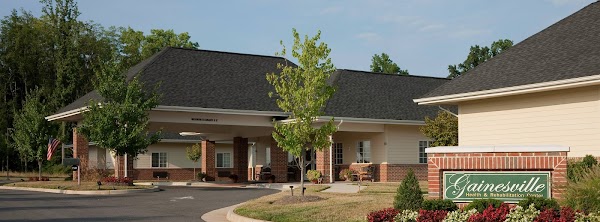
GAINESVILLE HEALTH AND REHAB CENTER

7501 HERITAGE VILLAGE PLAZA, GAINESVILLE, VA 20155 (571) 248-6100
For profit - Limited Liability company 120 Beds COMMONWEALTH CARE OF ROANOKE Data: November 2025
Trust Grade
60/100
#134 of 285 in VA
Last Inspection: March 2023

Over 2 years since last inspection. Current conditions may differ from available data.

Overview

Gainesville Health and Rehab Center has a Trust Grade of C+, indicating it is slightly above average, but not without issues. It ranks #134 out of 285 nursing homes in Virginia, placing it in the top half, but it is last in its county at #4 out of 4 facilities. The center is improving overall, with the number of reported issues decreasing from 18 in 2021 to 16 in 2023. Staffing is reasonable, with a 3/5 rating and a 31% turnover rate, which is significantly better than the state average of 48%. While there are no fines recorded, some concerns were identified, including failures to follow dialysis care plans for certain residents and a lack of physical therapy services for another resident, indicating areas for improvement.

Trust Score
C+
60/100
In Virginia
#134/285
Top 47%
Safety Record
Low Risk
No red flags
Inspections
Getting Better
18 → 16 violations
Staff Stability
○ Average
31% turnover. Near Virginia's 48% average. Typical for the industry.
Penalties
✓ Good
No fines on record. Clean compliance history, better than most Virginia facilities.
Skilled Nurses
○ Average
Each resident gets 36 minutes of Registered Nurse (RN) attention daily — about average for Virginia. RNs are the most trained staff who monitor for health changes.
Violations
⚠ Watch
48 deficiencies on record. Higher than average. Multiple issues found across inspections.
★★★☆☆
3.0
Overall Rating
★★★☆☆
3.0
Staff Levels
★★★★★
5.0
Care Quality
★★☆☆☆
2.0
Inspection Score
Stable
2021: 18 issues
2023: 16 issues

The Good

  • 5-Star Quality Measures · Strong clinical quality outcomes
  • Full Sprinkler Coverage · Fire safety systems throughout facility
  • No fines on record
  • Staff turnover below average (31%)

    17 points below Virginia average of 48%

Facility shows strength in quality measures, fire safety.

The Bad

3-Star Overall Rating

Near Virginia average (3.0)

Meets federal standards, typical of most facilities

Staff Turnover: 31%

15pts below Virginia avg (46%)

Typical for the industry

Chain: COMMONWEALTH CARE OF ROANOKE

Part of a multi-facility chain

Ask about local staffing decisions and management

The Ugly 48 deficiencies on record

Jun 2023 1 deficiency
CONCERN (D) 📢 Someone Reported This

A family member, employee, or ombudsman was alarmed enough to file a formal complaint

Potential for Harm - no one hurt, but risky conditions existed

Free from Abuse/Neglect (Tag F0600)

Could have caused harm · This affected 1 resident

Based on resident interview, staff interview, clinical record review, and facility document review, it was determined the facility staff failed to ensure one of nine residents in the survey sample was...

Read full inspector narrative →
Based on resident interview, staff interview, clinical record review, and facility document review, it was determined the facility staff failed to ensure one of nine residents in the survey sample was free from abuse, Resident #1. This was cited as past non-compliance. The findings include: For Resident #1 (R1), the facility staff failed to ensure they were free from abuse by a staff member on 5/30/2023. On the most recent MDS (minimum data set) assessment, a quarterly assessment, with an ARD (assessment reference date) of 4/28/2023, the resident scored 14 out of 15 on the BIMS (brief interview for mental status) assessment, indicating the resident was cognitively intact for making daily decisions. On 6/7/2023 at 10:30 a.m., an interview was conducted with R1. R1 stated that the previous week they were in the hallway just past the activities door listening to music with another resident who resides on that side of the facility. R1 stated that they always hang out in that area with their girlfriend to listen to music together and talk. R1 stated that CNA (certified nursing assistant) #4 became irritated with them for no apparent reason. R1 stated that CNA #4 started arguing with their girlfriend about them being in the hallway near the unit. R1 stated that they tried to calm the situation but then they became angry and started yelling also. R1 stated that the CNA was yelling at them that they were not allowed there and had to go back to their unit. R1 stated that CNA #4 started pulling his wheelchair backwards so he grabbed the handrail on the wall. R1 stated that CNA #4 kept yanking the wheelchair and taking their hand off the railing. R1 stated that he fell from his wheelchair on their knee and their buttocks. R1 stated that the unit manager had come and assisted him to get back in the wheelchair and he had not been injured. R1 stated that he did not know what upset the CNA so much because they were in the same area that they always hung out in with their friend. R1 stated that the incident made him feel unsafe and it was the first time anything like that had ever happened. R1 stated that they felt safe at the facility now because the facility had handled the situation. The progress notes for R1 documented in part, - 05/30/2023 23:52 (11:52 p.m.) Fall note. Data : At 1945 (7:45 p.m.), the resident fell off from wheelchair. Action : After the fall, resident was assessed for alertness and consciousness. Resident remains to be alert and verbally responsive. Body audit was done no new skin tears, bruises, lump on head were assessed. Assessed for injury all extremities were flexed, and resident c/o (complains of) R (right) knee soreness. Offered to apply ice pack but resident refused. Tylenol 325 mg (milligram), 2 tabs (tablets) were administered prn (as needed) for R knee soreness. ADON (assistant director of nursing) was informed of the incident. [Name of physician] was informed of the incident. Family, [Name of family member] was called but did not answer, a message was recorded for call back. Response : We will continue to monitor the resident closely. - 05/31/2023 11:51 (11:51 a.m.) Psychosocial Visit note. Residents psychosocial concerns discussed (isolation, loneliness, fear, sadness, anxiety) : fear and anxiety. Residents outward appearance (sad, happy, crying, withdrawn, guarded) : happy but guarded. Interventions in place (staff visits, FaceTime visits, window visits, activities of interest) : phone calls with his mom, would like to take with psych services [Name of psychologist], weekly check-ins with social services. Follow up needed (psych referral, SW visits, family FaceTime visits) : psych referral, weekly meeting with SW (social worker). - 06/01/2023 08:42 (8:42 a.m.) Psych note. Note Text : Psychologist met with patient this AM; Discussed his interpretation of recent events involving an employee; Today he reports he feels very safe to be at this facility. His mood is calm. Also discussed recent escalation in aggressive verbal and at times physical behaviors. Patient states he feels his anger is due to not being included by my family in more family things; Encouraged talking to staff when frustrated; identified appropriate staff he can reach out to for support when needed. - 06/05/2023 14:01 (2:01 p.m.) Psychosocial Visit note. Residents psychosocial concerns discussed (isolation, loneliness, fear, sadness, anxiety) : fear and anxiety over prior event. Residents outward appearance (sad, happy, crying, withdrawn, guarded) : Happy - expresses no fear of the event. Interventions in place (staff visits, FaceTime visits, window visits, activities of interest) : weekly visits with SW, Met with Psych services they helped a lot. Follow up needed (psych referral, SW visits, family FaceTime visits) : continued SW visits. The comprehensive care plan for R1 documented in part, (Name of R1) is at risk for or has a history of exhibiting aggressive behaviors that may impact self or others. Contributing factors include: Cognitive impairment, Depression. Date Initiated: 02/11/2022. Revision on: 05/16/2022. Review of the facility synopsis of events final investigation dated 6/6/2023 documented in part, .This letter serves as the final report of an allegation of patient abuse reported to your office on 05/30/2023 .(Name of R1) alleged abuse by CNA (Name of CNA #4). (Name of R1) reported that CNA (Name of CNA #4) pushed or pulled him forcibly resulting in a fall .Based upon the Center's investigation the physical abuse allegation is substantiated due to the CNA attempting to physically remove resident against his will and removing his hand off the handrail to take him back to the Fairview Unit. CNA was terminated related to this allegation and a report will be filed with the Virginia DHP [department of health professions] as required by law . On 6/7/2023 at 10:37 a.m., an interview was conducted with LPN (licensed practical nurse) #3. LPN #3 stated that they were working late and were in their office with the door closed on 5/30/2023 when R1 fell out of the wheelchair. LPN #3 stated that R1 and the lady friend were sitting in the hallway just beyond the activities doorway near their office door. LPN #3 stated that everything was quiet and then they heard someone saying loudly through the door to R1 that they were not supposed to be there and needed to be back on their unit. LPN #3 stated that they came out due to the yelling and saw R1 in their wheelchair with CNA #4 pulling them backwards. LPN #3 stated that R1 was holding onto the hand rail on the wall to prevent CNA #4 from moving the wheelchair and he started slipping down in the wheelchair. LPN #3 stated that CNA #4 then removed R1's hand from the hand rail and put their arms underneath R1 and lifted them up when R1 started flailing their arm and cursing. LPN #3 stated that R1 went limp and went down on the floor on their behind at that time. LPN #3 stated that they advised CNA #4 to leave R1 on the floor to be assessed, then at that point the CNA left. LPN #3 stated that they had calmed R1 by telling him that it was not his fault and they would help them back in the chair. LPN #3 stated that once they got R1 back in the wheelchair they had called the evening supervisor to come over to assess R1 and they had found CNA #4 and asked them to go sit in the conference room. LPN #3 stated that R1 had called the police so two police officers had come in and taken statements from the residents, LPN #3 and CNA #4. LPN #3 stated that the police officers had asked R1 if they wanted to press charges against CNA #4 because it was assault, but R1 did not want to do this. LPN #3 stated that they explained the investigation process in the facility to the police and that CNA #4 would be suspended until the investigation was completed and the police relayed this to R1 who was satisfied with this process and did not want to press charges against the CNA. LPN #3 had notified the administrator of the incident when the police had arrived as soon as possible because it all happened so quickly. LPN #3 stated that they took R1 and the girlfriend back to their rooms and made sure they both felt safe. CNA #4 left the building after writing their statement and speaking with the police. LPN #3 stated that they had completed a body audit for R1. LPN #3 stated that there was peace and quiet on the unit and R1 was not doing anything wrong so they did not know why CNA #4 had approached them and that CNA #4 had no reason to come over and start yelling at the resident; and if anything should have used a calm approach to ask them to go back over to their unit. LPN #3 stated that R1 would never have fallen if CNA #4 had left him alone, and they never heard R1 say anything prior to CNA #4 yelling at the resident through their closed door. On 6/7/2023 at 11:00 a.m., an interview was conducted with ASM (administrative staff member) #2, director of nursing. ASM #2 stated that they had investigated the fall for R1 on 5/30/2023. ASM #2 stated that it happened in the evening and they were all gone for the day. ASM #2 stated that they were informed of the incident the next morning. ASM #2 stated that they had concluded that R1 and their girlfriend were in the hallway when CNA #4 approached them and told them they needed to go back to their unit. ASM #2 stated that R1 did not want to go back to their unit and CNA #4 was holding the wheelchair at the back trying to pull him to take him back to the unit. ASM #2 stated that R1 held on to the hand rail resisting the move, CNA #4 removed R1's hand from the rail and pulled the wheelchair backwards which led to R1 sliding to the floor. ASM #2 stated that the unit manager came out when they heard the noise and witnessed the CNA removing R1's hand from the rail and pulling the wheelchair. ASM #2 stated that some parts of the witness statements were inconsistent but all of the witnesses said they R1 held on to the hand rail and felt that if R1 was holding onto the hand rail they did not want to go and CNA #4 should have left him alone. ASM #2 stated that CNA #4 said he did not take R1's hand off the rail but the other witnesses said he did. ASM #2 stated that their main concern was that CNA #4 physically pushed R1's hand off the rail and pulled him backwards causing the fall and they had substantiated the allegation of abuse based on those findings. ASM #2 stated that nothing was happening to precipitate that incident, that the residents were just in hallway listening to their music. On 6/7/2023 at 11:35 a.m., a review was made of CNA #4's Virginia State Police background check completed upon hire and evidence of abuse and neglect training completed upon hire and current training. There were no concerns identified. The facility policy, Abuse Prevention with a revision date of 10/7/2022 documented in part, Residents should be free from abuse, neglect, corporal punishment, involuntary seclusion and misappropriation of personal property. The Center is committed to maintaining a safe environment for all residents and will appropriately investigate allegations . On 6/7/2023 at 11:49 a.m., ASM #1, the administrator and ASM #2, the director of nursing were made aware of the concern. ASM #1 stated that they had put a plan of correction in place and would provide evidence. On 6/7/2023 at 12:02 p.m., ASM #1 provided a binder containing a five point plan of correction regarding the incident on 5/30/2023 between R1 and CNA #4. ASM #1 stated that the date of compliance for the plan of correction was 6/6/2023. Review of the plan of correction documented interventions in place to ensure R1 was monitored and safe, identification of other affected residents, systemic changes put in place and monitoring plans. The plan of correction binder included an identification of all residents being at risk with body audits completed on all residents with a BIMS level of 9 or less and interviews completed for all residents with a BIMS level of 10 or greater. Review of the body audits documented all completed between 5/31-6/1/2023 and all resident interviews completed on 6/1/2023. The binder included evidence of education to all current staff on abuse and managing challenging behaviors and different approaches/intervention strategies completed on 6/1/2023. Sign in sheets for each department were reviewed for completion. The binder documented plan for monitoring to interview 12 alert and oriented residents (10% of current residents) for signs of abuse and review 12 body audits a week (10% of current residents) to ensure no further signs or symptoms of abuse are occurring weekly x 4 weeks and monthly x 2 months. Psychosocial visit completed by social services and will be completed weekly times 4 to ensure residents psychosocial well is being monitored. The audit findings will be reviewed and/or revised in the QAPI with any variances addressed. The binder documented ad hoc QAPI meetings held on 5/31/23 and 6/1/23. Verification of the facility plan of correction was completed by observations, staff interviews and review of the completed documents listed above. No other concerns regarding abuse were identified during the survey. No further information was obtained prior to exit. This was cited at past non-compliance.
Mar 2023 15 deficiencies
CONCERN (D)

Potential for Harm - no one hurt, but risky conditions existed

Deficiency F0578 (Tag F0578)

Could have caused harm · This affected 1 resident

Based on clinical record review, staff interview and facility document review, it was determined that the facility staff failed to conduct a periodic review of an advance directive for one of 46 resid...

Read full inspector narrative →
Based on clinical record review, staff interview and facility document review, it was determined that the facility staff failed to conduct a periodic review of an advance directive for one of 46 residents in the survey sample, Resident # 80 (R80). The finding include: For (R80), the facility staff failed to evidence a quarterly review for an advance directive. On the most recent MDS (minimum data set), a quarterly assessment with an ARD (assessment reference date) of 02/06/2023, (R80) scored three out of 15 on the BIMS (brief interview for mental status), indicating the resident was severely impaired of cognition for making daily decisions. The facility's Social Services Quarterly Review for (R80) dated 02/16/2022 failed to evidence a review of an advance directive. The physician's order for (R80) documented, Full code. Order Date: 09/03/2022. On 03/01/2023 at approximately 9:30 a.m., an interview was conducted with OSM (other staff member) #11, assistant director of social services. When asked about the procedure for reviewing a resident's advance directive OSM #11 stated that the review is conducted quarterly. After reviewing the Social Services Quarterly Review for (R80) OSM #11 stated that the review was not conducted. The facility's policy Advance Directives documented in part, 10. Educational information concerning Advance Directives will be provided to residents and legal representatives on a periodic basis. On 03/01/2022 at approximately 2:38 p.m., ASM (administrative staff member) #1, administrator, ASM #2, director of nursing and ASM #3, assistant director of nursing and ASM #5, clinical services specialist, were made aware of the above findings. No further information was provided prior to exit.
CONCERN (D) 📢 Someone Reported This

A family member, employee, or ombudsman was alarmed enough to file a formal complaint

Potential for Harm - no one hurt, but risky conditions existed

Notification of Changes (Tag F0580)

Could have caused harm · This affected 1 resident

**NOTE- TERMS IN BRACKETS HAVE BEEN EDITED TO PROTECT CONFIDENTIALITY** Based on staff interview, clinical record review, and facility document review, it was determined the facility staff failed to n...

Read full inspector narrative →
**NOTE- TERMS IN BRACKETS HAVE BEEN EDITED TO PROTECT CONFIDENTIALITY** Based on staff interview, clinical record review, and facility document review, it was determined the facility staff failed to notify the responsible party (RP) of a change in condition for one of 46 residents in the survey sample, Resident #162. The findings include: The facility failed to notify the RP of Resident #162's new medication order for Depakote (1). Resident #162 was admitted to the facility on [DATE] with diagnoses that included but were not limited to: dementia, idiopathic hydrocephalus, and adjustment disorder with anxiety. The most recent MDS (minimum data set) assessment, a quarterly assessment, with an ARD (assessment reference date) of 8/27/21, coded the resident as scoring a 00 out of 15 on the BIMS (brief interview for mental status) score, indicating the resident was severely cognitively impaired. A review of the physician orders dated 4/9/21, revealed, Depakote Sprinkles Capsule Delayed Release Sprinkle 125 MG (milligram), Give 1 capsule by mouth two times a day for mood disorder. A review of the physician orders dated 5/5/21, revealed, Depakote Sprinkles Capsule Delayed Release Sprinkle 125 MG, Give 1 capsule by mouth at bedtime for mood disorder for 3 Days. A review of Resident #162's April and May MAR (medication administration record) revealed, the medication administered as ordered. A review of the progress notes did not reveal the Responsible Party was notified of the start of Depakote. An interview was conducted on 2/28/23 at 8:00 AM with LPN (licensed practical nurse) #3, the unit manager. When asked who notifies the RP if there is a change in medication, LPN #3 stated, Nursing notifies the RP and we write a note in the chart. When asked what it means if there is no note documenting the notification, LPN #3 stated if it is not documented, then it is not done. On 3/1/23 at approximately 1:00 PM, ASM (administrative staff member) #1, the administrator, ASM #2, the director of nursing, ASM #4, the assistant director of nursing and ASM #5, the clinical services specialist was made aware of the findings. A review of the facilities' Notification of Changes policy dated 5/27/22, revealed the following: The purpose of this policy is to ensure the Center promptly informs the patient, consults the patient's physician/physician extender; and notifies, consistent with his or her authority, the patient's legal representative when there is a change requiring notification. Circumstances that require a need to alter treatment. This may include new treatment. No further information was provided prior to exit. Reference: (1) Depakote is used to treat complex partial seizures, simple and complex absence seizures, as well as acute manic symptoms in patients with bipolar disorder. https://www.depakote.com/about-depakote#:~:text=Depakote%20is%20one%20of%20the,125%20mg
CONCERN (D)

Potential for Harm - no one hurt, but risky conditions existed

Assessment Accuracy (Tag F0641)

Could have caused harm · This affected 1 resident

**NOTE- TERMS IN BRACKETS HAVE BEEN EDITED TO PROTECT CONFIDENTIALITY** Based on staff interview, clinical record review, and facility document review, it was determined the facility staff failed to c...

Read full inspector narrative →
**NOTE- TERMS IN BRACKETS HAVE BEEN EDITED TO PROTECT CONFIDENTIALITY** Based on staff interview, clinical record review, and facility document review, it was determined the facility staff failed to conduct an accurate MDS (minimum data set) assessment for two out of 46 residents in the survey sample, Residents #67 and #110. The findings include: 1. The facility staff failed to complete an accurate annual assessment MDS to include dialysis for Resident #67. Resident #67 was admitted to the facility on [DATE] with diagnoses that included but were not limited to: end stage renal disease, peripheral vascular disease, atrial fibrillation and cardiomegaly. The most recent MDS (minimum data set) assessment, a quarterly assessment, with an ARD (assessment reference date) of 12/15/22, coded the resident as scoring a 14 out of 15 on the BIMS (brief interview for mental status) score, indicating the resident was not cognitively impaired. Section O-special procedures/treatments coded the resident as dialysis no. A review of the comprehensive care plan dated 10/17/20, which revealed, FOCUS: The resident has renal disease requiring dialysis 3 times/week. INTERVENTIONS: Coordinate with Dialysis center for dialysis treatments as ordered. Communicate with dialysis provider regularly via pre/post treatment notes. On 2/27/23 at approximately 4:00 PM, Resident #67 was observed returning from dialysis. A review of physician orders, dated 10/17/20, revealed the following, Hemodialysis on Mon-Wed-Fridays. On 2/28/23 at 4:35 PM, an interview was conducted with OSM (other staff member) #4, the MDS manager, OSM #5, the MDS coordinator and OSM #6, the regional corporate reimbursement specialist. When asked to review the 12/15/22 MDS Section O (special treatments and procedures): 0100. J dialysis, OSM #5 stated, It is coded no. That was my mistake. On 3/1/23 at approximately 1:00 PM, ASM (administrative staff member) #1, the administrator, ASM #2, the director of nursing, ASM #4, the assistant director of nursing and ASM #5, the clinical services specialist was made aware of the findings. 2. The facility staff failed to complete an accurate MDS for Resident #110. Resident #110 was coded as discharged to an acute hospital in error. During the closed record review, Resident #110 was identified as 'hospitalized '. Resident #67 was admitted to the facility on [DATE] with diagnoses that included but were not limited to: diabetes, dementia, Alzheimer's Disease and osteoarthritis. The most recent MDS (minimum data set) assessment, a discharge return not anticipated assessment, with an ARD (assessment reference date) of 2/6/23, coded the resident as scoring a 03 out of 15 on the BIMS (brief interview for mental status) score, indicating the resident was severely cognitively impaired. Section A: Identification Information was coded- A.2100 Discharge Status: acute hospital. A review of the nursing progress note, dated 2/6/23 at 10:30 AM, revealed, Resident to discharge to assisted living facility (ALF), vital signs are stable upon discharge, morning medications were given. Husband was educated on diagnoses and medications. ALF was sent medications as well as scripts sent with the husband. Resident left the facility with all personal belongings and husband had no further questions at this time. On 3/1/23 at 1:35 PM, an interview was conducted with OSM (other staff member) #4, the MDS manager. When asked to review the 2/6/23 MDS Section A (identification information): A.2100-discharge status-acute hospital, OSM #4 stated, it is coded acute hospital. When asked to review the progress note dated 2/6/21, OSM #4 stated, The resident went to an ALF, it should not have been coded as acute hospital. We will modify that. On 3/1/23 at approximately 1:00 PM, ASM (administrative staff member) #1, the administrator, ASM #2, the director of nursing, ASM #4, the assistant director of nursing and ASM #5, the clinical services specialist was made aware of the findings. No further information was provided prior to exit.
CONCERN (D)

Potential for Harm - no one hurt, but risky conditions existed

Deficiency F0657 (Tag F0657)

Could have caused harm · This affected 1 resident

**NOTE- TERMS IN BRACKETS HAVE BEEN EDITED TO PROTECT CONFIDENTIALITY** Based on observation, staff interview, facility document review, and clinical record review, it was determined the facility staf...

Read full inspector narrative →
**NOTE- TERMS IN BRACKETS HAVE BEEN EDITED TO PROTECT CONFIDENTIALITY** Based on observation, staff interview, facility document review, and clinical record review, it was determined the facility staff failed to revise the comprehensive care plan for one of 46 residents on the survey sample, Resident #165 (R165). The findings include: The facility staff failed to revise the care plan for the use of a PICC line (peripherally inserted central catheter) (1) and for the administration of TPN (total parenteral nutrition) (2) for R165. On the most recent MDS (minimum data set) assessment, a quarterly assessment, with an assessment reference date of 12/22/2022, the resident scored a 15 out of 15 on the BIMS (brief interview for mental status) score indicating the resident was not cognitively impaired for making daily decisions. A significant change MDS assessment was in progress. On 2/27/2023 at approximately 12:30 p.m. R165 was observed in bed with TPN solution being administered through the PICC line. The Nutritional Care Plan dated 10/5/2022 and revised on 1/5/2023, failed to evidence documentation of R165 receiving TPN. The comprehensive care plan dated, 10/5/2022 and last revised on 2/23/2023, failed to evidence documentation for the use and care of a PICC line. An interview was conducted with OSM (other staff member) #12, the dietitian, on 2/28/2023 at 2:10 p.m. When asked who is responsible for updated the care plan for TPN, OSM #12 stated either herself or nursing. When asked if it is expected to see TPN on a care plan, OSM #12 stated, yes, her readmission assessment is not due yet but she is doing it today. An interview was conducted with LPN (licensed practical nurse) #1, on 2/28/2023 at 2:25 p.m. When asked who updated the care plans, LPN #1 stated if the resident is gone from the facility for more than 24 hours, they would do an actual admission care plan. She further stated, even though the resident is a readmission, we would reenter everything in the system, batch orders and care plans, they would pick what areas are appropriate for that resident. When asked if a resident with a PICC line and TPN should have these things addressed on the care plan, LPN #1 stated, absolutely. When asked the purpose of the care plan, LPN #1 state it's the goals for that patient, what they, the facility staff, are going to do for them. The facility policy, Comprehensive Care Planning Process failed to evidence anything related to reviewing and revising the care plan. ASM (administrative staff member) #1, the administrator, ASM #2, the director of nursing, ASM #4, the assistant director of nursing, and ASM #5 the clinical services specialist, were made aware of the above findings on 3/1/2023 at 2:38 p.m. No further information was obtained prior to exit. (1) Peripherally inserted central catheter is a long-line catheter made of soft silicone or Silastic material that is placed peripherally but delivers medications and solutions centrally. [NAME], [NAME] & [NAME], Fundamental of Nursing, 5th edition, 2007, page 1423. (2) Total parenteral nutrition (TPN) is a method of feeding that bypasses the gastrointestinal tract. A special formula given through a vein provides most of the nutrients the body needs. The method is used when someone can't or shouldn't receive feedings or fluids by mouth. https://medlineplus.gov/ency/patientinstructions/000177.htm
CONCERN (D) 📢 Someone Reported This

A family member, employee, or ombudsman was alarmed enough to file a formal complaint

Potential for Harm - no one hurt, but risky conditions existed

Deficiency F0658 (Tag F0658)

Could have caused harm · This affected 1 resident

**NOTE- TERMS IN BRACKETS HAVE BEEN EDITED TO PROTECT CONFIDENTIALITY** Based on clinical record review, staff interview and facility document review, it was determined the facility staff failed to fo...

Read full inspector narrative →
**NOTE- TERMS IN BRACKETS HAVE BEEN EDITED TO PROTECT CONFIDENTIALITY** Based on clinical record review, staff interview and facility document review, it was determined the facility staff failed to follow professional standards of practice for medication administration and monitoring, for one of 46 residents in the survey sample, Resident #163. The findings include: 1.a. For Resident #163 (R163), the facility staff failed to transcribe a telephone order for Tums (1). On the most recent MDS (minimum data set) assessment, a five day admission assessment, with an assessment reference date of 11/15/2022, the resident scored a 15 out of 15 on the BIMS (brief interview for mental status) score, indicating the resident was cognitively intact for making daily decisions. The assessment documented R163 receiving hemodialysis. The SBAR (situation, background, assessment, recommendation) Communication Form for R163 dated 11/13/2022 documented in part, .NP (nurse practitioner) notified of patients complaint of heartburn new orders received for Tums 500mg (milligram) q4h (every four hours) PRN (as needed). Patient and RP (responsible party) notified . The physician orders dated 11/10/2022-11/16/2022 failed to evidence an order for Tums. The eMAR (electronic medication administration record) dated 11/1/2022-11/30/2022 failed to evidence an order for Tums. On 2/28/2023 at 2:07 p.m., an interview was conducted with LPN (licensed practical nurse) #1. LPN #1 stated that R163 had complained of heart burn on 11/13/2022 and they had contacted the nurse practitioner because there was nothing ordered at the time. LPN #1 stated that the nurse practitioner had ordered as needed Tums for R163 to take and as far as they knew R163 had received them. LPN #1 stated that they did not recall a delay in getting the medication however they did not keep a stock supply of the medication and may have had to wait for the medication to come from the pharmacy. LPN #1 stated that when they received a telephone order they entered the new order into the electronic medical record which sent it directly to the pharmacy to be processed and automatically put it on the eMAR after it was verified by the pharmacy. LPN #1 reviewed R163's physician orders dated 11/10/2022-11/16/2022 and eMAR dated 11/1/2022-11/30/2022 and stated that they did not know why the Tums were not on there. On 2/28/2023 at approximately 5:00 p.m., a request was made to ASM (administrative staff member) #1, the administrator for evidence of the Tums order being transcribed and/or administered for R163's complaints of heart burn on 11/13/2022. On 3/1/2023 at approximately 8:00 a.m., ASM #4, the assistant director of nursing/infection preventionist stated that they did not have any evidence of the Tums being transcribed or administered on 11/13/2022 for R163. The facility policy, Guidelines for Medication Orders dated 6/21/2017 documented in part, .New Verbal Orders: The nurse documents a complete order received by telephone or in person on the appropriate pharmacy approved form (physician's order sheet, Interim Order Form, Telephone order form or approved electronic order entry system). Documentation must include T.O. for telephone orders, V.O. for verbal orders or other indication in electronic order entry system. The nurse must indicate the prescriber's name giving the order and the licensed nurse accepting/recording the order. The nurse will sign the order in the appropriate space on the verbal order form. Verbal orders must be signed by the prescriber within the timeframe required by State and Federal regulations .Facility staff transcribes newly prescribed medications on the Medication Administration Record (MAR/TAR). When a new order changes the dosage of a previously prescribed medication, staff discontinues the previous entry by writing DC'd and the date and yellowing through the entry. Enter the new order on the MAR/TAR . On 2/27/2022 during survey entrance, ASM (administrative staff member) #1, the administrator stated that the facility followed [NAME] as their nursing standard of practice and provided a copy of the cover of Lippincott Manual of Nursing Practice, 10th Edition. According to Fundamentals of Nursing [NAME] and [NAME], 2007 pages 167-168 it documented in part, .anytime you accept a verbal order, it's your responsibility to ensure the accuracy of the communication .afterward write and sign the order that was given to you verbally by the prescriber and have the prescriber sign your written copy as soon as possible . On 3/1/2023 at approximately 2:38 p.m., ASM #1, the administrator, ASM #2, the director of nursing, ASM #4, the assistant director of nursing/infection preventionist and ASM #5, the clinical services specialist were made aware of the findings. No further information was provided prior to exit. (1) Tums Calcium carbonate also is used as an antacid to relieve heartburn, acid indigestion, and upset stomach. It is available with or without a prescription .This information was obtained from the website: https://medlineplus.gov/druginfo/meds/a601032.html 1.b. For Resident #163 (R163), the facility staff failed to reassess the blood pressure after administration of Midodrine (1) on 11/15/2022 at 11:06 a.m. prior to the resident being sent to the emergency room at 1:00 p.m., and failed to notify the nurse practitioner of the need for a dose of Midodrine on 11/15/2022 due to continued hypotension and it being on a non-dialysis day. On the most recent MDS (minimum data set) assessment, a five day admission assessment, with an assessment reference date of 11/15/2022, the resident scored a 15 out of 15 on the BIMS (brief interview for mental status) score, indicating the resident was cognitively intact for making daily decisions. The assessment documented R163 received hemodialysis. The physician orders for R163 documented in part, Midodrine HCl (hydrochloride) Tablet 10 MG (milligram) Give 1 tablet by mouth as needed for Hypotension (low blood pressure). On dialysis day. If Systolic less than 100. Order Date: 11/11/2022. The physician orders further documented, Dialysis days Monday, Wenesday [sic], and Fridays At [Name of dialysis center]. Order Date: 11/12/2022. The eMAR (electronic medication administration record) dated 11/1/2022-11/30/2022 for R163 documented Midodrine 10 mg administered on 11/15/2022 at 8:58 a.m. for a blood pressure of 90/58 and at 11:06 a.m. for a blood pressure of 88/54. The SBAR (situation, background, assessment, recommendation) Communication Form for R163 dated 11/15/2022 documented in part, .Vital Signs: BP (blood pressure): 88/54 .Primary Care Clinician Notified: Yes, Date: 11/15/2022; Time: 8:00 AM; Recommendations of Primary Clinicians (if any): Midodrine 10 mg (milligram) as needed . The progress notes for R163 documented in part, - 11/15/2022 08:58 (8:58 a.m.) eMAR Administration Note. Note Text: Midodrine HCL Tablet 10mg Give 1 tablet by mouth as needed for Hypotension on dialysis day if systolic less than 100. - 11/15/2022 11:06 (11:06 a.m.) eMAR Administration Note. Note Text: Midodrine HCL Tablet 10mg Give 1 tablet by mouth as needed for Hypotension on dialysis day if systolic less than 100. - 11/15/2022 12:06 (12:06 p.m.) eMAR Administration Note. Note Text: Midodrine HCL Tablet 10mg Give 1 tablet by mouth as needed for Hypotension on dialysis day if systolic less than 100. PRN administration was Ineffective. - 11/15/2022 12:07 (12:07 p.m.) eMAR Administration Note. Note Text: Midodrine HCL Tablet 10mg Give 1 tablet by mouth as needed for Hypotension on dialysis day if systolic less than 100. PRN administration was Effective. - 11/15/2022 18:58 (6:58 p.m.) Transfer Out (Acute/Emergency) Reason for transfer and requires higher level of care (describe): Abnormal vital sign/Low blood pressure 88/54. Symptoms exhibited: anxiety, n/v (nausea/vomiting), Current TX (treatment) (if applicable): Midodrine 10mg PRN .daughter called 911 . The SNF/NF (skilled nursing facility/nursing facility) to hospital transfer form for R163 dated 11/15/2022 documented in part, .Reason(s) for transfer: Abnormal vital signs (low/high BP, high respiratory rate) .Vital signs BP 88/54 11/15/2022 11:06 (11:06 a.m.) .Date of Transfer: 11/15/2022 13:00 (1:00 p.m.) . The blood pressure summary for R163 documented blood pressures on 11/15/2022 as 121/79 at 2:03 a.m., 90/58 at 8:40 a.m. and 88/54 at 11:06 a.m. Review of R163's clinical record failed to evidence a blood pressure taken after the administration of the Midodrine on 11/15/2022 at 11:06 a.m. or notification of the physician/nurse practitioner of the continued low blood pressure after administration of the Midodrine at 8:58 a.m. and need for second dose of Midodrine at 11:06 a.m. On 2/28/2023 at 3:01 p.m., an interview was conducted with LPN (licensed practical nurse) #4. LPN #4 stated that R163 had been sent to the emergency room on [DATE] for unstable vital signs. LPN #4 stated that R163's blood pressure had been low when they had checked it that morning and they had rechecked it and it was still low so they had called the nurse practitioner who had told them to administer the as needed Midodrine. LPN #4 stated that R163 was a dialysis resident but did not go that day [it was a Tuesday]. LPN #4 stated that R163's blood pressure was still low when they rechecked it a couple of hours later and they complained of weakness so they administered a second dose of Midodrine. LPN #4 stated that they did not recall calling the nurse practitioner but thought that they were in the building and saw the resident. LPN #4 stated that R163's daughters arrived to the facility and wanted the resident to go to the emergency room and called 911. LPN #4 stated that they did not recall checking the blood pressure before they went out to the emergency room and thought that they went out before lunch. LPN #4 stated that it was their normal practice to go back and recheck the blood pressure when it was running low. On 2/28/2023 at approximately 5:00 p.m., a request was made to ASM (administrative staff member) #1, the administrator for evidence of the blood pressure being re-checked after administration of the Midodrine 10mg on 11/15/2022 at 11:06 a.m. or evidence that the medication was effective as documented in the progress note dated 11/15/2022 at 12:07 a.m. On 3/1/2023 at approximately 8:00 a.m., ASM #1, the administrator provided a written statement from LPN #4 which stated that that they had mistakenly documented the Midodrine 10mg as being effective on 11/15/2022 at 12:07 a.m. On 3/1/2023 at 1:43 p.m., an interview was conducted with LPN #3. LPN #3 stated that when Midodrine was administered to residents for low blood pressure they would follow up with a blood pressure recheck in an hour to see if the medication was effective. LPN #3 stated that the eMAR prompted them to go back to recheck the blood pressure and enter the results and effective or ineffective. LPN #3 stated that they would also document a progress note regarding the medication and whether or not the medication worked. LPN #3 stated that if the blood pressure continued to be low they would call the physician to notify them for further orders or evaluation. LPN #3 stated that orders for as needed Midodrine on dialysis days were for those days only and should be clarified with the physician if needed on non-dialysis days. The manufacturers product instructions for use for Midodrine Hydrochloride Tablets documented in part, .Doses may be given in 3-hour intervals, if required, to control symptoms, but not more frequently . The supine and standing blood pressure should be monitored regularly, and the administration of Midodrine hydrochloride tablets should be stopped if supine blood pressure increases excessively . The facility policy, Medication Monitoring dated 6/1/21 documented in part, .Licensed nurses, with periodic oversight by nurse managers, shall: .b. Adhere to facility policies and current standards of practice for administration and monitoring of medications . According to the facility provided Lippincott Manual of Nursing Practice, 10th Edition. Lippincott procedures page 556, it documented in part, .Oral Drug Administration .Verify the order on the patient's medication record by checking it against the practitioner's order .Assess the patient's condition to determine the need for medication and the effectiveness of previous therapy . On 3/1/2023 at approximately 2:38 p.m., ASM #1, the administrator, ASM #2, the director of nursing, ASM #4, the assistant director of nursing/infection preventionist and ASM #5, the clinical services specialist were made aware of the findings. No further information was provided prior to exit. (1) Midodrine Midodrine is used to treat orthostatic hypotension (sudden fall in blood pressure that occurs when a person assumes a standing position). Midodrine is in a class of medications called alpha-adrenergic agonists. It works by causing blood vessels to tighten, which increases blood pressure. This information was obtained from the website: https://medlineplus.gov/druginfo/meds/a616030.html
CONCERN (D) 📢 Someone Reported This

A family member, employee, or ombudsman was alarmed enough to file a formal complaint

Potential for Harm - no one hurt, but risky conditions existed

Accident Prevention (Tag F0689)

Could have caused harm · This affected 1 resident

Based on observations, staff interview, clinical record review, it was determined that the facility staff failed to implement fall interventions for one of 46 residents in the survey sample, Resident ...

Read full inspector narrative →
Based on observations, staff interview, clinical record review, it was determined that the facility staff failed to implement fall interventions for one of 46 residents in the survey sample, Resident #15. The findings include: For Resident #15 (R15), the facility staff failed to place the bed in a low position while (R15) was lying in their bed. (R15) was admitted to the facility with a diagnosis that included but was not limited to epilepsy (1). On the most recent MDS (minimum data set), a quarterly assessment with an ARD (assessment reference date) of 02/19/2023, (R15) was coded as having both short and long term memory difficulties and was coded as being severely cognitively impaired for making daily decisions. On 02/27/2023 at approximately 12:25 p.m., (R15) was observed lying in their bed. There were no fall mats next to the bed and the bed was not in a low position. Using a standard carpenter's ruler, a measurement taken from the bottom of the mattress to the floor revealed the bed was 16 inches from the floor. On 02/27/2023 at approximately 2:45 p.m., (R15) was observed lying in their bed. There were no fall mats next to the bed and the bed was not in a low position. Using a standard carpenter's ruler, a measurement taken from the bottom of the mattress to the floor revealed the bed was 16 inches from the floor. On 02/27/2023 at approximately 3:34 p.m., (R15) was observed lying in their bed. There were no fall mats next to the bed and the bed was not in a low position. Using a standard carpenter's ruler, a measurement taken from the bottom of the mattress to the floor revealed the bed was 16 inches from the floor. On 02/28/2023 at approximately 8:50 p.m., (R15) was observed lying in their bed. There were no fall mats next to the bed and the bed was not in a low position. Using a standard carpenter's ruler, a measurement taken from the bottom of the mattress to the floor revealed the bed was 16 inches from the floor. The comprehensive care plan for (R15) dated 06/19/2021 documented in part, Focus. (Name of (R15) has had actual falls r/t (related to) Traumatic brain injury sustained during a motorcycle accident. Hemiparesis r/t past CVA (cerebral vascular accident - stroke) /balance problems and impulsivity. Has extensive fall history. Date Initiated: 06/19/2021. Under Interventions / Tasks it documented in part, Fall/floor mats at bedside while in bed. Revision on: 03/16/2021, Low bed. Revision on: 03/16/2021. On 02/28/23 at approximately 1:50 p.m., an interview and observation of (R15's) room was conducted with LPN (licensed practical nurse) #2. When asked about fall mats and the bed being in a low position for (R15), LPN #2 stated that they were new and just started a month ago and did not know if (R15) needed fall mats or if the bed needed to be in a low position. LPN #2 stated that they would get their supervisor. On 02/28/23 at approximately 2:00 p.m., an interview and observation of (R15's) room was conducted with LPN (licensed practical nurse) #3, unit manager. LPN #3 stated that the fall mats were discontinued. After reviewing (R15's) comprehensive care plan LPN #3 stated that the care plan was not accurate for the use of the fall mats. When asked about the height of the bed, LPN #3 stated that the bed did not look low and could be lowered. After measuring the height of the bottom of the mattress from the floor using a standard carpenter's ruler with the surveyor, LPN #3 confirmed that the height was 16 inches from the floor. LPN #3 lowered the bed to the lowest position using the bed remote control and reading the ruler again confirmed that the height was lowered to 10 inches from the floor. When asked if the bed had been placed in the lowest position LPN #3 stated no. When asked if the care plan was followed for placing the bed in a low position LPN #3 stated no. When asked why it was important to place the bed in a low position LPN #3 stated that it helped prevent an injury if the fell out of bed. On 03/01/2022 at approximately 2:38 p.m., ASM #1, administrator, ASM #2, director of nursing and ASM #3, assistant director of nursing and ASM #5, clinical services specialist, were made aware of the above findings. A request was made to ASM (administrative staff member) #1, administrator, for evidence that the fall mats for (R15) were discontinued. At 4:45 p.m., ASM #1 provided a copy of the facility's Edit Intervention for (R15's) comprehensive care plan dated 02/28/2023. The form documented in part, Status: Resolved. Description: Fall/floor mats at bedside while in bed. No further information was provided prior to exit. References: (1) A brain disorder that causes people to have recurring seizures. This information was obtained from the website: https://medlineplus.gov/epilepsy.html.
CONCERN (D)

Potential for Harm - no one hurt, but risky conditions existed

Respiratory Care (Tag F0695)

Could have caused harm · This affected 1 resident

Based on observation, staff interview, clinical record review, and facility document review, it was determined that facility staff failed to provide respiratory care and services for one of 46 residen...

Read full inspector narrative →
Based on observation, staff interview, clinical record review, and facility document review, it was determined that facility staff failed to provide respiratory care and services for one of 46 residents in the survey sample, Resident #11. The findings include: For Resident #11 (R11), the facility staff failed to maintain the physician ordered oxygen flow rate at two liters per minute. Resident #11 was admitted to the facility with diagnoses that included but were not limited to: congestive heart failure (1). On 02/27/2023 at approximately 12:39 p.m., an observation of (R11) revealed they were lying in bed receiving oxygen via nasal cannula. Observation of the flow meter on the oxygen concentrator revealed a flow rate between three-and-a-half and four liters per minute. On 02/27/2023 at approximately 3:52 p.m., an observation of (R11) revealed they were lying in bed receiving oxygen via nasal cannula. Observation of the flow meter on the oxygen concentrator revealed a flow rate between three-and-a-half and four liters per minute. On 02/28/2023 at approximately 8:54 a.m., an observation of (R11) revealed they were lying in bed receiving oxygen via nasal cannula. Observation of the flow meter on the oxygen concentrator revealed a flow rate between three-and-a-half and four liters per minute. The physician's order for (R11) dated 01/17/2023 documented, O2 (oxygen) at 2(two) L/min (liters per minute) via nasal cannula continually. The comprehensive care plan for (R11) dated 11/15/2021 documented in part, Focus. (Name of R11) has respiratory problem(s) related to acute illness Spine surgery . Date Initiated: 11/15/202. Under Interventions / Tasks it documented in part, Provide oxygen as ordered. Date Initiated: 11/15/2021. On 02/28/2023 at approximately 2:20 p.m., an observation of (R11's) oxygen flow rate on the oxygen concentrator was conducted with RN (registered nurse) #3. After reading the flow meter RN#3 stated that it was about three and a half liters per minute. When asked what the flow rate should be RN #3 stated that they needed to check the physician's orders. After looking up the physician's order in (R11's) EHR (electronic health record) RN #3 stated that the flow rate was ordered for two liters per minute. When asked to describe how to read the oxygen flow rate on an oxygen concentrator and how often a resident's oxygen flow rate should be checked RN #3 stated that the liter line should pass through the middle of the float ball inside the flow meter and the flow rate should be checked at the beginning of each shift and whenever the nurse goes into the room. On 03/01/2022 at approximately 2:38 p.m., ASM (administrative staff member) #1, administrator, ASM #2, director of nursing and ASM #3, assistant director of nursing and ASM #5, clinical services specialist, were made aware of the above findings. No further information was provided prior to exit. References: (1) A condition in which the heart can't pump enough blood to meet the body's needs. This information was obtained from the website: https://medlineplus.gov/heartfailure.html
CONCERN (D)

Potential for Harm - no one hurt, but risky conditions existed

Deficiency F0697 (Tag F0697)

Could have caused harm · This affected 1 resident

Based on resident interview, clinical record review, staff interview and facility document review it was determined that the facility staff failed to provide a complete pain management program includi...

Read full inspector narrative →
Based on resident interview, clinical record review, staff interview and facility document review it was determined that the facility staff failed to provide a complete pain management program including implementation of non-pharmacological interventions prior to the administration of as needed pain medications for one of 46 residents in the survey sample, Resident #58. The findings include: For Resident #58 (R58), the facility staff failed to evidence implementation of non-pharmacological interventions prior to administration of the as needed pain medication, Percocet (1). On the most recent MDS (minimum data set), a quarterly assessment with an ARD (assessment reference date) of 12/15/2022, the resident scored 15 out of 15 on the BIMS (brief interview for mental status) assessment, indicating the resident was cognitively intact for making daily decisions. Section J documented R58 receiving as needed pain medications and not receiving non-medication interventions for pain. Section N documented R58 receiving Opioid medications 2 of the 7 days during the assessment period. On 2/27/2023 at 2:04 p.m., an interview was conducted with R58 in their room. R58 stated that they had frequent pain and took pain medications as needed. When asked if the staff attempted non-pharmacological interventions prior to administering the medication, R58 stated, Sometimes they do, it depends on the nurse. The physician order's for R58 documented in part, - Percocet Tablet 5-325 MG (milligram) (oxyCODONE Acetaminophen) Give 1 tablet by mouth every 6 hours as needed for Pain. Order Date: 09/07/2022. - NON-PHARMACOLOGICAL INTERVENTION and OUTCOME during your shift that were attempted prior to medication being administered: A) Non-Pharmacological Intervention: 0= No Pain Issues Observed 1= Reposition 2= Massage 3= Music/TV (distraction) 4= Warm Compress 5= Therapy Pain Management B) Outcome: 0= No pain 1= Intervention Effective 2= Intervention NOT Effective requires pharmacological intervention (medication, etc ) every shift for pain management Document the corresponding code associated with intervention initiated or attempted. Order Date: 09/08/2022. The eMAR (electronic medication administration record) dated 1/1/2023-1/31/2023 documented the Percocet was administered to R58 on 1/9/2023 for a pain level of five, on 1/17/2023 for a pain level of zero, on 1/25/2023 at 12:05 a.m. for a pain level of five, on 1/25/2023 at 1:23 p.m. for a pain level of six, and 1/29/2023 for a pain level of seven. The eMAR failed to evidence documentation of non-pharmacological interventions attempted prior to the administration of Percocet on 1/25/2023 at 1:23 p.m. The eMAR dated 2/1/2023-2/28/2023 documented the Percocet administered to R58 on 2/1/2023 at 7:34 p.m. for a pain level of eight, on 2/2/2023 at 9:47 p.m. for a pain level of eight, on 2/11/2023 at 10:23 p.m. for a pain level of six, on 2/19/2023 at 7:47 p.m. for a pain level of eight, on 2/21/2023 at 9:31 p.m. for a pain level of seven, on 2/22/2023 at 1:24 p.m. for a pain level of five and 2/25/2023 at 5:08 p.m. for a pain level of six. The eMAR failed to evidence documentation of non-pharmacological interventions attempted prior to the administration of Percocet on 2/19/2023 at 7:47 p.m., 2/21/2023 at 9:31 p.m. or 2/22/2023 at 1:24 p.m. The progress notes for R58 failed to evidence documentation of non-pharmacological interventions attempted or offered prior to the administration of the Percocet on the dates and times listed above. The comprehensive care plan for R58 dated 9/2/2022 documented in part, [Name of R58] has pain or potential for pain. Date Initiated: 09/07/2022. Revision on: 09/08/2022 . On 2/28/2023 at approximately 5:00 p.m., a request was made to ASM (administrative staff member) #1, the administrator for evidence of non-pharmacological interventions being provided for 1/25/2023, 2/19/2023, 2/21/2023 and 2/22/2023 prior to the administration of Percocet as documented above. On 3/1/2023 at approximately 8:00 a.m., ASM #1 stated that they did not have evidence of non-pharmacological interventions being provided for the dates requested. On 3/1/2023 at 11:16 a.m., an interview was conducted with RN (registered nurse) #1. RN #1 stated that when a resident complained of pain they assessed the pain location and level and attempted non-pharmacological interventions prior to administering ordered as needed pain medications. RN #1 stated that they attempted to reposition residents, provide music or a snack and if the interventions were not effective they administered the medication. RN #1 stated that they documented the non-pharmacological interventions on the eMAR or in the progress notes each time an as needed pain medication was administered. The facility policy Pain Management dated 5/27/22 documented in part, .The Center must ensure that pain management is provided to patients who require such services, consistent with professional standards of practice, the comprehensive person-centered care plan, and the patients ' goals and preferences .Non-pharmacological interventions will include but are not limited to: a. Environmental comfort measures (e.g., adjusting room temperature, smoothing linens, comfortable seating or assistive devices) b. Loosening any constrictive bandage, clothing, or device c. Applying splinting (e.g., pillow or folded blanket) d. Physical modalities (e.g., cold compress, warm shower/bath, massage, turning and repositioning) e. Exercises to address stiffness and prevent contractures as well as restorative nursing programs to maintain joint mobility f. Cognitive/behavioral interventions (e.g., music, relaxation techniques, activities, diversions, spiritual and comfort support, teaching the patient coping techniques and education about pain) . On 3/1/2023 at approximately 2:38 p.m., ASM #1, the administrator, ASM #2, the director of nursing, ASM #4, the assistant director of nursing/infection preventionist and ASM #5, the clinical services specialist were made aware of the findings. was made aware of the concern. No further information was provided prior to exit. Reference: (1) Percocet Oxycodone is used to relieve moderate to severe pain. Oxycodone extended-release tablets and extended-release capsules are used to relieve severe pain in people who are expected to need pain medication around the clock for a long time and who cannot be treated with other medications. This information was obtained from the website: https://medlineplus.gov/druginfo/meds/a682132.html
CONCERN (D)

Potential for Harm - no one hurt, but risky conditions existed

Deficiency F0700 (Tag F0700)

Could have caused harm · This affected 1 resident

Based on observation, staff interview, facility document review, and clinical record review, it was determined the facility staff failed to follow the assessment for the use of side rails for one of 4...

Read full inspector narrative →
Based on observation, staff interview, facility document review, and clinical record review, it was determined the facility staff failed to follow the assessment for the use of side rails for one of 46 residents in the survey sample, Resident #165. The findings include: For Resident #165 (R165), the facility staff had side rails up while the resident was in bed, however the bed/side rail evaluation indicated no bed rails were required. On the most recent MDS (minimum data set) assessment, a quarterly assessment, with an assessment reference date of 12/22/2022, the resident scored a 15 out of 15 on the BIMS (brief interview for mental status) score indicating the resident was not cognitively impaired for making daily decisions. In Section G - Functional Status, R165 was coded as requiring extensive assistance of one staff member for moving in the bed and extensive assistance of two staff member for transfers. On 2/27/2023 at approximately 12:00 p.m. R165 was observed in their bed with both side rails up at that time. A second observation was made on 2/27/2023 at 3:12 p.m. R165 was in bed with bilateral bed side rails up. The clinical record was reviewed. The most recent Bed Rail Evaluation, dated, 2/22/2023, documented, NO bed rails required. Review of the physician orders failed to evidence a physician order for the use of side rails. The comprehensive care plan dated, 11/30/2022, documented in part, Focus: (R165) demonstrates the need for ADL (activities of daily living) assistance r/t (related to) decreased mobility and generalized weakness. The Interventions documented in part, Bed rails as ordered. An interview was conducted with LPN (licensed practical nurse) #6, the unit manager, on 3/1/2023 at 8:20 a.m. The above bed rail assessment and observation was reviewed with LPN #6. When asked if the resident should have side rails on their bed, LPN #6 stated there should be another assessment completed. The facility policy, Proper Use of Side Rails documented in part, It is the policy of this Center to utilize a person-centered approach when determining the use of side rails, also known as bed rails. Alternative approaches are attempted prior to installing a side or bed rail. If used, the Center ensures correct installation, use, and maintenance of the rails. Policy Explanation:1. As part of the patient's comprehensive assessment, the following components will be considered when determining the patient's needs, and whether or not the use of side/bed rails meets those needs: a. Medical diagnosis, conditions, symptoms, and/or behavioral symptoms. b. Size and weight, c. Sleep habits, d. Medication(s), e. Acute medical or surgical interventions, f. Underlying medical conditions, g. Existence of delirium, h. Ability to toilet self safely, i. Cognition, j. Communication, k. Mobility (in and out of bed), and/or l. Risk of falling .g. Document the medical diagnosis, condition, symptom, or functional reason for the use of the side/bed rail. h. Obtain physician/physician extender orders for the use of side/bed rails. ASM (administrative staff member) #1, the administrator, ASM #2, the director of nursing, ASM #4, the assistant director of nursing, and ASM #5 the clinical services specialist, were made aware of the above findings on 3/1/2023 at 2:38 p.m. No further information was obtained prior to exit.
CONCERN (D)

Potential for Harm - no one hurt, but risky conditions existed

Deficiency F0761 (Tag F0761)

Could have caused harm · This affected 1 resident

Based on resident interview, clinical record review, staff interview and facility document review, it was determined the facility staff failed to store medications in a secure manner for one of 46 res...

Read full inspector narrative →
Based on resident interview, clinical record review, staff interview and facility document review, it was determined the facility staff failed to store medications in a secure manner for one of 46 residents in the survey sample, Resident #71. The findings include: The facility failed to secure medications for Resident #71 (R71). On 2/28/2023 at 8:36 a.m., three Midodrine 2.5 mg tablets (1) were observed unsecured in R71's dialysis communication book in the residents room in an open duffel bag. The most recent MDS (minimum data set) assessment, a quarterly assessment, with an ARD (assessment reference date) of 1/13/2023, the resident scored a 15 out of 15 on the BIMS (brief interview for mental status) score, indicating the resident was cognitively intact for making daily decisions. Section O documented R71 receiving dialysis while a resident. The physician orders for R71 documented in part, - Midodrine HCl (hydrochloride) Tablet 10 MG (milligram) Give 1 tablet by mouth every day shift every Mon, Wed, Fri for Hypotension. Send 1 tab (tablet) with pt (patient) to dialysis every M,W,F. Order Date: 12/15/2022. On 2/28/2023 at 8:36 a.m., an interview was conducted with R71 in their room. R71 stated that they went to dialysis three days a week on Monday, Wednesday and Fridays. When asked if a book was sent with them to dialysis, R71 stated that it was and that the book was in the chair in the room in the open duffel bag at the end of their bed. R71 stated that they had gone to dialysis the day before and the book had been there since they got back. On 2/28/2023 at 8:37 a.m., a review of the dialysis communication book for R71 was conducted. Observation of the dialysis communication book revealed three tablets in separate packaging labeled Midodrine tab 2.5 mg in a plastic sleeve inside the binder. R71 stated that the medicine went with them to dialysis each time. On 2/28/2023 at 8:39 a.m., an interview was conducted with LPN (licensed practical nurse) #6. LPN #6 stated that prior to R71 going to dialysis they weighed them, obtained vital signs and filled out the dialysis communication form in the book. LPN #6 stated that they sent the book and the Midodrine with R71 each time they went to dialysis. LPN #6 stated that the nurses should get the book back when the resident returned to the facility to read any communication the dialysis center sent back and store the book at the nurses station. LPN #6 stated that R71 went to dialysis the day before and normally came back to the facility between 3-4 p.m. LPN #6 stated that the dialysis book was normally kept at the nurses station and the medication should not be kept in the binder in the residents room unsecured. LPN #6 stated that any resident could go into the room and pick it up and it needed to be locked up. The facility policy, Medication Storage dated 7/23/2019 documented in part, .Only licensed nurses, the Consultant Pharmacist, and those authorized to administer medications (e.g. medication aides) are allowed access to medications. Medication rooms, carts, and medication supplies are locked or attended by persons with authorized access . On 3/01/2023 at 2:38 p.m., ASM (administrative staff member) #1, the administrator, ASM #2, the director of nursing, ASM #4, the assistant director of nursing/infection preventionist and ASM #5, the clinical services specialist were made aware of the findings. No further information was provided prior to exit. Reference: (1) Midodrine Midodrine is used to treat orthostatic hypotension (sudden fall in blood pressure that occurs when a person assumes a standing position). Midodrine is in a class of medications called alpha-adrenergic agonists. It works by causing blood vessels to tighten, which increases blood pressure. This information was obtained from the website: https://medlineplus.gov/druginfo/meds/a616030.html
CONCERN (E)

Potential for Harm - no one hurt, but risky conditions existed

Comprehensive Care Plan (Tag F0656)

Could have caused harm · This affected multiple residents

**NOTE- TERMS IN BRACKETS HAVE BEEN EDITED TO PROTECT CONFIDENTIALITY** 4. The facility staff failed to implement the comprehensive care plan for dialysis communication for Resident #67. Resident #67 ...

Read full inspector narrative →
**NOTE- TERMS IN BRACKETS HAVE BEEN EDITED TO PROTECT CONFIDENTIALITY** 4. The facility staff failed to implement the comprehensive care plan for dialysis communication for Resident #67. Resident #67 was admitted to the facility on [DATE] with diagnoses that included but were not limited to: end stage renal disease. The most recent MDS (minimum data set) assessment, a quarterly assessment, with an ARD (assessment reference date) of 12/15/22, coded the resident as scoring a 14 out of 15 on the BIMS (brief interview for mental status) score, indicating the resident was not cognitively impaired. Section O-special procedures/treatments coded the resident as dialysis no. A review of the comprehensive care plan dated 10/17/20, which revealed, FOCUS: The resident has renal disease requiring dialysis 3 times/week. INTERVENTIONS: Coordinate with Dialysis center for dialysis treatments as ordered. Communicate with dialysis provider regularly via pre/post treatment notes. A review of physician orders, dated 10/17/20, revealed the following, Hemodialysis on Mon-Wed-Fridays. A review of Resident #67's dialysis communication book revealed missing communication to the dialysis facility for 12 of 51 visits from 11/1/22-2/28/23. An interview was conducted on 2/27/23 at 4:00 PM with Resident #67. When asked if they take their dialysis communication book with them to the dialysis center, Resident #67 stated, Yes, the book goes with me. An interview was conducted on 2/28/23 at 12:45 PM with LPN (licensed practical nurse) #2. When asked what information is provided to the dialysis facility when a resident is sent for hemodialysis, LPN #2 stated, when a resident is going out to dialysis, we take their vital signs, check their weight, give them breakfast and their morning medicines. They take their book with them and we give them a lunch to take with them. When asked if the documentation was complete if missing vital signs and/or weights, LPN #2 stated, no, it is not. When asked if there are blanks on the dialysis communication sheets, is the care plan intervention to provide regular pretreatment notes being followed, LPN #2 stated, no. On 3/1/23 at approximately 1:00 PM, ASM (administrative staff member) #1, the administrator, ASM #2, the director of nursing, ASM #4, the assistant director of nursing and ASM #5, the clinical services specialist was made aware of the findings. A review of the facility's Comprehensive Care Planning Process policy dated 2017, revealed, The facility must develop a comprehensive care plan for each patient that includes measurable objectives and timetables to meet a patient's medical, nursing, and mental and psychosocial needs that are identified in the comprehensive assessment. No further information was provided prior to exit. Based on observations, staff interview, clinical record review, it was determined that the facility staff failed to develop and/or implement the comprehensive care plan for four of 46 residents in the survey sample, Resident #15, Resident #11, Resident #80 and Resident #67. The findings include: 1. For Resident #15 (R15), facility staff failed to implement the comprehensive care plan for the use of fall mats and positioning the bed in a low position. (R15) was admitted to the facility with a diagnosis that included but was not limited to epilepsy (1). On the most recent MDS (minimum data set), a quarterly assessment with an ARD (assessment reference date) of 02/19/2023, (R15) was coded as having both short- and long-term memory difficulties and was coded as being severely cognitively impaired for making daily decisions. On 02/27/2023 at approximately 12:25 p.m., (R15) was observed lying in their bed. There were no fall mats next to the bed and the bed was not in a low position. Using a standard carpenter's ruler, a measurement taken from the bottom of the mattress to the floor revealed the bed was 16 inches from the floor. On 02/27/2023 at approximately 2:45 p.m., (R15) was observed lying in their bed. There were no fall mats next to the bed and the bed was not in a low position. Using a standard carpenter's ruler, a measurement taken from the bottom of the mattress to the floor revealed the bed was 16 inches from the floor. On 02/27/2023 at approximately 3:34 p.m., (R15) was observed lying in their bed. There were no fall mats next to the bed and the bed was not in a low position. Using a standard carpenter's ruler, a measurement taken from the bottom of the mattress to the floor revealed the bed was 16 inches from the floor. On 02/28/2023 at approximately 8:50 p.m., (R15) was observed lying in their bed. There were no fall mats next to the bed and the bed was not in a low position. Using a standard carpenter's ruler, a measurement taken from the bottom of the mattress to the floor revealed the bed was 16 inches from the floor. The comprehensive care plan for (R15) dated 06/19/2021 documented in part, Focus. (Name of (R15) has had actual falls r/t (related to) Traumatic brain injury sustained during a motorcycle accident. Hemiparesis r/t past CVA (cerebral vascular accident - stroke) /balance problems and impulsivity. Has extensive fall history. Date Initiated: 06/19/2021. Under Interventions / Tasks it documented in part, Fall/floor mats at bedside while in bed. Revision on: 03/16/2021, Low bed. Revision on: 03/16/2021. On 02/28/23 at approximately 2:00 p.m., an interview and observation of (R15's) room was conducted with LPN (licensed practical nurse) #3, unit manager. LPN #3 stated that the fall mats were discontinued. After reviewing (R15's) comprehensive care plan LPN #3 stated that the care plan was not accurate for the use of the fall mats. When asked about the height of the bed, LPN #3 stated that the bed did not look low and could be lowered. After measuring the height of the bottom of the mattress from the floor using a standard carpenter's ruler with the surveyor, LPN #3 confirmed that the height was 16 inches from the floor. LPN #3 lowered the bed to its lowest position using the bed remote control and reading the ruler again confirmed that the height was lowered to 10 inches from the floor. When asked if the bed had been placed in the lowest position LPN #3 stated no. When asked if the care plan was followed for placing the bed in a low position LPN #3 stated no. On 03/01/2023 at approximately 2:38 p.m., a request was made to ASM (administrative staff member) #1, administrator, for evidence that the fall mats for (R15) were discontinued. At 4:45 p.m., ASM #1 provided a copy of the facility's Edit Intervention for (R15's) comprehensive care plan dated 02/28/2023. The form documented in part, Status: Resolved. Description: Fall/floor mats at bedside while in bed. When asked if the care plan was being followed for the use of the fall mats prior to the revision of the care plan ASM #1 stated no. On 03/01/2022 at approximately 2:38 p.m., ASM #1, administrator, ASM #2, director of nursing and ASM #3, assistant director of nursing and ASM #5, clinical services specialist, were made aware of the above findings. No further information was provided prior to exit 2 a. For Resident #11 (R11), facility staff failed to implement the comprehensive care plan for the administration of oxygen at two liters per minute according to the physician's orders. Resident #11 was admitted to the facility with diagnoses that included but were not limited to: congestive heart failure (1). On 02/27/2023 at approximately 12:39 p.m., an observation of (R11) revealed they were lying in bed receiving oxygen via nasal cannula. Observation of the flow meter on the oxygen concentrator revealed a flow rate between three-and-a-half and four liters per minute. On 02/27/2023 at approximately 3:52 p.m., an observation of (R11) revealed they were lying in bed receiving oxygen via nasal cannula. Observation of the flow meter on the oxygen concentrator revealed a flow rate between three-and-a-half and four liters per minute. On 02/28/2023 at approximately 8:54 a.m., an observation of (R11) revealed they were lying in bed receiving oxygen via nasal cannula. Observation of the flow meter on the oxygen concentrator revealed a flow rate between three-and-a-half and four liters per minute. The physician's order for (R11) dated 01/17/2023 documented, O2 (oxygen) at 2(two) L/min (liters per minute) via nasal cannula continually. The comprehensive care plan for (R11) dated 11/15/2021 documented in part, Focus. (Name of R11) has respiratory problem(s) related to acute illness Spine surgery . Date Initiated: 11/15/202. Under Interventions / Tasks it documented in part, Provide oxygen as ordered. Date Initiated: 11/15/2021. On 02/28/2023 at approximately 2:20 p.m., an observation of (R11's) oxygen flow rate on the oxygen concentrator was conducted with RN (registered nurse) #3. After reading the flow meter RN#3 stated that it was about three and a half liters per minute. When asked what the flow rate should be RN #3 stated that they needed to check the physician's orders. After looking up the physician's order in (R11's) EHR (electronic health record) RN #3 stated that the flow rate was ordered for two liters per minute. When asked to describe how to read the oxygen flow rate on an oxygen concentrator RN #3 stated that the liter line should pass through the middle of the float ball inside the flow meter. When asked if the comprehensive care plan for (R11) was being followed for the administration of oxygen RN #3 stated no. On 03/01/2022 at approximately 2:38 p.m., ASM #1, administrator, ASM #2, director of nursing and ASM #3, assistant director of nursing and ASM #5, clinical services specialist, were made aware of the above findings. No further information was provided prior to exit 2.b For (R11), facility staff failed to develop a care plan for hospice services. Resident #11 was admitted to the facility with diagnoses that included but were not limited to: breast cancer. The physician's order for (R11) dated 02/19/2023 documented, Hospice orders per the following: Hospice agency (Name of Hospice Agency and Phone Number). Review of (R11's) comprehensive care plan dated 11/15/2021 failed to evidence hospice services. On 03/01/2023 at approximately 9:55 a.m., an interview was conducted with OSM (other staff member) #5, MDS coordinator and OSM #6, regional corporate reimbursement specialist. When asked about (R11's) comprehensive care plan dated 11/15/2021 addressing hospice services, OSM #5 and OSM #6 reviewed the care plan. After reviewing the care plan OSM #5 and OSM #6 stated that the care plan did not address hospice services for (R11). When asked to describe the procedure for completing the care plan accurately OSM # 5 stated that they follow the resident assessment instrument (RAI) manual. The facility's policy Comprehensive Care Planning Process documented in part, The facility must develop a comprehensive care plan for each patient that includes measurable objectives and timetables to meet a patient's medical, nursing, and mental and psychosocial needs that are identified in the comprehensive assessment. An interdisciplinary assessment team shall develop a comprehensive assessment and care plan for each patient based on outcomes of assessments and input from the patient, family, and interdisciplinary team members. The team serves as the authority for overseeing patient care services. On 03/01/2022 at approximately 2:38 p.m., ASM #1, administrator, ASM #2, director of nursing and ASM #3, assistant director of nursing and ASM #5, clinical services specialist, were made aware of the above findings. No further information was provided prior to exit. 3. For Resident #80 (R80) the facility staff failed to implement the comprehensive care plan for the quarterly review of the advance directive. The facility's Social Services Quarterly Review for (R80) dated 02/16/2022 failed to evidence a review of an advance directive. The physician's order for (R80) documented, Full code. Order Date: 09/03/2022. The comprehensive care plan for (R80) dated 10/21/2021 documented in part, Focus. (Name of (R80)) has a full code status. Will review status during stay. Revision on: 12/30/2022. Under Interventions / Tasks it documented in part, Review code status upon admission, quarterly and as needed with resident/POA/RP (power of attorney/responsible party). Date Initiated: 10/21/2021. On 03/01/2023 at approximately 9:30 a.m., an interview was conducted with OSM (other staff member) #11, assistant director of social services. When asked about the procedure for reviewing a resident's advance directive OSM #11 stated that the review is conducted quarterly. After reviewing the Social Services Quarterly Review for (R80) OSM #11 stated that the review was not conducted. After informed of the information as stated above on the comprehensive care plan for (R80), OSM # 11 was asked if the care plan was being followed for the quarterly review of the advance directive. OSM #11 stated the care plan was not followed. On 03/01/2022 at approximately 2:38 p.m., ASM #1, administrator, ASM #2, director of nursing and ASM #3, assistant director of nursing and ASM #5, clinical services specialist, were made aware of the above findings. No further information was provided prior to exit
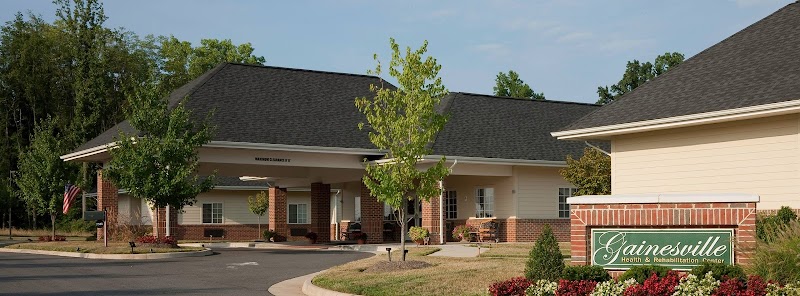
CONCERN (E)

Potential for Harm - no one hurt, but risky conditions existed

Deficiency F0698 (Tag F0698)

Could have caused harm · This affected multiple residents

**NOTE- TERMS IN BRACKETS HAVE BEEN EDITED TO PROTECT CONFIDENTIALITY** Based on staff interview, resident interview, clinical record review and facility document review, it was determined the facilit...

Read full inspector narrative →
**NOTE- TERMS IN BRACKETS HAVE BEEN EDITED TO PROTECT CONFIDENTIALITY** Based on staff interview, resident interview, clinical record review and facility document review, it was determined the facility staff failed to provide complete dialysis care and services per the comprehensive plan of care for two of 46 residents in the survey sample, Resident #67 and Resident #71. The findings include: 1. For Resident #67, the facility failed to provide communication to the dialysis facility for one of 13 visits in November 2022, 4 of 13, visits in December 2022, 5 of 13, visits in January 2023 and 2 of 12 visits in February 2023. Resident #67 was admitted to the facility on [DATE] with diagnoses that included but were not limited to: end stage renal disease. The most recent MDS (minimum data set) assessment, a quarterly assessment, with an ARD (assessment reference date) of 12/15/22, coded the resident as scoring a 14 out of 15 on the BIMS (brief interview for mental status) score, indicating the resident was not cognitively impaired. Section O-special procedures/treatments coded the resident as dialysis no. A review of the comprehensive care plan dated 10/17/20, which revealed, FOCUS: The resident has renal disease requiring dialysis 3 times/week. INTERVENTIONS: Coordinate with Dialysis center for dialysis treatments as ordered. Communicate with dialysis provider regularly via pre/post treatment notes. A review of physician orders, dated 10/17/20, revealed the following, Hemodialysis on Mon-Wed-Fridays. A review of Resident #67's dialysis communication book revealed missing communication to the dialysis facility for 12 of 51 visits from 11/1/22-2/28/23. An interview was conducted on 2/27/23 at 4:00 PM with Resident #67. When asked if they take their dialysis communication book with them to the dialysis center, Resident #67 stated, Yes, the book goes with me. An interview was conducted on 2/28/23 at 12:45 PM with LPN (licensed practical nurse) #2. When asked what information is provided to the dialysis facility when a resident is sent for hemodialysis, LPN #2 stated, when a resident is going out to dialysis, we take their vital signs, check their weight, give them breakfast and their morning medicines. They take their book with them and we give them a lunch to take with them. When asked if the documentation was complete if missing vital signs and/or weights, LPN #2 stated, no, it is not. On 3/1/23 at approximately 1:00 PM, ASM (administrative staff member) #1, the administrator, ASM #2, the director of nursing, ASM #4, the assistant director of nursing and ASM #5, the clinical services specialist was made aware of the findings. A review of the facility's Care and Management of a Patient Receiving Hemodialysis policy revised 5/27/22, revealed, The center will coordinate and collaborate with the dialysis center to ensure that there is ongoing communication and collaboration for the development and implementation of the dialysis care plan by the healthcare center and the dialysis center. The licensed nurse will communicate to the hemodialysis center that will include but is not limited to medication administration (initiated, held or discontinued) by the healthcare center, Physician / treatment orders, laboratory values and vital signs. Nutritional/fluid management including documentation of weights, patient compliance with food/fluid restrictions or the provision of meals before, during and/or after hemodialysis and monitoring intake and output measurements as necessary. No further information was provided prior to exit. 2. For Resident #71 (R71), the facility failed to provide communication to the dialysis (1) facility for seven of 25 visits in January/February 2023, on the dates of 1/16/2023, 1/18/2023, 1/20/2023, 1/23/2023 and 2/20/2023. Resident #71 (R71) was admitted to the facility on [DATE] with diagnoses that included but were not limited to ESRD (end stage renal disease) and dependence on renal dialysis. The most recent MDS (minimum data set) assessment, a quarterly assessment, with an ARD (assessment reference date) of 1/13/2023, the resident scored a 15 out of 15 on the BIMS (brief interview for mental status) score, indicating the resident was cognitively intact for making daily decisions. Section O documented R71 receiving dialysis while a resident. The comprehensive care plan dated 1/21/2022, documented in part, [Name of R71] has End Stage Renal Disease requiring dialysis. She refuses at times. Date Initiated: 01/21/2022. Revision on: 09/07/2022. Under Interventions/Tasks it documented in part, .Coordinate with Dialysis center for dialysis treatments as ordered. Communicate with dialysis provider regularly via pre/post treatment notes. Date Initiated: 12/28/2021 . The physician orders for R71 documented in part, - Monitor PermaCath site for signs of bleeding and infection. Order Date: 1/22/2022. - Dialysis [Name and location of dialysis center] MWFri p/u (pick up) 215pm for 315 chair, return 530pm. Order Date: 1/22/2022. On 2/28/2023 at 8:36 a.m., an interview was conducted with R71 in their room. R71 stated that they went to dialysis three days a week on Monday, Wednesday and Fridays. When asked if a book was sent with them to dialysis, R71 stated that it was and that the book was in the chair in the room in the open duffel bag at the end of their bed. R71 stated that they had gone to dialysis the day before and the book had been there since they got back. On 2/28/2023 at 8:37 a.m., review of the dialysis communication book for R71 failed to evidence communication to the dialysis facility on 1/16/2023, 1/18/2023, 1/20/2023, 1/23/2023 and 2/20/2023. Review of R71's clinical record failed to evidence dialysis communication for the dates listed above or refusal of dialysis on those dates. On 2/28/2023 at 8:39 a.m., an interview was conducted with LPN (licensed practical nurse) #6. LPN #6 stated that prior to R71 going to dialysis they weighed them, obtained vital signs and filled out the dialysis communication form in the book and reviewed the book when they came back for communication from the dialysis center. LPN #6 stated that the dialysis communication form should be completed each time the resident went to dialysis. The facility policy, Care and Management of a Patient Receiving Hemodialysis dated 5/27/22 documented in part, The Center will ensure that each patient receives care and services for the provision of hemodialysis consistent with professional standards of practice. This will include: 1. The ongoing assessment of the patient's condition and monitoring for complications before and after dialysis treatments received at a certified dialysis facility. 2. Ongoing communication and collaboration with the dialysis center regarding dialysis care and services .3. The licensed nurse will communicate to the hemodialysis center that will include, but is not limited to: a. Medication administration (initiated, held or discontinued) by the healthcare center, b. Physician/treatment orders, laboratory values, and vital signs On 3/01/2023 at 2:38 p.m., ASM (administrative staff member) #1, the administrator, ASM #2, the director of nursing, ASM #4, the assistant director of nursing/infection preventionist and ASM #5, the clinical services specialist were made aware of the findings. No further information was provided prior to exit. Reference: (1) hemodialysis When your kidneys are healthy, they clean your blood. They also make hormones that keep your bones strong and your blood healthy. When your kidneys fail, you need treatment to replace the work your kidneys used to do. Unless you have a kidney transplant, you will need a treatment called dialysis. There are two main types of dialysis. Both types filter your blood to rid your body of harmful wastes, extra salt, and water.: Hemodialysis uses a machine. It is sometimes called an artificial kidney. You usually go to a special clinic for treatments several times a week. Peritoneal dialysis uses the lining of your abdomen, called the peritoneal membrane, to filter your blood. This information was obtained from the website: https://medlineplus.gov/dialysis.html
CONCERN (E) 📢 Someone Reported This

A family member, employee, or ombudsman was alarmed enough to file a formal complaint

Potential for Harm - no one hurt, but risky conditions existed

Deficiency F0825 (Tag F0825)

Could have caused harm · This affected multiple residents

Based on staff interview and clinical record review, it was determined that the facility staff failed to provide rehabilitation services for one of 46 residents in the survey sample, Resident #261. Th...

Read full inspector narrative →
Based on staff interview and clinical record review, it was determined that the facility staff failed to provide rehabilitation services for one of 46 residents in the survey sample, Resident #261. The findings include: For Resident #261 (R261), the facility staff failed to provide physical and occupational therapy services from 03/18/2022 through 03/23/2022. (R261) was admitted to the facility with diagnoses that included but were not limited to muscle weakness. On the most recent MDS (minimum data set), an admission assessment with an ARD (assessment reference date) of 03/11/2022, (R261) scored 15 out of 15 on the BIMS (brief interview for mental status), indicating (R261) was cognitively intact for making daily decisions. The physician's order sheet dated 03/01/2022 - 04/30/2022 documented in part, PT/OT/ST (Physical therapy/occupational therapy/speech therapy) to eval (evaluate) as indicated. Order Date: 03/04/2022. OT Clarification Order: OT to see 5x/wk x 4 (five times per week times four) weeks .Order Date: 03/07/2022. PT Clarification Order: skilled PT to see 5x a wk for 4 weeks .Order Date: 03/05/2022. The facility's PT Service Log Matrix for (R261) dated March 2022 failed to evidence that (R261) received physical therapy from 03/18/2022 through 03/23/2022. The facility's OT Service Log Matrix for (R261) dated March 2022 failed to evidence that (R261) received occupational therapy from 03/18/2022 through 03/23/2022. The NOMNC (Notice of Medicare Non-Coverage) dated 03/15/2022 documented in part, The Effective Date Coverage of Your Current Skilled Nursing Facility Services Will End: 03/17/2022. Under the statement I have been notified that coverage of my services will end on the effective date indicated on this notice and that I may appeal this decision by contacting my QIO (Quality Improvement Organization) documented (R261's) signature and dated 3/15/22. The Determination Letter from (Name of QIO) for (R261) dated March 17, 2022 documented in part, Based on the Physical Therapy and Occupational Therapy evaluations, the patient has achieved reasonable goals for intensive therapy. There are no medical issues to support the need for daily skilled nursing care .You were notified by telephone on March 17, 2022 at 2:45 PM (p.m.) Eastern time that the decision to end these services was upheld. These services will no longer be paid for by the Medicare program beginning on March 18, 2022. The Determination Letter from (Name of QIO) for (R261) dated March 17, 2022 documented in part, Thank you for your patience while we completed a thorough review of your provider's decision to end services . You were notified by telephone on March 30, 2022 at 1:50 PM Eastern time that the decision to end these services was upheld. These services will no longer be paid for by the Medicare program. On 02/28/2023 at approximately 11:05 a.m., an interview was conducted with OSM (other staff member) #1, rehabilitation director. When asked about the missing documentation of PT and OT services on the Service Log Matrix from 03/18/2022 through 03/23/2022 OSM #1 stated that on 03/15/2022 a NOMNC (notice of Medicare non-coverage) dated 03/15/2022 was given to (R261) indicating that skilled nursing facility services would be ending on 03/17/2022. OSM #1 stated that they were informed that skilled services would not be cover by (R261's) insurance so they discontinued PT and OT services on March 17, 2022. On 02/28/2023 at approximately 1:15 p.m., an interview was conducted with OSM #9, director of social services. When asked to describe the process of a NOMNC OSM #9 stated that when the resident receives the NOMNC they have the right to appeal it by contacting the QIO and social services receives a letter stating that the resident has made an appeal and the QIO will request documentation from the facility to review the case. A decision is made usually within 48 hours and a determination letter is sent to the resident and social services stating weather or not the appeal was upheld or not. OSM #9 further stated that the resident can file a second appeal. When asked if a second NOMNC is given to the resident for a second appeal OSM #9 stated no, that the resident contacts the QIO directly by telephone. When asked how social services is informed that a resident has filed a second appeal OSM #9 stated that every Thursday at 10:00 a.m., they have a Utilization Review with the facility's interdisciplinary team, which includes the director of rehabilitation and the company's (owner of the nursing facility) case manager to discuss the status of all the facility's residents on managed care. When asked about a resident who may be receiving therapy service and they file an appeal OSM #9 stated therapy services would continue until they received a determination letter. After being informed of the lack of documentation on the March 2022 PT and OT service logs for (R261) from 3/18/2022 through 03/23/2022, OSM #9 stated that services should have continued while the second appeal was being reviewed. On 03/01/2023 at approximately 10:05 a.m. an interview was conducted with ASM (administrative staff member) #1, the administrator regarding therapy services for (R261). ASM #1 stated that an email was sent by the case manager asking if (R261) was going to file a second appeal and (OSM #9), director social services, sent an email to the interdisciplinary team that (R261) was filing a second appeal. ASM #1 provided the surveyor with a copy of the emails. The email dated March 17, 2022 from the case manager to OSM #9 documented in part, Per (Name of QIO) (R261's) appeal was upheld. Is she planning to file a recon (reconsideration? The response email dated March 18, 2022 documented in part, From (OSM #9) to central case management, OSM #1, rehabilitation director, .Subject: (Last Name of R261). She did yesterday. On 03/01/2023 at approximately 10:10 a.m., an interview was conducted with OSM #1. After reviewing the emails dated March 17 and 18, 2022 OSM #1 stated that it was an oversight on their part for not continuing therapy for (R261) during the second appeal process. OSM #1 further stated that they didn't recall seeing the emails. When asked to describe the procedure for a resident receiving therapy when they file an appeal for continued services OSM #1 stated that therapy continues until the resident receives a determination letter and based on the letter therapy will either continue or be discontinued. After reviewing (R261's) PT and OT service logs for March 2022, OSM #1 was asked how many therapy sessions were not provided. OSM #1 stated that there were six PT and six OT sessions were not provided. On 03/01/2022 at approximately 2:38 p.m., ASM #1, administrator, ASM #2, director of nursing and ASM #3, assistant director of nursing and ASM #5, clinical services specialist, were made aware of the above findings. No further information was provided prior to exit.

CONCERN (E)

Potential for Harm - no one hurt, but risky conditions existed

Deficiency F0840 (Tag F0840)

Could have caused harm · This affected multiple residents

Based on staff interview and facility document review, it was determined the facility staff failed to have a written dialysis agreement for the facility for two of two residents who utilized the dialy...

Read full inspector narrative →
Based on staff interview and facility document review, it was determined the facility staff failed to have a written dialysis agreement for the facility for two of two residents who utilized the dialysis center, Resident #67 and Resident #71. The findings include: The facility failed to evidence a written dialysis agreement for one dialysis center that Resident #67 and Resident #71 received dialysis at. During the entrance conference to the facility on 2/27/23, a request was made for the dialysis contracts or agreements. On 2/27/23, a review of the dialysis contracts evidenced no contract for the one dialysis company utilized by Resident #67 and Resident #71 On 2/28/23 at approximately 3:23 PM, ASM (administrative staff member) #1, the administrator stated, there was no contract for this dialysis center. On 3/1/23 at approximately 1:00 PM, ASM (administrative staff member) #1, the administrator, ASM #2, the director of nursing, ASM #4, the assistant director of nursing and ASM #5, the clinical services specialist was made aware of the findings. No further information was provided prior to exit.
CONCERN (E) 📢 Someone Reported This

A family member, employee, or ombudsman was alarmed enough to file a formal complaint

Potential for Harm - no one hurt, but risky conditions existed

Medical Records (Tag F0842)

Could have caused harm · This affected multiple residents

**NOTE- TERMS IN BRACKETS HAVE BEEN EDITED TO PROTECT CONFIDENTIALITY** 2. a. The facility staff failed to evidence complete and accurate documentation for incontinence care for Resident #162. The mo...

Read full inspector narrative →
**NOTE- TERMS IN BRACKETS HAVE BEEN EDITED TO PROTECT CONFIDENTIALITY** 2. a. The facility staff failed to evidence complete and accurate documentation for incontinence care for Resident #162. The most recent MDS (minimum data set) assessment, a quarterly assessment, with an ARD (assessment reference date) of 8/27/21, coded the resident as scoring a 00 out of 15 on the BIMS (brief interview for mental status) score, indicating the resident was severely cognitively impaired. A review of the MDS Section G-functional status coded the resident as being totally dependent for bathing and requiring extensive assistance for bed mobility, transfer, locomotion, dressing, eating and hygiene. A review of the comprehensive care plan dated 4/6/21, which revealed, FOCUS: The resident had an actual fall and remains at risk for falls related to difficulty walking, dementia. Skin integrity issue present on admission. Current reopening of Pressure injury to sacrum. Remains at risk for further skin breakdown r/t decreased mobility .Observe for moisture and incontinence issues and provide care as indicated. A review of Resident #162's TAR (treatment administration record) for August 2021, revealed, no incontinence care was documented for day shift on 8/31; none documented for evening shifts on 8/5, 8/6, 8/10, 8/11, 8/22, 8/29 and 8/31 and none documented on night shift on 8/18 and 8/21. A review of Resident #162's TAR for September 2021, revealed no incontinence care was documented for evening shift on 9/4, 9/11, 9/18 and 9/25; and none documented for night shift on 9/10 and 9/14. A review of Resident #162's TAR for October 2021, revealed, no incontinence care was documented for day shift on 10/19 and 10/21; none documented for evening shift on 10/9, 10/15, 10/16, 10/18 and 10/31; and none documented for night shift on 10/14 and 10/17. A review of Resident #162's TAR for November 2021, revealed no incontinence care was documented for day shift on 11/2, all incontinence care was documented for evening and night shifts. An interview was conducted on 2/28/23 at 1:40 PM with CNA (certified nursing assistant) #1. When asked what is means if there are blanks/holes in incontinence care documentation, CNA #1 stated, it just was not documented. An interview was conducted on 2/28/23 at approximately 2:00 PM with LPN (licensed practical nurse) #2. When asked what is means if there are blanks/holes in incontinence care documentation, LPN #2 stated, it would mean that the care was not documented. On 3/1/23 at approximately 1:00 PM, ASM (administrative staff member) #1, the administrator, ASM #2, the director of nursing, ASM #4, the assistant director of nursing and ASM #5, the clinical services specialist was made aware of the findings. A review of the facility's Documentation in Medical Record policy, dated 6/1/21, revealed, Each resident's medical record should contain an accurate representation of the actual experiences of the resident and include enough information to provide a picture of the resident's progress through complete, accurate, and timely documentation. Licensed staff and interdisciplinary team members shall document all assessments, observations, and services provided in the resident's medical record in accordance with state law and facility policy. No further information was provided prior to exit. 2. b. The facility staff failed to evidence complete and accurate documentation for feeding assistance for Resident #162. A review of Resident #162's TAR (treatment administration record) for August 2021, revealed, no feeding assistance was documented for day shift on 8/31; none documented for evening shift on 8/31; and none documented on night shift on 8/29 and 8/31. Resident was coded on the MDS as requiring extensive assistance for eating on 8/28/21. A review of Resident #162's TAR for September 2021, revealed all feeding assistance was documented for day shift and evening shift; no feeding assistance was documented for night shift on 9/4, 9/11, 9/18 and 9/25. A review of Resident #162's TAR for October 2021, revealed no feeding assistance was documented for day shift on 10/19 and 10/21; none documented for evening shift on 10/19 and 10/21; and none documented for night shift on 10/1, 10/9, 10/15, 10/16, 10/18 and 10/31. A review of Resident #162's TAR for November 2021, revealed, no feeding assistance was documented for day and evening shift on 11/2. An interview was conducted on 2/28/23 at 1:40 PM with CNA (certified nursing assistant) #1. When asked what is means if there are blanks/holes in incontinence care documentation, CNA #1 stated, it just was not documented. An interview was conducted on 2/28/23 at approximately 2:00 PM with LPN (licensed practical nurse) #2. When asked what is means if there are blanks/holes in incontinence care documentation, LPN #2 stated, it would mean that the care was not documented. On 3/1/23 at approximately 1:00 PM, ASM (administrative staff member) #1, the administrator, ASM #2, the director of nursing, ASM #4, the assistant director of nursing and ASM #5, the clinical services specialist was made aware of the findings. A review of the facility's Documentation in Medical Record policy, dated 6/1/21, revealed, Each resident's medical record should contain an accurate representation of the actual experiences of the resident and include enough information to provide a picture of the resident's progress through complete, accurate, and timely documentation. Licensed staff and interdisciplinary team members shall document all assessments, observations, and services provided in the resident's medical record in accordance with state law and facility policy. No further information was provided prior to exit. 3. For Resident #261 (R261), the facility staff failed to complete the eMAR (electronic medication administration record) for the administration of levothyroxine (1) on 03/15/2022 and 03/16/2022. (R261) was admitted to the facility with diagnoses that included but were not limited to hypothyroidism (2). On the most recent MDS (minimum data set), an admission assessment with an ARD (assessment reference date) of 03/11/2022, (R261) scored 15 out of 15 on the BIMS (brief interview for mental status), indicating (R261) was cognitively intact for making daily decisions. The physician's order sheet for (R261's) dated 03/01/2022 - 04/30/2022 documented in part, Levothyroxine Sodium Tablet 150 MCG (micrograms). Give 2 (two) tablet [sic] by mouth one time a day for low thyroid hormone. Order Date: 03/04/2022. Start Date: 03/05/2022. The eMAR for (R261) dated March 2022 documented the physician's order as stated above. Further review of the eMAR revealed blanks for the dates 03/15/2022 and 03/16/2022 for the medication levothyroxine. On 03/01/2023 at approximately 11:02 a.m., an interview was conducted with RN (registered nurse) #1. After reviewing the March 2022 eMAR for the administration of levothyroxine on 03/15/2022 and 03/16/2022, RN #1 was asked to interpret the dates being blank. RN #1 stated that two things could have occurred, one, that the medication was administered but the nurse failed to check it off on the eMAR or the nurse failed to administer the medication. When asked to speak with the nurse who administered medications to (R261) on 03/15/2022 and 03/16/2022, surveyor was informed that the nurse no longer worked at the facility. On 03/01/2023 at approximately 12:16 p.m., an interview was conducted with LPN (licensed practical nurse) #3. After reviewing the March 2022 eMAR for the administration of levothyroxine on 03/15/2022 and 03/16/2022, RN #1 was asked to interpret the dates being blank. LPN #3 stated the nurse gave the medication and forgot to check it off or the medication was not given. On 03/01/2022 at approximately 2:38 p.m., ASM #1, administrator, ASM #2, director of nursing and ASM #3, assistant director of nursing and ASM #5, clinical services specialist, were made aware of the above findings. No further information was provided prior to exit. References: (1) Used to treat hypothyroidism (condition where the thyroid gland does not produce enough thyroid hormone). This information was obtained from the website: Levothyroxine: MedlinePlus Drug Information (2) Not enough thyroid hormone to meet your body's needs. This information was obtained from the website: https://www.nlm.nih.gov/medlineplus/hypothyroidism.html. Based on staff interview, facility document review and clinical record review it was determined the facility staff failed to maintain an complete and accurate clinical record for three of 46 residents in the survey sample, Residents #105, #162, and #261. The findings include: 1. For Resident #105 (R105) the facility staff failed complete the Social Services admission Assessment upon admission to the facility. R105 was admitted to the facility on [DATE]. The admission MDS (minimum data set) assessment, with an ARD (assessment reference date) of 2/5/2023 was completed. Review of the clinical record failed to evidence any Social Services Assessments for R105. A request was made for any social services notes or assessments completed for R105. The following documentation was provided. An assessment for the Brief Interview for Mental Status was completed on 1/31/2023. A Patient Mood Interview was presented, dated 1/31/2023. A Room Change Notification note, written by the social services staff, was dated 2/21/2023. On 3/1/2023 at 12:14 p.m., ASM (administrative staff member) #1, the administrator, presented a Social Services admission Assessment dated 3/1/2023. When asked if this form was in the clinical record, ASM #1 stated, no, it was just completed today. When asked if this assessment should have been completed before 3/1/2023 since the resident was admitted on [DATE], ASM #1 stated, yes. The facility policy, Social Services Periodic Assessment and Documentation documented in part, 2. Initial Psychosocial Assessment and Social History will be completed on each resident within 48- 72 hours after admission using the following sources of information: the resident, the resident family members, friends, caregivers, etc. and the medical record. a. Refer to Social Services admission Assessment in the EMR (electronic medical record). ASM #1, ASM #2, the director of nursing, ASM #4, the assistant director of nursing, and ASM #5 the clinical services specialist, were made aware of the above findings on 3/1/2023 at 2:38 p.m. No further information was obtained prior to exit.

Sept 2021 18 deficiencies
CONCERN (D)

Potential for Harm - no one hurt, but risky conditions existed

Deficiency F0558 (Tag F0558)

Could have caused harm · This affected 1 resident

Based on observation, staff interview, resident interview and clinical record review, it was determined that the facility staff failed to provide accommodations of resident needs by ensuring the call ...

Read full inspector narrative →
Based on observation, staff interview, resident interview and clinical record review, it was determined that the facility staff failed to provide accommodations of resident needs by ensuring the call bell [a device with a button that can be pushed to alert staff when assistance is needed] was within reach for one of 31 current residents in the survey sample, Resident # 70. The facility staff failed to maintain Resident # 70's call bell within reach for use. The findings include: Resident # 70 was admitted to the facility with diagnoses that included but were not limited to: hemiplegia [1] and muscle weakness, respiratory failure [2] and tracheostomy [3]. Resident #70's most recent MDS (minimum data set) assessment, a modification admission assessment with an ARD (assessment reference date) of 08/09/2021, coded Resident # 70 as scoring a 6 [six] on the brief interview for mental status (BIMS) of a score of 0 - 15, 6 - being severely impaired of cognition for making daily decisions Section G0400 Functional Limitation in Range of Motion coded Resident # 70 as Impairment on one side of their upper extremities [shoulder, elbow, wrist, hand] and lower extremities [hip, knee ankle, foot]. On 09/14/21 at 3:58 p.m., during an interview with Resident # 70, was asked if she was able to locate the call bell. Resident # 70 stated, No. I haven't had it since this morning. Observation of Resident # 70's room revealed the call bell hanging over and down the headboard of the resident's bed, out of Resident # 70's reach. On 09/14/21 at 5:00 p.m., an observation of Resident # 70's room revealed the call bell hanging over and down the head board of the resident's bed, out of Resident # 70's reach. The comprehensive care plan for Resident # 70 dated 08/03/2021 documented in part, Focus: [Resident # 70] is at risk for falls. Date Initiated: 08/03/2021. Under Interventions it documented in part, Orient patient and family to room, call bell, lighting, and bathroom. Encourage to use call for assistance with needs. Date Initiated: 08/03/2021. On 09/16/2021 at 9:26 a.m., an interview was conducted with CNA [certified nursing assistant] # 6. When asked about the position of a call bell for a resident, CNA # 6 stated, So they can reach it. When asked how often the position of call bell is checked, CNA # 6 stated, You check it every time you go in [the resident's room]. When asked why it was important to maintain the call bell within a resident's reach, CNA # 6 stated, It's a way for the resident to ask/call for help or assistance. On 09/16/2021 at approximately 3:35 p.m., ASM [administrative staff member] # 1, administrator, ASM # 2, director of nursing, ASM # 3, director of operations and ASM # 4, clinical service specialist, were made aware of the above findings. No further information was provided prior to exit. References: [1] Also called: Hemiplegia, Palsy, Paraplegia, Quadriplegia. Paralysis is the loss of muscle function in part of your body. It happens when something goes wrong with the way messages pass between your brain and muscles. Paralysis can be complete or partial. It can occur on one or both sides of your body. It can also occur in just one area, or it can be widespread. This information was obtained from the website: https://medlineplus.gov/paralysis.html.
CONCERN (D)

Potential for Harm - no one hurt, but risky conditions existed

Deficiency F0582 (Tag F0582)

Could have caused harm · This affected 1 resident

**NOTE- TERMS IN BRACKETS HAVE BEEN EDITED TO PROTECT CONFIDENTIALITY** Based on staff interview, facility document review and clinical record review it was determined the facility staff failed to iss...

Read full inspector narrative →
**NOTE- TERMS IN BRACKETS HAVE BEEN EDITED TO PROTECT CONFIDENTIALITY** Based on staff interview, facility document review and clinical record review it was determined the facility staff failed to issue a notice of discharge from Medicare services for three of 31 residents in the survey sample, Residents # 91, #145, #146. The findings include: 1. Resident #91's last covered Medicare Part A services was 8/8/2021. The facility staff failed to notify Resident #91 (and/or the resident's responsible representative) of the last covered day and the right to appeal. Resident #91 was admitted to the facility on [DATE] with diagnoses that included but were not limited to: high blood pressure, COVID 19 pneumonia (an infection in one or both of the lungs. Many germs, such as bacteria, viruses, and fungi, can cause pneumonia) (1), and dementia (a progressive state of mental decline, especially memory function and judgement, often accompanied by disorientation. (2). The most recent MDS (minimum data set) assessment, a quarterly assessment, with an assessment reference date of 9/8/2021, coded the resident as scoring a 7 on the BIMS (brief interview for mental status) score, indicating the resident was severely impaired to make daily cognitive decisions. The Beneficiary Notice - Residents discharged Within the Last Six Months form given to the administrator upon entrance was reviewed on 9/15/2021. It was documented on this form that Resident #91 was discharged from Medicare services on 8/8/2021. Review of the clinical record failed to evidence the documentation of the discharge from Medicare services. An interview was conducted with ASM (administrative staff member) #1, the administrator, on 9/16/2021 at 12:16 p.m. ASM #1 stated she did not have a notice to the resident or resident's representative about the last covered Medicare day and the right to appeal. ASM #1 stated there was a new social worker and she did not know she had to do these. The policy provided to the survey team, entitled, Form Instructions Skilled Nursing Facility Advanced Beneficiary Notice of Non-coverage (SNFABN). documented in part, Medicare requires SNFs (skilled nursing facility) to issue the SNFABN to Original Medicare, also called fee-for -service (FFS) beneficiaries prior to providing care that Medicare usually covers, but may not pay for in this instance because the care is: not medically reasonable and necessary; or considered custodial. The SNFABN provides information to the beneficiary so that s/he can decide whether or not to get the care that may not be paid for by Medicare and assume the financial responsibility, SNFs must use the SNFABN when applicable for SNF Prospective Payment System services (Medicare Part A). SNFs will continue to use the ABN Form CMS (centers for Medicare/Medicaid services) when applicable for Medicare Part B items and services. ASM #1, ASM #2, the director of nursing, ASM # 4, the clinical services specialist and ASM #3, the director of operations, were made aware of the above concern on 9/16/2021 at 3:33 p.m. No further information was provided prior to exit. (1) This information was obtained from the following website: https://medlineplus.gov/pneumonia.html. (1) Barron's Dictionary of Medical Terms for the Non-Medical Reader, 5th edition, Rothenberg and [NAME], page 124. 2. Resident #145's last covered Medicare Part A services was 8/8/2021. The facility staff failed to notify Resident #145(and/or the resident's responsible representative) of the last covered day and the right to appeal. Resident #145 was admitted to the facility on [DATE] with diagnoses that included but were not limited to: diabetes and high blood pressure. The most recent MDS (minimum data set) assessment, a discharge assessment, with an assessment reference date of 7/13/2021, coded the resident as scoring a 15 on the BIMS (brief interview for mental status) score, indicating the resident was capable of making daily cognitive decisions. The Beneficiary Notice - Residents discharged Within the Last Six Months form given to the administrator upon entrance was reviewed on 9/15/2021. It was documented on the form that Resident #145 was discharged from Medicare services on 8/8/2021. Review of the clinical record failed to evidence the documentation of the discharge from Medicare services. An interview was conducted with ASM (administrative staff member) #1, the administrator, on 9/16/2021 at 12:16 p.m. ASM #1 stated she did not have a notice to the resident or resident's representative about the last covered Medicare day and the right to appeal. ASM #1 stated there was a new social worker and she did not know she had to do these. ASM #1, ASM #2, the director of nursing, ASM # 4, the clinical services specialist and ASM #3, the director of operations, were made aware of the above concern on 9/16/2021 at 3:33 p.m. No further information was provided prior to exit. 3. Resident #146's last covered Medicare Part A services was 6/10/2021. The facility staff failed to notify Resident #146 (and/or the resident's responsible representative) of the last covered day and the right to appeal. Resident # 146 was admitted to the facility on [DATE] with diagnoses that included but were not limited to: anxiety disorder (state of mild to severe apprehension, often without specific cause, resulting in body changes such as quickened heartbeat and sweat.) (1), depression and COPD (chronic obstructive pulmonary disease - general term for chronic, nonreversible lung disease that is usually a combination of emphysema and chronic bronchitis) (2). The most recent MDS (minimum data set) assessment, a quarterly assessment, with an assessment reference date of 8/1/2021, coded the resident as scoring a 15 on the BIMS (brief interview for mental status) score, indicating the resident was capable of making daily cognitive decisions. The Beneficiary Notice - Residents discharged Within the Last Six Months form given to the administrator upon entrance was reviewed on 9/15/2021. It was documented on the form that Resident #146 was discharged from Medicare services on 6/10/2021. Review of the clinical record failed to evidence the documentation of the discharge from Medicare services. An interview was conducted with ASM (administrative staff member) #1, the administrator, on 9/16/2021 at 12:16 p.m. ASM #1 stated she did not have a notice to the resident or resident's representative about the last covered Medicare day and the right to appeal. ASM #1 stated there was a new social worker and she did not know she had to do these. ASM #1, ASM #2, the director of nursing, ASM # 4, the clinical services specialist and ASM #3, the director of operations, were made aware of the above concern on 9/16/2021 at 3:33 p.m. No further information was provided prior to exit. (1) Barron's Dictionary of Medical Terms for the Non-Medical Reader, 5th edition, Rothenberg and [NAME], page 43. (2) Barron's Dictionary of Medical Terms for the Non-Medical Reader, 5th edition, Rothenberg and [NAME], page 124.
CONCERN (D)

Potential for Harm - no one hurt, but risky conditions existed

Report Alleged Abuse (Tag F0609)

Could have caused harm · This affected 1 resident

**NOTE- TERMS IN BRACKETS HAVE BEEN EDITED TO PROTECT CONFIDENTIALITY** Based on staff interview and clinical record review, it was determined that the facility staff failed to ensure a witnessed alle...

Read full inspector narrative →
**NOTE- TERMS IN BRACKETS HAVE BEEN EDITED TO PROTECT CONFIDENTIALITY** Based on staff interview and clinical record review, it was determined that the facility staff failed to ensure a witnessed allegation of abuse was reported immediately and or within 2 hours to the state agency for one of 31 residents in the survey sample, Resident #297. On 5/8/21, a staff member observed Resident #64 repeatedly slamming his wheelchair into Resident #297's wheelchair. The facility did not report this incident to the state agency. The findings include: Resident #297 no longer resides in the facility. She was admitted on [DATE] and discharged on 5/15/21. She was admitted with diagnoses including urinary tract infection, COPD (3), and anxiety disorder. On the most recent MDS, an admission assessment with an ARD of 4/26/21, she was coded as being severely cognitively impaired for making daily decisions, having scored seven out of 15 on the BIMS. She was coded as being completely dependent on facility staff for all ADLs, and as using a wheelchair for locomotion. Resident #64 was admitted to the facility on [DATE] with diagnoses including a femur fracture, bipolar disorder (1), epilepsy (2), alcohol abuse, and nicotine dependence. On the most recent MDS (minimum data set), an annual assessment with an ARD (assessment reference date) of 8/3/21, Resident #64 was coded as having no cognitive impairment for making daily decisions, having scored 15 out of 15 on the BIMS (brief interview for mental status). He was coded as having demonstrated no mood disorder symptoms, no psychosis, no behaviors toward himself or others, no rejection of care, and no wandering. He was coded as being independent in all ADLs (activities of daily living), as having no functional limitations with range of motion in upper or lower extremities, and as always continent of both bladder and bowel. He was coded as using a wheelchair for locomotion during the look back period. Review of Resident #64's clinical record revealed an entry dated 5/8/2021 16:14 (4:14 p.m.), that documented in part the following: *Behavior Note Behavior Observed (Onset and Duration): Cna (certified nursing assistant) reported to writer that she observed resident slamming his wheelchair into the same resident [Resident #297] wheelchair multiple times. Cna also stated resident had enough room to pass around the resident without slamming the wheelchair. A review of Resident #64's comprehensive care plan dated 7/25/18 and most recently updated 8/16/21 revealed, in part: Resident #64 is at risk of a change/decline in his mood and/or psychosocial status d/t (due to) continuing ETOH abuse, nicotine dependence, hx of aggressive/intimidating behavior toward elderly residents, being younger than the general population . Encourage and allow to ventilate feelings ., Mental Health Consult . Further review of Resident #64's clinical record revealed in part the following documented after the above incident on 5/8/21: 5/14/2021 11:30 (11:30 a.m.) Social Services Note Late Entry: Note Text: IDT (interdisciplinary team) conducted Care Plan Meeting with Resident to discuss behavior management. IDT Members present for meeting include: Administrator, DON (director of nursing), ADON (assistant director of nursing), SS (social services) Care Coordinator, Psych (psychiatry) NP (nurse practitioner), and Psychologist. Resident denied being verbally or physically aggressive toward staff or other residents on 05/08/2021. On 9/15/21 at 1:58 p.m., ASM (administrative staff member) #1, the administrator, and ASM #4, the clinical services specialist, were interviewed. When asked if the facility had submitted a FRI (facility reported incident) regarding the 5/8/21 altercation between Resident #64 and Resident #297, ASM #1 stated there were no FRIs related to that incident. ASM #1 stated: It was a resident-to-resident incident. A FRI should have been submitted. On 9/16/21 at 9:51 a.m., ASM #1, ASM # 3, director of operations and ASM # 4, clinical service specialist, were informed of these concerns. On 9/16/21 at 11:41 a.m., ASM #2, the DON (director of nursing) was interviewed. When asked what should happen when a resident to resident altercation occurs, he stated it should be reported to the state agency. A review of the facility policy, Abuse Prevention, revealed, in part: The facility administrator, DON, or designee must report all alleged incidents of abuse, neglect, exploitation .and unusual occurrences using the [name of State Agency] Facility Reported Incident form to the .State Agency and to all required agencies. No further information was provided prior to exit. REFERNCES (1) Bipolar disorder (formerly called manic-depressive illness or manic depression) is a mental disorder that causes unusual shifts in mood, energy, activity levels, concentration, and the ability to carry out day-to-day tasks. This information is taken from the website https://www.nimh.nih.gov/health/topics/bipolar-disorder/index.shtml. (2) The epilepsies are a spectrum of brain disorders ranging from severe, life-threatening and disabling, to ones that are much more benign. In epilepsy, the normal pattern of neuronal activity becomes disturbed, causing strange sensations, emotions, and behavior or sometimes convulsions, muscle spasms, and loss of consciousness. This information is taken from the website https://www.ninds.nih.gov/Disorders/All-Disorders/Epilepsy-Information-Page. (3) COPD, or chronic obstructive pulmonary disease, is a progressive disease that makes it hard to breathe. Progressive means the disease gets worse over time. COPD can cause coughing that produces large amounts of a slimy substance called mucus, wheezing, shortness of breath, chest tightness, and other symptoms. This information is taken from the website https://www.nhlbi.nih.gov/health-topics/copd.
CONCERN (D)

Potential for Harm - no one hurt, but risky conditions existed

Transfer Notice (Tag F0623)

Could have caused harm · This affected 1 resident

**NOTE- TERMS IN BRACKETS HAVE BEEN EDITED TO PROTECT CONFIDENTIALITY** Based on staff interview, clinical record review, and facility document review, it was determined that the facility staff failed...

Read full inspector narrative →
**NOTE- TERMS IN BRACKETS HAVE BEEN EDITED TO PROTECT CONFIDENTIALITY** Based on staff interview, clinical record review, and facility document review, it was determined that the facility staff failed to ensure written notification of a hospital transfer was provided to the Ombudsman for one of 31 residents in the survey sample, Resident #58. The facility staff failed to provide notice to the ombudsman of Resident #58's transfer to the hospital on 8/22/21. The findings include: Resident #58 was admitted to the facility on [DATE] with the diagnoses of but not limited to myoclonus, epilepsy, nonpsychotic mental disorder, substance abuse, anxiety, and depression. The most recent MDS (Minimum Data Set) assessment, a quarterly assessment with an ARD (Assessment Reference Date) of 8/5/21 coded Resident #58 as cognitively intact to make daily life decisions. The resident was coded as requiring extensive assistance with all areas of activities of daily living. A review of the clinical record revealed a nurse's note dated 8/22/21 that documented, Resident was visiting with SO (significant other) and friend in parking lot. SO alerted front desk staff that resident was unresponsive and called 911. Symptoms exhibited: Writer attended to resident in parking lot and found resident dazed, pale, diaphoretic, and full-body jerking. Resident was put into reclining position in wheelchair and legs elevated. He became responsive in less than one minute. Writer brought resident back into facility and obtained VS (vital signs). BP 128/83 (blood pressure), P 164 (pulse). EMS (Emergency Medical Services) arrived and did EKG (electrocardiogram), showing ST elevation. Transfer to (name of hospital) instead of (name of another hospital) ED [emergency department] d/t (due to) EKG results and HR (heart rate) continuously >150 Further review of the clinical record failed to reveal any evidence that the ombudsman was provided with a written notification of the hospital transfer for Resident #58. On 9/16/21 at approximately 12:30 PM, ASM #1 (Administrative Staff Member) the Administrator, stated that there was no Ombudsman notification for this hospital transfer. She stated that it was a learning opportunity regarding residents who are transferred to the emergency room and back again without being admitted to the hospital, for ensuring that, the Ombudsman should also provided this notice for those residents. A review of the facility policy Notice of Transfer or Discharge documented, DUE TO THE REASON INDICATED BELOW A DISCHARGE OR TRANSFER FROM THIS CENTER WILL BE NECESSARY: (note, a box was next to each below option to mark the applicable option) (1) The transfer or discharge is appropriate because your health has improved sufficiently that you no longer need the services provided by this center. (2) The transfer or discharge is necessary for your welfare and your needs cannot be met in this center. (3) The safety of other individuals in this center is endangered due to your clinical or behavioral status. (4) The health of other individuals in this center is endangered due to your clinical or behavioral status. (5) You have failed to pay after appropriate notice or make arrangements for payment for services, under Medicare or Medicaid, for your stay at this center .The State long term Ombudsman will be notified by fax On 9/16/21 at approximately 3:30 PM, ASM #1 (Administrative Staff Member), the Administrator, and ASM #2, the Director of Nursing was made aware of the findings. No further information was provided by the end of the survey.
CONCERN (D)

Potential for Harm - no one hurt, but risky conditions existed

Quality of Care (Tag F0684)

Could have caused harm · This affected 1 resident

**NOTE- TERMS IN BRACKETS HAVE BEEN EDITED TO PROTECT CONFIDENTIALITY** 2. Resident #33 was admitted to the facility on [DATE], and most recently readmitted on [DATE], with diagnoses including ESRD (e...

Read full inspector narrative →
**NOTE- TERMS IN BRACKETS HAVE BEEN EDITED TO PROTECT CONFIDENTIALITY** 2. Resident #33 was admitted to the facility on [DATE], and most recently readmitted on [DATE], with diagnoses including ESRD (end stage renal disease) (1), diabetes (2), and CHF (congestive heart failure) (3). On the most recent MDS (minimum data set), a quarterly assessment with an ARD (assessment reference date) of 7/5/21, Resident #33 was coded as having no cognitive impairment for making daily decisions, having scored 15 out of 15 on the BIMS (brief interview for mental status). She was coded as having received dialysis during the look back period. On 9/15/21 at 9:08 a.m., Resident #33 was observed sitting up in her bed eating breakfast. When asked about the items on her tray, she stated the facility staff usually provides items on her tray that are healthy for her kidneys. When asked about her fluid intake and if the facility is keeping up with her fluid intake, she stated: I really don't think so. She stated the staff almost never asked her about how much she had to drink during a shift. She stated she is supposed to have orders for a fluid restriction because of her low kidney function. A review of Resident #33's physician orders revealed the following orders: 1200cc (cubic centimeter) fluid restriction as follows: 840 cc provided on trays with meals by dietary; 360 cc provided by nursing as follows: 7-3 can give 150 cc; 3-11 can give 150 cc; 11-7 can give 60 cc. For fluid volume maintenance. And encourage resident to comply with Physician prescribed order. Start Date 03/04/2021. A review of Resident #33's MARs (medication administration records) for September 2021 revealed a documented amount of fluid consumed by the resident for first, second, and third shifts each day. A review of Resident #33's POS (point of service) documentation for September 2021 contained an additional amount of fluid consumed by the resident for first, second, and third shifts each day. A review of Resident #33's daily meal tickets revealed she was given 120 ccs of liquid at breakfast, lunch, and dinner. Further review of Resident #33's clinical record revealed no evidence of a total amount of fluid consumed by her each day (the amount recorded in the MAR plus the amount recorded in the POS documentation). On the following dates, Resident #33 exceeded her 1200 cc fluid restriction with the totals: 9/1/21 - 1310 cc [cubic centimeter]s 9/2/21 - 1730 ccs 9/4/21 - 1580 ccs 9/5/21 - 1300 ccs 9/9/21 - 2230 ccs 9/10/21 - 1650 ccs 9/11/21 - 1510 ccs 9/12/21 - 1560 ccs 9/14/21 - 1760 ccs A review of Resident #33's comprehensive care plan dated 3/27/21 revealed, in part: [Resident #33] has renal disease requiring dialysis .Encourage to adhere to fluid restrictions as recommended or ordered On 9/15/21 at 3:25 p.m., CNA (certified nursing assistant) #8 was interviewed. She stated the nurse tells her how much fluid a resident may consume during her shift. She stated this amount includes the amount of fluids included on the resident's meal tray. CNA #8 stated the dietary ticket for each meal details how much fluid a resident gets on their meal tray. She stated she documents this amount at the end of each shift on the POS record in the electronic medical record. She stated she does not do a total for the whole day for the resident. CNA #8 stated the amount she documents does not include the amount a nurse will give as a part of the nursing documentation. On 9/16/21 at 10:31 a.m., LPN (licensed practical nurse) #1 was interviewed. She stated the CNAs document how much fluid a resident consumes during a shift to include free fluids, and the amount of fluid on a meal tray. LPN #1 stated the resident's order states how much free water/meal tray fluids a resident may consume, and how much she may give as part of medication pass. She stated she documents only what she administers the resident on the MAR. She stated the CNA documents what they give on the POS record. LPN #1 stated she is not aware of anyone doing any kind of total of fluids from both the MAR and the POS documentation. On 9/16/21 at 11:41 a.m., ASM (administrative staff member) #2, the director of nursing, was interviewed regarding fluid restriction monitoring. When asked who should be keeping up with the total amount of fluid a resident consumes in a 24 hour period, ASM #2 stated, The nurse should be looking at it at the end of each shift. When asked about the total for all three shifts, he stated he was not aware this was happening. He stated this is likely caused by the way the electronic medical record software is structured. When shown Resident #33's totals for September 2021, ASM #2 stated he cannot say the resident's fluid intake is being monitored because it is not being totaled. On 9/16/21 at 3:33 p.m., ASM #1, the administrator, ASM #2, ASM #3, the director of operations, and ASM #4, the clinical services specialist, were informed of these concerns. No further information was provided prior to exit. References: (1) End-stage kidney disease (ESKD) is the last stage of long-term (chronic) kidney disease. This is when your kidneys can no longer support your body's needs. End-stage kidney disease is also called end-stage renal disease (ESRD). This information is taken from the website https://medlineplus.gov/ency/article/000500.htm. (2) Diabetes (mellitus) is a disease in which your blood glucose, or blood sugar, levels are too high. This information is taken from the website https://medlineplus.gov/diabetes.html. (3) Heart failure is a condition in which the heart is no longer able to pump oxygen-rich blood to the rest of the body efficiently. This causes symptoms to occur throughout the body .As the heart's pumping becomes less effective, blood may back up in other areas of the body. Fluid may build up in the lungs, liver, gastrointestinal tract, and the arms and legs. This is called congestive heart failure. This information is taken from the website https://medlineplus.gov/ency/article/000158.htm Based on observation, staff interview and facility document review, it was determined the facility staff failed to ensure physician ordered fluid restrictions were implemented and monitored per physicians orders for two of 31 residents in the survey sample, Resident # 10 and #33. The facility staff failed to ensure physician ordered fluid restrictions for Resident #10 and #33 were implemented and monitored to ensure the physician amount of fluids were provided. The findings include: 1. Resident # 10 was admitted to the facility with diagnoses included but were not limited to end stage kidney disease [2]. Resident # 10's most recent MDS (minimum data set), a quarterly assessment with an ARD (assessment reference date) of 06/13/2021, coded Resident # 10 as scoring a three [3] on the brief interview for mental status (BIMS) of a score of 0 - 15, three - being severely impaired of cognition for making daily decisions. Section O Special Treatments, Procedures and Programs coded Resident # 10 for Dialysis while a resident. The physician's order for Resident # 10 documented in part, 1500cc [cubic centimeter] fluid restriction as follows: 1080 cc provided on trays with meals by dietary 420 cc provided by nursing as follows: 7-3 [7:00 a.m. - 3:00 p.m.] can give 180 cc; 3-11 [3:00 p.m. - 11:00 p.m.] can give 180 cc; 11-7 [11:00 p.m. - 7:00 a.m.] can give 60 cc. Start Date: 3/3/2021. The comprehensive care plan for Resident #10's dated 10/17/2020 documented in part, Focus: [Resident # 10] is nutrition at risk [sic] for weight fluctuation r/t [related to] dx [diagnosis] of moderate protein-calorie malnutrition w/increased [with increased] need secondary to ESRD [end stage renal disease] on HD [hemodialysis] 3x/week [three times per week]. R [right] leg BKA [below the knee amputation] and hx [history] of pressure ulcer (now resolved), hx of refusing to go to dialysis, w/need for protein supplementation, therapeutic diet and fluid restriction. Date Initiated: 10/20/2020. Under Interventions it documented in part, Fluid restriction as ordered. Date Initiated: 3/3/2021. Review of one day of meal tickets for Resident # 10 was conducted. The meal ticket documented, Only 4.5oz [ounces] of fluid allowed for each of the three meals, breakfast, lunch and dinner. The POC (point of care) documentation, recorded by the staff after meal intake, for September 2021 was reviewed with the following fluid totals: 09/01/2021=1300cc, 09/05/2021=1240cc, 09/07/2021=1550cc, 09/11/2021=1300cc and 09/14/2021=1340cc. Review of the eMAR [electronic medication administration record] for Resident # 10 dated September 2021 documented the physician's order as stated above. Further review of the eMAR revealed the following fluid amounts: 09/01/2021=240cc with a total of 1540 cc of fluid for the day, 09/05/2021=420cc with a total of 1600 cc of fluid for the day, 09/07/2021=420cc with a total of 1950 cc of fluid for the day, 09/11/2021=540ccs with a total of 1840 cc of fluid for the day and 09/14/2021=420cc with a total of 1760cc of fluid for the day. On 09/16/2021 at 11:41 a.m., an interview was conducted with ASM [administrative staff member] # 2, director of nursing, regarding the monitoring of Resident # 10's fluid restrictions. When asked which staff is responsible for keeping up with the totals of the resident's fluid intake each day, ASM # 2 stated that nurse should be looking at it at the end of each shift. After ASM #2, reviewed the point of care documentation and eMAR for Resident # 10's fluid intakes and missing daily totals, ASM # 2 stated that that it is likely a function of PCC [point click care - the electronic health record]. When asked if the fluid restrictions were being implemented and monitored as ordered, if the daily intake totals were over the physician ordered amount ASM # 2 stated, No. On 09/16/2021 at approximately 3:35 p.m., ASM [administrative staff member] # 1, administrator, ASM # 2, director of nursing, ASM # 3, director of operations and ASM # 4, clinical service specialist, were made aware of the above findings. No further information was provided prior to exit.
CONCERN (D)

Potential for Harm - no one hurt, but risky conditions existed

Deficiency F0726 (Tag F0726)

Could have caused harm · This affected 1 resident

Based on staff interview and facility document review, it was determined that the facility staff failed to ensure that two of five CNA [certified nursing assistant] records reviewed had received requi...

Read full inspector narrative →
Based on staff interview and facility document review, it was determined that the facility staff failed to ensure that two of five CNA [certified nursing assistant] records reviewed had received required annual competencies, CNA #1 and #2. The facility failed to evidence completed competencies for CNA [certified nursing assistants] # 1 with a hire date of 06/26/2018 and CNA # 2 with a hire date of 05/16/2017. The findings include: Upon entrance on 09/14/21 at approximately 11:00 a.m., an Entrance Conference form was provided to ASM [administrative staff member] # 1, administrator. One document on this form was a request for a list of all current CNA [certified nursing assistant] staff who had been employed at the facility for longer than one year. The list provided contained seven CNA's that had been employed longer than a year and was still employed at the facility. A request was made for both CNA #1 and CNA #2's annual training and competency evaluations. On 09/16/21 at 9:56 a.m., during a meeting with ASM # 1, ASM # 2 and ASM # 3, a concern was expressed regarding the competencies for CNA [certified nursing assistants] # 1 with a hire date of 06/26/2018 and CNA # 2 with a hire date of 05/16/2017. ASM [administrative staff member] # 1, administrator, stated that they did not have the competencies for CNA # 1 and CNA # 2. The facility's policy Competency Policy documented in part, PROCEDURE: 1. Center Level Competency Responsibilities: a. The competency checklist must be completed by the mentor, supervisor, or department manager of each position of existing associates in each position through direct observation of each specific competency. An education needs assessment should be completed to determine the additional education, if any, each associate needs to improve or meet competency levels. b. Centers will incorporate use of the competencies into orientation of each position. c. Centers will complete competencies for all new hires or rehires within the associates first 90 days of employment. Competencies will be maintained in the associates personnel file by the Center's Human Resources Generalist. d. Centers will complete an annual competency review for each position as part of the associates annual performance evaluation. On 09/16/2021 at approximately 3:35 p.m., ASM [administrative staff member] # 1, administrator, ASM # 2, director of nursing, ASM # 3, director of operations and ASM # 4, clinical service specialist, were made aware of the above findings. No further information was provided prior to exit.
CONCERN (D)

Potential for Harm - no one hurt, but risky conditions existed

Deficiency F0740 (Tag F0740)

Could have caused harm · This affected 1 resident

**NOTE- TERMS IN BRACKETS HAVE BEEN EDITED TO PROTECT CONFIDENTIALITY** Based on observation, staff interview, facility document review, and clinical record review, it was determined that the facility...

Read full inspector narrative →
**NOTE- TERMS IN BRACKETS HAVE BEEN EDITED TO PROTECT CONFIDENTIALITY** Based on observation, staff interview, facility document review, and clinical record review, it was determined that the facility staff failed to provide behavioral health services for one of 31 residents in the survey sample, Resident #64. The facility staff failed to evidence that behavioral health services were offered to Resident #64 between 5/14/21 and 8/15/21. The findings include: Resident #64 was admitted to the facility on [DATE] with diagnoses including a femur fracture, bipolar disorder (1), epilepsy (2), alcohol abuse, and nicotine dependence. On the most recent MDS (minimum data set), an annual assessment with an ARD (assessment reference date) of 8/3/21, Resident #64 was coded as having no cognitive impairment for making daily decisions, having scored 15 out of 15 on the BIMS (brief interview for mental status). He was coded as having demonstrated no mood disorder symptoms, no psychosis, no behaviors toward himself or others, no rejection of care, and no wandering. He was coded as being independent in all ADLs (activities of daily living), as having no functional limitations with range of motion in upper or lower extremities, and as always continent of both bladder and bowel. He was coded as using a wheelchair for locomotion during the look back period. On 9/15/21 at 8:30 a.m., Resident #64 was observed standing in the hallway near the nurses' desk. He walked from the nurses' desk through the day room, and stepped out into the courtyard. On 9/15/21 at 11:22 p.m., Resident #64 was observed sitting in the day room in a wheelchair. A review of Resident #64's clinical record revealed the following progress notes: 5/8/2021 12:31 (12:31 p.m.) *Behavior Note Behavior Observed (Onset and Duration): Resident walked out of the facility in the morning without using wheel-chair, he came back with signs of being intoxicated. At around 1030 (10:30 a.m.), resident noted with extreme agitation, tried to hit staff and the writer. Writer tried to calm resident down and redirect him, but resident was not cooperative, writer called 911 for help. Police officer stayed with resident for about 45 minutes and recommended writer to call family and MD (medical doctor) for a quick discharge, because of safety concerns of the staff and other employees. Police officers told writer that resident stated: 'I don't want to be here.' Family and MD notified. 5/8/2021 13:09 (1:09 p.m.) Social Services Note Late Entry: Note Text: 05/08/2021, at approximately 9:30 p.m. [local police department] arrived to serve ECO (emergency custody order) which was approved by magistrate. Resident completed a virtual evaluation with [local CSB (community services board) Representative with [local police department] present. 05/08/2021 at approximately 9:50 p.m. SS Care Coordinator (SSCC) spoke with [name CSB representative]. SSCC provided [CSB representative] with a hx (history) of Resident's behavior and actions on 05/08/2021 along with a hx of his medical condition, mental illness, and suspected substance abuse. [CSB representative] shared that during the evaluation, Resident denied having a mental illness dx (diagnosis) and denied substance abuse. [CSB representative] shared that she would have her Supervisor review her evaluation and give SSCC a call back. 05/08/2021 at approximately 11 p.m. SSCC received phone call from [CSB representative]. She shared that her Supervisor determined that Resident does not meet ECO criteria. 5/8/2021 16:14 (4:14 p.m.) *Behavior Note Behavior Observed (Onset and Duration): Cna (certified nursing assistant) reported to writer that she observed resident slamming his wheelchair into the same resident [Resident #297] wheelchair multiple times. Cna also stated resident had enough room to pass around the resident without slamming the wheelchair. 5/8/2021 18:32 (6:32 p.m.) Social Services Note Text: 05/08/2021, 5:15 p.m. SS [social services] Care Coordinator met with magistrate at Prince [NAME] County Adult Detention Center in Manassas, VA. SSCC submitted a petition for ECO (Emergency Custody Order) for Resident, [name of Resident #64] due to his attempt to physically harm staff members and other elderly residents at the center on the morning of 05/08/2021. Center awaits magistrate's decision to deny or grant the ECO. 05/08/2021, 6:15 p.m. SS [social services] CC arrived at the center to assess the situation in regard to Resident's behavior. Resident prompted conversation with SSCC. Resident was noted to have dilated pupils, unable to finish his thoughts, repeating himself often, and easily distracted. Resident rambled on about the events that occurred earlier in the day; however, Resident's thoughts remained scattered. Staff will continue to monitor Resident closely due his unpredictable and abrasive/threatening behavior and demeanor. 5/14/2021 11:30 (11:30 a.m.) Social Services Note Late Entry: Note Text: IDT (interdisciplinary team) conducted Care Plan Meeting with Resident to discuss behavior management. IDT Members present for meeting include: Administrator, DON (director of nursing), ADON (assistant director of nursing), SS (social services) Care Coordinator, Psych (psychiatry) NP (nurse practitioner), and Psychologist. Resident denied being verbally or physically aggressive toward staff or other residents on 05/08/2021. When asked why the police were called on this date, Resident stated it was because he and ADON do not get along; then he changed the subject. Resident denied consuming alcohol and denied using any other substances. When asked why his behavior and overall demeanor are significantly different after he returns from LOA, Resident could not provide an answer. When asked why he smells of alcohol and has increase in falls after returning from LOA, Resident could not provide an answer. At the conclusion of the meeting, Resident agreed to the following: -Allowing staff to search his room and personal belongings at any time as long as he is present. -Providing blood or urine for toxin screen to be completed. -Going on LOA only during Monday through Friday between the hours of 8 a.m. to 4 p.m. 8/2/2021 16:52 (4:52 p.m.) Health Status Note Text: Resident face is red, flashed when he was passing me by. i (sic) smelled alcohol from him. Morning nurse gave me report that earlier in the morning he was out. 8/2/2021 20:43 (8:43 p.m.) Health Status Note Text: At 18.50 (6:50) pm resident was cursing calling me 'Bitch' he would come into nursing station, aggressive and yelling, supervisor asked him to leave area, he got up from his wheelchair and started going onto him, repeating 'What's you gonna do' threatening him. So supervisor told me to call 911. When later at 19.15 policemen came they talked to me, to resident and supervisor. Further review of Resident #64's progress notes revealed the following notes from psychology/psychiatric services providers: 3/26/2021 12:19 (12:19 p.m.) Psych (psychology) Note Late Entry: Note Text: Psychiatric Progress Note Chief Complaint: Patient seen to evaluate mental status and adjust medications for behavioral disturbance. History of Present Illness Pt was seen on 3/26/2021 for recent impairment in mood and behavior. Staff reported he was agitated with staff last night and cut his IV line while he was receiving IV antibiotics treatment to go out and smoke. He was uncooperative with the care provided. He is seen sitting in the W/C (wheelchair) in the hallway, he is alert, not in any distress, flat affect, reported doing ok when I have issues I directly go to DON [director of nursing] and ADON [assistant director of nursing], the patient got irritable when asked about the incident that happened last night, he got agitated and noted to have a frequent mood swing, using inappropriate words to describe staffs and facility, I wish the situation triggers me for seizure, that is what I am waiting on. Seems like he is doing everything intentionally. He reported having a fair appetite and sleep. Denied depression, hallucination, paranoia, and psychosis. Chart and medication reviewed. Psychiatric Hospitalization, Bipolar disorder According to his mother, the patient previously saw a psychiatrist .Pt (patient) has Hx (history) of ETOH (alcohol) abuse and may possibly be buying ETOH. Discussed risks of using ETOH with pt .Behavior: Agitated, Intrusive. Speech: Hyperverbal. Gait: Wheel Chair but walks, says uses w/c [wheel chair] d/t seizure concerns. Mood: Irritable Affect: Labile, Irritable Thought process: Circumstantial Thought Content: No hallucinations, Grandiose delusions Suicidality: None/denies Homicidality: None/denies Insight/Judgement: Poor Diagnosis Substance Induced Mood Disorder - Bipolar Disorder ' Mixed ' Unspecified - Disorder Secondary to Medical Conditions - Alcohol abuse uncomplicated- Nicotine Dependence unspecified Treatment Plan / Recommendations Plan: Supportive therapy provided .Psychiatric team will monitor mood and behavior, Performance measures Will continue to monitor his mood and behavior 1:1 Supportive therapy, Insight-oriented Psychotherapy, Relaxation Techniques, Encouragement, Discussed strategies to maintain mood stability, Progress/collaboration discussed with nursing staff. This note was signed by OSM (other staff member) #7, the psychologist. 4/8/2021 18:02 (6:02 p.m.) Psych Note Text: PsychoGeriatric Services, LLC. E-signed by [OSM #7]. on 04/08/2021 3:19PM EDT Psychotherapy Progress Note : Treatment provided: Psychotherapy follow up (40-50 minutes) Follow-up for: Adjustment, Bipolar disorder Goals Addressed: Other: Patient concerns Patient's Concerns/Focus: Patient requested meeting with this provider today; he has his face sheet and wanted a detailed explanation of all of his diagnoses; validated feelings .explained psych [psychiatric] dx (diagnosis); patient satisfied with this explanation Suicidality: None Homicidality: None Mental Status Exam: oriented times three, able to recall date of birth and capital of Us Interventions Used: Coordination of care with other PGS clinicians, 1:1 Supportive therapy Plan: Monitor Psychological Symptoms Progress Toward Goal(s): Treatment Beginning Follow up visit: Not needed Patient will be seen PRN Diagnosis: Bipolar Disorder ' Manic without Psychotic Features ' Unspecified - F31.10 Chief Complaint: adjustment. 5/14/2021 13:26 (1:26 p.m.) Psych Note Late Entry: Note Text: Psychiatric Progress Note Chief Complaint: Patient seen to evaluate mental status and adjust medications for behavioral disturbance Chief Complaint Comments: Care plan meeting with the patient relating his escalated behavior issues History of Present Illness [Resident #64] is seen on 5/14/2021 for care plan meeting regarding patient escalated behavior issues recently. The meeting was held in conference room with the patient in presence of this provider, psychologist, SW (social service care coordinator), DON, ADON, and facility administrator. The patient has shown behavior concern especially in the weekend for past couple of weeks. Per staff notes he goes out of the facility and when he comes back to the facility Resident was noted to have dilated pupils, unable to finish his thoughts, repeating himself often, and easily distracted. Reported he has agitated behavior towards the staff and other resident in the facility. Patient denied being intoxicated with any alcohol or substance abuse while he is in the facility. Upon asking about cause of his agitation he talks about random things and avoided conversation focused on alcohol intake or substance use (patient has a history of alcohol abuse, crystal meth and cocaine use). He is noted to be defensive for any questions asked and had a perseverative thoughts. Per staffs he has been refusing medical services including outpatient referrals and lab [laboratory] works. At the end of the meeting patient agreed to comply with the purposed facility protocol, and agreed with lab works. No overt symptoms suggestive of depression, SI/HI [suicidal ideation/homicidal ideation], and hallucination noted. He reported having a fair appetite and sleep at night. Chart and medication reviewed. Pt has Hx of ETOH abuse and may possibly be buying ETOH. Discussed risks of using ETOH with pt. Mental Status Exam Attitude: Defensive, Guarded Appearance: Appropriate, Thin Habitus Behavior: Intrusive Speech: Hyperverbal Gait: Wheel Chair but walks, says uses w/c d/t [wheelchair/due/to] seizure concerns Mood: Irritable Affect: Labile Thought process: Circumstantial Thought Content: No hallucinations, Grandiose delusions Suicidality: None/denies Homicidality: None/denies Insight/Judgement: Poor Diagnosis Substance Induced Mood Disorder - F19.94 Bipolar Disorder ' Mixed ' Unspecified - F31.6 Anxiety Disorder Secondary to Medical Conditions - F06.4 Alcohol abuse uncomplicated- F10.10 Nicotine Dependence unspecified-F17.200 Treatment Plan / Recommendations Plan: Supportive therapy provided. Psychiatric team will monitor mood and behavior, Performance measures Neuropsychiatric symptoms reviewed, Patient is encouraged to participate in activities on the unit Continue psychotherapy Patient motivated to verbalized any concerns at any time with the staffs Will continue to monitor his mood and behavior. This note was signed by OSM #6, the psychiatric NP (nurse practitioner). A review of Resident #64's comprehensive care plan dated 7/25/18 and most recently updated 8/16/21 revealed, in part: Resident #64 is at risk of a change/decline in his mood and/or psychosocial status d/t (due to) continuing ETOH abuse, nicotine dependence, hx of aggressive/intimidating behavior twoard elderly residents, being younger than the general population .Encourage and allow to ventilate feelings .Mental Health Consult. On 9/15/21 at 1:58 p.m., ASM (administrative staff member) #1, the administrator, and ASM #4, the clinical services specialist, were interviewed. When asked to provide additional information regarding Resident #64's stay at the facility, ASM #4 stated the psychologist has documented the resident likely has PTSD (post-traumatic stress disorder) (4), bipolar disorder and a mood disorder. She stated the resident is resistant to care and support, that he is independent, and he is able to provide his own care. She stated the staff has been working with Resident #64 on medication management and verbal communication rather than aggression. On 9/15/21 at 3:46 p.m., OSM #6, the psychiatry NP, was interviewed. She stated she has not seen Resident #64 since May 2021. When asked why she has not seen Resident #64 since 5/14/21, OSM #6 stated when the resident does not have anything particular happening, she does not see him formally. She stated she will sometimes have a conversation in the hallway, but has not had any billable visits since 5/14/21. OSM #6 stated Resident #64 refuses all services and medications she offers. When asked if she documented any offers and refusals, she stated she has not. OSM #6 stated the resident leaves the building, and the facility staff has tried to set limits. She stated the resident had an incident in May 2021 that resulted in a contract between the resident and the facility. When asked if Resident #64 is safe to leave the building unsupervised, given his history of falls and seizures, she stated he could be. OSM #6 stated, It is really difficult to determine his safety. She stated staff has documented that when he returns from his unsupervised time out of the facility, frequently he has dilated pupils and is clearly altered. OSM #6 stated,We need to assess him for mental capacity. On 9/16/21 at 9:21 a.m., OSM #7, the psychologist, was interviewed. When asked about Resident #64, she stated he is sometimes totally alert and oriented, and capable of caring for himself. She stated at other times, he is, in her opinion, under the influence of some type of psychoactive substance. OSM #7 stated, He turns into a monster. She stated he cannot find his words, and he becomes belligerent and paranoid. When asked why she has not seen Resident #64 since 4/8/21, she stated it is because he will not talk to her. OSM #7 stated the team has offered Resident #64 a medication to treat bipolar disorder, but he has repeatedly refused. She stated she is not certain that Resident #64's is not more of a substance abuse problem than a mental illness. OSM #7 stated, Is it undiagnosed PTSD (post-traumatic stress disorder) (3)? I can't say he is absolutely bipolar. On 9/16/21 at 9:51 a.m., ASM #1, ASM # 3, director of operations and ASM # 4, clinical service specialist, were informed of these concerns. On 9/16/21 at 2:09 p.m., a policy regarding PASRRs was requested. ASM #1 stated the facility does not have this policy. No further information was provided prior to exit. REFERENCES (1) Bipolar disorder (formerly called manic-depressive illness or manic depression) is a mental disorder that causes unusual shifts in mood, energy, activity levels, concentration, and the ability to carry out day-to-day tasks. This information is taken from the website https://www.nimh.nih.gov/health/topics/bipolar-disorder/index.shtml. (2) The epilepsies are a spectrum of brain disorders ranging from severe, life-threatening and disabling, to ones that are much more benign. In epilepsy, the normal pattern of neuronal activity becomes disturbed, causing strange sensations, emotions, and behavior or sometimes convulsions, muscle spasms, and loss of consciousness. This information is taken from the website https://www.ninds.nih.gov/Disorders/All-Disorders/Epilepsy-Information-Page. (3) Post-traumatic stress disorder (PTSD) is a disorder that develops in some people who have experienced a shocking, scary, or dangerous event .Those who continue to experience problems may be diagnosed with PTSD. People who have PTSD may feel stressed or frightened, even when they are not in danger. This information is taken from the website https://www.nimh.nih.gov/health/topics/post-traumatic-stress-disorder-ptsd.
CONCERN (D)

Potential for Harm - no one hurt, but risky conditions existed

Deficiency F0761 (Tag F0761)

Could have caused harm · This affected 1 resident

Based on observation, staff interview, and facility document review, it was determined the facility staff failed to ensure proper labeling and storage of drugs in one of three medication carts observe...

Read full inspector narrative →
Based on observation, staff interview, and facility document review, it was determined the facility staff failed to ensure proper labeling and storage of drugs in one of three medication carts observed, medication cart on the Fairview unit. An unlabeled Ventolin inhaler without the box packaging was observed stored, available for resident use in the middle drawer of the Fairview unit. the findings include: Observation was made of the medication cart on the Fairview unit, middle hall on 9/16/2021 at 11:32 a.m. An inhaler, Ventolin HFA (1), was observed sitting in the middle drawer of the medication cart. There was no resident name, no pharmacy label, and nothing documented on the container. There was no empty box for the inhaler in the drawer. An interview was conducted with LPN (licensed practical nurse) #4 on 9/16/2021 at 11:32 a.m. When asked who the inhaler belonged to, LPN #4 stated the resident was no longer there. LPN #4 stated he grabbed it and threw away the box. He stated he didn't know how to discard the medication. An interview was conducted with RN (registered nurse) #4, the assistant director of nursing, on 9/16/2021 at 11:33 a.m. When asked about the process staff follows for discarding medications when a resident is discharged , RN #4 stated the nurse is to put them in the containers in the medication room. The medications go in the box to be sent away to be destroyed. The facility policy, Medication Storage, documented in part, 1. (Name of pharmacy) dispenses medication in packaging/containers that meet regulatory requirements. Medications shall be kept and stored in these packages/containers. ASM #1, the administrator, ASM #2, the director of nursing, ASM # 4, the clinical services specialist and ASM #3, the director of operations, were made aware of the above concern on 9/16/2021 at 3:33 p.m. No further information was provided prior to exit. References: (1) Ventolin Inhaler: used to prevent and treat difficulty breathing, wheezing, shortness of breath, coughing, and chest tightness caused by lung diseases such as asthma and chronic obstructive pulmonary disease)This information was obtained from the following website: https://medlineplus.gov/druginfo/meds/a682145.html
CONCERN (D)

Potential for Harm - no one hurt, but risky conditions existed

Deficiency F0804 (Tag F0804)

Could have caused harm · This affected 1 resident

**NOTE- TERMS IN BRACKETS HAVE BEEN EDITED TO PROTECT CONFIDENTIALITY** Based on observation, staff interview, resident interview, facility document review, and in the course of a complaint investigat...

Read full inspector narrative →
**NOTE- TERMS IN BRACKETS HAVE BEEN EDITED TO PROTECT CONFIDENTIALITY** Based on observation, staff interview, resident interview, facility document review, and in the course of a complaint investigation, it was determined that the facility staff failed to ensure food was served at temperatures palatable for meal enjoyment during the lunch meal on 9/15/21. The findings include: On 9/14/21 at 12:12 PM, an interview was conducted with Resident #38. She stated that the food was an issue. She did not give specifics. However, a complaint being investigated regarding Resident #38, dated 6/3/21, also alleged that the resident had reported that the food was so bad she won't eat it. A review of facility grievances revealed one dated 12/17/20 from Resident #38 that documented, Resident reports food is still horrible and has gotten worse Resident #38 was admitted to the facility on [DATE] with the diagnoses of but not limited to congestive heart failure, rheumatoid arthritis, diabetes, Hodgkin's lymphoma, Meniere's disease, adjustment disorder, anxiety, and depression. The most recent MDS (Minimum Data Set) was a quarterly assessment with an ARD (Assessment Reference Date) of 7/12/21. The resident was coded as being cognitively intact in ability to make daily life decisions. On 9/15/21 a test tray was conducted for the lunch meal. This test was conducted as follows: Temperatures were obtained of the food on the trayline in the kitchen at 11:21 AM by kitchen staff with a kitchen thermometer, and was observed by this surveyor and OSM #1 (Other Staff Member) the dietary manager. The temperatures were as follows: • Chicken 201.9 degrees • Rice 192.2 degrees • Asparagus 202.1 degrees • Pureed rice 208.7 degrees • Pureed asparagus 203.0 degrees • Pureed chicken 203.7 degrees • Ground chicken 208.4 degrees • Pepper steak 201.3 degrees • Carrots 199.5 degrees • Noodles 195.6 degrees On 9/15/21 at 12:15 PM a test tray was requested for the last meal cart. The test tray was the last tray on the cart at 12:24 PM and delivered to the unit. The cart was an open style cart, rather than an insulated cart with doors that closed. The cart of trays arrived to the unit at 12:26 PM. The last resident was not served their tray off the cart until 1:00 PM On 9/15/21 at 1:00 PM the food temperatures were obtained using a facility thermometer by OSM #1 and OSM #3 (the dietary district manager), as follows: • Chicken 130.1 degrees, a 71.8 degree drop • Rice 122 degrees, a 70.2 degree drop • Asparagus 125 degrees, a 77.1 degree drop • Pureed rice 137.1 degrees, a 71.6 degree drop • Pureed asparagus 132 degrees, a 71 degree drop • Pureed chicken 137.6 degrees, a 66.1 degree drop • Ground chicken 126.3 degrees, an 82.1 degree drop • Pepper steak 127 degrees, a 74.3 degree drop • Carrots 124.1 degrees, a 75.4 degree drop • Noodles 129 degrees, a 66.6 degree drop Two surveyors, OSM #1 and OSM #3 all taste tested the food. All agreed that the flavor was good but that the food temperature had dropped significantly and was not hot enough for meal enjoyment. The food palatability ranged between room temperature and luke warm at best. A review of the facility policy Food Production documented, Policy: Food will be prepared under sanitary conditions as outlined in the most current FDA Food Code using methods that conserve nutritive value, quality, flavor and appearance 10. Food should be tasted by the cook during and after preparation to ensure palatability 11. Food should be prepared as close to serving time as possible and should be held in a steamtable no more than 30 minutes prior to service On 9/16/21 at approximately 3:30 PM, ASM #1 (Administrative Staff Member), the Administrator, and ASM #2, the Director of Nursing was made aware of the findings. No further information was provided by the end of the survey. COMPLAINT DEFICIENCY.
CONCERN (D)

Potential for Harm - no one hurt, but risky conditions existed

Food Safety (Tag F0812)

Could have caused harm · This affected 1 resident

Based on observation, staff interview, and facility document review, it was determined that the facility staff failed to prepare and serve food in a sanitary manner. During observation of trayline ser...

Read full inspector narrative →
Based on observation, staff interview, and facility document review, it was determined that the facility staff failed to prepare and serve food in a sanitary manner. During observation of trayline services on 9/15/21, OSM #2 (Other Staff Member), a dietary aide picked up a sandwich off the floor and continued preparing meal trays without changing gloves and washing her hands. The findings include: On 9/15/21 at 11:20 AM, the trayline service was observed in the kitchen. OSM #2 (Other Staff Member), a dietary aide, was at the end of the trayline, adding final items to the trays, i.e. desserts, beverages, etc., before placing on the cart for delivery. During this observation, at 11:56 AM, OSM #2 was observed retrieving a sandwich from a nearby refrigerator for a tray. OSM #2 dropped the sandwich on the floor, picked it up off the floor, and placed it on a nearby stainless steel table, away from the food prep area. She then obtained another sandwich, placed it on the resident's tray. She continued with the trayline service of finishing off the trays with final items and carting them; all without changing her gloves and washing her hands after she had picked the sandwich up off the floor. On 9/15/21 at 1:40 PM, an interview was conducted with OSM #3, the dietary district manager. She stated that by this time, OSM #2 had left for the day, and was part time, so she would not be back the next day. When notified of the above observation, OSM #3 stated that OSM #2 should have taken her gloves off and washed her hands before returning to the trayline. A review of the facility policy A review of the facility policy Food Production documented, Policy: Food will be prepared under sanitary conditions as outlined in the most current FDA Food Code using methods that conserve nutritive value, quality, flavor and appearance .7. Employees will wear disposable plastic, or vinyl powderless gloves .Gloves must be changed when they become soiled or damaged, or when the employee changes tasks or is working with a different food. On 9/16/21 at approximately 3:30 PM, ASM #1 (Administrative Staff Member), the Administrator, and ASM #2, the Director of Nursing was made aware of the findings. No further information was provided by the end of the survey.
CONCERN (D)

Potential for Harm - no one hurt, but risky conditions existed

Infection Control (Tag F0880)

Could have caused harm · This affected 1 resident

**NOTE- TERMS IN BRACKETS HAVE BEEN EDITED TO PROTECT CONFIDENTIALITY** Based on observation, staff interview, and facility document review, it was determined that the facility staff failed to provide...

Read full inspector narrative →
**NOTE- TERMS IN BRACKETS HAVE BEEN EDITED TO PROTECT CONFIDENTIALITY** Based on observation, staff interview, and facility document review, it was determined that the facility staff failed to provide care and services in a manner to prevent the spread of infection on two of three hallways on the Fairview Unit, the warm hallway , and the combination hallway containing both warm and cold residents. Two CNAs (certified nursing assistants), CNA #6 and CNA #7 were observed distributing meal trays, setting up resident meal trays, and removing meal trays from resident rooms on the warm hallway and the combination hallway of the Fairview Unit during lunch on 9/14/21. They were not wearing gloves or gowns when coming into contact with personal items and linens in the warm rooms, were not wearing gloves when handling trays from the hot rooms, and were not consistently sanitizing their hands between residents. The findings include: On 9/14/21 at 11:15 a.m., an entrance conference was conducted with ASM (administrative staff member) #1, the administrator. When asked if any residents were on isolation, she stated much of the Fairview Unit was an isolation unit. She stated the unit contained three hallways. One hallway was completely warm, meaning all residents on this hallway were on both droplet (1) and contact precautions (2) because of possible exposure to COVID-19 (3). ASM #1 stated one hallway contained both warm and hot residents, adding that hot residents currently have tested positive for COVID-19. She stated all residents on this hallway are also on both contact and droplet isolation precautions. She stated that the third hallway contained both warm and cold residents, adding that cold residents have not had a known exposure to COVID-19 and are not on isolation precautions. ASM #1 stated that all staff are to wear gown, gloves, mask, and eye protection when they enter any resident's room on the warm or hot units. On 9/14/21 at 12:23 p.m., CNA #7 was observed delivering meal trays to room [ROOM NUMBER], on the warm unit. She did not wear a gown or gloves. She set up the meal tray for the resident, and her uniform came into contact with some of the resident's belongings on the overbed table, and with some of the resident's bed linens. She did not wash her hands before she left the room. She picked up a new meal tray and delivered it to room [ROOM NUMBER], on the warm unit. She did not wear a gown or gloves to do so. She sanitized her hands, and picked up another tray and delivered it to room [ROOM NUMBER], on the warm unit. She did not wear gown or gloves when she entered room [ROOM NUMBER]. On 9/14/21 at 12:42 p.m., CNA #7 was observed in room [ROOM NUMBER]D on the warm hallway, helping the resident with her meal tray. CNA #7 was not wearing a gown or gloves as she touched the resident's spoon, moved items around on the resident's overbed table. CNA #7's uniform was observed coming in contact with the resident's bed linens. Without washing her hands, CNA #7 put on gloves, picked up a knife, and cut meat on the resident's tray. CNA #7 removed her gloves, but did not wash her hands, and left the room to go to the kitchen. CNA #7 returned from the kitchen with an item of food, and, without putting on a gown or gloves, placed the item of food on the resident's overbed table. She left the room holding two plate covers with her bare hands, and put the plate covers on the tray collection cart in the hallway. Without washing her hands, she went to room [ROOM NUMBER], on the warm unit and put on a pair of gloves. She touched items on an overbed table, and picked up a meal tray and placed the tray on the hallway collection cart. On 9/14/21 at 12:57 p.m., CNA #6 was observed not wearing gloves, standing in the hallway on the warm side of the barrier to the hot unit. A staff member on the hot unit handed CNA #6 a tray with empty food containers and half-eaten food. Without putting on gloves, CNA #6 put the tray on the tray collection cart on the warm hallway. Without sanitizing her hands or putting on a gown, she walked into room [ROOM NUMBER], on the warm unit. She put on gloves, and assisted the resident with wiping spilled food from his clothing and mouth. She removed the gloves and sanitized her hands. On 9/14/21 at 2:02 p.m., CNA #7 was interviewed. When asked why a resident would be placed on the warm unit, she stated residents are placed there because they could have been exposed to COVID-19, and may have COVID-19 but have not yet tested positive for it. When asked what PPE (personal protection equipment) is required for her to enter a resident's room on the warm unit, CNS #7 stated she needs goggles, gloves, and a gown. She stated she also needs gloves. She stated the PPE is to be worn in order to keep the staff from potentially carrying the virus from resident to resident. When asked if she remembered wearing gown and gloves during distribution and collection of lunch trays earlier in the day, CNA #7 stated, We only wear the gown when we are doing personal care. When asked what she should wear if she is brushing up against bed linens or handling resident belongings, CNA #7 stated, Possibly a gown. She added: We are supposed to sanitize our hands between residents. On 9/14/21 at 2:15 p.m., CNA # 6 was interviewed. She stated the warm zone is for new admissions, and for residents who frequently leave the facility for some reason. When asked what PPE is required during lunch tray distribution and collection on the warm unit, CNA #6 stated, We don't wear a gown, but we don't get close to the resident. When asked if she was aware that she had come into contact with a resident's personal belongings during lunch tray distribution, she stated she was not. When asked about not wearing gloves when handling the tray passed to her from the hot zone, CNA #6 stated, I should have worn gloves then. But we have been told we are not allowed to wear gloves at all in the hallways. She stated she knows she should wear gloves when she removes trays from the rooms. On 9/16/21 at 11:41 a.m., ASM (administrative staff member) #2, the director of nursing, was interviewed. When asked what PPE should be worn by staff delivering or collecting meal trays on the warm unit, he stated staff should wear, a mask, eye protection, gowns and gloves. ASM #2 stated the tray is considered clean going in, and dirty coming out. He stated the staff should wear gloves when removing the trays from the rooms. He stated if staff come into contact with any resident linens or belongings during the tray process, the staff members should definitely wear a gown and gloves. He stated the staff should sanitize their hands between residents. A review of the facility policy, Contact Precautions, revealed, in part: Contact Precautions are intended to prevent transmission of infectious agents, including epidemiologically important microorganisms, spread by direct or indirect contact with the resident or the resident's environment. In addition to Standard Precautions, use Contact Precautions to prevent nosocomial spread of organisms that can be transmitted by direct resident contact (hand or skin-to-skin contact that occurs when performing resident care) or by indirect contact (touching) with environmental surfaces or contaminated resident care equipment .Procedures for Contact Precautions: Hand Washing/Hand Antisepsis 1. MDROs are transmitted primarily by contaminated hands of staff. The single most effective means of reducing the potential for MDRO transmission is hand antisepsis before and after contact with residents, including after glove removal. 2. Washing hands can accomplish hand antisepsis with an antimicrobial soap and water or by using a waterless alcohol-based hand antiseptic. Glove Use for Contact Precautions 1. In addition to wearing gloves as outlined under Standard Precautions, clean, nonsterile gloves are worn when providing direct care (changing clothing, toileting, bathing, dressing changes, etc.) to residents on Contact Precautions. 2. Wear gloves whenever touching the resident's intact skin or surfaces and articles near the resident (e.g., medical equipment, bed rails). [NAME] gloves upon entry into the room or cubicle. 3. Gloves should also be worn when handling items potentially contaminated by MDROs. This may Include items such as bedside tables, over-bed tables, bed rails, bathroom fixtures, television and bed controls, suction, and oxygen tubing. 4. During providing care for residents, gloves will be changed after having contact with infective material that may contain high concentrations of microorganisms (fecal material or wound drainage). 5. Wearing gloves is not a substitute for hand antisepsis. Gloves will be removed and discarded before leaving the resident's room, hands will be washed with soap, and water or a waterless hand antiseptic will be used. 6. After glove removal and hand hygiene, staff should ensure that hands do not touch potentially contaminated environmental surfaces or items in the resident's room to avoid transfer of microorganisms to other residents or environments. Gown Use for Contact Precautions 1. [NAME] gown upon entry into the room or cubicle. Remove gown and observe hand hygiene before leaving the resident care environment. 2. After gown removal, ensure that clothing and skin do not contact potentially contaminated environmental surfaces that could result in the possible transfer of microorganism to other residents or environmental surfaces. 3. A clean, nonsterile gown with long sleeves will be worn if direct care (bathing, lifting) will be provided or when solid contact with secretions/excretions (incontinence care, linen changes) is anticipated. When such contact is anticipated, the gown should be put on before entering the room or approaching the resident. 4. Gowns should also be worn when body contact with environmental surfaces and items in the room that may be contaminated is anticipated. Especially if the resident is incontinent of urine or stool or has diarrhea, an ileostomy, a colostomy, or wound drainage that cannot be contained by a dressing. On 9/16/21 at 3:33 p.m., ASM (administrative staff member) #1, the administrator, ASM #2, ASM #3, the director of operations, and ASM #4, the clinical services specialist, were informed of these concerns. No further information was provided prior to exit. REFERENCES (1) Droplet Precautions are used to prevent the spread of pathogens that are passed through respiratory secretions and do not survive for long in transit. These droplets are relatively large particles that cannot travel through the air very far. They are transmitted through coughing, sneezing, and talking. This information is taken from the website https://www.cdc.gov/infectioncontrol/pdf/strive/PPE102-508.pdf. (2) Contact Precautions are intended to prevent transmission of infectious agents, including epidemiologically important microorganisms, which are spread by direct or indirect contact with the patient or the patient's environment .Healthcare personnel caring for patients on Contact Precautions wear a gown and gloves for all interactions that may involve contact with the patient or potentially contaminated areas in the patient's environment. Donning PPE upon room entry and discarding before exiting the patient room is done to contain pathogens, especially those that have been implicated in transmission through environmental contamination. This information is taken from the website https://www.cdc.gov/infectioncontrol/guidelines/isolation/precautions.html. (3) Coronaviruses are a large family of viruses found in many different species of animals, including camels, cattle, and bats. The new strain of coronavirus identified as the cause of the outbreak of respiratory illness in people first detected in Wuhan, China, has been named SARSCoV-2. (Formerly, it was referred to as 2019-nCoV.) The disease caused by SARS-CoV-2 has been named COVID-19. This information was obtained from the website: https://www.nccih.nih.gov/health/in-the-news-coronavirus-and-alternative-treatments
CONCERN (E)

Potential for Harm - no one hurt, but risky conditions existed

Comprehensive Care Plan (Tag F0656)

Could have caused harm · This affected multiple residents

**NOTE- TERMS IN BRACKETS HAVE BEEN EDITED TO PROTECT CONFIDENTIALITY** Based on observations, staff interview, facility document review and clinical record review, it was determined that the facility...

Read full inspector narrative →
**NOTE- TERMS IN BRACKETS HAVE BEEN EDITED TO PROTECT CONFIDENTIALITY** Based on observations, staff interview, facility document review and clinical record review, it was determined that the facility staff failed to develop and/or implement the comprehensive care plan for three of 31 residents in the survey sample, Resident's # 35, #10, and #32. The facility staff failed to develop Resident # 35's comprehensive care plan to address the care needs and diagnosis of epilepsy; failed to implement the comprehensive care plan for Resident # 10's physician ordered fluid restriction and failed to implement Resident #2's comprehensive care plan, for the use of non-pharmacological interventions prior to the administration of as needed pain medication. The findings include: 1. Resident # 35 was admitted to the facility with diagnoses included but were not limited to: epilepsy [1]. Resident # 35's most recent MDS (minimum data set), an admission assessment with an ARD (assessment reference date) of 07/10/2021, coded Resident # 35 as scoring an 11 on the brief interview for mental status (BIMS) of a score of 0 - 15, 11 - being moderately impaired of cognition for making daily decisions. Section I Active Diagnosis under Neurological coded Resident # 35 as I5400. Seizure Disorder or Epilepsy. The physician's orders for Resident # 35 documented in part, Levetiracetam [2] Tablet 500 MG [milligrams]. Give 1 [one] tablet by mouth two times a day for Treat [treatment] seizures. Order Date: 7/3/2021 and Divalproex Sodium [3] Tablet Delayed Release 250 MG. Give 1 tablet by mouth two times a day for Treat [treatment] seizure / Bipolar [4] disorder. Order Date: 7/3/2021. The comprehensive care plan for Resident # 35 dated 07/04/2021 failed to evidence a care plan to address Resident # 35's care needs for the diagnosis of epilepsy. On 09/15/21 at 3:58 p.m., an interview was conducted with RN [registered nurse] # 2, MDS coordinator. After RN #1 reviewed Resident # 35's care plan dated 07/04/2021, RN # 2 stated that there was no evidence a care plan to address Resident # 35's epilepsy. When asked how the comprehensive care plan is developed, RN # 2 stated that they take information from CAAs [care assessment area] of the MDS, from the interim care plan and the resident's diagnoses. The facility's policy Comprehensive Care Planning Process documented in part, The facility must develop a comprehensive care plan for each resident that includes measurable objectives and timetables to meet a resident's medical, nursing, and mental and psychosocial needs that are identified in the comprehensive assessment. An interdisciplinary assessment team shall develop a comprehensive assessment and care plan for each resident based on outcomes of assessments and input from the resident, family and interdisciplinary team members. The team serves as the authority for overseeing resident care services. On 09/14/2021 during the entrance conference at approximately 11:00 a.m., ASM [administrative staff member] # 1, administrator, was asked what professional standard the nursing staff flows. ASM # 1 stated [NAME]. According to Fundamentals of Nursing [NAME] and [NAME] 2007 pages 65-77 documented, A written care plan serves as a communication tool among health care team members that helps ensure continuity of care .The nursing care plan is a vital source of information about the patient's problems, needs, and goals. It contains detailed instructions for achieving the goals established for the patient and is used to direct care .expect to review, revise and update the care plan regularly, when there are changes in condition, treatments, and with new orders . Fundamentals of Nursing [NAME] & [NAME] 2007 [NAME] Company Philadelphia pages 65-77. On 09/16/2021 at approximately 3:35 p.m., ASM [administrative staff member] # 1, administrator, ASM # 2, director of nursing, ASM # 3, director of operations and ASM # 4, clinical service specialist, were made aware of the above findings. No further information was provided prior to exit. References: [1] A brain disorder that causes people to have recurring seizures. The seizures happen when clusters of nerve cells, or neurons, in the brain send out the wrong signals. People may have strange sensations and emotions or behave strangely. They may have violent muscle spasms or lose consciousness. This information was obtained from the website: https://medlineplus.gov/epilepsy.html. [2] Used alone and along with other medications to control partial-onset seizures (seizures that involve only one part of the brain) in adults, children, and infants 1 month of age or older. Levetiracetam is in a class of medications called anticonvulsants. This information was obtained from the website: https://medlineplus.gov/druginfo/meds/a699059.html. [3] Valproic acid [Divalproex Sodium] is used alone or with other medications to treat certain types of seizures. Valproic acid is in a class of medications called anticonvulsants. This information was obtained from the website: https://medlineplus.gov/druginfo/meds/a682412.html. 2. The facility failed to implement the comprehensive care plan for Resident # 10's physician ordered fluid restriction. Resident # 10 was admitted to the facility with diagnoses included but were not limited to: end stage kidney disease [2]. Resident # 10's most recent MDS (minimum data set), a quarterly assessment with an ARD (assessment reference date) of 06/13/2021, coded Resident # 10 as scoring a three [3] on the brief interview for mental status (BIMS) of a score of 0 - 15, three - being severely impaired of cognition for making daily decisions. Section O Special Treatments, Procedures and Programs coded Resident # 10 for Dialysis while a resident. The physician's order for Resident # 10 documented in part, 1500cc [cubic centimeter] fluid restriction as follows: 1080 cc provided on trays with meals by dietary, 420 cc provided by nursing as follows: 7-3 [7:00 a.m. - 3:00 p.m.] can give 180 cc; 3-11 [3:00 p.m. - 11:00 p.m.] can give 180 cc; 11-7 [11:00 p.m. - 7:00 a.m.] can give 60 cc. Start Date: 3/3/2021. The comprehensive care plan for Resident #10's dated 10/17/2020 documented in part, Focus: [Resident # 10] is nutrition at risk [sic] for weight fluctuation r/t [related to] dx [diagnosis] of moderate protein-calorie malnutrition w/increased [with increased] need secondary to ESRD [end stage renal disease] on HD [hemodialysis] 3x/week [three times per week]. R [right] leg BKA [below the knee amputation] and hx [history] of pressure ulcer (now resolved), hx of refusing to go to dialysis, w/need for protein supplementation, therapeutic diet and fluid restriction. Date Initiated: 10/20/2020. Under Interventions it documented in part, Fluid restriction as ordered. Date Initiated: 3/3/2021. Review of one day of meal tickets for Resident # 10 was conducted. The meal ticket documented, Only 4.5oz [ounces] of fluid allowed for each of the three meals, breakfast, lunch and dinner. The POC (point of care) documentation, recorded by the staff after meal intake, for September 2021 was reviewed with the following fluid totals: 09/01/2021=1300cc [cubic centimeter], 09/05/2021=1240cc, 09/07/2021=1550cc, 09/11/2021=1300cc and 09/14/2021=1340cc. Review of the eMAR [electronic medication administration record] for Resident # 10 dated September 2021 documented the physician's order as stated above. Further review of the eMAR revealed the following fluid amounts: 09/01/2021=240cc with a total of 1540 cc of fluid for the day, 09/05/2021=420cc with a total of 1600 cc of fluid for the day, 09/07/2021=420cc with a total of 1950 cc of fluid for the day, 09/11/2021=540ccs with a total of 1840 cc of fluid for the day and 09/14/2021=420cc with a total of 1760cc of fluid for the day. On 09/16/2021 at 11:41 a.m., an interview was conducted with ASM [administrative staff member] # 2, director of nursing, regarding the monitoring of Resident # 10's fluid restrictions and Resident # 10's comprehensive care plan. When asked if the physician prescribed fluid restrictions for Resident # 10, are being monitored if the daily intake totals of fluid were over the physician ordered amount, ASM # 2 stated, No. When asked if the comprehensive care plan was being implemented ASM # 2 stated no. On 09/16/2021 at approximately 3:35 p.m., ASM [administrative staff member] # 1, administrator, ASM # 2, director of nursing, ASM # 3, director of operations and ASM # 4, clinical service specialist, were made aware of the above findings. No further information was provided prior to exit. 3. The facility staff failed to implement Resident #2's comprehensive care plan, for the use of non-pharmacological interventions prior to the administration of as needed pain medication. Resident #32 was admitted to the facility on [DATE] with a recent readmission on [DATE], with diagnoses that included but were not limited to: pneumonia (1), depression, asthma (2), and a pressure injury on the sacral area (3). The most recent MDS (minimum data set) assessment, a quarterly assessment, with an assessment reference date of 7/9/2021, coded Resident #32 as scoring a 15 on the BIMS (brief interview for mental status) score, indicating the resident was capable of making daily cognitive decisions. The resident was coded as requiring extensive assistance of one staff member for most of her activities of daily living. Resident #32 was coded as requiring supervision after set up assistance was provided for eating. In Section J - Health Conditions, the resident was coded as receiving as needed pain medications for occasional pain. The comprehensive care plan dated, 6/22/2021, documented, Focus: (Resident #32) has pain or potential for pain. The Interventions documented, Administer pain medications as ordered. Report s/s (signs and symptoms) potential negative side effects. Assess pain level q (every) shift and PRN (as needed) and apply interventions as needed. Assist with alternate positioning and other diversional activities to relieve pain. The physician orders dated, 6/21/2021, documented, Tylenol Tablet 325 mg (milligram) (Acetaminophen) (used to treat mild to moderate pain) (4) Give 2 tablet by mouth every 4 hours as needed for pain. The August 2021 MAR (medication administration record) for Resident #32 documented the above physicians order for Tylenol and documented the Tylenol was administered on the following dates and times for the following documented pain levels: 8/18/2021 at 5:20 a.m., and 8/20/2021 at 5:50 a.m. - for pain levels of 5. 8/20/2021 at 9:10 p.m. - pain level of 7. 8/25/2021 at 5:25 a.m., 8/26/2021 at 6:20 a.m., and 8/28/2021 at 12:30 a.m. - pain levels of 5. 8/29/2021 at 1:45 p.m. - pain level of 6. Review of the nurses noted for the dates above revealed the following documentation: - 8/18/2021 at 5:20 a.m. documented, Resident c/o (complained of) pain to lower abdomen, resident denies spastic pain. Pain level 5/10 (five out of a pain scale of 0 -10, ten being the worse pain ever in and zero meaning no pain). There was no documentation of non-pharmacological interventions provided or offered. - 8/20/2021 at 5:50 a.m. documented, Resident c/o minor body aches, afebrile, and encouraged to drink fluids. Pain level 5/10. There was no documentation of non-pharmacological interventions provided or offered. - 8/20/2021 at 9:10 p.m. documented, Tylenol 2 tabs (tablets) for headache, pain level of 7/10. There was no documentation of non-pharmacological interventions provided or offered. - 8/25/2021 at 5:25 a.m. documented, Resident c/o pain to sacrum. Pain level 5/10. There was no documentation of non-pharmacological interventions provided or offered. - 8/26/2021 at 6:20 a.m., and 8/28/2021 at 12:30 a.m., both entries documented, Resident c/o pain to sacrum, pain level 5/10. - 8/29/2021 at 1:45 p.m. failed to document the location of the pain or non-pharmacological interventions offered. The September 2021 MAR for Resident #32 documented the above physicians order for Tylenol and documented the Tylenol was administered on the following dates and times for the following documented pain levels: 9/2/2021 at 12:24 p.m. and 9/3/2021 at 9:31 a.m. - pain levels of 6. 9/4/2021 at 9:28 p.m. and 9/14/2021 at 12:16 p.m. - pain levels of 5. 9/6/2021 at 12:08 p.m., 9/7/2021 at 8:26 a.m., 9/10/2021 at 1:41 p.m., and 9/12/2021 at 8:20 p.m. - pain levels of 6. Review of the nurse's notes for the dates above revealed the following: 9/2/2021 at 12:24 p.m., 9/3/2021 at 9:31 a.m., 9/4/2021 at 9:28 p.m.,9/6/2021 at 12:08 p.m.,9/10/2021 at 1:41 p.m., 9/7/2021 at 8:26 a.m., 9/12/2021 at 8:20 p.m., all failed to evidence documentation of the location of the pain and if non-pharmacological interventions were attempted or offered. The nurse's note dated, 9/14/2021 at 12:16 p.m. documented, Resident complained of pain to right knee. On the pain scale of 1 -10, she stated it is a 5/10. There was no documentation if non-pharmacological interventions were offered. An interview was conducted with LPN (licensed practical nurse) #1, on 9/16/2021 at 10:30 a.m. When asked the purpose of the care plan, LPN #1 stated it's for us to have interventions for the resident. When asked if the care plan should be followed, LPN #1 stated, yes. ASM #1, the administrator, ASM #2, the director of nursing, ASM # 4, the clinical services specialist and ASM #3, the director of operations, were made aware of the above concern on 9/16/2021 at 3:33 p.m. No further information was provided prior to exit. References: (1) Pneumonia: An infection in one or both of the lungs. Many germs, such as bacteria, viruses, and fungi, can cause pneumonia. This information was obtained from the following website: https://medlineplus.gov/pneumonia.html. (2) Asthma: respiratory disorder characterized by recurrent episodes of difficulty in breathing, wheezing, cough, and thick mucus production, caused by inflammation of the bronchi. Barron's Dictionary of Medical Terms for the Non-Medical Reader, 5th edition, Rothenberg and [NAME], page 51. (3) A pressure injury is localized damage to the skin and underlying soft tissue usually over a bony prominence or related to a medical or other device. The injury can present as intact skin or an open ulcer and may be painful. The injury occurs as a result of intense and/or prolonged pressure or pressure in combination with shear. The tolerance of soft tissue for pressure and shear may also be affected by microclimate, nutrition, perfusion, co-morbidities and condition of the soft tissue. This information was obtained from the following website: http://www.npuap.org/resources/educational-and-clinical-resources/npuap-pressure-injury-stages/ (4) This information was obtained from the following website: https://medlineplus.gov/druginfo/meds/a681004.html
CONCERN (E)

Potential for Harm - no one hurt, but risky conditions existed

Deficiency F0657 (Tag F0657)

Could have caused harm · This affected multiple residents

**NOTE- TERMS IN BRACKETS HAVE BEEN EDITED TO PROTECT CONFIDENTIALITY** Based on staff interview, facility document review, and clinical record review, it was determined that the facility staff failed...

Read full inspector narrative →
**NOTE- TERMS IN BRACKETS HAVE BEEN EDITED TO PROTECT CONFIDENTIALITY** Based on staff interview, facility document review, and clinical record review, it was determined that the facility staff failed to review and revise the care plan for three of 31 residents in the survey sample, Residents #64, #297, and #63. 1. The facility staff failed to revise the comprehensive care plans for Residents #64 and #297 following a resident to resident incident between them on 5/8/21. 2. The facility staff failed to revise Resident #63's care plan when he began taking an antidepressant medication. The findings include: 1. Resident #64 was admitted to the facility on [DATE] with diagnoses including a femur fracture, bipolar disorder (1), epilepsy (2), alcohol abuse, and nicotine dependence. On the most recent MDS (minimum data set), an annual assessment with an ARD (assessment reference date) of 8/3/21, Resident #64 was coded as having no cognitive impairment for making daily decisions, having scored 15 out of 15 on the BIMS (brief interview for mental status). He was coded as having demonstrated no mood disorder symptoms, no psychosis, no behaviors toward himself or others, no rejection of care, and no wandering. He was coded as being independent in all ADLs (activities of daily living), as having no functional limitations with range of motion in upper or lower extremities, and as always continent of both bladder and bowel. He was coded as using a wheelchair for locomotion during the look back period. Resident #297 no longer resides in the facility. She was admitted on [DATE] and discharged on 5/15/21. She was admitted with diagnoses including urinary tract infection, COPD (3), and anxiety disorder. On the most recent MDS, an admission assessment with an ARD of 4/26/21, she was coded as being severely cognitively impaired for making daily decisions, having scored seven out of 15 on the BIMS. She was coded as being completely dependent on facility staff for all ADLs, and as using a wheelchair for locomotion. A review of Resident #64's clinical record revealed the following progress notes: 5/8/2021 12:31 (12:31 p.m.) *Behavior Note Behavior Observed (Onset and Duration): Resident walked out of the facility in the morning without using wheel-chair, he came back with signs of being intoxicated. At around 1030 (10:30 a.m.), resident noted with extreme agitation, tried to hit staff and the writer. Writer tried to calm resident down and redirect him, but resident was not cooperative, writer called 911 for help. Police officer stayed with resident for about 45 minutes and recommended writer to call family and MD (medical doctor) for a quick discharge, because of safety concerns of the staff and other employees. Police officers told writer that resident stated: 'I don't want to be here.' Family and MD notified. 5/8/2021 13:09 (1:09 p.m.) Social Services Note Late Entry: Note Text: 05/08/2021, at approximately 9:30 p.m. [local police department] arrived to serve ECO (emergency custody order) which was approved by magistrate. Resident completed a virtual evaluation with [local CSB (community services board) Representative with [local police department] present. 05/08/2021 at approximately 9:50 p.m. SS [social services] Care Coordinator (SSCC) spoke with [name CSB representative]. SSCC provided [CSB representative] with a hx (history) of Resident's behavior and actions on 05/08/2021 along with a hx of his medical condition, mental illness, and suspected substance abuse. [CSB representative] shared that during the evaluation, Resident denied having a mental illness dx (diagnosis) and denied substance abuse. [CSB representative] shared that she would have her Supervisor review her evaluation and give SSCC a call back. 05/08/2021 at approximately 11 p.m. SSCC received phone call from [CSB representative]. She shared that her Supervisor determined that Resident does not meet ECO criteria. 5/8/2021 16:14 (4:14 p.m.) *Behavior Note Behavior Observed (Onset and Duration): Cna (certified nursing assistant) reported to writer that she observed resident slamming his wheelchair into the same resident [Resident #297] wheelchair multiple times. Cna also stated resident had enough room to pass around the resident without slamming the wheelchair. A review of Resident #64's comprehensive care plan dated 7/25/18 and most recently updated 8/16/21 revealed no evidence of this incident. A review of Resident #297's comprehensive care plan dated 4/20/21 revealed no evidence of this incident. On 9/15/21 at 1:58 p.m., ASM (administrative staff member) #1, the administrator, and ASM #4, the clinical services specialist, were interviewed. ASM #1 stated there was no evidence of updates to either resident's care plan following the incident. On 9/16/21 at 9:51 a.m., ASM #1, ASM #3, the clinical services specialist, and ASM #4, director of operations, were informed of these concerns. On 9/16/21 at 10:31 a.m., LPN (licensed practical nurse) #1 was interviewed. When asked the purpose of a care plan, she stated the care plan is in place to have interventions to meet the residents' needs. When asked who is responsible for updating the care plan as changes develop with residents, she stated it is primarily the nursing staff - unit supervisor, assistant director of nursing or director of nursing. She stated a resident to resident incident should be added to both residents' care plans. On 9/16/21 at 11:41 a.m., ASM #2 was interviewed. When asked the purpose of a care plan, he stated the care plan is a guide to help staff take care of a resident with their own specific problems and interventions. He stated the care plan is an ongoing document and involves all disciplines who provide care and services for the resident. He stated a resident to resident incident should be included on the care plan for both residents involved. A review of the facility policy, Comprehensive Care Planning Process, revealed, in part: Duties and responsibilities of the Care Planning/Interdisciplinary Team include, but are not limited to: Reviewing care plans to assure that: They reflect the resident's medical and nursing assessment; They attempt to manage risk factors. No further information was provided prior to exit. (1) Bipolar disorder (formerly called manic-depressive illness or manic depression) is a mental disorder that causes unusual shifts in mood, energy, activity levels, concentration, and the ability to carry out day-to-day tasks. This information is taken from the website https://www.nimh.nih.gov/health/topics/bipolar-disorder/index.shtml. (2) The epilepsies are a spectrum of brain disorders ranging from severe, life-threatening and disabling, to ones that are much more benign. In epilepsy, the normal pattern of neuronal activity becomes disturbed, causing strange sensations, emotions, and behavior or sometimes convulsions, muscle spasms, and loss of consciousness. This information is taken from the website https://www.ninds.nih.gov/Disorders/All-Disorders/Epilepsy-Information-Page. (3) COPD, or chronic obstructive pulmonary disease, is a progressive disease that makes it hard to breathe. Progressive means the disease gets worse over time. COPD can cause coughing that produces large amounts of a slimy substance called mucus, wheezing, shortness of breath, chest tightness, and other symptoms. This information is taken from the website https://www.nhlbi.nih.gov/health-topics/copd. 2. Resident #63 was admitted to the facility on [DATE], and was most recently readmitted on [DATE], with diagnoses including congestive heart failure (1), diabetes (2), and bipolar disorder (3). On the most recent MDS (minimum data set), a quarterly assessment with an ARD (assessment reference date) of 8/2/21, Resident #63 was coded as having no cognitive impairment for making daily decisions, having scored 15 out of 15 on the BIMS (brief interview for mental status). He was coded as having received an antidepressant on all seven days of the look back period. A review of Resident #64's physician orders revealed the following order: Mirtazapine (4) Tablet 7.5 MG (milligrams). Give 1 tablet by mouth at bedtime for Depression. Start Date 06/03/2021. A review of Resident #63's MARs (medication administration records) from 6/4/21 through 9/14/21 revealed he had received the Mirtazapine as ordered. A review of Resident #63's comprehensive care plan, dated 4/26/21 and revised 7/16/21, revealed no evidence that it had been updated to include Resident #63's receiving the Mirtazapine. On 9/16/21 at 10:31 a.m., LPN (licensed practical nurse) #1 was interviewed. When asked the purpose of a care plan, she stated the care plan is in place to have interventions to meet the residents' needs. When asked who is responsible for updating the care plan as changes develop with residents, she stated it is primarily the nursing staff - unit supervisor, assistant director of nursing or director of nursing. She stated a resident's care plan should be updated when the resident begins receiving an antidepressant. On 9/16/21 at 11:41 a.m., ASM #2 was interviewed. When asked the purpose of a care plan, he stated the care plan is a guide to help staff take care of a resident with their own specific problems and interventions. He stated the care plan is an ongoing document and involves all disciplines who provide care and services for the resident. He stated a resident's care plan should be updated to include the resident's receiving an antidepressant. On 9/16/21 at 9:51 a.m., ASM (administrative staff member) #1, he administrator, ASM #3, the director of operations, and ASM #4, the clinical services specialist, were informed of these concerns. No further information was provided prior to exit. (1) Heart failure is a condition in which the heart is no longer able to pump oxygen-rich blood to the rest of the body efficiently. This causes symptoms to occur throughout the body .As the heart's pumping becomes less effective, blood may back up in other areas of the body. Fluid may build up in the lungs, liver, gastrointestinal tract, and the arms and legs. This is called congestive heart failure. This information is taken from the website https://medlineplus.gov/ency/article/000158.htm (2) Diabetes (mellitus) is a disease in which your blood glucose, or blood sugar, levels are too high. This information is taken from the website https://medlineplus.gov/diabetes.html. (3) Bipolar disorder (formerly called manic-depressive illness or manic depression) is a mental disorder that causes unusual shifts in mood, energy, activity levels, concentration, and the ability to carry out day-to-day tasks. This information is taken from the website https://www.nimh.nih.gov/health/topics/bipolar-disorder/index.shtml. (4) Mirtazapine tablets are indicated for the treatment of major depressive disorder. This information is taken from the website https://dailymed.nlm.nih.gov/dailymed/drugInfo.cfm?setid=0039f505-7cd0-4d79-b5dd-bf2d172571a0.
CONCERN (E)

Potential for Harm - no one hurt, but risky conditions existed

Accident Prevention (Tag F0689)

Could have caused harm · This affected multiple residents

**NOTE- TERMS IN BRACKETS HAVE BEEN EDITED TO PROTECT CONFIDENTIALITY** Based on observation, staff interview, facility document review, and clinical record review, it was determined that the facility...

Read full inspector narrative →
**NOTE- TERMS IN BRACKETS HAVE BEEN EDITED TO PROTECT CONFIDENTIALITY** Based on observation, staff interview, facility document review, and clinical record review, it was determined that the facility staff failed to provide care and services to promote a safe environment for three of 31 residents in the survey sample, Residents #64, #297, and #35. 1. Resident #64 was repeatedly allowed to leave the facility unsupervised without being assessed for safety to do so, and without being educated by the facility regarding the risks of suffering a serious injury while out of the facility without supervision. On 5/8/21, Resident #64 rammed his wheelchair into Resident #297's wheelchair multiple times while Resident #297 was seated in her wheelchair. The facility failed to assess Resident #297 for injury, and failed to implement interventions to ensure a safe environment and the safety of Resident #297. The facility failed to perform urine and/or blood screening tests for alcohol and illegal drugs on Resident #64 on multiple occasions when the resident displayed symptoms of impairment, despite having entered into an agreement with the resident to do so. 2. The facility staff failed to wrap Resident # 35's right and left bedrails with a towel for seizure precautions according to the physician's orders. The findings include: 1. Resident #64 was admitted to the facility on [DATE] with diagnoses including a femur fracture, bipolar disorder (1), epilepsy (2), alcohol abuse, and nicotine dependence. On the most recent MDS (minimum data set), an annual assessment with an ARD (assessment reference date) of 8/3/21, Resident #64 was coded as having no cognitive impairment for making daily decisions, having scored 15 out of 15 on the BIMS (brief interview for mental status). He was coded as having demonstrated no mood disorder symptoms, no psychosis, no behaviors toward himself or others, no rejection of care, and no wandering. He was coded as being independent in all ADLs (activities of daily living), as having no functional limitations with range of motion in upper or lower extremities, and as always continent of both bladder and bowel. He was coded as using a wheelchair for locomotion during the look back period. Resident #297 no longer resides in the facility. She was admitted on [DATE] and discharged on 5/15/21. She was admitted with diagnoses including urinary tract infection, COPD (3), and anxiety disorder. On the most recent MDS, an admission assessment with an ARD of 4/26/21, she was coded as being severely cognitively impaired for making daily decisions, having scored seven out of 15 on the BIMS. She was coded as being completely dependent on facility staff for all ADLs, and as using a wheelchair for locomotion. On 9/15/21 at 8:30 a.m., Resident #64 was observed standing in the hallway near the nurses' desk. He walked from the nurses' desk through the day room, and stepped out into the courtyard. On 9/15/21 at 11:22 p.m., Resident #64 was observed sitting in the day room in a wheelchair. A review of Resident #64's physician's orders revealed the following order: 7/25/18 Topiragen Tablet (Topiramate) 50 mg. Give 3 tablets by mouth two times a day for Seizures. A review of Resident #64's clinical record revealed the following progress notes: 4/18/2021 17:15 (5:15 p.m.) *Behavior Note Behavior Observed (Onset and Duration): At 1610 (4:10 p.m.), resident was verbally abusive and yelling at high volume at the writer, threatening to break and entering the writer's office by force. Resident entered the office and he was instructed to get out of the office. Writer told resident that his behavior was not acceptable. Resident appeared more drunk (sic), he had a bottle in his jacket which he could not (sic) writer to see what was in the bottle. 4/19/2021 23:50 (11:50 p.m.) Health Status Note Text: Nurse writing this report was called CNA in [Resident #64's room] and found resident sitting on the floor closed to his bed seizuring (sic) .continuing monitoring resident for seizure precaution. 4/28/2021 00:09 (00:09 a.m.) Health Status Note Text: Resident went out for dental appt (appointment) today, when he came back around 1800 (6:00 p.m.) smell like a alcohol (sic) from him. I didn't saw (sic) him to drink but just smell like a alcohol. No other episode observed other than smell. 5/1/2021 13:12 (1:12 p.m.) Health Status Note Text: resident signed out @ (at) 08:45 am and came back @ 10:00 am. couple hour later resident was smelling (like) alcohol and became talkative, bothering everyone in the unit. witness fall in [unit name] living room by students CNA. Resident refused to be assess by nurse. 5/1/2021 23:06 (11:06 p.m.) *Behavior Note Behavior Observed (Onset and Duration): resident had alcohol smell all over today after coming back for his shopping at [local grocery store]. Was talkative and provoking staff members. 5/8/2021 12:31 (12:31 p.m.) *Behavior Note Behavior Observed (Onset and Duration): Resident walked out of the facility in the morning without using wheel-chair, he came back with signs of being intoxicated. At around 1030 (10:30 a.m.), resident noted with extreme agitation, tried to hit staff and the writer. Writer tried to calm resident down and redirect him, but resident was not cooperative, writer called 911 for help. Police officer stayed with resident for about 45 minutes and recommended writer to call family and MD (medical doctor) for a quick discharge, because of safety concerns of the staff and other employees. Police officers told writer that resident stated: 'I don't want to be here.' Family and MD notified. 5/8/2021 13:09 (1:09 p.m.) Social Services Note Late Entry: Note Text: 05/08/2021, at approximately 9:30 p.m. [local police department] arrived to serve ECO (emergency custody order) which was approved by magistrate. Resident completed a virtual evaluation with [local CSB (community services board) Representative with [local police department] present. 05/08/2021 at approximately 9:50 p.m. SS (social services) Care Coordinator (SSCC) spoke with [name CSB representative]. SSCC provided [CSB representative] with a hx (history) of Resident's behavior and actions on 05/08/2021 along with a hx of his medical condition, mental illness, and suspected substance abuse. [CSB representative] shared that during the evaluation, Resident denied having a mental illness dx (diagnosis) and denied substance abuse. [CSB representative] shared that she would have her Supervisor review her evaluation and give SSCC a call back. 05/08/2021 at approximately 11 p.m. SSCC received phone call from [CSB representative]. She shared that her Supervisor determined that Resident does not meet ECO criteria. 5/8/2021 16:14 (4:14 p.m.) *Behavior Note Behavior Observed (Onset and Duration): Cna (certified nursing assistant) reported to writer that she observed resident slamming his wheelchair into the same resident [Resident #297] wheelchair multiple times. Cna also stated resident had enough room to pass around the resident without slamming the wheelchair. A review of Resident #64's comprehensive care plan dated 7/25/18 and most recently updated 8/16/21 revealed, in part: Resident #64 is at risk of a change/decline in his mood and/or psychosocial status d/t (due to) continuing ETOH abuse, nicotine dependence, hx of aggressive/intimidating behavior toward elderly residents, being younger than the general population .Encourage and allow to ventilate feelings .Mental Health Consult . The care plan did not evidence any documentation regarding or addressing the incident with Resident #297 on 5/8/21. A review of Resident #297's clinical record revealed no evidence of documentation regarding this incident, and no evidence that Resident #297 was assessed for injury following this incident. A review of Resident #297's comprehensive care plan dated 4/20/21 revealed no evidence of this incident, or any interventions for ensuring a safe environment and Resident #297's safety from Resident #64. Further review of Resident #64's clinical record revealed the following progress notes: 5/8/2021 18:32 (6:32 p.m.) Social Services Note Text: 05/08/2021, 5:15 p.m. SS Care Coordinator met with magistrate at Prince [NAME] County Adult Detention Center in Manassas, VA. SSCC submitted a petition for ECO (Emergency Custody Order) for Resident, [name of Resident #64] due to his attempt to physically harm staff members and other elderly residents at the center on the morning of 05/08/2021. Center awaits magistrate's decision to deny or grant the ECO. 05/08/2021, 6:15 p.m. SSCC arrived at the center to assess the situation in regard to Resident's behavior. Resident prompted conversation with SSCC. Resident was noted to have dilated pupils, unable to finish his thoughts, repeating himself often, and easily distracted. Resident rambled on about the events that occurred earlier in the day; however, Resident's thoughts remained scattered. Staff will continue to monitor Resident closely due his unpredictable and abrasive/threatening behavior and demeanor. 5/12/2021 20:05 (8:05 p.m.) Fall Note Data: Resident complained of pain in his left shoulder and left side of his chest, when i (sic) asked what happened he says 'I fell down early Tuesday from the bed.' Action: Did assessment, resident has cut on his scalp behind left ear, can't fully lift his left hand. Resident doesn't remember exact time when it happened because he was dreaming. Neurocheck initiated .Notified, MD, got orders for chest x-ray and Left shoulder x-ray. 5/12/2021 20:23 (8:23 p.m.) Health Status Note Text: Resident stated that he fell down from his bed on Tuesday early morning, was complaining on pain in his left side of chest, left shoulder and cut on his head. 5/14/2021 11:30 (11:30 a.m.) Social Services Note Late Entry: Note Text: IDT (interdisciplinary team) conducted Care Plan Meeting with Resident to discuss behavior management. IDT Members present for meeting include: Administrator, DON (director of nursing), ADON (assistant director of nursing), SS (social services) Care Coordinator, Psych (psychiatry) NP (nurse practitioner), and Psychologist. Resident denied being verbally or physically aggressive toward staff or other residents on 05/08/2021. When asked why the police were called on [5/8/21], Resident stated it was because he and ADON do not get along; then he changed the subject. Resident denied consuming alcohol and denied using any other substances. When asked why his behavior and overall demeanor are significantly different after he returns from LOA, Resident could not provide an answer. When asked why he smells of alcohol and has increase in falls after returning from LOA, Resident could not provide an answer. At the conclusion of the meeting, Resident agreed to the following: -Allowing staff to search his room and personal belongings at any time as long as he is present. -Providing blood or urine for toxin screen to be completed. -Going on LOA only during Monday through Friday between the hours of 8 a.m. to 4 p.m. 5/14/2021 13:26 (1:26 p.m.) Psych (psychiatry) Note Late Entry: Note Text: Psychiatric Progress Note Chief Complaint: Patient seen to evaluate mental status and adjust medications for behavioral disturbance Chief Complaint Comments: Care plan meeting with the patient relating his escalated behavior issues History of Present Illness [Resident #64] is seen on 5/14/2021 for care plan meeting regarding patient escalated behavior issues recently. The meeting was held in conference room with the patient in presence of this provider, psychologist, SW (social service care coordinator), DON, ADON, and facility administrator. The patient has shown behavior concern especially in the weekend for past couple of weeks. Per staff notes he goes out of the facility and when he comes back to the facility Resident was noted to have dilated pupils, unable to finish his thoughts, repeating himself often, and easily distracted. Reported he has agitated behavior towards the staff and other resident in the facility. Patient denied being intoxicated with any alcohol or substance abuse while he is in the facility. Upon asking about cause of his agitation he talks about random things and avoided conversation focused on alcohol intake or substance use (patient has a history of alcohol abuse, crystal meth and cocaine use). He is noted to be defensive for any questions asked and had a perseverative thoughts. Per staffs he has been refusing medical services including outpatient referrals and lab [laboratory] works. At the end of the meeting patient agreed to comply with the purposed facility protocol, and agreed with lab works. No overt symptoms suggestive of depression, SI/HI [suicidal ideation/homicidal ideation], and hallucination noted. He reported having a fair appetite and sleep at night. Chart and medication reviewed. Pt has Hx of ETOH abuse and may possibly be buying ETOH. Discussed risks of using ETOH with pt. Mental Status Exam Attitude: Defensive, Guarded Appearance: Appropriate, Thin Habitus Behavior: Intrusive Speech: Hyperverbal Gait: Wheel Chair but walks, says uses w/c d/t [wheel chair due/to] seizure concerns Mood: Irritable Affect: Labile Thought process: Circumstantial Thought Content: No hallucinations, grandiose delusions Suicidality: None/denies Homicidality: None/denies Insight/Judgement: Poor Diagnosis Substance Induced Mood Disorder - F19.94 Bipolar Disorder ' Mixed ' Unspecified - F31.6 Anxiety Disorder Secondary to Medical Conditions - F06.4 Alcohol abuse uncomplicated- F10.10 Nicotine Dependence unspecified-F17.200 Treatment Plan / Recommendations Plan: Supportive therapy provided. Psychiatric team will monitor mood and behavior, Performance measures Neuropsychiatric symptoms reviewed, Patient is encouraged to participate in activities on the unit Continue psychotherapy Patient motivated to verbalized any concerns at any time with the staffs Will continue to monitor his mood and behavior. This note was signed by OSM #6, the psychiatric NP (nurse practitioner). 6/17/2021 15:49 (3:49 p.m.) Health Status Note Text: 06/17/21 at 1549 (3:49 p.m.) Resident started episode of epilepsy near nursing station during this shift put resident safe position with blanket under head side lying position and ends at 1600 (4:00 p.m.). 7/22/2021 15:37 (3:37 p.m.) Fall Note Data: At 1506 (3:06 p.m.) resident was in courtyard when he had seizure and fell down from his wheelchair and hit his head on concrete (other resident witnessed the fall) .His mother and MD was informed, got order to send to ER (emergency room) for evaluation. Called 911. 7/22/2021 19:27 (7:27 p.m.) Health Status Note Text: At 1506 (5:06 pm) resident was found in courtyard lying on the ground having seizure. Other resident saw him how he fell down from the wheelchair and hit his head, there was loud sound .Got report from morning nurse that resident was out earlier in the [local convenience store], when he came back, she smelled alcohol. His mother and MD was notified. Got order to send to ER for evaluation. 7/22/2021 19:36 (7:36 p.m.) Health Status Note Text: At 18.45 (6:45 p.m.) got report from (local hospital) that patient going back, he has Aberration of Left hand, contusion of Left hand, head injury .bloodwork for alcohol and drugs was negative. 8/2/2021 16:52 (4:52 p.m.) Health Status Note Text: Resident face is red, flashed when he was passing me by. i (sic) smelled alcohol from him. Morning nurse gave me report that earlier in the morning he was out. 8/2/2021 20:43 (8:43 p.m.) Health Status Note Text: At 18.50 (6:50) pm resident was cursing calling me 'Bitch' he would come into nursing station, aggressive and yelling, supervisor asked him to leave area, he got up from his wheelchair and started going onto him, repeating 'What's you gonna do' threatening him. So supervisor told me to call 911. When later at 19.15 policemen came they talked to me, to resident and supervisor. 9/16/2021 01:48 1:48 a.m.) Health Status Note Text: Noted resident to smell heavily of alcohol, face is red, speech is slurred, pupils dilated, and resident is rambling loudly and rapidly in incoherent speech. Resident has been going in and out of his room, then outside to the courtyard. When he comes back in building, his behavior is escalated. Resident refuses to allow staff to search his room. Unable to redirect. Further review of Resident #64's clinical record failed to reveal any evidence that he had been assessed for safety to leave the facility unsupervised, given his history of seizures and falls. The review failed to reveal evidence that the facility had put interventions in place to protect the resident from injury when he left the facility unsupervised. The review failed to reveal any evidence that the facility staff had educated Resident #64 on the risks for falls and seizures occurring out in the community when he left the facility unsupervised. The review failed to reveal evidence that Resident #64 had received further psychological/psychiatric services after 5/14/21, prior to 9/15/21. The review failed to reveal any evidence that the facility had chosen to take action on the verbal agreement made between the facility and the resident subsequent to the 5/14/21 IDT meeting, other than a urine and blood screening performed by an outside hospital when the resident was sent to the emergency room for a possible fracture on 7/22/21. Further review of Resident #64's comprehensive care plan dated 7/25/18 and most recently updated 8/16/21 revealed, in part: [Resident #64] has had actual falls with injuries noted, and remains at risk of falling in the future d/t (due to) disease process/seizure diagnosis. Resident non-compliant (with) safety measures .Continue with rounding frequently to check on resident and offer help as needed .Anticipate and meet needs as possible .[Resident #64] has seizures r/t (related to) epilepsy .Give seizure medication as ordered by doctor .observe for seizure activity and report to MD .SEIZURE PRECAUTIONS Do not leave resident alone during a seizure, protect from injury, if resident is out of bed, help to the floor to prevent injury. Remove or loosen tight clothing, don't attempt to restrain resident during a seizure as this could make the convulsions more severe. Protect from onlookers, draw curtains. On 9/15/21 at 1:58 p.m., ASM (administrative staff member) #1, the administrator, and ASM #4, the clinical services specialist, were interviewed. When asked if the facility had submitted a FRI (facility reported incident) regarding the 5/8/21 altercation between Resident #64 and Resident #297, ASM #1 stated there were no FRIs related to that incident. When asked to provide additional information regarding Resident #64's stay at the facility, ASM #4 stated the psychologist has documented the resident likely has PTSD (post-traumatic stress disorder) (5), bipolar disorder and a mood disorder. She stated the resident is resistant to care and support, that he is independent, and he is able to provide his own care. ASM #4 stated the staff has been working with Resident #64 on medication management and verbal communication rather than aggression. ASM #1 stated the facility attempted to issue the resident a 30-day discharge notice, as the facility staff does not feel like the resident is appropriate for nursing home-level care. She stated Resident #64 appealed the discharge, and his appeal was granted. ASM #1 stated the regulating entity ruled that the facility did not have an acceptable discharge plan for the resident. When asked if Resident #64 has been assessed to be able to leave the facility unsupervised, given his history of falls and seizures, ASM #4 stated: No, we do not have a form for that. She stated the facility bases the decision to allow Resident #64 to leave the facility unsupervised on his BIMS score (15 out of 15), and that he is his own RP (responsible party). When asked to provide evidence that the facility staff had educated the resident on the risks of leaving the facility unsupervised, given his history of seizures and falls, ASM #4 stated she would have to look. She stated Resident #64 attends appointments with his mother from time to time. ASM #4 stated, A formalized assessment for his safety does not exist in our system. When asked who else is aware that Resident #64 leaves the building unsupervised, she stated the social worker, the administrator, the nursing staff, and the psychologist are aware. When asked where Resident #64 goes when he leaves the building, ASM #4 stated, I don't know exactly. He is not forthcoming with that information when he leaves. ASM #1 was asked to provide copies of the sign-out sheets for the last six months for Resident #64. She provided a document with six entries, dating from 8/17/21 through 9/14/21. Each entry contained off prop (property) in the destination column. ASM #1 stated she was unable to locate any sign-out information prior to August 2021. She added the facility has no evidence to prove what Resident #64 does when he leaves the facility, other than those times he has a scheduled doctor's appointment. ASM #1 stated the smell of alcohol on the resident's breath is not evidence that he has been ingesting alcohol - that it is only a suspicion. She stated when the resident returns and is agitated, No one can get near him. On 9/15/21 at 2:21 p.m., ASM #2, the DON (director of nursing) joined the conversation. When asked if he is aware where Resident #64 goes when he leaves the facility unsupervised, ASM #2 stated he does not know for sure. He stated the resident goes out and walks down the street and comes back later. He stated staff have reported that they think they smell alcohol, but that is not definitive. ASM #1 stated Resident #64 avoids staff so no one can physically get close enough for a determination. When asked who is responsible for Resident #64's safety when he leaves the facility unsupervised, ASM #1 stated, Himself. ASM #2 stated, He is his own RP. When asked what interventions the facility has put in place to provide for Resident #64's safety when he leaves the building unsupervised, there was no answer. When asked why an FRI was not submitted for the 5/8/21 incident, ASM #1 stated: It was a resident-to-resident incident. A FRI should have been submitted. When asked to provide evidence of what was done to protect and esnure a safe enviorment for Resident #297 after the incident, ASM #1 stated, We don't have any. She stated Resident #64 was already on one-to-one supervision for his seizures, but there was no documentation. She stated there was no evidence of assessments for Resident #297, or of updates to either resident's care plan following the incident. On 9/15/21 at 3:46 p.m., OSM #6, the psychiatry NP, was interviewed. She stated she has not seen Resident #64 since May 2021. When asked why she has not seen Resident #64 since 5/14/21, OSM #6 stated when the resident does not have anything particular happening, she does not see him formally. She stated she will sometimes have a conversation in the hallway, but has not had any billable visits since 5/14/21. OSM #6 stated Resident #64 refuses all services and medications she offers. When asked if she documented any offers and refusals, she stated she has not. OSM #6 stated the resident leaves the building, and the facility staff has tried to set limits. She stated the resident had an incident in May 2021 that resulted in a contract between the resident and the facility. When asked if she was aware of any occasion, other than the 7/22/21 trip to the emergency room, where the facility attempted to test Resident #64's urine or blood for alcohol or drugs, she stated she was not. When asked if Resident #64 is safe to leave the building unsupervised, given his history of falls and seizures, she stated he could be. When asked if other residents are safe when Resident #64 leaves the building unsupervised and comes back altered, OSM #6 stated, It is totally unsafe for other residents. OSM #6 stated, It is really difficult to determine his safety. She stated staff has documented that when he returns from his unsupervised time out of the facility, frequently he has dilated pupils and is clearly altered. OSM #6 stated,We need to assess him for mental capacity. On 9/16/21 at 9:21 a.m., OSM #7, the psychologist, was interviewed. When asked about Resident #64, she stated he is sometimes totally alert and oriented, and capable of caring for himself. She stated at other times, he is, in her opinion, under the influence of some type of psychoactive substance. OSM #7 stated, He turns into a monster. She stated he cannot find his words, and he becomes belligerent and paranoid. When asked if she was aware Resident #64 was leaving the facility unsupervised, she stated she was not aware he was leaving the facility other than with his mother. OSM #7 stated she was not aware the resident had ever suffered a seizure. When asked if other facility residents are safe when he is allowed to leave unsupervised, OSM #7 stated they are not. When asked why she has not seen Resident #64 since 4/8/21, she stated it is because he will not talk to her. She stated the team has offered Resident #64 a medication to treat bipolar disorder, but he has repeatedly refused, as documented multiple times in the clinical record. The facility provided a note from 5/19/21 documenting the resident's refusal of the medication to treat bipolar disorder. No further documentation was provided. On 9/16/21 at 8:02 a.m., 8:55 a.m., 9:16 a.m., and 10:55 a.m., Resident #64 was observed in the day room, accompanied by CNA #7. On 9/16/21 at 9:16 a.m., CNA #7 stated she was assigned to be one on one with Resident #7 for her entire shift that day. A review of the staff schedule for 9/16/21 and 9/17/21 revealed a CNA scheduled to accompany Resident #64 on all shifts. On 9/16/21 at 9:51 a.m., ASM #1, the administartor, ASM #3, the clinical services specialist, and ASM #4 the clinical services specialist, were informed of these concerns. ASM #3 stated before the team left the faciity on 9/15/21, they initiated 15 minute safety checks on Resident #64 for the safety of Resident #64 and for safety of other residents in the facility. ASM #3 stated he had an incident between midnight and 1:00 a.m., making verbal outbursts, cursing, and yelling at other residents and staff. She stated there was suspicion of the smell of alcohol, and the resident repeatedly went out into the courtyard and came back in. ASM #1 stated the staff searched his room and the courtyard, but found nothing unusual. She stated the resident was put on one-to-one supervision. ASM #1 stated they called OSM #7 to come in that morning, and before she arrived, Resident #64 became violent toward a staff member. ASM #1 stated she has called the local police, the ombudsman, and the local community services board. She stated the local community services board has refused to come to the facility to assess the resident because he is already in a medical facility, on one-to-one supervision. ASM #1 stated the facility is initiating a five day discharge notice to Resident #64. She stated as of that morning, Resident #64 is no longer allowed to leave the facility unsupervised. ASM #4 stated the other residents are safe from Resident #64 now that he is on one-to-one supervision, and is not allowed to leave the facility unsupervised. ASM #1 stated the facility does not have any documentation regarding an assessment of Resident #297 for the 5/8/21 incident. She stated she should have been assessed, and interventions should have been put in place and added to the care plan. When asked to provide evidence that the facility attempted to test Resident #64's urine and blood for foreign substances, per the resident's agreement with the facility, following any of the documented occasions where he showed evidence of having consumed alcohol or was altered in any way, ASM #1 stated there was no evidence. She referred back to the 7/22/21, emergency room screening that was performed when the resident was diagnosed with the fractured clavicle. ASM #1 stated she could not provide any evidence that Resident #64 had been educated regarding the risks of leaving the facility unsupervised, given his history of seizures and falls. A review of the facility policy, Accidents and Supervision, revealed, in part: Each resident will receive adequate supervision and assistive devices to prevent accidents. This includes: Identifying hazards and risks. Evaluating and analyzing hazards and risks. Implementing interventions to reduce hazards and risks. Monitoring for effectiveness and modifying interventions when necessary .The facility should make a reasonable effort to identify the hazards and risk factors for each resident .Both the facility-centered and resident-directed approaches include evaluating hazard and accident risk data, which includes prior accidents/incidents, analyzing potential causes for each hazard and accident risk, and identifying or developing interventions based on the severity of the hazards and immediacy of risk .Development of interim safety measures may be necessary if interventions cannot immediately be implemented fully Supervision is an intervention and a means of mitigating accident risk. The facility will provide adequate supervision to prevent accidents. No further information was provided prior to exit. REFERENCES (1) Bipolar disorder (formerly called manic-depressive illness or manic depression) is a mental disorder that causes unusual shifts in mood, energy, activity levels, concentration, and the ability to carry out day-to-day tasks. This information is taken from the website https://www.nimh.nih.gov/health/topics/bipolar-disorder/index.shtml. (2) The epilepsies are a spectrum of brain disorders ranging from severe, life-threatening and disabling, to ones that are much more benign. In epilepsy, the normal pattern of neuronal activity becomes disturbed, causing strange sensations, emotions, and behavior or sometimes convulsions, muscle spasms, and loss of consciousness. This information is taken from the website https://www.ninds.nih.gov/Disorders/All-Disorders/Epilepsy-Information-Page. (3) COPD, or chronic obstructive pulmonary disease, is a progressive disease that makes it hard to breathe. Progressive means the disease gets worse over time. COPD can cause coughing that produces large amounts of a slimy substance called mucus, wheezing, shortness of breath, chest tightness, and other symptoms. This information is taken from the website https://www.nhlbi.nih.gov/health-topics/copd. (4) Topiramate is used alone or with other medications to treat certain types of seizures including primary generalized tonic-clonic seizures (formerly known as a grand mal seizure; seizure that involves the entire body) and partial onset seizures (seizures that involve only one part of the brain). Topiramate is also used with other medications to control seizures in people who have Lennox-Gastaut syndrome (a disorder that causes seizures and developmental delays). Topiramate is also used to prevent migraine headaches but not to relieve the pain of migraine headaches when they occur. Topiramate is in a class of medications called anticonvulsants. It works by decreasing abnormal excitement in the brain. This information is taken from the website https://medlineplus.gov/druginfo/meds/a697012.html. (5) Post-traumatic stress disorder (PTSD) is a disorder that develops in some people who have experienced a shocking, scary, or dangerous event .Those who continue to experience problems may be diagnosed with PTSD. People who
CONCERN (E)

Potential for Harm - no one hurt, but risky conditions existed

Deficiency F0697 (Tag F0697)

Could have caused harm · This affected multiple residents

**NOTE- TERMS IN BRACKETS HAVE BEEN EDITED TO PROTECT CONFIDENTIALITY** 2. The facility staff failed to assess/document the location of Resident #63's pain on multiple occasions in September 2021 when...

Read full inspector narrative →
**NOTE- TERMS IN BRACKETS HAVE BEEN EDITED TO PROTECT CONFIDENTIALITY** 2. The facility staff failed to assess/document the location of Resident #63's pain on multiple occasions in September 2021 when administering an as-needed pain medication to the resident. Resident #63 was admitted to the facility on [DATE], and was most recently readmitted on [DATE], with diagnoses including congestive heart failure (1), diabetes (2), and bipolar disorder (3). On the most recent MDS (minimum data set), a quarterly assessment with an ARD (assessment reference date) of 8/2/21, Resident #63 was coded as having no cognitive impairment for making daily decisions, having scored 15 out of 15 on the BIMS (brief interview for mental status). He was coded as frequently experiencing pain, and as having received an opioid pain medication on three days of the look back period. A review of Resident #63's clinical record revealed the following physician order: Oxycodone HCl [hydrochloride] (4) Tablet 5 MG (milligrams). Give 1 tablet by mouth every 6 hours as needed for pain. Start Date 05/18/2021. A review of Resident #63's MARs (medication administration records) for September 2021 revealed that he received Oxycodone 5 mg by mouth on the following dates and times: 9/3/21 at 8:00 a.m., 9/6/21 at 8:03 a.m., 9/7/21 at 11:03 a.m., 9/8/21 at 7:58 a.m., and 9/9/21 at 8:00 a.m. Further review of Resident #63's MARs and progress notes revealed no documentation of the location of Resident #63's pain for any of these administrations. A review of Resident #63's comprehensive care plan, dated 4/26/21 and revised 7/16/21, revealed, in part: [Resident #63] has pain or potential for pain .Administer pain medication as ordered. On 9/16/21 at 10:31 a.m., LPN (licensed practical nurse) #1 was interviewed, regarding the process staff follows when administering an as needed pain medication to a resident. LPN #1 stated she asks the resident to rate the pain, describe the location, and to tell her if anything makes the pain better or worse. She stated these items should all be documented in the nurse's note. On 9/16/21 at 11:41 a.m., ASM #2 was interviewed. When asked what documentation should accompany the administration of an as needed pain medication to a resident, he stated the nurse should document that the medication was actually given, the location of the pain, the pain level, non-pharmacological interventions attempted, and a follow-up to document whether the medication was effective. On 9/16/21 at 9:51 a.m., ASM (administrative staff member) #1, the administrator, ASM #3, the director of operations, and ASM #4, the clinical services specialist, were informed of these concerns. No further information was provided prior to exit. (1) Heart failure is a condition in which the heart is no longer able to pump oxygen-rich blood to the rest of the body efficiently. This causes symptoms to occur throughout the body .As the heart's pumping becomes less effective, blood may back up in other areas of the body. Fluid may build up in the lungs, liver, gastrointestinal tract, and the arms and legs. This is called congestive heart failure. This information is taken from the website https://medlineplus.gov/ency/article/000158.htm (2) Diabetes (mellitus) is a disease in which your blood glucose, or blood sugar, levels are too high. This information is taken from the website https://medlineplus.gov/diabetes.html. (3) Bipolar disorder (formerly called manic-depressive illness or manic depression) is a mental disorder that causes unusual shifts in mood, energy, activity levels, concentration, and the ability to carry out day-to-day tasks. This information is taken from the website https://www.nimh.nih.gov/health/topics/bipolar-disorder/index.shtml. (4) Oxycodone is used to relieve moderate to severe pain . Oxycodone is in a class of medications called opiate (narcotic) analgesics. It works by changing the way the brain and nervous system respond to pain. This information is taken from the website https://medlineplus.gov/druginfo/meds/a682132.html. Based on staff interview, facility document review and clinical record review, it was determined the facility staff failed to have a complete pain management program for two of 31 residents in the survey sample, Resident #32 and Resident #63. 1. The facility staff failed to offer non-pharmacological interventions prior to the administration of an as needed pain medication and failed to document the location of Resident #32's pain. 2. The facility staff failed to document the location of Resident #63's pain on multiple occasions in September 2021 when administering an as-needed pain medication to him. The findings include: 1. Resident #32 was admitted to the facility on [DATE] with a recent readmission on [DATE], with diagnoses that included but were not limited to: pneumonia (1), depression, asthma (2), and a pressure injury on the sacral area (3). The most recent MDS (minimum data set) assessment, a quarterly assessment, with an assessment reference date of 7/9/2021, coded Resident #32 as scoring a 15 on the BIMS (brief interview for mental status) score, indicating the resident was capable of making daily cognitive decisions. The resident was coded as requiring extensive assistance of one staff member for most of her activities of daily living. Resident #32 was coded as requiring supervision after set up assistance was provided for eating. In Section J - Health Conditions, the resident was coded as receiving as needed pain medications for occasional pain. The physician orders dated, 6/21/2021, documented, Tylenol Tablet 325 mg (milligram) (Acetaminophen) (used to treat mild to moderate pain) (4) Give 2 tablet by mouth every 4 hours as needed for pain. The August 2021 MAR (medication administration record) for Resident #32 documented the above physicians order for Tylenol and documented the Tylenol was administered on the following dates and times for the following documented pain levels: 8/18/2021 at 5:20 a.m., and 8/20/2021 at 5:50 a.m. - for pain levels of 5. 8/20/2021 at 9:10 p.m. - pain level of 7. 8/25/2021 at 5:25 a.m., 8/26/2021 at 6:20 a.m., and 8/28/2021 at 12:30 a.m. - pain levels of 5. 8/29/2021 at 1:45 p.m. - pain level of 6. Review of the nurses noted for the dates above revealed the following documentation: • 8/18/2021 at 5:20 a.m. documented, Resident c/o (complained of) pain to lower abdomen, resident denies spastic pain. Pain level 5/10 (five out of a pain scale of 0 -10, ten being the worse pain ever in and zero meaning no pain). There was no documentation of non-pharmacological interventions provided or offered. • 8/20/2021 at 5:50 a.m. documented, Resident c/o minor body aches, afebrile, and encouraged to drink fluids. Pain level 5/10. There was no documentation of non-pharmacological interventions provided or offered. • 8/20/2021 at 9:10 p.m. documented, Tylenol 2 tabs (tablets) for headache, pain level of 7/10. There was no documentation of non-pharmacological interventions provided or offered. • 8/25/2021 at 5:25 a.m. documented, Resident c/o pain to sacrum. Pain level 5/10. There was no documentation of non-pharmacological interventions provided or offered. • 8/26/2021 at 6:20 a.m., and 8/28/2021 at 12:30 a.m., both entries documented, Resident c/o pain to sacrum, pain level 5/10. • 8/29/2021 at 1:45 p.m. failed to document the location of the pain or non-pharmacological interventions offered. The September 2021 MAR for Resident #32 documented the above physicians order for Tylenol and documented the Tylenol was administered on the following dates and times for the following documented pain levels: 9/2/2021 at 12:24 p.m. and 9/3/2021 at 9:31 a.m. - pain levels of 6. 9/4/2021 at 9:28 p.m. and 9/14/2021 at 12:16 p.m. - pain levels of 5. 9/6/2021 at 12:08 p.m., 9/7/2021 at 8:26 a.m., 9/10/2021 at 1:41 p.m., and 9/12/2021 at 8:20 p.m. - pain levels of 6. Review of the nurse's notes for the dates above revealed the following: 9/2/2021 at 12:24 p.m., 9/3/2021 at 9:31 a.m., 9/4/2021 at 9:28 p.m.,9/6/2021 at 12:08 p.m.,9/10/2021 at 1:41 p.m., 9/7/2021 at 8:26 a.m., 9/12/2021 at 8:20 p.m., all failed to evidence documentation of the location of the pain and if non-pharmacological interventions were attempted or offered. The nurse's note dated, 9/14/2021 at 12:16 p.m. documented, Resident complained of pain to right knee. On the pain scale of 1 -10, she stated it is a 5/10. There was no documentation if non-pharmacological interventions were offered. The comprehensive care plan dated, 6/22/2021, documented, Focus: (Resident #32) has pain or potential for pain. The Interventions documented, Administer pain medications as ordered. Report s/s (signs and symptoms) potential negative side effects. Assess pain level q (every) shift and PRN (as needed) and apply interventions as needed. Assist with alternate positioning and other diversional activities to relieve pain. An interview was conducted with LPN (licensed practical nurse) #1 on 9/16/2021 at 10:30 a.m. LPN #1 administered the Tylenol in September on several occasions. When asked about the process staff follows for resident complaints of pain, LPN #1 stated. She first asks the resident to rate the pain level, where it is, and what makes it better or worse. LPN #1 stated, she then tries a distraction, ice or hot compress, if that doesn't work, I look at the orders to give them pain medications. When asked where the distractions, location of pain and the pain scale rating is documented, LPN #1 stated it's on the computer as soon as you pull up the pain medication. When shown the some of the above times and dates when she administered the Tylenol, LPN #1 stated she failed to document a note under the section in the medication administration record that's on the pain medication screen. An interview was conducted with ASM (administration staff member) #2, the director of nursing, on 9/16/2021 at 11:41 a.m. When asked the process for giving an as needed pain medication, ASM #2 stated the nurse should document that it was given, the location of the pain, the level of pain, any non-pharmacological interventions provided and a follow up to determine if it was effective. When asked where it was documented, ASM #2 stated in a nurse's note. The facility policy, Pain Management documented in part, Policy: The facility must ensure that pain management is provided to residents who require such services, consistent with professional standards of practice, the comprehensive person-centered care plan and the resident's goals and preferences Based on professional standards of practice, an assessment or evaluation of pain by the appropriate members of the interdisciplinary team (nurse, practitioners, pharmacists, and anyone else with direct contact with the resident) may necessitate gathering the following information as applicable to the resident: History of pain, asking the patient to rate the intensity of his/her pain using a numerical scale, a verbal or visual description that is appropriate and referred by the resident, Reviewing the resident's current medical conditions, identifying key characteristic of the pain, obtaining descriptors of the pain, identifying activities, resident care or treatment that precipitate or exacerbate pain and those that reduce or eliminate pain, current prescribed pain medications, dosage and frequency .Non-pharmacological interventions will include but are not limited to: environmental comfort measures, loosening any constrictive bandage, clothing or device, applying splinting, physical modalities such as cold compress, warm shower/bath, exercised to address stiffness and prevent contractures, cognitive/behavioral interventions .Facility staff will reassess resident's pain management for effectiveness and/or adverse consequences. ASM #1, the administrator, ASM #2, the director of nursing, ASM # 4, the clinical services specialist and ASM #3, the director of operations, were made aware of the above concern on 9/16/2021 at 3:33 p.m. No further information was provided prior to exit. References: (1) Pneumonia: An infection in one or both of the lungs. Many germs, such as bacteria, viruses, and fungi, can cause pneumonia. This information was obtained from the following website: https://medlineplus.gov/pneumonia.html. (2) Asthma: respiratory disorder characterized by recurrent episodes of difficulty in breathing, wheezing, cough, and thick mucus production, caused by inflammation of the bronchi. Barron's Dictionary of Medical Terms for the Non-Medical Reader, 5th edition, Rothenberg and [NAME], page 51. (3) A pressure injury is localized damage to the skin and underlying soft tissue usually over a bony prominence or related to a medical or other device. The injury can present as intact skin or an open ulcer and may be painful. The injury occurs as a result of intense and/or prolonged pressure or pressure in combination with shear. The tolerance of soft tissue for pressure and shear may also be affected by microclimate, nutrition, perfusion, co-morbidities and condition of the soft tissue. This information was obtained from the following website: http://www.npuap.org/resources/educational-and-clinical-resources/npuap-pressure-injury-stages/ (4) This information was obtained from the following website: https://medlineplus.gov/druginfo/meds/a681004.html
CONCERN (E)

Potential for Harm - no one hurt, but risky conditions existed

Deficiency F0698 (Tag F0698)

Could have caused harm · This affected multiple residents

**NOTE- TERMS IN BRACKETS HAVE BEEN EDITED TO PROTECT CONFIDENTIALITY** 2. The facility staff failed to ensure ongoing communication with dialysis center for Resident #33. Resident #33 was admitted t...

Read full inspector narrative →
**NOTE- TERMS IN BRACKETS HAVE BEEN EDITED TO PROTECT CONFIDENTIALITY** 2. The facility staff failed to ensure ongoing communication with dialysis center for Resident #33. Resident #33 was admitted to the facility on [DATE], and most recently readmitted on [DATE], with diagnoses including ESRD (end stage renal disease) (1), diabetes (2), and CHF (congestive heart failure) (3). On the most recent MDS (minimum data set), a quarterly assessment with an ARD (assessment reference date) of 7/5/21, Resident #33 was coded as having no cognitive impairment for making daily decisions, having scored 15 out of 15 on the BIMS (brief interview for mental status). She was coded as having received dialysis during the look back period. A review of Resident #33's physician orders revealed the following order: Resident receives Dialysis as follows: Dialysis Center: [name and location of dialysis center] .Dialysis Days: M-W-F (Monday/WednesdayFriday; Chairtime: 14:15PM; Dialysis Medical DX (diagnosis): Acute Renal Disease. 6/18/21. A review of Resident #33's dialysis communication sheets for August and September 2021revealed columns for the date, pre- and post-dialysis weights, vital signs/laboratory tests performed, changes in condition, changes in medication, diet, amount taken in, and a signature. The sheets contained no space for the facility to record and send any information regarding Resident #33's condition to the dialysis center. A review of Resident #33's comprehensive care plan dated 3/27/21 revealed, in part: [Resident #33] has renal disease requiring dialysis .Encourage to adhere to fluid restrictions as recommended or ordered .Coordinate with Dialysis center for dialysis treatments as ordered. Communicate with dialysis provider regularly via pre/post treatment notes. On 09/16/21 at 11:25 a.m., an interview was conducted with LPN (licensed practical nurse) #3. After reviewing Resident #3's dialysis communication sheets, LPN #3 was asked what information was documented by the facility to the dialysis center. LPN #3 stated, We send the date and his weight when he leaves, we don't send any other vitals. Dialysis fills in the post weight, change in condition and change in medication sections. On 09/16/21 at 12:00 p.m., an interview was conducted with ASM#2 regarding facility communication with the dialysis center. When asked to describe what resident information the facility needed to send at each visit to the dialysis center ASM #2 stated, The medication list, face sheet and labs, if any are done and vital signs that include blood pressure, pulse, respiration. After reviewing Resident #33's dialysis communication sheet for September 2021, ASM # 2 stated, It's not conducive to the information that needs to be sent. On 9/16/21 at 3:33 p.m., ASM #1, the administrator, ASM #2, the director of nursing, ASM #3, the director of operations, and ASM #4, the clinical services specialist, were informed of these concerns. No further information was provided prior to exit. (1) End-stage kidney disease (ESKD) is the last stage of long-term (chronic) kidney disease. This is when your kidneys can no longer support your body's needs. End-stage kidney disease is also called end-stage renal disease (ESRD). This information is taken from the website https://medlineplus.gov/ency/article/000500.htm. (2) Diabetes (mellitus) is a disease in which your blood glucose, or blood sugar, levels are too high. This information is taken from the website https://medlineplus.gov/diabetes.html. (3) Heart failure is a condition in which the heart is no longer able to pump oxygen-rich blood to the rest of the body efficiently. This causes symptoms to occur throughout the body .As the heart's pumping becomes less effective, blood may back up in other areas of the body. Fluid may build up in the lungs, liver, gastrointestinal tract, and the arms and legs. This is called congestive heart failure. This information is taken from the website https://medlineplus.gov/ency/article/000158.htm Based on staff interview, facility document review and clinical record review, it was determined that the facility staff failed to provide care and service for a complete dialysis [1] program for two of 31 residents in the survey sample, Residents # 10 and Resident #33. The facility staff failed to ensure ongoing communication regarding Resident #10 and Resident #33's care with the residents' dialysis centers. The findings include: 1. Resident # 10 was admitted to the facility with diagnoses included but were not limited to: end stage kidney disease [2]. Resident # 10's most recent MDS (minimum data set), a quarterly assessment with an ARD (assessment reference date) of 06/13/2021, coded Resident # 10 as scoring a three [3] on the brief interview for mental status (BIMS) of a score of 0 - 15, three - being severely impaired of cognition for making daily decisions. Section O Special Treatments, Procedures and Programs coded Resident # 10 for Dialysis while a resident. The POS [physician's order sheet] for Resident # 10 documented, Resident receives dialysis as follows: in the afternoon every MON [Monday], Wed [Wednesday], Fri [Friday] for Dialysis. Start Date: 2/3/2021. The comprehensive care plan for Resident #10's dated 10/17/2020 documented in part, Focus: Has Renal Disease requiring dialysis 3x/week [three times per week], at times refusing to go. Date Initiated: 10/17/2020. Under Interventions it documented in part, Coordinate with Dialysis center for dialysis treatments as ordered. Communicate with dialysis provider regularly via [by] pre/post [before/after] treatment notes. Date Initiated: 10/17/2020. Review of facility's nurse's notes dated 08/01/2021 through 09/15/2021 for Resident # 10 failed to evidence documentation that the facility staff provided ongoing communication regarding Resident # 10 to the dialysis center staff. Review of Resident #10's dialysis communication book contained dialysis communication forms from 08/04/2021 through 09/15/2021 that documented headings for Date, Weight Pre, Weight Post, Labs [laboratory], Changes in Condition, Changes in Medication, Diet to Center, Nutrition % [percentage] Taken, Signature. Further review of the dialysis communication sheets failed to evidence documentation regarding Resident # 10's fluid restrictions, advance directive, blood pressure, pulse, respiration, temperature or medication. On 09/16/21 at 11:25 a.m., an interview was conducted with LPN [licensed practical nurse] # 3. After LPN #3 reviewed Resident # 10's dialysis communication book, LPN # 3 was asked what information was documented by the facility to the dialysis center on the days of Resident # 10's appointments to the center. LPN # 3 stated, We send the date and his weight when he leaves, we don't send any other vitals. Dialysis fills in the post weight, change in condition and change in medication sections. On 09/16/21 at 12:00 p.m., an interview was conducted with ASM [administrative staff member] # 2, director of nursing, regarding Resident # 10's dialysis communication book. When asked to describe what resident information the facility needed to send at each visit to the dialysis center ASM # 2 stated, The medication list, face sheet and labs, if any are done and vital signs that include blood pressure, pulse, respiration. After ASM #2 reviewed Resident # 10's dialysis communication sheets dated 08/04/2021 through 09/15/2021, ASM # 2 stated, It's not conducive to the information that needs to be sent. The facility's policy Hemodialysis documented in part, Compliance Guidelines: 4. The licensed nurse will communicate to the dialysis facility via telephonic communication or written format, such as a dialysis communication form or other form, that will include, but not limit itself to: a. Timely medication administration (initiated, held or discontinued) by the nursing home and/or dialysis facility; b. Physician/treatment orders, laboratory values, and vital signs; c. Advance Directives and code status; specific directives about treatment choices; and any changes or need for further discussion with the resident/representative, and practitioners; d. Nutritional/fluid management including documentation of weights, resident compliance with food/fluid restrictions or the provision of meals before, during and/or after dialysis and monitoring intake and output measurements as necessary. e. Dialysis treatment provided and resident's response, including declines in functional status, falls, and the identification of symptoms that may interfere with treatments; f. Dialysis adverse reactions/complications and/or recommendations for follow up observations and monitoring, and/or concerns related to the vascular access site. G. Changes and/or declines in condition unrelated to dialysis. h. The occurrence or risk of falls and any concerns related to transportation to and from the dialysis facility. On 09/16/2021 at approximately 3:35 p.m., ASM [administrative staff member] # 1, administrator, ASM # 2, director of nursing, ASM # 3, director of operations and ASM # 4, clinical service specialist, were made aware of the above findings. No further information was provided prior to exit. References: [1] Dialysis treats end-stage kidney failure. It removes waste from your blood when your kidneys can no longer do their job. Hemodialysis (and other types of dialysis) does some of the job of the kidneys when they stop working well. This information was obtained from the website: https://medlineplus.gov/ency/patientinstructions/000707.htm. [2] The last stage of chronic kidney disease. This is when your kidneys can no longer support your body's needs. This information was obtained from the website: https://medlineplus.gov/ency/article/000500.htm.
MINOR (B)

Minor Issue - procedural, no safety impact

Assessment Accuracy (Tag F0641)

Minor procedural issue · This affected multiple residents

**NOTE- TERMS IN BRACKETS HAVE BEEN EDITED TO PROTECT CONFIDENTIALITY** Based on staff interview, facility document review and clinical record review, it was determined the facility staff failed to co...

Read full inspector narrative →
**NOTE- TERMS IN BRACKETS HAVE BEEN EDITED TO PROTECT CONFIDENTIALITY** Based on staff interview, facility document review and clinical record review, it was determined the facility staff failed to complete an accurate MDS (minimum data set) assessment for one of 31 residents in the survey sample, Resident # 96. The discharge MDS assessment, with an assessment reference date of 8/12/2021, coded Resident #96, in Section A2100 - Discharge Status, as 03 indicating the resident was discharged to an acute care hospital. The clinical record documented the resident was discharged and picked up by private transport. The findings include: Resident #96 was admitted to the facility on [DATE] with diagnoses that included but were not limited to: atrial fibrillation (a condition characterized by rapid and random contraction of the atria of the heart causing irregular beats of the ventricles and resulting in decreased heart output and frequently clot formation in the atria)(1), depression and cirrhosis of the liver (chronic disease condition of the liver in which fibrous tissue and modules replace normal tissue, interfering with blood flow and normal function of the organ.) (2). The discharge MDS assessment, with an assessment reference date of 8/12/2021, coded Resident #96 as scoring a 15 on the BIMS (brief interview for mental status) score, indicating the resident was capable for making daily cognitive decisions. In Section A2100 - Discharge Status, the resident was coded 03 indicating the resident was discharged to an acute care hospital. The nurse's note dated, 8/12/2021 at 9:01 a.m. documented in part, Pt (patient) left building around 8:55 a.m. via private transport. Pt grandson pick (sic) him up named (name of grandson). DC (discharge) instructions obtained, medications called in to (name of pharmacy) .Pt brought all his belongings and medication with him. An interview was conducted with RN (registered nurse) #2, the MDS coordinator; on 9/16/2021 at 1:45 p.m., RN #2 was asked to review the nurse's note above and the discharge MDS assessment. After reviewing the above documents, RN #2 stated, It's incorrectly coded. When asked what reference she uses to complete the MDS assessments, RN #2 stated, the RAI (Resident Assessment Instrument) manual. The RAI manual, Version 1.17.1, dated October 2019, documented the instructions for completing Section A 2100 - Discharge Status: Select the 2-digit code that corresponds to the resident's discharge status. o Code 01, community (private home/apt., board/care, assisted living, group home): if discharge location is a private home, apartment, board and care, assisted living facility, or group home. o Code 02, another nursing home or swing bed: if discharge location is an institution (or a distinct part of an institution) that is primarily engaged in providing skilled nursing care and related services for residents who require medical or nursing care or rehabilitation services for injured, disabled, or sick persons. Includes swing beds. o Code 03, acute hospital: if discharge location is an institution that is engaged in providing, by or under the supervision of physicians for inpatients, diagnostic services, therapeutic services for medical diagnosis, and the treatment and care of injured, disabled, or sick persons. The resident should have been coded, 01 for being discharged to the community. ASM #1, the administrator, ASM #2, the director of nursing, ASM # 4, the clinical services specialist and ASM #3, the director of operations, were made aware of the above concern on 9/16/2021 at 3:33 p.m. No further information was provided prior to exit. (1) Barron's Dictionary of Medical Terms for the Non-Medical Reader, 5th edition, Rothenberg and [NAME], page 55. (2) Barron's Dictionary of Medical Terms for the Non-Medical Reader, 5th edition, Rothenberg and [NAME], page 114.
MINOR (C)

Minor Issue - procedural, no safety impact

Staffing Information (Tag F0732)

Minor procedural issue · This affected most or all residents

Based on observation and staff interview, it was determined that the facility staff failed to post daily nurse staffing information on 09/14/2021 and 09/15/2021. On 9/14/21 the staff posting in the fr...

Read full inspector narrative →
Based on observation and staff interview, it was determined that the facility staff failed to post daily nurse staffing information on 09/14/2021 and 09/15/2021. On 9/14/21 the staff posting in the front lobby was dated August 23, 2021 and on 9/15/21 the staff posting in the front lobby was dated 9/14/21. The findings include: On 09/14/2021 at 11:25 a.m., an observation conducted on the facility's Clairmont and Fairview units failed to evidence the nurse staff information. At 11:35 a.m., an observation of the facility's lobby revealed a staff posting dated August 23, 2021. On 09/15/21 at 10:15 a.m., an observation conducted on the facility's Clairmont and Fairview units failed to evidence the daily nurse staffing information. At 10:20 a.m., an observation of the facility's lobby revealed a staff posting dated August 14, 2021. On 09/15/21 at 2:41 p.m., an interview was conducted with CNA [certified nursing assistant] # 3, staffing coordinator. When asked about the posting of the daily nurse staffing CNA # 3 stated that it is posted in the lobby and on the wall on each unit. When informed of the above findings, CNA # 3 agreed with the findings. When asked about the process for putting the nurse posting out CNA # 3 stated that it is posted between 7:30 a.m. and 8:00 a.m. each morning. The facility's policy Nurse Staffing Posting Information documented in part, Policy Explanation and Compliance Guidelines: 1. The Daily Staffing Sheet will be posted on a daily basis and will contain the following information: a. Facility name, b. The current date, c. Facility's current resident census, d. The total number and the actual hours worked by the following categories of licensed and unlicensed staff directly responsible for resident care per shift: i. Registered Nurses, ii. Licensed Practical Nurses/Licensed Vocational Nurses, iii. Certified Nurse Aides. 2. The facility will post the Daily Staffing Sheet at the beginning of each shift. 3. The information posted will be: a. Presented in a clear and readable format. b. In a prominent place readily accessible to residents and visitors. 4. A copy of the schedule will be available to all supervisors to ensure the information posted is up-to-date and current. On 09/16/2021 at approximately 9:56 a.m., ASM [administrative staff member] # 1, administrator, ASM # 3, director of operations and ASM # 4, clinical service specialist, were made aware of the above findings. No further information was provided prior to exit.
Jan 2020 14 deficiencies
CONCERN (D)

Potential for Harm - no one hurt, but risky conditions existed

Resident Rights (Tag F0550)

Could have caused harm · This affected 1 resident

Based on observation, staff interview and clinical record review, it was determined that facility staff failed to provide care in a manner to promote dignity for one of 40 residents in the survey samp...

Read full inspector narrative →
Based on observation, staff interview and clinical record review, it was determined that facility staff failed to provide care in a manner to promote dignity for one of 40 residents in the survey sample, Residents # 29. The facility staff failed to ensure Resident #29's urinary catheter bag was place in a privacy bag. Observation of Resident #29's catheter collection bag revealed the bag was hanging on the lower part of the bed and was not in a privacy bag, and urine was visible in catheter bag from the hallway. The findings include: Resident # 29 was admitted to the facility with diagnoses that included but were not limited to: obstructive and reflux uropathy [1], low iron and swallowing difficulties. Resident # 29's most recent MDS (minimum data set), an admission assessment with an ARD (assessment reference date) of 11/19/19, coded Resident # 29 as scoring a three on the brief interview for mental status (BIMS) of a score of 0 - 15, three - being severely impaired of cognition intact for making daily decisions. Resident # 29 was coded as being dependent of one staff member for activities of daily living. Section H Bladder and Bowel coded Resident # 29 as having an indwelling catheter. On 01/22/20 at 11:26 a.m., an observation of Resident # 29 revealed the resident in bed asleep. A catheter collection bag was observed hanging on the lower part of the bed and was not in a privacy bag. Urine was visible in Resident #29's catheter collection bag from the hallway. The POS [physician's order sheet] for Resident # 29 dated 01/04/2020 -01/23/2020 documented in part, Supra pubic catheter # [number] 18 F [French]. Medical reason for catheter: Urinary retention. Order date: 11/12/2019. On 01/23/2020 at 3:30 p.m., an interview was conducted with LPN [licensed practical nurse] # 2. When asked about the care of a resident's catheter collection bag, LPN # 2 stated, It should be positioned off the floor, below the resident's bladder and placed in a privacy bag. When informed of the above observation LPN # 2 stated that the catheter collection bag should have been placed in a privacy bag. When asked if Resident # 29's privacy and dignity was being respected based on the above observation, LPN # 2 stated no. On 01/23/2020 at approximately 5:05 p.m., ASM (administrative staff member) # 1, the administrator, ASM # 2, director of nursing, and ASM # 3, clinical services specialist were made aware of the findings. No further information was provided prior to exit. References: [1] A condition in which the flow of urine is blocked. This causes the urine to back up and injure one or both kidneys. This information was obtained from the website: https://medlineplus.gov/ency/article/000507.htm.
CONCERN (D)

Potential for Harm - no one hurt, but risky conditions existed

Deficiency F0578 (Tag F0578)

Could have caused harm · This affected 1 resident

Based on staff interview and clinical record review, it was determined that the facility staff failed to meet advanced directive requirements for one of 40 residents in the survey sample, Resident # 9...

Read full inspector narrative →
Based on staff interview and clinical record review, it was determined that the facility staff failed to meet advanced directive requirements for one of 40 residents in the survey sample, Resident # 99. The facility staff failed to obtain and place completed copy of Resident #99's advance directive in the clinical record. The findings include: Resident # 99 was admitted to the facility with diagnoses that included but were not limited to: high blood pressure, low iron and cerebral palsy [1]. Resident # 99's most recent MDS (minimum data set), an annual assessment with an ARD (assessment reference date) of 01/02/2020, coded Resident # 99 as scoring a 15 on the brief interview for mental status (BIMS) of a score of 0 - 15, 15 - being cognitively intact for making daily decisions. The comprehensive care plan for Resident # 99 with a revision date of 09/06/2018 documented, Focus: [Resident # 99] has a full code status. Revision on 09/06/2018. The Social Services Annual/Significant Change Assessment for Resident # 99 dated 11/30/2019 documented, B1b. If Advance Directive exist, has a copy been provided to the center? Yes. Review of the EHR [electronic health record] for Resident # 99 evidenced a form that documented [Name of Sate] Advance Medical Directive. The advance medical directive failed to evidence a dated signature by either Resident # 99 or the resident's representative (RP), and documented, Continue on back. Further review of the advance medical directive revealed the back page was blank. On 01/23/20 at 2:17 p.m., an interview was conducted with OSM [other staff member] # 2, social services director. When asked to describe the process for completing the Advance Directive portion of the facility's Social Services Annual/Significant Change Assessment OSM [other staff member] # 2 stated, For the initial assessment we ask if they have an advance directive, if they do we ask for a copy, we also provide the information on developing an advance directive. After reviewing Resident # 99's social services assessment, OSM # 2 stated, As of right now we don't have an advance directive for [Resident # 99] we reached out to his sister. On 01/24/2020 at approximately 10:35 a.m., this surveyor was provided with a copy of an advance directive for Resident # 99. The advance directive documented Resident # 99's signature dated 02/08/2017 and was signed by a notary public on 02/08/2017. On 01/24/2020 at 10:45 a.m., an interview was conducted with OSM # 2. When asked about Resident # 99's advance directive provided to this surveyor dated 02/08/2017, OSM # 2 stated, [Resident # 99's] sister was in the facility at about 10:30 this morning and gave a copy to [Name of OSM # 4], social worker. When asked if Resident # 99 had a complete advance directive in their clinical record prior to the copy provided on this day, OSM # 2 stated no. The facility's policy Advance Directives' documented in part, Policy: B. The admission Application requests that the Resident and/or their legal representative provide a copy of any Advance Directive documents at the time of admission. Under 'Procedure it documented in part, 2. After reviewing the information with the Resident or legal representative, the Center representative will determine if an executed Advance Directive exists using the Advance Directive Checklist (from the admission Agreement). If one does exist, obtain a copy for immediate placement in the Resident's medical record from the Resident or legal representative. On 01/24/2020 at 11:30 a.m., ASM (administrative staff member) #1, administrator, was made aware of the above concern. No further information was presented prior to exit.
CONCERN (D)

Potential for Harm - no one hurt, but risky conditions existed

Free from Abuse/Neglect (Tag F0600)

Could have caused harm · This affected 1 resident

**NOTE- TERMS IN BRACKETS HAVE BEEN EDITED TO PROTECT CONFIDENTIALITY** 2. Resident #87 was admitted to the facility on [DATE] with a readmission on [DATE]. Resident #87's diagnoses included but were ...

Read full inspector narrative →
**NOTE- TERMS IN BRACKETS HAVE BEEN EDITED TO PROTECT CONFIDENTIALITY** 2. Resident #87 was admitted to the facility on [DATE] with a readmission on [DATE]. Resident #87's diagnoses included but were not limited to hemiplegia (1) and hemiparesis (2) following cerebral infarction (3) and major depressive disorder (4). Resident #87's most recent MDS (minimum data set), a quarterly assessment with an ARD (assessment reference date) of 12/25/2019, documented Resident #87 as scoring a 15 on the brief interview for mental status (BIMS) of a score of 0 - 15, 15 - being cognitively intact for making daily decisions. Resident #90 was admitted to the facility on [DATE] with a readmission on [DATE]. Resident #90's diagnoses included but were not limited to Alzheimer's disease (6), dementia with behavioral disturbances (7) and major depressive disorder. Resident #90's most recent MDS (minimum data set), a quarterly assessment, with an ARD (assessment reference date) of 01/11/20, coded Resident #90 as scoring a 15 on the staff assessment for mental status (BIMS) of a score of 0 - 15, 15- being cognitively intact for making daily decisions. A Facility Reported Incident dated 2/19/2019 documented, [Name of Resident #90] entered [Name of Resident #87]'s room. [Name of Resident #87] was in her bathrobe and did not want visitors at the time. [Name of Resident #87] asked [Name of Resident #90] to leave and come back at a later time. [Name of Resident #90] did not leave as requested. As a result, [Name of Resident #87] placed her hand on the handle of [Name of Resident #90]'s wheelchair and gave her a slight push toward the door. [Name of Resident #90] then swung her hand at [Name of Resident #87]'s upper left arm and caused a pre-existing blood blister to open. The two residents were immediately separated. [Name of Resident #87]'s open area was cleansed and covered with a dressing. The final report of the facility reported incident dated 2/25/19, documented in part, Please accept this letter as the final report on the incident of resident-to-resident abuse reported to your office on February 20, 2019 .Based on interviews conducted with [Name of Resident #87] and [Name of Resident #90] and the results of body audits, we can conclude that [Name of Resident #90] did hit [Name of Resident #87]. Both residents were seen by our psych [psychiatric] nurse practitioner. Multiple follow up visits were conducted with each resident to ensure that there were no ill psychosocial effects, and both resident's care plans have been updated to prevent this from re-occurring. We will continue to closely monitor this situation and make adjustments to either resident's plan of care as appropriate . The comprehensive care plan for Resident #87 documented, [Name of Resident #87] will remain at the facility for long term care due to the need for 24 hour supervision and care r/t (related to) previous stroke, legal blindness, spinal stenosis (narrowing), atrial fibrillation (5). Date Initiated: 03/01/2017, Revision on 09/30/2019. Under Interventions/Tasks it documented, [Name of Resident #87] will use her call bell to request assistance from staff if/when another resident enters her room and does not leave upon her request. [Name of Resident #87] will not take the situation into her own hands in order to prevent herself or another resident from getting harmed. Date Initiated: 02/22/2019. Review of Resident #87's clinical record revealed a Body Audit dated 2/20/2019 16:11 (4:11 p.m.) which documented in part, skin teat [sic] left upper arm that measures 0.2 cm (centimeter) x (by) 0.2 cm x 0.1 cm, scant serous (thin, watery blood) drainage, 100% (one hundred percent) dermis (skin) flap is in place. Further review of Resident #87's clinical record revealed a social services note dated 2/21/2019 1603 (4:03 p.m.), it documented Late Entry- SW(social worker)/[Name of social worker] conducted one-on-one session with [Name of Resident #87] on 02/20/2019. SW and [Name of Resident #87] discussed the incident with another resident that occurred on evening of 02/18/19. [Name of Resident #87] shared that she has had on-going issues with this particular resident coming into her room. [Name of Resident #87] reports she is doing well since the incident. [Name of Resident #87] stated she has not spoken to this particular resident since then . The nurses progress notes in Resident #87's clinical record documented, 2/24/2019 13:17 (1:17 p.m.) Resident active around unit in wheelchair. No c/o (complaints of) pain, no distress. Eating well. Cough remains. PRN (as needed) cough med (medication) and scheduled neb (nebulizer) (medication used to improve breathing) treatments administered. Dressing to left upper arm intact. On 1/24/20 at approximately 10:30 a.m., an interview was conducted with Resident #87. When asked about the incident with Resident #90 on 2/18/19, Resident #87 stated that she did not remember but she does not talk to Resident #90 much. Resident #87 was observed on multiple occasions during the survey on each day, throughout the day from 1/22/20 to 1/24/20. During the observation, the resident was observed self-propelling in her wheelchair in the hallways of the facility, in her room or in activities. Resident #87 did not display any inappropriate behaviors during the dates of the survey. The comprehensive care plan for Resident #90 documented, [Name of Resident #90] has potential for change/decline in mood state r/t (related to) dx (diagnosis) of dementia with hx (history) of behavioral disturbances/psychosis (8). Active dx of major depressive d/o (disorder) (moderate), generalized anxiety d/o, and mood d/o. Date Initiated: 04/24/2012. Revision on: 10/22/2018. Under Interventions/Tasks, it documented in part, Frequently remind [Name of Resident #90] to respect the personal space of other residents. If she is found in another resident's room and unwelcome, provide redirection and assist with exiting the area. Date Initiated: 02/22/2019. Review of Resident #90's clinical record revealed a social services note dated 02/21/2019 1603 (4:03 p.m.) which documented, Late Entry- On 02/20/2019, SW/[Name of social worker] conducted one-on-one session with [Name of Resident #90] as a f/u (follow up) from incident that occurred with another resident on the evening of 02/18/2019. [Name of Resident #90] was found to [sic] resting in her bed after lunch. She denied the incident. She reports doing well and shared she just spoke to her nephew that lives out of state and is having surgery soon. SS (social services) office will continue to monitor and provide support. Further review of Resident #90's clinical record revealed a psychiatric note dated 02/21/19 1848 (6:48 p.m.) which documented in part, .Treatment Plan/Recommendations: 1. Supportive care 2. Reviewed side effects and Risks/Benefits analysis 3. Monitor mood and behavior 4. Redirect 5. Supportive therapy offered; Pt (patient) denies hitting other pt, unable to corroborate the story, facility is investigating the issue. Per staff, no other episodes of aggression noted from pt . Resident #90's clinical record contained the document Behavior Summary Report which documented behavior monitoring for Resident #90 the week of the incident through 2/23/2019. The document failed to evidence any abusive or inappropriate behaviors during the monitoring period. On 1/23/20 at approximately 2:30 p.m., an interview was conducted with Resident #90 regarding the incident of Resident #90 swinging her hand at Resident #87 causing the skin tear on the left upper arm on 2/18/19. When asked about the incident Resident #90 stated that she did not know about it. Resident #90 was observed in the hallways of the facility interacting with other residents, in her room and in the dining room during the dates of the survey. There were no inappropriate behaviors observed during the dates of the survey. On 1/24/20 at 10:00 a.m., an interview was conducted with RN (registered nurse) #1, the assistant director of nursing. RN #1 was asked about the resident-to-resident incident on 2/18/19 where Resident #90 hit Resident #87 causing injury to the left upper arm. RN #1 stated that he was not employed at the facility at that time. RN #1 stated that when resident-to-resident incidents happen the residents, are immediately separated and the supervisor is notified. RN #1 stated that an investigation is completed, the residents, are assessed for injuries and the administrator is notified. RN #1 stated that is residents are known not to get along the staff try to keep them separated and know what triggers the behaviors. RN #1 stated that as far as he knew there had been no further incidents between these two residents. On 1/24/20 at 10:30 a.m., an interview was conducted with LPN (licensed practical nurse) #1, the unit manager. LPN #1 was asked about the resident-to-resident incident on 2/18/19, where Resident #90 hit Resident #87 causing the injury to the left upper arm. LPN #1 stated that it happened quite a while ago but she remembered that Resident #90 went to visit with Resident #87's roommate that evening and Resident #87 did not want her in the room. LPN #1 stated that Resident #87 tried to get Resident #90 out of the room by herself and Resident #90 hit her causing a skin tear to the arm. LPN #1 stated that the incident was not witnessed by any staff and was reported by Resident #87. LPN #1 stated that there have not been any further incidents between these residents since 2/18/19. When asked how staff respond to resident-to-resident incidents, LPN #1 stated that the residents are separated immediately, any injuries are treated and they are made safe. LPN #1 stated that witness statements are obtained if applicable, behavior is monitored, and possible reasons for the behavior are investigated. LPN #1 stated that as far as she knew there had not been any other incidents between these two residents. On 1/24/20 at 11:40 a.m., an interview was conducted with CNA (certified nursing assistant) #7. When asked how staff respond to incidents of resident-to-resident abuse CNA #7 stated that the residents are, separated and the nurse is called to help. CNA #7 stated that the staff assist to calm the residents down and the nurses assess the residents for injuries. CNA #7 stated that all staff are trained in reporting abuse, types of abuse and neglect when they are hired. CNA #7 stated she has only been at the facility for a few weeks and was trained during orientation. CNA #7 stated that she uses the computer to see the plan of care for residents who are prone to behaviors, her shift reports and the nursing staff to assist her in caring for the residents. The facility policy Abuse Prevention. Revised: 5-25-2012, 9/1/2016, 1/2017 documented in part, The facility is committed to maintaining a safe and abuse-free environment for all residents .Abuse: Abuse is the willful infliction of injury, unreasonable confinement, intimidation, or punishment with resulting physical harm, pain or mental anguish .Examples: Physical Abuse- causing physical pain or injury- physical or chemical restraints, hitting, biting, kicking, holding, etc. On 09/20/19 at approximately 3:00 p.m., ASM (administrative staff member) #1, the executive director, and ASM #2, the director of nursing were made aware of the findings. No further information was provided prior to exit. References: 1. Hemiparesis Paralysis is the loss of muscle function in part of your body. This information was obtained from the website: https://medlineplus.gov/paralysis.html. 2. Hemiplegia Also called: Hemiplegia, Palsy, Paraplegia, and Quadriplegia. Paralysis is the loss of muscle function in part of your body. It happens when something goes wrong with the way messages pass between your brain and muscles. Paralysis can be complete or partial. It can occur on one or both sides of your body. It can also occur in just one area, or it can be widespread. This information was obtained from the website: https://medlineplus.gov/paralysis.html. 3. Cerebrovascular disease, infarction or accident A stroke. When blood flow to a part of the brain stops. A stroke is sometimes called a brain attack. If blood flow is cut off for longer than a few seconds, the brain cannot get nutrients and oxygen. Brain cells can die, causing lasting damage. This information was obtained from the website: https://medlineplus.gov/ency/article/000726.htm. 4. Major depressive disorder Major depression is a mood disorder. It occurs when feelings of sadness, loss, anger, or frustration get in the way of your life over a long period of time. It also changes how your body works. This information was obtained from the website: https://medlineplus.gov/ency/article/000945.htm. 5. Atrial fibrillation A problem with the speed or rhythm of the heartbeat. This information was obtained from the website: https://www.nlm.nih.gov/medlineplus/atrialfibrillation.html. 6. Alzheimer's disease A brain disorder that seriously affects a person's ability to carry out daily activities. This information was obtained from the website: https://www.nlm.nih.gov/medlineplus/alzheimersdisease.html. 7. Dementia with behavioral disturbances A loss of brain function that occurs with certain diseases. It affects memory, thinking, language, judgment, and behavior. This information was obtained from the website: https://medlineplus.gov/ency/article/000739.htm. 8. Psychosis Psychosis occurs when a person loses contact with reality. The person may have false beliefs about what is taking place, or who one is (delusions), see or hear things that are not there (hallucinations). This information was obtained from the website: https://medlineplus.gov/ency/article/001553.htm. Based on staff interview, facility document review, and clinical record review, it was determined that the facility staff failed to ensure two of 40 residents in the survey sample, Residents # 65 and # 87, were free from abuse. On 10/04/20 9, Resident # 38 hit Resident # 65's right arm and Resident #87, was hit on the upper left arm by Resident #90 causing a pre-existing blood blister to open and bleed on 2/18/19. The findings include: 1. Resident # 65 was admitted to the facility with diagnoses that included but were not limited to: swallowing difficulties, ataxia [1] and epilepsy [2]. Resident # 65's most recent MDS (minimum data set), a quarterly assessment with an ARD (assessment reference date) of 12/11/19, coded Resident # 65 as scoring an 12 on the brief interview for mental status (BIMS) of a score of 0 - 15, 12 - being moderately impaired of cognition for making daily decisions. Resident # 65 was coded as requiring extensive assistance of one staff member for activities of daily living. The Facility Reported Incident dated 10/04/2019 documented, Incident Date: October 4th, 2019. Incident type: Allegation of abuse/mistreat. Describe the incident, including location and action taken: It was alleged that [Resident # 38] hit [Resident # 65] on the right arm with his bottle of Coke-a-Cola in an attempt to move her out of the way. Residents were immediately separated, and [Resident # 38] was educated on asking for staff assistance when he needed it. Employee action initiated or taken: Investigation initiated. The facility's Progress Note for Resident # 65 documented, 1400 [2:00 p.m.] It was noted around 12:45 [p.m.] that resident [Resident Room Number] was yelling for this resident to come to her. When this writer approached [Resident Room Number] in the hallway near the [Name of Unit] [sic] living. This resident was noted trying to propel herself in w/c [wheelchair] through the door way [Sic.]. Resident from [Resident # 38's Room Number] was noted behind her in his w/c. This writer asked [Resident Room Number] why she yelled out for [Name of Resident # 65]. Resident stated that he was hitting her right arm with something in his hand. This writer asked was he hitting her, he [Resident #65] said YES! She [Resident #38] was curing at me. [Resident from Room Number] said no she [Resident #65] was not. The resident [Resident #65] was removed from the doorway and was escorted back to [Name of unit]. Body audit was complete. Resident [Resident #65] noted with red area to the right upper arm and elbow area. No bruising noted at this time. [Resident # 65] denied pain or discomfort. MD [medical doctor] and RP [responsible party] [sic] was notified. The comprehensive care plan for Resident # 65 with a revision date of 10/08/2019 documented, Focus: [Resident # 65] is at risk for injury or abuse from others due to: [Resident # 65] has behaviors that may negatively impact or cause others in the area to react negatively causing harm or injury, she has impaired cognition and she has unawareness of safety hazards. Revision on 10/08/2019. Under Interventions in documented in part, Remove [Resident # 65] from area when another resident's behavior is impacting her. Revision on 10/08/2019. The facility's Body Audits for Resident # 65 dated 10/04/2019 documented, right upper arm area and right elbow area noted to be slightly red in color with no open areas noted or bruising noted at this time. Resident denies pain to the touch. The facility's investigation dated October 10, 2019 documented in part, Based on the statements collected and the body audit results I can conclude that [Resident # 38] did hit [Resident # 65]'s right arm. I believe he was trying to exit the room and got frustrated with waiting for [Resident #65] to move out from the doorway. [Resident # 38] who is alert and oriented was educated to ask for assistance. [Resident # 38] was also seen be our Psych [psychiatric] Nurse Practitioner. Follow up visits by social services were conducted and no evidence of psychosocial distress was noted. Both residents involved care plans have been updated. Resident # 38 was admitted to the facility with diagnoses that included but were not limited to: diabetes mellitus [3], heart failure and bipolar disorder [4]. Resident # 38's MDS (minimum data set), a significant change assessment at the time of the incident with an ARD (assessment reference date) of 11/20/19, coded Resident # 38 as scoring a 14 on the brief interview for mental status (BIMS) of a score of 0 - 15, 1 - being cognitively intact for making daily decisions. Section E Behavior coded E0200 Behavioral Symptoms - Presence & Frequency as 1 [one] for verbal behavioral symptoms directed toward others. Behavior of this type occurred 1 to 3 [one to three] days. The facility's Progress Note for Resident # 38 documented, 1412 [2:12 p.m.] Around 12:45 [p.m.] this afternoon resident was noted hitting [Resident # 65] [sic] right upper arm and elbow area with a full coke bottle. When asked why he [Resident #38] was hitting her [Resident #65], he stated, She was cursing at me. It was told to this writer by another resident who alert and oriented x3 [times three] that [Resident # 65] was not cursing at him. This writer spoke with the resident [Resident #38] and asked him to please ask someone for assistance if that is what he was needing. Resident was escorted back to [Name of unit]. Resident name was placed in the psych NP [Psychological Nurse Practitioner] binder to evaluate and treat. The comprehensive care plan for Resident # 38 documented the above behavior and interventions. The Psych [psychological] Note dated 10/08/2019, in Resident #38's clinical record documented in part, Discussed with patient recent physical aggression toward another resident. Patient [Resident #38] stated he tried to speak with patient prior to aggressive act but 'she pushed my buttons.' Educated patient as to other means to address his conflict with patient including leaving the area and getting staff to assist; patient states, 'you people only want to help after the fact', confronted patient on his responsibility for his behavior and his lack of effort on resolving matter more in acceptable ways. On 01/24/2020 at 10:20 a.m., an interview was conducted with RN [registered nurse] # 4. When asked if they recalled the incident between resident # 65 and # 38 they stated they had heard about it, but was not present at the time. When asked what procedures were in place to ensure Resident # 38 was not physically aggressive toward other residents RN # 4 stated, [Resident # 38] is seen weekly by the psychologist and we inform them weekly of any behaviors. We watch for any fare ups of his behavior and if so separate them from social situations that may be a problem. On 01/24/2020 at 10:20 a.m., an interview was conducted with CNA [certified nursing assistant] # 8. When asked what procedures were in place to ensure Resident # 38 was not physically aggressive toward other residents CNA # 8 stated, We would redirect them if they started yelling or swearing or change the conversation. On 01/24/2020 at approximately 12:05 p.m., an interview was conducted with Resident # 65. When asked if recalled the incident where-by another resident hit her in the upper right arm, Resident # 65 stated no. On 01/24/2020 at approximately 12:30 p.m., an interview was conducted with Resident # 38. When asked about the incident where they hit Resident # 65 in the arm, Resident # 38 stated that he didn't mean to and that he just hit the wheelchair. On 01/24/2020 at 11:30 a.m., ASM (administrative staff member) #1, administrator, was made aware of the above concern. No further information was presented prior to exit. References: [1] A sudden, uncoordinated muscle movement due to disease or injury to the cerebellum in the brain. This information was obtained from the website: https://medlineplus.gov/ency/article/001397.htm. [2] A brain disorder that causes people to have recurring seizures. The seizures happen when clusters of nerve cells, or neurons, in the brain send out the wrong signals. People may have strange sensations and emotions or behave strangely. They may have violent muscle spasms or lose consciousness. This information was obtained from the website: https://medlineplus.gov/epilepsy.html. [3] A chronic disease in which the body cannot regulate the amount of sugar in the blood. This information was obtained from the website: https://www.nlm.nih.gov/medlineplus/ency/article/001214.htm.
CONCERN (D)

Potential for Harm - no one hurt, but risky conditions existed

Comprehensive Care Plan (Tag F0656)

Could have caused harm · This affected 1 resident

**NOTE- TERMS IN BRACKETS HAVE BEEN EDITED TO PROTECT CONFIDENTIALITY** Based on observation, resident interview, staff interview, facility document review and clinical record review, it was determine...

Read full inspector narrative →
**NOTE- TERMS IN BRACKETS HAVE BEEN EDITED TO PROTECT CONFIDENTIALITY** Based on observation, resident interview, staff interview, facility document review and clinical record review, it was determined that the facility staff failed to develop or implement a comprehensive care plan for two of 40 residents in the survey sample, Resident #20 and #87. The facility staff failed to develop a comprehensive care plan, to include the use of an incentive spirometer (1) for Resident #20 and #87. The finding include: 1. Resident #20 was admitted to the facility on [DATE] with a readmission on [DATE], with diagnoses that included but were not limited to atrial fibrillation (2), obstructive sleep apnea (3) and congestive heart failure (4). Resident #20's most recent MDS (minimum data set), a significant change assessment with an ARD (assessment reference date) of 11/05/2019, coded Resident #20 as scoring a 15 on the staff assessment for mental status (BIMS) of a score of 0 - 15, 15- being cognitively intact for making daily decisions. On 1/22/20 at 10:55 a.m., an observation was made of Resident #20's room. Resident #20 was not in the room at the time. An incentive spirometer was observed on top of a small black refrigerator located to the left side of the bed near the center of the room. The incentive spirometer was observed uncovered with a clear plastic bag tied on the mouthpiece tubing holding it to the base of the spirometer. The mouthpiece and the spirometer were observed uncovered. Additional observations made on 1/22/20 at 1:06 p.m. and 1/23/20 at 11:23 a.m. revealed the findings above. On 1/24/20 at approximately 9:30 a.m., an interview was conducted with Resident #20. Observation of the incentive spirometer on top of the small black refrigerator revealed the findings above. When asked about the incentive spirometer Resident #20 stated that he kept it there to remind him to use it. Resident #20 explained that he received the incentive spirometer when he was hospitalized in October of 2019, and has kept it there since then. When asked if he used the incentive spirometer, Resident #20 stated that he used it several times a day when he is in his room. Resident #20 stated that he kept it out where he could see it to remind him to use it. When asked if staff assist him in using the incentive spirometer, Resident #20 stated that they do not. When asked if the staff were aware that he used the incentive spirometer, Resident #20 stated that they were. Resident #20 stated that the staff were very flexible in allowing him to delegate his plan of care. When asked if the staff ever cover and clean the incentive spirometer, Resident #20 stated that they do not. Resident #20 stated that he would like the staff to clean it for him but they are very busy and he has never asked them to. When asked what about the plastic bag tied on around the mouthpiece, Resident #20 stated that he had gotten the bag from the housekeeping staff and used it to tie around the tubing to hold it to the base so that it would not come off from the mouthpiece holder. Resident #20 stated this was to help keep it together and keep the mouthpiece from touching the top of the refrigerator. Resident #20 stated that he uses the incentive spirometer to expand his lungs and prevent pneumonia and that he knows it is very important in his care. The physicians Order Review History Report dated 12/30/2019-01/24/2020 for Resident #20 failed to evidence documentation of an active order for the use of an incentive spirometer. The comprehensive care plan for Resident #20 failed to evidence documentation of the use of the incentive spirometer. On 1/24/20 at 10:00 a.m., an interview was conducted with RN (registered nurse) #1, the assistant director of nursing. When asked the purpose of an incentive spirometer, RN #1 stated it is used to expand the lungs and help residents to breathe better. When asked about incentive spirometer use for residents, RN #1 stated that there should be an order for the use of the incentive spirometer. RN #1 stated that the incentive spirometer would also be addressed on the care plan for the resident. RN #1 stated that if a resident returned from the hospital with an incentive spirometer the resident would be assessed for the need of the incentive spirometer, the physician would be called to obtain an order and recommendations on the use of it and a care plan would be written. At 10:15 a.m., an observation of Resident #20's room was made with RN #1. RN #1 agreed that the incentive spirometer located on top of the small black refrigerator was available for use, in view of the staff passing by the room and entering the room and was uncovered. RN #1 stated that the incentive spirometer should be addressed on Resident #20's care plan and there should be an order addressing the use of the incentive spirometer. RN #1 reviewed Resident #20's order summary and comprehensive care plan and agreed that neither addressed the use of the incentive spirometer. When asked the purpose of the comprehensive care plan, RN #1 stated that it is so that everyone knows how to care for the resident. RN #1 stated that the care plan shows the plan of care for the individual resident. On 1/24/20 at approximately 10:00 a.m., a request was made by written list to ASM (administrative staff member) #3, the clinical services specialist for the facility policy on developing/implementing the care plan. The facility policy Comprehensive Care Planning Process documented in part, 6. Duties and responsibilities of the Care Planning/Interdisciplinary Team include, but are not limited to: .b. Reviewing care plans to assure that: i. They reflect the resident's medical and nursing assessment; ii. They reflect consideration and incorporation of resident preferences and goals to the extent practicable; iii. They are oriented toward preventing declines in functioning and/or functional levels; iv. They attempt to manage risk factors; v. They build on the resident's strengths; vi. They reflect standards of current professional practice . On 1/24/20 at approximately 12:10 p.m., ASM #3, clinical services specialist, stated that the facility used their policies and [NAME] as their standard of practice. According to Fundamentals of Nursing [NAME] and [NAME] 2007, pages 65-77 documented, A written care plan serves as a communication tool among health care team members that helps ensure continuity of care .The nursing care plan is a vital source of information about the patient's problems, needs, and goals. It contains detailed instructions for achieving the goals established for the patient and is used to direct care .expect to review, revise and update the care plan regularly, when there are changes in condition, treatments, and with new orders . On 1/24/20 at approximately 12:45 p.m., ASM (administrative staff member) #1, the administrator was made aware of the findings. No further information was provided prior to exit. Reference: 1. Incentive spirometer is a device used to help you keep your lungs healthy after surgery or when you have a lung illness, such as pneumonia. This information was obtained from the website: https://medlineplus.gov/ency/patientinstructions/000451.htm. 2. Atrial fibrillation A problem with the speed or rhythm of the heartbeat. This information was obtained from the website: https://www.nlm.nih.gov/medlineplus/atrialfibrillation.html. 3. Obstructive sleep apnea Obstructive sleep apnea (OSA) is a problem in which your breathing pauses during sleep. This occurs because of narrowed or blocked airways. This information was obtained from the website: https://medlineplus.gov/ency/article/000811.htm. 4. Congestive heart failure A condition in which the heart can't pump enough blood to meet the body's needs. Heart failure does not mean that your heart has stopped or is about to stop working. It means that your heart is not able to pump blood the way it should. It can affect one or both sides of the heart. This information was obtained from the website: https://medlineplus.gov/heartfailure.html 2. Resident # 99 was admitted to the facility with diagnoses that included but were not limited to: high blood pressure, low iron and cerebral palsy [1]. Resident # 99's most recent MDS (minimum data set), an annual assessment with an ARD (assessment reference date) of 01/02/2020, coded Resident # 99 as scoring a 15 on the brief interview for mental status (BIMS) of a score of 0 - 15, 15 - being cognitively intact for making daily decisions. On 01/23/20 at 11:16 a.m., and 2:16 p.m., observations of Resident # 99's room revealed an incentive spirometer on the shelf next to the bed uncovered. Review of the comprehensive care plan for Resident # 99 with a revision date of 09/06/2018 failed to evidence the use of an incentive spirometer. On 01/23/20 at 11:16 a.m., an interview was conducted with Resident # 99 regarding the incentive spirometer. Resident # 99 stated that they use the incentive spirometer every day. On 01/24/20 at 10:55 a.m., an interview was conducted with LPN [licensed practical nurse] # 1, unit manager. After reviewing Resident # 99's comprehensive care plan, LPN # 1 was asked if there was a care plan for the use of an incentive spirometer. LPN # 1 stated no. LPN # 1 further stated, If he is using it should be on the care plan. On 01/23/2020 at approximately 5:05 p.m., ASM (administrative staff member) # 1, the administrator, ASM # 2, director of nursing, and ASM # 3, clinical services specialist were made aware of the findings. No further information was provided prior to exit. References: [1] A group of disorders that affect a person's ability to move and to maintain balance and posture. This information was obtained from the website: https://www.nlm.nih.gov/medlineplus/cerebralpalsy.html.
CONCERN (D)

Potential for Harm - no one hurt, but risky conditions existed

Deficiency F0657 (Tag F0657)

Could have caused harm · This affected 1 resident

**NOTE- TERMS IN BRACKETS HAVE BEEN EDITED TO PROTECT CONFIDENTIALITY** Based on observation, staff interview, resident interview, facility document review, and clinical record review, it was determin...

Read full inspector narrative →
**NOTE- TERMS IN BRACKETS HAVE BEEN EDITED TO PROTECT CONFIDENTIALITY** Based on observation, staff interview, resident interview, facility document review, and clinical record review, it was determined that the facility staff failed to review and revise the comprehensive care plan for one of 40 residents in the survey sample, Resident # 82. The facility staff failed revise Resident #82's comprehensive care plan to address the resident's forgetfulness, of placing the nasal cannula [1] back on for continuous oxygen therapy according to the physician's order. The findings include: Resident # 82 was admitted to the facility on [DATE] with diagnoses that included but were not limited to: chronic obstructive pulmonary disease [2]. Resident # 82's most recent MDS (minimum data set), a quarterly assessment with an ARD (assessment reference date) of 12/22/19, coded Resident # 82 as scoring a 15 on the brief interview for mental status (BIMS) of a score of 0 - 15, 15 - being cognitively intact for making daily decisions. Section O Special Treatments, Procedures and Programs coded Resident # 82 for the use of oxygen. On 01/22/20 at 3:08 p.m., an observation of Resident # 82's nasal cannula revealed it was hanging on the left upper bed rail uncovered. Resident # 82 stated she had taken it off herself and after lunch placed it on the bed rail and forgot to put it back on. Resident # 82 was then observed placing the nasal cannula back on. When asked if nursing had ever informed her of placing the nasal cannula in a plastic bag when they took it off, Resident # 82 stated, No. I don't take it off very often, only when I got to the bathroom and when I change my clothes. I just forgot to put it back on. On 01/23/20 at 3:30 p.m., an observation of Resident # 82's nasal cannula revealed it was hanging on the left upper bed rail uncovered. Resident # 82 was sitting in her wheel chair next to the bed reading. The POS [physician's order sheet] for Resident # 82 dated 01/23/2020 documented in part, O2 [oxygen] at 2L/min [two liters per minute] via [by] nasal cannula continuously. Order Start Date: 08/16/2019. The comprehensive care plan for Resident # 82 with a revision date of 09/26/2019 documented in part, Focus: [Resident # 82] is a t risk for altered respiratory status. She has difficulty breathing r/t [related to] hx [history] COPD [chronic obstructive pulmonary disease]. Revision on: 09/26/2019. Under Interventions it documented in part, Oxygen as ordered. Created on: 09/26/2019. On 01/23/20 at 3:40 p.m., an observation of Resident # 82's nasal cannula was conducted with LPN [licensed practical nurse] # 2. The nasal cannula was hanging on the left upper bed rail uncovered. Resident # 82 stated, I forgot to put it back on. LPN # 2 stated, [Resident # 82 takes it off [nasal cannula] and forgets to put it back on. LPN # 2 further stated that Resident # 82 has an order to have oxygen continuously. On 01/23/20 at 4:20 p.m., an interview was conducted with LPN # 1, unit manager. When asked to describe the purpose of a resident's comprehensive care plan, LPN # 1 stated, To show focus and goals and interventions to help support the goals. After reviewing the comprehensive care plan for Resident # 82, LPN #1, was informed of the observations and interviews with Resident # 82 as stated above. LPN # 1 stated, The care plan should be updated to that she is forgetful of putting the oxygen back on. The facility's policy Comprehensive Care Planning Process it documented in part, 6. Duties and responsibilities of the Care Planning/Interdisciplinary Team include, but are not limited to: b. iii. They are oriented toward preventing declines in functioning and/or functional levels. On 01/23/2020 at approximately 5:05 p.m., ASM (administrative staff member) # 1, the administrator, ASM # 2, director of nursing, and ASM # 3, clinical services specialist were made aware of the findings. No further information was provided prior to exit. References: [1] Tubing used to deliver oxygen at levels from 1 to 6 L/min. The nasal prongs of the cannula extend approx. 1 cm into each naris and are connected to a common tube, which is then connected to the oxygen source. It is used to treat conditions in which a slightly enriched oxygen content is needed, such as emphysema. The exact percentage of oxygen delivered to the patient varies with respiratory rate and other factors. This information was obtained from the website: http://medical-dictionary.thefreedictionary.com/nasal+cannula. [2] Disease that makes it difficult to breath that can lead to shortness of breath. This information was obtained from the website: https://www.nlm.nih.gov/medlineplus/copd.html.
CONCERN (D)

Potential for Harm - no one hurt, but risky conditions existed

Deficiency F0658 (Tag F0658)

Could have caused harm · This affected 1 resident

**NOTE- TERMS IN BRACKETS HAVE BEEN EDITED TO PROTECT CONFIDENTIALITY** 2. Resident # 94 was admitted to the facility with diagnoses that included but were not limited to: right hip pain, neuropathy [...

Read full inspector narrative →
**NOTE- TERMS IN BRACKETS HAVE BEEN EDITED TO PROTECT CONFIDENTIALITY** 2. Resident # 94 was admitted to the facility with diagnoses that included but were not limited to: right hip pain, neuropathy [3] and muscle spasms. Resident # 94's most recent comprehensive MDS (minimum [NAME] set) a significant change assessment with an ARD (assessment reference date) of 12/28/19 coded the resident as scoring a 15 on the brief interview for mental status (BIMS) of a score of 0 - 15, 15 being cognitively intact for daily decision making. Resident # 94 was coded as requiring extensive assistance of one staff member for dressing, personal hygiene, eating and was coded as totally dependent of one staff member for toileting and bathing. Section J0300 Pain Presence coded Resident # 94 as having frequent pain at a level of eight on a pain scale of zero to ten, with ten being the worse pain. The POS [physician's order sheet] dated January 2020 documented, Tylenol Tablet 325MG [milligrams]. Give 2 [two] tablets by mouth every 6 [six] hours as needed for pain. Order date: 12/21/2019. The eMAR [electronic medication administration record] for Resident # 94 dated January 2020 documented, Oxycodone capsule 5 [five] MG. Give 1 [one] capsule by mouth every 6 [six] hours as needed for moderate to severe pain and Tylenol Tablet 325MG. Give 2 tablets by mouth every 6 hours as needed for pain. Order date: 12/21/2019. Review of the eMAR revealed Resident # 94 received Tylenol on 01/06/2020 at 12:33 a.m. with a pain level of five and at 12:12 p.m. with a pain level of six and on 01/07/2020 at 11:25 a.m. with a pain level of six. Further review of the eMAR failed to evidence the administration of oxycodone. The comprehensive care plan for Resident # 94 with a revision date of 11/27/2019 documented, Focus: [Resident # 94] is at risk for pain or potential for pain r/t [related to] current pressure ulcer, GERD [gastroesophageal reflux disease] and old fx [fracture] of proximal tibia, hx [history] of muscle and bladder spasms, osteoporosis, neuropathy, cervicalgia, chronic pain syndrome and hip and knee pain. Revision on: 11/27/2019. Under Interventions it documented, Administer pain medication as ordered. Report s/s [signs and [symptoms] potential negative side effects. Date initiated: 08/30/2017. On 01/24/2020 at approximately 8:00 a.m., an interview was conducted with LPN [licensed practical nurse] # 1, unit manager. When asked how a nurse would know which prn pain medication to administer if two were prescribed. LPN # 1 stated, There should be parameters for each pain medication such as pain level one to four for one medication and a pain level of five to ten for the other pain medication. After reviewing Resident # 94's eMAR dated January 2020 LPN # was asked what the numeric parameters were for the oxycodone and if there were any parameters for Tylenol. LPN # 1 stated the oxycodone should have numeric values and that there should be parameters for the Tylenol. When asked to describe the procedures that should be followed when there are two prn pain medications prescribed LPN # 1 stated, The order should have been clarified. On 01/24/2020 at 8:25 a.m., an interview was conducted with ASM [administrative staff member] # 3, clinical services specialist. When asked what professional standards are followed by the facility's nursing staff, ASM # 3 stated, We follow [NAME]. According to Lippincott Manual of Nursing Practice, Eighth Edition: by [NAME] & [NAME], pg. 87 read: Nursing Alert: Unusual dosages or unfamiliar drugs should always be confirmed with the health care provider and pharmacist before administration. On pg. 15, the following is documented in part, Inappropriate Orders: 2. Although you cannot automatically follow an order you think is unsafe, you cannot just ignore a medical order, either. b. Call the attending physician, discuss your concerns with him, obtain appropriate .orders. c. Notify all involved medical and nursing personnel d. Document clearly. On 01/24/2020 at approximately 11:30 a.m., ASM [administrative staff member] # 1, the administrator, was made aware of the findings. No further information was provided prior to exit. References: [1] Oxycodone is used to relieve moderate to severe pain. This information was obtained from the website: https://medlineplus.gov/druginfo/meds/a682132.html. [2] Acetaminophen is used to relieve mild to moderate pain from headaches, muscle aches, menstrual periods, colds and sore throats, toothaches, backaches, and reactions to vaccinations (shots), and to reduce fever. Acetaminophen may also be used to relieve the pain of osteoarthritis (arthritis caused by the breakdown of the lining of the joints). This information was obtained from the website: https://medlineplus.gov/druginfo/meds/a681004.html. Based on observation, staff interview, facility document review, and clinical record review, it was determined that the facility staff failed to follow professional standards of practice for two of 40 residents in the survey sample; Residents #67 and #94. The facility staff failed to administer medications in accordance to professional standards for Resident #67. The facility staff crushed the resident's Aspirin EC (1) (enteric coated) Delayed Release 81 mg (milligrams) tablet; and crushed the resident's Potassium Chloride ER (2) (extended release) 10 meq (milliequivalent) tablet. The facility staff failed to clarify a physician's order for Resident #94's prn [as needed] pain medications to determine when and which as needed pain medication to administer based on pain level rating parameters. The findings include: 1. Resident #67 was admitted to the facility on [DATE] with the diagnoses of but not limited to chronic respiratory failure, high blood pressure, heart disease, heart failure, atrial fibrillation, oxygen dependence, insomnia, anxiety disorder, adjustment disorder, depression, hypothyroidism, diabetes,asthma, and obstructive sleep apnea. The quarterly MDS (Minimum Data Set) with an ARD (Assessment Reference Date) of 12/13/19 coded the resident as being cognitively intact in ability to make daily life decisions. The resident was coded as requiring extensive care for bathing, toileting, dressing, and transfers; limited assistance for hygiene; independent for eating; and was occasionally incontinent of bowel and bladder. A review of the facility policy, Medication Administration - Crushing of Medications documented, 3. Medications which are enteric coated, extended release, sublingual or otherwise noted by manufacturer as inappropriate for crushing, may not be crushed A review of the facility's Medication Not To Be Crushed list revealed Aspirin enteric coated and Potassium Chloride were listed as medications not to be crushed. In addition, the Reason column (for not crushing) for Aspirin was documented as reason #1 and the Potassium was documented as reason #2. The legend for this document identified reason #1 as enteric coated formulation, and reason #2 as time released formulation. A review of the physician's orders revealed one dated 8/8/19 for Aspirin EC tablet delayed release 81 mg and one dated 8/8/19 for Potassium Chloride ER tablet extended release 10 meq. On 1/23/20 at 8:48 AM, RN #2 (Registered Nurse) was observed to prepare and administer the following medications to Resident #67. Clonazepam (3) 1 mg Symbicort (4) 160/4.5 mcg (micrograms) Ferrous (5) 325 mg Spiriva (7) 18 mcg Vitamin C (8) 500 mg Aspirin EC 81 mg Bumetanide (8) 1 mg Potassium Chloride ER 10 meq Senna (9) 8.5 mg Sotalol (10) 40 mg Vitamin B-12 (11) 1,000 mcg RN #1 was observed to crush all of the above medications and administer them to the resident. A review of the facility's drug handbook, Nursing 2012 Drug Handbook documented under Administration for Aspirin, on page 154, Give sustained-release or enteric-coated forms whole; don't crush or break these tablets. A review of the facility's drug handbook, Nursing 2012 Drug Handbook documented under Administration for Potassium, on page 1103, Don't crush sustained-release forms. On 1/24/20 at 9:02 AM, in an interview with RN #2, she stated that she realized she had crushed the enteric coated aspirin and that it should not have been crushed. She stated that it was enteric coated so it absorbs in the intestine and not the stomach. When asked about the crushing of potassium, she stated, I wasn't aware that it shouldn't be crushed. A review of the comprehensive care plan revealed one dated 1/23/20 for (Resident #67) prefers to take crushed medications. The interventions included, Staff will crush appropriate medications as ordered. This care plan was not in place prior to the above observation. On 1/24/20 at 1:45 PM, ASM #1 (Administrative Staff Member- the Administrator) was made aware of the findings. No further information was provided. References: (1) Aspirin EC is used to relieve fever, pain, swelling; and to help prevent heart attacks and strokes. Information obtained from https://medlineplus.gov/druginfo/meds/a682878.html (2) Potassium Chloride ER is a type of electrolyte. It helps your nerves to function and muscles to contract. It helps your heartbeat stay regular. It also helps move nutrients into cells and waste products out of cells. Information obtained from https://medlineplus.gov/potassium.html (3) Clonazepam is used to relieve seizures and panic attacks. Information obtained from https://medlineplus.gov/druginfo/meds/a682279.html (4) Symbicort is used to treat symptoms of chronic obstructive pulmonary disease. Information obtained from https://medlineplus.gov/druginfo/meds/a602023.html (5) Ferrous (Iron) is used to treat or prevent anemia. Information obtained from https://medlineplus.gov/druginfo/meds/a682778.html (6) Spiriva is used to prevent symptoms of chronic obstructive pulmonary disease. Information obtained from https://medlineplus.gov/druginfo/meds/a604018.html (7) Vitamin C - also known as ascorbic acid, is a water-soluble nutrient found in some foods. In the body, it acts as an antioxidant, helping to protect cells from the damage caused by free radicals. Free radicals are compounds formed when our bodies convert the food we eat into energy. People are also exposed to free radicals in the environment from cigarette smoke, air pollution, and ultraviolet light from the sun. The body also needs vitamin C to make collagen, a protein required to help wounds heal. In addition, vitamin C improves the absorption of iron from plant-based foods and helps the immune system work properly to protect the body from disease. Information obtained from https://ods.od.nih.gov/factsheets/VitaminC-Consumer/ (8) Bumetanide is a diuretic used to treat edema caused by medical conditions. Information obtained from https://medlineplus.gov/druginfo/meds/a684051.html (9) Senna is used to treat constipation. Information obtained from https://medlineplus.gov/druginfo/meds/a601112.html (10) Sotalol is used to treat irregular heart beats. Information obtained from https://medlineplus.gov/druginfo/meds/a693010.html (11) Vitamin B-12 is important for protein metabolism. It helps in the formation of red blood cells and in the maintenance of the central nervous system. Information obtained from https://medlineplus.gov/ency/article/002403.htm
CONCERN (D)

Potential for Harm - no one hurt, but risky conditions existed

Deficiency F0687 (Tag F0687)

Could have caused harm · This affected 1 resident

**NOTE- TERMS IN BRACKETS HAVE BEEN EDITED TO PROTECT CONFIDENTIALITY** Based on observation, staff interview, resident interview and clinical record review, it was determined that the facility staff ...

Read full inspector narrative →
**NOTE- TERMS IN BRACKETS HAVE BEEN EDITED TO PROTECT CONFIDENTIALITY** Based on observation, staff interview, resident interview and clinical record review, it was determined that the facility staff failed to provide podiatry (foot) services for one of 40 residents in the survey sample, Resident #3. The facility staff failed to ensure foot care was provided to Resident #3 a diabetic. The findings include: Resident #3 was admitted to the facility on [DATE] with diagnoses that included but were not limited to diabetes mellitus (1) with diabetic neuropathy (2), hemiplegia (3) and hemiparesis (4) following cerebral infarction (5). Resident #3's most recent MDS (minimum data set), a quarterly assessment with an ARD (assessment reference date) of 01/12/20, coded Resident #3 as scoring a 15 on the brief interview for mental status (BIMS) of a score of 0 - 15, 15 - being cognitively intact for making daily decisions. Resident #3 was coded as requiring extensive assistance of one staff member for activities of daily living. Section M of the assessment coded Resident #3 as receiving the application of dressings to the feet. On 1/22/20 at approximately 1:20 p.m., an interview was conducted with Resident #3. Resident #3 was observed sitting in a wheelchair in her room. A dressing dated 1/22/20 was observed covering the outer three toes of Resident #3's right foot. Resident #3 stated that the staff were treating a sore that had developed on her toe. Resident #3 stated that the staff applied a topical spray and covered it with a dressing every other day. Resident #3 was observed wearing a gown and was not wearing socks. Observation of the residents exposed lower legs and feet, revealed they were extremely dry with cracking skin. The resident's toenails were thick, long and uneven and the nail tips were observed with chipped jagged areas across the edges. When asked if she wears socks or slippers to cover her feet Resident #3 stated that she does sometimes when the staff assist her with putting them on. Resident #3 stated that she was waiting on the CNA (certified nursing assistant) to come back to put Vaseline on her legs and feet. Resident #3 stated that she had asked them to do it that morning but they were busy and did not have time to do it then. Resident #3 stated that she is unable to reach her feet due to back problems and has to rely on the staff to provide the care to her feet and has to frequently remind them because they are so busy. When asked who provides care to her toenails, Resident #3 stated that she saw a foot doctor a long time ago and had requested to see the podiatrist about a month ago but had not seen anyone yet. When asked if the facility staff care for her toenails, Resident #3 stated that she clips her own fingernails but no one has trimmed her toenails or filed them since the podiatrist visit. Resident #3 stated that her nails had not been trimmed since then and that the blue nail polish remnants on the great toes had been on there for over a year now. When asked who she requested the podiatry visit from at the facility, Resident #3 stated that she spoke with OSM (other staff member) #4, the social services care coordinator about a month ago. Resident #3 stated that OSM #4 advised her that the podiatrist who comes to the facility did not take her insurance and that she would have to go out of the facility for podiatry care. Resident #3 stated that OSM #4 told her she would assist her in setting up something but had not followed up with her. The comprehensive care plan for Resident #3 dated 05/11/2018 documented, [Name of Resident #3] has diabetes/blood sugar fluctuation requiring medical and/or dietary management. [Name of Resident #3] frequently refuses blood sugar monitoring and/or interventions. Date initiated 05/11/2018, Revision on: 11/25/2019. Under Interventions/Tasks, it documented in part, Observe for and report changes in sensation and/or skin integrity of feet for further assessment. Date Initiated: 05/11/2018. The care plan further documented, [Name of Resident #3] has been assessed as alert, oriented x 3 (person, place and time). She is capable of making her basic care decisions and express her care preferences. She does experience confusion and/or forgetfulness at times. She is at risk of a change/decline in cognition r/t (related to) dx (diagnosis) of hemiplegia and hemiparesis following cerebral infarction affecting ride [sic] dominant side. Date initiated: 05/18/2018, Revision on 07/20/2019. Under Goal, it documented in part, [Name of Resident #3] will have care decisions and preferences honored by staff to the extent possible until the next review. Date initiated 05/18/2018. Revision on: 07/25/2019. Under Interventions/Tasks it documented in part, Ask [Name of Resident #3] about care preferences throughout stay and honor as possible within the ability of center to provide and safety considerations .Date Initiated 05/18/2018, Revision on 11/08/2018; [Name of Resident #3 prefers to make her own appointments and arrange transportation. Date Initiated: 04/08/2019 and [Name of Resident #3] care preferences are the following: She likes to be put back into bed after lunch, Vaseline placed on her feet (every other day), require assistance reaching specific personal items that are out of her reach, prefers bed baths vs (versus) showers majority of time. Date initiated: 02/05/2019. The care plan [Name of Resident #3] has hex (history) of the following behaviors: argumentative, agitation, yelling, screaming, cursing, medaling in roommate's care and privacy, making false allegations. She also has a hx of refusing care .Date Initiated: 04/30/2019. Revision on: 11/25/2019 documented under Interventions/Tasks, Staff to document all of [Name of Resident #3's] refusals whether that be medication, care, offers to get out of bed, therapy, restorative, etc. etc. Date Initiated: 11/25/2019. Review of the clinical record for Resident #3 revealed a document dated 2/25/19 which contained documentation of a new patient podiatry visit with the chief complaint of long, thick nails. The clinical record for Resident #3 revealed Body Audits dated 12/27/2019 1404 (2:04 p.m.) and 1/10/20 1417 (2:17 p.m.) documented Wound to great right toe. Further review of the clinical record failed to evidence documentation of podiatry care services or nail care provided for Resident #3 after 2/25/19. On 1/24/20 at 9:00 a.m., an interview was conducted with OSM (other staff member) #4, the social services care coordinator. When asked what podiatry services are offered at the facility, OSM #4 stated that the podiatrist visits the facility approximately every 60 days. OSM #4 stated that the [podiatry], visits are managed by the director of nursing, who is notified when the podiatrist plans to visit the facility. OSM #4 stated that she keeps a running list of residents who need to be seen. When asked if Resident #3 had requested to see the podiatrist, OSM #4 stated that she was not aware that Resident #3 needed podiatry services. OSM #4 stated that they have had issues with Resident #3 making her own appointments in the past. OSM #4 stated that they have set up appointments for Resident #3 and arranged transportation for her, which she has called and canceled afterwards. When asked if these appointments included podiatry visits in the facility, OSM #4 stated they did not. When asked if Resident #3 was informed that her insurance would not cover the visiting podiatrist at the facility, and that she would have to go outside of the facility for care, as stated by Resident #3 in the above interview. OSM #4 stated that she did not remember this conversation with her and that she did not think that her insurance would be an issue with the visiting podiatrist. OSM #4 stated that she would follow up with Resident #3. On 1/24/20 at 9:45 a.m., an interview was conducted with ASM (administrative staff member) #2, the director of nursing. When asked what podiatry services are offered at the facility, ASM #2 stated that a visiting podiatrist comes about every 60 days. ASM #2 stated that the office contacts him to notify him of the date that they plan to come to the facility. ASM #2 stated that he lets OSM #4 know the date of the visit so she can compile the list of residents that are to be seen. On the day of the visit, the list of residents is given to the podiatrist. When asked about podiatry care for Resident #3, ASM #2 stated that Resident #3 has noncompliant behaviors and normally makes her own appointments. ASM #2 stated that he was not aware that Resident #3 wanted to see the podiatrist but she had been placed on the list to be seen during the next visit after the this surveyors conversation with OSM #4 earlier. When asked if facility staff provide foot care between podiatry visits, ASM #2 stated that for diabetic residents the nurses could trim the nails. When asked if staff assess residents' feet, SAM #2 stated that staff should be assessing feet weekly. On 1/24/20 at 10:00 a.m., an interview was conducted with RN (registered nurse) #1, the assistant director of nursing. When asked if resident's feet are assessed, RN #1 stated that the nurses assess the residents feet every week. When asked about Resident #3, RN #1 stated that Resident #3's feet are assessed weekly during the skin assessments, during care, and during the treatments provided to her feet. When asked about toenail care for Resident #3, RN #1 stated that the podiatrist would trim Resident #3's nails when visiting, but the RN would be able to trim and file the nails between visits. RN #1 stated that the RN would be the preferred nurse to perform this for diabetic residents. RN #1 stated that the CNA's would not be able to trim the diabetic resident's nails. When asked if it is documented anywhere when foot care is performed, RN #1 stated that he was not sure and would have to check the policy. On 1/24/20 at 10:20 a.m., an observation was made with RN #1 of Resident #3's feet with the resident's permission. Upon assessment of Resident #3's feet, RN #1 stated that podiatry care was needed. RN #1 stated that Resident #3's toenails were thick, long and uneven with jagged uneven tips, which needed to be trimmed and filed. Resident #3 explained to RN #1 that she had spoken to OSM #4 about a month ago and requested to see a podiatrist and was told that her insurance did not cover it in the facility and she would have to see someone outside of the facility. Resident #3 told RN #1 that she had requested assistance in setting up an appointment with a podiatrist who would accept her insurance but had not heard anything from OSM #4. RN #1 advised Resident #3 that he would follow up with the nursing staff to have someone provide foot care and have OSM #4 follow up with her regarding the podiatry appointment. Resident #3 thanked RN #1 for the follow up. On 1/24/20 at 12:10 p.m., ASM (administrative staff member) #3, the clinical services specialist, stated that the facility uses their policies and [NAME] as their standard of practice. The facility's policy Policy for Podiatry Services documented in part It is the policy of this facility to provide residents with the services of a podiatrist when it is deemed necessary by the attending physician and under the following conditions .Appropriate documentation will be completed by the podiatrist, including the procedure completed, recommended follow-up by the attending physician and nursing staff, and projected date for future podiatry care to be given. According to the Fundamentals of Nursing [NAME] and [NAME] 2007 [NAME] Company Philadelphia, page 349, Daily bathing of feet and regular trimming of toenails promotes cleanliness, prevents infection, stimulates peripheral circulation, and controls odors by removing debris from between the toes and under toenails. Foot care is particularly important for bed ridden patient and those especially susceptible to foot infection such as patients with peripheral vascular disease and diabetes mellitus .consult a podiatrist if the nails need trimming . On 1/24/20 at approximately 12:45 p.m., ASM (administrative staff member) #1, the administrator was made aware of the findings. No further information was provided prior to exit. References: 1. Diabetes mellitus A chronic disease in which the body cannot regulate the amount of sugar in the blood. This information was obtained from the website: https://www.nlm.nih.gov/medlineplus/ency/article/001214.htm. 2. Neuropathy Nerve damage. This information was obtained from the website: https://www.google.com/#q=neuropathy+nih. 3. Hemiparesis Paralysis is the loss of muscle function in part of your body. This information was obtained from the website: https://medlineplus.gov/paralysis.html. 4. Hemiplegia Also called: Hemiplegia, Palsy, Paraplegia, Quadriplegia. Paralysis is the loss of muscle function in part of your body. It happens when something goes wrong with the way messages pass between your brain and muscles. Paralysis can be complete or partial. It can occur on one or both sides of your body. It can also occur in just one area, or it can be widespread This information was obtained from the website: https://medlineplus.gov/paralysis.html. 5. Cerebrovascular disease, infarction or accident A stroke. When blood flow to a part of the brain stops. A stroke is sometimes called a brain attack. If blood flow is cut off for longer than a few seconds, the brain cannot get nutrients and oxygen. Brain cells can die, causing lasting damage. This information was obtained from the website: https://medlineplus.gov/ency/article/000726.htm.
CONCERN (D)

Potential for Harm - no one hurt, but risky conditions existed

Respiratory Care (Tag F0695)

Could have caused harm · This affected 1 resident

**NOTE- TERMS IN BRACKETS HAVE BEEN EDITED TO PROTECT CONFIDENTIALITY** Based on observation, resident interview, staff interview, facility document review and clinical record review, it was determine...

Read full inspector narrative →
**NOTE- TERMS IN BRACKETS HAVE BEEN EDITED TO PROTECT CONFIDENTIALITY** Based on observation, resident interview, staff interview, facility document review and clinical record review, it was determined facility staff failed to provide respiratory services consistent with professional standards of practice, for two of 40 residents in the survey sample, Resident #20, and #99. The facility staff failed to obtain a physician order for the use of an incentive spirometer for Resident #20 and Resident #99 and failed to store incentive spirometers for both residents in a sanitary manner. The finding include: 1. Resident #20 was admitted to the facility on [DATE] with a readmission on [DATE], with diagnoses that included but were not limited to atrial fibrillation (2), obstructive sleep apnea (3) and congestive heart failure (4). Resident #20's most recent MDS (minimum data set), a significant change assessment with an ARD (assessment reference date) of 11/05/2019, coded Resident #20 as scoring a 15 on the staff assessment for mental status (BIMS) of a score of 0 - 15, 15- being cognitively intact for making daily decisions. On 1/22/20 at 10:55 a.m., an observation was made of Resident #20's room. Resident #20 was not in the room at the time. An incentive spirometer was observed on top of a small black refrigerator located to the left side of the bed near the center of the room. The incentive spirometer was uncovered with a clear plastic bag tied on the mouthpiece tubing holding it to the base of the spirometer. The mouthpiece and the spirometer were observed uncovered. Additional observations made on 1/22/20 at 1:06 p.m. and 1/23/20 at 11:23 a.m. revealed the findings above. On 1/24/20 at approximately 9:30 a.m., an interview was conducted with Resident #20. When asked about the incentive spirometer Resident #20 stated that he kept it there to remind him to use it. Resident #20 explained that he received the incentive spirometer when he was hospitalized in October of 2019, and has kept it there since then. When asked if he used the incentive spirometer, Resident #20 stated that he used it several times a day when he is in his room. Resident #20 stated that he kept it out where he could see it to remind him to use it. When asked if staff assist him in using the incentive spirometer, Resident #20 stated that they do not. When asked if the staff were aware that he used the incentive spirometer, Resident #20 stated that they were. Resident #20 stated that the staff were very flexible in allowing him to delegate his plan of care. When asked if the staff ever cover or clean the incentive spirometer, Resident #20 stated that they do not. Resident #20 stated that he would like for the staff to clean it for him but they are very busy and he has never asked them to. When asked about the plastic bag tied on around the mouthpiece of the incentive spirometer, Resident #20 stated that he had gotten the bag from the housekeeping staff and used it to tie around the tubing to hold it to the base so that it would not come off the mouthpiece holder. Resident #20 stated this was to help keep it together and keep the mouthpiece from touching the top of the refrigerator. Resident #20 stated that he uses the incentive spirometer to expand his lungs and prevent pneumonia and that he knows it is very important in his care. The physicians Order Review History Report dated 12/30/2019-01/24/2020 for Resident #20 failed to evidence documentation of an active order for the incentive spirometer use. The comprehensive care plan for Resident #20 failed to evidence documentation of the use of the incentive spirometer. On 1/24/20 at 10:00 a.m., an interview was conducted with RN (registered nurse) #1, the assistant director of nursing. When asked the purpose of an incentive spirometer, RN #1 stated it is used to expand the lungs and help residents to breathe better. When asked about incentive spirometer use for residents, RN #1 stated that there should be an order for the use of the incentive spirometer. RN #1 stated that the incentive spirometer would also be addressed on the care plan for the resident. When asked about storage of the incentive spirometer, RN #1 stated that it should be washed after use, dried and stored covered to prevent contamination. RN #1 stated that if a resident returned from the hospital with an incentive spirometer the resident would be assessed for the need of the incentive spirometer, the physician would be called to obtain an order and recommendations on the use of it and a care plan would be written. On 1/24/20 at 10:15 a.m., an observation of Resident #20's room was made with RN #1. RN #1 agreed that the incentive spirometer located on top of the small black refrigerator was available for use, in view of the staff passing by the room and entering the room and that, it was uncovered. RN #1 stated that the incentive spirometer should be clean and covered for infection control purposes. RN #1 stated that the incentive spirometer should be addressed on Resident #20's care plan and there should be an order addressing the use of the incentive spirometer. RN #1 reviewed Resident #20's order summary and comprehensive care plan and agreed that both did not address the use of the incentive spirometer. On 1/24/20 at approximately 10:00 a.m., a request was made by written list to ASM (administrative staff member) #3, the clinical services specialist for the facility policy on incentive spirometer use and storage. On 1/24/20 at approximately 11:45 a.m., ASM #3 provided the facility policy for oxygen usage, which did not address incentive spirometer use or storage. On 1/24/20 at approximately 12:10 p.m., ASM #3, the clinical services specialist, stated that the facility uses their policies and [NAME] as their standard of practice. According to Lippincott Nursing Procedures, Seventh edition, page 383 documented, Direct supervision of incentive spirometry use isn't necessary after the patient is able to demonstrate proper technique. However, periodic reassessment is necessary to make sure the patient complies with proper technique. Page 384 documented in part Documentation .Document the flow or volume levels, date and time of the procedure, type of spirometer, and number of breaths taken. Also record the patient's condition before and after the procedure, tolerance for the procedure, and the results of the preprocedure and postprocedure [Sic.] auscultation. On 1/24/20 at approximately 12:45 p.m., ASM (administrative staff member) #1, the administrator was made aware of the findings. No further information was provided prior to exit. Reference: 1. Incentive spirometer An incentive spirometer is a device used to help you keep your lungs healthy after surgery or when you have a lung illness, such as pneumonia. Using the incentive spirometer teaches you how to take slow deep breaths. This information was obtained from the website: https://medlineplus.gov/ency/patientinstructions/000451.htm. 2. Atrial fibrillation A problem with the speed or rhythm of the heartbeat. This information was obtained from the website: https://www.nlm.nih.gov/medlineplus/atrialfibrillation.html. 3. Obstructive sleep apnea Obstructive sleep apnea (OSA) is a problem in which your breathing pauses during sleep. This occurs because of narrowed or blocked airways. This information was obtained from the website: https://medlineplus.gov/ency/article/000811.htm. 4. Congestive heart failure A condition in which the heart can't pump enough blood to meet the body's needs. Heart failure does not mean that your heart has stopped or is about to stop working. It means that your heart is not able to pump blood the way it should. It can affect one or both sides of the heart. This information was obtained from the website: https://medlineplus.gov/heartfailure.html 2. The facility staff failed to obtain a physician's order for the use of an incentive spirometer, and failed to store Resident # 99's incentive spirometer [1] in a sanitary manner. Resident # 99 was admitted to the facility with diagnoses that included but were not limited to: high blood pressure, low iron and cerebral palsy [2]. Resident # 99's most recent MDS (minimum data set), an annual assessment with an ARD (assessment reference date) of 01/02/2020, coded Resident # 99 as scoring a 15 on the brief interview for mental status (BIMS) of a score of 0 - 15, 15 - being cognitively intact for making daily decisions. On 01/23/20 at 11:16 a.m., and at 2:16 p.m., observations of Resident # 99's room revealed an incentive spirometer on the shelf next to the bed uncovered. Review of the [POS] physician's order sheet] dated January 2020 failed to evidence an order for the use of an incentive spirometer. Review of the comprehensive care plan for Resident # 99 with a revision date of 09/06/2018 failed to evidence the use of an incentive spirometer. On 01/23/20 at 11:16 a.m., an interview was conducted with Resident # 99 regarding the incentive spirometer. Resident # 99 stated that they use the incentive spirometer every day. On 01/23/20 at 3:40 p.m., an interview was conducted with LPN [licensed practical nurse] # 2. When asked to describe how an incentive spirometer should be store when not in use, LPN # 2 stated, It should be placed in a bag labeled with the date and the resident's room number. After observing Resident # 99's room with the incentive spirometer sitting on the shelf next to the bed uncovered, LPN # 2 stated that it should be in a bag. On 01/24/2020 at 10:55 a.m., an interview was conducted with ASM [administrative staff member] # 3, clinical services specialist. When asked about a physician's order for Resident # 99's use of an incentive spirometer ASM # 3 stated, We don't have a physician's order for it. On 01/23/2020 at approximately 5:05 p.m., ASM (administrative staff member) # 1, the administrator, ASM # 2, director of nursing, and ASM # 3, clinical services specialist were made aware of the findings. No further information was provided prior to exit. References: [1] A device used to help you keep your lungs healthy after surgery or when you have a lung illness, such as pneumonia. Using the incentive spirometer teaches you how to take slow deep breaths.This information was obtained from the website: https://medlineplus.gov/ency/patientinstructions/000451.htm. [2] A group of disorders that affect a person's ability to move and to maintain balance and posture. This information was obtained from the website: https://www.nlm.nih.gov/medlineplus/cerebralpalsy.html. No further information was provided prior to exit.
CONCERN (D)

Potential for Harm - no one hurt, but risky conditions existed

Deficiency F0698 (Tag F0698)

Could have caused harm · This affected 1 resident

**NOTE- TERMS IN BRACKETS HAVE BEEN EDITED TO PROTECT CONFIDENTIALITY** Based on observation, resident interview, staff interview, facility document review and clinical record review, it was determine...

Read full inspector narrative →
**NOTE- TERMS IN BRACKETS HAVE BEEN EDITED TO PROTECT CONFIDENTIALITY** Based on observation, resident interview, staff interview, facility document review and clinical record review, it was determined facility staff failed to provide a complete dialysis (1) communication plan for one of 40 residents in the survey sample, Resident #20. The finding include: Resident #20 was admitted to the facility on [DATE] with a readmission on [DATE], with diagnoses that included but were not limited to end stage renal disease (2) atrial fibrillation (3), obstructive sleep apnea (4) and congestive heart failure (5). Resident #20's most recent MDS (minimum data set), a significant change assessment with an ARD (assessment reference date) of 11/05/2019, coded Resident #20 as scoring a 15 on the staff assessment for mental status (BIMS) of a score of 0 - 15, 15- being cognitively intact for making daily decisions. Section O of the assessment documented Resident #20 receiving dialysis. On 1/22/20 at approximately 2:45 p.m., an interview was conducted with Resident #20. Resident #20 stated that he went outside of the facility three days a week for dialysis. Resident #20 had a blue binder with him that he stated was his plan for weight loss, diet and laboratory studies received from the kidney specialist. Resident #20 stated that he kept this book so that he could track his progress with his goals. The interview was halted due to Resident #20 wanting to attend an activity. On 1/23/20, Resident #20 was out of the facility for dialysis. On 1/24/20 at approximately 9:30 a.m., an interview was conducted with Resident #20. Resident #20 was observed sitting in bed. When asked if staff send communication with him when he goes to dialysis Resident #20 stated that they do sometimes. Resident #20 stated that there are times when he leaves before they get a chance to send anything. When asked if the dialysis center sends any communication back to the facility, Resident #20 stated that they send the laboratory studies and charts that are contained in the blue binder he had on 1/22/20. When asked if the staff review the binder when he comes back from dialysis, Resident #20 stated that they do not, that he keeps the binder. Resident #20 stated that dialysis is new to him and that the staff is working with him so that he can be independent in maintaining his care. Resident #20 stated that the kidney disease and starting dialysis has caused anxiety and mood fluctuations from a history of bipolar (6) disorder to flare up and he is working through it by being involved in his care. When asked if he had the blue binder, Resident #20 stated, I think it is somewhere in here. Resident #20 was unable to locate the book. The physicians Order Review History Report dated 12/30/2019-01/24/2020 for Resident #20 documented in part, Resident receives Dialysis as follows: 1) Dialysis center: [Name of Dialysis Center] 2) Dialysis Phone number: [Phone number] 3) Dialysis Days: Tuesday, Thursday, Saturday at 11:30am 4) Dialysis medical DX (diagnosis): ESRD (end stage renal disease) 5) Dialysis Transport (company): every day shift every Tue, Thu, Sat for ESRD now on dialysis, Order Date: 10/28/2019, Start Date: 10/29/2019. The comprehensive care plan documented, [Name of Resident #20] is at risk of a change/decline in his mood status r/t (related to) bipolar d/o (disorder) dx (diagnosis) .Most recently, [Name of Resident #20] has experienced a change in his mood and behavior. He experienced a significant change/decline in his medical condition (end stage renal disease, starting HD) (hemodialysis) which has caused him stress and anxiety; ultimately causing a manic episode to arise. He has been receptive to psych (psychiatric) services; however, declined to make any medication changes at this time. Date Initiated: 08/08/2018, Revision on: 11/11/2019. The comprehensive care plan documented, [Name of Resident #20] has End Stage Renal Disease requiring dialysis. Date Initiated: 10/28/2019, Revision on: 10/31/2019. Under interventions it documented, Coordinate with Dialysis center for dialysis treatments as ordered. Communicate with dialysis provider regularly via pre/post treatment notes. Date Initiated: 10/31/2019. On 1/24/20 at 10:30 a.m., an interview was conducted with LPN (licensed practical nurse) #1, the unit manager. When asked about the process staff follows for communication with dialysis for residents who require offsite treatments, LPN #1 stated that a dialysis book is utilized. LPN #1 stated that the dialysis book is sent with the resident to dialysis with a current set of vital signs, list of current medications, recent laboratory results and a pre-dialysis weight on a communication form. LPN #1 stated that the dialysis center sometimes sends communication back with the resident in the communication book or calls the facility with any new orders or changes in status. LPN #1 stated that the dialysis center does not always complete the communication book. When asked about the dialysis communication book for Resident #20, LPN #1 stated that she would find it. LPN #1 checked the nurse's station and was unable to locate the book. LPN #1 stated that it was a blue binder. LPN #1 then checked with the medication nurse on the unit who stated that she had not seen the book. LPN #1 stated that Resident #20 liked to keep the book with him and stated that she would obtain the book from him. LPN #1 stated that she asked Resident #20 if he had the book and he became agitated and stated that he did not have it. LPN #1 stated that she had looked in Resident #20's room and had not seen the book there and thought that either Resident #20 was being non-compliant and not letting her have it or had left it at the dialysis center on 1/23/20. When asked if staff review the dialysis communication book when Resident #20 returned from dialysis on 1/23/20, LPN #1 stated that she did not know. LPN #1 stated that Resident #20 had a history of being non-compliant and refusing care. LPN #1 stated that there were times when Resident #20 would refuse to allow the staff to take vital signs or the pre-dialysis weight prior to him leaving for his treatment. When asked how staff communicate with the dialysis center if Resident #20 refused to let them look at the dialysis communication book, LPN #1 stated that the dialysis center normally calls them with any new orders or changes in status. LPN #1 stated that they have been trying to get Resident #20 to let them keep the book at the nurse's station but he liked to keep it with him. LPN #1 stated that they choose to pick their battles when Resident #20 became agitated. When asked if it is documented when he refused to allow them to view the communication book, LPN #1 stated that she was not sure. When asked if this process was a complete dialysis communication plan, LPN #1 stated that the dialysis center normally called when there was a new order or change in treatment. On 1/24/20 at 12:45 p.m., LPN #1 stated that she had checked with the nurse who worked on the day shift when Resident #20 returned from dialysis on 1/23/20 and she did not see his dialysis communication book or document that he refused to allow them to view it. LPN #1 stated that she spoke with the CNA (certified nursing assistant) from 1/23/20 as well who had not seen the book either. LPN #1 provided a blank copy of the Dialysis Communication Sheet which she stated is what the staff complete prior to Resident #20's treatments and include in the dialysis communication book. On 1/24/20 at approximately 10:00 a.m., a request was made by written list to ASM (administrative staff member) #3, the clinical services specialist for the facility policy on dialysis. The facility policy Dialysis Services documented in part, 2. Training will include the response to medical and non-medical emergencies and complications that typically are associated with dialysis residents, the development and implementation of special considerations in the dialysis resident's comprehensive care plan, and the exchange of information regarding the dialysis resident's care with the dialysis services provider and the resident's physician. On 1/24/20 at approximately 12:45 p.m., ASM (administrative staff member) #1, the administrator was made aware of the findings. No further information was provided prior to exit. Reference: 1. Hemodialysis Dialysis treats end-stage kidney failure. It removes waste from your blood when your kidneys can no longer do their job. Hemodialysis (and other types of dialysis) does some of the job of the kidneys when they stop working well. This information was obtained from the website: https://medlineplus.gov/ency/patientinstructions/000707.htm.\ 2. End-stage kidney disease The last stage of chronic kidney disease. This is when your kidneys can no longer support your body's needs. This information was obtained from the website: https://medlineplus.gov/ency/article/000500.htm. 3. Atrial fibrillation A problem with the speed or rhythm of the heartbeat. This information was obtained from the website: https://www.nlm.nih.gov/medlineplus/atrialfibrillation.html. 4. Obstructive sleep apnea Obstructive sleep apnea (OSA) is a problem in which your breathing pauses during sleep. This occurs because of narrowed or blocked airways. This information was obtained from the website: https://medlineplus.gov/ency/article/000811.htm. 5. Congestive heart failure A condition in which the heart can't pump enough blood to meet the body's needs. Heart failure does not mean that your heart has stopped or is about to stop working. It means that your heart is not able to pump blood the way it should. It can affect one or both sides of the heart. This information was obtained from the website: https://medlineplus.gov/heartfailure.html
CONCERN (D)

Potential for Harm - no one hurt, but risky conditions existed

Unnecessary Medications (Tag F0759)

Could have caused harm · This affected 1 resident

**NOTE- TERMS IN BRACKETS HAVE BEEN EDITED TO PROTECT CONFIDENTIALITY** Based on observation, staff interview, facility document review, and clinical record review, it was determined that the facility...

Read full inspector narrative →
**NOTE- TERMS IN BRACKETS HAVE BEEN EDITED TO PROTECT CONFIDENTIALITY** Based on observation, staff interview, facility document review, and clinical record review, it was determined that the facility staff failed to ensure that one of 40 residents in the survey sample; Resident #67, was free of a medication error rate of less than 5%. The facility staff made two medication errors out of 25 opportunities, resulting in a medication error rate of 8%. The facility staff failed to administer medications correctly, resulting in medication errors for Resident #67. The facility staff crushed the resident's Aspirin EC (1) (enteric coated) Delayed Release 81 mg (milligrams) tablet; and crushed the resident's Potassium Chloride ER (2) (extended release) 10 meq (milliequivalent) tablet. The findings include: Resident #67 was admitted to the facility on [DATE]; diagnoses include but not limited to chronic respiratory failure, high blood pressure, heart disease, heart failure, atrial fibrillation, oxygen dependence, insomnia, anxiety disorder, adjustment disorder, depression, hypothyroidism, diabetes, asthma, and obstructive sleep apnea. The quarterly MDS (Minimum Data Set) with an ARD (Assessment Reference Date) of 12/13/19 coded the resident as being cognitively intact in ability to make daily life decisions. The resident was coded as requiring extensive care for bathing, toileting, dressing, and transfers; limited assistance for hygiene; independent for eating; and was occasionally incontinent of bowel and bladder. A review of the physician's orders revealed one dated 8/8/19 for Aspirin EC tablet delayed release 81 mg and one dated 8/8/19 for Potassium Chloride ER tablet extended release 10 meq. On 1/23/20 at 8:48 AM, RN #2 (Registered Nurse) was observed preparing and administering the following medications to Resident #67. Clonazepam (3) 1 mg Symbicort (4) 160/4.5 mcg (micrograms) Ferrous (5) 325 mg Spiriva (7) 18 mcg Vitamin C (8) 500 mg Aspirin EC 81 mg Bumetanide (8) 1 mg Potassium Chloride ER 10 meq Senna (9) 8.5 mg Sotalol (10) 40 mg Vitamin B-12 (11) 1,000 mcg RN #2 was observed crushing all of the above medications and then administered them to Resident #67. A review of the facility's drug handbook, Nursing 2012 Drug Handbook documented under Administration for Aspirin, on page 154, Give sustained-release or enteric-coated forms whole; don't crush or break these tablets. A review of the facility's drug handbook, Nursing 2012 Drug Handbook documented under Administration for Potassium, on page 1103, Don't crush sustained-release forms. A review of the facility Medication Not To Be Crushed list revealed Aspirin enteric coated and Potassium Chloride were listed as medications not to be crushed. In addition, the Reason column (for not crushing) Aspirin was documented as reason #1 and the Potassium was documented as reason #2. The legend for this document identified reason #1 as enteric-coated formulation, and reason #2 as time released formulation. On 1/24/20 at 9:02 AM, in an interview conducted with RN #2, she stated that she realized she had crushed the enteric-coated aspirin and that it should not have been crushed. RN #2 stated that it was enteric coated so it absorbs in the intestine and not the stomach. When asked about the crushing of the extended release potassium, RN #2 stated, I wasn't aware that it shouldn't be crushed. A review of the comprehensive care plan revealed one dated 1/23/20 for (Resident #67) prefers to take crushed medications. The interventions included, Staff will crush appropriate medications as ordered. This care plan was not in place prior to the above observation. A review of the facility policy, Medication Administration - Crushing of Medications documented, 3. Medications which are enteric coated, extended release, sublingual or otherwise noted by manufacturer as inappropriate for crushing, may not be crushed On 1/24/20 at 1:45 PM, ASM #1 (Administrative Staff Member- the Administrator) was made aware of the findings. No further information was provided. References: (1) Aspirin EC is used to relieve fever, pain, swelling; and to help prevent heart attacks and strokes. Information obtained from https://medlineplus.gov/druginfo/meds/a682878.html (2) Potassium Chloride ER is a type of electrolyte. It helps your nerves to function and muscles to contract. It helps your heartbeat stay regular. It also helps move nutrients into cells and waste products out of cells. Information obtained from https://medlineplus.gov/potassium.html (3) Clonazepam is used to relieve seizures and panic attacks. Information obtained from https://medlineplus.gov/druginfo/meds/a682279.html (4) Symbicort is used to treat symptoms of chronic obstructive pulmonary disease. Information obtained from https://medlineplus.gov/druginfo/meds/a602023.html (5) Ferrous (Iron) is used to treat or prevent anemia. Information obtained from https://medlineplus.gov/druginfo/meds/a682778.html (6) Spiriva is used to prevent symptoms of chronic obstructive pulmonary disease. Information obtained from https://medlineplus.gov/druginfo/meds/a604018.html (7) Vitamin C - also known as ascorbic acid, is a water-soluble nutrient found in some foods. In the body, it acts as an antioxidant, helping to protect cells from the damage caused by free radicals. Information obtained from https://ods.od.nih.gov/factsheets/VitaminC-Consumer/ (8) Bumetanide is a diuretic used to treat edema caused by medical conditions. Information obtained from https://medlineplus.gov/druginfo/meds/a684051.html (9) Senna is used to treat constipation. Information obtained from https://medlineplus.gov/druginfo/meds/a601112.html (10) Sotalol is used to treat irregular heartbeats. Information obtained from https://medlineplus.gov/druginfo/meds/a693010.html (11) Vitamin B-12 is important for protein metabolism. It helps in the formation of red blood cells and in the maintenance of the central nervous system. Information obtained from https://medlineplus.gov/ency/article/002403.htm
CONCERN (D)

Potential for Harm - no one hurt, but risky conditions existed

Deficiency F0760 (Tag F0760)

Could have caused harm · This affected 1 resident

**NOTE- TERMS IN BRACKETS HAVE BEEN EDITED TO PROTECT CONFIDENTIALITY** Based on observation, staff interview, facility document review, and clinical record review, it was determined that the facility...

Read full inspector narrative →
**NOTE- TERMS IN BRACKETS HAVE BEEN EDITED TO PROTECT CONFIDENTIALITY** Based on observation, staff interview, facility document review, and clinical record review, it was determined that the facility staff failed to ensure that one of 40 residents in the survey sample; Resident #67, was free of a significant medication error. The facility staff crushed the Resident #67's Potassium Chloride ER (2) (extended release) 10 meq (milliequivalent) tablet, resulting in a medication error that could cause adverse effects, including death. The findings include: Resident #67 was admitted to the facility on [DATE]; diagnoses include but not limited to chronic respiratory failure, high blood pressure, heart disease, heart failure, atrial fibrillation, oxygen dependence, insomnia, anxiety disorder, adjustment disorder, depression, hypothyroidism, diabetes, asthma, and obstructive sleep apnea. The quarterly MDS (Minimum Data Set) with an ARD (Assessment Reference Date) of 12/13/19 coded the resident as being cognitively intact in ability to make daily life decisions. The resident was coded as requiring extensive care for bathing, toileting, dressing, and transfers; limited assistance for hygiene; independent for eating; and was occasionally incontinent of bowel and bladder. A review of the facility's drug handbook, Nursing 2012 Drug Handbook documented under Administration for Potassium, on page 1103, Don't crush sustained-release forms. This page also identified Adverse Reactions which included arrhythmias, heart block and cardiac arrest. In addition, on page 1104 was documented, Overdose S&S (signs and symptoms): ECG changes, weakness, flaccidity, respiratory paralysis, cardiac arrhythmias, death. A review of the physician's orders revealed one dated 8/8/19 for Potassium Chloride ER tablet extended release 10 meq. On 1/23/20 at 8:48 AM, RN #2 (Registered Nurse) was observed preparing and administering the following medications to Resident #67. Clonazepam (3) 1 mg Symbicort (4) 160/4.5 mcg (micrograms) Ferrous (5) 325 mg Spiriva (7) 18 mcg Vitamin C (8) 500 mg Aspirin EC 81 mg Bumetanide (8) 1 mg Potassium Chloride ER 10 meq Senna (9) 8.5 mg Sotalol (10) 40 mg Vitamin B-12 (11) 1,000 mcg RN #2 was observed crushing all of the above medications and then administered them to Resident #67. On 1/24/20 at 9:02 AM, in an interview with RN #2, when asked about crushing the extended release potassium, RN #2 stated, I wasn't aware that it shouldn't be crushed. A review of the most recent BMP (Basic Metabolic Panel) (12) dated 1/22/20, which included a potassium level, documented the level as 4.41 (with a normal range of 3.5 to 5.3). A review of the facility Medication Not To Be Crushed list revealed Potassium Chloride was listed as a medication not to be crushed. In addition, the Reason column (for not crushing) the Potassium was documented as reason #2. The legend for this document identified reason #2 as time-released formulation. A review of the facility policy, Medication Administration - Crushing of Medications documented, 3. Medications which are enteric coated, extended release, sublingual or otherwise noted by manufacturer as inappropriate for crushing, may not be crushed On 1/24/20 at 1:45 PM, ASM #1 (Administrative Staff Member- the Administrator) was made aware of the findings. No further information was provided. References: (1) Aspirin EC is used to relieve fever, pain, swelling; and to help prevent heart attacks and strokes. Information obtained from https://medlineplus.gov/druginfo/meds/a682878.html (2) Potassium Chloride ER is a type of electrolyte. It helps your nerves to function and muscles to contract. It helps your heartbeat stay regular. It also helps move nutrients into cells and waste products out of cells. Information obtained from https://medlineplus.gov/potassium.html (3) Clonazepam is used to relieve seizures and panic attacks. Information obtained from https://medlineplus.gov/druginfo/meds/a682279.html (4) Symbicort is used to treat symptoms of chronic obstructive pulmonary disease. Information obtained from https://medlineplus.gov/druginfo/meds/a602023.html (5) Ferrous (Iron) is used to treat or prevent anemia. Information obtained from https://medlineplus.gov/druginfo/meds/a682778.html (6) Spiriva is used to prevent symptoms of chronic obstructive pulmonary disease. Information obtained from https://medlineplus.gov/druginfo/meds/a604018.html (7) Vitamin C - also known as ascorbic acid, is a water-soluble nutrient found in some foods. In the body, it acts as an antioxidant, helping to protect cells from the damage caused by free radicals. Free radicals are compounds formed when our bodies convert the food we eat into energy. People are also exposed to free radicals in the environment from cigarette smoke, air pollution, and ultraviolet light from the sun. The body also needs vitamin C to make collagen, a protein required to help wounds heal. In addition, vitamin C improves the absorption of iron from plant-based foods and helps the immune system work properly to protect the body from disease. Information obtained from https://ods.od.nih.gov/factsheets/VitaminC-Consumer/ (8) Bumetanide is a diuretic used to treat edema caused by medical conditions. Information obtained from https://medlineplus.gov/druginfo/meds/a684051.html (9) Senna is used to treat constipation. Information obtained from https://medlineplus.gov/druginfo/meds/a601112.html (10) Sotalol is used to treat irregular heartbeats. Information obtained from https://medlineplus.gov/druginfo/meds/a693010.html (11) Vitamin B-12 is important for protein metabolism. It helps in the formation of red blood cells and in the maintenance of the central nervous system. Information obtained from https://medlineplus.gov/ency/article/002403.htm (12) Basic Metabolic Panel - measures chemicals in the blood to evaluate kidney function, acid/base balance, sugar levels, and other levels. The chemicals evaluated are BUN, CO2, Creatinine, Glucose, Chloride, Potassium, Sodium, and Calcium. Information obtained from https://medlineplus.gov/ency/article/003462.htm
CONCERN (D)

Potential for Harm - no one hurt, but risky conditions existed

Deficiency F0883 (Tag F0883)

Could have caused harm · This affected 1 resident

Based on staff interview and clinical record review, it was determined that the facility staff failed to obtain consent and/or provide education regarding the pneumococcal vaccine for one of five resi...

Read full inspector narrative →
Based on staff interview and clinical record review, it was determined that the facility staff failed to obtain consent and/or provide education regarding the pneumococcal vaccine for one of five residents in the immunization record review, Residents # 89. The findings include: Resident # 89 was admitted to the facility with diagnoses that included but were not limited to high blood pressure, seasonal allergies and dementia [1]. Resident # 98's most recent MDS (minimum data set), a quarterly assessment with an ARD (assessment reference date) of 01/01/2020, coded Resident # 98 as scoring a three on the brief interview for mental status (BIMS) of a score of 0 - 15, three - being severely impaired of cognition for making daily decisions. Under Section O Special Treatments, Procedures and Programs Resident # 98 was coded as not being offered the pneumococcal vaccine. A review of the Resident # 98's clinical record and EHR [electronic health record] failed to evidence a consent to receive or any education for the pneumococcal vaccine. On 10/02/19 at 4:45 p.m., an interview was conducted with ASM [administrative staff member] # 2, director of nursing. When asked to describe the process for providing education for the pneumococcal vaccine obtaining consents to receive vaccination, ASM # 2 stated, It is offered when a resident arrives and annually when appropriate. We obtain their consent and provide the education. If they received it prior to their admission, it is documented as historical and we obtain the information of when and where they received it. When asked about the consent and education for Resident # 98's pneumococcal vaccine, ASM # 2 stated that they did not have it. The facility's policy pneumococcal Vaccination documented in part, Each resident/patient and/or their agent (responsible party) will be asked upon admission if they have received the pneumococcal vaccine during the admission process. A. If the resident/patient has been vaccinated prior to admission, document the type of vaccine, the date of administration and their age at the time of the vaccination .The record that accompany the resident on admission should also be reviewed to determine immunization status. b. Vaccination will be offered to the resident at the time following the Centers for Disease Control and Prevention (CDC) guidelines as recommended in the Pneumococcal Vaccine Timing for Adults. On 01/24/2020 at 11:30 a.m., ASM (administrative staff member) #1, administrator, was made aware of the above concern. No further information was presented prior to exit. References: [1] A loss of brain function that occurs with certain diseases. It affects memory, thinking, language, judgment, and behavior. This information was obtained from the website: https://medlineplus.gov/ency/article/000739.htm.
CONCERN (E)

Potential for Harm - no one hurt, but risky conditions existed

Deficiency F0730 (Tag F0730)

Could have caused harm · This affected multiple residents

Based on staff interview, and employee record review, the facility staff failed to ensure six of eight CNA (certified nursing assistant) records reviewed, received the required twelve-hours, of annual...

Read full inspector narrative →
Based on staff interview, and employee record review, the facility staff failed to ensure six of eight CNA (certified nursing assistant) records reviewed, received the required twelve-hours, of annual training, (CNA [certified nursing assistant] # 1, 2, 3 4, 5 and 6); and failed to ensure that the training included the required dementia, abuse and neglect or infection control training for four of the eight CNA's reviewed, (CNA #1, 2, 3 and 6). The findings include: On 1/23/20 at 4:30 p.m., a review of the facility's CNA annual training was conducted by this surveyor. Review of eight CNA training transcripts revealed six of eight CNAs selected for review did not meet the required 12-hours of annual training. Further Review of eight CNA training transcripts revealed four of eight CNAs selected for review did not meet the required dementia, abuse and neglect or infection control training. 1. Review of CNA #1's training transcript documented a hire date of 8/4/2015. Further review of the training transcript dated 8/4/2018 through 8/4/2019 documented, 0 hours and failed to evidence dementia, abuse and neglect or infection control training. 2. Review of CNA #2's training transcript documented a hire date of 10/4/2016. Further review of the training transcript dated 10/4/2018 through 10/4/2019 documented, 1.5 hours and failed to evidence dementia, abuse and neglect or infection control training. 3. Review of CNA #3's training transcript documented a hire date of 1/21/2014. Further review of the training transcript dated 1/21/2018 through 1/21/2019 documented, 0 hours and failed to evidence dementia, abuse and neglect or infection control training. 4. Review of CNA #4's training transcript documented a hire date of 6/26/2018. Further review of the training transcript dated 6/26/2018 through 6/26/2019 documented, 11.75 hours. 5. Review of CNA #5's training transcript documented a hire date of 8/30/2016. Further review of the training transcript dated 8/30/2018 through 8/30/2019 documented, 11.5 hours. 6. Review of CNA #6's training transcript documented a hire date of 6/12/2006. Further review of the training transcript dated 6/12/2018 through 6/12/2019 documented, 10.5 hours and failed to evidence dementia, abuse and neglect training. On 1/24/20 at 8:30 a.m., an interview was conducted with OSM (other staff member) #3, the senior human resource generalist. When asked about the training of CNA staff at the facility, OSM #3 stated that newly hired CNA's have orientation agenda with all training included. After orientation the staff are assigned computer training to complete on an annual basis. OSM #3 stated that staff are re-enrolled in the required training annually. OSM #3 reviewed the transcripts of the selected CNA staff and stated that these were the only trainings completed during the timeframes requested for the selected CNA's. When asked if the facility has, a required amount of hours annually for CNA's to complete, OSM #3 stated that she was not sure and would have to check on this. On 1/24/20 at approximately 10:00 a.m., ASM (administrative staff member) #3, the clinical services specialist provided a copy of All Staff Annual training subjects which listed all computer training assigned on an annual basis to all facility staff. The document showed in part, Care of the Cognitively Impaired, Preventing, Recognizing, and Reporting Abuse and Infection Control and Prevention which documented a due date of 364 days after hire date. When asked about the document, ASM #3 stated that it showed the subjects that all staff were automatically enrolled in each year on the computer training system. On 1/24/20 at 1140 a.m., an interview was conducted with CNA (certified nursing assistant) #7. When asked how CNA's are trained on dementia, abuse, neglect and infection control, CNA #7 stated that she was trained in orientation on these subjects by in person in-services and on the computer. CNA #7 stated that she had only been at the facility for a few weeks. On 1/24/20 at 12:40 p.m., OSM #3 stated that the facility did not have a written policy for the annual in-service training requirements for CNA staff. OSM #3 stated that they follow the required 12 (twelve) hours annually. OSM #3 stated that looking at the transcripts for the CNA's selected, six of the eight did not have the required 12 hours of training. On 1/24/20 at approximately 12:45 p.m., ASM (administrative staff member) #1, the administrator was made aware of the above concern. No further information was presented prior to exit.
CONCERN (E)

Potential for Harm - no one hurt, but risky conditions existed

Food Safety (Tag F0812)

Could have caused harm · This affected multiple residents

Based on observation, staff interview, and facility document review it was determined that the facility staff failed to store and prepare food in a sanitary manner. In the dry storage area, a five-pou...

Read full inspector narrative →
Based on observation, staff interview, and facility document review it was determined that the facility staff failed to store and prepare food in a sanitary manner. In the dry storage area, a five-pound bag of pasta open and undated, and one-pound-eight-ounce package of dry drink mix was observed opened and undated. Food debris were observed on the inside of each of 18 dessert bowls that were stacked upside down on the second shelf of the dry dish rack in the facility, and OSM (other staff member) #5, a cook was observed with a uncovered mustache preparing resident food. The findings include: On 01/22/20 at 10:40 a.m., an observation of the facility's kitchen, was conducted with OSM [other staff member] # 1, dietary manager and revealed the following: Observation the kitchen's dry storage room revealed a five-pound bag of 'Bowtie' pasta with approximately half remaining in the bag, sitting in a box on the middle shelf. Observation of the bag failed to evidence an open date. After observing, the bag of pasta OSM # 1 stated that the bag did not have a date on it and it could not be determined how long it was opened. Further observation of the dry storage room revealed a box with the top cut off, sitting on the dry storage shelf, revealing the contents inside of the box. Observation of the inside of the box revealed several one-pound-eight-ounce packages of dry drink mix. Further observation revealed one open one-pound-eight-ounce package of dry drink mix with approximately half the contents remaining. After observing the bag of dry drink mix, OSM # 1 stated that the bag did not have a date on it and it could not be determined how long it was opened. Observation of the dry dish rack in the facility kitchen revealed 52 white dessert bowls stacked upside down on the second shelf from the top. Observation of the inside of 18 of the 52 white dessert bowls with OSM # 1 revealed food debris on the inside of each of the 18 bowls. When asked to describe the process for ensuring the bowls are clean and ready for use OSM # 1 stated, The bowls are rinsed with a sprayer, put through the dishwasher and should be checked by staff when they come out of the dishwasher to ensure they are clean. At 11:25 a.m., on 01/22/2020 observation of the facility's kitchen food preparation table revealed OSM # 5, a cook, preparing a chicken salad for a resident. Observation of OSM # 5 revealed that he placed cutup lettuce on a dinner plate, cut up an onion, sweet pepper and breaded chicken strips and placed it all on top of the bed of lettuce on the plate, wrapped the plate in plastic wrap to be placed on the food cart going to the resident's hallway for lunch. Observation of the salad revealed it was sent to a resident and they refused it. At 12:10 p.m., OSM # 5 was observed placing hotdog's on rolls, placing them on a dinner plate and covering them with plastic wrap. Further observation revealed OSM # 5 making several peanut butter and jelly sandwiches for residents. Observation of OSM # 5 during the above food preparation tasks failed to evidence a beard guard covering their mustache. On 01/22/20 at 2:12 p.m., an interview was conducted with OSM # 1, dietary manager. When asked to describe the procedure for hair and facial hair when preparing food, OSM # 1 stated, Should have a hair net and a bread guard should be covering both beard and mustache. On 01/22/20 at 2:18 p.m., an interview was conducted with OSM # 5 in the presence of OSM # 1, dietary manager, in the kitchen preparing for the evening dinner. Observation of OSM # 5 revealed their beard and mustache was uncovered. When asked to describe the procedure for hair and facial hair when preparing food OSM # 5 stated, Should have a hair net and a beard guard for covering facial hair. OSM # 5 then covered their beard and mustache. When informed of the above observations OSM # 1 stated that his mustache should had been covered. The facility policy Staff Attire documented in part, 1. All staff members will have their hair off the shoulders, confined in a hair net or cap, and facial hair properly restrained. The facility's policy Warewashing documented in part, All dishware, serviceware [Sic.] and utensils will be cleaned and sanitized after each use. On 01/23/2020 at approximately 5:05 p.m., ASM [administrative staff member] # 1, the administrator, ASM # 2, director of nursing, and ASM # 3, clinical services specialist were made aware of the findings. No further information was provided prior to exit.
Understanding Severity Codes (click to expand)
Life-Threatening (Immediate Jeopardy)
J - Isolated K - Pattern L - Widespread
Actual Harm
G - Isolated H - Pattern I - Widespread
Potential for Harm
D - Isolated E - Pattern F - Widespread
No Harm (Minor)
A - Isolated B - Pattern C - Widespread

Questions to Ask on Your Visit

  • "Can I speak with families of current residents?"
  • "What's your RN coverage like on weekends and overnight?"

Our Honest Assessment

Strengths
  • • No major safety red flags. No abuse findings, life-threatening violations, or SFF status.
  • • No fines on record. Clean compliance history, better than most Virginia facilities.
  • • 31% turnover. Below Virginia's 48% average. Good staff retention means consistent care.
Concerns
  • • 48 deficiencies on record. Higher than average. Multiple issues found across inspections.
Bottom line: Mixed indicators with Trust Score of 60/100. Visit in person and ask pointed questions.

About This Facility

What is Gainesville Health And Rehab Center's CMS Rating?

CMS assigns GAINESVILLE HEALTH AND REHAB CENTER an overall rating of 3 out of 5 stars, which is considered average nationally. Within Virginia, this rating places the facility higher than 0% of the state's 100 nursing homes. This mid-range rating indicates the facility meets federal standards but may have areas for improvement.

How is Gainesville Health And Rehab Center Staffed?

CMS rates GAINESVILLE HEALTH AND REHAB CENTER's staffing level at 3 out of 5 stars, which is average compared to other nursing homes. Staff turnover is 31%, compared to the Virginia average of 46%. This relatively stable workforce can support continuity of care.

What Have Inspectors Found at Gainesville Health And Rehab Center?

State health inspectors documented 48 deficiencies at GAINESVILLE HEALTH AND REHAB CENTER during 2020 to 2023. These included: 46 with potential for harm and 2 minor or isolated issues.

Who Owns and Operates Gainesville Health And Rehab Center?

GAINESVILLE HEALTH AND REHAB CENTER is owned by a for-profit company. For-profit facilities operate as businesses with obligations to shareholders or private owners. The facility is operated by COMMONWEALTH CARE OF ROANOKE, a chain that manages multiple nursing homes. With 120 certified beds and approximately 108 residents (about 90% occupancy), it is a mid-sized facility located in GAINESVILLE, Virginia.

How Does Gainesville Health And Rehab Center Compare to Other Virginia Nursing Homes?

Compared to the 100 nursing homes in Virginia, GAINESVILLE HEALTH AND REHAB CENTER's overall rating (3 stars) is below the state average of 3.0, staff turnover (31%) is significantly lower than the state average of 46%, and health inspection rating (2 stars) is below the national benchmark.

What Should Families Ask When Visiting Gainesville Health And Rehab Center?

Based on this facility's data, families visiting should ask: "Can I visit during a mealtime to observe dining assistance and food quality?" "How do you handle medical emergencies, and what is your hospital transfer rate?" "Can I speak with family members of current residents about their experience?"

Is Gainesville Health And Rehab Center Safe?

Based on CMS inspection data, GAINESVILLE HEALTH AND REHAB CENTER has a clean safety record: no substantiated abuse findings (meaning no confirmed cases of resident harm), no Immediate Jeopardy citations (the most serious violation level indicating risk of serious injury or death), and is not on the Special Focus Facility watch list (a federal program monitoring the lowest-performing 1% of nursing homes). The facility has a 3-star overall rating and ranks #100 of 100 nursing homes in Virginia. While no facility is perfect, families should still ask about staff-to-resident ratios and recent inspection results during their visit.

Do Nurses at Gainesville Health And Rehab Center Stick Around?

GAINESVILLE HEALTH AND REHAB CENTER has a staff turnover rate of 31%, which is about average for Virginia nursing homes (state average: 46%). Moderate turnover is common in nursing homes, but families should still ask about staff tenure and how the facility maintains care continuity when employees leave.

Was Gainesville Health And Rehab Center Ever Fined?

GAINESVILLE HEALTH AND REHAB CENTER has no federal fines on record. CMS issues fines when nursing homes fail to meet care standards or don't correct problems found during inspections. The absence of fines suggests the facility has either maintained compliance or corrected any issues before penalties were assessed. This is a positive indicator, though families should still review recent inspection reports for the full picture.

Is Gainesville Health And Rehab Center on Any Federal Watch List?

GAINESVILLE HEALTH AND REHAB CENTER is not on any federal watch list. The most significant is the Special Focus Facility (SFF) program, which identifies the bottom 1% of nursing homes nationally based on persistent, serious quality problems. Not being on this list means the facility has avoided the pattern of deficiencies that triggers enhanced federal oversight. This is a positive indicator, though families should still review the facility's inspection history directly.