DOCKSIDE HEALTH & REHAB CENTER
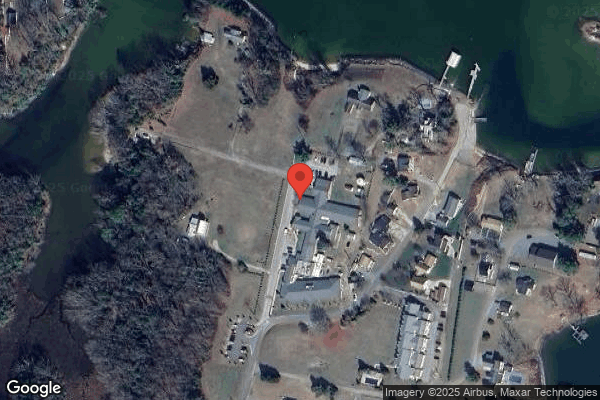

74 MIZPAH ROAD, LOCUST HILL, VA 23092 (804) 758-5260
For profit - Corporation 94 Beds SABER HEALTHCARE GROUP Data: November 2025 1 Immediate Jeopardy citation
Trust Grade
51/100
#70 of 285 in VA
Last Inspection: May 2024

Within standard 12-15 month inspection cycle. Federal law requires annual inspections.

Overview

Dockside Health & Rehab Center has received a Trust Grade of C, indicating that it is average and positioned in the middle of the pack among nursing homes. It ranks #70 out of 285 in Virginia, placing it in the top half of facilities, and it is the best option in Middlesex County out of two available facilities. The facility is currently improving, having reduced its issues from 12 in 2021 to 6 in 2024. However, staffing is a notable weakness, with a rating of 2 out of 5 stars and a turnover rate of 37%, which is better than the state average but still below what families might hope for. There are concerning fines totaling $14,740, which are higher than 84% of Virginia facilities, suggesting some ongoing compliance issues. Additionally, RN coverage is below average, with less coverage than 83% of state facilities, which could impact patient care. Specific incidents include a critical failure to provide CPR for a resident during an emergency and a serious medication error that led to a resident being hospitalized after not receiving their prescribed seizure medication. While the facility has strengths, such as good quality measures and the potential for improvement, these incidents highlight significant areas of concern for prospective residents and their families.

Trust Score
C
51/100
In Virginia
#70/285
Top 24%
Safety Record
High Risk
Review needed
Inspections
Getting Better
12 → 6 violations
Staff Stability
○ Average
37% turnover. Near Virginia's 48% average. Typical for the industry.
Penalties
⚠ Watch
$14,740 in fines. Higher than 93% of Virginia facilities. Major compliance failures.
Skilled Nurses
⚠ Watch
Each resident gets only 20 minutes of Registered Nurse (RN) attention daily — below average for Virginia. Fewer RN minutes means fewer trained eyes watching for problems.
Violations
⚠ Watch
39 deficiencies on record. Higher than average. Multiple issues found across inspections.
★★★★☆
4.0
Overall Rating
★★☆☆☆
2.0
Staff Levels
★★★★★
5.0
Care Quality
★★★☆☆
3.0
Inspection Score
Stable
2021: 12 issues
2024: 6 issues

The Good

  • 5-Star Quality Measures · Strong clinical quality outcomes
  • Full Sprinkler Coverage · Fire safety systems throughout facility
  • No fines on record
  • Staff turnover below average (37%)

    11 points below Virginia average of 48%

Facility shows strength in quality measures, fire safety.

The Bad

Staff Turnover: 37%

Near Virginia avg (46%)

Typical for the industry

Federal Fines: $14,740

Below median ($33,413)

Minor penalties assessed

Chain: SABER HEALTHCARE GROUP

Part of a multi-facility chain

Ask about local staffing decisions and management

The Ugly 39 deficiencies on record

1 life-threatening 1 actual harm
May 2024 3 deficiencies
CONCERN (D)

Potential for Harm - no one hurt, but risky conditions existed

Deficiency F0582 (Tag F0582)

Could have caused harm · This affected 1 resident

Based on staff interview, clinical record review and facility documentation review, the facility failed to ensure that a Medicare Advanced Beneficiary Notice (ABN) was completed and issued to 1 Reside...

Read full inspector narrative →
Based on staff interview, clinical record review and facility documentation review, the facility failed to ensure that a Medicare Advanced Beneficiary Notice (ABN) was completed and issued to 1 Resident, (Resident #25) in a survey sample of 3 ABN Residents. For Resident #25, the facility failed to ensure receipt for notification of insurance coverage loss was documented on the ABN prior to the loss of coverage. The findings included; On 5-30-24 during the course of the survey, the Administrator was asked for ABN records for three skilled nursing discharged individuals. The documents were received and revealed that one of the three documents had not been signed by the beneficiary nor a responsible party and correctly completed. For Resident's #25, staff have no record of the Resident receiving the Advanced Beneficiary notices and signing them. This indicated that the Resident would be unaware of insurance coverage loss date, and thus have no ability to enact their right to appeal the judgement and continue services until a review was conducted by the Centers for Medicare/Medicaid services (CMS), or their contractors. On 5-30-24 at 5:00 p.m., during the end of day debrief, the Administrator was asked why no signature appeared in the Resident documents denoting when the Resident's insurance would lapse, and she stated We will look into that. On 5-31-24 at 3:00 p.m., during the end of day debrief the Administrator was again made aware of the incomplete ABN documents for Resident #25. She stated it simply wasn't done, and we have nothing further to provide.
CONCERN (D)

Potential for Harm - no one hurt, but risky conditions existed

Accident Prevention (Tag F0689)

Could have caused harm · This affected 1 resident

**NOTE- TERMS IN BRACKETS HAVE BEEN EDITED TO PROTECT CONFIDENTIALITY** Based on interview, clinical record review and facility documentation the facility staff failed to ensure that Residents receive...

Read full inspector narrative →
**NOTE- TERMS IN BRACKETS HAVE BEEN EDITED TO PROTECT CONFIDENTIALITY** Based on interview, clinical record review and facility documentation the facility staff failed to ensure that Residents receive adequate supervision and assistance to prevent accidents for 1 Resident (#18) in a survey sample of 24 residents. The findings included: For Resident #18 the facility staff failed to ensure supervision of the resident from the dining room to the hallway on the New Wing causing Resident #18 to trip and fall. On 5/29/24 a review of the clinical record revealed that Resident # 18 was admitted to the facility on [DATE] with diagnoses that included but were not limited to hypo and hypertension, anemia, dementia with behavioral disturbances and history falls and wandering. Resident #18's most recent MDS (Minimum Data Set) with an ARD (Assessment Reference Date) of 2/27/24 coded Resident #18 as having a BIMS (Brief Interview of Mental Status) score of 2 out of 15, indicating severe cognitive impairment. A review of the care plan revealed that Resident #18 is care planned for wandering, falls, cognitive decline, resistance to care and redirection, with appropriate interventions in place. On 5/29/24 a review of the progress notes revealed that on 5/14/23, Resident #18 had a fall while ambulating from the dining room after dinner. A review of the fall investigation revealed the following excerpts: Event date: 5/14/24 at 5:17 PM Event details: Fall with minor injury. Location of fall: Hallway What was resident doing prior to fall? Leaving out of dining room walking back to unit. Location of injury: Hands, right knee and shoulder bruised. ROM [Range of Motion]: X 4 without pain or limitations. The fall investigation revealed that first aid was provided, and pain was addressed, the care plan was updated to reflect the fall, the family and physician were notified. On 5/30/24 at approximately 1:00 PM the area from the hallway of the New Wing leading into the dining room was observed and found that the threshold between the hallway and the dining room was not a smooth transition there was a metal strip that created a trip hazard. The Administrator was made aware as well Employees D (maintenance) and H (Regional [NAME] President). Employee D under the direction of Employee H immediately began to remove the threshold strip and make repairs to floor to ensure it would not become a further trip hazard. A review of the incidents and accidents since the New Wing was built revealed this fall to be an isolated incident no falls were noted prior to or since this fall.
CONCERN (E)

Potential for Harm - no one hurt, but risky conditions existed

Food Safety (Tag F0812)

Could have caused harm · This affected multiple residents

Based on observation and staff interview the facility staff failed to maintain a clean and sanitary food preparation area in accordance with professional standards for food service safety. The finding...

Read full inspector narrative →
Based on observation and staff interview the facility staff failed to maintain a clean and sanitary food preparation area in accordance with professional standards for food service safety. The findings included; On 5-28-24 at approximately 12:40 PM, the kitchen area of the facility was inspected. The fire suppression hood over the large industrial stove was covered in debris and dust with a fur like appearance, which could not be removed by simply wiping, as the debris was adhered with a sticky greasy substance. The metal food preparation tables in the center of the kitchen immediately parallel to the stove had a shelf under each one running the entire length under the tables. Those shelves were also coated with the sticky substance which could not be wiped off. Adhered to the sticky substance on the shelves was food debris, tiny gnat like insects, and paper particles. There were also multiple clear plastic bins under the tables, and on the shelves, containing clean cooking utensils. The clean items as stated by the Dining Director, and bins, were also noted to have food debris and paper particles in them. The dining Director stated we have someone coming next month to do a deep cleaning here in the kitchen, and they will do the stove hood as well. The inspection observations continued in the walk in freezer, and refrigerator. The walk in refrigerator was noted to have clear plastic strips making a curtain in the refrigerator which had the purpose of being easily pushed aside to access the inner refrigerator while maintaining refrigeration as the door was open for deliveries. The plastic strip curtain was noted to have a black mildew substance 18 inches from the floor upward coating each strip. The substance was easily removed with a paper towel. The Corporate Registered Dietician, and Dining Director were present and stated that they would begin to clean the kitchen immediately. On 5-29-24 the kitchen had been cleaned. No further information was provided.
Jan 2024 3 deficiencies 1 IJ
CRITICAL (J) 📢 Someone Reported This

A family member, employee, or ombudsman was alarmed enough to file a formal complaint

Immediate Jeopardy (IJ) - the most serious Medicare violation

Deficiency F0678 (Tag F0678)

Someone could have died · This affected 1 resident

**NOTE- TERMS IN BRACKETS HAVE BEEN EDITED TO PROTECT CONFIDENTIALITY** Based on observations, staff interviews, facility documentation review, and clinical record review, the facility staff failed to...

Read full inspector narrative →
**NOTE- TERMS IN BRACKETS HAVE BEEN EDITED TO PROTECT CONFIDENTIALITY** Based on observations, staff interviews, facility documentation review, and clinical record review, the facility staff failed to ensure CPR (Cardiopulmonary Resuscitation) was provided for one (1) Resident (Resident # 3) in a survey sample of six (6) residents. For Resident# 3, the facility staff failed to continue CPR after starting it before EMS arrival which placed the resident in an immediate jeopardy situation. Without intervention, the likelihood of immediate jeopardy situations existed for all current full-code residents in the facility. The findings included: Resident # 3 was admitted to the facility on [DATE] with diagnoses that included but were not limited to Dementia, Hypertension, Dysphagia, Gout, and Diabetes. Resident # 3's most recent MDS (minimum data set assessment) was a Quarterly assessment with an ARD (assessment reference date) of [DATE]. It was reviewed and revealed a BIMS score of 5 out of 15 indicating severe cognitive impairment. Resident # 3 also required assistance with ADLs (activities of daily living). Resident # 3 was always incontinent of bowel and bladder. The electronic closed clinical record was reviewed from [DATE] through [DATE]. Resident physician orders were reviewed and revealed a full code status indicating the Resident wished CPR to be performed in the event of cardiac arrest or respiratory failure. Resident # 3's care plan and progress notes were reviewed and revealed that CPR should be performed. Review of the progress notes revealed documentation of a note written on [DATE] at 21:30 (9:30 p.m.) that stated: This nurse (Licensed Practical Nurse-LPN-B) and CNA (Certified Nursing Assistant) went into resident's room @ this time. Resident noted unresponsive. Resident had faint pulse noted by checking carotid pulse and abdomen noted to go up and down one time and then ceased to move, no further pulse noted. No pulse, no respirations noted. Code Status-Full Code. CPR (cardiopulmonary resuscitation) initiated. 911 called. CPR continued until EMT (Emergency Medical Technician) arrived and took over CPR. The subsequent progress notes were as follows: Effective Date: [DATE] 22:09 Type: Nursing Note Note Text: EMT (Emergency Medical Technician) performed CPR for approximately 30 minutes without pulse or respirations noted. EMT called on call Doctor who pronounced Resident deceased @ 2209. Effective Date: [DATE] 22:25 Type: Nursing Note Note Text: On call PCP (Primary Care Provider) notified with new order to release remains to Funeral Home. There was a Discharge summary dated [DATE] at 06:52 written by the Director of Nursing (DON) which indicated that the resident was discharged via stretcher to the funeral home. The discharge summary further noted that the resident was a full code and that the nursing staff ran the code until the EMTs came to continue the code and the resident was pronounced at 10:09 pm on [DATE] by the on-call emergency room (ER) doctor. Interviews were conducted with several individuals including LPN-B and EMS Supervisor (Other Staff-N). On [DATE] at 8:15 a.m., an interview was conducted with LPN- (Licensed Practical Nurse)- B who provided CPR. She stated that she went into the room to provide care for Resident #3's roommate and noticed that Resident # 3 was slumped down in the bed. The LPN stated she called a CNA (Certified Nursing Assistant) to help pull Resident # 3 up in the bed. According to LPN-B Resident # 3's breathing was shallow and she noticed when he took his last breath. LPN-B stated she verified the CODE status, called the CODE, got the Crash cart from the 400 hall which was in the closest proximity to service Resident #3, and started CPR (Cardiopulmonary Resuscitation). LPN-B stated EMS (Emergency Medical Services arrived quickly and performed CPR for about 30 minutes. On [DATE] at 2:01 p.m., an interview was conducted with the EMS supervisor (Other Staff-N) who stated the medics informed him that 4 nursing home employees were standing by the bedside of Resident # 3 when the medics arrived. CPR was not in progress when the medics arrived. Other Staff-N stated the nursing home staff said they had stopped CPR compressions because of fluid in the resident's mouth and that the suction machine on the 400-unit cart was not working. According to Other Staff-N, the medics immediately started CPR and treatments, but the resident did not respond. Resident # 3 remained in asystole (no heartbeat). The medics talked with the physician at the hospital and the code was called with a time of death of 22:09 (10:09 p.m.). Other Staff-N promptly forwarded a copy of the EMS run sheet on [DATE]. Documentation from the EMS onsite run sheet was reviewed and indicated the medics were dispatched to the facility for Resident # 3 and that CPR was in progress. Upon arrival at the nursing home, staff told EMTs they had stopped compressions due to fluid in the mouth. The report further indicated that the EMTs suctioned the resident, and CPR resumed with the [NAME] device (automated chest compression machine). Breaths were given via a Bag Valve Mask (BVM) with 15 liters of 02 oxygen. An airway device (I-gel size 3) was inserted into the resident's airway. An intraosseous (IO) line was placed into the left distal tibia and two (2) rounds of epi (epinephrine) were given. The resident was asystole (no heartbeat) and there were no responses to the EMT's treatments. The note further stated a call was made to the hospital and they spoke with the on-call physician and their ended efforts. The time of death was recorded as 2209 (10:09 p.m.). Further review of the run sheet detailed that the call was received at 21:37 (9:37 p.m.) Dispatched at 21:37 (9:37 p.m.,) En Route 21:39 (9:39 p.m.) On Scene 21:51 (9:51 p.m.) At Patient 21:53 (9:53 p.m.) Time of departure 22:15 (10:15 p.m.) Call closed 23:33 (11:33 p.m.) The facility Administrator, [NAME] President of Operations, and Director of Nursing were notified of the Immediate Jeopardy on [DATE] at 2:40 p.m. regarding facility staff not continuing cardiopulmonary resuscitation after starting it. They were also informed that the facility staff members stated the suction machine was not working on the day Resident # 3 expired. As documented on the IJ template presented to the above facility staff: CPR compressions were initiated and then stopped due to fluid in the mouth of the Resident, and an inoperable suctioning machine prior to EMS arrival. EMS documents and interviews support this finding, staff observation and interview revealed that the suction machine on the expired Resident's unit continued to be inoperable and staff were not able to identify that the machine was still inoperable on 1-26-24. This occurred for a Resident experiencing cardiac arrest who had a designated full code status. The Resident expired. All current full-code Residents in the facility are at risk. The following observations and interviews were conducted on [DATE]: 12:15 PM- on 400 hall spoke with LPN-L (charge nurse) who identified herself as the Unit Manager for the 400 hall. She was asked where the crash cart was located and stated there were 2 crash carts, 1 on the 400 hall and a second one on the 500 hall. She stated the crash cart for the 400 hall was being housed behind a locked door in the linen room. LPN-L unlocked the linen room door, and the crash cart was against the wall unlocked and uncovered. There was a suction machine on the top of the cart along with the canister and a CPR Ambu bag. When asked how the cart is checked and by whom, she stated the cart is checked on the night shift using a checklist. When asked to see the checklist she stated she would have to go to the nurse's station to get it. When she returned with the book the checklist for [DATE], was checked off up until [DATE]. The surveyor asked what the initials at the bottom indicated. LPN-L stated it indicated that the nurse had checked the cart on the night shift. When asked what the check boxes next to each item indicated, she stated that the check boxes indicated the nurse has checked to see if the supplies are in the cart. The surveyor asked does that mean if the box is checked next to the suction machine, that the suction machine is on the cart, and it is functioning properly or just checking to see if the machine is on the cart. She said the process is that the night nurse gets the book, looks in each drawer, and signs off that the items are in place. The nurse would then check that the suction machine is working as well. LPN-L was then asked to show how to check the function of the suction machine. LPN-L then brought the cart to the hall plugged it in the outlet, turned it on, and said it was working. The surveyor observed the suction machine emitted a barely audible hum. When asked how she knew it was working, she stated it's low, but you can hear the motor. The surveyor asked if she was sure there was suction. She responded, Yes. Two surveyors checked the machine and found there was no suction. LPN-L said she was not aware of how to properly check the machine to see if there was suction. LPN-D stated that she has worked in the facility for almost a year and that she had never actually used the suction machine. 12:27 PM - The two surveyors and LPN-L took the malfunctioning 400 hall suction machine back to the nurse's nurse where another nurse, LPN-C was asked to demonstrate how to check for the function of the suction machine. She plugged it in, covered the valve, looked for the gauge to move and when the gauge stayed stationary, she stated, Obviously, the machine doesn't work. It was verified that the malfunctioning 400 hall suction machine that had not worked during the code event with Resident #3 on [DATE] had not been replaced with a properly functioning suction machine and remained on the 400 hall crash cart placing other residents at risk if there was an emergent need for oral suctioning. It was also revealed that the nursing staff lacked adequate knowledge regarding the operation of the suction machine, also placing residents at risk if there was an emergent need for oral suctioning. 12:33 PM- Once on the 500 unit the crash cart for that unit was in the employee lounge, locked and covered. LPN-L plugged in the suction machine which made a loud noise, and the LPN checked the functioning of the machine as she had seen demonstrated previously by the two surveyors. This machine was working properly. Another nurse, LPN-D was asked, If you were in an emergency and needed to suction someone and found this machine not functioning what would you do? She responded that she would have gotten the suction machine from the other crash cart. 12:45 PM- The DON was asked who was responsible for checking the crash cart. She responded, It is typically a night shift duty. They check the supplies and fill out the checklist. If something gets used and needs to be replaced, they will put a note in my box. If I am not here, I will make sure it gets replaced. When asked do all the nurses know how to check the crash cart. The DON stated, Yes, though it is usually done on nights. The DON was asked if she expected the suction machine to be checked for functioning every night, that the nurses knew how to properly check for the functioning, and the importance of a fully functioning suction machine, the DON responded, Yes. The DON was asked what her expectation was if the suction machine malfunctioned, and she responded, The machine would be pulled off the cart and a new one would be replaced on the cart. The DON stated if the suction machine was broken and urgently needed the staff should use the one on the other crash cart. The facility Administrator and [NAME] President of Operations submitted an immediacy removal plan that was accepted on [DATE] after the rejection of the first plan. The second immediacy plan stated: This will serve as our plan of Immediacy Removal for (name of facility) related to: CPR for resident on [DATE]. Upon discovery of the occurrence, facility implemented the following quality immediacy removal: On [DATE]: Facility initiated training for all licensed nurses on suctioning of residents in person with demonstration of skills required. On [DATE]: Facility audited and inspected 2 code carts and required inventory to ensure compliance with policy. On [DATE]: Facility inspected all four suction machines and ensured functionality; one suction machine removed from the facility. On [DATE]: Facility initiated training with all CPR certified Nurses regarding CPR guidelines per Red Cross guidelines and the need for continuous CPR with no interruptions. On [DATE]: Facility removed inoperable suction machine found on [DATE] from crash cart and replaced with functioning suction machine. ADHOC QAPI was held on [DATE] to discuss plan for immediacy removal. Facility is alleging compliance as of [DATE] The facility had two 12-hour shifts- 7 a.m. -7 p.m. and 7 p.m. - 7 a.m. The surveyors interviewed licensed nursing staff members on [DATE] from 6:26 p.m. to 7:29 p.m. and [DATE] from 8:10 a.m. to 8:19 a.m. to verify the licensed nurses were re-educated about CPR and not stopping CPR once it has begun unless relieved by the EMS or a physician calls the code. Staff members on both shifts were interviewed for a total of 12 licensed personnel. Copies of CPR cards were reviewed for licensed personnel. All Suction machines were verified to be in working order and staff members were able to verify knowledge of how to use the suction machines as well as where other suction machines were stored. The facility Administrator and [NAME] President of Operations were notified that the immediacy had been abated on [DATE] at 8:45 a.m. No further information was provided.
CONCERN (D) 📢 Someone Reported This

A family member, employee, or ombudsman was alarmed enough to file a formal complaint

Potential for Harm - no one hurt, but risky conditions existed

Notification of Changes (Tag F0580)

Could have caused harm · This affected 1 resident

**NOTE- TERMS IN BRACKETS HAVE BEEN EDITED TO PROTECT CONFIDENTIALITY** Based on staff interview, family interview, facility documentation review and clinical record review, the facility staff failed ...

Read full inspector narrative →
**NOTE- TERMS IN BRACKETS HAVE BEEN EDITED TO PROTECT CONFIDENTIALITY** Based on staff interview, family interview, facility documentation review and clinical record review, the facility staff failed to notify the responsible party of a change in condition and death of one (1) resident (Resident # 3) in a survey sample of six (6) residents. For Resident # 3, the facility staff failed to notify the family of the Resident's death prior to the Resident's removal to the funeral home. The Resident expired on [DATE] at 10:09 p.m. and the family was not notified until the next day on [DATE] at 5:30 a.m. The findings included: Resident # 3 was admitted to facility on [DATE] with diagnoses that included but were not limited to: Dementia, Hypertension, Dysphagia, Gout and Diabetes. Resident # 3's most recent MDS (minimum data set assessment) with an ARD (assessment reference date) of [DATE] was coded as a Quarterly assessment. It was reviewed and revealed a BIMS score of 5 out of 15 indicating severe cognitive impairment. Resident # 3 also required assistance with ADLs (activities of daily living). The electronic closed clinical record was reviewed on [DATE]-[DATE]. Review of the progress notes revealed documentation of a note written on [DATE] at 21:30 (9:30 p.m.) that stated This Nurse and CNA (Certified Nursing Assistant) went into resident's room @ this time. Resident noted unresponsive. Resident had faint pulse noted by checking carotid pulse and abdomen noted to go up and down one time and then ceased to move, no further pulse noted. No pulse, no respirations noted. Code Status-Full Code. CPR (cardiopulmonary resuscitation) initiated. 911 called. CPR continued until EMT (Emergency Medical Technician) arrived and took over CPR. The subsequent progress notes were: Effective Date: [DATE] 22:09 Type: Nursing Note Note Text: EMT (Emergency Medical Technician) performed CPR for approximately 30 minutes without pulse or respirations noted. EMT called on call Doctor who pronounced Resident deceased @ 2209. Effective Date: [DATE] 22:25 Type: Nursing Note Note Text: On call PCP (Primary Care Provider) notified with new order to release remains to Funeral Home. Effective Date: [DATE] 22:30 Type: Nursing Note Note Text: Police officer @ facility called Resident's RP (Responsible Party), _______ (name redacted), and left voicemail to return call. Funeral Home in record, (name of funeral home redacted), notified. Effective Date: [DATE] 00:00 Type: Nursing Note Note Text : __________ (name redacted) Funeral left facility with resident's remains @ this time. Effective Date: [DATE] 05:30 Type: Nursing Note Note Text: Resident's Son, _______ (name redacted), aware of Resident being deceased and Remains being picked up by Funeral home on File. There was a discharge summary written by the Director of Nursing (DON) which stated in its entirety: Effective Date: [DATE] 06:52 Type: Discharge Summary Summary of discharge: Resident discharged To: Funeral Home discharged via: Stretcher Accompanied by Other FUNERAL HOME Resident belongings sent with: STILL IN ROOM AWAITING PICK UP BY FAMILY Dietary Summary: REGULAR MECH SOFT DIET. POOR-FAIR INTAKE. REFUSED SOME MEALS. SUPPLEMENTS WERE IN PLACE. SET UP-SUPERVISION WITH EATING. Activities Summary: 1:1 ACTIVITIES Social Service Summary: FULL CODE RESIDENT, EXPIRED AT 10:09 PM AFTER NURSING STAFF RAN CODE UNTIL EMT CAME TO CONTUNE IT. RESIDENT WAS PROUNOUCED (sic) AT 10:09PM BY ONCALL ER DOCTOR. ALL BELONGINGS ARE STILL IN RESIDENT ROOM AWAITING FAMILY PICK UP. REMAINS WERE RELEASED TO _______ (name redacted) FUENRAL (sic) HOME. Nursing Summary: FULL CODE RESIDENT, NURSING STAFF RAN CODE UNTIL EMT CAME TO CONTUNE IT. RESIDENT WAS PROUNOUCED (sic) AT 10:09 PM BY ON CALL ER (Emergency Room) DOCTOR. ALL BELONGINGS ARE STILL IN RESIDENT ROOM AWAITING FAMILY PICK UP. REMAINS WERE RELEASED TO _____name redacted FUENRAL (sic) HOME. Therapy Summary: NO THERAPY. Summary of Length of Stay: discharge date /time: [DATE] 12:00 AM Length of Stay: 1282 Reason for discharge: EXPIRED Comments: Author: name redacted-(Director of Nursing) - RN [e-SIGNED] The discharge summary had no documentation of the date and time of the family's notification of Resident # 3's death. Interviews were conducted with Emergency Medical Services (EMS), the nurse providing CPR in the facility, the funeral home staff, the resident's grandson and the EMS supervisor. Those interviews are as followed below: The nurse providing CPR in the facility: On [DATE] at 8:04 a.m. an interview was conducted with the nurse (LPN-B) who provided CPR in the facility to Resident #3. She stated she did not notify the family of Resident # 3's death because the officer (Employee-M) stated he was going to call the family. LPN-B stated she witnessed the officer walking down the hall to get a better cell phone signal. LPN-B stated the officer stated he had left a message for the family to call the facility. LPN-B stated she called the family early the next morning when she had not heard from Resident # 3's family. Attempts to reach the deputy police officer (Employee -M) via telephone were unsuccessful. On [DATE] at approximately 3:17 p.m., a voicemail was left for the officer to return the call to the surveyor. There was no return call by the end of the survey nor at the time of the written report findings of the survey. The funeral home staff: An interview was conducted on [DATE] at 2:53 p.m., who stated the funeral home received a call a little after 10 p.m. on [DATE] from the deputy to pick up Resident # 3's body. She stated the funeral home associates picked up Resident # 3's body about an hour and a half later. The Funeral Home director stated Resident # 3's family told her that the nursing home notified them at approximately 6 a.m. on [DATE] that Resident # 3 was deceased and already picked up by the funeral home. The Funeral Home Director stated usually the facility nursing staff would call the funeral home versus a police officer. Resident # 3's grandson was interviewed on [DATE] and stated his family was not notified of Resident # 3's death until the next morning after the funeral home had already picked up the body. The grandson stated that was very upsetting to their family. During the end of day debriefing on [DATE], the facility administrator, Director of Nursing and [NAME] President of Operations were informed of the findings. The [NAME] President of Operations stated the facility staff did not notify the family of the death because the officer notified the family. The [NAME] President of Operations stated anybody who was in the facility could have notified the family of the death. When asked if the sheriff was considered to be facility staff, the [NAME] President of Operations reiterated that anyone who worked with the Resident during the CPR attempt could have notified the family of the death, even the CNA (Certified Nursing Assistant). When asked if the facility staff could understand why the family members were curious about why a sheriff was in attendance and notified the funeral home to pick up the body, the [NAME] President of Operations stated he didn't understand why there would be questions since sheriffs come to all 911 calls. The [NAME] President of Operations and the Administrator stated the facility did not include that information in the admission packet. Copies of the facility's policy regarding notification of change in condition and Post Mortem Care were requested and received. Review of the facility's policy on Resident's Change in Condition Policy, Revision [DATE] revealed the policy that the licensed nurse will recognize and intervene in the event of a change in resident condition. The Physician/Resident Provider and Family/Responsible Party will be notified as soon as the nurse has identified the change of condition and the resident is stable. Under Procedure: 5. The Physician/Resident Provider and Family/Responsible Party will be notified : d. a significant change in the resident's physical,/emotional /mental condition g. a need to transfer the resident to the emergency room and/or admission to the hospital 6. In the event of an emergency situation, 911 will be called immediately and the Physician/Resident Provider and Family/Responsible Party will be notified as soon as practically possible. Review of the policy on Post Mortem Care (reference Elsevier Healthcare Hub. 2022. post mortem care) was reviewed and revealed the following statements: Policy: Post mortem care will be provided to deceased residents in a respectful, private and safe manner. Post mortem care may be provided as soon as a resident has been legally declared dead except in cases where death is a result of an accident, suicide, homicide, potential negligence/abuse or any other suspicious circumstances. In such cases, the Medical Examiner will be informed and the facility will defer post mortem care until further instructions are received. Process: Ensure residents primary care provider (PCP) is informed of death. The PCP will determine if the medical examiner will be notified. Notify resident's representative/family of death if not present. Ask family members if they have requests for the preparation or viewing of the body (such as position of the body, special clothing, culturally sensitive practices, or shaving). Determine if they wish to be present or assist with care of the deceased . Determine if spiritual care is desired and contact clergy as indicated. Once cleared to provide post mortem care. Other excerpts included: Give family members and friends a place to gather. Allowed (sic) them time to ask questions and to grieve. If the resident's family requests a viewing, prepare the resident's body and room in a culturally sensitive manner (if possible) and place a clean sheet over the resident's body up to the chin with the arms outside the covers, if desirable. Notify the supervisor that the body is ready. Notify the funeral home. Once funeral home arrives, accompany their personnel to the resident's room and mutually identify the body and assist with removal as needed. The Post mortem policy was listed as a reference from Elsevier Healthcare Hub. 2022. During the end of day debriefing on [DATE], the facility Administrator and [NAME] President of Operations were again informed of the findings that the facility staff did not notify the resident's family of the death and removal of the body to the funeral home until the next morning. No further information was provided.
CONCERN (D) 📢 Someone Reported This

A family member, employee, or ombudsman was alarmed enough to file a formal complaint

Potential for Harm - no one hurt, but risky conditions existed

ADL Care (Tag F0677)

Could have caused harm · This affected 1 resident

**NOTE- TERMS IN BRACKETS HAVE BEEN EDITED TO PROTECT CONFIDENTIALITY** Based on staff interview, facility document review, clinical record review, the facility staff failed to ensure incontinence car...

Read full inspector narrative →
**NOTE- TERMS IN BRACKETS HAVE BEEN EDITED TO PROTECT CONFIDENTIALITY** Based on staff interview, facility document review, clinical record review, the facility staff failed to ensure incontinence care was provided timely for one (1) resident (Resident #4) in a survey sample of Six (6) residents. For Resident #4 the facility staff did not provide timely incontinence care. The findings included: Resident #4 was initially admitted to the facility on [DATE] with diagnoses including; Chronic obstructive pulmonary disease (COPD), weakness, morbid obesity, Diabetes type 2, repeated falls, osteoporosis with fracture of left wrist, breast cancer, hypertension, and depression. Resident #4's MDS review included the MDS (Minimum Data Set Assessment) with an ARD (Assessment Reference Date) of 2-5-23 which was a 5 day admission assessment after a readmission from the hospital. The MDS coded Resident #4 as requiring extensive to total assistance from one staff member with bed mobility, dressing, toileting, hygiene, and bathing. The Resident was also coded as 15 of 15 possible points on a brief interview for mental status (BIMS), indicating no cognitive impairment. The Resident was coded as always incontinent of bowel and bladder, and did not use the toilet. During the course of a complaint investigation this Resident's former room mate alleged that this Resident was left soiled for extended periods of time during March 2023, and that this occurred more on night shift because of lack of staff to help. Review of Resident #4's physician orders, Medication and treatment administration records (MAR's/TAR's), Care plan, and progress notes indicated that the Resident suffered from moisture associated dermatitis (MASD) and had been admitted with a pressure ulcer. The Resident was ordered to have moisture barrier cream applied to both buttocks, and the Resident wore incontinence products/briefs. On 1-25-24 the Director of Nursing (DON), and Administrator were interviewed and asked what their expectation for toileting and incontinence care timing was for this Resident. They stated every 2 hours, and as needed, and that the care must be documented after care. Certified Nursing Assistants (CNA's) were interviewed on all three units during survey, and indicated they documented all care in the Point of Care computerized system for each of their residents at the end of every shift. Resident #4's point of care ducumentation which is documented by primary care staff to indicate care that was given every day was reviewed. The facility instituted 12 hour working shifts for staff, and those 2 shifts were 7:00 a.m., to 7:00 p.m., and 7:00 p.m., to 7:00 a.m.,. The records indicated that for the month of March 2023 the Resident was totally dependant on staff for toileting and incontinence care. The record further documented the following; March 2023 7:00 a.m., to 7:00 p.m., (12 hour shift) Resident #4 received toileting and incontinence care every 12 hour day shift with the exception of 3-29-23. March 2023 7:00 p.m., to 7:00a.m., (12 hour shift) Resident #4 did not receive care for 12 hours on 3-1-23, 3-2-23, 3-5-23, 3-11-23, 3-13-23, 3-17-23, and 3-30-23. Staff stated that the facility policy on Perineal Care for Incontinent Residents, was that care would be provided approximately every 2 hours every shift and PRN (as needed), which included removal of wet incontinent briefs, and cleansing. Staff further stated that the expectation is to give incontinence care immediately after every incontinent episode. Resident #4 was not afforded timely incontinence care. The facility Administrator and Director of Nursing (DON) were made aware of the above findings at the end-of-day debrief on 1-25-24 and no additional information was provided to the surveyor by time of exit on 1-31-24.
Oct 2021 12 deficiencies 1 Harm
SERIOUS (G)

Actual Harm - a resident was hurt due to facility failures

Deficiency F0760 (Tag F0760)

A resident was harmed · This affected 1 resident

**NOTE- TERMS IN BRACKETS HAVE BEEN EDITED TO PROTECT CONFIDENTIALITY** Based on staff interview, facility documentation review, clinical record review, and in the course of a complaint investigation,...

Read full inspector narrative →
**NOTE- TERMS IN BRACKETS HAVE BEEN EDITED TO PROTECT CONFIDENTIALITY** Based on staff interview, facility documentation review, clinical record review, and in the course of a complaint investigation, the facility staff failed to ensure Residents were free from significant medication errors for four Residents (Resident #40, #24, #178, and #62) in a survey sample of 41 Residents, which resulted in harm for Resident #40. The findings included: 1. For Resident #40, the facility staff failed to follow physician orders and provide an anticonvulsant (seizure medication) as ordered, which resulted in Resident #40 having a seizure and being sent to the hospital, this constituted harm. On 10/12/21 at 2:10 PM, the family member/Resident Representative of Resident #40 met with the survey team. She shared concern that Resident #40 had been hospitalized and during the course of her hospital stay had seizures. Resident #40 was started on seizure medication, Keppra while in the hospital. She stated that upon Resident #40's return to the facility the facility staff failed to administer this medication. Resident #40 had another seizure and had to be sent to the hospital. On 10/13/21 and 10/14/21, a review of the EHR (electronic health record) for Resident #40 was conducted. This review revealed that on 8/7/21, Resident #40 was hospitalized and returned to the facility on 8/16/21. Review of the EHR further revealed that hospital records from the hospitalization were in the record. Included in the hospital documents was a neurology consult dated 8/13/21, that read, While undergoing a investigations, yesterday evening, she had brief generalized tonicclonic seizure with loss of consciousness lasted less than 2 min Patient had mild facial droop. She had a CT scan of brain which was reported unremarkable. She does not have fever or new focal neurological deficit she is back to her baseline. She was started on levetiracetam and doing very well. We are unable to do MRI brain due to Permanent pacemaker. A hospital note dated 8/14/21 and 8/15/21, titled General Progress Note, both read On 8/12/21, patient with new onset seizure activity; CT evaluation negative for etiology. Cannot get MRI due to PPM [permanent pacemaker]. Additional notes in this same document read, She had a brief generalized seizure on 08/12 in the absence of a seizure history. There was noticeable left arm weakness subsequently and a stroke alert was called. There was no CT evidence of bleeding or infarction, and CTA did not reveal evidence of a flow limiting lesion. Neuro interventionalist did not feel that further investigation or treatment was warranted at this time. Local neurology consultation was recommended related to the new onset seizure. She had a 2nd brief seizure after arrival to the ICU but none since. She has been loaded with Keppra and will continue that b.i.d. [twice daily] Unable to get MRI due to pacemaker Keppra 500mg BID, check Keppra level on 8/16, seizure precautions. The hospital Discharge summary dated [DATE], noted diagnosis to include: active problem seizure. This discharge summary went on to note: take these medications: levETIRAcetam 100 MG/ML solution 500 mg, Oral, 2 times daily, commonly known as: KEPPRA. Hospital course .Seizure She had a brief generalized seizure on 08/12 in the absence of a seizure history. There was noticeable left arm weakness subsequently and a stroke alert was called. There was no CT evidence of bleeding or infarction, and CTA did not reveal evidence of a flow limiting lesion. Neuro interventionalist did not feel that further investigation or treatment was warranted at this time. Local neurology consultation was recommended related to the new onset seizure. She had a 2nd brief seizure after arrival to the ICU but none since. She has been loaded with Keppra and will continue that b.i.d. Unable to get MRI due to pacemaker. Review of Resident #40's physician orders and MAR (medication administration record) for August and September 2021, revealed that she was not ordered or administered Keppra until 9/6/21. There were multiple notes from the providers (doctor and nurse practitioner) of seeing Resident #40 from 8/16/21-9/6/21, and none of the notes made reference to the seizure activity she had in the hospital or the orders for Keppra. On 9/5/21 at 3 PM, there was a nursing note entry that read, Resident's daughter noted to be in the hallway yelling for help. This Nurse, other Nurse and Aide arrived at Resident's room where Resident's daughter stated that Resident had a seizure. Upon assessment of Resident she was noted to be unresponsive to verbal stimulation and slightly responsive to painful stimuli, with her eyes open; VS [vital signs] 112/58 [blood pressure reading], 69 [pulse], 20 [respirations], O2 88% [oxygen saturation] on 2 LPM [2 liters of oxygen per minute]. Resident was unresponsive for 3 minutes. No further seizure like activity noted. On call [Nurse Practitioner name redacted] made aware and gave N.O. [new order] Send Resident to ER [emergency room] for eval [evaluation] and tx [treatment]. Resident and RP [responsible person] made aware. On 9/8/21, there was a progress note written by the nurse practitioner that read, Upon review of previous d/c [discharge] summary, it appears pt [patient] possibly had seizure like activity at that time and was discharged with recommendation for keppra, which was somehow overlooked. On 10/13/21, the Director of Nursing provided a document dated 9/6/21, titled Medication Error that read, Upon admission on [DATE] Keppra order not transcribed to EMAR (electronic medication administration record). Also provided was a copy of an IDT (interdisciplinary team) Meeting Progress Note dated 9/10/21, that read, Resident readmitted to facility and Keppra omitted from active meds. On 10/14/21 at 2:10 PM, a telephone interview was conducted with Employee F, the Nurse Practitioner. Employee F was asked if she would ever not agree to an order from the hospital for a Resident to be on Keppra. Employee F stated, No, we absolutely would order that. Employee F was asked about the details of Resident #40 not receiving Keppra as ordered by the hospital following her having 2 seizures while in ICU (intensive care unit) at the hospital. Employee F stated, It could have been prevented, I do carry some fault in that. All of it could have been avoided. On 10/14/21 at approximately 3:50 PM, an interview was conducted with LPN C, who was the admitting nurse when Resident #40 returned to the facility on 8/16/21. LPN C stated she had received report from the hospital as well as discharge paperwork. She assessed Resident #40 then called the NP (nurse practitioner) and reviewed the hospital records and orders. LPN C stated she told the NP of the seizure activity in the hospital and was advised to leave it as is and she [the NP] would review them when she came in the next day. LPN C very emotionally said I would never hurt her, I'm so sorry [referring to Resident #40]. On 10/14/21 at 4:31 PM, the facility Administrator stated their contracted medical provider for physician services has a phone system that tracks phone calls. She then provided an email that indicated the medical provider received a call from the facility staff on 8/16/21 at 1:51 PM. On 10/15/21, the Administrator returned to the conference room and had obtained the recording of the conversation between facility staff and the medical provider regarding Resident #40's readmission to the facility. Surveyors D & F listened to the conversation which was between LPN C and Employee F. During this call Employee F, the nurse practitioner stated, go ahead and start whatever their changes are [the hospital orders], that's fine. I'll look at them tomorrow when I'm in there, we will request their [the hospital] records. Obviously they would have had neurology [evaluation] and I'm curious what they think happened. On 10/15/21 at 11:30 AM, a telephone interview was conducted with Other Staff B, the pharmacist. Other Staff B stated, Keppra is a central nervous system anticonvulsant, the side effects would be allergy or adverse reaction history or excessive sedation, which can be controlled by dose adjustments. If someone has had a seizure I don't know why it wouldn't be given unless they were on another medication for this and it would be duplicate therapy. On 10/15/21 at 9:44 AM, an interview was conducted with the Director of Nursing. She was asked what constitutes a medication error, she stated, If a medication is not available, given in error or isn't given. The facility policy titled Medication Related Errors read, 4. Administration Errors: In the event of an administration error, facility staff should follow facility policy relating to the medication administration errors .4.9 Omission Error: Facility fails to administer an ordered dose to the resident, unless refused by the resident or not administered because of recognized contraindication. On 10/15/21, the facility Administrator was notified of Resident #40 not receiving her seizure medication, which resulted in a seizure and hospital visit constituting harm. No further information was provided. 2. For Resident #24 the facility staff failed to administer an anticoagulant (blood thinner) for 3 of 4 doses scheduled in a 48 hour time frame, this is a significant medication error. On 10/13/21-10/14/21, a review of Resident #24's EHR (electronic health record) was conducted. Resident #24 was noted to have a diagnosis of paroxysmal atrial fibrillation. Physician orders revealed an order dated 8/9/21, that read, Brilinta Tablet 90 MG (Ticagrelor) Give 1 tablet by mouth two times a day for Blood thinner. This order was still active. Review of Resident #24's MAR for October revealed that on 10/4 the 8:30 AM dose was not given and had a code 19 in the block. On 10/5/21, neither of the 2 scheduled doses were administered and both had a code 19 in the block. The last page of the MAR had a legend that indicated, 19=Other / See Nurse Notes. Review of the nursing notes for these 2 days read, Brilinta Tablet 90 MG, Give 1 tablet by mouth two times a day for Blood thinner unavailable, Brilinta Tablet 90 MG, Give 1 tablet by mouth two times a day for Blood thinner not in cart, and Brilinta Tablet 90 MG, Give 1 tablet by mouth two times a day for Blood thinner on order. On 10/13/21, RN D was asked to verify that Resident #24's medication Brilinta was available. At the medication cart RN D was able to verify that Brilinta was currently in stock. She was asked about the notes on 10/4 & 10/5, and why the medication was not given, and she said it says it wasn't available. RN D confirmed that the process is that the staff would order medications several days before running out to ensure the pharmacy had time to deliver a refill. On 10/14/21 at 1:37 PM, an interview was conducted with the DON (Director of Nursing). The DON stated, if meds (medications) are not available staff are to try to get them out of the Omnicell (in-house stock of medications), if they can't they are to call the pharmacy and physician. The DON confirmed the process for reordering medications, which she said, there are several options, you can press the reorder button in the computer or call the pharmacy. When asked when meds are to be ordered, the DON said, when meds get down to a 7 day supply we will go ahead and order them to prevent them from running out. The DON stated the risks of not receiving blood thinners as ordered is, they run the risk of getting a blood clot, which could cause the loss of limb or life. She confirmed this is an important medication to receive. On 10/14/21 at 2:10 PM, a telephone interview was conducted with Employee F, the Nurse Practitioner. Employee F was asked about the medication Brilinta and its use. Employee F stated, it is an anticoagulant usually given when people have heart failure, it is a last ditch effort. When asked the risks if someone doesn't get this as ordered, Employee F stated, it depends on the circumstances, 1 dose is not terrible but missing multiple doses could put them at risk for heart failure or create clots. Employee F was made aware that Resident #24 had missed 3 of 4 scheduled doses in a 48 hour period. Employee F stated she was not aware of this. On 10/15/21 at 11:30 AM, a telephone interview was conducted with Other Staff B, the pharmacist. Other Staff B stated, Brilinta is an antiplatelet medication, the reason someone takes it is to prevent a thromboembolism (blood clot) or MI (myocardial infarction/heart attack). Missed doses would result in higher risks for these things. Other Staff B stated, the pharmacy makes 2 deliveries to the facility daily and also has a local retail pharmacy that can be used for back-up if medications are not available and are not in the Omnicell [emergency box of medications maintained on-site]. When asked about cut off times, she stated, if a medication is ordered before 11:30 PM, we have it on the delivery that comes that night, same for the day delivery, as long as we get it [the order/refill request] about an hour to 30 minutes before we leave the pharmacy with the delivery, it can be included in that delivery. The facility policy titled Medication Related Errors read, 4. Administration Errors: In the event of an administration error, facility staff should follow facility policy relating to the medication administration errors .4.9 Omission Error: Facility fails to administer an ordered dose to the resident, unless refused by the resident or not administered because of recognized contraindication. On 10/14/21, the facility Administrator and DON were made aware of the findings. No further information was received. 4. For Resident #62, the facility staff failed to administer Lantus (Insulin Glargine) on 10/04/2021 and 10/05/2021 as ordered by the physician. Also, Novolog (Insulin Aspart) was not signed off as administered on 10/06/2021 at 0800 (8:00 A.M.) and 1700 (5:00 P.M.) On 10/25/2021 at approximately 9:45 A.M., Resident #62's clinical record was reviewed. A physician's order dated 08/02/2021 documented, Lantus Solution 100 unit/ml [milliliters] (Insulin Glargine) Inject 65 unit subcutaneously at bedtime for DMII [diabetes mellitus type 2]. A physician's order dated 08/05/2021 documented, Novolog (Insulin Aspart) 100 unit/ml [milliliters] Inject per sliding scale . A physician's order dated 08/20/2021 documented Novolog (Insulin Aspart) 100 unit/ml. Inject 5 unit subcutaneously with meals for DMII in addition to sliding scale. The Medication Administration Record (MAR) for October 2021 was reviewed. Pertaining to Lantus (Insulin Glargine) Inject 65 units subcutaneously at bedtime: The Lantus was signed off as administered at bedtime with the exception of 10/04/2021 and 10/05/2021. For 10/04/2021 and 10/05/2021, the administration Insulin Glargine (65 units) at 2100 [9:00 P.M.] was coded as 3 meaning no insulin required (according to the MAR legend). The BS [blood sugar] value on 10/04/2021 at 2100 was documented as 183. The BS [blood sugar] value on 10/05/2021 at 2100 was documented as 125. Pertaining to Novolog (Insulin Aspart) Inject 5 unit subcutaneously with meals for DMII in addition to sliding scale: The Novolog was signed off as administered with the exception of 10/06/2021 at 0800 [8:00 A.M.] which was coded as 19 meaning other/see nurses notes (according to the MAR legend) and 10/06/2021 at 1700 [5:00 P.M.] which was blank. A nurse's note dated 10/06/2021 at 11:23 A.M. documented that the Novolog was on order. There was no nurse's note addressing why Novolog was not signed off as administered on 10/06/2021 at 1700. On 10/25/2021 at 11:50 A.M., an interview with Licensed Practical Nurse D (LPN D) was conducted. When asked about the process if insulin is unavailable for administration, LPN D stated they have an emergency supply of insulin in the refrigerator. LPN D stated they would use the emergency supply and also notify the pharmacy. This surveyor and LPN D then went to observe the ekit contents for insulin which did contain several types of insulin vials and pens including Lantus and Novolog. On 10/25/2021 at 1:00 P.M., the Director of Nursing (DON) was notified of findings and the DON indicated she would look into it. At 2:20 P.M., the DON stated that it was an agency nurse that documented no insulin required for the Lantus on 10/04/2021 and 10/05/2021. The DON also stated that I can't speak for her but it looked like she was addressing the sliding scale [where no insulin was required for blood sugar values less than 200] and applied it to the Lantus. Pertaining to the nurse's note indicating Novolog was on order and not administered, the DON stated that staff are expected to use the extra insulin supply on hand and doesn't know why it wasn't administered. On 10/25/2021 at approximately 3:30 P.M., the administrator was notified of findings. The administrator and DON stated there was no further information or documentation to submit. 3. For Resident #178 the facility staff failed to administer insulin, antibiotics, pain medications, medications as ordered by physician. A review of the clinical record revealed that Resident #178 was admitted to the facility on [DATE] at 8 PM, after having been hospitalized and had surgery for necrotizing fasciitis (also known as flesh eating bacteria) to her inner thigh. Among Resident # 178's discharge summary were orders for the following medications: Resident #178 had an order for Clindamycin 300 mg one capsule every six hours (an antibiotic). -A review of the MAR (Medication Administration Record) revealed that Resident #178 did not receive 5 doses of this medication - A review of the progress notes revealed that nurses documented medication was unavailable. However, a review of the stat box contents revealed this medication was available in the stat box. Resident #178 had an order for Cefepime 2 grams/100 ml IV (an antibiotic) A review of the MAR revealed that the resident did not receive seven doses of IV Cefepime 2 grams/ 100 ml between 8/12/21 and 8/15/21. Progress note on 8/14/21 at 11:50 AM read: Pharmacy contacted re: Cefepime HCl solution reconstituted 2 grams as medication not received. Per pharmacy IV department not available at this time message left for a return call. 8/14/21 at 4:11 PM IV department contacted no return call received per pharmacy IV department IV antibiotics order not received order re-faxed to the pharmacy order currently not updated in [name of pharmacy computer program redacted] to pull medication for administration. 8/15/21 at 3:59 PM Pharmacy contacted again this shift as IV abx not received. Per pharmacy medication not sent d/t allergy to Ceclor. Per discharge information, resident was receiving this medication in hospital without side effects. On-call NP made aware with approval to contact pharmacy again and update on approval to send medication. Pharmacy verbally contacted + faxed for notification of approval to continue IV abx per current orders. Resident #178 had an order for Gabapentin 600 mg 1 tablet three times a day for neuropathic pain-A review of the MAR revealed the resident missed nine doses of gabapentin. A review of the progress notes revealed the nurses documented medication unavailable awaiting from pharmacy. A review of the Stat Box contents revealed the medication was available in the stat box in a lower dose strength (300 mg) Resident #178 had an order for Insulin Glargine (Lantus) 60 units a day missed 6 doses. The facility MAR has orders that read: Insulin Glargine (Lantus) solution 100 units/ml inject 60 units subcutaneously at bedtime for DM2 (diabetes) Start Date 8/12/21 at 9:00 PM A review of the MAR reveals that it is coded as 19 (which means see nurses notes) for 8/12/21 - 8/16/21 (4 missed doses) then it was discontinued on the 16th and not restarted until 8/18/21. (2 more doses missed). A review of the Nurses notes revealed the nurses were documenting waiting for med from pharmacy. On 10/13/21 at approximately 11:25 AM an interview was conducted with the DON who was stated the Pharmacy makes two runs a day. They come in the middle of the night and in the middle of the day. When asked how long it takes to get orders in the system for a new admission she stated that it takes about 2 hours. When asked what the cutoff time to get the medications on the next run she stated it is at 11:30 PM. She further stated that Resident #178 should have had her medications in the middle of the night run. When asked if there is a backup pharmacy she stated that there was a backup pharmacy. On 10/14/21 during the end of day meeting the Administrator was made aware of the concerns and no further information was provided.
CONCERN (D)

Potential for Harm - no one hurt, but risky conditions existed

Deficiency F0554 (Tag F0554)

Could have caused harm · This affected 1 resident

Based on observation, interview, facility documentation and clinical record review the facility staff failed to ensure the Resident was able to self administer medications for 1 Resident (#76) in a su...

Read full inspector narrative →
Based on observation, interview, facility documentation and clinical record review the facility staff failed to ensure the Resident was able to self administer medications for 1 Resident (#76) in a survey sample of 41 Residents. The findings included: For Resident #76 facility staff left prescription fluticasone propionate at bedside for two days. On 10/12/21 at approximately 11:30 AM Resident # 76 was observed in bed with head of bed elevated watching TV. On her bedside table were her personal belongings along with a bottle of fluticasone propionate (a prescription cortisone nasal spray). An interview was conducted with Resident # 76 who stated that the nurse from yesterday left it in here so that I could use it when I was ready. When asked if she used it yesterday she stated she was not sure, but when asked if she used it today she stated no not yet. On 10/12/21 at approximately 11:40 AM an interview was conducted with RN C who was asked if Resident #76 can self-administer medications, she stated that the Resident does not have an order to self-administer. When asked if she had been in the room of Resident #76 she stated that she had not given that Resident her medications yet. RN C was asked to step into the room from the hallway so that she could visualize the bedside table. When asked if that medication should be left at the bedside she stated no. RN C was asked what are the risks of leaving a medication at the bedside of someone who has not been screened for self-administration, and she stated there is a risk that they might not take their meds or that they may forget they took them and take more than the prescribed dosage, On the afternoon of 10/12/21 a review of the clinical record was conducted and the Resident did not have orders to self-administer medications, she did not have it care planned nor was an assessment completed. On 10/13/21 at 10:00 AM an interview was conducted with the DON who was asked if Resident #76 was able to self-administer medications and she stated that she was not. When asked what the expectation is for nurses with regards to leaving medications at the bedside, and she stated that medications are not left at the bedside unless the Resident was screened for self-administration and has a doctors order to do so. On 10/14/21 during the end of day meeting the Administrator was made aware of the concerns and no further information was provided.
CONCERN (D)

Potential for Harm - no one hurt, but risky conditions existed

Deficiency F0657 (Tag F0657)

Could have caused harm · This affected 1 resident

Based on interview, clinical record review and facility documentation review the facility staff failed to review and revise the care plans for 1 Residents (#26) in a survey sample of 41 Residents. The...

Read full inspector narrative →
Based on interview, clinical record review and facility documentation review the facility staff failed to review and revise the care plans for 1 Residents (#26) in a survey sample of 41 Residents. The findings included: For Resident #26 the facility staff failed to review and revise the care plan to include changes in behavior and the need for 1:1 monitoring. On 10/12/21 at approximately 11:45 AM, Resident #26 was observed in his bed fully dressed asleep. A staff member was sitting in a chair with an over bed table in front of her at the entrance to the room. The staff member identified herself as CNA E and was interviewed at that time. CNA E stated that Resident #26 was placed on 1:1 because of behaviors he had exhibited the previous evening. She stated that he has been hitting staff. When asked has he ever hit other Residents she stated that he did and has been placed on 1:1 in the past for that behavior. On 10/12/21 at 12:20 PM an interview was conducted with the RN Supervisor who stated that Resident #26 has a BIMS (Brief Interview of Mental Status) score of 4 indicating severe cognitive impairment and has been having some behavioral issues that are believed to be the progression of his dementia. She stated the facility has the Resident on 1:1 for the safety of other Residents and staff. The RN Supervisor stated the Psychiatric Nurse Practitioner is looking into changing his medications. A review of the clinical record revealed that the facility did reach out to Psychiatric services and they are indeed looking into his medications and any changes that might benefit the Resident. The Resident was discharged from talk therapy as he is unable to effectively participate. On 10/13/21 at approximately 11:00 AM an interview was conducted with the social worker who stated that Resident #26's behaviors have been discussed with the RP and with the doctors, and the facility is keeping him on 1:1 for safety. When asked if this was discussed in the care plan meeting she stated that it was. On 10/13/21 a review of the clinical record revealed that Resident # 26's care plan had not been revised to include 1:1 monitoring for behaviors. On 10/13/21 at 1:00 PM an interview was conducted with the DON. The DON was asked what the purpose of revising the care plan and she stated the care plan is how the nurses know what care the Resident needs. When asked how often should the care plan be updated and she stated that the care plan should be updated quarterly and with any significant changes in condition or treatment. When asked if the 1:1 for behaviors should be listed on the care plan she stated that it should. On 10/14/21 the Administrator was made aware of the issues and no further information was provided.
CONCERN (D)

Potential for Harm - no one hurt, but risky conditions existed

Respiratory Care (Tag F0695)

Could have caused harm · This affected 1 resident

Based on observation, staff interview, clinical record review, and facility documentation review, the facility staff failed to provide oxygen therapy consistent with infection control measures for 2 R...

Read full inspector narrative →
Based on observation, staff interview, clinical record review, and facility documentation review, the facility staff failed to provide oxygen therapy consistent with infection control measures for 2 Residents, Resident #70 and Resident #6, in a survey sample of 41 Residents. The findings included: 1. For Resident #70, facility staff failed to change the oxygen tubing weekly as ordered. During initial tour on 10/12/21 at approximately 11:30 AM, Surveyor D observed Resident #70 with oxygen being administered via nasal cannula at 1 liter per minute as ordered by the physician. There was no date on the oxygen tubing. Surveyor D conducted an interview with RN C at the bedside of Resident #70. RN C confirmed the observation stating, No, I do not see any date on the [oxygen] tubing, typically it is changed weekly on night shift. When asked about the importance of changing the oxygen tubing weekly, RN C stated, It needs to be changed weekly to prevent the spread of infections. Review of Resident #70's clinical record revealed a physician's order that read, Change any O2 [oxygen] tubing weekly on Sunday and PRN [as needed]. Review of the facility's policy entitled, Oxygen Administration Policy, revision date 12/16/19, subheading Cleaning, read, Change tubing, mask, and cannula weekly and document. The Facility Administrator was informed of the findings. No further information was provided. 2. For Resident #6, facility staff failed to change the oxygen tubing weekly as ordered. During initial tour on 10/12/21 at approximately 1:30 PM, Surveyor F observed Resident #6 with oxygen being administered via nasal cannula at 2 liters per minute as ordered by the physician. There was no date on the oxygen tubing. Review of Resident #6's clinical record revealed a physician's order that read, Change any O2 [oxygen] tubing weekly on Sunday and PRN [as needed]. Review of the facility's policy entitled, Oxygen Administration Policy, revision date 12/16/19, subheading Cleaning, read, Change tubing, mask, and cannula weekly and document. The Facility Administrator was informed of the findings. No further information was provided. No further information was provided.
CONCERN (D)

Potential for Harm - no one hurt, but risky conditions existed

Deficiency F0697 (Tag F0697)

Could have caused harm · This affected 1 resident

**NOTE- TERMS IN BRACKETS HAVE BEEN EDITED TO PROTECT CONFIDENTIALITY** Based on interview, clinical record review, facility documentation and clinical record review the facility staff failed to ensur...

Read full inspector narrative →
**NOTE- TERMS IN BRACKETS HAVE BEEN EDITED TO PROTECT CONFIDENTIALITY** Based on interview, clinical record review, facility documentation and clinical record review the facility staff failed to ensure adequate pain management for 1 of 41 sampled residents (Resident #178). The findings included: For Resident #178 the facility staff did not administer pain medication although it was available in the stat box. A review of the clinical record revealed that Resident #178 was admitted to the facility on [DATE] at 8 PM, after having been hospitalized and had surgery for necrotizing fasciitis (also known as flesh eating bacteria) to her inner thigh. Among Resident # 178's discharge summary were orders for the following medications: Gabapentin 600 mg 1 tablet three times a day for neuropathic pain. A review of the MAR revealed the resident missed nine doses of gabapentin. Oxycodone 10 mg tablet immediate release one tablet every six hours as needed for pain. This pain medication was not administered until 8/14/21. A review of the progress notes revealed the nurses documented Gabapentin was unavailable awaiting from pharmacy. A review of the Stat Box contents revealed the Gabapentin was available in the stat box in a lower dose strength of 300 mg. A review of the Stat Box contents revealed Oxycodone was available in the stat box. A review of the care plan reveals the Resident has care plan for potential for pain the interventions read: Administer pharmacological interventions as indicated per physician and monitor the effectiveness Date Initiated: 08/13/2021 A review of the clinical record revealed the following excerpt from the Nurse Practitioner's progress note: 8/13/21 at 2:45 PM -The patient is seen in her room today morning [sic]. She reports right groin and thigh pain at a level of 9/10 since the patient has not received her oxycodone p.r.n. The patient reports she uses oxycodone at home chronically for her arthritis and she also reports she is needing Dilaudid prior to application of the wound VAC due to significant pain at the site. A review of the MAR revealed that Resident #178 was not given her PRN Oxycodone until 8/14/21 at 12:08 PM On 10/13/21 at approximately 11:25 AM an interview was conducted with the DON who was stated the Pharmacy makes two runs a day. She stated that come in the middle of the night and in the middle of the day. When asked how long it takes to get orders in the system for a new admission she stated that it takes about 2 hours. When asked what the cutoff time to get the medications on the next run she stated it is at 11:30 PM. She further stated that Resident #178 should have had her medications in the middle of the night run. When asked if there is a backup pharmacy she stated that there was a backup pharmacy. On the morning of 10/14/21 an interview was conducted with Employee H (the pharmacist) who stated that the staff could have taken the medications from the stat box as several of the medications were in the stat box. When asked if the Resident had an order for Neurontin 600 mg and you only had the 300 mg tabs could you use two of them, she stated it is possible if you first notify the physician and get an order to give 2 of the 300 mg tabs until the 600 mg tabs arrive. She also stated The facility has the ability to reach out to us to get a prescription from our backup pharmacy. On 10/14/21 the DON provided the Proof of Delivery statement from the pharmacy which listed the medications that were delivered on 8/13/21. Among the medications delivered on that day were the Gabapentin and the Oxycodone. When asked why the medications were documented as not administered if they were in the facility, and she stated that she did not know. On 10/14/21 during the end of day meeting the Administrator was made aware of the concerns and no further information was provided.
CONCERN (D)

Potential for Harm - no one hurt, but risky conditions existed

Pharmacy Services (Tag F0755)

Could have caused harm · This affected 1 resident

Based on interview, clinical record review and facility documentation the facility staff failed to ensure availability of medications for 1 Resident (#24) in a survey sample of 41 Residents. The findi...

Read full inspector narrative →
Based on interview, clinical record review and facility documentation the facility staff failed to ensure availability of medications for 1 Resident (#24) in a survey sample of 41 Residents. The findings include: For Resident #24, the facility staff failed to provide medications as ordered by the Physician. On 10/12/21 at 05:01 PM, Resident #24 stated, I have pain all over my body, I'm eat up with arthritis, they only give me Tylenol. On 10/13/21, a review of Resident #24's clinical record was conducted. This review revealed the following nursing notes: 9/21/21- Gabapentin Capsule 400 MG, Awaiting medication from pharmacy. 10/4/21- Famotidine Tablet 20 MG, unavailable to administer, reordered. 10/12/21-Gabapentin Capsule 400 MG, Awaiting arrival. 10/12/21-Vitamin D3 Tablet, on order. According to the September and October 2021 MAR (Medication Administration Record), the medications were not administered to Resident #24 as listed above. Review of Omnicell (on-site emergency medication stock) contents list revealed the following: Gabapentin Capsule 400 MG -Quantity: 5 in inventory On 10/13/21, the Controlled Medication Utilization Record forms for Resident #24's Gabapentin were reviewed. This revealed that Resident #76's Gabapentin 400 mg capsules were received at the facility on 9/30/21, with the last dose given 10/12/21 at 2 PM. The next supply of Gabapentin was not received at the facility until 10/13/21. There were valid Physicians Orders for the medications listed as unavailable. On 10/14/21 at 1:37 PM, an interview was conducted with the DON (Director of Nursing). The DON stated, if meds (medications) are not available staff are to try to get them out of the Omnicell (in-house stock of medications), if they can't they are to call the pharmacy and physician. The DON confirmed the process for reordering medications, which she said, there are several options, and you can press the reorder button in the computer or call the pharmacy. When asked when meds are to be ordered, the DON said, When meds get down to a 7 day supply we will go ahead and order them to prevent them from running out. The DON stated the risks of not receiving Gabapentin as ordered is, rebound pain, especially with nerve pain. On 10/15/21 at 11:30 AM, a telephone interview was conducted with Other Staff B, the pharmacist. Other Staff B stated, the pharmacy makes 2 deliveries to the facility daily and also has a local retail pharmacy that can be used for back-up if medications are not available and are not in the Omnicell [emergency box of medications maintained on-site]. When asked about cut off times, she stated, if a medication is ordered before 11:30 PM, we have it on the delivery that comes that night, same for the day delivery, as long as we get it [the order/refill request] about an hour to 30 minutes before we leave the pharmacy with the delivery, it can be included in that delivery. A review of the facilities policy Entitled medication shortages/unavailable medications page 1 read: 3. if a medication shortage is discovered after normal pharmacy hours: 3.1 A licensed facility nurse should obtain the ordered medication from the emergency medication supply 3.2 If the ordered medication is not available in the emergency medication supply, the licensed facility nurse should call the pharmacy's emergency answering service and request to speak with the registered pharmacist on duty to manage the plan of action. Action may include: 3.2.1 Emergency delivery; or, 3.2.2 Use of emergency (back up) third-party pharmacy. 4. If an emergency delivery is unavailable, facility nurses should contact the attending physician to obtain orders or directions. 5. Get the medication is unavailable from pharmacy or a third-party pharmacy, and cannot be supplied from the manufacturer, facility should obtain alternate physician/prescriber orders, as necessary. 7. If the facility nurse is unable to obtain a response from the attending position/prescriber in a timely manner, the facility nurse should notify the nursing supervisor and contact the medical Director for orders/direction making sure to explain the circumstances of the medication shortage. 8. When I missed doses, an unavoidable facility nurse should document the missed dose and the explanation for the misters on the bar or the tour and in the nurse's notes per facility policy. Such documentation should include the following information: 8.1 A description of the circumstances of the medication shortage; 8.2 And description of pharmacy's response upon notification; and 8.3 actions taken. On 10/14/21, during the end of day debriefing, the Administrator and DON (Director of Nursing) were notified of the issue. No further information was provided.
CONCERN (D)

Potential for Harm - no one hurt, but risky conditions existed

Deficiency F0790 (Tag F0790)

Could have caused harm · This affected 1 resident

Based on interview, observation, clinical record review and facility documentation the facility staff has failed to ensure routine and emergency dental care for 1 Residents (# 16) in a survey sample o...

Read full inspector narrative →
Based on interview, observation, clinical record review and facility documentation the facility staff has failed to ensure routine and emergency dental care for 1 Residents (# 16) in a survey sample of 41 Residents. The findings included: For Resident #16 the facility staff failed to ensure Residents received routine and emergency dental care. On 10/13/21 a review of the clinical record revealed that Resident #16 had order that read: Warm compress to affected area (toothache/pain) as needed every four hours as needed for toothache/pain times 20 minutes start date 9/23/2020 at 1 PM. This order was still active, over a year later, and was signed off as administered as recently as 10/11/2021 at 10:26 AM. Resident #16 had another orders that read: X-ray left jaw/mandible for edema one time a day for one day start date 10/14/21 at 12:30 PM. Pending confirmation clindamycin HCl capsule 300 mg two capsules by mouth four times a day for left side dental infection start date 10/14/21. Pending confirmation please make a follow up appointment with dental for left side tooth infection one time only for four days start date 10/15/21: 9 AM. On 10/13/21 at approximately 9:15 AM an attempt was made to interview Resident #16 who stated she did not want to answer any questions. On 10/13/21 at 10:00 AM an interview was conducted with RN C who was asked if Resident #16 had any dental issues she was aware of, she stated that there has been an order in the chart for warm compress for a while and she knows that she has recently complained of tooth pain. When asked how the Residents get appointments to see the dentist she stated that the Social Worker handles the dental and vision appointments. On 10/13/21 at approximately 11:00 AM an interview was conducted with the Social Worker who stated that she was the person who made the appointments for dental work. She stated that right now she had about 5 people that needed to be seen by a dentist. When asked if the Residents receive routine dental checkups she explained that some people could pay a fee (as insurance does not cover the visiting dentist) and have the dentist come to the facility and see the Resident. For Residents that could not afford that option she would arrange to have them seen outside the facility, however she was having trouble finding dentists that accept Medicaid in the area. She stated she thought Resident #16 was not a candidate for the in facility dentist. She stated that someone had suggested the local dental school in Richmond but she had not looked into that as of yet. She stated that she had called the local health department and has not received a call back. She stated that she had made a lot of phone calls and she will continue to try and find a dentist for them. On 10/14/21 during the end of day meeting the Administrator was made aware of the concerns and no further information was provided.
CONCERN (D)

Potential for Harm - no one hurt, but risky conditions existed

Medical Records (Tag F0842)

Could have caused harm · This affected 1 resident

Based on staff interview, clinical record review, and facility documentation review, the facility staff failed to maintain an accurate clinical record for one Resident (Resident #65) in a sample size ...

Read full inspector narrative →
Based on staff interview, clinical record review, and facility documentation review, the facility staff failed to maintain an accurate clinical record for one Resident (Resident #65) in a sample size of 41 Residents. For Resident #65, there was conflicting information regarding blood glucose values on 10/06/2021. The findings included: On 10/25/2021 at approximately 10:00 A.M., Resident #65's clinical record was reviewed. A physician's order dated 09/11/2020 documented, Obtain blood sugars ac & hs [before meals and at bedtime]. The Medication Administration Record for October 2021 was reviewed. The blood sugar values for 10/06/2021 documented the following: 0630 [blank] 1130 245 1630 232 2030 301 On 10/25/2021 at 1:00 P.M., the Director of Nursing (DON) was notified of findings. At 3:00 P.M., this surveyor and the DON observed Resident #65's glucometer. The Director of Nursing stated that there are dates but no times listed in the blood sugar history. The blood sugar values listed in the glucometer for 10/06/2021 were 245, 232, 305, and 324. The DON also provided a clinical record document for Resident #65 entitled, Weights and Vitals Summary. Under the sub-header Blood Sugar for 10/06/2021, it was documented, 12:01, 245 mg/dL [milligrams per deciliter]. 17:19 [5:19 P.M.], 232 mg/dL. The DON acknowledged the conflicting information and indicated this was an inaccurate clinical record. In summary, there was conflicting/incomplete information regarding Resident #65's blood sugar values on 10/06/2021 between the Medication Administration Record, the Vitals Summary document, and the glucometer. On 10/25/2021 at approximately 3:30 P.M., the administrator was notified of findings and indicated there was no further documentation or information to submit.
CONCERN (E)

Potential for Harm - no one hurt, but risky conditions existed

Deficiency F0565 (Tag F0565)

Could have caused harm · This affected multiple residents

Based on Resident interview, staff interview, facility documentation review, clinical record review and in the course of a complaint investigation, the facility staff failed to respond to Resident Cou...

Read full inspector narrative →
Based on Resident interview, staff interview, facility documentation review, clinical record review and in the course of a complaint investigation, the facility staff failed to respond to Resident Council grievances for 7 of 41 sampled residents. The findings included: On the afternoon of 10/12/21, Surveyor F met with Resident #42, the Resident Council President and obtained permission for the survey team to review Resident Council Minutes. On 10/13/21, Resident Council minutes were reviewed from April 2021-Sept. 2021. The minutes revealed ongoing concerns and complaints regarding: ice not being passed, call bells not working, medications being administered late and not being administered as ordered, staff being rude, and lack of care during the night shift. These concerns persisted over the course of 6 months. On 10/13/21, Surveyor F met with the Resident Council. Seven Residents were in attendance (Resident #13, #15, #32, #42, #53, #67, and #68). The Residents verbalized that the same issues and complaints remain with no resolution. On 10/13/21, the facility staff provided the survey team with grievances that were brought forth from the Resident Council which listed each of these concerns. There was evidence of some staff training, but no evidence that all nursing staff were educated on the concerns to facility resolution of the concerns. On 10/13/21, the facility Administrator was made aware of the concern that Resident Council expresses the same concerns for months with no resolution being indicated. The Administrator stated, I held a special Resident Council with the Residents myself in July, for this very reason. The notes of the council meeting held on 7/28/21, with the facility Administrator revealed that the Residents asked that the Administrator and DON (director of nursing) to attend the next scheduled meeting in August. Review of the meeting minutes from the Resident Council meeting held 8/11/21, revealed that the DON did not attend the meeting as requested by the Resident Council group. On 10/14/21, during an end of day meeting the facility Administrator and DON were made aware of the findings. No additional information was received. Complaint Related Deficiency.
CONCERN (E)

Potential for Harm - no one hurt, but risky conditions existed

Deficiency F0658 (Tag F0658)

Could have caused harm · This affected multiple residents

**NOTE- TERMS IN BRACKETS HAVE BEEN EDITED TO PROTECT CONFIDENTIALITY** Based on observation, interview, clinical record review and facility documentation the facility staff failed to provide care tha...

Read full inspector narrative →
**NOTE- TERMS IN BRACKETS HAVE BEEN EDITED TO PROTECT CONFIDENTIALITY** Based on observation, interview, clinical record review and facility documentation the facility staff failed to provide care that meets professional standards of quality for 1 Resident (#178) in a survey sample of 41 Residents. The findings include: 1a. For Resident #178 the facility staff failed to administer medications as ordered by physician and failed to use saline flush to keep picc line patent. A review of the clinical record revealed that Resident #178 was admitted to the facility on [DATE] at 8 PM, after having been hospitalized and had surgery for necrotizing fasciitis (also known as flesh eating bacteria) to her inner thigh. Among Resident # 178's discharge summary were orders for the following medications: Clindamycin 300 mg one capsule every six hours (an antibiotic). -A review of the MAR (Medication Administration Record) revealed that Resident #178 did not receive 5 doses of this medication - A review of the progress notes revealed that nurses documented medication was unavailable. A review of the stat box contents revealed this medication was available in the stat box. Gabapentin 600 mg 1 tablet three times a day for neuropathic pain-A review of the MAR revealed the resident missed nine doses of gabapentin. A review of the progress notes revealed the nurses documented medication unavailable awaiting from pharmacy. A review of the Stat Box contents revealed the medication was available in the stat box in a lower dose strength (300 mg) Oxycodone 10 mg tablet immediate release one tablet every six hours as needed for pain. This pain medication was not administered until 8/14/21 this medication also was available in the stat box. On the morning of 10/14/21 an interview was conducted with Employee H (the pharmacist) who stated that the staff could have taken the medications from the stat box as several of the medications were in the stat box. When asked if the Resident had an order for Neurontin 600 mg and you only had the 300 mg tabs could you use two of them, she stated it is possible if you first notify the physician and get an order to give 2 of the 300 mg tabs until the 600 mg tabs arrive. She also stated The facility has the ability to reach out to us to get a prescription from our backup pharmacy. Guidance for nursing standards for the administration of medication is provided by Fundamentals of Nursing, 7th Edition, Mosby's/ [NAME]-[NAME], p. 705: Professional standards, such as the American Nurses Association's Nursing Scope and Standards of Nursing Practice of (2004), apply to the activity of medication administration. To prevent medication errors, follow the six rights of medications. Many medication errors can be linked, in some way, to an inconsistency in adhering to the six rights of medication administration. The six rights of medication administration include the following: 1. The right medication 2. The right dose 3. The right client 4. The right route 5. The right time 6. The right documentation. 1b) The facility staff also failed to flush the picc line from admission on [DATE] until 8/15/21. The order for the flush read to flush before and after medication administration of IV antibiotics, however the IV antibiotics did not get to the facility until 8/15/21. They did not clarify the order with the MD to get an order for flushing to keep line patent. https://journals.lww.com/nursing/Citation/2007/09000/What_you_need_to_know_about_PICCs,_part_2.14: [NAME] online read: To maintain catheter patency, flush the picc every 12 to 24 hours when it's not in use and before and after any infusions. Infusion Nurses Society standards recommend that the minimum flush volume be at least twice the volume capacity of the catheter and add-on devices. On 10/13/21 during the end of day conference the Administrator was made aware of the concerns and no further information was provided.
CONCERN (E)

Potential for Harm - no one hurt, but risky conditions existed

ADL Care (Tag F0677)

Could have caused harm · This affected multiple residents

Based on interview, clinical record review and facility record review the facility staff failed to provide adequate services to maintain good personal hygiene for 4 Residents (#26, #32, # 65, and #76)...

Read full inspector narrative →
Based on interview, clinical record review and facility record review the facility staff failed to provide adequate services to maintain good personal hygiene for 4 Residents (#26, #32, # 65, and #76) in a survey sample of 41 Residents. The findings included: 1. For Resident #26 the facility staff failed to provide routine bathing necessary to maintain proper hygiene. On 10/12/21 at approximately 11:45 AM, Resident #26 was observed in his bed fully dressed asleep. A staff member was sitting in a chair with an over bed table in front of her at the entrance to the room. 10/13/21 at approximately 9:45 AM the Resident was observed sitting in the area in front of the nurse's station with a staff member CNA E sitting beside him. The Resident was dozing in his chair. On 10/13/21 at 3 PM an interview was conducted with CNA E who was asked how often Residents get showered and she stated they showered 2 times a week. When asked what they do if a Resident refuses she stated that they document it on POC (Point of Care computerized charting for CNA's) and they notify the charge nurse. On 10/13/21 during clinical record review it was discovered during the period of time from 9/22/21 until 10/13/21 Resident #26 received 1 shower and 2 bed baths. On 9/22/21 he received a shower and on 10/6/21 and 10/7/21 he received a bed bath. There were no refusals documented on POC for Resident #26. The review showed that Resident #26 has a BIMS (Brief Interview of Mental Status) score of 4 indicating severe cognitive impairment and he is unable to bathe without assistance. The facility provided their policy on ADL care excerpts are as follows: Policy - AM Care Morning care will be offered each day to promote resident comfort, cleanliness, grooming, and general wellbeing. Residents who are capable of performing their own personal care are encouraged to do so but will be provided with setup assistance if needed. Showers and baths are scheduled three times weekly or more or less often according resident preference. Policy: PM Care Nursing staff will offer evening/PM care to residents to promote personal hygiene, comfort, relaxation and safety. Residents who are capable of performing their own care are encouraged to do so, with assistance as needed. PM care may be performed at the bedside or in the bathroom, according to resident preference. On 10/14/21 during the end of day meeting the Administrator was made aware of the concerns and no further information was provided. 2. For Resident # 32 the facility staff failed to provide routine and necessary incontinent care for dependent residents. A record review show that Resident #32 most recent MDS (Minimum Data Set) dated 8/17/21 coded the Resident as unable to stand and bear weight and 4. total dependence on staff for all aspects of ADL care. On 10/12/21 at approximately 11:55 AM Resident #32 was observed sitting in his room in his wheelchair watching TV. An interview was conducted at that time, and Resident #32 stated that night shift does not do rounds and check if he needed to be changed. Resident #32 is unable to walk and is incontinent of bowel and bladder. The Resident stated that they (the Residents) have all complained about it in Resident council. Resident #32 stated that the facility is well aware of the situation and that the Resident has filed a grievance about the staff not answering call bells in a timely manner. Documentation of facility follow up: CNA's were educated on answering the call lights in a timely manner. [Signed by RN Supervisor on 6/29/21] Review of Resident Council minutes revealed that in July, Aug and Sept the Residents complained staff during the night do not check on Residents, or provide care they are sleeping in their cars. On 10/13/21 the Administrator was asked about the concern form from Resident #32 and she stated that they have a lot of agency staff primarily working the evening and night shift (7 pm - 7 am). She stated that they have had complaints about the staff not making rounds and answering call lights, however they have been educated on the importance of answering lights in a timely manner. On 10/14/21 during the end of day meeting the Administrator was made aware of the concerns and no further information was provided. 3. For Resident #65 the facility staff failed to provide routine bathing necessary to maintain proper hygiene. A record review showed that Resident #65 had a BIMS (Brief Interview of Mental Status) score of 5 indicating severe cognitive impairment and was not able to bathe without assistance. On 10/12/21 at approximately 11:20 AM Resident #65 was observed laying in his bed dressed in a hospital gown and brief, asleep. On 10/12/21 at approximately 2:30 PM Resident #65 was observed in his bed wearing a hospital gown watching TV. An attempt to interview the Resident was made but due to his cognitive status he was unable to follow or answer appropriately. On 10/13/21 at 3:00 PM an interview was conducted with CNA E who was asked how often Residents get showered and she stated they showered 2 times a week. When asked what they do if a Resident refuses she stated that they document it on POC (Point of Care computerized charting for CNA's) and they notify the charge nurse. On 10/13/21 during clinical record review it was discovered that Resident #65 had the following bed baths (no showers) during the period of time between 9/17/21 and 10/13/21: 9/17/21 at 3:37 AM 9/18/21 at 3:42 AM 9/28/21 at 12:24 PM 10/1/21 at 3:14 PM 10/11/21 at 2:52 PM 10/12/21 at 12:37 PM There were no refusals of showers documented on POC for Resident #65. On 10/14/21 during the end of day meeting the Administrator was made aware of the concerns and no further information was provided. 4. For Resident #76 the facility staff failed to provide routine bathing and hair washing necessary to maintain proper hygiene. A record review showed that Resident #7 was unable to stand and bear weight and her most recent MDS 9/27/21 coded the Resident as 3. requiring extensive assistance with ADL care. On 10/12/21 at approximately 11:30 AM Resident #76 was observed in her room in her bed with head of bed elevated, watching TV dressed in a hospital gown the Resident had food stains on her gown and hair was uncombed and appeared oily. An interview was conducted with Resident #76 at that time. When asked about showering the Resident stated Honey I have not been out of this bed in 2 whole years. When asked how she bathes she stated the CNA's sponge bathe her and when asked about washing her hair she stated that the CNA's use dry shampoo spray, and they use the spray leave in conditioner. A review of the POC documentation revealed that Resident #76 had 1 Refusal of a bath on 9/20/21. She received the following bed baths (no showers) for the period of 9/13/21 through 10/13/21: 9/22/21 at 6:59 PM 10/6/21 at 6:14 PM 10/7/21 at 3:33 PM On 10/13/21 at 3 PM an interview was conducted with CNA E who was asked how often Residents get showered and she stated they showered 2 times a week. When asked what they do if a Resident refuses she stated that they document it on POC (Point of Care computerized charting for CNA's) and they notify the charge nurse. The facility provided their policy on ADL care excerpts are as follows: Policy - AM Care Morning care will be offered each day to promote resident comfort, cleanliness, grooming, and general wellbeing. Residents who are capable of performing their own personal care are encouraged to do so but will be provided with setup assistance if needed. Showers and baths are scheduled three times weekly or more or less often according resident preference. Policy: PM Care Nursing staff will offer evening/PM care to residents to promote personal hygiene, comfort, relaxation and safety. Residents who are capable of performing their own care are encouraged to do so, with assistance as needed. PM care may be performed at the bedside or in the bathroom, according to resident preference. On 10/14/21 during the end of day meeting the Administrator was made aware of the concerns and no further information was provided.
CONCERN (E)

Potential for Harm - no one hurt, but risky conditions existed

Food Safety (Tag F0812)

Could have caused harm · This affected multiple residents

Based on observations, staff interviews, and facility documentation review, the facility staff failed to store and serve food in accordance with professional standards. Specifically, the gas range top...

Read full inspector narrative →
Based on observations, staff interviews, and facility documentation review, the facility staff failed to store and serve food in accordance with professional standards. Specifically, the gas range top was unclean and contained pasta and rice from previous days according to the menu; there were prepared food items in the walk-in refrigerator which were not dated; and there was milk on the tray line which had a temperature of 54.3 degrees Fahrenheit. The findings included: On 10/12/2021 at approximately 11:15 A.M., this surveyor and the dietary manager made the following observations in the walk-in refrigerator: 1) Three square slices of what appeared to be cake were covered with plastic wrap, unlabeled and undated. The dietary manager stated the cake should be labeled and dated and removed them from the refrigerator. 2) Four cups of pudding (labeled P) were undated. The dietary manager stated the pudding should be dated and removed them from the refrigerator. 3) Ten package of tortilla wraps (approximately 15 tortillas per wrap) had hand written dates of 06/22. There was no year and there was no manufacture's date on the packaging. The dietary manager stated the year and manufacturer's date were unknown and removed the tortilla packages from the refrigerator. On 10/12/2021 at approximately 11:30 A.M., this surveyor and the dietary manager observed several uncooked spaghetti pieces on the gas range top including in the left front burner ring. There were also several white rice kernels observed including some burned kernels stuck to the gas range top. The dietary manager provided a copy of the menu for October 2021. Per the menu, the dietary manager confirmed spaghetti was last served on 10/09/2021 (3 days prior to the observation) and rice the previous day (10/11/2021). When asked about expectations for cleaning the cooktop, the dietary manager stated it should be cleaned daily. On 10/12/2021 at 12:55 P.M., the administrator was notified of findings. On 10/13/2021 at approximately 4:55 P.M., this surveyor observed the dietary manager check the temperature of the milk that was on the tray line to be served. The two milk cartons were on the table and not in the ice bind. The temperatures of the milk in each of the containers were 54.3 degrees Fahrenheit and 53 degrees Fahrenheit. The dietary manager stated the milk was too warm and could not be served at that temperature and removed them. The dietary manager stated she would also educate the staff to keep the milk in the ice bin on the tray line prior to serving. This surveyor and the dietary manager then observed the food temperature log for this tray line. The temperature for milk was not measured. Dietary staff member, Employee M, verified it was her job to record the food temperatures. When asked why the temperatures for the milk were not checked, Employee M stated she did not know milk was on the tray line. On 10/12/2021, the facility staff provided a copy of their policy entitled, Food Temperature Policy. In Section 2 under the sub-header entitled, Cold Foods it was documented, The temperature of potentially hazardous cold foods must be served at a temperature of 41 degrees Fahrenheit or below. On 10/12/2021, the facility staff provided a copy of their policy entitled, Storage of Refrigerated Foods. An excerpt in Section 14 documented, Refrigerated items must have a label showing the name of the food and the date it should be consumed, or discarded. The facility staff also provided a copy of a spreadsheet of food storage expectations. The document indicated that refrigerated pudding was good for 2 days and refrigerated cake was good for 7 days. On 10/14/2021, the administrator was notified of findings and stated they had no further information or documentation to submit.
Feb 2020 21 deficiencies
CONCERN (D)

Potential for Harm - no one hurt, but risky conditions existed

Deficiency F0582 (Tag F0582)

Could have caused harm · This affected 1 resident

Based on Staff interview and facility documentation review, the facility staff failed to complete a skilled nursing facility (SNF) Advanced Beneficiary Notice of Medicare non-coverage (ABN/NOMNC) for ...

Read full inspector narrative →
Based on Staff interview and facility documentation review, the facility staff failed to complete a skilled nursing facility (SNF) Advanced Beneficiary Notice of Medicare non-coverage (ABN/NOMNC) for one Resident, (Resident #182), in a sample of 3 residents. The findings included: For Resident #182, no SNF/ABN NOMNC was provided prior to discharge from skilled services. On 2-13-2020, a review of the facility's ABN/NOMNC forms issued during the last six months was conducted. Three discharged residents were chosen for review. Resident #182 was admitted to skilled nursing care in the facility on 1-3-2020, and discharged on 1-15-2020. The last Medicare covered day for the Resident was 1-15-2020. The Resident's benefit days had not been exhausted, however, the Resident had reached a plateau, and it was felt that he no longer required skilled nursing care and that level of care was discontinued without the Resident receiving notice of the change in time to appeal the decision. The Resident was called via telephone after discharge to notify him of his loss of coverage as no form was signed by the Resident while living in the facility. The Resident was his own responsible party, and had signed all admission paperwork. The form was signed as given via telephone on 1-13-2020, however, the Resident was still in the facility at that time. The Director of Nursing and Administrator were interviewed and stated that they did not know what happened in that situation, and further, that the previous Social Services Director had completed the form. They stated that there was currently no social worker at the facility as the previous social worker resigned and exited her position on 1-24-2020. On 2-13-18, at 4:00 p.m., at the end of day meeting, the Facility Administrator was made aware of the staff failure for NOMNC provision. She provided no further information.
CONCERN (D)

Potential for Harm - no one hurt, but risky conditions existed

Safe Environment (Tag F0584)

Could have caused harm · This affected 1 resident

**NOTE- TERMS IN BRACKETS HAVE BEEN EDITED TO PROTECT CONFIDENTIALITY** Based on observation, interview and clinical record review the facility staff failed to provide a clean, comfortable and homelik...

Read full inspector narrative →
**NOTE- TERMS IN BRACKETS HAVE BEEN EDITED TO PROTECT CONFIDENTIALITY** Based on observation, interview and clinical record review the facility staff failed to provide a clean, comfortable and homelike environment for 1 Resident (#54) in a survey sample of 29 Residents. The findings included: For Resident #33 the facility staff failed to provide sheets that were clean and without holes. Resident # 33 a [AGE] year old woman admitted to the facility on [DATE] with diagnoses of but not limited to hemiplegia and hemiparesis following a stroke affecting right side, vascular dementia, major depressive disorder, hypertension and history of stroke. Resident # 33's most recent MDS ( Minimum Data Set) with an ARD (Assessment Reference Date) of 12/4/20 coded as a Quarterly codes Resident #33 as having a BIMS (Brief Interview of Mental Status) score of 4 indicating severe cognitive impairment. The Resident is also coded as being Always incontinent for bowel and bladder. On 2/11/20 at approximately 6:30 PM observed Resident #33 sitting on bed in room. The bed covers were pulled down and the bottom sheet was exposed. Observed a yellow stain extending out approximately 6 inches in a circular [NAME] around her buttocks area The room had a distinct odor of urine present. On 2/11/20 at approximately 6:35 PM an interview with CNA B who stated, yes I see the urine stain on the bed, and yes it is dry and yes I see the holes in the sheet. CNA B stated I am agency and its short in here all the time we do the best we can. At approximately 6:55 PM the Administrator was in the hall and she also observed the yellow stain on the sheets and the holes in them. She stated that the Resident and her bed should have been changed and sheets with holes are not to be put on Resident beds. On 2/12/20 during the end of day meeting the Administrator was made aware of the concerns and no further information was provided
CONCERN (D)

Potential for Harm - no one hurt, but risky conditions existed

Deficiency F0586 (Tag F0586)

Could have caused harm · This affected 1 resident

Based on observation, clinical record review, staff interview, and Resident Representative interview, the facility staff interfered and prevented the free communication, as a direct request from a fam...

Read full inspector narrative →
Based on observation, clinical record review, staff interview, and Resident Representative interview, the facility staff interfered and prevented the free communication, as a direct request from a family member, to speak with state surveyors for one family member for a survey sample of 29 residents. The findings included; On 2-13-2020 surveyors observed 3 staff members stationed at the end of the Administrative office hallway. The hallway contained only offices for the directors, the Administrator, and a conference room where surveyors were located, which was across from the administrator's office. Those staff members were Admin (E), Admin (G), and Admin (H). Each of the three corporate staff members were observed standing by the hallway entrance individually or together at all times from 9:30 a.m., until 11:40 a.m. At 11:45 a.m., two surveyors exited the hallway, and saw all three at the nursing station talking. The surveyors were approached by a family member who asked are you from the state?, the surveyors responded yes, and family member stated I am so glad, I have been here since 9:00 a.m., and I wanted to talk to you but they just kept giving me the run around (pointing to the nursing station) and I didn't know where to find you. The family member was escorted to the conference room for interview. After the interview was concluded, the family member was escorted back down the hallway by 2 surveyors to find Admin (E), (G), and (H) again standing at the entrance to the hallway. The family member was asked in their presence which individual refused to bring her to the surveyors, and she pointed to Admin (E), and Admin (G). Admin (G) stated I simply told her to come and talk to the Director of Nursing (DON) first, and then she could come and speak to surveyors. The family member then stated that she did that, and the DON said she would get back to her, but that had been at 9:30 a.m., and no one had come. The POA further stated that she asked Admin (E) to see the surveyors because she couldn't wait any longer, as she had to get to work. Admin (E) told her that surveyors were with other family members, and she would have to come back later. Admin (E), (G), and (H) were asked at that time what role they were responsible for in the facility on a daily basis. They all answered that they were not in the facility daily, and were here to simply assist the administrator with her survey. They were asked if they knew the resident or family populations in the facility, and worked with them on a regular basis. All answered no. On 2-13-2020 at 4:00 p.m., at the end of day debrief, the Administrator and DON were notified of findings. No further information was presented by them.
CONCERN (D)

Potential for Harm - no one hurt, but risky conditions existed

Comprehensive Care Plan (Tag F0656)

Could have caused harm · This affected 1 resident

**NOTE- TERMS IN BRACKETS HAVE BEEN EDITED TO PROTECT CONFIDENTIALITY** 2. For Resident #332, the facility staff failed to implement the care plan and provide pillows to establish bed parameters as in...

Read full inspector narrative →
**NOTE- TERMS IN BRACKETS HAVE BEEN EDITED TO PROTECT CONFIDENTIALITY** 2. For Resident #332, the facility staff failed to implement the care plan and provide pillows to establish bed parameters as indicated in the care plan. Resident #332, a [AGE] year old male/female, was admitted to the facility on [DATE]. Diagnoses included but not limited to schizophrenia, dementia, and type 2 diabetes mellitus. Due to the new admission status, a Minimum Data Set assessment was not completed. On 02/12/2020 at 8:48 AM, Resident #332 was observed lying in her bed with the head of the bed elevated approximately 45 degrees and leaning to the left side of the bed, laterally bent at the waist. This surveyor looked for a certified nursing assistant to alert staff Resident #332 was leaning in her bed. This surveyor and Certified Nursing Assistants E and F (CNA E, CNA F) entered Resident #332's room and CNA E began repositioning Resident #332 in her bed. On 02/12/2020 at 9:06 AM, Resident #332 was observed sitting up in her bed with the head of the bed elevated. A staff member was assisting her to eat her breakfast meal. There were no pillows observed that lined the sides of the bed. On 02/12/2020 at 11:05 AM, this surveyor was standing in the hall outside Resident #332's room and observed Resident #332 lying in her bed with the head of the bed elevated 45 degrees. Resident #332 upper torso was bent at the waist and leaning over the left side of the bed. Resident #332's head and left shoulder were extended past the edge of the bed. There were no pillows tucked under the sheet on the left side of the bed. At that time, the administrator entered Resident #332's room, looked around Resident #332's bed and living area and then left the room. At approximately 11:07, a housekeeper then entered Resident #332's room and walked back to the doorway, looked down the hall, and stated to a staff member by nurse's station, Get one of the nurses and she needs to be pulled over on the bed. At 11:11 AM, the administrator and Registered Nurse A (RN A) entered Resident #332's room and donned gloves to render care. RN A spoke to Resident #332 and stated that they were going to get you another pillow and get you more comfortable. Another staff member entered the room and handed them pillows as the administrator and RN A repositioned Resident #332 in bed. On 02/12/2020 at 11:21 AM, a meeting with the administrator was conducted. When asked why she entered Resident #332's room the first time, she stated she wanted to see why everyone was standing outside the room and to see if there were any concerns. When asked why she entered Resident #332's room the second time, the administrator stated that she wanted to see if staff followed up because she had a positioning concern. The administrator acknowledged Resident #332 was leaning over the left side of the bed and there were no pillows or fall mat on left side of bed present. On 02/12/2020 at 2:50 PM, Resident #332 was observed in her bed lying on her back with the head of the bed elevated approximately 30 degrees. There were pillows tucked under the bottom (fitted) sheet along both sides of the bed. The care plan was reviewed. A focus initiated on 02/10/2020 (two days after the actual fall) was entitled, Actual fall and at risk for future falls related to: decreased mobility, weakness, history of falls. An intervention initiated on 02/10/2020 associated with this focus documented, Utilize pillows to assist in definition of bed parameters. The facility staff provided a copy of their policy entitled, Comprehensive Care Planning.All direct care staff must always know, understand, and follow their Resident's Care Plan. If unable to implement any part of the plan, notify your charge nurse or MDS Coordinator, so that this can be documented or the Care Plan changed if necessary. On 02/12/2020 at approximately 6:10 PM, the administrator and DON were notified of findings. The administrator acknowledged that Resident #332 did not have pillows to provide bed parameters. The DON stated that her expectation is that if it is on the care plan, the measure should be in place. 3. For Resident #25 the facility staff failed develop and implement a care plan that addresses the use of her Bi-pap machine for apnea during sleep. Resident #25, a [AGE] year old woman admitted to the facility on [DATE] with diagnoses of but not limited to acute and chronic respiratory failure with hypoxia, pneumonia, heart failure, anxiety disorder, Atrial fibrillation, and chronic obstructive pulmonary disorder. Resident #25's most recent MDS (Minimum Data Set) with an ARD (Assessment Reference Dater) of 12/01/19 coded as an OBRA Assessment. Resident #25's MDS coded the Resident as having a BIMS (Brief Interview of Mental Status) score of 15 indicating the Resident has no cognitive impairment. Resident #25 is independent in all ADL (Activities of Daily Living) however she is on oxygen and uses the Bi-pap machine at night for Sleep Apnea (Sleep Apnea is sleep disorder where the breathing stops and starts). On 2/11/20 at 7:15 PM a review of the Resident's care plan revealed no care plan for a BiPAP. On 2/12/20 at approximately 1:00 PM the DON was asked about the Bi-Pap machine and she stated that she was unaware of the Bi-Pap not being care planned. She stated that any medical equipment usage and treatments should be documented on the care plan. The administrator was made aware of the concerns during the end of day meeting and no further information was provided. Based on observation, resident interview, staff interview, clinical record review, facility documentation review, and in the course of a complaint investigation, the facility staff failed, for 3 residents of 29 residents (Resident #36, Resident #332, Resident #25) to implement or develop the comprehensive care plan. The Findings included: 1. For Resident #36, the facility staff failed to implement the Bowel and Bladder care plan. Resident #36 was an [AGE] year old. Resident #36's diagnoses included Generalized Muscle Weakness, and incontinence of bowel and bladder. The Minimum Data Set, which was a Quarterly Assessment with an Assessment Reference Date of 12/4/19 was reviewed. Resident #8 had a Brief Interview of Mental Status score of 8, indicating moderately impaired cognition. Resident #8 was coded as requiring the physical assistance of one person for transfers for toileting and hygiene. Resident #8 was also coded as always being incontinent of bowel and bladder. On 2/12/20, a review was conducted of Resident #36's clinical record, revealing a care plan. An excerpt read, 10/8/19. Resident is incontinent of bowel and bladder. Resident will receive assistance with toileting / maintained comfortable clean and dry / free from skin breakdown. Implement toileting program as indicated. Provide incontinence care as needed. On 1/11/20, Resident #36 developed a rash on her buttocks and inner thigh. The physician's order read, 1/11/20. Calmoseptine 0.44-20. 6% Oint [ointment] -Apply bilateral buttocks every shift. 1/11/20. Skin-Prep Box - Apply to right inner thigh every shift. On 2/12/20 at 3:00 P.M., an interview was conducted with Resident #36's family member in the conference room. She showed the survey team a picture she had taken of her mother dated 10/22/19. She complained that her mother was often left sitting in feces and had a strong odor of urine. The picture showed Resident #36 sitting at the nurse's station in her wheelchair. She had a very large liquid stain on her pants, which covered most of her lap, in addition to a puddle of liquid on the floor. Resident #36's daughter also said that Resident #36 had an incident in the beauty parlor about 10:00 A.M., an hour before the interview. The Activities Aide (Employee D) was also in the beauty parlor at the time. It was the beautician's usual practice to ask staff to transfer Resident #36 from her wheelchair into the beauty parlor chair. Upon the transfer, Resident #36's brief was so full that urine and feces leaked out of her brief onto her wheelchair. Resident #36 was unable to have her hair done at that time because she had to be taken to her room for incontinence care. On 2/12/20 at 3:45 P.M., an observation was made on the activity porch of Resident #36 sitting in her wheelchair. She appeared to be clean. On 2/13/20 at 9:00 A.M., an interview was conducted with the Activities Aide (Employee D). She was asked to describe the incident that occurred in the beauty parlor on the previous day. She stated, That happened yesterday at approximately 10:00 A.M. in the beauty shop. When they lifted her to put her in the beauty chair urine and feces fell out. It got all over her chair and the floor. Two staff persons did the transfer. On 12/12/20 at approximately 11:00 A.M., an interview was conducted with the Director of Nursing (Employee B) in the conference room. She was unable to explain what led to the incontinence care issues. She stated that she had only been in her position for few months. She submitted 2 concern forms. An excerpt read, 6/29/19. Per [family member] resident was left in feces and placed in her room because resident cursed; which is 'abuse'. 11/25/19 About 2 weeks ago res. [resident] on act [activity] porch with puddle of urine under her. RP [responsible party] req. [requested] res [resident] checked every 2 hours and documentation of such. Req. [requested] ensure leg rests in place .Doesn't feel resident receives adequate personal hygiene & is concerned she will become septic. No further information was received.
CONCERN (D)

Potential for Harm - no one hurt, but risky conditions existed

Deficiency F0657 (Tag F0657)

Could have caused harm · This affected 1 resident

**NOTE- TERMS IN BRACKETS HAVE BEEN EDITED TO PROTECT CONFIDENTIALITY** Based on Observation, clinical record review, staff interview, and facility document review, the facility staff failed to review...

Read full inspector narrative →
**NOTE- TERMS IN BRACKETS HAVE BEEN EDITED TO PROTECT CONFIDENTIALITY** Based on Observation, clinical record review, staff interview, and facility document review, the facility staff failed to review and revise a nutritional care plan for one Resident (Resident #60) in a survey sample of 29 Residents. The findings included; Resident #60's care plan did not reflect severe weight loss, Registered Dietician (RD) recommendations, and that the resident dependant upon staff to eat. Resident #60 was admitted to the facility initially on 4-28-17. Diagnoses included; Depression, blindness left eye, history of falling, Parkinson's disease, and high cholesterol. The most recent Minimum Data Set assessment was a significant change assessment with an assessment reference date of 12-27-19. Resident #60 was coded with a Brief Interview of Mental Status score of 13 indicating mild cognitive impairment. The Resident required limited assistance with activities of daily living (ADL's), to include set up and supervision for eating. The only exceptions were toileting, hygiene, and bathing, which required extensive assistance from one staff member. The previous quarterly MDS assessment dated [DATE], was also reviewed. Both documented no weight loss. Resident #60's weights (in pounds) were documented as follows: 2/21/19-150.3 3/26/19-146.3 4/5/19- 145.0 5/8/19- 143.0 6/12/19- 142.2 7/28/19- 142.0 8/12/19- 135.0 9/11/19- 134.2 10/9/19- 130.0 11/4/19- 132.4 12/4/19- 120.8 1/13/2020- 117.8 2/11/2020- 102.0 Resident #60's Dietary Assessment Notes completed by the Registered Dietician (RD) were all reviewed from March 2019 through February 2020. The notes describe the Resident's orders, and plans. A synopsis of that information follows in chronological order below; 8-12-19 - 10% weight loss over 180 days, recommend weekly weights & fortified meals with breakfast & dinner. 12-9-19 - weight loss, encourage to eat in dining hall, re-weight, weekly weights due to significant loss, start med pass 2.0 (supplement drink) 120 milliliters (ml) twice per day, will continue to monitor. Resident #60 was observed eating in the dining area across from the nursing station on two occasions. The first observation took place on 2-12-2020 at 9:00 a.m., and the second at 12:00 p.m. The third observation was on 2-12-2020 at 5:30 p.m., in the Resident's room. The first 2 observations the Resident was sitting in a Geri reclining chair being fed by staff, and he consumed 100% of both meals. The third observation he was being fed and consumed 100% of his meal. Resident #60's care plan was reviewed and revealed the only portion of the 99 page care plan document specifically dealing with nutrition was as follows; Focus listed; nutrition risk related to Parkinson's, potential for dehydration related to constipation medications, weight loss exhibited, resident with behaviors and increased confusion at times, falls, and risk of varied oral intake. initiated by the former RD on 5-7-17, and not revised until 1-14-2020. Interventions/Tasks listed; Encourage resident to dine in dining room as appropriate, monitor dietary intake and monitor for constipation, monitor for signs and symptoms of dehydration, monitor weight per protocol, provide diet per order, provide supplements/fortified food items as indicated/per order, respect resident dietary choices, review preferences per routine and as needed, The Resident's diet, changes and additions to that diet, supplements, weekly weights, and help needed with feeding were not included in the care plan to guide staff in the care of this Resident. It was not updated with the Resident's significant weight loss, nor interventions for that weight loss. At the end of day meeting on 2-13-2020, Resident #60's lack of care plan updates, and failure of staff to follow policy for weight loss, was reviewed with the Administrator and Director of Nursing. No further information was provided.
CONCERN (D)

Potential for Harm - no one hurt, but risky conditions existed

Deficiency F0658 (Tag F0658)

Could have caused harm · This affected 1 resident

**NOTE- TERMS IN BRACKETS HAVE BEEN EDITED TO PROTECT CONFIDENTIALITY** Based on observation, staff interview, clinical record review, and facility documentation review, the facility staff failed to p...

Read full inspector narrative →
**NOTE- TERMS IN BRACKETS HAVE BEEN EDITED TO PROTECT CONFIDENTIALITY** Based on observation, staff interview, clinical record review, and facility documentation review, the facility staff failed to provide services that meet professional standards of quality care for 1 residents (Resident #332) in a sample size of 29 residents. The findings included: 1. For Resident #332, the facility staff failed to create an Activities of Daily Living (including meal consumption) flowsheet since her admission on [DATE]. Resident #332, a [AGE] year old female, was admitted to the facility on [DATE]. Diagnoses included but not limited to schizophrenia, dementia, and type 2 diabetes mellitus. Due to the new admission status, a Minimum Data Set assessment was not completed. On 02/11/2020 at approximately 7:10 PM, in the course of a nutrition investigation for Resident #332, an interview with Licensed Practical Nurse D (LPN D) was conducted. When asked about the documentation for intake and output, LPN D stated that the Certified Nursing Assistants (CNA's) document on the ADL [Activities of Daily Living] flowsheet kept in the section book for each unit. When asked to see the ADL flowsheet for Resident #332, LPN D and this surveyor looked through the section book and the ADL flowsheet for Resident #332 could not be located. LPN D stated it may not be there because Resident #332 was recently admitted . When asked when Resident #332 was admitted , LPN D looked through Resident #332's hard chart and verified Resident #332 was admitted on [DATE] (5 days ago). When asked about the expectation for creating an ADL flowsheet, LPN D stated that it should be put in there [the section book] on admission. On 02/12/2020 at approximately 6:00 PM, the administrator and DON were notified of findings. When asked why it's important to initiate an ADL flowsheet, the DON stated it's important to document their care and meal intake. The DON verified their professional standard reference was [NAME]. According to Lippincott Nursing Procedures, Seventh Edition, 2016, under the section entitled, Documentation, it was written, Documentation is the process of preparing a complete record of the patient's care and is a vital tool for communication among health care team members. Accurate, detailed documentation shows the extent and quality of care that nurses provide, the outcomes of that care, and treatment and education that the patient still needs. Thorough, accurate documentation decreases the potential for miscommunication and errors. Documentation is a valuable method for demonstrating that the nurse has applied nursing knowledge, skills, and judgment according to professional nursing standards. On 02/13/2020 at the end of survey, the administrator and DON had no further information or documentation to offer.
CONCERN (D)

Potential for Harm - no one hurt, but risky conditions existed

Deficiency F0679 (Tag F0679)

Could have caused harm · This affected 1 resident

**NOTE- TERMS IN BRACKETS HAVE BEEN EDITED TO PROTECT CONFIDENTIALITY** Based on observation, clinical record review, facility document review, staff interview, Resident interview, and family intervie...

Read full inspector narrative →
**NOTE- TERMS IN BRACKETS HAVE BEEN EDITED TO PROTECT CONFIDENTIALITY** Based on observation, clinical record review, facility document review, staff interview, Resident interview, and family interview, the facility staff failed to provide meaningful activities from 12-13-19 until the time of survey for one Resident (Resident #81) in a survey sample of 29 residents. The findings included; Resident #81 was admitted to the facility on [DATE]. Diagnoses included; Angina, atrial fibrillation, osteoarthritis of the knee, chronic kidney disease, chronic congestive heart failure, recurrent depression, recurrent falls, and insomnia. Resident #81's most recent Minimum Data Set Assessment was a full admission assessment with an assessment reference date of 11-30-19. She was coded with no cognitive impairment. She required only assistance with meal preparation and tray set up and was otherwise independent with all activities of daily living (ADLs). The Resident had difficulty with walking, and so in her room used a walker, and outside of her room, used a wheel chair for ambulation. Resident #81 was first observed on 2-11-2020 during initial tour of the facility at approximately 6:45 p.m. in her room in a low bed. She did not respond to verbal stimulation, and appeared to be asleep. The Resident was interviewed on 2-13-2020 at 3:00 p.m., when asked what activities she enjoyed, the Resident stated They don't really have many activities here that I want to attend, so there's not much to do. The Resident's care plan was reviewed and revealed under the heading of focus, At risk for self care deficit, pain, visual impairment. As interventions/tasks, the document listed Encourage to attend activities, and assist as necessary. Under the heading of focus, The Resident has nutritional risk . As interventions/tasks, the document listed Invite the Resident to activities that promote additional intake daily. No other Activity likes, dislikes, or care planning for meaningful activities was found in the Resident's clinical record. The Administrator was interviewed in the conference room on 2-13-2020 at 3:30 p.m., and stated they had no qualified Activity Professional in the facility. The previous Activity professional's last day was 12-13-19. The Administrator informed surveyors that the previous activity professional's assistant was conducting activities. On 2-13-2020 at 4:00 p.m., the Administrator and Director of nursing were made aware of the findings. No further information was presented by the facility.
CONCERN (D)

Potential for Harm - no one hurt, but risky conditions existed

Quality of Care (Tag F0684)

Could have caused harm · This affected 1 resident

**NOTE- TERMS IN BRACKETS HAVE BEEN EDITED TO PROTECT CONFIDENTIALITY** Based on Resident interview, staff interview, clinical record review and facility documentation review, the facility failed to p...

Read full inspector narrative →
**NOTE- TERMS IN BRACKETS HAVE BEEN EDITED TO PROTECT CONFIDENTIALITY** Based on Resident interview, staff interview, clinical record review and facility documentation review, the facility failed to provide services and care for 1 Resident (Resident # 72) in a survey sample of 29 Residents. The findings include: Resident #72's right eye was red, swollen, and draining. The staff did not assess the eye, nor notify the physician of a possible eye infection until surveyors brought it to their attention after 2 days of observations. Resident #72 was admitted to the facility on [DATE]. Diagnoses included: Diabetes, malnutrition, functional quadriplegia, peripheral vascular disease, recurrent pain, recurrent depression, and skin wounds. On 2-11-2020 at 6:30 p.m., during initial tour of the building an interview was attempted with Resident #72. The Resident was also noted to have a swollen and red right eye, draining clear fluid. When asked if the eye was painful the Resident shook his head yes. The Resident's most recent (Minimum Data Set) MDS was reviewed. The MDS was a full admission assessment dated [DATE]. The assessment coded Resident #72 as having a (Brief Interview of Mental Status) BIMS score of 5 indicating severe cognitive impairment. The Residents care plan was reviewed and documented under a heading of focus, Resident is at risk for infection related to chronic disease, and wound dated 1-27-2020. As interventions/tasks, the document listed Report signs and symptoms of infection to MD (doctor). On 2-12-2020 at 2:00 p.m., the Resident was again visited, and he right eye was found to be more swollen and red. The Resident was asked if anything had been done for his eye. He shook his head and said no. On 2-13-2020 in an interview with the Director of Nursing (DON). When asked what had been done for the Resident's right eye, she stated they called the doctor last night after surveyors alerted them and got eye drops. On 2-13-2020 at the end of day debriefing at 4:00 p.m., the Administrator and DON were made aware of a possible right eye infection of 2 observed days duration without intervention until surveyors brought it to their attention. No further information was provided by the facility.
CONCERN (D)

Potential for Harm - no one hurt, but risky conditions existed

Deficiency F0687 (Tag F0687)

Could have caused harm · This affected 1 resident

**NOTE- TERMS IN BRACKETS HAVE BEEN EDITED TO PROTECT CONFIDENTIALITY** Based on observation, interview and clinical record review the facility staff failed to provide podiatry services for 1 Resident...

Read full inspector narrative →
**NOTE- TERMS IN BRACKETS HAVE BEEN EDITED TO PROTECT CONFIDENTIALITY** Based on observation, interview and clinical record review the facility staff failed to provide podiatry services for 1 Resident (#54) in a survey sample of 29 Residents. The findings included: For Resident #33 the facility staff failed to provide podiatry services. Resident # 33 a [AGE] year old woman admitted to the facility on [DATE] with diagnoses of but not limited to hemiplegia and hemiparesis following a stroke affecting right side, vascular dementia, major depressive disorder, hypertension and history of stroke. Resident # 33's most recent MDS ( Minimum Data Set) with an ARD (Assessment Reference Date) of 12/4/20 coded as a Quarterly codes Resident #33 as having a BIMS (Brief Interview of Mental Status) score of 4 indicating severe cognitive impairment. The Resident is also coded as being Always incontinent for bowel and bladder. On 2/11/20 at approximately 6:30 PM, this surveyor observed Resident #33 sitting on bed in room. Resident #33 was dressed in her clothes and had no shoes on her feet. Her toe nails were approximately 1/2 in length. When asked if she would like to get her toenails cut she stated she would. On 2/13/20 at approximately 330 PM an interview was conducted with the DON who stated the Residents were provided nail care on their bath days. She stated that usually the Podiatrist did the toenails. When asked how often podiatry services were provided she stated every three months. On 2/13/20 a review of the Podiatry List revealed that Resident #33 had not had podiatry services for more than 6 months. On 2/13/19 at approximately 11:45 PM the DON asked the Resident if she would like to get her toenails trimmed and she answered that she would. A review of the clinical record showed no incidences of being uncooperative with care or refusing care. On 2/13/20 during the end of day meeting the Administrator was made aware of the concerns and no further information was provided.
CONCERN (D)

Potential for Harm - no one hurt, but risky conditions existed

Accident Prevention (Tag F0689)

Could have caused harm · This affected 1 resident

**NOTE- TERMS IN BRACKETS HAVE BEEN EDITED TO PROTECT CONFIDENTIALITY** Based on observation, staff interview, clinical record review, and facility document review, the facility staff failed to ensure...

Read full inspector narrative →
**NOTE- TERMS IN BRACKETS HAVE BEEN EDITED TO PROTECT CONFIDENTIALITY** Based on observation, staff interview, clinical record review, and facility document review, the facility staff failed to ensure an accident hazard free environment for one resident (Resident #332) in a survey sample of 29 residents. The findings included; For Resident #332, the facility staff failed to provide pillows to assist with positioning in bed to prevent a potential accident of falling out of bed. Resident #332, a [AGE] year old male/female, was admitted to the facility on [DATE]. Diagnoses included but not limited to schizophrenia, dementia, and type 2 diabetes mellitus. Due to the new admission status, a Minimum Data Set assessment was not completed. On 02/12/2020 at 8:48 AM, Resident #332 was observed lying in her bed with the head of the bed elevated approximately 45 degrees and leaning to the left side of the bed, laterally bent at the waist. This surveyor looked for a certified nursing assistant to alert staff Resident #332 was leaning in her bed. This surveyor and Certified Nursing Assistants E and F (CNA E, CNA F) entered Resident #332's room and CNA E began repositioning Resident #332 in her bed. On 02/12/2020 at 9:06 AM, Resident #332 was observed sitting up in her bed with the head of the bed elevated. A staff member was assisting her to eat her breakfast meal. There were no pillows observed that lined the sides of the bed. On 02/12/2020 at 11:05 AM, this surveyor was standing in the hall outside Resident #332's room and observed Resident #332 lying in her bed with the head of the bed elevated 45 degrees. Resident #332 upper torso was bent at the waist and leaning over the left side of the bed. Resident #332's head and left shoulder were extended past the edge of the bed. There were no pillows tucked under the sheet on the left side of the bed. At that time, the administrator entered Resident #332's room, looked around Resident #332's bed and living area and then left the room. At approximately 11:07, a housekeeper then entered Resident #332's room and walked back to the doorway, looked down the hall, and stated to a staff member by nurse's station, Get one of the nurses and she needs to be pulled over on the bed. At 11:11 AM, the administrator and Registered Nurse A (RN A) entered Resident #332's room and donned gloves to render care. RN A spoke to Resident #332 and stated that they were going to get you another pillow and get you more comfortable. Another staff member entered the room and handed them pillows as the administrator and RN A repositioned Resident #332 in bed. On 02/12/2020 at 11:21 AM, a meeting with the administrator was conducted. When asked why she entered Resident #332's room the first time, she stated she wanted to see why everyone was standing outside the room and to see if there were any concerns. When asked why she entered Resident #332's room the second time, the administrator stated that she wanted to see if staff followed up because she had a positioning concern. The administrator acknowledged Resident #332 was leaning over the left side of the bed and there were no pillows present. On 02/12/2020 at 2:50 PM, Resident #332 was observed in her bed lying on her back with the head of the bed elevated approximately 30 degrees. There were pillows tucked under the bottom (fitted) sheet along both sides of the bed. The care plan was reviewed. A focus initiated on 02/10/2020 (two days after the actual fall) was entitled, Actual fall and at risk for future falls related to: decreased mobility, weakness, history of falls. An intervention initiated on 02/10/2020 associated with this focus documented, Utilize pillows to assist in definition of bed parameters. The facility staff provided a policy last revised on 12/09/2019 entitled, Fall Prevention and Management Policy. Under the header, Policy, it was documented, Residents will be assessed for fall risk[s] on admission, quarterly, after any fall, and as needed. If risks are identified, preventative measures will be put in place and care planned. All falls will be reviewed and investigated. Under the header, Procedure, Paragraph 2, it was documented, Individualized interventions will be implemented based on this assessment and care planned accordingly. On 02/12/2020 at approximately 6:10 PM, the administrator and DON were notified of findings. The administrator acknowledged that Resident #332 did not have pillows to provide bed parameters.
CONCERN (D)

Potential for Harm - no one hurt, but risky conditions existed

Deficiency F0692 (Tag F0692)

Could have caused harm · This affected 1 resident

**NOTE- TERMS IN BRACKETS HAVE BEEN EDITED TO PROTECT CONFIDENTIALITY** Based on observation, interview, facility documentation and clinical record review the facility staff failed to provide sufficie...

Read full inspector narrative →
**NOTE- TERMS IN BRACKETS HAVE BEEN EDITED TO PROTECT CONFIDENTIALITY** Based on observation, interview, facility documentation and clinical record review the facility staff failed to provide sufficient support to maintain ideal body weight and prevent weight loss for 3 Residents (#54 #60 and #9) in a survey sample of 29 Residents. The findings included; 1. For Resident # 54 the facility staff failed to weigh the resident weekly. Resident #54 a [AGE] year old woman who was admitted to the facility on [DATE] with diagnoses of but not limited to COPD, dementia, dysphagia, COPD, disorientation, anxiety, and major depressive disorder. Resident #54. Resident #54's most recent MDS ( Minimum Data Set) with an ARD (Assessment Reference Date) 12/24/19 coded the Resident as having a BIMS (Brief Interview of Mental Status) of 1 indicating severe cognitive impairment. On 2/12/20 during clinical record review it was discovered that Resident #54 had lost 12.9% of her total body weight in 6 months. The review showed the Resident continued on monthly weights even with though there was significant weight loss. On Page 1 section C #4 of the weights policy, it read: Weekly 'weights - Any resident with a new significant weight change (5%or more in one month, 7.5 or more in 3 months, or 10% or more in 6 months), will be weighed weekly until stable or unless the providers orders otherwise or the committee deems appropriate as in #5. On 2/13/20 at approximately 10:00 AM an interview was conducted with the DON who was asked about the weight policy. When asked if the Resident should be on weekly weights according to the policy. She replied yes. When asked who should order weekly weights she stated the RD usually would make that recommendation based on the monthly weights. On 2/13/20 the Administrator was made aware of the concerns and no further information was provided. 2. Resident #60 experienced severe weight loss. Three times the Registered Dietician (RD) made recommendations, however, there is no documentation showing they were instituted. In addition weekly weights were not obtained. Resident #60 was admitted to the facility initially on 4-28-17. Diagnoses included; Depression, blindness left eye, history of falling, Parkinson's disease, and high cholesterol. The most recent Minimum Data Set assessment was a significant change assessment with an assessment reference date of 12-27-19. Resident #60 was coded with a Brief Interview of Mental Status score of 13 indicating mild cognitive impairment. The Resident required limited assistance with activities of daily living (ADL's), to include set up and supervision for eating. The only exceptions were toileting, hygiene, and bathing, which required extensive assistance from one staff member. Resident #60's weights (in pounds) were documented as follows: 2/21/19-150.3 3/26/19-146.3 4/5/19- 145.0 5/8/19- 143.0 6/12/19- 142.2 7/28/19- 142.0 8/12/19- 135.0 9/11/19- 134.2 10/9/19- 130.0 11/4/19- 132.4 12/4/19- 120.8 1/13/2020- 117.8 2/11/2020- 102.0 Resident #60's Dietary Assessment Notes completed by the Registered Dietician (RD) were all reviewed from March 2019 through February 2020. The notes describe the Resident's orders, and plans. A synopsis of that information follows in chronological order below; 5-11-19 -No changes, good nutritional status. (previous RD) 6-30-19 - Regular diet, weight stable over 90 days. 8-12-19 - 10% weight loss over 180 days, recommend weekly weights & fortified meals with breakfast & dinner. 9-23-19 - weight stable, will continue to monitor. (new RD) 10-14-19 - 10% weight loss over 180 days, no recommendations, continue to monitor. 11-22-19 - weight loss trend noted, no changes, continue to monitor. 12-9-19 - weight loss, encourage to eat in dining hall, re-weight, weekly weights due to significant loss, start med pass 2.0 (supplement drink) 120 milliliters (ml) twice per day, will continue to monitor. 12-24-19 - weight loss trend, no changes, continue to monitor. The weekly weights ordered 12-9-19 by the RD were not completed nor changed in the physician's orders. The Resident was fed in the dining area by the nursing station, and had been for Months as stated by the Director of nursing due to Residents in general don't like the dining room, and prefer to eat here. This was confirmed by observation of the Resident eating meals in the living room/dining area across from the nursing station, while being fed by a staff member. The Resident accepted everything he was offered and held his mouth open for more after each swallow. The Resident appeared to have a good appetite. The Medical Nutrition Therapy assessment was completed and appeared only twice in the clinical record from March 2019 through February 2020. A synopsis of those assessments are as follows; (1) 1-14-2020 - Resident under weight with significant weight loss. Recommend increasing med pass supplement drink from 2 times per day to three times per day. Continue to monitor. (2) 12-27-19 - Weight loss, no changes, continue to monitor. The RD never documented the orders for weekly weights on the physician's order sheet, fortified foods two meals per day, med pass supplement twice per day, nor the change to med pass supplement three times per day on the physician's order sheet, to communicate them to staff or the physician. They were only documented in her notes. Physician's orders, the Medication Administration Record, and the Treatment Administration Record (MAR/TAR) were requested for 6 months (September 2019 through February 2020), and were reviewed. Weekly weights (which were not completed), regular diet with fortified foods twice per day, and the Med pass supplement, did not get placed on the physician orders nor was it placed on the MAR/TAR for administration and communication to the nursing staff. Resident #60's diet order was reviewed and was found on the tray card, and in physician's orders as a Regular diet. The CNA (Certified Nursing Assistant) Kardex care plan, list's the Resident as regular diet only. It does not document that the Resident must be fed. The CNA ADL Tracking Form was also reviewed and revealed the following dietary intake documentation for 4 months in chronological order; February 2020 - 39 possible meals for the month, only 10 meals were documented as given January 2020 - 93 possible meals for the month, only 36 meals were documented as given. December 2019 - 93 possible meals for the month, only 42 meals were documented as given. November 2019 - 90 possible meals for the month, only 41 meals were documented as given. Resident #60 was observed eating in the dining area across from the nursing station on two occasions. The first observation took place on 2-12-2020 at 9:00 a.m., and the second at 12:00 p.m The third observation was on 2-12-2020 at 5:30 p.m., in the Resident's room. The first 2 observations the Resident was sitting in a Geri reclining chair being fed by staff, and he consumed 100% of both meals. The third observation he was being fed and consumed 100% of his meal. Resident #60's care plan was reviewed. The only portion of the 99 page care plan document specifically dealing with nutrition was as follows; Focus listed; nutrition risk related to Parkinson's, potential for dehydration related to constipation medications, weight loss exhibited, resident with behaviors and increased confusion at times, falls, and risk of varied oral intake. initiated by the former RD on 5-7-17, and not revised until 1-14-2020. Interventions/Tasks listed; Encourage resident to dine in dining room as appropriate, monitor dietary intake and monitor for constipation, monitor for signs and symptoms of dehydration, monitor weight per protocol, provide diet per order, provide supplements/fortified food items as indicated/per order, respect resident dietary choices, review preferences per routine and as needed, The care plan was not updated with the Resident's significant weight loss, nor were interventions for that weight loss reflected in the care plan (i.e. The Resident's diet, changes and additions to that diet, supplements, weekly weights, and help needed with feeding). The Registered Dietitian (RD) was called via telephone requesting an interview on 2-13-2020 at 9:30 a.m., and a message was left on voice mail. She was called again at 3:00 p.m. and there was no answer, and no return call. At the end of day meeting on 2-13-2020, Resident #60's weight loss and lack of dietary interventions that were recommended was reviewed with the Administrator and Director of Nursing. No further information was provided. 3. For Resident #9, the facility staff failed to do weekly weights. Resident #9 was a [AGE] year old. Resident #9's diagnoses included Gastro-Esophageal Reflux Disease, and Heart Failure. The Quarterly Minimum Data Set, dated [DATE] was reviewed. Resident #9 was coded as having a Brief Interview of Mental Status Score of 13, indicating no cognitive impairment. Resident #9 was also coded as requiring setup assistance for eating. On 2/12/20 a review was conducted of Resident #9's clinical record. On 8/22/19 her weight was 111.4, then on 11/23/19 her weight had dropped to 88.0, resulting in a severe weight loss. Record review showed the facility did not obtain weekly weighs after her severe weight loss. The Weight Policy was reviewed, An excerpt read, Any resident with a new significant weight change, 5% or more in one month, 7.5% or more in 3 months, or 10% or more in 6 months, will be weighed weekly . No further information was received.
CONCERN (D)

Potential for Harm - no one hurt, but risky conditions existed

Respiratory Care (Tag F0695)

Could have caused harm · This affected 1 resident

**NOTE- TERMS IN BRACKETS HAVE BEEN EDITED TO PROTECT CONFIDENTIALITY** Based on observation, interview, facility documentation and clinical record review the facility staff failed to provide oxygen w...

Read full inspector narrative →
**NOTE- TERMS IN BRACKETS HAVE BEEN EDITED TO PROTECT CONFIDENTIALITY** Based on observation, interview, facility documentation and clinical record review the facility staff failed to provide oxygen within the accepted standards of practice for 1 Resident (#78) in a survey sample of 29 Residents. The findings included: For Resident #78 the facility staff failed to change oxygen tubing weekly as outlined in care plan and per facility policy. Resident #78 a [AGE] year old woman admitted to the facility on [DATE] with diagnoses of but not limited to schizophrenia, liver cell carcinoma, dysphagia, asthma, viral hepatitis and anxiety disorder. Resident #78's most recent MDS (Minimum Data Set) with an ARD (Assessment Reference Date) of 1/17/20 coded as a quarterly assessment codes Resident #78 as having a BIMS (Brief Interview of Mental Status) score of 15 indicating no cognitive impairment. Resident #78 is independent with all ADLs (activities of daily living) and is continent of bowel and bladder. On 2/11/20 at approximately 7:00 PM the Resident was observed in bed, oxygen concentrator at bedside in off position with a bag and tubing dated 11/17/19. The Resident was asked if she uses oxygen she replied Not all the time but I need it when I get short of breath so they leave it in my room in case I need it. When asked have you used it recently Resident replied yes On 2/11/20 at approximately 7:10 PM an interview was conducted with LPN B who stated that the date on the tubing was from the last time she used it. She hasn't used it in a good while. When asked if the old tubing should be left in the room she stated probably not. Review of Physicians orders read Change oxygen tubing every Sunday when oxygen is being used. PRN Review of facility policy read: Change tubing, mask, and cannula weekly and document according to facility policy. On 2/13/20 during the end of day meeting the Administrator was made aware of the concerns and no further information was provided.
CONCERN (D)

Potential for Harm - no one hurt, but risky conditions existed

Deficiency F0726 (Tag F0726)

Could have caused harm · This affected 1 resident

**NOTE- TERMS IN BRACKETS HAVE BEEN EDITED TO PROTECT CONFIDENTIALITY** Based on observation, staff interview, clinical record review, and facility documentation review, the facility staff failed to e...

Read full inspector narrative →
**NOTE- TERMS IN BRACKETS HAVE BEEN EDITED TO PROTECT CONFIDENTIALITY** Based on observation, staff interview, clinical record review, and facility documentation review, the facility staff failed to ensure nurse aide competency in skills necessary to care for residents' needs for one resident (Resident #332) in a sample size of 29 residents. The findings included: For Resident #332, the nurse aides failed to operate the mechanical lift to obtain a weight according to manufacturer's instructions on 02/12/2020. They did not correctly zero the lift scale. Resident #332, a [AGE] year old female, was admitted to the facility on [DATE]. Diagnoses included but not limited to schizophrenia, dementia, and type 2 diabetes mellitus. Due to the new admission status, a Minimum Data Set assessment was not completed. On 02/12/2020 at 11:00 AM, an interview with CNA C was conducted. CNA C verified she was responsible for obtaining monthly weights on residents. When asked to observe CNA C obtain a weight on Resident #332, CNA C stated yes and she would have to go get the mechanical lift to obtain the weight. On 02/12/2020 at 11:25 AM, CNA C saw this surveyor in the hall and stated that she was ready to get a weight on Resident #332. CNA C, CNA E, and this surveyor entered Resident #332's room with a mechanical lift to obtain a weight. The mechanical lift sling was already positioned in place under Resident #332. CNA C positioned the hanger bar over Resident #332. CNA C and CNA E attached the sling straps to the hanger bar. CNA C lowered the hanger bar to eliminate tension. CNA E pressed the ZERO key and the word ZERO appeared on the display screen. CNA C then activated the lift, obtained Resident #332's weight, lowered the lift, and positioned Resident #332 back on the bed. When asked if that is how she always zeroed the mechanical lift, CNA C stated, Yes. On 02/12/2020 at approximately 1:55 PM, a copy of the mechanical lift manufacturer's instructions was requested and the facility staff provided a copy of a booklet entitled, [Manufacturer and Product name] Manual/Electric Mobile Patient Lift User Manual. On page 55 in Section 11.3 entitled, Weighing the Patient excerpts of the steps documented: 1. Attach sling straps to the hanger bar. 2. Press the ON/OFF key. The ZERO key is pressed in order to avoid capturing the weight of the sling and the hardware. If the ZERO key is not pressed the weight of the sling and the weight of the hardware will be included in the weight displayed. NOT ZERO-ING OUT WILL GIVE A FALSE READING OF THE USER'S TRUE WEIGHT. 3. Press the ZERO key. 4. Place patient in the sling. 5. Activate the lift mechanism to raise the patient until they are completely supported by the lift. 6. Note the weight display. 7. When the weight display becomes stable, press the LOCK button to lock the weight display. On 02/12/2020 at 5:00 PM, Employee G verified that the DON and ADON educate the nursing staff. On 02/13/2020 at approximately 6:00 PM, the DON stated that education on the mechanical lift is completed on hire but it is not done annually. A copy of all the education completed by CNA C was requested and the facility staff provided a 5-page document entitled, [CNA C's name] Training. The dates of education ranged from 08/17/2018 through 02/10/2020. There was no topic on CNA C's transcripts related to operating a mechanical lift. The facility staff also provided a 10-page packet of CNA C's orientation training documents. It included pre-and post tests entitled, Resident Handling Quiz dated 12/18/2015 and contained one true/false question pertaining to mechanical lift transfers. In summary, the nurse aide did not follow the manufacturer's instructions to obtain an accurate weight for Resident #332. On 02/13/2020 at the end of the survey, the administrator and DON were notified of findings had no further information or documentation to offer.
CONCERN (D)

Potential for Harm - no one hurt, but risky conditions existed

Medication Errors (Tag F0758)

Could have caused harm · This affected 1 resident

**NOTE- TERMS IN BRACKETS HAVE BEEN EDITED TO PROTECT CONFIDENTIALITY** Based on interview, facility documentation, clinical record review the facility staff failed to ensure Residents are free from u...

Read full inspector narrative →
**NOTE- TERMS IN BRACKETS HAVE BEEN EDITED TO PROTECT CONFIDENTIALITY** Based on interview, facility documentation, clinical record review the facility staff failed to ensure Residents are free from unnecessary medications for 1 Resident (#19) in a survey sample of 29 Residents. The findings included; For Resident #19 the facility staff failed to ensure that the Resident had did not have PRN Lorazepam orders for longer than 14 days. Resident #19 a [AGE] year old woman admitted to the facility on [DATE] with diagnoses of but not limited to Atrial fibrillation, heart failure, hypertension, diabetes, Alzheimer's Dementia, anxiety disorder, depression and psychotic disorder. Resident #19's most recent MDS (Minimum Data Set) with an ARD (Assessment Reference Date) of 11/19/19 coded the Resident as having a BIMS ( Brief Interview of Mental Status) score of 00 indicating severe cognitive impairment. Resident is non ambulatory and requires total care with all aspects of ADL. On 2/13/120 at approximately 6:00 PM a review of the clinical record revealed that Resident # 19 had orders that began on 11/12/19 that read: Lorazepam w/calibrated dropper 2 mg[Milligrams]/ ml [Milliliter] oral concentrate (generic for Ativan) take 0.25 ml by mouth every 4 hours as needed for anxiety. 11/12/19 A review of the current orders reveal that the order from 11/12/19 is current and still being used. On 2/13/20 a review of the clinical record revealed Pharmacy Consultation Report dated 1/14/20 read: Comment: [Resident name redacted] has a PRN order for anxiolytic, which has been in place for greater than 14 days without a stop date; Lorazepam in addition to scheduled Alprazolam. Recommendation: If the mediation cannot be discontinued at this time please document the intended duration of therapy (end date). Perhaps consider 6 months in this resident followed by hospice care. The Pharmacy Recommendation was not addressed by the physician. Current order still has not stop date. On 2/13/20 at approximately 6:30 PM an interview was conducted with the DON who stated she was aware that the Resident was on Lorazepam PRN but was not aware the doctor did not have a stop date. On 2/13/20 during end of the day conference the Administrator was made aware of the concerns and no further information was provided.
CONCERN (D)

Potential for Harm - no one hurt, but risky conditions existed

Deficiency F0790 (Tag F0790)

Could have caused harm · This affected 1 resident

**NOTE- TERMS IN BRACKETS HAVE BEEN EDITED TO PROTECT CONFIDENTIALITY** Based on Resident interview, staff interview, clinical record review and facility documentation review, the facility failed to p...

Read full inspector narrative →
**NOTE- TERMS IN BRACKETS HAVE BEEN EDITED TO PROTECT CONFIDENTIALITY** Based on Resident interview, staff interview, clinical record review and facility documentation review, the facility failed to provide dental evaluations and care for 1 Resident (Resident # 72) in a survey sample of 29 Residents. The findings include: Resident #72's dentures did not fit, and would not stay in his mouth, preventing him to talk and eat properly. Resident #72 was admitted to the facility on [DATE]. Diagnoses included: Diabetes, malnutrition, functional quadriplegia, peripheral vascular disease, recurrent pain, recurrent depression, and skin wounds. On 2-11-2020 at 6:30 p.m., during initial tour of the building an interview was attempted with Resident #72. The Resident attempted to talk with the surveyor, however, the upper plate of his dentures kept falling down, and the bottom plate was so loose it jutted out of his mouth every time he tried to speak, and he was unable to communicate. When asked if he had been to the dentist he shook his head to indicate No. When asked if he wanted his dentures fixed, he shook his head to indicate yes. The Resident's most recent (Minimum Data Set) MDS was reviewed. The MDS was a full admission assessment dated [DATE]. The assessment coded Resident #72 as having a (Brief Interview of Mental Status) BIMS score of 5 indicating severe cognitive impairment. The assessment indicated that the resident had no loosely fitting dentures. On 2-12-2020 any consults resident #72 had received from a Dentist, was requested. Staff stated there were none. The facility policy was reviewed and was titled Dental Services Policy. 3 Excerpts from that policy follow below; 1. The policy documented at #1, Dental services are available to meet resident's needs. The document describes (at section 9 and 10), that the DON or designee or clinical staff is responsible for notifying social services for the resident's need for those services. 3. At section 13, the document describes if the referral cannot be made in 3 days, the facility will document what was done to ensure the resident could still eat and drink adequately while awaiting dental services and the extenuating circumstances that lead to the delay. However, no documentation was in the clinical record for this. On 2-13-2020 in an interview with the Director of Nursing (DON) she stated I have looked myself and there are no dental consults that I can find in the chart or in the computer system. On 2-13-2020 at the end of day debriefing at 4:00 p.m., the Administrator and DON were made aware of needed dental services for Resident #72, which were not obtained, and the facility policy had not been followed for those services. No further information was provided by the facility.
CONCERN (D)

Potential for Harm - no one hurt, but risky conditions existed

Dental Services (Tag F0791)

Could have caused harm · This affected 1 resident

**NOTE- TERMS IN BRACKETS HAVE BEEN EDITED TO PROTECT CONFIDENTIALITY** 2. For Resident #54 the facility staff failed to provide dental services to replace dentures that were accidentally thrown out b...

Read full inspector narrative →
**NOTE- TERMS IN BRACKETS HAVE BEEN EDITED TO PROTECT CONFIDENTIALITY** 2. For Resident #54 the facility staff failed to provide dental services to replace dentures that were accidentally thrown out by staff. Resident #54 a [AGE] year old woman who was admitted to the facility on [DATE] with diagnoses of but not limited to COPD, dementia, dysphagia, COPD, disorientation, anxiety, and major depressive disorder. Resident #54. Resident #54's most recent MDS ( Minimum Data Set) with an ARD (Assessment Reference Date) 12/24/19 coded the Resident as having a BIMS (Brief Interview of Mental Status) of 1 indicating severe cognitive impairment. On 2/12/20 at approximately 2:00 PM a family member was interviewed and stated that the resident had lost her dentures in September 2019 and then had them finally replaced in November and now the bottom denture was missing again as of 2/2/20. The family member said that the DON and Administration had been notified of the missing denture and thus far has not had an appointment made to get another one. A review of the progress notes revealed the following: 2/2/20 10:06 PM- Family also states bottom false teeth are missing and that she was going to call administration. This nurse stated that she would make them aware. On 2/13/20 at 2:30 PM an interview was conducted with the DON who acknowledged that the Resident currently had the bottom denture missing. On 2/13/20 during the end of day meeting the Administrator was made aware of concerns and no further information was provided. Based on observation, resident interview, staff interview, clinical record review, facility documentation review, and in the course of a complaint investigation, the facility staff failed, for 2 residents (Resident #9 and Resident # 54) out of 29 sampled residents to provide emergency and routine dental services. The Findings included: 1. For Resident #9, the facility staff failed to provide emergency dental services after her bottom dentures were broken and unusable. Resident #9 was a [AGE] year old. Resident #9's diagnoses included Gastro-Esophageal Reflux Disease, and Heart Failure. The Quarterly Minimum Data Set, dated [DATE] was reviewed. Resident #9 was coded as having a Brief Interview of Mental Status Score of 13, indicating no cognitive impairment. Resident #9 was also coded as requiring setup assistance for eating. On 2/12/20 at 10:30 A.M., an interview was conducted with Resident #9 in her room. She complained that her meat was often not cut up. She said that she could feed herself is the meal was setup. She stated, Yesterday we had fried chicken. I couldn't eat it. It hurt my gums. It was too hard to chew because I can't wear my lower dentures. They have been broken for months. On 12/12/20 at approximately 11:00 A.M., an interview was conducted with the Director of Nursing (Employee B) in the conference room. She stated that she didn't know why the facility had not obtained emergency dental services for a period of months. The DON stated that she was aware that the dentures were broken. The Dental Services policy was reviewed, An excerpt read, 4/27/17. The facility will assist residents in obtaining routine and 24 hour emergency dental care / services to meet the needs of each resident. Facility will also be responsible for loss or damage in certain circumstances and will make prompt referrals for residents with lost or damaged dentures. The Customer Service At Meal Times policy was reviewed, An excerpt read, Residents will be properly prepared for the meal by nursing .hearing aids in place, dentures in No further information was received.
CONCERN (D)

Potential for Harm - no one hurt, but risky conditions existed

Medical Records (Tag F0842)

Could have caused harm · This affected 1 resident

**NOTE- TERMS IN BRACKETS HAVE BEEN EDITED TO PROTECT CONFIDENTIALITY** 3. For Resident #21, the facility staff failed document ADL's (activities of daily living). A CNA ADL (Certified Nursing Assista...

Read full inspector narrative →
**NOTE- TERMS IN BRACKETS HAVE BEEN EDITED TO PROTECT CONFIDENTIALITY** 3. For Resident #21, the facility staff failed document ADL's (activities of daily living). A CNA ADL (Certified Nursing Assistant Activities of Daily Living) Tracking Form for [DATE] and February 2020 was reviewed for Resident #21. The Tracking Form provided columns for daily documentation of all ADL care provided, to include bed mobility, transfer, ambulation, dressing, eating (including appetite assessment and amount of meal/fluid intake), toilet use, personal hygiene, and bathing. These Tracking Forms revealed the following: [DATE]: shift 7am-7pm 21 days out of 31, no documentation at all [DATE]: shift 7pm-7am 2 nights out of 31, no documentation at all February 2020: shift 7am-7pm 11 days out of 12, no documentation at all February 2020: shift 7pm-7am 12 nights out of 12, documentation completed On [DATE], an interview with a CNA (Certified Nursing Assistant), who wished to remain anonymous, was obtained. She verified that the CNA ADL Tracking Form is used by CNAs to document the care provided to the residents. She stated, most of the time we are too busy to fill it out, I know we are supposed to but nobody makes us do it, nobody looks at it anyway. An interview was obtained with the Director of Nursing (DON, Employee B) who stated, I don't know why the CNAs are not documenting on the Tracking Sheets, I expect it to be completed daily on each shift, this is how we monitor the ADLs for the residents and the care that the CNAs are providing. No additional information was received. Based on observation, staff interview, clinical record review, and facility documentation review, the facility staff failed to maintain an accurate clinical record for three residents (Resident #332, #50, and #21) in a sample size of 29 residents. The findings included: 1) For Resident #332, there was no physician's order for the current Do not Resuscitate status. Resident #332, a [AGE] year old female, was admitted to the facility on [DATE]. Diagnoses included but not limited to schizophrenia, dementia, and type 2 diabetes mellitus. Due to the new admission status, a Minimum Data Set assessment was not completed. On [DATE] in review of the progress notes, an excerpt of a nurse's note written by a LPN dated [DATE] at 2:30 PM documented, Code status: DNR [do not resuscitate]. On [DATE] at 1:40 PM, this surveyor was unable to locate the physician's order for the DNR status in the hard chart. The DON was also present and looked through all the physician's orders and verified it was not in there. When asked how it was determined that Resident #332 have a DNR status as indicated in the electronic health record, the DON stated she would look into it. On [DATE] at 1:50 PM, the DON stated that the admitting nurse usually gets the code status from the hospital discharge summary, reviews it with the admitting physician, and writes it as a verbal order on their facility physician order sheet. The DON verified it was not included in the admission orders. When asked how it is determined if Resident #332 wants to remain on DNR status since hospital discharge, the DON stated that they do not have a copy of the signed DNR form but the DNR status is re-visited on the physician's first visit after admission. When asked if Resident #332 had an accurate clinical record, the DON stated, No. On [DATE] at the end of survey, the administrator and DON had no further information or documentation to offer. 2. For Resident # 50 the facility staff failed to ensure she accurate orders for advance directives. Resident # 50 a [AGE] year old woman admitted to the facility on [DATE] with diagnoses of but not limited to hypertension, anxiety disorder, depressive disorder, history of stroke, arthritis, and lumbar radiculopathy (pain is often caused by nerve compressing causing pain to radiate from back to the lower extremity). Resident #50's most recent MDS (Minimum Data Set) with an ARD (Assessment Reference Date) of [DATE] a quarterly assessment coded the Resident as having a BIMS (Brief Interview of Mental Status) score of 15 indicating no cognitive impairment. On [DATE] during clinical record review it was noted that Resident #50 has current physician orders dated for February 2020 signed by physician on [DATE] that read: Full Code However the Resident care plan read, Resident has advanced directives: Resident is DNR. Date initiated: [DATE] Revised [DATE] On [DATE], an interview was conducted with LPN B who was asked where to find code status. She indicated the front of the chart would have the DNR form. When asked if she would initiate CPR if a Resident had a DNR form, she stated that she would not. LPN B then shown the POS (Physician Order Sheet) that stated FULL CODE and signed by physician. When asked what she would do if the Resident had 2 orders FULL CODE and DNR, and she answered I would have to call for clarification. On [DATE] an interview was conducted with the DON who stated that she was unaware of the conflicting orders. On [DATE] at 10:15 AM the DON produced a telephone order that read- Clarification : Pt code status is DNR. On [DATE] during the end of day meeting the Administrator was made aware of the concern and no further information was provided.
CONCERN (D)

Potential for Harm - no one hurt, but risky conditions existed

Room Equipment (Tag F0908)

Could have caused harm · This affected 1 resident

**NOTE- TERMS IN BRACKETS HAVE BEEN EDITED TO PROTECT CONFIDENTIALITY** Based on observation, staff interview, clinical record review, and facility documentation review, the facility failed to maintai...

Read full inspector narrative →
**NOTE- TERMS IN BRACKETS HAVE BEEN EDITED TO PROTECT CONFIDENTIALITY** Based on observation, staff interview, clinical record review, and facility documentation review, the facility failed to maintain equipment for one resident (Resident #25) in a sample size of 29 residents. The findings included: For Resident #25 the facility staff failed to provide the missing part to the Bi-Pap Machine they provided for 1 week. Therefore the Resident was unable to use her Bi-pap. Resident #25, a [AGE] year old woman admitted to the facility on [DATE] with diagnoses of but not limited to acute and chronic respiratory failure with hypoxia, pneumonia, heart failure, anxiety disorder, Atrial fibrillation, and chronic obstructive pulmonary disorder. Resident #25's most recent MDS (Minimum Data Set) with an ARD (Assessment Reference Dater) of 12/01/19 coded as an OBRA Assessment. Resident #25's MDS coded the Resident as having a BIMS (Brief Interview of Mental Status) score of 15 indicating the Resident has no cognitive impairment. Resident #25 is independent in all ADL (Activities of Daily Living) however she is on oxygen and uses the Bi-pap machine at night for Sleep Apnea (Sleep Apnea is sleep disorder where the breathing stops and starts). On 2/11/20 at approximately 7:00 PM an interview was conducted with Resident # 25 who stated that she came in the facility with a Bi-Pap machine that the doctor ordered and the facility changed machines but they did not have one of the parts for the machine therefore it was rendered unable to function. Resident #25 stated she has spoken to several people about it but they still don't have the part. She states she has been without the Bi-pap machine for a week. Resident stated I just don't want to wake up dead. On 2/11/20 at 7:15 PM a review of the TAR (Treatment Administration Record) revealed that the facility nurses were circling their initials on the TAR. Circling initials indicates a treatment was not done. The back of the TAR is where they document why it was not done. On the back of Resident #25's TAR was written Declined. On 2/11/20 at approximately 7:20 PM an interview with LPN B who stated The importance of a Bi-Pap machine is to force air to keep the airway open during sleep when the patient tends to stop breathing. Without the Bi-Pap the Resident can get hypoxic . On 2/12/20 at approximately 1:00 PM the DON was asked about the Bi-Pap machine and she stated that she was unaware of it not functioning. She was also unaware that the nurses were signing off that the Resident declined her Bi Pap machine. On 2/13/20 at approximately 4:00 PM an interview was conducted with Resident #25 who stated that the DON had spoken with her and they should have the missing part by 2/13/20 before she went to sleep. The administrator was made aware of the concerns during the end of day meeting and no further information was provided.
CONCERN (E)

Potential for Harm - no one hurt, but risky conditions existed

Deficiency F0680 (Tag F0680)

Could have caused harm · This affected multiple residents

Based on observation, clinical record review, facility document review, staff interview, Resident interview, and family interview, the facility staff failed to provide a qualified Activity Professiona...

Read full inspector narrative →
Based on observation, clinical record review, facility document review, staff interview, Resident interview, and family interview, the facility staff failed to provide a qualified Activity Professional for 62 days as of the end of survey. The findings included; The Administrator was interviewed in the conference room on 2-13-2020 at 3:30 p.m., and stated they had no qualified Activity Professional in the facility. The previous Activity professional's last day was 12-13-19. The Administrator informed surveyors that the previous activity professional's assistant was conducting activities. On 2-13-2020 at 4:00 p.m., the Administrator and Director of nursing were made aware of the findings. No further information was presented by the facility.
CONCERN (E)

Potential for Harm - no one hurt, but risky conditions existed

Drug Regimen Review (Tag F0756)

Could have caused harm · This affected multiple residents

**NOTE- TERMS IN BRACKETS HAVE BEEN EDITED TO PROTECT CONFIDENTIALITY** Based on interview, facility documentation, clinical record review the facility staff failed to ensure the Pharmacy drug regimen...

Read full inspector narrative →
**NOTE- TERMS IN BRACKETS HAVE BEEN EDITED TO PROTECT CONFIDENTIALITY** Based on interview, facility documentation, clinical record review the facility staff failed to ensure the Pharmacy drug regimen review were addressed for 1 Resident (Resident #19) in a survey sample of 29 Residents. This happened on multiple occasions. The findings included: For Resident # 19 the facility staff failed to address the Pharmacy recommendations. This happened on multiple occasions. Resident #19 a [AGE] year old woman admitted to the facility on [DATE] with diagnoses of but not limited to Atrial fibrillation, heart failure, hypertension, diabetes, Alzheimer's Dementia, anxiety disorder, depression and psychotic disorder. Resident #19's most recent MDS (Minimum Data Set) with an ARD (Assessment Reference Date) of 11/19/19 coded the Resident as having a BIMS ( Brief Interview of Mental Status) score of 00 indicating severe cognitive impairment. Resident is non ambulatory and requires total care with all aspects of ADL. During the review of Pharmacy recommendations it was discovered that the facility physician was not addressing the recommendations in a timely manner. The following pharmacy recommendations were reviewed. 1/19/19 -Consultation Report Comment-[Resident name redacted] has dementia and receives Quetiapine 50 mg [Milligrams] twice daily since 12/2017. No noted GDR attempted Recommendation: Please consider gradual dose reduction. 4/11/2019 -Consultation Report Comment-[Resident name redacted] receives the following and has been discharged from psych services. 4 Quetiapine 50 mg twice daily since 12/2017. No noted GDR attempted . Recommendation: Please consider gradual dose reduction. of one medication. Perhaps consider decreasing Quetiapine to 37.5 mg qam [every morning] and 50 mg at qpm [every night] and monitor for return of symptoms. 6/12/19 - Consultation Report Comment: [Resident name redacted] receives a leukotriene receptor antagonist, montelukast, and has diagnosed psychiatric condition, dementia depression, and anxiety. She also has a PRN order for Ventolin HFA. Recommendation: Please evaluate montelukast as contributing to a worsening or development of this individuals behavior or severity of psychiatric condition, and consider discontinuing its use at this time. 6/12/19 - Consultation Report Comment : Please clarify the following items on the medication administration record ( MAR) prescriber order sheet (POS) Duplicate Oxycodone/acetaminophen orders. All of the above mentioned pharmacy recommendations were not addressed by a facility physician, or nurse practitioner. On 2/13/20 at approximately 6:30 PM an interview was conducted with the DON who stated she was unaware that the physician was not acting on the pharmacy reviews. On 2/13/20 during end of the day conference the Administrator was made aware of the concerns and no further information was provided.
CONCERN (E)

Potential for Harm - no one hurt, but risky conditions existed

Deficiency F0868 (Tag F0868)

Could have caused harm · This affected multiple residents

Based on staff interview and facility documentation review, the facility staff failed to conduct 2 of 4 quarterly meetings that included the Medical Director. The Findings included: On 2/13/20 at appr...

Read full inspector narrative →
Based on staff interview and facility documentation review, the facility staff failed to conduct 2 of 4 quarterly meetings that included the Medical Director. The Findings included: On 2/13/20 at approximately 12:30 P.M., an interview was conducted with the Administrator (Employee A) in her office. The Quality Assurance Program was reviewed. The Administrator was unable to provide documentation (Attendance Sheets) that the Medical Director attended two out of 4 required quarterly meetings. The Medical Director's signature was documented for the following meetings: 2/4/19, 3/14/19, 12/30/19. The Administrator stated that there had been a turnover of Medical Directors. (i.e. There have been 3 different Medical Directors during the past year.) No further information was received.
Understanding Severity Codes (click to expand)
Life-Threatening (Immediate Jeopardy)
J - Isolated K - Pattern L - Widespread
Actual Harm
G - Isolated H - Pattern I - Widespread
Potential for Harm
D - Isolated E - Pattern F - Widespread
No Harm (Minor)
A - Isolated B - Pattern C - Widespread

Questions to Ask on Your Visit

  • "What changes have you made since the serious inspection findings?"
  • "Can I speak with families of current residents?"
  • "What's your RN coverage like on weekends and overnight?"

Our Honest Assessment

Strengths
  • • 37% turnover. Below Virginia's 48% average. Good staff retention means consistent care.
Concerns
  • • Multiple safety concerns identified: 1 life-threatening violation(s), 1 harm violation(s). Review inspection reports carefully.
  • • 39 deficiencies on record, including 1 critical (life-threatening) violation. These warrant careful review before choosing this facility.
  • • $14,740 in fines. Above average for Virginia. Some compliance problems on record.
  • • Grade C (51/100). Below average facility with significant concerns.
Bottom line: Mixed indicators with Trust Score of 51/100. Visit in person and ask pointed questions.

About This Facility

What is Dockside Health & Rehab Center's CMS Rating?

CMS assigns DOCKSIDE HEALTH & REHAB CENTER an overall rating of 4 out of 5 stars, which is considered above average nationally. Within Virginia, this rating places the facility higher than 99% of the state's 100 nursing homes. This rating reflects solid performance across the metrics CMS uses to evaluate nursing home quality.

How is Dockside Health & Rehab Center Staffed?

CMS rates DOCKSIDE HEALTH & REHAB CENTER's staffing level at 2 out of 5 stars, which is below average compared to other nursing homes. Staff turnover is 37%, compared to the Virginia average of 46%. This relatively stable workforce can support continuity of care.

What Have Inspectors Found at Dockside Health & Rehab Center?

State health inspectors documented 39 deficiencies at DOCKSIDE HEALTH & REHAB CENTER during 2020 to 2024. These included: 1 Immediate Jeopardy (the most serious level, indicating potential for serious harm or death), 1 that caused actual resident harm, and 37 with potential for harm. Immediate Jeopardy findings are rare and represent the most serious regulatory concerns. They require immediate corrective action.
Who Owns and Operates Dockside Health & Rehab Center?

DOCKSIDE HEALTH & REHAB CENTER is owned by a for-profit company. For-profit facilities operate as businesses with obligations to shareholders or private owners. The facility is operated by SABER HEALTHCARE GROUP, a chain that manages multiple nursing homes. With 94 certified beds and approximately 82 residents (about 87% occupancy), it is a smaller facility located in LOCUST HILL, Virginia.

How Does Dockside Health & Rehab Center Compare to Other Virginia Nursing Homes?

Compared to the 100 nursing homes in Virginia, DOCKSIDE HEALTH & REHAB CENTER's overall rating (4 stars) is above the state average of 3.0, staff turnover (37%) is near the state average of 46%, and health inspection rating (3 stars) is at the national benchmark.

What Should Families Ask When Visiting Dockside Health & Rehab Center?

Based on this facility's data, families visiting should ask: "What changes have been made since the serious inspection findings, and how are you preventing similar issues?" "Can you walk me through typical staffing levels on day, evening, and night shifts?" "Can I visit during a mealtime to observe dining assistance and food quality?" "How do you handle medical emergencies, and what is your hospital transfer rate?" These questions are particularly relevant given the facility's Immediate Jeopardy citations and the below-average staffing rating.

Is Dockside Health & Rehab Center Safe?

Based on CMS inspection data, DOCKSIDE HEALTH & REHAB CENTER has documented safety concerns. Inspectors have issued 1 Immediate Jeopardy citation (the most serious violation level indicating risk of serious injury or death). The facility has a 4-star overall rating and ranks #1 of 100 nursing homes in Virginia. Families considering this facility should ask detailed questions about what corrective actions have been taken since these incidents.

Do Nurses at Dockside Health & Rehab Center Stick Around?

DOCKSIDE HEALTH & REHAB CENTER has a staff turnover rate of 37%, which is about average for Virginia nursing homes (state average: 46%). Moderate turnover is common in nursing homes, but families should still ask about staff tenure and how the facility maintains care continuity when employees leave.

Was Dockside Health & Rehab Center Ever Fined?

DOCKSIDE HEALTH & REHAB CENTER has been fined $14,740 across 1 penalty action. This is below the Virginia average of $33,226. While any fine indicates a compliance issue, fines under $50,000 are relatively common and typically reflect isolated problems that were subsequently corrected. Families should ask what specific issues led to these fines and confirm they've been resolved.

Is Dockside Health & Rehab Center on Any Federal Watch List?

DOCKSIDE HEALTH & REHAB CENTER is not on any federal watch list. The most significant is the Special Focus Facility (SFF) program, which identifies the bottom 1% of nursing homes nationally based on persistent, serious quality problems. Not being on this list means the facility has avoided the pattern of deficiencies that triggers enhanced federal oversight. This is a positive indicator, though families should still review the facility's inspection history directly.