FOREST HEALTH & REHAB CENTER

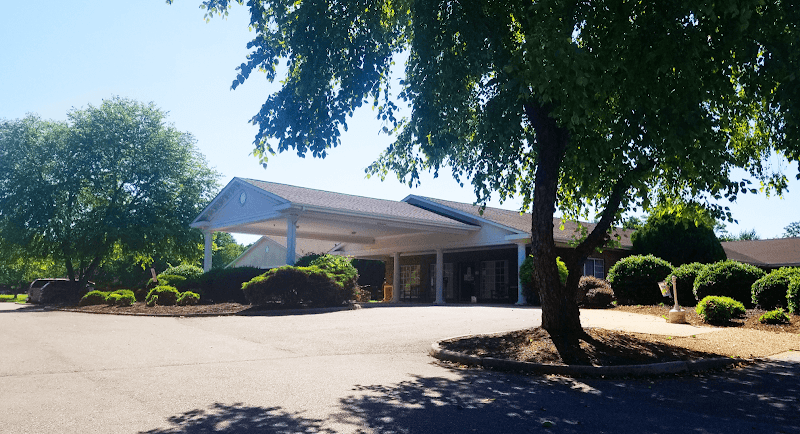
2406 ATHERHOLT ROAD, LYNCHBURG, VA 24501 (434) 846-3200
For profit - Limited Liability company 89 Beds SABER HEALTHCARE GROUP Data: November 2025
Trust Grade
70/100
#74 of 285 in VA
Last Inspection: June 2022

Over 2 years since last inspection. Current conditions may differ from available data.

Overview

Forest Health & Rehab Center has a Trust Grade of B, indicating it is a good choice for care but not without its flaws. It ranks #74 out of 285 facilities in Virginia, placing it in the top half, and #3 of 8 in Lynchburg City County, meaning only two local options are better. However, the facility is experiencing a worsening trend, with issues increasing from 1 in 2023 to 5 in 2025. While staffing is a concern, with a 2/5 star rating and a turnover rate of 39%, it is still better than the state average of 48%, suggesting some staff stability. Notably, there have been serious lapses in care, including failure to provide required therapy for a resident and not administering prescribed eye drops for three weeks, which raises concerns about adherence to care plans and infection control practices. On a positive note, the facility reported no fines and demonstrated strong quality measures with a 5/5 star rating.

Trust Score
B
70/100
In Virginia
#74/285
Top 25%
Safety Record
Low Risk
No red flags
Inspections
Getting Worse
1 → 5 violations
Staff Stability
○ Average
39% turnover. Near Virginia's 48% average. Typical for the industry.
Penalties
✓ Good
No fines on record. Clean compliance history, better than most Virginia facilities.
Skilled Nurses
⚠ Watch
Each resident gets only 26 minutes of Registered Nurse (RN) attention daily — below average for Virginia. Fewer RN minutes means fewer trained eyes watching for problems.
Violations
⚠ Watch
35 deficiencies on record. Higher than average. Multiple issues found across inspections.
★★★★☆
4.0
Overall Rating
★★☆☆☆
2.0
Staff Levels
★★★★★
5.0
Care Quality
★★★☆☆
3.0
Inspection Score
Stable
2023: 1 issues
2025: 5 issues

The Good

  • 5-Star Quality Measures · Strong clinical quality outcomes
  • Full Sprinkler Coverage · Fire safety systems throughout facility
  • No fines on record
  • Staff turnover below average (39%)

    9 points below Virginia average of 48%

Facility shows strength in quality measures, fire safety.

The Bad

Staff Turnover: 39%

Near Virginia avg (46%)

Typical for the industry

Chain: SABER HEALTHCARE GROUP

Part of a multi-facility chain

Ask about local staffing decisions and management

The Ugly 35 deficiencies on record

Sept 2025 1 deficiency
CONCERN (D) 📢 Someone Reported This

A family member, employee, or ombudsman was alarmed enough to file a formal complaint

Potential for Harm - no one hurt, but risky conditions existed

Deficiency F0602 (Tag F0602)

Could have caused harm · This affected 1 resident

**NOTE- TERMS IN BRACKETS HAVE BEEN EDITED TO PROTECT CONFIDENTIALITY** Based on interview, record review, document review, and facility policy review, the facility failed to protect a resident's righ...

Read full inspector narrative →
**NOTE- TERMS IN BRACKETS HAVE BEEN EDITED TO PROTECT CONFIDENTIALITY** Based on interview, record review, document review, and facility policy review, the facility failed to protect a resident's right to be free from misappropriation of resident property for 1 (Resident #98) of 4 sampled residents reviewed for abuse. Specifically, Licensed Practical Nurse (LPN) #18 misappropriated Resident #98's oxycodone pain medication without the resident's permission on 04/11/2025.Findings included: A facility policy titled, Virginia Resident Abuse Policy revised 07/11/2024, indicated, POLICY: The facility will not tolerate the abuse, neglect, mistreatment, exploitation of residents, or misappropriation of resident property by anyone. The policy specified, Misappropriation - the deliberate misplacement, exploitation, or wrongful, temporary, or permanent use of a resident's belongings or money without the resident's consent. A Resident Face Sheet revealed the facility admitted Resident #98 on 03/18/2025. According to the Resident Face Sheet, the resident had a medical history that included diagnoses of pain, osteoarthritis, and low back pain. An admission Minimum Data Set (MDS), with an Assessment Reference Date (ARD) of 03/19/2025, revealed Resident #98 had a Brief Interview for Mental Status (BIMS) score of 10, which indicated the resident had moderate cognitive impairment. The MDS revealed the resident had frequently, almost constant pain received a scheduled pain medication regimen and as needed pain medication. Resident #98's Care Plan included a problem statement initiated 04/03/2025, that indicated the resident had a potential for pain related to a sacral wound, gastroenteritis and colitis, pain, cramp and spasm, low back pain, and osteoarthritis of the hip. Interventions directed staff to administer medications for pain prior to therapy sessions, dressing changes as needed, or per specific orders (initiated 04/09/2025). Resident #98's Order History for the timeframe 03/01/2025 to 09/09/2025, revealed an order dated 03/28/2025, for oxycodone 5 milligrams, one tablet every four hours as needed. The Facility Reported Incident Investigation indicated on 04/14/2025, the Social Services Director (SSD) notified the Director of Nursing (DON) that Resident #98's family member (FM) that the resident had not been given their as needed pain medication as requested on 04/11/2025. Per the Facility Reported Incident Investigation, upon review of the narcotic control count log sheet for oxycodone, three tablets were removed on 04/11/2025 by Licensed Practical Nurse (LPN) #18 and the resident declined receiving the prescribed narcotic pain medication. The Facility Reported Incident Investigation revealed Conclusion Upon a complete and thorough investigation, the facility is able to substantiate medication diversion. This is evidenced by resident statements and narcotic count review on 4/14/25. [Name] Pharmacy, the local police dept [department] and the provider have been notified of this. There has not been any identified negative outcome as a result of the diversion of medications. All residents including [Resident #98] remain safe in the facility at this time. Telephone calls were made to LPN #18 on 09/11/2025 at 2:35 PM and 09/12/2025 at 9:00 AM. There was no answer and the voicemail had not been set up. The DON was interviewed on 09/10/2025 at 12:50 PM and stated LPN #18 was terminated and reported to the state's Board of Nursing. The Assistant Director of Nursing (ADON) was interviewed on 09/12/2025 at 10:04 AM and stated when she was notified of the incident, she spoke with Resident #98, who stated LPN #18 informed them that the oxycodone was not available, yet it had been signed out as given by LPN #18. The ADON stated that after the incident all licensed nurses were required to receive education about drug diversion. She stated that all narcotic cards for residents cared for by LPN #18 were pulled, and interviews were completed with the residents she cared for to determine if other issues existed. The DON was interviewed on 09/12/2025 at 4:24 PM and stated when she notified of the incident, she began an investigation to include a review of the narcotic count log sheets, a count of the narcotics in the medication cart, interview and assessment of the resident, and interview with LPN #18. The DON stated that during the narcotic count, missing medications were identified and LPN #18 told her that she could not remember what happened, but that she had given the resident the medication. When narcotic count was completed, the DON stated she removed the keys to the medication cart from LPN #18, took LPN #18 to her office, and asked LPN #18 to write a statement. The DON stated a urine drug screen was obtained but was not valid due to the temperature of the urine and suspicion that the specimen was not urine. The DON stated LPN #18 was asked to submit another urine specimen for a drug screen but declined and exited the facility. The DON stated LPN #18 had not returned to the facility after 04/14/2025. The DON stated all narcotic logs were pulled in the entire facility, both west and east wings and no other discrepancies were found other than what LPN #18 had been involved with. Per the DON, for 12 weeks, each cart was audited to make sure narcotics were accurate, medications were signed out timely, and no further concerns were identified. The Administrator was interviewed 09/13/2025 at 12:45 PM and stated the DON notified her about the medication issue immediately. The Administrator stated she did not have a huge part in the investigation. An untitled, undated typed facility document indicated This will serve as our plan of abatement for [facility name] related to: Medication Error possible Drug diversion Allegation Details: Family states that a nurse did not give their [Resident #98] the prescribed PRN [pro re nata, as needed] pain medication and substituted with something else. The resident took a picture of the pills and sent to [his/her] [family member. The document indicated Upon Discovery on 4/14/25 the facility in accordance with our QAPI program leadership implemented the following corrective action measures: 4/14/25 During care conference with [Resident #98's] family the [family member] reported to SS [social services] Directed that [Resident #98] had sent [him/her] a picture of 2 pills [he/she] believed to be the night of 4/11/25 and stated the nurse gave [him/her] a Hydroxyzine and Tylenol while telling [him/her] she did not have any of [his/her] controlled pain medicine available. SSD immediately reported this to NHA [Nursing Home Administrator] and DON. 4/14/25 LPN was removed from medication assignment and interviewed by DON and ADON. Upon counting the cart with her it was discovered the count was off on 2 residents, [names]. The nurse's statement to the DON/ADON was that she had pulled the medications and had administered them. The residents denied receiving their medication nor had the LPN signed them out on the chain of custody from or on the MAR [medication administration record]. She was told she would be suspended pending investigation of the allegation. 4/14/25 LPN submitted a drug screen and the temperature would not read nor did the appearance of the liquid seem consistent with urine. She was asked to produce another sample and the LPN resigned on the spot. 4/14/25 - DON notified Police Dept of the possible diversions. As FRI [facility reported incident] was submitted to the Va [Virginia] DOH [Department of Health], LTC [long term care] ombudsman, APS [Adult Protective Services], and DHP [Department of Health Professions]. The provider and the RP [responsible party] of [Resident #98] was notified. 4/15/25 DON/Designee interviewed residents about care services including medication pass specific to not receiving and 1 resident [name] stated [he/she] never gets [his/her] meds [medications] at night when the ‘black nurse with braids on top of her head in a ball works. This description matches that of the LPN who was suspended and has resigned. 4/14-4/15/25 Residents on LPNs assignment who are able to be interviewed were assessed for any change in condition that could have resulted from not receiving their prescribed medications. No identified findings. 4/15-4/17 the DON/Designee interviewed staff that worked the past 72 hours with LPN and asked about unusual behaviors of if they heard any complaints from the residents about care services - no negative findings. There was however a consistent theme of the LPN taking excessively long breaks. 4/17/25 HR [human resources]/designee reviewed the RN [registered nurse] [LPN] and 5 other random employees files to ensure that they were still in good standing to work at the facility - no negative findings. To identify other like residents: 4/15/25 DON/Designee interviewed residents about care services including medication pass specific to not receiving and 2 resident [names], stated [he/she] never gets [his/her] meds at night when the black nurse with braids on top of her head in a ball works. This description matches that of the LPN who was suspended and has resigned. 4/14-4/15/25 Residents on LPNs assignment who are able to be interviewed were assessed for any change in condition that could have resulted from not receiving their prescribed medications. No identified findings. To prevent this from recurring: The DON/Designee educated all licensed nurses on drug diversion and medication rights as well as notifying administrator in the event diversion is suspected. Completed by 4/21/25. All staff was re-educated on the abuse policy with emphasis on misappropriation - completed by 4/21/25. A systemic change was put in effect for use of the proper shift change controlled substance inventory count sheets. Any staff on PTO [paid time off]/vacation will be educated prior to working. All newly hired staff will be educated on said process during orientation. To Monitor and maintain ongoing compliance: The DON/Designee will audit random narcotic sheets to ensure that there is no s/s [signs/symptoms] of drug diversion weekly x 12 weeks. The DON/Designee will interview 3 random residents to ensure that they have no issues with not receiving pain medications weekly x 4 weeks then monthly x 2 months. The results of the audit will be forwarded to the facility QAPI [quality assurance performance improvement] committee for further review and recommendations. The facility completed an ad hoc QAPI meeting. Conclusion: [facility name] takes the care and services of our residents very seriously and continues to work diligently to ensure the safety of our residents. The facility completed all necessary steps for a sufficient correction action plan and met the requirements of past non-compliance as set forth by the State Operation Manual. We respectfully request you review our documentation and consider past noncompliance. Alleged POC [plan of correction]: 4/21/25. This document was signed by the Administrator, DON, ADON, East Unit Manager, [NAME] Unit Manger and SSD. The facility immediately implemented corrective actions after they became aware of the allegation. During the recertification survey conducted from 09/09/2025 to 09/13/2025, there was evidence the corrected actions had been implemented from 04/14/2025 to 04/21/2205 and there were no further concerns identified related to misappropriation of resident property. Staff and resident interviews revealed no concerns related to misappropriation of resident property. Observation of medication administration revealed no concerned related to misappropriation of resident property.
Mar 2025 4 deficiencies
CONCERN (D) 📢 Someone Reported This

A family member, employee, or ombudsman was alarmed enough to file a formal complaint

Potential for Harm - no one hurt, but risky conditions existed

Safe Transfer (Tag F0626)

Could have caused harm · This affected 1 resident

**NOTE- TERMS IN BRACKETS HAVE BEEN EDITED TO PROTECT CONFIDENTIALITY** Based on staff interview, clinical record review, and facility documentation review, the facility staff failed to permit a resid...

Read full inspector narrative →
**NOTE- TERMS IN BRACKETS HAVE BEEN EDITED TO PROTECT CONFIDENTIALITY** Based on staff interview, clinical record review, and facility documentation review, the facility staff failed to permit a resident to return to the facility following hospitalization for one resident (Resident #3- R3), in a survey sample of four residents. The findings included: For R3, who was hospitalized , the facility staff failed to permit the resident to return and told the hospital they didn't have a bed available. On 3/12/25 and 3/13/25, a closed record review was conducted of R3's chart. According to the census information, R3 was admitted to the facility on [DATE]. R3 then discharged on 1/14/25 to the hospital and did not return. According to the census tab of the resident's chart and nursing progress notes, it noted that R3 was admitted to a semi-private room initially. Due to behavioral concerns, on 1/8/25, R3 was moved to a private room to be located closer to the nursing station, where he resided until his discharge on [DATE]. According to R3's discharge minimum data set (MDS) assessment, it indicated the resident discharged with return anticipated. There was no additional information within the clinical record regarding R3's status following discharge. On 3/12/25 at 2:57 p.m., an interview was conducted with the facility Administrator, who was handling admissions in the absence of an admissions director. The administrator was asked if the facility received a referral for admission for R3 following his hospitalization. The administrator reported they did receive a referral from the hospital on 1/15/25, and on 1/17/25 the facility accepted the referral. She went on to report that on 1/20/25, the admissions director let the hospital know they did not have a bed available. On 3/12/25 at 3:10 p.m., the administrator provided documentation of the communication between the facility and hospital regarding R3. Review of the document revealed that on 1/15/25, the facility received the referral. On 1/16/25 the facility requested additional information for review. On 1/17/25, the facility noted they would accept the resident. On 1/20/25, the facility noted, We are unable to accept at this time as we do not have a bed available at this time. The hospital discharge planner asked, When is the next bed? The facility responded, Will keep you updated in the AM on next bed available. Then on 1/30/25, the facility again noted, Will keep you updated on next available. On 2/6/25, the facility noted, Status changed to decline. Patient/Family declined or refused care. On 3/13/25, the facility census was reviewed which noted that on 1/20/25, the facility had 9 empty beds. According to the facility provided midnight census reports 1/21/24-2/5/25, the facility had empty beds each day and at no point were they at 100% capacity without a bed to accommodate R3. On 3/13/25 at 10:10 a.m., the surveyor met with the facility administrator again and explained that according to their midnight census report they did have beds available and asked for an explanation as to why the hospital was told they did not have a bed/room to accommodate R3. The administrator stated she would look into it and get back to the surveyor. On 3/13/25 at 11:22 a.m., the facility administrator reported to the surveyor that because R3 had been in a private room for isolation reasons the admissions director thought he needed to be readmitted to a private room. She provided a hand-written timeline of open private rooms following receipt of the referral of R3, which noted from 1/24/25-1/26/25, the facility did have a private room, but had no evidence this was communicated to the hospital. When asked if she had any evidence that R3 required a private room for isolation or that the hospital was asked about this, she stated she did not. The administrator explained that R3 had been moved to a private room the second day of his stay to be closer to the nursing station and that it was not for isolation reasons. The administrator stated she recalled that, now that the surveyor mentioned it. According to the facility's Bed Hold Notice, which read in part, . If you chose NOT to hold a bed: Your decision not to pay to have a bed held during your overnight absence will be treated as a voluntary discharge from the facility. You must remove (or make arrangements to have removed) all your personal belongings from the room that you were occupying. If you wish to be readmitted to the facility, then you must reapply for admission. If you are eligible for and require Medicare skilled nursing facility services or Medicaid nursing facility services, and your paid leave days for a calendar year have been exhausted, you will be entitled to readmission to the facility (i) if your previous room is available, or (ii) upon the first availability of a bed in a semi-private room or ward On 3/13/25 at approximately 11:30 a.m., the facility administrator was made aware that they lacked any evidence that R3 was offered readmission to the facility, in that they communicated to the hospital discharge planner that a bed was not available, when they did have beds available. No additional information was provided.
CONCERN (D) 📢 Someone Reported This

A family member, employee, or ombudsman was alarmed enough to file a formal complaint

Potential for Harm - no one hurt, but risky conditions existed

Quality of Care (Tag F0684)

Could have caused harm · This affected 1 resident

**NOTE- TERMS IN BRACKETS HAVE BEEN EDITED TO PROTECT CONFIDENTIALITY** Based on staff interview, clinical record review, and facility documentation review, the facility staff failed to have medicatio...

Read full inspector narrative →
**NOTE- TERMS IN BRACKETS HAVE BEEN EDITED TO PROTECT CONFIDENTIALITY** Based on staff interview, clinical record review, and facility documentation review, the facility staff failed to have medication available for administration in accordance with physician orders for two residents (Resident #3-R3 and Resident #4-R4) in a survey sample of four residents. The findings included: 1. For R3, who missed three doses of IV antibiotic, the facility staff failed to notify the physician to afford the opportunity for alternate treatment orders to be administered. On 3/12/25, a closed record review was conducted of R3's chart. This review revealed that R3 was admitted to the facility on [DATE], from the hospitalization where he was diagnosed with severe sepsis. According to the hospital discharge summary, R3 was to continue Cefazolin 2 g, IV piggyback, every 8 hours Infectious disease was consulted during R3's hospitalization. The hospital discharge documentation also noted, . MSSA bacteremia. Initial blood cultures revealed MSSA bacteremia . The patient has been seen by infectious disease; the patient is to continue on cefazolin 2 g IV every 8 hours to complete 14 days with the last day being 1/8/2025 . According to the hospital medication administration record (MAR), R3's last dose of Cefazolin was administered on 1/7/25 at 10:37 a.m. According to the facility's MAR, R3 received the first dose of Cefazolin on 1/8/25 at 12 noon, resulting in the administration of only one dose on 1/7/25 and one dose on 1/8/25. According to the MAR, the nurse noted on 1/8/25 for the 4 a.m. dose, Med not available Provider and pharm [pharmacy] were made aware. According to the nursing note dated 1/8/25 at 4:39 a.m., it read, Patient's cefazolin, 2-gram, recon soln, intravenous order was not administered due to not unavailability [sic]. Provider and Pharm [pharmacy] aware and Pharm stated it will be delivered on the next run. There was no documentation regarding the doses missed on 1/7/25, or that the antibiotic was available in 1-gram dosing, to see if the physician wanted to give an alternate order. On 3/13/25 at 10:20 a.m., the director of nursing and regional director of clinical services met with the surveyor and presented a timeline of R3's antibiotic. According to the facility presented timeline, they noted R3 admitted on [DATE] at 1:52 p.m., per MD [medical doctor] discharge orders medication is to be completed on 1/8, Medication scheduled for 1/8/25 x 3 doses, 2 additional doses added to 1/9/25 to constitute the previous dose on 1/7/25 and 1/8/25. The facility provided a copy of the MAR for R3 which noted he received two doses of the antibiotic on 1/9/25. 2. For R4, who missed several consecutive doses of IV Cefazolin, the facility staff failed to notify the doctor. On 3/12/25, a clinical record review was conducted of R4's chart. This review revealed that R4 was admitted to the facility on [DATE]. According to the hospital discharge summary, R4 was hospitalized and treated for acute metabolic encephalopathy, Staphylococcus aureus bacteremia, and was noted with severe sepsis. The orders included, Cefazolin 2 g, IV piggyback every 8 hours. According to the medication administration record, R4 received the first dose of Cefazolin on 3/9/25 at 9 a.m., which was the second scheduled administration for that day. The notes indicated R4's two doses scheduled for 3/8/25, were not given with the notation, Not administered: drug/item unavailable comment: has not arrived from pharmacy. The first dose scheduled for 3/10/25 at 2 a.m., had the notation, rewritten. There was no indication that the doctor was made aware of the medication not being available, the missed doses, or given the opportunity to give alternate orders. On 3/12/25, in the afternoon, interviews were conducted with licensed practical nurses (LPN #1, LPN #2, and LPN #3). LPN #3 was the unit manager. Each of the three nurses explained that the pharmacy delivers twice daily. When asked what action is needed if a medication is not available for administration when it is due/scheduled, each of the nurses explained that the process is to call the doctor to make them aware and call the pharmacy to see where the medication is. On 3/12/25, in the afternoon, licensed practical nurse (LPN #1), explained that the pharmacy stocks an e-kit [emergency supply of medications] that is maintained at the facility. LPN #1 took the surveyor into the medication room and showed her a listing of items contained within the E-kit, which included Cefazolin, in a 1 gram vial, and that a quantity of 4 vials was maintained at the facility. Since the provider was not made aware of the doses that were not administered for R3 and R4, the physician was not given the opportunity to determine if he wanted the 1-gram doses to be administered nor was the physician given the opportunity to provide new orders with consideration of the 1-gram dose availability. On 3/12/25 at 3:24 p.m., during an interview with the director of nursing (DON), the DON stated that if orders are received by 10 a.m., they will not arrive at the facility until the next morning between 1 a.m. and 4 a.m. When asked, what the facility can do to ensure new admissions receive their medications, the DON went on to indicate that the facility can ask the hospital to administer medications due prior to the resident discharging, they can check the emergency supply of medications maintained at the facility and if it is not available there, they can notify the doctor and pharmacy, and have the medication STAT 'ed [urgently sent], but she added that is still a 4 hour window. The DON went on to say, The doctor can change it to something we have until the medication arrives. A facility policy titled, 7.0 Medication Shortages/Unavailable Medications was provided. According to the policy, which read in part, . 2.2 If the next available delivery causes delay or a missed dose in the resident's medication schedule, facility nurse should obtain the medication from the emergency medication supply. Facility staff should notify pharmacy and arrange for a STAT deliver, if medically necessary . 4. If an emergency delivery is unavailable, facility nurse should contact the attending physician to obtain new orders or directions for alternate administration . No additional information was provided.
CONCERN (D) 📢 Someone Reported This

A family member, employee, or ombudsman was alarmed enough to file a formal complaint

Potential for Harm - no one hurt, but risky conditions existed

Pharmacy Services (Tag F0755)

Could have caused harm · This affected 1 resident

**NOTE- TERMS IN BRACKETS HAVE BEEN EDITED TO PROTECT CONFIDENTIALITY** Based on staff interview, clinical record review, and facility documentation review, the facility staff failed to have medicatio...

Read full inspector narrative →
**NOTE- TERMS IN BRACKETS HAVE BEEN EDITED TO PROTECT CONFIDENTIALITY** Based on staff interview, clinical record review, and facility documentation review, the facility staff failed to have medication available for administration in accordance with physician orders for two residents (Resident #3-R3 and Resident #4-R4) in a survey sample of four residents. The findings included: 1. For R3, the facility staff failed to have intravenous (IV) Cefazolin (an antibiotic) available to administer as ordered by the physician. On 3/12/25, a closed record review was conducted of R3's chart. This review revealed that R3 was admitted to the facility on [DATE], from the hospitalization where he was diagnosed with severe sepsis. According to the hospital discharge summary, R3 was to continue Cefazolin 2 g, IV piggyback, every 8 hours . Infectious disease was consulted during R3's hospitalization. The hospital discharge documentation also noted, . MSSA bacteremia. Initial blood cultures revealed MSSA bacteremia . The patient has been seen by infectious disease; the patient is to continue on cefazolin 2 g IV every 8 hours to complete 14 days with the last day being 1/8/2025 . According to the hospital medication administration record (MAR), R3's last dose of Cefazolin was administered on 1/7/25 at 10:37 a.m. According to the facility's MAR, R3 received the first dose of Cefazolin on 1/8/25 at 12 noon. R3 missed two doses on 1/7/25 and one dose on 1/8/25. According to the MAR, the nurse noted on 1/8/25 for the 4 a.m. dose, Med not available Provider and pharm [pharmacy] were made aware. According to the nursing note dated 1/8/25 at 4:39 a.m., it read, Patient's cefazolin, 2-gram, recon soln, intravenous order was not administered due to not unavailability [sic]. Provider and pharm [pharmacy], aware and Pharm stated it will be delivered on the next run. There was no documentation that reflected the missed doses of IV antibiotic on 1/7/25. On 3/12/25, in the afternoon, interviews were conducted with licensed practical nurses (LPN #1, LPN #2, and LPN #3). LPN #3 was the unit manager. Each of the three nurses explained that the pharmacy delivers twice daily, and they have a process for STAT [emergent] medications to be delivered as well. They explained when an admission is coming in, they enter the orders into the electronic health record as early as they can, which also transmits to the pharmacy, so that the pharmacy can send the medications to the facility. When asked if a medication is not available for administration when it is due/scheduled, each of the nurses explained that the process is to call the doctor to make them aware and call the pharmacy to see where the medication is. On 3/12/25 at 2:18 p.m., a phone call was placed to the facility's contracted pharmacy. According to the pharmacy representative, R3's Cefazolin order was received in the pharmacy on 1/7/25 and filled for 6 bags/doses. It was delivered to the facility on 1/8/25 at 2:41 a.m. The pharmacy representative also confirmed that the pharmacy delivers to the facility twice daily. On 3/12/25 at 3:24 p.m., during an end of day meeting, the facility administrator, director of nursing, and regional director of clinical services, were made aware of the above findings and the concern that R3 missed multiple doses of IV antibiotic due to the medication being unavailable. On 3/13/25 at 10:20 a.m., the director of nursing and regional director of clinical services met with the surveyor and presented a timeline of R3's antibiotic. According to the facility presented timeline, they noted R3 admitted on [DATE] at 1:52 p.m., per MD [medical doctor] discharge orders medication is to be completed on 1/8, Medication scheduled for 1/8/25 x 3 doses, 2 additional doses added to 1/9/25 to constitute the previous dose on 1/7/25 and 1/8/25. 2. For R4, the facility failed to have IV Cefazolin available for administration as per physician orders. On 3/12/25, a clinical record review was conducted of R4's chart. This review revealed that R4 was admitted to the facility on [DATE]. According to the hospital discharge summary, R4 was hospitalized and treated for acute metabolic encephalopathy, Staphylococcus aureus bacteremia, and was noted with severe sepsis. The orders included, Cefazolin 2 g, IV piggyback every 8 hours. According to the medication administration record, R4 received the first dose of Cefazolin on 3/9/25 at 9 a.m., which was the second scheduled administration for that day. the notes indicated R4's two doses scheduled for 3/8/25, were not given with the notation, Not administered: drug/item unavailable comment: has not arrived from pharmacy. The first dose scheduled for 3/10/25 at 2 a.m., had the notation, rewritten. On 3/12/25 at 2:18 p.m., a telephone call was placed to the facility's contracted pharmacy. When asked about R4's Cefazolin, the pharmacy reported they received the order and keyed it on 3/8/25 and said, it manifested at 7:07 p.m., and was set-up to go on the 11 o'clock p.m. run that evening. The pharmacy indicated they didn't have any details regarding when it was actually delivered to the facility but knew the delivery driver picked it up from the pharmacy at 3:30 a.m., on 3/9/25. On 3/12/25, in the afternoon, interviews were conducted with licensed practical nurses (LPN #1, LPN #2, and LPN #3). LPN #3 was the unit manager. Each of the three nurses explained that the pharmacy delivers twice daily, and that they have a process for STAT [emergent] medications to be delivered as well. They explained when an admission is coming in, they enter the orders into the electronic health record as early as they can, which also transmits to the pharmacy, so that the pharmacy can send the medications to the facility. When asked about needed action if a medication is not available for administration when it is due/scheduled, each of the nurses explained that the process is to call the doctor to make them aware and call the pharmacy to see where the medication is. On 3/12/25 at 3:24 p.m., during an end of day meeting with the facility administrator, director of nursing (DON), regional director of clinical services (RDCS), the above findings were discussed. The DON stated that if orders are received by 10 a.m., they will not arrive at the facility until the next morning between 1 a.m. and 4 a.m. When asked, what the facility can do to ensure new admissions receive their medications, the DON stated that the facility can ask the hospital to administer medications due prior to the resident discharging, they can check the emergency supply of medications maintained at the facility and if it is not available there, they can notify the doctor and pharmacy and have the medication STAT 'ed [urgently sent], but that is still a 4 hour window. She went on to say, The doctor can change it to something we have until the medication arrives. On 3/13/25 at 9:50 a.m., R4 was visited in his room. A family member, who identified themselves as the resident's daughter was at the bedside. R4 was asked about medications and if he had any delay in receiving medications or missed any doses, the resident stated that they were not aware, but the family member reported that R4 had confusion and was not reliable in recall of events. On 3/13/25 at 10:20 a.m., the DON and RDCS presented the surveyor with a timeline they had prepared regarding R4's IV antibiotic. The timeline read, Missed 2 doses on 3/8/ and 3/9, stated pharmacy delivered medication at 330a.m on 3/9/25 . admitted on [DATE] at 1234 p.m., Ordered for Cefazolin 2gm IV q8hrs [every 8 hours]. 3/8/25 at 1800 [6pm] nursing charted against order, Medication not here from pharmacy. 3/9 at 2 a.m., nursing charting against the rewritten order documented .the medications changed to be administered at 9am, 5 pm, and 1 am. (nurse states she was unaware she didn't unpack mediation right when they were delivered.) Medication arrived from the pharmacy at 330 am, Next dose at 9am moving forward administered. Additional doses added to residents abx [antibiotic] regimen when noticed. [sic] The facility policy titled, 4.0 Authorization and Communication of Orders was provided and reviewed. According to the policy, it read in part, .10. Facility should verify transfer/transition and admission orders with the resident's physician/prescriber before they are communicated to the pharmacy. 10.1 Once admission orders are verified, staff should promptly transmit medication orders to the pharmacy. A delay in transmission of new orders to the pharmacy may impact the time of delivery and resident access to medically necessary medications . A facility policy titled, 7.0 Medication Shortages/Unavailable Medications was provided. According to the policy, which read in part, . 2.2 If the next available delivery causes delay or a missed dose in the resident's medication schedule, facility nurse should obtain the medication from the emergency medication supply. Facility staff should notify pharmacy and arrange for a STAT deliver, if medically necessary . 4. If an emergency delivery is unavailable, facility nurse should contact the attending physician to obtain new orders or directions for alternate administration . No additional information was provided.
CONCERN (D) 📢 Someone Reported This

A family member, employee, or ombudsman was alarmed enough to file a formal complaint

Potential for Harm - no one hurt, but risky conditions existed

Deficiency F0760 (Tag F0760)

Could have caused harm · This affected 1 resident

**NOTE- TERMS IN BRACKETS HAVE BEEN EDITED TO PROTECT CONFIDENTIALITY** Based on staff interview, clinical record review, and facility documentation review, the facility staff failed to ensure residen...

Read full inspector narrative →
**NOTE- TERMS IN BRACKETS HAVE BEEN EDITED TO PROTECT CONFIDENTIALITY** Based on staff interview, clinical record review, and facility documentation review, the facility staff failed to ensure residents were free from significant medication errors, resulting in multiple missed doses of intravenous (IV) antibiotics for two residents (Resident #3- R3 and Resident #4-R4) in a survey sample of four residents. The findings included: 1. For R3, who was ordered IV Cefazolin by an infectious disease doctor for treatment of MSSA [methicillin-susceptible Staphylococcus aureus] bacteremia, the resident missed three consecutive doses. On 3/12/25, a closed record review was conducted of R3's chart. This review revealed that R3 was admitted to the facility on [DATE], from the hospitalization where he was diagnosed with severe sepsis. According to the hospital discharge summary, R3 was to continue Cefazolin 2 g, IV piggyback, every 8 hours . Infectious disease was consulted during R3's hospitalization. The hospital discharge documentation also noted, . MSSA bacteremia. Initial blood cultures revealed MSSA bacteremia . The patient has been seen by infectious disease; the patient is to continue on cefazolin 2 g IV every 8 hours to complete 14 days with the last day being 1/8/2025 . According to the hospital medication administration record (MAR), R3's last dose of Cefazolin was administered on 1/7/25 at 10:37 a.m. According to the facility's MAR, R3 received the first dose of Cefazolin on 1/8/25 at 12 noon. R3 missed two doses on 1/7/25 and one dose on 1/8/25. According to the MAR, the nurse noted on 1/8/25 for the 4 a.m. dose, Med not available Provider and pharm [pharmacy] were made aware. According to the nursing note dated 1/8/25 at 4:39 a.m., it read, Patient's cefazolin, 2-gram, recon soln, intravenous order was not administered due to not unavailability [sic]. Provider and pharm [pharmacy], aware and Pharm stated it will be delivered on the next run. On 3/12/25 at 2:18 p.m., a phone call was placed to the facility's contracted pharmacy. According to the pharmacy representative R3's Cefazolin order was received in the pharmacy on 1/7/25 and filled for 6 bags/doses. It was delivered to the facility on 1/8/25 at 2:41 a.m. The pharmacy confirmed they deliver to the facility twice daily and have a process for STAT [emergent] medications. On 3/12/25 at 2:40 p.m., an interview was conducted with a registered nurse (RN #1). When asked about antibiotics, RN #1 said, You cannot miss a dose and have to take all of the antibiotics. RN#1 replied, Usually when a dose is missed you take it as soon as you realize it. When asked why you can't miss doses, RN #1 said, Because it [the infection] can try to work against the antibiotic and build up resistance. When asked what the risk is of someone missing a few doses in the middle of a course of antibiotics is, RN #1 said, It's a big risk. You have to talk to the doctor and may have to extend the treatment. You can't miss a dose of antibiotics at all. On 3/12/25 at 2:47 p.m., an interview was conducted with a licensed practical nurse (LPN #3), who identified as the unit manager. When asked about antibiotic use and missed doses, LPN #3 said, When someone has an infection, they have to finish the course of antibiotics unless the doctor says otherwise. When asked what the risk is, if someone misses doses of antibiotics, LPN #3 said, You risk the infection growing and long-term can become resistant to antibiotics all together. When asked what action is needed if an antibiotic is not available for administration, LPN #3 said, We call the pharmacy to see if we can get it STAT 'ed to us and notify the doctor to see if they want to change the orders. On 3/13/25 at 10:20 a.m., during an interview with the director of nursing (DON) and regional director of clinical services (RDCS), the DON reported, It is an understanding by doctor [name redacted] if missed doses, we add to the end. When asked if this is an acceptable course of treatment for infections, the DON said, I have identified some opportunities. When asked if this is in accordance with the facility's antibiotic stewardship program and if adding doses to the end of the course of treatment is the acceptable thing to do, the DON said, No. On 3/13/25 at 11:06 a.m., an interview was conducted with a registered nurse, who was the facility's infection preventionist (IP). During the interview with the IP she mentioned, It is an understanding with the provider that antibiotic doses are added to the end of the course of treatment for missed doses. When asked why someone would miss doses, the IP explained, Our pharmacy is in Richmond. We have a backup box, but if it is not available in the back-up box we communicate to the doctor. When asked why it is important for someone to receive all the doses of an antibiotic, the IP said, Because it is treating an infection, and it is ordered by the doctor. When asked to explain any risks related to missing doses during treatment with antibiotics, the IP explained that It [the infection] could create a resistance to the antibiotic, it may not treat the infection appropriately [because therapeutic levels are not maintained]. When asked how often this happens, the IP said, Here lately it has been more, since we switched pharmacies. We had [pharmacy name redacted] here in [local city name redacted] but that closed and our cut off times have changed. We have had a good amount of IV antibiotics, but I feel like it has happened more than it did in the past. When asked if she had talked to the medical director and/or pharmacy about reviewing the contents and quantity of the emergency supply of medications maintained in house, the IP said, When the unit manager notified me. We have 1 gram of Ceftin versus the 2 grams. We had discussed talking to the pharmacy about the amount of antibiotics we have in the back-up box. When asked if that conversation had been held, the IP stated, No. When asked if a meeting had been scheduled, the IP said, No. According to the facility policy titled, Antimicrobial Stewardship Program Policy, which read in part, As a component of the monthly infection prevention and control committee (IPCC) meeting the facility's use of antibiotics will be reviewed to include: monitoring/tracking of antibiotic prescribing, use, and resistance in order to promote a culture of optimal antibioitic use within the facility . The policy did not address missed doses of antibiotic treatment. On 3/13/25, the facility administrator, director of nursing and regional director of clinical services were made aware of the above findings. No additional information was provided.
Jun 2023 1 deficiency
CONCERN (E) 📢 Someone Reported This

A family member, employee, or ombudsman was alarmed enough to file a formal complaint

Potential for Harm - no one hurt, but risky conditions existed

Deficiency F0825 (Tag F0825)

Could have caused harm · This affected multiple residents

**NOTE- TERMS IN BRACKETS HAVE BEEN EDITED TO PROTECT CONFIDENTIALITY** Based on staff interview, facility document review, and clinical record review, the facility staff failed to provide specialized...

Read full inspector narrative →
**NOTE- TERMS IN BRACKETS HAVE BEEN EDITED TO PROTECT CONFIDENTIALITY** Based on staff interview, facility document review, and clinical record review, the facility staff failed to provide specialized rehabilitative services as required in the plan of care for one of five residents in the survey sample (Resident #1). The findings include: For five weeks, Resident #1 was not provided occupational and physical therapy as ordered by the physician and as required in her rehabilitation plan of treatment. Resident #1 was admitted to the facility with diagnoses that included left foot abscess, lower limb cellulitis, lymphedema, cerebral palsy, pressure ulcer and morbid obesity. The minimum data set (MDS) dated [DATE] assessed Resident #1 as cognitively intact. Resident #1's clinical record documented physician orders dated 9/9/22 for physical therapy (PT) and occupational therapy (OT), both at five to seven times per week for up to 12 weeks to meet plan of care requirements. Resident #1's physical therapy plan of treatment dated 9/9/22 documented treatment approaches that included therapeutic exercises, neuromuscular re-education, manual therapy techniques, and therapeutic activities, with goals targeted around mobility improvement so the resident could return home. Resident #1's OT plan of treatment dated 9/9/22 documented treatment approaches that included therapeutic exercises, self-care training, and wheelchair management, with goals targeted around dressing, toileting, propelling in wheelchair, and bathing. The OT and PT plans documented the frequency of treatment/services as five to seven times per week for 12 weeks. Resident #1's therapy records revealed the following weeks that PT and/OT services were not provided as ordered during September 2022 and October 2022: 9/25/22 through 10/1/22 - 4 PT sessions, 2 OT sessions 10/2/22 through 10/8/22 - 2 PT sessions, 2 OT sessions 10/9/22 through 10/15/22 - 2 PT sessions 10/16/22 through 10/22/22 - 3 PT sessions 10/23/22 through 10/29/22 - 3 PT sessions On 6/29/23 at 11:00 a.m., the current rehab director (other staff #1) was interviewed about the 17 therapy sessions that were not provided to Resident #1 as ordered. The rehab director stated that during September/October 2022, there were some missed therapy visits because they were missing one LPTA (licensed physical therapy assistant). The rehab director stated there were two LPTA's at that time, with one LPTA serving as the director of rehab. The rehab director stated one LPTA left around the end of September 2022 without notice. The rehab director stated, It was hard to meet the needs with one LPTA. On 6/29/23 at 11:41 a.m., the LPTA (other staff #2) who was serving as rehab director in September/October 2022 was interviewed, along with the current rehab director (other staff #1) and the administrator. The LPTA stated they had only two LPTA's at that time and one LPTA left at the end of September 2022, leaving one LPTA for the building. The LPTA stated that she provided services to Resident #1 at times and Resident #1 .sometimes refused. The current rehab director stated standard staffing included at least two LPTA's, a physical therapist, occupational therapist, speech therapist and one to two COTA's (certified occupational therapy assistants). On 6/29/23 at 12:30 p.m., the current rehab director stated that after viewing the therapy records, Resident #1 was documented as refusing therapy during on 9/19/22 and 10/24/22. When questioned about the other missing therapy sessions, the current rehab director stated that one of the two LPTA's left without notice on 9/23/22, leaving one LPTA who was also serving as the director of rehab. The rehab director stated that staff were pulled from other facilities, worked overtime, and agency staff were also utilized. The rehab director stated that sometimes staff scheduled to fill-in did not show up. The administrator stated that the therapy session frequency for Resident #1 was not as ordered, but Resident #1's stay was extended as progress continued in meeting therapy goals, eventually resulting in the discharge to home. This finding was reviewed with the administrator on 6/29/23 at 12:45 p.m. No other information about Resident #1's missed therapy sessions was provided prior to the end of the survey.
Jun 2022 5 deficiencies
CONCERN (D)

Potential for Harm - no one hurt, but risky conditions existed

Pharmacy Services (Tag F0755)

Could have caused harm · This affected 1 resident

Based on medication pass and pour observation, staff interview, and facility document review, the facility failed to ensure medications were available for one of 18 residents in the survey sample, Res...

Read full inspector narrative →
Based on medication pass and pour observation, staff interview, and facility document review, the facility failed to ensure medications were available for one of 18 residents in the survey sample, Resident #32. Resident #32's Omeprazole10 milligrams (for reflux) was not available for administration. The Findings Include: Resident #32 was admitted with diagnoses which included: End stage renal failure, reflux, peripheral vascular disease, and diabetes. The most current MDS (minimum data set) was an annual assessment with an ARD (assessment reference date) of 4/27/22. Resident #32's cognitive score was a 5 indicating severely impaired cognitively. On 06/15/22 at 8:04 AM, a medication pass and pour observation was conducted. Resident #32's Omeprozole 10 milligrams was ordered to be given at 9:00 AM. Registered nurse (RN #2) could not find Resident #32's Omeprozole in the medication cart. RN #2 stated that the medication was not available over the counter (because of the dosage) and had to be ordered through the pharmacy. RN #2 stated that pharmacy was going to send the medication later in the day. On 06/15/22 at 10:36 AM, the director of nursing (DON) was interviewed regarding reordering medications through the pharmacy. The DON stated medications should be reordered when a resident gets down to a three day supply. The physician's order for Resident #32's Omeprozole documented, Omeprozole Tablet 10 MG (milligrams) by mouth in the morning .dispense 9:00 AM. The facility policy, Ordering and Receiving Non-Controlled Medications, documented .Reorder medications based on the estimated refill date on the pharmacy RX (prescription) label, or at least three days in advance to ensure an adequate supply is on hand . On 06/15/22 at 11:22 AM, the above finding was presented to the director of nursing, administrator, and nurse consultant. No other information was presented prior to exit conference on 6/15/22.
CONCERN (D)

Potential for Harm - no one hurt, but risky conditions existed

Unnecessary Medications (Tag F0759)

Could have caused harm · This affected 1 resident

Based on medication pass and pour observation, staff interview, clinical record review, and facility document review, the facility staff failed to ensure a medication error rate less than 5 percent. T...

Read full inspector narrative →
Based on medication pass and pour observation, staff interview, clinical record review, and facility document review, the facility staff failed to ensure a medication error rate less than 5 percent. There were two errors out of 38 opportunities resulting in a medication error rate of 5.26 percent. The Findings Include: On 06/15/22 at 8:04 AM a medication pass and pour observation was conducted with RN #2. Resident #32's Omeprozole 10 milligrams was ordered to be given at 9:00 AM. Registered nurse (RN #2) could not find Resident #32's Omeprozole in the medication cart. RN #2 said that the medication was not available over the counter (because of the dosage) and had to be ordered through the pharmacy. RN #2 stated that pharmacy was going to send the medication later in the day. The physician's order for Resident #32's Omeprozole documented, Omeprozole Tablet 10 MG (milligrams) by mouth in the morning .dispense 9:00 AM. RN #2 began pulling medications to be given to Resident #44. One of the medications was labeled, Propranolol 40 MG give one tablet . RN #2 then popped the Propranolol into a medicine cup along with other medications and gave the medications to Resident #44. After the medication observation was complete, all the medications given by RN #2 were then reconciled with the physician's orders. Resident #44's Propranolol order read Propranolol Tablet 20 MG give one tablet by mouth . On 06/15/22 at 9:05 AM, the order was reviewed with RN #2. RN #2 then pulled the medication given (Propranolol 40 MG) from the medication cart and realized that she had given the wrong dose. After looking at all of Resident #44's medications, RN #2 found the correct dose of Propranolol and said the 40 MG dose of Propranolol shouldn't have been on the cart for distribution. On 06/15/22 at 11:22 AM, the above finding was presented to the director of nursing, administrator, and nurse consultant. No other information was presented prior to exit conference on 6/15/22.
CONCERN (D)

Potential for Harm - no one hurt, but risky conditions existed

Infection Control (Tag F0880)

Could have caused harm · This affected 1 resident

Based on observation, staff interview and facility document review, the facility staff failed to follow infection control protocols regarding hand hygiene. A staff member failed to perform hand hygien...

Read full inspector narrative →
Based on observation, staff interview and facility document review, the facility staff failed to follow infection control protocols regarding hand hygiene. A staff member failed to perform hand hygiene between resident contacts during a dining observation on 6/14/22. The findings include: A dining observation was conducted in the main dining room on 6/14/22 starting at 12:40 p.m. Resident #30, seated at a table near the center of the room, attempted to take his shirt off during the meal service. Certified nurses' aide (CNA) #1 assisted Resident #30 with putting his shirt back on. Without hand hygiene, CNA #1 then retrieved a lunch tray from the cart and served a tray to another resident. CNA #1 set up the meal tray touching the utensils, wrapped cookie and drinking glass. CNA #1 proceeded to provide assistance with tray service and meal set-up to three additional residents. CNA #1 touched the resident's tray, utensils, applied seasonings, opened milk cartons, discarded trash and placed thermal tops on the counter. CNA #1 performed no hand hygiene between any of these residents or after contact with the utensils and/or food items. On 6/14/22 at 12:47 p.m., CNA #1 was interviewed about hand hygiene. CNA #1 stated she was supposed to use hand sanitizer between residents. CNA #1 stated, I was just trying to keep him (Resident #30) from stripping. CNA #1 stated hand sanitizer was available on the meal carts and in the dining room. The facility's policy titled Hand Hygiene/Handwashing Policy (revised 7/14/21) documented, Hand washing is the most important component for preventing the spread of infection .Perform hand hygiene .Before and after having direct contact with residents .After contact with inanimate objects (including medical equipment) in the immediate vicinity of the resident .Wash hands with either plain or antimicrobial soap and water or rub hands with an alcohol-based formulation before handling medication and preparing food . This finding was reviewed with the administrator and director of nursing during a meeting on 6/15/22 at 11:15 a.m.
CONCERN (E)

Potential for Harm - no one hurt, but risky conditions existed

Quality of Care (Tag F0684)

Could have caused harm · This affected multiple residents

**NOTE- TERMS IN BRACKETS HAVE BEEN EDITED TO PROTECT CONFIDENTIALITY** Based on observation, resident interview, staff interview and clinical record review, the facility staff failed to implement a p...

Read full inspector narrative →
**NOTE- TERMS IN BRACKETS HAVE BEEN EDITED TO PROTECT CONFIDENTIALITY** Based on observation, resident interview, staff interview and clinical record review, the facility staff failed to implement a physician's order for one of eighteen residents in the survey sample, Resdient #29. Resident #29's physician ordered eye drops were not administered for three weeks. The findings include: Resident #29 was admitted to the facility with diagnoses that included COPD (chronic obstructive pulmonary disease), diabetes, congestive heart failure, chronic kidney disease, bipolar disorder, anxiety, atrial fibrillation, insomnia, hypertension, and osteoporosis. The minimum data set (MDS) dated [DATE] assessed Resident #29 as cognitively intact. On 6/14/22 at 11:58 a.m., Resident #29 was interviewed about quality of care in the facility. Resident #29 stated he had seen an eye doctor several weeks ago who prescribed eye drops but he was not receiving the drops. Resident #29 stated he was supposed to get eye drops about four to five times per day to help with eye irritation. Resident #29's eyes were observed at this time with redness noted on edges of the upper and lower lids. Resident #29's clinical record documented a physician's order dated 5/24/22 for, Preservative free tears 1 drop both eyes 6 times a day . The clinical record documented a nursing note dated 5/25/22 at 9:35 a.m. stating, Resident seen by (eye physician). new order for artificial tears 1 drop to both eyes 6x (times per) day . Resident #29's medication administration record (MAR) for May 2022 and June 2022 documented no entries for the preservative-free eye drops. The clinical record documented no administration of the eye drops from 5/24/22 through 6/14/22 as ordered. On 6/15/22 at 9:17 a.m., the registered nurse (RN #3) administering medications to Resident #29 was interviewed about the eye drops. RN #3 stated she was not aware of an order for scheduled eye drops for Resident #29 and the MAR had no order listed for the drops. On 6/15/22 at 9:20 a.m., the unit manager (RN #1) was interviewed about Resident #29's eye drops. After reviewing the clinical record, RN #1 stated the order for the preservative-free eye drops was not entered into the health record and the order did not show on the MAR for administration. RN #1 stated the floor nurse receiving the order was responsible for initiating the order for the medication. Resident #29's plan of care (revised 3/8/22) documented the resident had potential for eye irritation due to dry eyes. Interventions to decrease and/or eliminate eye irritation and dry eyes included, Instill/apply eye medication as per physician orders .Obtain eye exam consultation as needed . This finding was reviewed with the administrator and director of nursing during a meeting on 6/15/22 at 11:15 a.m.
CONCERN (E)

Potential for Harm - no one hurt, but risky conditions existed

Menu Adequacy (Tag F0803)

Could have caused harm · This affected multiple residents

**NOTE- TERMS IN BRACKETS HAVE BEEN EDITED TO PROTECT CONFIDENTIALITY** Based on observation, resident interview, staff interview, facility policy review and clinical record review, the facility staff...

Read full inspector narrative →
**NOTE- TERMS IN BRACKETS HAVE BEEN EDITED TO PROTECT CONFIDENTIALITY** Based on observation, resident interview, staff interview, facility policy review and clinical record review, the facility staff failed to provide food items per the menu and/or meal ticket for two of eighteen residents in the survey sample, Resident #29 and #32. Resident #29 and 32 were not routinely provided food per their meal ticket or as listed on the menu. The findings include: 1. Resident #29 was admitted to the facility with diagnoses that included COPD (chronic obstructive pulmonary disease), diabetes, congestive heart failure, chronic kidney disease, bipolar disorder, anxiety, atrial fibrillation, insomnia, hypertension, and osteoporosis. The minimum data set (MDS) dated [DATE] assessed Resident #29 as cognitively intact. On 6/14/22 at 11:58 a.m., Resident #29 was interviewed about quality of life/care in the facility. Resident #29 stated that he did not get drinks and/or food items as listed on the meal ticket and this happened on a routine basis. Resident #29 stated he was supposed to get a diet ginger ale or cola on each meal tray and he frequently did not receive the cola. The resident stated bread items like rolls and/or toast were not routinely provided with meals. On 6/14/22 at 12:30 p.m., Resident #29 was observed with his lunch tray. The lunch ticket dated 6/14/22 documented the resident's order as regular, thin liquids with standing orders of 4 ounces whole milk, 4 ounces diet cola, a grilled cheese sandwich with tomato and mayonnaise and an alert listed as send extra vegetables. The resident's lunch tray had pork bites on rice, double portion of corn, milk and a diet cola. There was no grilled cheese sandwich with tomato/mayonnaise as listed on the meal ticket and no other bread of any type. On 6/15/22 at 8:28 a.m., Resident #29 was served breakfast in his room. The meal ticket listed food items as 4 ounces of whole milk, 4 ounces of orange juice, 4 ounces diet cola, 1 cup cold cereal, 8 ounces oatmeal and 1/2 cup scrambled eggs. The resident's breakfast tray had no diet cola, no cold cereal and no toast/bread. The resident stated the serving of scrambled eggs was very small and he would prefer some type of meat and toast. Resident #29 stated he hated to ask for food/drink items that were not on his tray. The resident stated by the time the requested items were served he was done with eating. The resident stated not getting food/drink items on his tray happened almost every day. Resident #29 stated butter was frequently on his tray but bread was rarely provided. The facility's regular menu/diet spreadsheet for 6/14/22 included an English muffin for breakfast but no bread for the lunch and dinner meal. The menu/diet spreadsheet for breakfast on 6/15/22 listed toast and/or a biscuit was supposed to be served in addition to juice, cereal, scrambled eggs with cheese, milk and coffee or tea. On 6/15/22 at 8:35 a.m., the dietary manager (other staff #1) and the registered dietitian (RD - other staff #2) were interviewed about Resident #29's food concerns and not getting food/drink items as listed on the meal ticket. The dietary manager stated the grilled cheese sandwich and the diet cola must have been omitted in error from the tray line. The dietary manager stated rolls, bread and/or toast were routinely available for residents. The RD stated the meal tickets did not print the day to day menu but included the resident's preferences. The dietary manager stated all of the preferences don't show on the meal tickets. The dietary manager stated he was not familiar with the meal ticket printing system and was working to figure it out. The dietary manager stated again the staff on the tray line did not plate the resident's food according to the ticket and that residents should be getting rolls, bread and/or toast with meals. The RD stated the facility followed the corporate menus. Resident #29's clinical record documented a physician's order dated a 7/20/21 for a regular diet with thin liquids. The resident's plan of care (revised 3/8/22) listed the resident had increased nutrition/hydration risks due to COPD, congestive heart failure and use of multiple diuretics. Interventions to support acceptable lab values included, .Provide diet per order .Respect resident dietary choices, likes Diet Coke, 2% milk . The facility's policy titled Menu Planning Policy (revised 7/27/20) documented, .Based on a facility's reasonable efforts, menus will reflect the religious, cultural, and ethnic needs of the resident population, as well as individual resident and resident groups . This finding was reviewed with the administrator and director of nursing during a meeting on 6/15/22 at 11:15 a.m.2. Resident # 32 was admitted with diagnoses that included end stage renal disease, anemia, coronary artery disease, hypertension, orthostatic hypotension, peripheral disease, gastroesophageal reflux disease, diabetes mellitus, hypokalemia, arthritis, cerebrovascular accident with right sided hemiplegia, seizure disorder, dysphagia, hypertrophy, cardiomyopathy, insomnia, and generalized muscle weakness. According to an Annual Minimum Data Set with an Assessment Reference Date of 4/27/2022, the resident was assessed under Section C (Cognitive Patterns) as being severely cognitively impaired, with a Summary Score of 05 out of 15. At 12:20 p.m. on 6/14/2022, during observation of lunch in the main dining room, the resident was observed at a table, seated in a wheelchair. The lunch tray was placed in front of Resident # 32 and set-up for eating. The entree on the resident's tray consisted on pork bites over rice, multi-colored green beans, and a grilled cheese sandwich. Resident # 32 picked up a pork bite with her fingers and placed it in her mouth. After eating the pork, the resident made a face and pushed the tray away. Asked if there was something wrong, Resident # 32 mumbled No good. Asked about getting a substitute meal, Resident # 32 declined to ask for one. Review of the meal ticket on Resident # 32's meal tray revealed the following: Standing Orders: > 3 oz (ounce)/2 sl Deli Sandwich (5 slices meat). There was no deli sandwich on Resident # 32's meal tray. At 8:50 a.m. on 6/15/2022, the Dietary Manager was interviewed regarding standing orders on the meal tickets. According to the Dietary Manager, residents .should get the standing order item and the main menu meal items. When told Resident # 32 got a grilled cheese sandwich instead of a deli sandwich, the Dietary Manager said the grilled cheese sandwich was not a deli sandwich, and the resident should have gotten the deli sandwich. The findings was discussed during a meeting at 11:15 a.m. on 6/15/2022 that included the Administrator, Director of Nursing, and the survey team.
Feb 2021 9 deficiencies
CONCERN (D)

Potential for Harm - no one hurt, but risky conditions existed

Deficiency F0655 (Tag F0655)

Could have caused harm · This affected 1 resident

**NOTE- TERMS IN BRACKETS HAVE BEEN EDITED TO PROTECT CONFIDENTIALITY** Based on staff interview and clinical record review, the facility failed to develop a baseline care plan for skin integrity for ...

Read full inspector narrative →
**NOTE- TERMS IN BRACKETS HAVE BEEN EDITED TO PROTECT CONFIDENTIALITY** Based on staff interview and clinical record review, the facility failed to develop a baseline care plan for skin integrity for for one of 37 Residents, Resident #198. The findings Include: Resident #198 was admitted to the facility on [DATE]. Diagnoses for Resident #198 included; Dementia, sepsis, kidney disease, and stage 2 pressure ulcer to buttocks. The most current MDS (minimum data set) was an entry assessment with an ARD (assessment reference date) of 02/15/21. Resident #198 was assessed with a cognitive score of 05 indicating cognitively impaired. On 2/24/21 Resident #198's medical record was reviewed and indicated that Resident #198 was newly admitted with a stage 2 pressure ulcer to right buttock. Review of Resident #198's baseline care plan dated 2/15/21 documented a check mark beside current skin integrity issues and indicating a stage 2 pressure ulcer on the right buttock, but did not indicate any goals or interventions for the care of Resident #198's pressure ulcer. On 02/24/21 at 01:46 PM, registered nurse (RN #1 MDS coordinator) was interviewed. RN #1 stated that the nurses on the floor are responsible to complete a baseline care plan upon admission. RN #1 then reviewed the care plan and stated that the baseline care plan tool does not have a place to document interventions. On 02/24/21 at 01:56 PM, RN #2 (assigned to Resident #198) was interviewed regarding baseline care plans. RN #2 stated there is no place to put interventions on the baseline care plan and thought it was sent over to MDS coordinator to complete. On 02/24/21 at 03:51 PM, the survey team met with the administrator and director of nursing (DON) and was presented with the above finding. No there information was presented prior to exit on 02/25/21.
CONCERN (D)

Potential for Harm - no one hurt, but risky conditions existed

Deficiency F0657 (Tag F0657)

Could have caused harm · This affected 1 resident

**NOTE- TERMS IN BRACKETS HAVE BEEN EDITED TO PROTECT CONFIDENTIALITY** Based on clinical record review and staff interview, the facility staff failed to review and revise care plans for two of 22 res...

Read full inspector narrative →
**NOTE- TERMS IN BRACKETS HAVE BEEN EDITED TO PROTECT CONFIDENTIALITY** Based on clinical record review and staff interview, the facility staff failed to review and revise care plans for two of 22 residents in the survey sample, Resident #12 and Resident #35. Resident #12's care plan had not been reviewed or revised since 04/16/2020. Resident #35's care plan was not reviewed and revised for care and treatment of pressure ulcers. The findings include: 1. Resident #12 was admitted to the facility on [DATE] with diagnoses including heart failure, congestive heart failure, chronic kidney disease, hypertension, hyperlipidemia, and hemiparesis/hemiplegia. The most recent minimum data set (MDS) dated [DATE] was the annual/comprehensive assessment and assessed Resident #12 as cognitively intact for daily decision making with a score of 14 out of 15. Under Section G - Functional Status, Resident #12 was assessed as total dependent for transfers, toileting, dressing, bathing, and hygiene; extensive assistance for bed mobility and locomotion; and independent for eating. The MDS assessed Resident #12 has having upper and lower range of motion (ROM) limits on one side. On 02/24/2021 Resident #12's clinical record was reviewed. Observed in the progress notes was a note dated 10/08/2020 documented the IDT (interdisciplinary team) meeting and care plan conference. Further review of the clinical record did not include any other IDT and care plan conference notes. Observed in the electronic clinical record were 7 pages of care plans including the following focus areas: pressure ulcer - Revised 10/08/2019, Target Date 12/30/2019; nutrition - Revised 01/15/2020, Target Date 06/15/2020, activities - Revised 03/24/2020 Target Date - 06/19/2020; ADL (occupational therapy) - Revised 04/16/2020, Target Date 12/30/2020; ADL (physical therapy) - Revised 04/16/2020, Target Date 12/30/2020; and psychosocial - Revised 03/23/2020, Target 12/30/2019. A review of the care plans failed to document they were reviewed and revised in a timely manner to reflect the interventions necessary for Resident #12's care. On 02/24/2021 at 10:17 a.m., the MDS coordinator (RN #1) was interviewed regarding the care plan meeting and revision of the care plans. RN #1 stated, I know there has been a care plan conference since September. I may have forgotten to enter a progress note. RN #1 provided a copy of the IDT and care plan conference sheet dated 12/31/2020. RN #1 stated, It has taken me almost two years to get caught up and I still feel like I'm behind with COVID and having to do all of the assessments and care plans it's just a lot of work for one person. We had the care plan conference, but the care plans were not reviewed and revised timely. RN #1 was asked if the care plans were reviewed during the meetings with the IDT, resident and/or responsible party. RN #1 stated, The meetings are scheduled for 15 minutes. I will review the physician orders, behaviors, nutritional and any acute items; however, we just don't have the time to review the full care plan at the meeting. RN #1 was asked when the care plans were reviewed and revised. RN #1 stated, I am working on catching them up now. On 02/24/2021 at 3:45 p.m. the administrator, DON (director of nursing), and corporate consultant were informed of the above findings during a meeting. The administrator and corporate consultant stated they were aware of an ongoing issue with late care plans and MDS assessments. No other information was received by the survey team prior to exit on 02/25/2021 at 11:45 a.m. 2. Resident #35 was admitted to the facility on [DATE] with diagnoses that included chronic kidney disease, vascular dementia with behavioral disturbance, hypertension, glaucoma, osteoarthritis and COVID-19. The minimum data set (MDS) dated [DATE] assessed Resident #35 with short and long-term memory problems and severely impaired cognitive skills. This MDS listed the resident required the extensive assistance of two people for bed mobility and had impaired range of motion of her upper and lower extremities. Resident #35's clinical record documented the resident currently had a pressure ulcer on her sacrum. The record documented a physician's order dated 1/25/21 to cleanse the sacral ulcer with wound cleanser, sprinkle with Flagyl powder, pack with calcium alginate and cover with Allevyn dressing twice per day. Resident #35's most recent pressure ulcer assessment dated [DATE] documented a stage 4 pressure ulcer measuring 7 x 9 x 3 (length by width by depth in centimeters) with serosanguineous drainage and no odor. This assessment documented the pressure ulcer originated as a stage 2 ulcer on 11/16/20. Resident #35's plan of care (revised 2/24/21) was not updated to include problems, goals and/or interventions for the sacral pressure ulcer. The care plan listed the resident had .the potential for pressure ulcer development r/t [due to] impaired mobility, incontinence (bowel/bladder), Braden score of 13 (moderate risk) and hx. [history] of previous skin impairment . The care plan listed the resident had skin impairment on the right groin and pubic area but made no mention the resident had a pressure ulcer on the sacrum. On 2/24/21 at 8:26 a.m., the registered nurse (RN #1) responsible for care plans was interviewed about Resident #35. RN #1 stated she was behind on care plans. Regarding Resident #35's plan, RN #1 stated what was in the electronic health record was the current plan of care. RN #1 did not know why the pressure ulcer had not been added to the care plan. A review of the facility's policy titled Goals and Objectives, Care Plans documented the following: 5 Goals and objectives are reviewed and/or revised: a. when there has been a significant change in the resident's conditions; b. when the desired outcome has not been achieved; c. when the resident has been readmitted to the facility from a hospital/rehabilitation stay, and d. at least quarterly. This finding was reviewed with the administrator and director of nursing during a meeting on 2/24/21 at 4:00 p.m.
CONCERN (D)

Potential for Harm - no one hurt, but risky conditions existed

Accident Prevention (Tag F0689)

Could have caused harm · This affected 1 resident

**NOTE- TERMS IN BRACKETS HAVE BEEN EDITED TO PROTECT CONFIDENTIALITY** Based on observations, staff interview and clinical record review, the facility staff failed to provide assistive devices for on...

Read full inspector narrative →
**NOTE- TERMS IN BRACKETS HAVE BEEN EDITED TO PROTECT CONFIDENTIALITY** Based on observations, staff interview and clinical record review, the facility staff failed to provide assistive devices for one of 22 residents in the survey sample, Resident #44, and failed to ensure a safe bed environment for one of 22 residents, Resident #35. Resident #44, who was identified as having a history of falls was observed without bilateral falls mats to each side of the bed. Resident #35's bed rails/grab bars were observed with a bent clip with a sharp edge. The findings include: 1. Resident #44 was originally admitted to the facility on [DATE] and readmitted on [DATE] with diagnoses that included stroke, anemia, hypertension, renal insufficiency, type two diabetes, Non-Alzheimer's disease, and depression. The most recent minimum data set (MDS) dated [DATE] which was a 5-day assessment, assessed Resident #44 as severely impaired for daily decision making with a score of 6 out 15 with periods of fluctuating inattention and disorganized thinking. Under section G - Functional Status, Resident #44 was assessed as total dependent for hygiene, bathing, and toileting and extensive assistance for dressing, transfers, bed mobility, and eating. Under section J - Fall History, Resident #44 was assessed with having a fall since readmission. On 02/23/2021 Resident #44's clinical record was reviewed. Observed in the progress notes was the following nursing note: 02/8/2021 06:43 Observed patient lying face down on floor mat on floor between bed and wall. Patient denied pain. Patient stated, I was reaching for the cat. ROM (range of motion) to all extremities. Full body assessment revealed small abrasion to right patella, which required no treatment. Staff report patient did not hit her head. Total 4 person assist transfer from floor to bed via [NAME] lift. Safety precautions in place. Call bell is within reach. Will continue to monitor. MD (medical director) and [Responsible Party] both notified. Observed on the care plan was the following: Focus: Resident has hx (history) of falls and potential for further falls r/t (related to) impaired mobility, cognitive impairment with poor safety awareness and use of psychotropic meds. Goal: The resident will have a decrease in falls and not sustain any further serious injury through the review date. Interventions: Floor mat to both sides of bed Revision on: 02/23/2021 . On 02/24/2021 at 08:15 a.m. and at 08:42 a.m., Resident #44 was observed laying in bed waiting for breakfast. There were no fall mats observed at either time. On 02/24/21 at 08:45 a.m., the certified nursing assistance (CNA #1) who routinely provides care for Resident #44 was interviewed regarding the fall mats. CNA #1 stated, yes she [Resident #44) is supposed to have the fall mats down. I've looked around the room and can't find them anywhere. I think when she was moved from the other room to this room, whoever moved her probably left the fall mats in the other room. On 02/24/2021 at 9:00 a.m., RN #2 who routinely provides care for Resident #44 was interviewed regarding the implementation of fall mats. RN #2 stated, nursing including the CNAs are responsible to make sure the fall mats are in place. On 02/24/2021 at 3:45 p.m. the administrator, DON (director of nursing), and corporate consultant were informed of the above findings during a meeting. No other information was received by the survey team prior to exit on 02/25/2021 at 11:45 a.m. 2. Resident #35 was admitted to the facility on [DATE] with diagnoses that included chronic kidney disease, vascular dementia with behavioral disturbance, hypertension, glaucoma, osteoarthritis and COVID-19. The minimum data set (MDS) dated [DATE] assessed Resident #35 with short and long-term memory problems and severely impaired cognitive skills. This MDS listed the resident required the extensive assistance of two people for bed mobility and had impaired range of motion of her upper and lower extremities. On 2/23/21 at 11:12 a.m., Resident #35 was observed in bed. The resident had a protective geri-sleeve on her left hand/forearm. U-shaped side rails were up on both sides of the bed near the head. The left rail (on side near center of room) had two metal clips holding an attached accessory bag. The left side of the accessory bag was torn from the rail and hanging unattached to the hook. The clip/hook on the left arm of this rail was bent with sharp edges exposed along the edge of the hook. Resident #35 was observed in bed on 2/23/21 at 12:00 p.m. and at 12:40 p.m., with the side rails up and the bent hook/clip exposed on the left rail. On 2/24/21 at 10:13 a.m., accompanied by registered nurse (RN) #4 and certified nurses' aide (CNA) #1, a dressing change on Resident #35's sacrum was observed. During this dressing change, Resident #35 moved her right arm about and grabbed/held onto the left side rail with her right hand. Resident #35's plan of care (revised 2/24/21) listed the resident was at risk of injury due to impaired mobility, cognitive impairment and poor safety awareness and had high potential for skin impairment. The care plan documented, .is physically aggressive (scratching, hitting, grabbing during ADL care) and yells r/t Dementia . Interventions to prevent injury and protect skin included providing safe environment, grab bars to bed to assist resident with positioning/mobility and intervene before agitation escalates. On 2/23/21 at 10:30 a.m., CNA #1 was interviewed about the bent, exposed clip/hook on the arm of the left rail. CNA#1 stated the hook/clip was there to hold the accessory bag in place. CNA #1 stated the accessory bag had been torn loose from the hook on the left side. CNA #1 stated she did not realize the clip/hook was bent outward. CNA #1 stated the resident was able to grab/hold the rail when assisted during care. On 2/23/21 at 10:35 a.m., RN #4 was interviewed about the bent hook on the rail. RN #4 stated she did not realize the hook was bent and/or exposed. RN #4 stated the resident had a strong grip and held the rail when assisted during care. This finding was reviewed with the administrator and director of nursing during a meeting on 2/24/21 at 4:00 p.m.
CONCERN (D)

Potential for Harm - no one hurt, but risky conditions existed

Deficiency F0700 (Tag F0700)

Could have caused harm · This affected 1 resident

**NOTE- TERMS IN BRACKETS HAVE BEEN EDITED TO PROTECT CONFIDENTIALITY** Based on observation, staff interview, facility document review and clinical record review, the facility staff failed to obtain ...

Read full inspector narrative →
**NOTE- TERMS IN BRACKETS HAVE BEEN EDITED TO PROTECT CONFIDENTIALITY** Based on observation, staff interview, facility document review and clinical record review, the facility staff failed to obtain informed consent and attempt alternatives prior to the use of bed rails for one of 22 residents in the survey sample. Resident #35, assessed with severe cognitive impairment, had bed rails in use without prior informed consent from her family or any attempted alternatives to the rails. The findings include: Resident #35 was admitted to the facility on [DATE] with diagnoses that included chronic kidney disease, vascular dementia with behavioral disturbance, hypertension, glaucoma, osteoarthritis and COVID-19. The minimum data sets (MDS) dated [DATE], 12/5/20 and 1/30/21 assessed Resident #35 with short and long-term memory problems and severely impaired cognitive skills. On 2/23/21 at 11:12 a.m., Resident #35 was observed in bed with U-shaped side rails up on both sides of the bed near the head. The resident was observed in bed on 2/23/21 at 12:00 p.m. and at 12:40 p.m. with the side rails in the up position. Resident #35's clinical record documented a physician's order dated 4/1/20 for grab bars to left/right side of bed for use with positioning/mobility. The resident's plan of care (revised 2/24/21) listed grab rails were used for positioning/mobility when providing activities of daily living. The clinical record documented an Evaluation for Use of Bed Rails form dated 10/26/20. This form documented Resident #35 requested use of the side rails for movement when in bed and listed the resident had dementia and increased agitation at times. The form documented that partial (1/4 length) bed rails were recommended due to resident request. The form listed no attempted alternatives to the rails and no risks/benefits associated with bed rail use. The form documented bed rail precautions and alternatives to bed rails had been discussed with the resident. There was no documentation in the clinical record indicating the resident's family/representative had been informed about the risks/benefits of bed rail use prior to their use. There were no documented attempted alternatives to the bed rails. On 2/24/21 at 1:50 p.m., the registered nurse (RN #2) that completed the bed rail evaluation dated 10/26/20 was interviewed. RN #2 stated Resident #35 was able to hold/grab the side rails when turned in bed during personal care. RN #2 stated the bed rails for Resident #35 were discussed in their daily stand-up meeting but she did not discuss them with the resident's family or representative. When asked if the resident, assessed with severe dementia, actually requested the rails, RN #2 stated the resident really did not make the request. RN #2 stated the risks/benefits should have been discussed with the family prior to use because the resident was not able to understand safety concerns due to severe cognitive impairment. RN#2 was not aware of any attempted alternatives prior to use of bed rails with Resident #35. The facility's policy titled Bed Safety (revised December 2007) documented, The resident's sleeping environment shall be assessed by the interdisciplinary team, considering the resident's safety, medical conditions, comfort, and freedom of movement, as well as input from the resident and family regarding previous sleeping habits and bed environment .Before using side rails for any reason, the staff shall inform the resident and family about the benefits and potential hazards associated with side rails . This finding was reviewed with the administrator and director of nursing during a meeting on 2/24/21 at 4:00 p.m.
CONCERN (D)

Potential for Harm - no one hurt, but risky conditions existed

Deficiency F0761 (Tag F0761)

Could have caused harm · This affected 1 resident

Based on observation, staff interview, and facility document review, the facility staff failed to ensure expired medications were not readily available for distribution on the East Wing. The findings...

Read full inspector narrative →
Based on observation, staff interview, and facility document review, the facility staff failed to ensure expired medications were not readily available for distribution on the East Wing. The findings include: On 02/23/2021 at 12:23 p.m. medication storage observations were conducted on the East Wing with RN #2 (registered nurse). An opened bottle of GERICARE 24 Hour Non-drowsy Allergy Relief Loratadine 10 mg (milligrams) tablets was observed with an expiration date of 01/2021 on the 200-300 East Wing medication cart. Additionally, an unopened bottle of the same medication with an expiration date of 08/2020 was observed in the medication storage room on the East Wing. RN #2 observed both bottles of expired medications. On 02/23/2021 at 12:45 p.m., RN #2 was interviewed regarding expired medication. RN #2 stated nursing should check the medication cart and storage room at least once or twice weekly to ensure medications are in date and any expired medications are destroyed. A review of the facility's medication storage policy documented the following: .5. Discontinued, outdated, or deteriorated drugs or biologicals are returned to the dispensing pharmacy or destroyed On 02/24/2021 at 3:45 p.m. the administrator, DON (director of nursing), and corporate consultant were informed of the above findings during a meeting. No other information was provided to the survey team prior to the exit conference on 02/25/2021 at 11:45 a.m.
CONCERN (D)

Potential for Harm - no one hurt, but risky conditions existed

Food Safety (Tag F0812)

Could have caused harm · This affected 1 resident

Based on observation, staff interview, and facility document review, it was determined that the facility failed to store and label food in a sanitary manner and failed to follow proper sanitizing proc...

Read full inspector narrative →
Based on observation, staff interview, and facility document review, it was determined that the facility failed to store and label food in a sanitary manner and failed to follow proper sanitizing procedures. The findings include: On 2/23/2021 at 10:35 a.m. while accompanied by kitchen staff (other staff #3), food items in the walk-in freezer were inspected and an unlabeled, undated, frozen container was found. When asked, OS #3 reported that it was sausage gravy. Food items in the walk-in refrigerator were inspected and a container of peas was found with no label or date. OS #3 was interviewed at the time of the observations and stated the containers should have been labeled and did not know why they were not. On 2/23/2021 at 10:45 a.m., OS #3 was observed conducting a test of the 3-compartment sink using a test strip. OS #3 stated the results were 100 ppm (parts per million). When asked what the results are supposed to be, OS #3 stated she did not know and that she usually just recorded the results on the test log. An inspection of the test strip container revealed an expiration date of 08/01/2019. When asked where new test strips were kept, OS #3 stated the strips were locked up and only the dietary manager had access to them. On 2/23/2021 at 2:40 p.m. the dietary manager (other staff #4) was interviewed about the unlabeled food containers and expired test strips. OS #4 stated the test strips were kept in a drawer that staff should have access to. OS #4 also stated that the food containers should be labeled and dated but that sometimes the labels do not stick to the containers that well. A review of the facility's policy titled Food Receiving and Storage (revised October 2017) documented, dry foods that are stored in bins will be removed from original packaging, labeled and dated (use by date). The policy also documented, all foods stored in the refrigerated or freezer will be covered, labeled and dated (use by date). A review of the facility's policy titled Pots and Pans- Sanitizing Solution (revised 8/31/2018) documented regarding the test of sanitizer concentration, 200 ppm .is the required concentration of sanitizer-to-water ratio using a quaternary ammonia-based sanitizer. These findings were reviewed with the Administrator, Director of Nursing, and Director of Operations during a meeting on 2/24/2021 at 4:30 p.m.
CONCERN (D)

Potential for Harm - no one hurt, but risky conditions existed

Medical Records (Tag F0842)

Could have caused harm · This affected 1 resident

**NOTE- TERMS IN BRACKETS HAVE BEEN EDITED TO PROTECT CONFIDENTIALITY** Based on staff interview and clinical record review, the facility staff failed to ensure a complete and accurate medical record ...

Read full inspector narrative →
**NOTE- TERMS IN BRACKETS HAVE BEEN EDITED TO PROTECT CONFIDENTIALITY** Based on staff interview and clinical record review, the facility staff failed to ensure a complete and accurate medical record for one of 22 residents in the survey sample, Resident #47B. No documentation was entered in Resident #47B's record regarding her death on [DATE]. Findings were: Resident #47B was admitted to the facility on [DATE] with the following diagnoses, including but not limited to: Alzheimer's, dementia, respiratory failure, seizures, and anemia. A quarterly MDS (minimum data set) completed [DATE], assessed Resident #47B as severely impaired with a cognitive summary score of 00. The clinical record was reviewed on [DATE] at approximately 11:30 a.m. Resident #47B was discharged from the facility on [DATE]. A discharge MDS with an ARD (assessment reference date) of [DATE] coded Resident #47B's reason for discharge as Death in Facility. The progress note section was reviewed. The following entries for Resident #47B were observed: [DATE] 15:25 [3:25 p.m.] O2 SATS [oxygen saturation] WARNING: Value: 85.0 .MD made aware. Order for hospice referral received; RP [responsible party] aware and is in agreeance [sic]. [DATE] 15:27 [3:27 p.m.] Resident ate less than 50% of meal; resident is transitioning and not currently taking P.O. [by mouth]. There were no further progress notes for Resident #47B. A transfer/discharge summary was observed in the record that contained Resident #47B's demographic information, diagnoses, and the date and time of transfer to a local funeral home. The DON (director of nursing) was interviewed on [DATE] at approximately 12:50 p.m. regarding Resident #47B. She was asked if there was any other documentation regarding Resident #47B's death. She stated she would look and see what she could find. At 1:30 p.m. and additional note was observed in the progress note section of the chart which read: [DATE] 13:12 [1:12 p.m.] Late entry for [DATE]. Resident in bed, daughter @ bedside. Resident without pulse or respirations. RN in to pronounce. The DON was interviewed at 1:50 p.m. regarding the addendum to the clinical record. She stated, Yes, I had [name of nurse] do a late entry. She was here at the time. The nurse who was working that night with [name of Resident #47B] is no longer working here. The DON was asked what time Resident #47B had died and if additional documentation should have been done at the time of death. She stated, She died at 3:10 a.m .There should be more information documented .We are also scanning in her hospice notes, they did come in before she died .the nurse should have documented more in the record. The DON was asked if hospice was onsite at the time of Resident #47B's death. She stated, No. No further information was obtained prior to the exit conference on [DATE].
CONCERN (D)

Potential for Harm - no one hurt, but risky conditions existed

Infection Control (Tag F0880)

Could have caused harm · This affected 1 resident

Based on observation, staff interview and facility document review, the facility staff failed to follow infection control practices during a dining observation on one of two nursing units. A staff mem...

Read full inspector narrative →
Based on observation, staff interview and facility document review, the facility staff failed to follow infection control practices during a dining observation on one of two nursing units. A staff member failed to perform hand hygiene between residents during a meal observation on the [NAME] unit. The findings include: On 2/23/21 at 12:43 p.m., a dining observation was conducted on the [NAME] unit. Without prior hand hygiene, certified nurses' aide (CNA) #1 was observed assisting Resident #36 out of bed and into a chair. CNA #1 touched the resident's bed covers, the resident's arm, and chair during the transfer. CNA #1 proceeded to set-up the resident's meal tray using the resident's utensils. Without performing hand hygiene, CNA #1 went to the rack and touched several items on three meal trays looking for meal tickets. Without prior hand hygiene, CNA #1 served a lunch tray to Resident #20. CNA #1 used the resident's utensils to cut food items, butter bread and provide tray set-up. On 2/23/21 at 12:55 p.m., CNA #1 was interviewed about hand hygiene between residents during meal service. CNA #1 stated, I know I missed a couple of times. CNA #1 stated she usually carried a container of hand sanitizer in her pocket but did not have it with her today. CNA #1 stated, I don't have mine [sanitizer] on me. CNA #1 stated she was supposed to use sanitizer or wash hands after contact with each resident. When asked if she had access to more sanitizer, CNA #1 stated there was a bottle of sanitizer on the medication cart. On 2/24/21 at 8:38 a.m., the registered nurse infection preventionist (RN #5) was interviewed about protocols for hand hygiene. RN #5 stated staff members were supposed to wash hands or use sanitizer before and after contact with residents and their personal items. The facility's policy titled Handwashing/Hand Hygiene (revised August 2019) documented, This facility considers hand hygiene the primary means to prevent the spread of infections .All personnel shall follow the handwashing/hand hygiene procedures to help prevent the spread of infection to other personnel, residents, and visitors .Use an alcohol-based hand rub .or, alternatively, soap (antimicrobial or non-antimicrobial) and water for the following .Before and after direct contact with residents .After contact with objects (e.g., medical equipment) in the immediate vicinity of the resident .Before and after assisting a resident with meals . This finding was reviewed with the administrator and director of nursing during a meeting on 2/24/21 at 4:00 p.m.
CONCERN (E)

Potential for Harm - no one hurt, but risky conditions existed

Comprehensive Care Plan (Tag F0656)

Could have caused harm · This affected multiple residents

**NOTE- TERMS IN BRACKETS HAVE BEEN EDITED TO PROTECT CONFIDENTIALITY** 11. Resident #11 was originally admitted to the facility on [DATE] and readmitted on [DATE] following hospitalization from 6/29/...

Read full inspector narrative →
**NOTE- TERMS IN BRACKETS HAVE BEEN EDITED TO PROTECT CONFIDENTIALITY** 11. Resident #11 was originally admitted to the facility on [DATE] and readmitted on [DATE] following hospitalization from 6/29/2020 through 7/3/2020. Diagnoses for Resident #11 included: Anemia, Cerebrovascular Disease, Hemiplegia and Hemiparesis following Cerebral Infarction affecting left non-dominant side, Cerebral Infarction, Paroxysmal Atrial Fibrillation, Severe Protein-Calorie Malnutrition, Hyperlipidemia, Chronic Kidney Disease Stage 3, Dysphagia, Oropharyngeal Phase, Major Depressive Disorder, and Vascular Dementia with Behavioral Disturbance. The most current MDS (minimum data set) was an annual assessment with an ARD (assessment reference date) of 01/27/2021. Resident #11 was assessed with a cognitive score of 99 indicating an inability to complete the cognitive assessment. A review of Section V- Care Area Assessment (CAA) of the Significant Change MDS with an ARD of 7/14/2020 documented the following care area triggers for Resident #11: Delirium, Cognitive Loss/Dementia, Communication, Urinary Incontinence, Psychosocial Well-Being, Falls, Nutritional Status, Pressure Ulcer, and Psychotropic Drug Use. A review of Resident #11's most recent care plan dated 03/06/2020 lacked an assessment, goal, or intervention for the following triggers: Communication, Urinary Incontinence, Falls, Nutritional Status, and Pressure Ulcer. On 2/24/2021 at 3:00 p.m. the MDS Coordinator/RN (RN #1) was interviewed regarding Resident #11's care plan not being updated. RN #1 stated, Apparently I didn't update her and I should have updated it when I made the changes to the MDS. A review of the facility's policy Goals and Objectives, Care Plans (Revised April 2009) documented: Goals and objectives are reviewed and/or revised: a. When there has been a significant change in the resident's condition, b. When the desired outcome has not been achieved, c. When the resident has been readmitted to the facility from a hospital/rehabilitation stay; and, d. At least quarterly 4. Goals and objectives are entered on the resident's care plan so that all disciplines have access to such information and are able to report whether or not the desired outcomes are being achieved. 5. Goals and objectives are reviewed and/or revised: a. when there has been a significant change in the resident's conditions; b. when the desired outcome has not been achieved; c. when the resident has been readmitted to the facility from a hospital/rehabilitation stay, and d. at least quarterly. These findings were reviewed with the Administrator, Director of Nursing, and Director of Operations during a meeting on 2/24/2021 at 4:30 p.m. 4. Resident #39 was admitted to the facility on [DATE] with diagnoses that included hospice encounter, anemia, benign prostate, hyperlipidemia, Non-Alzheimer's Dementia, Parkinson's Disease, depression, edema and history of prostate cancer. The most recent minimum data set (MDS) dated [DATE] was a significant change and assessed Resident #29 as severely impaired for daily decision making with fluctuating periods of inattention and disorganized thinking. Under Section G - Functional Status, Resident #39 was assessed as total dependent for all activities of daily living (ADLs) including transfers, toileting, bed mobility, locomotion, hygiene, bathing, eating, and dressing. Under Section O - Special Treatments, Procedures and Programs, Hospice was checked as yes for receiving services. On 2/24/2021 Resident #29's clinical record was reviewed. Observed on the order summary (physician orders) was the following order: Refer for hospice consult. Family chooses [Service Provider]. 01/22/2021. Observed in the Miscellaneous Tab was hospice documentation noting Resident #39 was admitted to hospice on 01/26/2021. On 02/24/2021 at 2:42 p.m., the MDS Coordinator (RN #1) was interviewed regarding the hospice care plan. RN #1 stated the significant change assessment dated [DATE] was completed because Resident #39 was admitted to hospice on 01/26/2021. RN #1 stated, I missed the hospice care plan, it was an oversight. I am having a care plan meeting tomorrow and will discuss updates and get it done then. On 02/24/2021 at 3:45 p.m. the administrator, DON (director of nursing), and corporate consultant were informed of the above findings during a meeting. No other information was received by the survey team prior to exit on 02/25/2021 at 11:45 a.m. 5. Resident # 5 was admitted to the facility on [DATE] with diagnoses that included congestive heart failure, chronic respiratory failure with hypoxia, pneumonia, chronic kidney disease - 3, type 2 diabetes, Alzheimer's Disease, cognitive communication deficit, and gastro-esophageal reflux disease. The most recent minimum data set (MDS) dated [DATE] was the admission assessment and assessed Resident #5 as severely impaired for daily decision making with a score of 7 out of 15 with fluctuating periods of disorganized thinking. Under Section G - Functional Status, Resident #5 was assessed as extensive assistance for transfers, toileting, locomotion, bed mobility, hygiene, ambulation, and dressing; total dependent for bathing and supervision/set up for eating. Section V - Care Area Assessment Summary (CAA) of the MDS documented the following areas triggered for care plan development/review: 2. Cognitive loss/dementia; 5. ADL Functional/Rehabilitation Potential; 6. Urinary Incontinence and Indwelling Catheter; 7. Psychosocial Well-Being; 8. Mood State; 10. Activities; 11. Falls; 12. Nutritional Status; 16. Pressure Ulcer/Injury; and 17. Psychotropic Drug Use. On 02/24/2021, Resident #5's clinical record was reviewed. Observed in the progress notes was a note dated 01/21/2021 documenting the IDT (interdisciplinary team) meeting and care plan conference with the responsible party/spouse. The note documented the care plans were reviewed. A review of the clinical record documented a base line care plane dated 01/01/2021. A review of the comprehensive care plans documented 8 pages including the following focus areas: ADL decline - Date Initiated 12/27/2019, Target Date: 01/09/2020; Functional Decline - Date Initiated 12/27/20219, Target Dated 01/09/2020; Nutritional - Date Initiated 12/31/20219, Target 01/09/2020; Activities - Date Initiated 01/08/2021, Target Date 01/09/2020; Communication (Aphasia) - Date Initiated 12/27/2019, Target Date 01/09/2020; Cognition/Dementia - Date Revised 01/08/2021, Target Date 01/09/2020; Depression - Revision 01/08/2021, Target 01/09/2020; and Adjustment/Isolation - Revision 01/08/2021; Target 01/09/2020. On 02/24/2021 at 10:30 a.m., the MDS Coordinator (RN #1) was asked for the current comprehensive care plans (CCP). RN #1 stated, I will be honest if they are not in the electronic record then they were not done. RN #1 was asked how was care being provided to Resident #5 if there was not a CCP. RN #1 stated, I understand what you are saying. The staff has the baseline care plan and they should be following the physician orders. I am doing the best I can to catch up all of the care plans. On 02/24/2021 at 3:45 p.m. the administrator, DON (director of nursing), and corporate consultant were informed of the above findings during a meeting. The administrator and corporate consultant stated they were aware of an ongoing issue with late care plans and MDS assessments. No other information was received by the survey team prior to exit on 02/25/2021 at 11:45 a.m. 6. Resident #12 was admitted to the facility on [DATE] with diagnoses including heart failure, congestive heart failure, chronic kidney disease, hypertension, hyperlipidemia, and hemiparesis/hemiplegia. The most recent minimum data set (MDS) dated [DATE] was the annual/comprehensive assessment and assessed Resident #12 as cognitively intact for daily decision making with a score of 14 out of 15. Under Section G - Functional Status, Resident #12 was assessed as total dependent for transfers, toileting, dressing, bathing, and hygiene; extensive assistance for bed mobility and locomotion; and independent for eating. The MDS assessed Resident #12 has having upper and lower range of motion (ROM) limits on one side. Section V - Care Area Assessment Summary (CAA) of the MDS documented the following areas triggered for care plan development: 4. Communication; 5. ADL Functional/Rehabilitation Potential; 6. Urinary Incontinence and Indwelling Catheter; 11. Falls; 12. Nutritional Status; 15. Dental Care; and, 16. Pressure Ulcer/Injury. A review of the clinical record did not document comprehensive care plans were developed for communication, ADLs, falls, dental care or pressure ulcer/injury. On 02/24/2021, at 10:17 a.m., the MDS Coordinator (RN #1) was asked for the current comprehensive care plans (CCP). RN #1 stated, [Resident #12] has been here awhile and he may have some paper care plans. I haven't had time to enter them all into the electronic medical record yet. They should be on the unit in a pink binder. If you need assistance ask [Medical Records Clerk] and she will help you. On 02/24/2021 at 10:45 a.m., the medical records clerk (OS #1) was asked for assistance in locating the paper care plans for Resident #12. OS #1 checked the pink binder and was not able to locate the paper care plans. OS #1 stated, let me check on the other unit and I will bring them to you if I find them. OS #1 returned at 11:00 a.m. and stated, I'm not able to locate the paper care plans. On 02/24/2021 at 2:45 p.m., RN #1 was advised the paper care plans were not located. RN #1 stated, I will be honest if they are not in the electronic record and the paper care plans weren't located then I'm not sure what may have happened to them. RN #1 was asked if she had developed any new care plans based off the 11/23/2020 annual assessment CAA summary. RN #1, stated I will be honest if they are not in the electronic record then they were not done. I am working on care plans this week and plan to catch them up. On 02/24/2021 at 3:45 p.m. the administrator, DON (director of nursing), and corporate consultant were informed of the above findings during a meeting. The administrator and corporate consultant stated they were aware of an ongoing issue with late care plans and MDS assessments. No other information was received by the survey team prior to exit on 02/25/2021 at 11:45 a.m.9. Resident #8 was admitted to the facility on [DATE]. Diagnoses for Resident #8 included: Alzheimer's disease, atrial fibrillation, thrombocytopenia, and cancer with lesions. The most current MDS (minimum data set) was a quarterly assessment with an ARD (assessment reference date) of 12/4/20. Resident #8 was assessed with a cognitive score of 01 indicating severely cognitively impaired. On 02/23/21 at 11:38 AM Resident #8 was observed laying in bed with dressings to the chest area, back of neck, and a lesion to the left side of face. An interview was attempted but Resident #8 was nonverbal. On 2/24/21 Resident #8's medical record was reviewed. Resident #8's MDS indicated under section M (Skin Conditions) as having skin integrity concerns, and section O (Special Treatments) as being placed on Hospice. Further review of the record documented that Resident #8 had been on hospice since 8/11/20. Resident #8's current care plan was then reviewed and did not evidence a care plan had been developed for skin integrity or hospice. On 02/24/21 at 01:46 PM, registered nurse (RN #1 MDS coordinator) was interviewed concerning care plans not being developed. RN #1 reviewed Resident #8's current care plan and stated that it was an oversight. On 02/24/21 at 1:56 PM, RN #2 (assigned to Resident #8) was interviewed. When asked about Resident #8's skin condition, RN #2 stated Resident #8 had cancer and skin lesion developed on her face, chest and back of neck and as a result Resident #8 had been place on comfort care with hospice. On 02/24/21 at 03:51 PM the above information was presented to the director of nursing and administrator. The administrator stated that he was aware that the MDS coordinator has been backed up in regards to completing care plans. No other information was presented prior to exit conference on 2/25/21. 10. Resident #301 was admitted to the facility on [DATE] with a readmission on [DATE]. Diagnoses for Resident #309 included: Dementia, urinary tract infection, urine retention secondary to neuromuscular dysfunction of the bladder, and indwelling catheter. The most current MDS (minimum data set) was a quarterly assessment with an ARD (assessment reference date) of 02/5/21. Resident #301 was assessed with a cognitive score of 09 indicating moderately cognitively impaired. On 02/23/21 at 11:18 AM, Resident #309 was interviewed. Resident #309 was asked about placement of a catheter. Resident #309 stated that he thought it was placed in June 2020 due to having a stroke and that the catheter was in place before being admitted to the facility. On 2/24/21 Resident #309's medical record was reviewed. Resident #309's admission MDS with an ARD of 11/9/20 section H Bowel and Bladder indicated Resident #309 had an indwelling catheter. Resident #309's current care plan was then reviewed and did not evidence a care plan had been developed for catheter care. On 02/24/21 at 1:46 PM, registered nurse (RN #1 MDS coordinator) was interviewed concerning the catheter care plan. RN #1 reviewed Resident #309's current care plan and stated that it was an oversight and should have been completed. On 02/24/21 at 03:51 PM the above information was presented to the director of nursing and administrator. No other information was presented prior to exit conference on 2/25/21.7. Resident #31 was admitted to the facility on [DATE]. Diagnoses for Resident #31 included, but were not limited to: anemia, high blood pressures, renal insufficiency, diabetes mellitus, depression, Alzheimer's dementia, poly osteoarthritis, and Crohn's disease with colostomy. The most current MDS (minimum data set) was a quarterly assessment with an ARD (assessment reference date) of 01/14/21. Resident #31 was assessed with a cognitive score of 7, indicating severe impairment in daily decision making skills. Resident #31 was also assessed as requiring limited assistance of one staff member for transfers, dressing, toileting, hygiene and bathing. On 02/23/21 at 11:18 AM, Resident #31 was interviewed in her room. The resident was in her recliner with her legs elevated. Resident #31 was wearing shorts (legs exposed). The resident's bilateral legs were edematous and red, with open lesions/blistering and weeping (from the ankles to the knees). The resident's legs also had scaly/flaking skin. The resident's bilateral arms were red with scattered areas of rash and scabs (from the hands upwards to the bicep/shoulder areas). Resident #31 was rubbing and scratching at her arms and stated that it does itch and she has had this condition for a long time. The resident stated that her legs had been like that for a long time also, but she felt it has recently gotten worse over the last few months. Resident #31 stated that she wasn't sure what it was, but had been seeing a dermatologist regularly for about a year and that facility staff were treating it. The resident stated that the facility had ordered her a special wrap for her legs and that was supposed to be in tomorrow (02/34/21). During the conversation, Resident #31 also stated that she had a colostomy, staff provide supplies and that she is able to take care of it. The resident also stated that she has had two falls in the last few months, which she had received a moderate skin tears on each arm, one with each fall. During the resident's clinical records review, no CCP (comprehensive care plan) could be located regarding the condition and care of the resident's legs and arms, for colostomy care, or for falls. Nursing notes revealed the resident had a fall on 01/21/21 and sustained a skin tear to the right arm and revealed the resident had a fall on 01/24/21, which resulted in a 'large skin tear to the left arm. On 02/24/21 the resident was observed at 8:00 AM. The resident had bilateral legs wrapped with special dressing per the resident. On 02/24/21 at approximately 2:15 PM, RN (Registered Nurse) #1 was interviewed regarding Resident #31's CCP for the above listed areas and made aware that a CCP could not be found for those areas. RN #1 stated that the resident had a CCP in the computer, but also had one on paper and stated that she would bring a copy of what she had for Resident #31. At approximately 3:30 PM, RN #1 presented the copy of the paper CCP. There was no CCP for the resident's skin condition, the resident's colostomy, or for the resident's falls. RN #1 stated that she was the only one doing MDS's and care plans and that she was behind. No further explanation was provided. On 02/24/21 at 4:15 PM, the administrator, DON (director of nursing) and the corporate staff were informed of the above information. No further information and/or documentation was provided prior to the exit conference on 02/25/21 at 11:45 AM. 8. Resident #18 was admitted to the facility on [DATE]. Diagnoses for Resident #18 included, but were not limited to: anemia, orthostatic hypotension, peripheral vascular disease, diabetes mellitus and Parkinson's disease. The most current MDS (minimum data set) was a quarterly assessment with an ARD (assessment reference date) of 12/01/20. Resident #18 was assessed with a cognitive score of 13, indicating the resident was intact for daily decision making skills. Resident #18 was also assessed as requiring extensive assistance of one staff member for transfers, dressing, toileting, hygiene and bathing. The resident was assessed as requiring limited assistance with one person physical assistance for eating. On 02/23/21 at 12:30 PM, Resident #18 was observed and interviewed. The resident was thin and frail. The resident stated that he has had weight loss. Resident #18 stated that his food is now pureed due to having issues with choking. The resident stated that he doesn't like the pureed food as well as regular and eats what he wants. Resident #18 has a diagnosis of Parkinson's disease. On 02/23/21 at 12:50 PM, Resident #18 lunch tray arrived. Resident #18 had mashed potatoes, gravy, pork/gravy, carrots, glucerna, water, diet cola, vanilla cake (all pureed/soft), and the resident's fluids were thickened. The CNA (certified nursing assistant) opened all containers, prepared the tray and the resident began to eat his lunch without difficulty. During clinical record review, it was documented on 12/23/20 that Resident #18 had a chipped tooth. Resident #18 went to a dental appointment on 01/18/21. A future dental appointment was made for the preparation of dental work for dentures. On 02/23/21 at 3:08 PM, Resident #18 was asked about his tooth. The resident stated that he didn't know how it chipped and stated that it did not bother him. The resident stated that he had an upcoming appointment to get his teeth pulled. The resident was asked again about his weight loss at this time. Resident #18 stated that he just can't eat much anymore and eats what he wants. Further review of the resident's clinical record revealed that Resident #18 had a significant weight loss and that appropriate weight loss/nutritional interventions were in place and being implemented. The resident's CCP (comprehensive care plan) was then reviewed. The resident had no CCP for dental or nutrition and/or weight loss. On 02/24/21 at approximately 2:15 PM, RN (Registered Nurse) #1 was interviewed regarding Resident #18's CCP for the above listed areas. RN #1 stated that the resident had a CCP in the computer. RN #1 stated that this resident did not have an additional care plans. RN #1 stated that she was behind on care plans and stated that she was being honest. On 02/24/21 at 4:15 PM, the administrator, DON (director of nursing) and the corporate staff were informed of the above information. No further information and/or documentation was provided prior to the exit conference on 02/25/21 at 11:45 AM.Based on staff interview and clinical record review, the facility staff failed to develop comprehensive care plans for eleven of 22 residents in the survey sample, Resident #'s 10, 17, 33, 39, 5, 12, 31, 18, 8, 301, and 11. Resident #10 had no care plan developed for activities of daily living, incontinence, falls, nutrition, pressure ulcer prevention, psychoactive medication use, pain management, dialysis, fluid intake restrictions or insomnia. Resident #17 had no care plan developed for activities of daily living, incontinence, falls, dehydration, dental problems, pressure ulcer prevention or psychotropic medication use. Resident #33 had no care plan developed to address communication, activities of daily living, incontinence, falls, nutrition, dehydration or psychoactive medication use. Resident #39 had no care plan developed to address hospice care. Resident #5 had no care plan developed for activities of daily living, communication, nutrition, falls, dehydration and pressure ulcers. Resident #12 had no care plan developed for impaired range of motion, positioning or fall prevention. Resident #31 had no care plan developed for fall prevention, skin integrity or colostomy care. Resident #18 had no care plan developed for dental problems, nutrition or weight loss. Resident #8 had no care plan developed for hospice care and skin integrity. Resident #301 had no care plan developed regarding an indwelling urinary catheter. Resident #11 had no care plan developed regarding communication, incontinence, falls, nutrition, pressure ulcers or hospice care. The findings include: 1. Resident #10 was admitted to the facility on [DATE] with diagnoses that included end stage renal disease with hemodialysis, GERD (gastroesophageal reflux disease), osteoporosis fracture, anemia, atrial fibrillation, peripheral vascular disease, mild protein-calorie malnutrition, pleural effusion, congestive heart failure, diabetes and neuropathy. The minimum data set (MDS) dated [DATE] assessed Resident #10 as cognitively intact. The admission MDS dated [DATE] documented Resident #10 required the extensive assistance of one person for bed mobility/transfers and activities of daily living. This MDS listed the resident had poor balance, had occasional bladder incontinence, occasional pain and had experienced a fall with no injury. The care area assessment summary section triggered the following care areas as requiring a comprehensive plan of care: cognitive loss, activities of daily living, incontinence, falls, nutrition, pressure ulcers, psychoactive medication use, pain and plan to return to community. The facility documented a care plan would be developed for each triggered care area. Resident #10's clinical record documented physician orders for hemodialysis treatment three times per week, a fluid restriction of 1200 cc/24 hours, assessment of left arm hemodialysis access each shift and use of psychoactive medications to address neuropathy pain and insomnia. Nursing notes documented the resident's medications were changed on 2/21/21 to address increased neuropathy pain and continued inability to sleep well at night. Resident #10's plan of care (dated 1/29/21) included no problems, goals and/or interventions regarding hemodialysis, nutrition, fluid intake restriction, activities of daily living, incontinence, fall prevention, pressure ulcer prevention, psychoactive medication use, pain management or insomnia. On 2/24/21 at 8:26 a.m., the registered nurse (RN #1) responsible for care plans was interviewed about Resident #10's plan. RN #1 stated, I don't have a full care plan for [Resident #10]. RN #1 stated she was behind on care plans. On 2/24/21 at 9:00 a.m., RN #1 was interviewed again about Resident #10. RN #1 stated Resident #10's care plan had not been completed. RN #1 stated the care plan was discussed but not done. RN #1 stated, I got behind and could not catch up. This finding was reviewed with the administrator and director of nursing during a meeting on 2/24/21 at 4:00 p.m. 2. Resident #17 was admitted to the facility on [DATE] with diagnoses that included coronary artery disease, renal insufficiency, hypertension, arthritis, Alzheimer's dementia, anxiety, bipolar disorder, schizophrenia, depression and GERD (gastroesophageal reflux disease). The minimum data set (MDS) dated [DATE] assessed Resident #17 with moderately impaired cognitive skills. The annual MDS dated [DATE] documented Resident #17 required set-up help for activities of daily living and toileting, assistance for balance during transitions or when walking, was occasionally incontinent of bladder, frequently incontinent of bowel, had missing teeth and had experienced a recent unplanned weight loss. The care area assessment summary triggered the following care areas as requiring a care plan: cognitive loss; activities of daily living; incontinence; falls; nutrition; dehydration; dental; pressure ulcer prevention and psychoactive medication use. The facility documented a care plan would be developed for each triggered care area. Resident #17's plan of care (revised 3/23/2) included no problems, goals and/or interventions to address activities of daily living, incontinence, falls, dehydration, dental concerns, pressure ulcer prevention or the resident's use of psychoactive medications. A nutrition care plan listed the resident was prescribed a therapeutic diet and had difficulty chewing but made no mention of an actual weight loss. On 2/24/21 at 8:26 a.m., the registered nurse (RN #1) responsible for MDS and care plan development was interviewed about Resident #17. RN #1 stated she was behind developing and updating care plans. RN #1 stated Resident #17's care plan was not complete and stated, What's in the computer is all there is. This finding was reviewed with the administrator and director of nursing during a meeting on 2/24/21 at 4:00 p.m. 3. Resident #33 was admitted to the facility on [DATE] with diagnoses that included Alzheimer's, hypothyroidism, peripheral vascular disease, mood disorder, bipolar disorder, dementia with behaviors, diabetes, morbid obesity and cerebrovascular disease. The minimum data set (MDS) dated [DATE] assessed Resident #33 as cognitively intact. This MDS listed the resident required the extensive assistance of two people for bed mobility/transfers and required the extensive assistance of one person for activities of daily living. The MDS assessed the resident with behaviors not directed toward others, occasional bowel incontinence, bladder incontinence and occasional pain. The care area assessment summary of the admission MDS dated [DATE] triggered the following care areas as requiring a comprehensive care plan: cognitive loss, communication, activities of daily living, incontinence, psychosocial needs, mood, behaviors, recreational activities, fall prevention, nutrition, dehydration and psychoactive medication use. The facility documented a care plan would be developed for each triggered care area. Resident #33's plan of care (revised 2/24/21) included no problems, goals and/or interventions for communication, activities of daily living, incontinence, fall prevention, nutrition, dehydration and psychoactive medication use. On 2/24/21 at 8:26 a.m., the registered nurse (RN #1) responsible for care plan development was interviewed about Resident #33. RN #1 stated she was behind on care plans and she had not completed a comprehensive care plan for Resident #33. On 2/24/21 at 9:00 a.m., RN #1 stated Resident #33's plan of care had been discussed by the interdisciplinary team but had not been documented. RN #1 stated, I got behind and could not catch up. This finding was reviewed with the administrator and director of nursing during a meeting on 2/24/21 at 4:00 p.m.
Apr 2019 15 deficiencies
CONCERN (D)

Potential for Harm - no one hurt, but risky conditions existed

Resident Rights (Tag F0550)

Could have caused harm · This affected 1 resident

**NOTE- TERMS IN BRACKETS HAVE BEEN EDITED TO PROTECT CONFIDENTIALITY** Based on observations, clinical record review, and staff interviews, the facility staff failed to maintain the dignity of one of...

Read full inspector narrative →
**NOTE- TERMS IN BRACKETS HAVE BEEN EDITED TO PROTECT CONFIDENTIALITY** Based on observations, clinical record review, and staff interviews, the facility staff failed to maintain the dignity of one of 21 residents in the survey sample (Resident # 66). Resident # 66 was observed eating with a plastic spoon during two separate meal observations. The findings were: Resident # 66 was admitted to the facility on [DATE] with diagnoses that included depression, Alzheimer's disease, dementia without behavioral disturbances, Vitamin D and B deficiency, dysphagia, hypothyroidism, arthritis, chronic venous insufficiency, chronic lymphocytic leukemia, and idiopathic peripheral autonomic neuropathy. According to the most recent Minimum Data Set, a Quarterly review with an Assessment Reference Date of 3/1/19, the resident was assessed under Section C (Cognitive Patterns) as having short and long term memory problems with severely impaired daily decision making skills. Under Section G (Functional Status), Resident # 66 was assessed as needing supervision with set-up help only for eating. At 12:50 p.m. on 4/9/19, Resident # 66 was observed seated at a table in the Restorative Dining Room eating lunch. The resident was using a plastic spoon for eating. Staff member # 4, the Medical Records Clerk, who was in the area at the time, was asked why Resident # 66 was using a plastic spoon to eat her food. She was hiding silverware up her sleeve and injuring herself, Staff member # 4 said. At 8:20 a.m. on 4/10/19, Resident # 66 was again observed seated at a table in the Restorative Dining Room, this time eating breakfast. As with lunch on 4/9/19, the resident was using a plastic spoon for eating. RN # 2 (Registered Nurse), the Unit Manager on the East Unit, was asked why Resident # 66 was eating with a plastic spoon. She will take the silver ware and stuff it under her blouse/shirt thinking she is pregnant, or she will shove the fork up her geri sleeve and (accidentally) scratch herself, RN # 2 said. Review of Resident # 66's care plan, dated 10/4/17, noted the following problem, Resident with potential for alteration in skin integrity due to decreased mobility r/t (related to) dementia, DJD (degenerative joint disease), and DM (diabetes mellitus). Included in the care plan was the following handwritten addendum, dated 3/5/18, Res. (Resident) with hx (history) of taking utensils off tray and putting them inside geri sleeves and down TED hose, also inside shirts. Received skin tear L (left) forearm d/t placing utensils in geri sleeves. The following notation, also handwritten and dated 3/5/18, was included as an intervention to the addendum, Dietary will change utensils to plastic. Resident to receive spoon only with tray. The word plastic was crossed out and the word error written above the crossed out word. The findings were discussed during a meeting at 4:15 p.m. on 4/10/19 that included the Administrator, Director of Nursing, two Unit Managers, and the survey team. There was no comment from any of the four staff members present when the surveyor said the crossing out of the word plastic on the care plan addendum would seem to imply the resident should be using a regular silverware spoon for eating.
CONCERN (D)

Potential for Harm - no one hurt, but risky conditions existed

Deficiency F0554 (Tag F0554)

Could have caused harm · This affected 1 resident

**NOTE- TERMS IN BRACKETS HAVE BEEN EDITED TO PROTECT CONFIDENTIALITY** Based on observation, resident interview, staff interview, and clinical record review, the facility staff failed to ensure one o...

Read full inspector narrative →
**NOTE- TERMS IN BRACKETS HAVE BEEN EDITED TO PROTECT CONFIDENTIALITY** Based on observation, resident interview, staff interview, and clinical record review, the facility staff failed to ensure one of 21 residents in the survey sample was assessed to self administer medications: Resident # 43. Resident # 43 was observed alone in her room with a nebulizer (aerosolized medication) treatment in place without staff. Findings include: Resident # 43 was admitted to the facility 1/22/19 with diagnoses to include, but not limited to: sepsis, acute bronchitis, COPD, Parkinson's disease, and muscle weakness. The most recent MDS (minimum data set) was the admission assessment dated [DATE] and had Resident # 43 as assessed as being cognitively intact with a total summary score of 15 out of 15. On 4/9/19 at 11:34 Resident # 43 was observed in her room with a mask applied to her face which was supplying medication. There were no staff present in the room, and the nurse medication cart was not in the hall. The resident was asked about the treatment, and she stated it took about 20-25 minutes to complete. She further stated I can take it off if you need me to; I can talk ok with it on though. Resident # 43 confirmed that staff would set the treatment up, and then come back to see if the medication had all been delivered, and removed the treatment mask. The clinical record was reviewed 4/9/19 at 3:10 p.m. There were no physician orders for the resident to self administer the nebulizer treatment. The nebulizer treatments were ordered four times per day; 9:00 a.m., 1:00 p.m., 5:00 p.m., and 9:00 p.m. On 4/9/19 at 3:50 p.m. LPN (licensed practical nurse) # 2 was asked what time Resident # 43's nebulizer treatment had been started. LPN # 2 stated I think it was around 10:00 a.m. LPN # 2 was then asked if the resident was assessed to self administer her medications. LPN # 2 stated she was not. LPN # 2 was also advised that Resident # 43 was observed alone in the room; and was in the room for approximately 30 minutes, and no one came to check on her. LPN # 2 stated she checked on the resident in between giving other residents medications maybe every 30 minutes or longer. The medication administration policy for nebulizer treatments, and the policy for self administration was requested from the administrator at 3:55 p.m. The policy titled Administering Medications Through a Small Volume (Handheld) (sic) Nebulizer included the purpose, preparation, and general guidelines for the use of a handheld or facemask delivery system. Included in the procedure steps, # 17 directed Remain with the resident for the treatment. The policy titled Self Administration of Medications included Residents have the right to self-administer medications if the interdisciplinary team has determined that it is clinically appropriate and safe for the resident to do so. The administrator, DON (director of nursing), and two unit managers were informed of the above findings during an end of the day meeting 4/10/19 beginning at 4:10 p.m. No further information was provided prior to the exit conference.
CONCERN (D)

Potential for Harm - no one hurt, but risky conditions existed

Deficiency F0638 (Tag F0638)

Could have caused harm · This affected 1 resident

**NOTE- TERMS IN BRACKETS HAVE BEEN EDITED TO PROTECT CONFIDENTIALITY** 3. Resident #2 was admitted to the facility on [DATE] with diagnoses that included: hypertension, osteoarthritis, hemiplegia of ...

Read full inspector narrative →
**NOTE- TERMS IN BRACKETS HAVE BEEN EDITED TO PROTECT CONFIDENTIALITY** 3. Resident #2 was admitted to the facility on [DATE] with diagnoses that included: hypertension, osteoarthritis, hemiplegia of the right dominant side, muscle weakness, glaucoma, and hypothyroidism. The most recent minimum data set (MDS) dated [DATE] which was a quarterly assessment, assessed Resident #2 as being modernly impaired for daily decision making with a score of 12 out of 15. Resident #2's clinical record was reviewed on 04/10/19 at 9:30 a.m. A review of the nurses notes documented the following: 1/31/19 - Careplan conference mtg. held today. Resident in attendance. RP (responsible party) invited, but did not attend. Resident with no questions or concerns. Continue with current POC (plan of care). See careplan conference summary. On 04/10/19, a copy of the most recent MDS assessment and care plans were requested from the MDS Coordinator, registered nurse (RN) #1. The requested items were provided at approximately 10:40 a.m. A review of the MDS assessment which was provided noted the assessment was dated 10/26/18. A review of the MDS failed to reveal any assessments since 10/26/18. On 04/10/19, at 3:33 p.m., RN #1 was interviewed regarding the assessment which was provided with the date of 10/26/18. RN #1 stated she did miss completing the quarterly assessment which was due on 1/25/19. RN #1 stated they had the careplan conference meeting on 1/31/19, but the assessment was never completed, nor were the careplans updated. These findings were discussed during a meeting on 04/10/19 at 4:05 p.m., with the administrator, director of nursing, and unit managers. No further information was provided to the survey team prior to the exit conference on 04/11/19 at 10:15 a.m. Based on staff interview and clinical record review, the facility staff failed to ensure a quarterly review assessment was completed timely for three of 21 resident's, Resident #8, #9, #2. 1. Resident #8 did not have a quarterly review assessment within 92 days of the previous assessment. 2. Resident #9 did not have a quarterly minimum data set (MDS) assessment every 3 months. A quarterly MDS due in September 2018 was not completed. 3. Resident #2 did not have a quarterly review assessment within 92 days of the previous assessment. The Findings Include: 1. Resident #8 was admitted to the facility on [DATE]. Diagnoses for Resident #8 included: Alzheimer's disease, dementia, and depression. The most current MDS (minimum data set) was a quarterly with an ARD (assessment reference date) of 12/14/18. Resident #8 was assessed as having long and short-term memory deficit with severe cognitive impairment. On 4/9/19 Resident #8's most current MDS was reviewed. The MDS was a quarterly review with an ARD of 12/14/18 indicating that another assessment review was due no later than 3/16/19 (92 days). On 04/09/19 at 4:11 PM, the MDS coordinator (registered nurse, RN #1) was interviewed regarding the timeliness of the assessment that should have been completed by 3/16/19. The MDS coordinator verbalized that the assessment was overlooked and was not done. On 04/10/19 at 4:07 PM, during an end of day meeting with administrator, DON (director of nursing), and nurse supervisor, the above information was presented. The administrator verbalized understanding. No other information was presented prior to exit conference on 4/11/19.2. Resident #9 was admitted to the facility on [DATE] with a re-admission on [DATE]. Diagnoses for Resident #9 included altered mental status, congestive heart failure, end stage dementia, cerebrovascular accident (stroke) and atrial fibrillation. The MDS dated [DATE] assessed Resident #9 with moderately impaired cognitive skills. Resident #9's clinical record documented a quarterly MDS was completed on 6/29/18. There were no additional assessments completed until 12/21/18. There was no MDS completed in September 2018. On 4/10/19 at 1:50 p.m., the registered nurse (RN #1) MDS coordinator was interviewed about Resident #9's quarterly assessments. RN #1 reviewed the submitted MDS records and stated, I missed the one [MDS] due in September [2018]. RN #1 stated a quarterly MDS for Resident #9 was completed in June 2018 and the next MDS was not done until December 2018. This finding was reviewed with the administrator and director of nursing during a meeting on 4/10/19 at 4:15 p.m.
CONCERN (D)

Potential for Harm - no one hurt, but risky conditions existed

Deficiency F0655 (Tag F0655)

Could have caused harm · This affected 1 resident

**NOTE- TERMS IN BRACKETS HAVE BEEN EDITED TO PROTECT CONFIDENTIALITY** Based on staff interview and clinical record review, the facility staff failed to develop a baseline care plan for two of 21 res...

Read full inspector narrative →
**NOTE- TERMS IN BRACKETS HAVE BEEN EDITED TO PROTECT CONFIDENTIALITY** Based on staff interview and clinical record review, the facility staff failed to develop a baseline care plan for two of 21 residents in the survey sample. Residents #175 and #176 did not have a baseline care plan developed within 48 hours of their admission to the facility. The findings include: 1. Resident #175 was admitted to the facility on [DATE] with diagnoses that included Parkinson's disease, history of deep vein thrombosis, hypothyroidism and anxiety. The admission nursing assessment dated [DATE] assessed Resident #175 as alert and oriented to time, place and person. Resident #175's clinical record documented no baseline care plan that stated initial goals, objectives and/or interventions to address the resident's immediate care needs. The admission nursing assessment dated [DATE] documented the resident required extensive and/or total assistance for activities of daily living (transfers, mobility, personal hygiene, eating assistance, dressing), was incontinent of bowel/bladder and had contractures of both lower extremities. Assessments dated 3/25/19 assessed the resident as a high risk for falls with a moderate risk of pressure ulcer development. The record documented no initial care plan to address the immediate needs, goals and interventions based upon the admission assessments other than an acute plan regarding a skin rash on the resident's neck. The care plan book included only three care plan entries entered by social services regarding adjustment to the facility, participation in care plan process and discharge plans. On 4/10/19 at 9:00 a.m., the registered nurse (RN #2) unit manager was interviewed about a baseline care plan for Resident #175. RN #2 stated the only care plan available was regarding the skin rash and the discharge, adjustment and participation entries provided added by social services. When asked about interventions to provide nursing care for the resident, RN #2 stated the MDS coordinator was responsible for the baseline care plan. When asked how the aides knew what assistance to provide for the resident, RN #2 stated they had care guides for each resident. RN #2 stated no care guide had been developed yet for Resident #175. On 4/10/19 at 9:16 a.m., the certified nurse's aide (CNA #1) caring for Resident #175 was interviewed. CNA #1 stated she did not yet have a care guide for Resident #175 because he was new. CNA #1 stated the resident could make his needs known and the resident's family member told them upon admission what he could and could not do. CNA #1 stated she used a mechanical lift for the resident because he was unable to stand and/or walk. CNA #1 stated the resident had tremors due to Parkinson's. CNA #1 stated she was not aware of any special fall precautions needed for the resident. On 4/10/19 at 1:42 p.m., the MDS coordinator (RN #1) was interviewed about a baseline care plan for Resident #175. RN #1 stated that the baseline care plan was a check off sheet completed based upon the admission assessments. RN #1 stated she was responsible for the developing the baseline care plan. Regarding Resident #175's baseline care plan, RN #1 stated, I might have missed it. This finding was reviewed with the administrator and director of nursing during a meeting on 4/10/19 at 4:15 p.m. 2. Resident #176 was admitted to the facility on [DATE] with diagnoses that included cerebrovascular hemorrhage (stroke), seizures, high blood pressure and hypothyroidism. The nursing admission assessment dated [DATE] assessed Resident #176 as alert and oriented to person only. The admission nursing assessment dated [DATE] documented Resident #176 required extensive and/or total assistance with activities of daily living. The assessment listed the resident as very weak, with redness on her buttocks and weakness on her left side. The record documented no initial care plan to address the immediate needs, goals and interventions based upon the admission assessment other than an acute plan regarding a skin rash on the resident's back. The care plan book included care plan entries for activities, adjustment to the facility, participation in care plan process, discharge plans and cognitive impairment. On 4/10/19 at 10:00 a.m., the registered nurse unit manager (RN #2) was interviewed about Resident #176. RN #2 stated she had no baseline or immediate care plan other than the items listed regarding activities, adjustment, care plan participation, discharge plans and cognitive impairment. RN #2 stated she had entered an acute care plan regarding a skin rash on the resident's back. When asked about goals and/or interventions regarding seizures, safety/fall preventions and activities of daily living, RN #1 stated she had no other plan of care yet for Resident #176. RN #2 stated the MDS coordinator was responsible for the baseline care plans. On 4/10/19 at 1:50 p.m., the MDS coordinator (RN #1) was interviewed about a baseline care plan for Resident #176. RN #1 stated newly admitted residents were supposed to have a baseline plan in place until a comprehensive assessment was completed. RN #1 stated she might have missed initiating a baseline care plan for Resident #176. This finding was reviewed with the administrator and director of nursing during a meeting on 4/10/19 at 4:15 p.m.
CONCERN (D)

Potential for Harm - no one hurt, but risky conditions existed

Deficiency F0658 (Tag F0658)

Could have caused harm · This affected 1 resident

**NOTE- TERMS IN BRACKETS HAVE BEEN EDITED TO PROTECT CONFIDENTIALITY** Based on staff interview, facility document review and clinical record review, the facility staff failed to follow standards of ...

Read full inspector narrative →
**NOTE- TERMS IN BRACKETS HAVE BEEN EDITED TO PROTECT CONFIDENTIALITY** Based on staff interview, facility document review and clinical record review, the facility staff failed to follow standards of professional practice for one of 21 residents in the survey sample. Nursing failed to provide a documented assessment of Resident #23 at the time of a fall. The findings include: Resident #23 was admitted to the facility on [DATE] with diagnoses that included legal blindness, dysphagia, diabetes, high blood pressure, macular degeneration, arthritis and insomnia. The minimum data set (MDS) dated [DATE] assessed Resident #23 with severely impaired cognitive skills. Resident #23's clinical record documented a neurological assessment flow sheet completed from 2/14/19 through 2/17/19. This form listed assessments of the resident's vital signs (blood pressure, temperature, pulse, respirations), level of consciousness, pupil response, motor function of hands/extremities and pain. Residents #23's clinical record including nursing notes documented no incidents, falls or any explanation for the initiation of neurological checks. There were no nursing notes entered on 2/14/19 through 2/17/19 providing any explanation for the neurological assessments. On 4/10/19 at 1:36 p.m., the director of nursing (DON) was interviewed about the neurological assessments performed on Resident #23. The DON reviewed her records and stated the resident fell from her recliner on 2/14/19 and neurological checks were done as follow up to the fall. The DON stated there should have been a nursing note or entry in the clinical record regarding the fall. The DON presented an incident/accident form dated 2/14/19 documenting Resident #23 was found in the floor beside her bed on 2/14/19 at 9:45 a.m. with no injuries noted. Investigation notes documented the resident stated she slid out of her recliner into the floor. Resident #23's clinical record made no mention of the fall and documented no description of how the resident was found, any initial assessment and/or interventions implemented or notification to the physician and/or family. On 4/10/19 at 2:00 p.m., the registered nurse unit manager (RN #2) was interviewed about any record of Resident #23's fall. RN #2 stated the nurse caring of Resident #23 should have entered a note about the incident and the assessment of the resident. RN #2 stated the nurse caring for Resident #23 at the time of the fall no longer worked in the facility. RN #2 stated she reviewed the clinical record and found nothing about the fall other than the neurological assessment flow sheet. The facility's policy titled Assessing Falls and Their Causes (revised 10/2010) documented, .If a resident has just fallen, or is found on the floor without a witness to the event, nursing staff will record vital signs and evaluate for possible injuries to the head, neck, spine, and extremities .When a resident falls, the following information should be recorded in the resident's medical record .The condition in which the resident was found (e.g., 'resident found lying on the floor between bed and chair') .Assessment data, including vital signs and any obvious injuries .Interventions, first aid, or treatment administered .Notification of the physician and family, as indicated .Completion of a falls risk assessment .Appropriate interventions taken to prevent future falls .The signature and title of the person recording the data . The Lippincott Manual of Nursing Practice 10th edition on page 16 documents, A deviation from the protocol should be documented in the patient's chart with clear, concise statements of the nurse's decisions, actions, and reasons for the care provided, including any apparent deviation. This should be done at the time the care is rendered because passage of time may lead to a less than accurate recollection of the specific events .Legal claims most commonly made against professional nurses include the following departures from appropriate care: failure to assess the patient properly or in a timely fashion .communicate information about the patient, adhere to facility policy or procedure, document appropriate information in the medical record . (1) These findings were reviewed with the administrator and director of nursing during a meeting on 4/10/19 at 4:15 p.m. (1) [NAME], [NAME] M. Lippincott Manual of Nursing Practice. Philadelphia: Wolters Kluwer Health/[NAME] & [NAME], 2014.
CONCERN (D)

Potential for Harm - no one hurt, but risky conditions existed

Pressure Ulcer Prevention (Tag F0686)

Could have caused harm · This affected 1 resident

**NOTE- TERMS IN BRACKETS HAVE BEEN EDITED TO PROTECT CONFIDENTIALITY** Based on observation, staff interview, facility document review and clinical record review, the facility staff failed to provide...

Read full inspector narrative →
**NOTE- TERMS IN BRACKETS HAVE BEEN EDITED TO PROTECT CONFIDENTIALITY** Based on observation, staff interview, facility document review and clinical record review, the facility staff failed to provide proper care and treatment of pressure ulcers for two of 21 residents in the survey sample. 1. A nurse failed to perform hand hygiene between glove changes during a dressing application to Resident #9's pressure sore. In addition, the nurse failed to date and/or initial the newly applied dressing. 2. A nurse failed to perform proper hand hygiene during a dressing change to Resident #23's pressure ulcer and failed date and/or initial the newly applied dressing. The facility staff also failed to follow physician's orders for a pressure relieving boot for Resident #23. The findings include: 1. Resident #9 was admitted to the facility on [DATE] with a re-admission on [DATE]. Diagnoses for Resident #9 included altered mental status, congestive heart failure, end stage dementia, cerebrovascular accident (stroke) and atrial fibrillation. The MDS dated [DATE] assessed Resident #9 with moderately impaired cognitive skills. Resident #9's clinical record documented the resident was currently receiving treatment for two pressure ulcers on her coccyx. One pressure ulcer (originated on 10/25/18) was assessed upon re-admission to the facility on 4/2/19 as an unstageable pressure ulcer measuring 1.7 x 0.3 (length by width in centimeters). A second pressure injury was assessed on 4/2/18 on the resident's coccyx area as a stage 2 injury measuring 1.5 cm x 0.2 cm with no depth listed. A physician's order dated 4/2/19 required wound cleanser to the pressure ulcers with calcium alginate and a foam dressing applied daily and as needed. On 4/10/19 at 2:50 p.m., accompanied by licensed practical nurse (LPN) #1, a dressing change to Resident #9's pressure ulcers was observed. LPN #1 placed a towel and then supplies onto the bed table and then helped position the resident in bed. Without prior hand hygiene, LPN #1 put on gloves, assisted the resident to move again in bed, and then removed the soiled dressing from Resident #9. LPN #1 then applied a small amount of saline and patted the first wound dry. LPN #1 then changed gloves, applied saline to the second wound and patted the area dry with a gauze. LPN #1 then discarded gloves, put on new gloves, applied the calcium alginate dressings to each wound and then covered both wounds with an Allevyn foam dressing. LPN #1 did not date and/or initial the outer dressing. LPN #1 then repositioned the resident's bed covers, took gloves off, discarded supplies and then washed her hands. There was no hand hygiene performed between any of the glove changes during the dressing change. Resident #9 had two stage 2 pressure ulcers just above her coccyx area. The wound bed on both ulcers was pink/red with minimal depth noted. The skin around both wounds was red. The approximate wound measurements matched those assessed by the facility on 4/2/19. On 4/10/19 at 3:00 p.m., LPN #1 was interviewed about the lack of hand hygiene after and/or between glove changes during the wound care. LPN #1 stated she did not typically wash hands or use hand sanitizer between glove changes. LPN #1 stated, I'm not familiar with that [hand hygiene after glove removal]. On 4/10/19 at 3:05 p.m., the registered nurse unit manager (RN #2) was interviewed about the dressing change observation with Resident #9. RN #2 stated hand hygiene was supposed to be performed prior to putting on gloves and between glove changes. RN #2 stated nurses were expected to date and initial all dressings if possible to indicate when the dressing was last changed. The facility's policy titled Wound Care (revised 10/2010) documented, The purpose of this procedure is to provide guidelines for the care of wounds to promote healing . Steps for wound care included, .establish clean field .Place all items to be used during procedure on clean field .Wash and dry your hands thoroughly .Position resident .Put on exam gloves. Loosen tape and remove dressing .Pull glove over dressing and discard into appropriate receptacle. Wash and dry your hands thoroughly .Put on gloves .Pour liquid solutions directly on gauze sponges .Wear exam gloves for holding gauze to catch irrigation solutions that are poured directly over the wound ., tape or gauze .Apply treatments as indicated .Dress wound .Mark tape with initials, time, and date and apply to dressing .Discard disposable items into the designated container .Remove disposable gloves and discard .Wash and dry your hands thoroughly . The National Pressure Ulcer Advisory Panel (NPUAP) defines a pressure injury as, localized damage to the skin and underlying soft tissue usually over a bony prominence or related to a medical or other device. The injury can present as intact skin or an open ulcer and may be painful. The injury occurs as a result of intense and/or prolonged pressure or pressure in combination with shear . The NPUAP defines a stage 2 pressure injury as, Partial-thickness loss of skin with exposed dermis. The wound bed is viable, pink or red, moist, and may also present as an intact or ruptured serum-filled blister. Adipose (fat) is not visible and deeper tissues are not visible. Granulation tissue, slough and eschar are not present . (1) These findings were reviewed with the administrator and director of nursing during a meeting on 4/10/19 at 4:15 p.m. (1) NPUAP Pressure Injury Stages. 2016. National Pressure Ulcer Advisory Panel. 4/12/19. www.npuap.org/2a. Resident # 29 was admitted to the facility on [DATE] with diagnoses that included multiple myeloma, osteoarthritis, gout, hypothyroidism, Vitamin D deficiency, benign prostatic hyperplasia, chronic kidney disease, and non-rheumatic aortic valve disorder. According to the most recent Minimum Data Set, a Medicare 90-Day, with an Assessment Reference Date of 1/28/19, the resident was assessed under Section C (Cognitive Patterns) as being cognitively impaired, with a Summary Score of 3 out of 15. Resident # 29 had the following wound care order, dated 3/30/19, Wound care to heel; Santyl - nickel thick into the wound bed and edges. Cover this with Dakins solution soaked gauze and wrap with Kling. Change everyday. Wear soft boot on L (Left) foot all times. May remove during bath. The order was also transcribed on the Treatment Administration Record (TAR) for March and April 2019. (NOTE: Santyl is a collagenase ointment used in the treatment of burns and skin ulcers. Ref. MedicineNet.com.) (NOTE: Dakins Solution is a hypochlorite solution used to prevent and treat skin infections that could result from cuts, scrapes, and pressure sores. Ref. WedMD.) On 4/10/19 at 12:00 p.m., wound care provided by LPN # 1 (Licensed Practical Nurse) to Resident # 29's left heel pressure area was observed. Upon entering the resident's room, a white towel was already in place covering half of the resident's overbed table. LPN # 1 entered the resident's room carrying the wound care supplies. She placed the supplies on the uncovered half of the overbed table, and placed a small, red trash bag on the half covered by the towel. Resident # 29, who was sleeping on his right side at the time of the treatment, did not respond when LPN # 1 tried to rouse him. With ungloved hands, LPN # 1 lifted the covers off the resident to expose his lower legs. Without washing her hands, LPN # 1 donned a pair of latex gloves, and taking an alcohol pad, cleaned a pair of scissors. Using the scissors, she cut the Kling dressing, unwrapped it from the heel, removed the entire dressing from the heel, and placed the Kling and dressing in the red trash bag. She then removed her gloves and placed them in the red trash bag. Without washing her hands, LPN # 1 donned a new pair of latex gloves. She took a small gauze pad, held it under the resident's left heel, and drizzled saline solution from a tube across the face of the wound, which was oriented vertically. Without washing her hands, LPN # 1 donned another new pair of latex gloves. She squeezed a small amount of Santyl ointment on to a small gauze pad. That looks about the size of a nickel, doesn't it? LPN # 1 said. The surveyor did not respond to her remark. She then pressed the small gauze pad with the Santyl into the wound. LPN # 1 took another small gauze pad, put Dakins solution on the pad, and then applied the pad over the pad with the Santyl. She then took a 4 x 4 gauze pad, placed it over the dressed wound, and secured it in place with Kling and tape. LPN # 1 did not mark the tape with her initials, time, or date of the dressing change. LPN # 1 took Resident # 29's soft boot off the chair next to his bed and said, I'm gonna put your little boot on your foot. She then placed the pressure relief (soft) boot on the resident's left foot. After covering the resident's legs, she removed her gloves and went into the bathroom where she washed her hands. LPN # 1 then tied the red trash bag shut, gathered her supplies, and left the resident's room. Review of the Wound Care procedure furnished by the facility noted the following: Steps in the Procedure: 1. Use disposable cloth (paper towel is adequate) to establish clean field on resident's overbed table. Place all items to be used during procedure on the clean field 2. Wash and dry you hands thoroughly. 4. Put on exam glove. Loosen tape and remove dressing. 5. Pull glove over dressing and discard into appropriate receptacle. Wash and dry your hands thoroughly. 6. Put on gloves 13. Dress wound .Mark tape with initials, time, and date and apply to dressing. 16. Discard disposable items into the designated container .Remove disposable gloves and discard into designated container. Wash and dry your hands thoroughly. 17. Reposition bed covers . Documentation: 1. The type of wound care given. 2. The date and time the wound care was given. 3. The position in which the resident was placed. 4. The name and title of the individual performing the wound care. 5. Any change in the resident's condition. 6. All assessment data (i.e., wound bed color, size, drainage, etc.) obtained when inspecting the wound. 7. How the resident tolerated the procedure. 8. Any problems or complaints made by the resident related to the procedure. 9. If the resident refused the treatment and the reason(s) why. 10. The signature and title of the person recording the data. At 8:30 a.m. on 4/11/19, Resident # 29's clinical record was reviewed for date related to his wound care on 4/10/19. LPN # 1's initials were on the Treatment Record as having performed the dressing change on 4/10/19. There was no other data on the Treatment Record or in the Nurses Notes related to the dressing change. 2b. Resident # 29 had the following physician's order, dated 2/23/19, Pressure relief boot to L (left) heel at all times. Resident # 29 also had the following order for wound care, dated 3/30/19, that included the use of a pressure relief boot, Wound care to heel; Santyl - nickel thick into the wound bed and edges. Cover this with Dakins solution soaked gauze and wrap with Kling. Change everyday. Wear soft boot on L foot all times. May remove during bath. On 4/10/19 at 12:00 p.m., wound care provided by LPN # 1 (Licensed Practical Nurse) to Resident # 29's left heel pressure area was observed. Resident # 29 was sleeping on his right side at the time of the treatment, and did not respond when LPN # 1 tried to rouse him. LPN # 1 lifted the covers off the resident to expose his lower legs. The resident's legs were slightly bent at the knees, with his left leg on top of his right leg. The resident's soft (pressure relief) boot was on the chair next to his bed. After changing the dressing on Resident # 29's left heel, LPN # 1 took Resident # 29's soft boot off the chair next to his bed and said, I'm gonna put your little boot on your foot. She then placed the pressure relief (soft) boot on the resident's left foot. The findings were discussed during a meeting at 4:15 p.m. on 4/10/19 that included the Administrator, Director of Nursing, two Unit Managers, and the survey team.
CONCERN (D)

Potential for Harm - no one hurt, but risky conditions existed

Incontinence Care (Tag F0690)

Could have caused harm · This affected 1 resident

Based on observation, resident interview, staff interview, and clinical record review, the facility staff failed to ensure correct placement of a urinary catheter drainage bag for one of 21 residents ...

Read full inspector narrative →
Based on observation, resident interview, staff interview, and clinical record review, the facility staff failed to ensure correct placement of a urinary catheter drainage bag for one of 21 residents in the survey sample, Resident # 42. Resident # 42 was observed in his wheelchair with the catheter drainage bag in the seat of the wheelchair without a privacy cover. Findings include: Resident # 42 was admitted to the facility 6/18/18 with diagnoses to include, but were not limited to: diabetes, urinary retention, depression, and high blood pressure. The most recent MDS (minimum data set) was a quarterly review dated 2/1/19 and had Resident # 42 assessed with moderate impairment in cognition with a total summary score of 10 out of 15. On 4/9/19 at 12:35 p.m. Resident # 42 observed in dining room with catheter drainage bag in seat of wheelchair beside him and not in a privacy bag. LPN (licensed practical nurse) # 3, who was the unit manager, was asked about the catheter bag placement. A physician order dated 8/31/18 directed Foley Cath Leg Bag when OOB (out of bed). LPN # 3 stated He refuses the leg bag. She was advised of the observation and was asked if that is where the drainage bag should be. She stated No; I will send an aide down. CNA (certified nursing assistant) # 3 came to the dining room and took resident back to his room. Resident # 42 was asked about the leg bag; he stated I don't like it; it don't hold much. CNA # 3 put the catheter drainage bag in a privacy bag and hung the bag on the bottom back portion of the wheelchair. The administrator, DON (director of nursing), and two unit managers were informed of the above findings during an end of the day meeting 4/10/19 beginning at 4:10 p.m. No further information was provided prior to the exit conference.
CONCERN (D)

Potential for Harm - no one hurt, but risky conditions existed

Deficiency F0744 (Tag F0744)

Could have caused harm · This affected 1 resident

**NOTE- TERMS IN BRACKETS HAVE BEEN EDITED TO PROTECT CONFIDENTIALITY** Based on staff interview, and clinical record review, the facility staff failed to develop a dementia care plan for two of 21 re...

Read full inspector narrative →
**NOTE- TERMS IN BRACKETS HAVE BEEN EDITED TO PROTECT CONFIDENTIALITY** Based on staff interview, and clinical record review, the facility staff failed to develop a dementia care plan for two of 21 residents, Resident's #41 and #68. The findings include: 1. Resident #41 was admitted to the facility on [DATE]. Diagnoses for Resident #8 included: Alzheimer's disease, dementia with behaviors, chronic pain and depression.The most current MDS (minimum data set) was a quarterly with an ARD (assessment reference date) of 2/1/19. Resident #41 was assessed with a score of 0 indicating severely cognitively impaired. Review of Resident #41's medical record evidenced that resident #41 had a diagnoses of dementia with behaviors. A comprehensive MDS with an ARD of 8/20/18 section V indicated that Resident #41 would be care planned for cognitive loss for dementia, behavioral symptoms, and psychoactive drug use. Review of Resident #41's medical record showed no evidence that a care plan was developed for dementia concerns. On 04/10/19 at 1:45 PM, the MDS coordinator (registered nurse, RN #1) was interviewed regarding Resident #41's missing care plan. RN #1 was told that the care plan book with multiple care plans for multiple residents was reviewed but the care plan for Resident #41 could not be found. RN #1 verbalized that all the care plans are done by hand writing them out and that is the only copy the facility has and the care plan could not be reprinted because the care plans are not on the computer. During the interview RN #1 verbalized that some care plans have not been done or revised because she (MDS coordinator) was waiting for the facility to go to a computerized system that should have been in place in March but the facility never got the software system. RN #1 verbalized that she would look for the care plan as she felt it was completed. On 04/10/19 at 3:24 PM, the RN #1 was interviewed again regarding dementia care plans. RN #1 verbalized that a dementia care plan would be a part of the comprehensive care plan and not seperated out. RN #1 verbalized that usually the social worker would be involved in care planning for dementia. On 04/10/19 at 3:41 PM, the social worker (other staff, OS #1) was interviewed regarding a dementia care plan for Resident #41. OS #1 verbalized that she would be responsible for mood, behavior and cognition on how it relates to dementia. OS #1 was asked if a care plan had been completed for Resident #41. OS #1 verbalized she would have to look to see if a care plan was completed. On 04/10/19 at 4:07 PM during an end of day meeting, the administrator, director of nursing, and nurse supervisor were asked about care plans in terms of availability. The administrator stated that the care plans should be readily available. The above information was presented and the administrator verbalized that the staff would continue to look for the care plan. The care plan for dementia was not presented during the survey process. No other information was presented prior to exit conference on 4/11/19.2. Resident # 68 was admitted to the facility on [DATE] with diagnoses that included Non-Alzheimer's dementia, anxiety disorder, depression, bipolar disorder, hyperlipidemia, hypertension, lymphedema, gastroesophageal reflux disease, osteoarthritis, atherosclerotic heart disease, seborrheic keratosis, and chronic pain syndrome. According to the most recent Minimum Data Set, a Quarterly review with an Assessment Reference Date of 3/1/19, the resident was assessed under Section C (Cognitive Patterns) as being cognitively intact, with a Summary Score of 15 out of 15. According to the current Physician's Orders, Resident # 68 was taking the following medications: Buspar 7.5 mg (milligrams), 1 by mouth two times a day for anxiety. (NOTE: Buspar [Buspirone] is an antianxiety medication used in the management and short-term relief of generalized anxiety disorders. Ref. Mosby's 2017 Nursing Drug Reference, 30th Edition, page 175.) Aricept 10 mg 1 by mouth once a day for dementia. (NOTE: Aricept [Donepezil] is an Anti-Alzheimer's agent used in mild to severe dementia with Alzheimer's Disease. Ref. Mosby's 2017 Nursing Drug Reference, 30th Edition, page 391.) Namenda 5 mg 1 by mouth two times a day for dementia. (NOTE: Namenda [Memantine] is an Anti-Alzheimer's agent used in mild to severe dementia with Alzheimer's Disease. Ref. Mosby's 2017 Nursing Drug Reference, 30th Edition, page 748.) Seroquel 12.5 mg 1 by mouth at bedtime for bipolar disorder. (NOTE: Seroquel [Quetiapine] is an antipsychotic used in the treatment of bipolar disorder, with an unlabeled use of dementia. Ref. Mosby's 2017 Nursing Drug Reference, 30th Edition, page 998.) Review of Resident # 68's care plan failed to reveal a care plan problem, with measurable goals, timetables, and interventions to address her diagnosis of dementia, and her use of medications used to treat dementia. The findings were discussed during a meeting at 9:00 a.m. on 4/11/19 that included the Administrator, Director of Nursing, two Unit Managers, and the survey team.
CONCERN (D)

Potential for Harm - no one hurt, but risky conditions existed

Deficiency F0761 (Tag F0761)

Could have caused harm · This affected 1 resident

Based on observation, staff interview, and facility document review, the facility staff failed to ensure expired medications were not available for administration on one of two units: East unit. A via...

Read full inspector narrative →
Based on observation, staff interview, and facility document review, the facility staff failed to ensure expired medications were not available for administration on one of two units: East unit. A vial of expired PPD (tuberculin skin test solution) was in the refrigerator and available for use. Findings include: The medication room on the East unit was inspected with RN (registered nurse) #3 on 4/10/19 at approximately 8:30 a.m. Two vials of PPD solution were in brown plastic bag in the refrigerator; one was open and dated 11/6/18. The date was verified with RN # 3 who stated That should be thrown out; it's only good for 30 days after opened/dated. Night shift is in charge of checking the refrigerator for any expired meds .not sure if it's evening or night shift but day shift does not do it. During a meeting with facility staff on 4/10/19 beginning at 4:10 p.m. the DON (director of nursing) was asked for a copy of the medication storage policy. On 4/11/19 at approximately 7:45 a.m. the policy Refrigerated Medications: Storage Instructions and Expiration Dates was reviewed. The tuberculin PPD solution included on the list directed Storage: Refrigerate. Expiration: 30 days after opening. No further information was provided prior to the exit conference.
CONCERN (D)

Potential for Harm - no one hurt, but risky conditions existed

Medical Records (Tag F0842)

Could have caused harm · This affected 1 resident

Based on clinical record review and staff interview, the facility staff failed to ensure a complete and accurate clinical record for one of 21 residents in the survey sample: Resident # 63. Resident #...

Read full inspector narrative →
Based on clinical record review and staff interview, the facility staff failed to ensure a complete and accurate clinical record for one of 21 residents in the survey sample: Resident # 63. Resident # 63's clinical record had two other resident's information co-mingled in the record. Findings include: Resident # 63 was admitted to the facility 12/4/17 with diagnoses to include, but not limited to: shortness of breath, high blood pressure, and heart disease. The most recent MDS (minimum data set) was a significant change assessment. Resident # 63 was coded as having long term and short term memory problems, and severely impaired in daily decision making skills. On 4/10/19 at 9:50 a.m. during review of the clinical record, it was noted a medication order form for another resident filed in Resident # 63's record. Further review of the lab section of the record revealed yet another resident's lab results filed in Resident # 63's record. The medical records staff, who was identified as the staff responsible for filing paperwork, was present at the nursing station, and was asked about the co-mingled forms filed in Resident # 63's record. She stated I don't know; that just must have slipped by me. The administrator, DON (director of nursing), and two unit managers were informed of the above findings during an end of the day meeting 4/10/19 beginning at 4:10 p.m. No further information was provided prior to the exit conference.
CONCERN (E)

Potential for Harm - no one hurt, but risky conditions existed

Comprehensive Care Plan (Tag F0656)

Could have caused harm · This affected multiple residents

**NOTE- TERMS IN BRACKETS HAVE BEEN EDITED TO PROTECT CONFIDENTIALITY** 4. Resident # 43 was admitted to the facility 1/22/19 with diagnoses to include, but not limited to: sepsis, acute bronchitis, C...

Read full inspector narrative →
**NOTE- TERMS IN BRACKETS HAVE BEEN EDITED TO PROTECT CONFIDENTIALITY** 4. Resident # 43 was admitted to the facility 1/22/19 with diagnoses to include, but not limited to: sepsis, acute bronchitis, COPD, Parkinson's disease, and muscle weakness. The most recent MDS (minimum data set) was the admission assessment dated [DATE] and had Resident # 43 as assessed as being cognitively intact with a total summary score of 15 out of 15. On 4/9/19 at 4:00 p.m. the resident's care plan was requested from RN (registered nurse) # 2, who was the MDS coordinator. The care plan had been requested from LPN (licensed practical nurse) # 3, who was the unit manager. LPN # 3 stated MDS has those in her office; you can get it from her. On 4/10/19 at approximately 9:45 a.m. RN # 2 stated I can't find her care plan; I'll keep looking . At 10:48 a.m. RN # 2 stated I still haven't found the care plan; it may be mixed in with some other papers RN # 2 was then asked if the care plan was not available for staff, how was care being provided. RN # stated I understand. On 4/10/19 at 11:00 a.m. RN # 2 stated I'm going to do a new care plan for (name of Resident # 43); I can't find it anywhere. On 4/10/19 at 11:15 a.m. the DON (director of nursing) was asked if there was a care card for Resident # 43. The care card included care information for staff such as how the resident is to transferred, meal set-up, toileting, and the basic care in general for the resident. She stated It would be in that purple notebook. The notebook was observed and there was no care card for Resident # 43. The unit manager stated MDS usually does those, and they are updated when the MDS assessment is updated. The administrator, DON (director of nursing), and two unit managers were informed of the above findings during an end of the day meeting 4/10/19 beginning at 4:10 p.m. No further information was provided prior to the exit conference. 3. Resident #41 was admitted to the facility on [DATE]. The most current MDS (minimum data set) was a quarterly with an ARD (assessment reference date) of 2/1/19. Resident #41 was assessed with a score of 0 indicating severely cognitively impaired. Diagnoses for Resident #8 included: Alzheimer's disease, dementia with behaviors, chronic pain and depression. Review of Resident #41's medical record showed no evidence that a comprehensive care plan was developed. On 04/10/19 at 1:45 PM, the MDS coordinator (registered nurse, RN #1) was interviewed regarding Resident #41's missing care plan. RN #1 was told that the care plan book with multiple care plans for multiple residents was reviewed but the care plan for Resident #41 could not be found. RN #1 verbalized that all the care plans are done by hand writing them out and that is the only copy the facility has and the care plan could not be reprinted because the care plans are not on the computer. During the interview RN #1 verbalized that some care plans have not been done or revised because she (MDS coordinator) was waiting for the facility to go to a computerized system that should have been in place in March but the facility never got the software system. RN #1 verbalized that she would look for the care plan as she felt it was completed. On 04/10/19 at 4:07 PM during an end of day meeting, the administrator, director of nursing, and nurse supervisor were asked about care plans in terms of availability. The administrator stated that the care plans should be readily available. The above information was presented and the administrator verbalized that the staff would continue to look for the care plan. A comprehensive care plan for Resident #41 was not presented at anytime during the survey process. No other information was presented prior to exit conference on 4/11/19.Based on staff interview and clinical record review, the facility staff failed to develop a comprehensive care plan for four of 21 residents in the survey sample. 1. Resident #9, assessed with two pressure ulcers, had no comprehensive care plan regarding pressure ulcers. 2. Resident #23 had no comprehensive care plan regarding cognitive impairment, impaired vision, activities of daily living, incontinence, falls, pressure ulcer prevention, use of psychotropic medication and pain. 3. Residents #41 had no plan of care available and/or developed regarding any care areas. 4. Resident #43 had no plan of care available and/or developed regarding any care areas. The findings include: 1. Resident #9 was admitted to the facility on [DATE] with a re-admission on [DATE]. Diagnoses for Resident #9 included altered mental status, congestive heart failure, end stage dementia, cerebrovascular accident (stroke) and atrial fibrillation. The MDS dated [DATE] assessed Resident #9 with moderately impaired cognitive skills. Resident #9's clinical record documented the resident acquired a pressure ulcer on her coccyx on 10/25/18. Treatment records documented ongoing physician ordered treatments and dressing changes to the coccyx wound since 10/25/18. The clinical record documented the resident was re-admitted to the facility on [DATE] with an additional pressure ulcer on her coccyx. Resident #9's plan of care (revised 3/28/19) listed the resident had the potential for skin impairment due to decreased mobility and incontinence. The plan of care did not document the resident had pressure ulcers and included no goals and/or interventions regarding the wounds. The most recent interventions regarding skin care were added on 12/26/17. On 4/9/19 at 3:50 p.m., the registered nurse unit manager (RN #2) was interviewed about a pressure ulcer care plan for Resident #9. RN #2 stated the resident had an acute care plan on the unit regarding the pressure ulcer assessed upon re-admission to the facility on 4/2/19. RN #2 stated the resident's current wounds were not listed on the comprehensive care plan. RN #2 stated the facility had been back and forth about who was responsible for developing care plans. On 4/10/19 at 1:50 p.m., the MDS coordinator (RN #1) was interviewed about a comprehensive plan of care for Resident #9's pressure ulcers. RN #1 stated she thought there was a plan of care for Resident #9's wounds on the unit. This finding was reviewed with the administrator and director of nursing during a meeting on 4/10/19 at 4:15 p.m. 2. Resident #23 was admitted to the facility on [DATE] with diagnoses that included legal blindness, dysphagia, diabetes, high blood pressure, macular degeneration, arthritis and insomnia. The minimum data set (MDS) dated [DATE] assessed Resident #23 with severely impaired cognitive skills. Resident #23's clinical record documented an admission MDS dated [DATE]. Included in the list of triggered care areas requiring development of a plan of care were cognitive loss, impaired vision, activities of daily living, incontinence, falls, pressure ulcer prevention, psychotropic medication use and pain. Resident #23's plan of care (revised 10/4/18) included no problems, goals and/or interventions regarding cognitive loss, activities of daily living, falls, pressure ulcers, psychotropic medication use or pain. The plan of care on the resident's unit only had entries regarding nutrition and feeding assistance, impaired vision and recreational activities. On 4/10/19 at 3:45 p.m., the registered nurse unit manager (RN #2) was interviewed about a comprehensive care plan for Resident #23. RN #2 stated, That's the only care plan I have. RN #2 stated the resident was not a new admission as she had been in the facility since October 2018. RN #2 stated she did not know why there was no plan of care regarding the triggered care areas. RN #2 stated she had no acute care plans for Resident #23. This finding was reviewed with the administrator and director of nursing during a meeting on 4/10/19 at 4:15 p.m.
CONCERN (E)

Potential for Harm - no one hurt, but risky conditions existed

Deficiency F0657 (Tag F0657)

Could have caused harm · This affected multiple residents

**NOTE- TERMS IN BRACKETS HAVE BEEN EDITED TO PROTECT CONFIDENTIALITY** 2. Resident #2 was admitted to the facility on [DATE] with diagnoses that included: hypertension, osteoarthritis, hemiplegia of ...

Read full inspector narrative →
**NOTE- TERMS IN BRACKETS HAVE BEEN EDITED TO PROTECT CONFIDENTIALITY** 2. Resident #2 was admitted to the facility on [DATE] with diagnoses that included: hypertension, osteoarthritis, hemiplegia of the right dominant side, muscle weakness, glaucoma, and hypothyroidism. The most recent minimum data set (MDS) dated [DATE] which was a quarterly assessment, assessed Resident #2 as being modernly impaired for daily decision making with a score of 12 out of 15. Resident #2's clinical record was reviewed on [DATE] at 9:30 a.m. A review of the nurses notes documented the following: [DATE] - Care plan conference mtg. held today. Resident in attendance. RP (responsible party) invited, but did not attend. Resident with no questions or concerns. Continue with current POC (plan of care). See care plan conference summary. On [DATE], a copy of the most recent MDS assessment and care plans were requested from the MDS Coordinator (RN #1). The requested items were provided at approximately 10:40 a.m. A review of the MDS assessment which was provided noted the assessment was dated [DATE]. A review of the MDS failed to reveal any assessments since [DATE]. The review of the care plans revealed Resident #2 had a total of 17 different care areas and associated care plans. The care areas included the following: Self-care deficit, moods (depression), falls, nutritional, diabetes, mobility deficit, cognitive deficit, skin integrity/breakdown, use of psychotropic medication, pain, activities, care plan participation, discharge, behaviors, cardiovascular, smoking, and code status. The review of the care plans documented 11 of the 17 care plans had not been reviewed and revised since [DATE], 4 care plans were revised on [DATE], and 1 care plan was revised on [DATE]. On [DATE], at 3:33 p.m., the MDS Coordinator (RN #1) was interviewed regarding the care plans not being updated. RN #1 stated they had the care plan conference meeting on [DATE], but the quarterly assessment that was due on [DATE] was never completed, nor were the care plans reviewed and updated/revised. A review of the facility's policy titled Care Planning - Interdisciplinary Team documents the following: 14. The Interdisciplinary Team must review and update the care plan: . d. At least quarterly, in conjunction with the required quarterly MDS assessment. These findings were discussed during a meeting on [DATE] at 4:05 p.m., with the administrator, director of nursing, and unit managers. No further information was provided to the survey team prior to the exit conference on [DATE] at 10:15 a.m. 3. Resident #9 was admitted to the facility on [DATE] with a re-admission on [DATE]. Diagnoses for Resident #9 included altered mental status, congestive heart failure, end stage dementia, cerebrovascular accident (stroke) and atrial fibrillation. The MDS dated [DATE] assessed Resident #9 with moderately impaired cognitive skills. Resident #9's clinical record documented a Durable Do Not Resuscitate (DDNR) Order dated [DATE] for cardiopulmonary resuscitation to be withheld in case of cardiac or respiratory arrest. The clinical record documented a physician's order dated [DATE] for the start of hospice services. Resident #9's plan of care (revised [DATE]) documented the resident was a full code and listed interventions as, Communicate resident's choice for full code status .If cardiac arrest occurs, initiate CPR [cardiopulmonary resuscitation] and notify 911 to transport . This plan of care include no problems, goals and/or interventions regarding hospice care or any end of life concerns. On [DATE] at 3:50 p.m., the registered nurse unit manager (RN #2) was interviewed about Resident #9's care plan. RN #2 stated Resident #9 was a DNR and had been so since [DATE]. RN #2 stated the resident's care plan was not accurate as the resident was no longer a full code. On [DATE] at 2:22 p.m., the facility's social worker was interviewed about the inaccurate resuscitation status on Resident #9's care plan. The social worker stated she did not develop the care plan regarding advanced directives or resuscitation status. The social worker stated she was part of the meeting when care plans were reviewed. The social worker did not know why the full code status on the care plan had not been revised. On [DATE] at 1:50 p.m., the MDS coordinator (RN #1) was interviewed about Resident #9's care plan revisions. RN #1 stated the last care plan meeting for Resident #9 was held on [DATE]. RN #1 stated she was not adding hospice to the care plan until after she completed the significant change MDS. RN #1 stated she was not aware the resident was a DNR. RN #1 stated, I missed that [DNR status]. These findings were reviewed with the administrator and director of nursing during a meeting on [DATE] at 4:15 p.m. Based on clinical record review and staff interview, the facility staff failed to review and revise the residents' plan of care for three of 21 residents in the survey sample (Residents # 2, 9, and 29). 1. Resident # 29's care plan was not revised to reflect a change in pressure sore treatment. 2. Resident # 2's care plan had not been reviewed or revised since April of 2018. 3. Resident #9's plan of care was not revised to include the resident's current resuscitation status and did not include problems, goals and interventions regarding hospice services and end of life. The findings include: 1. Resident # 29 was admitted to the facility on [DATE] with diagnoses that included multiple myeloma, osteoarthritis, gout, hypothyroidism, Vitamin D deficiency, benign prostatic hyperplasia, chronic kidney disease, and non-rheumatic aortic valve disorder. According to the most recent Minimum Data Set, a Medicare 90-Day, with an Assessment Reference Date of [DATE], the resident was assessed under Section C (Cognitive Patterns) as being cognitively impaired, with a Summary Score of 3 out of 15. Resident # 29 had the following wound care order, dated [DATE], Wound care to heel; Santyl - nickel thick into the wound bed and edges. Cover this with Dakins solution soaked gauze and wrap with Kling. Change everyday. Wear soft boot on L (Left) foot all times. May remove during bath. The order was also transcribed on the Treatment Administration Record (TAR) for March and [DATE]. Resident # 29's care plan, dated [DATE], included the following problem, Resident has area of skin impairment. Included as an intervention to the stated problem was the following handwritten treatment order for the impaired skin area, dated [DATE], Cleanse (L) heel with wound cleanser, apply Aquacel AG and gauze, wrap with rolled gauze daily and prn (as needed). Further review of Resident # 29's plan of care revealed the plan had not been revised to include the new treatment order dated [DATE]. The findings were discussed during a meeting at 4:15 p.m. on [DATE] that included the Administrator, Director of Nursing, two Unit Managers, and the survey team.
CONCERN (E)

Potential for Harm - no one hurt, but risky conditions existed

Quality of Care (Tag F0684)

Could have caused harm · This affected multiple residents

**NOTE- TERMS IN BRACKETS HAVE BEEN EDITED TO PROTECT CONFIDENTIALITY** Based on staff interview, facility document review, and clinical record review, the facility staff failed to follow physician's ...

Read full inspector narrative →
**NOTE- TERMS IN BRACKETS HAVE BEEN EDITED TO PROTECT CONFIDENTIALITY** Based on staff interview, facility document review, and clinical record review, the facility staff failed to follow physician's orders for two of 21 in the survey sample, Resident #60 and Resident #66. 1. The facility staff failed to accurately document Resident #60's fluid intake in every 24-hour as ordered by the physician. 2. Facility staff failed to apply physician ordered geri sleeves and TED hose to Resident # 66. The findings include: 1. Resident #60 was originally admitted to the facility on [DATE] and readmitted on [DATE] with diagnoses that included: ESRD (end stage renal disease) requiring HD (hemodialysis). Hemiplegia of the right dominant side, hypertension, peripheral vascular disease, seizure disorder, depression, gout, diabetes, and hyperparathyroidism. The most recent minimum data set (MDS) dated [DATE] assessed Resident #5 as being severely impaired for daily decision making with a score of 5 out of fifteen. Resident #60's clinical record was reviewed on 04/10/18. The current physician order sheet (POS) dated 04/01/2019 included the following order: 09/04/2018 RENAL; 1200ML/DAY FLUID RESTRICTION. A review of Resident #60's Intake and Output Record flowsheet for March 2019 did not document intake for each shift in a 24-hour period. For the 31 day period, the flowsheet did not document any intake for 14 days within a 24-hour period for the month of March 2019. The flowsheet documented intake only 1 full day within a 24-hour period during the month of March 2019. The remaining 16 days of the month included only partial documentation within a 24-hour period. On 04/10/19 at 9:06 a.m., the unit manager (RN #2) where Resident #60 resided was interviewed regarding documentation of fluid intake for residents on physician ordered fluid restriction. RN #1 stated the certified nursing assistants were responsible for reporting the intake it to the charge nurse on duty for each shift and the charge nurse would document the intake on the flowsheet. RN #2 continued and stated she was aware the intake and output flowsheet was incomplete for the month of March 2019. RN #2 stated if it's not documented, then it's not done. A review of the facility's procedure for Intake, Measuring and Recording documented the following: 6. Record all fluid intake on the intake and output record in cubic centimeters (mLs). These findings were discussed during a meeting on 04/10/19 at 4:06 p.m., with the administrator, director of nursing and unit managers. No further information was received by the survey team prior to the exit conference on 04/11/19 at 10:15 a.m.2. Resident # 66 was admitted to the facility on [DATE] with diagnoses that included depression, Alzheimer's disease, dementia without behavioral disturbances, Vitamin D and B deficiency, dysphagia, hypothyroidism, arthritis, chronic venous insufficiency, chronic lymphocytic leukemia, and idiopathic peripheral autonomic neuropathy. According to the most recent Minimum Data Set, a Quarterly review with an Assessment Reference Date of 3/1/19, the resident was assessed under Section C (Cognitive Patterns) as having short and long term memory problems with severely impaired daily decision making skills. Review of Resident # 66's clinical record revealed the following orders: 7/5/17 - Bilateral arms. Apply geri-sleeves one time a day in AM, remove at bedtime. 7/7/13 - Bilateral lower extremities: Apply T.E.D. hose one time a day in the morning, remove at bedtime. Review of Resident # 66's care plan, dated 10/4/17, noted the following problem, Resident with potential for alteration in skin integrity due to decreased mobility r/t (related to) dementia, DJD (degenerative joint disease), and DM (diabetes mellitus). Interventions to the stated problem included, Knee high TED hose on in AM, off in PM, and Geri sleeves to bilateral arms, remove at HS (bedtime) for prevention. At 12:50 p.m. on 4/9/19, Resident # 66 was observed seated at a table in the Restorative Dining Room eating lunch. The resident's wrists, and her arms just above the wrists were visible. Resident did not have geri sleeves on her arms. At 8:20 a.m. on 4/10/19, Resident # 66 was again observed seated at a table in the Restorative Dining Room, this time eating breakfast. Resident #66 was asked to look at her arms and legs. RN # 2 raised the resident's sleeves high enough up her arms to see that she did not have geri sleeves in place. RN # 2 then raised the resident's pants legs high enough up her legs to see that she did not have TED hose in place. After the observation, RN # 2 said, Sometimes she refuses them. Review of the Nurses Notes for the period 11/16/18 through 3/17/19 revealed there were no notes that the resident refused either geri sleeves or TED hose. The next Nurses Notes entry, dated 4/10/19 at 8:30 a.m., noted that Resident refused geri sleeves and TED hose this AM. MD aware. The entry was made after the observation at 8:20 a.m. on 4/10/19. The findings were discussed during a meeting at 4:15 p.m. on 4/10/19 that included the Administrator, Director of Nursing, two Unit Managers, and the survey team.
CONCERN (E)

Potential for Harm - no one hurt, but risky conditions existed

Room Equipment (Tag F0908)

Could have caused harm · This affected multiple residents

Based on observation and staff interview the facility staff failed to ensure essential equipment in the laundry area was in proper working order. A washer, identified during the survey conducted in th...

Read full inspector narrative →
Based on observation and staff interview the facility staff failed to ensure essential equipment in the laundry area was in proper working order. A washer, identified during the survey conducted in the facility 5/29/18 through 5/31/18 as having broken and not replaced, was identified during the current survey to still not be replaced. A dryer, identified as not safe to use, also identified during the May 2018 survey, was again identified as unsafe to operate, and had not been repaired or replaced. Findings include: On 4/11/19 at 8:15 a.m. the laundry area was inspected with the housekeeping supervisor, identified as OS (other staff) # 2. An empty space between a small, household size washer, and a mush larger industrial size washer was observed. OS # 2 was asked about the space, and she stated Yes, they never replaced the other big washer that went out. It's been about a year or so that it went out. OS # 2 went on to say The one dryer that went out was never replaced; they've worked on it and it worked for a while but it's out for good now too. There was a handwritten notice on the top portion of the dryer which read Out of Service. Do Not Use and was signed by the maintenance director. The dirty laundry area had several large bags of laundry to be done. The laundry staff all agreed that while they were able to keep up the laundry, they had difficulty getting ahead. OS # 2 stated We do have a staff person who comes in for four hours at night to help get some of laundry done. On 4/11/19 at 9:00 a.m. the administrator was asked about the washer and dryer. He stated We have another washing machine coming. He was asked when the washer would be delivered and he stated Oh, I don't know .I also hired additional staff to help keep the laundry up since the washer is out and only one dryer working; we are working on getting another dryer also. The equipment is old so we're trying to push to get new equipment. No further information was provided prior to the exit conference.
CONCERN (F)

Potential for Harm - no one hurt, but risky conditions existed

Infection Control (Tag F0880)

Could have caused harm · This affected most or all residents

**NOTE- TERMS IN BRACKETS HAVE BEEN EDITED TO PROTECT CONFIDENTIALITY** Based on observation, staff interview, and facility document review the facility staff failed to implement a water management pr...

Read full inspector narrative →
**NOTE- TERMS IN BRACKETS HAVE BEEN EDITED TO PROTECT CONFIDENTIALITY** Based on observation, staff interview, and facility document review the facility staff failed to implement a water management program to identify the risk of Legionella; and also failed to ensure infection control practices for hand hygiene were followed during a medication pass and pour observation, and dressing change observations. 1. The facility staff failed to implement a water management program to identify the risk of Legionella. 2. Facility staff failed to follow infection control practices for hand hygiene during a medication pass and pour observation. 3. A nurse failed to follow infection control practices for proper hand hygiene during a dressing change to Resident #9's pressure sore. The nurse did not wash hands prior to putting on gloves and between glove changes during the wound treatment and dressing application. 4. Facility staff failed to maintain proper hand hygiene during wound care provided to Resident # 29 by failing to wash hands three times before donning, or changing gloves. Findings Include: 1. On 4/11/19 at 8:00 a.m. the maintenance director was asked for information on the water management program for Legionella. The maintenance director stated I don't think we have that; isn't that done by an outside source? The Legionella protocol was reviewed with the maintenance director, who then stated if there was anything like that the administrator would have it. He further stated he would look to see what he had. On 4/11/19 at 8:30 a.m. the maintenance director stated, I have water temperatures for the rooms, but all the other water management components I gave to the administrator .I guess just tag me on it and we'll get it done . On 4/11/19 at 8:45 a.m. the administrator presented a copy of a Legionella document. The document included a diagram of the water flow system in the building, but did not identify areas where Legionella and other waterborne bacteria could grow, and no temperatures were recorded for those areas. On 4/11/19 at 8:50 a.m. the maintenance director came to the conference room and told the survey team I dropped the ball; I really didn't understand what all was involved. The maintenance director then looked at the document the administrator had provided for review and said Can I get a copy of that? He was informed that was the facility copy. The administrator, DON (director of nursing), and two unit managers were informed of the above findings during a meeting 4/11/19 beginning at 9:18 a.m. No further information was provided prior to the exit conference. 2. On 4/10/19 a medication pass and pour observation was conducted with RN (registered nurse) # 3. After administering medications to a resident, RN # 3 went to the sink in the hallway to wash her hands. She washed her hands, pulled the lever of the paper towel dispenser with her wet hands, dried her hands, then pulled more paper towel, and turned off the faucet. She then returned to the medication cart and began preparing another resident's medications. She retrieved a bottle of aspirin from the cart, and sticking her bare finger down in the bottle, stated These little pills are really hard to get out. RN # 3 was asked if the medication bottle was that particular resident's, and she stated No, it's the house stock for everyone. During a meeting with facility staff 4/10/19 beginning at 4:10 p.m. the DON (director of nursing) was asked for the policy on hand washing. The DON stated she did not think the policy covered the issue of pulling the dispenser lever with bare hands after washing, or sticking fingers in medication bottles. She further stated the expectation was to retrieve paper towels from the dispenser without touching the surface, and staff should not stick bare fingers in a bottle of medication. No further information was provided prior to the exit conference.3. Resident #9 was admitted to the facility on [DATE] with a re-admission on [DATE]. Diagnoses for Resident #9 included altered mental status, congestive heart failure, end stage dementia, cerebrovascular accident (stroke) and atrial fibrillation. The MDS dated [DATE] assessed Resident #9 with moderately impaired cognitive skills. Resident #9's clinical record documented the resident was currently being treated for two pressure ulcers on her coccyx. One pressure ulcer (originated on 10/25/18) was assessed upon re-admission to the facility on 4/2/19 as an unstageable pressure ulcer measuring 1.7 x 0.3 (length by width in centimeters). A second pressure injury was assessed on 4/2/18 on the resident's coccyx area as a stage 2 injury measuring 1.5 cm x 0.2 cm with no depth listed. A physician's order dated 4/2/19 required wound cleanser to pressure ulcers with calcium alginate and a foam dressing applied daily and as needed. On 4/10/19 at 2:50 p.m., accompanied by licensed practical nurse (LPN) #1, a dressing change to Resident #9's pressure ulcers was observed. LPN #1 placed a towel and then supplies onto the bed table and then helped position the resident in bed. Without prior hand hygiene, LPN #1 put on gloves, assisted the resident to move again in bed, and then removed the soiled dressing from Resident #9. LPN #1 then applied a small amount of saline and patted the first wound dry. LPN #1 then changed gloves, applied saline to the second wound and patted the area dry with a gauze. LPN #1 then discarded gloves, put on new gloves, applied the calcium alginate dressings to each wound and then covered both wounds with an Allevyn foam dressing. LPN #1 then repositioned the resident's bed covers, took gloves off, discarded supplies and then washed her hands. There was no hand hygiene performed between any of the glove changes during the dressing change. On 4/10/19 at 3:00 p.m., LPN #1 was interviewed about the lack of hand hygiene after and/or between glove changes during the wound care. LPN #1 stated she did not typically wash hands or use hand sanitizer between glove changes. LPN #1 stated, I'm not familiar with that [hand hygiene after glove removal]. On 4/10/19 at 3:05 p.m., the registered nurse unit manager (RN #2) was interviewed about the dressing change observation with Resident #9. RN #2 stated hand hygiene was supposed to be performed prior to putting on gloves and between glove changes. The facility's procedure titled Wound Care (revised 10/2010) documented, The purpose of this procedure is to provide guidelines for the care of wound to promote healing . Steps for wound care included, .establish clean field .Place all items to be used during procedure on clean field .Wash and dry your hands thoroughly .Position resident .Put on exam gloves. Loosen tape and remove dressing .Pull glove over dressing and discard into appropriate receptacle. Wash and dry your hands thoroughly .Put on gloves .Pour liquid solutions directly on gauze sponges .Wear exam gloves for holding gauze to catch irrigation solutions that are poured directly over the wound ., tape or gauze .Apply treatments as indicated .Dress wound .Mark tape with initials, time, and date and apply to dressing .Discard disposable items into the designated container .Remove disposable gloves and discard .Wash and dry your hands thoroughly . These findings were reviewed with the administrator and director of nursing during a meeting on 4/10/19 at 4:15 p.m.4. Resident # 29 was admitted to the facility on [DATE] with diagnoses that included multiple myeloma, osteoarthritis, gout, hypothyroidism, Vitamin D deficiency, benign prostatic hyperplasia, chronic kidney disease, and non-rheumatic aortic valve disorder. According to the most recent Minimum Data Set, a Medicare 90-Day, with an Assessment Reference Date of 1/28/19, the resident was assessed under Section C (Cognitive Patterns) as being cognitively impaired, with a Summary Score of 3 out of 15. Resident # 29 had the following wound care order, dated 3/30/19, Wound care to heel; Santyl - nickel thick into the wound bed and edges. Cover this with Dakins solution soaked gauze and wrap with Kling. Change everyday. Wear soft boot on L (Left) foot all times. May remove during bath. The order was also transcribed on the Treatment Administration Record (TAR) for March and April 2019. (NOTE: Santyl is a collagenase ointment used in the treatment of burns and skin ulcers. Ref. MedicineNet.com.) (NOTE: Dakins Solution is a hypochlorite solution used to prevent and treat skin infections that could result from cuts, scrapes, and pressure sores. Ref. WedMD.) On 4/10/19 at 12:00 p.m., wound care provided by LPN # 1 (Licensed Practical Nurse) to Resident # 29's left heel pressure area was observed. Upon entering the resident's room, a white towel was already in place covering half of the resident's overbed table. LPN # 1 entered the resident's room carrying the wound care supplies. She placed the supplies on the uncovered half of the overbed table, and placed a small, red trash bag on the half covered by the towel. Resident # 29, who was sleeping on his right side at the time of the treatment, did not respond when LPN # 1 tried to rouse him. With ungloved hands, LPN # 1 lifted the covers off the resident to expose his lower legs. Without washing her hands, LPN # 1 donned a pair of latex gloves, and taking an alcohol pad, cleaned a pair of scissors. Using the scissors, she cut the Kling dressing, unwrapped it from the heel, removed the entire dressing from the heel, and placed the Kling and dressing in the red trash bag. She then removed her gloves and placed them in the red trash bag. Without washing her hands, LPN # 1 donned a new pair of latex gloves. She took a small gauze pad, held it under the resident's left heel, and drizzled saline solution from a tube across the face of the wound, which was oriented vertically. Without washing her hands, LPN # 1 donned another new pair of latex gloves. She squeezed a small amount of Santyl ointment on to a small gauze pad. That looks about the size of a nickel, doesn't it? LPN # 1 said. The surveyor did not respond to her remark. She then pressed the small gauze pad with the Santyl into the wound. LPN # 1 took another small gauze pad, put Dakins solution on the pad, and then applied the pad over the pad with the Santyl. She then took a 4 x 4 gauze pad, placed it over the dressed wound, and secured it in place with Kling and tape. After covering the resident's legs, she removed her gloves and went into the bathroom where she washed her hands. LPN # 1 then tied the red trash bag shut, gathered her supplies, and left the resident's room. Review of the Wound Care procedure furnished by the facility noted the following: Steps in the Procedure: 1. Use disposable cloth (paper towel is adequate) to establish clean field on resident's overbed table. Place all items to be used during procedure on the clean field 2. Wash and dry you hands thoroughly. 4. Put on exam glove. Loosen tape and remove dressing. 5. Pull glove over dressing and discard into appropriate receptacle. Wash and dry your hands thoroughly. 6. Put on gloves 13. Dress wound .Mark tape with initials, time, and date and apply to dressing. 16. Discard disposable items into the designated container .Remove disposable gloves and discard into designated container. Wash and dry your hands thoroughly. 17. Reposition bed covers . The [NAME]-[NAME] Fundamentals of Nursing notes the following regarding the application of dry and moist dressings: STEPS: 1. Perform hand hygiene 9. Put on clean, disposable gloves, and remove tape, bandages, or ties. 13. Fold dressings with drainage contained inside, and remove gloves inside out. With small dressings, remove gloves inside out over dressing. Dispose of gloves and soiled dressings in disposable bag. Perform hand hygiene. 15. If ordered, cleanse or irrigate wound. b. Apply clean gloves 18. Remove gloves, and dispose of in bag. 20. Dispose of supplies, and perform hand hygiene. (Ref. [NAME]-[NAME] Fundamentals of Nursing, 7th Edition, pages 1314 - 1317.) The findings were discussed during a meeting at 4:15 p.m. on 4/10/19 that included the Administrator, Director of Nursing, two Unit Managers, and the survey team.
Understanding Severity Codes (click to expand)
Life-Threatening (Immediate Jeopardy)
J - Isolated K - Pattern L - Widespread
Actual Harm
G - Isolated H - Pattern I - Widespread
Potential for Harm
D - Isolated E - Pattern F - Widespread
No Harm (Minor)
A - Isolated B - Pattern C - Widespread

Questions to Ask on Your Visit

  • "Can I speak with families of current residents?"
  • "What's your RN coverage like on weekends and overnight?"

Our Honest Assessment

Strengths
  • • No major safety red flags. No abuse findings, life-threatening violations, or SFF status.
  • • No fines on record. Clean compliance history, better than most Virginia facilities.
  • • 39% turnover. Below Virginia's 48% average. Good staff retention means consistent care.
Concerns
  • • 35 deficiencies on record. Higher than average. Multiple issues found across inspections.
Bottom line: Mixed indicators with Trust Score of 70/100. Visit in person and ask pointed questions.

About This Facility

What is Forest Health & Rehab Center's CMS Rating?

CMS assigns FOREST HEALTH & REHAB CENTER an overall rating of 4 out of 5 stars, which is considered above average nationally. Within Virginia, this rating places the facility higher than 99% of the state's 100 nursing homes. This rating reflects solid performance across the metrics CMS uses to evaluate nursing home quality.
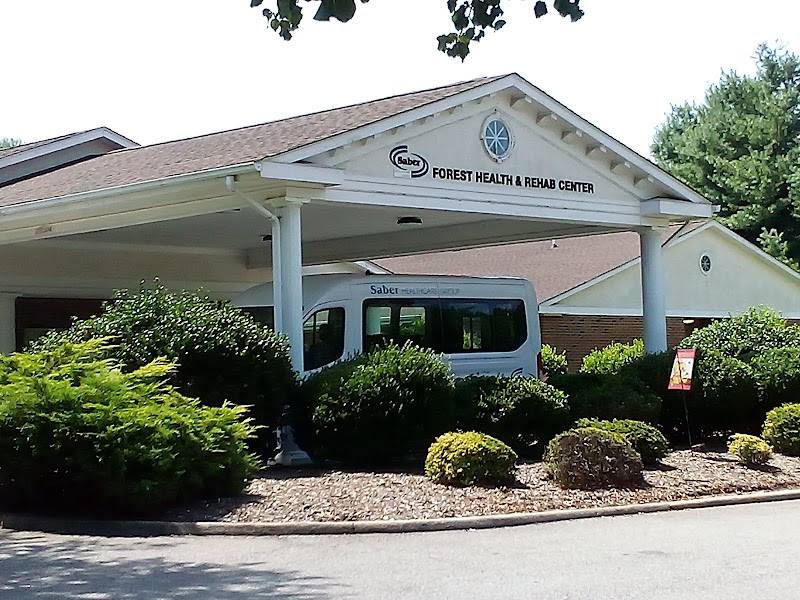
How is Forest Health & Rehab Center Staffed?

CMS rates FOREST HEALTH & REHAB CENTER's staffing level at 2 out of 5 stars, which is below average compared to other nursing homes. Staff turnover is 39%, compared to the Virginia average of 46%. This relatively stable workforce can support continuity of care.

What Have Inspectors Found at Forest Health & Rehab Center?

State health inspectors documented 35 deficiencies at FOREST HEALTH & REHAB CENTER during 2019 to 2025. These included: 35 with potential for harm.

Who Owns and Operates Forest Health & Rehab Center?

FOREST HEALTH & REHAB CENTER is owned by a for-profit company. For-profit facilities operate as businesses with obligations to shareholders or private owners. The facility is operated by SABER HEALTHCARE GROUP, a chain that manages multiple nursing homes. With 89 certified beds and approximately 81 residents (about 91% occupancy), it is a smaller facility located in LYNCHBURG, Virginia.
How Does Forest Health & Rehab Center Compare to Other Virginia Nursing Homes?

Compared to the 100 nursing homes in Virginia, FOREST HEALTH & REHAB CENTER's overall rating (4 stars) is above the state average of 3.0, staff turnover (39%) is near the state average of 46%, and health inspection rating (3 stars) is at the national benchmark.

What Should Families Ask When Visiting Forest Health & Rehab Center?

Based on this facility's data, families visiting should ask: "Can you walk me through typical staffing levels on day, evening, and night shifts?" "Can I visit during a mealtime to observe dining assistance and food quality?" "How do you handle medical emergencies, and what is your hospital transfer rate?" "Can I speak with family members of current residents about their experience?" These questions are particularly relevant given the below-average staffing rating.

Is Forest Health & Rehab Center Safe?

Based on CMS inspection data, FOREST HEALTH & REHAB CENTER has a clean safety record: no substantiated abuse findings (meaning no confirmed cases of resident harm), no Immediate Jeopardy citations (the most serious violation level indicating risk of serious injury or death), and is not on the Special Focus Facility watch list (a federal program monitoring the lowest-performing 1% of nursing homes). The facility has a 4-star overall rating and ranks #1 of 100 nursing homes in Virginia. While no facility is perfect, families should still ask about staff-to-resident ratios and recent inspection results during their visit.

Do Nurses at Forest Health & Rehab Center Stick Around?

FOREST HEALTH & REHAB CENTER has a staff turnover rate of 39%, which is about average for Virginia nursing homes (state average: 46%). Moderate turnover is common in nursing homes, but families should still ask about staff tenure and how the facility maintains care continuity when employees leave.

Was Forest Health & Rehab Center Ever Fined?

FOREST HEALTH & REHAB CENTER has no federal fines on record. CMS issues fines when nursing homes fail to meet care standards or don't correct problems found during inspections. The absence of fines suggests the facility has either maintained compliance or corrected any issues before penalties were assessed. This is a positive indicator, though families should still review recent inspection reports for the full picture.

Is Forest Health & Rehab Center on Any Federal Watch List?

FOREST HEALTH & REHAB CENTER is not on any federal watch list. The most significant is the Special Focus Facility (SFF) program, which identifies the bottom 1% of nursing homes nationally based on persistent, serious quality problems. Not being on this list means the facility has avoided the pattern of deficiencies that triggers enhanced federal oversight. This is a positive indicator, though families should still review the facility's inspection history directly.