GLENBURNIE REHAB & NURSING CENTER
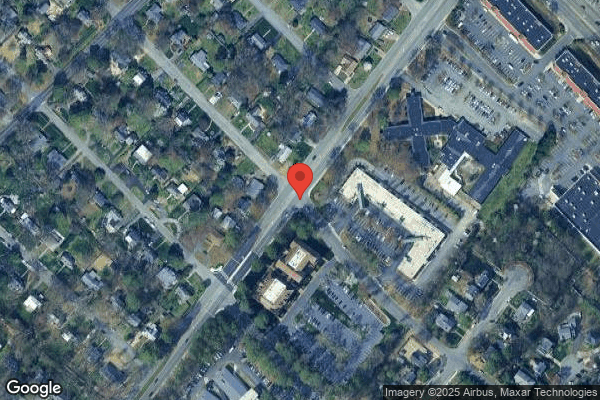
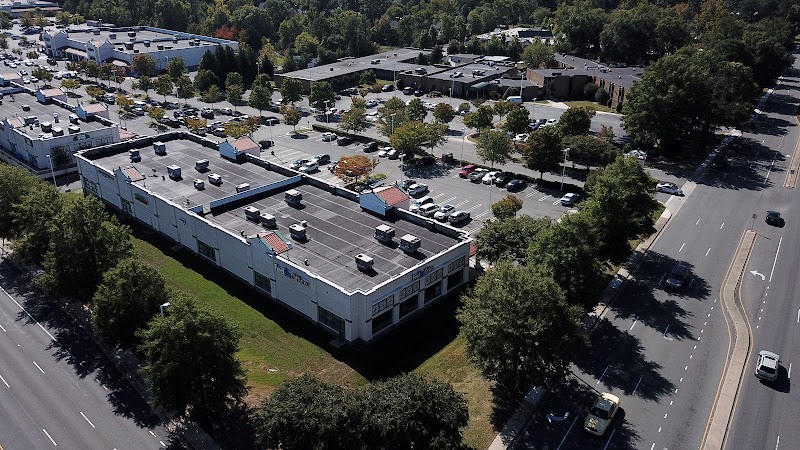
1901 LIBBIE AVE, RICHMOND, VA 23226 (804) 281-3500
For profit - Partnership 125 Beds LIFEWORKS REHAB Data: November 2025 1 Immediate Jeopardy citation
Trust Grade
8/100
#253 of 285 in VA
Last Inspection: January 2024

Within standard 12-15 month inspection cycle. Federal law requires annual inspections.

Overview

Glenburnie Rehab & Nursing Center has received a Trust Grade of F, indicating significant concerns about its quality of care. It ranks #253 out of 285 facilities in Virginia, placing it in the bottom half, and #8 out of 11 in Henrico County, meaning only three local options are worse. The facility is currently improving, with a decrease in reported issues from 28 in 2024 to 24 in 2025. However, staffing is a major concern, as it has a poor rating of 1 out of 5 stars and a turnover rate of 73%, which is significantly higher than the Virginia average of 48%. Additionally, the facility has faced $53,046 in fines, suggesting recurring compliance issues. There are notable strengths in quality measures, which received a rating of 4 out of 5 stars, indicating good performance in certain areas. However, serious incidents raise alarms, such as a critical fire safety issue where staff failed to investigate a fire started by a resident, putting others at risk. Another concern is the lack of effective quality assurance programs, which failed to address previous fire incidents and ensure proper safety protocols. Overall, while there are some positive aspects, families should carefully weigh these serious weaknesses when considering this facility for their loved ones.

Trust Score
F
8/100
In Virginia
#253/285
Bottom 12%
Safety Record
High Risk
Review needed
Inspections
Getting Better
28 → 24 violations
Staff Stability
⚠ Watch
73% turnover. Very high, 25 points above average. Constant new faces learning your loved one's needs.
Penalties
⚠ Watch
$53,046 in fines. Higher than 83% of Virginia facilities, suggesting repeated compliance issues.
Skilled Nurses
○ Average
Each resident gets 36 minutes of Registered Nurse (RN) attention daily — about average for Virginia. RNs are the most trained staff who monitor for health changes.
Violations
⚠ Watch
120 deficiencies on record. Higher than average. Multiple issues found across inspections.
★☆☆☆☆
1.0
Overall Rating
★☆☆☆☆
1.0
Staff Levels
★★★★☆
4.0
Care Quality
★☆☆☆☆
1.0
Inspection Score
Stable
2024: 28 issues
2025: 24 issues

The Good

  • 4-Star Quality Measures · Strong clinical quality outcomes
  • Full Sprinkler Coverage · Fire safety systems throughout facility
  • No fines on record

Facility shows strength in quality measures, fire safety.

The Bad

1-Star Overall Rating

Below Virginia average (3.0)

Significant quality concerns identified by CMS

Staff Turnover: 73%

27pts above Virginia avg (46%)

Frequent staff changes - ask about care continuity

Federal Fines: $53,046

Above median ($33,413)

Moderate penalties - review what triggered them

Chain: LIFEWORKS REHAB

Part of a multi-facility chain

Ask about local staffing decisions and management

Staff turnover is very high (73%)

25 points above Virginia average of 48%

The Ugly 120 deficiencies on record

1 life-threatening
Apr 2025 5 deficiencies 1 IJ (1 facility-wide)
CRITICAL (L) 📢 Someone Reported This

A family member, employee, or ombudsman was alarmed enough to file a formal complaint

Immediate Jeopardy (IJ) - the most serious Medicare violation

Accident Prevention (Tag F0689)

Someone could have died · This affected most or all residents

⚠️ Facility-wide issue

**NOTE- TERMS IN BRACKETS HAVE BEEN EDITED TO PROTECT CONFIDENTIALITY** Based on observation, resident interview, staff interview, facility document review, and clinical record review, the facility st...

Read full inspector narrative →
**NOTE- TERMS IN BRACKETS HAVE BEEN EDITED TO PROTECT CONFIDENTIALITY** Based on observation, resident interview, staff interview, facility document review, and clinical record review, the facility staff failed to thoroughly investigate the circumstances surrounding a fire and to implement interventions to prevent future fires for a census of 116 residents. This resulted in a determination of Immediate Jeopardy (IJ). After Immediate Jeopardy was removed, the scope and severity were lowered to a level 2, widespread. The findings include: On 12/30/24, staff observed a burn smell in Resident #1's (R1's) room and observed the resident with a lighter. On 1/1/25, R1's roommate (R6) reported he extinguished a fire on his mattress. Staff observed a burn area on the lower right side of R6's mattress and some burn spots on the privacy curtains. The facility investigation determined it was highly probable that R1 started the fire. On 3/28/25, staff observed a toilet tissue roll in R1's bathroom was on fire. Since the 1/1/25 incident, the facility staff failed to conduct a thorough investigation into how R1 obtained materials to start the fires, and the facility staff failed to implement current and consistent interventions to prevent future fires and maintain safety for R1 and all other residents. These interventions include monitoring R1 and his room for fire starting materials, and lock boxes for all residents who are deemed safe to retain their smoking materials. Per staff interview, staff members did not understand the need to monitor R1 and his belongings. Also, per observation, resident interview, and other facility documentation, some residents did not utilize lock boxes for their smoking materials. R1's comprehensive care plan, dated 6/19/24 documented, The resident has behaviors. Resident ambulates to other resident's [sic] rooms and collect [sic] items. Resident is at risk for safety concerns related to fire due to collecting and attempting to use smoking devices or lighter. Wandering. On the most recent MDS (minimum data set), a quarterly assessment with an ARD (assessment reference date) of 2/20/25, the resident scored 4 out of 15 on the BIMS (brief interview for mental status), indicating the resident was severely cognitively impaired for making daily decisions. A review of R1's clinical record revealed a nurse's note dated 12/30/24 that documented, Type of Behavior: burn smell observed in room, staff in to assist resident observed with a lighter staff checked room no more lighters observed, and no burning articles observed. Non-pharmacological intervention: education. Effect: effective at the time. PRN (as needed) Medication: na (not applicable). Outcome: left vm (voicemail) for rp (responsible party) and notified MD (medical doctor) per md to monitor oncoming nurse aware A nurse's note dated 1/1/25 documented, This writer was notified by cna (certified nursing assistant) on the floor stating that a 'fire was in the resident's room' This writer attended the room, and resident was there near his bed on the side of the window in standing position. No observation of fire nor smoke filled room observed. This writer asked, 'What happened?' and the resident gave no response just shrugged his shoulders. This writer questioned resident 'Did he have a lighter?' Resident's response was if I give it to you will you give me my lighter back? This writer responded 'No' Resident was asked 'May we search your person, and your personal belongings' Resident allowed his personal area to be checked for fire materials and even assisted by opening the drawers to the dresser/nightstand, but no fire materials was found. Resident allowed his clothing pockets to be checked and again no fire materials such a [sic] matches, cigarette lighter etc., was found. Resident was asked 'Are you okay?' and resident responded with 'I'm fine'. Resident's room was inspected for fire materials with his consent in which none was found on him nor in his personal belongings. Denied pain or discomfort., Resident was assessed for respiratory distress, and he was not observed to have a cough nor SOB (shortness of breath). Skin integrity remained intact. VS (Vital signs) 130/72 (blood pressure)-97.7 (temperature)-80 (pulse)-18 (respirations)-98% RA (oxygen level on room air) Director of Nursing notified. A note signed by the nurse practitioner on 1/2/25 documented, (R1) was seen this morning in his semi-private room at (name of facility). (R1) is reported to have had burned thing in his room and neither him nor his roommate could report how the curtain got burned. (R1) does not have any visible burns. He does not recall events. The note failed to document interventions to prevent future fires. An initial facility synopsis of events submitted to the SA (state agency) on 1/2/25 documented, Incident date: 01/01/2025: Resident (R1) was observed with a lighter, resident set the mattress and privacy curtain on fire in his assigned room. Roommate was not in room during the incident. There are no injuries to report . A psychiatry evaluation dated 1/7/25 documented, This is a [AGE] year-old male with history of depression and dementia. He was last seen by this provider on 12/10/2024 and no changes were made to his psychotropic medications. This is a consultation at the request of staff because patient was involved in setting a fire in his room. He is met in the common room today participating in an activity. He is on 1:1 (one-on-one supervision) because of his recent behaviors. However, it is unknown how his [NAME] [sic] curtain got burned. Patient stated that he does not smoke, and he does not have any lighter. He also stated that he has no intention to burn this place, and he does not have a clue about his curtain burning .Recommendations: 1:1 per facility protocol, may discontinue in 24 hours and do q (every) shift safety checks. Regularly inspect personal belongings and room for any flammable materials. Redirection. Offer opportunities for socialization and participation in activities as tolerated to avoid social isolation. Monitor for changes in mood or behaviors and notify/page (name of psychiatry company) as needed. Will continue to follow and provide consultation . A final facility synopsis of events submitted to the SA on 1/7/25 documented, This letter serves as the final report of the comprehensive investigation into the Facility Reported Incident initially filed on January 1, 2025, regarding an incident resulting in a fire involving residents in room (number) (R1) and (R6). (R1) (room number) is a [AGE] year-old male initially admitted to the facility on [DATE] with a BIMS of 04. (R1) has diagnoses of vascular dementia without behavioral disturbance, dysphasia (difficulty to produce and comprehend verbal language), cognitive communication deficit, muscle weakness, atrial fibrillation (a heart condition), chronic pain, alcohol cirrhosis of the liver, delusional disorders, retention of urine, mild neurocognitive disorder, immunodeficiency, peritonitis (inflammation of the abdomen), acute and gastric ulcer. (R6 [R1's roommate]) (room number) is a [AGE] year-old male admitted to the facility on [DATE] with a BIMS of 15 (indicating the resident was cognitively intact). (R6) has diagnosis of adult hypertrophic (a narrowing of the opening of the stomach to the small intestines), gastrostomy (feeding tube), a neurocognitive disorder with Lewy Bodies, chronic obstructive pulmonary disease (lung disease), severe protein-calorie malnutrition, hemiplegia (paralysis) and hemiparesis (muscle weakness), sequelae of the cerebral infarction (long term effects from a stroke), orthostatic hypotension (a drop in blood pressure), PTSD (post-traumatic stress disorder), cardiac pacemaker, TBI (traumatic brain injury), and gastro-esophageal reflux. On January 1, 2025, (LPN [licensed practical nurse] #6), LPN verbally reported to the Administrator that Resident (R1) was observed with a lighter; Resident set the mattress and privacy curtain on fire in his assigned room. The roommate was not in the room during the incident, there were no injuries to report. Investigation -During an interview with (R6) (room number), with BIMS 15, he stated that at about 6pm on 1/1/25, he was at the nursing station trying to call his wife. After unsuccessful attempts to reach his wife, he decided to return to his room. When he arrived at his room, he noticed his bed was on fire. He balled up some sheets that were at the foot of his bed and used them to put out the fire. He stated that he shouted 'Fire! Fire!' and staff immediately came to his room but arrived when the fire was already out. He does not know how and what started the fire. He denied smoking or having a lighter. -The resident in (room number) (R1) was interviewed. He denied having a lighter and stated that there was no fire. (R1) has a BIMS of 05 and does not recall seeing or lighting a fire. (R1) has a history of wandering and socializing with other residents in the day room, including residents that smoke. He also has a smoking history but stated he stopped smoking about 7 months ago. Although (R1) denies smoking or having a lighter, staff confiscated a lighter from him on 12/30/24. Staff were unable to find any other lighter in his possession after a consented room search. However, the possibility of (R1) getting [sic] lighter from elsewhere cannot be undermined based on his history of wandering and socializing with visitors and other residents. -A statement was obtained from the CNA (certified nursing assistant), (CNA #5), who first heard and responded to the incident. (CNA #5) stated that at about 6:30pm, she was picking up meal trays from rooms in the 200 hallway when she heard (R6) screaming Fire! Fire! (CNA #5) immediately called the other CNAs (CNA #6 and CNA #7) and the nurse (LPN #7) to the room. When they arrived at the room with a fire extinguisher, there was no fire or smoke in the room. (R6) stated to them that his bed was on fire, and he put the fire out. They noticed a burn area on the lower right side of (R1's) mattress and some burn spots on the privacy curtains. Both residents were removed from the room per recommendation of the charge nurse, (LPN #7). The CNA and the nurse searched the room and found a lighter on (R6's) pants that was on his bed. -In an interview with the charge nurse, (LPN #7), she stated that when she arrived at the room, there was no fire or smoke but noticed a palm size burnt area towards the foot of the bed mattress on the right side. She asked what happened and (R6) stated that there was a fire in his bed, and he put it out with a 'balled up' sheet. The nurse asked the CNAs to remove both residents from the room, notified maintenance team, notified the administrator, DON (director of nursing), responsible parties of both residents, instituted safety checks and one-on-one monitoring for (R1), due to his cognitive status, and moved both residents to different rooms. -The facility maintenance team checked the room for safety, conducted the room for safety, conducted a bed inspection in which they found no evidence of an electrical issue. During an interview with the Maintenance Assistant, he stated that the fire alarm system did not trigger due to the lack of smoke to initiate the alarm system as designed. (Name of contractor) came on 1/2/25 to inspect all smoke alarm systems in the building, all systems were cleared and are working appropriately. -The Charge nurse assessed both residents for pain, respiratory distress, and skin integrity. No pain or respiratory concerns were raised by both residents. A skin assessment was performed on (R6), and no burns or bruises were noted on his hands. No skin complication was noticed on either (R1) or (R6). -Social Services completed trauma screening to evaluate psychosocial wellbeing of both residents in (room number). No issues were reported during the trauma screening with regards to the fire incident. -(R1) was also referred to the psych physician for evaluation and review of medication. -Care plan has been updated for both residents. (R6) was educated not to attempt to put out fire using his hands. (R1) was placed on one-on-one staff monitoring and safety checks to monitor or observe his routine and maintain safety. (R1) will continue one-on-one staff assistance until the physician and IDT (interdisciplinary team) team determine that he can no longer have access to a lighter. -A smoking screen has been completed for all residents in the building. Residents who smoke have been provided with lock boxes to store their smoking paraphernalia so as to prevent other residents from accessing them. -The Administrator held an emergency Resident Council Meeting to emphasize safe smoking practices and proper/discreet storage of all smoking-related items. The residents in attendance were educated on not sharing their cigarettes and lighters with other residents. Residents who smoke have been educated on the importance of lock boxes and how to use them. Based on the above findings, the burn area on the mattress in (room number) indicates that there was a fire in the room. Because no electrical malfunctions were noted upon bed inspection, and a lighter was found on the bed, it is highly probable that (R1) may have started the fire in the room. (R1) was the only one present in the room when the fire started, no other resident was observed going into room (number), and a lighter had previously been confiscated from him. He is also unable to recall that there was a fire in his room due to his cognitive status. The facility has provided lock boxes to residents who smoke to store their smoking devices to prevent residents with wandering behaviors from accessing them. The facility staff education on RACE (Rescue, Alert, Confine, Extinguish) has been initiated . The synopsis failed to document a thorough investigation of how R1 obtained fire starting materials. A progress note with an effective date of 1/14/25 and signed by the physician on 1/16/25 documented, Mild vascular dementia without behavioral disturbance, psychotic disturbance, mood disturbance, or anxiety. Attempted Moca (Montreal cognitive assessment) to gather baseline. Had difficulty understanding/following instructions. Will re attempt at future date. Regarding his dementia, there was also an incident a few days back when he was found with a lighter, I discussed this incident with him, and he had no acknowledgement of that situation. He is pleasant but mobile and walks around the facility all day. No behavioral risk to self or others that is intentional. He denies SI/HI (suicidal/homicidal) ideations today. The note failed to document interventions to prevent future fires. A facility synopsis of events dated 1/28/25 regarding another resident (R5) documented that the resident (who smoked) was not properly using his lock box. The report was regarding missing money and documented, On January 24, 2025, the resident reported to the unit manager that $20 had gone missing from his lockbox, which is located in the top drawer of his dresser. The resident stated that he had placed $22.00 in his lockbox the previous evening and had left the lockbox on top of his dresser with the key inside it. When he awoke the next morning, he noticed that his lockbox was turned upside down, and only $2.00 was left inside. Further review of R1's clinical record revealed a note signed by the nurse practitioner on 3/11/25 that documented, Current somewhat stable functional status includes: Ambulatory with equal strength, oriented x 1, and mostly pleasant. Functional in most ADLs (activities of daily living) and conversational. FAST dementia scale 3-4. Unable to complete MoCa (Montreal cognitive assessment) due to inattention. Requires 24/7 supervision as he is dangerous with a lighter or cooking. Wander guard (a device to prevent residents from exiting the building) in place. A facility synopsis of events dated 3/14/25 regarding another resident (R4) documented that the resident (who smoked) was not using her lock box. The report was regarding a missing wallet/money and documented, Although (R4) has a lockbox [sic] at her bedside, she does not use it, preferring to hide her belongings under her pillow or beneath her bed. Further review of R1's clinical record from 1/9/25 through 3/28/25 failed to reveal the resident or resident's room was inspected for fire starting materials. A nurse's note dated 3/28/25 documented, Resident is alert and oriented x2. Skin is dry to the touch. After dinner, resident took his medications as ordered. After dinner around 2030PM (8:30 p.m.) a CNA alerted this nurse of fire sand [sic] smoke coming from this residents [sic] restroom. Resident was removed to a safe location to be assessed. No S/S (signs or symptoms) of smoke inhalation, coughing, no SOB (shortness of breath), and no skin issues. DON (director of nursing) and RP (responsible party) notified. An initial facility synopsis of events submitted to the SA on 3/28/25 documented, Incident date: 3/28/2025. Residents involved: (R1) (R2). Resident [R1] lit a roll of toilet paper on fire in his bathroom. Staff extinguished the fire with water and dropped the paper roll in the toilet. Fire department alert [sic] and arrived to building. A psychiatry evaluation dated 4/1/25 documented, This is a [AGE] year-old male with history of depression and dementia. He was last seen by this provider on 2/18/25 at that time no changes were made to his psychotropic medications. This is a consultation at the request of staff due to patient's increased behaviors in the last week with symptoms that includes starting a fire in his bathroom, refusal of care and treatment, resistance, agitation, increased confusion and anxiety, difficult to redirect. He has been place [sic] on 1:1 per facility protocol. A medical work-up showed bacterial infection and he is currently on antibiotics. Patient is met in his room today, with flat affect. He did not recall the fire incident. He also does not recall his behaviors. There is no evidence that he responds to internal stimuli. He is directable at this time .Recommendations: May discontinue 1:1. Continue q (every) shift safety checks for 24 hours or per facility protocol. Regularly inspect personal belongings and room for flammable materials. Staff to continue to provide appropriate non-pharmacological measures as needed to manage disturbances in mood and behaviors such as redirection, reinforcement and distraction. Continue to offer opportunities for socialization and participation in activities as tolerated to avoid social isolation. Monitor for acute changes in mood or behaviors and notify/page (name of psychiatry company) as needed. Will continue to follow and provide consultation. A note signed by the nurse practitioner on 4/4/25 failed to document information regarding the 3/28/25 incident or interventions to prevent future fires. A final facility synopsis of events submitted to the SA on 4/4/25 documented, This letter serves as the final report of the comprehensive investigation into the Facility Reported Incident initially filed on March 28, 2025, regarding a fire incident in the bathroom of room (number) involving a resident, (R1). (R1) (room number) is a [AGE] year-old male initially admitted to the facility on [DATE] with a BIMS of 04. (R1) has diagnoses of vascular dementia without behavioral disturbance, dysphasia, cognitive communication deficit, muscle weakness, atrial fibrillation, chronic pain, alcohol cirrhosis of the liver, delusional disorders, retention of urine, mild neurocognitive disorder, immunodeficiency, peritonitis, acute and gastric ulcer. On 3/28/2025 at approximately 2030 (8:30 p.m.), staff reported to the Administrator that (R1) have [sic] started a fire in room (number) and that smoke was observed coming from the bathroom of room (number) that immediately triggered the fire alarm and the sprinklers. (R1) was out of the room when staff noticed the fire and his roommate, (R2) was immediately removed from the room with no injuries. The fire was quickly extinguished by staff before the arrival of the fire department. The facility Administrator initiated an investigation into the incident on 3/28/25. Investigation -The CNA (CNA #5), assigned to (R1 and R2's room number) on 3/28/25 was interviewed by the Director of Nursing. The CNA stated that at about 2030 (8:30 p.m.) when conducting routine rounds, she observed (R1) coming out of his room and walking in the hallway towards the dining area. She walked towards (R1's) room and noticed smoke coming out of the bathroom. He [sic] notified the charge nurse who immediately came to the room and noticed there was fire in the bathroom. -A statement was obtained from the charge nurse, (RN [registered nurse] #2), assigned to (R1 and R2's room) on 3/28/25 at the time of the incident. He stated that at about 2030 (8:30 p.m.), (CNA #5) notified him that there was fire and smoke in (R1 and R2's) room. He immediately rushed to the room and noticed that the toilet tissue roll against the wall was on fire. He instructed the CNA to move (R2) to safety and proceeded to extinguish the fire. He stated that (R1) was not in the room when he arrived at the room. -(R1), was interviewed by the Director of Nursing on 3/28/25. He denied having a lighter and stated that he does not recall there was fire in his bathroom. He also denied starting a fire but stated that 'I messed up, I am sorry.' He was unable to state what he did or what made him think he 'messed up.' The CNA and charge nurse conducted a search of (R1 and R2's) room and found no lighter or any device that may have been used to start the fire. (R1) had no smoking device in his possession at the time of the search after the fire was extinguished. Although no lighter was found on (R1), he has a history of wandering, picking up items and attempting to use a lighter in his room. He was in his room when the incident started and quickly walked away prior to staff arriving at the scene. Interventions -(R1) was placed on one-on-one staff monitoring pending assessment by the psych physician. -The facility maintenance team checked the room for safety, conducted an inspection of the bathroom in which they found no evidence of an electrical issue that may have started the fire. -The Charge nurse assessed both residents in (room number) for pain, respiratory distress, and skin integrity. No pain or respiratory concerns were raised by both residents. -Social services completed trauma screening to evaluate psychosocial wellbeing of both residents in (room number). No issues were reported during the trauma screening with regards to the fire incident. -(R1) was also referred to the psych physician for evaluation and review of medication. -Care plan has been updated. (R1) was placed on one-on-one staff monitoring and safety checks to monitor or observe his routine and maintain safety. The Activities department will assist (R1) with outdoor activities for distraction. -A smoking screen has been completed for all residents in the building to identify residents who may not have reported their smoking status to staff. Residents who smoke have been provided with lock boxes to store their smoking paraphernalia so as to prevent other residents from accessing them. -The DON assigned staff to conduct room search of all residents with wandering tendencies to verify there was no lighter in the room. -The DON assigned staff to complete 100% room search in the facility to verify no lighter is accessible to residents with wandering behaviors. -The Administrator held an emergency Resident Council Meeting to emphasize safe smoking practices and proper/discreet storage of all smoking-related items. The residents in attendance were educated on not sharing their cigarettes and lighters with other residents. Residents who smoke have been educated on the importance of lock boxes and how to use them. Based on the above findings, the fire incident in (R1 and R2's) room is substantiated. Because no electrical malfunctions were noted upon room inspection and no lighter was found on (R1), the source of the fire could not be fully determined. However, because (R1) was in the room prior to the incident and has a history of using smoking devices in the room, the facility is implementing measures to ensure (R1), and other residents with wandering behaviors do not have access to lighters. (R1) has been moved to a room closer to the nursing station for increased visibility and monitoring. An Ad-hoc QAPI (quality assurance and performance improvement) meeting was held on 3/31/25 to discuss safety of residents in the facility . The synopsis failed to document a thorough investigation of how R1 obtained fire starting materials. Further review of R1's clinical record from 4/4/25 through 4/15/25 failed to reveal the resident was provided with increased supervision or the resident/resident's room was inspected for fire starting materials. On 4/15/25 at 10:48 a.m., 4/15/25 at 11:40 a.m., and 4/16/25 at 8:48 a.m., R1 was observed unsupervised in the bedroom. On 4/15/25 at 3:59 p.m., and 4/15/25 at 4:16 p.m., R1 was observed wandering in the hall. On 4/15/25 at 11:08 a.m., an interview was conducted with R7 (a resident who smoked). The resident stated staff has never asked if another resident has asked for a lighter or attempted to take his lighter. On the most recent MDS (minimum data set), a quarterly assessment with an ARD (assessment reference date) of 1/20/25, R7 scored 15 out of 15 on the BIMS (brief interview for mental status), indicating the resident was cognitively intact for making daily decisions. On 4/15/25 at 11:12 a.m., an interview was conducted with R8 (a resident who smoked). The resident stated staff has never asked if another resident has asked for a lighter or attempted to take his lighter. On the most recent MDS, a quarterly assessment with an ARD of 2/5/25, R8 scored 15 out of 15 on the BIMS (brief interview for mental status), indicating the resident was cognitively intact for making daily decisions. On 4/15/25 at 11:15 a.m., an interview was conducted with R4 (a resident who smoked). R4 stated she does not use a lock box, and she hides her belongings in her room. R4 further stated staff has never asked if another resident has asked for a lighter or attempted to take her lighter. A lock box was observed under R4's bed. The box was open with the key in the lock. On the most recent MDS, a quarterly assessment with an ARD of 3/16/25, R4 scored 13 out of 15 on the BIMS (brief interview for mental status), indicating the resident was cognitively intact for making daily decisions. On 4/15/25 at 11:23 a.m., an interview was conducted with OSM (other staff member) #2 (a housekeeper). OSM #2 stated administration staff has never asked her questions or provided education regarding R1. On 4/15/25 at 11:24 a.m., an interview was conducted with CNA #1 (hired in March 2025). CNA #1 stated she had heard a resident started a fire in a room, but she did not know who the resident was and was not provided education. On 4/15/25 at 11:30 a.m., an interview was conducted with CNA #2. CNA #2 stated she was aware R1 had started fires and interventions that were implemented when the incidences occurred (such as safety checks and inspecting the room for lighters). CNA #2 stated she has never been asked questions about how R1 was obtaining lighters she did not know if any interventions were currently being implemented. On 4/15/25 at 11:36 a.m., an interview was conducted with LPN #2 (the nurse caring for R1). R1 stated she has never been asked questions about how R1 was obtaining lighters. LPN #2 further stated she was not aware of any instructions to inspect R1 or the resident's room, but staff had been taking lighters from the resident when they found them. On 4/15/25 at approximately 2:00 p.m., an interview was conducted with CNA #3 (the CNA caring for R1). CNA #3 stated she did not know anything about facility fires. CNA #3 stated R1 was confused, and wanders and she has never been provided instructions to inspect R1 or the resident's room for lighters. On 4/15/25 at 3:31 p.m., an interview was conducted with LPN #5. LPN #5 stated she did not remember the interventions that were implemented for R1 after the fire incidents in January 2025 and March 2025. On 4/15/25 at 4:02 p.m., an interview was conducted with LPN (licensed practical nurse) #8 (the nurse caring for R1). LPN #8 stated she was not aware of any interventions involving R1 and lighters. LPN #8 stated she was not aware if R1 required increased supervision, and she was not aware if she needed to inspect R1 or the resident's room for lighters. On 4/16/25 at 11:33 a.m., an interview was conducted with ASM (administrative staff member) #1 (the administrator) and ASM #2 (the director of nursing). ASM #1 stated that after the 1/1/25 fire, the staff implemented lock boxes for residents who smoke, and staff tried to figure out how R1 obtained lighters because he frequently walks around and takes things. ASM #1 stated she did not include visitors in the fire investigations. ASM #1 further stated that a member of the IDT (interdisciplinary) team checks R1's room for lighters during the daily room rounds. On 4/16/25 at 11:43 a.m., ASM #1 and ASM #2 were notified of Immediate Jeopardy. On 4/16/25 at 11:54 a.m., an interview was conducted with LPN #4 (the minimum data set coordinator). LPN #4 stated that members of the IDT team have certain groups of rooms they go into every day. LPN #4 stated, We look for things out of place. We look to see if there are lighters or anything lying around. We do this once a day. I went in [to R1's room] very early this morning. The time of day varies. LPN #4 provided room round forms for R1's room. The forms documented no lighters were found at the time of rounds and were dated 4/2/25, 4/3/25, 4/4/25, 4/7/25, 4/8/25, 4/9/25, 4/10/25, 4/11/25, 4/14/25, 4/15/25, and 4/16/25. On 4/16/25 at 1:27 p.m., an interview was conducted with RN #1. RN #1 stated R1 is alert and confused, oriented times one or two, and wanders on both units and into other resident rooms. RN #1 stated she has seen R1 take items that didn't belong to him from the common areas. RN #1 stated R1 spends a good portion of the day in the common area where a lot of visitors visit and where the smokers go outside. RN #1 stated staff should keep their eyes on R1 when he is in that area and staff should search R1, with the resident's consent, when the resident returns from other areas of the facility. RN #1 stated she informs nurses about R1 when she gives report but there was nothing specifically documented on the unit to alert staff. The facility presented the following IJ removal plan which was accepted on 4/16/25 at 6:45 p.m. Immediate Jeopardy Abatement Plan Date: 04/16/2025 1. R1 was immediately placed on permanent 1-1 supervision, and the patient's room was thoroughly searched for smoking materials. No smoking paraphernalia was found; had any been discovered, it would have been immediately removed from the resident's room to mitigate further risk. Fire-damaged furniture and the mattress were replaced. Maintenance completed a full safety inspection, and (name of contractor) conducted an external fire inspection. Resident's care [plan] updated. The RP (responsible party) for R1 was contacted and educated about the dangers of providing smoking materials to residents deemed unsafe to retain such items. 2. Current residents in the facility have the potential to be affected by the deficient practice. UM (unit manager) or a designee conducted a facility-wide search on April 16, 2025, to locate and remove all unauthorized smoking and fire-starting materials. The Director of Nursing or a Designee completed a 100% reassessment of smoking risk for all residents with a history of smoking to validate the accuracy of their smoking assessments and ensure proper safeguards are in place. All unsupervised smokers were assessed to determine their capacity to retain and securely store smoking materials. 3. The SDC (staffing development coordinator) or designee[TRUNCATED]
CONCERN (D) 📢 Someone Reported This

A family member, employee, or ombudsman was alarmed enough to file a formal complaint

Potential for Harm - no one hurt, but risky conditions existed

Deficiency F0712 (Tag F0712)

Could have caused harm · This affected 1 resident

Based on staff interview, facility document review, and clinical record review, the facility staff failed to provide timely physician visits for one of nine residents in the survey sample, Resident #5...

Read full inspector narrative →
Based on staff interview, facility document review, and clinical record review, the facility staff failed to provide timely physician visits for one of nine residents in the survey sample, Resident #5. The findings include: For Resident #5 (R5), the facility staff failed to provide physician visits every sixty days. A review of R5's clinical record revealed physician visits on 4/22/24 and 7/16/24. The review revealed no physician visits between these two dates. On 4/22/25 at 8:45 a.m., ASM (administrative staff member) #2, the director of nursing, was interviewed. She most residents need to be seen quarterly, with the exception of residents receiving skilled nursing services. She stated the facility's providers are diligent about timely visits. She stated R5 saw two outside providers between 4/22/24 and 7/16/24 but was not seen by a facility physician. On 4/22/25 at 10:36 a.m., ASM #1, the administrator, was informed of these concerns. A review of the facility policy, Physician Visits, revealed, in part: Each patient will be seen by a physician upon admission .Patients will then be seen by a provider at least every 30 days for the first 90 days after admission, and at least every 60 days thereafter. No additional information was provided prior to exit.
CONCERN (E) 📢 Someone Reported This

A family member, employee, or ombudsman was alarmed enough to file a formal complaint

Potential for Harm - no one hurt, but risky conditions existed

Deficiency F0840 (Tag F0840)

Could have caused harm · This affected multiple residents

Based on staff interview and clinical record review, the facility staff failed to evidence agreements for contractual services for one of one facility. The findings include: The facility staff failed ...

Read full inspector narrative →
Based on staff interview and clinical record review, the facility staff failed to evidence agreements for contractual services for one of one facility. The findings include: The facility staff failed to maintain agreements for services with the contracted podiatry company and contracted eye care company. A review of the facility contracts failed to reveal agreements for services with the contracted podiatry company and the contracted eye care company. On 4/22/25 at approximately 8:55 a.m., ASM (administrative staff member) #2 (the director of nursing) presented service agreements for a podiatry company and an eye care company. The agreements were dated 4/21/25 and were not signed by a facility representative. On 4/22/25 at 10:36 a.m., an interview was conducted with ASM #1 (the administrator). ASM #1 stated that when services are initiated with an outside company, she has the company sign an agreement and places the agreement in a contract binder. ASM #1 stated the facility began services with the podiatry company and eye care company before her employment at the facility. On 4/22/25 at 11:10 a.m., ASM #1 stated she was unable to locate the original podiatry and eye care contracts. The facility policy titled, Contracts/Agreements documented, All contracts and/or agreements that are initiated between the Health and Rehabilitation Center and any third-party provider and/or vendor must be approved by designated officers of the company prior to engaging in any contractual obligations and/or service .4. Contracts/agreements between the Health and Rehabilitation Center and the negotiating third-party are not valid unless signed by the appropriate officer of the company. No further information was presented prior to exit.
CONCERN (F) 📢 Someone Reported This

A family member, employee, or ombudsman was alarmed enough to file a formal complaint

Potential for Harm - no one hurt, but risky conditions existed

Deficiency F0865 (Tag F0865)

Could have caused harm · This affected most or all residents

Based on staff interview and facility document review, the facility staff failed to implement an effective QAPI (quality assurance and performance improvement) program for one of one facility. The fin...

Read full inspector narrative →
Based on staff interview and facility document review, the facility staff failed to implement an effective QAPI (quality assurance and performance improvement) program for one of one facility. The findings include: The facility staff failed to ensure their 3/28/25 QAPI plan regarding a fire incident was effective. The facility staff failed to ensure a resident who smoked utilized a lock box for her smoking materials and failed to ensure staff were knowledgeable regarding the education documented in the plan. An initial facility synopsis of events submitted to the SA (state agency) on 3/28/25 documented, Incident date: 3/28/2025. Residents involved: (R1) (R2). Resident [R1] lit a roll of toilet paper on fire in his bathroom. Staff extinguished the fire with water and dropped the paper roll in the toilet. Fire department alert [sic] and arrived to building. A QAPI plan dated 3/28/25 documented, PROBLEM: On 3/29/25 [sic] staff observed a fire in the bathroom of room (room number). F689. Immediate Response-what was done at the time. Both residents in the room were safely evacuated. The fire was immediately extinguished by staff and the code was cleared by the fire department. (R2) was moved to a different room. (R1) refused to move as there was no damage to the room. (R1) was placed on one-on-one supervision until cleared by psych because of history of attempting to use a lighter in the room. Pain, skin and respiratory assessments were conducted for both residents in the room. How to Identify other residents that might be impacted. Current residents in the center have the potential to be affected. The DON (director of nursing) or designee conducted a 100% room search to ensure all smoking paraphernalia are stored in lock boxes. Any lighter found outside the lock box shall be placed in a lock box and the resident educated on the need to use the lock box. The Administrator or designee held a safety committee meeting on 3/29/25 with residents who smoke to discuss the importance of ensuring that they use their lock boxes to store their smoking devices to prevent residents with wandering behaviors from having access to smoking paraphernalia. The DON or designee audited residents who wander, resident smoking assessments and care plans to identify need for locked boxes to prevent smoking paraphernalia and lighters being accessible to other residents. What Measures were put in place to prevent reoccurrence. The SDC (staffing development coordinator) or designee will educate facility staff on the processes for implementing interventions such as redirection/distraction to prevent residents with wandering behaviors from having access and/or obtaining lighters to prevent risk for igniting and causing fires. The DON or designee shall audit all residents who smoke to verify they have lock boxes to store smoking paraphernalia. How to monitor to ensure the problem does not reoccur. The DON or designee will complete weekly audits x 4 weeks of residents who smoke to verify they have lock boxes and are storing their smoking devices in the lock box. Findings will be corrected. The administrator or designee will audit weekly x 4 weeks and monthly x 2 residents with wandering behaviors to verify they do not have smoking paraphernalia. QA. The results will be reported to the monthly Quality Committee for review and discussion to ensure substantial compliance is sustained. Once the QA Committee determines the problem no longer exits [sic], then review will be completed on a random basis. On 4/15/25 at 11:15 a.m., an interview was conducted with R4 (a resident who smoked). R4 stated she does not use a lock box, and she hides her belongings in her room. A lock box was observed under R4's bed. The box was open with the key in the lock. On the most recent MDS, a quarterly assessment with an ARD of 3/16/25, R4 scored 13 out of 15 on the BIMS (brief interview for mental status), indicating the resident was cognitively intact for making daily decisions. On 4/15/25 at 11:23 a.m., an interview was conducted with OSM (other staff member) 2 (a housekeeper). OSM #2 stated administration staff have never asked her questions or provided education regarding R1. On 4/15/25 at 11:24 a.m., an interview was conducted with CNA (certified nursing assistant) 1 (hired in March 2025). CNA #1 stated she had heard a resident started a fire in a room, but she did not know who the resident was and was not provided with education. On 4/15/25 at 11:36 a.m., an interview was conducted with LPN (licensed practical nurse) 2 (the nurse caring for R1). R1 stated she has never been asked questions about how R1 was obtaining lighters. LPN #2 further stated she was not aware of any instructions to inspect R1 or the resident's room, but staff had been taking lighters from the resident when they found them. On 4/15/25 at approximately 2:00 p.m., an interview was conducted with CNA #3 (the CNA caring for R1). CNA #3 stated she did not know anything about facility fires. CNA #3 stated R1 was confused, and wanders and she has never been provided instructions to inspect R1 or the resident's room for lighters. On 4/15/25 at 3:31 p.m., an interview was conducted with LPN #5. LPN #5 stated she did not remember the interventions that were implemented for R1 after the fire incidents in January 2025 and March 2025. On 4/15/25 at 4:02 p.m., an interview was conducted with LPN (licensed practical nurse) 8 (the nurse caring for R1). LPN #8 stated she was not aware of any interventions involving R1 and lighters. LPN #8 stated she was not aware if R1 required increased supervision, and she was not aware if she needed to inspect R1 or the resident's room for lighters. On 4/22/25 at 10:36 a.m., an interview was conducted with ASM #1 (the administrator). ASM #1 stated that she had not noticed the above QAPI plan was not effective. The facility policy titled, QAPI documented, The Administrator is responsible for directing the Center's Quality Assurance/Performance Improvement (QAPI) Plan that focuses on Center specific indicators that measure quality of care, quality of life and patient choice. The QAPI plan will systematically identify actual or potential areas of risk or deficiency and will proactively pursue ongoing performance improvement. No further information was presented prior to exit.
MINOR (C) 📢 Someone Reported This

A family member, employee, or ombudsman was alarmed enough to file a formal complaint

Minor Issue - procedural, no safety impact

Staffing Information (Tag F0732)

Minor procedural issue · This affected most or all residents

Based on staff interview and facility document review, the facility staff failed to post a complete record of nursing staffing for 30 of 30 days reviewed. The findings include: The facility staff fail...

Read full inspector narrative →
Based on staff interview and facility document review, the facility staff failed to post a complete record of nursing staffing for 30 of 30 days reviewed. The findings include: The facility staff failed to post an accurate daily nursing staffing sheet for 30 days in March and April 2025. A review of the facility staff posting sheets from 3/21/25 through 4/19/25 failed to reveal any resident census information for any of the three shifts on any of these 30 days. On 4/22/25 at 9:06 a.m., CNA (certified nursing assistant) #8 was interviewed. She stated she had been trained to calculate all the RN (registered nurses), LPN (licensed practical nurses) and CNA hours for each shift for each 24 hour period. She stated she had not been trained to fill out the census on each shift for each day. On 4/22/25 at 10:36 a.m., ASM (administrative staff member) #1, the administrator, was notified of these concerns. A review of the facility policy, Daily Nurse Staffing Summary, failed to reveal any information regarding the resident census for each shift. No additional information was provided prior to exit.
Mar 2025 9 deficiencies
CONCERN (D) 📢 Someone Reported This

A family member, employee, or ombudsman was alarmed enough to file a formal complaint

Potential for Harm - no one hurt, but risky conditions existed

Resident Rights (Tag F0550)

Could have caused harm · This affected 1 resident

Based on observation, resident interview, staff interview and clinical record review, it was determined that facility staff failed to promote resident's dignity for one of 13 residents in the survey s...

Read full inspector narrative →
Based on observation, resident interview, staff interview and clinical record review, it was determined that facility staff failed to promote resident's dignity for one of 13 residents in the survey sample, Resident #10 (R10). The findings include: For R10, facility staff failed to maintain the room and bathroom in a dignified condition. On the MDS (minimum data set), a quarterly assessment with an ARD (assessment reference date) of 09/11/2024, R10 scored 8 (eight) out of 15 on the BIMS (brief interview for mental status), indicating R10 was moderately impaired of cognition intact for making daily decisions. On 03/25/2025 at approximately 12:55 p.m., an observation of R10's room revealed R10 was not in the room. Observation of R10's bathroom revealed approximately 14 holes in the linoleum flooring ranging in size from approximately one-and-a-half inches up to six inches in length and a half inch up to three inches in width. Observation of the flooring also revealed it curling away from the wall under the sink and behind the toilet and multiple cuts throughout the flooring. Further observation revealed flooring to have a black substance on it in the area under the sink and several stained areas throughout the floor. Observation of the floor area around R10's bed revealed two fall mats on the floor, next to the bed, on the right and left sides of the bed. Observation of the fall mats revealed them to have food stains and debris on them. Observation of the room floor revealed food debris, dirt and stained areas that appeared to be from food and spilled liquids On 03/25/2025 at approximately 4:25 p.m., an observation of R10's room revealed R10 was not in the room and the facility housekeeper was cleaning the room. Observation of the bathroom revealed conditions as described above. On 03/25/2025 at approximately 4:45 p.m., an observation of R10's room revealed R10 was not in the room. Observation of the room was observed to be as described above. Observation of the bathroom revealed conditions as described above. On 03/26/2025 at approximately 9:00 a.m., observation of the room was revealed conditions as described above. Observation of the bathroom revealed conditions as described above. On 03/26/2025 at approximately 10:30 a.m., an interview and observation of R10's room and bathroom was conducted with OSM (other staff member) #2, director of environmental services was asked to describe the procedure for cleaning a resident's room. OSM #2 stated the housekeeper starts by gathering the trach, wiping down items (i.e., doorknobs, dressers, over-the-bed tables, bedside tables) working counterclockwise around the room, remove fall mats, sweep the floor, including under the bed finally mopping the floor. She also stated that the fall mats are also cleaned. OSM #2 further stated that at the end of each day the housekeeper goes back through the resident's room, collects trach and cleans up any spills. At approximately 10:40 a.m., OSM #2 and the surveyor entered R10's room. Upon observation of the room, she stated she agreed with the conditions in the room and bathroom as stated above. She stated the room and bathroom were not clean and the condition was not dignified for R10. On 03/26/2025 at approximately 1:35 p.m., an interview was conducted with R10. When asked how she felt about the room being in the condition describe above, R10 stated it made her feel bad. When asked about the bathroom she stated it didn't feel good to use a bathroom in the condition describe above. The facility's policy Resident Rights documented in part, As a resident of the Healthcare Center, you have the right to a dignified existence and to communicate with individuals and representatives of choice. The Healthcare Center will protect and promote your rights as described below: 11. To live in safe, decent and clean conditions in a nursing home that does not admit more residents than it can safely accommodate while providing adequate nursing care . On 03/26/2025 at approximately 4:11 p.m., ASM (administrative staff member) #1, administrator and ASM #2, director of nursing, were made aware of the above findings. No further information was provided prior to exit.
CONCERN (D) 📢 Someone Reported This

A family member, employee, or ombudsman was alarmed enough to file a formal complaint

Potential for Harm - no one hurt, but risky conditions existed

Safe Environment (Tag F0584)

Could have caused harm · This affected 1 resident

**NOTE- TERMS IN BRACKETS HAVE BEEN EDITED TO PROTECT CONFIDENTIALITY** Based on observation, resident interview, staff interview and clinical record review, it was determined that facility staff fail...

Read full inspector narrative →
**NOTE- TERMS IN BRACKETS HAVE BEEN EDITED TO PROTECT CONFIDENTIALITY** Based on observation, resident interview, staff interview and clinical record review, it was determined that facility staff failed to maintain the resident's bathroom and room in a homelike environment for one of seven current residents in the survey sample, Resident #10 (R10). The findings include: For R10, facility staff failed to maintain the room and bathroom in a homelike environment. On the MDS (minimum data set), a quarterly assessment with an ARD (assessment reference date) of 09/11/2024, R10 scored 8 (eight) out of 15 on the BIMS (brief interview for mental status), indicating R10 was moderately impaired of cognition intact for making daily decisions. On 03/25/2025 at approximately 12:55 p.m., an observation of R10's room revealed R10 was not in the room. Observation of R10's bathroom revealed approximately 14 holes in the linoleum flooring ranging in size from approximately one-and-a-half inches up to six inches in length and a half inch up to three inches in width. Observation of the flooring also revealed it curling away from the wall under the sink and behind the toilet and multiple cuts throughout the flooring. Further observation revealed flooring to have a black substance on it in the area under the sink and several stained areas throughout the floor. Observation of the floor area around R10's bed revealed two fall mats on the floor, next to the bed, on the right and left sides of the bed. Observation of the fall mats revealed them to have food stains and debris on them. Observation of the room floor revealed food debris, dirt and stained areas that appeared to be from food and spilled liquids On 03/25/2025 at approximately 4:25 p.m., an observation of R10's room revealed R10 was not in the room and the facility housekeeper was cleaning the room. Observation of the bathroom revealed conditions as described above. On 03/25/2025 at approximately 4:45 p.m., an observation of R10's room revealed R10 was not in the room. Observation of the room was observed to be as described above. Observation of the bathroom revealed conditions as described above. On 03/26/2025 at approximately 9:00 a.m., observation of the room was revealed conditions as described above. Observation of the bathroom revealed conditions as described above. On 03/26/2025 at approximately 10:30 a.m., an interview and observation of R10's room and bathroom were conducted with OSM (other staff member) #2, director of environmental services was asked to describe the procedure for cleaning a resident's room. OSM #2 stated the housekeeper starts by gathering the trach, wiping down items (i.e., doorknobs, dressers, over-the-bed tables, bedside tables) working counterclockwise around the room, remove fall mats, sweep the floor, including under the bed finally mopping the floor. She also stated that the fall mats are also cleaned. OSM #2 further stated that at the end of each day the housekeeper goes back through the resident's room, collects trach and cleans up any spills. At approximately 10:40 a.m., OSM #2 and the surveyor entered R10's room. Upon observation of the room, she stated she agreed with the conditions in the room and bathroom as stated above. She stated the room and bathroom were not clean and the condition was not homelike for R10. On 03/26/2025 at approximately 10:50 a.m., an interview was conducted with OSM # 6, ([NAME] Ross) asst director of maintenance. When asked to describe the procedure for identifying repairs in the facility he stated there was an electronic wok order system the staff access when needed repairs were identified and it was checked throughout the day. When asked about making rounds to identify needed repairs in resident's room and bathrooms, OSM #6 stated he looked in the resident's rooms each day to see if any repairs stand out and monthly a more thorough inspection of the resident's rooms and bathrooms are conducted. At approximately 10:55 a.m., OSM #6 and the surveyor entered R10's bathroom. After observing the flooring, he agreed with the conditions of the floor as describe above. OSM #6 further stated the floor needed repair/replacement, there was no work order for the bathroom, and it did not convey a homelike environment. On 03/26/2025 at approximately 1:35 p.m., an interview was conducted with R10. When asked how she felt about the room being in the condition describe above, R10 stated it was homelike. When asked about the bathroom she stated it wasn't homelike. The facility's policy Resident Rights documented in part, As a resident of the Healthcare Center, you have the right to a dignified existence and to communicate with individuals and representatives of choice. The Healthcare Center will protect and promote your rights as described below: 11. To live in safe, decent and clean conditions in a nursing home that does not admit more residents than it can safely accommodate while providing adequate nursing care . On 03/26/2025 at approximately 4:11 p.m., ASM (administrative staff member) #1, administrator and ASM #2, director of nursing, were made aware of the above findings. No further information was provided prior to exit. Complaint Deficiency
CONCERN (D) 📢 Someone Reported This

A family member, employee, or ombudsman was alarmed enough to file a formal complaint

Potential for Harm - no one hurt, but risky conditions existed

Comprehensive Care Plan (Tag F0656)

Could have caused harm · This affected 1 resident

**NOTE- TERMS IN BRACKETS HAVE BEEN EDITED TO PROTECT CONFIDENTIALITY** Based on observations, staff/resident interviews, facility document review and clinical record review, it was determined the fac...

Read full inspector narrative →
**NOTE- TERMS IN BRACKETS HAVE BEEN EDITED TO PROTECT CONFIDENTIALITY** Based on observations, staff/resident interviews, facility document review and clinical record review, it was determined the facility staff failed to implement the care plan for one of 13 residents in the survey sample, R5. The findings include: The facility staff failed to implement the comprehensive care plan for AML (acute myeloblastic leukemia) medication administration for R5. R5 was admitted to the facility on [DATE] with diagnosis that included but were not limited to acute myeloblastic leukemia in relapse, bone marrow transplant, CHF (congestive heart failure) and renal insufficiency. The most recent MDS (minimum data set) assessment, a Medicare 5-day assessment, with an ARD (assessment reference date) of 2/3/25, coded the resident 15 out of 15 on the BIMS (brief interview for mental status) score indicating the resident was not cognitively impaired. A review of the MDS Section GG-functional abilities and goals coded the resident as requiring max assist for bed mobility/transfers/bathing/dressing/toileting and supervision for eating. A review of the comprehensive care plan dated 2/7/25/24 revealed, FOCUS: GENERAL INFECTION: Resident is on long term medication due to AML (acute myeloblastic leukemia). INTERVENTIONS: Medications as ordered. Labs and diagnostics as ordered. A review of the physician orders dated 1/31/25 revealed, Acyclovir Tablet 400 MG Give 1 tablet by mouth every 12 hours for acute myeloid leukemia: prophylactic. No stop date; will be discontinued when safe to do so by VCU Oncology. Cresemba Oral Capsule 186 MG (Isavuconazonium Sulfate) Give 2 capsule by mouth one time a day for AML with mutated NPM1. Revumenib Citrate Oral Tablet 160 MG (Revumenib Citrate) Give 1 tablet by mouth two times a day for AML with mutated NPM1 On hold from 02/20/2025 15:21 to 02/21/2025 10:00 On hold from 02/21/2025 12:33 to 02/24/2025 12:32. Cefdinir Capsule 300 MG Give 1 capsule by mouth one time a day for AML with mutated NPM1. A review of the Medication Admin Audit Report 1/2025 and 2/2025 for R5, revealed: Acyclovir Tablet 400 MG Give 1 tablet by mouth every 12 hours for acute myeloid leukemia: prophylactic. No stop date; will be discontinued when safe to do so by VCU Oncology. Administration Times 9:00 AM and 5:00 PM: Late administration not admin 1/31 till 2/1 12:17 AM, 2/1 10:11 PM, 2/2 10:40 AM, 2/3 6:08 PM, 2/4 10:23 AM, 2/4 7:07 PM, 2/6 11:11 AM, 2/6 11:15 PM, 2/7 10:18 PM, 2/8 PM dose not given till 2/9 6:18 AM, 2/10 10:09 PM, 2/12 11:24 PM, 2/19 11:43 PM, 2/21 10:19 PM, 2/24 10:26 PM, 2/25 11:03 AM. Cresemba Oral Capsule 186 MG (Isavuconazonium Sulfate) Give 2 capsule by mouth one time a day for AML with mutated NPM1. Administration Times 9:00 AM and 9:00 PM: Late administration: 2/2 10:45 AM, 2/4 10:33 AM, 2/5 11:17 AM, 2/25 11:07 AM. Revumenib Citrate Oral Tablet 160 MG (Revumenib Citrate) Give 1 tablet by mouth two times a day for AML with mutated NPM1 On hold from 02/20/2025 15:21 to 02/21/2025 10:00 On hold from 02/21/2025 12:33 to 02/24/2025 12:32. Administration Times 9:00 AM and 5:00 PM: Late administration: 1/31 6:52 PM, 2/1 10:11 PM, 2/2 10:45 AM, 2/3 6:06 PM, 2/4 7:03 PM, 2/6 11:16 PM, 2/8 PM dose not given till 2/9 6:18 AM, 2/10 10:10 PM, 2/12 11:25 PM 2/19 11:43 PM, 2/24 11:03 PM, 2/25 11:02 AM, 2/26 11:20 AM. Cefdinir Capsule 300 MG Give 1 capsule by mouth one time a day for AML with mutated NPM1. Administration Times 9:00 AM and 9:00 PM: Late administration: 2/2 10:40 AM, 2/4 10:23 AM, 2/6 11:14 AM, 2/25 10:59 AM. On 3/25/25 at 4:01 p.m., an interview was conducted with LPN (licensed practical nurse) #1. LPN #1 stated the care plan is a document that outlines the care residents are supposed to receive. LPN #1 stated staff looks at the care plan to better understand how to care for residents and what is needed for them. LPN #1 stated staff implement residents' care plans by looking at the care plans. An interview was conducted on 3/26/25 at 8:00 AM with LPN (licensed practical nurse) #2. When asked where evidence of medication administration is evidenced, LPN #2 stated on the MAR (medication administration record). When asked the administration times for medications, LPN #2 stated, we have one hour before and one hour after the scheduled administration time. When asked if the care plan lists as an intervention-medications as ordered and they are not administered on time, is the care plan being implemented, LPN #2 stated, no, it is not. An interview was conducted on 3/26/25 at 4:30 PM with RN #4. When asked if the care plan lists as an intervention-medications as ordered and they are not administered on time, is the care plan being implemented, RN #4 stated, no, it is not being implemented. On 3/26/25 at 4:25 PM, ASM (administrative staff member) #1, the administrator and ASM #2, the director of nursing was made aware of the concerns. According to the facility's Care Planning policy, which reveals, A licensed nurse, in coordination with the interdisciplinary team, develops and implements an individualized care plan for each patient in order to provide effective, person-centered care, and the necessary health-related care and services to attain or maintain the highest practical physical, mental and psychosocial well-being of the patient. No further information was provided prior to exit.
CONCERN (D) 📢 Someone Reported This

A family member, employee, or ombudsman was alarmed enough to file a formal complaint

Potential for Harm - no one hurt, but risky conditions existed

Deficiency F0657 (Tag F0657)

Could have caused harm · This affected 1 resident

Based on observation, resident interview, clinical record review, staff interview, and facility document review, it was determined that the facility staff failed to review and/or revise the care plan ...

Read full inspector narrative →
Based on observation, resident interview, clinical record review, staff interview, and facility document review, it was determined that the facility staff failed to review and/or revise the care plan for three of 13 residents in the survey sample, Residents #12, #7 and #2. The findings include: 1. For Resident #12 (R12), the facility staff failed to revise the comprehensive care plan to reflect hospice care. The physician orders for R12 documented in part, - Do Not Send to ER (emergency room) Call [Name of Hospice/phone number] every shift for Hospice per [Name of hospice physician/registered nurse]. Order Date: 03/06/2025. - Hospice Consult for End Stage Disease. Do not hospitalize. No labs. Order Date: 03/07/2025. - No Labs No Diagnostic Testing every shift for per [Name of hospice physician and registered nurse]. Order Date: 03/06/2025. The comprehensive care plan for R12 documented in part, The resident has an advance directive of DNR (do not resuscitate). Created on: 01/22/2025. Revision on: 01/29/2025. The care plan failed to reflect hospice care. On 3/25/25 at 4:01 p.m., an interview was conducted with LPN (licensed practical nurse) #1. LPN #1 stated the care plan was a document that outlined the care residents were supposed to receive. She stated that the staff looked at the care plan to better understand how to care for residents and what was needed for them. On 3/26/25 at 10:57 a.m., an interview was conducted with RN (registered nurse) #3 who stated that they all played a part in reviewing and revising the care plan. She stated that the nursing staff had the ability to update the care plan and revise it as needed and MDS (minimum data set) staff maintained the care plans. She stated that she would expect the care plan to reflect hospice care because it was part of their plan of care. The facility policy Care Planning effective 11/01/2019 documented in part, A licensed nurse, in coordination with the interdisciplinary team, develops and implements an individualized care plan for each patient in order to provide effective, person-centered care, and the necessary health-related care and services to attain or maintain the highest practical physical, mental, and psychosocial well-being of the patient . Care plans will be updated on an ongoing basis as changes in the patient occur, and reviewed quarterly with the quarterly assessment . On 3/26/25 at 4:11 p.m., ASM (administrative staff member) #1, the administrator and ASM #2, the director of nursing were made aware of the concern. No further information was obtained prior to exit. 2. For Resident #7 (R7), the facility staff failed to revise the comprehensive care plan to reflect the use of fall mats. On the most recent MDS (minimum data set), a quarterly assessment with an ARD (assessment reference date) of 1/28/25, the resident scored 13 out of 15 on the BIMS (brief interview for mental status) assessment, indicating they were moderately impaired for making daily decisions. The assessment documented one fall with injury and one fall without injury since the previous assessment. On 3/25/25 at 12:41 p.m., an observation was made of R7 in their room. R7 was observed sitting in bed eating lunch. No fall mats were observed on the floor. At that time an interview was conducted with R7 who stated that they had a couple of falls recently when they were trying to pick things up off the floor. R7 stated that they had hurt their leg with one of the falls and not been injured the other time. R7 was observed with the call bell in reach and was not wearing any socks on their feet. Additional observations of R7 in bed in their room were made on 3/25/25 at 3:47 p.m. and 3/26/25 at 8:22 a.m. No fall mats were observed on the floor on either side of the bed. Review of the progress notes for R7 documented in part, - 1/31/2025 11:57 High Risk Note. Why is resident being reviewed/discussed at High Risk Meeting? Resident was in bed. What Interventions were in place at the time of the incident/occurrence? Fall mats and education on call light, education about bed being in highest position. What are the risks factors or special circumstances that contribute to the area of concern? stated he was exercising. What new Interventions were implemented in response to the incident/occurrence? Lowest bed position and sent out for further evaluation. Is the MD, family and resident aware of these Interventions? Resident is own RP (responsible party), and MD made of aware. A change in condition evaluation for R7 dated 1/24/25 documented in part, . Bed was raised in high position. Pt noted on the floor lying on left side. Abrasion noted to left forehead. Bruise to left side of eye. ROM (range of motion) without pain or discomfort . Pt send to ER secondary to hitting his head. [Name of physician] on-call notified . The physician orders failed to evidence an order for fall mats. The comprehensive care plan for R7 documented in part, The resident is at risk for falls decreased mobility. Created on: 07/24/2024. Revision on: 08/13/2024. The care plan failed to evidence the use of fall mats. On 3/25/25 at 4:01 p.m., an interview was conducted with LPN (licensed practical nurse) #1. LPN #1 stated the care plan was a document that outlined the care residents were supposed to receive. She stated that the staff looked at the care plan to better understand how to care for residents and what was needed for them. On 3/26/25 at 10:57 a.m., an interview was conducted with RN (registered nurse) #3 who stated that they all played a part in reviewing and revising the care plan. She stated that the nursing staff had the ability to update the care plan and revise it as needed and MDS (minimum data set) staff maintained the care plans. She stated that the care plan was reviewed after any fall and any new interventions to prevent falls should be added to the care plan. On 3/26/25 at 1:05 p.m., an interview was conducted with LPN #7 who stated that they attended the risk meetings where the team reviewed any residents who had falls. She stated that they had documented the high risk note on 1/31/25 where they had discussed the fall on 1/24/25. LPN #7 stated that the team had discussed any interventions that were in place prior to the fall and what interventions could be put in place to prevent future falls. She stated that she had documented the fall mats were in place at the time of the fall and that R7 should still have the fall mats in place when in bed unless the order had been discontinued. At that time LPN #7 reviewed R7's physician orders and stated that there was no order for the fall mats in the current or discontinued orders. She reviewed R7's care plan and stated that the fall mats were not on the care plan, but they should be there. On 3/26/25 at approximately 1:15 p.m., LPN #7 observed R7 lying in bed asleep with no fall mats in place and stated that she did not see any fall mats in R7's room. On 3/26/25 at 4:11 p.m., ASM (administrative staff member) #1, the administrator and ASM #2, the director of nursing were made aware of the concern. No further information was obtained prior to exit. 3. For Resident #2 (R2), the facility staff failed to evidence a review of the comprehensive care plan after a fall on 11/27/2024. On the most recent MDS (minimum data set), an admission assessment with an ARD (assessment reference date) of 11/26/24, the resident was assessed as having had one fall without injury since admission to the facility. Review of the progress notes for R2 documented in part, - 11/27/2024 17:20 (5:20 p.m.) Fall Note. Description of the fall/V/S/injuries if any: Resident found on the floor of room near a chair. No distress noted or complaint of pain voiced. Resident alert and verbal, pleasantly confused. No injury noted. Vital signs 124/56-72-22-97.4- 02 sat 100%. What Interventions were in place at the time of the fall? Rounds made by CNA (certified nursing assistant). What are the risk factors that could have contributed to the fall? Resident placed in improper chair, not by staff. What new Interventions were implemented in response to the fall? No. Was the Provider/resident and RP notified at the time of the fall? Communication for [Name of physician] placed in communication book for MD. Additional Comments: Resident resting quietly in bed. No distress noted. The comprehensive care plan for R2 documented in part, The resident is at risk for falls. Created on: 11/21/2024. Revision on: 12/24/2024. The care plan failed to evidence a review after the 11/27/24 fall. The care plan documented a created date of 11/21/24 and interventions added on 12/16/24 and 12/17/24. On 3/25/25 at 4:01 p.m., an interview was conducted with LPN (licensed practical nurse) #1. LPN #1 stated the care plan was a document that outlined the care residents were supposed to receive. She stated that the staff looked at the care plan to better understand how to care for residents and what was needed for them. On 3/26/25 at 10:57 a.m., an interview was conducted with RN (registered nurse) #3 who stated that they all played a part in reviewing and revising the care plan. She stated that the nursing staff had the ability to update the care plan and revise it as needed and MDS (minimum data set) staff maintained the care plans. She stated that the care plan was reviewed after any fall and any new interventions to prevent falls should be added to the care plan. On 3/26/25 at 4:11 p.m., ASM (administrative staff member) #1, the administrator and ASM #2, the director of nursing were made aware of the concern. No further information was obtained prior to exit.
CONCERN (D) 📢 Someone Reported This

A family member, employee, or ombudsman was alarmed enough to file a formal complaint

Potential for Harm - no one hurt, but risky conditions existed

Quality of Care (Tag F0684)

Could have caused harm · This affected 1 resident

**NOTE- TERMS IN BRACKETS HAVE BEEN EDITED TO PROTECT CONFIDENTIALITY** Based on staff interview, facility document review and clinical record review, it was determined the facility staff failed to pr...

Read full inspector narrative →
**NOTE- TERMS IN BRACKETS HAVE BEEN EDITED TO PROTECT CONFIDENTIALITY** Based on staff interview, facility document review and clinical record review, it was determined the facility staff failed to provide care and services to promote a resident's highest level of well-being for two of 13 residents, R6 and R2. The findings include: 1. The facility failed to administer treatments as ordered, specifically blood glucose checks and insulin administration for R6. R6 was admitted to the facility on [DATE] with diagnosis that included but were not limited to muscular dystrophy, DM (diabetes mellitus) and CHF (congestive heart failure). The most recent MDS (minimum data set) assessment, a discharge assessment, with an ARD (assessment reference date) of 12/29/24, did not code the resident on the BIMS (brief interview for mental status) score. A review of the MDS Section GG-functional abilities and goals coded the resident as being dependent for bed mobility/transfers/bathing/dressing/toileting and supervision for eating. A review of the comprehensive care plan dated 12/28/24 revealed, FOCUS: The resident is at risk for weight loss or malnutrition. INTERVENTIONS: RD consult as needed. Review dietary preferences with the resident as needed. No evidence on baseline care plan of fall prevention measures listed on admission form implemented. A review of the physician orders dated 12/27/24 revealed, Lantus Solostar Subcutaneous Solution Pen-injector 100 UNIT/ML (Insulin Glargine) Inject 20 unit subcutaneously at bedtime for DM. Accu-Chek's AC and HS before meals and at bedtime. Insulin Lispro (1 Unit Dial) Subcutaneous Solution Pen injector 100 UNIT/ML (Insulin Lispro) Inject 4 unit subcutaneously before meals for DM. A review of the December 2024 MAR (medication administration record) revealed on 12/28/24 not administered and blood sugar not obtained at bedtime at 9:00 PM. Insulin administered and blood sugars were obtained before meals. An interview was conducted on 3/26/25 at 4:30 PM with RN (registered nurse) #4. When asked where evidence of blood sugar checks and insulin administration would be found, RN #4 stated, on the MAR (medication administration record), when asked if the MAR was blank, what did that indicate, RN #4 stated, that it was not done. On 3/26/25 at 4:25 PM, ASM (administrative staff member) #1, the administrator and ASM #2, the director of nursing was made aware of the concerns. According to the facility's Administration Procedures for all Medications policy, which reveals, Check the MAR/TAR (medication administration record/treatment administration record) for the order. Medications will be administered in a safe and effective manner. Check for vital signs or other tests to be done during or prior to administration of medication. No further information was provided prior to exit. 2. For Resident #2 (R2), the facility staff failed to provide treatment to a skin tear as ordered on dates in November 2024 and December 2024. The physician orders for Resident #2 documented in part, - Cleanse skin tear to left upper arm. Pat dry apply Xeroform and cover with border dressing. One time a day. Order Date. 11/23/2024. - Wound Care: left upper arm. Pat dry apply Xeroform, cover with ABD, and wrap with kerlix. every day shift for wound care. Order Date. 11/25/2024. The eTAR (electronic treatment administration record) for R2 dated 11/1/24-11/30/24 failed to evidence the ordered treatment completed to the left upper arm on 11/24/24 and 11/30/24. The eTAR for R2 dated 12/1/24-12/31/24 failed to evidence the treatment completed to the left upper arm on 12/13/24 and 12/15/24. On 3/26/25 at 10:57 a.m., an interview was conducted with RN (registered nurse) #3 who stated that treatments were evidenced as completed by signing them off on the eTAR. The facility policy Wounds/Skin Impairments effective 7/17/2024 documented in part, .Provide treatment as ordered . On 3/26/25 at 4:11 p.m., ASM (administrative staff member) #1, the administrator and ASM #2, the director of nursing were made aware of the findings. No further information was provided prior to exit.
CONCERN (D) 📢 Someone Reported This

A family member, employee, or ombudsman was alarmed enough to file a formal complaint

Potential for Harm - no one hurt, but risky conditions existed

Accident Prevention (Tag F0689)

Could have caused harm · This affected 1 resident

**NOTE- TERMS IN BRACKETS HAVE BEEN EDITED TO PROTECT CONFIDENTIALITY** Based on staff interview, facility document review and clinical record review, it was determined that the facility staff failed ...

Read full inspector narrative →
**NOTE- TERMS IN BRACKETS HAVE BEEN EDITED TO PROTECT CONFIDENTIALITY** Based on staff interview, facility document review and clinical record review, it was determined that the facility staff failed to provide a safe environment by monitoring and implementing fall prevention measures for two of 13 residents, R6 and R7. The findings include: 1.During the abbreviated complaint survey 3/25/25 through 3/27/25 review of the facility event synopsis, the fall or R6 was reviewed. R6 was admitted to the facility on [DATE] with diagnosis that included but were not limited to muscular dystrophy, DM (diabetes mellitus) and CHF (congestive heart failure). The most recent MDS (minimum data set) assessment, a discharge assessment, with an ARD (assessment reference date) of 12/29/24, did not code the resident on the BIMS (brief interview for mental status) score. A review of the MDS Section GG-functional abilities and goals coded the resident as being dependent for bed mobility/transfers/bathing/dressing/toileting and supervision for eating. A review of the facility's nursing admission / readmission Data Collection Form dated 12/27/24 at 9:13 PM revealed, Resident arrived at facility via transportation van on a motorized wheelchair accompanied by his sister. Resident alert and verbal with garbled speech but is able to make needs known. Other diagnosis- muscular dystrophy. History of Falls: History of falls (in the last 3 months)-1-2. Fall Care plan Focus: the resident is at risk for falls Focus: the resident is at risk for falls Goal: the resident will not have an injury related to a fall thru the review period Intervention: non-skid socks while out of bed Intervention: place bed in lowest position while resident is in bed Intervention: place common items within reach of the resident Intervention: remind the resident to use their call light to ask for assistance with ADL Type of device: Bed rails. What is the purpose of the device(s)- to assist with repositioning and movement while in bed. Bed rails are: Indicated and serve as an enabler Are bed rails a resident/resident representative preference? Yes. Risk verses benefits and consent for bed rails from: Resident representative- representative resident's sister requesting side bedrails. Bed rail type- 1/4 partial rail. Bed rail placement- bilateral. A review of the comprehensive care plan dated 12/28/24 revealed, FOCUS: The resident is at risk for weight loss or malnutrition. INTERVENTIONS: RD consult as needed. Review dietary preferences with the resident as needed. No evidence on baseline care plan of fall prevention measures listed on admission form implemented. A review of the physician orders dated 12/27/24 reveals, 1/4 Bilateral siderail up for functional mobility. Progress notes indicate only left siderail on bed. A review of the physician orders dated 12/29/24 revealed, Send out to ER for further eval R/T altered mental status. one time only for altered mental status R/T fall for 1 Day. A review of the progress note dated 12/29/24 at 7:14 AM revealed, during rounds / med pass, pt heard saying help. Pt found lying prone with the bottom half of his torso on the bed and the upper part of his torso on the floor. There is a side rail to L-side. No rail on R-side of bed. Management made aware that pt needs. Family request side rail to be put in place. MOD made aware. No injuries noted. Pt Denies pain/discomfort. RP made aware. A review of the progress note dated 12/29/24 at 10:40 AM revealed, Staff responded to the call light being on, pt observed laying on the R side of his bed, in a supine position on the floor. Pt assessed; no injuries noted. VS stable and WNL. Staff assisted Resident back into the bed per facility policy. There is a side rail to L-side. No rail on R-side of bed. Management made aware that pt needs. Family request side rail to be put in place. MOD made aware. Pt Denies pain/discomfort. RP made aware. A review of the progress note dated 12/29/24 at 1:59 PM revealed, Residents RP was at the bedside visiting this afternoon and was very concerned about his falls during night/day shift. Resident was responding appropriately to questions from the staff, and then when his RP would ask him questions, he would present confused and telling stories about things the RP stated never happened. RP stated she wanted him to be sent out to the ER. Nurse obtained VS and they were stable. Nurse Called MD on call and was given a verbal order to send the Resident out for further evaluation. All documents were sent with the RP and EMTS that transported the Resident to VCU Medical Center per RP and Patient request. A review of the progress note dated 12/30/24 at 7:09 PM revealed, Follow up call to St [NAME]'s hospital. Spoke with triage nurse ([NAME]) and she stated that resident will be admitted for generalized weakness and hypoxia. RP/[NAME] called and updated with resident's current clinical status and location. A review of the progress note dated 12/31/24 at 6:32 AM revealed, Followed up with Dr. [NAME] this morning while he was in the facility during rounds, and he was notified of this resident's current location, and clinical diagnosis/admission to St [NAME]'s hospital report. An interview was conducted on 3/26/25 at 10:50 AM with RN (registered nurse) #3. When asked what assessments and interventions are implemented when a resident has a history of falls, RN #3 stated, we put fall mats and put this all on the care plan. If the resident can benefit from bed rails to assist with turning and positioning, we would do a separate assessment. When asked if there was no evidence of fall prevention measures being implemented was a safe environment to prevent accidents in place for the resident, RN #3 stated no. An interview was conducted on 3/26/25 at 4:30 PM with RN #4. When asked what assessments and interventions are implemented when a resident has a history of falls, RN #4 stated, we put non-skid soles, call bell within reach, bed in low position, fall mats and follow the care plan. If the resident can benefit from bed rails to assist with turning and positioning, we would do a separate assessment. When asked if there was no evidence of fall prevention measures being implemented had a safe environment to prevent accidents been put in place for the resident, RN #4 stated no. On 3/26/25 at 4:25 PM, ASM (administrative staff member) #1, the administrator and ASM #2, the director of nursing was made aware of the concerns. According to the facility's Fall Management Program policy, which reveals, The center considers all patients to be at risk for falls and provides an environment as safe as practicable for all patients. The center utilizes a systematic approach to a falls management program that facilitates an interdisciplinary approach with evidence-based interventions to develop individual care strategies. Discuss fall risks and interventions with the patient and/or responsible party. Consult the maintenance department for any necessary adaptations, if indicated. No further information was provided prior to exit. 2. For Resident #7 (R7), the facility staff failed to implement fall mats as indicated. On the most recent MDS (minimum data set), a quarterly assessment with an ARD (assessment reference date) of 1/28/25, the resident scored 13 out of 15 on the BIMS (brief interview for mental status) assessment, indicating they were moderately impaired for making daily decisions. The assessment documented one fall with injury and one fall without injury since the previous assessment. On 3/25/25 at 12:41 p.m., an observation was made of R7 in their room. R7 was observed sitting in bed eating lunch. No fall mats were observed on the floor. At that time an interview was conducted with R7 who stated that they had a couple of falls recently when they were trying to pick things up off the floor. R7 stated that they had hurt their leg with one of the falls and not been injured the other time. R7 was observed with the call bell in reach and was not wearing any socks on their feet. Additional observations of R7 in bed in their room were made on 3/25/25 at 3:47 p.m. and 3/26/25 at 8:22 a.m. No fall mats were observed on the floor on either side of the bed. Review of the progress notes for R7 documented in part, - 1/31/2025 11:57 High Risk Note. Why is resident being reviewed/discussed at High Risk Meeting? Resident was in bed. What Interventions were in place at the time of the incident/occurrence? Fall mats and education on call light, education about bed being in highest position. What are the risks factors or special circumstances that contribute to the area of concern? stated he was exercising. What new Interventions were implemented in response to the incident/occurrence? Lowest bed position and sent out for further evaluation. Is the MD, family and resident aware of these Interventions? Resident is own RP (responsible party), and MD made of aware. A change in condition evaluation for R7 dated 1/24/25 documented in part, . Bed was raised in high position. Pt noted on the floor lying on left side. Abrasion noted to left forehead. Bruise to left side of eye. ROM (range of motion) without pain or discomfort . Pt send to ER secondary to hitting his head. [Name of physician] on-call notified . The physician orders failed to evidence an order for fall mats. The comprehensive care plan for R7 documented in part, The resident is at risk for falls decreased mobility. Created on: 07/24/2024. Revision on: 08/13/2024. The care plan failed to evidence the use of fall mats. On 3/26/25 at 1:05 p.m., an interview was conducted with LPN (licensed practical nurse) #7 who stated that they attended the risk meetings where the team reviewed any residents who had falls. She stated that they had documented the high risk note on 1/31/25 where they had discussed the fall on 1/24/25. LPN #7 stated that the team had discussed any interventions that were in place prior to the fall and what interventions could be put in place to prevent future falls. She stated that she had documented the fall mats were in place at the time of the fall and that R7 should still have the fall mats in place when in bed unless the order had been discontinued. At that time LPN #7 reviewed R7's physician orders and stated that there was no order for the fall mats in the current or discontinued orders. She reviewed R7's care plan and stated that the fall mats were not on the care plan but they should be there. On 3/26/25 at approximately 1:15 p.m., LPN #7 observed R7 lying in bed asleep with no fall mats in place and stated that she did not see any fall mats in R7's room. On 3/26/25 at 4:11 p.m., ASM (administrative staff member) #1, the administrator and ASM #2, the director of nursing were made aware of the concern. No further information was obtained prior to exit.
CONCERN (D) 📢 Someone Reported This

A family member, employee, or ombudsman was alarmed enough to file a formal complaint

Potential for Harm - no one hurt, but risky conditions existed

Deficiency F0805 (Tag F0805)

Could have caused harm · This affected 1 resident

Based on staff interview, clinical record review and facility document review, it was determined that the facility staff failed to provide food in a form to meet resident needs for one of 13 residents...

Read full inspector narrative →
Based on staff interview, clinical record review and facility document review, it was determined that the facility staff failed to provide food in a form to meet resident needs for one of 13 residents in the survey sample, Resident #2. The findings include: For Resident #2 (R2), the facility staff failed to communicate a diet change order in a timely manner. The physician orders for R2 documented in part, - Regular diet Regular texture, Thin Liquids consistency. Order Date: 11/21/2024. - Regular diet Dysphagia Mechanically Altered texture, Thin Liquids consistency. Order Date: 11/25/24. The dietary communication form for R2 documented the diet change to the dysphagia mechanically altered texture. The communication form was dated 11/30/24. On 3/26/25 at 11:45 a.m., an interview was conducted with OSM (other staff member) #3, dietary manager. OSM #3 stated that the nurses communicated any diet change orders to them through the dietary communication forms. She stated that the nurse wrote out the communication form, brought it down to her and she entered it into the dietary management system which printed out the meal tickets that went on the trays used during meal service. OSM #3 stated that when a resident was on a mechanically altered diet they ground up the meat in a machine and used softer textured vegetables. On 3/26/25 at 2:31 p.m., an interview was conducted with LPN (licensed practical nurse) #5 who stated that when there was a diet change order they changed it in the electronic medical record and filled out a diet communication slip. She stated that the diet communication slip was taken to the kitchen by hand and dietary staff changed it in their system. The facility policy Diet Order Communications effective 1/29/24 documented in part, .A licensed nurse will complete a Dining Services Communication Form and send it to the Dining Services department indicating all pertinent, patient-specific information . On 3/26/25 at 4:11 p.m., ASM (administrative staff member) #1, the administrator and ASM #2, the director of nursing were made aware of the findings. No further information was presented prior to exit.
CONCERN (E) 📢 Someone Reported This

A family member, employee, or ombudsman was alarmed enough to file a formal complaint

Potential for Harm - no one hurt, but risky conditions existed

Deficiency F0658 (Tag F0658)

Could have caused harm · This affected multiple residents

**NOTE- TERMS IN BRACKETS HAVE BEEN EDITED TO PROTECT CONFIDENTIALITY** 4.The facility staff failed to meet professional standards by administering medications timely for R5. R5 was admitted to the fa...

Read full inspector narrative →
**NOTE- TERMS IN BRACKETS HAVE BEEN EDITED TO PROTECT CONFIDENTIALITY** 4.The facility staff failed to meet professional standards by administering medications timely for R5. R5 was admitted to the facility on [DATE] with diagnosis that included but were not limited to acute myeloblastic leukemia in relapse, bone marrow transplant, CHF (congestive heart failure) and renal insufficiency. The most recent MDS (minimum data set) assessment, a Medicare 5-day assessment, with an ARD (assessment reference date) of 2/3/25, coded the resident 15 out of 15 on the BIMS (brief interview for mental status) score indicating the resident was not cognitively impaired. A review of the MDS Section GG-functional abilities and goals coded the resident as requiring max assist for bed mobility/transfers/bathing/dressing/toileting and supervision for eating. A review of the comprehensive care plan dated 2/7/25/24 revealed, FOCUS: GENERAL INFECTION: Resident is on long term medication due to AML (acute myeloblastic leukemia). INTERVENTIONS: Medications as ordered. Labs and diagnostics as ordered. A review of the physician orders dated 1/31/25 revealed, Acyclovir Tablet 400 MG Give 1 tablet by mouth every 12 hours for acute myeloid leukemia: prophylactic. No stop date; will be discontinued when safe to do so by VCU Oncology. Cresemba Oral Capsule 186 MG (Isavuconazonium Sulfate) Give 2 capsule by mouth one time a day for AML with mutated NPM1. Revumenib Citrate Oral Tablet 160 MG (Revumenib Citrate) Give 1 tablet by mouth two times a day for AML with mutated NPM1 On hold from 02/20/2025 15:21 to 02/21/2025 10:00 On hold from 02/21/2025 12:33 to 02/24/2025 12:32. Cefdinir Capsule 300 MG Give 1 capsule by mouth one time a day for AML with mutated NPM1. A review of the Medication Admin Audit Report 1/2025 and 2/2025 for R5, revealed: Acyclovir Tablet 400 MG Give 1 tablet by mouth every 12 hours for acute myeloid leukemia: prophylactic. No stop date; will be discontinued when safe to do so by VCU Oncology. Administration Times 9:00 AM and 5:00 PM: Late administration not admin 1/31 till 2/1 12:17 AM, 2/1 10:11 PM, 2/2 10:40 AM, 2/3 6:08 PM, 2/4 10:23 AM, 2/4 7:07 PM, 2/6 11:11 AM, 2/6 11:15 PM, 2/7 10:18 PM, 2/8 PM dose not given till 2/9 6:18 AM, 2/10 10:09 PM, 2/12 11:24 PM, 2/19 11:43 PM, 2/21 10:19 PM, 2/24 10:26 PM, 2/25 11:03 AM. Cresemba Oral Capsule 186 MG (Isavuconazonium Sulfate) Give 2 capsule by mouth one time a day for AML with mutated NPM1. Administration Times 9:00 AM and 9:00 PM: Late administration: 2/2 10:45 AM, 2/4 10:33 AM, 2/5 11:17 AM, 2/25 11:07 AM. Revumenib Citrate Oral Tablet 160 MG (Revumenib Citrate) Give 1 tablet by mouth two times a day for AML with mutated NPM1 On hold from 02/20/2025 15:21 to 02/21/2025 10:00 On hold from 02/21/2025 12:33 to 02/24/2025 12:32. Administration Times 9:00 AM and 5:00 PM: Late administration: 1/31 6:52 PM, 2/1 10:11 PM, 2/2 10:45 AM, 2/3 6:06 PM, 2/4 7:03 PM, 2/6 11:16 PM, 2/8 PM dose not given till 2/9 6:18 AM, 2/10 10:10 PM, 2/12 11:25 PM 2/19 11:43 PM, 2/24 11:03 PM, 2/25 11:02 AM, 2/26 11:20 AM. Cefdinir Capsule 300 MG Give 1 capsule by mouth one time a day for AML with mutated NPM1. Administration Times 9:00 AM and 9:00 PM: Late administration: 2/2 10:40 AM, 2/4 10:23 AM, 2/6 11:14 AM, 2/25 10:59 AM. An interview was conducted on 3/26/25 at 8:00 AM with LPN (licensed practical nurse) #2. When asked where evidence of medication administration is evidenced, LPN #2 stated on the MAR (medication administration record). When asked the administration times for medications, LPN #2 stated, we have one hour before and one hour after the scheduled administration time. When asked if the care plan lists as an intervention-medications as ordered and they are not administered on time, is the care plan being implemented, LPN #2 stated, no, it is not. An interview was conducted on 3/26/25 at 4:30 PM with RN #4. When asked if the care plan lists as an intervention-medications as ordered and they are not administered on time, is the care plan being implemented, RN #4 stated, no, it is not being implemented. On 3/26/25 at 4:25 PM, ASM (administrative staff member) #1, the administrator and ASM #2, the director of nursing was made aware of the concerns. According to the facility's Administration Procedures for all Medications policy, which reveals, Check the MAR/TAR (medication administration record/treatment administration record) for the order. Medications will be administered in a safe and effective manner. Check for vital signs or other tests to be done during or prior to administration of medication. No further information was provided prior to exit. Based on observation, resident interview, staff interview, clinical record review and facility document review, it was determined that the facility staff failed to follow professional standards of practice for medication administration for four of 13 residents in the survey sample, Residents #13, #8, #7 and #5. The findings include: 1. For Resident #13 (R13), the facility staff failed to administer medications in a timely manner. On 3/25/25 at 11:01 a.m., an observation was made of LPN (licensed practical nurse) #5 administering medications to R13 in their room. LPN #5 was observed preparing medications which included Metoprolol tartrate 25mg one tablet and Eliquis 5mg one tablet into a medication cup and was observed to administer the medication to R13. The physician orders for R13 documented in part, - Metoprolol Tartrate Oral Tablet 25 MG (Metoprolol Tartrate) Give 1 tablet by mouth two times a day for heart failure. Order Date: 09/17/2024. - Eliquis Tablet 5 MG (Apixaban) Give 1 tablet by mouth two times a day for vte (venous thromboembolism). Monitor for bleeding, bruising, and black tarry stools. Order Date: 09/16/2024. Review of the eMAR (electronic medication administration record) dated 3/1/25-3/31/25 for R13 documented the Metoprolol Tartrate and Eliquis both scheduled to be administered to R13 each day at 9:00 a.m. and 5:00 p.m. On 3/26/25 at 10:57 a.m., an interview was conducted with RN (registered nurse) #3 who stated that they had an hour before and an hour after the scheduled time to give the medication. She stated that the timeframe was allowed because you were not able to give everyone their medication at the same time. She stated that if the medication was given late or if the nurse were far behind in giving medications, they should notify the physician to make sure that the medication could still be given because it could overlap with another dosage. The facility policy Administration Procedures for all medications revised 8/2020 documented in part, .Medications will be administered in a safe and effective manner . According to Fundamentals of Nursing 6th Edition, 2005: [NAME] A. [NAME] and [NAME] Perry; Mosby, Inc., page 843, All routinely ordered medications should be given within 60 minutes of the times ordered. On 3/26/25 at 4:11 p.m., ASM (administrative staff member) #1, the administrator and ASM #2, the director of nursing were made aware of the findings. No further information was presented prior to exit. 2. For Resident #8 (R8), the facility staff failed to administer medications in a timely manner. On 3/25/25 at 10:49 a.m., an observation was made of LPN (licensed practical nurse) #4 administering medications to R8 in their room. LPN #4 was observed preparing medications which included Carvedilol 12.5mg one tablet and Gabapentin 300mg one tablet into a medication cup and was observed to administer the medication to R8. The physician orders for R8 documented in part, - Carvedilol Tablet 12.5 MG Give 1 tablet by mouth two times a day for HTN (hypertension) Hold for SBP (systolic blood pressure) less than 110 and notify [Name of hospice]. Order Date: 02/26/2025. - Gabapentin Oral Capsule 300 MG (Gabapentin) Give 1 capsule by mouth four times a day for Neuropathy. Order Date: 05/20/2024. Review of the eMAR (electronic medication administration record) dated 3/1/25-3/31/25 for R8 documented the Carvedilol scheduled to be administered to R8 each day at 9:00 a.m. and 9:00 p.m. and the Gabapentin scheduled to be administered to R8 each day at 9:00 a.m., 1:00 p.m., 5:00 p.m., and 9:00 p.m. On 3/26/25 at 10:57 a.m., an interview was conducted with RN (registered nurse) #3 who stated that they had an hour before and an hour after the scheduled time to give the medication. She stated that the timeframe was allowed because you were not able to give everyone their medication at the same time. She stated that if the medication was given late or if the nurse were far behind in giving medications, they should notify the physician to make sure that the medication could still be given because it could overlap with another dosage. On 3/26/25 at 4:11 p.m., ASM (administrative staff member) #1, the administrator and ASM #2, the director of nursing were made aware of the findings. No further information was presented prior to exit. 3. For Resident #7 (R7), the facility staff failed to administer medications in a timely manner. On the most recent MDS (minimum data set), a quarterly assessment with an ARD (assessment reference date) of 1/28/25 the resident scored 13 out of 15 on the BIMS (brief interview for mental status) assessment, indicating they were cognitively intact for making daily decisions. On 3/25/25 at 12:41 p.m., an interview was conducted with R7 who stated that they had problems getting their evening and bedtime medications timely. R7 stated that they were not sure what time they were supposed to get them but felt that the nurse always gave theirs last. R7 stated that there were dates when they did not get their bedtime medication until after midnight or in the middle of the night and it caused him to be sleepy the next morning. The eMAR (electronic medication administration record) for R7 documented the following medications scheduled at the following times: - Xarelto 20mg at 5:00 p.m. - Nabumetone 1000mg at 9:00 a.m. and 5:00 p.m. - Bupropion Hcl ER 200mg at 9:00 a.m. and 5:00 p.m. - Hydromorphone HCL 1mg/ml 2ml at 8:00 a.m. and 8:00 p.m. - Gabapentin 300mg at 8:00 a.m., 2:00 p.m. and 9:00 p.m. - Finasteride (6) 5mg at 9:00 p.m. - Seroquel (7) 25mg at 10:00 a.m. and 9:00 p.m. Review of the Medication Admin Audit Report for R7 from 3/1/25-present documented the following medications administered on the following dates and times: - The Xarelto 20mg 5:00 p.m. dose administered on 3/1/25 at 10:47 p.m., on 3/2/25 at 7:11 p.m., the 3/4/25 dose administered at 9:04 a.m. on 3/5/25, on 3/5/25 at 7:51 p.m., on 3/7/25 at 10:10 p.m., on 3/8/25 at 8:05 p.m., on 3/9/25 at 7:22 p.m., on 3/10/25 at 7:11 p.m., on 3/14/25 at 11:08 p.m., on 3/17/25 at 7:36 p.m., on 3/24/25 at 11:04 p.m., and on 3/25/25 at 7:14 p.m. - The Nabumetone 1000mg 5:00 p.m. dose administered 3/1/25 at 10:47 p.m., on 3/2/25 at 7:02 p.m., on 3/5/25 at 7:51 p.m., on 3/7/25 at 10:07 p.m., on 3/8/25 at 8:05 p.m., on 3/9/25 at 7:22 p.m., on 3/10/25 at 7:11 p.m., on 3/14/25 at 11:08 p.m., on 3/17/25 at 7:36 p.m., on 3/21/25 at 10:47 p.m., on 3/24/25 at 11:04 p.m., and on 3/25/25 at 7:14 p.m. - The Bupropion HCL ER 200mg 5:00 p.m. dose administered 3/1/25 at 10:47 p.m., on 3/2/25 at 7:02 p.m., the 3/4/25 dose administered at 9:04 a.m. on 3/5/25, on 3/5/25 at 7:51 p.m., on 3/7/25 at 10:08 p.m., on 3/8/25 at 8:04 p.m., on 3/9/25 at 7:22 p.m., on 3/10/25 at 7:11 p.m., the 3/12/25 dose administered on 3/13/25 at 7:42 p.m., on 3/14/25 at 11:08 p.m., on 3/17/25 at 7:36 p.m., on 3/21/25 at 10:47 p.m., on 3/24/25 at 11:04 p.m., and on 3/25/25 at 7:14 p.m. - The Hydromorphone HCL 1mg/ml 2ml 8:00 p.m. dose administered on 3/1/25 at 11:22 p.m., the 3/2/25 dose administered at 7:51 a.m. on 3/3/25, the 3/3/25 dose administered at 12:41 a.m. on 3/4/25, the 3/4/25 dose administered at 12:10 a.m. on 3/5/25, on 3/5/25 at 9:53 p.m., the 3/6/25 dose administered at 5:00 a.m. on 3/7/25, on 3/7/25 at 10:10 p.m., the 3/11/25 dose administered on 3/12/25 at 2:00 a.m., on 3/14/25 at 11:13 p.m., the 3/17/25 dose administered on 3/18/25 at 8:20 a.m., the 3/18/25 dose administered on 3/19/25 at 8:14 a.m., the 3/19/25 dose administered on 3/20/25 at 7:50 a.m., the 3/20/25 dose administered on 3/21/25 at 12:18 a.m., on 3/21/25 at 10:51 p.m., the 3/22/25 dose administered on 3/23/25 at 8:04 a.m., on 3/23/25 at 10:41 p.m., and the 3/25/25 dose administered on 3/26/25 at 8:04 a.m. - The Gabapentin 300mg 9:00 p.m. dose administered on 3/1/25 at 11:22 p.m., the 3/2/25 dose administered at 7:51 a.m. on 3/3/25, the 3/3/25 dose administered at 12:41 a.m. on 3/4/25, the 3/4/25 dose administered at 12:10 a.m. on 3/5/25, the 3/6/25 dose administered at 5:00 a.m. on 3/7/25, the 3/11/25 dose administered on 3/12/25 at 2:00 a.m., on 3/14/25 at 11:11 p.m., the 3/17/25 dose administered on 3/18/25 at 8:20 a.m., the 3/18/25 dose administered on 3/19/25 at 8:14 a.m., the 3/19/25 dose administered on 3/20/25 at 7:50 a.m., the 3/20/25 dose administered on 3/21/25 at 12:18 a.m., on 3/21/25 at 10:47 p.m., the 3/22/25 dose administered on 3/23/25 at 8:04 a.m., on 3/23/25 at 10:41 p.m., on 3/24/25 at 11:04 p.m., and the 3/25/25 dose administered on 3/26/25 at 8:04 a.m. - The Finasteride 5mg 9:00 p.m. dose administered on 3/1/25 at 11:22 p.m., the 3/2/25 dose administered at 7:51 a.m. on 3/3/25, the 3/3/25 dose administered at 12:41 a.m. on 3/4/25, the 3/4/25 dose administered at 12:10 a.m. on 3/5/25, the 3/6/25 dose administered at 5:00 a.m. on 3/7/25, the 3/11/25 dose administered on 3/12/25 at 2:00 a.m., on 3/14/25 at 11:09 p.m., the 3/17/25 dose administered on 3/18/25 at 8:20 a.m., the 3/18/25 dose administered on 3/19/25 at 8:14 a.m., the 3/20/25 dose administered on 3/21/25 at 12:18 a.m., on 3/21/25 at 10:47 p.m., the 3/22/25 dose administered on 3/23/25 at 8:04 a.m., on 3/23/25 at 10:41 p.m., on 3/24/25 at 11:04 p.m., and the 3/25/25 dose administered on 3/26/25 at 8:04 a.m. - The Seroquel 25mg 9:00 p.m. dose administered on 3/1/25 at 11:22 p.m., the 3/2/25 dose administered at 7:51 a.m. on 3/3/25, the 3/3/25 dose administered at 12:41 a.m. on 3/4/25, the 3/4/25 dose administered at 12:10 a.m. on 3/5/25, the 3/6/25 dose administered at 5:00 a.m. on 3/7/25, the 3/11/25 dose administered on 3/12/25 at 2:00 a.m., on 3/14/25 at 11:08 p.m., the 3/17/25 dose administered on 3/18/25 at 8:20 a.m., the 3/18/25 dose administered on 3/19/25 at 8:14 a.m., the 3/19/25 dose administered on 3/20/25 at 7:50 a.m., the 3/20/25 dose administered on 3/21/25 at 12:18 a.m., on 3/21/25 at 10:47 p.m., the 3/22/25 dose administered on 3/23/25 at 8:05 a.m., on 3/23/25 at 10:41 p.m., on 3/24/25 at 11:04 p.m., and the 3/25/25 dose administered on 3/26/25 at 8:04 a.m. On 3/26/25 at 10:57 a.m., an interview was conducted with RN (registered nurse) #3 who stated that they had an hour before and an hour after the scheduled time to give the medication. She stated that the timeframe was allowed because you were not able to give everyone their medication at the same time. She stated that if the medication was given late or if the nurse were far behind in giving medications, they should notify the physician to make sure that the medication could still be given because it could overlap with another dosage. On 3/26/25 at 4:11 p.m., ASM (administrative staff member) #1, the administrator and ASM #2, the director of nursing were made aware of the findings. No further information was presented prior to exit.
CONCERN (E) 📢 Someone Reported This

A family member, employee, or ombudsman was alarmed enough to file a formal complaint

Potential for Harm - no one hurt, but risky conditions existed

Deficiency F0757 (Tag F0757)

Could have caused harm · This affected multiple residents

Based on observation, staff interview, clinical record review and facility document review, it was determined that the facility staff failed to monitor/follow medication administration orders to preve...

Read full inspector narrative →
Based on observation, staff interview, clinical record review and facility document review, it was determined that the facility staff failed to monitor/follow medication administration orders to prevent unnecessary medications for two of 13 residents in the survey sample, Residents #8 and #2. The findings include: 1. For Resident #8 (R8), the facility staff failed to monitor blood pressures prior to administration of Carvedilol as ordered. On 3/25/25 at 10:49 a.m., an observation was made of LPN (licensed practical nurse) #4 administering medications to R8 in their room. LPN #4 was observed preparing medications which included Carvedilol 12.5mg one tablet into a medication cup and was observed to administer the medication to R8. No blood pressure was obtained prior to administration of the medication. The physician orders for R8 documented in part, Carvedilol Tablet 12.5 MG Give 1 tablet by mouth two times a day for HTN (hypertension) Hold for SBP (systolic blood pressure) less than 110 and notify [Name of hospice]. Order Date: 02/26/2025. Review of the eMAR (electronic medication administration record) dated 3/1/25-3/31/25 for R8 documented the Carvedilol scheduled to be administered to R8 each day at 9:00 a.m. and 9:00 p.m. The eMAR failed to evidence monitoring of the blood pressure prior to administration. Review of the vital signs for R8 in the clinical record failed to evidence monitoring of the blood pressure prior to administration of the Carvedilol. On 3/26/25 at 10:57 a.m., an interview was conducted with RN (registered nurse) #3 who stated that when a medication had vital sign parameters that normally a progress note came up to allow the nurse to document the vital signs in. She stated that staff should be monitoring the required vital signs for medications that had parameters for administration because it determined whether to administer the medication. On 3/26/25 at 1:43 p.m., an interview was conducted with ASM (administrative staff member) #2, the director of nursing who stated that if a medication had parameters for vital signs the order should have supplementary documentation for staff to put in the blood pressure or pulse and whether it was administered or not. She stated that the medication should be held if outside of the parameters. The facility policy, Administration Procedures for all Medications revised 8/2020, documented in part, .Prior to removing the medication package/container from the cart/drawer: a. Check the MAR/TAR for the order . d. Check for vital signs or other tests to be done during or prior to medication administration . On 3/26/25 at 4:11 p.m., ASM #1, the administrator and ASM #2, the director of nursing were made aware of the findings. No further information was presented prior to exit. 2. For Resident #2 (R2), the facility staff failed to hold medication when the blood pressure was out of the parameters set for administration on dates in November 2024 and December 2024. The physician orders for R2 documented in part, Metoprolol Succinate ER Oral Tablet Extended Release 24 Hour 25 MG (Metoprolol Succinate) Give 12.5 mg by mouth every 12 hours for blood pressure. HOLD FOR SBP (systolic blood pressure) < 110 or HR (heart rate) < 55. Order Date: 11/21/2024. The eMAR (electronic medication administration record) for R2 dated 11/1/24-11/30/24 documented the Metoprolol Succinate administered on 11/22/24 at 9:00 a.m. with a blood pressure of 88/55 and at 9:00 p.m. with a blood pressure of 97/73. It further documented the Metoprolol Succinate administered on 11/26/24 at 9:00 p.m. with a blood pressure of 108/58. The eMAR for R2 dated 12/1/24-12/31/24 documented the Metoprolol Succinate administered on 12/10/24 at 9:00 p.m. with a blood pressure of 108/63. On 3/26/25 at 10:57 a.m., an interview was conducted with RN (registered nurse) #3 who stated that when a medication had vital sign parameters that normally a progress note came up to allow the nurse to document the vital signs in. She stated that staff should be monitoring the required vital signs for medications that had parameters for administration because it determined whether to administer the medication. On 3/26/25 at 1:43 p.m., an interview was conducted with ASM (administrative staff member) #2, the director of nursing who stated that if a medication had parameters for vital signs the order should have supplementary documentation for staff to put in the blood pressure or pulse and whether it was administered or not. She stated that the medication should have been held if the blood pressure was below 110 systolic if ordered. On 3/26/25 at 4:11 p.m., ASM #1, the administrator and ASM #2, the director of nursing were made aware of the findings. No further information was presented prior to exit.
Jan 2025 10 deficiencies
CONCERN (D) 📢 Someone Reported This

A family member, employee, or ombudsman was alarmed enough to file a formal complaint

Potential for Harm - no one hurt, but risky conditions existed

Notification of Changes (Tag F0580)

Could have caused harm · This affected 1 resident

Based on staff interview, facility document review, and clinical record review, it was determined the facility staff failed to notify the physician and responsible party that a medication was not avai...

Read full inspector narrative →
Based on staff interview, facility document review, and clinical record review, it was determined the facility staff failed to notify the physician and responsible party that a medication was not available for administration for one of ten residents in the survey sample, Resident #2. The findings include: For Resident #2, the facility staff failed to notify the physician and the responsible party when Flonase was not available for administration. The physician order dated, 12/17/24, documented, Flonase Allergy Relief Nasal Suspension 50 MCG/ACT (micrograms per activation) (Fluticasone Propionate) 2 sprays in each nostril one time a day for nasal. The January 2025 MAR (medication administration record) documented the above order. On 1/12/25 and 1/13/25 a 9 was documented in the space for administration. A 9 indicates Other/ See progress notes. On 1/14/25, the block for documenting the administration of the medication was blank. 1/12/25 at 3:15 p.m. The nurse's notes documented, Medication has been ordered. 1/13/25 at 3:15 p.m. The nurse's note documented, Medication has been ordered, pharmacy has been called. The list of over-the-counter medications stocked in the facility, provided by the facility, documented, Flonase .34 oz (ounces). On 1/16/25 at 10:44 a.m. An interview was conducted with LPN (licensed practical nurse) #6, LPN #6 stated if a medication is not available on the medication cart, she looks for it in other places, like another medication cart, medication room. She then checks the (back up pharmacy system) in the house. If it's still not available, she calls the pharmacy. When asked if the medication is a stock over the counter medication, LPN #6 stated the nurse should check the medication room, where they are stocked, if not there you contact (name of central supply staff member). He goes upstairs and gets the over-the-counter medications for you. LPN #6 stated, over the counter medications shouldn't have documented, waiting for pharmacy. She stated worst case scenario, you call the local pharmacy and get it delivered. She stated the nurse should contact the doctor and the responsible party if the medication is not administered and that should be documented in a progress note. The facility policy, Medication Unavailability documented in part, 1. A licensed nurse will notify the provider of the unavailability of medication and discuss an alternative order, if necessary. 2. If alternate medication is ordered and is not available, the licensed nurse will activate the backup pharmacy process and procedures. 3. A licensed nurse will document notification of the provider of the unavailability in the medical record. A licensed nurse will notify the responsible party of any new orders and document notification in the medical record. ASM (administrative staff member) #1, the administrator, ASM #2, ASM #3, the regional director of clinical services, and ASM #4, the medical director, were made aware of the above findings on 1/16/25 at 12:36 p.m. No further information was provided prior to exit.
CONCERN (D) 📢 Someone Reported This

A family member, employee, or ombudsman was alarmed enough to file a formal complaint

Potential for Harm - no one hurt, but risky conditions existed

Free from Abuse/Neglect (Tag F0600)

Could have caused harm · This affected 1 resident

Based on staff interview, clinical record review and facility document review, it was determined that the facility failed to protect two of ten residents in the survey sample from verbal abuse by a st...

Read full inspector narrative →
Based on staff interview, clinical record review and facility document review, it was determined that the facility failed to protect two of ten residents in the survey sample from verbal abuse by a staff member, Residents #9 and #10. The findings include: For Resident #9 (R9) and Resident #10 (R10), the facility staff failed to ensure that they were free from verbal abuse from LPN (licensed practical nurse) #11 on 12/14/24. Review of a facility synopsis of events dated 12/14/24 documented in part, Residents involved: [Name of Resident #4, #9 and #10] .Supervisor reported employee [Name of LPN #11]. Supervisor stated that [Name of LPN #11] arrived to work and presented as belligerent and intoxicated. The nurse was observed screaming at the above residents, and when he was asked to leave the building, he mentioned that he had over medicated resident [Name of Resident #4] . Employee action initiated or taken: Employee was immediately removed from property and suspended pending investigation. The police was called to report the incident and for assistance with removing the employee from the property . The final investigation for the event dated 12/19/24 documented in part, .It was observed that employee [Name of LPN #11] arrived at work seemingly intoxicated and was overtly belligerent. He was not scheduled to work; he reported to supervisor [Name of LPN #12] that he came in to complete documentation. The supervisor observed him being verbally abusive to residents [Name of Resident #10 and Resident #9] as they were sitting in front of the nurse's station. The supervisor reported the following statement, I called the police to have him physically taken off the property. He became volatile, threatened me and was put in a [Name of ride share service]. He then called the building to make more threats to me. Before he left, he said he over medicated a resident, so we will need to give her something to wake her up. The resident in question is [Name of R4] The residents' vitals were immediately taken, and the MD was notified, the resident was stable and being closely monitored. Upon notifying the family, they made the decision to take the resident to the emergency room for further evaluation and has not returned to facility. [Name of LPN #11] did not issue any medication at the time of the incident. [Name of LPN #11] was referencing his shift from the previous night (3p-11p). [Name of LPN #11] declined to provide a statement of events. Residents involved in the accusation of verbal abuse are unable to be interviewed regarding the incident due to low BIMS scores, neither resident recalled the incident. Center staff interviewed other residents around the incident, residents do not recall hearing the employee verbally berate residents in question. Staff interviews corroborate the supervisors' report of incident. Resident [Name of R4] was unable to be interviewed at the time of the incident and is no longer at the facility. Police investigation is ongoing. Based on the investigative findings, the incident regarding inappropriate staff behavior and verbal abuse towards residents was determined to be substantiated based on employee interviews. In regard to the allegation of over-use of medication, the incident is unsubstantiated due to lack of supporting evidence. In immediate response to the report, the employee was terminated from the facility, a police report was filed regarding the incident . The witness statements regarding the incident documented a statement dated 12/14/24 at 1:15 p.m. signed by RN (registered nurse) #2 which documented in part, .Did you witness the incident involved? Yes. If yes, where were you relative to the incident? Nurses station. What did you observe? (Please include everything you saw, heard, and any other individuals involved.) I observed [Name of LPN #11] walk around the nurse's station yelling and cursing at the nurses & residents. He said he would kick [Name of Resident #9]. I made the supervisor aware that he is intoxicated . A witness statement dated 12/14/24 at 10:12 a.m. signed by OSM (other staff member) #1 documented in part, .Did you witness the incident involved? Yes. If yes, where were you relative to the incident? Behind the nurse's station. What did you observe? (Please include everything you saw, heard, and any other individuals involved.) I observed [Name of LPN #11] the nursing [sic] cursing, shouting and threatening a patient. He said if you take your brief off again, I'm going to [expletive] you up. Don't play with me, God doesn't even want you here. I also heard him say you guys have to give her something to wake her up, because I [expletive] sure put her down last night. Name(s) of resident(s) involved: [Name of Resident #4 and Resident #9] . Included in the facility synopsis of event folder included a primary source license verification dated 10/9/24 for LPN #11 which documented an active license with no additional public information, a criminal background check from the Virginia State Police dated 10/9/24 which documented Researching under the status, a report submitted by the facility to the Department of Health Professions regarding the incident, a copy of resident rights signed by LPN #11 on 10/7/24, a sworn statement for LPN #11 dated 10/7/24 which documented prior non-barrier crimes. Review of the completed Virginia State Police background check for LPN #11 documented no barrier crimes. On R9's most recent MDS (minimum data set), an admission assessment with an ARD (assessment reference date) of 12/20/24, the resident scored six out of 15 on the BIMS (brief interview for mental status) assessment, indicating they were severely impaired for making daily decisions. On 1/16/25 at 8:37 a.m., an interview was conducted with R9 who stated that they did not recall the incident. The comprehensive care plan for R9 failed to evidence a review or revision regarding the verbal abuse incident. The assessments for R9 evidenced an admission trauma screen completed on 12/16/24 which documented no reported trauma. The progress notes for R9 failed to evidence documentation regarding the verbal abuse incident. On R10's most recent MDS (minimum data set), an admission assessment with an ARD (assessment reference date) of 12/16/24, the resident scored nine out of 15 on the BIMS (brief interview for mental status) assessment, indicating they were moderately impaired for making daily decisions. On 1/16/25 at 8:42 a.m., an interview was conducted with R10 who stated that they did not recall the incident. The comprehensive care plan for R10 failed to evidence a review or revision regarding the verbal abuse incident. The assessments for R10 failed to evidence a trauma screen or social service assessment completed after the verbal abuse incident on 12/14/24. An admission trauma assessment completed prior to the incident on 12/13/24 and a re-admission trauma screen dated 1/2/25 documented no trauma reported. The progress notes for R10 failed to evidence documentation regarding the verbal abuse incident. On 1/15/25 at 4:04 p.m., ASM (administrative staff member) #2, the director of nursing stated that LPN #12 and RN #2 no longer worked at the facility and could not be interviewed. LPN #11 had been terminated on 12/14/24 and was not able to be interviewed. On 1/15/25 at 2:42 p.m., an interview was conducted with LPN #1. LPN #1 stated that she was working on 12/14/24 and heard LPN #11 yelling at the residents. She stated that everyone did. She stated that LPN #11 was not working and had come into the building wearing scrubs but was not scheduled to work. She stated that no one had gotten report from him or counted a medication cart with him, and she didn't not know why he came in. She stated that supervisor had taken over the situation and she did not know what had happened after that. On 1/15/25 at 4:53 p.m., an interview was conducted with OSM #1, transportation. OSM #1 stated that he was on the unit to pick up a resident to take upstairs for dialysis when the incident happened. He stated that he didn't recall word for word what LPN #11 had said to the resident, but he had written a statement up that day. OSM #1 stated that LPN #11 was yelling and cursing when he came through the door and yelling at the resident at the nurse's station. He stated that LPN #11 told them that they needed to give the female resident something to wake her up because he had given them something the night before to put them down. He stated that the supervisor had taken over the situation and he had continued taking his resident up to dialysis and when he came back down LPN #11 was arguing with the supervisor about a backpack. On 1/16/25 at 8:50 a.m., an interview was conducted with OSM #4, the assistant director of social services. OSM #4 stated that when an abuse situation happened, social services went in to interview the resident to get their side of what happened. She stated that if the resident were cognitively impaired, they interviewed any witnesses, but they still checked in with the resident to make sure they were okay. She stated that they did a trauma screen and care plan review to add any new intervention if needed. She stated that any follow up after that depended on the resident and how they were doing. OSM #4 stated that if the resident stated that they were fine they only followed up as needed and offered them psychiatry if they wanted it. She stated that social services followed both R9 and R10 regularly to make sure they were doing okay and the documentation of their follow up would be in the psychosocial and trauma assessments. On 1/16/25 at 9:08 a.m., an interview was conducted with CNA (certified nursing assistant) #1 who stated that if they witnessed a staff member yelling at a resident, they would inform the nurse and try to get someone to help. She stated that this was done because someone could get hurt and it could be considered abuse. On 1/16/25 at 10:54 a.m., an interview was conducted with ASM #2, the director of nursing who stated that the verbal abuse incident happened over the weekend and LPN #12 had called them to report the incident. He stated that he and the administrator had both come to the facility to start questioning staff and residents. He stated that typically social services would follow up with the residents involved to do a trauma screen to make sure they were okay and review the care plan. On 1/16/25 at 11:33 a.m., an interview was conducted with ASM #1, the administrator who stated that the supervisor at the time had called her that morning to inform her about LPN #11 being in the facility. She stated that she was informed that LPN #11 had come in without being on the schedule to work and stated that he was there to complete some unfinished documentation from the previous shift. She stated that LPN #11 had presented intoxicated, and the staff had observed him verbally berating the named residents. She stated that when the supervisor tried to escort him out, he would not leave so they had called the police to take him out of facility. She stated that she had advised the supervisor to get witness statements from the staff regarding LPN #11's behavior and what he was doing. She stated that for Resident #9 and #10, they had interviewed the resident that morning and they did not recall the incident. She stated that social services followed both residents who were still at the facility and should have completed a trauma screen and psychosocial assessment after the incident. ASM #1 stated that LPN #12 was supposed to write a witness statement but had abruptly resigned that same day and they were not able to get her statement prior to her leaving the building. The facility provided policy, Abuse/Neglect/Misappropriation/Crime effective 10/17/23 documented in part, .Patients of the Center have the legal right to be free from verbal, sexual, mental, and physical abuse, corporal punishment, involuntary seclusion including abuse facilitated or enabled through the use of technology, and free from chemical and physical restraints except in an emergency and/or as authorized in writing by a physician . On 1/16/25 at 12:39 p.m., ASM #1, the administrator, ASM #2, the director of nursing, and ASM #3, the regional director of clinical services were made aware of the findings. No further information was presented prior to exit.
CONCERN (D) 📢 Someone Reported This

A family member, employee, or ombudsman was alarmed enough to file a formal complaint

Potential for Harm - no one hurt, but risky conditions existed

Abuse Prevention Policies (Tag F0607)

Could have caused harm · This affected 1 resident

Based on staff interview, clinical record review and facility document review, it was determined that the facility failed to implement their abuse policy to protect two of ten residents in the survey ...

Read full inspector narrative →
Based on staff interview, clinical record review and facility document review, it was determined that the facility failed to implement their abuse policy to protect two of ten residents in the survey sample from verbal abuse by a staff member, Residents #9 and #10. The findings include: For Resident #9 (R9) and Resident #10 (R10), the facility staff failed to implement their abuse policy to ensure that they were free from verbal abuse from LPN (licensed practical nurse) #11 on 12/14/24. Review of a facility synopsis of events dated 12/14/24 documented in part, Residents involved: [Name of Resident #4, #9, and #10] .Supervisor reported employee [Name of LPN #11]. Supervisor stated that [Name of LPN #11] arrived to work and presented as belligerent and intoxicated. The nurse was observed screaming at the above residents, and when he was asked to leave the building, he mentioned that he had over medicated resident [Name of Resident #4] . Employee action initiated or taken: Employee was immediately removed from property and suspended pending investigation. The police was called to report the incident and for assistance with removing the employee from the property . The final investigation for the event dated 12/19/24 documented in part, .It was observed that employee [Name of LPN #11] arrived at work seemingly intoxicated and was overtly belligerent. He was not scheduled to work; he reported to supervisor [Name of LPN #12] that he came in to complete documentation. The supervisor observed him being verbally abusive to residents [Name of Resident #10 and Resident #9] as they were sitting in front of the nurse's station. The supervisor reported the following statement, I called the police to have him physically taken off the property. He became volatile, threatened me and was put in a [Name of ride share service]. He then called the building to make more threats to me. Before he left, he said he over medicated a resident, so we will need to give her something to wake her up The resident in question is [R4's Name redacted]. The residents' vitals were immediately taken, and the MD was notified, the resident was stable and being closely monitored. Upon notifying the family, they made the decision to take the resident to the emergency room for further evaluation and has not returned to facility. [Name of LPN #11] did not issue any medication at the time of the incident. [Name of LPN #11] was referencing his shift from the previous night (3p-11p). [Name of LPN #11] declined to provide a statement of events. Residents involved in the accusation of verbal abuse are unable to be interviewed regarding the incident due to low BIMS scores, neither resident recalled the incident. Center staff interviewed other residents around the incident, residents do not recall hearing the employee verbally berate residents in question. Staff interviews corroborate the supervisors' report of incident. Resident [Name of R4] was unable to be interviewed at the time of the incident and is no longer at the facility. Police investigation is ongoing. Based on the investigative findings, the incident regarding inappropriate staff behavior and verbal abuse towards residents was determined to be substantiated based on employee interviews. In regard to the allegation of over-use of medication, the incident is unsubstantiated due to lack of supporting evidence. In immediate response to the report, the employee was terminated from the facility, a police report was filed regarding the incident . The witness statements regarding the incident documented a statement dated 12/14/24 at 1:15 p.m. signed by RN (registered nurse) #2 which documented in part, .Did you witness the incident involved? Yes. If yes, where were you relative to the incident? Nurses station. What did you observe? (Please include everything you saw, heard, and any other individuals involved.) I observed [Name of LPN #11] walk around the nurse's station yelling and cursing at the nurses & residents. He said he would kick [Name of Resident #9]. I made the supervisor aware that he is intoxicated . A witness statement dated 12/14/24 at 10:12 a.m. signed by OSM (other staff member) #1 documented in part, .Did you witness the incident involved? Yes. If yes, where were you relative to the incident? Behind the nurse's station. What did you observe? (Please include everything you saw, heard, and any other individuals involved.) I observed [Name of LPN #11] the nursing [sic] cursing, shouting and threatening a patient. He said if you take your brief off again, I'm going to [expletive] you up. Don't play with me, God doesn't even want you here. I also heard him say you guys have to give her something to wake her up, because I [expletive] sure put her down last night. Name(s) of resident(s) involved: [Name of Resident #4 and Resident #9] . Included in the facility synopsis of event folder included a primary source license verification dated 10/9/24 for LPN #11 which documented an active license with no additional public information, a criminal background check from the Virginia State Police dated 10/9/24 which documented Researching under the status, a report submitted by the facility to the Department of Health Professions regarding the incident, a copy of resident rights signed by LPN #11 on 10/7/24, a sworn statement for LPN #11 dated 10/7/24 which documented prior non-barrier crimes. Review of the completed Virginia State Police background check for LPN #11 documented no barrier crimes. On R9's most recent MDS (minimum data set), an admission assessment with an ARD (assessment reference date) of 12/20/24, the resident scored 6 out of 15 on the BIMS (brief interview for mental status) assessment, indicating R9 was severely impaired for making daily decisions. On 1/16/25 at 8:37 a.m., an interview was conducted with R9 who stated that they did not recall the incident. The comprehensive care plan for R9 failed to evidence anything regarding the verbal abuse incident. The assessments for R9 evidenced an admission trauma screen completed on 12/16/24 which documented no reported trauma. The progress notes for R9 failed to evidence documentation regarding the verbal abuse incident. On R10's most recent MDS (minimum data set), an admission assessment with an ARD (assessment reference date) of 12/16/24, the resident scored 9 out of 15 on the BIMS (brief interview for mental status) assessment, indicating they were moderately impaired for making daily decisions. On 1/16/25 at 8:42 a.m., an interview was conducted with R10 who stated that they did not recall the incident. The comprehensive care plan for R10 failed to evidence anything regarding the verbal abuse incident. The assessments for R10 failed to evidence a trauma screen or social service assessment completed after the verbal abuse incident on 12/14/24. A re-admission trauma screen dated 1/2/25 documented no trauma reported. The progress notes for R10 failed to evidence documentation regarding the verbal abuse incident. On 1/15/25 at 4:04 p.m., ASM (administrative staff member) #2, the director of nursing stated that LPN #12 and RN #2 no longer worked at the facility and could not be interviewed. LPN #11 had been terminated on 12/14/24 and was not able to be interviewed. On 1/15/25 at 2:42 p.m., an interview was conducted with LPN #1. LPN #1 stated that she was working on 12/14/24 and heard LPN #11 yelling at the residents. She stated that everyone did. She stated that LPN #11 was not working and had come into the building wearing scrubs but was not scheduled to work. She stated that no one had gotten report from him or counted a medication cart with him, and she didn't not know why he came in. She stated that supervisor had taken over the situation and she did not know what had happened after that. On 1/15/25 at 4:53 p.m., an interview was conducted with OSM #1, transportation. OSM #1 stated that he was on the unit to pick up a resident to take upstairs for dialysis when the incident happened. He stated that he didn't recall word for word what LPN #11 had said to the resident, but he had written a statement up that day. OSM #1 stated that LPN #11 was yelling and cursing when he came through the door and yelling at the resident at the nurse's station. He stated that LPN #11 told them that they needed to give the female resident something to wake her up because he had given them something the night before to put them down. He stated that the supervisor had taken over the situation and he had continued taking his resident up to dialysis and when he came back down LPN #11 was arguing with the supervisor about a backpack. On 1/16/25 at 9:08 a.m., an interview was conducted with CNA (certified nursing assistant) #1 who stated that if they witnessed a staff member yelling at a resident, they would inform the nurse and try to get someone to help. She stated that this was done because someone could get hurt and it could be considered abuse. On 1/16/25 at 11:33 a.m., an interview was conducted with ASM #1, the administrator who stated that the supervisor at the time had called her that morning to inform her about LPN #11 being in the facility. She stated that she was informed that LPN #11 had come in without being on the schedule to work and stated that he was there to complete some unfinished documentation from the previous shift. She stated that LPN #11 had presented intoxicated, and the staff had observed him verbally berating the named residents. She stated that when the supervisor tried to escort him out, he would not leave so they had called the police to take him out of facility. She stated that she had advised the supervisor to get witness statements from the staff regarding LPN #11's behavior and what he was doing. She stated that for Resident #9 and #10, they had interviewed the resident that morning and they did not recall the incident. She stated that social services followed both residents who were still at the facility and should have completed a trauma screen and psychosocial assessment after the incident. ASM #1 stated that LPN #12 was supposed to write a witness statement but had abruptly resigned that same day and they were not able to get her statement prior to her leaving the building. The facility provided policy, Abuse/Neglect/Misappropriation/Crime effective 10/17/23 documented in part, .Patients of the Center have the legal right to be free from verbal, sexual, mental, and physical abuse, corporal punishment, involuntary seclusion including abuse facilitated or enabled through the use of technology, and free from chemical and physical restraints except in an emergency and/or as authorized in writing by a physician . The facility provided policy, Responding to Abuse/Neglect/Misappropriation/Crime effective 1/29/24 documented in part, . In response to all allegations of neglect, abuse, injuries of unknown source, mistreatment, exploitation, misappropriation of patient property, or crime against a patient, a licensed nurse will assure patient safety. The accused employee, visitor, or other patient will be removed from the area immediately. A licensed nurse will closely monitor and thoroughly document the behavior and condition of the patient(s) involved . On 1/16/25 at 12:39 p.m., ASM #1, the administrator, ASM #2, the director of nursing, and ASM #3, the regional director of clinical services were made aware of the findings. No further information was presented prior to exit.
CONCERN (D) 📢 Someone Reported This

A family member, employee, or ombudsman was alarmed enough to file a formal complaint

Potential for Harm - no one hurt, but risky conditions existed

Investigate Abuse (Tag F0610)

Could have caused harm · This affected 1 resident

**NOTE- TERMS IN BRACKETS HAVE BEEN EDITED TO PROTECT CONFIDENTIALITY** Based on clinical record review, staff interview and facility document review, it was determined that the facility staff failed ...

Read full inspector narrative →
**NOTE- TERMS IN BRACKETS HAVE BEEN EDITED TO PROTECT CONFIDENTIALITY** Based on clinical record review, staff interview and facility document review, it was determined that the facility staff failed to evidence a complete investigation into an elopement for one of 10 residents in the survey sample, Resident #5. The findings include: For Resident #5 (R5), the facility staff failed to evidence a complete and thorough investigation of an elopement on 9/30/24. Review of a facility synopsis of events dated 9/30/24 for R5 documented in part, .Resident exited facility without supervision. Resident has been returned to the facility at this time without injury . The investigation folder contained an investigation summary dated 9/30/24 which documented in part, .Investigation Findings: Resident had been walking throughout the facility without incident at various times during the day and evening. During rounding, staff identified that they were unable to locate [Name of R5]. Resident was located outside of the facility and returned. Social Services continue to follow residents as indicated. Pain and skin assessments were completed with no concerns noted. Based on the investigative findings, the incident of Resident Elopement is substantiated. We will continue to keep all our residents free from harm and abuse. We will continue our abuse prevention and investigation program, and abuse education will be ongoing. Please accept this as our final on this event. If you have any questions, please contact me. [Name of former director of nursing, Facility Name]. The investigation folder contained hand-written statements from staff stating the last time they saw R5 or that they had not seen R5 during their shift. The folder failed to evidence any documentation regarding the status or function of R5's wander guard at the time of the incident, the door alarms at the time of the incident or if any staff heard the door alarms sounding at the time of the incident. On the most recent MDS (minimum data set), a five-day assessment with an ARD (assessment reference date) of 10/2/24, the resident scored two out of 15 on the BIMS (brief interview for mental status) assessment, indicating they were severely impaired for making daily decisions. R5 was assessed as having wandering behaviors. R5 was admitted to the facility on [DATE]. The progress notes for R5 documented in part, - 9/26/24 07:02 (7:02 a.m.) Type of Behavior: Resident wandering all shift into rooms on unit, resident wandered onto roommates' side of the room. Non-pharmacological Intervention: Resident redirected multiple times, attempted to give resident an activity at nurse's station. Effect: Not effective, resident continued to wander into rooms. PRN (as needed) Medication: Seroquel administered. Outcome: Resident continues to wander around unit. - 9/30/24 23:41 (11:41 p.m.) Writer informed by sister that EMS (emergency medical services) notified her and informed her that resident observed sitting on the curb on [NAME] Ave. 97.8 (temperature), 67 (pulse), 20 (respirations), 116/52 (blood pressure), O2 (oxygen) sats (saturations) 97% ora (on room air), resident transported back to facility by EMS. The progress notes for R5 documented private one on one sitter care after the elopement on 9/30/24 until discharge from the facility to a memory care facility on 10/7/24. The progress notes failed to evidence any further elopements for R5 other than the 9/30/24 incident. The physician orders for R5 documented a wander guard ordered on 9/26/24 with placement to be checked every shift and function to be checked every night shift. The eTAR (electronic treatment administration record) for R5 dated 9/1/24-9/30/24 documented the wander guard with an expiration date of 6/25 initially placed on 9/26/24 with function checked every night shift from 9/26-9/29/24. It further documented another wander guard with an expiration date of 6/25 placed on 9/30/24. It documented the placement of the wander guard checked every shift. An elopement assessment for R5 dated 9/26/24 documented a high risk for elopement/exit seeking. The comprehensive care plan for R5 documented in part, The resident is at risk for elopement related to impaired cognition, wandering and history of elopement. Created on: 09/26/2024. Revision on: 10/11/2024. Under Interventions it documented in part, wanderguard. Created on: 09/27/2024. Revision on: 10/11/2024 . Review of the maintenance logs for daily testing of the wander guard system documented the doors functioning as designed on 9/30/24 at 10:20 a.m. Testing of the wander guard system was completed with OSM (other staff member) #3, director of maintenance on 1/15/25 at 4:35 p.m. revealed all doors functioning as designed with the wander guard device in the radius of the alarm. On 1/16/25 at 10:54 a.m., an interview was conducted with ASM (administrative staff member) #2 who stated that they were not working at the time of R5's elopement. When asked the process for investigation of an elopement, ASM #2 stated that he would interview staff to determine the last time the resident was seen, check the BIMS score to determine if the resident may have signed themselves out, search for the resident, notify the physician, responsible party, police and authorities. He stated that when the resident was located, they brought them back to the facility and completed a full assessment on them. He stated that if the resident had a wander guard on at the time of the elopement it should be checked to see if it was still on, if it was working and make sure that it caused the door alarms to sound. ASM #2 stated that based on the facility policy the staff should be checking the wander guard periodically to make sure it was functioning. ASM #2 reviewed the facility synopsis of events for R5's elopement on 9/30/24 and stated that if they had a wander guard at the time of the elopement there should have been checks on the function and checks on the doors included in the investigation because it was part of the root cause of why they got out of the building and how they got past the door. On 1/16/25 at 11:33 a.m., an interview was conducted with ASM #1, the administrator. ASM #1 stated that they remembered the elopement with R5. She stated that the staff had called an elopement code, notified the former director of nursing and assistant director of nursing. She stated that by the time they arrived at the facility R5 was already back at the facility. ASM #1 stated that the former director of nursing had completed the investigation into the elopement, and they had determined that R5's wander guard had stopped working. She stated that R5 still had the wander guard on when he returned but it was not working and had not set the alarms off. She stated that they had applied a new wander guard that night and checked it at the doors to make sure it was working correctly. She stated that the investigation should have included that information. The facility provided policy, Abuse/Neglect/Misappropriation/Crime effective 10/17/23 documented in part, .The Administrator and/or Director of Nursing will immediately initiate a thorough internal investigation of the alleged/suspected occurrence. The investigative protocol will include, but not be limited to, collecting evidence, interviewing alleged victims and witnesses, and involving other appropriate individuals, agents, or authorities to assist in the process and determinations .The written follow-up investigative reporting document that is submitted must contain sufficient detail to demonstrate that a thorough investigation was conducted . On 1/3/25 at 12:09 p.m., ASM #1, interim administrator, ASM #2, assistant administrator, ASM #3, director of nursing, ASM #4, regional vice president of operations, and ASM #5, regional director of clinical services were made aware of the findings. No further information was presented prior to exit.
CONCERN (D) 📢 Someone Reported This

A family member, employee, or ombudsman was alarmed enough to file a formal complaint

Potential for Harm - no one hurt, but risky conditions existed

Deficiency F0655 (Tag F0655)

Could have caused harm · This affected 1 resident

**NOTE- TERMS IN BRACKETS HAVE BEEN EDITED TO PROTECT CONFIDENTIALITY** Based on clinical record review, staff interview and facility document review, it was determined that the facility staff failed ...

Read full inspector narrative →
**NOTE- TERMS IN BRACKETS HAVE BEEN EDITED TO PROTECT CONFIDENTIALITY** Based on clinical record review, staff interview and facility document review, it was determined that the facility staff failed to implement the baseline care plan for one of nine residents in the survey sample, Resident #104. The findings include: For Resident #104 (R104), the facility staff failed to implement the baseline care plan to administer medications as ordred. Olanzapine (1) 20mg (milligram) ordered on 3/7/25 was not available for administration until 3/10/25. The MDS (minimum data set) was not due at the time of the survey. The admission nursing assessment for R104 dated 3/7/25 documented the resident being cognitively impaired and oriented to person only. The baseline care plan for R104 documented in part, Psychoactive Medications: the resident is at risk for complications related to psychoactive medication use. Created on: 03/07/2025. Revision on: 03/11/2025. Under Interventions it documented in part, administer medications as ordered. Created on: 03/07/2025 . The physician orders for R104 documented in part, Olanzapine Oral Tablet Disintegrating 20 MG (Olanzapine) Give 1 tablet by mouth at bedtime for schizophrenia, bipolar disorder. Order Date: 03/07/2025. The progress notes for R104 documented in part, - 03/10/2025 15:01 (3:01 p.m.) Medical Note . [Name of R104] was met this morning sitting up in his geri chair in the nursing station. He is alert and talking almost continuously but in mumbled, most unintelligible language. He is quite impulsive standing and reaching for folks walking by. He had not gotten the Olanzapine as the SL (sublingual) form was not available since admission to SNF (skilled nursing facility). He is asked pointed questions about his medical history and psychiatric history but was unable to hold a conversation or answer direct questions. Wearing incontinence brief . Review of the eMAR (electronic medication administration record) for R104 dated 3/1/25-3/31/25 documented the Olanzapine 20mg oral disintegrating tablet not given on 3/7/25 and 3/9/25. The eMAR documented the medication signed as administered on 3/8/25 and discontinued on 3/10/25. A new order for Olanzapine 20mg tablet was documented starting 3/10/25. On 3/11/25 at 1:24 p.m., a request was made to ASM (administrative staff member) #2, the director of nursing, for evidence of receipt of the ordered Olanzapine 20mg disintegrating tablets for R104 ordered on 3/7/25 and a list of the in-house stocked medication supply. On 3/11/25 at 2:00 p.m., an interview was conducted with LPN (licensed practical nurse) #1 who stated that she cared for R104 at the facility. She stated that the Olanzapine order for R104 had to be clarified, and it had just been changed. She stated that she thought that it was because it had originally been entered incorrectly. She stated that the pharmacy did not send the original order that was put in until after it had been changed to the oral tablet. LPN #1 stated that when a medication was not available, they called the pharmacy to see if they could send the medication over, checked to see if the medication was in the in-house pharmacy supply and let the physician and responsible party know that the medication was not available. She stated that the physician would determine if it was acceptable to miss that dose until the next one came in. She stated that the purpose of the care plan was to show the things that were to be in place for the resident for their baseline care. She stated that it should be implemented to give quality care to prevent any unnecessary incidents. On 3/11/25 at 2:13 p.m., ASM #2, the director of nursing, provided a packing slip from the pharmacy which documented 15 tablets of Olanzapine 20mg delivered on 3/10/25. She also provided the in-house pharmacy stock list which failed to evidence an in-house supply of Olanzapine. ASM #2 stated that she had clarified the Olanzapine with the physician on 3/10/25 and they had changed the order. She stated that the nurses had transcribed the order from the transferring facility medications, and it had been a pharmacy problem. She stated that R104 had not received the medication until the one-time dose was ordered on 3/10/24. ASM #2 stated that R104 had not received any doses of the disintegrating tablets ordered on 3/7/25 and she was not sure why it was signed as administered. On 3/11/25 at 3:10 p.m., ASM #2 provided a statement from a phone interview with a nurse which stated that they had accidentally signed the Olanzapine as given on 3/8/25 and that it was not available and they had called the pharmacy to check the status, updated the physician and the responsible party. On 3/11/25 at 3:30 p.m., ASM #1, the administrator, ASM #2, the director of nursing, ASM #3, the assistant director of nursing and ASM #4, the regional director of clinical services were made aware of the concern. No further information was provided prior to exit. The facility policy Care Planning effective 11/01/2019 documented in part, A licensed nurse, in coordination with the interdisciplinary team, develops and implements an individualized care plan for each patient in order for each patient in order to provide effective, person-centered care, and the necessary health-related care and services to attain or maintain the highest practical physical, mental and psychosocial well-being of the patient. Reference: (1) Olanzapine is used to treat the symptoms of schizophrenia (a mental illness that causes disturbed or unusual thinking, loss of interest in life, and strong or inappropriate emotions) in adults and teenagers [AGE] years of age and older. It is also used to treat bipolar disorder (manic depressive disorder; a disease that causes episodes of depression, episodes of mania, and other abnormal moods) in adults and teenagers [AGE] years of age and older. Olanzapine is in a class of medications called atypical antipsychotics. It works by changing the activity of certain natural substances in the brain. This information was obtained from the website: https://medlineplus.gov/druginfo/meds/a601213.html
CONCERN (D) 📢 Someone Reported This

A family member, employee, or ombudsman was alarmed enough to file a formal complaint

Potential for Harm - no one hurt, but risky conditions existed

Deficiency F0657 (Tag F0657)

Could have caused harm · This affected 1 resident

Based on clinical record review, staff interview and facility document review, it was determined that the facility failed to review and/or revise the comprehensive care plan for two of ten residents i...

Read full inspector narrative →
Based on clinical record review, staff interview and facility document review, it was determined that the facility failed to review and/or revise the comprehensive care plan for two of ten residents in the survey sample, Residents #9 and #10. The findings include: 1. For Resident #9 (R9), the facility staff failed to review and revise the care plan as needed after a verbal abuse incident on 12/14/24. Review of a facility synopsis of events dated 12/14/24 for R9 documented in part, Residents involved: [Name of Resident #4, #9 and #10] .Supervisor reported employee [Name of LPN #11]. Supervisor stated that [Name of LPN #11] arrived to work and presented as belligerent and intoxicated. The nurse was observed screaming at the above residents, and when he was asked to leave the building, he mentioned that he had over medicated resident [Name of Resident #4] . Employee action initiated or taken: Employee was immediately removed from property and suspended pending investigation. The police was called to report the incident and for assistance with removing the employee from the property . The final investigation for the event dated 12/19/24 documented in part, .It was observed that employee [Name of LPN #11] arrived at work seemingly intoxicated and was overtly belligerent. He was not scheduled to work; he reported to supervisor [Name of LPN #12] that he came in to complete documentation. The supervisor observed him being verbally abusive to residents [Name of Resident #10 and Resident #9] as they were sitting in front of the nurse's station. The supervisor reported the following statement, I called the police to have him physically taken off the property. He became volatile, threatened me and was put in a [Name of ride share service]. He then called the building to make more threats to me. Before he left, he said he over medicated a resident, so we will need to give her something to wake her up. The resident in question is [Name of R4] The residents' vitals were immediately taken, and the MD was notified, the resident was stable and being closely monitored. Upon notifying the family, they made the decision to take the resident to the emergency room for further evaluation and has not returned to facility. [Name of LPN #11] did not issue any medication at the time of the incident. [Name of LPN #11] was referencing his shift from the previous night (3p-11p). [Name of LPN #11] declined to provide a statement of events. Residents involved in the accusation of verbal abuse are unable to be interviewed regarding the incident due to low BIMS scores, neither resident recalled the incident. Center staff interviewed other residents around the incident, residents do not recall hearing the employee verbally berate residents in question. Staff interviews corroborate the supervisors' report of incident. Resident [Name of R4] was unable to be interviewed at the time of the incident and is no longer at the facility. Police investigation is ongoing. Based on the investigative findings, the incident regarding inappropriate staff behavior and verbal abuse towards residents was determined to be substantiated based on employee interviews. In regard to the allegation of over-use of medication, the incident is unsubstantiated due to lack of supporting evidence. In immediate response to the report, the employee was terminated from the facility, a police report was filed regarding the incident . The witness statements regarding the incident documented a statement dated 12/14/24 at 1:15 p.m. signed by RN (registered nurse) #2 which documented in part, .Did you witness the incident involved? Yes. If yes, where were you relative to the incident? Nurses station. What did you observe? (Please include everything you saw, heard, and any other individuals involved.) I observed [Name of LPN #11] walk around the nurse's station yelling and cursing at the nurses & residents. He said he would kick [Name of Resident #9]. I made the supervisor aware that he is intoxicated . A witness statement dated 12/14/24 at 10:12 a.m. signed by OSM (other staff member) #1 documented in part, .Did you witness the incident involved? Yes. If yes, where were you relative to the incident? Behind the nurse's station. What did you observe? (Please include everything you saw, heard, and any other individuals involved.) I observed [Name of LPN #11] the nursing [sic] cursing, shouting and threatening a patient. He said if you take your brief off again, I'm going to [expletive] you up. Don't play with me, God doesn't even want you here. I also heard him say you guys have to give her something to wake her up, because I [expletive] sure put her down last night. Name(s) of resident(s) involved: [Name of Resident #4 and Resident #9] . On R9's most recent MDS (minimum data set), an admission assessment with an ARD (assessment reference date) of 12/20/24, the resident scored six out of 15 on the BIMS (brief interview for mental status) assessment, indicating they were severely impaired for making daily decisions. The comprehensive care plan for R9 failed to evidence a review or revision regarding the verbal abuse incident. On 1/16/25 at 8:50 a.m., an interview was conducted with OSM #4, the assistant director of social services. OSM #4 stated that when an abuse situation happened, social services went in to interview the resident to get their side of what happened. She stated that if the resident were cognitively impaired, they interviewed any witnesses, but they still checked in with the resident to make sure they were okay. She stated that they did a trauma screen and care plan review to add any new intervention if needed. She stated that any follow up after that depended on the resident and how they were doing. OSM #4 stated that if the resident stated that they were fine they only followed up as needed and offered them psychiatry if they wanted it. She stated that social services followed R9 regularly to make sure they were doing okay and the documentation of their follow up would be in the psychosocial and trauma assessments. On 1/16/25 at 9:07 a.m., OSM #4 stated that she had reviewed R9's care plan and she had personally not made any revisions for the care plan. She stated that any revisions were made by the MDS nurse. On 1/16/25 at 9:15 a.m., an interview was conducted with LPN #5, MDS coordinator who stated that they normally did not review the care plans after an abuse incident, and it would be the nurse doing it at that moment. She stated that she thought that if a situation came up later after the event, then they would revise the care plan. On 1/16/25 at 10:30 a.m., an interview was conducted with LPN #6 who stated that the purpose of the care plan was basically to know what to do for the patient. She stated that the care plan was to show the services they were to provide for the resident, and everyone played a role in the care planning process. She stated that everything went on the care plan, good, bad and different. She stated that if the resident was a recipient of abuse, the care plan should be revised because everything needed to be documented, and the resident should be monitored afterwards. On 1/16/25 at 10:54 a.m., an interview was conducted with ASM (administrative staff member) #2, the director of nursing who stated that after the verbal abuse incident for R9, social services typically would do a trauma screen to make sure they were okay, and the care plan would be reviewed. The facility provided policy, Care Planning effective 11/01/2019 documented in part, .Care plans will be updated on an ongoing basis as changes in the patient occur, and reviewed quarterly with the quarterly assessment . On 1/16/25 at 12:39 p.m., ASM #1, the administrator, ASM #2, the director of nursing, and ASM #3, the regional director of clinical services were made aware of the findings. No further information was presented prior to exit. 2. For Resident #10 (R10), the facility staff failed to review and revise the care plan as needed after a verbal abuse incident on 12/14/24. Review of a facility synopsis of events dated 12/14/24 for R10 documented in part, Residents involved: [Name of Resident #4, #9 and #10] .Supervisor reported employee [Name of LPN #11]. Supervisor stated that [Name of LPN #11] arrived to work and presented as belligerent and intoxicated. The nurse was observed screaming at the above residents, and when he was asked to leave the building, he mentioned that he had over medicated resident [Name of Resident #4] . Employee action initiated or taken: Employee was immediately removed from property and suspended pending investigation. The police was called to report the incident and for assistance with removing the employee from the property . The final investigation for the event dated 12/19/24 documented in part, .It was observed that employee [Name of LPN #11] arrived at work seemingly intoxicated and was overtly belligerent. He was not scheduled to work; he reported to supervisor [Name of LPN #12] that he came in to complete documentation. The supervisor observed him being verbally abusive to residents [Name of Resident #10 and Resident #9] as they were sitting in front of the nurse's station. The supervisor reported the following statement, I called the police to have him physically taken off the property. He became volatile, threatened me and was put in a [Name of ride share service]. He then called the building to make more threats to me. Before he left, he said he over medicated a resident, so we will need to give her something to wake her up. The resident in question is [Name of R4] The residents' vitals were immediately taken, and the MD was notified, the resident was stable and being closely monitored. Upon notifying the family, they made the decision to take the resident to the emergency room for further evaluation and has not returned to facility. [Name of LPN #11] did not issue any medication at the time of the incident. [Name of LPN #11] was referencing his shift from the previous night (3p-11p). [Name of LPN #11] declined to provide a statement of events. Residents involved in the accusation of verbal abuse are unable to be interviewed regarding the incident due to low BIMS scores, neither resident recalled the incident. Center staff interviewed other residents around the incident, residents do not recall hearing the employee verbally berate residents in question. Staff interviews corroborate the supervisors' report of incident. Resident [Name of R4] was unable to be interviewed at the time of the incident and is no longer at the facility. Police investigation is ongoing. Based on the investigative findings, the incident regarding inappropriate staff behavior and verbal abuse towards residents was determined to be substantiated based on employee interviews. In regard to the allegation of over-use of medication, the incident is unsubstantiated due to lack of supporting evidence. In immediate response to the report, the employee was terminated from the facility, a police report was filed regarding the incident . The witness statements regarding the incident documented a statement dated 12/14/24 at 1:15 p.m. signed by RN (registered nurse) #2 which documented in part, .Did you witness the incident involved? Yes. If yes, where were you relative to the incident? Nurses station. What did you observe? (Please include everything you saw, heard, and any other individuals involved.) I observed [Name of LPN #11] walk around the nurse's station yelling and cursing at the nurses & residents. He said he would kick [Name of Resident #9]. I made the supervisor aware that he is intoxicated . A witness statement dated 12/14/24 at 10:12 a.m. signed by OSM (other staff member) #1 documented in part, .Did you witness the incident involved? Yes. If yes, where were you relative to the incident? Behind the nurse's station. What did you observe? (Please include everything you saw, heard, and any other individuals involved.) I observed [Name of LPN #11] the nursing [sic] cursing, shouting and threatening a patient. He said if you take your brief off again, I'm going to [expletive] you up. Don't play with me, God doesn't even want you here. I also heard him say you guys have to give her something to wake her up, because I [expletive] sure put her down last night. Name(s) of resident(s) involved: [Name of Resident #4 and Resident #9] . On R10's most recent MDS (minimum data set), an admission assessment with an ARD (assessment reference date) of 12/16/24, the resident scored nine out of 15 on the BIMS (brief interview for mental status) assessment, indicating they were moderately impaired for making daily decisions. The comprehensive care plan for R10 failed to evidence a review or revision regarding the verbal abuse incident. On 1/16/25 at 8:50 a.m., an interview was conducted with OSM #4, the assistant director of social services. OSM #4 stated that when an abuse situation happened, social services went in to interview the resident to get their side of what happened. She stated that if the resident were cognitively impaired, they interviewed any witnesses, but they still checked in with the resident to make sure they were okay. She stated that they did a trauma screen and care plan review to add any new intervention if needed. She stated that any follow up after that depended on the resident and how they were doing. OSM #4 stated that if the resident stated that they were fine they only followed up as needed and offered them psychiatry if they wanted it. She stated that social services followed R10 regularly to make sure they were doing okay and the documentation of their follow up would be in the psychosocial and trauma assessments. On 1/16/25 at 9:07 a.m., OSM #4 stated that she had personally not made any revisions for the care plan. She stated that any revisions were made by the MDS nurse. On 1/16/25 at 9:15 a.m., an interview was conducted with LPN #5, MDS coordinator who stated that they normally did not review the care plans after an abuse incident, and it would be the nurse doing it at that moment. She stated that she thought that if a situation came up later after the event, then they would revise the care plan. On 1/16/25 at 10:30 a.m., an interview was conducted with LPN #6 who stated that the purpose of the care plan was basically to know what to do for the patient. She stated that the care plan was to show the services they were to provide for the resident, and everyone played a role in the care planning process. She stated that everything went on the care plan, good, bad and different. She stated that if the resident was a recipient of abuse, the care plan should be revised because everything needed to be documented, and the resident should be monitored afterwards. On 1/16/25 at 10:54 a.m., an interview was conducted with ASM (administrative staff member) #2, the director of nursing who stated that after the verbal abuse incident for R10, social services typically would do a trauma screen to make sure they were okay, and the care plan would be reviewed. On 1/16/25 at 12:39 p.m., ASM #1, the administrator, ASM #2, the director of nursing, and ASM #3, the regional director of clinical services were made aware of the findings. No further information was presented prior to exit.
CONCERN (D) 📢 Someone Reported This

A family member, employee, or ombudsman was alarmed enough to file a formal complaint

Potential for Harm - no one hurt, but risky conditions existed

Quality of Care (Tag F0684)

Could have caused harm · This affected 1 resident

Based on clinical record review, staff interview, clinical record review and facility document review, it was determined that the facility staff failed to provide care and services to maintain a resid...

Read full inspector narrative →
Based on clinical record review, staff interview, clinical record review and facility document review, it was determined that the facility staff failed to provide care and services to maintain a resident's highest level of well-being for one of 10 residents in the survey sample, Resident #4. The findings include: For Resident #4 (R4), the facility staff were made aware of a potential medication overdose on 12/14/24. The progress notes documented R4 being lethargic and responsive by sternal rub, however the nurse practitioner only gave telephone orders to continue to monitor the resident and the resident was taken to the emergency room via private vehicle at the family's discretion. On the most recent MDS (minimum data set), a five-day assessment with an ARD (assessment reference date) of 12/14/24, R4 scored 13 out of 15 on the BIMS (brief interview for mental status) assessment, indicating they were cognitively intact for making daily decisions. Review of a facility synopsis of events dated 12/14/24 documented in part, Residents involved: [Name of Resident #4, #9 and #10] .Supervisor reported employee [Name of LPN #11]. Supervisor stated that [Name of LPN #11] arrived to work and presented as belligerent and intoxicated. The nurse was observed screaming at the above residents, and when he was asked to leave the building, he mentioned that he had over medicated resident [Name of Resident #4] . Employee action initiated or taken: Employee was immediately removed from property and suspended pending investigation. The police was called to report the incident and for assistance with removing the employee from the property . The final investigation for the event dated 12/19/24 documented in part, .It was observed that employee [Name of LPN #11] arrived at work seemingly intoxicated and was overtly belligerent. He was not scheduled to work; he reported to supervisor [Name of LPN #12] that he came in to complete documentation. The supervisor observed him being verbally abusive to residents [Name of Resident #10 and Resident #9] as they were sitting in front of the nurse's station. The supervisor reported the following statement, I called the police to have him physically taken off the property. He became volatile, threatened me and was put in a [Name of ride share service]. He then called the building to make more threats to me. Before he left, he said he over medicated a resident, so we will need to give her something to wake her up. The resident in question is [Name of R4] The residents' vitals were immediately taken, and the MD was notified, the resident was stable and being closely monitored. Upon notifying the family, they made the decision to take the resident to the emergency room for further evaluation and has not returned to facility. [Name of LPN #11] did not issue any medication at the time of the incident. [Name of LPN #11] was referencing his shift from the previous night (3p-11p). [Name of LPN #11] declined to provide a statement of events. Residents involved in the accusation of verbal abuse are unable to be interviewed regarding the incident due to low BIMS scores, neither resident recalled the incident. Center staff interviewed other residents around the incident, residents do not recall hearing the employee verbally berate residents in question. Staff interviews corroborate the supervisors' report of incident. Resident [Name of R4] was unable to be interviewed at the time of the incident and is no longer at the facility. Police investigation is ongoing. Based on the investigative findings, the incident regarding inappropriate staff behavior and verbal abuse towards residents was determined to be substantiated based on employee interviews. In regard to the allegation of over-use of medication, the incident is unsubstantiated due to lack of supporting evidence. In immediate response to the report, the employee was terminated from the facility, a police report was filed regarding the incident . The witness statements regarding the incident documented a statement dated 12/14/24 at 10:12 a.m. signed by OSM (other staff member) #1 documented in part, .Did you witness the incident involved? Yes. If yes, where were you relative to the incident? Behind the nurse's station. What did you observe? (Please include everything you saw, heard, and any other individuals involved.) I observed [Name of LPN #11] the nursing [sic] cursing, shouting and threatening a patient. He said if you take your brief off again, I'm going to [expletive] you up. Don't play with me, God doesn't even want you here. I also heard him say you guys have to give her something to wake her up, because I [expletive] sure put her down last night. Name(s) of resident(s) involved: [Name of Resident #4 and Resident #9] . The progress notes for R4 documented in part, - 12/13/2024 21:15 (9:15 p.m.) .Skilled Nursing Focus: Resident A&O x1 and confused. No distress/pain noted. No SOB (shortness of breath) noted. All scheduled meds accepted and tolerated without incident. - 12/14/2024 10:55 (10:55 a.m.) Note Text: Resident noted more lethargic, am (morning) medications held. np (nurse practitioner) aware. - 12/14/2024 10:57 (10:57 a.m.) .Other change in condition . Mental Status Evaluation: Unresponsiveness; - Functional Status Evaluation: Decreased mobility . Nursing observations, evaluation, and recommendations are Resident observed sitting in chair arousal with sternal rubs. vss (vital signs stable) . on call np [Name of NP] called. Will continue to monitor . - 12/14/2024 15:26 (3:26 p.m.) Note Text : Resident Sent Out to Hospital. - 12/14/2024 22:08 (10:08 p.m.) Note Text: This writer contacted [Name of hospital] for status update on resident. [Name of R4] was officially admitted with a diagnosis of elevated troponin levels as well as lethargy and elevated Lactic acid levels. A hospital transfer form for R4 dated 12/14/24 at 12:18 p.m. documented the resident being transferred to the hospital due to lethargy. It documented a most recent blood pressure of 146/79 taken on 12/14/24 at 12:22 p.m., pulse of 76 taken on 12/14/24 at 4:23 p.m. and oxygen saturation of 97% taken on 12/14/24 at 4:24 p.m. Review of the eMAR (electronic medication administration record) for R4 dated 12/1/24-12/31/24 failed to evidence documentation of any medications administered to R4 on 12/14/24. The eMAR documented no medications administered by LPN #11. It further documented the last medications administered to R4 being Acetaminophen 650mg (1), Metoprolol tartrate 25mg (2), and Docusate sodium 100mg (3) given by mouth on 12/13/24 at 5:00 p.m. On 1/15/25 at 4:04 p.m., ASM (administrative staff member) #2, the director of nursing stated that LPN #12 and the on-call nurse practitioner from 12/14/24 no longer worked at the facility and could not be interviewed. LPN #11 had been terminated on 12/14/24 and was not able to be interviewed. On 1/15/25 at 2:42 p.m., an interview was conducted with LPN #1 who stated that they were caring for R4 on 12/14/24 when they went to the hospital. She stated that LPN #12 had taken over the situation with LPN #11, but she had heard him yelling at the residents and stating that he had medicated R4. LPN #1 stated that R4 was sitting at the nurse's station in a high back chair, and they were monitoring her for changes. She stated that was the first time she had worked with R4, so she did not know what her baseline was, but she did not seem to be in any distress, she was just resting in the chair. She stated that when she went to give the medications, R4 seemed to be more out of it than normal and they had to do a sternal rub to get her to respond so she had held her morning medication and called the nurse practitioner to let her know. She stated that she could not remember why the nurse practitioner had only said to continue to monitor her at that time but thought that maybe she had explained the situation that the family was coming in to take the resident to the hospital due to the alleged overmedication. She stated that she thought that R4 went out before lunchtime and the family took them out in their personal vehicle, but she did not see them when they left. She stated that she probably should have documented the situation better about what she reported to the nurse practitioner, but she did remember that they had to do sternal rubs to get R4 to respond to them. On 1/15/25 at 4:08 p.m., an interview was conducted with LPN #3 who stated that they did not remember R4 but if there was a change in condition, they went to assess the resident and notified the physician or nurse practitioner. She stated that if the resident was only responsive with a sternal rub, they needed urgent attention, that the code status should be checked and 911 should be called to get them out as soon as possible. She stated that if the physician or nurse practitioner gave them recommendations that she did not agree with she would tell them what she felt needed to be done, that she had to use her own judgement because it was her license she was working under. She stated that she did not have any issues with the providers not listening to her because they knew that she knew what was best for her residents. On 1/15/25 at 4:13 p.m., an interview was conducted with LPN #4 who stated that they cared for R4 during the night on 12/13-12/14/24. LPN #4 stated that R4 had been up in the geri-chair at the nurse's station for observation because she was a fall risk and had been agitated and confused so they were all watching her for safety. He stated that LPN #11 was working on another cart and was at the nurse's station a lot, but he did not witness him administer any medication to R4. LPN #4 stated that he had gone down the hall several times to administer medications to his other residents, so he did not have eyes on R4 the entire night, but he recalled that she slept soundly through the night and had not had any issues. He stated that he had clocked out and left the facility prior to LPN #11 returning to the facility and he did not notice any red flags or strange behavior from LPN #11 other than he would leave the floor often for long periods of time, but he did not see anything out of the ordinary. On 1/16/25 at 9:19 a.m., an interview was conducted with ASM #4, medical director. ASM #4 stated that they did not care for R4 at the facility however if a resident had a change in condition and was only responsive with a sternal rub that he would like to have some vital signs and obtain an assessment to get a better picture of what was going on. He stated that he would want to know what the baseline was, when the resident was last observed normal and if these were new symptoms. He stated if there was suspicion of an overdose there was Naloxone (Narcan) readily available at the nurse's station and may have been an option depending on the information available at the time. ASM #4 stated that as the medical director he was made aware of an incident with a nurse at the facility but not the specifics of which resident. He stated that aside from an overdose, if the resident was stable with vital signs but still only responsive with sternal rubs, they would still have to find out why they were unresponsive, and he certainly would not have stopped there because there were additional things that would have been done if the plan was to continue monitoring in the facility. Review of the facility in-house Omnicell stock medications documented a par level of 2 vials of Naloxone 0.4mg/ml stocked at the facility with 3 vials in stock. On 1/16/25 at 10:30 a.m., an interview was conducted with LPN #6 who stated that if there was a suspicion of an overdose and the resident was not responsive the procedure was to obtain vital signs, call 911 and send the resident out. She stated that Narcan was available in the Omnicell as needed, depending on the assessment. On 1/16/25 at 10:54 a.m., an interview was conducted with ASM #2, the director of nursing. ASM #2 stated that the incident with R4 happened over the weekend, and it was reported to them by telephone by the former supervisor. He stated that initially he was told that it was an altercation between the supervisor and the nurse and then he was told that the nurse had stated that he had overmedicated the resident, and he had gotten involved. ASM #2 stated that he came to the facility to start questioning staff and residents. He stated that R4 had already left for the hospital when he arrived, so he had reviewed the chart, medication list, medication cart and narcotic count sheets. He stated that he had spoken with R4's family by telephone and the nurse at the hospital who advised that they suspected a heart attack. ASM #2 stated that as a nurse advocate for the resident, if the resident was unresponsive and only arousable with a sternal rub, that something additional needed to be done for the resident. He stated that if the resident was going to stay in the facility there were additional things they could do to reverse it, like fluids, labs or something to make a clear determination of what is going on for the patient. He stated at the end of the day if the nurse had any reservations about the decision that the physician or nurse practitioner made, they could call him or the medical director to discuss because the patient was the one that they needed to take care of. He stated that he didn't think that anyone thought about Narcan because there was questions to what medication could have been given and no missing medications. He stated that when he came in, he was told that the family had taken R4 out by car to the emergency room. On 1/16/25 at 11:33 a.m., an interview was conducted with ASM #1, administrator who stated that the former supervisor had called them that morning to advise them of the incident between them and the former nurse. She stated that she had come in to the facility to start the investigation into the oversedation of R4. She stated that R4 had already left to go to the hospital when she arrived at the facility, and she was told by the former supervisor that the vital signs were stable, and the resident was stable when they left the facility with the family. She stated that she was not made aware that R4 was unresponsive and only responsive to sternal rubs at any time prior to them going to the emergency room. On 1/16/25 at 11:58 a.m., an interview was conducted with OSM (other staff member) #5, admissions coordinator. OSM #5 stated that she came to the facility when she was called about the incident that morning between 8:30 a.m. to 9:00 a.m. She stated that she saw R4 sitting in the hallway near the nurse's station with their family member at the bedside feeding them. She stated that R4 was alert and responsive then. The facility policy, .Potentially life-threatening conditions require nursing assessment critical thinking skills to determine whether a patient should be transferred to an acute care setting. The most appropriate transportation mode will be arranged in the event a decision is made to transfer a patient who requires health care services in an acute care setting. This decision will be made by a licensed nurse when the patient's condition is so acute that time does not permit waiting for provider's response . On 1/16/25 at 12:39 p.m., ASM #1, the administrator, ASM #2, the director of nursing and ASM #3, the regional director of clinical services were made aware of the findings. No further information was provided prior to exit. Reference: (1) Acetaminophen is used to relieve mild to moderate pain from headaches, muscle aches, menstrual periods, colds and sore throats, toothaches, backaches, reactions to vaccinations (shots), and to reduce fever. This information was obtained from the website: https://medlineplus.gov/druginfo/meds/a681004.html (2) Metoprolol is used alone or in combination with other medications to treat high blood pressure. It also is used to treat chronic (long-term) angina (chest pain). This information was obtained from the website: https://medlineplus.gov/druginfo/meds/a682864.html (3) Docusate sodium. Stool softeners are used on a short-term basis to relieve constipation by people who should avoid straining during bowel movements because of heart conditions, hemorrhoids, and other problems. They work by softening stools to make them easier to pass. This information was obtained from the website: https://medlineplus.gov/druginfo/meds/a601113.html
CONCERN (D) 📢 Someone Reported This

A family member, employee, or ombudsman was alarmed enough to file a formal complaint

Potential for Harm - no one hurt, but risky conditions existed

Accident Prevention (Tag F0689)

Could have caused harm · This affected 1 resident

**NOTE- TERMS IN BRACKETS HAVE BEEN EDITED TO PROTECT CONFIDENTIALITY** Based on resident interview, staff interview, and clinical record review, it was determined the facility staff failed to provide...

Read full inspector narrative →
**NOTE- TERMS IN BRACKETS HAVE BEEN EDITED TO PROTECT CONFIDENTIALITY** Based on resident interview, staff interview, and clinical record review, it was determined the facility staff failed to provide supervision to protect one of ten residents from a fire on 1/1/2025. The findings include: For Resident #1 (R1), the facility staff failed to put in interventions to prevent a fire. On the most recent MDS (minimum data set) assessment, a quarterly assessment, with an assessment reference date (ARD) of 11/20/24, the resident scored a four out of 15 on the BIMS (brief interview for mental status) score, indicating the resident was severely cognitively impaired for making daily decisions. On 1/15/25 at 10:05 a.m. An observation was made of (R1) He was sitting on the side of his bed, when asked if there had been a fire in his room recently, the resident stated, That wasn't me in that other room. The resident could not recall there being a fire in his room. On 1/15/25 at 10:15 a.m., An interview was conducted with Resident #2 (R2), R2 explained how he had been at the nurse's station attempting to call his wife on the phone. He gave up after a few tries and returned to his room. When he entered his room, he noted the end of his bed, the mattress was on fire. He stated he grabbed the sheets and balled them up and put the fire out. On the most recent MDS, an admission assessment, with an ARD of 12/22/24, the resident scored a 15 out of 15, indicating the resident was not cognitively impaired for making daily decisions. On 1/15/25 at 11:27 a.m. An observation was made of R1 ambulating in the hall, going past the main entrance door. Pleasant when spoken to. He stated he was taking a little stroll. The nurse's note dated, 12/30/24 at 4:50 p.m.(was a nurse identified for the nurse note) documented, Behavior Note: Type of Behavior: Burn smell observed in room, staff in to assist resident observed with a lighter staff checked room no more lighters observed, and no more burning articles observed. Left vm (voicemail) for RP (responsible party) and notified MD (medical doctor). per MD to monitor oncoming nurse aware. The nurse's note dated, 1/1/25 at 6:30 p.m. documented, This writer was notified by CNA (certified nursing assistant) on the floor stating that a 'fired was in the resident's room.' This writer attended to room, and resident was there near his bed on the side of the window in standing position. No observation of fire nor smoke filled room observed. This writer asked, What happened?' and the resident gave no response just shrugged his shoulders. this writer questioned resident ' Did he have a lighter?' Resident's response was if I give it to you will you give me my lighter back? This writer responded, 'No.' Resident was asked May we search your person and your personal belongings.' Resident allowed his personal area to be check for fire materials and even assisted by opening the drawer to the dresser/nightstand, but no fired materials was found. Resident allowed his clothing pockets to be checked and again no fire materials such as matches, cigarette lighter etc., was found. Resident was asked, 'Are you okay/ and the resident responded, 'I'm fine.' Resident's room was inspected for fire materials with his consent in which none was found on him nor in his personal belongings. Denied pain or discomfort. Resident was assessed for respiratory distress, and he was not observed to have a cough nor SOB (shortness of breath). Skin integrity remained intact. VS (vital signs) 130/72 (blood pressure), 97.7 (temperature), 80 (pulse) 18 (respirations), 98% (oxygen saturation) RA (on room air). Director of nursing (DON) notified. The nurse's note dated, 1/1/25 at 6:31 p.m. documented, (On-call for VCU -Virginian Commonwealth University) gave new order for safety checks hourly for 24 hours. The nurse's note dated, 1/1/25 at 10:00 p.m. The nurse's note dated, 1/1/25 at 10:00 p.m. documented, Resident's RP and son was notified that resident had a room change for safety to [NAME] unit(what was the difference between the two units). The note dated, 1/1/25 at 11:30 p.m. documented, Resident has been non-compliant with room change to [NAME] unit although he was agreeable at the time. Resident continued to open door to his old room on [NAME] unit. RP notified. The nurse's note dated, 1/1/25 at 11:45 p.m. documented, DON (director of nursing) of facility made aware of resident's non-compliance with room change. Supervisor on duty notified and made multiple rounds during the shift. The nurse's note dated, 1/2/25 at 12:21 a.m. documented, Upon arrival, rsd (resident) was noted walking back to [NAME] from [NAME], rsd noted agitated and saying 'This just don't make sense.' Rsd walked back to his initial room, 'I'm not leaving.' Writer asked Rsd what happened, rsd noted confused and disoriented. Saff informed writer, rsd needed to be relocated to [NAME] r/t (related to) fire in room. Rsd is unable to be educated d/t (due to) cognitive impairment dx (diagnosis). Several attempts made by staff and writer to encourage room change, all were unsuccessful. No scent of smoke noted, no environmental concerns noted. No s/sx (signs and symptoms) of respiratory distress noted. During rounds writer noted rsd asleep in bed (in lowest position) with call bell within reach. No s/sx of distress noted. Will continue safety checks and monitoring. The nurse practitioner's note dated, 1/2/25 at 5:40 p.m. documented in part, (R1) was seen this morning in his semi-private room at facility. (R1) is reported to have had burned thing in his room and neither him nor his roommate could report how the curtain got burned. (R1) does not have any visible burns. He does not recall events. The psychiatric nurse practitioner's note dated, 1/7/25 at 12:00 a.m. documented in part, This is a [AGE] year-old male with history of depression and dementia He was last seen by this provider on 12/20/24 and no changes were made to his psychotropic medications. This is a consultation at the request of staff because patient was involved in setting a fire in his room. He is met in the common room today participating in an activity. He is on 1:1 because of his recent behaviors. However, it is unknow how his room's curtain got burned. Patient stated that he does not smoke, and he does not have any lighter. He also stated that he has no intention to burn this place, and he does not have a clue about this curtain burning. There is no evidence that he responds to internal stimuli. He is not combative or agitated. He is currently on Trazodone (used to treat depression and insomnia) (1) and Melatonin (used to treat insomnia) (2) without any side effects. Reinforced safety measures. The facility synopsis of event dated 1/7/25 documented in part, On January 1, 2025, (LPN -licensed practical nurse #10) verbally reported to the Administrator that (R1) was observed with a lighter; Resident set the mattress and privacy curtain on fire in his assigned room. The roommate was not in the room during the incident, there were no injuries to report. Investigation: During the interview with (Resident #2 - R2), with a BIMS of 15, he stated that at about 6p. on 1/1/25, he was at the nursing station trying to call his wife. After unsuccessful attempts to reach wife, he decided to return to his room. When he arrived to his room, he noticed his bed was on fire. He balled up some sheets that were at the foot of his bed and used them to put out the fire. He stated that he shouted 'Fire! Fire!' and staff immediately came to his room but arrived when the fire was already out, he does not know how and what started the fire. He denied smoking or having a lighter. The resident in (B bed), (R1) was interviewed. He denied having a lighter and stated that there was no fire. (R1) has a BIMS of 05 and does not recall seeing or lighting a fire. (R1) has a history of wandering and socializing with other residents in the day room, including resident that smoke. He also has a smoking history but stated he stopped smoking a out 7 months ago. Although (R1) denies smoking or having a lighter, staff confiscated a lighter from him on 12/30/24. Staff were unable to find any other lighter in his possession after a consented room search. However, the possibility of (R1) getting lighter from elsewhere cannot be determined based on his history of wandering and socializing with visitor and other residents. A statement was obtained for the CNA (certified nursing assistant) (CNA #3), who first heard and responded to the incident. CNA (#3) stated that at about 6:30 p.m., she was picking up meal trays from rooms on the 200 hallways when she heard resident (R2) screaming fire! Fire! (CNA #3) immediately called the other CNAs (CNA #4 and CNA #5) and the nurse (LPN -licensed practical nurse #9) to the room. When they arrive at the room with a fire extinguisher, there was no fire or smoke in the room. Resident (R2) stated to them that his bed was on fire, and he put the fire out. They noticed a burn area on the lower right side of the resident in (A bed)'s mattress and some burn spots on the privacy curtains. Both residents were removed from the room per recommendations of the charge nurse, (LPN #9). The CNA and the nurse searched the room and found a lighter on (R2) pants that was on his bed. An interview with (LPN #9), she stated that when she arrived at the room, there was no fire or smoke but noticed a palm size burnt area towards the foot of the bed mattress on the right side. She asked what happened, and resident (R2) stated that there was a fire in his bed, and he put it out with a 'balled up' sheet. The nurse asked CNAs to remove both residents from the room, notified maintenance team, notified administrator, DON, responsible parties of both residents, instituted safety checks and one-on-one monitoring for (R1), due to his cognitive status, and moved both residents to different rooms. The facility maintenance team checked the room for safety, conducting a bed inspection in which there found no evidence of an electrical issue. During an interview with the Maintenance Assistant, he stated that the fire alarm system did not trigger due to the lack of smoke to initiate the alarm system as designed. (Name of Fire Protection System) came in on 1/2/25 to inspect all smoke alarm systems in the building, all systems were cleared and are working appropriately. The Charge nurse assessed both residents for pain, respiratory distress, and skin integrity. No pain or respiratory concerns were raised by both residents. A skin assessment was performed on (R2) and no burns or bruises were noted on his hands. No skin complications were noticed on either (R1) or (R2). Social services completed trauma screening to evaluated psychosocial well-being of both residents in (room number). no issues were reported during the trauma screening with regards to the fire incident. (R1) was also referred to the psych (psychiatric) physician for evaluation and review of medication. Care plan has been updated for both residents. (R2) was educated not to attempt to put out fire using his hands. (R1) was placed on one-to-one staff monitoring for safety checks to monitor or observe his routine and maintain safety. (R1) will continue one-on-one staff assistance until the physician and IDT (interdisciplinary) team determine that he can no longer have access to a lighter. A smoking screen has been completed for all residents in the building. Residents who smoke have been provided with lock boxes to store their smoking paraphernalia so as to prevent other residents from accessing them. The Administrator held an emergency Resident Council Meeting to emphasize safe smoking practices and proper/discreet storage of all smoking-related items. The residents in attendance were educated on not sharing their smoking cigarettes and lighter with other residents. Residents who smoke have been educated on the importance of lock boxes and how to use them. Based on the above findings, the burn area on the mattress in (room number) indicates that there was a fire in the room. Because no electrical malfunctions were noted upon bed inspection and a lighter was found on the bed, it is highly probable that (R1) may have started the fire in the room. (R1) was the only one present in the room when the fire started, no other resident was observed going into the room, and a lighter had previously been confiscated from him. He is also unable to recall that there was a fire in his room due to his cognitive status. The facility has provided lock boxes to residents who smoke to store their smoking devices to prevent resident with wandering behaviors from accessing them. The facility staff education on RACE (rescue, alarm confine extinguish/evacuate) has been initiated. The comprehensive care plan dated, 6/19/24, documented in part, Focus: The resident has behaviors. Increased agitation, perseverating on fiancée', refusing therapy services. Resident propels self to other residents' rooms and collect items. The is at risk for safety concerns related to fire due to him collecting and attempting to use smoking devices or lighter. The Interventions dated 6/19/24, documented, administer medications as ordered. Divert resident by giving them alternative objects or activity. An interview was conducted with CNA #2 on 1/15/25 at 3:45 p.m. CNA #2 stated she was passing trays and stated she did not see anything on fire in the resident's room. An interview was conducted with LPN #8 on 1/15/25 at 3:51 p.m. LPN #8 stated on 12/30/24, she was assigned to Med (medication) cart #3 that evening when a NCA came and stated they smelled something burning. (R1) was standing in his room holding a book (National Geographic Magazine) and a lighter was on it. She smelled smoke but couldn't find anything that was burned. She asked R1 for the lighter and he gave it to her. She stated she didn't check him room, she just briefly looked around. LPN #8 stated she reported it to (R1)'s assigned nurse. She stated his nurse went to the room LPN #8 did not accompany the nurse back to the room. An interview was conducted with LPN #7 on 1/15/25 at 3:54 p.m. LPN #7 stated that LPN #8 gave her the lighter from R1 on 12/30/24. LPN #7 proceeded to R1's room and didn't smell smoke, didn't see any lighters. The resident told her he didn't smoke. She stated there was nothing burned. She notified the MD, ADON (assistant director of nursing) and left a voicemail for the RP. She stated she did search the room, with permission from the resident, and found no other fire materials. There were no more issues that shift from (R1). An interview was conducted with OSM (other staff member) #2, the maintenance assistant, on 1/15/25 at 3:58 p.m. OSM #2 stated he was working on 1/1/25 and was upstairs. He got a phone call that there had been an incident with fire, he asked what fire as no alarms went off. He went downstairs to the resident's room. There was no smell of smoke, the linens had been balled up and were on the floor inside the room. The mattress of (R2)'s bed had a palm size burn area that went into the mattress at the right side of the foot of the bed. He observed three burn holes in the privacy curtain, there were approximately three inches by a half inch in size. He spoke to the administrator. He was told the CNA put it out. Nobody could tell him how the fire started. He was instructed to do a bed inspection, to determine if it was electrical in nature, and found no evidence that the fire was electrical. He checked the walls, ceiling, outlets and everything looked fine. OSM #2 stated the mattress, and the curtains are both made of fire retardant materials. He stated, that's probably why they didn't go up in fire and smoke. An interview was conducted with LPN #9 on 1/15/25 at 4:27 p.m. LPN #9 stated she was the evening and night nurse on 1/1/25. The CNA came to me and stated there was a fire in (room number of R1 and R2). She ran to the room and did not smell smoke and there was no fire. She asked (R2) what happened. She couldn't smell smoke, everyone was okay. LPN #9 asked (R1) what happened, and he just shrugged his shoulders. She stated she notified everyone, MD, RP, administrator. She stated she got permission from both residents to search them and their belongings. LPN #9 stated she didn't see any other fire materials in the room. She called the administrator and DON to find rooms for both residents to move into. Both residents and their RP's agreed to move to another room. (R1) was an independent walked with a wander guard on his ankle. He kept on coming back to his old room. We redirected him but he kept coming back to his room and then refused to leave the room. Maintenance changed out the mattress and privacy curtains. An interview was conducted with OSM #2, the director of maintenance, on 1/15/25 at 4:54 p.m. OSM #2 stated the gentleman from the (Fire Equipment company) came on 1/2/25 and stated there wasn't enough smoke to have generated the alarm. The mattress was a standard fire-retardant mattress, so it didn't just go up in flames. An interview was conducted with LPN #10 on 1/15/25 at 4:56 p.m. LPN #10 stated se was at the nurse's station. (R2) was up there trying to call his wife. CNA called down the hall and stated the bed was on fire. She ran down the hallway and didn't see a fire. She observed an area on the bed of (R2) it was warm to touch but no flames. The privacy curtain had three burn holes in it. She sent the CNA to get the charge nurse for that room. She asked the residents to leave the room, but they refused to leave. LPN #10 stated she asked everyone what happened, and no one could tell her what happened. When asked if she saw a lighter, LPN #10 stated she did not see one. There was a pair of pants on top of (R2)'s bed. She picked them up and there was nothing in them. She stated (R1) was pacing back and forth on his side of the room. LPN #9 came in the room and took over. A CNA told her later that they had found a lighter in the pants across the top of the bed. She stated it wasn't there when she checked them before. R2 told her he had put out the flames. An interview was conducted with ASM (administrative staff member) #1, the administrator, on 1/16/25 at 11:45 a.m. When asked how a lighter got into the resident's room, ASM #1 stated they were unable to determine how it got there. R1 is a wanderer, and the assumption was that he wandered into someone's room and picked it up. ASM #1 was asked if she was aware of the finding of a lighter on R1 on 12/30/24, ASM #1 stated she was not made aware of that until after 1/1/25 investigation was initiated. An interview was conducted on 1/16/25 at 11:57 a.m. with ASM #2, the director of nursing. When asked, on 12/30/24, when he was made aware of the finding of a lighter in R1's possession, what did he do? Did he notify the administrator? ASM #2 stated he told the staff to do to a deep search of the room for any further fire paraphernalia. We did an active sear of the room. They didn't know where he got the lighter. The resident was not a smoke. He was a wanderer and may have picked it up in his walking around the facility. He stated he didn't tell ASM #1 of the incident on 12/30/24. ASM #1, ASM #2, ASM #3, the regional director of clinical services and ASM #4, the medical director, were made aware of the above finding on 1/16/25 at 12:36 p.m. No further information was provided prior to exit. References: (1) This information was obtained from the following website: https://medlineplus.gov/druginfo/meds/a681038.html (2) This information was obtained from the following website: https://medlineplus.gov/druginfo/natural/940.html.
CONCERN (D) 📢 Someone Reported This

A family member, employee, or ombudsman was alarmed enough to file a formal complaint

Potential for Harm - no one hurt, but risky conditions existed

Deficiency F0745 (Tag F0745)

Could have caused harm · This affected 1 resident

Based on clinical record review, staff interview and facility document review, it was determined that the facility failed to provide medically related social services after a verbal abuse incident for...

Read full inspector narrative →
Based on clinical record review, staff interview and facility document review, it was determined that the facility failed to provide medically related social services after a verbal abuse incident for one of 10 residents in the survey sample, Resident #10. The findings include: For Resident #10 (R10), the facility staff failed to evidence social service follow up after verbal abuse from LPN (licensed practical nurse) #11 on 12/14/24. Review of a facility synopsis of events dated 12/14/24 for R10 documented in part, Residents involved: [Name of Resident #4, #9 and #10] .Supervisor reported employee [Name of LPN #11]. Supervisor stated that [Name of LPN #11] arrived to work and presented as belligerent and intoxicated. The nurse was observed screaming at the above residents, and when he was asked to leave the building, he mentioned that he had over medicated resident [Name of Resident #4] . Employee action initiated or taken: Employee was immediately removed from property and suspended pending investigation. The police was called to report the incident and for assistance with removing the employee from the property . The final investigation for the event dated 12/19/24 documented in part, .It was observed that employee [Name of LPN #11] arrived at work seemingly intoxicated and was overtly belligerent. He was not scheduled to work; he reported to supervisor [Name of LPN #12] that he came in to complete documentation. The supervisor observed him being verbally abusive to residents [Name of Resident #10 and Resident #9] as they were sitting in front of the nurse's station. The supervisor reported the following statement, I called the police to have him physically taken off the property. He became volatile, threatened me and was put in a [Name of ride share service]. He then called the building to make more threats to me. Before he left, he said he over medicated a resident, so we will need to give her something to wake her up. The resident in question is [Name of R4] The residents' vitals were immediately taken, and the MD was notified, the resident was stable and being closely monitored. Upon notifying the family, they made the decision to take the resident to the emergency room for further evaluation and has not returned to facility. [Name of LPN #11] did not issue any medication at the time of the incident. [Name of LPN #11] was referencing his shift from the previous night (3p-11p). [Name of LPN #11] declined to provide a statement of events. Residents involved in the accusation of verbal abuse are unable to be interviewed regarding the incident due to low BIMS scores, neither resident recalled the incident. Center staff interviewed other residents around the incident, residents do not recall hearing the employee verbally berate residents in question. Staff interviews corroborate the supervisors' report of incident. Resident [Name of R4] was unable to be interviewed at the time of the incident and is no longer at the facility. Police investigation is ongoing. Based on the investigative findings, the incident regarding inappropriate staff behavior and verbal abuse towards residents was determined to be substantiated based on employee interviews. In regard to the allegation of over-use of medication, the incident is unsubstantiated due to lack of supporting evidence. In immediate response to the report, the employee was terminated from the facility, a police report was filed regarding the incident . On R10's most recent MDS (minimum data set), an admission assessment with an ARD (assessment reference date) of 12/16/24, the resident scored nine out of 15 on the BIMS (brief interview for mental status) assessment, indicating they were moderately impaired for making daily decisions. The assessments for R10 failed to evidence a trauma screen or social service assessment completed after the verbal abuse incident on 12/14/24. An admission trauma screen completed prior to the incident on 12/13/24 and a re-admission trauma screen dated 1/2/25 documented no trauma reported. The progress notes for R10 failed to evidence documentation regarding the verbal abuse incident or social service assessment after the incident on 12/14/24. The comprehensive care plan for R10 failed to evidence a review or revision regarding the verbal abuse incident. On 1/16/25 at 8:50 a.m., an interview was conducted with OSM (other staff member) #4, the assistant director of social services. OSM #4 stated that when an abuse situation happened, social services went in to interview the resident to get their side of what happened. She stated that if the resident were cognitively impaired, they interviewed any witnesses, but they still checked in with the resident to make sure they were okay. She stated that they did a trauma screen and care plan review to add any new intervention if needed. She stated that any follow up after that depended on the resident and how they were doing. OSM #4 stated that if the resident stated that they were fine they only followed up as needed and offered them psychiatry if they wanted it. She stated that social services followed R10 regularly to make sure they were doing okay and the documentation of their follow up would be in the psychosocial and trauma assessments. On 1/16/25 at 10:54 a.m., an interview was conducted with ASM #2, the director of nursing who stated that typically social services did a trauma screen after an abuse incident to make sure the resident was okay, and the care plans were reviewed. On 1/16/25 at 11:33 a.m., an interview was conducted with ASM #1, the administrator who stated that the supervisor at the time had called her that morning to inform her about LPN #11 being in the facility. She stated that she was informed that LPN #11 had come in without being on the schedule to work and stated that he was there to complete some unfinished documentation from the previous shift. She stated that LPN #11 had presented intoxicated, and the staff had observed him verbally berating the named residents. She stated that when the supervisor tried to escort him out, he would not leave so they had called the police to take him out of facility. She stated that she had advised the supervisor to get witness statements from the staff regarding LPN #11's behavior and what he was doing. She stated that for Resident #10, they had interviewed the resident that morning and they did not recall the incident. She stated that social services followed the resident and should have completed a trauma screen and psychosocial assessment after the incident. The facility provided policy, Social Work and Discharge Planning Policies and Procedures effective 1/6/20 documented in part, .In conjunction with medical and clinical staff, Social Work and Discharge Planning Staff will identify and provide assistance in meeting patients' psychosocial and medically related social service needs including but not limited to communication/sensory assistance needs, and/or community resource service needs . Provide emotional support and guidance in decision making. Document interventions in patient medical record . On 1/16/25 at 12:39 p.m., ASM #1, the administrator, ASM #2, the director of nursing, and ASM #3, the regional director of clinical services were made aware of the findings. No further information was presented prior to exit.
CONCERN (D) 📢 Someone Reported This

A family member, employee, or ombudsman was alarmed enough to file a formal complaint

Potential for Harm - no one hurt, but risky conditions existed

Pharmacy Services (Tag F0755)

Could have caused harm · This affected 1 resident

**NOTE- TERMS IN BRACKETS HAVE BEEN EDITED TO PROTECT CONFIDENTIALITY** Based on staff interview, facility document review and clinical record review it was determined the facility staff failed to ens...

Read full inspector narrative →
**NOTE- TERMS IN BRACKETS HAVE BEEN EDITED TO PROTECT CONFIDENTIALITY** Based on staff interview, facility document review and clinical record review it was determined the facility staff failed to ensure medications were available at the scheduled time of administration for one of ten residents in the survey sample, Resident #2. The findings include: For Resident #2, the facility staff failed to ensure, Flonase (used to treat allergies) was available for administration. The physician order dated, 12/17/24, documented, Flonase Allergy Relief Nasal Suspension 50 MCG/ACT (micrograms per activation) (Fluticasone Propionate) 2 sprays in each nostril one tine a day for nasal. The January 2025 MAR (medication administration record) documented the above order. On 1/12/25 and 1/13/25 a 9 was documented in the space for administration. A 9 indicates Other/ See progress notes. On 1/14/25, the block for documenting the administration of the medication was blank. The nurse's notes dated 1/12/25 at 3:15 p.m. documented, Medication has been ordered. The nurse's note dated 1/13/25 at 3:15 p.m. documented, Medication has been ordered, pharmacy has been called. The list of over-the-counter medications stocked in the facility, provided by the facility, documented, Flonase .34 oz (ounces). An interview was conducted with LPN (licensed practical nurse) #6, on 1/16/25 at 10:44 a.m. LPN #6 stated if a medication is not available on the medication cart, she looks for it in other places, like another medication cart, medication room. She then checks the (back up pharmacy system) in the house. If it's still not available, she calls the pharmacy. When asked if the medication is a stock over the counter medication, LPN #6 stated the nurse should check the medication room, where they are stocked, if not there you contact (name of central supply staff member). He goes upstairs and gets the over-the-counter medications for you. LPN #6 stated, over the counter medications shouldn't have documented, waiting for pharmacy. She stated worse case scenario, you call the local pharmacy and get it delivered. She stated the nurse should contact the doctor and the responsbible party if the medication is not administered and that should be documented in a progress note. Observation was made of the [NAME] unit, there was no Flonase in the medication room. An interview was conducted with OSM (other staff member) # 6, the central supply staff member) on 1/16/25 at 10:46 a.m. OSM #6 stated over the counter medications are stocked in the medication rooms on each floor. He stated they stock the normal things like Tylenol, Advil, vitamins and supplements. When asked about stocking Flonase, OSM #6 stated that he can only order from his supplier and they only carry a generic, deep sea, a saline nasal spray, and that's not equivalent to the Flonase, he was told by the nurses. OSM #6 was asked if the medication is not on his approved list to order, then the resident may have a delay in getting the medications, OSM #6 stated, he didn't know. OSM #6 stated he is not authorized to go to the local drug store to get over the counter medications. Observation was made of the stock room which was the medication room on the [NAME] unit with OSM #6. There was no Flonase in stock. An interview was conducted with ASM (administrative staff member) #2, the director of nursing, on 1/16/25 at 10:59 a.m. ASM #2, stated, the nurse should contact the doctor, responsible party and the central supply clerk to let them know they don't have the medications. (OSM #6) handles the ordering of the over-the-counter medications. The facility policy, Medication Unavailability documented in part, 1. A licensed nurse will notify the provider of the unavailability of medication and discuss an alternative order, if necessary. 2. If alternate medication is ordered and is not available, the licensed nurse will activate the backup pharmacy process and procedures. 3. A licensed nurse will document notification of the provider of the unavailability in the medical record. A licensed nurse will notify the responsible party of any new orders and document notification in the medical record. ASM #1, the administrator, ASM #2, ASM #3, the regional director of clinical services, and ASM #4, the medical director, were made aware of the above findings on 1/16/25 at 12:36 p.m. No further information was provided prior to exit.
May 2024 3 deficiencies
CONCERN (D) 📢 Someone Reported This

A family member, employee, or ombudsman was alarmed enough to file a formal complaint

Potential for Harm - no one hurt, but risky conditions existed

Safe Environment (Tag F0921)

Could have caused harm · This affected 1 resident

**NOTE- TERMS IN BRACKETS HAVE BEEN EDITED TO PROTECT CONFIDENTIALITY** Based on observation, staff interview, and facility document review, the facility staff failed to maintain a safe, functional, a...

Read full inspector narrative →
**NOTE- TERMS IN BRACKETS HAVE BEEN EDITED TO PROTECT CONFIDENTIALITY** Based on observation, staff interview, and facility document review, the facility staff failed to maintain a safe, functional, and sanitary, environment for one of one rehab restroom. The findings include: For the rehab restroom, the facility staff failed to repair a leak and replace a ceiling tile that contained a black substance. On 5/13/24 at 1:26 p.m., an observation of the rehab restroom was conducted. Approximately one fourth of an approximate 12-inch by 24-inch ceiling tile was covered with a black substance. On 5/14/24 at 12:57 p.m., an interview was conducted with OSM (other staff member) #9 (a rehab employee). OSM #9 stated the substance on the ceiling tile in the rehab restroom had been present for a while. OSM #9 stated the rehab staff initially thought the area was a water stain but approximately two or three months ago, the area became more obvious and looked [NAME] and moldier. OSM #9 stated that when the area worsened, the rehab staff made the decision to shut the bathroom down. OSM #9 stated she did not know the cause of the area, but someone came to the facility approximately four weeks ago to determine the cause. On 5/14/24 at 1:08 p.m., an interview was conducted with OSM #10 (a rehab employee). OSM #10 stated the substance on the ceiling tile in the rehab restroom had been present on and off since she had been employed at the facility, approximately three years. OSM #10 stated the tile had been replaced but she thought the last time it was replaced was a couple of years ago. OSM #10 stated the tile had gotten worse in the past 12 weeks, so residents were discouraged from using the restroom and staff kept the door shut. On 5/14/24 at 1:22 p.m., an interview was conducted with OSM #1 (the director of maintenance). OSM #1 stated he first noticed the area on the ceiling tile in the rehab restroom a couple of weeks ago and the area was caused by a leak in a water pipe. OSM #1 stated he contacted a plumber and was waiting for a quote to fix the pipe. OSM #1 stated he also had to figure out the best time to fix the pipe because it was connected to the kitchen water supply. On 5/14/24 at approximately 2:15 p.m., ASM (administrative staff member) #1 (the administrator) and ASM #2 (the interim director of nursing) were made aware of the above concern. The facility policy titled, Property Management documented, The Administrator is responsible for assuring that the internal and external property of the Health and Rehabilitation Center is efficiently and safely maintained, and that the property resembles that of a high-quality establishment at all times.
CONCERN (E) 📢 Someone Reported This

A family member, employee, or ombudsman was alarmed enough to file a formal complaint

Potential for Harm - no one hurt, but risky conditions existed

Deficiency F0757 (Tag F0757)

Could have caused harm · This affected multiple residents

Based on clinical record review, staff interview and facility document review, it was determined that the facility staff failed to ensure one of six residents in the survey sample was free of unnecess...

Read full inspector narrative →
Based on clinical record review, staff interview and facility document review, it was determined that the facility staff failed to ensure one of six residents in the survey sample was free of unnecessary medications, Resident #1. The findings include: For Resident #1 (R1), the facility staff failed to hold the Humalog insulin (1) as ordered when the resident's blood sugar was less than 150 twice in January 2024, three times in February 2024 and 16 times in March 2024. On the most recent MDS (minimum data set), an admission assessment with an ARD (assessment reference date) of 1/22/2024, the resident was assessed as having a diagnosis of Diabetes Mellitus and receiving insulin injections. The physician orders documented in part, Humalog KwikPen 100 UNIT/ML (milliliter) Solution peninjector Inject 4 unit subcutaneously before meals for DM2 (Type II Diabetes Mellitus) Hold for BS (blood sugar) less than 150. Order Date: 01/26/2024. Review of the eMAR (electronic medication administration record) for R1 dated 1/1/2024-1/31/2024 documented the Humalog insulin as documented in the physician orders above. The eMAR documented the Humalog insulin administered on 1/28/2024 at 7:30 a.m. with a blood sugar documented as 125 and at 11:30 a.m. with a blood sugar documented as 149. Review of the eMAR for R1 dated 2/1/2024-2/29/2024 documented the Humalog insulin administered on 2/2/2024 at 7:30 a.m. with a blood sugar of 139, on 2/10/2024 at 7:30 a.m. with a blood sugar of 145 and at 11:30 a.m. with a blood sugar of 141. Review of the eMAR for R1 dated 3/1/2024-3/31/2024 documented the Humalog insulin administered on the following dates/times with the following blood sugar readings: - 3/9/2024 at 11:30 a.m. with a blood sugar of 124. - 3/12/2024 at 7:30 a.m. with a blood sugar of 122 and 11:30 a.m. with a blood sugar of 132. - 3/20/2024 at 11:30 a.m. with a blood sugar of 127. - 3/21/2024 at 7:30 a.m. with a blood sugar of 148. - 3/22/2024 at 7:30 a.m. with a blood sugar of 132 and 11:30 a.m. with a blood sugar of 144. - 3/24/2024 at 4:30 p.m. with a blood sugar of 143. - 3/25/2024 at 7:30 a.m. with a blood sugar of 121, 11:30 a.m. with a blood sugar of 114 and 4:30 p.m. with a blood sugar of 130. - 3/26/2024 at 7:30 a.m. with a blood sugar of 100, 11:30 a.m. with a blood sugar of 132 and 4:30 p.m. with a blood sugar of 120. - 3/27/2024 at 7:30 a.m. with a blood sugar of 119 and 4:30 p.m. with a blood sugar of 132. On 5/14/2024 at 10:35 a.m., an interview was conducted with LPN (licensed practical nurse) #1. LPN #1 stated that when they were administering medications they reviewed the orders on the eMAR and followed any parameters that were included in the medication orders. She stated that any required vital signs or blood sugars were checked immediately prior to administration for staff to know the current level and that level was used to determine whether or not to administer the scheduled dosage. She stated for insulin, they checked the residents blood sugar prior to administration and followed any parameters the physician had in the order. LPN #1 reviewed the Humalog order and the eMAR for R1 and stated that the insulin should have been held on the dates listed above when the blood sugar was below 150. The facility policy General Guidelines for Medication Administration revised 8/2020 documented in part, Medications are administered as prescribed in accordance with good nursing principles and practices only by persons legally authorized to administer .Medications are administered in accordance with written orders of the prescriber . On 5/14/2024 at 2:10 p.m., ASM (administrative staff member) #1, the administrator, ASM #2, the interim director of nursing and ASM #3, the regional director of clinical services were made aware of the concern. No further information was provided prior to exit. Reference: (1) Insulin lispro injection products are used to treat type 1 diabetes (condition in which the body does not produce insulin and therefore cannot control the amount of sugar in the blood). Insulin lispro injection products are also used to treat people with type 2 diabetes (condition in which the body does not use insulin normally and therefore cannot control the amount of sugar in the blood) who need insulin to control their diabetes. In patients with type 1 diabetes, insulin lispro injection products are always used with another type of insulin, unless it is used in an external insulin pump. In patients with type 2 diabetes, insulin lispro injection products may be used with another type of insulin or with oral medication(s) for diabetes. Insulin lispro injection products are a short-acting, manmade version of human insulin. Insulin lispro injection products work by replacing the insulin that is normally produced by the body and by helping move sugar from the blood into other body tissues where it is used for energy. They also stops the liver from producing more sugar . This information is taken from the website: https://medlineplus.gov/druginfo/meds/a697021.html
CONCERN (E) 📢 Someone Reported This

A family member, employee, or ombudsman was alarmed enough to file a formal complaint

Potential for Harm - no one hurt, but risky conditions existed

Deficiency F0919 (Tag F0919)

Could have caused harm · This affected multiple residents

**NOTE- TERMS IN BRACKETS HAVE BEEN EDITED TO PROTECT CONFIDENTIALITY** Based on observation, staff interview, and facility document review, the facility staff failed to maintain an operational reside...

Read full inspector narrative →
**NOTE- TERMS IN BRACKETS HAVE BEEN EDITED TO PROTECT CONFIDENTIALITY** Based on observation, staff interview, and facility document review, the facility staff failed to maintain an operational resident call system for seven of 72 resident rooms. The findings include: For rooms 111A, 133A, 205B, 209B, 211B, 222B, and 230A, the facility staff failed to ensure the call system was properly functioning. On 5/13/24 at 1:11 p.m., an interview was conducted with OSM (other staff member) #1 (the director of maintenance). OSM #1 stated there were some call bells/lights in resident rooms that were not working, and he was waiting on parts to fix the call bells/lights. On 5/13/24 at approximately 1:30 p.m., observations of the resident call system were conducted with OSM #1 and OSM #2 (the maintenance assistant). The following was observed: -room [ROOM NUMBER]A- the call system pull station in the bathroom was missing from the wall. The call bell/light could not be rung. -room [ROOM NUMBER]A- the call bell/light by the bed did not activate when the button was pushed. -room [ROOM NUMBER]B- the call bell/light by the bed did not activate when the button was pushed. -room [ROOM NUMBER]B- the call bell/light by the bed did not activate when the button was pushed. -room [ROOM NUMBER]B- the call bell/light by the bed did not activate when the button was pushed. -room [ROOM NUMBER]B- the call bell/light by the bed did not activate when the button was pushed. -room [ROOM NUMBER]A- the call bell/light by the bed did not activate when the button was pushed. On 5/14/24 at approximately 2:15 p.m., ASM (administrative staff member) #1 (the administrator) and ASM #2 (the interim director of nursing) were made aware of the above concern. The facility policy titled, Nurse Call System documented, Each nursing unit call system will be thoroughly inspected and tested monthly to verify operating efficiency .5. Document malfunctions, service provisions, and validate completion of repairs as outlined in the preventative maintenance electronic record.
Jan 2024 25 deficiencies
CONCERN (D)

Potential for Harm - no one hurt, but risky conditions existed

Deficiency F0554 (Tag F0554)

Could have caused harm · This affected 1 resident

Based on observation, resident interview, staff interview, facility document review, and clinical record review, it was determined the facility staff failed to assess one of 50 residents in the survey...

Read full inspector narrative →
Based on observation, resident interview, staff interview, facility document review, and clinical record review, it was determined the facility staff failed to assess one of 50 residents in the survey sample for safe self-administration of medications, Resident #103. The findings include: For Resident #103 (R103), the facility staff failed to assess the resident for self-administration of medications left at the bedside. On the most recent MDS (minimum data set) assessment, a quarterly assessment with an ARD (assessment reference date) of 12/8/2023, the resident scored 15 out of 15 on the BIMS (brief interview for mental status) assessment, indicating that they were cognitively intact for making daily decisions. On 1/22/2024 at 1:16 p.m., an observation of R103's room was conducted. Observation of the nightstand located between R103's bed and their roommates bed revealed a 12 ounce bottle of liquid nighttime cold and flu medication approximately three-quarters full, and a 12 ounce bottle of liquid daytime cold and flu medication approximately three-quarter full. At that time, an interview was conducted with R103. When asked about the cold medication, R103 stated that they used the medication as a preventative and took it when they felt like they had a cold coming on. Additional observations of R103's room on 1/22/2024 at 3:38 p.m. and 1/23/2024 at 8:45 a.m. revealed the daytime cold and flu medication, and the nighttime cold and flu medication located on the nightstand. On 1/23/2024 at 2:52 p.m., an interview was conducted with LPN (licensed practical nurse) #1. LPN #1 stated that they were not aware of any medications that were left at a residents bedside at the facility. She stated that she was not aware of any residents who self-administered their medication but if they wanted to she would speak to the physician and the unit manager about it and determine what the facilities protocol was about it. On 1/23/2024 at 3:12 p.m., an interview was conducted with LPN #4. LPN #4 stated that her understanding was that a resident was able to self-administer their medication if they had a BIMS score of 15 or higher and a physician order that stated the medication could be kept at the bedside. She stated that storage of the medication in the room would depend on what the medication was. She stated that she was not aware of an assessment other than the BIMS assessment for self-administration of medications. On 1/23/2024 at 3:36 p.m., LPN #4 observed the daytime cold and flu, and the nighttime cold and flu medication located on the nightstand in R103's room and stated that they should not be there. LPN #4 stated that anyone could come in the room and get the medication and it was a hazard. LPN #4 stated that she would follow up with the physician and resident to determine the next steps. The facility policy Self-Administration of Medication at Bedside dated 11/1/19, documented in part, Policy: A licensed nurse will assess patient's ability to self-administer medication. Procedure: 1. The patient may request to keep medications at bedside for self-administration in a lock box. 2. Verify physician's order in the patient's chart for self-administration of specific medications under consideration. 3. Complete self-administration safety screen. 4. The Interdisciplinary Team will review the assessment and will document during care plan. 5. Self-administration of meds must be reviewed by the Interdisciplinary Team quarterly and PRN (as needed) if change in status is noted (i.e. a new MDS or during an acute episode of illness such as flu in which it would be necessary for the nursing staff to administer the medications for a temporary period of time). 6. Medications that are ordered by a physician to be self-administered will be identified on the MAR (medication administration record). 7. A licensed nurse will monitor and chart self-administered drugs, and will monitor for proper storage on each med pass . On 1/23/2024 at 4:45 p.m., ASM (administrative staff member) #1, the director of nursing, ASM #2, the regional vice president of operations, ASM #3, the regional nurse consultant and ASM #4, the interim administrator were made aware of the findings. No further information was provided prior to exit.
CONCERN (D) 📢 Someone Reported This

A family member, employee, or ombudsman was alarmed enough to file a formal complaint

Potential for Harm - no one hurt, but risky conditions existed

Notification of Changes (Tag F0580)

Could have caused harm · This affected 1 resident

Based on clinical record review, staff interview and facility document review, it was determined that the facility staff failed to notify the physician when medication was not administered as ordered ...

Read full inspector narrative →
Based on clinical record review, staff interview and facility document review, it was determined that the facility staff failed to notify the physician when medication was not administered as ordered for one of 50 residents in the survey sample, Resident #109 (R109). The findings include: For R109, the facility staff failed to notify the physician and the responsible party that the medication Methocarbamol (1) was not administered every twelve hours on 01/07/24, 01/08/2024, 01/10/2024 and on 01/17/2024. R109 was admitted with diagnoses that included but were not limited to muscle weakness. On the most recent MDS (minimum data set), an admission assessment with an ARD (assessment reference date) of 12/25/2023, the resident scored 15 out of 15 on the BIMS (brief interview for mental status), indicating R109 was cognitively intact for making daily decisions. The physician's order for R109 documented in part, Methocarbamol Oral Tablet 500 MG (milligram) Methocarbamol. Give 1 (one) tablet by mouth every 12 hours for muscle spam Order Date: 12/19/2023. Start Date: 12/19/2023. The eMAR (electronic medication administration record) with the administration time stamps for R109 dated January 2024, documented the physician's order as stated above. Review of the eMAR revealed R109 was receiving Methocarbamol at 9:00 a.m. and at 2100 (9:00 p.m.). Further review of the eMAR revealed that on 01/07/2024 at 9:00 p.m. Methocarbamol was not administered; on 01/08/2024, R109 received two doses, one at 5:28 a.m. and at 9:49 a.m. indicating four hours and eleven minutes between doses; on 01/10/24, R109 received the Methocarbamol at 1:51 p.m. and at 11:35 p.m. indicating nine hours and forty-four minutes between doses; and on 01/17/2024 at 12:32 p.m. and at 9:58 p.m. indicating 7 hours and 26 minutes between doses. Review of the facility's nursing progress notes dated 01/01/2024 through 01/22/2024 failed to evidence documentation of the physician and responsible party being notified of R109's medication not being administered every twelve hours as prescribed by the physician. On 01/24/24 09:10 a.m., an interview was conducted with LPN (licensed practical nurse) #4. When asked to describe the procedure a nurse should follow when the medication is not administered or administered outside of the physician's ordered parameters LPN #4 stated that the nurse would notify the physician, the responsible party, and document in the progress notes that the physician and the responsible party were notified. When informed that a review of the progress notes failed to evidence documentation of the physician and responsible party being notified that R109's Methocarbamol was not administered every twelve hours on 01/07/24, 01/08/24, 01/10/24 and on 01/17/24, and asked to review the progress notes, LPN #4 stated that she believed the surveyor. The facility's policy Documentation and Notification documented in part, POLICY: The Unit Manager is responsible for ensuring that notifications by the Charge Nurses to physicians and responsible parties regarding a change in the care of the patient have properly occurred. 1. The Charge Nurse is responsible for notifying the Physician (MD) and/or the Responsible Party (RP) whenever there is a change related to the care of the patient. Notification will occur when there is a: change in the medication regimen . On 01/24/2024 at approximately 4:30 p.m., ASM (administrative staff member) # 1, director of nursing, ASM #3, regional nurse consultant and ASM #4, interim administrator, were made aware of the above findings. No further information was provided prior to exit. References: (1) Used to relax muscles and relieve pain and discomfort caused by strains, sprains, and other muscle injuries. This information was obtained from the website: Methocarbamol: MedlinePlus Drug Information.
CONCERN (D) 📢 Someone Reported This

A family member, employee, or ombudsman was alarmed enough to file a formal complaint

Potential for Harm - no one hurt, but risky conditions existed

Abuse Prevention Policies (Tag F0607)

Could have caused harm · This affected 1 resident

Based on staff interview and facility document review, the facility staff failed to implement the abuse policy for new employee screening for two of two employee records reviewed, CNAs (certified nurs...

Read full inspector narrative →
Based on staff interview and facility document review, the facility staff failed to implement the abuse policy for new employee screening for two of two employee records reviewed, CNAs (certified nursing assistants) #8 and #9. The findings include: 1. For CNA #8, the facility staff failed to obtain a criminal record check through the state police. A review of CNA #8's employee filed revealed a criminal background check completed 2/4/22. CNA #2, who was a contract employee through a healthcare worker staffing agency, began working in the facility on 4/4/22. Further review of the employee file failed to reveal a criminal background check processed by Virginia State Police. On 1/25/24 at 9:25 a.m., ASM (administrative staff member) #2, the regional vice president for operations, and ASM #4, the interim administrator, were interviewed. ASM #4 stated the facility does not currently have a human resources staff member. She stated the facility follows the same process for facility staff as they do for contract (agency) staff for criminal background checks at the time of hire. ASM #2 stated: We want to make sure all of the screenings are up to date before the staff member starts. He stated this applies to both facility and agency staff. He stated he could not find a criminal background check through the Virginia State Police for CNA #8. He stated for staff members hired before he and ASM #4 began working at the facility, he could not speak to what processes were being followed at that time for criminal background checks for new hires. On 1/24/24 at 4:35 p.m., ASM (administrative staff member) #1, the director of nursing, ASM #2, the regional vice president of operations, ASM #3, the regional nurse consultant, and ASM #4, the interim administrator, were informed of these concerns. A review of the facility policy, Abuse .Prevention/Screening/Training, revealed, in part: Criminal background and reference checks are performed on all employees. No further information was provided prior to exit. 2. For CNA (certified nursing assistant) #9, facility staff failed to obtain a background check from the Virginia State Police. The employee record for CNA #9 revealed she was a contracted CNA from a healthcare company. Further review of the record failed to evidence documentation of obtain a background check from the Virginia State Police. CNA #9 was terminated by the facility prior to survey. On 1/25/24 at 9:25 a.m., ASM (administrative staff member) #2, the regional vice president for operations, and ASM #4, the interim administrator, were interviewed. ASM #4 stated the facility does not currently have a human resources staff member. She stated the facility follows the same process for facility staff as they do for contract (agency) staff for criminal background checks at the time of hire. ASM #2 stated, We want to make sure all of the screenings are up to date before the staff member starts. He stated this applies to both facility and agency staff. He stated for staff members hired before he and ASM #4 began working at the facility, he could not speak to what processes were being followed at that time for criminal background checks for new hires. On 01/25/2024 at approximately 11:30 a.m., ASM (administrative staff member) # 1, director of nursing, ASM #3, regional nurse consultant and ASM #4, interim administrator, were made aware of the above findings. A review of the facility policy, Abuse .Prevention/Screening/Training, revealed, in part: Criminal background and reference checks are performed on all employees. No further information was provided prior to exit.
CONCERN (D)

Potential for Harm - no one hurt, but risky conditions existed

Assessment Accuracy (Tag F0641)

Could have caused harm · This affected 1 resident

Based on observations, staff interview, clinical record review, and facility document review, it was determined the facility staff failed to provide an accurate MDS (minimum data set) assessment for t...

Read full inspector narrative →
Based on observations, staff interview, clinical record review, and facility document review, it was determined the facility staff failed to provide an accurate MDS (minimum data set) assessment for two out of 50 residents in the survey sample, Resident #55 and Resident #5. The findings include: 1. The facility staff failed to complete an accurate MDS (minimum data set), a quarterly assessment for Resident #55. The most recent MDS (minimum data set) assessment, a quarterly assessment, with an ARD (assessment reference date) of 12/22/23, coded the resident as scoring a 05 out of 15 on the BIMS (brief interview for mental status) score, indicating the resident was severely cognitively impaired. A review of Section O-Special Treatments, Procedures and Programs: K1. Hospice care-coded 'no'. A review of the comprehensive care plan dated 6/18/23 revealed, FOCUS: The resident is receiving hospice services and is not expected to improve in condition for diagnosis of advanced age. INTERVENTIONS: Hospice to provide bath or shower aid. Refer to hospice provider as needed. A review of the physician orders dated 6/17/23, revealed Admit to hospice. On 1/23/24 at 3:55 PM an interview was conducted with LPN (licensed practical nurse) #3, the MDS coordinator. When asked to review the orders and the 12/22/23 MDS for Resident #55 related to hospice, LPN #3 stated, Yes, the MDS for 12/22/23 was coded incorrectly for hospice. I corrected it yesterday. When asked what standard is followed for MDS completion, LPN #3 stated the RAI (resident assessment instrument) manual. On 1/24/24 at 4:45 PM, ASM (administrative staff member) #1, the Director of Nursing, ASM #2, the Regional [NAME] President of Operations, ASM #3, the Regional Nurse Consultant and ASM #4, the Interim Administrator were made aware of the findings. According to the RAI (resident assessment instrument) MDS Section K100. Reevaluation of special treatments and procedures the resident received or performed, or programs that the resident was involved in during the 14-day look-back period is important to ensure the continued appropriateness of the treatments, procedures, or programs. O0100K, Hospice care: Code residents identified as being in a hospice program for terminally ill persons where an array of services is provided for the palliation and management of terminal illness and related conditions. The hospice must be licensed by the state as a hospice provider and/or certified under the Medicare program as a hospice provider. No further information was provided prior to exit. 2. For Resident #5 (R5), the facility staff failed to code the most recent MDS (minimum data set), a significant change assessment with an ARD (assessment reference date) of 12/22/2023 for dialysis services received during the assessment period. Review of Section O of the MDS failed to evidence documentation of dialysis services received. Section C documented R5 scoring 15 out of 15 on the BIMS (brief interview for mental status) assessment, indicating the resident was cognitively intact for making daily decisions. On 1/22/2024 at 2:18 p.m., an interview was conducted with R5 in their room. R5 stated that they received dialysis treatments at the facility three days a week. R5 was admitted to the facility with diagnoses that included but were not limited to end stage renal disease and dependence on renal dialysis. The physician orders for R5 documented in part, - 11/1/2023 Dialysis 3x (three times) weekly: T, Th, S (Name of dialysis location) . - 12/3/2023 Dialysis Information (Name of dialysis location) one time a day every Mon, Wed, Fri related to End Stage Renal Disease . - 1/5/2023 Dialysis Information (Name of dialysis location) Hemodialysis Left Arm Fistula one time a day every Mon, Wed, Fri related to End Stage Renal Disease . The progress notes for R5 documented in part, - 12/9/2023 13:05 (1:05 p.m.) Skilled note: .IV (intravenous) access present: Yes. Dialysis catheter. Dialysis . - 12/10/2023 14:51 (2:51 p.m.) . Continues with hemodialysis for ESRD . Continue hemodialysis 3 times a week. Epogen during dialysis. Dialysis via left AV (arteriovenous) fistula. Electrolytes being monitored . - 12/18/2023 15:40 (3:40 p.m.) .ESRD on hemodialysis .Patient is on 3 times a week hemodialysis schedule . Continue hemodialysis 3 times a week via left AV fistula. Epogen during dialysis. Monitor Electrolytes periodically . The comprehensive care plan for R5 documented in part, Community Dialysis: the resident is at increased risk for complications secondary to requiring hemodialysis secondary to ESRD (end stage renal disease). Created on: 10/22/2023. On 1/24/2024 an interview was conducted with LPN (licensed practical nurse) #3, MDS coordinator. LPN #3 stated that when she completed Section O of the MDS assessments she reviewed the resident's medical record for documentation of dialysis during the lookback period. She stated that the MDS staff followed the RAI manual when completing the assessments. On 1/24/2024 at 1:03 p.m., an interview was conducted with RN (registered nurse) #2, MDS coordinator. RN #2 stated that she had completed the completed the significant change MDS with the ARD of 12/22/2023 for R5 and reviewed the progress notes for the 14 day lookback period. RN #2 reviewed the progress notes for R5 from 12/9/2023 to 12/22/2023 and stated that she thought that there had to be specific notes documenting that the resident left the facility for dialysis before they would code the MDS for it. She stated that they would review the MDS and chart further and get back. On 1/24/2024 at 1:19 p.m., RN #2 stated that they had reviewed the chart further and would be modifying the MDS to include dialysis. She stated that they had discovered the dialysis order so the MDS should have been coded for it. According to the RAI Manual, Version 1.16, dated October 2018, section O0100 documented in the steps for assessment, 1. Review the resident's medical record to determine whether or not the resident received or performed any of the treatments, procedures, or programs within the last 14 days .O0100J, Dialysis, Code peritoneal or renal dialysis which occurs at the nursing home or at another facility, record treatments of hemofiltration, Slow Continuous Ultrafiltration (SCUF), Continuous Arteriovenous Hemofiltration (CAVH), and Continuous Ambulatory Peritoneal Dialysis (CAPD) in this item . On 1/24/2024 at 4:38 p.m., ASM (administrative staff member) #1, director of nursing, ASM #2, the regional vice president of operations, ASM #3, the regional nurse consultant and ASM #4, the interim administrator were made aware of the concern. No further information was provided prior to exit.
CONCERN (D)

Potential for Harm - no one hurt, but risky conditions existed

Deficiency F0657 (Tag F0657)

Could have caused harm · This affected 1 resident

2. For Resident #1 (R1), the facility staff failed to review and/or revise the comprehensive care plan in a timely manner after falls on 12/15/2023 and 1/8/2024. On the most recent MDS (minimum data s...

Read full inspector narrative →
2. For Resident #1 (R1), the facility staff failed to review and/or revise the comprehensive care plan in a timely manner after falls on 12/15/2023 and 1/8/2024. On the most recent MDS (minimum data set) assessment, a 5-day assessment with an ARD (assessment reference date) of 12/29/2023, the resident scored 6 of 15 on the BIMS (brief interview for mental status) assessment, indicating the resident was severely impaired for making daily decisions. The assessment documented R1 having one fall without injury since admission. The comprehensive care plan for R1 documented in part, The resident is at risk for falls related to muscle weakness, related to recent hospitalization, unsteady gait. Created on: 11/22/2023. Revision on: 12/26/2023. Under Interventions it documented in part, Falls [sic] mats to right side of bed. Created on: 01/18/2024. Revision on: 01/18/2024. Place bed in lowest position while resident is in bed. Created on: 01/18/2024. Place common items within reach of the resident. Created on: 11/22/2023. Remind the resident to use their call light to ask for assistance with ADLS (activities of daily living). Created on: 11/22/2023. The progress notes for R1 documented in part, - 12/15/2023 10:58 (10:58 a.m.) Writer went into resident's room around 7:40 AM to check vitals and assess. Resident was on the fall mat. Writer asked resident what had happened and she explained that she was trying to reach for her glasses on her bedside table and slipped out of the bed. She had started to crawl which put her in front of the closet/dresser. Abrasion on right elbow occurred from fall. (Name of nurse practitioner), NP notified of fall and abrasion . - 01/08/2024 16:53 (4:53 p.m.) Note Text : (0722) resident found on the floor sitting on bottom beside bed denies hitting head, pain and no injuries noted. Spoke with (Name of nurse practitioner), NP (see new orders) and RP (Name of responsible party). Will continue to monitor. On 1/23/2024 at approximately 4:45 p.m., a request was made to ASM (administrative staff member) #1, the director of nursing, for evidence of care plan review after the falls on 12/15/2024 and 1/8/2024 for R1. On 1/23/2024 at 3:12 p.m., an interview was conducted with LPN (licensed practical nurse) #4. LPN #4 stated that the purpose of the care plan was revised by the interdisciplinary team and was a joint effort. She stated that after a fall the care plan was reviewed by the nurse to ensure that the current interventions were still appropriate and added new interventions as needed. She stated that this was done the day of the fall or within 72 hours of the fall. On 1/24/2024 at 3:47 p.m., ASM #3, the regional nurse consultant stated that they did not have any evidence of the care plan review after the falls on 12/15/2024 and 1/8/2024 to provide for R1. The facility policy Resident Assessment & Care Planning dated 11/1/19 documented in part, .Computerized care plans will be updated by each discipline on an ongoing basis as changes in the patient occur, and reviewed quarterly with the quarterly assessment On 1/24/2024 at 4:38 p.m., ASM #1, director of nursing, ASM #2, the regional vice president of operations, ASM #3, the regional nurse consultant and ASM #4, the interim administrator were notified of the concern. No further information was provided prior to exit. 3. For Resident #94 (R94), the facility staff failed to review and/or revise the comprehensive care plan regarding tracheostomy care. On the most recent MDS (minimum data set) assessment, a quarterly assessment with an ARD (assessment reference date) of 10/28/2023, the resident scored 7 of 15 on the BIMS (brief interview for mental status) assessment, indicating the resident was severely impaired for making daily decisions. The assessment documented R94 receiving tracheostomy care. On 1/22/2024 at 2:08 p.m., an interview was conducted with R94 in their room. R94 stated that the doctor had removed their tracheostomy a long time ago. R94 stated that the staff did not provide any care to the old tracheostomy site. R94 pointed to their neck which revealed a healed tracheostomy stoma site. The comprehensive care plan for R94 documented in part, Respiratory: the resident is at risk for respiratory complications secondary to pharyngeal cancer. Created on: 10/22/2022. Revision on: 11/09/2023. Under Interventions it documented in part, .Trach care as ordered. Created on: 07/31/2023 . The physician office visit note dated 10/16/2023 documented in part, .Trach (tracheostomy) decannulation: Current 6 CFS tracheal tube removed after releasing Velcro tie. Steri strips applied to approximate external stoma . The progress notes for R94 documented in part, - 11/05/2023 21:32 (9:32 p.m.) Note Text : Trach care every shift (clean non-disposable inner cannula, around stoma and under flange of trach with sterile water, and change 4x4 gauze drainage sponge) Cleanse inner cannula with sterile water, pat dry and put back in. every shift. No trach present, dressing in place over old stoma, no drainage noted. - 1/21/2024 23:14 (11:14 p.m.) Skilled note: .Tracheostomy: no . The physician orders failed to evidence an order for tracheostomy care. On 1/23/2024 at 3:12 p.m., an interview was conducted with LPN (licensed practical nurse) #4. LPN #4 stated that the purpose of the care plan was revised by the interdisciplinary team and was a joint effort. She stated that R94 did not receive care for the tracheostomy site because it was closed. She stated that the care plan should not have trach care on it anymore because it was no longer being provided and had not been for at least 3 months and she thought it had already been revised. On 1/23/2024 at 4:45 p.m., ASM (administrative staff member) #1, director of nursing, ASM #2, the regional vice president of operations, ASM #3, the regional nurse consultant and ASM #4, the interim administrator were notified of the concern. No further information was provided prior to exit. Based on clinical record review, staff interview, resident interview, and facility document review, it was determined that facility staff failed to review and revise the comprehensive care plan for three of 50 residents in the survey sample, Residents # 81, #1 and #94. The findings include: 1. For Resident #81 (R81) the facility staff failed to update comprehensive care plan for dialysis days. R81 was admitted to the facility with diagnosis that included but was not limited to: end stage renal disease. R81's most recent comprehensive MDS (minimum data set), a significant change assessment with an ARD (assessment reference date) of 11/20/2023, coded (R81) as scoring a 15 on the brief interview for mental status (BIMS) of a score of 0 - 15, 15 - being cognitively intact for making daily decisions. Under O0110. Special Treatments, Procedures and Programs coded (R81) as receiving dialysis while a resident. The physician's order for R81 documented in part, Dialysis 3x's (three times) weekly. Monday, Wednesday, Friday. Order Date: 01/05/2024. The comprehensive care plan for R81 dated 09/08/2023 documented in part, Focus: Community Dialysis: the resident is at increased risk for complications secondary to requiring hemodialysis secondary to ESRD (end stage renal disease). Date Initiated: 09/08/2022. Under Interventions it documented in part, Dialysis Days T (Tuesday), TH (Thursday), SA (Saturday). Created on: 09/08/2023. On 01/24/24 at approximately 9:27 a.m., and interview was conducted with LPN #3, MDS coordinator. When asked to describe the purpose of the care plan LPN (licensed practical nurse) #3 stated that the care plan drives the care for the resident. After reviewing R81's physician's order for dialysis and R81's dialysis care plan, LPN #3 stated that the care plan was not revised to show the physician ordered dialysis days of Monday, Wednesday, and Friday for R81. The facility's policy Care Planning documented in part, Policy: A licensed nurse, in coordination with the interdisciplinary team, develops and implements an individualized care plan for each patient in order to provide effective, person-centered care, and the necessary health-related care and services to attain or maintain the highest practical physical, mental, and psychosocial well-being of the patient. 6. Computerized care plans will be updated by each discipline on an ongoing basis as changes in the patient occur and reviewed quarterly with the quarterly assessment. On 01/24/2024 at approximately 4:30 p.m., ASM (administrative staff member) # 1, director of nursing, ASM #3, regional nurse consultant and ASM #4, interim administrator, were made aware of the above findings. No further information was provided prior to exit.
CONCERN (D) 📢 Someone Reported This

A family member, employee, or ombudsman was alarmed enough to file a formal complaint

Potential for Harm - no one hurt, but risky conditions existed

Deficiency F0658 (Tag F0658)

Could have caused harm · This affected 1 resident

2. For Resident #109 (R109), the facility staff failed to administer the medication Methocarbamol, every twelve hours on 01/07/24, 01/08/2024, 01/10/2024 and on 01/17/2024 according to the physician's...

Read full inspector narrative →
2. For Resident #109 (R109), the facility staff failed to administer the medication Methocarbamol, every twelve hours on 01/07/24, 01/08/2024, 01/10/2024 and on 01/17/2024 according to the physician's order. R109 was admitted with diagnoses that included but were not limited to muscle weakness. On the most recent MDS (minimum data set), an admission assessment with an ARD (assessment reference date) of 12/25/2023, the resident scored 15 out of 15 on the BIMS (brief interview for mental status), indicating R109 was cognitively intact for making daily decisions. The physician's order for R109 documented in part, Methocarbamol Oral Tablet 500 MG (milligram) Methocarbamol. Give 1 (one) tablet by mouth every 12 hours for muscle spam Order Date: 12/19/2023. Start Date: 12/19/2023. The eMAR (electronic medication administration record) with the administration time stamps for R109 dated January 2024 documented the physician's order as stated above. Review of the eMAR revealed R109 was receiving Methocarbamol at 9:00 a.m. and at 2100 (9:00 p.m.). Further review of the eMAR for R109's Methocarbamol revealed that on 01/07/2024 at 9:00 p.m. Methocarbamol was not administered, on 01/08/2024, R109 received two doses, one at 5:28 a.m. and at 9:49 a.m. indicating four hours and eleven minutes between doses, on 01/10/24, R109 received the Methocarbamol at 1:51 p.m. and at 11:35 p.m. indicating nine hours and forty-four minutes between doses and on 01/17/2024 at 12:32 p.m. and at 9:58 p.m. indicating 7 hours and 26 minutes between doses. Review of the facility's nursing progress notes dated 01/01/2024 through 01/22/2024 failed to evidence documentation of the physician being notified of R109's medication not being administered every twelve hours as prescribed by the physician. On 01/23/24 at approximately 9:00 a.m., an interview was conducted with R109. She stated that she does not always get her medication as ordered by the physician. On 01/24/24 09:10 a.m., an interview was conducted with LPN (licensed practical nurse) #4. When asked why it was important to maintain the administration R109's Methocarbamol every twelve hours LPN #4 stated that it would control R109's muscle spasms. After reviewing the dates of the eMAR stated above LPN # 4 stated that she was not aware that R109 didn't receive the medication as ordered by the physician. When asked the describe the procedure a nurse should follow when the medication is not administered or administered outside the physician's ordered parameters LPN #4 stated that the nurse would notify the physician. The facility's policy General Guidelines for Medication Administration documented in part, 6. At a minimum, the 5 Rights - right resident, right drug, right dose, right route, and right time- should be applied to all medication administration and reviewed at three steps in the process of preparation: (1) when medication is selected, (2) when the dose is removed from the container, and (3) after the dose is prepared and the medication is put away. a. Check #1: Select the medication, check the label, container, and contents for integrity, and compare the medication against the Medication Administration Record (MAR) by reviewing the 5 Rights. b. Check #2: Prepare the dose by removing the dose from the container and verifying it against the label and the MAR by reviewing the 5 Rights. c. Check #3: Complete the preparation of the dose and re-verify the label against the MAR by reviewing the 5 Rights. 7. Always employ the MAR during medication administration. Prior to the administration of any medication, the medication and dosage schedule on the resident's MAR are compared with the medication label . On 01/24/2024 at approximately 4:30 p.m., ASM (administrative staff member) # 1, director of nursing, ASM #3, regional nurse consultant and ASM #4, interim administrator, were made aware of the above findings. No further information was provided prior to exit. References: (1) Used to relax muscles and relieve pain and discomfort caused by strains, sprains, and other muscle injuries. This information was obtained from the website: Methocarbamol: MedlinePlus Drug Information. Based on staff interview, clinical record review, and facility document review, the facility staff failed to meet professional standards of care for two of 50 residents in the survey sample; Residents #117 and #109. The findings include: 1. For Resident #117, the facility staff failed to clarify orders with the physician for the use of a CPAP (1) device, to include specific settings. A review of the facility policy, Physician's Orders documented, admission Physician's Orders must be provided for every patient at the time of admission or readmission to activate a medical plan of care. Procedure: 1. Upon every patient's admission or readmission or re-entry to the Center, a licensed nurse will notify the physician requesting and/or verifying physician's orders b. admission orders should include: .9. Other orders as indicated by patient's condition with specific directions . A review of the clinical record for Resident #117 revealed 12 different physician progress notes that documented the resident was on CPAP (1). The dates were 3/24/23, 3/26/23, 3/29/23, 3/30/23, 3/31/23, 4/2/23, 4/3/34, 4/5/23, 4/7/23, 4/9/23, 4/11/23 and 4/12/23. A nurse's note dated 3/22/23 documented, .on C-PAP (which is at resident bedside) . A nurse's note dated 4/8/23 documented, .resident laying in bed with C-PAP applied semi-Fowler A second nurse's note dated 4/8/23 documented, .Nursing observations, evaluation, and recommendations are: Resident lying in bed with C-PAP applied semi-Fowler A nurse's note dated 4/9/23 documented, .CPAP remains on. A review of the physician's orders failed to reveal any evidence of orders for the use of and required settings for a CPAP device. On 1/23/24 at 3:07 PM an interview was conducted with LPN #7 (Licensed Practical Nurse). She stated that she did not recall the resident but that an order was required for the use of a CPAP device and should include specific settings for the resident. She stated that if there were no orders, staff should call the physician to clarify or obtain orders for the use of a CPAP device. On 1/23/24 at approximately 3:30 PM, ASM (Administrative Staff Member) #1 (the Director of Nursing), #2 (Vice President of Operations), #3 (Regional Nurse Consultant), and #4 (Interim Administrator) were made aware of the findings. No further information was provided. (1) CPAP - CPAP (continuous positive airway pressure) is a machine that uses mild air pressure to keep breathing airways open while you sleep. Information obtained from https://www.nhlbi.nih.gov/health/cpap
CONCERN (D) 📢 Someone Reported This

A family member, employee, or ombudsman was alarmed enough to file a formal complaint

Potential for Harm - no one hurt, but risky conditions existed

ADL Care (Tag F0677)

Could have caused harm · This affected 1 resident

Based on resident interview, staff interview, clinical record review and facility document review, it was determined that the facility staff failed to provide ADL (activities of daily living) care for...

Read full inspector narrative →
Based on resident interview, staff interview, clinical record review and facility document review, it was determined that the facility staff failed to provide ADL (activities of daily living) care for dependent residents for three of 50 residents in the survey sample, Residents #36, #89 and #47. The findings include: 1. For Resident #36 (R36), the facility staff failed to evidence showers provided on scheduled shower dates reviewed. On the most recent MDS (minimum data set), a quarterly assessment with an ARD (assessment reference date) of 11/15/2023, the resident scored 11 out of 15 on the BIMS (brief interview for mental status) assessment, indicating they were moderately impaired for making daily decisions. The assessment documented no rejection of care and R36 requiring substantial/maximal assistance with shower/bathing and dependent for tub/shower transfers. On 1/22/2024 at 1:02 p.m., an interview was conducted with R36 in their room. R36 stated that they received baths and showers sometimes but not as much as they wanted them. R36 stated that they were not sure if there were scheduled days they were supposed to receive a shower but they wanted to get them more than they did. R36 stated that there were some staff that would always give them a shower and others would not. R36 stated that it had been about a week since their last shower but they had washed up in their room. Review of the ADL documentation for R36 documented showers scheduled on Mondays and Thursdays on day shift. Review of ADL documentation from 12/1/2023-1/23/2024 failed to evidence showers completed on 12/11/23, 12/18/23, 12/28/23 and 1/15/24. Review of the clinical record failed to evidence documentation of refusal of showers on the dates above. The comprehensive care plan for R36 documented in part, ADL Self care deficit related to disease process - dementia, physical limitations. Created on: 08/05/2022. Revision on: 08/05/2022. On 1/23/2024 at 3:03 p.m., an interview was conducted with CNA (certified nursing assistant) #5. CNA #5 stated that there was a schedule for resident showers and they were given two to three times a week or more depending on resident preferences. CNA #5 stated that they documented showers in the computer in the ADL documentation and on shower sheets and gave them to the nurse. On 1/23/2024 at 3:12 p.m., an interview was conducted with LPN (licensed practical nurse) #4. LPN #4 stated that the purpose of the care plan was to give an overall outlook of what was being done for the resident. She stated that the care plan should be implemented because that was how they took care of the residents. LPN #4 stated that showers were documented in the ADL documentation and on shower sheets. She stated that if there was no documentation that there was no evidence that it was done. On 1/24/2024 at approximately 4:38 p.m., a request was made to ASM (administrative staff member) #1, the director of nursing for evidence of showers provided/refused on the dates listed above. On 1/25/2024 at 8:50 a.m., ASM #3, the regional nurse consultant stated that they did not have any additional evidence to provide. The facility ADL policy Documentation Summary dated 11/1/19 documented in part, Licensed nurses and CNAs will document all pertinent nursing assessments, care interventions, and follow up actions in the medical record . On 1/25/2024 at 11:19 a.m., ASM #1, director of nursing, ASM #2, the regional vice president of operations, ASM #3, the regional nurse consultant and ASM #4, the interim administrator were notified of the concern. No further information was provided prior to exit. 2. For Resident #89 (R89), the facility staff failed to keep the resident's mouth and chin clean after the resident drank a red-tinted juice. On the most recent MDS (minimum data set), a quarterly assessment with an ARD (assessment reference date) of 12/1/23, R89 was coded as being completely dependent on staff for personal hygiene and grooming. On 1/22/24 at 12:15 p.m. and 4:23 p.m. R89 was observed lying in bed. At both observations, a red substance was observed to the right of the resident's lip and on the right side of R89's cheek and chin. A review of R89's care plan dated 7/06/22 and revised on 1/22/24 revealed, in part: ADL self-care deficit .Assist of one person as needed with personal care .Assist with daily hygiene, grooming. On 1/24/24 at 8:38 a.m., CNA (certified nursing assistant) #5 was interviewed and stated they took care of R89 on the afternoon of 1/22/24. CNA #5 stated they first saw the resident's face after the surveyor's 4:23 p.m. observation. CNA #5 stated: It was juice on his face. It should not have been there. I cleaned him up. On 1/24/24 at 4:35 p.m., ASM (administrative staff member) #1, the director of nursing, ASM #2, the regional vice president of operations, ASM #3, the regional nurse consultant, and ASM #4, the interim administrator, were informed of these concerns. No further information was provided prior to exit. 3. For Resident #47 (R47), the facility staff failed to trim the resident's fingernails and keep the fingernails clean. On the most recent MDS (minimum data set), a significant change assessment with an ARD (assessment reference date) of 12/22/23, R47 was coded as being completely dependent on staff for personal hygiene and grooming. R47 was not coded as having any diagnosis which would limit circulation in her fingers, including diabetes. On 1/22/24 at 12:01 p.m. and 4:17 p.m., R47 was observed sitting up in her bed. At both observations, R47's fingernails extended approximately one centimeter beyond her fingertips. All ten fingernails had brown material underneath them. A review of R47's care plan dated 10/12/17 and revised on 1/22/24 revealed, in part: ADL (activities of daily living) self-care deficit .Assist of one staff with ADLs .Assist with daily hygiene, grooming. On 1/24/24 at 8:38 a.m., CNA (certified nursing assistant) #5 was interviewed, and stated CNAs are responsible for making sure nails are clean each day. CNA #5 stated they were not sure who was responsible for clipping fingernails, but was sure that podiatrists clipped toenails for residents who had diabetes. On 1/24/24 at 3:15 p.m., ASM (administrative staff member) #1, the director of nursing, was interviewed. She stated fingernails should be checked at least twice a week with the resident's scheduled bath. She stated if a resident does not have diabetes or other disease impairing circulation, CNAs should cut fingernails. She stated if fingernails become soiled between baths, the nails should be soaked and cleaned immediately. On 1/24/24 at 4:35 p.m., ASM (administrative staff member) #1, the director of nursing, ASM #2, the regional vice president of operations, ASM #3, the regional nurse consultant, and ASM #4, the interim administrator, were informed of these concerns. No further information was provided prior to exit.
CONCERN (D)

Potential for Harm - no one hurt, but risky conditions existed

Accident Prevention (Tag F0689)

Could have caused harm · This affected 1 resident

Based on observation, staff interview, clinical record review, and facility document review, it was determined that the facility staff failed to maintain a safe environment for two of 50 residents in ...

Read full inspector narrative →
Based on observation, staff interview, clinical record review, and facility document review, it was determined that the facility staff failed to maintain a safe environment for two of 50 residents in the survey sample, Resident #100 and #20. The findings include: 1. For Resident #100 (R100), the facility staff failed to store cleaning supplies outside of the residents room. On the most recent MDS (minimum data set), a quarterly assessment with an ARD (assessment reference date) of 12/4/2023, coded the resident as dependent on staff for transfers and non-ambulatory. On 1/23/2024 at 8:48 a.m., R100 was observed lying in bed. An overbed table was observed along the wall on the right side of R100's bed covered with a towel. A gallon container of Micro-kill disinfectant wipes (1) was observed sitting on top of the towel on the overbed table. The container was approximately three-quarters full. Additional observation of the Micro-kill disinfectant wipes on the overbed table in R100's room was made on 1/23/2024 at 1:44 p.m. On 1/23/2024 at 2:51 p.m., an interview was conducted with OSM (other staff member) #9, housekeeper. OSM #9 stated that all cleaning products were kept on the housekeeping cart or in the housekeeping closet and locked up. He stated that this was done to keep the residents from going in there and potentially drinking anything or getting in them. He stated that no cleaning products were stored in resident rooms because it was a safety hazard. On 1/23/2024 at 2:52 p.m., an interview was conducted with LPN (licensed practical nurse) #1. LPN #1 stated that cleaning products were stored on the bottoms of the medication or treatment carts or at the nurses stations. She stated that they were not kept in resident rooms because they could be hazardous if they were not used properly. On 1/23/2024 at 3:00 p.m., LPN #1 observed the Micro-kill wipes on the overbed table in R100's room and stated that she would not personally leave them in the room. She stated that R100 could not get the wipes but they were a potential hazard for other ambulatory residents. She stated that she thought the family may have requested the wipes be left in the room. The facility policy Hand Washing, Chemical Use, and PPE (personal protective equipment) undated, documented in part, .Chemical Use . Any area used for storing chemicals should be locked at all times, including carts and closets . On 1/23/2024 at 4:45 p.m., ASM (administrative staff member) #1, director of nursing, ASM #2, the regional vice president of operations, ASM #3, the regional nurse consultant and ASM #4, the interim administrator were made aware of the above concern. No further information was provided prior to exit. Reference: (1) Micro-kill Medline Safety Data Sheet. Micro-Kill Disinfectant Wipes. Section 1. Identification. Product Identifier: Micro-Kill Disinfectant Wipes . Hazard Statements: Causes eye irritation. Harmful to aquatic life with long lasting effects. Toxic to aquatic life . Section 7. Handling and Storage. Precautions for safe handling: Avoid contact with eyes. Avoid prolonged exposure. Provide adequate ventilation. Wear appropriate personal protective equipment. Observe good industrial hygiene practices. Avoid release to the environment. Do not empty into drains . This information was obtained from the website: https://www.medline.com/media/catalog/Docs/MSDS/MSD_SDS0164.pdf 2. For Resident #20 (R20), the facility staff failed to store cleaning supplies outside of the residents room. On the most recent MDS (minimum data set), a quarterly assessment with an ARD (assessment reference date) of 10/25/2023, the resident scored nine out of 15 on the BIMS (brief interview for mental status) assessment, indicating they were moderately impaired for making daily decisions. The assessment coded the resident as independent for transfers and requiring supervision with ambulation. On 1/22/2024 at 12:37 p.m., R20 was observed lying in bed. A quart sized spray bottle of Micro-kill disinfectant was observed sitting on top of the dresser to the right of R20's bed against the wall. The bottle was approximately half full. At this time an interview was attempted with R20, however they refused to be interviewed. Additional observations were made of the quart sized bottle of Micro-kill disinfectant spray on the dresser in R20's room on 1/22/2024 at 2:09 p.m. and 4:30 p.m. and 1/23/2024 at 8:40 a.m. On 1/23/2024 at 2:51 p.m., an interview was conducted with OSM (other staff member) #9, housekeeper. OSM #9 stated that all cleaning products were kept on the housekeeping cart or in the housekeeping closet and locked up. He stated that this was done to keep the residents from going in there and potentially drinking anything or getting in them. He stated that no cleaning products were stored in resident rooms because it was a safety hazard. On 1/23/2024 at 3:12 p.m., an interview was conducted with LPN (licensed practical nurse) #3. LPN #3 stated that cleaning products were stored on the bottoms of the medication or treatment carts or on isolation carts. She stated that they were not kept in resident rooms because they could consume them and it was a safety hazard. On 1/23/2024 at 3:18 p.m., LPN #3 observed the Micro-kill spray on the dresser in R20's room and stated that it should not be left in the room where anyone could get to it. She stated that the spray should be locked in the housekeeping cart and it belonged to them. On 1/23/2024 at 4:45 p.m., ASM (administrative staff member) #1, director of nursing, ASM #2, the regional vice president of operations, ASM #3, the regional nurse consultant and ASM #4, the interim administrator were made aware of the above concern. No further information was provided prior to exit.
CONCERN (D)

Potential for Harm - no one hurt, but risky conditions existed

Deficiency F0692 (Tag F0692)

Could have caused harm · This affected 1 resident

Based on clinical record review, staff interview, and facility document review, it was determined that the facility staff failed to monitor weights as ordered for one of 50 residents in the survey sam...

Read full inspector narrative →
Based on clinical record review, staff interview, and facility document review, it was determined that the facility staff failed to monitor weights as ordered for one of 50 residents in the survey sample, Resident #1. The findings include: For Resident #1 (R1), the facility staff failed to obtain weights as ordered. On the most recent MDS (minimum data set), a 5-day assessment with an ARD (assessment reference date) of 12/29/2023, the resident scored six out of 15 on the BIMS (brief interview for mental status) assessment, indicating the resident was severely impaired for making daily decisions. The assessment documented no weight loss. The physician orders for R1 documented in part, 1/11/2024 15:55 (3:55 p.m.) Weekly Weight- Documented in POC every day shift every Wed (Wednesday) for 4 weeks . The progress notes for R1 documented in part, - 1/11/2024 15:59 (3:59 p.m.) Nutrition/Dietary Note. Note Text : Weight changes note/ high nutrition risk . Son reports increased need for feeding assistance with UTI (urinary tract infection) related delirium, has improved. Set up assist at meals w/ (with) supervision, additional assist as needed . Summary: Resident triggers for significant weight loss of 6.0%/6.5# (six percent/six and a half pounds in one month) x1 mo. Weight loss undesirable, unplanned, likely r/t (related to) decreased intake w/ recent hospitalization and UTI . Recommendations: .Weekly weights x4 . - 12/28/2023 11:10 (11:10 a.m.) Weight Change note . Rt (resident) triggering for sig (significant) wt (weight) loss x30d (in 30 days) (unplanned, unfavorable, expected) - expected 2/2 (secondary to) clinical conditions; possible error on previous 12/5 wt, reweigh complete, continue monitoring weekly. See complete readmit assessment for further details and interventions. The comprehensive care plan for R1 documented in part, The resident is at risk for weight loss or malnutrition related to advanced age, chronic disease .GERD (gastroesophageal reflux disease), anxiety, UTI (urinary tract infection) w/ (with) altered mentation, hx (history) unplanned weight loss, presence of pressure wound. Created on: 11/27/2023, Revision on: 01/11/2024. Under Interventions it documented in part, .weights as ordered. Created on: 11/27/2023. Review of the clinical record failed to evidence any weights obtained after 1/2/2024, and failed to evidence documentation of refusal of weights. On 1/24/2024 at approximately 4:38 p.m., a request was made to ASM (administrative staff member) #1, the director of nursing for evidence of all weights for R1. On 1/24/2024 at 2:49 p.m., an interview was conducted with CNA (certified nursing assistant) #7. CNA #7 stated that the nurse informed them of residents who required weekly weights and when to obtain them. She stated that she obtained the requested weights wrote them down on a piece of paper and gave them to the nurse to enter them in the computer in the medical record. On 1/25/2024 at 8:37 a.m., an interview was conducted with LPN (licensed practical nurse) #4. LPN #4 stated that the purpose of the care plan was to give an overall outlook of what was being done for the resident. She stated that the care plan should be implemented because that was how they took care of the residents. LPN #4 stated that if there was a weekly order for weights on a resident it should trigger the weight to show up on the eMAR or eTAR (electronic medication administration record or electronic treatment administration record) so the staff would know that it was due. She stated that if the order was put in incorrectly it may not trigger and would be a communication issue. On 1/25/2024 at 8:50 a.m., ASM #3, the regional nurse consultant provided the weights documented in the electronic medical record with the last weight obtained on 1/2/2024 and stated that they did not have any additional weights to provide. The facility policy Weight Monitoring and Tracking dated 11/1/19 documented in part, The Center has a system in place to weigh, monitor, and track patient's weights on a timely schedule. Weights are tracked and monitored by way of the interdisciplinary Weight Variance Committee . The Director of Nursing is responsible for ensuring patients are weighed in a timely manner using proper technique. Nursing staff is responsible for recording weight in the patient medical record . On 1/25/2024 at 11:19 a.m., ASM #1, director of nursing, ASM #2, the regional vice president of operations, ASM #3, the regional nurse consultant and ASM #4, the interim administrator were notified of the concern. No further information was provided prior to exit.
CONCERN (D) 📢 Someone Reported This

A family member, employee, or ombudsman was alarmed enough to file a formal complaint

Potential for Harm - no one hurt, but risky conditions existed

Respiratory Care (Tag F0695)

Could have caused harm · This affected 1 resident

Based on staff interview, clinical record review and facility document review, it was determined that the facility staff failed to provide respiratory care and services for one of 50 residents in the ...

Read full inspector narrative →
Based on staff interview, clinical record review and facility document review, it was determined that the facility staff failed to provide respiratory care and services for one of 50 residents in the survey sample; Resident #117. The findings include: For Resident #117, the facility staff failed to ensure a physician's order was in place prior to using a CPAP (1) device. A review of the facility policy, Respiratory / Oxygen Equipment documented, CPAP/BIPAP Set-Up Adult. 1. Validate CPAP/BIPAP orders for completeness: A. Specific name of treatment (CPAP or BIPAP). b. Inspiratory pressure setting and/or expiratory pressure setting if indicated. c. Duration and specific times of treatment. d. Oxygen flow rate as ordered A review of the clinical record for Resident #117 revealed 12 different physician progress notes that documented the resident was on CPAP. The dates were 3/24/23, 3/26/23, 3/29/23, 3/30/23, 3/31/23, 4/2/23, 4/3/34, 4/5/23, 4/7/23, 4/9/23, 4/11/23 and 4/12/23. A nurse's note dated 3/22/23 documented, .on C-PAP (which is at resident bedside) . A nurse's note dated 4/8/23 documented, .resident laying in bed with C-PAP applied semi-Fowler A second nurse's note dated 4/8/23 documented, .Nursing observations, evaluation, and recommendations are: Resident lying in bed with C-PAP applied semi-Fowler A nurse's note dated 4/9/23 documented, Resident is currently resting with eyes closed, call bell and fluids in reach, CPAP remains on. A review of the physician's orders failed to reveal any evidence of orders for the use of and required settings for a CPAP device. A review of the comprehensive care plan failed to reveal that one was developed for the use of a CPAP device for Resident #117. On 1/23/24 at 3:07 PM an interview was conducted with LPN #7 (Licensed Practical Nurse). She stated that she did not recall the resident but that an order was required for the use of a CPAP device and should include specific settings for the resident. On 1/23/24 at approximately 3:30 PM, ASM (Administrative Staff Member) #1 (the Director of Nursing), #2 (Vice President of Operations), #3 (Regional Nurse Consultant), and #4 (Interim Administrator) were made aware of the findings. No further information was provided. Reference: (1) CPAP - CPAP (continuous positive airway pressure) is a machine that uses mild air pressure to keep breathing airways open while you sleep. Information obtained from https://www.nhlbi.nih.gov/health/cpap
CONCERN (D)

Potential for Harm - no one hurt, but risky conditions existed

Deficiency F0698 (Tag F0698)

Could have caused harm · This affected 1 resident

Based on clinical record review, staff interview, and facility document review, it was determined that the facility staff failed to provide care and service for a complete dialysis (1) program for one...

Read full inspector narrative →
Based on clinical record review, staff interview, and facility document review, it was determined that the facility staff failed to provide care and service for a complete dialysis (1) program for one of 50 residents in the survey sample, Residents #8. The findings include: For Resident #81 (R81) the facility staff failed to adequately complete dialysis communication forms on 01/07/2024, 01/17/2024 and on 01/22/2024. R81 was admitted to the facility with diagnosis that included but was not limited to: end stage renal disease. (R81's) most recent comprehensive MDS (minimum data set), a significant change assessment with an ARD (assessment reference date) of 11/20/2023, coded (R81) as scoring a 15 on the brief interview for mental status (BIMS) of a score of 0 - 15, 15 - being cognitively intact for making daily decisions. Under O0110. Special Treatments, Procedures and Programs coded (R81) as receiving dialysis while a resident. The physician's order for R81 documented in part, Dialysis 3x's (three times) weekly. Monday, Wednesday, Friday. Order Date: 01/05/2024. Review of R81's dialysis communication book revealed the communication form dated 01/07/2024 failed to evidence R81's code status, isolation precautions, and mental status; the communication form dated 01/17/2024 failed to evidence R81's code status, isolation precautions, mental status, and vital signs; and the communication form dated 01/22/2024 failed to evidence R81's code status, isolation precautions, and mental status. On 01/23/24 at approximately 3:00 p.m., and interview was conducted with LPN (licensed practical nurse) #4. When asked to describe the purpose of the dialysis communication form LPN #4 stated that it was communication about the resident between the nursing home and the dialysis center. After reviewing the communication forms listed above LPN #4 stated that the forms were incomplete. On 01/24/24 at approximately 3:25 p.m., and interview was conducted with OSM (other staff member) #1, director of nursing. When asked what portion of the dialysis communication form should be completed by the by the nurse before the resident is sent to dialysis, she stated that the nurse should complete the resident's code status, blood medication if administered, isolation precautions, mental status, and vital signs. After reviewing the communication forms listed above ASM #1 stated that the forms were incomplete. The facility's policy Hemodialysis documented in part. 7. The Dialysis Communication Form will be initiated prior to sending patient for dialysis. A dialysis center's designated form may be used in place of MFA's Dialysis Communication Form. On 01/24/2024 at approximately 4:30 p.m., ASM (administrative staff member) # 1, director of nursing, ASM #3, regional nurse consultant and ASM #4, interim administrator, were made aware of the above findings. No further information was provided prior to exit. References: (1) The last stage of chronic kidney disease. This is when your kidneys can no longer support your body's needs. This information was obtained from the website: https://medlineplus.gov/ency/article/000500.htm.
CONCERN (D)

Potential for Harm - no one hurt, but risky conditions existed

Deficiency F0699 (Tag F0699)

Could have caused harm · This affected 1 resident

**NOTE- TERMS IN BRACKETS HAVE BEEN EDITED TO PROTECT CONFIDENTIALITY** Based on resident interview, staff interview, facility document review, and clinical record review, it was determined that the f...

Read full inspector narrative →
**NOTE- TERMS IN BRACKETS HAVE BEEN EDITED TO PROTECT CONFIDENTIALITY** Based on resident interview, staff interview, facility document review, and clinical record review, it was determined that the facility staff failed to provide trauma informed care for one of 50 residents in the sample Resident #88. The findings include: Resident #88 was admitted to the facility on [DATE] with diagnoses that included but were not limited to: COPD (chronic obstructive pulmonary disease), DM (diabetes mellitus) and asthma. The PTSD (post-traumatic stress disorder) diagnosis was coded 8/30/23. The most recent MDS (minimum data set) assessment, a quarterly assessment, with an ARD (assessment reference date) of 11/18/23, coded the resident as scoring a 15 out of 15 on the BIMS (brief interview for mental status) score, indicating the resident was not cognitively impaired. A review of the comprehensive care plan dated 7/11/22 revealed, FOCUS: The resident is at risk for changes in mood related to anxiety. INTERVENTIONS: Observe for mental status/mood state changes when new medication is started or with dose changes. Validate feelings of loss. There was no evidence of a trauma screen conducted for the resident. A review of the psychiatric NP (nurse practitioner) note dated 8/2/23 at 11:39 AM, reveals Patient is being treated for depression and insomnia. Current doses of Paxil and Melatonin are effectively managing those symptoms. No recommended changes to psychotropic medications. Patient continues on 1:1 supervision for safety. Follow-up: Will continue to follow in 2 to 3 weeks to provide support. Supportive interactions can help reduce the possibility of an exacerbation of symptoms. A review of the behavior progress note dated 8/2/23 at 3:30 PM, revealed Type of Behavior: Aggression: Resident stated to staff member she would kick his [expletive] if he touched her. Staff member was not speaking or near resident at time of audit. Non-pharmacological Intervention: Resident was escorted from area. Outcome: Resident remains on 1:1 related to aggressive behaviors. No further outburst or behaviors observed. A review of the physician progress note dated 8/30/23 at 4:26 PM, revealed Resident is seen this morning lying in bed with a sitter at the bedside for supervision. She was asked about the events that led up to her reportedly assaulting a staff member. She denies her actions were a true assault. She was encouraged to never put her hands on a staff member no matter the circumstances especially while angry. Endorses feeling angry and being in pain constantly. Assessment/Plan: Anxiety disorder, unspecified. Worsening; again, reported being abusive to facility staff 8/30AM. Generalized anxiety d/o accompanied by depression and PTSD. Verbally and physically abuse to staff intermittently. Reviewed 8/23 Psychiatry note. Reviewed history of Seroquel for mood stabilization. Will increase Paxil from 20mg to 40mg daily. Endorses difficulty sleeping and being tired, hence irritable, all the time. Resident is open to resuming Seroquel for mood stabilization and insomnia and wants to remain at facility. Ordered Seroquel 25mg at bedtime for delirium and mood stabilization x 14 days. Of note, resident reportedly has warrants for assault. Unsheltered status (homeless) with no current plan for another residence rather than this one. A review of psychiatric NP note dated 12/21/23 at 11:56 AM, revealed Medical history: PTSD, depression and anxiety. She was last seen by another provider on 10/3/23 and at that time no changes were made to her psychotropic medications. She is calm and cooperative. Recommendations: Trazodone at night for insomnia. Trauma informed care-identified with past traumatic experiences. Will continue to follow in 4-6 weeks to evaluate status and to provide support. An interview was conducted on 1/24/24 at 8:20 AM with Resident #88. When asked if staff have a plan of care for her post traumatic stress, Resident #88 stated, Not that I know of. When asked if she is able to talk with anyone regarding her traumatic stress, Resident #88 stated, I talked with a psychiatrist and a counselor awhile back. I talk with a religious person and we pray a lot, that is who I talk with mainly. An interview was conducted on 1/24/24 at 12:00 PM with CNA (certified nursing assistant) #4, when asked what a trauma informed care plan would include, CNA #4 stated, well, it would be based on the resident's needs. When asked for specifics, CNA #4 could not provide additional information. When asked if she had received education regarding trauma informed care, CNA #4 stated, yes, every year. An interview was conducted on 1/24/24 at 12:20 PM, with RN (registered nurse) #1, when asked if there is a trauma informed care plan for Resident #88, RN #1 stated, There may be, I would have to look. When asked what a trauma informed care plan would include, RN #1 stated, social services usually work on that. When asked if she had received education regarding trauma informed care, RN #1 stated, yes, every year. An interview was conducted on 1/24/24 at 12:45 p.m. with OSM (other staff member) #7, the director of social services. When asked what processes occur once a resident has a diagnosis for PTSD, OSM #7 stated, We make sure they have a trauma care plan, we do a trauma screen and based on that if there triggers, we try to minimize the triggers. It would depend on the specific item that triggered the trauma and continue to check in with her to see if anything has changed. When asked where this would be documented, OSM #7 stated, in social services notes. On 1/24/24 at 4:45 PM, ASM (administrative staff member) #1, the Director of Nursing, ASM #2, the Regional [NAME] President of Operations, ASM #3, the Regional Nurse Consultant and ASM #4, the Interim Administrator were made aware of the findings. A review of the facility's Trauma Informed Care policy, revealed, Social Work and Discharge Planning Staff will use the Trauma Informed Care approach to provide residents services in a way that is accessible, appropriate, and attempts to avoid triggering expressions of distress and/or re-traumatization while also working to promote trust and empowerment for residents. Through available medical records review and by interviewing the patient, indicate any diagnosis of PTSD or any history of trauma on the Trauma Informed Screen Assessment. If a patient is diagnosed with PTSD, or indicates a history of trauma, encourage the patient to disclose known symptoms, triggers, and coping mechanisms so that the Center can best accommodate those needs in a way that makes the patient feel safe and respected. Symptoms may include but are not limited to agitation, anxiety, nightmares, isolation. Decreased interest in activities. Triggers may include but are not limited to sounds, lights, smells. Coping Mechanisms may include but are not limited to attending group meetings (ex: AA, grief support), deep breathing, mindfulness, physical activity. Immediately update the Care Plan to reflect information about trauma gathered from the patient and alert the IDT (interdisciplinary team) of identified symptoms, triggers, and coping mechanisms. No further information was provided prior to exit.
CONCERN (D)

Potential for Harm - no one hurt, but risky conditions existed

Deficiency F0745 (Tag F0745)

Could have caused harm · This affected 1 resident

**NOTE- TERMS IN BRACKETS HAVE BEEN EDITED TO PROTECT CONFIDENTIALITY** Based on resident interview, staff interview, facility document review and clinical record review, it was determined that the fa...

Read full inspector narrative →
**NOTE- TERMS IN BRACKETS HAVE BEEN EDITED TO PROTECT CONFIDENTIALITY** Based on resident interview, staff interview, facility document review and clinical record review, it was determined that the facility staff failed to provide medically related social services for one of 50 residents in the sample Resident #88. The findings include: For Resident #88, the facility staff failed to provide psychosocial follow up following the resident being diagnosed with PTSD (post-traumatic stress disorder) on 8/30/23. Resident #88 was admitted to the facility on [DATE] with diagnosis that included but were not limited to: COPD (chronic obstructive pulmonary disease), DM (diabetes mellitus) and asthma. The PTSD (post-traumatic stress disorder) diagnosis was coded 8/30/23. The most recent MDS (minimum data set) assessment, a quarterly assessment, with an ARD (assessment reference date) of 11/18/23, coded the resident as scoring a 15 out of 15 on the BIMS (brief interview for mental status) score, indicating the resident was not cognitively impaired. A review of the comprehensive care plan dated 7/11/22 revealed, FOCUS: The resident is at risk for changes in mood related to anxiety. INTERVENTIONS: Observe for mental status/mood state changes when new medication is started or with dose changes. Validate feelings of loss. There was no evidence of a trauma screen being done on this resident. A review of the medical record did not reveal any social services follow up regarding trauma informed care from 8/30/23-1/24/24. A review of the physician progress note dated 8/30/23 at 4:26 PM, revealed Resident is seen this morning lying in bed with a sitter at the bedside for supervision. She was asked about the events that led up to her reportedly assaulting a staff member. She denies her actions were a true assault. She was encouraged to never put her hands on a staff member no matter the circumstances especially while angry. Endorses feeling angry and being in pain constantly. Assessment/Plan: Anxiety disorder, unspecified. Worsening; again, reported being abusive to facility staff 8/30AM. Generalized anxiety d/o accompanied by depression and PTSD. Verbally and physically abuse to staff intermittently. Reviewed 8/23 Psychiatry note. Reviewed history of Seroquel for mood stabilization. Will increase Paxil from 20mg to 40mg daily. Endorses difficulty sleeping and being tired, hence irritable, all the time. Resident is open to resuming Seroquel for mood stabilization and insomnia and wants to remain at facility. Ordered Seroquel 25mg at bedtime for delirium and mood stabilization x 14 days. Of note, resident reportedly has warrants for assault. Unsheltered status (homeless) with no current plan for another residence rather than this one. A review of psychiatric NP note dated 12/21/23 at 11:56 AM, revealed Medical history: PTSD, depression and anxiety. She was last seen by another provider on 10/3/23 and at that time no changes were made to her psychotropic medications. She is calm and cooperative. Recommendations: Trazodone at night for insomnia. Trauma informed care-identified with past traumatic experiences. Will continue to follow in 4-6 weeks to evaluate status and to provide support. An interview was conducted on 1/25/24 at 8:20 AM with Resident #88. When asked if staff have a plan of care for her post traumatic stress, Resident #88 stated, Not that I know of. When asked if she is able to talk with anyone regarding her traumatic stress, Resident #88 stated, I talked with a psychiatrist and a counselor awhile back. I talk with a religious person and we pray a lot, that is who I talk with mainly. An interview was conducted on 1/24/24 at 12:20 PM, with RN (registered nurse) #1 and when asked what a trauma informed care plan would include, RN #1 stated, social services usually work on that. An interview was conducted on 1/24/24 at 12:45 p.m. with OSM (other staff member) #7, the director of social services. When asked what processes occur once a resident has a diagnosis for PTSD, OSM #7 stated, We make sure they have a trauma care plan, we do a trauma screen and based on that if there triggers, we try to minimize the triggers. It would depend on the specific item that triggered the trauma and continue to check in with her to see if anything has changed. When asked where this would be documented, OSM #7 stated, in social services notes. When asked what services from psychiatry or mental health have been offered to Resident #88, OSM #7 stated, she was being referred to psychiatry. On 1/24/24 at 4:45 PM, ASM (administrative staff member) #1, the Director of Nursing, ASM #2, the Regional [NAME] President of Operations, ASM #3, the Regional Nurse Consultant and ASM #4, the Interim Administrator were made aware of the lack of social services follow up regarding trauma informed care. A review of the facility's Trauma Informed Care policy, revealed, Social Work and Discharge Planning Staff will use the Trauma Informed Care approach to provide residents services in a way that is accessible, appropriate, and attempts to avoid triggering expressions of distress and/or re-traumatization while also working to promote trust and empowerment for residents. A review of the facility's social work job description reveals, The Director of Social Work & Discharge Planning is responsible to plan, organize, develop, and direct the overall operation of the center's Social Work & Discharge Planning department; ensuring that the social, psychological and physical needs of all residents in the center are being met. No further information was provided prior to exit.
CONCERN (D)

Potential for Harm - no one hurt, but risky conditions existed

Medication Errors (Tag F0758)

Could have caused harm · This affected 1 resident

**NOTE- TERMS IN BRACKETS HAVE BEEN EDITED TO PROTECT CONFIDENTIALITY** Based on staff interview, facility document review, and clinical record review, the facility staff failed to implement intervent...

Read full inspector narrative →
**NOTE- TERMS IN BRACKETS HAVE BEEN EDITED TO PROTECT CONFIDENTIALITY** Based on staff interview, facility document review, and clinical record review, the facility staff failed to implement interventions to prevent administration of unnecessary psychoactive medications for one of 50 residents in the survey sample, Resident #42. The findings include: For Resident #42 (R42), the facility staff failed to attempt a gradual dose reduction for Sertraline (1), an antidepressant. R42 was admitted to the facility on [DATE] with diagnoses including major depression and generalized anxiety. A review of R42's clinical record revealed the following order dated 3/6/22: Sertraline HCl Tablet 100 MG (milligrams) Give 1 tablet by mouth one time a day for depression give 100mg and 25mg together 125 mg daily. A review of R42's MARs (medication administration records) for November and December 2023, and January 2024, revealed the resident had been receiving the Sertraline as ordered. A review of R42's clinical record failed to reveal evidence of a gradual dose reduction for Sertraline since August 2022. On 1/25/24 at 8:30 a.m., OSM (other staff member) #13, the consultant pharmacist was interviewed. He stated during the first year a resident receives a psychoactive medication such as an antidepressant, he recommends a gradual dose reduction every six months. After the first year, he recommends a gradual dose reduction yearly. He stated he could not find evidence that a gradual dose reduction had been recommended for R42's Sertraline since August 2022. He stated he has the resident on his list for a gradual dose reduction in March 2024. On 1/24/24 at 4:35 p.m., ASM (administrative staff member) #1, the director of nursing, ASM #2, the regional vice president of operations, ASM #3, the regional nurse consultant, and ASM #4, the interim administrator, were informed of these concerns. A review of the facility policy, Medication Regimen Review, revealed, in part: The facility ensures that the consultant pharmacist reviews the medication regimen of each resident at least monthly. The policy review revealed no evidence of information related to gradual dose reductions. No further information was provided prior to exit. References (1) Sertraline is used to treat depression, obsessive-compulsive disorder (bothersome thoughts that won't go away and the need to perform certain actions over and over), panic attacks (sudden, unexpected attacks of extreme fear and worry about these attacks), posttraumatic stress disorder (disturbing psychological symptoms that develop after a frightening experience), and social anxiety disorder (extreme fear of interacting with others or performing in front of others that interferes with normal life). This information is taken from the website https://medlineplus.gov/druginfo/meds/a697048.html#:~:text=Sertraline%20is%20in%20a%20class,that%20helps%20maintain%20mental%20balance.
CONCERN (E) 📢 Someone Reported This

A family member, employee, or ombudsman was alarmed enough to file a formal complaint

Potential for Harm - no one hurt, but risky conditions existed

Deficiency F0558 (Tag F0558)

Could have caused harm · This affected multiple residents

2. For Resident #55, the facility staff failed to maintain the call light in a position where they could access it. The most recent MDS (minimum data set) assessment, a quarterly assessment, with an ...

Read full inspector narrative →
2. For Resident #55, the facility staff failed to maintain the call light in a position where they could access it. The most recent MDS (minimum data set) assessment, a quarterly assessment, with an ARD (assessment reference date) of 12/22/23, coded the resident as scoring a 05 out of 15 on the BIMS (brief interview for mental status) score, indicating the resident was severely cognitively impaired. A review of the MDS Section GG-functional abilities and goals coded the resident as requiring extensive assistance for bed mobility, transfer, hygiene and supervision for eating. On 1/22/24 at 12:30 PM, Resident #55 was observed in bed with the call light placed on the bedside cabinet. This was the same observation on 1/22/24 at 2:30 PM and 1/23/24 at 8:40 AM. During these observations, the call light was not within reach of Resident #55. On 1/23/24 at 8:40 AM, Resident #55 is she could reach her call light, Resident #55 stated, no, it was not here. On 1/23/24 at 8:45 AM an interview was conducted with CNA (certified nursing assistant) #2, when asked to identify the location of the call light, CNA #2 identified where it was and stated should be where the resident can reach it. The CNA clipped the call light to resident's covers and stated, their CNA will be informed. On 1/23/2024 at 2:52 p.m., an interview was conducted with LPN (licensed practical nurse) #1. LPN #1 stated that call lights should be accessible to residents at all times. She stated that the call light was for the resident to be able to make their needs known to the staff and staff should make sure the call light was in reach each time they left a resident's room. On 1/24/24 at 4:45 PM, ASM (administrative staff member) #1, the Director of Nursing, ASM #2, the Regional [NAME] President of Operations, ASM #3, the Regional Nurse Consultant and ASM #4, the Interim Administrator were made aware of the findings. The facility policy Shift Responsibilities for CNA dated 11/1/19, documented in part, . Perform shift responsibilities/assignments that promote quality of care; make rounds, identify and address any immediate needs, promptly respond to call lights . No further information was provided prior to exit. 3. For Resident #88, the facility staff failed to maintain the call light in a position where they could access it. The most recent MDS (minimum data set) assessment, a quarterly assessment, with an ARD (assessment reference date) of 11/18/23, coded the resident as scoring a 15 out of 15 on the BIMS (brief interview for mental status) score, indicating the resident was not cognitively impaired. A review of the MDS Section GG-functional abilities and goals coded the resident as requiring extensive assistance for bed mobility, transfer, hygiene and supervision for eating. On 1/23/24 at 8:40 AM, Resident #88 was observed in bed with the call light under her bed near the headboard and was not within reach of Resident #88. On 1/23/24 at 8:42 AM, Resident #88 was asked if she could reach her call light, and Resident #88 stated, No, where is it? On 1/23/24 at 8:45 AM an interview was conducted with CNA (certified nursing assistant) #2, when asked to identify the location of the call light, CNA #2 identified where it was and stated should be where the resident can reach it. The CNA clipped the call light to resident's covers and stated, their CNA will be informed. On 1/23/2024 at 2:52 p.m., an interview was conducted with LPN (licensed practical nurse) #1. LPN #1 stated that call lights should be accessible to residents at all times. She stated that the call light was for the resident to be able to make their needs known to the staff and staff should make sure the call light was in reach each time they left a resident's room. On 1/24/24 at 4:45 PM, ASM (administrative staff member) #1, the Director of Nursing, ASM #2, the Regional [NAME] President of Operations, ASM #3, the Regional Nurse Consultant and ASM #4, the Interim Administrator were made aware of the findings. No further information was provided prior to exit. 4. For Resident #79, the facility staff failed to maintain the call light in a position where they could access it. The most recent MDS (minimum data set) assessment, an annual assessment, with an ARD (assessment reference date) of 11/11/23, coded the resident as scoring a 03 out of 15 on the BIMS (brief interview for mental status) score, indicating the resident was severely cognitively impaired. A review of the MDS Section GG-functional abilities and goals coded the resident as requiring extensive assistance for bed mobility, transfer, hygiene and eating. On 1/22/24 at 12:30 PM, an observation was made of Resident #79 in her room. Resident #79 was in bed with the call light under her bed near the headboard. This was the same observation on 1/22/24 at 2:30 PM and 1/23/24 at 8:25 AM. During these observations, the call light was not within reach of Resident #79. On 1/23/24 at 8:25 AM, Resident #79 is she could reach her call light, Resident #79 stated, No, I cannot reach it, where is it? On 1/23/24 at 8:45 AM an interview was conducted with CNA (certified nursing assistant) #2, when asked to identify the location of the call light, CNA #2 identified where it was and stated should be where the resident can reach it. The CNA clipped the call light to resident's covers and stated, their CNA will be informed. On 1/23/2024 at 2:52 p.m., an interview was conducted with LPN (licensed practical nurse) #1. LPN #1 stated that call lights should be accessible to residents at all times. She stated that the call light was for the resident to be able to make their needs known to the staff and staff should make sure the call light was in reach each time they left a resident's room. On 1/24/24 at 4:45 PM, ASM (administrative staff member) #1, the Director of Nursing, ASM #2, the Regional [NAME] President of Operations, ASM #3, the Regional Nurse Consultant and ASM #4, the Interim Administrator were made aware of the findings. No further information was provided prior to exit. Based on observation, resident interview, staff interview, clinical record review, and facility document review, it was determined that the facility staff failed to maintain the call bell in a position accessible to the resident for four of 50 residents in the survey sample, Resident #377, #55, #88, #79. The findings include: 1. For Resident #377 (R377), the facility staff failed to maintain the call light in a position where they could access it. On the most recent MDS (minimum data set), an admission assessment with an ARD (assessment reference date) of 1/9/2024, the resident scored 10 out of 15 on the BIMS (brief interview for mental status) assessment, indicating the resident was moderately impaired for making daily decisions. The assessment documented R377 not having any impairment in the upper extremities and requiring substantial/maximal assistance with toileting. On 1/22/2024 at 12:29 p.m., R377 was observed sitting in a wheelchair between the bed and the window in their private room. The call bell was observed to be hanging off of the bed frame on the right side of the bed located towards the wall side of the bed opposite of the resident. The door to the room was closed prior to surveyor entering room. At this time an interview was conducted with R377. When asked if they could reach their call bell, R377 stated, I don't know where it is. During the interview a staff member entered the room to deliver the meal tray and the interview was halted. Observation of R377 in their room on 1/22/2024 at 1:55 p.m., revealed R377 in bed with the call bell within reach. On 1/23/2024 at 2:52 p.m., an interview was conducted with LPN (licensed practical nurse) #1. LPN #1 stated that call bells should be accessible to residents at all times. She stated that the call bell was for the resident to be able to make their needs known to the staff and staff should make sure the call bell was in reach each time they left a resident's room. On 1/23/2024 at 3:42 p.m., an interview was conducted with CNA (certified nursing assistant) #6. CNA #6 stated that they checked the call bell placement every time they went into a resident's room. CNA #6 stated that the resident should always have access to the call bell to ensure that they do not fall trying to get to it or do something without help. The facility policy Shift Responsibilities for CNA dated 11/1/19, documented in part, . Perform shift responsibilities/assignments that promote quality of care; make rounds, identify and address any immediate needs, promptly respond to call lights . On 1/23/2024 at 4:45 p.m., - ASM (administrative staff member) #1, director of nursing, ASM #2, the regional vice president of operations, ASM #3, the regional nurse consultant and ASM #4, the interim administrator were made aware of the concern. No further information was provided prior to exit.
CONCERN (E) 📢 Someone Reported This

A family member, employee, or ombudsman was alarmed enough to file a formal complaint

Potential for Harm - no one hurt, but risky conditions existed

Safe Environment (Tag F0584)

Could have caused harm · This affected multiple residents

3. For Resident #25, the facility staff failed to maintain a clean and homelike environment in their room. During interview with Resident #25 on 1/22/24 at 2:00 PM, the floor was observed to have foo...

Read full inspector narrative →
3. For Resident #25, the facility staff failed to maintain a clean and homelike environment in their room. During interview with Resident #25 on 1/22/24 at 2:00 PM, the floor was observed to have food crumbs on the floor, small pieces of paper and was sticky in the floor area between bed A and bed B. When asked about the cleanliness of the room, Resident #25 stated, they do not come in and clean the floor every day and it was not mopped every day. On 1/23/24 at 8:50 AM, Resident #25 stated, they did not come into clean the room yesterday. On 1/22/24 at 2:00 PM an interview was conducted with CNA (certified nursing assistant) #1. When asked the routine for housekeeping, CNA #1 stated, they usually come at least once a day to clean the rooms. On 1/24/24 at 9:50 AM, an interview was conducted with OSM (other staff member) #4, the housekeeping director. When asked the process for cleaning resident rooms, OSM #4 stated, they do room rounds daily, every room. The process for each room to be cleaned, knock on door, spray room handle and work from left all the way around the room. They spray chemicals and go back and wipe the surfaces. Each room is to get the floor mopped and trash pulled, including wiping the call light cords. OSM #4 stated, We did mop (room number) today, on 1/23 and the housekeeper said he mopped it on Monday 1/22. OSM #4 stated, I am trying to get a consistent process in place and telling staff that they are part of the entire team and we need to work together and share information if there is a resident concern. On 1/24/24 at 4:45 PM, ASM (administrative staff member) #1, the Director of Nursing, ASM #2, the Regional [NAME] President of Operations, ASM #3, the Regional Nurse Consultant and ASM #4, the Interim Administrator were made aware of the findings. No further information was provided prior to exit. 4. For Resident #38, the facility staff failed to maintain a clean and homelike environment in their room. During interview with Resident #38 on 1/22/24 at 2:20 PM, the floor in their room was observed to have food crumbs on the floor, small pieces of paper and was sticky in the floor area between bed A and bed B. On 1/23/24 at 8:55 AM, Resident #38 stated, They did not come into clean the room yesterday. It is not the first time. On 1/22/24 at 2:00 PM an interview was conducted with CNA (certified nursing assistant) #1. When asked the routine for housekeeping, CNA #1 stated, they usually come at least once a day to clean the rooms. On 1/24/24 at 9:50 AM, an interview was conducted with OSM (other staff member) #4, the housekeeping director. When asked the process for cleaning resident rooms, OSM #4 stated, they do room rounds daily, every room. The process for each room to be cleaned, knock on door, spray room handle and work from left all the way around the room. They spray chemicals and go back and wipe the surfaces. Each room is to get the floor mopped and trash pulled, including wiping the call light cords. OSM #4 stated, We did mop (room number) today, on 1/23 and the housekeeper said he mopped it on Monday 1/22. OSM #4 stated, I am trying to get a consistent process in place and telling staff that they are part of the entire team and we need to work together and share information if there is a resident concern. On 1/24/24 at 4:45 PM, ASM (administrative staff member) #1, the Director of Nursing, ASM #2, the Regional [NAME] President of Operations, ASM #3, the Regional Nurse Consultant and ASM #4, the Interim Administrator were made aware of the findings. No further information was provided prior to exit. 5. For Resident #90 (R90), the facility staff failed to repair a broken heater in the residents room in a timely manner or offer alternate placement. On the most recent MDS (minimum data set), a quarterly assessment with an ARD (assessment reference date) of 11/11/2023, the resident scored 15 out of 15 on the BIMS (brief interview for mental status) assessment, indicating the resident was cognitively intact for making daily decisions. On 1/22/2024 at 12:04 p.m., an interview was conducted with R90 in their room. R90 was lying on their bed on the window side of a semi-private room. The other bed in R90's room was observed to be vacant. R90's door was open to the hallway and the temperature of the room was cooler than the hallway but comfortable. R90 was dressed in a sweatshirt and pajama pants with slippers on. R90 stated that they did not have concerns regarding their care but wished that their heater would be fixed. R90 stated that the heater in the room had been broken for a few weeks and that everyone knew about it but no one had come in to fix it. When asked if anyone had spoken to them about repairs or possibly moving to another room, R90 stated that they had not heard anything other than the nurses telling her that they would tell someone. When asked how she stayed warm without the heat, R90 stated that she kept the door open to the hallway, wore her sweatshirt and used extra blankets on her bed which had kept them warm enough. On 1/23/2024 at 8:39 a.m., a follow up interview was conducted with R90 who stated that a man came in the afternoon of 1/22/2024 and fixed the heat and she was very grateful to have it fixed now. On 1/23/2024 at 3:12 p.m., an interview was conducted with LPN (licensed practical nurse) #4. LPN #4 stated that she was aware that R90's heater was broken and that it had been broken for about two weeks. She stated that the former administrator had been working to get the heater repaired and she thought that they were trying to get a heating company to come out to fix it. She said that she thought that someone had come out to look at it but was not sure. She stated that she had made calls to maintenance to report the heater being broken every time R90 complained about it. She stated that they did not fill out work orders but made phone calls to maintenance. She stated that she was not sure about anyone offering a room change due to the heat not working and that would go through social services or the former administrator. LPN #4 stated that maintenance should be notified immediately when a heater was broken or the administration if maintenance was not available because the resident should not be cold. Review of all maintenance requests for the heater in R90's room revealed a maintenance request dated 1/22/2024 documenting in part, Resident states her heat was not working . The maintenance request documented repairs completed on 1/22/2024 and failed to evidence any repairs attempted prior to 1/22/2024. On 1/23/2024 at approximately 4:45 p.m., a request was made to ASM (administrative staff member) #1, the director of nursing, ASM #2, the regional vice president of operations, ASM #3, the regional nurse consultant and ASM #4, the interim administrator for additional evidence addressing the repairs for R90's heat prior to 1/22/2024. On 1/24/2024 at 8:45 a.m., an interview was conducted with OSM (other staff member) #1, the director of maintenance and OSM #2, the regional senior maintenance director. OSM #1 stated that they had been employed at the facility for about two weeks. He stated that he had been made aware of R90's heater being broken on 1/19/2024 and had looked at the heater that day. He stated that he was not familiar with the repair needed so he had reached out to OSM #2 who had come on 1/22/2024 and fixed the heater. He stated that the facility did have a computerized work order system but he did not have access to it until the current week due to being a new employee. He stated that prior to this week there was a group message and phone calls to notify him of repairs but he was not aware the heat was broken until 1/19/2024. OSM #2 stated that he had trained OSM #1 on completing the repair for any future repairs needed. On 1/24/2024 at 9:32 a.m., an interview was conducted with OSM #12, social worker. OSM #12 stated that R90 had reported to her that the heater was broken in her room about two weeks ago. She stated that she was not sure what maintenance had been completed. She stated that she had reported the issue to admissions to see if they could offer a room change because they handle the beds. On 1/24/2024 at 9:40 a.m., an interview was conducted with OSM #11, admissions director. OSM #11 stated that the social worker reported R90's heater being broken to her a while ago and she was not sure what to do, so she had reported it to the former administrator. She stated that she did not follow up with the resident or offer a bed change because she left it in the hands of the former administrator for follow up and bed change if necessary. On 1/24/2024 at 10:13 a.m., an interview was conducted with ASM #1, director of nursing. ASM #1 stated that R90 never complained about being cold, was very active and out of the room often in the hallways and common areas. She stated that she was not sure if anyone spoke to R90 about a possible bed change or offered it to her and would have to check. The facility policy Maintenance Policies & Procedures dated 5/1/22 documented in part, . 1. Verify identified repairs are completed within ten (10) working days from the date the work order was generated in the preventative maintenance electronic record unless the repairs require the acquisition of outside resources. 2. For repairs that require the acquisition of outside resources, and/or parts that must be ordered which will delay and extend repair time past ten (10) working days, document in the preventative maintenance electronic record the parts ordered, P.O. number(s), contractor, and/or anticipated date for repairs . On 1/24/2024 at 4:33 p.m., ASM #1, director of nursing, ASM #2, the regional vice president of operations, ASM #3, the regional nurse consultant and ASM #4, the interim administrator were made aware of the concern. No further information was provided prior to exit. Based on resident interview, observation, staff interview, and facility document review, the facility staff failed to provide a clean, comfortable, home like environment for five of 50 residents in the survey sample, Residents #47, #89, #38, #25, and #90. The findings include: 1. For Resident #47 (R47), the facility staff failed to maintain a home like environment on the wall beside and around her bed, in her bathroom, and on her overbed table. On 1/22/24 at 12:01 p.m. and 4:17 p.m., R47 was observed sitting up in her bed. At both observations, the wall extending from the area close to the head of her bed to the door of her room had multiple black marks the entire length of the wall. Behind the resident's bed, large indentations in the wall plaster were visible. In the resident's bathroom, a large indention in the wall plaster was visible near the toilet. The resident's overbed table contained a large amount of food particles and trash on the surface, and was greasy to touch in places. The molding around the overbed table was missing, and the plywood was exposed. In some areas the plywood was swollen, and had the appearance of being soaked with water at some point. The floor in the resident's room was littered with debris, food residue, and trash. On 1/24/24 at 8:38 a.m., CNA (certified nursing assistant) #5 was interviewed. CNA #5 stated they took care of R47 on the afternoon of 1/22/24 and when they first went in the resident's room, saw the dirty overbed table, and wiped it down and sanitized it. CNA #5 stated this should have been done earlier in the day and that the housekeepers did not clean R47's room at all on 1/22/24. On 1/24/24 at 9:33 a.m., OSM (other staff member) #1, the director of maintenance, and OSM #2, the senior maintenance director, were interviewed. OSM #2 stated if repairs needed to be made in a room, the staff would normally put a work order into the software system. He stated: Whoever identifies the need puts the request in. He stated needs are identified in several ways. He stated needed repairs can be identified during routine staff room rounds, and the software system also generates a list of rooms periodically to be reviewed for repair needs. OSM #1, who had only been employed at the facility for two weeks and was still in training, stated he would check for bed safety, lights that were out, leaks and other problems in bathrooms, and any touch ups that were needed. OSMs #1 and #2 accompanied the surveyor to R47's room. After observing the bedroom and bathroom, OSM #1 stated they were not homelike because they were not visually appealing. He stated the overbed table had been replaced the previous day because it was in such bad disrepair. He stated he would not have conditions like this in his own home. On 1/24/24 at 9:51 a.m., OSM #4, the housekeeping director, was interviewed. She stated she ordinarily does room rounds, checking each room each day. She stated standard daily cleaning includes door handles, cleaning all surfaces in the room and bathrooms, emptying the trash, and mopping the floor in the bathroom and bedroom for each resident. She stated R47's room was not cleaned at all on 1/22/24, and this was an omission by the housekeeper. She stated the room should have been cleaned. On 1/24/24 at 4:35 p.m., ASM (administrative staff member) #1, the director of nursing, ASM #2, the regional vice president of operations, ASM #3, the regional nurse consultant, and ASM #4, the interim administrator, were informed of these concerns. A review of the facility policy, Resident Rights, revealed no information related to a clean, home like environment. A review of the facility policy, Timely Completion of Repairs, revealed, in part: All repairs are to be completed timely. No further information was provided prior to exit. 2. For Resident #89 (R89), the facility failed to maintain a home like environment on the wall behind his bed. On 1/22/24 at 12:15 p.m. and 4:23 p.m. R89 was observed lying in bed. The wall running length of the bed behind the resident's bed had multiple black marks and brown smears. The wall nearest the head of the resident's bed had areas of missing plaster and multiple black marks. On 1/24/24 at 9:33 a.m., OSM (other staff member) #1, the director of maintenance, and OSM #2, the senior maintenance director, were interviewed. OSM #2 stated if repairs needed to be made in a room, the staff would normally put a work order into the software system. He stated: Whoever identifies the need puts the request in. He stated needs are identified in several ways. He stated needed repairs can be identified during routine staff room rounds, and the software system also generates a list of rooms periodically to be reviewed for repair needs. OSM #1, who had only been employed at the facility for two weeks and was still in training, stated he would check for bed safety, lights that were out, leaks and other problems in bathrooms, and any touch ups that were needed. OSMs #1 and #2 accompanied the surveyor to R89's room. After observing the bedroom and bathroom, OSM #1 stated they were not homelike because they were not visually appealing. He stated the walls definitely needed repair and painting, and he would not have conditions like this in his own home. On 1/24/24 at 4:35 p.m., ASM (administrative staff member) #1, the director of nursing, ASM #2, the regional vice president of operations, ASM #3, the regional nurse consultant, and ASM #4, the interim administrator, were informed of these concerns. No further information was provided prior to exit.
CONCERN (E) 📢 Someone Reported This

A family member, employee, or ombudsman was alarmed enough to file a formal complaint

Potential for Harm - no one hurt, but risky conditions existed

Comprehensive Care Plan (Tag F0656)

Could have caused harm · This affected multiple residents

**NOTE- TERMS IN BRACKETS HAVE BEEN EDITED TO PROTECT CONFIDENTIALITY** 3. For Resident #25, the facility staff failed to implement the comprehensive care plan for incontinence care. Resident #25's mo...

Read full inspector narrative →
**NOTE- TERMS IN BRACKETS HAVE BEEN EDITED TO PROTECT CONFIDENTIALITY** 3. For Resident #25, the facility staff failed to implement the comprehensive care plan for incontinence care. Resident #25's most recent MDS (minimum data set) assessment, a quarterly assessment, with an ARD (assessment reference date) of 12/9/23, coded the resident as scoring a 14 out of 15 on the BIMS (brief interview for mental status) score, indicating the resident was not cognitively impaired. A review of Resident #25's comprehensive care plan dated 5/22/22 revealed, FOCUS: The resident has urinary incontinence related to impaired mobility. ADL Self-care deficit related to physical limitations. INTERVENTIONS: Provide assistance with toileting or provide incontinent care as needed. A review of the ADL (activities of daily living) documentation for October 2023 revealed documentation missing from four day shifts: 10/1, 10/6, 10/7 and 10/21; five evening shifts: 10/1, 10/7, 10/8, 10/19, 10/22; and two night shifts: 10/2 and 10/29. A review of the ADL documentation for November 2023 revealed documentation missing from five day shifts: 11/6, 11/12, 11/15, 11/24 and 11/25; six evening shifts: 11/3, 11/10, 11/11, 11/12, 11/17, 11/23; and three night shifts: 11/9, 11/11 and 11/24. A review of the ADL documentation for December 2023 revealed documentation missing from three day shifts: 12/8, 12/14 and 12/15; six evening shifts: 12/3, 12/6, 12/9, 12/13, 12/20 12/22; and ten night shifts: 12/3, 12/4, 12/7, 12/9, 12/17, 12/21, 12/24, 12/26, 12/28 and 12/31. A review of the ADL documentation for January 2024 revealed documentation missing from one day shift: 1/22; and seven-night shifts: 1/1, 1/7, 1/10, 1/11, 1/13, 1/14 and 1/21. An interview was conducted on 1/22/24 at 1:40 PM with Resident #25. When asked if she has regular incontinent care provided, Resident #25 stated, No, we have to call them to come when we are wet. An interview was conducted on 1/23/24 at 10:30 AM with CNA (certified nursing assistant) #3, was observed going to perform incontinence care on Resident #25. After exiting the room, CNA #3 was asked when her shift started. CNA #3 stated at 7:00 AM. When asked if incontinence care had previously been completed on this resident, CNA #3 stated, no, not on this shift. When asked if there is no evidence of incontinence care being provided, is the care plan being followed, CNA #3 stated, no, it is not being followed. On 1/23/24 at 3:55 PM an interview was conducted with LPN (licensed practical nurse) #3. When asked the purpose of the care plan, LPN #3 stated, to drive the care of the patients and to show interventions for their strengths and weaknesses. Each department is responsible to enter information into the care plan. When asked if there is no evidence of care being completed for a resident, is the care plan being followed, LPN #3 stated, no, it is not. On 1/24/24 at 4:45 PM, ASM (administrative staff member) #1, the Director of Nursing, ASM #2, the Regional [NAME] President of Operations, ASM #3, the Regional Nurse Consultant and ASM #4, the Interim Administrator were made aware of the findings. No further information was provided prior to exit. 4. For Resident #88, the facility staff failed to develop the comprehensive care plan for trauma informed care. Resident #88 was admitted to the facility on [DATE] with diagnosis that included but were not limited to: COPD (chronic obstructive pulmonary disease), DM (diabetes mellitus) and asthma. The PTSD (post-traumatic stress disorder) diagnosis was coded 8/30/23. The most recent MDS (minimum data set) assessment, a quarterly assessment, with an ARD (assessment reference date) of 11/18/23, coded the resident as scoring a 15 out of 15 on the BIMS (brief interview for mental status) score, indicating the resident was not cognitively impaired. A review of the comprehensive care plan dated 7/11/22 revealed, FOCUS: The resident is at risk for changes in mood related to anxiety. INTERVENTIONS: Observe for mental status/mood state changes when new medication is started or with dose changes. Validate feelings of loss. The care plan was updated after the surveyor entered the facility, to include PTSD. There was no evidence of a trauma screen being done on this resident. A review of the physician progress note dated 8/30/23 at 4:26 PM, revealed Resident is seen this morning lying in bed with a sitter at the bedside for supervision. She was asked about the events that led up to her reportedly assaulting a staff member. She denies her actions were a true assault. She was encouraged to never put her hands on a staff member no matter the circumstances especially while angry. Endorses feeling angry and being in pain constantly. Assessment/Plan: Anxiety disorder, unspecified. Worsening; again, reported being abusive to facility staff 8/30AM. Generalized anxiety d/o accompanied by depression and PTSD. Verbally and physically abuse to staff intermittently. Reviewed 8/23 Psychiatry note. Reviewed history of Seroquel for mood stabilization. Will increase Paxil from 20mg to 40mg daily. Endorses difficulty sleeping and being tired, hence irritable, all the time. Resident is open to resuming Seroquel for mood stabilization and insomnia and wants to remain at facility. Ordered Seroquel 25mg at bedtime for delirium and mood stabilization x 14 days. Of note, resident reportedly has warrants for assault. Unsheltered status (homeless) with no current plan for another residence rather than this one. A review of psychiatric NP note dated 12/21/23 at 11:56 AM, revealed Medical history: PTSD, depression and anxiety. She was last seen by another provider on 10/3/23 and at that time no changes were made to her psychotropic medications. She is calm and cooperative. Recommendations: Trazodone at night for insomnia. Trauma informed care-identified with past traumatic experiences. Will continue to follow in 4-6 weeks to evaluate status and to provide support. An interview was conducted on 1/24/24 at 8:20 AM with Resident #88. When asked if staff have a plan of care for her post traumatic stress, Resident #88 stated, Not that I know of. When asked if she is able to talk with anyone regarding her traumatic stress, Resident #88 stated, I talked with a psychiatrist and a counselor awhile back. I talk with a religious person and we pray a lot, that is who I talk with mainly. An interview was conducted on 1/24/24 at 12:20 PM, with RN (registered nurse) #1, and when asked if there is a trauma informed care plan for Resident #88, RN #1 stated they would have to look. When asked what a trauma informed care plan would include, RN #1 stated, social services usually worked on that. When asked if she had received education regarding trauma informed care, RN #1 stated, yes, every year. An interview was conducted on 1/24/24 at 12:45 p.m. with OSM (other staff member) #7, the director of social services. When asked what processes occur once a resident has a diagnosis for PTSD, OSM #7 stated, We make sure they have a trauma care plan, we do a trauma screen and based on that if there triggers, we try to minimize the triggers. It would depend on the specific item that triggered the trauma and continue to check in with her to see if anything has changed. When asked where this would be documented, OSM #7 stated, in social services notes. On 1/24/24 at 4:45 PM, ASM (administrative staff member) #1, the Director of Nursing, ASM #2, the Regional [NAME] President of Operations, ASM #3, the Regional Nurse Consultant and ASM #4, the Interim Administrator were made aware of the findings. No further information was provided prior to exit. 5. For Resident #83, the facility staff failed to implement the comprehensive care plan for catheter care as ordered. Resident #83 was admitted to the facility on [DATE] with diagnosis that included but were not limited to: CHF (congestive heart failure), cellulitis, and obstructive and reflux uropathy. The most recent MDS (minimum data set) assessment, a quarterly assessment, with an ARD (assessment reference date) of 12/2/23, coded the resident as scoring a 15 out of 15 on the BIMS (brief interview for mental status) score, indicating the resident was not cognitively impaired. A review of the comprehensive care plan dated 6/17/22 revealed, FOCUS: Resident has an indwelling urinary catheter related diagnosis of obstructive uropathy. INTERVENTIONS: Provide catheter care every shift and PRN (as needed). A review of the physician orders dated 2/25/23 revealed, Foley care every shift every shift. A review of the TAR (treatment administration record) for October 2023 revealed documentation missing from one day shift: 10/2; one evening shift: 10/27; and one night shift: 10/15. A review of the TAR for November 2023 revealed documentation missing from four day shifts: 11/7, 11/13, 11/19 and 11/29; and four evening shifts: 11/1, 11/13, 11/15 and 11/22. A review of the TAR for December 2023 revealed documentation missing from three day shifts: 12/16, 12/21 and 12/22; and two evening shifts: 12/7 and 12/25. A review of the TAR for January 2024 revealed documentation missing from two day shifts: 1/1 and 1/11; one evening shift: 1/16; and one night shift: 1/20. An interview was conducted on 1/22/24 at 2:40 PM with Resident #83. When asked if catheter care is being provided, Resident #83 stated, Not all the time. I think it is missed some shifts. On 1/23/24 at 3:55 PM an interview was conducted with LPN (licensed practical nurse) #3. When asked the purpose of the care plan, LPN #3 stated, to drive the care of the patients and to show interventions for their strengths and weaknesses. Each department is responsible to enter information into the care plan. When asked if there is no evidence of care being completed for a resident, is the care plan being followed, LPN #3 stated, no, it is not. On 1/24/24 at 4:45 PM, ASM (administrative staff member) #1, the Director of Nursing, ASM #2, the Regional [NAME] President of Operations, ASM #3, the Regional Nurse Consultant and ASM #4, the Interim Administrator were made aware of the findings. No further information was provided prior to exit. Based on observation, resident interviews, staff interviews, clinical record reviews, and facility document review, it was determined that the facility staff failed to develop and/or implement the comprehensive care plan for eight of 50 residents in the survey sample, Residents #36, #1, #25, #88, #83, #89, #47 and #117. The findings include: 1. For Resident #36 (R36), the facility staff failed to implement the comprehensive care plan for assisting with bathing/showers as needed. On the most recent MDS (minimum data set), a quarterly assessment with an ARD (assessment reference date) of 11/15/2023, the resident scored 11 out of 15 on the BIMS (brief interview for mental status) assessment, indicating they were moderately impaired for making daily decisions. The assessment documented no rejection of care and R36 requiring substantial/maximal assistance with shower/bathing and dependent for tub/shower transfers. On 1/22/2024 at 1:02 p.m., an interview was conducted with R36 in their room. R36 stated that they received baths and showers sometimes but not as much as they wanted them. R36 stated that they were not sure if there were scheduled days they were supposed to receive a shower but they wanted to get them more than they did and that there were some staff that would always give them a shower and others would not. R36 stated that it had been about a week since their last shower but they had washed up in their room. The comprehensive care plan for R36 documented in part, ADL (activities of daily living) Self care deficit related to disease process - dementia, physical limitations. Created on: 08/05/2022. Revision on: 08/05/2022. Under Interventions it documented in part, Assist with ADL's- get help as needed. Created on: 08/05/2022. Revision on: 09/08/2022. Assist to bath/shower as needed. Created on: 08/05/2022 . Review of the ADL documentation for R36 documented showers scheduled on Mondays and Thursdays on day shift. Review of ADL documentation from 12/1/2023-1/23/2024 failed to evidence showers completed on 12/11/23, 12/18/23, 12/28/23 and 1/15/24. Review of the clinical record failed to evidence documentation of refusal of showers on the dates above. On 1/23/2024 at 3:03 p.m., an interview was conducted with CNA (certified nursing assistant) #5. CNA #5 stated that there was a schedule for resident showers and they were given two to three times a week or more depending on resident preferences. CNA #5 stated that they documented showers in the computer in the ADL documentation and on shower sheets and gave them to the nurse. On 1/23/2024 at 3:12 p.m., an interview was conducted with LPN (licensed practical nurse) #4. LPN #4 stated that the purpose of the care plan was to give an overall outlook of what was being done for the resident. She stated that the care plan should be implemented because that was how they took care of the residents. LPN #4 stated that showers were documented in the ADL documentation and on shower sheets. She stated that if there was no documentation that there was no evidence that it was done. On 1/24/2024 at approximately 4:38 p.m., a request was made to ASM (administrative staff member) #1, the director of nursing for evidence of showers provided/refused on the dates above. On 1/25/2024 at 8:50 a.m., ASM #3, the regional nurse consultant stated that they did not have any additional evidence to provide. The facility policy Resident Assessment & Care Planning dated 11/1/19 documented in part, A licensed nurse, in coordination with the interdisciplinary team, develops and implements an individualized care plan for each patient in order to provide effective, person-centered care, and the necessary health-related care and services to attain or maintain the highest practical physical, mental, and psychosocial well-being of the patient . On 1/25/2024 at 11:19 a.m., ASM #1, director of nursing, ASM #2, the regional vice president of operations, ASM #3, the regional nurse consultant and ASM #4, the interim administrator were notified of the concern. No further information was provided prior to exit. 2. For Resident #1 (R1), the facility staff failed to implement the comprehensive care plan to obtain weights as ordered. The comprehensive care plan for R1 documented in part, The resident is at risk for weight loss or malnutrition related to advanced age, chronic disease, and h/o (history of) CAD (coronary artery disease), s/p (status post) stent, CVA (cerebrovascular accident), HTN (hypertension), dyslipidemia, GERD (gastroesophageal reflux disease), anxiety, UTI (urinary tract infection) w/ (with) altered mentation, hx (history) unplanned weight loss, presence of pressure wound. Created on: 11/27/2023, Revision on: 01/11/2024. Under Interventions it documented in part, .weights as ordered. Created on: 11/27/2023. The progress notes for R1 documented in part, - 1/11/2024 15:59 (3:59 p.m.) Nutrition/Dietary Note. Note Text : Weight changes note/ high nutrition risk . Son reports increased need for feeding assistance with UTI (urinary tract infection) related delirium, has improved. Set up assist at meals w/ (with) supervision, additional assist as needed . Summary: Resident triggers for significant weight loss of 6.0%/6.5# (six percent/six and a half pounds in one month) x1 mo. Weight loss undesirable, unplanned, likely r/t (related to) decreased intake w/ recent hospitalization and UTI . Recommendations: .Weekly weights x4 . - 12/28/2023 11:10 (11:10 a.m.) Weight Change note . Rt (resident) triggering for sig (significant) wt (weight) loss x30d (in 30 days) (unplanned, unfavorable, expected) - expected 2/2 (secondary to) clinical conditions; possible error on previous 12/5 wt, reweigh complete, continue monitoring weekly. See complete readmit assessment for further details and interventions. The physician orders for R1 documented in part, 1/11/2024 15:55 (3:55 p.m.) Weekly Weight- Documented in POC every day shift every Wed (Wednesday) for 4 weeks . Review of the clinical record failed to evidence any weights obtained after 1/2/2024. Review of the clinical record failed to evidence documentation of refusal of weights. On 1/24/2024 at approximately 4:38 p.m., a request was made to ASM (administrative staff member) #1, the director of nursing for evidence of all weights for R1. On 1/24/2024 at 2:49 p.m., an interview was conducted with CNA (certified nursing assistant) #7. CNA #7 stated that the nurse informed them of residents who required weekly weights and when to obtain them. She stated that she obtained the requested weights wrote them down on a piece of paper and gave them to the nurse to enter them in the computer in the medical record. On 1/25/2024 at 8:37 a.m., an interview was conducted with LPN (licensed practical nurse) #4. LPN #4 stated that the purpose of the care plan was to give an overall outlook of what was being done for the resident. She stated that the care plan should be implemented because that was how they took care of the residents. LPN #4 stated that if there was a weekly order for weights on a resident it should trigger the weight to show up on the eMAR or eTAR (electronic medication administration record or electronic treatment administration record) so the staff would know that it was due. She stated that if the order was put in incorrectly it may not trigger and would be a communication issue. On 1/25/2024 at 8:50 a.m., ASM #3, the regional nurse consultant provided the weights documented in the electronic medical record with the last weight obtained on 1/2/2024 and stated that they did not have any additional weights to provide. On 1/25/2024 at 11:19 a.m., ASM #1, director of nursing, ASM #2, the regional vice president of operations, ASM #3, the regional nurse consultant and ASM #4, the interim administrator were notified of the concern. No further information was provided prior to exit. 6. For Resident #89 (R89), the facility staff failed to develop a care plan for the resident's right hand contracture; failed to implement the resident's care plan for ADL (activities of daily living) care by wiping his face after he drank a red-tinted juice; and failed to implement the resident's care plan for routine Foley catheter care (indwelling urinary catheter). 6.a. On the following dates and times, R89 was observed lying in bed, with a contraction in his right hand. The resident's wrist was bent, and fingers on the resident's right hand were touching the resident's palm. There was no splint or device on the resident's right hand: 1/22/24 at 12:15 p.m. and 4:23 p.m.; 1/23/24 at 8:37 a.m. and 9:40 a.m. R89 was not interviewable. A review of R89's care plan dated 7/06/22 and revised on 1/22/24 revealed no evidence of any information related to the resident's right hand contracture, PROM (passive range of motion) exercises, or resting hand splint. A review of R89's physician's orders revealed the following order dated 8/16/23: Nursing staff/caregiver to provide gentle stretch to Right Upper Extremity, assist patient to don/doff Right Resting Hand Splint daily with wearing schedule of 6-8hours or as tolerated by patient with assessment of pain, discomfort and skin integrity for redness, edema, irritation or other issues. A review of R89's clinical record, including MARs (medication administration record), TARs (treatment administration record), and progress notes revealed no evidence that the PROM exercises were performed, and no evidence that R89's resting hand splint had been applied or assessed in November and December 2023, and in January 2024. On 1/24/24 at 9:28 a.m., LPN (licensed practical nurse) #3, the MDS (minimum data set) coordinator, was interviewed. She stated the development of a care plan is the collective responsibility of the interdisciplinary team. She stated it is important for the care plan to be accurate because the care plan drives the care. On 1/24/24 at 10:21 a.m., she stated she had reviewed R89's care plan and did not see evidence of any interventions for the resident's right hand contracture. She stated a hand splint and PROM exercises should be included on a resident's care plan. On 1/24/24 at 4:35 p.m., ASM (administrative staff member) #1, the director of nursing, ASM #2, the regional vice president of operations, ASM #3, the regional nurse consultant, and ASM #4, the interim administrator, were informed of these concerns. 6.b. For R89, the facility staff failed to implement the resident's care plan for ADL (activities of daily living) care by wiping his face after he drank a red-tinted juice. On the most recent MDS (minimum data set), a quarterly assessment with an ARD (assessment reference date) of 12/1/23, R89 was coded as being completely dependent on staff for personal hygiene and grooming. On 1/22/24 at 12:15 p.m. and 4:23 p.m. R89 was observed lying in bed. At both observations, a red substance was observed to the right of the resident's lip and on the right side of R89's cheek and chin. A review of R89's care plan dated 7/06/22 and revised on 1/22/24 revealed, in part: ADL self care deficit .Assist of one person as needed with personal care .Assist with daily hygiene, grooming. On 1/24/24 at 8:22 a.m., LPN (licensed practical nurse) #8 was interviewed. She stated the purpose of a care plan is for the staff to know how to take care of the resident. She stated the resident's care plan should always be followed. She stated she would need to find out who is responsible for implementing the care plan. On 1/24/24 at 8:38 a.m., CNA (certified nursing assistant) #5 was interviewed and stated they took care of R89 on the afternoon of 1/22/24. CNA #5 stated they first saw the resident's face after the surveyor's 4:23 p.m. observation. CNA #5 stated: It was juice on his face. It should not have been there. I cleaned him up. On 1/24/24 at 4:35 p.m., ASM (administrative staff member) #1, the director of nursing, ASM #2, the regional vice president of operations, ASM #3, the regional nurse consultant, and ASM #4, the interim administrator, were informed of these concerns. 6.c. For R89, the facility staff failed to implement the resident's care plan for routine Foley catheter care. On the following dates and times, R89 was observed lying in bed, with a Foley catheter draining urine into a collection bag hanging on the bed frame: 1/22/24 at 12:15 p.m. and 4:23 p.m.; 1/23/24 at 8:37 a.m. and 9:40 a.m. R89 was not interviewable. A review of R89's care plan dated 1/17/24 revealed, in part: The resident requires a urinary Foley catheter .maintain catheter anchor .provide catheter care Q (every) shift. A review of R89's physician's orders revealed the following order dated 12/6/23: Foley [catheter] .related to benign neoplasm of bladder. The review of the orders failed to reveal evidence of an order for routine Foley catheter care. A review of R89's clinical record, including MARs (medication administration record), TARs (treatment administration record), and progress notes revealed no evidence of routine Foley catheter care from 12/6/23 through surveyor entrance on 1/22/24. On 1/24/24 at 8:22 a.m., LPN (licensed practical nurse) #8 was interviewed. She stated routine Foley catheter care should include cleaning of the tubing and insertion site and making sure the anchor for the catheter is in place on the resident's leg. She stated there should be an order for the catheter care to be done each shift. She stated if the care is provided, the order should be signed off every shift by the nurse responsible for the resident's care. She stated the routine care is important to help prevent a urinary tract infection due to Foley catheter use. She stated the purpose of a care plan is for the staff to know how to take care of the resident. She stated the resident's care plan should always be followed. She stated she would need to find out who is responsible for implementing the care plan. On 1/24/24 at 4:35 p.m., ASM (administrative staff member) #1, the director of nursing, ASM #2, the regional vice president of operations, ASM #3, the regional nurse consultant, and ASM #4, the interim administrator, were informed of these concerns. No further information was provided prior to exit. 7. For Resident #47 (R47), the facility staff failed to follow the resident's care plan to assist her with ADLs (activities of daily living by cleaning and trimming her fingernails. On the most recent MDS (minimum data set), a significant change assessment with an ARD (assessment reference date) of 12/22/23, R47 was coded as being completely dependent on staff for personal hygiene and grooming. R47 was not coded as having any diagnosis which would limit circulation in her fingers, including diabetes. On 1/22/24 at 12:01 p.m. and 4:17 p.m., R47 was observed sitting up in her bed. At both observations, R47's fingernails extended approximately one centimeter beyond her fingertips. All ten fingernails had brown material underneath them. A review of R47's care plan dated 10/12/17 and revised on 1/22/24 revealed, in part: ADL (activities of daily living) self-care deficit .Assist of one staff with ADLs .Assist with daily hygiene, grooming. On 1/24/24 at 8:22 a.m., LPN (licensed practical nurse) #8 was interviewed. She stated the purpose of a care plan is for the staff to know how to take care of the resident. She stated the resident's care plan should always be followed. She stated she would need to find out who is responsible for implementing the care plan. On 1/24/24 at 8:38 a.m., CNA (certified nursing assistant) #5 was interviewed, and stated CNAs are responsible for making sure nails are clean each day. CNA #5 stated they were not sure who was responsible for clipping fingernails, but was sure that podiatrists clipped toenails for residents who had diabetes. On 1/24/24 at 4:35 p.m., ASM (administrative staff member) #1, the director of nursing, ASM #2, the regional vice president of operations, ASM #3, the regional nurse consultant, and ASM #4, the interim administrator, were informed of these concerns. No further information was provided prior to exit. 8. For Resident #117, the facility staff failed to develop a comprehensive care plan for the use of a CPAP (1) device. A review of the facility policy, Care Planning documented, A licensed nurse, in coordination with the interdisciplinary team, develops and implements an individualized care plan for each patient in order to provide effective, person-centered care, and the necessary health-related care and services to attain or maintain the highest practical physical, mental, and psychosocial well-being of the patient. A review of the clinical record for Resident #117 revealed 12 different physician progress notes that documented the resident was on CPAP (1). The dates were 3/24/23, 3/26/23, 3/29/23, 3/30/23, 3/31/23, 4/2/23, 4/3/34, 4/5/23, 4/7/23, 4/9/23, 4/11/23 and 4/12/23. A nurse's note dated 3/22/23 documented, .on C-PAP (which is at resident bedside) . A nurse's note dated 4/8/23 documented, .resident laying in bed with C-PAP applied semi-Fowler A second nurse's note dated 4/8/23 documented, .Nursing observations, evaluation, and recommendations are: Resident lying in bed with C-PAP applied semi-Fowler A nurse's note dated 4/9/23 documented, Resident is currently resting with eyes closed, call bell and fluids in reach, CPAP remains on. A review of the comprehensive care plan failed to reveal that one was developed for the use of a CPAP device for Resident #117. On 1/23/24 at 3:07 PM an interview was conducted with LPN #7 (Licensed Practical Nurse). She stated that she did not recall the resident but that if the resident was using a CPAP device, that the staff should have developed a care plan to address the resident's respiratory needs related to a CPAP device. On 1/23/24 at approximately 3:30 PM, ASM (Administrative Staff Member) #1 (the Director of Nursing), #2 (Vice President of Operations), #3 (Regional Nurse Consultant), and #4 (Interim Administrator) were made aware of the findings. No further information was provided. References: (1) CPAP - CPAP (continuous positive airway pressure) is a machine that uses mild air pressure to keep breathing airways open while you sleep. Information obtained from https://www.nhlbi.nih.gov/health/cpap
CONCERN (E)

Potential for Harm - no one hurt, but risky conditions existed

Deficiency F0688 (Tag F0688)

Could have caused harm · This affected multiple residents

2. For Resident #100 (R100), the facility staff failed to provide evidence of implementing interventions to prevent worsening of a right hand contracture. On the most recent MDS (minimum data set), a ...

Read full inspector narrative →
2. For Resident #100 (R100), the facility staff failed to provide evidence of implementing interventions to prevent worsening of a right hand contracture. On the most recent MDS (minimum data set), a quarterly assessment with an ARD (assessment reference date) of 12/4/2023, R100 was coded as not having functional limitation on either side in both upper and lower extremities. R100 was not assessed as using a splint or brace. R100 was admitted to the facility with a diagnosis of hydrocephalus, cerebral palsy, reduced mobility and chronic respiratory failure. On the following dates and times, R100 was observed lying in bed. At all of the following observations, R100's right hand was observed to be contracted with the fingers turned into the palm of the hand: on 1/22/2024 at 11:47 a.m., 1/23/2024 at 8:22 a.m. and 1/23/2024 at 12:43 p.m. A review of R100's clinical record, including the resident's comprehensive care plan, revealed no evidence of a current intervention to prevent worsening of the contracture. The progress notes for R100 documented in part, - 12/14/2023 10:30 (10:30 a.m.) .Resident is currently on OT (occupational therapy) caseload without a last treatment date. Working on ROM (range of motion) on right side and positioning. Resident is working to improve her tolerance to wear her R hand splint. Resident can tolerate it for up to 3 hours; the goal is 6 hours . Review of the physician orders for R100 documented a discontinued order dated 12/29/2023 which documented, Nursing staff/caregiver to assist pt (patient) with gentle stretch of RUE (right upper extremity) and don/doff R resting hand splint for 4 hours twice a day with break in-between or as tolerated by pt (patient). Perform skin checks for redness or irritation, pain, discomfort or any other issues to facilitate skin integrity. The order audit documented the order created by the occupational therapist on 12/29/2023. The clinical record failed to evidence documentation of rationale for the discontinuation of the order for the hand splint. The OT Discharge Summary for R100 dated 12/28/2023 documented in part, .Skilled Interventions Provided: Pt (patient) working on builing [sic] up tolerance for R resting hand splint and therapist also providing staff education to ensure carry-over of intervention after therapy d/c (discharge) . On 1/24/2024 at 9:04 a.m., an interview was conducted with LPN (licensed practical nurse) #7. LPN #7 stated that they worked with R100 at times and did not recall any hand splints for the contracture on the right hand. She stated that they applied splints to help decrease pain, help to mobilize the limb and to decrease the chance of the contracture getting worse. She stated that the therapist recommended the splints, put in the orders or had the physician do it. She stated that normally the splint application scheduled would trigger on the treatment administration record and the nurse or the CNA (certified nursing assistant) would apply them. She stated that normally the nurses were responsible. On 1/24/2024 at 9:07 a.m., an interview was conducted with CNA #5. CNA #5 stated that R100 did not wear any hand splints. CNA #5 stated that they applied splints if they saw instructions on the wall or a splint in the room they went to therapy and asked them how long the resident should wear it or what the plan was for the splint. On 1/24/2024 at 8:52 a.m., an interview was conducted with OSM (other staff member) #10, certified occupational therapy assistant. OSM #10 stated that they worked with R100 and they had worked on splinting the right hand contracture. She stated that they had built up R100's tolerance to 4 hour intervals twice a day and at therapy discharge had put up photos in the room with instructions for application to continue splinting of the right hand. She stated that R100 was moved several times so she was not sure if the photos were still up. She stated that R100 had a long term contracture of the right hand and the splinting was helping and she should continue the splinting. She stated that the occupational therapist would have put the initial order in for the splinting schedule and the order should not have been discontinued as far as she knew. On 1/24/24 at 9:28 a.m., OSM #10 stated that they had reviewed R100's therapy discharge note and discussed with their manager and they would not have discontinued the hand splint. OSM #10 stated that their recommendations continued to be for R100 to continue the splinting schedule as recommended by therapy at discharge. On 1/24/2024 at 4:38 p.m., ASM (administrative staff member) #1, director of nursing, ASM #2, the regional vice president of operations, ASM #3, the regional nurse consultant and ASM #4, the interim administrator were made aware of the concern. No further information was provided prior to exit. Based on observation, staff interview, facility document review, and clinical record review, the facility staff failed to provide care and services to prevent a decrease in range of motion (ROM) for two of 50 residents in the survey sample, Residents #89 and #100. The findings include: 1. For Resident #89 (R89), the facility staff failed to perform passive range of motion (PROM) exercises and apply a resting hand splint per physician order in November and December 2023, and in January 2024. On the following dates and times, R89 was observed lying in bed, with a contraction in his right hand. The resident's wrist was bent, and fingers on the resident's right hand were touching the resident's palm. There was no splint on the resident's right hand: 1/22/24 at 12:15 p.m. and 4:23 p.m.; 1/23/24 at 8:37 a.m. and 9:40 a.m. R89 was not interviewable. A review of R89's physician's orders revealed the following order dated 8/16/23: Nursing staff/caregiver to provide gentle stretch to Right Upper Extremity, assist patient to don/doff Right Resting Hand Splint daily with wearing schedule of 6-8 hours or as tolerated by patient with assessment of pain, discomfort and skin integrity for redness, edema, irritation or other issues. A review of R89's clinical record, including MARs (medication administration record), TARs (treatment administration record), and progress notes revealed no evidence that the PROM exercises were performed, and no evidence that R89's resting hand splint had been applied or assessed in November and December 2023, and in January 2024. A review of R89's care plan dated 7/06/22 and revised on 1/22/24 revealed no evidence of any information related to the resident's right hand contracture, PROM exercises, or resting hand splint. On 1/24/24 at 8:22 a.m., LPN (licensed practical nurse) #8 was interviewed. LPN #8 stated she was familiar with R89 and frequently took care of him. When asked what care and services she provided for R89's right hand, she stated: I don't normally do anything for his arm. When asked if R89 uses a resting hand splint, she stated: He does not have a splint for his right hand. She stated if the resident had a splint ordered, it would be documented each shift on the TAR. She stated she was not aware of orders for PROM or for a splint for R89. On 1/24/24 at 4:35 p.m., ASM (administrative staff member) #1, the director of nursing, ASM #2, the regional vice president of operations, ASM #3, the regional nurse consultant, and ASM #4, the interim administrator, were informed of these concerns. A review of the facility policy, Rehabilitation Services .Inservices, revealed, in part: Inservices will be planned .to provide an opportunity to promote increased understanding of rehabilitation techniques .Suggested topics may include .splints application, ROM. No further information was provided prior to exit.
CONCERN (E)

Potential for Harm - no one hurt, but risky conditions existed

Incontinence Care (Tag F0690)

Could have caused harm · This affected multiple residents

2. For Resident #83, the facility staff failed to provide evidence of consistent urinary catheter care. The most recent MDS (minimum data set) assessment, a quarterly assessment, with an ARD (assessm...

Read full inspector narrative →
2. For Resident #83, the facility staff failed to provide evidence of consistent urinary catheter care. The most recent MDS (minimum data set) assessment, a quarterly assessment, with an ARD (assessment reference date) of 12/2/23, coded the resident as scoring a 15 out of 15 on the BIMS (brief interview for mental status) score, indicating the resident was not cognitively impaired. A review of the comprehensive care plan dated 6/17/22 revealed, FOCUS: Resident has an indwelling urinary catheter related diagnosis of obstructive uropathy. INTERVENTIONS: Provide catheter care every shift and PRN (as needed). A review of the physician orders dated 2/25/23 revealed, Foley care every shift every shift. A review of the TAR (treatment administration record) for October 2023 revealed documentation missing from one day shift: 10/2, one evening shift: 10/27, and one night shift: 10/15. A review of the TAR for November 2023 revealed documentation missing from four day shifts: 11/7, 11/13, 11/19 and 11/29; and four evening shifts: 11/1, 11/13, 11/15 and 11/22. A review of the TAR for December 2023 revealed documentation missing from three day shifts: 12/16, 12/21 and 12/22; and two evening shifts: 12/7 and 12/25. A review of the TAR for January 2024 revealed documentation missing from two day shifts: 1/1 and 1/11; one evening shift 1/16; and one night shift 1/20. An interview was conducted on 1/22/24 at 2:40 PM with Resident #83. When asked if catheter care is being provided, Resident #83 stated, Not all the time. I think it is missed some shifts. On 1/23/24 at 3:55 PM an interview was conducted with LPN (licensed practical nurse) #3. When asked the purpose of the catheter care, LPN #3 stated, to prevent infection in the resident. When asked frequency of catheter care, LPN #3 stated, it is every shift. When asked where this is documented, LPN #3 stated, it is documented on the TAR. When asked what it indicates if there are blanks in the documentation, LPN #3 stated, it means that it was not done. On 1/24/24 at 4:45 PM, ASM (administrative staff member) #1, the Director of Nursing, ASM #2, the Regional [NAME] President of Operations, ASM #3, the Regional Nurse Consultant and ASM #4, the Interim Administrator were made aware of the findings. No further information was provided prior to exit. Based on resident interview, observation, staff interview, facility document review, and clinical record review, the facility staff failed to provide care and services for an indwelling urinary catheter for two of 50 residents in the survey sample, Residents #89 and #83. The findings include: 1. For Resident #89 (R89) the facility staff failed to provide evidence of urinary catheter care from 12/6/23 through 1/22/24. On the following dates and times, R89 was observed lying in bed, with a Foley catheter draining urine into a collection bag hanging on the bed frame: 1/22/24 at 12:15 p.m. and 4:23 p.m.; 1/23/24 at 8:37 a.m. and 9:40 a.m. R89 was not interviewable. A review of R89's physician's orders revealed the following order dated 12/6/23: Foley [catheter] .related to benign neoplasm of bladder. The review of the orders failed to reveal evidence of an order for routine Foley catheter care. A review of R89's clinical record, including MARs (medication administration record), TARs (treatment administration record), and progress notes revealed no evidence of routine Foley catheter care from 12/6/23 through surveyor entrance on 1/22/24. A review of R89's care plan dated 1/17/24 revealed, in part: The resident requires a urinary Foley catheter .maintain catheter anchor .provide catheter care Q (each) shift. On 1/24/24 at 8:22 a.m., LPN (licensed practical nurse) #8 was interviewed. She stated routine Foley catheter care should include cleaning of the tubing and insertion site and making sure the anchor for the catheter is in place on the resident's leg. She stated there should be an order for the catheter care to be done each shift. She stated if the care is provided, the order should be signed off every shift by the nurse responsible for the resident's care. She stated the routine care is important to help prevent a urinary tract infection due to Foley catheter use. On 1/24/24 at 4:35 p.m., ASM (administrative staff member) #1, the director of nursing, ASM #2, the regional vice president of operations, ASM #3, the regional nurse consultant, and ASM #4, the interim administrator, were informed of these concerns. A review of the facility policy, Catheterization, revealed no information related to routine Foley catheter care. No further information was provided prior to exit.
CONCERN (E)

Potential for Harm - no one hurt, but risky conditions existed

Food Safety (Tag F0812)

Could have caused harm · This affected multiple residents

Based on observation, staff interview, and facility document review, it was determined facility staff failed to store and serve food in a sanitary manner in one of one facility kitchens. The findings ...

Read full inspector narrative →
Based on observation, staff interview, and facility document review, it was determined facility staff failed to store and serve food in a sanitary manner in one of one facility kitchens. The findings include: On 01/22/2024 at approximately 10:55 a.m., an inspection of the facility's kitchen was conducted with OSM (other staff member) #3, dietary manager, with the following concerns identified: 1. On 01/22/2024 at approximately 10:55 a.m., an observation of the bottom shelf of a food preparation table, located in front of the reach-in refrigerator, revealed two sheet pans of chocolate cake uncovered. On 01/22/2024 at approximately 12:50 p.m., an interview was conducted with OSM #8, prep cook. When asked about the storage of the two sheet pans of chocolate cake OSM #8 stated that cakes should have been covered. On 01/22/2024 at approximately 12:50 p.m., an interview was conducted with OSM #3. After informed of the above observation OSM #3 stated that the sheet pans should have been place on a ladder rack and covered. 2. On 01/22/2024 at approximately 10:55 a.m., an observation of OSM #3 during the initial tour of the facility kitchen, while lunch was being prepared, revealed that her hair net did not cover her ponytail. On 01/22/2024 at approximately 12:50 p.m., an interview was conducted with OSM #3 regarding the observation of her hair net during the initial tour of the kitchen. OSM #3 stated that her ponytail should have been wrapped up in the hair net. 3. On 01/22/2024 at approximately 11:30 a.m., an observation in the facility's kitchen revealed kitchen staff hand washing lunch trays in the three-compartment sink. Observation of OSM #8 revealed she was placing the lunch trays from the rinse compartment into the sanitizer compartment of the three-compartment sink for approximately ten to fifteen seconds then removing them and placing the trays on a ladder rack. OSM #3 was asked to test the level of sanitizer in the compartment. Observation of OSM #3 revealed she removed a sanitizer test strip from the test strip bottle, placed into the sanitizer compartment and compared it against the color chart on the test strip bottle revealing a sanitizer level of 200 PPM (part per million). The Directions for Use) on the container that held the sanitizing tablets documented in part, 4. Sanitize in a solution of 1 (one) to 2 (two) TABLETS per 156 GALLON OF WATER (200-400 ppm) in third sink compartment. Immerse all utensils for at least one minute for contact time specified by governing sanitary code. On 01/22/2024 at approximately 12:50 p.m., an interview was conducted with OSM #8. When asked about dipping the meal trays into the sanitizing sink compartment and leaving them immersed for at least a minute according to the manufacturer, OSM #8 stated that she should have been left in longer. On 01/22/2024 at approximately 12:50 p.m., an interview was conducted with OSM #3. After informed of the observation of the meal trays being sanitized OSM #3 stated that her regional dietary manager informed her that if the trays were submerged they were sanitized and there was no time frame to keep the trays submerged in the sanitizer solution. The facility's policy General Food Preparation and Handling documented in part, 2. Food Storage. Food will be covered for storage. The facility's policy Personal Hygiene and Health Reporting' documented in part, 5. Hair should be neat and clean. Hair restraint must be worn around exposed foods, in the kitchen or food service areas and dining areas. On 01/24/2024 at approximately 4:30 p.m., ASM (administrative staff member) # 1, director of nursing, ASM #2, regional VP of operations, ASM #3, regional nurse consultant and ASM #4, interim administrator, were made aware of the above findings. No further information was provided prior to exit.
CONCERN (E) 📢 Someone Reported This

A family member, employee, or ombudsman was alarmed enough to file a formal complaint

Potential for Harm - no one hurt, but risky conditions existed

Medical Records (Tag F0842)

Could have caused harm · This affected multiple residents

Based on staff interview, clinical record review and facility document review, it was determined the facility staff failed to provide complete and accurate documentation for three of 50 residents in t...

Read full inspector narrative →
Based on staff interview, clinical record review and facility document review, it was determined the facility staff failed to provide complete and accurate documentation for three of 50 residents in the survey sample, Resident #25, Resident #100 and Resident #119. The findings include: 1. For Resident #25, the facility staff failed to evidence complete and accurate documentation for incontinence care. Resident #25's most recent MDS (minimum data set) assessment, a quarterly assessment, with an ARD (assessment reference date) of 12/9/23, coded the resident as scoring a 14 out of 15 on the BIMS (brief interview for mental status) score, indicating the resident was not cognitively impaired. A review of the MDS Section G-functional status coded the resident as maximum assist for bed mobility and moderate assist for transfer, eating/hygiene. A review of Resident #25's comprehensive care plan dated 5/22/22 revealed, FOCUS: The resident has urinary incontinence related to impaired mobility. At risk for falls due to history of falls, impaired balance/poor coordination, medication side effects ADL Self-care deficit related to physical limitations. INTERVENTIONS: Provide assistance with toileting or provide incontinent care as needed. Provide assistance to transfer and ambulate as needed. Reinforce the need to call for assistance. Reinforce wheelchair safety as needed such as locking brakes. Bed rail bilaterally. A review of the ADL (activities of daily living) document for October 2023 revealed documentation missing from four day shifts: 10/1, 10/6, 10/7 and 10/21; five evening shifts: 10/1, 10/7, 10/8, 10/19, 10/22; and two night shifts: 10/2 and 10/29. A review of the ADL document for November 2023 revealed documentation missing from five day shifts: 11/6, 11/12, 11/15, 11/24 and 11/25; six evening shifts: 11/3, 11/10, 11/11, 11/12, 11/17, 11/23; and three night shifts: 11/9, 11/11 and 11/24. A review of the ADL document for December 2023 revealed documentation missing from three day shifts: 12/8, 12/14 and 12/15; six evening shifts: 12/3, 12/6, 12/9, 12/13, 12/20 12/22; and ten night shifts: 12/3, 12/4, 12/7, 12/9, 12/17, 12/21, 12/24, 12/26, 12/28 and 12/31. A review of the ADL document for January 2024 revealed documentation missing from one day shift: 1/22; and seven night shifts: 1/1, 1/7, 1/10, 1/11, 1/13, 1/14 and 1/21. An interview was conducted on 1/22/24 at 1:40 PM with Resident #25. When asked if she has regular incontinent care provided, Resident #25 stated, No, we have to call them to come when we are wet. An interview was conducted on 1/23/24 at 10:30 AM with CNA (certified nursing assistant) #3, was observed going to perform incontinence care on Resident #25. When asked where incontinence care is documented, CNA #3 stated, it is in PCC (electronic medical record). When asked what holes/blanks in documentation indicate, CNA #3 stated it means they did not document. On 1/24/24 at 4:45 PM, ASM (administrative staff member) #1, the Director of Nursing, ASM #2, the Regional [NAME] President of Operations, ASM #3, the Regional Nurse Consultant and ASM #4, the Interim Administrator were made aware of the findings. A review of the facility's Documentation Summary policy revealed Every page of the medical record will be identifiable to the patient. Entries will be made as soon as possible after an event or observation is made. No further information was provided prior to exit. 2. For Resident #100 (R100), the facility staff failed to maintain accurate ADL (activities of daily living) documentation for incontinence care on 12/1/2023, 12/5/2023, 12/8-12/11/2023, 12/26/2023, 12/27/2023, 1/2/2024, 1/3/2024 and 1/20/2024. On the most recent MDS (minimum data set), a quarterly assessment with an ARD (assessment reference date) of 12/4/2023, the resident was assessed as dependent on staff for toileting and being always incontinent of bowel and bladder. The comprehensive care plan for R100 documented in part, Long Term Care: the resident requires assistance with ADLS relate [sic] to chronic health conditions, cognitive impairment, inability to perform ADLs, weakness. Created on: 06/08/2023. Review of the ADL documentation dated 12/1/2023-12/31/2023 failed to evidence documentation for Bowel/Bladder Elimination for day shift on 12/1/2023, 12/5/2023, 12/8-12/11/2023 and night shift on 12/26/2023 and 12/27/2023. Blanks in the documentation for the dates listed above were observed. Review of the ADL documentation dated 1/1/2024-1/31/2024 failed to evidence documentation for Bowel/Bladder Elimination for day shift on 1/2/2024, 1/3/2024, 1/20/2024, and evening shift on 1/2/2024. Blanks in the documentation for the dates listed above were observed. On 1/23/2024 at 3:03 p.m., an interview was conducted with CNA (certified nursing assistant) #5. CNA #5 stated that incontinence care was provided every one and a half to two hours and as needed. CNA #5 stated that the care was documented in the computer under the bowel and bladder elimination section every shift. And if there were blanks in the documentation it meant that the CNA did not document the care provided. On 1/23/2024 at 3:12 p.m., an interview was conducted with LPN (licensed practical nurse) #4. LPN #4 stated that the CNA staff documented their care provided in the computer and if there were blanks in the documentation it meant that they forgot to chart it. She stated that the record was incomplete if there were blanks in the documentation. On 1/24/2024 at 4:38 p.m., ASM (administrative staff member) #1, director of nursing, ASM #2, the regional vice president of operations, ASM #3, the regional nurse consultant and ASM #4, the interim administrator were made aware of the concern. No further information was provided prior to exit. 3. For Resident #119 (R119), the facility staff failed to document the wound care on 05/18/2023, 05/19/2023 and on 05/24/2023. On the most recent MDS, an admission assessment with an ARD (assessment reference date) of 05/19/2023. R119 scored 15 out of 15 on the BIMS (brief interview for mental status), indicating the resident was cognitively intact for making daily decisions. Section M Determination of Pressure Ulcer/Injury Risk coded R119 as having a stage 3 (three) pressure injury upon admission. The physician's orders for R119 documented in part, Right Buttocks: Cleanse w/ (with) wound cleaner. Apply Medihoney Fiber, cover w/ boarder foam every day every shift for Stage 3 Pressure Wound. Order Date: 05/16/2023. The eTAR (electronic treatment administration record) for R119 dated May 2023 documented the physician's order as stated above. Further review of the eTAR revealed blank spaces under the dates 05/18/2023, 05/19/2023 and on 05/24/2023. The facility's nursing progress notes dated 05/13/2023 through 05/25/2023 failed to evidence wound care was provided on 05/18/2023, 05/19/2023 and on 05/24/2023. On 01/25/2024 at approximately 10:00 a.m., an interview was conducted with ASM (administrative staff member) #1, director of nursing. When asked about the blanks on the eTAR dated 05/18/2023, 05/19/2023 and on 05/24/2023 for R119's wound care ASM #1 stated that RN (registered nurse) #3, wound care nurse had just started that week and had forgotten to document that they provided wound care on 05/18/2023, 05/19/2023 and on 05/24/2023. On 01/25/2024 at approximately 10:10 a.m., an interview was conducted with RN #3. When asked about the blanks on the eTAR dated 05/18/2023, 05/19/2023 and on 05/24/2023 for R119's wound care RN #3 stated that she had just started that week and did not have computer access to document her notes and treatments. RN #3 further stated that she did provide wound care to R119 on 05/18/2023, 05/19/2023 and on 05/24/2023. On 01/25/2024 at approximately 11:30 a.m., ASM (administrative staff member) # 1, director of nursing, ASM #3, regional nurse consultant and ASM #4, interim administrator, were made aware of the above findings. No further information was provided prior to exit. Complaint deficiency
CONCERN (E)

Potential for Harm - no one hurt, but risky conditions existed

Deficiency F0883 (Tag F0883)

Could have caused harm · This affected multiple residents

**NOTE- TERMS IN BRACKETS HAVE BEEN EDITED TO PROTECT CONFIDENTIALITY** Based on staff interview, clinical record review, and staff interview, the facility staff failed to administer a complete influe...

Read full inspector narrative →
**NOTE- TERMS IN BRACKETS HAVE BEEN EDITED TO PROTECT CONFIDENTIALITY** Based on staff interview, clinical record review, and staff interview, the facility staff failed to administer a complete influenza and pneumonia vaccination program for five of five resident records reviewed, Residents #38, #5, #88, #89, and #61. The findings include: 1. For Resident #38 (R38), who received the influenza vaccine on 10/31/23, the facility staff failed to provide evidence of educating the resident on the risks and benefits prior to administering the vaccine. 2. For Resident #5 (R5), who received the influenza vaccine on 10/6/23, the facility staff failed to provide evidence of educating the resident on the risks and benefits prior to administering the vaccine. 3. For Resident #88 (R88), who was admitted to the facility on [DATE], the facility staff failed to provide evidence of offering the resident the pneumonia vaccine. 4. For Resident #89 (R89), the facility staff failed to provide evidence of offering both the flu and pneumonia vaccine since his admission to the facility on 7/5/22. 5. For Resident #61 (R61), admitted on [DATE], the facility staff failed to provide evidence of offering the flu vaccine for the 2023-2024 flu season and of offering the updated pneumonia vaccine. A review of the clinical records of R38, R5, R88, R89, and R61 revealed no evidence of the information described in numbers one through five above. On 1/24/24 at 12:12 p.m., ASM (administrative staff member) #3, the regional nurse consultant, was interviewed. She stated the facility's previous infection preventionist had resigned one day before the start of the survey, and she had taken over the role. She stated she could not speak to the previous infection preventionist's actions, but all residents should have flu and pneumonia vaccination records reviewed on admission and annually. She stated if a resident is eligible for either vaccine (or for both), the resident should be provided education regarding the risks and benefits of receiving the vaccines, and, if the resident wants to receive the vaccine, should sign a consent. She stated the education should be documented in the resident's clinical record. On 1/24/24 at 4:35 p.m., ASM (administrative staff member) #1, the director of nursing, ASM #2, the regional vice president of operations, ASM #3, the regional nurse consultant, and ASM #4, the interim administrator, were informed of these concerns. A review of the facility policy, Pneumococcal Vaccinations revealed, in part: Vaccination against pneumonia will be offered to center patients as indicated .Prior to administering a pneumococcal vaccination to patients, complete the following .Allow the resident and/or RP (responsible party) to accept or refuse the vaccine .Educate the patient and/or RP using the CDC's (Centers for Disease Control's) Vaccination Information Sheet (VIS). Document education in the electronic medical information .If the vaccine is not provided, document the reasoning in the medical record. A review of the facility policy, Influenza Vaccination, revealed, in part: Vaccination against influenza will be offered to center patients .annually .Prior to administering the flu vaccination to patients, complete the following .Allow the resident and/or RP (responsible party) to accept or refuse the vaccine .Educate the patient and/or RP using the CDC's (Centers for Disease Control's) Vaccination Information Sheet (VIS). Document education in the electronic medical information .If the vaccine is not provided, document the reasoning in the medical record. No further information was provided prior to exit.
CONCERN (E)

Potential for Harm - no one hurt, but risky conditions existed

Deficiency F0887 (Tag F0887)

Could have caused harm · This affected multiple residents

Based on staff interview, clinical record review, and staff interview, the facility staff failed to meet COVID-19 vaccination requirements for five of five resident records reviewed, Residents #38, #5...

Read full inspector narrative →
Based on staff interview, clinical record review, and staff interview, the facility staff failed to meet COVID-19 vaccination requirements for five of five resident records reviewed, Residents #38, #5, #88, #89, and #61. The findings include: 1. For Resident #38 (R38), who received the COVID-19 vaccine on 7/22/22, the facility staff failed to provide evidence of educating the resident on the risks and benefits prior to administering the vaccine. 2. For Resident #5 (R5), who was documented as having refused the COVID-19 vaccine, the facility staff failed to provide evidence (including the date) of educating the resident on the risks and benefits of receiving the vaccine. 3. For Resident #88, who received the COVID-19 vaccine on 7/27/22, the facility staff failed to provide evidence of educating the resident on the risks and benefits prior to administering the vaccine. 4. For Resident #89 (R89), the facility staff failed to provide evidence of offering the COVID-19 vaccine since his admission to the facility on 7/5/22. 5. For Resident #61 (R61), who received the COVID-19 vaccine on 7/22/22, the facility staff failed to provide evidence of educating the resident on the risks and benefits prior to administering the vaccine. A review of the clinical records of R38, R5, R88, R89, and R61 revealed no evidence of the information described in numbers one through five above. On 1/24/24 at 12:12 p.m., ASM (administrative staff member) #3, the regional nurse consultant, was interviewed. She stated the facility's previous infection preventionist had resigned one day before the start of the survey, and she had taken over the role. She stated she could not speak to the previous infection preventionist's actions, but all residents should have COVID-19 vaccination records reviewed on admission and annually. She stated if a resident is eligible for an initial dose of the vaccine or a booster, the resident should be provided education regarding the risks and benefits of receiving the vaccine, and, if the resident wants to receive the vaccine, should sign a consent. She stated the education should be documented in the resident's clinical record. On 1/24/24 at 4:35 p.m., ASM (administrative staff member) #1, the director of nursing, ASM #2, the regional vice president of operations, ASM #3, the regional nurse consultant, and ASM #4, the interim administrator, were informed of these concerns. A review of the facility policy, COVID-19 Vaccinations, revealed, in part: Vaccination against COVID-19 will be offered to center patients .Prior to administering any COVID-19 vaccine (and for each dose) to patients, complete the following .Provide education using the Vaccination Information Sheet (VIS) .Routinely provide education and offer COVID-19 vaccination, as indicated, to patients. Document attempts and refusals in the immunization record. No further information was provided prior to exit.
CONCERN (E)

Potential for Harm - no one hurt, but risky conditions existed

Deficiency F0909 (Tag F0909)

Could have caused harm · This affected multiple residents

**NOTE- TERMS IN BRACKETS HAVE BEEN EDITED TO PROTECT CONFIDENTIALITY** Based on observations, resident interview, staff interview, clinical record review and facility document review, it was determin...

Read full inspector narrative →
**NOTE- TERMS IN BRACKETS HAVE BEEN EDITED TO PROTECT CONFIDENTIALITY** Based on observations, resident interview, staff interview, clinical record review and facility document review, it was determined the facility staff failed to evidence bed inspections for three of 50 residents in the survey sample, Residents #38, #25, and #109. The findings include: 1. For Resident #38, the facility staff failed to perform bed rail inspections for the use of positioning/assist bars. Resident #38 was observed in bed with bilateral half bed rails on 1/22/24 at 1:30 PM and 1/23/24 at 8:30 AM. A review of the comprehensive care plan dated 7/3/23 revealed, FOCUS: The resident requires assistance with ADLS (activities of daily living) related to chronic health conditions. INTERVENTIONS: .1/2 rails as per orders. A review of the facility's Bed Safety Audit Form revealed no bed inspections since 1/22/24. On 1/22/24 at approximately 10:00 AM, surveyor observed two maintenance staff performing bed inspections on the [NAME] Unit. An interview was conducted on 1/22/24 at 1:30 PM with Resident #38. When asked if she used the bed rails, Resident #38 stated, Yes, they help me move. An interview was conducted on 1/24/24 at 8:45 AM with OSM (other staff member) #1, the maintenance director and OSM #2, the regional senior maintenance director. When asked to review the bed inspection documents provided, OSM #1 stated, We could not find any documentation of previous inspections. We looked in the maintenance office, in drawers and cabinets. These inspections were done yesterday 1/23/24. OSM #2 stated, We could not find any entrapment issues or risks. We checked for entrapment risks on the facility form Bed Safety Audit, there were no mattress, bed cord or device issues. There was a gap of three and one-half months of no maintenance director, only a maintenance tech for this facility. On 1/24/24 at 4:45 PM, ASM (administrative staff member) #1, the Director of Nursing, ASM #2, the Regional [NAME] President of Operations, ASM #3, the Regional Nurse Consultant and ASM #4, the Interim Administrator were made aware of the findings. A review of the facility's Bed System Audits policy, revealed, Maintenance will maintain an inventory of all beds in order to conduct annual and intermittent bed system audits to identify and mitigate areas of risk for possible entrapment and bed safety. No further information was provided prior to exit. 2. For Resident #25, the facility staff failed to perform bed rail inspections for the use of positioning/assist bars. Resident #25 was observed in bed with bilateral half bed rails on 1/22/24 at 1:30 PM and 1/23/24 at 8:30 AM. A review of Resident #25's comprehensive care plan dated 5/22/22 included: .Bed Rail bilaterally. A review of the facility's Bed Safety Audit Form revealed no bed inspections since 1/22/24. On 1/22/24 at approximately 10:00 AM, surveyor observed two maintenance staff performing bed inspections on the [NAME] Unit. An interview was conducted on 1/22/24 at 1:40 PM with Resident #25. When asked if she used the bed rails, Resident #25 stated, Yes, they help me feel safe. An interview was conducted on 1/24/24 at 8:45 AM with OSM (other staff member) #1, the maintenance director and OSM #2, the regional senior maintenance director. When asked to review the bed inspection documents provided, OSM #1 stated, We could not find any documentation of previous inspections. We looked in the maintenance office, in drawers and cabinets. These inspections were done yesterday 1/23/24. OSM #2 stated, We could not find any entrapment issues or risks. We checked for entrapment risks on the facility form Bed Safety Audit, there were no mattress, bed cord or device issues. There was a gap of three and one-half months of no maintenance director, only a maintenance tech for this facility. On 1/24/24 at 4:45 PM, ASM (administrative staff member) #1, the Director of Nursing, ASM #2, the Regional [NAME] President of Operations, ASM #3, the Regional Nurse Consultant and ASM #4, the Interim Administrator were made aware of the findings. A review of the facility's Bed System Audits policy, revealed, Maintenance will maintain an inventory of all beds in order to conduct annual and intermittent bed system audits to identify and mitigate areas of risk for possible entrapment and bed safety. No further information was provided prior to exit. 3. For Resident #109 (R109) the facility staff failed to conduct bed rail/bed inpections. Resident #109 (R109) was observed lying in bed with the right and left upper bed rails raised on 01/23/2024 at 9:13 a.m. Review of the facility's bed inspections failed to evidence a bed inspection for R109 in 2023. An interview was conducted on 01/24/2024 at 8:45 a.m. with OSM (other staff member) #1, the maintenance director and OSM #2, the regional senior maintenance director. When asked to review the bed inspection documents provided, OSM #1 stated that they could not find any documentation of previous inspections. OSM #1 stated they looked in the drawers and cabinets in maintenance office and could not locate them. He further stated that the inspections they had were completed on 01/23/24. On 01/24/2024 at approximately 4:30 p.m., ASM (administrative staff member) # 1, director of nursing, ASM #3, regional nurse consultant and ASM #4, interim administrator, were made aware of the above findings. No further information was provided prior to exit.
MINOR (C)

Minor Issue - procedural, no safety impact

Staffing Information (Tag F0732)

Minor procedural issue · This affected most or all residents

Based on the observations and staff interview, it was determined that the facility staff failed to post complete nurse staffing information for one of four days. The findings include: The facility st...

Read full inspector narrative →
Based on the observations and staff interview, it was determined that the facility staff failed to post complete nurse staffing information for one of four days. The findings include: The facility staff failed to post required staffing information on 1/23/24. On 1/23/24 at 10:20 a.m. an observation was made of the nurse staffing posting that was located at the front desk of the facility. It was lacking information such as census and total hours worked for nurses and other nursing staff. On 1/23/24 at 11:15 a.m., OSM (other staff member) #6, the staffing coordinator was interviewed. She stated that the staff posting is always available at the front desk at the entrance of the facility. She also stated that the staff posting included everything that they usually include on it daily, and if anything was missing it would be DON (director of nursing) information. On 1/23/24 at 4:39 p.m., ASM (administrative staff member) #1, director of nursing, ASM #2, vice president of operations, ASM #3, regional nurse consultant, and ASM #4, the interim administrator were informed of the concerns. No further information was provided prior to exit.
Feb 2023 38 deficiencies
CONCERN (D) 📢 Someone Reported This

A family member, employee, or ombudsman was alarmed enough to file a formal complaint

Potential for Harm - no one hurt, but risky conditions existed

Resident Rights (Tag F0550)

Could have caused harm · This affected 1 resident

Based on observation, resident interview, staff interview, facility document review, and clinical record review, the facility staff failed to provide care and services in a dignified manner for two of...

Read full inspector narrative →
Based on observation, resident interview, staff interview, facility document review, and clinical record review, the facility staff failed to provide care and services in a dignified manner for two of 58 residents in the survey sample, Residents #128 and #96. The findings include: 1. For Resident #128 (R128), the facility staff failed to change a resident's soiled sock, failed to provide personal privacy, and failed to help him to dress in street clothes. On the most recent MDS (minimum data set), an admission assessment with an ARD (assessment reference date) of 1/22/23, R128 was coded as being severely cognitively impaired for making daily decisions, having scored three out of 15 on the BIMS (brief interview for mental status). The resident was coded as requiring the extensive assistance of staff for personal hygiene, grooming, and dressing. On each of the following dates and times, R128 was dressed in a hospital gown, and was in a location visible to visitors and staff: 2/5/23 at 3:18 p.m., 3:40 p.m., and 5:12 p.m.; 2/6/23 at 8:16 a.m., 9:40 a.m., 2:56 p.m.; 2/7/23 at 12:10 p.m. On 2/6/23 at 8:16 a.m. and 9:40 a.m., R128 was dressed in a hospital gown, and sitting on the side of the bed, facing away from the door. The resident's hospital gown was tied at the neck, and open from the neck down to the resident's buttocks. The resident's back was exposed to the view of anyone who looked into the room from the hallway. At least six different staff members passed by the resident's door while they were passing out meal trays during this time. On the following dates and times, R128 was wearing the same bloodstained sock: 2/5/23 at 3:18 p.m., 3:40 p.m., and 5:12 p.m.; 2/6/23 at 8:16 a.m., 9:40 a.m., 2:56 p.m. On 2/6/23 at 2:56 p.m., LPN (licensed practical nurse) #2 and LPN #11 were asked what types of services a resident should receive with morning ADL (activities of daily living) care each day. LPN #2 stated morning care includes washing a resident's face and hands, changing incontinence briefs/assisting with toileting, repositioning a resident up in a chair, and getting a resident dressed for the day. When asked if it is acceptable care for a resident to be dressed all day in a hospital gown, or to still be wearing bloodstained socks from over 24 hours before that, she stated: No, it is not. LPNs #11 and #2 observed R128 sitting up in the bed, still dressed in a hospital gown, and still wearing the bloodstained sock. LPN #11 stated: This is not acceptable. Not at all. I will get [R128] changed. When asked what she would do if she observed a resident's back and buttocks were visible from the hallway, she stated she would give the resident a blanket or piece of clothing to cover their back. She stated a resident deserves their privacy. When asked if R128 had been treated in a dignified manner by the facility staff, both LPN #11 and LPN #2 stated the resident had not. On 2/7/23 at 5:05 p.m., ASM (administrative staff member) #1, the administrator, ASM #2, the director of nursing, and ASM #3, the regional director of clinical services, were informed of these concerns. On 2/8/23 at 10:18 a.m., CNA (certified nursing assistant) #5 was interviewed. He stated morning ADL resident care consists of getting a resident up, washing their face, brushing their teeth combing their hair, and getting them dressed in regular clothes. When asked if a resident's dignity is preserved if the resident is left in a hospital gown during the day, and is left wearing a bloodstained sock for more than 24 hours, he stated: No. That is not dignified at all. A review of the facility policy labeled Dignity, revealed no information relevant to dignity in resident personal care. No further information was provided prior to exit. 2. For (R96), the facility staff failed to maintain the bathroom in a clean and sanitary manner to promote dignity. On the most recent MDS (minimum data set), a quarterly assessment with an ARD (assessment reference date) of 12/20/2022, (R96) scored 13 out of 15 on the BIMS (brief interview for mental status), indicating the resident is cognitively intact for making daily decisions. On 02/05/2023 at approximately 2:30 p.m., and on 02/06/2023 at approximately 8:30 a.m., an observation of (R96's) bathroom revealed loose feces in and on the toilet seat, down the front and side of the toilet bowl, on the floor trailing from the toilet to the bathroom door and extending out into the (R96's) room. On 02/06/2023 at approximately 8:45 a.m. an interview was conducted with (R96). When asked how long the bathroom was in the condition as described above (R96) stated that it wasn't cleaned in the past couple of days and that they kept the bathroom door closed due to the odor. When asked if they notified any facility staff about the condition of their bathroom (R96) stated that they told facility staff but could not recall who they told or when. On 02/06/2023 at 9:04 a.m. an observation of (R96's) room revealed housekeeping staff OSM (other staff member) #2, housekeeper, standing in the doorway looking into the room and OSM #1, housekeeping manager, who was in the room, cleaning the bathroom. When asked what the dark substance was trailing from the bathroom out into the resident's room OSM #2 stated that the substance looked like feces. On 02/06/2023 at 9:10 a.m., an interview was conducted with OSM #1, director of housekeeping. When asked about the substance they were cleaning in the bathroom on the toilet seat, down the front and side of the toilet bowl, on the floor trailing from the toilet to the bathroom door and extending out into the (R96's) room, OSM #1 stated it was feces. When asked to describe what their department's staffing schedule should be OSM #1 stated three housekeepers on each unit from 7:00 a.m. through 3:00 p.m. every day of the week. When asked how many housekeeping staff were working in the facility Saturday 02/04/2023 and Sunday 02/05/2023 OSM #1 sated there were two housekeepers on each unit. When asked if the weekend was fully staffed OSM #1 stated no. OSM #1 stated that the housekeeping staff are required to do a 'Walk-through' at the end of their shift to check all the resident's rooms and bathrooms, pick up any trash, clean any spills. When asked if it was dignified for a resident's bathroom to be in the condition described above OSM #1 stated no and that the bathroom should have been cleaned immediately. On 02/07/2022 at approximately 5:00 p.m., ASM (administrative staff member) #1, administrator, ASM # 2, interim director of nursing and ASM # 3, regional director of clinical services, were made aware of the above findings. No further information was provided prior to exit.
CONCERN (D) 📢 Someone Reported This

A family member, employee, or ombudsman was alarmed enough to file a formal complaint

Potential for Harm - no one hurt, but risky conditions existed

Deficiency F0565 (Tag F0565)

Could have caused harm · This affected 1 resident

Based on staff interview and facility document review, the facility staff failed to respond to a resident council concern for one of one resident council meetings; the November 2022 meeting. The findi...

Read full inspector narrative →
Based on staff interview and facility document review, the facility staff failed to respond to a resident council concern for one of one resident council meetings; the November 2022 meeting. The findings include: The facility staff failed to respond to the November 2022 resident council's concern regarding call bells not being answered in a timely manner. A review of the 11/28/22 resident council meeting notes revealed the following documentation, (Name of a resident) and various residents expressed a concern about the call bell response. They are not being answered in a timely manner. Grievance form will be written for the matter. A review of the November 2022 and December 2022 grievances failed to reveal a grievance regarding the resident council's call bell concern. On 2/6/23 at 3:15 p.m., ASM (administrative staff member) #1 (the administrator) was asked to provide evidence that the November 2022 resident council concern regarding call bells was addressed. No further documentation was provided. A review of the resident council meeting notes for 1/24/23 revealed further resident concern regarding call bell response. On 2/7/23 at 10:53 a.m., an interview was conducted with OSM (other staff member) #5 (the director of activities). OSM #5 stated she immediately completes a grievance form when there are concerns voiced at the resident council meetings. OSM #5 stated she provides the grievance form to the director of social services who distributes the grievance to the department responsible for the concern. OSM #5 stated there should have been a grievance form completed for the 11/28/22 resident council concern regarding call bells. On 2/7/23 at 5:02 p.m., ASM #1 and ASM #2 (the director of nursing) were made aware of the above concern. The facility policy titled, Resident Council documented, 2. The Administrator is responsible for reviewing and signing the (name of company) Resident Council Meeting Minutes and responding in writing to concerns presented by the council on the Administrative Response to Resident Council Form.
CONCERN (D) 📢 Someone Reported This

A family member, employee, or ombudsman was alarmed enough to file a formal complaint

Potential for Harm - no one hurt, but risky conditions existed

Deficiency F0583 (Tag F0583)

Could have caused harm · This affected 1 resident

2. For Resident #98 (R98), the facility failed to promote privacy. R98 did not have a privacy curtain in place to separate their bed and their roommates bed. On the most recent MDS (minimum data set)...

Read full inspector narrative →
2. For Resident #98 (R98), the facility failed to promote privacy. R98 did not have a privacy curtain in place to separate their bed and their roommates bed. On the most recent MDS (minimum data set) assessment, an admission assessment, with an assessment reference date of 11/16/2022, the resident scored 15 out of 15 on the BIMS (brief interview for mental status) assessment, indicating they were cognitively intact for make daily decisions. On 2/5/2023 at 4:05 p.m., an observation was made of R98's room. R98's room was observed to be semi-private with two beds in place. A resident was observed to be in bed closest to the doorway and R98 was observed lying in bed closest to the window. The area between the two beds contained a ceiling track with hooks but no curtain in place. At that time, an interview was conducted with R98. When asked about the curtain, R98 stated that the staff had taken it down about two weeks before to wash it and had never put it back up. R98 stated that there was a curtain on the other side of their roommates bed but it did not extend past the foot of the roommates bed so there was no way for the staff to use it when providing care to them. R98 stated that they would like to have a curtain in place to have privacy when they were washing up or just wanted to have it pulled. Additional observations on 2/6/2023 at 8:10 a.m. and 4:10 p.m. revealed no curtain in place between the two beds. On 2/8/2023 at 9:08 a.m., an interview was conducted with OSM (other staff member) #1, the director of housekeeping and laundry. OSM #1 stated that all privacy curtains were washed prior to new admissions coming into the room and observed daily for being soiled. OSM #1 stated that if privacy curtains were found to be soiled they were removed and washed and brought back up the same day. OSM #1 stated that there were extra privacy curtains available for use if needed. OSM #1 observed R98's room without a privacy curtain between the two beds and stated that there should be a curtain in place. OSM #1 stated that they thought that maintenance had to add some hooks but would check and replace the curtain right away to maintain the residents privacy. On 2/08/2023 at 11:06 a.m., an interview was conducted with CNA (certified nursing assistant) #3. CNA #3 stated that privacy was provided during care by pulling the privacy curtain and closing the door. CNA #3 stated that if there was no curtain in place they would try to take the resident to the bathroom for care or move the other resident out of the room during care. CNA #3 stated that they report any missing curtains to housekeeping to replace them. On 2/8/2023 at approximately 11:30 a.m., ASM (administrative staff member) #1, the administrator, ASM #2, the interim director of nursing and ASM #3, the regional director of clinical services were made aware of the concern. No further information was provided prior to exit. Based on observation, resident interview, staff interview, facility document review, and clinical record review, it was determined that the facility staff failed to provide personal privacy for two of 58 residents in the survey sample, Residents #128 and #98 The findings include: 1. For Resident #128 (R128), the facility failed to cover exposed body parts visible from the hallway on 2/6/23. On the most recent MDS (minimum data set), an admission assessment with an ARD (assessment reference date) of 1/22/23, R128 was coded as being severely cognitively impaired for making daily decisions, having scored three out of 15 on the BIMS (brief interview for mental status). The resident was coded as requiring the extensive assistance of staff for personal hygiene, grooming, and dressing. On 2/6/23 from 8:16 a.m. until 9:40 a.m., R128 was dressed in a hospital gown, and sitting on the side of the bed facing away from the door. The resident's hospital gown was tied at the neck, and open from the neck down to the resident's buttocks. The resident's back was exposed to the view of anyone who looked into the room from the hallway. At least six different staff members passed by the resident's door while they were passing out meal trays during this time. On 2/6/23 at 2:56 p.m., LPN (licensed practical nurse) #11 was interviewed. When asked what she would do if she observed a resident's back and buttocks were visible from the hallway, she stated she would give the resident a blanket or piece of clothing to cover their back. She stated a resident deserves their privacy. On 2/7/23 at 5:05 p.m., ASM (administrative staff member) #1, the administrator, ASM #2, the director of nursing, and ASM #3, the regional director of clinical services, were informed of these concerns. On 2/8/23 at 10:18 a.m., CNA (certified nursing assistant) #5 was interviewed. When asked what he would do if he observed a resident's back and buttocks were visible from the hallway, he stated: I would find something and help them cover up. He stated a resident should be provided privacy, and should not be allowed to sit with any body part exposed to visitors, staff, or other residents. A review of the facility policy, Patient Rights, revealed, in part: The Health and Rehabilitation Center promotes the education and exercising of the legal rights of all patients .Patients are informed before and/or on admission both orally and in writing in a language he/she understands of their legal rights .Patient Rights are posted in the Center in a public location at eye level. No further information was provided prior to exit.
CONCERN (D) 📢 Someone Reported This

A family member, employee, or ombudsman was alarmed enough to file a formal complaint

Potential for Harm - no one hurt, but risky conditions existed

Grievances (Tag F0585)

Could have caused harm · This affected 1 resident

Based on resident interview, staff interview and facility document review, the facility staff failed to evidence a response to a resident grievance for one of 58 residents in the survey sample, Reside...

Read full inspector narrative →
Based on resident interview, staff interview and facility document review, the facility staff failed to evidence a response to a resident grievance for one of 58 residents in the survey sample, Resident #36. The findings include: For Resident #36 (R36), the facility staff failed to evidence a response to a grievance regarding missing clothes. On the most recent MDS (minimum data set), an annual assessment with an ARD (assessment reference date) of 1/2/23, the resident scored 11 out of 15 on the BIMS (brief interview for mental status), indicating the resident was moderately cognitively impaired for making daily decisions. A complaint/grievance report for R36 dated 11/28/22 documented, Stated still has missing clothes from laundry. Stated does not want the facility to do clothes . The findings of investigation section documented, Check laundry for missing clothes with negative results. Notified admin (administrator) & staff that we won't wash clothes. The resolution section including if the grievance was resolved and if the complainant was satisfied was blank. On 2/7/23 at 9:22 a.m., an interview was conducted with R36. R36 stated the clothes are still missing. R36 stated the facility staff did not find the clothes, replace the clothes, or do anything to resolve the grievance. On 2/7/23 at 3:00 p.m., an interview was conducted with OSM (other staff member) #3, the director of social services. OSM #3 stated the social services department is ultimately responsible for grievances because their department houses the grievance forms. OSM #3 stated that generally speaking, whoever writes the grievance provides it to the correct staff person to address it and should make sure it's resolved then the social services staff looks at the grievance, puts it in a book or immediately takes it to the administrator or director of nursing if needed. On 2/7/23 at 5:02 p.m., ASM (administrative staff member) #1 (the administrator) and ASM #2 (the director of nursing) were made aware of the above concern. The facility policy titled, Grievances documented, The patient has the right to voice/file grievances/complaints (orally, in writing or anonymously) without fear of discrimination or reprisal. The Administrator serves as the grievance official of the Center and is responsible for overseeing the grievance process and for receiving and tracking to their conclusion.
CONCERN (D)

Potential for Harm - no one hurt, but risky conditions existed

Deficiency F0625 (Tag F0625)

Could have caused harm · This affected 1 resident

**NOTE- TERMS IN BRACKETS HAVE BEEN EDITED TO PROTECT CONFIDENTIALITY** Based on staff interview, clinical record review and facility document review, it was determined the facility staff failed to pr...

Read full inspector narrative →
**NOTE- TERMS IN BRACKETS HAVE BEEN EDITED TO PROTECT CONFIDENTIALITY** Based on staff interview, clinical record review and facility document review, it was determined the facility staff failed to provide evidence that bed hold notification was provided when one out of 58 residents in the survey sample was transferred to the hospital; Residents #50. The findings include: The facility staff failed to evidence provision of bed hold notification at the time of discharge for Resident #50. Resident #50 was transferred to the hospital on 1/16/23. Resident #50 was admitted to the facility on [DATE] with diagnosis that included but were not limited to: COPD (chronic obstructive pulmonary disease), dementia and anxiety disorder. The most recent MDS (minimum data set) assessment, an annual assessment, with an ARD (assessment reference date) of 12/12/22, coded the resident as scoring a 01 out of 15 on the BIMS (brief interview for mental status) score, indicating the resident was severely cognitively impaired. There was no evidence of a bed hold sent with the resident to the hospital on 1/16/23. A review of the nursing progress note dated 1/16/23 at 7:07 PM, revealed Writer notes resident Xray results received, resident has a noted Acute intertrochanteric fracture with shortening, resident POA (power of attorney) made aware. On call physician contacted, wants patient sent to ER (emergency room) for further evaluation and treatment. An interview was conducted on 2/7/23 at 3:00 PM, with OSM (other staff member) #3, the director of social services, who stated, there is no bed hold for this resident. On 2/7/23 at 5:15 PM, ASM (administrative staff member) #1, the administrator and ASM #2, the director of nursing, were made aware of the findings. A review of the facility's Bed Reserve policy revealed, Hospitalization/Observation - Medicare and Medicaid programs do not pay to hold beds in the facility when a patient is hospitalized overnight. Consequently, whenever any patient (regardless of payor source) is transferred from the facility and is admitted for overnight hospitalization/observation (defined as being absent from the facility for more than 24 hours), the patient and or the responsible representative (or hospital) must pay to hold the bed if the patient wishes to ensure that he/she can return to the bed he/she has been occupying. If the patient or his/her representative does not elect to hold the bed, he/she will be readmitted to the next available bed in the facility following the patient's discharge from the hospital and the facility can safely and adequately provide appropriate medical, nursing and support services. To make this arrangement the patient and/or responsible representative must (1) promptly complete and sign a formal Voluntary Bed Retention Agreement and (2) provide private payment to the facility for the requested days. This arrangement can be made at the time of transfer, or by the close of the business day on which the hospitalization occurs, but no later than 10:00 a.m. on the day following the hospitalization. No further information was provided prior to exit.
CONCERN (D)

Potential for Harm - no one hurt, but risky conditions existed

Comprehensive Assessments (Tag F0636)

Could have caused harm · This affected 1 resident

**NOTE- TERMS IN BRACKETS HAVE BEEN EDITED TO PROTECT CONFIDENTIALITY** Based on staff interview and clinical record review, the facility staff failed to complete an admission MDS (minimum data set) a...

Read full inspector narrative →
**NOTE- TERMS IN BRACKETS HAVE BEEN EDITED TO PROTECT CONFIDENTIALITY** Based on staff interview and clinical record review, the facility staff failed to complete an admission MDS (minimum data set) assessment within the required time frame for one of 58 residents in the survey sample, Resident #112. The findings include: For Resident #112 (R112), the facility staff failed to complete an admission MDS assessment. R112 was admitted to the facility on [DATE]. A review of R112's clinical record revealed an admission MDS assessment was not complete. On 2/7/23 at 3:11 p.m., an interview was conducted with LPN (licensed practical nurse) #5 (a MDS coordinator). LPN #5 reviewed R112's clinical record. LPN #5 stated R112 was admitted on [DATE] so the admission MDS assessment should have been completed by the 14th day after admission. LPN #5 stated it looked like the assessment was partially completed but there were sections that were outstanding. LPN #5 stated she references the CMS (Centers for Medicare and Medicaid Services) RAI (Resident Assessment Instrument) manual when completing MDS assessments. The CMS RAI manual documented an admission MDS assessment should be completed no later than the 14th calendar day of the resident's admission. On 2/7/23 at 5:02 p.m., ASM (administrative staff member) #1 (the administrator) and ASM #2 (the director of nursing) were made aware of the above concern.
CONCERN (D)

Potential for Harm - no one hurt, but risky conditions existed

Assessment Accuracy (Tag F0641)

Could have caused harm · This affected 1 resident

**NOTE- TERMS IN BRACKETS HAVE BEEN EDITED TO PROTECT CONFIDENTIALITY** Based on staff interview, clinical record review and facility document review, it was determined the facility staff failed to co...

Read full inspector narrative →
**NOTE- TERMS IN BRACKETS HAVE BEEN EDITED TO PROTECT CONFIDENTIALITY** Based on staff interview, clinical record review and facility document review, it was determined the facility staff failed to complete an accurate MDS (minimum data set) assessment for two out of 58 residents in the survey sample, Residents #48 and #51. The findings include: 1. The facility staff failed to complete an accurate MDS (minimum data set) annual assessment for Resident #48. Resident #48 was admitted to the facility on [DATE] with diagnoses that included but were not limited to: diabetes mellitus, atrial fibrillation and depression. The most recent MDS (minimum data set) assessment, a quarterly assessment, with an ARD (assessment reference date) of 11/6/22, coded the resident as scoring a 15 out of 15 on the BIMS (brief interview for mental status) score, indicating the resident was not cognitively impaired A review of the annual MDS dated [DATE], coded Section J-Health Conditions Tobacco Use-No. A review of the comprehensive care plan dated 5/17/22 and revised 1/2/23, revealed, FOCUS: Resident chooses to smoke -will smoke off facility grounds. Understands smokefree facility, declines smoking cessation and independent smoker. The resident prefers to smoke . On 2/6/23 at 2:50 PM, Resident #48 was observed smoking on the far side of the white fence at the corner of the entrance to the facility parking lot and the road leading into the shopping center. When asked how often he comes out to smoke, Resident #48 stated three to four times per day. An interview was conducted on 2/8/23 at 8:30 AM, with LPN (licensed practical nurse) #5, the MDS Coordinator. When asked to review the 2/8/22 annual MDS Section J, tobacco use; LPN #5 stated, The MDS was coded incorrectly. That is an error. I will correct that. He is a smoker. When asked what reference she uses to complete the MDS, LPN #5 stated, the RAI (resident assessment instrument) is the reference. On 2/7/23 at 5:15 PM, ASM (administrative staff member) #1, the administrator and ASM #2, the director of nursing, were made aware of the findings. No further information was provided prior to exit. 2. For Resident #51 (R51), the facility staff inaccurately coded the quarterly MDS (minimum data set) assessment for hospice care. (R51) was admitted to the facility with diagnoses that included but were not limited to: debility (1). On the most recent MDS, a quarterly assessment with an ARD (assessment reference date) of 12/11/2022, (R51) scored 15 out of 15 on the BIMS (brief interview for mental status), indicating the resident was cognitively intact for making daily decisions. Section O Special Treatments, Procedures and Programs coded (R51) for Hospice care. The physician's orders for (R51) dated documented in part: (Name of Hospice) related to protein calorie malnutrition. Status: Discontinue. End Date: 5/27/2022. Order Date: 11/9/2022. Comfort care. No weights, No vitals, No labs, No diagnostic tests, No hospitalization. Review of the (R51's) comprehensive care plan with a revision date of 01/05/2023 documented in part, Focus. Hospice d/c'd (discontinued) 5/27 w/ (with) transition to LTC (long term care) d/t (do to) stability on Comfort Care measures per orders. On 02/08/23 at approximately 8:40 a.m., an interview was conducted with LPN (licensed practical nurse) #5, MDS coordinator regarding the coding of hospice care for (R51) on the quarterly MDS assessment with the ARD of 12/11/2022. LPN #5 stated that there was an error in the coding for hospice care. When asked to describe the procedure for completing the MDS LPN #5 stated that they follow the RAI (resident assessment instrument) manual. On 02/08/2023 at approximately 10:30 a.m., ASM (administrative staff member) #1, administrator, was made aware of the above findings. No further information was provided prior to exit. References: (1) Lack of strength. Debility is due to loss of muscle bulk and reduction in the efficiency of the heart and respiratory system from disease or disuse. This information was obtained from the website: Debilities | definition of debilities by Medical dictionary (thefreedictionary.com).
CONCERN (D)

Potential for Harm - no one hurt, but risky conditions existed

Deficiency F0657 (Tag F0657)

Could have caused harm · This affected 1 resident

Based on observations, staff interview, clinical record review and facility document review, it was determined that the facility staff failed to review and/or revise the comprehensive care plan for on...

Read full inspector narrative →
Based on observations, staff interview, clinical record review and facility document review, it was determined that the facility staff failed to review and/or revise the comprehensive care plan for one of 58 residents in the survey sample, Resident #101. The findings include: For Resident #101 (R101), the facility staff failed revise the comprehensive care plan for the use of bed rails. On the most recent MDS (minimum data set) assessment, an admission assessment with an ARD (admission reference date) of 11/29/2022, the resident was assessed as being severely impaired for making daily decisions. On 2/6/2023 at 9:00 a.m., R101 was observed in their room in bed. Bilateral upper bed rails were observed to be up and in place on the bed. Additional observations were made on 2/6/2023 at 4:15 p.m. and 2/7/2023 at 8:54 a.m. of R101 in bed with bilateral upper bed rails in place. The comprehensive care plan for R101 failed to evidence documentation of the use of bed rails. The physician orders for R101 documented in part, - B (bilateral) 1/4 bed rails to facilitate improving pt (patient) performance in bed mobility, transfers, self-care tasks, repositioning. Order Date: 01/30/2023. On 2/8/2023 at 8:17 a.m., an interview was conducted with LPN (licensed practical nurse) #2. LPN #2 stated that the purpose of the care plan was to let the nurses know what the goals were for that resident and what they were meeting for them. LPN #2 stated that the nurses along with MDS staff were responsible for reviewing and revising the care plan. LPN #2 stated that bed rails should be addressed on the care plan if they were being used. The facility policy Care Planning dated 11/01/19 documented in part, A licensed nurse, in coordination with the interdisciplinary team, develops and implements an individualized care plan for each patient in order to provide effective, person-centered care, and the necessary health-related care and services to attain or maintain the highest practical physical, mental, and psychosocial well-being of the patient .6. Computerized care plans will be updated by each discipline on an ongoing basis as changes in the patient occur, and reviewed quarterly with the quarterly assessment . The facility policy Device Assessment/Bed Safety dated 11/01/19 documented in part, A licensed nurse will complete the assessment with input from the Interdisciplinary Care Team, as applicable and entered on the Care Plan . On 2/8/2023 at 11:23 a.m., ASM (administrative staff member) #1, the administrator, ASM #2, the interim director of nursing and ASM #3, the regional director of clinical services were made aware of the concern. No further information was provided prior to exit.
CONCERN (D) 📢 Someone Reported This

A family member, employee, or ombudsman was alarmed enough to file a formal complaint

Potential for Harm - no one hurt, but risky conditions existed

Deficiency F0658 (Tag F0658)

Could have caused harm · This affected 1 resident

**NOTE- TERMS IN BRACKETS HAVE BEEN EDITED TO PROTECT CONFIDENTIALITY** 2. The facility staff failed to clarify/obtain a complete physician's order for Resident #463's dialysis treatment. Resident #46...

Read full inspector narrative →
**NOTE- TERMS IN BRACKETS HAVE BEEN EDITED TO PROTECT CONFIDENTIALITY** 2. The facility staff failed to clarify/obtain a complete physician's order for Resident #463's dialysis treatment. Resident #463 was admitted to the facility on [DATE] with diagnosis that included but were not limited to: diabetes mellitus, congestive heart failure, acute respiratory distress and ESRD (end stage renal disease). The most recent MDS (minimum data set) assessment, a Medicare 5-day assessment, with an ARD (assessment reference date) of 1/30/23, coded the resident as scoring a 15 out of 15 on the BIMS (brief interview for mental status) score, indicating the resident was not cognitively impaired. A review of Section O-Special Procedures coded dialysis-yes. A review of the physician orders, dated 1/28/23, revealed, Hemodialysis Diagnosis: ESRD Dialysis Days and Time: M, W, F_ Pick up time: __SPECIFY__ Dialysis Center: __SPECIFY__ Phone #: __SPECIFY__ Transport Company: __SPECIFY__ Phone #: __SPECIFY__. An interview wad conducted on 2/7/23 at 3:30 PM with LPN (licensed practical nurse) #4. When asked if this was a complete order, LPN #4 stated, no, it is not. When asked what action she would take, LPN #4 stated, call the physician and clarify the order. An interview was conducted on 2/8/23 at 8:15 AM with LPN #7. When asked to review this order, LPN #7 stated, if that was the dialysis order I received, I would have called to clarify the order of what dialysis center and the pickup time for the resident. On 2/7/23 at 5:15 PM, ASM (administrative staff member) #1, the administrator and ASM #2, the director of nursing, were made aware of the findings. A review of the facility's Physician Orders policy dated 3/24/20 revealed, Upon every patient's admission or readmission or re-entry to the Center, a licensed nurse will notify the physician requesting and/or verifying physician's orders. admission orders should include other orders as indicated by patient's condition with specific directions. No further information was provided prior to exit. 3. For Resident #365 (R365) the facility failed to clarify a physician order for Insulin which read to administer teaspoons rather than units. On R365's admission assessment dated [DATE], the resident was assessed to be cognitively intact, and oriented to person, place, time, and situation. A review of R365's physician orders revealed the following order dated 1/31/23 and discontinued 2/3/23: NovoLOG Injection Solution (Insulin Aspart) Inject 4 tsp (teaspoons) subcutaneously three times a day for DM (diabetes mellitus). A review of R365's January and February 2023 MARs (medication administration records) revealed this order was signed off as given on four opportunities between 1/31/23 and 2/3/23. The nurses who signed off on these administrations were not available for interview during the survey. On 2/7/23 at 5:05 p.m., ASM (administrative staff member) #1, the administrator, ASM #2, the director of nursing, and ASM #3, the regional director of clinical services, were informed of these concerns. On 2/8/23 at 8:18 a.m., LPN (licensed practical nurse) was interviewed. When asked to review R365's insulin order, she reviewed the order, and stated: Well that's not right. When asked to provide more details, she stated four teaspoons of insulin was a dangerous overdose. She stated obviously the resident did not receive that much insulin. She stated the nurses must have administered four units of insulin at each opportunity, instead of administering four teaspoons. She stated the order was put into the electronic medical record incorrectly. She stated the physician should have been contacted immediately to clarify the order. A review of the facility's nursing policy manual revealed, in part: admission Physician's Orders must be provided for every patient at the time of admission or readmission to activate a medical plan of care. PROCEDURE: 1. Upon every patient's admission or readmission or re-entry to the Center, a licensed nurse will notify the physician requesting and/or verifying physician's orders. 2. Upon receiving admission physician's orders from the physician, the nurse will record the order to include: a. Orders - medication and treatment orders must include the five rights: Right name of patient 1) Right name of medication 2) Right dosage 3) Right route 4) Right time 5) Include diagnosis/reason for use. No further information was provided prior to exit. Based on staff interview, facility document review and clinical record review, it was determined the facility staff failed to clarify physician orders and follow professional standards of practice for three of 58 residents in the survey sample, Residents #113, #463, and #365. The findings include: 1. For Resident #113 (R113), the facility staff failed to clarify two physician orders for the treatment of the same wound. On the most recent MDS (minimum data set) assessment, an admission assessment, with an assessment reference date of 9/18/2022, the resident scored an 11 out of 15 on the BIMS (brief interview for mental status) score, indicating the resident was moderately impaired for making daily decisions. In Section M - Skin Conditions, the resident was coded as having a stage four pressure injury (1). The physician order dated, 9/15/2022, documented, Dakin's (1/4 strength) Solution 0.125% (Sodium Hypochloride) Apply to right hip topically every day and evening shift for apply for wet to dry dressing on wound. The September TAR (treatment administration record) documented the above order. The order was documented to be administered from 9/16/2022 through 9/28/2022. The physician order dated, 9/17/2022, documented, Wound care: clean right hip pressure ulcer stage four with wound cleanser, apply collagen, pack with silver alginate and cover with ABD (abdominal) pad daily every day shift for wound care. The September TAR documented the above order. The order was documented to be administered from 9/18/2022 through 9/22/2022. The physician order dated, 9/21/2022, documented, Wound care: Clean right hip pressure ulcer stage four with wound cleanser, apply collagen, pack with silver alginate and cover with ABD pad daily every day shift for wound care. The September TAR documented the above order. The order was documented to be administered from 9/22/2022 through 9/28/2022. An interview was conducted with RN (registered nurse) #2, on 2/7/2023 at approximately 10:30 a.m. The above TAR was reviewed with RN #2. When asked if there were two orders for the same wound, what should a nurse do, RN #2 stated she would go with the newest order. When asked if she should call the doctor or nurse practitioner to clarify the order, RN #2 stated the person inputting the new order into the computer system could have written the new order and forgot to discontinue the old order. An interview was conducted with LPN (licensed practical nurse) #3, the unit manager, on 2/7/2023 at 11:50 a.m. The above TAR was reviewed with LPN #3. When asked if a resident had two orders for the same wound, what should a nurse do, LPN #3 stated, they need to call the doctor for clarification. The facility document, Nursing Policy and Procedure Manual documented in part, admission Physician's Orders must be provided for every patient at the time of admission or readmission to activate a medical plan of care. PROCEDURE: 1. Upon every patient's admission or readmission or re-entry to the Center, a licensed nurse will notify the physician requesting and/or verifying physician's orders. 2. Upon receiving admission physician's orders from the physician, the nurse will record the order to include: a. Orders - medication and treatment orders must include the five rights: Right name of patient, 1) Right name of medication. 2) Right dosage. 3) Right route. 4) Right time. 5) Include diagnosis/reason for use. The Manual failed to evidence documentation related to clarifying physician orders. ASM (administrative staff member) #1, the administrator, ASM #2, the interim director of nursing, and ASM #3, the regional director of clinical services, were made aware of the above findings on 2/7/2023 at 5:20 p.m. No further information was provided prior to exit. (1) Pressure Injury: A pressure injury is localized damage to the skin and underlying soft tissue usually over a bony prominence or related to a medical or other device. The injury can present as intact skin or an open ulcer and may be painful. The injury occurs as a result of intense and/or prolonged pressure or pressure in combination with shear. The tolerance of soft tissue for pressure and shear may also be affected by microclimate, nutrition, perfusion, co-morbidities and condition of the soft tissue. Stage 4 Pressure Injury: Full-thickness skin and tissue loss Full-thickness skin and tissue loss with exposed or directly palpable fascia, muscle, tendon, ligament, cartilage or bone in the ulcer. Slough and/or eschar may be visible. Epibole (rolled edges), undermining and/or tunneling often occur. Depth varies by anatomical location. If slough or eschar obscures the extent of tissue loss this is an Unstageable Pressure Injury. This information was obtained from the following website: https://cdn.ymaws.com/npuap.site-ym.com/resource/resmgr/npuap_pressure_injury_stages.pdf
CONCERN (D) 📢 Someone Reported This

A family member, employee, or ombudsman was alarmed enough to file a formal complaint

Potential for Harm - no one hurt, but risky conditions existed

Pressure Ulcer Prevention (Tag F0686)

Could have caused harm · This affected 1 resident

2. For Resident #93 (R93), the facility staff failed to provide care and services to promote healing of a pressure ulcer (1). On the most recent MDS (minimum data set), a quarterly assessment with an...

Read full inspector narrative →
2. For Resident #93 (R93), the facility staff failed to provide care and services to promote healing of a pressure ulcer (1). On the most recent MDS (minimum data set), a quarterly assessment with an ARD (assessment reference date) of 1/18/2023, the resident was assessed as being independent in making daily decisions. Section G documented R93 requiring extensive assistance from one staff member for toileting. Section M documented R93 having four stage 3 pressure ulcers with three of them present on admission to the facility. On 2/6/2023 at 8:26 a.m., an interview was conducted with R93 in their room. R93 stated that they had requested incontinence care before 7:00 a.m. and was still waiting for staff to come to provide the care at 8:26 a.m. R93 stated that the last time they had been provided incontinence care was around 4:00 a.m. On 2/06/2023 at 10:16 a.m., CNA (certified nursing assistant) #2 was observed providing incontinence care to R93. R93's brief was observed to be heavily saturated with a strong urine odor that was present through this observer's N95 mask. R93's pressure ulcer to the left ischium was observed to be uncovered with no dressing present to the area. The physician orders for R93 documented in part, Left ischium- cleanse with NS (normal saline) pat dry, apply collagen particles, pack with silver alginate secure with bordered gauze every evening shift. Order Date: 01/19/2023. The orders further documented, Left ischium- cleanse with NS pat dry, apply collagen particles, pack with silver alginate secure with bordered gauze as needed. Order Date: 01/19/2023. Review of the eTAR (electronic treatment administration record) for R93 dated 12/1/2022-12/31/2022, 1/1/2023-1/31/2023 and 2/1/2023-2/28/2023 failed to evidence treatment completed to the left ischium pressure ulcer on 12/4/2022, 12/5/2022, 12/7/2022, 12/8/2022, 12/26/2022, 1/3/2023, 1/14/2023, 1/16/2023 and 1/28/2023. The dates listed were observed to be blank. The comprehensive care plan for R93 dated 10/22/2022 documented in part, [R93] was admitted to this SNF (skilled nursing facility) with with 3 Stage 3 pressure ulcers, a surgical wound and other wounds. She is at risk for further alterations in her skin integrity related to impaired mobility, incontinence, diabetes and circulation problems. Created on: 09/29/2022. Revision on: 01/10/2023. Under Interventions it documented in part, .Keep skin clean and dry as possible. Created on: 09/29/2022 .Treatments to skin as ordered. Created on: 10/22/2022. Wound care consults and treatment as ordered. Created on: 10/23/2022. The Wound evaluation dated 2/1/2023 for R93 documented in part, .Left ischium length 0.86 cm (centimeter) Width 0.76 cm .Depth (cm) 2.50 .Wound status Improving .Dressing change frequency Daily . On 2/06/2023 at 10:17 a.m., an interview was conducted with CNA (certified nursing assistant) #2. CNA #2 stated that they worked the 7:00 a.m. to 3:00 p.m. shift and was assigned to R93. CNA #2 stated that the incontinence care provided to R93 at 10:16 a.m. was the first care they had provided to them that morning. CNA #2 stated that they felt that they were able to meet the needs of the residents with the assignment they were given. On 2/08/2023 at 8:17 a.m., an interview was conducted with LPN (licensed practical nurse) #2. LPN #2 stated that wound care was evidenced as completed by signing off on the eTAR. LPN #2 stated that they had a wound nurse during the week who completed the treatments and signed them off and when they were not there the nurses were responsible and were to sign them off. LPN #2 stated that the wound nurse was focused only on the wounds and the nurse had to go back and complete any additional treatments on the eTAR. LPN #2 stated that they had agency nurses who did not look at the eTARs when they had a wound nurse and things looked as if they were not done when they were not signed off. LPN #2 stated that they could not evidence that the wound care was done if there were blanks on the eTAR. LPN #2 stated that if it was not documented it was not done. On 2/8/2023 at approximately 11:30 a.m., ASM #1, the administrator, ASM #2, the interim director of nursing and ASM #3, the regional director of clinical services were made aware of the concern. No further information was provided prior to exit. Reference: 1. Pressure Ulcer A pressure sore is an area of the skin that breaks down when something keeps rubbing or pressing against the skin. Pressure sores are grouped by the severity of symptoms. Stage I is the mildest stage. Stage IV is the worst. Stage I: A reddened, painful area on the skin that does not turn white when pressed. This is a sign that a pressure ulcer is forming. The skin may be warm or cool, firm or soft. Stage II: The skin blisters or forms an open sore. The area around the sore may be red and irritated. Stage III: The skin now develops an open, sunken hole called a crater. The tissue below the skin is damaged. You may be able to see body fat in the crater. Stage IV: The pressure ulcer has become so deep that there is damage to the muscle and bone, and sometimes to tendons and joints. This information was obtained from the website: https://medlineplus.gov/ency/patientinstructions/000740.htm. Based on observation, staff interview, facility document review, and clinical record review, it was determined the facility staff failed to provide care and services to promote healing for two of 58 residents in the survey sample, Residents #113 and #93. The findings include: 1. For Resident #113 (R113), the facility staff failed to administer treatments for a pressure injury per the physician orders. On the most recent MDS (minimum data set) assessment, an admission assessment, with an assessment reference date of 9/18/2022, the resident scored an 11 out of 15 on the BIMS (brief interview for mental status) score, indicating the resident was moderately impaired for making daily decisions. In Section M - Skin Conditions, the resident was coded as having a stage four pressure injury. (1) The physician order dated, 9/15/2022, documented, Dakin's (1/4 strength) Solution 0.125% (Sodium Hypochloride) Apply to right hip topically every day and evening shift for apply for wet to dry dressing on wound. The September 2022 TAR (treatment administration record) documented the above order. The box to indicate the treatment was administered was blank for all of 9/16/2022. The physician order dated, 9/17/2022, documented, Wound care: clean right hip pressure ulcer stage four with wound cleanser, apply collagen, pack with silver alginate and cover with ABD (abdominal) pad daily every day shift for wound care. The September 2022 TAR (treatment administration record) documented the above order. The box to indicate the treatment was administered was blank on 9/18/2022 and 9/19/2022. The physician order dated, 9/21/2022, documented, Wound care: Clean right hip pressure ulcer stage four with wound cleanser, apply collagen, pack with silver alginate and cover with ABD pad daily every day shift for wound care. The September 2022 TAR (treatment administration record) documented the above order. The box to indicate the treatment was administered was blank on 9/24/2022 and 9/25/2022. The comprehensive care dated 9/20/2022 failed to evidence documentation related to skin related concerns or a pressure injury. An interview was conducted with RN (registered nurse) #2, on 2/7/2023 at approximately 10:30 a.m. When asked what a blank on the TAR indicated, RN #2 stated, if it's not documented it's not done. The nurse could have forgotten to sign it off. An interview was conducted with LPN (licensed practical nurse) #3, the unit manager, on 2/7/2023 at 11:50 a.m. When asked what a blank on the TAR indicates, LPN #3 stated she was not sure. The facility policy, General Wound Care/Dressing Changes documented in part, POLICY: A licensed nurse will provide wound care/dressing change(s) as ordered by physician .PROCEDURE .3. Provide treatments as ordered. ASM (administrative staff member) #1, the administrator, ASM #2, the interim director of nursing, and ASM #3, the regional director of clinical services, were made aware of the above findings on 2/7/2023 at 5:20 p.m. No further information was provided prior to exit. (1) Pressure Injury: A pressure injury is localized damage to the skin and underlying soft tissue usually over a bony prominence or related to a medical or other device. The injury can present as intact skin or an open ulcer and may be painful. The injury occurs as a result of intense and/or prolonged pressure or pressure in combination with shear. The tolerance of soft tissue for pressure and shear may also be affected by microclimate, nutrition, perfusion, co-morbidities and condition of the soft tissue. Stage 4 Pressure Injury: Full-thickness skin and tissue loss Full-thickness skin and tissue loss with exposed or directly palpable fascia, muscle, tendon, ligament, cartilage or bone in the ulcer. Slough and/or eschar may be visible. Epibole (rolled edges), undermining and/or tunneling often occur. Depth varies by anatomical location. If slough or eschar obscures the extent of tissue loss this is an Unstageable Pressure Injury. This information was obtained from the following website: https://cdn.ymaws.com/npuap.site-ym.com/resource/resmgr/npuap_pressure_injury_stages.pdf
CONCERN (D)

Potential for Harm - no one hurt, but risky conditions existed

Accident Prevention (Tag F0689)

Could have caused harm · This affected 1 resident

**NOTE- TERMS IN BRACKETS HAVE BEEN EDITED TO PROTECT CONFIDENTIALITY** Based on staff interview, clinical record review and facility document review, it was determined the facility staff failed to pr...

Read full inspector narrative →
**NOTE- TERMS IN BRACKETS HAVE BEEN EDITED TO PROTECT CONFIDENTIALITY** Based on staff interview, clinical record review and facility document review, it was determined the facility staff failed to provide an environment free of hazards for two out of 58 residents in the survey sample, Residents #48 and #96. The findings include: 1. The facility staff failed to ensure Resident #48's smoking paraphernalia was secured when not in use. Resident #48 was admitted to the facility on [DATE] with diagnosis that included but were not limited to: diabetes mellitus, atrial fibrillation and depression. The most recent MDS (minimum data set) assessment, a quarterly assessment, with an ARD (assessment reference date) of 11/6/22, coded the resident as scoring a 15 out of 15 on the BIMS (brief interview for mental status) score, indicating the resident was not cognitively impaired. A review of the comprehensive care plan dated 5/17/22 and revised 1/2/23, which revealed, FOCUS: Resident chooses to smoke -will smoke off facility grounds. Understands smokefree facility, declines smoking cessation and independent smoker. The resident prefers to smoke. INTERVENTIONS: Educate to interventions and center smoking policy and procedures, smoke free facility, smoke off facility grounds. Flag placed on wheelchair while off facility grounds to help with physical safety for easier identification to drivers. Offer/encourage smoking cessation (i.e., nicotine patch, medications, etc.). Smoking assessment as needed. Educate on facility smoking policy. A review of the facility's Safe Smoking Evaluation dated 8/2/21, revealed Independent Smoker: Capable and independent, requires no supervision to smoke. On 2/6/23 at 2:50 PM, Resident #48 was observed smoking on the far side of the white fence at the corner of the entrance to the facility parking lot and the road leading into the shopping center. When asked how often he comes out to smoke, Resident #48 stated three to four times per day. When asks the process for him to smoke, Resident #48 stated, I sign out and in, there is a book at the reception desk. I come out and smoke and then go back to my room after I sign in. When asked if he keeps his cigarettes and lighter, Resident #48 stated, yes, at one point the staff had them, but they could not keep up with them and gave them back to us. On 2/7/23 at 11:00 AM, an interview was conducted with Resident #48 in his room. When asked if he would show me where he stores his cigarettes and lighter, Resident #48 stated, no, there is no one but me who knows where they are and I am going to keep it that way. On 2/7/23 at approximately 12:30 PM, during the review of a facility event synopsis, evidence of staff education on the smoking policy dated 12/31/22 and 1/2/23 was provided. The learning objectives for 12/31/22 were revealed to be, All smoking paraphernalia has to be taken from all residents, packaged and placed in medication room. Staff is to give smoking materials to residents per request, staff must take smoking supplies back from resident and lock supplies up. An interview was conducted on 2/8/23 8:00 AM with LPN (licensed practical nurse) #6. When asked actions are implemented when a resident is identified as a smoker, LPN #6 stated, there is a smoking assessment done to if they are an independent smoker or if they need supervision. If they are independent, there is an orange flag that is attached to their wheelchair, so they will be more visible to the traffic. When asked who keeps the smoking implements when they are in the facility, LPN #6 stated, they give us their smoking implements. An interview was conducted on 2/8/23 at 8:30 AM with LPN #5, the MDS (minimum data set) coordinator. When asked who keeps the smoking implements for the residents, LPN #5 stated, we are utilizing the smoking policy. I believe the front desk takes their materials when the residents come back in from smoking. On 2/8/23 at 9:35 AM, a resident was observed entering the building after smoking. The resident signed himself in and did not give any smoking implements to the receptionist. An interview was conducted on 2/8/23 at 9:50 AM, with OSM (other staff member) #9, the front desk receptionist. When asked if the residents give their cigarettes and lighters to the receptionist when they enter the facility, OSM #9 stated, no, the residents keep their cigarettes and lighters with them. On 2/7/23 at 5:15 PM, ASM (administrative staff member) #1, the administrator and ASM #2, the director of nursing, were made aware of the findings. On 2/8/23 at approximately 11:00 AM, ASM #1, provided the facility's Patient Smoking Agreement with a date of 1/16/23. A review of the facilities Smoke/Tobacco/Vapor Free Environment policy dated 1/23/20 revealed, Facility promote a smoke/tobacco/vapor free environment. Use of tobacco products and other electronic smoking paraphernalia is not permitted within the facility. No further information was provided prior to exit. 2. For Resident #96 (R96), the facility staff failed to evidence that they smoking paraphernalia was secured when not in use. On the most recent MDS (minimum data set), a quarterly assessment with an ARD (assessment reference date) of 12/20/2022, (R96) scored 13 out of 15 on the BIMS (brief interview for mental status), indicating the resident is cognitively intact for making daily decisions. The facility's Smoking-Safety Screen for (R96) dated 12/20/2022 documented in part, 1. Dose the resident smoke? Yes. Under F. INTERVIEW it documented in part, 10. Patient understands that smoking accessories (cigarettes, cigar, pipes, electronic delivery systems (electronic cigarettes, vape pen) lighters, matches, etc.) must be returned to and kept under control of the center staff when not in use: Yes. On 02/05/2023 at approximately 1:30 p.m., (R96) was observed outside of the facility smoking. On 02/06/2023 at approximately 3:10 p.m., (R96) was observed outside of the facility smoking. On 02/07/2023 at approximately 9:17 a.m., during an interview with (R96), an observation of their wheelchair revealed two packs of cigarettes laying on the seat. When asked where they keep their cigarettes (R96) stated that they take out two or three cigarettes from a pack and give the rest to the person at the front desk when they come back into the facility from smoking. When asked about a lighter (R96) stated that they keep the lighter with them all the time. On 2/8/2023 at approximately 8:00 a.m., an interview was conducted with LPN (licensed practical nurse) #6. When asked what actions are implemented when a resident is identified as a smoker, LPN #6 stated, there is a smoking assessment done to determine if they are an independent smoker or if they need supervision. If they are independent, there is an orange flag that is attached to their wheelchair, so they will be more visible to the traffic. When asked who keeps the smoking implements when they are in the facility, LPN #6 stated, they give us their smoking implements. On 2/8/2023 at approximately 8:30 a.m., an interview was conducted with LPN #5, the MDS (minimum data set) coordinator. When asked who keeps the smoking implements for the residents, LPN #5 stated, we are utilizing the smoking policy. I believe the front desk takes their materials when the residents come back in from smoking. On 2/8/2023 at approximately 9:50 a.m., an interview was conducted, with OSM (other staff member) #9, the front desk receptionist. When asked if the residents give their cigarettes and lighters to the receptionist when they enter the facility, OSM #9 stated, no and that the residents keep their cigarettes and lighters with them. On 02/08/2023 at approximately 10:30 a.m., ASM (administrative staff member) #1, administrator, was made aware of the above findings. No further information was provided prior to exit.
CONCERN (D) 📢 Someone Reported This

A family member, employee, or ombudsman was alarmed enough to file a formal complaint

Potential for Harm - no one hurt, but risky conditions existed

Deficiency F0691 (Tag F0691)

Could have caused harm · This affected 1 resident

Based on staff interview, facility document review and clinical record review, it was determined the facility staff failed to provide care and services for a colostomy for one of 58 residents in the s...

Read full inspector narrative →
Based on staff interview, facility document review and clinical record review, it was determined the facility staff failed to provide care and services for a colostomy for one of 58 residents in the survey sample, Resident #117. The findings include: The facility staff failed to evidence the colostomy bag was cared for and emptied for Resident #117 (R117). On the most recent MDS (minimum data set) assessment, a Medicare five day assessment, with an assessment reference date of 1/29/2022, the resident scored a 13 out of 15 on the BIMS (brief interview for mental status) score, indicating the resident was not cognitively impaired for making daily decisions. In Section G - Functional Status, R117 was coded as requiring extensive assistance of one staff member for most of their ADLs (activities of daily living) except eating in which they only required supervision after set up assistance provided. In Section H - Bladder and Bowel, the resident was coded as having a colostomy. There was no care plan for the care of a colostomy. The physician order dated, 1/26/2022 read, Colostomy: change bag and care as indicated. Ostomy supplies as indicated, odor eliminator spray, adhesive remove wipes, ostomy paste, skin barrier powder, ostomy tape, as needed for bowel elimination management. The ADL (activities of daily living) documentation for January 2022 was reviewed. There was no documentation to indicate that colostomy care/emptying of the colostomy bag was provided. Under Bowel Movements, the following was documented: 1/26/2022 - 7:00 p.m. to 3:00 p.m. (7-3) - 97 documented for all categories, according to the legend at the bottom of the documentation, a 97 indicates not applicable. 1/27/2022 - 7-3 - 97 - not applicable 1/27/2022 - 3-11 (3 p.m.-11 p.m.) - 97 - not applicable 1/28/2022 - 11-7 (11 p.m.-7 a.m.)- 97 - not applicable 1/28/2022 - 7-3 - blank, no documentation An interview was conducted with LPN (licensed practical nurse) #1 on 2/8/2023 at 9:18 a.m. When asked who is responsible for emptying an ostomy bag, LPN #1 stated the nurse and the CNAs (certified nursing assistants) can empty it. The nurse normally deals with the seal and replacing the bags. The output is documented in the CNA documentation. When asked if, not applicable should be documented on the ADL documentation under bowel movement, LPN #1 stated, no. An interview was conducted with CNA # 5 on 2/8/2023 at 10:17 a.m. When asked who empties a colostomy bag, CNA #5 stated the CNA did. When asked how often a colostomy bag is checked, CNA #5 stated they check residents with colostomies every one to two and a half hours. When asked where the documentation of the emptying of the colostomy is, CNA #5 stated in (name of computer program). The above ADL documentation was reviewed with CNA #5. When asked if it should be documented as not applicable, CNA #5 stated, no, there is a spot for colostomy. After reviewing the ADL document with the above information, CNA #5 was asked if they could tell if the colostomy bag was emptied, CNA #5 stated no and concurred it was not correct documentation for a resident with a colostomy. The facility policy, Colostomy Care, documented in part, POLICY: Colostomy stoma/wafer/pouch will be applied/changed by a licensed nurse as ordered by physician. CNAs are allowed to empty/clean colostomy appliances. However, CNAs may not manipulate a colostomy wafer under any circumstances. ASM (administrative staff member) #1, the administrator, ASM #2, the interim director of nursing, and ASM #3, the regional director of clinical services, were made aware of the above findings on 2/8/2023 at 11:26 a.m. No further information was provided prior to exit.
CONCERN (D)

Potential for Harm - no one hurt, but risky conditions existed

Respiratory Care (Tag F0695)

Could have caused harm · This affected 1 resident

**NOTE- TERMS IN BRACKETS HAVE BEEN EDITED TO PROTECT CONFIDENTIALITY** Based on resident interview, staff interview, clinical record review and facility document review, the facility staff failed to ...

Read full inspector narrative →
**NOTE- TERMS IN BRACKETS HAVE BEEN EDITED TO PROTECT CONFIDENTIALITY** Based on resident interview, staff interview, clinical record review and facility document review, the facility staff failed to provide respiratory equipment per plan of care; and failed to store respiratory equipment in a sanitary manner for one of 58 residents in the survey sample, Resident #95. The findings include: The facility staff failed to ensure an ambu bag, tracheostomy (trach) care kits and an inner cannula were at the bedside of Resident #95 per the resident's care plan; and failed to store the resident's trach collar mask, used for nebulizer treatments, in a sanitary manner. Resident #95 was admitted to the facility on [DATE] with diagnoses that included but were not limited to: trach, malignant neoplasm of pharynx, dysphagia and anemia. The most recent MDS (minimum data set) assessment, a quarterly assessment, with an ARD (assessment reference date) of 12/28/22, coded the resident as scoring a 15 out of 15 on the BIMS (brief interview for mental status) score, indicating the resident was not cognitively impaired. A review of the comprehensive care plan dated 10/22/22 documented in part, the resident is at risk for complications secondary to a tracheostomy secondary to history of cancer. INTERVENTIONS: Administer nebulizers as ordered. Ambu (bag/valve/mask) bag and trach collar at bedside. Change inner cannula daily as ordered. Observe for signs and symptoms of respiratory complications including infection and or respiratory blockage or mucous plug and notify MD as indicated. Refer to pulmonologist as needed. Resident may provide his own trach care as he feels able. Suction as needed. Tracheostomy care per order. Tracheostomy tie change per order. A review of the physician orders dated 10/7/22, revealed Ambu-bag and trach collar to be kept at bedside. Change trach ties every week and as needed if soiled or wet. every day shift every Wednesday. Trach Inner cannula to be kept at bedside 6.5mm I.D. (inner diameter) 9.4mm O.D. (outer diameter) 62mm length. Resident may provide his own trach care as he feels able. An interview was conducted on 2/5/23 at 5:04 PM with Resident #95. When asked who cares for his trach, Resident #95 stated, I take care of my trach. When asked if he has the supplies he needs, Resident #95 stated No, I do not have supplies. I would like to talk with you about this more, but I am trying to get my laundry together. Can we talk in the morning? An interview was conducted on 2/06/23 at 8:06 AM with Resident #95. When asked about his trach care supplies, Resident #95 stated, there is not an inner cannula, I would like to have one. I clean my trach every morning when I get up. I use the water from the tap in the bathroom sink. I do not have a brush to clean the cannula with. I would like one of those also. There were no trach care kits, inner cannula or ambu bag in Resident #95's room. On 2/6/23 at 10:00 AM, an inventory of trach supplies in the clean supply room on Resident #95's unit revealed 15 trach care kits but no inner cannulas. An ambu bag was on the code cart. On 2/6/23 at 11:10 AM an inventory was conducted in the clean supply room on the other unit in the facility. LPN #3, the unit manager assisted. When asked about trach care supplies, LPN #3 stated, we do not keep trach care kits on this side because they usually go to the other unit. If they were coming to this unit, I would get the kits from upstairs. When asked if they have inner cannulas, LPN #3 stated, no, we have to order them from our supplier. When asked if there are ambu bags in the building, LPN #3 stated yes, additional bags are stored upstairs. On 2/7/23 at 5:15 PM, ASM (administrative staff member) #1, the administrator and ASM #2, the director of nursing, were made aware of the findings. A review of the facility's Respiratory Equipment policy dated 11/1/19 revealed, Place trach mask/collar over patient's stoma/trach. Store mask/collar in storage bag when not in use. A review of the facility's Tracheostomy Care policy dated 11/1/19 revealed, Tracheostomy care will be provided by licensed nurses in accordance with the physician's order. PROCEDURE: If inner cannula is non-disposable: a. Remove inner cannula from trach tube. b. Immerse in sterile normal saline. c. Use a pipe cleaner/brush to clean inside the inner cannula and remove all secretions. d. Rinse the inside and outside of the inner cannula with sterile normal saline. Shake cannula to remove any excess sterile saline. e. Reinsert inner cannula, secure into place. No further information was provided prior to exit.
CONCERN (D) 📢 Someone Reported This

A family member, employee, or ombudsman was alarmed enough to file a formal complaint

Potential for Harm - no one hurt, but risky conditions existed

Deficiency F0697 (Tag F0697)

Could have caused harm · This affected 1 resident

Based on staff interview, facility document review, and clinical record review, the facility staff failed to implement a pain management program for one of 58 residents in the survey sample, Resident ...

Read full inspector narrative →
Based on staff interview, facility document review, and clinical record review, the facility staff failed to implement a pain management program for one of 58 residents in the survey sample, Resident #22. The findings include: For Resident #22 (R22), the facility staff failed to administer pain medication according to the physician orders and applicable pain scale, and failed to intervene after a pain reassessment on 2/3/23. On the most recent MDS (minimum data set), a quarterly assessment with an ARD (assessment reference date) of 1/18/23, R22 was coded as having no cognitive impairment for making daily decisions, having scored 15 out of 15 on the BIMS (brief interview for mental status). A review of R22's progress notes revealed the following: Effective Date: 2/3/2023 21:58 (9:58 p.m.) Type: Fall Note .Resident had no injuries from fall, but complaints of pain 10/10 in the neck and the head .Resident was assisted off the floor by nurse and nurse aide. VS (vital signs), neurological assessment assessed. Therapeutic care and medication administered for pain. This note was written by LPN (licensed practical nurse) #10. Effective Date: 2/4/2023 08:02 (8:02 a.m.) Type: Change of Condition Note Text Writer notes upon entering resident room, writer notes resident vomiting and in severe pain, resident reported he had a fall from previous shift, resident reported pain in neck, head, and left arm, writer notes limited ROM (range of motion) in upper extremities .MD notified and requested resident to be sent to ER (emergency room) for further evaluation and requested CT (computed tomography) scan. POA (power of attorney) has been notified of current events. A review of R22's physician orders revealed the following order, dated 8/31/22: Acetaminophen (Tylenol) 500 mg (milligrams) Give 2 tablets by mouth every 4 hours as needed for Mild Pain. This review also revealed the following order dated 1/29/23: Tramadol Tablet 50 mg Give 1 tablet by mouth every 6 hours as needed for moderate and severe pain. A review of R22's February 2023 MAR (medication administration record) revealed R22 received 1000 mg of Tylenol at 7:14 p.m. on 2/3/23. Further review of R22's clinical record revealed the resident's pain was reassessed at 11:23 p.m. by LPN #10, and the resident reported pain was 6 out of 10. There is no evidence in the clinical record that LPN #10 offered additional pain relief options to R22 or contacted the physician to update him regarding the resident's pain level. At the next pain assessment for R22 at 4:37 a.m., R22's pain was rated at zero out of 10. On 2/6/22 at 4:28 p.m., LPN #10 was interviewed. She stated she spoke with the on-call physician, who told her to give the Tylenol. She added: I did have another family and another resident that wanted to be sent out that shift. There was a lot going on. She stated: I did everything I knew to do. On 2/7/23 at 1:54 p.m., ASM #1, the administrator, ASM #2, and ASM #3, the regional director of clinical services, were informed of these concerns. On 2/8/23 at 8:18 a.m., LPN #2 was interviewed. When asked if she would consider 10 out of 10 to pain to be mild, moderate, or severe, she stated: It is severe. When asked if she had orders for both Tramadol and Tylenol as need, which of these medications she would choose to give a resident reporting 10 out of 10 pain, she stated: I would definitely give the Tramadol. When asked what she would do if the same patient reported six out of 10 pain on the next assessment, she stated: I would call the doctor and ask for direction. A review of the facility policy, Pain Management, revealed, in part: If pain is not relieved, notify physician. Any unusual findings and follow-up interventions are to be documented on the Progress Notes including notification of physician and responsible party. No further information was provided prior to exit.
CONCERN (D) 📢 Someone Reported This

A family member, employee, or ombudsman was alarmed enough to file a formal complaint

Potential for Harm - no one hurt, but risky conditions existed

Deficiency F0698 (Tag F0698)

Could have caused harm · This affected 1 resident

**NOTE- TERMS IN BRACKETS HAVE BEEN EDITED TO PROTECT CONFIDENTIALITY** Based on staff interview, resident interview, clinical record review and facility document review, it was determined the facilit...

Read full inspector narrative →
**NOTE- TERMS IN BRACKETS HAVE BEEN EDITED TO PROTECT CONFIDENTIALITY** Based on staff interview, resident interview, clinical record review and facility document review, it was determined the facility staff failed to ensure ongoing communication with the dialysis facility for two of 58 residents in the survey sample, Resident #463 and #127. The findings include: 1. For Resident #463, the facility failed to ensure there was ongoing communication with the dialysis facility for 2 out of 4 visits in January-February 2023, on the dates of 1/30/23 and 2/6/23. Resident #463 was admitted to the facility on [DATE] with diagnoses that included but were not limited to: ESRD (end stage renal disease). The most recent MDS (minimum data set) assessment, a Medicare 5-day assessment, with an ARD (assessment reference date) of 1/30/23, coded the resident as scoring a 15 out of 15 on the BIMS (brief interview for mental status) score, indicating the resident was not cognitively impaired. A review of Section O-Special Procedures coded dialysis-yes. A review of the comprehensive care plan dated 1/30/23, revealed, FOCUS: the resident is at increased risk for complications secondary to requiring hemodialysis due to ESRD. INTERVENTIONS: Dialysis Vascular Access. Hold Medications on dialysis days if ordered by physician. Labs and Diagnostics as ordered. Observe for signs and symptoms of bleeding or bruising related to anticoagulation use during dialysis. Observe for signs and symptoms of complications related to ESRD including but not limited to fluid overload, hemorrhage, infection to the access site, hypotension, respiratory and/ or cardiac distress and notify MD as indicated. Pack lunch or snacks to be sent with the resident to dialysis as needed. Therapeutic diet as ordered. A review of the physician order dated 1/28/23 and revised 2/7/23 revealed, Hemodialysis Diagnosis: ESRD Dialysis Days and Time: MWF Pick up time: Dialysis Center: (Name). An interview was conducted on 2/5/23 at 5:15 PM with Resident #463. When asked if she takes a communication book with her to dialysis, Resident #463 stated, Yes, there is a book that goes with me. A review of Resident #463's dialysis book on 2/5/23, evidenced a sheet missing on 1/30/23. A request for the dialysis communication sheets for Resident #463 was made on 2/7/23 at approximately 2:30 PM. On 2/7/23 at 4:49 PM, the dialysis facility faxed to the facility, their dialysis sheets related to the treatments for 1/30/23, 2/1/23, 2/3/23 and 2/6/23. An interview was conducted on 2/8/23 at 8:15 AM with LPN (licensed practical nurse) #7. When asked the purpose of the dialysis communication sheets, LPN #7, they are forms to communicate the resident's current vital signs and any other pertinent information to the dialysis facility and then they are to complete the bottom portion for us to have when the resident returns. When asked to validate the dialysis sheets in the book, LPN #7 stated, there are sheets done on 2/1/23 and 2/3/23. The dialysis treatments were ordered for 1/30/23, 2/1/23, 2/3/23 and 2/6/23. When LPN #7 was asked if all the communication sheets were present, she stated, no they are not. Two are missing. On 2/7/23 at 5:15 PM, ASM (administrative staff member) #1, the administrator and ASM #2, the director of nursing, were made aware of the findings. A review of the facility's dialysis contract with the facility which revealed, Collaboration of Care: both parties shall ensure that there is documented evidence of collaboration of care and communication between the nursing facility and ESRD dialysis unit. Documentation shall include, but not be limited to, participation in care conferences, and care plan. A review of the facility's Hemodialysis policy dated 11/1/19, revealed, The Dialysis Communication Form will be initiated prior to sending patient for dialysis. No further information was provided prior to exit. 2. For Resident #127, the facility failed to ensure there was ongoing communication with the dialysis facility for 3 out of 9 visits in January-February 2023, on the dates of 1/24/23, 2/2/23 and 2/7/23. Resident #127 was admitted to the facility on [DATE] with diagnoses that included but were not limited to: ESRD (end stage renal disease). The most recent MDS (minimum data set) assessment, a Medicare 5-day assessment, with an ARD (assessment reference date) of 1/30/23, coded the resident as scoring a 15 out of 15 on the BIMS (brief interview for mental status) score, indicating the resident was not cognitively impaired. A review of Section O-Special Procedures coded dialysis-yes. A review of the comprehensive care plan dated 1/18/23, revealed, FOCUS: the resident is at increased risk for complications secondary to requiring hemodialysis due to ESRD. INTERVENTIONS: Assess Bruit and Thrill every shift. DIALYSIS DAYS: (SPECIFY DAYS). DIALYSIS CENTER: (SPECIFY CENTER NAME). Dialysis Vascular Access (Specify fistula, graft or central venous catheter and location). Do not use (SPECIFY SIDE) arm for vitals. Hold Medications on dialysis days if ordered by physician. Labs and Diagnostics as ordered. Observe for signs and symptoms of bleeding or bruising related to anticoagulation use during dialysis. Observe for signs and symptoms of complications related to ESRD including but not limited to fluid overload, hemorrhage, infection to the access site, hypotension, respiratory and/ or cardiac distress and notify MD as indicated. Pack lunch or snacks to be sent with the resident to dialysis as needed. Therapeutic diet as ordered treatment as ordered to fistula site. A review of the physician order dated 1/20/23 revealed, Hemodialysis Diagnosis: ESRD Dialysis Days and Time: Tues, Thurs, Saturday Pick up time:10 am Dialysis Center: (Name). An interview was conducted on 2/5/23 at 5:00 PM with Resident #127. When asked if she takes a communication book with her to dialysis, Resident #127 stated, Yes, a book goes with me. I believe it is at the nurse's station. A review of Resident #127's dialysis book on 2/5/23, evidenced sheets missing on 1/24/23 and 2/2/23. A request for the dialysis communication sheets for Resident #127 was made on 2/7/23 at approximately 2:30 PM. On 2/7/23 the facility was faxed at 3:21 PM dialysis communication sheets for 1/24/23 and 2/2/23. On 2/7/23 at 5:15 PM, ASM (administrative staff member) #1, the administrator and ASM #2, the director of nursing, were made aware of the findings. When asked who faxed the forms, ASM #2, the director, stated, they came from the dialysis center. When asked why these two forms would have been removed from the communication book, ASM #2 stated, sometimes the dialysis center just does that. An interview was conducted on 2/8/23 at 8:15 AM with LPN (licensed practical nurse) #7. When asked the purpose of the dialysis communication sheets, LPN #7, they are forms to communicate the resident's current vital signs and any other pertinent information to the dialysis facility and then they are to complete the bottom portion for us to have when the resident returns. When asked to validate the dialysis sheets in the book, LPN #7 stated, there are sheets done on 1/19/23, 1/21/23, 1/26/23, 1/28/23, 1/31/23 and 2/4/23. The dialysis treatments were ordered for 1/19/23, 1/21/23, 1/24/23, 1/26/23, 1/28/23, 1/31/23, 2/2/23, 2/4/23 and 2/7/23. When LPN #7 was asked if all the communication sheets were present, she stated, no they are not. Three are missing for the dates of 1/24/23, 2/2/23 and 2/7/23. The faxed sheets for dates 1/24/23 and 2/2/23 were not in the communication book. A review of the facility's dialysis contract with the facility which revealed, Collaboration of Care: both parties shall ensure that there is documented evidence of collaboration of care and communication between the nursing facility and ESRD dialysis unit. Documentation shall include, but not be limited to, participation in care conferences, and care plan. A review of the facility's Hemodialysis policy dated 11/1/19, revealed, The Dialysis Communication Form will be initiated prior to sending patient for dialysis. No further information was provided prior to exit.
CONCERN (D)

Potential for Harm - no one hurt, but risky conditions existed

Deficiency F0700 (Tag F0700)

Could have caused harm · This affected 1 resident

**NOTE- TERMS IN BRACKETS HAVE BEEN EDITED TO PROTECT CONFIDENTIALITY** Based on observation, staff interview, facility document review, and clinical record review, the facility staff failed to implem...

Read full inspector narrative →
**NOTE- TERMS IN BRACKETS HAVE BEEN EDITED TO PROTECT CONFIDENTIALITY** Based on observation, staff interview, facility document review, and clinical record review, the facility staff failed to implement side rail safety procedures for one of 58 residents in the survey sample, Resident #363. The findings include: For Resident #363 (R363), the facility staff to assess a resident for the use of side rails, educate the resident regarding the risks and benefits of using side rails, and obtain consent from the resident for the use of side rails. On 2/5/23 at 3:14 p.m. and 2/6/23 at 8:12 a.m., R363 was sitting up in bed with eyes closed. Quarter side rails were up on both sides of the resident's bed. A review of R363's admission assessment dated [DATE] revealed, in part: Does the resident need bed rails for positioning and/or rising from supine to sitting/standing position as mobility enabler? No. Bed rails are: Not indicated as a mobility enabler at this time. Are bed rails a resident/resident representative preference? No. Further review of R363's clinical record failed to reveal any additional information regarding the resident's use of side rails, including informed consent. On 2/8/23 at 8:18 a.m., LPN (licensed practical nurse) #2 was interviewed. She stated for a resident to use side rails, it is the staff's responsibility to make sure they are needed for positioning and mobility. She stated the admitting nurse does an assessment as a part of the admission process. If the admitting nurse determines that the resident needs the side rails, or if the resident or family members ask for side rails, the admitting nurse sends a recommendation to the physical therapists, who complete a recommendation separately. She stated if physical therapy signs off on the use of side rails, the nurse responsible for the resident that day contacts maintenance and asks them to install side rails. She stated a resident must be educated on the risks and benefits of the side rails, and must sign an informed consent prior to the side rails being placed on the bed for the resident to use. On 2/7/23 at 5:05 p.m., ASM (administrative staff member) #1, the administrator, ASM #2, the director of nursing, and ASM #3, the regional director of clinical services, were informed of these concerns. A review of the facility policy, Device Assessment/Bed Safety, revealed, in part: The Device Assessment will be completed to provide documentation of the needs, and risk factors involved in the use of a restraint or device by the patient. No further information was provided prior to exit.
CONCERN (D)

Potential for Harm - no one hurt, but risky conditions existed

Deficiency F0710 (Tag F0710)

Could have caused harm · This affected 1 resident

**NOTE- TERMS IN BRACKETS HAVE BEEN EDITED TO PROTECT CONFIDENTIALITY** Based on observation, resident interview, staff interview, facility documentation, and clinical record review, the facility phys...

Read full inspector narrative →
**NOTE- TERMS IN BRACKETS HAVE BEEN EDITED TO PROTECT CONFIDENTIALITY** Based on observation, resident interview, staff interview, facility documentation, and clinical record review, the facility physician failed to initiate orders for a medication in a timely manner for one of six residents in the medication administration observation, Resident #416. The findings include: For Resident #416, the facility physician failed to order Pancreaze (1) until 2/3/23. The resident was admitted to the facility on [DATE]. On R416's admission assessment dated [DATE], the resident was assessed to be cognitively intact, and oriented to person, place, time, and situation. A review of R416's diagnoses revealed the resident had part of the pancreas surgically removed prior to admission to the facility. On 2/4/23 at 9:02 a.m. during the medication administration observation, LPN (licensed practical nurse) #11 was observed preparing medications to administer to R416. LPN #11 stated: His Pancreaze is not in the cart. She stated she had been told there was a problem with the resident's insurance coverage, and the pharmacy would not send the medication to the facility without verification of payment. At 9:16 a.m., ASM (administrative staff member ) #6, who was R416's attending physician, approached LPN #11. LPN #11 told ASM #6 that R416 had not received any of the Pancreaze because of insurance coverage issues. ASM #6 stated: That is his lifesaving medication. He cannot digest his food without it. On 2/7/23 at 3:15 p.m., R416 was sitting up in bed. He stated that day (2/7/23) he had received his first dose of Pancreaze since arriving at the facility. He stated: At lunchtime, the nurse came in and showed me the bottle. She said the pharmacy just delivered it. When asked what happens without the Pancreaze, he stated he has orange, oily, strong, and foul-smelling stools. He stated: My body can't digest the food. A review of R416's physician's orders revealed the following order dated 2/3/23: Pancreaze Oral Capsule Delayed Release Particles .4200 - 14200 UNIT .Give 1 capsule by mouth with meals for pancreatic insufficiency. A review of pharmacy receipts for R416 revealed the medication was not delivered to the facility from the pharmacy until 2/7/23. On 2/8/23 at 8:07 a.m., ASM #6 was interviewed. When asked if he was aware R416 had not received Pancreaze until lunchtime on 2/7/23, he stated: The nurse called me. They could not understand the order. He added: This resident has a history of [name of a surgical procedure to remove part of the pancreas]. When asked the process he follows for ordering medications for residents, he stated: The nurses are the ones who review the medications. If they have a question, they will call me. When asked if he received a phone call regarding R416's Pancreaze, he stated: I don't remember whether they called me or not. On 2/8/23 at 11:24 a.m., ASM #1, the administrator, ASM #2, the director of nursing, and ASM #3, the regional director of clinical services, were informed of these concerns. A review of the facility policy, History and Physical, revealed, in part: A Physician's admission Medical Care Plan (History and Physical) must be provided at the time of admission, or within 48 hours after admission. The admission medical plan of care is to be prescribed and signed by the attending physician .The complete medical plan of care is to include at a minimum: 1) Primary diagnosis; 2) Identification of patient problems; 3) Medical history and physical exam; 4) Orders for medications. No further information was provided prior to exit. (1) Pancrelipase delayed-release capsules (Creon, Pancreaze, Pertzye, Ultresa, Zenpep) are used to improve digestion of food in children and adults who do not have enough pancreatic enzymes (substances needed to break down food so it can be digested) because they have a condition that affects the pancreas (a gland that produces several important substances including enzymes needed to digest food) .Pancrelipase delayed-release capsules (Creon) are also used to improve digestion in people who have had surgery to remove all or part of the pancreas or stomach. This information was taken from the website https://medlineplus.gov/druginfo/meds/a604035.html.
CONCERN (D)

Potential for Harm - no one hurt, but risky conditions existed

Deficiency F0712 (Tag F0712)

Could have caused harm · This affected 1 resident

Based on staff interview, clinical record review and facility document review, it was determined that the facility staff failed to ensure timely physician visits for one of 58 residents in the survey ...

Read full inspector narrative →
Based on staff interview, clinical record review and facility document review, it was determined that the facility staff failed to ensure timely physician visits for one of 58 residents in the survey sample; Resident #67. The findings include: For Resident #67, there were no physician visits for 125 days. A review of the clinical record for physicians visits for the last 6 months revealed physician visits dated 8/3/22, 8/5/22, 8/25/22 and 10/6/22. Up to the survey review on 2/7/23, there had been no further physicians visits identified in the clinical record, for a total of 125 days without a physician's visit. On 2/7/23 at 5:00 PM at the end-of-day meeting, ASM #1 (Administrative Staff Member) the Administrator ASM #2 the interim Director of Nursing, and ASM #3 the Regional Director of Clinical Services, were made aware of the findings and it was requested to see if there were any visit notes located anywhere else that had not been added to the electronic health record. On 2/8/23 at 9:20 AM an interview was conducted with ASM #4, the Nurse Practitioner. She stated that Resident #67 was on the list to be seen again on 2/9/23. She stated that she is provided a list on who needs to be seen. She stated she was not sure where the list comes from; just that she goes by the list and sends it to the physician. She stated that the physician / nurse practitioner documents in the facility's electronic health record system and does not use a separate system, so there would not be any other notes anywhere else. When asked how often a resident is to be seen, she said every 90 days. She stated that it is believed the resident was missed being added to the list for the previous required visit, which she believed was to be January 2023 for a 90 day visit. The resident should have been seen approximately December 6, 2022, as the requirement was for every 60 days. On 2/8/23 at 10:30 AM an interview was conducted with RN #1 (Registered Nurse), the Assistant Director of Nursing. When asked who tracks physicians visits to ensure they are timely, she stated that the physicians print their own lists and track who they need to see, themselves. She stated that the physicians see residents according to if there is a new admission, a recertification, or a change of condition. She stated that the facility does not know who the physicians are seeing unless there is a change of condition or a new admission. When asked how often are residents to be seen, she stated it is at the discretion of the provider. When asked if the residents are to be seen every 60 days, is there no one tracking that, she stated the providers track it themselves. A review was conducted of the facility policy Physician Documentation policy #2304 dated 11/1/19, 1. Physician visits with a corresponding progress note must be complete at least monthly for the first 90 days of the patient stay and every 60 days thereafter. 2. After the initial physician visit, a qualified nurse practitioner or physician assistant may make every other required visit in accordance with state law. On 2/8/23 at 11:30 AM, ASM #1, ASM #2, and ASM #3 were made aware of the findings. No further information was provided by the end of the survey.
CONCERN (D)

Potential for Harm - no one hurt, but risky conditions existed

Deficiency F0727 (Tag F0727)

Could have caused harm · This affected 1 resident

Based on staff interview and facility document review, it was determined that the facility staff failed to ensure an RN (registered nurse) was on duty on one of 31 days reviewed. The findings include:...

Read full inspector narrative →
Based on staff interview and facility document review, it was determined that the facility staff failed to ensure an RN (registered nurse) was on duty on one of 31 days reviewed. The findings include: The facility staff failed to ensure an RN was on duty at least eight consecutive hours on 01/05/2023. On 02/07/2023 at approximately 3:25 p.m., a review of the facility's As worked schedule dated 01/01/2023 through 01/31/2023 was conducted with CNA (certified nursing assistant) #4, staffing coordinator. The review revealed that on 01/05/2023, the facility failed to maintain registered nurse coverage for a 24-hour period. When asked about the lack of eight hours of RN coverage on 01/05/2023, CNA #4 stated it was an oversight in scheduling. On 02/08/2023 at approximately 10:30 a.m., ASM (administrative staff member) #1, administrator, was made aware of the above findings. No further information was provided prior to exit.
CONCERN (D)

Potential for Harm - no one hurt, but risky conditions existed

Drug Regimen Review (Tag F0756)

Could have caused harm · This affected 1 resident

**NOTE- TERMS IN BRACKETS HAVE BEEN EDITED TO PROTECT CONFIDENTIALITY** Based on staff interview, facility document review, and clinical record review, it was determined the facility staff failed to e...

Read full inspector narrative →
**NOTE- TERMS IN BRACKETS HAVE BEEN EDITED TO PROTECT CONFIDENTIALITY** Based on staff interview, facility document review, and clinical record review, it was determined the facility staff failed to evidence monthly drug regimen reviews were conducted by the pharmacist for one of 58 residents in the survey sample, Resident #42. The findings include: Resident #42 was admitted to the facility on [DATE]. Resident #42's diagnoses included but were not limited to Hepatitis A, high blood pressure, heart failure, depression, PTSD (post-traumatic stress disorder) and OCD (obsessive compulsive disorder). A review of the comprehensive care plan dated 2/2/17, revealed, FOCUS: At risk for adverse effects related to use of anti-depression medication/depression/PTSD, anti-anxiety. Use of antipsychotic medication. INTERVENTIONS: Evaluate effectiveness and side effects of medications for possible decrease/elimination of psychotropic drugs. Notify physician of decline in ADL ability or mood/behavior related to a dosage change. Provide patient education to risks and benefits of medications as needed. Psychiatrist consult and follow-up as needed. Reduce environmental noise/distractions to facilitate sleep. Report to physician signs of adverse reaction such as decline in mental status decline in positioning/ambulation ability, lethargy, complaints of dizziness and tremors. On 2/7/23 at 12:39 PM, during Resident #42's medication review, it was revealed that the monthly medication regimen reviews (MRR) were missing from the documentation for 2/22, 3/22, 8/22 and 9/22. On 2/08/23 the administrator provided the 3/22 and 8/22 medication regimen reviews. On 2/8/23 at 1:00 PM, ASM #1, the administrator verified there were no additional MRRs for Resident #42. On 2/7/23 at 5:15 PM, ASM (administrative staff member) #1, the administrator and ASM #2, the director of nursing, were made aware of the findings. A review of the facility's Medication Management/Medication Unavailability policy, dated 4/21/22 which revealed, The consultant pharmacist will provide MRR reports addressed to the Medical Director, Director of Nursing and attending physician within three (3) days of completion via secure email or hard copy. A review of the facility's Consultant Pharmacist Services Provider Requirements policy, dated 8/20 revealed, Reviewing the medication regiment review (MRR) of each resident at least monthly, or more frequently under certain conditions and documenting the review and findings in the medical record or in a readily retrievable format if using electronic documentation. No further information was provided prior to exit.
CONCERN (D)

Potential for Harm - no one hurt, but risky conditions existed

Unnecessary Medications (Tag F0759)

Could have caused harm · This affected 1 resident

**NOTE- TERMS IN BRACKETS HAVE BEEN EDITED TO PROTECT CONFIDENTIALITY** Based on observation, resident interview, staff interview, facility document review, and clinical record review, it was determin...

Read full inspector narrative →
**NOTE- TERMS IN BRACKETS HAVE BEEN EDITED TO PROTECT CONFIDENTIALITY** Based on observation, resident interview, staff interview, facility document review, and clinical record review, it was determined that the facility staff failed to administer medications in a manner free of medication errors less than five percent to two of six residents in the medication administration observation, Residents #56 and #416. There were two errors out of 33 opportunities, resulting in a medication error rate of 6.06%. The findings include: 1. The facility staff failed to instruct Resident #56 (R56) to rinse their mouth after the administration of Breo Ellipta dry powder inhaler (1). On 2/06/23 at 8:48 a.m., LPN (licensed practical nurse) #1 prepared medications to be administered to R56. LPN #11 took the Breo Ellipta powder inhaler to R56, prepared the correct amount of medication to be delivered by the inhaler, and had the resident inhale one puff of the medication. LPN #11 took the inhaler back from the resident, and returned to the medication cart without instructing the resident to rinse their mouth with water and spit the water out. R56 did not rinse their mouth on their own. A review of R56's physician's orders revealed an order dated 9/23/22: Breo Ellipta 100-25 MCG/INH (microgram/inhalation) Aerosol Powder, breath activated Give 1 puff by mouth one time a day for COPD (chronic obstructive pulmonary disease). On 2/8/23 at 8:18 a.m., LPN (licensed practical nurse) #2 was interviewed. When asked what action a nurse should take after administering medication from a dry powder inhaler to a resident, she stated: The resident has to rinse their mouth out. When asked why this is necessary, she stated: A resident needs to have a clean mouth. They can get thrush in there. On 2/8/23 at 11:24 a.m., ASM (administrative staff member) #1, the administrator, ASM #2, the director of nursing, and ASM #3, the regional director of clinical services, were informed of these concerns. A review of the facility's medication reference book, Mosby's 2023 Nursing Drug Reference, revealed the following information under the heading, Breo Ellipta: Patient should rinse mouth with water after inhalation and expectorate rinse solution. No further information was provided prior to exit. (1) The combination of fluticasone and vilanterol is used to control wheezing, shortness of breath, coughing, and chest tightness caused by asthma and chronic obstructive pulmonary (COPD; a group of diseases that affect the lungs and airways, that includes chronic bronchitis and emphysema). Fluticasone is in a class of medications called steroids. It works by reducing swelling in the airways. Vilanterol is in a class of medications called long-acting beta-agonists ([NAME]). It works by relaxing and opening air passages in the lungs, making it easier to breathe. This information is taken from the website https://medlineplus.gov/druginfo/meds/a613037.html 2. For Resident #416, the facility staff failed to administer Pancreaze (2) as ordered by the physician. On R416's admission assessment dated [DATE], the resident was assessed to be cognitively intact, and oriented to person, place, time, and situation. A review of R416's diagnoses revealed the resident had part of the pancreas surgically removed prior to admission to the facility. On 2/4/23 at 9:02 a.m. during the medication administration observation, LPN (licensed practical nurse) #11 was observed preparing medications to administer to R416. LPN #11 stated: His Pancreaze is not in the cart. She stated she had been told there was a problem with the resident's insurance coverage, and the pharmacy would not send the medication to the facility without verification of payment. At 9:16 a.m., ASM (administrative staff member ) #6, who was R416's attending physician), approached LPN #11. LPN #11 told ASM #6 that R416 had not received any of the Pancreaze because of insurance issues. ASM #6 stated: That is his lifesaving medication. He cannot digest his food without it. LPN #11 stated she would see what needed to be done to get the medication in the building for the resident. On 2/7/23 at 3:15 p.m., R416 was sitting up in bed. He stated that day (2/7/23) he had received his first dose of Pancreaze since arriving at the facility. He stated: At lunchtime, the nurse came in and showed me the bottle. She said the pharmacy just delivered it. When asked what happens without the Pancreaze, he stated he has orange, oily, strong, and foul-smelling stools. He stated: My body can't digest the food. A review of R416's physician's orders revealed the following order dated 2/3/23: Pancreaze Oral Capsule Delayed Release Particles .4200 - 14200 UNIT .Give 1 capsule by mouth with meals for pancreatic insufficiency. On 2/7/23 at 5:05 p.m., ASM #1, the administrator, ASM #2, the director of nursing, and ASM #3, the regional director of clinical services, were informed of these concerns. A review of the facility policy, Medication Management, revealed, in part: Nursing staff members are to reference the established contracted provider's Pharmacy Services and Procedures Manual regarding medication orders, delivery, monitoring and other related processes for promoting efficiency and consistency in medication administration and standards of best practice. No further information was provided prior to exit. (2) Pancrelipase delayed-release capsules (Creon, Pancreaze, Pertzye, Ultresa, Zenpep) are used to improve digestion of food in children and adults who do not have enough pancreatic enzymes (substances needed to break down food so it can be digested) because they have a condition that affects the pancreas (a gland that produces several important substances including enzymes needed to digest food) .Pancrelipase delayed-release capsules (Creon) are also used to improve digestion in people who have had surgery to remove all or part of the pancreas or stomach. This information was taken from the website https://medlineplus.gov/druginfo/meds/a604035.html.
CONCERN (D)

Potential for Harm - no one hurt, but risky conditions existed

Deficiency F0760 (Tag F0760)

Could have caused harm · This affected 1 resident

**NOTE- TERMS IN BRACKETS HAVE BEEN EDITED TO PROTECT CONFIDENTIALITY** Based on observation, resident interview, staff interview, facility documentation, and clinical record review, the facility staf...

Read full inspector narrative →
**NOTE- TERMS IN BRACKETS HAVE BEEN EDITED TO PROTECT CONFIDENTIALITY** Based on observation, resident interview, staff interview, facility documentation, and clinical record review, the facility staff failed to prevent a significant medication error for one of six residents in the medication administration observation, Resident #416. The findings include: For Resident #416, the facility staff failed to administer Pancreaze (1) during the medication administration observation on 2/4/23. On R416's admission assessment dated [DATE], the resident was assessed to be cognitively intact, and oriented to person, place, time, and situation. A review of R416's diagnoses revealed the resident had part of the pancreas surgically removed prior to admission to the facility. On 2/4/23 at 9:02 a.m. during the medication administration observation, LPN (licensed practical nurse) #11 was observed preparing medications to administer to R416. LPN #11 stated: His Pancreaze is not in the cart. She stated she had been told there was a problem with the resident's insurance coverage, and the pharmacy would not send the medication to the facility without verification of payment. At 9:16 a.m., ASM (administrative staff member ) #6, who was R416's attending physician), approached LPN #11. LPN #11 told ASM #6 that R416 had not received any of the Pancreaze because of insurance issues. ASM #6 stated: That is his lifesaving medication. He cannot digest his food without it. LPN #11 stated she would see what needed to be done to get the medication in the building for the resident. On 2/7/23 at 3:15 p.m., R416 was sitting up in bed. He stated that day (2/7/23) he had received his first dose of Pancreaze since arriving at the facility. He stated: At lunchtime, the nurse came in and showed me the bottle. She said the pharmacy just delivered it. When asked what happens without the Pancreaze, he stated he has orange, oily, strong, and foul-smelling stools. He stated: My body can't digest the food. A review of R416's physician's orders revealed the following order dated 2/3/23: Pancreaze Oral Capsule Delayed Release Particles .4200 - 14200 UNIT .Give 1 capsule by mouth with meals for pancreatic insufficiency. A review of R416's February 2023 MAR (medication administration record) revealed the medication was signed off as given on 2/4/23 (all three doses), 2/5/34 at 5:00 p.m., and 2/6/23 (5:00 p.m.). The medication was documented as not given on 2/5/23 at 8:00 a.m., and 12:00 p.m., and 2/6/23 at 8:00 a.m. and 12:00 noon. A review of pharmacy receipts for R416 revealed the medication was not delivered to the facility from the pharmacy until 2/7/23. On 2/7/23 at 5:05 p.m., ASM #1, the administrator, ASM #2, the director of nursing, and ASM #3, the regional director of clinical services, were informed of these concerns. A review of the facility policy, Medication Management, revealed, in part: Nursing staff members are to reference the established contracted provider's Pharmacy Services and Procedures Manual regarding medication orders, delivery, monitoring and other related processes for promoting efficiency and consistency in medication administration and standards of best practice. No further information was provided prior to exit. (1) Pancrelipase delayed-release capsules (Creon, Pancreaze, Pertzye, Ultresa, Zenpep) are used to improve digestion of food in children and adults who do not have enough pancreatic enzymes (substances needed to break down food so it can be digested) because they have a condition that affects the pancreas (a gland that produces several important substances including enzymes needed to digest food) .Pancrelipase delayed-release capsules (Creon) are also used to improve digestion in people who have had surgery to remove all or part of the pancreas or stomach. This information was taken from the website https://medlineplus.gov/druginfo/meds/a604035.html.
CONCERN (D)

Potential for Harm - no one hurt, but risky conditions existed

Deficiency F0840 (Tag F0840)

Could have caused harm · This affected 1 resident

Based on staff interview and facility document review, it was determined the facility staff failed to have a written agreement for one of six contracted dialysis centers. The findings include: The fa...

Read full inspector narrative →
Based on staff interview and facility document review, it was determined the facility staff failed to have a written agreement for one of six contracted dialysis centers. The findings include: The facility failed to evidence a written agreement with one dialysis center where Resident #127 received dialysis services. During the entrance conference to the facility on 2/5/23, a request was made for the dialysis contracts or agreements to be provided. On 2/6/23, a review of the dialysis contracts evidenced no contract for the one dialysis company. On 2/6/23 at approximately 3:45 PM, ASM (administrative staff member) #1, the administrator stated, There are more contracts I am going through to get you that contract. On 2/7/23 at 5:15 PM, ASM (administrative staff member) #1, the administrator and ASM #2, the director of nursing, were made aware of the findings. ASM #1 stated, It is in a pile of contracts I have. On 2/8/23 at approximately 1:00 PM, ASM #1 stated, there is no contract for this dialysis center. No further information was provided prior to exit.
CONCERN (D) 📢 Someone Reported This

A family member, employee, or ombudsman was alarmed enough to file a formal complaint

Potential for Harm - no one hurt, but risky conditions existed

Medical Records (Tag F0842)

Could have caused harm · This affected 1 resident

Based on staff interview, facility document review and clinical record review, it was determined the facility staff failed to maintain an accurate clinical record for one of 58 residents in the survey...

Read full inspector narrative →
Based on staff interview, facility document review and clinical record review, it was determined the facility staff failed to maintain an accurate clinical record for one of 58 residents in the survey sample, Resident #117 (R117). The findings include: For R117, the facility staff failed to accurately document the care for a colostomy. On the most recent MDS (minimum data set) assessment, a Medicare five-day assessment, with an assessment reference date of 1/29/2022, the resident was coded in Section H - Bladder and Bowel, as having a colostomy. The ADL (activities of daily living) documentation for January 2022, documented the bowel movements of a resident. Under Bowel Movements, the following was documented: 1/25/2022 - 3:00 p.m. to 11:00 p.m. shift (3-11)- M (medium), 1 - incontinent, 4 - total dependence on staff, 2 - one-person physical assist 1/26/2022 - 11:00 p.m. to 7:00 a.m. (11-7)- M, 3 -Continence not rated due to Ostomy, 2 - limited assistance, 2 - one-person physical assist 1/26/2022 - 7:00 p.m. to 3:00 p.m. (7-3) - 97 documented for all categories, according to the legend at the bottom of the documentation, a 97 indicates not applicable. 1/26/2022 - 3-11 - L (large), 0 - continent, 4 - total dependence on staff, 2 - one-person physical assist. 1/27/2022 - 11-7, M - 1 - Incontinent, 2 - limited assistance, 2 - one-person physical assist. 1/27/2022 - 7-3 - 97 - not applicable 1/27/2022 - 3-11 - 97 - not applicable 1/28/2022 - 11-7 - 97 - not applicable 1/28/2022 - 7-3 - blank, no documentation 1/28/2022 - 3-11 - M - 1 - incontinent, 4 - total dependence on staff, 2- one-person physical assist. 1/29/2022 - 11-7 - M - 1 - incontinent, 4 - total dependence on staff, 2- one-person physical assist. An interview was conducted with LPN (licensed practical nurse) #1 on 2/8/2023 at 9:18 a.m. When asked where is the output from a colostomy bag documented, LPN #1 stated under output in the CNA (certified nursing assistant) documentation. When asked if it's acceptable to document, not applicable on the ADL documentation under bowel movement, LPN #1 stated, no. An interview was conducted with CNA #5 on 2/8/2023 at 10:17 a.m. When asked who empties a colostomy bag, CNA #5 stated the CNA did. When asked how often a colostomy bag is checked, CNA #5 stated they check residents with colostomies every one to two and a half hours. When asked where the documentation of the emptying of the colostomy is, CNA #5 stated in (name of computer program). The above ADL documentation was reviewed with CNA #5. When asked if it should be documented as not applicable, CNA #5 stated, no, there is a spot for colostomy. After reviewing the ADL document with the above information, CNA #5 was asked if they could tell if the colostomy bag was emptied, CNA #5 stated no and concurred it was not correct documentation for a resident with a colostomy. The facility policy, Nursing Documentation documented in part, POLICY: Licensed Nurses and CNAs will document all pertinent nursing assessments, care interventions, and follow up actions in the medical record. ASM (administrative staff member) #1, the administrator, ASM #2, the interim director of nursing, and ASM #3, the regional director of clinical services, were made aware of the above findings on 2/8/2023 at 11:26 a.m. No further information was provided prior to exit.
CONCERN (D)

Potential for Harm - no one hurt, but risky conditions existed

Infection Control (Tag F0880)

Could have caused harm · This affected 1 resident

**NOTE- TERMS IN BRACKETS HAVE BEEN EDITED TO PROTECT CONFIDENTIALITY** 2. Resident #95's tracheostomy collar mask, used for nebulizer treatments, was attached to the bedrail and uncovered 2/5/23 thro...

Read full inspector narrative →
**NOTE- TERMS IN BRACKETS HAVE BEEN EDITED TO PROTECT CONFIDENTIALITY** 2. Resident #95's tracheostomy collar mask, used for nebulizer treatments, was attached to the bedrail and uncovered 2/5/23 through 2/7/23. Resident #95 was admitted to the facility on [DATE] with diagnoses that included but were not limited to: trach (tracheostomy). The most recent MDS (minimum data set) assessment, a quarterly assessment, with an ARD (assessment reference date) of 12/28/22, coded the resident as scoring a 15 out of 15 on the BIMS (brief interview for mental status) score, indicating the resident was not cognitively impaired. A review of the comprehensive care plan dated 10/22/22 documented in part, the resident is at risk for complications secondary to a tracheostomy secondary to history of cancer. INTERVENTIONS: Administer nebulizers as ordered .Observe for signs and symptoms of respiratory complications including infection and or respiratory blockage or mucous plug and notify MD as indicated . An interview was conducted on 2/5/23 at 5:04 PM with Resident #95. When asked what the trach collar (mask) is used for, Resident #95 stated, It is for the nebulizer to help me with secretions. When asked if the trach collar is covered in a bag when not in use, Resident #95 stated, no, it is just hanging on the bedrail. On 2/6/23 at 10:00 AM, the trach collar mask was observed not in use, hanging on the bed rail, and uncovered. On 2/6/23 at 10:15 AM, LPN (licensed practical nurse) #1 was asked to come to Resident #95's room. When asked how the trach collar mask should be cared for when not in use, LPN #1 stated, it should be covered. On 2/7/23 at 5:15 PM, ASM (administrative staff member) #1, the administrator and ASM #2, the director of nursing, were made aware of the findings. A review of the facility's Respiratory Equipment policy dated 11/1/19 revealed, Place trach mask/collar over patient's stoma/trach. Store mask/collar in storage bag when not in use. No further information was provided prior to exit. Based on observations, staff interview, resident interview, clinical record review and facility document review, it was determined the facility staff failed to maintain effective infection control practices for two of 58 residents in the survey sample, Resident #4 and #95. The findings include: 1. For Resident #4 (R4), the facility staff failed to wash or sanitize hands before administering medications to the resident. On 2/05/23 at 4:34 p.m., RN (registered nurse) #5 was observed as she came out of a resident's room after administering medications. RN #5 was wearing gloves. RN #5 approached the medication cart, removed the gloves, put on another pair of gloves, and prepared medications to be administered to R4. RN #5 delivered the medications to the resident, and the resident took the medications as instructed by RN #5. RN #5 did not wash or sanitize her hands after removing the old gloves or putting on new gloves just prior to preparing R4's medications. On 2/8/23 at 8:18 a.m., LPN (licensed practical nurse) #2 was interviewed. When asked what a nurse should do after administering medications to one resident and before administering other medications to a new resident, she stated: The nurse should either wash their hands or sanitize them with hand sanitizer. When asked why this is important, LPN #2 stated: Infection control. To prevent the spread of germs. On 2/8/23 at 11:24 a.m., ASM (administrative staff member) #1, the administrator, ASM #2, the director of nursing, and ASM #3, the regional director of clinical services, were informed of these concerns. A review of the facility Infection Prevention and Control Policy, Handwashing Requirements, revealed, in part: Employees will wash hands at appropriate times to reduce the risk of transmission and acquisition of infections .Hand hygiene can consist of handwashing with soap and water, or use of an alcohol based hand rub .The following is a list of some situations that require hand hygiene .After removing gloves or aprons. No further information was provided prior to exit.
CONCERN (E) 📢 Someone Reported This

A family member, employee, or ombudsman was alarmed enough to file a formal complaint

Potential for Harm - no one hurt, but risky conditions existed

Notification of Changes (Tag F0580)

Could have caused harm · This affected multiple residents

4. For Resident #6 (R6), the facility staff failed to notify the responsible party of changes in treatment/condition and refusals of care. On the most recent MDS (minimum data set), an admission asse...

Read full inspector narrative →
4. For Resident #6 (R6), the facility staff failed to notify the responsible party of changes in treatment/condition and refusals of care. On the most recent MDS (minimum data set), an admission assessment with an ARD (assessment reference date) of 11/11/2022, the resident scored 1 out of 15 on the BIMS (brief interview for mental status) assessment, indicating the resident was severely impaired for making daily decisions. On 2/5/2023 at 4:38 p.m., an interview was conducted with R6's responsible party (RP). The RP voiced concerns regarding the lack of consistent communication with facility staff regarding R6's care. R6's RP voiced concerns regarding having to come to the facility to get information regarding recent antibiotic doses that were missed, medication refusals, a room change for COVID-19 isolation and multiple IV (intravenous) access problems that were not reported to them. The RP stated that they were called and made aware that R6 had tested positive for COVID-19 but was not informed of a room change until they came to the facility to check on them and then found our they had been moved and started on IV fluids. R6's RP voiced concerns that some of these refusals may have been able to have been prevented if they had been called and were given the opportunity to come in to encourage R6 to allow the staff to provide the treatment. The progress notes for R6 documented in part: - 12/28/2022 01:27 (1:27 a.m.) Note Text: patient is alert and responsive, skin warm and dry to touch. no ss (signs/symptoms) of pain and distress noted patient has an order for 0.9% IV normal (intravenous fluids) one liter. patient has a peripheral live [sic] to her left upper extremity that is not patent, pharmacy was reached to send us IVF (intravenous fluids) and clysis (infusion of fluid usually subcutaneously). which is still pending delivery. attains [sic] to start new line was unsuccessful. IVF is upset [sic] up in patients' room. patient had her dinner and took her medications as ordered. - 12/28/2022 14:32 (2:32 p.m.) Several attempts were made to start an IV access but was unsuccessful. Call placed to pharmacy concerning Clysis kit authorization was signed and faxed. Awaiting arrival of supplies. - 12/29/2022 10:42 (10:42 a.m.) Started Clysis to Abdomen infusing NS (normal saline) @ 100ml/hr (milliliter per hour) noted no s/s (signs/symptoms) of complications. - 12/29/2022 18:32 (6:32 p.m.) Pt (patient) (family member) was updated on positive covid status and start of clysis. - 12/29/2022 19:25 (7:25 p.m.) Note Text: resident's (family member) (name of family member) presented at desk inquiring how resident was doing and if resident was moved. Advised RP that resident has been moved to (Room number), new orders received and noted this evening and resident would be placed on isolation x 14 days. RP vocalized understanding and thanks for notification. - 1/8/2023 04:53 (4:53 a.m.) Note Text: resident's IV line was removed due to infiltration. resident had swelling to the right hand. on call NP (nurse practitioner-name) was called. warm compresses are to be given for comfort. resident receives scheduled Tylenol for pain. will continue to monitor for any change in condition. - 1/16/2023 12:44 (12:44 p.m.) Note Text: Resident is skilled for Multiple Fracture of ribs, right side subsequent encounters for fractures with routine healing. Resident up and dressed sitting in her w/c (wheelchair). Resident is awake but confused at times. Resident refused to eat her breakfast. Resident is incontinent of bowel and bladder. Resident voiced no complaints of pain or discomfort. Resident ambulating earlies [sic] in hallways with therapy. - 1/20/2023 06:50 (6:50 a.m.) patient is alert and responsive, skin warm and dry to touch, no s/s of pain and distress, IV placement is still pending. unable to collect urine sample, she will be encouraged again today. she took her medications as ordered. - 1/22/2023 22:10 (10:10 p.m.) Residents IV infiltrated. It was removed & [Name of Vendor] is scheduled to replace it tomorrow. MD (medical doctor) notified. - 1/23/2023 18:41 (6:41 p.m.) refused to take medication. - 1/23/2023 19:16 (7:16 p.m.) .Skilled Nursing Focus: Resident in bed resting voiced no complaints of pain or discomfort. Resident refused to eat meals today. MD was notified. Resident ambulated with therapy this morning. [Name of Vendor] was in facility to obtain an IV access. Resident received IV access to left lower arm. IV access is no longer working. [Name of Vendor] has been notified to put a central access in this shift. - 1/24/2023 06:30 (6:30 a.m.) Piperacillin-Tazobactam (antibiotic) in Dex Solution 2-0.25 GM (gram)/50ML (mililiter), Use 2.25 gram intravenously every 8 hours for infection for 7 Days start PIV (peripheral intravenous access). Refused. - 1/26/2023 07:01 (7:01 a.m.) Piperacillin-Tazobactam in Dex Solution 2-0.25 GM/50ML, Use 2.25 gram intravenously every 8 hours for infection for 4 Days via Picc (peripherally inserted central catheter) line. resident refused. Review of the eMAR (electronic medication administration record) for R6 dated 1/1/2023-1/31/2023 documented in part, Piperacillin-Tazobactam in Dex Solution 2-0.25 GM/50ML, Use 2.25 gram intravenously every 8 hours for infection for 7 Days start PIV. Order Date: 01/20/2023 1404 (2:04 p.m.) D/C (discontinue) date: 01/25/2023 1500 (3:00 p.m.). The eMAR further documented, Piperacillin-Tazobactam in Dex Solution 2-0.25 GM/50ML, Use 2.25 gram intravenously every 8 hours for infection for 4 Days via Picc line. Order Date: 01/25/2023 1334 (1:34 p.m.). The eMAR documented R6 refusing the medication on 1/23/2023 at 10:00 p.m. and 1/26/2023 at 6:00 a.m. The eMAR further documented R6 not receiving the medication on 1/20/2023 at 10:00 p.m., 1/21/2023 at 6:00 a.m. and 10:00 p.m., 1/22/2023 at 6:00 a.m., 2:00 p.m., and 10:00 p.m., 1/23/2023 at 6:00 a.m. and 10:00 p.m., 1/24/2023 at 6:00 a.m. and 2:00 p.m., and 1/25/2023 at 6:00 a.m. and 10:00 p.m. Review of the clinical record failed to evidence RP notification for the refusals, missed medications and changes in status/treatment for R6 as documented above. On 2/7/2023 at 4:01 p.m., an interview was conducted with LPN (licensed practical nurse) #8. LPN #8 stated that they were supposed to call the responsible party when medications were not administered as ordered or when they were refused. LPN #8 stated that the notification would be documented in the nurses notes. LPN #8 stated that they would not normally call the RP for an IV infiltration they would only notify the physician. LPN #8 stated that they would not normally call the RP for an IV order or an IV antibiotic but they would call for R6 because their family was very involved and wanted to be notified. LPN #8 stated that R6 had refused to let them start the IV antibiotic and would not let them touch the IV so they had documented it as refused. LPN #8 stated that they had not notified the family at the time. On 2/8/2023 at 8:17 a.m., an interview was conducted with LPN #2. LPN #2 stated that it was the expectation for the RP to be notified prior to any new order or treatment being started and there should be documentation to support it. LPN #2 stated that R6 had very small veins and they had multiple problems getting and maintaining an IV due to the location of the IV and R6 picking at them. LPN #2 stated that they had kept reinforcing the dressing at the site but several IV's had infiltrated and had to be removed. LPN #2 stated that R6 often refused their medications and the family was able to get them to take them at times. LPN #2 stated that the nurses should notify the RP any time there was a change in orders, a new order or a order discontinued. LPN #2 stated that the nurses should be documenting the RP notification in the medical record. On 2/8/2023 at 9:20 a.m., an interview was conducted with LPN #1. LPN #1 stated that they notified the RP at the time of new orders or new treatments. LPN #1 stated that any new medications, antibiotics or IV fluids would constitute a call to the RP. LPN #1 stated that when residents refuse treatment or medications they also notified the RP. The facility policy Documentation and Notification dated 11/01/19 documented in part, .The Charge Nurse is responsible for notifying the Physician (MD) and/or the Responsible Party (RP) whenever there is a change related to the care of the patient. Notification will occur when there is a: change in the patient ' s condition; change in the medication regimen; room change .Whenever there is a notification of the MD/RP, the Charge Nurse will include this information in the Shift Report and document the notification on the appropriate forms. The Unit Manager is ultimately responsible to ensure that notification of the MD/RP has occurred and has been documented accurately. The Unit Manager will review the Shift Report daily to ensure that appropriate notification has occurred . On 2/8/2023 at approximately 11:30 a.m., ASM (administrative staff member) #1, the administrator, ASM #2, the interim director of nursing and ASM #3, the regional director of clinical services were made aware of the concern. No further information was provided prior to exit. Based on staff interview, facility document review and clinical record review, the facility staff failed to notify the physician and/or the RP (responsible party) of a need to alter treatment for four of 58 residents in the survey sample, Residents #114, #118, #112 and #6. The findings include: 1. For Resident #114 (R114), the facility staff failed to notify the physician when physician ordered medications were not administered to the resident on multiple dates in June 2022. A review of R114's clinical record revealed the following physician's orders: 6/9/22- omeprazole (1) 20 mg (milligrams)- 1 capsule by mouth one time a day for gastroesophageal reflux disease; 6/10/22-mupirocin ointment (2) 2%- apply to sacrum/buttocks rash two times a day for ten days (scheduled at 9:00 a.m. and 9:00 p.m.); 6/21/22-calcium with vitamin D 600 mg/200 units- 1 tablet by mouth one time a day for COVID; 6/21/22-melatonin 3 mg- 1 tablet by mouth at bedtime for COVID; 6/21/22-vitamin C 500 mg by mouth one time a day for COVID 6/21/22 (12:32 a.m.)-zinc sulfate 220 mg (milligrams)- 1 capsule by mouth one time a day for 14 days for COVID (scheduled at 9:00 a.m.). A review of R114's June 2022 MAR (medication administration record) and TAR (treatment administration record) failed to reveal evidence the following medications were administered on the following dates (as evidenced by blank spaces on the MAR and TAR): Omeprazole 20 mg on 6/10/22; Mupirocin 2% on 6/15/22 (9:00 p.m.); Calcium with vitamin D 600 mg/200 units on 6/21/22; Melatonin 3 mg on 6/21/22; Vitamin C 500 mg on 6/21/22; Zinc sulfate 220 mg on 6/21/22. Further review of R114's clinical record, including June 2022 nurses' notes, failed to reveal the facility staff notified R114's physician when the above medications were not administered. On 2/7/23 at 12:00 p.m., an interview was conducted with LPN (licensed practical nurse) #3. LPN #3 stated residents' physicians should be notified when a physician ordered medication is not administered, to see if they want to change something or new orders. LPN #3 stated nurses should document when the physician is notified. On 2/8/23 at 9:50 a.m., ASM (administrative staff member) #1 (the administrator) and ASM #2 (the director of nursing) were made aware of the above concern. The facility policy titled, Medication Management/Medication Unavailability documented, 3. If medications are determined to be unavailable for administration, licensed nurse will notify the provider of the unavailability. Licensed nurse will document notification to the provider of the unavailability in the medical record. References: (1) Omeprazole decreases the amount of acid in the stomach. This information was obtained from the website: https://medlineplus.gov/druginfo/meds/a617014.html (2) Mupirocin ointment is an antibiotic used to treat skin infections. This information was obtained from the website: https://medlineplus.gov/druginfo/meds/a688004.html 2. For Resident #118 (R118), the facility staff failed to notify the physician when the physician ordered medication gabapentin (1) was not administered to the resident on 11/5/21. A review of R118's clinical record revealed a physician's order dated 11/5/21 (2:42 p.m.) for Gabapentin 100 mg (milligrams)- 1 capsule by mouth three times a day for right hip osteoarthritis. The medication was scheduled at 6:00 a.m., 2:00 p.m. and 10:00 p.m. A review of R118's November 2021 MAR (medication administration record) failed to reveal the medication was administered on 11/5/21 at 10:00 p.m. A nurse's note dated 11/5/21 documented, Awaiting order from pharmacy. Further review of R118's clinical record (including progress notes and the November 2021 MAR) failed to reveal the scheduled dose was given and failed to reveal R118's physician was notified. On 2/7/23 at 12:00 p.m., an interview was conducted with LPN (licensed practical nurse) #3. LPN #3 stated residents' physicians should be notified when a physician ordered medication is not administered, to see if they want to change something or new orders. LPN #3 stated nurses should document when the physician is notified. On 2/7/23 at 5:02 p.m., ASM (administrative staff member) #1 (the administrator) and ASM #2 (the director of nursing) were made aware of the above concern. Reference: (1) Gabapentin is used to treat pain. This information was obtained from the website: https://medlineplus.gov/druginfo/meds/a694007.html 3. For Resident #112 (R112), the facility staff failed to notify the physician when the physician ordered medication ceftriaxone sodium (1), an antibiotic, was not administered on 1/26/23. A review of R112's clinical record revealed a physician's order dated 1/12/23 for ceftriaxone sodium solution reconstituted 2 grams intravenously every 24 hours for infection for 25 Days. A review of R112's January 2023 MAR (medication administration record) failed to reveal evidence that ceftriaxone sodium was administered to the resident on 1/26/23. A nurse's note dated 1/26/23 documented, On order. Further review of R112's clinical record (including progress notes and the January 2023 MAR) failed to reveal the scheduled dose was given and failed to reveal R112's physician was notified. On 2/7/23 at 12:00 p.m., an interview was conducted with LPN (licensed practical nurse) #3. LPN #3 stated residents' physicians should be notified when a physician ordered medication is not administered, to see if they want to change something or new orders. LPN #3 stated nurses should document when the physician is notified. On 2/7/23 at 5:02 p.m., ASM (administrative staff member) #1 (the administrator) and ASM #2 (the director of nursing) were made aware of the above concern. Reference: (1) Ceftriaxone sodium is used to treat infection. This information was obtained from the website: https://medlineplus.gov/druginfo/meds/a685032.html
CONCERN (E) 📢 Someone Reported This

A family member, employee, or ombudsman was alarmed enough to file a formal complaint

Potential for Harm - no one hurt, but risky conditions existed

Safe Environment (Tag F0584)

Could have caused harm · This affected multiple residents

**NOTE- TERMS IN BRACKETS HAVE BEEN EDITED TO PROTECT CONFIDENTIALITY** Based on observation and staff interview, it was determined that facility staff failed to maintain resident's rooms in good repa...

Read full inspector narrative →
**NOTE- TERMS IN BRACKETS HAVE BEEN EDITED TO PROTECT CONFIDENTIALITY** Based on observation and staff interview, it was determined that facility staff failed to maintain resident's rooms in good repair, and in a clean and sanitary manner for three of 12 resident rooms observed. The findings include: 1a. For resident room [ROOM NUMBER], the facility staff failed to maintain the bathroom and the bedroom free of feces. On 02/05/2023 at approximately 2:30 p.m., and on 02/06/2023 at approximately 8:30 a.m., an observation of resident room [ROOM NUMBER]'s bathroom revealed loose feces in and on the toilet seat, down the front and side of the toilet bowl, on the floor trailing from the toilet to the bathroom door and extending out into the room. On 02/06/2023 at 9:04 a.m. an observation of resident room [ROOM NUMBER] revealed housekeeping staff OSM (other staff member) #2, housekeeper, standing in the doorway looking into the room and OSM #1, housekeeping manager, who was in the room, cleaning the bathroom. When asked what the dark substance was trailing from the bathroom out into the resident's room OSM #2 stated that the substance looked like feces. On 02/06/2023 at 9:10 a.m., an interview was conducted with OSM #1, director of housekeeping. When asked about the substance they were cleaning in the bathroom on the toilet seat, down the front and side of the toilet bowl, on the floor trailing from the toilet to the bathroom door and extending out into the resident's room, OSM #1 stated it was feces. When asked to describe what their department's staffing schedule should be OSM #1 stated three housekeepers on each unit from 7:00 a.m. through 3:00 p.m. every day of the week. When asked how many housekeeping staff were working in the facility Saturday 02/04/2023 and Sunday 02/05/2023 OSM #1 sated there were two housekeepers on each unit. When asked if the weekend was fully staffed OSM #1 stated no. OSM #1 stated that the housekeeping staff are required to do a 'Walk-through' at the end of their shift to check all the resident's rooms and bathrooms, pick up any trash, clean any spills. When asked if it was dignified for a resident's bathroom to be in the condition described above OSM #1 stated no and that the bathroom should have been cleaned immediately. The facility's policy Cleaning and Disinfecting Residents' Rooms documented in part, Purpose: The purpose of this procedure is to provide guidelines for cleaning and disinfecting residents' rooms. General Guidelines: 1. Housekeeping surfaces (e.g., floors, tabletops) will be cleaned on a regular basis, when spills occur, and when these surfaces are visibly soiled. 2. Environmental surfaces will be disinfected (or cleaned) on a regular basis (e.g., daily, three times per week) and when surfaces are visibly soiled. On 02/07/2023 at approximately 5:00 p.m., ASM (administrative staff member) #1, administrator, ASM # 2, interim director of nursing and ASM # 3, regional director of clinical services, were made aware of the above findings. No further information was provided prior to exit. 1b. For resident room [ROOM NUMBER], the facility staff failed to replace the cove base trim and repair the dry wall across from the A-side bed, the wall at the foot of the B-side bed, and the short wall next to the bathroom door. Observations of resident room [ROOM NUMBER] on 02/05/2023 at approximately 2:30 p.m., on 02/06/2023 at 8:30 a.m., on 02/06/2023 at 11:10 a.m., and on 02/07/2023 at 2:10 p.m., revealed approximately three feet of the base of the wall across from the A-side bed was missing cove base (trim) and was chipped and peeling; and approximately two-and-a-half feet of the base of the wall at the foot of the B-side bed was missing cove base and was chipped and peeling; and approximately two-and-a-half feet of the base of the wall next to the bathroom door was cracked, chipped, peeling and missing cove base. On 02/08/2023 at approximately 8:30 a.m., an interview and observation of resident room [ROOM NUMBER] was conducted with OSM (other staff member) #8, regional maintenance director. When asked if they were the maintenance director for the building OSM #8 stated that they cover several nursing facilities and that they had hired a maintenance director two days ago. After observing the damage to the walls and stated above, OSM #8 stated that they [maintenance] were aware of the repair for about a month. OSM #8 further stated that they had a Blitz team that was made up of maintenance personnel from other nursing facilities to conduct large project repairs. When asked when resident room [ROOM NUMBER] would receive repairs to the walls OSM #8 stated that it may take a month. When asked if the conditions of resident room [ROOM NUMBER] presented a homelike environment OSM #8 stated no. On 02/08/2023 at approximately 10:30 a.m., ASM (administrative staff member) #1, administrator, was made aware of the above findings. No further information was provided prior to exit. 2. For resident rooms #211 and #217, the facility staff failed to replace and install ceiling tiles. Observations of resident room [ROOM NUMBER] on 02/05/2023 at approximately 3:40 p.m., on 02/06/2023 at approximately 8:20 a.m., on 02/06/2023 at approximately 11:00 a.m.; and on 02/07/2023 at approximately 2:00 p.m., revealed 3 two-foot by two-foot ceiling tiles missing, revealing the piping, electrical wiring, and duct work. Observations of resident room [ROOM NUMBER] on 02/05/2023 at approximately 3:45 p.m., on 02/06/2023 at approximately 8:25 a.m., on 02/06/2023 at approximately 11:05 a.m., and on 02/07/2023 at approximately 2:05 p.m., revealed 9 two-foot by two-foot ceiling tiles missing, revealing the piping, electrical wiring and duct work. Further observation revealed 2 two-foot by two-foot ceiling tiles completely discolored with a rust color stain covering the tile; 2 twelve-inch by two-foot ceiling tile discolored with a rust color stain covering the tile; 2 three inch by two-foot ceiling tile discolored with a rust color stain covering the tile all indicating water damage. Another two-foot by two-foot ceiling tile was observed to be cracked in half and partially split open hanging on the ceiling track. On 02/08/2023 at approximately 8:30 a.m., an interview and observations of Resident rooms #211 and #217 was conducted with OSM #8. After observing the missing ceiling tiles OSM #8 stated that the ceiling should not be open and the tiles should have been put in place. In regard to the stained ceiling tiles OSM #8 stated that the tiles appeared to have water damage and should have been replaced. When asked if the conditions of resident room [ROOM NUMBER] and #217 presented a homelike environment OSM #8 stated no. On 02/08/2023 at approximately 10:30 a.m., ASM (administrative staff member) #1, administrator, was made aware of the above findings. No further information was provided prior to exit.
CONCERN (E) 📢 Someone Reported This

A family member, employee, or ombudsman was alarmed enough to file a formal complaint

Potential for Harm - no one hurt, but risky conditions existed

Transfer Requirements (Tag F0622)

Could have caused harm · This affected multiple residents

**NOTE- TERMS IN BRACKETS HAVE BEEN EDITED TO PROTECT CONFIDENTIALITY** 3. The facility staff failed to evidence provision of required resident information to a receiving facility at the time of trans...

Read full inspector narrative →
**NOTE- TERMS IN BRACKETS HAVE BEEN EDITED TO PROTECT CONFIDENTIALITY** 3. The facility staff failed to evidence provision of required resident information to a receiving facility at the time of transfer for Resident #50. Resident #50 was transferred to the hospital on 1/16/23. Resident #50 was admitted to the facility on [DATE] with diagnoses that included but were not limited to: COPD (chronic obstructive pulmonary disease), dementia and anxiety disorder. The most recent MDS (minimum data set) assessment, an annual assessment, with an ARD (assessment reference date) of 12/12/22, coded the resident as scoring a 01 out of 15 on the BIMS (brief interview for mental status) score, indicating the resident was severely cognitively impaired. There was no evidence of clinical documents sent with the resident to the hospital on 1/16/23. A review of the nursing progress note dated 1/16/23, revealed Description of the fall/vital signs/injuries if any:: Resident observed on floor by nursing staff, laying on back, at the foot of bed, with blanket on top of her, one shoe on left foot, underwear on left side, pants on only on left side, underwear and clothing dry, denied toileting needs, unable to state what she was attempting to do, ROM (range of motion) assessed weakness present to bilateral lower extremities, neuro checks initiated, clothing placed on resident, attempted to re-orient patient to call for assistance, call bell within resident reach. Physician and RP (responsible party) made aware. A review of the nursing progress note dated 1/16/23 at 7:07 PM, revealed Writer notes resident Xray results received, resident has a noted Acute intertrochanteric fracture with shortening, resident POA (power of attorney) made aware. On call physician contacted, wants patient sent to ER (emergency room) for further evaluation and treatment. A review of the eINTERACT (interventions to reduce acute care transfers) dated 1/16/23, revealed the Acute Care Document Transfer Checklist as blank. A request for clinical documents sent to the facility with the resident was made on 2/7/23 at 9:15 AM. On 2/7/23 at 5:15 PM, ASM (administrative staff member) #1, the administrator and ASM #2, the director of nursing, were made aware of the findings and ASM #1 stated, we do not have any evidence of the clinical documents sent for this resident. A review of the facilities Patient Transfer Form policy revealed, Place a copy of the Patient Transfer Form (eINTERACT), copies of the current face sheet, current MAR (medication administration record), current TAR (treatment administration record), Progress Notes for 24 hour, care plan, Physician Progress notes, and DDNR (durable do not resuscitate) or POST (physician orders for scope of treatment) form (as applicable) in the designated INTERACT envelope and send with the patient to the acute care center or hospital. No further information was provided prior to exit. 4. For Resident #79, the facility staff failed to evidence that all required documentation was provided to the receiving facility upon a hospital transfer on 11/27/22. A review of the clinical record was conducted for Resident #79. Resident #79 was transferred to the emergency room on [DATE] for further evaluation of a gastrostomy tube blockage or displacement. Further review revealed two different transfer forms that were completed. One was called SNF/NF (skilled nursing facility / nursing facility) Hospital Transfer Form and one called eInteract Transfer Form V5. Both forms contained basic demographic information, reason for the transfer, contact information, and general status / basic medical information. Neither form evidenced that a medication list or care plan goals were sent with the resident. The SNF/NF Hospital Transfer Form included a page called Acute Care Transfer Document Checklist. This page listed several items that were to be sent with the resident to the hospital and documented at the top Copies of Documents Sent with Resident/Patient (check all that apply) none of which were checked off as being sent. One item, the Current Medication List was not information that was contained anywhere else on the transfer form, and therefore, was not evidenced as being provided to the hospital since it was not checked off. The list did not include a requirement to send the comprehensive care plan goals and there was no other evidence that the care plan goals were sent. In addition to the above forms, a review of the nurse's notes failed to reveal any evidence of any documents being sent to the hospital, as none were listed / identified in a nurse's note. On 2/7/23 at 9:30 AM an interview was conducted with ASM #2 (Administrative Staff Member) the Director of Nursing. She stated that there was no evidence of what documentation was sent. On 2/7/23 at 11:50 AM, an interview was conducted with LPN #3 (Licensed Practical Nurse). When asked what documents are sent with the resident when transferred to the hospital. She stated that they send the care plan, bed hold policy, med list and face sheet. On 2/7/23 at 1:40 PM, in a follow up interview with LPN #3 she stated that the documentation for what items are sent to the hospital is documented on the transfer out to hospital summary. A review of the facility policy Patient Transfer Form that was provided documented, 3. Place a copy of the Patient Transfer Form (eINTERACT), copies of the current face sheet, current MAR, current TAR, Progress Notes for 24 hour, care plan, Physician Progress notes, and DDNR or POST form (as applicable) in the designated INTERACT envelope and send with the patient to the acute care center or hospital . On 2/7/23 at 5:00 PM at the end-of-day meeting, ASM #1 (Administrative Staff Member) the Administrator ASM #2 the interim Director of Nursing, and ASM #3 the Regional Director of Clinical Services, were made aware of the findings. No further information was provided by the end of the survey. Based on staff interview, facility document review, and clinical record review, it was determined the facility staff failed to provide evidence of the required transfer/discharge documents upon discharge/transfer for four of 58 resident in the survey sample, Residents #46, #116, #50, and #79. The findings include: 1. For Resident #46 (R46) the facility staff failed to evidence sending any documentation to the hospital for a transfer on 12/27/2022. On the most recent MDS (minimum data set) assessment, an admission assessment, with an assessment reference date of 12/28/2022, the resident scored a 13 out of 15 on the BIMS (brief interview for mental status) score, indicating the resident is not cognitively impaired for making daily decisions. The nurse's note dated, 12/27/2022 at 7:00 p.m., documented in part, Writer called to residents room by cna (certified nursing assistant) after writer had given resident her 5pm medications upon entering room, writer observed resident with a nose bleed. Writer applied pressure and a cold compress to the residents (sic) nose. Resident denies picking her nose or hitting her face or nose on anything. Writer instructed resident to continue to apply pressure and apply cold pack. On call MD (medical doctor) notified and order given to pack nose with cotton or gauze. Upon reentering the residents (sic) room, writer observed the resident with several blood clots in a washcloth. Writer proceeded to clean the residents face and pack nose with gauze. MD notified of clots and order given to send resident to ED (emergency department) for eval (evaluation) and treatment. RP (responsible party) is aware and consenting. Further review of the clinical record failed to evidence any documentation as to what documents were sent with the resident to the emergency department on 12/27/2022. An interview was conducted with LPN (licensed practical nurse) #3, the unit manager, on 2/7/2023 at 11:50 a.m. When asked what documents were sent to the hospital with a resident upon transfer, LPN #3 stated, the care plan, bed hold policy, medication list and face sheet. When asked where is this documented, LPN #3 stated on the Transfer Out To The Hospital form in the computer. Further review of the clinical record failed to evidence a Transfer Out To The Hospital form. The facility policy, Patient Transfer Form documented, A Patient Transfer Form (eINTERACT) must be sent with the patient when transporting to a hospital or acute care setting. This process will provide a format of all pertinent information regarding the patient's medical status when the patient requires additional hospital care and treatment. PROCEDURE: 1. A physician's order is obtained and written for the patient transfer. 2. The Patient Transfer Form (eINTERACT) is completed by a licensed nurse when the patient is being transferred to the hospital for care and services. 3. Place a copy of the Patient Transfer Form (eINTERACT), copies of the current face sheet, current MAR (medication administration record), current TAR(treatment administration record), Progress Notes for 24 hour, care plan, Physician Progress notes, and DDNR (durable do not resuscitate) or POST form (as applicable) in the designated INTERACT envelope and send with the patient to the acute care center or hospital. 4. The Patient Transfer Form (eINTERACT) is part of the medical record. It is not necessary to duplicate the information contained within the Patient Transfer form (eINTERACT) into the Progress Note. ASM (administrative staff member) #1, the administrator, ASM #2, the interim director of nursing, and ASM #4. the regional director of clinical services were made aware of the above concern on 2/7/2023 at 5:20 p.m. No further information was provided prior to exit. 2. For Resident #116, the facility staff failed to evidence sending any documentation to the hospital for a transfer on 3/26/2022. On the most recent MDS assessment, an admission assessment, with an assessment reference date of 3/26/2022, the resident scored a 15 out of 15 indicating the resident was not cognitively impaired for making daily decisions. A nurse's note dated, 3/26/2022 at 4:27 p.m. documented, Family of resident entered facility cursing, being aggressive and very disrespectful towards writer. Family members wanted resident medical records. Writer explained to family, medical records must be requested in writing. Resident's family called 911 to take out of facility. The nurses who documented the above notes were no longer employed at the facility and not available for interview. Review of the clinical record failed to evidence documentation of what documents were sent with the resident upon transfer to the hospital, by ambulance. An interview was conducted with RN (registered nurse) #2, on 2/7/2023 at 10:30 a.m. When asked if a family call 911 for their loved one, what documents do you provide to the EMS (emergency medical services) when they arrive, RN #2 stated, the face sheet, EMAR (electronic medication administration record), pertinent laboratory work, and notes. When asked if she sent the care plan also, RN #2 stated, not typically. When asked if there is no order to send the resident out and the family or resident calls, do you send paperwork, RN #2 stated, we should provide EMS with the appropriate documents with them, it's not like they are signing out AMA (against medical advice), they still need appropriate paperwork to go with them. An interview was conducted with LPN (licensed practical nurse) #3, the unit manager, on 2/7/2023 at 11:50 a.m. When asked what documents were sent to the hospital with a resident upon transfer, LPN #3 stated, the care plan, bed hold policy, medication list and face sheet. When asked where is this documented, LPN #3 stated on the Transfer Out To The Hospital form in the computer. When asked if this changes if a resident's family calls 911, LPN #3 stated, No. Further review of the clinical record failed to evidence a Transfer Out To The Hospital form. ASM (administrative staff member) #1, the administrator, ASM #2, the interim director of nursing, and ASM #4. the regional director of clinical services were made aware of the above concern on 2/7/2023 at 5:20 p.m. No further information was provided prior to exit.
CONCERN (E) 📢 Someone Reported This

A family member, employee, or ombudsman was alarmed enough to file a formal complaint

Potential for Harm - no one hurt, but risky conditions existed

Transfer Notice (Tag F0623)

Could have caused harm · This affected multiple residents

**NOTE- TERMS IN BRACKETS HAVE BEEN EDITED TO PROTECT CONFIDENTIALITY** 3. The facility staff failed to evidence provision of required written RP (responsible party) notification at the time of discha...

Read full inspector narrative →
**NOTE- TERMS IN BRACKETS HAVE BEEN EDITED TO PROTECT CONFIDENTIALITY** 3. The facility staff failed to evidence provision of required written RP (responsible party) notification at the time of discharge for Resident #50. Resident #50 was transferred to the hospital on 1/16/23. The most recent MDS (minimum data set) assessment, an annual assessment, with an ARD (assessment reference date) of 12/12/22, coded the resident as scoring a 01 out of 15 on the BIMS (brief interview for mental status) score, indicating the resident was severely cognitively impaired. There was no evidence of written RP notification when the resident was sent to the hospital on 1/16/23. A review of the nursing progress note dated 1/16/23 at 7:07 PM, revealed Writer notes resident Xray results received, resident has a noted Acute intertrochanteric fracture with shortening, resident POA (power of attorney) made aware. On call physician contacted, wants patient sent to ER (emergency room) for further evaluation and treatment. A request for evidence of written RP notification was made on 2/7/23 at 9:15 AM. An interview was conducted on 2/7/23 at 3:00 PM, with OSM (other staff member) #3, the director of social services, who stated, there is nothing sent in writing to the RP, we would need to check with the DON (director of nursing) to see if nursing does. On 2/7/23 at 5:15 PM, ASM (administrative staff member) #1, the administrator and ASM #2, the director of nursing, were made aware of the finding and ASM #2 stated, nursing does not send written RP notification. A review of the facilities Notice of Transfer Discharge policy revealed, Provide proper advance written notification of the transfer/discharge to the patient and family member/legal representative utilizing the Notice of Transfer/Discharge form. Under federal and state law: i. If a transfer/discharge is voluntary a discharge can be coordinated as soon as practicable. ii. If a transfer/discharge is involuntary and for the following reasons, notification shall be made as soon as reasonably possible: 1) The patient's welfare and needs cannot be met in the Center; 2) The patient's health has improved, and they no longer require the services provided by the Center; 3) The safety of individuals in the Center is endangered; 4) The health of individuals in the Center would be endangered; or 5) The patient has not resided in the Center for thirty (30) days. No further information was provided prior to exit. 4. For Resident #79, the facility staff failed to evidence that a written notice of a hospital transfer was provided to the resident representative upon transfers on 11/27/22 and 12/6/22. A review of the clinical record was conducted for Resident #79. Resident #79 was transferred to the emergency room on [DATE] and again on 12/6/22 for further evaluation of a gastrostomy tube blockage or displacement. Further review of the clinical record failed to reveal any evidence that a written notification for these hospital transfers was provided to the resident's legal representative. On 2/7/23 at 9:30 AM an interview was conducted with ASM #2 (Administrative Staff Member) the Director of Nursing. She stated that there wasn't any written notice to the resident representative, that the facility had not been doing that. On 2/7/2023 at 11:50 AM, an interview was conducted with LPN #3 (Licensed Practical Nurse). When asked if a written notification is given to the resident and/or resident representative, she stated that they call the family and let them know the change of condition and why the resident is being sent out. She stated there is nothing written, typed or printed out that would be given to resident or resident representative. On 2/7/23 at 2:34 PM an interview was conducted with OSM #3 (Other Staff Member) the Director of Social Services. When asked if she sends written notice to the resident representative of hospital transfers, she stated that she does not. A review of the facility policy Patient Transfer Form that was provided did not address the requirements of written notification to the resident representative. On 2/7/23 at 5:00 PM at the end-of-day meeting, ASM #1 (Administrative Staff Member) the Administrator ASM #2 the interim Director of Nursing, and ASM #3 the Regional Director of Clinical Services, were made aware of the findings. No further information was provided by the end of the survey. Based on staff interview, facility document review, and clinical record review, it was determined the facility staff failed to give written notification to the resident and/or responsible party and failed to notify the Office of the State Long-Term Care Ombudsman upon transfer from the facility for four of 58 residents in the survey sample, Residents #46, #116, #50 and #79. The findings include: 1. For Resident #46 (R46) the facility staff failed to evidence where the resident and/or responsible party was given a written notification for the reason the resident was being transferred to the hospital and failed to notify the ombudsman of the transfer to the hospital that occurred on 12/27/2022. On the most recent MDS (minimum data set) assessment, an admission assessment, with an assessment reference date of 12/28/2022, the resident scored a 13 out of 15 on the BIMS (brief interview for mental status) score, indicating the resident is not cognitively impaired for making daily decisions. The nurse's note dated 12/27/2022 at 7:00 p.m., documented in part, Writer called to residents (sic) room by cna (certified nursing assistant) after writer had given resident her 5pm medications upon entering room, writer observed resident with a nose bleed. Writer applied pressure and a cold compress to the residents (sic) nose. Resident denies picking her nose or hitting her face or nose on anything. Writer instructed resident to continue to apply pressure and apply cold pack. On call MD (medical doctor) notified and order given to pack nose with cotton or gauze. Upon reentering the residents (sic) room, writer observed the resident with several blood clots in a washcloth. Writer proceeded to clean the residents face and pack nose with gauze. MD notified of clots and order given to send resident to ED (emergency department) for eval (evaluation) and treatment. RP (responsible party) is aware and consenting. Further review of the clinical record failed to evidence any documentation of a written notice provided to the resident and/or responsible party or notification of the ombudsman of the transfer. An interview was conducted with LPN (licensed practical nurse) #3, the unit manager, on 2/7/2023 at 11:50 a.m. When asked if the resident and/or responsible party are given a written notification of the reason why the resident is being transferred to the hospital, LPN #3 stated, no, they call the family and let them know of the change in condition as to why they are being sent out. There is nothing written, typed, or printed out that we would give to the resident and/or responsible party. When asked where the notification to the responsible party is documented, LPN #3 stated in the, Transfer Out to the Hospital form in the computer. An interview was conducted with OSM (other staff member) #3, the director of social services, on 2/7/2023 at 3:00 p.m. When asked if she is responsible for sending the ombudsman notifications, OSM #3 stated, yes. OSM #3 was asked if there was a notification to the ombudsman for the transfer of R46 on 12/27/2022. OSM #3 stated, No, there was no notification. If a resident goes to the ER (emergency room) and comes back, I don't report it. It wasn't an actual discharge from the facility so I didn't report it to the ombudsman. The facility policy, Notice of Transfer/Discharge documented in part, Provide proper advance written notification of the transfer/discharge to the patient and family member/legal representative utilizing the (initials of corporation) Notice of Transfer/Discharge form .Provide designated copies of the completed (initials of corporation) Notice of Transfer/Discharge form to each of those specified on the form, which includes the Ombudsman. ASM (administrative staff member) #1, the administrator, ASM #2, the interim director of nursing, and ASM #4. the regional director of clinical services were made aware of the above concern on 2/7/2023 at 5:20 p.m. No further information was provided prior to exit. 2. For Resident #116 (R116), the facility staff failed to evidence that the resident and/or responsible party was given a written notification for the reason the resident was being transferred to the hospital, and failed to notify the ombudsman of the transfer to the hospital that occurred on 3/26/2022. On the most recent MDS assessment, an admission assessment, with an assessment reference date of 3/26/2022, the resident scored a 15 out of 15 indicating the resident was not cognitively impaired for making daily decisions. A nurse's note dated, 3/26/2022 at 4:27 p.m. documented, Family of resident entered facility cursing, being aggressive and very disrespectful towards writer. Family members wanted resident medical records. Writer explained to family, medical records must be requested in writing. Resident's family called 911 to take out of facility. Further review of the clinical record failed to evidence any documentation of a written notice provided to the resident and/or responsible party or notification of the ombudsman of the transfer. An interview was conducted with LPN (licensed practical nurse) #3, the unit manager, on 2/7/2023 at 11:50 a.m. When asked if the resident and/or responsible party are given a written notification of the reason why the resident is being transferred to the hospital, LPN #3 stated, no, they call the family and let them know of the change in condition as to why they are being sent out. There is nothing written, typed, or printed out that we would give to the resident and/or responsible party. When asked where the notification to the responsible party is documented, LPN #3 stated in the Transfer Out to the Hospital form in the computer. An interview was conducted with OSM (other staff member) #3, the director of social services, on 2/7/2023 at 3:00 p.m. When asked if she is responsible for sending the ombudsman notifications, OSM #3 stated, yes. OSM #3 was asked if there was a notification to the ombudsman for the transfer of R116 on 3/26/2022. OSM #3 stated, No, there was no notification. At that time, the assistant that I had, did not include her in the report sent to the ombudsman. That was an error, they should have been reported to the ombudsman. ASM (administrative staff member) #1, the administrator, ASM #2, the interim director of nursing, and ASM #4. the regional director of clinical services were made aware of the above concern on 2/7/2023 at 5:20 p.m. No further information was provided prior to exit.
CONCERN (E) 📢 Someone Reported This

A family member, employee, or ombudsman was alarmed enough to file a formal complaint

Potential for Harm - no one hurt, but risky conditions existed

Deficiency F0655 (Tag F0655)

Could have caused harm · This affected multiple residents

**NOTE- TERMS IN BRACKETS HAVE BEEN EDITED TO PROTECT CONFIDENTIALITY** 4. For Resident #365 (R365), the facility staff failed to develop a baseline care plan for the resident's PICC line (1) and insu...

Read full inspector narrative →
**NOTE- TERMS IN BRACKETS HAVE BEEN EDITED TO PROTECT CONFIDENTIALITY** 4. For Resident #365 (R365), the facility staff failed to develop a baseline care plan for the resident's PICC line (1) and insulin. R365 was admitted to the facility on [DATE]. A review of R365's physician orders revealed the following: PICC line - flush with 10ml (milliliters) NS (normal saline), then 5ml 10 units/ml heparin (non-valved). This order was dated 2/2/23. NovoLOG Injection Solution (Insulin Aspart) Inject 4 units subcutaneously three times a day for DM (diabetes mellitus). This order was dated 2/3/23. A review of R365's baseline care plan revealed no information related to the PICC line or to the resident's receiving insulin. On 2/7/23 at 5:05 p.m., ASM (administrative staff member) #1, the administrator, ASM #2, the director of nursing, and ASM #3, the regional director of clinical services, were informed of these concerns. On 2/8/23 at 8:18 a.m., LPN (licensed practical nurse) was interviewed. When asked about the development of the baseline care plan, she stated the admitting nurse is responsible for initiating it, and the MDS (minimum data set) nurse also participates in developing it. She stated a PICC line and insulin should definitely be a part of the resident's baseline care plan. She stated: They are major parts of a resident's care. No further information was provided prior to exit. (1) A device used to draw blood and give treatments, including intravenous fluids, drugs, or blood transfusions. A thin, flexible tube is inserted into a vein in the upper arm and guided (threaded) into a large vein above the right side of the heart called the superior vena cava. A needle is inserted into a port outside the body to draw blood or give fluids. A PICC may stay in place for weeks or months and helps avoid the need for repeated needle sticks. Also called peripherally inserted central catheter. This information is taken from the website https://www.cancer.gov/publications/dictionaries/cancer-terms/def/picc. 2. For Resident #114 (R114), the facility staff failed to implement the resident's baseline care plan for ADL (activities of daily living) assistance. R 114 was admitted to the facility on [DATE]. R114's baseline care plan dated 6/21/22 documented, ADL Self care deficit related to physical limitations. Assist with daily hygiene, grooming, dressing, oral care and eating as needed . A review of R114's ADL (activities of daily living) records for June 2022 revealed a blank space for personal hygiene (combing hair, brushing teeth, shaving, washing/drying face and hands) for the evening shift on 6/24/22. On 2/7/23 at 11:06 a.m., an interview was conducted with CNA (certified nursing assistant) #1. CNA #1 stated the CNAs document ADL care in the computer system and then on flowsheets if the computer system is not available. CNA #1 stated blank spaces on the ADL records means they haven't been documented on. They say if it wasn't documented, it wasn't done. I'm not saying it wasn't done but there is nothing to justify or evidence it's been done. They can't physically see that you took care of that client that particular day or shift. On 2/7/23 at 12:00 p.m., an interview was conducted with LPN (licensed practical nurse) #3. LPN #3 stated the purpose of the care plan is, so we can let people know what the plan of care is. LPN #3 stated there are people taking care of residents and the care plan should be followed. On 2/7/23 at 5:02 p.m., ASM (administrative staff member) #1 (the administrator) and ASM #2 (the director of nursing) were made aware of the above concern. 3. For Resident #112 (R112), the facility staff failed to implement the resident's baseline care plan for PICC line (1) medication administration. R112 was admitted to the facility on [DATE]. R112's baseline care plan created on 1/12/23 documented, The resident has a PICC Line venous access. Administer medications as ordered . A review of R112's clinical record revealed a physician's order dated 1/12/23 for ceftriaxone sodium (2) solution reconstituted 2 grams intravenously every 24 hours for infection for 25 Days. A review of R112's January 2023 MAR (medication administration record) failed to reveal evidence that ceftriaxone sodium was administered to the resident on 1/26/23. A nurse's note dated 1/26/23 documented, On order. Further review of R112's clinical record, including progress notes and the January 2023 MAR, failed to reveal the scheduled dose was given. On 2/7/23 at 12:00 p.m., an interview was conducted with LPN (licensed practical nurse) #3. LPN #3 stated the purpose of the care plan is, so we can let people know what the plan of care is. LPN #3 stated there are people taking care of residents and the care plan should be followed. On 2/7/23 at 5:02 p.m., ASM (administrative staff member) #1 (the administrator) and ASM #2 (the director of nursing) were made aware of the above concern. References: (1) A peripherally inserted central catheter (PICC) is a long, thin tube that goes into your body through a vein in your upper arm. The end of this catheter goes into a large vein near your heart. The PICC helps carry nutrients and medicines into your body . This information was obtained from the website: https://medlineplus.gov/ency/patientinstructions/000461.htm (2) Ceftriaxone sodium is used to treat infection. This information was obtained from the website: https://medlineplus.gov/druginfo/meds/a685032.html Based on staff interview, facility document review, and clinical record review, it was determined the facility staff failed to develop and/or implement the baseline care plan for four of 58 residents in the survey sample, Residents #117, #114, #112 and #365. The findings include: 1. For Resident #117 (R117), the facility staff failed to develop a baseline care plan to address the resident's activities of daily living and the care for a colostomy. On the most recent MDS (minimum data set) assessment, a Medicare five day assessment, with an assessment reference date of 1/29/2022, the resident scored a 13 out of 15 on the BIMS (brief interview for mental status) score, indicating the resident was not cognitively impaired for making daily decisions. In Section G - Functional Status, R117 was coded as requiring extensive assistance of one staff member for most of their ADLs (activities of daily living) except eating in which they only required supervision after set up assistance provided. In Section H - Bladder and Bowel, the resident was coded as having a colostomy. The baseline care plan dated, 1/28/2022, documented a focused care area of nutrition. There were no other care areas addressed on the care plan. An interview was conducted with LPN (licensed practical nurse) #1, on 2/8/2023 at 9:18 a.m. When asked who develops the baseline care plan, LPN #1 stated the nurses on the floor start it with the admission. It starts on the day the resident is admitted . When asked what areas should be addressed on the baseline care plan, LPN #1 stated, fall risk, mobility, constipation, and pain. When asked should the care plan address ADL status and colostomy care, LPN #1 stated, I would think so. When asked where the baseline care plan is (on paper or in the computer), LPN #1 stated it was in the computer, when the resident is admitted , on the admission assessment, and it brings an area over onto the care plan. The care plan for R117 was reviewed with LPN #1. When asked if she saw any reference to the resident's ADL status or having a colostomy, LPN #1 stated, no. The facility policy, Care Planning documented in part, POLICY: A licensed nurse, in coordination with the interdisciplinary team, develops and implements an individualized care plan for each patient in order to provide effective, person-centered care, and the necessary health-related care and services to attain or maintain the highest practical physical, mental, and psychosocial well-being of the patient. PROCEDURE: 1. The computerized baseline Care Plan is initiated and activated within 48 hours. 2. The Center will provide the patient and representative(s) with a summary of the baseline care plan that includes but is not limited to: The initial goals of the patient. A summary of the patient's medications list. The patient's dietary instructions. Any services and treatments to be administered by the Center and personnel acting on behalf of the Center. Any updated information based on the details of the comprehensive care plan. ASM (administrative staff member) #1, the administrator, ASM #2, the interim director of nursing, and ASM #4. the regional director of clinical services were made aware of the above concern on 2/7/2023 at 5:20 p.m. No further information was provided prior to exit.
CONCERN (E) 📢 Someone Reported This

A family member, employee, or ombudsman was alarmed enough to file a formal complaint

Potential for Harm - no one hurt, but risky conditions existed

Comprehensive Care Plan (Tag F0656)

Could have caused harm · This affected multiple residents

Based on observation, resident and/or responsible party interviews, staff interview, clinical record review, and facility document review it was determined that the facility staff failed to develop an...

Read full inspector narrative →
Based on observation, resident and/or responsible party interviews, staff interview, clinical record review, and facility document review it was determined that the facility staff failed to develop and/or implement the comprehensive care plan for three of 58 residents in the survey sample, Resident #6, #93, and #113. The findings include: 1. For Resident #6 (R6), the facility staff failed to implement the comprehensive care plan to provide incontinence care. On the most recent MDS (minimum data set), an admission assessment with an ARD (assessment reference date) of 11/11/2022, the resident scored 1 out of 15 on the BIMS (brief interview for mental status) assessment, indicating the resident was severely impaired for making daily decisions. Section G documented R6 requiring extensive assistance from one person for toileting. On 2/5/2023 at 4:38 p.m., an interview was conducted with R6's responsible party (RP). R6's RP voiced concerns regarding the resident being left soiled for extended periods of time and often being found wet when they arrived to visit. R6's RP stated that when they found R6 soiled they would ring the call light and the staff would not answer so they would have to go out to find someone to come in to clean up R6. The comprehensive care plan for R6 documented in part, The resident is frequently incontinent of bladder and bowels and is not a candidate for a toileting program due to: dementia. Created on: 11/04/2022. Revision on: 11/30/2022. Under Interventions it documented in part, .Check and change briefs frequently as needed. Created on: 11/04/2022. Provide toileting hygiene with brief changes. Created on: 11/30/2022 . Review of the ADL (activities of daily living)-Toilet Use documentation for 1/1/2023- 1/31/2023 and 2/1/2023-2/28/2023 failed to evidence incontinence care provided to R6 on the following dates: On day shift on 1/1/2023, 1/2/2023, 1/3/2023, 1/7/2023, 1/8/2023, 1/9/2023, 1/29/2023, 1/30/2023, 2/4/2023 and 2/5/2023. On evening shift on 1/1/2023, 1/2/2023, 1/6/2023, 1/8/2023, 1/9/2023, 1/20/2023, 1/12/2023, 1/18/2023, 1/20/2023, 1/22/2023, 1/26/2023, 1/27/2023, 1/29/2023, 1/31/2023 and 2/5/2023. On night shift on 1/6/2023, 1/7/2023, 1/8/2023, 1/10/2023, 1/13/2023, 1/15/2023, 1/20/2023, 1/22/2023, 1/28/2023, 1/29/2023, 1/31/2023, 2/1/2023, 2/2/2023, 2/3/2023, 2/4/2023 and 2/5/2023. On 2/7/2023 at 11:06 a.m., an interview was conducted with CNA (certified nursing assistant) #1. CNA #1 stated the CNAs document ADL care in the computer system and then on flowsheets if the computer system is not available. CNA #1 stated blank spaces on the ADL records meant that the resident had not been documented on and that it was said that if it was not documented, it was not done. CNA #1 stated that they could not say that it was not done but there was nothing to justify or evidence that it was being done because they could not physically see that the care was being done on that particular day or shift. On 2/8/2023 at 8:17 a.m., an interview was conducted with LPN (licensed practical nurse) #2. LPN #2 stated that the purpose of the care plan was to let the staff know what the goals were for that resident and what they were doing to meet them for the resident. LPN #2 stated that the nurses along with MDS staff were responsible for developing, reviewing and revising the care plan. The facility policy Care Planning dated 11/01/19 documented in part, A licensed nurse, in coordination with the interdisciplinary team, develops and implements an individualized care plan for each patient in order to provide effective, person-centered care, and the necessary health-related care and services to attain or maintain the highest practical physical, mental, and psychosocial well-being of the patient .6. Computerized care plans will be updated by each discipline on an ongoing basis as changes in the patient occur, and reviewed quarterly with the quarterly assessment . On 2/8/2023 at 11:23 a.m., ASM (administrative staff member) #1, the administrator, ASM #2, the interim director of nursing and ASM #3, the regional director of clinical services were made aware of the concern. No further information was provided prior to exit. 2. For Resident #93 (R93), the facility staff failed to implement the comprehensive care plan to (A) provide incontinence care and (B) provide treatment as ordered to a pressure ulcer. On the most recent MDS (minimum data set), a quarterly assessment with an ARD (assessment reference date) of 1/18/2023, the resident was assessed as being independent in making daily decisions. Section G documented R93 requiring extensive assistance from one staff member for toileting. Section M documented R93 having four stage 3 pressure ulcers with three of them present on admission to the facility. (A) The facility staff failed to implement the comprehensive care plan to provide timely incontinence care to R93. On 2/5/2023 at 2:58 p.m., an interview was conducted with R93 in their room. R93 stated that they were incontinent of urine and wore a brief. R93 stated that they called on their call bell when they needed incontinence care and at times they had to wait an extended period of time because the staff were so busy. On 2/6/2023 at 8:26 a.m., a follow up interview was conducted with R93 in their room. R93 stated that they had used their call bell before 7:00 a.m. to request incontinence care. R93 stated as of 8:26 a.m., no one had come in to provide incontinence care or follow up with them and their brief was saturated. R93 stated that the last time they had been provided incontinence care was on the night shift around 4:00 a.m. On 2/06/2023 at 10:16 a.m., CNA (certified nursing assistant) #2 was observed providing incontinence care to R93. R93's brief was observed to be heavily saturated with a strong urine odor that was present through this observer's N95 mask. R93's pressure ulcer to the left ischium was observed to be uncovered with no dressing present to the area. On 2/06/2023 at 10:17 a.m., an interview was conducted with CNA #2. CNA #2 stated that they worked the 7:00 a.m. to 3:00 p.m. shift and was assigned to R93. CNA #2 stated that the incontinence care provided to R93 at 10:16 a.m. was the first care they had provided to them that morning. CNA #2 stated that they felt that they were able to meet the needs of the residents with the assignment they were given. The comprehensive care plan for R93 dated 10/22/2022 documented in part, LONG TERM CARE: the resident requires assistance with ADLS (activities of daily living) related to health conditions. Created on: 10/22/2022 . Under Interventions it documented in part, Assist as needed with bed mobility, incontinence care and toileting, dressing, grooming and bathing. Created on: 10/22/2022 . The care plan further documented, The resident requires assistance with toileting. Created on: 10/22/2022 . Under Interventions it documented in part, .Check and change briefs frequently as needed. Created on: 10/22/2022 . On 2/6/2023 at 5:36 p.m., an interview was conducted with CNA #7. CNA #7 stated that incontinence care rounds should be made every two hours. On 2/8/2023 at 8:17 a.m., an interview was conducted with LPN (licensed practical nurse) #2. LPN #2 stated that the purpose of the care plan was to let the staff know what the goals were for that resident and what they were doing to meet them for the resident. (B) The facility staff failed to implement the care plan to provide pressure ulcer care as ordered for R93. On 2/6/2023 at 8:26 a.m., an interview was conducted with R93 in their room. R93 stated that they had requested incontinence care before 7:00 a.m. and was still waiting for staff to come to provide the care at 8:26 a.m. R93 stated that the last time they had been provided incontinence care was around 4:00 a.m. On 2/06/2023 at 10:16 a.m., CNA (certified nursing assistant) #2 was observed providing incontinence care to R93. R93's brief was observed to be heavily saturated with a strong urine odor that was present through this observer's N95 mask. R93's pressure ulcer to the left ischium was observed to be uncovered with no dressing present to the area. The comprehensive care plan for R93 dated 10/22/2022 documented in part, [R93] was admitted to this SNF (skilled nursing facility) with with 3 Stage 3 pressure ulcers, a surgical wound and other wounds. She is at risk for further alterations in her skin integrity related to impaired mobility, incontinence, diabetes and circulation problems. Created on: 09/29/2022. Revision on: 01/10/2023. Under Interventions it documented in part, .Keep skin clean and dry as possible. Created on: 09/29/2022 .Treatments to skin as ordered. Created on: 10/22/2022. Wound care consults and treatment as ordered. Created on: 10/23/2022. The physician orders for R93 documented in part, Left ischium- cleanse with NS (normal saline) pat dry, apply collagen particles, pack with silver alginate secure with bordered gauze every evening shift. Order Date: 01/19/2023. The orders further documented, Left ischium- cleanse with NS pat dry, apply collagen particles, pack with silver alginate secure with bordered gauze as needed. Order Date: 01/19/2023. Review of the eTAR (electronic treatment administration record) for R93 dated 12/1/2022-12/31/2022, 1/1/2023-1/31/2023 and 2/1/2023-2/28/2023 failed to evidence treatment completed to the left ischium pressure ulcer on 12/4/2022, 12/5/2022, 12/7/2022, 12/8/2022, 12/26/2022, 1/3/2023, 1/14/2023, 1/16/2023 and 1/28/2023. The dates listed were observed to be blank. On 2/06/2023 at 10:17 a.m., an interview was conducted with CNA (certified nursing assistant) #2. CNA #2 stated that they worked the 7:00 a.m. to 3:00 p.m. shift and was assigned to R93. CNA #2 stated that the incontinence care provided to R93 at 10:16 a.m. was the first care they had provided to them that morning. CNA #2 stated that they felt that they were able to meet the needs of the residents with the assignment they were given. On 2/08/2023 at 8:17 a.m., an interview was conducted with LPN (licensed practical nurse) #2. LPN #2 stated that wound care was evidenced as completed by signing off on the eTAR. LPN #2 stated that they could not evidence that the wound care was done if there were blanks on the eTAR. LPN #2 stated that if it was not documented it was not done. LPN #2 stated that the purpose of the care plan was to let the staff know what the goals were for that resident and what they were doing to meet them for the resident. On 2/8/2023 at approximately 11:30 a.m., ASM (administrative staff member) #1, the administrator, ASM #2, the interim director of nursing and ASM #3, the regional director of clinical services were made aware of the concern. No further information was provided prior to exit. 3. For Resident #113, the facility staff failed to develop a care plan to address the care of a pressure injury. On the most recent MDS (minimum data set) assessment, an admission assessment, with an assessment reference date of 9/18/2022, the resident scored an 11 out of 15 on the BIMS (brief interview for mental status) score, indicating the resident was moderately impaired for making daily decisions. In Section M - Skin Conditions, the resident was coded as having a stage four pressure injury. (Pressure Injury: A pressure injury is localized damage to the skin and underlying soft tissue usually over a bony prominence or related to a medical or other device. The injury can present as intact skin or an open ulcer and may be painful. The injury occurs as a result of intense and/or prolonged pressure or pressure in combination with shear. The tolerance of soft tissue for pressure and shear may also be affected by microclimate, nutrition, perfusion, co-morbidities and condition of the soft tissue. Stage 4 Pressure Injury: Full-thickness skin and tissue loss Full-thickness skin and tissue loss with exposed or directly palpable fascia, muscle, tendon, ligament, cartilage or bone in the ulcer. Slough and/or eschar may be visible. Epibole (rolled edges), undermining and/or tunneling often occur. Depth varies by anatomical location. If slough or eschar obscures the extent of tissue loss this is an Unstageable Pressure Injury.)(1) The comprehensive care dated 9/20/2022 failed to evidence documentation related to skin related concerns or a pressure injury. The physician order dated, 9/15/2022, documented, Dakin's (1/4 strength) Solution 0.125% (Sodium Hypochloride) Apply to right hip topically every day and evening shift for apply for wet to dry dressing on wound. The physician order dated, 9/17/2022, documented, Wound care: clean right hip pressure ulcer stage four with wound cleanser, apply collagen, pack with silver alginate and cover with ABD (abdominal) pad daily every day shift for wound care. The physician order dated, 9/21/2022, documented, Wound care: Clean right hip pressure ulcer stage four with wound cleanser, apply collagen, pack with silver alginate and cover with ABD pad daily every day shift for wound care. The Wound Care Specialist Notes dated, 9/16/2022, documented in part, Wound Status: Present on admission. Pressure Ulcer - Stage 4. The Wound Care Specialist Notes dated, 9/21/2022, documented in part, Wound Status: Improving. Pressure Ulcer -Stage 4. The Wound Care Specialist Notes dated, 10/5/2022, documented in part, Wound Status: Improving bc (because) depth is improving - Pressure Ulcer - Stage 4. An interview was conducted with RN (registered nurse) #2 on 2/7/2023 at approximately 10:30 a.m. When asked the purpose of the care plan, RN #2 stated it is to have goals set for the resident, to follow their care, to make sure they are achieving the goals. Kind of like a standard of care to meet their measurable goals. When asked if resident has pressure injury/ulcer, should that be included on the care plan, RN #2 stated, yes. An interview was conducted with LPN (licensed practical nurse) #3 on 2/7/2023 at 11:50 a.m. When asked the purpose of the care plan, LPN #3 stated, it's to let the people, medical staff, the plan of care for that resident. When asked if a resident has a pressure injury/ulcer, should that be on the care plan, LPN #3 stated, yes, absolutely. ASM (administrative staff member) #1, the administrator, ASM #2, the interim director of nursing, and ASM #3, the regional director of clinical services, were made aware of the above findings on 2/7/2023 at 5:20 p.m. No further information was provided prior to exit. (1) This information was obtained from the following website: https://cdn.ymaws.com/npuap.site-ym.com/resource/resmgr/npuap_pressure_injury_stages.pdf
CONCERN (E) 📢 Someone Reported This

A family member, employee, or ombudsman was alarmed enough to file a formal complaint

Potential for Harm - no one hurt, but risky conditions existed

ADL Care (Tag F0677)

Could have caused harm · This affected multiple residents

Based on observation, resident and/or responsible party interview, clinical record review, staff interview, and facility document review it was determined that the facility staff failed to provide ADL...

Read full inspector narrative →
Based on observation, resident and/or responsible party interview, clinical record review, staff interview, and facility document review it was determined that the facility staff failed to provide ADL (activities of daily living) care to dependent residents for five of 58 residents in the survey sample, Resident #93, #6, #114 #128, and #113. The findings include: 1. For Resident #93 (R93), the facility staff failed to provide timely incontinence care. On the most recent MDS (minimum data set), a quarterly assessment with an ARD (assessment reference date) of 1/18/2023, the resident was assessed as being independent in making daily decisions. Section G documented R93 requiring extensive assistance from one staff member for toileting. On 2/5/2023 at 2:58 p.m., an interview was conducted with R93 in their room. R93 stated that they were incontinent of urine and wore a brief. R93 stated that they called on their call bell when they needed incontinence care and at times they had to wait an extended period of time because the staff were so busy. On 2/6/2023 at 8:26 a.m., a follow up interview was conducted with R93 in their room. R93 stated that they had used their call bell before 7:00 a.m. to request incontinence care. R93 stated that a nurse had entered the room and turned the call light off and advised them that their CNA (certified nursing assistant) had not arrived at that time and someone would be in soon to provide incontinence care. R93 stated that as of 8:26 a.m., no one had come in to provide incontinence care or follow up with them and their brief was saturated. R93 stated that the last time they had been provided incontinence care was on the night shift around 4:00 a.m. R93 stated that at times they felt helpless because they were not used to being dependent on someone to have to clean them up and were tired of hearing excuses from staff of being short-staffed and being too busy. R93 stated that they had a wound on their bottom which the staff put a dressing on every couple of days. R93 stated that the wound nurse practitioner came in weekly and told them that the wound was getting better. R93 stated that they were not sure what the schedule was for the wound care but knew that it had changed since it had improved. The following observations were made on 2/6/2023: At 8:31 a.m., a staff member was observed entering R93's room with a meal tray. The staff member exited the room at 8:32 a.m. At 8:47 a.m., a staff member was observed delivering an additional plate into R93's room. The staff member exited the room at 8:47 a.m. At 9:01 a.m., a staff member was observed entering R93's room, the staff member exited the room at 9:02 a.m. At 9:19 a.m., a staff member was observed entering R93's room, the staff member exited the room with R93's meal tray at 9:19 a.m. On 2/06/2023 at 9:26 a.m., an interview was conducted with R93. R93 stated that the staff members had only come into the room to bring the trays and pick them up. R93 stated that their brief was still wet and they had not been provided any incontinence care since around 4:00 a.m. On 2/06/2023 at 9:41 a.m., two staff members were observed entering R93's room. The staff members stated that they were with therapy and were there to speak with the resident regarding therapy and were not providing any incontinence care. The staff members exited the room at 9:43 a.m. On 2/06/2023 at 9:44 a.m., the call light was observed to be on outside of R93's room. On 2/06/2023 at 9:48 a.m., a staff member was observed entering R93's room to answer the call light. The staff member was observed turning the call light off and told R93 that they were going to let their aide know that they needed a different type of brief and they needed to be cleaned up. On 2/06/2023 at 10:16 a.m., CNA #2 was observed providing incontinence care to R93. R93's brief was observed to be heavily saturated with a strong urine odor that was present through this observer's N95 mask. R93's pressure ulcer to the left ischium was observed to be uncovered with no dressing present to the area. The comprehensive care plan for R93 dated 10/22/2022 documented in part, LONG TERM CARE: the resident requires assistance with ADLS (activities of daily living) related to health conditions. Created on: 10/22/2022 . Under Interventions it documented in part, Assist as needed with bed mobility, incontinence care and toileting, dressing, grooming and bathing. Created on: 10/22/2022 . The care plan further documented, The resident requires assistance with toileting. Created on: 10/22/2022 . Under Interventions it documented in part, .Check and change briefs frequently as needed. Created on: 10/22/2022 . On 2/06/2023 at 10:17 a.m., an interview was conducted with CNA #2. CNA #2 stated that they worked the 7:00 a.m. to 3:00 p.m. shift and was assigned to R93. CNA #2 stated that the incontinence care provided to R93 at 10:16 a.m. was the first care they had provided to them that morning. CNA #2 stated that they felt that they were able to meet the needs of the residents with the assignment they were given. On 2/6/2023 at 5:36 p.m., an interview was conducted with CNA #7. CNA #7 stated that incontinence care rounds should be made every two hours. On 2/7/2023 at 11:50 a.m., an interview was conducted with LPN (licensed practical nurse) #3. LPN #3 stated that incontinence care rounds should be made every two hours. The facility provided ADL policy Shift Responsibilities for CNA dated 11/01/19 documented in part, Certified Nursing Assistants (CNAs) will be given shift responsibilities/patient assignments at the beginning of each shift. Procedure: .3. Provide pertinent patient information to the on-coming shift, such as tasks not completed, etc. 4. Perform shift responsibilities/assignments that promote quality of care; make rounds, identify and address any immediate patient needs, promptly respond to call lights and notify the licensed nurse of any pertinent patient findings (reddened skin, etc.) . On 2/7/2023 at approximately 5:30 p.m., ASM (administrative staff member) #1, the administrator, ASM #2, the interim director of nursing and ASM #3, the regional director of clinical services were made aware of the concern. No further information was provided prior to exit. 2. For Resident #6 (R6), the facility staff failed to provide incontinence care. On the most recent MDS (minimum data set), an admission assessment with an ARD (assessment reference date) of 11/11/2022, the resident scored 1 out of 15 on the BIMS (brief interview for mental status) assessment, indicating the resident was severely impaired for making daily decisions. Section G documented R6 requiring extensive assistance from one person for toileting. On 2/5/2023 at 4:38 p.m., an interview was conducted with R6's responsible party (RP). R6's RP voiced concerns regarding the resident being left soiled for extended periods of time and being found wet when they arrived to visit frequently. R6's RP stated that when they found R6 soiled they would ring the call light and the staff did not answer the light and they would have to go out to find someone to come in to clean up R6. Review of the ADL (activities of daily living)-Toilet Use documentation for 1/1/2023- 1/31/2023 and 2/1/2023-2/28/2023 failed to evidence incontinence care provided to R6 on the following dates. On day shift on 1/1/2023, 1/2/2023, 1/3/2023, 1/7/2023, 1/8/2023, 1/9/2023, 1/29/2023, 1/30/2023, 2/4/2023 and 2/5/2023. On evening shift on 1/1/2023, 1/2/2023, 1/6/2023, 1/8/2023, 1/9/2023, 1/10/2023, 1/12/2023, 1/18/2023, 1/20/2023, 1/22/2023, 1/26/2023, 1/27/2023, 1/29/2023, 1/31/2023 and 2/5/2023. On night shift on 1/6/2023, 1/7/2023, 1/8/2023, 1/10/2023, 1/13/2023, 1/15/2023, 1/20/2023, 1/22/2023, 1/28/2023, 1/29/2023, 1/31/2023, 2/1/2023, 2/2/2023, 2/3/2023, 2/4/2023 and 2/5/2023. The comprehensive care plan for R6 documented in part, The resident is frequently incontinent of bladder and bowels and is not a candidate for a toileting program due to: dementia. Created on: 11/04/2022. Revision on: 11/30/2022. Under Interventions it documented in part, .Check and change briefs frequently as needed. Created on: 11/04/2022. Provide toileting hygiene with brief changes. Created on: 11/30/2022 . On 2/6/2023 at 5:36 p.m., an interview was conducted with CNA (certified nursing assistant) #7. CNA #7 stated that incontinence care rounds should be made every two hours. On 2/7/2023 at 11:06 a.m., an interview was conducted with CNA #1. CNA #1 stated the CNAs document ADL care in the computer system and then on flowsheets if the computer system is not available. CNA #1 stated blank spaces on the ADL records meant that the resident had not been documented on and that it was said that if it was not documented, it was not done. CNA #1 stated that they could not say that it was not done but there was nothing to justify or evidence that it was being done because they could not physically see that the care was being done on that particular day or shift. On 2/8/2023 at 11:23 a.m., ASM (administrative staff member) #1, the administrator, ASM #2, the interim director of nursing and ASM #3, the regional director of clinical services were made aware of the concern. No further information was provided prior to exit. 4. For Resident #128 (R128), the facility staff failed to assist in dressing in street clothes rather than a hospital gown on 2/5/23, 2/6/23, and 2/7/23. On the most recent MDS (minimum data set), an admission assessment with an ARD (assessment reference date) of 1/22/23, R128 was coded as being severely cognitively impaired for making daily decisions, having scored three out of 15 on the BIMS (brief interview for mental status). The resident was coded as requiring the extensive assistance of staff for personal hygiene, grooming, and dressing. On each of the following dates and times, R128 was dressed in a hospital gown, and was in a location visible to visitors and staff: 2/5/23 at 3:18 p.m., 3:40 p.m., and 5:12 p.m.; 2/6/23 at 8:16 a.m., 9:40 a.m., 2:56 p.m.; 2/7/23 at 12:10 p.m. On 2/6/23 at 2:56 p.m., LPN (licensed practical nurse) #2 and LPN #11 were asked what types of services a resident should receive with morning ADL (activities of daily living) care each day. LPN #2 stated morning care includes washing a resident's face and hands, changing incontinence briefs/assisting with toileting, repositioning a resident up in a chair, and getting a resident dressed for the day. When asked if it is acceptable care for a resident to be dressed all day in a hospital gown, she stated: No, it is not. LPNs #11 and #2 observed R128 sitting up in the bed, still dressed in a hospital gown. LPN #11 stated: This is not acceptable. Not at all. I will get [R128] changed. On 2/7/23 at 5:05 p.m., ASM (administrative staff member) #1, the administrator, ASM #2, the director of nursing, and ASM #3, the regional director of clinical services, were informed of these concerns. On 2/8/23 at 10:18 a.m., CNA (certified nursing assistant) #5 was interviewed. He stated morning ADL resident care consists of getting a resident up, washing their face, brushing their teeth combing their hair, and getting them dressed in regular clothes. No further information was provided prior to exit.3. For Resident #114 (R114), the facility staff failed to provide personal hygiene during the day shift on 6/15/22 and during the evening shifts on 6/19/22 and 6/24/22. A review of R114's ADL (activities of daily living) records for June 2022 revealed blank spaces for personal hygiene (combing hair, brushing teeth, shaving, washing/drying face and hands) for the day shift on 6/15/22 and for the evening shift on 6/19/22 and 6/24/22. R114's baseline care plan dated 6/21/22 documented, ADL Self care deficit related to physical limitations. Assist with daily hygiene, grooming, dressing, oral care and eating as needed . On 2/7/23 at 11:06 a.m., an interview was conducted with CNA (certified nursing assistant) #1. CNA #1 stated the CNAs document ADL care in the computer system and then on flowsheets if the computer system is not available. CNA #1 stated blank spaces on the ADL records means, They haven't been documented on. They say if it wasn't documented, it wasn't done. I'm not saying it wasn't done but there is nothing to justify or evidence it's been done. They can't physically see that you took care of that client that particular day or shift. On 2/7/23 at 5:02 p.m., ASM (administrative staff member) #1 (the administrator) and ASM #2 (the director of nursing) were made aware of the above concern. The facility policy titled, Shift Responsibilities for CNA documented, 4. Perform shift responsibilities/assignments that promote quality of care; make rounds, identify and address any immediate patient needs, promptly respond to call lights and notify the licensed nurse of any pertinent patient findings (reddened skin, etc.). 5. For R113, the facility staff failed to provide bathing for four days between 9/15/2022 through 10/10/2022. On the most recent MDS (minimum data set) assessment, an admission assessment, with an assessment reference date of 9/18/2022, the resident scored an 11 out of 15 on the BIMS (brief interview for mental status) score, indicating the resident was moderately impaired for making daily decisions. In Section G - Functional Status, R113 was coded as being dependent of one or more staff members for dressing and bathing. It was coded the resident required extensive assistance of one staff member for personal hygiene. Review of the CNA (certified nursing assistant) documentation for September 2022 documented R113 was to receive a shower on the day shift on Mondays and Thursdays and as needed. It was documented R113 received a shower on 9/26/2022. On 9/22/2022 and 9/29/2022, it was documented the resident received bed baths rather than a shower. Under the heading, ADL (activities of daily living) bed bath, for September 2022, it was documented the resident received a bed bath every day except for 9/18/2022, 9/19/2022 and 9/20/2022. There was nothing documented for any type of bathing for those days. The October 2022 CNA documentation revealed R113 was to receive a shower/bed bath on Mondays and Thursdays. On 10/6/2022 and 10/10/2022, it was documented the resident received a bed bath, however there was nothing documented for 10/3/2022. On 2/7/23 at 11:06 a.m., an interview was conducted with CNA #1. CNA #1 stated the CNAs document ADL care in the computer system and then on flowsheets if the computer system is not available. CNA #1 stated blank spaces on the ADL records means, They haven't been documented on. They say if it wasn't documented, it wasn't done. I'm not saying it wasn't done but there is nothing to justify or evidence it's been done. They can't physically see that you took care of that client that particular day or shift.
CONCERN (E) 📢 Someone Reported This

A family member, employee, or ombudsman was alarmed enough to file a formal complaint

Potential for Harm - no one hurt, but risky conditions existed

Quality of Care (Tag F0684)

Could have caused harm · This affected multiple residents

**NOTE- TERMS IN BRACKETS HAVE BEEN EDITED TO PROTECT CONFIDENTIALITY** 3. For Resident #77 (R77), the facility staff failed to ensure that Gabapentin (1) was administered as ordered. On the most rec...

Read full inspector narrative →
**NOTE- TERMS IN BRACKETS HAVE BEEN EDITED TO PROTECT CONFIDENTIALITY** 3. For Resident #77 (R77), the facility staff failed to ensure that Gabapentin (1) was administered as ordered. On the most recent MDS (minimum data set), an annual assessment with an ARD (assessment reference date) of 10/24/2022, the resident scored 14 out of 15 on the BIMS (brief interview for mental status) assessment, indicating the resident was cognitively intact for making daily decisions. Section J documented R77 receiving scheduled pain medications and not having any pain during the assessment period. On 2/5/2023 at 4:13 p.m., an interview was conducted with R77 in their room. R77 stated that there were times when they did not receive their scheduled Gabapentin because the facility ran out and that the nurses would tell them that they had run out and the pharmacy had not delivered the medication. R77 stated that they took the Gabapentin for neuropathy and had pain in their hands often, that they needed their Gabapentin three times a day, and the facility should have something in place to not run out of medications. R77 stated that they normally had to wait until the next day to get the medication from pharmacy. The physician orders for R77 documented in part, Gabapentin capsule 100 mg (milligram), give 1 capsule by mouth two times a day for neuropathic pain. Order Date: 08/11/2022. Start Date: 08/11/2022 . The orders further documented, Gabapentin capsule 100 mg, give 3 capsule by mouth at bedtime for neuropathic pain. Order Date: 08/11/2022. Start Date: 08/11/2022 . Review of the eMAR (electronic medication administration record) for R77 for 1/1/2023-1/31/2023 and 2/1/2023-2/28/2023 failed to evidence administration of the Gabapentin on 1/4/2023 at 5:00 p.m. The area for administration of Gabapentin 100mg on 1/4/2023 at 5:00 p.m. was observed to be blank. The progress notes failed to evidence a reason that the Gabapentin was not administered on 1/4/2023. The comprehensive care plan for R77 documented in part, Pain related to disease process Morbid Obesity, Anemia, Depression, generalized discomfort. Created on: 10/29/2021. Revision on: 11/08/2021. Under Interventions it documented in part, Administered [sic] pain medication per physician orders. Created on: 10/29/2021 . On 2/7/2023 at 12:30 p.m., a review of the facility provided document listing the available medications in the facility Omnicell (automated dispensing system) documented in part, Gabapentin 100mg capsule; PAR 10 .Gabapentin 300mg capsule; PAR 10 . On 2/8/2023 at 8:17 a.m., an interview was conducted with LPN (licensed practical nurse) #2. LPN #2 stated that medications were evidenced as administered by documenting them on the eMAR. LPN #2 stated that if the medications were not signed off on the eMAR they could not evidence that they were given. LPN #2 stated that if it was not documented it was not done. LPN #2 stated that if medications were not available on the medication cart the nurse had access to the Omnicell to get some medications, that every staff nurse had access to the Omnicell, and all agency nurses were granted temporary access. LPN #2 stated that there was no reason why a resident should not get their medication. LPN #2 stated that they had recently switched to a new pharmacy and had the Omnicell in place for about 2 months now, and prior to that they had some emergency medications in a box but mostly had to wait for pharmacy to bring the medications in. On 2/8/2023 at 9:20 a.m., an interview was conducted with LPN #1. LPN #1 stated that if there were no medications for a resident they would check the medication cart first and other carts, the check the Omnicell to see if available. LPN #1 stated that they would call the pharmacy and notify the physician and the resident and/or the responsible party and document that the medication was not available. On 2/8/2023 at 11:23 a.m., ASM (administrative staff member) #3, the regional director of clinical services stated that they had transitioned to the current pharmacy on 12/15/2022. On 2/8/2023 at approximately 11:30 a.m., ASM #1, the administrator, ASM #2, the interim director of nursing and ASM #3, the regional director of clinical services were made aware of the concern. No further information was provided prior to exit. Reference: (1) Gabapentin Gabapentin capsules, tablets, and oral solution are used along with other medications to help control certain types of seizures in people who have epilepsy. Gabapentin capsules, tablets, and oral solution are also used to relieve the pain of postherpetic neuralgia (PHN; the burning, stabbing pain or aches that may last for months or years after an attack of shingles). Gabapentin extended-release tablets (Horizant) are used to treat restless legs syndrome (RLS; a condition that causes discomfort in the legs and a strong urge to move the legs, especially at night and when sitting or lying down). Gabapentin is in a class of medications called anticonvulsants. Gabapentin treats seizures by decreasing abnormal excitement in the brain. Gabapentin relieves the pain of PHN by changing the way the body senses pain. It is not known exactly how Gabapentin works to treat restless legs syndrome. This information was obtained from the website: https://medlineplus.gov/druginfo/meds/a694007.html 2. For Resident #22 (R22), the facility staff failed to evidence neurological assessment following a fall on 2/3/23. On the most recent MDS (minimum data set), a quarterly assessment with an ARD (assessment reference date) of 1/18/23, R22 was coded as having no cognitive impairment for making daily decisions, having scored 15 out of 15 on the BIMS (brief interview for mental status). A review of R22's progress notes revealed the following: Effective Date: 2/3/2023 21:58 (9:58 p.m.) Type: Fall Note .Resident had no injuries from fall, but complaints of pain 10/10 in the neck and the head .Resident was assisted off the floor by nurse and nurse aide. VS (vital signs), neurological assessment assessed. Therapeutic care and medication administered for pain. This note was written by LPN (licensed practical nurse) #10. Effective Date: 2/4/2023 08:02 (8:02 a.m.) Type: Change of Condition Note Text Writer notes upon entering resident room, writer notes resident vomiting and in severe pain, resident reported he had a fall from previous shift, resident reported pain in neck, head, and left arm, writer notes limited ROM (range of motion) in upper extremities .MD notified and requested resident to be sent to ER (emergency room) for further evaluation and requested CT (computed tomography) scan. POA (power of attorney) has been notified of current events. Further review of R22's clinical record revealed no evidence of a neurological assessment documenting details of what was assessed or what the resident's assessment responses were following the fall on 2/3/23. On 2/6/22 at 4:28 p.m., LPN #10 was interviewed. She stated a CNA (certified nursing assistant) had discovered R22 on the floor after the resident rang the call bell. She stated R22 could move his arms and legs, and was alert and oriented to person, place, time, and situation. She stated she spoke with ASM (administrative staff member) #2, the director of nursing to let ASM #2 know the resident had sustained a fall. LPN #10 stated that, at this time, the resident told her that they had hit their head when they fell. She stated she took vital signs and did a neurological assessment. When asked what exactly she assessed neurologically, she stated she could not remember. When asked where she documented her assessment findings, she stated she was a nurse from a contract agency, and she did not know how to use the facility's electronic medical record. She added: I did have another family and another resident that wanted to be sent out that shift. There was a lot going on. She stated: I did everything I knew to do. On 2/6/22 at 5:42 p.m., ASM #5, the on-call physician on 2/3/22, was interviewed. ASM #5 stated LPN #10 never told him the resident had hit their head and was having severe head and neck pain. He stated LPN #10 reported that the resident's blood pressure was elevated, and he gave an order for her to give an additional dose of blood pressure medication. However, he stated if he had been told the resident had hit their head and was having such severe head and neck pain, he would have instructed the nurse to send the resident to the ER immediately. On 2/7/23 at 1:54 p.m., ASM #1, the administrator, ASM #2, and ASM #3, the regional director of clinical services, were informed of these concerns. On 2/7/23 at 3:35 p.m., RN (registered nurse) #3, the night shift supervisor, was interviewed. She stated R22's fall happened before she arrived at the facility for her shift. She stated the resident's nurse never told her that the resident had hit their head when they fell. She stated if she had known R22 had hit their head, she would have done a full neurological assessment, gotten vital signs, called the doctor, and sent the resident to the ER. On 2/7/23 at 4:00 p.m., LPN #8 was interviewed. She stated she arrived at 11:15 p.m. on 2/3/23, and was assigned to R22. She stated when LPN #10 gave her report, LPN #10 did not tell her that the resident had hit their head during a fall. She stated she has frequently taken care of R22, and the resident slept all night. She stated she had no indication that the resident needed a neurological assessment done on her shift. A review of the facility policy, Falls Management Program, revealed, in part: Fall Occurrence Immediate Responsibilities .Evaluate, monitor, and document patient response for the first 24 hours (3 consecutive shifts) post fall, include a neurological assessment if the fall was unwitnessed and/or the patient hit his/her head. No further information was provided prior to exit. Based on staff interview, facility document review and clinical record review, the facility staff failed to provide care and services to maintain residents' highest level of well-being for four of 58 residents in the survey sample, Residents #114, #22, #77 and #116. The findings include: 1. For Resident #114 (R114), the facility staff failed to administer multiple physician ordered medications in June 2022. These medications were available in the facility over-the-counter medication supply. A review of R114's clinical record revealed the following physician's orders: -6/9/22- omeprazole (1) 20 mg (milligrams)- 1 capsule by mouth one time a day for gastroesophageal reflux disease. -6/21/22-calcium with vitamin D 600 mg/200 units- 1 tablet by mouth one time a day for COVID. -6/21/22-melatonin 3 mg- 1 tablet by mouth at bedtime for COVID. -6/21/22-vitamin C 500 mg by mouth one time a day for COVID. A review of R114's June 2022 MAR (medication administration record) failed to reveal evidence that omeprazole 20 mg was administered on 6/10/22, and calcium with vitamin D 600 mg/200 units, melatonin 3 mg and vitamin C 500 mg were administered on 6/21/22 (as evidenced by blank spaces on the MAR). A review of the in-house over-the-counter medication supply list revealed these medications were available in the facility. On 2/7/23 at 12:00 p.m., an interview was conducted with LPN (licensed practical nurse) #3. LPN #3 stated when nurses receive a physician's order, they should put the order into the computer system for the pharmacy and pull the medication from the facility supply of immediate medications if the medication is due for administration and has not arrived from the pharmacy. On 2/8/23 at 8:31 a.m., an interview was conducted with LPN #2. LPN #2 stated nurses evidence medication administration by signing off on the MAR. LPN #2 stated if a medication has not been documented as being given or signed off on then you can say the medication hasn't been given. On 2/8/23 at 9:50 a.m., ASM (administrative staff member) #1 (the administrator) and ASM #2 (the director of nursing) were made aware of the above concern. Reference: (1) Omeprazole decreases the amount of acid in the stomach. This information was obtained from the website: https://medlineplus.gov/druginfo/meds/a617014.html 4. For Resident #116 (R116), the facility staff failed to assess and put treatments in place for a necrotic arterial wound. On the most recent MDS (minimum data set) assessment, an admission assessment, with an assessment reference date of 3/26/2022, the resident scored a 15 out of 15 on the BIMS (brief interview for mental status) score, indicating the resident was cognitively intact for making daily decisions. In Section M - Skin Conditions, R116 was not coded as having any type of wound. The hospital discharge instructions, dated , 3/22/2022, documented in part, Discharge Diagnoses: Right bimalleolar fracture, PAD (peripheral arterial disease) with vascular wound - foot - Wound care following .Continue Betadine paint to dry gangrenous areas twice daily Additional Recommendation: Wound care: na (not applicable). The admission assessment dated [DATE] at 2:48 p.m. documented in part, Identification of Skin Conditions - 7. Is there any current skin breakdown or skin conditions present? Yes. Identify location of skin conditions and describe appearance including measurements, if applicable. Abdomen - peritoneal dialysis site. Right lower leg (front) - Fx (fracture) cast intact. Other - left upper arm multiple bruises. The Resident Evaluation dated 3/22/2022 at 2:48 p.m. documented in part, Skin evaluation reveals current skin breakdown/skin conditions; refer to the completed evaluation and physician's orders for type and location Cardiovascular: Right pedal pulses palpable, no edema noted to right foot or ankle .Braden Scale Score: 15.0 = low risk. The comprehensive care plan dated, 3/23/2022, documented in part, Focus: Actual skin breakdown related to gangrenous 2nd toe. The Interventions documented, Administer treatment per physician order. Report evidence of infection such as purulent drainage, swelling, localized heat, increased pain, etc. Notify physician PRN (as needed). The nurse's note dated, 3/24/2022 at 1:47 a.m. documented in part, Skin intact. The nurse practitioner note dated, 3/24/2022 at 11:33 a.m. documented in part, Initial visit summary .Hospital diagnoses: Right bimalleolar fracture. PAD with vascular wound .Hospital Course: Right bimalleolar fracture. Continue multimodal pain control to work with physical therapy. PAD with vascular wound .Continue Betadine paint to dry gangrenous areas ROS (Review of systems) Skin: warm, right lower leg wrapped, toes war(sic). Right 2nd toe non-healing ulcer .A/P (Approach/Plan) .PAD with vascular wound foot .Continue Betadine paint to dry gangrenous areas. The nurse's note dated, 3/24/2022 at 12:32 p.m. documented in part, Cast intact to Rt lower leg. Pulse positive in RT foot and resident able to wiggle toes. The physical medicine physician note dated 3/24/2022 at 8:07 p.m. documented in part, CC (chief complaint): Right foot 2nd toe gangrene, repeated falls and difficulty walking. S/P (status post) right ankle bimalleolar fracture .Patient also has a right foot with 2nd toe chronic wound, treated by podiatrist for the past few months, nonhealing and with clinical signs of black 2nd toe with drainage .Pt in room to start treatment, patient reporting she is not feeling pain in the right ankle at the fracture site, she has little information about her treatment at the hospital. She reports she has had her right foot non healing wound at least 4 - months, receiving wound care by foot doctor and reporting her wound continues to worsen and now before her fall her 2nd toe was turning black, reporting decreased sensation on all right foot digit toes, especially on the 2nd toe but denies any tingling, numbness, or neuropathic pain. Denies feeling any pressure due to posterior splint, denies any pain on the right knee or hip. She states she would like to have her 2nd to amputated to prevent further complications .Inspections. Skin: Inspection of all 4 extremities negative for rashes. Right foot 2nd toe with gangrenous changes, black in color and atrophic toenail and skin .RLE (right lower extremity) with decreased sensation to superficial touch and vibration on exposed toes and distal midfoot. Review of the clinical record failed to evidence any treatment orders for the right foot 2nd toe. The Wound Care Specialist note dated 3/25/2022 at 8:41 a.m. documented in part, Wound status: present on admission. Etiology: Arterial. % (percentage) slough/eschar - 100.00%. Dressing: Skin prep. The physician order dated 3/25/2022, documented, Skin prep right second toe every shift. The March TAR (treatment administration record) documented the above order. It was documented as administered on 3/25/2022 on the evening and night shift. It was documented as administered on 3/26/2022 on the day shift. The nurses who cared for R116 during their stay at the facility were no longer employed at the facility and unavailable for interview. An interview was conducted with RN (registered nurse) #2, on 2/7/2023 at approximately 10:30 a.m. When asked if there is a skin concern, such as necrosis, noted on the admission of a resident, where is that documented, RN #2 stated it would be on the admission assessment and in a nurse's note. The nurse should make the doctor or nurse practitioner aware of the area so that treatment orders can be put in place. Also notify the wound care nurse as they see all residents with wounds. When asked if a nurse sees a resident with a necrotic area, what is expected of the nurse to do, RN #2 stated the same thing, document it in the nurse's notes, notify the doctor or nurse practitioner, notify the wound nurse, and get treatment orders in place. An interview was conducted with LPN (licensed practical nurse) #3 on 2/7/2023 at 11:50 a.m. When asked if there is a skin concern, such as necrosis, noted on the admission of a resident, where is that documented, LPN #3 stated, is should be documented on the admission skin assessment and a progress note. When asked if a nurse sees a resident with a necrotic area, what is expected of the nurse to do, LPN #3 stated, I would do the best I can to take care of it. What we have available to put on it. I would do what is in my scope of practice. When asked if there were any standard wound care orders, LPN #3 stated she was not aware of any. ASM (administrative staff member) #1, the administrator, ASM #2, the interim director of nursing, and ASM #3, the regional director of clinical services, were made aware of the above findings on 2/7/2023 at 5:20 p.m. No further information was provided prior to exit.
CONCERN (E)

Potential for Harm - no one hurt, but risky conditions existed

Deficiency F0694 (Tag F0694)

Could have caused harm · This affected multiple residents

**NOTE- TERMS IN BRACKETS HAVE BEEN EDITED TO PROTECT CONFIDENTIALITY** Based on observation, resident interview, staff interview, facility document review, and clinical record review, the facility st...

Read full inspector narrative →
**NOTE- TERMS IN BRACKETS HAVE BEEN EDITED TO PROTECT CONFIDENTIALITY** Based on observation, resident interview, staff interview, facility document review, and clinical record review, the facility staff failed to provide care and services for maintenance of a central venous access device for two of 58 residents in the survey sample, Residents #112 and #365. The findings include: 1. For Resident #112 (R112), the facility staff failed to evidence maintenance care for a PICC (peripherally inserted central catheter) (1), from the date of admission, 1/12/23, until 2/2/23. On R112's admission assessment dated [DATE], the resident was assessed to be cognitively intact, and oriented to person, place, time, and situation. On 2/5/23 at 2:54 p.m., R112 was observed to have a double lumen (two lines) PICC line inserted in the right arm. When asked about the care the staff gave the PICC line, R112 stated the staff did not always have the supplies to flush the line, and had only started putting heparin in the line recently. A review of R112's progress note revealed, in part: 2/1/2023 22:14 (10:14 p.m.) Orders - Administration Note Text: Ceftriaxone Sodium Solution (antibiotic administered intravenously) .Use 2 gram intravenously every 24 hours for infection for 25 Days. Picc line clogged. 2/2/2023 02:20 (2:20 a.m.) Orders - Administration Note Text: primary nurse .reported patient's PICC Line was occluded. RN Supervisor came to bedside to assess PICC Line using 0.9% NACL (normal saline) flush. RN supervisor was successful. Updated orders include Heparin Flush and 0.9% NACL flush Q (each) Shift. Will continue to monitor patient status. A review of R112's physician orders revealed the following order dated 2/2/23: PICC line - flush with 10ml (milliliters) NS (normal saline), then 5ml 10 units/ml heparin (non-valved). Further review of R112's medical record, including the January and February 2023 MARs (medication administration records) revealed no evidence of PICC line flushing prior to 2/2/23, however the physician's order had been followed since 2/2/23. On 2/7/23 at 11:13 a.m., ASM (administrative staff member) #4, the nurse practitioner (NP) for R112's attending physician, was interviewed. When asked what orders needed to be written and implemented for a resident who has a PICC line, she stated: You have to flush it. I think they have a protocol. You flush it with normal saline. She stated the frequency of flushing depended on how often the line was used to administer medications to the resident. She stated: I would assume it would need to be flushed daily with normal saline. I don't know that we use heparin here. On 2/7/23 at 5:05 p.m., ASM #1, the administrator, ASM #2, the director of nursing, and ASM #3, the regional director of clinical services, were informed of these concerns. On 2/8/23 at 8:18 a.m., LPN (licensed practical nurse) #2 was interviewed. When asked about PICC line care, she stated: You have to go by whatever the order is. She stated PICC lines needed regular flushing, and needed to have dressing changes. A review of the facility document, Infusion Intravenous (IV) Access Line Maintenance Protocol, revealed, in part: Flush Protocols .Intermittent nonvalved .10ml NS (normal saline) .Medication .10ml NS .3ml 10 units/ml Heparin. No further information was provided prior to exit. (1) A device used to draw blood and give treatments, including intravenous fluids, drugs, or blood transfusions. A thin, flexible tube is inserted into a vein in the upper arm and guided (threaded) into a large vein above the right side of the heart called the superior vena cava. A needle is inserted into a port outside the body to draw blood or give fluids. A PICC may stay in place for weeks or months and helps avoid the need for repeated needle sticks. Also called peripherally inserted central catheter. This information is taken from the website https://www.cancer.gov/publications/dictionaries/cancer-terms/def/picc. 2. For Resident #365 (R365), the facility staff failed to evidence maintenance care for a PICC (peripherally inserted central catheter) (1) from the date of admission, 1/31/23 through the resident's discharge on [DATE]. On 2/6/23 at 8:29 a.m., R365 stated they did not remember the staff flushing the PICC line unless there was some kind of problem. A review of R365's clinical record revealed no evidence that PICC line flushes had been scheduled or completed for R365 since admission to the facility. On 2/7/23 at 11:13 a.m., ASM (administrative staff member) #4, the nurse practitioner (NP) for R112's attending physician, was interviewed. When asked what orders needed to be written and implemented for a resident who has a PICC line, she stated: You have to flush it. I think they have a protocol. You flush it with normal saline. She stated the frequency of flushing depended on how often the line was used to administer medications to the resident. She stated: I would assume it would need to be flushed daily with normal saline. I don't know that we use heparin here. On 2/7/23 at 5:05 p.m., ASM #1, the administrator, ASM #2, the director of nursing, and ASM #3, the regional director of clinical services, were informed of these concerns. On 2/8/23 at 8:18 a.m., LPN (licensed practical nurse) #2 was interviewed. When asked about PICC line care, she stated: You have to go by whatever the order is. She stated PICC lines needed regular flushing, and needed to have dressing changes. No further information was provided prior to exit.
CONCERN (E)

Potential for Harm - no one hurt, but risky conditions existed

Deficiency F0730 (Tag F0730)

Could have caused harm · This affected multiple residents

Based on staff interview and employee record review it was determined that the facility staff failed to ensure CNAs (certified nursing assistants) received annual performance reviews for five of five ...

Read full inspector narrative →
Based on staff interview and employee record review it was determined that the facility staff failed to ensure CNAs (certified nursing assistants) received annual performance reviews for five of five CNA records reviewed. The findings include: On 02/07/2023 a record review was conducted of the annual performance reviews of five CNAs. This review failed to evidence annual performance reviews for the following CNAs: 1. CNA #1 - hire date 01/01/2020, no evidence of performance review between 01/01/2021 and 01/01/2022. 2. CNA #6 - hire date 01/01/2020, no evidence of performance review between 01/01/2021 and 01/01/2022. 3. CNA #8- hire date 01/01/2020, no evidence of performance review between 01/01/2021 and 01/01/2022. 4. CNA #9- hire date 01/01/2020, no evidence of performance review between 01/01/2021 and 01/01/2022. 5. CNA #10- hire date 01/20/2020, no evidence of performance review between 01/20/2021 and 01/20/2022. On 02/08/2023 at approximately 4:10 p.m. an interview was conducted with OSM (other staff member) #10, human resource director. When asked for the competency reviews for the CNAs listed above OSM #10 stated that they did not have the competency reviews and where unable to locate them. When asked to describe the procedure for the competency reviews OSM #10 stated that the reviews are conducted by the unit managers with the CNA's hire date as the anniversary date for completing the competency reviews then are sent to human resource office to be filed. The facility's policy Performance Appraisal documented in part, Generally, all employees will receive a performance appraisal around ninety (90) days of employment and annually thereafter. This includes Full-time, Part-time, Casual, and PRN. On 02/08/2023 at approximately 10:30 a.m., ASM (administrative staff member) #1, administrator, was made aware of the above findings. No further information was provided prior to exit.
CONCERN (E) 📢 Someone Reported This

A family member, employee, or ombudsman was alarmed enough to file a formal complaint

Potential for Harm - no one hurt, but risky conditions existed

Pharmacy Services (Tag F0755)

Could have caused harm · This affected multiple residents

**NOTE- TERMS IN BRACKETS HAVE BEEN EDITED TO PROTECT CONFIDENTIALITY** Based on observation, resident interview, responsible party interview, staff interview, clinical record review, and facility doc...

Read full inspector narrative →
**NOTE- TERMS IN BRACKETS HAVE BEEN EDITED TO PROTECT CONFIDENTIALITY** Based on observation, resident interview, responsible party interview, staff interview, clinical record review, and facility document review, it was determined that the facility staff failed to ensure that medications were available for administration for six of 58 residents in the survey sample, Residents #6, #77, #114, #112, #118, #365 and for one of six residents in the medication administration observation, Resident #416. The findings include: 1. For Resident #6, (R6), the facility staff failed to ensure Piperacillin-Tazobactam, an antibiotic, was acquired from the pharmacy for administration in a timely manner. On the most recent MDS (minimum data set), an admission assessment with an ARD (assessment reference date) of 11/11/2022, the resident scored one out of 15 on the BIMS (brief interview for mental status) assessment, indicating the resident was severely impaired for making daily decisions. On 2/5/2023 at 4:38 p.m., an interview was conducted with R6's responsible party (RP). The RP voiced concerns regarding the lack of consistent communication with facility staff regarding R6's care. R6's RP stated that the resident had missed multiple doses of their antibiotic that was ordered in January of 2023. The physician orders for R6 documented in part, - Piperacillin-Tazobactam (antibiotic) in Dex (dextrose) Solution 2-0.25 GM (gram)/50ML (milliliter). Use 2.25 gram intravenously every 8 hours for infection for 7 days start PIV (peripheral intravenous access). Order Date: 01/20/2023. Start Date: 01/20/2023. End Date: 01/25/2023. The progress notes for R6 documented in part, - 1/20/2023 22:23 (10:23 p.m.) Piperacillin-Tazobactam in Dex Solution 2-0.25 GM/50ML, Use 2.25 gram intravenously every 8 hours for infection for 7 Days start PIV. Awaiting arrival from pharmacy. - 1/21/2023 06:34 (6:34 a.m.) Piperacillin-Tazobactam in Dex Solution 2-0.25 GM/50ML, Use 2.25 gram intravenously every 8 hours for infection for 7 Days start PIV. On order. Review of the eMAR (electronic medication administration record) for R6 dated 1/1/2023-1/31/2023 documented in part, Piperacillin-Tazobactam in Dex Solution 2-0.25 GM/50ML, Use 2.25 gram intravenously every 8 hours for infection for 7 Days start PIV. Order Date: 01/20/2023 1404 (2:04 p.m.) D/C (discontinue) date: 01/25/2023 1500 (3:00 p.m.). The eMAR documented the first dose of the antibiotic administered on 1/21/2023 at 2:00 p.m. On 2/7/2023 at 12:30 p.m., the facility provided a document listing the available medications in the facility Omnicell (automated dispensing system) which failed to evidence stock of the ordered Piperacillin-Tazobactam. On 2/8/2023 at 8:17 a.m., an interview was conducted with LPN (licensed practical nurse) #2. LPN #2 stated that when they get an order for medications they entered it into the computer and it went directly to the pharmacy to be processed. LPN #2 stated that it depended on the time that it was ordered as to when it would be filled because the pharmacy had a window. LPN #2 stated that they thought that if a medication was ordered prior to 3:00 p.m. it would come on the 9:00 p.m. pharmacy delivery. LPN #2 stated that the medication did not always come when they were supposed to and the nursing staff have to call the pharmacy often. LPN #2 reviewed R6's eMAR dated 1/1/2023-1/31/2023 which documented the 1/20/2023 10:00 p.m. and 1/21/2023 6:00 a.m. doses not administered due to the medication not being available from pharmacy and stated that they understood that R6 missed multiple doses of their antibiotic due to pharmacy and IV access issues and saw the concern. On 2/8/2023 at 9:20 a.m., an interview was conducted with LPN #1. LPN #1 stated that if there were no medications for a resident they would check the medication cart first and other carts, the check the Omnicell to see if available. LPN #1 stated that they would call the pharmacy and notify the physician and the resident and/or the responsible party and document that the medication was not available. On 2/8/2023 at approximately 11:30 a.m., ASM (administrative staff member) #1, the administrator, ASM #2, the interim director of nursing and ASM #3, the regional director of clinical services were made aware of the concern. No further information was provided prior to exit. 2. For Resident #77 (R77), the facility staff failed to ensure that Gabapentin (1) was available for administration as ordered. On the most recent MDS (minimum data set), an annual assessment with an ARD (assessment reference date) of 10/24/2022, the resident scored 14 out of 15 on the BIMS (brief interview for mental status) assessment, indicating the resident was cognitively intact for making daily decisions. Section J documented R77 receiving scheduled pain medications and not having any pain during the assessment period. On 2/5/2023 at 4:13 p.m., an interview was conducted with R77 in their room. R77 stated that there were times when they did not receive their scheduled Gabapentin because the facility ran out. R77 stated that the nurses would tell them that they had run out and the pharmacy had not delivered the medication. R77 stated that they took the Gabapentin for neuropathy and had pain in their hands often. R77 stated that they needed their Gabapentin three times a day and the facility should have something in place to not run out of medications. R77 stated that they normally had to wait until the next day to get the medication from pharmacy. The physician orders for R77 documented in part, Gabapentin capsule 100 mg (milligram), give 1 capsule by mouth two times a day for neuropathic pain. Order Date: 08/11/2022. Start Date: 08/11/2022 . The orders further documented, Gabapentin capsule 100 mg, give 3 capsule by mouth at bedtime for neuropathic pain. Order Date: 08/11/2022. Start Date: 08/11/2022 . Review of the eMAR (electronic medication administration record) for R77 for 11/1/2022-11/30/2022 and 12/1/2022-12/31/2022 failed to evidence administration of the Gabapentin on 11/3/2022 at 9:00 p.m., 11/5/2022 at 9:00 a.m., 11/23/2022 at 5:00 p.m., 11/28/2022 at 9:00 p.m., and 12/11/2022 at 9:00 a.m. and 5:00 p.m. The progress notes for R77 documented in part, - 11/5/2022 09:47 (9:47 a.m.) Note Text: Gabapentin Capsule 100 MG Give 1 capsule by mouth two times a day for neuropathic pain. on order. - 11/28/2022 22:54 (10:54 p.m.) Note Text: Gabapentin Capsule 100 MG Give 3 capsule by mouth at bedtime for neuropathic pain. Only two capsule in supply 2 given. - 12/11/2022 08:03 (8:03 a.m.) Note Text: Gabapentin Capsule 100 MG Give 1 capsule by mouth two times a day for neuropathic pain. Awaiting delivery from pharmacy. - 12/11/2022 21:04 (9:04 p.m.) Note Text: Gabapentin Capsule 100 MG Give 1 capsule by mouth two times a day for neuropathic pain. On way from pharmacy. On 2/8/2023 at 8:17 a.m., an interview was conducted with LPN (licensed practical nurse) #2. LPN #2 stated that when they get an order for medications they entered it into the computer and it went directly to the pharmacy to be processed. LPN #2 stated that it depended on the time that it was ordered as to when it would be filled because the pharmacy had a window. LPN #2 stated that they thought that if a medication was ordered prior to 3:00 p.m. it would come on the 9:00 p.m. pharmacy delivery. LPN #2 stated that the medication do not always come when they were supposed to and the nursing staff have to call the pharmacy often. LPN #2 stated that they had recently switched to a new pharmacy and had the Omnicell (automated medication dispensing system) in place for about 2 months now. LPN #2 stated that prior to that they had some emergency medications in a box but mostly had to wait for pharmacy to bring the medications in. On 2/8/2023 at 9:20 a.m., an interview was conducted with LPN #1. LPN #1 stated that if there were no medications for a resident they would check the medication cart first and other carts, the check the Omnicell to see if available. LPN #1 stated that they would call the pharmacy and notify the physician and the resident and/or the responsible party and document that the medication was not available. On 2/8/2023 at 11:23 a.m., ASM (administrative staff member) #3, the regional director of clinical services stated they had contracted with another pharmacy until 12/15/2022 and then switched to the current pharmacy. ASM #3 provided a partial list of medications of in-house medication available prior to 12/15/2022 and stated that was all they were able to provide. Review of the list provided failed to evidence Gabapentin 100mg. On 2/8/2023 at approximately 11:30 a.m., ASM #1, the administrator, ASM #2, the interim director of nursing and ASM #3, the regional director of clinical services were made aware of the concern. No further information was provided prior to exit. Reference: (1) Gabapentin Gabapentin capsules, tablets, and oral solution are used along with other medications to help control certain types of seizures in people who have epilepsy. Gabapentin capsules, tablets, and oral solution are also used to relieve the pain of postherpetic neuralgia (PHN; the burning, stabbing pain or aches that may last for months or years after an attack of shingles). Gabapentin extended-release tablets (Horizant) are used to treat restless legs syndrome (RLS; a condition that causes discomfort in the legs and a strong urge to move the legs, especially at night and when sitting or lying down). Gabapentin is in a class of medications called anticonvulsants. Gabapentin treats seizures by decreasing abnormal excitement in the brain. Gabapentin relieves the pain of PHN by changing the way the body senses pain. It is not known exactly how Gabapentin works to treat restless legs syndrome. This information was obtained from the website: https://medlineplus.gov/druginfo/meds/a694007.html 5. For Resident #365 (R365), the facility staff failed to ensure Doxycycline (an antibiotic), Mycophenolate Mofetil (an anti-rejection medication for organ transplant), Pramipexole (medication for restless legs), Tacrolimus (an anti-rejection medication for organ transplant), and Cefepime (an intravenous antibiotic) were available for administration. On R365's admission assessment dated [DATE], the resident was assessed to be cognitively intact, and oriented to person, place, time, and situation. On 2/6/23 at 8:29 a.m., R365 expressed disappointment in what the facility promised prior to admission, and what the facility actually delivered regarding medication. The resident stated: I have just received a brand new kidney, and I have a terrible infection in a wound in my belly. The resident expressed fear that the infection would increase the chance that their body would reject the kidney. The resident stated before admission, the admission coordinator promised me that the facility would have all the anti-rejection drugs needed by the time the resident arrived at the facility. R365 stated: This turned out to not be true at all. R365 stated it took a day or two for the anti-rejection medications to arrive. R365 stated: I think the antibiotics were slow to come, too. A review of R365's progress notes revealed, in part: 1/31/2023 22:01 (10:01 p.m.) Orders - Administration Note Text: Doxycycline Hyclate Oral Tablet 100 MG (milligrams) Give 1 tablet by mouth two times a day for infection for 10 Days Take with at least 8 ounces of water, do not lie down for 30 minutes after. Awaiting on medication. 1/31/2023 22:02 (10:02 p.m.) Orders - Administration Note Text: Mycophenolate Mofetil Oral Capsule 250 MG Give 3 tablet by mouth two times a day for Kidney Disorders. Awaiting on medication. 1/31/2023 22:03 (10:03 p.m.) Orders - Administration Note Text: Pramipexole Dihydrochloride Oral Tablet 0.5 MG Give 1 tablet by mouth every 8 hours for Restless legs. Awaiting on medication. 1/31/2023 22:03 (10:03 p.m.) Orders - Administration Note Text: Tacrolimus Oral Capsule Give 1 capsule by mouth two times a day for Infection. Awaiting on medication. 2/2/2023 06:48 (6:48 a.m.) Orders - Administration Note Text: Cefepime HCl Solution 2 GM/100ML (grams per 100 milliliter) Use 2 gram intravenously every 8 hours for pseudomonas infection until 02/05/2023 23:59 (11:59 p.m.) Called pharmacy spoke with [name of pharmacy employee) will called (sic) local pharmacy for delivery. On 2/7/23 at 5:05 p.m., ASM #1, the administrator, ASM #2, the director of nursing, and ASM #3, the regional director of clinical services, were informed of these concerns. On 2/8/23 at 8:18 a.m., LPN (licensed practical nurse) #2, a unit manager, was interviewed. She stated it can be difficult to get all the medications a newly admitted resident needs from the pharmacy. She stated: Sometimes you just have to get on the phone. Sometimes they have to make a separate pharmacy run, or you have to get the medicine from a local pharmacy. She stated residents should be given medications prescribed for them when they are due. 6. For #416 (R416), the facility staff failed to ensure Pancreaze (1) was available for administration from 2/3/23 through 2/6/23. On R416's admission assessment dated [DATE], the resident was assessed to be cognitively intact, and oriented to person, place, time, and situation. A review of R416's diagnoses revealed the resident had part of the pancreas surgically removed prior to admission to the facility. On 2/4/23 at 9:02 a.m. during the medication administration observation, LPN (licensed practical nurse) #11 was observed preparing medications to administer to R416. LPN #11 stated: His Pancreaze is not in the cart. She stated she had been told there was a problem with the resident's insurance coverage, and the pharmacy would not send the medication to the facility without verification of payment. At 9:16 a.m., ASM (administrative staff member ) #6, who was R416's attending physician), approached LPN #11. LPN #11 told ASM #6 that R416 had not received any of the Pancreaze because of insurance issues. ASM #6 stated: That is his lifesaving medication. He cannot digest his food without it. LPN #11 stated she would see what needed to be done to get the medication in the building for the resident. On 2/7/23 at 3:15 p.m., R416 was sitting up in bed. He stated that day (2/7/23) he had received his first dose of Pancreaze since arriving at the facility. He stated: At lunchtime, the nurse came in and showed me the bottle. She said the pharmacy just delivered it. When asked what happens without the Pancreaze, he stated he has orange, oily, strong, and foul-smelling stools. He stated: My body can't digest the food. A review of R416's physician's orders revealed the following order dated 2/3/23: Pancreaze Oral Capsule Delayed Release Particles .4200 - 14200 UNIT .Give 1 capsule by mouth with meals for pancreatic insufficiency. A review of R416's February 2023 MAR (medication administration record) revealed the medication was signed off as given on 2/4/23 (all three doses), 2/5/34 at 5:00 p.m., and 2/6/23 (5:00 p.m.). The medication was documented as not given on 2/5/23 at 8:00 a.m., and 12:00 p.m., and 2/6/23 at 8:00 a.m. and 12:00 noon. A review of pharmacy receipts for R416 revealed the medication was not delivered to the facility from the pharmacy until 2/7/23. On 2/7/23 at 5:05 p.m., ASM #1, the administrator, ASM #2, the director of nursing, and ASM #3, the regional director of clinical services, were informed of these concerns. On 2/8/23 at 10:52 a.m., ASM #3 stated she had just spoken to the pharmacy. She stated the pharmacy was taking responsibility for not getting the Pancreaze to R416 in a timely manner. She stated: The delay in getting the medication was an error on their part. No further information was provided prior to exit. (1) Pancrelipase delayed-release capsules (Creon, Pancreaze, Pertzye, Ultresa, Zenpep) are used to improve digestion of food in children and adults who do not have enough pancreatic enzymes (substances needed to break down food so it can be digested) because they have a condition that affects the pancreas (a gland that produces several important substances including enzymes needed to digest food) .Pancrelipase delayed-release capsules (Creon) are also used to improve digestion in people who have had surgery to remove all or part of the pancreas or stomach. This information was taken from the website https://medlineplus.gov/druginfo/meds/a604035.html. 3. For Resident #114 (R114), the facility staff failed to administer the physician ordered medication mupirocin ointment (1) on 6/15/22 and the physician ordered medication zinc on 6/21/22. A review of R114's clinical record revealed the following physician's orders: -6/10/22-mupirocin ointment 2%- apply to sacrum/buttocks rash two times a day for ten days (scheduled at 9:00 a.m. and 9:00 p.m.) -6/21/22 (12:32 a.m.)-zinc sulfate 220 mg (milligrams)- 1 capsule by mouth one time a day for 14 days for COVID (scheduled at 9:00 a.m.) A review of R114's June 2022 MAR (medication administration record) and June 2022 TAR (treatment administration record) failed to reveal evidence that mupirocin was administered on 6/15/22 at 9:00 p.m. and zinc sulfate was administered on 6/21/22 at 9:00 a.m. (as evidenced by blank spaces on the MAR and TAR). On 2/7/23 at 12:00 p.m., an interview was conducted with LPN (licensed practical nurse) #3. LPN #3 stated when nurses receive a physician's order, they should put the order into the computer system for the pharmacy, wait a little bit for the pharmacy to see the order then contact the pharmacy to send the medication STAT (immediately) if the medication cannot be pulled from the Omnicell (a general supply of medications in the facility that can be used if needed). On 2/8/23 at 8:31 a.m., an interview was conducted with LPN #2. LPN #2 stated nurses evidence medication administration by signing off on the MAR. LPN #2 stated if a medication has not been documented as being given or signed off on then you can say the medication hasn't been given. On 2/8/23 at 9:50 a.m., ASM (administrative staff member) #1 (the administrator) and ASM #2 (the director of nursing) were made aware of the above concern. The facility contracted with a different pharmacy in June 2022 and did not use an Omnicell. ASM #1 and ASM #2 could not provide a list for the STAT box (another general supply of medications) used during that time period. Reference: (1) Mupirocin ointment is an antibiotic used to treat skin infections. This information was obtained from the website: https://medlineplus.gov/druginfo/meds/a688004.html 4. For Resident #112 (R112), the facility staff failed to obtain and administer the physician ordered antibiotic, ceftriaxone sodium (1), on 1/26/23. A review of R112's clinical record revealed a physician's order dated 1/12/23 for ceftriaxone sodium solution reconstituted 2 grams intravenously every 24 hours for infection for 25 Days. A review of R112's January 2023 MAR (medication administration record) failed to reveal evidence that ceftriaxone sodium was administered to the resident on 1/26/23. A nurse's note dated 1/26/23 documented, On order. Further review of R112's clinical record (including progress notes and the January 2023 MAR) failed to reveal the scheduled dose was given. (Ceftriaxone sodium 2 grams dose was not available in the Omnicell [a general supply of medications in the facility that can be used if needed]). On 2/7/23 at 12:00 p.m., an interview was conducted with LPN (licensed practical nurse) #3. LPN #3 stated nurses should contact the pharmacy to send a medication STAT (immediately) if the medication cannot be pulled from the Omnicell. LPN #3 stated if nurses document they are waiting for a medication from the pharmacy, then the nurses should document if the medication is received and administered. On 2/7/23 at 5:02 p.m., ASM (administrative staff member) #1 (the administrator) and ASM #2 (the director of nursing) were made aware of the above concern. Reference: (1) Ceftriaxone sodium is used to treat infection. This information was obtained from the website: https://medlineplus.gov/druginfo/meds/a685032.html 5. For Resident #118 (R118), the facility staff failed to administer the physician ordered medication gabapentin (1) on 11/5/21. A review of R118's clinical record revealed a physician's order dated 11/5/21 (2:42 p.m.) for gabapentin 100 mg (milligrams)- 1 capsule by mouth three times a day for right hip osteoarthritis. The medication was scheduled at 6:00 a.m., 2:00 p.m. and 10:00 p.m. A review of R118's November 2021 MAR (medication administration record) failed to reveal the medication was administered on 11/5/21 at 10:00 p.m. A nurse's note dated 11/5/21 documented, Awaiting order from pharmacy. Further review of R118's clinical record (including progress notes and the November 2021 MAR) failed to reveal the scheduled dose was given. On 2/7/23 at 12:00 p.m., an interview was conducted with LPN (licensed practical nurse) #3. LPN #3 stated when nurses receive a physician's order, they should put the order into the computer system for the pharmacy, wait a little bit for the pharmacy to see the order then contact the pharmacy to send the medication STAT (immediately) if the medication cannot be pulled from the Omnicell (a general supply of medications in the facility that can be used if needed). On 2/7/23 at 5:02 p.m., ASM (administrative staff member) #1 (the administrator) and ASM #2 (the director of nursing) were made aware of the above concern. The facility contracted with a different pharmacy in 2021 and did not use an Omnicell. ASM #1 and ASM #2 could not provide a list for the STAT box (another general supply of medications) used during that time period. Reference: (1) Gabapentin is used to treat pain. This information was obtained from the website: https://medlineplus.gov/druginfo/meds/a694007.html
CONCERN (E)

Potential for Harm - no one hurt, but risky conditions existed

Deficiency F0947 (Tag F0947)

Could have caused harm · This affected multiple residents

Based on staff interview and employee record review it was determined that the facility staff failed to ensure CNAs (certified nursing assistants) received annual retraining in the areas of dementia a...

Read full inspector narrative →
Based on staff interview and employee record review it was determined that the facility staff failed to ensure CNAs (certified nursing assistants) received annual retraining in the areas of dementia and abuse for four of five CNA records reviewed (CNAs #1, #6, #9, and #10). The findings include: On 02/07/2023 an employee record review was conducted for five CNAs. This review failed to evidence the annual required training for the following CNAs: 1. CNA #1 - hire date 01/01/2020, no evidence of dementia and abuse training between 01/01/2021 and 01/01/2022. 2. CNA #6 - hire date 01/01/2020, no evidence of abuse training between 01/01/2021 and 01/01/2022. 3. CNA #9- hire date 01/01/2020, no evidence of dementia and abuse training between 01/01/2021 and 01/01/2022. 4. CNA #10- hire date 01/20/2020, no evidence of dementia and abuse training between 01/20/2021 and 01/20/2022. On 02/07/2023 at approximately 4:10 p.m. an interview was conducted with OSM (other staff member) #10, human resource director. When asked for the evidence of dementia and abuse training for the CNAs listed above OSM #10 stated that they did not have them and were unable to locate them. On 02/08/2023 at approximately 10:30 a.m., ASM (administrative staff member) #1, administrator, was made aware of the above findings. No further information was provided prior to exit.
MINOR (C)

Minor Issue - procedural, no safety impact

Staffing Information (Tag F0732)

Minor procedural issue · This affected most or all residents

**NOTE- TERMS IN BRACKETS HAVE BEEN EDITED TO PROTECT CONFIDENTIALITY** Based on observation, staff interview and facility document review, it was determined that the facility staff failed to display ...

Read full inspector narrative →
**NOTE- TERMS IN BRACKETS HAVE BEEN EDITED TO PROTECT CONFIDENTIALITY** Based on observation, staff interview and facility document review, it was determined that the facility staff failed to display the daily nurse staffing information on one of four days. The findings include: The facility staff failed to display the nurse staffing on 02/05/2023 and failed to display the nurse staffing on 02/06/2023 prior to the beginning of the shift. On 02/05/2023 at 1:30 p.m., observation of the facility's lobby area, [NAME] Unit nurse's station and immediate surrounding area, and the [NAME] Unit and immediate surrounding area, failed to evidence the facility's staff posting. On 02/05/2023 at 5:30 p.m., observation of the facility's lobby area, [NAME] Unit nurse's station and immediate surrounding area, and the [NAME] Unit and immediate surrounding area, failed to evidence the facility's staff posting. On 02/06/2023 at 8:30 a.m., observation of the facility's lobby area, [NAME] Unit nurse's station and immediate surrounding area, and the [NAME] Unit and immediate surrounding area, failed to evidence the facility's staff posting. On 02/07/2023 at approximately 3:30 p.m., an interview was conducted with CNA #4, staffing coordinator. When asked about the procedure for posting the daily nurse staffing information CNA #4 stated they place the staffing sheet in a frame on the facility's receptionist desk in the front lobby of the facility each morning by 8:00 a.m. Monday through Friday. When asked who was responsible for displaying the staff posting on Saturdays and Sundays CNA #4 stated it is put out by the receptionist and added that the facility did not have a permanent receptionist. When informed of the observations stated above CNA #4 stated that the receptionist probably did not know they were supposed to display the staff posting on Sunday and that they didn't get the staff posting displayed until 11:00 a.m. on Monday. When asked what time the staff posting should be displayed CNA #4 stated that it should be displayed at the beginning of the shift. The facility's policy Daily Nurse Staffing Report Summary documented in part, The MFA Daily Nurse Staffing Summary must be initiated each morning. 2. The Center name, current date and the first shift census and staffing information should be completed posted at the beginning of each shift. The staffing data must reflect those nursing individuals who are directly responsible for patient care during the shift i.e., registered nurses, licensed practical nurses and certified nurse aids. Identify the total number of staff working per category per shift and the actual number of hours worked per category per shift. On 02/08/2023 at approximately 10:30 a.m., ASM (administrative staff member) #1, administrator, was made aware of the above findings. No further information was provided prior to exit.
Dec 2022 7 deficiencies
CONCERN (D) 📢 Someone Reported This

A family member, employee, or ombudsman was alarmed enough to file a formal complaint

Potential for Harm - no one hurt, but risky conditions existed

Notification of Changes (Tag F0580)

Could have caused harm · This affected 1 resident

Based on staff interview, facility document review, clinical record review, and in the course of a complaint investigation, it was determined the facility staff failed to notify the physician when a m...

Read full inspector narrative →
Based on staff interview, facility document review, clinical record review, and in the course of a complaint investigation, it was determined the facility staff failed to notify the physician when a medication was not available for one of two residents in the survey sample, Resident #1 (R1). The findings include: For R1, the facility staff failed to notify the physician when a medication, Ozempic (used along with a diet and exercise program to control blood sugar levels in adults with type 2 diabetes) (1), was not available to administer from the pharmacy. The physician order dated, 11/30/2022, documented, Ozempic 1 MG/DOSE (milligram per dose) Solution pan-injector 2 MG/1.5 ML (2 milligrams per 1.5 milliliters) inject 1 mg (milligram) subcutaneously one time a day every 7 day for diet. The December MAR (medication administration record) documented the above order. The medication was scheduled to be administered on 12/5/2022. There was a 9 documented in the block for administration. A 9 indicated to see progress notes. The nurse's note dated, 12/5/2022 at 2:34 p.m. documented, Ozempic 1 MG/DOSE Solution pan-injector 2 MG/1.5 ML inject 1 mg subcutaneously one time a day every 7 day for diet. New order: Medication haven't arrived to facility. There was no documentation the physician was notified of the medication not being available and not administered. An interview was conducted with RN (registered nurse) #1, the assistant director of nursing, on 12/28/2022 at 9:05 a.m. When asked what a 9 on the MAR indicated, RN #1 stated the medication was not given and to see the nurse's note. RN#1 further stated the nurse should call the doctor that the medication was not given. An interview was conducted with ASM (administrative staff member) #1, the director of nursing, on 12/28/2022 at 9:28 a.m. The MAR with the order for Ozempic was reviewed with ASM #1. When asked what is a nurse to do if a medication was not given, ASM #1 stated the nurse needs to call the doctor and the RP (responsible party). The facility policy, Medication Management/Medication Unavailability) documented in part, 3. If medications are determined to be unavailable for administration, licensed nurse will notify the provider of unavailability. Licensed nurse will document notification to the provider of the unavailability in the medical record. Licensed nurse will notify provider of the unavailability of medication and request an alternate treatment if possible. ASM #1, ASM #2, the regional director of clinical services, and ASM #3, the vice president of operations, were made aware of the above concern on 12/28/2022 at 12:10 p.m. No further information was provided prior to exit. (1) This information was obtained from the following website: https://medlineplus.gov/druginfo/meds/a618008.html.
CONCERN (D) 📢 Someone Reported This

A family member, employee, or ombudsman was alarmed enough to file a formal complaint

Potential for Harm - no one hurt, but risky conditions existed

Comprehensive Care Plan (Tag F0656)

Could have caused harm · This affected 1 resident

Based on staff interview, facility document review, clinical record review, and in the course of a complaint investigation, it was determined the facility staff failed to develop a care plan for the u...

Read full inspector narrative →
Based on staff interview, facility document review, clinical record review, and in the course of a complaint investigation, it was determined the facility staff failed to develop a care plan for the use of an LVAD (left ventricular assist device), for one of two residents in the survey sample, Resident #1(R1). The findings include: For R1, the comprehensive care plan failed to evidence documentation related to the care of a resident with an LVAD. On the most recent MDS (minimum data set) assessment, an admission assessment, with an ARD (assessment reference date) of 12/2/2022, the resident scored a 12 out of 15 on the BIMS (brief interview for mental status) score, indicating the resident was moderately cognitively impaired for making daily decisions. The comprehensive care plan dated, 12/1/2022, documented in part, Focus: The resident is at risk for cardiac complications secondary to congestive heart failure. The Interventions documented, Administer medications as ordered. Observe for signs and symptoms of cardiac complications. Observe for signs and symptoms of fluid overload including pulmonary or lower extremity edema and shortness of breath and notify MD (medical doctor) as indicated. Vital signs as needed. Further review of the comprehensive care plan failed to evidence documentation related to the care of a resident with an LVAD. An interview was conducted with LPN (licensed practical nurse) #1 on 12/28/2022 at 7:30 a.m. When asked who creates the care plans, LPN #1 stated the unit manager helps, but the MDS nurse finalizes it. LPN #1 stated she only updates the care plan for any incidents, such as a fall. She stated she does sometimes do the admission care plan. When asked if a resident has a LVAD should that be addresses on the care plan, LPN #1 stated, yes. An interview was conducted with ASM (administrative staff member) #1, the director of nursing, on 12/28/2022 at 9:28 a.m. When asked the purpose of the care plan, ASM #1 stated it's basically how to provide care for the resident, it's an individualized plan for that resident. ASM #1 was asked to review the care plan for R1. When asked does the care plan document how to care for a resident with an LVAD, ASM #1 stated, no and that it should. The facility policy, Resident Assessment & Care Planning documented in part, A licensed nurse in coordination with the interdisciplinary team, develops and implements an individualized care plan for each patient in order to provide effective, person-centered care, and the necessary health-related care and services to attain or maintain the highest practical physical, mental and psychosocial well-being of the patient. ASM #1, ASM #2, the regional director of clinical services, and ASM #3, the vice president of operations, were made aware of the above concern on 12/28/2022 at 12:10 p.m. No further information was provided prior to exit. Complaint deficiency.
CONCERN (D) 📢 Someone Reported This

A family member, employee, or ombudsman was alarmed enough to file a formal complaint

Potential for Harm - no one hurt, but risky conditions existed

Deficiency F0658 (Tag F0658)

Could have caused harm · This affected 1 resident

**NOTE- TERMS IN BRACKETS HAVE BEEN EDITED TO PROTECT CONFIDENTIALITY** Based on staff interview, facility document review, clinical record review and in the course of a complaint investigation, it wa...

Read full inspector narrative →
**NOTE- TERMS IN BRACKETS HAVE BEEN EDITED TO PROTECT CONFIDENTIALITY** Based on staff interview, facility document review, clinical record review and in the course of a complaint investigation, it was determined the facility staff failed to follow professional standards of practice to clarify a physician order for one of two residents in the survey sample, Resident #2 (R2). The findings include: For R2, the facility staff failed to clarify physician orders for the same dressing change. The physician order dated 12/3/2022, documented, Change LVAD (left ventricular assist device) drive line dressing to right lower abdomen every day shift every 3 days. A physician order dated, 12/5/2022, documented, Driveline dressing, change every 3 days, one time a day every 3 days. The December 2022 TAR (treatment administration record) documented both of the above orders as being current orders. The dates marked for the first order of 12/3/2022 were for dressing changes on 12/3/2022, 12/6/2022, 12/9/2022, 12/12/2022, 12/15/2022, 12/18/2022, 12/21/2022, 12/24/2022 and 12/27/2022. The second order dated 12/5/2022 had the dates marked for the dressing to be changed on 12/5/2022, 12/8/2022, 12/11/2022, 12/14/2022, 12/17/2022, 12/20/2022, 12/23/2022, and 12/26/2022. An interview was conducted with ASM (administrative staff member) #1, the director of nursing, on 12/28/2022 at 9:28 a.m. ASM #1 was asked to review the December 2022 TAR for R2. When asked if there is a conflict in the orders for the dressing change, ASM #1 stated, the orders needed to be clarified. The facility policy, Physician Orders failed to evidence documentation related to the clarification of physician orders. According to [NAME] and Perry's, Fundamentals of Nursing, 7th edition, page 268 documents the following statements: Clarifying an order is competent nursing practice, and it protects the client and members of the health care team. When you carry out an incorrect or inappropriate intervention, it is as much your error as the person who wrote or transcribed the original order. ASM (administrative staff member) #1, the director of nursing, ASM #2, the regional director of clinical services, and ASM #3, the vice president of operations, were made aware of the above concern on 12/28/2022 at 12:10 p.m. No further information was obtained prior to exit.
CONCERN (D) 📢 Someone Reported This

A family member, employee, or ombudsman was alarmed enough to file a formal complaint

Potential for Harm - no one hurt, but risky conditions existed

Respiratory Care (Tag F0695)

Could have caused harm · This affected 1 resident

Based on observation, resident interview, staff interview, facility document review, clinical record review and in the course of a complaint investigation, it was determined the facility staff failed ...

Read full inspector narrative →
Based on observation, resident interview, staff interview, facility document review, clinical record review and in the course of a complaint investigation, it was determined the facility staff failed to provide respiratory care and services in a manner to prevent infection for one of two residents in the survey sample, Resident #2 (R2). The findings include: For Resident #2, the facility failed to store a nebulizer mask in a manner to prevent infection. On the most recent MDS (minimum data set) assessment, an admission assessment, with an ARD (assessment reference date) of 12/6/2022, the resident scored a 15 out of 15 on the BIMS (brief interview for mental status) score, indicating the resident is not cognitively impaired for making daily decisions. Observation was made on 12/27/2022 at 2:30 p.m. and again at 3:15 p.m. of the nebulizer mask, sitting next to the nebulizer machine on the bedside table, uncovered, not stored in any type of container. When asked, R2 stated she does get nebulizer treatments on a daily basis. The physician order dated 12/14/2022, documented, Ipratropium-Albuterol Solution (used to prevent wheezing, difficulty breathing, chest tightness, and coughing in people with chronic obstructive pulmonary disease) (1) 0.5-2.5 (3) MG/3ML;1 vial inhale orally via nebulizer every 6 hours for shortness of breath. The December MAR (medication administration record) documented the above order. The medication was documented as given since it was ordered on 12/14/2022. The comprehensive care plan dated, 12/21/2022, Focus: The resident is at risk for respiratory complications secondary to COPD (chronic obstructive pulmonary disease), respiratory failure, pulmonary edema, supplemental oxygen requirement. The Interventions documented in part, Administer medication as ordered. An interview was conducted with LPN (licensed practical nurse) #2 on 12/27/2022 at 4:09 p.m. When asked how nebulizer masks are to be stored when not in use, LPN #2 stated, in a bag. When asked why are they stored in a bag when not in use, LPN #2 stated, to protect it from germs. The facility policy, Respiratory/Oxygen Equipment documented in part, Medicated Nebulizer Treatment:5. Rinse out nebulizer reservoir with tap water, dry, and place in a plastic bag when not in use. Nebulizer bags must be changed every Monday, Wednesday and Friday and dated. ASM (administrative staff member) #1, the director of nursing, ASM #2, the regional director of clinical services, and ASM #3, the vice president of operations, were made aware of the above concern on 12/28/2022 at 12:10 p.m. No further information was obtained prior to exit. References: (1) This information was obtained from the following website: https://medlineplus.gov/druginfo/meds/a601063.html
CONCERN (D) 📢 Someone Reported This

A family member, employee, or ombudsman was alarmed enough to file a formal complaint

Potential for Harm - no one hurt, but risky conditions existed

Deficiency F0760 (Tag F0760)

Could have caused harm · This affected 1 resident

**NOTE- TERMS IN BRACKETS HAVE BEEN EDITED TO PROTECT CONFIDENTIALITY** Based on staff interview, facility document review, clinical record review and in the course of a complaint investigation, it wa...

Read full inspector narrative →
**NOTE- TERMS IN BRACKETS HAVE BEEN EDITED TO PROTECT CONFIDENTIALITY** Based on staff interview, facility document review, clinical record review and in the course of a complaint investigation, it was determined the facility staff failed to ensure two of two residents were free from significant medication errors, Resident #1 (R1) and Resident #2 (R2). The findings include: 1. For R1, the facility staff failed to administer Lantus insulin (used to treat diabetes) (1) and Warfarin (used to prevent blood clots from forming or growing larger in your blood and blood vessels) (2). On the most recent MDS (minimum data set) assessment, an admission assessment, with an ARD (assessment reference date) of 12/2/2022, the resident scored a 12 out of 15 on the BIMS (brief interview for mental status) score, indicating the resident was moderately cognitively impaired for making daily decisions. The physician order dated 12/1/2022, documented, Insulin Glargine (Lantus) Solution 100 UNIT/ML (milliliter); Inject 50 units subcutaneously at bedtime for diabetes. The physician order dated 12/5/2022, documented, Warfarin Sodium Tablet 1 MG (milligram); Give 0.5 (half) tablet orally one time a day every Mon (Monday), Wed (Wednesday) Sat (Saturday) for anticoagulation. The December 2022 MAR (medication administration record) documented the above orders. For the Insulin Glargine, on 12/2/2022 at 12/7/2022 at 9:00 p.m., the boxes for documenting the administration of the medication were blank. For the Warfarin, on 12/7/2022 at 8:00 p.m., the box for documenting the administration of the medication was blank. The comprehensive care plan dated 11/30/2022 documented in part, Focus: The resident is at risk for complications and blood sugar fluctuations related to diagnosis of diabetes mellitus. There were no interventions for this section of the care plan. The care plan further documented, dated 12/1/2022, Focus: ANTICOAGULANT: the resident is at risk for bleeding, hemorrhage, excessive bruising and complications related to anticoagulant use secondary to A fib (atrial fibrillation) and SAH (subarachnoid hemorrhage). The Interventions documented in part, Administer medications as ordered. An interview was conducted with RN (registered nurse) #1, the assistant director of nursing) on 12/28/2022 at 9:05 a.m. RN #1 was asked to review the December 2022 MAR for R1. When asked what the blanks on the MAR were indicative of, RN #1 stated the blanks to her mean it wasn't given, if it isn't documented, it not done. RN #1 stated the Warfarin is an anticoagulant and the Lantus is for diabetes. And when asked if they are significant medications for that resident, RN #1 stated, yes. An interview was conducted with ASM (administrative staff member) #1, the director of nursing, on 12/29/2022 at 9:28 a.m. ASM #1 was asked to review the December 2022 MAR for R1. Once reviewed, was asked what the blanks on the MAR are indicative of, ASM #1 stated, not documented, not given. When asked if Warfarin and Lantus are significant medications for a resident, ASM #1 stated, yes. The facility, LVAD book documented in part, Standard medications for patients with VAD (ventricular assist device): Warfarin - ALL patients. The policy on Medication Administration provided by the facility did not address administration of medications. R1 had an LVAD. After the nurse administers the medication, the medication administration record (MAR) is completed per agency policy to verify that the medication was given as ordered. Accurate documentation serves as a way for health care providers to communicate with each other. (3) ASM #1, ASM #2, the regional director of clinical services, and ASM #3, the vice president of operations, were made aware of the above concern on 12/28/2022 at 12:10 p.m. No further information was provided prior to exit. (1) This information was obtained from the following website: https://medlineplus.gov/druginfo/meds/a600027.html. (2) This information was obtained from the following website: https://medlineplus.gov/druginfo/meds/a682277.html (3) [NAME] & [NAME], Fundamentals of Nursing, 6th edition, page 843. 2. For R2, the facility staff failed to administer Warfarin per the physician's orders. On the most recent MDS (minimum data set) assessment, an admission assessment, with an ARD (assessment reference date) of 12/6/2022, the resident scored a 15 out of 15 on the BIMS (brief interview for mental status) score, indicating the resident is not cognitively impaired for making daily decisions. The physician order dated, 12/3/2022, documented, Warfarin Sodium Tablet 3 MG; Give 1 tablet by mouth one time a day for blood thinner. A second order dated 12/23/2022, documented, Warfarin Sodium Tablet 2.5 MG; Give 1 tablet by mouth one time a day for blood thinner. The December 2022 MAR documented the above orders. For the Warfarin 3 MG dose on 12/7/2022, there was a blank where it should have been documented as given. For the Warfarin 2.5 MG dose on 12/24/2022 there was a blank where it should have been documented as given. The comprehensive care plan dated, 12/21/2022, documented in part, Focus: CARDIAC: the resident is at risk for cardiac complications secondary to congestive heart failure requiring an LVAD, cardiomyopathy. The Interventions documented in part, Administer medications as ordered. R2 had an LVAD. An interview was conducted with RN (registered nurse) #1, the assistant director of nursing) on 12/28/2022 at 9:05 a.m. RN #1 was asked to review the December 2022 MAR for R1. Once reviewed, was asked what the blanks on the MAR are indicative of, RN #1 stated the blanks to her mean it wasn't given, if it isn't documented, it not done. RN #1 stated the Warfarin is an anticoagulant and the Lantus is for diabetes. When asked if they are significant medications for that resident, RN #1 stated, yes. An interview was conducted with ASM (administrative staff member) #1, the director of nursing, on 12/29/2022 at 9:28 a.m. ASM #1 was asked to review the December 2022 MAR for R1. Once reviewed, was asked what the blanks on the MAR are indicative of, ASM #1 stated, not documented, not given. When asked if Warfarin and Lantus are significant medications for a resident, ASM #1 stated, yes. ASM #1, ASM #2, the regional director of clinical services, and ASM #3, the vice president of operations, were made aware of the above concern on 12/28/2022 at 12:10 p.m. No further information was provided prior to exit.
CONCERN (D) 📢 Someone Reported This

A family member, employee, or ombudsman was alarmed enough to file a formal complaint

Potential for Harm - no one hurt, but risky conditions existed

Medical Records (Tag F0842)

Could have caused harm · This affected 1 resident

Based on observation, resident interview, facility document review, clinical record review, and in the course of a complaint investigation, it was determined the facility staff failed to maintain a co...

Read full inspector narrative →
Based on observation, resident interview, facility document review, clinical record review, and in the course of a complaint investigation, it was determined the facility staff failed to maintain a complete and accurate clinical record for one of two residents in the survey sample, Resident #2 (R2). The findings include: For R2, the facility staff failed to document the changing of an abdominal dressing per the physician orders. On the most recent MDS (minimum data set) assessment, an admission assessment, with an ARD (assessment reference date) of 12/6/2022, the resident scored a 15 out of 15 on the BIMS (brief interview for mental status) score, indicating the resident is not cognitively impaired for making daily decisions. Observation was made on 12/27/2022 of R2 dressing on their abdomen. The dressing was dated 12/24/2022. The physician order dated, 12/1/2022, documented, Change LVAD (left ventricular assist device) drive line dressing to right lower abdomen every day shift every three days. The TAR (treatment administration record) for December 2022, documented the above order. On 12/9/2022. 12/15/2022 and 12/21/2022, the block for the administration documentation was blank. An interview with R2 was conducted on 12/27/2022 at 3:15 p.m. The resident stated the dressings do get done every three days. When asked if she has missed any dressing changes, R2 stated, no. An interview was conducted with LPN (licensed practical nurse) #2, on 12/27/2022 at 4:09 p.m. When asked what a blank on the TAR indicated, LPN #2 stated, it means it wasn't done. An interview was conducted with ASM (administrative staff member) #1, the director of nursing, on 12/28/2022 at 9:28 a.m. ASM #1 was asked to review the above TAR. When asked what the blanks on the TAR indicated, ASM #1 stated, not documented, not done. The facility policy, Ventricular Assist Device Sterile Dressing Change does not address the documentation of the completion of the dressing. ASM #1, ASM #2, the regional director of clinical services, and ASM #3, the vice president of operations, were made aware of the above concern on 12/28/2022 at 12:10 p.m. No further information was provided prior to exit.
CONCERN (E) 📢 Someone Reported This

A family member, employee, or ombudsman was alarmed enough to file a formal complaint

Potential for Harm - no one hurt, but risky conditions existed

Quality of Care (Tag F0684)

Could have caused harm · This affected multiple residents

**NOTE- TERMS IN BRACKETS HAVE BEEN EDITED TO PROTECT CONFIDENTIALITY** Based on observation, resident interview, facility document review, clinical record review, and in the course of a complaint inv...

Read full inspector narrative →
**NOTE- TERMS IN BRACKETS HAVE BEEN EDITED TO PROTECT CONFIDENTIALITY** Based on observation, resident interview, facility document review, clinical record review, and in the course of a complaint investigation, it was determined the facility staff failed to follow the physician orders for the monitoring of a LVAD (left ventricle assist device), and administration of medications and treatments for two of two residents in the survey sample, Residents #1 (R1) and Resident #2 (R2). The findings include: 1. a. For Resident #1, the facility staff failed to monitor the LVAD per the physician orders (Left Ventricular assist devices [VADs] help the heart pump blood from one of the main pumping chambers to the rest of the body or to the other side of the heart. These pumps are implanted in the body. In most cases they are connected to machinery outside the body) (1). On the most recent MDS (minimum data set) assessment, an admission assessment, with an ARD (assessment reference date) of 12/2/2022, the resident scored a 12 out of 15 on the BIMS (brief interview for mental status) score, indicating the resident was moderately cognitively impaired for making daily decisions. The physician order dated 12/1/2022, documented, LVAD monitoring MAP (mean arterial pressure), RPM (revolutions per minute) every shift for LVAD monitoring. The physician order dated 12/2/2022 documented, Vital signs - Please obtain BP (blood pressure) using doppler every shift. The December 2022 MAR (medication administration record) documented the above two orders. For the order, LVAD monitoring MAP (mean arterial pressure), RPM (revolutions per minute) every shift for LVAD monitoring, there were check marks documented in some of the boxes for each shift. There was no documentation of the RPM readings on the MAR. On the following dates and shifts, the boxes were blank: 12/2/2022 - evening shift, 12/4/2022 - night shift, 12/7/2022 - evening and night shifts, 12/9/2022 and 12/20/2022 - day shift, 12/12/2022 - day shift, 12/14/2022 - day shift, 12/15/2022 - day shift. For the order for the BP using the doppler every shift, there were blanks on the following dates and shifts: 12/2/2022 - day and evening shifts, 12/6/2022 - day shift, 12/7/2022 - evening shift, 12/8/2022, 12/9/2022 and 12/10/2022 - days shift, 12/12/2022 - day shift, and 12/14/2022 and 12/15/2022 - day shift. There was a third entry on the MAR dated 12/1/2022 documented, Vital signs - Please obtain BP with doppler every shift. The MAR documented a box for BP, Temperature, Pulse, Respirations and O2 (oxygen) saturation level. Out of 35 opportunities for documentation of the doppler BP, there were 27 documented full blood pressure readings, indicating a systolic and diastolic blood pressure, taken with a normal blood pressure cuff were taken. Review of the nurse's notes failed to evidence the documentation of the RPM. The comprehensive care plan dated 12/1/2022, failed to evidence documentation of the care of the LVAD device. An interview was conducted with LPN (licensed practical nurse) #2 on 12/27/2022 at 3:51 p.m. The above physician orders and MAR were reviewed with LPN #2. When asked when she is signing off on the order for the LVAD monitoring, what is she signing off for that she completed, LPN #2 stated, it's to document that the machine is running with no alarms sounding, that the batteries are charged and if needed switched out. When asked what the blanks on the MAR indicated, LPN #2 stated it means it wasn't done. On 12/28/2022 at 8:06 a.m., an interview was conducted with ASM (administrative staff member) #4, the resident's physician and the medical director of the facility. ASM #3 was asked to describe what the expectations of the nurses are to do for a resident with an LVAD. ASM #4 stated the machine has a display screen on it. It has a green light that spins to indicate the machine is running. It also has three numbers, power, speed rate (RPM) and estimated cardiac output. The nurses are supposed to look at the screen and record the RPM. When asked how often this is to be done, ASM #4 stated every shift. An interview was conducted with RN (registered nurse) #1, the assistant director of nursing, on 12/28/2022 at 9:05 a.m. The above order for the monitoring of the LVAD was reviewed with RN #1. When asked what the order means, RN #1 stated the MAP refers to taking the blood pressure with the doppler. The RPM - you push a button on the monitor and get the RPM and other readings, such as [NAME]. The December MAR was reviewed by RN #1 and when asked if the nurses are to record the RPM, RN #1 stated, yes; it not being documented. The order for the blood pressure by doppler was reviewed with RN #1. RN #1 stated the machine only gives you one number, not two like a normal blood pressure reading. When asked if the nurses documenting a two number blood pressure, are following the physician order, RN #1 stated she would have to say no. An interview was conducted with ASM (administrative staff member) #1, the director of nursing, on 12/28/2022 at 9:38 a.m. The above orders were reviewed with ASM #1. When asked what the order for the monitoring of the LVAD meant, ASM #1 stated the RPM is on the device screen and the MAP is to check the blood pressure using the doppler. The doppler reading gives one number and the nurse is supposed to record the RPM. The December MAR was reviewed with ASM #1 which was confirmed by ASM #1 that the RPM was not documented. ASM #1 stated by the nurse's making a checkmark, they are monitoring the LVAD but not documenting the RPM. When asked what the blanks on the MAR indicated, ASM #1 stated if it is not documented, it was not done. The blood pressure readings with two numbers were reviewed with ASM #1. When asked how many numbers does the nurse get when doing the blood pressure with the doppler, ASM #1 stated one, and confirmed that the documentation showed the physician order was not being followed. The facility policy, Ventricular Assist Device Standards of Practice documented in part, G Documentation: 1. Licensed nurses utilize the nursing progress note to document the patient's response to interventions/education/outcomes related to return demonstration (as indicated) every shift. 2. Licensed nurses will document physical assessment findings every shift. 3. Licensed nurses will document pertinent care giving communication and guidance that is provided by the hospital VAD Coordinator, VAD Clinic Coordinator and/or device manufacturer educator. 4. Licensed nurses will document VAD parameters utilizing the VAD Flow Sheet Record. The facility book titled, LVAD documented in part, Pump Parameters: Speed (RPM)= set speed for pump to run, determined by Provider. Should not fluctuate, (if change is noted, contact provider). ASM #1, ASM #2, the regional director of clinical services, and ASM #3, the vice president of operations, were made aware of the above concern on 12/28/2022 at 12:10 p.m. No further information was provided prior to exit. (1) This information was obtained from the following website: https://medlineplus.gov/ency/article/007268.htm. 1. b. For R1, the facility failed to administer the following medications per the physician order: Ropinirole (used to treat Parkinson's disease and restless leg syndrome) (1), Atorvastatin (used to decrease fatty substances in the blood) (2), Cetirizine (an antihistamine used to treat allergies) (3), Memantine (used to treat symptoms of Alzheimer's disease) (4), and Ozempic (used to control blood sugar levels in adults with type 2 diabetes) (5). The physician orders all dated 11/30/2022, documented, Ropinirole HCL (hydrochloride) tablet 2 MG (milligrams); Give 1 tablet by mouth three times a day for pain. Atorvastatin Calcium Tablet 40 MG; Give 1 tablet by mouth in the evening for cholesterol, avoid grapefruit juice. Cetirizine HCL Tablet 10 MG; Give 1 tablet by mouth at bedtime for allergies. Memantine HCL Tablet 10 MG; Give 1 tablet by mouth one time a day for dementia, Ozempic (1MG/Dose) (milligram per dose) Solution Pen-injector 2 MG/1.5 ML (2 milligrams per 1.5 milliliters), Inject 1 mg subcutaneously one time a day every 7 days for diet. The December MAR (medication administration record) documented the above orders. The following medications were not documented as administered on the following dates and times: Ropinirole - 12/7/2022 at 5:00 p.m. Atorvastatin - 12/2/2022 and 12/7/2022 at 7:00 p.m. Cetirizine - 12/2/2022 and 12/7/2022 at 9:00 p.m. Memantine - 12/2/2022 and 12/7/2022 at 9:00 p.m. Ozempic - 12/5/2022 and 12/9/2022 at 9:00 a.m. For the Ozempic, the nurse's note dated 12/5/2022 at 2:35 p.m., documented, New order: Medication haven't (sic) arrived to facility. The nurse's note dated 12/12/2022 at 1:19 p.m. documented, Nurse contacted pharmacy, was informed medication meds (medication) to be changed to Trulicity (used to control blood sugar levels in adults with type 2 diabetes) (6). NP (nurse practitioner) aware via phone. Review of the nurse's notes failed to evidence documentation for the why the other medications were not given. The comprehensive care plan dated 11/30/2022 documented in part, Focus: the resident has a risk for pain related to left pelvic fracture. The Interventions documented in part, Administer medications as ordered. Notify MD (medical doctor) as indicated. Focus: The resident is at risk for complications and blood sugar fluctuations related to diagnosis of diabetes mellitus. There were no interventions for this section of the care plan. Further review of the care plan failed to evidence any documentation related to the other above medications. An interview was conducted with LPN (licensed practical nurse) #3, on 12/27/2022 at 4:08 p.m. LPN #3 was asked to review the December MAR for R1. When asked what a blank on a MAR is indicative of, LPN #3 stated, it means they [the medications] haven't been given. An interview was conducted with RN (registered nurse) #1, the assistant director of nursing, on 12/28/2022 at 9:05 a.m. RN #1 was asked to review the entire December MAR for R1. Once reviewed and asked what the blanks are indicative of, RN #1 stated, Blanks to me, it wasn't given. If it wasn't documented, it wasn't given. ASM #1, ASM #2, the regional director of clinical services, and ASM #3, the vice president of operations, were made aware of the above concern on 12/28/2022 at 12:10 p.m. No further information was provided prior to exit. (1) This information was obtained from the following website: https://medlineplus.gov/druginfo/meds/a698013.html. (2) This information was obtained from the following website: https://medlineplus.gov/druginfo/meds/a600045.html (3) This information was obtained from the following website: https://medlineplus.gov/ency/patientinstructions/000549.htm (4) This information was obtained from the following website: https://medlineplus.gov/druginfo/meds/a604006.html. (5) This information was obtained from the following website: https://medlineplus.gov/druginfo/meds/a618008.html. (6) This information was obtained from the following website: https://medlineplus.gov/druginfo/meds/a614047.html 1. c. For R1, the facility staff failed to check the resident's blood sugar as ordered by the physician. The physician order dated, 12/1/2022, documented, Check blood sugar before meals for diabetes. The December 2022 MAR (medication administration record) documented the above order. On the following dates there were blanks on the spaces to document it was done and record the reading: 12/2/2022 and 12/7/2022 at 4:30 p.m. and 12/14/2022 at 6:30 a.m. The comprehensive care plan dated 11/30/2022 documented in part, Focus: The resident is at risk for complications and blood sugar fluctuations related to diagnosis of diabetes mellitus. There were no interventions for this section of the care plan. An interview was conducted with LPN (licensed practical nurse) #3, on 12/27/2022 at 4:08 p.m. LPN #3 was asked to review the December MAR for R1. When asked what a blank on a MAR is indicative of, LPN #3 stated, it means it wasn't done. An interview was conducted with RN (registered nurse) #1, the assistant director of nursing, on 12/28/2022 at 9:05 a.m. RN #1 was asked to review the entire December MAR for R1. Once reviewed and asked what the blanks are indicative of, RN #1 stated, blanks to me, it wasn't done. If it wasn't documented, it wasn't done. ASM #1, ASM #2, the regional director of clinical services, and ASM #3, the vice president of operations, were made aware of the above concern on 12/28/2022 at 12:10 p.m. No further information was provided prior to exit. 2. a. For R2, the facility staff failed to monitor the LVAD per the physician orders. On the most recent MDS (minimum data set) assessment, an admission assessment, with an ARD (assessment reference date) of 12/6/2022, the resident scored a 15 out of 15 on the BIMS (brief interview for mental status) score, indicating the resident is not cognitively impaired for making daily decisions. The physician order dated, 11/30/2022, documented, LVAD monitoring MAP (mean arterial pressure), RPM (revolutions per minute) every shift for monitoring. The physician order dated, 12/1/2022, documented, Vital sings Please obtain BP using doppler every shift. The December 2022 MAR documented the above orders. For the order LVAD monitoring MAP, RPM every shift for monitoring, there were check marks documented in some of the boxes for each shift. There was no documentation of the RPM readings on the MAR. On the following dates and shifts, the boxes were blank: 12/2/2022 - day shift; 12/4/2022 - night shift; 12/7/2022 - evening and night shift; 12/9/2022 and 12/10/2022 on day shift; 12/14/2022 and 12/15/2022 on day shift; 12/19/2022 on day shift; on 12/25/2022 on evening shift; and on 12/26/2022 on day shift. For the order for the BP using the doppler every shift, there were blanks on the following dates and shifts: 12/1/2022 on night shift;12/2/2022 on day shift; 12/6/2022 on day shift; 12/7/2022 on evening and night shift; on 12/7/2022, 12/8/2022 and 12/9/2022 on day shift; 12/13/2022, 12/14/2022, 12/15/2022 and 12/16/2022 on day shift; 12/18/2022, 12/19/2022 and 12/20/2022 on day shift; 12/23/2022 and 12/24/2022 on day shift; and 12/25/2022 on day and evening shift. The comprehensive care plan dated, 12/21/2022, documented in part, Focus: CARDIAC: the resident is at risk for cardiac complications secondary to congestive heart failure requiring an LVAD, cardiomyopathy. The Interventions documented in part, Administer medications as ordered. Consults as ordered. Observe for signs and symptoms of cardiac complications. Observe for signs and symptoms of fluid overload including pulmonary or lower extremity edema and shortness of breath and notify MD as indicated. Rotate batteries for LVAD as directed. Vital signs as needed. Blood pressure checks on thigh. An interview was conducted with LPN (licensed practical nurse) #2 on 12/27/2022 at 3:51 p.m. The above physician orders and MAR were reviewed with LPN #2. When asked when she is signing off on the order for the LVAD monitoring, what is she signing off for that she completed, LPN #2 stated, it's to document that the machine is running with no alarms sounding, that the batteries are charged and if needed switched out. What do the blanks on the MAR indicated, LPN #2 stated it means it wasn't done. An interview was conducted with ASM (administrative staff member) #4, the resident's physician and the medical director of the facility, on 12/28/2022 at 8:06 a.m. ASM #3 was asked to describe what the expectations of the nurses to do for a resident with an LVAD. ASM #4 stated the machine has a display screen on it. It has a green light that spins to indicate the machine is running. It also has three numbers, power, speed rate (RPM) and estimated cardiac output. The nurses are supposed to look at the screen and record the RPM. How often is this to be done, ASM #4 stated every shift. An interview was conducted with RN (registered nurse) #1, the assistant director of nursing, on 12/28/2022 at 9:05 a.m. The above order for the monitoring of the LVAD was reviewed with RN #1. When asked what the order means, RN #1 stated the MAP refers to taking the blood pressure with the doppler. The RPM - you push a button on the monitor and get the RPM and other readings, such as [NAME]. The December MAR was reviewed by RN #1. Are the nurses to record the RPM, RN #1 stated, yes. Where is the RPM recorded, RN #1 stated, it not being documented. An interview was conducted with ASM (administrative staff member) #1, the director of nursing, on 12/28/2022 at 9:38 a.m. The above orders were reviewed with ASM #1. When asked what the order for the monitoring of the LVAD meant, ASM #1 stated the RPM is on the device screen and the MAP is to check the blood pressure using the doppler. When asked if the nurse is supposed to record the RPMs? ASM #1 stated, yes. The December MAR was reviewed with ASM #1. ASM #1 stated, it's [RPMs] not documented. When asked if that was following the physician order, ASM #1 stated by the nurse's making a checkmark, they are monitoring the LVAD but not documenting the RPM. When asked what the blanks on the MAR indicated, ASM #1 stated if it is not documented, it was not done. ASM #1, ASM #2, the regional director of clinical services, and ASM #3, the vice president of operations, were made aware of the above concern on 12/28/2022 at 12:10 p.m. No further information was provided prior to exit. 2. b. For R2, the facility staff failed to administer the following medications per the physician orders: Calcium Carbonate (is a dietary supplement used when the amount of calcium taken in the diet is not enough) (1), Docusate Sodium (used on a short-term basis to relieve constipation by people who should avoid straining during bowel movements because of heart conditions, hemorrhoids, and other problems) (2), Flovent HFA (used to prevent difficulty breathing, chest tightness, wheezing, and coughing caused by asthma in adults and children) (3), Pantoprazole Sodium (used to treat damage from gastroesophageal reflux disease [GERD]) (4), and Nystatin Suspension (used to treat fungal infections of the inside of the mouth and lining of the stomach and intestines) (5). The physician orders dated, 11/30/2022, documented, Calcium Carbonate Tablet 600 MG (milligrams); Give 1 tablet by mouth two times a day for supplementation. Docusate Sodium Capsule 100 MG; Give 1 capsule by mouth two times a day for constipation for 10 days. Flovent HFA Aerosol 44 MCG/ACT (micrograms per activation); 1 puff inhale orally two times a day for SOB (shortness of breath) rinse mouth afterwards do not swallow. Pantoprazole Sodium Tablet Delayed Release 40 MG; Give 1 tablet by mouth two times a day for ulcer. Nystatin Suspension 100000 UNIT/ML(milliliters); Give 5 ML by mouth four times a day for antifungal for 10 days swish and swallow. The December 2022 MAR documented the above orders. The following medications were not administered on the dates and times documented below: Calcium Carbonate Sodium - 12/7/2022 at 5:00 p.m. Docusate Sodium - 12/2/2022 and 12/7/2022 at 9:00 p.m. Flovent HFA - 12/2/2022 and 12/7/2022 at 9:00 p.m. Pantoprazole Sodium - 12/7/2022 at 5:00 p.m. Nystatin Suspension - 12/2/2022 at 9:00 p.m. and 12/7/2022 at 5:00 p.m. and 9:00 p.m. Review of the nurse's notes failed to evidence documentation for why the medication were not given. The comprehensive care plan dated, 12/21/2022, documented in part, Focus: RESPIRATORY: the resident is at risk for respiratory complications related to COPD (chronic pulmonary disease), respiratory failure, pulmonary edema, supplemental oxygen requirement. The Interventions documented in part, Administer medications as ordered. The care plan dated 12/1/2022, documented in part, Focus: the resident is at risk for constipation related to impaired mobility. The Interventions documented in part, Administer medications as ordered. The other medications were not addressed in the care plan. An interview was conducted with LPN (licensed practical nurse) #3, on 12/27/2022 at 4:08 p.m. LPN #3 was asked to review the December MAR for R1. When asked what a blank on a MAR is indicative of, LPN #3 stated, it means they [the medications] haven't been given. An interview was conducted with RN (registered nurse) #1, the assistant director of nursing, on 12/28/2022 at 9:05 a.m. RN #1 was asked to review the entire December MAR for R1. Once reviewed and asked what the blanks are indicative of, RN #1 stated, blanks to me, it wasn't given. If it wasn't documented, it wasn't given. ASM #1, ASM #2, the regional director of clinical services, and ASM #3, the vice president of operations, were made aware of the above concern on 12/28/2022 at 12:10 p.m. No further information was provided prior to exit. (1) This information was obtained from the following website: https://medlineplus.gov/druginfo/meds/a601032.html (2) This information was obtained from the following website: https://medlineplus.gov/druginfo/meds/a601113.html (3) This information was obtained from the following website: https://medlineplus.gov/druginfo/meds/a601056.html (4) This information was obtained from the following website: https://medlineplus.gov/druginfo/meds/a601246.html. (5) This information was obtained from the following website: https://medlineplus.gov/druginfo/meds/a682758.html 2. c. For R2, the facility staff failed to change an abdominal dressing per the physician orders. Observation was made of R2's dressing on their abdomen on 12/27/2022 at 3:15 p.m. The dressing was dated 12/24/2022. A second observation was made on 12/28/2022 at 8:50 a.m., with the same dressing and date. The physician order dated, 12/1/2022, documented, Change LVAD drive line dressing to right lower abdomen every day shift every 3 days. The December 2022 TAR (treatment administration record) documented the above order. There was a blank on the TAR for the dressing change of 12/27/2022. The comprehensive care plan dated, 12/21/2022, documented in part, Focus: CARDIAC: the resident is at risk for cardiac complications secondary to congestive heart failure requiring an LVAD, cardiomyopathy. The Interventions documented in part, Administer medications as ordered. Consults as ordered. Observe for signs and symptoms of cardiac complications. Observe for signs and symptoms of fluid overload including pulmonary or lower extremity edema and shortness of breath and notify MD as indicated. Rotate batteries for LVAD as directed. Vital signs as needed. Blood pressure checks on thigh. The care plan did not address the dressing changes to the drive line which is the line that goes into the resident's heart. An interview was conducted with the resident (R2) on 12/28/2022 at 8:50 a.m. When asked who does their dressing changes, R2 stated there is one nurse that normally does it. R2 stated they would have to see if that nurse is on duty today. An interview was conducted with RN(registered nurse) #1, the assistant director of nursing on 12/28/2022 at 9:05 a.m. The December TAR was reviewed with RN #1. How often are the line drive dressing changed, RN #1 stated every three days. Shared the observation on 12/28/2022 with RN #1. Why should the dressing be changed as ordered, RN #1 stated to prevent infection and notify if there are any changes seen. An interview was conducted with administration staff member (ASM) #1, the director of nursing, on 12/28/2022 at 9:28 a.m. How often are the dressings on the LVAD drive line to be changed, ASM #1 stated on Mondays, Wednesday, and Fridays. When asked who does the dressings, ASM #1 stated the floor nurse assigned to the resident. Why are the dressing changed? ASM #1 stated to look at the site, check for drainage and any sign and symptoms of infection. The above observation was shared with ASM #1. The facility LVAD book, documented in part, Monitoring/Assessment of VAD patients. Monitor VAD parameters on controller. Patients may NOT have a palpable pulse - good to assess each time with vitals. BP obtained with Doppler (see video). Driveline dressing change per routine - standard every 3 days or weekly. If active infection or concern routine will be modified per patient. The facility policy, Ventricular Assist Device Sterile Dressing Change documented in part, It is the center's policy to establish general guidelines regarding sterile dressing changes to the Ventricular Assist Device (VAD) drive line/exit site. Sterile dressing changes will be performed in accordance with physician orders. ASM #1, ASM #2, the regional director of clinical services, and ASM #3, the vice president of operations, were made aware of the above concern on 12/28/2022 at 12:10 p.m. No further information was provided prior to exit. Complaint deficiency.
Jul 2021 23 deficiencies
CONCERN (D)

Potential for Harm - no one hurt, but risky conditions existed

Resident Rights (Tag F0550)

Could have caused harm · This affected 1 resident

Based on observation, resident interview, staff interview, facility document review and clinical record review, it was determined that the facility staff failed to maintain a resident's dignity by app...

Read full inspector narrative →
Based on observation, resident interview, staff interview, facility document review and clinical record review, it was determined that the facility staff failed to maintain a resident's dignity by appropriately placing a resident's catheter collection bag in a discreet location one of 49 residents in the survey sample, Resident # 104. The facility staff placed Resident # 104's catheter collection bag on the front of the control arm of their power wheelchair. The findings include: Resident # 104 was admitted to the facility with diagnoses that included but were not limited to: Parkinson's disease [1] and multiple sclerosis [2]. Resident # 104's most recent MDS (minimum data set), an admission assessment with an ARD (assessment reference date) of 07/08/2021, coded Resident # 104 as scoring an 11 on the brief interview for mental status (BIMS) of a score of 0 - 15, 11 - being moderately impaired of cognition for making daily decisions. Resident # 104 was coded as requiring extensive assistance of one staff member for activities of daily living. Under section H Bladder and Bowel Resident # 104 was coded under H0100 as having an indwelling catheter and an external catheter. Observations of Resident # 104 conducted on 07/27/21 at 11:45 a.m., 1:05 p.m., and at 2:05 p.m., revealed the resident was sitting in their power wheelchair. Observation of the wheelchair revealed the catheter collection bag was hanging on the front of the control arm of power wheelchair. Further observation of the catheter collection bag revealed that it was at the height of Resident # 104's navel while they were sitting in their wheelchair. Observation of the catheter tubing revealed that it was draped over Resident # 104's thighs, then rose over the arm of the wheelchair and into the collection bag. On 07/28/21 at 1:30 p.m., an observation of Resident # 104 revealed they were sitting in their power wheelchair. Observation of the wheelchair revealed the catheter collection bag was hanging on the front of the control arm of power wheelchair. Further observation of the catheter collection bag revealed that it was at the height of Resident # 104's navel while they were sitting in their wheelchair. Observation of the catheter tubing revealed that it was draped over Resident # 104's thighs, then rose over the arm of the wheelchair and into the collection bag. The POS [physician's order sheet] for Resident # 104 dated 07/28/2021 documented, Urinary Catheter: Condom change PRN [as needed] if obstructed. Order Date: 07/28/2021. The comprehensive care plan for Resident # 104 dated 07/05/2021 failed to evidence documentation to address Resident # 104's condom catheter. On 07/27/21 at 12:50 p.m., an interview was conducted with Resident # 104. When asked who placed the catheter collection bag on the arm of the wheelchair Resident # 104 stated, The nurse. When asked if he liked the catheter collection bag on the arm of the wheelchair Resident # 104 stated, Not really. On 07/28/2021 at 3:12 p.m. an interview was conducted with LPN [licensed practical nurse] # 3, unit manager. After being in informed of the above observations of Resident # 104's catheter collection bag hanging on the front of the control arm of power wheelchair, LPN # 3 stated, That's a dignity issue. The facility's policy Resident's Rights In Nursing Homes documented in part, The resident has the right to a dignified existence, self-determination, choice, communication with, and access to persons and services inside and outside the facility. On 07/28/2021 at approximately 5:00 p.m., ASM [administrative staff member] #1, director of clinical services, ASM # 2, director of nursing and ASM # 4, medical director, were made aware of the above concern. No further information was presented prior to exit. References: [1] A type of movement disorder. This information was obtained from the website: https://www.nlm.nih.gov/medlineplus/parkinsonsdisease.html. [2] A nervous system disease that affects your brain and spinal cord. It damages the myelin sheath, the material that surrounds and protects your nerve cells. This damage slows down or blocks messages between your brain and your body, leading to the symptoms of MS. This information was obtained from the website: https://medlineplus.gov/multiplesclerosis.html.
CONCERN (D)

Potential for Harm - no one hurt, but risky conditions existed

Deficiency F0558 (Tag F0558)

Could have caused harm · This affected 1 resident

Based on observation, resident interview, staff interview and clinical record review, it was determined that the facility staff failed to ensure accommodation of resident needs maintain for two of 49 ...

Read full inspector narrative →
Based on observation, resident interview, staff interview and clinical record review, it was determined that the facility staff failed to ensure accommodation of resident needs maintain for two of 49 residents, Resident #45 and Resident #91. The facility staff failed to ensure the call bells for Resident #45 and 91 were positioned and maintained within reach. The findings include: 1. Resident #45 was admitted to the facility with diagnoses that included but were not limited to atrial fibrillation (1) and myocardial infarction (2). Resident #45's most recent MDS (minimum data set), an admission assessment with an ARD (assessment reference date) of 6/4/2021, coded Resident #45 as scoring a 6 on the brief interview for mental status (BIMS) scale, 6- being severely impaired for making daily decisions. Section G coded Resident #45 as requiring extensive assistance of one staff member for toilet use and personal hygiene. Section G further documented Resident #45 not having any impairment in the upper extremities. The comprehensive care plan for Resident #45 dated 5/28/2021 documented in part, At risk for falls due to impaired balance/poor coordination, involuntary movements. Date Initiated: 05/28/2021. Under Interventions/Tasks it documented in part, .Have commonly used articles within easy reach . On 7/27/2021 at approximately 11:43 a.m., an observation was made of Resident #45 in their room. Resident #45 was observed lying in bed with the call bell clipped on the top right corner of the mattress. The end of the call bell with the press button for resident use was observed hanging on the side of the bed at the top right corner of the bed frame. At this time, an interview was attempted with Resident #45. When asked if they could reach their call bell, Resident #45 stated, I don't know. Additional observations on 7/27/2021 at 2:30 p.m. revealed the call bell located in the position as documented above. Observation of the call bell on 7/28/2021 at 8:35 a.m. revealed the call bell clipped to the sheet with the press button for resident use located beside Resident #45's right hand. On 7/28/2021 at approximately 11:15 a.m., an interview was conducted with CNA (certified nursing assistant) #5. CNA #5 stated that the call bell should be clipped to the sheet or the residents clothing. CNA #5 stated that the purpose of this was to be within reach. CNA #5 stated that if the call light was placed at the top of the mattress the resident would not be able to reach it. On 7/28/2021 at approximately 11:18 a.m., an interview was conducted with LPN (licensed practical nurse) #4. LPN #4 stated that the call bell should be placed on the bed with the clip so it does not fall off. LPN #4 stated that the call bell placement was checked during rounds by CNA's and nurses. On 7/28/2021 at approximately 11:21 a.m., an interview was conducted with LPN #7. LPN #7 stated that the staff checked call bell placement each time they rounded on residents. LPN #7 stated that the call bell should be placed across their lap so it was accessible to the resident. LPN #7 was informed of the call bell location for Resident #45 during observations conducted on 7/27/2021. LPN #7 stated that Resident #45 would not have been able to reach it in that location. On 7/28/2021 at approximately 5:45 p.m., a request was made to ASM (administrative staff member) #1, the regional director of clinical services for the facility policy on call bell placement. The facility policy, Bedrooms dated May 2017 documented in part, All resident rooms are equipped with a resident call system that allows residents to call for staff assistance. Calls are directed to either a staff member or to a centralized work area . On 7/28/2021 at approximately 5:30 p.m., ASM (administrative staff member) #1, the regional director of clinical services, ASM #2, the director of nursing, and ASM #4, the medical director were made aware of the above concern. No further information was presented prior to exit. References: 1. Atrial fibrillation A problem with the speed or rhythm of the heartbeat. This information was obtained from the website: <https://www.nlm.nih.gov/medlineplus/atrialfibrillation.html>. 2. Myocardial infarction Heart attack. Most heart attacks are caused by a blood clot that blocks one of the coronary arteries. The coronary arteries bring blood and oxygen to the heart. If the blood flow is blocked, the heart is starved of oxygen and heart cells die. This information was obtained from the website: https://medlineplus.gov/ency/article/000195.htm. 2. Resident #91 was admitted to the facility with diagnoses that included but were not limited to cerebral infarction (1) and dementia (2). Resident #91's most recent MDS (minimum data set), a quarterly assessment with an ARD (assessment reference date) of 6/25/2021, coded Resident #91 as being severely impaired for making daily decisions. Section G coded Resident #91 as requiring extensive assistance of one staff member for toilet use and totally dependent of one staff member for personal hygiene. Section G further documented Resident #45 having an impairment in the upper extremities on one side. The comprehensive care plan for Resident #91 dated 5/26/2021 documented in part, At risk for falls due to impaired balance/poor coordination, sensory deficit. Date Initiated: 05/26/2021. Under Interventions/Tasks it documented in part, .Have commonly used articles within easy reach . On 7/27/2021 at approximately 11:59 a.m., an observation was made of Resident #91 in their room. Resident #91 was observed lying in bed with the call bell located in the floor to the left side of the bed near the privacy curtain. At this time, an interview was attempted with Resident #91. When asked if they could reach their call bell, Resident #91 stated, Yes. Resident #91 then began to search for the call bell beside them and asked where it was. On 7/27/2021 at approximately 12:10 a.m., an observation was made of a staff member entering Resident #91's room to provide care. Additional observations on 7/27/2021 at 2:30 p.m. and 7/28/2021 at 8:37 a.m. revealed the call bell located in the floor to the left side of the bed near the privacy curtain. On 7/28/2021 at approximately 11:15 a.m., an interview was conducted with CNA (certified nursing assistant) #5. CNA #5 stated that the call bell should be clipped to the sheet or the residents clothing. CNA #5 stated that the purpose of this was to be within reach. CNA #5 stated that the call bell should never be left in the floor. CNA #5 stated that at times the call bell may be dropped to the floor but they checked them during rounds and made sure they were in reach before they left the room. On 7/28/2021 at approximately 11:18 a.m., an interview was conducted with LPN (licensed practical nurse) #4. LPN #4 stated that the call bell should be placed on the bed with the clip so it does not fall off. LPN #4 stated that the call bell placement was checked during rounds by CNA's and nurses. On 7/28/2021 at approximately 11:21 a.m., an interview was conducted with LPN #7. LPN #7 stated that the staff checked call bell placement each time they rounded on residents. LPN #7 stated that the call bell should be placed across their lap so it was accessible to the resident. LPN #7 was informed of the call bell location for Resident #91 during observations conducted on 7/27/2021 and 7/28/2021. LPN #7 stated that Resident #91 would not have been able to reach it on the floor. On 7/28/2021 at approximately 5:30 p.m., ASM (administrative staff member) #1, the regional director of clinical services, ASM #2, the director of nursing, and ASM #4, the medical director were made aware of the above concern. No further information was presented prior to exit. References: 1. Cerebrovascular disease, infarction or accident A stroke. When blood flow to a part of the brain stops. A stroke is sometimes called a brain attack. If blood flow is cut off for longer than a few seconds, the brain cannot get nutrients and oxygen. Brain cells can die, causing lasting damage. This information was obtained from the website: https://medlineplus.gov/ency/article/000726.htm . 2. Dementia A loss of brain function that occurs with certain diseases. It affects memory, thinking, language, judgment, and behavior. This information was obtained from the website: https://medlineplus.gov/ency/article/000739.htm.
CONCERN (D)

Potential for Harm - no one hurt, but risky conditions existed

Safe Environment (Tag F0584)

Could have caused harm · This affected 1 resident

**NOTE- TERMS IN BRACKETS HAVE BEEN EDITED TO PROTECT CONFIDENTIALITY** Based on observation, staff interview and clinical record review, it was determined that the facility staff failed to maintain a...

Read full inspector narrative →
**NOTE- TERMS IN BRACKETS HAVE BEEN EDITED TO PROTECT CONFIDENTIALITY** Based on observation, staff interview and clinical record review, it was determined that the facility staff failed to maintain a homelike environment in one of 126 resident rooms in the facility, (room [ROOM NUMBER]). The window sill in resident room [ROOM NUMBER] was observed with peeling paint and large chips of paint peeled up on the surface. The findings include: On 7/27/2021 at approximately 11:40 a.m., an observation was made of resident rooms in the facility. In resident room [ROOM NUMBER], observation revealed a window over the heating/air conditioning unit on the wall. The sill of the window was approximately 48 inches wide and 12 inches deep. A flower pot was on the window sill. One-quarter of the surface of the window sill, was observed with large chipped areas of peeling paint exposing the sheetrock underneath. Four additional areas approximately six inches in size were observed on the window sill with cracked and peeling paint. The paint chips were raised up from the surface of the window sill. Additional observations on 7/27/2021 at 2:30 p.m. and 7/28/2021 11:15 a.m. revealed the findings as described above. On 7/28/2021 at approximately 11:15 a.m., an interview was conducted with CNA (certified nursing assistant) #5. CNA #5 stated that any environmental concerns were reported to maintenance for repairs. CNA #5 stated that peeling paint was not homelike and should be reported to be repaired. CNA #5 stated that they called maintenance on the telephone and put in a work order when they found any concerns that needed repair. On 7/28/2021 at approximately 11:20 a.m., an interview was conducted with LPN (licensed practical nurse) #7. LPN #7 stated that they notified maintenance of any environmental concerns by calling them or putting in work orders. LPN #7 stated that they worked on the hallway with the resident room in question frequently. LPN #7 observed the window sill in resident room [ROOM NUMBER] with the peeling paint and large paint chips exposing the sheetrock underneath and stated that it should have been reported to maintenance for repairs. On 7/28/2021 at approximately 1:30 p.m., an interview was conducted with OSM (other staff member) #7, the director of maintenance, housekeeping and laundry. OSM #7 stated that they were not aware of any repairs needed in resident room [ROOM NUMBER]. OSM #7 observed the window sill in resident room [ROOM NUMBER] with peeling paint exposing the sheetrock underneath and stated that they would take care of it. OSM #7 stated that the window sill condition did not make the room homelike. On 7/28/2021 at approximately 5:45 p.m., a request was made to ASM (administrative staff member) #1, the regional director of clinical services for the facility policy on maintaining a homelike environment. The facility policy, Quality of Life- Homelike Environment dated May 2017 documented in part, Residents are provided with a safe, clean, comfortable and homelike environment and encouraged to use their personal belongings to the extent possible . The facility policy, Bedrooms dated May 2017 documented in part, All residents are provided with clean, comfortable and safe bedrooms that meet federal and state requirements . On 7/28/2021 at approximately 5:30 p.m., ASM (administrative staff member) #1, the regional director of clinical services, ASM #2, the director of nursing, and ASM #4, the medical director were made aware of the above concern. No further information was presented prior to exit. No further information was presented prior to exit.
CONCERN (D)

Potential for Harm - no one hurt, but risky conditions existed

Assessment Accuracy (Tag F0641)

Could have caused harm · This affected 1 resident

Based on staff interview and clinical record review, it was determined that the facility staff failed to ensure the assessment accurately reflected the status of one of 49 sampled residents, (Resident...

Read full inspector narrative →
Based on staff interview and clinical record review, it was determined that the facility staff failed to ensure the assessment accurately reflected the status of one of 49 sampled residents, (Resident #104). The facility staff failed to accurately code Resident # 104's bladder status on the admission assessment MDS (minimum data set) with an ARD (assessment reference date) of 07/08/2021. The findings include: Resident # 104 was admitted to the facility with diagnoses that included but were not limited to: Parkinson's disease [1] and multiple sclerosis [2]. Resident # 104's most recent MDS (minimum data set) assessment, an admission assessment with an ARD (assessment reference date) of 07/08/2021, coded Resident # 104 as scoring an 11 on the brief interview for mental status (BIMS) of a score of 0 - 15, 11 - being moderately impaired of cognition for making daily decisions. Resident # 18 was coded as requiring extensive assistance of one staff member for activities of daily living. Under section H Bladder and Bowel Resident # 104 was coded under H0100 as having an indwelling catheter and an external catheter. Under section H0300 Urinary Incontinence Resident # 104 was coded a number 1 [one] - Occasionally incontinent (less than 7 [seven] episodes of incontinence). The POS [physician's order sheet] for Resident # 104 dated 07/28/2021 documented, Urinary Catheter: Condom change PRN [as needed] if obstructed. Order Date: 07/28/2021. The comprehensive care plan for Resident # 104 dated 07/05/2021 failed to evidence documentation to address Resident # 104's condom catheter. On 07/28/2021 at 1:30 p.m., an interview was conducted with LPN [Licensed practical nurse] # 5, MDS coordinator. After reviewing Resident # 104's admission MDS with the ARD of 07/08/2021, LPN # 5 stated that section H Bladder and Bowel was not correctly coded and that Resident # 104 should not have been coded for a catheter. LPN # 5 stated that sections H0100 and H0300 automatically populates based on the CNAs [certified nursing assistants] documentation of the resident's ADLs [Activities of Daily Living]. LPN # 5 further stated that Resident # 104 did not have a physician's order for the catheter at the time of admission therefore sections H0100 and H0300 should have been taken out and when there is an order Resident # 104 would be coded for H0100. On 07/28/2021 at approximately 5:00 p.m., ASM [administrative staff member] #1, director of clinical services, ASM # 2, director of nursing and ASM # 4, medical director, were made aware of the above concern. No further information was presented prior to exit. References: [1] A type of movement disorder. This information was obtained from the website: https://www.nlm.nih.gov/medlineplus/parkinsonsdisease.html. [2] A nervous system disease that affects your brain and spinal cord. It damages the myelin sheath, the material that surrounds and protects your nerve cells. This damage slows down or blocks messages between your brain and your body, leading to the symptoms of MS. This information was obtained from the website: https://medlineplus.gov/multiplesclerosis.html.
CONCERN (D)

Potential for Harm - no one hurt, but risky conditions existed

Deficiency F0655 (Tag F0655)

Could have caused harm · This affected 1 resident

**NOTE- TERMS IN BRACKETS HAVE BEEN EDITED TO PROTECT CONFIDENTIALITY** 2. Resident #421 was admitted to the facility on [DATE] with diagnosis that included but were not limited to: left knee replacem...

Read full inspector narrative →
**NOTE- TERMS IN BRACKETS HAVE BEEN EDITED TO PROTECT CONFIDENTIALITY** 2. Resident #421 was admitted to the facility on [DATE] with diagnosis that included but were not limited to: left knee replacement (artificial joint replacement) (1), hypertension (blood pressure persistently above 140/90 millimeters of mercury) (2) and COPD [chronic obstructive pulmonary disease] (chronic, non-reversible lung disease) (3). The most recent MDS (minimum data set) assessment, a five day Medicare assessment, with an ARD (assessment reference date) of 7/26/21, coded Resident #421 as scoring a 15 out of 15 on the BIMS (brief interview for mental status) score, indicating the resident was cognitively intact. A review of the MDS Section G-functional status coded Resident #421 as requiring extensive assistance for transfer, hygiene/bathing, limited assistance for ambulation, locomotion and dressing; supervision for eating. A review of MDS Section H- Bowel and Bladder coded Resident #421 as occasionally incontinent for bowel and as having indwelling catheter for bladder. A review of the baseline care plan dated 7/23/21 failed to evidence any documentation addressing an indwelling catheter and the care required for Resident #421. A review of the physician's orders dated 7/19/21, documented in part, Foley catheter 16 french. An interview was conducted on 7/28/21 at 3:30 PM with LPN (licensed practical nurse) #5, the MDS coordinator. When asked about the indwelling catheter on the care plan for Resident #421, LPN #5 stated, I know she had a Foley coming into the facility. I do not see any progress notes on it. She is coded for indwelling catheter on 7/26/21. It should be on the care plan. Nursing is responsible for the baseline care plan and I do the comprehensive care plan. An interview was conducted on 7/28/21 at 3:45 PM with LPN #2. When asked who is responsible for the baseline care plan, LPN #2 stated, Nursing is responsible. When asked to review Resident #421's care plan for indwelling catheter, LPN #2 stated, It is not on there and it should be. On 7/27/21 at 11:11 AM, when asked what standard of practice was followed in the facility, ASM (administrative staff member) #2, the director of nursing stated, We follow our policies and procedures. On 7/28/21 at 5:30 PM, ASM #1, the regional director of clinical services, ASM #2, the director of nursing and ASM #4, the Medical Director were made aware of the concern. References: (1) Barron's Dictionary of Medical Terms for the Non-Medical Reader, 5th edition, Rothenberg and [NAME], page 319. (2) Barron's Dictionary of Medical Terms for the Non-Medical Reader, 5th edition, Rothenberg and [NAME], page 282. (3) Barron's Dictionary of Medical Terms for the Non-Medical Reader, 5th edition, Rothenberg and [NAME], page 120. Based on observation, staff interview, facility document review, and clinical record review, it was determined that the facility staff failed to develop a baseline care plan for two of 49 residents in the survey sample, Residents #23 and #421. The facility staff failed to develop a baseline care plan for the use of an anti-anxiety medication and for the use of bed rails for Resident #23 and failed to develop a baseline care plan to address the physician ordered indwelling urinary catheter upon admission for Resident #421. The findings include: 1. Resident #23 was admitted to the facility on [DATE], discharged to home on 6/1/21 and readmitted to the facility on [DATE]. The resident had the diagnoses of but not limited to a stroke, quadriplegia, aphasia, diabetes, anxiety, high blood pressure, COVID-19, and contractures. The admission / 5-day MDS (Minimum Data Set) with an ARD (Assessment Reference Date) of 7/19/21 coded the resident as moderately impaired in ability to make daily life decisions. Resident #23 was coded as requiring total care for all areas of activities of daily living. On 7/27/21 at 3:37 PM, Resident #23 was observed in bed, with the head of bed elevated, with the half-length side rails for the top half of the bed up on both sides. A review of the clinical record revealed the following: A physician's order dated 7/13/21 (date of admission) for 1/4 bilateral siderail up for functional mobility. Further review revealed an Informed Consent for use of Bed Rails which described benefits and risks signed by the resident representative. In addition, a Resident Evaluation form dated 7/13/21 included a section for Bed Rail Evaluation. This evaluation included an item that documented, Recommendations .Bed rail(s) is/are recommended at this time. A physician's order dated 7/13/21 for Lorazepam (1) 0.5 mg, Give 1 tablet via PEG [Percutaneous endoscopic gastrostomy (2)]-Tube at bedtime A review of the baseline care plan, with varying dates, for different problem areas, failed to reveal any evidence that the above two care needs, use of side rails and use of an anti-anxiety medication, were care planned. On 7/29/21 at 8:30 AM an interview was conducted with RN #4 (Registered Nurse, the unit manager). She stated that the resident should be care planned for the use of side rails and anti-anxiety medications. On 7/29/21 at 10:48 AM an interview was conducted with LPN #7 (Licensed Practical Nurse). She stated that the resident should be care planned for the use of side rails and anti-anxiety medications. LPN #7 stated that the nurse who does the admission usually does the baseline care plan. A review of the facility policy, Care Plans - Baseline documented, To assure that the resident's immediate care needs are met and maintained, a baseline care plan will be developed within forty-eight (48) hours of the resident's admission The Interdisciplinary Team will review the healthcare practitioner's orders (e.g., dietary needs, medications, routine treatments, etc.) and implement a baseline care plan to meet the resident's immediate care needs including but not limited to: a. Initial goals based on admission orders; b. Physician orders On 7/29/21 at 8:45 AM, the Regional Director of Clinical Services, Director of Nursing and Medical Director (Administrative Staff Members (ASM) #1, #2, and #3 respectively) were made aware of the findings. No further information was provided by the end of the survey. References: (1) Lorazepam is used to relieve anxiety. Lorazepam is in a class of medications called benzodiazepines. It works by slowing activity in the brain to allow for relaxation. Information obtained from https://medlineplus.gov/druginfo/meds/a682053.html (2) PEG tube: feeding tube directly into the stomach. This information was obtained from the website: https://www.merriam-webster.com/medical/percutaneous%20endoscopic%20gastrostomy
CONCERN (D)

Potential for Harm - no one hurt, but risky conditions existed

Deficiency F0658 (Tag F0658)

Could have caused harm · This affected 1 resident

**NOTE- TERMS IN BRACKETS HAVE BEEN EDITED TO PROTECT CONFIDENTIALITY** Based on clinical record review, staff interview and review of facility documentation it was determined the facility staff faile...

Read full inspector narrative →
**NOTE- TERMS IN BRACKETS HAVE BEEN EDITED TO PROTECT CONFIDENTIALITY** Based on clinical record review, staff interview and review of facility documentation it was determined the facility staff failed to ensure professional standards for two of 49 residents in the survey sample, (Resident #421 and # 82). 1. The facility staff failed to clarify Resident #421's as needed pain medication order. The 7/19/21, physician order documented the maximum amount of acetaminophen for a 24 hour period should not exceed 3 grams (3000 mg). The 7/20/21, physician order documented to administer Acetaminophen tablet, 975 mg by mouth every 6 hours for pain (4 times a day for a total of 3900 milligram of Acetaminophen per 24-hour period). 2. The facility staff failed to clarify Resident #82's physician orders for two as needed pain medications to determine which and when to administer each as needed pain medication. The findings include: 1. Resident #421 was admitted to the facility on [DATE] with diagnosis that included but were not limited to: left knee replacement (artificial joint replacement) (6), hypertension (blood pressure persistently above 140/90 millimeters of mercury) (7) and COPD [chronic obstructive pulmonary disease] (chronic, non-reversible lung disease) (8). The most recent MDS (minimum data set) assessment, a five day Medicare assessment, with an ARD (assessment reference date) of 7/26/21, coded the resident as scoring a 15 out of 15 on the BIMS (brief interview for mental status) score, indicating the resident was cognitively intact. A review of the MDS Section G-functional status coded the resident as requiring extensive assistance for transfer, hygiene/bathing, limited assistance for ambulation, locomotion and dressing; supervision for eating. A review of MDS Section H- Bowel and Bladder coded the resident as occasionally incontinent for bowel and indwelling catheter for bladder. A review of the care plan dated 7/23/21, documented in part, FOCUS: Pain (specify location) related to left knee. INTERVENTIONS: Encourage/assist to reposition frequently for comfort as needed. Notify physician if pain frequency/intensity is worsening or of current analgesia regimen has become ineffective. Provide education to family/patient related to pain. A review of the physician orders dated 7/19/21, documented in part, The maximum amount of acetaminophen for a 24 hour period should not exceed 3 grams (3000 mg). A review of the physician orders dated 7/20/21, documented in part, Acetaminophen tablet, give 975 mg by mouth every 6 hours for pain. A review of the MAR (medication administration record), documented in part, Acetaminophen 975 mg by mouth every 6 hours administered 7/20/21 at 6:00 AM, 12:00 PM, 6:00 PM, 7/21/21 at 12:00 AM, 6:00 AM, 12:00 PM, 6:00 PM; 7/22/21 at 12:00 AM, 6:00 AM, 12:00 PM, 6:00 PM; 7/23/21 at 12:00 AM, 6:00 AM, 12:00 PM, 6:00 PM; 7/24/21 at 12:00 AM, 6:00 AM, 12:00 PM, 6:00 PM; 7/25/21 at 12:00 AM, 6:00 AM, 12:00 PM, 6:00 PM; 7/26/21 at 12:00 AM, 6:00 AM, 12:00 PM, 6:00 PM; 7/27/21 at 12:00 AM, 6:00 AM, 12:00 PM, 6:00 PM; 7/28/21 at 12:00 AM, 6:00 AM, 12:00 PM, 6:00 PM; 7/21/21 at 12:00 AM, 6:00 AM and 12:00 PM. Resident #421 received Acetaminophen 975 mg every 6 hours (4 times a day for a total of 3900 milligram of Acetaminophen per 24-hour period). This amount exceeds the total maximum amount of acetaminophen ordered to be administered within a 24-hour period by 900 milligram. An interview was conducted on 7/28/21 at 3:05 PM with LPN (licensed practical nurse) #2. When asked to review the acetaminophen order for Resident #421, LPN #2 stated, 975mg Tylenol every 6 hours = 3900 mg. There is an order for Tylenol not to exceed 3000 mg daily. She (Resident #421) has been exceeding the 3000 mg daily dose. We get the orders and there are order sets when admitted . I think there are 18 order sets for new admissions. I will call the physician and get the order changed so it is right. When asked who has the responsibility for verifying and following physician orders, LPN #2 stated, We do, the nurses. An interview was conducted on 7/28/21 at 3:15 PM with LPN #6. When asked to review the acetaminophen order for Resident #421, LPN #6 stated, Here are the 18 order sets on this new admission. The hospital's physicians order Tylenol 975 mg by mouth every 6 hours. That physician group is the only ones who order it like that. On 7/27/21 at 11:11 AM, when asked what standard of practice was followed in the facility, ASM (administrative staff member) #2, the director of nursing stated, We follow our policies and procedures. According to the facility's Administering Medications policy revised December 2012, documented in part, 'If a dosage is believed to be inappropriate or excessive for a resident, the person preparing or administering the medication shall contact the resident's Attending Physician or the facility's Medical Director to discuss the concerns. On 7/28/21 at 5:30 PM, ASM #1, the regional director of clinical services, ASM #2, the director of nursing and ASM #4, the Medical Director were made aware of the concern. References: (6) Barron's Dictionary of Medical Terms for the Non-Medical Reader, 5th edition, Rothenberg and [NAME], page 319. (7) Barron's Dictionary of Medical Terms for the Non-Medical Reader, 5th edition, Rothenberg and [NAME], page 282. (8) Barron's Dictionary of Medical Terms for the Non-Medical Reader, 5th edition, Rothenberg and [NAME], page 120. 2. The facility staff failed to clarify Resident #82's physician's orders for two as needed pain medications to determine which and when to administer each as needed pain medication. Resident #82 was admitted to the facility on [DATE] with the diagnoses of but not limited to chronic obstructive pulmonary disease, high blood pressure, diabetes, obesity, migraines, chronic kidney disease, and anxiety disorder. The most recent MDS (Minimum Data Set) was a quarterly assessment with an ARD (Assessment Reference Date) of 6/24/21. The resident was coded as being cognitively impaired in ability to make daily life decisions. The resident was coded as requiring extensive care for bathing; limited assistance for transfers and toileting; supervision for dressing and hygiene; and independent for eating. A review of the physician's orders revealed one dated 4/21/19 for Pain Relief Tab (acetaminophen) (1) 500 mg, give 2 tablets every 6 hours as needed for pain. Further review of the physician's orders revealed one dated 10/11/19 for Oxycodone (2) 5 mg (milligrams) capsule, give 2.5 mg by mouth once daily as needed for chronic pain. Take at least 6 hours after the scheduled morning dose. Neither order provided parameters such as for moderate or severe and or a numeral pain rating parameter for which and when each as needed pain medication may be given. (Note: (1) Acetaminophen (i.e. Tylenol) - is used to treat mild to moderate pain; and (2) Oxycodone - is used to relieve moderate to severe pain.) Further review of the physician's orders revealed one dated 9/18/19 for Pain Score every shift 0 = No pain; 1,2,3,4 = Mild Pain; 5,6,7 = Moderate pain; 8,9,10 = Severe pain. A review of the July 2021 MAR (Medication Administration Record) revealed that a 0 was documented as the pain score for each shift of the month. No shift had any other number documented. A review of the July 2021 MAR revealed that on 7/23/21 at 6:51 PM the resident was administered a dose of the oxycodone for a pain level of 2. On 7/24/21 at 4:48 PM the resident was administered a dose of the Pain Relief Tab for a pain level of 3. On 7/29/21 at 8:30 AM an interview was conducted with RN #4 (Registered Nurse, the unit manager). She stated that the orders should have been clarified on what parameters each one could be given. RN #4 stated that administering the oxycodone was not appropriate for a pain level of 2. She stated that nurses should not be making a determination, that there should be parameters set by the physician. On 7/29/21 at 8:45 AM, the Regional Director of Clinical Services, Director of Nursing and Medical Director (Administrative Staff Members (ASM) #1, #2, and #3 respectively) were made aware of the findings. No further information was provided by the end of the survey. (1) Tylenol - Information obtained from https://medlineplus.gov/druginfo/meds/a681004.html (2) Oxycodone - Information obtained from https://medlineplus.gov/druginfo/meds/a682132.html
CONCERN (D)

Potential for Harm - no one hurt, but risky conditions existed

Accident Prevention (Tag F0689)

Could have caused harm · This affected 1 resident

Based on observation, resident interview, staff interview, clinical record review, and facility document review, it was determined that facility staff failed to the implement assistive device safety m...

Read full inspector narrative →
Based on observation, resident interview, staff interview, clinical record review, and facility document review, it was determined that facility staff failed to the implement assistive device safety measures to ensure an environment free of accident hazards for one of 49 residents in the survey sample, Resident #40. The facility staff failed to implement Resident #40's fall mat on 7/26/21, 7/27/21, the morning of 7/28/21 and 7/29/21 per the comprehensive plan of care. The findings include: Resident #40 was admitted to the facility with diagnoses that included but were not limited to cerebral infarction (1) and hemiplegia (2). Resident #40's most recent MDS (minimum data set), a quarterly assessment with an ARD (assessment reference date) of 5/28/2021, coded Resident #40 as scoring a 15 on the staff assessment for mental status (BIMS) of a score of 0 - 15, 15- being cognitively intact for making daily decisions. Section G documented Resident #40 requiring extensive assistance from one staff member for transfers, walking in the room and toilet use. Section J documented Resident #40 not having any falls since admission or the prior assessment. On 7/27/2021 at approximately 2:27 p.m., an observation was made of Resident #40 in their room. Resident #40 was observed in bed with their cell phone. No fall mats were observed in place beside Resident #40's bed. At this time, an interview was conducted with Resident #40. Resident #40 stated that he had not had any recent falls at the facility and was doing well. When asked about fall mats, Resident #40 stated that he did not think he had any mats on the floor. Additional observations of Resident #40 on 7/28/2021 8:41 a.m. and 7/29/2021 at approximately 8:00 a.m. revealed Resident #40 in bed without fall mats beside the bed. The comprehensive care plan for Resident #40 dated 1/9/2020 documented in part, At risk for falls due to impaired balance/poor coordination. dx (diagnosis) hx (history) CVA (cerebrovascular accident) with hemiplegia. Date Initiated: 01/09/2020. Under Interventions/Tasks it documented in part, . Fall Matt(s): Bilateral. Date Initiated: 06/02/2020. Revision on: 01/21/2021 . The Care Conference Note for Resident #40 dated 3/19/2021 documented in part, Topics Discussed: Risk for Falls/Safety . The Fall Risk Evaluation for Resident #40 dated 12/4/2020 documented in part, .Category: High Risk; Score: 11.0 The physician order's for Resident #40 failed to evidence an order for bilateral fall mats. On 7/29/2021 at approximately 7:45 a.m., an interview was conducted with LPN (licensed practical nurse) #5, the MDS coordinator. LPN #5 stated that the nurses updated the care plans in between the admission and quarterly care plan reviews with any falls. LPN #5 stated that staff were not implementing the care plan if fall mats were an intervention on the care plan and they were not in place. On 7/29/2021 at approximately 7:59 a.m., an interview was conducted with RN (registered nurse) #4, unit manager. RN #4 stated that the nurses used the care plan to determine a resident's daily routine and what their safety level was. RN #4 stated that care plans were updated every three months and any resolved problems were removed or revised and new goals were put into place. RN #4 stated that staff were not implementing the care plan if fall mats were an intervention on the care plan and they were not in place. RN #4 observed Resident #40 in their room in bed without the fall mats in place. On 7/27/2021 at approximately 11:15 a.m., ASM #2, the director of nursing stated that the facility followed their policies and procedures as their nursing standard of practice. On 7/28/2021 at approximately 5:45 p.m., a request was made to ASM (administrative staff member) #1, the regional director of clinical services for the facility policy for implementing the care plan. The facility policy, Care Plans, Comprehensive Person-Centered dated December 2016 documented in part, .The comprehensive, person-centered care plan will: a. Include measurable objectives and timeframes; b. Describe the services that are to be furnished to attain or maintain the resident's highest practicable physical, mental and psychosocial well-being . On 7/29/2021 at approximately 11:00 a.m., ASM #1, the regional director of clinical services and ASM #2, the director of nursing were made aware of the above concern. No further information was provided prior to exit. References: 1. Cerebrovascular disease, infarction or accident A stroke. When blood flow to a part of the brain stops. A stroke is sometimes called a brain attack. If blood flow is cut off for longer than a few seconds, the brain cannot get nutrients and oxygen. Brain cells can die, causing lasting damage. This information was obtained from the website: https://medlineplus.gov/ency/article/000726.htm . 2. Hemiplegia Also called: Hemiplegia, Palsy, Paraplegia, Quadriplegia. Paralysis is the loss of muscle function in part of your body. It happens when something goes wrong with the way messages pass between your brain and muscles. Paralysis can be complete or partial. It can occur on one or both sides of your body. It can also occur in just one area, or it can be widespread. This information was obtained from the website: https://medlineplus.gov/paralysis.html.
CONCERN (D)

Potential for Harm - no one hurt, but risky conditions existed

Incontinence Care (Tag F0690)

Could have caused harm · This affected 1 resident

Based on observation, resident interview, staff interview, facility document review and clinical record review, it was determined the facility staff failed to ensure the appropriate care and services ...

Read full inspector narrative →
Based on observation, resident interview, staff interview, facility document review and clinical record review, it was determined the facility staff failed to ensure the appropriate care and services for a urinary catheter for three of 49 residents in the survey sample, Residents #3, #9 and #104. 1. The facility staff failed to secure Resident #3's indwelling urinary catheter and failed place the urinary catheter collection bag below the level of the bladder. 2. The facility staff failed to maintain Resident #9's urinary catheter bag in a manner to prevent infection. The catheter bag was observed lying on the floor during the dates of the survey. 3. The facility staff failed to position Resident # 104's catheter collection bag below the level of their bladder to prevent backflow of urine and failed to obtain a physician's order for a catheter. The findings include: 1. Resident #3 was admitted to the facility with diagnoses that include but were not limited to metabolic encephalopathy (1) and hypertension (2). Resident #3's most recent MDS (minimum data set) assessment, a quarterly assessment with an ARD (assessment reference date) of 7/15/2021 coded Resident #3 as severely impaired for making daily decisions. Section G coded Resident #3 as requiring extensive assistance of one person for toilet use and personal hygiene. Section H coded Resident #3 as having an indwelling catheter. On 7/28/2021 an observation was made of Resident #3 during wound care with LPN (licensed practical nurse) #3, wound nurse. Resident #3 was observed lying in bed positioned in a semi-Fowler's position (3). A urinary catheter collection bag was observed on the mattress in the bed with Resident #3. The catheter and bag connection tubing was observed located under Resident #3's left hip/upper posterior thigh. LPN #3 was observed to attempting to place the urinary catheter collection bag on the bed frame and stated that the clip on the bag was missing. LPN #3 placed the urinary catheter collection bag tubing at the end of the mattress with the bag hanging below. LPN #3 proceeded to provide wound care. Upon staff turning Resident #3 to their right side, observation revealed the urinary catheter was not secured to the resident and had leaked onto the sheets. A small skin indention was visible where the urinary catheter and bag connection tubing were underneath Resident #3's left hip/upper posterior thigh prior to turning. The physician orders for Resident #3 documented in part, - Urinary catheter: urinary retention size: 16FR (french) balloon size: 10 change PRN (as needed) for obstruction. Order Date: 01/20/2021. - Change Foley cath [catheter] every 30 days along with Foley bag; size 16 French 10 ml (milliliter) balloon every evening shift every 30 day(s) for to prevent infection. Order Date: 02/16/2021. The comprehensive care plan for Resident #3 dated 4/22/2021 documented in part, Use of indwelling urinary catheter related to Stage III or IV pressure ulcer (4). Date Initiated: 04/22/2021. On 7/28/2021 at approximately 10:30 a.m., an interview was conducted with LPN #3. LPN #3 stated that urinary catheter collection bags should be placed below the level of the bladder. LPN #3 stated that Resident #3's bag did not have a hook to attach it to the bed frame so they had moved it from lying on the mattress beside Resident #3's legs to hang off the end of the mattress until she could replace it. LPN #3 stated that the purpose of hanging the bag below the level of the bladder was to promote gravity drainage and potential infection. LPN #3 stated that urinary catheters were anchored by using a special attachment device or by using tape to prevent the catheter from pulling while providing care. LPN #3 stated that Resident #3's catheter was not anchored and that the catheter should be placed between the legs to allow it to drain freely. LPN #3 stated that the catheter should not be located underneath a resident because it could potentially cause a pressure ulcer from laying on it. On 7/28/2021 at approximately 11:21 a.m., an interview was conducted with LPN #7. LPN #7 stated that urinary catheter bags were supposed to hang on the side of the bed to promote urine drainage. LPN #7 stated that a urinary catheter is supposed to be anchored to the inside of the leg to keep from pulling and to prevent it from moving. LPN #7 stated that they had changed the urinary catheter collection bag for Resident #3 after LPN #3 had advised them it did not have a hook for the bed. On 7/27/2021 at approximately 11:15 a.m., ASM #2, the director of nursing stated that the facility follows their policies and procedures as their nursing standard of practice. On 7/28/2021 at approximately 5:45 p.m., a request was made to ASM (administrative staff member) #1, the regional director of clinical services for the facility policy for care of catheters. The facility provided policy, Catheter Care, Urinary dated September 2014 documented in part, .Maintaining Unobstructed Urine Flow. 1. Check the resident frequently to be sure he or she is not lying on the catheter and keep the catheter and tubing free of kinks. 2. Unless specifically ordered, do not apply a clamp to the catheter. 3. The urinary drainage bag must be held or positioned lower than the bladder at all times to prevent the urine in the tubing and drainage bag from flowing back into the urinary bladder . The policy further documented, .Be sure the catheter tubing and drainage bag are kept off the floor .Ensure the catheter remains secured with a leg strap to reduce friction and movement at the insertion site. (Note: Catheter tubing should be strapped to the resident's inner thigh . On 7/28/2021 at approximately 5:30 p.m., ASM #1, the regional director of clinical services, ASM #2, the director of nursing and ASM #4, the medical director were made aware of the above concern. No further information was provided prior to exit. References: 1. Encephalopathy is a general term describing a disease that affects the function or structure of your brain. This information is taken from the website https://www.healthline.com/health/hepatic-encephalopathy. 2. Hypertension: High blood pressure. This information was obtained from the website: https://www.nlm.nih.gov/medlineplus/highbloodpressure.html. 3. Semi-fowler's position a position similar to Fowler's POSITION but with the head less elevated. Fowler's position - a position in which the head of the patient's bed is raised 30 to 90 degrees above the level, with the knees sometimes also elevated. This information was obtained from the website: https://medical-dictionary.thefreedictionary.com/semi-Fowler+position 4. Pressure ulcer is an area of the skin that breaks down when something keeps rubbing or pressing against the skin. Pressure sores are grouped by the severity of symptoms. Stage I is the mildest stage. Stage IV is the worst. Stage I: A reddened, painful area on the skin that does not turn white when pressed. This is a sign that a pressure ulcer is forming. The skin may be warm or cool, firm or soft. Stage II: The skin blisters or forms an open sore. The area around the sore may be red and irritated. Stage III: The skin now develops an open, sunken hole called a crater. The tissue below the skin is damaged. You may be able to see body fat in the crater. Stage IV: The pressure ulcer has become so deep that there is damage to the muscle and bone, and sometimes to tendons and joints. This information was obtained from the website: https://medlineplus.gov/ency/patientinstructions/000740.htm. 2. Resident #9 was admitted to the facility with diagnoses that include but were not limited to benign prostatic hyperplasia (1) and retention of urine (2). Resident #9's most recent MDS (minimum data set), a quarterly assessment with an ARD (assessment reference date) of 4/23/2021 coded Resident #9 as scoring a 13 on the brief interview for mental status (BIMS) scale, 13 - being cognitively intact for making daily decisions. Section G coded Resident #9 as requiring extensive assistance of one person for toilet use. Section H coded Resident #9 as having an indwelling catheter. On 7/27/2021 at approximately 2:18 p.m., an observation was made of Resident #9 in their bed. Resident #9's urinary catheter collection bag was observed lying on the floor beside the bed. At this time, an interview was conducted with Resident #9. When asked about the urinary catheter collection bag on the floor, Resident #9 stated, I have so many tubes in me, I can't keep up with them. The nurses take care of them all for me. Additional observations on 7/27/2021 at 3:45 p.m. and 7/28/2021 at 9:24 a.m. revealed Resident #9's urinary catheter collection bag lying on the floor beside the bed. The comprehensive care plan for Resident #9 failed to evidence documentation of an indwelling urinary catheter for Resident #9. The care plan, Renal insufficiency related to chronic renal failure (3), dx (diagnosis) bph (benign prostatic hyperplasia). Date Initiated: 10/31/2020 failed to evidence documentation of an indwelling urinary catheter for Resident #9. The physician orders for Resident #9 documented in part, - Catheter output every shift. Order Date: 05/06/2021. - Change Foley (catheter) bag PRN (as needed). Order Date: 01/22/2021. - Urinary catheter: Hydronephrosis (4) with renal and ureteral calculous [sic] (5) obstruction size: 166[sic] FR (french) balloon size 10 cc (cubic centimeters) change PRN for obstruction. Order Date: 7/26/2021. On 7/28/2021 at approximately 10:30 a.m., an interview was conducted with LPN (licensed practical nurse) #3. LPN #3 stated that urinary catheter collection bags should be placed below the level of the bladder. LPN #3 stated that the urinary catheter collection bag should be hooked onto the side of the bed to promote gravity drainage. On 7/28/2021 at approximately 11:21 a.m., an interview was conducted with LPN #7. LPN #7 stated that urinary catheter bags were supposed to hang on side of the bed to promote urine drainage. LPN #7 stated that urinary catheter collection bags were not supposed to be on the floor because it was unsanitary. LPN #7 observed Resident #9's urinary catheter collection bag on the floor beside their bed and stated that it should be hooked onto the bed. On 7/28/2021 at approximately 5:30 p.m., ASM #1, the regional director of clinical services, ASM #2, the director of nursing and ASM #4, the medical director were made aware of the above concern. No further information was provided prior to exit. References: 1. Benign prostatic hyperplasia: An enlarged prostate is also called benign prostatic hyperplasia (BPH). This information was obtained from the website: https://medlineplus.gov/enlargedprostatebph.html 2. Urinary retention is a condition in which you cannot empty all the urine from your bladder. This information was obtained from the website: https://www.niddk.nih.gov/health-information/urologic-diseases/urinary-retention 3. Chronic kidney disease: Kidneys are damaged and can't filter blood as they should. This information was obtained from the website: https://medlineplus.gov/chronickidneydisease.html. 4. Hydronephrosis is the swelling of a kidney due to a build-up of urine. It happens when urine cannot drain out from the kidney to the bladder from a blockage or obstruction. Hydronephrosis can occur in one or both kidneys. This information was obtained from the website: https://www.kidney.org/atoz/content/hydronephrosis 5. Renal calculus: Kidney stones (also called renal stones or urinary stones) are small, hard deposits that form in one or both kidneys; the stones are made up of minerals or other compounds found in urine. This information was obtained from the website: https://medlineplus.gov/genetics/condition/kidney-stones/ 3. Resident # 104 was admitted to the facility with diagnoses that included but were not limited to: Parkinson's disease [1] and multiple sclerosis [2]. Resident # 104's most recent MDS (minimum data set), an admission assessment with an ARD (assessment reference date) of 07/08/2021, coded Resident # 104 as scoring an 11 on the brief interview for mental status (BIMS) of a score of 0 - 15, 11 - being moderately impaired of cognition for making daily decisions. Resident # 18 was coded as requiring extensive assistance of one staff member for activities of daily living. Under section H Bladder and Bowel Resident # 104 was coded under H0100 as having an indwelling catheter and an external catheter. On 07/27/21 at 11:45 a.m., at 1:05 p.m and at 2:05 p.m., observations of Resident # 104 revealed the resident sitting in their power wheelchair. Observations of the wheelchair revealed the catheter collection bag was hanging on the front of the control arm of power wheelchair. Further observations of the catheter collection bag revealed that it was at the height of Resident # 104's navel while they were sitting in their wheelchair. Observations of the catheter tubing revealed that it was draped over Resident # 104's thighs, then rose over the arm of the wheelchair and into the collection bag. On 07/28/21 at 1:30 p.m., an observation of Resident # 104 revealed they were sitting in their power wheelchair. Observation of the wheelchair revealed the catheter collection bag was hanging on the front of the control arm of power wheelchair. Further observation of the catheter collection bag revealed that it was at the height of Resident # 104's navel while they were sitting in their wheelchair. Observation of the catheter tubing revealed that it was draped over Resident # 104's thighs, then rose over the arm of the wheelchair and into the collection bag. The POS [physician's order sheet] for Resident # 104 dated 07/28/2021 documented, Urinary Catheter: Condom change PRN [as needed] if obstructed. Order Date: 07/28/2021. The comprehensive care plan for Resident # 104 dated 07/05/2021 failed to evidence documentation to address Resident # 104's condom catheter. On 07/27/21 at 12:50 p.m., an interview was conducted with Resident # 104. When asked who placed the catheter collection bag on the arm of the wheelchair Resident # 104 stated, The nurse. On 07/28/2021 at 3:12 p.m. an interview was conducted with LPN [licensed practical nurse] # 3, unit manager. LPN #3 was informed of the above observations of Resident # 104's catheter collection bag and tubing LPN # 3 stated that the collection bag and tubing was positioned to high and would cause backflow of urine into the bladder. When asked if there was a physician's order for Resident # 104's catheter, LPN # 3 reviewed the electronic physician's order sheet on the computer. After reviewing the orders LPN # 3 stated that Resident # 104 was admitted with the catheter and an order should have been obtain at the time of their admission. On 07/28/2021 at approximately 5:00 p.m., ASM [administrative staff member] #1, director of clinical services, ASM # 2, director of nursing and ASM # 4, medical director, were made aware of the above concern. No further information was presented prior to exit. References: [1] A type of movement disorder. This information was obtained from the website: https://www.nlm.nih.gov/medlineplus/parkinsonsdisease.html. [2] A nervous system disease that affects your brain and spinal cord. It damages the myelin sheath, the material that surrounds and protects your nerve cells. This damage slows down or blocks messages between your brain and your body, leading to the symptoms of MS. This information was obtained from the website: https://medlineplus.gov/multiplesclerosis.html.
CONCERN (D)

Potential for Harm - no one hurt, but risky conditions existed

Deficiency F0757 (Tag F0757)

Could have caused harm · This affected 1 resident

**NOTE- TERMS IN BRACKETS HAVE BEEN EDITED TO PROTECT CONFIDENTIALITY** 2. Resident #27 was admitted to the facility on [DATE] with diagnosis that included but were not limited to: diabetes mellitus (...

Read full inspector narrative →
**NOTE- TERMS IN BRACKETS HAVE BEEN EDITED TO PROTECT CONFIDENTIALITY** 2. Resident #27 was admitted to the facility on [DATE] with diagnosis that included but were not limited to: diabetes mellitus (inability of insulin to function normally in the body) (3), right below the knee amputation [BKA] (surgical removal of a limb) (4) and PTSD [post-traumatic stress disorder] (mood disorder occurring after a traumatic event) (5). The most recent MDS (minimum data set) assessment, a five day Medicare assessment, with an ARD (assessment reference date) of 5/17/21, coded the resident as scoring a 12 out of 15 on the BIMS (brief interview for mental status) score, indicating the resident was moderately cognitively intact. A review of the MDS Section G-functional status coded the resident as requiring extensive assistance for bed mobility, transfer, locomotion and dressing. Independence in eating and supervision for hygiene/bathing. Walking did not occur. A review of MDS Section H- Bowel and Bladder coded the resident as frequently incontinent for bowel and for bladder. A review of the care plan dated 5/20/21, documented in part, FOCUS: Pain related to right BKA, disease Process. INTERVENTIONS: Administered pain medication per physician orders. Notify physician if pain frequency/intensity is worsening or of current analgesia regimen has become ineffective. A review of the physician orders dated 7/14/21, documented in part, Diclofenac Sodium Gel 1%, apply to lower back topically every 6 hours for moderate back pain, apply 4 grams. A review of the physician orders dated 7/19/21, documented in part, Pain Score every shift: 0=No pain, 1, 2, 3, 4=Mild pain, 5, 6, 7=Moderate pain, 8, 9, 10=Severe Pain, every shift for pain. A review of the MAR (medication administration record), documented in part, Diclofenac Sodium Gel 1% administered on 7/19/21 at 12:00 PM pain level=0, 7/20/21 at 6:00 AM pain level=0, 7/20/21 at 6:00 PM pain level=0. On 7/21/21 12:00 AM pain level=0, 6:00 AM pain level=0, 12:00 PM pain level=0, 6:00 PM pain level=0. On 7/22/21 6:00 AM pain level=0, and 12:00 PM pain level=0. An interview was conducted on 7/28/21 at 3:05 PM with LPN (licensed practical nurse) #2. When asked what does the zero on the pain scale means, LPN #2 stated, It means no pain, and the way I think about it, is that the pain medication is working. When asked to review Resident #27's MAR , LPN #2 stated, The pain scale is documented as 0 and the order is for Diclofenac Sodium Gel 1% apply to lower back topically every 6 hours for moderate back pain, apply 4 grams. When asked if zero is moderate pain, LPN #2 stated, No, but I take it to mean to give the gel so he won't have pain. I think you can look at it that way. I see how looking at it from the physician's order and that way should not give it. An interview was conducted on 7/28/21 at 3:15 PM with LPN #6. When asked if a resident who has orders for pain medication for moderate pain should they receive the pain medication if the pain rating level is zero, LPN #6 stated, According to the parameters, he shouldn't get the gel if pain level is zero. (6) Barron's Dictionary of Medical Terms for the Non-Medical Reader, 5th edition, Rothenberg and [NAME], page 319. (7) Barron's Dictionary of Medical Terms for the Non-Medical Reader, 5th edition, Rothenberg and [NAME], page 282. (8) Barron's Dictionary of Medical Terms for the Non-Medical Reader, 5th edition, Rothenberg and [NAME], page 120. Based on staff interview, clinical record review and review of facility documentation the facility staff failed to ensure the medication regimen for two of 49 sampled residents (Resident #114, and Resident #27) was free of unnecessary medications. 1. The facility staff administered the narcotic pain medication Hydrocodone-Acetaminophen to Resident #114, for pain scale ratings below the physician ordered parameters of severe pain (8-10) and failed to attempt non-pharmacological interventions prior to administering the medication. 2. Resident #27 received Diclofenac Sodium Gel 1% (topical analgesic) medication ordered for moderate pain, when pain level was zero. The findings include: 1. Resident # 114 was admitted to the facility on [DATE] with a recent readmission on [DATE], with diagnoses that included but were not limited to: end stage renal disease requiring hemodialysis (a procedure used in toxic conditions and renal [kidney] failure, in which wastes and impurities are removed from the blood by a special machine) (1), chronic obstructive pulmonary disease (COPD - general term for chronic, nonreversible lung disease that is usually a combination of emphysema and chronic bronchitis) (2) high blood pressure and anxiety disorder (state of mild to severe apprehension, often without specific cause, resulting in body changes such as quickened heartbeat and sweat) (3). The most recent MDS (minimum data set) assessment, a quarterly assessment, with an assessment reference date of 7/15/2021, coded Resident # 114 as scoring a 12 on the BIMS (brief interview for mental status) score, indicating the resident was moderately impaired to make daily cognitive decisions. The resident was coded as limited assistance of one staff member for most of her activities of daily living. In Section J - Health Conditions the resident was coded as having no pain in the past 5 days. The physician orders dated 6/23/2021 documented, Hydrocodone-Acetaminophen Tablet (used to treat severe pain) (3) 5-325 MG (milligrams) Give 1 tablet by mouth every 6 hours as needed for severe pain. The order dated, 6/1/2021, documented, Pain Score every shift: 0 = no pain, 1,2,3,4 - mild pain, 5, 6, 7 = moderate pain, 8,9,10 = severe pain. every shift for pain. The July 2021 MAR (medication administration record) for Resident #114 documented the physician order above for Hydrocodone - Acetaminophen. The MAR documented the medication was administered on the following dates, and times with pain scale ratings below the physician ordered parameters for severe pain as follows: 7/13/2021 at 9:55 p.m. - pain level - 6 7/15/2021 at 9:53 a.m. - pain level - 6 7/15/2021 at 7:29 p.m. - pain level - 7 7/16/2021 at 10:10 a.m. - pain level - 6 7/16/2021 at 9:03 p.m. - pain level - 7 7/17/2021 at 10:50 a.m. - pain level - 7 7/18/2021 at 5:54 a.m. - pain level - 7 7/18/2021 at 9:09 p.m. - pain level - 7 7/20/2021 at 10:15 p.m. - pain level - 0 7/21/2021 at 11:34 a.m. - pain level - 4 7/22/2021 at 1:26 a.m. - pain level - 6 7/23/2021 at 12:57 a.m. - pain level - 2 7/23/2021 at 9:30 a.m. - pain level - 5 7/24/2021 at 1:10 a.m. - pain level - 0 7/26/2021 at 9:25 a.m. - pain level - 7 Review of the nurses' notes for Resident #114 revealed the following documentation: 7/13/2021 at 9:55 p.m. - did not document the location of the pain or any non-pharmacological interventions attempted/provided prior to the administration of the Hydrocodone-Acetaminophen. 7/15/2021 at 9:53 a.m. - There was no nurse's note or eMAR (electronic medication administration record) note and no pain assessment or non-pharmacological interventions attempted/provided documented. 7/15/2021 at 7:29 p.m., 7/16/2021 at 10:10 a.m., 7/16/2021 at 9:03 p.m., 7/17/2021 at 10:50 a.m., each date and time, failed to reveal any documented location of the pain or any non-pharmacological interventions attempted/provided prior to the administration of the Hydrocodone-Acetaminophen. 7/18/2021 at 5:54 a.m. - There was no nurse's note or eMAR note. No pain assessment or interventions attempted/provided prior to the administration of the Hydrocodone-Acetaminophen. 7/18/2021 at 9:09 p.m. and 7/20/2021 at 10:15 p.m. - there was no documented location of the pain or any non-pharmacological interventions attempted/provided prior to the administration of the Hydrocodone-Acetaminophen. 7/21/2021 at 11:34 a.m. 7/22/2021 at 1:26 a.m., 7/23/2021 at 12:57 a.m., 7/23/2021 at 9:30 a.m., 7/24/2021 at 1:10 a.m. and 7/26/2021 at 9:25 a.m., for each date and time there was no nurse's note or eMAR note. No pain assessment or non-pharmacological interventions attempted/provided documented prior to the administration of the Hydrocodone-Acetaminophen. The comprehensive care plan dated 6/25/2021 documented in part, Focus: Pain related to dependence on renal dialysis, muscle weakness, fluid overload, disease process. the Interventions/Tasks documented in part, Administer pain medication per physician orders. Notify physician if pain frequency/intensity is worsening or of current analgesia regimen has become ineffective. An interview was conducted with LPN (licensed practical nurse) #6 on 7/28/2021 at 12:19 p.m. LPN #6 was asked to review the above physician's order for Hydrocodone - Acetaminophen. When asked if the medication should be given for a pain level between one and seven, LPN #2 stated the resident usually requests which medication she wants. When asked according to the order and the facility documentation of the pain scale, should this medication be given for a pain level of seven and below, LPN #2 stated, No, I guess not. An interview was conducted with LPN #3, the unit manager; on 7/28/2021 at 2:36 p.m., LPN #3 was asked to review the above physician's order for Hydrocodone - Acetaminophen. LPN #3 was asked when a nurse should give this medication if the order documents for severe pain. LPN #3 stated, When she has a pain level of eight, nine or ten. The facility policy, Administering Pain Medications documented in part, Purpose: The purpose of this procedure is to provide guidelines for assessing the resident's level of pain prior to administering analgesic pain medication .3. Conduct a pain assessment as indicated .5. Evaluate and document the effectiveness of non-pharmacological interventions (e.g.; repositioning, warm or cold compresses, etc.). 6. Administer pain medications as ordered. ASM (administrative staff member) #1, the regional director of clinical services and ASM #2, the director of nursing, were made aware of the above concern on 7/28/2021 at 5:07 p.m. No further information was provided prior to exit. References: (1) Barron's Dictionary of Medical Terms for the Non-Medical Reader, 5th edition, Rothenberg and [NAME], page 266. (2) Barron's Dictionary of Medical Terms for the Non-Medical Reader, 5th edition, Rothenberg and [NAME], page 124. (3) Barron's Dictionary of Medical Terms for the Non-Medical Reader, 5th edition, Rothenberg and [NAME], page 43. (4) This information was obtained from the following website: https://medlineplus.gov/druginfo/meds/a614045.html
CONCERN (D)

Potential for Harm - no one hurt, but risky conditions existed

Medication Errors (Tag F0758)

Could have caused harm · This affected 1 resident

**NOTE- TERMS IN BRACKETS HAVE BEEN EDITED TO PROTECT CONFIDENTIALITY** Based on staff interview, facility document review and clinical record review, it was determined that the facility staff failed ...

Read full inspector narrative →
**NOTE- TERMS IN BRACKETS HAVE BEEN EDITED TO PROTECT CONFIDENTIALITY** Based on staff interview, facility document review and clinical record review, it was determined that the facility staff failed to ensure residents were free of unnecessary psychotropic medications for two of 49 residents in the survey sample, Residents #62 and #114. 1. The facility staff failed to monitor Resident #62 for targeted behaviors and side effects for the use of Seroquel (1). 2. The facility staff failed to offer non-pharmacological interventions prior to the administration of the as needed (PRN) Ativan an anti-anxiety medication, failed to document the reason for the administration of Ativan anti-anxiety medication, failed to have a stop date for the as needed Ativan anti-anxiety medication and the physician/nurse practitioner failed to document the monitoring for the use of an anti-anxiety medication for Resident #114. The findings include: 1. Resident #62 was admitted to the facility on [DATE]. Resident #62's diagnoses included but were not limited to obsessive compulsive disorder, major depressive disorder and low back pain. Resident #62's significant change in status minimum data set assessment with an assessment reference date of 3/15/21, coded the resident as being cognitively intact. Section N coded Resident #62 as having received antipsychotic medication six out of the last seven days. Review of Resident #62's clinical record revealed a physician's order dated 3/10/21 for Seroquel 25 mg (milligrams) by mouth at bedtime for psychosis. Review of Resident #62's MARs (medication administration records) from 3/10/21 through 7/26/21 revealed the documentation evidencing resident received Seroquel 25 mg each night. Resident #62's comprehensive care plan revised on 2/2/17 failed to document information regarding antipsychotic medication use. Further review of Resident #62's clinical record, including MARs and nurses' notes from 3/10/21 through 7/26/21 failed to reveal evidence that the resident was monitored for targeted behaviors or side effects for the use of Seroquel. On 7/28/21 at 12:27 p.m., an interview was conducted with LPN (licensed practical nurse) #4. LPN #4 stated Resident #62 receives Seroquel for behaviors related to obsessive compulsive disorder. LPN #4 stated residents who receive antipsychotic medication should be monitored for behaviors and side effects, and this is documented on the MAR. LPN #4 reviewed Resident #62's July 2021 MAR and stated behavior and side effect monitoring should be documented but was not. LPN #4 stated she would fix this. On 7/28/21 at 4:52 p.m., ASM (administrative staff member) #1, the regional director of clinical services and ASM #2, the director of nursing were made aware of the above concern. The facility policy titled, Antipsychotic Medication Use documented, 16. The staff will observe, document and report to the Attending Physician information regarding the effectiveness of any interventions, including antipsychotic medications. 17. Nursing staff shall monitor for and report any of the following side effects . No further information was presented prior to exit. Reference: (1) Quetiapine (Seroquel) tablets and extended-release (long-acting) tablets are used to treat the symptoms of schizophrenia (a mental illness that causes disturbed or unusual thinking, loss of interest in life, and strong or inappropriate emotions). Quetiapine tablets and extended-release tablets are also used alone or with other medications to treat episodes of mania (frenzied, abnormally excited or irritated mood) or depression in patients with bipolar disorder (manic depressive disorder; a disease that causes episodes of depression, episodes of mania, and other abnormal moods). In addition, quetiapine tablets and extended-release tablets are used with other medications to prevent episodes of mania or depression in patients with bipolar disorder. Quetiapine extended-release tablets are also used along with other medications to treat depression. This information was obtained from the website: https://medlineplus.gov/druginfo/meds/a698019.html 2. Resident # 114 was admitted to the facility on [DATE] with a recent readmission on [DATE], with diagnoses that included but were not limited to: end stage renal disease requiring hemodialysis (a procedure used in toxic conditions and renal [kidney] failure, in which wastes and impurities are removed from the blood by a special machine) (1), chronic obstructive pulmonary disease (COPD - general term for chronic, nonreversible lung disease that is usually a combination of emphysema and chronic bronchitis) (2) high blood pressure and anxiety disorder (state of mild to severe apprehension, often without specific cause, resulting in body changes such as quickened heartbeat and sweat) (3). The most recent MDS (minimum data set) assessment, a quarterly assessment, with an assessment reference date of 7/15/2021, Resident # 114 as scoring a 12 on the BIMS (brief interview for mental status) score, indicating the resident was moderately impaired to make daily cognitive decisions. The resident was coded as limited assistance of one staff member for most of her activities of daily living. In Section N - Medications, the resident was coded as receiving two days of an antianxiety medication during the look back period. The physician order dated 6/14/2021, documented, Ativan tablet (used to treat anxiety) (4) 0.5 mg (milligrams) (Lorazepam) Give .25 mg by mouth every 8 hours as needed for anxiety. Review of Resident #114's June 2021 MAR (medication administration record) documented the above physician order for as needed Ativan. Further review of the MAR revealed documentation the Ativan was administered on the following dates and times: 6/16/2021 at 11:16 a.m., 6/16/2021 at 8:09 p.m., 6/19/2021 at 10:22 p.m., 6/23/2021 at 12:48 p.m., 6/25/2021 at 3:37 a.m., 6/25/2021 at 10:51 a.m., 6/27/2021 at 10:48 a.m. and 6/30/2021 at 11:40 a.m. Review of Resident #114's nurses' notes for June 2021, revealed there was no documented evidence of why the medication (targeted behavior) was given or what non-pharmacological interventions were attempted/ provided prior to the administration of the Ativan on the following dates and times: 6/16/2021 at 11:16 a.m., 6/16/2021 at 8:09 p.m., 6/19/2021 at 10:22 a.m., 6/23/2021 at 12:48 p.m., 6/25/2021 at 3:37 a.m., 6/27/2021 at 10:48 a.m., and on 6/30/2021 at 11:40 a.m. The July 2021 MAR documented the above physician order for as needed Ativan. Further review of the MAR revealed documentation the Ativan was administered on the following dates and times: 7/1/2021 at 2:01 p.m., 7/2/2021 at 10:46 p.m., 7/4/2021 at 12:06 a.m., 7/10/2021 at 4:14 a.m., 7/11/2021 at 6:57 p.m., 7/15/2021 at 7:29 p.m., 7/16/2021 at 10:10 a.m., 7/18/2021 at 11:16 a.m., 7/18/2021 at 10:48 p.m., 7/20/2021 at 11:02 a.m., 7/21/2021 at 7:08 a.m., 7/21/2021 at 6:42 p.m., 7/22/2021 at 11:56 a.m., and on 7/23/2021 at 7:08 a.m. Review of Resident #114's nurses' notes for July 2021, revealed there was no documented evidence of why the medication (targeted behavior) was given or what non-pharmacological interventions were attempted/ provided prior to the administration of the Ativan on the following dates and times: 7/1/2021 at 2:01 p.m., 7/2/2021 at 10:46 p.m., 7/4/2021 at 12:06 a.m., 7/10/2021 at 4:14 a.m., 7/11/2021 at 6:57 p.m., 7/15/2021 at 7:29 p.m., 7/16/2021 at 10:10 a.m., 7/18/2021 at 11:16 a.m. 7/18/2021 at 10:48 p.m., 7/20/2021 at 11:02 a.m., 7/21/2021 at 7:08 a.m.,7/21/2021 at 6:42 p.m.,7/22/2021 at 11:56 a.m., and on 7/23/2021 at 7:08 a.m. The comprehensive care plan dated, 6/25/2021, documented in part, Focus: At risk for adverse effects related to use of anti-depression medication. The review of the care plan failed to evidence a care plan related to the use of an anti-anxiety medication. The nurse practitioner note, dated, 6/15/2021, documented in part, Plan: Anxiety and insomnia - reordered the lorazepam 0.25 mg q (every) 8 h (hours) PRN (as needed) anxiety. Spoke with pharmacy to confirm. The nurse practitioner note dated, 6/17/2021, documented in part, Plan: Anxiety and insomnia - seems to be improved this morning, but she is a little drowsy. The lorazepam does seem to be helping, will need to monitor for over-sedation. For now, continue half a tablet (0.25 mg) every 8 hours as needed. The nurse practitioner note, dated 6/24/2021, documented in part, Plan: Anxiety and insomnia - continue lorazepam 0.25 mg q8h PRN anxiety. The nurse practitioner note, dated 7/12/2021, documented in part, Plan: Anxiety and insomnia - continue lorazepam 0.25 mg q8h PRN anxiety. An interview was conducted with LPN (licensed practical nurse) #3, the unit manager, on 7/28/2021 at 3:16 p.m. The above order for Ativan was reviewed with LPN #3. When asked when or why a nurse would administer the medication to Resident #114, LPN #3 stated, If the resident is anxious. First, you assess the resident. Find out why they are anxious, what is causing the anxiousness? Offer to see if anything else would help them relax, calm them down, like non-pharmacologicals. When asked where this information would be documented, LPN #3 stated, It should be documented in the nurses' note or eMAR (electronic medication administration record). An interview was conducted with LPN #6, on 7/28/2021 at 3:23 p.m. The above order was reviewed with LPN #6. When asked when or why a nurse would administer the medication to Resident #114, LPN #6 stated, I'd give it for increased anxiety. When asked about the process staff follows for administering the Ativan, LPN #6 stated, First you do an assessment. You try to redirect them with conversation, offering a snack. But this resident will request the Ativan. When asked where the assessment and any attempted non-pharmacological interventions are documented, LPN #6 stated, It's supposed to be in the eMAR note. If it's not there it wasn't done. An interview was conducted with ASM (administrative staff member) #3, the nurse practitioner, on 7/29/2021 at 10:01 a.m. When asked the about process for administering anti-anxiety medications, ASM #3 stated, I know we are not supposed to have them. I came from a primary care setting and we prescribed PRN (as needed) anti-anxiety medications for elderly patients. When asked why Resident #114 was receiving the Ativan, ASM #3 stated, She was having shortness of breath, high blood pressure, insomnia, headaches, and was calling 911 for her shortness of breath. I had a conversation with her, she reported she was having trouble with her nerves. We did a trial of the anti-anxiety medication. The use of it has helped her stay out of the hospital since we ordered it. I hate the fact that we can't order a PRN. I do think there are people that have panic disorder that doesn't need it scheduled. For her (Resident #114) it's more episodic anxiety causing shortness of breath and going to the ER (emergency room). When asked how long a PRN anti-anxiety medication can be ordered for, ASM #3 stated she depends on the nurses to help with that stuff for stop dates such as antibiotics and deep vein thrombosis prophylaxis. When asked if she was aware of a limitation of 14 days for the use of a PRN anti-anxiety medication, ASM #3 stated she was not. When asked if she had documented everything that she stated above as to why Resident #114 was prescribed and administered the Ativan as needed, ASM #3 stated, she had not documented those details. The facility policy, Medication Therapy documented in part, Policy Statement: 1. Each resident' medication regimen shall include only those medications necessary to treat existing conditions and address significant risks. 2. Medication use shall be consistent with an individual's condition, prognosis, values, wishes and responses to such treatments. 3. All medication orders will be supported by appropriate care processes and practices .Policy interpretation and implementation: 2. All decisions related to medications shall include appropriate elements of the care process, such as: adequately detailed assessment, review of causes of symptoms, consideration for the clinical relevance of symptoms and abnormal diagnostic test results, principles of prescribing for the elderly and each resident's wishes, values, goals, condition and prognosis .4. Periodically and when circumstances are present that represent a greater risk for medication-related complications, the staff and practitioner will review the medication regimen for continued indications, proper dosage and duration and possible adverse consequences. 5. The Physician will identify situations where medications should be tapered, discontinued, or changed to another medication, for example, when a resident is being given in excessive doses, for excessive periods of time, without adequate monitoring, or in the absence of a valid clinical rationale. ASM #1, the regional director of clinical services, was made aware of the above findings on 7/29/2021 at 11:38 a.m. No further information was provided prior to exit. References: (1) Barron's Dictionary of Medical Terms for the Non-Medical Reader, 5th edition, Rothenberg and [NAME], page 266. (2) Barron's Dictionary of Medical Terms for the Non-Medical Reader, 5th edition, Rothenberg and [NAME], page 124. (3) Barron's Dictionary of Medical Terms for the Non-Medical Reader, 5th edition, Rothenberg and [NAME], page 43. (4) This information was obtained from the following website: https://medlineplus.gov/druginfo/meds/a682053.html
CONCERN (D)

Potential for Harm - no one hurt, but risky conditions existed

Deficiency F0804 (Tag F0804)

Could have caused harm · This affected 1 resident

Based on observation, resident interview, staff interview, and facility document review, it was determined that the facility staff failed to serve food at temperatures and flavor that was palatable fo...

Read full inspector narrative →
Based on observation, resident interview, staff interview, and facility document review, it was determined that the facility staff failed to serve food at temperatures and flavor that was palatable for meal enjoyment. The findings include: During the survey process for individual resident interviews, surveyors reported that multiple residents with a BIMS of 15 (Brief Interview for Mental Status - which scores cognitive status from 0 to 15 with 0 being severely cognitively impaired and 15 being cognitively intact) complained of the food being cold and not good. On 7/28/21 at 11:40 AM, observation of the trayline was conducted. The temperatures were obtained with a facility thermometer by a dietary staff member. OSM #14 (Other Staff Member) the dietary manager, and OSM #16, a consultant for dietary services, were present. The temperatures were as follows: Riblet: Regular 170 degrees; Pureed 153 degrees. Corn: Regular 190 degrees. Cabbage: Regular 190 degrees; Pureed 161 degrees. Coleslaw: Regular 37.6 degrees. Mashed potatoes: 175 degrees. On 7/28/21 at 12:31 PM a test tray was prepared and placed on the meal cart to the unit. Once all residents were served, at 12:51PM the test tray was evaluated. The food temperatures were obtained with a facility thermometer by OSM #16 and were as follows: Riblet: Regular 98 degrees, a 72 degree drop in temperature; Pureed 120 degrees, a 33 degree drop in temperature. Corn: Regular 120 degrees, a 70 degree drop in temperature. Cabbage: Regular 119 degrees, a 71 degree drop in temperature; Pureed 129 degrees, a 32 degree drop in temperature. Coleslaw: Regular 51 degrees, a 13.4 degree increase in temperature. Mashed potatoes: 135 degrees, a 40 degree drop in temperature. Two surveyors and OSM #16 taste tested all the food items. It was agreed that the regular textured cabbage and riblet were not warm enough for meal enjoyment. It was also agreed that the mashed potatoes were bland and had an undesirable off-taste and texture about them that was different than normal bland potatoes that had not been seasoned. It was noted that earlier during meal preparation (approximately 11:30 AM) the potatoes were observed being prepared and were not made with real potatoes, but was a boxed powder or flake type potato product. In addition, a piece of carrot cake, which was dessert, that was at room temperature (was not a hot or cold food item) was tasted and noted to be on the dry side, and had a thin layer of a yellow colored pudding-like product icing instead of the traditional cream cheese frosting. On 7/28/21 at 1:45 PM, OSM #14, OSM #16, and OSM #15 (Senior Director of Culinary Services), were notified of the above test tray concerns. OSM #16 agreed the food items were cold and/or not flavorful. OSM #15 stated that they should be and they will be doing education and troubleshooting on causes. OSM #14 stated she will look at evaluating other brands of mashed potato products for a better option. A review of the facility policy, Food and Nutrition Services Staff documented, 4. Food will be palatable, attractive, and served in a timely manner at proper temperatures . On 7/29/21 at 8:45 AM, the Regional Director of Clinical Services, Director of Nursing and Medical Director (Administrative Staff Members (ASM) #1, #2, and #3 respectively) were made aware of the findings. No further information was provided by the end of the survey.
CONCERN (D)

Potential for Harm - no one hurt, but risky conditions existed

Food Safety (Tag F0812)

Could have caused harm · This affected 1 resident

Based on observation, staff interview and facility document review, it was determined that the facility staff failed to store food in a sanitary manner. In the freezer an unsealed box of fish fillets ...

Read full inspector narrative →
Based on observation, staff interview and facility document review, it was determined that the facility staff failed to store food in a sanitary manner. In the freezer an unsealed box of fish fillets was observed fish fillets in the box were exposed to the environment in the freezer and a bottle of opened thickened orange juice, half used, was not dated with an opened date or placed in the refrigerator after opening. The findings include: On 7/27/21 at 11:37 AM an inspection and observation of the kitchen was conducted. In the freezer an unsealed box of frozen fish fillets was observed. The fish fillets in the box were exposed to the environment in the freezer. In the pantry, a bottle of thickened orange juice had been opened, half used, and was not dated with an opened date or placed in the refrigerator after opening. On 7/27/21 at approximately 11:45 AM, OSM #14 (Other Staff Member) the dietary manager stated that the fillets should have been sealed and the orange juice should have been dated and refrigerated. On 7/28/21 at the end of the day at approximately 5:00 PM, the facility was provided with a list of policy requests by the survey team. One for proper storing/preparing/serving of food was requested. A review of the facility policies provided as related to dietary services failed to reveal any criteria for the proper storage of food. 3-305.11 Food Storage. (A) Except as specified in (B) and (C) of this section, FOOD shall be protected from contamination by storing the FOOD: (1) In a clean, dry location; (2) Where it is not exposed to splash, dust, or other contamination; and (3) At least 15 cm (6 inches) above the floor. 3-202.15 Package Integrity. Damaged or incorrectly applied packaging may allow the entry of bacteria or other contaminants into the contained food. If the integrity of the packaging has been compromised, contaminants such as Clostridium botulinum may find their way into the food. In anaerobic conditions (lack of oxygen), botulism toxin may be formed. According to the Federal Food and Drug Administration Food Code, 2017: 3-501.17 Ready-to-Eat, Time/Temperature Control for Safety Food, Date Marking: (B) Except as specified in (E) -(G) of this section, refrigerated, READY-TO-EAT TIME/TEMPERATURE CONTROL FOR SAFETY FOOD prepared and PACKAGED by a FOOD PROCESSING PLANT shall be clearly marked, at the time the original container is opened in a FOOD ESTABLISHMENT and if the FOOD is held for more than 24 hours, to indicate the date or day by which the FOOD shall be consumed on the PREMISES, sold, or discarded, based on the temperature and time combinations specified in (A) of this section and: (1) The day the original container is opened in the FOOD ESTABLISHMENT shall be counted as Day 1; and (2) The day or date marked by the FOOD ESTABLISHMENT may not exceed a manufacturer's use-by date if the manufacturer determined the use-by date based on FOOD safety. (C) A refrigerated, READY-TO-EAT TIME/TEMPERATURE CONTROL FOR SAFETY FOOD ingredient or a portion of a refrigerated, READY-TO-EAT, TIME/TEMPERATURE CONTROL FOR SAFETY FOOD that is subsequently combined with additional ingredients or portions of FOOD shall retain the date marking of the earliest-prepared or first-prepared ingredient. (D) A date marking system that meets the criteria stated in (A) and (B) of this section may include: (1) Using a method APPROVED by the REGULATORY AUTHORITY for refrigerated, READY-TO-EAT TIME/TEMPERATURE CONTROL FOR SAFETY FOOD that is frequently rewrapped, such as lunchmeat or a roast, or for which date marking is impractical, such as soft serve mix or milk in a dispensing machine; (2) Marking the date or day of preparation, with a procedure to discard the FOOD on or before the last date or day by which the FOOD must be consumed on the premises, sold, or discarded as specified under (A) of this section; (3) Marking the date or day the original container is opened in a FOOD ESTABLISHMENT, with a procedure to discard the FOOD on or before the last date or day by which the FOOD must be consumed on the premises, sold, or discarded as specified under (B) of this section; or (4) Using calendar dates, days of the week, color-coded marks, or other effective marking methods, provided that the marking system is disclosed to the REGULATORY AUTHORITY upon request. On 7/29/21 at 8:45 AM, the Regional Director of Clinical Services, Director of Nursing and Medical Director (Administrative Staff Members (ASM) #1, #2, and #3 respectively) were made aware of the findings. No further information was provided by the end of the survey.
CONCERN (D)

Potential for Harm - no one hurt, but risky conditions existed

Medical Records (Tag F0842)

Could have caused harm · This affected 1 resident

**NOTE- TERMS IN BRACKETS HAVE BEEN EDITED TO PROTECT CONFIDENTIALITY** Based on staff interview, clinical record review and facility document review, it was determined the facility staff failed to ma...

Read full inspector narrative →
**NOTE- TERMS IN BRACKETS HAVE BEEN EDITED TO PROTECT CONFIDENTIALITY** Based on staff interview, clinical record review and facility document review, it was determined the facility staff failed to maintain a complete and accurate medical record for two of 49 residents in the survey sample, Resident #59 and Resident #101. The findings include: 1. The facility staff failed to document the assessment of Resident #59's the AV [arteriovenous] shunt for bruit and thrill every shift, on seven shifts in June 2021 and on eleven shifts in July 2021. Resident #59 was admitted to the facility on [DATE] with diagnosis that included but were not limited to: diabetes mellitus (inability of insulin to function normally in the body) (1), ESRD [end stage renal disease] (inability of the kidneys to excrete wastes and function in the maintenance of electrolyte balance) (2), heart failure (inability of the heart to pump enough blood to maintain normal body requirements) (3) and cerebrovascular accident (abnormal condition in which a hemorrhage or blockage of the blood vessels of the brain leads to a lack of oxygen) (4). The most recent MDS (minimum data set) assessment, a Medicare 5 day assessment, with an ARD (assessment reference date) of 6/14/21, coded the resident as scoring a 15 out of 15 on the BIMS (brief interview for mental status) score, indicating the resident was cognitively intact. A review of the MDS Section G-functional status coded the resident as requiring extensive assistance for locomotion, limited assistance with dressing and bathing; supervision was required for hygiene, transfer, and bed mobility, walking, eating and dressing. A review of MDS Section H- Bowel and Bladder coded the resident as always continent for bowel and occasionally incontinent for bladder. A review of the physician orders dated 6/10/21, documented in part, Dialysis: site of arterial vascular shunt-check bruit and thrill every shift. A review of the TAR (treatment administration record) failed to show documentation for the bruit and thrill on seven of the sixty shifts in June 2021 and eleven of the seventy nine shifts in July 2021. An interview was conducted on 7/28/21 at 3:05 PM with LPN (licensed practical nurse) #2. When asked the blank spaces on the TAR (treatment administration record) mean, LPN #2 stated, Legally it means it was not done, but it could mean it was not documented. On 7/27/21 at 11:11 AM, when asked what standard of practice was followed in the facility, ASM (administrative staff member) #2, the director of nursing stated, We follow our policies and procedures. According to the facility's Charting and Documentation revised July 2017, which documents in part, The following information is to be documented in the resident medical record: treatments or services performed. Documentation of procedures and treatments will include care-specific details. On 7/28/21 at 5:30 PM, ASM #1, the regional director of clinical services, ASM #2, the director of nursing and ASM #4, the Medical Director were made aware of the concern. No further information was provided prior to exit. References: (1) Barron's Dictionary of Medical Terms for the Non-Medical Reader, 5th edition, Rothenberg and [NAME], page 160. (2) Barron's Dictionary of Medical Terms for the Non-Medical Reader, 5th edition, Rothenberg and [NAME], page 498. (3) Barron's Dictionary of Medical Terms for the Non-Medical Reader, 5th edition, Rothenberg and [NAME], page 259. (4) Barron's Dictionary of Medical Terms for the Non-Medical Reader, 5th edition, Rothenberg and [NAME], page 111. 2.a. The facility staff failed to ensure an inaccurate physician's order for loratadine (1) was not entered into Resident #101's clinical record and failed to ensure accurate documentation for administration of the medication. Resident #101 was admitted to the facility on [DATE]. Resident #101's diagnoses included but were not limited to multiple sclerosis (2), seizures and high blood pressure. Resident #101's quarterly minimum data set assessment with an assessment reference date of 7/6/21, coded the resident's cognitive skills for daily decision making as severely impaired. Review of Resident #101's clinical record revealed a physician's order dated 6/17/21 for nothing by mouth. Further review of Resident #101's clinical record revealed a physician's order dated 6/17/21 for loratadine 10 mg (milligrams) via PEG [percutaneous endoscopic gastrostomy tube] tube (a feeding tube inserted into the stomach) one time a day for chronic obstructive pulmonary disease (lung disease) and a physician's order dated 7/25/21 for loratadine 10 mg by mouth one time a day for a rash. Review of Resident #101's July 2021 MAR (medication administration record) revealed documentation that 10 mg of loratadine was administered to the resident via PEG tube from 7/26/21 through 7/28/21 and 10 mg of loratadine was administered to the resident by mouth from 7/26/21 through 7/28/21. On 7/28/21 at 12:27 p.m., an interview was conducted with LPN (licensed practical nurse) #4, the nurse who signed off administration of both loratadine orders from 7/26/21 through 7/28/21. LPN #4 stated Resident #101 could not receive medications by mouth and received medications via PEG tube. LPN #4 stated the loratadine order dated 7/25/21 was inaccurately entered into Resident #101's clinical record. LPN #4 further stated she mistakenly documented administration of the 7/25/21 loratadine order from 7/26/21 through 7/28/21 because she only administered a total of 10 mg of loratadine and administered the medication to Resident #101 via PEG tube. On 7/28/21 at 4:52 p.m., ASM (administrative staff member) #1 (the regional director of clinical services) and ASM #2 (the director of nursing) were made aware of the above concern. The facility policy titled, Administering Medications documented, As required or indicated for a medication, the individual administering the medication will record in the resident's medical record: a. The date and time the medication was administered; b. The dosage; c. The route of administration . No further information was presented prior to exit. References: (1) Loratadine is used to treat itching and redness. This information was obtained from the website: https://medlineplus.gov/druginfo/meds/a697038.html (2) Multiple Sclerosis is a nervous system disease that affects the brain and spinal cord. This information was obtained from: https://vsearch.nlm.nih.gov/vivisimo/cgi-bin/query-meta?v%3Aproject=medlineplus&v%3Asources=medlineplus-bundle&query=ms&_ga=2.168269095.727485085.1627513122-1380714373.1627513122 2.b. The facility staff failed to ensure an inaccurate physician's order for prednisone (1) was not entered in Resident #101's clinical record and failed to ensure accurate documentation for administration of the medication. Review of Resident #101's clinical record revealed a physician's order dated 6/17/21 for nothing by mouth. Further review of Resident #101's clinical record revealed a physician's order dated 7/25/21 for prednisone 20 mg (milligrams) by mouth one time a day for a rash until 7/21/21. Review of Resident #101's July 2021 MAR (medication administration record) revealed documentation that prednisone 20 mg was administered by mouth to the resident from 7/26/21 through 7/28/21. On 7/28/21 at 12:27 p.m., an interview was conducted with LPN (licensed practical nurse) #4, the nurse who signed off administration of prednisone by mouth from 7/26/21 through 7/28/21. LPN #4 stated Resident #101 could not receive medications by mouth and received medications via PEG tube (a feeding tube inserted into the stomach). LPN #4 stated the prednisone order dated 7/25/21 was inaccurately entered into Resident #101's clinical record because it should have documented administration via PEG tube instead of by mouth. LPN #4 further stated she mistakenly documented administration of the medication by mouth from 7/26/21 through 7/28/21 because she administered the medication via PEG tube. On 7/28/21 at 4:52 p.m., ASM (administrative staff member) #1 (the regional director of clinical services) and ASM #2 (the director of nursing) were made aware of the above concern. No further information was presented prior to exit. Reference: (1) Prednisone is used alone or with other medications to treat the symptoms of low corticosteroid levels (lack of certain substances that are usually produced by the body and are needed for normal body functioning). Prednisone is also used to treat other conditions in patients with normal corticosteroid levels. These conditions include certain types of arthritis; severe allergic reactions; multiple sclerosis (a disease in which the nerves do not function properly). This information was obtained from the website: https://medlineplus.gov/druginfo/meds/a601102.html
CONCERN (E)

Potential for Harm - no one hurt, but risky conditions existed

Transfer Requirements (Tag F0622)

Could have caused harm · This affected multiple residents

**NOTE- TERMS IN BRACKETS HAVE BEEN EDITED TO PROTECT CONFIDENTIALITY** Based on staff interview, facility document review and clinical record review, it was determined that the facility staff failed ...

Read full inspector narrative →
**NOTE- TERMS IN BRACKETS HAVE BEEN EDITED TO PROTECT CONFIDENTIALITY** Based on staff interview, facility document review and clinical record review, it was determined that the facility staff failed to provide the required transfer or discharge documentation for seven of 49 residents in the survey sample, Residents #101, #83, #114, #80, #15, #23 and #52. The facility staff failed to ensure that comprehensive care plan goals for Residents #101, #83, #114, #80, #15, #23 and #52, were provided and communicated to the receiving health care institution upon transfer to the hospital. The findings include: 1. The facility staff failed to provide evidence that all required information (comprehensive care plan goals) was provided to hospital staff when Resident #101 was transferred to the hospital on 6/15/21. Resident #101 was admitted to the facility on [DATE]. Resident #101's diagnoses included but were not limited to multiple sclerosis (1), seizures and high blood pressure. Resident #101's quarterly minimum data set assessment with an assessment reference date of 7/6/21, coded the resident's cognitive skills for daily decision making as severely impaired. Review of Resident #101's clinical record revealed the resident was transferred to the hospital on 6/15/21 because the resident was blue in the face, foaming out of the mouth and presented with rapid labored breathing. Further review of Resident #101's clinical record, including nurses' notes and a transfer form dated 6/15/21, failed to reveal evidence that the facility staff provided the resident's comprehensive care plan goals to the receiving hospital staff. On 7/28/21 at 12:27 p.m., an interview was conducted with LPN (licensed practical nurse) #4. LPN #4 stated she sends a transfer form, face sheet, list of medications, recent lab [laboratory tests] results and a list of diagnoses when residents are transferred to the hospital. LPN #4 stated she has never sent care plan goals to the hospital when residents are transferred. On 7/28/21 at 4:52 p.m., ASM (administrative staff member) #1 (the regional director of clinical services) and ASM #2 (the director of nursing) were made aware of the above concern. The facility policy titled, Transfer or Discharge, Emergency documented, 4. Should it become necessary to make an emergency transfer or discharge to a hospital or other related institution, our facility will implement the following procedures: d. Prepare a transfer form to send with the resident . The policy did not specify the exact information that will be provided. No further information was presented prior to exit. Reference: (1) Multiple Sclerosis is a nervous system disease that affects the brain and spinal cord. This information was obtained from: https://vsearch.nlm.nih.gov/vivisimo/cgi-bin/query-meta?v%3Aproject=medlineplus&v%3Asources=medlineplus-bundle&query=ms&_ga=2.168269095.727485085.1627513122-1380714373.1627513122 4. The facility staff failed to evidence that the comprehensive care plan goals were provided to the receiving facility for the Resident # 80's transfer to the hospital on [DATE]. Resident # 80 was admitted to the facility with diagnoses included but were not limited to: heart disease and stroke. Resident # 80's most recent MDS (minimum data set), a quarterly assessment with an ARD (assessment reference date) of 06/22/2021, coded Resident # 80 as scoring a nine [9] on the brief interview for mental status (BIMS) of a score of 0 - 15, nine - being moderately impaired of cognition for making daily decisions. Review of Resident #80's clinical record electronic and paper, revealed a nurse's note dated 06/01/2021 at 7:15 p.m., which documented in part, Writer called to resident room by CNA [certified nursing assistant]. The resident was noted to be lying on the left side of his bed, on the floor, with a pillow under his head. The resident was last seen sitting up on the side of the bed, eating his dinner. His wheelchair was at the foot of the bed. The resident is alert and oriented. Writer went to do ROM [range of motion] assessment to assist the resident into bed. The resident refused, stating his lower back and neck hurt. This writer tried to talk with the resident and explain what I was going to do, the resident continue to refuse my assistance stating, 'I want to go to the hospital' 911 called and arrived to the facility. Upon entering the room, the resident was on the floor on his left side. He stated, 'he went to get in his wheelchair and it rolled from under him.' He complained to the EMTs [emergency medical technicians] his lower back was hurting. The resident left the facility with 4 [four] EMTs on a stretcher. The resident was alert and oriented. No protective equipment was noted. Report called to [Name of Hospital] ER and given to [Name of Hospital Staff Member]. Review of the EHR [electronic health record] and the paper clinical record for Resident # 80 failed to evidence that the comprehensive care plan goals were sent to the receiving facility at the time of Resident # 80's hospital transfer. On 7/28/21 at 12:27 p.m., an interview was conducted with LPN [licensed practical nurse] #4 regarding documentation sent for a resident transfer. LPN #4 stated she sends a transfer form, face sheet, list of medications, recent lab results and a list of diagnoses when residents are transferred to the hospital. LPN #4 stated she has never sent care plan goals to the hospital when residents are transferred. On 07/28/2021 at approximately 5:00 p.m., ASM [administrative staff member] #1, director of clinical services, ASM # 2, director of nursing and ASM # 4, medical director, were made aware of the above concern. No further information was presented prior to exit. 5. The facility staff failed to evidence that the comprehensive care plan goals were provided to the receiving facility for a facility-initiated hospital transfer of Resident # 15, on 05/18/2021. Resident # 15 was admitted to the facility with diagnoses that included but were not limited to: altered mental status, and diabetes mellitus [1]. Resident # 15's most recent MDS [minimum data set], a quarterly assessment with an ARD (assessment reference date) of 05/01/2021, coded Resident # 15 as scoring a 15 on the brief interview for mental status (BIMS) of a score of 0 - 15, 15 - being cognitively intact for making daily decisions. The nurse's note for Resident # 15 dated 05/18/2021 at 5:06 p.m., documented, Writer received a call from [Name of Nurse Practitioner], stating MD [medical doctor], [Name of Medical Doctor] would like for the resident to be sent to the ER [emergency room] via [by] 911 due to elevated sodium of 160. The resident RP [responsible party] was called. She stated she had spoken with the MD and is in agreement with the MD. She would like for her mom to be sent out. 911 called. Review of the EHR [electronic health record] and the paper clinical record for Resident # 15 failed to evidence that the comprehensive care plan goals were sent to the receiving facility at the time of Resident # 15's facility-initiated transfer. On 7/28/21 at 12:27 p.m., an interview was conducted with LPN [licensed practical nurse] #4 regarding documentation sent for a resident transfer. LPN #4 stated she sends a transfer form, face sheet, list of medications, recent lab results and a list of diagnoses when residents are transferred to the hospital. LPN #4 stated she has never sent care plan goals to the hospital when residents are transferred. On 07/28/2021 at approximately 5:00 p.m., ASM [administrative staff member] #1, director of clinical services, ASM # 2, director of nursing and ASM # 4, medical director, were made aware of the above concern. No further information was presented prior to exit. References: [1] A chronic disease in which the body cannot regulate the amount of sugar in the blood. The goal of treatment at first is to lower your high blood glucose level. Long-term goals are to prevent complications. The most important way to treat and manage type 2 diabetes is by being active and eating healthy foods. This information was obtained from the website: https://medlineplus.gov/ency/article/000313.htm. 6. The facility staff failed to evidence what, if any, documentation was provided to the receiving facility upon transfer of Resident #23 to the hospital on 5/21/21. Resident #23 was admitted to the facility on [DATE], discharged to home on 6/1/21 and readmitted to the facility on [DATE]. The resident had the diagnoses of but not limited to a stroke, quadriplegia, aphasia, diabetes, anxiety, high blood pressure, COVID-19, and contractures. The admission / 5-day MDS (Minimum Data Set) with an ARD (Assessment Reference Date) of 7/19/21 coded the resident as moderately impaired in ability to make daily life decisions. The resident was coded as requiring total care for all areas of activities of daily living. A review of the clinical record revealed a nurse's note dated 5/21/21 that documented, called to resident room by nursing staff, resident noted with respiratory distress, blue tinge color to skin, cpr (cardio pulmonary resuscitation) initiated, 911 called, MD (medical doctor) called, rp (responsible party) notified. Resident (Sic.) suctioned several times, respirations returned to normal, vital signs within normal limits at the time emt's (emergency medical technician) arrived to facility. resident is at baseline, emt's decided on taking resident to ER (emergency room) for evaluations, rp will meet resident at ER (emergency room). The resident was readmitted to the facility on [DATE]. A physician's progress note dated 5/26/21 documented, (Resident #23) is a [AGE] year-old female with significant past medical history. Patient was sent to ED (emergency department) d/t (due to) respiratory distress. Resident was admitted to (name of hospital) for aspiration into airway, found to have a UTI (urinary tract infection) w/ (with) E. Coli (Escherichia coli) and treated with IV (intravenous) ABT (antibiotic therapy), stabilized, discharged , and returned to (facility) Further review of the clinical record failed to reveal any evidence of what, if any, documentation was provided to the receiving facility, including, but not limited to: (A) Contact information of the practitioner responsible for the care of the resident. (B) Resident representative information including contact information (C) Advance Directive information (D) All special instructions or precautions for ongoing care, as appropriate. (E) Comprehensive care plan goals (F) All other necessary information, including a copy of the resident's discharge summary, and any other documentation, as applicable, to ensure a safe and effective transition of care. On 7/28/21 at 12:27 p.m., an interview was conducted with LPN (licensed practical nurse) #4. LPN #4 stated she sends a transfer form, face sheet, list of medications, recent lab (laboratory tests) results and a list of diagnoses when residents are transferred to the hospital. LPN #4 stated she has never sent care plan goals to the hospital when residents are transferred. An interview was conducted with LPN (licensed practical nurse) #3, the unit manager, on 7/28/2021 at 2:28 p.m. When asked if a resident goes to the hospital, was documents go with the resident, LPN #3 stated she sends the order summary, DNR (do not resuscitate), and facesheet. When asked if she sends the care plan goals with the resident, LPN #3 stated she has never sent the care plan in all of her years. On 7/28/21 at 10:40 AM the facility was provided with a list that included a request for evidence of what documents were sent to the hospital when Resident #23 was transferred to the hospital on 5/21/21 Nothing was provided by the end of the survey. On 7/29/21 at 8:45 AM, the director of clinical services, , Director of Nursing and Medical Director (Administrative Staff Members (ASM) #1, #2, and #3 respectively) were made aware of the findings. No further information was provided by the end of the survey. 7. The facility staff failed to evidence that comprehensive care plan goals were provided to the receiving facility upon transfer of Resident #52 to the hospital on 5/24/21. Resident #52 was most recently readmitted to the facility on [DATE] with the diagnoses of but not limited to sepsis, diabetes, stroke, dysphasia, dysphagia, insomnia, seizures, high blood pressure, end stage renal disease, pacemaker, and COVID-19. The most recent MDS (Minimum Data Set) was a quarterly / 5-day assessment with an ARD (Assessment Reference Date) of 6/9/21. The resident was coded as being severely cognitively impaired in ability to make daily life decisions. The resident was coded as requiring total care for bathing; extensive assistance for hygiene, toileting, dressing, and transfers; and supervision for eating. A review of the clinical record revealed the following nurses notes: • 5/24/21 at 2:42 PM: Change of condition noted, resident c/o (complain of) being lightheaded, dizziness, BP 98/57 (blood pressure), MD (medical doctor) aware, okay to send him to dialysis, dialysis center aware before arrival, POA (power of attorney) aware, agree with care plan. • 5/24/21 at 5:35 PM: Assessed patient. Vital signs 91/53 (blood pressure) pulse 81 Temperature 100.7 96% (oxygen saturation) on RA (room air). Patient was given Tylenol (1). Patient was alert to self with confusion. Patient was assisted to room with girlfriend at bedside. RP (responsible party) and NP (nurse practitioner) were made aware of patients conditions. • 5/24/21 at 8:15 PM: MD (medical doctor) notified of resident low B/P (blood pressure), elevated temp (temperature), low O2 (oxygen) level. Writer place resident on O2 AT 2 LNC (two liters nasal cannula). RP (responsible party) notified of change in condition and MD order to transfer to ED (emergency department) (name of hospital) for observation. A physician's progress note dated 6/6/21 documented, was recently admitted to the hospital after his dialysis session since his blood pressure was running very low and he had a temperature of 100.3 and oxygen saturation was 83 evaluation in the hospital led to diagnosis of sepsis from line infection He was also diagnosed with infective endocarditis He will be continuing IV (intravenous) cefazolin (2) 3 times per week for 3 weeks during dialysis sessions. Recent repeat blood cultures dated 5/29/2021 were negative. Infectious disease is following closely Further review failed to reveal any evidence that the comprehensive care plan goals were sent to the receiving facility upon transfer. The SNF / NF to Hospital Transfer Form dated 5/24/21 was reviewed. This form documented resident demographic information, contact information, allergies, code status, functional status, treatments, precautions, and immunizations. However, there was no documentation that the comprehensive care plan goals were provided to the receiving hospital. On 7/28/21 at 12:27 p.m., an interview was conducted with LPN (licensed practical nurse) #4. LPN #4 stated she sends a transfer form, face sheet, list of medications, recent lab results and a list of diagnoses when residents are transferred to the hospital. LPN #4 stated she has never sent care plan goals to the hospital when residents are transferred. An interview was conducted with LPN (licensed practical nurse) #3, the unit manager, on 7/28/2021 at 2:28 p.m. When asked if a resident goes to the hospital, was documents go with the resident, LPN #3 stated she sends the order summary, DNR (do not resuscitate), and facesheet. When asked if she sends the care plan goals with the resident, LPN #3 stated she has never sent the care plan in all of her years. On 7/28/21 at 10:40 AM the facility was provided with a list that included a request for evidence of what documents were sent to the hospital when Resident #52 was transferred on 5/24/21. Nothing identifying that comprehensive care plan goals were provided to the receiving hospital on 5/25/21 was provided. On 7/29/21 at 8:45 AM, the director of clinical services, Director of Nursing and Medical Director (Administrative Staff Members (ASM) #1, #2, and #3 respectively) were made aware of the findings. No further information was provided by the end of the survey. (1) Tylenol - is used to treat mild to moderate pain and fever. Information obtained from https://medlineplus.gov/druginfo/meds/a681004.html (2) Cefazolin - is an antibiotic. Information obtained from https://medlineplus.gov/druginfo/meds/a682731.html 2. The facility staff failed to provide the comprehensive care plan goals to the receiving hospital upon Resident #83's transfer to the hospital on 6/1/2021. Resident #83 was admitted to the facility on [DATE] with a readmission on [DATE], with diagnoses that included but were not limited to: urinary tract infection, stroke (abnormal condition in which hemorrhage or blockage of the blood vessels of the brain leads to oxygen lack and resulting symptoms - sudden loss of ability to move a body part [as an arm or parts of the face], or to speak, paralysis weakness or if severe, death) (1), and cancer of the colon. The most recent MDS (minimum data set) assessment, a Medicare five day assessment, with an assessment reference date of 6/24/2021, coded Resident #83 as scoring a 9 on the BIMS (brief interview for mental status) score, indicating the resident was moderately impaired to make daily cognitive decisions. Resident #83 was coded as requiring extensive assistance for most of his activities of daily living except eating in which he was coded as independent after set up assistance was provided. A nurse's note dated, 6/1/2021 at 11:11 a.m. documented, The resident left the facility via non-emergency transportation with 2 attendants. He was alert and oriented. He was clean. No complaint of pain or discomfort. MD (medical doctor) and RP (responsible party) aware. Review of the clinical record failed to evidence the comprehensive care plan goals were sent with the resident upon transfer to the hospital on 6/1/2021. On 7/28/21 at 12:27 p.m., an interview was conducted with LPN (licensed practical nurse) #4. LPN #4 stated she sends a transfer form, face sheet, list of medications, recent lab results and a list of diagnoses when residents are transferred to the hospital. LPN #4 stated she has never sent care plan goals to the hospital when residents are transferred. An interview was conducted with LPN (licensed practical nurse) #3, the unit manager, on 7/28/2021 at 2:28 p.m., regarding the documents sent with a resident transferred to the hospital. LPN #3 stated she sends the order summary, DNR (do not resuscitate), and face sheet. When asked if she sends the care plan goals with the resident, LPN #3 stated she has never sent the care plan in all of her years. An interview was conducted with LPN #3 on 7/29/2021 at 09:10 a.m., regarding why Resident #83 was sent to the hospital. LPN #3 stated he had abnormal labs (laboratory) test results the day before, his WBC (white blood cell count) was 62.4 and his potassium was high. The doctor decided to transfer him that morning. It's my error that I didn't document the reason why he went to the hospital. ASM (administrative staff member) #1, the regional director of clinical services, and ASM #2, the director of nursing, were made aware of the above findings on 7/28/2021 at 5:07 p.m. No further information was provided prior to exit. References: (1) Barron's Dictionary of Medical Terms for the Non-Medical Reader, 5th edition, Rothenberg and [NAME], page 114. 3. The facility staff failed to provide the comprehensive care plan goals to the receiving hospital upon Resident #114's transfer to the hospital on 7/1-5/2021. Resident # 114 was admitted to the facility on [DATE] with a recent readmission on [DATE], with diagnoses that included but were not limited to: end stage renal disease requiring hemodialysis (a procedure used in toxic conditions and renal [kidney] failure, in which wastes and impurities are removed from the blood by a special machine) (1), chronic obstructive pulmonary disease (COPD - general term for chronic, nonreversible lung disease that is usually a combination of emphysema and chronic bronchitis) (2) high blood pressure and anxiety disorder (state of mild to severe apprehension, often without specific cause, resulting in body changes such as quickened heartbeat and sweat). (3) The most recent MDS (minimum data set) assessment, a quarterly assessment, with an assessment reference date of 7/15/2021, coded Resident # 114 as scoring a 12 on the BIMS (brief interview for mental status) score, indicating the resident was moderately impaired to make daily cognitive decisions. The resident was coded as limited assistance of one staff member for most of her activities of daily living. A nurse's note dated, 7/5/2021 at 8:42 a.m. documented, Writer called into the resident room by the resident, who stated she needed to go to the hospital. She stated she felt full and wanted to get dialysis there. She also mentioned running for 3 hours versus 4 hours at the dialysis center. I informed the resident today was her dialysis day and we will try to up her chair time. Dialysis center contacted and the resident chair time was changed to 2:45 p.m. Writer back into the resident room with another team member. The resident was noted to have an acute change. She was noted to be laying on her right side in bed, eyes closed, lethargic, oxygen via nasal cannula at 4 liters going. VS (vital signs) T (temperature) 101; O2 sat (saturation) 89% on 4 liters, BP (blood pressure) 155/90, P (pulse) 77. MD (medical doctor) notified and 911 called, the resident left the facility, requesting to be transported to (initials of hospital). The resident was taken to (name of hospital) for respiratory distress. Review of the clinical record failed to evidence the comprehensive care plan goals were sent with the resident upon transfer to the hospital. An interview was conducted with LPN (licensed practical nurse) #3, the unit manager, on 7/28/2021 at 2:28 p.m., regarding the documents sent with a resident transferred to the hospital. LPN #3 stated she sends the order summary, DNR (do not resuscitate), and face sheet. When asked if she sends the care plan goals with the resident, LPN #3 stated she has never sent the care plan in all of her years. ASM (administrative staff member) #1, the regional director of clinical services, and ASM #2, the director of nursing, were made aware of the above findings on 7/28/2021 at 5:07 p.m. No further information was provided prior to exit. References: (1) Barron's Dictionary of Medical Terms for the Non-Medical Reader, 5th edition, Rothenberg and [NAME], page 266. (2) Barron's Dictionary of Medical Terms for the Non-Medical Reader, 5th edition, Rothenberg and [NAME], page 124. (3) Barron's Dictionary of Medical Terms for the Non-Medical Reader, 5th edition, Rothenberg and [NAME], page 43.
CONCERN (E)

Potential for Harm - no one hurt, but risky conditions existed

Transfer Notice (Tag F0623)

Could have caused harm · This affected multiple residents

**NOTE- TERMS IN BRACKETS HAVE BEEN EDITED TO PROTECT CONFIDENTIALITY** Based on staff interview, facility document review and clinical record review, it was determined that the facility staff failed ...

Read full inspector narrative →
**NOTE- TERMS IN BRACKETS HAVE BEEN EDITED TO PROTECT CONFIDENTIALITY** Based on staff interview, facility document review and clinical record review, it was determined that the facility staff failed to provide written notification of transfer to the resident and/or their representative for six of 49 residents in the survey sample, Residents #101, #83, #114, #15, #23 and #52. The findings include: 1. Resident #101 was transferred to the hospital on 6/15/21. The facility staff failed to provide written notification of the transfer to Resident #101's representative. Resident #101 was admitted to the facility on [DATE]. Resident #101's diagnoses included but were not limited to multiple sclerosis, seizures and high blood pressure. Resident #101's quarterly minimum data set assessment with an assessment reference date of 7/6/21, coded the resident's cognitive skills for daily decision making as severely impaired. Review of Resident #101's clinical record revealed the resident was transferred to the hospital on 6/15/21 because the resident was blue in the face, foaming out of the mouth and presented with rapid labored breathing. Further review of Resident #101's clinical record, including nurses' notes and a transfer form dated 6/15/21, revealed the resident's representative was notified of the transfer but failed to reveal that written notification of the transfer was provided to Resident #101's representative. On 7/28/21 at 12:27 p.m., an interview was conducted with LPN (licensed practical nurse) #4. LPN #4 stated she provides representatives with verbal notice of resident transfers to the hospital but does not provide written notice of the transfers. On 7/28/21 at 4:52 p.m., ASM (administrative staff member) #1 (the regional director of clinical services) and ASM #2 (the director of nursing) were made aware of the above concern. The facility policy titled, Transfer or Discharge, Emergency documented, 4. Should it become necessary to make an emergency transfer or discharge to a hospital or other related institution, our facility will implement the following procedures: e. Notify the representative (sponsor) or other family member . No further information was presented prior to exit. Reference: (1) Multiple Sclerosis is a nervous system disease that affects the brain and spinal cord. This information was obtained from: https://vsearch.nlm.nih.gov/vivisimo/cgi-bin/query-meta?v%3Aproject=medlineplus&v%3Asources=medlineplus-bundle&query=ms&_ga=2.168269095.727485085.1627513122-1380714373.1627513122 4. The facility staff failed to provide Resident # 15 and Resident # 15's representative written notification of a facility-initiated transfer of Resident #15 on 05/18/2021. Resident # 15 was admitted to the facility with diagnoses that included but were not limited to: altered mental status, and diabetes mellitus [1]. Resident # 15's most recent MDS [minimum data set], a quarterly assessment with an ARD (assessment reference date) of 05/01/2021, coded Resident # 15 as scoring a 15 on the brief interview for mental status (BIMS) of a score of 0 - 15, 15 - being cognitively intact for making daily decisions. A nurse's note for Resident # 15 dated 05/18/2021 at 5:06 p.m., documented, Writer received a call from [Name of Nurse Practitioner], stating MD [medical doctor], [Name of Medical Doctor] would like for the resident to be sent to the ER [emergency room] via [by] 911 due to elevated sodium of 160. The resident RP [responsible party] was called. She stated she had spoken with the MD and is in agreement with the MD. She would like for her mom to be sent out. 911 called. Review of the clinical record and the EHR (electronic health record) for Resident # 15 failed to evidence that a written notification of discharge was provided to the resident and resident's representative for the facility-initiated transfer on 05/18/2021 for Resident # 15. On 7/28/21 at 12:27 p.m., an interview was conducted with LPN (licensed practical nurse) #4 regarding written notification to the resident and the resident's representative. LPN #4 stated she provides representatives with verbal notice of resident transfers to the hospital but does not provide written notice of the transfers. On 07/28/2021 at approximately 5:00 p.m., ASM [administrative staff member] #1, director of clinical services, ASM # 2, director of nursing and ASM # 4, medical director, were made aware of the above concern. No further information was presented prior to exit. References: [1] A chronic disease in which the body cannot regulate the amount of sugar in the blood. The goal of treatment at first is to lower your high blood glucose level. Long-term goals are to prevent complications. The most important way to treat and manage type 2 diabetes is by being active and eating healthy foods. This information was obtained from the website: https://medlineplus.gov/ency/article/000313.htm. 5. The facility staff failed to evidence that a written notice of a hospital transfer was provided to the responsible party upon Resident #23's transfer to the hospital on 5/21/21. Resident #23 was admitted to the facility on [DATE], discharged to home on 6/1/21 and readmitted to the facility on [DATE]. The resident had the diagnoses of but not limited to a stroke, quadriplegia, aphasia, diabetes, anxiety, high blood pressure, COVID-19, and contractures. The admission / 5-day MDS (Minimum Data Set) with an ARD (Assessment Reference Date) of 7/19/21 coded the resident as moderately impaired in ability to make daily life decisions. The resident was coded as requiring total care for all areas of activities of daily living. A review of the clinical record revealed a nurse's note dated 5/21/21 that documented, called to resident room by nursing staff, resident noted with respiratory distress, blue tinge color to skin, cpr (cardio pulmonary resuscitation) initiated, 911 called, MD (medical doctor) called, rp (responsible party) notified. resident suctioned several times, respirations returned to normal, vital signs within normal limits at the time emt's (emergency medical technician) arrived to facility. resident is at baseline, emt's decided on taking resident to ER (emergency room) for evaluations, rp will meet resident at ER (emergency room). The resident was readmitted to the facility on [DATE]. A physician's progress note dated 5/26/21 documented, (Resident #23) is a [AGE] year-old female with significant past medical history. Patient was sent to ED (emergency department) d/t (due to) respiratory distress. Resident was admitted to (name of hospital) for aspiration into airway, found to have a UTI (urinary tract infection) w/ (with) E. Coli (Escherichia coli) and treated with IV (intravenous) ABT (antibiotic therapy), stabilized, discharged , and returned to (facility) Further review of the clinical record failed to reveal any evidence that a written notification of a hospital transfer was provided to the RP (responsible party) upon transfer of Resident #23 to the hospital on 5/21/21. On 7/28/21 at 12:27 p.m., an interview was conducted with LPN (licensed practical nurse) #4. LPN #4 stated she provides representatives with verbal notice of resident transfers to the hospital but does not provide written notice of the transfers. An interview was conducted with LPN (licensed practical nurse) #3, the unit manager,on 7/28/2021 at 2:28 p.m. When asked if she provides the resident or the responsible party a written notification as to why the resident is being transferred to the hospital, LPN #3 stated they verbally inform the resident and/or their responsible party but don't give them anything in writing. On 7/28/21 at 10:40 AM the facility was provided with a list that included a request for evidence of written notificaiton to the RP of the hospital transfer when the resident was transferred on 5/21/21. Nothing was provided. On 7/29/21 at 8:45 AM, the Administrator, Director of Nursing and Medical Director (Administrative Staff Members (ASM) #1, #2, and #3 respectively) were made aware of the findings. No further information was provided by the end of the survey. 6. The facility staff failed to evidence that a written notice of a hospital transfer was provided to the responsible party upon a hospital transfer on 5/24/21 for Resident #52. Resident #52 was most recently readmitted to the facility on [DATE] with the diagnoses of but not limited to sepsis, diabetes, stroke, dysphasia, dysphagia, insomnia, seizures, high blood pressure, end stage renal disease, pacemaker, and COVID-19. The most recent MDS (Minimum Data Set) was a quarterly / 5-day assessment with an ARD (Assessment Reference Date) of 6/9/21. The resident was coded as being severely cognitively impaired in ability to make daily life decisions. The resident was coded as requiring total care for bathing; extensive assistance for hygiene, toileting, dressing, and transfers; and supervision for eating. A review of the clinical record revealed the following nurses notes: • 5/24/21 at 2:42 PM: Change of condition noted, resident c/o (complain of) being lightheaded, dizziness, BP 98/57 (blood pressure), MD (medical doctor) aware, okay to send him to dialysis, dialysis center aware before arrival, POA (power of attorney) aware, agree with care plan. • 5/24/21 at 5:35 PM: Assessed patient. Vital signs 91/53 (blood pressure) pulse 81 Temperature 100.7 96% on RA (room air). Patient was given Tylenol (1). Patient was alert to self with confusion. Patient was assisted to room with girlfriend at bedside. RP (responsible party) and NP (nurse practitioner) were made aware of patients conditions. • 5/24/21 at 8:15 PM: MD (medical doctor) notified of resident low B/P (blood pressure), elevated temp, low O2 (oxygen) level. Writer place resident on O2 AT 2 LNC (two liters nasal cannula). RP (responsible party) notified of change in condition and MD order to transfer to ED (emergency department) (name of hospital) for observation. A physician's progress note dated 6/6/21 documented, was recently admitted to the hospital after his dialysis session since his blood pressure was running very low and he had a temperature of 100.3 and oxygen saturation was 83 evaluation in the hospital led to diagnosis of sepsis from line infection He was also diagnosed with infective endocarditis He will be continuing IV cefazolin (2) 3 times per week for 3 weeks during dialysis sessions. Recent repeat blood cultures dated 5/29/2021 were negative. Infectious disease is following closely Further review of the clinical record failed to reveal any evidence that a written notification of a hospital transfer was provided to the RP (responsible party) upon transfer to the hospital on 5/24/21. A review of the SNF / NF to Hospital Transfer Form dated 5/24/21 was reviewed. This form documented resident demographic information, contact information, allergies, code status, functional status, treatments, precautions, and immunizations. However, there was no documentatition that a written notification of a hospital transfer was provided to the RP. On 7/28/21 at 12:27 p.m., an interview was conducted with LPN (licensed practical nurse) #4. LPN #4 stated she provides representatives with verbal notice of resident transfers to the hospital but does not provide written notice of the transfers. An interview was conducted with LPN (licensed practical nurse) #3, the unit manager,on 7/28/2021 at 2:28 p.m. When asked if she give the resident or the responsible party a written notification as to why the resident is being transferred to the hospital, LPN #3 stated they verbally inform the resident and/or their responsible party but don't give them anything in writing. On 7/28/21 at 10:40 AM the facility was provided with a list that included a request for evidence of written notificaiton to the RP of the hospital transfer when the resident was transferred on 5/24/21. None was ever provided. On 7/29/21 at 8:45 AM, the Administrator, Director of Nursing and Medical Director (Administrative Staff Member #1, #2, and #3 respectively) were made aware of the findings. No further information was provided by the end of the survey. (1) Tylenol - is used to treat mild to moderate pain and fever. Information obtained from https://medlineplus.gov/druginfo/meds/a681004.html (2) Cefazolin - is an antibiotic. Information obtained from https://medlineplus.gov/druginfo/meds/a682731.html 2. The facility staff failed to provide a written notification to Resident #83 and/or the responsible party for the reason the resident was sent to the hospital. Resident #83 was admitted to the facility on [DATE] with a readmission on [DATE], with diagnoses that included but were not limited to: urinary tract infection, stroke (abnormal condition in which hemorrhage or blockage of the blood vessels of the brain leads to oxygen lack and resulting symptoms - sudden loss of ability to move a body part [as an arm or parts of the face], or to speak, paralysis weakness or if severe, death) (1), and cancer of the colon. The most recent MDS (minimum data set) assessment, a Medicare five day assessment, with an assessment reference date of 6/24/2021, coded the resident as scoring a 9 on the BIMS (brief interview for mental status) score, indicating the resident was moderately impaired to make daily cognitive decisions. The resident was coded as requiring extensive assistance for most of his activities of daily living except eating in which he was independent after set up assistance was provided. The nurse's note dated, 6/1/2021 at 11:11 a.m. documented, The resident left the facility via non-emergency transportation with 2 attendants. He was alert and oriented. He was clean. No complaint of pain or discomfort. MD (medical doctor) and RP (responsible party) aware. Review of the clinical record failed to evidence that a written notification of the reason the resident was transferred to the hospital was provided to the resident and/or responsible party for the hospital transfer on 6/1/2021. An interview was conducted with LPN (licensed practical nurse) #6 on 7/28/2021 at 12:17 p.m. When asked if they ever provide the resident and/or the responsible party something in writing as to the reason the resident was transferred to the hospital, LPN #6 stated, That's not on nursing, maybe social services does that but nursing does not do that. An interview was conducted with LPN (licensed practical nurse) #3, the unit manager, on 7/28/2021 at 2:28 p.m., regarding providing the resident or the responsible party a written notification as to why the resident is being transferred to the hospital. LPN #3 stated they verbally inform the resident and/or their responsible party but don't give them anything in writing. ASM (administrative staff member) #1, the regional director of clinical services, and ASM #2, the director of nursing, were made aware of the above findings on 7/28/2021 at 5:07 p.m. No further information was provided prior to exit. References: (1) Barron's Dictionary of Medical Terms for the Non-Medical Reader, 5th edition, Rothenberg and [NAME], page 114. 3. The facility staff failed to provide a written notification to Resident #114 and/or the responsible party for the reason the resident was sent to the hospital. Resident # 114 was admitted to the facility on [DATE] with a recent readmission on [DATE], with diagnoses that included but were not limited to: end stage renal disease requiring hemodialysis (a procedure used in toxic conditions and renal [kidney] failure, in which wastes and impurities are removed from the blood by a special machine) (1), chronic obstructive pulmonary disease (COPD - general term for chronic, nonreversible lung disease that is usually a combination of emphysema and chronic bronchitis) (2) high blood pressure and anxiety disorder (state of mild to severe apprehension, often without specific cause, resulting in body changes such as quickened heartbeat and sweat). (3) The most recent MDS (minimum data set) assessment, a quarterly assessment, with an assessment reference date of 7/15/2021, coded Resident #114 as scoring a 12 on the BIMS (brief interview for mental status) score, indicating the resident was moderately impaired to make daily cognitive decisions. The resident was coded as limited assistance of one staff member for most of her activities of daily living. A nurse's note dated, 7/5/2021 at 8:42 a.m. documented, Writer called into the resident room by the resident, who stated she needed to go to the hospital. She stated she felt full and wanted to get dialysis there. She also mentioned running for 3 hours versus 4 hours at the dialysis center. I informed the resident today was her dialysis day and we will try to up her chair time. Dialysis center contacted and the resident chair time was changed to 2:45 p.m. Writer back into the resident room with another team member. The resident was noted to have an acute change. She was noted to be laying on her right side in bed, eyes closed, lethargic, oxygen via nasal cannula at 4 liters going. VS (vital signs) T (temperature) 101; O2 sat (saturation) 89% on 4 liters, BP (blood pressure) 155/90, P (pulse) 77. MD (medical doctor) notified and 911 called, the resident left the facility, requesting to be transported to (initials of hospital). The resident was taken to (name of hospital) for respiratory distress. Review of the clinical record failed to evidence that a written notification of the reason the resident was transferred to the hospital was provided to the resident and/or responsible party for the hospital transfer on 7/5/2021. An interview was conducted with LPN (licensed practical nurse) #6 on 7/28/2021 at 12:17 p.m. When asked if they ever provide the resident and/or the responsible party something in writing as to the reason the resident was transferred to the hospital, LPN #6 stated, That's not on nursing, maybe social services does that but nursing does not do that. An interview was conducted with LPN (licensed practical nurse) #3, the unit manager, on 7/28/2021 at 2:28 p.m., regarding providing the resident or the responsible party a written notification as to why the resident is being transferred to the hospital. LPN #3 stated they verbally inform the resident and/or their responsible party but don't give them anything in writing. ASM (administrative staff member) #1, the regional director of clinical services, and ASM #2, the director of nursing, were made aware of the above findings on 7/28/2021 at 5:07 p.m. No further information was provided prior to exit. References: (1) Barron's Dictionary of Medical Terms for the Non-Medical Reader, 5th edition, Rothenberg and [NAME], page 266. (2) Barron's Dictionary of Medical Terms for the Non-Medical Reader, 5th edition, Rothenberg and [NAME], page 124. (3) Barron's Dictionary of Medical Terms for the Non-Medical Reader, 5th edition, Rothenberg and [NAME], page 43.
CONCERN (E)

Potential for Harm - no one hurt, but risky conditions existed

Deficiency F0625 (Tag F0625)

Could have caused harm · This affected multiple residents

**NOTE- TERMS IN BRACKETS HAVE BEEN EDITED TO PROTECT CONFIDENTIALITY** 3. The facility staff failed to provide or send a copy of the bed hold policy to the hospital with Resident #80 at the time of t...

Read full inspector narrative →
**NOTE- TERMS IN BRACKETS HAVE BEEN EDITED TO PROTECT CONFIDENTIALITY** 3. The facility staff failed to provide or send a copy of the bed hold policy to the hospital with Resident #80 at the time of transfer on 06/01/2021. Resident # 80 was admitted to the facility with diagnoses included but were not limited to: heart disease and stroke. Resident # 80's most recent MDS (minimum data set), a quarterly assessment with an ARD (assessment reference date) of 06/22/2021, coded Resident # 80 as scoring a nine [9] on the brief interview for mental status (BIMS) of a score of 0 - 15, nine - being moderately impaired of cognition for making daily decisions. A nurse's note for Resident # 80 dated 06/01/2021 at 7:15 p.m., documented, Writer called to resident room by CNA [certified nursing assistant]. The resident was noted to be lying on the left side of his bed, on the floor, with a pillow under his head. The resident was last seen sitting up on the side of the bed, eating his dinner. His wheelchair was at the foot of the bed. The resident is alert and oriented. Writer went to do ROM [range of motion] assessment to assist the resident into bed. The resident refused, stating his lower back and neck hurt. This writer tried to talk with the resident and explain what I was going to do, the resident continue to refuse my assistance stating, 'I want to go to the hospital' 911 called and arrived to the facility. Upon entering the room, the resident was on the floor on his left side. He stated, 'he went to get in his wheelchair and it rolled from under him.' He complained to the EMTs [emergency medical technicians] his lower back was hurting. The resident left the facility with 4 [four] EMTs on a stretcher. The resident was alert and oriented. No protective equipment was noted. Report called to [Name of Hospital] ER and given to [Name of Hospital Staff Member]. Review of the EHR [electronic health record] and the paper clinical record for Resident # 80 failed to evidence documentation that a bed hold policy was provided to Resident # 80 or Resident # 80's responsible party in regard to the transfer to the hospital on . On 7/28/21 at 12:27 p.m., an interview was conducted with LPN (licensed practical nurse) #4. LPN #4 stated the nurses send the bed hold policy with residents when they are transferred to the hospital but they do not document evidence that this is done. On 07/28/2021 at approximately 5:00 p.m., ASM [administrative staff member] #1, director of clinical services, ASM # 2, director of nursing and ASM # 4, medical director, were made aware of the above concern. No further information was presented prior to exit. 4. The facility staff failed to provide or send a copy of the bed hold policy to the hospital with Resident # 15 at the time of transfer on 05/18/2021. Resident # 15 was admitted to the facility with diagnoses that included but were not limited to: altered mental status, and diabetes mellitus [1]. Resident # 15's most recent MDS [minimum data set], a quarterly assessment with an ARD (assessment reference date) of 05/01/2021, coded Resident # 15 as scoring a 15 on the brief interview for mental status (BIMS) of a score of 0 - 15, 15 - being cognitively intact for making daily decisions. The nurse's note for Resident # 15 dated 05/18/2021 at 5:06 p.m., documented, Writer received a call from [Name of Nurse Practitioner] , stating MD [medical doctor], [Name of Medical Doctor] would like for the resident to be sent to the ER [emergency room] via [by] 911 due to elevated sodium of 160. The resident RP [responsible party] was called. She stated she had spoken with the MD and is in agreement with the MD. She would like for her mom to be sent out. 911 called. Review of the EHR [electronic health record] and the paper clinical record for Resident # 15 failed to evidence documentation that a bed hold policy was provided to Resident # 15 or Resident # 15's responsible party in regard to the transfer to the hospital on [DATE]. On 7/28/21 at 12:27 p.m., an interview was conducted with LPN (licensed practical nurse) #4. LPN #4 stated the nurses send the bed hold policy with residents when they are transferred to the hospital but they do not document evidence that this is done. On 07/28/2021 at approximately 5:00 p.m., ASM [administrative staff member] #1, regional director of clinical services, ASM # 2, director of nursing and ASM # 4, medical director, were made aware of the above concern. No further information was presented prior to exit. References: [1] A chronic disease in which the body cannot regulate the amount of sugar in the blood. The goal of treatment at first is to lower your high blood glucose level. Long-term goals are to prevent complications. The most important way to treat and manage type 2 diabetes is by being active and eating healthy foods. This information was obtained from the website: https://medlineplus.gov/ency/article/000313.htm. 5. The facility staff failed to evidence that a written bed hold notice was provided to the responsible party upon transfer of Resident #23 to the hospital on 5/21/21. Resident #23 was admitted to the facility on [DATE], discharged to home on 6/1/21 and readmitted to the facility on [DATE]. The resident had the diagnoses of but not limited to a stroke, quadriplegia, aphasia, diabetes, anxiety, high blood pressure, COVID-19, and contractures. The admission / 5-day MDS (Minimum Data Set) with an ARD (Assessment Reference Date) of 7/19/21 coded the resident as moderately impaired in ability to make daily life decisions. The resident was coded as requiring total care for all areas of activities of daily living. A review of the clinical record revealed a nurse's note dated 5/21/21 that documented, called to resident room by nursing staff, resident noted with respiratory distress, blue tinge color to skin, cpr (cardio pulmonary resuscitation) initiated, 911 called, MD (medical doctor) called, rp (responsible party) notified. resident (Sic.) suctioned several times, respirations returned to normal, vital signs within normal limits at the time emt's (emergency medical technician) arrived to facility. resident is at baseline, emt's decided on taking resident to ER (emergency room) for evaluations, rp will meet resident at ER (emergency room). The resident was readmitted to the facility on [DATE]. A physician's progress note dated 5/26/21 documented, (Resident #23) is a [AGE] year-old female with significant past medical history. Patient was sent to ED (emergency department) d/t (due to) respiratory distress. Resident was admitted to (name of hospital) for aspiration into airway, found to have a UTI (urinary tract infection) w/ (with) E. Coli (Escherichia coli) and treated with IV (intravenous) ABT (antibiotic therapy), stabilized, discharged , and returned to (facility) Further review of the clinical record failed to reveal any evidence that a written bed hold notice was provided to the RP (responsible party) upon transfer of Resident #23 to the hospital on 5/21/21. On 7/28/21 at 12:27 p.m., an interview was conducted with LPN (licensed practical nurse) #4. LPN #4 stated the nurses send the bed hold policy with residents when they are transferred to the hospital but they do not document evidence that this is done. An interview was conducted with LPN (licensed practical nurse) #3, the unit manager, on 7/28/2021 at 2:28 p.m. When asked if they provide the resident or responsible party notice of the bed hold policy, LPN #3 stated if the resident is unable to talk about it, she reaches out to the responsible party to see if they want to hold the bed. When asked where that is documented, LPN #3 stated it should be documented in the nurse's note. On 7/28/21 at 10:40 AM the facility was provided with a list that included a request for evidence of a written bed hold notice being provided to the RP upon transfer of Resident #23 to the hospital on 5/21/21. Nothing was provided. On 7/29/21 at 8:45 AM, the Director of Clinical Services, Director of Nursing and Medical Director (Administrative Staff Members (ASM) #1, #2, and #3 respectively) were made aware of the findings. No further information was provided by the end of the survey. 6. The facility staff failed to evidence that a written bed hold notice was provided to the responsible party upon transfer of Resident #52 to the hospital on 5/24/21 for Resident #52. Resident #52 was most recently readmitted to the facility on [DATE] with the diagnoses of but not limited to sepsis, diabetes, stroke, dysphasia, dysphagia, insomnia, seizures, high blood pressure, end stage renal disease, pacemaker, and COVID-19. The most recent MDS (Minimum Data Set) was a quarterly / 5-day assessment with an ARD (Assessment Reference Date) of 6/9/21. The resident was coded as severely cognitively impaired in ability to make daily life decisions. The resident was coded as requiring total care for bathing; extensive assistance for hygiene, toileting, dressing, and transfers; and supervision for eating. A review of the clinical record revealed the following nurses notes: • 5/24/21 at 2:42 PM: Change of condition noted, resident c/o (complain of) being lightheaded, dizziness, BP 98/57 (blood pressure), MD (medical doctor) aware, okay to send him to dialysis, dialysis center aware before arrival, POA (power of attorney) aware, agree with care plan. • 5/24/21 at 5:35 PM: Assessed patient. Vital signs 91/53 (blood pressure) pulse 81 Temperature 100.7 96% on RA (room air). Patient was given Tylenol (1). Patient was alert to self with confusion. Patient was assisted to room with girlfriend at bedside. RP (responsible party) and NP (nurse practitioner) were made aware of patients conditions. • 5/24/21 at 8:15 PM: MD (medical doctor) notified of resident low B/P (blood pressure), elevated temp, low O2 (oxygen) level. Writer place resident on O2 AT 2 LNC (two liters nasal cannula). RP (responsible party) notified of change in condition and MD order to transfer to ED (emergency department) (name of hospital) for observation. A physician's progress note dated 6/6/21 documented, was recently admitted to the hospital after his dialysis session since his blood pressure was running very low and he had a temperature of 100.3 and oxygen saturation was 83 evaluation in the hospital led to diagnosis of sepsis from line infection He was also diagnosed with infective endocarditis He will be continuing IV cefazolin (2) 3 times per week for 3 weeks during dialysis sessions. Recent repeat blood cultures dated 5/29/2021 were negative. Infectious disease is following closely Further review of the clinical record failed to reveal any evidence that a written bed hold notice was provided to the RP (responsible party) upon transfer of Resident #52 to the hospital on 5/24/21. A review of the SNF / NF to Hospital Transfer Form dated 5/24/21 was reviewed. This form documented resident demographic information, contact information, allergies, code status, functional status, treatments, precautions, and immunizations. However, there was no documentation that a written bed hold notice was provided to the RP. On 7/28/21 at 12:27 p.m., an interview was conducted with LPN (licensed practical nurse) #4. LPN #4 stated the nurses send the bed hold policy with residents when they are transferred to the hospital but they do not document evidence that this is done. An interview was conducted with LPN (licensed practical nurse) #3, the unit manager, on 7/28/2021 at 2:28 p.m. When asked if they provide the resident or responsible party notice of the bed hold policy, LPN #3 stated if the resident is unable to talk about it, she reaches out to the responsible party to see if they want to hold the bed. When asked where that is documented, LPN #3 stated it should be documented in the nurse's note. On 7/28/21 at 10:40 AM the facility was provided with a list that included a request for evidence of a written bed hold notice being provided to the RP upon the hospital transfer when the resident was transferred on 5/24/21. Nothing was provided. On 7/29/21 at 8:45 AM, the Regional Director of Clinical Services, Director of Nursing and Medical Director (Administrative Staff Members (ASM) #1, #2, and #3 respectively) were made aware of the findings. No further information was provided by the end of the survey. (1) Tylenol - is used to treat mild to moderate pain and fever. Information obtained from https://medlineplus.gov/druginfo/meds/a681004.html (2) Cefazolin - is an antibiotic. Information obtained from https://medlineplus.gov/druginfo/meds/a682731.html Based on staff interview, facility document review and clinical record review, it was determined the facility staff failed to provide a notice of bed hold prior to and or upon transfer for six of 49 residents in the survey sample, # 83, #114, #80, #15, #23 and #52. The findings include: 1. The facility staff failed to provide Resident #83 and/or responsible party with a bed hold notification prior to and or upon a transfer to the hospital on 6/1/2021. Resident #83 was admitted to the facility on [DATE] with a readmission on [DATE], with diagnoses that included but were not limited to: urinary tract infection, stroke (abnormal condition in which hemorrhage or blockage of the blood vessels of the brain leads to oxygen lack and resulting symptoms - sudden loss of ability to move a body part [as an arm or parts of the face], or to speak, paralysis weakness or if severe, death) (1), and cancer of the colon. The most recent MDS (minimum data set) assessment, a Medicare five day assessment, with an assessment reference date of 6/24/2021, coded Resident #83 as scoring a 9 on the BIMS (brief interview for mental status) score, indicating the resident was moderately impaired to make daily cognitive decisions. The resident was coded as requiring extensive assistance for most of his activities of daily living except eating in which he was independent after set up assistance was provided. The nurse's note dated, 6/1/2021 at 11:11 a.m. documented, The resident left the facility via non-emergency transportation with 2 attendants. He was alert and oriented. He was clean. No complaint of pain or discomfort. MD (medical doctor) and RP (responsible party) aware. Review of the clinical record failed to evidence a bed hold notice was provided to the resident and/or responsible party prior to and or upon transfer to the hospital on 6/1/2021. On 7/28/21 at 12:27 p.m., an interview was conducted with LPN (licensed practical nurse) #4. LPN #4 stated the nurses send the bed hold policy with residents when they are transferred to the hospital but they do not document evidence that this is done. An interview was conducted with LPN (licensed practical nurse) #3, the unit manager, on 7/28/2021 at 2:28 p.m. When asked if they provide the resident or responsible party notice of the bed hold policy, LPN #3 stated if the resident is unable to talk about it, she reaches out to the responsible party to see if they want to hold the bed. When asked where staff document this information, LPN #3 stated it should be documented in the nurse's note. The facility policy, Transfer or Discharge, Emergency failed to evidence documentation related to the bed hold policy. The facility policy, Bed-Holds and Returns documented in part, 3. Prior to a transfer, written information will be given to the resident and the resident representatives that explains in detail: a. The rights and limitations of the resident regarding bed-holds; b. The reserve bed payment policy as indicated by the state plan (Medicaid residents); c. The facility per diem rate required to hold a bed (non-Medicaid residents) or to hold a bed beyond the state bed=hold period (Medicaid residents); d. The details of the transfer (per the Notice of Transfer). ASM (administrative staff member) #1, the regional director of clinical services, and ASM #2, the director of nursing, were made aware of the above findings on 7/28/2021 at 5:07 p.m. No further information was provided prior to exit. References: (1) Barron's Dictionary of Medical Terms for the Non-Medical Reader, 5th edition, Rothenberg and [NAME], page 114. 2. The facility staff failed to provide Resident #114 and/or the responsible party with a bed hold notification upon transfer to the hospital on 7/2/2021. Resident # 114 was admitted to the facility on [DATE] with a recent readmission on [DATE], with diagnoses that included but were not limited to: end stage renal disease requiring hemodialysis (a procedure used in toxic conditions and renal [kidney] failure, in which wastes and impurities are removed from the blood by a special machine) (1), chronic obstructive pulmonary disease (COPD - general term for chronic, nonreversible lung disease that is usually a combination of emphysema and chronic bronchitis) (2) high blood pressure and anxiety disorder (state of mild to severe apprehension, often without specific cause, resulting in body changes such as quickened heartbeat and sweat). (3) The most recent MDS (minimum data set) assessment, a quarterly assessment, with an assessment reference date of 7/15/2021, coded Resident # 114 as scoring a 12 on the BIMS (brief interview for mental status) score, indicating the resident was moderately impaired to make daily cognitive decisions. The resident was coded as limited assistance of one staff member for most of her activities of daily living. A nurse's note dated, 7/5/2021 at 8:42 a.m. documented, Writer called into the resident room by the resident, who stated she needed to go to the hospital. She stated she felt full and wanted to get dialysis there. She also mentioned running for 3 hours versus 4 hours at the dialysis center. I informed the resident today was her dialysis day and we will try to up her chair time. Dialysis center contacted and the resident chair time was changed to 2:45 p.m. Writer back into the resident room with another team member. The resident was noted to have an acute change. She was noted to be laying on her right side in bed, eyes closed, lethargic, oxygen via nasal cannula at 4 liters going. VS (vital signs) T (temperature) 101; O2 sat (saturation) 89% (percent) on 4 liters, BP (blood pressure) 155/90, P (pulse) 77. MD (medical doctor) notified and 911 called, the resident left the facility, requesting to be transported to (initials of hospital). The resident was taken to (name of hospital) for respiratory distress. Review of the clinical record failed to evidence a bed hold notice was provided to Resident #114 and/or the responsible party prior to and or upon transfer to the hospital on 7/5/2021. On 7/28/21 at 12:27 p.m., an interview was conducted with LPN (licensed practical nurse) #4. LPN #4 stated the nurses send the bed hold policy with residents when they are transferred to the hospital but they do not document evidence that this is done. An interview was conducted with LPN (licensed practical nurse) #3, the unit manager, on 7/28/2021 at 2:28 p.m. When asked if they provide the resident or responsible party notice of the bed hold policy, LPN #3 stated if the resident is unable to talk about it, she reaches out to the responsible party to see if they want to hold the bed. When asked where staff document this information, LPN #3 stated it should be documented in the nurse's note. ASM (administrative staff member) #1, the regional director of clinical services, and ASM #2, the director of nursing, were made aware of the above findings on 7/28/2021 at 5:07 p.m. No further information was provided prior to exit. References: (1) Barron's Dictionary of Medical Terms for the Non-Medical Reader, 5th edition, Rothenberg and [NAME], page 266. (2) Barron's Dictionary of Medical Terms for the Non-Medical Reader, 5th edition, Rothenberg and [NAME], page 124. (3) Barron's Dictionary of Medical Terms for the Non-Medical Reader, 5th edition, Rothenberg and [NAME], page 43.
CONCERN (E)

Potential for Harm - no one hurt, but risky conditions existed

Comprehensive Care Plan (Tag F0656)

Could have caused harm · This affected multiple residents

**NOTE- TERMS IN BRACKETS HAVE BEEN EDITED TO PROTECT CONFIDENTIALITY** 11. The facility staff failed to develop the comprehensive care plan to include and address Resident #59's AV (arterial-venous) ...

Read full inspector narrative →
**NOTE- TERMS IN BRACKETS HAVE BEEN EDITED TO PROTECT CONFIDENTIALITY** 11. The facility staff failed to develop the comprehensive care plan to include and address Resident #59's AV (arterial-venous) shunt care and dialysis. Resident #59 was admitted to the facility on [DATE] with diagnosis that included but were not limited to: diabetes mellitus (inability of insulin to function normally in the body) (1), ESRD [end stage renal disease] (inability of the kidneys to excrete wastes and function in the maintenance of electrolyte balance) (2), heart failure (inability of the heart to pump enough blood to maintain normal body requirements) (3) and cerebrovascular accident (abnormal condition in which a hemorrhage or blockage of the blood vessels of the brain leads to a lack of oxygen) (4). The most recent MDS (minimum data set) assessment, a Medicare 5 day assessment, with an ARD (assessment reference date) of 6/14/21, coded Resident #59 as scoring a 15 out of 15 on the BIMS (brief interview for mental status) score, indicating the resident was cognitively intact. A review of the MDS Section G-functional status coded the resident as requiring extensive assistance for locomotion, limited assistance with dressing and bathing; supervision was required for hygiene, transfer, and bed mobility, walking, eating and dressing. Section O: special treatments and procedures, documented, Dialysis= yes. A review of the physician orders dated 6/10/21, documented in part, Dialysis: site of arterial vascular shunt-check bruit and thrill every shift. A review of the comprehensive care plan dated 6/10/21, failed evidence any documentation regarding checking Resident #59's AV (arterial-venous) fistula for a bruit or thrill and failed to evidence any documentation regarding dialysis. An interview was conducted on 7/28/21 at 3:30 PM with LPN (licensed practical nurse) #5, the MDS coordinator regarding the purpose of the comprehensive care plan. LPN #5 stated, The purpose of the care plan is to alert the staff on how to care for the patient, what conditions and how to maintain their health. For a dialysis patient I would expect to see the dialysis treatments on specific days, if there is a fistula/shunt, checking for bruit and thrill, remove dressing post dialysis and checking for bleeding. The resident would be at risk for infection due to catheter, so you would monitor the signs and symptoms of infection, change dressing per physician orders. Anything that triggers from the MDS we would put on the care plan. When asked if she saw dialysis or checking the AV fistula for a bruit or thrill on Resident #59's comprehensive care plan, LPN #5 stated, No, I don't see it. I will revise it. On 7/27/21 at 11:11 AM, when asked what standard of practice was followed in the facility, ASM (administrative staff member) #2, the director of nursing stated, We follow our policies and procedures. According to the facilities Care Plans, Comprehensive Person-Centered revised December 2016, which documents in part, The comprehensive, person-centered care plan will: incorporate identified problem areas, describe the services that are to be furnished to attain or maintain the resident's highest practicable physical, mental and psychosocial well-being. According to the facility's End-Stage Renal Disease, Care of a Resident With revised September 2010, which documents in part, The resident's comprehensive care plan will reflect the resident's needs related to ESRD/dialysis care. On 7/28/21 at 5:30 PM, ASM #1, the regional director of clinical services, ASM #2, the director of nursing and ASM #4, the Medical Director were made aware of the concern. No further information was provided prior to exit. References: (1) Barron's Dictionary of Medical Terms for the Non-Medical Reader, 5th edition, Rothenberg and [NAME], page 160. (2) Barron's Dictionary of Medical Terms for the Non-Medical Reader, 5th edition, Rothenberg and [NAME], page 498. (3) Barron's Dictionary of Medical Terms for the Non-Medical Reader, 5th edition, Rothenberg and [NAME], page 259. (4) Barron's Dictionary of Medical Terms for the Non-Medical Reader, 5th edition, Rothenberg and [NAME], page 111. Based on observation, resident interviews, staff interviews, clinical record reviews and facility document review it was determined that the facility staff failed to develop and/or implement the comprehensive care plan for twelve of 49 residents in the survey sample, Residents #40, #372, #9, #114, #172, #171, #104, #11, #33, #62, #59, and #52. The findings include: 1. The facility staff failed to implement the comprehensive fall care plan which included fall matt placement for Resident #40. Resident #40 was admitted to the facility with diagnoses that included but were not limited to cerebral infarction (1) and hemiplegia (2). Resident #40's most recent MDS (minimum data set) assessment, a quarterly assessment with an ARD (assessment reference date) of 5/28/2021, coded Resident #40 as scoring a 15 on the staff assessment for mental status (BIMS) of a score of 0 - 15, 15- being cognitively intact for making daily decisions. Section G coded Resident #40 requiring extensive assistance from one staff member for transfers, walking in the room and toilet use. Section J coded Resident #40 as not having any falls since admission or the prior assessment. On 7/27/2021 at approximately 2:27 p.m., an observation was made of Resident #40 in their room. Resident #40 was observed in bed with their cell phone. No fall mats were observed in place beside Resident #40's bed. At this time, an interview was conducted with Resident #40. Resident #40 stated that he had not had any recent falls at the facility and was doing well. When asked about fall mats, Resident #40 stated that he did not think he had any mats on the floor. Additional observations of Resident #40 on 7/28/2021 8:41 a.m. and 7/29/2021 at approximately 8:00 a.m. revealed Resident #40 in bed without fall mats beside the bed. The comprehensive care plan for Resident #40 dated 1/9/2020 documented in part, At risk for falls due to impaired balance/poor coordination. dx (diagnosis) hx (history) CVA (cerebrovascular accident) with hemiplegia. Date Initiated: 01/09/2020. Under Interventions/Tasks it documented in part, . Fall Matt(s): Bilateral. Date Initiated: 06/02/2020. Revision on: 01/21/2021 . The Care Conference Note for Resident #40 dated 3/19/2021 documented in part, Topics Discussed: Risk for Falls/Safety . The Fall Risk Evaluation for Resident #40 dated 12/4/2020 documented in part, .Category: High Risk; Score: 11.0 The physician order's for Resident #40 failed to evidence an order for bilateral fall mats. On 7/29/2021 at approximately 7:45 a.m., an interview was conducted with LPN (licensed practical nurse) #5, the MDS coordinator. LPN #5 stated that an initial care plan was set up by the nursing staff on admission and the comprehensive care plan was completed within 21 days or 7 days after completion of the MDS. LPN #5 stated that they looked at the CAAS (care area assessment) that were triggered from the MDS assessment and the resident's diagnoses to determine the areas specific to the resident which need to be care planned. LPN #5 stated that the nurses updated the care plans in between the admission and quarterly care plan reviews with any new orders, any falls or any new skin conditions. LPN #5 stated that staff were not implementing the care plan if fall mats were an intervention on the care plan and they were not in place. On 7/29/2021 at approximately 7:59 a.m., an interview was conducted with RN (registered nurse) #4, unit manager. RN #4 stated that the care plan justified the care that was provided for the resident through all departments. RN #4 stated that the care plan covered what care the resident required daily and what their safety level was. RN #4 stated that staff were not implementing the care plan if fall mats were an intervention on the care plan and they were not in place. RN #4 then observed Resident #40 in their room in bed without the fall mats in place. On 7/27/2021 at approximately 11:15 a.m., ASM #2, the director of nursing stated that the facility followed their policies and procedures as their nursing standard of practice. On 7/28/2021 at approximately 5:45 p.m., a request was made to ASM (administrative staff member) #1, the regional director of clinical services for the facility policy for implementing the comprehensive care plan. The facility policy, Care Plans, Comprehensive Person-Centered dated December 2016 documented in part, .The comprehensive, person-centered care plan will: a. Include measurable objectives and timeframes; b. Describe the services that are to be furnished to attain or maintain the resident's highest practicable physical, mental and psychosocial well-being . On 7/29/2021 at approximately 11:00 a.m., ASM #1, the regional director of clinical services and ASM #2, the director of nursing were made aware of the above concern. No further information was provided prior to exit. References: (1). Cerebrovascular disease, infarction or accident: A stroke. When blood flow to a part of the brain stops. A stroke is sometimes called a brain attack. This information was obtained from the website: https://medlineplus.gov/ency/article/000726.htm. (2). Hemiplegia: Also called: Hemiplegia, Palsy, Paraplegia, and Quadriplegia. Paralysis is the loss of muscle function in part of your body. It happens when something goes wrong with the way messages pass between your brain and muscles. Paralysis can be complete or partial. It can occur on one or both sides of your body. It can also occur in just one area, or it can be widespread. This information was obtained from the website: https://medlineplus.gov/paralysis.html. 2. The facility staff failed to develop a comprehensive care plan for Resident #372 which included use of wandergaurd (1) and wandering, exit-seeking behaviors and elopement (2). Resident #372 was admitted to the facility with diagnoses that included but were not limited to dementia with behavioral disturbance (3) and fracture of left acetabulum (4). Resident #372's most recent MDS (minimum data set), a discharge assessment with an with an ARD (assessment reference date) of 6/10/2021, coded Resident #372 as scoring a 8 on the staff assessment for mental status (BIMS) of a score of 0 - 15, 8- being moderately impaired for making daily decisions. Section E coded Resident #372 displaying rejection of care behaviors during the assessment timeframe. Section G coded Resident #372 as requiring supervision with toilet use, personal hygiene and walking in the corridor. Section M coded Resident #372 as receiving an antipsychotic and an antidepressant medication 6 of 7 days in the assessment period. Resident #372 no longer resided at the facility and could not be observed during the dates of the survey. The deficiency was discovered during the investigation of an elopement which occurred when Resident #372 was in the facility. The comprehensive care plan for Resident #372 failed to evidence a care plan which addressed Resident #372's documented wandering, exit-seeking behaviors and use of a wandergaurd. The physician order's for Resident #372 failed to evidence an order for use of a wandergaurd. The Elopement Risk Evaluation for Resident #372 dated 5/17/2021 documented in part, .At risk for elopement (implement plan of care for unsafe wandering/exit seeking behavior) .Care plan updated and revised based on evaluation. The progress notes for Resident #372 documented in part, - 1/8/2021 (18:53 (6:52 p.m.) Note Text: Refusing to remain in her room. Attempted to bite writer and bent her finger back when trying to educate her on why she needs to remain in her room to protect her from virus. - 1/18/2021 12:35 (12:35 p.m.) .Patient is alert and verbal. Refused (Sic.) morning medications, NP (nurse practitioner) [Name of NP] in facility and aware. pt (patient) refused 1130 BS (blood sugar) check. pt propels self in wheelchair and repeatedly roams out in hall, redirected on multiple occasions by staff. no resp [respiratory] distress, denies pain. - 2/23/2021 18:28 (6:28 p.m.) Note Text: Resident refused shower X3 (three times), states I take will take it when I get home to night. Charge nurse tried to tell resident this is your home for now and to please take your shower resident became agitated and started to yell at staff. Resident left alone at this time. - 3/2/2021 12:59 (12:59 p.m.) Pt [patient] up and walking through halls for most of shift . - 3/3/2021 16:39 (4:39 p.m.) Note Text: Pt alert and verbal. Pt up and walking through halls for most of shift . - 3/5/2021 18:02 (6:02 p.m.) .Resident noted calm mannered until noted after 4pm. Resident noted threatening to staff and selective peer . - 4/19/2021 23:42 (11:42 p.m.) Note Text: Resident has been walking through the unit this evening . - 4/22/2021 19:49 (7:49 p.m.) Note Text: resident spit medication out and was verbally aggressive when writer attempted to answer the question that she had ask. Writer [Sic.] was chased from the room. - 5/12/2021 23:11 (11:11 p.m.) Note Text: resident has been redirected several times this shift. She has been told many times during the shift that she is not allowed to push other residents in their wheel chairs but still continues to do so. When reminded, she becomes aggressive and combative with staff. - 5/17/2021 20:30 (8:30 p.m.) Late Entry: Note Text: Writer received call from nursing facility, that they could not locate resident, elopement initiated by staff, staff reports they searched entire facility and surrounding area unable to locate resident. 911 notified received information resident was located safe. - 5/17/2021 20:58 (8:58 p.m.) Late Entry: Note Text: Elopement risk evaluation completed on [Resident #372]. Cognitive impairment present that effects decision making abilities. Able to move about independently in the facility without assistance. Evaluation reveals a history of elopement or elopement attempts in the past. Does have a history of attempting to leave facility unsupervised. Does have a history of attempting to leave facility without notifying staff. [Resident #372] has not made any statements/verbalizations or displayed any behaviors indicating an intent to leave the facility unsupervised. Wandering behavior noted. Family/responsible party has not voiced any concerns over likelihood of patient leaving the center unattended or without staff knowledge. Based on evaluation [Resident #372] determined to be at risk for elopement. Care plan revised/updated based on evaluation. - 5/17/2021 21:08 (9:08 p.m.) Late Entry: Note Text: MD (medical doctor) and rp (responsible party) was notified at time of event, head to toe skin assessment completed by writer no bruising or open areas noted. Resident was unable to say what happened, due to low bims score. Resident assisted by staff to bed to her room. Resident placed on 1:1 (one to one) monitoring for remainder of shift. - 5/17/2021 00:02 (12:02 a.m.) Note Text: Upon entering residents room to obtain HS (bedtime) blood sugar, writer observed that this resident was not in her room. Building was searched, DON (director of nursing) and Administrator were notified. Police were notified and dispatcher informed writer that the resident went to Walgreens and staff there called the police. DON and ADON (assistant director of nursing) went to retrieve resident. MD and RP [responsible party] were notified that resident had been able to leave the building with wander guard on her ankle. Upon her return, full skin assessment was done and no open area/wounds were found. Staff will continue monitoring resident and observing behaviors. - 5/18/2021 10:58 (10:58 a.m.) Physician progress note .I am seeing her today for an incidence of wandering behavior. Patient had gone out of the facility and walked up to the Walgreens. She was found by the police and brought back to the facility .The daughters tell me that she has had this wandering behavior all her life since she likes to walk a lot. The patient has advancing dementia and due to her wandering behavior she might need a locked dementia unit facility . - 5/23/2021 23:22 (10:22 p.m.) Note Text: Resident continue to roam from unit to unit and repeats that she want to go home to New [NAME]. Resident redirected numerous times. Staff continues to monitor her movement. - 6/10/2021 17:51 (5:51 p.m.) Note Text: Resident discharged to [Name of facility] today for their memory care unit. On 7/29/2021 at approximately 7:45 a.m., an interview was conducted with LPN (licensed practical nurse) #5, the MDS coordinator. LPN #5 stated that an initial care plan was set up by the nursing staff on admission and the comprehensive care plan was completed within 21 days or 7 days after completion of the MDS. LPN #5 stated that they looked at the CAAS (care area assessment) that were triggered from the MDS assessment and the resident's diagnoses to determine the areas specific to the resident which need to be care planned. LPN #5 stated that the nurses updated the care plans in between the admission and quarterly care plan reviews with any new orders, any falls or any new skin conditions. LPN #5 stated that residents with exit seeking behaviors, wandering and wearing a wandergaurd should have a care plan addressing these. LPN #5 was asked to provide a copy of the care plan for Resident #372 addressing the elopement, a wandergaurd, the exit seeking behaviors and wandering. On 7/29/2021 at approximately 8:15 a.m., an interview was conducted with ASM (administrative staff member) #2, the director of nursing. ASM #2 stated that Resident #372 had a wandergaurd in place prior to the elopement on 5/17/2021. ASM #2 attempted to determine the date the wandergaurd was placed by reviewing the electronic medical record and stated that they could not determine the date the wandergaurd was placed on Resident #372. ASM #2 stated that Resident #372 displayed behaviors that warranted placing the wandergaurd prior to the elopement on 5/17/2021. ASM #2 reviewed Resident #372's care plan and stated that there was no care plan for the elopement or wandergaurd. On 7/29/2021 at approximately 8:50 a.m., LPN #5 stated that there was no care plan developed for Resident #372's elopement and use of the wandergaurd. On 7/29/2021 at approximately 11:00 a.m., ASM #1, the regional director of clinical services and ASM #2, the director of nursing were made aware of the above concern. The facility policy Wandering and Elopements dated March 2019 documented in part, The facility will identify residents who are at risk of unsafe wandering and strive to prevent harm while maintaing the least restrictive environment for residents. 1. If identified as at risk for wandering, elopement, or other safety issues, the resident's care plan will include strategies and interventions to maintain the resident's safety. No further information was provided prior to exit. References: 1. Wandergaurd Patient tags transmit a status messages every 10 seconds to enable continual supervision and hospital-wide locating. Exit control- Monitored exit controllers enhance hospital-wide safety with real time alerts triggering when patients approach or loiter by an open door/elevator. This information was obtained from the website: https://www.stanleyhealthcare.com/hospital-clinics/protection/patients 2. Elopement- legally defined as a patient who is incapable of adequately protecting himself, and who departs the health care facility unsupervised and undetected. This information was obtained from the website: https://psnet.ahrq.gov/web-mm/elopement#:~:text=According%20to%20the%20VA%20National%20Center%20for%20Patient,permitted%20to%20leave%2C%20but%20does%20so%20with%20intent.%22 3. Dementia: A loss of brain function that occurs with certain diseases. It affects memory, thinking, language, judgment, and behavior. This information was obtained from the website: https://medlineplus.gov/ency/article/000739.htm. 4. Acetablum .the hip socket (acetabulum). This information was obtained from the website: https://medlineplus.gov/ency/imagepages/19905.htm 3. The facility staff fail failed to develop an accurate and person-centered care plan to address Resident #9's chronic urinary retention, (1), BPH (benign prostatic hyperplasia) (2) and kidney disease (3). Resident #9 was admitted to the facility with diagnoses that include but were not limited to benign prostatic hyperplasia and retention of urine. Resident #9's most recent MDS (minimum data set), a quarterly assessment with an ARD (assessment reference date) of 4/23/2021, coded Resident #9 as scoring a 13 on the brief interview for mental status (BIMS) scale, 13 - being cognitively intact for making daily decisions. Section G coded Resident #9 as requiring extensive assistance of one person for toilet use. Section H coded Resident #9 as having an indwelling urinary catheter. Section O failed to evidence documentation of Resident #9 receiving dialysis (4). On 7/27/2021 at approximately 2:18 p.m., an observation was made of Resident #9 in their bed. Resident #9's urinary catheter collection bag was observed lying directly on the floor beside the bed. The comprehensive care plan dated 10/31/20, documented Renal insufficiency related to chronic renal failure, dx (diagnosis) bph (benign prostatic hyperplasia). Date Initiated: 10/31/2020 Under Interventions/Tasks it documented in part, .Arrange for transportation to and from Dialysis center on dialysis days. Date Initiated: 10/31/2020, Check access site for lack of thrill/bruit, evidence of infection, swelling or excessive bleeding per facility guidelines. Report abnormalities to physician. Date Initiated: 10/31/2020, Confer with physician and/or dialysis treatment center regarding changes in medication administration times/dosage pre-dialysis as needed. Date Initiated: 10/31/2020, Coordinate dialysis care with the dialysis treatment center. Date Initiated: 10/31/2020 . The physician orders for Resident #9 failed to evidence documentation of Resident #9 receiving dialysis. On 7/29/2021 at approximately 7:45 a.m., an interview was conducted with LPN (licensed practical nurse) #5, the MDS coordinator. LPN #5 stated that an initial care plan was set up by the nursing staff on admission and the comprehensive care plan was completed within 21 days or 7 days after completion of the MDS. LPN #5 stated that they looked at the CAAS (care area assessment) that were triggered from the MDS assessment and the resident's diagnoses to determine the areas specific to the resident that need to be care planned. LPN #5 stated that they were not sure if Resident #9 received dialysis and would have to check. On 7/29/2021 at approximately 7:59 a.m., an interview was conducted with RN (registered nurse) #4, unit manager. RN #4 stated that the care plan justifies the care that was provided for the resident through all departments. RN #4 stated that the care plan covered what care the resident required daily and what their safety level was. RN #4 stated that Resident #9 did not receive dialysis. RN #4 stated that Resident #9's care plan was not accurate with the dialysis interventions documented on it and it needed to be updated. On 7/29/2021 at approximately 8:49 a.m., LPN #5 stated that they had reviewed Resident #9's care plan and had removed the dialysis interventions because Resident #9 did not receive dialysis. On 7/27/2021 at approximately 11:15 a.m., ASM (administrative staff member) #2, the director of nursing stated that the facility followed their policies and procedures as their nursing standard of practice. On 7/28/2021 at approximately 5:45 p.m., a request was made to ASM #1, the regional director of clinical services for the facility policy for comprehensive Care plans. The facility policy, Care Plans, Comprehensive Person-Centered dated December 2016 documented in part, .The comprehensive, person-centered care plan will: a. Include measurable objectives and timeframes; b. Describe the services that are to be furnished to attain or maintain the resident's highest practicable physical, mental and psychosocial well-being . On 7/29/2021 at approximately 11:00 a.m., ASM #1, the regional director of clinical services and ASM #2, the director of nursing were made aware of the above concern. No further information was provided prior to exit. References: 1. Urinary retention is a condition in which you cannot empty all the urine from your bladder. Urinary retention can be acute-a sudden inability to urinate, or chronic-a gradual inability to completely empty the bladder of urine. This information was obtained from the website: https://www.niddk.nih.gov/health-information/urologic-diseases/urinary-retention 2. Benign prostatic hyperplasia: An enlarged prostate is also called benign prostatic hyperplasia (BPH). This information was obtained from the website: https://medlineplus.gov/enlargedprostatebph.html 3. Chronic kidney disease: Kidneys are damaged and can't filter blood as they should. This information was obtained from the website: https://medlineplus.gov/chronickidneydisease.html. 9. The facility staff failed to develop Resident #33's comprehensive care plan to include and address the use of antipsychotic medication. Resident #33 was admitted to the facility on [DATE]. Resident #33's diagnoses included but were not limited to diabetes, heart failure and difficulty swallowing. Resident #33's annual minimum data set assessment with an assessment reference date of 5/18/21, coded the resident's cognition as severely impaired. Section N coded Resident #33 as having received antipsychotic medication six out of the last seven days. Section V coded psychotropic drug use as a triggered care area and documented this would be care planned. Review of Resident #33's clinical record revealed a physician's order dated 1/15/21 for Seroquel (1) 12.5 mg (milligrams) two times a day every Monday, Tuesday, Thursday, Friday, Saturday and Sunday for schizophrenic effect disorder (1). Resident #33's comprehensive care plan revised on 7/9/20 failed to document information regarding antipsychotic medication use. On 7/28/21 at 3:28 p.m., an interview was conducted with LPN (licensed practical nurse) #5 (the MDS [minimum data set] coordinator). LPN #5 stated she is supposed to develop a psychotropic drug use care plan when a resident receives an antipsychotic medication and psychotropic drug use triggers as a care area on the MDS. LPN #5 reviewed Resident #33's comprehensive care plan and stated the resident did not have a care plan for antipsychotic use. On 7/28/21 at 4:52 p.m., ASM (administrative staff member) #1 (the regional director of clinical services) and ASM #2 (the director of nursing) were made aware of the above concern. The facility policy, Care Plans, Comprehensive Person-Centered dated December 2016 documented in part, .The comprehensive, person-centered care plan will: a. Include measurable objectives and timeframes; b. Describe the services that are to be furnished to attain or maintain the resident's highest practicable physical, mental and psychosocial well-being . No further information was presented prior to exit. Reference: (1) Quetiapine (Seroquel) tablets and extended-release (long-acting) tablets are used to treat the symptoms of schizophrenia (a mental illness that causes disturbed or unusual thinking, loss of interest in life, and strong or inappropriate emotions). This information was obtained from the website: https://medlineplus.gov/druginfo/meds/a698019.html 10. The facility staff failed to develop Resident #62's comprehensive care plan to include and address the use of antipsychotic medication. Resident #62 was admitted to the facility on [DATE]. Resident #62's diagnoses included but were not limited to obsessive compulsive disorder, major depressive disorder and low back pain. Resident #62's significant change in status minimum data set assessment with an assessment reference date of 3/15/21, coded the resident as being cognitively intact. Section N coded Resident #62 as having received antipsychotic medication six out of the last seven days. Section V coded psychotropic drug use as a triggered care area and documented this would be care planned. Review of Resident #62's clinical record revealed a physician's order dated 3/10/21 for Seroquel (1) 25 mg (milligrams) by mouth at bedtime for psychosis. Resident #62's comprehensive care plan revised on 2/2/17 failed to document information regarding antipsychotic medication use. On 7/28/21 at 3:28 p.m., an interview was conducted with LPN (licensed practical nurse) #5 (the MDS [minimum data set] coordinator). LPN #5 stated she is supposed to develop a psychotropic drug use care plan when a resident receives an antipsychotic medication and psychotropic drug use triggers as a care area on the MDS. LPN #5 reviewed Resident #62's comprehensive care plan and stated the resident did not have a care plan for antipsychotic use. On 7/28/21 at 4:52 p.m., ASM (administrative staff member) #1 (the regional director of clinical services) and ASM #2 (the director of nursing) were made aware of the above concern. No further information was presented prior to exit. Reference: (1) Quetiapine (Seroquel) extended-release tablets are also used along with other medications to treat depression. This information was obtained from the website: https://medlineplus.gov/druginfo/meds/a698019.html 7. The facility staff failed to develop a comprehensive care plan to address Resident # 104's condom catheter and care. Resident # 104 was admitted to the facility with diagnoses that included but were not limited to: Parkinson's disease [1] and multiple sclerosis [2]. Resident # 104's most recent MDS (minimum data set), an admission assessment with an ARD (assessment reference date) of 07/08/2021, coded Resident # 104 as scoring an 11 on the brief interview for mental status (BIMS) of a score of 0 - 15, 11 - being moderately impaired of cognition for making daily decisions. Resident # 18 was coded as requiring extensive assistance of one staff member for activities of daily living. Under section H Bladder and Bowel Resident # 104 was coded under H0100 as having an indwelling catheter and an external catheter. The POS [physician's order sheet] for Resident # 104 dated 07/28/2021 documented, Urinary Catheter: Condom change PRN [as needed] if obstructed. Order Date: 07/28/2021. The comprehensive care plan for Resident # 104 dated 07/05/2021 failed to evidence documentation to address Resident # 104's condom catheter. The facility's progress notes for Resident # 104 dated 07/02/2021 at 4:23 p.m., documented in part, Resident Evaluation .Arrived via [by] stretcher .Urinary catheter in place . On 07/28/2021 at 1:30 p.m., an interview was conducted with LPN [Licensed practical nurse] # 5, MDS coordinator. After reviewing Resident # 104's comprehensive care plan dated 07/05/2021, LPN # 5 was asked if the comprehensive care plan addressed Resident # 104's condom catheter and care. LPN # 5 stated, There was no order on admission therefore it didn't make it on the care plan. When asked if a care plan should have been developed to address Resident # 104's catheter care LPN # 5 stated yes. On 7/2[TRUNCATED]
CONCERN (E)

Potential for Harm - no one hurt, but risky conditions existed

Deficiency F0657 (Tag F0657)

Could have caused harm · This affected multiple residents

**NOTE- TERMS IN BRACKETS HAVE BEEN EDITED TO PROTECT CONFIDENTIALITY** 2. The facility staff failed to review and revise Resident #9's comprehensive care plan to include an indwelling urinary cathete...

Read full inspector narrative →
**NOTE- TERMS IN BRACKETS HAVE BEEN EDITED TO PROTECT CONFIDENTIALITY** 2. The facility staff failed to review and revise Resident #9's comprehensive care plan to include an indwelling urinary catheter. Resident #9 was admitted to the facility with diagnoses that include but were not limited to benign prostatic hyperplasia (2) and retention of urine (3). Resident #9's most recent MDS (minimum data set), a quarterly assessment with an ARD (assessment reference date) of 4/23/2021, coded Resident #9 as scoring a 13 on the brief interview for mental status (BIMS) scale, 13 - being cognitively intact for making daily decisions. Section G coded Resident #9 as requiring extensive assistance of one person for toilet use. Section H coded Resident #9 as having an indwelling urinary catheter. On 7/27/2021 at approximately 2:18 p.m., an observation was made of Resident #9 in their bed. Resident #9's urinary catheter collection bag was observed lying directly on the floor beside the bed. At this time, an interview was conducted with Resident #9. When asked about the urinary catheter collection bag on the floor, Resident #9 stated, I have so many tubes in me, I can't keep up with them. The nurses take care of them all for me. When asked how long he had the urinary catheter in place, Resident #9 stated that he was not sure of the exact date but had it in for a while now. The physician orders for Resident #9 documented in part, - Catheter output every shift. Order Date: 05/06/2021. - Change Foley (catheter) bag PRN (as needed). Order Date: 01/22/2021. - Urinary catheter: Hydronephrosis (5) with renal and ureteral calculous [sic] (6) obstruction size: 166[sic] FR (french) balloon size 10 cc (cubic centimeters) change PRN (as needed) for obstruction. Order Date: 7/26/2021. The comprehensive care plan dated 10/31/2020, for Resident #9 failed to evidence documentation of an indwelling urinary catheter for Resident #9. On 7/29/2021 at approximately 7:45 a.m., an interview was conducted with LPN (licensed practical nurse) #5, the MDS coordinator. LPN #5 stated that an initial care plan was set up by the nursing staff on admission and the comprehensive care plan was completed within 21 days or 7 days after completion of the MDS. LPN #5 stated that they looked at the CAAS (care area assessment) that were triggered from the MDS assessment and the resident's diagnoses to determine the areas specific to the resident which need to be care planned. LPN #5 stated that the nurses updated the care plans in between the admission and quarterly care plan reviews with any new orders, any falls or any new skin conditions. LPN #5 stated that urinary catheters should be on the care plan. On 7/29/2021 at approximately 7:59 a.m., an interview was conducted with RN (registered nurse) #4, unit manager. RN #4 stated that care plans were updated every three months and as needed with new orders and interventions put into place. RN #4 stated that the care plan justified the care that was provided for the resident through all departments. RN #4 stated that the care plan covered what care the resident required daily and what their safety level was. RN #4 stated that urinary catheters should be on the care plan. On 7/29/2021 at approximately 11:00 a.m., ASM #1, the regional director of clinical services and ASM #2, the director of nursing were made aware of the above concern. No further information was provided prior to exit. References: 1. Chronic kidney disease: Kidneys are damaged and can't filter blood as they should. This information was obtained from the website: https://medlineplus.gov/chronickidneydisease.html. 2. Benign prostatic hyperplasia: An enlarged prostate is also called benign prostatic hyperplasia (BPH). This information was obtained from the website: https://medlineplus.gov/enlargedprostatebph.html 3. Urinary retention is a condition in which you cannot empty all the urine from your bladder. Urinary retention can be acute-a sudden inability to urinate, or chronic-a gradual inability to completely empty the bladder of urine. This information was obtained from the website: https://www.niddk.nih.gov/health-information/urologic-diseases/urinary-retention 4. Hemodialysis: Dialysis treats end-stage kidney failure. It removes waste from your blood when your kidneys can no longer do their job. This information was obtained from the website: https://medlineplus.gov/ency/patientinstructions/000707.htm. 5. Hydronephrosis is the swelling of a kidney due to a build-up of urine. This information was obtained from the website: https://www.kidney.org/atoz/content/hydronephrosis 6. Renal calculus: Kidney stones (also called renal stones or urinary stones) are small, hard deposits that form in one or both kidneys; the stones are made up of minerals or other compounds found in urine. This information was obtained from the website: https://medlineplus.gov/genetics/condition/kidney-stones/ Based on observation, staff interview, facility document review and clinical record review, it was determined that the facility staff failed to review and/or revise the comprehensive care plan for four of 49 residents in the survey sample, Residents #105, #9, #114 and Resident # 82. The facility staff failed to review and/or revise Resident #105's comprehensive care plan for the use of bedrails, failed to review and revise Resident #9's comprehensive care plan to address an indwelling Foley catheter and failed to review and revise Resident #114's and Resident # 82's comprehensive care plans to address the use of antianxiety medication prescribed by the physician. The findings include: 1. The facility staff failed to review and/or revise Resident #105's comprehensive care plan for the use of bedrails. Resident #105 was admitted to the facility on [DATE]. Resident #105's diagnoses included but were not limited to history of a stroke, diabetes and high blood pressure. Resident #105's quarterly minimum data set assessment with an assessment reference date of 7/8/21, coded the resident's cognition as severely impaired. Review of Resident #105's clinical record revealed a physician's order dated 5/19/21 for 1/4 side rails (bedrails) for bed mobility. Resident #105's comprehensive care plan initiated on 8/21/20 failed to document information regarding side rails or bedrails. On 7/27/21 at 11:35 a.m., Resident #105 was observed in bed with bilateral quarter bedrails. On 7/28/21 at 2:50 p.m., an interview was conducted with LPN (licensed practical nurse) #3. LPN #3 stated care plans tell employees how to care for residents. LPN #3 stated residents' care plans should include the use of bedrails so employees know they are used to foster mobility and not as a restraint. On 7/28/21 at 4:52 p.m., ASM (administrative staff member) #1 (the regional director of clinical services) and ASM #2 (the director of nursing) were made aware of the above concern. The facility policy titled, Care Plans, Comprehensive Person-Centered documented, 8. The comprehensive, person-centered care plan will: b. Describe the services that are to be furnished to attain or maintain the resident's highest practicable physical, mental, and psychosocial well-being . No further information was presented prior to exit. 4. The facility staff failed to review and revise the comprehensive care plan to address the use of an anti-anxiety medication for Resident #82 prescribed by the physician on 8/21/19. Resident #82 was admitted to the facility on [DATE] with the diagnoses of but not limited to chronic obstructive pulmonary disease, high blood pressure, diabetes, obesity, migraines, chronic kidney disease, and anxiety disorder. The most recent MDS (Minimum Data Set) was a quarterly assessment with an ARD (Assessment Reference Date) of 6/24/21. The resident was coded as cognitively impaired in ability to make daily life decisions. The resident was coded as requiring extensive care for bathing; limited assistance for transfers and toileting; supervision for dressing and hygiene; and independent for eating. A review of the clinical record revealed an order dated 8/21/19 for Clonazepam (1) 5 mg (milligrams) once daily for generalized anxiety disorder. A review of the comprehensive care plan failed to reveal that comprehensive care plan was reviewed and revised to reflect and address the use of an anti-anxiety medication as prescribed by the physician on 8/21/19, for Resident #82. On 7/29/21 at 10:44 AM in an interview with RN #4 (Registered Nurse) the unit manager, she stated that the care plan should have been revised to include the use of an anti-anxiety medication. On 7/29/21 at 8:45 AM, the Regional Director of Clinical Services, Director of Nursing and Medical Director (Administrative Staff Members (ASM) #1, #2, and #3 respectively) were made aware of the findings. No further information was provided by the end of the survey. (1) Clonazepam - is used to treat certain types of seizures and to relieve panic attacks. Information obtained from https://medlineplus.gov/druginfo/meds/a682279.html 3. The facility staff failed to review and revise Resident #114's comprehensive care plan to address the use of an anti-anxiety medication prescribed by the physician on 6/14/2012. Resident # 114 was admitted to the facility on [DATE] with a recent readmission on [DATE], with diagnoses that included but were not limited to: end stage renal disease requiring hemodialysis (a procedure used in toxic conditions and renal [kidney] failure, in which wastes and impurities are removed from the blood by a special machine) (1), chronic obstructive pulmonary disease (COPD - general term for chronic, nonreversible lung disease that is usually a combination of emphysema and chronic bronchitis) (2) high blood pressure and anxiety disorder (state of mild to severe apprehension, often without specific cause, resulting in body changes such as quickened heartbeat and sweat) (3). The most recent MDS (minimum data set) assessment, a quarterly assessment, with an assessment reference date of 7/15/2021, coded Resident # 114 as scoring a 12 on the BIMS (brief interview for mental status) score, indicating the resident was moderately impaired to make daily cognitive decisions. The resident was coded as limited assistance of one staff member for most of her activities of daily living. In Section N - Medications, the resident was coded as receiving two days of an antianxiety medication during the look back period. The physician order dated 6/14/2021, documented, Ativan tablet (used to treat anxiety) (4) 0.5 mg (milligrams) (Lorazepam) Give .25 mg by mouth every 8 hours as needed for anxiety. The comprehensive care plan for Resident #114 dated, 6/25/2021, documented in part, Focus: At risk for adverse effects related to use of anti-depression medication. Review of the care plan failed to evidence a care plan addressing the use of an anti-anxiety medication. Review of the June 2021 MAR (medication administration record) for Resident #114 documented the above physician order for Ativan. The Ativan was documented as administered on the following dates and times: 6/16/2021 at 11:16 a.m. 6/16/2021 at 8:09 p.m. 6/19/2021 at 10:22 p.m. 6/23/2021 at 12:48 p.m. 6/25/2021 at 3:37 a.m. 6/25/2021 at 10:51 a.m. 6/27/2021 at 10:48 a.m. 6/30/2021 at 11:40 a.m. The July 2021 MAR for Resident #114 documented the above physician's order for Ativan. The Ativan was documented as having been administered on the following dates and times: 7/1/2021 at 2:01 p.m. 7/2/2021 at 10:46 p.m. 7/4/2021 at 12:06 a.m. 7/10/2021 at 4:14 a.m. 7/11/2021 at 6:57 p.m. 7/15/2021 at 7:29 p.m. 7/16/2021 at 10:10 a.m. 7/18/2021 at 11:16 a.m. 7/18/2021 at 10:48 p.m. 7/20/2021 at 11:02 a.m. 7/21/2021 at 7:08 a.m. 7/21/2021 at 6:42 p.m. 7/22/2021 at 11:56 a.m. 7/23/2021 at 7:08 a.m. An interview was conducted with [NAME] (licensed practical nurse) #5 on 7/29/2021 at 7:45 a.m. regarding development of resident care plans. [NAME] #5 stated the nurses, on admission, do the interim care plan. She stated she had 21 days from the admission date to complete the care plan. When asked if a new physician order for an anti-anxiety medication, should that be care planned, [NAME] #5 stated that yes, it should be care planned, the unit manager should update it (care plan). Resident #114's comprehensive care plan was reviewed with [NAME] #5. After reviewing Resident #114's comprehensive care plan, [NAME] #5 stated she did not see a care plan for the use of the anti-anxiety medication. [NAME] #5 stated would need to check on this. On 7/29/2021 at 8:20 a.m., [NAME] #5 returned and stated there was no care plan for the use of the anti-anxiety medication but she would be adding it to the care plan. SAM #1, the regional director of clinical services, was made aware of the above findings on 7/29/2021 at 11:38 a.m. No further information was provided prior to exit. References: (1) Barron's Dictionary of Medical Terms for the Non-Medical Reader, 5th edition, Rothenberg and [NAME], page 266. (2) Barron's Dictionary of Medical Terms for the Non-Medical Reader, 5th edition, Rothenberg and [NAME], page 124. (3) Barron's Dictionary of Medical Terms for the Non-Medical Reader, 5th edition, Rothenberg and [NAME], page 43. (4) This information was obtained from the following website: https://medlineplus.gov/druginfo/meds/a682053.html
CONCERN (E)

Potential for Harm - no one hurt, but risky conditions existed

Respiratory Care (Tag F0695)

Could have caused harm · This affected multiple residents

**NOTE- TERMS IN BRACKETS HAVE BEEN EDITED TO PROTECT CONFIDENTIALITY** 3. The facility staff failed to ensure tracheostomy care was provided to Resident #11 per the physicians orders. A. the facilit...

Read full inspector narrative →
**NOTE- TERMS IN BRACKETS HAVE BEEN EDITED TO PROTECT CONFIDENTIALITY** 3. The facility staff failed to ensure tracheostomy care was provided to Resident #11 per the physicians orders. A. the facility staff failed maintain an Ambu bag [1] at Resident # 11's bed side according to physician's orders. Resident # 11 was admitted to the facility with diagnoses that include but not limited to: skin cancer of scalp and neck, respiratory failure with hypoxia [2], acquired absence of larynx [3] and tracheostomy [4]. Resident # 11's most recent MDS (minimum data set), an admission assessment with an ARD (assessment reference date) of 04/27/2021, coded Resident # 11 as scoring a 14 on the brief interview for mental status (BIMS) of a score of 0 - 15, 14 - being cognitively intact for making daily decisions. Section O Special Treatments, Procedures and Programs coded Resident # 11 for Tracheostomy care while a resident. The physician's order dated 04/01/2021 for Resident # 11 documented, Keep a spare trach and ambu bag with pt [patient] at all times. The physician's order for Resident # 11 documented, Keep a spare [NAME] tube [5] and ambu bag with pt [patient] at all times. Revision Date: 07/28/2021. The comprehensive care plan for Resident # 11 dated 04/21/2021 failed to evidence interventions addressing Resident #11's care needs for tracheostomy care. On 07/27/21 at 2:00 p.m., on 07/28/21 at 8:02 p.m., on 07/28/21 at 10:15 a.m., and at 11:50 a.m., observations of Resident # 11's room failed to evidence an ambu bag. On 07/28/21 at approximately 11:50 a.m., an observation of Resident # 11's room was conducted with LPN [licensed practical nurse] # 1. LPN #1 was asked to locate the ambu bag for Resident # 11. LPN # 2 looked inside the closet and the bedside table and stated that it wasn't in the room. When asked if they were aware of the physician's order for the ambu bag, LPN # 1 stated no. On 07/29/2021 at 8:25 a.m., an interview was conducted with RN [registered nurse] # 2, assistant director of nursing. When asked about the two physician's orders above, RN # 2 stated that they only changed the term Trach to [NAME] tube because it was a better description of the type of device Resident # 11 actually had. When asked to describe the difference between the two RN # 2 stated, [NAME] tube is one whole tube where the trach tube has a separate inner cannula. On 07/28/2021 at approximately 5:00 p.m., ASM [administrative staff member] #1, regional director of clinical services, ASM # 2, director of nursing and ASM # 4, medical director, were made aware of the above concern. No further information was presented prior to exit. References: [1] A self-refilling bag-valve-mask unit with a 1 -1.5 litre capacity, used for artificial respiration which, while suboptimal for the non-intubated patient, is effective for ventilating and oxygenating intubated patients, allowing both spontaneous and artificial respiration. This information was obtained from the website: https://medical-dictionary.thefreedictionary.com/Ambu+bag [2] When not enough oxygen passes from your lungs into your blood. This information was obtained from the website: https://www.nlm.nih.gov/medlineplus/respiratoryfailure.html. Hypoxia - Deficiency of oxygen reaching the tissues of the body. This information was obtained from the website: https://www.merriam-webster.com/dictionary/hypoxia. [3] The larynx, or voice box, is located in the neck and performs several important functions in the body. The larynx is involved in swallowing, breathing, and voice production. This information was obtained from the website: https://medlineplus.gov/ency/imagepages/19708.htm. [4] A surgical procedure to create an opening through the neck into the trachea (windpipe). A tube is most often placed through this opening to provide an airway and to remove secretions from the lungs. This tube is called a tracheostomy tube or trach tube This information was obtained from the website: https://medlineplus.gov/ency/article/002955.htm. [5] A [NAME] tube is a flexible silicone tube designed to maintain the stoma right after the laryngectomy surgery. A [NAME] tube is used to maintain the airway and can be following a laryngectomy. This information was obtained from the website: https://patientslearn.uams.edu/wp-content/uploads/sites/95/2018/03/Lary_Tube_Care.pdf B. The facility staff failed to clean Resident # 11's the tracheostomy inner cannula [1] according to the physician's orders. The POS [physician's order sheet] for Resident # 11 dated 04/21/2021 documented, Cleanse inner cannula daily to prevent build up, Trach [tracheostomy] dressing daily, and keep area dry to prevent further skin breakdown. One (Sic.) time a day for Trach care Change trach dressing and inner cannula daily -Order Date: 04/21/2021. The eTAR [electronic treatment administration record] dated July 2021 for Resident #11, documented the above physician's order. Further review of the eTAR revealed blanks on 07/11/21, 07/12/21, 07/16/21 and on 07/17/21. On 07/28/21 at 11:33 a.m., an interview was conducted with LPN [Licensed practical nurse] # 3, unit manager, regarding the blanks on Resident # 11's eTAR. After LPN # 3 reviewed the eTAR, LPN # 3 stated, If it wasn't documented it wasn't done. On 07/28/2021 at approximately 5:00 p.m., ASM [administrative staff member] #1, regional director of clinical services, ASM # 2, director of nursing and ASM # 4, medical director, were made aware of the above concern. No further information was presented prior to exit. References: [1] The inner cannula is an inner tube inserted within the main outer cannula of the tracheostomy tube and is useful for individuals who require secretion management. The inner cannula reduces the diameter of the tracheal tube lumen, increasing resistance and work of breathing. This information was obtained from the website: https//www.tracheostomyeducation.com C. The facility staff failed to document the presence of a suction catheter [1] for Resident # 11's tracheostomy care according to the physician's orders. The POS [physician's order sheet] for Resident # 11 dated 04/21/2021 documented, 14 FR [French] Suction Catheter every shift for Tracheostomy care -Start Date: 05/14/2021. The eTAR [electronic treatment administration record] dated July 2021 for resident #11, documented the above physician's order. Further review of the eTAR revealed blanks on 07/06/21, 07/11/21, 07/12/21, 07/16/21 and on 07/17/21 on the 7:00 a.m. to 3:00 p.m. shift; 07/03/21, 07/11/21, 07/19/21, 07/23/21, 07/26/21 and on 07/28/21 on the 3:00 p.m. to 11:00 p.m. shift; 07/02/21, 07/10/21 and on 07/24/21 on the 11:00 p.m. to 7:00 a.m. shift. On 07/28/21 at 11:33 a.m., an interview was conducted with LPN [Licensed practical nurse] # 3, unit manager, regarding the blanks on Resident # 11's eTAR. After LPN # 3 reviewed the eTAR, LPN # 3 stated, If it wasn't documented it wasn't done. On 07/28/2021 at approximately 5:00 p.m., ASM [administrative staff member] #1, regional director of clinical services, ASM # 2, director of nursing and ASM # 4, medical director, were made aware of the above concern. No further information was presented prior to exit. References: [1]A catheter used to remove mucus and other secretions from the upper airway, trachea, and main bronchi. This information was obtained from the website: https://medical-dictionary.thefreedictionary.com/suction+catheter D. The facility staff failed to document the supply of humidified air [moist air] for Resident # 11's tracheostomy care according to the physician's orders. The POS [physician's order sheet] for Resident # 11 dated 04/21/2021 documented, Humidified air for new stoma every shift for tracheostomy care-Start Date: 05/14/2021. The eTAR [electronic treatment administration record] dated July 2021, for Resident #11, documented the physician's order as stated above. Further review of the eTAR revealed blanks on 07/06/21, 07/11/21, 07/12/21, 07/16/21 and on 07/17/21 on the 7:00 a.m. to 3:00 p.m. shift; 07/03/21, 07/11/21, 07/19/21, 07/23/21, 07/26/21 and on 07/28/21 on the 3:00 p.m. to 11:00 p.m. shift; 07/02/21, 07/10/21 and on 07/24/21 on the 11:00 p.m. to 7:00 a.m. shift. On 07/28/21 at 11:33 a.m., an interview was conducted with LPN [Licensed practical nurse] # 3, unit manager, regarding the blanks on Resident # 11's eTAR. After LPN # 3 reviewed the eTAR, LPN # 3 stated, If it wasn't documented it wasn't done. On 07/28/2021 at approximately 5:00 p.m., ASM [administrative staff member] #1, regional director of clinical services, ASM # 2, director of nursing and ASM # 4, medical director, were made aware of the above concern. No further information was presented prior to exit. e. The facility staff failed to document the compressor setting of 28% for Resident # 11's tracheostomy care according to the physician's orders. The POS [physician's order sheet] for Resident # 11 dated 04/21/2021 documented, Oxygen compressor setting 28% via trach collar. every shift for Hypoxia Oxygen Compressor settings 28% via trach collar -Start Date: 04/21/2021. The eTAR [electronic treatment administration record] dated July 2021, for Resident #11, documented the above physician's order. Further review of the eTAR revealed blanks on 07/06/21, 07/11/21, 07/12/21, 07/16/21 and on 07/17/21 on the 7:00 a.m. to 3:00 p.m. shift; 07/03/21, 07/11/21, 07/19/21, 07/23/21, 07/26/21 and on 07/28/21 on the 3:00 p.m. to 11:00 p.m. shift; 07/02/21, 07/10/21 and on 07/24/21 on the 11:00 p.m. to 7:00 a.m. shift. On 07/28/21 at 11:33 a.m., an interview was conducted with LPN [Licensed practical nurse] # 3, unit manager, regarding the blanks on Resident # 11's eTAR. After LPN # 3 reviewed the eTAR, LPN # 3 stated, If it wasn't documented it wasn't done. On 07/28/2021 at approximately 5:00 p.m., ASM [administrative staff member] #1, director of clinical services, ASM # 2, director of nursing and ASM # 4, medical director, were made aware of the above concern. No further information was presented prior to exit. f. The facility staff failed to document the presence of a Yankaur [1] suction catheter for Resident # 11's tracheostomy care according to the physician's orders. The POS [physician's order sheet] for Resident # 11 dated 04/21/2021 documented, Yankaur suction catheter every shift for Tracheostomy care -Start Date: 05/14/2021. The eTAR [electronic treatment administration record] dated July 2021 documented the physician's order as stated above. Further review of the eTAR revealed blanks on 07/06/21, 07/11/21, 07/12/21, 07/16/21 and on 07/17/21 on the 7:00 a.m. to 3:00 p.m. shift; 07/03/21, 07/11/21, 07/19/21, 07/23/21, 07/26/21 and on 07/28/21 on the 3:00 p.m. to 11:00 p.m. shift; 07/02/21, 07/10/21 and on 07/24/21 on the 11:00 p.m. to 7:00 a.m. shift. On 07/28/21 at 11:33 a.m., an interview was conducted with LPN [Licensed practical nurse] # 3, unit manager, regarding the blanks on Resident # 11's eTAR. After LPN # 3 reviewed the eTAR, LPN # 3 stated, If it wasn't documented it wasn't done. On 07/28/2021 at approximately 5:00 p.m., ASM [administrative staff member] #1, regional director of clinical services, ASM # 2, director of nursing and ASM # 4, medical director, were made aware of the above concern. No further information was presented prior to exit. References: [1] A rigid hollow tube made of metal or disposable plastic with a curve at the distal end to facilitate the removal of thick pharyngeal secretions during oral pharyngeal suctioning. This information was obtained from the website: https://medical-dictionary.thefreedictionary.com/Yankauer+suction+catheter. Based on observation, staff interview, facility document review and clinical record review, it was determined the facility staff failed to provide respiratory services per the physician orders and per the comprehensive care plan for three of 49 residents in the survey sample, Residents #172, #171 and #11. The findings include: 1. a. Resident #172 was admitted to the facility on [DATE] with diagnoses that included but were not limited to: chronic obstructive pulmonary disease (COPD) (1), high blood pressure, diabetes and morbid obesity (overweight). The most recent MDS (minimum data set) assessment, an admission assessment, with an assessment reference date of 6/22/2021, coded Resident #172 as scoring a 2 on the BIMS (brief interview for mental status) score, indicating the resident was severely impaired to make daily cognitive decisions. The resident was coded as requiring extensive assistance of one or more staff members for all of her activities of daily living except eating in which she was coded as requiring supervision after set up assistance was provided. In Section O - Special Treatments, Procedures, and Programs, the resident was coded as using oxygen and having a Non-invasive Mechanical Ventilator while a resident at the facility. On 7/27/2021 at 11:40 a.m., observation revealed, Resident #172 in her bed with her oxygen on via a nasal cannula (a two-prong tube that inserts into the nose), that was connected to an oxygen concentrator that was running. The oxygen concentrator flow meter was set at 4.5 LPM (liters per minute). Further observation revealed the oxygen concentrator was out of Resident #172's reach. On 7/28/2021 at 8:07 a.m., a second observation revealed Resident 172 in her bed with the oxygen on via a nasal cannula that was connected to an oxygen concentrator that was running. The oxygen concentrator flow meter was set with the bottom of the ball on the 5 LPM line. An observation was made of Resident #172 on 7/28/2021 at 12:07 p.m., with LPN (licensed practical nurse) #6. When asked to read the resident's oxygen concentrator, LPN #6 stated, Oh Lord. I believe she is supposed to be on 3 LPM. LPN #6 proceeded to check the resident's order on the computer and verified the resident was supposed to be on 3 LPM. The physician order dated, 7/2/2021, documented, Oxygen at 3 liters/minute via nasal cannula every shift. Resident #172's TAR (treatment administration record) for July 2021 documented the above physician order. Further review revealed documentation the oxygen was administered as ordered on 7/27/2021 for the day shift and for the day shift on 7/28/2021, there was no documentation for the administration of oxygen, the area for staff initials was blank. The comprehensive care plan dated, 6/25/2021, documented in part, Focus: Has/at risk for respiratory impairment related to COPD and acute and chronic respiratory failure. The Interventions/Tasks documented, Administer oxygen per physician order. The facility policy, Oxygen Administration documented in part, 1. Verify that there is a physician's order for this procedure. Review the physician's order or facility protocol for oxygen administration .Steps in the Procedure: .8. Turn on oxygen. Unless otherwise ordered, start the flow of oxygen at the rate of 2 to 3 liters per minute. ASM (administrative staff member) #1, the regional director of clinical services, and ASM #2, the director of nursing, were made aware of the above findings on 7/28/2021 at 5:07 p.m. No further information was provided prior to exit. References: (1) COPD or chronic obstructive pulmonary disease-general term for chronic, nonreversible lung disease that is usually a combination of emphysema and chronic bronchitis. Barron's Dictionary of Medical Terms for the Non-Medical Reader, 5th edition, Rothenberg and [NAME], page 124. 1.b. The facility staff failed to store a BiPap (Bi - PAP, bi-level Positive Airway Pressure (1)), mask and tubing in a sanitary manner for Resident # 172. On 7/27/2021 at 11:40 a.m., observation revealed Resident #172 in her bed. An uncovered BiPap mask and tubing were sitting on the resident's night stand top. On 7/28/2021 at 8:07 a.m., a second observation revealed, the BiPap mask and tubing sitting on top of the nightstand, not covered in any manner. On 7/28/2021, at 12:07 p.m., an observation was made of Resident #172 with LPN (licensed practical nurse) #6. When asked about the above uncovered items observed on the residents night stand, LPN #6 stated it was a BiPap mask and it should be stored in a plastic bag. When asked why it should be stored in a plastic bag, LPN #6 stated to keep it clean and to prevent infection. An interview was conducted with LPN # 3, the unit manager, on 7/28/2021 at 2:32 p.m. When asked how a BiPap mask and tubing should be stored when not in use, LPN #3 stated it should be cleaned, taken apart, stored separately to dry. When asked if the mask should be uncovered and sitting on the nightstand, LPN #3 stated, No, that is an infection control concern. The facility policy, CPAP/BiPAP Support documented in part, General Guidelines for Cleaning .7. Masks, nasal pillows and tubing: Clean daily by placing in warm, soapy water and soaking/agitating for 5 minutes. Mild dish detergent is recommended. Rinse with warm water and allow it to air dry between uses. The facility policy failed to evidence documentation regarding the storage of the BiPAP when not in use. ASM (administrative staff member) #1, the regional director of clinical services, and ASM #2, the director of nursing, were made aware of the above findings on 7/28/2021 at 5:07 p.m. No further information was provided prior to exit. References: (1) BiPap - Bi - PAP, bi-level Positive Airway Pressure), mask and tubing in a sanitary manner for Resident # 172 is a machine used to assist people who are diagnosed with sleep apnea. Bi Pap machine can be set for breathing in and breathing out pressure settings. This information was obtained from the following website: https://medlineplus.gov/ency/article/001916.htm. 2. The facility staff failed to administer oxygen to Resident #171 per the physician order. Resident #171 was admitted to the facility on [DATE] with diagnoses that included but were not limited to: Cancer of the esophagus (the muscular canal that transports food from the mouth to the stomach) (1), Bipolar Disorder (a mental disorder characterized by episodes of mania and depression) (2), and muscle weakness. The most recent MDS (minimum data set) assessment, an admission assessment, with an assessment reference date of 7/20/2021, coded Resident #171 as scoring a 14 on the BIMS (brief interview for mental status) score, indicating the resident was capable of making daily cognitive decisions. The resident was coded in Section O - Special Treatments, Procedures, and Programs, as having used oxygen while a resident at the facility. On 7/27/2021 at 11:30 a.m., observation revealed Resident #171 lying in his bed with oxygen in use via a nasal cannula connected to an oxygen concentrator that was running. The oxygen concentrator flow meter was set with the bottom of the ball sitting on the line for 2 LPM (liters per minute). On 7/28/2021 at 9:04 a.m., a second observation revealed Resident #171 was lying in his bed. He had oxygen in use via nasal cannula connected to an oxygen concentrator that was running. The oxygen concentrator flow meter was set with the bottom of the ball sitting on the line for 2 LPM. On 7/28/2021 at 12:36 p.m. an observation made with LPN (licensed practical nurse) #6, revealed Resident #171 with oxygen in use via the nasal cannula connected to an oxygen concentrator that was running. LPN #6 was asked the flow rate setting of the resident's oxygen concentrator. LPN #6 stated, Almost 3 LPM. When asked how to read the oxygen concentrator for the prescribed rate, LPN #6 stated the line for the prescribed rate should be through the center of the ball. The physician order dated 7/22/2021 documented, Oxygen at 2 liters/minute via nasal cannula every shift. Review of Resident #171's Treatment Administration Record for July 2021 documented the above physician order for oxygen. Further review of the TAR revealed documentation the oxygen was administered per the physician order for the day shift on 7/27/2021 and 7/28/2021. The comprehensive care plan, dated, 7/27/2021, documented, Focus: Has/at risk for respiratory impairment related to esophageal cancer. The Interventions documented in part, Administer oxygen per physician order. An interview was conducted with LPN #3, the unit manager, on 7/28/2021 at 2:32 p.m. When asked how to read the oxygen concentrator to set the resident's prescribed oxygen flow rate, LPN #3 stated the nurse has to get down to eye level. When asked where the ball should be, LPN #3 stated the line should be between the ball, not on the top or bottom, in the middle of the ball. The manufacturer's manual for Resident #171's oxygen concentrator, documented in part, 1. Turn the flowrate knob to the setting prescribed by your physician or therapist. To properly read the flowmeter, locate the prescribed flowrate line on the flowmeter. Next, turn the flow knob until the ball rises to the line. Now, center the ball on the L/min (liters per minute) line prescribed. ASM (administrative staff member) #1, the regional director of clinical services, and ASM #2, the director of nursing, were made aware of the above findings on 7/28/2021 at 5:07 p.m. No further information was provided prior to exit. (1) Dictionary of Medical Terms for the Non-Medical Reader, 5th edition, Rothenberg and [NAME], page 208. (2) Barron's Dictionary of Medical Terms for the Non-Medical Reader, 5th edition, Rothenberg and [NAME], page 72.
CONCERN (E)

Potential for Harm - no one hurt, but risky conditions existed

Deficiency F0698 (Tag F0698)

Could have caused harm · This affected multiple residents

**NOTE- TERMS IN BRACKETS HAVE BEEN EDITED TO PROTECT CONFIDENTIALITY** 5. The facility staff failed to evidence ongoing communication with the dialysis center for Resident #59. Resident #59 was admit...

Read full inspector narrative →
**NOTE- TERMS IN BRACKETS HAVE BEEN EDITED TO PROTECT CONFIDENTIALITY** 5. The facility staff failed to evidence ongoing communication with the dialysis center for Resident #59. Resident #59 was admitted to the facility on [DATE] with diagnoses that included but were not limited to: diabetes mellitus (1), ESRD [end stage renal disease] (2), heart failure (inability of the heart to pump enough blood to maintain normal body requirements) (3) and cerebrovascular accident (4). The most recent MDS (minimum data set) assessment, a Medicare 5 day assessment, with an ARD (assessment reference date) of 6/14/21, coded the resident as scoring a 15 out of 15 on the BIMS (brief interview for mental status) score, indicating the resident was cognitively intact. Section O: special treatments and procedures: was coded Dialysis= yes. A review of the physician orders dated 6/10/21, documented in part, ESRD Dialysis Days and Times: Tues [Tuesday], Thurs [Thursday], and Saturday pick up time 10:30 AM for 11:30 AM dialysis. A review was conducted of Resident #59's Dialysis Communication Forms located in his dialysis binder at the nursing station. A review of the forms in the binder from June 2021 and July 21 evidenced of the 21 dialysis treatments 6/10/21 through 7/27/21, there were three missing forms for the dates of 6/19/21, 6/26/21 and 7/17/21. An interview was conducted on 7/28/21 at 11:40 AM with LPN (licensed practical nurse) #2. When asked the purpose of the dialysis communication forms, LPN #2 stated, They provide information to the dialysis facility regarding vital signs, any issues with the fistula or shunt, any signs or symptoms of infection. They send information back regarding any concerns during the dialysis treatment and weights. On 7/27/21 at 11:11 AM, when asked what standard of practice was followed in the facility, ASM (administrative staff member) #2, the director of nursing stated, We follow our policies and procedures. On 7/28/21 at 5:30 PM, ASM #1, the regional director of clinical services, ASM #2, the director of nursing and ASM #4, the Medical Director were made aware of the concern. The facility policy, End-Stage Renal Disease, Care of a Resident with, documented in part, Resident with end-stage renal disease (ESRD) will be care for according to currently recognized standards of care .4. Agreements between this facility and the contracted ESRD facility include all aspects of how the resident's care will be managed, including: How the care plan will be developed and implemented, how information will be exchanged between the facility. No further information was provided prior to exit. References: (1) Diabetes Mellitus -inability of insulin to function normally in the body. Barron's Dictionary of Medical Terms for the Non-Medical Reader, 5th edition, Rothenberg and [NAME], page 160. (2) End Stage Renal Disease: inability of the kidneys to excrete wastes and function in the maintenance of electrolyte balance. Barron's Dictionary of Medical Terms for the Non-Medical Reader, 5th edition, Rothenberg and [NAME], page 498. (3) Heart failure: inability of the heart to pump enough blood to maintain normal body requirements. Barron's Dictionary of Medical Terms for the Non-Medical Reader, 5th edition, Rothenberg and [NAME], page 259. (4) Cerebrovascular Accident (CVA): abnormal condition in which a hemorrhage or blockage of the blood vessels of the brain leads to a lack of oxygen. Barron's Dictionary of Medical Terms for the Non-Medical Reader, 5th edition, Rothenberg and [NAME], page 111. 4a. The facility staff failed to ensure Resident #80's dialysis AV [arteriovenous] shunt was assessed and checked for a Bruit and Thrill every shift according to the physician's orders. Resident # 80 was admitted to the facility with diagnoses included but were not limited to end stage kidney disease [1], heart disease and stroke. Resident # 80's most recent MDS (minimum data set), a quarterly assessment with an ARD (assessment reference date) of 06/22/2021, coded Resident # 80 as scoring a nine [9] on the brief interview for mental status (BIMS) of a score of 0 - 15, nine - being moderately impaired of cognition for making daily decisions. Section O Special Treatments, Procedures and Programs coded Resident # 80 for Dialysis while a resident. The POS [physician's order sheet] for Resident # 80 documented, Dialysis: Site of AV [arteriovenous] shunt Check Bruit [3] and Thrill [4] every shift. Start Date: 05/12/2021. The eTAR [electronic treatment administration record] for Resident # 80 dated June 2021 documented the above physician's order. Further review of the eTAR failed to evidence Resident # 80's bruit and thrill was checked on 06/05/21 and 06/06/21 on the 3:00 p.m. to 11:00 p.m. shift; 06/09/21, 06/12/21, 06/13/21, 06/17,21, 06/18/21 and on 06/26/21 on the 11:00 p.m. to 7:00 a.m. shift. The eTAR [electronic treatment administration record] for Resident # 80 dated July 2021 documented the above physician's order. Further review of the eTAR failed to evidence Resident # 80's bruit and thrill was checked on 07/04/21 and 07/05/21, 07/10/21, 07/12/21, 07/16/21, 07/21/21, 07/25/21 on the 3:00 p.m. to 11:00 p.m. shift; 07/04/21, 07/11/21, 07/16/21, and on 07/22,21 on the 11:00 p.m. to 7:00 a.m. shift. The facility's progress notes for Resident # 80 dated 06/01/21 through 07/27/2021 failed to evidence documentation that Resident # 80 bruit and thrill was check on the dates and times listed above on the eTARs for June and July 2021. On 07/28/21 at 11:33 a.m., an interview was conducted with LPN [licensed practical nurse] # 3, unit manager. After reviewing Resident # 80's eTARs dated June and July 2021, LPN # 3 was asked about the blanks on the on the dates and times listed above. LPN # 3 stated, If it wasn't documented it wasn't done. According to the facility's End-Stage Renal Disease, Care of a Resident With revised September 2010, documents in part, How information will be exchanged between the facilities. On 07/28/2021 at approximately 5:00 p.m., ASM [administrative staff member] #1, director of clinical services, ASM # 2, director of nursing and ASM # 4, medical director, were made aware of the above concern. No further information was presented prior to exit. References: [1] The last stage of chronic kidney disease. This is when your kidneys can no longer support your body's needs. This information was obtained from the website: https://medlineplus.gov/ency/article/000500.htm. [2] Dialysis treats end-stage kidney failure. It removes waste from your blood when your kidneys can no longer do their job. Hemodialysis (and other types of dialysis) does some of the job of the kidneys when they stop working well. This information was obtained from the website: https://medlineplus.gov/ency/patientinstructions/000707.htm. [3] & [4] There are two signs that indicate a dialysis access site is functioning well. When you slide your fingertips over the site you should feel a gentle vibration, which is called a thrill. Another sign is when listening with a stethoscope a loud swishing noise will be heard called a bruit. If both of these signs are present and normal, the graft is still in good condition. This information was obtained from the website: https://www.vascularhealthclinics.org/institutes-divisions/vascular-surgery-and-medicine/dialysis-access/ 4b. The facility staff failed to maintain ongoing communication regarding Resident #80's care with the dialysis center in April 2021, May 2021 and June 2021. The POS [physician's order sheet] for Resident # 80 documented, Hemodialysis [2] Diagnosis: ESRD Dialysis Days and Time: Tuesday, Thursday and Saturday Pick up time: 9am Dialysis Center: [Name of Dialysis Center]. Start Date: 05/13/2021. The comprehensive care plan for Resident #80's dated 06/10/2020 documented in part, Renal insufficiency related to chronic renal failure, presence of fistula/graft/catheter. Date Initiated: 04/16/2021. Under Interventions/Tasks Dialysis three x's [times] a week at [Name of Dialysis Center and Address], Thursday, Thursday and Saturday. Date Initiated: 04/16/2021. Review of facility's nurse's notes dated 04/10/2021 through 07/03/2021 failed to evidence documentation that the facility staff provided ongoing communication regarding Resident # 80 to the dialysis center staff on 04/10/21, 04/17/21, 04/20/21, 05/01/21, 05/08/21, 05/11/21, 05/18/21, 06/26/21, 06/28/21 and on 07/03/21. Review of Resident # 80's dialysis communication book failed to evidence documentation from the facility staff to the dialysis center on 04/10/21, 04/17/21, 04/20/21, 05/01/21, 05/08/21, 05/11/21, 05/18/21, 06/26/21 and on 06/28/21. Further review of Resident # 80's dialysis communication book revealed a blank dialysis communication forms that contained sections for the facility staff to document Resident # 80's temperature, pulse, respiration, blood pressure, last pain medication given and what time. On 07/28/21 11:13 a.m., an interview was conducted with LPN [licensed practical nurse] # 2 regarding the procedure for a resident's dialysis communication forms. LPN # 2 stated, We fill out the communication sheet for each visit. After reviewing Resident # 80's dialysis communication book for the missing dates listed above, LPN # 2 stated that the communications sheets were not in the book. When asked about the incomplete communication form dated 07/03/21, LPN # 2 stated, It should have been completed. When asked who was responsible for completing the dialysis communication forms, LPN # 2 stated, The nurse taking care of the resident that day. On 07/28/2021 at approximately 5:00 p.m., ASM [administrative staff member] #1, director of clinical services, ASM # 2, director of nursing and ASM # 4, medical director, were made aware of the above concern. No further information was presented prior to exit. 6. The facility staff failed to evidence communication and coordination of dialysis care and services for Resident #52 between the facility and the dialysis center. Resident #52 was most recently readmitted to the facility on [DATE] with the diagnoses of but not limited to sepsis, diabetes, stroke, dysphasia, dysphagia, insomnia, seizures, high blood pressure, end stage renal disease, pacemaker, and COVID-19. The most recent MDS (Minimum Data Set) was a quarterly / 5-day assessment with an ARD (Assessment Reference Date) of 6/9/21. The resident was coded as severely cognitively impaired in ability to make daily life decisions. A review of the clinical record revealed a physician's order dated 6/28/21 for Hemodialysis Diagnosis: ESRD (End Stage Renal Disease). Dialysis days and time: Monday, Wednesday, Friday. Pick up time: 11:30am. Dialysis Center: (name, address, phone number, and transportation company contact was documented). A review of the dialysis communication log revealed forms on which the facility was to document on the top half the following information as applicable, for the dialysis center review prior to performing dialysis: Vital signs, blood sugar, last pain medication given, wound sites, special precautions, additional comments. The second half of the form, the dialysis center was to document for the facility to review upon return from dialysis the following information: Pre dialysis weight and vital signs, post dialysis weight and vital signs, duration of treatment, medications administered, and new orders or comments. A review of the dialysis log for July 2021 for Resident #52 revealed the following: July 2, 2021 - there was no communication log documentation from either facility to the other. July 7, 2021 - the dialysis center did not document on the communication log pertinent data for the facility. July 8, 2021 - the dialysis center did not document on the communication log pertinent data for the facility. July 16, 2021 - the dialysis center did not document on the communication log pertinent data for the facility. July 19, 2021 - there was no communication log documentation from either facility to the other. July 23, 2021 - the dialysis center did not document on the communication log pertinent data for the facility. July 28, 2021 - the facility did not document on the communication log pertinent data for the dialysis center. On 7/29/21 at 10:44 AM an interview was conducted with RN #4 (Registered Nurse). When asked about the purpose of the dialysis communication log, she stated it was to document and report to or from dialysis any change of condition, vital signs, weights, or alterations in relevant care and treatment. RN #4 stated that even if there were no changes in conditions or treatments, that at the very least, the vital signs should be documented by both facilities. On 7/29/21 at 10:48 AM an interview was conducted with LPN #7 (Licensed Practical Nurse). When asked about the purpose of the dialysis communication book, she stated that it was for recording and communicating the resident's vital signs and weight to and from the dialysis center. When asked about logs that were left blank, and how either facility knew what the vitals and weights were for Resident #52, LPN # 7 stated, They won't know. A review of the comprehensive care plan revealed one dated 11/30/20 for Renal insufficiency related to chronic renal failure, presence of fistula/graft/catheter. This care plan included an intervention dated 11/30/20 for Coordinate dialysis care with the dialysis treatment center. On 7/29/21 at 8:45 AM, the Regional Director of Clinical Services, Director of Nursing and Medical Director (Administrative Staff Members (ASM) #1, #2, and #3 respectively) were made aware of the findings. ASM #1 stated that it had already been identified that the completion of the dialysis communication log was a problem. No further information was provided by the end of the survey. Based on staff interview, facility document review, clinical record review and in the course of a complaint investigation, it was determined the facility staff failed to provide care and services related to dialysis for six of 49 residents in the survey sample, Residents #64, #114, #173, #80, #59, and #52. The facility failed to ensure an ongoing communication process with the dialysis centers for Resident #64, #114, #173, #80, #59 and #52, and failed to have a physician order for Resident #173 to receive dialysis, failed to ensure Resident #80's dialysis AV [arteriovenous] shunt was assessed and checked for a Bruit and Thrill every shift according to the physician's orders. The findings include: 1. The facility staff failed to have a communication process with the dialysis center for Resident #64. Resident #64 was admitted to the facility on [DATE] with diagnoses that included but were not limited to: end stage renal disease requiring hemodialysis (a procedure used in toxic conditions and renal [kidney] failure, in which wastes and impurities are removed from the blood by a special machine) (1), depression and gastroesophageal reflux disease (backflow of the contents of the stomach into the esophagus) (2). The most recent MDS (minimum data set) assessment, an admission assessment, with an assessment reference date of 6/17/2021, coded Resident #64 as scoring a 10 on the BIMS (brief interview for mental status) score indicating the resident was moderately impaired to make daily cognitive decisions. In Section O - Special Treatments, Procedures, and Programs, Resident #64 was coded as receiving dialysis while a resident at the facility. The physician order dated, 6/15/2021, documented, Hemodialysis Dialysis Days and Time: MON (Monday), WED (Wednesday) FRIDAY Dialysis Center (name of dialysis center) phone # (phone number for the dialysis center). The dialysis communication book for Resident #64 was located in the chart rack behind the nurse's station. The sheets in the book documented the date, vital signs, and a space for notes to the dialysis center from the facility and a place for the dialysis center to communicate with the facility. There was documentation in Resident #64's dialysis communication book for the following dates: 6/11/2021, 6/14/2021, 6/16/2021, 6/18/2021, 6/21/2021, 6/23/2021, 6/25/2021, 6/28/2021, 6/30/2021, 7/2/2021, 7/7/2021, 7/9/2021, 7/14/2021, and 7/26/2021. Based on the physician orders for dialysis on Monday, Wednesday, and Friday, the following dates were dialysis dates and were missing documentation: 7/5/2021, 7/12/2021, 7/16/2021, 7/19/2021, 7/21/2021, and 7/23/2021. Review of facility's nurse's notes for June and July 2021, for Resident #64 failed to evidence documentation that the facility staff provided ongoing communication regarding Resident # 64 to the dialysis center staff The comprehensive care plan dated, 7/1/2021, documented in part, Focus: Renal insufficiency related to ESRD (end stage renal disease) with HD (hemodialysis). The Interventions/Tasks documented, Administer medications per physician order. Arrange for transportation to and from dialysis center on dialysis days. Check access site for lack of thrill/bruit, evidence of infection, swelling or excessive bleeding per facility guidelines. Report abnormalities to physician. Diet per physician orders. An interview was conducted with LPN (licensed practical nurse) #1 on 7/28/2021 at 12:30 p.m. LPN #1 was asked to explain the process staff follows for a resident going to dialysis, LPN #1 stated, We send the book with him. They (dialysis center) are supposed to put things in them (the dialysis communication book). When asked if she was supposed to document anything in the dialysis communication book, LPN #1 stated, My understanding is to put anything unusual so they are aware. We get communication regarding his Vancomycin (an antibiotic used to treat serious infections) (3) that they (dialysis center) administer. When asked if the book should is sent with Resident #64 for every dialysis day ordered, LPN #1 stated, If the book doesn't go a sheet should go. If there is no communication in the book, it wasn't sent or it never came back from dialysis. An interview was conducted with LPN #3, the unit manager, on 7/28/2021 at 2:22 p.m. When asked about the process staff follows for a resident going to dialysis, LPN #3 stated, Before the resident leaves the staff should get a set of vital signs (blood pressure, temperature, pulse and oxygen saturation). Each dialysis resident has a book and there are sheets in the book that the vital signs are written on. The book accompanies the resident to dialysis. When the resident returns from dialysis, the book is looked at to see if there is any communication from the dialysis center to us (facility), if new medications, orders, pre and post set of vital signs and weights. The nurse should note off on it. When asked where the sheets are kept, LPN #3 stated in the binder for each individual resident. If they (dialysis communication sheets) are not in the book we should call the dialysis center to get it from them. LPN #3 was asked to find any of the missing sheets for the dates missing communication as documented above. On 7/29/2021 at 11:30 a.m., LPN #3 stated she could not find any of the missing dialysis communication sheets. The facility policy, End-Stage Renal Disease, Care of a Resident with, documented in part, Resident with end-stage renal disease (ESRD) will be care for according to currently recognized standards of care .4. Agreements between this facility and the contracted ESRD facility include all aspects of how the resident's care will be managed, including: How the care plan will be developed and implemented, how information will be exchanged between the facility. ASM (administrative staff member) #1, the regional director of clinical services and ASM #2, the director of nursing, were made aware of the above concern on 7/29/2021 at 10:41 a.m. No further information was provided prior to exit. References: (1) Barron's Dictionary of Medical Terms for the Non-Medical Reader, 5th edition, Rothenberg and [NAME], page 266. (2) Barron's Dictionary of Medical Terms for the Non-Medical Reader, 5th edition, Rothenberg and [NAME], page 243. (3) This information was obtained from the following website: https://medlineplus.gov/druginfo/meds/a601167.html. 2. The facility staff failed to have a communication process with the dialysis center for Resident #114. Resident # 114 was admitted to the facility on [DATE] with a recent readmission on [DATE], with diagnoses that included but were not limited to: end stage renal disease requiring hemodialysis (a procedure used in toxic conditions and renal [kidney] failure, in which wastes and impurities are removed from the blood by a special machine) (1), chronic obstructive pulmonary disease (COPD - general term for chronic, nonreversible lung disease that is usually a combination of emphysema and chronic bronchitis) (2) high blood pressure and anxiety disorder (state of mild to severe apprehension) (3). The most recent MDS (minimum data set) assessment, a quarterly assessment, with an assessment reference date of 7/15/2021, coded Resident # 114 as scoring a 12 on the BIMS (brief interview for mental status) score, indicating the resident was moderately impaired to make daily cognitive decisions. In Section O - Special Treatments, Procedures and Programs, the resident was coded as having received dialysis while a resident in the facility. The physician order dated, 6/10/2021, documented, Hemodialysis Diagnosis: ESRD dialysis days and time: MON, WED, FRIDAY, pick up time: 3:00 p.m. (name of dialysis center) (phone number of dialysis center) Transport Company: resident personal driver one time a day every Mon, Wed, Fri [Monday, Wednesday, Friday]. The dialysis communication book for Resident #114 was located in the chart rack behind the nurse's station. The sheets in the book documented the date, vital signs, and a space for notes to the dialysis center from the facility and a place for the dialysis center to communicate with the facility. There was documentation in Resident #64's dialysis communication book for the following dates: 7/2/2021, 6/25/2021, 6/16/2021, 6/14/2021, 6/11/2021, 6/9/2021, 6/7/2021, 6/4/2021, and 6/2/2021. Based on the physician's order above, for dialysis every Monday, Wednesday, and Friday the following dialysis dates were missing documentation: 5/28/2021, 6/21/2021, 6/23/2021, 6/28/2021, 7/16/2021, 7/19/2021, 7/21/2021 and 7/26/2021. Review of facility's nurse's notes for June and July 2021, for Resident #114 failed to evidence documentation that the facility staff provided ongoing communication regarding Resident # 114 to the dialysis center staff The comprehensive care plan dated 6/25/2021, documented in part, Focus: renal insufficiency related to dependence on renal dialysis. The Interventions/Tasks documented in part, Arrange transportation to and from dialysis center on Mon, Wed, Fri. Pick up time. (Number of phone number of dialysis center) Transport company: Resident personal driver. Coordinate dialysis care with the dialysis treatment center. Dialysis: hemodialysis diagnosis: ESRD Dialysis days and time: Mon, Wed, Fri. Pick up time: 3:00 p.m. (name and address of dialysis center) (phone number of dialysis center) Transport company: resident personal driver. An interview was conducted with LPN #6 (licensed practical nurse) on 7/28/2021 at 12:14 p.m. When asked about the process followed when Resident #114 is sent to dialysis, LPN #6 stated she sends a brown bag snack and the communication book. When asked what's in the book, LPN #6 stated the top of the form list the vital signs, changes in the resident's condition, and medications given. LPN #6 stated the bottom of the form dialysis center will fill out. When asked if there should be a sheet with communication every time the resident goes to dialysis, LPN #6 stated, yes, the sheets are in the book. An interview was conducted with LPN #3, the unit manager, on 7/28/2021 at 2:22 p.m. When asked about the process staff follows for a resident going to dialysis, LPN #3 stated, Before the resident leaves the staff should get a set of vital signs (blood pressure, temperature, pulse and oxygen saturation). Each dialysis resident has a book and there are sheets in the book that the vital signs are written on. The book accompanies the resident to dialysis. When the resident returns from dialysis, the book is looked at to see if there is any communication from the dialysis center to us (facility), if new medications, orders, pre and post set of vital signs and weights. The nurse should note off on it. When asked where the sheets are kept, LPN #3 stated in the binder for each individual resident. If they (dialysis communication sheets) are not in the book we should call the dialysis center to get it from them. LPN #3 was asked to find any of the missing sheets for the dates missing communication as documented above. On 7/29/2021 at 9:07 a.m., LPN #3 stated she could not find any of the missing days. ASM (administrative staff member) #1, the regional director of clinical services, and ASM #2, the director of nursing, were made aware of the above concern on 7/28/2021 at 5:07 p.m. No further information was provided prior to exit. References: (1) Barron's Dictionary of Medical Terms for the Non-Medical Reader, 5th edition, Rothenberg and [NAME], page 266. (2) Barron's Dictionary of Medical Terms for the Non-Medical Reader, 5th edition, Rothenberg and [NAME], page 124. (3) Barron's Dictionary of Medical Terms for the Non-Medical Reader, 5th edition, Rothenberg and [NAME], page 43. 3. The facility staff failed to obtain a physician order for dialysis and failed to have a communication process with the dialysis center for Resident # 173. Resident #173 was admitted to the facility on [DATE] with a readmission on [DATE] with diagnoses that included but were not limited to: end-stage renal disease requiring hemodialysis, atrial fibrillation (a condition characterized by rapid and random contraction of the atria of the heart causing irregular beats of the ventricles and resulting in decreased heart output and frequently clot formation in the atria) (1), high blood pressure, and gastroesophageal reflux disease. The most recent MDS (minimum data set) assessment, a Medicare five day assessment/discharge assessment reference date of 12/28/2020 coded Resident #173 as scoring a 15 on the BIMS (brief interview for mental status) score, indicating the resident was capable of making daily cognitive decisions. In Section O - Special Treatments, Procedures and Programs, coded the resident as receiving dialysis while a resident as the facility. The review of the physician orders for the time the resident was in the facility, failed to evidence a physician order for dialysis for Resident #173. Review of the clinical record failed to evidence any communication with the dialysis center for Resident #173. An interview was conducted with ASM (administrative staff member) #2, the director of nursing, on 7/29/2021 at 8:02 a.m. When asked if a physician order is needed when a resident goes to dialysis, ASM #2 stated, Yes. ASM #2 was asked to review Resident #173's clinical record for a physician's order for dialysis. ASM #2 reviewed the clinical record and stated, I do not see a dialysis order. When asked about the location of dialysis communication for Resident #173, ASM #2 stated, I couldn't find them in the clinical record. ASM #2 was made aware of the above concern on 7/29/2021 at 8:15 a.m. No further information was provided prior to exit. COMPLAINT DEFICIENCY References: (1) Barron's Dictionary of Medical Terms for the Non-Medical Reader, 5th edition, Rothenberg and [NAME], page 55.
CONCERN (E)

Potential for Harm - no one hurt, but risky conditions existed

Pharmacy Services (Tag F0755)

Could have caused harm · This affected multiple residents

**NOTE- TERMS IN BRACKETS HAVE BEEN EDITED TO PROTECT CONFIDENTIALITY** Based on observation, staff interview and facility document review, it was determined the facility staff failed to ensure expire...

Read full inspector narrative →
**NOTE- TERMS IN BRACKETS HAVE BEEN EDITED TO PROTECT CONFIDENTIALITY** Based on observation, staff interview and facility document review, it was determined the facility staff failed to ensure expired medication was disposed of and not available for use in one of two medication rooms, (the [NAME] unit medication room). Multiple expired IV (intravenous) medications were observed in the [NAME] unit medication room refrigerator available for resident administration. The findings include: Observation was made of the [NAME] unit medication room on [DATE] at 9:23 a.m. The following medications were located in the refrigerator in the medication room available for use: *2000 ml (milliliters) bag of TPN (total parental nutrition) solution - expired on [DATE] -the resident on the label had been discharged . *Six bags of 100 cc (cubic centimeter) of dextrose with Penicillin G (used to treat infections caused by bacteria) (1) 4 mg (milligrams) per 50 ml - expired on [DATE]. - Resident on the label was still in the facility. *Two bags of 100 cc of 0.9% Normal Saline with Meropenem (used to treat skin and abdominal (stomach area) infections caused by bacteria and meningitis (infection of the membranes that surround the brain and spinal cord.) (2) 2 gm (grams)/100 ml - expired on [DATE]. Resident on the label was still in the facility. *Two bags of 100 cc of dextrose with Penicillin G - expired on [DATE] - resident was still in the facility. *Three bags of 100 cc of dextrose with Cefazolin (used to treat certain infections caused by bacteria including skin, bone, joint, genital, blood, heart valve, respiratory tract [including pneumonia], biliary tract, and urinary tract infections.) (3) - expired on [DATE] - resident on the label was still in the facility. *Four bags of 0.9% Normal Saline with Meropenem 2 gm/100 ml - expired on [DATE]. The resident on the label was still in the facility. On [DATE] at 9:35 a.m., an interview was conducted with LPN (licensed practical nurse) #3, LPN #6, LPN #2 and LPN #9. When asked why there are so many expired IV (intravenous) medications in the refrigerator, LPN #3 stated the pharmacy sends them and the staff throw them in the refrigerator. LPN #3 stated the pharmacy normally sends extras of them. When asked about the process staff follows for administration an IV medication, LPN #2 stated they do the six rights of medication administration and check for the expiration date. When asked about the process followed for returning medications to the pharmacy, LPN #3 stated the pharmacy only allows pick up of returned medications on Mondays and Thursday. The pharmacy also limits the amount of boxed up medication that can be returned at one time, the limit is two boxes and if the box is too heavy; the pharmacy staff member will not take it. LPN #2 stated she had offered to drop the boxes of medication off to the pharmacy and was told they were not allowed to do that. LPN #9 stated this unit is the skilled unit and they have many discharges each day and there are so many medications that need to be returned to the pharmacy. The facility policy, Storage of Medications documented in part, 4. The facility shall not use discontinued, outdated, or deteriorated drugs or biologicals. All such drugs shall be returned to the dispensing pharmacy or destroyed .7. ASM (administrative staff member) #1, the regional director of clinical services and ASM #2, the director of nursing, were made aware of the above findings on [DATE] at 10:41 a.m. No further information was provided prior to exit. References: (1) This information was obtained from the following website: https://medlineplus.gov/druginfo/meds/a685013.html (2) This information was obtained from the following website: https://medlineplus.gov/druginfo/meds/a696038.html (3) This information was obtained from the following website: https://medlineplus.gov/druginfo/meds/a682731.html
MINOR (C)

Minor Issue - procedural, no safety impact

Staffing Information (Tag F0732)

Minor procedural issue · This affected most or all residents

Based on observation, staff interview and facility document review, it was determined that the facility staff failed to post nurse staffing information. The facility staff failed to post nurse staffin...

Read full inspector narrative →
Based on observation, staff interview and facility document review, it was determined that the facility staff failed to post nurse staffing information. The facility staff failed to post nurse staffing information on 7/27/21 and on 7/28/21, during the morning. The findings include: On 7/27/21 at 11:05 a.m., 7/27/21 at 3:25 p.m. and 7/28/21 at 8:01 a.m., a tour of the facility and observations including the lobby failed to reveal posting of the nurse staffing information. On 7/28/21 at 9:11 a.m., an interview was conducted with OSM (other staff member) #5 (the staffing coordinator). OSM #5 stated each day when she comes to the facility, she is supposed to look at the schedule for the day, document information on the nurse staffing form and post the form in the front lobby. OSM #5 stated she did not arrive to the facility until 1:00 p.m. on 7/27/21 and did not post nurse staffing information that day. OSM #5 stated she arrived late to the facility on this date (7/28/21) and had completed the form but had not posted the form. OSM #5 stated there was not a backup person to complete this task when she is not in the facility. On 7/28/21 at 4:52 p.m., ASM (administrative staff member) #1 (the regional director of clinical services) and ASM #2 (the director of nursing) were made aware of the above concern. The facility policy titled, Posting Direct Care Daily Staffing Numbers documented, Our facility will post, on a daily basis for each shift, the number of nursing personnel responsible for providing direct care to residents. No further information was presented prior to exit.
MINOR (C)

Minor Issue - procedural, no safety impact

Garbage Disposal (Tag F0814)

Minor procedural issue · This affected most or all residents

Based on observation, staff interview, and facility document review, it was determined that the facility staff failed to maintain the dumpster area in a sanitary manner. The findings include: On 7/29/...

Read full inspector narrative →
Based on observation, staff interview, and facility document review, it was determined that the facility staff failed to maintain the dumpster area in a sanitary manner. The findings include: On 7/29/21 at 9:00 AM an inspection of the dumpster area was conducted. The following items were noted: A large card board box flattened and partially under a dumpster. A broken glass bottle. A bottle cap. A plastic 6-hole ring from a 6-pack of canned or bottle beverages. Multiple pieces of assorted plastic packaging for various food and medical supplies. A pile of string or yarn like material in red, white and blue colors. Significant amount of ants trailing to and from the dumpster. On 7/29/21 at 9:30 AM, an interview was conducted with OSM #14 (Other Staff Member) the dietary manager and OSM #15, the Senior Director of Culinary Services. They were shown the dumpster area at this time. They agreed the items should not be on the ground. They stated that multiple departments use the dumpster area but that ultimately, the dietary department is responsible for the dumpster area. A review of the facility policy, Food-Related Garbage and Refuse Disposal documented, 7. Outside dumpsters provided by garbage pickup services will be kept closed and free of surrounding litter. On 7/29/21 at 8:45 AM, the ASM #1, the Regional Director of Clinical Services (Administrative Staff Member) was made aware of the findings. No further information was provided by the end of the survey.
Understanding Severity Codes (click to expand)
Life-Threatening (Immediate Jeopardy)
J - Isolated K - Pattern L - Widespread
Actual Harm
G - Isolated H - Pattern I - Widespread
Potential for Harm
D - Isolated E - Pattern F - Widespread
No Harm (Minor)
A - Isolated B - Pattern C - Widespread

Questions to Ask on Your Visit

  • "What changes have you made since the serious inspection findings?"
  • "Why is there high staff turnover? How do you retain staff?"
  • "Can I speak with families of current residents?"
  • "What's your RN coverage like on weekends and overnight?"

Our Honest Assessment

Strengths
  • • Licensed and certified facility. Meets minimum state requirements.
Concerns
  • • Multiple safety concerns identified: 1 life-threatening violation(s), $53,046 in fines. Review inspection reports carefully.
  • • 120 deficiencies on record, including 1 critical (life-threatening) violation. These warrant careful review before choosing this facility.
  • • $53,046 in fines. Extremely high, among the most fined facilities in Virginia. Major compliance failures.
  • • Grade F (8/100). Below average facility with significant concerns.
Bottom line: Trust Score of 8/100 indicates significant concerns. Thoroughly evaluate alternatives.

About This Facility

What is Glenburnie Rehab & Nursing Center's CMS Rating?

CMS assigns GLENBURNIE REHAB & NURSING CENTER an overall rating of 1 out of 5 stars, which is considered much below average nationally. Within Virginia, this rating places the facility higher than 0% of the state's 100 nursing homes. A rating at this level reflects concerns identified through health inspections, staffing assessments, or quality measures that families should carefully consider.
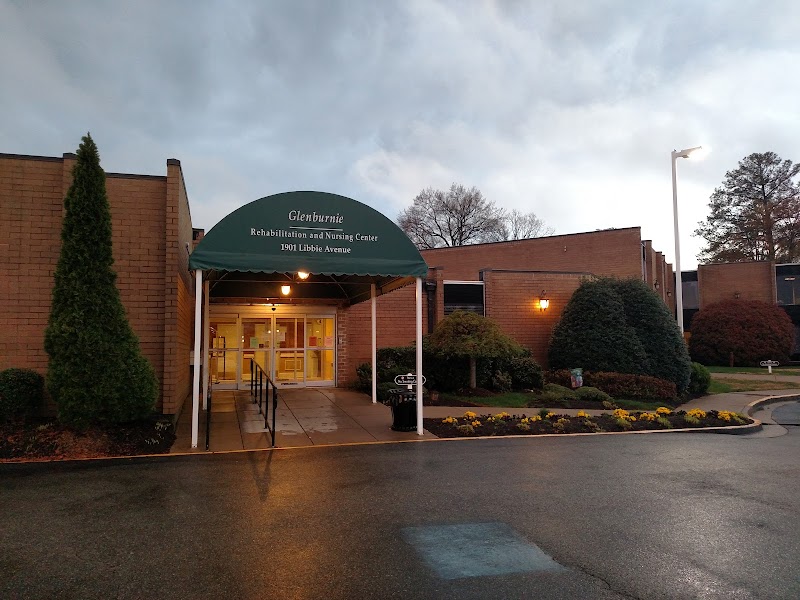
How is Glenburnie Rehab & Nursing Center Staffed?

CMS rates GLENBURNIE REHAB & NURSING CENTER's staffing level at 1 out of 5 stars, which is much below average compared to other nursing homes. Staff turnover is 73%, which is 27 percentage points above the Virginia average of 46%. High turnover can affect care consistency as new staff learn residents' individual needs. RN turnover specifically is 88%, which is notably high. RNs provide skilled clinical oversight, so turnover in this role can affect medical care quality.

What Have Inspectors Found at Glenburnie Rehab & Nursing Center?

State health inspectors documented 120 deficiencies at GLENBURNIE REHAB & NURSING CENTER during 2021 to 2025. These included: 1 Immediate Jeopardy (the most serious level, indicating potential for serious harm or death), 114 with potential for harm, and 5 minor or isolated issues. Immediate Jeopardy findings are rare and represent the most serious regulatory concerns. They require immediate corrective action.
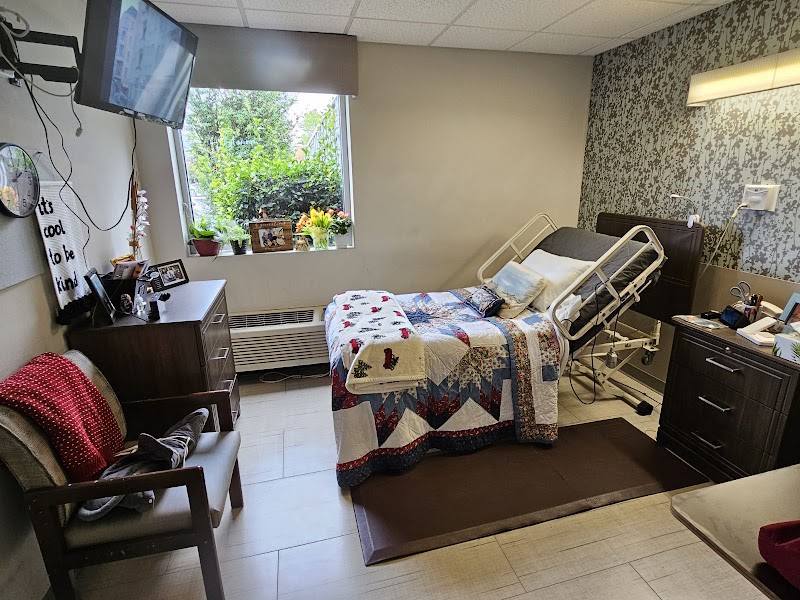
Who Owns and Operates Glenburnie Rehab & Nursing Center?

GLENBURNIE REHAB & NURSING CENTER is owned by a for-profit company. For-profit facilities operate as businesses with obligations to shareholders or private owners. The facility is operated by LIFEWORKS REHAB, a chain that manages multiple nursing homes. With 125 certified beds and approximately 109 residents (about 87% occupancy), it is a mid-sized facility located in RICHMOND, Virginia.
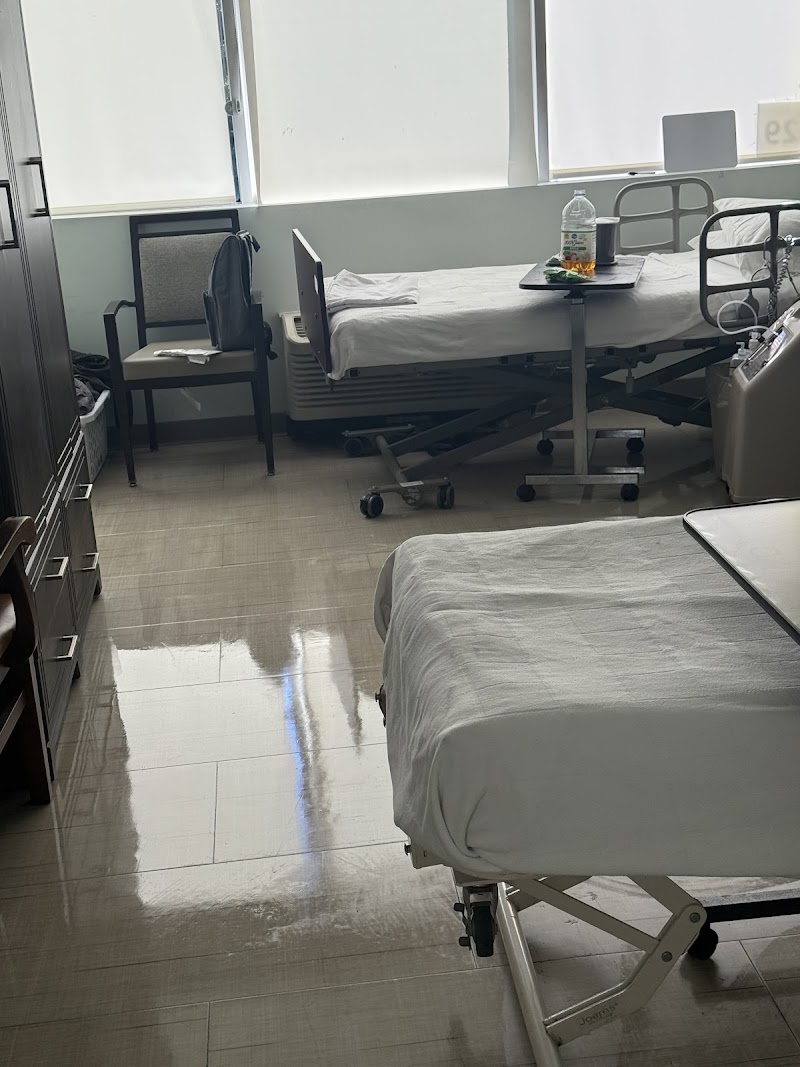
How Does Glenburnie Rehab & Nursing Center Compare to Other Virginia Nursing Homes?

Compared to the 100 nursing homes in Virginia, GLENBURNIE REHAB & NURSING CENTER's overall rating (1 stars) is below the state average of 3.0, staff turnover (73%) is significantly higher than the state average of 46%, and health inspection rating (1 stars) is much below the national benchmark.

What Should Families Ask When Visiting Glenburnie Rehab & Nursing Center?

Based on this facility's data, families visiting should ask: "What changes have been made since the serious inspection findings, and how are you preventing similar issues?" "How do you ensure continuity of care given staff turnover, and what is your staff retention strategy?" "Can you walk me through typical staffing levels on day, evening, and night shifts?" "Can I visit during a mealtime to observe dining assistance and food quality?" These questions are particularly relevant given the facility's Immediate Jeopardy citations, the facility's high staff turnover rate, and the below-average staffing rating.

Is Glenburnie Rehab & Nursing Center Safe?

Based on CMS inspection data, GLENBURNIE REHAB & NURSING CENTER has documented safety concerns. Inspectors have issued 1 Immediate Jeopardy citation (the most serious violation level indicating risk of serious injury or death). The facility has a 1-star overall rating and ranks #100 of 100 nursing homes in Virginia. Families considering this facility should ask detailed questions about what corrective actions have been taken since these incidents.

Do Nurses at Glenburnie Rehab & Nursing Center Stick Around?

Staff turnover at GLENBURNIE REHAB & NURSING CENTER is high. At 73%, the facility is 27 percentage points above the Virginia average of 46%. Registered Nurse turnover is particularly concerning at 88%. RNs handle complex medical decisions and coordinate care — frequent RN changes can directly impact care quality. High turnover means new staff may not know residents' individual needs, medications, or preferences. It can also be disorienting for residents, especially those with dementia who rely on familiar faces. Families should ask: What is causing the turnover? What retention programs are in place? How do you ensure care continuity during staff transitions?

Was Glenburnie Rehab & Nursing Center Ever Fined?

GLENBURNIE REHAB & NURSING CENTER has been fined $53,046 across 1 penalty action. This is above the Virginia average of $33,609. Fines in this range indicate compliance issues significant enough for CMS to impose meaningful financial consequences. Common causes include delayed correction of deficiencies, repeat violations, or care failures affecting resident safety. Families should ask facility leadership what changes have been made since these penalties.

Is Glenburnie Rehab & Nursing Center on Any Federal Watch List?

GLENBURNIE REHAB & NURSING CENTER is not on any federal watch list. The most significant is the Special Focus Facility (SFF) program, which identifies the bottom 1% of nursing homes nationally based on persistent, serious quality problems. Not being on this list means the facility has avoided the pattern of deficiencies that triggers enhanced federal oversight. This is a positive indicator, though families should still review the facility's inspection history directly.