LAKESIDE HEALTH & REHABILITATION

2125 HILLIARD ROAD, RICHMOND, VA 23228 (804) 266-9666
For profit - Limited Liability company 194 Beds HILL VALLEY HEALTHCARE Data: November 2025
Trust Grade
45/100
#199 of 285 in VA
Last Inspection: February 2024

Within standard 12-15 month inspection cycle. Federal law requires annual inspections.

Overview

Lakeside Health & Rehabilitation has received a Trust Grade of D, indicating below-average performance with some concerns about care quality. It ranks #199 out of 285 nursing homes in Virginia, placing it in the bottom half of facilities in the state, and #5 out of 11 in Henrico County, meaning there are only a few better local options. The facility's situation is worsening, with issues increasing dramatically from 1 in 2023 to 21 in 2024. Staffing is a weakness, earning only 1 out of 5 stars and a turnover rate of 54%, which is higher than the state average. While there have been no fines recorded, there have been serious concerns, such as staff failing to meet vaccination requirements leading to COVID-19 cases among residents, and issues with meal service temperatures that could affect residents' enjoyment and safety.

Trust Score
D
45/100
In Virginia
#199/285
Bottom 31%
Safety Record
Moderate
Needs review
Inspections
Getting Worse
1 → 21 violations
Staff Stability
⚠ Watch
54% turnover. Above average. Higher turnover means staff may not know residents' routines.
Penalties
✓ Good
No fines on record. Clean compliance history, better than most Virginia facilities.
Skilled Nurses
⚠ Watch
Each resident gets only 26 minutes of Registered Nurse (RN) attention daily — below average for Virginia. Fewer RN minutes means fewer trained eyes watching for problems.
Violations
⚠ Watch
73 deficiencies on record. Higher than average. Multiple issues found across inspections.
★★☆☆☆
2.0
Overall Rating
★☆☆☆☆
1.0
Staff Levels
★★★★★
5.0
Care Quality
★☆☆☆☆
1.0
Inspection Score
Stable
2023: 1 issues
2024: 21 issues

The Good

  • 5-Star Quality Measures · Strong clinical quality outcomes
  • Full Sprinkler Coverage · Fire safety systems throughout facility
  • No fines on record

Facility shows strength in quality measures, fire safety.

The Bad

2-Star Overall Rating

Below Virginia average (3.0)

Below average - review inspection findings carefully

Staff Turnover: 54%

Near Virginia avg (46%)

Higher turnover may affect care consistency

Chain: HILL VALLEY HEALTHCARE

Part of a multi-facility chain

Ask about local staffing decisions and management

The Ugly 73 deficiencies on record

1 actual harm
Aug 2024 6 deficiencies
CONCERN (D) 📢 Someone Reported This

A family member, employee, or ombudsman was alarmed enough to file a formal complaint

Potential for Harm - no one hurt, but risky conditions existed

Deficiency F0552 (Tag F0552)

Could have caused harm · This affected 1 resident

**NOTE- TERMS IN BRACKETS HAVE BEEN EDITED TO PROTECT CONFIDENTIALITY** Based on review of facility's documentation and staff interview, it was determined that the facility failed to allow the residen...

Read full inspector narrative →
**NOTE- TERMS IN BRACKETS HAVE BEEN EDITED TO PROTECT CONFIDENTIALITY** Based on review of facility's documentation and staff interview, it was determined that the facility failed to allow the resident to make decisions regarding his treatment for one of nine residents, Resident #1. The findings included: Resident #1 was admitted to the facility on [DATE] with diagnosis that included but were not limited to: CHF (congestive heart failure), DM (diabetes mellitus), CAD (cardiovascular disease) and CVA (cerebrovascular accident). The most recent MDS (minimum data set) assessment, an annual assessment, with an ARD (assessment reference date) of 6/7/24, coded the resident as scoring a 15 out of 15 on the BIMS (brief interview for mental status) score, indicating the resident was cognitively intact. A review of the MDS Section G-functional status coded the resident as requiring total dependence for transfer, bathing, bed mobility, dressing, hygiene and supervision for eating. A review of the comprehensive care plan dated 11/16/21 revealed, FOCUS: Cardiac disease related to DM, CAD, Presence of cardiac pacemaker, CHF and A flutter. INTERVENTIONS: Obtain vital signs as indicated; report changes to physician. Administer medication per physician orders. Administer oxygen as ordered. A review of the progress note dated 7/7/24 at 5:36 PM revealed, [AGE] year-old male resident seen at the request of nursing. Requesting to go to ER for shortness of breath. A review of the progress note dated 7/7/24 at 6:47 PM revealed, resident complained of (c/o) SOB. resident assessed. congestion noted. resident c/o fluid in chest. NP is aware. NP [NAME] recommended Chest Xray for SOB. Albuterol 3mL BID x7days. CBC, BMP for 7.8.2024. Lasix 40mg one time dose for fluid retention. resident alert and verbal. Vitals stable. A review of the progress note dated 7/7/24 at 6:47 PM revealed, Writer contacted third eye (physician tele-health after hours service). give clearance to send resident to ER. Writer contact NP about COC (change of condition) and transfer to ED. NP stated to treat in house. A review of the progress note dated 7/8/24 at 6:18 AM revealed, Resident continued to complain of congestion this shift. VS BP 167/95, 77, 18, 97.6, 99% on O2 Q 3LPM. He refused lab work this morning and Per RP, she called 911 and patient was taken to the hospital. NP aware. An interview was conducted on 7/30/24 at 2:05 PM with LPN (licensed practical nurse) #6. When asked about Resident #1, LPN #6 stated, the CNA brought to my attention that he was not feeling well, feel like he had fluid and sounded congested. I did a respiratory assessment. I called the telehealth service, took the tablet to the resident and telehealth, who ordered resident to be sent to the ED. There is a note at nurse's station: which reveals If Third Eye (telehealth) orders resident sent out, this needs to be approved by either NP or Medical Director. I called NP who asked how he was sounding and stated we are going to treat him in house. I gave him Lasix, breathing treatment, Chest x-ray ordered, CBC and CMP. I let the resident know what the NP said. I let the oncoming nurse know. My shift ends at 11:00 PM. I entered all the orders into computer. An interview was conducted on 7/31/24 at 10:35 AM with LPN #4, the unit manager. When asked if the resident requests to go to the hospital what happens, LPN #4 stated, we inform the NP and/or physician and then send the resident out to the hospital. When asked why the resident is sent out, LPN #4 stated, because it is their right. An interview was conducted on 7/31/24 at 2:38 PM with ASM (Administrative staff member) #4, the nurse practitioner (NP). When asked about residents asking to go out to the hospital, ASM #4 stated, so if they request to go to the hospital, we assess them, depending on severity see if we can manage in house. If the resident still wants to go out, they go out. We do not stop them. I believe the protocol is to notify the attending and he makes the decision. An interview was conducted on 8/1/24 at 9:35 AM with ASM #7, the medical director. When asked about residents requesting to go to the hospital, ASM #7 stated, the staff are to contact us before sending a resident out. I do not hold them against their will. It is their right to go out. I do not review every single case. On 8/1/24 at 10:00 AM, ASM (administrative staff member) #1, the administrator, ASM #2, the director of nursing and ASM #6, the regional director of clinical operations was made aware of the concerns. No further information was provided prior to exit.
CONCERN (D) 📢 Someone Reported This

A family member, employee, or ombudsman was alarmed enough to file a formal complaint

Potential for Harm - no one hurt, but risky conditions existed

Safe Environment (Tag F0584)

Could have caused harm · This affected 1 resident

**NOTE- TERMS IN BRACKETS HAVE BEEN EDITED TO PROTECT CONFIDENTIALITY** Based on resident/staff interview, facility document review and clinical record review, it was determined that the facility staf...

Read full inspector narrative →
**NOTE- TERMS IN BRACKETS HAVE BEEN EDITED TO PROTECT CONFIDENTIALITY** Based on resident/staff interview, facility document review and clinical record review, it was determined that the facility staff failed to maintain a clean and homelike environment for three of nine residents, Resident #2, #6 and #9. The findings include: 1.The facility staff failed to ensure a safe, comfortable temperature and functional equipment for Resident #2. Observations on the 100-200 hall found staff going to another resident hall (300-400) to obtain mechanical lift. A review of the facility's pest control logs revealed, April 2024-38 German cockroaches, May 2024-16 German cockroaches, June 3, 2024-88 German cockroaches, 6/18/24-46 German cockroaches and 7/24/24-51 German cockroaches. Resident #2 was admitted to the facility on [DATE] with diagnosis that included but were not limited to: cerebral vascular infarction, seizures, hypertension and obstructive uropathy. The most recent MDS (minimum data set) assessment, a quarterly assessment, with an ARD (assessment reference date) of 7/19/24, coded the resident as scoring a 08 out of 15 on the BIMS (brief interview for mental status) score, indicating the resident was moderately cognitively impaired. A review of the MDS Section G-functional status coded the resident as being dependent for bed mobility, transfer, dressing, bathing and hygiene; supervision for eating. A review of the comprehensive care plan with a revision date of 3/22/23, revealed, FOCUS: Resident has an ADL (activities of daily living) self-care performance deficit. INTERVENTIONS: The resident requires Mechanical Lift with 2 staff assistance for transfers. Physical assist as needed with ADL every shift. An interview was conducted on 7/30/24 at 9:45 AM with LPN (licensed practical nurse) #1. When asked about the temperature in Resident #2's room (room [ROOM NUMBER]), LPN #1 stated, it is hot in here. The air conditioning is not on. When asked if the window should be raised about 2 inches, LPN #1 stated, no, let me close it. LPN #1 unable to close the window. ASM #2, the director of nursing entered the room and assisted LPN #1 to close the window, one of them on each side of the window. ASM #2 stated, let me turn on the AC. AC was not providing cool air, ASM #2 stated, it may take a while to cool off. On 7/30/24 at 2:24 PM, went back to room [ROOM NUMBER], room was still warm with AC running highest setting. LPN #1 was asked about the room temperature, LPN #1 stated, it is warm in here. When asked if this is a homelike environment, LPN #1 stated, no. An interview was conducted on 7/30/24 at 3:45 PM with CNA (certified nursing assistant) #1, when asked about Resident #2, CNA #1 stated, his AC (air conditioning). it was not working then it was working. He would get agitated about it. There are roaches, in the facility, but we have a pest control company that comes in monthly I believe. When asked if this was a homelike environment, CNA #1 stated, no, it is not. On 8/1/24 at 10:00 AM, ASM (administrative staff member) #1, the administrator, ASM #2, the director of nursing and ASM #6, the regional director of clinical operations was made aware of the concerns. No further information was provided prior to exit. 2.The facility staff failed to ensure a safe, comfortable temperature and functional equipment for Resident #6. Observations on the 100-200 hall 7/30/24-8/1/24 found a large (approximately 50 gallon) under a leak from the ceiling (two ceiling tiles removed) at the end of the nurse's station. A review of the facility's pest control logs revealed, April 2024-38 German cockroaches, May 2024-16 German cockroaches, June 3, 2024-88 German cockroaches, 6/18/24-46 German cockroaches and 7/24/24-51 German cockroaches. Resident #6 was admitted to the facility on [DATE] with diagnosis that included but were not limited to: ASCVD (atherosclerotic cardiovascular disease), DM (diabetes mellitus) and RBKA (right below the knee amputation). The most recent MDS (minimum data set) assessment, a quarterly assessment, with an ARD (assessment reference date) of 6/6/24, coded the resident as scoring a 15 out of 15 on the BIMS (brief interview for mental status) score, indicating the resident was not cognitively impaired. A review of the MDS Section G-functional status coded the resident as being dependent for bed mobility, transfer, dressing, bathing and hygiene; supervision for eating. A review of the comprehensive care plan with a revision date of 9/5/23, revealed, FOCUS: Resident has an ADL (activities of daily living) self-care performance deficit related to weakness and BKA. INTERVENTIONS: The resident will be lifted and transferred with a (Hoyer mechanical lift). Staff will follow facility policy of two staff to use mechanical lifts at all times. An interview was conducted on 7/30/24 at approximately 12:00 PM with OSM (other staff member) #2, the maintenance director. When asked about the leaking ceiling, OSM #2 stated, it has been like that for a few days. I need someone with an electrical background to come in, because of all the electrical wires, you cannot go up there to fix a leak with all those wires like that. When asked if this facility is providing a safe, comfortable and homelike environment, OSM #2 stated, no. An interview was conducted on 7/30/24 at 3:45 PM with CNA (certified nursing assistant) #1, when asked about Resident #2, CNA #1 stated, his AC (air conditioning). it was not working then it was working. He would get agitated about it. There are roaches, in the facility, but we have a pest control company that comes in monthly I believe. When asked if this was a homelike environment, CNA #1 stated, no, it is not. An interview was conducted on 7/31/24 at 9:00 AM with Resident #6. When asked about her concerns, Resident #6 stated, there are roaches, the ceiling tiles are out and there is a drip into a large garbage can, it has been like that for several days. We are not being got up in a time, not because of the staff but because they have to borrow the lift from another unit. On 8/1/24 at 10:00 AM, ASM (administrative staff member) #1, the administrator, ASM #2, the director of nursing and ASM #6, the regional director of clinical operations was made aware of the concerns. No further information was provided prior to exit. 3.The facility staff failed to ensure a safe, comfortable temperature and functional equipment for Resident #9. Observations on the 100-200 hall 7/30/24-8/1/24 found a large (approximately 50 gallon) under a leak from the ceiling (two ceiling tiles removed) at the end of the nurse's station. A review of the facility's pest control logs revealed, April 2024-38 German cockroaches, May 2024-16 German cockroaches, June 3, 2024-88 German cockroaches, 6/18/24-46 German cockroaches and 7/24/24-51 German cockroaches. Resident #9 was admitted to the facility on [DATE] with diagnosis that included but were not limited to: quadriplegia, diabetes mellitus and morbid obesity. The most recent MDS (minimum data set) assessment, a quarterly assessment, with an ARD (assessment reference date) of 5/29/24, coded the resident as scoring a 15 out of 15 on the BIMS (brief interview for mental status) score, indicating the resident was not cognitively impaired. A review of the MDS Section G-functional status coded the resident as being dependent for bed mobility, transfer, dressing, bathing and hygiene; independent for eating. A review of the comprehensive care plan with a revision date of 12/6/23, revealed, FOCUS: Resident has limited physical mobility related to Neurological deficits, cervical disc disorder, quadriplegia, spondylosis and generalized muscle weakness. INTERVENTIONS: The resident requires a slid board for transfers to and from wheelchair to bed and may use mechanical devices as needed for transfers. The resident may use slid board for transfers and sit to stand as needed. An interview was conducted on 7/30/24 at approximately 12:00 PM with OSM (other staff member) #2, the maintenance director. When asked about the leaking ceiling, OSM #2 stated, it has been like that for a few days. I need someone with an electrical background to come in, because of all the electrical wires, you cannot go up there to fix a leak with all those wires like that. When asked if this facility is providing a safe, comfortable environment, OSM #2 stated, no. An interview was conducted on 7/30/24 at 3:45 PM with CNA (certified nursing assistant) #1, when asked about Resident #2, CNA #1 stated, his AC (air conditioning). it was not working then it was working. He would get agitated about it. There are roaches, in the facility, but we have a pest control company that comes in monthly I believe. When asked if this was a homelike environment, CNA #1 stated, no, it is not. An interview was conducted on 8/1/24 at 7:45 AM with Resident #9. When asked about her concerns, Resident #9 stated, there is a leak in the hallway from the ceiling for days, last week when we had that thunderstorm, the facility flooded. Roaches are everywhere. I use either the sit to stand to get out of bed or the mechanical lift. The staff have to go to another unit to get the equipment to get me up. Sometimes I am not able to get out of bed because the equipment has to be borrowed. On 8/1/24 at 10:00 AM, ASM (administrative staff member) #1, the administrator, ASM #2, the director of nursing and ASM #6, the regional director of clinical operations was made aware of the concerns. No further information was provided prior to exit.
CONCERN (D) 📢 Someone Reported This

A family member, employee, or ombudsman was alarmed enough to file a formal complaint

Potential for Harm - no one hurt, but risky conditions existed

Report Alleged Abuse (Tag F0609)

Could have caused harm · This affected 1 resident

**NOTE- TERMS IN BRACKETS HAVE BEEN EDITED TO PROTECT CONFIDENTIALITY** Based on observation, resident/staff interview, facility document review, and clinical record review, it was determined the faci...

Read full inspector narrative →
**NOTE- TERMS IN BRACKETS HAVE BEEN EDITED TO PROTECT CONFIDENTIALITY** Based on observation, resident/staff interview, facility document review, and clinical record review, it was determined the facility staff failed to report an allegation of residents receiving illegal drugs in a timely manner for two of nine residents, Resident #7 and #8. The findings include: 1.The facility failed to report an allegation of resident receiving illegal drugs resulting in hospitalization a timely manner for Resident #7. A resident requested interview was conducted on 7/31/24 at 9:00 AM with Resident #6, who has a BIMS of 15. During the interview, Resident #6 stated that two residents, Resident #7 and Resident #8 had received illegal drugs while in the facility and were no longer in the facility. Resident #6 was voicing concerns regarding resident safety with this behavior. Resident #7 was admitted to the facility on [DATE] with diagnosis that included but were not limited to cerebral infarction, CHF (congestive heart failure), PTSD (post-traumatic stress disorder) and pulmonary embolism. The most recent MDS (minimum data set) assessment, an admission assessment, with an ARD (assessment reference date) of 5/31/24, coded the resident as scoring a 15 out of 15 on the BIMS (brief interview for mental status) score, indicating the resident was not cognitively impaired. A review of the MDS Section GG-functional abilities and goals coded the resident as requiring supervision for bathing/transfer/dressing/toileting and eating. A review of the comprehensive care plan with a revision date of 6/1/24, revealed, FOCUS: Resident is appropriate for LTC (long term care) due to the need for 24/7 supervision secondary to medical diagnosis. INTERVENTIONS: The need for LTC is understood by resident and/or POA (power of attorney). Discharge plan to be discussed at comprehensive assessments. No evidence of an eINTERACT transfer form to the hospital or hospital transfer progress note. A review of the physician progress note dated 7/9/24 11:18 AM revealed, This is a [AGE] year-old female with a past medical history significant for hypertension, CVA, CHF, and other illnesses as stated in past medical history. She has been evaluated by psych while she has been here. She has had inappropriate physical contact with her visitors while here. She also has made sexually inappropriate comments towards staff members. Last week I was called to her bedside by nursing for an acute change in condition. Per nursing the patient was in the dining room and then returned to her room gasping for air. By the time I arrived with nursing to the room patient was awake but not alert. She was not following commands. She was transferred out of her wheelchair to the floor by staff members. Thankfully her blood pressure and pulse remained stable. Her respirations became shallow and less than 10. Her blood glucose was stable at 161. She began to drool and was unable to control her secretions. At one point she appeared to vomit. She was rolled to her side and suctioned. 911 was called and she was transported to the hospital for further evaluation and workup. In the ED she was found to be cocaine positive, but I do not have the full report for review. She is seen sitting up in her wheelchair in the courtyard today. A review of the progress note dated 7/12/24 at 2:14 PM revealed, Resident discharged with transportation. All belongings left with resident. Vitals within normal limits. Resident alert and orientated. Physician aware. An interview was conducted on 7/31/24 at approximately 8:00 AM with ASM #1, the administrator and ASM #2, the director of nursing. When asked about any facility event synopsis, grievances or any events related to resident illegal drug use-fentanyl was asked at the time. ASM #1 and ASM #2 stated no, there were no reports or illegal drug use, obtaining drugs through the mail or fentanyl. On 8/1/24 at 10:00 AM, ASM (administrative staff member) #1, the administrator, ASM #2, the director of nursing and ASM #6, the regional director of clinical operations was made aware of the concerns. A review of the facility's Abuse policy revealed The organization will maintain protocols and procedures to identify, correct and intervene in situations in which abuse, neglect, mistreatment is more likely to occur. This includes analysis of features of the physical environment that may make abuse and/or neglect more likely to occur, such as secluded areas of the facility. The assessment, care planning and monitoring of residents with needs and behaviors which might lead to neglect such as residents with self-injurious behaviors. No further information was provided prior to exit. 2. The facility failed to report an allegation of resident receiving illegal drugs resulting in two positive urine drug tests a timely manner for Resident #8. A resident requested interview was conducted on 7/31/24 at 9:00 AM with Resident #8, who has a BIMS of 15. During the interview, Resident #6 stated that two residents, Resident #7 and Resident #8 had received illegal drugs while in the facility and were no longer in the facility. Resident #6 was voicing concerns regarding resident safety with this behavior. Resident #8 was admitted to the facility on [DATE] with diagnosis that included but were not limited to CHF (congestive heart failure), COPD (chronic obstructive pulmonary disease), diabetes mellitus and opioid abuse with intoxication. The most recent MDS (minimum data set) assessment, an admission assessment, with an ARD (assessment reference date) of 5/31/24, coded the resident as scoring a 15 out of 15 on the BIMS (brief interview for mental status) score, indicating the resident was not cognitively impaired. A review of the MDS Section GG-functional abilities and goals coded the resident as requiring supervision for bathing/transfer/dressing/toileting and eating. A review of the comprehensive care plan with a revision date of 4/5/24, revealed, FOCUS: The resident wishes to return/be discharged to home. INTERVENTIONS: Evaluate/record the resident's abilities and strengths, with family/caregivers. Determine gaps in abilities which will affect discharge. Make arrangements with required community resources to support independence post-discharge. A review of the NP (nurse practitioner) progress note dated 6/29/24 at 7:53 PM revealed, Patient seen at the request of nursing for lab review. She is seen today at bedside. Social services were present at time of exam. I notified patient of the results of her positive drug screen. She wanted to know why her urine has amphetamines in it. She denied drug use. She stated that she only leaves the facility to go to appointments. I told her that she was seen in the parking lot behind a vehicle this week with unknown individuals. Staff had reported the suspicious behavior. Psych is following and also recommended a UDS (urine drug screen). She was given a drug contact by social services. She did sign it. ASSESSMENT AND PLAN: #Positive Drug Screen: -Positive for amphetamines and opiates, -Opiates consistent with the prescribed Percocet here, -Discussed findings with patient, -SS (social services) provided drug contract, -Discontinue Percocet, -Add prn Ibuprofen, -Will ask SS and LPC to provide resources for drug addiction. A review of the LPC progress note dated 7/8/24 at 12:00 PM revealed, Reason for Follow-up: Psychotherapy follow up: Chief Complaint / Nature of Presenting Problem: Resident has been agitated in recent weeks. She has tested positive for methamphetamines even though she is not prescribed medication this type of. Her boyfriend has been coming more recently and she has been leaving without permission to leave with him per staff. She has been more difficult to care for and her mood may be attributed to methamphetamine use. A review of the NP progress note dated 7/8/24 at 12:40 PM revealed, ASSESSMENT AND PLAN: #urine review-Positive for amphetamines. #Positive Drug Screen-Positive for amphetamines and opiates. -Opiates consistent with the prescribed Percocet here which is now discontinued until she has a clean UDS. -Discussed findings with patient. SS provided drug contract, prn Ibuprofen available, Will ask SS and LPC to provide resources for drug addiction, repeat UDS this Friday. A review of the NP progress note dated 7/10/24 at 2:15 PM revealed, ASSESSMENT AND PLAN: Discharge planning, SW attempting to find placement, Advised follow up with PCP 1-2 days and keep all f/u apts. scripts written. chart, labs and tests reviewed. Home health order placed. Discussed with social worker and staff. Positive Drug Screen: Positive for amphetamines and opiates, opiates consistent with the prescribed Percocet here which is now discontinued until she has a clean UDS. An interview was conducted on 7/31/24 at approximately 8:00 AM with ASM #1, the administrator and ASM #2, the director of nursing. When asked about any facility event synopsis, grievances or any events related to resident illegal drug use-fentanyl was asked at the time. ASM #1 and ASM #2 stated no, there were no reports or illegal drug use, obtaining drugs through the mail or fentanyl. On 8/1/24 at 10:00 AM, ASM (administrative staff member) #1, the administrator, ASM #2, the director of nursing and ASM #6, the regional director of clinical operations was made aware of the concerns. No further information was provided prior to exit.
CONCERN (D) 📢 Someone Reported This

A family member, employee, or ombudsman was alarmed enough to file a formal complaint

Potential for Harm - no one hurt, but risky conditions existed

Deficiency F0658 (Tag F0658)

Could have caused harm · This affected 1 resident

**NOTE- TERMS IN BRACKETS HAVE BEEN EDITED TO PROTECT CONFIDENTIALITY** Based on staff interview, clinical record review and facility document review, it was determined the facility staff failed to me...

Read full inspector narrative →
**NOTE- TERMS IN BRACKETS HAVE BEEN EDITED TO PROTECT CONFIDENTIALITY** Based on staff interview, clinical record review and facility document review, it was determined the facility staff failed to meet professional standards for one of nine residents, Resident #1. The findings include: The facility staff failed to meet professional standards by assessing/monitoring Resident #1. Resident #1 was admitted to the facility on [DATE] with diagnosis that included but were not limited to: CHF (congestive heart failure), DM (diabetes mellitus), CAD (cardiovascular disease) and CVA (cerebrovascular accident). The most recent MDS (minimum data set) assessment, an annual assessment, with an ARD (assessment reference date) of 6/7/24, coded the resident as scoring a 15 out of 15 on the BIMS (brief interview for mental status) score, indicating the resident was cognitively intact. A review of the MDS Section G-functional status coded the resident as requiring total dependence for transfer, bathing, bed mobility, dressing, hygiene and supervision for eating. A review of the comprehensive care plan dated 11/16/21 revealed, FOCUS: Cardiac disease related to DM, CAD, Presence of cardiac pacemaker, CHF and A flutter. INTERVENTIONS: Obtain vital signs as indicated; report changes to physician. Administer medication per physician orders. Administer oxygen as ordered. A review of the progress note dated 7/7/24 at 5:36 PM revealed, [AGE] year-old male resident seen at the request of nursing. Requesting to go to ER for shortness of breath. A review of the progress note dated 7/7/24 at 6:47 PM revealed, resident complained of (c/o) SOB. resident assessed. congestion noted. resident c/o fluid in chest. NP is aware. NP [NAME] recommended Chest Xray for SOB. Albuterol 3mL BID x7days. CBC, BMP for 7.8.2024. Lasix 40mg one time dose for fluid retention. resident alert and verbal. Vitals stable. A review of the progress note dated 7/7/24 at 6:47 PM revealed, Writer contacted third eye (physician tele-health after hours service). give clearance to send resident to ER. Writer contact NP about COC (change of condition) and transfer to ED. NP stated to treat in house. A review of the progress note dated 7/8/24 at 6:18 AM revealed, Resident continued to complain of congestion this shift. VS BP 167/95, 77, 18, 97.6, 99% on O2 Q 3LPM. He refused lab work this morning and Per RP, she called 911 and patient was taken to the hospital. NP aware. A review of the eINTERACT (electronic Interventions to Reduce Acute Care Transfers) form, revealed the form was not started till 7/8/24 at 4:33 PM and not signed off till 7/12/24. An interview was conducted on 7/30/24 at 2:05 PM with LPN (licensed practical nurse) #6. When asked about Resident #1, LPN #6 stated, the CNA brought to my attention that he was not feeling well, feel like he had fluid and sounded congested. I did a respiratory assessment. I called the telehealth service, took the tablet to the resident and telehealth, who ordered resident to be sent to the ED. There is a note at nurse's station: which reveals If Third Eye orders resident sent out, this needs to be approved by either NP or Medical Director. I called NP who asked how he was sounding and stated we are going to treat him in house. I gave him Lasix, breathing treatment, Chest x-ray ordered, CBC and CMP. I let the resident know what the NP said. I let the oncoming nurse know. My shift ends at 11:00 PM. I entered all the orders into computer. When asked if any additional monitoring of Resident #1 was done between 7/7/24 5:36 PM and 11:00 PM, LPN #6 stated, only what I documented. An interview was conducted on 7/31/24 at 10:35 AM with LPN #4, the unit manager. When asked if there was any additional evidence of Resident #1 being monitored, such as vital signs, oxygen saturation, lung sounds from 7/7/24 5:36 PM and 7/8/24 6:18 AM, LPN #4 stated, probably on the transfer form. When told the transfer form had not been initiated till 7/8/24 at 4:33 PM and the vital signs (BP, pulse and respirations) documented on the form were timed for 7/7/24 at 6:23 PM and the oxygen saturation data was from 3/6/24 at 9:11 AM, LPN #4 stated, no, there is no additional information. On 8/1/24 at 10:00 AM, ASM (administrative staff member) #1, the administrator, ASM #2, the director of nursing and ASM #6, the regional director of clinical operations was made aware of the concerns. No further information was provided prior to exit.
CONCERN (D) 📢 Someone Reported This

A family member, employee, or ombudsman was alarmed enough to file a formal complaint

Potential for Harm - no one hurt, but risky conditions existed

ADL Care (Tag F0677)

Could have caused harm · This affected 1 resident

**NOTE- TERMS IN BRACKETS HAVE BEEN EDITED TO PROTECT CONFIDENTIALITY** Based on resident/staff interview, facility document review and clinical record review, it was determined that the facility staf...

Read full inspector narrative →
**NOTE- TERMS IN BRACKETS HAVE BEEN EDITED TO PROTECT CONFIDENTIALITY** Based on resident/staff interview, facility document review and clinical record review, it was determined that the facility staff failed to provide incontinence care for dependent residents for three of nine residents, Resident #3, #4 and #9. The findings include: 1.The facility staff failed to provide evidence of incontinence care for dependent Resident #3. Resident #3 was admitted to the facility on [DATE] with diagnosis that included but were not limited to: cancer, anemia and malnutrition. The most recent MDS (minimum data set) assessment, a 5-day admission assessment, with an ARD (assessment reference date) of 5/21/24, coded the resident as scoring a 13 out of 15 on the BIMS (brief interview for mental status) score, indicating the resident was not cognitively impaired. A review of the MDS Section G-functional status coded the resident as being dependent for toileting, bathing and hygiene. A review of the comprehensive care plan with a revision date of 5/22/24, revealed, FOCUS: Resident has bladder incontinence related to impaired mobility. INTERVENTIONS: Clean peri-area with each incontinence episode. The resident uses disposable briefs. A review of the May ADL record revealed missing documentation for 5/17/24 night shift and June ADL record revealed missing documentation on 6/7/24 day shift. An interview was conducted on 7/30/24 at 3:15 PM with CNA (certified nursing assistant) #2. When asked about providing incontinence care, CNA #2 stated, we are to do it every two hours. When we have 16 plus patients, you cannot get to every patient, do baths, get them up and feed them. Sometimes it does not get done every two hours. When asked where this would be documented, CNA #2 stated, on the ADL record. An interview was conducted on 7/31/24 at 6:30 AM with CNA #3. When asked about providing incontinence care, CNA #3 stated, at 4:30-5:00 AM start rounds for incontinence care. When asked where this is documented and evidence of incontinence care provided, CNA #3 stated, it is on the ADL record. On 8/1/24 at 10:00 AM, ASM (administrative staff member) #1, the administrator, ASM #2, the director of nursing and ASM #6, the regional director of clinical operations was made aware of the concerns. No further information was provided prior to exit. 2. The facility staff failed to provide evidence of incontinence care for dependent Resident #4. Resident #4 was admitted to the facility on [DATE] with diagnosis that included but were not limited to: pulmonary embolism, polyneuropathy and bipolar disorder. The most recent MDS (minimum data set) assessment, a 5-day admission assessment, with an ARD (assessment reference date) of 6/27/24, coded the resident as scoring a 14 out of 15 on the BIMS (brief interview for mental status) score, indicating the resident was not cognitively impaired. A review of the MDS Section G-functional status coded the resident as being dependent for toileting, bathing and hygiene. A review of the comprehensive care plan with a revision date of 6/22/24, revealed, FOCUS: Resident has bladder incontinence related to impaired mobility. INTERVENTIONS: Clean peri-area with each incontinence episode. The resident uses disposable briefs. A review of the June ADL (activities of daily living) record revealed missing documentation on 6/21/24 night shift and the July ADL record, missing on 7/7/24 night shift and 7/8/24 day shift. An interview with Resident #4 on 7/30/24 at 11:45 AM revealed Resident #4 stating, they do not change me like they should. I am laying in poop or urine for 6-8 hours, mostly on night shift and worse on the weekends. On 7/31/24 at 11:30 AM, Resident #4 stated, last changed at 10:00 PM on 7/30/24 and then not changed again till this morning 7/31/24 at 6:00 AM. An interview was conducted on 7/30/24 at 3:15 PM with CNA (certified nursing assistant) #2. When asked about providing incontinence care, CNA #2 stated, we are to do it every two hours. When we have 16 plus patients, you cannot get to every patient, do baths, get them up and feed them. Sometimes it does not get done every two hours. When asked where this would be documented, CNA #2 stated, on the ADL record. An interview was conducted on 7/31/24 at 6:30 AM with CNA #3. When asked about providing incontinence care, CNA #3 stated, at 4:30-5:00 AM start rounds for incontinence care. When asked where this is documented and evidence of incontinence care provided, CNA #3 stated, it is on the ADL record. On 8/1/24 at 10:00 AM, ASM (administrative staff member) #1, the administrator, ASM #2, the director of nursing and ASM #6, the regional director of clinical operations was made aware of the concerns. No further information was provided prior to exit. 3. The facility staff failed to provide evidence of incontinence care for dependent Resident #9. Resident #9 was admitted to the facility on [DATE] with diagnosis that included but were not limited to: quadriplegia, diabetes mellitus and morbid obesity. The most recent MDS (minimum data set) assessment, a quarterly assessment, with an ARD (assessment reference date) of 5/29/24, coded the resident as scoring a 15 out of 15 on the BIMS (brief interview for mental status) score, indicating the resident was not cognitively impaired. A review of the MDS Section G-functional status coded the resident as being dependent for bed mobility, transfer, dressing, bathing and hygiene; independent for eating. A review of the comprehensive care plan with a revision date of 12/6/23, revealed, FOCUS: Resident has limited physical mobility related to Neurological deficits, cervical disc disorder, quadriplegia, spondylosis and generalized muscle weakness. INTERVENTIONS: The resident requires a slid board for transfers to and from wheelchair to bed and may use mechanical devices as needed for transfers. The resident may use slid board for transfers and sit to stand as needed. A review of the May ADL (activities of daily living) record revealed missing documentation on 5/15/24 evening shift and the July ADL record, missing on 7/7/24 night shift and 7/8/24 day shift. An interview was conducted on 7/30/24 at 3:15 PM with CNA (certified nursing assistant) #2. When asked about providing incontinence care, CNA #2 stated, we are to do it every two hours. When we have 16 plus patients, you cannot get to every patient, do baths, get them up and feed them. Sometimes it does not get done every two hours. When asked where this would be documented, CNA #2 stated, on the ADL record. An interview was conducted on 7/31/24 at 6:30 AM with CNA #3. When asked about providing incontinence care, CNA #3 stated, at 4:30-5:00 AM start rounds for incontinence care. When asked where this is documented and evidence of incontinence care provided, CNA #3 stated, it is on the ADL record. An interview was conducted on 8/1/24 at approximately 7:45 AM with Resident #9. When asked about incontinence care, Resident #9 stated, they are doing the best they can with the staff they have. They cannot get to us every two hours because of being short. On 8/1/24 at 10:00 AM, ASM (administrative staff member) #1, the administrator, ASM #2, the director of nursing and ASM #6, the regional director of clinical operations was made aware of the concerns. No further information was provided prior to exit.
CONCERN (E) 📢 Someone Reported This

A family member, employee, or ombudsman was alarmed enough to file a formal complaint

Potential for Harm - no one hurt, but risky conditions existed

Safe Environment (Tag F0921)

Could have caused harm · This affected multiple residents

**NOTE- TERMS IN BRACKETS HAVE BEEN EDITED TO PROTECT CONFIDENTIALITY** Based on resident/staff interview, facility document review and clinical record review, it was determined that the facility staf...

Read full inspector narrative →
**NOTE- TERMS IN BRACKETS HAVE BEEN EDITED TO PROTECT CONFIDENTIALITY** Based on resident/staff interview, facility document review and clinical record review, it was determined that the facility staff failed to maintain a safe/functional, comfortable environment for three of nine residents, Resident #2, #6 and #9. The findings include: 1.The facility staff failed to ensure a safe, comfortable temperature and functional equipment for Resident #2. Observations on the 100-200 hall found staff going to another resident hall (300-400) to obtain mechanical lift. A review of the facility's pest control logs revealed, April 2024-38 German cockroaches, May 2024-16 German cockroaches, June 3, 2024-88 German cockroaches, 6/18/24-46 German cockroaches and 7/24/24-51 German cockroaches. Resident #2 was admitted to the facility on [DATE] with diagnosis that included but were not limited to: cerebral vascular infarction, seizures, hypertension and obstructive uropathy. The most recent MDS (minimum data set) assessment, a quarterly assessment, with an ARD (assessment reference date) of 7/19/24, coded the resident as scoring a 08 out of 15 on the BIMS (brief interview for mental status) score, indicating the resident was moderately cognitively impaired. A review of the MDS Section G-functional status coded the resident as being dependent for bed mobility, transfer, dressing, bathing and hygiene; supervision for eating. A review of the comprehensive care plan with a revision date of 3/22/23, revealed, FOCUS: Resident has an ADL (activities of daily living) self-care performance deficit. INTERVENTIONS: The resident requires Mechanical Lift with 2 staff assistance for transfers. Physical assist as needed with ADL every shift. An interview was conducted on 7/30/24 at 9:45 AM with LPN (licensed practical nurse) #1. When asked about the temperature in Resident #2's room (room [ROOM NUMBER]), LPN #1 stated, it is hot in here. The air conditioning is not on. When asked if the window should be raised about 2 inches, LPN #1 stated, no, let me close it. LPN #1 unable to close the window. ASM #2, the director of nursing entered the room and assisted LPN #1 to close the window, one of them on each side of the window. ASM #2 stated, let me turn on the AC. AC was not providing cool air, ASM #2 stated, it may take a while to cool off. On 7/30/24 at 2:24 PM, went back to room [ROOM NUMBER], room was still warm with AC running highest setting. LPN #1 was asked about the room temperature, LPN #1 stated, it is warm in here. An interview was conducted on 7/30/24 at 3:45 PM with CNA (certified nursing assistant) #1, when asked about Resident #2, CNA #1 stated, his AC (air conditioning). it was not working then it was working. He would get agitated about it. There are roaches, in the facility, but we have a pest control company that comes in monthly I believe. The mechanical lift on our unit does not work so we need to borrow one from another unit. An interview was conducted on 7/31/24 at 3:00 PM with CNA #6. When asked about functioning of mechanical lifts, CNA #6 stated, we have to borrow from another unit and it sometimes delays our ability to get the residents up in a timely manner. On 8/1/24 at 10:00 AM, ASM (administrative staff member) #1, the administrator, ASM #2, the director of nursing and ASM #6, the regional director of clinical operations was made aware of the concerns. No further information was provided prior to exit. 2.The facility staff failed to ensure a safe, comfortable temperature and functional equipment for Resident #6. Observations on the 100-200 hall found staff going to another resident hall (300-400) to obtain mechanical lift. A review of the facility's pest control logs revealed, April 2024-38 German cockroaches, May 2024-16 German cockroaches, June 3, 2024-88 German cockroaches, 6/18/24-46 German cockroaches and 7/24/24-51 German cockroaches. Resident #6 was admitted to the facility on [DATE] with diagnosis that included but were not limited to: ASCVD (atherosclerotic cardiovascular disease), DM (diabetes mellitus) and RBKA (right below the knee amputation). The most recent MDS (minimum data set) assessment, a quarterly assessment, with an ARD (assessment reference date) of 6/6/24, coded the resident as scoring a 15 out of 15 on the BIMS (brief interview for mental status) score, indicating the resident was not cognitively impaired. A review of the MDS Section G-functional status coded the resident as being dependent for bed mobility, transfer, dressing, bathing and hygiene; supervision for eating. A review of the comprehensive care plan with a revision date of 9/5/23, revealed, FOCUS: Resident has an ADL (activities of daily living) self-care performance deficit related to weakness and BKA. INTERVENTIONS: The resident will be lifted and transferred with a (Hoyer mechanical lift). Staff will follow facility policy of two staff to use mechanical lifts at all times. An interview was conducted on 7/30/24 at approximately 12:00 PM with OSM (other staff member) #2, the maintenance director. When asked about the leaking ceiling, OSM #2 stated, it has been like that for a few days. I need someone with an electrical background to come in, because of all the electrical wires, you cannot go up there to fix a leak with all those wires like that. When asked if this facility is providing a safe, comfortable environment, OSM #2 stated, no. An interview was conducted on 7/30/24 at 3:45 PM with CNA (certified nursing assistant) #1, when asked about Resident #2, CNA #1 stated, his AC (air conditioning). it was not working then it was working. He would get agitated about it. There are roaches, in the facility, but we have a pest control company that comes in monthly I believe. The mechanical lift on our unit does not work so we need to borrow one from another unit. An interview was conducted on 7/31/24 at 9:00 AM with Resident #6. When asked about her concerns, Resident #6 stated, there are roaches, the ceiling tiles are out and there is a drip into a large garbage can, it has been like that for several days. We are not being got up in a time, not because of the staff but because they have to borrow the lift from another unit. An interview was conducted on 7/31/24 at 3:00 PM with CNA #6. When asked about functioning of mechanical lifts, CNA #6 stated, we have to borrow from another unit and it sometimes delays our ability to get the residents up in a timely manner. On 8/1/24 at 10:00 AM, ASM (administrative staff member) #1, the administrator, ASM #2, the director of nursing and ASM #6, the regional director of clinical operations was made aware of the concerns. No further information was provided prior to exit. 3.The facility staff failed to ensure a safe, comfortable temperature and functional equipment for Resident #9. Observations on the 100-200 hall found staff going to another resident hall (300-400) to obtain mechanical lift. A review of the facility's pest control logs revealed, April 2024-38 German cockroaches, May 2024-16 German cockroaches, June 3, 2024-88 German cockroaches, 6/18/24-46 German cockroaches and 7/24/24-51 German cockroaches. Resident #9 was admitted to the facility on [DATE] with diagnosis that included but were not limited to: quadriplegia, diabetes mellitus and morbid obesity. The most recent MDS (minimum data set) assessment, a quarterly assessment, with an ARD (assessment reference date) of 5/29/24, coded the resident as scoring a 15 out of 15 on the BIMS (brief interview for mental status) score, indicating the resident was not cognitively impaired. A review of the MDS Section G-functional status coded the resident as being dependent for bed mobility, transfer, dressing, bathing and hygiene; independent for eating. A review of the comprehensive care plan with a revision date of 12/6/23, revealed, FOCUS: Resident has limited physical mobility related to Neurological deficits, cervical disc disorder, quadriplegia, spondylosis and generalized muscle weakness. INTERVENTIONS: The resident requires a slid board for transfers to and from wheelchair to bed and may use mechanical devices as needed for transfers. The resident may use slid board for transfers and sit to stand as needed. An interview was conducted on 7/30/24 at approximately 12:00 PM with OSM (other staff member) #2, the maintenance director. When asked about the leaking ceiling, OSM #2 stated, it has been like that for a few days. I need someone with an electrical background to come in, because of all the electrical wires, you cannot go up there to fix a leak with all those wires like that. When asked if this facility is providing a safe, comfortable environment, OSM #2 stated, no. An interview was conducted on 7/30/24 at 3:45 PM with CNA (certified nursing assistant) #1, when asked about Resident #2, CNA #1 stated, his AC (air conditioning). it was not working then it was working. He would get agitated about it. There are roaches, in the facility, but we have a pest control company that comes in monthly I believe. The mechanical lift on our unit does not work so we need to borrow one from another unit. An interview was conducted on 7/31/24 at 3:00 PM with CNA #6. When asked about functioning of mechanical lifts, CNA #6 stated, we have to borrow from another unit and it sometimes delays our ability to get the residents up in a timely manner. An interview was conducted on 8/1/24 at 7:45 AM with Resident #9. When asked about her concerns, Resident #9 stated, there is a leak in the hallway from the ceiling for days, last week when we had that thunderstorm, the facility flooded. Roaches are everywhere. I use either the sit to stand to get out of bed or the mechanical lift. The staff have to go to another unit to get the equipment to get me up. Sometimes I am not able to get out of bed because the equipment has to be borrowed. On 8/1/24 at 10:00 AM, ASM (administrative staff member) #1, the administrator, ASM #2, the director of nursing and ASM #6, the regional director of clinical operations was made aware of the concerns. No further information was provided prior to exit.
Feb 2024 15 deficiencies
CONCERN (D) 📢 Someone Reported This

A family member, employee, or ombudsman was alarmed enough to file a formal complaint

Potential for Harm - no one hurt, but risky conditions existed

Deficiency F0558 (Tag F0558)

Could have caused harm · This affected 1 resident

Based on observation, resident interview, staff interview, facility document review, and clinical record review, it was determined the facility staff failed to accommodate needs for one of 49 resident...

Read full inspector narrative →
Based on observation, resident interview, staff interview, facility document review, and clinical record review, it was determined the facility staff failed to accommodate needs for one of 49 residents, Resident #145. The findings include: For Resident #145, the facility staff failed to maintain the call light in a position where she could access it. The most recent MDS (minimum data set) assessment, a quarterly assessment, with an ARD (assessment reference date) of 2/2/24, coded the resident as scoring a 15 out of 15 on the BIMS (brief interview for mental status) score, indicating the resident was not cognitively impaired. A review of the MDS Section GG-functional abilities and goals coded the resident as requiring supervision for eating, extensive assistance for toileting, bathing and bed mobility. A review of the comprehensive care plan dated 10/27/23 revealed, FOCUS: The resident is at risk for falls related to a history of Falls, orthostatic hypotension, fall history, ESRD with hemodialysis, DM and anemia. INTERVENTIONS: Be sure the resident's call light is within reach and encourage the resident to use it for assistance as needed. The resident needs prompt response to all requests for assistance. Nonskid socks or shoes when out of bed as tolerated. On 2/26/24 at 2:15 PM, an observation was made of Resident #145 in her room. Resident #145 was sitting in her wheelchair in front of her bedside cabinet. Her call bell was observed to be attached to container on the top of her bedside cabinet. When asked where her call bell was, Resident #145 stated, It is not where I can reach it. Do you see it? On 2/26/24 at 2:30 PM, an interview was conducted with CNA (certified nursing assistant) #3. When asked to locate Resident #145's call bell, CNA #3 stated it was clipped on top of her bedside cabinet. CNA #3 was observed clipping the call bell within reach of Resident #145 An interview was conducted on 2/28/24 at 9:50 AM with CNA #6. When asked the process for call bells within resident's reach, CNA #6 stated every resident should be able to reach their call bell. On 2/28/24 at 2:20 PM, ASM (administrative staff member) #1, the administrator, ASM #2, director of nursing, ASM #3, the regional director of nursing, ASM #5 the regional director of operations and ASM #6, the regional director of maintenance was made aware of the above concerns. A review of the facility's Answering the Call Light policy revealed, The facility will maintain a functional call light system and will make all reasonable efforts to ensure timely responses to the resident's requests and needs. When the resident is in bed or confined to a chair be sure the call light is within easy reach of the resident. No further information was provided prior to exit.
CONCERN (D) 📢 Someone Reported This

A family member, employee, or ombudsman was alarmed enough to file a formal complaint

Potential for Harm - no one hurt, but risky conditions existed

Assessment Accuracy (Tag F0641)

Could have caused harm · This affected 1 resident

Based on staff interview, clinical record review, and facility document review, it was determined that the facility staff failed to maintain a complete and accurate MDS (minimum data set) assessment f...

Read full inspector narrative →
Based on staff interview, clinical record review, and facility document review, it was determined that the facility staff failed to maintain a complete and accurate MDS (minimum data set) assessment for two of 49 residents in the survey sample, Residents #120 and #42. The findings include: 1. For Resident #120 (R120), the facility staff failed to code the quarterly MDS assessment with an ARD (assessment reference date) of 2/15/2024 for dialysis. On the most recent MDS assessment, a quarterly assessment, with an ARD (assessment reference date) of 2/15/2024, the resident scored nine out of 15 on the BIMS (brief interview for mental status) assessment, indicating the resident was moderately impaired for making daily decisions. Section O failed to evidence documentation of dialysis services within the 14 day assessment period. The physician orders for R120 documented in part, Hemodialysis at (Name, phone number and address of dialysis center) on Monday Wednesday Friday. Pick up time 11am. Order Date: 11/25/2023 . The comprehensive care plan for R120 documented in part, The resident has ESRD (end stage renal disease) and receives Hemodialysis. Hemodialysis at (Name, phone number and address of dialysis center) on Monday, Wednesday Friday. Pick up time 11am. Date Initiated: 06/22/2023. Revision on: 12/01/2023. The progress notes for R120 documented in part, - 2/6/2024 15:33 (3:33 p.m.) Resident alert and oriented to self. Resting quietly in bed with eyes closed most of shift. Dialysis site warm, dry and intact. No s/s (signs/symptoms) of infection noted. Access site to left arm positive for bruit and thrill . - 2/7/2024 10:26 (10:26 a.m.) Resident returned to unit via WC (wheelchair) at 17:45 pm. No acute distress noted. VS (vital signs) stable. Post dialysis completed . - 2/8/2024 16:15 (4:15 p.m.) Physician/NP (nurse practitioner) note . Plan: Chronic, stable, MWF hemodialysis schedule . Currently on HD (hemodialysis) MWF. Tolerating HD well . On 2/28/2024 at 9:14 a.m., an interview was conducted with LPN (licensed practical nurse) #5, MDS coordinator. LPN #5 stated that they followed the RAI (resident assessment instrument) manual when completing the MDS assessments. She stated that when completing Section O regarding dialysis she reviewed any hospital documentation, physician orders, and any dialysis flow sheets. LPN #5 was asked to review the quarterly MDS with the ARD of 2/15/2024 for R120 regarding dialysis to determine if coded. On 2/28/2024 at 9:20 a.m., LPN #5 stated that they had reviewed the quarterly MDS for R120 with the ARD of 2/15/2024, and dialysis services were missed during the assessment. She stated that the MDS should have been coded for dialysis services because there was an order and documentation that R120 received dialysis and they had revised the MDS to reflect that. According to the RAI Manual, Version 1.16, dated October 2018, section O0100J documented in the coding instructions for Column 2, 1. Review the resident's medical record to determine whether or not the resident received or performed any of the treatments, procedures, or programs within the last 14 days. It further documented, . Code peritoneal or renal dialysis which occurs at the nursing home or at another facility, record treatments of hemofiltration, Slow Continuous Ultrafiltration (SCUF), Continuous Arteriovenous Hemofiltration (CAVH), and Continuous Ambulatory Peritoneal Dialysis (CAPD) in this item . On 2/28/2024 at 2:18 p.m., ASM (administrative staff member) #1, the administrator, ASM #2, the director of nursing, ASM #3, the regional director of nursing, ASM #5, the director of operations, and ASM #6, the regional director of plant services were made aware of the concern. No further information was provided prior to exit. 2. For Resident #42 the facility staff failed to complete a discharge MDS (Minimum Data Set) assessment. A review of the clinical record revealed the Discharge Summary which documented that Resident #42 was discharged from the facility to the community on 10/26/23. Further review failed to reveal a discharge MDS assessment was completed. On 2/28/24 at 9:45 AM, an interview was conducted with LPN #5 (Licensed Practical Nurse) the MDS nurse. She stated that there wasn't one. She stated that it should have been done on 10/26/23. She stated that it looked like it was never opened and she was going to open it right now. She stated that the system tracks the assessments and identifies when assessments need to be done and puts them on a scheduler. She stated that it will show you when you are missing assessments. She stated that it looked like the tracking for the assessments were cleared out, so it did not indicate that one needed to be done or was late. When asked what process is followed to determine when assessments needed to be completed, she stated the RAI manual (Resident Assessment Instrument). A review of the RAI Manual Version 1.18.11 dated October 2023, page 2-39 documented, Discharge Assessment - Return not anticipated .Must be completed when the resident is discharged from the facility and the resident is not expected to return to the facility within 30 days. Must be completed (item Z0500B) within 14 days after the discharge date (A2000 + 14 calendar days). Must be submitted within 14 days after the MDS completion date (Z0500B + 14 calendar days) On 2/28/24 at 2:39 PM, ASM #1 (Administrative Staff Member) the Administrator and ASM #2 the Director of Nursing were made aware of the findings. No further information was provided by the end of the survey.
CONCERN (D) 📢 Someone Reported This

A family member, employee, or ombudsman was alarmed enough to file a formal complaint

Potential for Harm - no one hurt, but risky conditions existed

Deficiency F0657 (Tag F0657)

Could have caused harm · This affected 1 resident

Based on staff interview and clinical record review, it was determined that the facility staff failed to revise the comprehensive care plan for two of 49 residents in the survey sample, Residents #23 ...

Read full inspector narrative →
Based on staff interview and clinical record review, it was determined that the facility staff failed to revise the comprehensive care plan for two of 49 residents in the survey sample, Residents #23 and #107. 1. For Resident #23 (R23), facility staff failed to revise the comprehensive care plan to identify the specific behaviors being monitored for the use of Zyprexa (1). R23 was admitted to the facility with diagnoses that included but were not limited to psychotic disturbances. On the most recent comprehensive MDS (minimum data set), a quarterly assessment with an ARD (assessment reference date) of 02/01/2024, R23 scored 7 (seven) out of 15 on the BIMS (brief interview for mental status), indicating R23 was severely impaired of cognition for making daily decisions. Section N Medications coded R23 as receiving antipsychotic medication. The physician's order for R23 documented in part, Zyprexa Oral Tablet 2.5 MG (milligrams) (Olanzapine) Give 0.5 tablet by mouth two times a day for bipolar disease related to vascular dementia, unspecified severity .Order Date: 2/12/24. The eMAR (electronic medication administration record) for R23 dated February 2024 documented the physician's order as stated above and Behaviors - Monitor for the following: itching, picking at skin, restlessness, (agitation), hitting, increase complaints, biting, kicking, spitting, cussing, racial slurs, elopement, stealing, delusions, hallucinations, psychosis, aggression, refusing care. Document Y if monitored and none of the above was observed. N if monitored and any of the above was observed, select chart code 'Other / See Nurse's Note' and progress note findings every shift for Behavior Monitoring. The eMAR revealed R23 received Zyprexa T 9:00 a.m. and at 5:00 p.m. from 02/01/2024 through 02/27/2024. Review of the eMAR revealed R23 demonstrated behavior(s) 60 of 81 opportunities. Further review of the eMAR failed to evidence the specific behavior(s) being monitored. The facility's progress notes for R23 dated 02/01/2024 through 02/26/2024 failed to evidence documentation of R23's behaviors being monitored. The comprehensive care plan for R23 dated 04/20/2024 documented in part, Focus. The resident uses psychotropic medications r/t (related to) Depression and Bipolar disorder. Date Initiated: 04/20/2024. Under Interventions the care plan failed to document the behavior(s) being monitored. On 02/28/2024 at approximately 12:23 p.m., an interview was conducted with LPN (licensed practical nurse) #5, MDS coordinator. When asked to describe the purpose of the comprehensive care plan LPN #5 stated to make resident's needs and wants known, provides a nursing intervention plan and to meet the resident's needs. After reviewing R23's comprehensive care plan dated 04/20/2024, LPN #5 was asked if the care plan included documentation of R23's behaviors being monitored. She stated no and that they should have been on the care plan When asked why the behaviors should have been on the care plan LPN #5 stated it makes the care plan patient specific. When asked what guidance she follows for revising the care plan LPN #5 stated the RAI (resident assessment instrument) manual. On 02/28/2024 at approximately 2:20 p.m., ASM (administrative staff member) #1, administrator, ASM #2, director of nursing, ASM #3, regional director of nursing, ASM #5, director of operations and ASM #6, regional director of maintenance, were made aware of the above findings. No further information was provided prior to exit. References: (1) Used to treat the symptoms of schizophrenia. This information was obtained from the website: Olanzapine: MedlinePlus Drug Information. 2. For Resident #107 (R107), facility staff failed to revise the comprehensive care plan to identify the specific behaviors being monitored for the use of Risperdal (1). R107 was admitted to the facility with diagnoses that included but were not limited to schizoaffective disorder (2). On the most recent comprehensive MDS (minimum data set), a quarterly assessment with an ARD (assessment reference date) of 11/24/2023, R107 scored 3 (three) out of 15 on the BIMS (brief interview for mental status), indicating R107 was severely impaired of cognition for making daily decisions. Section N Medications coded R107 as receiving antipsychotic medication. The physician's order for R107 documented in part, Risperdal Tablet 0.5 MG (milligrams). Give 1 tablet by mouth two times a day related to schizoaffective disorder. Start Date 10/13/2023. The eMAR (electronic medication administration record) for R107 dated February 2024 documented the physician's order as stated above and Behaviors - Monitor for the following: itching, picking at skin, restlessness, (agitation), hitting, increase complaints, biting, kicking, spitting, cussing, racial slurs, elopement, stealing, delusions, hallucinations, psychosis, aggression, refusing care. Document Y if monitored and none of the above was observed. N if monitored and any of the above was observed, select chart code 'Other / See Nurse's Note' and progress note findings every shift for Behavior Monitoring. The eMAR revealed R107 received Risperdal at 8:00 a.m. and at 8:00 p.m. from 02/01/2024 through 02/27/2024. Review of the eMAR revealed R107 demonstrated behavior(s) 61 of 81 opportunities. Further review of the eMAR failed to evidence the specific behavior(s) being monitored. The facility's progress notes for R107 dated 02/01/2024 through 02/27/2024 failed to evidence documentation of R107's behaviors being monitored. The comprehensive care plan for R107 dated 10/20/2023 documented in part, Focus. The resident uses psychotropic medications r/t (related to) schizoaffective disorder. Date Initiated: 10/20/2023. Under Interventions the care plan failed to document the behavior(s) being monitored. On 02/28/2024 at approximately 12:23 p.m., an interview was conducted with LPN (licensed practical nurse) #5, MDS coordinator. When asked to describe the purpose of the comprehensive care plan LPN #5 stated to make resident's needs and wants known, provides a nursing intervention plan and to meet the resident's needs. After reviewing R107's comprehensive care plan dated 04/20/2024 LPN #5 was asked if the care plan included documentation of R107's behaviors being monitored. She stated no and that they should have been on the care plan When asked why the behaviors should have been on the care plan LPN #5 stated it makes the care plan patient specific. When asked what guidance she follows for revising the care plan LPN #5 stated the RAI (resident assessment instrument) manual. On 02/28/2024 at approximately 2:20 p.m., ASM (administrative staff member) #1, administrator, ASM #2, director of nursing, ASM #3, regional director of nursing, ASM #5, director of operations and ASM #6, regional director of maintenance, were made aware of the above findings. No further information was provided prior to exit. References: (1) Used to treat the symptoms of schizophrenia. This information was obtained from the website: Olanzapine: MedlinePlus Drug Information. (2) Severe mental disorders that cause abnormal thinking and perceptions. Two of the main symptoms are delusions and hallucinations. This information was obtained from the website: https://medlineplus.gov/psychoticdisorders.html.
CONCERN (D) 📢 Someone Reported This

A family member, employee, or ombudsman was alarmed enough to file a formal complaint

Potential for Harm - no one hurt, but risky conditions existed

Deficiency F0658 (Tag F0658)

Could have caused harm · This affected 1 resident

**NOTE- TERMS IN BRACKETS HAVE BEEN EDITED TO PROTECT CONFIDENTIALITY** Based on resident interview, clinical record review, staff interview, and facility document review, it was determined that the f...

Read full inspector narrative →
**NOTE- TERMS IN BRACKETS HAVE BEEN EDITED TO PROTECT CONFIDENTIALITY** Based on resident interview, clinical record review, staff interview, and facility document review, it was determined that the facility staff failed to follow professional standards of practice for one of 49 residents in the survey sample, Resident #166. The findings include: For Resident #166 (R166), the facility staff failed to administer medications timely and notify the physician when medications were administered past the scheduled timeframe. On the most recent MDS (minimum data set) assessment, an annual assessment, with an ARD (assessment reference date) of 1/11/2024, the resident scored an 15 out of 15 on the BIMS (brief interview for mental status) assessment, indicating the resident was cognitively intact for making daily decisions. On 2/26/2024 at 1:52 p.m., an interview was conducted with R166 who stated that they took pain medication and often their medications were given later than they were scheduled. R166 stated that this frustrated them and they never knew when they were able to get their medications, especially on the weekends. The physician orders for R166 documented in part, - Gabapentin Oral Capsule 300 MG (milligram). Give 1 capsule by mouth three times a day for neuropathy. Order Date: 08/22/2023 . - Metoprolol Tartrate Oral Tablet 25 MG. Give 1 tablet by mouth two times a day for hypertension. Order Date: 08/22/2023 . The eMAR (electronic medication administration record) for R166 dated 2/1/2024-2/29/2024 documented the Gabapentin oral capsule 300 mg scheduled to be administered at 9:00 a.m., 1:00 p.m. and 8:00 p.m. The eMAR further documented the Metoprolol Tartrate oral capsule 25 mg scheduled to be administered at 8:00 a.m. and 8:00 p.m. Review of the Medication Admin (administration) Audit Report for R166 dated 2/1/24-2/27/24 documented the following: - On 2/2/24: The scheduled 8:00 a.m. Metoprolol given at 11:02 a.m., and the scheduled 9:00 a.m. Gabapentin given at 11:06 a.m. - On 2/4/24: The scheduled 8:00 a.m. Metoprolol given at 12:27 p.m., and the 9:00 a.m. scheduled Gabapentin given at 2:14 p.m. - On 2/9/24: The scheduled 8:00 a.m. Metoprolol given at 10:02 a.m. - On 2/10/24: The scheduled 8:00 a.m. Metoprolol given at 10:49 a.m. and scheduled 9:00 a.m. Gabapentin given at 10:49 a.m. - On 2/11/24: The scheduled 9:00 a.m. Gabapentin given at 10:54 a.m. and the 8:00 p.m. Gabapentin and Metoprolol given at 10:26 p.m. - On 2/16/24: The scheduled 8:00 p.m. Gabapentin and Metoprolol given at 9:46 p.m. - On 2/18/24: The scheduled 8:00 a.m. Metoprolol given at 9:51 a.m. - On 2/20/24: The scheduled 8:00 a.m. Metoprolol given at 10:07 a.m. and the scheduled 9:00 a.m. Gabapentin given at 10:07 a.m. The nurses notes for R166 failed to evidence documentation regarding the late administration of the medications listed above. The comprehensive care plan for R166 documented in part, The resident has hypertension (HTN) r/t (related to) lifestyle choices. Date Initiated: 04/12/2023. Under Interventions it documented in part, .Give anti-hypertensive medications as ordered. Monitor for side effects such as orthostatic hypotension and increased heart rate (Tachycardia) and effectiveness. Date Initiated: 04/12/2023 . On 2/28/2024 at 9:26 a.m., an interview was conducted with LPN (licensed practical nurse) #6. LPN #6 stated that medications were administered within an hour before or an hour after the scheduled time. She stated that this was done because it was the physician's order and they were supposed to follow them. She stated that if medications were given outside of the scheduled timeframe window, they notified the physician to ask them if it was alright to give the medication late or hold it. She stated that this should be documented in the nurses notes. On 2/28/2024 at 10:18 a.m., an interview was conducted with RN (registered nurse) #3. RN #3 stated that medications were administered within an hour before or after the scheduled time. She stated that this was because there were a lot of residents to give medication to and the timeframe allowed them time to manage the medication administration within that window. She stated that if medications were not administered within the one hour before or after window, they notified the physician that the medication was not given at the scheduled timeframe and let the responsible party know. She stated that the physician gave an order whether to give the medication or not and this should be documented in the nurses notes. The facility provided policy, Medication Orders failed to evidence guidance on medication administration. According to Fundamentals of Nursing 6th Edition, 2005: [NAME] A. [NAME] and [NAME] Perry; Mosby, Inc., page 843, All routinely ordered medications should be given within 60 minutes of the times ordered . On 2/28/2024 at 2:18 p.m., ASM (administrative staff member) #1, the administrator, ASM #2, the director of nursing, ASM #3, the regional director of nursing, ASM #5, the director of operations, and ASM #6, the regional director of plant services were made aware of the concern. No further information was provided prior to exit.
CONCERN (D) 📢 Someone Reported This

A family member, employee, or ombudsman was alarmed enough to file a formal complaint

Potential for Harm - no one hurt, but risky conditions existed

Deficiency F0688 (Tag F0688)

Could have caused harm · This affected 1 resident

Based on observation, resident interview, staff interview, and facility document review, it was determined facility staff failed to provide treatment and services to maintain or improve mobility for o...

Read full inspector narrative →
Based on observation, resident interview, staff interview, and facility document review, it was determined facility staff failed to provide treatment and services to maintain or improve mobility for one of 49 residents, Resident #66. The findings include: For Resident #66, the facility staff failed to provide the treatment of the left-hand splint for contracture. The most recent MDS (minimum data set) assessment, a quarterly assessment, with an ARD (assessment reference date) of 12/14/23, coded the resident as scoring a 15 out of 15 on the BIMS (brief interview for mental status) score, indicating the resident was not cognitively impaired. A review of the MDS Section GG-functional abilities and goals coded the resident as being totally dependent for dressing, personal hygiene and bathing. A review of the comprehensive care plan dated 11/4/22 revealed, FOCUS: Alteration in musculoskeletal status r/t contracture of left hand. INTERVENTIONS: Assist the resident with the use of supportive devices (left hand splints) as recommended. A review of the physician orders dated 7/18/23 revealed, Left hand resting splint. Nursing to place left hand splint one time a day for Left hand contracture-night shift. An interview was conducted on 2/26/24 at approximately 1:50 PM with Resident #66. When asked if she had any assistive devices, Resident #66 stated, Yes, there is a splint for my left hand. I am to wear it at night but since I have moved to this unit, the staff do not put it on consistently at night. A review of Resident #66's medical record evidenced transfer to this unit 1/12/24. A review of the January and February 2024 ADL (activities of daily living) record reveals, Dressing: How resident puts on, fastens and takes off all items of clothing, including donning/removing a prosthesis or TED hose and missing documentation on 1/21/24, 2/8/24, 2/14/24, 2/18/24 and 2/25/24. An interview was conducted on 2/27/24 at 6:15 AM with night shift CNA (certified nursing assistant) #1. When asked to describe the process with a resident who wears a splint, CNA #1 stated, We know what shift we are to apply it, we check the skin of the resident for any breaks or issues to report to the nurse and then we document it in the medical record. When asked where it is documented, CNA #1 stated, it is on the ADL record under dressing. When asked if that is where you would find evidence that the splint was applied, CNA #1 stated yes. An interview was conducted on 2/27/24 at 6:30 AM with night shift CNA #2. When asks to describe the process with a resident who wears a splint, CNA #2 stated, We check the resident's skin, apply it and make sure the resident is comfortable with it. We document this on our records under dressing. When asked if that is where you would find evidence that the splint was applied, CNA #2 stated yes, this is where it would be. On 2/28/24 at 2:20 PM, ASM (administrative staff member) #1, the administrator, ASM #2, director of nursing, ASM #3, the regional director of nursing, ASM #5 the regional director of operations and ASM #6, the regional director of maintenance was made aware of the above concerns. A review of the facility's Resident Mobility and Range of Motion policy revealed, Residents will not experience an avoidable reduction in range of motion (ROM). Residents with limited range of motion will receive treatment and services to increase and/or prevent a further decrease in ROM. Residents with limited mobility will receive appropriate services, equipment, and assistance to maintain or improve mobility unless reduction in mobility is unavoidable. No further information was provided prior to exit.
CONCERN (D) 📢 Someone Reported This

A family member, employee, or ombudsman was alarmed enough to file a formal complaint

Potential for Harm - no one hurt, but risky conditions existed

Respiratory Care (Tag F0695)

Could have caused harm · This affected 1 resident

Based on observation, staff interview, facility document review and clinical record review, the facility staff failed to provide respiratory care consistent with professional standards, for two of 49 ...

Read full inspector narrative →
Based on observation, staff interview, facility document review and clinical record review, the facility staff failed to provide respiratory care consistent with professional standards, for two of 49 residents in the survey, Residents #180 and #60. The findings include: 1. For Resident #180 (R180), the facility staff failed to administer oxygen at the physician prescribed rate of two liters per minute. A review of R180's clinical record revealed a physician's order dated 2/09/24 for oxygen at 2 liters continuously via nasal cannula every shift. On 2/27/24 at 12:55 p.m., R180 was observed lying in bed receiving oxygen via nasal cannula at three-and-a-half liters per minute, as evidenced by the middle of the ball in the oxygen at three-and-a-half liter line. LPN #8 entered the room to help R180 and adjusted his oxygen to 3 liters a minute. On 2/27/24 at 3:58 p.m., R180 was observed lying in bed receiving oxygen via nasal cannula at three liters per minute, as evidenced by the middle of the ball in the oxygen concentrator flowmeter positioned on the three liter line. On 2/28/24 at 9:33 a.m., LPN (licensed practical nurse) #6 was interviewed. She stated that nurses should know how much oxygen to administer to a resident based on the resident's physician's order. LPN #6 stated that the middle of the ball in the oxygen concentrator should be on the two liter line if the order is for two liters. On 2/28/24 at 2:19 p.m., ASM (administrative staff member) #1, the administrator, and ASM #2, the director of operations, ASM #3, the regional director of nursing, ASM#5, the director of operations, and ASM #6, the director of maintenance were made aware of these concerns. Review of the facility policy, Oxygen Administration, revealed in part, Verify that there is a physician's order for this procedure. Review the physician's order for oxygen administration .Adjust the oxygen delivery device so that it is comfortable for the resident and proper flow of oxygen is being administered. No further information was presented prior to exit. 2. For Resident #60, the facility staff failed to administer oxygen per the physician's order. A review of the clinical record revealed a physician's order dated 1/28/24 for Oxygen at 2 liters via nasal cannula every shift for SOB (shortness of breath). On 2/26/24 at 1:18 PM, an observation was made of Resident #60. The oxygen rate was set at 1.5 liters per minute as evidenced by the 1.5 liter mark was set across the center of the ball in the flowmeter. A review of the facility's oxygen concentrator user manual, page 28, documented, To properly read the flowmeter, locate the prescribed flowrate line on the flowmeter. Next, turn the flow knob until the ball rises to the line. Now, center the ball on the L/min (liters per minute). line prescribed. The figure drawing that demonstrated this indicated the ball in the flowmeter was positioned so that the line for the flow rate passed across the center of the ball. On 2/27/24 at 2:54 PM an interview was conducted with LPN (Licensed Practical Nurse) #4. She stated that the oxygen rate is set by the line for the liter mark goes across the middle of the ball on the flowmeter. She stated that if it was set for 1.5 liters and the order was for two liters, then it was not being administered as ordered. A review of the comprehensive care plan revealed one dated 11/12/22 for The resident has altered cardiovascular status related to hypertension. This care plan included an intervention dated 11/29/22 for Give oxygen as ordered by the physician. In addition, the comprehensive care plan included one dated 11/12/22 for The resident has altered respiratory status/Difficulty Breathing r/t (related to) Respiratory Failure with hypoxia, HX (history of PE (pulmonary embolism). This care plan included an intervention dated 11/12/22 for Provide oxygen as ordered. The facility policy Oxygen Administration documented, Verify that there is a physician's order for this procedure Turn on the oxygen at the number of liters / minute as ordered by the physician/practitioner On 2/27/24 at 4:30 PM, ASM #1 (Administrative Staff Member) the Administrator and ASM #2 the Director of Nursing were made aware of the findings. No further information was provided by the end of the survey.
CONCERN (D) 📢 Someone Reported This

A family member, employee, or ombudsman was alarmed enough to file a formal complaint

Potential for Harm - no one hurt, but risky conditions existed

Deficiency F0699 (Tag F0699)

Could have caused harm · This affected 1 resident

**NOTE- TERMS IN BRACKETS HAVE BEEN EDITED TO PROTECT CONFIDENTIALITY** Based on resident interview, staff interview, facility document review and clinical record review, it was determined that the fa...

Read full inspector narrative →
**NOTE- TERMS IN BRACKETS HAVE BEEN EDITED TO PROTECT CONFIDENTIALITY** Based on resident interview, staff interview, facility document review and clinical record review, it was determined that the facility staff failed to provide trauma informed care for two of 49 residents in the sample Resident #169 and Resident #159. The findings include: 1. For Resident #169, the facility failed to evidence provision of trauma informed care. Resident #169 was admitted to the facility on [DATE] with diagnoses that included but were not limited to sickle cell disease. The most recent MDS (minimum data set) assessment, a quarterly assessment, with an ARD (assessment reference date) of 12/26/23, coded the resident as scoring a 15 out of 15 on the BIMS (brief interview for mental status) score, indicating the resident was not cognitively impaired. A review of the comprehensive care plan dated 6/5/23 revealed, FOCUS: At risk for psychosocial well-being problem related to pain and weakness. INTERVENTIONS: Monitor/document residents' feelings relative to unhappiness, anger. A trauma informed care plan was not initiated until 2/26/24 once survey began. A review of the facility's Trauma Informed Screen dated 6/5/23 revealed, Have you ever experienced a type of event that was unusually or especially frightening, horrible, or traumatic? Coded 'yes'. Physical, emotional or sexual abuse at any age? Coded 'yes'. A review of the physician order dated 9/18/23 revealed, Psychiatrist consult as needed. A review of the psychiatry note dated 8/18/23 revealed, Review of Systems: Depression: Denies sadness, tearfulness, poor sleep, poor appetite, low energy, poor concentration, guilt, lack of interest. Mania: Denies impulsivity, grandiosity, recklessness, excessive energy, decreased need for sleep, increased spending beyond means, talkativeness, racing thoughts, hypersexuality. Anxiety: Denies nervousness, palpitations, rapid breathing, nausea, headaches, hypervigilance, agoraphobia, nightmares, compulsions, syncopal attacks, restlessness, sweaty-clammy skin, diarrhea, dizziness, startles easily, panic attacks, avoidance behavior, flashbacks, tingling in hands or feet, obsessions. Diagnosis: Depression: Untreated. Exacerbated by recent adjustment to pain meds. Starting Cymbalta. Titrate dose as indicated for depression and pain. There was no evidence of routine or quarterly social services notes. An interview was conducted on 2/26/24 at approximately 1:30 PM with Resident #169. When asked if she has had trauma, Resident #169 stated, yes. When asked if she is talking with anyone, Resident #169 stated, yes, psychiatry. An interview was conducted on 2/28/24 at 12:35 PM with OSM (other staff member) #11, the assistant director of social services. When asked to describe the trauma informed care process, OSM #11 stated, when residents are admitted to the facility, they are required to do a trauma informed screen. They ask all the questions on the screen, if they indicate they have been traumatized, they put a progress note in about the trauma. OSM #11 stated, We ask the resident if they want to speak to psychiatry (psych), we inform the physician and nursing and we update the care plan. Social services do the trauma informed care plan. When asked to describe social services process for residents with a positive trauma informed care screening, OSM #11 stated, There is a joint process with nursing regarding any behaviors, nursing would be the ones to reach out to the physician if there are any behaviors. We both make sure that psych NP (nurse practitioner) sees the resident. The triggers would be on the care plan most likely. We make sure they are seen by psych on a regular basis. An interview was conducted on 2/28/24 at 12:40 PM with OSM #3, the director of social services. When asked about social services role in trauma informed care, OSM #3 stated, there are quarterly assessments done and if a behavior occurs. An interview was conducted on 2/28/24 at 1:00 PM with RN (registered nurse) #3. When asked what to describe the process for trauma informed care for residents, RN #3 stated, Well, I would have to ask my unit manager about what we would need to do for residents with trauma. I do not know. On 2/28/24 at 2:20 PM, ASM (administrative staff member) #1, the administrator, ASM #2, director of nursing, ASM #3, the regional director of nursing, ASM #5 the regional director of operations and ASM #6, the regional director of maintenance was made aware of the above concerns. A review of the facility's Trauma Informed Care policy, revealed, The facility will provide appropriate and compassionate care specific to individuals who have experienced trauma. This facility supports a culture of emotional well-being and physical safety for staff, residents, and visitors. Trauma-informed care is culturally sensitive and person-centered. Caregivers are taught strategies to help eliminate, mitigate, or sensitively address a resident's triggers. Staff are provided in-service training about trauma, its impact on health, and post-traumatic stress disorder in the context of the healthcare setting. Nursing staff and/or social workers are trained on screening tools, trauma assessment and how to identify triggers associated with re-traumatization. Staff are guided in evidence-based organizational. No further information was provided prior to exit. 2. For Resident #159, the facility failed to evidence provision of trauma informed care. Resident #159 was admitted to the facility on [DATE] with diagnoses that included but were not limited to Burns 20-29% of body. The most recent MDS (minimum data set) assessment, a quarterly assessment, with an ARD (assessment reference date) of 11/17/23, coded the resident as scoring a 13 out of 15 on the BIMS (brief interview for mental status) score, indicating the resident was not cognitively impaired. A review of the comprehensive care plan dated 2/9/23 revealed, FOCUS: The resident has a mood problem related to depression, schizoaffective disorder. INTERVENTIONS: Monitor/record/report to MD prn mood patterns signs/symptoms of depression, anxiety, sad mood as per facility behavior monitoring protocols. Monitor/record/report to MD prn risk for harming others: increased anger, labile mood or agitation, feels threatened by others or thoughts of harming someone, possession of weapons or objects that could be used as weapons. A trauma informed care plan was not initiated until 2/26/24 once survey began. A review of the facility's Trauma Informed Screen dated 6/5/23 revealed, Have you ever experienced a type of event that was unusually or especially frightening, horrible, or traumatic? Coded 'yes'. Unexpected life events (death or a child, personal illness, etc.)? Coded 'yes'. A review of the physician order dated 6/24/23 revealed, Psychiatrist consult as needed. A review of the psychiatry note dated 8/18/23 revealed, She was admitted after a long hospitalization. She had sustained burns over most of her body, including her face, after dropping a cigarette on herself while smoking on the porch of the adult home she was living in. Schizoaffective disorder: psychotic signs/symptoms stable but patient with poor insight into her ability to take care of herself and be successful outside of this facility. Requested social services to initiate talk therapy. Patient in agreement. There is no evidence of talk therapy being initiated by social services or routine/quarterly social services notes. An interview was conducted on 2/26/24 at approximately 2:00 PM with Resident #159. When asked if she has had trauma, Resident #159 stated, Yes, you can see my burn marks. When asked if she is talking with anyone, Resident #159 stated, yes, psychiatry. An interview was conducted on 2/28/24 at 12:35 PM with OSM (other staff member) #11, the assistant director of social services. When asked to describe the trauma informed care process, OSM #11 stated, when residents are admitted to the facility, they are required to do a trauma informed screen. They ask all the questions on the screen, if they indicate they have been traumatized, they put a progress note in about the trauma. OSM #11 stated, We ask the resident if they want to speak to psychiatry (psych), we inform the physician and nursing and we update the care plan. Social services do the trauma informed care plan. When asked to describe social services process for residents with a positive trauma informed care screening, OSM #11 stated, There is a joint process with nursing regarding any behaviors, nursing would be the ones to reach out to the physician if there are any behaviors. We both make sure that psych NP (nurse practitioner) sees the resident. The triggers would be on the care plan most likely. We make sure they are seen by psych on a regular basis. An interview was conducted on 2/28/24 at 12:40 PM with OSM #3, the director of social services. When asked about social services role in trauma informed care, OSM #3 stated, there are quarterly assessments done and if a behavior occurs. An interview was conducted on 2/28/24 at 1:00 PM with RN (registered nurse) #3. When asked what to describe the process for trauma informed care for residents, RN #3 stated, Well, I would have to ask my unit manager about what we would need to do for residents with trauma. I do not know. On 2/28/24 at 2:20 PM, ASM (administrative staff member) #1, the administrator, ASM #2, director of nursing, ASM #3, the regional director of nursing, ASM #5 the regional director of operations and ASM #6, the regional director of maintenance was made aware of the above concerns. No further information was provided prior to exit.
CONCERN (D) 📢 Someone Reported This

A family member, employee, or ombudsman was alarmed enough to file a formal complaint

Potential for Harm - no one hurt, but risky conditions existed

Deficiency F0745 (Tag F0745)

Could have caused harm · This affected 1 resident

**NOTE- TERMS IN BRACKETS HAVE BEEN EDITED TO PROTECT CONFIDENTIALITY** Based on resident interview, staff interview, facility document review and clinical record review, it was determined that the fa...

Read full inspector narrative →
**NOTE- TERMS IN BRACKETS HAVE BEEN EDITED TO PROTECT CONFIDENTIALITY** Based on resident interview, staff interview, facility document review and clinical record review, it was determined that the facility staff failed to provide medically related social services for two of 49 residents in the sample Resident #169 and Resident #159. The findings include: 1. The facility failed to evidence provision of medically related social services for Resident #169. Resident #169 was admitted to the facility on [DATE] with diagnoses that included but were not limited to sickle cell disease. A review of the comprehensive care plan dated 6/5/23 revealed, FOCUS: At risk for psychosocial well-being problem related to pain and weakness. INTERVENTIONS: Monitor/document residents' feelings relative to unhappiness, anger. There was no trauma informed care plan initiated until 2/26/24 once survey began. A review of the facility's Trauma Informed Screen dated 6/5/23 revealed, Have you ever experienced a type of event that was unusually or especially frightening, horrible, or traumatic? Coded 'yes'. Physical, emotional or sexual abuse at any age? Coded 'yes'. A review of the physician order dated 9/18/23 revealed, Psychiatrist consult as needed. A review of the psychiatry note dated 8/18/23 revealed, Review of Systems: Depression: Denies sadness, tearfulness, poor sleep, poor appetite, low energy, poor concentration, guilt, lack of interest. Mania: Denies impulsivity, grandiosity, recklessness, excessive energy, decreased need for sleep, increased spending beyond means, talkativeness, racing thoughts, hypersexuality. Anxiety: Denies nervousness, palpitations, rapid breathing, nausea, headaches, hypervigilance, agoraphobia, nightmares, compulsions, syncopal attacks, restlessness, sweaty-clammy skin, diarrhea, dizziness, startles easily, panic attacks, avoidance behavior, flashbacks, tingling in hands or feet, obsessions. Diagnosis: Depression: Untreated. Exacerbated by recent adjustment to pain meds. Starting Cymbalta. Titrate dose as indicated for depression and pain. There was no evidence of routine or quarterly social services notes. An interview was conducted on 2/26/24 at approximately 1:30 PM with Resident #169. When asked if she has had trauma, Resident #169 stated, yes. When asked if she is talking with anyone, Resident #169 stated, yes, psychiatry. An interview was conducted on 2/28/24 at 12:35 PM with OSM (other staff member) #11, the assistant director of social services. When asked to describe the trauma informed care process, OSM #11 stated, when residents are admitted to the facility, they are required to do a trauma informed screen. They ask all the questions on the screen, if they indicate they have been traumatized, they put a progress note in about the trauma. OSM #11 stated, We ask the resident if they want to speak to psychiatry (psych), we inform the physician and nursing and we update the care plan. Social services do the trauma informed care plan. When asked to describe social services process for residents with a positive trauma informed care screening, OSM #11 stated, There is a joint process with nursing regarding any behaviors, nursing would be the ones to reach out to the physician if there are any behaviors. We both make sure that psych NP (nurse practitioner) sees the resident. The triggers would be on the care plan most likely. We make sure they are seen by psych on a regular basis. An interview was conducted on 2/28/24 at 12:40 PM with OSM #3, the director of social services. When asked about social services role in trauma informed care, OSM #3 stated, there are quarterly assessments done and if a behavior occurs. On 2/28/24 at 2:20 PM, ASM (administrative staff member) #1, the administrator, ASM #2, director of nursing, ASM #3, the regional director of nursing, ASM #5 the regional director of operations and ASM #6, the regional director of maintenance was made aware of the above concerns. A review of the facility's A review of the facility's Social Worker's Job Description revealed, Responsible for provide medically related social work services so that each resident may attain or maintain the highest practicable level of physical, mental, and psychosocial well-being. Identifies cognitive impairments, signs of mood problems, and psychosocial needs and follows up as needed. Trains staff in attending to resident's psychosocial needs and behavioral symptoms. No further information was provided prior to exit. 2. For Resident #159, the facility failed to evidence provision of medically related social services. Resident #159 was admitted to the facility on [DATE] with diagnosis that included but were not limited to Burns 20-29% of body, epilepsy and hypothyroidism. The most recent MDS (minimum data set) assessment, a quarterly assessment, with an ARD (assessment reference date) of 11/17/23, coded the resident as scoring a 13 out of 15 on the BIMS (brief interview for mental status) score, indicating the resident was not cognitively impaired. A review of the MDS Section GG-functional abilities and goals coded the resident as requiring supervision for mobility/transfers and eating. A review of the comprehensive care plan dated 2/9/23 revealed, FOCUS: The resident has a mood problem related to depression, schizoaffective disorder. INTERVENTIONS: Monitor/record/report to MD prn mood patterns signs/symptoms of depression, anxiety, sad mood as per facility behavior monitoring protocols. Monitor/record/report to MD prn risk for harming others: increased anger, labile mood or agitation, feels threatened by others or thoughts of harming someone, possession of weapons or objects that could be used as weapons. Trauma Informed care plan initiated 2/26/24 once survey began. A review of the facility's Trauma Informed Screen dated 6/5/23 revealed, Have you ever experienced a type of event that was unusually or especially frightening, horrible, or traumatic? Coded 'yes'. Unexpected life events (death or a child, personal illness, etc.)? Coded 'yes'. A review of the physician order dated 6/24/23 revealed, Psychiatrist consult as needed. A review of the psychiatry note dated 8/18/23 revealed, She was admitted after a long hospitalization. She had sustained burns over most of her body, including her face, after dropping a cigarette on herself while smoking on the porch of the adult home she was living in. Schizoaffective disorder: psychotic signs/symptoms stable but patient with poor insight into her ability to take care of herself and be successful outside of this facility. Requested social services to initiate talk therapy. Patient in agreement. There was no evidence of talk therapy being initiated by social services or routine/quarterly social services notes. An interview was conducted on 2/26/24 at approximately 2:00 PM with Resident #159. When asked if she has had trauma, Resident #159 stated, Yes, you can see my burn marks. When asked if she is talking with anyone, Resident #159 stated, yes, psychiatry. An interview was conducted on 2/28/24 at 12:35 PM with OSM (other staff member) #11, the assistant director of social services. When asked to describe the trauma informed care process, OSM #11 stated, when residents are admitted to the facility, they are required to do a trauma informed screen. They ask all the questions on the screen, if they indicate they have been traumatized, they put a progress note in about the trauma. OSM #11 stated, We ask the resident if they want to speak to psychiatry (psych), we inform the physician and nursing and we update the care plan. Social services do the trauma informed care plan. When asked to describe social services process for residents with a positive trauma informed care screening, OSM #11 stated, There is a joint process with nursing regarding any behaviors, nursing would be the ones to reach out to the physician if there are any behaviors. We both make sure that psych NP (nurse practitioner) sees the resident. The triggers would be on the care plan most likely. We make sure they are seen by psych on a regular basis. An interview was conducted on 2/28/24 at 12:40 PM with OSM #3, the director of social services. When asked about social services role in trauma informed care, OSM #3 stated, there are quarterly assessments done and if a behavior occurs. On 2/28/24 at 2:20 PM, ASM (administrative staff member) #1, the administrator, ASM #2, director of nursing, ASM #3, the regional director of nursing, ASM #5 the regional director of operations and ASM #6, the regional director of maintenance was made aware of the above concerns. No further information was provided prior to exit.
CONCERN (D) 📢 Someone Reported This

A family member, employee, or ombudsman was alarmed enough to file a formal complaint

Potential for Harm - no one hurt, but risky conditions existed

Medication Errors (Tag F0758)

Could have caused harm · This affected 1 resident

Based on staff interview, clinical record review, and facility document review, it was determined that the facility staff failed to ensure two of 49 residents in the survey sample were free from unnec...

Read full inspector narrative →
Based on staff interview, clinical record review, and facility document review, it was determined that the facility staff failed to ensure two of 49 residents in the survey sample were free from unnecessary antipsychotic medications, Residents #23 and Resident #107. 1. For Resident #23 (R23), facility staff failed to identify and monitor the specific behaviors for the use of Zyprexa (1). R23 was admitted to the facility with diagnoses that included but were not limited to psychotic disturbances. On the most recent comprehensive MDS (minimum data set), a quarterly assessment with an ARD (assessment reference date) of 02/01/2024, R23 scored 7 (seven) out of 15 on the BIMS (brief interview for mental status), indicating R23 was severely impaired of cognition for making daily decisions. Section N Medications coded R23 as receiving antipsychotic medication. The physician's order for R23 documented in part, Zyprexa Oral Tablet 2.5 MG (milligrams) (Olanzapine) Give 0.5 tablet by mouth two times a day for bipolar disease related to vascular dementia, unspecified severity .Order Date: 2/12/24. The eMAR (electronic medication administration record) for R23 dated February 2024 documented the physician's order as stated above and Behaviors - Monitor for the following: itching, picking at skin, restlessness, (agitation), hitting, increase complaints, biting, kicking, spitting, cussing, racial slurs, elopement, stealing, delusions, hallucinations, psychosis, aggression, refusing care. Document Y if monitored and none of the above was observed. N if monitored and any of the above was observed, select chart code 'Other / See Nurse's Note' and progress note findings every shift for Behavior Monitoring. The eMAR revealed R23 received Zyprexa T 9:00 a.m. and at 5:00 p.m. from 02/01/2024 through 02/27/2024. Review of the eMAR revealed R23 demonstrated behavior(s) 60 of 81 opportunities. Further review of the eMAR failed to evidence the specific behavior(s) being monitored. The facility's progress notes for R23 dated 02/01/2024 through 02/26/2024 failed to evidence documentation of R23's behaviors being monitored. The comprehensive care plan for R23 dated 04/20/2024 documented in part, Focus. The resident uses psychotropic medications r/t (related to) Depression and Bipolar disorder. Date Initiated: 04/20/2024. Under Interventions the care plan failed to document the behavior(s) being monitored. On 02/27/2024 at approximately 2:50 p.m., an interview was conducted with LPN (licensed practical nurse) #3 who administered medications to R23. When asked to describe the types of behaviors a resident might display to justify the use of an antipsychotic medication, she stated some of the behaviors would be hitting, yelling, screaming, and kicking. When asked about documenting the behaviors LPN #3 stated the behaviors would be documented on the behavior sheet on the eMAR or in the progress notes. When asked why R23 was prescribed Zyprexa she stated she did not know what R23's behaviors were. When asked what behaviors were being monitored for R23 she stated R23 had a diagnosis of psychosis. On 02/28/24 at approximately 10:28 a.m., an interview was conducted with LPN #11, unit manager. When asked what behaviors were being monitored for R23 she was unable to identify the behavior(s). When asked about documenting the behaviors LPN #11 stated the behaviors would be documented on the behavior sheet on the eMAR or in the progress notes. After reviewing R23's February 2024 eMAR and progress notes dated 02/01/2024 through 02/26/2024, LPN #11 stated there was a lack of documentation identifying the specific behavior(s) being monitored. The facility's policy Behavioral Assessment, Interventions and Monitoring documented in part, Policy: 1. The facility will provide, and residents will receive, behavioral health services needed to attain or maintain the highest practicable physical, mental, and psychosocial well-being in accordance with the comprehensive assessment and plan of care. 6. The facility will comply with regulatory requirements related to the use of medications to manage behavioral changes. Monitoring: 1. If the resident is being treated for altered behavior or mood, the IDT will seek and document any improvements or worsening in the individual's behavior, mood, and function. 2. The IDT will monitor the progress of individuals with impaired cognition and behavior until stable. New or emergent symptoms will be documented and reported. On 02/28/2024 at approximately 2:20 p.m., ASM (administrative staff member) #1, administrator, ASM #2, director of nursing, ASM #3, regional director of nursing, ASM #5, director of operations and ASM #6, regional director of maintenance, were made aware of the above findings. No further information was provided prior to exit. References: (1) Used to treat the symptoms of schizophrenia. This information was obtained from the website: Olanzapine: MedlinePlus Drug Information. (2) Severe mental disorders that cause abnormal thinking and perceptions. Two of the main symptoms are delusions and hallucinations. This information was obtained from the website: https://medlineplus.gov/psychoticdisorders.html. 2. For Resident #107 (R107), facility staff failed to identify and monitor the specific behaviors for the use of Risperdal (1). R107 was admitted to the facility with diagnoses that included but were not limited to schizoaffective disorder (2). On the most recent comprehensive MDS (minimum data set), a quarterly assessment with an ARD (assessment reference date) of 11/24/2023, R107 scored 3 (three) out of 15 on the BIMS (brief interview for mental status), indicating R107 was severely impaired of cognition for making daily decisions. Section N Medications coded R107 as receiving antipsychotic medication. The physician's order for R107 documented in part, Risperdal Tablet 0.5 MG (milligrams). Give 1 tablet by mouth two times a day related to schizoaffective disorder. Start Date 10/13/2023. The eMAR (electronic medication administration record) for R107 dated February 2024 documented the physician's order as stated above and Behaviors - Monitor for the following: itching, picking at skin, restlessness, (agitation), hitting, increase complaints, biting, kicking, spitting, cussing, racial slurs, elopement, stealing, delusions, hallucinations, psychosis, aggression, refusing care. Document Y if monitored and none of the above was observed. N if monitored and any of the above was observed, select chart code 'Other / See Nurse's Note' and progress note findings every shift for Behavior Monitoring. The eMAR revealed R107 received Risperdal at 8:00 a.m. and at 8:00 p.m. from 02/01/2024 through 02/27/2024. Review of the eMAR revealed R107 demonstrated behavior(s) 61 of 81 opportunities. Further review of the eMAR failed to evidence the specific behavior(s) being monitored. The facility's progress notes for R107 dated 02/01/2024 through 02/27/2024 failed to evidence documentation of R107's behaviors being monitored. The comprehensive care plan for R107 dated 10/20/2023 documented in part, Focus. The resident uses psychotropic medications r/t (related to) schizoaffective disorder. Date Initiated: 10/20/2023. Under Interventions the care plan failed to document the behavior(s) being monitored. On 02/27/2024 at approximately 2:50 p.m., an interview was conducted with LPN (licensed practical nurse) #3. When asked to describe the types of behaviors a resident might display to justify the use of an antipsychotic medication, she stated some of the behaviors would be hitting, yelling, screaming, and kicking. When asked about documenting the behaviors LPN #3 stated the behaviors would be documented on the behavior sheet on the eMAR or in the progress notes. When asked why R107 was prescribed Risperdal she stated hallucinations. When asked what behaviors were being monitored for R107 she could not identify the specific behavior(s). On 02/28/24 at approximately 10:28 a.m., an interview was conducted with LPN #11, unit manager. When asked what behaviors were being monitored for R107 she stated hallucinations and delusions and had not observed any behaviors. When asked about documenting the behaviors LPN #11 stated the behaviors would be documented on the behavior sheet on the eMAR or in the progress notes. After reviewing R107's February 2024 eMAR and progress notes dated 02/01/2024 through 02/27/2024, LPN #11 stated there was a lack of documentation identifying the specific behavior(s) being monitored. On 02/28/2024 at approximately 2:20 p.m., ASM (administrative staff member) #1, administrator, ASM #2, director of nursing, ASM #3, regional director of nursing, ASM #5, director of operations and ASM #6, regional director of maintenance, were made aware of the above findings. No further information was provided prior to exit. References: (1) Used to treat the symptoms of schizophrenia. This information was obtained from the website: Olanzapine: MedlinePlus Drug Information. (2) A mental condition that causes both a loss of contact with reality (psychosis) and mood problems [depression or mania]. This information was obtained from the website: https://www.nlm.nih.gov/medlineplus.
CONCERN (D) 📢 Someone Reported This

A family member, employee, or ombudsman was alarmed enough to file a formal complaint

Potential for Harm - no one hurt, but risky conditions existed

Deficiency F0790 (Tag F0790)

Could have caused harm · This affected 1 resident

**NOTE- TERMS IN BRACKETS HAVE BEEN EDITED TO PROTECT CONFIDENTIALITY** Based on resident interview, staff interview, facility document review, and clinical record review, the facility staff failed to...

Read full inspector narrative →
**NOTE- TERMS IN BRACKETS HAVE BEEN EDITED TO PROTECT CONFIDENTIALITY** Based on resident interview, staff interview, facility document review, and clinical record review, the facility staff failed to provide dental services for one of 49 residents in the survey sample, Resident #102. The findings include: For Resident #102 (R102), the facility staff failed to assist the resident with obtaining a routine dental appointment. R102 was admitted to the facility on [DATE]. On R102's quarterly minimum data set assessment with an assessment reference date of 10/13/23, the resident scored 15 out of 15 on the BIMS (brief interview for mental status), indicating the resident was cognitively intact for making daily decisions. On 2/27/24 at 9:04 a.m., an interview was conducted with R102. The resident stated she has not seen a dentist since her admission, and she would like to have her gums examined and teeth cleaned. A review of R102's clinical record failed to reveal any dental examinations. On 2/27/24 at 2:54 p.m., an interview was conducted with OSM (other staff member) #3 (the director of social services) and OSM #11 (the assistant director of social services). OSM #3 stated a dentist from a contracted company comes to the facility, depending on their availability. OSM #3 stated this company came onboard sometime late in 2023 and so far, a dentist has come every two months. OSM #3 stated the former dental company went out of service. OSM #11 stated the social services department sent a list of everyone to the current dental provider, so they were aware that everyone needed to be seen. OSM #11 stated the current dental provider rotates on a consistent basis and tries to see everyone. On 2/27/24 at 4:38 p.m., ASM (administrative staff member) #1 (the administrator), and ASM #2 (the director of nursing) were made aware of the above concern. On 2/28/24 at 9:28 a.m., an interview was conducted with LPN (licensed practical nurse) #6. LPN #6 stated she notifies the social services department if a resident needs to see a dentist and the social services department coordinates the appointments. On 2/28/24 at 10:11 a.m., ASM #2 stated she could not find evidence that R102 had been seen by a dentist. The facility policy titled, Dental Consultant documented, Dental care shall be provided through the services of a Consultant Dentist. The American Dental Association documented, Regular dental visits are important because they can help spot dental health problems early on when treatment is likely to be simpler and more affordable. They also help prevent many problems from developing in the first place. Visiting your dentist regularly is also important because some diseases or medical conditions have symptoms that can appear in the mouth .Even if you don't have any symptoms, you can still have dental health problems that only a dentist can diagnose. Regular dental visits will also help prevent problems from developing. Continuity of care is an important part of any health plan and dental health is no exception. Keeping your mouth healthy is an essential piece of your overall health. It's also important to keep your dentist informed of any changes in your overall health since many medical conditions can affect your dental health too .There is no one-size-fits-all dental treatment. Some people need to visit the dentist once or twice a year; others may need more visits. You are a unique individual, with a unique smile and unique needs when it comes to keeping your smile healthy. This information was obtained from the website: https://www.mouthhealthy.org/dental-care-concerns/questions-about-going-to-the-dentist
CONCERN (E) 📢 Someone Reported This

A family member, employee, or ombudsman was alarmed enough to file a formal complaint

Potential for Harm - no one hurt, but risky conditions existed

Safe Environment (Tag F0584)

Could have caused harm · This affected multiple residents

**NOTE- TERMS IN BRACKETS HAVE BEEN EDITED TO PROTECT CONFIDENTIALITY** Based on observation and staff interview, it was determined that facility staff failed to maintain resident's rooms in good repa...

Read full inspector narrative →
**NOTE- TERMS IN BRACKETS HAVE BEEN EDITED TO PROTECT CONFIDENTIALITY** Based on observation and staff interview, it was determined that facility staff failed to maintain resident's rooms in good repair for four of 15 resident rooms observed on the Arcadia (secured) unit. The findings include: On 02/26/24 at approximately 1:37 p.m. and on 02/27/24 at approximately 8:29 a.m., an observation of resident room [ROOM NUMBER] revealed six slats missing from the left side door of the closet. On 02/26/24 at approximately 1:42 p.m., and on 02/27/24 08:30 a.m., an observation of resident room [ROOM NUMBER] revealed a section of wallpaper measuring approximately eight inches high by eighteen inches long torn off to the left of the room window. On 02/26/24 at approximately 1:54 p.m. and on 02/27/24 at approximately 8:30 a.m., an observation of resident room [ROOM NUMBER] revealed a missing drawer front on the bottom of resident's closet. On 02/26/24 at approximately 2:01 p.m. and on 02/27/24 at approximately 8:33 a.m., an observation of resident room [ROOM NUMBER] revealed a hole in the wall behind the entrance door to the room measuring approximately two and a half inches in diameter. On 02/26/24 at approximately 2:30 p.m. and on 02/27/24 at approximately 8:45 a.m., observation of the dining room revealed six, one-foot square floor tiles in poor condition. Observation of four floor tiles in front of the dining room wall located to the left of the dining room entrance revealed they were chipped, had deep impressions, and stained with a black and brown substance. Two other tiles located in front of the cabinets revealed black and brown stained deep round impressions measuring approximately an inch and a half in diameter. Further observation of the dining room revealed a hole in the wall near the left corner of the room from the entrance door to the dining room. On 02/07/2023 at approximately 2:42 p.m., an observation of the rooms and issues listed above were conducted with OSM (other staff member) #9, director of maintenance. OSM #9 stated he was not aware of the identified concerns listed above. On 02/27/2024 at approximately 2:30 p.m., an interview was conducted with OSM (other staff member) #9, director of maintenance. OSM #9 stated that he had been working for the facility for the past two months. When asked to describe the procedure he follows for addressing items in the facility in need of repair he stated that he checks the work order in TELS (an electronic work order system that also prioritizes repairs). When asked if he conducts rounds to check on resident rooms for any repairs, he stated no. OSM #9 further stated that the facility's department heads conduct rounds each morning, inspecting the resident's room and identifying and repairs they see and enter it in TELS. On 02/28/2024 at approximately 2:20 p.m., ASM (administrative staff member) #1, administrator, ASM #2, director of nursing, ASM #3, regional director of nursing, ASM #5, director of operations and ASM #6, regional director of maintenance, were made aware of the above findings. No further information was provided prior to exit.
CONCERN (E) 📢 Someone Reported This

A family member, employee, or ombudsman was alarmed enough to file a formal complaint

Potential for Harm - no one hurt, but risky conditions existed

Comprehensive Care Plan (Tag F0656)

Could have caused harm · This affected multiple residents

**NOTE- TERMS IN BRACKETS HAVE BEEN EDITED TO PROTECT CONFIDENTIALITY** 5. For Resident #180 (R180), the facility staff failed to develop a comprehensive care plan for oxygen use. R180 was admitted to...

Read full inspector narrative →
**NOTE- TERMS IN BRACKETS HAVE BEEN EDITED TO PROTECT CONFIDENTIALITY** 5. For Resident #180 (R180), the facility staff failed to develop a comprehensive care plan for oxygen use. R180 was admitted to the facility on [DATE] with diagnosis of acute respiratory failure with hypoxia and a history of COVID-19. On 2/27/24 03:28 p.m. Resident #180 was observed with oxygen in use via nasal cannula at 3 liters per minute. A review of R180's clinical record revealed physician orders dated 2/09/24 for oxygen at 2 liters continuously via nasal cannula every shift. A review of R180's care plan failed to reveal evidence of oxygen use. On 2/28/2024 at 9:14 a.m., an interview was conducted with LPN (licensed practical nurse) #5, MDS (minimum data set) coordinator. LPN #5 stated that the purpose of the care plan was to alert staff of the resident's needs, and it alerted the nurse and the CNA (certified nursing assistant) of the care needs. She stated that the care plan should be implemented because they wanted to make sure they were following the resident's care needs and doctors' orders. On 2/28/2024 at 9:26 a.m., an interview was conducted with LPN #6 who stated that the purpose of the care plan was to ensure the resident was cared for correctly. She stated that the care plan should be implemented to ensure the resident was taken care of and everyone followed the care plan. On 2/28/24 at 2:19 p.m., ASM (administrative staff member) #1, the administrator, and ASM #2, the director of operations, ASM #3, the regional director of nursing, ASM#5, the director of operations, and ASM #6, the director of maintenance were made aware of these concerns. No further information was provided prior to exit. Based on observations, staff interviews, resident interviews, facility document review, and clinical record review, it was determined the facility staff failed to develop and/or implement the care plan for six of 49 residents in the survey sample, Residents #169, #66, #188, #166, #180 and #60. The findings include: 1.a. For Resident #169, the facility staff failed to develop the comprehensive care plan for trauma informed care. The most recent MDS (minimum data set) assessment, a quarterly assessment, with an ARD (assessment reference date) of 12/26/23, coded the resident as scoring a 15 out of 15 on the BIMS (brief interview for mental status) score, indicating the resident was not cognitively impaired. A review of the comprehensive care plan dated 6/5/23 revealed, FOCUS: At risk for psychosocial well-being problem related to pain and weakness. INTERVENTIONS: Monitor/document residents' feelings relative to unhappiness, anger. A trauma informed care plan wasn't initiated until 2/26/24 once survey began. A review of the facility's Trauma Informed Screen dated 6/5/23 revealed, Have you ever experienced a type of event that was unusually or especially frightening, horrible, or traumatic? Coded 'yes'. Physical, emotional or sexual abuse at any age? Coded 'yes'. A review of the physician order dated 9/18/23 revealed, Psychiatrist consult as needed. A review of the psychiatry note dated 8/18/23 revealed, Review of Systems: Depression: Denies sadness, tearfulness, poor sleep, poor appetite, low energy, poor concentration, guilt, lack of interest. Mania: Denies impulsivity, grandiosity, recklessness, excessive energy, decreased need for sleep, increased spending beyond means, talkativeness, racing thoughts, hypersexuality. Anxiety: Denies nervousness, palpitations, rapid breathing, nausea, headaches, hypervigilance, agoraphobia, nightmares, compulsions, syncopal attacks, restlessness, sweaty-clammy skin, diarrhea, dizziness, startles easily, panic attacks, avoidance behavior, flashbacks, tingling in hands or feet, obsessions. Diagnosis: Depression: Untreated. Exacerbated by recent adjustment to pain meds. Starting Cymbalta. Titrate dose as indicated for depression and pain. An interview was conducted on 2/26/24 at approximately 1:30 PM with Resident #169. When asked if she has had trauma, Resident #169 stated, yes. When asked if she is talking with anyone, Resident #169 stated, yes, psychiatry. An interview was conducted on 2/28/24 at 12:35 PM with OSM (other staff member) #11, the assistant director of social services. When asked to describe the trauma informed care process, OSM #11 stated, when residents are admitted to the facility, we are required to do a trauma informed screen. We ask all the questions on the screen, if they indicate they have been traumatized, we put a progress note in about the trauma, we ask the resident if they want to speak to psychiatry (psych), we inform the physician and nursing and we update the care plan. Social services do the trauma informed care plan. When asked to describe social services process for residents with a positive trauma informed care screening, OSM #11 stated, there is a joint process with nursing regarding any behaviors, nursing would be the ones to reach out to the physician if there are any behaviors. We both make sure that psych NP (nurse practitioner) sees the resident. The triggers would be on the care plan most likely. We make sure they are seen by psych on a regular basis. An interview was conducted on 2/28/24 at 1:00 PM with RN (registered nurse) #3. When asked what to describe the process for trauma informed care for residents, RN #3 stated, Well, I would have to ask my unit manager about what we would need to do for residents with trauma. I do not know. When asked if there is a care plan for trauma informed care for this resident, RN #3 stated not that they knew of. On 2/28/24 at 2:20 PM, ASM (administrative staff member) #1, the administrator, ASM #2, director of nursing, ASM #3, the regional director of nursing, ASM #5 the regional director of operations and ASM #6, the regional director of maintenance was made aware of the above concerns. A review of the facility's Comprehensive Assessments and Care Delivery Process policy, revealed, Comprehensive assessments, care planning and the care delivery process involve collecting and analyzing information, choosing, and initiating interventions, and then monitoring results and adjusting interventions. Identify overall care goals and specific objectives of individual treatments. Evaluate whether or not these treatments are accomplishing the anticipated results. Make decisions about care and treatment. Apply clinical reasoning to assessment information and determine the most appropriate interventions. Decision making leading to a person-centered plan of care includes: Selecting and implementing interventions, based on the results of the above. Monitoring results and adjusting interventions includes: Periodically reviewing progress and adjusting treatments. Continue to define or refine the objectives of specific treatments as well as overall care and services. No further information was provided prior to exit. 1.b. For Resident #169, the facility staff failed to implement the comprehensive care plan for pain management. A review of the comprehensive care plan dated 6/5/23 revealed, FOCUS: Chronic pain related to sickle cell. INTERVENTIONS: Administer analgesia medication as per orders. Notify physician if interventions are unsuccessful or if current complaint is a significant change from residents past experience of pain. A review of the physician's order dated 2/8/24 revealed, Pain assessment every shift (scale 0-10) 0=no pain 1- 3=mild 4-6=moderate 7-10=severe every shift. May use Verbal or Behavioral Pain Scale or Functional Scale. A review of the physician's order dated 2/12/24 revealed, Hydromorphone Oral Tablet 2 MG (milligram). Give 4 mg by mouth every 6 hours as needed for Pain. An interview was conducted on 2/26/24 at approximately 1:30 PM with Resident #169. When asked if she has had pain, Resident #169 stated, Yes, I have frequent pain. The pain medication is late, it is not given on time and my pain level is high due to my sickle cell. The medical record documented on the February 2024 MAR (medication administration record), the above medication. The Hydromorphone 4mg was documented as given on the following dates and times: -2/12/24 5:02 PM pain level 8 -2/13/24 12:07 AM pain level 7 -2/13/24 6:30 AM pain level 7 -2/13/24 2:30 PM pain level 8 -2/13/24 8:30 PM pain level 8 -2/14/24 3:00 AM pain level 8 -2/14/24 9:15 AM pain level 8 -2/14/24 5:16 PM pain level 7 -2/15/24 12:41 AM pain level 7 -2/15/24 6:49 AM pain level 7 -2/16/24 2:35 AM pain level 7 -2/16/24 8:30 AM pain level 7 -2/17/24 12:35 AM pain level 7 -2/17/24 9:54 AM pain level 7 -2/18/24-2/21/24 pain medication given every six hours however, pain rating was 7-9 -2/22/24 12:03 AM pain level 7 -2/22/24 6:31 AM pain level 8 -2/22/24 6:56 PM pain level 8 -2/23/24 11:36 AM pain level 6 -2/24/24 1:11 PM pain level 9 -2/24/24 7:13 PM pain level 6 -2/25/24 1:13 AM pain level 7 -2/25/24 8:29 AM pain level 8 -2/25/24 9:15 PM pain level 6 -2/26/24 3:15 AM pain level 7 -2/26/24 9:47 AM pain level 8 -2/26/24 11:00 PM pain level 9 -2/27/24 5:20 AM pain level 8 -2/27/24 12:33 PM pain level 9. An interview was conducted on 2/28/24 at 1:00 PM with RN (registered nurse) #3. When asked if the resident was only scheduled narcotics as needed and continued to have pain levels of 7-9 to describe what she would do. RN #3 stated, Well the pain medication was not taking care of the resident's pain, so I would call the physician to let them know we needed to either schedule the narcotics, change the frequency or change the narcotic. When asked why this would be done, RN #3 stated, to keep the residents as pain free as possible and because it is a nursing responsibility. When asked if the care plan for pain management was being followed for this resident, RN #3 stated, No, it is not. An interview was conducted on 2/28/24 at 1:15 PM with LPN (licensed practical nurse) #1. When asked to describe a pain management program, LPN #1 stated, to administer the pain medications ordered for the resident in the manner of which they are ordered. When asked if the resident's pain level is not controlled with the medication are there any additional steps taken, LPN #1 stated, Yes, I would call the doctor to inform him the medication was not working and to get additional orders. When asked if the care plan for pain management was being followed for this resident, LPN #1 stated, No, it is not. On 2/28/24 at 2:20 PM, ASM (administrative staff member) #1, the administrator, ASM #2, director of nursing, ASM #3, the regional director of nursing, ASM #5 the regional director of operations and ASM #6, the regional director of maintenance was made aware of the above concerns. No further information was provided prior to exit. 2. For Resident #66, the facility staff failed to implement the comprehensive care plan for a hand splint. The most recent MDS (minimum data set) assessment, a quarterly assessment, with an ARD (assessment reference date) of 12/14/23, coded the resident as scoring a 15 out of 15 on the BIMS (brief interview for mental status) score, indicating the resident was not cognitively impaired. A review of the MDS Section GG-functional abilities and goals coded the resident as being totally dependent for dressing, personal hygiene and bathing. A review of the comprehensive care plan dated 11/4/22 revealed, FOCUS: Alteration in musculoskeletal status r/t contracture of left hand. INTERVENTIONS: Assist the resident with the use of supportive devices (left hand splints) as recommended. A review of the physician orders dated 7/18/23 revealed, Left hand resting splint. Nursing to place left hand splint one time a day for Left hand contracture-night shift. An interview was conducted on 2/26/24 at approximately 1:50 PM with Resident #66. When asked if she had any assistive devices, Resident #66 stated, Yes, there is a splint for my left hand. I am to wear it at night but since I have moved to this unit, the staff do not put it on consistently at night. A review of Resident #66's medical record evidenced transfer to the unit 1/12/24. A review of the January and February 2024 ADL (activities of daily living) record revealed, Dressing: How resident puts on, fastens and takes off all items of clothing, including donning/removing a prosthesis or TED hose and was missing documentation on 1/21/24, 2/8/24, 2/14/24, 2/18/24 and 2/25/24. An interview was conducted on 2/27/24 at 6:15 AM with night shift CNA (certified nursing assistant) #1. When asks to describe the process with a resident who wears a splint, CNA #1 stated, they know what shift they are to apply it, they check the skin of the resident for any breaks or issues to report to the nurse and then document it in the medical record. When asked where it is documented, CNA #1 stated, it is on the ADL record under dressing. When asked if that is where you would find evidence that the splint was applied, CNA #1 stated yes. An interview was conducted on 2/27/24 at 6:30 AM with night shift CNA #2. When asked to describe the process with a resident who wears a splint, CNA #2 stated, they check the resident's skin, apply it and make sure the resident is comfortable with it. They document this on their records under dressing. When asked if that is where you would find evidence that the splint was applied, CNA #2 stated yes, this is where it would be. An interview was conducted on 2/28/24 at 1:00 PM with RN (registered nurse) #3. When asked if the care plan for supportive devices was being followed for this resident, RN #3 stated, no, it is not. On 2/28/24 at 2:20 PM, ASM (administrative staff member) #1, the administrator, ASM #2, director of nursing, ASM #3, the regional director of nursing, ASM #5 the regional director of operations and ASM #6, the regional director of maintenance was made aware of the above concerns. No further information was provided prior to exit. 3. For Resident #188 (R188), the facility staff failed to implement the comprehensive care plan in November 2022 to provide consistent incontinence care. On the most recent MDS (minimum data set), an admission assessment with an ARD (assessment reference date) of 10/28/2022, the resident was assessed as requiring extensive assistance from one person for toileting and being frequently incontinent of bowel and bladder. The comprehensive care plan for R188 documented in part, Urinary Bowel incontinence as evidenced by muscle weakness related to disease process and physical limitations. Date Initiated: 10/21/2022 . Under Interventions it documented in part, . Provide incontinent care as needed. Date Initiated: 10/24/2022 . Review of the ADL (activities of daily living)-Toileting documentation for 11/1/2022- 11/30/2022 failed to evidence incontinence care provided to R188 on the following dates: day shift on 11/3/2022, 11/8/2022, 11/13/2022 and 11/15/2022, and on evening shift on 11/8/2022. On 2/28/2024 at 9:14 a.m., an interview was conducted with LPN (licensed practical nurse) #5, MDS coordinator. LPN #5 stated that the purpose of the care plan was to alert staff of the resident's needs and it alerted the nurse and the CNA (certified nursing assistant) of the care needs. She stated that the care plan should be implemented because they wanted to make sure they were following the resident's care needs and doctors orders. On 2/28/2024 at 9:26 a.m., an interview was conducted with LPN #6 who stated that the purpose of the care plan was to ensure the resident was cared for correctly. She stated that the care plan should be implemented to ensure the resident was taken care of and everyone followed the care plan. On 2/28/2024 at 9:45 a.m., an interview was conducted with CNA (certified nursing assistant) #6. CNA #6 stated that incontinence care was provided every two hours and documented in the computer. She stated that they documented the care they provided in the resident's record to evidence that it was done. On 2/28/2024 at 12:47 p.m., an interview was conducted with CNA #9. CNA #9 stated that the care they provided to residents was documented in the ADL documentation. She stated that they documented if a resident refused care and notified the nurse. The facility policy Comprehensive Assessment and the Care Delivery Process documented in part, .Comprehensive assessments, care planning and the care delivery process involve collecting and analyzing information, choosing, and initiating interventions, and then monitoring results and adjusting interventions . On 2/28/2024 at 2:18 p.m., ASM (administrative staff member) #1, the administrator, ASM #2, the director of nursing, ASM #3, the regional director of nursing, ASM #5, the director of operations, and ASM #6, the regional director of plant services were made aware of the concern. No further information was provided prior to exit. 4. For Resident #166 (R166), the facility staff failed to implement the comprehensive care plan to administer medications as ordered. On the most recent MDS (minimum data set) assessment, an annual assessment, with an ARD (assessment reference date) of 1/11/2024, the resident scored an 15 out of 15 on the BIMS (brief interview for mental status) assessment, indicating the resident was cognitively intact for making daily decisions. On 2/26/2024 at 1:52 p.m., an interview was conducted with R166 who stated that they took pain medication and often their medications were given later than they were scheduled. R166 stated that this frustrated them and they never knew when they were able to get their medications, especially on the weekends. The comprehensive care plan for R166 documented in part, The resident has hypertension (HTN) r/t (related to) lifestyle choices. Date Initiated: 04/12/2023. Under Interventions it documented in part, .Give anti-hypertensive medications as ordered. Monitor for side effects such as orthostatic hypotension and increased heart rate (Tachycardia) and effectiveness. Date Initiated: 04/12/2023 . The physician orders for R166 documented in part, - Gabapentin Oral Capsule 300 MG (milligram). Give 1 capsule by mouth three times a day for neuropathy. Order Date: 08/22/2023 . - Metoprolol Tartrate Oral Tablet 25 MG. Give 1 tablet by mouth two times a day for hypertension. Order Date: 08/22/2023 . The eMAR (electronic medication administration record) for R166 dated 2/1/2024-2/29/2024 documented the Gabapentin oral capsule 300 mg scheduled to be administered at 9:00 a.m., 1:00 p.m. and 8:00 p.m. The eMAR further documented the Metoprolol Tartrate oral capsule 25 mg scheduled to be administered at 8:00 a.m. and 8:00 p.m. Review of the Medication Admin (administration) Audit Report for R166 dated 2/1/24-2/27/24 documented the following: - On 2/2/24: The scheduled 8:00 a.m. Metoprolol given at 11:02 a.m., and the scheduled 9:00 a.m. Gabapentin given at 11:06 a.m. - On 2/4/24: The scheduled 8:00 a.m. Metoprolol given at 12:27 p.m., and the 9:00 a.m. scheduled Gabapentin given at 2:14 p.m. - On 2/9/24: The scheduled 8:00 a.m. Metoprolol given at 10:02 a.m. - On 2/10/24: The scheduled 8:00 a.m. Metoprolol given at 10:49 a.m. and scheduled 9:00 a.m. Gabapentin given at 10:49 a.m. - On 2/11/24: The scheduled 9:00 a.m. Gabapentin given at 10:54 a.m. and the 8:00 p.m. Gabapentin and Metoprolol given at 10:26 p.m. - On 2/16/24: The scheduled 8:00 p.m. Gabapentin and Metoprolol given at 9:46 p.m. - On 2/18/24: The scheduled 8:00 a.m. Metoprolol given at 9:51 a.m. - On 2/20/24: The scheduled 8:00 a.m. Metoprolol given at 10:07 a.m. and the scheduled 9:00 a.m. Gabapentin given at 10:07 a.m. The nurses notes for R166 failed to evidence documentation regarding the late administration of the medications listed above or notification of the physician for the late administration. On 2/28/2024 at 9:14 a.m., an interview was conducted with LPN (licensed practical nurse) #5, MDS coordinator. LPN #5 stated that the purpose of the care plan was to alert staff of the resident's needs and it alerted the nurse and the CNA (certified nursing assistant) of the care needs. She stated that the care plan should be implemented because they wanted to make sure they were following the resident's care needs and doctors orders. On 2/28/2024 at 9:26 a.m., an interview was conducted with LPN #6 who stated that the purpose of the care plan was to ensure the resident was cared for correctly. She stated that the care plan should be implemented to ensure the resident was taken care of and everyone followed the care plan. LPN #6 stated that medications were administered within an hour before or an hour after the scheduled time. She stated that this was done because it was the physician's order and they were supposed to follow them. She stated that if medications were given outside of the scheduled timeframe window, they notified the physician to ask them if it was alright to give the medication late or hold it. She stated that this should be documented in the nurses notes. On 2/28/2024 at 10:18 a.m., an interview was conducted with RN (registered nurse) #3 who stated that medications were administered within an hour before or after the scheduled time. She stated that this was because there were a lot of residents to give medication to and the timeframe allowed them time to manage the medication administration within that window. She stated that if medications were not administered within the one hour before or after window, they notified the physician that the medication was not given at the scheduled timeframe and let the responsible party know. She stated that the physician gave an order whether to give the medication or not and this should be documented in the nurses notes. On 2/28/2024 at 2:18 p.m., ASM (administrative staff member) #1, the administrator, ASM #2, the director of nursing, ASM #3, the regional director of nursing, ASM #5, the director of operations, and ASM #6, the regional director of plant services were made aware of the concern. No further information was provided prior to exit. 6. For Resident #60, the facility staff failed to implement the comprehensive care plan to administer oxygen per the physician's order. A review of the comprehensive care plan revealed one dated 11/12/22 for The resident has altered cardiovascular status related to hypertension. This care plan included an intervention dated 11/29/22 for Give oxygen as ordered by the physician. In addition, the comprehensive care plan included one dated 11/12/22 for The resident has altered respiratory status/Difficulty Breathing r/t (related to) Respiratory Failure with hypoxia, HX (history of) PE (pulmonary embolism). This care plan included an intervention dated 11/12/22 for Provide oxygen as ordered. A review of the clinical record revealed a physician's order dated 1/28/24 for Oxygen at 2 liters via nasal cannula every shift for SOB (shortness of breath). On 2/26/24 at 1:18 PM, an observation was made of Resident #60. The oxygen rate was set at 1.5 liters per minute as evidenced by the 1.5 liter mark was set across the center of the ball in the flowmeter. A review of the facility's oxygen concentrator user manual, page 28, documented, To properly read the flowmeter, locate the prescribed flowrate line on the flowmeter. Next, turn the flow knob until the ball rises to the line. Now, center the ball on the L/min (liters per minute). line prescribed. The figure drawing that demonstrated this indicated the ball in the flowmeter was positioned so that the line for the flow rate passed across the center of the ball. On 2/27/24 at 2:54 PM an interview was conducted with LPN #4 (Licensed Practical Nurse) who stated that the oxygen rate is set by the line for the liter mark goes across the middle of the ball on the flowmeter. She stated that if it was set for 1.5 liters and the order was for two liters, then it was not being administered as ordered. When asked if the care plan documented to administer the oxygen as ordered, then was the care plan followed, she stated that it was not. When asked what was the purpose of the care plan, she stated that it was to guide the care of the resident. The facility policy, Comprehensive Assessments and the Care Delivery Process documented, Comprehensive assessments will be conducted to assist in developing person-centered care plans .9. Apply clinical reasoning to assessment information and determine the most appropriate interventions. 10. Decision making leading to a person-centered plan of care includes: a. Selecting and implementing interventions, based on the results of the above On 2/27/24 at 4:30 PM, ASM #1 (Administrative Staff Member) the Administrator and ASM #2 the Director of Nursing were made aware of the findings. No further information was provided by the end of the survey.
CONCERN (E) 📢 Someone Reported This

A family member, employee, or ombudsman was alarmed enough to file a formal complaint

Potential for Harm - no one hurt, but risky conditions existed

ADL Care (Tag F0677)

Could have caused harm · This affected multiple residents

3. For Resident #553 (R553), the facility staff failed to provide a scheduled shower from 5/18/23 through 5/23/23 and from 5/30/23 through 6/5/23. On the most recent MDS (minimum data set), with an AR...

Read full inspector narrative →
3. For Resident #553 (R553), the facility staff failed to provide a scheduled shower from 5/18/23 through 5/23/23 and from 5/30/23 through 6/5/23. On the most recent MDS (minimum data set), with an ARD (assessment reference date) of 9/21/23 the resident scored 15 out of 15 on the BIMS (brief interview for mental status), indicating the resident was cognitively intact for making daily decisions. Section G coded R1 as requiring extensive assistance of one staff with bathing. A review of R553's ADL (activities of daily living) records and shower sheets revealed the resident was scheduled for bathing every Wednesday, Saturday and as needed. Further review of the ADL records revealed that R553 received a shower on 5/29/23, but failed to evidence showers from 5/18/23 through 5/23/23 (six days) and from 5/30/23 through 6/5/23 (seven days).The ADL records documented. N/A. On 2/28/24 at p.m., CNA (certified nursing assistant) #3 was interviewed. She stated that resident should get showers two times a week, either morning or evenings. They have a shower sheet that nurses check after the CNAs are done. After that their unit managers must approve them as well. After that she records it in the computer. She also stated that if a resident refuses she will document why, and that on their kiosk there is a button that says refusal they use for this situation. She states that she is unsure what NA means, and that it could possibly mean that the resident is not in the room, or they have an appointment. On 2/28/24 at 10:06 a.m., LPN (licensed practical nurse) # 4, the unit manager, was interviewed. She stated that she did work with R553 and that R553 would refuse showers due to her leg. She also stated that the staff were supposed to be documenting refusals, but now that she is unit manager, they have a process in place. They fill out a shower sheet for each resident and if the resident refuses the nurse must sign off on it and call the RP (responsible party). First the nurse will go in and then the unit manager will go in and see the reason for refusal. She added: We are still working on it. On 2/28/24 at 2:19 p.m., ASM (administrative staff member) #1, the administrator, and ASM #2, the director of nursing, ASM #3, regional director of nursing, ASM#5, the director of operations, and ASM #6, the regional director of maintenance were made aware of these concerns. The facility policy, Activities of Daily Living, was reviewed. It revealed in part, Residents will be provided with care, treatment and services as appropriate to maintain or improve their ability to carry out activities of daily living (ADLs). Residents who are unable to carry out activities of daily living independently will receive the services necessary to maintain good nutrition, grooming and personal and oral hygiene Each resident shall receive tub or shower baths as often as needed, but not less than twice weekly or as required by state law. Resident's preference and/or whose medical conditions prohibit tub or shower baths shall have a sponge bath daily. No further information was presented prior to exit. Based on observations, staff interviews, resident interviews, facility document review, and clinical record review, it was determined the facility staff failed to provide evidence of ADL (activities of daily living) care for three of 49 residents in the survey sample, Residents #487, #188 and #553. The findings include: 1. For Resident #487, the facility staff failed to provide evidence of ADL care; specifically incontinence care and dressing. The most recent MDS (minimum data set) assessment, a quarterly assessment, with an ARD (assessment reference date) of 5/26/23, coded the resident as scoring a 01 out of 15 on the BIMS (brief interview for mental status) score, indicating the resident was severely cognitively impaired. A review of the MDS Section GG-functional abilities and goals coded the resident as being moderate assist for dressing, personal hygiene and bathing. A review of the comprehensive care plan dated 9/16/22 revealed, FOCUS: ADL Self-care deficit related to impaired mobility and general weakness. Urinary Bowel incontinence. INTERVENTIONS: Assist to bathe/shower as needed. Assist with daily hygiene, grooming, dressing, oral care and eating as needed. At established toileting times, ask if toileting is needed and remind patient that it is time to use toilet. Check at least every 2 hours for incontinence. Wash, rinse and dry soiled areas. A review of the April 2023 ADL record revealed missing documentation for incontinence care on the following dates: day shift-4/3, 4/4, 4/9, 4/11 and 4/14; evening shift-4/1, 4/15, 4/19, 4/21; and night shift 4/10, 4/15, 4/16 and 4/20. A review of the April 2023 ADL record revealed missing documentation for dressing on the following dates: 4/3, 4/4, 4/9, 4/11 and 4/14. A review of the May 2023 ADL record revealed missing documentation for incontinence care on the following dates: day shift-5/21; evening shift-5/1, 5/5, 5/6, 5/8, 5/9, 5/10, 5/13, 5/15, 5/21, 5/24, 5/27, 5/28; and night shift-5/1, 5/7, 5/9, 5/13, 5/16 and 5/29. A review of the May 2023 ADL record revealed missing documentation for dressing on the following date: 5/21. A review of the June 2023 ADL record revealed missing documentation for incontinence care on the following dates: day shift-6/6, 6/9 and 6/18; evening shift-6/5, 6/6, 6/7, 6/26; and night shift-6/4. A review of the June 2023 ADL record revealed missing documentation for dressing on the following dates: 6/6, 6/9, and 6/18. An interview was conducted on 2/27/24 at 6:15 AM with night shift CNA (certified nursing assistant) #1. When asked the process for incontinence care, CNA #1 stated, they round every two hours and change them unless they call them before the two hours is up. An interview was conducted on 2/28/24 at 9:50 AM with CNA #6. When asked the process for incontinence care, CNA #6 stated, rounds are every two hours and then they document incontinence care in PCC (point click care), CNA #6 stated, That is how we evidence care is given by our documentation. On 2/28/24 at 2:20 PM, ASM (administrative staff member) #1, the administrator, ASM #2, director of nursing, ASM #3, the regional director of nursing, ASM #5 the regional director of operations and ASM #6, the regional director of maintenance was made aware of the above concerns. A review of the facility's Incontinence Care policy revealed, Based on the resident's comprehensive assessment, all residents that are incontinent will receive appropriate treatment and services. Residents that are incontinent of bladder or bowel will receive appropriate treatment to prevent infections and to restore continence to the extent possible. No further information was provided prior to exit. 2. For Resident #188 (R188), the facility staff failed to provide consistent incontinence care in November 2022. On the most recent MDS (minimum data set), an admission assessment with an ARD (assessment reference date) of 10/28/2022, the resident was assessed as requiring extensive assistance from one person for toileting and being frequently incontinent of bowel and bladder. Review of the ADL (activities of daily living)-Toileting documentation for 11/1/2022- 11/30/2022 failed to evidence incontinence care provided to R188 on the following dates: -day shift on 11/3/2022, 11/8/2022, 11/13/2022 and 11/15/2022, and on evening shift on 11/8/2022. The comprehensive care plan for R188 documented in part, Urinary Bowel incontinence as evidenced by muscle weakness related to disease process and physical limitations. Date Initiated: 10/21/2022 . Under Interventions it documented in part, . Provide incontinent care as needed. Date Initiated: 10/24/2022 . On 2/28/2024 at 9:45 a.m., an interview was conducted with CNA (certified nursing assistant) #6. CNA #6 stated that incontinence care was provided every two hours and documented in the computer. She stated that they documented the care they provided in the resident's record to evidence that it was done. On 2/28/2024 at 12:47 p.m., an interview was conducted with CNA #9. CNA #9 stated that the care they provided to residents was documented in the ADL documentation. She stated that they documented if a resident refused care and notified the nurse. The facility policy Activities of Daily Living (ADLs) documented in part, POLICY: Residents will be provided with care, treatment, and services as appropriate to maintain or improve their ability to carry out activities of daily living (ADLs). Residents who are unable to carry out activities of daily living independently will receive the services necessary to maintain good nutrition, grooming and personal and oral hygiene . Elimination (toileting); i. Residents shall be assisted with toileting as needed. ii. Residents who are incontinent of bladder or bowel, will be provided care in a timely manner . On 2/28/2024 at 2:18 p.m., ASM (administrative staff member) #1, the administrator, ASM #2, the director of nursing, ASM #3, the regional director of nursing, ASM #5, the director of operations, and ASM #6, the regional director of plant services were made aware of the concern. No further information was provided prior to exit.
CONCERN (E) 📢 Someone Reported This

A family member, employee, or ombudsman was alarmed enough to file a formal complaint

Potential for Harm - no one hurt, but risky conditions existed

Deficiency F0697 (Tag F0697)

Could have caused harm · This affected multiple residents

**NOTE- TERMS IN BRACKETS HAVE BEEN EDITED TO PROTECT CONFIDENTIALITY** Based on staff and resident interview, facility document review and clinical record review, it was determined the facility staff...

Read full inspector narrative →
**NOTE- TERMS IN BRACKETS HAVE BEEN EDITED TO PROTECT CONFIDENTIALITY** Based on staff and resident interview, facility document review and clinical record review, it was determined the facility staff failed to evidence a complete pain management program for one of 49 residents in the survey sample, Residents #169. The findings include: The facility staff failed to provide a pain management program in accordance with professional standards of practice and the goals and preferences of Resident #169. Resident #169 was admitted to the facility on [DATE] with diagnosis that included but were not limited to sickle cell disease, anemia and CKD (chronic kidney disease). The most recent MDS (minimum data set) assessment, a quarterly assessment, with an ARD (assessment reference date) of 12/26/23, coded the resident as scoring a 15 out of 15 on the BIMS (brief interview for mental status) score, indicating the resident was not cognitively impaired. A review of the comprehensive care plan dated 6/5/23 revealed, FOCUS: Chronic pain related to sickle cell. INTERVENTIONS: Administer analgesia medication as per orders. Notify physician if interventions are unsuccessful or if current complaint is a significant change from residents past experience of pain. A review of the physician's order dated 2/8/24 revealed, Pain assessment every shift (scale 0-10) 0=no pain 1- 3=mild 4-6=moderate 7-10=severe every shift. May use Verbal or Behavioral Pain Scale or Functional Scale. A review of the physician's order dated 2/12/24 revealed, Hydromorphone Oral Tablet 2 MG (milligram). Give 4 mg by mouth every 6 hours as needed for Pain. An interview was conducted on 2/26/24 at approximately 1:30 PM with Resident #169. When asked if she has had pain, Resident #169 stated, Yes, I have frequent pain. The pain medication is late, it is not given on time and my pain level is high due to my sickle cell. The medical record documented on the February 2024 MAR (medication administration record), the above medication. The Hydromorphone 4mg was documented as given on the following dates and times: -2/12/24 5:02 PM pain level 8 -2/13/24 12:07 AM pain level 7 -2/13/24 6:30 AM pain level 7 -2/13/24 2:30 PM pain level 8 -2/13/24 8:30 PM pain level 8 -2/14/24 3:00 AM pain level 8 -2/14/24 9:15 AM pain level 8 -2/14/24 5:16 PM pain level 7 -2/15/24 12:41 AM pain level 7 -2/15/24 6:49 AM pain level 7 -2/16/24 2:35 AM pain level 7 -2/16/24 8:30 AM pain level 7 -2/17/24 12:35 AM pain level 7 -2/17/24 9:54 AM pain level 7 -2/18/24-2/21/24 pain medication given every six hours however, pain rating was 7-9 -2/22/24 12:03 AM pain level 7 -2/22/24 6:31 AM pain level 8 -2/22/24 6:56 PM pain level 8 -2/23/24 11:36 AM pain level 6 -2/24/24 1:11 PM pain level 9 -2/24/24 7:13 PM pain level 6 -2/25/24 1:13 AM pain level 7 -2/25/24 8:29 AM pain level 8 -2/25/24 9:15 PM pain level 6 -2/26/24 3:15 AM pain level 7 -2/26/24 9:47 AM pain level 8 -2/26/24 11:00 PM pain level 9 -2/27/24 5:20 AM pain level 8 -2/27/24 12:33 PM pain level 9. An interview was conducted on 2/28/24 at 1:00 PM with RN (registered nurse) #3. When asked if the resident was only scheduled narcotics as needed and continued to have pain levels of 7-9 to describe what she would do. RN #3 stated, Well the pain medication was not taking care of the resident's pain, so I would call the physician to let them know we needed to either schedule the narcotics, change the frequency or change the narcotic. When asked why this would be done, RN #3 stated, to keep the residents as pain free as possible and because it is a nursing responsibility. When asked if the care plan for pain management was being followed for this resident, RN #3 stated, No, it is not. An interview was conducted on 2/28/24 at 1:15 PM with LPN (licensed practical nurse) #1. When asked to describe a pain management program, LPN #1 stated, to administer the pain medications ordered for the resident in the manner of which they are ordered. When asked if the resident's pain level is not controlled with the medication are there any additional steps taken, LPN #1 stated, Yes, I would call the doctor to inform him the medication was not working and to get additional orders. When asked if the care plan for pain management was being followed for this resident, LPN #1 stated, No, it is not. On 2/28/24 at 2:20 PM, ASM (administrative staff member) #1, the administrator, ASM #2, director of nursing, ASM #3, the regional director of nursing, ASM #5 the regional director of operations and ASM #6, the regional director of maintenance was made aware of the above concerns. No further information was provided prior to exit.
CONCERN (E) 📢 Someone Reported This

A family member, employee, or ombudsman was alarmed enough to file a formal complaint

Potential for Harm - no one hurt, but risky conditions existed

Food Safety (Tag F0812)

Could have caused harm · This affected multiple residents

Based on observation, staff interview, and facility document review it was determined facility staff failed to store and serve food in a sanitary manner in one of one facility kitchens. The findings i...

Read full inspector narrative →
Based on observation, staff interview, and facility document review it was determined facility staff failed to store and serve food in a sanitary manner in one of one facility kitchens. The findings include: On 02/26/2024 at approximately 10:50 a.m. an inspection of the kitchen was conducted with OSM (other staff member) #1, dietary manager. 1. On 02/26/2024 at approximately 10:55 a.m., an observation of inside of the walk-in refrigerator during the initial tour of the facility kitchen revealed an open package of sliced cheese, resting on the second shelf from the top. 2. On 02/26/2024 at approximately 11:05 a.m., an observation of the facility's dry storage room revealed a scoop next to an empty plastic bag, laying on top of a flour bin. 3. On 02/26/2024 at approximately 11:45 a.m., an observation during the meal preparation in the facility's kitchen revealed OSM #14's beard was not covered. Further observation revealed OSM #13's hair was hanging out from underneath his ball cap while he was setting an and plating food from the steam table in the facility's kitchen. 4. On 02/26/2024 at approximately 11:50 a.m., an observation of the tray line in the facility's kitchen revealed OSM #15 and OSM #16 wearing gloves and removing plated food from the top of the steam table, placing their thumb on the surface of the plate near the food and placing it on the meal trays. Further observations of OSM #15 revealed she was opening and closing a reach-in refrigerator behind her retrieving additional food items for the resident's meal trays while wearing the same gloves she used to remove the plated food from the steam table. Further observations of OSM #16 revealed he would roll the food carts off to the side when they were filled with meal trays, retrieve an empty food cart, position it behind him and continue to remove the plated food from the steam table wearing the same gloves. At approximately 12:30 p.m., OSM #1 observed the above activity with the surveyor. On 02/26/2024 at approximately 3:05 p.m., an interview was conducted with OSM #1, regarding the observation stated above. She stated the cheese, and the flour scoop should have been covered to prevent cross contamination. When asked about OSM #13's hair and OSM #14's beard, she stated they should have been covered. When asked about the observation of OSM #15 and OSM #16, placing their gloved finger on the surface of the plated food after touch other un-sanitized items, OSM #1 stated they should be picking up the plates from the bottom and not placing their fingers on the surface of the plates. The facility's policy Receiving and Storage of Food documented in part, 8. All foods stored in the refrigerator or freezer will be covered, labeled, and dated (use by date). The facility's policy Food Preparation and Service documented in part, Food Service/Distribution. 6. Bare hand contact with food is prohibited. Gloves are worn when handling food directly and changed between tasks. Disposable gloves are single-use items and are discarded after each use. 7. Food and nutrition services staff wear hair restraints (hair net, hat, beard restraint, etc.) so that hair does not contact food. On 02/27/2024 at approximately 4:40 p.m., ASM (administrative staff member) #1, administrator, ASM #2, director of nursing, were made aware of the above findings. No further information was provided prior to exit.
Jan 2023 1 deficiency
MINOR (C)

Minor Issue - procedural, no safety impact

Deficiency F0886 (Tag F0886)

Minor procedural issue · This affected most or all residents

Based on staff interview and facility document review, it was determined the facility staff failed to evidence COVID-19 testing of staff during an outbreak of active COVID-19 cases confirmed in the fa...

Read full inspector narrative →
Based on staff interview and facility document review, it was determined the facility staff failed to evidence COVID-19 testing of staff during an outbreak of active COVID-19 cases confirmed in the facility from 1/4/2023-1/31/2023 for one of four staff sampled, RN (registered nurse) #1. The findings include: The facility staff failed to evidence COVID-19 testing of staff following confirmed resident and staff infections of COVID-19 (1) on 1/4/2023, 1/6/2023, 1/18/2023, 1/19/2023, 1/22/2023, 1/24/2023, 1/26/2023, 1/27/2023, and 1/31/2023. On 1/31/2023 at approximately 11:30 a.m., during the entrance meeting with ASM (administrative staff member) #1, the administrator and ASM #2, the director of nursing/infection preventionist, ASM #2 stated that they had several residents currently positive for COVID-19 in isolation in the facility and two staff members who had tested positive on 1/23/2023. ASM #2 stated that the current outbreak had begun in December of 2022. On 1/31/2023 at approximately 1:45 p.m., ASM #2 provided a list of residents and staff who were confirmed with COVID-19 over the past four weeks. The list documented 16 resident names, one resident was confirmed positive on 1/4/2023, three on 1/6/2023, one on 1/18/2023, one on 1/19/2023, four on 1/22/2023, one on 1/24/2023, one on 1/26/2023, two on 1/27/2023, and two on 1/31/2023. Another list documented three staff testing positive for COVID-19 in the past four weeks. On 1/31/2023 at approximately 4:15 p.m., a request was made to ASM #1 for evidence of staff testing for a sample of four current staff members which included RN#1. On 1/31/2023 at 4:48 p.m., ASM #1 stated that the facility had been following their policy to only test staff with a high risk exposure which would be for staff not wearing a mask when around the resident. ASM #1 stated that all staff were wearing surgical masks at the minimum and provided the document Testing Criteria Summary as their procedure followed. On 1/31/2023 at 5:09 p.m., an interview was conducted with ASM #2, the director of nursing, infection preventionist. ASM #2 stated that their current outbreak at the facility began in December of 2022 with a resident and had continued with additional residents and staff. ASM #2 stated that when a resident or staff member tested positive they performed contact tracing and looked for any persons who may have been exposed to them in the facility. ASM #2 stated that they performed testing on anyone who met the criteria. ASM #2 stated that the criteria they followed for testing was to test anyone who was in close contact more than 15 minutes without appropriate PPE (personal protective equipment) on. ASM #2 stated that appropriate PPE would be a mask on the staff member. ASM #2 stated that all unvaccinated staff were required to wear an N95 mask and a faceshield at all times in the facility and unvaccinated staff were required to wear a surgical mask. ASM #2 stated that they were following the facility procedure Testing Criteria Summary and were not testing any staff because they were all wear some type of mask. ASM #2 stated that they were testing staff if they reported any symptoms. ASM #2 stated that they did not have any evidence of testing for RN #1. The facility document, Testing Criteria Summary dated 10/05/2022 documented in part, [Name of facility] follows the testing criteria outline by the Centers for Medicare and Medicaid Services (CMS) and the Centers for Disease Control (CDC) .Testing Trigger: Newly identified COVID-19 positive staff or resident (not in TBP (transmission based precautions) in a facility/community that can identify close contacts .Staff: Test all staff, regardless of vaccination status, that had a higher-risk exposure with a COVID-19 positive individual. Frequency: Day 1, 3, and 5 unless positive result is obtained .Exposure is defined as a patient that was not previously being care for in Transmission Based Precautions or being within close contact (less than 6 ft (feet) for 15 minutes or greater) without appropriate PPE of a COVID-19 positive patient or staff . According to CMS- QSO-20-38-NH revised 9/23/2022, .Testing of Staff and Residents During an Outbreak Investigation. An outbreak investigation is initiated when a single new case of COVID-19 occurs among residents or staff to determine if others have been exposed. An outbreak investigation would not be triggered when a resident with known COVID-19 is admitted directly into TBP (transmission based precautions), or when a resident known to have close contact with someone with COVID-19 is admitted directly into TBP and develops COVID-19 before TBP are discontinued. In an outbreak investigation, rapid identification and isolation of new cases is critical in stopping further viral transmission. Upon identification of a single new case of COVID-19 infection in any staff or residents, testing should begin immediately (but not earlier than 24 hours after the exposure, if known). Facilities have the option to perform outbreak testing through two approaches, contact tracing or broad-based (e.g. facility-wide) testing . On 1/31/2023 at approximately 5:25 p.m., ASM #1, the administrator was made aware of the above concern. No further information was presented prior to exit. Reference: (1) COVID-19 COVID-19 is caused by a coronavirus called SARS-CoV-2. Coronaviruses are a large family of viruses that are common in people and may different species of animals, including camels, cattle, cats, and bats. Rarely, animal coronaviruses can infect people and then spread between people. This occurred with MERS-CoV and SARS-CoV, and now with the virus that causes COVID-19. The SARS-CoV-2 virus is a betacoronavirus, like MERS-CoV and SARS-CoV. All three of these viruses have their origins in bats. The sequences from U.S. patients are similar to the one that China initially posted, suggesting a likely single, recent emergence of this virus from an animal reservoir. However, the exact source of this virus is unknown. This information was obtained from the website: https://www.cdc.gov/coronavirus/2019-ncov/faq.html#How-COVID-19-Spreads
May 2022 27 deficiencies 1 Harm
SERIOUS (G)

Actual Harm - a resident was hurt due to facility failures

Deficiency F0888 (Tag F0888)

A resident was harmed · This affected 1 resident

Based on staff interview and facility document review, the facility staff failed to meet staff vaccination requirements, 15 residents tested positive for COVID-19, and the facility staff failed implem...

Read full inspector narrative →
Based on staff interview and facility document review, the facility staff failed to meet staff vaccination requirements, 15 residents tested positive for COVID-19, and the facility staff failed implement their policy for COVID-19 vaccination for 11 of 166 employee records reviewed. The facility records documented that 15 residents had tested positive for COVID-19 during the previous four weeks but did not require hospitalization; and the facility staff failed to provide evidence of approval of the employee's vaccination exemption as a condition of employment according to the facility's policy. The findings include: On 05/17/2022 the facility provided a document listing residents who tested positive for COVID-19 from 04/19/2022 through 05/13/2022 as requested. Review of the facility's COVID-19 employee vaccination matrix revealed that 11 of 166 employees were coded as Not vaccinated and their exemption was Pending. The facility's vaccine exemption form for OSM (other staff member) # 14, housekeeper, documented the form was signed by OSM #14, on 11/27/21. Review of OSM #14's employee record with OSM #2, human resource director, on 05/19/2022 at approximately 10:20 a.m., revealed a hire date of 04/25/2021. Further review failed to evidence an approved or unapproved exemption. The facility's vaccine exemption form for OSM #15, dietary aide, documented the form was signed by OSM #15 on 04/19/2022. Review of OSM #15's employee record with OSM #2 on 05/19/2022 at approximately 10:20 a.m., revealed a hire date of 04/26/2022. Further review failed to evidence an approved or unapproved exemption. The facility's vaccine exemption form for OSM #16, payroll, documented the form was signed by OSM #16 on 04/21/2022. Review of OSM #16's employee record with OSM #2 on 05/19/2022 at approximately 10:20 a.m., revealed a hire date of 03/30/2022. Further review failed to evidence an approved or unapproved exemption. The facility's vaccine exemption form for OSM #17, dietary aide, documented the form was signed by OSM #17 on 04/2022. Review of OSM #17's employee record with OSM #2 on 05/19/2022 at approximately 10:20 a.m., revealed a hire date of 03/16/2022. Further review failed to evidence an approved or unapproved exemption. The facility's vaccine exemption form for OSM #18, dietary aide, documented the form was signed by OSM #18 on 04/25/2022. Review of OSM #18's employee record with OSM #2 on 05/19/2022 at approximately 10:20 a.m., revealed a hire date of 04/06/2022. Further review failed to evidence an approved or unapproved exemption. The facility's vaccine exemption form for CNA (certified nursing assistant) #12 , temporary nursing aide, documented the form was signed by CNA #12 on 04/21/2022. Review of CNA #12's employee record with OSM #2 on 05/19/2022 at approximately 10:20 a.m., revealed a hire date of 05/12/2022. Further review failed to evidence an approved or unapproved exemption. The facility's vaccine exemption form for CNA #13, temporary nursing aide, documented the form was signed by CNA #13 on 04/28/2022. Review of CNA #13's employee record with OSM #2 on 05/19/2022 at approximately 10:20 a.m., revealed a hire date of 03/24/2022. Further review failed to evidence an approved or unapproved exemption. The facility's vaccine exemption form for CNA #14 , temporary nursing aide, documented the form was signed by CNA #14 on 05/12/2022. Review of CNA #14's employee record with OSM # 2 on 05/19/2022 at approximately 10:20 a.m., revealed a hire date of 04/05/2022. Further review failed to evidence an approved or unapproved exemption. The facility's vaccine exemption form for CNA #15, temporary nursing aide, documented the form was signed by CNA #15 on 05/13/2022. Review of CNA #15's employee record with OSM # 2 on 05/19/2022 at approximately 10:20 a.m., revealed a hire date of 03/16/2022. Further review failed to evidence an approved or unapproved exemption. The facility's vaccine exemption form for CNA #16, documented the form was signed by CNA #16 on 05/12/2022. Review of CNA #16's employee record with OSM #2, on 05/19/2022 at approximately 10:20 a.m., revealed a hire date of 03/02/2022. Further review failed to evidence an approved or unapproved exemption. The facility's vaccine exemption form for CNA #11, temporary nursing aide, documented the form was signed by CNA #11 on 04/21/2022. Review of CNA #11's employee record with OSM #2 on 05/19/2022 at approximately 10:20 a.m., revealed a hire date of 03/24/2022. Further review failed to evidence an approved or unapproved exemption. On 05/17/2022 at approximately 12:00 p.m., during the entrance conference, ASM (administrative staff member) #2, director of nursing, stated that they were the facility's infection preventionist. On 05/18/2022 at approximately 10:30 a.m., an interview was conducted with ASM #2. After reviewing the facility document listing residents who tested positive for COVID-19 from 04/19/2022 through 05/13/2022, ASM # 2 was asked if any of the residents on the list were hospitalized due to testing positive for COVID-19. ASM # 2 stated that none of the residents on the list were hospitalized . Review of residents listed who tested positive for COVID-19 from 04/19/2022 through 05/13/2022 failed to evidence they were hospitalized due to COVID-19. On 05/19/2022 at approximately 10:20 a.m., an interview was conducted with OSM #2 regarding the facility's vaccination exemption approval procedure. When asked what the abbreviation PN represented on the facility's COVID-19 employee vaccination matrix OSM #2 stated that the employee's exemptions were waiting to be approved. OSM #2 stated that when an employee completes the facility's exemption, either medical or religious exemption, it is emailed to their corporate office for approval. OSM #2 further stated that the facility's corporate office will send an email back to the facility indicating if the employee's exemption is approved. When asked how the corporate office indicates approval of the exemption OSM #2 stated that the email documents Approved. When asked what the time frame was for an employee's exemption approval OSM #2 stated that there was no specific time frame for the approval. When asked about the exemption approvals for the employees listed above OSM #2 stated that they did not have the approvals. When asked when the exemptions for the employees listed above were emailed to their corporate office OSM #2 stated that they did not send them to the corporate office and did not know if anyone had sent them. On 05/19/22 at approximately 4:00 p.m., an interview was conducted with ASM #2, director of nursing. When asked what special precautions are in place for unvaccinated staff to do direct care for unvaccinated residents ASM #2 stated that unvaccinated staff are tested twice weekly and when giving care they use an N95 mask, face shield, gown and gloves. ASM #2 also stated that the N95 mask and face shield were worn by unvaccinated staff all the time. On 05/20/2022 at 10:00 a.m., ASM #1, administrator, and ASM #2, director of nursing were informed that there was a concern for harm. On 05/23/2022 at 11:30 a.m., an interview was conducted with ASM #2, director of nursing. When asked to describe the COVID-19 vaccination procedure for new employees ASM #2 stated that new hires need to be vaccinated but didn't know if it was before they start working and they would have to look it up in the facility's policy. When restated the procedure for an employee's exemption describe by OSM #2 as stated above ASM #2 stated that the procedure was that the employee completed the exemption form prior to employment and sent to the corporate office for approval. The facility's policy Mandatory COVID-19 Vaccination Policy with a Review/Revised Date: 3/4/2022 documented in part, VIII. NEW HIRES. Potential candidates for employment will be notified of the requirements of this policy prior to the start of employment. All new employees are required to comply with the vaccination requirements (as defined by CMS) (Centers of Medicare/Medicaid Services) outlined in this policy as a condition of employment .If not vaccinated upon hire, new employees receive their first dose of vaccination or complete the exemption process (see Section IV. EXEMPTIONS) prior to providing any care, treatment, or other services for a [Name of Corporation] facility and/or its patients. Under IV. EXEMPTIONS it documented, Employees may request an exemption from mandatory vaccination if the vaccine is medically contraindicated for them or medical necessity requires a delay in vaccination. Employees also may be legally entitled to a reasonable accommodation if they cannot be vaccinated and/or wear a face covering (as otherwise required by this policy) because of a disability, or if the provisions in this policy for vaccination, and/or testing for COVID-19, and/or wearing a face covering conflict with a sincerely held religious belief, practice, or observance. Requests for exemptions must be initiated by completing the Request for A Medical Exemption to the COVID-19 Vaccination Requirement form or the Request for A Religious Exemption to the COVID-19 Vaccination Requirement form. See Appendix A, Exemption Forms. All such requests will be handled in accordance with applicable laws and regulations. No further information was provided prior to exit.
CONCERN (D)

Potential for Harm - no one hurt, but risky conditions existed

Deficiency F0558 (Tag F0558)

Could have caused harm · This affected 1 resident

Based on observation, staff interview and clinical record review, the facility staff failed to provide accommodations of resident needs by failing to ensure the call bell [a device with a button that ...

Read full inspector narrative →
Based on observation, staff interview and clinical record review, the facility staff failed to provide accommodations of resident needs by failing to ensure the call bell [a device with a button that can be pushed to alert staff when assistance is needed] was within reach for one of 52 current residents in the survey sample, Resident #317 (R317). The findings include: The facility staff failed to keep (R317's) call bell within their reach. (R317) was admitted to the facility with a diagnosis that included by not limited to: muscle weakness. The most recent MDS (minimum data set), an admission assessment with an ARD (assessment reference date) of 05/23/2022, was In progress at the time of the survey. (R317's) admission Assessment dated 05/16/2022 documented in part, Clinical Evaluation Neurological. Orientation. Further review revealed checks mark for Situation, Place, Person indicating (R317) was oriented to those areas stated above. On 05/17/22 at approximately 1:15 p.m., an observation of (R317) revealed they were lying in bed and the call bell was observed hanging over the drawer pull on the bedside table on the left side of (R317) and out of their reach. On 05/17/22 at approximately 3:48 p.m., an observation of (R317) revealed they were lying in bed and the call bell was observed hanging over the drawer pull on the bedside table on the left side of (R317) and out of their reach. On 05/18/22 at approximately 11:00 a.m., an observation of (R317) revealed they were lying in bed and the call bell was observed hanging over the drawer pull on the bedside table on the left side of (R317) and out of their reach. On 05/18/22 at approximately 3:00 p.m., an interview with (R317) and observation of (R317) revealed they were lying in bed and the call bell was observed hanging over the drawer pull on the bedside table on the left side of (R317). When asked if they knew where the call bell was (R317) stated that it was hanging on the bedside table. When asked if they could reach the call bell and activate it (R317) stated that they could not reach it. When asked how they call for assistance or help (R317) stated that they wait for someone to walk by their room and call out to them. On 05/19/22 at approximately 8:47 a.m., an interview with CNA (certified nursing assistant) # 9. When asked where call bell should be placed CNA #9 stated that it should be within the resident's reach. When shown where the call bell was located and informed of the observations listed above CNA #9 stated the call bell was out of reach for the resident. When asked how often the placement of a resident's call bell is checked CNA #9 stated that it should be checked every time someone goes into the resident's room. On 05/19/2022 at approximately 5:10 p.m., ASM (administrative staff member) # 1, administrator and ASM # 2, director of nursing were made aware of the findings. No further information was presented prior to exit.
CONCERN (D)

Potential for Harm - no one hurt, but risky conditions existed

Notification of Changes (Tag F0580)

Could have caused harm · This affected 1 resident

Based on staff interview, facility document review, clinical record review, and in the course of a complaint investigation, it was determined that the facility staff failed to notify the provider of c...

Read full inspector narrative →
Based on staff interview, facility document review, clinical record review, and in the course of a complaint investigation, it was determined that the facility staff failed to notify the provider of changes in status for two of 52 residents in the survey sample, Residents #802 and #63. The findings include: 1. For Resident #802 (R802), the facility staff failed to notify the provider of a delay in obtaining an X-ray for the resident's potentially fractured right hip. On the most recent MDS (minimum data set), a quarterly assessment with an ARD (assessment reference date) of 2/3/22, R802 was coded as having no cognitive impairment for making daily decisions, having scored 15 out of 15 on the BIMS (brief interview for mental status). R802 was coded as requiring the extensive assistance of two staff members for bed mobility and transfers. A review of the physician's orders for R802 revealed the following order, dated 4/8/22 at 11:27 p.m.: X-ray to right hip and right knee .for pain to right hip and knee. D/c (discontinue) order once performed. The order was entered by LPN #7. A review of R802's clinical record revealed the following progress note, dated 4/10/22 at 11:16 p.m. The note was written by LPN (licensed practical nurse) #7. Patient's X-ray was positive for subcapital fracture of the right hip. MD (medical doctor) on call was [name of MD] was made aware and patient was sent to [name of local hospital] ER (emergency room) for evaluation and treatment. Further review of R802's progress notes revealed no other documentation related to attempts to obtain urgent radiology services, or communication with providers regarding the potential delay in treatment for a fractured hip. A review of R802's discharge summary from the local hospital dated 4/21/22 revealed R802 was admitted with a fractured right hip. During the hospital stay from 4/10/22 through 4/21/22, R802 underwent surgery on 4/11/22 to repair the right hip fracture. A review of R802's comprehensive care plan dated 10/28/21 revealed no information related to a potential hip fracture. On 5/19/22 at 1:05 p.m., LPN #7 was interviewed. She stated she remembered R802 very well. She stated on 4/8/22, she contacted the physician because R802 reported right hip pain, and R802's legs were swollen. The physician ordered an ultrasound of both legs and an X-ray of the hip. When asked if she documented any of these findings or conversations, she stated she thought she had. After reviewing R802's progress notes, LPN #7 stated she must have just missed it. She stated she should have documented the assessment findings and the conversation with the provider in the progress notes. LPN #7 stated she worked 4/8/22, 4/9/22, and 4/10/22, and cared for R802 on each of these days. She stated the X-ray was ordered 4/8/22, but the X-ray company did not arrive at the facility to perform the X-ray until late in the evening on 4/10/22. When asked why the X-ray company did not arrive until nearly 48 hours after the order, she stated: That's not unusual for them. When asked if she made any attempts to contact the X-ray company to determine when they would arrive or to ask if someone could arrive sooner than originally planned, she stated she did not. When asked if she contacted the physician/NP (nurse practitioner) to let them know the X-ray could not be performed immediately, she stated she did not. When asked if the delay in the X-ray resulted in a delay or treatment for R802's hip fracture, she stated: Yes, absolutely. On 5/23/22 at 11:14 a.m., LPN #5 was interviewed. When asked about the process for obtaining mobile X-rays, she stated the nurse fills out a form, then calls the mobile X-ray company. She stated the X-ray company usually does not give a time when they anticipate someone will be there to perform the X-ray. She stated if she orders the X-ray at the beginning of her shift and she has not heard from the X-ray company by the end of the shift, she will call the company back to determine a more exact time when the company will arrive to do the X-ray. She stated: Sometimes they will tell you they will be here the next day because they are so backed up. She stated if a resident has a potential fracture, and the X-ray company cannot come immediately, she calls the provider to let them know that the X-ray is delayed, and will ask the provider what should be done next. She stated the provider will often say to send the resident out to the ER, and not to wait for the mobile X-ray. On 5/23/22 at 12:44 p.m., ASM (administrative staff member) #2, the director of nursing, was interviewed. ASM #2 stated the provider should be consulted if an X-ray of a potentially fractured hip cannot be obtained immediately. On 5/23/22 at 1:15 p.m., ASM #1, the administrator, and ASM #2 were informed of these concerns. A review of the facility policy, Change in Condition, revealed, in part: According to the American Medical Directors Association (AMDA) Clinical Practice Guidelines - Acute Changes in Condition in the Long-Term Care Setting, - immediate notification is recommended for any symptom, sign or apparent discomfort that is acute or sudden in onset and a marked change in relation to usual symptoms and signs, or is unrelieved by measures already prescribed. No further information was provided prior to exit. Complaint deficiency 2. For Resident #63 (R63), the facility staff failed to notify the physician of a significant weight loss in January 2022. On the most recent MDS (minimum data set), a quarterly assessment with an ARD (assessment reference date) of 3/14/22, R63 was coded as being severely cognitively impaired for making daily decisions, having scored zero out of 15 on the BIMS (brief interview for mental status). R63 was coded as having no significant weight loss during the look back period. A review of R63's clinical record revealed the following weights on the following dates. On 12/7/21, the resident weighed 93 lbs. On 1/14/22, the resident weighed 87 pounds. The loss is a -6.45 % loss. Further review of R63's clinical record revealed no evidence that the provider was notified of this significant weight loss. On 5/19/22 at 9:29 a.m., OSM (other staff member) #12, the Registered Dietitian (RD) was interviewed. She stated she has only been working at the facility since March 2022, and was not responsible for reviewing weights for R63 in December 2021 or January 2022. She stated she pulls the weekly weights for at-risk residents and reviews them. She stated if she identifies a significant loss, she would contact the physician, and recommend interventions, if appropriate for the resident. She stated a 6.45% weight loss in 30 days is a significant weight loss, and should have been addressed by the RD at the time. She stated the RD should document in the clinical record regarding awareness of the significant weight loss and any interventions recommended to the physician. A review of R63's care plan dated 10/8/19 and reviewed 3/15/22 revealed in part: [R63] has the potential for nutrition/hydration imbalance .BMI (body mass index) is underweight .RD (registered dietician) to monitor and f/u (follow up) per protocol .review weights and notify physician and responsible party of significant weight change. On 5/19/22 at 5:11 p.m., ASM (administrative staff member) #1, the administrator, and ASM #2, the director of nursing, were informed of these concerns. No further information was provided prior to exit.
CONCERN (D)

Potential for Harm - no one hurt, but risky conditions existed

Deficiency F0582 (Tag F0582)

Could have caused harm · This affected 1 resident

**NOTE- TERMS IN BRACKETS HAVE BEEN EDITED TO PROTECT CONFIDENTIALITY** Based on staff interview and facility document review, it was determined during the beneficiary notification facility task, the ...

Read full inspector narrative →
**NOTE- TERMS IN BRACKETS HAVE BEEN EDITED TO PROTECT CONFIDENTIALITY** Based on staff interview and facility document review, it was determined during the beneficiary notification facility task, the facility staff failed to provide beneficiary notification for one of three residents, Resident #466. The findings include: During the facility task of beneficiary notification review on 5/18/22. The list of discharges for the last six months was provided on 5/18/22 at 7:30 AM. Resident #466 was admitted to the facility on [DATE] with diagnoses that included but were not limited to: fracture of right femur, schizophrenia, bipolar disease and chronic obstructive pulmonary disease. Resident #466 was discharged on 11/30/21. The most recent MDS (minimum data set) assessment, a discharge return not anticipated assessment, with an ARD (assessment reference date) of 11/30/21, coded the resident as scoring a 14 out of 15 on the BIMS (brief interview for mental status) score, indicating the resident was not cognitively impaired. A review of the social services progress note dated 11/30/21 at 2:38 PM, revealed the following, Discharge Summary: Resident is scheduled to discharge and return to her assisted living facility (ALF) with recommended home health (HH) and durable medical equipment (DME). Resident prescriptions were submitted to the pharmacy, her primary care physician (PCP) and the ALF were notified of her discharge last week and expecting her arrival. On 5/18/22 at approximately 10:00 AM, the three beneficiary notices were returned. Resident #466's Beneficiary Protection Notification Review form revealed the following: Under #2. Was a NOMNC (notice of Medicare non-coverage) provided to the resident the box was checked next to *If NOT issues and should have been: F582. An interview was conducted on 5/18/22 at 10:25 AM with OSM (other staff member) #4, the social services worker. When asked if she was responsible for the beneficiary notices being performed, OSM #4 stated, Yes, I did the beneficiary notice. On Resident #466, I did not do a notice. Usually I would email her RP (responsible party), but I have no evidence that I did that and I was covering our sister facility at the time. It was missed. On 5/20/22 at approximately 5:30 PM, ASM (administrative staff member) #1, the administrator, ASM #2, the director of nursing and OSM #2, the director of human resources were made aware of the findings of the employee record review. No further information was provided prior to exit. A review of the facility's Medicaid/Medicare Coverage/Liability Notice policy, with no date, which revealed, In cases where all Medicare covered services are ending, the beneficiary is being discharged and is not requesting an expedited review, only the NOMNC is required.
CONCERN (D)

Potential for Harm - no one hurt, but risky conditions existed

Safe Environment (Tag F0584)

Could have caused harm · This affected 1 resident

Based on observation, resident interview, staff interview, clinical record review and facility document review, it was determined that the facility staff failed to maintain a clean, comfortable, homel...

Read full inspector narrative →
Based on observation, resident interview, staff interview, clinical record review and facility document review, it was determined that the facility staff failed to maintain a clean, comfortable, homelike environment for two of 52 residents in the survey sample, Resident #135 and Resident #85; and in one of five pantries in the facility. The findings include: 1. The facility staff failed to maintain a clean privacy curtain in Resident #135's (R135) room. On the most recent MDS (minimum data set), a quarterly assessment with an ARD (assessment reference date) of 4/19/2022, the resident scored 15 out of 15 on the BIMS (brief interview for mental status) assessment, indicating the resident is not cognitively impaired for making daily decisions. On 5/17/2022 at approximately 2:15 p.m., an interview was conducted with R135 in their room. Observation of R135's room revealed a privacy curtain hanging between their bed and their roommate's bed. Visible stains were observed from the bottom border of the curtain approximately six inches up onto the curtain surface. R135 stated that the stains were visible on the curtain when they first moved into the room. R135 stated that they had been in their room for about six months and had reported the privacy curtain being stained and dirty to the housekeepers and nursing staff multiple times and no one had ever taken it down to wash it. R135 stated that the curtain was nasty and it made the room appear dirty. Additional observations of R135's privacy curtain on 5/17/2022 at 4:15 p.m., and 5/18/2022 at 10:30 a.m. revealed the findings as described above. On 5/18/2022 at 3:35 p.m., an interview was conducted with OSM (other staff member) #8, the director of housekeeping. OSM #8 stated that privacy curtains were washed in the laundry at the facility. OSM #8 stated that privacy curtains were cleaned and replaced when a room was empty or as needed when dirty. OSM #8 stated that housekeeping staff should be inspecting the privacy curtains daily when cleaning the rooms and that they expected other staff to report dirty privacy curtains or resident complaints to them to be cleaned and any stains should be cleaned off of the curtains. OSM #8 viewed the curtain in R135's room and stated that the curtain needed to be washed to remove the visible stains. OSM #8 informed R135 that the curtain would be washed and taken care of. On 5/18/2022 at 3:55 p.m., an interview was conducted with LPN (licensed practical nurse) #4. LPN #4 stated that housekeeping staff washed and laundered privacy curtains as needed. LPN #4 stated that they were not aware of any concerns regarding R135's privacy curtain being stained or dirty. LPN #4 stated that they would enter a work order for housekeeping to clean a privacy curtain identified as dirty or needing replacement or contact housekeeping directly to have this done. The facility provided policy, Focus on F Tag 584 documented in part, .The resident has a right to a safe, clean, comfortable and homelike environment, including but not limited to receiving treatment and supports for daily living safely. The facility must provide- .(2) Housekeeping and maintenance services necessary to maintain a sanitary, orderly and comfortable interior .(5) Adequate and comfortable lighting levels in all areas . On 5/18/2022 at 4:49 p.m., ASM (administrative staff member) #1, the administrator, ASM #2, the director of nursing and OSM #2, the human resource director were made aware of the above concern. No further information was presented prior to exit. 2. The facility staff failed to maintain a clean privacy curtain and working overhead light in Resident #85's (R85) room. On the most recent MDS (minimum data set), a quarterly assessment with an ARD (assessment reference date) of 3/21/2022, the resident scored 15 out of 15 on the BIMS (brief interview for mental status) assessment, indicating the resident was not cognitively impaired for making daily decisions. On 5/18/2022 at approximately 11:45 a.m., an interview was conducted with R85. Observation of R85's privacy curtain revealed two dark brown stains approximately the size of a quarter. R85 stated that the spots were blood that had gotten on the curtain and had been on there for at least six months. R85 stated that housekeeping had changed one of the curtains but had never changed the other one. R85 stated that they had asked housekeeping and nursing to change the curtain multiple times and no one ever did. R85 stated that their light in the room only partially worked; that the light had a pull cord on it and the bottom light worked when you pulled it the first time but if you pulled it the second time the top light to make the room brighter did not work. R85 stated that it had not worked for over a month and the nurses had a hard time seeing when doing the wound care. Observation of the light in R85's room revealed the top light of the overhead light not working. Additional observations of R85's room on 5/18/2022 at 2:30 p.m. revealed the findings as described above. On 5/18/2022 at 3:35 p.m., an interview was conducted with OSM (other staff member) #8, the director of housekeeping. OSM #8 stated that privacy curtains were washed in the laundry at the facility. OSM #8 stated that privacy curtains were cleaned and replaced when a room was empty or as needed when dirty. OSM #8 stated that housekeeping staff should be inspecting the privacy curtains daily when cleaning the rooms and that they expected other staff to report dirty privacy curtains or resident complaints to them to be cleaned and any stains should be cleaned off of the curtains. OSM #8 viewed the two dark brown stains on the privacy curtain in R85's room and stated that the curtain needed to be washed to remove the visible stains. OSM #8 informed R85 that the curtain would be washed and taken care of. On 5/18/2022 at 3:55 p.m., an interview was conducted with LPN (licensed practical nurse) #4. LPN #4 stated that housekeeping staff washed and laundered privacy curtains as needed. LPN #4 stated that they were not aware of any concerns regarding R85's privacy curtain being stained or dirty or light being broken. LPN #4 stated that blood on the privacy curtain should be cleaned immediately. LPN #4 stated that staff should enter a work order for housekeeping to clean a privacy curtain identified as dirty or needing replacement or contact housekeeping directly to have this done. LPN #4 stated that any lights not working were repaired by maintenance and that staff either called maintenance directly or entered a work order into the computer to have the repairs done. On 5/19/2022 at 12:17 p.m., an interview was conducted with OSM #9, the director of maintenance. OSM #9 stated that staff put work orders in the computer system for any repairs needed for the maintenance staff and that maintenance staff reviewed the work orders every morning. OSM #9 stated that all staff could put in work orders and residents could report maintenance issues to any staff. OSM #9 viewed the overhead light in R85's room and agreed that the top light was not working. OSM #9 stated that they would check the maintenance system to see if there was a work order in place. OSM #9 informed R85 that they would take care of the light repair. On 5/19/2022 at approximately 12:55 p.m., OSM #9 stated that they checked the maintenance computer system and they did not have an active work order in place for the overhead light in R85's room. On 5/19/2022 at 5:11 p.m., ASM (administrative staff member) #1, the administrator, ASM #2, the director of nursing and OSM #2, the human resource director were made aware of the above concern. No further information was provided prior to exit 3. The facility staff failed to maintain a clean physical environment under the sink in the pantry of the Station 6 unit. On 5/18/2022 at 3:20 p.m., an observation was conducted of the pantry of the Station 6 unit at the facility. Observation of the area underneath the sink revealed multiple loose paper towels which were water-stained stuck to the surface of the cabinet bottom. Four single serve bags of potato chips and two packages of peanut butter sandwich crackers were observed to be lying among the water-stained paper towels on the cabinet floor. A coffee maker was observed to be unplugged and laying on its side underneath the cabinet. The area around the sink piping was observed to be missing drywall with an open area exposing the wall behind it. On 5/18/2022 at 3:35 p.m., an interview was conducted with OSM (other staff member) #8, the director of housekeeping. OSM #8 stated that housekeeping came into the pantry to clean the floors but did not clean inside the cabinets and stated that they did not think that the cabinets below the sink should be open. OSM #8 viewed the findings above and stated that the area needed to be cleaned out and closed. OSM #8 stated that there was potential for pests with the open area around the sink piping and food being left under the sink. OSM #8 stated that there should be no food under the sink and the dirty paper towels and other items should not be stored underneath the sink. On 5/18/2022 at 3:55 p.m., an interview was conducted with LPN (licensed practical nurse) #4. LPN #4 stated that nursing was responsible for the pantry and they assigned a CNA (certified nursing assistant) to clean the pantry every shift. LPN #4 observed the findings above and stated that it was disgusting and needed to be cleaned out. LPN #4 stated that there should be no food items stored underneath the sink with water-stained paper towels and everything needed to be cleaned out. LPN #4 stated that it did not look like the CNA's had been cleaning this area and would make sure the CNA assigned would take care of it. LPN #4 stated that the area was not a clean environment to store resident snacks. On 5/18/2022 at 4:49 p.m., ASM (administrative staff member) #1, the administrator, ASM #2, the director of nursing and OSM #2, the human resource director were made aware of the above concern. No further information was provided prior to exit.
CONCERN (D)

Potential for Harm - no one hurt, but risky conditions existed

Deficiency F0657 (Tag F0657)

Could have caused harm · This affected 1 resident

Based on observation, clinical record review, staff interview and facility document review it was determined facility staff failed to revise the care plan for one of 52 residents in the survey sample,...

Read full inspector narrative →
Based on observation, clinical record review, staff interview and facility document review it was determined facility staff failed to revise the care plan for one of 52 residents in the survey sample, Resident #61. The findings include: The facility staff failed to revise the care plan for elopement after 1:1 monitoring was no longer required for Resident #61 (R61). On the most recent MDS (minimum data set), a quarterly assessment with an ARD (assessment reference date) of 3/17/2022, the resident scored an 10 out of 15 on the BIMS (brief interview for mental status) assessment, indicating the resident is moderately impaired for making daily decisions. Section E documented R61 having wandering behaviors 4 to 6 days during the assessment period. On 5/17/2022 at approximately 12:45 p.m., an observation was made of R61 in their room. R61 was observed dressed lying on top of his made bed reading a book. R61 was observed wearing a wandergaurd bracelet on the right wrist. R61 was observed to be in the room alone with no staff 1:1 supervision. Additional observations of R61 on 5/17/2022 at 2:45 p.m., 5/17/2022 at 4:15 p.m. and 5/18/2022 at 8:30 a.m. revealed no 1:1 staff supervision. The comprehensive care plan for R61 documented in part, Exit seeking/elopement risk related to: cognitive impairment. Date Initiated: 12/01/2021. Revision on: 12/01/2021. Under Interventions/Tasks it documented in part, 1:1 Supervision, Date Initiated: 12/17/2021 . The progress notes for R61 documented in part, - 12/14/2021 17:41 (5:41 p.m.) RP (responsible party) notified left message of his exit from building. MD (medical doctor) has been made aware. Now on 1 on 1 monitoring by staff. - 12/23/2021 14:01 (2:01 p.m.) Resident monitored frequently remains on 1:1 monitoring. No behaviors displayed or reported. Alert bracelet in place. - 1/4/2022 15:36 (3:36 p.m.) Care plan note: SS (social services), UM (unit manager) and activities assistant and therapy met for resident's care conference .Nursing reports resident is stable currently with no acute medical issues .No changes currently. On 5/18/2022 at 3:55 p.m., an interview was conducted with LPN (licensed practical nurse) #4. LPN #4 stated that the purpose of the care plan was to show the residents problems, goals and interventions in place to care for the resident. LPN #4 stated that the care plan was updated when there was a change in status or new order. LPN #4 stated that the care plan was revised and reevaluated at the care plan meetings to see if the problems, goals and interventions were still appropriate or needed to be changed. LPN #4 stated that R61 was not on 1:1 observation and had not been since they had been working on the unit at the end of December. LPN #4 stated that R61's care plan was not up to date if it documented 1:1 supervision because they did not require it at this time. On 5/19/2022 at 9:30 a.m., an interview was conducted with RN (registered nurse) #1, unit manager. RN #1 stated that they worked with an agency and had been there for 2 months. RN #1 stated that R61 had not been on 1:1 since they had been working on the unit. RN #1 stated that the purpose of the care plan was to give staff a picture of the care being provided to the resident. RN #1 reviewed the comprehensive care plan for R61 which documented 1:1 supervision under interventions and stated that the care plan was not current because they did not require 1:1 supervision any longer. The facility policy Interdisciplinary Care Planning dated 3/2018 documented in part, .The patient's care plan is a communication tool that guides members of the interdisciplinary healthcare team in how to meet each individual patient's needs. It also identifies the types and methods of care that the patient should receive .A comprehensive care plan must be- .reviewed and revised by the interdisciplinary team after each assessment, including both the comprehensive, quarterly, and significant change review assessments . On 5/18/2022 at 4:49 p.m., ASM (administrative staff member) #1, the administrator, ASM #2, the director of nursing and OSM (other staff member) #2, the human resource director were made aware of the above concern. No further information was presented prior to exit.
CONCERN (D)

Potential for Harm - no one hurt, but risky conditions existed

Deficiency F0687 (Tag F0687)

Could have caused harm · This affected 1 resident

**NOTE- TERMS IN BRACKETS HAVE BEEN EDITED TO PROTECT CONFIDENTIALITY** Based on observation, staff interview, resident interview and clinical record review, it was determined that the facility staff ...

Read full inspector narrative →
**NOTE- TERMS IN BRACKETS HAVE BEEN EDITED TO PROTECT CONFIDENTIALITY** Based on observation, staff interview, resident interview and clinical record review, it was determined that the facility staff failed to provide foot care services for one of 52 residents in the survey sample, Resident #30. The facility staff failed to provide care and services for Resident #30's (R30) toenails. The findings include: R30 was admitted to the facility with diagnosis that included but were not limited to quadriplegia and atherosclerotic heart disease. On the most recent MDS (minimum data set), an annual assessment with an ARD (assessment reference date) of 3/2/2022, the resident scored 15 out of 15 on the BIMS (brief interview for mental status) assessment, indicating the resident is not cognitively impaired for making daily decisions. Section G documented R30 requiring extensive assistance of one person for personal hygiene and having functional limitations in range of motion to both upper and lower extremities. On 5/18/2022 at 10:00 a.m., an interview was conducted with R30. R30 was observed sitting in a wheelchair in their room. R30 stated that they had a concern with the communication with residents in the facility. R30 stated that they had long toenails that the staff could not trim because of how thick they were and they had not seen a podiatrist in over a year. R30 stated that they knew they had a podiatrist who came to the facility but no one would ever tell them when the podiatrist was coming so they could get their nails trimmed. R30 stated that they never found out the podiatrist had come until after he had already left the building. R30 stated that they had asked the aides and nurses to let them know when the podiatrist was coming so they would stay on the unit to get their nails done but it had not happened. R30 stated that they were not diabetic but had long, thick toenails and the nurses did not have the proper tools to trim the nails. R30 stated that they wore slip on shoes and were still able to get them on but was not sure how much longer they would be able to do so. The comprehensive care plan for R30 documented in part, Altered ADL (activities of daily living) function related to physical limitations R/T (related to) incomplete quadrpilegia [sic] at C3 (cervical vertebra #3) level. Has no AROM (active range of motion) of legs; shoulder, elbow, hand limitations. Date Created: 6/4/2007; Revision on: 12/16/2016 . Under Interventions/Tasks it documented in part, .Assist with daily hygiene, grooming, dressing, oral care and eating as needed. Date Initiated: 11/29/2019 . The quarterly care conference notes dated 3/9/2022 for R30 documented in part, .Ancillary services provided since the last care conference. No ancillary services provided .Ancillary services that the patient could benefit from. No ancillary services are indicated at this time . Review of the clinical record for R30 failed to evidence documentation of any podiatry services provided. On 5/19/2022 at approximately 9:25 a.m., a request was made to ASM (administrative staff member) #2, the director of nursing for the most recent podiatry notes for R30. On 5/19/2022 at 9:10 a.m., an interview was conducted with LPN (licensed practical nurse) #6. LPN #6 stated that they have a podiatrist who came in the building to see residents every three months. LPN #6 stated that the podiatrist sees residents on the unit unless they refuse or are out of the facility. LPN #6 stated that the social worker lets them know when the podiatrist is coming and gives them a list of residents that they are seeing. LPN #6 stated that they add any residents who they know need attention to the list prior to the podiatrist coming and that the podiatrist visits were not posted anywhere and the residents relied on the staff to tell them when they were coming. LPN #6 stated that the nurses were allowed to trim toenails of residents who were not diabetic if they were able. LPN #6 observed R30's toenails with their permission and stated that they needed to be trimmed by the podiatrist. LPN #6 described the toenails as long, dry, cracked and thick. LPN #6 stated that with R30's thick nails, lower leg swelling and swelling in the feet, the nursing staff would not trim their toenails and would defer them to the podiatrist for care. LPN #6 agreed that observation of R30's toenails revealed the great toenail to be long, thick, dry, jagged and curved over to the second toenail, the second and third toenails were observed to be long, dry, thick and jagged. On 5/19/2022 at 9:30 a.m., an interview was conducted with RN (registered nurse) #1, unit manager. RN #1 stated that the nurses let them know when a resident needed to see the podiatrist and they let social services know to put them on a list. RN #1 stated that the social worker provided them a list of residents who were to be seen when when the podiatrist came in and the nurses coordinated who was seen in their room and who was seen in an examination area on the first floor. RN #1 stated that they did not keep the list after residents were seen. On 5/19/2022 at 9:45 a.m., an interview was conducted with OSM (other staff member) #4, social worker. OSM #4 stated that the podiatrist came to the building every two to three months. OSM #4 stated that prior to the podiatrist coming in they requested a census list of all residents and facesheets for all residents to plan their visit. OSM #4 stated that the podiatrist goes room to room to see all residents when in the facility. OSM #4 stated that they received two to three weeks notice before the podiatrist came in normally and they contacted responsible parties to get consents if needed. OSM #4 stated that they notified each nurses station of the date so they would have residents up and ready for the podiatrist. OSM #4 stated that on the day of the podiatry visit they would go through the census list with the podiatrist to let them know who was out of the building. OSM #4 stated that if any resident was not in their room, the podiatrist would normally let them know. OSM #4 stated that if a resident was not available they were put on the list for the next visit. OSM #4 stated that they write on their note if they cannot find them. OSM #4 stated that they did not see a note for R30 but they would look in their files for one. On 5/19/2022 at 2:50 p.m., OSM #4 provided a podiatric evaluation and management note for R30 dated 3/18/2022 which documented, N/R- Not in Room. OSM #4 provided a second podiatric evaluation and management note dated 3/26/2021 which documented podiatry services received on that date. At that time an interview was conducted with OSM #4. OSM #4 stated that R30 was not seen by the podiatrist on 3/18/2022 because they were not in their room. OSM #4 stated that they discuss the podiatry visits in their morning meeting where the director of nursing attends and they should pass the information to the nursing units. OSM #4 stated that if they see particular residents they let them know about the podiatry visits but there was no formal notice given to residents. OSM #4 stated that the nurses would be responsible for making sure R30 was in their room when the podiatrist was on the unit. OSM #4 stated that podiatry services were provided to all residents and R30 may have been out of the room when the podiatrist came by. OSM #4 stated that residents should be made aware when the podiatrist was coming in so they would be ready. OSM #4 stated that if R30 refused the service there should be documentation in the progress notes regarding this. The progress notes for R30 failed to evidence refusal of podiatry services on 3/18/2022. On 5/23/2022 at approximately 10:00 a.m., a request was made to ASM #2 for the facility policy regarding podiatry services and foot care. On 5/23/2022 at 11:11 a.m., ASM #2 provided requested policies via email. The policies failed to evidence a policy regarding podiatry services or foot care. On 5/23/2022 at approximately 1:30 p.m., ASM #2 stated that they had provided any policies they had and podiatry services were contracted. During the survey entrance on 5/17/22 at 12:00 p.m., ASM #2 stated the facility's standard of practice is [NAME] online and their policies. According to the Fundamentals of Nursing [NAME] and [NAME] 2007 [NAME] Company Philadelphia, page 349, Daily bathing of feet and regular trimming of toenails promotes cleanliness, prevents infection, stimulates peripheral circulation, and controls odors by removing debris from between the toes and under toenails. Foot care is particularly important for bed ridden patient and those especially susceptible to foot infection such as patients with peripheral vascular disease and diabetes mellitus .consult a podiatrist if the nails need trimming . On 5/19/2022 at 5:11 p.m., ASM (administrative staff member) #1, the administrator, ASM #2, the director of nursing and OSM #2, the human resource director were made aware of the findings. No further information was provided prior to exit.
CONCERN (D)

Potential for Harm - no one hurt, but risky conditions existed

Accident Prevention (Tag F0689)

Could have caused harm · This affected 1 resident

**NOTE- TERMS IN BRACKETS HAVE BEEN EDITED TO PROTECT CONFIDENTIALITY** Based on staff interview, resident interview, facility document review and clinical record review, it was determined the facilit...

Read full inspector narrative →
**NOTE- TERMS IN BRACKETS HAVE BEEN EDITED TO PROTECT CONFIDENTIALITY** Based on staff interview, resident interview, facility document review and clinical record review, it was determined the facility staff failed to evaluate smoking hazard and risk for one of 52 residents, Resident #33. The facility staff failed to evidence that they performed a safe smoking assessment for Resident #33. The findings include: Resident #33 was observed smoking on 5/17/22 at 4:00 PM and again on 5/19/22 at 1:00 PM. Staff provided cigarettes and lighter to residents from locked box they brought with them. Two staff were present with residents as they smoked. Resident #33 did not exhibit any unsafe smoking behavior. A list of smoking times revealed smoking times of 9:00 AM, 1:00 PM, 4:00 PM and 8:00 PM. Resident #33 was admitted to the facility on [DATE] with diagnosis that included but were not limited to: congestive heart failure, diabetes, dementia, pacemaker and obstructive sleep apnea. The most recent MDS (minimum data set) assessment, a quarterly assessment, with an ARD (assessment reference date) of 3/8/22, coded the resident as scoring a 11 out of 15 on the BIMS (brief interview for mental status) score, indicating the resident was moderately cognitively impaired. A review of the MDS Section G-functional status coded the resident as requiring extensive assistance for bed mobility, transfer, dressing, hygiene and bathing; supervision for locomotion and eating. Section O-special procedures/treatments coded the resident as oxygen yes. No annual assessment, unable to see that smoking was coded as yes under section J. A review of the comprehensive care plan dated 5/18/22, , which revealed, FOCUS: History of smoking in community/Inappropriate smoking. INTERVENTIONS: Complete Smoking Evaluation per facility guidelines. Secure smoking materials at nurses' station or other designated area for storage. Allow to smoke in designated area(s) at designated smoking times. The care plan did not include smoking till 5/18/22 after observation of resident smoking. An interview was conducted on 5/17/22 at 4:00 PM with Resident #33. When asked how long he has smoked, while he has been a resident, Resident #33 stated, I have been smoking since I came here. On 5/17/22 at 4:10 PM, an interview was conducted with OSM (other staff member) #11, the laundry aide. When asked how long Resident #33 has been smoking, OSM #11 stated, a long time. On 5/19/22 at approximately 5:30 PM, ASM (administrative staff member) #1, the administrator, ASM #2, the director of nursing and OSM #2, the director of human resources were made aware of the findings. On 5/19/22, Resident #33 had completed safe smoking evaluation in his record with date of 5/18/22 at 6:01 PM. A review of the smoking evaluation dated 5/18/22 at 6:01 PM, revealed the following, Safe smoker-capable and safe, requires no assistance to smoke. Smoking evaluation completed by ASM (administrative staff member) #2. According to the facility's policy Smoking Guidelines dated 2019, which reveals, Evaluate patients that smoke utilizing the Smoking Evaluation Tool either upon admission, if unsafe practices in the smoker are observed or when there is a significant change in medical condition. No further information was provided prior to exit.
CONCERN (D)

Potential for Harm - no one hurt, but risky conditions existed

Deficiency F0730 (Tag F0730)

Could have caused harm · This affected 1 resident

Based on staff interview, facility document review and employee record review, it was determined the facility staff failed to provide mandatory training on an annual basis for two of five CNAs (certif...

Read full inspector narrative →
Based on staff interview, facility document review and employee record review, it was determined the facility staff failed to provide mandatory training on an annual basis for two of five CNAs (certified nursing assistants), CNA #5 and CNA #8. The findings include: The training records for five CNAs were reviewed. For CNA #5, the documentation, from the computerized training system, was blank. For CNA #8, the computerized training system documented only two trainings. There was no documentation for either CNA for training in abuse, infection control, dementia or emergency preparedness. An interview was conducted with ASM (administrative staff member) #2, the director of nursing, on 5/18/2022 at 12:11 p.m. When asked who is responsible for education of the staff and their annual training requirements, ASM #2 stated it was a joint effort between the unit managers, the administrator, and the director of nursing. ASM #2 stated the human resources director is responsible for the [name of the computerized training system used]. An interview was conducted on 5/18/2022 at 12:15 p.m. with ASM #1, the administrator and confirmed with ASM #1 that CNA #8 only had two documented trainings and CNA #5 had no documented trainings. ASM #1 stated he couldn't find any other trainings for CNA #5 and CNA #8. ASM #1, ASM #2 and OSM (other staff member) #2, the human resources director, were made aware of the above concern on 5/18/2022 at 4:57 p.m. A request was made on 5/20/2022 for a policy on the mandatory trainings for CNAs. On 5/23/2022 at approximately 2:00 p.m. ASM #2 stated she did not have any other policies.
CONCERN (D)

Potential for Harm - no one hurt, but risky conditions existed

Menu Adequacy (Tag F0803)

Could have caused harm · This affected 1 resident

Based on observation, staff interview, facility document review, and clinical record review, it was determined that the facility staff failed to follow the menu for one of 20 residents in the survey s...

Read full inspector narrative →
Based on observation, staff interview, facility document review, and clinical record review, it was determined that the facility staff failed to follow the menu for one of 20 residents in the survey sample, Resident #116 (R116). The facility staff failed to serve R116 the recommended amount of turkey/rice stir fry on 7/5/22, and failed to prepare the turkey/rice stir fry according to the approved recipe. The findings include: On the most recent MDS (minimum data set), an admission assessment with an ARD (assessment reference date) of 6/27/22, R116 was coded as being moderately impaired for making daily decisions, having scored nine out of 15 on the BIMS (brief interview for mental status). A review of R116's physician's orders revealed the following order dated 6/22/22: Regular diet, regular texture. On 7/5/22 at 12:01 p.m., lunch service from the tray line in the kitchen was observed. At 12:27 p.m., the employee serving the lunch used a white scoop to serve turkey/rice mixture. The mixture was primarily rice, with small pieces of onion, mushroom, red and yellow pepper, and broccoli. Tiny bits of turkey could be seen in the rice mixture, as well. The turkey pieces were smaller in diameter than a thumbnail. The employee placed less than a full scoop onto each resident's Styrofoam tray. OSM (other staff member) #5, the temporary dietary manager, was asked to open R116's Styrofoam tray. OSM #5 was asked how much volume a white scoop served. OSM #5 stated the white scoop was a six ounce service. When asked if the turkey/rice stir fry mixture was a full six ounces, he stated: No, it's not. When asked how much turkey was supposed to be served to each resident as a part of the turkey/rice stir fry, he stated: Two ounces of meat. When asked if R116's tray contained two ounces of turkey, he stated: No, that's not two ounces of meat. OSM #5 instructed OSM #6, a dietary aide, to prepare additional turkey to add to the turkey/rice stir fry mixture. OSM #5 and OSM #6 worked together to prepare another steam table pan of stir fry. They placed pre-cooked white rice in the commercial steamer. They poured a bag of frozen mixed vegetables in a pan and placed it in the commercial steamer. OSM #6 began cutting a pre-cooked turkey breast into larger bite-size chunks. When the rice and vegetables had finished cooking in the steamer, they added the turkey chunks and vegetables to the rice, and stirred them together. At no time did OSM #5 or #6 add soy sauce or other seasonings to the rice and vegetables. OSM #5 replaced the turkey/rice stir fry mixture on the steam table, and served a new white scoop full portion to R116's Styrofoam container. A review of R116's care plan dated 6/27/22 revealed, in part: [R116] is at risk for nutrition/hydration imbalance r/t (related to multiple medical dx (diagnoses), adult FTT (failure to thrive), dementia, lung cancer with malignancy .provide/serve diet as ordered. A review of the facility menu for lunch on 7/6/22 revealed, in part: Regular: Turkey Stir Fry 2 oz (ounces) [turkey] .6 oz [total serving] .1/2 cup brown rice, Japanese vegetables. A review of the recipe for Turkey Stir Fry 2 Oz revealed, in part: Combine soy sauce, cornstarch, and pepper in a bowl. Pulled turkey meat [ounces determined by number of resident servings] Dice turkey and add to soy mixture. Cover and refrigerate for 20 minutes. Hold at 41 [degrees] F (Fahrenheit) or lower .Combine chicken stock, soy sauce, corn start, and ginger, set aside .Japanese Vegetable Blend [ounces determined by number of servings] .Coat tilt skillet with vegetable oil spray, heat. Place vegetable in tilt skillet, stir fry for 3 minutes. Add cooked vegetables and soy mixture. [NAME] stirring over low heat for 3 minutes. Internal temperature of final product must reach at least 165 for 15 seconds. Hold at minimum required temperature or higher. On 7/6/22 at 2:11 p.m., OSM #5 was interviewed. When asked the process for following the prescribed menu and recipe for resident meal, he stated the company supplying the food provides the approved recipe. The cook is responsible for following the recipe. He stated when he and OSM #6 prepared the turkey/rice stir fry, there was not a trained cook in the kitchen. He stated he did not follow the recipe because he did not have time. He stated when he arrived at the facility at 9:00 a.m., no one else was in the kitchen. He stated the staff just did not show up. He stated he did not have time to do any of the normal process for preparing the lunch. He stated the staff member serving the resident Styrofoam trays was not even a dietary staff member. He stated he was aware the residents were not receiving enough of the turkey. He said there is no scale to weigh the turkey anywhere in the kitchen. On 7/6/22 at 3:54 p.m., ASM (administrative staff member) #1, the administrator, ASM #2, the director of nursing, and ASM #3, the corporate quality assurance coordinator, were informed of these concerns. A review of the facility policy, Portion Control Equipment, revealed, in part: Identify portion control equipment needed by checking recipes and the diet spreadsheet .Set the food slicer to give uniform size servings of foods such as meats, tomatoes and cucumbers .Review serving sizes on recipes and menus with staff before meal preparation and service. No further information was provided prior to exit.
CONCERN (D)

Potential for Harm - no one hurt, but risky conditions existed

Deficiency F0806 (Tag F0806)

Could have caused harm · This affected 1 resident

Based on observation, resident interview, facility document review, clinical record review, and in the course of a complaint investigation, it was determined that the facility staff failed to honor th...

Read full inspector narrative →
Based on observation, resident interview, facility document review, clinical record review, and in the course of a complaint investigation, it was determined that the facility staff failed to honor the resident's food preferences for two of 20 residents in the survey sample, Residents #115 and #102. The findings include: 1. The facility staff failed to provide Resident #115 (R115) double portions per the resident's preference at lunch on 7/5/22. On the most recent MDS (minimum data set), a quarterly assessment with an ARD (assessment reference date) of 4/13/22, R115 was coded as being moderately impaired for making daily decisions, having scored 10 out of 15 on the BIMS (brief interview for mental status). A review of R115's clinical record revealed the following order dated 9/30/21: Regular diet. Regular texture for nutrition, double entree portions per preference. On 7/5/22 at 12:01 p.m., lunch service from the tray line in the kitchen was observed. At 12:27 p.m., the employee serving the lunch used a white scoop to serve turkey/rice mixture. The mixture was primarily rice, with small pieces of onion, mushroom, red and yellow pepper, and broccoli. Tiny bits of turkey could be seen in the rice mixture, as well. The turkey pieces were smaller in diameter than a thumbnail. The employee placed less than a full scoop onto each resident's Styrofoam tray. OSM (other staff member) #5, the temporary dietary manager, was asked to open R115's Styrofoam tray, which had already been served and placed on the meal cart going to the floor. OSM #5 was asked how much volume a white scoop served. OSM #5 stated the white scoop was a six ounce service. When asked if the turkey/rice stir fry mixture was a double portion, he stated: No, it's not. When asked if R116 was supposed to receive a double portion, OSM #5 checked R115's meal preferences and stated: Yes. OSM #5 instructed another staff member to serve R115's tray an additional white scoop of turkey/rice stir fry. A review of R115's care plan dated 8/5/21 and updated 4/13/22 revealed, in part: [R115] has the potential for nutrition/hydration imbalance .Excessive caloric intake .large portions per preference .provide/serve diet as ordered .honor food preference. On 7/6/22 at 2:11 p.m., OSM #5 was interviewed. When asked the process for following a resident's food preferences, he stated that either the dietary manager or dietician assesses and documents the resident's food preferences around the time the resident is first admitted . He stated the resident's meal ticket contains information regarding the resident's food preferences. He stated R115's meal ticket contained the information regarding her preference for double/large portions. He stated the staff member serving lunch on 7/5/22 was not a dietary department employee, and was not reading the meal tickets at all to determine food preferences. He stated there were not enough staff members to double check the resident trays for accuracy on 7/5/22. On 7/6/22 at 3:54 p.m., ASM (administrative staff member) #1, the administrator, ASM #2, the director of nursing, and ASM #3, the corporate quality assurance coordinator, were informed of these concerns. A review of the facility policy, Food Preferences, revealed, in part: Patients may be visited by the food service director, dietetics professional, registered dietitian or designee on admission, during regular meal rounds or as needed to determine food preferences .This information is entered into Dietary eKardex. Dislikes and allergies/sensitivities print on the tray card for reference during meal service .Patient requests for specific foods to be served on a regular basis are entered under extra items preferences in the Dietary eKardex meal profile. Items can be entered for any combination of meals and days. The specific meal preferences will print on the tray card for reference during meal service. The Dietary eKardex Extra Items Tally report can be referenced to determine the number of tray line extras or items served in addition to the menu. No further information was provided prior to exit. 2. The facility staff failed to honor Resident #102's preference for foods served. On the most recent MDS (minimum data set) assessment, an annual assessment, with an assessment reference date of 5/6/2022, Resident #102 (R102) scored a 15 out of 15 on the BIMS (brief interview for mental status) score, indicating the resident was not cognitively impaired to make daily decisions. An interview was conducted with R102 on 7/5/2022 at 2:55 p.m. When asked about the food, the resident stated his breakfasts are not good. They get served white bread, not toasted. eggs and if available a small bowl of cereal. R102 stated they would like the eggs, either hard boiled or fried. They would like toast in the morning, not white untoasted bread. R102 stated the jelly falls off the toast making it very hard to eat. R102 stated they are a dialysis patient and is a diabetic and needs to eat something substantial before going to dialysis three times a week. R102 stated he only gets two turkey sandwiches for dinner most nights. They stated they do not eat beef or pork. A request was made on 7/5/2022 at 5:00 p.m. to ASM (administrative staff member) #1, the administrator, for a copy of the resident's food preferences and their meal ticket from their dietary food system. Observation was made on 7/6/2022 at 8:00 a.m. of R102 sitting up in the wheelchair, no breakfast. The resident had to leave the facility at 8:45 a.m. for dialysis. Breakfast arrived at 8:08 a.m. The breakfast consisted of two pieces of white bread, untoasted, two hard boiled eggs, a container of milk, a container of cranberry juice, and a small bowl of bran cereal. R 102 stated he couldn't eat the bran cereal if he was going to be sitting on a dialysis machine for three hours. When the CNA (certified nursing assistant) opened the hard boiled eggs, they were not fully cooked and runny. When asked what they got for dinner last night, R102 stated they got two turkey sandwiches. They stated what happened to tuna salad or chicken salad. R102 stated they get two peanut butter and jelly sandwiches to go with them on dialysis days, but wondered if there was something other than turkey and peanut butter and jelly. R102 stated they missed getting vegetables. They like vegetables. When asked if they got anything else with the turkey sandwiches, R102 stated, no. The menu was reviewed on 7/6/2022 at approximately 9:00 a.m. On 7/5/2022 for dinner, pork was to be served. The alternate was fish. The comprehensive care plan dated, 5/28/2021, documented in part, Focus: (R102) Has the potential for nutrition/hydration imbalance r/t (related to) multiple medical dx (diagnoses). The Interventions documented in part, Honor food preferences. The Patient Summary documented the following: Diet - regular Fluid restriction - none Beverages - Grape or Apple Juice Extra Items - oatmeal, tuna or chicken salad sandwich, toast, yogurt, eggs scram (scrambled) Additional Directions - early breakfast tray Dislikes: sausage, gravy, red meat, Pork, bacon, beef ground, grilled cheese sandwich, corned beef, meatballs, meatloaf, and sloppy joe. Special Instructions: Turkey sandwich or salad as alternate to main meal. An interview was conducted with OSM (other staff member) #5, the temporary dietary manager, on 7/6/2022 at 2:10 p.m. When asked how resident food preferences are handled, OSM #5 stated the dietician or dietary manager puts them in the system, it's not (initials of electronic charting system). When asked if there are other sandwiches available except peanut butter and jelly and turkey, such as tuna salad or chicken salad, OSM #5 stated the facility had chicken salad in house and was unsure if they had tuna salad in house. When asked if there was a problem with the toaster, OSM #5 stated it was broken before he got there and a new on is on order. When asked if the two slice toaster observed by another surveyor during the kitchen observation was used to make toast, OSM #5 stated, no Ma'am. When asked when the toaster broke, OSM #5 stated he didn't know but the new one is coming on 7/14/2022 he believed. When asked if the staff could toast bread in the oven, OSM #5 stated, That is a possibility. When asked what information is on the meal tickets, OSM #5 stated, the diet, texture, dislikes and allergies. When asked who is responsible for that, OSM #5 stated the cook is. When asked who is responsible for the resident to get the alternate when there is a dislike or allergy, OSM #5 stated it's normally the first person on the tray line who puts the order up. OSM #5 was asked to review the Patient Summary document for R102. When asked if the resident would automatically get the alternate if the dinner was one of the resident's dislikes, OSM #5 stated, yes. When asked does the paper tell you to give this resident a turkey sandwich every night, OSM #5 stated, That's an alternate to the main meals. When asked if he knew R102, OSM #5 stated, no. When asked how often preferences are done, OSM #5 stated he truly didn't know. On 7/6/2022 at 4:43 p.m. OSM #5 returned and stated he had met with R102. OSM #5 stated the resident expressed to him he likes boiled eggs and fried eggs. He doesn't like red meat or pork. OSM #5 stated he asked the resident about pancakes and the resident stated he liked them. OSM #5 stated the resident informed him that no one has spoken to him about his preferences for food. OSM #5 presented a Food and Beverage Preference List dated 7/6/2022, completed by OSM #5. Review of this document provided revealed the resident had only the following dislikes of food: Roast beef, hamburger, meatloaf, hot dogs, pork chops, pork roast, ham, lamb, veal, liver, sausage, bacon, and cream of wheat, grits, and no bran cereal. Special food requests documented, pancakes, French toast, waffles. Documented for dialysis days, Breakfast: Toast, 2 fried eggs. Lunch: 2 PB&J (peanut butter and jelly). The other notes documented, Likes salads. ASM (administrative staff member) #1, the administrator, ASM #2, the director of nursing, and ASM #3, the quality assurance consultant, were made aware of the above concern on 7/6/2022 at 4:29 p.m. No further information was provided prior to exit.
CONCERN (D)

Potential for Harm - no one hurt, but risky conditions existed

Deficiency F0883 (Tag F0883)

Could have caused harm · This affected 1 resident

Based on staff interview and clinical record review, it was determined that during the immunization record review, that the facility staff failed to offer, obtain consent for, and/or provide education...

Read full inspector narrative →
Based on staff interview and clinical record review, it was determined that during the immunization record review, that the facility staff failed to offer, obtain consent for, and/or provide education regarding the influenza and pneumococcal vaccines for two of five residents reviewed, Residents #83 (R83) and #132 (R132). The findings include: 1. The facility staff failed to offer, obtain consent for, and provide education regarding the influenza and pneumococcal vaccines for (R83). On the most recent MDS (minimum data set), an quarterly assessment with an ARD (assessment reference date) of 03/28/2022, the resident scored 9 (nine) out of 15 on the BIMS (brief interview for mental status), indicating the resident is moderately impaired for making daily decisions. Under Section O Special Treatments, Procedures and Programs (R83) was coded as not being offered the influenza vaccine and under O300 Is the Resident's Pneumococcal vaccine up to date? (R83) was coded No. A review of the (R83's) clinical record and EHR [electronic health record] failed to evidence a consent and education for the influenza and pneumococcal vaccine. On 05/19/2022 at approximately 2:14 p.m. an interview was conducted with ASM (administrative staff member) # 2, director of nursing. When asked about the consent and education provided to (R83) regarding the influenza and pneumococcal vaccines ASM # 2 stated that they did not have them. The facility's policy Screening and Vaccinations. Section 2: Pneumococcal documented in part, Pneumococcal vaccines are offered upon admission and also offered annually during the influenza season to patients/residents who have never been vaccinated with a pneumonia vaccine or who have refused to be vaccinated in the past. Under Section 4: Influenza it documented in part, Patients/residents are offered the vaccination and are immunized as a group at the onset of the influenza season. Patients/residents not included in the initial group vaccination are offered the vaccination when admitted throughout the year until the vaccine expires or is no longer available for that season. On 05/19/2022 at approximately 5:10 p.m., ASM (administrative staff member) # 1, administrator and ASM # 2, director of nursing were made aware of the findings. No further information was presented prior to exit. 2. The facility staff failed to offer, obtain consent for, and provide education regarding the influenza and pneumococcal vaccines for (R132). On the most recent MDS (minimum data set), an quarterly assessment with an ARD (assessment reference date) of 04/18/2022, the resident scored 12 out of 15 on the BIMS (brief interview for mental status), indicating the resident is moderately impaired for making daily decisions. Under Section O Special Treatments, Procedures and Programs (R132) was coded as not being offered the influenza vaccine and under O300 Is the Resident's Pneumococcal vaccine up to date? (R132) was coded No. A review of the (R132's) clinical record and EHR [electronic health record] failed to evidence a consent and education for the influenza and pneumococcal vaccine. On 05/19/2022 at approximately 2:14 p.m. an interview was conducted with ASM (administrative staff member) # 2, director of nursing. When asked about the consent and education provided to (R132) regarding the influenza and pneumococcal vaccines ASM # 2 stated that they did not have them. On 05/19/2022 at approximately 5:10 p.m., ASM (administrative staff member) # 1, administrator and ASM # 2, director of nursing were made aware of the findings. No further information was presented prior to exit.
CONCERN (E)

Potential for Harm - no one hurt, but risky conditions existed

Resident Rights (Tag F0550)

Could have caused harm · This affected multiple residents

**NOTE- TERMS IN BRACKETS HAVE BEEN EDITED TO PROTECT CONFIDENTIALITY** Based on review of facility's documentation and staff interview, it was determined that the facility failed to promote and enhan...

Read full inspector narrative →
**NOTE- TERMS IN BRACKETS HAVE BEEN EDITED TO PROTECT CONFIDENTIALITY** Based on review of facility's documentation and staff interview, it was determined that the facility failed to promote and enhance each resident's right to a dignified existence by restricting the ability to move freely about the facility for 4 of 20 residents in the survey sample, Residents #109, #118, #119 and #105. There were 83 of the 169 resident in the facility that were in locked units. These units either had locked doors (which required a code to open) on both ends or were located on the second floor (600 rooms) and the elevator and doors leading to the second floor required a code. Surveyor was provided code to unlock doors or elevator when asked for the code. A review of the 50 resident records of residents located on the second floor unit (600 rooms) revealed the following: 24/50 had no behavioral/elopement assessment and only 1/50 being assessed as exit seeking. A review of the Resident Council minutes dated 4/19/22 revealed the following, New business-administration: Administrator invited by president to inform residents of new locks and doors. The findings included: 1. The facility staff failed to allow Resident #109 to exercise their right to freely move about the facility. Resident #109 was observed waiting for the elevator on 7/5/22 at 3:55 PM. Resident #109 stated, We are in Alcatraz. This is our home not a prison. Resident #109 was admitted to the facility on [DATE] with diagnosis that included but were not limited to: quadriplegia, chronic kidney disease (CKD) and atherosclerotic cardiovascular disease (ASCVD). The most recent MDS (minimum data set) assessment, a quarterly assessment, with an ARD (assessment reference date) of 6/2/22, coded the resident as scoring a 15 out of 15 on the BIMS (brief interview for mental status) score, indicating the resident was cognitively intact. A review of the MDS Section G-functional status coded the resident as requiring total dependence for bed mobility, transfer, dressing, hygiene and bathing; extensive assistance for dressing and supervision for eating. Locomotion is coded as independent. A review of the comprehensive care plan dated 11/16/19 and revised 6/6/22, which revealed, GOAL: Resident will choose and engage in independent leisure pursuits of interest on a daily basis. INTERVENTIONS: Respect choices in regard to activity participation. A review of the behavioral assessment for Resident #109 dated 3/25/19 revealed the following Identified Behavior symptoms: verbal aggression, agitation, irritability or hyperactivity checked. Seriousness of Behavioral Symptom: Patient is threat to himself or others-no, disruptive-no, distressing to self and/or others-no. An interview was conducted on 7/6/22 at 11:05 AM with LPN (licensed practical nurse) #2. When asked the purpose of the coded elevator, LPN #2 stated, the purpose is to keep the residents safe. When asked if all the residents had been assessed for safety, LPN #2 stated, I am not sure. An interview was conducted on 7/6/22 at 10:55 AM with Resident #109. When asked if he was able to move throughout the facility freely, Resident #109 stated, no, this is like Alcatraz, I do not have any control of getting off of this floor without the staff coming to enter the code. They will not give us the code. An interview was conducted on 7/6/22 at 1:00 PM with ASM (administrative staff member) #2, the director of nursing. When asked the purpose of the locked units, ASM #2 stated, We have had an unusual number of elopements reported to the state, any patient that could leave the facility without a LOA (leave of absence) order and it is unsafe to do so. There is a door that takes you out in the parking lot. When asked what assessments are completed to determine if a resident requires placement on a locked unit, ASM #2 stated, What we do have is a behavior assessment, if they have had behaviors they would have a behavior assessment. The security is designed so that all they need to do is to ask staff to get out. There are sign out books on each unit. When asked if a resident has not been assessed as a risk, why would the resident not be allowed that independence, ASM #2 stated, It is because the residents would share the codes. We do not give the code to the resident. I believe it would lengthen your time to get off the unit since they have to ask the staff for the code. When asked if a resident says they want to come and go are they offered another room placement, ASM #2 stated, No, they are not. When asked how many residents on the 600 hall were assessed as exit seeking, ASM #2 stated, I am not sure how many on the 600 hall are exit seeking. I will have to check on that. When asks how this impacts the residents ability for choice and rights, ASM #2 stated, Other than the reasons I have already stated, I do not have anything else to offer. An interview was conducted on 7/6/22 at 1:59 PM with ASM #2, the director of nursing. When asked who was responsible to the locked units, ASM #2 stated, that was not nursing, that was a plant operations. When asked who the plant operations contact is, ASM #2 stated, the administrator. When asked what discussions nursing has with plant operations regarding resident rights and independence, ASM #2 stated, I state my case or speak for resident's rights, generally I would think the administrator would take it up to corporate. We discussed it thoroughly with the Ombudsman, another gentleman from another building. We need to do it for residents who are at risk. I personally did not want the locks, but I do not know that I specifically said that. I do not know that that I came down that hard. There are four residents on the 600 hall that are exit seeking. When asked their names, ASM #2 stated, These are the resident names, (Resident #120 and three other residents). When ASM #2 was informed that only Resident #120 had a behavior assessment that listed exit seeking as a behavior, ASM #2 stated, These are the names I was given. An interview was conducted on 7/6/22 at 2:43 PM with ASM #1, the administrator. When asked to tell us about the locked units, ASM #1 stated, they are not units for elopement risks, like the arcadia unit. We punch in a code for any resident that wants to come off the unit. Residents do not all have same cognition. They do not abide by the LOA policy and procedure. I have had to report quite a few elopements. If you want to go shopping, go with the activities department. Residents are free to come and go as you please. When asked do you consider the resident as independent if they have to have someone enter a code for them to leave the unit. ASM #1 stated, yes. When asked would you consider this as independent in your home, ASM #1 stated, yes, I have to enter a code to go into one of my rooms in my home. When asked what discussion does plant operations have with nursing regarding resident rights and independence, ASM #1 stated, yes, I am the one who talked with corporate. We are committed to making the elevator accessible to all residents at all time as long as they are appropriate to go down on the elevator and sign out in the book on each unit. Generally the residents just talk with the nurse and let them know where they are going. Anyone can have an acute episodic event, and we want to make sure that the resident is secure. We have seen residents elope from the facility and are doing our best to make sure the residents stay safe. When asked if behavior /exit seeking assessments were done on all residents on those locked units, ASM #1 stated, no, we would not do elopement assessments on everyone because of an acute episodic events, those are completely unexpected and unpredictable. You cannot tell that something is not going to happen tomorrow that will not put the resident in harm's way. On 7/6/22 at approximately 4:30 PM, ASM #1, the administrator, ASM #2, the director of nursing and ASM #3, the corporate quality assurance coordinator were made aware of the findings. According to the facility's policy Interdisciplinary Care Planning/Resident Rights/Person Centered Care/Quality of Life dated 3/2018, which reveals, Comprehensive Care Planning Requirements: The care plan must describe the following: the services that are to be furnished to maintain the patient's highest practicable physical, mental and psychosocial well-being. No further information was provided prior to exit. 2. The facility staff failed to allow Resident #118 to exercise their right to freely move about the facility. Resident #118 was admitted to the facility on [DATE] with diagnosis that included but were not limited to: Parkinson's disease, lymphedema and hypertension The most recent MDS (minimum data set) assessment, a quarterly assessment, with an ARD (assessment reference date) of 6/16/22, coded the resident as scoring a 15 out of 15 on the BIMS (brief interview for mental status) score, indicating the resident was cognitively intact. A review of the MDS Section G-functional status coded the resident as independent for bed mobility, transfer, walking, locomotion, eating, hygiene and bathing; limited assistance for dressing. A review of the comprehensive care plan dated 11/16/19, which revealed, GOAL: Resident will participated in independent leisure activities of choice daily. INTERVENTIONS: Assist in planning/encourage to plan own leisure-time activities. A review of the Resident #118's medical record found there was no behavioral assessment completed. An interview was conducted on 7/6/22 at 11:05 AM with LPN (licensed practical nurse) #2. When asked the purpose of the coded elevator, LPN #2 stated, the purpose is to keep the residents safe. When asked if all the residents had been assessed for safety, LPN #2 stated, I am not sure. An interview was conducted on 7/6/22 at 10:50 AM with Resident #118. When asked if he was able to move throughout the facility freely, Resident #118 stated, No, I have to wait for a staff person to enter the code. I can push the down button, but the door won't open until the staff comes to enter the code. We are not allowed to have the code. I don't understand why. An interview was conducted on 7/6/22 at 1:00 PM with ASM (administrative staff member) #2, the director of nursing. When asked the purpose of the locked units, ASM #2 stated, We have had an unusual number of elopements reported to the state, any patient that could leave the facility without a LOA (leave of absence) order and it is unsafe to do so. There is a door that takes you out in the parking lot. When asked what assessments are completed to determine if a resident requires placement on a locked unit, ASM #2 stated, What we do have is a behavior assessment, if they have had behaviors they would have a behavior assessment. The security is designed so that all they need to do is to ask staff to get out. There are sign out books on each unit. When asked if a resident has not been assessed as a risk, why would the resident not be allowed that independence, ASM #2 stated, It is because the residents would share the codes. We do not give the code to the resident. I believe it would lengthen your time to get off the unit since they have to ask the staff for the code. When asked if a resident says they want to come and go are they offered another room placement, ASM #2 stated, No, they are not. When asked how many residents on the 600 hall were assessed as exit seeking, ASM #2 stated, I am not sure how many on the 600 hall are exit seeking. I will have to check on that. When asks how this impacts the residents ability for choice and rights, ASM #2 stated, Other than the reasons I have already stated, I do not have anything else to offer. An interview was conducted on 7/6/22 at 1:59 PM with ASM #2, the director of nursing. When asked who was responsible to the locked units, ASM #2 stated, that was not nursing, that was a plant operations. When asked who the plant operations contact is, ASM #2 stated, the administrator. When asked what discussions nursing has with plant operations regarding resident rights and independence, ASM #2 stated, I state my case or speak for resident's rights, generally I would think the administrator would take it up to corporate. We discussed it thoroughly with the Ombudsman, another gentleman from another building. We need to do it for residents who are at risk. I personally did not want the locks, but I do not know that I specifically said that. I do not know that that I came down that hard. There are four residents on the 600 hall that are exit seeking. When asked their names, ASM #2 stated, These are the resident names, (Resident #120 and three other residents). When ASM #2 was informed that only Resident #120 had a behavior assessment (completed 6/21/22) that listed exit seeking as a behavior, ASM #2 stated, These are the names I was given. An interview was conducted on 7/6/22 at 2:43 PM with ASM #1, the administrator. When asked to tell us about the locked units, ASM #1 stated, They are not units for elopement risks, like the arcadia unit. We punch in a code for any resident that wants to come off the unit. Residents do not all have same cognition. They do not abide by the LOA policy and procedure. I have had to report quite a few elopements. If you want to go shopping, go with the activities department. Residents are free to come and go as you please. When asked do you consider the resident as independent if they have to have someone enter a code for them to leave the unit. ASM #1 stated, Yes. When asked would you consider this as independent in your home, ASM #1 stated, Yes, I have to enter a code to go into one of my rooms in my home. When asked what discussion does plant operations have with nursing regarding resident rights and independence, ASM #1 stated, Yes, I am the one who talked with corporate. We are committed to making the elevator accessible to all residents at all time as long as they are appropriate to go down on the elevator and sign out in the book on each unit. Generally the residents just talk with the nurse and let them know where they are going. Anyone can have an acute episodic event, and we want to make sure that the resident is secure. We have seen residents elope from the facility and are doing our best to make sure the residents stay safe. When asked if behavior /exit seeking assessments were done on all residents on those locked units, ASM #1 stated, No, we would not do elopement assessments on everyone because of an acute episodic events, those are completely unexpected and unpredictable. You cannot tell that something is not going to happen tomorrow that will not put the resident in harm's way. On 7/6/22 at approximately 4:30 PM, ASM #1, the administrator, ASM #2, the director of nursing and ASM #3, the corporate quality assurance coordinator were made aware of the findings. According to the facility's policy Interdisciplinary Care Planning/Resident Rights/Person Centered Care/Quality of Life dated 3/2018, which reveals, Comprehensive Care Planning Requirements: The care plan must describe the following: the services that are to be furnished to maintain the patient's highest practicable physical, mental and psychosocial well-being. No further information was provided prior to exit. 3. The facility staff failed to allow Resident #119 to exercise his right to freely move about the facility. Resident #119 was admitted to the facility on [DATE] with diagnosis that included but were not limited to: right above the knee amputation, diabetes mellitus and chronic obstructive pulmonary disease. The most recent MDS (minimum data set) assessment, a quarterly assessment, with an ARD (assessment reference date) of 6/22/22, coded the resident as scoring a 15 out of 15 on the BIMS (brief interview for mental status) score, indicating the resident was cognitively intact. A review of the MDS Section G-functional status coded the resident as extensive assistance for bed mobility, transfer, dressing, hygiene and bathing; supervision for eating and independent in locomotion. A review of the comprehensive care plan dated 2/27/21, which revealed, GOAL: Resident will improve functional mobility. Resident will actively participate in group events of interest daily. INTERVENTIONS: Assist in planning/encourage to plan own leisure-time activities. A review of the Resident #119's medical record found there was no behavioral assessment completed. An interview was conducted on 7/6/22 at 10:50 AM with Resident #118. When asked if he was able to move throughout the facility freely, Resident #118 stated, no, I have to wait for a staff person to enter the code. I can push the down button, but the door won't open until the staff comes to enter the code. We are not allowed to have the code. I don't understand why. An interview was conducted on 7/6/22 at 11:05 AM with LPN (licensed practical nurse) #2. When asked the purpose of the coded elevator, LPN #2 stated, the purpose is to keep the residents safe. When asked if all the residents had been assessed for safety, LPN #2 stated, I am not sure. An interview was conducted on 7/6/22 at 1:00 PM with ASM (administrative staff member) #2, the director of nursing. When asked the purpose of the locked units, ASM #2 stated, We have had an unusual number of elopements reported to the state, any patient that could leave the facility without a LOA (leave of absence) order and it is unsafe to do so. There is a door that takes you out in the parking lot. When asked what assessments are completed to determine if a resident requires placement on a locked unit, ASM #2 stated, What we do have is a behavior assessment, if they have had behaviors they would have a behavior assessment. The security is designed so that all they need to do is to ask staff to get out. There are sign out books on each unit. When asked if a resident has not been assessed as a risk, why would the resident not be allowed that independence, ASM #2 stated, It is because the residents would share the codes. We do not give the code to the resident. I believe it would lengthen your time to get off the unit since they have to ask the staff for the code. When asked if a resident says they want to come and go are they offered another room placement, ASM #2 stated, No, they are not. When asked how many residents on the 600 hall were assessed as exit seeking, ASM #2 stated, I am not sure how many on the 600 hall are exit seeking. I will have to check on that. When asks how this impacts the residents ability for choice and rights, ASM #2 stated, Other than the reasons I have already stated, I do not have anything else to offer. An interview was conducted on 7/6/22 at 1:59 PM with ASM #2, the director of nursing. When asked who was responsible to the locked units, ASM #2 stated, that was not nursing, that was a plant operations. When asked who the plant operations contact is, ASM #2 stated, the administrator. When asked what discussions nursing has with plant operations regarding resident rights and independence, ASM #2 stated, I state my case or speak for resident's rights, generally I would think the administrator would take it up to corporate. We discussed it thoroughly with the Ombudsman, another gentleman from another building. We need to do it for residents who are at risk. I personally did not want the locks, but I do not know that I specifically said that. I do not know that that I came down that hard. There are four residents on the 600 hall that are exit seeking. When asked their names, ASM #2 stated, These are the resident names, (Resident #120 and three other residents). When ASM #2 was informed that only Resident #120 had a behavior assessment (completed 6/21/22) that listed exit seeking as a behavior, ASM #2 stated, These are the names I was given. An interview was conducted on 7/6/22 at 2:43 PM with ASM #1, the administrator. When asked to tell us about the locked units, ASM #1 stated, They are not units for elopement risks, like the arcadia unit. We punch in a code for any resident that wants to come off the unit. Residents do not all have same cognition. They do not abide by the LOA policy and procedure. I have had to report quite a few elopements. If you want to go shopping, go with the activities department. Residents are free to come and go as you please. When asked do you consider the resident as independent if they have to have someone enter a code for them to leave the unit. ASM #1 stated, Yes. When asked would you consider this as independent in your home, ASM #1 stated, Yes, I have to enter a code to go into one of my rooms in my home. When asked what discussion does plant operations have with nursing regarding resident rights and independence, ASM #1 stated, Yes, I am the one who talked with corporate. We are committed to making the elevator accessible to all residents at all time as long as they are appropriate to go down on the elevator and sign out in the book on each unit. Generally the residents just talk with the nurse and let them know where they are going. Anyone can have an acute episodic event, and we want to make sure that the resident is secure. We have seen residents elope from the facility and are doing our best to make sure the residents stay safe. When asked if behavior /exit seeking assessments were done on all residents on those locked units, ASM #1 stated, No, we would not do elopement assessments on everyone because of an acute episodic events, those are completely unexpected and unpredictable. You cannot tell that something is not going to happen tomorrow that will not put the resident in harm's way. On 7/6/22 at approximately 4:30 PM, ASM #1, the administrator, ASM #2, the director of nursing and ASM #3, the corporate quality assurance coordinator were made aware of the findings. According to the facility's policy Interdisciplinary Care Planning/Resident Rights/Person Centered Care/Quality of Life dated 3/2018, which reveals, Comprehensive Care Planning Requirements: The care plan must describe the following: the services that are to be furnished to maintain the patient's highest practicable physical, mental and psychosocial well-being. No further information was provided prior to exit. 4. The facility staff failed to allow Resident #105 (R105) to exercise his right to freely move about the facility. On the most recent MDS (minimum data set) assessment, a quarterly assessment, with an assessment reference date of 4/29/2022, the resident scored a 14 out of 15 on the BIMS (brief interview for mental status) score, indicating the resident was not cognitively impaired for making daily decisions. Resident #105 (R105) was coded as making themselves understood and understanding others. In Section E - Behaviors, the resident was not coded as having had any behaviors during the look back period. In Section G - Functional Status, the resident was coded as requiring supervision with set up help only for walking in the room, walking in the hallway, locomotion on the unit and locomotion off the unit. An interview was conducted with R105 on 7/6/2022 at 11:05 a.m. When asked how he gets off the unit, R105 stated they have to get a staff member to put in the code and open the door. When asked if the staff would give them the code to open the door, R105 stated, No, it's like we are in a prison. The Recreational Services note dated, 11/22/2021, documented in part, Resident admitted to the facility .he enjoys movies, cards, religious programs and TV. The Recreational Services note dated, 2/17/2022 documented in part, He pursues independent activities in room and is out to dialysis 3 days/week. He voices no need for additional activity supplies. The Recreational Services note dated, 5/2/2022, documented in part, No changes in activity interests. Current goal to be continued over next 90 days. The Behavioral Symptoms Assessment, dated, 6/2/2022, documented in part: a check mark was documented next to, Agitation, irritability, or hyperactivity. Exit seeking or wandering without intent or purpose was not checked. The comprehensive care plan dated, 1/10/2022, documented in part, Focus: (R105) enjoys country music, spades, news, outdoors, church, TV, computer and talking .Needs opportunities to pursue his interests. The Interventions documented. Assist in planning and/or encourage to plan own leisure time activities. Encourage participation in group activities of interest. Provide supplies/materials for leisure activities as needed/requested. An interview was conducted with ASM #2, the director of nursing, on 7/6/2022 at 1:00 p.m. When asked why are the doors locked. ASM #2 stated the facility has had an unusual number of elopements reported to the state. It's an added security for patients, it's for any patient that leaves the facility. Residents that leave the facility without an LOA order, would be considered an elopement. When asked how the facility assesses the resident that need to be in an environment that is more secured, ASM #2 stated they assess through a behavioral assessment. When asked about residents on Station 2, ASM #2 stated if the resident has indicated behaviors, they would have an assessment. When asked if resident that reside on that unit (Station 2) and don't have behaviors, is that impacting them, that it's locked, ASM #2 stated the security is designed to let us be aware of where the residents are. When asked if a resident asked for the code, could they get it, ASM #2 stated, generally speaking, codes are shared. A resident is not allowed to be given the code. When asked if that infringes upon a resident's ability to attain their highest level of well-being, it would lessen the resident's time to get off the unit, ASM #2 stated, This is not a secured unit, it's for the resident's safety. The residents can still go off the unit, they just need to ask. When asked if all of the residents on Station 2 considered an elopement risk, ASM #2 stated, No, Ma'am. When asked but you have them on a locked unit ASM #2 stated, Yes. When asked why the residents can't go independently about the facility, ASM #2 stated, I have nothing else to offer other that what I have already stated. An interview was conducted on 7/6/22 at 2:43 p.m. with ASM (administrative staff member) #1, the administrator. When asked to tell us about the locked units, ASM #1 stated, They are not units for elopement risks, like the arcadia unit (secured dementia care unit). We punch in a code for any resident that wants to come off the unit. Residents do not all have same cognition. They do not abide by the LOA (leave of absence) policy and procedure. I have had to report quite a few elopements. If you want to go shopping, go with the activities department. Residents are free to come and go as they please. When asked do you consider the resident as independent if they have to have someone enter a code for them to leave the unit. ASM #1 stated, yes. When asked would you consider this as independent in your home, ASM #1 stated, Yes, I have to enter a code to go into one of my rooms in my home. When asked what discussion does plant operations have with nursing regarding resident rights and independence, ASM #1 stated, yes, he is the one who talked with corporate. ASM #1 stated, We are committed to making the elevator accessible to all residents, at all time, as long as they are appropriate to go down on the elevator and sign out in the book on each unit. Generally the residents just talk with the nurse and let them know where they are going. Anyone can have an acute episodic event, and we want to make sure that the resident is secure. We have seen residents elope from the facility and are doing our best to make sure the residents stay safe. When asked if behavior /exit seeking assessments were done on all residents on those locked units, ASM #1 stated, No, we would not do elopement assessments on everyone because of an acute episodic event, those are completely unexpected and unpredictable. You cannot tell that something is going to happen tomorrow that will not put the resident in harm's way. ASM #1, the administrator, ASM #2, the director of nursing, and ASM #3, the quality assurance consultant, were made aware of the above concern on 7/6/2022 at 4:29 p.m. No further information was provided prior to exit.
CONCERN (E)

Potential for Harm - no one hurt, but risky conditions existed

Deficiency F0561 (Tag F0561)

Could have caused harm · This affected multiple residents

**NOTE- TERMS IN BRACKETS HAVE BEEN EDITED TO PROTECT CONFIDENTIALITY** Based on review of staff interview and facility documentation review, it was determined that the facility failed to promote and ...

Read full inspector narrative →
**NOTE- TERMS IN BRACKETS HAVE BEEN EDITED TO PROTECT CONFIDENTIALITY** Based on review of staff interview and facility documentation review, it was determined that the facility failed to promote and facilitate the resident's right to self-determination by restricting resident's choice in freely moving about the facility for 4 of 20 residents in the survey sample, Resident #109, #118, #119 and #105. There were 83 of the 169 resident in the facility that were in locked units. These units either had locked doors (which required a code to open) on both ends or were located on the second floor (600 rooms) and the elevator and doors leading to the second floor required a code. Surveyor was provided code to unlock doors or elevator when asked for the code. A review of the 50 resident records of residents located on the second floor unit (600 rooms) revealed the following: 24/50 had no behavioral/elopement assessment and only 1/50 being assessed as exit seeking. A review of the Resident Council minutes dated 4/19/22 revealed the following, New business-administration: Administrator invited by president to inform residents of new locks and doors. The findings included: 1. The facility staff failed to allow Resident #109 their independence to move about freely throughout the facility. Resident #109 was observed waiting for the elevator on 7/5/22 at 3:55 PM. Resident #109 stated, We are in Alcatraz. This is our home not a prison. Resident #109 was admitted to the facility on [DATE] with diagnosis that included but were not limited to: quadriplegia, chronic kidney disease (CKD) and atherosclerotic cardiovascular disease (ASCVD). The most recent MDS (minimum data set) assessment, a quarterly assessment, with an ARD (assessment reference date) of 6/2/22, coded the resident as scoring a 15 out of 15 on the BIMS (brief interview for mental status) score, indicating the resident was cognitively intact. A review of the MDS Section G-functional status coded the resident as requiring total dependence for bed mobility, transfer, dressing, hygiene and bathing; extensive assistance for dressing and supervision for eating. Locomotion is coded as independent. A review of the comprehensive care plan dated 11/16/19 and revised 6/6/22, which revealed, GOAL: Resident will choose and engage in independent leisure pursuits of interest on a daily basis. INTERVENTIONS: Respect choices in regard to activity participation. A review of the behavioral assessment for Resident #109 dated 3/25/19 revealed the following Identified Behavior symptoms: verbal aggression, agitation, irritability or hyperactivity checked. Seriousness of Behavioral Symptom: Patient is threat to himself or others-no, disruptive-no, distressing to self and/or others-no. An interview was conducted on 7/6/22 at 11:05 AM with LPN (licensed practical nurse) #2. When asked the purpose of the coded elevator, LPN #2 stated, the purpose is to keep the residents safe. When asked if all the residents had been assessed for safety, LPN #2 stated, I am not sure. An interview was conducted on 7/6/22 at 10:55 AM with Resident #109. When asked if he was able to move throughout the facility freely, Resident #109 stated, No, this is like Alcatraz, I do not have any control of getting off of this floor without the staff coming to enter the code. They will not give us the code. An interview was conducted on 7/6/22 at 1:00 PM with ASM (administrative staff member) #2, the director of nursing. When asked the purpose of the locked units, ASM #2 stated, We have had an unusual number of elopements reported to the state, any patient that could leave the facility without a LOA (leave of absence) order and it is unsafe to do so. There is a door that takes you out in the parking lot. When asked what assessments are completed to determine if a resident requires placement on a locked unit, ASM #2 stated, What we do have is a behavior assessment, if they have had behaviors they would have a behavior assessment. The security is designed so that all they need to do is to ask staff to get out. There are sign out books on each unit. When asked if a resident has not been assessed as a risk, why would the resident not be allowed that independence, ASM #2 stated, It is because the residents would share the codes. We do not give the code to the resident. I believe it would lengthen your time to get off the unit since they have to ask the staff for the code. When asked if a resident says they want to come and go are they offered another room placement, ASM #2 stated, No, they are not. When asked how many residents on the 600 hall were assessed as exit seeking, ASM #2 stated, I am not sure how many on the 600 hall are exit seeking. I will have to check on that. When asks how this impacts the residents ability for choice and rights, ASM #2 stated, Other than the reasons I have already stated, I do not have anything else to offer. An interview was conducted on 7/6/22 at 1:59 PM with ASM #2, the director of nursing. When asked who was responsible to the locked units, ASM #2 stated, that was not nursing, that was a plant operations. When asked who the plant operations contact is, ASM #2 stated, the administrator. When asked what discussions nursing has with plant operations regarding resident rights and independence, ASM #2 stated, I state my case or speak for resident's rights, generally I would think the administrator would take it up to corporate. We discussed it thoroughly with the Ombudsman, another gentleman from another building. We need to do it for residents who are at risk. I personally did not want the locks, but I do not know that I specifically said that. I do not know that that I came down that hard. There are four residents on the 600 hall that are exit seeking. When asked their names, ASM #2 stated, These are the resident names, (Resident #120 and three other residents). When ASM #2 was informed that only Resident #120 had a behavior assessment that listed exit seeking as a behavior, ASM #2 stated, These are the names I was given. An interview was conducted on 7/6/22 at 2:43 PM with ASM #1, the administrator. When asked to tell us about the locked units, ASM #1 stated, They are not units for elopement risks, like the arcadia unit. We punch in a code for any resident that wants to come off the unit. Residents do not all have same cognition. They do not abide by the LOA policy and procedure. I have had to report quite a few elopements. If you want to go shopping, go with the activities department. Residents are free to come and go as you please. When asked do you consider the resident as independent if they have to have someone enter a code for them to leave the unit. ASM #1 stated, Yes. When asked would you consider this as independent in your home, ASM #1 stated, Yes, I have to enter a code to go into one of my rooms in my home. When asked what discussion does plant operations have with nursing regarding resident rights and independence, ASM #1 stated, Yes, I am the one who talked with corporate. We are committed to making the elevator accessible to all residents at all time as long as they are appropriate to go down on the elevator and sign out in the book on each unit. Generally the residents just talk with the nurse and let them know where they are going. Anyone can have an acute episodic event, and we want to make sure that the resident is secure. We have seen residents elope from the facility and are doing our best to make sure the residents stay safe. When asked if behavior /exit seeking assessments were done on all residents on those locked units, ASM #1 stated, No, we would not do elopement assessments on everyone because of an acute episodic events, those are completely unexpected and unpredictable. You cannot tell that something is not going to happen tomorrow that will not put the resident in harm's way. On 7/6/22 at approximately 4:30 PM, ASM #1, the administrator, ASM #2, the director of nursing and ASM #3, the corporate quality assurance coordinator were made aware of the findings. According to the facility's policy Interdisciplinary Care Planning/Resident Rights/Person Centered Care/Quality of Life dated 3/2018, which reveals, Comprehensive Care Planning Requirements: The care plan must describe the following: the services that are to be furnished to maintain the patient's highest practicable physical, mental and psychosocial well-being. No further information was provided prior to exit. 2. The facility staff failed to allow Resident #118 their independence to move about freely throughout the facility. Resident #118 was admitted to the facility on [DATE] with diagnosis that included but were not limited to: Parkinson's disease, lymphedema and hypertension. The most recent MDS (minimum data set) assessment, a quarterly assessment, with an ARD (assessment reference date) of 6/16/22, coded the resident as scoring a 15 out of 15 on the BIMS (brief interview for mental status) score, indicating the resident was cognitively intact. A review of the MDS Section G-functional status coded the resident as independent for bed mobility, transfer, walking, locomotion, eating, hygiene and bathing; limited assistance for dressing. A review of the comprehensive care plan dated 11/16/19, which revealed, GOAL: Resident will participated in independent leisure activities of choice daily. INTERVENTIONS: Assist in planning/encourage to plan own leisure-time activities. A review of the Resident #118's medical record found there was no behavioral assessment completed. An interview was conducted on 7/6/22 at 11:05 AM with LPN (licensed practical nurse) #2. When asked the purpose of the coded elevator, LPN #2 stated, the purpose is to keep the residents safe. When asked if all the residents had been assessed for safety, LPN #2 stated, I am not sure. An interview was conducted on 7/6/22 at 10:50 AM with Resident #118. When asked if he was able to move throughout the facility freely, Resident #118 stated, no, I have to wait for a staff person to enter the code. I can push the down button, but the door won't open until the staff comes to enter the code. We are not allowed to have the code. I don't understand why. An interview was conducted on 7/6/22 at 1:00 PM with ASM (administrative staff member) #2, the director of nursing. When asked the purpose of the locked units, ASM #2 stated, We have had an unusual number of elopements reported to the state, any patient that could leave the facility without a LOA (leave of absence) order and it is unsafe to do so. There is a door that takes you out in the parking lot. When asked what assessments are completed to determine if a resident requires placement on a locked unit, ASM #2 stated, What we do have is a behavior assessment, if they have had behaviors they would have a behavior assessment. The security is designed so that all they need to do is to ask staff to get out. There are sign out books on each unit. When asked if a resident has not been assessed as a risk, why would the resident not be allowed that independence, ASM #2 stated, It is because the residents would share the codes. We do not give the code to the resident. I believe it would lengthen your time to get off the unit since they have to ask the staff for the code. When asked if a resident says they want to come and go are they offered another room placement, ASM #2 stated, No, they are not. When asked how many residents on the 600 hall were assessed as exit seeking, ASM #2 stated, I am not sure how many on the 600 hall are exit seeking. I will have to check on that. When asks how this impacts the residents ability for choice and rights, ASM #2 stated, Other than the reasons I have already stated, I do not have anything else to offer. An interview was conducted on 7/6/22 at 1:59 PM with ASM #2, the director of nursing. When asked who was responsible to the locked units, ASM #2 stated, that was not nursing, that was a plant operations. When asked who the plant operations contact is, ASM #2 stated, the administrator. When asked what discussions nursing has with plant operations regarding resident rights and independence, ASM #2 stated, I state my case or speak for resident's rights, generally I would think the administrator would take it up to corporate. We discussed it thoroughly with the Ombudsman, another gentleman from another building. We need to do it for residents who are at risk. I personally did not want the locks, but I do not know that I specifically said that. I do not know that that I came down that hard. There are four residents on the 600 hall that are exit seeking. When asked their names, ASM #2 stated, These are the resident names, (Resident #120 and three other residents). When ASM #2 was informed that only Resident #120 had a behavior assessment that listed exit seeking as a behavior, ASM #2 stated, These are the names I was given. An interview was conducted on 7/6/22 at 2:43 PM with ASM #1, the administrator. When asked to tell us about the locked units, ASM #1 stated, They are not units for elopement risks, like the arcadia unit. We punch in a code for any resident that wants to come off the unit. Residents do not all have same cognition. They do not abide by the LOA policy and procedure. I have had to report quite a few elopements. If you want to go shopping, go with the activities department. Residents are free to come and go as you please. When asked do you consider the resident as independent if they have to have someone enter a code for them to leave the unit. ASM #1 stated, Yes. When asked would you consider this as independent in your home, ASM #1 stated, Yes, I have to enter a code to go into one of my rooms in my home. When asked what discussion does plant operations have with nursing regarding resident rights and independence, ASM #1 stated, Yes, I am the one who talked with corporate. We are committed to making the elevator accessible to all residents at all time as long as they are appropriate to go down on the elevator and sign out in the book on each unit. Generally the residents just talk with the nurse and let them know where they are going. Anyone can have an acute episodic event, and we want to make sure that the resident is secure. We have seen residents elope from the facility and are doing our best to make sure the residents stay safe. When asked if behavior /exit seeking assessments were done on all residents on those locked units, ASM #1 stated, No, we would not do elopement assessments on everyone because of an acute episodic events, those are completely unexpected and unpredictable. You cannot tell that something is not going to happen tomorrow that will not put the resident in harm's way. On 7/6/22 at approximately 4:30 PM, ASM #1, the administrator, ASM #2, the director of nursing and ASM #3, the corporate quality assurance coordinator were made aware of the findings. According to the facility's policy Interdisciplinary Care Planning/Resident Rights/Person Centered Care/Quality of Life dated 3/2018, which reveals, Comprehensive Care Planning Requirements: The care plan must describe the following: the services that are to be furnished to maintain the patient's highest practicable physical, mental and psychosocial well-being. No further information was provided prior to exit. 3. The facility staff failed to allow Resident #119 their independence to move about freely throughout the facility. Resident #119 was admitted to the facility on [DATE] with diagnosis that included but were not limited to: right above the knee amputation, diabetes mellitus and chronic obstructive pulmonary disease. The most recent MDS (minimum data set) assessment, a quarterly assessment, with an ARD (assessment reference date) of 6/22/22, coded the resident as scoring a 15 out of 15 on the BIMS (brief interview for mental status) score, indicating the resident was cognitively intact. A review of the MDS Section G-functional status coded the resident as extensive assistance for bed mobility, transfer, dressing, hygiene and bathing; supervision for eating and independent in locomotion. A review of the comprehensive care plan dated 2/27/21, which revealed, GOAL: Resident will improve functional mobility. Resident will actively participate in group events of interest daily. INTERVENTIONS: Assist in planning/encourage to plan own leisure-time activities. A review of the Resident #119's medical record found there was no behavioral assessment completed. An interview was conducted on 7/6/22 at 11:05 AM with LPN (licensed practical nurse) #2. When asked the purpose of the coded elevator, LPN #2 stated, the purpose is to keep the residents safe. When asked if all the residents had been assessed for safety, LPN #2 stated, I am not sure. An interview was conducted on 7/6/22 at 10:50 AM with Resident #118. When asked if he was able to move throughout the facility freely, Resident #118 stated, no, I have to wait for a staff person to enter the code. I can push the down button, but the door won't open until the staff comes to enter the code. We are not allowed to have the code. I don't understand why. An interview was conducted on 7/6/22 at 1:00 PM with ASM (administrative staff member) #2, the director of nursing. When asked the purpose of the locked units, ASM #2 stated, We have had an unusual number of elopements reported to the state, any patient that could leave the facility without a LOA (leave of absence) order and it is unsafe to do so. There is a door that takes you out in the parking lot. When asked what assessments are completed to determine if a resident requires placement on a locked unit, ASM #2 stated, What we do have is a behavior assessment, if they have had behaviors they would have a behavior assessment. The security is designed so that all they need to do is to ask staff to get out. There are sign out books on each unit. When asked if a resident has not been assessed as a risk, why would the resident not be allowed that independence, ASM #2 stated, It is because the residents would share the codes. We do not give the code to the resident. I believe it would lengthen your time to get off the unit since they have to ask the staff for the code. When asked if a resident says they want to come and go are they offered another room placement, ASM #2 stated, No, they are not. When asked how many residents on the 600 hall were assessed as exit seeking, ASM #2 stated, I am not sure how many on the 600 hall are exit seeking. I will have to check on that. When asks how this impacts the residents ability for choice and rights, ASM #2 stated, Other than the reasons I have already stated, I do not have anything else to offer. An interview was conducted on 7/6/22 at 1:59 PM with ASM #2, the director of nursing. When asked who was responsible to the locked units, ASM #2 stated, that was not nursing, that was a plant operations. When asked who the plant operations contact is, ASM #2 stated, the administrator. When asked what discussions nursing has with plant operations regarding resident rights and independence, ASM #2 stated, I state my case or speak for resident's rights, generally I would think the administrator would take it up to corporate. We discussed it thoroughly with the Ombudsman, another gentleman from another building. We need to do it for residents who are at risk. I personally did not want the locks, but I do not know that I specifically said that. I do not know that that I came down that hard. There are four residents on the 600 hall that are exit seeking. When asked their names, ASM #2 stated, These are the resident names, (Resident #120 and three other residents). When ASM #2 was informed that only Resident #120 had a behavior assessment that listed exit seeking as a behavior, ASM #2 stated, These are the names I was given. An interview was conducted on 7/6/22 at 2:43 PM with ASM #1, the administrator. When asked to tell us about the locked units, ASM #1 stated, They are not units for elopement risks, like the arcadia unit. We punch in a code for any resident that wants to come off the unit. Residents do not all have same cognition. They do not abide by the LOA policy and procedure. I have had to report quite a few elopements. If you want to go shopping, go with the activities department. Residents are free to come and go as you please. When asked do you consider the resident as independent if they have to have someone enter a code for them to leave the unit. ASM #1 stated, Yes. When asked would you consider this as independent in your home, ASM #1 stated, Yes, I have to enter a code to go into one of my rooms in my home. When asked what discussion does plant operations have with nursing regarding resident rights and independence, ASM #1 stated, Yes, I am the one who talked with corporate. We are committed to making the elevator accessible to all residents at all time as long as they are appropriate to go down on the elevator and sign out in the book on each unit. Generally the residents just talk with the nurse and let them know where they are going. Anyone can have an acute episodic event, and we want to make sure that the resident is secure. We have seen residents elope from the facility and are doing our best to make sure the residents stay safe. When asked if behavior /exit seeking assessments were done on all residents on those locked units, ASM #1 stated, No, we would not do elopement assessments on everyone because of an acute episodic events, those are completely unexpected and unpredictable. You cannot tell that something is not going to happen tomorrow that will not put the resident in harm's way. On 7/6/22 at approximately 4:30 PM, ASM #1, the administrator, ASM #2, the director of nursing and ASM #3, the corporate quality assurance coordinator were made aware of the findings. According to the facility's policy Interdisciplinary Care Planning/Resident Rights/Person Centered Care/Quality of Life dated 3/2018, which reveals, Comprehensive Care Planning Requirements: The care plan must describe the following: the services that are to be furnished to maintain the patient's highest practicable physical, mental and psychosocial well-being. No further information was provided prior to exit. 4. The facility staff failed to allow Resident #105 (R105) their independence to move about freely throughout the facility. On the most recent MDS (minimum data set) assessment, a quarterly assessment, with an assessment reference date of 4/29/2022, the resident scored a 14 out of 15 on the BIMS (brief interview for mental status) score, indicating the resident was not cognitively impaired for making daily decisions. Resident #105 (R105) was coded as making themselves understood and understanding others. In Section E - Behaviors, the resident was not coded as having had any behaviors during the look back period. In Section G - Functional Status, the resident was coded as requiring supervision with set up help only for walking in the room, walking in the hallway, locomotion on the unit and locomotion off the unit. An interview was conducted with R105 on 7/6/2022 at 11:05 a.m. When asked how he gets off the unit, R105 stated they have to get a staff member to put in the code and open the door. When asked if the staff would give them the code to open the door, R105 stated, No, it's like we are in a prison. The Recreational Services note dated, 11/22/2021, documented in part, Resident admitted to the facility .he enjoys movies, cards, religious programs and TV. The Recreational Services note dated, 2/17/2022 documented in part, He pursues independent activities in room and is out to dialysis 3 days/week. He voices no need for additional activity supplies. The Recreational Services note dated, 5/2/2022, documented in part, No changes in activity interests. Current goal to be continued over next 90 days. The Behavioral Symptoms Assessment, dated, 6/2/2022, documented in part: a check mark was documented next to, Agitation, irritability, or hyperactivity. Exit seeking or wandering without intent or purpose was not checked. The comprehensive care plan dated, 1/10/2022, documented in part, Focus: (R105) enjoys country music, spades, news, outdoors, church, TV, computer and talking .Needs opportunities to pursue his interests. The Interventions documented. Assist in planning and/or encourage to plan own leisure time activities. Encourage participation in group activities of interest. Provide supplies/materials for leisure activities as needed/requested. An interview was conducted with ASM #2, the director of nursing, on 7/6/2022 at 1:00 p.m. When asked why are the doors locked. ASM #2 stated the facility has had an unusual number of elopements reported to the state. It's an added security for patients, it's for any patient that leaves the facility. Residents that leave the facility without an LOA order, would be considered an elopement. When asked how the facility assesses the resident that need to be in an environment that is more secured, ASM #2 stated they assess through a behavioral assessment. When asked about residents on Station 2, ASM #2 stated if the resident has indicated behaviors, they would have an assessment. When asked if resident that reside on that unit (Station 2) and don't have behaviors, is that impacting them, that it's locked, ASM #2 stated the security is designed to let us be aware of where the residents are. When asked if a resident asked for the code, could they get it, ASM #2 stated, generally speaking, codes are shared. A resident is not allowed to be given the code. When asked if that infringes upon a resident's ability to attain their highest level of well-being, it would lessen the resident's time to get off the unit, ASM #2 stated This is not a secured unit, it's for the resident's safety. The residents can still go off the unit, they just need to ask. When asked if all of the residents on Station 2 considered an elopement risk, ASM #2 stated, No, Ma'am. When asked but you have them on a locked unit ASM #2 stated, Yes. When asked why the residents can't go independently about the facility, ASM #2 stated, I have nothing else to offer other that what I have already stated. An interview was conducted on 7/6/22 at 2:43 p.m. with ASM (administrative staff member) #1, the administrator. When asked to tell us about the locked units, ASM #1 stated, They are not units for elopement risks, like the arcadia unit (secured dementia care unit). We punch in a code for any resident that wants to come off the unit. Residents do not all have same cognition. They do not abide by the LOA (leave of absence) policy and procedure. I have had to report quite a few elopements. If you want to go shopping, go with the activities department. Residents are free to come and go as they please. When asked do you consider the resident as independent if they have to have someone enter a code for them to leave the unit. ASM #1 stated, yes. When asked would you consider this as independent in your home, ASM #1 stated, Yes, I have to enter a code to go into one of my rooms in my home. When asked what discussion does plant operations have with nursing regarding resident rights and independence, ASM #1 stated, yes, he is the one who talked with corporate. ASM #1 stated, We are committed to making the elevator accessible to all residents, at all time, as long as they are appropriate to go down on the elevator and sign out in the book on each unit. Generally the residents just talk with the nurse and let them know where they are going. Anyone can have an acute episodic event, and we want to make sure that the resident is secure. We have seen residents elope from the facility and are doing our best to make sure the residents stay safe. When asked if behavior /exit seeking assessments were done on all residents on those locked units, ASM #1 stated, No, we would not do elopement assessments on everyone because of an acute episodic event, those are completely unexpected and unpredictable. You cannot tell that something is going to happen tomorrow that will not put the resident in harm's way. ASM #1, the administrator, ASM #2, the director of nursing, and ASM #3, the quality assurance consultant, were made aware of the above concern on 7/6/2022 at 4:29 p.m. No further information was provided prior to exit.
CONCERN (E)

Potential for Harm - no one hurt, but risky conditions existed

Transfer Requirements (Tag F0622)

Could have caused harm · This affected multiple residents

**NOTE- TERMS IN BRACKETS HAVE BEEN EDITED TO PROTECT CONFIDENTIALITY** 3. The facility staff failed to evidence provision of required resident information to a receiving facility at the time of disch...

Read full inspector narrative →
**NOTE- TERMS IN BRACKETS HAVE BEEN EDITED TO PROTECT CONFIDENTIALITY** 3. The facility staff failed to evidence provision of required resident information to a receiving facility at the time of discharge for Resident #33. Resident #33 was transferred to the hospital on 2/16/22. Resident #33 was admitted to the facility on [DATE] with diagnosis that included but were not limited to: congestive heart failure, diabetes, dementia, pacemaker and obstructive sleep apnea. The most recent MDS (minimum data set) assessment, a quarterly assessment, with an ARD (assessment reference date) of 3/8/22, coded the resident as scoring a 11 out of 15 on the BIMS (brief interview for mental status) score, indicating the resident was moderately cognitively impaired. A review of the MDS Section G-functional status coded the resident as requiring extensive assistance for bed mobility, transfer, dressing, hygiene and bathing; supervision for locomotion and eating. Section O-special procedures/treatments coded the resident as oxygen yes. No annual assessment, unable to see that smoking was coded as yes under section J. A review of the comprehensive care plan dated 2/26/22, which revealed, FOCUS: The resident has altered cardiovascular status related to hypertension and pacemaker. INTERVENTIONS: Monitor/report to MD signs and symptoms of CAD: chest pain or pressure especially with activity, heartburn, nausea and vomiting, shortness of breath, excessive sweating, dependent edema, changes in cap refill, color/warmth of extremities. A review of the nursing progress note dated 2/16/22 at 11:22 AM, revealed the following, Resident went out to the hospital with a diagnosis of Hypoxia and altered mental status. RP is aware and NP ordered transfer. Resident went to hospital. A review of the nursing progress note dated 2/16/22 at 5:41 PM, revealed the following, Writer called hospital and was told that resident is being admitted for Chronic CHF, Peripheral Vascular disease, and Hypoxia. On 5/17/22 at approximately 4:30 PM, a request was made to provide evidence of Resident #33's clinical documentation provided to the receiving facility on 2/16/22. On 5/18/22 at approximately 7:30 AM, note which revealed, Resident #33's transfer sheet not dated or provided for 2/16/22 hospital transfer. The facility's Acute Care Transfer Document Checklist reveals the following, Copies of Documents Sent with Resident/Patient (check all that apply): Documents recommended to accompany resident/patient: resident/patient transfer form, face sheet, current medication list, SBAR (situation, background, assessment, recommendation), advance directives, advance care orders, bed hold policy. Send these documents if available: notification of transfer, most recent history and physical, recent hospital discharge summary, recent physician/nurse practitioner orders, flow sheets, relevant lab results, relevant x-ray results, current care plan. An interview was conducted on 5/17/22 at approximately 2:00 PM with Resident #33. When asked if he had been transferred to the hospital, Resident #33 stated, Yes, a couple of months ago, I went to the hospital because I was having trouble breathing. An interview was conducted on 5/19/22 at 7:15 AM with LPN (licensed practical nurse) #1. When asked what papers are sent with the resident to the hospital, LPN #1 stated, I send the clinical documents, medication list, orders, care plan. When asked if this is documented anywhere in the medical record, LPN #1 stated, There is a folder we put the information in, but I do not always copy the envelope. I think we are to copy the envelope. On 5/19/22 at 5:30 PM, ASM #2, the director of nursing confirmed that no further evidence of clinical documentation was obtainable for the resident. On 5/19/22 at approximately 5:30 PM, ASM (administrative staff member) #1, the administrator, ASM #2, the director of nursing and OSM #2, the director of human resources were made aware of the findings. According to the facility's policy discharge: Other Institution or Non-Emergency Acute Setting dated 2009, which reveals, To provide safe departure from center to other institution or acute care setting. Complete required transfer information, assemble equipment (discharge and transfer paperwork, wheelchair or stretcher), complete discharge summary paperwork and place into medical record. No further information was provided prior to exit. 4. The facility staff failed to evidence provision of required resident information to a receiving facility at the time of discharge for Resident #75. Resident #75 was transferred to the hospital on 5/9/22. Resident #75 was admitted to the facility on [DATE] with diagnosis that included but were not limited to: diabetes, bipolar, osteomyelitis and methicillin resistant staph aureus. The most recent MDS (minimum data set) assessment, a quarterly assessment, with an ARD (assessment reference date) of 3/12/22, coded the resident as scoring a 11 out of 15 on the BIMS (brief interview for mental status) score, indicating the resident was moderately cognitively impaired. A review of the MDS Section G-functional status coded the resident as requiring extensive assistance for bed mobility, transfer, dressing, hygiene and bathing; supervision for locomotion and eating. A review of the comprehensive care plan dated 5/5/22, which revealed, FOCUS: Infection of wound/skin. INTERVENTIONS: Administer medication per physician orders. Obtain Labs as ordered and notify physician of results. A review of the nursing progress note dated 5/9/22 at 2:54 PM, reveals the following, Received x-ray results and shows: Moderate-sized retrocalcaneal skin wound with moderate subcutaneous emphysema surrounding the calcaneous. Cannot exclude gas gangrene or osteomyelitis. Consider CT or MRI for further evaluation. A review of the nursing progress note dated 5/9/22 at 3:12 PM, reveals the following, NP called and states to send patient out to the hospital. Patient made aware of transport. On 5/19/22 during the closed record review a request was made to provide evidence of Resident #75's clinical documentation provided to the receiving facility on 5/9/22. On 5/19/22 at approximately 2:45 PM, a note revealed, Resident #75 no dated hospital transfer packet sheet for 5/9/22. The facility's Acute Care Transfer Document Checklist reveals the following, Copies of Documents Sent with Resident/Patient (check all that apply): Documents recommended to accompany resident/patient: resident/patient transfer form, face sheet, current medication list, SBAR (situation, background, assessment, recommendation), advance directives, advance care orders, bed hold policy. Send these documents if available: notification of transfer, most recent history and physical, recent hospital discharge summary, recent physician/nurse practitioner orders, flow sheets, relevant lab results, relevant x-ray results, current care plan. An interview was conducted on 5/19/22 at 7:15 AM with LPN (licensed practical nurse) #1. When asked what papers are sent with the resident to the hospital, LPN #1 stated, I send the clinical documents, medication list, orders, care plan. When asked if this is documented anywhere in the medical record, LPN #1 stated, There is a folder we put the information in, but I do not always copy the envelope. I think we are to copy the envelope. On 5/19/22 at 5:30 PM, ASM #2, the director of nursing confirmed that no further evidence of clinical documentation was obtainable for the resident. On 5/19/22 at approximately 5:30 PM, ASM (administrative staff member) #1, the administrator, ASM #2, the director of nursing and OSM #2, the director of human resources were made aware of the findings. According to the facility's policy discharge: Other Institution or Non-Emergency Acute Setting dated 2009, which reveals, To provide safe departure from center to other institution or acute care setting. Complete required transfer information, assemble equipment (discharge and transfer paperwork, wheelchair or stretcher), complete discharge summary paperwork and place into medical record. No further information was provided prior to exit. Based on staff interview, facility document review, and clinical record review, it was determined the facility staff failed to evidence provision of required resident information to a receiving facility at the time of discharge for four of 52 residents in the survey sample, Residents #124, #106, #33, and #75. The findings include: 1. For Resident #124 (R124), the facility failed to evidence the provision of contact information of the practitioner responsible for care of the resident, resident representative information, advance directive information, instructions for ongoing care and comprehensive care plan goals to the receiving facility when R124 was discharged to the hospital on 3/27/22, 4/19/22, and 5/5/22 due to medical emergencies. On the most recent MDS (minimum data set), a quarterly assessment with an ARD (assessment reference date) of 5/13/22, R124 was coded as being severely cognitively intact for making daily decisions, having scored zero out of 15 on the BIMS (brief interview for mental status). A review of R124's clinical record revealed the following progress notes: - 3/27/22 at 2:03 p.m.: Resident is non responsive to sternal rubs and hypotensive (low blood pressure). New order to send out to ER (emergency room). - 4/19/22 at 10:41 p.m.: Resident found with rectal hemorrhaging, MD (medical doctor) notified. Gave orders to send to ER. DON (director of nursing) and RP (responsible party) notified. - 5/5/22 at 12:43 p.m.: Patient is lethargic, eyes open, non-responsive, unable to follow command. Patient was not able to eat meal. Was assess (sic) by .NP (nurse practitioner) and advised to sent to ER for evaluation. Pick up by 911 and sent to [name of local hospital]. Further review of R124's clinical record revealed no evidence that the required paperwork necessary to care for the resident was ever sent to the receiving hospital for any of the above dates of discharge. On 5/18/22 at 4:15 p.m., ASM (administrative staff member) #2, the director of nursing, stated she could not locate any additional evidence of paperwork sent to the hospital for R124's discharges. On 5/19/22 at 9:30 a.m., RN (registered nurse) #1 was interviewed. She stated the nursing staff sends the completed acute care transfer form, the transfer checklist, a facesheet, any pertinent labs or x-rays, the H&P, and the medication list with a resident when the resident is discharged to the hospital. She stated the transfer checklist goes with the resident and the facility does not keep a copy to evidence what has been sent to the hospital. On 5/19/22 at 5:11 p.m., ASM #1, the administrator and ASM #2 were informed of these concerns. A review of the facility policy, Focus of F623, revealed only a recapitulation of the regulatory language. The document did not provide policies or procedures for the facility to follow. No further information was provided prior to exit. 2. For Resident #106 (R106), the facility failed to evidence the provision of contact information of the practitioner responsible for care of the resident, resident representative information, advance directive information, instructions for ongoing care and comprehensive care plan goals to the receiving facility when R106 was discharged to the hospital on 3/25/22 due to a medical emergency. On the most recent MDS (minimum data set), a quarterly assessment with an ARD (assessment reference date) of 4/8/22, R106 was coded as having no cognitive impairment for making daily decisions, having scored 15 out of 15 on the BIMS (brief interview for mental status). A review of R106's progress notes revealed the following note dated 3/25/22 at 11:49 a.m.: Abdominal x-ray revealed colonic ileus. Abdomen is distended and round, bowel sounds hypoactive. No bowel movement this morning .Notified doctor .advised to send to ER (emergency room). Further review of R106's clinical record revealed no evidence that the required paperwork necessary to care for the resident was ever sent to the receiving hospital for the 3/25/22 discharge On 5/18/22 at 4:15 p.m., ASM (administrative staff member) #2, the director of nursing, stated she could not locate any additional evidence of paperwork sent to the hospital for R106's discharge. On 5/19/22 at 9:30 a.m., RN (registered nurse) #1 was interviewed. She stated the nursing staff sends the completed acute care transfer form, the transfer checklist, a facesheet, any pertinent labs or x-rays, the H&P, and the medication list with a resident when the resident is discharged to the hospital. She stated the transfer checklist goes with the resident and the facility does not keep a copy to evidence what has been sent to the hospital. On 5/19/22 at 5:11 p.m., ASM #1, the administrator and ASM #2 were informed of these concerns. No further information was provided prior to exit.
CONCERN (E)

Potential for Harm - no one hurt, but risky conditions existed

Transfer Notice (Tag F0623)

Could have caused harm · This affected multiple residents

**NOTE- TERMS IN BRACKETS HAVE BEEN EDITED TO PROTECT CONFIDENTIALITY** 3. The facility staff failed to evidence written notification to the ombudsman and/or RP (responsible party) for a discharge of ...

Read full inspector narrative →
**NOTE- TERMS IN BRACKETS HAVE BEEN EDITED TO PROTECT CONFIDENTIALITY** 3. The facility staff failed to evidence written notification to the ombudsman and/or RP (responsible party) for a discharge of a resident to a receiving facility for Resident #33. Resident #33 was transferred to the hospital on 2/16/22. Resident #33 was admitted to the facility on [DATE] with diagnosis that included but were not limited to: congestive heart failure, diabetes, dementia, pacemaker and obstructive sleep apnea. The most recent MDS (minimum data set) assessment, a quarterly assessment, with an ARD (assessment reference date) of 3/8/22, coded the resident as scoring a 11 out of 15 on the BIMS (brief interview for mental status) score, indicating the resident was moderately cognitively impaired. A review of the nursing progress note dated 2/16/22 at 11:22 AM, revealed the following, Resident went out to the hospital with a diagnosis of Hypoxia and altered mental status. RP is aware and NP ordered transfer. Resident went to hospital. An interview was conducted on 5/18/22 at 2:15 PM with OSM (other staff member) #3, the admissions coordinator. When asked who provides written notification to the RP and ombudsman for residents being transferred to the hospital, OSM #3 stated, We do not have the ombudsman notification for this resident in February or March. There should be a written notification to the ombudsman and the RP. Nursing notifies the RP by phone. I started here a few weeks ago. An interview was conducted on 5/19/22 at 7:15 AM with LPN (licensed practical nurse) #1. When ask who notifies the RP or ombudsman upon hospital transfer, LPN #1 stated, I would call the RP, I do not know who notifies the ombudsman. When asked who notifies the RP in writing, LPN #1 stated, I do not notify anyone in writing. On 5/19/22 at approximately 5:30 PM, ASM (administrative staff member) #1, the administrator, ASM #2, the director of nursing and OSM #2, the director of human resources were made aware of the findings. According to the facility's Notice Requirements before Transfer/Discharge policy with no date, revealed the following, Before a facility transfers or discharges a resident, the facility must notify the resident and the resident's representative (s) of the transfer or discharge and the reasons for the move in writing and in a language and manner they understand. Timing of notice: Notice must be made as soon as practicable before transfer or discharge when the resident's health improves sufficiently to allow a more immediate transfer or discharge. No further information was provided prior to exit. 4. The facility staff failed to evidence written notification to the ombudsman and/or RP (responsible party) for a discharge of a resident to a receiving facility for Resident #75. Resident #75 was transferred to the hospital on 5/9/22. Resident #75 was admitted to the facility on [DATE] with diagnosis that included but were not limited to: diabetes, bipolar, osteomyelitis and methicillin resistant staph aureus. The most recent MDS (minimum data set) assessment, a quarterly assessment, with an ARD (assessment reference date) of 3/12/22, coded the resident as scoring a 11 out of 15 on the BIMS (brief interview for mental status) score, indicating the resident was moderately cognitively impaired. A review of the nursing progress note dated 5/9/22 at 2:54 PM, reveals the following, Received x-ray results and shows: Moderate-sized retrocalcaneal skin wound with moderate subcutaneous emphysema surrounding the calcaneous. Cannot exclude gas gangrene or osteomyelitis. Consider CT or MRI for further evaluation. A review of the nursing progress note dated 5/9/22 at 3:12 PM, reveals the following, NP called and states to send patient out to the hospital. Patient made aware of transport. An interview was conducted on 5/19/22 at 7:15 AM with LPN (licensed practical nurse) #1. When ask who notifies the RP or ombudsman upon hospital transfer, LPN #1 stated, I would call the RP, I do not know who notifies the ombudsman. When asked who notifies the RP in writing, LPN #1 stated, I do not notify anyone in writing. An interview was conducted on 5/19/22 at 3:15 PM with OSM (other staff member) #3, the admissions coordinator. When asked who provides written notification to the RP and ombudsman for residents being transferred to the hospital, OSM #3 stated, We do not have the ombudsman notification for this resident yes, because still in May. There should be a written notification to the ombudsman and the RP. Nursing notifies the RP by phone. I started here a few weeks ago. On 5/19/22 at approximately 5:30 PM, ASM (administrative staff member) #1, the administrator, ASM #2, the director of nursing and OSM #2, the director of human resources were made aware of the findings. According to the facility's Notice Requirements before Transfer/Discharge policy with no date, reveals the following, Before a facility transfers or discharges a resident, the facility must notify the resident and the resident's representative (s) of the transfer or discharge and the reasons for the move in writing and in a language and manner they understand. Timing of notice: Notice must be made as soon as practicable before transfer or discharge when the resident's health improves sufficiently to allow a more immediate transfer or discharge. No further information was provided prior to exit. Based on staff interview, facility document review, and clinical record review, it was determined that the facility staff failed to provide written notice to the RR (resident representative) and/or Office of the State Long-Term Care Ombudsman for resident discharges for five of 52 residents in the survey sample, Residents #124, #106, #33, #75, and #68. The findings include: 1. The facility staff failed to provide written notice to the RR and the ombudsman, for Resident #124 (R124) when the resident was discharged on 3/27/22, 4/19/22, and 5/5/22 due to medical emergencies. On the most recent MDS (minimum data set), a quarterly assessment with an ARD (assessment reference date) of 5/13/22, R124 was coded as being severely cognitively intact for making daily decisions, having scored zero out of 15 on the BIMS (brief interview for mental status). A review of R124's clinical record revealed the following progress notes: - 3/27/22 at 2:03 p.m.: Resident is non responsive to sternal rubs and hypotensive (low blood pressure). New order to send out to ER (emergency room). - 4/19/22 at 10:41 p.m.: Resident found with rectal hemorrhaging, MD (medical doctor) notified. Gave orders to send to ER. DON (director of nursing) and RP (responsible party) notified. - 5/5/22 at 12:43 p.m.: Patient is lethargic, eyes open, non-responsive, unable to follow command. Patient was not able to eat meal. Was assess (sic) by .NP (nurse practitioner) and advised to send to ER for evaluation. Pick up by 911 and sent to [name of local hospital]. Further review of R124's clinical record revealed no evidence that the RR or the ombudsman were notified in writing of any of the discharges on the above dates. On 5/18/22 at 12:52 p.m., OSM (other staff member) #4, social services, was interviewed. She stated she does not notify the ombudsman when a resident is discharged to the hospital. She stated she only notifies the ombudsman when a resident is discharged from the facility back to the resident's home. She stated this is how she was trained by a previous social worker. She stated the nursing staff calls the resident representative. She stated the written notification to the RR would have to be done by the nursing staff. She stated the social worker has never provided written notification to the RR when a resident is discharged to the hospital. On 5/18/22 at 4:15 p.m., ASM (administrative staff member) #2, the director of nursing, stated she could not locate any additional evidence of written notification to the ombudsman or RR for R124's discharges. On 5/19/22 at 9:30 a.m., RN (registered nurse) #1 was interviewed. She stated the nursing staff calls the resident representative, but does not send a written notification of transfer to anyone. On 5/19/22 at 5:11 p.m., ASM #1, the administrator and ASM #2 were informed of these concerns. A review of the facility policy, Focus of F623, revealed only a recapitulation of the regulatory language. The document did not provide policies or procedures for the facility to follow. No further information was provided prior to exit. 2. For Resident #106 (R106), the facility failed to provide written notice to the RR and the ombudsman for Resident #106 (R124) when the resident was discharged on 3/25/22 due to a medical emergency. On the most recent MDS (minimum data set), a quarterly assessment with an ARD (assessment reference date) of 4/8/22, R106 was coded as having no cognitive impairment for making daily decisions, having scored 15 out of 15 on the BIMS (brief interview for mental status). A review of R106's progress notes revealed the following note dated 3/25/22 at 11:49 a.m.: Abdominal x-ray revealed colonic ileus. Abdomen is distended and round, bowel sounds hypoactive. No bowel movement this morning .Notified doctor .advised to send to ER (emergency room). Further review of R106's clinical record revealed no evidence that the RR and the ombudsman were notified in writing of any of the discharges on 3/25/22. On 5/18/22 at 12:52 p.m., OSM (other staff member) #4, social services, was interviewed. She stated she does not notify the ombudsman when a resident is discharged to the hospital. She stated she only notifies the ombudsman when a resident is discharged from the facility back to the resident's home. She stated this is how she was trained by a previous social worker. She stated the nursing staff calls the resident representative. She stated the written notification to the RR would have to be done by the nursing staff. She stated the social worker has never provided written notification to the RR when a resident is discharged to the hospital. On 5/18/22 at 4:15 p.m., ASM (administrative staff member) #2, the director of nursing, stated she could not locate any additional evidence of written notification to the ombudsman or RR for R106's discharge. On 5/19/22 at 9:30 a.m., RN (registered nurse) #1 was interviewed. She stated the nursing staff calls the resident representative, but does not send a written notification of transfer to anyone. On 5/19/22 at 5:11 p.m., ASM #1, the administrator and ASM #2 were informed of these concerns. No further information was provided prior to exit. 5. The facility staff failed to notify the State Long-Term Care Ombudsman when Resident #68 (R68) was transferred to the hospital on 2/25/2022. On the most recent MDS (minimum data set) assessment, a quarterly assessment, with an assessment reference date of 3/15/2022, the resident scored 11 out of 15 on the BIMS (brief interview for mental status) score, indicating the resident was moderately cognitively impaired for making daily decisions. The nurse's note dated, 2/25/2022 at 7:34 p.m. documented, At [initials of hospital] ER (emergency room). The nurse's note dated 2/28/2022 at 9:05 a.m. documented, Resident went LOA (leave of absence) to wound clinic appt (appointment) on 2/25/2022 and did not return. Resident was sent to [initials of hospital] ER for evaluation. admission Dx (diagnosis) osteomyelitis. RP (responsible party) aware, NP (nurse practitioner) aware. On 5/17/2022 a request was made for the notice to the ombudsman of R68's transfer to the hospital on 2/25/2022. An interview was conducted with OSM (other staff member) #4, social services on 5/18/2022 at 12:51 p.m. When asked if she is responsible for the notification to the ombudsman when a resident is sent to the hospital, OSM #4 stated the facility does not notify the ombudsman when they go to the hospital, only when the residents are discharged home. OSM #4 stated that is how she was trained by the social worker that used to work at the facility. ASM (administrative staff member) #1, the administrator, ASM #2, the director of nursing, and OSM (other staff member) #2, the human resources director, were made aware of the above concern on 5/18/2022 at 4:57 p.m. No further information was provided prior to exit.
CONCERN (E)

Potential for Harm - no one hurt, but risky conditions existed

Deficiency F0625 (Tag F0625)

Could have caused harm · This affected multiple residents

**NOTE- TERMS IN BRACKETS HAVE BEEN EDITED TO PROTECT CONFIDENTIALITY** The findings include: 3. The facility staff failed to evidence provision of bed hold notification at the time of discharge to a ...

Read full inspector narrative →
**NOTE- TERMS IN BRACKETS HAVE BEEN EDITED TO PROTECT CONFIDENTIALITY** The findings include: 3. The facility staff failed to evidence provision of bed hold notification at the time of discharge to a receiving facility for Resident #33. Resident #33 was transferred to the hospital on 2/16/22. Resident #33 was admitted to the facility on [DATE] with diagnosis that included but were not limited to: congestive heart failure, diabetes, dementia, pacemaker and obstructive sleep apnea. The most recent MDS (minimum data set) assessment, a quarterly assessment, with an ARD (assessment reference date) of 3/8/22, coded the resident as scoring a 11 out of 15 on the BIMS (brief interview for mental status) score, indicating the resident was moderately cognitively impaired. A review of the nursing progress note dated 2/16/22 at 11:22 AM, revealed the following, Resident went out to the hospital with a diagnosis of Hypoxia and altered mental status. RP is aware and NP ordered transfer. Resident went to hospital. A review of the nursing progress note dated 2/16/22 at 5:41 PM, revealed the following, Writer called hospital and was told that resident is being admitted for Chronic CHF, Peripheral Vascular disease, and Hypoxia. An interview was conducted on 5/17/22 at approximately 2:00 PM with Resident #33. When asked if he had been transferred to the hospital, Resident #33 stated, yes, a couple of months ago, I went to the hospital because I was having trouble breathing. An interview was conducted on 5/18/22 at 2:15 PM with OSM (other staff member) #3, the admissions coordinator. When asked who provides the bed hold notice for residents being transferred to the hospital, OSM #3 stated, Bed holds are done for transfers out to the hospital and entered into the system and a paper is sent to the resident. I do not see a bed hold was done for this resident. There is nothing in the computer to indicate a bed hold was done. I started here a few weeks ago. On 5/19/22 at approximately 5:30 PM, ASM (administrative staff member) #1, the administrator, ASM #2, the director of nursing and OSM #2, the director of human resources were made aware of the findings. According to the facility's policy Notice of Bed Hold Policy before/upon transfer, which reveals, Notice of transfer. Before a nursing facility transfers a resident to a hospital or the resident goes on therapeutic leave, the nursing facility must provide written information to the resident or resident representative that specifies the duration of the state bed hold policy. These provisions require facilities to issues two notices related to bed hold policies. The second notice must be provided to the resident and if applicable the resident's representative at the time of transfer or in the cases of emergency transfer, within 24 hours. No further information was provided prior to exit. 4. The facility staff failed to evidence provision of bed hold notification at the time of discharge to a receiving facility for Resident #75. Resident #75 was transferred to the hospital on 5/9/22. Resident #75 was admitted to the facility on [DATE] with diagnosis that included but were not limited to: diabetes, bipolar, osteomyelitis and methicillin resistant staph aureus. The most recent MDS (minimum data set) assessment, a quarterly assessment, with an ARD (assessment reference date) of 3/12/22, coded the resident as scoring a 11 out of 15 on the BIMS (brief interview for mental status) score, indicating the resident was moderately cognitively impaired. A review of the nursing progress note dated 5/9/22 at 2:54 PM, reveals the following, Received x-ray results and shows: Moderate-sized retrocalcaneal skin wound with moderate subcutaneous emphysema surrounding the calcaneous. Cannot exclude gas gangrene or osteomyelitis. Consider CT or MRI for further evaluation. A review of the nursing progress note dated 5/9/22 at 3:12 PM, reveals the following, NP called and states to send patient out to the hospital. Patient made aware of transport. On 5/19/22 at approximately 2:45 PM, a note was reviewed which revealed, Resident #75 no dated hospital transfer packet sheet for 5/9/22. The facility's Acute Care Transfer Document Checklist reveals the following, Copies of Documents Sent with Resident/Patient (check all that apply): Documents recommended to accompany resident/patient: resident/patient transfer form, face sheet, current medication list, SBAR (situation, background, assessment, recommendation), advance directives, advance care orders, bed hold policy. Send these documents if available: notification of transfer, most recent history and physical, recent hospital discharge summary, recent physician/nurse practitioner orders, flow sheets, relevant lab results, relevant x-ray results, current care plan. An interview was conducted on 5/19/22 at 3:15 PM with OSM (other staff member) #3, the admissions coordinator. When asked who provides the bed hold notice for residents being transferred to the hospital, OSM #3 stated, bed holds are done for transfers out to the hospital and entered into the system and a paper is sent to the resident. I do not see a bed hold was done for this resident. There is nothing in the computer to indicate a bed hold was done. I started here a few weeks ago. On 5/19/22 at approximately 5:30 PM, ASM (administrative staff member) #1, the administrator, ASM #2, the director of nursing and OSM #2, the director of human resources were made aware of the findings. According to the facility's policy Notice of Bed Hold Policy before/upon transfer, which reveals, Notice of transfer. Before a nursing facility transfers a resident to a hospital or the resident goes on therapeutic leave, the nursing facility must provide written information to the resident or resident representative that specifies the duration of the state bed hold policy. These provisions require facilities to issues two notices related to bed hold policies. The second notice must be provided to the resident and if applicable the resident's representative at the time of transfer or in the cases of emergency transfer, within 24 hours. No further information was provided prior to exit. Based on staff interview, facility document review, and clinical record review, it was determined that the facility staff failed to provide written notice of the facility's bed hold policies at the time of discharge for five of 52 residents in the survey sample, Residents #124, #106, #33, #75, and #68. The findings include: 1. The facility staff failed to provide written notice of the facility's bed hold policies to Resident #124 (R124) when the resident was discharged due to medical emergencies on 3/27/22, 4/19/22, and 5/5/22. On the most recent MDS (minimum data set), a quarterly assessment with an ARD (assessment reference date) of 5/13/22, R124 was coded as being severely cognitively intact for making daily decisions, having scored zero out of 15 on the BIMS (brief interview for mental status). A review of R124's clinical record revealed the following progress notes: - 3/27/22 at 2:03 p.m.: Resident is non responsive to sternal rubs and hypotensive (low blood pressure). New order to send out to ER (emergency room). - 4/19/22 at 10:41 p.m.: Resident found with rectal hemorrhaging, MD (medical doctor) notified. Gave orders to send to ER. DON (director of nursing) and RP (responsible party) notified. - 5/5/22 at 12:43 p.m.: Patient is lethargic, eyes open, non-responsive, unable to follow command. Patient was not able to eat meal. Was assess (sic) by .NP (nurse practitioner) and advised to send to ER for evaluation. Pick up by 911 and sent to [name of local hospital]. Further review of R124's clinical record revealed no evidence that the resident was provided with the facility's bed hold policies for of any of the discharges on the above dates. On 5/18/22 at 2:15 p.m., OSM (other staff member) #3, the admissions director, was interviewed. She stated bed holds are done for residents who are discharged to the hospital. She stated the resident receives a paper notice of the bed hold. On 5/18/22 at 4:15 p.m., ASM (administrative staff member) #2, the director of nursing, stated she could not locate any additional evidence of bed hold notifications for R124's discharges. On 5/19/22 at 9:30 a.m., RN (registered nurse) #1 was interviewed. She stated the bed hold notice is provided on admission and the admissions office should follow up with them after the resident is admitted to the hospital. On 5/19/22 at 5:11 p.m., ASM #1, the administrator and ASM #2 were informed of these concerns. A review of the facility policy, Focus on F625, revealed only a recapitulation of the regulatory language. The document did not provide policies or procedures for the facility to follow. A review of the facility policy, discharge: Other Institution or Non-Emergency Acute Setting, revealed, in part: Provide bed hold policy as required by state or county regulations (available from admissions office. No further information was provided prior to exit. 2. For Resident #106 (R106), the facility staff failed to provide written notice of the facility's bed hold policies for the 3/25/22 discharge to the hospital due to a medical emergency. On the most recent MDS (minimum data set), a quarterly assessment with an ARD (assessment reference date) of 4/8/22, R106 was coded as having no cognitive impairment for making daily decisions, having scored 15 out of 15 on the BIMS (brief interview for mental status). A review of R106's progress notes revealed the following note dated 3/25/22 at 11:49 a.m.: Abdominal x-ray revealed colonic ileus. Abdomen is distended and round, bowel sounds hypoactive. No bowel movement this morning .Notified doctor .advised to send to ER (emergency room). Further review of R106's clinical record revealed no evidence that the resident received notice of bed hold policies for the discharge on [DATE]. On 5/18/22 at 2:15 p.m., OSM (other staff member) #3, the admissions director, was interviewed. She stated bed holds are done for residents who are discharged to the hospital. She stated the resident receives a paper notice of the bed hold. On 5/18/22 at 4:15 p.m., ASM (administrative staff member) #2, the director of nursing, stated she could not locate any additional evidence of bed hold notifications for R106's discharges. On 5/19/22 at 9:30 a.m., RN (registered nurse) #1 was interviewed. She stated the bed hold notice is provided on admission and the admissions office should follow up with them after the resident is admitted to the hospital. On 5/19/22 at 5:11 p.m., ASM #1, the administrator and ASM #2 were informed of these concerns. No further information was provided prior to exit.5. The facility staff failed to evidence provision of bed hold notification at the time of discharge to a receiving facility for Resident #68. Resident #68 was transferred to the hospital on 2/25/22. An interview was conducted with OSM (other staff member) #1, the business office manager, on 5/18/2022 at 4:04 p.m. When asked the process for giving a bed hold notice when a resident is transferred to the hospital, OSM #1 stated, when a resident goes to the hospital, admissions gives the notice to the nursing staff, it goes to the hospital with the patient. R68s date of transfer on 2/25/2022 was reviewed. OSM #1 stated the resident's AR (account representative) would have been called and asked if they wanted a bed hold and here's how much it costs. OSM #1 further stated there are times when the bed hold notice is given by the business office. OSM #1 stated if the business office staff made contact with the family regarding a bed hold then it would be documented in the section of [name of computer program] under the collections tab. OSM #1 reviewed the collection notes for R68 for the time frame when they went to the hospital on 2/25/2022, she could not find any documentation related to the bed hold. OSM #1 stated, If it isn't documented it didn't happen. OSM #1 stated, There is no documentation so it wasn't done. OSM #1 stated she was pretty sure it wasn't done. On 5/19/22 at approximately 5:30 PM, ASM (administrative staff member) #1, the administrator, ASM #2, the director of nursing and OSM #2, the director of human resources were made aware of the findings.
CONCERN (E)

Potential for Harm - no one hurt, but risky conditions existed

Comprehensive Care Plan (Tag F0656)

Could have caused harm · This affected multiple residents

**NOTE- TERMS IN BRACKETS HAVE BEEN EDITED TO PROTECT CONFIDENTIALITY** Based on observations, resident interviews, staff interviews and facility document review, it was determined the facility staff ...

Read full inspector narrative →
**NOTE- TERMS IN BRACKETS HAVE BEEN EDITED TO PROTECT CONFIDENTIALITY** Based on observations, resident interviews, staff interviews and facility document review, it was determined the facility staff failed to develop and/or implement the comprehensive care plan for three of 52 residents in the survey sample, Residents #33, #16 and #63. The findings include: 1. The facility staff failed to implement the comprehensive care plan for smoking for Resident #33. The care plan was not updated to reflect smoking until after surveyor entrance and after surveyor observation of Resident #33 smoking on 5/17/22. Resident #33 was observed smoking on 5/17/22 at 4:00 PM and again on 5/19/22 at 1:00 PM. Staff provided cigarettes and lighter to resident from a locked box they brought with them. Resident #33 was admitted to the facility on [DATE] with diagnosis that included but were not limited to: congestive heart failure, diabetes, dementia, pacemaker and obstructive sleep apnea. The most recent MDS (minimum data set) assessment, a quarterly assessment, with an ARD (assessment reference date) of 3/8/22, coded the resident as scoring a 11 out of 15 on the BIMS (brief interview for mental status) score, indicating the resident was moderately cognitively impaired. A review of the MDS Section G-functional status coded the resident as requiring extensive assistance for bed mobility, transfer, dressing, hygiene and bathing; supervision for locomotion and eating. Section O-special procedures/treatments coded the resident as oxygen yes. A review of the comprehensive care plan dated 5/18/22, revealed, FOCUS: History of smoking in community/Inappropriate smoking. INTERVENTIONS: Complete Smoking Evaluation per facility guidelines. Secure smoking materials at nurses' station or other designated area for storage. Allow to smoke in designated area(s) at designated smoking times. An interview was conducted on 5/17/22 at 4:00 PM with Resident #33. When asked how long he has smoked while he has been a resident, Resident #33 stated, I have been smoking since I came here. An interview was conducted on 5/19/22 at 7:15 AM with LPN (licensed practical nurse) #1. When asked the purpose of the care plan, LPN #1 stated the purpose is to look at the care of the resident and know what to do to monitor and prevent any issues with the resident. When asked if a resident that smokes should have that on their care plan, LPN #1 stated, Yes, a resident that smokes should have it on their care plan. When ask why it should be on the care plan, LPN #1 stated, It should be there because it is a safety issue. On 5/19/22 at approximately 5:30 PM, ASM (administrative staff member) #1, the administrator, ASM #2, the director of nursing and OSM #2, the director of human resources were made aware of the findings. According to the facility's policy Interdisciplinary Care Planning dated 2018, which reveals, The facility must develop and implement a comprehensive person-centered care plan for each patient that includes measurable objectives and timeframes to meet a patient's medical, nursing, mental and psychosocial needs that are identified. According to the facility's policy Smoking Guidelines dated 2019, which reveals, The IDT (interdisciplinary team) completes a comprehensive patient care plan that reflects the: smoking evaluation outcome, smoking supervision that is necessary, type of protective equipment needed and education on smoking guidelines. No further information was provided prior to exit. 3. The facility staff failed to implement Resident #63's (R63's) care plan for nutrition when she experienced a significant weight loss between 12/7/21 and 1/14/22. On the most recent MDS (minimum data set), a quarterly assessment with an ARD (assessment reference date) of 3/14/22, R63 was coded as being severely cognitively impaired for making daily decisions, having scored zero out of 15 on the BIMS (brief interview for mental status). R63 was coded as having no significant weight loss during the look back period. A review of R63's care plan dated 10/8/19 and reviewed 3/15/22 revealed, in part: [R63] has the potential for nutrition/hydration imbalance .BMI (body mass index) is underweight .RD (registered dietician) to monitor and f/u (follow up) per protocol .review weights and notify physician and responsible party of significant weight change. A review of R63's clinical record revealed the following weights on the following dates: On 12/7/21, the resident weighed 93 lbs. On 1/14/22, the resident weighed 87 pounds. The loss was a 6.45 % loss. Further review of R63's clinical record revealed no dietary or nutrition notes related to this loss, and no evidence that the provider was notified of this significant weight loss. On 5/19/22 at 9:29 a.m., OSM (other staff member) #12, the RD was interviewed. She stated she has only been working at the facility since March 2022, and was not responsible for reviewing weights for R63 in December 2021 or January 2022. She stated she pulls the weekly weights for at-risk residents and reviews them. She stated if she identifies a significant loss, she would contact the physician, and recommend interventions, if appropriate for the resident. She stated a 6.45% weight loss in 30 days is a significant weight loss, and should have been addressed by the RD at the time. She stated the RD should document in the clinical record regarding awareness of the significant weight loss and any interventions recommended to the physician. After reviewing R63's care plan related to nutrition, OSM #12 stated R63's care plan was not followed when the significant weight loss was not addressed by the facility staff. On 5/19/22 at 5:11 p.m., ASM (administrative staff member) #1, the administrator, and ASM #2, the director of nursing, were informed of these concerns. No further information was provided prior to exit. 2a. The facility staff failed to implement Resident #16's (R16) comprehensive care plan for the monitoring of the dialysis access bruit and thrill (1). (R16) was admitted to the facility with diagnoses included but were not limited to: end stage renal disease (2), dependent on renal dialysis. On the most recent MDS (minimum data set), an annual assessment with an ARD (assessment reference date) of 02/24/2022, the resident scored 14 out of 15 on the BIMS (brief interview for mental status), indicating the resident is cognitively intact for making daily decisions. Section O Special Treatments, Procedures and Programs coded (R16) for Dialysis while a resident. The physician's order summary for (R16) documented in part, Check AV (arterial/venous) fistula (3) site thrill/bruit (4) every day shift for AV fistula site thrill/bruit check. Order Date: 03/11/2022. Start Date: 03/12/2022. The comprehensive care plan for (R16) dated 05/22/2019 documented in part, Focus. Renal insufficiencies related to: ESRD (end stage renal disease), dependence on renal dialysis. Date Initiated: 05/22/2019. Under Interventions it documented in part, Check access site for lack of thrill/bruit, evidence of infection, swelling, or excessive bleeding per facility guidelines. Report abnormalities to physician Date Initiated: 05/22/2019. Review of the eTAR (electronic treatment administration record) for (R16) dated March 2022 documented in part, Check AV fistula site thrill/bruit every day shift for AV fistula site thrill/bruit check. Further review of the eTAR revealed blanks (not signed) on 03/17/22 and 03/25/2022. Review of (R16's) eTAR dated April 2022 documented in part, as stated above. Further review of the eTAR revealed blanks on 04/15/2022, 04/24/2022. Review of (R16's) eTAR dated May 2022 documented in part, as stated above. Further review of the eTAR revealed a blank on 05/13/2022. On 05/19/2022 at approximately 2:45 p.m., an interview was conducted with LPN (licensed practical nurse) # 5 regarding the blanks on (R16's) eTARs for March, April and May 2022. After reviewing the eTARs for the dates listed above LPN # 5 was asked to interpret the blanks for the bruit and thrill checks. LPN # 5 stated that if the eTAR was blank it indicated that the bruit and thrill was not checked. After reviewing the comprehensive care plan for (R16) LPN # 5 was asked if the care plan was being implemented for monitoring (R16's) bruit and thrill if there were blanks on the eTARs dated above. LPN # 5 stated that the care plan was not being followed. On 05/19/2022 at approximately 5:10 p.m., ASM (administrative staff member) # 1, administrator and ASM # 2, director of nursing were made aware of the findings. No further information was presented prior to exit. References: (1) When you slide your fingertips over the site you should feel a gentle vibration, which is called a thrill. Another sign is when listening with a stethoscope a loud swishing noise will be heard called a bruit. If both of these signs are present and normal, the graft is still in good condition. This information was obtained from the website: https://www.vascularhealthclinics.org/institutes-divisions/vascular-surgery-and-medicine/dialysis-access/#:~:text=When%20you%20slide%20your%20fingertips,is%20still%20in%20good%20condition. (2) The last stage of chronic kidney disease. This is when your kidneys can no longer support your body's needs. This information was obtained from the website: https://medlineplus.gov/ency/article/000500.htm. 2b. The facility staff failed to implement (R16's) comprehensive care plan for coordinating care with the dialysis center by completing the dialysis communication forms. The facility staff failed to provide complete dialysis communication forms for (R16's) on 05/02/2022, 05/04/2022, 05/06/2022, 05/09/2022, 05/11/2022, 05/13/2022, 05/16/2022 and on 05/18/2022. The physician's order for (R16) documented in part, Hemodialysis per physician order M-W-F (Monday - Wednesday-Friday) 0530-0900 (5:30 a.m. to 9:00 a.m.). Order date: 05/02/2022. The comprehensive care plan for (R16) dated 05/22/2019 documented in part, Focus. Renal insufficiencies related to: ESRD (end stage renal disease), dependence on renal dialysis. Date Initiated: 05/22/2019. Under Interventions it documented in part, Coordinate dialysis care with dialysis treatment center Date Initiated: 05/22/2019. Review of the facility's Hemodialysis Communication Forms for (R16's) dialysis failed to evidence documentation of the following: description of the dialysis site , patient status, laboratory tests, and the nurse's signature on 05/02/2022, 05/04/2022, 05/06/2022, 05/09/2022, 05/11/2022, 05/13/2022, 05/16/2022 and on 05/18/2022 and (R16's) temperature on 05/02/2022, 05/04/2022, 05/13/2022 and 05/16/2022. On 05/19/2022 at approximately 2:45 p.m., an interview was conducted with LPN (licensed practical nurse) # 5 regarding the facility's Hemodialysis Communication Forms for (R16) dated 05/02/2022, 05/04/2022, 05/06/2022, 05/09/2022, 05/11/2022, 05/13/2022, 05/16/2022 and on 05/18/2022. When asked to describe the procedure for completing the dialysis communication form LPN # 5 stated that the top of the form that included vital signs, status of the dialysis site, patient status and signed by the nurse. After reviewing (R16's) dialysis communication forms dated above LPN # 5 stated that the forms were incomplete. After reviewing the comprehensive care plan for (R16) LPN # 5 was asked if the care plan was being implemented for coordinating dialysis care with the dialysis facility if the facility's dialysis communication forms listed above were incomplete. LPN # 5 stated that the care plan was not being followed. On 05/19/2022 at approximately 5:10 p.m., ASM (administrative staff member) # 1, administrator and ASM # 2, director of nursing were made aware of the findings. No further information was presented prior to exit.
CONCERN (E)

Potential for Harm - no one hurt, but risky conditions existed

Deficiency F0675 (Tag F0675)

Could have caused harm · This affected multiple residents

**NOTE- TERMS IN BRACKETS HAVE BEEN EDITED TO PROTECT CONFIDENTIALITY** Based on review of facility's documentation and staff interview, it was determined that the facility failed to promote and enhan...

Read full inspector narrative →
**NOTE- TERMS IN BRACKETS HAVE BEEN EDITED TO PROTECT CONFIDENTIALITY** Based on review of facility's documentation and staff interview, it was determined that the facility failed to promote and enhance each resident's quality of life by allowing residents to maintain the highest degree of practicability of well-being for 4 of 20 residents in the survey sample, Resident #109, #118, #119 and #105. There were 83 of the 169 resident in the facility that were in locked units. These units either had locked doors (which required a code to open) on both ends or were located on the second floor (600 rooms) and the elevator and doors leading to the second floor required a code. Surveyor was provided code to unlock doors or elevator when asked for the code. A review of the 50 resident records of residents located on the second floor unit (600 rooms) revealed the following: 24/50 had no behavioral/elopement assessment and only 1/50 being assessed as exit seeking. A review of the Resident Council minutes dated 4/19/22 revealed the following, New business-administration: Administrator invited by president to inform residents of new locks and doors. The findings included: 1. The facility staff failed to allow Resident #109 to attain their highest level of well-being. Resident #109 was observed waiting for the elevator on 7/5/22 at 3:55 PM. Resident #109 stated, We are in Alcatraz. This is our home not a prison. Resident #109 was admitted to the facility on [DATE] with diagnosis that included but were not limited to: quadriplegia, chronic kidney disease (CKD) and atherosclerotic cardiovascular disease (ASCVD). The most recent MDS (minimum data set) assessment, a quarterly assessment, with an ARD (assessment reference date) of 6/2/22, coded the resident as scoring a 15 out of 15 on the BIMS (brief interview for mental status) score, indicating the resident was cognitively intact. A review of the MDS Section G-functional status coded the resident as requiring total dependence for bed mobility, transfer, dressing, hygiene and bathing; extensive assistance for dressing and supervision for eating. Locomotion is coded as independent. A review of the comprehensive care plan dated 11/16/19 and revised 6/6/22, which revealed, GOAL: Resident will choose and engage in independent leisure pursuits of interest on a daily basis. INTERVENTIONS: Respect choices in regard to activity participation. A review of the behavioral assessment for Resident #109 dated 3/25/19 revealed the following Identified Behavior symptoms: verbal aggression, agitation, irritability or hyperactivity checked. Seriousness of Behavioral Symptom: Patient is threat to himself or others-no, disruptive-no, distressing to self and/or others-no. An interview was conducted on 7/6/22 at 11:05 AM with LPN (licensed practical nurse) #2. When asked the purpose of the coded elevator, LPN #2 stated, the purpose is to keep the residents safe. When asked if all the residents had been assessed for safety, LPN #2 stated, I am not sure. An interview was conducted on 7/6/22 at 10:55 AM with Resident #109. When asked if he was able to move throughout the facility freely, Resident #109 stated, no, this is like Alcatraz, I do not have any control of getting off of this floor without the staff coming to enter the code. They will not give us the code. An interview was conducted on 7/6/22 at 1:00 PM with ASM (administrative staff member) #2, the director of nursing. When asked the purpose of the locked units, ASM #2 stated, We have had an unusual number of elopements reported to the state, any patient that could leave the facility without a LOA (leave of absence) order and it is unsafe to do so. There is a door that takes you out in the parking lot. When asked what assessments are completed to determine if a resident requires placement on a locked unit, ASM #2 stated, What we do have is a behavior assessment, if they have had behaviors they would have a behavior assessment. The security is designed so that all they need to do is to ask staff to get out. There are sign out books on each unit. When asked if a resident has not been assessed as a risk, why would the resident not be allowed that independence, ASM #2 stated, It is because the residents would share the codes. We do not give the code to the resident. I believe it would lengthen your time to get off the unit since they have to ask the staff for the code. When asked if a resident says they want to come and go are they offered another room placement, ASM #2 stated, no, they are not. When asked how many residents on the 600 hall were assessed as exit seeking, ASM #2 stated, I am not sure how many on the 600 hall are exit seeking. I will have to check on that. When asked how this impacts the residents ability for choice and rights, ASM #2 stated, Other than the reasons I have already stated, I do not have anything else to offer. An interview was conducted on 7/6/22 at 1:59 PM with ASM #2, the director of nursing. When asked who was responsible to the locked units, ASM #2 stated, that was not nursing, that was a plant operations. When asked who the plant operations contact is, ASM #2 stated, the administrator. When asked what discussions nursing has with plant operations regarding resident rights and independence, ASM #2 stated, I state my case or speak for resident's rights, generally I would think the administrator would take it up to corporate. We discussed it thoroughly with the Ombudsman, another gentleman from another building. We need to do it for residents who are at risk. I personally did not want the locks, but I do not know that I specifically said that. I do not know that that I came down that hard. There are four residents on the 600 hall that are exit seeking. When asked their names, ASM #2 stated the resident names, Resident #120 and three other residents. When ASM #2 was informed that only Resident #120 had a behavior assessment that listed exit seeking as a behavior, ASM #2 stated, These are the names I was given. An interview was conducted on 7/6/22 at 2:43 PM with ASM #1, the administrator. When asked to tell us about the locked units, ASM #1 stated, they are not units for elopement risks, like the arcadia unit. We punch in a code for any resident that wants to come off the unit. Residents do not all have same cognition. They do not abide by the LOA policy and procedure. I have had to report quite a few elopements. If you want to go shopping, go with the activities department. Residents are free to come and go as you please. When asked do you consider the resident as independent if they have to have someone enter a code for them to leave the unit. ASM #1 stated, Yes. When asked would you consider this as independent in your home, ASM #1 stated, Yes, I have to enter a code to go into one of my rooms in my home. When asked what discussion does plant operations have with nursing regarding resident rights and independence, ASM #1 stated, Yes, I am the one who talked with corporate. We are committed to making the elevator accessible to all residents at all time as long as they are appropriate to go down on the elevator and sign out in the book on each unit. Generally the residents just talk with the nurse and let them know where they are going. Anyone can have an acute episodic event, and we want to make sure that the resident is secure. We have seen residents elope from the facility and are doing our best to make sure the residents stay safe. When asked if behavior /exit seeking assessments were done on all residents on those locked units, ASM #1 stated, No, we would not do elopement assessments on everyone because of an acute episodic events, those are completely unexpected and unpredictable. You cannot tell that something is not going to happen tomorrow that will not put the resident in harm's way. On 7/6/22 at approximately 4:30 PM, ASM #1, the administrator, ASM #2, the director of nursing and ASM #3, the corporate quality assurance coordinator were made aware of the findings. According to the facility's policy Interdisciplinary Care Planning/Resident Rights/Person Centered Care/Quality of Life dated 3/2018, which reveals, Comprehensive Care Planning Requirements: The care plan must describe the following: the services that are to be furnished to maintain the patient's highest practicable physical, mental and psychosocial well-being. No further information was provided prior to exit. 2. The facility staff failed to allow Resident #118 to attain their highest level of well-being. Resident #118 was admitted to the facility on [DATE] with diagnosis that included but were not limited to: Parkinson's disease, lymphedema and hypertension The most recent MDS (minimum data set) assessment, a quarterly assessment, with an ARD (assessment reference date) of 6/16/22, coded the resident as scoring a 15 out of 15 on the BIMS (brief interview for mental status) score, indicating the resident was cognitively intact. A review of the MDS Section G-functional status coded the resident as independent for bed mobility, transfer, walking, locomotion, eating, hygiene and bathing; limited assistance for dressing. A review of the comprehensive care plan dated 11/16/19, which revealed, GOAL: Resident will participated in independent leisure activities of choice daily. INTERVENTIONS: Assist in planning/encourage to plan own leisure-time activities. A review of the Resident #118's medical record found there was no behavioral assessment completed. An interview was conducted on 7/6/22 at 11:05 AM with LPN (licensed practical nurse) #2. When asked the purpose of the coded elevator, LPN #2 stated, the purpose is to keep the residents safe. When asked if all the residents had been assessed for safety, LPN #2 stated, I am not sure. An interview was conducted on 7/6/22 at 10:50 AM with Resident #118. When asked if he was able to move throughout the facility freely, Resident #118 stated, No, I have to wait for a staff person to enter the code. I can push the down button, but the door won't open until the staff comes to enter the code. We are not allowed to have the code. I don't understand why. An interview was conducted on 7/6/22 at 1:00 PM with ASM (administrative staff member) #2, the director of nursing. When asked the purpose of the locked units, ASM #2 stated, We have had an unusual number of elopements reported to the state, any patient that could leave the facility without a LOA (leave of absence) order and it is unsafe to do so. There is a door that takes you out in the parking lot. When asked what assessments are completed to determine if a resident requires placement on a locked unit, ASM #2 stated, What we do have is a behavior assessment, if they have had behaviors they would have a behavior assessment. The security is designed so that all they need to do is to ask staff to get out. There are sign out books on each unit. When asked if a resident has not been assessed as a risk, why would the resident not be allowed that independence, ASM #2 stated, It is because the residents would share the codes. We do not give the code to the resident. I believe it would lengthen your time to get off the unit since they have to ask the staff for the code. When asked if a resident says they want to come and go are they offered another room placement, ASM #2 stated, no, they are not. When asked how many residents on the 600 hall were assessed as exit seeking, ASM #2 stated, I am not sure how many on the 600 hall are exit seeking. I will have to check on that. When asked how this impacts the residents ability for choice and rights, ASM #2 stated, Other than the reasons I have already stated, I do not have anything else to offer. An interview was conducted on 7/6/22 at 1:59 PM with ASM #2, the director of nursing. When asked who was responsible to the locked units, ASM #2 stated, that was not nursing, that was a plant operations. When asked who the plant operations contact is, ASM #2 stated, the administrator. When asked what discussions nursing has with plant operations regarding resident rights and independence, ASM #2 stated, I state my case or speak for resident's rights, generally I would think the administrator would take it up to corporate. We discussed it thoroughly with the Ombudsman, another gentleman from another building. We need to do it for residents who are at risk. I personally did not want the locks, but I do not know that I specifically said that. I do not know that that I came down that hard. There are four residents on the 600 hall that are exit seeking. When asked their names, ASM #2 stated the resident names, Resident #120 and three other residents. When ASM #2 was informed that only Resident #120 had a behavior assessment that listed exit seeking as a behavior, ASM #2 stated, These are the names I was given. An interview was conducted on 7/6/22 at 2:43 PM with ASM #1, the administrator. When asked to tell us about the locked units, ASM #1 stated, they are not units for elopement risks, like the arcadia unit. We punch in a code for any resident that wants to come off the unit. Residents do not all have same cognition. They do not abide by the LOA policy and procedure. I have had to report quite a few elopements. If you want to go shopping, go with the activities department. Residents are free to come and go as you please. When asked do you consider the resident as independent if they have to have someone enter a code for them to leave the unit. ASM #1 stated, Yes. When asked would you consider this as independent in your home, ASM #1 stated, Yes, I have to enter a code to go into one of my rooms in my home. When asked what discussion does plant operations have with nursing regarding resident rights and independence, ASM #1 stated, Yes, I am the one who talked with corporate. We are committed to making the elevator accessible to all residents at all time as long as they are appropriate to go down on the elevator and sign out in the book on each unit. Generally the residents just talk with the nurse and let them know where they are going. Anyone can have an acute episodic event, and we want to make sure that the resident is secure. We have seen residents elope from the facility and are doing our best to make sure the residents stay safe. When asked if behavior /exit seeking assessments were done on all residents on those locked units, ASM #1 stated, No, we would not do elopement assessments on everyone because of an acute episodic events, those are completely unexpected and unpredictable. You cannot tell that something is not going to happen tomorrow that will not put the resident in harm's way. On 7/6/22 at approximately 4:30 PM, ASM #1, the administrator, ASM #2, the director of nursing and ASM #3, the corporate quality assurance coordinator were made aware of the findings. According to the facility's policy Interdisciplinary Care Planning/Resident Rights/Person Centered Care/Quality of Life dated 3/2018, which reveals, Comprehensive Care Planning Requirements: The care plan must describe the following: the services that are to be furnished to maintain the patient's highest practicable physical, mental and psychosocial well-being. No further information was provided prior to exit. 3. The facility staff failed to allow Resident #119 to attain their highest level of well-being. Resident #119 was admitted to the facility on [DATE] with diagnosis that included but were not limited to: right above the knee amputation, diabetes mellitus and chronic obstructive pulmonary disease. The most recent MDS (minimum data set) assessment, a quarterly assessment, with an ARD (assessment reference date) of 6/22/22, coded the resident as scoring a 15 out of 15 on the BIMS (brief interview for mental status) score, indicating the resident was cognitively intact. A review of the MDS Section G-functional status coded the resident as extensive assistance for bed mobility, transfer, dressing, hygiene and bathing; supervision for eating and independent in locomotion. A review of the comprehensive care plan dated 2/27/21, which revealed, GOAL: Resident will improve functional mobility. Resident will actively participate in group events of interest daily. INTERVENTIONS: Assist in planning/encourage to plan own leisure-time activities. A review of the Resident #119's medical record found there was no behavioral assessment completed. An interview was conducted on 7/6/22 at 11:05 AM with LPN (licensed practical nurse) #2. When asked the purpose of the coded elevator, LPN #2 stated, the purpose is to keep the residents safe. When asked if all the residents had been assessed for safety, LPN #2 stated, I am not sure. An interview was conducted on 7/6/22 at 10:50 AM with Resident #119. When asked if he was able to move throughout the facility freely, Resident #119 stated, No, I have to wait for a staff person to enter the code. I can push the down button, but the door won't open until the staff comes to enter the code. We are not allowed to have the code. I don't understand why. An interview was conducted on 7/6/22 at 1:00 PM with ASM (administrative staff member) #2, the director of nursing. When asked the purpose of the locked units, ASM #2 stated, We have had an unusual number of elopements reported to the state, any patient that could leave the facility without a LOA (leave of absence) order and it is unsafe to do so. There is a door that takes you out in the parking lot. When asked what assessments are completed to determine if a resident requires placement on a locked unit, ASM #2 stated, What we do have is a behavior assessment, if they have had behaviors they would have a behavior assessment. The security is designed so that all they need to do is to ask staff to get out. There are sign out books on each unit. When asked if a resident has not been assessed as a risk, why would the resident not be allowed that independence, ASM #2 stated, It is because the residents would share the codes. We do not give the code to the resident. I believe it would lengthen your time to get off the unit since they have to ask the staff for the code. When asked if a resident says they want to come and go are they offered another room placement, ASM #2 stated, no, they are not. When asked how many residents on the 600 hall were assessed as exit seeking, ASM #2 stated, I am not sure how many on the 600 hall are exit seeking. I will have to check on that. When asked how this impacts the residents ability for choice and rights, ASM #2 stated, Other than the reasons I have already stated, I do not have anything else to offer. An interview was conducted on 7/6/22 at 1:59 PM with ASM #2, the director of nursing. When asked who was responsible to the locked units, ASM #2 stated, that was not nursing, that was a plant operations. When asked who the plant operations contact is, ASM #2 stated, the administrator. When asked what discussions nursing has with plant operations regarding resident rights and independence, ASM #2 stated, I state my case or speak for resident's rights, generally I would think the administrator would take it up to corporate. We discussed it thoroughly with the Ombudsman, another gentleman from another building. We need to do it for residents who are at risk. I personally did not want the locks, but I do not know that I specifically said that. I do not know that that I came down that hard. There are four residents on the 600 hall that are exit seeking. When asked their names, ASM #2 stated the resident names, Resident #120 and three other residents. When ASM #2 was informed that only Resident #120 had a behavior assessment that listed exit seeking as a behavior, ASM #2 stated, These are the names I was given. An interview was conducted on 7/6/22 at 2:43 PM with ASM #1, the administrator. When asked to tell us about the locked units, ASM #1 stated, they are not units for elopement risks, like the arcadia unit. We punch in a code for any resident that wants to come off the unit. Residents do not all have same cognition. They do not abide by the LOA policy and procedure. I have had to report quite a few elopements. If you want to go shopping, go with the activities department. Residents are free to come and go as you please. When asked do you consider the resident as independent if they have to have someone enter a code for them to leave the unit. ASM #1 stated, Yes. When asked would you consider this as independent in your home, ASM #1 stated, Yes, I have to enter a code to go into one of my rooms in my home. When asked what discussion does plant operations have with nursing regarding resident rights and independence, ASM #1 stated, Yes, I am the one who talked with corporate. We are committed to making the elevator accessible to all residents at all time as long as they are appropriate to go down on the elevator and sign out in the book on each unit. Generally the residents just talk with the nurse and let them know where they are going. Anyone can have an acute episodic event, and we want to make sure that the resident is secure. We have seen residents elope from the facility and are doing our best to make sure the residents stay safe. When asked if behavior /exit seeking assessments were done on all residents on those locked units, ASM #1 stated, No, we would not do elopement assessments on everyone because of an acute episodic events, those are completely unexpected and unpredictable. You cannot tell that something is not going to happen tomorrow that will not put the resident in harm's way. On 7/6/22 at approximately 4:30 PM, ASM #1, the administrator, ASM #2, the director of nursing and ASM #3, the corporate quality assurance coordinator were made aware of the findings. According to the facility's policy Interdisciplinary Care Planning/Resident Rights/Person Centered Care/Quality of Life dated 3/2018, which reveals, Comprehensive Care Planning Requirements: The care plan must describe the following: the services that are to be furnished to maintain the patient's highest practicable physical, mental and psychosocial well-being. No further information was provided prior to exit. 4. The facility staff failed to allow Resident #105 to attain their highest level of well-being. On the most recent MDS (minimum data set) assessment, a quarterly assessment, with an assessment reference date of 4/29/2022, the resident scored a 14 out of 15 on the BIMS (brief interview for mental status) score, indicating the resident was not cognitively impaired for making daily decisions. Resident #105 (R105) was coded as making themselves understood and understanding others. In Section E - Behaviors, the resident was not coded as having had any behaviors during the look back period. In Section G - Functional Status, the resident was coded as requiring supervision with set up help only for walking in the room, walking in the hallway, locomotion on the unit and locomotion off the unit. An interview was conducted with R105 on 7/6/2022 at 11:05 a.m. When asked how he gets off the unit, R105 stated they have to get a staff member to put in the code and open the door. When asked if the staff would give them the code to open the door, R105 stated, No, it's like we are in a prison. The Recreational Services note dated, 11/22/2021, documented in part, Resident admitted to the facility .he enjoys movies, cards, religious programs and TV. The Recreational Services note dated, 2/17/2022 documented in part, He pursues independent activities in room and is out to dialysis 3 days/week. He voices no need for additional activity supplies. The Recreational Services note dated, 5/2/2022, documented in part, No changes in activity interests. Current goal to be continued over next 90 days. The Behavioral Symptoms Assessment, dated, 6/2/2022, documented in part: a check mark was documented next to, Agitation, irritability, or hyperactivity. Exit seeking or wandering without intent or purpose was not checked. The comprehensive care plan dated, 1/10/2022, documented in part, Focus: (R105) enjoys country music, spades, news, outdoors, church, TV, computer and talking .Needs opportunities to pursue his interests. The Interventions documented. Assist in planning and/or encourage to plan own leisure time activities. Encourage participation in group activities of interest. Provide supplies/materials for leisure activities as needed/requested. An interview was conducted with ASM #2, the director of nursing, on 7/6/2022 at 1:00 p.m. When asked why are the doors locked. ASM #2 stated the facility has had an unusual number of elopements reported to the state. It's an added security for patients, it's for any patient that leaves the facility. Residents that leave the facility without an LOA order, would be considered an elopement. When asked how the facility assesses the resident that need to be in an environment that is more secured, ASM #2 stated they assess through a behavioral assessment. When asked about residents on Station 2, ASM #2 stated if the resident has indicated behaviors, they would have an assessment. When asked if resident that reside on that unit (Station 2) and don't have behaviors, is that impacting them, that it's locked, ASM #2 stated the security is designed to let us be aware of where the residents are. When asked if a resident asked for the code, could they get it, ASM #2 stated, generally speaking, codes are shared. A resident is not allowed to be given the code. When asked if that infringes upon a resident's ability to attain their highest level of well-being, it would lessen the resident's time to get off the unit, ASM #2 stated this is not a secured unit, it's for the resident's safety. The residents can still go off the unit, they just need to ask. When asked if all of the residents on Station 2 considered an elopement risk, ASM #2 stated, no, Ma'am. When asked but you have them on a locked unit ASM #2 stated, yes. When asked why the residents can't go independently about the facility, ASM #2 stated, I have nothing else to offer other that what I have already stated. ASM #1, the administrator, ASM #2, the director of nursing, and ASM #3, the quality assurance consultant, were made aware of the above concern on 7/6/2022 at 4:29 p.m. No further information was provided prior to exit.
CONCERN (E)

Potential for Harm - no one hurt, but risky conditions existed

Deficiency F0698 (Tag F0698)

Could have caused harm · This affected multiple residents

**NOTE- TERMS IN BRACKETS HAVE BEEN EDITED TO PROTECT CONFIDENTIALITY** 2. The facility failed to provide dialysis services including communication with the dialysis facility for Resident #149. Reside...

Read full inspector narrative →
**NOTE- TERMS IN BRACKETS HAVE BEEN EDITED TO PROTECT CONFIDENTIALITY** 2. The facility failed to provide dialysis services including communication with the dialysis facility for Resident #149. Resident #149 was admitted to the facility on [DATE] with diagnosis that included but were not limited to: congestive heart failure, end stage renal disease (ESRD) with hemodialysis (HD), diabetes mellitus and atherosclerotic cardiovascular disease. The most recent MDS (minimum data set) assessment, a quarterly assessment, with an ARD (assessment reference date) of 4/29/22, coded the resident as scoring a 14 out of 15 on the BIMS (brief interview for mental status) score, indicating the resident was not cognitively impaired. A review of the MDS Section G-functional status coded the resident as requiring supervision for bed mobility, transfer, walking, locomotion, dressing, eating, hygiene and bathing. Section O-special procedures/treatments coded the resident as dialysis yes. A review of the comprehensive care plan dated 1/18/22, revealed, FOCUS: Renal insufficiencies related to ESRD-HD presence of fistula/graft INTERVENTIONS: Check access site for lack of thrill/bruit, evidence of infection, swelling, or excessive bleeding per facility guidelines. Coordinate dialysis care with dialysis treatment center. A review of the physician orders, dated 5/2/22, revealed the following, Hemodialysis per physician order Tuesday, Thursday, and Saturday. A review of the physician orders, dated 4/24/22, revealed the following, Check AV fistula site thrill/bruit every day shift. Dialysis site observation every shift and as needed. Resident #149 was at dialysis upon entrance to facility on 5/17/22 and upon return was unable to locate dialysis binder for the resident. On 5/17/22 a request was made for the dialysis communication sheets for Resident #149 from 1/17/22 to 5/17/22. There were 52 scheduled dialysis visits over the course of the 120 day period. On 5/18/22 at 12:05 PM, ASM (administrative staff member) #2, the director of nursing, provided a sheet which revealed, Unable to locate dialysis communication forms. A review of the March TAR (treatment administration record) for March 2022, reveals no documentation for AV fistula site for one of 31 days, and no documentation for dialysis site observation every shift for two of 93 shifts. A review of the April TAR, reveals complete documentation for AV fistula site and documentation for dialysis site observation every shift. A review of the May TAR, reveals no documentation for AV fistula site for two of 18 days, and no documentation for dialysis site observation every shift for seven of 54 shifts., On 5/18/22 at 8:20 AM, an interview was conducted with Resident #149. When asked if he had a dialysis binder or paperwork that he takes to the dialysis center, Resident #149 stated, No, they never send anything with me except my bag lunch. On 5/18/22 at 8:34 AM, an interview was conducted with LPN (licensed practical nurse) #1. When asked the purpose of the dialysis communication book, LPN #1 stated, The purpose is to send information to the dialysis center about the resident, vital signs, any issues and the dialysis center shares their information with us. When asked the location of the dialysis book for Resident #149, LPN #1 stated, It should be here in the nursing station. I work on another unit and that is where we keep them. I cannot find the book here. I do not know if he has a book. When asked what care and checks are provided to a resident on dialysis, LPN #1 stated, I check their vital signs, check the fistula for bruit, thrill and bleeding. On 5/19/22 at approximately 5:30 PM, ASM (administrative staff member) #1, the administrator, ASM #2, the director of nursing and OSM #2, the director of human resources were made aware of the findings. A review of the facility's Dialysis Guidelines dated 2017, which revealed, Both the center and the dialysis facility are responsible for shared communication regarding patients receiving dialysis services. The hemodialysis communication form is to be used. The patient's medical record includes documentation of ongoing evaluation of the A review of the facility's End-Stage Renal Disease, Care of a Resident with revised 9/10, documented in part, Includes all aspects of how the residents care will be managed including: how the care plan will be developed and implemented, how information will be exchanged between the facilities and responsibility for waste handling, sterilization and disinfection of equipment. Collaborative communication includes information regarding: dialysis adverse reactions/complications and/or recommendations for follow up observations and monitoring including those related to the vascular access site. No further information was provided prior to exit. Based on resident interview, staff interview, facility document review and clinical record review, it was determined that the facility staff failed to provide care and service for a complete dialysis (1) program for two of 52 residents in the survey sample, Residents #16 (R16) and #149 (R149). The findings include: 1a. The facility staff failed to check (R16's) AV (arterial/venous) fistula (2) site for the thrill/bruit (3) according to the physician's orders. (R16) was admitted to the facility with diagnoses that included but were not limited to: end stage renal disease (4), dependent on renal dialysis. On the most recent MDS (minimum data set), an annual assessment with an ARD (assessment reference date) of 02/24/2022, the resident scored 14 out of 15 on the BIMS (brief interview for mental status), indicating the resident is cognitively intact for making daily decisions. Section O Special Treatments, Procedures and Programs coded (R16) for Dialysis while a resident. The physician's order summary for (R16) documented in part, Check AV (arterial/venous) fistula (3) site thrill/bruit (4) every day shift for AV fistula site thrill/bruit check. Order Date: 03/11/2022. Start Date: 03/12/2022. The comprehensive care plan for (R16) dated 05/22/2019 documented in part, Focus. Renal insufficiencies related to: ESRD (end stage renal disease), dependence on renal dialysis. Date Initiated: 05/22/2019. Under Interventions it documented in part, Check access site for lack of thrill/bruit, evidence of infection, swelling, or excessive bleeding per facility guidelines. Report abnormalities to physician Date Initiated: 05/22/2019. Review of the eTAR (electronic treatment administration record) for (R16) dated March 2022 documented in part, Check AV fistula site thrill/bruit every day shift for AV fistula site thrill/bruit check. Further review of the eTAR revealed blanks on 03/17/22 and 03/25/2022. Review of (R16's) eTAR dated April 2022 documented in part, as stated above. Further review of the eTAR revealed blanks (no staff signature) on 04/15/2022, 04/24/2022. Review of (R16's) eTAR dated May 2022 documented in part, as stated above. Further review of the eTAR revealed a blank on 05/13/2022. On 05/19/2022 at approximately 2:45 p.m., an interview was conducted with LPN (licensed practical nurse) #5 regarding the blanks on (R16's) eTARs for March, April and May 2022. After reviewing the eTARs for the dates listed above LPN #5 was asked to interpret the blanks for the bruit and thrill checks. LPN #5 stated that if the eTAR was blank it indicated that the bruit and thrill was not checked. The facility's policy Dialysis Guidelines documented in part, The patient's medical record includes documentation of ongoing evaluation of the peritoneal catheter, including assessment of catheter related infections and tunnel for condition, monitoring for patency, leaks, infection, and bleeding at the site. Staff monitor for complications such as peritonitis (for example, abdominal pain/tenderness/distention, cloud peritoneal dialysis fluid, fever, nausea and vomiting). On 05/19/2022 at approximately 5:10 p.m., ASM (administrative staff member) # 1, administrator and ASM # 2, director of nursing were made aware of the findings. No further information was presented prior to exit. References: (1) Dialysis treats end-stage kidney failure. It removes waste from your blood when your kidneys can no longer do their job. Hemodialysis (and other types of dialysis) does some of the job of the kidneys when they stop working well. This information was obtained from the website: https://medlineplus.gov/ency/patientinstructions/000707.htm. (2) An abnormal connection between two body parts, such as an organ or blood vessel and another structure. Fistulas are usually the result of an injury or surgery. This information was obtained from the website: https://medlineplus.gov/ency/article/002365.htm (3) When you slide your fingertips over the site you should feel a gentle vibration, which is called a thrill. Another sign is when listening with a stethoscope a loud swishing noise will be heard called a bruit. If both of these signs are present and normal, the graft is still in good condition. This information was obtained from the website: https://www.vascularhealthclinics.org/institutes-divisions/vascular-surgery-and-medicine/dialysis-access/#:~:text=When%20you%20slide%20your%20fingertips,is%20still%20in%20good%20condition. (4) The last stage of chronic kidney disease. This is when your kidneys can no longer support your body's needs. This information was obtained from the website: https://medlineplus.gov/ency/article/000500.htm. 1b. The facility staff failed to provide complete dialysis communication forms for (R16) on 05/02/2022, 05/04/2022, 05/06/2022, 05/09/2022, 05/11/2022, 05/13/2022, 05/16/2022 and on 05/18/2022. The physician's order for (R16) documented in part, Hemodialysis per physician order M-W-F (Monday - Wednesday-Friday) 0530-0900 (5:30 a.m. to 9:00 a.m.). Order date: 05/02/2022. The comprehensive care plan for (R16) dated 05/22/2019 documented in part, Focus. Renal insufficiencies related to: ESRD (end stage renal disease) , dependence on renal dialysis. Date Initiated: 05/22/2019. Under Interventions it documented in part, Coordinate dialysis care with dialysis treatment center Date Initiated: 05/22/2019. Review of the facility's Hemodialysis Communication Forms for (R16's) dialysis failed to evidence documentation of the following: description of the dialysis site , patient status, laboratory tests, and the nurse's signature on 05/02/2022, 05/04/2022, 05/06/2022, 05/09/2022, 05/11/2022, 05/13/2022, 05/16/2022 and on 05/18/2022 and (R16's) temperature on 05/02/2022, 05/04/2022, 05/13/2022 and 05/16/2022. On 05/19/2022 at approximately 2:45 p.m., an interview was conducted with LPN (licensed practical nurse) #5 regarding the facility's Hemodialysis Communication Forms for (R16) dated 05/02/2022, 05/04/2022, 05/06/2022, 05/09/2022, 05/11/2022, 05/13/2022, 05/16/2022 and on 05/18/2022. When asked to describe the procedure for completing the dialysis communication form LPN #5 stated that the top of the form that included vital signs, status of the dialysis site, patient status and signed by the nurse. After reviewing (R16's) dialysis communication forms dated above LPN #5 stated that the forms were incomplete. The facility's policy Dialysis Guidelines documented in part, Both the center and the dialysis facility are responsible for shared communication regarding patients receiving dialysis services, either onsite or offsite. The Hemodialysis Communication Form (CLS187) is to be used. Collaborative communication includes information regarding: . physician/treatment orders, laboratory values, and vital signs; dialysis adverse reactions/complications and/or recommendations for follow up observations and monitoring including those related to the vascular access site or peritoneal dialysis catheter . On 05/19/2022 at approximately 5:10 p.m., ASM (administrative staff member) # 1, administrator and ASM # 2, director of nursing were made aware of the findings. No further information was presented prior to exit.
CONCERN (E)

Potential for Harm - no one hurt, but risky conditions existed

Deficiency F0760 (Tag F0760)

Could have caused harm · This affected multiple residents

Based on staff interview, facility document review and clinical record review, it was determined the facility staff failed to ensure one of 20 residents in the survey sample were free of a significant...

Read full inspector narrative →
Based on staff interview, facility document review and clinical record review, it was determined the facility staff failed to ensure one of 20 residents in the survey sample were free of a significant medication error, Resident #102 (R102). The findings include: On the most recent MDS (minimum data set) assessment, an annual assessment, with an assessment reference date of 5/6/2022, the resident scored a 15 out of 15 on the BIMS (brief interview for mental status) score, indicating the resident was not cognitively impaired to make daily decisions. The physician order dated, 3/3/2022, documented, Carvedilol Tablet - Coreg (used to treat high blood pressure and heart disease) (1) 3.125 MG (milligrams) - give 1 tablet by mouth every 12 hours every Tue (Tuesday), Thu (Thursday), Sat (Saturday), Sun (Sunday) for HTN (hypertension - high blood pressure) Hold for SBP (systolic blood pressure) < (less than) 120. The May 2022 MAR (medication administration record) documented the above order. On the following days and times, the medication was administered with the documented blood pressure: 5/1/2022 at 8:00 p.m. - 117/70 5/5/2022 at 8:00 a.m. - 117/71 5/7/2022 at 8:00 a.m. - 104/66 5/7/2022 at 8:00 p.m. - 107/67 5/8/2022 at 8:00 a.m. - 114/68 5/12/2022 at 8:00 a.m. - 112/78 5/14/2022 at 8:00 p.m. - 118/74 5/15/2022 at 8:00 p.m. - 112/73 5/17/2022 at 8:00 a.m. - 110/68 5/22/2022 at 8:00 p.m. - 108/72 5/28/2022 at 8:00 p.m. - 116/72 5/31/2022 at 8:00 p.m. - 80/55 Review of the May 2022 nurse's notes failed to evidence documentation regarding holding of the above blood pressures and doses of medication given. The June 2022 MAR documented the above order. On the following days and times, the medication was administered with the documented blood pressure: 6/5/2022 at 8:00 a.m. - 102/68 6/16/2022 at 8:00 a.m. - 95/56 6/23/2022 at 8:00 a.m. - 107/62 Review of the June 2022 nurse's notes failed to evidence documentation regarding holding of the above blood pressures and doses of medication given. The July 2022 MAR documented the above order. On the following day and time, the medication was administered with the documented blood pressure: 7/5/2022 at 8:00 p.m. - 118/77. Review of the July 2022 nurse's notes failed to evidence documentation regarding holding of the above blood pressure and dose of medication given. The comprehensive care plan dated, 8/18/2021, documented in part, Focus: Cardiac disease related to HTN, heart failure. The Interventions documented in part, Administer medication per physician orders. An interview was conducted with RN (registered nurse) #1 on 7/6/2022 at 10:08 a.m. When asked if a medication has a parameter attached to the order, what the nurse is to do, RN #1 stated if it's a blood pressure medications, the nurse should take the blood pressure first and based on the reading, give or not give the medication. When asked if it isn't given, what steps should the nurse take, RN #1 stated that if the nurse holds the medication, then they need to notify the resident, family and the doctor and document it in the progress notes. An interview was conducted with LPN (licensed practical nurse) #3 on 7/6/2022 at 10:37 a.m. LPN #3 was asked to review the above order and MARS. When asked the process for administering this medication, LPN #3 stated you have to take the blood pressure first. Based on the reading you either give it or don't give it. LPN #3 stated that most of the time, the resident doesn't get it. When asked where that is documented, LPN #3 stated if you don't give it you go to a progress note and document it. An interview was conducted with ASM (administrative staff member) #2, the director of nursing, on 7/6/2022 at 1:00 p.m. When asked the process for the nurse if a medication has parameters, ASM #2 stated if there is a parameter to check the blood pressure, then you check the blood pressure. If the reading is outside of the parameters, the nurse should follow the doctor's order. ASM #2 stated that since there are parameters, then there is no need to notify the doctor unless the reading is really out of whack. An interview was conducted with ASM #4, the nurse practitioner, on 7/6/2022 at 4:16 p.m. When asked why there are parameters for a blood pressure medication, ASM #4 stated it was because the biggest side effect is what it's supposed to do, lower the blood pressure, and it can go too low. ASM #4 stated what is supposed to be an advantage can be a disadvantage. When asked what the implications are when the blood pressure goes too low, ASM #4 stated, it's another illness all together. We are creating another problem for them (the resident), they can bottom out. ASM #4 stated we are trying to treat high blood pressure and cause low blood pressure, we can kill the patient. When asked about R102, ASM #4 stated R102 typically runs low, he needs the Coreg for his heart failure, not trying to turn him the other way, we are trying to get his blood pressure even. The facility policy, Medication and Treatment Administration Guidelines documented in part, Medications and treatments administered are documented immediately following administration or per state specific standards. Vital signs are taken and recorded prior to the administration of vital sign dependent medications in accordance with medical practitioner's orders. Medications not administered according to medical practitioner's orders are reported to the attending medical practitioner and documented in the clinical record including the name and dose of the medication and reason the medication was not administered. The licensed nurse is responsible for validating documentation is completed for any medication administered during the shift. ASM #1, the administrator, ASM #2, ASM #3, the quality assurance consultant, were made aware of the above concern on 7/6/2022 at 4:29 p.m. No further information was provided prior to exit. (1) This information was obtained from the following website: https://medlineplus.gov/druginfo/meds/a697042.html.
CONCERN (E)

Potential for Harm - no one hurt, but risky conditions existed

Deficiency F0802 (Tag F0802)

Could have caused harm · This affected multiple residents

Based on observation, staff interview, and facility document review, it was determined the facility staff failed to maintain sufficient dietary staff to meet the needs of the residents at the lunch me...

Read full inspector narrative →
Based on observation, staff interview, and facility document review, it was determined the facility staff failed to maintain sufficient dietary staff to meet the needs of the residents at the lunch meal on 7/5/22 in one of one facility kitchens. There was insufficient staff from the dietary department working at lunch on 7/5/22, resulting in residents' receiving food which had not been prepared according to the therapeutic menu and recipe. The findings include: On 7/5/22 at 12:01 p.m., lunch service from the tray line in the kitchen was observed. At 12:27 p.m., the employee serving the lunch used a white scoop to serve turkey/rice mixture. The mixture was primarily rice, with small pieces of onion, mushroom, red and yellow pepper, and broccoli. Tiny bits of turkey could be seen in the rice mixture, as well. The turkey pieces were smaller in diameter than a thumbnail. The employee placed less than a full scoop onto each resident's Styrofoam tray. OSM (other staff member) #5, the temporary dietary manager, was asked how much volume a white scoop served. OSM #5 stated the white scoop was a six ounce serving. When asked if the turkey/rice stir fry mixture was a full six ounces, he stated: No, it's not. When asked how much turkey was supposed to be served to each resident as a part of the turkey/rice stir fry, he stated: Two ounces of meat. When asked if residents were being served a full two ounces of turkey in each serving of turkey/rice stir fry, he stated: No, that's not two ounces of meat. OSM #5 and OSM #6 worked together to prepare another steam table pan of stir fry. They placed pre-cooked white rice in the commercial steamer. They poured a bag of frozen mixed vegetables in a pan and placed it in the commercial steamer. OSM #6 began cutting a pre-cooked turkey breast into larger bite-size chunks. When the rice and vegetables had finished cooking in the steamer, they added the turkey chunks and vegetables to the rice, and stirred them together. At no time did OSM #5 or #6 add soy sauce or other seasonings to the rice and vegetables. OSM #5 replaced the turkey/rice stir fry mixture on the steam table, and served a new white scoop full portion to R116's Styrofoam container. A review of the facility menu for lunch on 7/6/22 revealed, in part: Regular: Turkey Stir Fry 2 oz (ounces) [turkey] .6 oz [total serving] .1/2 cup brown rice, Japanese vegetables. A review of the recipe for Turkey Stir Fry 2 Oz revealed, in part: Combine soy sauce, cornstarch, and pepper in a bowl. Pulled turkey meat [ounces determined by number of resident servings] Dice turkey and add to soy mixture. Cover and refrigerate for 20 minutes. Hold at 41 [degrees] F (Fahrenheit) or lower .Combine chicken stock, soy sauce, corn start, and ginger, set aside .Japanese Vegetable Blend [ounces determined by number of servings] .Coat tilt skillet with vegetable oil spray, heat. Place vegetable in tilt skillet, stir fry for 3 minutes. Add cooked vegetables and soy mixture. [NAME] stirring over low heat for 3 minutes. Internal temperature of final product must reach at least 165 for 15 seconds. Hold at minimum required temperature or higher. On 7/6/22 at 2:11 p.m., OSM #5 was interviewed. When asked the process for following the prescribed menu and recipe for resident meals, he stated the company supplying the food provides the approved recipe. The cook is responsible for following the recipe. He stated when he and OSM #6 prepared the turkey/rice stir fry, there was not a trained cook in the kitchen. He stated he did not follow the recipe because he did not have time. He stated when he arrived at the facility at 9:00 a.m., no one else was in the kitchen. He stated the staff just did not show up. He stated he did not have time to do any of the normal process for preparing the lunch. He stated the staff member serving the resident Styrofoam trays was not even a dietary staff member. He stated he was aware the residents were not receiving enough of the turkey. He said there is no scale to weigh the turkey anywhere in the kitchen. On 7/6/22 at 3:54 p.m., ASM (administrative staff member) #1, the administrator, ASM #2, the director of nursing, and ASM #3, the corporate quality assurance coordinator, were informed of these concerns. A review of the facility policy, F Tag 802 - Sufficient Dietary Support Personnel, failed to reveal anything other than the language contained in the federal regulations. No further information was provided prior to exit.
CONCERN (E)

Potential for Harm - no one hurt, but risky conditions existed

Deficiency F0947 (Tag F0947)

Could have caused harm · This affected multiple residents

Based on staff interview, facility document review and employee record review, it was determined the facility staff failed to provide annual performance evaluations for five of five CNAs (certified nu...

Read full inspector narrative →
Based on staff interview, facility document review and employee record review, it was determined the facility staff failed to provide annual performance evaluations for five of five CNAs (certified nursing assistants) reviewed, CNA # 4, CNA #5, CNA #6, CNA #7, and CNA #8. The findings include: Five employee records were reviewed for the documentation of an annul performance review. The following documentation was presented: CNA #4 was hired on 7/16/2012. A Performance Appraisal was dated 10/16/2020. No further documents were provided. CNA #5 was hired on 2/15/2017. A Performance Appraisal was dated 5/30/2019. No further documents were provided. CNA #6 was hired 3/6/2019. There was no Performance Appraisal provided. CNA #7 was hired on 4/11/2007. A Performance Appraisal was dated 7/25/2019. No further documents were provided. CNA #8 was hired on 2/5/2020. There was no Performance Appraisal provided. An interview was conducted with OSM (other staff member) #2, the human resources director, on 5/19/2022 at 9:19 a.m. When asked the process for CNAs to get their annual performance reviews, OSM #2 stated if an employee is hired in January then they should have an appraisal in 12 months and then every 12 months thereafter as long as they are employed. When asked who does the CNA appraisals, OSM #2 stated the nurses or the unit managers. When asked how the nurses and unit managers know when it's time for a CNA to have their annual appraisal, OSM #2 stated when it's time to have them done, the human resources director, hands a list to each department head and then the department head hands it to the appropriate people. When asked why the facility is so far behind in conducting performance reviews, OSM #2 stated she could not answer that because she is only filling in at the facility, the previous human resources director left in April. The facility policy, Skills and Techniques Evaluations documented in part, The Skills and Techniques Evaluation is re-validated annually at the time of the employee's annual performance evaluation .The nursing assistant's immediate supervisor or designee is responsible for completion of the annual review at the time of the nursing assistant's annual performance evaluation .The human resources director (HRD) is responsible for maintaining employee records involving performance appraisals and in-service records. ASM (administrative staff member) #1, the administrator and ASM #2, the director of nursing, were made aware of the above concerns on 5/23/2022 at 1:18 p.m. No further information was provided prior to exit.
CONCERN (F)

Potential for Harm - no one hurt, but risky conditions existed

Deficiency F0540 (Tag F0540)

Could have caused harm · This affected most or all residents

**NOTE- TERMS IN BRACKETS HAVE BEEN EDITED TO PROTECT CONFIDENTIALITY** Based on observation, resident interview, staff interview, facility documentation review, clinical record reviews, and in the co...

Read full inspector narrative →
**NOTE- TERMS IN BRACKETS HAVE BEEN EDITED TO PROTECT CONFIDENTIALITY** Based on observation, resident interview, staff interview, facility documentation review, clinical record reviews, and in the course of a complaint investigation, the facility staff failed to ensure the facility met the requirements/definitions of a Skilled Nursing Facility (SNF) or a Nursing Facility (NF). This determination has the potential to affect the entire certification of 194 facility beds. There were 83 of the 169 residents in the facility that were in locked units. These units either had locked doors (which required a code to open) on both ends or were located on the second floor (600 rooms) and the elevator and doors leading to the second floor required a code. Surveyor was provided code to unlock doors or elevator when asked for the code. A review of the 50 resident records of residents located on the second floor unit (600 rooms) revealed the following: 24 of 50 had no behavioral/elopement assessments and only 1 of 50 was assessed as exit seeking. A review of the Resident Council minutes dated 4/19/22 revealed the following, New business-administration: Administrator invited by president to inform residents of new locks and doors. Residents #109, #118, #119 and #105 were included in the survey sample of 20 residents. Review of the Code of Federal Regulations at 42 CFR 483.5 revealed Definitions. Facility defined. facility means a nursing facility (NF) that meets the requirements of sections 1919 (a), (b), (c), and (d) of the Act .and for Medicaid, an NF may not be an institution for mental diseases as defined in 435.1010 of this chapter. The Social Security Act Sec. 1919. [42 U.S.C. 1396r] (a) Nursing Facility Defined.-In this title, the term nursing facility means an institution (or a distinct part of an institution) which- (1) Is primarily engaged in providing to residents- (A) Skilled nursing care and related services for residents who require medical or nursing care, (B) Rehabilitation services for the rehabilitation of injured, disabled, or sick persons, or (C) on a regular basis, health-related care and services to individuals who because of their mental or physical condition require care and services (above the level of room and board) which can be made available to them only through institutional facilities, and is not primarily for the care and treatment of mental diseases; The findings included: 1) Resident #109 was observed waiting for the elevator on 7/5/22 at 3:55 PM. Resident #109 stated, We are in Alcatraz. This is our home not a prison. Resident #109 was admitted to the facility on [DATE] with diagnosis that included but were not limited to: quadriplegia, chronic kidney disease (CKD) and atherosclerotic cardiovascular disease (ASCVD). The most recent MDS (minimum data set) assessment, a quarterly assessment, with an ARD (assessment reference date) of 6/2/22, coded the resident as scoring a 15 out of 15 on the BIMS (brief interview for mental status) score, indicating the resident was cognitively intact. A review of the MDS Section G-functional status coded the resident as requiring total dependence for bed mobility, transfer, dressing, hygiene and bathing; extensive assistance for dressing and supervision for eating. Locomotion is coded as independent. A review of the comprehensive care plan dated 11/16/19 and revised 6/6/22, revealed, GOAL: Resident will choose and engage in independent leisure pursuits of interest on a daily basis. INTERVENTIONS: Respect choices in regard to activity participation. A review of the behavioral assessment for Resident #109 dated 3/25/19 revealed the following: Identified Behavior symptoms: verbal aggression, agitation, irritability or hyperactivity checked. Seriousness of Behavioral Symptom: Patient is threat to himself or others-no, disruptive-no, distressing to self and/or others-no. An interview was conducted on 7/6/22 at 11:05 AM with LPN (licensed practical nurse) #2. When asked the purpose of the coded elevator, LPN #2 stated the purpose is to keep the residents safe. When asked if all the residents had been assessed for safety, LPN #2 stated, I am not sure. An interview was conducted on 7/6/22 at 10:55 AM with Resident #109. When asked if he was able to move throughout the facility freely, Resident #109 stated, no, this is like Alcatraz, I do not have any control of getting off of this floor without the staff coming to enter the code. They will not give us the code. An interview was conducted on 7/6/22 at 1:00 PM with ASM (administrative staff member) #2, the director of nursing. When asked the purpose of the locked units, ASM #2 stated, We have had an unusual number of elopements reported to the state, any patient that could leave the facility without a LOA (leave of absence) order and it is unsafe to do so. There is a door that takes you out in the parking lot. When asked what assessments are completed to determine if a resident requires placement on a locked unit, ASM #2 stated, What we do have is a behavior assessment, if they have had behaviors they would have a behavior assessment. The security is designed so that all they need to do is to ask staff to get out. There are sign out books on each unit. When asked if a resident has not been assessed as a risk, why would the resident not be allowed that independence, ASM #2 stated, It is because the residents would share the codes. We do not give the code to the resident. I believe it would lengthen your time to get off the unit since they have to ask the staff for the code. When asked if a resident says they want to come and go are they offered another room placement, ASM #2 stated, no, they are not. When asked how many residents on the 600 hall were assessed as exit seeking, ASM #2 stated, I am not sure how many on the 600 hall are exit seeking. I will have to check on that. When asked how this impacts the residents ability for choice and rights, ASM #2 stated, Other than the reasons I have already stated, I do not have anything else to offer. An interview was conducted on 7/6/22 at 1:59 PM with ASM #2, the director of nursing. When asked who was responsible to the locked units, ASM #2 stated, that was not nursing, that was a plant operations. When asked who the plant operations contact is, ASM #2 stated, the administrator. When asked what discussions nursing has with plant operations regarding resident rights and independence, ASM #2 stated, I state my case or speak for resident's rights, generally I would think the administrator would take it up to corporate. We discussed it thoroughly with the Ombudsman, another gentleman from another building. We need to do it for residents who are at risk. I personally did not want the locks, but I do not know that I specifically said that. I do not know that that I came down that hard. There are four residents on the 600 hall that are exit seeking. When asked their names, ASM #2 stated the resident names, Resident #120 and three other residents. When ASM #2 was informed that only Resident #120 had a behavior assessment that listed exit seeking as a behavior, ASM #2 stated, These are the names I was given. An interview was conducted on 7/6/22 at 2:43 PM with ASM #1, the administrator. When asked to tell us about the locked units, ASM #1 stated, they are not units for elopement risks, like the arcadia unit. We punch in a code for any resident that wants to come off the unit. Residents do not all have same cognition. They do not abide by the LOA policy and procedure. I have had to report quite a few elopements. If you want to go shopping, go with the activities department. Residents are free to come and go as you please. When asked do you consider the resident as independent if they have to have someone enter a code for them to leave the unit. ASM #1 stated, Yes. When asked would you consider this as independent in your home, ASM #1 stated, Yes, I have to enter a code to go into one of my rooms in my home. When asked what discussion does plant operations have with nursing regarding resident rights and independence, ASM #1 stated, Yes, I am the one who talked with corporate. We are committed to making the elevator accessible to all residents at all time as long as they are appropriate to go down on the elevator and sign out in the book on each unit. Generally the residents just talk with the nurse and let them know where they are going. Anyone can have an acute episodic event, and we want to make sure that the resident is secure. We have seen residents elope from the facility and are doing our best to make sure the residents stay safe. When asked if behavior /exit seeking assessments were done on all residents on those locked units, ASM #1 stated, No, we would not do elopement assessments on everyone because of an acute episodic events, those are completely unexpected and unpredictable. You cannot tell that something is not going to happen tomorrow that will not put the resident in harm's way. On 7/6/22 at approximately 4:30 PM, ASM #1, the administrator, ASM #2, the director of nursing and ASM #3, the corporate quality assurance coordinator were made aware of the findings. According to the facility's policy Interdisciplinary Care Planning/Resident Rights/Person Centered Care/Quality of Life dated 3/2018, which reveals, Comprehensive Care Planning Requirements: The care plan must describe the following: the services that are to be furnished to maintain the patient's highest practicable physical, mental and psychosocial well-being. No further information was provided prior to exit. 2. The facility staff failed to the facility staff failed to ensure facility meets the requirements/definitions of a Skilled Nursing Facility (SNF) or a Nursing Facility (NF) for Resident #118. Resident #118 was admitted to the facility on [DATE] with diagnosis that included but were not limited to: Parkinson's disease, lymphedema and hypertension. The most recent MDS (minimum data set) assessment, a quarterly assessment, with an ARD (assessment reference date) of 6/16/22, coded the resident as scoring a 15 out of 15 on the BIMS (brief interview for mental status) score, indicating the resident was cognitively intact. A review of the MDS Section G-functional status coded the resident as independent for bed mobility, transfer, walking, locomotion, eating, hygiene and bathing; limited assistance for dressing. A review of the comprehensive care plan dated 11/16/19, which revealed, GOAL: Resident will participated in independent leisure activities of choice daily. INTERVENTIONS: Assist in planning/encourage to plan own leisure-time activities. A review of the Resident #118's medical record found there was no behavioral assessment completed. An interview was conducted on 7/6/22 at 11:05 AM with LPN (licensed practical nurse) #2. When asked the purpose of the coded elevator, LPN #2 stated, the purpose is to keep the residents safe. When asked if all the residents had been assessed for safety, LPN #2 stated, I am not sure. An interview was conducted on 7/6/22 at 10:50 AM with Resident #118. When asked if he was able to move throughout the facility freely, Resident #118 stated, no, I have to wait for a staff person to enter the code. I can push the down button, but the door won't open until the staff comes to enter the code. We are not allowed to have the code. I don't understand why. An interview was conducted on 7/6/22 at 1:00 PM with ASM (administrative staff member) #2, the director of nursing. When asked the purpose of the locked units, ASM #2 stated, We have had an unusual number of elopements reported to the state, any patient that could leave the facility without a LOA (leave of absence) order and it is unsafe to do so. There is a door that takes you out in the parking lot. When asked what assessments are completed to determine if a resident requires placement on a locked unit, ASM #2 stated, What we do have is a behavior assessment, if they have had behaviors they would have a behavior assessment. The security is designed so that all they need to do is to ask staff to get out. There are sign out books on each unit. When asked if a resident has not been assessed as a risk, why would the resident not be allowed that independence, ASM #2 stated, It is because the residents would share the codes. We do not give the code to the resident. I believe it would lengthen your time to get off the unit since they have to ask the staff for the code. When asked if a resident says they want to come and go are they offered another room placement, ASM #2 stated, no, they are not. When asked how many residents on the 600 hall were assessed as exit seeking, ASM #2 stated, I am not sure how many on the 600 hall are exit seeking. I will have to check on that. When asked how this impacts the residents ability for choice and rights, ASM #2 stated, Other than the reasons I have already stated, I do not have anything else to offer. An interview was conducted on 7/6/22 at 1:59 PM with ASM #2, the director of nursing. When asked who was responsible to the locked units, ASM #2 stated, that was not nursing, that was a plant operations. When asked who the plant operations contact is, ASM #2 stated, the administrator. When asked what discussions nursing has with plant operations regarding resident rights and independence, ASM #2 stated, I state my case or speak for resident's rights, generally I would think the administrator would take it up to corporate. We discussed it thoroughly with the Ombudsman, another gentleman from another building. We need to do it for residents who are at risk. I personally did not want the locks, but I do not know that I specifically said that. I do not know that that I came down that hard. There are four residents on the 600 hall that are exit seeking. When asked their names, ASM #2 stated the resident names, Resident #120 and three other residents. When ASM #2 was informed that only Resident #120 had a behavior assessment that listed exit seeking as a behavior, ASM #2 stated, These are the names I was given. An interview was conducted on 7/6/22 at 2:43 PM with ASM #1, the administrator. When asked to tell us about the locked units, ASM #1 stated, they are not units for elopement risks, like the arcadia unit. We punch in a code for any resident that wants to come off the unit. Residents do not all have same cognition. They do not abide by the LOA policy and procedure. I have had to report quite a few elopements. If you want to go shopping, go with the activities department. Residents are free to come and go as you please. When asked do you consider the resident as independent if they have to have someone enter a code for them to leave the unit. ASM #1 stated, Yes. When asked would you consider this as independent in your home, ASM #1 stated, Yes, I have to enter a code to go into one of my rooms in my home. When asked what discussion does plant operations have with nursing regarding resident rights and independence, ASM #1 stated, Yes, I am the one who talked with corporate. We are committed to making the elevator accessible to all residents at all time as long as they are appropriate to go down on the elevator and sign out in the book on each unit. Generally the residents just talk with the nurse and let them know where they are going. Anyone can have an acute episodic event, and we want to make sure that the resident is secure. We have seen residents elope from the facility and are doing our best to make sure the residents stay safe. When asked if behavior /exit seeking assessments were done on all residents on those locked units, ASM #1 stated, No, we would not do elopement assessments on everyone because of an acute episodic events, those are completely unexpected and unpredictable. You cannot tell that something is not going to happen tomorrow that will not put the resident in harm's way. On 7/6/22 at approximately 4:30 PM, ASM #1, the administrator, ASM #2, the director of nursing and ASM #3, the corporate quality assurance coordinator were made aware of the findings. According to the facility's policy Interdisciplinary Care Planning/Resident Rights/Person Centered Care/Quality of Life dated 3/2018, which reveals, Comprehensive Care Planning Requirements: The care plan must describe the following: the services that are to be furnished to maintain the patient's highest practicable physical, mental and psychosocial well-being. No further information was provided prior to exit. 3. The facility staff failed to the facility staff failed to ensure facility meets the requirements/definitions of a Skilled Nursing Facility (SNF) or a Nursing Facility (NF) for Resident #119. Resident #119 was admitted to the facility on [DATE] with diagnosis that included but were not limited to: right above the knee amputation, diabetes mellitus and chronic obstructive pulmonary disease. The most recent MDS (minimum data set) assessment, a quarterly assessment, with an ARD (assessment reference date) of 6/22/22, coded the resident as scoring a 15 out of 15 on the BIMS (brief interview for mental status) score, indicating the resident was cognitively intact. A review of the MDS Section G-functional status coded the resident as extensive assistance for bed mobility, transfer, dressing, hygiene and bathing; supervision for eating and independent in locomotion. A review of the comprehensive care plan dated 2/27/21, which revealed, GOAL: Resident will improve functional mobility. Resident will actively participate in group events of interest daily. INTERVENTIONS: Assist in planning/encourage to plan own leisure-time activities. A review of the Resident #119's medical record found there was no behavioral assessment completed. An interview was conducted on 7/6/22 at 11:05 AM with LPN (licensed practical nurse) #2. When asked the purpose of the coded elevator, LPN #2 stated, the purpose is to keep the residents safe. When asked if all the residents had been assessed for safety, LPN #2 stated, I am not sure. An interview was conducted on 7/6/22 at 10:50 AM with Resident #118. When asked if he was able to move throughout the facility freely, Resident #118 stated, no, I have to wait for a staff person to enter the code. I can push the down button, but the door won't open until the staff comes to enter the code. We are not allowed to have the code. I don't understand why. An interview was conducted on 7/6/22 at 1:00 PM with ASM (administrative staff member) #2, the director of nursing. When asked the purpose of the locked units, ASM #2 stated, We have had an unusual number of elopements reported to the state, any patient that could leave the facility without a LOA (leave of absence) order and it is unsafe to do so. There is a door that takes you out in the parking lot. When asked what assessments are completed to determine if a resident requires placement on a locked unit, ASM #2 stated, What we do have is a behavior assessment, if they have had behaviors they would have a behavior assessment. The security is designed so that all they need to do is to ask staff to get out. There are sign out books on each unit. When asked if a resident has not been assessed as a risk, why would the resident not be allowed that independence, ASM #2 stated, It is because the residents would share the codes. We do not give the code to the resident. I believe it would lengthen your time to get off the unit since they have to ask the staff for the code. When asked if a resident says they want to come and go are they offered another room placement, ASM #2 stated, no, they are not. When asked how many residents on the 600 hall were assessed as exit seeking, ASM #2 stated, I am not sure how many on the 600 hall are exit seeking. I will have to check on that. When asked how this impacts the residents ability for choice and rights, ASM #2 stated, Other than the reasons I have already stated, I do not have anything else to offer. An interview was conducted on 7/6/22 at 1:59 PM with ASM #2, the director of nursing. When asked who was responsible to the locked units, ASM #2 stated, that was not nursing, that was a plant operations. When asked who the plant operations contact is, ASM #2 stated, the administrator. When asked what discussions nursing has with plant operations regarding resident rights and independence, ASM #2 stated, I state my case or speak for resident's rights, generally I would think the administrator would take it up to corporate. We discussed it thoroughly with the Ombudsman, another gentleman from another building. We need to do it for residents who are at risk. I personally did not want the locks, but I do not know that I specifically said that. I do not know that that I came down that hard. There are four residents on the 600 hall that are exit seeking. When asked their names, ASM #2 stated the resident names, Resident #120 and three other residents. When ASM #2 was informed that only Resident #120 had a behavior assessment that listed exit seeking as a behavior, ASM #2 stated, These are the names I was given. An interview was conducted on 7/6/22 at 2:43 PM with ASM #1, the administrator. When asked to tell us about the locked units, ASM #1 stated, they are not units for elopement risks, like the arcadia unit. We punch in a code for any resident that wants to come off the unit. Residents do not all have same cognition. They do not abide by the LOA policy and procedure. I have had to report quite a few elopements. If you want to go shopping, go with the activities department. Residents are free to come and go as you please. When asked do you consider the resident as independent if they have to have someone enter a code for them to leave the unit. ASM #1 stated, Yes. When asked would you consider this as independent in your home, ASM #1 stated, Yes, I have to enter a code to go into one of my rooms in my home. When asked what discussion does plant operations have with nursing regarding resident rights and independence, ASM #1 stated, Yes, I am the one who talked with corporate. We are committed to making the elevator accessible to all residents at all time as long as they are appropriate to go down on the elevator and sign out in the book on each unit. Generally the residents just talk with the nurse and let them know where they are going. Anyone can have an acute episodic event, and we want to make sure that the resident is secure. We have seen residents elope from the facility and are doing our best to make sure the residents stay safe. When asked if behavior /exit seeking assessments were done on all residents on those locked units, ASM #1 stated, No, we would not do elopement assessments on everyone because of an acute episodic events, those are completely unexpected and unpredictable. You cannot tell that something is not going to happen tomorrow that will not put the resident in harm's way. On 7/6/22 at approximately 4:30 PM, ASM #1, the administrator, ASM #2, the director of nursing and ASM #3, the corporate quality assurance coordinator were made aware of the findings. According to the facility's policy Interdisciplinary Care Planning/Resident Rights/Person Centered Care/Quality of Life dated 3/2018, which reveals, Comprehensive Care Planning Requirements: The care plan must describe the following: the services that are to be furnished to maintain the patient's highest practicable physical, mental and psychosocial well-being. No further information was provided prior to exit. 4. For Resident #105, on the most recent MDS (minimum data set) assessment, a quarterly assessment, with an assessment reference date of 4/29/2022, the resident scored a 14 out of 15 on the BIMS (brief interview for mental status) score, indicating the resident was not cognitively impaired for making daily decisions. Resident #105 (R105) was coded as making themselves understood and understanding others. In Section E - Behaviors, the resident was not coded as having had any behaviors during the look back period. In Section G - Functional Status, the resident was coded as requiring supervision with set up help only for walking in the room, walking in the hallway, locomotion on the unit and locomotion off the unit. The Recreational Services note dated, 11/22/2021, documented in part, Resident admitted to the facility .he enjoys movies, cards, religious programs and TV. The Recreational Services note dated, 2/17/2022 documented in part, He pursues independent activities in room and is out to dialysis 3 days/week. He voices no need for additional activity supplies. The Recreational Services note dated, 5/2/2022, documented in part, No changes in activity interests. Current goal to be continued over next 90 days. The Behavioral Symptoms Assessment, dated, 6/2/2022, documented in part: a check mark was documented next to, Agitation, irritability, or hyperactivity. Exit seeking or wandering without intent or purpose was not checked. The comprehensive care plan dated, 1/10/2022, documented in part, Focus: (R105) enjoys country music, spades, news, outdoors, church, TV, computer and talking .Needs opportunities to pursue his interests. The Interventions documented. Assist in planning and/or encourage to plan own leisure time activities. Encourage participation in group activities of interest. Provide supplies/materials for leisure activities as needed/requested. An interview was conducted with R105 on 7/6/2022 at 11:05 a.m. When asked how he gets off the unit, R105 stated they have to get a staff member to put in the code and open the door. When asked if the staff would give them the code to open the door, R105 stated, No, it's like we are in a prison. An interview was conducted with ASM #2, the director of nursing, on 7/6/2022 at 1:00 p.m. When asked why are the doors locked. ASM #2 stated the facility has had an unusual number of elopements reported to the state. It's an added security for patients, it's for any patient that leaves the facility. Residents that leave the facility without an LOA order, would be considered an elopement. When asked how the facility assesses the resident that need to be in an environment that is more secured, ASM #2 stated they assess through a behavioral assessment. When asked about residents on Station 2, ASM #2 stated if the resident has indicated behaviors, they would have an assessment. When asked if resident that reside on that unit (Station 2) and don't have behaviors, is that impacting them, that it's locked, ASM #2 stated the security is designed to let us be aware of where the residents are. When asked if a resident asked for the code, could they get it, ASM #2 stated, generally speaking, codes are shared. A resident is not allowed to be given the code. When asked if that infringes upon a resident's ability to attain their highest level of well-being, it would lessen the resident's time to get off the unit, ASM #2 stated, This is not a secured unit, it's for the resident's safety. The residents can still go off the unit, they just need to ask. When asked if all of the residents on Station 2 considered an elopement risk, ASM #2 stated, No, Ma'am. When asked but you have them on a locked unit ASM #2 stated, Yes. When asked why the residents can't go independently about the facility, ASM #2 stated, I have nothing else to offer other that what I have already stated. An interview was conducted on 7/6/22 at 2:43 p.m. with ASM (administrative staff member) #1, the administrator. When asked to tell us about the locked units, ASM #1 stated, They are not units for elopement risks, like the arcadia unit (secured dementia care unit). We punch in a code for any resident that wants to come off the unit. Residents do not all have same cognition. They do not abide by the LOA (leave of absence) policy and procedure. I have had to report quite a few elopements. If you want to go shopping, go with the activities department. Residents are free to come and go as they please. When asked do you consider the resident as independent if they have to have someone enter a code for them to leave the unit. ASM #1 stated, yes. When asked would you consider this as independent in your home, ASM #1 stated, Yes, I have to enter a code to go into one of my rooms in my home. When asked what discussion does plant operations have with nursing regarding resident rights and independence, ASM #1 stated, yes, he is the one who talked with corporate. ASM #1 stated, We are committed to making the elevator accessible to all residents, at all time, as long as they are appropriate to go down on the elevator and sign out in the book on each unit. Generally the residents just talk with the nurse and let them know where they are going. Anyone can have an acute episodic event, and we want to make sure that the resident is secure. We have seen residents elope from the facility and are doing our best to make sure the residents stay safe. When asked if behavior /exit seeking assessments were done on all residents on those locked units, ASM #1 stated, No, we would not do elopement assessments on everyone because of an acute episodic event, those are completely unexpected and unpredictable. You cannot tell that something is going to happen tomorrow that will not put the resident in harm's way. ASM #1, the administrator, ASM #2, the director of nursing, and ASM #3, the quality assurance consultant, were made aware of the above concern on 7/6/2022 at 4:29 p.m. No further information was provided prior to exit.
CONCERN (F)

Potential for Harm - no one hurt, but risky conditions existed

Deficiency F0804 (Tag F0804)

Could have caused harm · This affected most or all residents

Based on observation, staff interview, facility document review, and in the course of a complaint investigation, it was determined that the facility staff failed to serve meals in a palatable manner f...

Read full inspector narrative →
Based on observation, staff interview, facility document review, and in the course of a complaint investigation, it was determined that the facility staff failed to serve meals in a palatable manner from 1 of 1 facility kitchens. The findings include: On 5/18/22 at 12:2 PM, an observation of the tray line was conducted. The following temperatures were observed, with temperatures obtained via a facility thermometer by OSM #6 (Other Staff Member) the Dietary Manager: -Green bean casserole 140 degrees -Potatoes 159 degrees -Breaded chicken 160 degrees -Mechanical chicken 130 degrees. OSM #6 put this back in the oven and rechecked at 12:17 PM at 145 degrees. -Hot dogs 155 degrees -Carrots 162 degrees -Chicken soup 180 degrees -Pureed green beans 130 degrees. OSM #6 put this back in the oven and rechecked at 12:17 PM at 140 degrees. -Pureed chicken 145 degrees at 12:17 PM (was not previously on the tray line.) On 5/18/22 at 1:43 PM a test tray was requested. On 5/18/22 at 1:55 PM the cart with the test tray arrived to the unit (400 hall). On 5/18/22 at 2:04 PM the test tray palatability was conducted and temperatures as obtained via a facility thermometer by OSM #6 were as follows: -Potatoes at 125 degrees. Palatability was very bland, and was not an appetizing temperature, as tested by 2 surveyors and OSM #6. -Breaded chicken at 111 degrees. Palatability was very bland and was not at an appetizing temperature, as tested by 2 surveyors (OSM #6 stated that they do not eat meat, so they did not taste any meat products.) -Carrots at 100 degrees. Palatability was considered acceptable by 2 surveyors and OSM #6. -Pureed green beans at 115 degrees. Palatability was considered acceptable by 2 surveyors and OSM #6. -Pureed chicken at 110 degrees. Palatability was very bland, not at an appetizing temperature, odd texture, and unappealing paste-like looking, as tested by 2 surveyors. -Unbreaded chicken breast at 105 degrees. Palatability was very bland, dry, and not at an appetizing temperature, as tested by 2 surveyors. (Note: this was used for renal, cardiac, and pureed texture residents). The remaining items as seen in the kitchen were untested due to the kitchen running out of those food items before the test tray was prepared. The facility policy, Customer Service - Meal Satisfaction was reviewed. This policy documented, 4 .Food and Drinks - Each resident receives, and the facility provides (1) Food prepared by methods that conserve nutritive value, flavor, and appearance; (2) Food that is palatable, attractive, and at a safe and appetizing temperature . On 5/18/22 at 3:34 PM, ASM #1 (Administrative Staff Member) the Administrator, was made aware of the findings. No further information was provided. COMPLAINT DEFICIENCY
CONCERN (F)

Potential for Harm - no one hurt, but risky conditions existed

Food Safety (Tag F0812)

Could have caused harm · This affected most or all residents

Based on observation, staff interview and facility document review, it was determined that the facility staff failed to store, prepare, and serve food in a safe manner in 1 of 1 facility kitchens. The...

Read full inspector narrative →
Based on observation, staff interview and facility document review, it was determined that the facility staff failed to store, prepare, and serve food in a safe manner in 1 of 1 facility kitchens. The findings include: On 5/17/22 at 12:19 PM, the kitchen tour was conducted with OSM #6 (Other Staff Member) the Dietary Manager. The following items were observed: -Serving trays were observed wet nesting and dietary staff were hand drying the trays with cloth towels for tray line. -In the walk-in refrigerator: pureed sausage, pureed eggs, and hash brown potatoes, were covered with foil or plastic wrap and one side of the foil or wrap was pulled back, exposing the food to the environment. -A pan of cooked cauliflower was covered but not labeled. -A pan of green beans covered in foil, was on the second shelf of a wire storage rack, with an off-whitish colored liquid dripped onto the foil cover which created a puddle on the foil covering the green beans. -A box of hot dogs with one package opened, that was only partially rewrapped, was stored on a wire rack shelf, over top of a shelf of fresh produce. -A half of a deli turkey breast that had been sliced was loosely wrapped with plastic over the open / sliced end, and sitting directly on wire rack shelf with the sliced end down, not in a pan, and over top of a shelf of fresh produce. On 5/17/22 at approximately 12:40 PM, an interview was conducted with OSM #6. They stated that the meat should not be stored over top of fresh produce, all items should be properly covered, labeled, and dated; and that the trays and dishware should not be wet nesting and should be air dried, not towel dried by hand. The facility policy, Three Compartment Sink - Manual Warewashing was reviewed. This policy documented, Drying and Storing: 1. Allow items to air dry before storing or store in a manner that allows for air circulation and drying. The facility policy, Storage of Food was reviewed. This policy documented, 6. Store food and stock products in National Sanitation Foundation approved sanitary storage containers with lids, or in food quality plastic bags, and label as to contents and date where appropriate 8. Store raw meat, poultry, and fish separately from cooked and raw ready-to-eat food such as fruits and vegetables by arranging each type of food in equipment or containers so that cross contamination is prevented. 9. Defrost protein items (for example, meat, poultry, fish, liquid eggs) under refrigeration, below cooked and raw ready-to-eat foods, with a container to collect drippings . On 5/18/22 at 3:34 PM, ASM #1 (Administrative Staff Member) the Administrator, was made aware of the findings. No further information was provided.
CONCERN (F)

Potential for Harm - no one hurt, but risky conditions existed

Deficiency F0868 (Tag F0868)

Could have caused harm · This affected most or all residents

Based on staff interview and facility document review, it was determined that the facility staff failed to hold quarterly meetings of the QAPI (quality assurance performance improvement) committee as ...

Read full inspector narrative →
Based on staff interview and facility document review, it was determined that the facility staff failed to hold quarterly meetings of the QAPI (quality assurance performance improvement) committee as required. The facility QAPI committee failed to meet in all four quarters of 2020 and 2021, and in the first quarter of 2022. The findings include: On 5/17/22 at 12:00 p.m., and entrance conference was conducted with ASM (administrative staff member) #1, the administrator, and ASM #2, the director of nursing. At this time, evidence of QAPI committee meetings since the last survey were requested. On 5/17/22 at 4:36 p.m., ASM #1 provided QAPI policies and procedures, as well as the facility's QAPI plan. ASM #1 provided no evidence that the QAPI committee met during 2020, 2021, or during the first quarter of 2022. On 5/19/22 at 5:11 p.m., evidence of QAPI committee meetings during 2020, 2021, and the first quarter of 2022 were again requested from ASM #1. On 5/23/22 at 1:15 p.m., ASM #1 and ASM #2 were interviewed regarding required QAPI committee meetings. ASM #1 stated he had been in touch with the previous administrator, but had not yet been able to locate any evidence of QAPI committee meetings for the requested dates. When asked how often the QAPI committee meets, ASM #2 stated she did not remember because she does not set the schedule. When asked who sets the QAPI committee meeting schedule, ASM #2 deferred to ASM #1. ASM #1 did not answer. ASM #2 stated: Most of the time, the [QAPI] meetings are ad hoc. When asked who is on the QAPI committee, ASM #1 stated the physician will attend, if he is available. ASM #1 stated if the physician is unavailable for a set meeting time, the physician will not attend. A review of the facility document, QAPI Plan, revealed, in part: The QAPI committee .will consist of the medical director, the director of nursing .and other staff as required .the committee will meet at least quarterly. No further information was provided prior to exit.
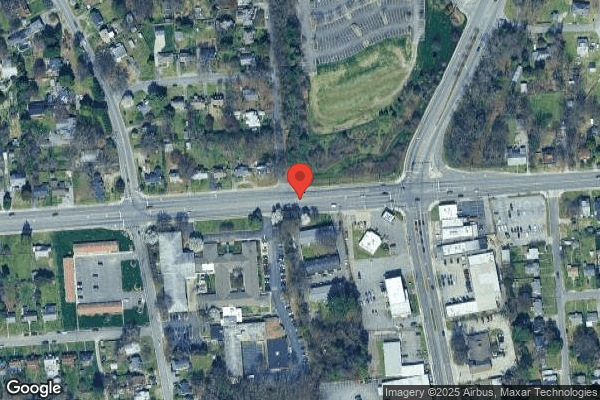
May 2019 24 deficiencies
CONCERN (D)

Potential for Harm - no one hurt, but risky conditions existed

Resident Rights (Tag F0550)

Could have caused harm · This affected 1 resident

**NOTE- TERMS IN BRACKETS HAVE BEEN EDITED TO PROTECT CONFIDENTIALITY** 2. On 4/30/19 during the lunch service in the Arcadia dining room the facility staff failed to serve Resident #30 her meal until...

Read full inspector narrative →
**NOTE- TERMS IN BRACKETS HAVE BEEN EDITED TO PROTECT CONFIDENTIALITY** 2. On 4/30/19 during the lunch service in the Arcadia dining room the facility staff failed to serve Resident #30 her meal until after the residents seated at her table had been served and were eating their meals. Resident #30 waited 12 minutes for her meal to be served. Resident #30 was admitted to the facility on [DATE] with the diagnoses of but not limited to Alzheimer's disease. The most recent MDS (Minimum Data Set), an annual Medicare assessment, with an ARD (Assessment reference date) of 2/8/19, documented that Resident #30 was noted to have no speech, was rarely or never able to make herself understood, and was rarely or never able to understand others, indicating the Resident has severe cognitive impairment for daily decision making. The resident was coded requiring extensive assistance for dressing and eating. On 4/30/19 between 12:50 p.m. and 1:20 p.m., an observation was conducted of the Arcadia dining room during lunch. Resident #30 was seated at a table with two other residents. The two other residents received their food at 1:03 p.m. and 1:05 p.m. Resident #30 received her food at 1:17 p.m. after her table mates had received and were eating their food. On 5/2/19 at 1:45 p.m., an interview with CNA (Certified nurse assistant) #3 was conducted. When asked about the process staff follows for serving residents in the dining room, CNA #3 stated, When the carts come up, we serve the residents by tables. Everyone at the table is served at the same time. Then we go to another table and serve their food. We serve the residents who can feed themselves first. Ideally, you want the residents who feed themselves to sit at a table together. But they can get up and move around to other tables. When asked about Resident #30's dining experience of having to wait to receiver her food, CNA #3 stated, Oh, the ones (CNA's) who were assigned to her that day are not regular workers here. They may not have known the protocol. When asked if Resident #30 having to wait for her food is a problem, CNA #3 stated, Yes. The waiting for food is a problem. It should not have happened A review of the facility's policy Respect, Dignity, Right to have Personal Property no effective date noted, documented in part, .Respect and Dignity. The resident has a right to be treated with respect and dignity . On 5/2/19 at 4:02 p.m., ASM (Administrative Staff Member) #1 (Interim Administrator), ASM #2 (Mobile Administrator), ASM #4 (Director of Nursing), and ASM #3 (Education Department) were made aware of the findings. No further information was provided by the end of the survey. Based on observation, staff interview, facility document review and clinical record review, it was determined that facility staff failed to serve food in a manner to promote resident dignity for two of 56 residents in the survey sample, Residents # 118 and # 30. 1. On 04/30/19 at 12:00 p.m., during lunch service in the facility's main dining room the facility staff failed serve Resident # 118 her meal until after the two other residents seated at the table were served and were eating their meals. Resident # 118 waited fifteen minutes to be served her meal. 2. On 4/30/19 during the lunch service in the Arcadia dining room the facility staff failed to serve Resident #30 her meal until after the residents seated at her table had been served and were eating their meals, Resident #30 waited 12 minutes for her meal to be served. The findings include: 1. On 04/30/19 at 12:00 p.m., during lunch service in the facility's main dining room the facility staff failed serve Resident # 118 her meal until after the two other residents seated at the table were served and were eating their meals. Resident # 118 waited fifteen minutes to be served her meal. Resident # 118 was admitted to the facility on [DATE] with diagnoses that included but were not limited to: cerebral infarction (1), peripheral vascular disease (2), and anemia (3). Resident # 118's most recent MDS (minimum data set), a quarterly assessment with an ARD (assessment reference date) of 04/05/19, coded Resident # 118 as scoring a 15 on the brief interview for mental status (BIMS) of a score of 0 - 15, 15 - being cognitively intact for making daily decisions. Resident # 118 was coded as requiring extensive assistance of one staff member for all activities of daily living and as requiring supervision with set up for eating. On 04/30/19 at 12:00 p.m., an observation was conducted in the facility's main dining room during lunch. Resident # 118 was seated at a table with two other residents. The other residents at the table were served their meals at approximately 12:20 p.m. Further observation revealed Resident # 118 was not served her meal until 12:35 p.m. and was observed sitting at the table while the other two residents at the same table were eating their lunch. On 05/01/19 at 9:52 a.m., an interview was conducted with OSM (other staff member) # 9, the cook. When asked to describe the procedure staff follows for serving residents seated at the same table their meals, OSM # 9 stated, Everyone at the table is served at the same time. It's not fair to have someone sit at the table and watch others at the table eat. I would be upset about it. After being informed of the observation of Resident # 118 waiting for her meal while the other residents seat with her at the same table were eating, OSM # 9 stated, That shouldn't have happened. When asked if she remembered the situation OSM # 9 stated, I don't recall that. On 05/01/19 at approximately 11:30 a.m., an interview was conducted with Resident 118. When asked how she felt during lunch in the facility's main dining room when the two residents sitting with her were served their meals while she waited for an additional ten to fifteen minutes for her meal, Resident # 118 stated, Not to good, I was still left to be served, when was she going to give me something to eat. I had to get the girl's attention by waving my hand and I told her she forgot one. On 05/01/19 at 2:54 p.m., an interview was conducted with OSM # 7, dietary manager. When asked to describe the procedure for serving residents a meal seat at the same table, OSM # 7 stated, You serve everyone at the same table at the same time. The facility's policy Virginia Patient/Resident [NAME] of Rights & Responsibilities documented, 10. Be treated with consideration, respect, and full recognition of your dignity and individuality, including privacy in treatment and in care for your personal needs. On 05/02/19 at approximately 3:30 p.m., ASM (administrative staff member) # 1, the interim administrator and ASM # 2, mobile administrator, ASM # 3, executive director of the assisted living facility, and ASM # 4, director of nursing were made aware of the findings. No further information was provided prior to exit. References: (1) The vascular system is the body's network of blood vessels. It includes the arteries, veins and capillaries that carry blood to and from the heart. Arteries can become thick and stiff, a problem called atherosclerosis. Blood clots can clog vessels and block blood flow to the heart or brain. Weakened blood vessels can burst, causing bleeding inside the body.) This information was obtained from the website: https://www.nlm.nih.gov/medlineplus/vasculardiseases.html. (2) A stroke. When blood flow to a part of the brain stops. A stroke is sometimes called a brain attack. If blood flow is cut off for longer than a few seconds, the brain cannot get nutrients and oxygen. Brain cells can die, causing lasting damage. This information was obtained from the website: https://medlineplus.gov/ency/article/000726.htm . (3) Low iron. This information was obtained from the website: https://www.nlm.nih.gov/medlineplus/anemia.html.
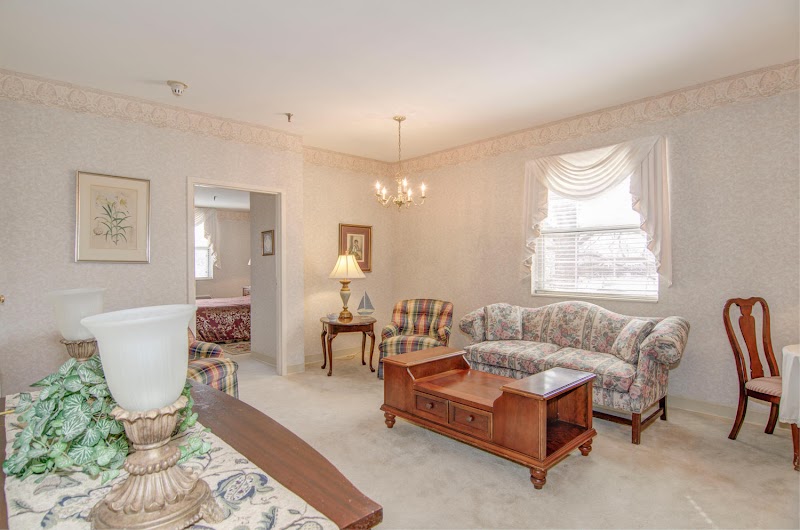
CONCERN (D)

Potential for Harm - no one hurt, but risky conditions existed

Deficiency F0582 (Tag F0582)

Could have caused harm · This affected 1 resident

**NOTE- TERMS IN BRACKETS HAVE BEEN EDITED TO PROTECT CONFIDENTIALITY** Based on staff interview, facility document review and clinical record review, it was determined that the facility staff failed ...

Read full inspector narrative →
**NOTE- TERMS IN BRACKETS HAVE BEEN EDITED TO PROTECT CONFIDENTIALITY** Based on staff interview, facility document review and clinical record review, it was determined that the facility staff failed to provide notice of Medicare non-coverage for two of 56 residents in the survey sample, Residents #354 and #355. 1. Resident #354's last covered day of Medicare Part A services was 11/7/18. The facility staff failed to notify Resident #354 (and/or the resident's representative) of the last covered day and the right to appeal. 2. Resident #355's last covered day of Medicare Part A services was 1/21/19. The facility staff failed to notify Resident #355 (and/or the resident's representative) of the last covered day and the right to appeal. The findings include: 1. Resident #354's last covered day of Medicare Part A services was 11/7/18. The facility staff failed to notify Resident #354 (and/or the resident's representative) of the last covered day and the right to appeal. Resident #354 was admitted to the facility on [DATE]. Resident #354's diagnoses included but were not limited to, anxiety disorder and retention of urine. Resident #354's most recent MDS (minimum data set) (prior to discharge), a 30 day Medicare assessment with an ARD (assessment reference date) of 10/31/18, coded the resident's cognitive skills for daily decision-making as moderately impaired. On 5/1/19 at 10:31 a.m., an interview was conducted with OSM (other staff member) #1 (the social worker). OSM #1 stated the facility policy is to issue a notice of Medicare non-coverage two days before a resident is discharged from the facility. OSM #1 stated a notice of Medicare non-coverage always has to be issued 48 hours before discharge from the facility and 24 hours before the skilled services (Medicare Part A) end. OSM #1 confirmed Resident #354's last covered day of Medicare Part A services was 11/7/18 and she could not provide a notice of Medicare non-coverage. OSM #1 stated she had been in this role for a month and could not answer what happened. OSM #1 confirmed a notice should have been completed. On 5/1/19 at 4:15 p.m., ASM (administrative staff member) #2 (the mobile administrator) and ASM #4 (the director of nursing) were made aware of the above concern. On 5/2/19 at 1:05 p.m., OSM #1 stated that she had been in the social services role since the end of March and could show evidence that all notices of Medicare non-coverage had been completed since then. When asked if the facility had an action plan in place, OSM #1 stated she did not believe a plan was started and could not show evidence of a corrective action plan. The facility document titled, Notice of Medicare Non Coverage Policy & Process (NOMNC): Medicare Advantage Patients documented, No later than two (2) calendar days prior to the termination of skilled services, a Notice of Medicare Non Coverage ('NOMNC') has to be delivered to the patient and/or the patient's representative or responsible party (both collectively referred to in this policy as 'RP'). The NOMNC must be signed by the enrollee or the RP and dated on the date that he or she signs the NOMNC. If the NOMNC is delivered, but the enrollee or RP refuses to sign on the delivery date, the (name of facility) representative should note in the case file the date on which the NOMNC was delivered. No further information was presented prior to exit. 2. Resident #355's last covered day of Medicare Part A services was 1/21/19. The facility staff failed to notify Resident #355 (and/or the resident's representative) of the last covered day and the right to appeal. Resident #355 was admitted to the facility on [DATE]. Resident #355's diagnoses included but were not limited to heart failure and muscle weakness. Resident #355's most recent MDS (minimum data set) (prior to discharge), a quarterly assessment with an ARD (assessment reference date) of 4/3/19, coded the resident as being cognitively intact. On 5/1/19 at 10:31 a.m., an interview was conducted with OSM (other staff member) #1 (the social worker). OSM #1 stated the facility policy is to issue a notice of Medicare non-coverage two days before a resident is discharged from the facility. OSM #1 stated a notice of Medicare non-coverage always has to be issued 48 hours before discharge from the facility and 24 hours before the skilled services (Medicare Part A) end. OSM #1 confirmed Resident #355's last covered day of Medicare Part A services was 1/21/19 and she could not provide a notice of Medicare non-coverage. OSM #1 stated she had been in this role for a month and could not answer what happened. OSM #1 confirmed a notice should have been completed. On 5/1/19 at 4:15 p.m., ASM (administrative staff member) #2 (the mobile administrator) and ASM #4 (the director of nursing) were made aware of the above concern. On 5/2/19 at 1:05 p.m., OSM #1 stated that she had been in the social services role since the end of March and could show evidence that all notices of Medicare non-coverage had been completed since then. When asked if the facility had an action plan in place, OSM #1 stated she did not believe a plan was started and could not show evidence of a corrective action plan. No further information was presented prior to exit.
CONCERN (D)

Potential for Harm - no one hurt, but risky conditions existed

Safe Environment (Tag F0584)

Could have caused harm · This affected 1 resident

Based on observation, staff interview, facility document review and clinical record review, it was determined the facility staff failed to provide a homelike environment for one of 56 residents in the...

Read full inspector narrative →
Based on observation, staff interview, facility document review and clinical record review, it was determined the facility staff failed to provide a homelike environment for one of 56 residents in the survey sample, Resident #58. Resident #58's room failed to provide a homelike environment as she only had a bed and over bed table. There was no other furniture on her side of the room. The findings include: Resident #58 was admitted to the facility 11/29/18 with diagnoses that included but were not limited to: cerebral palsy [A group of disorders that affect a person's ability to move and to maintain balance and posture (1)], intellectual disability [Refers to a group of disorders characterized by a limited mental capacity and difficulty with adaptive behaviors such as managing money, schedules and routines, or social interactions. Intellectual disability originates before the age of 18 and may result from physical causes, such as autism or cerebral palsy, or from nonphysical causes, such as lack of stimulation and adult responsiveness (2)] and high blood pressure. The most recent MDS (minimum data set) assessment, a quarterly assessment, with an assessment reference date of 3/6/19, coded the resident as having both short and long-term memory difficulties and as moderately impaired to make daily cognitive decisions. The resident was coded as requiring extensive assistance of one staff member for most of her activities of daily living and was coded as being dependent upon the staff for toileting and personal hygiene. Observation was made of Resident #58's room on 4/30/19, at approximately 11:40 a.m.; Resident #58 was in her bed, awake. Resident #58 could only answer to her name. There was no nightstand or over bed table at this time. The room appeared bare and institutionalized. There was nothing on the walls and no nightstand to put her belongings on. The other resident in the room had a nightstand and an over bed table. The closet and dresser drawers were located at the foot of the bed on the other side of the room from Resident #58. A second observation was made of Resident #58's room on 4/30/19 at 3:47 p.m. The resident was in the bed. There was an over bed table next to the bed but no nightstand. An interview was conducted with CNA (certified nursing assistant) #4 on 5/1/19 at 1:14 p.m. When asked why Resident #58 did not have a nightstand, CNA #4 stated, I've asked for one but I will have to check on that and get back with you. When asked if Resident #58 should have a nightstand, CNA #4 stated, Yes, Ma'am. CNA #4 showed where Resident #58's two drawers, closet space and basin with her personal belongings was located in the wall unit on the other side of the room. An interview was conducted with LPN (licensed practical nurse) # 4 on 5/1/19 at 1:19 p.m. When asked if every resident should have an over bed table and a night stand, LPN #4 stated, Yes, I believe so. When asked why Resident #58 does not have a night stand, LPN #4 stated, We are working on that right now. An interview was conducted with administrative staff member (ASM) #2, the mobile administrator, on 5/1/19 at 1:23 p.m. When asked if every resident should have an over bed table and a night stand, ASM #2 stated, Yes. The facility policy, Respect/Dignity/Right to have Personal Property documented in part, Resident's possessions, regardless of their apparent value to others, must be treated with respect. Resident have the right to retain and use personal possessions to promote a homelike environment and support each resident in maintaining their independence. ASM #2, ASM #1, the interim administration, and ASM #3, the assisted living facility executive director, were made aware of the above concern on 5/2/19 at 10.58 a.m. No further information was provided prior to exit. (1) This information was obtained from the following website: https://www.nlm.nih.gov/medlineplus/cerebralpalsy.html., (2) This information was obtained from the following website: https://www.report.nih.gov/NIHfactsheets/ViewFactSheet.aspx?csid=100
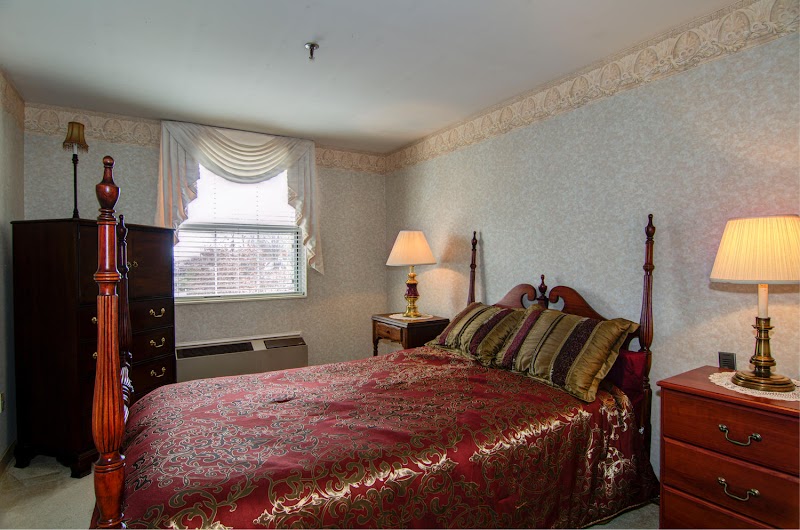
CONCERN (D)

Potential for Harm - no one hurt, but risky conditions existed

Transfer Requirements (Tag F0622)

Could have caused harm · This affected 1 resident

**NOTE- TERMS IN BRACKETS HAVE BEEN EDITED TO PROTECT CONFIDENTIALITY** Based on staff interview, facility document review, and clinical record review, it was determined that the facility staff failed...

Read full inspector narrative →
**NOTE- TERMS IN BRACKETS HAVE BEEN EDITED TO PROTECT CONFIDENTIALITY** Based on staff interview, facility document review, and clinical record review, it was determined that the facility staff failed to ensure the required documentation was provided to the receiving facility at the time of a transfer for one of 56 residents in the survey sample, Resident # 48. The facility staff failed to evidence that all required documentation and information was provided to the receiving provider for Resident # 48's facility-initiated transfer to the hospital on [DATE]. The findings include: Resident # 48 was admitted to the facility on [DATE] and a readmission on [DATE] with diagnoses that included but were not limited to heart failure (1), chronic obstructive pulmonary disease (2), and anemia (3). Resident # 48's most recent MDS (minimum data set), a quarterly assessment with an ARD (assessment reference date) of 02/22/2019, coded Resident # 48 as scoring a 14 on the staff assessment for mental status (BIMS) of a score of 0 - 15, 14 - being cognitively intact for making daily decisions. The nurse's Progress Notes, dated 04/18/2019 for Resident # 48 documented, 01:11 (1:11 a.m.) Received resident in hallway, confused, leaning on left side, ambulating with unsteady gait, to exit doors/long hall/short setting off [sic] firearm [sic] arms. Easily redirected but short lived. Received critical ammonia level at 99H [high]. MD (medical doctor) office called with lab (laboratory) results, order obtained to send resident to ER (emergency room). RP (responsible party) made aware. 911 called and resident was picked up 1:15 AM for ER [name of hospital]. Review of the clinical record and the EHR (electronic health record) for Resident # 48 failed to evidence documentation that Resident # 48's contact information of the practitioner responsible for the care of the resident, resident representative information including contact information, Advance Directive information, all special instructions or precautions for ongoing care, as appropriate, comprehensive care plan goals, all other necessary information, including a copy of the resident's discharge summary was provided to the receiving facility at the time of Resident # 48's transfer to the hospital on [DATE]. On 05/01/19 at 5:00 p.m., a request was made to ASM (administrative staff member) # 2, mobile administrator and ASM # 4, the director of nursing, for the required documentation regarding Resident # 48's transfer to the hospital on 4/18/19. On 05/02/19 at 8:05 a.m., ASM # 4, director of nursing stated they did not have the checklist of documentation sent to the receiving facility for Resident # 48's transfer to the hospital on 4/18/19. On 5/2/19 at 11:54 a.m., an interview was conducted with RN (registered nurse) #1. RN #1 was asked to describe the information provided to hospital staff when a resident is transferred to the hospital. RN #1 stated, We provide them with the situation going on; background information, vital signs, really anything pertinent to what's going on; why we are sending the patient. RN #1 confirmed the nurses provide physician contact information, resident representative contact information, special instructions for providing ongoing care, and comprehensive care plan goals to the hospital staff. When asked how nurse's evidence this information is provided for each resident's hospital transfer, RN #1 stated the information is documented in a progress note. When asked if the progress note should document each item that is provided, RN #1 stated she thought the verbiage written is that the transfer checklist or transfer information was sent, but some nurse's document each item sent. RN #1 was asked if nurses are supposed to send every item documented on the transfer checklist. RN #1 stated, For the most part, yes. If available, yes. RN #1 was asked if the nurses are supposed to check off each item on the transfer checklist and retain a copy of the checklist. RN #1 stated, Yes. That's the process. RN #1 was asked how nurses can evidence the information on the checklist is provided for each transfer if there is no copy of the checklist in the clinical record. RN #1 stated, I don't guess you can. RN #1 stated sometimes the resident's acuity level is an emergent situation but the information should be in a progress note if a copy of the checklist cannot be found. On 05/02/19 at approximately 3:30 p.m., ASM (administrative staff member) # 1, the interim administrator and ASM # 2, mobile administrator, ASM # 3, executive director of the assisted living facility, and ASM # 4, director of nursing were made aware of the findings. No further information was provided prior to exit. References: (1) A condition in which the heart is no longer able to pump oxygen-rich blood to the rest of the body efficiently. This causes symptoms to occur throughout the body. This information was obtained from the website: https://medlineplus.gov/ency/article/000158.htm. (2) Disease that makes it difficult to breath that can lead to shortness of breath. This information was obtained from the website: https://www.nlm.nih.gov/medlineplus/copd.html. (3) Low iron. This information was obtained from the website: https://www.nlm.nih.gov/medlineplus/anemia.html.
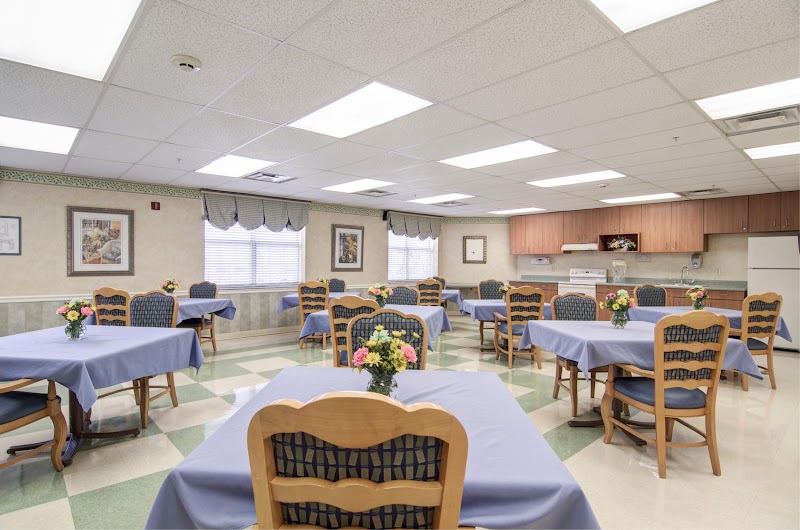
CONCERN (D)

Potential for Harm - no one hurt, but risky conditions existed

Transfer Notice (Tag F0623)

Could have caused harm · This affected 1 resident

**NOTE- TERMS IN BRACKETS HAVE BEEN EDITED TO PROTECT CONFIDENTIALITY** Based on staff interview, facility document review, and clinical record review, it was determined that the facility staff failed...

Read full inspector narrative →
**NOTE- TERMS IN BRACKETS HAVE BEEN EDITED TO PROTECT CONFIDENTIALITY** Based on staff interview, facility document review, and clinical record review, it was determined that the facility staff failed to provide the required notifications of a transfer for one of 56 residents in the survey sample, Resident # 48. The facility staff failed to provide Resident # 48 and the Resident # 48's representative written notification and failed to notify the ombudsman of a facility-initiated transfer on 04/18/19 for Resident # 48. The findings include: Resident # 48 was admitted to the facility on [DATE] and readmitted on [DATE] with diagnoses that included but were not limited to heart failure (1), chronic obstructive pulmonary disease (2), and anemia (3). Resident # 48's most recent MDS (minimum data set), a quarterly assessment with an ARD (assessment reference date) of 02/22/2019, coded Resident # 48 as scoring a 14 on the staff assessment for mental status (BIMS) of a score of 0 - 15, 14 - being cognitively intact for making daily decisions. The nurse's Progress Notes, dated 04/18/2019 for Resident # 48 documented, 01:11 (1:11 a.m.) Received resident in hallway, confused, leaning on left side, ambulating with unsteady gait, to exit doors/long hall/short setting off [sic] firearm [sic] arms. Easily redirected but short lived. Received critical ammonia level at 99H. MD (medical doctor) office called with lab (laboratory) results, order obtained to send resident to ER (emergency room). RP (responsible party) made aware. 911 called and resident was picked up 1:15 AM for ER (name of hospital). Review of the clinical record and the EHR (electronic health record) for Resident # 48 failed to evidence documentation that Resident # 48 and Resident # 48's representative was provided written notification or notification to the ombudsman of Resident # 48's facility initiated transfer to the hospital on [DATE]. On 05/01/19 at 5:00 p.m., a request was made to ASM (administrative staff member) # 2, mobile administrator and ASM # 2, the director of nursing, for the required notifications regarding Resident # 48's transfer to the hospital on 4/18/19. On 05/02/19 at 8:05 a.m., ASM # 4, director of nursing stated they did not have the required notifications regarding Resident # 48's transfer to the hospital on 4/18/19. On 5/2/19 at 11:44 p.m., an interview was conducted with ASM (administrative staff member) #3 (the assisted living facility executive director). ASM #3 stated she completes a monthly notification of resident discharges to the ombudsman via fax. ASM #3 stated the list faxed to the ombudsman is pulled from the list of residents who are discharged from the facility. ASM #3 confirmed a resident transferred to the hospital, with return on the same day would not be documented on the list faxed to the ombudsman. ASM #3 reviewed the April 2019 list faxed to the ombudsman and confirmed Resident #48 was not on the list. On 5/2/19 at 11:54 a.m., an interview was conducted with RN (registered nurse) #1. RN #1 confirmed resident/resident representative transfer notification is an item listed on the transfer checklist. RN #1 was asked if the nurses are supposed to check off each item on the transfer checklist and retain a copy of the checklist. RN #1 stated, Yes. That's the process. RN #1 was asked how nurses can evidence the information on the checklist is provided for each transfer if there is no copy of the checklist in the clinical record. RN #1 stated, I don't guess you can. RN #1 stated sometimes the resident's acuity level is an emergent situation but the information should be in a progress note if a copy of the checklist cannot be found. On 05/02/19 at approximately 3:30 p.m., ASM (administrative staff member) # 1, the interim administrator and ASM # 2, mobile administrator, ASM # 3, executive director of the assisted living facility, and ASM # 4, director of nursing were made aware of the findings. No further information was provided prior to exit. References: (1) A condition in which the heart is no longer able to pump oxygen-rich blood to the rest of the body efficiently. This causes symptoms to occur throughout the body. This information was obtained from the website: https://medlineplus.gov/ency/article/000158.htm. (2) Disease that makes it difficult to breath that can lead to shortness of breath. This information was obtained from the website: https://www.nlm.nih.gov/medlineplus/copd.html. (3) Low iron. This information was obtained from the website: https://www.nlm.nih.gov/medlineplus/anemia.html.
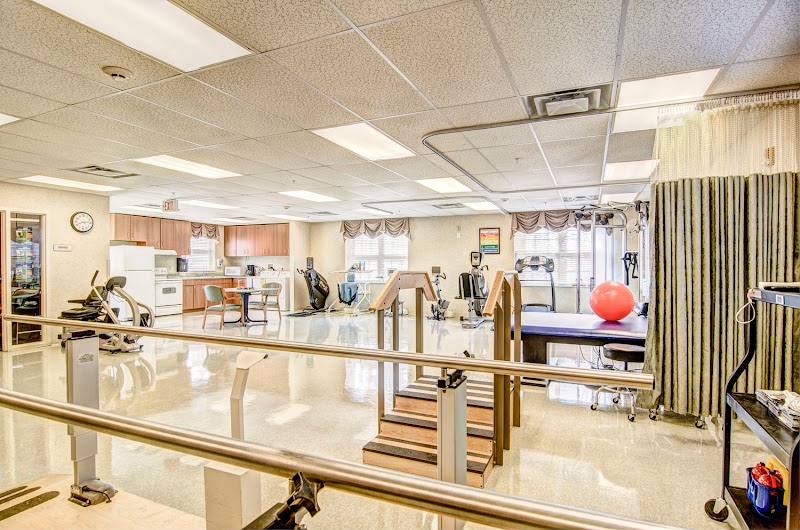
CONCERN (D)

Potential for Harm - no one hurt, but risky conditions existed

Assessment Accuracy (Tag F0641)

Could have caused harm · This affected 1 resident

**NOTE- TERMS IN BRACKETS HAVE BEEN EDITED TO PROTECT CONFIDENTIALITY** 2. The facility staff failed to ensure Resident # 65's MDS, a quarterly review assessment with an ARD (assessment reference date...

Read full inspector narrative →
**NOTE- TERMS IN BRACKETS HAVE BEEN EDITED TO PROTECT CONFIDENTIALITY** 2. The facility staff failed to ensure Resident # 65's MDS, a quarterly review assessment with an ARD (assessment reference date) of 03/12/19 was complete and accurate. Section C and section D of the assessment had columns marked with dashes [-] instead of numbers. Resident # 65 was admitted to the facility on [DATE], with a most recent readmission on [DATE], with diagnoses that included but were not limited to hypertension (1), diabetes mellitus (2), and major depressive disorder (3). Resident # 65's most recent MDS (minimum data set), a quarterly assessment, with an ARD (assessment reference date) of 03/12/19, coded Resident #65 as scoring a [dash] on the brief assessment for mental status (BIMS) of a score of 0 - 15. A progress note dated 3/13/19 documented by OSM (other staff member) #3, social service director, indicated a BIMS score of 12, 12 indicating moderate cognitive impairment for daily decision making. Resident # 65 was coded as requiring extensive assistance of one staff member for activities of daily living and independent with eating. On 05/1/19, a review of Resident #65's clinical record revealed that the most recent MDS, a quarterly assessment dated [DATE], which was marked as accepted, was incomplete. Section C and section D had columns marked with dashes [-] instead of numbers. On 05/02/19 at 9:51 a.m., an interview was conducted with RN (registered nurse) #3 MDS coordinator. When asked the purpose of an MDS assessment, RN #3 stated, An evaluation tool for resident assessment. When asked when it should be done, RN #3 stated, It should be administered based on the type: five day, 14 day, quarterly, annually, or when there are a significant change in resident's status. When asked who is responsible for ensuring all parties involved complete their section of the MDS assessment, RN #3 stated, The MDS team does but social service is responsible for section C and section D. On 05/02/19 10:04 a.m., an interview conducted with OSM (other staff member) #3, social service director. When asked her role in filling out the MDS assessment, OSM #3 stated, We are responsible for sections C. D, E, Q, and sometimes B. When asked what the dashes [-] meant on Resident #65's clinical record revealed that the most recent MDS, a quarterly assessment dated [DATE], OSM #3 stated, Not assessed, there was no social worker in house that day so I did the BIMS on a different date and entered it in the resident's progress note. When asked if she tried to modify the MDS assessment to enter her assessment, after it was submitted, OSM #3 stated, No, I don't know how to do that. When asked what reference or policy the facility follows for MDS assessments, OSM #3 stated, The RAI (Resident Assessment Instrument) manual. The Resident Assessment Manual 3.0, version 1.16, October 2018, pg. 2-43 documents the following in part: There may be situations when an assessment might be delayed (e.g., illness of RN assessor, a high volume of assessments due at approximately the same time) or additional days are needed to more fully capture therapy or other treatments. Therefore, CMS has allowed for these situations by defining a number of grace days for each Medicare assessment .The use of grace days allows clinical flexibility in setting ARDs. On 05/02/19 at approximately 3:30 p.m., ASM (Administrative Staff Member) #2, the mobile administrator, and ASM #4, the director of nursing, were made aware of the above findings. No further information was provided prior to exit. References: 1. High blood pressure. This information was obtained from the website: https://www.nlm.nih.gov/medlineplus/highbloodpressure.html. 2. A chronic disease in which the body cannot regulate the amount of sugar in the blood. This information was obtained from the website: https://www.nlm.nih.gov/medlineplus/ency/article/001214.htm. 3. Depression may be described as feeling sad, blue, unhappy, miserable, or down in the dumps. Most of us feel this way at one time or another for short periods. Clinical depression is a mood disorder in which feelings of sadness, loss, anger, or frustration interfere with everyday life for weeks or more. This information was obtained from the website: https://medlineplus.gov/ency/article/003213.htm. Based on staff interview, facility document review and clinical record review, it was determined the facility staff failed to ensure a complete and accurate MDS (minimum data set) assessment for two of 56 residents in the survey sample, Resident #66 and Resident #65. 1. The facility staff failed to accurately code a BIMS (brief interview for mental status) assessment for Resident #66 on the quarterly MDS (minimum data set), assessment, with an ARD (assessment reference date) of 3/12/19. 2. The facility staff failed to ensure Resident # 65's MDS, a quarterly review assessment with an ARD (assessment reference date) of 03/12/19 was complete and accurate. Section C and section D of the assessment had columns marked with dashes [-] instead of numbers. The findings include: 1. Resident #66 was admitted to the facility on [DATE]. Diagnoses included but were not limited to: chronic diastolic heart failure (1), anemia, unsteadiness on feet and peripheral vascular disease (2). The most recent MDS (minimum data set), a quarterly assessment, with an ARD (assessment reference date) of 3/12/19 failed to complete a BIMS assessment (BIMS assess a residents cognitive ability to make daily decisions) for Resident #66. Section C 0100 failed to code whether a BIMS should be conducted. Section C 0600 failed to code whether Resident #66's metal status should be assessed. On 05/02/19 at approximately 09:51 a.m., a group interview was conducted with RN (registered nurse) #3, MDS coordinator, RN #4 RN, MDS coordinator, and OSM (other staff member) #3, social services. When asked what an MDS is, the facility staff stated, An MDS is an assessment of the resident. When asked who ensures the accuracy of an MDS assessment. RN #3 replied, We have a multi-disciplined approach different departments are responsible for different areas of the MDS. The different areas turn green when they are complete, then I can go in and finalize it. A group observation was made of Resident #66's most recent MDS (minimum data set), a quarterly assessment, with an ARD (assessment reference date) of 3/12/19. When asked what type of MDS was completed for Resident #66. RN #3 and RN #4 replied, It is a quarterly. When asked who is responsible for the completion of the BIMS assessment. RN #3 replied, Social services. When asked should there have been a BIMS assessment for resident. The facility staff replied, Yes. When asked why a BIMS assessment was not completed. OSM #3 replied, I came here in March, and I saw that the previous social worker did not complete it by the ARD. So, I did it, and put it in a progress note. I'll print it off and bring it to you. On 05/02/19 at approximately 10:00 a.m., social services note, dated 3/13/19 was reviewed with OSM #3. The social services note documented in part, SS Quarterly ARD 3/12/19: SW (social work) met with patient this date to complete quarterly assessment. Patient was alert, verbal, and cooperative. Patient scored a BIM of 12, indicating moderate cognitive impairment. On 05/02/19 at approximately 10:01 a.m., an interview was conducted with OSM #3. When asked if a MDS assessment can be modified. OSM #3 stated, I don't think so. On 05/02/19 at approximately 10:05 a.m., a follow up interview was conducted with RN #3 MDS coordinator. RN #3 was asked if a MDS assessment could be modified. RN #3 stated, Yes, when there is a significant correction that needs to take place or there was an error in the MDS. When asked if Resident #66's quarterly MDS assessment with an ARD of 3/12/19 should be modified to code her BIMS assessment. RN #3 replied, No, not for a BIMS, we wrote a note that should be enough. When asked what policies or procedures are used to complete an MDS assessment. RN #3 replied, The RAI (resident assessment instrument) manual. On 05/02/19 at approximately 1:00 p.m., ASM (administrative staff member) #1, the Interim Administrator, ASM #2, the Mobile Administrator and ASM #3, the Assisted Living Facility (ALF) Executive Director were made aware of the findings. RAI Manual October 2018 - Coding Instructions for Section C0100 Should Brief Interview for Mental Status Be Conducted? Item Rationale Health-related Quality of Life o Most residents are able to attempt the Brief Interview for Mental Status (BIMS). o A structured cognitive test is more accurate and reliable than observation alone for observing cognitive performance. - Without an attempted structured cognitive interview, a resident might be mislabeled based on his or her appearance or assumed diagnosis. - Structured interviews will efficiently provide insight into the resident's current condition that will enhance good care. Planning for Care o Structured cognitive interviews assist in identifying needed supports. o The structured cognitive interview is helpful for identifying possible delirium behaviors (C1310). Coding Instructions o Code 0, no: if the interview should not be conducted because the resident is rarely/never understood; cannot respond verbally, in writing, or using another method; or an interpreter is needed but not available. Skip to C0700, Staff Assessment of Mental Status. CMS's RAI Version 3.0 Manual CH 3: MDS Items [C] October 2018 Page C-2 C0100: Should Brief Interview for Mental Status Be Conducted? (cont.) o Code 1, yes: if the interview should be conducted because the resident is at least sometimes understood verbally, in writing, or using another method, and if an interpreter is needed, one is available. Proceed to C0200, Repetition of Three Words. RAI Manual October 2018 - Errors Identified After the Encoding Period Errors identified after the encoding and editing period must be corrected within 14 days after identifying the errors. If the record in error is an Entry tracking record, Death in Facility tracking record, Discharge assessment, or PPS assessment record (i.e., MDS Item A0310A = 99), then the record should be corrected and submitted to the QIES ASAP system. The correction process may be more complex if the record in error is an OBRA comprehensive or Quarterly assessment record (i.e., Item A0310A = 01 through 06). Significant versus Minor Errors in a Nursing Home OBRA Comprehensive or Quarterly Assessment Record. OBRA comprehensive and Quarterly assessment errors are classified as significant or minor errors. Errors that inaccurately reflect the resident's clinical status and/or result in an inappropriate plan of care are considered significant errors. All other errors related to the coding of MDS items are considered minor errors. If the only errors in the OBRA comprehensive or Quarterly assessment are minor errors, then the only requirement is for the record to be corrected and submitted to the QIES ASAP system. No further information was obtained prior to exit. 1. Heart failure (HF) can be defined as the inability of the heart to provide sufficient forward output to meet the perfusion and oxygenation requirements of the tissues while maintaining normal filling pressures. There are two major cardiac mechanisms by which this can occur. ?Systolic dysfunction, in which there is impaired cardiac contractile function ?Diastolic dysfunction, in which there is abnormal cardiac relaxation, stiffness or filling This information was obtained from the website: https://www.uptodate.com/contents/pathophysiology-of-heart-failure-with-preserved-ejection-fraction?search=diastolic%20heart%20failure&source=search_result&selectedTitle=2~150&usage_type=default&display_rank=2 2. The vascular system is the body's network of blood vessels. It includes the arteries, veins and capillaries that carry blood to and from the heart. Arteries can become thick and stiff, a problem called atherosclerosis. Blood clots can clog vessels and block blood flow to the heart or brain. Weakened blood vessels can burst, causing bleeding inside the body.) This information was obtained from the website: https://www.nlm.nih.gov/medlineplus/vasculardiseases.html.
CONCERN (D)

Potential for Harm - no one hurt, but risky conditions existed

Deficiency F0645 (Tag F0645)

Could have caused harm · This affected 1 resident

**NOTE- TERMS IN BRACKETS HAVE BEEN EDITED TO PROTECT CONFIDENTIALITY** Based on staff interview, facility document review and clinical record review, it was determined the facility staff failed to en...

Read full inspector narrative →
**NOTE- TERMS IN BRACKETS HAVE BEEN EDITED TO PROTECT CONFIDENTIALITY** Based on staff interview, facility document review and clinical record review, it was determined the facility staff failed to ensure one of 56 residents in the survey sample, (Resident #93) had a completed Level I PASARR (preadmission screening and resident review). The facility staff failed to have a Level I PASARR completed for Resident #93, to ensure the resident was evaluated and receiving care and services in the most integrated setting appropriate for the resident's needs. The findings include: Resident #93 was admitted to the facility on [DATE] with a recent readmission on [DATE], with diagnoses that included but were not limited to: dementia, psychosis [major mental disorder in which the person is usually detached from reality and has impaired perceptions, thinking, responses and interpersonal relationships (1)], diabetes and high blood pressure. The most recent MDS (minimum data set) assessment with an assessment reference date of 4/3/19, coded the resident as scoring a 1 on the BIMS (brief interview for mental status) score, indicating the resident was severely impaired to make daily cognitive decisions. The resident was coded as requiring extensive assistance for most of his activities of daily living. Review of the clinical record failed to evidence a Level I PASARR. A request was made on 5/1/19 at approximately 5:00 p.m. for a copy of the PASARR. ASM #2, the mobile administrator, was given the list. A copy of a PASARR was presented on 5/2/19 at approximately 8:00 a.m. The copy presented for review was signed and dated on 5/1/19. On 5/2/19 at 8:28 a.m., an interview was conducted with other staff member (OSM) #2, the admissions director, the one that signed the form above. When asked if Resident #93 had a previous PASARR completed prior to 5/1/19, OSM #2 stated, No, not that we had on file or in his record. When asked the process to ensure every resident who needs a Level I PASARR has one completed, OSM #2 stated the facility will request it from the hospital social worker. If we are unable to obtain one there, we call their locality (Local County) to see if they have one on file. If they do not have one, we complete it here. It's supposed to be completed during the admissions process. When asked what happened with Resident #93, OSM #2 stated, We don't check one every time for readmissions, it's usually checked on the initial admission. The facility policy, PASARR Screening for Mental Disorder (MD) & Intellectual Disability (ID). documented in part, The PASARR process requires that all applicants to Medicaid-certified nursing facilities be screened for possible serious mental disorders, intellectual disabilities and related conditions. The initial screening is referred to a Level I Identification of individuals with MD or ID and is completed prior to admission to a nursing facility. The purpose of the Level I pre-admission screening is to identify individuals who have or may have MD/ID or a related condition, who would then require PASARR, which must be conducted prior to admission to the facility. Failure to pre-screen residents prior to admission to the facility may result in the failure to identify resident who have or may have MD, ID or a related condition. A record of the prescreening should be retained in the resident's medical record. ASM (administrative staff member) #2, the mobile administrator, ASM #1, the interim administration, and ASM #3, the assisted living facility executive director, were made aware of the above concern on 5/2/19 at 10.58 a.m. No further information was provided prior to exit. (1) This information was obtained from the following website: https://www.nlm.nih.gov/medlineplus/cerebralpalsy.html.
CONCERN (D)

Potential for Harm - no one hurt, but risky conditions existed

Deficiency F0657 (Tag F0657)

Could have caused harm · This affected 1 resident

**NOTE- TERMS IN BRACKETS HAVE BEEN EDITED TO PROTECT CONFIDENTIALITY** Based on staff interview, clinical record review and facility document review, it was determined that facility staff failed to r...

Read full inspector narrative →
**NOTE- TERMS IN BRACKETS HAVE BEEN EDITED TO PROTECT CONFIDENTIALITY** Based on staff interview, clinical record review and facility document review, it was determined that facility staff failed to review or revise the care plan for two of 56 residents in the survey sample, Resident # 18 and # 39. 1. The facility staff failed to update Resident # 89's comprehensive care with current diversionary interventions to alleviate Resident # 89's pain. 2. The facility staff failed to review and revise the comprehensive care plan to address Resident #18's AICD (automatic internal cardiac device). The findings include: 1. The facility staff failed to update Resident # 89's comprehensive care with current diversionary interventions to alleviate Resident # 89's pain. Resident # 89 was admitted to the facility on [DATE] with diagnoses that included but were not limited to benign prostatic hyperplasia (1), Parkinson's disease (2), and hypertension (3). Resident # 89's most recent MDS (minimum data set), a significant change assessment with an ARD (assessment reference date) of 03/29/2019, coded Resident # 89 as scoring a 3 (three) on the staff assessment for mental status (BIMS) of a score of 0 - 15, 3 (three) - being severely impaired of cognition for making daily decisions. Resident # 89 was coded as requiring extensive assistance of one staff member for activities of daily living. Section O Special Treatments, Procedures and Programs coded Resident # 89 as K. Hospice Care. The POS (physician's order sheet) dated 03/31/2019 for Resident # 89 documented, Admit to (Name of Hospice). Order Date: 03/18/2019. The comprehensive care plan for Resident # 89 documented, Focus: Pain evidenced by verbalization of pain related to knee pain/osteoarthritis. Date Initiated: 08/17/2018. Under Interventions it documented, Report GI (gastro-intestinal) distress secondary to analgesia such [sic] nausea, constipation, diarrhea. Date Initiated: 08/17/2018; Report nonverbal expressions of pain as moaning, striking out, grimacing, crying, thrashing, change in breathing, etc. Date Initiated: 08/17/2018: Administer pain medication per physician order. Date Initiated: 08/17/2019, Encourage/assist to reposition frequently to position of comfort. Date Initiated: 08/17/2018, Notify physician if pain frequency/intensity is worsening or if current analgesia regimen has become ineffective. Date Initiated: 08/17/2018. On 05/02/19 at 11:56 a.m., an interview was conducted with RN # 6 regarding the continuity of care and collaboration of Resident # 89's hospice care. After reviewing Resident # 89's comprehensive care plan, RN #6 was asked if the care plan identified non-pharmacological interventions to address Resident # 89's pain. RN # 6 stated, Yes, to reposition frequently to position of comfort. When asked if that was the only intervention that was being used by staff to address Resident # 89's pain, RN # 6 stated, He also has a stuffed dog that he likes that provides comfort for him and he likes watching others so we bring him out to the nurse's station. These are diversionary activities. When asked if these interventions should be a part of the comprehensive care plan for Resident # 89, RN # 6 stated, Yes. When asked if his care plan is comprehensive for pain, RN # 6 stated, No. The facility's policy Interdisciplinary Care Planning documented, Care Planning: The patient's care plan is a comprehensive tool that guides members of the interdisciplinary healthcare team in how to meet each individual patient's needs. It also identifies the types and methods of care that the patient should receive. Under Care Plan Components it documented, Interventions identify specific, individualized elements of care, provided by staff which will help patients achieve their goals. Interventions and the instructions for delivering patient care and allow for continuity of care by staff. Just like goals, interventions are specific and measurable. Under Comprehensive Care Planning Requirements it documented, A comprehensive care plan must be - Reviewed and revised by the interdisciplinary team after each assessment, including both the comprehensive, quarterly and significant change review assessments. On 05/02/19 at approximately 3:30 p.m., ASM (administrative staff member) # 1, the interim administrator and ASM # 2, mobile administrator, ASM # 3, executive director of the assisted living facility, and ASM # 4, director of nursing were made aware of the findings. No further information was provided prior to exit. References: (1) An enlarged prostate. This information was obtained from the website: https://www.nlm.nih.gov/medlineplus/enlargedprostatebph.html. (2) High blood pressure. This information was obtained from the website: https://www.nlm.nih.gov/medlineplus/highbloodpressure.html. 2. The facility staff failed to review and revise the comprehensive care plan to address the resident's AICD (automatic internal cardiac device) for Resident #18. Resident #18 was admitted to the facility on [DATE] with diagnoses that included but were not limited to: peripheral vascular disease [any abnormal condition, including atherosclerosis, affecting blood vessels outside the heart (1)] , depression, amputation of left leg, high blood pressure, cardiac arrhythmias [An arrhythmia is a problem with the rate or rhythm of your heartbeat. It means that your heart beats too quickly, too slowly, or with an irregular pattern (2)], heart disease [There are many different forms of heart disease. The most common cause of heart disease is narrowing or blockage of the coronary arteries, the blood vessels that supply blood to the heart itself. This is called coronary artery disease and happens slowly over time. It's the major reason people have heart attacks (3)], atrial fibrillation [a condition characterized by rapid and random contraction of the atria of the heart causing irregular beats of the ventricles and resulting in decreased heart output and frequently clot formation in the atria (4)] and the presence of automatic implantable cardiac defibrillator [Defibrillators are devices that restore a normal heartbeat by sending an electric pulse or shock to the heart. They are used to prevent or correct an arrhythmia, a heartbeat that is uneven or that is too slow or too fast. Defibrillators can also restore the heart's beating if the heart suddenly stops. Other defibrillators can prevent sudden death among people who have a high risk of a life-threatening arrhythmia. They include implantable cardioverter defibrillators (ICDs), which are surgically placed inside your body (5)]. The most recent MDS (minimum data set) assessment, an annual assessment, with an assessment reference date of 2/1/18, coded the resident as scoring a 13 on the BIMS (brief interview for mental status) score, indicating the resident was capable of making daily cognitive decisions. Resident #18 was coded as anywhere from being independent to requiring extensive assistance of one staff member for his activities of daily living. In Section I - Active Diagnoses, it was documented the resident had the presence of automatic (implantable) cardiac defibrillator. Observation was made of Resident #18 on 5/1/19 at 8:42 a.m. He was sitting in his wheelchair in the doorway, with no shirt on. Further observation revealed what appeared to be, a pacemaker in his left upper chest. When asked what type of device the resident had, he stated he had no knowledge of it. The comprehensive care plan dated, 12/2/15 and revised on 2/27/19, documented in part, Focus: Cardiac disease related to Hx (history) of MI (myocardial infarction - heart attack), CAD (coronary artery disease), HTN (high blood pressure) and Hx of atrial flutter, angina. The Interventions documented in part, Pacemaker (FYI [for your information]). Review of the clinical record revealed documented on the face sheet, Presence of automatic (Implantable) cardiac defibrillator. Review of the physician orders failed to reveal anything related to an implantable device in the resident's chest. On 5/1/19 at 1:45 p.m., an interview was conducted with LPN (licensed practical nurse) #4, the nurse that cares for Resident #18. When asked what type of device Resident #18 has in his chest, LPN #4 stated, It's a pacemaker. When asked if the nursing staff have anything to do with it, LPN #4 stated, He has an annual cardiology appointment that his sister sets and takes him to. There's a box in his room and we check to make sure it's working. LPN #4 and this surveyor went to the resident's room. There on the resident's nightstand was a machine. LPN #4 stated, We just check to ensure the machine is on unless they call to hook him up. When asked how often they are checking it, LPN #4 stated she'd have to check the chart. LPN #4 and this surveyor went back to the nurse's station. RN (registered nurse) #2, a unit manager, joined LPN #4. When RN #2 was asked what device the resident has implanted in his chest, how often staff are checking it, and where staff document checking the box, and should there be an order, RN #2 stated, Yes, if we don't have an order, this is the situation we get into. When asked if the type of device and the care needed should be on the care plan, RN #2 stated, Yes. When asked when Resident #18 last had a cardiology appointment, RN #2 and LPN #4 stated they would need to check. On 5/1/19 at 3:45 p.m. (two hours after the initial conversation with LPN #4 and RN #2) RN #2 was asked if there was any information to present related to the device for Resident #18, RN #2 stated, They were working on it. On 5/1/19 at 4:38 p.m., RN #2 returned and stated the cardiology notes document the resident has an AICD (automatic internal cardiac defibrillator) [NAME] chamber device (it is both a defibrillator and pacemaker) that was placed in 2016. The family schedules his appointments and transports him to the appointment. His next scheduled appointment is 5/15/19. His last appointment was 1/23/19. RN #2 stated that he was due for his annual checkup. When asked if the clinical record should be correct and informed that the record indicates a pacemaker but was missing the defibrillator part, RN #2 stated, Yes, it should be correct. When asked what the staff should be doing to care for the device, RN #2 stated, monitoring his heart rate and blood pressure. Monitor for shortness of breath. When asked about the machine in the room, and what nursing staff should be doing, RN #2 stated, We need to ensure its functioning. When asked how the staff does that, RN #2 stated, We need to monitor it every day to ensure its functioning. When asked where that is documented, RN #2 stated, I will have to find that out. When asked if the care plan should reflect that, he has an implanted combination device, RN #2 stated, Yes. When asked if the care plan needs to be updated to reflect they type of implanted device and care that needs to be provided for Resident #18's AICD, RN #2 stated, Yes, Ma'am. On 5/2/19 at 11:17 a.m., LPN #4 returned to this surveyor and stated the following, The cardiologist called and told us we didn't have to do anything with the machine in the resident's room. It's done automatically. They (the cardiology office) calls the resident on his phone and he pushes a button. If there were a malfunction, they would call the nursing home. On 5/2/19 at approximately 11:30 a.m., RN #2 presented a letter dated, 5/2/19, from the cardiologist. The letter documented in part, (Resident #18) has a [NAME] chamber ICD implanted. He is on the following device check schedule - every 3 months a remote check (this is when he checks the device at his residence) and a yearly office device check. According to his chart, his last remote device check was 2/27/19 and his last office device check was 7/25/17. His next scheduled remote check is 5/15/19 and his next appointment with (name of cardiologist) is 5/29/19 and at that time his ICD will be checked in office. When asked if the facility should have had this information and care planned this information before the surveyor questioned it, RN #2 stated, Yes, Ma'am. Monitoring - People with ICDs require monitoring throughout their lifetime, generally every three to six months. The device can be painlessly examined with a specialized computer programmer that is placed on the area of the chest where the ICD is located. ICD manufacturers have developed technology to allow patients to have this evaluation from their home using the internet or over the telephone. This is called home or remote monitoring. Information stored on the device can be reviewed to determine the remaining battery life, lead stability and function, programmed settings, assess pacing and shocks provided, and obtain data concerning the type of rhythm disturbances treated. Home monitoring systems are not continuously monitoring the ICD. Typically, the device is checked every night and alerts are sent to the patient's provider if they meet certain criteria for alarm. For example, if the battery prematurely is depleted, then an alert will be sent to the patient's device clinic where these alerts are looked for routinely during business hours. If a patient has symptoms, they should be contacting their physician or nurse in the device clinic. (6) ASM (administrative staff member) #2, the mobile administrator, ASM #1, the interim administration, and ASM #3, the assisted living facility executive director, were made aware of the above concern on 5/2/19 at 10.58 a.m. No further information was obtained prior to exit. (1) Barron's Dictionary of Medical Terms for the Non-Medical Reader, 5th edition, Rothenberg and [NAME], page 447. (2) This information was obtained from the following website: https://medlineplus.gov/arrhythmia.html. (3) This information was obtained from the following website: https://vsearch.nlm.nih.gov/vivisimo/cgi-bin/query-meta?v%3Aproject=medlineplus&v%3Asources=medlineplus-bundle&query=Heart+disease (4) Barron's Dictionary of Medical Terms for the Non-Medical Reader, 5th edition, Rothenberg and [NAME], page 55. (5) This information was obtained from the following website: https://www.nhlbi.nih.gov/health-topics/defibrillators. (6) This information was obtained from the following website: https://www.uptodate.com/contents/implantable-cardioverter-defibrillators-beyond-the-basics?search=implantable-cardioverter-defibrillators-beyond%20the%20basics&topicRef=15665&source=related_link.
CONCERN (D)

Potential for Harm - no one hurt, but risky conditions existed

Deficiency F0658 (Tag F0658)

Could have caused harm · This affected 1 resident

**NOTE- TERMS IN BRACKETS HAVE BEEN EDITED TO PROTECT CONFIDENTIALITY** 2. The facility staff failed to clarify Resident # 12's physician ordered parameters for Novolog insulin to determine when and i...

Read full inspector narrative →
**NOTE- TERMS IN BRACKETS HAVE BEEN EDITED TO PROTECT CONFIDENTIALITY** 2. The facility staff failed to clarify Resident # 12's physician ordered parameters for Novolog insulin to determine when and if the insulin should be held based on the residents blood sugar of 100. Resident # 12 was admitted to the facility on [DATE] with diagnoses that included but were not limited to malignant neoplasm of lung (3), depressive disorder (4), diabetes mellitus (5) gastroesophageal reflux disease (6), and convulsions (7). Resident # 12's most recent MDS (minimum data set), an admission assessment with an ARD (assessment reference date) of 01/28/19, coded Resident # 12 as scoring a 14 on the staff assessment for mental status (BIMS) of a score of 0 - 15, 14- being cognitively intact for making daily decisions. Resident # 12 was coded as being independent and not requiring set up by staff members for activities of daily living. The physician's order sheet (POS) dated February 2019 for Resident # 12 documented, Novolin (Insulin). Inject 5 units subcutaneously (8) two times a day for diabetes. May hold if blood sugar is less than 100. Order Date: 02/13/2019. The physician's order sheet (POS) dated April 2019 for Resident # 12 documented, Novolin (Insulin). Inject 5 units subcutaneously two times a day for DM (diabetes mellitus) give before breakfast and dinner. May hold if blood sugar is less than 100. Order Date: 03/26/2019. The eMAR (electronic medication administration record) dated February 2019 for Resident # 12 documented, Novolin (Insulin). Inject 5 units subcutaneously two times a day for diabetes. May hold if blood sugar is less than 100. Further review of the eMAR revealed Novolin was administered on 02/15/19 with blood sugar of 75, on 02/16/19 with blood sugar of 91, 02/20/19 with blood sugar of 85, 02/27/19 with blood sugar of 94 and 77 and on 02/28/19 with blood sugar of 84. The eMAR (electronic medication administration record) dated April 2019 for Resident # 12 documented, Novolin (Insulin). Inject 5 units subcutaneously two times a day for DM (diabetes mellitus) give before breakfast and dinner. May hold if blood sugar is less than 100. Further review of the eMAR revealed Novolin was administered on 04/16/19 with blood sugar of 91, 04/29/19 with blood sugar of 96 and on 04/30/19 with blood sugar of 69. The comprehensive care plan for Resident # 12 dated 01/21/2019 documented, Focus. Endocrine System related to; insulin Dependent Diabetes. Under Interventions it documented, Administer medication per physician orders. Date Initiated 01/21/2019. On 05/02/19 at 12:38 p.m., an interview was conducted with RN (registered nurse) # 6, unit manager. When asked to describe the check marks on the eMARS RN # 6 stated, It means it was given. After reviewing Resident # 12's physician's order sheets dated February and April 2019 and the eMARS dated February and April where the insulin was administered with blood sugars below 100, RN # 6 stated, Based on the word 'May' it should have been clarified. The reason there are parameters is to avoid a negative outcomes. Resident has not had negative effects from receiving the insulin with the blood sugar below 100. On 05/02/19 at approximately 3:30 p.m., ASM (administrative staff member) # 1, the interim administrator and ASM # 2, mobile administrator, ASM # 3, executive director of the assisted living facility, and ASM # 4, director of nursing were made aware of the findings. According to Lippincott Manual Of Nursing Practice, Eighth Edition: by [NAME] & [NAME], pg. 15, read: Inappropriate Orders: 2. Although you cannot automatically follow an order you think is unsafe, you cannot just ignore a medical order, either. b. Call the attending physician, discuss your concerns with him, obtain appropriate orders. c. Notify all involved medical and nursing personnel d. Document clearly. No further information was provided prior to exit. References: (1) With type 1 diabetes, your pancreas does not make insulin. Insulin is a hormone that helps glucose get into your cells to give them energy. Without insulin, too much glucose stays in your blood. If you have type 1 diabetes, you will need to take insulin. Type 2 diabetes, the most common type, can start when the body doesn't use insulin as it should. If your body can't keep up with the need for insulin, you may need to take pills. Along with meal planning and physical activity, diabetes pills help people with type 2 diabetes or gestational diabetes keep their blood glucose levels on target. Several kinds of pills are available. Each works in a different way. Many people take two or three kinds of pills. Some people take combination pills. Combination pills contain two kinds of diabetes medicine in one tablet. Some people take pills and insulin. This information was obtained from the website: https://medlineplus.gov/diabetesmedicines.html. (2) Blood sugar, or glucose, is the main sugar found in your blood. It comes from the food you eat, and is your body's main source of energy. Your blood carries glucose to all of your body's cells to use for energy. This information was obtained from the website: https://medlineplus.gov/bloodsugar.html. (3) Lung cancer is cancer that starts in the lungs. The lungs are located in the chest. When you breathe, air goes through your nose, down your windpipe (trachea), and into the lungs, where it flows through tubes called bronchi. Most lung cancer begins in the cells that line these tubes. This information was obtained from the website: https: https://medlineplus.gov/ency/article/007270.htm. (4) Depression may be described as feeling sad, blue, unhappy, miserable, or down in the dumps. Most of us feel this way at one time or another for short periods. Clinical depression is a mood disorder in which feelings of sadness, loss, anger, or frustration interfere with everyday life for weeks or more. This information was obtained from the website: https://medlineplus.gov/ency/article/003213.htm. (5) Stomach contents to leak back, or reflux, into the esophagus and irritate it. This information was obtained from the website: https://www.nlm.nih.gov/medlineplus/gerd.html. (6) The term seizure is often used interchangeably with convulsion. A seizure is the physical findings or changes in behavior that occur after an episode of abnormal electrical activity in the brain. This information was obtained from the website: https://medlineplus.gov/ency/article/003200.htm. (7) The term seizure is often used interchangeably with convulsion. A seizure is the physical findings or changes in behavior that occur after an episode of abnormal electrical activity in the brain. This information was obtained from the website: https://medlineplus.gov/ency/article/003200.htm. (8) The term cutaneous refers to the skin. Subcutaneous means beneath, or under, all the layers of the skin. For example, a subcutaneous cyst is under the skin. This information was obtained from the website: https://medlineplus.gov/ency/article/002297.htm. Based on staff interview, facility document review, and clinical record review, it was determined the facility staff failed to follow professional standards of practice for documentation in the clinical record anf the admoinistartion of medications for two of 56 residents in the survey sample, Resident #93 and Resident #12. 1. On 5/1/19, the facility staff documented Resident #93's Acute Transfer Document Checklist dated, 3/18/19, without indicating the date the documentation was completed on the form or that the documentation made was a late entry. 2. The facility staff failed to clarify Resident # 12's physician ordered parameters for Novolog insulin to determine when and if the insulin should be held based on the residents blood sugar of 100. The findings include: Resident #93 was admitted to the facility on [DATE] with a recent readmission on [DATE], with diagnoses that included but were not limited to: dementia, psychosis [major mental disorder in which the person is usually detached from reality and has impaired perceptions, thinking, responses and interpersonal relationships (1)], diabetes and high blood pressure. The most recent MDS (minimum data set) assessment with an assessment reference date of 4/3/19, coded the resident as scoring a 1 on the BIMS (brief interview for mental status) score, indicating the resident was severely impaired to make daily cognitive decisions. The resident was coded as requiring extensive assistance for most of his activities of daily living. In Section N - Medications, the resident was coded as receiving five days of insulin injections during the look back period. A review of the clinical record was completed on 5/1/19. A document, Acute Transfer Document Checklist dated, 3/18/19, documented check marks next to the following items: Resident Transfer form, face sheet, current medication list of current MAR (medication administration record), and Relevant Lab (laboratory) Results (from the last 1 -3 months). There were no check marks next to Advanced Directives, Bed Hold Policy, Current Care Plan, Notification of transfer. A copy of the above document was requested on 5/1/19 at approximately 5:00 p.m. to ASM (administrative staff member) #2, the mobile administrator. The copy of this document was received on 5/2/19 at 8:30 a.m. from ASM #2. Upon review of this document, it was noted the document had been altered. Check marks now appeared next to: Advanced Directives, Bed Hold Policy, Current Care Plan, Notification of transfer. On 5/2/19 at 10:58 a.m. ASM #2, ASM #1, the interim administrator, and ASM #3, the assisted living facility executive director, were made aware of the concern of the altered document. ASM #2 stated she would have the director of nursing look into this and get back to this surveyor. On 5/2/19 at 12:03 p.m., an interview was conducted with ASM # 4, the director of nursing. ASM #4 informed this surveyor that on the previous night a unit manager was preparing the copies for the survey team and when she noticed the check marks not being there she questioned the nurse who sent the resident to the hospital on 3/18/19, if she had sent the unchecked items with the resident. The nurse that sent the resident to the hospital went ahead, checked the boxes, and failed to initial or date the late entry. When asked what should have been done, ASM #4 stated, It could have been checked with a date and initials or a late entry could have been made in the clinical record. The facility policy, Requirements and Guidelines for Clinical Record Content failed to evidence anything related to late entries in the clinical record or falsification of a record. The following quotation is found in [NAME]'s Fundamentals of Nursing 5th edition (2007, page 237): The client record serves as a legal document of the client's health status and care received .Because nurses and other healthcare team members cannot remember specific assessments or interventions involving a client years after the fact, accurate and complete documentation at the time of care is essential. The care may have been excellent, but the documentation must prove it. Lippincott Manual of Nursing Practice 10th Edition page 16 Standards of Practice General Principles. 5. A deviation from the protocol should be documented in the patient's chart with clear, concise statements of the nurse's decisions, actions and reasons for the care provided, including any apparent deviation. This should be done at the time the care is rendered because passage of time may lead to a less than accurate recollection of the specific events. ASM (administrative staff member) #2, the mobile administrator, ASM #1, the interim administration, and ASM #3, the assisted living facility executive director, were made aware of the above concern on 5/2/19 at 10.58 a.m. No further information was provided prior to exit. (1) This information was obtained from the following website: https://www.nlm.nih.gov/medlineplus/cerebralpalsy.html.
CONCERN (D)

Potential for Harm - no one hurt, but risky conditions existed

Pressure Ulcer Prevention (Tag F0686)

Could have caused harm · This affected 1 resident

**NOTE- TERMS IN BRACKETS HAVE BEEN EDITED TO PROTECT CONFIDENTIALITY** Based on observation, staff interview, facility and clinical record review, it was determined that the facility staff failed to ...

Read full inspector narrative →
**NOTE- TERMS IN BRACKETS HAVE BEEN EDITED TO PROTECT CONFIDENTIALITY** Based on observation, staff interview, facility and clinical record review, it was determined that the facility staff failed to provide the necessary treatment and services, consistent with professional standards of practice, to promote healing, and prevent infection of a pressure injury for one of 56 residents in the survey sample, Resident 65. The facility staff failed to provide a clean barrier under Resident # 65's right heel and failed to prevent the heel from coming into contact with a contaminated area. The findings include: Resident # 65 was admitted to the facility on [DATE] with diagnoses that included but were not limited to Alzheimer's disease (1), diabetes mellitus, (2), hypertension (3) and depressive disorder (4). Resident # 65's most recent MDS (minimum data set), a quarterly assessment with an ARD (assessment reference date) of 03/12/19, failed to coded Resident # 65 on the brief interview for mental status (BIMS). Resident # 65 was coded as being totally dependent of one staff member for activities of daily living. Section M Skin Conditions) coded Resident # 65 as having a Stage 3 - Full thickness tissue loss. Subcutaneous fat may be visible but bone, tendon or muscle is not exposed. Slough may be present but does not obscure the depth of the tissue loss. May include undermining and tunneling. Under M1200 Skin and Ulcer/Injury Treatment it documented, Pressure ulcer/injury care. The annual MDS assessment with an ARD (assessment reference date) of 12/12/18 coded Resident # 65 as scoring a 13 on the brief interview for mental status (BIMS) of a score of 0 - 15, 13 - being cognitively intact for making daily decisions. On 05/02/19 at approximately 8:50 a.m., an observation was conducted of RN (registered nurse) # 8, the wound care nurse, performing a dressing change on Resident # 65's right heel. Resident # 65 was lying in his bed; RN # 8 assessed Resident # 65 for pain and set up a clean barrier sheet over Resident # 65's over-the-bed-table after disinfecting it. RN # 8 then placed the clean dressings and treatments on the over-the-bed-table. After donning a clean pair of gloves, RN # 8 removed the Prevalon (5) boot from Resident # 65's right foot and placed it under his calf, then removed the old gauze wrapped around Resident # 65 ankle and heel. When attempting to remove the foam bandage covering the heel, Resident # 65 yelled in pain, RN # 8 immediately stopped the process, asked Resident # 65 if it hurt, Resident # 65 stated yes. RN # 8 then obtained a vile of normal saline, informed Resident # 65 the he would apply the saline over the wound and the bandage to loosen the adhesive from his skin. Without pacing a clean barrier under Resident # 65's right foot/heel, RN #8 poured the saline over the wound and bandage and slowly removed the bandage from Resident # 65's heel. Observation of this process revealed the saline running over the heel wound and old bandage and running on to Resident # 65's fitted sheet that was over his mattress. When the bandage was removed, RN # 8 was asked to describe the wound. RN # 8 stated, It measured 4.2 millimeters long and 4.3 millimeters wide, 40% granulation tissue, small amount of drainage, no odor, painful to the touch, and 60 % epithelial. Observation of the bed sheet under Resident # 65's right heel revealed the area was soaked from the saline poured over the open wound and contained a small amount a blood. After taking the wound measurements, RN # 8 placed Resident # 65's right heel directly on the wet area on the mattress where the wound was rinsed. RN # 8 then cleaned the wound with a clean four-by-four gauze with clean saline, placed the heel back on the wet area on the bed, retrieved the treatment, medihoney (6) from the over-the-bed-table, applied it to the wound, placed the residents heel back in the same position on the bed, retrieved a clean dressings and wrapped the wound. RN # 8 placed Resident # 65's right foot back into the Prevalon boot placed it on the wet area on the bed and covered Resident # 65's legs with a blanket. Further observation failed to evidence RN # 8 changing the fitted sheet on Resident # 65's bed or requesting that a CNA (certified nursing assistant) or a another nurse change it, and left the wet area on the sheet. On 05/02/19 at 2:29 p.m., an interview was conducted with RN # 8, the wound care nurse regarding infection control practices during wound care. RN #8 was asked what infection control procedures are implemented during wound care. RN # 8 stated, The use of gloves, wash hands between tasks, keeping items in zip lock bags to secure supplies/treatments from the environment, using sanitizing wipes to clean the work surfaces, use clean barriers such as a clean towel or clean brief as a barrier to keep the bed clean. RN #8 was asked about providing a clean barrier and keeping Resident # 65's heel from touching the contaminated area on Resident # 89's bed and below his heel during the wound care, he provided. RN # 8 stated, I should have used a clean barrier under the foot or had someone come in and help hold up his foot and the bed sheet should have been cleaned and the mattress wiped down. The facility's policy Dressing Change: Non Sterile (Clean) documented, 11. Place procedure towel (wound drape) or clean towel under area for treatment. On 05/02/19 at approximately 3:30 p.m., ASM (administrative staff member) # 1, the interim administrator and ASM # 2, mobile administrator, ASM # 3, executive director of the assisted living facility, and ASM # 4, director of nursing were made aware of the findings. No further information was provided prior to exit. References: (1) A brain disorder that seriously affects a person's ability to carry out daily activities). This information was obtained from the website: https://www.nlm.nih.gov/medlineplus/alzheimersdisease.html. (2) Depression may be described as feeling sad, blue, unhappy, miserable, or down in the dumps. Most of us feel this way at one time or another for short periods. Clinical depression is a mood disorder in which feelings of sadness, loss, anger, or frustration interfere with everyday life for weeks or more. This information was obtained from the website: https://medlineplus.gov/ency/article/003213.htm. (3) Low blood pressure. This information was taken from the website: https://medlineplus.gov/lowbloodpressure.html. (4) A chronic disease in which the body cannot regulate the amount of sugar in the blood. This information was obtained from the website: https://www.nlm.nih.gov/medlineplus/ency/article/001214.htm. (5) Was specifically designed to address the problem of patient movement and its negative effect on heel offloading. Prevalon's unique dermasuede fabric interior gently grips the limb so it remains fully offloaded, even when the patient is moving. This information was obtained from the website: https://www.medline.com/product/Prevalon-Heel-Protectors-by-Sage-Products/Z05-PF26037. (6) Honey can become contaminated with germs from plants, bees, and dust during production, collection, and processing. Fortunately, there are characteristics of honey that prevent these germs from remaining alive or reproducing. However, some bacteria that reproduce using spores, such as the type that causes botulism, can remain. This explains why botulism has been reported in infants given honey by mouth. To solve this problem, medical-grade honey (Medihoney, for example) is irradiated to inactivate the bacterial spores. Medical-grade honey is also standardized to have consistent germ-fighting activity. Some experts also suggest that medical-grade honey should be collected from hives that are free from germs and not treated with antibiotics, and that the nectar should be from plants that have not been treated with pesticides. This information was obtained from the website: https://medlineplus.gov/druginfo/natural/738.html.
CONCERN (D)

Potential for Harm - no one hurt, but risky conditions existed

Incontinence Care (Tag F0690)

Could have caused harm · This affected 1 resident

**NOTE- TERMS IN BRACKETS HAVE BEEN EDITED TO PROTECT CONFIDENTIALITY** Based on observation, staff interview and clinical record review, it was determined that facility staff failed to provide approp...

Read full inspector narrative →
**NOTE- TERMS IN BRACKETS HAVE BEEN EDITED TO PROTECT CONFIDENTIALITY** Based on observation, staff interview and clinical record review, it was determined that facility staff failed to provide appropriate treatment and services for a suprapubic catheter for one of 56 residents in the survey sample, Residents # 127. The facility staff failed to prevent Resident # 127's catheter collection bag and tubing from resting on the floor. The findings include: Resident #127 was admitted to the facility on [DATE], with diagnoses that included but were not limited to: hypertension (1), coronary artery diseases (CAD) (2), and dementia (3). The most recent MDS (minimum data set) assessment, an admission assessment, with an assessment reference date of 04/15/19, coded the resident as scoring a 7 on the BIMS (brief interview for mental status) score of 0-15, 7 indicating severe cognitive impairment for daily decision-making. The resident was coded as being totally dependent upon two or more staff members for all of his activities of daily living. Section H Bladder and Bowel Resident # 127 was coded as A. Indwelling catheter (including suprapubic catheter [5] and nephrostomy tube). On 04/30/19 11:42 a.m., an observation of Resident #127's room revealed the resident resting in bed. Further observation revealed a urinary catheter collection bag hanging on the side of the resident's bed with the urine collection bag touching the floor. The resident's bed was observed at a low position. On 05/01/19 09:14 a.m., an observation of Resident #127's room revealed the resident resting in bed. Further observation revealed a urinary catheter collection bag hanging on the side of the resident's bed with the urine collection bag touching the floor. On 05/01/19 at 1:20 p.m., an observation of Resident #127's room was conducted with LPN #7. Observation revealed a urinary catheter collection bag hanging on the side of the resident's bed with the urine collection bag touching the floor. When asked if the urinary catheter bag should be touching the floor, LPN #7 stated, No. when asked where the urinary drainage bag should be positioned when the resident is in bed, LPN stated, It should be below the level of the resident but not on the floor, that is not right. LPN #7 raised Resident #127's bed to get the urinary catheter bag off the floor. When asked why the urinary catheter bag should not be on the floor, LPN #7 stated, to prevent infection. Review of the facility policy titled catheter care: Indwelling catheter documented in part, 16. Check the tubing is not kinked, looped, clamped, or positioned above the level the bladder and off the floor. Place bag in catheter dignity bag. According to Lippincott Manual of Nursing Practice, Eighth Edition 2006, chapter 21, Renal and Urinary Disorders, page 757, Maintaining a Closed Urinary Drainage System: Many UTI's (urinary tract infections) are due to extrinsically acquired organisms transmitted by cross-contamination. 2. c. Keep the drainage bag off the floor to prevent bacterial contamination. On 05/02/19 at approximately 3:30 p.m., ASM (Administrative Staff Member) #2, the mobile administrator, and ASM #4, the director of nursing, were made aware of the above findings. No further information was provided prior to exit References: 1. High blood pressure. This information was obtained from the website: https://www.nlm.nih.gov/medlineplus/highbloodpressure.html. 2. A common type of heart disease. This information was obtained from the website: https://www.nlm.nih.gov/medlineplus/coronaryarterydisease.html 3. A loss of brain function that occurs with certain diseases. It affects memory, thinking, language, judgment, and behavior. This information was obtained from the website: https://medlineplus.gov/ency/article/000739.htm. 5. A suprapubic catheter (tube) drains urine from your bladder. It is inserted into your bladder through a small hole in your belly. You may need a catheter because you have urinary incontinence (leakage), urinary retention (not being able to urinate), surgery that made a catheter necessary, or another health problem. This information was obtained from the website: https://medlineplus.gov/ency/patientinstructions/000145.htm
CONCERN (D)

Potential for Harm - no one hurt, but risky conditions existed

Respiratory Care (Tag F0695)

Could have caused harm · This affected 1 resident

**NOTE- TERMS IN BRACKETS HAVE BEEN EDITED TO PROTECT CONFIDENTIALITY** 2. The facility staff failed to ensure Resident # 127's nasal cannula was stored in a sanitary manner when not in use. Resident...

Read full inspector narrative →
**NOTE- TERMS IN BRACKETS HAVE BEEN EDITED TO PROTECT CONFIDENTIALITY** 2. The facility staff failed to ensure Resident # 127's nasal cannula was stored in a sanitary manner when not in use. Resident #127 was admitted to the facility on [DATE], with diagnoses that included but were not limited to: hypertension (1), coronary artery diseases (CAD) (2), and dementia (3). The most recent MDS (minimum data set) assessment, an admission assessment, with an assessment reference date of 04/15/19, coded the resident as scoring a 7 on the BIMS (brief interview for mental status) score of 0-15, 7 indicating severe cognitive impairment for daily decision-making. The resident was coded as totally dependent upon two or more staff members for all of activities of daily living. In Section O- Special treatments and programs, the resident was coded C. oxygen therapy. 04/30/19 11:42 a.m., an observation of Resident #127's room revealed a nasal cannula (4) oxygen device on the floor uncovered. On 04/30/19 at 2:36 p.m. and on 05/01/19 8:11 a.m., an observation of the resident's room revealed the resident was in bed receiving oxygen by nasal cannula connected to an oxygen concentrator. On 05/01/19 at 9:46 a.m., an observation of Resident #127's room revealed the resident sitting on his bed finishing his breakfast. Resident 127's nasal cannula was observed resting on the floor uncovered. On 05/01/19 01:20 p.m., an interview was conducted with LPN #7. When asked about the process of storing respiratory equipment specifically a nasal cannula when not in use, LPN #7 stated, It should be bagged and labeled with the resident's name, room number, the date. When asked if the nasal cannula should be on the floor uncovered, LPN #7 stated, No. When asked why a nasal cannula should not be on the floor, LPN #7 stated, To prevent infection to the resident. The physician orders dated 04/05/19 documented, O2 (oxygen) 2 (two) liters per minute via (by) nasal cannula every shift for hypoxia. Review of Resident #127's electric clinical record on 05/01/19 failed to evidence a comprehensive care plan for the use of oxygen. The review of the facility policy titled, Oxygen administration. Documented in part under completion of procedure, 2. When oxygen not in use, store oxygen tubing and nasal cannula or mask in separate, labeled plastic bag. No further information was provided prior to exit. Reference: 1. High blood pressure. This information was obtained from the website: https://www.nlm.nih.gov/medlineplus/highbloodpressure.html. 2. A common type of heart disease. This information was obtained from the website: https://www.nlm.nih.gov/medlineplus/coronaryarterydisease.html 3. A loss of brain function that occurs with certain diseases. It affects memory, thinking, language, judgment, and behavior. This information was obtained from the website: https://medlineplus.gov/ency/article/000739.htm. 4. Tubing used to deliver oxygen at levels from 1 to 6 L/min. The nasal prongs of the cannula extend approx. 1 cm into each naris and are connected to a common tube, which is then connected to the oxygen source. It is used to treat conditions in which a slightly enriched oxygen content is needed, such as emphysema. The exact percentage of oxygen delivered to the patient varies with respiratory rate and other factors. This information was obtained from the website: http://medical-dictionary.thefreedictionary.com/nasal+cannula. Based on observation, staff interview, facility document review, and clinical record review, it was determined the facility staff failed to provide respiratory care and services consistent with professional standards of practice for two of 56 residents in the survey sample, Resident #72 and Resident #127. 1. The facility staff failed to provide oxygen according to the physicians order for Resident #72. 2. The facility staff failed to ensure Resident # 127's nasal cannula was stored in a sanitary manner when not in use. The findings include: 1. The facility staff failed to provide oxygen according to the physicians order for Resident #72. Resident #72 was admitted to the facility on [DATE] and readmitted on [DATE]. Diagnoses included but were not limited to: atrial fibrillation (1), chronic obstructive pulmonary disease (COPD) (2), anemia and weakness. The most recent MDS (minimum data set), a Medicare fourteen day assessment, with an ARD (assessment reference date) of 3/17/19 coded the resident as having a score of 5 out of 15 on the BIMS (brief interview for mental status) indicating the resident was severely cognitively impaired. Section O0100 documented Resident #72's oxygen use. The physician order dated 3/6/19 documented, O2 (Oxygen) at 3 liters per minute via NC (nasal cannula) to maintain O2 saturation >90%. Review of the residents MAR (medication administration record) dated April 2019 documented, O2 (Oxygen) at 3 liters per minute via NC (nasal cannula) to maintain O2 saturation >90%. Oxygen was documented as administered during the month of April. On 04/30/19 at approximately 1:44 p.m., an observation was made of Resident #72. Resident #72 was seated in her wheelchair wearing a nasal cannula attached to an oxygen concentrator. The oxygen concentrator flow rate was observed set between 2.5 and 3L/min (liters/min) oxygen. On 04/30/19 at approximately 4:07 p.m., a second observation was made of Resident #72. Resident #72 was again wearing a nasal cannula that was attached to an oxygen concentrator. Resident #72 oxygen concentrator flow rate was again set between 2.5 and 3L/min oxygen. On 04/30/19 at approximately 04:09 p.m., a third observation was made of Resident #72 with LPN (licensed practical nurse) #6. Resident #72 was again wearing a nasal cannula that was attached to an oxygen concentrator. The oxygen- concentrator flow rate was again set between 2.5 and 3L/min oxygen. On 04/30/19 at approximately 04:10 p.m., an interview was conducted with LPN (licensed practical nurse) #6. LPN #6 was asked how an oxygen concentrator flow meter should be set. LPN #4 replied, First you look the MD's (medical doctor) order, then get down to eye level and turn the knob until the middle of the ball floats up to the liter per minute line the doctor ordered. When asked where should the ball be in relation to the line. LPN #6 replied, It should sit on top of the line. On 05/01/19 at approximately 3:02 p.m., an interview was conducted with RN (register nurse) #5. When asked how an oxygen flow meter is set. RN #5 replied, You should check the MD's order, then go to the machine get down eye level and adjust the knob until the middle of the ball is on the line that was ordered. According to the facilities oxygen administration policy For oxygen concentrator, plug in power cord, turn on and set flow meter to correct flow rate. According to the Perfecto2 Series user manual page 19 for the oxygen concentrator that was at Resident #72's bedside, To properly read the flowmeter, locate the prescribed flowrate line on the flowmeter. Next, turn the flow know until the ball rises to the line. Now center the ball on the L/min line prescribed. On 05/02/19 at approximately 1:00 p.m., ASM (administrative staff member) #1, the Interim Administrator, ASM #2, the Mobile Administrator and ASM #3, the Assisted Living Facility (ALF) Executive Director were made aware of the findings. No further information was provided prior to exit. 1. Atrial fibrillation is one of the most common types of arrhythmias, which are irregular heart rhythms. Atrial fibrillation causes the heart to beat much faster than normal, and the upper and lower chambers of the heart do not work together. When this happens, the lower chambers do not fill completely or pump enough blood to the lungs and body. This can make you feel tired or dizzy, or you may notice heart palpitations or chest pain. Blood also pools in the heart, which increases your risk of having a stroke or other complications. This information was obtained from the website: https://www.nhlbi.nih.gov/health-topics/atrial-fibrillation 2. Disease that makes it difficult to breath that can lead to shortness of breath). The two main types are chronic bronchitis and emphysema. The main cause of COPD is long-term exposure to substances that irritate and damage the lungs. This is usually cigarette smoke. Air pollution, chemical fumes, or dust can also cause it. This information was obtained from the website: https://www.nlm.nih.gov/medlineplus/copd.html.
CONCERN (D)

Potential for Harm - no one hurt, but risky conditions existed

Deficiency F0697 (Tag F0697)

Could have caused harm · This affected 1 resident

**NOTE- TERMS IN BRACKETS HAVE BEEN EDITED TO PROTECT CONFIDENTIALITY** Based on resident interview, staff interview and clinical record review, it was determined that facility staff failed to provide...

Read full inspector narrative →
**NOTE- TERMS IN BRACKETS HAVE BEEN EDITED TO PROTECT CONFIDENTIALITY** Based on resident interview, staff interview and clinical record review, it was determined that facility staff failed to provide pain management for one of 56 residents in the survey sample, Residents # 12. The facility staff failed to implement non-pharmacological interventions prior to administering as needed pain medication to Resident #32. The findings include: Resident # 12 was admitted to the facility on [DATE] with diagnoses that included but were not limited to malignant neoplasm of lung (1), depressive disorder (2), diabetes mellitus (3) gastroesophageal reflux disease (4), and convulsions (5). Resident # 12's most recent MDS (minimum data set), an admission assessment with an ARD (assessment reference date) of 01/28/19, coded Resident # 12 as scoring a 14 on the staff assessment for mental status (BIMS) of a score of 0 - 15, 14- being cognitively intact for making daily decisions. Resident # 12 was coded as being independent and not requiring set up by staff members for activities of daily living. Section J0600 Pain Intensity. Ask resident Please rate your worst pain over the last 5 days on a zero to ten scale, with zero being no pain and ten as the worst pain you can imagine coded Resident # 12 as 8 (eight). On 04/30/19 at 4:14 p.m., an observation of LPN (licensed practical nurse) # 5 revealed she entered Resident # 12's room and asked him his pain level. Resident # 12 stated, Nine. LPN # 5 walked out of Resident # 12's room, went to her medication cart, obtained a pain medication, went back into Resident # 12's room informed him that he was receiving Roxicodone and then administered the medication to the resident. Further observation failed to evidence LPN # 5 attempting non-pharmacological interventions prior to administering the pain medication to Resident # 12. The Physician's Order Sheet dated 04/30/2019 documented, Roxicodone Tablet 5MG (milligram) (Oxycodone) (6). Give 1 (one) tablet by mouth every 6 (six) hours as needed for metastatic cancer of the brain. Order Date: 01/21/2019. Start Date: 01/21/2019. The eMAR (electronic medication administration record) dated Apr (April) 2019 documented the above physician's order. Review of the eMAR revealed Roxicodone 5mg was administered on the following dates and times with pain levels as follows: 04/09/19 at 10:16 a.m., with a pain level of three, 04/15/19 at 5:05 p.m., with a pain level of nine, 04/17/19 at 12:24 p.m., with a pain level of four and at 6:27 p.m. with a pain level of ten, 04/19/19 at 4:40 p.m., with a pain level of nine, 04/23/19 at 3:55 p.m., with a pain level of nine, 04/29/19 at 6:29 p.m., with a pain level of five, 04/30/19 at 4:15 p.m., with a pain level of nine. Further review of the eMAR dated Apr (April) 2019 failed to evidence documentation of non-pharmacological interventions prior to the administration of Roxicodone. Review of the nurse's progress notes and the eMAR notes for Resident # 12 dated 04/01/19 through 04/30/19 failed to evidence documentation of non-pharmacological interventions prior to the administration of Roxicodone on the dates above. The comprehensive care plan for Resident # 12 dated 01/21/2019 documented, Focus. Pain related to lung cancer with brain mets (metastatic). Date Initiated: 01/21/2019 Under Interventions it documented, Encourage/Assist to reposition frequently to position of comfort. Date Initiated: 01/21/2019. On 04/30/19 at 3:58 p.m., an interview was conducted with Resident # 12. When asked where he has pain Resident # 12 stated, I usually have pain in my side and he pointed to his right side. When asked if the staff try to alleviate his pain by positioning or using hot or cold compresses before administering the pain medication Resident # 12 stated, No they just give me the medication. On 05/02/19 at 10:08 a.m., an interview was conducted with LPN # 5. LPN #5 was asked to describe the process for administering as needed pain medication. LPN # 5 stated, Ask the resident to rate pain level zero to ten, with ten being worse, check the eMAR and the last time they had they had pain medication and make sure it can be administered, if it's available administer it, reassess the resident in approximately an hour, try non-pharmacological approaches before giving the medication. When asked where staff document the non-pharmacological approaches attempted, LPN # 5 stated, It is documented in the eMAR notes. When asked if she administered Roxicodone to Resident # 12 on 04/30/19, LPN # 5 stated, Yes. When asked if she attempted non-pharmacological approaches before administering the medication, LPN # 5 stated, No I didn't. After reviewing the eMAR notes for Resident # 12 dated 04/09/19 through 04/30/19, LPN # 5 was asked if non-pharmacological approaches had been attempted before the administration of Roxicodone. LPN # 5 stated that she didn't see it documented and couldn't say that it was being attempted. On 05/02/19 at approximately 3:30 p.m., ASM (administrative staff member) # 1, the interim administrator and ASM # 2, mobile administrator, ASM # 3, executive director of the assisted living facility, and ASM # 4, director of nursing were made aware of the findings. No further information was provided prior to exit. References: (1) Lung cancer is cancer that starts in the lungs. The lungs are located in the chest. When you breathe, air goes through your nose, down your windpipe (trachea), and into the lungs, where it flows through tubes called bronchi. Most lung cancer begins in the cells that line these tubes. This information was obtained from the website: https: https://medlineplus.gov/ency/article/007270.htm. (2) Depression may be described as feeling sad, blue, unhappy, miserable, or down in the dumps. Most of us feel this way at one time or another for short periods. Clinical depression is a mood disorder in which feelings of sadness, loss, anger, or frustration interfere with everyday life for weeks or more. This information was obtained from the website: https://medlineplus.gov/ency/article/003213.htm. (4) Stomach contents to leak back, or reflux, into the esophagus and irritate it. This information was obtained from the website: https://www.nlm.nih.gov/medlineplus/gerd.html. (4) The term seizure is often used interchangeably with convulsion. A seizure is the physical findings or changes in behavior that occur after an episode of abnormal electrical activity in the brain. This information was obtained from the website: https://medlineplus.gov/ency/article/003200.htm. (5) The term seizure is often used interchangeably with convulsion. A seizure is the physical findings or changes in behavior that occur after an episode of abnormal electrical activity in the brain. This information was obtained from the website: https://medlineplus.gov/ency/article/003200.htm. (6) Are an immediate-release oral formulation of oxycodone hydrochloride indicated for the management of moderate to severe pain where the use of an opioid analgesic is appropriate. This information was obtained from the website: https://dailymed.nlm.nih.gov/dailymed/drugInfo.cfm?setid=d48c22ff-bbb4-4a93-a35b-6eebff7b8e53.
CONCERN (D)

Potential for Harm - no one hurt, but risky conditions existed

Deficiency F0772 (Tag F0772)

Could have caused harm · This affected 1 resident

**NOTE- TERMS IN BRACKETS HAVE BEEN EDITED TO PROTECT CONFIDENTIALITY** Based on observation, staff interview, clinical record review, and facility document review, it was determined the facility staf...

Read full inspector narrative →
**NOTE- TERMS IN BRACKETS HAVE BEEN EDITED TO PROTECT CONFIDENTIALITY** Based on observation, staff interview, clinical record review, and facility document review, it was determined the facility staff failed to ensure that expired laboratory supplies were not available for resident use in one of three medication supply rooms inspected. The facility staff failed to ensure that expired laboratory supplies were not available for resident use in the 600 Unit medication supply room. The findings include: On [DATE] at 1:32 PM an inspection was conducted of Unit #600's medication supply room. The inspection of Unit #600's medication supply room revealed that two Universal Viral Transport Media and Swabs (1), with an expiration date of 12/2018 were in the laboratory collection basket and available for resident use. On [DATE] at 1:45 PM an interview was conducted with LPN (Licensed Practical Nurse) #3. LPN #3 was asked about the process staff follows for the maintenance of the medication room. LPN #3 stated, The medical supply personnel clean the room nightly. When LPN #3 was asked about the process for expired items, LPN #3 stated, The expired items are removed and not stored in the medication room. On [DATE] at 1:38 PM an interview was conducted with LPN #2. When LPN #2 was asked if expired laboratory supplies in the medication supply room could be used for residents'. LPN #2 stated, If it is in the bucket and they grab it, they could use it on a resident. But that is not what I do. I check the dates before I use anything. A review of the facility's policy Storage and Expiration Dating of Drugs, Biologicals, Syringes, and Needles with a revision date of 8/2018 documented in part, .Procedure .Have not been retained longer than recommended by manufacturer or supplier guidelines .Nursing Center personnel should inspect nursing station storage areas for proper storage compliance on a regularly scheduled basis . On [DATE] at 4:02 PM, ASM (Administrative Staff Member) #1 (Interim Administrator), ASM #2 (Mobile Administrator), ASM #4 (Director of Nursing), and ASM #3 (Education Department) were made aware of the findings. According to applicable requirements for laboratories specified in Part 493 of this chapter: § 493.1252 Standard: Test systems, equipment, instruments, reagents, materials, and supplies.(4) (d) Reagents, solutions, culture media, control materials, calibration materials, and other supplies must not be used when they have exceeded their expiration date, have deteriorated, or are of substandard quality. No further information was provided by the end of the survey. (1) Universal Viral Transport Media and Swabs: Culture Swabs provide a safe and sterile environment for applicators to be transported in. Culture Swabs include housing for individual swabs to ensure that the swab's specimen is free of contamination. Culture Swabs are available in both wet and dry swabs. This information was obtained from the website: https://www.quickmedical.com/culture-swabs.html.
CONCERN (D)

Potential for Harm - no one hurt, but risky conditions existed

Deficiency F0917 (Tag F0917)

Could have caused harm · This affected 1 resident

Based on observation, staff interview, facility document review and clinical record review, it was determined the facility staff failed to provide functional furniture for one of 56 residents in the s...

Read full inspector narrative →
Based on observation, staff interview, facility document review and clinical record review, it was determined the facility staff failed to provide functional furniture for one of 56 residents in the survey sample, Resident #58. Resident #58's room failed to provide a nightstand for Resident #58. The findings include: Resident #58 was admitted to the facility 11/29/18 with diagnoses that included but were not limited to: cerebral palsy [A group of disorders that affect a person's ability to move and to maintain balance and posture (1)], intellectual disability [Refers to a group of disorders characterized by a limited mental capacity and difficulty with adaptive behaviors such as managing money, schedules and routines, or social interactions. Intellectual disability originates before the age of 18 and may result from physical causes, such as autism or cerebral palsy, or from nonphysical causes, such as lack of stimulation and adult responsiveness (2)] and high blood pressure. The most recent MDS (minimum data set) assessment, a quarterly assessment, with an assessment reference date of 3/6/19, coded the resident as having both short and long-term memory difficulties and as moderately impaired to make daily cognitive decisions. The resident was coded as requiring extensive assistance of one staff member for most of her activities of daily living and was coded as being dependent upon the staff for toileting and personal hygiene. Observation was made of Resident #58's room on 4/30/19, at approximately 11:40 a.m.; Resident #58 was in her bed, awake. Resident #58 could only answer to her name. There was no nightstand or over bed table at this time. The room appeared bare and institutionalized. There was nothing on the walls and no nightstand to put her belongings on. The other resident in the room had a nightstand and an over bed table. The closet and dresser drawers were located at the foot of the bed on the other side of the room from Resident #58. A second observation was made of Resident #58's room on 4/30/19 at 3:47 p.m. The resident was in the bed. There was an over bed table next to the bed but no nightstand. An interview was conducted with CNA (certified nursing assistant) #4 on 5/1/19 at 1:14 p.m. When asked why Resident #58 did not have a nightstand, CNA #4 stated, I've asked for one but I will have to check on that and get back with you. When asked if Resident #58 should have a nightstand, CNA #4 stated, Yes, Ma'am. CNA #4 showed where Resident #58's two drawers, closet space and basin with her personal belongings was located in the wall unit on the other side of the room. An interview was conducted with LPN (licensed practical nurse) # 4 on 5/1/19 at 1:19 p.m. When asked if every resident should have an over bed table and a night stand, LPN #4 stated, Yes, I believe so. When asked why Resident #58 does not have a night stand, LPN #4 stated, We are working on that right now. An interview was conducted with administrative staff member (ASM) #2, the mobile administrator, on 5/1/19 at 1:23 p.m. When asked if every resident should have an over bed table and a night stand, ASM #2 stated, Yes. The facility policy, Respect/Dignity/Right to have Personal Property documented in part, Resident's possessions, regardless of their apparent value to others, must be treated with respect. Resident have the right to retain and use personal possessions to promote a homelike environment and support each resident in maintaining their independence. ASM #2, ASM #1, the interim administration, and ASM #3, the assisted living facility executive director, were made aware of the above concern on 5/2/19 at 10.58 a.m. No further information was provided prior to exit. (1) This information was obtained from the following website: https://www.nlm.nih.gov/medlineplus/cerebralpalsy.html., (2) This information was obtained from the following website: https://www.report.nih.gov/NIHfactsheets/ViewFactSheet.aspx?csid=100
CONCERN (E)

Potential for Harm - no one hurt, but risky conditions existed

Notification of Changes (Tag F0580)

Could have caused harm · This affected multiple residents

**NOTE- TERMS IN BRACKETS HAVE BEEN EDITED TO PROTECT CONFIDENTIALITY** 2. The facility staff failed to notify the physician when Resident # 12's insulin (1) was administered with blood sugars (1) bel...

Read full inspector narrative →
**NOTE- TERMS IN BRACKETS HAVE BEEN EDITED TO PROTECT CONFIDENTIALITY** 2. The facility staff failed to notify the physician when Resident # 12's insulin (1) was administered with blood sugars (1) below 100 (mg/dl [milligram/deciliter]). Resident # 12 was admitted to the facility on [DATE] with diagnoses that included but were not limited to malignant neoplasm of lung (1), depressive disorder (2), diabetes mellitus (3) gastroesophageal reflux disease (4), and convulsions (5). Resident # 12's most recent MDS (minimum data set), an admission assessment with an ARD (assessment reference date) of 01/28/19, coded Resident # 12 as scoring a 14 on the staff assessment for mental status (BIMS) of a score of 0 - 15, 14- being cognitively intact for making daily decisions. The physician's order sheet (POS) dated February 2019 for Resident # 12 documented Novolin (2) (Insulin). Inject 5 units subcutaneously (3) two times a day for diabetes. May hold if blood sugar is less than 100. Order Date: 02/13/2019. The physician's order sheet (POS) dated April 2019 for Resident # 12-documented Novolin (Insulin). Inject 5 units subcutaneously two times a day for DM (diabetes mellitus) give before breakfast and dinner. May hold if blood sugar is less than 100. Order Date: 03/26/2019. The eMAR (electronic medication administration record) dated February 2019 for Resident # 12 documented the above physician's order. Further review of the eMAR revealed Novolin was administered on 02/15/19 with a blood sugar of 75, on 02/16/19 with blood sugar of 91, 02/20/19 with blood sugar of 85, 02/27/19 with blood sugar of 94 and 77 and on 02/28/19 with blood sugar of 84. The eMAR (electronic medication administration record) dated April 2019 for Resident # 12 documented the above physician's order for insulin. Further review of the eMAR revealed Novolin insulin was administered on 04/16/19 with blood sugar of 91, 04/29/19 with blood sugar of 96 and on 04/30/19 with blood sugar of 69. The comprehensive care plan for Resident # 12 dated 01/21/2019 documented, Focus. Endocrine System related to; insulin Dependent Diabetes. Under Interventions it documented, Administer medication per physician orders. Date Initiated 01/21/2019. Review of Resident # 12's Progress Notes dated February 1, 2019 through February 29, 2019 and April 1, 2019 through April 30, 2019 failed to evidence documentation of notification to the physician of insulin administered to the resident with a blood sugar below 100, on the following dates: 02/15/19, 02/16/19, 02/20/19, 02/27/19, 02/28/19, 04/16/19, 04/29/19 and on 04/30/19. On 05/01/19 at 1:15 p.m., an interview was conducted with RN (registered nurse) # 2 unit manager for TSU (transitional step down unit). RN #1 was asked to describe the process staff follows when an insulin is not administered as ordered. RN # 2 stated, When it is discovered we notify the physician, take the resident's blood sugar, notify the family and resident, follow any additional orders the physician may have, let the physician know what the error is, notify the director of nursing and complete an incident report/medication error report. We investigate the error, how it happened, who was notified and changes in treatment if any, corrections so it doesn't happen again, re-education/training of the staff member. Somebody looks back at the eMAR on a daily basis for blanks, and if the medications and insulin are being administered as ordered. The look back is done by the unit manager and the director of nursing. On 05/02/19 at approximately 3:30 p.m., ASM (administrative staff member) # 1, the interim administrator and ASM # 2, mobile administrator, ASM # 3, executive director of the assisted living facility, and ASM # 4, director of nursing were made aware of the findings. No further information was provided prior to exit. References: (1) With type 1 diabetes, your pancreas does not make insulin. Insulin is a hormone that helps glucose get into your cells to give them energy. Without insulin, too much glucose stays in your blood. If you have type 1 diabetes, you will need to take insulin. Type 2 diabetes, the most common type, can start when the body doesn't use insulin as it should. If your body can't keep up with the need for insulin, you may need to take pills. Along with meal planning and physical activity, diabetes pills help people with type 2 diabetes or gestational diabetes keep their blood glucose levels on target. Several kinds of pills are available. Each works in a different way. Many people take two or three kinds of pills. Some people take combination pills. Combination pills contain two kinds of diabetes medicine in one tablet. Some people take pills and insulin. This information was obtained from the website: https://medlineplus.gov/diabetesmedicines.html. (2) Blood sugar, or glucose, is the main sugar found in your blood. It comes from the food you eat, and is your body's main source of energy. Your blood carries glucose to all of your body's cells to use for energy. This information was obtained from the website: https://medlineplus.gov/bloodsugar.html. (3) Lung cancer is cancer that starts in the lungs. The lungs are located in the chest. When you breathe, air goes through your nose, down your windpipe (trachea), and into the lungs, where it flows through tubes called bronchi. Most lung cancer begins in the cells that line these tubes. This information was obtained from the website: https: https://medlineplus.gov/ency/article/007270.htm. (4) Depression may be described as feeling sad, blue, unhappy, miserable, or down in the dumps. Most of us feel this way at one time or another for short periods. Clinical depression is a mood disorder in which feelings of sadness, loss, anger, or frustration interfere with everyday life for weeks or more. This information was obtained from the website: https://medlineplus.gov/ency/article/003213.htm. (5) Stomach contents to leak back, or reflux, into the esophagus and irritate it. This information was obtained from the website: https://www.nlm.nih.gov/medlineplus/gerd.html. (6) The term seizure is often used interchangeably with convulsion. A seizure is the physical findings or changes in behavior that occur after an episode of abnormal electrical activity in the brain. This information was obtained from the website: https://medlineplus.gov/ency/article/003200.htm. (7) The term seizure is often used interchangeably with convulsion. A seizure is the physical findings or changes in behavior that occur after an episode of abnormal electrical activity in the brain. This information was obtained from the website: https://medlineplus.gov/ency/article/003200.htm. (6) Are an immediate-release oral formulation of oxycodone hydrochloride indicated for the management of moderate to severe pain where the use of an opioid analgesic is appropriate. This information was obtained from the website: https://dailymed.nlm.nih.gov/dailymed/drugInfo.cfm?setid=d48c22ff-bbb4-4a93-a35b-6eebff7b8e53. 3. The facility staff failed to notify the physician when Resident # 12's insulin was administered with blood sugars were below150. Resident # 26 was admitted to the facility on [DATE] with diagnoses that included but were not limited to dementia (1), depressive disorder (2), dysphagia (3) and diabetes mellitus (4). Resident # 26's most recent MDS (minimum data set), a quarterly assessment with an ARD (assessment reference date) of 02/08/19, coded Resident # 26 as scoring a 9 (nine) on the staff assessment for mental status (BIMS) of a score of 0 - 15, 9 (nine) - being moderately impaired of cognition intact for making daily decisions. Resident # 26 was coded as requiring limited assistance of one staff member for activities of daily living. The physician's order sheet (POS) dated February, March, April 2019 for Resident # 26 documented Novolog (5). Inject 5 units subcutaneously before meals for DM (diabetes mellitus). Hold for BS (blood sugar) < (less than) 150. Order Date: 11/20/2018. The eMAR (electronic medication administration record) dated February 2019 for Resident # 26 documented the above physician's order. Further review of the eMAR revealed Novolog insulin was administered on the following dates with a blood sugar reading below 150: -02/01/19 with a blood sugar of 98, - 02/02/19 with a blood sugar of 68, - 02/05/19 with a blood sugar of 129, - 02/08/19 with a blood sugar of 127, - 02/09/19 with a blood sugar of 113, - 02/11/19 with a blood sugar of 85, - 02/16/19 with blood a sugar of 97, - 02/20/19 with a blood sugar of 103, - 02/25/19 with a blood sugar of 104. The eMAR (electronic medication administration record) dated March 2019 for Resident # 26 documented the above physician's order for Novolog insulin. Further review of the eMAR revealed Novolog was administered on the following dates with a blood sugar reading below 150: -03/02/19 with a blood sugar of 114, - 03/03/19 with a blood sugar of 93 and 103, -03/05/19 with a blood sugar of 136, -03/10/19 with a blood sugar of 104, - 03/11/19 with a blood sugar of 120 and 88, - 03/16/19 with a blood sugar of 97, - 03/17/19 with a blood sugar of 91, - 03/19/10 with a blood sugar of 135, - 03/21/19 with a blood sugar of 130, - 03/25/19 with a blood sugar of 11 and 144, - 03/29/19 with a blood sugar of 140, -03/30/19 with a blood sugar of 92, - 03/31/19 with a blood sugar of 137. The eMAR (electronic medication administration record) dated April 2019 for Resident # 26 documented, Novolog. Inject 5 units subcutaneously before meals for DM. Hold for BS < 150. Further review of the eMAR revealed Novolog was administered on the following dates with a blood sugar reading below 150: - 04/05/19 with a blood sugar of 112, - 04/08/19 with a blood sugar of 114, - 04/10/19 with a blood sugar of 119, - 04/12/19 with a blood sugar of 98, - 04/13/19 with a blood sugar of 101, - 04/16/19 with a blood sugar of 129 and 102, - 04/21/19 with a blood sugar of 101 and 144, - 04/22/19 with a blood sugar of 95, - 04/27/19 with a blood sugar of 72, - 04/29 with a blood sugar of 134, - 04/30/19 with a blood sugar of 109. The comprehensive care plan for Resident # 12 dated 11/23/2016 documented, Focus. Endocrine System related to; insulin Dependent Diabetes. Under Interventions it documented, Administer medication per physician orders. Date Initiated 11/23/2016. Review of Resident # 26's Progress Notes dated February 1, 2019 through April 30, 2019 failed to evidence documentation that Resident # 26's insulin was not administered as ordered by the physician or that there was notification to the physician insulin was administered when the resident's blood sugar was below 150 on the following dates: - 02/01/19, 02/02/19, 02/05/19, 02/08/19, 02/09/19, 02/11/19, 02/16/19, 02/20/19, and on 02/25/19. - On 03/02/19, 03/03/19, 03/05/19, 03/10/19, 03/11/19, 03/16/19, 03/17/19, 03/19/10, 03/21/19, 03/25/19, 03/29/19, 03/30/19 and on 03/31/19. - On 04/05/19, 04/08/19, 04/10/19, 04/12/19, 04/13/19, 04/16/19, 04/21/19, 04/22/19, 04/27/19, 04/29, and on 04/30/19. On 05/01/19 at 1:15 p.m., an interview was conducted with RN (registered nurse) # 2, unit manager for TSU (transitional step down unit). RN #1 was asked to describe the process staff follows when an insulin is not administered as ordered. RN # 2 stated, When it is discovered we notify the physician, take the resident's blood sugar, notify the family and resident, follow any additional orders the physician may have, let the physician know what the error is, notify the director of nursing and complete an incident report/medication error report. We investigate the error, how it happened, who was notified and changes in treatment if any, corrections so it doesn't happen again, re-education/training of the staff member. Somebody looks back at the eMAR on a daily basis for blanks, and if the medications and insulin are being administered as ordered. The look back is done by the unit manager and the director of nursing. On 05/02/19 at approximately 3:30 p.m., ASM (administrative staff member) # 1, the interim administrator and ASM # 2, mobile administrator, ASM # 3, executive director of the assisted living facility, and ASM # 4, director of nursing were made aware of the findings. No further information was provided prior to exit. References: (1) A loss of brain function that occurs with certain diseases. It affects memory, thinking, language, judgment, and behavior. This information was obtained from the website: https://medlineplus.gov/ency/article/000739.htm. (2) Depression may be described as feeling sad, blue, unhappy, miserable, or down in the dumps. Most of us feel this way at one time or another for short periods. Clinical depression is a mood disorder in which feelings of sadness, loss, anger, or frustration interfere with everyday life for weeks or more. This information was obtained from the website: https://medlineplus.gov/ency/article/003213.htm. (3) A swallowing disorder. This information was obtained from the website: https://www.nlm.nih.gov/medlineplus/swallowingdisorders.html. (4) A chronic disease in which the body cannot regulate the amount of sugar in the blood. This information was obtained from the website: https://www.nlm.nih.gov/medlineplus/ency/article/001214.htm. (5) A rapid acting human insulin analog indicated to improve glycemic control in adults and children with diabetes mellitus. This information was obtained from the website: https://dailymed.nlm.nih.gov/dailymed/drugInfo.cfm?setid=3a1e73a2-3009-40d0-876c-b4cb2be56fc5. 4. The facility staff failed to ensure the physician was notified Resident #17's diabetic medications were held without an order, or not administered per the physicians orders. Resident #17 was admitted to the facility on [DATE], diagnoses included, but are not limited to, diabetes, high blood pressure, atrial fibrillation, dementia with behaviors, depression, and anxiety disorder. The most recent MDS (Minimum Data Set) was a quarterly assessment with an ARD (Assessment Reference Date) of 2/1/19. The resident was coded as severely cognitively impaired in ability to make daily life decisions. The resident was coded as requiring total care for bathing; supervision for transfers, ambulation, dressing, toileting and hygiene; was independent for eating, and was continent of bowel and bladder. FEBRUARY 2019: A review of the clinical record revealed the following physician orders that were in effect for all or part of February 2019: - An order dated 2/13/19 for Novolog (1) Flexpen 3 units before meals, hold if blood sugar is below 100. This order was discontinued on 2/27/19. A review of the February 2019 MAR revealed the following: 2/14/19 - the morning dose of Novolog 3 units was given. The medication was to be held if the blood sugar was less than 100. The resident's blood sugar was 79. There was no evidence of physician notification that the medication was given when the blood sugar was outside of parameters to give the medication. On 2/15/19 - the morning dose of Novolog 3 units was given. The medication was to be held if the blood sugar was less than 100. The resident's blood sugar was 89. There was no evidence of physician notification that the medication was given when the blood sugar was outside of parameters to give the medication. On 2/25/19 - the morning dose of Novolog 3 units was given. The medication was to be held if the blood sugar was less than 100. The resident's blood sugar was 95. There was no evidence of physician notification that the medication was given when the blood sugar was outside of parameters to give the medication. MARCH 2019: A review of the clinical record revealed the following physician orders that were in effect for all or part of March 2019: An order dated 9/4/18 for Lantus (2) 40 units at bedtime. This order was discontinued on 4/18/19. An order dated 2/27/19 for Humalog (3) 6 units before meals. This order was discontinued on 3/5/19. An order dated 3/5/19 for Novolog 6 units before meals. This order remained active as of the survey. A review of the March 2019 MAR revealed the following: On 3/4/19 - lunchtime dose of Humalog 6 units was held. There were no orders or parameters to hold the Humalog. The resident's blood sugar was 92. There was no evidence the physician was notified of the Humalog being held when it was not ordered to be held. On 3/6/19 - the morning Novolog of 6 units was held. There were no orders or parameters to hold the Novolog. The resident's blood sugar was 83. There was no evidence the physician was notified of the Novolog being held when it was not ordered to be held. On 3/10/19 - the morning Novolog of 6 units was held. There were no orders or parameters to hold the Novolog. The resident's blood sugar was 95. There was no evidence the physician was notified of the Novolog being held when it was not ordered to be held. On 3/15/19 - the morning Novolog of 6 units was held. There were no orders or parameters to hold the Novolog. The MAR was coded as Other/See Nurse Notes. The notes documented the blood sugar was 79. There was no evidence the physician was notified of the Novolog being held when it was not ordered to be held. On 3/27/19 - no evidence of the Lantus 40 units being administered at bedtime. The MAR was coded as Other/See Nurse Notes. The notes documented the blood sugar was 72 and rechecked and was 80. There were no orders to hold the Lantus. There was no evidence the physician or nurse practitioner was notified of the medication being held. APRIL 2019: A review of the clinical record revealed the following physician orders that were in effect for all or part of March 2019: An order dated 3/5/19 for Novolog 6 units before meals. This order remained active as of the survey. A review of the April 2019 MAR revealed the following: On 4/3/19 - the morning dose of Novolog 6 units was held. The blood sugar was 117. There were no orders or parameters to hold the Novolog. There was no evidence the physician was notified of the Novolog being held when it was not ordered to be held. On 4/3/19 - the lunchtime dose of Novolog 6 units was held. There was no documented blood sugar. There were no orders or parameters to hold the Novolog. There was no evidence the physician was notified of the Novolog being held when it was not ordered to be held. On 4/11/19 - the lunchtime dose of Novolog 6 units was held. The blood sugar was 99. There were no orders or parameters to hold the Novolog. There was no evidence the physician was notified of the Novolog being held when it was not ordered to be held. A review of the care plan revealed one dated 7/27/18 for Endocrine System related to; Insulin Dependent Diabetes. This care plan included the interventions, Administer medication per physician orders dated 7/27/18, Obtain glucometer readings and report abnormalities as ordered dated 2/12/19, Obtain Lab [laboratory tests] results as ordered and notify physician of results dated 7/27/18. On 5/2/19 at 11:06 AM, an interview was conducted with LPN (licensed practical nurse) #1. LPN #1asked about the above findings of insulins held when there was no parameters or orders to hold it. LPN #1 stated that it should have been administered and if the nurse felt it was not safe to do so, she should notify the physician of the blood sugar and see if the physician wants to hold the dose and write the order for it. LPN #1 stated a nurse cannot hold a medication without an order. When asked about the above findings of insulins administered when there were ordered parameters to hold it, LPN #1 stated that it should have been held and the physician should be notified that it was not held. On 5/02/2019 At 9:25 AM, in an interview with LPN #4, when asked what about the process followed when you hold a medication, LPN #4 stated, Usually we contact the doctor and the RP (responsible party). On 5/2/19 at 11:20 AM, ASM #1 (Administrative Staff Member) (Administrator), ASM #2 (Mobile Administrator), ASM #3 (ALF Executive Director) and ASM #4 (Director of Nursing) were made aware of the findings. No further information was provided by the end of the survey. (1) Novolog - Insulin aspart is used to treat type 1 diabetes (condition in which the body does not produce insulin and therefore cannot control the amount of sugar in the blood). It is also used to treat people with type 2 diabetes (condition in which the body does not use insulin normally and therefore cannot control the amount of sugar in the blood) who need insulin to control their diabetes. In patients with type 1 diabetes, insulin aspart is usually used with another type of insulin, unless it is used in an external insulin pump. In patients with type 2 diabetes, insulin aspart also may be used with another type of insulin or with oral medication(s) for diabetes. Insulin aspart is a short-acting, manmade version of human insulin. Insulin aspart works by replacing the insulin that is normally produced by the body and by helping move sugar from the blood into other body tissues where it is used for energy. It also stops the liver from producing more sugar. Information obtained from https://medlineplus.gov/druginfo/meds/a605013.html (2) Lantus - Insulin glargine is used to treat type 1 diabetes (condition in which the body does not produce insulin and therefore cannot control the amount of sugar in the blood). It is also used to treat people with type 2 diabetes (condition in which the body does not use insulin normally and, therefore, cannot control the amount of sugar in the blood) who need insulin to control their diabetes. In people with type 1 diabetes, insulin glargine must be used with another type of insulin (a short-acting insulin). In people with type 2 diabetes, insulin glargine also may be used with another type of insulin or with oral medication(s) for diabetes. Insulin glargine is a long-acting, manmade version of human insulin. Insulin glargine works by replacing the insulin that is normally produced by the body and by helping move sugar from the blood into other body tissues where it is used for energy. It also stops the liver from producing more sugar. Information obtained from https://medlineplus.gov/druginfo/meds/a600027.html (3) Humalog - Insulin lispro is used to treat type 1 diabetes (condition in which the body does not produce insulin and therefore cannot control the amount of sugar in the blood). It is also used to treat people with type 2 diabetes (condition in which the body does not use insulin normally and therefore cannot control the amount of sugar in the blood) who need insulin to control their diabetes. In patients with type 1 diabetes, insulin lispro is always used with another type of insulin, unless it is used in an external insulin pump. In patients with type 2 diabetes, insulin lispro may be used with another type of insulin or with oral medication(s) for diabetes. Insulin lispro is a short-acting, manmade version of human insulin. Insulin lispro works by replacing the insulin that is normally produced by the body and by helping move sugar from the blood into other body tissues where it is used for energy. It also stops the liver from producing more sugar. Information obtained from https://medlineplus.gov/druginfo/meds/a697021.html Based on staff interview, facility document review, clinical record review and in the course of a complaint investigation, it was determined the facility staff failed to notify the physician and/or responsible party of a change in condition for four of 56 residents in the survey sample, Residents #93, #12, #26 and #17. 1. The facility staff failed to notify the physician and/or responsible party when Resident #93's insulin was not administered as ordered. 2. The facility staff failed to notify the physician when Resident # 12's insulin (1) was administered with blood sugars (1) below 100 (mg/dl [milligram/deciliter]). 3. The facility staff failed to notify the physician when Resident # 12's insulin was administered with blood sugars below 150. 4. The facility staff failed to ensure the physician was notified Resident #17's diabetic medications were held without an order, or not administered per the physicians orders. The findings include: 1. The facility staff failed to notify the physician and/or responsible party when Resident #93's insulin was not administered as ordered. Resident #93 was admitted to the facility on [DATE] with a recent readmission on [DATE], with diagnoses that included but were not limited to: dementia, psychosis [major mental disorder in which the person is usually detached from reality and has impaired perceptions, thinking, responses and interpersonal relationships (1)], diabetes and high blood pressure. The most recent MDS (minimum data set) assessment with an assessment reference date of 4/3/19, coded the resident as scoring a 1 on the BIMS (brief interview for mental status) score, indicating the resident was severely impaired to make daily cognitive decisions. The resident was coded as requiring extensive assistance for most of his activities of daily living. In Section N - Medications, the resident was coded as receiving five days of insulin injections during the look back period. The physician order dated, 3/27/19, documented, Insulin Glargine Solution (Lantus) inject 10 unit subcutaneously at bedtime for dm (diabetes mellitus). The April 2019 MAR (medication administration record) documented the above physician order. On the following dates, the MAR documented the medication as not administered as ordered: 4/5/19 - a 6 was documented. (The code on the MAR for a 6 was no insulin per order.) - The resident's blood sugar was documented as 97. 4/6/19 - a 6 was documented. The resident's blood sugar was documented as 96. 4/7/19 - a 6 was documented. The resident's blood sugar was documented as 98. 4/14/19 - a 9 was documented. (The code on the MAR for a 9 was see progress note). The resident's blood sugar was not documented. 4/16/19 - a 9 was documented. The resident's blood sugar was not documented. 4/18/19 - a 6 was documented. The resident's blood sugar was documented as 106. 4/22/19 - a 6 was documented. The resident's blood sugar was documented as 68. 4/23/19 - a 6 was documented. The resident's blood sugar was documented as 114. 4/24/19 - a 6 was documented. The resident's blood sugar was documented as 98. Review of the nurse's notes for the month of April failed to evidence any documentation of the reason the insulin was not administered as ordered, notification the doctor or responsible party except on 4/16/19 at 11:58 p.m. the nurse documented, BS (blood sugar) - 88 Held insulin tonight. The comprehensive care plan dated, 8/18/17, documented in part, Focus: Insulin therapy to treat DM2 (diabetes mellitus type two). At risk for adverse effects. The Interventions documented, Educate/review current mediation, reason for use & (and) administration needs with patient &/or family. Report signs & symptoms of adverse reactions. An interview was conducted with LPN (licensed practical nurse) # 4 on 5/2/19 at 9:25 a.m. LPN #4 (one of the nurse's that held the above ordered insulin). When asked what is Lantus, LPN #4 stated, Insulin, long acting. When asked a nurse should ever hold Lantus, LPN #4 stated, If there are parameters for it depends on what the order says. When asked if there are no parameters included in the physicians order, can you hold insulin, LPN #4 stated, If there is a question, you can call the doctor and get an order. LPN #4 was asked to review the physician order for Resident 93's insulin and the April 2019 MAR. When asked why she didn't give the insulin on the dates above, LPN #4 stated, It looks like it (the blood sugar) was under 100 and usually we have orders to hold for less than 100. When asked if she had an order to hold the insulin for Resident #93 if the blood sugar was less than 100, LPN #4 stated, No, Ma'am. When asked what staff should do when they hold a medication, LPN # 4 stated, We usually contact the doctor and the responsible party. LPN #4 was asked to review her nurse's notes for the above dates. When asked if she had documentation that she contacted the doctor and responsible party when she held the insulin, LPN #4 stated, It's not there. I didn't do it. An interview was conducted with LPN #5 on 5/2/19 at 10:01 a.m. LPN #5 (one of the nurse's that held the above ordered insulin). When asked what is Lantus, LPN #5 stated, Insulin. When asked if it's long acting or short acting, LPN #5 stated, I believe it's long acting. When asked if a nurse should hold Lantus insulin, LPN #5 stated, If there are specific parameters on the orders we are supposed to. LPN #5 reviewed the physician orders for Resident #93's insulin, the April 2019 MAR and nurse's notes. When asked if the physician ordered specific parameters for this resident's insulin, LPN #5 stated, No. LPN #5 verified her initials on the MAR. When asked why the insulin was held, LPN #5 stated, Because the blood sugar was low. I shouldn't have done that. I should have called the doctor. That is my error. When asked if she called the doctor, LPN #5 stated, No. The facility policy, Notify of Changes (Injury/Decline/Room, Etc.) documented in part, Notification of Changes: (i) A facility must immediately inform the resident; consult with the resident's physician; and notify, consistent with his or her authority, the resident's representative(s) when there is .(B) A significant change in the resident's physical, mental or psychosocial status (that is, a deterioration in health, mental or psychosocial status in either life-threatening conditions or clinical complications); (C) A need to alter treatment significantly (that is, a need to discontinue an existing form of treatment due to adverse consequences, or to commence a new form of treatment). In Basic Nursing, Essential for Practice, 6th edition ([NAME] and [NAME], 2007, pages 56-59), was a reference source for physician's orders and notification. Failure to monitor the patient's condition appropriately and communicate that information to the physician or health care provider are causes of negligent acts. The best way to avoid being liable for negligence is to follow standards of care, to give competent health care, and to communicate with other health care providers. The physician or health care provider is responsible for directing the medical treatment of a patient. Fundamentals of Nursing [NAME] and [NAME] 2007 page 185 .make sure you record .any omission or withholding of a drug for any reason and notify the prescriber. ASM (administrative staff member) #2, the mobile administrator, ASM #1, the interim administration, and ASM #3, the assisted living facility executive director, were made aware of the above concern on 5/2/19 at 10.58 a.m. No further information was provided prior to exit. (1) This information was obtained from the following website: https://www.nlm.nih.gov/medlineplus/cerebralpalsy.html., (2) This information was obtained from the following website: https://www.report.nih.gov/NIHfactsheets/ViewFactSheet.aspx?csid=100.
CONCERN (E)

Potential for Harm - no one hurt, but risky conditions existed

Comprehensive Care Plan (Tag F0656)

Could have caused harm · This affected multiple residents

**NOTE- TERMS IN BRACKETS HAVE BEEN EDITED TO PROTECT CONFIDENTIALITY** 5. The facility staff failed to develop a comprehensive care plan to address Resident #127's oxygen use. Resident #127 was admit...

Read full inspector narrative →
**NOTE- TERMS IN BRACKETS HAVE BEEN EDITED TO PROTECT CONFIDENTIALITY** 5. The facility staff failed to develop a comprehensive care plan to address Resident #127's oxygen use. Resident #127 was admitted to the facility on [DATE], with diagnoses that included but were not limited to: hypertension (1), coronary artery diseases (CAD) (2), and dementia (3). The most recent MDS (minimum data set) assessment, an admission assessment, with an assessment reference date of 04/15/19, coded the resident as scoring a 7 on the BIMS (brief interview for mental status) score of 0-15, 7 indicating severe cognitive impairment for daily decision-making. The resident was coded as totally dependent upon two or more staff members for all of activities of daily living. In Section O- Special treatments and programs, the resident was coded C. oxygen therapy. On 04/30/19 at 2:36 p.m. and on 05/01/19 8:11 a.m., an observation of the resident's room revealed the resident was in bed receiving oxygen by nasal cannula connected to an oxygen concentrator. The oxygen concentrator flowmeter was observed set between one and one-and-half liter per minute. Review of Resident #127's electric clinical record on 05/01/19 failed to evidence a comprehensive care plan for the use of oxygen. The physician orders dated 04/05/19 documented, O2 (oxygen) 2 (two) liters per minute via (by) nasal cannula (4) every shift for hypoxia. On 05/02/19 1:54 p.m., an interview was conducted with RN (registered nurse) #6, unit manager. When asked if residents receiving oxygen should have a comprehensive care plan to address the use of oxygen, RN #6 stated Yes. When asked the purpose of the comprehensive care plan, RN #6 stated, It is a tool that displays a comprehensive picture of a resident's needs and a resident's behavior. When asked who was responsible for developing the comprehensive care plan, RN #6 stated, It is done by a collaboration of a multi-disciplinary team, but the oxygen care plan should have been done by the nursing staff. Resident #127's existing care plan was reviewed with RN #6 and she was asked if she could evidence a care plan for Resident #127's oxygen use. RN #6 stated, I do not see one. RN #6 agreed that the resident did not have a care plan for the use of oxygen. When asked what policies and procedures the facility follows for the development of the care plan, RN #6 stated she would need to check. Review of the facility policy, Interdisciplinary care planning documented in part under comprehensive care planning requirements, The facility must develop and implement a comprehensive person-center care plan for each patient that includes measurable objectives and timeframes to meet a patient's medical, nursing, mental, and psychosocial needs that are identified in the comprehensive assessment .A comprehensive care plan must be developed within 7 (seven) days after completion of the comprehensive assessment. On 05/02/19 at approximately 3:30 p.m., ASM (Administrative Staff Member) #2, the mobile administrator, and ASM #4, the director of nursing, were made aware of the above findings. No further information was provided prior to exit References: 1. High blood pressure. This information was obtained from the website: https://www.nlm.nih.gov/medlineplus/highbloodpressure.html. 2. A common type of heart disease. This information was obtained from the website: https://www.nlm.nih.gov/medlineplus/coronaryarterydisease.html 3. A loss of brain function that occurs with certain diseases. It affects memory, thinking, language, judgment, and behavior. This information was obtained from the website: https://medlineplus.gov/ency/article/000739.htm. 4. Tubing used to deliver oxygen at levels from 1 to 6 L/min. The nasal prongs of the cannula extend approx. 1 cm into each naris and are connected to a common tube, which is then connected to the oxygen source. It is used to treat conditions in which a slightly enriched oxygen content is needed, such as emphysema. The exact percentage of oxygen delivered to the patient varies with respiratory rate and other factors. This information was obtained from the website: http://medical-dictionary.thefreedictionary.com/nasal+cannula. 6. The facility staff failed to implement Resident #72's comprehensive care plan for the administration of oxygen. Resident #72 was admitted to the facility on [DATE] and was readmitted on [DATE]. Diagnoses included but were not limited to: atrial fibrillation (1), chronic obstructive pulmonary disease (COPD) (2), anemia and weakness. The most recent MDS (minimum data set), a Medicare fourteen day assessment, with an ARD (assessment reference date) of 3/17/19 coded the resident as having a score of 5 out of 15 on the BIMS (brief interview for mental status) indicating the resident was severely cognitively impaired. Section O0100 documented Resident #72's oxygen use. The physician order dated 3/6/19 documented, O2 (Oxygen) at 3 liters per minute via NC (nasal cannula) to maintain O2 saturation > (greater then) 90%. Review of the MAR (medication administration record) for Resident #72 dated April 2019 documented, O2 (Oxygen) at 3 liters per minute via NC (nasal cannula) to maintain O2 saturation >90%. The oxygen was documented as administered per the physician order during the month of April. On 04/30/19 at approximately 1:44 p.m., an observation was made of Resident #72. Resident #72 was seated in her wheelchair wearing a nasal cannula attached to an oxygen concentrator. The oxygen concentrator flow rate was observed set between 2.5 and 3L/min (liters/min) of oxygen. On 04/30/19 at approximately 4:07 p.m., a second observation was made of Resident #72. Resident #72 was again wearing a nasal cannula that was attached to an oxygen concentrator. Resident #72's flow rate on the oxygen concentrator was again observed set between 2.5 and 3L/min oxygen. On 04/30/19 at approximately 04:09 p.m., a third observation was made of Resident #72 with LPN (licensed practical nurse) #6. Resident #72 was again wearing a nasal cannula that was attached to an oxygen concentrator. The oxygen concentrator flow rate was again observed set between 2.5 and 3L/min oxygen. The care plan dated 3/18/19 documented, Administer oxygen as per physician order. On 05/01/19 at approximately 3:02 p.m., an interview was conducted with RN (register nurse) #5. When asked the purpose of a care plan, RN #5 stated, It lets you know the plan of care for the resident. When asked if the care plan should be followed, RN #5 replied, Yes. When asked is the care plan regarding Resident #72's oxygen was being followed. RN #5 replied, No, that would be an error. The facility policy, Interdisciplinary Care Planning documented in part, Once the care plan is developed, the staff must implement the interventions identified in the care plan. On 05/02/19 at approximately 1:00 p.m., ASM (administrative staff member) #1, the Interim Administrator, ASM #2, the Mobile Administrator and ASM #3, the Assisted Living Facility (ALF) Executive Director were made aware of the findings. No further information was provided prior to exit. 1. Atrial fibrillation is one of the most common types of arrhythmias, which are irregular heart rhythms. Atrial fibrillation causes the heart to beat much faster than normal, and the upper and lower chambers of the heart do not work together. When this happens, the lower chambers do not fill completely or pump enough blood to the lungs and body. This can make you feel tired or dizzy, or you may notice heart palpitations or chest pain. Blood also pools in the heart, which increases your risk of having a stroke or other complications. This information was obtained from the website: https://www.nhlbi.nih.gov/health-topics/atrial-fibrillation 2. Disease that makes it difficult to breath that can lead to shortness of breath). The two main types are chronic bronchitis and emphysema. The main cause of COPD is long-term exposure to substances that irritate and damage the lungs. This is usually cigarette smoke. Air pollution, chemical fumes, or dust can also cause it. This information was obtained from the website: https://www.nlm.nih.gov/medlineplus/copd.html. 2. The facility staff failed to implement the comprehensive care plan for the administration of insulin (1) for Resident # 26. Resident # 26 was admitted to the facility on [DATE] with diagnoses that included but were not limited to dementia (2), depressive disorder (3), dysphagia (4) and diabetes mellitus (5). Resident # 26's most recent MDS (minimum data set), a quarterly assessment with an ARD (assessment reference date) of 02/08/19, coded Resident # 26 as scoring a 9 (nine) on the staff assessment for mental status (BIMS) of a score of 0 - 15, 9 (nine)-being moderately impaired of cognition intact for making daily decisions. Resident # 26 was coded as requiring limited assistance of one staff member for activities of daily living. The physician's order sheet (POS) dated February, March, April 2019 for Resident # 26 documented Novolog (6). Inject 5 units subcutaneously before meals for DM (diabetes mellitus). Hold for BS (blood sugar) < (less than) 150. Order Date: 11/20/2018. The eMAR (electronic medication administration record) dated February 2019 for Resident # 26 documented the above physician's order for Novolog insulin. Further review of the eMAR revealed Novolog was administered on the following dates when the resident's blood sugar was below 150: 02/01/19 with blood sugar of 98, 02/02/19 with blood sugar of 68, 02/05/19 with blood sugar of 129, 02/08/19 with blood sugar of 127, 02/09/19 with blood sugar of 113, 02/11/19 with blood sugar of 85, 02/16/19 with blood sugar of 97, 02/20/19 with blood sugar of 103 and 02/25/19 with blood sugar of 104. The eMAR (electronic medication administration record) dated March 2019 for Resident # 26 documented the above physician's order for Novolog insulin. Further review of the eMAR revealed Novolog was administered when the resident's blood sugar was below 150: On 03/02/19 with blood sugar of 114, 03/03/19 with blood sugar of 93 and 103, 03/05/19 with blood sugar of 136, 03/10/19 with blood sugar of 104, 03/11/19 with blood sugar of 120 and 88, 03/16/19 with blood sugar of 97, 03/17/19 with blood sugar of 91, 03/19/10 with blood sugar of 135, 03/21/19 with blood sugar of 130, 03/25/19 with blood sugar of 11 and 144, 03/29/19 with blood sugar of 140, 03/30/19 with blood sugar of 92 and 03/31/19 with blood sugar of 137. The eMAR (electronic medication administration record) dated April 2019 for Resident # 26 documented the above physicians order for Novolog insulin. Further review of the eMAR revealed Novolog was administered on the following dates when the resident's blood sugar was below 150: 04/05/19 with blood sugar of 112, 04/08/19 with blood sugar of 114, 04/10/19 with blood sugar of 119, 04/12/19 with blood sugar of 98, 04/13/19 with blood sugar of 101, 04/16/19 with blood sugar of 129 and 102, 04/21/19 with blood sugar of 101 and 144, 04/22/19 with blood sugar of 95, 04/27/19 with blood sugar of 72, 04/29 with blood sugar of 134 and 04/30/19 with blood sugar of 109. The comprehensive care plan for Resident # 12 dated 11/23/2016 documented, Focus. Endocrine System related to; insulin Dependent Diabetes. Under Interventions it documented, Administer medication per physician orders. Date Initiated 11/23/2016. On 05/02/19 at 12:38 p.m., an interview was conducted with RN (registered nurse) # 6, unit manager. When asked to describe the check marks on the eMARs, RN # 6 stated, It means it (insulin) was given. After reviewing Resident # 26's physician's order sheets dated February, March and April 2019 and the eMARS dated February, March and April where the insulin was administered with blood sugars below 150 and the comprehensive care plan, RN # 6 stated, The care plan gives us a full view of the resident and goals we have for the resident's comprehensive care. Care plan is not being followed for the administration of insulin. On 05/02/19 at approximately 3:30 p.m., ASM (administrative staff member) # 1, the interim administrator and ASM # 2, mobile administrator, ASM # 3, executive director of the assisted living facility, and ASM # 4, director of nursing were made aware of the findings. No further information was provided prior to exit. References: (1) With type 1 diabetes, your pancreas does not make insulin. Insulin is a hormone that helps glucose get into your cells to give them energy. Without insulin, too much glucose stays in your blood. If you have type 1 diabetes, you will need to take insulin. Type 2 diabetes, the most common type, can start when the body doesn't use insulin as it should. If your body can't keep up with the need for insulin, you may need to take pills. Along with meal planning and physical activity, diabetes pills help people with type 2 diabetes or gestational diabetes keep their blood glucose levels on target. Several kinds of pills are available. Each works in a different way. Many people take two or three kinds of pills. Some people take combination pills. Combination pills contain two kinds of diabetes medicine in one tablet. Some people take pills and insulin. This information was obtained from the website: https://medlineplus.gov/diabetesmedicines.html. (2) A loss of brain function that occurs with certain diseases. It affects memory, thinking, language, judgment, and behavior. This information was obtained from the website: https://medlineplus.gov/ency/article/000739.htm. (3) Depression may be described as feeling sad, blue, unhappy, miserable, or down in the dumps. Most of us feel this way at one time or another for short periods. Clinical depression is a mood disorder in which feelings of sadness, loss, anger, or frustration interfere with everyday life for weeks or more. This information was obtained from the website: https://medlineplus.gov/ency/article/003213.htm. (4) A swallowing disorder. This information was obtained from the website: https://www.nlm.nih.gov/medlineplus/swallowingdisorders.html. (5) A chronic disease in which the body cannot regulate the amount of sugar in the blood. This information was obtained from the website: https://www.nlm.nih.gov/medlineplus/ency/article/001214.htm. (6) A rapid acting human insulin analog indicated to improve glycemic control in adults and children with diabetes mellitus. This information was obtained from the website: https://dailymed.nlm.nih.gov/dailymed/drugInfo.cfm?setid=3a1e73a2-3009-40d0-876c-b4cb2be56fc5. 3. The facility staff failed to implement the comprehensive care plan for the administration of insulin (1) for Resident # 12. Resident # 12 was admitted to the facility on [DATE] with diagnoses that included but were not limited to malignant neoplasm of lung (2), depressive disorder (3), diabetes mellitus (4) gastroesophageal reflux disease (5), and convulsions (6). Resident # 12s most recent MDS (minimum data set), an admission assessment with an ARD (assessment reference date) of 01/28/19, coded Resident # 12 as scoring a 14 on the staff assessment for mental status (BIMS) of a score of 0 - 15, 14- being cognitively intact for making daily decisions. Resident # 12 was coded as being independent and not requiring set up by staff members for activities of daily living. The physician's order sheet (POS) dated February 2019 for Resident # 12 documented Novolin (6) (Insulin). Inject 5 units subcutaneously (7) two times a day for diabetes. May hold if blood sugar is less than 100. Order Date: 02/13/2019. The physician's order sheet (POS) dated April 2019 for Resident #12 documented, Novolin (Insulin). Inject 5 units subcutaneously two times a day for DM (diabetes mellitus) give before breakfast and dinner. May hold if blood sugar is less than 100. Order Date: 03/26/2019. The eMAR (electronic medication administration record) dated February 2019 for Resident # 12 documented the above order for Novolin (Insulin). Further review of the eMAR revealed Novolin was administered on 02/15/19 with blood sugar of 75, on 02/16/19 with blood sugar of 91, 02/20/19 with blood sugar of 85, 02/27/19 with blood sugar of 94 and 77 and on 02/28/19 with blood sugar of 84. The eMAR (electronic medication administration record) dated April 2019 for Resident # 12 documented the above physician's order for Novolin (Insulin). Further review of the eMAR revealed Novolin was administered on 04/16/19 with blood sugar of 91, 04/29/19 with blood sugar of 96 and on 04/30/19 with blood sugar of 69. The comprehensive care plan for Resident # 12 dated 01/21/2019 documented, Focus. Endocrine System related to; insulin Dependent Diabetes. Under Interventions it documented, Administer medication per physician orders. Date Initiated 01/21/2019. On 05/02/19 at 12:38 p.m., an interview was conducted with RN (registered nurse) # 6, unit manager. When asked to describe the check marks on the eMARS, RN # 6 stated, It means it (insulin) was given. After reviewing Resident # 12's physician's order sheets dated February and April 2019, the eMARS dated February and April where the insulin was administered with blood sugars below 100 and the comprehensive care plan, RN # 6 stated, The care plan gives us a full view of the resident and goals we have for the resident's comprehensive care. Care plan is not being followed for the administration of insulin. On 05/02/19 at approximately 3:30 p.m., ASM (administrative staff member) # 1, the interim administrator and ASM # 2, mobile administrator, ASM # 3, executive director of the assisted living facility, and ASM # 4, director of nursing were made aware of the findings. No further information was provided prior to exit. References: (1) With type 1 diabetes, your pancreas does not make insulin. Insulin is a hormone that helps glucose get into your cells to give them energy. Without insulin, too much glucose stays in your blood. If you have type 1 diabetes, you will need to take insulin. Type 2 diabetes, the most common type, can start when the body doesn't use insulin as it should. If your body can't keep up with the need for insulin, you may need to take pills. Along with meal planning and physical activity, diabetes pills help people with type 2 diabetes or gestational diabetes keep their blood glucose levels on target. Several kinds of pills are available. Each works in a different way. Many people take two or three kinds of pills. Some people take combination pills. Combination pills contain two kinds of diabetes medicine in one tablet. Some people take pills and insulin. This information was obtained from the website: https://medlineplus.gov/diabetesmedicines.html. (2) Lung cancer is cancer that starts in the lungs. The lungs are located in the chest. When you breathe, air goes through your nose, down your windpipe (trachea), and into the lungs, where it flows through tubes called bronchi. Most lung cancer begins in the cells that line these tubes. This information was obtained from the website: https: https://medlineplus.gov/ency/article/007270.htm. (3) Depression may be described as feeling sad, blue, unhappy, miserable, or down in the dumps. Most of us feel this way at one time or another for short periods. Clinical depression is a mood disorder in which feelings of sadness, loss, anger, or frustration interfere with everyday life for weeks or more. This information was obtained from the website: https://medlineplus.gov/ency/article/003213.htm. (4) A chronic disease in which the body cannot regulate the amount of sugar in the blood. This information was obtained from the website: https://www.nlm.nih.gov/medlineplus/ency/article/001214.htm. (5) Stomach contents to leak back, or reflux, into the esophagus and irritate it. This information was obtained from the website: https://www.nlm.nih.gov/medlineplus/gerd.html. (6) The term seizure is often used interchangeably with convulsion. A seizure is the physical findings or changes in behavior that occur after an episode of abnormal electrical activity in the brain. This information was obtained from the website: https://medlineplus.gov/ency/article/003200.htm. (7) Is indicated to improve glycemic control in adults and pediatric patients with diabetes mellitus. This information was obtained from the website: https://dailymed.nlm.nih.gov/dailymed/drugInfo.cfm?setid=82f1445c-b2c6-445a-82cf-ba8825fac776 (8) The term cutaneous refers to the skin. Subcutaneous means beneath, or under, all the layers of the skin. For example, a subcutaneous cyst is under the skin. This information was obtained from the website: https://medlineplus.gov/ency/article/002297.htm. 4. The facility staff failed to implement Resident #17's comprehensive care plan for the administration of diabetic medications. Resident #17 was admitted to the facility on [DATE], with the diagnoses that included, but not limited to, diabetes, high blood pressure, atrial fibrillation, dementia with behaviors, depression, and anxiety disorder. The most recent MDS (Minimum Data Set) was a quarterly assessment with an ARD (Assessment Reference Date) of 2/1/19. The resident was coded as severely cognitively impaired in ability to make daily life decisions. The resident was coded as requiring total care for bathing; supervision for transfers, ambulation, dressing, toileting and hygiene; was independent for eating, and was continent of bowel and bladder. A review of the clinical record revealed the following physician orders that were in effect for all or part of February 2019: An order dated 9/4/18 for Lantus (1) 40 units at bedtime. This order was discontinued on 4/18/19. An order dated 2/13/19 for Novolog (2) Flexpen 3 units before meals, hold if blood sugar is below 100. This order was discontinued on 2/27/19. A review of the February 2019 MAR revealed the following: On 2/14/19 - the morning dose of Novolog 3 units was given. The medication was to be held if the blood sugar was less than 100. The resident's blood sugar was 79. There was no evidence of physician notification that the medication was given when the blood sugar was outside of parameters to give the medication. On 2/15/19 - the morning dose of Novolog 3 units was given. The medication was to be held if the blood sugar was less than 100. The resident's blood sugar was 89. There was no evidence of physician notification that the medication was given when the blood sugar was outside of parameters to give the medication. On 2/19/19 - no evidence of the Lantus 40 units being administered at bedtime. The MAR was left blank. On 2/25/19 - the morning dose of Novolog 3 units was given. The medication was to be held if the blood sugar was less than 100. The resident's blood sugar was 95. There was no evidence of physician notification that the medication was given when the blood sugar was outside of parameters to give the medication. A review of the clinical record revealed the following physician orders that were in effect for all or part of March 2019: An order dated 9/4/18 for Lantus 40 units at bedtime. This order was discontinued on 4/18/19. An order dated 2/27/19 for Humalog (3) 6 units before meals. This order was discontinued on 3/5/19. An order dated 3/5/19 for Novolog 6 units before meals. This order remained active as of the survey. A review of the March 2019 MAR revealed the following: On 3/4/19 - lunchtime dose of Humalog 6 units was held. There were no orders or parameters to hold the Humalog. The resident's blood sugar was 92. There was no evidence the physician was notified of the Humalog being held when it was not ordered to be held. On 3/6/19 - the morning Novolog of 6 units was held. There were no orders or parameters to hold the Novolog. The resident's blood sugar was 83. There was no evidence the physician was notified of the Novolog being held when it was not ordered to be held. On 3/10/19 - the morning Novolog of 6 units was held. There were no orders or parameters to hold the Novolog. The resident's blood sugar was 95. There was no evidence the physician was notified of the Novolog being held when it was not ordered to be held. On 3/10/19 - no evidence of the Lantus 40 units being administered at bedtime. The MAR was left blank. On 3/15/19 - the morning Novolog of 6 units was held. There were no orders or parameters to hold the Novolog. The MAR was coded as Other/See Nurse Notes. The notes documented the blood sugar was 79. There was no evidence the physician was notified of the Novolog being held when it was not ordered to be held. On 3/17/19 - no evidence of the Lantus 40 units being administered at bedtime. The MAR was left blank. On 3/27/19 - no evidence of the Lantus 40 units being administered at bedtime. The MAR was coded as Other/See Nurse Notes. The notes documented the blood sugar was 72 and rechecked to be 80. There were no orders to hold the Lantus. There was no evidence the physician or nurse practitioner was notified of the medication being held. A review of the clinical record revealed the following physician orders that were in effect for all or part of March 2019: An order dated 9/4/18 for Lantus 40 units at bedtime. This order was discontinued on 4/18/19. An order dated 3/5/19 for Novolog 6 units before meals. This order remained active as of the survey. A review of the April 2019 MAR revealed the following: On 4/2/19 - no evidence of the lunchtime Novolog 6 units being administered. The MAR was left blank. On 4/3/19 - no evidence of the Lantus 40 units being administered at bedtime. The MAR was left blank. On 4/3/19 - the morning dose of Novolog 6 units was held. The blood sugar was 117. There were no orders or parameters to hold the Novolog. There was no evidence the physician was notified of the Novolog being held when it was not ordered to be held. On 4/3/19 - the lunchtime dose of Novolog 6 units was held. There was no documented blood sugar. There were no orders or parameters to hold the Novolog. There was no evidence the physician was notified of the Novolog being held when it was not ordered to be held. On 4/11/19 - the lunchtime dose of Novolog 6 units was held. The blood sugar was 99. There were no orders or parameters to hold the Novolog. There was no evidence the physician was notified of the Novolog being held when it was not ordered to be held. A review of the care plan revealed one dated 7/27/18 for Endocrine System related to; Insulin Dependent Diabetes. This care plan included the interventions, Administer medication per physician orders dated 7/27/18, Obtain glucometer readings and report abnormalities as ordered dated 2/12/19, Obtain Lab results as ordered and notify physician of results dated 7/27/18. On 5/2/19 at 11:06 AM, an interview was conducted with LPN #1. When informed about the above findings of insulins held when there was no parameters or orders to hold the insulin. LPN #1 was informed about the insulins being administered when there were ordered parameters to hold it, and informed of insulins not being documented at all as being administered when they should be. When asked if the care plan documented to administer insulin as ordered, and the above errors were made regarding the administration of insulin, was the care plan followed, LPN #1 stated it was not. On 5/2/19 at 11:20 AM, ASM #1 (Administrative Staff Member) (Administrator), ASM #2 (Mobile Administrator), ASM #3 (ALF Executive Director) and ASM #4 (Director of Nursing) were made aware of the findings. No further information was provided by the end of the survey. (1) Lantus - Insulin glargine is used to treat type 1 diabetes (condition in which the body does not produce insulin and therefore cannot control the amount of sugar in the blood). It is also used to treat people with type 2 diabetes (condition in which the body does not use insulin normally and, therefore, cannot control the amount of sugar in the blood) who need insulin to control their diabetes. In people with type 1 diabetes, insulin glargine must be used with another type of insulin (a short-acting insulin). In people with type 2 diabetes, insulin glargine also may be used with another type of insulin or with oral medication(s) for diabetes. Insulin glargine is a long-acting, manmade version of human insulin. Insulin glargine works by replacing the insulin that is normally produced by the body and by helping move sugar from the blood into other body tissues where it is used for energy. It also stops the liver from producing more sugar. Information obtained from https://medlineplus.gov/druginfo/meds/a600027.html (2) Novolog - Insulin aspart is used to treat type 1 diabetes (condition in which the body does not produce insulin and therefore cannot control the amount of sugar in the blood). It is also used to treat people with type 2 diabetes (condition in which the body does not use insulin normally and therefore cannot control the amount of sugar in the blood) who need insulin to control their diabetes. In patients with type 1 diabetes, insulin aspart is usually used with another type of insulin, unless it is used in an external insulin pump. In patients with type 2 diabetes, insulin aspart also may be used with another type of insulin or with oral medication(s) for diabetes. Insulin aspart is a short-acting, manmade version of human insulin. Insulin aspart works by replacing the insulin that is normally produced by the body and by helping move sugar from the blood into other body tissues where it is used for energy. It also stops the liver from producing more sugar. Information obtained from https://medlineplus.gov/druginfo/meds/a605013.html (3) Humalog - Insulin lispro is used to treat type 1 diabetes (condition in which the body does not produce insulin and therefore cannot control the amount of sugar in the blood). It is also used to treat people with type 2 diabetes (condition in which the body does not use insulin normally and therefore cannot control the amount of sugar in the blood) who need insulin to control their diabetes. In patients with type 1 diabetes, insulin lispro is always used with another type of insulin, unless it is used in an external insulin pump. In patients with type 2 diabetes, insulin lispro may be used with another type of insulin or with oral medication(s) for diabetes. Insulin lispro is a short-acting, manmade version of human insulin. Insulin lispro works by replacing the insulin that is normally produced by the body and by helping move sugar from the blood into other body tissues where it is used for energy. It also stops the liver from producing more sugar. Information obtained from https://medlineplus.gov/druginfo/meds/a697021.html Based on staff interview, facility document review and clinical record review, it was determined the facility staff failed to develop and/or implement the comprehensive care plan for six of 56 residents in the survey sample, Residents #93, #26, #12, #17, #127, #72. 1. The facility staff failed to implement Resident #93's comprehensive care plan related to the the resident's diabetes. 2. The facility staff failed to implement the comprehensive care plan for the administration of insulin (1) for Resident # 26. 3. The facility staff failed to implement the comprehensive care plan for the administration of insulin (1) for Resident # 12. 4. The facility staff failed to implement Resident #17's comprehensive care plan for the administration of diabetic medications. 5. The facility staff failed to develop a comprehensive care plan to address Resident #127's oxygen [TRUNCATED]
CONCERN (E)

Potential for Harm - no one hurt, but risky conditions existed

Quality of Care (Tag F0684)

Could have caused harm · This affected multiple residents

**NOTE- TERMS IN BRACKETS HAVE BEEN EDITED TO PROTECT CONFIDENTIALITY** Based on observation, staff interview, facility document review and clinical record review it was determined the facility staff ...

Read full inspector narrative →
**NOTE- TERMS IN BRACKETS HAVE BEEN EDITED TO PROTECT CONFIDENTIALITY** Based on observation, staff interview, facility document review and clinical record review it was determined the facility staff failed to ensure one of 56 sampled residents, (Resident #89), received care and services in accordance with professional standards and the comprehensive care plan. The facility staff failed to ensure continuity of care and collaboration with hospice care services for Resident # 89. The findings include: Resident # 89 was admitted to the facility on [DATE] with diagnoses that included but were not limited to benign prostatic hyperplasia (1), Parkinson's disease (2), and hypertension (3). Resident # 89's most recent MDS (minimum data set), a significant change assessment with an ARD (assessment reference date) of 03/29/2019, coded Resident # 89 as scoring a 3 (three) on the staff assessment for mental status (BIMS) of a score of 0 - 15, 3 (three) - being severely impaired of cognition for making daily decisions. Resident # 89 was coded as requiring extensive assistance of one staff member for activities of daily living. Section O Special Treatments, Procedures and Programs coded Resident # 89 as K. Hospice Care. The POS (physician's order sheet) dated 03/31/2019 for Resident # 89 documented, Admit to (Name of Hospice). Order Date: 03/18/2019. The comprehensive care plan for Resident # 89 documented, Focus: Hospice/Palliative care. Date Initiated: 04/04/2019. Under Interventions it documented, Administer medication per physician orders. Allow patient/family to discuss feelings, etc. Assist patient or surrogate to make advanced directive choices as needed. Date Initiated: 04/04/2019: Honor advance directive. Date Initiated: 04/04/2019; Hospice staff to visit to provide care, assistance, and/or evaluation. Date Initiated: 04/04/2019. Further review of the comprehensive care plan for Resident # 89 documented, Focus: Pain evidenced by verbalization of pain related to knee pain/osteoarthritis. Date Initiated: 08/17/2018. Under Interventions it documented, Report GI (gastro-intestinal) distress secondary to analgesia such [sic] nausea, constipation, diarrhea. Date Initiated: 08/17/2018; Report nonverbal expressions of pain as moaning, striking out, grimacing, crying, thrashing, change in breathing, etc. Date Initiated: 08/17/2018: Administer pain medication per physician order. Date Initiated: 08/17/2019, Encourage/assist to reposition frequently to position of comfort. Date Initiated: 08/17/2018, Notify physician if pain frequency/intensity is worsening or if current analgesia regimen has become ineffective. Date Initiated: 08/17/2018. Review of the clinical record and the EHR (electronic health record) for Resident # 89 failed to evidence the (Name of Hospice) Nursing Comprehensive admission Assessment, (Name of Hospice) Interdisciplinary Plan of Care, (Name of Hospice) Nursing Clinical Notes and (Name of Hospice) Hospice Aide Visit Notes. Review of the facility's nursing Progress Notes for Resident # 89 dated 03/18/19 through 05/01/19 failed to evidence documentation of visits from (Name of Hospice) nurse. On 05/01/19 at 10:18 a.m., a requested was made to RN (registered nurse) # 6, unit manager on station six, for the hospice notes, hospice initial evaluation and hospice care plan for Resident # 89. RN # 6 reviewed Resident # 89's clinical record and stated that she does not have them in his clinical record and she would call (Name of Hospice) regarding the notes and have them faxed to the facility. When asked if the hospice notes should be a part of the Resident # 89's clinical record, RN # 6 stated, I would think so. When asked how the hospice nurse informs the staff of Resident # 89's hospice care, RN # 6 stated, I'm usually here when the hospice nurse comes here and she will let me know if there are any changes or any new orders. If I'm not available she will tell the charge nurse. On 05/01/19 at 1:50 p.m., a telephone interview was conducted with the [NAME] (other staff member) # 11, (Name of Hospice) nurse and [NAME] # 10, (Name of Hospice) secretary. When asked to describe how the hospice documentation is provided to the facility for Resident # 89, OSM # 10 stated, The notes are printed every two weeks and they are given to the nurse to bring them to the facility on their next visit. When asked about Resident # 89's missing evaluation from hospice and the hospice nurses notes, OSM # 11 stated, They should have the evaluation and notes. The hospice nurse and the nurse at the facility talk at each visit but there should be note from each visit. During the interview with OSM # 10 and OSM # 11, RN # 6 reviewed Resident # 89's clinical record for the hospice documentation. RN # 6 stated that she was unable to locate any of the hospice documentation for Resident # 89 and this was conveyed to OSM #10 and #11. OSM # 11 then stated that she would fax the hospice documentation for Resident # 89 to the facility and then requested to speak to RN # 6 to obtain the facility's fax number. On 05/01/19 at 2:20 p.m., ASM (administrative staff member) # 2, mobile administrator, provided this surveyor with a three ring binder that documented, (Name of Hospice) for (Resident # 89). When asked where the binder came from ASM # 2 stated that RN # 6 would explain and that she was just informed to give it to this surveyor. On 05/01/19 at approximately 2:22 p.m., a brief interview was conducted with RN # 6. When asked where the (Name of Hospice) binder for Resident # 89 came from, RN # 6 stated, Hospice dropped off the binder at the front desk. Review of the (Name of Hospice) binder for Resident # 89 revealed the following: (Name of Hospice) Nursing Comprehensive admission Assessment dated 03/18/19, (Name of Hospice) Interdisciplinary Plan of Care dated 03/18/19, (Name of Hospice) Nursing Clinical Notes dated 03/20/19 through 04/20/19 and (Name of Hospice) Hospice Aide Visit Notes dated 03/20/19 through 04/24/19. On 05/02/19 at 11:56 a.m., an interview was conducted with RN # 6 regarding the continuity of care and collaboration of Resident # 89's hospice care. When asked how often Resident # 89 is visited by the hospice nurse, RN # 6 stated, Once a week. When asked if the statement she made the previous day regarding the communication with the hospice nurse, When the hospice nurse is here she will verbally tell me of any changes with resident before she leave or the charge nurse if I'm not available was an accurate account, RN # 6 stated Yes. When asked if verbal communication once a week and not having weekly documentation from hospice provide comprehensive communication and collaboration for Resident # 89's hospice care, RN # 6 stated, No, It's not comprehensive communication or collaboration. When asked how effective continued communication and collaboration could be established when there was missing hospice notes, RN # 6 stated, We would have to call them weekly. After reviewing Resident # 89's comprehensive care plan, RN #6 was asked if the care plan identified non-pharmacological interventions to address Resident # 89's pain. RN # 6 stated, Yes, to reposition frequently to position of comfort. When asked if that was the only intervention that was being used by staff to address Resident # 89's pain, RN # 6 stated, He also has a stuffed dog that he likes that provides comfort for him and he likes watching others so we bring him out to the nurse's station. These are diversionary activities. When asked if these interventions should be a part of the comprehensive care plan for Resident # 89, RN # 6 stated, Yes. When asked if his care plan is comprehensive for pain, RN # 6 stated, No. When asked if Resident # 89 has had a care plan meeting since his admission to hospice care and if the nurse from (Name of Hospice) had attended the care plan meeting, RN # 6 stated, Yes on April 16 and no the hospice nurse was not there. When asked if the hospice nurse should be involved in the Resident # 89's care plan review meeting to maintain the continuity of care, RN # 6 stated, Yes. When asked why it was important for the hospice nurse to be in involved in attending the care plan meetings, RN # 6 stated, Because they have the primary, care and ordered medications for the resident and the rapport with the family and they can provide a complete picture of the resident's care. When asked about information in the three ring binder that documented, (Name of Hospice) for (Resident # 89) that was provided to this surveyor on 05/01/19 at 2:20 p.m., RN # 6 stated, It contained, the hospice care plan, nurse and nurse aide notes. When asked if that documentation was in the facility, RN # 6 stated, No. It was not available prior to it being provide dropped off. RN #6 was asked to describe the information and process required to establish the continuity of care and collaboration with hospice services. RN # 6 stated, The hospice nurse does communicate when they visit and it would be given to the charge nurse and a note would be made by the facility nurse that the hospice nurse was in to visit and it would document any changes of condition would be noted, any new meds (medications) and/or any changes in orders. That information would then be communicated to other staff, the on-coming facility nurses. When asked if this this process was being followed for Resident # 89, RN # 6 reviewed the hospice notes and the facility progress notes and stated, No. After reviewing the hospice documentation for Resident # 89, RN # 6 was asked if she had the names and contact information for the hospice personnel involved in hospice care of Resident # 89. RN # 6 stated, No. When asked if she had instructions on how to access the hospice's 24-hour on-call system, RN # 6 stated, No, I just have the main contact number. The Nursing Facility Agreement with the (Name of Hospice) dated January 1, 2016 documented, Term and Renewal. The initial term of this agreement is one year and it begins on the date of this Agreement. This agreement will renew automatically for additional one year terms unless terminated pursuant to section 12. Under 4.8 Plan of Care it documented, Hospice will collaborate with Facility on a coordinated Plan of Care developed jointly between Hospice and Facility. Each Hospice Patient's written Plan of Care must include both the most recent Hospice Plan of Care and a description of the services furnished by Facility to attain or maintain the Hospice Patient's highest practicable physical, mental, and psychosocial well-being. Facility will perform all services described in this Agreement in accordance with Facility's protocols, policies and procedures to the extent they are consistent with Hospice protocols, policies and procedure, and Hospice's Plan of Care for each Hospice Patient. Facility agrees to abide by patient care protocols for palliative medicine established by Hospice and to collaborate with the Hospice Interdisciplinary Team prior to decisions for treatment or diagnostic procedures. Under 4.9 Resident Chart it documented, Facility and Hospice will prepare and maintain complete medical records for Hospice Patients receiving Facility services in accordance with this Agreement and will include all treatments, progress notes, authorizations, physician orders and other pertinent information. Copies of all documents of services provided by Hospice will be filed and maintained in the Facility chart. Facility will provide Hospice with a copy of the clinical record upon request. Originals of all documents for services provided by Hospices will be filed and maintained by Hospice at the Hospice office. Facility and Hospice will each have access to the Hospice Patient's records maintained by the other party for verification of patient care and financial information pertinent to the Agreement. Access to Hospice Patient's records will be provided during routine hours of business and each party will give reasonable notice to the other of its intent to review such records. On 05/02/19 at approximately 3:30 p.m., ASM (administrative staff member) # 1, the interim administrator and ASM # 2, mobile administrator, ASM # 3, executive director of the assisted living facility, and ASM # 4, director of nursing were made aware of the findings. No further information was provided prior to exit. References: (1) An enlarged prostate. This information was obtained from the website: https://www.nlm.nih.gov/medlineplus/enlargedprostatebph.html. (2) High blood pressure. This information was obtained from the website: https://www.nlm.nih.gov/medlineplus/highbloodpressure.html.
CONCERN (E)

Potential for Harm - no one hurt, but risky conditions existed

Deficiency F0757 (Tag F0757)

Could have caused harm · This affected multiple residents

**NOTE- TERMS IN BRACKETS HAVE BEEN EDITED TO PROTECT CONFIDENTIALITY** Based on staff interview, facility document review, clinical record review and in the course of a complaint investigation, it wa...

Read full inspector narrative →
**NOTE- TERMS IN BRACKETS HAVE BEEN EDITED TO PROTECT CONFIDENTIALITY** Based on staff interview, facility document review, clinical record review and in the course of a complaint investigation, it was determined the facility staff failed to ensure the medication regimen for two of 56 sampled residents, (Resident #26 and Resident #17) were free from unnecessary drugs. 1. The facility staff failed administered insulin to Resident # 26's when the resident's blood sugar was below the physician ordered parameter of 150 on multiple dates in February, March and April 2019. 2. The facility staff administered insulin to Resident #17 when the resident's blood sugar was below the physician prescribed parameter of 100, on three occasions in February 2019. The findings include: 1. Resident # 26 was admitted to the facility on [DATE] with diagnoses that included but were not limited to dementia (1), depressive disorder (2), dysphagia (3) and diabetes mellitus (4). Resident # 26's most recent MDS (minimum data set), a quarterly assessment with an ARD (assessment reference date) of 02/08/19, coded Resident # 26 as scoring a 9 (nine) on the staff assessment for mental status (BIMS) of a score of 0 - 15, 9 (nine)-being moderately impaired of cognition intact for making daily decisions. Resident # 26 was coded as requiring limited assistance of one staff member for activities of daily living. The physician's order sheet (POS) dated February, March, April 2019 for Resident # 26 documented Novolog (6). Inject 5 units subcutaneously before meals for DM (diabetes mellitus). Hold for BS (blood sugar) < (less than) 150. Order Date: 11/20/2018. The eMAR (electronic medication administration record) dated February 2019 for Resident # 26 documented the above physician's order for Novolog insulin. Further review of the eMAR revealed Novolog was administered on the following dates when the resident's blood sugar was below 150: 02/01/19 with blood sugar of 98, 02/02/19 with blood sugar of 68, 02/05/19 with blood sugar of 129, 02/08/19 with blood sugar of 127, 02/09/19 with blood sugar of 113, 02/11/19 with blood sugar of 85, 02/16/19 with blood sugar of 97, 02/20/19 with blood sugar of 103 and 02/25/19 with blood sugar of 104. The eMAR (electronic medication administration record) dated March 2019 for Resident # 26 documented the above physician's order for Novolog insulin. Further review of the eMAR revealed Novolog was administered when the resident's blood sugar was below 150: On 03/02/19 with blood sugar of 114, 03/03/19 with blood sugar of 93 and 103, 03/05/19 with blood sugar of 136, 03/10/19 with blood sugar of 104, 03/11/19 with blood sugar of 120 and 88, 03/16/19 with blood sugar of 97, 03/17/19 with blood sugar of 91, 03/19/10 with blood sugar of 135, 03/21/19 with blood sugar of 130, 03/25/19 with blood sugar of 11 and 144, 03/29/19 with blood sugar of 140, 03/30/19 with blood sugar of 92 and 03/31/19 with blood sugar of 137. The eMAR (electronic medication administration record) dated April 2019 for Resident # 26 documented the above physicians order for Novolog insulin. Further review of the eMAR revealed Novolog was administered on the following dates when the resident's blood sugar was below 150: 04/05/19 with blood sugar of 112, 04/08/19 with blood sugar of 114, 04/10/19 with blood sugar of 119, 04/12/19 with blood sugar of 98, 04/13/19 with blood sugar of 101, 04/16/19 with blood sugar of 129 and 102, 04/21/19 with blood sugar of 101 and 144, 04/22/19 with blood sugar of 95, 04/27/19 with blood sugar of 72, 04/29 with blood sugar of 134 and 04/30/19 with blood sugar of 109. The comprehensive care plan for Resident # 12 dated 11/23/2016 documented, Focus. Endocrine System related to; insulin Dependent Diabetes. Under Interventions it documented, Administer medication per physician orders. Date Initiated 11/23/2016. On 05/02/19 at 12:38 p.m., an interview was conducted with RN (registered nurse) # 6, unit manager. When asked to describe the check marks on the eMARs, RN # 6 stated, It means it (insulin) was given. After reviewing Resident # 26's physician's order sheets dated February, March and April 2019 and the eMARS dated February, March and April where the insulin was administered with blood sugars below 150, RN # 6 stated, The reason there are parameters is to avoid a negative outcomes. Resident has not had negative effects from receiving the insulin with the blood sugar below 150. The facility policy, Medication Administration: Injections documented in part, Procedure: 1. Open MAR to patient record and review medical practitioner medication order against medication label .3. Prepare medications; draw ordered amount of medication into syringe .SUGGESTED DOCUMENTATION: Unusual observation and/or complaints and subsequent interventions including communications with medical practitioner as clinically indicated. Patient refusal of medication and reason with medical practitioner communication for guidance, as necessary. In Fundamentals of Nursing 6th edition, 2005; [NAME] A. [NAME] and [NAME] Perry; Mosby, Inc; Page 419. The physician is responsible for directing medical treatment. Nurses are obligated to follow physician's orders unless they believe the orders are in error or would harm clients. INDICATIONS AND USAGE: NOVOLOG is a rapid acting human insulin analog indicated to improve glycemic control in adults and children with diabetes mellitus. WARNINGS AND PRECAUTIONS: .5.3 Hypoglycemia: Hypoglycemia is the most common adverse effect of all insulin therapies, including NOVOLOG. Severe hypoglycemia can cause seizures, may lead to unconsciousness, may be life threatening or cause death. Hypoglycemia can impair concentration ability and reaction time; this may place an individual and others at risk in situations where these abilities are important (e.g. driving or operating other machinery). Risk Mitigation Strategies for Hypoglycemia: Patients and caregivers must be educated to recognize and manage hypoglycemia. Self-monitoring of blood glucose plays an essential role in the prevention and management of hypoglycemia This information was obtained from the website: https://dailymed.nlm.nih.gov/dailymed/drugInfo.cfm?setid=3a1e73a2-3009-40d0-876c-b4cb2be56fc5#i4i_warnings_precautions_id_4bc7c883-0765-44cd-8028-c744ee1c4853 On 05/02/19 at approximately 3:30 p.m., ASM (administrative staff member) # 1, the interim administrator and ASM # 2, mobile administrator, ASM # 3, executive director of the assisted living facility, and ASM # 4, director of nursing were made aware of the findings. No further information was provided prior to exit. References: (1) A loss of brain function that occurs with certain diseases. It affects memory, thinking, language, judgment, and behavior. This information was obtained from the website: https://medlineplus.gov/ency/article/000739.htm. (2) Depression may be described as feeling sad, blue, unhappy, miserable, or down in the dumps. Most of us feel this way at one time or another for short periods. Clinical depression is a mood disorder in which feelings of sadness, loss, anger, or frustration interfere with everyday life for weeks or more. This information was obtained from the website: https://medlineplus.gov/ency/article/003213.htm. (3) A swallowing disorder. This information was obtained from the website: https://www.nlm.nih.gov/medlineplus/swallowingdisorders.html. (4) A chronic disease in which the body cannot regulate the amount of sugar in the blood. This information was obtained from the website: https://www.nlm.nih.gov/medlineplus/ency/article/001214.htm. (5) A rapid acting human insulin analog indicated to improve glycemic control in adults and children with diabetes mellitus. This information was obtained from the website: https://dailymed.nlm.nih.gov/dailymed/drugInfo.cfm?setid=3a1e73a2-3009-40d0-876c-b4cb2be56fc5. 2. The facility staff administered insulin to Resident #17 when the resident's blood sugar was below the physician prescribed parameter of 100, on three occasions in February 2019. Resident #17 was admitted to the facility on [DATE], diagnoses included, but are not limited to, diabetes, high blood pressure, atrial fibrillation, dementia with behaviors, depression, and anxiety disorder. The most recent MDS (Minimum Data Set) was a quarterly assessment with an ARD (Assessment Reference Date) of 2/1/19. The resident was coded as severely cognitively impaired in ability to make daily life decisions. The resident was coded as requiring total care for bathing; supervision for transfers, ambulation, dressing, toileting and hygiene; was independent for eating, and was continent of bowel and bladder. A review of the clinical record revealed the following physician orders that were in effect for all or part of February 2019: An order dated 9/4/18 for Lantus (1) 40 units at bedtime. This order was discontinued on 4/18/19. An order dated 2/13/19 for Novolog (2) Flexpen 3 units before meals, hold if blood sugar is below 100. This order was discontinued on 2/27/19. A review of the February 2019 MAR revealed the following: 2/14/19 - the morning dose of Novolog 3 units was given. The medication was to be held if the blood sugar was less than 100. The resident's blood sugar was 79. There was no evidence of physician notification that the medication was given when the blood sugar was outside of parameters to give the medication. 2/15/19 - the morning dose of Novolog 3 units was given. The medication was to be held if the blood sugar was less than 100. The resident's blood sugar was 89. There was no evidence of physician notification that the medication was given when the blood sugar was outside of parameters to give the medication. 2/25/19 - the morning dose of Novolog 3 units was given. The medication was to be held if the blood sugar was less than 100. The resident's blood sugar was 95. There was no evidence of physician notification that the medication was given when the blood sugar was outside of parameters to give the medication. A review of the care plan revealed one dated 7/27/18 for Endocrine System related to; Insulin Dependent Diabetes. This care plan included the interventions, Administer medication per physician orders dated 7/27/18, Obtain glucometer readings and report abnormalities as ordered dated 2/12/19, Obtain Lab results as ordered and notify physician of results dated 7/27/18. On 5/2/19 at 11:06 AM, an interview was conducted with LPN #1. When asked about the above findings of insulins administered when there were ordered parameters to hold it, LPN #1 stated that it should have been held and the physician should be notified that it was not held. When asked if the care plan documented to administer insulin as ordered and the above errors were made regarding the administration of insulin, was the care plan being followed, LPN #1 stated it was not. On 5/2/19 at 11:20 AM, ASM #1 (Administrative Staff Member) (Administrator), ASM #2 (Mobile Administrator), ASM #3 (ALF Executive Director) and ASM #4 (Director of Nursing) were made aware of the findings. No further information was provided by the end of the survey. (1) Lantus - Insulin glargine is used to treat type 1 diabetes (condition in which the body does not produce insulin and therefore cannot control the amount of sugar in the blood). It is also used to treat people with type 2 diabetes (condition in which the body does not use insulin normally and, therefore, cannot control the amount of sugar in the blood) who need insulin to control their diabetes. In people with type 1 diabetes, insulin glargine must be used with another type of insulin (a short-acting insulin). In people with type 2 diabetes, insulin glargine also may be used with another type of insulin or with oral medication(s) for diabetes. Insulin glargine is a long-acting, manmade version of human insulin. Insulin glargine works by replacing the insulin that is normally produced by the body and by helping move sugar from the blood into other body tissues where it is used for energy. It also stops the liver from producing more sugar. Information obtained from https://medlineplus.gov/druginfo/meds/a600027.html (2) Novolog - Insulin aspart is used to treat type 1 diabetes (condition in which the body does not produce insulin and therefore cannot control the amount of sugar in the blood). It is also used to treat people with type 2 diabetes (condition in which the body does not use insulin normally and therefore cannot control the amount of sugar in the blood) who need insulin to control their diabetes. In patients with type 1 diabetes, insulin aspart is usually used with another type of insulin, unless it is used in an external insulin pump. In patients with type 2 diabetes, insulin aspart also may be used with another type of insulin or with oral medication(s) for diabetes. Insulin aspart is a short-acting, manmade version of human insulin. Insulin aspart works by replacing the insulin that is normally produced by the body and by helping move sugar from the blood into other body tissues where it is used for energy. It also stops the liver from producing more sugar. Information obtained from https://medlineplus.gov/druginfo/meds/a605013.html Insulin that is normally produced by the body and by helping move sugar from the blood into other body tissues where it is used for energy. It also stops the liver from producing more sugar. Information obtained from https://medlineplus.gov/druginfo/meds/a697021.html
CONCERN (E)

Potential for Harm - no one hurt, but risky conditions existed

Deficiency F0760 (Tag F0760)

Could have caused harm · This affected multiple residents

**NOTE- TERMS IN BRACKETS HAVE BEEN EDITED TO PROTECT CONFIDENTIALITY** 2. The facility staff failed to hold the administration of insulin and administered insulin to Resident # 26's when the resident...

Read full inspector narrative →
**NOTE- TERMS IN BRACKETS HAVE BEEN EDITED TO PROTECT CONFIDENTIALITY** 2. The facility staff failed to hold the administration of insulin and administered insulin to Resident # 26's when the resident's blood sugar was below the physician ordered parameter of 150 on multiple dates in February, March and April 2019. Resident # 26 was admitted to the facility on [DATE] with diagnoses that included but were not limited to dementia (1), depressive disorder (2), dysphagia (3) and diabetes mellitus (4). Resident # 26's most recent MDS (minimum data set), a quarterly assessment with an ARD (assessment reference date) of 02/08/19, coded Resident # 26 as scoring a 9 (nine) on the staff assessment for mental status (BIMS) of a score of 0 - 15, 9 (nine)-being moderately impaired of cognition intact for making daily decisions. Resident # 26 was coded as requiring limited assistance of one staff member for activities of daily living. The physician's order sheet (POS) dated February, March, April 2019 for Resident # 26 documented Novolog (6). Inject 5 units subcutaneously before meals for DM (diabetes mellitus). Hold for BS (blood sugar) < (less than) 150. Order Date: 11/20/2018. The eMAR (electronic medication administration record) dated February 2019 for Resident # 26 documented the above physician's order for Novolog insulin. Further review of the eMAR revealed Novolog was administered on the following dates when the resident's blood sugar was below 150: 02/01/19 with blood sugar of 98, 02/02/19 with blood sugar of 68, 02/05/19 with blood sugar of 129, 02/08/19 with blood sugar of 127, 02/09/19 with blood sugar of 113, 02/11/19 with blood sugar of 85, 02/16/19 with blood sugar of 97, 02/20/19 with blood sugar of 103 and 02/25/19 with blood sugar of 104. The eMAR (electronic medication administration record) dated March 2019 for Resident # 26 documented the above physician's order for Novolog insulin. Further review of the eMAR revealed Novolog was administered when the resident's blood sugar was below 150: On 03/02/19 with blood sugar of 114, 03/03/19 with blood sugar of 93 and 103, 03/05/19 with blood sugar of 136, 03/10/19 with blood sugar of 104, 03/11/19 with blood sugar of 120 and 88, 03/16/19 with blood sugar of 97, 03/17/19 with blood sugar of 91, 03/19/10 with blood sugar of 135, 03/21/19 with blood sugar of 130, 03/25/19 with blood sugar of 11 and 144, 03/29/19 with blood sugar of 140, 03/30/19 with blood sugar of 92 and 03/31/19 with blood sugar of 137. The eMAR (electronic medication administration record) dated April 2019 for Resident # 26 documented the above physicians order for Novolog insulin. Further review of the eMAR revealed Novolog was administered on the following dates when the resident's blood sugar was below 150: 04/05/19 with blood sugar of 112, 04/08/19 with blood sugar of 114, 04/10/19 with blood sugar of 119, 04/12/19 with blood sugar of 98, 04/13/19 with blood sugar of 101, 04/16/19 with blood sugar of 129 and 102, 04/21/19 with blood sugar of 101 and 144, 04/22/19 with blood sugar of 95, 04/27/19 with blood sugar of 72, 04/29 with blood sugar of 134 and 04/30/19 with blood sugar of 109. The comprehensive care plan for Resident # 12 dated 11/23/2016 documented, Focus. Endocrine System related to; insulin Dependent Diabetes. Under Interventions it documented, Administer medication per physician orders. Date Initiated 11/23/2016. On 05/02/19 at 12:38 p.m., an interview was conducted with RN (registered nurse) # 6, unit manager. When asked to describe the check marks on the eMARs, RN # 6 stated, It means it (insulin) was given. After reviewing Resident # 26's physician's order sheets dated February, March and April 2019 and the eMARS dated February, March and April where the insulin was administered with blood sugars below 150, RN # 6 stated, The reason there are parameters is to avoid a negative outcomes. Resident has not had negative effects from receiving the insulin with the blood sugar below 150. The facility policy, Medication Administration: Injections documented in part, Procedure: 1. Open MAR to patient record and review medical practitioner medication order against medication label .3. Prepare medications; draw ordered amount of medication into syringe .SUGGESTED DOCUMENTATION: Unusual observation and/or complaints and subsequent interventions including communications with medical practitioner as clinically indicated. Patient refusal of medication and reason with medical practitioner communication for guidance, as necessary. In Fundamentals of Nursing 6th edition, 2005; [NAME] A. [NAME] and [NAME] Perry; Mosby, Inc; Page 419. The physician is responsible for directing medical treatment. Nurses are obligated to follow physician's orders unless they believe the orders are in error or would harm clients. NOVOLOG- insulin aspart injection, solution: INDICATIONS AND USAGE: NOVOLOG is a rapid acting human insulin analog indicated to improve glycemic control in adults and children with diabetes mellitus. WARNINGS AND PRECAUTIONS: .5.3 Hypoglycemia: Hypoglycemia is the most common adverse effect of all insulin therapies, including NOVOLOG. Severe hypoglycemia can cause seizures, may lead to unconsciousness, may be life threatening or cause death. Hypoglycemia can impair concentration ability and reaction time; this may place an individual and others at risk in situations where these abilities are important (e.g. driving or operating other machinery). Risk Mitigation Strategies for Hypoglycemia: Patients and caregivers must be educated to recognize and manage hypoglycemia. Self-monitoring of blood glucose plays an essential role in the prevention and management of hypoglycemia (7) On 05/02/19 at approximately 3:30 p.m., ASM (administrative staff member) # 1, the interim administrator and ASM # 2, mobile administrator, ASM # 3, executive director of the assisted living facility, and ASM # 4, director of nursing were made aware of the findings. No further information was provided prior to exit. References: (1) A loss of brain function that occurs with certain diseases. It affects memory, thinking, language, judgment, and behavior. This information was obtained from the website: https://medlineplus.gov/ency/article/000739.htm. (2) Depression may be described as feeling sad, blue, unhappy, miserable, or down in the dumps. Most of us feel this way at one time or another for short periods. Clinical depression is a mood disorder in which feelings of sadness, loss, anger, or frustration interfere with everyday life for weeks or more. This information was obtained from the website: https://medlineplus.gov/ency/article/003213.htm. (3) A swallowing disorder. This information was obtained from the website: https://www.nlm.nih.gov/medlineplus/swallowingdisorders.html. (4) A chronic disease in which the body cannot regulate the amount of sugar in the blood. This information was obtained from the website: https://www.nlm.nih.gov/medlineplus/ency/article/001214.htm. (6) A rapid acting human insulin analog indicated to improve glycemic control in adults and children with diabetes mellitus. This information was obtained from the website: https://dailymed.nlm.nih.gov/dailymed/drugInfo.cfm?setid=3a1e73a2-3009-40d0-876c-b4cb2be56fc5. (7) This information was obtained from the website: https://dailymed.nlm.nih.gov/dailymed/drugInfo.cfm?setid=3a1e73a2-3009-40d0-876c-b4cb2be56fc5#i4i_warnings_precautions_id_4bc7c883-0765-44cd-8028-c744ee1c4853 3. The facility staff administered insulin to Resident #17 when the residents blood sugar was below the physician prescribed parameter of 100, on three occasions in February 2019, and failed to administer insulin as ordered on multiple occasions in February, March and April 2019. Resident #17 was admitted to the facility on [DATE] with the diagnoses of but not limited to diabetes, high blood pressure, atrial fibrillation, dementia with behaviors, depression, and anxiety disorder. The most recent MDS (Minimum Data Set) was a quarterly assessment with an ARD (Assessment Reference Date) of 2/1/19. The resident was coded as being severely cognitively impaired in ability to make daily life decisions. The resident was coded as requiring total care for bathing; supervision for transfers, ambulation, dressing, toileting and hygiene; was independent for eating, and was continent of bowel and bladder. FEBRUARY 2019: A review of the clinical record revealed the following physician orders that were in effect for all or part of February 2019: • An order dated 9/4/18 for Lantus (1) 40 units at bedtime. This order was discontinued on 4/18/19. • An order dated 2/13/19 for Novolog (2) Flexpen 3 units before meals, hold if blood sugar is below 100. This order was discontinued on 2/27/19. A review of the February 2019 MAR revealed the following: • 2/14/19 - the morning dose of Novolog 3 units was given. The medication was to be held if the blood sugar was less than 100. The resident's blood sugar was 79. There was no evidence of physician notification that the medication was given when the blood sugar was outside of parameters to give the medication. • 2/15/19 - the morning dose of Novolog 3 units was given. The medication was to be held if the blood sugar was less than 100. The resident's blood sugar was 89. There was no evidence of physician notification that the medication was given when the blood sugar was outside of parameters to give the medication. • 2/19/19 - no evidence of the Lantus 40 units being administered at bedtime. The MAR was left blank. • 2/25/19 - the morning dose of Novolog 3 units was given. The medication was to be held if the blood sugar was less than 100. The resident's blood sugar was 95. There was no evidence of physician notification that the medication was given when the blood sugar was outside of parameters to give the medication. MARCH 2019: A review of the clinical record revealed the following physician orders that were in effect for all or part of March 2019: • An order dated 9/4/18 for Lantus 40 units at bedtime. This order was discontinued on 4/18/19. • An order dated 2/27/19 for Humalog (3) 6 units before meals. This order was discontinued on 3/5/19. • An order dated 3/5/19 for Novolog 6 units before meals. This order remained active as of the survey. A review of the March 2019 MAR revealed the following: • 3/4/19 - lunchtime dose of Humalog 6 units was held. There were no orders or parameters to hold the Humalog. The resident's blood sugar was 92. There was no evidence the physician was notified of the Humalog being held when it was not ordered to be held. • 3/6/19 - the morning Novolog of 6 units was held. There were no orders or parameters to hold the Novolog. The resident's blood sugar was 83. There was no evidence the physician was notified of the Novolog being held when it was not ordered to be held. • 3/10/19 - the morning Novolog of 6 units was held. There were no orders or parameters to hold the Novolog. The resident's blood sugar was 95. There was no evidence the physician was notified of the Novolog being held when it was not ordered to be held. • 3/10/19 - no evidence of the Lantus 40 units being administered at bedtime. The MAR was left blank. • 3/15/19 - the morning Novolog of 6 units was held. There were no orders or parameters to hold the Novolog. The MAR was coded as Other/See Nurse Notes. The notes documented the blood sugar was 79. There was no evidence the physician was notified of the Novolog being held when it was not ordered to be held. • 3/17/19 - no evidence of the Lantus 40 units being administered at bedtime. The MAR was left blank. • 3/27/19 - no evidence of the Lantus 40 units being administered at bedtime. The MAR was coded as Other/See Nurse Notes. The notes documented the blood sugar was 72 and rechecked to be 80. There were no orders to hold the Lantus. There was no evidence the physician or nurse practitioner was notified of the medication being held. APRIL 2019: A review of the clinical record revealed the following physician orders that were in effect for all or part of March 2019: • An order dated 9/4/18 for Lantus 40 units at bedtime. This order was discontinued on 4/18/19. • An order dated 3/5/19 for Novolog 6 units before meals. This order remained active as of the survey. A review of the April 2019 MAR revealed the following: • 4/2/19 - no evidence of the lunchtime Novolog 6 units being administered. The MAR was left blank. • 4/3/19 - no evidence of the Lantus 40 units being administered at bedtime. The MAR was left blank. • 4/3/19 - the morning dose of Novolog 6 units was held. The blood sugar was 117. There were no orders or parameters to hold the Novolog. There was no evidence the physician was notified of the Novolog being held when it was not ordered to be held. • 4/3/19 - the lunchtime dose of Novolog 6 units was held. There was no documented blood sugar. There were no orders or parameters to hold the Novolog. There was no evidence the physician was notified of the Novolog being held when it was not ordered to be held. • 4/11/19 - the lunchtime dose of Novolog 6 units was held. The blood sugar was 99. There were no orders or parameters to hold the Novolog. There was no evidence the physician was notified of the Novolog being held when it was not ordered to be held. A review of the care plan revealed one dated 7/27/18 for Endocrine System related to; Insulin Dependent Diabetes. This care plan included the interventions, Administer medication per physician orders dated 7/27/18, Obtain glucometer readings and report abnormalities as ordered dated 2/12/19, Obtain Lab results as ordered and notify physician of results dated 7/27/18. On 5/2/19 at 11:06 AM, an interview was conducted with LPN #1. LPN #1 was asked about the above findings of insulins being held when there was no parameters or orders to hold it. LPN #1 stated that it should have been administered and if the nurse felt it was not safe to do so, she should notify the physician of the blood sugar and see if the physician wants to hold the dose and write the order for it. She stated a nurse cannot hold a medication without an order. When asked about the above findings of insulins administered when there were ordered parameters to hold it, LPN #1 stated that it should have been held and the physician should be notified that it was not held. When asked about the above findings of insulins not being documented at all as being administered when they should be, LPN #1 stated that there is no way to know if it was done or not, so if it wasn't documented, it wasn't done. She stated that the computer system the facility uses is difficult to understand and that it needs to be clearer for nurses to understand. She stated the system provides options to select if a medication was given, held, refused, etc. She stated that blood sugars are hard to monitor on the computer. When asked if the care plan documented to administer insulin as ordered, and the above errors were made regarding the administration of insulin, then was the care plan followed, LPN #1 stated it was not. On 5/2/19 at 11:20 AM, ASM #1 (Administrative Staff Member) (Administrator), ASM #2 (Mobile Administrator), ASM #3 (ALF Executive Director) and ASM #4 (Director of Nursing) were made aware of the findings. No further information was provided by the end of the survey. (1) Lantus - Insulin glargine is used to treat type 1 diabetes (condition in which the body does not produce insulin and therefore cannot control the amount of sugar in the blood). It is also used to treat people with type 2 diabetes (condition in which the body does not use insulin normally and, therefore, cannot control the amount of sugar in the blood) who need insulin to control their diabetes. In people with type 1 diabetes, insulin glargine must be used with another type of insulin (a short-acting insulin). In people with type 2 diabetes, insulin glargine also may be used with another type of insulin or with oral medication(s) for diabetes. Insulin glargine is a long-acting, manmade version of human insulin. Insulin glargine works by replacing the insulin that is normally produced by the body and by helping move sugar from the blood into other body tissues where it is used for energy. It also stops the liver from producing more sugar. Information obtained from https://medlineplus.gov/druginfo/meds/a600027.html (2) Novolog - Insulin aspart is used to treat type 1 diabetes (condition in which the body does not produce insulin and therefore cannot control the amount of sugar in the blood). It is also used to treat people with type 2 diabetes (condition in which the body does not use insulin normally and therefore cannot control the amount of sugar in the blood) who need insulin to control their diabetes. In patients with type 1 diabetes, insulin aspart is usually used with another type of insulin, unless it is used in an external insulin pump. In patients with type 2 diabetes, insulin aspart also may be used with another type of insulin or with oral medication(s) for diabetes. Insulin aspart is a short-acting, manmade version of human insulin. Insulin aspart works by replacing the insulin that is normally produced by the body and by helping move sugar from the blood into other body tissues where it is used for energy. It also stops the liver from producing more sugar. Information obtained from https://medlineplus.gov/druginfo/meds/a605013.html (3) Humalog - Insulin lispro is used to treat type 1 diabetes (condition in which the body does not produce insulin and therefore cannot control the amount of sugar in the blood). It is also used to treat people with type 2 diabetes (condition in which the body does not use insulin normally and therefore cannot control the amount of sugar in the blood) who need insulin to control their diabetes. In patients with type 1 diabetes, insulin lispro is always used with another type of insulin, unless it is used in an external insulin pump. In patients with type 2 diabetes, insulin lispro may be used with another type of insulin or with oral medication(s) for diabetes. Insulin lispro is a short-acting, manmade version of human insulin. Insulin lispro works by replacing the insulin that is normally produced by the body and by helping move sugar from the blood into other body tissues where it is used for energy. It also stops the liver from producing more sugar. Information obtained from https://medlineplus.gov/druginfo/meds/a697021.html Based on staff interview, facility document review, clinical record review and in the course of a complaint investigation, it was determined the facility staff failed to ensure three of 56 residents were free from significant medication errors, Residents # 93, #26 and #17. 1. The facility staff held Resident #93's prescribed insulin without a physician order on multiple occasions in April 2019. 2. The facility staff failed to hold the administration of insulin and administered insulin to Resident # 26's when the resident's blood sugar was below the physician ordered parameter of 150 on multiple dates in February, March and April 2019. 3. The facility staff administered insulin to Resident #17 when the residents blood sugar was below the physician prescribed parameter of 100, on three occasions in February 2019, and failed to administer insulin as ordered on multiple occasions in February, March and April 2019. The findings include: 1. The facility staff held Resident #93's insulin without a physician order on multiple occasions in April 2019. Resident #93 was admitted to the facility on [DATE] with a recent readmission on [DATE], with diagnoses that included but were not limited to: dementia, psychosis [major mental disorder in which the person is usually detached from reality and has impaired perceptions, thinking, responses and interpersonal relationships (1)], diabetes and high blood pressure. The most recent MDS (minimum data set) assessment with an assessment reference date of 4/3/19, coded the resident as scoring a 1 on the BIMS (brief interview for mental status) score, indicating the resident was severely impaired to make daily cognitive decisions. The resident was coded as requiring extensive assistance for most of his activities of daily living. In Section N - Medications, the resident was coded as receiving five days of insulin injections during the look back period. The physician order dated, 3/27/19, documented, Insulin Glargine Solution (Lantus) [a long acting insulin used to treat diabetes (2)] inject 10 unit subcutaneously at bedtime for dm (diabetes mellitus). The April 2019 MAR (medication administration record) documented the above physician order. On the following dates, the MAR documented the medication as not administered as ordered by the physician: 4/5/19 - a 6 was documented. (The code on the MAR for a 6 was no insulin per order.) - The resident's blood sugar was documented as 97. 4/6/19 - a 6 was documented. The resident's blood sugar was documented as 96. 4/7/19 - a 6 was documented. The resident's blood sugar was documented as 98. 4/14/19 - a 9 was documented. (The code on the MAR for a 9 was see progress note). The resident's blood sugar was not documented. 4/16/19 - a 9 was documented. The resident's blood sugar was not documented. 4/18/19 - a 6 was documented. The resident's blood sugar was documented as 106. 4/22/19 - a 6 was documented. The resident's blood sugar was documented as 68. 4/23/19 - a 6 was documented. The resident's blood sugar was documented as 114. 4/24/19 - a 6 was documented. The resident's blood sugar was documented as 98. Review of the nurse's notes for the month of April failed to evidence any documentation of the reason the insulin was held, physician notification or notification to the responsible party except on 4/16/19 at 11:58 p.m. the nurse documented the reason insulin was held but no notification to the physician, BS (blood sugar) - 88 Held insulin tonight. The comprehensive care plan dated, 8/18/17, documented in part, Focus: Insulin therapy to treat DM2 (diabetes mellitus type two). At risk for adverse effects. The Interventions documented, Educate/review current mediation, reason for use & (and) administration needs with patient &/or family. Report signs & symptoms of adverse reactions. On 5/2/19 at 9:25 a.m., an interview was conducted with LPN (licensed practical nurse) # 4 (one of the nurse's that held the above ordered insulin). When asked what Lantus is, LPN #4 stated, Insulin, long acting. When asked if a nurse should ever hold Lantus, LPN #4 stated, If there are parameters for it depends on what the order says. When asked if there are no parameters, can a nurse hold it, LPN #4 stated, If there is a question, you can call the doctor and get an order. LPN #4 was asked to review the above physician order for Resident #93 and the MAR. When asked why she didn't give the insulin on those dates, LPN #4 stated, It looks like it (the blood sugar) was under 100 and usually we have orders to hold for less than 100. When asked if she had an order to hold if less than 100, LPN #4 stated, No, Ma'am. When asked what staff should do when they hold a medication, LPN # 4 stated, We usually contact the doctor and the responsible party. LPN #4 was asked to review her nurse's notes for the above dates. When asked if she had documentation that she contacted the doctor and responsible party when she held the insulin, LPN #4 stated, It's not there. I didn't do it. On 5/2/19 at 10:01 a.m., an interview was conducted with LPN #5, (one of the nurse's that held the above ordered insulin). When asked what Lantus is, LPN #5 stated, Insulin. When asked if it's long acting or short acting insulin, LPN #5 stated, I believe it's long acting. When asked if a nurse should hold Lantus, LPN #5 stated, If there are specific parameters on the orders we are supposed to. LPN #5 reviewed the above physician orders for Resident #93, MAR and nurse's notes. When asked if the physician ordered specific parameters for this resident, LPN #5 stated, No. LPN #5 verified her initials on the MAR. When asked why the insulin was held, LPN #5 stated, Because his blood sugar was low. I shouldn't have done that. I should have called the doctor. That is my error. When asked if she called the doctor, LPN #5 stated, No. The facility policy, Medication Administration: Injections documented in part, Procedure: 1. Open MAR to patient record and review medical practitioner medication order against medication label .3. Prepare medications; draw ordered amount of medication into syringe .SUGGESTED DOCUMENTATION: Unusual observation and/or complaints and subsequent interventions including communications with medical practitioner as clinically indicated. Patient refusal of medication and reason with medical practitioner communication for guidance, as necessary. In Fundamentals of Nursing 6th edition, 2005; [NAME] A. [NAME] and [NAME] Perry; Mosby, Inc; Page 419. The physician is responsible for directing medical treatment. Nurses are obligated to follow physician's orders unless they believe the orders are in error or would harm clients. ASM (administrative staff member) #2, the mobile administrator, ASM #1, the interim administration, and ASM #3, the assisted living facility executive director, were made aware of the above concern on 5/2/19 at 10.58 a.m. No further information was provided prior to exit. (1) Barron's Dictionary of Medical Terms for the Non-Medical Reader, 5th edition, Rothenberg and [NAME], page 483. (2) This information was obtained [NAME] the following website: https://medlineplus.gov/druginfo/meds/a600027.html.
CONCERN (E)

Potential for Harm - no one hurt, but risky conditions existed

Food Safety (Tag F0812)

Could have caused harm · This affected multiple residents

Based on observation, staff interview and facility document review, it was determined that the facility staff failed to store and prepare food in accordance with professional standards of food service...

Read full inspector narrative →
Based on observation, staff interview and facility document review, it was determined that the facility staff failed to store and prepare food in accordance with professional standards of food service safety. 1. The facility staff failed to ensure food was discarded on before the expiration date. 2. The facility staff failed to ensure hair was covered in the food preparation area. The findings included: 1. The facility staff failed to ensure food was discarded on before the expiration date. On 4/30/19 at approximately 11:05 a.m., an observation was made of the dry storage room in the kitchen with OSM (other staff member) #4, the Food Service Manager. An observation was made of an opened bag of cereal with a hand written expiration sticker dated 3/23/19. On 4/30/19 at approximately 11:07 a.m., an observation was made of the reach in refrigerator in the kitchen with OSM #4, the Food Service Manager. Four cartons of fat free skim milk dated 4/23/19 was found to be past the expiration date. On 4/30/19 at approximately 11:10 a.m., an observation was made of the walk in refrigerator in the kitchen with OSM #4, the Food Service Manager. Multiple cartons of fat free skim milk were found to be past the expiration date, all were dated, 4/23/2019. On 4/30/19 at approximately 11:15 a.m., an interview was conducted with OSM #4. When asked how open dry food should be stored. OSM #4 replied, When we open something we put a hand written sticker telling us when we should throw it out. We keep dry food for a month after it's been opened or we throw it away on the manufacturer's expiration date. When asked if the bag of cereal should have been thrown away, OSM #4 replied Yes. When asked how milk should be stored, OSM #4 replied, We usually check the expiration date before we put it in the reach in refrigerator. For some reason we didn't do that. It's my responsibility it should have been done. We got a new shipment of milk today and the milk deliveryman usually removes the milk that is past the expiration date and gives us a fresh shipment. He must have brought us expired milk. I have the receipt; I can bring it to you if you want to see it. On 5/1/19 at approximately 3:05 p.m., this surveyor was presented with an invoice dated 4/30/19. The invoice documented the facility received a shipment of fat free skim milk on 4/30/19. Review of the facility policy titled, Kitchen Sanitation Quick Checklist dated June 2015 documented, All foods covered, labeled and dated, out of date items discarded. On 05/02/19 at approximately 1:00 p.m., ASM (administrative staff member) #1, the Interim Administrator, ASM #2, the Mobile Administrator and ASM #3, the Assisted Living Facility (ALF) Executive Director were made aware of the findings. No further information was obtained prior to exit. 2. The facility staff failed to ensure hair was covered in the food preparation area On 4/30/19 at approximately 11:35 a.m., an observation was made of tray line in the kitchen with OSM (other staff member) #4, the Food Service Director. OSM #7, dietary manager, was observed with a hair net that covered the crown of her head but left the sides and the fringes of her hair uncovered. OSM #6, dietary aide, was observed to have a beard that was unrestrained. On 4/30/19 at approximately 12:35 a.m., an interview was conducted with OSM #4. When asked if all hair is supposed to be covered by a hair net, OSM # 4 replied, The hair, including beards, should be completely covered. When asked why should hair be restrained in the kitchen. OSM #4 replied, It's an infection control issue. Review of the facility policy titled, Hair Restraints dated January 2015 documented, Hair restraints are worn to keep hair away from food and to minimize touching or handling of hair during food production. Hair is considered to be a foreign object and hair restraints help to avoid hair from falling into food. Hair restraints include: clean hats that cover all hair such as caps and chef's hats, hair covering such as fine nets and surgical caps, beard or facial hair coverings. Hair restraints are worn in a manner that covers all hair including bangs and pony tails. On 05/02/19 at approximately 1:00 p.m., ASM (administrative staff member) #1, the Interim Administrator, ASM #2, the Mobile Administrator and ASM #3, the Assisted Living Facility (ALF) Executive Director were made aware of the findings. No further information was obtained prior to exit.
CONCERN (E)

Potential for Harm - no one hurt, but risky conditions existed

Deficiency F0849 (Tag F0849)

Could have caused harm · This affected multiple residents

**NOTE- TERMS IN BRACKETS HAVE BEEN EDITED TO PROTECT CONFIDENTIALITY** Based on staff interview and clinical record review, it was determined that the facility staff failed to provide comprehensive h...

Read full inspector narrative →
**NOTE- TERMS IN BRACKETS HAVE BEEN EDITED TO PROTECT CONFIDENTIALITY** Based on staff interview and clinical record review, it was determined that the facility staff failed to provide comprehensive hospice services for one of 65 residents in the survey sample, Resident # 89. The facility staff failed to evidence consistent communication and collaboration for resident # 89's hospice care. The findings include: Resident # 89 was admitted to the facility on [DATE] with diagnoses that included but were not limited to benign prostatic hyperplasia (1), Parkinson's disease (2), and hypertension (3). Resident # 89's most recent MDS (minimum data set), a significant change assessment with an ARD (assessment reference date) of 03/29/2019, coded Resident # 89 as scoring a 3 (three) on the staff assessment for mental status (BIMS) of a score of 0 - 15, 3 (three) - being severely impaired of cognition for making daily decisions. Resident # 89 was coded as requiring extensive assistance of one staff member for activities of daily living. Section O Special Treatments, Procedures and Programs coded Resident # 89 as K. Hospice Care. The POS (physician's order sheet) dated 03/31/2019 for Resident # 89 documented, Admit to (Name of Hospice). Order Date: 03/18/2019. The comprehensive care plan for Resident # 89 documented, Focus: Hospice/Palliative care. Date Initiated: 04/04/2019. Under Interventions it documented, Administer medication per physician orders. Allow patient/family to discuss feelings, etc. Assist patient or surrogate to make advanced directive choices as needed. Date Initiated: 04/04/2019: Honor advance directive. Date Initiated: 04/04/2019; Hospice staff to visit to provide care, assistance, and/or evaluation. Date Initiated: 04/04/2019. Further review of the comprehensive care plan for Resident # 89 documented, Focus: Pain evidenced by verbalization of pain related to knee pain/osteoarthritis. Date Initiated: 08/17/2018. Under Interventions it documented, Report GI (gastro-intestinal) distress secondary to analgesia such [sic] nausea, constipation, diarrhea. Date Initiated: 08/17/2018; Report nonverbal expressions of pain as moaning, striking out, grimacing, crying, thrashing, change in breathing, etc. Date Initiated: 08/17/2018: Administer pain medication per physician order. Date Initiated: 08/17/2019, Encourage/assist to reposition frequently to position of comfort. Date Initiated: 08/17/2018, Notify physician if pain frequency/intensity is worsening or if current analgesia regimen has become ineffective. Date Initiated: 08/17/2018. Review of the clinical record and the EHR (electronic health record) for Resident # 89 failed to evidence the (Name of Hospice) Nursing Comprehensive admission Assessment, (Name of Hospice) Interdisciplinary Plan of Care, (Name of Hospice) Nursing Clinical Notes and (Name of Hospice) Hospice Aide Visit Notes. Review of the facility's nursing Progress Notes for Resident # 89 dated 03/18/19 through 05/01/19 failed to evidence documentation of visits from (Name of Hospice) nurse. On 05/01/19 at 10:18 a.m., a requested was made to RN (registered nurse) # 6, unit manager on station six, for the hospice notes, hospice initial evaluation and hospice care plan for Resident # 89. RN # 6 reviewed Resident # 89's clinical record and stated that she does not have them in his clinical record and she would call (Name of Hospice) regarding the notes and have them faxed to the facility. When asked if the hospice notes should be a part of the Resident # 89's clinical record, RN # 6 stated, I would think so. When asked how the hospice nurse informs the staff of Resident # 89's hospice care, RN # 6 stated, I'm usually here when the hospice nurse comes here and she will let me know if there are any changes or any new orders. If I'm not available she will tell the charge nurse. On 05/01/19 at 1:50 p.m., a telephone interview was conducted with the [NAME] (other staff member) # 11, (Name of Hospice) nurse and [NAME] # 10, (Name of Hospice) secretary. When asked to describe how the hospice documentation is provided to the facility for Resident # 89, OSM # 10 stated, The notes are printed every two weeks and they are given to the nurse to bring them to the facility on their next visit. When asked about Resident # 89's missing evaluation from hospice and the hospice nurses notes, OSM # 11 stated, They should have the evaluation and notes. The hospice nurse and the nurse at the facility talk at each visit but there should be note from each visit. During the interview with OSM # 10 and OSM # 11, RN # 6 reviewed Resident # 89's clinical record for the hospice documentation. RN # 6 stated that she was unable to locate any of the hospice documentation for Resident # 89 and this was conveyed to OSM #10 and #11. OSM # 11 then stated that she would fax the hospice documentation for Resident # 89 to the facility and then requested to speak to RN # 6 to obtain the facility's fax number. On 05/01/19 at 2:20 p.m., ASM (administrative staff member) # 2, mobile administrator, provided this surveyor with a three ring binder that documented, (Name of Hospice) for (Resident # 89). When asked where the binder came from ASM # 2 stated that RN # 6 would explain and that she was just informed to give it to this surveyor. On 05/01/19 at approximately 2:22 p.m., a brief interview was conducted with RN # 6. When asked where the (Name of Hospice) binder for Resident # 89 came from, RN # 6 stated, Hospice dropped off the binder at the front desk. Review of the (Name of Hospice) binder for Resident # 89 revealed the following: (Name of Hospice) Nursing Comprehensive admission Assessment dated 03/18/19, (Name of Hospice) Interdisciplinary Plan of Care dated 03/18/19, (Name of Hospice) Nursing Clinical Notes dated 03/20/19 through 04/20/19 and (Name of Hospice) Hospice Aide Visit Notes dated 03/20/19 through 04/24/19. On 05/02/19 at 11:56 a.m., an interview was conducted with RN # 6 regarding the continuity of care and collaboration of Resident # 89's hospice care. When asked how often Resident # 89 is visited by the hospice nurse, RN # 6 stated, Once a week. When asked if the statement she made the previous day regarding the communication with the hospice nurse, When the hospice nurse is here she will verbally tell me of any changes with resident before she leave or the charge nurse if I'm not available was an accurate account, RN # 6 stated Yes. When asked if verbal communication once a week and not having weekly documentation from hospice provide comprehensive communication and collaboration for Resident # 89's hospice care, RN # 6 stated, No, It's not comprehensive communication or collaboration. When asked how effective continued communication and collaboration could be established when there was missing hospice notes, RN # 6 stated, We would have to call them weekly. After reviewing Resident # 89's comprehensive care plan, RN #6 was asked if the care plan identified non-pharmacological interventions to address Resident # 89's pain. RN # 6 stated, Yes, to reposition frequently to position of comfort. When asked if that was the only intervention that was being used by staff to address Resident # 89's pain, RN # 6 stated, He also has a stuffed dog that he likes that provides comfort for him and he likes watching others so we bring him out to the nurse's station. These are diversionary activities. When asked if these interventions should be a part of the comprehensive care plan for Resident # 89, RN # 6 stated, Yes. When asked if his care plan is comprehensive for pain, RN # 6 stated, No. When asked if Resident # 89 has had a care plan meeting since his admission to hospice care and if the nurse from (Name of Hospice) had attended the care plan meeting, RN # 6 stated, Yes on April 16 and no the hospice nurse was not there. When asked if the hospice nurse should be involved in the Resident # 89's care plan review meeting to maintain the continuity of care, RN # 6 stated, Yes. When asked why it was important for the hospice nurse to be in involved in attending the care plan meetings, RN # 6 stated, Because they have the primary, care and ordered medications for the resident and the rapport with the family and they can provide a complete picture of the resident's care. When asked about information in the three ring binder that documented, (Name of Hospice) for (Resident # 89) that was provided to this surveyor on 05/01/19 at 2:20 p.m., RN # 6 stated, It contained, the hospice care plan, nurse and nurse aide notes. When asked if that documentation was in the facility, RN # 6 stated, No. It was not available prior to it being provide dropped off. RN #6 was asked to describe the information and process required to establish the continuity of care and collaboration with hospice services. RN # 6 stated, The hospice nurse does communicate when they visit and it would be given to the charge nurse and a note would be made by the facility nurse that the hospice nurse was in to visit and it would document any changes of condition would be noted, any new meds (medications) and/or any changes in orders. That information would then be communicated to other staff, the on-coming facility nurses. When asked if this this process was being followed for Resident # 89, RN # 6 reviewed the hospice notes and the facility progress notes and stated, No. After reviewing the hospice documentation for Resident # 89, RN # 6 was asked if she had the names and contact information for the hospice personnel involved in hospice care of Resident # 89. RN # 6 stated, No. When asked if she had instructions on how to access the hospice's 24-hour on-call system, RN # 6 stated, No, I just have the main contact number. The Nursing Facility Agreement with the (Name of Hospice) dated January 1, 2016 documented, Term and Renewal. The initial term of this agreement is one year and it begins on the date of this Agreement. This agreement will renew automatically for additional one year terms unless terminated pursuant to section 12. Under 4.8 Plan of Care it documented, Hospice will collaborate with Facility on a coordinated Plan of Care developed jointly between Hospice and Facility. Each Hospice Patient's written Plan of Care must include both the most recent Hospice Plan of Care and a description of the services furnished by Facility to attain or maintain the Hospice Patient's highest practicable physical, mental, and psychosocial well-being. Facility will perform all services described in this Agreement in accordance with Facility's protocols, policies and procedures to the extent they are consistent with Hospice protocols, policies and procedure, and Hospice's Plan of Care for each Hospice Patient. Facility agrees to abide by patient care protocols for palliative medicine established by Hospice and to collaborate with the Hospice Interdisciplinary Team prior to decisions for treatment or diagnostic procedures. Under 4.9 Resident Chart it documented, Facility and Hospice will prepare and maintain complete medical records for Hospice Patients receiving Facility services in accordance with this Agreement and will include all treatments, progress notes, authorizations, physician orders and other pertinent information. Copies of all documents of services provided by Hospice will be filed and maintained in the Facility chart. Facility will provide Hospice with a copy of the clinical record upon request. Originals of all documents for services provided by Hospices will be filed and maintained by Hospice at the Hospice office. Facility and Hospice will each have access to the Hospice Patient's records maintained by the other party for verification of patient care and financial information pertinent to the Agreement. Access to Hospice Patient's records will be provided during routine hours of business and each party will give reasonable notice to the other of its intent to review such records. On 05/02/19 at approximately 3:30 p.m., ASM (administrative staff member) # 1, the interim administrator and ASM # 2, mobile administrator, ASM # 3, executive director of the assisted living facility, and ASM # 4, director of nursing were made aware of the findings. No further information was provided prior to exit. References: (1) An enlarged prostate. This information was obtained from the website: https://www.nlm.nih.gov/medlineplus/enlargedprostatebph.html. (2) High blood pressure. This information was obtained from the website: https://www.nlm.nih.gov/medlineplus/highbloodpressure.html. (3) A type of movement disorder. This information was obtained from the website: https://www.nlm.nih.gov/medlineplus/parkinsonsdisease.html.
CONCERN (E)

Potential for Harm - no one hurt, but risky conditions existed

Infection Control (Tag F0880)

Could have caused harm · This affected multiple residents

**NOTE- TERMS IN BRACKETS HAVE BEEN EDITED TO PROTECT CONFIDENTIALITY** 3a. The facility staff failed to follow infection control practice for the care of Resident #127's respiratory equipment, Reside...

Read full inspector narrative →
**NOTE- TERMS IN BRACKETS HAVE BEEN EDITED TO PROTECT CONFIDENTIALITY** 3a. The facility staff failed to follow infection control practice for the care of Resident #127's respiratory equipment, Resident #127's nasal cannula was observed directly on the floor during separate observation. Resident #127 was admitted to the facility on [DATE], with diagnoses that included but were not limited to: hypertension (1), coronary artery diseases (CAD) (2), and dementia (3). The most recent MDS (minimum data set) assessment, an admission assessment, with an assessment reference date of 04/15/19, coded the resident as scoring a 7 on the BIMS (brief interview for mental status) score of 0-15, 7 indicating severe cognitive impairment for daily decision-making. The resident was coded as totally dependent upon two or more staff members for all of activities of daily living. In Section O- Special treatments and programs, the resident was coded C. oxygen therapy. Section H Bladder and Bowel Resident # 127 was coded as A. Indwelling catheter (including suprapubic catheter [5] and nephrostomy tube). 04/30/19 11:42 a.m., an observation of Resident #127's room revealed a nasal cannula (4) oxygen device directly on the floor uncovered. On 04/30/19 at 2:36 p.m. and on 05/01/19 8:11 a.m., an observation of the resident's room revealed the resident was in bed receiving oxygen by nasal cannula connected to an oxygen concentrator. On 05/01/19 at 9:46 a.m., an observation of Resident #127's room revealed the resident sitting on his bed finishing his breakfast. Resident 127's nasal cannula was observed resting on the floor uncovered. On 05/01/19 01:20 p.m., an interview was conducted with LPN #7. When asked about the process of storing respiratory equipment specifically a nasal cannula when not in use, LPN #7 stated, It should be bagged and labeled with the resident's name, room number, the date. When asked if the nasal cannula should be on the floor uncovered, LPN #7 stated, No. When asked why a nasal cannula should not be on the floor, LPN #7 stated, To prevent infection to the resident. The physician orders dated 04/05/19 documented, O2 (oxygen) 2 (two) liters per minute via (by) nasal cannula every shift for hypoxia. Review of Resident #127's electric clinical record on 05/01/19 failed to evidence a comprehensive care plan for the use of oxygen. The review of the facility policy titled, Oxygen administration. Documented in part under completion of procedure, 2. When oxygen not in use, store oxygen tubing and nasal cannula or mask in separate, labeled plastic bag. No further information was provided prior to exit. Reference: 1. High blood pressure. This information was obtained from the website: https://www.nlm.nih.gov/medlineplus/highbloodpressure.html. 2. A common type of heart disease. This information was obtained from the website: https://www.nlm.nih.gov/medlineplus/coronaryarterydisease.html 3. A loss of brain function that occurs with certain diseases. It affects memory, thinking, language, judgment, and behavior. This information was obtained from the website: https://medlineplus.gov/ency/article/000739.htm. 4. Tubing used to deliver oxygen at levels from 1 to 6 L/min. The nasal prongs of the cannula extend approx. 1 cm into each naris and are connected to a common tube, which is then connected to the oxygen source. It is used to treat conditions in which a slightly enriched oxygen content is needed, such as emphysema. The exact percentage of oxygen delivered to the patient varies with respiratory rate and other factors. This information was obtained from the website: http://medical-dictionary.thefreedictionary.com/nasal+cannula. 5. A suprapubic catheter (tube) drains urine from your bladder. It is inserted into your bladder through a small hole in your belly. You may need a catheter because you have urinary incontinence (leakage), urinary retention (not being able to urinate), surgery that made a catheter necessary, or another health problem. This information was obtained from the website: https://medlineplus.gov/ency/patientinstructions/000145.htm 3b. The facility staff failed to follow infection control practice for the care of Resident's #127 indwelling urinary catheter collection bag. On 04/30/19 11:42 a.m., an observation of Resident #127's room revealed the resident resting in bed. Further observation revealed a urinary catheter collection bag hanging on the side of the resident's bed with the urine collection bag touching the floor. The resident's bed was observed at a low position. On 05/01/19 09:14 a.m., an observation of Resident #127's room revealed the resident resting in bed. Further observation revealed a urinary catheter collection bag hanging on the side of the resident's bed with the urine collection bag touching the floor. On 05/01/19 at 1:20 p.m., an observation of Resident #127's room was conducted with LPN #7. Observation revealed a urinary catheter collection bag hanging on the side of the resident's bed with the urine collection bag touching the floor. When asked if the urinary catheter bag should be touching the floor, LPN #7 stated, No. when asked where the urinary drainage bag should be positioned when the resident is in bed, LPN stated, It should be below the level of the resident but not on the floor, that is not right. LPN #7 raised Resident #127's bed to get the urinary catheter bag off the floor. When asked why the urinary catheter bag should not be on the floor, LPN #7 stated, to prevent infection. Review of the facility policy titled catheter care: Indwelling catheter documented in part, 16. Check the tubing is not kinked, looped, clamped, or positioned above the level the bladder and off the floor. Place bag in catheter dignity bag. According to Lippincott Manual of Nursing Practice, Eighth Edition 2006, chapter 21, Renal and Urinary Disorders, page 757, Maintaining a Closed Urinary Drainage System: Many UTI's (urinary tract infections) are due to extrinsically acquired organisms transmitted by cross-contamination. 2. c. Keep the drainage bag off the floor to prevent bacterial contamination. On 05/02/19 at approximately 3:30 p.m., ASM (Administrative Staff Member) #2, the mobile administrator, and ASM #4, the director of nursing, were made aware of the above findings. No further information was provided prior to exit 4. The facility staff failed to wash or sanitize their hands after touching the food service cart, and then touched the edge of resident's plate, and the ice surface of the ice scoop while serving foods and drinks during a lunch observation in the main dining room. On 04/30/19 at 12:08 PM the following dining room observation were made in the main dining facility dining room: OSM (other staff member) #7, ancillary clerk was observed holding the ice scope with her thumb touching the serving surface of the ice scope while serving two residents seated on the far left corner of the dining room. At 12:21 p.m., OMS #7 was also observed serving 12 other residents holding the plates with her thumbs on the food surface of the plates. On 05/01/19 at 01:43 PM an interview was conducted with OMS #8. When asked to describe the position of the hand and finger in regards to the plate while serving the resident their foods. OSM #8 stated, I hold the plates my thumbs on the food surface and the rest of the finger under the plate. When OSM #7 was asked to demonstrate how to hold a resident's plate, she demonstrated holding a simulated paper plate underneath the plate. When OSM #8 was asked if a server's bare thumbs should be on the top of the rim of the plate, OSM #8 stated, Your thumbs should not be where the food is but it's hard to do otherwise to keep the plate balanced. When asked about the importance of not touching the food surface of the plate with the un-sanitized hand, OSM #8 stated, To prevent germs from touching the foods. Maybe my hand came in contact with the cart and I did not have gloves on. When asked where the hand and fingers should be on the ice scoop when serving ice in resident's glass, OSM #8 stated, I should hold it by the handle. When asked why is that import, OSM #8 stated, To prevent contamination. On 05/01/19 2:54 p.m., an interview with OSM #7, dietary manager, regarding the handling of plates when serving resident meals. OSM #7 stated, When the food leaves the kitchen, we let the aides and nursing staff handle it from there. The hand and fingers should not touch the food surface of the plate. When asked where the hand and fingers should be on the ice scoop when serving ice into resident glasses, OSM #7 stated, I hold the ice scoop from the handle. On 5/1/19, the facility's policy for dining and serving meals was requested and provided. A review of the facility's policy for Meal service with a revision date of 02/2019, documented in part, 5. Remove plate cover. Do not touch food. Avoid touching the eating surface of plates, inside of cup/glasses, or eating surface of silverware. In Fundamentals of Nursing 7th edition, 2009: [NAME] A. [NAME] and [NAME]: Mosby, Inc; Page 655. The nurse follows certain principles and procedures, including standard precautions, to prevent and control infection and its spread. During daily routine care, the nurse uses basic medical aseptic techniques to break the infection chain. A major component of client and worker protection is hand hygiene. Contaminated hands of health care workers are a primary source of infection transmission in health care settings. On 05/02/19 at approximately 3:30 p.m., ASM (Administrative Staff Member) #2, the mobile administrator, and ASM #4, the director of nursing, were made aware of the above findings. No further information was provided prior to exit 5. The facility staff failed to wash or sanitize their hands after touching the food service cart, and then touched the edge of residents' plate, while serving food in the Arcadia dining room during a lunch dining observation. On 4/30/19 between 12:50 p.m. and 1:20 p.m., an observation of the Arcadia dining room was conducted. CNA (Certified nurse assistant) #1 and CNA #2 were observed serving resident plates with their bare hands and their thumbs on the top rims on the food contact surface of the plates as they moved the plate from the food service cart to the table and placed the plates in front of the residents. CNA #1 and CNA #2 were not observed washing or sanitizing their hands during the lunch service. On 5/2/19 at 1:45 p.m., an interview with CNA #3 was conducted. When CNA #3 was asked would it be a problem if the top of the rim of the plate were touched, she stated, Contamination! We don't touch the top of the plate or touch the cup top. We hold the cup from the middle. A review of the facility's policy Hand Hygiene with effective date of 12/2009, documented in part, .Purpose: To decrease spread of infection .When to wash hands or use an alcohol-based hand rub: .After contact with inanimate objects .in the immediate vicinity of the patient . In Fundamentals of Nursing 7th edition, 2009: [NAME] A. [NAME] and [NAME]: Mosby, Inc; Page 655. The nurse follows certain principles and procedures, including standard precautions, to prevent and control infection and its spread. During daily routine care the nurse uses basic medical aseptic techniques to break the infection chain. A major component of client and worker protection is hand hygiene. Contaminated hands of health care workers are a primary source of infection transmission in health care settings. On 5/2/19 at 4:02 p.m., ASM (Administrative Staff Member) #1 (Interim Administrator), ASM #2 (Mobile Administrator), ASM #4 (Director of Nursing), and ASM #3 (Education Department) were made aware of the findings. No further information was provided by the end of the survey. Based on observation, staff interview, facility document review, and clinical record review, it was determined that the facility staff failed to follow infection control practices for two of 56 residents in the survey sample, Residents # 65 and # 127 and during dining observations in two of two dining facility dining rooms, (main dining room and Arcadia dining room). 1. The facility staff failed to implement infection control practices during Resident # 65's wound care. 2. The facility staff failed to keep their thumbs off the food surface of dinner plates and refrain from touching resident's dinner rolls with bare hands while serving the resident's lunch in the main dining room. 3a. The facility staff failed to follow infection control practice for the care of Resident #127's respiratory equipment, Resident #127's nasal cannula was observed directly on the floor during separate observation. 3b. The facility staff failed to follow infection control practice for the care of Resident's #127 indwelling urinary catheter collection bag. 4. The facility staff failed to wash or sanitize their hands after touching the food service cart, and then touched the edge of resident's plate, and the ice surface of the ice scoop while serving foods and drinks during a lunch observation in the main dining room. 5. The facility staff failed to wash or sanitize their hands after touching the food service cart, and then touched the edge of residents' plate, while serving food in the Arcadia dining room during a lunch dining observation. The findings include: 1. The facility staff failed to implement infection control practices during Resident # 65's wound care. Resident # 65 was admitted to the facility on [DATE] with diagnoses that included but were not limited to Alzheimer's disease (1), diabetes mellitus, (2), hypertension (3) and depressive disorder (4). Resident # 65's most recent MDS (minimum data set), a quarterly assessment with an ARD (assessment reference date) of 03/12/19, failed to coded Resident # 65 on the brief interview for mental status (BIMS). Resident # 65 was coded as being totally dependent of one staff member for activities of daily living. Section M Skin Conditions) coded Resident # 65 as having a Stage 3 - Full thickness tissue loss. Subcutaneous fat may be visible but bone, tendon or muscle is not exposed. Slough may be present but does not obscure the depth of the tissue loss. May include undermining and tunneling. Under M1200 Skin and Ulcer/Injury Treatment it documented, Pressure ulcer/injury care. The annual MDS assessment with an ARD (assessment reference date) of 12/12/18 coded Resident # 65 as scoring a 13 on the brief interview for mental status (BIMS) of a score of 0 - 15, 13 - being cognitively intact for making daily decisions. On 05/02/19 at approximately 8:50 a.m., an observation was conducted of RN (registered nurse) # 8, the wound care nurse, performing a dressing change on Resident # 65's right heel. Resident # 65 was lying in his bed; RN # 8 assessed Resident # 65 for pain and set up a clean barrier sheet over Resident # 65's over-the-bed-table after disinfecting it. RN # 8 then placed the clean dressings and treatments on the over-the-bed-table. After donning a clean pair of gloves, RN # 8 removed the Prevalon (5) boot from Resident # 65's right foot and placed it under his calf, then removed the old gauze wrapped around Resident # 65 ankle and heel. When attempting to remove the foam bandage covering the heel, Resident # 65 yelled in pain, RN # 8 immediately stopped the process, asked Resident # 65 if it hurt, Resident # 65 stated yes. RN # 8 then obtained a vile of normal saline, informed Resident # 65 the he would apply the saline over the wound and the bandage to loosen the adhesive from his skin. Without pacing a clean barrier under Resident # 65's right foot/heel, RN #8 poured the saline over the wound and bandage and slowly removed the bandage from Resident # 65's heel. Observation of this process revealed the saline running over the heel wound and old bandage and running on to Resident # 65's fitted sheet that was over his mattress. When the bandage was removed, RN # 8 was asked to describe the wound. RN # 8 stated, It measured 4.2 millimeters long and 4.3 millimeters wide, 40% granulation tissue, small amount of drainage, no odor, painful to the touch, and 60 % epithelial. Observation of the bed sheet under Resident # 65's right heel revealed the area was soaked from the saline poured over the open wound and contained a small amount a blood. After taking the wound measurements, RN # 8 placed Resident # 65's right heel directly on the wet area on the mattress where the wound was rinsed. RN # 8 then cleaned the wound with a clean four-by-four gauze with clean saline, placed the heel back on the wet area on the bed, retrieved the treatment, medihoney (6) from the over-the-bed-table, applied it to the wound, placed the residents heel back in the same position on the bed, retrieved a clean dressings and wrapped the wound. RN # 8 placed Resident # 65's right foot back into the Prevalon boot placed it on the wet area on the bed and covered Resident # 65's legs with a blanket. Further observation failed to evidence RN # 8 changing the fitted sheet on Resident # 65's bed or requesting that a CNA (certified nursing assistant) or a another nurse change it, and left the wet area on the sheet. On 05/02/19 at 2:29 p.m., an interview was conducted with RN # 8, the wound care nurse regarding infection control practices during wound care. RN #8 was asked what infection control procedures are implemented during wound care. RN # 8 stated, The use of gloves, wash hands between tasks, keeping items in zip lock bags to secure supplies/treatments from the environment, using sanitizing wipes to clean the work surfaces, use clean barriers such as a clean towel or clean brief as a barrier to keep the bed clean. RN #8 was asked about providing a clean barrier and keeping Resident # 65's heel from touching the contaminated area on Resident # 89's bed and below his heel during the wound care, he provided. RN # 8 stated, I should have used a clean barrier under the foot or had someone come in and help hold up his foot and the bed sheet should have been cleaned and the mattress wiped down. The facility's policy Dressing Change: Non Sterile (Clean) documented, 11. Place procedure towel (wound drape) or clean towel under area for treatment. On 05/02/19 at approximately 3:30 p.m., ASM (administrative staff member) # 1, the interim administrator and ASM # 2, mobile administrator, ASM # 3, executive director of the assisted living facility, and ASM # 4, director of nursing were made aware of the findings. No further information was provided prior to exit. References: (1) A brain disorder that seriously affects a person's ability to carry out daily activities). This information was obtained from the website: https://www.nlm.nih.gov/medlineplus/alzheimersdisease.html. (2) Depression may be described as feeling sad, blue, unhappy, miserable, or down in the dumps. Most of us feel this way at one time or another for short periods. Clinical depression is a mood disorder in which feelings of sadness, loss, anger, or frustration interfere with everyday life for weeks or more. This information was obtained from the website: https://medlineplus.gov/ency/article/003213.htm. (3) Low blood pressure. This information was taken from the website: https://medlineplus.gov/lowbloodpressure.html. (4) A chronic disease in which the body cannot regulate the amount of sugar in the blood. This information was obtained from the website: https://www.nlm.nih.gov/medlineplus/ency/article/001214.htm. (5) Was specifically designed to address the problem of patient movement and its negative effect on heel offloading. Prevalon's unique dermasuede fabric interior gently grips the limb so it remains fully offloaded, even when the patient is moving. This information was obtained from the website: https://www.medline.com/product/Prevalon-Heel-Protectors-by-Sage-Products/Z05-PF26037. (6) Honey can become contaminated with germs from plants, bees, and dust during production, collection, and processing. Fortunately, there are characteristics of honey that prevent these germs from remaining alive or reproducing. However, some bacteria that reproduce using spores, such as the type that causes botulism, can remain. This explains why botulism has been reported in infants given honey by mouth. To solve this problem, medical-grade honey (Medihoney, for example) is irradiated to inactivate the bacterial spores. Medical-grade honey is also standardized to have consistent germ-fighting activity. Some experts also suggest that medical-grade honey should be collected from hives that are free from germs and not treated with antibiotics, and that the nectar should be from plants that have not been treated with pesticides. This information was obtained from the website: https://medlineplus.gov/druginfo/natural/738.html. 2. The facility staff failed to keep their thumbs off the food surface of dinner plates and refrain from touching resident's dinner rolls with bare hands while serving the resident's lunch. On 04/30/19 at 12:00 p.m., an observation was conducted in the facility's main dining room during lunch. Observation of the dining room revealed a steam table at one end of the room that contained a stack of clean dinner plates. OSM (other staff member) # 9, cook/dietary aide was observed standing behind the steam table plating food on twelve dinner plates with bare hands. Observation of OSM # 9 revealed she was preparing the steam table for the meal by bringing out the hot foods from the kitchen on a cart, placing the food containers in the steam table, opening the door to the kitchen and coming back with serving utensils, and opening packages of dinner rolls. Further observation revealed OSM # 9's hands were bare and there was no evidence of OSM # 9 using hand sanitizer or washing her hands prior to plating the resident's food. Observation of OSM # 9 revealed that when she picked up the dinner plates from the clean stack, OSM # 9's thumbs were positioned on the food surface of each plate. After placing the food on each plate, OSM # 9 reached into a bag of dinner rolls with her bare hands, removed a dinner roll and placed it on the plate of food for each of the twelve dinner plates served. After placing the food and dinner roll on each plate OSM # 9 then picked up the plate off the steam table and handed it the CNA (certified nursing assistant) to be taken to the residents seated in the dining room. Observation of the position of OSM # 9's hands when picking up the dinner plates revealed her thumbs positioned on the food surface of each of the twelve dinner plates. On 04/30/19 at 2:53 p.m., an interview was conducted with OSM # 9, cook/dietary aide. When asked to describe how staff are supposed to handle a resident's dinner plate, OSM # 9 stated, On the outside of the plate or under the plate. OSM # 9 further stated that she was not aware of the placement of her thumbs when serving the food. When asked why it was important to keep fingers off the food surface of the plate, OSM # 9 stated, For sanitation. Don't want to contaminate the plates. When asked about serving the resident's dinner rolls with bare hands, OSM # 9 stated, I should have had gloves on but I was told that you can't use gloves in the dining room. When asked if there was another way she could have served the rolls, OSM # 9 stated, I could use tongs. On 05/01/19 at 2:54 p.m., an interview was conducted with OSM # 7, dietary manager regarding the handling resident's dinner plates. OSM # 7 stated. Hands and fingers should not touch the surface of the plate. When asked why they shouldn't touch the food surface of the plates, OSM # 7 stated, To prevent contamination. When informed of the observation of OSM # 9 serving the resident's dinner rolls with bare hands, OSM # 7 stated, Should not touch resident's food with bare hands. She could have used a pair of tongs. On 05/02/19 at approximately 3:30 p.m., ASM (administrative staff member) # 1, the interim administrator and ASM # 2, mobile administrator, ASM # 3, executive director of the assisted living facility, and ASM # 4, director of nursing were made aware of the findings. No further information was provided prior to exit.
MINOR (C)

Minor Issue - procedural, no safety impact

Garbage Disposal (Tag F0814)

Minor procedural issue · This affected most or all residents

**NOTE- TERMS IN BRACKETS HAVE BEEN EDITED TO PROTECT CONFIDENTIALITY** Based on observation, staff interview and facility document review, it was determined that the facility staff failed to dispose ...

Read full inspector narrative →
**NOTE- TERMS IN BRACKETS HAVE BEEN EDITED TO PROTECT CONFIDENTIALITY** Based on observation, staff interview and facility document review, it was determined that the facility staff failed to dispose of garbage and refuse properly. The facility staff failed to ensure the ground around the dumpster's were free from garbage. The findings included: On 4/30/19 at approximately 1:05 p.m., an observation was made of the dumpster with OSM (other staff member) #4, the Food Service Manager. On the ground surrounding the dumpster to the left were approximately five medical grade gloves and behind the dumpster was an empty cardboard box. On 5/1/19 at approximately 2:15 p.m., an interview was conducted with [NAME] #4. When asked who is in charge of ensuring garbage and refuse are disposed of properly. OSM #4 replied, Maintenance helps but dietary is responsible. When asked how the dumpster is to be maintained, OSM #4 replied, There is not supposed to be any trash around them and the doors of the dumpster's are supposed to be closed. Review of the facility policy titled, Kitchen Sanitation Quick Checklist dated June 2015 documented, Dumpster: closed, no trash laying around. On 05/02/19 at approximately 1:00 p.m., ASM (administrative staff member) #1, the Interim Administrator, ASM #2, the Mobile Administrator and ASM #3, the Assisted Living Facility (ALF) Executive Director were made aware of the findings. No further information was obtained prior to exit.
Understanding Severity Codes (click to expand)
Life-Threatening (Immediate Jeopardy)
J - Isolated K - Pattern L - Widespread
Actual Harm
G - Isolated H - Pattern I - Widespread
Potential for Harm
D - Isolated E - Pattern F - Widespread
No Harm (Minor)
A - Isolated B - Pattern C - Widespread

Questions to Ask on Your Visit

  • "Can I speak with families of current residents?"
  • "What's your RN coverage like on weekends and overnight?"

Our Honest Assessment

Strengths
  • • No fines on record. Clean compliance history, better than most Virginia facilities.
Concerns
  • • 73 deficiencies on record, including 1 serious (caused harm) violation. Ask about corrective actions taken.
  • • Grade D (45/100). Below average facility with significant concerns.
Bottom line: Trust Score of 45/100 indicates significant concerns. Thoroughly evaluate alternatives.

About This Facility

What is Lakeside Health & Rehabilitation's CMS Rating?

CMS assigns LAKESIDE HEALTH & REHABILITATION an overall rating of 2 out of 5 stars, which is considered below average nationally. Within Virginia, this rating places the facility higher than 0% of the state's 100 nursing homes. A rating at this level reflects concerns identified through health inspections, staffing assessments, or quality measures that families should carefully consider.

How is Lakeside Health & Rehabilitation Staffed?

CMS rates LAKESIDE HEALTH & REHABILITATION's staffing level at 1 out of 5 stars, which is much below average compared to other nursing homes. Staff turnover is 54%, compared to the Virginia average of 46%. RN turnover specifically is 64%, which is notably high. RNs provide skilled clinical oversight, so turnover in this role can affect medical care quality.

What Have Inspectors Found at Lakeside Health & Rehabilitation?

State health inspectors documented 73 deficiencies at LAKESIDE HEALTH & REHABILITATION during 2019 to 2024. These included: 1 that caused actual resident harm, 70 with potential for harm, and 2 minor or isolated issues. Deficiencies causing actual harm indicate documented cases where residents experienced negative health consequences.

Who Owns and Operates Lakeside Health & Rehabilitation?

LAKESIDE HEALTH & REHABILITATION is owned by a for-profit company. For-profit facilities operate as businesses with obligations to shareholders or private owners. The facility is operated by HILL VALLEY HEALTHCARE, a chain that manages multiple nursing homes. With 194 certified beds and approximately 175 residents (about 90% occupancy), it is a mid-sized facility located in RICHMOND, Virginia.

How Does Lakeside Health & Rehabilitation Compare to Other Virginia Nursing Homes?

Compared to the 100 nursing homes in Virginia, LAKESIDE HEALTH & REHABILITATION's overall rating (2 stars) is below the state average of 3.0, staff turnover (54%) is near the state average of 46%, and health inspection rating (1 stars) is much below the national benchmark.

What Should Families Ask When Visiting Lakeside Health & Rehabilitation?

Based on this facility's data, families visiting should ask: "Can you walk me through typical staffing levels on day, evening, and night shifts?" "Can I visit during a mealtime to observe dining assistance and food quality?" "How do you handle medical emergencies, and what is your hospital transfer rate?" "Can I speak with family members of current residents about their experience?" These questions are particularly relevant given the below-average staffing rating.

Is Lakeside Health & Rehabilitation Safe?

Based on CMS inspection data, LAKESIDE HEALTH & REHABILITATION has a clean safety record: no substantiated abuse findings (meaning no confirmed cases of resident harm), no Immediate Jeopardy citations (the most serious violation level indicating risk of serious injury or death), and is not on the Special Focus Facility watch list (a federal program monitoring the lowest-performing 1% of nursing homes). The facility has a 2-star overall rating and ranks #100 of 100 nursing homes in Virginia. While no facility is perfect, families should still ask about staff-to-resident ratios and recent inspection results during their visit.

Do Nurses at Lakeside Health & Rehabilitation Stick Around?

LAKESIDE HEALTH & REHABILITATION has a staff turnover rate of 54%, which is 8 percentage points above the Virginia average of 46%. Moderate turnover is common in nursing homes, but families should still ask about staff tenure and how the facility maintains care continuity when employees leave.

Was Lakeside Health & Rehabilitation Ever Fined?

LAKESIDE HEALTH & REHABILITATION has no federal fines on record. CMS issues fines when nursing homes fail to meet care standards or don't correct problems found during inspections. The absence of fines suggests the facility has either maintained compliance or corrected any issues before penalties were assessed. This is a positive indicator, though families should still review recent inspection reports for the full picture.

Is Lakeside Health & Rehabilitation on Any Federal Watch List?

LAKESIDE HEALTH & REHABILITATION is not on any federal watch list. The most significant is the Special Focus Facility (SFF) program, which identifies the bottom 1% of nursing homes nationally based on persistent, serious quality problems. Not being on this list means the facility has avoided the pattern of deficiencies that triggers enhanced federal oversight. This is a positive indicator, though families should still review the facility's inspection history directly.