BRANDON OAKS NURSING AND REHABILITATION CENTER
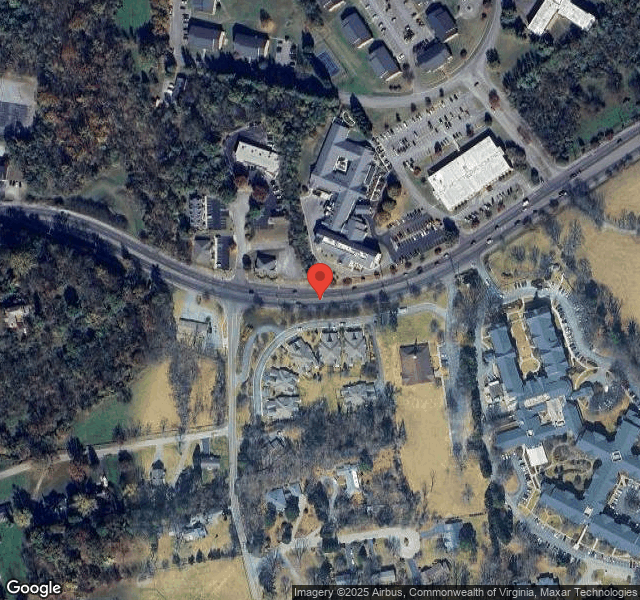
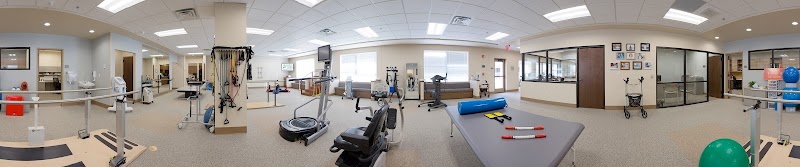
3837 BRANDON AVENUE, ROANOKE, VA 24018 (540) 776-2616
Non profit - Corporation 62 Beds Independent Data: November 2025
Trust Grade
90/100
#7 of 285 in VA
Last Inspection: September 2023

Over 2 years since last inspection. Current conditions may differ from available data.

Overview

Brandon Oaks Nursing and Rehabilitation Center has received a Trust Grade of A, indicating an excellent reputation and a highly recommended facility. It ranks #7 out of 285 nursing homes in Virginia, placing it in the top tier, and is the best option among three facilities in Roanoke County. The facility's performance has been stable, with 12 concerns noted in both 2021 and 2023, suggesting no significant decline or improvement. Staffing is rated 4 out of 5 stars, which is good, and while the turnover rate is high at 48%, it matches the state average, meaning staff retention could still be improved. Notably, there have been no fines reported, which is a positive sign, but there are some concerning incidents, such as outdated food being stored in the kitchen, which raises questions about food safety practices. Overall, the facility has strengths in its rating and reputation, but families should be aware of the food safety issues.

Trust Score
A
90/100
In Virginia
#7/285
Top 2%
Safety Record
Low Risk
No red flags
Inspections
Holding Steady
3 → 3 violations
Staff Stability
⚠ Watch
48% turnover. Above average. Higher turnover means staff may not know residents' routines.
Penalties
✓ Good
No fines on record. Clean compliance history, better than most Virginia facilities.
Skilled Nurses
✓ Good
Each resident gets 48 minutes of Registered Nurse (RN) attention daily — more than average for Virginia. RNs are trained to catch health problems early.
Violations
⚠ Watch
12 deficiencies on record. Higher than average. Multiple issues found across inspections.
★★★★★
5.0
Overall Rating
★★★★☆
4.0
Staff Levels
★★★★★
5.0
Care Quality
★★★★☆
4.0
Inspection Score
Stable
2021: 3 issues
2023: 3 issues

The Good

  • 4-Star Staffing Rating · Above-average nurse staffing levels
  • 5-Star Quality Measures · Strong clinical quality outcomes
  • Full Sprinkler Coverage · Fire safety systems throughout facility
  • No fines on record

Facility shows strength in staffing levels, quality measures, fire safety.

The Bad

Staff Turnover: 48%

Near Virginia avg (46%)

Higher turnover may affect care consistency

The Ugly 12 deficiencies on record

Sept 2023 3 deficiencies
CONCERN (D)

Potential for Harm - no one hurt, but risky conditions existed

Assessment Accuracy (Tag F0641)

Could have caused harm · This affected 1 resident

Based on staff interview and clinical record review, the facility staff failed to accurately code a significant change MDS assessment to capture the residents hospice status for 1 of 15 current reside...

Read full inspector narrative →
Based on staff interview and clinical record review, the facility staff failed to accurately code a significant change MDS assessment to capture the residents hospice status for 1 of 15 current residents, Resident #31. The findings included: The facility staff failed to code Resident #31's significant change minimum data set (MDS) assessment to indicate the resident was receiving hospice services. Resident #31's face sheet included the diagnoses cerebrovascular disease, vascular dementia, and encounter for palliative care-hospice. Section C (cognitive patterns) of Resident #31's significant change MDS assessment with an assessment reference date (ARD) of 06/20/23 had been coded 1/1/3 to indicate this resident had problems with long and short term memory and as severely impaired in cognitive skills for daily decision making. Section O (special treatments, procedures, programs) was not coded to indicate this resident was receiving hospice services. The clinical record included a provider order dated 06/14/23 to admit to hospice services. Resident #31's comprehensive care plan included the problem area palliative care, resident has elected hospice benefits. 09/06/23 8:56 a.m., when Registered Nurse #1 was asked about the missing documentation regarding hospice RN #1 stated the box for hospice services was missed on the MDS. 09/06/23 4:00 p.m., during an end of the day meeting with the Administrator, Director of Nursing, and Administrator in Training, the issue with the coding of the MDS in regard to hospice services was reviewed. No further information regarding this issue was provided to the survey team prior to the exit conference.
CONCERN (D) 📢 Someone Reported This

A family member, employee, or ombudsman was alarmed enough to file a formal complaint

Potential for Harm - no one hurt, but risky conditions existed

Pharmacy Services (Tag F0755)

Could have caused harm · This affected 1 resident

**NOTE- TERMS IN BRACKETS HAVE BEEN EDITED TO PROTECT CONFIDENTIALITY** Based on resident interview, staff interview, clinical record review, and facility document review, the facility staff failed to...

Read full inspector narrative →
**NOTE- TERMS IN BRACKETS HAVE BEEN EDITED TO PROTECT CONFIDENTIALITY** Based on resident interview, staff interview, clinical record review, and facility document review, the facility staff failed to ensure the nursing staff correctly implemented the facility's scheduled/controlled medication monitoring system to accurately account for the facility's scheduled/controlled medications for 1 of 15 current residents. Resident #19. The findings included: For Resident #19, the facility failed to ensure narcotics were accurately accounted for. Resident #19's face sheet included the diagnoses other acute postprocedural pain, hypertension, and presence of right artificial hip joint. Section C (cognitive patterns) of Resident #19's quarterly minimum data set (MDS) assessment with an assessment reference date (ARD) of 06/22/23 included a brief interview for mental status (BIMS) summary score of 12 out of a possible 15 points. Resident #19's comprehensive care plan included the problem area pain. Approaches included, but were not limited to, administer meds as ordered and encourage resident to report when pain interventions are not effective. The clinical record included a provider order for Oxycodone 5 mg every 6 hours PRN (as needed) for pain. A review of Resident #19's medication administration records (MARs) for 07/2023 revealed that no nursing staff had documented that they had administered Oxycodone to Resident #19 until 07/20/23 when Licensed Practical Nurse (LPN) #1 documented they had administered 5 mg of Oxycodone for pain in their legs at 2:32 p.m. LPN #1 documented the medication was effective. LPN #1 was an agency nurse. The facility staff provided the surveyor with 2 controlled drug records for this medication. Drug record #1 indicating the pharmacy had delivered 16 tablets of Oxycodone on 05/13/23. LPN #6 had signed as the receiving nurse. This form was crumpled and torn. The Administrator stated LPN #1 had taken this form from the facility after their shift but had later returned it. Drug record #2 revealed that the pharmacy had delivered 16 tablets of Oxycodone 5 mg to the facility on [DATE]. LPN #3 had signed for receiving the medication. 07/20/23, LPN #1 documented on controlled drug record #1 that they had removed 1 tablet of Oxycodone 5 mg at 8:00 a.m. LPN #1 documented the word dropped beside of this entry and made a second entry at 8:00 a.m. indicating they had removed a second tablet. LPN #1 did not document they had administered this medication on Resident #19's MAR. LPN #1 documented on the MAR they had administered Resident #19 1 tablet of 5 mg Oxycodone at 1432 (2:32 p.m.) on 07/20/23. However, the count went from #16 to #14 on the controlled drug record (#2) instead of #16 to #15. A review of Resident #19's progress notes revealed LPN #1, or any other nurse had not documented Resident #19 had complained of any pain on 07/20/23. The discrepancy on sheet #2 was identified by LPN #4 when counting narcotics with another nurse on Saturday 07/22/23. LPN #4 left a note and did not immediately report the discrepancy to the administrative staff. 09/07/23 10:35 a.m., during a meeting with the Administrator they stated LPN #1 came to the facility and returned controlled record sheet #1 it was crumpled up and torn. They did not ask this nurse to complete a drug test, the agency the nurse worked for was notified, stated they would do an investigation, but they had never reached back out to this facility. LPN #1 had provided the facility with a signed written statement (no date) indicating they had dropped a medication in the residents room on the floor, wasted it in the sharps box but did not have a witness (another nurse) to sign for the disposal of the medication. LPN #1's statement read in part, I dropped a medication in a Patients room on the floor, wasted it in sharps box. I did not have a witness sign it with me. I gave the same women her medication later in the shift, I signed it in the MAR and in the book towards the end of my shift. I made an error by doing so because I gave the medication twice by accident . LPN #1 also wrote that they accidentally took the narcotic sheet home because it was mixed in with other papers on their clipboard. During this interview the surveyor reviewed camera footage with the Administrator, Administrator in Training, and Director of Nursing. On the day of 07/20/23 LPN #1 (identified by facility staff) was observed entering a resident room at approximately 8:12 a.m. The administrative staff identified this room as belonging to Resident #19. LPN #1 was not observed returning to the medication cart and obtain a second dose of Oxycodone to administer to Resident #19. At approximately 2:25 p.m. LPN #1 was observed in the nurses station, observed to open a drawer of the medication cart, leave the nurses station, and walk a few steps down the hallway, turn around and reentered the nursing station. LPN #1 was not observed to enter any residents room(s) prior to turning around and re-entering the nurses station. During the video footage LPN #1 was observed to place a clipboard in their bookbag/backpack. 09/07/23 1:23 p.m., during an interview with Resident #19 they stated staff would knock on their door and ask them if they needed anything for pain. Resident #19 voiced no complaints to the surveyor regarding their stay at this facility. 09/07/23 2:20 p.m., during an interview with LPN#3 they stated they had counted narcotics with LPN #1 on 07/20/23 they had looked at the paperwork but did not actually look at the medications. A review of the nursing schedule for 07/20/23 indicated an agency nurse (no name) and LPN #3 had both worked this unit on different shifts. 09/07/23 4:10 p.m., during an interview with LPN #4 they stated they had noticed the discrepancy when counting medications on Saturday (07/22/23) when they arrived at work. There should have been a line for #15 and #14 and there was not a line for #15. The count was correct, but it didn't match up and they had left a note. The administrative staff provided the surveyor with a copy of their policy titled, CONTROLLED SUBSTANCES. This policy read in part, .Accurate accountability of the inventory of all controlled drugs is maintained at all times . 09/08/23 8:47 a.m., during an interview with LPN #5 (unit manager) they stated they were notified on Monday 07/24/23 between 6:30 a.m. and 7:00 a.m. by LPN #6 that there was a discrepancy with Resident #19's narcotic medications. They had tried to contact the Administrator but were unable to reach them. They had informed the Administrator when they arrived at work on the same day. 09/08/23 8:57 a.m., during an interview with LPN #6 they stated when they arrived to work on Sunday night (07/23/23) they completed a count of the narcotics with LPN #4. When they got to the narcotic page for the Oxycodone LPN #4 had put a sticky note on the narcotic sheet because the numbers were not matching. LPN #4 had asked them what they should do. LPN #6 stated the only thing I could think to do was to tell the unit manager on Monday morning (next morning). The numbers actually matched up but went from #16 to #14 not #16, #15, #14. LPN #6 stated they did not have any complaints from this resident and stated Resident #19 rarely asked for anything. The Administrator provided the survey team with information to indicate Resident #19 was not charged for the medications. No further information regarding this issue was provided to the survey team prior to the exit conference.
CONCERN (F)

Potential for Harm - no one hurt, but risky conditions existed

Food Safety (Tag F0812)

Could have caused harm · This affected most or all residents

Based on observation, staff interview, and facility document review, facility staff failed to ensure food was stored under safe and sanitary conditions in the main kitchen. The findings included: The...

Read full inspector narrative →
Based on observation, staff interview, and facility document review, facility staff failed to ensure food was stored under safe and sanitary conditions in the main kitchen. The findings included: The facility staff failed to dispose of out of date carnation sweetened condensed milk. The box containing the cans of milk included a best before date of August 2023. 09/07/23 8:15 a.m., the surveyor toured the main kitchen area with dietary employee #1 and #2. During this observation the surveyor along with dietary employee #1 observed an opened box of carnation sweetened condensed milk (cans) with a best before date of August 2023. Dietary employee #1 removed this box from the food supply and stated they would dispose of the items. 09/07/23, the Administrator was notified that the kitchen included a box of carnation milk with best before date of August 2023. The administrative staff provided the surveyor with a copy of their policy titled, Food Safety management System. This policy read in part, .Food stock rotation consists in using products with an earlier use-by-date first and moving products with a later sell-by date to the back of the shelf. This ensures that food is used within date .Locate products with the soonest best before or use-by dates. Remove items that are past these dates . No further information regarding this issue was provided to the survey team prior to the exit conference.
Aug 2021 3 deficiencies
CONCERN (D)

Potential for Harm - no one hurt, but risky conditions existed

Quality of Care (Tag F0684)

Could have caused harm · This affected 1 resident

Based on staff interview, clinical record review, and during a medication pass and pour observation, the facility staff failed to ensure that residents receive treatment by following physician orders ...

Read full inspector narrative →
Based on staff interview, clinical record review, and during a medication pass and pour observation, the facility staff failed to ensure that residents receive treatment by following physician orders concerning medication administration for 1 of 29 residents in the survey sample, Resident #9. The findings included: For Resident #9, the facility staff failed to follow the physician's orders for the administration of Diclofenac Sodium 1% gel (a topical nonsteroidal anti-inflammatory drug used to relieve pain from arthritis in joints). Resident #9's diagnosis list indicated diagnoses, which included, but not limited to Unspecified osteoarthritis Unspecified Site, Hemiplegia and Hemiparesis following Cerebral Infarction affecting Right Dominant Side, Aphasia following Cerebral Infarction, and Pain Unspecified. The most recent admission MDS (minimum data set) with an ARD (assessment reference date) of 8/12/21 assessed Resident #9 with modified independence in cognitive skills for daily decision making with intact short-term and long-term memory in section C, Cognitive Patterns. The resident was unable to complete the BIMS (brief interview for mental status) interview. On 8/22/21 at 5:20 pm, during a medication pass and pour observation, surveyor observed RN (registered nurse) #1 squeeze out a small amount of Diclofenac Sodium 1% gel onto their gloved fingers and apply to the resident's knee. RN #1 again squeezed out a small amount of the gel and applied to Resident #9's other knee. RN #1 did not measure the Diclofenac Sodium 1% gel prior to application to either knee. After exiting the resident's room, surveyor asked RN #1 for the ordered dosage of Diclofenac Sodium 1% gel for Resident #9. RN #1 stated 4 grams to each knee is the order but the resident does not want all of it, (he/she) showed them yesterday and (he/she) only wants half of it. RN #1 further stated they used about 2 grams for each knee. RN #1 obtained the measuring strip from the Diclofenac Sodium 1% gel box and showed the surveyor the dosage lines for 2 grams and 4 grams. Resident #9's current physician's orders included an active order dated 8/05/21 for Diclofenac Sodium OTC (over the counter) gel 1% apply 4 grams to lower joints QID (four times a day). RN #1 initialed the order on the August 2021 MAR (medication administration record) as being administered on 8/22/21 at 5:00pm. Surveyor observed RN #1 apply the medication to Resident #9's bilateral knees only. Surveyor requested and received the facility's policy for medication administration entitled, Medication Administration General Guidelines which states in part: Preparation 4. FIVE RIGHTS - Right resident, right drug, right dose, right route and right time, are applied for each medication being administered. A triple check of these 5 Rights is recommended at three steps in the process of preparation of a medication for administration: (1) when the medication is selected, (2) when the dose is removed from the container, and finally (3) just after the dose is prepared and the medication put away. b. Check #2: Prepare the dose - the dose is removed from the container and verified against the label and the EMAR by reviewing the 5 Rights. Documentation 4. The resident's EMAR is initialed by the person administering the medication, and on the line for that specific medication dose administration. Initials on each EMAR are cross referenced to a full signature. On 8/23/21 at 4:26 pm during a meeting with the administrator, director of nursing, Appalachian Unit Manager, and the Blue Ridge Unit Manager, surveyor discussed the concern of RN #1 failing to follow the physician's orders for the administration of Diclofenac Sodium 1% gel for Resident #9. No further information regarding this issue was presented to the survey team prior to the exit conference on 8/24/21.
CONCERN (D)

Potential for Harm - no one hurt, but risky conditions existed

Deficiency F0761 (Tag F0761)

Could have caused harm · This affected 1 resident

Based on observation, staff interview, and facility document review, the facility staff failed to dispose stored expired injectable medications in 1 of 3 medication storage rooms, Appalachian Unit. T...

Read full inspector narrative →
Based on observation, staff interview, and facility document review, the facility staff failed to dispose stored expired injectable medications in 1 of 3 medication storage rooms, Appalachian Unit. The findings included: The facility staff failed to dispose of an expired 10-count box of Influenza Vaccine prefilled syringes and a vial of Tuberculin Purified Protein (Mantoux) solution with an open date of 7/01/21. On 8/23/21 at 3:05 pm, the surveyor, accompanied by LPN (licensed practical nurse) #1, entered the medication room on the Appalachian Unit and observed an open, complete 10-count box of Influenza Vaccine Flucelvac Quadrivalent prefilled syringes with an expiration date of 6/30/21 and an open multi-dose half-full vial of Tuberculin Purified Protein (Mantoux) solution with an open date of 7/01/21 written on the box containing the vial. Both medications were located in a locked refrigerator. LPN #1 took the box of Influenza Vaccine Flucelvac Quadrivalent prefilled syringes and multi-dose vial of Tuberculin Purified Protein (Mantoux) solution and gave them to the unit manager. The expiration date of 6/30/21 for the box of Influenza Vaccine Flucelvac Quadrivalent prefilled syringes and the opening date of 7/01/21 for the multi-dose vial of Tuberculin Purified Protein (Mantoux) solution were verified by LPN #1 and the Unit Manager. The surveyor requested and received the facility's policy for medication storage, entitled Medication Storage in the Facility which states in part: Procedure: 8. Outdated, contaminated, or deteriorated medications and those in containers that are cracked, soiled, or without secure closures are immediately removed from inventory, disposed of according to procedures for medication disposal, if a current order exists. Expiration Dating: 3. Certain medications or package types, such as IV solutions, multiple dose injectable vials, ophthalmics, nitroglycerin tablets, blood sugar testing solutions and strips, once opened, require an expiration date shorter than the manufacturer's expiration date to insure medication purity and potency. 4c. Drugs dispensed in the manufacture's original container will carry the manufacturer's expiration date. Once opened, these will be good to use until the manufacturer's expiration date is reached unless the medication is: i. In a multi-dose injectable vial 6. The nurse shall place a date opened sticker on the medication and enter the date opened and the new date of expiration. The expiration date of the vial or container will be 30 days unless the manufacturer recommends another date or regulations/guidelines require different dating. 9. All expired medications will be removed from the active supply and destroyed in the facility, regardless of amount remaining. The medication will be destroyed in the usual manner. On 8/23/21 at 4:26 pm during a meeting with the administrator, director of nursing, and unit managers, surveyor discussed the concern of the expired medications located in the medication room on Appalachian Unit. No further information regarding this issue was presented to the survey team prior to the exit conference on 8/24/21.
CONCERN (F)

Potential for Harm - no one hurt, but risky conditions existed

Food Safety (Tag F0812)

Could have caused harm · This affected most or all residents

Based on observation, staff interview and facility document review, facility staff failed to ensure food was stored under safe and sanitary conditions in 1 walk-in freezer and 1 drink/prep refrigerato...

Read full inspector narrative →
Based on observation, staff interview and facility document review, facility staff failed to ensure food was stored under safe and sanitary conditions in 1 walk-in freezer and 1 drink/prep refrigerator. The findings: 1. Frozen carrots, California blend vegetables, pre-cooked hamburger patties, and pretzel bagels were not sealed in a container within the walk-in freezer. During the initial kitchen tour accompanied by the facility's food service manager on 08/22/2021 at approximately 4:30 p.m., there were opened boxes of frozen carrots, California blend vegetables and pre-cooked hamburger patties. These foods were in a plastic bag within the boxes with the plastic bags opened, not sealed or tied closed. There were pretzel bagels in an opened, not sealed or tied plastic bag sitting on a shelf. The food service manager reported the expectation was for all foods to be kept in a closed container within the walk-in freezer and acknowledged these items were not currently stored properly. 2. Individual milk containers in the RC kitchen's drink/prep refrigerator had expired. While observing items kept within the RC kitchen's drink/prep refrigerator accompanied by the food service manager on 8/22/2021, six of the eight individual fat free milk containers had expired on 08/20/21. Five out of five individual containers of whole milk had expired on 08/20/21. There were five individual containers of 2% milk with an expiration date of 08/21/21. All of the milk containers were unopened. The food service manager acknowledged the items items had expired and discussed the concern with the facility's kitchen supervisor. The facility's administrator, director of nursing and one unit manager was informed of the above described observations during an end of day meeting on 08/23/21. Observations in the walk-in freezer and RC kitchen drink/prep refrigerator were made again on 08/24/21 at 9:29 a.m. accompanied by the food service manager. All items in the walk-in freezer were in closed containers. All items within the RC kitchen's drink/prep refrigerator had not expired.
Feb 2020 6 deficiencies
CONCERN (D)

Potential for Harm - no one hurt, but risky conditions existed

Deficiency F0578 (Tag F0578)

Could have caused harm · This affected 1 resident

Based on clinical record review and staff interview, the facility staff failed to ensure the resident's right to formulate an advanced directive by failing to ensure the advanced directive in the resi...

Read full inspector narrative →
Based on clinical record review and staff interview, the facility staff failed to ensure the resident's right to formulate an advanced directive by failing to ensure the advanced directive in the resident's record was complete for 2 of 19 residents, Resident #206 and #212. The findings included: 1. For Resident #206, the facility staff failed to accurately complete the resident's DDNR (Durable Do Not Resuscitate Order) form. Resident #206's diagnosis list indicated diagnoses, which included, but not limited to Encephalopathy, Essential Hypertension, and Personal History of Traumatic Brain Injury. Resident #206 did not have a completed MDS (minimum data set) at the time of the survey. A Nursing admission Assessment dated 2/24/20 documented the resident's cognitive status as alert and oriented to all spheres. Resident #206's clinical record included a current physician's order dated 2/24/20 stating DNR (do not resuscitate). The clinical record also included a Virginia Department of Health DDNR (Durable Do Not Resuscitate) Order form dated 2/24/20 signed by the physician and the resident's authorized representative. This DDNR read in part Under section 1 I further certify (must check 1 or 2): 1. The patient is CAPABLE of making an informed decision . 2. The patient is INCAPABLE of making an informed decision . Number 2 was circled Section 2 of the DDNR read, If you checked 2 above, check A, B, or C below . All three options were left unmarked. The concern of Resident #206's incomplete DDNR was discussed with the administrative team consisting of the Administrator, Administrator in Training, Director of Nursing, and Unit Manager #1 during a meeting on 2/26/20 at 5:30pm. No further information was provided prior to the exit conference on 2/27/20. 2. For Resident #212, the facility staff failed to accurately complete the resident's DDNR (Durable Do Not Resuscitate Order) form. Resident #212's diagnosis list indicated diagnoses, which included, but not limited to Aftercare following Joint Replacement Surgery, Presence of Left Artificial Shoulder Joint, Alzheimer's Disease, Chronic Kidney Disease Stage 3, Type 2 Diabetes Mellitus, and Nonrheumatic Aortic Valve Stenosis. Resident #212 did not have a completed MDS (minimum data set) at the time of the survey. A Nursing admission Assessment dated 2/25/20 documented the resident's cognitive status as alert and oriented to person only with memory problems. Resident #212's clinical record included a current physician's order dated 2/25/20 stating DNR (do not resuscitate). The clinical record also included a Virginia Department of Health DDNR (Durable Do Not Resuscitate) Order form dated 9/24/19 signed by the physician and the resident's authorized representative. This DDNR read in part Under section 1 I further certify (must check 1 or 2): 1. The patient is CAPABLE of making an informed decision . 2. The patient is INCAPABLE of making an informed decision . Number 2 was circled Section 2 of the DDNR read, If you checked 2 above, check A, B, or C below . All three options were left unmarked. The concern of Resident #212's incomplete DDNR was discussed with the administrative team consisting of the Administrator, Administrator in Training, Director of Nursing, and Unit Manager #1 during a meeting on 2/26/20 at 5:30pm. No further information was provided prior to the exit conference on 2/27/20.
CONCERN (D)

Potential for Harm - no one hurt, but risky conditions existed

Notification of Changes (Tag F0580)

Could have caused harm · This affected 1 resident

Based on staff interview and clinical record review, the facility staff failed to notify the physician in regards to administrating routine scheduled medications as evidenced by administrating medicat...

Read full inspector narrative →
Based on staff interview and clinical record review, the facility staff failed to notify the physician in regards to administrating routine scheduled medications as evidenced by administrating medications to 1 of 19 residents at another time other than the routine scheduled times (Resident #12). The findings included: Resident #12 was a resident in the facility at the time of this survey of 2/25/2020 through 2/27/2020. On the most recent significant change MDS (Minimum Data Set), the resident was coded as having a BIMS (Brief Interview for Mental Status) score of 12 out of a possible score of 15. Resident #12 was also coded as requiring extensive assistance of one staff member for dressing and bathing and being totally dependent on one staff member for bathing. The resident had the following diagnoses of, but not limited to atrial fibrillation, heart failure, high blood pressure, and depression. During the clinical record review that was conducted 2/25/2020 through 2/27/2020, the surveyor noted the following in the January 2020 MAR (Medication Administration Record) for Resident #12: Scheduled Date 1/5/2020 Scheduled Time 9 AM Charted Date 1/5/2020 10:46 AM Reasons/Comments .Administrated Late . This was documented for the medication Augmentin 875-125 mg (milligram) to be administrated to the resident twice a day. Scheduled Date 1/5/2020 Scheduled Time 9 AM Charted Date 1/5/2020 10:46 AM Reasons/Comments .Administrated Late . This was documented for the medication of Carvedilol 6.25 mg to be administrated to the resident twice a day, Scheduled Date 1/4/2020 Scheduled Time 9 AM Charted Date 1/4/2020 10:13 AM Reasons/Comments: .Administrated Late . This was documented for the medication Eliquis 2.5 mg to be administrated to the resident twice a day. Scheduled Date 1/5/2020 Scheduled Time 9 AM Charted Date 1/5/2020 10:46 AM Reasons/Comments .Administrated Late . This was documented for the medication Keppra 1,000 mg to be administrated to the resident twice a day. The surveyor notified the DON (director of nursing) of the above documented findings on 2/27/2020 at 1:30 pm. The surveyor asked the DON if the staff member administrators a medication other than the scheduled times (ie: an hour and 45 minutes after the scheduled time) what is the expectation of that staff member doing regarding this. The DON stated The nurse has an hour before and an hour after the scheduled time to administer the medication to the resident without it being considered outside of the schedule time. If the medication is given outside of that scheduled time than the nurse is to notify the physician that this has occurred. The surveyor requested a copy of the facility's policy regarding the administration of medication to the residents. The suryeor asked the DON if this documentation was present in the nurses' notes for these dates and times when the medication was not given at the scheduled time. The DON stated, I could not find any documentation that the physician had been notified on these dates. At 2 pm, the surveyor received the facility's policy titled Medication Administration General Guidelines from the DON. In this policy it read in part, .If a dose of regularly scheduled medication is withheld, refused, not available or given at a time other than the scheduled time, the nurse will enter the reason the medication was withheld, refused, not available or given at the time other than the scheduled time into the electronic medication record along with documentation the physician is notified. Nursing documents the notification and physician response. The surveyor notified the administrator and the DON at 4:46 pm on 2/27/2020 of the above documented findings. No further information was provided to the surveyor prior to the exit conference on 2/27/2020.
CONCERN (D)

Potential for Harm - no one hurt, but risky conditions existed

Assessment Accuracy (Tag F0641)

Could have caused harm · This affected 1 resident

Based on staff interview and clinical record review, the facility staff failed to ensure an accurate MDS (minimum data set) for 1 of 19 residents, Resident #53. The findings included: For Resident #5...

Read full inspector narrative →
Based on staff interview and clinical record review, the facility staff failed to ensure an accurate MDS (minimum data set) for 1 of 19 residents, Resident #53. The findings included: For Resident #53, facility staff coded the resident as being discharged to an acute hospital when in fact the resident had been discharged to an assisted living facility. Resident #53's diagnosis list indicated diagnoses, which included, but not limited to Thrombocytopenia, Myelodysplastic Syndrome, Vascular Dementia without Behavioral Disturbance, Essential Hypertension, and Muscle Weakness. The most recent discharge MDS with an ARD (assessment reference date) of 1/24/20 assigned the resident a BIMS (brief interview for mental status) score of 8 out of 15 in section C, Cognitive Patterns. Resident #53 is coded as being discharged to an acute hospital in section A, Identification Information. A review of Resident #53's medical record revealed a signed physician's order dated 1/23/20 stating Discharge to (name omitted) Intensive Assisted Living 1/24/20. Outpatient PT (physical therapy) and OT (occupational therapy) to eval (evaluate) and treat as indicated. A social services progress note dated 1/24/20 12:52pm states Patient discharge to (name omitted) IAL (Intensive Assisted Living) on 1/24/20. Patient outpatient services secured with (name omitted). Patient had no DME needs. Family present at discharge. No mood issues at this time. The medical record contained a Discharge Plan of Care signed by the discharging nurse on 1/24/20 indicating discharge destination is (name omitted) IAL. A nursing progress note dated 1/24/20 12:24pm states RSD (resident) transferred to IAL with all belongings. On 2/27/20 at 10:49am, the surveyor spoke with the MDS staff, RN (registered nurse) #1 and LPN (licensed practical nurse) #1, concerning coding for A2100 Discharge Status on the 1/24/20 MDS. LPN #1 stated the question should have been coded as 1, indicating discharge to the community. On 2/27/20 at 11:20am, RN #1 provided surveyor with a modified discharge MDS with an ARD of 1/24/20 with question A2100 coded as discharge to the community. On 2/27/20 at approximately 4:45pm, the administrator and director of nursing were notified of the inaccurate MDS assessment for Resident #53. No further information was provided prior to the exit conference on 2/27/20.
CONCERN (D)

Potential for Harm - no one hurt, but risky conditions existed

Deficiency F0657 (Tag F0657)

Could have caused harm · This affected 1 resident

Based on staff interview and clinical record review, the facility staff failed to have an interdisciplinary team prepared plan that was resident centered specifying Transfer per Handling Program on th...

Read full inspector narrative →
Based on staff interview and clinical record review, the facility staff failed to have an interdisciplinary team prepared plan that was resident centered specifying Transfer per Handling Program on the comprehensive care plan for 1 of 19 residents (Resident #13). The findings included: Resident #13 was a resident in the facility at the time the survey was conducted. The resident was admitted with the following diagnoses of, but not limited to atrial fibrillation, coronary artery disease, high blood pressure and hip fracture. On the most recent MDS (Minimum Data Set), the resident was coded as having a BIMS (Brief Interview for Mental Status) score of 7 out of a possible score of 15. Resident #13 was also coded as requiring extensive assistance of two or more staff members for dressing and personal hygiene and being totally dependent on two or more staff members for bathing, During the clinical record review on 2/26/2020 and 2/27/2020, the surveyor noted the following entry on the resident centered comprehensive care plan (CCP) under the ADL Functional/Rehabilitation Potential which stated, .Transfer per Handling Program . There was no explanation of how the resident was to be transferred according to this program. The surveyor notified the DON (director of nursing) of the above documented findings on 2/27/2020 at 2 pm. The surveyor asked the DON according to this resident centered CCP, how is this resident supposed to be transferred. The DON stated, The staff would transfer the resident according to the transfer handling program. The surveyor asked the DON, does this resident centered CCP explain to the staff how this resident is supposed to be transferred (for example, one person assist, two person assist). The DON stated, No it does not. It just states Transfer per Handling Program. The surveyor notified the administrator and the DON of the above documented findings on 2/27/2020 at 4:46 pm in the end of the day conference. No further information was provided to the surveyor prior to the exit conference on 2/27/2020.
CONCERN (D)

Potential for Harm - no one hurt, but risky conditions existed

Quality of Care (Tag F0684)

Could have caused harm · This affected 1 resident

Based on clinical record review and staff interview, the facility staff failed to ensure that residents receive treatment and care in accordance with the comprehensive person-centered care plan as evi...

Read full inspector narrative →
Based on clinical record review and staff interview, the facility staff failed to ensure that residents receive treatment and care in accordance with the comprehensive person-centered care plan as evidenced by failure to administer medication per physician's order for 1 of 19 residents, Resident #217. The findings included: For Resident #217, the facility staff failed to follow physician's orders for the administration of the medication Carvedilol (a beta-blocker used to treat hypertension and heart failure). Resident #217's diagnosis list indicated diagnoses, which included, but not limited to Hypertensive Urgency, Essential Hypertension, Unspecified Atrial Fibrillation, and Presence of Cardiac Pacemaker. Resident #217 did not have a completed MDS (minimum data set) at the time of the survey. A Nursing admission Assessment dated 2/18/20 documented the resident's cognitive status as alert and oriented to all spheres. A review of Resident #217's medical record revealed a signed physician's order dated 2/18/20 for Carvedilol 12.5 mg (milligrams) oral twice a day at 9:00am and 9:00pm for HTN (hypertension). Surveyor reviewed the resident's February 2020 MAR (medication administration record) and noted Carvedilol was not administered on 2/25/20 at 9:00am with the reason documented as due to condition, pulse 50. On 2/26/20 at approximately 5:35pm, the administrative team consisting of the administrator, administrator in training, director of nursing, and unit manager #1 were made aware of Resident #217 not receiving Carvedilol as ordered on 2/25/20. On 2/27/20 at 12:07pm, surveyor spoke with Unit Manager #2 who stated the resident's physician's assistant clarified the order for Carvedilol adding parameters for administration. The clarified order for Carvedilol dated 2/27/20 added the parameter to hold if pulse is under 55. No further information regarding this issue was presented to the survey team prior to the exit conference on 2/27/20.
CONCERN (E)

Potential for Harm - no one hurt, but risky conditions existed

Food Safety (Tag F0812)

Could have caused harm · This affected multiple residents

Based on observation, staff interview, and facility document review, the facility staff failed to properly store food in resident accessible refrigerators in 2 of 2 Nourishment Stations in the facilit...

Read full inspector narrative →
Based on observation, staff interview, and facility document review, the facility staff failed to properly store food in resident accessible refrigerators in 2 of 2 Nourishment Stations in the facility located on Units 1 and 3. The findings included: For Unit 1, the facility staff failed to date a pre-made sandwich prior to placing in the refrigerator and failed to discard food that was brought in from outside the facility and placed in the refrigerator without a date. For Unit 3, facility staff failed to remove out of date milk from the refrigerator. On 2/25/20 at approximately 3:30pm, surveyor observed the contents of the Unit 3 Nourishment Station refrigerator and noted two cartons of chocolate milk with a sale by date of 2/24/20 and a carton of fat free milk with the sale by date of 2/21/20. On 2/25/20 at approximately 4:05pm, surveyor spoke with the CDM (certified dietary manager) who stated the facility uses the sell by date listed on each carton of milk as the discard card. Surveyor and CDM went to the Unit 3 Nourishment Station refrigerator and the CDM removed with the three cartons of milk and stated they would discard them and check the other refrigerators in the facility. On 2/26/20 at approximately 4:15pm, surveyor observed the following in the Unit 1 Nourishment Station refrigerator: ½ of a sandwich wrapped in plastic wrap labeled ham and cheese, a clear plastic container with sliced fruit labeled with a resident's name and room number, a clear plastic bag containing an open container of palmetto cheese and a container with chocolate covered strawberries labeled with a resident's name and room number, and a plastic container of soup in the freezer labeled with a resident's name , room number, and soup. None of these items included a date. The CDM was notified and observed the undated items in the refrigerator and removed the sandwich and stated they would notify the families of the other items. Surveyor requested and received the policy Food Brought Into the Facility by Visitors which stated in part: Family or visitors must label the containers with the date it was brought into the facility and the name and room number of the resident receiving it As a rule, discard time/temperature for safety (TCS) food within 7 days from the date it was made Monitor refrigerators for foods that are beyond their 7 day date and discard food items On 2/26/20 at approximately 5:35pm, the administrative team consisting of the administrator, administrator in training, director of nursing, and unit manager #1 were notified of the outdated milk in the refrigerator on Unit 3 and the undated food items in the refrigerator on Unit 1. No further information regarding these issues were presented to the survey team prior to the exit conference on 2/27/20.
Understanding Severity Codes (click to expand)
Life-Threatening (Immediate Jeopardy)
J - Isolated K - Pattern L - Widespread
Actual Harm
G - Isolated H - Pattern I - Widespread
Potential for Harm
D - Isolated E - Pattern F - Widespread
No Harm (Minor)
A - Isolated B - Pattern C - Widespread

Questions to Ask on Your Visit

  • "Can I speak with families of current residents?"
  • "What's your RN coverage like on weekends and overnight?"

Our Honest Assessment

Strengths
  • • Grade A (90/100). Above average facility, better than most options in Virginia.
  • • No major safety red flags. No abuse findings, life-threatening violations, or SFF status.
  • • No fines on record. Clean compliance history, better than most Virginia facilities.
Concerns
  • • 12 deficiencies on record. Higher than average. Multiple issues found across inspections.
Bottom line: Generally positive indicators. Standard due diligence and a personal visit recommended.

About This Facility

What is Brandon Oaks's CMS Rating?

CMS assigns BRANDON OAKS NURSING AND REHABILITATION CENTER an overall rating of 5 out of 5 stars, which is considered much above average nationally. Within Virginia, this rating places the facility higher than 99% of the state's 100 nursing homes. This rating reflects solid performance across the metrics CMS uses to evaluate nursing home quality.
How is Brandon Oaks Staffed?

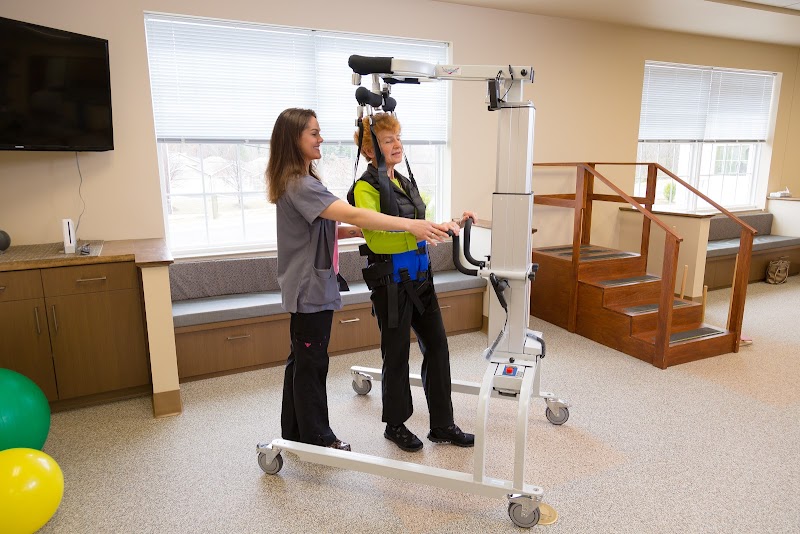
CMS rates BRANDON OAKS NURSING AND REHABILITATION CENTER's staffing level at 4 out of 5 stars, which is above average compared to other nursing homes. Staff turnover is 48%, compared to the Virginia average of 46%.

What Have Inspectors Found at Brandon Oaks?

State health inspectors documented 12 deficiencies at BRANDON OAKS NURSING AND REHABILITATION CENTER during 2020 to 2023. These included: 12 with potential for harm.
Who Owns and Operates Brandon Oaks?

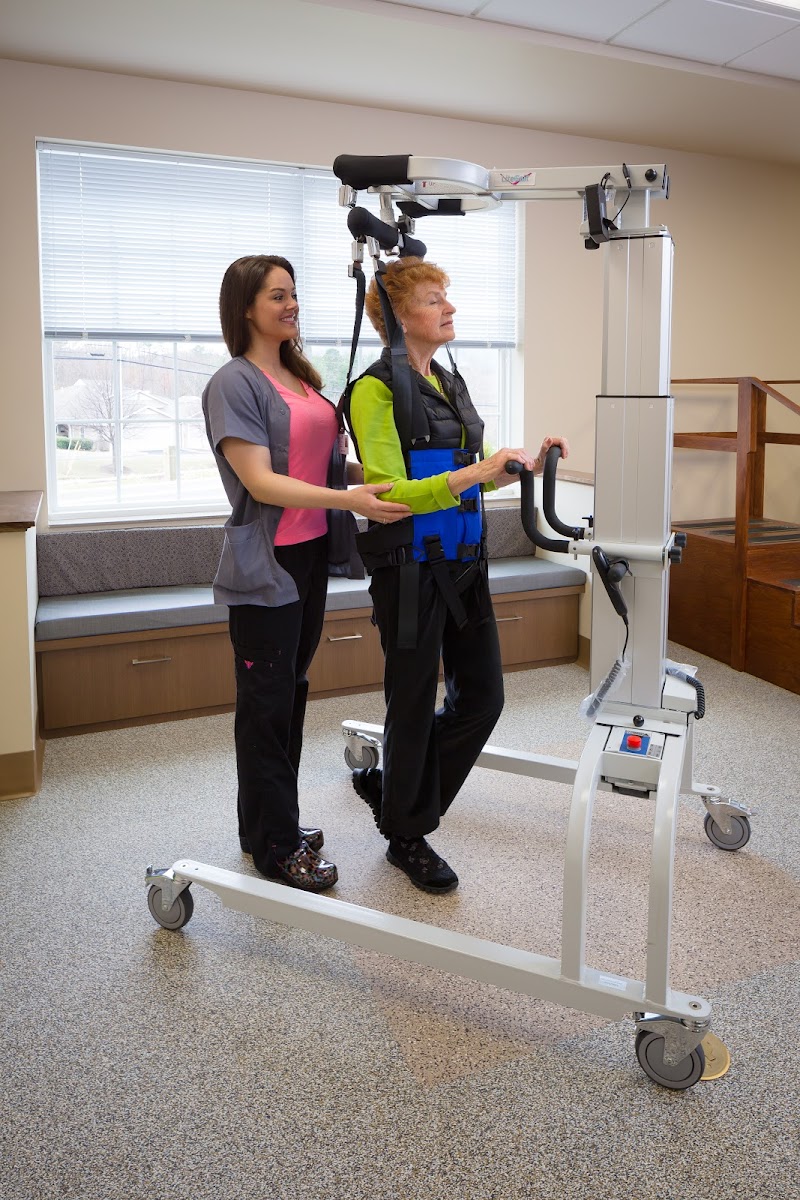
BRANDON OAKS NURSING AND REHABILITATION CENTER is owned by a non-profit organization. Non-profit facilities reinvest revenue into operations rather than distributing to shareholders. The facility operates independently rather than as part of a larger chain. With 62 certified beds and approximately 57 residents (about 92% occupancy), it is a smaller facility located in ROANOKE, Virginia.
How Does Brandon Oaks Compare to Other Virginia Nursing Homes?

Compared to the 100 nursing homes in Virginia, BRANDON OAKS NURSING AND REHABILITATION CENTER's overall rating (5 stars) is above the state average of 3.0, staff turnover (48%) is near the state average of 46%, and health inspection rating (4 stars) is above the national benchmark.

What Should Families Ask When Visiting Brandon Oaks?

Based on this facility's data, families visiting should ask: "Can I visit during a mealtime to observe dining assistance and food quality?" "How do you handle medical emergencies, and what is your hospital transfer rate?" "Can I speak with family members of current residents about their experience?"

Is Brandon Oaks Safe?

Based on CMS inspection data, BRANDON OAKS NURSING AND REHABILITATION CENTER has a clean safety record: no substantiated abuse findings (meaning no confirmed cases of resident harm), no Immediate Jeopardy citations (the most serious violation level indicating risk of serious injury or death), and is not on the Special Focus Facility watch list (a federal program monitoring the lowest-performing 1% of nursing homes). The facility has a 5-star overall rating and ranks #1 of 100 nursing homes in Virginia. While no facility is perfect, families should still ask about staff-to-resident ratios and recent inspection results during their visit.

Do Nurses at Brandon Oaks Stick Around?

BRANDON OAKS NURSING AND REHABILITATION CENTER has a staff turnover rate of 48%, which is about average for Virginia nursing homes (state average: 46%). Moderate turnover is common in nursing homes, but families should still ask about staff tenure and how the facility maintains care continuity when employees leave.

Was Brandon Oaks Ever Fined?

BRANDON OAKS NURSING AND REHABILITATION CENTER has no federal fines on record. CMS issues fines when nursing homes fail to meet care standards or don't correct problems found during inspections. The absence of fines suggests the facility has either maintained compliance or corrected any issues before penalties were assessed. This is a positive indicator, though families should still review recent inspection reports for the full picture.

Is Brandon Oaks on Any Federal Watch List?

BRANDON OAKS NURSING AND REHABILITATION CENTER is not on any federal watch list. The most significant is the Special Focus Facility (SFF) program, which identifies the bottom 1% of nursing homes nationally based on persistent, serious quality problems. Not being on this list means the facility has avoided the pattern of deficiencies that triggers enhanced federal oversight. This is a positive indicator, though families should still review the facility's inspection history directly.