RIVERSIDE LIFELONG HEALTH & REHAB SMITHFIELD
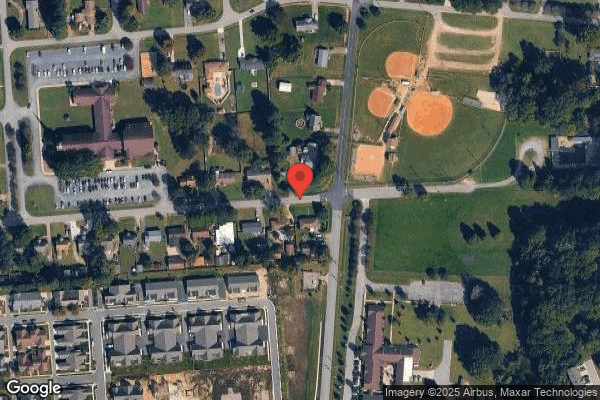

101 JOHN ROLFE DRIVE, SMITHFIELD, VA 23430 (757) 357-3282
Non profit - Corporation 34 Beds RIVERSIDE HEALTH SYSTEM Data: November 2025
Trust Grade
70/100
#99 of 285 in VA
Last Inspection: April 2024

Within standard 12-15 month inspection cycle. Federal law requires annual inspections.

Overview

Riverside Lifelong Health & Rehab in Smithfield, Virginia, has a Trust Grade of B, indicating it is a good choice but not without its flaws. It ranks #99 out of 285 facilities in Virginia, placing it in the top half, and #1 out of 2 in Isle of Wight County, meaning it's the best local option available. The facility is improving overall, with the number of issues decreasing from 8 in 2021 to 6 in 2024. Staffing is a strength, with a 4/5 rating and more registered nurse coverage than 83% of Virginia facilities, although staff turnover is at 58%, which is average. While there have been no fines, there are some concerns: food safety issues were noted, such as unclean kitchen conditions, and residents were not informed about the contact information for advocacy groups or given opportunities to create advance directives, indicating areas that need attention.

Trust Score
B
70/100
In Virginia
#99/285
Top 34%
Safety Record
Low Risk
No red flags
Inspections
Getting Better
8 → 6 violations
Staff Stability
⚠ Watch
58% turnover. Above average. Higher turnover means staff may not know residents' routines.
Penalties
✓ Good
No fines on record. Clean compliance history, better than most Virginia facilities.
Skilled Nurses
✓ Good
Each resident gets 52 minutes of Registered Nurse (RN) attention daily — more than average for Virginia. RNs are trained to catch health problems early.
Violations
⚠ Watch
17 deficiencies on record. Higher than average. Multiple issues found across inspections.
★★★★☆
4.0
Overall Rating
★★★★☆
4.0
Staff Levels
★★★☆☆
3.0
Care Quality
★★★★☆
4.0
Inspection Score
Stable
2021: 8 issues
2024: 6 issues

The Good

  • 4-Star Staffing Rating · Above-average nurse staffing levels
  • Full Sprinkler Coverage · Fire safety systems throughout facility
  • No fines on record

Facility shows strength in staffing levels, fire safety.

The Bad

Staff Turnover: 58%

12pts above Virginia avg (46%)

Frequent staff changes - ask about care continuity

Chain: RIVERSIDE HEALTH SYSTEM

Part of a multi-facility chain

Ask about local staffing decisions and management

Staff turnover is elevated (58%)

10 points above Virginia average of 48%

The Ugly 17 deficiencies on record

Apr 2024 6 deficiencies
CONCERN (D) 📢 Someone Reported This

A family member, employee, or ombudsman was alarmed enough to file a formal complaint

Potential for Harm - no one hurt, but risky conditions existed

Deficiency F0578 (Tag F0578)

Could have caused harm · This affected 1 resident

Based on staff interviews, clinical record review and facility documentation review, the facility staff failed to ensure 1 of 27 residents in the survey sample, (Resident #5) were given the opportunit...

Read full inspector narrative →
Based on staff interviews, clinical record review and facility documentation review, the facility staff failed to ensure 1 of 27 residents in the survey sample, (Resident #5) were given the opportunity to formulate an advance directive. The findings included: Resident #5 was originally admitted to the nursing facility on 09/25/21. Diagnosis for Resident #5 included but are not limited to Hypertension. The quarterly revised Minimum Data Set (MDS) assessment with an assessment reference date (ARD) of 02/06/24 coded the resident as completing the Brief Interview for Mental Status (BIMS) and scoring 12 out of a possible 15. This indicated Resident #5 cognitive abilities for daily decision making were intact. A review of the clinical record revealed that there was no advance directive for Resident #5. On 04/10/24 at approximately 11:48 AM., Registered Nurse (RN) #1 was approached for assistance in locating Resident #5's advanced directive. RN #1 looked through an advance directive binder for a hard copy and the Resident's medical record with no success. The RN failed to provide evidence that they offered the resident the opportunity to formulate an advance directive. On 4/11/24 at approximately 8:30 PM., a Do Not Resuscitate (DNR) order was received from Licensed Practical Nurse (LPN) #1. LPN #1 was informed that the DNR order did not meet the criteria for an advanced directive. LPN #1 said that no advance directive was found in the resident's medical record nor evidence that the resident was offered an opportunity to formulate one. On 4/12/24 at approximately 9:25 AM., the above findings were shared with the Administrator, Director of Nursing and Corporate Consultant. An opportunity was offered to the facility's staff to present additional information but no additional information was provided.
CONCERN (D) 📢 Someone Reported This

A family member, employee, or ombudsman was alarmed enough to file a formal complaint

Potential for Harm - no one hurt, but risky conditions existed

Deficiency F0657 (Tag F0657)

Could have caused harm · This affected 1 resident

Based on a family interview, staff interviews, and clinical record review, the facility staff failed to review and revise the person-centered care plan to include hospice services for 1 of 27 resident...

Read full inspector narrative →
Based on a family interview, staff interviews, and clinical record review, the facility staff failed to review and revise the person-centered care plan to include hospice services for 1 of 27 residents (Resident #11), in the survey sample. The findings included: Resident #11 was originally admitted to the facility 4/15/22 and the resident had never been discharged from the facility. The current diagnoses included dementia and dysphagia. The significant change Minimum Data Set (MDS) assessment with an assessment reference date (ARD) of 2/5/23 coded the resident as completing the Brief Interview for Mental Status (BIMS) and scoring 12 out of a possible 15. This indicated Resident #11's cognitive abilities for daily decision making were intact. It was noted during the interview with Resident #11 that she would lose her train of thought and switch from subject to subject. In sections GG the resident was coded as dependent upon staff for most activities of daily living. She was also coded for set-up assistance only with eating. In section O (Special Treatments and Programs) at K1, the resident was coded for Hospice services. On 4/10/24 at approximately 12:25 PM an interview was conducted with the Family Member #3. Family Member #3 stated that Resident #11 had experienced weight loss and some decline physically therefore the Physician recommended hospice services which would allow the resident to receive additional assistance with meal consumption. Family Member #3 stated he was unsure of how often hospice was assisting the resident with meal consumption, but he felt Resident #11 was self-feeding much better and maybe she could come off the hospice services soon. An interview was conducted with Registered Nurse (RN) #1 on 4/11/24 at approximately 1:35 PM. RN #1 stated the resident was receiving hospice services and provided a hospice book which contained documents from the hospice agency. A review of the facility's person-centered plan of care failed to address hospice services within any identified problem. RN #1 stated the hospice personnel don't have a consistent schedule and they are not scheduled to assist the resident with any meals. An interview with the Administrator on 4/12/24 at approximately 11:25 AM revealed that currently the facility is without an MDS Coordinator and they have a Corporate person currently helping out. During the final interview with the Administrator, Director of Nursing and Administrative team members on 4/12/24 at approximately 10:00 AM the above findings were shared, and they voiced no concerns.
CONCERN (D) 📢 Someone Reported This

A family member, employee, or ombudsman was alarmed enough to file a formal complaint

Potential for Harm - no one hurt, but risky conditions existed

Deficiency F0761 (Tag F0761)

Could have caused harm · This affected 1 resident

Based on observation and staff interviews, the facility staff failed to ensure a multi-dose vial of Tuberculin, a purified protein derivative was dated when opened, to ensure it was discarded in 30 da...

Read full inspector narrative →
Based on observation and staff interviews, the facility staff failed to ensure a multi-dose vial of Tuberculin, a purified protein derivative was dated when opened, to ensure it was discarded in 30 days and did not remain available for administration. The findings included: The medication storage task was conducted on 4/11/24 at approximately 11:50 AM with Registered Nurse (RN) #2. Observations were made of opened biologicals in the medication refrigerator which included an opened bottle of Tuberculin, purified protein derivative. The date on the Tuberculin box label as sent from the pharmacy to the facility for house stock was January 2024. A further review failed to reveal the date the multi-dose vial of Tuberculin, a purified protein derivative had been opened. RN #2 stated she did not know when it had been opened or for whom it was opened for since neither the box nor the vial was dated. An interview was also conducted with RN #1 on 4/11/24 at approximately 12:30 PM. RN #1 stated she received information that the undated multi-vial of Tuberculin, purified protein derivative can be used up to 30 days once opened. RN #1 stated the biological would be removed from use and discarded because the date it was opened was unknown. During the final interview with the Administrator, Director of Nursing and Administrative team members on 4/12/24 at approximately 10:00 AM the above findings were shared, and they voiced no concerns. INDICATIONS AND USAGE - TUBERSOL Tuberculin Purified Protein Derivative (Mantoux), is indicated to aid diagnosis of tuberculosis infection (TB) in persons at increased risk of developing active disease (https://www.fda.gov/media/74866/download). STORAGE - Store at 2° to 8°C (35° to 46°F). (20) Do not freeze. Discard product if exposed to freezing. Protect from light. Tuberculin PPD solutions can be adversely affected by exposure to light. The product should be stored in the dark except when doses are actually being withdrawn fromthe vial. A vial of TUBERSOL which has been entered and in use for 30 days should be discarded (https://www.fda.gov/media/74866/download).
CONCERN (D)

Potential for Harm - no one hurt, but risky conditions existed

Deficiency F0849 (Tag F0849)

Could have caused harm · This affected 1 resident

Based on a family interview, staff interview, clinical record review, and review of the Hospice policy; the facility staff failed to a method of communication after visits were available to the facili...

Read full inspector narrative →
Based on a family interview, staff interview, clinical record review, and review of the Hospice policy; the facility staff failed to a method of communication after visits were available to the facility staff and to ensure hospice services were coordinated to ensure hospice staff assisted with meal consumption for 1 of 27 residents (Resident #11), in the survey sample. The findings included: Resident #11 was originally admitted to the facility 4/15/22 and the resident had never been discharged from the facility. The current diagnoses included dementia and dysphagia. The significant change Minimum Data Set (MDS) assessment with an assessment reference date (ARD) of 2/5/23 coded the resident as completing the Brief Interview for Mental Status (BIMS) and scoring 12 out of a possible 15. This indicated Resident #11's cognitive abilities for daily decision making were intact. It was noted during the interview with Resident #11 that she would lose her train of thought and switch from subject to subject. In sections GG the resident was coded as dependent upon staff for most activities of daily living. She was also coded for set-up assistance only with eating. In section O (Special Treatments and Programs) at K1, the resident was coded for Hospice services. On 4/10/24 at approximately 12:25 PM an interview was conducted with the Family Member #3. Family Member #3 stated that Resident #11 had experienced weight loss and some decline physically therefore the Physician recommended hospice services which would allow the resident to receive additional assistance with meal consumption. Family Member #3 stated he was unsure of how often hospice was assisting the resident with meal consumption, but he felt Resident #11 was self-feeding much better and maybe she could come off the hospice services soon. An interview was conducted with Registered Nurse (RN) #1 on 4/11/24 at approximately:35 PM. RN #1 stated the resident was receiving hospice services and provided a hospice book which contained documents from the hospice agency. RN #1 was unable to confirm that a member of hospice made themselves available to assist with at least a meal on the days they visited. RN #1 also stated the hospice representative did not always ensure they provided a report to the facility staff at the end of their visit and there was not a written method of communication that was left at or later sent to the facility after a hospice representative visited the resident. During the final interview with the Administrator, Director of Nursing and Administrative team members on 4/12/24 at approximately 10:00 AM the above findings were shared, and they voiced no concerns.
CONCERN (D) 📢 Someone Reported This

A family member, employee, or ombudsman was alarmed enough to file a formal complaint

Potential for Harm - no one hurt, but risky conditions existed

Infection Control (Tag F0880)

Could have caused harm · This affected 1 resident

**NOTE- TERMS IN BRACKETS HAVE BEEN EDITED TO PROTECT CONFIDENTIALITY** Based on observation and staff interview, the facility's staff failed to ensure Enhanced Barrier Precaution signage was initiate...

Read full inspector narrative →
**NOTE- TERMS IN BRACKETS HAVE BEEN EDITED TO PROTECT CONFIDENTIALITY** Based on observation and staff interview, the facility's staff failed to ensure Enhanced Barrier Precaution signage was initiated to prevent the spread of infection and or hospitalizations for 3 of 27 residents (Resident #14, Resident #15, and Resident#16), in the survey sample. The findings included: 1. The facility staff failed to post precautionary signage alerting facility staff, visitors, and outside vendors of Enhanced Barrier Precautions (EBP) for Resident #14. Resident # 14 was originally admitted to the facility 10/24/23 and readmitted [DATE] after an acute care hospital stay. The current diagnoses included; Chronic Kidney Disease. The quarterly, Minimum Data Set (MDS) assessment with an assessment reference date (ARD) of 1/23/24 coded the resident as completing the Brief Interview for Mental Status (BIMS) and scoring 00: This indicated Resident #14 cognitive abilities for daily decision making were severely impaired. Section K (Swallowing/Nutritional Status) coded the resident as having a Feeding Tube. According to the Infection Preventionist Resident #14 meets the criteria for EBP precaution due to having a feeding tube. 2. The facility staff failed to post precautionary signage alerting facility staff, visitors, and outside vendors of Enhanced Barrier Precautions (EBP) for Resident #15. Resident #15 was originally admitted to the facility 8/05/22 and readmitted [DATE] after an acute care hospital stay. The current diagnoses included; Retention of urine. The quarterly revised Minimum Data Set (MDS) assessment with an assessment reference date (ARD) of 02/20/24 coded the resident as completing the Brief Interview for Mental Status (BIMS) and scoring 14 out of a possible 15. This indicated Resident #15 cognitive abilities for daily decision making were intact. In section H(Bladder and Bowel) the resident was coded as having an Indwelling catheter. An interview was conducted on 4/11/24 at approximately 2:05 PM., with the Infection Preventionist (IP). The IP said that because Resident #15 had an Indwelling catheter, EBP signage should have been posted. 3. The facility staff failed to ensure EBP signage was posted for Resident #16. Resident #16 was originally admitted to the facility 07/18/23 after an acute care hospital stay. The current diagnoses included; Chronic Kidney Disease, Stage 3 Unspecified. The quarterly revised Minimum Data Set (MDS) assessment with an assessment reference date (ARD) of 1/16/24 coded the resident as completing the Brief Interview for Mental Status (BIMS) and scoring 8 out of a possible 15. This indicated Resident #16 cognitive abilities for daily decision making were moderately impaired. An interview was conducted on 4/11/24 at approximately 2:05 PM., with the Infection Preventionist (IP). The IP said that Resident #16 was diagnosed with a Urinary Tract Infection (UTI). On 4/08/24 during the initial tour of the facility at approximately 7:30 PM to 8:30 PM., no Enhanced Barrier Signage was posted on the above Residents' door or wall. On 4/09/24 an interview was conducted with Certified Nurse's Assistant (CNA) #4. CNA #4 said that EHB precautions are used when providing care to the residents. CNA #4 pointed to an EBP signage that read: ENHANCED BARRIER PRECAUTIONS. EVERYONE MUST: Clean their hands, including before entering and when leaving the room. PROVIDERS AND STAFF MUST ALSO: Wear gloves and a gown for the following High Contact Resident Care Activities: Dressing, Bathing/Showering, Transferring, Changing Linens, Changing briefs or assisting with a toileting device care or use. Central line, urinary catheter, feeding tube, tracheostomy. Wound Care: any skin opening requiring a dressing. Do not wear the same gown and gloves for the care of more than one person. On 04/11/24 at approximately 2:05 PM., an interview was conducted with the Infection Preventionist (IP) and Director of Education (DOE) concerning Enhanced Barrier Precautions (EHB's) for the above Residents. The IP said that EHB precautions should have been followed since April 1st (2024) with High-risk residents with portals for entrance. The IP also said that Resident #14, Resident #15, and Resident #16 should have had EHB precaution signage posted. On 4/12/24 at approximately 9:25 AM., the above findings were shared with the Administrator, Director of Nursing and Corporate Consultant. An opportunity was offered to the facility's staff to present additional information but no additional information was provided. Considerations for Use of Enhanced Barrier Precautions in Skilled Nursing Facilities. Enhanced Barrier Precautions can be applied (when Contact Precautions do not otherwise apply) to residents with any of the following: Wounds or indwelling medical devices, regardless of MDRO colonization status. Infection or colonization with an MDRO. Consistent with 2019-2020 CDC EBP interim guidance, examples of indwelling medical devices include central line, urinary catheter, feeding tube, and tracheostomy/ventilator; examples of high contact resident care activities include dressing, bathing/showering, transferring, providing hygiene, changing linens, changing briefs, or assisting with toileting, device care or use, and wound care. https://www.cdc.gov/hicpac/workgroup/EnhancedBarrierPrecautions.html
CONCERN (E)

Potential for Harm - no one hurt, but risky conditions existed

Deficiency F0575 (Tag F0575)

Could have caused harm · This affected multiple residents

Based on observations and information obtain during the Resident Council interview, the facility staff failed to ensure residents of the facility were aware and knew the location of the list of names,...

Read full inspector narrative →
Based on observations and information obtain during the Resident Council interview, the facility staff failed to ensure residents of the facility were aware and knew the location of the list of names, addresses (mailing and email), and telephone numbers of all pertinent State agencies and advocacy groups. The findings included: During the Resident Council interview conducted on 04/10/24 at approximately 01:38 PM four residents were present. All the residents in the interview were unable to verbalize the location of the list of names, addresses (mailing and email), and telephone numbers of all pertinent State agencies and advocacy groups. Two random residents were also interviewed (residents not in the group interview). They were Resident #15 and #19. Resident #15's BIMS score was 14. He was interviewed on 4/10/24 at approximately 3:05 PM. The resident stated he was unaware of the listings. Resident #19 was interviewed on 4/10/24 at approximately 3:15 PM and he stated were not aware of he was unaware of the list. An interview was conducted with the Activity Director and the Assistant Activity Director after the Resident Council interview 4/10/24 at approximately 2:55 PM. The Activity Director stated she was unaware of the list of names and addresses and contact information, but she would get back with the Surveyor regarding the information. The Activity Director and the Assistant Activity Director informed the Surveyor that the listing was posted on the back hall near the rehabilitation department and going forward they would ensure to share the location of the information to residents and families. During the final interview with the Administrator, Director of Nursing and Administrative team members on 4/12/24 at approximately 10:00 AM the above findings were shared, and they voiced no concerns regarding the identified issues during the survey.
Feb 2021 8 deficiencies
CONCERN (D)

Potential for Harm - no one hurt, but risky conditions existed

Notification of Changes (Tag F0580)

Could have caused harm · This affected 1 resident

**NOTE- TERMS IN BRACKETS HAVE BEEN EDITED TO PROTECT CONFIDENTIALITY** Based on information gleamed during a complaint investigation, a complainant interview, staff interviews, clinical record review...

Read full inspector narrative →
**NOTE- TERMS IN BRACKETS HAVE BEEN EDITED TO PROTECT CONFIDENTIALITY** Based on information gleamed during a complaint investigation, a complainant interview, staff interviews, clinical record review, and review of facility documents, the facility's staff failed to notify the resident representative of a change in condition for 1 of 20 residents (Resident #21), in the survey sample. The findings included: Resident #21 was originally admitted to the facility 4/24/20, and was discharged [DATE], return not anticipated therefore; a closed record review was conducted. Resident #21's diagnoses included; a total right knee replacement, diabetes and hyperlipidemia. The admission Minimum Data Set (MDS) assessment with an assessment reference date (ARD) of 4/30/21 coded the resident as completing the Brief Interview for Mental Status (BIMS) and scoring 15 out of a possible 15. This indicated Resident #21's cognitive abilities for daily decision making were intact. In section G (Physical functioning) the resident was coded as requiring extensive assistance of two people with bed mobility, extensive assistance of one person with bathing, toileting and dressing, limited assistance of one person with transfers, walking in room and personal hygiene and independent after set-up with eating. During the interview with the complainant on 2/23/21 at 1:20 p.m., the complainant stated the facility's staff never notified her that Resident #21 had acquired a pressure ulcer while at the facility. The complainant stated on the day of discharge the resident was very uncomfortable and unable to sit on her behind when they arrived home from the facility therefore; she assisted her to undress and that was when she first learned of the open areas to her behind. The complainant stated the open area were uncovered and large. The complainant stated she immediately telephoned the facility to inquire of the open areas to the resident's behind and asked how to care for them but the staff didn't seem to care since the resident had been discharged . Review of Resident #21's clinical record revealed she was admitted without an open area to her buttock. The Braden scale completed on 4/24/20 and 5/8/20 indicated the resident was a mild risk for development of a pressure ulcer. Nurses' notes stated the resident toileted and was mostly continent of her bladder and bowels but she required assistance with transfers and bed mobility because of the right knee limitations. Further review of Resident #21's clinical record revealed on 5/9/20 the staff identified an open area measuring 0.5 centimeters by 0.5 centimeters to the right lower buttock. An order was obtained to treat the open area. The order read; cleanse the right buttock gently with normal saline and pat dry. Apply an oil emulsion dressing to the open area and a foam dressing every three days. Review of Resident #21's treatment record revealed the right buttock dressing change was performed 5/10/20 and 5/13/20. An interview was conducted with Licensed Practical Nurse (LPN) #1 on 2/24/21 at approximately 3:40 p.m. LPN #1 stated she was the nurse who originally assessed the open area to Resident #21's buttock and she obtained the initial order for care. She further stated she hadn't been trained to determine types of wounds or staging therefore; a staff member trained in wound assessment was responsible to complete an in-depth assessment and determine the most appropriate treatment. An interview was conducted with the Director of Nursing on 2/25/21 at approximately 11:30 a.m. The Director of Nursing stated LPN #1 duties included to immediately assess and measure the wound, notify the provider and resident representative, start the ordered treatment, complete rCare documents, a nurses note, write the nursing care plan, notify nursing management, and the on-coming shift until the area was healed. The Director of Nursing further stated the next business day the nurse leader/wound champion's investigation report wasn't completed and the etiology wasn't determined. Neither was the Director of Nursing able to locate documentation the resident representative was notified of the original finding of the open area or documentation stating at the time of Resident #21's discharge that the resident representative was notified of the residents open wound and was made aware of orders to treat the open area. On 2/25/21 at approximately 3:00 p.m., the above findings were shared with the Administrator and the Director of Nursing. The Director of Nursing stated the expectation is for the nurse to notify the resident representative of changes in condition and when the algorithm is utilized it guides the nurse to ensure all necessary measures are met. The Administrator stated she understood the concern and had no additional information to offer. Complaint Deficiency
CONCERN (D)

Potential for Harm - no one hurt, but risky conditions existed

Deficiency F0582 (Tag F0582)

Could have caused harm · This affected 1 resident

**NOTE- TERMS IN BRACKETS HAVE BEEN EDITED TO PROTECT CONFIDENTIALITY** Based on clinical record review, staff interview and facility documentation, the facility staff failed to ensure Medicare Benefi...

Read full inspector narrative →
**NOTE- TERMS IN BRACKETS HAVE BEEN EDITED TO PROTECT CONFIDENTIALITY** Based on clinical record review, staff interview and facility documentation, the facility staff failed to ensure Medicare Beneficiary Notices in accordance with applicable Federal regulations, were issued to 2 of 3 residents (Resident #2 and Resident #13) out of 20 in the survey sample. The facility staff failed to issue an Advanced Beneficiary Notice (ABN) letter to Resident #2 who was discharged from skilled services with Medicare days remaining. The findings included: 1. Resident #2 was admitted to the nursing facility on 11/16/20. Diagnosis for Resident #2 included but not limited to Generalized Muscle Weakness. Resident #2's Minimum Data Set (MDS) an OBRA admission Assessment with an Assessment Reference Date (ARD) date of 11/21/20 coded Resident #2 a 15 out of a possible score of 15 on the Brief Interview for Mental Status (BIMS), indicated no cognitive impairment. Review of the SNF Beneficiary Notification Review provided by the facility to surveyor, was noted that Resident #2 was not listed for having been issued the SNF ABN (Skilled Nursing Facility-Advanced Beneficiary Notice.). The resident had received a NOMNC (Notice of Medicare Provider Non-Coverage), however; no copy of the SNF ABN was provided. Resident #2 started a Medicare Part A stay on 11/17/20 and the last covered day of this stay was 11/27/20. Resident #2 was discharged from Medicare Part A services when benefit days were not exhausted. Resident #2 had only used 12 days of her Medicare Part A services with 88 days remaining. Resident #2 should have been issued a SNF ABN and an NOMNC. Resident #2 was only issued an NOMNC. An interview was conducted with the Social Worker (SW) on 02/24/21 at approximately 2:45 p.m. He stated, I'm not sure what happened; I can't find a copy of the SNF ABN letter for Resident #2. When asked, if an ABN letter should have been issued to Resident #2, the SW replied, Yes. 2. Resident #13 was admitted to the nursing facility on 12/24/20. Diagnosis for Resident #13 included but not limited to Generalized Muscle Weakness. Resident #13's Minimum Data Set (MDS) an OBRA admission Assessment with an Assessment Reference Date (ARD) date of 12/30/20 coded Resident #13 a 14 out of a possible score of 15 on the Brief Interview for Mental Status (BIMS), indicated no cognitive impairment. Review of the SNF Beneficiary Notification Review provided by the facility to surveyor, was noted that Resident #13 was not listed for having been issued the SNF ABN (Skilled Nursing Facility-Advanced Beneficiary Notice.) The resident had received a NOMNC (Notice of Medicare Provider Non-Coverage), however; no copy of the SNF ABN was provided. Resident #13 started a Medicare Part A stay on 12/26/20, and the last covered day of this stay was 01/25/20. Resident #13 was discharged from Medicare Part A services when benefit days were not exhausted. Resident #13 only used 39 days of his Medicare Part A services with 61 days remaining. Resident #13 should have been issued a SNF ABN and an NOMNC. Resident #13 was only issued an NOMNC. An interview was conducted with the Social Worker (SW) on 02/24/21 at approximately 2:45 p.m. He stated, I'm not sure what happened; I can't find a copy of the ABN letter. When asked, if an ABN letter should have been issued to Resident #13 the SW replied, Yes. The Administrator and Director of Nursing DON) was informed during the debriefing on 02/25/21 at approximately 3:45 p.m. The facility did not present any further information about the findings. The facility's policy titled: Daily Skilled Review Procedure, revision date: 12/06/19. Purpose: To ensure interdisciplinary team (IDT) identifies and address skilled resident's needs from admission to discharge. -Procedure: Supplemental Guidance read in part: Date of NOMNC and ABN from Social Services or Business Office Liaison ([NAME].)
CONCERN (D)

Potential for Harm - no one hurt, but risky conditions existed

Transfer Requirements (Tag F0622)

Could have caused harm · This affected 1 resident

**NOTE- TERMS IN BRACKETS HAVE BEEN EDITED TO PROTECT CONFIDENTIALITY** Based on clinical record review, staff interviews and facility documentation review, the facility staff failed to convey the sum...

Read full inspector narrative →
**NOTE- TERMS IN BRACKETS HAVE BEEN EDITED TO PROTECT CONFIDENTIALITY** Based on clinical record review, staff interviews and facility documentation review, the facility staff failed to convey the summary of goals of the comprehensive plan of care upon transfer/discharge for 1 of 20 residents (Resident #23) in the survey sample. The findings include: The facility staff failed to include in the transfer summary indication that the facility staff conveyed to the receiving providers the resident's comprehensive care plan goals at the time of discharge to the local hospital on [DATE] or as soon as possible to the actual time of transfer for Resident #23. Resident #23 was admitted to the nursing facility on [DATE] with diagnoses that included lung and bladder cancer. Resident #23's most recent Minimum Data Set (MDS) assessment was an Annual dated [DATE] and coded the resident on the Brief Interview for Mental Status (BIMS) with a score of 00 out of a possible score of 15 which indicated the resident was severely impaired in the skills for daily decision making. The nurse's notes dated [DATE] indicated the nurse was called to the room by other clinical staff members. Resident was sitting in a wheelchair in obvious distress. He was transferred back to bed via a Hoyer (brand name mechanical lift) and 2 person CPR started while 911 was called at approximately 7:31 a.m. Paramedics arrived at 07:45 a.m. and took over CPR. The daughter and physician was notified of the situation. Paramedics were able to get a pulse and the resident left the building to be transferred to (name of local hospital). There was no documentation in the clinical record that facility staff conveyed to the receiving providers the resident's comprehensive care plan goals at the time of discharge or soon thereafter to the local hospital. On [DATE] at 9:30 a.m., an interview was conducted with the Administrator and the Director of Nursing (DON). They stated that care plan goals and summary report should be sent with the resident if possible and if not be forwarded by email, but mostly faxed to the hospital in this case, but it wasn't and this is something we are going to fix through in-services. They said, When a resident is transferred to the ER or the hospital the nurse is prompted through a check list in the computer for the specific resident that in turn generates the transfer summary that includes the care plan summary with goals as well as the bed hold notice, but there is no way to confirm the documents was sent at the time of the transfer or that it was sent over to the ED or hospital soon after. The facility's policy titled Nursing Home Discharge/Transfer Policy dated [DATE] indicated that the hospital of receiving facility will be provided with all applicable state and federal notices at the time of transfer or as soon as possible for emergent discharges/transfers, including comprehensive care plan goals and discharge summary.
CONCERN (D)

Potential for Harm - no one hurt, but risky conditions existed

Transfer Notice (Tag F0623)

Could have caused harm · This affected 1 resident

**NOTE- TERMS IN BRACKETS HAVE BEEN EDITED TO PROTECT CONFIDENTIALITY** Based on clinical record review, staff interviews, and facility document review the facility staff failed to notify the office o...

Read full inspector narrative →
**NOTE- TERMS IN BRACKETS HAVE BEEN EDITED TO PROTECT CONFIDENTIALITY** Based on clinical record review, staff interviews, and facility document review the facility staff failed to notify the office of the State Long-Term Care Ombudsman in writing of applicable discharges for 1 of 20 residents in the survey sample (Resident #23). The findings included: The facility staff failed to notify the office of the State Long-Term Care Ombudsman of Resident #23's discharge to the hospital on [DATE]. Resident #23 was admitted to the nursing facility on [DATE] with diagnoses that included lung and bladder cancer. Resident #23's most recent Minimum Data Set (MDS) assessment was an Annual dated [DATE] and coded the resident on the Brief Interview for Mental Status (BIMS) with a score of 00 out of a possible score of 15 which indicated the resident was severely impaired in the skills for daily decision making. The nurse's notes dated [DATE] indicated the nurse was called to the room by other clinical staff members. Resident was sitting in a wheelchair in obvious distress. He was transferred back to bed via a Hoyer (brand name mechanical lift) and 2 person CPR started while 911 was called at approximately 7:31 a.m. Paramedics arrived at 07:45 a.m. and took over CPR. The daughter and physician was notified of the situation. Paramedics were able to get a pulse and the resident left the building to be transferred to (name of local hospital). On [DATE] at 2:30 p.m., the Admission's Coordinator presented the Transfer/Discharge Notice that indicated the State Long-Term Care Ombudsman was notified of Resident #23's transfer to the hospital on [DATE] at 2:22 p.m. She stated, I am supposed to do this, but I missed some and this is one I missed, but I at least I informed them after you asked me for it. We normally send out as soon as we can or at least a monthly notification to the Ombudsman. This one should have been sent by the end of [DATE]. On [DATE] at 9:30 a.m., an interview was conducted with the Administrator and the Director of Nursing (DON). They stated that the Admission's Coordinator is responsible to maintain a list of transfers and discharges from the facility to be sent to the Ombudsman either as soon as they are transferred, but at least on a monthly basis. The Administrator stated she would audit any that were missed and ensure notification to the Ombudsman in timely. The facility's policy titled Nursing Home Discharge/Transfer Policy dated [DATE] indicated that all applicable state and federal notices to include emergent transfers or discharges to the hospital and to home (immediate or 30 day as applicable) will be forwarded to the State Ombudsman.
CONCERN (D)

Potential for Harm - no one hurt, but risky conditions existed

Deficiency F0625 (Tag F0625)

Could have caused harm · This affected 1 resident

**NOTE- TERMS IN BRACKETS HAVE BEEN EDITED TO PROTECT CONFIDENTIALITY** The findings include: The facility staff failed to include a bed-hold policy at the time of discharge to the local hospital on [...

Read full inspector narrative →
**NOTE- TERMS IN BRACKETS HAVE BEEN EDITED TO PROTECT CONFIDENTIALITY** The findings include: The facility staff failed to include a bed-hold policy at the time of discharge to the local hospital on [DATE] or as soon as possible to the actual time of transfer for Resident #23. Resident #23 was admitted to the nursing facility on [DATE] with diagnoses that included lung and bladder cancer. Resident #23's most recent Minimum Data Set (MDS) assessment was an Annual dated [DATE] and coded the resident on the Brief Interview for Mental Status (BIMS) with a score of 00 out of a possible score of 15 which indicated the resident was severely impaired in the skills for daily decision making. The nurse's notes dated [DATE] indicated the nurse was called to the room by other clinical staff members. Resident was sitting in a wheelchair in obvious distress. He was transferred back to bed via a Hoyer (brand name mechanical lift) and 2 person CPR started while 911 was called at approximately 7:31 a.m. Paramedics arrived at 07:45 a.m. and took over CPR. The daughter and physician was notified of the situation. Paramedics were able to get a pulse and the resident left the building to be transferred to (name of local hospital). There was no documentation in the clinical record that facility staff conveyed to the receiving providers the resident's comprehensive care plan goals at the time of discharge or soon thereafter to the local hospital. On [DATE] at 9:30 a.m., an interview was conducted with the Administrator and the Director of Nursing (DON). They stated that the bed hold policy/notice in the case of Resident #23 who would have not been able to comprehend the notice, we would make sure the Resident Representative (RR) received our bed hold policy/notice and it was documented accordingly. They said, When a resident is transferred to the ER or the hospital the nurse is prompted through a check list in the computer for the specific resident that in turn generates the transfer summary that includes the care plan summary with goals as well as the bed hold notice, but there is no way to confirm the documents was sent at the time of the transfer or that it was sent over to the ED or hospital soon after. The facility's policy titled Nursing Home Discharge/Transfer Policy dated [DATE] indicated that the resident/representative will be provided with all applicable state and federal notices at the time of transfer or leave of absence as soon as possible including the bed hold policy.
CONCERN (D)

Potential for Harm - no one hurt, but risky conditions existed

Deficiency F0661 (Tag F0661)

Could have caused harm · This affected 1 resident

**NOTE- TERMS IN BRACKETS HAVE BEEN EDITED TO PROTECT CONFIDENTIALITY** Based on information gleamed during a complaint investigation, a complainant interview, staff interviews, and clinical record re...

Read full inspector narrative →
**NOTE- TERMS IN BRACKETS HAVE BEEN EDITED TO PROTECT CONFIDENTIALITY** Based on information gleamed during a complaint investigation, a complainant interview, staff interviews, and clinical record review, the facility's staff failed to communicate pertinent information to the resident and resident representative at the time of an anticipated discharge, for 1 of 20 residents (Resident #21), in the survey sample. The findings included: Resident #21 was originally admitted to the facility 4/24/20, and was discharged [DATE], return not anticipated therefore; a closed record review was conducted. Resident #21's diagnoses included; a total right knee replacement, diabetes and hyperlipidemia. The admission Minimum Data Set (MDS) assessment with an assessment reference date (ARD) of 4/30/21 coded the resident as completing the Brief Interview for Mental Status (BIMS) and scoring 15 out of a possible 15. This indicated Resident #21's cognitive abilities for daily decision making were intact. In section G (Physical functioning) the resident was coded as requiring extensive assistance of two people with bed mobility, extensive assistance of one person with bathing, toileting and dressing, limited assistance of one person with transfers, walking in room and personal hygiene and independent after set-up with eating. During the interview with the complainant on 2/23/21 at 1:20 p.m., the complainant stated the facility's staff never notified her that Resident #21 had acquired a pressure ulcer while at the facility. The complainant stated on the day of discharge the resident was very uncomfortable and unable to sit on her behind when they arrived home from the facility therefore; she assisted her to undress and that was when she first learned of the open areas to her behind. The complainant stated the open area were uncovered and large. The complainant stated she immediately telephoned the facility to inquire of the open areas to the resident's behind and asked how to care for them but the staff didn't seem to care since the resident had been discharged . Review of Resident #21's clinical record revealed she was admitted without a open areas to her buttock. The Braden scale completed on 4/24/20 and 5/8/20 indicated the resident was a mild risk for development of a pressure ulcer. Nurses's notes stated the resident toileted and was mostly continent of her bladder and bowels but she required assistance with transfers and bed mobility because of the right knee limitations. Further review of Resident #21's clinical record revealed on 5/9/20 the staff identified an open area measuring 0.5 centimeters by 0.5 centimeters to the right lower buttock. An order was obtained to treat the open area. The order read; cleanse the right buttock gently with normal saline and pat dry. Apply an oil emulsion dressing to the open area and a foam dressing every three days. Review of Resident #21's treatment record revealed the right buttock dressing change was performed 5/10/20 and 5/13/20. An interview was conducted with Licensed Practical Nurse (LPN) #1 on 2/24/21 at approximately 3:40 p.m. LPN #1 stated she was the nurse who originally assessed the open area to Resident #21's buttock and she obtained the initial order for care. She further stated she hadn't been trained to determine types of wounds or staging therefore; a staff member trained in wound assessment was responsible to complete an in-depth assessment and determine the most appropriate treatment. An interview was conducted with the Director of Nursing on 2/25/21 at approximately 11:30 a.m. The Director of Nursing stated LPN #1 duties included to immediately assess and measure the wound, notify the provider and resident representative, start the ordered treatment, complete rCare documents, a nurses note, write the nursing care plan, notify nursing management, and the on-coming shift until the area was healed. The Director of Nursing further stated the next business day the nurse leader/wound champion's investigation report wasn't completed and the etiology wasn't determined. Neither was the Director of Nursing able to locate documentation the resident representative was notified of the original finding of the open area or documentation stating at the time of Resident #21's discharge that the resident representative was notified of the residents open wound and was made aware of orders to treat the open area. On 2/25/21 at approximately 3:00 p.m., the above findings were shared with the Administrator and the Director of Nursing. The Director of Nursing stated the expectation is for the nurse to explain important information from the discharge summary to the resident and resident representative and have the information written on the discharge summary so there is something to refer to if needed. The Administrator stated she understood the concern and had no additional information to offer. Complaint Deficiency
CONCERN (D)

Potential for Harm - no one hurt, but risky conditions existed

Pressure Ulcer Prevention (Tag F0686)

Could have caused harm · This affected 1 resident

**NOTE- TERMS IN BRACKETS HAVE BEEN EDITED TO PROTECT CONFIDENTIALITY** Based on information gleamed during a complaint investigation, a complainant interview, staff interviews, and clinical record re...

Read full inspector narrative →
**NOTE- TERMS IN BRACKETS HAVE BEEN EDITED TO PROTECT CONFIDENTIALITY** Based on information gleamed during a complaint investigation, a complainant interview, staff interviews, and clinical record review, the facility's staff failed to ensure a resident with pressure ulcers received necessary treatment and services to promote healing for 1 of 20 residents (Resident #21), in the survey sample. The findings included: Resident #21 was originally admitted to the facility 4/24/20, and was discharged [DATE], return not anticipated therefore; a closed record review was conducted. Resident #21's diagnoses included; a total right knee replacement, diabetes and hyperlipidemia. The admission Minimum Data Set (MDS) assessment with an assessment reference date (ARD) of 4/30/21 coded the resident as completing the Brief Interview for Mental Status (BIMS) and scoring 15 out of a possible 15. This indicated Resident #21's cognitive abilities for daily decision making were intact. In section G (Physical functioning) the resident was coded as requiring extensive assistance of two people with bed mobility, extensive assistance of one person with bathing, toileting and dressing, limited assistance of one person with transfers, walking in room and personal hygiene and independent after set-up with eating. During the interview with the complainant on 2/23/21 at 1:20 p.m., the complainant stated the facility's staff never notified her that Resident #21 had acquired a pressure ulcer while at the facility. The complainant stated on the day of discharge the resident was very uncomfortable and unable to sit on her behind when they arrived home from the facility therefore; she assisted her to undress and that was when she first learned of the open areas to her behind. The complainant stated the open area were uncovered and large. The complainant stated she immediately telephoned the facility to inquire of the open areas to the resident's behind and asked how to care for them but the staff didn't seem to care since the resident had been discharged . Review of Resident #21's clinical record revealed she was admitted without a open areas to her buttock. The Braden scale completed on 4/24/20 and 5/8/20 indicated the resident was a mild risk for development of a pressure ulcer. Nurses's notes stated the resident toileted and was mostly continent of her bladder and bowels but she required assistance with transfers and bed mobility because of the right knee limitations. Further review of Resident #21's clinical record revealed on 5/9/20 the staff identified an open area measuring 0.5 centimeters by 0.5 centimeters to the right lower buttock. An order was obtained to treat the open area. The order read; cleanse the right buttock gently with normal saline and pat dry. Apply an oil emulsion dressing to the open area and a foam dressing every three days. Review of Resident #21's treatment record revealed the right buttock dressing change was performed 5/10/20 and 5/13/20. An interview was conducted with Licensed Practical Nurse (LPN) #1 on 2/24/21 at approximately 3:40 p.m. LPN #1 stated she was the nurse who originally assessed the open area to Resident #21's buttock and she obtained the initial order for care. She further stated she hadn't been trained to determine types of wounds or staging therefore; a staff member trained in wound assessment was responsible to complete an in-depth assessment and determine the most appropriate treatment. An interview was conducted with the Director of Nursing on 2/25/21 at approximately 11:30 a.m. The Director of Nursing stated LPN #1 duties included to immediately assess and measure the wound, notify the provider and resident representative, start the ordered treatment, complete rCare documents, a nurses note, write the nursing care plan, notify nursing management, and the on-coming shift until the area was healed. The Director of Nursing further stated the next business day the nurse leader/wound champion's investigation report wasn't completed and the etiology wasn't determined. Neither was the Director of Nursing able to locate documentation the resident representative was notified of the original finding of the open area or documentation stating at the time of Resident #21's discharge that the resident representative was notified of the residents open wound and was made aware of orders to treat the open area. Review of a Physician's progress note dated 5/16/21, revealed Resident #21 presented to the practice with two stage 2 pressure ulcers, one to each buttock, more superficial. No measurements were documented. New orders were obtained to keep the area clean and dry as possible with dry bandages, apply a light layer of Bactroban ointment to the affected areas three times per day and allow the area to air out if possible. On 2/25/21 at approximately 3:00 p.m., the above findings were shared with the Administrator and the Director of Nursing. The Director of Nursing stated the expectation was for the nurse to notify the nurse leader/wound champion so a through investigation and etiology could be determined and it appeared that didn't occur therefore; all wound care measures were not instituted. The Administrator stated she understood the concern and had no additional information to offer. Complaint Deficiency
CONCERN (D)

Potential for Harm - no one hurt, but risky conditions existed

Deficiency F0687 (Tag F0687)

Could have caused harm · This affected 1 resident

**NOTE- TERMS IN BRACKETS HAVE BEEN EDITED TO PROTECT CONFIDENTIALITY** Based on observations, staff interviews and clinical record review the facility staff failed to ensure one resident (Resident #1...

Read full inspector narrative →
**NOTE- TERMS IN BRACKETS HAVE BEEN EDITED TO PROTECT CONFIDENTIALITY** Based on observations, staff interviews and clinical record review the facility staff failed to ensure one resident (Resident #15, in the survey sample of twenty Residents) who is unable to carry out activities of daily living receives the necessary services to maintain toenail care. The facility staff failed to ensure that podiatry services were provided to Resident #15. The findings included: Resident #15 was originally admitted to the facility on [DATE]. Diagnosis for Resident #15 included but not limited to Type II Diabetes Mellitus, Onychomycosis and Peripheral Vascular Disease. The most recent Minimum Data Set (MDS) was a quarterly revision with an Assessment Reference Date (ARD) of 01/19/21 coded the resident on the Brief Interview for Mental Status (BIMS) with a score of 6 which indicated cognitive impairment for daily decision-making. Resident #15 was coded to require extensive assistance of one staff with personal hygiene. During the initial tour on 2/23/21 at approximately 1:48 p.m., an interview was conducted with Resident #15. He was asked if he received toenail care. No response was made. He was then asked by the surveyor if she could see his feet. He stated, Yes. The Resident's nurse, LPN (Licensed Practical Nurse) #1 was asked to assist in removing the covers from off of the Resident's feet. An observation of the resident's toenails revealed they were long, thick and curving into the skin on all of his digits/toes (both feet) except for the right and left great toe. LPN #1 stated that she will put him on the podiatry list. A review of progress notes revealed that Resident #15 was seen by a podiatrist on 8/16/20. Resident received Electrical and Mechanical debridement of nails. Dystrophic toenails were debrided digits 1-10. The Care Plan revealed the following: Resident has had a decline in ADL (Activity of Daily Living) ability secondary to recent hospitalization S/P fall. Goals: Resident will increase his level of independence in ADL'S by working with therapy and with assistance of staff will have ADL needs met through next review. Interventions: Let Resident know that you are there to assist him with his ADL'S. An interview was conducted on 02/25/21 at approximately, 9:56 AM with CNA (Certified Nurse's Aide) #1 concerning care of resident #15 toenails. She stated, When we do ADL (Activities of Daily Living) care we check to see if they (Residents) need nail care then we let the nurse know. An interview was conducted on 2/25/21 at approximately, 10:45 a.m. with the DON (Director of Nursing) concerning podiatry services for Resident #15. She stated, Our podiatry is coordinated through the Podiatrist. If we have a concern about a resident we will send it to him and he will add to that list. He comes monthly but can only bill quarterly. She was asked if facility RN's could have provided podiatry care to the residents? She stated, Yes. I just asked Resident #15 if he wanted podiatry care. He said yes. The facility revised policy dated 02/2021 reads: Only a licensed nurse or podiatrist is allowed to cut the residents' toenails. CNA's are allowed to file the residents' toenails. Procedure: Cut or file the resident's toenails after bathing, if possible. Nails are soft and easy to trim after bathing. On 2/25/21 at 3:35 p.m. a Debriefing was held with the Administrator and DON concerning the above issues with podiatry care services. No comments were voiced. Onychomycosis: Fungus infection of the nail bed under the fingernails or toenails. Onychomycosis makes the nails look white and opaque, thickened, and brittle. It usually produces no symptoms other than a cosmetic problem. Reference: https://search.yahoo.com/yhs/search?hspart=pty&hsimp=yhs-pty_email¶m2=91392702-4c31-4b0e-b504-1ff86be15a2c¶m3=email_~US~appfocus1~¶m4=d-ccc9-lp0-cp_6449161914ilc-bb8-iei-oth-su~MSIE~onychomycosis+definition~D41D8CD98F00B204E9800998ECF8427E~Win10¶m1=20191108&us_privacy=1---&p=onychomycosis+definition&type=em_appfocus1_ie www.rxlist.com/script/main/art.asp?articlekey=11766#:~:text=Onychomycosis%3A%20Fungus%20infection%20of%20the%20nail%20bed%20under,produces%20no%20symptoms%20other%20than%20a%20cosmetic%20problem. Dystrophic nails are nails that become misshapen, thickened, or have a partially destroyed nail plate. Nails may become distorted by too much keratin in the nail plate and nail bed, causing the nail to lift off the underlying skin. Dystrophic nails are commonly caused by a fungal infection of the toenail, called onychomycosis. Other potential causes include psoriasis and trauma - either direct injury or chronic, repetitive microtrauma. Reference: https://www.bergdpm.com/dystrophic-nails.html#:~:text=Dystrophic%20nails%20are%20commonly%20caused%20by%20a%20fungal,athlete%E2%80%99s%20foot%29%2C%20and%20less%20commonly%20yeasts%20or%20molds.
Mar 2019 3 deficiencies
CONCERN (D)

Potential for Harm - no one hurt, but risky conditions existed

Incontinence Care (Tag F0690)

Could have caused harm · This affected 1 resident

**NOTE- TERMS IN BRACKETS HAVE BEEN EDITED TO PROTECT CONFIDENTIALITY** Based on observation, resident interview, staff interview, clinical record review, and review of the facility's policy the facil...

Read full inspector narrative →
**NOTE- TERMS IN BRACKETS HAVE BEEN EDITED TO PROTECT CONFIDENTIALITY** Based on observation, resident interview, staff interview, clinical record review, and review of the facility's policy the facility staff failed to provide the appropriate care and services to prevent indwelling catheter complications for 1 of 17 residents (Resident #5), in the survey sample. The facility staff failed to assure Resident #5's indwelling catheter was anchored/secured. The findings included: Resident #5 was originally admitted to the facility 8/31/18, and readmitted [DATE] after an acute care hospital stay. The current diagnoses included; benign prostatic hyperplasia with urinary retention, obstructive uropathy, and phimosis. The quarterly Minimum Data Set (MDS) assessment with an assessment reference date (ARD) of 11/28/18 coded the resident as completing the Brief Interview for Mental Status (BIMS) and scoring 15 out of a possible 15. This indicated Resident #5's cognitive abilities for daily decision making were intact. In section G (Physical functioning) the resident was coded as requiring set-up with eating, extensive assistance of 1 person with locomotion and personal hygiene, extensive assistance of 2 people with bed mobility and dressing, and total care of 2 people with transfers, toileting, and bathing. In section H Bladder and Bowel, the resident was coded as having an indwelling catheter and always incontinent of bowels. A Physician's order dated 11/27/18, read; Indwelling catheter 16 french, 10 milliliter balloon due to urinary retention, failed voiding trial. Cath care two times daily. Empty catheter bag and record output two times daily. The current care plan dated 11/27/18 had a problem which read at risk for infection related to an indwelling catheter. (name of resident) has retention. He failed the voiding trail and the Foley had to be put back in. The care plan goal read (name of resident) will remain free of Urinary Tract Infections (UTI) during period of catheterization. The interventions included; Clean around Foley with soap and water. Keep tubing below the level of the bladder and free of kinks and twist. Record output per shift. Report any signs of infection (temperature, pain, urine that looks cloudy, dark or with blood). Wash hands before and after procedure. Foley catheter as ordered. Voiding trial as ordered. Administer medications for benign prostatic hyperplasia as ordered. On 3/6/19, at approximately 8:05 p.m., Resident #5 was interviewed while in bed. The catheter bag and drainage bag were observed on the lower frame of the bed. It was draining clear yellow urine. On 3/8/19 at approximately 10:30 a.m., another interview was conducted with Resident #5. The resident stated I have never had the catheter tubing attached to my thigh/leg or body. An interview was conducted on 3/8/19 at approximately 1:40 p.m., with the Director of Nursing, she stated the expectation is for the resident's indwelling catheter to be anchored. Guidance for care of the catheter was provided by the facility from https://point-of-care.elsevierperformancemanager.com. It was titled Urinary Catheter: Indwelling (Foley) Catheter Care, published: August 2018. Adapted from [NAME], A.G., [NAME], P. A. [NAME], W.R. (Eds). (2018). Clinical nursing skills and techniques (9th ed.). St. Louis: Elsevier. At 19c; the guidance read; Resecure the catheter in the catheter securement device. Avoid pulling on or tension on the catheter. On 3/8/19, at approximately 4:30 p.m., the above findings were shared with the Administrator, Director of Nursing and two corporate consultants. No additional comments were made regarding the indwelling catheter.
CONCERN (D)

Potential for Harm - no one hurt, but risky conditions existed

Infection Control (Tag F0880)

Could have caused harm · This affected 1 resident

Based on observations, staff interviews and facility document review the facility staff failed to follow infection prevention practices to ensure a safe and sanitary environment and to help prevent th...

Read full inspector narrative →
Based on observations, staff interviews and facility document review the facility staff failed to follow infection prevention practices to ensure a safe and sanitary environment and to help prevent the development and transmission of communicable diseases and infections during the dispensing of ice to residents. The facility staff follow infection control practices to ensure a safe and sanitary environment and to help prevent the development and transmission of communicable diseases and infections during the dispensing of ice to residents on 3/7/19. The findings included: On 3/7/19 at approximately 10:00 AM two facility volunteers were observed passing ice to the residents. The ice was contained in a large blue cooler on top of a rolling cart with a shelf noted at the bottom. On the bottom shelf of the ice cart there was a one gallon open empty zip-lock bag. While the volunteers were in a room the ice cart was opened and the ice scoop was observed sitting straight down in the ice with the handle up. The two volunteers were observed 3 times opening the ice cart, placing the ice scoop back in to the ice and shutting the ice cart. During one of the observations the Director of Facility Operations and Compliance was standing beside the surveyor and also observed the two volunteers obtaining the ice and placing the ice scoop back into the ice chest. Director of Facility Operations and Compliance was asked if she saw anything wrong with the way the ice was being passed. The Director of Facility Operations and Compliance stated, They are putting the ice scoop back into the ice, it should be placed in the bag, its an infection control issue. On 3/7/19 at approximately 10:45 AM the Director of Activities who oversees the volunteers was interviewed. The Director of Activities was asked if the two volunteers passing ice to the residents had been inserviced on proper infection control practice while passing ice. The Director of Activities stated, I give each volunteer a Lifelong Health Center Volunteer Handbook before they start working with the residents. In the handbook we review infection control and preventing the spread of infection, but there is no specific education provided for passing ice. One of the volunteers was trained over at the hospital over 20 years ago. The facility policy titled Food and Nutrition Services Ice Preparation and Use Policy last revised 8/30/17 was reviewed and is documented in part, as follows: POLICY STATEMENT: Ice is prepared, stored and used in a manner consistent with good sanitation practices. To ensure proper methods are used to prevent contamination in making, storing and dispensing ice. 2. Ice is dispensed as needed, either automatically or using a clean scoop which is placed in covered containers located near the ice machine. On 3/8/19 at 4:46 PM a pre-exit conference was held with the Administrator, the Director of Nursing, the Nurse Executive, and the Director of Facility Operations and Compliance were the above information was shared. No further information was provided prior to exit .
CONCERN (F)

Potential for Harm - no one hurt, but risky conditions existed

Food Safety (Tag F0812)

Could have caused harm · This affected most or all residents

Based on observation, staff interviews, and review of the facility's policy, the facility staff failed to ensure the food was prepared, distributed and served under sanitary conditions. The finding in...

Read full inspector narrative →
Based on observation, staff interviews, and review of the facility's policy, the facility staff failed to ensure the food was prepared, distributed and served under sanitary conditions. The finding included; On 03/06/19 at approximately 6:55 PM an initial tour was conducted with Other Staff # 4. She stated that she was scheduled to get off at 7 PM, but will stay until the Food Service Director arrives. The following was observed during the tour. 1. Food substances on the floors, counters, carts, stoves, burner, steam craft machine and refrigerator throughout the main kitchen. 2. Tilt Skillet grill with moderate amounts of hardened cheese drippings down the side. 3. Cell phone on the counter plugged in beside the three compartment sink. 4. Located in the salad bar refrigerator were two separate packs of American single cheese with use by dates of 02/19/19 and 02/18/19 and 1 stick of butter with use by date of 03/02/19. 5. Paper towel dispenser located over open box of plastic wrap. (Due to the location, water dripping from wet hands fall inside of the plastic wrap used to cover food). On 03/07/19 at approximately 10:14 AM an inspection was conducted with the Food Service Director (FSD) present. The following was observed: 1. Food substances were still on the floors, counters, carts, stoves, burner, steam craft machine and the refrigerator throughout the main kitchen. 2. While inspecting the walk in refrigerator, 1 gal. unopened milk with expiration date of 03/06/19 and 1 pint of milk with an expiration date of 03/04/19. 3. A plastic bottle filled with a brownish, liquid substance was on the shelf of the walk in refrigerator. (The bottle was without a name, date and label). The FSD (Food Service Director) stated that it was a bottle of tea that belongs to one of her kitchen staff. She said that they keep their drinks in the refrigerator because they would have too far to walk. 4. Lid left open on a Kosher salt box. (Located on shelf in the main kitchen). A review of the facility's policy titled Dating and Labeling Food Supplies, effective revision date of 10/25/17. Under the Ready To Eat TCS Foods section states: Products will be labeled by using a Use By Date. Foods that are not labeled, or exceeds the expiration date will be discarded. The section under Monitoring/Subheading Outcomes Monitoring states: A designated employee shall be responsible for checking refrigerators daily to verify that foods are date marked and that foods exceeding the determined time period are not being used or stored. On 03/08/19 11:16 AM a brief interview was conducted with the Food Service Director (FSD) and the Administrator concerning the kitchen inspection. FSD states that the staff is designated to clean and mop the kitchen. The FSD also commented on employee having an unlabeled, unnamed bottle of tea in the walk in freezer saying that's where we keep our drinks to keep from walking too far. No other comments were made. On 03/08/19 A review of the facility cleaning scheduled dated from 03/03/19 and 03/06/19-03/07/19 showed no one checked off on sweeping and mopping the kitchen. On 03/08/19 at approximately 4:45 PM a pre-exit interview was conducted. Present were the Administrator, The Director of Nursing, The Nurse Executive and The Director of Facility Operations and Compliance.
Understanding Severity Codes (click to expand)
Life-Threatening (Immediate Jeopardy)
J - Isolated K - Pattern L - Widespread
Actual Harm
G - Isolated H - Pattern I - Widespread
Potential for Harm
D - Isolated E - Pattern F - Widespread
No Harm (Minor)
A - Isolated B - Pattern C - Widespread

Questions to Ask on Your Visit

  • "Why is there high staff turnover? How do you retain staff?"
  • "Can I speak with families of current residents?"
  • "What's your RN coverage like on weekends and overnight?"

Our Honest Assessment

Strengths
  • • No major safety red flags. No abuse findings, life-threatening violations, or SFF status.
  • • No fines on record. Clean compliance history, better than most Virginia facilities.
Concerns
  • • 17 deficiencies on record. Higher than average. Multiple issues found across inspections.
  • • 58% turnover. Above average. Higher turnover means staff may not know residents' routines.
Bottom line: Mixed indicators with Trust Score of 70/100. Visit in person and ask pointed questions.

About This Facility

What is Riverside Lifelong Health & Rehab Smithfield's CMS Rating?

CMS assigns RIVERSIDE LIFELONG HEALTH & REHAB SMITHFIELD an overall rating of 4 out of 5 stars, which is considered above average nationally. Within Virginia, this rating places the facility higher than 99% of the state's 100 nursing homes. This rating reflects solid performance across the metrics CMS uses to evaluate nursing home quality.
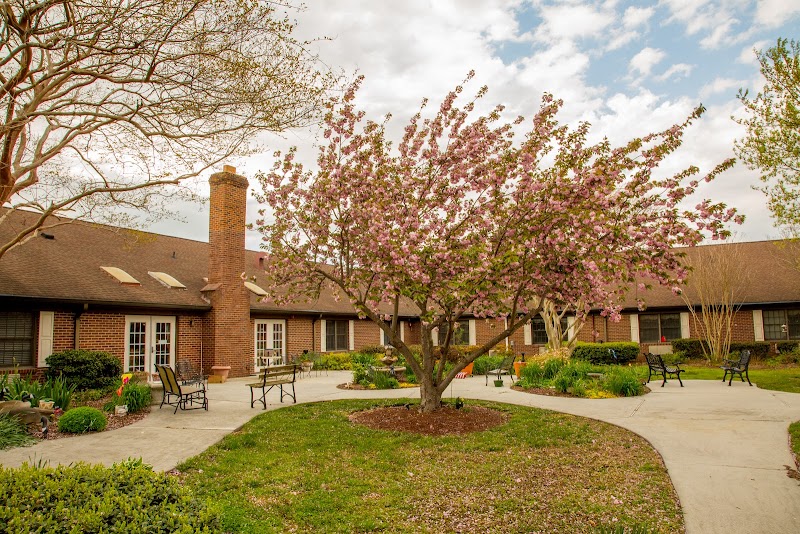
How is Riverside Lifelong Health & Rehab Smithfield Staffed?

CMS rates RIVERSIDE LIFELONG HEALTH & REHAB SMITHFIELD's staffing level at 4 out of 5 stars, which is above average compared to other nursing homes. Staff turnover is 58%, which is 12 percentage points above the Virginia average of 46%. High turnover can affect care consistency as new staff learn residents' individual needs. RN turnover specifically is 62%, which is notably high. RNs provide skilled clinical oversight, so turnover in this role can affect medical care quality.

What Have Inspectors Found at Riverside Lifelong Health & Rehab Smithfield?

State health inspectors documented 17 deficiencies at RIVERSIDE LIFELONG HEALTH & REHAB SMITHFIELD during 2019 to 2024. These included: 17 with potential for harm.

Who Owns and Operates Riverside Lifelong Health & Rehab Smithfield?

RIVERSIDE LIFELONG HEALTH & REHAB SMITHFIELD is owned by a non-profit organization. Non-profit facilities reinvest revenue into operations rather than distributing to shareholders. The facility is operated by RIVERSIDE HEALTH SYSTEM, a chain that manages multiple nursing homes. With 34 certified beds and approximately 30 residents (about 88% occupancy), it is a smaller facility located in SMITHFIELD, Virginia.
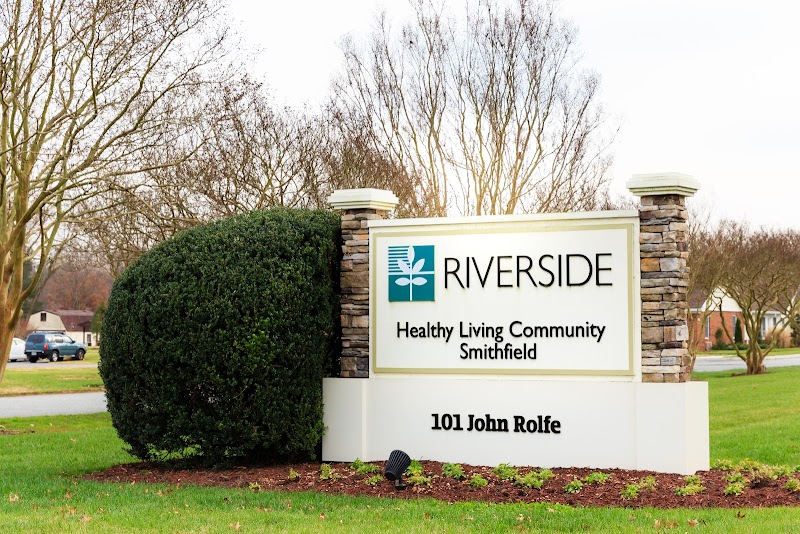
How Does Riverside Lifelong Health & Rehab Smithfield Compare to Other Virginia Nursing Homes?

Compared to the 100 nursing homes in Virginia, RIVERSIDE LIFELONG HEALTH & REHAB SMITHFIELD's overall rating (4 stars) is above the state average of 3.0, staff turnover (58%) is significantly higher than the state average of 46%, and health inspection rating (4 stars) is above the national benchmark.

What Should Families Ask When Visiting Riverside Lifelong Health & Rehab Smithfield?

Based on this facility's data, families visiting should ask: "How do you ensure continuity of care given staff turnover, and what is your staff retention strategy?" "Can I visit during a mealtime to observe dining assistance and food quality?" "How do you handle medical emergencies, and what is your hospital transfer rate?" "Can I speak with family members of current residents about their experience?" These questions are particularly relevant given the facility's high staff turnover rate.

Is Riverside Lifelong Health & Rehab Smithfield Safe?

Based on CMS inspection data, RIVERSIDE LIFELONG HEALTH & REHAB SMITHFIELD has a clean safety record: no substantiated abuse findings (meaning no confirmed cases of resident harm), no Immediate Jeopardy citations (the most serious violation level indicating risk of serious injury or death), and is not on the Special Focus Facility watch list (a federal program monitoring the lowest-performing 1% of nursing homes). The facility has a 4-star overall rating and ranks #1 of 100 nursing homes in Virginia. While no facility is perfect, families should still ask about staff-to-resident ratios and recent inspection results during their visit.

Do Nurses at Riverside Lifelong Health & Rehab Smithfield Stick Around?

Staff turnover at RIVERSIDE LIFELONG HEALTH & REHAB SMITHFIELD is high. At 58%, the facility is 12 percentage points above the Virginia average of 46%. Registered Nurse turnover is particularly concerning at 62%. RNs handle complex medical decisions and coordinate care — frequent RN changes can directly impact care quality. High turnover means new staff may not know residents' individual needs, medications, or preferences. It can also be disorienting for residents, especially those with dementia who rely on familiar faces. Families should ask: What is causing the turnover? What retention programs are in place? How do you ensure care continuity during staff transitions?

Was Riverside Lifelong Health & Rehab Smithfield Ever Fined?

RIVERSIDE LIFELONG HEALTH & REHAB SMITHFIELD has no federal fines on record. CMS issues fines when nursing homes fail to meet care standards or don't correct problems found during inspections. The absence of fines suggests the facility has either maintained compliance or corrected any issues before penalties were assessed. This is a positive indicator, though families should still review recent inspection reports for the full picture.

Is Riverside Lifelong Health & Rehab Smithfield on Any Federal Watch List?

RIVERSIDE LIFELONG HEALTH & REHAB SMITHFIELD is not on any federal watch list. The most significant is the Special Focus Facility (SFF) program, which identifies the bottom 1% of nursing homes nationally based on persistent, serious quality problems. Not being on this list means the facility has avoided the pattern of deficiencies that triggers enhanced federal oversight. This is a positive indicator, though families should still review the facility's inspection history directly.