GREENE ACRES REHABILITATION AND NURSING

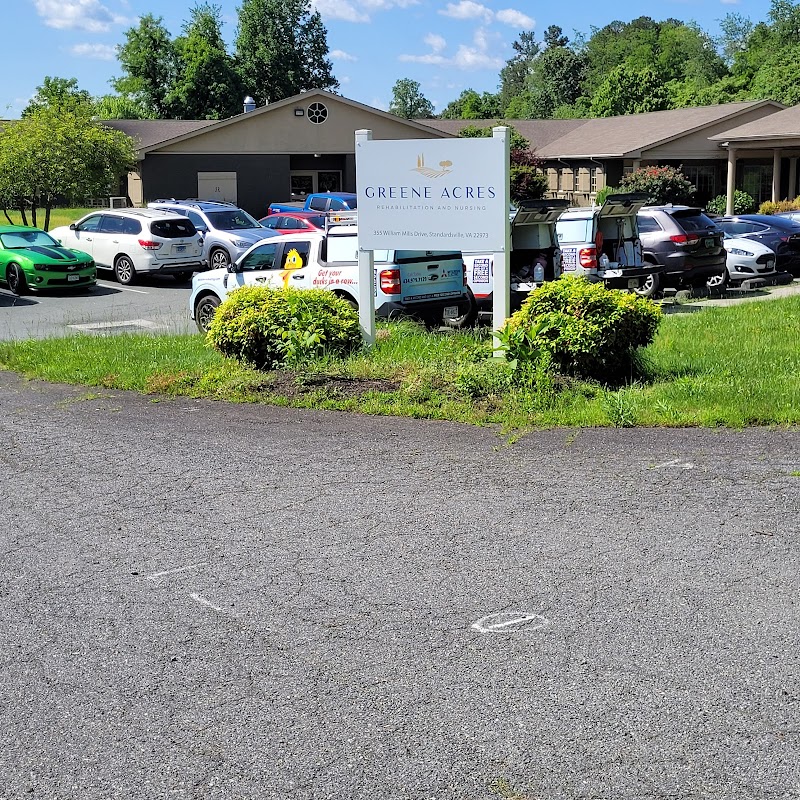
355 WILLIAM MILLS DRIVE, STANARDSVILLE, VA 22973 (434) 985-4434
For profit - Corporation 90 Beds EASTERN HEALTHCARE GROUP Data: November 2025
Trust Grade
65/100
#135 of 285 in VA
Last Inspection: October 2022

Over 2 years since last inspection. Current conditions may differ from available data.

Overview

Greene Acres Rehabilitation and Nursing has received a Trust Grade of C+, which means it is slightly above average but not exceptional. It ranks #135 out of 285 facilities in Virginia, placing it in the top half of nursing homes in the state, and it is the only option in Greene County. The facility is showing improvement, with a decrease in reported issues from 10 in 2021 to 3 in 2022. However, the staffing rating is concerning, as it received only 1 out of 5 stars, despite having a turnover rate of 44%, which is slightly better than the state average. There have been no fines recorded, which is a positive sign, but the facility has less RN coverage than 94% of Virginia facilities, meaning residents may not receive the same level of attention from registered nurses. Specific incidents noted by inspectors include a failure to properly inspect bed frames and mattresses for potential safety risks, which could pose a danger to residents. Additionally, there was a lack of documentation for water temperature checks, raising concerns about residents' safety during bathing. Lastly, one resident's admission paperwork was missing a critical screening, which is necessary for ensuring proper care. While the facility has some strengths, such as no fines and a good trend in reducing issues, these weaknesses highlight areas that require attention.

Trust Score
C+
65/100
In Virginia
#135/285
Top 47%
Safety Record
Low Risk
No red flags
Inspections
Getting Better
10 → 3 violations
Staff Stability
○ Average
44% turnover. Near Virginia's 48% average. Typical for the industry.
Penalties
✓ Good
No fines on record. Clean compliance history, better than most Virginia facilities.
Skilled Nurses
⚠ Watch
Each resident gets only 13 minutes of Registered Nurse (RN) attention daily — below average for Virginia. Fewer RN minutes means fewer trained eyes watching for problems.
Violations
⚠ Watch
18 deficiencies on record. Higher than average. Multiple issues found across inspections.
★★★☆☆
3.0
Overall Rating
★☆☆☆☆
1.0
Staff Levels
★★☆☆☆
2.0
Care Quality
★★★★☆
4.0
Inspection Score
Stable
2021: 10 issues
2022: 3 issues

The Good

  • Full Sprinkler Coverage · Fire safety systems throughout facility
  • No fines on record
  • Staff turnover below average (44%)

    4 points below Virginia average of 48%

Facility shows strength in fire safety.

The Bad

3-Star Overall Rating

Near Virginia average (3.0)

Meets federal standards, typical of most facilities

Staff Turnover: 44%

Near Virginia avg (46%)

Typical for the industry

Chain: EASTERN HEALTHCARE GROUP

Part of a multi-facility chain

Ask about local staffing decisions and management

The Ugly 18 deficiencies on record

Oct 2022 3 deficiencies
CONCERN (D)

Potential for Harm - no one hurt, but risky conditions existed

Quality of Care (Tag F0684)

Could have caused harm · This affected 1 resident

Based on observation, staff interview and clinical record review, the facility staff failed to follow physician orders for two (Resident # 64 & #43) of twenty residents in the survey sample. Resident ...

Read full inspector narrative →
Based on observation, staff interview and clinical record review, the facility staff failed to follow physician orders for two (Resident # 64 & #43) of twenty residents in the survey sample. Resident #64 was administered artificial tears solution instead of the physician ordered medicated eye drops (Refresh Optive solution). The medical devices (protective booties) were not applied to Resident #43's feet, as ordered by the physician. The findings include: 1. Facility staff failed to administer medication as ordered by the physician. Resident #64 was admitted to the facility with diagnoses that included cerebral infarction, hypertension, dry eyes, anxiety and seizures. The MDS (minimum data set - cms assessment tool) dated 10/6/22 assessed Resident #64 as being cognitively intact for daily decision making. A medication pass observation was conducted on 10/26/22 at 7:54 a.m. with licensed practical nurse (LPN) #3, administering medications to Resident #64. Among the medications administered was artificial tears labled 0.2%-0.2%-1% (glycerin-hypromellose-PEG 400), of which two drops were instilled in each eye. Resident #64's clinical record documented a physician's order dated 8/26/22 for Refresh Optive solution 0.5-0.9% (carboxymethylcellul-glycerin) with instructions to instill two drops in each eye four times per day for dry eyes. There was no order for the artificial tears that were administered during the medication pass observation. Neither was artificial tears listed on the MAR (medication administration record). On 10/26/22 at 8:35 a.m., LPN #3 was interviewed about the eye drops she had administered earlier to Resident #64's. When questioned about what eye drops were ordered by the physician, LPN #3 reviewed the orders and stated, The order says Optive. When questioned if the eye drops were interchangeable, LPN #3 stated that the Refresh Optive drops and artificial tears were not the same product. When questioned why had she administered the artificial tears, LPN #3 stated that eye drops were house stock items and the artificial tears were the only drops in the medication cart. On 10/26/22 at 10:16 a.m., the director of nursing (DON) was interviewed about Resident #64's eye drops. The DON stated the order should have been clarified and the prescription for Refresh Optive drops sent to the pharmacy. The DON stated the nurse administered the house stock artificial tears instead of the ordered Refresh Optive drops. The facility's policy titled Medication Reconciliation (revised 9/1/21) documented that medication reconciliation refers to the process of verifying that the resident's current medication list matches the physician's orders for the purposes of providing the correct medications to the resident at all points throughout his or her stay . The policy documented under daily processes, .Verify medication labels match physician orders and consider 'rights' of medication administration each time a medication is given . This finding was reviewed with the administrator, DON and regional director of clinical services during a meeting on 10/26/22 at 4:15 p.m. No additional information was presented to the survey team prior to exiting the facility on 10/27/22 at 12:15pm. 2. The facility staff failed to implement interventions for care and prevention of pressure ulcers, which were ordered for Resident #43. On 10/25/22 at 2:41 p.m., Resident #43 was observed seated in a reclining chair in her room. The resident had slipper socks on both feet. Resident #43 was observed again on 10/25/22 at 3:30 p.m. and on 10/26/22 at 10:00 a.m. seated in the reclining chair with slipper socks on both feet. During each of these observations, Resident #43's feet were elevated with heels resting directly on the footrests of the reclined chair, with no protective booties in use. On 10/26/22 at 10:02 a.m., Resident #43 was observed still seated in the reclined chair without protective booties in use, but was then accompanied by certified nurses' aide (CNA) #1. Interviewed about the protective booties, CNA #1 stated that she sent the booties to the laundry that morning (10/26/22) because they were dirty. CNA #1 was observed searching the room, but did not locate another pair of protective booties. On 10/26/22 at 10:26 a.m., the licensed practical nurse (LPN #3) caring for Resident #43 was interviewed. LPN #3 stated that the resident had a dressing to a pressure ulcer on the right heel. LPN #3 stated that the protective booties were soiled yesterday (10/25/22) and were sent to laundry for cleaning. Questioned further, LPN #3 responded that there was not another pair of booties to put on the resident, adding that she was not sure if the resident had a spare pair of booties. On 10/26/22 at 10:30 a.m., LPN #3 was accompanied to observe Resident #43's right heel pressure ulcer. The resident had a circular pressure ulcer on the right heel approximately the size of a 50-cent piece. The skin over the wound was dry, scaling with no surrounding redness or signs of infection. The clinical record documented that Resident #43 received daily treatment for an unstageable pressure ulcer on the right heel. A physician's order dated 8/31/22 documented, Maintain heel boots to bilat [bilateral] heels every shift. Last revised on 10/18/22, the Comprehensive Care Plan (CCP) documented that the Resident #43 had a right heel pressure ulcer, with interventions to heal and prevent ulcers, which included, .Administer treatments as ordered and monitor for effectiveness . The clinical record also documented that Resident #43 was admitted to the facility with diagnoses that included congestive heart failure, anxiety, dementia with behaviors, atrial fibrillation, mood disorder, deep tissue damage of right heel and depression. The MDS (Minimum Data Set - CMS assessment tool) dated 9/5/22 assessed Resident #43 with short and long-term memory problems, as well as moderately impaired cognitive skills. On 10/26/22 at 2:39 p.m., the unit manager (LPN #1) was interviewed about Resident #43 not having the ordered medical devices in place. LPN #1 stated that the booties were supposed to be on the resident's feet at all times for protection and prevention of ulcers. LPN #1 stated that if the booties were soiled, staff should have obtained another pair. LPN #1 added that additional booties were available and that the resident .should not have gone without . [the protective boots]. The National Pressure Injury Advisory Panel (NPIAP) defines a pressure injury as, localized damage to the skin and underlying soft tissue usually over a bony prominence or related to a medical or other device .The injury occurs as a result of intense and/or prolonged pressure . These findings were reviewed with the administrator, director of nursing and regional director of clinical services during a meeting on 10/26/22 at 4:15 p.m. No additional information was provided to the survey team prior to exit at 12:15pm on 10/27/22.
CONCERN (D)

Potential for Harm - no one hurt, but risky conditions existed

Incontinence Care (Tag F0690)

Could have caused harm · This affected 1 resident

**NOTE- TERMS IN BRACKETS HAVE BEEN EDITED TO PROTECT CONFIDENTIALITY** Based on observations, staff interview, record review and facility document review, the facility staff failed to properly place ...

Read full inspector narrative →
**NOTE- TERMS IN BRACKETS HAVE BEEN EDITED TO PROTECT CONFIDENTIALITY** Based on observations, staff interview, record review and facility document review, the facility staff failed to properly place a catheter drainage bag below the bladder for one of 20 residents in the survey sample. Resident #31's catheter drainage bag was observed improperly positioned above the bladder level during the survey. The findings include: Resident #31 was admitted to the facility with diagnoses that included neuromuscular dysfunction of the bladder, contractures of the right hand, left and right knee, depression, hypothyroidism, osteoporosis, sacral pressure wound, and multiple sclerosis. The most recent MDS (minimum data set -cms assessment tool) dated 8/24/22 was a Quarterly, which assessed Resident #31 with a BIMS (Brief Interview for Mental Status) score of 15 out of 15, indicating cognitively intact for daily decision making. Under Section H - Bladder and Bowel, the MDS assessed Resident #31 as having a catheter and a colostomy. Resident #31's clinical record was reviewed, which included physician's orders for the care and maintenance of Resident #31's suprapubic catheter. The Comprehensive Care Plans included a focus area for the care and maintenance of suprapubic catheter, with Goals that included: (Resident #31) will be/remain free from catheter-related trauma through review date Interventions included .check tubing for kinks Position catheter bag and tubing below the level of the bladder and away from the entrance room door . On 10/25/2022 at 1:50 p.m., Resident #31 was observed sitting in an electric wheelchair, in the facility's dayroom Although covered in a privacy bag, Resident #31's catheter drainage bag was positioned above the bladder, hooked onto the right upper side of the chair. Urine was observed in the tubing, which wound under the right arm of the electric wheelchair, towards the resident. On 10/26/2022 at 12:11 p.m., Resident #31 was again observed sitting in the electric wheelchair, eating lunch in the facility's dining room. The catheter drainage bag was observed in a privacy bag and positioned above the resident's bladder and attached onto the back of the electric wheelchair. The catheter tubing was observed winding under the right arm of the electric wheelchair. On 10/26/2022 at 3:12 p.m., a third observation of Resident #31 sitting in her electric wheelchair, while reading in her room. Again the catheter drainage bag was observed in a privacy bag and positioned above the resident's bladder, but attached to the back of the wheelchair. The catheter tubing remained winding under the right arm of the electric wheelchair. Resident #31 was asked if she had experienced any discomfort or problems with the catheter. Resident #31 stated, No, I've had this for quite sometime now. The girls know how take care of me. On 10/26/2022 at 3:20 p.m., along with the unit manager (LPN #1), Resident #31's catheter draining bag was observed in the same position, as last described. Upon observing , LPN #1 stated, Oh no, this is wrong! That bag is too high! When asked how was a catheter drainage bag supposed to be positioned, LPN #1 stated the catheter drainage bag was supposed to be positioned below the resident's bladder. LPN #1 explained that the positioning of the built-in hooks on the new electric wheelchair made it difficult to properly position the catheter drainage bag. LPN #1 added, I guess the staff were trying to be creative, but this bag is too high and the tubing is snaking under the chair arm. LPN #1 was asked if nurses and CNAs were trained and aware of the proper positioning of the drainage bag. LPN #1 replied, Yes, it's on the [NAME]. So I know the CNAs know and I believe it is in our policy. LPN #1 was asked to provide a copy of the [NAME] and policy for review. A review of Resident #31's [NAME] (individualized care guide) documented the following under Bladder/Bowel, .Position catheter bag and tubing below the level of the bladder and away from the entrance room door The policy titled Catheter Care, Urinary (Revised September 2014) documented the following: .Maintaining Unobstructed Urine Flow . 3. The urinary drainage bag must be held or positioned lower than the bladder at all times to prevent the urine in the tubing and drainage bag from flowing back into the urinary bladder On 10/26/2022 at 4:13 p.m., during a meeting with the administrator, director of nursing (DON) and corporate consultants the above findings were discussed. No additional information was received by the survey team prior to exit on 10/27/2022 at 12:15 p.m.
CONCERN (F)

Potential for Harm - no one hurt, but risky conditions existed

Deficiency F0909 (Tag F0909)

Could have caused harm · This affected most or all residents

Based on observation, staff interview, facility document review and clinical record review, the facility staff failed to inspect a bed frame and mattress for one of twenty residents in the survey samp...

Read full inspector narrative →
Based on observation, staff interview, facility document review and clinical record review, the facility staff failed to inspect a bed frame and mattress for one of twenty residents in the survey sample (Resident #43) and failed to implement a facility-wide program for inspecting bed frames, mattresses and bed rails for possible entrapment risks and bed/mattress compatibility for sixty-nine of sixty-nine beds currently in use by residents. The findings include: Resident #43 was admitted to the facility with diagnoses that included congestive heart failure, anxiety, dementia with behaviors, atrial fibrillation, mood disorder, deep tissue damage of right heel and depression. The MDS (minimum data set - cms assessment tool) dated 9/5/22 assessed Resident #43 with short and long-term memory problems and moderately impaired cognitive skills. Resident #43's clinical record documented a physician's order dated 8/31/22 for an air mattress to the bed for pressure ulcer treatment/prevention. On 10/26/22 at 10:21 a.m., accompanied by the licensed practical nurse unit manager (LPN #1), Resident #43's mattress was observed. Installed on the resident's bed was a low-air mattress that included bolsters along both sides of the mattress near the corners. LPN #1 stated this was a special mattress in use with the resident due to pressure ulcer treatment/prevention. On 10/26/22 at 2:11 p.m., the maintenance director (other staff #2) was interviewed about an inspection of Resident #43's bed with the low air loss mattress for compatibility and potential entrapment risks. The maintenance director replied that installed special mattresses and bed rails only when told to do so by therapy. The maintenance director stated that he performed monthly walk arounds but had nothing documented about bed and/or mattress inspections. The maintenance director stated that his inspections were focused on bed operation and condition. The survey team requested information from the maintenance director about a bed inspection program for the facility that included bed frames, mattress and/or bed rails for compatibility and potential entrapment risks. The maintenance director stated there was no formal program for checking side rails, mattresses or bed frames. The maintenance director stated only grab bars were used in the facility and these were not considered side rails. Concerning specialty air mattresses such as Resident #43's mattress, the maintenance director stated he installed the mattress and that's all. The maintenance director stated he did not keep up with which bed had what type of mattress and again stated there was no formal program for inspecting bed frames and/or mattresses. The maintenance director stated he had no inspection records or gap measurements related to potential entrapment zones. On 10/26/22 at 2:17 p.m., the facility's supply clerk (other staff #3) was interviewed about Resident #43's low-air mattress. The supply clerk stated Resident #43's mattress was a special alternating low-air pressure mattress ordered separately and installed on the existing bed frame. This finding was reviewed with the administrator, director of nursing and regional director of clinical services during a meeting on 10/26/22 at 4:15 p.m. On 10/27/22 at 8:00 a.m., the administrator presented a policy about bed maintenance and inspections. The administrator stated documented bed inspections had been done monthly and that the previous communication that the facility had no bed inspection program was inaccurate. The administrator presented a copy of their policy regarding bed maintenance and monthly inspection sheets. The facility's policy titled Bed Maintenance and Inspections (revised 9/1/21) documented, It is the policy of this facility to conduct regular inspections of all bed frames, mattresses, and bed rails, if any, as part of a regular maintenance program to identify and avoid areas of possible entrapment .The Maintenance Director, or designee, is responsible for keeping records of bed inspections and maintenance .A list of bed frames, mattresses, and bed rails will be maintained, including the manufacturer for each. The Maintenance Director shall be notified of any new equipment brought into the facility .When bed rails and mattresses are used and purchased separately from the bed frame, the facility will ensure that the bed rails, mattress, and bed frame are compatible .Bed frame, mattress, and bed rail inspections will be conducted upon each item entering the facility and then placed on a regularly scheduled inspection and maintenance cycle according to the manufacturer's recommendations . Monthly inspection sheets from the facility's preventive maintenance system titled, Bed & Mattresses: Inspect Bed Rails were presented by the administrator. Each sheet documented the maintenance check procedure as, Inspect connectors on rails and tighten as necessary .Remove any burs or rough edges to prevent injury .Verify the function of the spring latch-knob assembly, if applicable. Ensure latch is free of dirt and/or foreign material .Ensure that the rails engage and lock as specified .Tighten, adjust or replace any parts such as end caps, knobs, bolts, screws, etc. that are loose, show sign of wear or are missing . The monthly bed and mattress logbook sheets were reviewed for May 2022 through October 2022 and documented the following inspection results. 5/2/22 - no bed rails just grab bars 6/6/22 - no bed rail 7/4/22 - bed rails ok 8/3/22 - do not have bed rail we have grab bars 9/5/22 - no bed rails just grab bars 10/3/22 - do not have bed rail grab bars only The documented inspections included no list of bed frames, mattresses or bed rails for the facility. There was no documentation indicating which beds had rails and of any beds with specialty mattresses purchased separately from the bed frame. There was no documentation regarding the manufacturer of the bed frames, mattresses or bed rails. The inspection procedure and documented inspections made no reference to entrapment risks or bed frame/mattress compatibility. There was no documentation that Resident #43's bed/mattress was inspected for compatibility and safety when installed in August 2022. On 10/27/22 at 9:47 a.m., the maintenance director (other staff #2) was interviewed again by the survey team about bed/mattress/bed rail program for the facility. The maintenance director stated there was a program in the preventive maintenance system about bed. The maintenance director stated the interview provided yesterday stating there was no formal program was inaccurate because he did not feel well. The maintenance director stated the bed/mattress inspections were included in his preventive maintenance program. The maintenance director again stated the facility used only grab rails and he did not feel these were a safety problem. The maintenance director stated he did not have a list of bed frames, mattresses, beds with rails or bed frames with specialty mattresses. The maintenance director stated his monthly sheets documented that beds were checked but there was nothing documented by bed number or room number. The maintenance director stated he had no documentation that Resident #43's bed frame and air mattress were checked for compatibility when installed in August 2022. The maintenance director stated he had no documentation of any gap measurements for beds with rails as the facility only used grab bars. These findings were reviewed with the administrator, director of nursing and regional director of clinical services again on 10/27/22 at 11:55 a.m. No additional information was presented to the survey team prior to exiting at 12:15pm.
Mar 2021 10 deficiencies
CONCERN (D)

Potential for Harm - no one hurt, but risky conditions existed

Safe Environment (Tag F0584)

Could have caused harm · This affected 1 resident

**NOTE- TERMS IN BRACKETS HAVE BEEN EDITED TO PROTECT CONFIDENTIALITY** Based on observation, resident interview, and staff interview, the facility failed to ensure assistive devices were in good repa...

Read full inspector narrative →
**NOTE- TERMS IN BRACKETS HAVE BEEN EDITED TO PROTECT CONFIDENTIALITY** Based on observation, resident interview, and staff interview, the facility failed to ensure assistive devices were in good repair for one of 19 residents in the survey sample, Resident #7. Resident #7's wheelchair arm pad was ripped and had jagged edges. The Findings Include: Resident #7 was admitted to the facility on [DATE]. Diagnoses for Resident #4 included: paraplegia, urine retention with catheter, contractors, and neuromuscular dysfunction of bladder. The most current MDS (minimum data set) was a quarterly assessment with an ARD (assessment reference date) of 11/19/20. Resident #7 was assessed with a cognitive score of 15 indicating cognitively intact. On 03/02/21 at 11:17 AM, Resident #7 was interviewed. During the interview Resident #7's wheelchair armrest was observed torn with jagged edges. Resident #7 was asked if that bothered him or irritated his skin. Resident #7 stated that it does scratch his forearm some but has not caused any abrasions. Resident #7 then lifted his right arm which didn't indicate any skin tears. On 03/03/21 at 2:50 PM, the maintenance director (other staff, OS #3) was interviewed. OS #3 stated that he had not been made aware that the armrest of Resident #7's wheelchair was torn. OS #3 said that the facility had plenty of replacement parts and he would repair it. On 03/03/21 at 3:00 PM, licensed practical nurse (LPN #4) observed Resident 7's torn wheelchair armrest and said that it should be replaced because of potential for skin tears. LPN #4 said that anyone could put in a work order for maintenance for repairs, and staff on night shift should be assessing wheelchairs when cleaning them. On 03/04/21 at 10:30 AM, the above finding was brought to the attention of the administrator and director of nursing. No other information was provided prior to exist conference on 3/4/20.
CONCERN (D)

Potential for Harm - no one hurt, but risky conditions existed

Assessment Accuracy (Tag F0641)

Could have caused harm · This affected 1 resident

**NOTE- TERMS IN BRACKETS HAVE BEEN EDITED TO PROTECT CONFIDENTIALITY** Based on staff interview and clinical record review, the facility staff failed to ensure an accurate MDS regarding PASRR (preadm...

Read full inspector narrative →
**NOTE- TERMS IN BRACKETS HAVE BEEN EDITED TO PROTECT CONFIDENTIALITY** Based on staff interview and clinical record review, the facility staff failed to ensure an accurate MDS regarding PASRR (preadmission screening and resident review) status for one of 19 residents in the survey, Resident #25. Findings include: Resident #25 was admitted to the facility on [DATE]. The most current readmission was on 01/18/21. Diagnoses for Resident #25 included, but were not limited to: arthritis, colitis, high blood pressure, psychotic disorder and schizophrenia. The most current MDS (minimum data set) was a significant change assessment dated [DATE]. This MDS assessed the resident as having short and long term memory impairment with modified independence in daily decision making skills. In Section A1500. Preadmission Screening and Resident Review, it was documented, YES that the resident had a serious mental illness and/or intellectual disability and to continue to Section A1510. for the Level II PASRR. In Section A1510. Level II Preadmission Screening and Resident Review (PASRR) Condition, it was documented that the resident had a serious mental illness and an intellectual disability. On 03/03/21 during Resident #25's clinical record review, a Level I PASRR was found. The Level 1 PASRR was dated 01/10/2019. The level 1 documented that Resident #25 did not have a serious mental illness, but also documented that the resident had a major mental illness diagnosable under the DSM (Diagnostic and Statistical Manual of Mental Disorders). On 03/03/21 at 1:55 PM, the SW (social worker) was interviewed regarding Resident #25's Level 1 PASRR. The SW stated that she did not complete the PASRR for Resident #25, but stated that the resident does have a serious mental disorder. The SW was asked if a Level II had been completed on Resident #25 as indicated on the MDS. The SW stated that she did have a PASRR Level II for Resident #25. On 03/03/21 at 2:40 PM, the SW stated that she reviewed the resident's records and contacted the resident's RP (responsible party) and stated that the resident has always had a mental illness. The SW was asked if this resident could have used a Level II PASRR. The SW stated, Yes. On 03/04/21 at 9:00 AM, RN (Registered Nurse) #3 (corporate MDS) was interviewed regarding the above significant change assessment for Resident #25 concerning the PASRR. RN #3 stated that she signed off that the MDS was completed on 02/28/21, but stated that LPN (licensed practical nurse) #7 (a nurse from a sister facility) was the one who actually completed that section of the MDS for Resident #25. RN # 3 stated that this was an MDS error and could not provide any additional information. The administrator, DON (director of nursing) and corporate staff were made aware on 03/04/21 at approximately 10:40 AM. No further information and/or documentation was provided prior to the exit conference on 03/04/21 to evidence that this MDS assessment was an accurate assessment for Resident #25.
CONCERN (D)

Potential for Harm - no one hurt, but risky conditions existed

Deficiency F0658 (Tag F0658)

Could have caused harm · This affected 1 resident

**NOTE- TERMS IN BRACKETS HAVE BEEN EDITED TO PROTECT CONFIDENTIALITY** Based on a medication pass and pour observation, staff interview and facility document review, the facility staff failed to ensu...

Read full inspector narrative →
**NOTE- TERMS IN BRACKETS HAVE BEEN EDITED TO PROTECT CONFIDENTIALITY** Based on a medication pass and pour observation, staff interview and facility document review, the facility staff failed to ensure professional standards of practice were followed during medication administration for two of 19 residents, Resident #31 and Resident #25. Findings include: 1. Resident #31 was admitted to the facility originally on 11/19/15, with the most current readmission on [DATE]. Diagnoses for Resident #31 included, but were not limited to: depression, dysphagia, and epilepsy (seizure disorder), mild cognitive impairment, and pain. The most current full MDS was an annual assessment dated [DATE]. This MDS assessed the resident with a cognitive score of 15, indicating the resident was intact for daily decision making skills. On 03/03/21 at 8:00 AM, RN (registered nurse) #2 prepared medications for Resident #31. RN #2 had gloves on and began pulling medications to be administered. RN #2 opened a bottle of baby aspirin and poured one tablet out into her gloved hand and put it into the medication cup. RN #2 then removed a medication card for gabapentin 300 mg (milligram) capsule and popped one capsule out into her gloved hand and then put it in the medication cup. The gabapentin medication card did not belong to Resident #31, it belonged to another resident (identified as Resident #28). RN #2 then punched three additional medications out of their individual cards, placing each pill into her gloved hand first and then dropping each into the medication cup. RN #2 then opened two more stock medication bottles and poured the ordered amount of medications into her gloved hand and then dropped the pills down into the medication administration cup. RN #2 then mixed 17 grams of Miralax into a cup with water. RN #2 took the medications in the cup, along with the Miralax mixture and went into the resident's room. Resident #31 took the medications whole, followed by one drink of the Miralax mixture. The resident handed the cup back to the RN and the RN took the cup without saying anything to the resident, went to the sink and poured the remaining Miralax mixture down the sink. RN #2 removed her gloves, used hand sanitizer and exited the room. During the medication pass observation, RN #31 left all of the medication cards and stock medication bottles on top of the medication cart outside of the resident's room; they were not returned to the cart and locked. RN #2 not have the medication in sight while in Resident #31's room. RN #2 did not close the electronic medication administration screen on the computer during the medication pass observation. 2. Resident #25 was admitted to the facility on [DATE]. Diagnoses for Resident #25 included, but were not limited to: high blood pressure, colitis, psychotic disorder and schizophrenia. The most current full MDS was a significant change assessment dated [DATE]. This MDS assessed the resident with as having short and long term memory impairment with modified independence in daily decision making skills. On 03/03/21 at 8:20 AM, the medication pass and pour observation continued. RN #2 pushed the medication cart down the hall to Resident #25's room. RN #2 put on a new pair of gloves and began medication preparation. RN #2 pulled two medication cards and popped each medication out into her gloved hand and then dropped the medication into the medication administration cup. RN #2 took the medications to Resident #25 and administered the medications. At 8:30 AM, RN #2 was interviewed regarding the above observations during the medication pass for Resident #31 and Resident #25. RN #2 stated that she didn't touch the pills with her bare hands, she touched them with a gloved hand. When explained to RN #2 that she had touched the medication cart, opened drawers, handled juice boxes, handled the water pitcher, medication cards, and medication bottles with gloved hands, and then handled each medication, RN #2 stated that she understood what the problem was. RN #2 stated that the wrong resident medication card for the gabapentin 300 mg capsule, was a mistake. RN #2 stated that Resident #31 has an order for gabapentin 300 mg, but pulled the wrong resident's card. RN #2 stated the medication was right, but it wasn't her medication card. RN #2 was then made aware that while she was in the Resident #31's room she left the medication cards and bottles on top of the medication cart, along with the computer screen opened with resident information. The RN stated, You are exactly right. RN #2 was also made aware that she poured the remaining Miralax mixture out, after the resident took one drink. The RN did not comment in regards to pouring out Resident #31's Miralax mixture. At 9:00 AM, the administrator was asked for a policy on medication administration, including the five rights and infection control practices for medication administration. A policy was presented titled, Medication Administration. The policy documented, .wash hands prior to administering medication per facility policy protocol and product .Review MAR (medication administration records) to identify medication to be administered .Compare medication source (bubble pack, vial, etc.) with MAR to verify resident name, medication name, form, dose, route, and time .Remove medication from source, taking care not to touch medication with bare hand .observe resident consumption of medication . On 03/04/21 at 10:30 AM, the administrator and DON (Director of Nursing) were interviewed regarding the policy presented above and asked about what the policy meant regarding, .wash hands prior to administering medication per facility policy protocol and product. The DON stated that she would provide a policy on the facility's handwashing protocol. The DON was asked if using gloves in this manner was appropriate, the DON stated, No. A policy was presented on Hand Hygiene, the policy documented: .cleaning hands by handwashing with soap and water or the use of an antiseptic hand rub, also know as alcohol based hand rub .Additional Considerations: a. The use of gloves does not replace hand hygiene . No further information and/or documentation was provided prior to the exit conference on 03/04/21.
CONCERN (D)

Potential for Harm - no one hurt, but risky conditions existed

ADL Care (Tag F0677)

Could have caused harm · This affected 1 resident

**NOTE- TERMS IN BRACKETS HAVE BEEN EDITED TO PROTECT CONFIDENTIALITY** Based on resident interview, staff interview, and clinical record review, the facility failed to provide necessary services to m...

Read full inspector narrative →
**NOTE- TERMS IN BRACKETS HAVE BEEN EDITED TO PROTECT CONFIDENTIALITY** Based on resident interview, staff interview, and clinical record review, the facility failed to provide necessary services to maintain good personal hygiene for one of 19 Residents, Resident #7. The Findings Include: Resident #7 was admitted to the facility on [DATE]. Diagnoses for Resident #4 included: Paraplegia, urine retention with catheter, contractures, and neuromuscular dysfunction of bladder. The most current MDS (minimum data set) was a quarterly assessment with an ARD (assessment reference date) of 11/19/20. Resident #7 was assessed with a cognitive score of 15 indicating cognitively intact. On 03/02/21 at 11:17 AM, Resident #7 was interviewed. During the interview Resident #7 stated that he had not had a shower in a week, and felt that he had to beg to get one. Resident #7 stated that there used to be a shower team at the facility, but now the facility has done away with the shower team. Resident #7 was observed with unkept hair and unkept facial hair. Review of Resident #7's bath documentation indicated the last bath Resident #7 was on the evening of 2/23/21. On 03/02/21 at 3:40 PM, certified nursing assistant (CNA #1) was interviewed regarding showers. CNA #1 said the facility used to have a shower team but one person quit and the other was on leave, so some baths have not been getting done. She stated the director of nursing (DON) has implemented a plan to have the CNAs do the baths and is split between shifts. On 03/03/21 at 9:02 AM, license practical nurse (LPN #3, unit manager) was interview regarding showers. LPN #3 also stated that the shower team were no longer working so the CNAs assigned to the resident's are now doing their own showers. On 03/03/21 at 11:28 AM, the above information was presented to the director of nursing (DON). The DON said the resident in question did get a shower last Tuesday (2/23/21). When asked how often are resident's supposed to be getting showers, the DON said twice weekly. No other information was presented prior to exit conference on 3/4/21.
CONCERN (D)

Potential for Harm - no one hurt, but risky conditions existed

Pressure Ulcer Prevention (Tag F0686)

Could have caused harm · This affected 1 resident

**NOTE- TERMS IN BRACKETS HAVE BEEN EDITED TO PROTECT CONFIDENTIALITY** Based on observation, staff interview, and clinical record review, facility staff failed to ensure treatment and services, consi...

Read full inspector narrative →
**NOTE- TERMS IN BRACKETS HAVE BEEN EDITED TO PROTECT CONFIDENTIALITY** Based on observation, staff interview, and clinical record review, facility staff failed to ensure treatment and services, consistent with professional standards of practice, to prevent infection of pressure ulcers for one of 19 residents, Resident #2. Findings include: Resident #2 was originally admitted to the facility on [DATE] and readmitted on [DATE]. The most recent MDS (minimum data set) was a significant change assessment with an ARD (assessment reference date) of 2/15/2021. Resident #2 was assessed with a cognitive score of 00 indicating severe cognitive impairment. Diagnoses for Resident #2 included, but were not limited to: Chronic respiratory failure with hypoxia, Neuromuscular dysfunction of bladder, unspecified, Personal history of urinary tract infections, Retention of urine, unspecified, Benign prostatic hyperplasia without lower urinary tract symptoms, Chronic respiratory failure with hypoxia, Muscle weakness, and Other specified disorders of muscle. On 3/3/21 at 10:00 A.M., Resident #2's Comprehensive Care Plan (CCA) dated 2/26/2021 was reviewed. The CCA documented a focus area of risk for skin impairment related to fragile skin, 2/3/21, newly acquired pressure areas, left buttocks (stage3), right buttocks (stage 1), left lateral malleolus (stage 2), and right medial heel (stage 1), and 2/8/21 left elbow blister. The CCA also documented a discolored area noted to left hip on 2/17/2021, bilateral buttocks healed, left malleolus healed on 2/24/2021, and area to left elbow resolved on 2/26/2021. On 3/3/2021 at 11:30 A.M., Resident #2's physician's order set (POS) was reviewed. The POS documented the following skin care orders: Apply skin prep to bilateral heels every shift for prophylaxis, dated 2/5/2021. Apply skin prep to bridge of nose every shift for prophylaxis, dated 9/18/2020. Apply skin prep to discolored area to left hip every shift for blanchable discolored area, dated 9/18/2020. On 3/3/21 at 2:33 P.M., skin care for Resident #2 was observed. RN #2 was observed donning latex gloves and applying skin prep to the resident's heels. RN #2 then proceeded to turn Resident #2 on the right side to apply skin prep to resident's left hip but realized Resident #2 had a bowel movement. RN#2 cleaned the stool then removed the gloves and left the room to obtain butt cream. Upon return, RN #2 donned latex gloves, applied the cream to the resident's bottom, then removed the latex gloves. RN#2 donned another pair of gloves without performing hand hygiene, provided perineal care and secured the resident's brief. RN #2 removed the gloves and donned another pair of gloves again without performing hand hygiene and applied skin prep to Resident #2's left hip and bridge of the nose. RN #2 then removed the gloves and exited the room without performing hand hygiene. RN #2 was interviewed immediately after leaving Resident #2's room regarding the use of hand sanitizer. RN #2 responded between glove changes?. When asked what the expectations were when re-gloving, RN #2 responded Oh, that's right. A review of facility's Hand Hygiene Policy (Revised 10/20/2020) documented, The use of gloves does not replace hand hygiene. If your task requires gloves, perform hand hygiene prior to donning gloves, and immediately after removing gloves. On 3/4/2020 at 10:30 A.M., during a meeting with the administrator and the DON (Director of Nursing) the above information was presented and the DON stated, She absolutely should have cleaned her hands between glove changes. No other information was proved prior to exit conference on 3/4/2021.
CONCERN (D)

Potential for Harm - no one hurt, but risky conditions existed

Incontinence Care (Tag F0690)

Could have caused harm · This affected 1 resident

**NOTE- TERMS IN BRACKETS HAVE BEEN EDITED TO PROTECT CONFIDENTIALITY** Based on observation, staff interview, and clinical record review, facility staff failed to ensure infection control practices w...

Read full inspector narrative →
**NOTE- TERMS IN BRACKETS HAVE BEEN EDITED TO PROTECT CONFIDENTIALITY** Based on observation, staff interview, and clinical record review, facility staff failed to ensure infection control practices were followed during catheter care for one of 19 residents, Resident #2. Findings include: Resident #2 was originally admitted to the facility on [DATE] and readmitted on [DATE]. The most recent MDS (minimum data set) was a significant change assessment with an ARD (assessment reference date) of 2/15/2021. Resident #2 was assessed with a cognitive score of 00 indicating severe cognitive impairment. Diagnoses for Resident #2 included, but were not limited to: Chronic respiratory failure with hypoxia, Neuromuscular dysfunction of bladder, unspecified, Personal history of urinary tract infections, Retention of urine, unspecified, Benign prostatic hyperplasia without lower urinary tract symptoms, Chronic respiratory failure with hypoxia, Muscle weakness, and Other specified disorders of muscle. On 3/3/2021 at 10:00 A.M., a review of Resident #2's Comprehensive Care Plan (CCA) dated 2/26/2021 documented a focus area of indwelling foley catheter due to diagnosis of urinary retention with a goal of the resident remaining free of signs/symptoms of urinary infection. On 3/3/2021 at 11:30 A.M., Resident #2's physician's order set (POS) was reviewed. The POS documented, Catheter care every shift dated 9/3/2020. On 3/3/21 at 2:33 P.M., RN #2 was observed providing bowel movement incontinence care, doffing a pair of gloves, then donning another pair of gloves without performing hand hygiene. RN #2 then provided perineal care to Resident #2. RN #2 then removed the gloves and donned another pair of gloves, again without performing hand hygiene to finish skin care for Resident #2. When done, RN #2 removed the gloves and exited the room without performing hand hygiene. RN #2 was interviewed immediately after leaving Resident #2's room regarding the use of hand sanitizer. RN #2 responded between glove changes?. When asked what the expectations were when re-gloving, RN #2 responded Oh, that's right. A review of the facility's Perineal Care Policy (Revised October 2010) documented, Steps in the Procedure: 2. Wash and dry your hands thoroughly, 7. Put on gloves, 12. Remove gloves and discard into designated container. Wash and dry your hands thoroughly. On 3/4/2020 at 10:30 A.M., during a meeting with the administrator and the DON (Director of Nursing) the above information was presented and the DON stated, She absolutely should have cleaned her hands between glove changes. No other information was proved prior to exit conference on 3/4/2021.
CONCERN (D)

Potential for Harm - no one hurt, but risky conditions existed

Deficiency F0761 (Tag F0761)

Could have caused harm · This affected 1 resident

Based on observation, staff interview, and facility document review, the facility staff failed to ensure expired medications were not readily available for distribution on 1 of 5 medication carts. Th...

Read full inspector narrative →
Based on observation, staff interview, and facility document review, the facility staff failed to ensure expired medications were not readily available for distribution on 1 of 5 medication carts. The findings include: On 03/02/2021 at 11:50 a.m. medication storage observations were conducted on the 200 hall with LPN #1 (licensed practical nurse). An opened bottle of GERICARE Liquid 16 oz Geri-Tussian DM cough medication was observed with an expiration date of 11/2020 on the 200 hall medication cart. On 02/23/2021 at 12:00 p.m., LPN #1 was interviewed regarding expired medication. LPN #1 stated nursing should check the medication cart. The Unit Manager, LPN #7 stated night shift is responsible for checking medication carts for expired medications. On 03/02/21 at 2:32 p.m., the DON (director of nursing) was interviewed regarding the expired medication. The DON stated per policy it is the consultant pharmacist's responsible to inspect medication carts and the medication rooms for expired medication monthly and nursing is supposed to check as a back-up. A review of the facility's medication storage policy implemented on 11/01/2020 documented the following: 8. Unused Medications: The pharmacy and all medication rooms are routinely inspected by the consultant pharmacist for discontinued, outdated, defective, or deteriorated medications with worn, illegible, or missing labels. These medications are destroyed in accordance with our Destruction of Unused Drugs Policy On 03/03/2021 at 11:30 a.m. the administrator, DON (director of nursing), and corporate staff were informed of the above findings during a meeting. No other information was provided to the survey team prior to the exit conference on 03/04/2021.
CONCERN (D)

Potential for Harm - no one hurt, but risky conditions existed

Infection Control (Tag F0880)

Could have caused harm · This affected 1 resident

**NOTE- TERMS IN BRACKETS HAVE BEEN EDITED TO PROTECT CONFIDENTIALITY** 2. Resident #2 was originally admitted to the facility on [DATE] and readmitted on [DATE]. The most recent MDS (minimum data set...

Read full inspector narrative →
**NOTE- TERMS IN BRACKETS HAVE BEEN EDITED TO PROTECT CONFIDENTIALITY** 2. Resident #2 was originally admitted to the facility on [DATE] and readmitted on [DATE]. The most recent MDS (minimum data set) was a significant change assessment with an ARD (assessment reference date) of 2/15/2021. Resident #2 was assessed with a cognitive score of 00 indicating severe cognitive impairment. Diagnoses for Resident #2 included, but were not limited to: Chronic respiratory failure with hypoxia, Neuromuscular dysfunction of bladder, unspecified, Personal history of urinary tract infections, Retention of urine, unspecified, Benign prostatic hyperplasia without lower urinary tract symptoms, Chronic respiratory failure with hypoxia, Muscle weakness, and Other specified disorders of muscle. On 3/3/21 at 2:33 p.m., skin care and perineal care was observed for Resident #2. RN #2 was observed donning latex gloves and applying skin prep to the resident's heels. RN #2 then proceeded to turn Resident #2 on the right side to apply skin prep to resident's left hip but realized Resident #2 had a bowel movement. RN#2 cleaned the stool then removed the gloves and left the room to obtain butt cream. Upon return, RN #2 donned latex gloves, applied the cream to the resident's bottom, then removed the latex gloves. RN#2 donned another pair of latex gloves without performing hand hygiene and provided perineal care and secured the resident's brief. RN #2 removed the gloves and donned another pair of gloves again without performing hand hygiene and applied skin prep to Resident #2's left hip and bridge of the nose. RN #2 then removed the gloves and exited the room without performing hand hygiene. RN #2 was interviewed immediately after leaving Resident #2's room regarding the use of hand sanitizer. RN #2 responded between glove changes? When asked what the expectations were when re-gloving, RN #2 responded Oh, that's right. A policy was presented titled, Medication Administration. The policy documented, .wash hands prior to administering medication per facility policy protocol and product .Review MAR (medication administration records) to identify medication to be administered .Compare medication source (bubble pack, vial, etc.) with MAR to verify resident name, medication name, form, dose, route, and time .Remove medication from source, taking care not to touch medication with bare hand .observe resident consumption of medication . On 03/04/21 at 10:30 AM, the administrator and DON were interviewed regarding the policy presented above and asked about what the policy meant regarding, .wash hands prior to administering medication per facility policy protocol and product. The DON stated that she would provide a policy on the facility's handwashing protocol. The DON was asked if using gloves in this manner was appropriate, the DON stated, No. A policy was presented on Hand Hygiene, the policy documented: .cleaning hands by handwashing with soap and water or the use of an antiseptic hand rub, also know as alcohol based hand rub .Additional Considerations: a. The use of gloves does not replace hand hygiene . On 3/4/2020 at 10:30 a.m., during a meeting with the administrator and the DON (Director of Nursing) the above information was presented and the DON stated, She absolutely should have cleaned her hands between glove changes. No other information was proved prior to exit conference on 3/4/2021. Based on a medication pass and pour observation, staff interview and facility document review, the facility staff failed to ensure infection control practices were followed for three of 19 residents in the survey sample, Residents #31, #25, and #2. The facility failed to administered medications to prevent the spread of infection for two residents (Resident #31 and Resident #25) and failed to ensure infection control practices were followed to prevent the spread of infection during pressure ulcer care and catheter care one resident (Resident #2). Findings include: 1. Resident #31 was admitted to the facility originally on 11/19/15, with the most current readmission on [DATE]. Diagnoses for Resident #31 included, but were not limited to: depression, dysphagia, and epilepsy (seizure disorder), mild cognitive impairment, and pain. The most current full MDS was an annual assessment dated [DATE]. This MDS assessed the resident with a cognitive score of 15, indicating the resident was intact for daily decision making skills. On 03/03/21 at 8:00 AM, RN (registered nurse) #2 prepared medications for Resident #31. RN #2 had gloves on and began pulling medications to be administered. RN #2 opened a bottle of baby aspirin and poured one tablet out into her gloved hand and put it into the medication cup. RN #2 then removed a medication card for gabapentin 300 mg (milligram) capsule and popped one capsule out into her gloved hand and then put it in the medication cup. RN #2 then punched three additional medications out of their individual cards, placing each pill into her gloved hand first and then dropping each into the medication cup. RN #2 then opened two more stock medication bottles and poured the ordered amount of medications into her gloved hand and then dropped the pills down into the medication administration cup. RN #2 then mixed 17 grams of Miralax into a cup with water. RN #2 took the medications in the cup, along with the Miralax mixture, and administered the medications to Resident #31. 2. Resident #25 was admitted to the facility on [DATE]. Diagnoses for Resident #25 included, but were not limited to: high blood pressure, colitis, psychotic disorder and schizophrenia. The most current full MDS was a significant change assessment dated [DATE]. This MDS assessed the resident with as having short and long term memory impairment with modified independence in daily decision making skills. On 03/03/21 at 8:20 AM, the medication pass and pour observation continued. RN #2 pushed the medication cart down the hall to Resident #25's room. RN #2 put on a new pair of gloves and began medication preparation. RN #2 pulled two medication cards and popped each medication out into her gloved hand and then dropped the medication into the medication administration cup. RN #2 took the medications to Resident #25 and administered the medications. At 8:30 AM, RN #2 was interviewed regarding the above observations during the medication pass for Resident #31 and Resident #25. RN #2 stated that she didn't touch the pills with her bare hands, she touched them with a gloved hand. When explained to RN #2 that she had touched the medication cart, opened drawers, handled juice boxes, handled the water pitcher, medication cards, and medication bottles with gloved hands, and then handled each medication, RN #2 stated that she understood what the problem was. No further information and/or documentation was provided prior to the exit conference on 03/04/21.
CONCERN (E)

Potential for Harm - no one hurt, but risky conditions existed

Deficiency F0645 (Tag F0645)

Could have caused harm · This affected multiple residents

**NOTE- TERMS IN BRACKETS HAVE BEEN EDITED TO PROTECT CONFIDENTIALITY** 2. Resident #29 was admitted to the facility on [DATE]. The most recent MDS (minimum data set) was a quarterly assessment with a...

Read full inspector narrative →
**NOTE- TERMS IN BRACKETS HAVE BEEN EDITED TO PROTECT CONFIDENTIALITY** 2. Resident #29 was admitted to the facility on [DATE]. The most recent MDS (minimum data set) was a quarterly assessment with an ARD (assessment review date) of 1/12/2021. Resident #29 was assessed with a cognitive score of 04 indicating severe cognitive impairment. Diagnoses for Resident #29 included, but were not limited to: Bipolar Disorder, current episode depressed, mild or moderate severity, Other specified anxiety disorders, and Vascular dementia without behavioral disturbance. A review of Resident #29's most recent MDS documented that a PASRR had been completed. On 3/3/2020, Resident #29's clinical record review was reviewed, and did not include a preadmission screening (PASRR). On 3/3/21 at 1:30 P.M. the Social Worker (SW) was asked to present evidence that a PASRR was completed for Resident #29 at the time of admission. On 3/4/21 at 8:15 A.M., the SW returned and stated she was unable to locate a PASRR for Resident #29. When asked why a PASRR had not been completed for Resident #29, the SW stated it makes no sense why a Pre-admission screening wasn't done, and that one should have been done because of the bipolar diagnosis. These findings were discussed with the Administrator and DON during a meeting held on 3/4/2021 at 10:30 A.M. No other information was provided prior to exit conference on 3/4/2021. Based on staff interview and clinical record review, the facility staff failed to ensure a Level I PASRR (preadmission screening and resident review) was completed upon admission for two of 19 residents in the survey sample, Resident #25 and Resident #29. Findings include: 1. Resident #25 was admitted to the facility on [DATE]. The most current readmission was on 01/18/21. Diagnoses for Resident #25 included, but were not limited to: arthritis, colitis, high blood pressure, psychotic disorder and schizophrenia. The most current MDS (minimum data set) was a significant change assessment dated [DATE]. This MDS assessed the resident as having short and long term memory impairment with modified independence in daily decision making skills. In Section A1500. Preadmission Screening and Resident Review, it was documented that the resident had a serious mental illness. In Section A1510. Level II Preadmission Screening, it was documented that the resident had a serious mental illness and an intellectual disability. On 03/03/21 during Resident #25's clinical record review, a Level I PASRR was found. The Level 1 PASRR was dated 01/10/2019. The level 1 documented Resident #25 did not have a serious mental illness, but also documented that the resident did have a serious mental disorder that was diagnosable under the DSM (Diagnostic and Statistical Manual of Mental Disorders). On 03/03/21 at 1:55 PM, the SW (social worker) was interviewed regarding Resident #25's Level 1 PASRR. The SW stated that she did not completed the PASRR Level 1 for Resident #25 and that she has worked at the facility since December of 2020. The SW stated that Resident #25 does have a serious mental disorder and was not sure why the Level 1 PASRR was completed incorrectly. The SW stated, I don't know why it was completed on the date it was (as the resident was not out of the facility and did not have a significant change at that time) or why it completed the way it was. The SW stated, That isn't correct and stated that the Level 1 PASRR was contradicting itself. The SW stated she would find out what she could. On 03/03/21 at 2:40 PM, the SW returned with information regarding Resident #25. The SW stated that the resident was admitted on [DATE] and went out to the hospital on [DATE] and returned on 01/18/21. The SW stated that Resident #25 had not been out of the facility any other time since admission. The SW stated that she reviewed the resident's records and contacted the resident's RP (responsible party) and stated that Resident #25 has always had a mental illness. The SW stated that she did not know why a Level 1 wasn't done on her original admission and stated that Level II PASRR should have been completed. The SW that there was no other Level 1 found and that Resident #25 did not have a Level II. The administrator, DON (director of nursing) and corporate staff were made aware on 03/04/21 at approximately 10:40 AM. No further information and/or documentation was provided prior to the exit conference on 03/04/21 to explain why Resident #25 did not have a Level 1 PASRR on admission to the facility.
CONCERN (E)

Potential for Harm - no one hurt, but risky conditions existed

Deficiency F0919 (Tag F0919)

Could have caused harm · This affected multiple residents

**NOTE- TERMS IN BRACKETS HAVE BEEN EDITED TO PROTECT CONFIDENTIALITY** Based on observation, resident interview, staff interview and clinical record review, the facility staff failed to ensure a func...

Read full inspector narrative →
**NOTE- TERMS IN BRACKETS HAVE BEEN EDITED TO PROTECT CONFIDENTIALITY** Based on observation, resident interview, staff interview and clinical record review, the facility staff failed to ensure a functioning call light system for two of 19 residents in the survey sample, Residents #12 and #35. The call light system for Residents #12 and #35 had been out of service for approximately three weeks. The findings include: Resident #35 was admitted to the facility on [DATE] with diagnoses that included depression, dysphagia, flaccid left-side hemiplegia, hypertension, cardiomyopathy, cerebral infarction and diabetes. The minimum data set (MDS) dated [DATE] assessed Resident #35 as cognitively intact. Resident #12 was admitted to the facility on [DATE] with diagnoses that included cognitive communication deficit, history of transient ischemic attack, cerebral infarction, hypertension, hyperlipidemia and dementia. The minimum data set (MDS) dated [DATE] assessed Resident #12 with moderately impaired cognitive skills. On 3/2/21 at 2:28 p.m., Resident #35 was interviewed about quality of care and life in the facility. When asked about her call light, Resident #34 stated her call light did not work and had been broken for about three weeks. Resident #35 stated when the call button was pushed, the light on the wall came on but the light in the hallway did not work. Resident #35 stated there was no buzzer or sound when the light was activated and she was not sure if the light was working at the nursing desk. Resident #35 stated staff members were aware the call light was not working because the shop worked on the light but did not fix it. Resident #35 was not sure when the light was going to be fixed. Resident #35 stated nursing gave her a small hand bell to ring in place of the corded call light. There was a small hand bell observed on the resident's bed table. On 3/2/21 at 2:33 p.m., Resident #35 was asked to demonstrate her corded call light. When Resident #35 pushed the call button, the light on the wall cover came on but the light in the hallway remained off. There was no sound associated with the call bell. On 3/2/21 at 2:42 a.m., Resident #35's roommate (Resident #12) was observed in bed. A corded call light button was positioned on her bed covers. There was no hand bell on the resident's bedside table or visible near the resident. Resident #12 was interviewed at this time about her call light. Resident #12 stated the call light worked on the wall but not in the hall. Resident #12 stated she did not have a hand bell. Resident #12 was asked to press her call button. Upon pressing the button, the wall light came on but the light indicator in the hall did not work. On 3/2/21 at 2:45 p.m., the licensed practical nurse (LPN #5) caring for Residents #12 and #35 was interviewed about the dysfunctional call light. LPN #5 stated she was aware the call light did not work and stated she knew Resident #35 was given a hand bell. LPN #5 stated she was not sure if Resident #12 had a hand bell. LPN #5 stated there was a call light display box at the nursing station that identified rooms with activated call lights. LPN #5 stated she was not sure if call lights for Residents #12 and #35 worked on the display box. LPN #5 stated she thought the call lights had been out of service for approximately three weeks. On 3/2/21 at 2:47 p.m., LPN #5 activated call lights for Resident #12 and #35 from their room. The wall light came on with each activation but there was no light on the hall indicator or on the display box at the nursing station. On 3/2/21 at 2:50 p.m., the director of nursing (DON) was interviewed about out of service call lights for Residents #12 and #35. The DON stated there was an electrical issue with the lights and they had been out of service for less than a month. The DON stated both the residents were provided a manual hand bell for use in place of the call light system. On 3/2/21 at 2:55 p.m., with the resident's permission, LPN #5 looked on and in Resident #12's bedside table, dresser drawers and the resident's closet. LPN #5 stated she did not find a manual bell accessible to Resident #12. On 3/3/21 at 8:41 a.m., the unit manager (LPN #3) was interviewed about the out of service call lights for Residents #12 and #35. LPN #3 stated she found out about the broken call lights last week. LPN #3 stated they were waiting for a vendor to come fix the call lights. LPN #3 stated she thought both the residents had manual hand bells to use in place of the call system. On 3/3/21 at 10:40 a.m., the maintenance director (other staff #3) was interviewed about the broken call lights for Resident #12 and #35. The maintenance director stated that approximately three weeks ago, a CNA (certified nurses' aide) told his assistant that the call lights for Residents #12 and #35 were not working. The maintenance director stated he was unable to fix the problem and contacted an outside electrical vendor. The maintenance director stated the original vendor was scheduled to come within a week and then postponed and referred him to another vendor. The maintenance director stated this vendor refused to come to the nursing facility due to COVID-19 and he had a hard time finding an electrical vendor to fix the call light. When asked when the work order originated for the call light repair, the maintenance director stated the dysfunctional call light was not entered into the facility's work order system but had been only communicated verbally to his staff. The maintenance director did not have a vendor scheduled for the repair at the time of this interview. This finding was reviewed with the administrator and director of nursing during a meeting on 3/3/21 at 11:30 a.m.
May 2019 5 deficiencies
CONCERN (D)

Potential for Harm - no one hurt, but risky conditions existed

Deficiency F0657 (Tag F0657)

Could have caused harm · This affected 1 resident

**NOTE- TERMS IN BRACKETS HAVE BEEN EDITED TO PROTECT CONFIDENTIALITY** Based on clinical record review and staff interview, the facility failed for one of 21 residents in the survey sample (Resident ...

Read full inspector narrative →
**NOTE- TERMS IN BRACKETS HAVE BEEN EDITED TO PROTECT CONFIDENTIALITY** Based on clinical record review and staff interview, the facility failed for one of 21 residents in the survey sample (Resident # 51) to review and revise the resident's plan of care to reflect the provision of bathing. Bathing provided by the resident's family was not addressed in the plan of care. The findings were: Resident # 51 was admitted to the facility on [DATE] with diagnoses that included hypertension, anxiety disorder, depression, frontotemporal dementia, dizziness and giddiness. According to the most recent Minimum Data Set, a Quarterly review with an Assessment Reference Date of 3/28/19, the resident was assessed under Section C (Cognitive Patterns) as having short and long term memory problems with moderately impaired daily decision making skills. Review of the Physician's Orders in Resident # 51's Electronic Health Record (EHR) revealed the following medication order dated 3/5/19: Alprazolam 1 mg (milligram) tablet - 1 tablet by mouth once daily 30 minutes prior to shower as needed. There was no stop date for the PRN (as needed) order. (NOTE: Alprazolam [Xanax] is a short to intermediate acting benzodiazepine used in the treatment of anxiety, panic disorders with or without agoraphobia, and anxiety with depressive symptoms. Ref. Mosby's 2017 Nursing Drug Reference, 30th Edition, page 41.) At 9:30 a.m. on 5/8/19, LPN # 1 (Licensed Practical Nurse) was asked about the PRN use of Alprazolam [Xanax]for Resident # 51. LPN # 1 indicated the Alprazolam [Xanax] was used to reduce the resident's anxiety prior to getting a shower. We usually give it to her 30 to 40 minutes before her shower, LPN # 1 said. Her daughter-in-law will call and let us know if she is coming to give her a shower. Sometimes her other daughter-in-law will call and come to give her a shower. Review of the Nurses Notes in Resident # 51's EHR revealed the following entries: 1/6/19 - 7:08 p.m.RP (Responsible Party) (name) in for visit and gave resident a shower 1/7/09 - 12:24 p.m.She will only take a shower with (name), RP who comes to the facility to provide showers 3/2/19 - 5:28 p.m.Resident's daughter-in-law (name of RP) in facility this shift and gave resident a shower 4/28/19 - 5:48 p.m.RP gave resident a shower this shift LPN # 4 provided a copy of the Baths Roster for Resident # 51 for the period of 3/21/19 through 5/7/19. The Baths Roster listed the date, time, person providing bathing, and whether a shower or a bed bath was provided, or if no bath was scheduled. The Nurses Note for 4/28/19 indicated the resident's RP gave her a shower. According to the Baths Roster for 4/28/19, no bath was scheduled. Asked why the name of the resident's RP didn't appear on the Baths Roster as having given the resident a shower, LPN # 4 said, Only bathing provided by the staff is listed, not bathing provided by the family. It isn't listed because we didn't provide it. A review of Resident # 51's care plan failed to identify a problem, goal, or intervention that addressed the provision of bathing by her family. The findings were discussed during a meeting at 4:15 p.m. on 5/8/19 that included the Administrator, the Director of Nursing, the Corporate Nurse Consultant, and the survey team.
CONCERN (D)

Potential for Harm - no one hurt, but risky conditions existed

Accident Prevention (Tag F0689)

Could have caused harm · This affected 1 resident

**NOTE- TERMS IN BRACKETS HAVE BEEN EDITED TO PROTECT CONFIDENTIALITY** Based on observations, staff interview and clinical record review, the facility staff failed to provide assistive devices for on...

Read full inspector narrative →
**NOTE- TERMS IN BRACKETS HAVE BEEN EDITED TO PROTECT CONFIDENTIALITY** Based on observations, staff interview and clinical record review, the facility staff failed to provide assistive devices for one of 21 in the survey sample. Resident #74, who was identified as having a history of falls was observed without bilateral falls mats to each side of the bed. The findings include: Resident #74 was admitted to the facility on [DATE]. Diagnoses included senile degeneration of the brain, dementia without behavioral disturbance, repeated falls, adult failure to thrive, dysphasia, hypertension, hyperlipidemia, depression and hospice encounter. The most recent minimum data set (MDS) dated [DATE] assessed Resident #74 as having long and short term memory problems, moderately impaired for daily decision making, inattention (continuous), periods of disorganized thinking (fluctuating) and periods of altered levels of consciousness (fluctuating). Further review of the 03/22/19 MDS revealed under Section G (Functional Status), Resident #74 was assessed as not walking in her room or the unit; as being totally dependent with one person assistance for locomotion on and off the nursing unit, and as totally dependent with two person assistance for bed mobility, transfers and toileting. On 05/08/2019 at 10:15 a.m., Resident #74 was observed in bed sleeping. There were two fall mats observed on the left side of the bed. One fall mat was fully extended beside the bed, the second fall mat was folded in half and laying on top of the extended fall mat, no mat was observed on the right side of the bed. On 05/08/2019 at 10:40 a.m., Resident #74's clinical record was reviewed. The current physician order summary (POS) for May 2019 included orders carried forward from 02/26/19 for Bilateral Fall Mats When Resident In Bed, daily for every shift. The care plan was reviewed and under the category Falls was noted an intervention carried forward from 05/29/18 for Fall mats for both sides of bed. The care plan was most recently reviewed on 03/21/19. On 05/08/19 at 11:10 a.m., the certified nursing assistant (CNA #1) was interviewed regarding fall interventions for Resident #74. CNA #1 stated the resident was supposed to have fall mats on both sides of the bed. CNA #1 stated she forgot to put the fall mat down on the right side of the bed. These findings were discussed during a meeting on 05/08/19 at 4:50 p.m. with the administrator, director of nursing (DON) and the corporate nurse consultant.
CONCERN (D)

Potential for Harm - no one hurt, but risky conditions existed

Medication Errors (Tag F0758)

Could have caused harm · This affected 1 resident

**NOTE- TERMS IN BRACKETS HAVE BEEN EDITED TO PROTECT CONFIDENTIALITY** Based on clinical record review and staff interview, the facility staff failed to ensure one of 21 residents in the survey sampl...

Read full inspector narrative →
**NOTE- TERMS IN BRACKETS HAVE BEEN EDITED TO PROTECT CONFIDENTIALITY** Based on clinical record review and staff interview, the facility staff failed to ensure one of 21 residents in the survey sample (Resident # 51) was free of unnecessary psychotropic medications. Resident # 51 had a physician's order for PRN (as needed) Xanax without a stop date. The findings were: Resident # 51 was admitted to the facility on [DATE] with diagnoses that included hypertension, anxiety disorder, depression, frontotemporal dementia, dizziness and giddiness. According to the most recent Minimum Data Set, a Quarterly review with an Assessment Reference Date of 3/28/19, the resident was assessed under Section C (Cognitive Patterns) as having short and long term memory problems with moderately impaired daily decision making skills. Review of the Physician's Orders in Resident # 51's Electronic Health Record (EHR) revealed the following medication order dated 3/5/19: Alprazolam 1 mg (milligram) tablet - 1 tablet by mouth once daily 30 minutes prior to shower as needed. There was no stop date for the PRN (as needed) order. (NOTE: Alprazolam [Xanax] is a short to intermediate acting benzodiazepine used in the treatment of anxiety, panic disorders with or without agoraphobia, and anxiety with depressive symptoms. Ref. Mosby's 2017 Nursing Drug Reference, 30th Edition, page 41.) According to a review of the Electronic Medication Administration Records for the months of March, April, and as of the date of record review, for May 2019, the resident received Alprazolam [Xanax] three times; once on 3/9/19, once on 4/28/19, and once on 5/5/19. At 9:30 a.m. on 5/8/19, LPN # 1 (Licensed Practical Nurse) was asked about the PRN use of Alprazolam [Xanax]for Resident # 51. LPN # 1 indicated the Alprazolam [Xanax] was used to reduce the resident's anxiety prior to getting a shower. We usually give it to her 30 to 40 minutes before her shower, LPN # 1 said. Her daughter-in-law will call and let us know if she is coming to give her a shower. Sometimes her other daughter-in-law will call and come to give her a shower. The findings were discussed during a meeting at 4:15 p.m. on 5/8/19 that included the Administrator, the Director of Nursing, the Corporate Nurse Consultant, and the survey team.
CONCERN (D)

Potential for Harm - no one hurt, but risky conditions existed

Deficiency F0806 (Tag F0806)

Could have caused harm · This affected 1 resident

Based on observation, resident interview, staff interview, and clinical record review the facility staff failed to accommodate resident's food preferences and intolerance's for one of 21 residents in ...

Read full inspector narrative →
Based on observation, resident interview, staff interview, and clinical record review the facility staff failed to accommodate resident's food preferences and intolerance's for one of 21 residents in the survey sample, Resident # 45. Resident # 45 was served food items identified on the meal ticket she disliked. Findings include: Resident # 45 was admitted to the facility 11/8/18 with diagnoses to include history of stroke, congestive heart failure, high blood pressure, diverticulosis, and heart disease. The most recent MDS (minimum data set) was a quarterly review dated 3/20/19 and had Resident # 45 coded as cognitively intact with a total summary score of 15 out of 15. During initial tour, Resident # 45 stated she has diverticulitis and is unable to eat certain foods. She stated she has discussed this several times with the dietary staff but continues to get foods she does not like/cannot eat. On 5/7/19 at 12:25 p.m. Resident # 45 was observed eating lunch and had a portion of corn on her tray. She stated See? I can't eat that[corn]. I also can't eat the green pepper, but the meat came out fairly easy so I can eat that . The resident stated that despite letting dietary staff know of her dietary preferences/restrictions related to diverticulitis, she continues to get those items on her tray all the time. The resident's meal ticket was then reviewed. Her Dislikes included broccoli, green beans, peas, corn, prunes, and prune juice. The list was confirmed with the resident who stated I like broccoli; not sure how that got on there. On 5/7/19 at 12:40 p.m. the dietary manager (DM) was interviewed about the resident's meal. The DM stated I'll have to get the cook for you; she plates the food. The cook, identified as OS (other staff) # 4 stated, It was a mistake. The cook was then advised the resident stated this happens all the time. OS # 4 stated Well, when I'm plating food, the dietary aide tells me what is needed whether it's a mechanical diet, pureed, or regular. They are supposed to alert me to any restrictions or dislikes so I don't put it on the tray. OS # 4 was asked where the dietary aide obtained the information. She stated It's on the tray ticket; the ticket is on the tray, but I'm not sure who looks at it On 5/8/19 at 10:00 a.m. during review of the clinical record the care plan was reviewed. The care plan, dated with a Problem Onset date of 2/14/19 identified At risk for nutritional concerns related to diagnosis of GERD, diabetes, diverticulosis, dysphasia, hyperlipidemia (high cholesterol). Approaches included Provide diet as ordered .Honor food preferences as available. Resident's daughter often voices food preferences for Resident. Resident often sends notes with requests. During an end of the day meeting with facility staff beginning at 4:52 p.m. the administrator, DON (director of nursing), and corporate nurse consultant were informed of the above findings. The administrator stated The cook didn't want to get the aide in trouble; but the process is the dietary aide is supposed to inform the cook what to put on the tray based on the meal ticket. No further information was provided prior to the exit conference.
CONCERN (F)

Potential for Harm - no one hurt, but risky conditions existed

Infection Control (Tag F0880)

Could have caused harm · This affected most or all residents

Based on staff interview and facility document review the facility staff failed to develop and implement a water management program to identify the risk of Legionella. Findings include: On 5/8/19 at 8...

Read full inspector narrative →
Based on staff interview and facility document review the facility staff failed to develop and implement a water management program to identify the risk of Legionella. Findings include: On 5/8/19 at 8:00 a.m. LPN (licensed practical nurse)# 4 was interviewed regarding the Legionella program and stated I just became the infection preventionist; the information in the book is what I have so far; no, I don't have the risk assessment, I haven't done that .it's a work in progress .the Maintenance Director does the water temps. On 5/8/19 at 8:08 a.m. Maintenance Director, identified as OS (other staff) # 5 stated I do the water temps in the resident room, the kitchen, and the shower room .There's a holding tank out back with gauges but I don't document the temps for that . During an end of the day meeting with facility staff beginning at 4:52 p.m. the administrator, DON (director of nursing), and corporate nurse consultant were informed of the above findings. On 5/9/19 at approximately 7:30 a.m. the administrator presented a diagram of the facilty floor plan. She stated I just wanted to show you where the water comes in the building, and the Maintenance Director took temps this morning in some of the holding tanks . The administrator was advised that the CDC (Centers for Disease Control) toolkit, included in the book the ADON (assistant director of nursing) had presented, was the best source for creating a water management system. The administrator stated she would have staff responsible for the water management get started immediately to correct the deficient practice. No further information was provided prior to the exit conference.
Understanding Severity Codes (click to expand)
Life-Threatening (Immediate Jeopardy)
J - Isolated K - Pattern L - Widespread
Actual Harm
G - Isolated H - Pattern I - Widespread
Potential for Harm
D - Isolated E - Pattern F - Widespread
No Harm (Minor)
A - Isolated B - Pattern C - Widespread

Questions to Ask on Your Visit

  • "Can I speak with families of current residents?"
  • "What's your RN coverage like on weekends and overnight?"

Our Honest Assessment

Strengths
  • • No major safety red flags. No abuse findings, life-threatening violations, or SFF status.
  • • No fines on record. Clean compliance history, better than most Virginia facilities.
  • • 44% turnover. Below Virginia's 48% average. Good staff retention means consistent care.
Concerns
  • • 18 deficiencies on record. Higher than average. Multiple issues found across inspections.
Bottom line: Mixed indicators with Trust Score of 65/100. Visit in person and ask pointed questions.

About This Facility

What is Greene Acres Rehabilitation And Nursing's CMS Rating?

CMS assigns GREENE ACRES REHABILITATION AND NURSING an overall rating of 3 out of 5 stars, which is considered average nationally. Within Virginia, this rating places the facility higher than 0% of the state's 100 nursing homes. This mid-range rating indicates the facility meets federal standards but may have areas for improvement.
How is Greene Acres Rehabilitation And Nursing Staffed?

CMS rates GREENE ACRES REHABILITATION AND NURSING's staffing level at 1 out of 5 stars, which is much below average compared to other nursing homes. Staff turnover is 44%, compared to the Virginia average of 46%. This relatively stable workforce can support continuity of care. RN turnover specifically is 78%, which is notably high. RNs provide skilled clinical oversight, so turnover in this role can affect medical care quality.

What Have Inspectors Found at Greene Acres Rehabilitation And Nursing?

State health inspectors documented 18 deficiencies at GREENE ACRES REHABILITATION AND NURSING during 2019 to 2022. These included: 18 with potential for harm.
Who Owns and Operates Greene Acres Rehabilitation And Nursing?

GREENE ACRES REHABILITATION AND NURSING is owned by a for-profit company. For-profit facilities operate as businesses with obligations to shareholders or private owners. The facility is operated by EASTERN HEALTHCARE GROUP, a chain that manages multiple nursing homes. With 90 certified beds and approximately 84 residents (about 93% occupancy), it is a smaller facility located in STANARDSVILLE, Virginia.
How Does Greene Acres Rehabilitation And Nursing Compare to Other Virginia Nursing Homes?

Compared to the 100 nursing homes in Virginia, GREENE ACRES REHABILITATION AND NURSING's overall rating (3 stars) is below the state average of 3.0, staff turnover (44%) is near the state average of 46%, and health inspection rating (4 stars) is above the national benchmark.

What Should Families Ask When Visiting Greene Acres Rehabilitation And Nursing?

Based on this facility's data, families visiting should ask: "Can you walk me through typical staffing levels on day, evening, and night shifts?" "Can I visit during a mealtime to observe dining assistance and food quality?" "How do you handle medical emergencies, and what is your hospital transfer rate?" "Can I speak with family members of current residents about their experience?" These questions are particularly relevant given the below-average staffing rating.

Is Greene Acres Rehabilitation And Nursing Safe?

Based on CMS inspection data, GREENE ACRES REHABILITATION AND NURSING has a clean safety record: no substantiated abuse findings (meaning no confirmed cases of resident harm), no Immediate Jeopardy citations (the most serious violation level indicating risk of serious injury or death), and is not on the Special Focus Facility watch list (a federal program monitoring the lowest-performing 1% of nursing homes). The facility has a 3-star overall rating and ranks #100 of 100 nursing homes in Virginia. While no facility is perfect, families should still ask about staff-to-resident ratios and recent inspection results during their visit.

Do Nurses at Greene Acres Rehabilitation And Nursing Stick Around?

GREENE ACRES REHABILITATION AND NURSING has a staff turnover rate of 44%, which is about average for Virginia nursing homes (state average: 46%). Moderate turnover is common in nursing homes, but families should still ask about staff tenure and how the facility maintains care continuity when employees leave.

Was Greene Acres Rehabilitation And Nursing Ever Fined?

GREENE ACRES REHABILITATION AND NURSING has no federal fines on record. CMS issues fines when nursing homes fail to meet care standards or don't correct problems found during inspections. The absence of fines suggests the facility has either maintained compliance or corrected any issues before penalties were assessed. This is a positive indicator, though families should still review recent inspection reports for the full picture.

Is Greene Acres Rehabilitation And Nursing on Any Federal Watch List?

GREENE ACRES REHABILITATION AND NURSING is not on any federal watch list. The most significant is the Special Focus Facility (SFF) program, which identifies the bottom 1% of nursing homes nationally based on persistent, serious quality problems. Not being on this list means the facility has avoided the pattern of deficiencies that triggers enhanced federal oversight. This is a positive indicator, though families should still review the facility's inspection history directly.