CONSULATE HEALTH CARE OF WINDSOR

23352 COURTHOUSE HIGHWAY, WINDSOR, VA 23487 (757) 242-4770
For profit - Corporation 114 Beds CONSULATE HEALTH CARE/INDEPENDENCE LIVING CENTERS/NSPIRE HEALTHCARE/RAYDIANT HEALTH CARE Data: November 2025
Trust Grade
50/100
#186 of 285 in VA
Last Inspection: May 2025

Inspected within the last 6 months. Data reflects current conditions.

Overview

Consulate Health Care of Windsor has a Trust Grade of C, indicating it is average and in the middle of the pack among nursing homes. It ranks #186 out of 285 facilities in Virginia, placing it in the bottom half, and #2 of 2 in Isle of Wight County, meaning only one local option is better. The facility's performance is worsening, with issues increasing from 5 in 2024 to 20 in 2025. Staffing is a concern, rated at 1 out of 5 stars, with a turnover rate of 42%, which is better than the state average but still indicates instability. Although there have been no fines, there are significant issues, such as insufficient staffing to meet resident needs and medication errors for two residents, which could compromise care quality. On the positive side, the facility has a strong quality measures rating of 5 out of 5, meaning they excel in certain aspects of resident care. However, the concerning lack of registered nurse coverage, which is lower than 89% of Virginia facilities, raises red flags regarding oversight and care. Overall, families should weigh these strengths and weaknesses carefully when considering this home for their loved ones.

Trust Score
C
50/100
In Virginia
#186/285
Bottom 35%
Safety Record
Low Risk
No red flags
Inspections
Getting Worse
5 → 20 violations
Staff Stability
○ Average
42% turnover. Near Virginia's 48% average. Typical for the industry.
Penalties
✓ Good
No fines on record. Clean compliance history, better than most Virginia facilities.
Skilled Nurses
⚠ Watch
Each resident gets only 16 minutes of Registered Nurse (RN) attention daily — below average for Virginia. Fewer RN minutes means fewer trained eyes watching for problems.
Violations
⚠ Watch
62 deficiencies on record. Higher than average. Multiple issues found across inspections.
★★☆☆☆
2.0
Overall Rating
★☆☆☆☆
1.0
Staff Levels
★★★★★
5.0
Care Quality
★★☆☆☆
2.0
Inspection Score
Stable
2024: 5 issues
2025: 20 issues

The Good

  • 5-Star Quality Measures · Strong clinical quality outcomes
  • Full Sprinkler Coverage · Fire safety systems throughout facility
  • No fines on record
  • Staff turnover below average (42%)

    6 points below Virginia average of 48%

Facility shows strength in quality measures, fire safety.

The Bad

2-Star Overall Rating

Below Virginia average (3.0)

Below average - review inspection findings carefully

Staff Turnover: 42%

Near Virginia avg (46%)

Typical for the industry

Chain: CONSULATE HEALTH CARE/INDEPENDENCE

Part of a multi-facility chain

Ask about local staffing decisions and management

The Ugly 62 deficiencies on record

May 2025 20 deficiencies
CONCERN (D)

Potential for Harm - no one hurt, but risky conditions existed

Deficiency F0558 (Tag F0558)

Could have caused harm · This affected 1 resident

**NOTE- TERMS IN BRACKETS HAVE BEEN EDITED TO PROTECT CONFIDENTIALITY** Based on observation, Resident interview, staff interview and clinical record review, the facility staff failed to provide servi...

Read full inspector narrative →
**NOTE- TERMS IN BRACKETS HAVE BEEN EDITED TO PROTECT CONFIDENTIALITY** Based on observation, Resident interview, staff interview and clinical record review, the facility staff failed to provide services in the facility with reasonable accommodation of resident needs and preferences, for 1 Residents (# 362) in a survey sample of 55 Residents. 1. For Resident # 362, the facility staff failed to ensure the bed was an appropriate size for a resident with morbid obesity (Body mass index greater than 40). The findings included: 1. For Resident # 362, the facility staff failed to ensure the bed was an appropriate size for a resident with morbid obesity (Body mass index greater than 40). Resident # 362 was admitted to the facility on [DATE] with the diagnoses of, but not limited to, Acute and Chronic Respiratory Failure, Hypertensive Heart and Chronic Kidney Disease-Stage 5 with Heart Failure, Diabetes- Insulin Dependent, Chronic Pulmonary edema, Chronic Sleep Apnea and Persistent Mood Affective Disorder . There was no Minimum Data Set (MDS) Assessment because it was too soon to complete the assessment. indicating no cognitive impairment. Review of the clinical record was conducted on 4/29/2025-5/1/2025. During rounds on 4/29/2025 at 1:45 p.m., Resident # 362 was observed sitting up in bed, eating lunch and talking with a visitor. Resident # 362 was able to converse with the surveyor. When the surveyor asked if there were any concerns, Resident # 362 stated he needed rails to help move himself up in the bed. He complained that his bed was too small. He stated he needed a larger bed. Resident # 362 stated he did not have enough room to move in the bed. He stated that he felt like he was going to fall out of the bed whenever he tried to move. He stated rails would at least give some support. He showed the surveyor that it was difficult to move in the bed. It was observed that there were less than three inches of space on either side of of the mattress when Resident # 362 was lying in bed. Resident # 362 was struggling to adjust his position in the bed. On 4/30/2025 at 12:30 p.m., Resident # 362 was observed lying in bed tilted toward his right side. There was very limited space on the mattress. On 4/30/2025 at 3:10 p.m., an interview was conducted with the Director of Nursing who stated residents had to be assessed for the use of rails before any rails could be used. She also stated that it was important for residents to be safe from entrapment. Review of the clinical record revealed Resident # 362's weight was 334 pounds and height was 70 inches. His body mass index was listed as 47.8. Staff persons were observed in the room talking with Resident # 362 during the survey, picking up food trays, and delivering ice and water. No staff person addressed the issue of the bed being to small for Resident # 362. On 04/30/2025 at 3:22 p.m., an interview was conducted with Licensed Practical Nurse # 1 who stated a resident's size should be utilized to determine the appropriate sized bed. She stated the bed size should be tailored to the size of the Resident if possible. On 5/1/2025 at 9:30 a.m., observed Resident # 362 lying in a bariatric bed. Resident # 362 stated the bed was much more comfortable and that he felt much better being able to move more freely. He stated he slept better also. On 5/1/2025 at 11 a.m., an interview was conducted with the Maintenance Director who stated he had replaced the bed with a bariatric bed. During the end of day debriefing on 5/1/2025, the Facility Administrator, the Regional [NAME] President of Operations, Regional Nurse Consultant and Director of Nursing were informed of the findings. They all stated it was important for residents to have beds that fit the residents properly. No further information was provided.
CONCERN (D)

Potential for Harm - no one hurt, but risky conditions existed

Notification of Changes (Tag F0580)

Could have caused harm · This affected 1 resident

**NOTE- TERMS IN BRACKETS HAVE BEEN EDITED TO PROTECT CONFIDENTIALITY** Based on interviews, record reviews, and facility policy reviews, the facility failed to notify the Responsible Party (RP) of a ...

Read full inspector narrative →
**NOTE- TERMS IN BRACKETS HAVE BEEN EDITED TO PROTECT CONFIDENTIALITY** Based on interviews, record reviews, and facility policy reviews, the facility failed to notify the Responsible Party (RP) of a change in condition for one resident (Resident (R)71) investigated for changes in condition out of a total sample of 55 residents. Findings include: Review of the facility policy titled, Notification of Change in Condition, revised 12/16/20 revealed The Center to promptly notify the Patient/Resident , the attending physician and the Resident Representative when there is a change in the status or condition .Need to alter treatment significantly- new treatment . Review of R71's undated admission Record located in the electronic medical record (EMR) under the Profile tab revealed the resident was admitted to the facility on [DATE] with a primary diagnosis of dementia. Review of R71's quarterly Minimum Data Set (MDS) Assessment located in the EMR under the MDS tab with an Assessment Reference Date (ARD) of 04/08/25 included a Brief Interview for Mental Status (BIMS) score of 99 indicating that the resident was not capable of participating in the assessment and had severe cognitive impairment. The resident was dependent on staff for all activities of daily living (ADL). Review of R71's Care Plan Report, initiated 03/09/23, located in the EMR under the Care Plan tab included having the potential for pressure injury development related to impaired cognitive function, incontinence, and limited mobility. Interventions included following facility policies/protocols for the prevention/treatment of skin breakdown and informing the resident/resident representative of any new area of skin breakdown. Review of R71's Consulate Weekly Skin Integrity Review, dated 03/12/25, located in the EMR under the Assessments tab, indicated she had an unstageable deep tissue injury to the right hip, stage two pressure ulcer to the left hip, and moisture associated dermatitis to the sacrum. Treatment initiated as ordered and wound physician in the facility per documentation. Review of R71's Initial Wound Evaluation & Management Summary by VOHRA Wound Physicians dated 03/12/25 and located in the EMR under the miscellaneous tab included R71 presenting with wounds to the left lip, right hip, and sacrum. Diagnoses included unstageable deep tissue injury (DTI) to the right hip, stage two pressure ulcer (PU) to left hip, and MASD to sacrum. Review of R71's Change in Condition (SBAR) located in the EMR under the Assessments tab dated 03/18/25 indicated that R71's Responsible Party (RP) was notified of deep tissue injury to the right hip, and open areas to the sacrum and left hip. During an interview on 05/01/25 at 6:22 PM with the RP/Family Member (FM)1 stated she was not notified of the resident's stage 3 pressure ulcer until the physician called her with a follow up. The physician acted like she already knew, which she did not. She was only aware of her Mother requiring an air mattress and wedge pillow to help prevent pressure ulcers. During an interview on 05/01/25 at 6:49 PM with the Director of Nursing (DON) and Assistant Director of Nursing (ADON) confirmed that R71's wound was discovered on 03/12/25. The wound care specialist was onsite (VOHRA) started and initiated treatment. On 03/18/25 the VOHRA physician and LPN notified daughter of wounds. The wound should have been reported to FM1 on 03/12/25.
CONCERN (D)

Potential for Harm - no one hurt, but risky conditions existed

Report Alleged Abuse (Tag F0609)

Could have caused harm · This affected 1 resident

**NOTE- TERMS IN BRACKETS HAVE BEEN EDITED TO PROTECT CONFIDENTIALITY** Based on interviews and record reviews, the facility failed to timely report an injury of unknown origin for one of one resident...

Read full inspector narrative →
**NOTE- TERMS IN BRACKETS HAVE BEEN EDITED TO PROTECT CONFIDENTIALITY** Based on interviews and record reviews, the facility failed to timely report an injury of unknown origin for one of one residents (Resident) (R71) reviewed for reporting of alleged violations out of a total sample of 55 residents. This had the potential for further abuse. Findings include: Review of the facility's policy titled, Abuse, Neglect, Exploitation, & Misappropriation initiated 11/16/22 stated, .An incident report shall be filed by the individual in charge who received the report .The Abuse Coordinator and/or Director of Nursing shall take statements from the victim, the suspect(s) and all possible witnesses including all other employees in the vicinity of the alleged abuse. He/she shall also secure all physical evidence. Upon completion of the investigation, a detailed report shall be reported .injuries of unknown source .is obligated to report such information immediately, but no later than 2 hours after the allegation is made . Review of R71's undated admission Record located in the electronic medical record (EMR) under the Profile tab revealed the resident was admitted to the facility on [DATE] with a primary diagnosis of dementia. Review of R71's Care Plan located in the EMR under the Care Plan tab initiated 11/25/22 stated R71 was dependent on staff for her physical needs due to cognitive deficits. Review of R71's quarterly Minimum Data Set (MDS) Assessment located in the EMR under the MDS tab with an Assessment Reference Date (ARD) of 04/08/25 included a Brief Interview for Mental Status (BIMS) score of 99 indicating that the resident was not capable of participating in the assessment and had severe cognitive impairment. R71 was also noted to be dependent on staff for all activities of daily living (ADL). Review of R71's Progress note dated 05/30/23 at 9:47 AM located in the EMR dated under the Progress Notes tab were reviewed and confirmed that R71 was noted with a bruise to the right forehead, right eye, bridge of nose, and slight bruising under the left eye. The resident was evaluated by the nurse practitioner and sent to the Emergency Department (ED) for evaluation and treatment 05/30/23 at 9:35 AM. A computed tomography scan (CT) (medical imaging technique using x-rays to create images of the body) was performed with no abnormal findings. The responsible party (RP) was notified and the resident returned from the facility at 5:14 PM on 05/30/23. Review of the Facility Reported Incident (FRI) provided by the facility revealed the facility filed an initial report with the Virginia (VA) Department of Health (DOH) on 05/30/23 at 12:22 PM for an injury of unknown origin, over three hours after being aware of R71's bruising. The FRI included a timeline indicating that on 05/30/23 at 9:40 AM bruising was noted to R71's face, at 9:47 AM, 911 was called and at 9:58 AM the resident was transported to the ED. R71 returned to the facility on [DATE] at 5:14 PM with no abnormal findings. During an interview on 04/29/25 at 5:30 PM with the current Administrator stated that Certified Nursing Assistants (CNA9 and CNA17), Licensed Practical Nurse (LPN9), and Registered Nurse (RN1) were on duty on 05/30/23 at the time R71 was noted with an injury. The Administrator stated that she was not employed at the facility at the time of the reported incident, and that CNA17 and LPN9 no longer work at the facility. Her expectation was that an injury of unknown origin be reported immediately (within two hours) to the DOH and the completed investigation be submitted to the DOH on the fifth day. The Administrator confirmed that she had no completed investigation on file, witness statements, or investigation notes but should have.
CONCERN (D)

Potential for Harm - no one hurt, but risky conditions existed

Investigate Abuse (Tag F0610)

Could have caused harm · This affected 1 resident

**NOTE- TERMS IN BRACKETS HAVE BEEN EDITED TO PROTECT CONFIDENTIALITY** Based on interview, record review, and review of facility policy, the facility failed to thoroughly investigate an injury of unk...

Read full inspector narrative →
**NOTE- TERMS IN BRACKETS HAVE BEEN EDITED TO PROTECT CONFIDENTIALITY** Based on interview, record review, and review of facility policy, the facility failed to thoroughly investigate an injury of unknown origin for one of one residents (Resident (R)71) reviewed for abuse out of a total sample of 55 residents. This had the potential for further abuse to the resident. Findings include: Review of the facility's policy titled, Abuse, Neglect, Exploitation, & Misappropriation initiated 11/16/22 stated, .An incident report shall be filed by the individual in charge who received the report .The Abuse Coordinator and/or Director of Nursing shall take statements from the victim, the suspect(s) and all possible witnesses including all other employees in the vicinity of the alleged abuse. He/she shall also secure all physical evidence. Upon completion of the investigation, a detailed report shall be reported .injuries of unknown source .is obligated to report such information immediately, but no later than 2 hours after the allegation is made . Review of R71's undated admission Record located in the electronic medical record (EMR) under the Profile tab revealed the resident was admitted to the facility on [DATE] with a primary diagnosis of dementia. Review of R71's Care Plan located in the EMR under the Care Plan tab initiated 11/25/22 revealed R71 was dependent on staff for her physical needs due to cognitive deficits. Review of R71's quarterly Minimum Data Set (MDS) with an Assessment Reference Date (ARD) of 04/08/25 located in the EMR under the MDS tab included a Brief Interview for Mental Status (BIMS) score of 99 indicating that the resident was not capable of participating in the assessment and had severe cognitive impairment. R71 was also noted to be dependent on staff for all activities of daily living (ADL). Review of R71's Progress note dated 05/30/23 at 9:47 AM located in the EMR under the Progress Notes tab revealed that R71 was noted with a bruise to the right forehead, right eye, bridge of nose, and slight bruising under the left eye. The resident was evaluated by the nurse practitioner and sent to the Emergency Department (ED) for evaluation and treatment on 05/30/23 at 9:35 AM. A computed tomography scan (CT) (medical imaging technique using x-rays to create images of the body) was performed with no abnormal findings. The responsible party (RP) was notified and the resident returned from the facility at 5:14 PM on 05/30/23. Review of the Facility Reported Incident (FRI) revealed the facility filed an initial report with the Virginia (VA) Department of Health (DOH) on 05/30/23 at 12:22 PM for an injury of unknown origin. A follow-up investigation dated 07/06/23 was sent to the VA DOH concluding at R71 had a Brief Interview for Mental Status (BIMS) score of 99 as of 04/27/23 with a primary diagnosis of vascular dementia without behavioral disturbances. A complete investigation was conducted and Adult Protective Services (APS) was notified on an unknown date/time. The Director of Nursing (DON) (RN1) and Unit Manager visited with R71 and her roommate to discuss concerns on an unknown date/time along with staff interviews on an unknown date/time. The follow-up investigation sent to VA DOH concluded that abuse was unsubstantiated. During an interview on 04/29/25 at 5:30 PM with the current Administrator stated that Certified Nursing Assistants (CNAs)9 and CNA17, Licensed Practical Nurse (LPN)9, and Registered Nurse (RN)1 were on duty on 05/30/23 at the time R71 was noted with an injury. The Administrator stated that she was not employed at the facility at the time of the reported incident, and that CNA17 and LPN9 no longer work at the facility. The Administrator confirmed that she had no completed investigation on file, witness statements, or investigation notes but should have. During an interview on 04/30/25 at 7:39 PM with CNA9 stated that she recalled R71 having bruising to her face on 05/30/23 and did not recall R71 and her roommate (R100) being involved in any disputes, however the roommate was very volatile and was known to strike out with very little provocation. The incurred injury received by R71 was unwitnessed. On 04/30/25 at 8:32 PM a voicemail was left for RN1 and no return phone call was received.
CONCERN (D)

Potential for Harm - no one hurt, but risky conditions existed

Comprehensive Care Plan (Tag F0656)

Could have caused harm · This affected 1 resident

**NOTE- TERMS IN BRACKETS HAVE BEEN EDITED TO PROTECT CONFIDENTIALITY** Based on observation, interview, clinical record review and facility documentation the facility staff failed to develop and impl...

Read full inspector narrative →
**NOTE- TERMS IN BRACKETS HAVE BEEN EDITED TO PROTECT CONFIDENTIALITY** Based on observation, interview, clinical record review and facility documentation the facility staff failed to develop and implement a comprehensive person-centered care plan for 1 Resident (# 38) in a survey sample of 55 Residents. The findings included: For Resident # 38 the facility failed to develop a comprehensive care plan that addressed measures to reduce the possibility of any injures during falls and to protect the recently replaced hip. Resident # 38 was admitted to the facility on [DATE] with diagnoses that included but were not limited to: Hypertensive Heart Disease with Heart Failure, presence of artificial hip joint following cerebrovascular disease, and depression. Resident # 38's most recent MDS (Minimum Data Set) was coded as an admission Assessment with an ARD (Assessment Reference Date) of 4/11/2025. The MDS coded the Resident as having a BIMS (Brief Interview of Mental Status) score of 15 out of 15 indicating no cognitive impairment. Resident # 38 required assistance with Activities of Daily Living. On 4/29/2025 at 2:28 p.m., Resident # 38 was observed sitting up in a wheelchair next to his bed. His wife was visiting and told the surveyor that she had some concerns. She stated the resident had fallen at home and fractured his hip which had to be replaced. Resident # 38's wife stated he was in the facility to get therapy before returning home. On 04/29/0225 at 2:31 p.m.- Resident # 38's wife stated resident has fallen twice since admission. She stated she heard about fall mats and wants one for Resident # 38. She stated she was afraid he was going to re-injure that hip. She stated she noticed that some other residents in the facility had fall mats. No fall mats were noted on either side of the bed. On 4/30/2025 at 9:45 a.m Resident # 38 was observed lying in bed. He stated he was just resting. No fall mats were noted on either side of the bed. On 05/01/25 at 12:22 p.m., an interview was conducted with Licensed Practical Nurse # 1 who stated nursing measures were discussed in the IDT (Interdisciplinary Team) meeting. Licensed Practical Nurse # 1 stated it was important for interventions to be implemented to help the residents maintain optimal health and safety. On 05/01/25 at 12:24 p.m., an interview was conducted with the Physical Therapy Director who was asked if Resident # 38 had been assessed for the use of floor mats to reduce the possiblity of any injures and to protect the recently replaced hip. The Physical Therapy Director stated he would have been present at the Risk Meeting regarding Resident # 38 where the administrative team discussed new admissions and plans of care. The Physical Therapy Director stated he would check any notes to see why mats were not listed as an intervention. Review of the care plan revealed that Resident # 38's care plan did not address the use of fall mats to to reduce the risk of injuries if any falls occurred. On 5/1/2025 during the end of day meeting, the Administrator and Director of Nursing were made aware of the findings that interventions did not include fall mats to reduce the risk of injuries during falls. No further information was provided.
CONCERN (D)

Potential for Harm - no one hurt, but risky conditions existed

Deficiency F0657 (Tag F0657)

Could have caused harm · This affected 1 resident

**NOTE- TERMS IN BRACKETS HAVE BEEN EDITED TO PROTECT CONFIDENTIALITY** Based on observation, resident interview, staff interview, clinical record review, and review of facility documents, the facilit...

Read full inspector narrative →
**NOTE- TERMS IN BRACKETS HAVE BEEN EDITED TO PROTECT CONFIDENTIALITY** Based on observation, resident interview, staff interview, clinical record review, and review of facility documents, the facility's staff failed to review and revise the care plan for 1 resident (#43) and invite the interdisciplinary team to the care plan meeting for 2 residents (Resident #59 and 71), of 55 residents in the survey sample. The findings included: 1. The facility's staff failed to review and revise Resident #43's care plan to include self catheter care. Resident #43 was originally admitted to the facility 11/05/22 and readmitted [DATE] after an acute care hospital stay. The resident has never been discharged from the facility. The current diagnoses included; Neuromuscular Dysfunction of the Bladder. The quarterly revision, Minimum Data Set (MDS) assessment with an assessment reference date (ARD) of 1/22/25 coded the resident as completing the Brief Interview for Mental Status (BIMS) and scoring 15 out of a possible 15. This indicated Resident #43 cognitive abilities for daily decision making were intact. In sectionGG(Functional Abilities Goals) the resident was coded as requiring set-up help with eating and oral hygiene. Resident coded as dependent with toileting hygiene. Requiring substantial/maximal assistance with shower/bathe self. Requiring partial/moderate assistance with personal hygiene. (Functional Limitations in Range of Motion) Resident coded as no impairment for upper extremity. Resident coded as impairment on both sides for lower extremities. (Mobility Devices) Resident coded as requiring a wheelchair. (Mobility) Resident coded as independent with rolling left and right. Requires supervision or touching assistance with sit to lying and lying to sitting. Resident coded as a dependent chair to bed. In Section H (Bladder and Bowel) the resident was coded as having an indwelling, external catheter. The April 2025 Physicians Order Summary (POS) read: Catheter care every shift and as needed every shift for Foley catheter -Start Date- 11/08/2024 7:00 pm. The person-centered care plan dated 10/30/23 read that Resident #43 has an indwelling foley catheter as well as a colostomy r/t diabetes, BPH, and dx of other obstructive and reflux uropathy. The Goals for Resident #43 are the resident will The resident will show no s/sx of Urinary infection through review date and the resident will be/remain free from catheter-related trauma through review date (4/22/25). The interventions for Resident #43 are to monitor/document for pain/discomfort due to catheter and Monitor/record/report to MD for s/sx UTI (Urinary Tract Infection). On 04/30/25 at approximately 10:17 am, a brief interview was conducted with Resident #43. Resident #43 said that he had an enlarged prostate a few years ago that's why I have a foley. I have had infections (Urinary Tract Infections/UTI's), I see the Urologist one a month to get my foley changed. Resident #43 was asked if the staff performs daily catheter care. Resident #43 stated, I do my own (foley) catheter care. Permission was granted from resident to be observed performing his foley catheter care. A review of the resident's medical records read that he's had several Urinary Tract Infections last year (2025). On 4/30/25 at approximately 11:00 am., foley catheter self care was observed. Certified Nursing Assistant (CNA) #14. CNA #14 was observed setting up one basin, placing 2 wash cloths inside with a bar of soap. The steps were as follows: CNA #14 washed Resident's back, wash cloth placed back inside the basin with clean wash cloth, resident reached for clean wash cloth in the basin, rung it out, washed his left and right groin area, placed wash cloth in basin and rung out cloth again, took wash cloth out of the basin, wipe his foley catheter moving downward and placed wash cloth inside basin. On 4/30/25 at approximately 11:15 AM., a brief interview was conducted with CNA #14 concerning Resident #43s catheter care. CNA #4 said that she realized that she should have provided 2 basins, 1 basin with soap water and the other with rinse water. On 05/01/25 at approximately 1:45 pm., a brief interview was conducted with Certified Nursing Assistant (CNA) #14. CNA #14 said that she was never informed to assist the resident with catheter care other than emptying his foley. On 05/01/25 at approximately 12:13 pm., an interview was conducted with Licensed Practical Nurse (LPN) #10. LPN #10 said that the CNAs do the catheter care as part of the (Activity of Daily Living) ADLs. On 05/01/25 at approximately 11:08 am., a brief interview was conducted with the Assistant Director of Nursing (ADON). The ADON said that the CNAs should help with foley catheter care. We will educate the resident on proper foley care. On 5/01/25 at approximately 7:00 p.m., during the pre-exit the above findings were shared with the Administrator, Director of Nursing and Corporate Consultant and [NAME] President of Operations. An opportunity was offered to the facility's staff to present additional information, but no additional information was provided. Review of the facility's policy titled, Plans of Care revised 09/25/17 revealed, .An individualized person-centered plan of care will be established by the interdisciplinary team (IDT) with the resident and/or resident representative(s) .Develop and implement an individualized person-centered comprehensive plan of care by the Interdisciplinary Team that includes but is not limited to - the attending physician, a registered nurse with responsibility for the resident, a nurse aide with responsibility for the resident, a member of food and nutrition services staff, and other appropriate staff or professionals in disciplines as determined by the resident's needs or as requested by the resident . 2. Review of R59's undated admission Record located in the electronic medical record (EMR) under the Profile tab revealed the resident was admitted to the facility on [DATE] with a Wernicke's encephalopathy (mental status changes and gait ataxia). Review of R59's quarterly Minimum Data Set (MDS) located in the EMR under the MDS tab with an Assessment Reference Date (ARD) of 02/17/25 included a Brief Interview for Mental Status (BIMS) score of 15 out of 15 indicating that the resident was cognitively intact. Review of R59's Care Planning Invitation scheduled for 05/29/24 indicated that the Social Services Director (SSD), Social Services Assistant (SSA), responsible party and R59 attended the care conference. No other departments attended the care conference. Review of R59's Care Planning Invitation scheduled for 08/21/24 indicated that the Social Services Director (SSD), Social Services Assistant (SSA) and R59 attended the care conference. No other departments attended the care conference. Review of R59's Care Planning Invitation scheduled for 12/04/24 indicated that the Social Services Director (SSD) and R59 attended the care conference. No other departments attended the care conference. Review of R59's Care Planning Invitation scheduled for 03/06/25 indicated that the Social Services Director (SSD), Social Services Assistant (SSA), and R59 attended the care conference. No other departments attended the care conference. During an interview on 04/29/25 at 1:30 PM with R59 stated that he had concerns with his social security checks, returning to the community and his clothing. He did not recall attending any care conferences. 3. Review of R71's undated admission Record located in the EMR under the Profile tab revealed the resident was admitted to the facility on [DATE] with a primary diagnosis of dementia. Review of R71's quarterly MDS located in the EMR under the MDS tab with an ARD of 04/08/25 included a BIMS score of 99 indicating that the resident was not capable of participating in the assessment and had severe cognitive impairment. Review of R71's Care Planning Invitation scheduled for 07/11/24 indicated that the Social Services Director (SSD), Social Services Assistant (SSA), and Family Member (FM)1 attended the care conference. No other departments attended the care conference. Review of R71's Care Planning Invitation scheduled for 10/15/24 indicated that the SSD and FM1 attended the care conference. No other departments attended the care conference. Review of R71's Care Planning Invitation scheduled for 01/14/25 indicated that the SSD and FM1 attended the care conference. No other departments attended the care conference. During an interview on 04/30/25 at 11:06 AM with R71's Family Member (FM)1 stated that the facility called her with updated information at times, but other times she doesn't find out information until later. When she was not able to attend care conferences she did not receive notification of information discussed or changes that were taking place. FM1 had concerns with pressure ulcers, activity participation, and hydration status. During an interview on 05/01/25 at 10:38 AM with the Director of Nursing (DON) confirmed that care conferences were to be held quarterly and as needed for each resident. The DON confirmed that a staff member from the nursing department should always attend and did not elaborate on why no one from the nursing department had attended the care conferences for these residents. During an interview on 05/01/25 at 12:57 PM with Licensed Practical Nurse (LPN)10 stated that she had not been invited to attend any care conferences and she was not sure who was supposed to attend the meetings. During an interview on 05/01/25 at 1:28 PM with SSD confirmed that all departments involved in the residents' care should attend the care conferences but due to staffing shortages, they frequently are unable to attend. Her protocol was to send an email to notify each department at the beginning of the month with the care conference schedule. All attendees were to sign the attendance sheet if they attended. The SSD was unable to locate any sign in sheets and did not recall speaking with R59 regarding concerns with transferring to the community, his clothing, or his social security checks. The SSD did not bring it to the attention of Administration regarding all departments not attending the care conferences, no reason was given. Additionally, SSD said she was not clinical, so when dietary, therapy, nursing, etc. were not available she would just have to review their notes in EMR (if they were available) to determine if there were any concerns that needed to be shared with the resident/RP. SSD stated that in the past (unknown dates/timeframes) she had used a sign in sheet, but couldn't recall when she last used one. During an interview on 05/01/25 at 4:11 PM with the Dietary Manager (DM) confirmed that she either received email invitations or a paper copy of care conference meeting dates. DM confirmed that all departments were required to attend and in the past, most departments attended and if they had done so they would sign to confirm their attendance. During an interview on 05/01/25 at 5:00 PM with the Director of Rehabilitation (DOR) stated that he received invitations for care conferences at the beginning of each month but only attended meetings if the family or the resident requested him to do so. He did not confirm/deny if he was required to attend if the resident was currently receiving services.
CONCERN (D)

Potential for Harm - no one hurt, but risky conditions existed

Deficiency F0658 (Tag F0658)

Could have caused harm · This affected 1 resident

**NOTE- TERMS IN BRACKETS HAVE BEEN EDITED TO PROTECT CONFIDENTIALITY** Based on interview, clinical record review and facility documentation, the facility staff failed to ensure services were provide...

Read full inspector narrative →
**NOTE- TERMS IN BRACKETS HAVE BEEN EDITED TO PROTECT CONFIDENTIALITY** Based on interview, clinical record review and facility documentation, the facility staff failed to ensure services were provided to meet professional standards of quality for 1 Resident (55) in a survey sample of 55 Residents. The findings included: For Resident #55 the facility staff failed to schedule follow up with cardiology as ordered by physician. Resident # 55 was admitted to the facility on [DATE] with diagnoses that included, but we're not limited to hypertension, high cholesterol, dementia, depression, major depressive disorder, muscle, weakness, cognitive, communication, deficit, insomnia, and presence of a pacemaker. Resident # 55's most recent MDS (Minimum Data Set), with an ARD (Assessment Reference Date) of 3/3 25, scored the resident as having a BIMS (Brief Interview of Mental Status) score of 4 out of 15 indicating severe cognitive impairment. During the survey Resident #55 was observed to be unable to follow simple instructions by staff, feed herself or engage in meaningful conversations. On 4/30/25 during clinical record review it was found that Resident #55 had a recent emergency room visit. Excerpts from the discharge summary read as follows: 4/10/25 instructions your work up show evidence of thyroid nodules. I would recommend that you follow up for outpatient ultrasound of your thyroid. The battery life on your pacemaker is towards the end. Please follow up with your cardiologist as soon as possible you will likely require battery replacement within the next three months. On the afternoon of 4/30/25 an interview was conducted with administrative staff #14 who stated that she scheduled the transportation to appointments. She looked in the transportation book and stated that she did not have Resident #55 scheduled for cardiology through the end of 2025. On the afternoon of 4/30/25 an interview was conducted with LPN #7, the unit manager, who stated that she schedules follow up appointments for the Residents on her unit. LPN #7 stated that she was not aware of any cardiology appointments for Resident #55. LPN #7 checked her appointment book and stated that she did not have any appointments scheduled for cardiology through the end of 2025. When asked to read the discharge summary from the ER she stated that the follow up must have gotten missed when she returned to the facility. She stated that they did follow up on the thyroid nodules but must have missed the cardiology appt. When asked what could happen if a pacemaker battery is not replaced timely, she stated the Resident would become symptomatic and may have skipped heartbeats, dizziness, fainting and slow heartrate. On 5/1/25 a review of the clinical record revealed the following progress note: 4/30/35 at 7:33 p.m. - Pacemaker battery replacement-Cardiology [address and phone number redacted]. Awaiting call back for the appointment time and date, RP [name redacted] and MD notified. The National Institutes of Health (NIH) and its affiliated institutions, including the National Library of Medicine (NLM), heavily rely on following physician orders as the foundation of patient care. Physician orders are the initial communication that enables healthcare providers to implement treatment plans, and they are essential for ensuring coordinated care, patient safety, and quality measures according to the National Institutes of Health (NIH.gov) On 5/1/25 during the end of day meeting the Administrator was made aware of the findings and no further information was provided.
CONCERN (D)

Potential for Harm - no one hurt, but risky conditions existed

ADL Care (Tag F0677)

Could have caused harm · This affected 1 resident

**NOTE- TERMS IN BRACKETS HAVE BEEN EDITED TO PROTECT CONFIDENTIALITY** Based on observation, interview, record review, and facility policy review the facility failed to ensure that activities of dail...

Read full inspector narrative →
**NOTE- TERMS IN BRACKETS HAVE BEEN EDITED TO PROTECT CONFIDENTIALITY** Based on observation, interview, record review, and facility policy review the facility failed to ensure that activities of daily living (ADL) care related to toenail care was provided to one resident (Resident (R)80) out of a total sample of 55 residents. This failure had the potential to cause the resident foot problems. Findings include: Review of the facility policy titled Foot Care revised 08/23/17 included .Examine feet and report any unusual condition to nurse and/or physician . The policy did not indicate which department was responsible for toenail care. Review of R80's undated admission Record located in the electronic medical record (EMR) under the Profile tab revealed the resident was admitted to the facility on [DATE] with a primary diagnosis of dementia. Review of R80's quarterly Minimum Data Set (MDS) Assessment located in the EMR under the MDS tab with an Assessment Reference Date (ARD) of 03/23/25 included a Brief Interview for Mental Status (BIMS) score of three out of 15 indicating that the resident was severely cognitively impaired. Review of R80's Care Plan Report initiated 08/30/23 located in the EMR under the Care Plan tab included ADL care self-care performance deficit related to dementia and required staff to check nail length and trim and clean on bath day and as necessary. Report any changes to the nurse. Review of R80's Order Summary Report located in the EMR under the Orders tab included an order for podiatry referral to clip toenails as of 11/18/24. Review of R80's Consulate Weekly Skin Integrity Review dated 04/27/25 and located in the EMR under the Assessment tab did not indicate R80 had any concerns with her toenails. Review of R80's undated Visual/Bedside Kardex Report located in the EMR under the Tasks tab included checking nail length and trim and clean on bath day and as necessary. Report any changes to the nurse. During an observation and interview on 04/29/25 at 2:17 PM R80 was in bed and reported to this surveyor that she had been waiting to see the podiatrist for four years. R80 proceeded to take off her left shoe and it was noted that she had long, thick, discolored toenails. During an interview on 04/30/25 at 5:16 PM with Social Services Director (SSD) stated that she spoke with Licensed Practical Nurse (LPN)10 and confirmed that R80 needed her toenails trimmed. SSD confirmed that R80 had not been seen by a Podiatrist since she was admitted to the facility. During an interview on 05/01/25 at 10:25 AM with Certified Nursing Assistant (CNA)8 confirmed that she had assisted the resident to dress prior to this surveyor entering the room. She was not aware of R80 having long, thick, discolored toenails. CNA8 stated that it was the facility policy for CNA's to trim the resident's finger nails, but if toenails needed trimming or had concerns the CNAs were to notify the nurse who would make a referral to podiatry. Once the nurse is aware the resident needs toenail care, the SSD would be notified who would then schedule an appointment. During an interview on 05/01/25 at 10:38 AM with the Director of Nurses (DON) stated that it was her expectation for the CNAs to let the nurse know if the resident needed toenail care. The nurse would then notify the SSD who would schedule a podiatry visit. During an interview on 05/01/25 at 10:45 AM with LPN10 stated that she was not aware that R80 had long, thick, discolored toenails. LPN10 stated that it was her understanding that CNAs trimmed the toenails unless the resident was diabetic and she confirmed R80 was not diabetic. The facility policy was for the CNA to notify the nurse if a resident needed to be seen by podiatry, then the SSD puts the resident on the podiatry list.
CONCERN (D)

Potential for Harm - no one hurt, but risky conditions existed

Deficiency F0678 (Tag F0678)

Could have caused harm · This affected 1 resident

**NOTE- TERMS IN BRACKETS HAVE BEEN EDITED TO PROTECT CONFIDENTIALITY** 3. For Resident #55 the facility staff failed to have a signed copy of the DNR available in the clinical record. Resident # 55 w...

Read full inspector narrative →
**NOTE- TERMS IN BRACKETS HAVE BEEN EDITED TO PROTECT CONFIDENTIALITY** 3. For Resident #55 the facility staff failed to have a signed copy of the DNR available in the clinical record. Resident # 55 was admitted to the facility on [DATE] with diagnoses that included, but we're not limited to hypertension, high cholesterol, dementia, depression, major depressive disorder, muscle, weakness, cognitive, communication, deficit, insomnia, and presence of a pacemaker. Resident # 55's most recent MDS (Minimum Data Set), with an ARD (Assessment Reference Date) of 3/3 25, scored the resident as having a BIMS (Brief Interview of Mental Status) score of 4 out of 15 indicating severe cognitive impairment. During the survey Resident #55 was observed to be unable to follow simple instructions by staff, feed herself or engage in meaningful conversations. On [DATE] during clinical record review it was found that Resident #55 had a DNR dated [DATE], this document was filled out to read as follows: 2. (box checked) The patient is INCAPABLE of making informed decision about providing, withholding or withdrawing specific medical treatment . (If you check box 2 above check A, B, or C below) C. The patient has not executed a written advance directive (living will or durable power of attorney for health care). (Signature of Person Authorized to Consent on the Patient Behalf is REQUIRED) This document was unsigned. On [DATE] an interview was conducted with the Administrative Staff #6 who were asked who is responsible for the DNR forms being entered into the system. She stated that Social Services Dept was responsible. When asked to pull up Resident #55's DNR form she did so in the electronic health record. She was asked if there is any problem with the DNR form and she stated that there was no signature on it. When asked what the problem is if there is no signature, she stated that it is not legal if it has not been signed. When asked what the implications of that are and she stated the Resident would receive CPR because the form is not valid without a signature. On [DATE] a review of the clinical record revealed the progress following note: [DATE] at 7:08 p.m. NP [Nurse Practitioner name redacted] DON, and UM spoke to POA [name redacted] to confirm code status. [Name Redacted], daughter POA acknowledged and confirmed resident is a DNR and she has faxed a sign copy to the Facility. DON repeated code status and POA [Name redacted]. NP [name redated] signed DNR Code Status form. A review of the policy, entitled advanced directives, revealed the following excerpts: Policy: the center will abide by state and federal laws regarding advanced directives. The center will honor all properly executed advanced directives that have been provided by the resident and/or resident representative. Process: 1. Upon admission, social service Director or business development coordinator/designee will: a) Communicate to resident and/or resident representative his or her right to make choices concerning healthcare and treatments, including life-sustaining treatments. b) Determine whether a resident has an advanced directive, and if not, determine whether the resident wishes to establish an advanced directive. c) Document in the resident record via the advanced discussion form that a resident and or represent resident representative has been apprised of his or her right to formulate in advanced directive. 2. Social services and or Business development coordinator/designated will assist the resident/representative to complete the advanced directives discussion document. If an advanced directive exists, the social services and/or business development coordinator/design will obtain a copy and place it in the residence medical record. 3. If the resident has not executed in advanced directive, but wishes to establish an advanced directive, the social services will assist the resident/resident representative with obtaining the state approved, advanced directive documents. Formulating and advanced directed is the choice of the resident and is not required. No center employee shall act as witness or notary for advanced directive forms, but staff can assist in ensuring documentation is properly executed 4. upon completion of the advanced directive discussion, document social services, or nurse will notify the physician of the residence. Wishes and procure state approved. Do not resuscitate order if necessary. Notification will be documented in the clinical record. On [DATE] during the end of day meeting the Administrator was made aware of the concerns and no further information was provided. Based on interview, record review, and facility policy review, the facility failed to ensure that three residents (Resident (R) 66, R71 and R55) had valid advanced directive documents on file. Specifically, R66 and R71 had orders on file for Do Not Resuscitate (DNR) but did not have valid documentation to carry out the orders. This failure had the potential for the resident's wishes to be unmet in the event of cardiac arrest. Findings include: Review of the facility policy titled, Advanced Directives revised [DATE] revealed, .Social Services and/or Business Development Coordinator/designee will assist the resident/ resident representative to complete the Advance Directives Discussion Document. If an advance directive exists the Social Services and/or Business Development Coordinator/designee will obtain a copy and place it in the resident's medical record .Upon completion of Advanced Directives Discussion Document, Social Services or nurse will notify the Physician of the resident's wishes and procure a state approved Do Not Resuscitate Order, if necessary .Advanced Directives will be reviewed: quarterly, hospice admission .Any changes to advanced Directives will require a new Advanced Directives Discussion Document to be completed and place in the medical record 1. Review of R66's undated admission Record located in the electronic medical record (EMR) under the Profile tab revealed the resident was admitted to the facility on [DATE] with a primary diagnosis of hypertensive heart disease with heart failure. Review of R66's quarterly Minimum Data Set (MDS) Assessment located in the EMR under the MDS tab with an Assessment Reference Date (ARD) of [DATE] included a Brief Interview for Mental Status (BIMS) score of 15 out of 15 indicating that the resident was cognitively intact. Review of R66's Care Plan Report initiated [DATE] located in the EMR under the Care Plan tab included an advance directive status of DNR. Review of the facility document titled DNR Chart Audit dated [DATE] included R66 having an order for DNR and state specific DNR form. Review of R66's Durable Do Not Resuscitate Order Virginia Department of Health dated [DATE], revealed no physician's signature but indicated that the resident was incapable of making an informed decision about providing, withholding, or withdrawing a specific medical treatment or course of medical treatment because he/she is unable to understand the nature, extent or probably consequences of the proposed medical decision, or to make a rational evaluation of the risks and benefits of alternatives to that decision . During an interview on [DATE] at 2:10 PM with R66 stated that she was on hospice and that her advanced directive status was DNR. 2. Review of R71's undated admission Record located in the EMR under the Profile tab revealed the resident was admitted to the facility on [DATE] with a primary diagnosis of dementia. Review of R71's quarterly MDS Assessment located in the EMR under the MDS tab with an ARD of [DATE] included a BIMS score of 99 indicating that the resident was not capable of participating in the assessment and had severe cognitive impairment. Family Member (FM)1 was R71's responsible party (RP). Review of R71's Care Plan Report revised [DATE] located in the EMR under the Care Plan tab indicated that R71 had no advanced directive on file and was to be a full code. Review of R71's Order Summary Report included an order for Do Not Resuscitate dated [DATE]. Review of R71's Virginia Advance Directive dated [DATE] located in the EMR under the miscellaneous tab included her deceased spouse's name on the document. No documentation was located with R71's name. Review of the facility document titled DNR Chart Audit dated [DATE] included R7 not having an order for DNR or state specific DNR form. During an interview on [DATE] at 11:28 AM with FM1 confirmed that R71's advance directive status was DNR. FM1 confirmed that the name on R71's Virginia Advance Directive document was her deceased father's name/her mother's deceased spouse. During an interview on [DATE] at 12:43 PM with Social Services Assistant (SSA)2 stated that advanced directives are reviewed during care conferences and confirmed that the orders on file for R66 and R71 were for DNR. During an interview on [DATE] at 12:50 PM the Social Services Director (SSD) stated that both R66 and R71 had orders for DNR status. The procedure for a resident coding who didn't have complete or accurate documentation for DNR status was for the nurse on duty to contact the Emergency Contact/RP, if not able to contact them, then they would need to contact the resident's physician for authorization and ensure a second nurse was witness to the conversation. SSD confirmed that the Durable Do Not Resuscitate Order Virginia Department of Health on file for R66 did not have a physician's signature and was not sure if the document was in effect with no physician signature. SSD confirmed that R71's Virginia Advance Directive on file was for R71's deceased spouse and not for R71. SSD confirmed that she did not have proper documents for R66 or R71 but that SSA2 had just called R71's FM1 and they would make arrangements to obtain the correct documents. SSD confirmed that advance directive status was reviewed during care conferences, and she was not sure why/how these issues were overlooked. During an interview on [DATE] at 4:55 PM with Emergency Medical Technician (EMT) on site at the facility stated that R66's Durable Do Not Resuscitate Order Virginia Department of Health and R71's Virginia Advance Directive would not be in effect if EMS would be called for either resident because R66's did not include a physician's signature and because R71's did not have her name on it. In either case, EMS would have to perform cardiopulmonary resuscitation (CPR) in the case of an emergency.
CONCERN (D) 📢 Someone Reported This

A family member, employee, or ombudsman was alarmed enough to file a formal complaint

Potential for Harm - no one hurt, but risky conditions existed

Quality of Care (Tag F0684)

Could have caused harm · This affected 1 resident

**NOTE- TERMS IN BRACKETS HAVE BEEN EDITED TO PROTECT CONFIDENTIALITY** Based on record review, interview and policy review, the facility failed to ensure that physician's orders were followed for one...

Read full inspector narrative →
**NOTE- TERMS IN BRACKETS HAVE BEEN EDITED TO PROTECT CONFIDENTIALITY** Based on record review, interview and policy review, the facility failed to ensure that physician's orders were followed for one of 55 residents (Resident (R) 116) whose records were reviewed. This failure has the potential to negatively impact R116 and others that have similar orders that currently reside at the facility. Findings include: Review of facility policy titled, Administering Medications, revised 04/2019, indicated, Medications are administered in a safe and timely manner and as prescribed. Policy Interpretation and Implementation . 7. Medications are administered within one (1) hour of their prescribed time, unless otherwise specified (for example, before and after meal orders). Review of R116's admission Record, located under the Profile in the Electronic Medical record (EMR), indicated that R116 was admitted to the facility on [DATE] with diagnoses that included hypertension, chronic kidney disease (CKD), major depressive disorder (MDD), atrial fibrillation (a-fib), and vitamin b-12 deficiency. Review of R116's Order Summary Report, dated 03/15/24 and located under the Orders in the EMR, indicated the resident was to receive: amiodarone 200 milligrams (mg), give one tablet by mouth (PO) one time a day for a-fib; amlodipine 2.5 mg, give one tablet PO one time a day for hypertension ascorbic acid 1000 mg, give one tablet PO one time a day for supplement bumetanide 1 mg, give one tablet PO one time a day every other day for hypertension calcitriol .25 micrograms (mcg), give one capsule PO one time a day every Monday, Wednesday, Friday for low calcium citalopram hydrobromide 20 mg, give one tablet PO one time a day for depression cyanocobalamin 1000 mcg, give one tablet PO one time a day for supplement Eliquis 5 mg PO one time a day for anticoagulant lidocaine external patch 5%, apply to lower back topically every 12 hours for pain metoprolol succinate extended release (ER) 25 mg, give one tablet PO a day for hypertension and hold for systolic blood pressure (sys) less than 110 potassium chloride ER 20 milliequivalent (meq), give one tablet PO twice a day (BID) for low potassium multivitamin with minerals, give one tablet PO one time a day for supplement; house supplement twice a day (BID) with breakfast and lunch vital signs every shift. Review of Medication Administration Record (MAR), dated 03/15/24 through 03/24/24, revealed no documented evidence that R116 received the morning medications as ordered. There was no documented evidence that R116's evening dose of metoprolol tartrate ER and potassium chloride were given on 03/21/24 and/or 03/24/24. There was no documented evidence that vital signs were taken as ordered on the day shift on the following days: 03/16/24, 03/18/24, 03/20/24, 03/21/24, and/or 03/24/24. Also, there was no documented evidence that vital signs were taken as ordered on the night shift on the following days: 03/21/24 and/or 03/21/24. Interview on 05/01/25 at 8:50 PM, the Director of Nursing (DON) confirmed that R116's medications should have been given as the physician ordered and they were not.
CONCERN (D)

Potential for Harm - no one hurt, but risky conditions existed

Deficiency F0685 (Tag F0685)

Could have caused harm · This affected 1 resident

**NOTE- TERMS IN BRACKETS HAVE BEEN EDITED TO PROTECT CONFIDENTIALITY** 2. For Resident #87 the facility staff failed to schedule vision services for a resident with visual impairment. Resident # 87 w...

Read full inspector narrative →
**NOTE- TERMS IN BRACKETS HAVE BEEN EDITED TO PROTECT CONFIDENTIALITY** 2. For Resident #87 the facility staff failed to schedule vision services for a resident with visual impairment. Resident # 87 was admitted to the facility on [DATE] with diagnoses that included, but we're not limited to dementia, schizophrenia, anemia, hypertension, psychotic disorder with delusions due to unknown physiological condition, and cognitive communication deficit. Resident number 87's most recent minimum data set with an ARD (Assessment Reference Date) of 4/16/25 coded Resident # 87 as having a BIMS (Brief Interview of Mental Status) score of 6 out of 15 indicating severe cognitive impairment. Resident number 87 could follow simple conversation. On 4/29/25 Resident #87 stated I need glasses, I can't see. When asked if she had an eye examination, she stated that she could not remember when the last time she had an eye examination. A review of the clinical record revealed that since admission she had not been seen by an optometrist for a routine vision examination. On 4/30/25 an interview with Administration #6 was conducted and she was asked if the facility provides routine screening for eye exams, she stated that there is a company that came to the facility to provide those services. She stated that she is the person who arranges the vision services to come to the facility and schedules the appointments for Residents to be seen. She stated that the unit managers usually are the ones who notify her of Residents needing vision services. She looked in the electronic health record for Resident #87 and stated that she had not been seen by the eye doctor since admission to the facility in 2023. When asked how often most Residents are seen for screening she stated, they should be seen yearly. On 4/30/25 during the end of day meeting the Administrator was made aware of the findings and no further information was provided. Based on observation, resident interview, staff interview, clinical record review, and review of facility documents, the facility's staff failed to ensure residents received vision services for 2 of 55 residents (Resident #43 and 87), in the survey sample. The findings included: 1. The facility's staff failed to ensure Resident #43 received services to maintain vision. Resident #43 was originally admitted to the facility 11/05/22 and readmitted [DATE] after an acute care hospital stay. The resident has never been discharged from the facility. The current diagnoses included; Primary open angled Glaucoma, Left Eye, Severe Stage, Acquired Absence of Left Leg Below the Knee. The quarterly revision, Minimum Data Set (MDS) assessment with an assessment reference date (ARD) of 1/22/25 coded the resident as completing the Brief Interview for Mental Status (BIMS) and scoring 15 out of a possible 15. This indicated Resident #43 cognitive abilities for daily decision making were intact. In section B (Hearing, Speech and Vision) the resident was coded moderately impaired with vision and coded Yes, for corrective lenses. In sectionGG(Functional Abilities Goals) the resident was coded as requiring set-up help with eating and oral hygiene. Resident coded as dependent with toileting hygiene. Requiring substantial/maximal assistance with shower/bathe self. Requiring partial/moderate assistance with personal hygiene. (Functional Limitations in Range of Motion) Resident coded as no impairment for upper extremity. Resident coded as impairment on both sides for lower extremities. (Mobility Devices) Resident coded as requiring a wheelchair. (Mobility) Resident coded as independent with rolling left and right. Requires supervision or touching assistance with sit to lying and lying to sitting. Resident coded as a dependent chair to bed. The person-centered care plan dated 3/08/23 read that Resident #43 has impaired visual function r/t Diabetes, Glaucoma R eye severe impairment, L eye adequate. (Revised on 3/08/23). The Goals for Resident #43 are the resident will maintain optimal quality of life within limitation imposed by visual function through the review date and the resident will have no indications of acute eye problems through the target date of 4/22/25. The interventions for Resident #43 are Arrange consultation with eye care practitioner as required (3/08/23). Monitor/document/report PRN any s/sx of acute eye problems (3/08/23). The Physician's Order Summary (POS) for April 2025 read: Please refer to eye doctor to evaluate and treat one time only for eye exam for 1 Day -Start Date- 04/09/2025 5:45 pm., A review of the Medication Administartion Record (MAR) showed that the above order was not checked off by staff as being completed. Please refer to eye MD, for eyeglasses one time only for Needs eye exam and eye glasses for 3 Days -Start Date- 04/25/2025 3:30 pm. Signed off on 4/25/25. A review of the April 2025 MAR show that a staff signed off on the MAR but no call but no appointment was made. On 04/30/25 at approximately 10:14 am., during the initial tour Resident #43 said that he was blind, needed glasses and could only see people as gray shadows. Resident #43 also said that he had mentioned needing glasses to the activities staff (Others Staff #4) a while back and was given a pair of reading glasses. On 04/30/25 at approximately 4:29 pm., a brief interview was conducted with the met with the Social Services Assistant (SSA#1). The SSA #1 said that Resident #43 was not on the list to receive services when the vision van came two weeks ago. I knew he had vision problems. The list is taken to each unit by me for the nurses to list residents needing to be seen. The nurses will inform us. On 5/01/25 at approximately 9:50 am., an interview was conducted with Activities Staff (Other Staff #4) The activities staff said while working 1:1 with Resident #4, he was asked to help him get a pair of glasses about a month ago. He initially said the glasses help. Then he mentioned to me to talk with the Social Worker about making him an appointment to see the eye doctor and I did. On 05/01/25 at approximately 10:50 am., a brief interview was conducted with the SSA #1. The SSA #1 said that the Assistant Director of Nursing (ADON) had mentioned to her last Friday that Resident #43 needed an eye appointment but it hadn't been made. On 5/01/25 at approximately 7:00 p.m., during the pre-exit the above findings were shared with the Administrator, Director of Nursing and Corporate Consultant and [NAME] President of Operations. An opportunity was offered to the facility's staff to present additional information, but no additional information was provided.
CONCERN (D)

Potential for Harm - no one hurt, but risky conditions existed

Deficiency F0687 (Tag F0687)

Could have caused harm · This affected 1 resident

**NOTE- TERMS IN BRACKETS HAVE BEEN EDITED TO PROTECT CONFIDENTIALITY** Based on observation, clinical record review and staff interviews, the facility staff failed to provide foot care for two (2) Re...

Read full inspector narrative →
**NOTE- TERMS IN BRACKETS HAVE BEEN EDITED TO PROTECT CONFIDENTIALITY** Based on observation, clinical record review and staff interviews, the facility staff failed to provide foot care for two (2) Residents (#65 and #90) of 55 residents, in the sample survey. The findings included: 1. Resident #65 was admitted to the facility on [DATE] with diagnoses of but not limited to hemiplegia and hemiparesis of right-side cerebral infarct, dysphagia, chronic congestive heart failure, and dementia. The most recent Minimum Data Set (MDS) was a Quarterly Assessment with an Assessment Reference Date (ARD) of 04/24/25. Resident # 65's BIMS (Brief Interview for Mental Status) Score was a 15 out of 15, indicating no cognitive impairment. Resident #65 required assistance with all ADL's (Activities of Daily Living). On 4/30/2025 during an afternoon tour, Resident # 65's was observed in bed on her back, sitting up. Resident # 65's toenails were thick, long with uneven edges. They were brown in color with some lighter brown to yellow areas. Resident #65 stated that she would see the podiatrist but that she does not remember seeing a podiatrist in the past. A review of Resident #65's progress notes did not reveal any foot or podiatry care. On 04/30/2025, at 5:40 p.m., an interview was conducted with the LPN #2 who stated she would put Resident #65 on the schedule to see Podiatry when they come to the facility next month. 2. Resident #90 was admitted to the facility on [DATE] with diagnoses of but not limited to visual loss, dementia, vitamin D deficiency, pulmonary disease, cognitive communication deficit. The most recent Minimum Data Set (MDS) was a Quarterly Assessment with an Assessment Reference Date (ARD) of 03/05/25. Resident # 90's BIMS (Brief Interview for Mental Status) Score was a 15 out of 15, indicating no cognitive impairment. Resident #90 required assistance with Activities of Daily Living. On 4/29/25 and 4/30/2025 during an afternoon tour, Resident #90's was observed in bed. Resident #90 stated that she needed to see the Podiatrist because her toe nails are long and are had begun to get snagged in her bed covers. Resident #90's toenails were observed long, thick and curved. They had little discoloration. Resident #90 said she had seen the podiatrist before, but that it was early like 7:00 am on a Saturday and that it had been a long time ago. She stated that she would let the Podiatrist trim and treat her toenails because they get caught in the bedcovers now and cause her pain. A review of Resident #90's progress notes did not reveal any foot or podiatry care. On 04/30/2025, at 5:40 p.m., an interview was conducted with LPN 2 who stated that Resident #90 had refused to have Podiatry in the evaluate her feet and toenails in the past but that she would put her on the schedule to see Podiatry when they come to the facility next month. On 04/29/2025, an interview was conducted with the DON who stated that the facility does not have an independent Foot Care Policy, but she provided the Health Care Agreement for Podiatry. She went on to say that Resident #65 and Resident #90 had been added to the Podiatry list for evaluation and treatment. On 4/29/2025, during the end of day meeting the Administrator, DON (Director of Nursing) and the Regional Consultant were informed of the concerns. No additional information was provided.
CONCERN (D)

Potential for Harm - no one hurt, but risky conditions existed

Accident Prevention (Tag F0689)

Could have caused harm · This affected 1 resident

**NOTE- TERMS IN BRACKETS HAVE BEEN EDITED TO PROTECT CONFIDENTIALITY** Based on observation, interviews, and record review, the facility failed to 1.) provide supervision for one of five residents (R...

Read full inspector narrative →
**NOTE- TERMS IN BRACKETS HAVE BEEN EDITED TO PROTECT CONFIDENTIALITY** Based on observation, interviews, and record review, the facility failed to 1.) provide supervision for one of five residents (Resident (R) 35) identified as requiring one-to-one supervision for aggressive behaviors, 2) ensure potential hazardous items were not left unattended in the room of one (R) 2 and provide supervision for a resident (R) 114 with a known balance/gait issues, of 55 sampled residents. These failures had the potential for injury to other residents from R35's aggressive behavior and for injury related to exposure to unknown substances. Findings include: 1. Review of R35's admission Record located in the resident's electronic medical records section titled Profile revealed the resident was admitted to the facility on [DATE] with diagnoses that include cerebral infarction with left sided hemiplegia and hemiparesis, severe vascular dementia with agitation, and memory deficit. Review of the facility's Accident and Incident Log, dated 12/24/24 and provided by the facility, revealed R35 had an incident of verbal aggression with other residents. A review of the facility's investigation, dated 12/27/24, revealed R35 threatened to smother his roommate R21at the time with a pillow. The physician, resident's responsible party, and the police department were notified. R35 was placed on one-to-one supervision. The resident was evaluated by psychiatric services and his medications were reviewed with no changes. R21 was moved to another room on the unit, and 1:1 supervision continued for R35. The resident's care plan was revised to reflect the supervision. The investigation was completed and submitted to the office in a timely manner. Review of R35's Care Plan, with a revision date of 01/05/25, revealed the resident failed to cooperate with activities of daily living (ADL) care related to dementia and had potential for verbal and physical aggression. The intervention for these behaviors included one-to-one supervision as needed. Review of R35's Quarterly Minimum Data Set (MDS), with an Assessment Reference date (ARD) of 02/05/25 and located in the resident's EMR section titled MDS revealed the resident had a Brief Interview for Mental Status score of 14 out 15 which indicated the resident's cognition was intact. The resident did not exhibit any behaviors during the assessment period. The resident required substantial with all activities of daily living. The resident was assessed to have limited range of motion of the left upper and lower extremities. The resident was coded to receive anticonvulsant medication. Review of the facility's Accident and Incident Log, dated 03/10/25 and provided by the facility, revealed R35 had an incident of verbal aggression with other residents. A review of R35's Psychiatric Consultant Progress Notes, dated 04/11/25 and located in the resident's EMR section titled Miscellaneous, revealed the resident was a poor historian due to cognitive and psychiatric impairment. It was documented the resident denied hallucinating, insomnia, or poor appetite. It was documented that the resident was refusing medications. The consultant's recommendation was for nursing to continue supportive care, and training the staff on 1:1 supervision and how to address residents with aggressive behaviors. A review of R35's Physicians Orders, dated 05/01/25 and located in the resident's EMR section titled Orders, failed to reveal an order for the resident to have one-to-one supervision. A review of the facility's investigation dated 03/11/25 for an incident that occurred 03/07/25, revealed R35 and R72 had a heated verbal exchange in which R72 threatened to shoot R35 and R35 threatened to cut off R72's head. The responsible parties for both residents were notified of the incident, and the police department and the physician were notified. It was decided since R35 was the aggressor, he was placed on one-to-one supervision. Both residents' care plans were revised. As soon as a male room opened on the unit, R72 was to be moved to another room. The facility investigation (day one and five day) was completed and submitted to the office within the allotted timeframe Observation on 04/29/25 at 1:30 PM revealed R35 in a wheelchair propelling himself in room with his left hand resting on a pillow. The resident had a staff member providing one-to-one supervision. An observation on 04/30/25 at 5:21 AM revealed R35 in bed asleep. The resident did not have staff member present providing one-to-one supervision. An interview on 04/30/25 at 9:40 AM with a Certified Nursing Assistant (CNA)15 revealed that she was also responsible for staffing the facility. CNA15 stated that R35 was placed on one-to-one supervision a couple of months ago after the resident threatened to cut off his roommate's head. CNA15 stated the supervision included making sure the resident did not have access to any objects that he could harm himself or others. An interview on 04/30/25 at 11:47 AM with Licensed Practical Nurse (LPN)7 revealed the resident initially resided in the Blue Unit until the resident went out the back exit door. The incident was discussed with the resident's responsible party, and it was decided to place the resident on the secure unit. LPN7 stated there was an incident that occurred on 12/24/24 in which R35 threatened physical harm to his roommate (R21). R35 was placed on one-to-one supervision until R21 could be moved to a different unit. LPN7 stated R35 seemed to calm down after having the room to himself and the supervision was discontinued. LPN7 added that R72 was placed in the room with R35 since there were no other male rooms available. Both R35 and R72 made verbal threats to each other (threatening to shoot one and the other threatened to cut the other's head off). Since R35 was the more aggressive threat, he was placed again on one-to-one supervision. The only time both residents are in the room together is at night when they go to bed. Neither resident had made any more threats. LPN7 stated the facility does not have a policy for one-to-one supervision or for the physician to write orders for one-to-one supervision. An interview with the Administrator on 05/01/25 at 2:00 PM revealed that whenever a resident makes that kind of threat she immediately starts an investigation, separates the residents when possible; notifies the appropriate parties; obtains witness statements; have residents examined for possible injuries; and notify the police department. The Administrator stated that with the first incident involving R21, she was able to move that resident to another unit; however, with R35 and R72, neither of them can be relocated to non-secure unit and currently there are no male bed beds available on the secure unit. The Administrator stated the resident is being followed closely by psychiatric services. At this time neither resident has not exhibited or verbalized any aggressive behaviors. 2. Review of admission Record, located under tab Profile tab in the EMR, indicated R2 was re-admitted to the facility on [DATE] with diagnoses that included bipolar disorder and post-traumatic stress disorder (PTSD). During the initial observational tour on 04/29/25 at 2:02 PM, a 10 milliliter (ml) syringe containing an unknown clear liquid was observed lying on top of R2's dresser. There was no needle attached to the syringe. At 2:05 PM, confirmed with Licensed Practical Nurse (LPN) 2, that the syringe was there and confirmed that it should not have been. Interview on 05/01/25 at 7:51 PM, the Director of Nursing (DON) indicated that she expected staff to ensure syringes were not left in resident rooms. 3. The facility staff failed to maintain adequate supervision/safety for a resident known to have balance and gait issues when ambulating for 1 resident during a fall on 5/31/23, sustaining a fracture of his right hip, on the memory care unit. Resident #114 was no longer a resident of the facility; therefore, a closed record review was conducted. Resident #114 was admitted to the facility on [DATE] and discharged on 12/25/23. Resident #114's diagnoses included Vascular Dementia, Unspecified Severity, with Agitation. The quarterly Minimum Data Set (MDS) assessment with an assessment reference date (ARD) of 6/11/23 coded the resident as not having the ability to complete the Brief Interview for Mental Status (BIMS). The staff interview was coded for long and short term memory problems as well as severely impaired for daily decision making. In section G (Functional Status) the resident was coded as an activity occurring once or twice with the assistance of one person with transfers, Locomotion on and off unit, walking in the room. Requires total dependence of two people with toilet use and personal hygiene. The personal centered care plan dated 1/16/24 read that resident is at risk for falls r/t Confusion, Deconditioning, Gait/balance problems, Psychoactive drug use, new admission. A Goal for Resident #114 was Minimize the risk of sustaining a serious injury through the review date. The interventions for the resident were to ensure that the resident is wearing appropriate footwear and or nonskid socks when ambulating or mobilizing in wheelchair (w/c), Anticipate and meet the resident's needs, Be sure the resident's call light is within reach and encourage the resident to use it for assistance as needed. On 04/30/25 at approximately 4:14 pm., an interview was conducted with the Director of Rehab., (DOR) Services concerning the above. The DOR said from 5/08/23-5/31/23 Resident #114 received therapy services for ambulation and balance. It was brought to my attention that he had a few loss of balances, poor cognition. He was a resident on memory care. I came to get him for therapy and found him on the floor. The DOR also said that the resident walked independently, We tried to stand him and he couldn't bare weight. On 4/30/25 a telephone interview was conducted with the complainant at 7:05 PM., The complainant said that her father had fallen, fracturing his right hip at the facility for rehabilitation. A review of a nursing progress note dated 5/31/2023 at 1:30 PM., read that patient (pt) was found lying in his room bathroom by staff, assessment completed with noted pain to right hip, 911 was called and transported to ER for evaluation, pt was unable to explained what he was trying to do prior to fall. pts daughter Responsible Party (RP) was called, Nurse Practitioner (NP) aware. A review of an Interdisciplinary Team note on 6/01/23 at 10:05 AM., read (IDT) 5/31/23 Resident tripped over shoes and fell, Sent to ER. According to the hospital discharge summary Resident #114 was admitted on [DATE] and discharged on 6/02/23 for a closed fracture of neck of the right femur. The hospital note read: Resident came from the nursing home to the hospital with a fall in the facility bathroom, unwitnessed fall complaining of pain in the right hip. Patient underwent right hemiarthroplasty on 6/01/23, tolerating the procedure. Patient ready to discharge back to the nursing facility for rehab. On 05/01/25 at approximately 12:45 PM., an interview was conducted with Certified Nursing Assistant (CNA) 16. CNA #16 said that Resident #114 was very combative and stayed in his room a lot. He didn't want to be bothered with. CNA #16 also said that she doesn't remember him falling but does remember seeing Physical Therapy (PT) working with him a couple of times. On 05/01/25 at approximately 12:25 PM., an interview was conducted with CNA #19. CNA #19 said that the Physical Therapy wasn't successful working with the resident because he never liked leaving his room. On 5/01/25 at approximately 7:00 p.m., during the pre-exit the above findings were shared with the Administrator, Director of Nursing and Corporate Consultant and [NAME] President of Operations. An opportunity was offered to the facility's staff to present additional information, but no additional information was provided.
CONCERN (D)

Potential for Harm - no one hurt, but risky conditions existed

Deficiency F0692 (Tag F0692)

Could have caused harm · This affected 1 resident

**NOTE- TERMS IN BRACKETS HAVE BEEN EDITED TO PROTECT CONFIDENTIALITY** Based on observation, interview, clinical record review, and facility documentation the facility staff failed to ensure Resident...

Read full inspector narrative →
**NOTE- TERMS IN BRACKETS HAVE BEEN EDITED TO PROTECT CONFIDENTIALITY** Based on observation, interview, clinical record review, and facility documentation the facility staff failed to ensure Residents received adequate nutrition to prevent weight loss for 1 Resident (#55) in a survey sample of 55 Residents. The findings included: For Resident #55 the facility staff failed to ensure adequate nutrition to prevent a weight loss of over 17% in five months since admission. Resident # 55 was admitted to the facility on [DATE] with diagnoses that included, but we're not limited to hypertension, high cholesterol, dementia, depression, major depressive disorder, muscle, weakness, cognitive, communication, deficit, insomnia, and presence of a pacemaker. Resident # 55's most recent MDS (Minimum Data Set), with an ARD (Assessment Reference Date) of 3/3 25, scored the resident as having a BIMS (Brief Interview of Mental Status) score of 4 out of 15 indicating severe cognitive impairment. During the survey Resident #55 was observed to be unable to follow simple instructions by staff, feed herself or engage in meaningful conversations. Resident #55 was admitted to the facility on 11/25, her admission weight was 184.4 pounds. On 4/21/25 Resident # 55 weighed 151 pounds which is a 17.68% weight loss in five months' time. A review of the clinical record revealed Resident #55 had orders for a regular diet, dysphagia advanced texture with regular/thin liquid consistency. She started receiving liquid protein on 2/6/25, large protein portions were supposed to start on 2/12/25, however, this was not reflected on the meal ticket or the diet orders in her clinical record. Med-Pass 120 ml. 3 times per day was not added until 4/2/25. Attempts x 2 by telephone were made to contact the Dietician, however, with no results. The following excerpts are from the dietician's notes: 1/29/25 at 2:03 PM Significant weight loss trigger 1/16/25, 164.4 pounds. Note documented edema in November with Lasix ordered. Discussed with teen and MD referral entered notify dietary to update preferences for optimal meal intake remove lactose restriction and provide large portions per unit feedback will continue to trend and adjust accordingly 2/12/25 nutrition: significant weight trigger, noting diuretic use some fluid related weight changes anticipated. 1/29/25 lactose restriction removed, and large portions added to optimize meal intake. 2/6/25 liquid protein Q Day added. Will continue to follow and trend above MNT accordingly no current healthy weight within normal limits. 2/19/25 8:18 am nutrition: significant weight change trigger 2/3/25 154.2 pounds. February weekly weights indicate desired weight gain trend with nutrition intervention in place will continue to follow, noting potential for additional fluid related changes related to diuretic use. 3/26/25 4:35 p.m. - Nutrition: significant weight change trigger: 3/24/25: 156.4 lb. Resident remains stable in mid-150 lb. range with current nutrition interventions. Appropriate weight for age and height. Will continue to monitor as reported well-nourished status, 4/2/25 4:59 p.m.: Nutrition: Significant weight change trigger: 3/31/25: 156.0 lbs. -10% - Resident is maintaining 155 lbs. +/- 3 lbs., noting Lasix use with some anticipated weight related changes. 4/1/25: Med Pass 120 ml TID added to orders. Remeron remains in orders. Will continue to follow and discuss with team prn. 4/24/25 6:05 p.m. Nutrition Follow Up: significant weight changes -7.5%, -10% 4/21/25: 151.8 lbs. Noted on 4/2/25 that resident was maintaining weight in the 150's range. Assess at this time that this represents new baseline weight, with some fluid related changes anticipated with diuretic use. Will plan to keep Med Pass and Remeron in POC at this time to maintain current status. On 4/29/25 during the end of day meeting the Administrator was made aware of the findings and no further information was provided.
CONCERN (D)

Potential for Harm - no one hurt, but risky conditions existed

Deficiency F0761 (Tag F0761)

Could have caused harm · This affected 1 resident

**NOTE- TERMS IN BRACKETS HAVE BEEN EDITED TO PROTECT CONFIDENTIALITY** Based on observation, interview, and facility policy review, the facility failed to ensure medications were stored and labeled f...

Read full inspector narrative →
**NOTE- TERMS IN BRACKETS HAVE BEEN EDITED TO PROTECT CONFIDENTIALITY** Based on observation, interview, and facility policy review, the facility failed to ensure medications were stored and labeled for three of four medication carts observed and one of two medication rooms observed. This had the potential for misappropriation of medications and possible unsafe medication administration. Findings include: Review of the facility policy titled Storage and Expiration Dating of Medications and Biologicals revised [DATE] revealed, .Facility should ensure medications and biologicals are stored in an orderly manner in cabinets, drawers, carts, refrigerators/freezers of sufficient size to prevent crowding .Facility should ensure external use medications and biologicals are stored separately from internal use medications and biologicals .Facility should ensure all controlled substances are stored in a manner that maintains their integrity and security .Facility should ensure medications and biologicals for expired or discharged or hospitalized residents are stored separately, away from use, until destroyed or returned to the provider .Facility should destroy or return all discontinued, outdated/expired, or deteriorated medications or biologicals in accordance with pharmacy return/destruction guidelines and other applicable law .Facility personnel should inspect nursing station storage areas for proper storage compliance on a regularly scheduled basis . 1. During an observation and interview on [DATE] at 6:20 AM of the Blue Unit medication cart, revealed in the second drawer there were eight solid tablets laying loose, six partial/broken tablets, and one capsule loose in the drawer; the third drawer had one loose capsule. The Administrator was present and confirmed the loose medications and stated that it was the expectation of the facility for loose medications to immediately be removed from the cart. Licensed Practical Nurse (LPN) 10 was also present and stated that she normally would discard the loose medications in the sharps container. Staff confirmed that they did not know what the medications were or to whom they belonged. 2. During an observation and interview on [DATE] at 6:50 AM with LPN5 of the medication cart on the Green Unit revealed in the fourth drawer was a resident's cipro (antibiotic) 250 milligram (mg) with a pharmacy dispense date of [DATE], there were five tablets remaining. One tablet of pyridium (pain reliever for urinary tract infections)100mg was in the fourth drawer with a dispense date of [DATE]. LPN5 stated that the cipro had been discontinued and no longer in use. LPN5 was unable to locate the start and stop date of the medication in the EMR. LPN5 stated that the medication should not have been in the drawer and should have been placed in the medication storage room until the pharmacy could pick up the medications and dispose of them. Additionally, there was a narcotic blister pack with two tablets taped closed. LPN5 confirmed that the tablets should not be taped in the blister pack and should have been disposed of. The sixth drawer contained two and a half tablets and one capsule that were loose. LPN5 was unable to determine what the loose medications were or to whom they belonged. There was a card of cephalexin (antibiotic) 500 mg capsules with one capsule remaining. LPN5 stated that the medication had been completed. The third drawer had eight tablets and three half tablets loose in the third drawer, and the second drawer had 44 solid tablets, one capsule, and 13 partial tablets loose in the drawer. LPN5 stated that all nurses should maintain the medication carts. 3. During an observation and interview on [DATE] at 7:25 AM with LPN5 of the Green Unit medication storage room included a blister pack for a resident dated [DATE] for cipro HCL 250 mg tablets with three tablets remaining in the pack. LPN5 stated that normally the Unit Manager disposes of any discontinued medications, and she was not sure why this pack was propped up against the wall behind intravenous supplies. 4. During an observation and interview on [DATE] at 8:45 AM with LPN11 of the Peach Unit revealed the second drawer had 22 tablets, two capsules, and eight half tablets that were loose in the drawer. The third drawer had five partial pills loose; fourth drawer had one tablet loose; and the eighth drawer had a bottle of alcohol and wound cleanser spray stored with a resident's permethrin 5% cream dispensed by the pharmacy on [DATE]. Additionally, a resident's ammonium lactate 12% cream was with other resident's oral medications. The narcotic drawer had one loose solid tablet and eight partial/broken tablets. LPN11 stated that when they find loose pills the protocol was for them to put them in the sharps container. LPN11 confirmed that the resident's permethrin cream had been discontinued and should have been put in the medication storage room for return to the pharmacy and that all topical medications should be kept separate from oral medications. LPN11 was not able to identify the loose tablets.
CONCERN (D) 📢 Someone Reported This

A family member, employee, or ombudsman was alarmed enough to file a formal complaint

Potential for Harm - no one hurt, but risky conditions existed

Infection Control (Tag F0880)

Could have caused harm · This affected 1 resident

**NOTE- TERMS IN BRACKETS HAVE BEEN EDITED TO PROTECT CONFIDENTIALITY** Based on observation, resident interview, staff interview, clinical record review, and review of facility documents, the facilit...

Read full inspector narrative →
**NOTE- TERMS IN BRACKETS HAVE BEEN EDITED TO PROTECT CONFIDENTIALITY** Based on observation, resident interview, staff interview, clinical record review, and review of facility documents, the facility's staff failed to ensure a resident visually impaired resident received training and assistance on infection prevention measures were followed while providing urinary catheter care self care for 1 of 55 residents (Resident #43), in the survey sample. The findings included: Resident #43 was originally admitted to the facility 11/05/22 and readmitted [DATE] after an acute care hospital stay. The resident has never been discharged from the facility. The current diagnoses included; Neuromuscular Dysfunction of the Bladder. The quarterly revision, Minimum Data Set (MDS) assessment with an assessment reference date (ARD) of 1/22/25 coded the resident as completing the Brief Interview for Mental Status (BIMS) and scoring 15 out of a possible 15. This indicated Resident #43 cognitive abilities for daily decision making were intact. In section B (Hearing, Speech and Vision) the resident was coded moderately impaired with vision and coded Yes, for corrective lenses. In sectionGG(Functional Abilities Goals) the resident was coded as requiring set-up help with eating and oral hygiene. Resident coded as dependent with toileting hygiene. Requiring substantial/maximal assistance with shower/bathe self. Requiring partial/moderate assistance with personal hygiene. (Functional Limitations in Range of Motion) Resident coded as no impairment for upper extremity. Resident coded as impairment on both sides for lower extremities. (Mobility Devices) Resident coded as requiring a wheelchair. (Mobility) Resident coded as independent with rolling left and right. Requires supervision or touching assistance with sit to lying and lying to sitting. Resident coded as a dependent chair to bed. In Section H (Bladder and Bowel) the resident was coded as having an indwelling, external catheter. The April 2025 Physicians Order Summary (POS) read: Catheter care every shift and as needed every shift for Foley catheter -Start Date- 11/08/2024 7:00 pm. The person-centered care plan dated 3/08/23 read that Resident #43 has impaired visual function r/t Diabetes, Glaucoma R eye severe impairment, L eye adequate. (Revised on 3/08/23). The Goals for Resident #43 are the resident will maintain optimal quality of life within limitation imposed by visual function through the review date and the resident will have no indications of acute eye problems through the target date of 4/22/25. The interventions for Resident #43 are Arrange consultation with eye care practitioner as required (3/08/23). Monitor/document/report PRN any s/sx of acute eye problems (3/08/23). The person-centered care plan dated 10/30/23 read that Resident #43 has an indwelling foley catheter as well as a colostomy r/t diabetes, BPH, and dx of other obstructive and reflux uropathy. The Goals for Resident #43 are the resident will The resident will show no s/sx of Urinary infection through review date and the resident will be/remain free from catheter-related trauma through review date (4/22/25). The interventions for Resident #43 are to monitor/document for pain/discomfort due to catheter and Monitor/record/report to MD for s/sx UTI (Urinary Tract Infection). On 04/30/25 at approximately 10:17 am, a brief interview was conducted with Resident #43. Resident #43 said that he had an enlarged prostate a few years ago that's why I have a foley. I have had infections (Urinary Tract Infections/UTI's), I see the Urologist one a month to get my foley changed. Resident #43 was asked if the staff performs daily catheter care. Resident #43 stated, I do my own (foley) catheter care. Permission was granted from resident to be observed performing his foley catheter care. A review of the resident's medical records read that he's had several Urinary Tract Infections last year (2025). On 4/30/25 at approximately 11:00 am., foley catheter self care was observed. Certified Nursing Assistant (CNA) #14. CNA #14 was observed setting up one basin, placing 2 wash cloths inside with a bar of soap. The steps were as follows: CNA #14 washed Resident's back, used wash cloth placed back into the basin with clean wash cloth, resident reached for clean wash cloth in the basin, rung it out, washed his left and right groin and perineal area, placed wash cloth in basin and rung out cloth again, took wash cloth out of the basin, wipe his foley catheter moving downward and placed wash cloth inside basin. On 4/30/25 at approximately 11:15 AM., a brief interview was conducted with CNA #14 concerning Resident #43s catheter care. CNA #4 said that she realized that she should have provided 2 basins, 1 basin with soap water and the other with rinse water. On 05/01/25 at approximately 1:45 pm., a brief interview was conducted with Certified Nursing Assistant (CNA) #14. CNA #14 said that she was never informed to assist the resident with catheter care other than emptying his foley. On 05/01/25 at approximately 12:13 pm., an interview was conducted with Licensed Practical Nurse (LPN) #10. LPN #10 said that the CNAs do the catheter care as part of the (Activity of Daily Living) ADLs. On 05/01/25 at approximately 11:08 am., a brief interview was conducted with the Assistant Director of Nursing (ADON). The ADON said that the CNAs should help with foley catheter care. We will educate the resident on proper foley care. Policy: Effective Date: 11/30/2014. Revised Date: 9/05/17. Catheter Care, Urinary Assemble the following: Towel and wash cloth, soap, basin of warm water, disposable gloves, hand hygiene, remove catheter securement device, wash perineal area with soap and water from front to back, rinse and dry, clean catheter tubing with soap and water, reattach securement device, perform hand hygiene. On 5/01/25 at approximately 7:00 p.m., during the pre-exit the above findings were shared with the Administrator, Director of Nursing and Corporate Consultant and [NAME] President of Operations. An opportunity was offered to the facility's staff to present additional information, but no additional information was provided.
CONCERN (D)

Potential for Harm - no one hurt, but risky conditions existed

Deficiency F0925 (Tag F0925)

Could have caused harm · This affected 1 resident

**NOTE- TERMS IN BRACKETS HAVE BEEN EDITED TO PROTECT CONFIDENTIALITY** Based on clinical record review and staff interviews, the facility staff failed to maintain an effective pest control program fo...

Read full inspector narrative →
**NOTE- TERMS IN BRACKETS HAVE BEEN EDITED TO PROTECT CONFIDENTIALITY** Based on clinical record review and staff interviews, the facility staff failed to maintain an effective pest control program for 1 of 55 residents (Resident #65), in the survey sample. Resident #65 was admitted to the facility on [DATE] with diagnoses of but not limited to hemiplegia and hemiparesis of right-side cerebral infarct, dysphagia, chronic congestive heart failure, and dementia. The most recent Minimum Data Set (MDS) was a Quarterly Assessment with an Assessment Reference Date (ARD) of 04/24/25. Resident # 65's BIMS (Brief Interview for Mental Status) Score was a 15 out of 15, indicating no cognitive impairment. Resident #65 required assistance with all ADL's (Activities of Daily Living). On 4/29/2025 during the initial tour, Resident # 65's room was observed with a bag sitting in a folding chair beside the bed with a large number of ants crawling in around and on the bag, chair and wall. Resident # 65 stated she did not know what exactly was in the bag or that it had ants. The CNA (Certified Nursing Assistant) #3, came in to clean the bag out and added Resident #65's room to the focus pest control log for 04/30/2025. A review of the facility pest control log revealed that Resident #65's room was treated on 04/30/2025. On 04/30/2025 during the end of day meeting, the Administrator and Director of Nursing were informed of the findings. No additional documentation provided.
CONCERN (E)

Potential for Harm - no one hurt, but risky conditions existed

Deficiency F0730 (Tag F0730)

Could have caused harm · This affected multiple residents

Based on interviews and record reviews, the facility failed to ensure Certified Nurse Aides (CNA) received performance reviews at least once every 12 months and regular in-service education based on t...

Read full inspector narrative →
Based on interviews and record reviews, the facility failed to ensure Certified Nurse Aides (CNA) received performance reviews at least once every 12 months and regular in-service education based on the outcome of the reviews for four of five CNAs (CNA6, CNA9, CNA10, and CNA12) whose personnel files were reviewed. This had the potential to have a negative impact on resident care. Findings include: Review of CNA 6's personnel file revealed a start date of 02/02/23. There was no documented evidence in the personnel file that CNA6 had a performance evaluation or in-service education based on the outcome of the review. Review of CNA 9's personnel file revealed a start date of 08/01/22. There was no documented evidence in the personnel file that CNA9 had a performance evaluation or in-service education based on the outcome of the review. Review of CNA 10's personnel file revealed a start date of 09/20/23 There was no documented evidence in the personnel file that CNA10 had a performance evaluation or in-service education based on the outcome of the review. Review of CNA 12's personnel file revealed a start date of 12/13/23. There was no documented evidence in the personnel file that CNA12 had a performance evaluation or in-service education based on the outcome of the review. During an interview on 05/01/25 at 4:30 PM, CNA 1 stated she had not received a performance evaluation in many years. She stated she would like to have one because it is nice to be recognized and get feedback on how she is doing. During an interview on 05/01/25 at 5:02 PM with CNA3 and CNA4, CNA 3 stated she had worked in the facility for one year. She stated she had not had a performance review and had not received any competency training since she started. CNA 4 stated he had worked at the facility for three years. He stated he had had one performance review since he started and had never received competency training. During an interview on 05/01/25 at 5:24 PM, the Administrator stated as a result of multiple changes in nurse management, competencies and performance evaluations had not been completed.
CONCERN (E)

Potential for Harm - no one hurt, but risky conditions existed

Deficiency F0760 (Tag F0760)

Could have caused harm · This affected multiple residents

**NOTE- TERMS IN BRACKETS HAVE BEEN EDITED TO PROTECT CONFIDENTIALITY** Based on observation, interview, clinical record review and facility documentation the facility staff failed to ensure Residents...

Read full inspector narrative →
**NOTE- TERMS IN BRACKETS HAVE BEEN EDITED TO PROTECT CONFIDENTIALITY** Based on observation, interview, clinical record review and facility documentation the facility staff failed to ensure Residents were free from significant medication errors for 2 Residents (#87 & #94) in a survey sample of 55 Residents. The findings included: 1. For Resident #87 the facility staff failed to ensure she received Risperdal Consta injections every 2 weeks as ordered by physician for Schizophrenia. Resident # 87 was admitted to the facility on [DATE] with diagnoses that included, but we're not limited to dementia, schizophrenia, anemia, hypertension, psychotic disorder with delusions due to unknown physiological condition, and cognitive communication deficit. Resident number 87's most recent minimum data set with an ARD (Assessment Reference Date) of 4/16/25 coded Resident # 87 as having a BIMS (Brief Interview of Mental Status) score of 6 out of 15 indicating severe cognitive impairment. Resident number 87 could follow simple conversation. On 4/29/25 a review of the clinical record revealed that Resident #87 had the following orders: Risperdal Consta Intramuscular Suspension Reconstituted ER 25 MG Inject 25 mg intramuscularly one time a day every 14 day(s) for schizophrenia due to noncompliance with oral tablets/worsening behaviors. A review of the MAR revealed that Resident #87 was started on Risperdal Consta due to refusal of oral medications. She received her first dose on 1/3/25 however did not get another dose until 2/3/25 and then a third dose on 2/17/25 followed by a missed dose on 3/3/25, and given a dose on 3/19, followed by 2 missed doses in April finally getting a dose on 4/30/25. A review of the clinical record revealed the following notes about the injections not being available: 3/3/25 5:09 p.m. - Risperdal Consta Intramuscular Suspension Reconstituted ER 25 MG Inject 25 mg intramuscularly one time a day every 14 day(s) for schizophrenia due to noncompliance with oral tablets/worsening behaviors Medication will be delivered tonight **There was no follow up indicating the Resident received this dose. ** 4/2/25 5:55 p.m. - Risperdal Consta Intramuscular Suspension Reconstituted ER 25 MG Inject 25 mg intramuscularly one time a day every 14 day(s) for schizophrenia due to noncompliance with oral tablets/worsening behaviors Not Available, Pharmacy Made aware Note from psychiatric provider on 4/10/25 read: Date of Service: 04/10/2025 - Schizophrenia: No reported delusions or hallucination, the patient is on Risperdal Consta [NAME] 25 mg every 14 days for schizophrenia because of noncompliance with oral medication. Recommend continuing the current medications. 4/16/25 4:46 p.m. - Risperdal Consta Intramuscular Suspension Reconstituted ER 25 MG - Inject 25 mg intramuscularly one time a day every 14 day(s) for schizophrenia due to noncompliance with oral tablets/worsening behaviors not available [sic] pharmacy made aware On 4/28/25 at 11:00 a.m. an interview was conducted with LPN #6 who was asked what the procedure is if you do not have a medication for your Resident, she stated that they look in Omnicell (stat meds), and if it is not there, we notify the pharmacy, and they usually get it on the next run. When asked about documenting she stated that they should document what they have done to try and obtain the medication and who they have notified. When asked who they should notify she stated the physician, pharmacy, resident or representative, and the DON or Unit Manager. When asked if Resident #87 was receiving any oral antipsychotics she stated that she was not. When asked if her psychiatric provider was made aware of the lack of consistent administration of this medication, she stated that the NP is notified. When asked if the NP is managing Schizophrenia and medications like Risperdal Consta or is the psychiatrist, she stated that she was not sure. 4/30/25 at 10:20 a.m. spoke with LPN #7 the unit manager and we went to the medication refrigerator on the unit and discovered that Resident #87's Risperdal Consta was unopened, and it was dated as sent from the pharmacy on 4/16/25. On 5/1/25 a review of the clinical record revealed the following note: 4/30/25 at 7:22 p.m. - Resident was given injection in left upper arm per her request. According to Johnson & Johnson the manufacturer of Risperdal Consta: Managing missed doses The appropriate strategy for patients who have missed a dose or doses of RISPERDAL CONSTA will depend on whether a steady-state plasma concentration of RISPERDAL CONSTA has been reached. Generally, steady-state plasma concentrations are achieved after 4 consecutive injections. Steady-state plasma concentration achieved The next dose of RISPERDAL CONSTA should be given as soon as possible if steady-state concentrations of RISPERDAL CONSTA have been achieved and only 3-6 weeks have passed since the last injection. Clinicians should monitor symptom recurrence. If more than 6 weeks have elapsed since the last injection, risperidone long-acting should be initiated as soon as possible and 3 weeks of coverage with an oral antipsychotic should be given. Steady-state plasma concentration not achieved (<4 consecutive injections) RISPERDAL CONSTA should be reinitiated as soon as possible, and oral antipsychotic coverage for 3 weeks should be given. A review of the MAR revealed no oral coverage was being administered. On 5/1/25 during the end of day meeting the Administrator was made aware of the findings and no further information was provided. 2. For Resident #94 the facility staff failed to ensure Midodrine was given as prescribed by the physician according to the parameters in the order. Resident number 94 was admitted to the facility on one/22/24 with diagnoses that included but we're not limited to alcohol abuse anemia, hypertension, muscle weakness was Wernicke's encephalopathy, cognitive communication deficit, insomnia, and signs and symptoms involving cognitive functions and awareness. On 4/28/25 a review of the clinical record revealed the following orders: Midodrine HCl oral tablet 2.5 mg give one tablet by mouth three times a day for low blood pressure hold for systolic >110 A review of the MAR (Medication Administration Record) for April 2025, revealed that in the following days and times the proper assessment, and parameters were not followed with regard to the Midodrine administration order: Blood pressure not assessed, and medication not given: 2 p.m. - 4/5, 4/12, 4/16, 4/20 9 p.m. - 4/ 2/, 4/9, 4/11, 4/18, 4/21, 4/22, 4/25, 4/28 The following dates blood pressure was not assessed, and medications were given: 9 p.m. - 4/3, 4/8, 4/16, 4/22, 4/23, 4/26, 4/27 The following dates blood pressures were assessed out of parameters and meds given anyway. 8 a.m. - 4/14/25 - 140/77 9 pm - 4/4/24 - 122/62, 4/14/25 - 116/74 2p.m. - 4/28/25 - 114/78 A review of the previous MAR's for February and March revealed the same errors. On 4/30/25 at approximately 3:00 pm an interview was conducted with the Unit Manager about the administration of Midodrine and parameters. When asked what Midodrine was used for she stated keeping your blood pressure up, when asked why the use of parameters with Midodrine, and she stated so that you don't use it and make the blood pressure too high. When asked if the order has parameters should a nurse ever give it without first checking the blood pressure, she stated they should not. When asked if the nurse should hold the medication if the blood pressure was not taken, she stated that there would be no reason to hold it if you don't know the blood pressure. When asked if a nurse checks the blood pressure and it is above the parameters, she should give the medication she stated that she should not. When asked if the blood pressure assessment, and parameters ordered in Resident #94's chart were followed and she stated that they were not. On 5/1/25 during the end of day meeting the Administrator was made aware of the findings and no further information was provided.
CONCERN (F)

Potential for Harm - no one hurt, but risky conditions existed

Deficiency F0725 (Tag F0725)

Could have caused harm · This affected most or all residents

**NOTE- TERMS IN BRACKETS HAVE BEEN EDITED TO PROTECT CONFIDENTIALITY** Based on observations, interviews, and record reviews, the facility failed to ensure sufficient staffing to meet the needs of th...

Read full inspector narrative →
**NOTE- TERMS IN BRACKETS HAVE BEEN EDITED TO PROTECT CONFIDENTIALITY** Based on observations, interviews, and record reviews, the facility failed to ensure sufficient staffing to meet the needs of the 106 of 106 residents in the facility. The facility failed to ensure there was one nurse on each the Blue Unit and the Pink Unit during the night shift on 04/29/25 and failed to ensure enough staff to implement the care plan intervention of one-to-one supervision for five residents who required one-to-one-supervision. Findings include: 1. Review of a document provided by the Administrator on 04/30/25 revealed there were five residents (R35, R54, R55, R87, and R98) on the secure unit that required one-to-one supervision. a. Review of R35's admission Record, located in the resident's electronic medical records (EMR) section titled Profile, revealed the resident was admitted to the facility on [DATE] with diagnoses that include cerebral infarction with left sided hemiplegia and hemiparesis, severe vascular dementia with agitation, and memory deficit. A review of R35's Care Plan, with a revision date of 01/05/25 and located in the resident's EMR section titled Care Plans, revealed the resident failed to cooperate with activities of daily living (ADL) care related to dementia and had potential for verbal and physical aggression. One of the interventions for these behaviors included one-to-one supervision as needed. b. Review of R54's admission Record, located in the resident's EMR section titled Profile, revealed the resident was admitted to the facility on [DATE] with diagnoses that included vascular dementia with behavioral disturbances, moderate intellectual disabilities, and reoccurring major depressant disorder. A review of R54's Care Plan, with a revision date of 03/15/25 and located in the resident's EMR section titled Care Plans, revealed the resident had attempted to leave the facility, inappropriate sexual behaviors, and physical aggression towards when redirected. One of the interventions for these behaviors include one-to-one supervision. c. Review of R55's admission Record, located in the resident's EMR section titled Profile, revealed the resident was admitted to the facility on [DATE] with diagnoses that included major depressive disorder and dementia with behavioral disturbance. A review of R55's Care Plan, with a revision date of 01/20/25 and located in the resident's EMR section titled Care Plans, documented the resident had poor impulse control and an allegation of physical contact to another resident. One of the interventions for these behaviors included behavior monitoring. d. Review of R87's admission Record, located in the resident's EMR section titled Profile, revealed the resident was admitted to the facility on [DATE] with diagnoses that included dementia, schizophrenia, and psychotic disorder with delusion. A review of R87's Care Plan, with a revision date of 04/08/25 and located in the resident's EMR section titled Care Plans, documented the resident was involved in a resident-to-resident physical contact altercation. One of the interventions for this behavior included one-to-one monitoring to prevent striking others and/or impulsive acts. e. Review of R98's admission Record, located in the resident's EMR section titled Profile, revealed the resident was admitted to the facility on [DATE] with diagnoses that included dementia with mood disturbances, major depressive disorders, and anxiety disorder. A review R98's Care Plan, with a revision date of 02/12/25 and located in the resident's EMR section titled Care Plans, revealed the resident was assessed for wandering, inappropriate behavior such as allegations sexual contact with a female resident and exposing his genitals. One of the interventions for these behaviors included one-to-one supervision by staff as needed. Review of staff assignment sheets on the following revealed the following: 03/15/25 (Saturday) - only two Certified Nursing Assistants (CNAs) were scheduled to work each shift. None of the five residents received one-to-one supervision. 03/16/25 (Sunday) - only two CNAs scheduled to work the evening and night shifts; two residents (R54and R98) on the evening shift received supervision; and none of the five residents received supervision on the night shift. 03/23/25 (Sunday) - only two CNAs were scheduled for the night shift; none of the five residents received one-to-one supervision. 04/18/25 (Friday) - on the day shift only R54 and R98 received the one-to-one supervision; the other three residents (R35, R55 and R87) did not receive the supervision. 04/25/25 (Friday) - only two CNAs were scheduled to work the night shift; none of the five residents received the one-to-one supervision. 04/29/25 (Tuesday) - on the night shift only two CNAs were scheduled to work; none of the five residents received one-to-one supervision. Observation during the initial tour on 04/29/25 at 2:00 PM revealed that R54 and R98 shared the same room, and one staff member provided one-to-one supervision for both residents. R35, R55, and R87 each had an individual staff member for supervision. Observation on 04/3025 at 5:33 AM revealed R35, R54, R55, R87 and R98 were asleep in their rooms. None of the residents had staff members assigned them to provide one-to-one supervision. There were only two Certified Nursing Assistants scheduled to work that night. An interview on 04/30/25 at 5:40 AM with CNA9 revealed the evening nurse worked overtime until about three or four that morning and the nurse on the blue unit was covering unit until the day shift staff arrived. CNA9 stated that she and another CNA were the only CNAs scheduled to work that. CNA9 stated it was impossible to provide one-to-one supervision with only two staff members. CNA9 also stated that this was not the first time that only two CNAs were scheduled on the unit. An interview on 04/30/25 at 5:55 AM with CNA18 revealed there were only two CNAs scheduled to work that night. She stated if you look at the resident's behavior monitoring notebook you will notice the night shift section is left blank since they were unable to provide monitoring for those residents. CNA18 stated that to her knowledge none of those residents exhibited any behaviors during the night. An interview with CNA15 on 04/30/25 at 6:20AM revealed that she also functioned as the staffing coordinator. CNA15 stated that she tries hard to ensure there is sufficient staffing throughout the facility, especially on the secure unit. CNA15 states there have been times that she herself has provided one-to-one supervision for those five residents. CNA15 stated It is like robbing [NAME] to Paul to ensure there's coverage for the residents on the secure unit that require one-to-one supervision. An interview on 04/30/25 at 4:20 PM with LPN7 revealed that she was aware there were only two CNAs scheduled on Tuesday 4/29/25 night shift. LPN7 stated that the facility was staffing challenged, meaning it was difficult to get sufficient coverage especially for the residents that require one-to-one supervision. LPN7 reviewed the residents' behavior monitoring sheets and stated it was an expectation that staff assigned to supervision will document each hour of supervision and the documents the resident behavior during that time. LPN7 also stated since there was no documentation on the behavior monitoring sheet, it would seem the residents did not receive 1:1 supervision. An interview on 04/30/25 at 6:00PM with the Director of Nursing (DON) revealed the facility did not have a policy for staffing or a policy for one-to-one supervision. The DON stated that when residents are placed on one-to-one supervision it is a nursing judgement and currently, they do not require physicians to write orders for that supervision. The DON stated that probably the physician or the nurse practitioner could write orders for a timeframe for supervision and look at tapering the residents off one-to-one supervision. 2. During the survey on 04/30/25 at 2:00 PM, a Resident Council meeting was held. R2 stated she had to wait for help and was told by the CNAs if you get up you can't go back to bed because there was not enough staff. R2 stated she needed the mechanical lift for transfers and sometimes there would only be one CNA who would assist with the transfer. She stated it depends on who is working (if there are one or two CNAs). 3. During an interview on 05/01/25 at 12:50 PM, the Social Services Director (SSD) stated that due to staffing shortages, not all departments were able to attend care conferences. The facility failed to ensure all required Interdisciplinary Team (IDT) Members attended care conferences. Cross Reference F657: Comprehensive care plan prepared by an IDT and the resident and/or resident's representative. 4. During an interview on 05/01/25 at 4:34 PM, LPN 1 stated the scheduler would frequently ask her to be responsible for both the Peach Unit and Blue Unit. She stated she would never do that because it would put her license at risk. LPN 1 stated I can't be on one hall because I couldn't see the other hall. 5. The facility failed to ensure residents received adequate supervision. Cross Reference F689: Supervision. During an interview on 05/01/25 at 5:24 PM, the Administrator stated they had six open CNA positions, seven open LPN positions, and seven open Registered Nurse (RN) positions. The Administrator stated they did not have a Staffing Policy.
Nov 2024 5 deficiencies
CONCERN (D) 📢 Someone Reported This

A family member, employee, or ombudsman was alarmed enough to file a formal complaint

Potential for Harm - no one hurt, but risky conditions existed

Safe Environment (Tag F0584)

Could have caused harm · This affected 1 resident

**NOTE- TERMS IN BRACKETS HAVE BEEN EDITED TO PROTECT CONFIDENTIALITY** Based on observations and Residents interviews the facility fail to ensure a safe, comfortable, and homelike for 3 out of 7 resi...

Read full inspector narrative →
**NOTE- TERMS IN BRACKETS HAVE BEEN EDITED TO PROTECT CONFIDENTIALITY** Based on observations and Residents interviews the facility fail to ensure a safe, comfortable, and homelike for 3 out of 7 residents in the survey sample (R#1, #2 and #3) . The findings include: 1. Resident #1 was admitted to the facility on [DATE] with a diagnosis of Diabetes, Encephalopathy , Hematuria, Schizoaffective Disorder, Anxiety, Depression, Muscle Weakness, and Insomnia. Resident #1's Care Plan dated 07/25/2024 documented the resident as being independent for meeting, emotional, physical, and social needs. The Minimum Data Set (MDS) assessment dated [DATE], the resident was coded as having no Mood or Behavioral symptoms presence. Resident #1's Brief Interview for Mental Status (BIMS) summary score was as 15 out of a possible score of 15, which indicated intact cognitive skills of daily decision making. Resident #1 on 11/12/2024 at 10:30AM approached the surveyor during the start of entrance tour. Resident #1 stated he was the Residents Council President. Resident was delighted to see someone show-up. He stated the facility has a bug problem, and the bugs are flying around biting the residents. Surveyor asked the Resident #1 could we meet later to discuss his concerns. Facility Tour was conducted on 11/12/2024 at 10:40AM on 3 of 3 residents' care units. Surveyor observed 2 large trash bins covered with lids, positioned near the center of the hallways on 3 of 3 units. The trash bins on 1of 3 units were filled with soiled lined, that produced a pungent smell throughout the Long-Term Care (LTC) unit. Surveyor watched as the nursing staff placed soiled linen into the bins, and observed what appeared to be flies and other unidentifiable flying insects circling around the bins. Surveyor conducted a meeting with Resident #1 in his room on 11/13/2024 at 2:45PM. Resident #1 expressed there are flying bugs throughout the unit. He said the facility's bug problem has been going-on for months and the residents are getting bit. Resident #1 said he's sure the bugs are coming from the trash bins located in the hallway. Resident then walked towards his doorway and pointed in the direction of trash bins. Resident #1 stated facility's staff never removes the bins out of the hallway, and that's where staff store dirty linen. Resident #1 did not provide any additional information to the surveyor regarding this matter. Survey conducted a meeting with the facility Administrator and Director of Nursing (DON) on 11/13/2024 at 3:30PM. DON stated the nursing staff are responsible for placing the all the bins back into the soil utility room after use. The administrator stated the facility recently had an exterminator treat the entire facility, but she wasn't sure what type of treatment control was done. Surveyor observed the exterminator at the facility on 11/14/2024. The administrator provided the surveyor with copies from previous treatments for reference. No additional information was provided to the surveyor regarding this issue. 2. Resident #2 was admitted to the facility on [DATE] with a diagnosis of Hypertension, Diabetes, Heart Disease, Anemia, Hyperlipemia, Congestive Heart Failure, Atherosclerotic Heart Disease and Dependence on Wheelchair. Resident #2 Care Plan dated 09/16/2024 documented the resident as being independent for meeting, emotional, physical, and social needs. Resident #2 is a risk for falls relate to Deconditioning, Gait/Balance problems, Incontinence, Morbid Obesity. Resident #2's Minimum Data Set (MDS) assessment dated [DATE], the resident was coded as having adequate Vision and Hearing. Resident #2's Brief Interview for Mental Status (BIMS) summary score was 15 out of a possible score of 15, which indicated intact cognitive skills of daily decision making. Surveyor conducted a meeting with Resident #2 in her room on 11/13/2024 at 3:05PM. Resident #2 stated there are bugs flying around the unit, and yesterday she saw a roach under her bed. Resident #2 said she often sit in her wheelchair swatting bugs away with paper. Resident stated her roommate (Resident #3) is unable to move and sleeps with her mouth open. Resident #2 said she usually sits near Resident #3's bed swatting away bugs from her mouth. Resident #2 said the bugs are coming from the yellow trash bins in the hallway, where the nurses keep the dirty linen. She stated at night I hear the nurses dragging the trash-bins up and down the hallway. Resident #2 did not provide the any additional information to the surveyor pertaining to this matter. 3. Resident #3 was admitted to the facility on [DATE] with a diagnosis of Palliative Care, Dementia, Hypertension, Chronic Kidney Disease, Senile Degeneration of the Brain, Transient Ischemic Attack (TIA), and Cerebral Infraction (Stroke). Resident #3 Care Plan dated 09/16/2024 documented the resident as being cognitive impaired Dementia or impaired thought processes related to Dementia. Resident #3 is under care of Hospice Services and communication problem related to Dementia. Resident #3's Minimum Data Set (MDS) assessment dated [DATE], the resident was coded as being severely impaired related to cognitive skills for daily decision making. Resident #3's Brief Interview for Mental Status (BIMS) summary score resident was unable to complete the interview (99). Resident #3 was unable to be interviewed by the surveyor due to medical conditions. Surveyor conducted a meeting with the facility Administrator and Director of Nursing (DON) on 11/13/2024 at 3:30PM. DON stated the nursing staff are responsible for placing the all the bins back into the soil utility room after use. ADMIN stated the facility recently had an exterminator treat the entire facility, but she wasn't sure what type of treatment control was done. Surveyor observed the exterminator at the facility on 11/14/2024. ADMIN provided the surveyor with copies from previous treatments for reference. No additional information was provided to the surveyor regarding this issue.
CONCERN (D) 📢 Someone Reported This

A family member, employee, or ombudsman was alarmed enough to file a formal complaint

Potential for Harm - no one hurt, but risky conditions existed

Deficiency F0691 (Tag F0691)

Could have caused harm · This affected 1 resident

**NOTE- TERMS IN BRACKETS HAVE BEEN EDITED TO PROTECT CONFIDENTIALITY** Based on resident interview the facility failed to ensure a resident with colostomy received care consistent with professional s...

Read full inspector narrative →
**NOTE- TERMS IN BRACKETS HAVE BEEN EDITED TO PROTECT CONFIDENTIALITY** Based on resident interview the facility failed to ensure a resident with colostomy received care consistent with professional standards of practice for 1 out of 7 residents in the survey sample, Resident #4. The findings include: Resident #4 was admitted to the facility on [DATE] with a diagnosis of Diabetes, Congestive Heart Failure, Chronic Kidney Disease, Heart Failure, Below the Knee Bilateral Amputation and Colostomy. Resident #4 Care Plan dated 03/08/2024 documented the resident as having an indwelling foley catheter as well as colostomy related to Diabetes. Resident #4's Minimum Data Set (MDS) assessment dated [DATE], resident's Brief Interview for Mental Status (BIMS) summary score was a 15 out of a possible score of 15, which indicated intact cognitive skills of daily decision making. Surveyor conducted a meeting with Resident #4 on 11/13/2024 at 11:45PM. Resident #4 stated the facility's nurses have not been changing his colostomy bag according to his doctor's order. Resident said the facility's nurses on many occasions would tell him I'll be back but wouldn't return to his room. Resident #4 stated he was also told the colostomy bag was out of stock a couple of times. Resident said the nurses would only change his colostomy bag, if the bag was leaking or cracking. Surveyor met with the Director of Nursing (DON) on 11/13/2024 at 12:00PM regarding Resident #4's colostomy concerns. DON was unable to provide the surveyor with any documentation to verify how often Resident #4's colostomy bag was changed by the facility staff. Surveyor was provided documentation on 11/14/2024 that an Inservice Training for the nursing staff was conducted on Colostomy Bag Changes dated 11/14/2024. Survey conducted a meeting with the facility Administrator and DON on 11/14/2024 at 3:30PM. DON stated the facility has already started Inservice Training for the nursing staff regarding changing Resident #4's colostomy bags.
CONCERN (D) 📢 Someone Reported This

A family member, employee, or ombudsman was alarmed enough to file a formal complaint

Potential for Harm - no one hurt, but risky conditions existed

Deficiency F0692 (Tag F0692)

Could have caused harm · This affected 1 resident

**NOTE- TERMS IN BRACKETS HAVE BEEN EDITED TO PROTECT CONFIDENTIALITY** Based on observation and Resident interview the facility failed to ensure sufficient fluid intake to maintain proper hydration a...

Read full inspector narrative →
**NOTE- TERMS IN BRACKETS HAVE BEEN EDITED TO PROTECT CONFIDENTIALITY** Based on observation and Resident interview the facility failed to ensure sufficient fluid intake to maintain proper hydration and health for 2 out 7 residents in the survey sample, R#2 and R#3. The findings include: 1. Resident #2 was admitted to the facility on [DATE] with a diagnosis of Hypertension, Diabetes , Heart Disease, Anemia, Hyperlipemia, Congestive Heart Failure, Atherosclerotic Heart Disease and Dependence on Wheelchair. Resident #2 Care Plan dated 09/16/2024 documented the resident as being independent for meeting, emotional, physical, and social needs. Resident #2 is a risk for falls relate to Deconditioning, Gait/Balance problems, Incontinence, Morbid Obesity. Resident #2's Minimum Data Set (MDS) assessment dated [DATE], the resident was coded as having adequate Vision and Hearing. Resident #2's Brief Interview for Mental Status (BIMS) summary score was 15 out of a possible score of 15, which indicated intact cognitive skills of daily decision making. Surveyor observed Resident #2 on 11/13/2024 at 3:00PM sitting in her wheelchair near the LTC nurse's station. Resident #2 was requesting water from 5 nurses standing at the nurse's station. Surveyor observed the nurses not responding to resident request and not moving from the nurse's station to assist. Resident #2 again repeated her request for water and still no assistance was given by the nurses. Resident #2 was eventually assisted by the facility DON. Surveyor conducted a meeting with Resident #2 in her room on 11/13/2024 at 3:05PM. Resident #2 stated she was at the nurse's station to get water for roommate (Resident #3). Resident said her roommate is unable to talk or get out of bed. Resident #2 said the facility's nurses do not routinely bring anything to drink for her or the roommate. She usually pushes herself to the nurse's station for water. Surveyor met with the Director of Nursing (DON) on 11/14/2024 at 11:56PM regarding the facility hydration program. She stated the nurses should be taking a tray of water around the unit, room to room twice a day providing the residents with fluids. DON said the facility will be starting a new hydration plan to ensure the residents received fluids. Surveyor received a copy of that plan during this meeting. Survey conducted a meeting with the facility administrator and DON on 11/14/2024 at 3:30PM no additional information was provided to the surveyor. 2. Resident #3 was admitted to the facility on [DATE] with a diagnosis of Palliative Care, Dementia, Hypertension, Chronic Kidney Disease, Senile Degeneration of the Brain, Transient Ischemic Attack (TIA), and Cerebral Infraction (Stroke). Resident #3 Care Plan dated 09/16/2024 documented the resident as being cognitive impaired Dementia or impaired thought processes related to Dementia. Resident #3 is under care of Hospice Services and communication problem related to Dementia. Resident #2's Minimum Data Set (MDS) assessment dated [DATE], the resident was coded as being severely impaired related to cognitive skills for daily decision making. Resident #2's Brief Interview for Mental Status (BIMS) summary score resident was unable to complete the interview (99). Resident #3 was unable to be interviewed by the surveyor due to medical condition. Surveyor met with the Director of Nursing (DON) on 11/14/2024 at 11:56PM regarding the facility hydration program. She stated the nurses should be taking a tray of water around the unit, room to room twice a day providing the residents with fluids. DON said the facility will be starting a new hydration plan to ensure the residents received fluids. Surveyor received a copy of that plan during this meeting. Survey conducted a meeting with the facility administrator and DON on 11/14/2024 at 3:30PM no additional information was provided to the surveyor.
CONCERN (E) 📢 Someone Reported This

A family member, employee, or ombudsman was alarmed enough to file a formal complaint

Potential for Harm - no one hurt, but risky conditions existed

Deficiency F0919 (Tag F0919)

Could have caused harm · This affected multiple residents

**NOTE- TERMS IN BRACKETS HAVE BEEN EDITED TO PROTECT CONFIDENTIALITY** Based observation and Resident interviews the facility failed to ensure residents are adequately equipped to allow residents to ...

Read full inspector narrative →
**NOTE- TERMS IN BRACKETS HAVE BEEN EDITED TO PROTECT CONFIDENTIALITY** Based observation and Resident interviews the facility failed to ensure residents are adequately equipped to allow residents to call for staff through a communication system for 2 of 7 residents in the survey sample, R#6 and R#7. The findings include: 1. Resident #6 was admitted to the facility on [DATE] with a diagnosis of Obesity, Chronic Respiratory Failure, Chronic Constructive Pulmonary Disease, Anxiety Disease, Congestive Heart Failure, and Dependence for Supplemental Oxygen. Resident #6's Care Plan dated 10/07/2024 documented the resident as having Full Code Status, Resident #6 is at risk for fall related to Gait/Balance problems history of falls. Resident #6's Minimum Data Set (MDS) assessment dated [DATE], Resident #1's Brief Interview for Mental Status (BIMS) summary score was as 15. Resident #6 asked to speak with the Surveyor on 11/13/2024 11:27AM. Resident #6 stated that her call bell system hasn't been working for a while and no one would come to assist. Resident #6 said she believes her call bell isn't working, as she continues speaking with the surveyor while continuously pressing the call bell button. Resident #6 stated her call bell system has malfunctioned several times before, Facility maintenance staff was able to get the call bell system working once more. Surveyor returned to Resident # 6's room on 11/13/2024 approximately at 2:00PM. Resident #6 said her call bell still wasn't working again. Facility staff came into resident's room to bring Resident #6 a handheld bell until maintenance resolved the issues. Surveyor conducted a meeting with the facility Administrator and DON on 11/13/2024 at 3:30PM. The administrator stated that facility maintenance was working to resolve the issues, and the resident was given a handheld bell to use. No additional information was provided to the surveyor. 2. Resident #7 was admitted to the facility on [DATE] with a diagnosis of Myasthenia Gravis, Ventricular Fibrillation, Respiratory Failure, Congestive Heart Failure, and Cardiac Arrest. Resident #7's Care Plan dated 01/26/2024 documented the resident as being a Full Code Status. Resident #7 sometimes has shortness of breath related to history Respiratory Failure. Resident #7's Minimum Data Set (MDS) assessment dated [DATE], Resident #7's Brief Interview for Mental Status (BIMS) summary score was a 15. Resident #7's room who lives a couple of doors down from Resident #6, Resident #7 approached the surveyor in the hallway and said his call bell lights are not working properly. Resident said several times his call bell light would just keep activating without anyone pushing the button. Resident #7 remained in the hallway talking and moments later his call bell light was activated. Resident #7 stated to the surveyor, you what I'm talking about. Resident #7's call bell light was reported to the facility's maintenance department for repair. Surveyor conducted a meeting with the facility Administrator and DON on 11/13/2024 at 3:30PM. The administrator stated that facility maintenance was working to resolve the issues. No additional information was provided to the surveyor.
CONCERN (E) 📢 Someone Reported This

A family member, employee, or ombudsman was alarmed enough to file a formal complaint

Potential for Harm - no one hurt, but risky conditions existed

Deficiency F0925 (Tag F0925)

Could have caused harm · This affected multiple residents

**NOTE- TERMS IN BRACKETS HAVE BEEN EDITED TO PROTECT CONFIDENTIALITY** Based on observations and Residents interviews the facility fail to ensure a safe, comfortable, and homelike for 3 residents out...

Read full inspector narrative →
**NOTE- TERMS IN BRACKETS HAVE BEEN EDITED TO PROTECT CONFIDENTIALITY** Based on observations and Residents interviews the facility fail to ensure a safe, comfortable, and homelike for 3 residents out of 7 in the survey sample: Resident #1, Resident #2, and Resident #3 environment . The findings include: 1. Resident #1 was admitted to the facility on [DATE] with a diagnosis of Diabetes, Encephalopathy, Hematuria, Schizoaffective Disorder, Anxiety, Depression, Muscle Weakness, and Insomnia. Resident #1's Care Plan dated 07/25/2024 documented the resident as being independent for meeting, emotional, physical, and social needs. Resident #1's Minimum Data Set (MDS) assessment dated [DATE], the resident was coded as having no Mood or Behavioral symptoms presence. Resident #1's Brief Interview for Mental Status (BIMS) summary score was as 15 out of a possible score of 15 which indicated the resident was inatct with the cognitive skills for daily decision making. Resident #1 on 11/12/2024 at 10:30AM approached the surveyor during the start of entrance tour. Resident #1 stated he was the Residents Council President. Resident was delighted to see someone show-up. He stated the facility has a bug problem, and the bugs are flying around biting the residents. Surveyor asked the Resident #1 could we meet later to discuss his concerns. Facility Tour was conducted on 11/12/2024 at 10:40AM on 3 of 3 residents' care units. Surveyor observed 2 large trash bins covered with lids, positioned near the center of the hallways on 3 of 3 units. The trash bins on 1of 3 units were filled with soiled lined, that produced a pungent smell throughout the Long-Term Care (LTC) unit. Surveyor watched as the nursing staff placed soiled linen into the bins, and observed what appeared to be flies and other unidentifiable flying insects circling around the bins. Surveyor conducted a meeting with Resident #1 in his room on 11/13/2024 at 2:45PM. Resident #1 expressed there are flying bugs throughout the unit. He said the facility's bug problem has been going-on for months and the residents are getting bit. Resident #1 said he's sure the bugs are coming from the trash bins located in the hallway. Resident then walked towards his doorway and pointed in the direction of trash bins. Resident #1 stated facility's staff never removes the bins out of the hallway, and that's where staff store dirty linen. Resident #1 did not provide any additional information to the surveyor regarding this matter. Surveyor met with the Director of Nursing (DON) on 11/14/2024 at 11:56PM regarding the facility hydration program. She stated the nurses should be taking a tray of water around the unit, room to room twice a day providing the residents with fluids. DON said the facility will be starting a new hydration plan to ensure the residents received fluids. Surveyor received a copy of that plan during this meeting. Survey conducted a meeting with the facility administrator and DON on 11/14/2024 at 3:30PM no additional information was provided to the surveyor. Survey conducted a meeting with the facility Administrator and DON on 11/13/2024 at 3:30PM. DON stated the nursing staff are responsible for placing the all the bins back into the soil utility room after use. The administrator stated the facility recently had an exterminator treat the entire facility, but she wasn't sure what type of treatment control was done. Surveyor observed the exterminator at the facility on 11/14/2024. The administrator provided the surveyor with copies from previous treatments for reference. No additional information was provided to the surveyor regarding this issue. 2. Resident #2 was admitted to the facility on [DATE] with a diagnosis of Hypertension, Diabetes, Heart Disease, Anemia, Hyperlipemia, Congestive Heart Failure, Atherosclerotic Heart Disease and Dependence on Wheelchair. Resident #2 Care Plan dated 09/16/2024 documented the resident as being independent for meeting, emotional, physical, and social needs. Resident #2 is a risk for falls relate to Deconditioning, Gait/Balance problems, Incontinence, Morbid Obesity. Resident #2's Minimum Data Set (MDS) assessment dated [DATE], the resident was coded as having adequate Vision and Hearing. Resident #2's Brief Interview for Mental Status (BIMS) summary score was 15 out of a possible score of 15, which indicated intact cognitive skills for daily decision making. Surveyor conducted a meeting with Resident #2 in her room on 11/13/2024 at 3:05PM. Resident #2 stated there are bugs flying around the unit, and yesterday she saw a roach under her bed. Resident #2 said she often sit in her wheelchair swatting bugs away with paper. Resident stated her roommate (Resident #3) is unable to move and sleeps with her mouth open. Resident #2 said she usually sits near Resident #3's bed swatting away bugs from her mouth. Resident #2 said the bugs are coming from the yellow trash bins in the hallway, where the nurses keep the dirty linen. She stated at night I hear the nurses dragging the trash-bins up and down the hallway. Resident #2 did not provide the any additional information to the surveyor pertaining to this matter. Surveyor conducted a meeting with the facility Administrator and Director of Nursing (DON) on 11/13/2024 at 3:30PM. DON stated the nursing staff are responsible for placing the all the bins back into the soil utility room after use. ADMIN stated the facility recently had an exterminator treat the entire facility, but she wasn't sure what type of treatment control was done. Surveyor observed the exterminator at the facility on 11/14/2024. The administrator provided the surveyor with copies from previous treatments for reference. No additional information was provided to the surveyor regarding this issue. 3. Resident #3 was admitted to the facility on [DATE] with a diagnosis of Palliative Care, Dementia, Hypertension, Chronic Kidney Disease, Senile Degeneration of the Brain, Transient Ischemic Attack (TIA), and Cerebral Infraction (Stroke). Resident #3 Care Plan dated 09/16/2024 documented the resident as being cognitive impaired Dementia or impaired thought processes related to Dementia. Resident #3 is under care of Hospice Services and communication problem related to Dementia. Resident #3's Minimum Data Set (MDS) assessment dated [DATE], the resident was coded as being severely impaired related to cognitive skills for daily decision making. Resident #3's Brief Interview for Mental Status (BIMS) summary score resident was unable to complete the interview (99). Resident #3 was unable to be interviewed by the surveyor due to medical condition. Surveyor conducted a meeting with the facility Administrator and Director of Nursing (DON) on 11/13/2024 at 3:30PM. DON stated the nursing staff are responsible for placing the all the bins back into the soil utility room after use. ADMIN stated the facility recently had an exterminator treat the entire facility, but she wasn't sure what type of treatment control was done. Surveyor observed the exterminator at the facility on 11/14/2024. The administrator provided the surveyor with copies from previous treatments for reference. No additional information was provided to the surveyor regarding this issue.
Mar 2021 15 deficiencies
CONCERN (D)

Potential for Harm - no one hurt, but risky conditions existed

Resident Rights (Tag F0550)

Could have caused harm · This affected 1 resident

Based on observations, clinical record review, staff interview, and facility documentation, the facility staff failed to provide dignity and respect for 1 Resident (Resident #47) of 35 residents in th...

Read full inspector narrative →
Based on observations, clinical record review, staff interview, and facility documentation, the facility staff failed to provide dignity and respect for 1 Resident (Resident #47) of 35 residents in the survey sample. The facility staff failed to provide Resident #47 dignity and respect during wound care as evidenced by writing on the resident's wound dressing after applying it to the resident's right upper buttock. The findings included: Resident #47 was admitted to the nursing facility on 01/22/21. Diagnosis included but not limited to Pressure Ulcer of Right Upper Buttock, Stage 3 and Muscle Weaknesses. The current Minimum Data Set (MDS) an admission Assessment MDS with an Assessment Reference Date (ARD) of 01/28/21 coded the resident with a 5 of a total possible score of 15 on the Brief Interview for Mental Status (BIMS). This indicated Resident #47's cognitive abilities for daily decision making were severely impaired. In addition, the Minimum Data Set coded Resident #47 as requiring extensive assistance of two persons for bed mobility, extensive assistance of one person for dressing and personal hygiene. Requires total dependence for eating with the assistance of one person and total dependence of one person for toileting. Section M. Skin Conditions, M0300 of the MDS indicates that resident was admitted with a Stage 3 pressure ulcer. On 3/24/21 at 1:30 PM, the surveyor observed the ADON (Assistant Director of Nursing/ Administrative Staff) #3 provide wound care to the wound on Resident #47's upper right buttock. Post treatment the ADON applied a sacral dressing over the resident's wound and then took a black marker and proceeded to write the date, time and initial on the dressing. On 3/24/21 at approximately 2:00 PM the ADON was asked, when performing wound care, when do you usually write the date, time and initial. She stated, I usually do it before I put it on her. On 3/24/21 at approximately, 3:00 PM a debriefing was conducted with the Facility Administrator, The Regional Director of Clinical Services and with the DON (Director of Nursing) concerning the above issue. No comments were voiced.
CONCERN (D)

Potential for Harm - no one hurt, but risky conditions existed

Deficiency F0567 (Tag F0567)

Could have caused harm · This affected 1 resident

**NOTE- TERMS IN BRACKETS HAVE BEEN EDITED TO PROTECT CONFIDENTIALITY** Based on a facility reported incident, resident personal funds review, resident interviews, staff interviews and facility docume...

Read full inspector narrative →
**NOTE- TERMS IN BRACKETS HAVE BEEN EDITED TO PROTECT CONFIDENTIALITY** Based on a facility reported incident, resident personal funds review, resident interviews, staff interviews and facility document review the facility staff failed to ensure that 2 of 35 residents in the survey sample were allowed to manage their own financial affairs/facility personal funds account in regards to a Covid Stimulus Check, Resident #14 and Resident #100. The findings included: 1. Resident #14 was admitted to the facility on [DATE] with diagnoses to include but not limited to Hypertension, Chronic Obstructive Pulmonary Disease and Congestive Heart Failure. The most recent MDS (Minimum Data Set) for Resident #14 was a Quarterly Assessment with a ARD (Assessment Reference Date) of 12/18/20. Resident #14's BIMS (Brief Interview for Mental Status) score was a 14 out of a possible 15 indicating the resident was cognitively intact and capable of daily decision making. A Facility Reported Incident (FRI) received at the Office of Licensure and Certification(OLC on 8/13/20 was reviewed and is documented in part, as follows: Report Date: 8/13/2020 Resident involved: Name (Resident #14) Incident type: Resident property misappropriated. Describe incident, including locations and action taken: Stimulus payments received in resident's trust accounts. Business Office Manager withdrew the funds and applies to past due patient liabilities. Name of employee involved and their positions: Name (Previous BOM) Business Office Manager. Employee action initiated or taken: Business Office Manager suspended pending further investigation. Facility internal investigation: Will be conducted/Reported forward to VDH(Virginia Department Health)/OLC: 8/19/2020. Name and Title of Reporting Person: Name, Executive Director (Previous Executive Director). The facility's 5 day FRI Investigation dated 8/19/20 was reviewed and is documented in part, as follows: RE (regarding): Initial Report 8/13/2020 Incident: Allegation of misappropriation of resident funds. Investigation: On August 14, 2020 an audit was conducted and it was determined that residents at the Center had funds withdrawn from their stimulus payments and applied to past due liabilities without the resident's authorization. Findings: Upon completion of the investigation misappropriation of resident funds did occur. Actions and On-Going Interventions: 1. On 8/12/2020 Name (Previous BOM) was suspended pending completion of investigation. 2. On 8/19/2020 Name (Previous BOM) was terminated, 3. Name (Resident#14) was refunded $831.00. This is the amount taken from his stimulus check without authorization. On 3/23/21 at approximately 2:00 P.M. a phone interview was conducted with Resident #14 regarding his Covid Stimulus Check and asked if he had signed any facility documents for the money to be used for any past due balances. Resident #14 stated, No, I haven't signed anything. I didn't even know I got any money. On 3/25/21 at 9:13 A.M. a phone interview was conducted with the previous Executive Director. The previous Executive Director was asked about Resident #14's misappropriation of funds he reported to OLC on 8/13/2020. The previous Executive Director stated, I was contacted by Name (Ombudsman) because Resident #14's family contacted him in regards to the account So I looked into it. Name (previous BOM) was the Business Office Manager at the time and we did suspend her pending investigation. There was an audit done and the stimulus check was used without permission. Corporate had said we couldn't use the Covid stimulus for past due balances. Name (previous BOM) had received training from regional and told not to use the stimulus money unless it had been authorized by the resident or the power of attorney. We also did a lot of conference calls with corporate and were told no stimulus money was to be used for past due balances. When I approached Name (previous BOM) she had no answer why she did it, she said she did do it but didn't know why. Name (previous BOM) said she remembered being told and trained about what to do and not to do with the stimulus money. Corporate said I had to terminate her. We terminated her and paid back the resident's money. The Regional Director of Business Office Services did a 100% audit of all resident's who got stimulus checks and one other resident was found Name (Resident #100) to have money taken as well. What happened constitutes misappropriation of funds. On 3/25/21 at 9:58 A.M. a phone interview was conducted with the Ombudsman regarding Resident #14's stimulus check. The Ombudsman stated, I received a call from the resident's family (Resident #14) alleging that the facility took money from the resident's stimulus check without permission. I called the facility and spoke with the Name (previous Executive Director) who agreed to get with his business office manager to check on the stimulus check. On 8/14/20 Name (previous Executive Director) called and told me an audit was done at the facility by the Administrator and the BOM and it was determined that the BOM had in fact taken money from the stimulus check without getting permission from the resident or the resident's power of attorney. There was a past due amount on the resident's bill and the money from the stimulus check was used to pay that past due amount. Name (previous Executive Director) agreed to replace the funds that were taken from the resident. On 3/25/21 at 10:07 A.M. a phone interview was conducted with the Traveling Business Office Manager regarding Resident #14's person fund account. The Traveling BOM stated, The resident's stimulus check was deposited in the account on 4/30/20 in the amount of $1200.00. On 6/1/20 $831.00 was pulled out of the account by Name (previous BOM) as a care cost payment. On 9/8/20 $831.00 was refunded to the resident as a reverse care cost credit. On 8/13/20 the resident did have a past due balance of $1408.00. On 3/25/21 at 10:28 A.M. a phone interview was conducted with the [NAME] President of Revenue Cycle regarding Resident #14's stimulus money and personal fund account. The Vice President of Revenue Cycle stated, I would have expected Name (previous BOM) to have met with the resident/POA and to have received signed permission to use the funds in the account from the stimulus for the back balance. The money should not have been touched without receiving written permission. When I asked Name (previous BOM) why she removed the funds without written permission she said she had spoken to the family about using the stimulus funds and sent an authorization in a returned stamped envelop, but the authorization was never returned by the family. The funds should have never been pulled before the written authorization was received. A second resident (Resident#100) was also found on the audit where stimulus funds had been removed without authorization. A signed statement dated 3/25/21 by the Regional Director of Business Office Services was reviewed and is documented in part, as follows: I received an email regarding a complaint filed by the family of Name (Resident #14) regarding his Stimulus funds. I conducted an audit of Name (Resident #14's) account and discovered that they were used for cost of care. I contacted Name (previous BOM) and requested the backup to support the use of funds. Name (previous BOM) said the daughter has given verbal consent, and she had mailed her the forms to sign and send back. Name (previous BOM) said she had contacted the daughter numerous times asking why she had not sent back the forms, but she wouldn't answer or return her calls. I told her that she should not have moved the funds until she had the written authorization and she knew this was the process. Name (previous BOM) said, I'm sorry, I know I should have waited. I concluded my audit of Name (Resident#14's) account and based on my findings, instructed that the funds be returned to his account and resident family notified of the outcome. I then conducted a 100% audit of all residents that received stimulus funds. The facility policy titled Stimulus Payment Tracking Report dated 9/2020 was reviewed and is documented in part, as follows: Coronavirus stimulus monies are not to be used to pay an outstanding AR (accounts receivable) balance without written permission from the resident or responsible party. This written permission must be kept in the resident's financial file. The facility policy titled Virginia Resident's Rights and Responsibilities effective 1/2007 was reviewed and is documented in part, as follows: Accommodation of Needs: J. To manage your financial affairs and to not be required to deposit your funds with the nursing facility. On 3/25/21 at 3:00 P.M. during a pre-exit debriefing with the Administrator, the Director of Nursing and the Regional Director of Clinical Services the above information was shared. Prior to exit no further information was provided. 2. Resident #100 was admitted to the facility on [DATE] with diagnoses to include but not limited to Diabetes Mellitus, Hypertension and Major Depressive Disorder. The most recent MDS (Minimum Data Set) for Resident #100 was a Quarterly Assessment with a ARD (Assessment Reference Date) of 3/8/21. Resident #100's BIMS (Brief Interview for Mental Status) score was a 15 out of a possible 15 indicating the resident was cognitively intact and capable of daily decision making. The facility's 5 day FRI Investigation dated 8/19/20 was reviewed and is documented in part, as follows: RE (regarding): Initial Report 8/13/2020 Incident: Allegation of misappropriation of resident funds. Investigation: On August 14, 2020 an audit was conducted and it was determined that residents at the Center had funds withdrawn fro their stimulus payments and applied to past due liabilities without the resident's authorization. Findings: Upon completion of the investigation misappropriation of resident funds did occur. Actions and On-Going Interventions: 1. On 8/12/2020 Name (Previous BOM) was suspended pending completion of investigation. 2. On 8/19/2020 Name (Previous BOM) was terminated, 3. Name (Resident#100) was refunded $644.34. This is the amount taken from her stimulus check without authorization. On 3/24/21 at approximately 10:15 A.M. a phone interview was conducted with Resident #100 regarding her Covid Stimulus Check and asked if she had signed any facility documents for the money to be used for any past due balances. Resident #100 stated, I haven't signed any papers. Can you tell me how much money I received because this is the first I have heard about it. On 3/25/21 at 9:13 A.M. a phone interview was conducted with the previous Executive Director. The previous Executive Director was asked about Resident #100's misappropriation of funds he reported to OLC on 8/19/2020. The previous Executive Director stated, there was an audit done and the stimulus check was used without permission. Corporate had said we couldn't use the Covid stimulus for past due balances. The Regional Director of Business Office Services did a 100% audit of all resident's who got stimulus checks and one other resident was found Name (Resident #100) to have money taken as well. What happened constitutes misappropriation of funds. On 3/25/21 at 10:07 A.M. a phone interview was conducted with the Traveling Business Office Manager regarding Resident #100's person fund account. The Traveling BOM stated, The resident's stimulus check was deposited in the account on 4/29/20 in the amount of $1200.00. On 7/22/20 $644.34 was pulled out of the account by Name (previous BOM) as a care cost payment. On 9/8/20 $644.34 was refunded to the resident as a reverse care cost credit. On 8/13/20 the resident did have a past due balance of $2624.79. On 3/25/21 at 10:28 A.M. a phone interview was conducted with the [NAME] President of Revenue Cycle regarding Resident #100's stimulus money and personal fund account. The Vice President of Revenue Cycle stated, I would have expected Name (previous BOM) to have met with the resident/POA and to have received signed permission to use the funds in the account from the stimulus for the back balance. The money should not have been touched without receiving written permission. The funds should have never been pulled before written authorization was received. The facility policy titled Stimulus Payment Tracking Report dated 9/2020 was reviewed and is documented in part, as follows: Coronavirus stimulus monies are not to be used to pay an outstanding AR (accounts receivable) balance without written permission from the resident or responsible party. This written permission must be kept in the resident's financial file. The facility policy titled Virginia Resident's Rights and Responsibilities effective 1/2007 was reviewed and is documented in part, as follows: Accommodation of Needs: J. To manage your financial affairs and to not be required to deposit your funds with the nursing facility. On 3/25/21 at 3:00 P.M. during a pre-exit debriefing with the Administrator, the Director of Nursing and the Regional Director of Clinical Services the above information was shared. Prior to exit no further information was provided.
CONCERN (D)

Potential for Harm - no one hurt, but risky conditions existed

Deficiency F0574 (Tag F0574)

Could have caused harm · This affected 1 resident

Based on responses from six residents during a group interview and general observations, the facility staff failed to ensure the residents were aware of the contact information for all State regulator...

Read full inspector narrative →
Based on responses from six residents during a group interview and general observations, the facility staff failed to ensure the residents were aware of the contact information for all State regulatory and informational agencies to include email, mailing addresses and telephone numbers in a font large enough to be read by residents. The findings included: On 3/24/21 at 1:30 p.m., a group interview was conducted with 6 residents that represented all units. During the group interview, Resident Council President (RCP)-Resident #100 and the remaining 5 residents expressed that they were not aware of where the State Regulatory and informational agencies contact information posting was located within the facility. It was asked of the group if in-house procedures for filing a grievance failed to resolve a complaint regarding care and services, abuse, neglect, exploitation and or misappropriation of property, what other recourse would they have? They all stated no one had ever given them the information and they did not know where the information was posted. This surveyor was also unable to locate the aforementioned postings. On 3/25/21 at approximately 1:30 p.m., the Activities Director escorted RCP-Resident #100 and this surveyor to the front lobby to located the postings. RCP-Resident #100 found an 8 by 11 white sheet of paper in a plastic frame sitting at the receptionist front desk with the State Agency names, mailing and email addresses. RCP-Resident #100 was not able to read the contents on the paper due to small font. The Administrator joined the group and stated there was another posting down the front hallway from the front lobby. RCP-Resident #100 went to the second posting which was the same size, but posted on the wall. Again, Resident #100 was not able to read its contents based on the small font. RCP-Resident #100 stated to the Administrator and the Activities Director that there was no way residents would be able to know that the framed document was located on the wall or in the front lobby was the document with State Agency information in order to independently file a grievance to resolve a personal complaint regarding care and services or abuse and neglect. The font in the framed document on the wall was also in the same small font as the one in the front lobby. The RCP-Resident #100 asked the Administrator and the Activities Director if she was in trouble because she did not know where the posting was located or its content. The Administrator assured the RCP-Resident #100 that she was not in any trouble and they would present the information at the next resident council meeting, make the information more accessible and increase the font. On 3/25/21 at approximately 2:00 p.m., during the debriefing with the Administrator and Director of Nursing (DON), they stated they followed Federal and State regulation regarding the requirements for posting State Agency contact information.
CONCERN (D)

Potential for Harm - no one hurt, but risky conditions existed

Deficiency F0602 (Tag F0602)

Could have caused harm · This affected 1 resident

**NOTE- TERMS IN BRACKETS HAVE BEEN EDITED TO PROTECT CONFIDENTIALITY** Based on a facility reported incident, resident personal funds review, resident interviews, staff interviews and facility docume...

Read full inspector narrative →
**NOTE- TERMS IN BRACKETS HAVE BEEN EDITED TO PROTECT CONFIDENTIALITY** Based on a facility reported incident, resident personal funds review, resident interviews, staff interviews and facility document review the facility staff failed to prevent the misappropriation of resident federal stimulus check funds for 2 of 35 residents in the survey sample, Resident #14 and Resident #100. The findings included: 1. Resident #14 was admitted to the facility on [DATE] with diagnoses to include but not limited to Hypertension, Chronic Obstructive Pulmonary Disease and Congestive Heart Failure. The most recent MDS (Minimum Data Set) for Resident #14 was a Quarterly Assessment with a ARD (Assessment Reference Date) of 12/18/20. Resident #14's BIMS (Brief Interview for Mental Status) score was a 14 out of a possible 15 indicating the resident was cognitively intact and capable of daily decision making. A Facility Reported Incident (FRI) received at the Office of Licensure and Certification(OLC on 8/13/20 was reviewed and is documented in part, as follows: Report Date: 8/13/2020 Resident involved: Name (Resident #14) Incident type: Resident property misappropriated. Describe incident, including locations and action taken: Stimulus payments received in resident's trust accounts. Business Office Manager withdrew the funds and applies to past due patient liabilities. Name of employee involved and their positions: Name (Previous BOM) Business Office Manager. Employee action initiated or taken: Business Office Manager suspended pending further investigation. Facility internal investigation: Will be conducted/Reported forward to VDH(Virginia Department Health)/OLC: 8/19/2020. Name and Title of Reporting Person: Name, Executive Director (Previous Executive Director). The facility's 5 day FRI Investigation dated 8/19/20 was reviewed and is documented in part, as follows: RE (regarding): Initial Report 8/13/2020 Incident: Allegation of misappropriation of resident funds. Investigation: On August 14, 2020 an audit was conducted and it was determined that residents at the Center had funds withdrawn fro their stimulus payments and applied to past due liabilities without the resident's authorization. Findings: Upon completion of the investigation misappropriation of resident funds did occur. Actions and On-Going Interventions: 1. On 8/12/2020 Name (Previous BOM) was suspended pending completion of investigation. 2. On 8/19/2020 Name (Previous BOM) was terminated, 3. Name (Resident#14) was refunded $831.00. This is the amount taken from his stimulus check without authorization. On 3/23/21 at approximately 2:00 P.M. a phone interview was conducted with Resident #14 regarding his Covid Stimulus Check and asked if he had signed any facility documents for the money to be used for any past due balances. Resident #14 stated, No, I haven't signed anything. I didn't even know I got any money. On 3/25/21 at 9:13 A.M. a phone interview was conducted with the previous Executive Director. The previous Executive Director was asked about Resident #14's misappropriation of funds he reported to OLC on 8/13/2020. The previous Executive Director stated, I was contacted by Name (Ombudsman) because Resident #14's family contacted him in regards to the account So I looked into it. Name (previous BOM) was the Business Office Manager at the time and we did suspend her pending investigation. There was an audit done and the stimulus check was used without permission. Corporate had said we couldn't use the Covid stimulus for past due balances. Name (previous BOM) had received training from regional and told not to use the stimulus money unless it had been authorized by the resident or the power of attorney. We also did a lot of conference calls with corporate and were told no stimulus money was to be used for past due balances. When I approached Name (previous BOM) she had no answer why she did it, she said she did do it but didn't know why. Name (previous BOM) said she remembered being told and trained about what to do and not to do with the stimulus money. Corporate said I had to terminate her. We terminated her and paid back the resident's money. The Regional Director of Business Office Services did a 100% audit of all resident's who got stimulus checks and one other resident was found Name (Resident #100) to have money taken as well. What happened constitutes misappropriation of funds. On 3/25/21 at 9:58 A.M. a phone interview was conducted with the Ombudsman regarding Resident #14's stimulus check. The Ombudsman stated, I received a call from the resident's family (Resident #14) alleging that the facility took money from the resident's stimulus check without permission. I called the facility and spoke with the Name (previous Executive Director) who agreed to get with his business office manager to check on the stimulus check. On 8/14/20 Name (previous Executive Director) called and told me an audit was done at the facility by the Administrator and the BOM and it was determined that the BOM had in fact taken money from the stimulus check without getting permission from the resident or the resident's power of attorney. There was a past due amount on the resident's bill and the money from the stimulus check was used to pay that past sue amount. Name (previous Executive Director) agreed to replace the funds that were taken from the resident. On 3/25/21 at 10:07 A.M. a phone interview was conducted with the Traveling Business Office Manager regarding Resident #14's person fund account. The Traveling BOM stated, The resident's stimulus check was deposited in the account on 4/30/20 in the amount of $1200.00. On 6/1/20 $831.00 was pulled out of the account by Name (previous BOM) as a care cost payment. On 9/8/20 $831.00 was refunded to the resident as a reverse care cost credit. On 8/13/20 the resident did have a past due balance of $1408.00. On 3/25/21 at 10:28 A.M. a phone interview was conducted with the [NAME] President of Revenue Cycle regarding Resident #14's stimulus money and personal fund account. The Vice President of Revenue Cycle stated, I would have expected Name (previous BOM) to have met with the resident/POA and to have received signed permission to use the funds in the account from the stimulus for the back balance. The money should not have been touched without receiving written permission. When I asked Name (previous BOM) why she removed the funds without written permission she said she had spoken to the family about using the stimulus funds and sent an authorization in a returned stamped envelop, but the authorization was never returned by the family. The funds should have never been pulled before the written authorization was received. A second resident (Resident#100) was also found on the audit where stimulus funds had been removed without authorization. A signed statement dated 3/25/21 by the Regional Director of Business Office Services was reviewed and is documented in part, as follows: I received an email regarding a complaint filed by the family of Name (Resident #14) regarding his Stimulus funds. I conducted an audit of Name (Resident #14's) account and discovered that they were used for cost of care. I contacted Name (previous BOM) and requested the backup to support the use of funds. Name (previous BOM) said the daughter has given verbal consent, and she had mailed her the forms to sign and send back. Name (previous BOM) said she had contacted the daughter numerous times asking why she had not sent back the forms, but she wouldn't answer or return her calls. I told her that she should not have moved the funds until she had the written authorization and she knew this was the process. Name (previous BOM) said, I'm sorry, I know I should have waited. I concluded my audit of Name (Resident#14's) account and based on my findings, instructed that the funds be returned to his account and resident family notified of the outcome. I then conducted a 100% audit of all residents that received stimulus funds. The facility policy titled Abuse, Neglect, Exploitation and Misappropriation last revised 11/28/17 was reviewed and is documented in part, as follows: Misappropriation of resident property is the deliberate misplacement, exploitation, or wrongful, temporary, permanent use of a resident's belongings or money without the resident's consent. Misappropriation includes but is not limited to: -Identity theft -Theft of money from bank accounts -Unauthorized or coerced purchases on a resident's credit card -Unauthorized or coerced purchases from resident's funds The facility policy titled Stimulus Payment Tracking Report dated 9/2020 was reviewed and is documented in part, as follows: Coronavirus stimulus monies are not to be used to pay an outstanding AR (accounts receivable) balance without written permission from the resident or responsible party. This written permission must be kept in the resident's financial file. On 3/25/21 at 3:00 P.M. during a pre-exit debriefing with the Administrator, the Director of Nursing and the Regional Director of Clinical Services the above information was shared. Prior to exit no further information was provided. 2. Resident #100 was admitted to the facility on [DATE] with diagnoses to include but not limited to Diabetes Mellitus, Hypertension and Major Depressive Disorder. The most recent MDS (Minimum Data Set) for Resident #100 was a Quarterly Assessment with a ARD (Assessment Reference Date) of 3/8/21. Resident #100's BIMS (Brief Interview for Mental Status) score was a 15 out of a possible 15 indicating the resident was cognitively intact and capable of daily decision making. The facility's 5 day FRI Investigation dated 8/19/20 was reviewed and is documented in part, as follows: RE (regarding): Initial Report 8/13/2020 Incident: Allegation of misappropriation of resident funds. Investigation: On August 14, 2020 an audit was conducted and it was determined that residents at the Center had funds withdrawn fro their stimulus payments and applied to past due liabilities without the resident's authorization. Findings: Upon completion of the investigation misappropriation of resident funds did occur. Actions and On-Going Interventions: 1. On 8/12/2020 Name (Previous BOM) was suspended pending completion of investigation. 2. On 8/19/2020 Name (Previous BOM) was terminated, 3. Name (Resident#100) was refunded $644.34. This is the amount taken from her stimulus check without authorization. On 3/24/21 at approximately 10:15 A.M. a phone interview was conducted with Resident #100 regarding her Covid Stimulus Check and asked if she had signed any facility documents for the money to be used for any past due balances. Resident #100 stated, I haven't signed any papers. Can you tell me how much money I received because this is the first I have heard about it. On 3/25/21 at 9:13 A.M. a phone interview was conducted with the previous Executive Director. The previous Executive Director was asked about Resident #100's misappropriation of funds he reported to OLC on 8/19/2020. The previous Executive Director stated, there was an audit done and the stimulus check was used without permission. Corporate had said we couldn't use the Covid stimulus for past due balances. The Regional Director of Business Office Services did a 100% audit of all resident's who got stimulus checks and one other resident was found Name (Resident #100) to have money taken as well. What happened constitutes misappropriation of funds. On 3/25/21 at 10:07 A.M. a phone interview was conducted with the Traveling Business Office Manager regarding Resident #100's person fund account. The Traveling BOM stated, The resident's stimulus check was deposited in the account on 4/29/20 in the amount of $1200.00. On 7/22/20 $644.34 was pulled out of the account by Name (previous BOM) as a care cost payment. On 9/8/20 $644.34 was refunded to the resident as a reverse care cost credit. On 8/13/20 the resident did have a past due balance of $2624.79. On 3/25/21 at 10:28 A.M. a phone interview was conducted with the [NAME] President of Revenue Cycle regarding Resident #100's stimulus money and personal fund account. The Vice President of Revenue Cycle stated, I would have expected Name (previous BOM) to have met with the resident/POA and to have received signed permission to use the funds in the account from the stimulus for the back balance. The money should not have been touched without receiving written permission. The funds should have never been pulled before written authorization was received. The facility policy titled Abuse, Neglect, Exploitation and Misappropriation last revised 11/28/17 was reviewed and is documented in part, as follows: Misappropriation of resident property is the deliberate misplacement, exploitation, or wrongful, temporary, permanent use of a resident's belongings or money without the resident's consent. Misappropriation includes but is not limited to: -Identity theft -Theft of money from bank accounts -Unauthorized or coerced purchases on a resident's credit card -Unauthorized or coerced purchases from resident's funds The facility policy titled Stimulus Payment Tracking Report dated 9/2020 was reviewed and is documented in part, as follows: Coronavirus stimulus monies are not to be used to pay an outstanding AR (accounts receivable) balance without written permission from the resident or responsible party. This written permission must be kept in the resident's financial file. On 3/25/21 at 3:00 P.M. during a pre-exit debriefing with the Administrator, the Director of Nursing and the Regional Director of Clinical Services the above information was shared. Prior to exit no further information was provided.
CONCERN (D)

Potential for Harm - no one hurt, but risky conditions existed

Transfer Requirements (Tag F0622)

Could have caused harm · This affected 1 resident

**NOTE- TERMS IN BRACKETS HAVE BEEN EDITED TO PROTECT CONFIDENTIALITY** 2. The facility staff failed to ensure that Resident #91's Plan of Care Summary to include care plan goals was sent upon transfe...

Read full inspector narrative →
**NOTE- TERMS IN BRACKETS HAVE BEEN EDITED TO PROTECT CONFIDENTIALITY** 2. The facility staff failed to ensure that Resident #91's Plan of Care Summary to include care plan goals was sent upon transfer/discharge to the hospital on [DATE]. Resident #91 was originally admitted to the facility on [DATE]. Diagnosis for Resident #91 included but not limited to Chronic Obstructive Pulmonary Disease (COPD.) The current Minimum Data Set (MDS), a quarterly assessment with an Assessment Reference Date (ARD) of 03/01/21 coded the resident with a 06 out of a possible score of 15 on the Brief Interview for Mental Status (BIMS) indicating severe cognitive impairment. The Discharge MDS assessments was dated for 08/09/20 - discharged with return anticipated. On 08/09/20, according to the facility's documentation read in part, Resident #91, was observed ambulating out of her room towards nurse's station and was met by staff member, noted facial drooping to left side of face, drooling from the mouth and mumbling her words. The on call physician made aware with new orders to send Resident #91 out via 911 to the local hospital. VS: (BP) 120/78, (P) 72, (R) 18, (T) 97.5 with oxygen saturation at 100%. A phone interview was conducted with the Administrator on 03/26/21 at approximately 2:03 p.m., who stated, The Care Plan should have been sent with Resident #91 when discharged out to the hospital. The Administrator and Director of Nursing (DON) was informed of the finding during a briefing on 03/25/21 at approximately 2:55 p.m. The facility did not present any further information about the findings. The facility's policy titled: Transfer/Discharge Notification and Right to Appeal with a revision date of 03/26/18. Policy: Transfer and discharges of residents, initiated by the center (facility initiated) will be conducted according to Federal and/or State regulatory requirements. Documentation include but not limited to: Information provided to the receiving provider must include but is not limited to: Comprehensive care plan goals. Based on staff interviews, clinical record review and facility documentation review the facility staff failed to send a copy of the Resident's Care Plan to include their goals after being transferred and admitted to the hospital for two residents (Resident #91 and #94) in survey sample of 35 residents. The findings included: 1. The facility staff failed to send a copy of Resident #94's Plan of Care summary to include plan care goals was sent upon transfer/discharge to the hospital on [DATE]. Resident #94 was re-admitted to the facility 02/02/21. Diagnosis for Resident #91 included but were not limited to Hypertension, Diabetes - Type 2, Bipolar Disorder and Heart Failure. The current Minimum Data Set (MDS), a quarterly assessment with an Assessment Reference Date (ARD) of 12/02/20 coded the resident with a 15 out of a possible score of 15 on the Brief Interview for Mental Status (BIMS). A nursing note dated 1/25/21 indicated: Resident #94 was discharged from the facility and transferred to the hospital. During an interview on 3/25/21 at 11:13 A.M. with the administrator she stated, A care plan was not sent to the hospital upon discharge from the facility for Resident #94.
CONCERN (D)

Potential for Harm - no one hurt, but risky conditions existed

Transfer Notice (Tag F0623)

Could have caused harm · This affected 1 resident

**NOTE- TERMS IN BRACKETS HAVE BEEN EDITED TO PROTECT CONFIDENTIALITY** 2. The facility staff failed to notify the Office of the State Long-Term Care Ombudsman of Resident #43's transfer to the local ...

Read full inspector narrative →
**NOTE- TERMS IN BRACKETS HAVE BEEN EDITED TO PROTECT CONFIDENTIALITY** 2. The facility staff failed to notify the Office of the State Long-Term Care Ombudsman of Resident #43's transfer to the local hospital on [DATE]. Resident #43 was originally admitted to the facility on [DATE]. Diagnosis for Resident #43 include but not limited to generalized anxiety disorder. The current Minimum Data Set (MDS), a quarterly assessment with an Assessment Reference Date (ARD) of 01/21/21 coded the resident with a 03 out of a possible score of 15 on the Brief Interview for Mental Status (BIMS) indicating no severe cognitive impairment. The Discharge MDS assessments was dated for 06/11/20 - discharged assessment - return not anticipated. On 6/11/2020, according to the facility's documentation, Resident was noticed by this nurse having an unsteady gait and resident was leaning toward her right side. Resident almost fell trying to walk numerous times due to her unsteady gait. The Nurse Practitioner (NP) was notified with a new order to send Resident #43 out via 911 to the hospital for possible stroke. A phone interview was conducted with the Social Worker (SW) on 03/25/21 at approximately 9:02 a.m. The SW stated, I am not able to locate the transmittal slip to validate the Ombudsman was made aware of Resident #43's discharge to the local hospital on [DATE]. The Administrator and Director of Nursing (DON) was informed of the finding during a briefing on 03/25/21 at approximately 2:55 p.m. The facility did not present any further information about the findings. The facility's policy titled: Transfer/Discharge Notification and Right to Appeal with a revision date of 03/26/18. Policy: Transfer and discharges of residents, initiated by the center (facility initiated) will be conducted according to Federal and/or State regulatory requirements. Notice must be made as soon as practicable before transfer or discharge. Note: Notices to the ombudsman in these situations can be sent when practicable, such as a list of residents on a monthly basis. Based on resident record review, staff interviews and facility document reviews, the facility staff failed to notify the Office of the State Long-Term Care Ombudsman in writing of discharges for two residents (Resident #43 and #94) in the sample of 35 residents. The findings included: 1. The facility staff failed to notify the Office of the State Long - Term Care Ombudsman in writing when Resident #94 was transferred to the hospital on 1/25/21. Resident #94 was re-admitted to the facility 02/02/21. Diagnosis for Resident #91 included but were not limited to Hypertension, Diabetes - Type 2, Bipolar Disorder and Heart Failure. The current Minimum Data Set (MDS), a quarterly assessment with an Assessment Reference Date (ARD) of 12/02/20 coded the resident with a 15 out of a possible score of 15 on the Brief Interview for Mental Status (BIMS). A nursing note dated 1/25/21 indicated: Resident #94 was discharged from the facility and transferred to the hospital. A phone interview was conducted with the Social Worker (SW) on 03/25/21 at approximately 9:02 a.m. The SW stated, I am not able to locate the transmittal slip to validate the Ombudsman was made aware of Resident #94's discharge to the local hospital on [DATE]. The Administrator and Director of Nursing (DON) was informed of the finding during a briefing on 03/25/21 at approximately 2:55 p.m. The facility did not present any further information about the findings.
CONCERN (D)

Potential for Harm - no one hurt, but risky conditions existed

Deficiency F0625 (Tag F0625)

Could have caused harm · This affected 1 resident

**NOTE- TERMS IN BRACKETS HAVE BEEN EDITED TO PROTECT CONFIDENTIALITY** 2. The facility staff failed to ensure that Resident #91 was provided a written copy of the facility's bed-hold and reserve bed ...

Read full inspector narrative →
**NOTE- TERMS IN BRACKETS HAVE BEEN EDITED TO PROTECT CONFIDENTIALITY** 2. The facility staff failed to ensure that Resident #91 was provided a written copy of the facility's bed-hold and reserve bed payment policy upon transfer/discharge to the hospital on [DATE]. Resident #91 was originally admitted to the facility on [DATE]. Diagnosis for Resident #91 included but not limited to Chronic Obstructive Pulmonary Disease (COPD.) The current Minimum Data Set (MDS), a quarterly assessment with an Assessment Reference Date (ARD) of 03/01/21 coded the resident with a 06 out of a possible score of 15 on the Brief Interview for Mental Status (BIMS) indicating severe cognitive impairment. The Discharge MDS assessments was dated for 08/09/20 - discharged with return anticipated. On 08/09/20, according to the facility's documentation read in part, Resident #91, was observed ambulating out of her room towards nurse's station and was met by staff member, noted facial drooping to left side of face, drooling from the mouth and mumbling her words. The on call physician made aware with new orders to send Resident #91 out via 911 to the local hospital. VS: (BP) 120/78, (P) 72, (R) 18, (T) 97.5 with oxygen saturation at 100%. On 03/25/21 at approximately 2:03 p.m., a phone interview was conducted with the Administrator, who stated, The bed hold policy should have been sent with the resident when discharged to the hospital. The Administrator and Director of Nursing (DON) was informed of the finding during a briefing on 03/25/21 at approximately 2:55 p.m. The facility did not present any further information about the findings. Based on resident record review, staff interviews and facility document review, the facility staff failed to provide two residents (Resident #91 and (#94) with a Bed Hold Policy prior to being transferred to a hospital, in the survey sample of 35 residents. The findings included: 1. Resident #94 was re-admitted to the facility 2/2/21 with diagnoses which included hypertension, type two diabetes, Bipolar disorder and heart failure. The facility staff failed to provide a copy of the facility's Bed Hold Policy prior to being transferred to the hospital on 1/25/21. The current Minimum Data Set (MDS), a quarterly assessment with an Assessment Reference Date (ARD) of 12/02/20 coded the resident with a 15 out of a possible score of 15 on the Brief Interview for Mental Status (BIMS). A nursing note dated 1/25/21 indicated: Resident #94 was discharged from the facility and transferred to the hospital. During an interview on 3/25/21 at 11:13 A.M. with the administrator she stated, A Bed Hold Policy was not given to Resident #94 prior to transferring to the hospital. The facility staff failed to provide a copy of the facility's Bed Hold Policy to Resident #94 prior to being transferred to the hospital.
CONCERN (D)

Potential for Harm - no one hurt, but risky conditions existed

Assessment Accuracy (Tag F0641)

Could have caused harm · This affected 1 resident

Based on observation, resident interview, staff interview, and clinical record review, the facility's staff failed to accurately code the 2/18/21 quarterly MDS assessment at sections H0100 Bowel and B...

Read full inspector narrative →
Based on observation, resident interview, staff interview, and clinical record review, the facility's staff failed to accurately code the 2/18/21 quarterly MDS assessment at sections H0100 Bowel and Bladder Appliances and H0300 Urinary continence for 1 of 35 residents (Resident #70), in the survey sample. The findings included: Resident #70 was originally admitted to the facility 8/29/20 and had never been discharged from the facility. The current diagnoses included; stroke, hemiparesis, an enlargement of the prostate gland, and a neurogenic bladder. The quarterly Minimum Data Set (MDS) assessment with an assessment reference date (ARD) of 2/18/21 coded the resident as completing the Brief Interview for Mental Status (BIMS) and scoring 13 out of a possible 15. This indicated Resident #70's cognitive abilities for daily decision making were intact. In section G (Physical functioning) the resident was coded as requiring total care of one person with toileting. In section H the resident was coded for no appliances such as an indwelling catheter, an intermittent catheter, and at the best description of urinary continence the resident was coded as always incontinent. Resident #70 had a physician order dated 10/1/20, for an indwelling Foley catheter secondary to neurogenic bladder. Review of the Treatment Administration Record from 2/12/21 through 2/18/21, revealed Resident #70 did have an indwelling catheter in place and catheter care was provided. The current care plan had a problem which read; (name of the resident) has Indwelling catheter related to a neurogenic bladder. The goal read; (name of the resident) will be/remain free from catheter-related trauma through review date. (name of the resident) will be free of symptoms of urinary tract infection (UTI) through review date. The interventions included; Catheter care every shift and as needed. Change catheter and bag as ordered. Monitor/document for pain/discomfort due to catheter. Position catheter bag and tubing below the level of the bladder and away from entrance room door. Refrain from allowing drainage bag to rest on floor. During an interview with Resident #70 on 3/23/21 at approximately 1:50 p.m., a bedside drainage bag was observed attached to the bed frame. The resident was unable to state if he was utilizing an indwelling catheter or a condom catheter. The Resident Assessment Instrument (RAI) manual stated at H0100 to check next to each appliance that was used at any time in the past 7 days. Select none of the above if none of the appliances A-D were used in the past 7 days. A. read indwelling catheter (including suprapubic catheter and nephrostomy tube). (RAI manual, MDS 3.0 chapter 3 page H-2). The (RAI) manual stated at at H0300 to code 9, not rated: if during the look back period the resident had an indwelling bladder catheter, condom catheter, ostomy or no urine output (e.g. is on chronic dialysis with no urine output) for the entire 7 days. (RAI manual, MDS 3.0 chapter 3 page H-8). An interview was conducted with the MDS Coordinator on 3/25/21 at approximately 11:27 a.m. The MDS Coordinator stated the MDS was inaccurate at sections H0100 and H0300 and a modification of the MDS assessment would be made. At approximately 12:40 p.m., the MDS Coordinator presented a copy of the modified assessment. The modified assessment stated the resident utilized an indwelling catheter at H0100 and his urinary continence at H0300 was not rated. On 3/25/21, at approximately 2:00 p.m. the above information was shared with the Executive Director, the Director of Nursing and the Corporate Consultant. An opportunity was offered to the facility's staff to present additional information but no additional information was provided.
CONCERN (D)

Potential for Harm - no one hurt, but risky conditions existed

Accident Prevention (Tag F0689)

Could have caused harm · This affected 1 resident

**NOTE- TERMS IN BRACKETS HAVE BEEN EDITED TO PROTECT CONFIDENTIALITY** Based on clinical record review, staff interview and facility documentation, the facility staff failed to provide supervision an...

Read full inspector narrative →
**NOTE- TERMS IN BRACKETS HAVE BEEN EDITED TO PROTECT CONFIDENTIALITY** Based on clinical record review, staff interview and facility documentation, the facility staff failed to provide supervision and implement interventions to reduce environmental hazards for one resident (Resident #4) in the survey sample of 35 residents. The findings included: Based on observations, clinical record review, staff interviews and Past- Non- Compliance Plan of Corrections the facility staff failed to provide supervision and implement interventions to reduce environmental hazards for one resident (Resident #4) in the survey sample of 35 residents. The findings included: The facility staff failed to provide supervision and implement interventions to reduce environmental hazards for one resident (Resident #4). The facility presented evidence of Past-Non-Compliance in response to an elopement of Resident #4. Resident #4 was admitted to the facility on [DATE] with diagnoses that included the following: Alzheimer's Disease, Peripheral Vascular Disease, Exfoliative dermatitis, Pruritus, Psoriasis, Disorder of urea cycle, Xerosis cutis, and Anxiety. Resident BIMS score is 3 completed on 7/28/20. Resident #4 was able to walk out of the facility with an activated wander guard on 7/23/20 and 7/26/20. Initial Report 7/26/20 Incident: Report of resident elopement. Resident assessed by a licensed nurse, no injuries because of this incident. Responsible Party and NP notified. Investigation: Upon investigation of the incident, reported that the resident had been up ambulating in the hallway with her walker. Statement collected from one of the CNA's on the unit stated that she was sitting at the nurses station going over her assignment for charting and she noticed that the resident was outside of the unit door at the end of the hallway 'Just standing there. She heard the door click which prompted her to look up from her charting. She immediately went to the door to open it and escorted the resident back in without further incident. When asked what she was trying to do, the resident stated, I wanted to be in the sun so I could kill the bugs that are crawling on me. The heat will kill them. Upon further investigation, it was discovered that the following actions contributed to the incident: Resident has Wander Guard device in place, however, the door she exited out of was not a door secured for the Wander guards. Root Cause of the incident was that the alarm for the door was disarmed from the panel at the nurses' station due to staff exiting out of the door to the parking lot. Door generally alarms when pushed open if set appropriately. The alarm panel is not secured, allowing staff to disarm. Findings: Upon completion of the investigation the resident did elope, however, the resident did not leave the property and did not sustain any injuries while she was outside of the facility. Actions and On-Going Interventions: 1. Staff education on Elopement Policy and Procedures initiated. Staff will also be educated on the locked box and disarming the doors. 2. Head to toe assessment completed by a licensed nurse to assess for injuries. Resident's skin also checked to ensure no bugs were present on her skin or in/on her clothing. None present. 3. Care Plan updated, to include interventions for scratching. Care plan and behavior monitoring updated to include exit seeking along with triggers and pharmacological and non-pharmacological interventions. 4. NP assessed the resident. Current interventions in place for the resident include: a. Aquaphor Ointment three times a day for psoriasis b. Tea Tree Oil topically daily for Exfoliative dermatitis c. Permethrin Cream every 7 days - Wash off for 12 hours after applying for suspected scabies exposure d. Bendaryl 25 mg. every 8 hours as needed for itching e. Cetaphil cream-apply to skin daily f. Ketoconazole Shampoo- apply to scalp topically eery 4 days for 4 weeks for psoriasis - to be completed on 8/24 g. Prednisone 10 mg. by mouth daily for psoriasis h. Gabepentin 100 mg by mouth at bedtime for pruritus for 14 days - To be completed 8/6 i. Buspar 5 mg. v by mouth daily for 14 days for Generalized anxiety- To complete on 8/7 5. All alarms on the panel immediately checked to ensure proper functioning by Nursing Supervisor. 6. Maintenance Director installed locked box to alarm panels at each nursing station with key provided. Keys to the locked boxes will be kept on medication carts. 7. Nursing staff will ensure box is secured every shift. If any concerns with securing the box, these will be reported to the Maintenance Director immediately. 8. The facility will continue to conduct ongoing training on Elopement. All additional incidents of elopement will be reported as required. Information will be reported to QAPI committee monthly for further compliance and or revision. Resident #4 had an Elopement Risk Evaluation dated 7/16/19 that indicated: 1. Resident is cognitively impaired 2. Resident is independently mobile 3. Resident have poor decision-making skills 4. Resident has not demonstrated exit seeking behaviors 5. Resident is not oblivious to safety needs 6. Does the resident have a history of elopement, no 7. Does the resident have the ability to exit the facility, yes 8. Based on potential risk factors above, resident is determined to be at risk for elopement, NO Resident #4 had an Elopement Risk Evaluation dated 7/26/19 that indicated: 1. Resident is cognitively impaired 2. Resident is independently mobile 3. Resident have poor decision-making skills 4. Resident has demonstrated exit seeking behaviors 5. Resident is not oblivious to safety needs 6. Does the resident have a history of elopement, yes - If yes how many times (2) 7. Does the resident have the ability to exit the facility, yes 8. Based on potential risk factors above, resident is determined to be at risk for elopement, YES A Care Plan Dated 6/24/20 indicated: Focus: Resident #4 is an elopement risk due to impaired safety awareness, confusion; Goal- The resident's safety will be maintained through the review date. The resident will not leave facility unattended through the review date. Intervention- Electronic monitoring device, monitor for function and placement daily. Physician Progress Note dated 7/23/20 at (12:29) indicated: Chief complaint: Agitation, Pruritis and attempted elopement - Resident #4 walked outside exit door, She was brought back in by NP and Resident #4 stated she wanted some sunlight for her pruritis, stating it will help kill these bugs on me. No visible bugs noted on skin. Nursing Progress Note dated 7/26/20 at (10:45 A.M.) indicated: Resident seen standing outside of the building a few feet from the door where she exited. The exit was not witnessed. The alarm on the door did not go off, and resident does have a wander guard on. When resident was seen outside she was promptly brought back inside. When asked why she was outside she stated the sun will get these bugs or evidence of bug bites on skin. Nursing Progress Note dated 7/26/20 at (14:02 P.M.) indicated: Elopement assessment, and skin assessment completed. Behavioral problems are delusions when the resident was asked about he discomfort, Resident claimed, I wanted to get some sun to kill all the bugs that are on me. During an interview on 3/25/21 at 10:13 A.M. with the Maintenance Director he stated, no one made him aware that the door was not functioning properly. The Maintenance Director stated he check the doors once a week. The Maintenance Director stated, he placed a locked key system on the door to ensure the alarm could not be disarmed. During an interview with the Administrator on 3/25/21 at 10:30 A.M. she stated, staff had been using the door to go in and out of the building to the staff parking lot. Observations made during the survey indicated a staff parking lot was in close proximity to the exit door. A facility Delayed Egress Operation Policy indicated: Visually inspect door to insure proper signage is in place to read Push until alarm sounds door can be opened in 15 seconds.
CONCERN (D)

Potential for Harm - no one hurt, but risky conditions existed

Incontinence Care (Tag F0690)

Could have caused harm · This affected 1 resident

Based on observation, staff interview, and clinical record review, the facility's staff failed to ensure appropriate care and services were provided to prevent/reduce trauma to the urethra and bladder...

Read full inspector narrative →
Based on observation, staff interview, and clinical record review, the facility's staff failed to ensure appropriate care and services were provided to prevent/reduce trauma to the urethra and bladder, and other complications while utilizing an indwelling catheter for 1 of 35 residents (Resident #70), in the survey sample. The findings included: Resident #70 was originally admitted to the facility 8/29/20 and had never been discharged from the facility. The current diagnoses included; stroke, hemiparesis, an enlargement of the prostate gland, and a neurogenic bladder. The quarterly Minimum Data Set (MDS) assessment with an assessment reference date (ARD) of 2/18/21 coded the resident as completing the Brief Interview for Mental Status (BIMS) and scoring 13 out of a possible 15. This indicated Resident #70's cognitive abilities for daily decision making were intact. In section G (Physical functioning) the resident was coded as requiring total care of one person with toileting. In section H the resident was coded for no appliances such as an indwelling catheter, an intermittent catheter, and at the best description of urinary continence the resident was coded as always incontinent. Resident #70 had a physician order dated 10/1/20, for an indwelling Foley catheter secondary to neurogenic bladder. The current care plan had a problem which read; (name of the resident) has Indwelling catheter related to a neurogenic bladder. The goal read; (name of the resident) will be/remain free from catheter-related trauma through review date. (name of the resident) will be free of symptoms of urinary tract infection (UTI) through review date. The interventions included; Catheter care every shift and as needed. Change catheter and bag as ordered. Monitor/document for pain/discomfort due to catheter. Position catheter bag and tubing below the level of the bladder and away from entrance room door. Refrain from allowing drainage bag to rest on floor. On 3/23/21 at approximately 1:50 p.m., a bedside drainage bag was observed attached to the bed frame. The resident was unable to state if he was utilizing an indwelling catheter or a condom catheter. Again on 3/24/21 at approximately 10:50 a.m. a bedside drainage bag was observed attached to the bed frame and the catheter tubing was observed with light yellow urine in it. On 3/25/21 at approximately 10:55 a.m., an observation was made of the residents catheter with Licensed Practical Nurse (LPN) #1. The resident had an indwelling catheter to a bedside drainage bag. The indwelling catheter wasn't secured and/or stabilized. LPN #1 stated the catheter should have been secured at the thigh but; apparently when the catheter drainage tubing was changed a few days ago because of a large amount of sediment in the tubing the staff forgot to attach the stabilizer. LPN #1 covered the resident and explained she would be back to secure the catheter to his thigh. The facility's policy titled Catherization, Male and Female Urinary with a revision date of 9/19/17 read under Male Catherization at bullet #9; Secure catheter to the thigh to prevent tugging. Taping the catheter is a frequent method used for stabilization. The drainage tube attached to the catheter is taped to the person's thigh or abdomen. The area of the thigh is the best site for taping with women. Men to secure the catheter use the site of the thigh or lower abdomen. (http://www.public.asu.edu/) On 3/25/21, at approximately 2:00 p.m. the above information was shared with the Executive Director, the Director of Nursing and the Corporate Consultant. The Director of Nursing stated the resident's indwelling catheter should have been secured aid in preventing accidental removal and/or trauma.
CONCERN (D)

Potential for Harm - no one hurt, but risky conditions existed

Medication Errors (Tag F0758)

Could have caused harm · This affected 1 resident

**NOTE- TERMS IN BRACKETS HAVE BEEN EDITED TO PROTECT CONFIDENTIALITY** Based on resident record record review, staff interviews and facility document review the facility staff failed to ensure a grad...

Read full inspector narrative →
**NOTE- TERMS IN BRACKETS HAVE BEEN EDITED TO PROTECT CONFIDENTIALITY** Based on resident record record review, staff interviews and facility document review the facility staff failed to ensure a gradual dose reduction for Trazadone was followed through for 1 of 35 Resident's in the survey sample, Resident #88. The findings included: Resident #88 was admitted to the facility on [DATE] with diagnoses to include but not limited to Schizoaffective Disorder, Bipolar Disorder and Major Depressive Disorder. The most recent MDS (Minimum Data Set) for Resident #88 was a Quarterly Assessment with a ARD (Assessment Reference Date) of 3/2/21. Resident #88's BIMS (Brief Interview for Mental Status) score was a 15 out of a possible 15 indicating the resident was cognitively intact and capable of daily decision making. Under Section NO410 Medications Received, C. Medication received Days: Antidepressant-7. Resident #88's Pharmacy Consultation Report for 10/1/20 through 10/30/20 was reviewed and is documented in part, as follows: Recommendation date 10/10/20. Comment: Name (Resident #88) Trazadone 50 mg(milligrams) QHS (every day at bedtime). Recommendation: Please attempt a gradual dose reduction (GRD), with the end goal of discontinuation, while concurrently monitoring for reemergence of target and/or withdrawal symptoms. Rationale for Recommendation: A GDR should be attempted in 2 separate quarters, with at least 1 month between attempts, within the first year in which an individual is admitted on a psychotropic medication or after the facility has initiated such medication, and then annually unless clinically contraindicated. Physician's Response: I accept the recommendation above WITH THE FOLLOWING MODIFICATION: Decrease Trazadone to 25mg QHS. Physician Signature: Name (Medical Doctor) Date: 10/29/20. Resident #88's Medication Administration Records (MARS) dated 10/1/2020-3/25/2020 were reviewed and are documented in part, as follows: 10/1/2020: Trazodone HCL tablet 100 mg Give 0.5 tablet by mouth at bedtime related to BIPOLAR Disorder. -Start Date-09/15/2020 11/1/2020: Trazodone HCL tablet 100 mg Give 0.5 tablet by mouth at bedtime related to BIPOLAR Disorder. -Start Date-09/15/2020 12/1/2020: Trazodone HCL tablet 100 mg Give 0.5 tablet by mouth at bedtime related to BIPOLAR Disorder. -Start Date-09/15/2020 1/1/2021: Trazodone HCL tablet 100 mg Give 0.5 tablet by mouth at bedtime related to BIPOLAR Disorder. -Start Date-09/15/2020 2/1/2021: Trazodone HCL tablet 100 mg Give 0.5 tablet by mouth at bedtime related to BIPOLAR Disorder. -Start Date-09/15/2020 3/1/2021: Trazodone HCL tablet 100 mg Give 0.5 tablet by mouth at bedtime related to BIPOLAR Disorder. -Start Date-09/15/2020 Resident #88's current Physician Orders were reviewed and are documented in part, as follows: Order Summary: Trazadone HCL Tablet 100 MG Give 0.5 tablet by mouth at bedtime related to BIPOLAR DISORDER. Order Status: Active Order Date: 9/15/2020 Start Date: 9/15/2020 Resident #88's Comprehensive Care Plan was reviewed and is documented in part, as follows: Focus: Name (Resident #88) is on antipsychotic therapy related to bi-polar disorder, schizoaffective disorder. Date Initiated: 11/01/2019. Interventions: -Administer Antipsychotic medications as ordered by physician. Monitor behavioral symptoms and side effects. Date Initiated: 11/01/2019. -Dose reduction attempts per evaluation if clinically indicated. Date Initiated: 11/01/2019. Resident #88's Progress Notes were reviewed and are documented in part, as follows: 3/25/2021 16:01 P.M. (4:01) Nursing Progress Note: Note Text: This writer notified NP (Nurse Practitioner), concerning GDR of residents Trazadone from 10/29/20 that was not completed. She stated she would need to assess the resident before agreeing to this GDR due to her not being the provider at the time this GDR was written. The plan is to continue the current treatment. On 3/25/21 at 1:02 P.M. a phone interview was conducted with the Regional Director of Clinical Services regarding Resident #88's Trazadone GDR order from 10/29/20. The Regional Director of Clinical Services stated, Last night when we were pulling her GDR documents for you we found that the GDR for the Trazadone dated 10/29/20 was not followed through with. The GDR did not happen. We called the new Medical Doctor about it and were told she would have to come in to assess the resident first before changes could be made because she was not the attending when the GDR was ordered on 10/29/20. The facility policy titled Medication Management-Psychotropic Medications last revised on 3/23/2018 was reviewed and is documented in part, as follows: POLICY: The center implements gradual dose reduction unless clinically contraindicated and a PRN (as needed) order for psychotropic medication is limited. Procedure: 10. Gradual dose reduction (GDR) to be attempted per accepted standards of practice unless clinically contraindicated. Documentation by the prescriber includes specific risk versus benefit. On 3/25/21 a pre-exit debriefing was held with the Administrator, the Director of Nursing and the Regional Director of Clinical Services were the above information was shared. Prior to exit no further information was provided.
CONCERN (D)

Potential for Harm - no one hurt, but risky conditions existed

Deficiency F0761 (Tag F0761)

Could have caused harm · This affected 1 resident

**NOTE- TERMS IN BRACKETS HAVE BEEN EDITED TO PROTECT CONFIDENTIALITY** Based on the observation of 3 medication carts and 2 medication rooms; the facility staff failed to dispose of expired medicatio...

Read full inspector narrative →
**NOTE- TERMS IN BRACKETS HAVE BEEN EDITED TO PROTECT CONFIDENTIALITY** Based on the observation of 3 medication carts and 2 medication rooms; the facility staff failed to dispose of expired medications for two units. The facility staff failed to dispose of expired medications on the Peach Unit and The [NAME] 300 Unit. The findings included: On 03/23/21 at approximately 2:25 PM an inspection of the Medication Cart on the Peach Unit was made with LPN (Licensed Practical Nurse) #3. Upon visual inspection of the medication cart one Glucagon ER Kit was found with an expiration date of 12/2020. LPN #3 stated, I should have looked in the stat box and called the pharmacy to re-order. On 03/24/21 at approximately 10:13 AM an inspection of the Medication Cart on the [NAME] Unit 300 was conducted with LPN (Licensed Practical Nurse) #4. Upon visual inspection of the medication cart one Glucagon Kit was found with an expiration date of 06/2020. LPN #4 stated, That's way past due. We need to get a new one. Policy: Facility's Pharmacy Services and Procedures Manual. Policy Title: Storage and Expiration dating of Medications, Biologicals, Syringes and Needles. Effective date: 12/01/07. Last revision date: 10/28/19. [NAME] 2 reads: Facility should ensure that medications and biologicals that: (1) have an expiration date on the label are stored separate from other medications until destroyed or returned to the pharmacy or supplier. On 3/24/21 at approximately, 3:00 PM a debriefing was conducted with the Facility Administrator, The Regional Director of Clinical Services and with the DON (Director of Nursing) concerning the above issue. No comments were voiced.
CONCERN (D)

Potential for Harm - no one hurt, but risky conditions existed

Deficiency F0773 (Tag F0773)

Could have caused harm · This affected 1 resident

Based on clinical record review and staff interviews, the facility's staff failed to promptly notify the physician of laboratory results which fell outside of the clinical range for administration of ...

Read full inspector narrative →
Based on clinical record review and staff interviews, the facility's staff failed to promptly notify the physician of laboratory results which fell outside of the clinical range for administration of an antibiotic for 1 of 35 residents (Resident #36), in the survey sample. The findings included: Resident #36 was originally admitted to the facility 12/27/18 and had never been discharged from the facility. The current diagnoses included; mild intellectual disabilities and dementia. The quarterly Minimum Data Set (MDS) assessment with an assessment reference date (ARD) of 1/16/21 coded the resident as completing the Brief Interview for Mental Status (BIMS) and scoring 7 out of a possible 15. This indicated Resident #36's cognitive abilities for daily decision making were severely impaired. In section G (Physical functioning) the resident was coded as required supervision of one person with dressing and independent after set-up with transfers, eating, toileting, personal hygiene and bathing and independent with bed mobility, walking with a walker and locomotion in room. Review of the clinical record revealed on 1/29/21 at 5:30 a.m. the following nurse's note Informed by certified nursing assistant (CNA) that resident hit his room mate with a cane. When resident was asked about incident resident responded that he did not want him in the room. Writer separated the residents until a resolution could be made. Observed with scant amount of blood on floor at bedside and on outer left forearm. Area cleansed and covered with dressing. No complaint of pain or discomfort from either resident at this time. Further review of the clinical record revealed the following Physician Progress Note dated 1/29/21 at 12:17 p.m., (name of resident) is seen today per nursing regarding physical altercation with roommate. Per nursing, roommate entered into hallway and informed staff that (name of resident) struck him with a walking cane. Residents immediately separated for safety. (name of resident) is seen today sitting up in chair, seems to be at baseline. No distress. Inquired about incident that occurred earlier this a.m. and resident unable to recall events. Inquired if he recalls striking roommate with his cane and he stated, No, my cane is gone. The physician's assessment and plan was as follows; 1. Physical altercation, acute agitation this a.m., with other resident. Struck resident with cane, separated immediately Urinalysis (UA) Culture and Sensitivity (C&S), Labs on Monday. A urinalysis report was observed on the clinical record as obtained 1/30/21 and reported 1/31/21. The urinalysis was signed by a practitioner on 2/1/21 and an order was given for Nitrofurantoin Monohyd Macro Capsule 100 MG (an antibiotic). Give 1 capsule by mouth two times a day for seven days related to a urinary tract infection (UTI). Start Date - 02/02/2021 0900. Further review of the clinical record on 3/24/21, didn't reveal the C&S report. Licensed Practical Nurse #1 was asked on 3/25/21 to review the clinical record for the C&S report as well. LPN #1 stated the report wasn't on the record but she would retrieve it from the local laboratory for it wasn't obtained through the laboratory which routinely processes their labs and for which the facility's staff has immediate access. On 3/25/21 at approximately 12:10 p.m., LPN #1 provided the final C&S of the urine report which reveal 15,000 colonies of mixed urogenital flora bacteria, isolated. LPN #1 stated because the laboratory report wasn't on the clinical record with the practitioner's signature on it she couldn't say the practitioner had reviewed the report. LPN #1 further stated resident's are not normally treated with an antibiotic when there there are no signs of a UTI (urgency, increased frequency, burning or pain) and less than 100,000 colonies of bacteria growing. LPN #1 further stated she was out at the time of the lab report therefore; the Director of Nursing and the Assistant Director of Nursing were responsible to follow-up on the laboratory results and use of the antibiotic to treat. On 3/25/21, at approximately 2:00 p.m. the above information was shared with the Executive Director, the Director of Nursing and the Corporate Consultant. The Director of Nursing stated practitioners don't routinely treat 15,000 colonies of bacteria in the urine with an antibiotic and it appeared the practitioners wasn't aware of the laboratory results.
CONCERN (D)

Potential for Harm - no one hurt, but risky conditions existed

Deficiency F0775 (Tag F0775)

Could have caused harm · This affected 1 resident

Based on clinical record review and staff interviews, the facility's staff failed to have laboratory results obtained 1/30/21, on the clinical record for 1 of 35 residents (Resident #36), in the surve...

Read full inspector narrative →
Based on clinical record review and staff interviews, the facility's staff failed to have laboratory results obtained 1/30/21, on the clinical record for 1 of 35 residents (Resident #36), in the survey sample. The findings included: Resident #36 was originally admitted to the facility 12/27/18 and had never been discharged from the facility. The current diagnoses included; mild intellectual disabilities and dementia. The quarterly Minimum Data Set (MDS) assessment with an assessment reference date (ARD) of 1/16/21 coded the resident as completing the Brief Interview for Mental Status (BIMS) and scoring 7 out of a possible 15. This indicated Resident #36's cognitive abilities for daily decision making were severely impaired. In sectionG(Physical functioning) the resident was coded as required supervision of one person with dressing and independent after set-up with transfers, eating, toileting, personal hygiene and bathing and independent with bed mobility, walking with a walker and locomotion in room. Review of the clinical record revealed on 1/29/21 at 5:30 a.m. the following nurse's note Informed by certified nursing assistant (CNA) that resident hit his room mate with a cane. When resident was asked about incident resident responded that he did not want him in the room. Writer separated the residents until a resolution could be made. Observed with scant amount of blood on floor at bedside and on outer left forearm. Area cleansed and covered with dressing. No complaint of pain or discomfort from either resident at this time. Further review of the clinical record revealed the following Physician Progress Note dated 1/29/21 at 12:17 p.m., (name of resident) is seen today per nursing regarding physical altercation with roommate. Per nursing, roommate entered into hallway and informed staff that (name of resident) struck him with a walking cane. Residents immediately separated for safety. (name of resident) is seen today sitting up in chair, seems to be at baseline. No distress. Inquired about incident that occurred earlier this a.m. and resident unable to recall events. Inquired if he recalls striking roommate with his cane and he stated, No, my cane is gone. The physician's Assessment and plan was as follows 1. Physical altercation, acute Agitation this a.m. with other resident. Struck resident with cane-separated immediately Urinalysis (UA) Culture and Sensitivity (C&S), Labs on Monday. A urinalysis report was observed on the clinical record as obtained 1/30/21 and reported 1/31/21. The urinalysis was signed by a practitioner on 2/1/21 and an order was given for Nitrofurantoin Monohyd Macro Capsule 100 MG (an antibiotic). Give 1 capsule by mouth two times a day for seven days related to a urinary tract infection (UTI). Start Date - 02/02/2021 0900. Further review of the clinical record on 3/24/21, didn't reveal the C&S report. Licensed Practical Nurse #1 was asked on 3/25/21 to review the clinical record for the C&S report as well. LPN #1 stated the report wasn't on the record but she would retrieve it from the local laboratory for it wasn't obtained through the laboratory which routinely processes their labs and for which the facility's staff has immediate access. On 3/25/21 at approximately 12:10 p.m., LPN #1 provided the final C&S of the urine report which reveal 15,000 colonies of mixed urogenital flora isolated. LPN #1 stated because the laboratory report wasn't on the clinical record with the practitioner's signature on it she couldn't say the practitioner had reviewed the report. LPN #1 further stated resident's are not normally treated with an antibiotic when there there are no signs of a UTI (urgency, increased frequency, burning or pain) and less than 100,000 colonies growing. LPN #1 further stated she was out at the time of the lab report therefore; the Director of Nursing and the Assistant Director of Nursing were responsible to follow-up on the laboratory results and use of the antibiotic to treat. On 3/25/21, at approximately 2:00 p.m. the above information was shared with the Executive Director, the Director of Nursing and the Corporate Consultant. The Director of Nursing stated routine lab reports are available on the dashboard but immediate requested labs are process by another entity and the report is faxed to the facility and if the laboratory report is crucial the results are also telephoned to the facility.
CONCERN (D)

Potential for Harm - no one hurt, but risky conditions existed

Antibiotic Stewardship (Tag F0881)

Could have caused harm · This affected 1 resident

Based on clinical record review and staff interviews, the facility's staff failed to ensure unnecessary administration of an antibiotic for seven days (use of an antibiotic when an infection wasn't di...

Read full inspector narrative →
Based on clinical record review and staff interviews, the facility's staff failed to ensure unnecessary administration of an antibiotic for seven days (use of an antibiotic when an infection wasn't diagnosed) for 1 of 35 residents (Resident #36), in the survey sample. The findings included: Resident #36 was originally admitted to the facility 12/27/18 and had never been discharged from the facility. The current diagnoses included; mild intellectual disabilities and dementia. The quarterly Minimum Data Set (MDS) assessment with an assessment reference date (ARD) of 1/16/21 coded the resident as completing the Brief Interview for Mental Status (BIMS) and scoring 7 out of a possible 15. This indicated Resident #36's cognitive abilities for daily decision making were severely impaired. In section G (Physical functioning) the resident was coded as required supervision of one person with dressing and independent after set-up with transfers, eating, toileting, personal hygiene and bathing and independent with bed mobility, walking with a walker and locomotion in room. Review of the clinical record revealed on 1/29/21 at 5:30 a.m. the following nurse's note Informed by certified nursing assistant (CNA) that resident hit his room mate with a cane. When resident was asked about incident resident responded that he did not want him in the room. Writer separated the residents until a resolution could be made. Observed with scant amount of blood on floor at bedside and on outer left forearm. Area cleansed and covered with dressing. No complaint of pain or discomfort from either resident at this time. Further review of the clinical record revealed the following Physician Progress Note dated 1/29/21 at 12:17 p.m., (name of resident) is seen today per nursing regarding physical altercation with roommate. Per nursing, roommate entered into hallway and informed staff that (name of resident) struck him with a walking cane. Residents immediately separated for safety. (name of resident) is seen today sitting up in chair, seems to be at baseline. No distress. Inquired about incident that occurred earlier this a.m. and resident unable to recall events. Inquired if he recalls striking roommate with his cane and he stated, No, my cane is gone. The physician's assessment and plan was as follows; 1. Physical altercation, acute agitation this a.m., with other resident. Struck resident with cane, separated immediately Urinalysis (UA) Culture and Sensitivity (C&S), Labs on Monday. A urinalysis report was observed on the clinical record as obtained 1/30/21 and reported 1/31/21. The urinalysis was signed by a practitioner on 2/1/21 and an order was given for Nitrofurantoin Monohyd Macro Capsule 100 MG (an antibiotic). Give 1 capsule by mouth two times a day for seven days related to a urinary tract infection (UTI). Start Date - 02/02/2021 0900. Further review of the clinical record on 3/24/21, didn't reveal the C&S report. Licensed Practical Nurse #1 was asked on 3/25/21 to review the clinical record for the C&S report as well. LPN #1 stated the report wasn't on the record but she would retrieve it from the local laboratory for it wasn't obtained through the laboratory which routinely processes their labs and for which the facility's staff has immediate access. On 3/25/21 at approximately 12:10 p.m., LPN #1 provided the final C&S of the urine report which reveal 15,000 colonies of mixed urogenital flora bacteria, isolated. LPN #1 stated because the laboratory report wasn't on the clinical record with the practitioner's signature on it she couldn't say the practitioner had reviewed the report. LPN #1 further stated resident's are not normally treated with an antibiotic when there there are no signs of a UTI (urgency, increased frequency, burning or pain) and less than 100,000 colonies of bacteria growing. LPN #1 further stated she was out at the time of the lab report therefore; the Director of Nursing and the Assistant Director of Nursing were responsible to follow-up on the laboratory results and use of the antibiotic to treat. Review of the medication administration record revealed Resident #36 received Nitrofurantoin Monohyd Macro Capsule 100 MG (an antibiotic). Give 1 capsule by mouth two times a day for seven days, as evidenced by licensed nurses signatures. On 3/25/21, at approximately 2:00 p.m., the above information was shared with the Executive Director, the Director of Nursing and the Corporate Consultant. The Director of Nursing stated practitioners don't routinely treat 15,000 colonies of bacteria in the urine with an antibiotic and it appeared the practitioners wasn't aware of the laboratory results in order to discontinue the ordered antibiotic. Health care professionals typically test a sample of your urine to diagnose a bladder infection. In rare cases, a health care professional may also order another test to look at your urinary tract. Lab tests Urinalysis. You will collect a urine sample in a special container at a doctor's office or at a lab. A health care professional will test the sample for bacteria and white blood cells, which the body produces to fight infection. Bacteria also can be found in the urine of healthy people, so a bladder infection is diagnosed based both on your symptoms and lab tests. Urine culture. In some cases, a health care professional may culture your urine to find out what type of bacteria is causing the infection. Urine culture is not required in every case, but is important in certain circumstances, such as having repeated UTIs or certain medical conditions. The results of a urine culture take about 2 days to return and will help your health care professional determine the best treatment for you. (https://www.niddk.nih.gov/health-information/urologic-diseases/bladder-infection-uti-in-adults/diagnosis) If a urine culture is to be sent, the specimen should be collected before the initiation of antibiotics. While the results of the urine culture are pending, the initiation of antibiotics should be delayed until the results of the culture are available, if possible. This way, therapy can be directed at the specific pathogen(s).2,11 When antibiotics are started empirically, the choice of agent should be reevaluated once culture results are available. (https://www.ncbi.nlm.nih.gov/pmc/articles/PMC5582677/)
Jun 2019 22 deficiencies
CONCERN (D)

Potential for Harm - no one hurt, but risky conditions existed

Notification of Changes (Tag F0580)

Could have caused harm · This affected 1 resident

**NOTE- TERMS IN BRACKETS HAVE BEEN EDITED TO PROTECT CONFIDENTIALITY** Based on staff interview, facility document review, and clinical record review, it was determined that facility staff failed to ...

Read full inspector narrative →
**NOTE- TERMS IN BRACKETS HAVE BEEN EDITED TO PROTECT CONFIDENTIALITY** Based on staff interview, facility document review, and clinical record review, it was determined that facility staff failed to notify the responsible party and physician after a resident to resident abuse incident for two of 57 residents in the sample, Resident #5 and #107; and failed to notify the physician of medications not administered per order for Resident #6. 1. For Resident #5 and Resident #107, facility staff failed to notify the responsible parties and physician after a sexual encounter had occurred on 3/6/19. 2. For Resident #6, facility staff failed to notify the physician of missed doses of insulin. The findings include: 1a. Resident #5 was admitted to the facility on [DATE] with diagnoses that included but were not limited to Pick's Disease (1), muscle weakness, difficulty walking, and major depressive disorder. Resident #5's most recent MDS (Minimum Data Set) assessment was a quarterly assessment with an ARD (assessment reference date) of 3/11/19. Resident #5 was coded as being severely impaired in cognitive function scoring 99 out of 15 on the BIMS (Brief Interview for Mental Status) exam. Resident #5 was coded as requiring extensive assistance from one staff member with ADLs (activities of daily living) such as dressing, bed mobility and transfers; and supervision only with walking. 1b. Resident #107 was admitted to the facility on [DATE] with diagnoses that included but were not limited to Wernicke's encephalopathy (2), Hepatitis C (3), and altered mental status. Resident #107's most recent MDS (Minimum Data Set) assessment was a quarterly assessment with an ARD (assessment reference date) of 6/25/19. Resident #107 was coded as being moderately impaired in cognitive function of the Staff Assessment for Mental Status exam. Resident #107 was coded as being independent with ADL (activities of daily living) and requiring supervision only with walking. Review of Resident #5's clinical record revealed a nursing note that documented possible sexual abuse on 3/6/19. The following was documented: Reported to this writer that resident (Resident #5) in room (number of Resident #5's room) was lured in (number of Resident #107's room). Seen with paints (sic) down as well as lips touching each others. Made DON (Director of Nursing) aware. Instructed by DON to keep resident's apart. Review of the facility FRIs (facility reported incidents) revealed that a FRI was not submitted to the OLC (Office of Licensure and Certification) and other state agencies regarding this incident. An investigation could not be found regarding this incident. Further review of Resident #5's and Resident #107's clinical record failed to evidence that the physician and responsible parties for both residents were notified. On 6/26/19 at approximately 4:00 p.m., an interview was conducted with ASM (administrative staff member) #2, the DON (Director of Nursing) and ASM #3, the corporate consultant. When asked the process if her nurses were to report two residents engaging in sexual relations especially on the Peach unit, ASM #2 stated that she would separate the residents, start an investigation to see if the incident requires reporting. ASM #2 stated that if both residents can give consent; she would then provide the residents privacy. ASM #2 stated that if the residents could not give consent, she would then call the RPs and if the RPs give consent she would ensure the residents are safe and practicing safe sex. ASM #2 denied being aware of the incident on 3/6/19 between Resident #5 and Resident #107, despite the nursing note written on 3/6/19 documenting that the DON was made aware. ASM #2 confirmed that there was no evidence that the physicians and RPs (Responsible Parties) were notified regarding the incident on 3/6/19. On 6/26/19 at 5:13 p.m., an interview was conducted with LPN (Licensed Practical Nurse) #1, the nurse who was working on 3/6/19. When asked what had happened on 3/6/19; LPN #1 stated that a CNA (Certified Nursing Assistant) had alerted her that she had seen Resident #5 in Resident #107's room. LPN #1 stated that because she was not sure if the residents were cognitively intact enough to consent to any sexual activity; she separated the residents, and alerted administration (the DON). LPN #1 stated; I told (Name of DON-Director of Nursing). She told me to keep them apart. When asked if she had contacted the physicians and RP's regarding the incident on 3/6/19, LPN #1 stated, I don't remember. LPN #1 confirmed that she had not documented that she notified the physician and the RPs. On 6/27/19 at 3:15 p.m., an interview was conducted with ASM #8 the physician and medical director. When asked if he expects to be notified after a resident to resident altercation or for any resident to resident abuse, ASM #8 stated that usually every time the facility submits a FRI, he is notified. ASM #8 stated that she could recall being made aware of an incident on 3/20 regarding the two residents (Resident #5 and Resident #107). ASM #8 stated that as far as being made aware of an incident prior to that, he could not recall. ASM #8 stated that he would assume the nurses documented somewhere that they notified him. ASM #8 stated that nurses should be documenting every time they notify him regarding a resident. On 6/27/19 at 5:30 p.m., ASM #1, the administrator, ASM #2, the DON and ASM #3, the corporate nurse consultant were made aware of the above concerns. Review of the facility's abuse policy documents revealed in part, the following: Any person who observes or becomes aware of an incident of resident abuse, neglect or mistreatment of resident belongings, whether alleged, suspected or observed, must report the incident to the Executive Director, Director of Clinical Services Immediately. The Executive Director, Director of Clinical Services or Clinical Services Supervisor will initiate the procedure for incident investigation and reporting .Alleged, suspected or observed abuse .are thoroughly investigated by the Executive Director and/or Director of Clinical Services. Alleged suspected or observed violations are reported immediately to the .Ombudsman and all other officials required by state law. In all cases, the Executive Director or Director of Clinical Services will immediately notify the resident's legal guardian, family member, responsible party or significant other of the alleged, suspected or observed abuse, neglect or mistreatment. If a resident abuses another resident, the abusive resident's physician will be contacted and appropriate action will be taken to prevent further such behavior. If the abusive resident's behavior cannot be controlled, thereby posing a threat of harm to others in the facility, the resident will be discharged . Definitions: (1) Pick's disease is a neurological condition characterized by a slowly progressive deterioration of behavior, personality, or language. People with Pick's disease have abnormal substances (called Pick bodies) inside nerve cells in the damaged areas of the brain. Pick bodies contain an abnormal form of a protein called [NAME]. This protein is found in all nerve cells, but people with Pick's disease have an abnormal amount or type of this protein. This information was obtained from The National Institutes of Health. https://rarediseases.info.nih.gov/diseases/7392/picks-disease. (2) Wernicke's encephalopathy is a degenerative brain disorder caused by the lack of thiamine (vitamin B1). It may result from alcohol abuse, dietary deficiencies, prolonged vomiting, eating disorders, or the effects of chemotherapy. B1 deficiency causes damage to the brain's thalamus and hypothalamus. Symptoms include mental confusion, vision problems, coma, hypothermia, low blood pressure, and lack of muscle coordination (ataxia). This information was obtained from The National Institutes of Health. https://www.ninds.nih.gov/Disorders/All-Disorders/Wernicke-Korsakoff-Syndrome-Information-Page. (3) Hepatitis C- Hepatitis is inflammation of the liver. Chronic hepatitis C is a long-lasting infection. If it is not treated, it can last for a lifetime and cause serious health problems, including liver damage, cirrhosis (scarring of the liver), liver cancer, and even death. Hepatitis C spreads through contact with the blood of someone who has HCV. This contact may be through -Sharing drug needles or other drug materials with someone who has HCV. In the United States, this is the most common way that people get hepatitis C. -Getting an accidental stick with a needle that was used on someone who has HCV. This can happen in health care settings. -Being tattooed or pierced with tools or [NAME] that were not sterilized after being used on someone who has HCV -Having contact with the blood or open sores of someone who has HCV -Sharing personal care items that may have come in contact with another person's blood, such as razors or toothbrushes -Being born to a mother with HCV -Having unprotected sex with someone who has HCV. This information was obtained from The National Institutes of Health. https://medlineplus.gov/hepatitisc.html. 2. For Resident #6, facility staff failed to notify the physician of missed doses of insulin. Resident #6 was re-admitted to the facility on [DATE] with diagnoses which included congestive heart failure, hyperlipidemia, COPD, type two diabetes, dysphagia, depression, anxiety and long term use of insulin. The facility staff failed to notify the physician of physician ordered insulin and anti -anxiety medication not being available to Resident #6. Resident #6 was assessed on A Quarterly Minimum Data Set (MDS) dated [DATE] as having minimum hearing difficulty and wears glasses. In the area of Cognitive Patterns this resident was assessed as having scored a 15 in the area of Brief Interview for Mental Status (BIMS). Resident #6 was assessed in the area of Activities of Daily Living (ADL's) as requiring supervision with set-up only in the areas of transfer and dressing with limited assistance with one person physical assist in the area of toileting. In the area of Medications this resident was assessed as receiving Insulin injections, anti-anxiety and anti-depressant medications. A Care Plan dated 3/25/19 indicated: Focus- Resident #6 has diabetes mellitus and neuropathy. Goal- Resident will have no complications related to diabetes. Interventions- Diabetes medications as ordered by doctor. Monitor / document for side effects and effectiveness. An anti-anxiety medication care plan indicated- Goal - At risk for discomfort or adverse reactions related to anti-anxiety therapy. Interventions- administer Anti-Anxiety medications as ordered by physician. Physician order dated 6/10/19 indicated: Novolin 70/30 flex pen Suspension Pen-injector 100 unit/ml (insulin). Lorazepam tablet 0.5 mg (milligram) give one tablet by mouth twice a day. A review of a Medication Administration Record (MAR) dated March 2019 indicated on March 6, 7 and 11th Novolin 70/30 Suspension (70/30) 100 units was not administered as ordered. A review of the MAR dated March 2019 indicated on March 21, 2019 Lorazepam 0.5 mg was not administered as ordered. A review of a MAR dated June 2019 indicated on June 20, and 21, 2019 Novolin 70/30 100 units was not administered as ordered. A review of a MAR dated June 2019 indicated on June 23, 2019 Lorazepam 0.5 mg was not administered as ordered. A Nursing Progress note dated March 6, 2019 indicated: Novolin 70/30 Flexpen 100 unit subcutaneously in the morning related to type 2 Diabetes Mellitus with Diabetic Neuropathy, awaiting pharmacy. A Nursing Progress note dated June 21 2019 (12:50) indicated: Insulin not available; pharmacy notified 6/21: to be delivered today. MD aware continuing to monitor. A Nursing Progress note dated June 21, 2019 (19:16 (7:16 PM)) medication did not arrive during afternoon delivery. The physician was not notified of medications being not available and Resident #6 not receiving medications as ordered. During an interview on 6/27/19 at 11:45 A.M. with the Director of Nursing and the Regional Nurse Consultant they stated, staff should have contacted the doctor concerning Resident #6 missed insulin. The facility staff failed to notify Resident #6's physician when medications were not available.
CONCERN (D)

Potential for Harm - no one hurt, but risky conditions existed

Deficiency F0582 (Tag F0582)

Could have caused harm · This affected 1 resident

**NOTE- TERMS IN BRACKETS HAVE BEEN EDITED TO PROTECT CONFIDENTIALITY** Based on a medical record review, facility document review and staff interviews the facility staff failed to ensure a Notice of ...

Read full inspector narrative →
**NOTE- TERMS IN BRACKETS HAVE BEEN EDITED TO PROTECT CONFIDENTIALITY** Based on a medical record review, facility document review and staff interviews the facility staff failed to ensure a Notice of Medicare Non-Coverage was given timely prior to the last covered skilled day of 1/23/19 for one of 57 residents in the survey sample, Resident # 92. This is cited as Past Non-Compliance. The findings included: Resident #92 is a [AGE] year old admitted to the facility on [DATE] with diagnoses to include but not limited to Acute Bronchitis, Dysphagia and Generalized Muscle Weakness. Resident #92's Notice of Medicare Non-Coverage (NOMNC) document with Skilled Nursing Services ending on 1/23/19 was reviewed and is documented in part, as follows: Telephone Notification: 1/22/19 at 3:20 P.M. spoke with son about mother's last covered day for therapy being 1/23/19. QIO (Quality Improvement Organization) phone number given, appeal rights and timeframe provided/explained: No. On 06/25/19 at 12:47 PM an interview was conducted with the current facility Social Worker regarding the timeframe as to when should a resident/resident representative be notified of their Notice's of Medicare Non-Coverage. The Social Worker stated, The notices should be give 48 hours prior to the last covered day so the resident has adequate time to request an appeal if they desire. The Social Worker was shown the Notice of Medicare Non-Coverage for Resident #92 and asked if the resident had been given a 48 hour notice. The Social Worker stated, No, it was given the day before at 3:20 P.M., it was less that 24 hours. The facility policy titled Notice of Medicare Provider Non-Coverage Generic Notice revised 11/10/2015 was reviewed and is documented in part, as follows: Policy: A Notice of Medicare provider Non-Coverage will be utilized to notify resident of non-Medicare coverage. The facility will utilize the CMS (Center Medicare Services) specific Notice of Medicare Provider Non-Coverage form. The form cannot be changed other than the addition of the facility logo and placement of the facility name, address and telephone number above the title of the form if it is not in the logo. The form will be reviewed with the resident or authorized representative. Procedure: 1. The facility will give a completed copy of the notice to the resident receiving services no later than 2 days before the termination of skilled services. 2. The resident must be able to understand the purpose and contents of the notice in order sign for receipt of it. The resident must be able to understand that he or she may appeal the termination decision. If the resident is unable to comprehend the contents of the notice, it must be delivered to and signed by an authorized representative. Guidance given by www.medicare.gov included: While you're getting SNF (Skilled Nursing Facility .services, you should get a notice called Notice of Medicare Non-Coverage at least 2 days before covered services end. If you don't get this notice, ask for it. This notice explains: The date your covered services will end That you may have to pay for services you get after the coverage end date given on your notice Information on your right to get a detailed notice about why your covered services are ending Your right to a fast appeal and information on how to contact the Beneficiary and Family Centered Care Quality Improvement Organization (BFCC-QIO) in your state to request a fast appeal On 6/27/19 at approximately 3:30 P.M. the above information was shared with the Administrator, the Director of Nursing and the Corporate Nurse Consultant. The Corporate Nurse Consultant shared that she had done a mock survey in the building in January 2019 and identified Notice of Medicare Non-Coverage issues. A Plan of Correction was developed on 1/17/19 to include training and weekly Notice of Medicare Non-Coverage audits with a facility date of compliance of 2/1/19. Past non-compliance will be given since no Notice of Medicare Non-Coverage issues were identified after the 2/1/19 date.
CONCERN (D)

Potential for Harm - no one hurt, but risky conditions existed

Deficiency F0583 (Tag F0583)

Could have caused harm · This affected 1 resident

**NOTE- TERMS IN BRACKETS HAVE BEEN EDITED TO PROTECT CONFIDENTIALITY** Based on observation and staff interviews the facility staff failed for one resident (Resident #55), in the survey sample of 57,...

Read full inspector narrative →
**NOTE- TERMS IN BRACKETS HAVE BEEN EDITED TO PROTECT CONFIDENTIALITY** Based on observation and staff interviews the facility staff failed for one resident (Resident #55), in the survey sample of 57, to ensure privacy was maintained during a wound care dressing change for Resident #55. The findings included: Resident #55 was originally admitted to the facility on [DATE]. Diagnosis for Resident #55 included but are not limited to right below the knee amputation. Resident #55's Minimum Data Set (MDS-an assessment protocol) with an Assessment Reference Date of 04/26/19 coded the resident with an 11 out of a possible score of 15 on the Brief Interview for Mental Status (BIMS), indicating moderate cognitive impairment. In addition, the MDS coded Resident #55 as extensive assistance of one with bathing and toilet use and limited assistance of one with dressing and personal hygiene for Activities of Daily Living care. Section M-skin condition was coded for surgical wound care. Resident #55 resided in a private room; the room did not have a privacy curtain. During a wound dressing observation on 06/26/19 at approximately 8:30 a.m., with License Practical Nurse (LPN) #5, the resident's window blind and door remained open throughout the entire dressing change to Resident #55's surgical wound to his right stump. On the same day at approximately 8:45 a.m., the Director of Nursing walked pass the open door while wound care was being performed by LPN #5. The DON knocked on Resident #55's opened door then stated, I'm going to close the door. The LPN stated, I usually close the door during a dressing change for privacy. People walking in the hallway or outside of his window could view the surgical wound care dressing change performed by LPN #5. An interview was conducted with the Director of Nursing (DON) on 06/26/19 at approximately 9:11 a.m. She said the nurse should have closed the door and window blind during wound care to maintain privacy and dignity. On the same day at approximately 2:14 p.m., an interview was conducted with LPN #5 who stated, Resident #55's window blind and door should have been closed during the dressing change to his right stump surgical incision to maintain his privacy. The Administrator, Director of Nursing and Regional Director of Clinical Services was informed of the finding during a briefing on 06/27/19 at approximately 3:40 p.m. The facility did not present any further information about the findings. The facility's policy titled Virginia Resident's Rights and Responsibilities (Effective: 01/07.) -Each nursing facility resident has a right to a dignified existence, self-determination, and communication with and access to persons and services inside and outside the facility. A facility must protect and promote the rights of each resident. As a nursing facility resident, you have the following rights under federal and state law: -Privacy to include but not limited to: To have privacy when care or medical treatment is being provided.
CONCERN (D)

Potential for Harm - no one hurt, but risky conditions existed

Safe Environment (Tag F0584)

Could have caused harm · This affected 1 resident

Based on observation and staff interview, the facility staff failed to provide a homelike environment during the dining observation from 06/24/19 to 06/27/19 on the Peach Unit (Memory Care Unit). Faci...

Read full inspector narrative →
Based on observation and staff interview, the facility staff failed to provide a homelike environment during the dining observation from 06/24/19 to 06/27/19 on the Peach Unit (Memory Care Unit). Facility staff served resident meals on trays during the dining observation on the Peach Unit. The findings include: On 06/24/19 at approximately 7:05 PM all nineteen residents sitting at the dining table on the Peach unit were served dinner on their trays. On 06/25/19 at approximately, 11:56 AM all nineteen residents sitting at the dining table with their meals on their trays. On 06/26/19 at approximately 12:20 PM all residents sitting at the table had their meals left on trays. On 06/27/19 at approximately 12:23 PM all nineteen residents sitting at the dining table had their meals served on trays. On 6/27/19 at approximately 9:00 AM an interview was conducted with Other Staff #9 (Food Service Director) concerning leaving the resident's meals on their trays. She stated that It's not a fine dining experience on the Peach Unit. Only in main Dining. We've tried to leave the trays on the tables before but it just didn't work on the unit. A policy on Fine Dining was requested. On 6/27/19 at approximately 10:10 AM, an interview was conducted with CNA #7 (Certified Nursing Assistant) concerning the above. She said We don't do that back here, because in the main dining it's fine dining. It's been like this since I've been here for 2 years. On 6/27/19 at approximately, 10:15 AM an interview was conducted with LPN #8 (Licensed Practical Nurse) concerning the above. She responded, A lot of them spill stuff. We don't want anyone to slip and fall. Everything is contained in the tray. We have to be very careful of fall risks. On 6/27/19 at approximately 4:24 PM the Regional Nurse was approached for a policy concerning Fine Dining. She said that there is no policy on Fine Dining. She also stated that Fine Dining will be instituted in the near future on Alzheimer/Dementia Care Units. On 06/07/19 at approximately 4:43 PM a Pre-exit interview was conducted with the Nurse Consultant, Director of Nursing, The Regional Nurse and the Administrator. The above findings were discussed. The Nurse Consultant stated I don't see anything wrong with it. There were no other comments made.
CONCERN (D)

Potential for Harm - no one hurt, but risky conditions existed

Free from Abuse/Neglect (Tag F0600)

Could have caused harm · This affected 1 resident

**NOTE- TERMS IN BRACKETS HAVE BEEN EDITED TO PROTECT CONFIDENTIALITY** Based on staff interview, facility document review and clinical record review, it was determined that facility staff failed to e...

Read full inspector narrative →
**NOTE- TERMS IN BRACKETS HAVE BEEN EDITED TO PROTECT CONFIDENTIALITY** Based on staff interview, facility document review and clinical record review, it was determined that facility staff failed to ensure a resident was free from abuse for one of 57 residents in the survey sample, Resident #5. Facility staff failed to ensure Resident #5 was separated and protected from Resident #107 after a sexual encounter on 3/6/19 between the two residents; another sexual encounter occurred on 3/20/19. The findings include: 1a. Resident #5 was admitted to the facility on [DATE] with diagnoses that included but were not limited to Pick's Disease (1), muscle weakness, difficulty walking, and major depressive disorder. Resident #5's most recent MDS (minimum data set) assessment was a quarterly assessment with an ARD (assessment reference date) of 3/11/19. Resident #5 was coded as being severely impaired in cognitive function scoring 99 out of 15 on the BIMS (Brief Interview for Mental Status) exam. Resident #5 was coded as requiring extensive assistance from one staff member with ADLs (activities of daily living) such as dressing, bed mobility and transfers; and supervision only with walking. 1b. Resident #107 was admitted to the facility on [DATE] with diagnoses that included but were not limited to Wernicke's encephalopathy (2), Hepatitis C (3), and altered mental status. Resident #107's most recent MDS (minimum data set) assessment was a quarterly assessment with an ARD (assessment reference date) of 6/25/19. Resident #107 was coded as being moderately impaired in cognitive function on the Staff Assessment for Mental Status exam. Resident #107 was coded as being independent with ADL (activities of daily living) and requiring supervision only with walking. Review of Resident #5's clinical record revealed a nursing note that documented possible sexual abuse on 3/6/19. The following was documented: Reported to this writer that resident (Resident #5) in room (number of Resident #5's room) was lured in (number of Resident #107's room). Seen with paints (sic) down as well as lips touching each others. Made DON (Director of Nursing) aware. Instructed by DON to keep resident's apart. Review of the facility FRIs (facility reported incidents) revealed that a FRI was not submitted to the OLC (Office of Licensure and Certification) and other state agencies regarding this incident. An investigation could not be found regarding this incident. Further review of Resident #5's and Resident #107's clinical record failed to evidence that staff were keeping the resident's separated. Review of Resident #5's comprehensive care plan dated 12/10/18 with the latest revision on 3/21/19; failed to reflect the above incident between Resident #5 and Resident #107. Review of Resident #107's comprehensive care plan dated 12/12/18 with the latest revision on 6/25/19; failed to reflect the above incident between Resident #5 and Resident #107. Further review of the FRIs revealed a second incident had occurred between Resident #5 and Resident #107 on 3/20/19. The following was documented in the FRI: Report date 3/20/19, Incident date 3/20/19: Incident Type: The residents were found in (Name of Resident #5's) room lying together partially undressed. The two residents were immediately separated .during the delivery of dinner, staff noted (name of Resident #5) and (name of Resident #107) on the bed in her room with their clothing partially removed. Neither resident wanted to discuss if the had sexual intentions. The residents were immediately separated, skin assessments completed and no signs of physical injury noted to either resident. MD (Medical Doctor) and RP (Responsible Party) were notified .Employee action initiated or taken: (Name of Resident #5) was moved to another room off the unit and (name of Resident #107) was placed on q (every) 15 minute checks). (Name of Resident #5's RP) did not want to contact the police. The five day investigation follow up dated 5/25/19, documented in part, the following: During dinner time staff was in the process of passing out meal trays. As a staff member entered the room to get (name of Resident #5) she encountered (Resident #107) on top of (name of Resident #5) both with there (sic) clothing down around their ankles. (Name of Resident #107) was immediately removed and taken to his room. The staff performed an assessment of (Name of Resident #5) and found no visualization of penetration, redness, swelling, bruising, or discharge. Staff informed to conduct q 15 minute checks on (Resident #107). (Resident #5) was immediately transferred off the unit and placed on another unit within the facility (off the locked unit). Both residents appear not to have experienced any emotional trauma from the incident. Findings: Based on staff, resident and review of the medical record the facility has substantiated that both residents were partially unclothed but there is no supporting evidence to suggest that sexual intercourse has occurred . Further review of Resident #107's progress notes revealed a social worker note dated 3/21/19 at 2:23 p.m., that documented the following: Resident noted to be fond of a female resident. He normally stays in his room but has been favored by a female resident. He is alert and understands when being spoken to. Denies having a relationship with any residents that reside here. Understands boundaries and voices that he will follow. Does not engage in conversation long begins to talk about other things. No agitation or aggression noted. Will be monitored for changes. Further review of Resident #5's progress notes revealed the social worker attempted to meet with Resident #5 twice on 3/22/19, but was unsuccessful due to the resident sleeping. The social worker met with Resident #5 on 3/25/19, and documented the following: Met with (Name of Resident #5) at bedside. She is in bed sleeping and was easy to awake. She appears to be depressed as evidence as no positive response when mentioning food or her mother which generally elicits a positive response or smile. May be related to the move from the unit where her surroundings were familiar .she has a bruise and swelling to upper lip. Notified (Name of CNA (certified nursing assistant). Will continue to monitor resident. Review of Resident #5's psych physician note dated 4/10/19 documented the following: .being seen for increased reports of depression. Pt (patient) was moved from Peach (locked unit) to Blue unit d/t (due to) interaction with another resident on Peach. RN (Registered Nurse) reports depression increased with move, spends her day in her room, hypersomnia. Attempted to speak to pt (patient) in her room don't talk to me. Ignored questions about feelings, depression, anxiety, insomnia, mood. Encouraged an open safe space to talk. After review of chart, speaking to RN, and pt evaluation, restarting escitalopram (Lexapro) (4) .discussed changes with RN .Initiate escitalopram 10 mg (milligrams) PO (by mouth) QD (every day) .will continue to monitor. There was no further evidence that Resident #5 experienced continued depression or psychological harm as a result of the above encounters with Resident #107. On 6/25/19 at 5:37 p.m., an interview was conducted with LPN #1, the nurse who worked when both sexual encounters had occurred. When asked the process if she were to see abuse between two residents in the facility, LPN #1 stated that she would remove the victim from the situation and report the abuse to administration. When asked who her abuse coordinator was, LPN #2 stated that the DON (Director of Nursing) was the abuse coordinator. When asked what was usually put into place after a resident is abused by another resident, LPN #2 stated that q (every 15 min) checks are usually conducted for three days and recorded on a tracking record. When asked how other clinical staff, i.e. nursing aides and nurses are made aware of resident to resident abuse, LPN #1 stated that nurses and nursing aides are given report. When asked the purpose of the care plan, LPN #1 stated the purpose of the care plan was to serve as a guide to care for the residents. When asked if the care plan should be updated after a resident to resident altercation, LPN #1 stated, It should be updated. On 6/26/19 at approximately 4:00 p.m., an interview was conducted with ASM (administrative staff member) #2, the DON (Director of Nursing) and ASM #3, the corporate consultant. When asked the process if her nurses were to report two residents engaging in sexual relations especially on the Peach unit, ASM #2 stated that she would separate the residents, start an investigation to see if the incident requires reporting. ASM #2 stated that if both residents can give consent; she would then provide the residents privacy. ASM #2 stated that if the residents could not give consent, she would then call the RPs and if the RPs give consent she would ensure the residents are safe and practicing safe sex. ASM #2 denied being aware of the incident on 3/6/19 between Resident #5 and Resident #107, despite the nursing note written on 3/6/19 documenting that the DON was made aware. When asked what had happened on 3/20/19 between Resident #5 and Resident #107; ASM #2 stated that it was reported to her that Resident #107 was found on top of Resident #5 with their pants pulled down. ASM #2 stated that at this time Resident #5 was able to remove her own pants. ASM #2 stated that as soon as she found out, she immediately separated the residents, called the responsible parties and called the physician. ASM #2 stated that she had moved Resident #5 off the Peach unit and to the Blue unit. ASM #2 stated that she had performed an assessment on Resident #5 and there were no visible signs of penetration or injury. ASM #2 stated that since both residents could not give consent at this time, she had reported this incident to the state agencies. ASM #2 stated that Resident #5 could not tell her what had happened and if she had consented to Resident #107's advances. ASM #2 stated that Resident #107 denied anything happening. ASM #2 stated that Resident #107 said he was trying to take Resident #5 to the bathroom. ASM #2 stated that Resident #5's responsible party did not want Resident #5 sent to the hospital for a rape kit because she didn't want to put her daughter through that stress. ASM #2 confirmed that nothing was put into place to prevent the 3/20/19 incident because she was not made aware of the incident on 3/6/19. ASM #2 confirmed that there was no evidence that the physicians and RPs (responsible parties) were notified regarding the incident on 3/6/19. On 6/26/19 at 4:50 p.m., an interview was conducted with CNA (Certified Nursing Assistant) #4, an aide who witnessed both sexual incidents on 3/6/19 and 3/20/19. CNA #4 stated that she would immediately separate the residents and report any suspected abuse to her supervisor. CNA #4 stated that she could not recall too much on 3/6/19 but that she had reported to the nurse (LPN #1) that Resident #5 was in Resident #107's room. CNA #4 stated that she was just told to keep the residents separated. CNA #4 stated that the nursing staff tried as much as they could to keep the residents separated and that it was hard when there was only two nursing aides and one nurse to the Peach unit. CNA #4 stated that there are supposed to be three aides on the Peach unit. CNA #4 stated that sometimes Resident #107 was left unattended if the aides were in the residents' rooms providing care and there was only one nurse working both the blue and peach units. CNA #4 stated that Resident #107 had not had any other sexual encounters with an other residents, only Resident #5. CNA #4 stated that she had been working on the Peach Unit for a total of 5 years. On 6/26/19 at 5:13 p.m., further interview was conducted with LPN (Licensed Practical Nurse) #1, the nurse who was working on 3/6/19. When asked what had happened on 3/6/19; LPN #1 stated that a CNA had alerted her that she had seen Resident #5 in Resident #107's room. LPN #1 stated that because she was not sure if the residents were cognitively intact enough to consent to any sexual activity; she separated the residents, and alerted administration (the DON). LPN #1 stated; I told (Name of Director of Nursing). She told me to keep them apart. When asked if it was difficult to keep Resident #5 and Resident #107 apart, LPN #1 stated that if she is passing out medications and a CNA is in a room providing care, it was difficult to keep an eye on them. LPN #1 stated that there should be three CNA's on Peach Unit and lately there had been two. LPN #1 could not recall how many CNAs were on shift the day of 3/6/19 or 3/20/19. LPN #1 stated that she is the only nurse usually working 7 a.m. to 7 p.m. on the Peach Unit. When asked if she could provide this writer with the 15 minute checks that were conducted on 3/6/19 for Resident #107, LPN #1 stated that q 15 minute checks were never written down. LPN #1 stated there was no way to prove that 15 minute checks were conducted on Resident #107 on 3/6/19. When asked if anyone else was notified after a resident to resident altercation or sexual incident, LPN #1 stated that she would alert the medical doctor and the responsible parties (RP). When asked if she had contacted the physicians and RP's regarding the incident on 3/6/19, LPN #1 stated, I don't remember. LPN #1 confirmed that she had not documented that she notified the physician and the RPs. LPN #1 also confirmed that Resident #5's and Resident #107's care plans were not revised after the 3/6/19 incident. Review of the as-worked schedules for 3/6/19 and 3/20/19 as well as the punch time sheets for all staff working on the Peach and Blue units, revealed that both units were fully staffed on 3/6/19 and 3/20/19. There was no evidence that one nurse worked both the Blue and Peach units on 3/6/19 and 3/20/19. On 6/27/19 at 5:30 p.m., ASM #1, the Administrator, ASM #2, the DON and ASM #3, the corporate nurse consultant were made aware of the above concerns. Review of the facility's abuse policy documents in part, the following: Any person who observes or becomes aware of an incident of resident abuse, neglect or mistreatment of resident belongings, whether alleged, suspected or observed, must report the incident to the Executive Director, Director of Clinical Services Immediately. The Executive Director, Director of Clinical Services or Clinical Services Supervisor will initiate the procedure for incident investigation and reporting .Alleged, suspected or observed abuse .are thoroughly investigated by the Executive Director and/or Director of Clinical Services. Alleged suspected or observed violations are reported immediately to the .Ombudsman and all other officials required by state law. If a resident abuses another resident, the abusive resident's physician will be contacted and appropriate action will be taken to prevent further such behavior. If the abusive resident's behavior cannot be controlled, thereby posing a threat of harm to others in the facility, the resident will be discharged . No further information was presented by the facility staff. (1) Pick ' s disease is a neurological condition characterized by a slowly progressive deterioration of behavior, personality, or language. People with Pick's disease have abnormal substances (called Pick bodies) inside nerve cells in the damaged areas of the brain. Pick bodies contain an abnormal form of a protein called [NAME]. This protein is found in all nerve cells, but people with Pick's disease have an abnormal amount or type of this protein. This information was obtained from The National Institutes of Health. https://rarediseases.info.nih.gov/diseases/7392/picks-disease. (2) Wernicke's encephalopathy is a degenerative brain disorder caused by the lack of thiamine (vitamin B1). It may result from alcohol abuse, dietary deficiencies, prolonged vomiting, eating disorders, or the effects of chemotherapy. B1 deficiency causes damage to the brain's thalamus and hypothalamus. Symptoms include mental confusion, vision problems, coma, hypothermia, low blood pressure, and lack of muscle coordination (ataxia). This information was obtained from The National Institutes of Health. https://www.ninds.nih.gov/Disorders/All-Disorders/Wernicke-Korsakoff-Syndrome-Information-Page. (3) Hepatitis C- Hepatitis is inflammation of the liver. Chronic hepatitis C is a long-lasting infection. If it is not treated, it can last for a lifetime and cause serious health problems, including liver damage, cirrhosis (scarring of the liver), liver cancer, and even death. Hepatitis C spreads through contact with the blood of someone who has HCV. This contact may be through -Sharing drug needles or other drug materials with someone who has HCV. In the United States, this is the most common way that people get hepatitis C. -Getting an accidental stick with a needle that was used on someone who has HCV. This can happen in health care settings. -Being tattooed or pierced with tools or [NAME] that were not sterilized after being used on someone who has HCV -Having contact with the blood or open sores of someone who has HCV -Sharing personal care items that may have come in contact with another person's blood, such as razors or toothbrushes -Being born to a mother with HCV -Having unprotected sex with someone who has HCV. This information was obtained from The National Institutes of Health. https://medlineplus.gov/hepatitisc.html.
CONCERN (D)

Potential for Harm - no one hurt, but risky conditions existed

Abuse Prevention Policies (Tag F0607)

Could have caused harm · This affected 1 resident

**NOTE- TERMS IN BRACKETS HAVE BEEN EDITED TO PROTECT CONFIDENTIALITY** 3. The facility staff failed to implement written policy and procedure to report an allegation of abuse to the Administrator in ...

Read full inspector narrative →
**NOTE- TERMS IN BRACKETS HAVE BEEN EDITED TO PROTECT CONFIDENTIALITY** 3. The facility staff failed to implement written policy and procedure to report an allegation of abuse to the Administrator in a timely manner for Resident #41. Resident #41 was admitted to the facility on [DATE] and discharged to the hospital on [DATE]. Diagnoses included but were not limited to, Traumatic Brain Injury and Epilepsy. Resident #41's Significant Change in Status Minimum Data Set (an assessment protocol) with an Assessment Reference Date of 07/20/2018 was coded with a BIMS (Brief Interview for Mental Status) score of 6 indicating severe cognitive impairment. In addition, the Minimum Data Set coded Resident #41 as requiring extensive assistance of 2 for bed mobility, extensive assistance of 1 for transfer, walk in room, walk in corridor, dressing, eating, toilet use, personal hygiene and physical help in part of bathing activity with assistance of 1. Resident #41's Discharge Assessment Minimum Data Set with an Assessment Reference Date of 10/09/2018 was coded for short-term memory problem and moderately impaired cognitive skills for daily decision making. In addition, the Minimum Data Set coded Resident #41 as requiring limited assistance with bed mobility, transfer, walk in room, walk in corridor, dressing, toilet use and supervision with eating and personal hygiene. On 06/25/2019 Resident #41's closed record was reviewed and revealed a letter dated October 1, 2018 addressed to the Virginia Department of Health from the facility's previous Administrator, (Administration #6), stating that Certified Nursing Assistant (CNA) #2 reported that on 09/22/2018 she walked into Resident #41's room and found her to be disrobed with a male CNA in the room, CNA #1. The letter also stated that Adult Protective Services visited the facility on 09/24/2018 to investigate in response to an anonymous caller. The letter also stated that Adult Protective Services reported the allegation to (County) Law Enforcement and a detective was in the facility on 9/25/2018 and stated he would return on 10/01/2018 to complete his investigation. The Fax Transaction Report was reviewed and it indicated that the letter was faxed to Virginia Department of Licensure and Certification, Adult Protective Services and Ombudsman on 09/24/2018. Witness statements dated 09/24/2018, 09/25/2018 and 09/30/2018 which had been obtained were reviewed. Review of CNA #2's Witness Statement revealed that on 09/22/2018 she was doing 1 on 1 care with Resident #41 and she opened the door to go into her room and Resident #41 was completely naked with only her pants around her right ankle and CNA #1 came from behind (Resident's name) door and stated that he was delivering towels and helping Resident #41 to get into her night clothes. CNA #2 had written, I never saw him touch (Resident's name) but he had no reason to be in her room. CNA #2 wrote, I never told the nurse on duty that night because I wasn't sure what was happening but decided to report it to the nurse on Sunday. I reported it to Licensed Practical Nurse (LPN) # 1 on the Peach Unit. CNA #2 also wrote that she reported it to the Unit Manager on that Sunday. Review of LPN #1's Witness Statement dated 09/24/2018 revealed that CNA #2 reported to her what she had seen. LPN #1 documented that she immediately reported to the supervisor on and the Unit Manager. LPN #1 also documented that she interviewed Resident #41 and CNA #1 and then assigned CNA #1 male residents and Resident #41 was given to another CNA. Review of Administrative Staff Member's (ASM) #7 (Unit Manager) Witness Statement dated 09/24/2018 revealed that on 09/23/2018 a CNA had voiced a concern to her about an incident that she had witnessed with Resident #41 and CNA #1. ASM #7 documented as follows, I did not call the Director of Nursing as CNA #1 has had (Resident's Name) on his assignment on and off for at least a year and a half. (Resident Name) yells and screams if anyone touches her inappropriately of if she perceives any injury. As this did not occur on 09/23/2018 and no one reported (Resident name) yelling, screaming or crying, I did not send CNA #1 home, I had him reassigned. Review of Employee Corrective Action Form revealed that the facilities previous Director of Nursing (ASM #5) had counseled CNA #1 on 09/24/2018 and the Corrective Plan of Action is documented in part as follows, Suspension pending investigation is recommended . Review of Census Entry report revealed that Resident #41 had a room change to Room (Number) on 09/25/2018. On 06/25/2019 at approximately 5:10 p.m., an interview was conducted with CNA #1 and he stated, Resident #41's 1 on 1 nurse had stepped away, don't know why, may have went to get something to eat. I went into (Resident's name) room to pass out towels and when I turned around (Resident's name) walked across the room and sat down on the bed and had taken off her clothes. Then (Resident's name) 1 on 1 aide waked back in the room and the 1 on 1 aide and I walked out of the room. CNA #1 was asked, Did Resident #41 have clothes on when you went into the room? CNA #1 stated, Yes. CNA #1 was asked, Did you usually pass out towel's? CNA #1 stated, Yes. CNA #1 was asked, When were you taken off of the assignment? CNA #1 stated, The next day I was told not to work with (Resident's name) and I was put on an assignment with just male resident's. On 06/26/2019 at approximately 2:00 p.m., an interview was conducted with LPN #1 and asked her to review the incident in September of 2018 that involved Resident #41 and CNA #1. LPN #1 stated, I can't remember anything. LPN #1 was asked, What would you do if you suspected abuse or something out of the normal had occurred? LPN #1 stated, I would assess my resident and go to the DON (Director of Nursing) and Supervisor. I would remove the resident from the situation. On 06/26/2019 at approximately 3:00 p.m., a telephone number was requested for the Unit Manager whom had provided a witness statement on 09/24/2018, Registered Nurse (RN) #5. The Director of Nursing stated that the nurse was no longer an employee at the facility. On 06/27/2019 at 7:00 a.m., an interview was conducted over the telephone with CNA #2 and she stated, I was assigned to do 1 on 1 with (Resident's name). She could dress herself and go to the bathroom. I was just suppose to sit outside her room in a chair to make sure no one went in, she had behaviors. (Resident's name) was quiet so I got up and went to the nurses station and then about 10 minutes later I went back down to her room to check on her because I was told if she was asleep I could leave and go home, it was about 10 p.m. CNA #1 stated that she had worked a double shift that day, 7 am - 3 p.m. and second shift. CNA #1 stated, When I opened the door up I saw CNA #2 at the back of the door, standing closer to the bathroom door and holding something in his hand, a gown or something, and he jumped like he was startled. CNA #2 was asked, Where was Resident #41 located in the room? CNA #2 stated, She was standing closer to the middle of the room. CNA #1 stated, CNA #1 was not in reach of (Resident's name). CNA #2 stated, CNA #1 may have been coming out of the bathroom. CNA #1 stated he was helping her to change. CNA #2 was asked, How did CNA #1 get into Resident #41's room if you were sitting in the chair? CNA #2 stated, When I went up to the nurses station I had my back to the room. CNA #2 stated, I was written up for leaving my post. CNA #2 was asked, Can you explain - when you were assigned to do 1 on 1 were you responsible for all of Resident #41's care? CNA #2 stated, Well no, it's a little difficult to explain. (Resident's name) was on CNA #1's assignment and I was assigned to do 1 on 1 care with her. I didn't usually work back there on the unit, I usually worked on the [NAME] Unit, I'm not sure how they work things. I didn't know if CNA #1 usually helped Resident #41 or not. I wasn't sure if I should say something or not. I just thought it was odd. I kept thinking about what happened so I reported it to the nurse the next morning. I should have reported it within 2 hours. CNA #2 repeated several times during the interview that she never saw CNA #1 touch Resident #41. On 06/27/2019 at approximately 6:15 p.m., at pre-exit meeting the Administrator and Registered Nurse Consultant was informed of the findings. The facility did not present any further information about the findings. Complaint Deficiency. Based on observation, staff interview, facility document review, and clinical record review, it was determined that facility staff failed to implement abuse policies and report and investigate allegations of abuse; and failed to ensure resident safety after abuse had occurred for four of 57 residents in the survey sample, Resident #5, #82, #107 and #41. 1. For Resident #5, facility staff failed to implement abuse policies and report, investigate and ensure Resident safety after a sexual encounter with Resident #107 on 3/6/19. 2. For Resident #82, facility staff failed to implement abuse policies and report, investigate and ensure Resident safety after a physical altercation with Resident #107 on 6/24/19. 3. The facility staff failed to implement the written policy and procedure to report allegation of abuse to the Administrator in a timely manner for Resident #41. The findings include: 1a. Resident #5 was admitted to the facility on [DATE] with diagnoses that included but were not limited to Pick's Disease (1), muscle weakness, difficulty walking, and major depressive disorder. Resident #5's most recent MDS (minimum data set) assessment was a quarterly assessment with an ARD (assessment reference date) of 3/11/19. Resident #5 was coded as being severely impaired in cognitive function scoring 99 out of 15 on the BIMS (Brief Interview for Mental Status) exam. Resident #5 was coded as requiring extensive assistance from one staff member with ADLs (activities of daily living) such as dressing, bed mobility and transfers; and supervision only with walking. 1b. Resident #107 was admitted to the facility on [DATE] with diagnoses that included but were not limited to Wernicke's encephalopathy (2), Hepatitis C (3), and altered mental status. Resident #107's most recent MDS (minimum data set) assessment was a quarterly assessment with an ARD (assessment reference date) of 6/25/19. Resident #107 was coded as being moderately impaired in cognitive function of the Staff Assessment for Mental Status exam. Resident #107 was coded as being independent with ADL (activities of daily living) and requiring supervision only with walking. Review of Resident #5's clinical record revealed a nursing note that documented possible sexual abuse on 3/6/19. The following was documented: Reported to this writer that resident (Resident #5) in room (number of Resident #5's room) was lured in (number of Resident #107's room). Seen with paints (sic) down as well as lips touching each others. Made DON (Director of Nursing) aware. Instructed by DON to keep resident's apart. Review of the facility FRIs (facility reported incidents) revealed that a FRI was not submitted to the OLC (Office of Licensure and Certification) and other state agencies regarding this incident. An investigation could not be found regarding this incident. Further review of Resident #5's and Resident #107's clinical record failed to evidence that staff were keeping the resident's separated to prevent further abuse. Further review of the FRIS revealed a second incident had occurred between Resident #5 and Resident #107 on 3/20/19. The following was documented in the FRI: Report date 3/20/19, Incident date 3/20/19: Incident Type: The residents were found in (Name of Resident #5's) room lying together partially undressed. The two residents were immediately separated .during the delivery of dinner, staff noted (name of Resident #5) and (name of Resident #107) on the bed in her room with their clothing partially removed. Neither resident wanted to discuss if the had sexual intentions. The residents were immediately separated, skin assessments completed and no signs of physical injury noted to either resident. MD (medical doctor and RP (responsible party) were notified .Employee action initiated or taken: (Name of Resident #5) was moved to another room off the unit and (name of Resident #107) was placed on q (every) 15 minute checks). (Name of Resident #5's RP (responsible party) did not want to contact the police. The five day investigation follow up dated 5/25/19, documented in part, the following: During dinner time staff was in the process of passing out meal trays. As a staff member entered the room to get (name of Resident #5) she encountered (Resident #107) on top of (name of Resident #5) both with there clothing down around their ankles. (Name of Resident #107) was immediately removed and taken to his room. The staff performed an assessment of (Name of Resident #5) and found no visualization of penetration, redness, swelling, bruising, or discharge. Staff informed to conduct q 15 minute checks on (Resident #107). (Resident #5) was immediately transferred off the unit and placed on another unit within the facility (off the locked unit). Both residents appear not to have experienced any emotional trauma from the incident. Findings: Based on staff, resident and review of the medical record the facility has substantiated that both residents were partially unclothed but there is no supporting evidence to suggest that sexual intercourse has occurred . On 6/25/19 at 5:37 p.m., an interview was conducted with LPN #1, the nurse who worked when both sexual encounters had occurred. When asked the process if she were to see abuse between two residents in the facility, LPN #1 stated that she would remove the victim from the situation and report the abuse to administration. When asked who her abuse coordinator was, LPN #2 stated that the DON (Director of Nursing) was the abuse coordinator. When asked what was usually put into place after a resident is abused by another resident, LPN #2 stated that q (every 15 min) checks are usually conducted for three days and recorded on a tracking record. When asked how other clinical staff, i.e. nursing aides and nurses are made aware of resident to resident abuse, LPN #1 stated that nurses and nursing aides are given report. When asked the purpose of the care plan, LPN #1 stated the purpose of the care plan was to serve as a guide to care for the residents. When asked if the care plan should be updated after a resident to resident altercation, LPN #1 stated, It should be updated. On 6/26/19 at approximately 4:00 p.m., an interview was conducted with ASM (administrative staff member) #2, the DON (Director of Nursing) and ASM #3, the corporate consultant. When asked the process if her nurses were to report two residents engaging in sexual relations especially on the Peach unit, ASM #2 stated that she would separate the residents, start an investigation to see if the incident requires reporting. ASM #2 stated that if both residents can give consent; she would then provide the residents privacy. ASM #2 stated that if the residents could not give consent, she would then call the RPs and if the RPs give consent she would ensure the residents are safe and practicing safe sex. ASM #2 denied being aware of the incident on 3/6/19 between Resident #5 and Resident #107, despite the nursing note written on 3/6/19 documenting that the DON was made aware. When asked what had happened on 3/20/19 between Resident #5 and Resident #107; ASM #2 stated that it was reported to her that Resident #107 was found on top of Resident #5 with their pants pulled down. ASM #2 stated that at this time Resident #5 was able to remove her own pants. ASM #2 stated that as soon as she found out, she immediately separated the residents, called the responsible parties and called the physician. ASM #2 stated that she had moved Resident #5 off the Peach unit and to the Blue unit. ASM #2 stated that she had performed an assessment on Resident #5 and there were no visible signs of penetration or injury. ASM #2 stated that since both residents could not give consent at this time, she had reported this incident to the state agencies. ASM #2 stated that Resident #5 could not tell her what had happened and if she had consented to Resident #107's advances. ASM #2 stated that Resident #107 denied anything happening. ASM #2 stated that Resident #107 said he was trying to take Resident #5 to the bathroom. ASM #2 stated that Resident #5's responsible party did not want Resident #5 sent to the hospital for a rape kit because she didn't want to put her daughter through that stress. ASM #2 confirmed that nothing was put into place to prevent the 3/20/19 incident because she was not made aware of the incident on 3/6/19. ASM #2 confirmed that there was no evidence that the physicians and RPs (responsible parties) were notified regarding the incident on 3/6/19. On 6/26/19 at 4:50 p.m., an interview was conducted with CNA (Certified Nursing Assistant) #4, an aide who witnessed both sexual incidents on 3/6/19 and 3/20/19. CNA #4 stated that she would immediately separate the residents and report any suspected abuse to her supervisor. CNA #4 stated that she could not recall too much on 3/6/19 but that she had reported to the nurse (LPN #1) that Resident #5 was in Resident #107's room. CNA #4 stated that she was just told to keep the residents separated. CNA #4 stated that the nursing staff tried as much as they could to keep the residents separated and that it was hard when there was only two nursing aides and one nurse to the Peach unit. CNA #4 stated that there are supposed to be three aides on the Peach unit. CNA #4 stated that sometimes Resident #107 was left unattended if the aides were in the residents' rooms providing care and there was only one nurse working both the blue and peach units. CNA #4 stated that Resident #107 had not had any other sexual encounters with an other residents, only Resident #5. CNA #4 stated that she had been working on the Peach Unit for a total of 5 years. On 6/26/19 at 5:13 p.m., further interview was conducted with LPN (Licensed Practical Nurse) #1, the nurse who was working on 3/6/19. When asked what had happened on 3/6/19; LPN #1 stated that a CNA had alerted her that she had seen Resident #5 in Resident #107's room. LPN #1 stated that because she was not sure if the residents were cognitively intact enough to consent to any sexual activity; she separated the residents, and alerted administration (the DON). LPN #1 stated; I told (Name of Director of Nursing). She told me to keep them apart. When asked if it was difficult to keep Resident #5 and Resident #107 apart, LPN #1 stated that if she is passing out medications and a CNA is in a room providing care, it was difficult to keep an eye on them. LPN #1 stated that there should be three CNA's on Peach unit and lately there had been two. LPN #1 could not recall how many CNAs were on shift the day of 3/6/19 or 3/20/19. LPN #1 stated that she is the only nurse usually working 7a.m. to 7 p.m. on the Peach unit. When asked if she could provide this writer with the 15 minute checks that were conducted on 3/6/19 for Resident #107, LPN #1 stated that q 15 minute checks were never written down. LPN #1 stated there was no way to prove that 15 minute checks were conducted on Resident #107 on 3/6/19. When asked if anyone else was notified after a resident to resident altercation or sexual incident, LPN #1 stated that she would alert the medical doctor and the responsible parties (RP). When asked if she had contacted the physicians and RP's regarding the incident on 3/6/19, LPN #1 stated, I don't remember. LPN #1 confirmed that she had not documented that she notified the physician and the RPs. LPN #1 also confirmed that Resident #5's and Resident #107's care plans were not revised after the 3/6/19 incident. Review of the as-worked schedules for 3/6/19 and 3/20/19 as well as the punch time sheets for all staff working on the Peach and Blue units, revealed that both units were fully staffed on 3/6/19 and 3/20/19. There was no evidence that one nurse worked both the Blue and Peach units on 3/6/19 and 3/20/19. On 6/27/19 at 5:30 p.m., ASM #1, the administrator, ASM #2, the DON and ASM #3, the corporate nurse consultant were made aware of the above concerns. (1) Pick's disease is a neurological condition characterized by a slowly progressive deterioration of behavior, personality, or language. People with Pick's disease have abnormal substances (called Pick bodies) inside nerve cells in the damaged areas of the brain. Pick bodies contain an abnormal form of a protein called [NAME]. This protein is found in all nerve cells, but people with Pick's disease have an abnormal amount or type of this protein. This information was obtained from The National Institutes of Health. https://rarediseases.info.nih.gov/diseases/7392/picks-disease. (2) Wernicke's encephalopathy is a degenerative brain disorder caused by the lack of thiamine (vitamin B1). It may result from alcohol abuse, dietary deficiencies, prolonged vomiting, eating disorders, or the effects of chemotherapy. B1 deficiency causes damage to the brain's thalamus and hypothalamus. Symptoms include mental confusion, vision problems, coma, hypothermia, low blood pressure, and lack of muscle coordination (ataxia). This information was obtained from The National Institutes of Health. https://www.ninds.nih.gov/Disorders/All-Disorders/Wernicke-Korsakoff-Syndrome-Information-Page. (3) Hepatitis C- Hepatitis is inflammation of the liver. Chronic hepatitis C is a long-lasting infection. If it is not treated, it can last for a lifetime and cause serious health problems, including liver damage, cirrhosis (scarring of the liver), liver cancer, and even death. Hepatitis C spreads through contact with the blood of someone who has HCV. This contact may be through -Sharing drug needles or other drug materials with someone who has HCV. In the United States, this is the most common way that people get hepatitis C. -Getting an accidental stick with a needle that was used on someone who has HCV. This can happen in health care settings. -Being tattooed or pierced with tools or [NAME] that were not sterilized after being used on someone who has HCV -Having contact with the blood or open sores of someone who has HCV -Sharing personal care items that may have come in contact with another person's blood, such as razors or toothbrushes -Being born to a mother with HCV -Having unprotected sex with someone who has HCV. This information was obtained from The National Institutes of Health. https://medlineplus.gov/hepatitisc.html. 2. For Resident #82, facility staff failed to implement abuse policies and report, investigate and ensure Resident safety after a physical altercation with Resident #107 on 6/24/19. 2a. Resident #82 was admitted to the facility on [DATE] and readmitted on [DATE] with diagnoses that included but were not limited to dementia without behavioral disturbance, muscle weakness and high blood pressure. Resident #82's most recent MDS (minimum data set) assessment was a quarterly assessment with an ARD (assessment reference date) of 5/21/19. Resident #82 was coded as being severely impaired in cognitive function on the Staff Interview for Mental Status Exam. 2b. Resident #107 was admitted to the facility on [DATE] with diagnoses that included but were not limited to Wernicke's encephalopathy, Hepatitis C, and altered mental status. Resident #107's most recent MDS (minimum data set) assessment was a quarterly assessment with an ARD (assessment reference date) of 6/25/19. Resident #107 was coded as being moderately impaired in cognitive function of the Staff Assessment for Mental Status exam. Resident #107 was coded as being independent with ADL (activities of daily living) and requiring supervision only with walking. Review of Resident #82's clinical record revealed the following nursing note dated 6/24/19: resident attempting to get out of bed and roommate was observed hitting him in the face trying to make him lay down. no bruising observed at this time. The next note dated 6/24/19 documented the following: placed call to RP (Responsible Party) made aware of incident with roommate. Review of Resident #107's clinical record revealed the following note dated 6/24/19: Heard resident yelling from room lay down lay down. CNA (Certified Nursing Assistant) entered room observed this resident hitting roommate trying to make him lay down. Call placed to RP left message to return call. PA (Physician's Assistant) made aware. Supervisor and ADON (Assistant Director of Nursing) made aware. Review of the facility FRIs (facility reported incidents) revealed that a FRI was not submitted to the OLC (Office of Licensure and Certification) and other state agencies regarding this incident. An investigation could not be found regarding this incident. On 6/25/19 at 2:21 p.m., an interview was conducted with CNA (Certified Nursing Assistant) #5. When asked the process if she were to see a resident hit another resident, CNA #5 stated that she would separate the residents, deescalate the situation and redirect the residents. CNA #5 stated that she would report the incident to her charge nurse. CNA #5 then gave an example and stated that Resident #107 had hit his roommate the day prior at approximately 1:45 p.m. and that she had reported this to her charge nurse (LPN #1). CNA #5 stated that she had written a statement for her nurse. When asked what staff were doing to ensure Resident #82 was safe from Resident #107, CNA #5 stated that they were trying to ensure that they were not in their room at the same time. When asked if she had worked that morning, CNA #5 stated that she did and was working until 3 p.m. CNA #5 was told about the above observations during lunch. CNA #5 confirmed that the residents were not separated during this time. When asked how CNAs were made aware of resident to resident altercations, CNA #5 stated that nurses tell them in report. On 6/25/19 at 2:25 p.m., LPN #1 could be reached for an interview. On 6/25/19 at 2:59 p.m., the FRI and investigation so far for Resident #107 and Resident #82 was requested from the DON (Director of Nursing) (ASM (administrative staff member) #2. ASM #2 stated that she didn't have a FRI because she wasn't aware of any resident to resident altercation between Resident #107 and #82. ASM #2 stated that maybe the Administrator had submitted one and she would go check. On 6/25/19 at 5:20 p.m., ASM #3, the corporate nurse stated that the Administrator had been made aware of the resident to resident altercation between Resident #107 and #82 on 6/24/19, but did not report this incident to the appropriate state agencies or initiate an investigation because there were no injuries. ASM #3 stated that she had just in-serviced the Administrator on the abuse policy and went over when to report and investigate abuse. ASM #3 stated that the Administrator was using the old abuse policy and thought he didn't have to report and separate the residents because there were no injuries. ASM #3 stated that they had just moved Resident #107 to a private room to protect Resident #82. On 6/25/19 at 5:37 p.m., this writer was able to get in touch with LPN #1. When asked what had happened on 6/24/19 between Resident #107 and Resident #82, LPN #1 stated that it was reported to her by the CNA that Resident #107 had slapped Resident #82. LPN #1 stated that staff attempted to get Resident #107 out of his room but were unsuccessful. LPN #1 stated that they did q 15 minute checks on Resident #107. When asked if she could provide those checks, LPN #1 stated that the staff were not writing it down and she could not prove staff were doing this. LPN #1 stated that she had reported this incident to the ADON and Administrator. LPN #1 stated that most of the day 6/25/19, Resident #82 was out of the room and at the table doing activities with the activity assistant. LPN #1 was told about the above observations at lunch. When asked if Resident #82 was protected from Resident #107 after being slapped by Resident #107, LPN #1 stated that they just moved Resident #107 to a private room. When asked if this was after this surveyor had alerted the DON by asking for a FRI, LPN #1 stated yes. On 6/27/19 at 12:00 p.m., an interview was conducted with ASM #1, the Administrator. When asked the process when it is reported to him that abuse, or an allegation of abuse had occurred between two residents, ASM #1 stated that he would report actual abuse that day to the appropriate state agencies, separate the residents and start and investigation. ASM #1 stated that the incident between Resident #107 and #82 was reported to him on 6/24/19 but that he did not report the incident until 6/25/19 to the appropriate state agencies. ASM #1 stated that he figured he did not have to report if there were no physical injuries that required physician intervention. When asked why he ended up reporting the incident on 6/25/19, ASM #1 stated that his DON had asked him if he had submitted a FRI regarding the incident. ASM #1 showed this surveyor the fax confirmation to report the incident to the OLC on 6/25/19 at 3:47 p.m. When asked why an investigation wasn't started immediately and what they had in place to protect Resident #82 from Resident #107, ASM #1 stated, We (administrator and ADON) felt at the time to monitor. When asked if he was educated on the abuse policy prior to his employment with the facility in February 2019; ASM #1 stated that he was. Review of ASM #1 employee file revealed that he was educated on the abuse policy on 2/15/19. Review of the in-service dated 6/25/19 revealed that he and the DON were re-educated on the abuse policy. On 6/27/19 at 5:30 p.m., ASM #1, the administrator, ASM #2, the DON and ASM #3, the corporate nurse consultant were made aware of the above concerns. Review of the facility's abuse policy documents in part, the following: Any person who observes or becomes aware of an incident of resident abuse, neglect or mistreatment of resident belongings, whether alleged, suspected or observed, must report the incident to the Executive Director, Director of Clinical Services Immediately. The Executive Director, Director of Clinical Services or Clinical Services Supervisor will initiate the procedure for incident investigation and reporting .Alleged, suspected or observed abuse .are thoroughly investigated by the Executive Director and/or Director of Clinical Services. Alleged suspected or observed violations are reported immediately to the .Ombudsman and all other officials required by state law. If a resident abuses another resident, the abusive resident's physician will be contacted and appropriate action will be taken to prevent further such behavior. If the abusive resident's behavior cannot be controlled, thereby posing a threat of harm to others in the facility, the resident will be discharged .
CONCERN (D)

Potential for Harm - no one hurt, but risky conditions existed

Report Alleged Abuse (Tag F0609)

Could have caused harm · This affected 1 resident

**NOTE- TERMS IN BRACKETS HAVE BEEN EDITED TO PROTECT CONFIDENTIALITY** 3. The facility staff failed to report allegation of abuse in a timely manner for Resident #41. Resident #41 was admitted to the...

Read full inspector narrative →
**NOTE- TERMS IN BRACKETS HAVE BEEN EDITED TO PROTECT CONFIDENTIALITY** 3. The facility staff failed to report allegation of abuse in a timely manner for Resident #41. Resident #41 was admitted to the facility on [DATE] and discharged to the hospital on [DATE]. Diagnosis included but were not limited to, Traumatic Brain Injury and Epilepsy. Resident #41's Discharge Assessment Minimum Data Set with an Assessment Reference Date of 10/09/2018 was coded for short-term memory problem and moderately impaired cognitive skills for daily decision making. On 06/25/2019 Resident #41's closed record was reviewed and revealed a letter dated October 1, 2018 addressed to the Virginia Department of Health from the facility's previous Administrator, (Administration #6), stating that Certified Nursing Assistant (CNA) #2 reported that on 09/22/2018 she walked into Resident #41's room and found her to be disrobed with a male CNA in the room, CNA #1. The letter also stated that Adult Protective Services visited the facility on 09/24/2018 to investigate in response to an anonymous caller. The letter also stated that Adult Protective Services reported the allegation to (County) Law Enforcement and a detective was in the facility on 9/25/2018 and stated he would return on 10/01/2018 to complete his investigation. The Fax Transaction Report was reviewed and it indicated that the letter was faxed to Virginia Department of Licensure and Certification, Adult Protective Services and Ombudsman on 09/24/2018. Witness statements dated 09/24/2018, 09/25/2018 and 09/30/2018 which had been obtained were reviewed. Review of CNA #2's witness statement revealed that on 09/22/2018 she was doing 1 on 1 care with Resident #41 and she opened the door to go into her room and Resident #41 was completely naked with only her pants around her right ankle and CNA #1 came from behind (Resident's name) door and stated that he was delivering towels and helping Resident #41 to get into her night clothes. CNA #2 had written, I never saw him touch (Resident's name) but he had no reason to be in her room. CNA #2 wrote, I never told the nurse on duty that night because I wasn't sure what was happening but decided to report it to the nurse on Sunday. I reported it to Licensed Practical Nurse (LPN) # 1 on the Peach Unit. CNA #2 also wrote that she reported it to the Unit Manager on that Sunday. Review of LPN #1's witness statement dated 09/24/2018 revealed that CNA #2 reported to her what she had seen. LPN #1 documented that she immediately reported to the supervisor on and the Unit Manager. LPN #1 also documented that she interviewed Resident #41 and CNA #1 and then assigned CNA #1 male residents and Resident #41 was given to another CNA. Review of Administrative Staff Member's (ASM) #7 (Unit Manager) Witness Statement dated 09/24/2018 revealed that on 09/23/2018 a CNA had voiced a concern to her about an incident that she had witnessed with Resident #41 and CNA #1. ASM #7 documented as follows, I did not call the Director of Nursing as CNA #1 has had (Resident's Name) on his assignment on and off for at least a year and a half. (Resident Name) yells and screams if anyone touches her inappropriately of if she perceives any injury. As this did not occur on 09/23/2018 and no one reported (Resident name) yelling, screaming or crying, I did not send CNA #1 home, I had him reassigned. Review of Employee Corrective Action Form revealed that the facilities previous Director of Nursing (ASM #5) had counseled CNA #1 on 09/24/2018 and the Corrective Plan of Action is documented in part as follows, Suspension pending investigation is recommended . Review of Census Entry report revealed that Resident #41 had a room change to Room (number) on 09/25/2018. On 06/26/2019 at approximately 2:00 p.m., an interview was conducted with LPN #1 and asked her to review the incident in September of 2018 that involved Resident #41 and CNA #1. LPN #1 stated, I can't remember anything. LPN #1 was asked, What would you do if you suspected abuse or something out of the normal had occurred? LPN #1 stated, I would assess my resident and go to the DON (Director of Nursing) and Supervisor. I would remove the resident from the situation. On 06/26/2019 at approximately 3:00 p.m., a telephone number was requested for the Unit Manager whom had provided a witness statement on 09/24/2018, Registered Nurse (RN) #5. The Director of Nursing stated that the nurse was no longer an employee at the facility. On 06/27/2019 at approximately 6:15 p.m., at pre-exit meeting the Administrator and Registered Nurse Consultant was informed of the findings. The facility did not present any further information about the findings. Complaint Deficiency. Based on staff interview, facility document review, and clinical record review, it was determined that facility staff failed to report an allegation of abuse to the appropriate state agencies for four of 57 residents in the survey sample, Resident #5, #82, #107 and #41. 1. Facility staff failed to report a sexual encounter that had occurred between Resident #5 and Resident #107 on 3/6/19 to the appropriate state agencies. 2. Facility staff failed to report a resident to resident altercation that had occurred between Resident #82 and Resident #107 on 6/24/19 to the appropriate state agencies. 3. The facility staff failed to report allegation of abuse in a timely manner for Resident #41. The findings include: 1a . Resident #5 was admitted to the facility on [DATE] with diagnoses that included but were not limited to Pick's Disease (1), muscle weakness, difficulty walking, and major depressive disorder. Resident #5's most recent MDS (minimum data set) assessment was a quarterly assessment with an ARD (assessment reference date) of 3/11/19. Resident #5 was coded as being severely impaired in cognitive function scoring 99 out of 15 on the BIMS (Brief Interview for Mental Status) exam. Resident #5 was coded as requiring extensive assistance from one staff member with ADLs (activities of daily living) such as dressing, bed mobility and transfers; and supervision only with walking. 1b. Resident #107 was admitted to the facility on [DATE] with diagnoses that included but were not limited to Wernicke's encephalopathy (2), Hepatitis C (3), and altered mental status. Resident #107's most recent MDS (minimum data set) assessment was a quarterly assessment with an ARD (assessment reference date) of 6/25/19. Resident #107 was coded as being moderately impaired in cognitive function of the Staff Assessment for Mental Status exam. Resident #107 was coded as being independent with ADL (activities of daily living) and requiring supervision only with walking. Review of Resident #5's clinical record revealed a nursing note that documented possible sexual abuse on 3/6/19. The following was documented: Reported to this writer that resident (Resident #5) in room (number of Resident #5's room) was lured in (number of Resident #107's room). Seen with paints (sic) down as well as lips touching each others. Made DON (Director of Nursing) aware. Instructed by DON to keep resident's apart. Review of Resident #107's clinical record revealed no documentation regarding the above incident. Review of the facility FRIs (facility reported incidents) revealed that a FRI was not submitted to the OLC (Office of Licensure and Certification) and other state agencies regarding this incident. An investigation could not be found regarding this incident. On 6/25/19 at 5:37 p.m., an interview was conducted with LPN #1, the nurse who worked when both sexual encounters had occurred. When asked the process if she were to see abuse between two residents in the facility, LPN #1 stated that she would remove the victim from the situation and report the abuse to administration. When asked who her abuse coordinator was, LPN #2 stated that the DON (Director of nursing) was the abuse coordinator. On 6/26/19 at approximately 4:00 p.m., an interview was conducted with ASM (administrative staff member) #2, the DON (Director of Nursing) and ASM #3, the corporate consultant. When asked the process if her nurses were to report two residents engaging in sexual relations especially on the Peach unit, ASM #2 stated that she would separate the residents, start an investigation to see if the incident requires reporting to the appropriate state agencies. ASM #2 stated that if both residents can give consent; she would then provide the residents privacy. ASM #2 stated that if the residents could not give consent, she would then call the RPs and if the RPs give consent she would ensure the residents are safe and practicing safe sex. ASM #2 denied being aware of the incident on 3/6/19 between Resident #5 and Resident #107, despite the nursing note written on 3/6/19 documenting that the DON was made aware. ASM #2 stated that the administrator was the abuse coordinator. On 6/26/19 at 5:13 p.m., further interview was conducted with LPN (Licensed Practical Nurse) #1, the nurse who was working on 3/6/19. When asked what had happened on 3/6/19; LPN #1 stated that a CNA (certified nursing assistant) had alerted her that she had seen Resident #5 in Resident #107's room. LPN #1 stated that because she was not sure if the residents were cognitively intact enough to consent to any sexual activity; she separated the residents, and alerted administration (the DON). LPN #1 stated; I told (Name of DON). She told me to keep them apart. On 6/27/19 at 5:30 p.m., ASM #1, the Administrator, ASM #2, the DON and ASM #3, the corporate nurse consultant were made aware of the above concerns. 2. Facility staff failed to report a resident to resident altercation that had occurred between Resident #82 and Resident #107 on 6/24/19 to the appropriate state agencies. 2a. Resident #82 was admitted to the facility on [DATE] and readmitted on [DATE] with diagnoses that included but were not limited to dementia without behavioral disturbance, muscle weakness and high blood pressure. Resident #82's most recent MDS (minimum data set) assessment was a quarterly assessment with an ARD (assessment reference date) of 5/21/19. Resident #82 was coded as being severely impaired in cognitive function on the Staff Interview for Mental Status Exam. 2b. Resident #107 was admitted to the facility on [DATE] with diagnoses that included but were not limited to Wernicke's encephalopathy, Hepatitis C, and altered mental status. Resident #107's most recent MDS (minimum data set) assessment was a quarterly assessment with an ARD (assessment reference date) of 6/25/19. Resident #107 was coded as being moderately impaired in cognitive function of the Staff Assessment for Mental Status exam. Resident #107 was coded as being independent with ADL (activities of daily living) and requiring supervision only with walking. Review of Resident #82's clinical record revealed the following nursing note dated 6/24/19: resident attempting to get out of bed and roommate was observed hitting him in the face trying to make him lay down. no bruising observed at this time. Review of Resident #107's clinical record revealed the following note dated 6/24/19: Heard resident yelling from room lay down lay down. CNA (Certified Nursing Assistant) entered room observed this resident hitting roommate trying to make him lay down. Call placed to RP (Responsible Party) left message to return call. PA (Physician's Assistant) made aware. Supervisor and ADON (Assistant Director of Nursing) made aware. Review of the facility FRIs (facility reported incidents) revealed that a FRI was not submitted to the OLC (Office of Licensure and Certification) and other state agencies regarding this incident. An investigation could not be found regarding this incident. On 6/25/19 at 2:21 p.m., an interview was conducted with CNA #5. When asked the process if she were to see a resident hit another resident, CNA #5 stated that she would separate the residents, deescalate the situation and redirect the residents. CNA #5 stated that she would report the incident to her charge nurse. CNA #5 then gave an example and stated that Resident #107 had hit his roommate the day prior at approximately 1:45 p.m. and that she had reported this to her charge nurse (LPN #1). CNA #5 stated that she had written a statement for her nurse. When asked what staff were doing to ensure Resident #82 was safe from Resident #107, CNA #5 stated that they were trying to ensure that they were not in their room at the same time. When asked if she had worked that morning, CNA #5 stated that she did and was working until 3 p.m. CNA #5 was told about the above observations during lunch. CNA #5 confirmed that the residents were not separated during this time. When asked how CNAs were made aware of resident to resident altercations, CNA #5 stated that nurses tell them in report. On 6/25/19 at 2:59 p.m., the FRI and investigation so far for Resident #107 and Resident #82 was requested from the DON (Director of Nursing) (ASM-administrative staff member) #2. ASM #2 stated that she didn't have a FRI because she wasn't aware of any resident to resident altercation between Resident #107 and #82. ASM #2 stated that maybe the Administrator had submitted one and she would go check. On 6/25/19 at 5:20 p.m., ASM #3, the corporate nurse stated that the administrator had been made aware of the resident to resident altercation between Resident #107 and #82 on 6/24/19, but did not report this incident to the appropriate state agencies or initiate an investigation because there were no injuries. ASM #3 stated that she had just in-serviced the Administrator on the abuse policy and went over when to report and investigate abuse. ASM #3 stated that the Administrator was using the old abuse policy and thought he didn't have to report and separate the residents because there were no injuries. ASM #3 stated that they had just moved Resident #107 to a private room to protect Resident #82. On 6/25/19 at 5:37 p.m., this writer was able to get in touch with LPN #1. When asked what had happened on 6/24/19 between Resident #107 and Resident #82, LPN #1 stated that it was reported to her by the CNA that Resident #107 had slapped Resident #82. LPN #1 stated that staff attempted to get Resident #107 out of his room but were unsuccessful. LPN #1 stated that they did q 15 minute checks on Resident #107. When asked if she could provide those checks, LPN #1 stated that the staff were not writing it down and she could not prove staff were doing this. LPN #1 stated that she had reported this incident to the ADON and Administrator. LPN #1 stated that most of the day 6/25/19, Resident #82 was out of the room and at the table doing activities with the activity assistant. LPN #1 was told about the above observations at lunch. When asked if Resident #82 was protected from Resident #107 after being slapped by Resident #107, LPN #1 stated that they just moved Resident #107 to a private room. When asked if this was after this surveyor had alerted the DON by asking for a FRI, LPN #1 stated yes. On 6/27/19 at 12:00 p.m., an interview was conducted with ASM #1, the Administrator. When asked the process when it is reported to him that abuse, or an allegation of abuse had occurred between two residents, ASM #1 stated that he would report actual abuse that day to the appropriate state agencies, separate the residents and start and investigation. ASM #1 stated that the incident between Resident #107 and #82 was reported to him on 6/24/19 but that he did not report the incident until 6/25/19 to the appropriate state agencies. ASM #1 stated that he figured he did not have to report if there were no physical injuries that required physician intervention. When asked why he ended up reporting the incident on 6/25/19, ASM #1 stated that his DON had asked him if he had submitted a FRI regarding the incident. ASM #1 showed this surveyor the fax confirmation to report the incident to the OLC on 6/25/19 at 3:47 p.m. When asked why an investigation wasn't started immediately and what they had in place to protect Resident #82 from Resident #107, ASM #1 stated, We (Administrator and ADON) felt at the time to monitor. When asked if he was educated on the abuse policy prior to his employment with the facility in February 2019; ASM #1 stated that he was. Review of ASM #1 employee file revealed that he was educated on the abuse policy on 2/15/19. Review of the in-service dated 6/25/19 revealed that he and the DON were re-educated on the abuse policy. On 6/27/19 at 5:30 p.m., ASM #1-the Administrator, ASM #2-the DON and ASM #3-the corporate nurse consultant were made aware of the above concerns. Review of the facility's abuse policy documents in part, the following: Any person who observes or becomes aware of an incident of resident abuse, neglect or mistreatment of resident belongings, whether alleged, suspected or observed, must report the incident to the Executive Director, Director of Clinical Services Immediately. The Executive Director, Director of Clinical Services or Clinical Services Supervisor will initiate the procedure for incident investigation and reporting .Alleged, suspected or observed abuse .are thoroughly investigated by the Executive Director and/or Director of Clinical Services. Alleged suspected or observed violations are reported immediately to the .Ombudsman and all other officials required by state law.
CONCERN (D)

Potential for Harm - no one hurt, but risky conditions existed

Assessment Accuracy (Tag F0641)

Could have caused harm · This affected 1 resident

**NOTE- TERMS IN BRACKETS HAVE BEEN EDITED TO PROTECT CONFIDENTIALITY** Based on medical record review, facility document review and staff interviews the facility staff failed to ensure that a Compreh...

Read full inspector narrative →
**NOTE- TERMS IN BRACKETS HAVE BEEN EDITED TO PROTECT CONFIDENTIALITY** Based on medical record review, facility document review and staff interviews the facility staff failed to ensure that a Comprehensive Minimum Data Set, dated [DATE] was accurately coded to include a Level II PASRR (Preadmission Screening and Resident Review for one of 57 residents in the survey sample, Resident #108. The facility staff failed to ensure that Resident #108's Annual Minimum Data Set, dated [DATE] was accurately coded to include a Level II PASRR (Preadmission Screening and Resident Review). The findings included: Resident #108 was originally admitted to the facility on [DATE] and readmitted on [DATE] with diagnoses to include but not limited to Spina Bifida, Mild Intellectual Disabilities and Bipolar Disorder. Resident #108's most recent Minimum Data Set (MDS) was an Annual with an Assessment Reference Date (ARD) of 5/30/19. The Brief Interview for Mental Status was a 15 out of a possible 15 indicating the resident was cognitively intact and capable of daily decision making. Under Section A 1500 Preadmission Screening and Resident Review: Is the resident currently considered by the state level II PASRR process to have serious mental illness and/or intellectual disability or a related condition-Resident #108 was coded as 0=No. Resident #108's Comprehensive Care Plan was reviewed and is documented in part, as follows: Focus: Name (Resident #108) has impaired cognitive function related to mild intellectual disability-pasrr in place. Date Initiated: 10/27/18 Resident #108's Level II PASRR Screening dated 6/28/18 provided by the facility was reviewed and is documented in part, as follows: Summary of Findings: 1. Disability: Intellectual Disability AXIS 2: Mild Intellectual Disability Related Condition: Spina Bifida On 6/27/19 at 11:44 AM an interview was conducted with MDS Coordinator RN #2 regarding Resident #108's Annual MDS dated [DATE] PASRR coding and if it was accurate. MDS Coordinator RN #2 looked in the residents electronic medical record and noted that the resident did have a level 2 PASRR. MDS Coordinator RN #2 stated, Yes, her Annual MDS completed on 5/30/19 is wrong, it should have been coded as Yes under the PASRR section. I will do a modification today. The Annual MDS that was modified on 6/27/19 was reviewed and is documented in part, as follows: Under Section A 1500 Preadmission Screening and Resident Review: Is the resident currently considered by the state level II PASRR process to have serious mental illness and/or intellectual disability or a related condition-Resident #108 was coded as 1=Yes. A1510 Level II Preadmission Screening and Resident Review (PASRR) Conditions: 1: B. Intellectual Disability 1: C. Other related conditions. The facility policy titled MDS revised 9/25/17 was reviewed and is documented in part, as follows: Policy: The center conducts initial and periodic standardized, comprehensive and reproducible assessments no less than every three months for each resident including, but not limited to, the collection of data regarding functional status, strengths, weaknesses and preferences using the federal and/or state required RAI (Resident Assessment Instrument). On 6/27/19 at approximately 3:30 P.M. the above information was shared with the Administrator, the Director of Nursing and the Corporate Nurse Consultant. Prior to exit no further information was shared.
CONCERN (D)

Potential for Harm - no one hurt, but risky conditions existed

Comprehensive Care Plan (Tag F0656)

Could have caused harm · This affected 1 resident

**NOTE- TERMS IN BRACKETS HAVE BEEN EDITED TO PROTECT CONFIDENTIALITY** Based on observations, resident interview, staff interview and clinical record review the facility staff failed to develop a com...

Read full inspector narrative →
**NOTE- TERMS IN BRACKETS HAVE BEEN EDITED TO PROTECT CONFIDENTIALITY** Based on observations, resident interview, staff interview and clinical record review the facility staff failed to develop a comprehensive care plan for one of 57 residents in the survey sample, Resident #97. The facility staff failed to include care area 'falls on the comprehensive care plan when Resident #97 was identified as a fall risk. The findings included: Resident #97 was admitted to the facility on [DATE]. Diagnosis included but were not limited to, Chronic Obstructive Pulmonary Disease and Diabetes Mellitus. Resident #97's Minimum Data Set (MDS an assessment protocol) with an Assessment Reference Date of 06/03/2019 was coded with a BIMS (Brief Interview for Mental Status) score of 11 indicating moderate cognitive impairment. In addition, the Minimum Data Set coded Resident #97 as requiring total dependence of 1 for transfer, toilet use and bathing, extensive assistance of 1 for bed mobility, dressing and personal hygiene and supervision with set up help only for eating. On 06/27/2019 review of Resident #97's clinical record revealed a Fall Risk Evaluation dated 05/27/2019 with a score of 10. Documentation on the Fall Risk Evaluation is as follows, A Total Score of 10 or above deems residents at risk. Resident #97's comprehensive care plan was reviewed, there was no evidence that Fall Risk was addressed in care plan. On 06/27/2019 at 12:55 p.m., an interview was conducted with Registered Nurse (RN) #4, MDS Coordinator, and she was asked, Is Resident #97 evaluated as a Fall Risk? RN #4 stated, Yes, he is a Fall Risk. RN #4 was asked, Is Fall Risk included on Resident #97's comprehensive care plan? RN #4 stated, No I don't see it in the care plan. RN #4 was asked, Should Fall Risk be care planned? RN #4 stated, Yes it should be care planned. RN #4 was asked, Who was responsible for ensuring it was care planned? RN #4 stated, The MDS Coordinator. RN #4 stated, I will revise the care plan to include Fall Risk. On 06/27/2019 at approximately 6:15 p.m., at the pre-exit meeting the Administrator and Registered Nurse Consultant was informed of the finding. The facility did not present any further information about the finding.
CONCERN (D)

Potential for Harm - no one hurt, but risky conditions existed

Deficiency F0657 (Tag F0657)

Could have caused harm · This affected 1 resident

**NOTE- TERMS IN BRACKETS HAVE BEEN EDITED TO PROTECT CONFIDENTIALITY** Based on staff interview, facility document review, and clinical record review, it was determined that facility staff failed to ...

Read full inspector narrative →
**NOTE- TERMS IN BRACKETS HAVE BEEN EDITED TO PROTECT CONFIDENTIALITY** Based on staff interview, facility document review, and clinical record review, it was determined that facility staff failed to revise the care plan after resident to resident altercations for three of 57 residents in the survey sample, Residents #5, #107 and #7. 1. Facility staff failed to revise the care plan after a sexual encounter had occurred between Resident #5 and Resident #107 on 3/6/19. 2. Facility staff failed to revise the care plan after a resident to resident physical altercation had occurred between Resident #7 and Resident #107. The findings include: 1a. Resident #5 was admitted to the facility on [DATE] with diagnoses that included but were not limited to Pick's Disease (1), muscle weakness, difficulty walking, and major depressive disorder. Resident #5's most recent MDS (minimum data set) assessment was a quarterly assessment with an ARD (assessment reference date) of 3/11/19. Resident #5 was coded as being severely impaired in cognitive function scoring 99 out of 15 on the BIMS (Brief Interview for Mental Status) exam. Resident #5 was coded as requiring extensive assistance from one staff member with ADLs (activities of daily living) such as dressing, bed mobility and transfers; and supervision only with walking. 1b. Resident #107 was admitted to the facility on [DATE] with diagnoses that included but were not limited to Wernicke's encephalopathy (2), Hepatitis C (3), and altered mental status. Resident #107's most recent MDS (minimum data set) assessment was a quarterly assessment with an ARD (assessment reference date) of 6/25/19. Resident #107 was coded as being moderately impaired in cognitive function of the Staff Assessment for Mental Status exam. Resident #107 was coded as being independent with ADL (activities of daily living) and requiring supervision only with walking. Review of Resident #5's clinical record revealed a nursing note that documented possible sexual abuse on 3/6/19. The following was documented: Reported to this writer that resident (Resident #5) in room (number of Resident #5's room) was lured in (number of Resident #107's room). Seen with paints (sic) down as well as lips touching each others. Made DON (Director of Nursing) aware. Instructed by DON to keep resident's apart. Review of Resident #5's comprehensive care plan dated 12/10/18 with the latest revision on 3/21/19, failed to reflect the above incident between Resident #5 and Resident #107. Review of Resident #107's comprehensive care plan dated 12/12/18 with the latest revision on 6/25/19, failed to reflect the above incident between Resident #5 and Resident #107. On 6/25/19 at 5:37 p.m., an interview was conducted with LPN #1, the nurse who worked when both sexual encounters had occurred. When asked the process if she were to see abuse between two residents in the facility, LPN #1 stated that she would remove the victim from the situation and report the abuse to administration. When asked who her abuse coordinator was, LPN #2 stated that the DON (Director of Nursing) was the abuse coordinator. When asked what was usually put into place after a resident is abused by another resident, LPN #2 stated that q (every 15 min) checks are usually conducted for three days and recorded on a tracking record. When asked how other clinical staff, i.e. nursing aides and nurses are made aware of resident to resident abuse, LPN #1 stated that nurses and nursing aides are given report. When asked the purpose of the care plan, LPN #1 stated the purpose of the care plan was to serve as a guide to care for the residents. When asked if the care plan should be updated after a resident to resident altercation, LPN #1 stated, It should be updated. On 6/26/19 at 6:57 p.m., LPN #1 confirmed that Resident #5's and Resident #107's care plans were not revised after the 3/6/19 incident. On 6/27/19 at approximately 3:00 p.m., an interview was conducted with ASM (administrative staff member) #2, the Director of Nursing. When asked the purpose of the care plan, ASM #2 stated that the purpose of the care plan was to understand the care for each resident such as psychosocial needs, use of devices (splints) or anything related to care. When asked if it was important for the care plan to be accurate, ASM #2 stated that it was. When asked if the care plan was updated for resident to resident altercations, ASM #2 stated that it would be updated for the victim and the aggressor. When asked why the care plan should be updated after a resident to resident altercation, ASM #2 stated that it should be updated to monitor for any psychosocial changes after an incident and to alert staff about the incident. When asked if CNAs have access to the care plans, ASM #2 stated that they had their own [NAME] that be automatically updated once the care plan was updated. ASM #2 stated that care plans were updated immediately following the incident. ASM #2 stated that all nurses can revise the care plan. On 6/27/19 at 5:30 p.m., ASM #1, the Administrator, ASM #2, the DON and ASM #3, the corporate nurse consultant were made aware of the above concerns. (1) Pick's disease is a neurological condition characterized by a slowly progressive deterioration of behavior, personality, or language. People with Pick's disease have abnormal substances (called Pick bodies) inside nerve cells in the damaged areas of the brain. Pick bodies contain an abnormal form of a protein called [NAME]. This protein is found in all nerve cells, but people with Pick's disease have an abnormal amount or type of this protein. This information was obtained from The National Institutes of Health. https://rarediseases.info.nih.gov/diseases/7392/picks-disease. (2) Wernicke's encephalopathy is a degenerative brain disorder caused by the lack of thiamine (vitamin B1). It may result from alcohol abuse, dietary deficiencies, prolonged vomiting, eating disorders, or the effects of chemotherapy. B1 deficiency causes damage to the brain's thalamus and hypothalamus. Symptoms include mental confusion, vision problems, coma, hypothermia, low blood pressure, and lack of muscle coordination (ataxia). This information was obtained from The National Institutes of Health. https://www.ninds.nih.gov/Disorders/All-Disorders/Wernicke-Korsakoff-Syndrome-Information-Page. (3) Hepatitis C- Hepatitis is inflammation of the liver. Chronic hepatitis C is a long-lasting infection. If it is not treated, it can last for a lifetime and cause serious health problems, including liver damage, cirrhosis (scarring of the liver), liver cancer, and even death. Hepatitis C spreads through contact with the blood of someone who has HCV. This contact may be through -Sharing drug needles or other drug materials with someone who has HCV. In the United States, this is the most common way that people get hepatitis C. -Getting an accidental stick with a needle that was used on someone who has HCV. This can happen in health care settings. -Being tattooed or pierced with tools or [NAME] that were not sterilized after being used on someone who has HCV -Having contact with the blood or open sores of someone who has HCV -Sharing personal care items that may have come in contact with another person's blood, such as razors or toothbrushes -Being born to a mother with HCV -Having unprotected sex with someone who has HCV. This information was obtained from The National Institutes of Health. https://medlineplus.gov/hepatitisc.html. 2. Facility staff failed to revise the care plan after a resident to resident physical altercation had occurred between Resident #7 and Resident #107 on 6/1/19. 2a. Resident #7 was admitted to the facility on [DATE] with diagnoses that included but were not limited to Dementia with Lewy Bodies (1), unspecified psychosis, and high blood pressure. Resident #7's most recent MDS (minimum data set) assessment was a quarterly assessment with an ARD (assessment reference date) of 3/13/19. Resident #7 was coded as being severely impaired in cognitive function scoring 06 out of possible 15 on the BIMS (Brief Interview for Mental Status) exam. 2b. Resident #107 was admitted to the facility on [DATE] with diagnoses that included but were not limited to Wernicke's encephalopathy, Hepatitis C, and altered mental status. Resident #107's most recent MDS (minimum data set) assessment was a quarterly assessment with an ARD (assessment reference date) of 6/25/19. Resident #107 was coded as being moderately impaired in cognitive function of the Staff Assessment for Mental Status exam. Review of Resident #7's nursing notes revealed a note dated 6/1/19 that documented the following: alteration (sic) with resident. was (sic) hit in the mouth by resident. RP (Responsible Party) and PA (Physician's Assistant) made aware. don (DON-Director of Nursing) notified. Review of Resident #107's nursing notes dated 6/1/19 revealed the following note: altercation with (Resident #7's). Hit resident in mouth. staff separated at this time. Placed call to RP and PA made aware. Review of the facility FRIS (facility reported incidents) revealed that this incident was reported to the appropriate state agencies in a timely manner. The FRI dated 6/1/19 documented the following: (Name of Resident #107) punched Resident #7 in mouth for no unknown reason. Staff immediately separated residents. (Name of Resident #7) was placed on 1:1 observation. (Name of Resident #7) was assessed by nurse and did not require any treatment intervention at this time. The MD (medical doctor) and RP (responsible party) were notified and a facility investigation has been initiated. The five day follow up to the FRI dated 6/5/19 documented the following: (Name of Resident #107) was observed walking up to (Resident #7) who was sitting at a table without being provoked punched (Resident #7). Staff immediately separated the two residents. (Name of Resident #7) has no visible injuries and no other changes in condition were noted. Review of Resident #7's care plan dated 10/11/18 with the latest revision on 4/1/19, failed to reflect the above incident with Resident #107. Review of Resident #107's comprehensive care plan dated 12/12/18 with the latest revision on 6/25/19, failed to reflect the above incident between Resident #5 and Resident #107. On 6/27/19 at approximately 3:00 p.m., an interview was conducted with ASM (administrative staff member) #2, the Director of Nursing. When asked the purpose of the care plan, ASM #2 stated that the purpose of the care plan was to understand the care for each resident such as psychosocial needs, use of devices (splints) or anything related to care. When asked if it was important for the care plan to be accurate, ASM #2 stated that it was. When asked if the care plan was updated for resident to resident altercations, ASM #2 stated that it would be updated for the victim and the aggressor. When asked why the care plan should be updated after a resident to resident altercation, ASM #2 stated that it should be updated to monitor for any psychosocial changes after an incident and to alert staff about the incident. When asked if CNAs have access to the care plans, ASM #2 stated that they had their own [NAME] that be automatically updated once the care plan was updated. ASM #2 stated that care plans were updated immediately following the incident. ASM #2 stated that all nurses can revise the care plan. ASM #2 confirmed that Resident #107 and Resident #7's care plan was not revised after the altercation on 6/1/19. Facility policy titled, Plans of Care, documents in part, the following: Review, update and/or revise the comprehensive care plan based on changing goals, preferences, and needs of the resident and in response to current interventions after the completion of each OBRA MDS assessment, and as needed. The interdisciplinary team shall ensure the plan of care addresses an resident needs and that the plan is oriented toward attaining or maintaining the highest practicable physical, mental and psychosocial well-being. (1) Lewy Bodies Dementia- Lewy body dementia (LBD) is a disease associated with abnormal deposits of a protein called alpha-synuclein in the brain. These deposits, called Lewy bodies, affect chemicals in the brain whose changes, in turn, can lead to problems with thinking, movement, behavior, and mood. Lewy body dementia is one of the most common causes of dementia. This information was obtained from The National Institutes of Health. https://www.nia.nih.gov/health/what-lewy-body-dementia.
CONCERN (D)

Potential for Harm - no one hurt, but risky conditions existed

Deficiency F0692 (Tag F0692)

Could have caused harm · This affected 1 resident

**NOTE- TERMS IN BRACKETS HAVE BEEN EDITED TO PROTECT CONFIDENTIALITY** Based on staff interviews, and clinical record reviews the facility staff failed to provide a nutritional supplement per physici...

Read full inspector narrative →
**NOTE- TERMS IN BRACKETS HAVE BEEN EDITED TO PROTECT CONFIDENTIALITY** Based on staff interviews, and clinical record reviews the facility staff failed to provide a nutritional supplement per physician orders for one of 57 Residents in the survey sample (Resident #63). The facility staff failed to provide the nutritional supplement, Mighty Shake, on 6/25/19. The findings included: Resident #63 was originally admitted to the facility 9/27/18 and readmitted on [DATE]. The current diagnoses were Alzheimer's Dementia and feeding difficulties. The Significant Change Minimum Data Set (MDS) assessment with an assessment reference date (ARD) of 5/09/19 coded the resident as not having the ability to complete the Brief Interview for Mental Status (BIMS). The staff interview coded the resident with long and short term memory problems as well as severely impaired decision making abilities. On 06/25/19 at approximately 11:42 AM Resident #63 was observed sitting at a table waiting for lunch. The lunch trays arrived at 11:56 AM. Resident #63 was observed touching her food but not eating until 12:43 PM when Certified Nursing Assistant (CNA) #5 walked over to assist the resident with feeding. Resident #63 resisted. At approximately, 12:49 PM the resident's tray was removed from the table. CNA #5 was interviewed shortly after removing the Resident's tray from the table. She was asked if the resident had eaten anything. The CNA #5 stated, No she never does but I tried to feed her. Surveyor stated that she noticed that Resident #63 was only fed for a few minutes. The CNA stated She never does eat anything. The surveyor asked CNA #5 does Resident #63 receive a supplemental shake with her meals. She stated Yes. She was then asked why the Resident didn't receive her shake today; She replied, Dietary didn't put it on the tray. On 06/26/19 an interview was conducted with Licensed Practical Nurse (LPN) #1 concerning Resident #63 nutritional needs and weight loss issues. She stated that Resident #63 receives a med-Pass supplement at 9 AM, 1 PM, and 5 PM. A review of the Hospice care plan read: Diet as tolerated, Thickened liquids. The Doctor's order included: Mighty Shake with every meal. On 6/27/19 at approximately, 9:00 AM an interview was conducted with the Other Staff #9(Dietary Manager) She was asked if a Resident doesn't receive their nutritional shake on their tray what should happen? She responded, The staff should call to the kitchen and we'll bring it. On 06/27/19 The dietary manager was asked to provide a copy of Resident #63's meal ticket and it was confirmed that the Mighty Shake was on meal ticket. On 6/27/19 at approximately 10:15 AM an interview was conducted with LPN #8 concerning Resident not receiving her nutritional shake with her meals. She responded, We try to coach her to eat or drink her shake. She was asked what should you have done? She stated, I would have called to dietary for the Mighty Shake or went to the kitchen to pick it up. Nurse was also asked if Resident was supposed to receive her Mighty Shake at mealtime. She stated Yes. The Resident's care plan stated that Resident is able to feed self with set up supervision assistance. It also states that Resident should be monitored at meal times to ensure completion of meals. On 06/07/19 at approximately, 4:43 PM a pre-exit interview was conducted. Present were the Nurse Consultant, the Director Of Nursing, The Regional Nurse and the Administrator. They were debriefed on the above concerns. No comments were made.
CONCERN (D)

Potential for Harm - no one hurt, but risky conditions existed

Deficiency F0727 (Tag F0727)

Could have caused harm · This affected 1 resident

Based on facility information obtained during the Complaint investigation, Sufficient and Competent Nurse Staffing task, and staff interviews, the facility staff failed to staff an Registered Nurse (R...

Read full inspector narrative →
Based on facility information obtained during the Complaint investigation, Sufficient and Competent Nurse Staffing task, and staff interviews, the facility staff failed to staff an Registered Nurse (RN) for at least 8 consecutive hours a day, 7 days a week. 1. The facility staff failed to staff an RN , for at least 8 consecutive hours on 06/16/19 and utilized the Director of Nursing as a charge nurse with a resident census greater than 60. 2. The facility staff failed to ensure RN coverage eight hours in a twenty-four hour period on 4/14/18, 4/15/18 and 6/24/18. The findings included: 1. A review of the as work schedules from April 2019 through June 26, 2019, were reviewed which resulted in further review of the Registered Nurse (RN) weekend coverage. During the review of the as worked schedule for 06/16/19 it revealed the Director of Nursing (DON) worked on the Blue Unit as the floor nurse passing medications. The current census on 06/16/19 was 108. The review concluded there was no RN supervisor/charge nurse other than the DON for at least 8 hours consecutive hours on 06/16/19. An interview was conducted with the DON on 06/26/19 at approximately 10:50 a.m. The DON stated, I worked on 06/16/19 from 7a (a.m.)-7p (p.m.), as the floor nurse but there was another RN who worked as the supervisor/charge nurse. The DON reviewed the as worked scheduled with the surveyor present. After the DON reviewed the as worked schedule she stated, Oh, RN #5 called out for the 7a-7p shift, on the Blue Unit. The surveyor asked, Was there a RN supervisor /charge nurse in the facility for 8 hours on 06/16/19?, she replied No. The surveyor asked, Is the DON consider supervisor/charge nurse coverage when there is a census of 60 or greater? She replied, The facility is 114 beds and no the DON is not considered a supervisor/charge nurse when the facility has a census greater than 60. The Administrator, Director of Nursing and Regional Director of Clinical Services was informed of the finding during a briefing on 06/27/19 at approximately 3:40 p.m. The facility did not present any further information about the findings. 2. The facility staff failed to ensure RN (Registered Nurse) coverage for eight hours in a twenty-four hour period on 4/14/18, 4/15/18 and 6/24/18. During review of the facility's staffing for Registered Nurse (RN) coverage, the facility failed to ensure there was an RN for at least 8 consecutive hours a day seven days a week on 4/14/18, 4/15/18 and 6/24/18. On 6/27/19 at 10:45 a.m., the Director of Nursing (DON) stated they had no facility policy on the mandate for RN coverage because they followed the federal regulation. She confirmed through review of the as worked nursing staffing schedule that there was no RN coverage 8 consecutive hours in the 24 hours on 4/14/18, 4/15/18 and 6/24/18. Complaint Deficiency.
CONCERN (D)

Potential for Harm - no one hurt, but risky conditions existed

Pharmacy Services (Tag F0755)

Could have caused harm · This affected 1 resident

**NOTE- TERMS IN BRACKETS HAVE BEEN EDITED TO PROTECT CONFIDENTIALITY** Based on record review and staff interviews, the facility staff failed to provide pharmaceutical services for one resident (Resi...

Read full inspector narrative →
**NOTE- TERMS IN BRACKETS HAVE BEEN EDITED TO PROTECT CONFIDENTIALITY** Based on record review and staff interviews, the facility staff failed to provide pharmaceutical services for one resident (Resident #6) in the survey sample of 57 residents. For Resident #6, facility staff failed to ensure medications were available for administration per physician's order. The findings included: Resident #6 was re-admitted to the facility on [DATE] with diagnoses that included congestive heart failure, hyperlipidemia, COPD, type two diabetes, dysphagia, depression, anxiety and long term use of insulin. Resident #6 was assessed on a Quarterly Minimum Data Set (MDS) dated [DATE] as having minimum hearing difficulty and wears glasses. In the area of Cognitive Patterns this resident was assessed as having scored a 15 in the area of Brief Interview for Mental Status (BIMS) indicating no cognitive impairment. Resident #6 was assessed in the area of Activities of Daily Living (ADL's) as requiring supervision with set-up only in the areas of transfer and dressing with limited assistance with one person physical assist in the area of toileting. In the area of Medications this resident was assessed as receiving Insulin injections, anti-anxiety and anti-depressant medications. A Care Plan dated 3/25/19 indicated: Focus-Resident #6 has diabetes mellitus and neuropathy. Goal-Resident will have no complications related to diabetes. Interventions- Diabetes medications as ordered by doctor. Monitor-document for side effects and effectiveness. An anti-anxiety medication care plan indicated-Goal-At risk for discomfort or adverse reactions related to anti-anxiety therapy. Interventions-administer Anti-Anxiety medications as ordered by physician. Physician orders dated 6/10/19 indicated: Novolin 70/30 flex pen Suspension Pen-injector 100 unit/ml (milliliters) (insulin). Lorazepam tablet 0.5 mg (milligram) give one tablet by mouth twice a day. A review of a Medication Administration Record (MAR) dated March 2019 indicated on March 6, 7 and 11th Novolin 70/30 Suspension (70/30) 100 units was not administered as ordered. A review of the MAR dated March 2019 indicated on March 21, 2019 Lorazepam 0.5 mg was not administered as ordered. A review of a MAR dated June 2019 indicated on June 20, and 21 2019 Novolin 70/30 100 units was not administered as ordered. And on June 23, 2019 Lorazepam 0.5 mg was not administered as ordered. A Nursing Progress note dated March 6, 2019 indicated: Novolin 70/30 Flexpen 100 unit subcutaneously in the morning related to type 2 Diabetes Mellitus with Diabetic Neuropathy, awaiting pharmacy. A Nursing Progress note dated June 21 2019 (12:50) indicated: Insulin not available; pharmacy notified 6/21: to be delivered today. MD aware continuing to monitor. A Nursing Progress note dated June 21, 2019 (19:16) medication did not arrive during afternoon delivery. During an interview on 6/25/19 at 2:45 P.M. with Resident #6, she stated, My medications have ran out several times. Back in March and just this past weekend ( June 21-23, 2019). I get my insulin twice a day . During an interview on 6/26/19 at 11:15 A.M. with the Director of Nursing (DON) and Regional Nurse Consultant they were asked why Resident #6 medications were not available. The DON stated insulin is available on site and staff should have gone in the stat box and got her insulin. The DON stated, staff should have ordered the medication more timely. Pharmacy Policy indicated: If any order is not received, check for a communication slip indicating: Back orders- Ordered-too-soon notifications; Drug-drug interactions; Formulary changes; Any other communication explaining the reason a medication to item was not delivered.
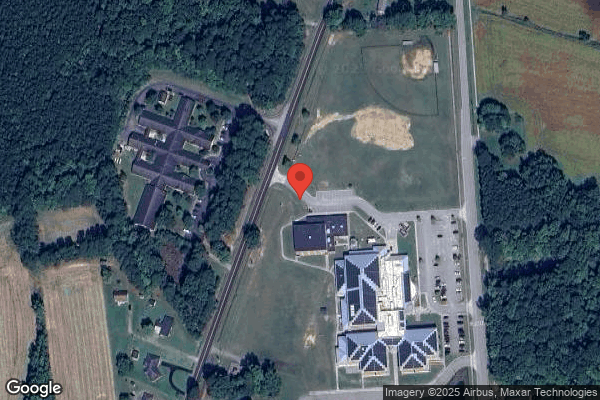
CONCERN (D)

Potential for Harm - no one hurt, but risky conditions existed

Deficiency F0760 (Tag F0760)

Could have caused harm · This affected 1 resident

**NOTE- TERMS IN BRACKETS HAVE BEEN EDITED TO PROTECT CONFIDENTIALITY** 2. Resident #32 was admitted to the facility on [DATE]. Resident #32 was discharged to the hospital on [DATE] and readmitted to ...

Read full inspector narrative →
**NOTE- TERMS IN BRACKETS HAVE BEEN EDITED TO PROTECT CONFIDENTIALITY** 2. Resident #32 was admitted to the facility on [DATE]. Resident #32 was discharged to the hospital on [DATE] and readmitted to the facility on [DATE]. Diagnoses included but were not limited to, Peripheral Vascular Disease and Type 2 Diabetes Mellitus. Resident #32's Minimum Data Set (an assessment protocol) with an Assessment Reference Date of 04/05/2019 was coded with a BIMS (Brief Interview for Mental Status) score of 15 indicating no cognitive impairment. On 06/25/2019 at approximately 5:00 p.m., Resident #32 stated, There are times that the Nurses don't give me my insulin. On 06/26/2019 a review of Resident #32's Clinical Record revealed the following: The Physician Order Summary revealed that Resident #32 has an order for Lantus SoloStar Pen-Injector 100 Unit/ML (Milliliter) (Insulin Glargine) Inject 50 Unit subcutaneously in the morning related to Type 2 Diabetes Mellitus with Unspecified Complications was ordered on 06/18/2019 with a Start Date of 06/19/2019. Review of the Medication Administration Record (MAR) revealed a blank space on 06/22/2019. Review of the Physician Order Summary revealed that Resident #32 had an order for Lantus SoloStar Pen-Injector 100 Unit/ML (Insulin Glargine) Inject 50 unit subcutaneously in the evening related to Type 2 Diabetes Mellitus with Unspecified Complications was ordered on 06/18/2019 with a Start Date of 06/19/2019. Review of the MAR revealed blank spaces on 06/21, 06/22 and 06/24/2019. Review of the Physician Order Summary revealed that Resident #32 has an order for Humulin R Solution 100 Unit/ML (Insulin Regular Human) Inject 15 unit subcutaneously with meals related to Type 2 Diabetes Mellitus with Unspecified Complications was ordered on 06/19/2019 with a Start Date of 06/19/2019. Review of the MAR revealed blank spaces for 06/21 at 11 a.m., 06/21 at 4 p.m., 06/22 at 8 a.m., 06/22 at 11 a.m., 06/22 at 4 p.m. and 06/24/2019 at 4 p.m. Review of the Physician Order Summary revealed that Resident #32 had an order for Humulin R Solution 100 Unit/ML (Insulin Regular Human) Inject as per sliding scale: if 251 - 299 = 2 units; 300 - 349 = 4 units; 350 - 399 = 6 units; subcutaneously before meals and at bedtime related to Type 2 Diabetes Mellitus with Unspecified Complications was ordered on 06/18/2019 with a Start Date of 06/18/2019. Review of the MAR revealed blank spaces for 06/21 at 11 a.m., 06/21 at 4 p.m., 06/22 at 4 p.m. and 06/24/2019 at 4 p.m. On 06/26/2019 at approximately 3:00 p.m., an interview was conducted with the Director of Nursing (DON) and reviewed Resident #32's concern of not receiving his insulin at times. The DON stated, (Resident name) goes out to the hospital frequently. Was he out at the hospital, did he refuse his insulin? The Director of Nursing was asked, What are your expectations of the Nurses administering and documenting Insulin's? The Director of Nursing stated, I expect the Nurses to administer insulin's as ordered and document. If the resident refuses the insulin they should document on the MAR. The DON was asked, What does a blank space on the MAR indicate? The DON stated, That the medication was not given. The DON also stated that she had been told if the Nurse documents information on 2 different computers that there may be a problem with some of the documentation not being shown. Nurse Progress Notes were reviewed for the period of 06/21/2019 through 06/24/2019 and there was no evidence that Resident #32 refused his insulin or was out of the facility. On 06/27/2019 at approximately 6:15 p.m., at pre-exit meeting the Administrator and Registered Nurse Consultant was informed of the finding. The facility did not present any further information about the finding. Based on record review and staff interviews, the facility staff failed to ensure two of 57 residents were free from significant medication errors. 1. The facility staff failed to ensure Resident #6 received insulin per physician's order. 2. The facility staff failed to ensure that Resident #32 received his insulin per physician's order. The findings included: 1. Resident #6 was re-admitted to the facility on [DATE] with diagnoses which included congestive heart failure, hyperlipidemia, COPD, type two diabetes, dysphagia, depression, anxiety and long term use of insulin. The facility staff failed to provide physician ordered insulin and anti-anxiety medications to Resident #6. Resident #6 was assessed on a Quarterly Minimum Data Set (MDS) dated [DATE] as having minimum hearing difficulty and wears glasses. In the area of Cognitive Patterns this resident was assessed as having scored a 15 in the area of Brief Interview for Mental Status (BIMS) indicating no cognitive impairment. In the area of Medications this resident was assessed as receiving Insulin injections, anti-anxiety and anti-depressant medications. A Care Plan dated 3/25/19 indicated: Focus-Resident #6 has diabetes mellitus and neuropathy. Goal-Resident will have no complications related to diabetes. Interventions- Diabetes medications as ordered by doctor. Monitor- document for side effects and effectiveness. An anti-anxiety medication care plan indicated- Goal - At risk for discomfort or adverse reactions related to anti-anxiety therapy. Interventions- administer Anti-Anxiety medications as ordered by physician. Physician order dated 6/10/19 indicated: Novolin 70/30 flex pen Suspension Pen-injector 100 unit/ml (milliliters) (insulin). Lorazepam tablet 0.5 mg (milligram) give one tablet by mouth twice a day. A review of a Medication Administration Record (MAR) dated March 2019 indicated on March 6, 7 and 11th Novolin 70/30 Suspension (70/30) 100 units was not administered as ordered. A review of the MAR dated March 2019 indicated on March 21, 2019 Lorazepam 0.5 mg was not administered as ordered. A review of a MAR dated June 2019 indicated on June 20, and 21 2019 Novolin 70/30 100 units was not administered as ordered. And on June 23, 2019 Lorazepam 0.5 mg was not administered as ordered. A Nursing Progress note dated March 6, 2019 indicated: Novolin 70/30 Flexpen 100 unit subcutaneously in the morning related to type 2 Diabetes Mellitus with Diabetic Neuropathy, awaiting pharmacy. A Nursing Progress note dated June 21 2019 (12:50) indicated: Insulin not available; pharmacy notified 6/21: to be delivered today. MD aware continuing to monitor. A Nursing Progress note dated June 21, 2019 (19:16) medication did not arrive during afternoon delivery. During an interview on 6/25/19 at 2:45 P.M. with Resident #6, she stated, My medications have ran out several times. Back in March and just this past weekend. I get my insulin twice a day. They are short of staff, I have to make up my own bed and change my own sheets. During an interview on 6/26/19 at 11:15 A.M. with the Director of Nursing (DON) and Regional Nurse Consultant they were asked why Resident #6 medications were not available. The DON stated insulin is available on site and staff should have gone in the stat box and got her insulin. The DON stated, staff should have ordered the medication more timely. Pharmacy Policy indicated: If any order is not received, check for a communication slip indicating: Back orders- Ordered-too-soon notifications; Drug-drug interactions; Formulary changes; Any other communication explaining the reason a medication to item was not delivered.
CONCERN (D)

Potential for Harm - no one hurt, but risky conditions existed

Deficiency F0761 (Tag F0761)

Could have caused harm · This affected 1 resident

**NOTE- TERMS IN BRACKETS HAVE BEEN EDITED TO PROTECT CONFIDENTIALITY** 2. On [DATE] at approximately 4:54 PM an inspection was made on the [NAME] Unit in the medication storage room with Licensed Pra...

Read full inspector narrative →
**NOTE- TERMS IN BRACKETS HAVE BEEN EDITED TO PROTECT CONFIDENTIALITY** 2. On [DATE] at approximately 4:54 PM an inspection was made on the [NAME] Unit in the medication storage room with Licensed Practical Nurse #10 (LPN). Three boxes of influenza vaccines with a total of 28 vials with an expiration date of [DATE] were observed. LPN #10 was asked would you normally discard the expired vaccines? She responded I don't know, but I can find out. On [DATE] at approximately, 9:30 AM an interview was conducted with the Director of Nursing concerning the expired influenza vaccines. She was asked when do they start and stop giving residents the influenza vaccines? She stated that they give the influenza vaccine from September to April. She also stated that they got rid of the expired flu vaccines on the [NAME] Unit. On [DATE] at approximately 11:40 AM upon inspection of Med Cart on the Blue Unit it was observed that the medication cart was unlocked. There were Residents and visitors walking, sitting and standing near the nurses station. The nurse was delivering lunch trays at the time. At approximately, 11:47 AM, the facility Administrator walked past the nurses station, stopped by the surveyor and informed that the medication cart had been left unattended for a few minutes and it appeared unlocked. He went over to the cart and pushed the lock inward to lock the cart and stated that he would tell the nurse that she left her cart unlocked. The Administrator was asked what should have been done? He stated The cart should have been locked. On [DATE] at approximately 3:16 PM an interview was conducted with LPN #2 (Licensed Practical Nurse) on the Blue Unit concerning her cart being unlocked. She stated that she was busy giving out trays to her residents. On [DATE] at approximately, 4:43 PM a pre-exit interview was conducted. Present were the Nurse Consultant, the Director Of Nursing, the Regional Nurse Consultant and the Administrator. They were debriefed on the above concerns. The nurse consultant stated I thought that I had discarded those vaccines. Based on observation, staff interview, and facility document review, it was determined that facility staff failed to secure medications on one of four medications carts; a medication cart on the blue unit. And failed to ensure one of two medication rooms were free from expired biologicals; the green unit medication storage room. 1. Facility staff failed to ensure the medication cart on the Blue Unit was locked when it was left unattended. 2. The facility staff failed to dispose of multiple expired influenza vials stored in the refrigerator in the medication room located on the [NAME] Unit. The findings include: 1. On [DATE] at 11:20 a.m., the medication cart on the blue unit was observed to be unlocked. The keys to the medication cart sat on top of the cart. Licensed Practical Nurse (LPN) #5 was at the nurse's station at the time and in view of the cart. LPN #5 then walked away from the station with the cart unlocked and keys on the cart. The medication cart was left unattended for approximately 14 minutes. During this time, dietary staff was observed going by the medication cart with the meal trays. A resident was also observed ambulating up and down the hallway near the medication cart. At 11:34 a.m., the ADON (Assistant Director of Nursing) locked the medication cart. At 11:37 a.m., LPN #5 came back to the medication cart. On [DATE] at 11:37 a.m., an interview was conducted with LPN #5. When asked how the medication cart should be left when not attended, LPN #5 stated that the cart should be locked. LPN #5 stated that her keys should also be in her pocket and not on top of the cart. LPN #5 confirmed that her cart was left unlocked but that she had given her keys to a nurse who had brought over a resident's medication who was being transferred to her unit. When asked why the medication cart should be locked, LPN #5 stated that it should be locked so that residents did not have access to medications or narcotics. When asked if some residents could reach the top of her medication cart, LPN #5 stated, Some of them can. When asked if she had a lot of residents who could ambulate around the unit, LPN #5 stated, Yes. On [DATE] at approximately 5:30 p.m., ASM (administrative staff member) #1, the Administrator, ASM #2, the DON (Director of Nursing) and ASM #3, the consultant were made aware of the above concerns. Facility policy titled,Storage and Expiration Dating of Medications, Biologicals, Syringes and Needles, documents in part the following: Facility should ensure that only authorized Facility staff, as defined by Facility should have possession of the keys, access cards, electronic codes,or combinations which open medication storage areas. Store all drugs and biologicals in locked compartments . No further information was presented prior to exit.
CONCERN (D)

Potential for Harm - no one hurt, but risky conditions existed

Infection Control (Tag F0880)

Could have caused harm · This affected 1 resident

Based on observations and staff interviews the facility staff failed to follow infection control practices, increasing the chances of infection, illnesse and disease for one of 57 residents in the sur...

Read full inspector narrative →
Based on observations and staff interviews the facility staff failed to follow infection control practices, increasing the chances of infection, illnesse and disease for one of 57 residents in the survey sample (Resident #10.) The facility staff failed to cover an open wound on Resident #10's left lower extremity in a timely manner. The findings included: Resident #10 was originally admitted to the facility 02/07/18. Resident #10's diagnoses included Major Depressive Disorder and Muscle Weakness. The Annual Minimum Data Set (MDS) assessment with an assessment reference date (ARD) of 02/11/19 coded the resident as completing the Brief Interview for Mental Status (BIMS) and scoring 6 out of a possible 15 which indicated Resident #10's cognitive abilities for daily decision making were not intact. On 06/25/19 at approximately 10:30 AM, Resident #10 was observed showing activity staff an uncovered wound on her left lower extremity as she was sitting. The staff commented, I will tell (Licensed Practical Nurse-LPN#1). On 06/25/19 at 11:33 AM the area was still exposed on Resident #10's left lower extremity. On 06/25/19 at 1:35 PM the area was still exposed. When approached, the nurse stated she will just put a Band-Aid on Resident's left leg until after medication pass. She also stated that resident will remove her dressing. On 06/25/19 at approximately, 2:11 PM LPN #1 put in a new order for the above resident because she didn't have necessary supplies. On 06/25/19 at approximately 2:24 PM wound care was observed on Resident's Left Lower Leg without difficulty. Procedure tolerated well by Resident. On 06/26/19 at 10:18 AM there was no documentation in the nursing note seen prior to yesterday about the resident removing her dressing. On 6/27/19 at approximately 10 AM an interview was conducted with Other Staff #8 concerning the Resident's wound on her left lower extremity. He said that he told the nurse around 10:30 AM that Resident had a sore on her leg unwrapped. Other Staff #8 said that the nurse told him that she would get it. Other Staff #8 states that staff will usually take care of things when we tell them. Careplan Focus reads Resident has actual impairment to the skin relating to venous ulcer to the left lower leg. Goal: Resident will have minimal complications relating to venous ulcer of left lower extremity through the review date. Interventions Reads: Complete wound care per physician orders. The physician's order summary stated to clean lower left ulcer with dermal wound cleanser, apply calmoseptine cream around wound cover with mepilex. Plain foam wrap (LLE) Left Lower Extremity from toes to 1 inch below knee 3 layers profore one time a day every Wednesday for lower leg ulcer. On 06/26/19 at approximately 10:19 AM an interview was conducted with LPN #1 concerning the uncovered area on the Resident's left lower extremity yesterday. She was asked why did she wait as long as she did before coverings resident's wound? She stated, It took a while because there were no dressings on the treatment cart. I eventually covered it. On 06/27/19 at approximately 4:43 PM a Pre-exit interview was conducted with the Nurse Consultant, Director of Nursing, The Regional Nurse Consultant and the Administrator. The above findings were discussed. No comments were made.
CONCERN (E)

Potential for Harm - no one hurt, but risky conditions existed

Deficiency F0561 (Tag F0561)

Could have caused harm · This affected multiple residents

**NOTE- TERMS IN BRACKETS HAVE BEEN EDITED TO PROTECT CONFIDENTIALITY** Based on observations, record review, staff interviews, resident interview, and facility document review the facility staff fail...

Read full inspector narrative →
**NOTE- TERMS IN BRACKETS HAVE BEEN EDITED TO PROTECT CONFIDENTIALITY** Based on observations, record review, staff interviews, resident interview, and facility document review the facility staff failed to ensure that shower preferences were followed for one of 57 residents in the survey sample, Resident #108. The facility staff failed to ensure that Resident #108's shower preferences were followed as indicated in the comprehensive care plan. The findings included: Resident #108 was originally admitted to the facility on [DATE] and readmitted on [DATE] with diagnoses to include but not limited to, Spina Bifida, Mild Intellectual Disabilities and Bipolar Disorder. Resident #108's most recent Minimum Data Set (MDS) was an Annual with an Assessment Reference Date (ARD) of 5/30/19. The Brief Interview for Mental Status was a 15 out of a possible 15 indicating the resident was cognitively intact and capable of daily decision making. Under Section G Functional Status G0120 Bathing Resident #108 was coded as requiring total dependence with one person physical assist. Resident #108's Comprehensive Care Plan was reviewed and is documented in part, as follows: Focus: Name (Resident #108) has an ADL (activities of daily living) self-care performance deficit related to late loss adl's as exhibited by: increased need for assist with adl's. Date Initiated: 10/27/18 Interventions: BATHING SHOWERING: she requires total assistance by one to two staff with bathing and showering-prefers twice a week and as necessary. Date Initiated: 10/27/18. On 6/25/19 at 1:45 P.M. Resident #108 was asked what was her preference for bathing. Resident #108 stated, I take a bed bath most of the week but I prefer to have a shower twice a week. My shower days are Monday and Thursdays on the 3-11 shift. I'm lucky if I get a shower once a month. My preference is to have a shower twice a week so I can wash my hair and it makes me feel better. The Shower Schedule for the [NAME] Unit was reviewed. According to the Shower Schedule Resident #108 is to receive showers on Mondays and Thursdays. Resident #108's ADL CNA (Certified Nursing Assistant) Flow sheets for April, May, and June of 2019 were reviewed and are documented in part, as follows: April 2019-Resident #108 received a shower on 4/19/19 and 4/29/19. May 2019-Resident #108 received a shower on 5/9/19. June 2019-Resident #108 had received no showers as of 6/24/19. On 4/27/19 an interview was conducted with the Assistant Director of Nursing (ADON) who was also filling in as the [NAME] Unit Manager. The ADON was asked to review the [NAME] Unit Shower Schedule and then Resident #108's ADL Flow sheets and to tell me when the resident had received a shower. The ADON stated, Her (Resident #108) shower days are Monday and Thursdays. It looks like she got 2 showers in April, one in May and she hasn't gotten any in June so far. She should have a shower at least twice a week. On 6/27/19 at approximately 3:30 P.M. the above information was shared with the Administrator, the Director of Nursing and the Corporate Nurse Consultant. The Director of Nursing stated, Residents should receive two showers a week and she is even care planned as it being a preference for her, we will see that it gets done. The facility policy titled Bathing/Showering revised 9/1/17 was reviewed and is documented in part, as follows: Policy: Assistance with showering and bathing will be provided at least twice a week and PRN (as needed) to cleanse and refresh the resident. The resident shall be asked on admission to establish a frequency schedule for bathing. This schedule will take precedence over the twice a week and PRN cleansing. The resident's frequency and preferences for bathing will be reviewed at least quarterly during care conference. Prior to exit no further information was shared.
CONCERN (E)

Potential for Harm - no one hurt, but risky conditions existed

Investigate Abuse (Tag F0610)

Could have caused harm · This affected multiple residents

**NOTE- TERMS IN BRACKETS HAVE BEEN EDITED TO PROTECT CONFIDENTIALITY** Based on observation, staff interview, facility document review, and clinical record review, it was determined that facility sta...

Read full inspector narrative →
**NOTE- TERMS IN BRACKETS HAVE BEEN EDITED TO PROTECT CONFIDENTIALITY** Based on observation, staff interview, facility document review, and clinical record review, it was determined that facility staff failed to conduct an investigation and keep residents free from further abuse for two of 57 residents in the survey sample, Resident #5 and Resident #82. 1. Facility staff failed to investigate a sexual encounter between Resident #5 and Resident #107 on 3/6/19; and failed to protect Resident #5 from a second sexual encounter with Resident #107 on 3/20/19. 2. For Resident #82, facility staff failed to investigate a resident to resident altercation between Resident #82 and Resident #107; and failed to prevent further potential abuse from Resident #107. The findings include: 1a. Resident #5 was admitted to the facility on [DATE] with diagnoses that included but were not limited to Pick's Disease (1), muscle weakness, difficulty walking, and major depressive disorder. Resident #5's most recent MDS (minimum data set) assessment was a quarterly assessment with an ARD (assessment reference date) of 3/11/19. Resident #5 was coded as being severely impaired in cognitive function scoring 99 out of 15 on the BIMS (Brief Interview for Mental Status) exam. Resident #5 was coded as requiring extensive assistance from one staff member with ADLs (activities of daily living) such as dressing, bed mobility and transfers; and supervision only with walking. 1b. Resident #107 was admitted to the facility on [DATE] with diagnoses that included but were not limited to Wernicke's encephalopathy (2), Hepatitis C (3), and altered mental status. Resident #107's most recent MDS (minimum data set) assessment was a quarterly assessment with an ARD (assessment reference date) of 6/25/19. Resident #107 was coded as being moderately impaired in cognitive function of the Staff Assessment for Mental Status exam. Resident #107 was coded as being independent with ADL (activities of daily living) and requiring supervision only with walking. Review of Resident #5's clinical record revealed a nursing note that documented possible sexual abuse on 3/6/19. The following was documented: Reported to this writer that resident (Resident #5) in room (number of Resident #5's room) was lured in (number of Resident #107's room). Seen with paints (sic) down as well as lips touching each others. Made DON (Director of Nursing) aware. Instructed by DON to keep resident's apart. Review of the facility FRIs (facility reported incidents) revealed that a FRI was not submitted to the OLC (Office of Licensure and Certification) and other state agencies regarding this incident. An investigation could not be found regarding this incident. Further review of Resident #5's and Resident #107's clinical record failed to evidence that staff were keeping the resident's separated to prevent further abuse. Further review of the FRIS revealed a second incident had occurred between Resident #5 and Resident #107 on 3/20/19. The following was documented in the FRI: Report date 3/20/19, Incident date 3/20/19: Incident Type: The residents were found in (Name of Resident #5's) room lying together partially undressed. The two residents were immediately separated .during the delivery of dinner, staff noted (name of Resident #5) and (name of Resident #107) on the bed in her room with their clothing partially removed. Neither resident wanted to discuss if the had sexual intentions. The residents were immediately separated, skin assessments completed and no signs of physical injury noted to either resident. MD (Medical Doctor) and RP (Responsible Party) were notified .Employee action initiated or taken: (Name of Resident #5) was moved to another room off the unit and (name of Resident #107) was placed on q (every) 15 minute checks). (Name of Resident #5's RP) did not want to contact the police. The five day investigation follow up dated 5/25/19, documented in part, the following: During dinner time staff was in the process of passing out meal trays. As a staff member entered the room to get (name of Resident #5) she encountered (Resident #107) on top of (name of Resident #5) both with there clothing down around their ankles. (Name of Resident #107) was immediately removed and taken to his room. The staff performed an assessment of (Name of Resident #5) and found no visualization of penetration, redness, swelling, bruising, or discharge. Staff informed to conduct q 15 minute checks on (Resident #107). (Resident #5) was immediately transferred off the unit and placed on another unit within the facility (off the locked unit). Both residents appear not to have experienced any emotional trauma from the incident. Findings: Based on staff, resident and review of the medical record the facility has substantiated that both residents were partially unclothed but there is no supporting evidence to suggest that sexual intercourse has occurred . On 6/25/19 at 5:37 p.m., an interview was conducted with LPN #1, the nurse who worked when both sexual encounters had occurred. When asked the process if she were to see abuse between two residents in the facility, LPN #1 stated that she would remove the victim from the situation and report the abuse to administration. When asked who her abuse coordinator was, LPN #2 stated that the DON (Director of nursing) was the abuse coordinator. When asked what was usually put into place after a resident is abused by another resident, LPN #2 stated that q (every 15 min) checks are usually conducted for three days and recorded on a tracking record. When asked how other clinical staff, i.e. nursing aides and nurses are made aware of resident to resident abuse, LPN #1 stated that nurses and nursing aides are given report. When asked the purpose of the care plan, LPN #1 stated the purpose of the care plan was to serve as a guide to care for the residents. When asked if the care plan should be updated after a resident to resident altercation, LPN #1 stated, It should be updated. On 6/26/19 at approximately 4:00 p.m., an interview was conducted with ASM (administrative staff member) #2, the DON (Director of Nursing) and ASM #3, the corporate consultant. When asked the process if her nurses were to report two residents engaging in sexual relations especially on the Peach unit, ASM #2 stated that she would separate the residents, start an investigation to see if the incident requires reporting. ASM #2 stated that if both residents can give consent; she would then provide the residents privacy. ASM #2 stated that if the residents could not give consent, she would then call the RPs and if the RPs give consent she would ensure the residents are safe and practicing safe sex. ASM #2 denied being aware of the incident on 3/6/19 between Resident #5 and Resident #107, despite the nursing note written on 3/6/19 documenting that the DON was made aware. When asked what had happened on 3/20/19 between Resident #5 and Resident #107; ASM #2 stated that it was reported to her that Resident #107 was found on top of Resident #5 with their pants pulled down. ASM #2 stated that at this time Resident #5 was able to remove her own pants. ASM #2 stated that as soon as she found out, she immediately separated the residents, called the responsible parties and called the physician. ASM #2 stated that she had moved Resident #5 off the Peach unit and to the Blue unit. ASM #2 stated that she had performed an assessment on Resident #5 and there were no visible signs of penetration or injury. ASM #2 stated that since both residents could not give consent at this time, she had reported this incident to the state agencies. ASM #2 stated that Resident #5 could not tell her what had happened and if she had consented to Resident #107's advances. ASM #2 stated that Resident #107 denied anything happening. ASM #2 stated that Resident #107 said he was trying to take Resident #5 to the bathroom. ASM #2 stated that Resident #5's responsible party did not want Resident #5 sent to the hospital for a rape kit because she didn't want to put her daughter through that stress. ASM #2 confirmed that nothing was put into place to prevent the 3/20/19 incident because she was not made aware of the incident on 3/6/19. ASM #2 confirmed that there was no evidence that the physicians and RPs (Responsible Parties) were notified regarding the incident on 3/6/19. On 6/26/19 at 4:50 p.m., an interview was conducted with CNA (certified nursing assistant) #4, an aide who witnessed both sexual incidents on 3/6/19 and 3/20/19. CNA #4 stated that she would immediately separate the residents and report any suspected abuse to her supervisor. CNA #4 stated that she could not recall too much on 3/6/19 but that she had reported to the nurse (LPN #1) that Resident #5 was in Resident #107's room. CNA #4 stated that she was just told to keep the residents separated. CNA #4 stated that the nursing staff tried as much as they could to keep the residents separated and that it was hard when there was only two nursing aides and one nurse to the Peach unit. CNA #4 stated that there are supposed to be three aides on the Peach unit. CNA #4 stated that sometimes Resident #107 was left unattended if the aides were in the residents' rooms providing care and there was only one nurse working both the blue and peach units. CNA #4 stated that Resident #107 had not had any other sexual encounters with an other residents, only Resident #5. CNA #4 stated that she had been working on the Peach Unit for a total of 5 years. On 6/26/19 at 5:13 p.m., further interview was conducted with LPN (licensed practical nurse) #1, the nurse who was working on 3/6/19. When asked what had happened on 3/6/19; LPN #1 stated that a CNA (Certified Nursing Assistant) had alerted her that she had seen Resident #5 in Resident #107's room. LPN #1 stated that because she was not sure if the residents were cognitively intact enough to consent to any sexual activity; she separated the residents, and alerted administration (the DON). LPN #1 stated; I told (Name of DON (Director of Nursing). She told me to keep them apart. When asked if it was difficult to keep Resident #5 and Resident #107 apart, LPN #1 stated that if she is passing out medications and a CNA is in a room providing care, it was difficult to keep an eye on them. LPN #1 stated that there should be three CNA's on Peach unit and lately there had been two. LPN #1 could not recall how many CNAs were on shift the day of 3/6/19 or 3/20/19. LPN #1 stated that she is the only nurse usually working 7a.m. to 7 p.m. on the Peach unit. When asked if she could provide this writer with the 15 minute checks that were conducted on 3/6/19 for Resident #107, LPN #1 stated that q 15 minute checks were never written down. LPN #1 stated there was no way to prove that 15 minute checks were conducted on Resident #107 on 3/6/19. On 6/27/19 at 5:30 p.m., ASM #1, the Administrator, ASM #2, the DON and ASM #3, the corporate nurse consultant were made aware of the above concerns. 2. For Resident #82, facility staff failed to investigate a resident to resident altercation between Resident #82 and Resident #107; AND failed to prevent further potential abuse from Resident #107. 2a. Resident #82 was admitted to the facility on [DATE] and readmitted on [DATE] with diagnoses that included but were not limited to dementia without behavioral disturbance, muscle weakness and high blood pressure. Resident #82's most recent MDS (minimum data set) assessment was a quarterly assessment with an ARD (assessment reference date) of 5/21/19. Resident #82 was coded as being severely impaired in cognitive function on the Staff Interview for Mental Status Exam. 2b. Resident #107 was admitted to the facility on [DATE] with diagnoses that included but were not limited to Wernicke's encephalopathy, Hepatitis C, and altered mental status. Resident #107's most recent MDS (minimum data set) assessment was a quarterly assessment with an ARD (assessment reference date) of 6/25/19. Resident #107 was coded as being moderately impaired in cognitive function of the Staff Assessment for Mental Status exam. Resident #107 was coded as being independent with ADL (activities of daily living) and requiring supervision only with walking. Review of Resident #82's clinical record revealed the following nursing note dated 6/24/19: resident attempting to get out of bed and roommate was observed hitting him in the face trying to make him lay down. no bruising observed at this time. The next note dated 6/24/19 documented the following: placed call to RP (responsible party) made aware of incident with roommate. Review of Resident #107's clinical record revealed the following note dated 6/24/19: Heard resident yelling from room lay down lay down. CNA (Certified Nursing Assistant) entered room observed this resident hitting roommate trying to make him lay down. Call placed to RP (Responsible Party) left message to return call. PA (Physician's Assistant) made aware. Supervisor and ADON (Assistant Director of Nursing) made aware. Review of the facility FRIs (facility reported incidents) revealed that a FRI was not submitted to the OLC (Office of Licensure and Certification) and other state agencies regarding this incident. An investigation could not be found regarding this incident. On 6/25/19 at 12:30 p.m., an observation was made of Resident #107. He was up eating lunch in his room with his roommate (Resident #82). Both residents were left unattended. On 6/25/19 at 12:43 p.m., an observation was made of Resident #107. He was wiping food off Resident #82's lap. On 6/25/19 at 2:21 p.m., an interview was conducted with CNA #5. When asked the process if she were to see a resident hit another resident, CNA #5 stated that she would separate the residents, deescalate the situation and redirect the residents. CNA #5 stated that she would report the incident to her charge nurse. CNA #5 then gave an example and stated that Resident #107 had hit his roommate the day prior at approximately 1:45 p.m. and that she had reported this to her charge nurse (LPN #1). CNA #5 stated that she had written a statement for her nurse. When asked what staff were doing to ensure Resident #82 was safe from Resident #107, CNA #5 stated that they were trying to ensure that they were not in their room at the same time. When asked if she had worked that morning, CNA #5 stated that she did and was working until 3 p.m. CNA #5 was told about the above observations during lunch. CNA #5 confirmed that the residents were not separated during this time. When asked how CNAs were made aware of resident to resident altercations, CNA #5 stated that nurses tell them in report. On 6/25/19 at 2:25 p.m., LPN #1 could be reached for an interview. On 6/25/19 at 2:59 p.m., the FRI and investigation so far for Resident #107 and Resident #82 was requested from the DON (Director of Nursing) (ASM (administrative staff member) #2. ASM #2 stated that she didn't have a FRI because she wasn't aware of any resident to resident altercation between Resident #107 and #82. ASM #2 stated that maybe the administrator had submitted one and she would go check. On 6/25/19 at 5:20 p.m., ASM #3, the corporate nurse stated that the Administrator had been made aware of the resident to resident altercation between Resident #107 and #82 on 6/24/19, but did not report this incident to the appropriate state agencies or initiate an investigation because there were no injuries. ASM #3 stated that she had just in-serviced the Administrator on the abuse policy and went over when to report and investigate abuse. ASM #3 stated that the Administrator was using the old abuse policy and thought he didn't have to report and separate the residents because there were no injuries. ASM #3 stated that they had just moved Resident #107 to a private room to protect Resident #82. On 6/25/19 at 5:37 p.m., this writer was able to get in touch with LPN #1. When asked what had happened on 6/24/19 between Resident #107 and Resident #82, LPN #1 stated that it was reported to her by the CNA that Resident #107 had slapped Resident #82. LPN #1 stated that staff attempted to get Resident #107 out of his room but were unsuccessful. LPN #1 stated that they did q 15 minute checks on Resident #107. When asked if she could provide those checks, LPN #1 stated that the staff were not writing it down and she could not prove staff were doing this. LPN #1 stated that she had reported this incident to the ADON and Administrator. LPN #1 stated that most of the day 6/25/19, Resident #82 was out of the room and at the table doing activities with the activity assistant. LPN #1 was told about the above observations at lunch. When asked if Resident #82 was protected from Resident #107 after being slapped by Resident #107, LPN #1 stated that they just moved Resident #107 to a private room. When asked if this was after this surveyor had alerted the DON by asking for a FRI, LPN #1 stated yes. On 6/27/19 at 12:00 p.m., an interview was conducted with ASM #1, the Administrator. When asked the process when it is reported to him that abuse, or an allegation of abuse had occurred between two residents, ASM #1 stated that he would report actual abuse that day to the appropriate state agencies, separate the residents and start and investigation. ASM #1 stated that the incident between Resident #107 and #82 was reported to him on 6/24/19 but that he did not report the incident until 6/25/19 to the appropriate state agencies. ASM #1 stated that he figured he did not have to report if there were no physical injuries that required physician intervention. When asked why he ended up reporting the incident on 6/25/19, ASM #1 stated that his DON had asked him if he had submitted a FRI regarding the incident. ASM #1 showed this surveyor the fax confirmation to report the incident to the OLC on 6/25/19 at 3:47 p.m. When asked why an investigation wasn't started immediately and what they had in place to protect Resident #82 from Resident #107, ASM #1 stated, We (Administrator and ADON) felt at the time to monitor. When asked if he was educated on the abuse policy prior to his employment with the facility in February 2019; ASM #1 stated that he was. Review of ASM #1 employee file revealed that he was educated on the abuse policy on 2/15/19. Review of the in-service dated 6/25/19 revealed that he and the DON were re-educated on the abuse policy. On 6/27/19 at 5:30 p.m., ASM #1, the Administrator, ASM #2, the DON and ASM #3, the corporate nurse consultant were made aware of the above concerns. Review of the facility's abuse policy documents in part, the following: Any person who observes or becomes aware of an incident of resident abuse, neglect or mistreatment of resident belongings, whether alleged, suspected or observed, must report the incident to the Executive Director, Director of Clinical Services Immediately. The Executive Director, Director of Clinical Services or Clinical Services Supervisor will initiate the procedure for incident investigation and reporting .Alleged, suspected or observed abuse .are thoroughly investigated by the Executive Director and/or Director of Clinical Services. Alleged suspected or observed violations are reported immediately to the .Ombudsman and all other officials required by state law. If a resident abuses another resident, the abusive resident's physician will be contacted and appropriate action will be taken to prevent further such behavior. If the abusive resident's behavior cannot be controlled, thereby posing a threat of harm to others in the facility, the resident will be discharged .
CONCERN (E)

Potential for Harm - no one hurt, but risky conditions existed

Transfer Requirements (Tag F0622)

Could have caused harm · This affected multiple residents

**NOTE- TERMS IN BRACKETS HAVE BEEN EDITED TO PROTECT CONFIDENTIALITY** 2. The facility staff failed to send Resident #32's Care Plan goals when discharged to the hospital on [DATE]. Resident #32 was ...

Read full inspector narrative →
**NOTE- TERMS IN BRACKETS HAVE BEEN EDITED TO PROTECT CONFIDENTIALITY** 2. The facility staff failed to send Resident #32's Care Plan goals when discharged to the hospital on [DATE]. Resident #32 was admitted to the facility on [DATE]. Resident #32 was discharged to the hospital on [DATE] and readmitted to the facility on [DATE]. Diagnoses included but were not limited to, Peripheral Vascular Disease and Type 2 Diabetes Mellitus. Resident #32's Minimum Data Set (an assessment protocol) with an Assessment Reference Date of [DATE] was coded with a BIMS (Brief Interview for Mental Status) score of 15 indicating no cognitive impairment. In addition, the Minimum Data Set coded Resident #32 as requiring set up help only with eating, supervision with assistance of 1 for toilet use, independent with bed mobility, transfer, dressing, bathing and independent with personal hygiene with assistance of 1. On [DATE] at approximately 12:00 p.m., the Director of Nursing (DON) and Registered Nurse (RN) Consultant was asked, Can you provide documentation that the Care Plan goals were sent with Resident #32 upon discharge to the hospital on [DATE]? On [DATE] at approximately 1:00 p.m., the RN Consultant stated, The Nurses have been educated to send the Bed Hold Notice and Care Plan goals with the resident's on discharge to the hospital but they just did not do it. On [DATE] at 2:45 p.m., an interview was conducted with the DON and she stated, I am unable to provide documentation that the Bed Hold Notice and Care Plan goals were sent out with (Resident name) to the hospital. The DON was asked, What are your expectations of Nursing when sending residents to the hospital? The DON stated, I expect the Nurses to send the Bed Hold Notice and Care Plan goals to the hospital and document in the Nurse Notes. On [DATE] at approximately 6:15 p.m., at the pre-exit meeting the Administrator and the Registered Nurse Consultant was informed of the finding. The facility did not present any further information about the finding. 3. The facility staff failed to send Resident #41's Care Plan goals when discharged to the hospital on [DATE]. Resident #41 was admitted to the facility on [DATE] and discharged to the hospital on [DATE]. Diagnoses included but were not limited to, Traumatic Brain Injury and Epilepsy. Resident #41's Discharge Assessment Minimum Data Set with an Assessment Reference Date of [DATE] was coded for short-term memory problem and moderately impaired cognitive skills for daily decision making. In addition, the Minimum Data Set coded Resident #41 as requiring limited assistance with bed mobility, transfer, walk in room, walk in corridor, dressing, toilet use and supervision with eating and personal hygiene. On [DATE] at approximately 12:00 p.m., the Director of Nursing (DON) and Registered Nurse (RN) Consultant was asked, Can you provide documentation that the Care Plan goals were sent with Resident #41 upon discharge to the hospital on [DATE]? On [DATE] at approximately 1:00 p.m., the RN Consultant stated, The Nurses have been educated to send the Bed Hold Notice and Care Plan goals with the resident's on discharge to the hospital but they just did not do it. On [DATE] at 2:45 p.m., an interview was conducted with the DON and she stated, I am unable to provide documentation that the Bed Hold Notice and Care Plan goals were sent out with (Resident name) to the hospital. The DON was asked, What are your expectations of Nursing when sending residents to the hospital? The DON stated, I expect the Nurses to send the Bed Hold Notice and Care Plan goals to the hospital and document in the Nurse Notes. On [DATE] at approximately 6:15 p.m., at pre-exit meeting the Administrator and the Registered Nurse Consultant was informed of the finding. The facility did not present any further information about the finding. 4. The facility staff failed to ensure that Resident #265's Plan of Care Summary to include their care plan goals were sent upon transfer-discharge to the hospital on [DATE]. Resident #265 was originally admitted to the nursing facility on [DATE] and readmitted on [DATE] and expired on [DATE]. Diagnoses included but were not limited to, Peripheral Vascular Disease, Local Infection of the skin and Subcutaneous Tissue and Venous Insufficiency. The current Minimum Data Set (MDS) a quarterly MDS with an Assessment Reference Date (ARD) of [DATE] coded the resident with a 02 of a total possible score of 15 on the Brief Interview for Mental Status (BIMS), indicating severe cognitive impairment. The section M on the MDS under Pressure Ulcers read as follows: Resident at risk for Pressure Ulcers as being Yes. This section also indicates that the resident has 2 Venous and Arterial Ulcers present. The Discharge MDS assessment dated [DATE]-discharge return anticipated, resident re-admitted on [DATE]. An interview was conducted with Licensed Practical Nurse (LPN) #7 on [DATE] at approximately, 10:48 AM concerning Resident transfers-discharges. She was asked What paperwork is sent with the resident when they are being sent out to the hospital. LPN #7 replied that we usually will send out a copy of the MAR (Medication Administration Record), the Face Sheet, bed hold notice, E-Interact SBAR (Situation, Background, Assessment, Recommendation) and the History and Physical. On [DATE] at approximately 9:30 AM an interview was conducted with the DON (Director of Nursing) concerning Residents Discharge/transfer notes and care plan. The DON stated there is no note specifying that a care plan was sent to the hospital when resident was transferred. An interview was conducted with Licensed Practical Nurse (LPN) #1 on [DATE] at approximately, 12:22 PM concerning Resident transfers-discharges. He was asked What paperwork is sent with the resident when they are being sent out to the hospital. LPN #1 replied that we usually will send out a copy of the MAR (Medication Administration Record), the Face Sheet, bed hold notice, Quality Assurance, SBAR (Situation, Background, Assessment, Recommendation) and the History and Physical. He was asked if the care plan is normally sent. He stated, We don't send a care plan. An interview was conducted with the Administrator and Director of Nursing (DON) on [DATE] at approximately 5:09 PM. They were asked what should have been done concerning the above issue. The DON stated that we will send care plan to the hospital with the resident. On [DATE] at approximately, 4:43 PM a pre-exit interview was conducted. Present were the Nurse Consultant, the Director Of Nursing, the Regional Nurse Consultant and the Administrator. They were debriefed on the above concerns. Based on staff interviews, clinical record review and facility documentation review the facility staff failed to send a copy of the Resident's care plan to include their goals for six of 57 residents (Resident #317, #32, #41, #265, #65 and #108) after being transferred to the hospital. The findings included: 1. The facility staff failed to ensure that Resident #317's Plan of Care Summary to include their care plan goals was sent upon transfer/discharge to the hospital on [DATE]. Resident #317 was originally admitted to the facility on [DATE]. Diagnosis for Resident #317 included but not limited to acute respiratory failure with hypoxia. The current Minimum Data Set (MDS), an admission assessment with an Assessment Reference Date (ARD) of [DATE] coded the resident with a 15 out of a possible score of 15 on the Brief Interview for Mental Status (BIMS) indicating no cognitive impairment. The Discharge MDS assessments was dated for [DATE]-discharge return anticipated. On [DATE], according to the facility's documentation, per family request, Emergency Services was called to transport Resident #317 to the local emergency room (ER) due to resident complained of being dizzy, nauseous, extreme weakness and had vomited several times (unwitnessed). On [DATE] at approximately 1:40 p.m., a request was made to the Director of Nursing (DON) for evidence that the facility provided written information of Resident #317's care plan to include their goals was sent prior to or shortly after being transferred to the hospital on [DATE]. On the same day at approximately 2:04 p.m., the DON stated, I was unable to locate in Resident #317's clinical record the care plan was sent when discharged to the hospital on [DATE]. The Administrator, Director of Nursing and Regional Director of Clinical Services was informed of the finding during a briefing on [DATE] at approximately 3:40 p.m. The facility did not present any further information about the findings. 5. The facility staff failed to ensure comprehensive care plan goals were sent upon discharge to the hospital for Resident #65 on [DATE]. Resident #65 was admitted on [DATE] and readmitted on [DATE] with diagnoses to include but not limited to Quadriplegia, Failure to Thrive and Pressure Ulcers. Resident #65's most recent Minimum Data Set (MDS) was a Quarterly with an Assessment Reference Date (ARD) of [DATE]. The Brief Interview for Mental Status was a 15 out of a possible 15 indicating the resident was cognitively intact and capable of daily decision making. Resident #65's MDS history was reviewed and revealed the following: 1. A Unplanned Discharge-return anticipated MDS with an ARD of [DATE]. 2. A Entry MDS with an ARD of [DATE]. Resident #65 Progress Note dated [DATE] at 18:52 (6:52 P.M.) was reviewed and is documented in part, as follows: Resident had labs critical and called LTC (Physician Group) and they said to send out resident emergency. Resident left to go to hospital around 5:45. Resident #65's Hospital Discharge summary dated [DATE] was reviewed and is documented in part, as follows: Resident #65's Medical Record was reviewed and there was no documentation to support that the comprehensive care plan goals were sent with the resident upon transfer to the hospital on [DATE]. [DATE] at 11:04 A.M. an interview was conducted with the Director of Nursing regarding Resident #65's hospital discharge on [DATE]; and if there was any documentation to support that a care plan was sent with the resident upon transfer to the hospital The Director of Nursing stated, No I could not find anything to show we sent those documents with him. Our process is to send the bedhold policy and the care plan at the time of transfer. On [DATE] at approximately 3:30 P.M. the above information was shared with the Administrator, the Director of Nursing and the Corporate Nurse Consultant. Prior to exit no further information was shared. 6. The facility staff failed to ensure comprehensive care plan goals were sent upon discharge for Resident #108 on [DATE]. Resident #108 was originally admitted to the facility on [DATE] and readmitted on [DATE] with diagnoses to include but not limited to Spina Bifida, Mild Intellectual Disabilities and Bipolar Disorder. Resident #108's most recent Minimum Data Set (MDS) was an Annual with an Assessment Reference Date (ARD) of [DATE]. The Brief Interview for Mental Status was a 15 out of a possible 15 indicating the resident was cognitively intact and capable of daily decision making. Resident #108's MDS history was reviewed and revealed the following: 1. A Quarterly Unplanned Discharge-return anticipated MDS with an ARD of [DATE]. 2. A Entry MDS with an ARD of [DATE]. Resident #108's Progress Note dated [DATE] at 20:09 (8:09 P.M.) was reviewed and is documented in part, as follows: Behavior Note: CNA (Certified Nursing Assistant) reported that resident stated she drank a whole bottle of wound cleanser. Charge nurse entered room and resident admitted to drinking wound cleanser. Resident stated she was depressed and tried to kill herself. Called 911 in to transport to Name (Hospital) ER (emergency room). 911 in to transport resident. Report called to ER. Unit manager notified and is aware. Resident #108's Medical Record was reviewed and there was no documentation to support that comprehensive care plan goals were sent with the resident upon transfer to the hospital on [DATE]. [DATE] at 11:04 A.M. an interview was conducted with the Director of Nursing regarding Resident #108's hospital discharge on [DATE] and if there was any documentation to support that a care plan was sent with the resident upon transfer to the hospital The Director of Nursing stated, No I could not find anything to show we sent those documents with her. Our process is to send the bedhold policy and the care plan at the time of transfer. On [DATE] at approximately 3:30 P.M. the above information was shared with the Administrator, the Director of Nursing and the Corporate Nurse Consultant. Prior to exit no further information was shared. The facility policy titled Transfer/Discharge Notification and Right to Appeal revised [DATE] was reviewed and is documented in part, as follows: Policy: Transfer and discharges of residents, initiated by the center (facility initiated) will be conducted according to Federal and/or State regulatory requirements. Procedure: Transfer/Discharge Requirements: Documentation: When the center transfers or discharges a resident under any of the circumstances listed above the facility will ensure that the transfer or discharge is documented in the resident's medical record and appropriate information is communicated to the receiving health care institution or provider *Comprehensive care plan goals.
CONCERN (E)

Potential for Harm - no one hurt, but risky conditions existed

Deficiency F0625 (Tag F0625)

Could have caused harm · This affected multiple residents

**NOTE- TERMS IN BRACKETS HAVE BEEN EDITED TO PROTECT CONFIDENTIALITY** 2. The facility staff failed to provide Resident #32 or resident representative a written Bed Hold Notice when discharged to the...

Read full inspector narrative →
**NOTE- TERMS IN BRACKETS HAVE BEEN EDITED TO PROTECT CONFIDENTIALITY** 2. The facility staff failed to provide Resident #32 or resident representative a written Bed Hold Notice when discharged to the hospital on [DATE]. Resident #32 was admitted to the facility on [DATE]. Resident #32 was discharged to the hospital on [DATE] and readmitted to the facility on [DATE]. On 06/25/2019 at approximately 12:00 p.m., the Director of Nursing (DON) and Registered Nurse (RN) Consultant was asked, Can you provide documentation that the Bed Hold Notice was sent with or provided to Resident #32 upon discharge to the hospital on [DATE]? On 06/25/2019 at approximately 1:00 p.m., the RN Consultant stated, The Nurses have been educated to send the Bed Hold Notice and Care Plan goals with the resident's on discharge to the hospital but they just did not do it. On 06/25/2019 at 2:45 p.m., an interview was conducted with the DON and she stated, I am unable to provide documentation that the Bed Hold Notice and Care Plan goals were sent out with (Resident name) to the hospital. The DON was asked, What are your expectations of Nursing when sending residents to the hospital? The DON stated, I expect the Nurses to send the Bed Hold Notice and Care Plan goals to the hospital and document in the Nurse Notes. On 06/27/2019 at approximately 6:15 p.m., at pre-exit meeting the Administrator and the Registered Nurse Consultant was informed of the finding. The facility did not present any further information about the finding. 3. The facility staff failed to provide Resident #41's or resident representative a Bed Hold Notice when discharged to the hospital on [DATE]. Resident #41 was admitted to the facility on [DATE] and discharged to the hospital on [DATE]. Diagnosis included but were not limited to, Traumatic Brain Injury and Epilepsy. On 06/25/2019 at approximately 12:00 p.m., the Director of Nursing (DON) and Registered Nurse (RN) Consultant were asked, Can you provide documentation that the Bed Hold Notice was sent with Resident #41 upon discharge to the hospital on [DATE]? On 06/25/2019 at approximately 1:00 p.m., the RN Consultant stated, The Nurses have been educated to send the Bed Hold Notice and Care Plan goals with the resident's on discharge to the hospital but they just did not do it. On 06/25/2019 at 2:45 p.m., an interview was conducted with the DON and she stated, I am unable to provide documentation that the Bed Hold Notice and Care Plan goals were sent out with (Resident name) to the hospital. The DON was asked, What are your expectations of Nursing when sending residents to the hospital? The DON stated, I expect the Nurses to send the Bed Hold Notice and Care Plan goals to the hospital and document in the Nurse Notes. On 06/27/2019 at approximately 6:15 p.m., at pre-exit meeting the Administrator and the Registered Nurse Consultant was informed of the finding. The facility did not present any further information about the finding. Based on staff interviews, facility documentation review and clinical record review the facility staff failed send a copy of the Bed-Hold Policy upon discharge/transfer for five of 57 resident's (Resident #317, 32, 41, 65 and 108) after being transferred to the local hospital. The findings included: 1. The facility staff failed to provide the Resident #317 or their representative a copy of the bed hold policy upon discharge/transfer to the hospital on [DATE]. Resident #317 was originally admitted to the facility on [DATE]. Diagnosis for Resident #317 included but not limited to acute respiratory failure with hypoxia. The Discharge MDS assessments was dated for 04/01/19 - discharge return anticipated. On 06/13/18, according to the facility's documentation, per family request, Emergency Services was called to transport Resident #317 to the local emergency room (ER) due to resident complained of being dizzy, nauseous, extreme weakness and had vomited several times (unwitnessed). On 06/25/19 at approximately 1:40 p.m., a request was made to the Director of Nursing (DON) for evidence that the facility provided written information of the Notice of Bed-Hold Policy to the resident or resident representative prior to or shortly after their transfer to the hospital on [DATE]. On the same day at approximately 2:04 p.m., the DON stated, I am unable to locate in Resident #317's clinical record the bed hold policy was issued to the resident or their representative when discharged to the hospital on [DATE]. The Administrator, Director of Nursing and Regional Director of Clinical Services was informed of the finding during a briefing on 06/27/19 at approximately 3:40 p.m. The facility did not present any further information about the findings. 4. The facility staff failed to ensure a Bed Hold Policy was sent with Resident #65 or provided to the resident representative upon discharge to the hospital on 4/30/19. Resident #65 was admitted on [DATE] and readmitted on [DATE] with diagnoses to include but not limited to Quadriplegia, Failure to Thrive and Pressure Ulcers. Resident #65's Progress Note dated 4/30/19 at 18:52 (6:52 P.M.) was reviewed and is documented in part, as follows: Resident had labs critical and called LTC (Physician Group) and they said to send out resident emergency. Resident left to go to hospital around 5:45. Resident #65's Medical Record was reviewed and there was no documentation to support that a Bedhold Notice was sent with the resident upon transfer to the hospital on 4/30/19. 06/26/19 at 11:04 A.M. an interview was conducted with the Director of Nursing regarding Resident #65's hospital discharge on [DATE] and if there was any documentation to support that a bedhold notice was sent with the resident upon transfer to the hospital The Director of Nursing stated, No I could not find anything to show we sent those documents with him. Our process is to send the bedhold policy and the care plan at the time of transfer. On 6/27/19 at approximately 3:30 P.M. the above information was shared with the Administrator, the Director of Nursing and the Corporate Nurse Consultant. Prior to exit no further information was shared. 5. The facility staff failed to ensure a Bed Hold Policy was sent with Resident #108 or provided the the resident representative upon discharge to the hospital on [DATE]. Resident #108 was originally admitted to the facility on [DATE] and readmitted on [DATE] with diagnoses to include but not limited to Spina Bifida, Mild Intellectual Disabilities and Bipolar Disorder. Resident #108's Progress Note dated 11/29/18 at 20:09 (8:09 P.M.) was reviewed and is documented in part, as follows: Behavior Note: CNA (Certified Nursing Assistant) reported that resident stated she drank a whole bottle of wound cleanser. Charge nurse entered room and resident admitted to drinking wound cleanser. Resident stated she was depressed and tried to kill herself. Called 911 in to transport to Name (Hospital) ER (emergency room). 911 in to transport resident. Report called to ER. Unit manager notified and is aware. Resident #108's Medical Record was reviewed and there was no documentation to support that a Bedhold Notice was sent with the resident upon transfer to the hospital on [DATE]. 06/26/19 at 11:04 A.M. an interview was conducted with the Director of Nursing regarding Resident #108's hospital discharge on [DATE] and if there was any documentation to support that a bedhold notice was sent with the resident upon transfer to the hospital The Director of Nursing stated, No I could not find anything to show we sent those documents with her. Our process is to send the bedhold policy and the care plan at the time of transfer. On 6/27/19 at approximately 3:30 P.M. the above information was shared with the Administrator, the Director of Nursing and the Corporate Nurse Consultant. Prior to exit no further information was shared. The facility policy titled Transfer/Discharge Notification and Right to Appeal revised 3/26/18 was reviewed and is documented in part, as follows: Policy: Transfer and discharges of residents, initiated by the center (facility initiated) will be conducted according to Federal and/or State regulatory requirements. Procedure: Transfer/Discharge Requirements: Documentation: When the center transfers or discharges a resident under any of the circumstances listed above the facility will ensure that the transfer or discharge is documented in the resident's medical record and appropriate information is communicated to the receiving health care institution or provider *All other necessary information, including copies of the resident's discharge summary and other documentation, as applicable to ensure safe and effective transition of care.
CONCERN (E)

Potential for Harm - no one hurt, but risky conditions existed

Deficiency F0658 (Tag F0658)

Could have caused harm · This affected multiple residents

**NOTE- TERMS IN BRACKETS HAVE BEEN EDITED TO PROTECT CONFIDENTIALITY** 2. The facility staff failed to follow physician orders and administer treatments to a right BKA (Below Knee Amputation) for Res...

Read full inspector narrative →
**NOTE- TERMS IN BRACKETS HAVE BEEN EDITED TO PROTECT CONFIDENTIALITY** 2. The facility staff failed to follow physician orders and administer treatments to a right BKA (Below Knee Amputation) for Resident #32. Resident #32 was admitted to the facility on [DATE]. Resident #32 was readmitted to the facility on [DATE]. Diagnoses included but were not limited to, Peripheral Vascular Disease and Type 2 Diabetes Mellitus. Resident #32's Minimum Data Set (an assessment protocol) with an Assessment Reference Date of [DATE] was coded with a BIMS (Brief Interview for Mental Status) score of 15 indicating no cognitive impairment. In addition, the Minimum Data Set coded Resident #32 as requiring set up help only with eating, supervision with assistance of 1 for toilet use, independent with bed mobility, transfer, dressing, bathing and independent with personal hygiene with assistance of 1. On [DATE] at approximately 2:15 p.m., an interview was conducted with Resident #32 and he stated that he has an open area on the bottom of his right BKA (Below Knee Amputation) and the nursing staff have not changed the dressing in 2 weeks. On [DATE] the surveyor requested to observe wound care when provided by the nursing staff on [DATE]. On [DATE] at 9:16 a.m., the surveyor observed Licensed Practical Nurse #2 provide wound care on Resident #32's right BKA. The wound was observed to be an open clean area with some depth, no drainage and located on the incision line of the resident's Right BKA. Review of Resident #32's clinical record on [DATE] revealed the following: The Order Recap Report revealed an order dated [DATE] with a Start Date on [DATE] and with an end date of [DATE] and read as follows: Right BKA gently cleanse, pat dry apply Aquacel Ag and Allevyn Daily and then apply Shrinker one time a day related to cellulitis of Right Lower Limb. Review of the Treatment Administration Record for the treatment order dated to start on [DATE] and to end on [DATE] to the Right BKA had 25 total available spaces for documentation. 17 spaces (05/25, 05/26, 05/27, 05/28, 05/29, 05/31, 06/02, 06/04, 06/05, 06/08, 06/09, 06/11, 06/14, 06/15, 06/16, 06/17, 06/18) had no documentation, they were blank. Review of Nurse Progress Note's revealed Resident #32 was discharged to the hospital on [DATE] and returned on [DATE]. There was no documentation to evidence that treatments were administered on 05/25, 05/26, 05/27, 05/28, 05/29, 05/31, 06/02, 06/04, 06/05, 06/08, 06/09 and [DATE]. The Order Summary Report revealed an order dated [DATE] with a Start Date on [DATE] and read as follows: Right BKA surgical site: Cleanse with NS (Normal Saline), pat dry, cover with foam dressing QD (Every Day) shift for wound care. Review of the Treatment Administration Record for the treatment order dated to start on [DATE] to the Right BKA only had documentation in one space, on [DATE]. Spaces for [DATE] through [DATE] were blank, no documentation. Review of Nurse Progress Note's revealed documentation indicating treatment was provided on [DATE]. No documentation to evidence that treatments were administered on 06/22, 06/23, 06/24 and [DATE]. On [DATE] at 9:55 a.m., an interview was conducted with Licensed Practical Nurse (LPN) #2 and she was asked, What does an empty space on the Treatment Administration Record mean? LPN #2 stated, It indicates that the treatment was not done or the nurse did not click that it was done. On [DATE] at approximately 6:15 p.m., at pre-exit meeting the Administrator and Registered Nurse Consultant was informed of the finding. The facility did not present any further information about the finding. Based on complainant investigation, observation, resident interviews, staff interviews, facility document review, and clinical record review, the facility staff failed to follow professional standards of practice for three out of 57 residents (Residents #55, #32 and #465) in the survey sample. 1. The facility staff failed to follow the physician orders for the treatment of the following wounds: right below the knee *amputation site (surgical incision) and skin tear to right elbow for Resident #55. 2. The facility staff failed to follow physician orders and administer treatments to a right BKA (Below the Knee Amputation) for Resident #32. 3. The facility failed to justify treatment with elimite cream for Resident #465. The findings included: 1. Resident #55 was originally admitted to the facility on [DATE]. Diagnosis for Resident #55 included but are not limited to Right below the knee amputation. Resident #55's Minimum Data Set (MDS-an assessment protocol) with an Assessment Reference Date of [DATE] coded the resident with an 11 out of a possible score of 15 on the Brief Interview for Mental Status (BIMS), indicating moderate cognitive impairment. In addition, under section M (Skin conditions) was coded for surgical wounds with surgical wound care. An interview was conducted with Resident #55 on [DATE] at approximately 4:13 p.m. The resident said the nurses are not changing my dressings as ordered by the doctor. The resident stated, Sometimes my dressing will go 4 to 5 days before being changed (pointing to surgical incision to right stump). Review of the Treatment Administration Record (TAR) for [DATE] revealed the following treatment orders: -Right below the knee stump: cleanse with normal saline, apply *Algisite, cover with foam dressing and stump shrinker, change every other day for right stump care (start date [DATE]). Further review of the clinical record for [DATE] evidenced there were no initials by the nurse; indicating the surgical wound care (right stump) treatment was not completed at 9:00 a.m., on [DATE]. -Apply skin prep to right above the amputation site every shift for skin protection (start date: [DATE]). Further review of the clinical record for [DATE] evidenced there were no initials by the nurse; indicating treatment was not completed at 12:00 p.m., on the following days: 6/21, 6/22, 6/23 and [DATE]. Review of the Treatment Administration Record (TAR) for [DATE] revealed the following treatment orders: -Apply *Santyl ointment to right above knee amputation topically every shift for wound treatment (start date: [DATE]). Further review of the clinical record for [DATE] evidenced there were no initials by the nurses, indicating the surgical wound care (right stump) treatment was not completed at 12:00 p.m., on the following days: 5/06, 5/07, 5/08, 5/09, 5/11, 5/12, 5/14, 5/16, 5/18, 5/19, 5/21, 5/23, 5/25, 5/26, 5/28 and [DATE]. -Cleanse skin tear to right elbow with normal saline, pat dry, apply bacitracin ointment, cover with dry dressing daily until healed (start date: [DATE]). Further review of the clinical record for [DATE] evidenced there were no initials by the nurse, indicating the skin tear treatment was not completed at 12:00 p.m., on the following days: 05/06, 05/07, 05/08, 05/09, 05/11, 05/12, 05/14, 05/15, 05/16, 05/18 and [DATE]. An interview was conducted with Licensed Practical Nurse (LPN) #2 on [DATE] at approximately 2:14 p.m., who stated, If the TAR has holes (having missing initials) then the treatment was not done. On [DATE] at approximately 12:03 p.m., an interview was conducted with LPN #3, who said There should never be holes on the Medication Administration Record (MAR) or TAR. She stated, If there are holes on the MAR or TAR, which means the medication was not administered or the treatment was not done. An interview conducted with Director of Nursing (DON) on [DATE] at approximately 1:05 p.m. The surveyor asked What is your expectations of your nurses related to following physician orders, she replied, I expect for all nurses to follow physician orders as written with no exceptions. The DON stated, If it's not signed off then the treatment was not done. The Administrator, Director of Nursing and Regional Director of Clinical Services was informed of the finding during a briefing on [DATE] at approximately 3:40 p.m. The facility did not present any further information about the findings. The facility's policy titled: Clinical Guideline Skin and Wound (Effective date: [DATE]). Overview: To provide a system for identifying skin at risk, implementing individual interventions including evaluation and monitoring as indicated to promote skin health, healing and decrease worsening of/prevention of pressure ulcer. Process to include but not limited to: -License Nurse to report changes in skin integrity to the physician/practitioner and resident/responsible party and document in the medical record. -Evaluate the effectiveness of interventions, and progress towards goals during the care management meeting and as needed. Definitions: *Amputation is the removal of a body part, either by surgery or they occur by accident or trauma to the body (https://medlineplus.gov/ency/article/007365.htm). *Algisite is a calcium-alginate dressing which forms a soft, gel that absorbs when it comes into contact with wound exudate. Algisite helps utilize the proven benefits of moist wound management http://www.[NAME]-nephew.com). *Santyl is used to help the healing of burns and ulcers. Collagenase is an enzyme. It works by helping to break up and remove dead skin and tissue. This effect may also help to work better and speed up your body's natural healing process (antibiotics <http://www.webmd.com/cold-and-flu/rm-quiz-antibiotics-myths-facts. Complaint deficiency. 3. The facility staff could not justify treatment with *elimite cream to Resident #465's bilateral legs. Resident #465 was admitted to the nursing facility on [DATE] with diagnoses that included malignant neoplasm of the brain, peripheral vascular disease (PVD), cellulitis of right and left lower limb with sepsis, history of blood clots of the deep veins of the left upper extremity, high blood pressure, obesity and venous insufficiency. The resident had a Do Not Resuscitate (DNR) order upon admission. Resident #465 was discharged to the local hospital on [DATE] and admitted due to complications in wound healing and recurrence of sepsis. He was readmitted to the nursing facility on [DATE]. The resident was placed on hospice services on [DATE] and expired in the facility on [DATE]. The admission Minimum Data Set (MDS) assessment dated [DATE] coded Resident #465 with a score of 11 out of possible score of 15 on the Brief Interview for Mental Status (BIMS) which indicated he was moderate in the skills needed for daily decision making. The resident was coded to have vascular ulcers. The resident was assessed totally dependent on two staff for bathing, and locomotion on and off the unit. The care plan dated [DATE] identified the resident had impaired skin integrity to lower extremities related to cellulitis, lymphedema and vascular wounds. The goal set by the staff for the resident was that the cellulitis and vascular wounds would show signs of healing. Some of the goals set for the resident to accomplish this goal included administer treatment and medications as ordered by the physician and if the resident refuses treatments/interventions, wait and try again. The care plan did not identify signs or symptoms of scabies or that treatment was provided to the resident prophylactically. The Treatment Administration Record (TAR) indicated on [DATE] elimite cream was applied to bilateral lower leg extremity, but there was no physician's order to support or justify the treatment. During the infection control interview and review of the facility's surveillance records, there were no cases of scabies in [DATE]. On [DATE] at 1:25 p.m., an interview was conducted with the Director of Nursing (DON). The DON stated she could not find evidence to support treatment with elimite. On [DATE] at 8:30 a.m., a call was made to the area epidemiologist to ascertain whether he had evidence of any scabies cases in the month of [DATE]. The epidemiologist was out of the office until [DATE]. On [DATE] at 5:00 p.m., a telephone interview was conducted with the Nurse Practitioner. She checked her records and stated, I remember this man very well and issued orders for him, but none of them included elimite. He had no issues with scabies or symptoms that would require treatment with elimite. I have no recollection of this order. This had to have been ordered in error. This is something out of the blue. I have nothing in my progress notes and I do not see anything in (attending physician's name) progress notes. I find this very strange. *Elimite or Permethrin is a topical cream used to treat scabies. Permethrin is a neurotoxin that works by paralyzing nerves in respiratory muscles of scabies causing their death (https://www.medicinenet.com/permethrin-topical_cream/article). The facility's policy titled Physician's Orders dated [DATE] indicated orders are transcribed to all appropriate areas (MAR, TAR, etc.). The nurse shall sign off the orders upon completion or verification of transcription. The attending physician, Nurse Practitioner reviews and confirms the orders. Complaint Deficiency.
CONCERN (E)

Potential for Harm - no one hurt, but risky conditions existed

Quality of Care (Tag F0684)

Could have caused harm · This affected multiple residents

**NOTE- TERMS IN BRACKETS HAVE BEEN EDITED TO PROTECT CONFIDENTIALITY** 3. Resident #265 was originally admitted to the nursing facility on [DATE] and readmitted on [DATE]. The resident expired on [DA...

Read full inspector narrative →
**NOTE- TERMS IN BRACKETS HAVE BEEN EDITED TO PROTECT CONFIDENTIALITY** 3. Resident #265 was originally admitted to the nursing facility on [DATE] and readmitted on [DATE]. The resident expired on [DATE] therefore a closed record review was conducted. Diagnoses for resident included, but not limited to, Peripheral Vascular Disease, Local Infection of the skin and Subcutaneous Tissue and Venous Insufficiency. The quarterly Minimum Data Set (MDS) with an Assessment Reference Date (ARD) of [DATE] coded the resident with a 02 of a total possible score of 15 on the Brief Interview for Mental Status (BIMS), indicating severe cognitive impairment. Section M under Pressure Ulcers read as follows: Resident at risk for Pressure Ulcers as being Yes. This section also indicated that the resident had 2 Venous and Arterial Ulcers present. According to the Physician Order Form for [DATE], Resident #265 should have received the following wound care orders: Clean Bilateral Extremity (BLE) with dermal wound cleanser, cover wounds with xeroform, followed by ABD, wrap with kerlix every two days for wounds. The treatment was missed on [DATE] on the 7 a.m.-3 p.m. shift because the resident arrived from dialysis late. The oncoming nurse did not provide wound care either. There was no documentation of which days Resident #265 went to the wound clinic. The review of the Resident #265's comprehensive care plan included the following: Focus: Resident has a Venous Stasis Ulcer of the bilateral lower extremities relating to PVD (Peripheral Vascular Disease). Interventions: Wound Care Clinic as ordered. Focus: Resident will refuse dressing changes. Interventions: Medications as ordered to promote wound healing, Weekly Treatment and documentation. Unna Boot as ordered. Focus: Resident has the potential for skin integrity. Interventions: Weekly skin assessments, treatments as ordered. Focus: Resident has chronic pain relating to gout and vascular wounds. Interventions: Anticipate the resident's need for pain relief and respond immediately to any complaint of pain. Monitor for pain during wound care. Focus: The resident has cellulitis of the Lower Extremities. Interventions: Monitor Document and Report to MD signs and symptoms of delirium. On [DATE] at approximately 2:53 PM an interview was conducted with Licensed Practical Nurse (LPN) #2 concerning the above resident. She was asked if she had ever cared for the above resident. She said that when resident wasn't receiving wound care at the wound clinic, she was the wound care nurse. The resident had vascular disease and poor circulation. She had an unnaboot that could only be taken off on days of wound treatment. She stated that Resident had vascular wounds on her legs. I did wound care 3 days a week. Other days were up to the nurses. Resident was initially admitted with one wound on her leg. She was in a lot of pain towards the end of her life. The nurses gave her oral and topical pain medications. I was here the day she passed away. On [DATE] at approximately 4:50 PM an interview was conducted with (Certified Nursing Assistant) CNA #12. The CNA was asked if she could elaborate on the above Resident. In the end she was confused a lot. She also thought she was being attacked or someone was in her bed. She would talk strange. She had sores on her legs and they stayed wrapped; there was drainage. When asked if she was in pain? CNA #12 stated Yes; once I tell the nurses she wouldn't complain anymore. I wasn't here when she passed. On [DATE] at 4:24 PM an interview was conducted with the Regional Nurse Consultant concerning Resident #265's wound care. She stated that the assign nurse did not do the wound care because resident was at dialysis. She ended her shift at 3:30 PM. The evening nurse should have provided wound care but she didn't. We did QAPI (Quality Assurance and Performance Improvement) it because it wasn't done The Regional Nurse Consultant was asked what should have been done? She responded, The nurse should have done it. There is no nursing note on [DATE] indicating wound care was done. On [DATE] at approximately, 4:43 PM a pre-exit interview was conducted. Present were the Nurse Consultant, the Director of Nursing, the Regional Nurse Consultant and the Administrator. They were debriefed on the above concerns. Complaint Deficiency. 2. Resident #465 was admitted to the nursing facility on [DATE] with diagnoses that included malignant neoplasm of the brain, peripheral vascular disease (PVD), cellulitis of right and left lower limb with sepsis, history of blood clots of the deep veins of the left upper extremity, high blood pressure, obesity and venous insufficiency. Resident #465 was discharged to the local hospital on [DATE] and admitted due to complications in wound healing and recurrence of sepsis. He was readmitted to the nursing facility on [DATE]. The resident was placed on hospice services on [DATE] and expired in the facility on [DATE]. The admission Minimum Data Set (MDS) assessment dated [DATE] coded Resident #465 with a score of 11 out of possible score of 15 on the Brief Interview for Mental Status (BIMS) which indicated he was moderate in the skills needed for daily decision making. The resident was coded to have vascular ulcers. The resident was assessed totally dependent on two staff for bathing, and locomotion on and off the unit. The care plan dated [DATE] identified the resident had impaired skin integrity to lower extremities related to cellulitis, lymphedema and vascular wounds. The goal set by the staff for the resident was that the cellulitis and vascular wounds would show signs of healing. Some of the goals set for the resident to accomplish this goal included administered treatment and medications as ordered by the physician and if the resident refuses treatments/interventions, wait and try again. Review of the Treatment Administration Records (TAR) from admission through discharge on [DATE] indicated the following: -Eleven blanks on the TAR related to treatment for bilateral leg cellulitis for the month of [DATE]. -Sixty-five blanks on the TAR related to treatment to eight individual wounds that included the left back of knee, left and right dorsal foot, left lateral leg, left lateral malleolus, right medial lower leg, left foot and top of right foot in the month of [DATE]. -Forty-one blanks on the TAR related to treatment to eight individual wounds that included the left back of knee, left and right dorsal foot, left lateral leg, left lateral malleolus, right medial lower leg, left foot and top of right foot in the month of [DATE]. On [DATE] at 11:20 a.m., an interview was conducted with Licensed Practical Nurse (LPN) #5. There were no nurses available for interview that provided direct care for the resident during his stay in the nursing facility. LPN #5 stated she remembered Resident #465 and knew that he often refused treatment but the facility required an entry by the nurse on the TAR with a legend that would either indicate the resident refused the treatment, was hospitalized , on hold and or other. If the legend for other was entered, a nurses note was required. LPN #5 stated, We were told in the past that we could not leave any blanks on the TAR or on the Medication Administration Record (MAR) before leaving our shift because if it was not documented, it was not done. On [DATE] at 1:25 p.m., the above interview was shared with the Director of Nursing (DON). The DON stated it was the facility's policy and her expectation that the nurses entered their initials and the code to explain a reason for not administering treatment or medication. She stated blanks were not an acceptable practice, and gave the indication the treatment was not provided. The DON said, I want to say he refused treatment, but I can't prove it. No further information was provided prior to survey exit on [DATE]. Complaint Deficiency. Based on record review and staff interviews, the facility staff failed to provide physician ordered medications and treatments for 3 of 57 residents in the survey sample, Resident #6, #465, & #265. 1. The facility staff failed to provide Resident #6 with medications as ordered by the physician. 2. The facility staff failed to provide wound care for Resident #465. 3. The facility staff failed to provide treatment for a venous stasis ulcer wound for Resident #265. The findings included: 1. Resident #6 was re-admitted to the facility on [DATE] with diagnoses which included type two diabetes, long term use of insulin, dysphagia, depression, anxiety, congestive heart failure, hyperlipidemia, and COPD. The facility staff failed to provide physician ordered insulin and anti-anxiety medication to Resident #6. Resident #6 was assessed on a Quarterly Minimum Data Set (MDS) dated [DATE] as having minimum hearing difficulty and wears glasses. In the area of Cognitive Patterns this resident was assessed as having scored a 15 in the area of Brief Interview for Mental Status (BIMS) indicating no cognitive impairment. Resident #6 was assessed in the area of Activities of Daily Living (ADL's) as requiring supervision with set-up only in the areas of transfer and dressing with limited assistance; with one person physical assist in the area of toileting. In the area of Medications this resident was assessed as receiving Insulin injections, anti-anxiety and anti-depressant medications. A Care Plan dated [DATE] indicated: Focus-Resident #6 has diabetes mellitus and neuropathy. Goal- Resident will have no complications related to diabetes. Interventions- Diabetes medications as ordered by doctor. Monitor/ document for side effects and effectiveness. An anti-anxiety medication care plan indicated-Goal-At risk for discomfort or adverse reactions related to anti-anxiety therapy. Interventions-administer Anti-Anxiety medications as ordered by physician. Physician order dated [DATE] included: Novolin 70/30 flex pen Suspension Pen-injector (insulin) 100 unit/ml (milliliter) and Lorazepam tablet 0.5 mg (milligram) give one tablet by mouth twice a day (anti-anxiety medication). A review of a Medication Administration Record (MAR) dated [DATE] indicated on [DATE] and 11th Novolin 70/30 Suspension (70/30) 100 units was not administered as ordered. A review of the MAR dated [DATE] indicated on [DATE] Lorazepam 0.5 mg was not administered as ordered. A review of a MAR dated [DATE] indicated on [DATE], and 21 2019 Novolin 70/30 100 units was not administered as ordered. A review of a MAR dated [DATE] indicated on [DATE] Lorazepam 0.5 mg was not administered as ordered. A Nursing Progress note dated [DATE] indicated: Novolin 70/30 Flexpen 100 unit subcutaneously in the morning related to type 2 Diabetes Mellitus with Diabetic Neuropathy, awaiting pharmacy. A Nursing Progress note dated [DATE] (12:50) indicated: Insulin not available; pharmacy notified 6/21: to be delivered today. MD aware continuing to monitor. A Nursing Progress note dated [DATE] (19:16) medication did not arrive during afternoon delivery. During an interview on [DATE] at 2:45 P.M. with Resident #6, she stated, My medications have ran out several times. Back in March and just this past weekend. I get my insulin twice a day. They are short of staff, I have to make up my own bed and change my own sheets. During an interview on [DATE] at 11:15 A.M. with the Director of Nursing (DON) and Regional Nurse Consultant they were asked why Resident #6 medications were not available. The DON stated insulin is available on site and staff should have gone in the stat box and got her insulin. The DON stated, staff should have ordered the medication more timely. Pharmacy Policy indicated: If any order is not received, check for a communication slip indicating: Back orders- Ordered-too-soon notifications; Drug-drug interactions; Formulary changes; Any other communication explaining the reason a medication to item was not delivered.
Understanding Severity Codes (click to expand)
Life-Threatening (Immediate Jeopardy)
J - Isolated K - Pattern L - Widespread
Actual Harm
G - Isolated H - Pattern I - Widespread
Potential for Harm
D - Isolated E - Pattern F - Widespread
No Harm (Minor)
A - Isolated B - Pattern C - Widespread

Questions to Ask on Your Visit

  • "Can I speak with families of current residents?"
  • "What's your RN coverage like on weekends and overnight?"

Our Honest Assessment

Strengths
  • • No major safety red flags. No abuse findings, life-threatening violations, or SFF status.
  • • No fines on record. Clean compliance history, better than most Virginia facilities.
  • • 42% turnover. Below Virginia's 48% average. Good staff retention means consistent care.
Concerns
  • • 62 deficiencies on record. Higher than average. Multiple issues found across inspections.
  • • Grade C (50/100). Below average facility with significant concerns.
Bottom line: Mixed indicators with Trust Score of 50/100. Visit in person and ask pointed questions.

About This Facility

What is Consulate Health Care Of Windsor's CMS Rating?

CMS assigns CONSULATE HEALTH CARE OF WINDSOR an overall rating of 2 out of 5 stars, which is considered below average nationally. Within Virginia, this rating places the facility higher than 0% of the state's 100 nursing homes. A rating at this level reflects concerns identified through health inspections, staffing assessments, or quality measures that families should carefully consider.

How is Consulate Health Care Of Windsor Staffed?

CMS rates CONSULATE HEALTH CARE OF WINDSOR's staffing level at 1 out of 5 stars, which is much below average compared to other nursing homes. Staff turnover is 42%, compared to the Virginia average of 46%. This relatively stable workforce can support continuity of care. RN turnover specifically is 62%, which is notably high. RNs provide skilled clinical oversight, so turnover in this role can affect medical care quality.

What Have Inspectors Found at Consulate Health Care Of Windsor?

State health inspectors documented 62 deficiencies at CONSULATE HEALTH CARE OF WINDSOR during 2019 to 2025. These included: 62 with potential for harm. While no single deficiency reached the most serious levels, the total volume warrants attention from prospective families.

Who Owns and Operates Consulate Health Care Of Windsor?

CONSULATE HEALTH CARE OF WINDSOR is owned by a for-profit company. For-profit facilities operate as businesses with obligations to shareholders or private owners. The facility is operated by CONSULATE HEALTH CARE/INDEPENDENCE LIVING CENTERS/NSPIRE HEALTHCARE/RAYDIANT HEALTH CARE, a chain that manages multiple nursing homes. With 114 certified beds and approximately 109 residents (about 96% occupancy), it is a mid-sized facility located in WINDSOR, Virginia.

How Does Consulate Health Care Of Windsor Compare to Other Virginia Nursing Homes?

Compared to the 100 nursing homes in Virginia, CONSULATE HEALTH CARE OF WINDSOR's overall rating (2 stars) is below the state average of 3.0, staff turnover (42%) is near the state average of 46%, and health inspection rating (2 stars) is below the national benchmark.

What Should Families Ask When Visiting Consulate Health Care Of Windsor?

Based on this facility's data, families visiting should ask: "Can you walk me through typical staffing levels on day, evening, and night shifts?" "Can I visit during a mealtime to observe dining assistance and food quality?" "How do you handle medical emergencies, and what is your hospital transfer rate?" "Can I speak with family members of current residents about their experience?" These questions are particularly relevant given the below-average staffing rating.

Is Consulate Health Care Of Windsor Safe?

Based on CMS inspection data, CONSULATE HEALTH CARE OF WINDSOR has a clean safety record: no substantiated abuse findings (meaning no confirmed cases of resident harm), no Immediate Jeopardy citations (the most serious violation level indicating risk of serious injury or death), and is not on the Special Focus Facility watch list (a federal program monitoring the lowest-performing 1% of nursing homes). The facility has a 2-star overall rating and ranks #100 of 100 nursing homes in Virginia. While no facility is perfect, families should still ask about staff-to-resident ratios and recent inspection results during their visit.

Do Nurses at Consulate Health Care Of Windsor Stick Around?

CONSULATE HEALTH CARE OF WINDSOR has a staff turnover rate of 42%, which is about average for Virginia nursing homes (state average: 46%). Moderate turnover is common in nursing homes, but families should still ask about staff tenure and how the facility maintains care continuity when employees leave.

Was Consulate Health Care Of Windsor Ever Fined?

CONSULATE HEALTH CARE OF WINDSOR has no federal fines on record. CMS issues fines when nursing homes fail to meet care standards or don't correct problems found during inspections. The absence of fines suggests the facility has either maintained compliance or corrected any issues before penalties were assessed. This is a positive indicator, though families should still review recent inspection reports for the full picture.

Is Consulate Health Care Of Windsor on Any Federal Watch List?

CONSULATE HEALTH CARE OF WINDSOR is not on any federal watch list. The most significant is the Special Focus Facility (SFF) program, which identifies the bottom 1% of nursing homes nationally based on persistent, serious quality problems. Not being on this list means the facility has avoided the pattern of deficiencies that triggers enhanced federal oversight. This is a positive indicator, though families should still review the facility's inspection history directly.