REGENCY HEALTH AND REHABILITATION CENTER


112 N CONSTITUTION DR, YORKTOWN, VA 23692 (757) 890-0675
For profit - Limited Liability company 60 Beds LIFEWORKS REHAB Data: November 2025
Trust Grade
45/100
#213 of 285 in VA
Last Inspection: February 2024

Within standard 12-15 month inspection cycle. Federal law requires annual inspections.

Overview

Regency Health and Rehabilitation Center has a Trust Grade of D, indicating it is below average and has some concerns. It ranks #213 out of 285 nursing homes in Virginia, placing it in the bottom half, though it is #1 out of 2 in York County, meaning only one local option is better. The facility's performance is stable, with 5 issues reported both in 2024 and 2025. Staffing is a significant weakness here, as it received a poor rating of 1 out of 5 stars and has a high turnover rate of 61%, which is concerning compared to the state average of 48%. On a positive note, the facility has had no fines, which is a good sign, but they also have less RN coverage than 75% of Virginia facilities, which is troubling because RNs are crucial for identifying potential health issues. Specific incidents reported include a lack of posted nurse staffing information, which leaves residents and families unaware of available staff, and failure to provide RN coverage for nine days in a month, which compromises care quality. Additionally, there was an incident where a resident did not receive their routine medications, raising serious concerns about medication management. Overall, while there are some strengths, such as the absence of fines, the facility has significant weaknesses that families should consider.

Trust Score
D
45/100
In Virginia
#213/285
Bottom 26%
Safety Record
Low Risk
No red flags
Inspections
Holding Steady
5 → 5 violations
Staff Stability
⚠ Watch
61% turnover. Above average. Higher turnover means staff may not know residents' routines.
Penalties
✓ Good
No fines on record. Clean compliance history, better than most Virginia facilities.
Skilled Nurses
⚠ Watch
Each resident gets only 22 minutes of Registered Nurse (RN) attention daily — below average for Virginia. Fewer RN minutes means fewer trained eyes watching for problems.
Violations
⚠ Watch
29 deficiencies on record. Higher than average. Multiple issues found across inspections.
★★☆☆☆
2.0
Overall Rating
★☆☆☆☆
1.0
Staff Levels
★★★☆☆
3.0
Care Quality
★★★☆☆
3.0
Inspection Score
Stable
2024: 5 issues
2025: 5 issues

The Good

  • Full Sprinkler Coverage · Fire safety systems throughout facility
  • No fines on record

Facility shows strength in fire safety.

The Bad

2-Star Overall Rating

Below Virginia average (3.0)

Below average - review inspection findings carefully

Staff Turnover: 61%

15pts above Virginia avg (46%)

Frequent staff changes - ask about care continuity

Chain: LIFEWORKS REHAB

Part of a multi-facility chain

Ask about local staffing decisions and management

Staff turnover is elevated (61%)

13 points above Virginia average of 48%

The Ugly 29 deficiencies on record

Jan 2025 5 deficiencies
CONCERN (D) 📢 Someone Reported This

A family member, employee, or ombudsman was alarmed enough to file a formal complaint

Potential for Harm - no one hurt, but risky conditions existed

Deficiency F0657 (Tag F0657)

Could have caused harm · This affected 1 resident

Based on staff interview, clinical record review, and review of facility documents, the facility staff failed to ensure the care plan was revised for 1 of 8 residents reviewed for code status. The car...

Read full inspector narrative →
Based on staff interview, clinical record review, and review of facility documents, the facility staff failed to ensure the care plan was revised for 1 of 8 residents reviewed for code status. The care plan did not accurately indicate the correct code status of the resident (Resident #1), in the survey sample. The findings included: Resident #1 was originally admitted to the facility 12/9/24. The resident has never been discharged from the facility. The current diagnoses included discitis/ unspecified/lumbar region, type 2 diabetes mellitus with diabetic neuropathy, difficulty in walking, muscle weakness, morbid obesity due to excess calories, and major depressive disorder. The admission Minimum Data Set (MDS) assessment with an assessment reference date (ARD) of 12/16/24 coded the resident as completing the Brief Interview for Mental Status (BIMS) and scoring 12 out of a possible 15. This indicated Resident #1's cognitive abilities for daily decision making were moderately impaired. On 1/15/25 at 12:37 PM an interview was conducted with the Regional Nurse Consultant and the Director of Nursing (DON). The DON stated that Resident #1's code status is Full Code however the Care Plan reads that Resident #1 has an advance directive of Do Not Resuscitate (DNR). The DON further stated that there is a discrepancy between the Care Plan and the correct code status of Resident #1. On 1/16/25 at 12:07 PM an interview was conducted with the MDS (Minimum Data Set) Coordinator. The MDS Coordinator stated that she put the incorrect Care Plan in place. She also stated that Resident #1's code status was full code however the care plan indicated that Resident # 1 has an advance directive of Do Not Resuscitate (DNR). A care plan focus dated 12/19/24 read, Resident #1 has an advance directive of DNR. The goal read, the resident will have their advance directive wishes honored thru the review period. The interventions read, honor residents advance directive choices. On 1/16/25 at approximately 3:40 p.m., a final interview was conducted with the Administrator, Director of Nursing, and Regional Nurse Consultant. An opportunity was offered to the facility's staff to present additional information. They had no further comments and voiced no concerns regarding the above information. The facility's Care Planning policy with an effective date of 11/1/19 read: Care plans will be updated on an ongoing basis as changes in the patient occur, and reviewed quarterly with the quarterly assessment.
CONCERN (D) 📢 Someone Reported This

A family member, employee, or ombudsman was alarmed enough to file a formal complaint

Potential for Harm - no one hurt, but risky conditions existed

Deficiency F0658 (Tag F0658)

Could have caused harm · This affected 1 resident

**NOTE- TERMS IN BRACKETS HAVE BEEN EDITED TO PROTECT CONFIDENTIALITY** Based on staff interview, clinical record review, and review of facility documents, the facility staff failed to follow the prof...

Read full inspector narrative →
**NOTE- TERMS IN BRACKETS HAVE BEEN EDITED TO PROTECT CONFIDENTIALITY** Based on staff interview, clinical record review, and review of facility documents, the facility staff failed to follow the professional standards of quality regarding documentation for 1 of 8 residents (Resident # 1 ), in survey sample. The findings included: Resident #1 was originally admitted to the facility [DATE]. The resident has never been discharged from the facility. The current diagnoses included discitis/ unspecified/lumbar region, type 2 diabetes mellitus with diabetic neuropathy, difficulty in walking, muscle weakness, morbid obesity due to excess calories, and major depressive disorder. The admission Minimum Data Set (MDS) assessment with an assessment reference date (ARD) of [DATE] coded the resident as completing the Brief Interview for Mental Status (BIMS) and scoring 12 out of a possible 15. This indicated Resident #1's cognitive abilities for daily decision making were moderately impaired. On [DATE] at 12:21 PM an interview was conducted with the Regional Nurse Consultant and the Director of Nursing (DON). The Regional Nurse Consultant stated when Cardio-Pulmonary Resuscitation (CPR) is initiated, the Nurse will document using the Code Blue Progress Note and also document the information under progress notes in Point Click Care (PCC). The Regional Nurse Consultant further stated the Nurse did not document that CPR was initiated on Resident #1 on [DATE] using the Code Blue Progress Note or document any information in PCC. A review of Resident #1's medical records indicated that the Nurse did not document that CPR was initiated on Resident #1 on [DATE] using the Code Blue Progress Note or document any information in PCC. According to Mosby's: The following tips, recommendations, and best practices can ensure your documentation is as precise and useful as possible. 1. Be Accurate . 2. Avoid Late Entries . 3. Prioritize Legibility . 4. Use the Right Tools . 5. Follow Policy on Abbreviations . 6. Document Physician Consultations . 7. Chart the Symptom and the Treatment . https://www.google.com/search?q=Mosby%27s+nursing+documentation+cpr&rlz=1C1GCEJ_enUS1039US1039&oq=Mosby%27s+nursing+documentation+cpr&gs_lcrp=EgZjaHJvbWUyBggAEEUYOTIHCAEQIRigATIHCAIQIRigATIHCAMQIRigATIHCAQQIRigATIHCAUQIRigAdIBCjI2ODk3ajBqMTWoAgiwAgE&sourceid=chrome&ie=UTF-8 On [DATE] at approximately 3:40 p.m., a final interview was conducted with the Administrator, Director of Nursing, and Regional Nurse Consultant. An opportunity was offered to the facility's staff to present additional information. They had no further comments and voiced no concerns regarding the above information. The facility's Cardio-Pulmonary Resuscitation (CPR) policy with an effective date of [DATE] read: A licensed nurse will document using the Code Blue Progress Note.
CONCERN (D) 📢 Someone Reported This

A family member, employee, or ombudsman was alarmed enough to file a formal complaint

Potential for Harm - no one hurt, but risky conditions existed

Accident Prevention (Tag F0689)

Could have caused harm · This affected 1 resident

**NOTE- TERMS IN BRACKETS HAVE BEEN EDITED TO PROTECT CONFIDENTIALITY** Based on resident interview, staff interview, clinical record review, and review of facility documents, the facility's staff fai...

Read full inspector narrative →
**NOTE- TERMS IN BRACKETS HAVE BEEN EDITED TO PROTECT CONFIDENTIALITY** Based on resident interview, staff interview, clinical record review, and review of facility documents, the facility's staff failed to provide supervision for a dependent resident who rolled off of the bed causing pain and discomfort for 1 of 8 residents (Resident #3), in the survey sample. The findings included: Resident #3 was originally admitted to the facility 09/12/24 and readmitted [DATE] after an acute care hospital stay. The current diagnoses included; Unspecified Osteoarthritis and History of Falling. The 5-day admission Minimum Data Set (MDS) assessment with an assessment reference date (ARD) of 12/22/24 coded the resident as completing the Brief Interview for Mental Status (BIMS) and scoring 15 out of a possible 15. This indicated Resident #3 cognitive abilities for daily decision making were intact. In sectionGG(Functional Abilities Goals) the resident was coded as dependent with toileting hygiene, shower/bathe, lower body, requiring partial/moderate assistance with upper body, requiring set-up cleanup assistance with putting on taking off footwear, Upper and lower extremities are impaired on both sides. Mobility: Coded resident as requiring substantial/maximal assistance with rolling to the left and right. The care plan dated 12/17/24 read that Resident #3 is at risk for falls limited mobility, impaired cognition at times. The Goal for the resident is he will not have an injury related to a fall through the review period on 2/12/25. The interventions are: Two staff for bed mobility and incontinence care and to remind the resident to use their call light for assistance with Activity of Daily Living (ADLs). A review of an unwitnessed fall report dated 12/23/24 revealed that resident was found on the floor in his room laying on his right side. Resident said that he was on his side getting changed. Resident was assessed and neurological checks were started. No injuries observed at time of incident. Family member and physician were notified on 12/23/24. A review of the Radiology report dated 12/23/24 revealed that a chest x-ray,of the Right elbow and Right knee reveal no acute fractures. A review of the neurological checks initiated on 12/23/24 at 6:50 AM., show they were completed from start to finish. A review of the Post Fall risk scoring tool was completed on 12/23/24. A review of progress notes dated 12/23/24 at 5:23 AM., read that Resident #3 had a fall from his bed while receiving morning care when he rolled off the side of the bed. The Resident fell on his right side and complained of chest and pain to his right elbow. The resident also hit his chin. No joint and limb abnormalities, neuro checks started. On 1/14/25 at approximately12:35 PM., an interview was conducted with Resident #3 during the initial tour. Resident #3 said that he rolled off his bed while receiving incontinent care from a Certified Nursing Assistant (CNA) about a month ago hitting his chin, knees, right hand and right elbow. Resident #3 also said that the CNA left him on his side, he fell with the bed in high position. The resident also said that he was in pain, and that x-rays were taken. On 1/16/25 an interview was conducted with CNA (C) at approximately 12:10 PM., CNA, C said that she had heard that the resident fell out of his bed while receiving incontinent care but was not present due to working a different shift. On 1/16/25 at approximately 12:30 PM., an interview was conducted with Licensed Practical Nurse (LPN) C. LPN C said that while the CNA was changing the resident, she (LPN C) was standing outside of the resident's room and saw the CNA at the sink when the resident fell, landing on his right side. LPN C also mentioned that Resident #3 complained of his shoulder hurting, x-rays were ordered and taken of the right side of the resident's body. LPN C then mentioned that the CNA had the bed set to her height and that normally, the staff would tag team the with the CNAs but she was agency staff and thought she could handle him by himself. LPN stated that they never provide ADL care to the resident by themselves. On 1/16/25 at approximately 1:50 PM., an interview was conducted with The Director of Nursing (DON) concerning Resident #3's fall. The DON said that the CNA was agency staff that refused to write a statement concerning the resident falling out of the bed. The DON also said that the agency CNA said that as she was performing ADL care, the resident jerked and fell out of the bed. On 01/16/25 at approximately 3:30 p.m., the above findings were shared with the Administrator, Director of Nursing and Corporate Consultant. An opportunity was offered to the facility's staff to present additional information, but no additional information was provided.
CONCERN (D) 📢 Someone Reported This

A family member, employee, or ombudsman was alarmed enough to file a formal complaint

Potential for Harm - no one hurt, but risky conditions existed

Deficiency F0727 (Tag F0727)

Could have caused harm · This affected 1 resident

Based on information obtained during the as worked nursing schedule nursing staff, the facility staff failed to staff a Registered Nurse (RN) for at least 8 consecutive hours a day, 7 days a week whic...

Read full inspector narrative →
Based on information obtained during the as worked nursing schedule nursing staff, the facility staff failed to staff a Registered Nurse (RN) for at least 8 consecutive hours a day, 7 days a week which could potentially affect all residents. The facility staff failed to staff a Registered Nurse (RN) for at least 8 consecutive hours a day, 7 days a week. The findings included: A review of the as worked schedules dated 12/23/24, 1/04/25 and 1/11/25 reveal that the facility staff was unable to verify 8 consecutive hours a day of RN coverage for at least 3 days. The above dates were verified by the Scheduling Coordinator on 1/16/25 at approximately 1:40 PM. A final interview was conducted on 1/16/25 at approximately 1:00 PM., with the Administrator. The administrator said that there should be RN, 8 hours coverage.
CONCERN (F) 📢 Someone Reported This

A family member, employee, or ombudsman was alarmed enough to file a formal complaint

Potential for Harm - no one hurt, but risky conditions existed

Staffing Information (Tag F0732)

Could have caused harm · This affected most or all residents

Based on observation, staff interview, and facility documentation review, the facility staff failed to ensure the posting of nurse staffing information on the nursing unit. The findings included: Duri...

Read full inspector narrative →
Based on observation, staff interview, and facility documentation review, the facility staff failed to ensure the posting of nurse staffing information on the nursing unit. The findings included: During the initial tour of the facility on 1/14/2025 at 11:00 a.m., there was no observation of nurse staffing data posted. The facility only had one nursing unit. There was no posting in the lobby area nor in the main hall of the facility. On 1/14/2025 at 4:15 p.m., there was no observation of nurse staffing data posted on the unit. On 1/15/2025 at 9:45 a.m., there was no observation of nurse staffing data posted on the unit. On 1/15/2025 at 3:55 p.m., there was no observation of nurse staffing data posted on the unit. On 1/15/2025 at 3:58 p.m., an interview was conducted with a visitor who stated he visited the facility daily to spend time with his wife who resided there. When asked how he knew how many staff members were working when he visited, he stated he didn't ever know a number but would look for staff when he needed them. The visitor stated he had never seen the staffing posted. On 1/16/2025 at 9:30 a.m., there was no observation of nurse staffing data posted on the unit. On 1/16/2025 at 1:40 p.m. interview with the Scheduling coordinator who stated she had been employed for over a year and did not ever post the nurse staffing data. She stated she kept that information in her office at her desk. The Scheduling Coordinator stated she did not know it needed to be posted on the unit. She also stated that since she did not work all shifts, she thought the unit managers or charge nurses could post the information when she was not working. The Scheduling Coordinator provided copies of the as worked schedules for Surveyor C upon request. The information on those schedules was not posted on the unit. On 1/16/2025 at 2:30 p.m., an interview was conducted with the Regional Nurse Consultant who stated the nurse staffing should be posted daily at the beginning of each shift. The Regional Nurse Consultant walked around the nursing unit along with the Surveyor B and stated she did not see any posting of nurse staffing data. During the end of day debriefing on 1/16/2025, the Administrator, Director of Nursing and Regional Nurse Consultant were informed of the findings that there was no posting of the nurse staff information on the unit nor anywhere in the facility during the 3 days of survey. No further information was provided.
Feb 2024 5 deficiencies
CONCERN (D) 📢 Someone Reported This

A family member, employee, or ombudsman was alarmed enough to file a formal complaint

Potential for Harm - no one hurt, but risky conditions existed

Notification of Changes (Tag F0580)

Could have caused harm · This affected 1 resident

Based on staff interview, facility documentation review, and clinical record review, the facility staff failed notify the responsible party of a change in condition for one resident (Resident # 154 ) ...

Read full inspector narrative →
Based on staff interview, facility documentation review, and clinical record review, the facility staff failed notify the responsible party of a change in condition for one resident (Resident # 154 ) in a survey sample of 23 residents. Findings included: For Resident # 154, the facility staff failed to notify the family of a change of condition (a fall with a head injury) and transfer to the hospital on 1/3/2024. The most recent MDS (minimum data set) was an admission assessment with an ARD (Assessment Review Date) of 11/30/2023 which coded Resident # 1 with a BIMS (Brief Interview for Mental Status) of 5 out of 15, indicating severe cognitive impairment. Review of the closed electronic clinical record was conducted on 2/5/2024 to 2/8/2024. Review of the Progress Notes revealed Resident # 154 did fall in the hall on 1/3/2024. Review of the clinical record revealed that there was a transfer form dated 1/3/2024 completed by LPN (Licensed Practical Nurse)- B which documented the next of kin/responsible party was notified of Resident # 154's transfer to the hospital after a fall with a head injury. Review of the nurses Progress notes revealed an entry written by LPN-E on 1/3/2024 at 19:46 (7:46 p.m.) which stated Resident # 154 was seen lying in the middle of the hall on her back with the left side of her head bleeding and unable to stop. Daughter had just left the room. 911 called, report given. The next progress note was an SBAR (Situation, Background, Assessment and Recommendation) note dated 1/3/2024 17:49 (7:49 p.m.) which stated Resident # 154 was sent out by 911 due to injuries. Resident was alert and oriented x 3 and able to verbally communicate with the EMS and all care staff. The SBAR note did not mention that the responsible party was notified. On 2/8/2024 at 11:05 a.m., an interview was conducted with the Administrator who stated he was not aware of facility's staff failing to notify Resident # 154's responsible party of a fall with injury and transfer to the hospital. The Administrator stated the expectation was for the facility staff to notify the physician as well as the responsible party/family member of changes in condition and transfers to the hospital. On 2/8/2024 at 11:29 a.m , an interview was conducted with LPN (Licensed Practical Nurse)-B who stated the facility staff did not notify the Responsible Party of Resident # 154's change in condition/fall with injury and transfer to the hospital on 1/3/2024. LPN-B stated she was training one of the new nurses (LPN-E) and instructed that nurse to notify the family while she finished the transfer paperwork. LPN-B stated Resident # 154's daughter called the facility on 1/4/2024 (the morning after the fall) and stated that the hospital staff called her to say Resident # 154 had been in the hospital for several hours. LPN-B stated the daughter informed the facility that she had not been informed that Resident # 154 had fallen, sustained an injury and was transferred to the hospital. LPN-B stated the expectation was for the the facility's nurses to notify the responsible party or family of changes in condition and any transfer to the hospital. Review of the facility's policy on Notification of changes in condition revealed statements that in the event of a change in condition, the facility staff would notify the medical doctor, responsible party and . LPN-B stated the reason the transfer form had her signature and documentation that the family was notified was because she was only helping to fill out the form to expedite the paperwork but did not personally call the family member. LPN-B stated she was training a new nurse (LPN-E) who was supposed to contact the family. LPN-B stated when Resident # 154's daughter called the facility the next day stating she had not been notified, the Director of Nursing met with all of the nursing staff, stressed the importance of notifying responsible parties of changes of condition and transfers to the hospital. LPN-B stated the Director of Nursing gave a verbal warning to the nurse who was supposed to notify the family (LPN-E) and the charge nurse (LPN-H) on duty that evening. LPN-B presented a two-paragraph written statement regarding the staff not notifying the family of the fall and transfer to the hospital. Review of the statement revealed documentation that the DON (Director of Nursing) did follow-up with investigating the incident to educate the nurses involved and initiate needed training to ensure that the protocol is followed when falls occur in the facility. It also stated verbal warnings were given to the charge nurse (LPN-H) and desk nurse (LPN-E). On 2/8/2024 at 12:25 p.m., the Administrator again stated he was not aware of the incident. The Administrator stated the Director of Nursing resigned during the current survey and there was no documentation found regarding the staff not notifying the family. No further information was provided.
CONCERN (D) 📢 Someone Reported This

A family member, employee, or ombudsman was alarmed enough to file a formal complaint

Potential for Harm - no one hurt, but risky conditions existed

Deficiency F0658 (Tag F0658)

Could have caused harm · This affected 1 resident

**NOTE- TERMS IN BRACKETS HAVE BEEN EDITED TO PROTECT CONFIDENTIALITY** Based on staff interview, clinical record review, and facility documentation review, the facility staff failed to provide care a...

Read full inspector narrative →
**NOTE- TERMS IN BRACKETS HAVE BEEN EDITED TO PROTECT CONFIDENTIALITY** Based on staff interview, clinical record review, and facility documentation review, the facility staff failed to provide care and services in accordance with professional standards of medication administration for 2 residents, Residents #204 and #33, in a survey sample of 23 residents. The findings included: 1. For Resident #204, facility staff failed to administer medications as ordered by the physician on 12/10/23. On 2/7/24 the clinical record for Resident #204 was reviewed in its entirety, with particular attention given to physician orders and the medication administration record (MAR). Resident #204 was admitted to the facility on [DATE] at approximately 8:30 PM. The clinical record revealed physician's orders placed on 12/9/23 for the following medications: Cozaar Oral Tablet 100mg .give 1 tablet by mouth one time a day . GlycoLax Powder .give 17 gram by mouth one time a day every 3 days . Omeprazole Oral Capsule Delayed Release 40mg .give 1 capsule by mouth one time a day . Potassium Chloride ER Oral Tablet Extended Release 10mEq .give 1 tablet by mouth one time a day . Sennosides Tablet 8.6mg .give 1 tablet by mouth one time a day . Spironolactone Oral Tablet 25mg .give 1 tablet by mouth one time a day . Carvedilol Oral Tablet 25mg .give 1 tablet by mouth two times a day . Doxycycline Monohydrate Oral Tablet 100mg .give 1 tablet by mouth two times a day . Eliquis Oral Tablet 5mg .give 1 tablet by mouth two times a day . Gabapentin Oral Capsule 300mg .give 300mg by mouth two times a day . Lasix Oral Tablet 40mg .give 40mg by mouth two times a day . The medications were scheduled to be given at 09:00 AM beginning on 12/10/23, however a chart code, 9=Other/See Progress Notes was documented. The corresponding progress note read, Nursing staff had attempted to obtain patients ordered medication via pharmacy services and No meds on hand, pharmacy contacted, pt [patient] aware. On 2/7/24 at approximately 3:30 PM, an interview was conducted with the Facility Administrator and the Director of Nursing (DON). The DON confirmed the findings and stated that medications are expected to be given as ordered by the physician. The DON stated that Resident #204 left the facility against medical advice (AMA) on 12/10/23 at approximately 11:00 AM without receiving his scheduled morning medication. The DON stated that the facility's professional nursing standards reference was [NAME]. A facility policy on medication administration was requested and received. Review of the facility policy entitled, General Guidelines for Medication Administration, revision date 01/2020, heading, Policy read, Medications are administered as prescribed in accordance with good nursing principles and practices . and Procedure, II. Administration, item 2 read, Medications are administered in accordance with written orders of the prescriber and item 12 read, Medications are administered within 60 minutes of the scheduled administration time . According to [NAME] Nursing Procedures, Seventh Edition, 2016, section entitled, Oral Drug Administration, steps in the implementation of medication administration included but were not limited to: Verify the medication is being administered at the proper time .to reduce the risk of medication errors. No further information was provided. 2. For Resident #33, facility staff left a cup of medications containing 8 pills at the bedside unattended. On 2/6/2024 during rounds of the facility, the surveyors observed Resident # 33 sitting on the side of the bed with his feet under the bedside table. There was a medication cup containing 8 pills on the bedside table. The surveyors asked how long the medications had been on the table. Resident # 33 stated the pills had not been there very long and he was getting ready to take the pills. Licensed Practical Nurse-E (LPN-E) was observed standing at the medication cart across the hall in front of another resident's room LPN-E was preparing the medications to administer to the other resident. From where she was standing, LPN-E was not able to see Resident #33 sitting on the side of the bed nor the medications in the cup on the bedside table. Review of the clinical record for Resident #33 was conducted on 2/6/2024 and 2/7/2024. Review revealed no documentation of a self administration of medications assessment nor any orders for medications to be self administered. On 2/6/2024 at approximately 10:00 a.m., an interview was conducted with Licensed Practical Nurse (LPN)- E who stated she thought Resident # 33 was going to take the medications. She stated he said he was going to take them. LPN-E stated she should not have left the medications on the bedside table and should have watched the Resident take the medications. On 2/6/2024 at 2:30 p.m., an interview was conducted with Licensed Practical Nurse-B who stated none of the residents in the facility had an order for self administration of medications. She stated medications should not be left at the bedside of any resident. She also stated the nurse should administer the medications as ordered and watch the resident take the medications. Review of the February 2024 Medication Administration Record revealed no missing documentation of administration of medications that were due on 2/6/2024 during the morning medication pass. The medications were: Multivitamin one tablet by mouth one time daily Potassium Chloride ER Tablet Extended Release 20 milliequivalents -Give 1 tablet by mouth one time a day Carvedilol 6.25 milligrams (mg) Give 1 tablet by mouth every 12 hours Carvedilol 3.125 milligrams (mg) Give 1 tablet by mouth two times a day Magnesium Oxide Tablet 400 (240 Mg) MG-Give 1 tablet by mouth two times a day Sodium Bicarbonate 650 mg Give 1 tablet by mouth two times a day Xifaxan Tablet 550 MG Give 1 tablet by mouth two times a day Ferrous Sulfate Tablet 325 (65 Fe) MG-Give 1 tablet by mouth two times a day The Regional Nurse Consultant stated the professional guidance used by the facility was [NAME]. The Director of Nursing, Administrator and Regional Nurse Consultant stated medications cannot be left in residents room unattended at any time under any circumstances. The Staff Development Coordinator stated she was going to provide inservices to the licensed nursing staff members to remind them that medications should never be left at the bedside. The Staff Development Coordinator stated the nurse should administer the medications and watch the resident swallow the medications. There was documentation that in-services were provided in person and over the phone to all licensed nurses. During the end of day debriefing on 2/6/2024, the facility Administrator, Nurse Manager, and Regional Nurse Consultant were informed of the findings that LPN-E left the medications of Resident #33 unattended. No further information was provided.
CONCERN (D)

Potential for Harm - no one hurt, but risky conditions existed

Deficiency F0761 (Tag F0761)

Could have caused harm · This affected 1 resident

Based on observation, staff interview, and facility documentation, the facility staff failed to appropriately label medication with accepted professional principles in 1 of 2 medication carts. The fin...

Read full inspector narrative →
Based on observation, staff interview, and facility documentation, the facility staff failed to appropriately label medication with accepted professional principles in 1 of 2 medication carts. The findings included: For medication cart #1, the staff failed to document the date on the label when two multi-use bottles of over the counter medication were opened. On 2/6/2024 at approximately 4:00 p.m., an inspection of the medication cart was conducted after the medication administration observation. The names of the medications were placed on top of the bottle caps but there were no dates of when the bottles were opened. LPN (Licensed Practical Nurse)-F was asked what was missing on the routine stock multi-use bottle of Aspirin 81 milligrams and Multivitamins found in the cart. LPN-F looked at the 2 bottles and stated the date should have been placed on the label when the bottles were opened. When asked why that should happen, LPN-F stated, If you do not label it, you do not know when it was opened. LPN-F stated the nurses placed the names of medications on the caps of the routine stock medications to make it easier for the nurses to see them in the cart. She stated the date the bottles were opened should be placed on the label. Review of the facility's policy on Storage of Medications, revision 08-2020 revealed on page 62 of 223 the statement : 5. When the original seal of a manufacturer's container or vial is initially broken, the container or vial will be dated. a. The nurse shall place a 'date opened' sticker on the medication and record the date opened . During the end of day debriefing on 02/07/2024, the Administrator was informed of the issue of the multi-dose medication bottles not being dated when opened. No further information was provided.
CONCERN (D)

Potential for Harm - no one hurt, but risky conditions existed

Infection Control (Tag F0880)

Could have caused harm · This affected 1 resident

Based on observation, staff interview, and facility documentation, the facility staff failed to maintain infection control practices and perform the required reporting of a communicable disease in acc...

Read full inspector narrative →
Based on observation, staff interview, and facility documentation, the facility staff failed to maintain infection control practices and perform the required reporting of a communicable disease in accordance with the Centers for Disease Control and Prevention (CDC) and the Virginia Department of Health guidelines. The findings included: The facility staff failed to report newly confirmed COVID-19 infections to the local health authorities. On 2/6/24 at approximately 10:30 AM, an interview was conducted with the Facility Administrator and the Infection Preventionist (IP). The IP stated, Our last COVID outbreak at the facility started on January 21st [2024], we had a resident who was showing symptoms and we tested her for COVID and it came back positive, we began testing everyone right away and found an additional 9 residents who were positive for COVID so that brought our total to 10 positive COVID cases that day. The name and phone number for the facility's contact at the local health department was requested. The IP stated, I have not spoken to anyone at the health department, I just report my cases to my corporate leadership. The facility Administrator confirmed the IP's statement and stated, I am not aware of any contacts at the local health department, we have not reached out to them. A facility policy was requested and received. On 2/6/24 at approximately 1:30 PM, a telephone interview was conducted with the Senior Epidemiologist for the Local Health District (LHD) in which the facility is located. The Epidemiologist confirmed no notifications had been received from the facility in reference to positive COVID cases at the facility in January 2024. The Epidemiologist stated that it is a requirement, and her expectation, that the facility report positive COVID results to the LHD within 24 hours of receiving the test results in order to provide monitoring and assistance with the mitigation of the disease outbreak. The Epidemiologist stated that one confirmed case of COVID constituted a reportable outbreak to the LHD. On 2/7/24, review of the facility policy titled, Infection Outbreak Standards of Practice effective date 02/06/20, Procedure item 1 read, Sudden or unusual outbreaks of serious, unexpected or uncommon diseases will be reported to the local health department . and item 2 read, Outbreaks are to be reported to the Centers local health department .the health department may advise the Center on measures to prevent further spread of the infectious illness and/or treatment of patients already affected by the illness. The Facility Administrator also submitted a document entitled, Virginia Reportable Disease List effective date January 2023, which read, Reporting of the following diseases is required by state law .Report all conditions when suspected or confirmed to your local health department . The document further reads to Report Immediately .Coronavirus infection, severe (e.g. SARS-CoV, MERS-CoV) .Outbreaks, all. Review of the Virginia Department of Health (VDH) document titled, VDH COVID-19 Guidance for Nursing Homes dated June 13, 2023, page 13, subheading, Outbreak Investigations in Nursing Homes item 1 read, An outbreak investigation is initiated when a single new case of COVID-19 occurs among residents or staff to determine if others have been exposed and item 3 read, Outbreak response should be coordinated with the local health department. The CDC document entitled, Interim Infection Prevention and Control Recommendations for Healthcare Personnel During the Coronavirus Disease 2019 (COVID-19) Pandemic updated May 8, 2023, page 10, subheading, Nursing Homes item 2 read, Stay connected with the healthcare-associated infection program in your state health department, as well as your local health department, and their notification requirements and item 6, Responding to a newly identified SARS-CoV2 infected HCP [healthcare personnel] or resident read, When performing an outbreak response to a known case, facilities should always defer to the recommendations of the jurisdiction's public health authority. On 2/7/24 at approximately 5:00 PM, the Facility Administrator and Infection Preventionist were updated on the findings.
CONCERN (E)

Potential for Harm - no one hurt, but risky conditions existed

Deficiency F0727 (Tag F0727)

Could have caused harm · This affected multiple residents

Based on observation, staff interview, and facility document review, the facility staff failed to provide Registered Nurse coverage 8 consecutive hours per day for 9 days out of 32 days sampled. The f...

Read full inspector narrative →
Based on observation, staff interview, and facility document review, the facility staff failed to provide Registered Nurse coverage 8 consecutive hours per day for 9 days out of 32 days sampled. The findings include: Facility staff failed to provide Registered Nurse (RN) coverage in December 2023 on 12/9, 12/10, 12/23, 12/24, 12/30, 12/31, and in January 2024 on 1/5, 1/6, and 1/7. On 2/6/24 at approximately 1:15 PM, a routine interview was conducted with the facility Administrator with regard to RN staffing coverage at the facility and he stated, We have had some challenges with RN coverage at times, but we are managing with no further elaboration. A request was made for the facility's clinical staffing records from 12/8/23 through 1/8/24, to include the payroll records for the Director of Nursing during the same time frame. On 2/7/24, a review of the records revealed there was no RN coverage for the 9 of the 32 sampled days. On 2/7/24 at approximately 3:30 PM, an interview was conducted with the facility Administrator who verified the findings and stated, We do the best we can, I know we have had some gaps in our RN coverage. No further information was provided.
Nov 2023 3 deficiencies
CONCERN (D) 📢 Someone Reported This

A family member, employee, or ombudsman was alarmed enough to file a formal complaint

Potential for Harm - no one hurt, but risky conditions existed

Deficiency F0602 (Tag F0602)

Could have caused harm · This affected 1 resident

Based on interview, clinical record review and facility documentation, the facility staff failed to ensure residents are free from misappropriation of property for 1 Resident (Resident #1) in a survey...

Read full inspector narrative →
Based on interview, clinical record review and facility documentation, the facility staff failed to ensure residents are free from misappropriation of property for 1 Resident (Resident #1) in a survey sample of 2 Residents. The findings included: For Resident #1 the facility staff failed to prevent the diversion of the resident's narcotic pain medication, Oxycodone 10 mg (milligrams). A review of facility documentation revealed that the facility discovered a discrepancy between 7/8/2023 at 6:00 AM and 7/8/2023 at 12:00 PM, regarding Resident #1's narcotic pain medication, Oxycodone 10 mg IR (Immediate Release). The facility documentation showed that 52 tablets of Oxycodone were documented on 7/8/2023 at 6:00 on the controlled medication utilization record which was the end of the record. A new record was started, and 44 tablets of Oxycodone were documented on 7/8/2023 at 12:00 PM, thus leaving pills unaccounted for. The facility failed to review each controlled medication utilization sheet for accuracy. On 11/20/23 Surveyor B in reviewing the Controlled Medication Utilization sheet for accuracy in dispensing of medications, revealed to the facility that on the following days/dates the incorrect amount and/or doses were removed and/or dispensed or diverted from the medication card: This Resident's order was for Oxycodone IR (Immediate Release) 10 mg 1 tab by mouth every 6 hours. The doses were being given at 12:00 AM, 6:00 AM, 12:00 PM and 6:00 PM. 6/24/23- 5:00 PM was signed out (as well as the 6:00 PM) 6/28/23 - 2 doses were signed out for 6 PM 6/29/23 - 2 doses were signed out for 12 AM 6/30/23 - 2 doses were signed out for 6:00 PM 7/3/23 - 2 doses were signed out on at 12:00 PM 7/4/23 - 1 dose signed out at 10:00 AM (as well as the 12 PM dose and 2 doses were signed off at 6:00 PM) 7/7/23 - 2 doses were signed out at 6:00 AM 7/12/23 - 2 doses were signed out for 12:00 AM This revealed to the facility an additional 9 pills unaccounted for or inaccurately dispensed. On 11/20/23 at approximately 11:50 PM the Administrator, the Director of Nursing were made aware of the discrepancies in the controlled medications for Resident #1. They were made aware that although they identified one part of the problem with the missing medications, they had missed an additional piece. A review of the MAR (Medication Administration Record) reflected the appropriate amount of medication being signed out 4 times per day as ordered. On 11/20/23 during the end of day meeting the Administrator was made aware and no further documentation was provided.
CONCERN (D) 📢 Someone Reported This

A family member, employee, or ombudsman was alarmed enough to file a formal complaint

Potential for Harm - no one hurt, but risky conditions existed

Deficiency F0658 (Tag F0658)

Could have caused harm · This affected 1 resident

**NOTE- TERMS IN BRACKETS HAVE BEEN EDITED TO PROTECT CONFIDENTIALITY** Based on observation, interview, and clinical record review the facility staff failed to provide medication administration that ...

Read full inspector narrative →
**NOTE- TERMS IN BRACKETS HAVE BEEN EDITED TO PROTECT CONFIDENTIALITY** Based on observation, interview, and clinical record review the facility staff failed to provide medication administration that meets professional standards of care for 1 of 2 medication carts. The findings included: For medication cart B, LPN B (licensed practical nurse-B), failed to administer medications following the facility policy and the accepted professional standard for signing off and administering controlled substances. On 11/20/23 at approximately 10:30 AM, 1 of the 2 medication carts were audited and LPN B was asked the process for shift-to-shift controlled drug count. LPN B stated that while the oncoming shift viewed the medication cards the off going shift would read the control sheet to verify the number of medications matched the sheet. When asked if she could demonstrate she stated that she could. While demonstrating she stated that she had not, Finished signing out her 9:00 AM narcs. While counting the controlled sheets and comparing to the medication cards there were a total of 9 Residents' medications that had not been signed out on the controlled medication sheet. When asked what the standard procedure for dispensing medications is she stated, We are supposed to sign them out as we give them. There was one narcotic card that had no label on it however it was attached to another card with a rubber band. When asked if the card is missing something LPN B stated that it was missing a label. When asked what the danger in that missing label she is stated that there is no way of identifying whose medication it is and what medication it is. On 11/20/23 at 11:30 AM an interview was conducted with the Director of Nursing (DON) who was asked what the expectation is for nurses the timeframe of nurses signing off medication. She stated nurses should conduct their checks when pulling medications however they sign them off in the computer as given after they administer. When asked why this is she stated in case the Resident does not take the medication then they can click refused in the computer. When asked if this applies to the controlled substances. She stated when pulling controlled substances there are two steps you must first sign them out of the controlled locked box. To do this you ensure the number of pills on the card matches the amount on the sheet to pull the correct dose then sign out the sheet then you will do your regular computer sign off. If you pull and the resident refuses you sign off in the computer as refused and then with another licensed person would document and waste the controlled medication that was refused, and both sign the controlled sheet. When asked if a nurse should wait until her 9 AM meds are all done and sign out all her controlled substances at once she stated absolutely not. The DON stated that the professional standard used at the facility is [NAME]. According to Nursing 2012 Drug Handbook. (2012). [NAME] & [NAME]: Philadelphia, Pennsylvania Rights of Medication Administration 1. Right patient 2. Right medication 3. Right dose 4. Right route 5. Right time 6. Right documentation 7. Right reason 8. Right response On 11/20/23 during the end of day meeting the Administrator was made aware of the concerns. No further information was provided.
CONCERN (D) 📢 Someone Reported This

A family member, employee, or ombudsman was alarmed enough to file a formal complaint

Potential for Harm - no one hurt, but risky conditions existed

Pharmacy Services (Tag F0755)

Could have caused harm · This affected 1 resident

Based on interview, clinical record review, and facility documentation the facility staff failed to provide pharmaceutical services to include procedures that assure the accurate reconciliation and ac...

Read full inspector narrative →
Based on interview, clinical record review, and facility documentation the facility staff failed to provide pharmaceutical services to include procedures that assure the accurate reconciliation and accounting for all controlled medications for 1 Resident (Resident #1) in a survey sample of 2 Residents. The Findings included: For Resident #1 facility staff failed to ensure proper dispensing and accounting of controlled medications. A review of facility documentation revealed that although the facility discovered a discrepancy in the accounting of the narcotic pain medication, Oxycodone, for Resident #1, between 7/8/2023 at 6:00 AM and 7/8/2023 at 12:00 PM, they did not uncover the full extent of the discrepancy. The facility documentation showed that 52 tablets of Oxycodone was documented on 7/8/2023 at 6:00 AM on the controlled medication utilization record (which was the end of the record). A new record was started, and 44 tablets of Oxycodone were documented on 7/8/2023 at 12:00 PM, thus leaving pills unaccounted for. The facility failed to review each controlled medication utilization sheet for accuracy. On 11/20/23 Surveyor B in reviewing the Controlled Medication Utilization sheet for accuracy in dispensing of medications revealed to the facility that on the following days/dates the incorrect amount and/or doses were removed and/or dispensed or diverted from the medication card. The Resident's order was for Oxycodone IR (Immediate Release) 10 mg 1 tab by mouth every 6 hours. The doses were being given at 12:00 AM, 6:00 AM, 12:00 PM and 6:00 PM. 6/24/23- 5:00 PM was signed out (as well as the 6:00 PM) 6/28/23 - 2 doses were signed out for 6 PM 6/29/23 - 2 doses were signed out for 12 AM 6/30/23 - 2 doses were signed out for 6:00 PM 7/3/23 - 2 doses were signed out on at 12:00 PM 7/4/23 - 1 dose signed out at 10:00 AM (as well as the 12 PM dose) and 2 doses were signed off at 6:00 PM. 7/7/23 - 2 doses were signed out at 6:00 AM 7/12/23 - 2 doses were signed out for 12:00 AM This revealed to the facility an additional 9 pills were unaccounted for or inaccurately dispensed. On 11/20/23 at approximately 11:50 PM the Administrator, the DON were made aware of the discrepancies in the controlled medications for Resident #1. They were made aware that although they identified one part of the problem with the missing medications, they missed an additional piece. The medications had been signed out so that the number of drugs on hand matched the number of drugs recorded on the sheet, however they were not as per the physician order. A review of the MAR (Medication Administration Record) reflected the appropriate amount of medication being signed out 4 times per day as ordered. On 11/20/23 during the end of day meeting the Administrator was made aware and no further documentation was provided.
Jul 2021 7 deficiencies
CONCERN (D)

Potential for Harm - no one hurt, but risky conditions existed

Deficiency F0658 (Tag F0658)

Could have caused harm · This affected 1 resident

**NOTE- TERMS IN BRACKETS HAVE BEEN EDITED TO PROTECT CONFIDENTIALITY** Based on observation, Resident interview, staff interview and clinical record review, the facility staff failed to provide servi...

Read full inspector narrative →
**NOTE- TERMS IN BRACKETS HAVE BEEN EDITED TO PROTECT CONFIDENTIALITY** Based on observation, Resident interview, staff interview and clinical record review, the facility staff failed to provide services in accordance with professional standards of practice for 2 Residents (Resident #2 and Resident #8), in a survey sample of 21 Residents. 1. For Resident #2 the facility staff failed to document the administration of Byetta insulin as ordered by the physician. The facility staff documented the administration of Bydureon insulin, despite this order being discontinued. 2. For Resident #8 the facility failed to give Oxycodone 20 mg every four hours as ordered by the physician, and failed to document why medications were held. The findings included: 1. For Resident #2 the facility staff failed to document the administration of Byetta insulin as ordered by the physician. The facility staff documented the administration of Bydureon insulin, despite this order being discontinued. Resident #2 was admitted to the facility 10/15/20. Diagnosis for Resident #2, included but were not limited to: hemiplegia affecting left non-dominant side, sepsis, type 2 diabetes with diabetic polyneuropathy, and chronic kidney disease stage 3b. Resident #2's most recent MDS (minimum data set) (an assessment tool) with an ARD (assessment reference date) of 7/1/21, was coded as a quarterly assessment. Resident #2 was coded on this assessment as having had a BIMS (brief interview for mental status) score of 15, indicating no cognitive impairments. He was also coded as having required extensive assistance of facility staff for personal hygiene, dressing, bed mobility and toileting. On 7/14/21, a review of conducted of Resident #2's electronic health record. This review revealed the following: 1. On 5/20/21, Resident #2 was seen by the physician. The physician progress note following this visit read, Return to Trulicity. HE CANNOT BE ON BYDUREON DUE TO CHRONIC KIDNEY DISEASE! This entry was capitalized and bolded. 2. On 5/27/21, there was a physician order that read, 1. D/c [discontinue] Bydureon. 2. Restart Trulicity as previously ordered. 3. Review of the MAR (Medication Administration Record) revealed that facility staff signed off on giving the Bydureon on 6/5/21, 6/12/21 and 6/19/21, despite this medication being ordered to stop on 5/27/21. 4. The MAR revealed that the order for Byetta (also known as Trulicity), was not entered onto the MAR for Resident #2 until 7/3/21, but was also discontinued on the MAR the same day. Review of the blood sugar results for Resident #2 revealed that his blood sugar readings vary significantly: May readings varied from 143-322. June readings were from 99-277. July blood sugar readings were 121-300. Staff were checking his blood sugars four times daily. During the morning of 7/15/21, the facility Director of Nursing (DON) (Employee B), Nurse Consultant (Employee E), Unit Manager (Employee F), and Registered Nurse/Infection Preventionist (Employee K) were notified that the insulin order change on 5/27/21, for Resident #2 did not appear to have been carried out. They were also made aware that it appeared Resident #2 had continued to receive the insulin that had been ordered to stop due to his chronic kidney disease. The facility's clinical management staff, Employees B, E, F and K looked into the aforementioned details. On 7/15/21 at 12:54 PM, they shared the following findings: Employee F stated, I called the doctor right away to let them know, [Nurse Practitioner's name redacted] said she is going to see him tomorrow, she is concerned about his kidneys so she isn't going to start the Trulicity, she reviewed his blood sugars and told us to continue to monitor and not start the trulicity right now. Employee K stated, He has been getting the Byreta/Trulicty and not the Bydrudron. But there is still an error. At the time the changeover was happening [change in facility ownership/change in computer system] he was changed from Bydudron to Trulicity, so our system was down for a few days. We called the pharmacist and they said they sent out Trulicity on 5/20/21, 6/11/21 and 7/2/21, when the system switched over the trulicity didn't come up, the names didn't change, it didn't get transposed correctly into [electronic health record program name redacted], the Byretta is on the MAR but that they are not actually giving that one. The error I'm finding, they are documenting the wrong insulin, he is getting the correct insulin currently and he was getting the correct insulin. The Bydureon was last delivered on 5/5/21, and the Trulicity was filled May 20. Employees B, E, F and K, all concurred that facility staff were signing off on a medication that they were not giving. On 07/15/21 at 03:36 PM, the DON was asked what processes are in place to when administering medications (meds) to prevent such errors from occurring. She stated, You sign off on the meds you are giving, you administer it and then sign off on it. The other clinical management staff were in the room and collectively they all stated, When passing meds what you are supposed to do is compare the ordered drug to actual drug bottle/package, check the label, you are supposed to double check and make sure, right med, right dose, right time. When asked what Professional Nursing Standards of Practice are followed, the Nurse Consultant stated, [NAME] and Mosby. Review of the facility policy titled, General Dose Preparation and Medication Administration read, 4. Facility staff should: 4.1.1 Verify each time a medication is administered that it is the correct medication, at the correct dose, at the correct route, at the correct rate, at the correct time, for the correct resident . 4.1.2 Confirm that the MAR reflects the most recent medication order Fundamentals of Nursing, by [NAME], stated The physician is responsible for directing medical treatment. Nurses follow physicians' orders unless they believe the orders are in error or harm clients. Guidance is given from [NAME] Solutions, Safe Medication Administration Practices, and General 10/02/2015. Document all medications administered in the patient's MAR or EMAR (Electronic Medication Administration Record). If a medication wasn't administered, document the reason why, any interventions taken, practitioner notification, and the patient's response to interventions. Additional Guidance from [NAME]'s Nursing Center.com (www.nursingcenter.com) Rights of Medication Administration 1. Right patient. Check the name on the order and the patient. Use 2 identifiers. Ask patient to identify himself/herself. When available, use technology (for example, bar-code system). 2. Right medication. Check the medication label. Check the order. 3. Right dose. Check the order. Confirm appropriateness of the dose using a current drug reference. If necessary, calculate the dose and have another nurse calculate the dose as well. 4. Right route. Again, check the order and appropriateness of the route ordered. Confirm that the patient can take or receive the medication by the ordered route. 5. Right time. Check the frequency of the ordered medication. Double-check that you are giving the ordered dose at the correct time. Confirm when the last dose was given. 6. Right documentation. Document administration AFTER giving the ordered medication. Chart the time, route, and any other specific information as necessary. For example, the site of an injection or any laboratory value or vital sign that needed to be checked before giving the drug. 7. Right reason. Confirm the rationale for the ordered medication. What is the patient's history? Why is he/she taking this medication? Revisit the reasons for long-term medication use. 8. Right response. Make sure that the drug led to the desired effect. If an antihypertensive was given, has his/her blood pressure improved? Does the patient verbalize improvement in depression while on an antidepressant? Be sure to document your monitoring of the patient and any other nursing interventions that are applicable. Reference: Nursing2012 Drug Handbook. (2012). [NAME] & [NAME]: Philadelphia, Pennsylvania. The facility Administrator and Director of Nursing (DON) were informed of the failure to document the Administration of insulin ordered for Resident #2 as well as the documentation of administration of the insulin that had been discontinued on 7/15/21. No further information was provided. 2. For Resident #8, the facility staff failed to ensure medications were administered as ordered by the physician. Resident # 8, a 68 yr. old male admitted to the facility on [DATE] with diagnoses of but not limited to esophageal cancer, anxiety, depression, COPD, malignant neoplasm of supraglottis, cirrhosis of liver, chronic pain related to cancer, and calculus of gallbladder and bile duct (gall stones still present in gall bladder and bile duct) with acute and chronic cholecystitis. The most recent MDS was a Quarterly with an ARD of 4/14/21. Resident #8 was coded as having a BIMS (Brief Interview of Mental Status) score of 15 indicating no cognitive impairment. Resident #8 is coded as being independent with most ADL's with the exception of eating as he has a peg tube that is being used to supplement his diet, as he has issues maintaining an ideal body weight due to the diagnosis of cancer. He can ambulate independently but uses a wheel chair for mobility on unit due to fatigue. On 7/14/21 during clinical record review revealed that Resident #8's physicians order read: Oxycodone 20 mg. Immediate Release give 1 tablet every four hours. [Per MAR the Scheduled times are: 2:00 AM, 6:00 AM, 10:00 AM, 2:00 PM, 6:00 PM, 10:00 PM] A review of the MAR (medication administration record revealed the resident missed 25 doses of scheduled pain medication between 5/24/21 and 7/14/21 they - are as follows: 05/24/21 - 2:00 AM dose - Signed off in MAR as #7 - sleeping- No progress note in chart. 05/29/21 - 10:00 PM dose - not signed off on MAR, signed out in Narc book no progress note 05/31/21 - 2:00 AM dose - not signed off on MAR, and no progress note 06/07/21 - 2:00 AM dose - signed off in MAR as not given coded as #7 Sleeping 06/13/21 - 2:00 AM dose - MAR signed off not given coded as #7 - Sleeping 06/14/21- 2:00 AM dose - MAR signed off not given coded as #7 Sleeping 06/18/21 - 2:00 AM dose - MAR signed off not given coded as #7 Sleeping 06/19/21 - 2:00 AM dose - MAR signed off not given coded as #7 Sleeping 06/20/21 - 6:00 PM dose - MAR signed off as not given coded as #5 see nurses note. Progress notes state 6/20/2021 20:07 Orders - Administration Note Text: oxycodone HCl Tablet 20 MG Give 1 tablet by mouth every 4 hours for cancer pain hold for somnolence; may give via PEG per pt. preference. Resident outside 06/22/21- 2:00 AM dose - MAR signed off not given coded as #7 - Sleeping 06/27/21- 2:00 AM dose - MAR signed off not given coded as #7 - Sleeping 06/28/21- 2:00 AM dose - MAR signed off not given coded as #7 - Sleeping 07/01/21- 2:00 AM dose - MAR signed off not given coded as #7 - Sleeping 07/02/21- 2:00 AM dose - MAR signed off not given coded as #7 - Sleeping 07/03/21- 2:00 AM dose - MAR signed off not given coded as #7 - Sleeping 07/04/21- 2:00 AM dose - MAR signed off not given coded as #7 - Sleeping 07/06/21- 2:00 AM dose - MAR signed off not given coded as #7 - Sleeping 07/07/21- 2:00 AM dose - MAR signed off not given coded as #7 - Sleeping 07/09/21- 6:00 PM dose - MAR signed off not given coded as #9 - Other see progress notes Progress notes. No Progress notes entered for time to explain not giving medication 07/09/21- 10:00 PM dose - MAR not signed off space blank. Narcotics book does not reflect medication being given. No progress note to explain why med was held. [For 7/9/21 - The medication Card on the Narcotics sign out sheet shows the last oxycodone being used for the 2:00 PM dose on 7/9/21 a new card was not started until 7/10/21 at 6:00 PM] 07/10/21- 2:00 AM dose - MAR was left blank for this dose nothing was signed out in the Narcotics book and the following notes were found in the progress note. 7/10/2021 02:00 Orders - Administration Note Incorrect Documentation - Note Text: Oxycodone HCl Tablet 5 MG Give 1 tablet by mouth every 4 hours as needed for moderate to severe pain PSR 4-10; may give per PEG per pt. preference. [Nurses name redacted] 7/10/2021 02:00 Orders - Administration Note Text: Oxycodone HCl Tablet 5 MG Give 1 tablet by mouth every 4 hours as needed for moderate to severe pain PSR 4-10; may give per PEG per pt. preference 07/10/21- 6:00 AM dose - MAR was left blank for this dose nothing was signed out in the Narcotics book and the following notes were found in the progress note. 7/10/21 10:00 AM dose- MAR was signed off as not given and coded as #9 other see progress notes The progress notes read : 7/10/2021 09:36 Orders - Administration Note Text: oxycodone HCl Tablet 20 MG Give 1 tablet by mouth every 4 hours for cancer pain hold for somnolence; may give via PEG per pt. preference Resident not given scheduled oxycodone 20 mg because it is not in the facility or on the med cart. Pharmacy has been contacted regarding this issue as well. 07/10/21- 2:00 PM dose - MAR signed as not given coded as #9 - other see progress notes. Progress notes read as follows: 7/10/2021 14:42 Orders - Administration Note Text: oxycodone HCl Tablet 20 MG Give 1 tablet by mouth every 4 hours for cancer pain hold for somnolence; may give via PEG per pt. preference Medication not in facility. Pharmacy contacted and aware that this is a scheduled medication for this resident and that we will need it delivered ASAP. Unit manager also made aware, RN on duty in facility today also made aware of same. 7/10/2021 3:33 PM Orders - Administration Note Text: oxycodone HCl Tablet 5 MG Give 1 tablet by mouth every 4 hours as needed for moderate to severe pain PSR 4-10; may give per PEG per pt. preference PRN Administration was: Effective Follow-up Pain Scale was: 5 07/11/21- 2:00 AM dose - MAR signed off not given coded as #7 - Sleeping. No progress note found for this time. 07/14/21- 2:00 AM dose - MAR signed off not given coded as #7 - Sleeping No progress note found for this time. On 7/14/21 at 1:43 PM an interview was conducted with the DON who stated it was her expectation that if an order was written then the nurse carry out the order as it is written. When asked if a medication was ordered to be given every 4 hours how many times a day and what times should it be given she responded well usually the pharmacy would print out the times on the MAR unless the doctor specified times. When asked if it was usual practice for nurses to hold medicine because a resident is asleep and she said no. On 7/14/21 at 1:55 PM an interview was conducted with the unit manager who was asked what the nurses were expected to do if they held a medication, and she stated that the nurses were expected to call the provider and the RP and document why a medication is being held or not given. She was asked to explain the process of ordering a refill of narcotics and she stated that it depended if it was scheduled or PRN (as needed). When she was told a scheduled narcotic she stated that usually the nurse would reorder the medication when there were a few doses left to give the pharmacy time to get it to the facility. She also stated that If a hard script is needed by the pharmacy we expect the nurses to call the provider to get it sent over to the pharmacy.' She stated this is usually not a problem because the PA (physician's assistant) is usually in the building every day except Thursday. The unit manger stated that it was her expectation that if a medication was not available to give a Resident the nurses should check the stat box, if its not in the stat box, notify the pharmacy, phone the physician to see if he wanted to change the order to something similar that we have in the stat box , notify the Resident or RP and document all of it in the chart. A review of the Stat Box Contents Sheet revealed that the Oxycodone 20 mg was not available in the stat box. Guidance for nursing standards for the administration of medication is provided by Fundamentals of Nursing, 7th Edition, Mosby's/ [NAME]-[NAME], p. 705: Professional standards, such as the American Nurses Association's Nursing Scope and Standards of Nursing Practice of (2004), apply to the activity of medication administration. To prevent medication errors, follow the six rights of medications. Many medication errors can be linked, in some way, to an inconsistency in adhering to the six rights of medication administration. The six rights of medication administration include the following: 1. The right medication 2. The right dose 3. The right client 4. The right route 5. The right time 6. The right documentation. On 7/15/21 during the end of day conference the Administrator was made aware of the concerns and no new information was provided.
CONCERN (D)

Potential for Harm - no one hurt, but risky conditions existed

Deficiency F0760 (Tag F0760)

Could have caused harm · This affected 1 resident

**NOTE- TERMS IN BRACKETS HAVE BEEN EDITED TO PROTECT CONFIDENTIALITY** Based on observation, Resident interview, staff interview and clinical record review, the facility staff failed to ensure Reside...

Read full inspector narrative →
**NOTE- TERMS IN BRACKETS HAVE BEEN EDITED TO PROTECT CONFIDENTIALITY** Based on observation, Resident interview, staff interview and clinical record review, the facility staff failed to ensure Residents were free from significant medication errors for 2 Residents (Resident #2 and Resident #8), in a survey sample of 21 Residents. 1. For Resident #2 the facility staff documented the administration of Bydureon insulin three times after it was discontinued. 2. For Resident # 8 the facility failed to give routinely scheduled Narcotic Pain Medicine as ordered by physician to a Resident with a diagnosis of Cancer and is on comfort care. The findings included: 1. For Resident #2 the facility staff documented the administration of Bydureon insulin three times after it was discontinued. Resident #2 was admitted to the facility 10/15/20. Diagnosis for Resident #2, included but were not limited to: hemiplegia affecting left non-dominant side, sepsis, type 2 diabetes with diabetic polyneuropathy, and chronic kidney disease stage 3b. Resident #2's most recent MDS (minimum data set) (an assessment tool) with an ARD (assessment reference date) of 7/1/21, was coded as a quarterly assessment. Resident #2 was coded on this assessment as having had a BIMS (brief interview for mental status) score of 15, indicating no cognitive impairments. He was also coded as having required extensive assistance of facility staff for personal hygiene, dressing, bed mobility and toileting. On 7/14/21, a review of conducted of Resident #2's electronic health record. This review revealed the following: 1. On 5/20/21, Resident #2 was seen by the physician. The physician progress note following this visit read, Return to Trulicity. HE CANNOT BE ON BYDUREON DUE TO CHRONIC KIDNEY DISEASE! This entry was capitalized and bolded. 2. On 5/27/21, there was a physician order that read, 1. D/c [discontinue] Bydureon. 2. Restart Trulicity as previously ordered. 3. Review of the MAR (Medication Administration Record) revealed that facility staff signed off on giving the Bydureon on 6/5/21, 6/12/21 and 6/19/21, despite this medication being ordered to stop on 5/27/21. Review of the blood sugar results for Resident #2 revealed that his blood sugar readings vary significantly: May readings varied from 143-322. June readings were from 99-277. July blood sugar readings were 121-300. Staff were checking his blood sugars four times daily. During the morning of 7/15/21, the facility Director of Nursing (DON) (Employee B), Nurse Consultant (Employee E), Unit Manager (Employee F), and Registered Nurse/Infection Preventionist (Employee K) were notified that the insulin order change on 5/27/21, for Resident #2 did not appear to have been carried out. They were also made aware that it appeared Resident #2 had continued to receive the insulin that had been ordered to stop due to his chronic kidney disease. The facility's clinical management staff, Employees B, E, F and K looked into the aforementioned details. On 7/15/21 at 12:54 PM, they shared the following findings: Employee F stated, I called the doctor right away to let them know, [Nurse Practitioner's name redacted] said she is going to see him tomorrow, she is concerned about his kidneys so she isn't going to start the Trulicity, she reviewed his blood sugars and told us to continue to monitor and not start the trulicity right now. Employee K stated, He has been getting the Byreta/Trulicty and not the Bydrudron. But there is still an error. At the time the changeover was happening [change in facility ownership/change in computer system] he was changed from Bydudron to Trulicity, so our system was down for a few days. We called the pharmacist and they said they sent out Trulicity on 5/20/21, 6/11/21 and 7/2/21, when the system switched over the trulicity didn't come up, the names didn't change, it didn't get transposed correctly into [electronic health record program name redacted], the Byretta is on the MAR but that they are not actually giving that one. The error I'm finding, they are documenting the wrong insulin, he is getting the correct insulin currently and he was getting the correct insulin. The Bydureon was last delivered on 5/5/21, and the Trulicity was filled May 20. Employees B, E, F and K, all concurred that facility staff were signing off on a medication that they were not giving. On 07/15/21 at 03:36 PM, the DON was asked what processes are in place to when administering medications (meds) to prevent such errors from occurring. She stated, You sign off on the meds you are giving, you administer it and then sign off on it. The other clinical management staff were in the room and collectively they all stated, When passing meds what you are supposed to do is compare the ordered drug to actual drug bottle/package, check the label, you are supposed to double check and make sure, right med, right dose, right time. When asked what Professional Nursing Standards of Practice are followed, the Nurse Consultant stated, [NAME] and Mosby. Review of the facility policy titled, General Dose Preparation and Medication Administration read, 4. Facility staff should: 4.1.1 Verify each time a medication is administered that it is the correct medication, at the correct dose, at the correct route, at the correct rate, at the correct time, for the correct resident . 4.1.2 Confirm that the MAR reflects the most recent medication order Fundamentals of Nursing, by [NAME], stated The physician is responsible for directing medical treatment. Nurses follow physicians' orders unless they believe the orders are in error or harm clients. Guidance is given from [NAME] Solutions, Safe Medication Administration Practices, and General 10/02/2015. Document all medications administered in the patient's MAR or EMAR (Electronic Medication Administration Record). If a medication wasn't administered, document the reason why, any interventions taken, practitioner notification, and the patient's response to interventions. Additional Guidance from [NAME]'s Nursing Center.com (www.nursingcenter.com) Rights of Medication Administration 1. Right patient. Check the name on the order and the patient. Use 2 identifiers. Ask patient to identify himself/herself. When available, use technology (for example, bar-code system). 2. Right medication. Check the medication label. Check the order. 3. Right dose. Check the order. Confirm appropriateness of the dose using a current drug reference. If necessary, calculate the dose and have another nurse calculate the dose as well. 4. Right route. Again, check the order and appropriateness of the route ordered. Confirm that the patient can take or receive the medication by the ordered route. 5. Right time. Check the frequency of the ordered medication. Double-check that you are giving the ordered dose at the correct time. Confirm when the last dose was given. 6. Right documentation. Document administration AFTER giving the ordered medication. Chart the time, route, and any other specific information as necessary. For example, the site of an injection or any laboratory value or vital sign that needed to be checked before giving the drug. 7. Right reason. Confirm the rationale for the ordered medication. What is the patient's history? Why is he/she taking this medication? Revisit the reasons for long-term medication use. 8. Right response. Make sure that the drug led to the desired effect. If an antihypertensive was given, has his/her blood pressure improved? Does the patient verbalize improvement in depression while on an antidepressant? Be sure to document your monitoring of the patient and any other nursing interventions that are applicable. Reference: Nursing2012 Drug Handbook. (2012). [NAME] & [NAME]: Philadelphia, Pennsylvania. The facility Administrator and Director of Nursing (DON) were informed of the failure to document the Administration of insulin ordered for Resident #2 as well as the documentation of administration of the insulin that had been discontinued on 7/15/21. No further information was provided. 2. For Resident # 8 the facility failed to give routinely scheduled oxycodone 20 mg. (a narcotic pain medicine) as ordered by physician to a Resident with a diagnosis of end stage cancer and who is on comfort care. Resident # 8, a 68 yr. old male admitted to the facility on [DATE] with diagnoses of but not limited to esophageal cancer, anxiety, depression, COPD, malignant neoplasm of supraglottis, cirrhosis of liver, chronic pain related to cancer, and calculus of gallbladder and bile duct (gall stones still present in gall bladder and bile duct) with acute and chronic cholecystitis. The most recent MDS was a Quarterly with an ARD of 4/14/21. Resident #8 was coded as having a BIMS (Brief Interview of Mental Status) score of 15 indicating no cognitive impairment. Resident #8 is coded as being independent with most ADL's with the exception of eating as he has a peg tube that is being used to supplement his diet, as he has issues maintaining an ideal body weight due to the diagnosis of cancer. He can ambulate independently but uses a wheel chair for mobility on unit due to fatigue. On 7/14/21 during clinical record review revealed that Resident #8's physicians order read: Oxycodone 20 mg. Immediate Release give 1 tablet every four hours. [Per MAR the scheduled times are: 2:00 AM, 6:00 AM, 10:00 AM, 2:00 PM, 6:00 PM, 10:00 PM] 05/29/21 - 10:00 PM dose - not signed off on MAR, signed out in Narc book no progress note 05/31/21 - 2:00 AM dose - not signed off on MAR, and no progress note 06/20/21 - 6:00 PM dose - MAR signed off as not given coded as #5 see nurses note. Progress notes stated 6/20/2021 8:07 PM Orders - Administration Note Text: oxycodone HCl Tablet 20 MG Give 1 tablet by mouth every 4 hours for cancer pain hold for somnolence; may give via PEG per pt. preference. Resident outside 07/09/21- 6:00 PM dose - MAR signed off not given coded as #9 - Other see progress notes Progress notes. No Progress notes entered for time to explain not giving medication 07/09/21- 10:00 PM dose - MAR not signed off space blank. Narcotics book does not reflect medication being given. No progress note to explain why med was held. [For 7/9/21 - The medication Card on the Narcotics sign out sheet shows the last oxycodone being used for the 2:00 PM dose on 7/9/21 a new card was not started until 7/10/21 at 6:00 PM] 07/10/21- 2:00 AM dose - MAR was left blank nothing was signed out in the Narcotics book and the following notes were found in the progress note. 7/10/2021 2:00 AM Orders - Administration Note Incorrect Documentation - Note Text: Oxycodone HCl Tablet 5 MG Give 1 tablet by mouth every 4 hours as needed for moderate to severe pain PSR 4-10; may give per PEG per pt. preference. [The nurse gave Resident #8 his PRN dose of 5 mg instead of the routine 20 mg ordered for 2 AM] 07/10/21- 6:00 AM dose - MAR was left blank for this dose nothing was signed out in the Narcotics book and the following notes were found in the progress note. 7/10/21 10:00 AM dose- MAR was signed off as not given and coded as #9 other see progress notes The progress notes read : 7/10/2021 09:36 Orders - Administration Note Text: oxycodone HCl Tablet 20 MG Give 1 tablet by mouth every 4 hours for cancer pain hold for somnolence; may give via PEG per pt. preference Resident not given scheduled oxycodone 20 mg because it is not in the facility or on the med cart. Pharmacy has been contacted regarding this issue as well. 07/10/21- 2:00 PM dose - MAR signed as not given coded as #9 - other see progress notes. Progress notes read as follows: 7/10/2021 2:42 PM Orders - Administration Note Text: oxycodone HCl Tablet 20 MG Give 1 tablet by mouth every 4 hours for cancer pain hold for somnolence; may give via PEG per pt. preference Medication not in facility. Pharmacy contacted and aware that this is a scheduled medication for this resident and that we will need it delivered ASAP. Unit manager also made aware, RN on duty in facility today also made aware of same. 7/10/2021 3:33 PM Orders - Administration Note Text: oxycodone HCl Tablet 5 MG Give 1 tablet by mouth every 4 hours as needed for moderate to severe pain PSR 4-10; may give per PEG per pt. preference PRN Administration was: Effective Follow-up Pain Scale was: 5 [PRN dose of 5 mg given at this time instead of the ordered 20 mg dose] On 7/14/21 at 1:43 PM an interview was conducted with the DON who stated it was her expectation that if an order was written then the nurse carry out the order as it is written. When asked if a medication was ordered to be given every 4 hours how many times a day and what times should it be given she responded well usually the pharmacy would print out the times on the MAR unless the doctor specified times. When asked if it was usual practice for nurses to hold medicine because a resident is asleep and she said no. On 7/14/21 at 1:55 PM an interview was conducted with the unit manager who was asked what the nurses were expected to do if they held a medication, and she stated that the nurses were expected to call the provider and the RP and document why a medication is being held or not given. She was asked to explain the process of ordering a refill of narcotics and she stated that it depended if it was scheduled or PRN (as needed). When she was told a scheduled narcotic she stated that usually the nurse would reorder the medication when there were a few doses left to give the pharmacy time to get it to the facility. She also stated that If a hard script is needed by the pharmacy we expect the nurses to call the provider to get it sent over to the pharmacy.' She stated this is usually not a problem because the PA (physician's assistant) is usually in the building every day except Thursday. The unit manger stated that it was her expectation that if a medication was not available to give a Resident the nurses should check the stat box, if its not in the stat box, notify the pharmacy, phone the physician to see if he wanted to change the order to something similar that we have in the stat box, notify the Resident or RP and document all of it in the chart. A review of the Stat Box Contents Sheet revealed that the Oxycodone 20 mg was not available in the stat box. On 7/15/21 during the end of day conference the Administrator was made aware of the concerns and no new information was provided.
CONCERN (D)

Potential for Harm - no one hurt, but risky conditions existed

Deficiency F0806 (Tag F0806)

Could have caused harm · This affected 1 resident

**NOTE- TERMS IN BRACKETS HAVE BEEN EDITED TO PROTECT CONFIDENTIALITY** Based on observation, resident interview, staff interview, clinical record review, and facility documentation review, the facili...

Read full inspector narrative →
**NOTE- TERMS IN BRACKETS HAVE BEEN EDITED TO PROTECT CONFIDENTIALITY** Based on observation, resident interview, staff interview, clinical record review, and facility documentation review, the facility staff failed to accommodate a resident's food preference for 1 resident (Resident #42) in a survey sample of 21 residents. For Resident #42, the facility staff served a pork chop for lunch service with a documented food preference indicating, No Pork. The findings include: Resident #42 was admitted to the facility on [DATE] following a recent hospital admission and receiving wound care and intravenous antibiotic therapy. Resident #42's most recent Minimum Data Set (MDS) with an Assessment Reference Date (ARD) of 6/20/21 was coded as an admission from an acute care hospital. Resident #42 was coded with a Brief Interview of Mental Status (BIMS) score of 13 out of possible 15, indicating that Resident #42 was cognitively intact. On 7/14/21, at approximately 12:30 PM, Resident #42 was observed in her room with her lunch tray placed in front of her. Resident #42 stated, They served me a pork chop again and they know that I do not eat pork of any kind, I have told them several times, the kitchen lady even came around and asked me what kinds of foods did I like and I told her then that I don't eat pork at all but I guess that just doesn't matter because I am still getting pork. Resident #42 also stated, When they set it down in front of me, I tell them and they just bring me back a turkey sandwich, this has happened several times. Review of the meal tray ticket stated, Garlic Herb Pork Loin, 3.00 Oz. On 7/14/21, at approximately 2:15 PM, an interview was conducted with the Dietary Manager (Employee C) who confirmed she performed a food preference interview with Resident #42 on 6/15/21. Employee C provided a copy of the facility form entitled, Food Preferences Interview for Resident #42, dated 6/15/21 which documented No Pork. Employee C stated, I'm not sure why it [no pork] is not being picked up by the computer or printed on the meal tickets, I know she [Resident #42] doesn't eat pork, I'm sorry that she was served pork today. The Facility Adminstrator and Director of Nursing were notified at the end of day meeting. No further information was provided.
CONCERN (D)

Potential for Harm - no one hurt, but risky conditions existed

Deficiency F0925 (Tag F0925)

Could have caused harm · This affected 1 resident

**NOTE- TERMS IN BRACKETS HAVE BEEN EDITED TO PROTECT CONFIDENTIALITY** Based on observation, interview, and facility documentation the facility staff failed to maintain an effective pest control prog...

Read full inspector narrative →
**NOTE- TERMS IN BRACKETS HAVE BEEN EDITED TO PROTECT CONFIDENTIALITY** Based on observation, interview, and facility documentation the facility staff failed to maintain an effective pest control program. On 7/13/21 approximately 1:00 PM during initial tour of the facility it was noted that there were small flies or gnats in room [ROOM NUMBER], in the kitchen area, and surveyors also killed 2 or 3 of them in the conference room on 7/13/20. The gnats were seen several times over the 3 days on survey. The Administrator was made aware of the issue on 7/13/21 during the end of day conference and a request to see the pest control log was made. On 7/14/21 at 10:00 AM the pest control logs were reviewed and excerpts are as follows: 7-6-21-The pest Control Company notes the facility is on the Cockroach/ rodent program, large fly program and the ant program. Sanitation issues: location: Kitchen area interior Open since: 5/12/21 Findings: Excess water noted in the drain action needed keep area dry. 6/2/21: Sanitation issues: location: Kitchen area interior Open since: 5/12/21 Findings: Excess water noted in the drain action needed keep area dry. 5/12/21 Sanitation issues: location: Kitchen area interior Open since: 5/12/21 Findings: Excess water noted in the drain action needed keep area dry. 2/24/21 Pest activity found location kitchen area finding small flies noted during service activity near drain recommend [company name redacted] drain cleaning gel for a quick and easy fix will follow up to discuss [company name redacted] small fly service. 1/19/21 Service related comments inspected and treated selected areas rodent service checked accessible bait stations and replaced bait as needed performed interior rodent service. Checked and reset all traps rodent and insect activity noted during the inspection and or service large fly program serviced glue traps were 25% full glue boards were replaced fly activity has been noted in the inspection and service cockroach activity was noted during the inspection and or service. Location gap under the air conditioning unit in room six sealed to prevent pest entry or harborage exclusion measures here will reduce the number of pests entering the area. 12/15/20 Inspected selected areas performed exterior rodent service checked accessible bait stations and replaced bait as needed performed interior rodent service checked and reset all traps no rodent activity was noted in the inspection and or service [company name redacted] large fly program serviced glue boards were checked glue boards for 25% full glue boards were replaced no cockroach activity noted during the inspection. On 7/14/21 at 2:00 PM the Director of Maintenance was interviewed and he stated the pest control company can fog a room but the resident would have to be out of the room for several hours. He referred to the flies as heat gnats and stated they are generally around areas where there is water. He indicated he believed it was More of a sanitation issue, he continued on to say that Sometimes Residents have food in their rooms and that will also draw the gnats. When asked if they had obtained the Small Fly Service or used the recommended drain cleaning gel from the pest control company he stated that he didn't use the Small Fly Service or the drain cleaning gel. He stated that he used an alkali drain opener. When asked if the drain cleaning gel product and the drain opener were the same thing he stated that they were basically the same. On 7/15/21 during the end of day meeting the Administrator was made aware of the concern of the continued gnat problem at the facility. No further information was provided.
CONCERN (E)

Potential for Harm - no one hurt, but risky conditions existed

Pharmacy Services (Tag F0755)

Could have caused harm · This affected multiple residents

**NOTE- TERMS IN BRACKETS HAVE BEEN EDITED TO PROTECT CONFIDENTIALITY** Based on observation, interview, facility documentation and clinical record review, the facility staff failed to provide routine...

Read full inspector narrative →
**NOTE- TERMS IN BRACKETS HAVE BEEN EDITED TO PROTECT CONFIDENTIALITY** Based on observation, interview, facility documentation and clinical record review, the facility staff failed to provide routine medications to 4 Residents (#'s 8, 36, 51, and 26) in a Survey sample of 21 Residents. The Findings included: 1. For Resident #8 the facility staff failed to ensure he had an adequate supply of routinely scheduled oxycodone (narcotic pain medication). Resident # 8, a 68 yr. old male admitted to the facility on [DATE] with diagnoses of but not limited to esophageal cancer, anxiety, depression, COPD, malignant neoplasm of supraglottis, cirrhosis of liver, chronic pain related to cancer, and calculus of gallbladder and bile duct (gall stones still present in gall bladder and bile duct) with acute and chronic cholecystitis. The most recent MDS was a Quarterly with an ARD of 4/14/21. Resident #8 was coded as having a BIMS (Brief Interview of Mental Status) score of 15 indicating no cognitive impairment. Resident #8 is coded as being independent with most ADL's with the exception of eating as he has a peg tube that is being used to supplement his diet, as he has issues maintaining an ideal body weight due to the diagnosis of cancer. He can ambulate independently but uses a wheel chair for mobility on unit due to fatigue. On 7/14/21 during clinical record review revealed that Resident #8's physicians order read: Oxycodone 20 mg. Immediate Release give 1 tablet every four hours. [Per MAR the scheduled times are: 2:00 AM, 6:00 AM, 10:00 AM, 2:00 PM, 6:00 PM, 10:00 PM] 05/29/21 - 10:00 PM dose - not signed off on MAR, signed out in Narc book no progress note 05/31/21 - 2:00 AM dose - not signed off on MAR, and no progress note 06/20/21 - 6:00 PM dose - MAR signed off as not given coded as #5 see nurses note. Progress notes stated 6/20/2021 8:07 PM Orders - Administration Note Text: oxycodone HCl Tablet 20 MG Give 1 tablet by mouth every 4 hours for cancer pain hold for somnolence; may give via PEG per pt. preference. Resident outside 07/09/21- 6:00 PM dose - MAR signed off not given coded as #9 - Other see progress notes Progress notes. No Progress notes entered for time to explain not giving medication 07/09/21- 10:00 PM dose - MAR not signed off space blank. Narcotics book does not reflect medication being given. No progress note to explain why med was held. [For 7/9/21 - The medication Card on the Narcotics sign out sheet shows the last oxycodone being used for the 2:00 PM dose on 7/9/21 a new card was not started until 7/10/21 at 6:00 PM] 07/10/21- 2:00 AM dose - MAR was left blank nothing was signed out in the Narcotics book and the following notes were found in the progress note. 7/10/2021 2:00 AM Orders - Administration Note Incorrect Documentation - Note Text: Oxycodone HCl Tablet 5 MG Give 1 tablet by mouth every 4 hours as needed for moderate to severe pain PSR 4-10; may give per PEG per pt. preference. [The nurse gave Resident #8 his PRN dose of 5 mg instead of the routine 20 mg ordered for 2 AM] 07/10/21- 6:00 AM dose - MAR was left blank for this dose nothing was signed out in the Narcotics book and the following notes were found in the progress note. 7/10/21 10:00 AM dose- MAR was signed off as not given and coded as #9 other see progress notes The progress notes read : 7/10/2021 09:36 Orders - Administration Note Text: oxycodone HCl Tablet 20 MG Give 1 tablet by mouth every 4 hours for cancer pain hold for somnolence; may give via PEG per pt. preference Resident not given scheduled oxycodone 20 mg because it is not in the facility or on the med cart. Pharmacy has been contacted regarding this issue as well. 07/10/21- 2:00 PM dose - MAR signed as not given coded as #9 - other see progress notes. Progress notes read as follows: 7/10/2021 2:42 PM Orders - Administration Note Text: oxycodone HCl Tablet 20 MG Give 1 tablet by mouth every 4 hours for cancer pain hold for somnolence; may give via PEG per pt. preference Medication not in facility. Pharmacy contacted and aware that this is a scheduled medication for this resident and that we will need it delivered ASAP. Unit manager also made aware, RN on duty in facility today also made aware of same. 7/10/2021 3:33 PM Orders - Administration Note Text: oxycodone HCl Tablet 5 MG Give 1 tablet by mouth every 4 hours as needed for moderate to severe pain PSR 4-10; may give per PEG per pt. preference PRN Administration was: Effective Follow-up Pain Scale was: 5 [PRN dose of 5 mg given at this time instead of the ordered 20 mg dose] On 7/14/21 at 1:43 PM an interview was conducted with the DON who stated it was her expectation that if an order was written then the nurse carry out the order as it is written. When asked if a medication was ordered to be given every 4 hours how many times a day and what times should it be given she responded well usually the pharmacy would print out the times on the MAR unless the doctor specified times. When asked if it was usual practice for nurses to hold medicine because a resident is asleep and she said no. On 7/14/21 at 1:55 PM an interview was conducted with the unit manager who was asked what the nurses were expected to do if they held a medication, and she stated that the nurses were expected to call the provider and the RP and document why a medication is being held or not given. She was asked to explain the process of ordering a refill of narcotics and she stated that it depended if it was scheduled or PRN (as needed). When she was told a scheduled narcotic she stated that usually the nurse would reorder the medication when there were a few doses left to give the pharmacy time to get it to the facility. She also stated that If a hard script is needed by the pharmacy we expect the nurses to call the provider to get it sent over to the pharmacy.' She stated this is usually not a problem because the PA (physician's assistant) is usually in the building every day except Thursday. The unit manger stated that it was her expectation that if a medication was not available to give a Resident the nurses should check the stat box, if its not in the stat box, notify the pharmacy, phone the physician to see if he wanted to change the order to something similar that we have in the stat box , notify the Resident or RP and document all of it in the chart. On 7/15/21 during the end of day conference the Administrator was made aware of the concerns and no new information was provided. 2. For Resident #51 the facility staff failed to ensure that the For Resident # 26, the facility staff failed to provide medications as ordered by the physician. The medications were listed as medication unavailable. Findings included: 1. For Resident # 26, the facility staff failed to ensure medications were available for administration as ordered by the Physician. Resident # 26 was a [AGE] year old male admitted to the facility on [DATE] with the diagnoses of, but not limited to, Diabetes, Peripheral Vascular Disease, Chronic Pancreatitis, Spinal Stenosis, History of Basal Cell Carcinoma, Posterior Upper Trunk Soft Tissue Mass and Morbid Obesity. Resident #26's most recent Minimum Data Set (MDS) was a Significant Change assessment with an Assessment Reference Date (ARD) of 5/24/2021. The MDS coded Resident # 26 with a Brief Interview for Mental Status (BIMS) score of 15 out of 15 indicating no cognitive impairment. Resident # 26 was coded as independent in activities of daily living except in toileting where he required assistance of one staff member. Resident # 26 was coded as always incontinent of bowel and bladder. Review of the clinical record was conducted on 7/14/2021 at 9:30 AM. Review of the Progress Notes revealed documentation of medications being unavailable: 6/27/2021 at 5:44 AM Orders Administration Note Potassium Chloride Powder-Give 40 mEq (milliequivalents) by mouth twice a day related to Chronic Obstructive Pulmonary Disease with Acute Exacerbation med [medication] unavailable 6/26/2021-17:53-Orders -Administration Note- Note Text: Potassium Chloride Powder-Give 40 mEq by mouth two times a day .Medication not available 6/25/2021-17:50- Orders -Administration Note Note Text: Potassium Chloride Powder Give 40 mEq by mouth two times a day- on order Review of the June 2021 Medication Administration Record revealed documentation of Potassium Chloride Powder not being available for scheduled administration five times between 6/25/2021-6/28/2021. The dates the medication was not available were: 6/25/2021 at 6 PM, 6/26/2021 at 6 PM, 6/27/2021 at 6 AM, 6/28/2021 at 6 AM and 6/28/2021 at 6 PM. Further review of the Progress Notes revealed documentation of two other medications not available for administration in June 2021. They were: On 6/14/2021- eMar (electronic Medication Administration Note) Chlorhexadrine Solution. No Med available. On 6/13/2021 at 4:28 PM eMar (electronic Medication Administration Note) Xalatal Solution reorder medication. Review of Physicians Orders revealed valid orders for the medications not available for administration. On 7/15/2021 at 1:58 PM, an interview was conducted with LPN (Licensed Practical Nurse) D who stated the staff should notify the Pharmacy when medications are not available, check the STAT box, notify the MD (Medical Doctor) and make sure the Pharmacy sends the medication STAT. On 7/15/2021 at 2:12 PM, an interview was conducted with the Director of Nursing who stated the Pharmacy should have medications available for administration as per Physicians Orders. The Director of Nursing also stated the facility staff should check the STAT Box medications to see if the missing medication is available in that supply. Review of the STAT box First Dose contents list revealed the Medication, Potassium Chloride capsule 10 milliequivalents and quantity of 5 were available to the staff. There was no documentation that the staff informed the physician that the Potassium Chloride Powder was not available as ordered and that Potassium Chloride capsules were available. The STAT box did not contain the other two medications: Chlorhexadrine Solution and Xalatal Solution. Review of the Physicians orders revealed no new orders related to the unavailable medications. During the end of day debriefing on 7/15/2021, the Facility Administrator, Director of Nursing and Corporate Nurse were informed of the findings. The Director of Nursing stated the Pharmacy should ensure medications were available for administration as ordered by the physician. No further information was provided.
CONCERN (E)

Potential for Harm - no one hurt, but risky conditions existed

Deficiency F0761 (Tag F0761)

Could have caused harm · This affected multiple residents

Based on observation, staff interviews, and facility documentation review, the facility staff failed to label and date a biological in accordance with currently accepted professional principles which ...

Read full inspector narrative →
Based on observation, staff interviews, and facility documentation review, the facility staff failed to label and date a biological in accordance with currently accepted professional principles which was located in one out of one medication rooms. Specifically, an opened multi-dose vial of tuberculin purified protein derivative was observed undated in the medication room refrigerator on 07/15/2021. On 07/15/2021 at 9:30 A.M., this surveyor and Licensed Practical Nurse A (LPN A) observed an opened box of tuberculin purified protein derivative. There were two dates handwritten on the box: 06/21/21 and 07/13/21. Inside the box, an opened vial of tuberculin purified protein derivative was observed. There was a clear solution in the vial and LPN A verified there was no handwritten date or initials observed on the vial. When asked about the meaning of the 2 dates handwritten on the box, LPN A stated I think this date is when we received it referring to 06/21/21 and LPN A stated that the other date [07/13/2021] was when it was opened. When asked about the expectation for labeling after opening, LPN A stated, We're told to label both the bottle and the box. I'll throw this away. When asked about the importance of labeling both the vial and the box, LPN A stated she would find out. This surveyor and LPN A went to the Director of Nursing (DON)'s office. The DON and Employee E, the corporate nurse consultant, were notified of findings. LPN A asked the DON why staff have to label both the box and the bottle. Employee E answered by stating in case the bottle gets separated from the box. On 07/15/2021 at approximately 10:30 A.M., the administrator was notified of findings. On 07/15/2021 at approximately 1:30 P.M., the facility staff provided a copy of their policy entitled, Storage and Expiration Dating of Medications, Biologicals, Syringes, and Needles. An excerpt in Section 5 documented, Facility staff should record the date opened on the primary medication container (vial, bottle, inhaler) when the medication has a shortened expiration date once opened. In Section 5.3, it was documented, If a multi-dose vial of an injectable medication has been opened or accessed (e.g., needle-punctured), the vial should be dated and discarded within 28 days unless the manufacturer specifies a different (shorter or longer) date for that opened vial. The facility staff also provided a copy of the manufacturer's information for the tuberculin purified protein derivative. An excerpt under the header, Storage documented, Vials in use more than 30 days should be discarded due to the possible oxidation and degradation which may affect potency. On 07/15/2021 by the end of survey, the administrator and DON submitted no further information or documentation.
CONCERN (E)

Potential for Harm - no one hurt, but risky conditions existed

Food Safety (Tag F0812)

Could have caused harm · This affected multiple residents

Based on observation, staff interview, and facility documentation review, the facility staff failed to store food in accordance with professional standards for food safety in 3 of 4 food storage areas...

Read full inspector narrative →
Based on observation, staff interview, and facility documentation review, the facility staff failed to store food in accordance with professional standards for food safety in 3 of 4 food storage areas. The facility staff failed to label and date prepared food items, opened food items and discard foods that had exceeded the use by date in 3 of 4 food storage areas. The findings included: On 7/13/21 at approximately 12 Noon, an inspection was conducted of the kitchen. The Dietary Manager (Employee C), accompanied Surveyor D as observations were made. The following items were observed: 1. The 2 door stand-alone fridge located beside the coffee pot contained a sandwich, tossed garden salad, and 2 cups of fresh fruit. None of these items were labeled or dated to indicate when they were prepared or when they should be used by; nor the contents. 2. In the walk-in cooler a box of sweet potatoes were observed, that were soft to touch, with obvious signs/white spots of decomposition. 3. There was a pan of what appeared to be a soup on the top shelf, which was not labeled or dated, nor covered. The dietary manager identified this as potato soup. 4. In the walk-in cooler there was what appeared to be a tomato that had been cut and wrapped in saran wrap. There was no label to indicate the contents or date it was used or should be used by. 5. In the walk-in cooler there was what appeared to be an onion that had been cut and was wrapped in saran wrap. There was no label to indicate the contents or date it was used or should be used by. 6. The walk-in freezer contained a bag of opened croissant rolls with a use by date of 5/28/21. During this walk-through, the dietary manager was asked about the required labeling and dating of food items. She stated, We always put the use by date, that's a company thing. As the identified items aforementioned above were pointed out, Employee C began immediately discarding the items identified above as #1, #4, #5 and #6, and stated, It shouldn't be here, none of it should be here, and I'll get rid of it now. Employee C indicated that the sweet potatoes needed to be discarded as well and removed the box from the cooler. When asked how long they had been in the cooler, she said about 15 days. When asked about the expired croissant rolls, Employee C stated, we no longer serve croissant rolls, they should have been long gone. Immediately following the walk through, an interview was conducted with the Dietary Manager. She stated that items are to be labeled. When asked to define what would be on the label, the Dietary manager stated, The use by date. She was asked if they would include what the food item was and she responded, Only if you can't easily identify what it is. She further stated that the labeling of items is necessary to ensure that foods are safe and not beyond their use by dates for food safety reasons. On 7/14/21, during a follow-up visit to the kitchen, it was observed that the uncovered potato soup observed on 7/13/21, had spilled and dripped onto and inside a box of chicken that was stored on the bottom rack in the walk-in cooler. On 7/14/21 at 4:43 PM, an interview was conducted with the Registered Dietician (RD), Employee D. The RD was asked about the labeling of items prepared or opened and indicated all items are to be labeled and dated. When asked what the proper cooling process is for something such as soup, she stated, Put it into shallow pans, cover, label and date it, and put it in the walk-in cooler. She was told of the observations of the potato soup that was open to air in the walk-in cooler and said she did the old school method. When asked if this cooling method is in accordance with food code guidelines/regulations, the RD stated, No, it should have been covered. The facility policy regarding food storage was requested. However, the facility supplied policy didn't address the requirement of food labeling. According to ServSafe Fourth Edition manual page 7-3 read, When food is stored improperly and not used in a timely manner, quality and safety suffer. Poor storage practices can cause food to spoil quickly with potentially serious results. General Storage Guidelines: Label food. All potentially hazardous, ready-to-eat food prepared onsite that has been held for longer than twenty-four hours must be properly labeled. The label must include the name of the food and the date by which it should be sold, consumed, or discarded. Page 7-4 stated, Discard food that has passed the manufacturer's expiration date. According to the 2017 Food Code published by the U.S. Public Health Service, FDA U.S. Food & Drug Administration chapter 3, section 3-302.12, pages 73-74 stated: Except for containers holding food that can be readily and unmistakably recognized such as dry pasta, working containers holding food or food ingredients that are removed from their original packages for use in the food service establishment, shall be identified with the common name of the food. On 7/14/21, during an end of day meeting the facility Administrator and Director of Nursing were made aware of the findings. No further information was provided.
Nov 2018 9 deficiencies
CONCERN (D)

Potential for Harm - no one hurt, but risky conditions existed

Resident Rights (Tag F0550)

Could have caused harm · This affected 1 resident

**NOTE- TERMS IN BRACKETS HAVE BEEN EDITED TO PROTECT CONFIDENTIALITY** Based on observation, staff interview and clinical record review the facility failed to ensure resident rights were implemented ...

Read full inspector narrative →
**NOTE- TERMS IN BRACKETS HAVE BEEN EDITED TO PROTECT CONFIDENTIALITY** Based on observation, staff interview and clinical record review the facility failed to ensure resident rights were implemented for one of 26 residents. (Resident #14) For Resident #14 the facility failed to assist in obtaining a Responsible Party or Power of Attorney for a resident with Dementia and severe cognitive impairment. The findings included: Resident # 14 an [AGE] year old woman was admitted to the facility on [DATE] with diagnoses of but not limited to Dementia, Major Depressive Disorder, Cognitive Communication Deficits, adult failure to thrive, and muscle weakness. The Resident's most recent (Minimum Data Set) MDS with an ARD (Assessment Reference Date) of 08/11/2018 coded Resident as having a (Brief Interview of mental status) BIMS score of 99 indicating severe cognitive impairment. According to MDS information Resident #14 has been in the facility since May of 2017 with a BIMS of 99 with no POA or Guardian Ad Litem. Prior to 2017 MDS data showed that the Resident had a BIMS of 15 indicating no cognitive impairment. On 10/29/2018, Resident #14 was observed propelling herself in a wheel chair in the hallway. Attempts to speak with Resident#14 were met with conversation that followed no logical pattern. The Resident unable to follow simple conversation. On 10/30/2018 during the clinical record review it was noted that Resident #14 was her own responsible party. On 10/31/2018 at 3:00 PM, an interview was conducted with the DON and the Administrator about Resident #14's status as own responsible party. The DON stated, I don't think she is able to make medical decisions but when she came in the nephew and his wife made her sign the paperwork. When she was asked who decides her medical care the DON stated Well we always call the nephew. When she was asked if the nephew is her POA or RP the DON stated No he isn't. When asked who is the resident's social worker, the Administrator stated that they did not have one as the previous one quit and they had hired someone who will start in a month. When asked if any efforts have been made to secure a POA for this Resident the DON responded no. On 10/31/18 the Administrator was made aware of the lack of POA for this Resident and no further information was provided.
CONCERN (D)

Potential for Harm - no one hurt, but risky conditions existed

Deficiency F0554 (Tag F0554)

Could have caused harm · This affected 1 resident

**NOTE- TERMS IN BRACKETS HAVE BEEN EDITED TO PROTECT CONFIDENTIALITY** Based on observation, resident interview, staff interview, and clinical record review, the facility staff failed to determine if...

Read full inspector narrative →
**NOTE- TERMS IN BRACKETS HAVE BEEN EDITED TO PROTECT CONFIDENTIALITY** Based on observation, resident interview, staff interview, and clinical record review, the facility staff failed to determine if it was safe for Resident to self-administer Afrin Nasal Spray for one Resident (Resident #1 ) in a sample of 26 residents. The findings include: Resident #1, an [AGE] year old female was admitted to the facility on [DATE]. Diagnoses included hypertension, atrial fibrillation, atherosclerotic heart disease, generalized muscle weakness, anxiety, and dementia. The Resident was admitted to skilled care recovering from a motor vehicle accident where she sustained a left radial/ulnar fracture and chest bruising. On 10/30/2018 at 4:10 PM, the Resident was not in her room but a container of unsealed Afrin nasal spray was observed on Resident's tray table at the bedside. On 10/31/2018 at 8:40 AM, the Resident was observed in bed, fully dressed, and she just finished eating her breakfast. The Afrin nasal spray was observed next to her food tray and when the Resident was asked about it, she stated that was her nose spray. The clinical record was reviewed. There was not an order for Afrin nasal spray on the current physician's order documentation. Afrin nasal spray was not listed on the medication administration record. Medication self-administration was not addressed on the care plan. The nurse's notes do not address medication self-administration. On 10/31/2018 at 11:00, Afrin nasal spray was observed on Resident's tray table. The DON was asked if the Resident had a medication self-administration assessment. The DON stated the Resident doesn't have a self-administration assessment.
CONCERN (D)

Potential for Harm - no one hurt, but risky conditions existed

Deficiency F0645 (Tag F0645)

Could have caused harm · This affected 1 resident

**NOTE- TERMS IN BRACKETS HAVE BEEN EDITED TO PROTECT CONFIDENTIALITY** Based on staff interview, clinical record review and facility documentation the facility failed to ensure that a PASARR Screenin...

Read full inspector narrative →
**NOTE- TERMS IN BRACKETS HAVE BEEN EDITED TO PROTECT CONFIDENTIALITY** Based on staff interview, clinical record review and facility documentation the facility failed to ensure that a PASARR Screening was done for 1 Resident (#14) in a survey sample of 17 Residents. For Resident #14 the facility failed to ensure PASARR Screening obtained prior to admission. The findings include: Resident #14 an [AGE] year old woman was admitted to the facility on [DATE] with diagnoses of but not limited to Dementia, Major Depressive Disorder, Cognitive Communication Deficits, adult failure to thrive, and muscle weakness. Resident most recent (Minimum Data Set) MDS with an ARD (Assessment Reference Date) of 08/11/2018 coded Resident as having a (Brief Interview of mental status) BIMS score of 99 indicating severe cognitive impairment. On 10/29/2018 during clinical record review it was discovered that the PASARR screening was not done prior to admission nor during the time since admission. On 10/30/2018 during end of day conference Administrator notified that Resident #14 had no PASARR. He stated he would look in the social workers office. On 10/31/2018 the Unit Manager stated We have looked and cannot find a PASARR for Resident #14. No further information was provided.
CONCERN (D)

Potential for Harm - no one hurt, but risky conditions existed

Comprehensive Care Plan (Tag F0656)

Could have caused harm · This affected 1 resident

**NOTE- TERMS IN BRACKETS HAVE BEEN EDITED TO PROTECT CONFIDENTIALITY** Based on observation, staff interview, family interview, clinical record review and facility documentation the facility failed t...

Read full inspector narrative →
**NOTE- TERMS IN BRACKETS HAVE BEEN EDITED TO PROTECT CONFIDENTIALITY** Based on observation, staff interview, family interview, clinical record review and facility documentation the facility failed to develop and implement a comprehensive care plan that is Resident Centered for 1 Resident (#102) in a survey sample of 26 Residents. For Resident #102 the facility failed to address total knee replacement surgical care, hip pin removal, and discharge planning in the comprehensive care plan. The Findings Include: Resident #102 an [AGE] year old woman admitted to the facility on [DATE] with diagnoses of but not limited to Osteoporosis, Hypertension, Diabetes, chronic kidney disease and acute kidney failure. Resident #102 was a new admission and therefore did not have an MDS (Minimum Data Set). On 10/29/2018 the resident observed in bed with Knee Immobilizer in place to Left knee. On 10/30/2018 at 2:30 PM an interview was conducted with Resident #102 and Family members that were visiting. The Resident stated that she went to the hospital for a total knee replacement. Family member stated that Resident #102 had a hip surgery A while ago and they had to remove the pin from the prior surgery so they did them both at the same time. On 10/30/2018 during a review of the clinical record it was noted that the care plan did not mention the diagnosis of total knee replacement. Instead the care plan mentions Hip Replacement. The Progress notes dated 10/23/2018 (the admission date) at 2207 (10:07 PM) read, Reason for admission per Resident/ POA is Osteoarthritis surgery of Left Knee. On 10/31/2018 a review of the care plan was conducted and it was found that under the category Focus the care plan states Resident has limited physical mobility r/t [related to] Surgery Under the Goals it states Devices: bariatric w/c [wheel chair] with cushion, walker, Reacher, assist bars x2, LLE [Left Lower Extremity] immobilizer. Ambulation: The resident is able to (Specify), Locomotion: The resident is able to (SPECIFY) Under Focus The resident has had an actual fall with (SPECIFY no injury, minor injury, serious injury.) Poor Balance Unsteady gait Under Goals it stated- The resident will resume usual activities without further incident. Under the category Focus- The resident has a left hip fracture r/t fall Under the category Goal - The resident will be free from complications related to hip Fracture such as contracture embolism and immobility The review showed that the facility failed to fill in the areas of care plan that state (SPECIFY) therefore care plan is not complete. The care plan did not address all of the Resident's issues and did not address Discharge Planning at all. On 10/31/2018 at 2:45 PM an interview was conducted with the DON and she stated that the Resident did have a fractured hip, in the past. This admission was for a total knee replacement. She further stated that she could see where the care plan did not address care of the Left knee with the immobilizer and incisional care. She stated that under Ambulation and Locomotion there should be instructions of how far and how often to ambulation is and the method either with or without a walker. Locomotion should address using a wheelchair or a stretcher. When asked about the areas that say (SPECIFY) she stated Yes they should be detailed and patient centered. During the end of day conference the Administrator was notified about the care plan and no further information was provided.
CONCERN (D)

Potential for Harm - no one hurt, but risky conditions existed

Deficiency F0658 (Tag F0658)

Could have caused harm · This affected 1 resident

**NOTE- TERMS IN BRACKETS HAVE BEEN EDITED TO PROTECT CONFIDENTIALITY** Based on staff interview, facility documentation review, clinical record review, and during a complaint investigation, the facil...

Read full inspector narrative →
**NOTE- TERMS IN BRACKETS HAVE BEEN EDITED TO PROTECT CONFIDENTIALITY** Based on staff interview, facility documentation review, clinical record review, and during a complaint investigation, the facility staff failed to follow the professional standards of nursing for 1 Resident (Resident #11) in the survey sample of 26 residents. For Resident #11, the facility staff failed to obtain finger stick blood sugar parameters. The Findings included: Resident #11 was admitted to the facility on [DATE]. Resident #11's diagnoses included; Diabetes Mellitus, Hypertension, high cholesterol, anemia, and chronic kidney disease resulting in hemodialysis, The most recent Minimum Data Set for Resident #11, was a Quarterly Assessment with an Assessment Reference Date of 8-9-18. This MDS coded Resident #11 as having a Brief Interview of Mental Status Score of 15, indicating no cognitive impairment. The Resident was also coded as requiring only supervision, and some physical assistance from 1 staff person for Activities of daily living such as transferring, hygiene, dressing, and bathing. The Resident was coded as always continent of bowel and bladder. On 10-31-18 a review was conducted of Resident #11's clinical record. The record revealed the following signed physician's order issued 5-22-18; Novolog flex pen solution (insulin Aspart) 100 units per milliliter inject as per sliding scale. Sliding scale insulin is given according to fingerstick blood sugar (FSBS) testing. The physician's order did not specify to complete a FSBS, however, sliding scale insulin cannot be given without a FSBS completed. The FSBS testing was specified on the Medication Administration Record (MAR), but was not in the physician's orders. The insulin appeared only in the physician's order and not on the MAR. The sliding scale insulin order stated If blood sugar measured 0-100 inject 0 units, if 200-299 inject 3 units, if 300-399 inject 5 units, if 400-450 inject 7 units, subcutaneously. The insulin was ordered before meals and at bedtime, which was four times per day at 6:00 a.m., 11:00 a.m., 4:00 p.m., and 9:00 p.m. The insulin order did not appear on the MAR. Both the FSBS and resulting insulin sliding scale administration should have been documented on the physician's orders and MAR as an exact copy of each other. This error was not clarified nor corrected at the time of survey. According to Resident #11's Medication Administration Records neither the FSBS nor insulin were administered on 10-8-18, and 10-21-18 at 6:00 a.m. Review of the Nursing progress notes revealed no clarification of the omitted days. Resident #11's care plan review revealed that all medications must be given as ordered, and revealed no instructions as to hypoglycemia protocol, nor FSBS's, and insulin administration. The facility policy for medications and treatments stated they would be administered according to physicians orders. On 10-31-18 an interview with the DON (Director of Nursing) was held, and was asked why insulin and FSBS were omitted, and the MAR and doctor's orders didn't match, she stated she was not sure, and would get an order to clarify it. The DON stated the Nursing Reference used for the facility standards of nursing care was [NAME]. Guidance given from [NAME], Fundamentals of Nursing, read: Nurses follow health care providers' orders unless they believe the orders are in error or harm patients. Therefore you need to assess all orders; if you find one to be erroneous or harmful, further clarification from the health care provider is necessary. To prevent medication or treatment errors, follow the six rights of medication administration consistently every time you administer medications or treatments. Many errors can be linked, in some way, to an inconsistency in adhering to these rights: 1. The right medication 2. The right dose 3. The right patient 4. The right route 5. The right time 6. The right documentation The Administrator, Registered Nurse Regional consultant, and the Director of Nursing were informed of the staff failure to administer physician's orders for Finger Stick Blood Sugars for Resident #11 at a briefing on 11-1-18 at 2:00 p.m. The facility stated they had no further information to be provided to surveyors.
CONCERN (D)

Potential for Harm - no one hurt, but risky conditions existed

Quality of Care (Tag F0684)

Could have caused harm · This affected 1 resident

**NOTE- TERMS IN BRACKETS HAVE BEEN EDITED TO PROTECT CONFIDENTIALITY** Based on observation, clinical record review, and staff interview, the facility staff failed to apply hand splints for one Resid...

Read full inspector narrative →
**NOTE- TERMS IN BRACKETS HAVE BEEN EDITED TO PROTECT CONFIDENTIALITY** Based on observation, clinical record review, and staff interview, the facility staff failed to apply hand splints for one Resident, (Resident #30) in a sample of 26 residents. For Resident #30, the facility staff failed to provide hand splints as ordered by the physician. The findings included; Resident #30, a [AGE] year old female, was admitted to the facility on [DATE]. Diagnoses include cerebrovascular disease, respiratory failure, hemiplegia, contractures, dysphagia, and diabetes. Resident #30 is in a vegetative state on hospice care with a tracheostomy, oxygen therapy, gastrostomy tube, and enteral feedings. Resident #30's most recent Minimum Data Set (MDS) with an Assessment Reference Date (ARD) of 09/17/2018 was coded as a quarterly review. The Brief Interview of Mental Status was not completed but cognitive skills for daily decision-making was coded as severely impaired. The MDS quarterly review also indicated Resident #30 received passive range of motion and had a splint or brace applied. On 10/30/18 at 12:15 PM, the Resident was observed lying in bed with the head of the bed elevated 45 degrees. The Resident had contractures in both hands and there were no hand splints applied. On 10/30/18 at 3:55 PM, The Resident was observed to have the hand splints applied to each hand. On 10/31/18 at 08:51 AM, the hand splints were not applied to either hand. On 10/31/18 at 11:04 AM , the hand splints were not applied to either hand. On 11/01/2018 at 08:40 AM, LPN A and surveyor were at Resident's bedside and observed hand splints were not applied. When asked about the importance of hand splints for this Resident, LPN A stated they were for contracture management. The clinical record was reviewed. An active physician order dated 05/21/2018 documented, Patient to wear resting hand splint on bilateral hand at all times. Remove at PM for ADL care to check skin integrity, then replace. Remove at AM for ADL care to check skin integrity, then replace. The care plan was reviewed. For the focus of limited physical mobility r/t (related to) contractures dated 05/22/2018, interventions documented, Patient to wear resting hand splint on bilateral hand at all times. The treatment administration record was reviewed. The hand splints were coded as administered on days, evenings, and nights throughout the month of October 2018, including October 30 and October 31, when it was observed Resident #30 did not have hand splints applied. On 11/01/18, the Administrator and DON were notified of the findings and they offered no further information.
CONCERN (D)

Potential for Harm - no one hurt, but risky conditions existed

Accident Prevention (Tag F0689)

Could have caused harm · This affected 1 resident

**NOTE- TERMS IN BRACKETS HAVE BEEN EDITED TO PROTECT CONFIDENTIALITY** Based on staff interview, clinical record review and facility documentation the facility failed to ensure that 1 Resident (#36) ...

Read full inspector narrative →
**NOTE- TERMS IN BRACKETS HAVE BEEN EDITED TO PROTECT CONFIDENTIALITY** Based on staff interview, clinical record review and facility documentation the facility failed to ensure that 1 Resident (#36) was free from accident/hazard in a survey sample of 26 Residents. For Resident #36 the facility failed to ensure that Resident received adequate supervision to prevent accidental rolling off of bed. The findings included; Resident # 36 a [AGE] year old woman was admitted to the facility on [DATE] with diagnoses of but not limited to hypoglycemia, Bradycardia Alzheimer's Disease, Transient Ischemic Attack (Stroke), Major depressive disorder and muscle weakness. The most current MDS (Minimum Data Set) prior to fall was coded as a Quarterly MDS with an ARD (Assessment Reference Date) of 6/10/2018. Her MDS coded the Resident as having a (Brief Interview of Mental Status) BIMS of 99 indicating the resident has severe cognitive impairment. Her MDS also coded her under Functional Status Section G - #4 Total Dependence- Requiring Full staff participation and coded her as a # 3 for Support- Two Person Physical Assist for Personal Hygiene, Toileting, Dressing, Bed Mobility and Transfers. On 10/20/2018 during clinical record review it was noted that the Nursing Progress Notes state on 8/24/2018 at 08:26 am the nurse wrote, CNA reported to me the resident rolled out of bed while she was providing ADL care. I went to resident's room to assess resident. Resident was in bed has an abrasion to Left forearm pink/red wound bed no bleeding noted, has bruise to left upper arm, and a bump in the middle of forehead. Notified (Nurse Practitioner) NP [Name of NP] and she stated to keep an eye on resident and to notify if anything changes. Notified [responsible party's name] and Supervisor [supervisor name] The nurse's progress notes then stated on 8/24/2018 at 08:52 am the nurse wrote Resident being transferred to [Name of Hospital] found on floor on 11-7 shift. Alert and verbal X1, have an abrasion to left lower arm and bruise to left upper arm. Called [Name of a Hospital] emergency room report given to [nurse's name] RN On 0/30/2018 facility presented the fall investigation which stated that the fall was UNWITNESSED on 8/24/2018 at 06:50 am with a Revision Date of 9/7/2018 at 09:14 am. Under the heading Incident Description it states Nursing assistant was in room with resident providing ADL care and resident rolled out of bed onto floor. Patient unable to give Under the heading Immediate Action Taken it states Description- per family request resident sent to ER for evaluation. Patient taken to Hospital? N Under the heading of Injuries observed at the time of incident it states Abrasion - Left Forearm Bruise- Upper left arm. On 10/30/2018 during interview with Unit Manager she presented statements from the CNA involved as well as the LPN involved. The statement from the LPN stated that the CNA came and told the LPN the Resident had fallen off the bed while she was providing ADL care. The LPN Statement says that the Resident was in the bed when the nurse got to the room to assess her. It notes her injuries to her arm the bruise and the abrasion as well as the bump to the head. The statement goes on to say the Nurse obtained vital signs and notified NP and family and Supervisor. The LPN states the NP stated to keep an eye on Resident for any changes. She stated the family requested she be sent to the hospital and she was sent to [Name of Hospital]. The CNA statement read that on 8/24/2018 around 6:30 AM the CNA was doing rounds and was going to clean Resident #36 and give her a bed bath. She gathered supplies and began the bed bath by removing the Residents gown and untaping the brief she washed the front part of the Resident and then turned her to her side to wash the back of her and remove the soiled brief. She states I turned around to put soap on the wash cloth and when I turned around she was rolling out the bed. The statement further states that the CNA didn't want to leave the Resident on the Cold Floor so she assisted the resident back to bed before she went to get the nurse. On 10/30/2018 an interview with the DON was conducted and she stated that the CNA who worked the night of the incident was no longer employed with the facility. The CNA had been suspended for not following policy by not having a second person in the room with her and for picking the resident up off the floor alone, prior to the nurse assessing her. Once the investigation was over the employee did not wish to return to work. The DON further stated that it did look like there were some inconsistencies in the progress notes and the fall investigation. The Administrator was made aware on 10/31/2018 and no further information was provided.
CONCERN (D)

Potential for Harm - no one hurt, but risky conditions existed

Deficiency F0761 (Tag F0761)

Could have caused harm · This affected 1 resident

Based on observation, staff Interview, and clinical Record Review, the facility staff failed to ensure expired medications were not available for use, for one resident (Resident #32) out of 26 residen...

Read full inspector narrative →
Based on observation, staff Interview, and clinical Record Review, the facility staff failed to ensure expired medications were not available for use, for one resident (Resident #32) out of 26 residents in the survey sample. The medication cart had two opened vials of Lantus that were past the expiration date. In addition, a vial of Pneumovax was not dated upon opening. The findings include: On 10/31/18 at 3:11 PM, The medication carts were checked for expired medication. Lantus for Resident #32 was opened on 10-1-18 and another was opened on 9-29-18, however, both vials were still in use. The stickers on bottles read to discard 28 days after opening. Review of the medication refrigerator revealed one vial of Pneumovax had been opened and was not dated. On 10/31/18 at 4:08 PM, the staff development nurse brought in a form from the pharmacy in which showed a vial of Pneumovax was sent to the facility on 1-30-18. The staff development was asked about what the standard of nursing when opening a new vial was: They are supposed to date it upon opening. When asked about the vials of Lantus, she stated, I couldn't find anything about that. Review of the pharmacy policy and procedure for expired medication reads as followed: Facility staff should record the date opened on the medication container when the medication has a shortened expiration date once opened. On 11-1-18 at 2:30 PM, the facility Administrator and DON (director of nursing) were notified of above findings.
CONCERN (E)

Potential for Harm - no one hurt, but risky conditions existed

Food Safety (Tag F0812)

Could have caused harm · This affected multiple residents

Based on observations, staff interviews, and facility documentation review, the facility staff failed to store and distribute food in accordance with professional standards for food service safety for...

Read full inspector narrative →
Based on observations, staff interviews, and facility documentation review, the facility staff failed to store and distribute food in accordance with professional standards for food service safety for the following: 1) There was expired milk in the refrigerator 2) The food in the 'walk-in' fridge and 'walk-in' freezer was not shelved to allow air circulation 3) The internal temperatures for the 'reach-in' fridge, the 'walk-in' fridge, and the 'walk-in' freezer were not being monitored 4) Coffee and milk temperatures were not being monitored 5) There was half-melted ice cream and popsicles in the pantry freezer 6) Handwashing by kitchen staff was not performed according to guidelines The findings include: On 10/30/2018 at 11:30 AM, it was observed the outside temperature reading for the reach-in refrigerator was 39 degrees Fahrenheit. When asked about the internal temperature reading, Employee E looked at the thermometer, tapped it, and stated it was not working. On 10/30/2018 at 11:35 AM, Employee E and surveyor entered the walk-in refrigerator. The outside temperature reading was 40.3 degrees Fahrenheit. When asked about the internal temperature, Employee E could not locate the internal thermometer. There was an unopened container of milk observed in the walk-in refrigerator with an expiration date of 10/24/2018. Boxes were packed together tightly on the shelves impeding air circulation and some items were stacked less than 6 inches from the ceiling. On 10/30/2018 at approximately 11:40 AM, the walk-in freezer outside temperature reading was (-12) degrees Fahrenheit. Employee E was unable to locate the internal thermometer and stated the thermometers were on order. Boxes were packed together tightly on the shelves impeding air circulation and some items were stacked less than 6 inches from the ceiling. When asked which temperatures were recorded in the logs for the reach-in fridge, walk-in fridge, and walk-in freezer, Employee E pointed to the outside temperature reading of the fridge and stated the outside readings. The facility policy for food storage of refrigerated and frozen food was reviewed. Shelving spacing and internal refrigerator temperature monitoring were not addressed. On 10/30/18 at approximately 11:45, Employee E was asked about the milk and coffee temperature logs and he stated he does not keep a log of coffee temps or milk temps. He went on to say he checks the temperature of the coffee and expects a target temp of 125 degrees F. He also stated a temperature below 125 would be too cool and over 125 would be too hot. When asked about checking the milk temperatures, Employee E stated the milk was in sealed containers so the temperature was not checked. 10/30/18 12:15 PM, the temperature log on the pantry freezer was observed. On the form: Alert the Dietary Manager immediately if temperatures are not in the following safe ranges: Freezer: 10 degrees F or less. Refrigerator: 41 degrees F or less. For October 2018 the freezer log documentation had temperatures ranging from -15 to 18 degrees F. There was no corrective action documented for temperatures logged above 10 degrees Fahrenheit. On 10/30/18 at approximately 3:00 PM, a Resident in the Resident Council meeting stated his popsicles, which are kept in the freezer in the pantry, have been half-melted' at times. On 10/31/18 at 12:15 PM, the ice cream in the pantry freezer was soft; the popsicles were soft and squishy, not fully frozen. When LPN B asked about if 18 degrees an appropriate temperature for the freezer, she stated 'I don't know.' The following observations were made of kitchen staff washing their hands on initial kitchen tour and just prior to tray line: On 10/30/18 at approximately 11:25 AM, Employee G turned on the water, applied soap to hands from wall dispenser, washed hands while under the water less than 10 seconds, dried hands, turned sink off with paper towel. Then Employee E turned on water, applied soap to hands from wall dispenser, lathered and rinsed less than five seconds, dried hands, threw paper towel away and turned off water with bare hand. On 10/31/18 at 11:45 AM, Employee F turned on water, applied soap from wall dispenser, lathered and rinsed hands for approximately 5 seconds, dried hands, and turned off water with a paper towel. Employee G turned on water, applied soap from wall dispenser, lathered and rinsed hands for approximately 10 seconds, dried hands, and turned off water with paper towel. Employee E turned on water, lathered and rinsed hands for approximately 5 seconds, dried hands, and turned off water with paper towel. A sign posted above the sinks in the kitchen listed steps to wash hands: 1) wet (hands) 2) (apply) soap 3) wash hands for 20 seconds 4) rinse (hands) 5) dry (hands) 6) turn off water with paper towel. The Centers for Disease Control and Prevention (CDC) recommend the following step to effective handwashing: Wet your hands with clean, running water (warm or cold), turn off the tap, and apply soap. o Lather your hands by rubbing them together with the soap. Be sure to lather the backs of your hands, between your fingers, and under your nails. o Scrub your hands for at least 20 seconds. o Rinse your hands well under clean, running water. o Dry your hands using a clean towel or air dry them On 10/31/2018, Employee E stated the 'reach-in' fridge, the 'walk-in' fridge, and the 'walk-in' freezer now had internal thermometers. On 11/01/2018 at 8:45 AM, the outside temperature reading for the walk-in freezer was (-15) degrees Fahrenheit and the internal reading was 0 degrees Fahrenheit. The internal temperature reading was 15 degrees warmer than the outside temperature reading. On 11/01/2018 prior to the end of the survey, the Administrator and DON were notified of the findings.
Understanding Severity Codes (click to expand)
Life-Threatening (Immediate Jeopardy)
J - Isolated K - Pattern L - Widespread
Actual Harm
G - Isolated H - Pattern I - Widespread
Potential for Harm
D - Isolated E - Pattern F - Widespread
No Harm (Minor)
A - Isolated B - Pattern C - Widespread

Questions to Ask on Your Visit

  • "Why is there high staff turnover? How do you retain staff?"
  • "Can I speak with families of current residents?"
  • "What's your RN coverage like on weekends and overnight?"

Our Honest Assessment

Strengths
  • • No major safety red flags. No abuse findings, life-threatening violations, or SFF status.
  • • No fines on record. Clean compliance history, better than most Virginia facilities.
Concerns
  • • 29 deficiencies on record. Higher than average. Multiple issues found across inspections.
  • • Grade D (45/100). Below average facility with significant concerns.
  • • 61% turnover. Above average. Higher turnover means staff may not know residents' routines.
Bottom line: Trust Score of 45/100 indicates significant concerns. Thoroughly evaluate alternatives.

About This Facility

What is Regency Center's CMS Rating?

CMS assigns REGENCY HEALTH AND REHABILITATION CENTER an overall rating of 2 out of 5 stars, which is considered below average nationally. Within Virginia, this rating places the facility higher than 0% of the state's 100 nursing homes. A rating at this level reflects concerns identified through health inspections, staffing assessments, or quality measures that families should carefully consider.

How is Regency Center Staffed?

CMS rates REGENCY HEALTH AND REHABILITATION CENTER's staffing level at 1 out of 5 stars, which is much below average compared to other nursing homes. Staff turnover is 61%, which is 15 percentage points above the Virginia average of 46%. High turnover can affect care consistency as new staff learn residents' individual needs. RN turnover specifically is 100%, which is notably high. RNs provide skilled clinical oversight, so turnover in this role can affect medical care quality.

What Have Inspectors Found at Regency Center?

State health inspectors documented 29 deficiencies at REGENCY HEALTH AND REHABILITATION CENTER during 2018 to 2025. These included: 29 with potential for harm.
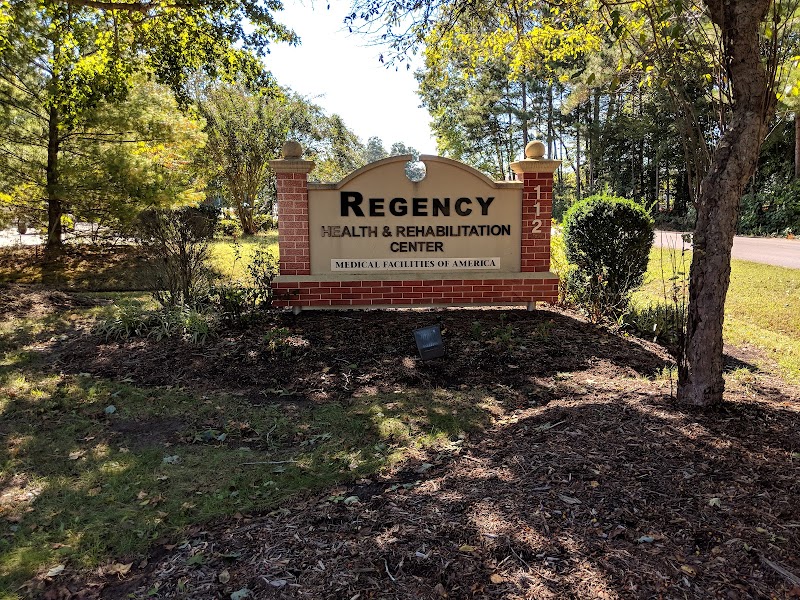
Who Owns and Operates Regency Center?

REGENCY HEALTH AND REHABILITATION CENTER is owned by a for-profit company. For-profit facilities operate as businesses with obligations to shareholders or private owners. The facility is operated by LIFEWORKS REHAB, a chain that manages multiple nursing homes. With 60 certified beds and approximately 56 residents (about 93% occupancy), it is a smaller facility located in YORKTOWN, Virginia.

How Does Regency Center Compare to Other Virginia Nursing Homes?

Compared to the 100 nursing homes in Virginia, REGENCY HEALTH AND REHABILITATION CENTER's overall rating (2 stars) is below the state average of 3.0, staff turnover (61%) is significantly higher than the state average of 46%, and health inspection rating (3 stars) is at the national benchmark.

What Should Families Ask When Visiting Regency Center?

Based on this facility's data, families visiting should ask: "How do you ensure continuity of care given staff turnover, and what is your staff retention strategy?" "Can you walk me through typical staffing levels on day, evening, and night shifts?" "Can I visit during a mealtime to observe dining assistance and food quality?" "How do you handle medical emergencies, and what is your hospital transfer rate?" These questions are particularly relevant given the facility's high staff turnover rate and the below-average staffing rating.

Is Regency Center Safe?

Based on CMS inspection data, REGENCY HEALTH AND REHABILITATION CENTER has a clean safety record: no substantiated abuse findings (meaning no confirmed cases of resident harm), no Immediate Jeopardy citations (the most serious violation level indicating risk of serious injury or death), and is not on the Special Focus Facility watch list (a federal program monitoring the lowest-performing 1% of nursing homes). The facility has a 2-star overall rating and ranks #100 of 100 nursing homes in Virginia. While no facility is perfect, families should still ask about staff-to-resident ratios and recent inspection results during their visit.

Do Nurses at Regency Center Stick Around?

Staff turnover at REGENCY HEALTH AND REHABILITATION CENTER is high. At 61%, the facility is 15 percentage points above the Virginia average of 46%. Registered Nurse turnover is particularly concerning at 100%. RNs handle complex medical decisions and coordinate care — frequent RN changes can directly impact care quality. High turnover means new staff may not know residents' individual needs, medications, or preferences. It can also be disorienting for residents, especially those with dementia who rely on familiar faces. Families should ask: What is causing the turnover? What retention programs are in place? How do you ensure care continuity during staff transitions?

Was Regency Center Ever Fined?

REGENCY HEALTH AND REHABILITATION CENTER has no federal fines on record. CMS issues fines when nursing homes fail to meet care standards or don't correct problems found during inspections. The absence of fines suggests the facility has either maintained compliance or corrected any issues before penalties were assessed. This is a positive indicator, though families should still review recent inspection reports for the full picture.

Is Regency Center on Any Federal Watch List?

REGENCY HEALTH AND REHABILITATION CENTER is not on any federal watch list. The most significant is the Special Focus Facility (SFF) program, which identifies the bottom 1% of nursing homes nationally based on persistent, serious quality problems. Not being on this list means the facility has avoided the pattern of deficiencies that triggers enhanced federal oversight. This is a positive indicator, though families should still review the facility's inspection history directly.