PARK ROSE CARE CENTER
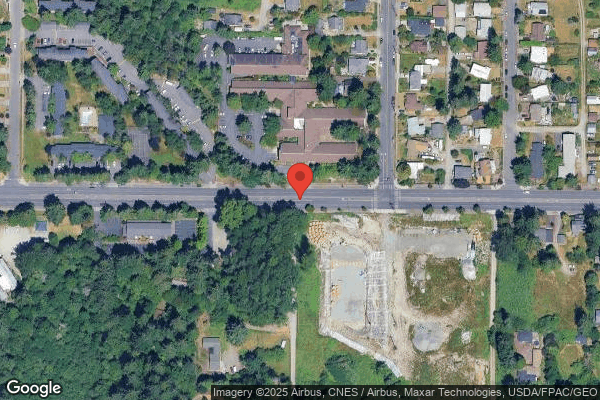
3919 SOUTH 19TH STREET, TACOMA, WA 98405 (253) 752-5677
For profit - Corporation 139 Beds REGENCY PACIFIC MANAGEMENT Data: November 2025
Trust Grade
10/100
#147 of 190 in WA
Last Inspection: July 2025

Inspected within the last 6 months. Data reflects current conditions.

Overview

Park Rose Care Center has a Trust Grade of F, indicating significant concerns about the facility's overall quality and care. Ranking #147 out of 190 nursing homes in Washington places it in the bottom half, and at #15 out of 21 in Pierce County, it suggests there are only a few local options that are better. Despite a trend of improvement, with issues decreasing from 33 to 18 over the past year, the facility still has a high number of deficiencies, including serious incidents where a resident did not receive proper medication and another developed an untreated pressure ulcer. Staffing is average with a 56% turnover rate, and while RN coverage is also average, the facility has incurred $266,453 in fines, which is concerning and indicates repeated compliance issues. Families should weigh these factors carefully, as there are notable strengths and weaknesses at this facility.

Trust Score
F
10/100
In Washington
#147/190
Bottom 23%
Safety Record
High Risk
Review needed
Inspections
Getting Better
33 → 18 violations
Staff Stability
⚠ Watch
56% turnover. Above average. Higher turnover means staff may not know residents' routines.
Penalties
✓ Good
$266,453 in fines. Lower than most Washington facilities. Relatively clean record.
Skilled Nurses
✓ Good
Each resident gets 64 minutes of Registered Nurse (RN) attention daily — more than 97% of Washington nursing homes. RNs are the most trained staff who catch health problems before they become serious.
Violations
⚠ Watch
81 deficiencies on record. Higher than average. Multiple issues found across inspections.
★★☆☆☆
2.0
Overall Rating
★★☆☆☆
2.0
Staff Levels
★★☆☆☆
2.0
Care Quality
★★☆☆☆
2.0
Inspection Score
Stable
2024: 33 issues
2025: 18 issues

The Good

  • Full Sprinkler Coverage · Fire safety systems throughout facility
  • No fines on record

Facility shows strength in fire safety.

The Bad

2-Star Overall Rating

Below Washington average (3.2)

Below average - review inspection findings carefully

Staff Turnover: 56%

10pts above Washington avg (46%)

Frequent staff changes - ask about care continuity

Federal Fines: $266,453

Well above median ($33,413)

Significant penalties indicating serious issues

Chain: REGENCY PACIFIC MANAGEMENT

Part of a multi-facility chain

Ask about local staffing decisions and management

Staff turnover is elevated (56%)

8 points above Washington average of 48%

The Ugly 81 deficiencies on record

4 actual harm
Jul 2025 18 deficiencies
CONCERN (D)

Potential for Harm - no one hurt, but risky conditions existed

Deficiency F0552 (Tag F0552)

Could have caused harm · This affected 1 resident

**NOTE- TERMS IN BRACKETS HAVE BEEN EDITED TO PROTECT CONFIDENTIALITY** . Based on interview and record review, the facility failed to have signed consent prior to administering mood altering medicati...

Read full inspector narrative →
**NOTE- TERMS IN BRACKETS HAVE BEEN EDITED TO PROTECT CONFIDENTIALITY** . Based on interview and record review, the facility failed to have signed consent prior to administering mood altering medication for 1 of 5 sampled residents (Resident 98) when reviewed for unnecessary medication use. This failure placed the resident or their legal representative at risk of receiving medications without knowledge to make informed decisions regarding the use of the medication, adverse side effects, and a diminished quality of life. Findings included . Review of the electronic health record (EHR) showed Resident 98 was admitted to the facility on [DATE] with diagnoses to include metabolic encephalopathy (brain disorder caused by chemical imbalances), anxiety and depression. Resident 98 was able to communicate their needs. Review of the medication administration record (MAR) for June 2025 showed Resident 98 had an order dated 05/12/2025 for Buspirone (anti-anxiety mood altering medication) twice a day. Review of the MAR for June 2025 showed an order dated 04/26/2025 for Duloxetine (antidepressant mood altering medication) once a day. Review of the EHR showed Resident 98 had no consents for the use of Buspirone and Duloxetine. During an interview on 06/26/2025 at 12:41 PM, Staff D, Resident Care Manager/Licensed Practical Nurse (RCM/LPN), reviewed the EHR for Resident 98 and was not able to locate consents for the two medications. Staff D stated Resident 98 should have had informed consents prior to the administration of the medications. During an interview on 07/02/2025 at 10:29 AM, Staff B, Director of Nursing Services (DNS), stated Resident 98's lack of consents for mood stabilizing medications did not meet expectations. Reference WAC 399-97-0300(3)(a) .
CONCERN (D)

Potential for Harm - no one hurt, but risky conditions existed

Investigate Abuse (Tag F0610)

Could have caused harm · This affected 1 resident

**NOTE- TERMS IN BRACKETS HAVE BEEN EDITED TO PROTECT CONFIDENTIALITY** . Based on interview and record review, the facility failed to timely complete an investigation for 1 of 3 sampled residents (Re...

Read full inspector narrative →
**NOTE- TERMS IN BRACKETS HAVE BEEN EDITED TO PROTECT CONFIDENTIALITY** . Based on interview and record review, the facility failed to timely complete an investigation for 1 of 3 sampled residents (Resident 95) when reviewed for accidents related to falls. Failure to ensure Resident 95's fall incident report interventions, investigation summary, and conclusion were completed timely placed the resident at risk for delay in providing interventions, unmet needs, subsequent falls, and a decrease in quality of life. Findings included . According to the Nursing Home Guidelines, also known as the Purple Book, sixth edition, dated October 2015, showed, The results of all investigations must be reported to the administrator or his designated representative and to other officials in accordance with State law (including to the State survey and certification agency) within 5 working days of the incident, and if the alleged violation is verified appropriate corrective action must be taken. Review of the electronic health record (EHR) showed Resident 95 admitted to the facility on [DATE] with diagnoses to include respiratory failure, hemiplegia (paralysis/loss of muscle function) and hemiparesis (partial paralysis or muscle weakness) of one side of the body following a stroke (blood flow to the brain suddenly interrupted). Resident 95 was able to make needs known. During an interview on 06/25/2025 at 10:33 AM, Resident 95 stated they had fallen out of their wheelchair when trying to get back into bed. Review of the facility's incident report log dated June 2025 showed Resident 95 had a fall in their room on 06/19/2025. Review of the incident report initiated on 06/19/2025 showed Resident 95's documented interventions, investigation summary, and the conclusion of the fall were dated 06/26/2025 (seven days after the fall). During an interview on 06/27/2025 at 11:49 AM, Staff E, Resident Care Manager (RCM), stated they tried to complete incident investigations within three days; however, sometimes the weekend could push out the timeline to five days. Staff E stated Resident 95's fall incident report investigation dated 06/19/2025 should have been completed prior to 06/26/2025 and this did not meet their expectations. During an interview on 06/27/2025 at 12:07 PM, Staff B, Director of Nursing Services, stated incident report investigations were to be completed within five days. Staff B stated Resident 95's fall incident report investigation initiated on 06/19/2025 did not meet expectations because it should have been completed within five days and that did not happen. Please refer to F657 for additional information. Reference WAC 388-97-0640 (6)(a)(b)(c) .
CONCERN (D)

Potential for Harm - no one hurt, but risky conditions existed

Deficiency F0628 (Tag F0628)

Could have caused harm · This affected 1 resident

**NOTE- TERMS IN BRACKETS HAVE BEEN EDITED TO PROTECT CONFIDENTIALITY** . Based on record review and interview, the facility failed to provide written bed hold notice at the time of transfer to the ho...

Read full inspector narrative →
**NOTE- TERMS IN BRACKETS HAVE BEEN EDITED TO PROTECT CONFIDENTIALITY** . Based on record review and interview, the facility failed to provide written bed hold notice at the time of transfer to the hospital for 1 of 2 sampled residents (Resident 12) reviewed for hospitalization. This failure placed the residents at risk for lacking knowledge regarding their right to hold their bed while in the hospital and diminished quality of life. Findings included . Review of the electronic health record (EHR) showed Resident 12 admitted to the facility on [DATE] with diagnoses that included chronic pain, diabetes (too much sugar in the blood) and dementia (a decline in mental ability that interferes with daily life). Resident 12 was able to make needs known. Review of Resident 12's EHR showed hospitalization on 03/09/2025 and readmission to the facility on [DATE]. There was no documentation showing a bed hold was offered. Review showed a hospitalization on 03/20/2025 and readmission to the facility on [DATE]. There was no documentation showing a bed hold was offered. During an interview on 06/30/2025 at 12:49 PM, Staff H, Business Office Manager, stated they did not offer Resident 12 a bed holds on either date but should have. During an interview on 06/30/2025 at 12:56 PM, Staff A, Administrator, stated the expectation was for bed holds to be offered and documented when a resident was transferred to the hospital. Reference WAC 388-91-0120(4) .
CONCERN (D)

Potential for Harm - no one hurt, but risky conditions existed

Assessment Accuracy (Tag F0641)

Could have caused harm · This affected 1 resident

**NOTE- TERMS IN BRACKETS HAVE BEEN EDITED TO PROTECT CONFIDENTIALITY** . Based on interview and record review, the facility failed to ensure the minimum data set assessment (MDS) accurately reflected...

Read full inspector narrative →
**NOTE- TERMS IN BRACKETS HAVE BEEN EDITED TO PROTECT CONFIDENTIALITY** . Based on interview and record review, the facility failed to ensure the minimum data set assessment (MDS) accurately reflected the status for 1 of 20 sampled residents (Resident 14) reviewed for accuracy of assessments. This failure placed the resident at risk for unmet care needs and a diminished quality of life. Findings included . Review of the electronic health record showed Resident 14 admitted to the facility on [DATE] with diagnoses that included paraplegia (paralysis of the legs and lower body, typically caused by spinal injury or disease), chronic obstructive pulmonary disease (an ongoing lung condition caused by damage to the lungs), and chronic pain. Resident 14 was able to make needs known. Resident 14 had a decrease in upper and lower extremity mobility. Observation and interview on 06/25/2025 at 11:42 AM showed Resident 14 in a wheelchair with a bent inward left hand. Resident 14 stated they were no longer receiving restorative services and staff was no longer assisting with putting on their hand splint. Review of Resident 14's quarterly MDS dated [DATE] showed the Upper Extremity section A. marked No Impairment. During an interview on 06/27/2025 at 12:53 PM, Staff F, Minimum Data Set/Licensed Practical Nurse, stated the Upper Extremity was coded incorrectly. During an interview on 07/02/2025 at 12:53 PM, Staff B, Director of Nursing Services (DNS), stated the expectation was the MDS assessments were coded accurately. Reference WAC 388-97-1000 (1)(b) .
CONCERN (D)

Potential for Harm - no one hurt, but risky conditions existed

Deficiency F0657 (Tag F0657)

Could have caused harm · This affected 1 resident

**NOTE- TERMS IN BRACKETS HAVE BEEN EDITED TO PROTECT CONFIDENTIALITY** . Based on interview and record review, the facility failed ensure a care plan was reviewed and revised timely for 1 of 3 sample...

Read full inspector narrative →
**NOTE- TERMS IN BRACKETS HAVE BEEN EDITED TO PROTECT CONFIDENTIALITY** . Based on interview and record review, the facility failed ensure a care plan was reviewed and revised timely for 1 of 3 sampled residents (Resident 95) reviewed for accidents related to falls. Failure to timely revise/update Resident 95's care plan after a fall placed the resident at risk of subsequent falls, injuries, unmet needs, and a diminished quality of life Findings included . Review of the facility's policy and procedure titled, Incident Documentation and Investigation, revision dated 10/2022, showed an incident report was to be completed for falls, and Interventions implemented to prevent future events and address resident care needs. Review of the electronic health record (EHR) showed Resident 95 admitted to the facility on [DATE] with diagnoses to include respiratory failure, hemiplegia (paralysis/loss of muscle function) and hemiparesis (partial paralysis or muscle weakness) of one side of the body following a stroke (blood flow to the brain suddenly interrupted). Resident 95 was able to make needs known. During an interview on 06/25/2025 at 10:33 AM, Resident 95 stated they had fallen out of their wheelchair when trying to get back into bed. Review of the facility's incident report log dated June 2025 showed Resident 95 had a fall in their room on 06/19/2025. Review of Resident 95's care plan, dated 05/09/2025, showed no interventions had been created/initiated after the resident's fall on 06/19/2025. During an interview on 06/27/2025 at 11:49 AM, Staff E, Resident Care Manager (RCM), stated Resident 95's care plan did not meet their expectations because it did not show interventions were put into place after the resident's fall on 06/19/2025. Staff E stated interventions should have been put into place on Resident 95's care plan shortly after the fall on 06/19/2025 or within the three-to-five-day window period to prevent subsequent falls. Staff E stated the delay in initiating interventions after Resident 95's fall did not meet expectations. During an interview on 06/27/2025 at 12:07 PM, Staff B, Director of Nursing Services, stated Resident 95's care plan was not updated timely after the resident's fall on 06/19/2025, and should have been. Please refer to F610 for additional information. Reference WAC 388-97-1020 2(c)(d), 5(b) .
CONCERN (D)

Potential for Harm - no one hurt, but risky conditions existed

Deficiency F0658 (Tag F0658)

Could have caused harm · This affected 1 resident

**NOTE- TERMS IN BRACKETS HAVE BEEN EDITED TO PROTECT CONFIDENTIALITY** Resident 34 Resident 34 admitted to the facility on [DATE] with diagnoses that included aphasia (a language disorder that affect...

Read full inspector narrative →
**NOTE- TERMS IN BRACKETS HAVE BEEN EDITED TO PROTECT CONFIDENTIALITY** Resident 34 Resident 34 admitted to the facility on [DATE] with diagnoses that included aphasia (a language disorder that affects communication due to brain injury or stroke) chronic obstructive pulmonary disease (an ongoing lung condition caused by damage to the lungs) depression and dementia (a decline in mental ability that interferes with daily life). Resident 34's daily decision making was severely impaired. Review of Resident 34's EHR showed a provider's order dated 03/24/2022, for citalopram (an antidepressant medication) for major depressive disorder. The EHR also showed a provider's order, dated 02/20/2025, for Seroquel (an antipsychotic mediation) for dementia with behavioral disturbance. Observations on 06/25/2025 at 9:20 AM, 12:43 PM and 2:45 PM showed Resident 34 slept in bed. Observations on 06/27/2025 at 8:45 AM and 12:07 PM showed Resident 34 slept in bed. Observations on 06/30/2025 at 8:20 AM and 9:48 AM showed Resident 34 slept in bed. Review of Resident 34's EHR showed a provider's order dated 05/06/2022 to monitor sleep patterns and document number of hours of sleep every shift. Review of Resident 34's June 2025 MAR on 06/30/2025 at 10:45 AM showed the dayshift hours for sleep had been completed with number two prior to the completion of the staff's shift. Review showed documentation of zero hours of sleep on dayshift for 06/03/2025, 06/11/2025, 6/17/2025, and 06/25/2025. During an interview on 06/30/2025 at 10:59 AM, Staff G, Licensed Practical Nurse (LPN), stated day shift hours were from 6:00 AM to 6:00 PM. Staff G stated they documented sleep hours during their first break which was usually at 11:00 AM. During an interview on 06/30/2025 at 11:35 AM, Staff D, RCM/LPN, stated nursing staff should only be documenting sleep monitoring at the end of their shift for accuracy. During an interview on 07/02/2025 at 3:57 PM, Staff B, DNS, stated the expectation was that all monitoring was to be documented at the end of shift and reflect the accurate amount of hours Resident 34 slept. Reference WAC 388-97-1060 (3)(k)(i) Based on observation, interview, and record review, the facility failed to ensure nursing staff were following provider's orders for medication administration or sleep monitoring for 3 of 5 sampled residents (Residents 34, 74 and 98) when reviewed for unnecessary medication use. This failure placed the residents at risk of having adverse side effects, medication errors and unmet care services. Findings included . Resident 74 Review of the electronic health record (EHR) showed Resident 74 was admitted to the facility on [DATE] with diagnoses to include quadriplegia (paralysis that affects the ability to move upper and lower body), dependance on vent (person relies on mechanical ventilator to breath), depression and anxiety. Resident 74 was able to communicate needs. Review of the medication administration record (MAR) for June 2025 showed Resident 74 had an order dated 04/01/2025 for midodrine (medication given for low blood pressure) to be given three times a day and to hold when systolic (upper number) blood pressure (SBP) was above 120. Review of the June MAR showed Resident 74 was administered midodrine four times when their SBP was above 120. Review of May 2025 MAR showed Resident 74 was administered midodrine on two occasions (27 and 28th) despite the SBP been above 120. During an interview on 06/30/2025 at 9:40 AM, Staff O, Resident Care Manager/Licensed Practical Nurse (RCM/LPN), reviewed the EHR for Resident 74 and stated the nurses were to follow the providers orders, and hold the medication. During an interview on 07/02/2025 at 10:26 AM, Staff B, Director of Nursing Services (DNS), stated Resident 74's blood pressure medication administration did not meet expectations. Resident 98 Review of the EHR showed Resident 98 was admitted to the facility on [DATE] with diagnoses to include metabolic encephalopathy (brain disorder caused by chemical imbalances), anxiety and depression. Resident 98 was able to communicate their needs. Review of the MAR for June 2025 showed Resident 98 had an order dated 06/05/2025 for lidocaine cream five percent to lower back four times a day, and a second order dated 06/16/2025 for lidocaine four percent to lower back four times a day. During an interview on 06/26/2025 at 12:44 PM, Staff D, RCM/LPN, stated the nurses that took the order for lidocaine four percent should have followed the provider's instruction and discontinued the lidocaine five percent order. Staff D stated Resident 98 was on lidocaine four percent. During an interview on 07/02/2025 at 10:29 AM, Staff B, DNS, stated Resident 98's orders did not meet expectations.
CONCERN (D)

Potential for Harm - no one hurt, but risky conditions existed

Quality of Care (Tag F0684)

Could have caused harm · This affected 1 resident

**NOTE- TERMS IN BRACKETS HAVE BEEN EDITED TO PROTECT CONFIDENTIALITY** . Based on observation, interview, and record review, the facility failed to apply a brace/splint (a device used to immobilize a...

Read full inspector narrative →
**NOTE- TERMS IN BRACKETS HAVE BEEN EDITED TO PROTECT CONFIDENTIALITY** . Based on observation, interview, and record review, the facility failed to apply a brace/splint (a device used to immobilize and support a body part) and an offloading boot (a specialized orthopedic device designed to reduce wight bearing pressure on a specific area of the foot or ankle) per provider orders and comprehensive care plan for 1 of 4 sampled residents (Resident 95) reviewed for position/mobility. These failures placed Resident 95 at risk for medical complications, unmet needs, and a diminished quality of life. Findings included . Review of the electronic health record (EHR) showed Resident 95 admitted to the facility on [DATE] with diagnoses to include respiratory failure, hemiplegia (paralysis/loss of muscle function) and hemiparesis (partial paralysis or muscle weakness) of one side of the body following a stroke (blood flow to the brain suddenly interrupted). Resident 95 was able to make needs known. Multiple observations on 06/25/2025 at 10:39 AM, 06/25/2025 at 2:42 PM, 06/26/2025 at 12:59 PM, 06/27/2025 at 8:10 AM, 06/27/2025 at 12:33 PM, and 06/30/2025 at 9:01 AM showed Resident 95 with no brace/splint and/or an offloading boot in place. During an interview and observation on 06/27/2025 at 12:33 PM, Resident 95 stated they had no brace/splint, or anything applied to their feet. Resident 95 stated they could not remember the last time they wore a brace or an offloading boot. Resident 95 stated they usually wore non-skid socks or tennis shoes when up in their wheelchair. There were no foot brace/splint or offloading boots visible in Resident 95's room. Review of Resident 95's June 2025 treatment administration record (TAR) showed an order with a start date of 05/09/2025 to apply a left foot brace splint every shift for protection. Review showed an order with a start date of 05/09/2025 for an offloading boot to be applied to the left foot every shift for skin protection. Documentation showed both orders were documented as completed per provider orders. Review of the care plan initiated on 05/09/2025 of Resident 95's focused care plan for Dressing, performance deficit due to left sided weakness, included an intervention which showed, Make sure shoes are comfortable and not slippery. Resident prefers to wear brace and offloading boots. Review showed interventions dated 05/12/2025 for brace to left foot, and offloading boot when in bed. Resident 95 had a Bed Mobility focused care plan with an intervention dated 05/09/2025 that showed the resident was dependent on one person assistance with bed mobility. During an interview and observation on 06/30/2025 at 9:04 AM, Staff P, Certified Nursing Assistant, stated Resident 95 did not wear a brace/splint or a boot on their feet; but, if they did it would be on their care plan and Kardex (directions and information to provide care). Staff P stated Resident 95's Kardex showed that the resident was to have a brace to the left foot, preferred to wear a brace and offloading boots, and they had not been aware of this previously. Staff P stated Resident 95 did not have anything on their feet; however, they were able to locate a brace on the bottom of Resident 95's closet. Resident 95 told Staff P they could not recall the last time they had the brace on and that the brace was to be applied to the left foot. During an interview and observation on 06/30/2025 at 9:56 AM, Staff E, Resident Care Manager, stated Resident 95 had an ankle-foot orthotic (AFO, brace) on their left foot; however, they were unable to locate an offloading boot. Staff E asked Resident 95 if they ever wore a pillowy boot/offloading boot. Resident 95 responded by saying yes, but did not know what happened to it. Staff E removed Resident 95's brace and stated the resident should have an offloading boot on the left foot when in bed and the brace/AFO when up in their wheelchair. In continued interview on 06/30/2025 at 9:56 AM, after reviewing Resident 95's June 2025 TAR, Staff E stated the resident's orders for brace and offloading boots were documented that they were in place; however, the orders needed to be clarified with the provider because Resident 95 cannot wear the brace and offloading boot on the left foot at the same time. Staff E stated nursing should have written refusal on the TAR if Resident 95 refused to have the brace and offloading boot in place. Staff E stated the care plan showed Resident 95 was to have the brace/splint to the left foot and the offloading boot when in bed and that did not happen for Resident 95. During an interview on 06/30/2025 at 12:10 PM, Staff B, Director of Nursing Services, stated their expectation was provider's orders to be followed, and care plans implemented. Staff B stated they had not been aware Resident 95's offloading boot was missing, and their brace had not been in place on their left foot per provider's order. Staff B stated nurses should have verified placement and documented in the EHR if Resident 95 had refused to wear their brace and/or offloading boot and not document the devices were in place if they were not. Reference WAC 388-97-1060 (1) .
CONCERN (D)

Potential for Harm - no one hurt, but risky conditions existed

Pressure Ulcer Prevention (Tag F0686)

Could have caused harm · This affected 1 resident

**NOTE- TERMS IN BRACKETS HAVE BEEN EDITED TO PROTECT CONFIDENTIALITY** . Based on observation, interview, and record review, the facility failed to provide an environment conducive to healing of a pr...

Read full inspector narrative →
**NOTE- TERMS IN BRACKETS HAVE BEEN EDITED TO PROTECT CONFIDENTIALITY** . Based on observation, interview, and record review, the facility failed to provide an environment conducive to healing of a pressure ulcer for 1 of 3 sampled residents (Resident 37) when reviewed for pressure ulcer. This failure placed residents at risk of difficulty healing, worsening pressure ulcers, and a diminished quality of life. Findings included . Review of the electronic health record (EHR) showed Resident 37 readmitted to the facility on [DATE] with diagnoses to include chronic kidney disease, diabetes (too much sugar in the blood), and depression. The resident was able to make needs known. During an interview and observation on 06/24/2025 at 12:52 PM, Resident 37 stated they had a pressure ulcer (PU) on their heel which had started as a bruise. Observation showed Resident 37's feet touched the footboard of the bed, there was a gap between the mattress and the footboard, and there was a rolled-up blanket in the gap. Resident 37 stated their feet always touched the footboard, but the facility did not have a longer bed. Observation on 06/25/2025 at 11:39 AM showed Resident 37 sat in bed with their legs bent to the right sides and balls of their feet pressed against the footboard. Observation and interview on 06/30/2025 at 12:20 PM showed Resident 37 laid in bed with their feet touching the footboard. Resident 37 stated they were 75 and a half inches tall (6'3.5). Observation on 07/02/2025 at 9:03 AM showed Resident 37 in bed with an inflatable boot applied to the foot with the PU which kept it from pressing against the footboard. Review of Resident 37's provider's orders, dated 06/18/2025, showed for staff to ensure Resident 37's mattress function and their body position while in bed. During an interview on 07/02/2025 at 9:06 AM, Staff D, Resident Care Manager, stated PU development was investigated by creating a risk management. Staff D stated feet pressing against a footboard could be a factor in PU development. Staff D stated Resident 37 was 75 inches tall (6'3) and they were unaware the resident's feet touched the footboard. Staff D stated Resident 37's footboard should have been included in a risk management to rule it out as a factor in the resident's PU development. During an interview on 07/02/2025 at 2:24 PM, Staff B, Director of Nursing Services, stated PU development was investigated with an incident report to determine the root cause. Staff B stated feet pressing against a footboard could be a factor in developing a PU and should be considered in the incident report. Staff B stated the facility should have implemented interventions to ensure Resident 37's foot did not press against the footboard prior to 07/02/2025. Reference WAC 388-97-1060 (3)(b) .
CONCERN (D)

Potential for Harm - no one hurt, but risky conditions existed

Respiratory Care (Tag F0695)

Could have caused harm · This affected 1 resident

**NOTE- TERMS IN BRACKETS HAVE BEEN EDITED TO PROTECT CONFIDENTIALITY** Resident 12 Review of the EHR showed Resident 12 admitted to the facility on [DATE] with diagnoses that included chronic pain, d...

Read full inspector narrative →
**NOTE- TERMS IN BRACKETS HAVE BEEN EDITED TO PROTECT CONFIDENTIALITY** Resident 12 Review of the EHR showed Resident 12 admitted to the facility on [DATE] with diagnoses that included chronic pain, diabetes (too much sugar in the blood) and dementia (a decline in mental ability that interferes with daily life). Resident 12 was able to make needs known. Observation on 06/24/2025 at 9:49 AM and 06/25/2025 at 2:28 PM showed Resident 12 sat in their wheelchair with oxygen being administered at two liters via nasal canula connected to an oxygen concentrator (medical device that provides supplemental oxygen). Review of Resident 12's provider's orders showed no order for oxygen. During an interview on 06/25/2025 at 12:34 PM, Staff D, RCM/LPN, reviewed the EHR and stated there was no provider's order and it must have been missed when Resident 12 returned from the hospital. During an interview on 07/02/2025 at 12:40 PM, Staff B, DNS, stated Resident 12 required a provider's order for oxygen use. Reference WAC 388-97-1060 (3)(j)(vi) Based on observation, interview and record review, the facility failed to ensure orders for oxygen were in place and residents were receiving the ordered amount of oxygen for 2 of 5 sampled residents (Residents 48 and 12) when reviewed for respiratory care. This failure placed the residents at risk for respiratory complications, unmet needs and diminished quality of life. Findings included . Resident 48 Review of the electronic health record (EHR) showed Resident 48 was admitted to the facility on [DATE] with diagnoses to include acute/chronic respiratory failure, chronic obstructive pulmonary disease (COPD, lung disease that blocks the airflow and make it difficult to breathe), heart failure and anxiety. Resident 48 was able to communicate their needs. Observation and interview on 06/25/2025 at 9:42 AM showed Resident 48 in their room, using oxygen via nasal cannula (plastic tube device that gives additional oxygen in nose) set to provide six liters of oxygen per minute. Resident 48 stated they were using oxygen at six liters. Review of a provider's order, dated 05/20/2025, showed to provide Resident 48 oxygen at two liters per minute. Review of the June 2025 treatment administration record (TAR) showed Resident 48 used oxygen from two to eight liters a minute. During an interview on 06/30/2025 at 9:45 AM, Staff O, Resident Care Manager/Licensed Practical Nurse (RCM/LPN), stated Resident 48 received six liters of oxygen per minute, and the order needed to be clarified. During an interview on 07/02/2025 at 10:30 AM, Staff B, Director of Nursing Services (DNS), stated the oxygen order for Resident 48 did not meet expectation.
CONCERN (D)

Potential for Harm - no one hurt, but risky conditions existed

Deficiency F0761 (Tag F0761)

Could have caused harm · This affected 1 resident

. Based on observation, interview, and record review, the facility failed to ensure proper storage and labeling of insulin (injectable medication that regulates blood sugar) in 1 of 3 medication carts...

Read full inspector narrative →
. Based on observation, interview, and record review, the facility failed to ensure proper storage and labeling of insulin (injectable medication that regulates blood sugar) in 1 of 3 medication carts (300 hall/front cart) when reviewed for medication storage. This failure placed residents at risk of receiving expired medications, ineffective treatment, and diminished quality of life. Findings included . Observation of the medication cart in the 300 hall/front cart on 06/30/2025 at 12:52 PM, with Staff Q, Licensed Practical Nurse (LPN), showed Lispro insulin with an open date of 05/15/2025, and Lantus insulin without an open date. Staff Q stated the insulins were to stay in the cart for 28 days and after that they were expired. During an interview on 06/30/2025 at 2:10 PM, Staff B, Director of Nursing Services, stated the insulin storage did not meet expectations. Reference WAC 399-97-1300(2) .
CONCERN (E)

Potential for Harm - no one hurt, but risky conditions existed

Deficiency F0688 (Tag F0688)

Could have caused harm · This affected multiple residents

**NOTE- TERMS IN BRACKETS HAVE BEEN EDITED TO PROTECT CONFIDENTIALITY** Resident 95 Review of the EHR showed Resident 95 admitted to the facility on [DATE] with diagnoses to include respiratory failur...

Read full inspector narrative →
**NOTE- TERMS IN BRACKETS HAVE BEEN EDITED TO PROTECT CONFIDENTIALITY** Resident 95 Review of the EHR showed Resident 95 admitted to the facility on [DATE] with diagnoses to include respiratory failure, hemiplegia (paralysis/loss of muscle function) and (partial paralysis or muscle weakness) of one side of the body following a stroke (blood flow to the brain suddenly interrupted). Resident 95 was able to make needs known. During an interview on 06/25/2025 at 10:39 AM, Resident 95 stated they had a stroke and the left side of their body was weak. Review of the minimum data set (MDS, a required assessment tool) dated 05/14/2025 showed Resident 95 received occupational therapy (OT) and physical therapy (PT) services and did not receive restorative nursing services. Review showed Resident 95 was dependent on staff for dressing the upper and lower body to include putting on and taking off footwear. It showed Resident 95 utilized a manual wheelchair for mobility and was dependent on staff for transfers from bed to wheelchair and back. Review of Resident 95's care plan initiated on 05/09/2025 showed a focused care plan for Dressing, performance deficit due to left sided weakness which included an intervention to, Make sure shoes are comfortable and not slippery. Resident prefers to wear brace and offloading boots. Review showed interventions dated 05/12/2025 for brace to left foot, and offloading boot when in bed. Resident 95 had a Bed Mobility focused care plan with an intervention dated 05/09/2025 that showed the resident was dependent on one person assistance with bed mobility. During an interview on 06/30/2025 at 9:56 AM, Staff E, Resident Care Manager (RCM), stated Resident 95 was not currently on the therapy caseload (receiving therapy services) or on a restorative nursing program. During an interview on 06/30/2025 at 10:27 AM, Staff C, Director of Rehabilitation, stated Resident 95 came off OT and PT services on 06/04/2025, and PT had recommended home range of motion (ROM, the full movement potential of a joint) exercises, and OT did not indicate a home exercise or a referral for a restorative nursing program. Staff C stated Resident 95 should have been referred to a restorative nursing program when they came off therapy services and remained in the facility. Staff C stated a referral for a nursing restorative program got missed by therapy and Resident 95 needed to be followed up on for either a referral back to therapy or a restorative nursing program. During an interview on 06/30/2025 at 11:17 AM, Staff F, MDS/LPN, stated therapy did not make a referral for Resident 95 to have a restorative nursing program and should have. During an interview on 06/30/2025 at 12:10 PM, Staff B, DNS, stated when Resident 95 came off therapy services there should have been a referral for a restorative nursing program. Based on observation, interview and record review, the facility failed to ensure residents consistently received restorative services (movement of joints to maintain range of motion) and/or splint brace assistance to maintain or prevent declines in mobility for 3 of 4 sampled residents (Residents 14, 35 and 95) reviewed for range of motion (ROM)/mobility. This failure placed residents at risk of decreased motion, mobility and a diminished quality of life. Findings included . Resident 14 Review of the electronic health record (EHR) showed Resident 14 admitted to the facility on [DATE] with diagnoses that included paraplegia (paralysis of the legs and lower body, typically caused by spinal injury or disease), chronic obstructive pulmonary disease (an ongoing lung condition caused by damage to the lungs) and chronic pain. Resident 14 was able to make needs known. Observation and interview on 06/25/2025 at 11:42 AM showed Resident 14 in a wheelchair with a bent inward left hand. Resident 14 stated they were no longer receiving restorative services and staff was no longer assisting with putting on their hand splint. Review of the care plan initiated 03/03/2023 showed Resident 14 was not receiving restorative services. Review of the care plan history showed restorative services were resolved on 01/05/2024. Review of form Physical Therapy Discharge Summary, dated and signed 04/19/2024, showed, Discharge instructions=Resident will transition to Restorative Nursing Program (RNP) for sit to stand in parallel bars and bilateral lower extremity (BLU) hip and knee stretches. Discharge Recommendation= Other Restorative Program. Review of form Occupational Therapy Summary, dated and signed 08/14/2023, showed, Discharge Recommendation=Restorative Range of Motion Program, Restorative Splint and Brace program. Left resting hand splint as tolerated, likely at night. Review of a provider's comprehensive exam note dated 12/13/2024 showed Resident 14 reported their left hand and left leg needed to be loosened up and were willing to do restorative therapy to maintain current mobility. During an interview on 06/27/2025 at 12:50 PM, Staff D, Resident Care Manager/ Licensed Practical Nurse (RCM/LPN), stated it was the RCM's responsibility to follow up on any recommendations from providers. Staff D stated a referral should have been made to the RNP but was not. During an interview on 06/27/2025 at 12:55 PM, Staff F, Minimum Data Set/Licensed Practical Nurse (MDS/LPN), stated they assessed Resident 14 on 05/26/2025 and determined Resident 14 was not appropriate for the RNP. Staff F stated they did not note any issues with Resident 14's left hand at the time of the visual assessment. During an interview on 07/02/2025 at 11:36 AM, Staff C, Director of Rehabilitation, stated Resident 14 fell through the cracks and was not receiving restorative services as they should have been. Staff C stated they were unable to locate discharge notes on why the program was discontinued on 01/2024. Staff C stated based on the most recent physical therapy evaluation completed 07/01/2025 Resident 14 had a decline in functional mobility related to transfers as their prior level of functioning related to sit to stand was partial/moderate assistance and was currently substantial/maximal assistance. Chair/bed-chair transfer prior level of functioning was substantial/maximal assistance and was currently dependent. Staff C stated they were unable to locate Resident 14's splint, so a new one was ordered. During an interview on 07/02/2025 at 12:53 PM, Staff B, Director of Nursing Services (DNS), stated the expectation was Resident 14 should have been referred to therapy timely. Resident 35 Review of the EHR showed Resident 35 was originally admitted to the facility on [DATE] with diagnoses to include muscle wasting, anxiety, acute/chronic respiratory failure, and tracheostomy (opening in windpipe through the neck). Resident 35 was able to communicate their needs. Observation on 06/25/2025 at 10:01 AM showed Resident 35 in bed with their upper arms folded in front of them. During an interview on 06/26/2025 at 9:29 AM, Resident 35 stated the restorative program was not done, and they wanted to work with them. Resident 35 stated, My arm is getting worse and they had a brace. Review of Resident 35's EHR showed a contracture screening assessment dated [DATE] with functional limitation to upper and lower extremity and restorative program. Review of Resident 35's OT Discharge summary dated [DATE] with discharge instructions for restorative range of motion program with splint/brace. Review of Resident 35's PT Discharge summary dated [DATE] with discharge instruction for restorative program. Review of Resident 35's EHR showed no order or care plan for restorative program. During an interview on 06/30/2025 at 11:08 AM, Staff F, MDS/LPN, stated the general process was for therapy to put a referral to nursing about a restorative program, and Staff F would add the restorative program in the individual resident's care plan. Staff F reviewed Resident 35's EHR and stated the restorative referral was missing. During an interview on 07/02/2025 at 10:32 AM, Staff B, DNS, stated Resident 35's missed restorative program did not meet expectations. Reference WAC 399-97-1060(3)(d),(j)(ix) .
CONCERN (E)

Potential for Harm - no one hurt, but risky conditions existed

Accident Prevention (Tag F0689)

Could have caused harm · This affected multiple residents

**NOTE- TERMS IN BRACKETS HAVE BEEN EDITED TO PROTECT CONFIDENTIALITY** . Based on observation, interview, and record review, the facility failed to ensure new interventions were developed to reduce f...

Read full inspector narrative →
**NOTE- TERMS IN BRACKETS HAVE BEEN EDITED TO PROTECT CONFIDENTIALITY** . Based on observation, interview, and record review, the facility failed to ensure new interventions were developed to reduce fall incidents for 1 of 3 sampled residents (Resident 12), failed to ensure elopement precautions were in place for 1 of 3 halls (100 Hall), and failed to ensure medication carts were secured for 1 of 6 medication carts (300 Hall) when reviewed for accident hazards. These failures placed residents at risk of continual falls, avoidable injury, elopement, unintended access to medications, and a diminished quality of life. Findings included . Resident 12 Review of the electronic health record (EHR) showed Resident 12 admitted to the facility on [DATE] with diagnoses that included chronic pain, diabetes (too much sugar in the blood) and dementia (a decline in mental ability that interferes with daily life). Resident 12 was able to make needs known. Review of Resident 12's incident report, dated 03/20/2025, showed Resident 12 had an unwitnessed fall. Resident 12 was found lying on the floor near the bed. Resident 12 stated they fell on to their left leg and were unable to move it. Emergency medical services (EMS) was called and Resident 12 was transported to the hospital. Review of the March 2025 incident log showed no documentation of Resident 12's 03/20/2025 fall. Review of a document titled Post Acute and Transition of Care Orders dated 03/27/2025 showed Resident 12 had surgery related to a left femur fracture. Review of Resident 12's care plan dated 08/21/2024 showed no interventions were added following the fall on 03/20/2025. Review of the April 2025 incident log showed Resident 12 had an additional fall on 04/29/2025. Review of Resident 12's incident report, dated 04/29/2025, showed Resident 34 had a unwitnessed fall. Resident 12 was heard yelling and when staff entered the room. Resident 12 was on the floor near the bed and no injuries were reported. An intervention to encourage Resident 12 to use the call light for assistance to transfer was added to the care plan on 04/30/2025. During an interview on 06/30/2025 at 1:45 PM, Staff D, Resident Care Manager/Licensed Practical Nurse (RCM/LPN), stated the care plan was not revised and no interventions were put in place after the 03/20/2025 fall but should have been. During an interview on 07/02/2025 at 12:38 PM, Staff B, Director of Nursing Services (DNS), stated the intervention after the 03/20/2025 fall was missed but one should have been implemented. <100 HALL ELOPEMENT RISK> Review of a progress note, dated 05/25/2025, showed Resident 49 exited the facility via the back door of the gym and was found outside the building. Review showed Resident 49 was encouraged to not go outside the facility without informing staff and the resident was placed on alert for elopement. Observation on 06/26/2025 at 9:13 AM showed a therapy gym near the 100 Hall with an exit to an outdoor patio area with a canopy and outdoor chairs. Exiting to the patio did not cause an alarm. The left-side of the patio had an unlocked gate leading to the facility parking lot and the right-side led around the building to an unlocked gate to a city street. During an interview and observation on 06/26/2025 at 10:40 AM, Staff N, Maintenance Director, stated the door to the patio was alarmed. Observation showed Staff N opened the patio door and an alarm did not sound. Staff N stated the gates to the parking lot and city street were not locked and residents could use them to exit the property from the patio area. During an interview on 06/30/2025 at 10:08 AM, Staff A, Administrator, stated the alarm on the door to the patio was not alarming. Staff A stated the door to the therapy gym, not back patio, should be alarmed and the current alarm situation did not meet her expectations. <MEDICATION CART> Observation on 07/02/2025 at 12:52 PM showed an unsecured medication cart on the 300 Hall with residents sitting nearby in wheelchairs. During an interview on 07/02/2025 at 12:55 PM, Staff O, RCM/LPN, stated the medication cart was left unsecured and the medications were accessible to residents and visitors. Staff O stated the medication cart should not be left unsecured. During an interview on 07/02/2025 at 2:22 PM, Staff B, DNS, stated medication carts were secured with a key to ensure residents and visitors did not have access to the medications. Staff B stated the unsecured medication cart on the 300 Hall did not meet their expectations. Reference WAC 388-97-1060 (3)(g) .
CONCERN (E)

Potential for Harm - no one hurt, but risky conditions existed

Deficiency F0692 (Tag F0692)

Could have caused harm · This affected multiple residents

**NOTE- TERMS IN BRACKETS HAVE BEEN EDITED TO PROTECT CONFIDENTIALITY** . Based on observation, interview, and record review, the facility failed to ensure residents' nutritional status was accurately...

Read full inspector narrative →
**NOTE- TERMS IN BRACKETS HAVE BEEN EDITED TO PROTECT CONFIDENTIALITY** . Based on observation, interview, and record review, the facility failed to ensure residents' nutritional status was accurately monitored for 3 of 5 sampled residents (Residents 16, 51, and 44) when reviewed for nutrition. This failure placed residents at risk of unintended wight loss, fluid overload, and a diminished quality of life. Findings included . Resident 16 Review of the electronic health record (EHR) showed Resident 16 admitted to the facility on [DATE] with diagnoses to include chronic obstructive pulmonary disease (COPD, a disease that causes obstructed airflow from the lungs), diabetes (too much sugar in the blood), and dementia (a decline in mental ability severe enough to interfere with daily life). Resident 16 was not able to make needs known. Observation on 06/24/2025 at 12:13 AM showed Resident 13 in bed with their lunch tray on the overbed table. Resident 13 was attempting to put a straw into a plastic cup with dried cereal with no liquid available. Observation on 06/25/2025 at 12:19 PM showed Resident 13 in bed with their lunch tray on the overbed table. Resident 13 was leaning to the right side using their fingers to pick up and place individual pieces of food into a small pile on their food tray. Resident 13 had food items on the front of their clothing. Resident 13 then attempted to use the spoon to self-feed, but was unable to balance the food on the spoon and it fell to the bed. Resident 13 smiled and appeared pleasantly confused. In continued observation on 06/25/2025 at 2:15 PM, Resident 13 laid in bed and leaned to the right side away from their meal tray. Resident 13's eyes were closed, and they had consumed approximately 5% of their lunch meal. Review of the 30-day lookback of meal intake showed Resident 13 ate 50-75% of their lunch meal on 06/25/2025. Observation on 06/26/2025 at 12:47 PM showed Resident 13 in the main dining room with a lunch food tray on the table in front of them. Resident 13 had consumed the piece of cake provided with the meal (approximately 5% of the meal) and left the rest. Review of the 30-day lookback of meal intake showed Resident 13 ate 50-75% of their lunch meal on 06/26/2025. Observation on 06/30/2025 at 12:35 PM showed Resident 13 in bed with the lunch meal tray on the overbed table. Resident 13 was taking food and placing it into different piles. Resident 13 was leaning to the right, away from their lunch tray and had consumed approximately 10% of the meal. Observation on 06/30/2025 at 1:11 PM showed Resident 13's meal tray on a cart of used trays waiting to be washed. The meal tray had approximately 95% of food unconsumed. Review of the 30-day lookback of meal intake showed Resident 13 ate 50-75% of their lunch meal on 06/30/2025. Review of Resident 13's 08/27/2018 initiated care plan showed Resident 13 was at nutritional risk and had a history of significant weight loss. Review of the Registered Dietician annual review, dated 06/13/2025, showed Resident 13 had good intake and ate 50-75% of their meals regularly. Observation on 07/02/2025 at 12:10 PM showed Resident 13 in bed leaning to the right and the bed at a 20-degree angle. Resident 13 had not touched the food but had drunk a glass of milk. During an interview on 07/02/2025 at 1:28 PM, Staff S, Certified Nursing Assistant, stated they would observe how much a resident ate at meals then input it into the 30-day lookback of meal intake. Staff S stated Resident 13 had drank milk and juice and eaten a few bites of corn, so they had coded Resident 13 as having consumed 50-75% of their lunch for 07/02/2025. During an interview on 07/02/2025 at 1:37 PM, Staff D, Resident Care Manager (RCM), stated the facility ensured residents maintained weight by monitoring meal intake and having the registered dietician perform regular reviews. Staff D stated only food should be considered when tracking meal intake and Resident 13's lack of accurate monitoring of meal intake did not meet expectations. During an interview on 07/02/2025 at 2:40 PM, Staff B, Director of Nursing Services (DNS), stated resident weights and food intake were monitored and the registered dietician performed periodic reviews to ensure residents maintained their nutritional status. Staff B stated Resident 13's meal tracking did not meet expectations. Resident 51 Review of the EHR showed Resident 51 admitted to the facility on [DATE] with diagnoses to include COPD, diabetes, and atrial fibrillation (a heart condition characterized by an irregular and often rapid heartbeat). Resident 51 was able to make needs known. Review of a provider's order, dated 06/02/2025, showed Resident 51 was on a fluid restriction of 2000 milliliter (ml) with dietary to provide 1520 ml. Observation on 06/25/2025 at 12:43 PM showed Resident 51 in bed with their meal tray. Resident 51 had been provided coffee, two clear cups which were empty, and a plastic cup of water with a straw. Review of the meal ticket showed Resident 51 was on a 2000 ml fluid restriction, but did not specify how much dietary was to provide. Review of the medication administration record (MAR) for June 2025 showed the nurses documented the amount of fluid they provided and the total amount for the day, but it did not include the amount provided by dietary. During an interview on 06/30/2025 at 2:08 PM, Staff L, Dietary Manager, stated they were aware of resident fluid restrictions by receiving meal slips from nursing which would then be uploaded into the kitchen software and printed on the resident's meal ticket. Staff L stated Resident 51 was on a 2000 ml fluid restriction. Staff L stated they did not know how much of the 2000 ml should be provided by dietary, so they only provided one 4 fluid ounce (approximately 180 ml) cup of juice to Resident 51 with meals. During an interview on 07/02/2025 at 12:40 PM, Staff D, RCM/Licensed Practical Nurse (LPN), stated Resident 51's fluid restriction had been changed recently and the orders had not been updated in the EHR. Staff D stated Resident 51's fluid restriction did not meet expectations. During an interview on 07/02/2025 at 2:45 PM, Staff B, DNS, stated Resident 51's fluid restriction was not adequately communicated to the kitchen, and this did not meet expectations. Resident 44 Review of the EHR showed Resident 44 admitted to the facility on [DATE] with diagnoses to include end stage renal disease (the final, irreversible stage of chronic kidney disease), diabetes, and atrial fibrillation. Resident 44 was able to make needs known. During an interview and observation on 07/02/2025 at 11:23 AM, Resident 44 stated the facility had attempted to limit their fluid intake, but now they managed their own fluid intake. Observation showed Resident 44 had a 20 fluid ounce plastic bottle of water half full and a plastic measured cup with 650 ml of clear liquid on the bedside table. Review of a provider's order, dated 12/02/2024, showed Resident 44 was on a 1500 ml fluid restriction and to notify the provider, RCM, and DNS if the resident was noncompliant. Review of the MAR for June 2025 showed the nurses documented the amount of fluid they provided and the total amount for the day, but it did not include the amount provided by dietary. Review of the care plan, initiated 09/30/2025, showed Resident 44 was on a fluid restriction of 1500 ml with nursing to provide 200 ml and dietary to provide 1200 ml, but refused to follow it. During an interview on 07/02/2025 at 11:46 AM, Staff L, Dietary Manager, stated Resident 44 was not on a fluid restriction. During an interview on 07/02/2025 at 1:02 PM, Staff E, RCM, stated Resident 44 was on a 1500 ml fluid restriction which they did not follow. Staff E stated Resident 44's fluid restriction was not monitored if the resident had unrestricted fluids at bedside. During an interview on 07/02/2025 at 2:33 PM, Staff B, DNS, stated fluid restrictions were ordered and specified how much nursing and dietary should be providing, which was documented in the MAR. Staff B stated Resident 44 was on a fluid restriction, but noncompliant. Reference WAC 388-97-1060 (3)(h) .
CONCERN (E)

Potential for Harm - no one hurt, but risky conditions existed

Deficiency F0697 (Tag F0697)

Could have caused harm · This affected multiple residents

**NOTE- TERMS IN BRACKETS HAVE BEEN EDITED TO PROTECT CONFIDENTIALITY** . Based on interview and record review, the facility failed to manage pain by inconsistently monitoring and/or providing non-pha...

Read full inspector narrative →
**NOTE- TERMS IN BRACKETS HAVE BEEN EDITED TO PROTECT CONFIDENTIALITY** . Based on interview and record review, the facility failed to manage pain by inconsistently monitoring and/or providing non-pharmacological interventions (NPI, health interventions/approaches used instead of medication) for 4 of 6 sampled residents (Residents 95, 99, 98, and 74) reviewed for unnecessary medications and/or pain management. This failure placed the residents at risk of having unmet pain needs, receiving unnecessary medications, avoidable medication side effects, and a diminished quality of life. Findings included . Resident 95 Review of the electronic health record (EHR) showed Resident 95 admitted to the facility on [DATE] with diagnoses to include respiratory failure, stroke (blood flow to the brain suddenly interrupted), and anxiety disorder. Resident 95 was able to make needs known. Review of Resident 95's June 2025 medication administration record (MAR) from 06/01/2025 - 06/30/2025 showed an order with a start date of 05/09/2025 to monitor for pain prior to giving pain medication and to document pain using a numerical scale (0 = no pain and 10 = worst pain imaginable) or a pain assessment in advanced dementia (PAINAD scale, pain evaluation based on observations) scale for the cognitively impaired (decline in a person's mental abilities) every shift. Review showed no documentation on 06/07/2025 and 06/09/2025 on the day shift, and multiple dashes (-), NAs, and Xs documented for pain code and site/location when there were pain numerical numbers documented ranging from 1 to 5, three times on day shift and seven times on the night shift. In continued review of June 2025 MAR, Resident 95 had an order with a start date of 05/09/2025 for acetaminophen (used to treat minor aches and pain) two tablets every six hours as needed for pain in conjunction with administering pain medication, utilize NPI for pain management and there were listed interventions to document when used. It showed to see progress note, and to document pain site location. Documentation showed Resident 95 received acetaminophen on 06/12/2025 and 06/22/2025 and showed no NPI were documented as provided. During an interview on 06/30/2025 at 9:50 PM, Staff E, Resident Care Manager (RCM), stated the expectation was NPI were offered/provided prior to giving an as needed pain medication and documented. Staff E stated Resident 95's June 2025 MAR did not meet expectation because the documented coding was not correct for attempts for NPI and for the site/pain location. Staff E stated NPIs were not documented for Resident 95's acetaminophen provided on 06/12/2025 and 06/22/2025 and should have been. During an interview on 06/30/2025 at 12:25 PM, Staff B, Director of Nursing Services (DNS), stated Resident 95's June 2025 MAR should have had the pain location and interventions tried documented and this did not meet their expectations. Staff B stated NPIs were to be offered/provided prior to giving a resident an as needed pain medication. Resident 99 Review of EHR showed Resident 99 admitted to the facility on [DATE] with diagnoses to include respiratory failure, stroke, and anxiety disorder. Resident 99 was able to make needs known. Review of a provider's order, dated 05/29/2025, showed oxycodone (a narcotic pain medication) was prescribed. Review of the June 2025 MAR showed Resident 99 was administered oxycodone 13 times between 06/01/2025 and 06/30/2025 without offering/documenting NPI prior to use of the medication. During an interview on 07/02/2025 at 3:30 PM, Staff E, RCM, stated the expectation was that NPIs were offered and accurately documented prior to administering as needed pain medications. Resident 74 Review of the EHR showed Resident 74 was admitted to the facility on [DATE] with diagnoses to include quadriplegia (paralysis that affects the ability to move upper and lower body), dependance on vent (person relies on mechanical ventilator to breath), depression and anxiety. Resident 74 was able to communicate needs. Review of the MAR for June 2025 showed Resident 74 had an order dated 06/11/2025 for oxycodone as needed. Review of the June 2025 MAR showed Resident 74 was administered oxycodone 47 times from 06/11/2025-06/26/2025 without documenting NPI prior to use of the medication. During an interview on 06/30/2025 at 9:40 AM, Staff O, RCM/Licensed Practical Nurse (LPN), reviewed the EHR for Resident 74 and stated the nurse that initiated the order was missing the codes for the NPIs. During an interview on 07/02/2025 at 10:26 AM, Staff B, DNS, stated Resident 74's oxycodone medication administration did not meet expectations. Resident 98 Review of the EHR showed Resident 98 was admitted to the facility on [DATE] with diagnoses to include metabolic encephalopathy (brain disorder caused by chemical imbalances), anxiety and depression. Resident 98 was able to communicate their needs. Review of the MAR for June 2025 showed Resident 98 had order dated 05/22/2025 for oxycodone as needed without documented NPI prior to use on 7 occasions. Review showed Resident 98 had order dated 05/22/2025 for tramadol (pain medication) as needed without NPI documented prior to administration on 21 occasions. During an interview on 06/26/2025 at 12:44 PM, Staff D, RCM/LPN, stated the nurses missed the NPIs for Resident 98. During an interview on 07/02/2025 at 10:29 AM, Staff B, DNS, stated Resident 98's orders did not meet expectations. Reference WAC 399-97-1060(1) .
CONCERN (E)

Potential for Harm - no one hurt, but risky conditions existed

Deficiency F0725 (Tag F0725)

Could have caused harm · This affected multiple residents

**NOTE- TERMS IN BRACKETS HAVE BEEN EDITED TO PROTECT CONFIDENTIALITY** . Based on observation, interview, and record review, the facility failed to have sufficient staff to ensure residents received ...

Read full inspector narrative →
**NOTE- TERMS IN BRACKETS HAVE BEEN EDITED TO PROTECT CONFIDENTIALITY** . Based on observation, interview, and record review, the facility failed to have sufficient staff to ensure residents received timely call light responses for 3 or 3 sampled hallways (100, 300 and 400) when reviewed for staffing. This failure placed residents at risk for accidents, injuries and diminished quality of life. Findings included . Observation on 07/02/2025 at 2:22 PM showed a panel at the 400 hall nurses' station with a call light displaying for room [ROOM NUMBER]. No audible sound was heard. Observation on 07/02/2025 at 2:33 PM showed call lights on for rooms 416, 408 and 419 but no tone was heard. <RESIDENT INTERVIEWS> Resident 72 During an interview on 06/24/2025 at 1:43 PM, Resident 72 stated there were long call wait times during evening and dayshift, and sometimes the wait was 45 minutes. Resident 27 During an interview on 06/24/2025 at 11:00 AM, Resident 27 stated, Sometimes the wait time is over an hour for help; I'm scared I'll get trapped. Resident 75 During an interview on 06/25/2025 at 10:36 AM, Resident 75 stated, Staff on night shift are lazy and don't answer call lights for a long time. Resident 4 During an interview on 06/25/2025 at 10:21 AM, Resident 4 stated, Staff take a long time to answer my light, wait time has been up to an hour. Resident 64 During an interview on 06/24/2025 at 1:02 PM, Resident 64 stated nighttime was the worst, and sometimes the call light was not answered for hours. Resident 64 stated after 2:00 AM nobody answered call lights. <RESIDENT COUNCIL> Review of the 01/30/2025 Resident Council meeting minutes showed a resident stated they had to wait a long time for their call light to be answered. Another resident stated they pressed their call light but had to wait a long time and they needed a quick response due to oxygen. Review of the 02/13/2025 Resident Council meeting minutes showed a resident stated they were having an issue with staff answering their call light. Staff would come in and turn off the light and not return. Review of the 03/13/2025 Resident Council meeting minutes showed a resident stated there were still ongoing issues with call light response and when residents were in the bathroom it seemed to take longer for staff to respond. Review of the 04/24/2025 Resident Council meeting minutes showed a resident stated call lights were an issue and it took so long for someone to show up every day and every night. Review of the 06/06/2025 Resident Council meeting minutes showed one resident stated they had to wait four hours for a call light response. Two other residents stated they had to wait over an hour for staff to respond to their call lights. Review of the 06/26/2025 Resident Council meeting minutes showed a resident stated they were having issues with staff answering their call light on night shift. <GRIEVANCE LOG> Review of the grievance log dated January 2025 showed there were two grievances related to call light wait times. Review of the grievance log dated February 2025 showed there were six grievances related to call light wait times. Review of the grievance log dated March 2025 showed there were four grievances related to call light wait times. Review of the grievance log dated April 2025 showed there were five grievances related to call light wait times. Review of the grievance log dated May 2025 showed there were seven grievances related to call light wait times. During an interview on 07/02/2025 at 2:33 PM, Staff K, Maintenance Assistant, stated the 400 hall call lights were not audible. During an interview on 07/02/2025 at 4:57 PM, Staff A, Administrator, stated it was their expectation 300 and 400 hall call lights should light and sound at the panel. Staff A stated they were aware of staffing issues related to long call light waiting times and had implemented a Performance Improvement Plan (PIP, a structured process used to address performance issues in an individual or an organization) on 06/10/2025. Staff A stated prior to the PIP they had provided staff education related to call lights concerns. Reference WAC 388-97-1080(1), 1090(1) .
CONCERN (E)

Potential for Harm - no one hurt, but risky conditions existed

Food Safety (Tag F0812)

Could have caused harm · This affected multiple residents

. Based on observation, interview, and record review, the facility failed to ensure sanitary food storage in the facility kitchen and 1 of 2 resident refrigerators (400 Hall) when reviewed for safe/sa...

Read full inspector narrative →
. Based on observation, interview, and record review, the facility failed to ensure sanitary food storage in the facility kitchen and 1 of 2 resident refrigerators (400 Hall) when reviewed for safe/sanitary food storage. This failure placed residents at risk of consuming expired food goods, foodborne illness, and a diminished quality of life. Findings included . <KITCHEN> Observation and interview on 06/30/2025 at 10:33 AM showed a freestanding fridge with uncovered trays of egg, sliced ham, and cooked bacon. A kitchen staff member stated the eggs, bacon, and ham were cooling, but was unsure when they were placed in the refrigerator and did not know of a cooling log. Observation and interview on 06/30/2025 at 10:48 AM showed Staff M, Housekeeping Supervisor, removing two large metal containers covered with metal foil labeled potluck. Staff M stated the metal containers contained beef and chicken cooked at home the night before to be used at a potluck for facility staff members. Staff M stated the meat prepared at home should not have been stored in the kitchen facility refrigerator. Observation on 06/30/2025 at 11:02 AM showed two dented cans of pineapple and one dented can of cream of mushroom soup stored on shelving in the dry storage area. During an interview on 06/30/2025 at 2:00 PM, Staff L, Dietary Manager, stated the facility cooled food over six hours and should be labeled with the time placed in the refrigerator to monitor this timeline. Staff L stated they did not maintain a cooling log for the freestanding refrigerator used for cooling foods. Staff L stated foods that were not prepared in the kitchen should not be stored in the kitchen refrigerator and the meat for the potluck should not have been stored in the kitchen refrigerator. Staff L stated dented cans were removed from shelving, so they were not used, and three dented cans being stored on the dry storage shelving did not meet expectations. During an interview on 06/30/2025 at 2:12 PM, Staff A, Administrator, stated the kitchen was expected to follow the food code. Staff A stated the observations of lack of monitoring of cooling foods, outside food stored in the kitchen refrigerator, and dented cans stored on dry storage shelving did not meet expectations. <400 HALL REFRIGERATOR> Observation and record review on 06/25/2025 at 10:14 AM showed the 400 Hall resident refrigerator was 44 Fahrenheit (F). Review of the refrigerator temperature log showed five of 24 days logged with a temperature greater than 40F, no corrective action taken, and directed staff to report to maintenance any temperatures greater than 39F. Observation showed a strawberry fruit drink with a use by date of 04/09/2025 and a buttermilk ranch dressing with a use by date of 04/06/2025. Observation showed sticky brown/yellow food residue had dried to the shelving. During an interview on 06/25/2025 at 10:39 AM, Staff L, Dietary Manager, stated the kitchen staff monitored the resident refrigerators for temperatures and expired foods. Staff L stated if a refrigerator was out of range the maintenance department would be contacted for repair, but this was not needed recently as the refrigerators were holding temperatures. Staff L stated the 400 Hall refrigerator had dates out of temperature range and they were not informed, and maintenance had not been contacted. Staff L stated the refrigerator had items past their use by date and the shelving was not clean. Staff L stated the 400 Hall resident refrigerator did not meet expectations for sanitary food storage. During an interview on 06/25/2025 at 12:53 AM, Staff A, Administrator, stated the 400 Hall resident refrigerator was monitored by kitchen staff for cleanliness, temperature, and expired foods. Staff A stated the temperatures above 40F, expired food, and dirty shelving did not meet expectations. Reference WAC 388-97-1100 (3), -2980 .
CONCERN (F)

Potential for Harm - no one hurt, but risky conditions existed

Deficiency F0865 (Tag F0865)

Could have caused harm · This affected most or all residents

. Based on interview and record review, the facility failed to ensure the Quality Assessment and Performance Improvement (QAPI) program self-identified deficiencies and failed to develop/implement eff...

Read full inspector narrative →
. Based on interview and record review, the facility failed to ensure the Quality Assessment and Performance Improvement (QAPI) program self-identified deficiencies and failed to develop/implement effective plans of action to sustain plan of corrections for previous deficiencies. Failure to have an effectively functioning QAPI program that consistently self-identified deficient practices led to repeated deficiencies, and a pattern of deficiencies that placed residents at repeated risk for unmet needs that could negatively impact their safety, quality of life and quality of care. Findings included . Review of the facility's policy and procedure titled, Quality Assurance and Performance Improvement, revision dated 03/2025, showed QAPI would oversee the identification and correction of quality issues. Effective QAPI would help lead to resident-centered care, satisfied customers, outstanding survey outcomes, and positive financial performance. Review showed, Improvements realized as the result of quality improvement plans will be monitored and sustained. During the entrance conference interview on 06/24/2025 at 9:36 AM, Staff A, Administrator, stated they were familiar with the [NAME] report (a report with previously cited deficiencies) to identify any repeat deficiencies that needed to be addressed. A copy of the [NAME] report dated 06/18/2025 was provided to Staff A during the interview for review. During an interview on 07/02/2025 at 4:57 PM, Staff A, Administrator, stated they were not aware of issues found during survey related to the restorative nursing program, nutrition issues related to fluid restrictions and inaccurate consumption documentation, or pain management issues related to non-pharmacological interventions (NPI, health interventions/approaches used instead of medication). Staff A did not provide an explanation as to why these issues were not identified by the facility prior to survey. Staff A stated they were aware of staffing issues related to long call light waiting times and had implemented a Performance Improvement Plan (PIP, a structured process used to address performance issues in an individual or an organization) that was initiated on 06/10/2025. When asked why the PIP was not established sooner since there were grievances related to call lights since January 2025, Staff A stated they had provided staff education related to call lights previously and thought that would help; however, it did not, so then the PIP was put in place. The facility had the following repeated citations: F688 - Increase/Prevent Decrease in ROM/Mobility (05/2022 and 10/2024). F692 - Nutrition/Hydration Status Maintenance (07/2019 and 08/2023). F725 - Sufficient Nursing Staff (07/2019). Review of the current QAPI program documentation, year 2025, showed the facility conducted QAPI meetings, but the facility failed to self-identify deficiencies, identify they did not sustain corrections of previously identified deficiencies, and/or make timely revisions to previous action plans to ensure corrections were sustained. Refer to the following citations from the current survey cycle which were not identified, were identified and not addressed, or had ineffective plans of correction to sustain correction by the QAPI program which led to repeated pattern of deficiencies. (D = Isolated and E = Pattern). REFER TO F688 (E) Increase/Prevent Decrease in ROM/Mobility: Previous deficiency dated 05/2022 (D) and 10/24/2024 (D) REFER TO F692 (E) Nutrition/Hydration Status Maintenance: Previous deficiency dated 07/2019 (D) and 08/2023 (E) REFER TO F697 (E) Pain Management REFER TO F725 (E) Sufficient Nursing Staff: Previous deficiency dated 07/2019 (D) Reference WAC 388-97-1760(1)(2) .
MINOR (C)

Minor Issue - procedural, no safety impact

Staffing Information (Tag F0732)

Minor procedural issue · This affected most or all residents

. Based on observation, interview, and record review, the facility failed to ensure the daily nurse staffing was consistently posted to include the actual nursing staff hours worked. This failure caus...

Read full inspector narrative →
. Based on observation, interview, and record review, the facility failed to ensure the daily nurse staffing was consistently posted to include the actual nursing staff hours worked. This failure caused the facility's staffing information not to be readily available to residents and visitors who may wish to review it. Findings included . Observations on 06/27/2025 at 10:56 AM, 06/28/2025 at 8:30 AM, 06/30/2025 at 1:34 PM, and 07/02/2025 at 9:19 AM, showed the Daily Nurse Staffing Form posted near the facility's entrance had total staff scheduled hours documented; however, it did not show actual hours worked. During an interview on 07/02/2025 at 1:52 PM, Staff R, Staffing Coordinator (SC), stated they were not aware the postings needed to show scheduled and actual hours. During an interview on 07/02/2025 at 4:32 PM, Staff A, Administrator, stated they were just made aware the actual hours were not posted daily and it did not meet expectations. No reference WAC .
Dec 2024 1 deficiency
CONCERN (D) 📢 Someone Reported This

A family member, employee, or ombudsman was alarmed enough to file a formal complaint

Potential for Harm - no one hurt, but risky conditions existed

Pharmacy Services (Tag F0755)

Could have caused harm · This affected 1 resident

**NOTE- TERMS IN BRACKETS HAVE BEEN EDITED TO PROTECT CONFIDENTIALITY** . Based on observation, interview, and record review, the facility failed to provide pharmaceutical services by transcribing ord...

Read full inspector narrative →
**NOTE- TERMS IN BRACKETS HAVE BEEN EDITED TO PROTECT CONFIDENTIALITY** . Based on observation, interview, and record review, the facility failed to provide pharmaceutical services by transcribing orders with stop dates for medications that should be on-going for 1 of 5 sampled residents (Residents 1) reviewed for pharmacy services and the facility failed to consistently reconcile controlled medications correctly for 1 of 5 sampled residents (Resident 2) reviewed for medication storage. These failures placed residents at risk for inadequate and/or ineffective treatment of underlying medical conditions, risk for misappropriation/diversion of controlled medications, and other negative health outcomes. Findings included . <Pharmaceutical Services> Review of the policy titled 4.4 New Orders for Non-Controlled Substances, last revised on 01/01/2013, states 1. Facility should provide information regarding a new admission order to Pharmacy using a completed and reconciled physicians order sheet, telephone order sheet, or an electronically transmitted medication order. Resident 1 was admitted to the facility on [DATE] with multiple diagnoses including Diabetes Mellitus II (a disease of the pancreas that produces a hormone to assist in regulating blood sugar levels), Epilepsy unspecified (a disease involving unprovoked seizures), and Hemiplegia and hemiparesis following cerebral infarction affecting right dominant side (paralysis or weakness of right side of body following a stroke (blood flow to brain is reduced or blocked)). The admission Minimum Data Set (MDS-an assessment tool), dated 10/05/2024, documented Resident 1 was severely cognitively impaired. Review of the October 2024 electronic Medication Administration Record (eMAR) documents the following orders as started on 10/01/2024 and ended on 10/31/2024: -Cyclobenzaprine HCL tablet 5 milligram (MG) Give 1 tablet via PEG-Tube (a feeding tube that is inserted through the abdomen and into the stomach) every 8 hours as needed for muscle spasms (involuntary contractions of a muscle) for 30 days. -Insulin Glargine- subcutaneous solution 100 units/milliliter (ML) inject 5 units subcutaneously one time a day for Diabetes Mellitus II for 30 days. -Isosorbide Dinitrate oral tablet 20 MG give one tablet via PEG-Tube two times a day for Hypertension (HTN-high blood pressure a condition in which the force of the blood against the artery walls is too high) for 30 days. Hold for systolic blood pressure (SBP) less than 100 or Heart rate (HR) less than 60. -Keppra Oral Solution 100 MG/ML (Levetiracetam) Give 7.5 ML via PEG-Tube every 12 hours for Epilepsy for 30 days. -Prevacid Solutab dispersible 30 MG (Lansoprazole) Give one tablet via PEG-Tube one time a day for Gastroesophageal reflux disease (GERD-a digestive condition that occurs when stomach contents flow back up into the esophagus) for 30 days. Review of the November 2024 eMAR showed these medications were restarted on 11/19/2024. During an interview on 12/09/2024 at 12:50 PM, Staff D, Licensed Practical Nurse (LPN)/ Resident Care Manager (RCM), said she input orders into the que from the discharge orders received from the hospital and if there was a stop date included on that order she would add the stop date to the queued orders. Staff D said after the orders were in the que she and the floor nurse for the resident usually verified the orders then confirmed them. Staff D said she now knows not to include the stop dates from the hospital because the hospital orders are usually set up as if the resident is going home and following up with their Primary Care Physician (PCP) instead of admitting to a facility. At 1:23 PM, Staff C, LPN/ Assistant Director of Nursing (ADON), said orders should not be transcribed into Point Click Care (PCC) from the hospital discharge orders without a stop date unless it's for an antibiotic or some other medication that should not be administered on an ongoing basis. ADON said if the admitting nurse had a question about a medication, the provider should be notified and the orders reviewed for any changes prior to the orders being sent to the pharmacy for filling. <Medication Storage> Review of the policy titled Shift Verification of Controlled Substances, revised 2013, states 2 licensed nurses shall reconcile all doses of controlled substances stored in the assigned medication cart at the change of each shift. The oncoming nurse shall inspect each package of controlled medication and read the remaining quantity in each package. The off-going nurse shall read the remaining quantity documented on each resident Controlled Substance Declining Inventory Record and record their findings .If the quantities do not match, notify the Nursing Supervisor immediately to initiate an investigation. Resident 2 was admitted to the facility on [DATE] with multiple diagnoses including Chronic pain syndrome (persistent pain lasting weeks to years). The Quarterly MDS, dated [DATE], documented Resident 02 was severely cognitively impaired. Review of Resident 2's eMAR shows an active order dated 07/29/2024 for Lorazepam 1 mg by mouth every 6 hours for Anxiety (feelings of unease, worry, or fear often in response to imminent or perceived threats) and every 2 hours as needed times 14 days. The as needed portion of the Lorazepam order discontinued on 08/13/2024. Observation of the narcotic book, page 32, for the 300 hall second cart, documented a blister pack with 7 remaining tablets of Lorazepam for Resident 2 last administered on 11/17/2024 at 5:15 AM. The same narcotic book, page 33, documents a new full blister pack of Lorazepam tablets for Resident 2 with the first administration dated 11/16/2024 at 0000 AM. The next entries for page 33 are 11/17/2024 at 12:10 PM, 11/17/2024 at 5:30 PM with on-going entries. Review of facility investigation, dated 11/20/2024, showed the unaccounted for 7 tablets of Lorazepam were not discovered as missing until 11/20/2024 during the narcotic count between the day shift nurse and the evening shift nurse. During an interview on 12/09/2024 at 1:23 PM, Staff C, LPN/ADON, said an investigation was completed and it was determined the off-going nurse was not going through the narcotic books page by page instead the on-coming nurse was calling out the blister pack numbers with the off-going nurse flipping to that page in the narcotic book. Reference WAC 388-97-1300 (1) (a) (2) .
Nov 2024 1 deficiency
CONCERN (D) 📢 Someone Reported This

A family member, employee, or ombudsman was alarmed enough to file a formal complaint

Potential for Harm - no one hurt, but risky conditions existed

Quality of Care (Tag F0684)

Could have caused harm · This affected 1 resident

**NOTE- TERMS IN BRACKETS HAVE BEEN EDITED TO PROTECT CONFIDENTIALITY** . Based on observation, interview, and record review, the facility failed to follow physician orders and perform scheduled centr...

Read full inspector narrative →
**NOTE- TERMS IN BRACKETS HAVE BEEN EDITED TO PROTECT CONFIDENTIALITY** . Based on observation, interview, and record review, the facility failed to follow physician orders and perform scheduled central line dressing changes for 2 of 10 sampled residents (Residents 1 and 2) reviewed for Peripherally Inserted Central Catheter (PICC) line (a long thin tube inserted through a vein in your arm and passed through to the larger veins near the heart) management. The failure placed residents at risk for infection, medical complications, and a decreased quality of life. Findings included . Review of a policy titled Central Vascular Access Device (CVAD) Dressing Change, revised January 15, 2004, documents under the title Guidance, Perform sterile dressing changes using Standard- ANTT: 1.1 Upon admission 1.1.1 If transparent dressing is dated, clean, dry, and intact, the admission dressing change may be omitted and scheduled for 7 days from the date on the dressing label .1.2 At least weekly . Resident 1 Review of the electronic health record (EHR) documented Resident 1 re-admitted to the facility with multiple diagnoses including severe sepsis (when one or more of your body's organs is damaged from the body's inflammatory response), septic encephalopathy (brain dysfunction mediated by the septic inflammatory response), cellulitis (a bacterial infection that affects the skin and tissues causing inflammation and swelling) on 10/03/2024 and discharged to another skilled nursing facility on 10/17/2024. Review of the Medicare 5-day minimum data set (MDS), an assessment tool, dated 10/07/2024, documented Resident 1 as cognitively intact. Review of provider's orders, dated10/06/2024, showed Central venous/Midline Catheter site dressing change: on admission every week and PRN (as needed) with transparent dressing OR every 48 hours and PRN with gauze dressing. Included was, change catheter securement device every week and PRN one time a day every Tuesday. Review of the electronic Medication Administration Record (eMAR) documented this being completed on 10/08/2024 and due again on 10/15/2024. The 10/15/2024 documentation was signed as having been refused. Review of a statement from Resident 1's current skilled nursing facility, dated 11/07/2024, showed Resident 1 was observed and assessed on 10/17/2024 with a PICC line transparent dressing dated 09/25/2024 upon admission to their facility (dated prior to the October dressing change date above indicating the PICC line dressing was never changed at the facility). Resident 2 Review of the EHR documented Resident 2 re-admitted to the facility on [DATE] with multiple diagnoses including Methicillin-Resistant Staphylococcus Aureus (MRSA, a type of staph bacteria that is resistant to many common antibiotics) pneumonia (PNA, a lung infection that causes the air sacs in the lungs to fill with fluid or pus, making it difficult to breathe). Review of the Medicare 5-day MDS on 10/19/2024 documented Resident 2 as having severely impaired cognition. Review of provider's orders dated 10/22/2024 documented Central venous/Midline Catheter site dressing change: on admission, every week and PRN with transparent dressing. Change catheter securement device every week and PRN one time a day every Tuesday. Review of the November 2024 eMAR documented this as completed on 11/05/2024 and due again on 11/12/2024. On 11/07/2024 at 12:50 PM an observation of Resident 2's left upper arm PICC line site showed a transparent dressing in place with a date of 10/29/2024, nine days old and two days after the signed eMAR. During an interview, on 11/13/2024 at 12:40 PM, Staff C, Licensed Practical Nurse (LPN), stated usually PICC/midline dressing are changed weekly or sometimes monthly. Staff C said she was responsible for changing the PICC/midline dressing when it showed up on the eMAR. Staff C said if the PICC/midline was not changed then the next nurse should change it. Staff C said the PICC/midline dressings were monitored and assessed each shift and the nurse should be looking at it for signs and symptoms of infection. Staff C said the dressing should be dated. Staff C said if it's supposed to be changed weekly and the date shows it is past the 7 day mark it should be reported to the supervisor and changed. At 1:03 PM, Staff B, LPN/Resident Care Manager (RCM), said all PICC line dressings should be transparent and changed weekly. Staff B said there were batch orders that were placed in the eMAR. Staff B said usually the order to change the PICC/midline dressing wold fire on day shift. Staff B said if the dressing was not changed it should not be signed off so that the next nurse will see the order as red in point click care (PCC-the eMAR system) and change the dressing. At 1:30 PM, Staff A, Registered Nurse (RN)/Director of Nursing Services (DNS) said it was the expectation for the floor nurse to sign off the eMAR after having completed the task. Staff A said PICC line dressings were changed weekly and if the nurse assigned did not change the PICC line dressing, then it should not be signed off causing it to be red so that the oncoming nurse will be able to see that the task had not been completed. The on-coming nurse should complete the tasks that are red or make a plan with the floor supervisor. Reference WAC 388-97-1060(1) .
Oct 2024 5 deficiencies
CONCERN (D) 📢 Someone Reported This

A family member, employee, or ombudsman was alarmed enough to file a formal complaint

Potential for Harm - no one hurt, but risky conditions existed

Deficiency F0552 (Tag F0552)

Could have caused harm · This affected 1 resident

**NOTE- TERMS IN BRACKETS HAVE BEEN EDITED TO PROTECT CONFIDENTIALITY** . Based on interview and record review, the facility failed to inform the resident's representative in advance of physician visi...

Read full inspector narrative →
**NOTE- TERMS IN BRACKETS HAVE BEEN EDITED TO PROTECT CONFIDENTIALITY** . Based on interview and record review, the facility failed to inform the resident's representative in advance of physician visits and changes to the plan of care for 1 of 3 residents (Resident 1) reviewed for resident rights. This failure placed residents and/or resident representatives at risk of not being fully informed of the risks and benefits before making decisions about care, lack of advocacy, and a diminished quality of life. Findings included . Resident 1 was admitted on [DATE] with diagnoses including heart disease, stroke and dementia. The Minimum Data Set Assessment, an assessment tool, dated 10/04/2024, showed the resident was severely cognitively impaired. Resident 1's care plan, revised on 01/24/2024, showed the resident had impaired cognitive function and staff were to anticipate and meet all needs resident is non-verbal. Resident 1's Power of Attorney for Health Care, dated 01/09/2018, showed the resident designated a power of attorney for healthcare (POA) to make health care decisions for them if they cannot and instruct doctors and other professionals how they would like to be treated if they were unable to tell them their wishes. Resident 1's Pharmacist Consultation Report, dated 06/13/2024, showed the pharmacist recommended a fasting lipid panel if consent was given and if the POA does not agree, please note here and scan this consult into PCC [electronic medical record]. Written on the report was a note that said please follow up w/ [with] POA regarding labs and signed by the medical provider. Resident 1's progress note, dated 07/02/2024, showed the POA had stipulated they did not want Resident 1 seen by any provider unless they were present. The note showed the facility staff agreed with the POA that email would be used as a form of communication if the facility was unable to contact the POA via the telephone. Resident 1's medical provider notes, dated 07/09/2024, showed the resident was seen for a routine MD follow-up visit. The note showed the resident was unable to participate in the evaluation. Resident 1's medical provider notes, dated 07/16/2024, showed the resident was seen for a comprehensive exam by the physician. The notes showed the resident was unable to report and their judgement and insight appear to be impaired. The note showed the physician's plan was to start baclofen (medication for muscle spasms). Resident 1's physician order, dated 07/16/2024, showed baclofen was ordered. Resident 1's lab result, dated 07/22/2024, showed the resident's ferritin (lab test that checks iron levels in the blood) level was high. Resident 1's progress note, dated 08/04/2024, showed the RD (dietician) adjusted the resident's TF (tube feeding) from 55 ml [milliliters] to 50 ml/hr [hour] to maintain current weight and decrease weight gain. Resident 1's medical provider notes, dated 08/09/2024, showed the resident was seen for a routine, scheduled MD follow-up visit. The notes showed the resident does not participate in the evaluation and the plan was to DC [discontinue] the iron and reassess the patient's ferritin levels within the next 2 weeks. Resident 1's physician order, dated 08/10/2024, showed the iron was discontinued. Resident 1's Pharmacist Consultation Report, dated 08/15/2024, showed the pharmacist recommended to reduce the famotidine (a medication that prevents heartburn) from BID (twice per day) to HS (at night). The report showed the medical provider accepted the recommendations from the pharmacist and wrote with the consent from the granddaughter. Resident 1's physician order, dated 09/16/2024, showed an order for a dermatology consult for blisters. Resident 1's provider notes, dated 09/18/2024, showed the resident was seen for a routine scheduled MD visit. The notes showed the resident still maintains in usual state and habit of no participation in evaluation, offering up no insight on exam. The note showed ferritin levels were pending. Review of Resident 1's electronic medical record on 10/15/2024, showed no documentation the resident's representative/POA was contacted before and/or after the physician visits, medication changes and/or treatment decisions outlined above. On 10/23/2024 at 4:23 PM, Collateral Contact (CC1), POA, said they had not been contacted before and/or after the physician visits on 07/09/2024, 07/16/2024, 08/09/2024 and 09/18/2024. CC1 said they had not been included in the discussion regarding iron and baclofen, TF changes, ferritin levels or the pharmacist recommendations. CC1 said they were not consulted on the dermatology consult and were unaware if it had occurred. CC1 said they had made it clear on numerous occasions to facility staff that they must be present at any medical provider visits to speak and advocate for Resident 1 because they were unable to advocate for themselves and/or communicate their concerns and wishes. CC1 said they deserved the opportunity to know the risks and benefits of any proposed medication and/or changes to the plan of care. On 10/24/2024 at 1:02 PM, Staff A, Director of Nursing, said they had reviewed Resident 1's medical record and discussed with facility staff and they could not find documentation CC1 had been contacted before and/or after the physician visits on 07/09/2024, 07/16/2024, 08/09/2024, 09/18/2024, and/or included in the discussion regarding iron and baclofen, TF changes, ferritin levels, pharmacist recommendations or the dermatology consult. Staff A said the facility should have notified CC1 prior to the physician visits and correlate a time for CC1 to be present. Staff A said the staff should have contacted CC1 prior to new medications, labs, TF changes, and pharmacist recommendations and obtained their permission and if they were not in agreement, notified the provider. WAC Reference 388-97-0300(3)(a),0260,1020(4)(a-b) .
CONCERN (D) 📢 Someone Reported This

A family member, employee, or ombudsman was alarmed enough to file a formal complaint

Potential for Harm - no one hurt, but risky conditions existed

Deficiency F0688 (Tag F0688)

Could have caused harm · This affected 1 resident

**NOTE- TERMS IN BRACKETS HAVE BEEN EDITED TO PROTECT CONFIDENTIALITY** . Based on interview and record review, the facility failed to ensure residents consistently received restorative care (movement...

Read full inspector narrative →
**NOTE- TERMS IN BRACKETS HAVE BEEN EDITED TO PROTECT CONFIDENTIALITY** . Based on interview and record review, the facility failed to ensure residents consistently received restorative care (movement of joints to maintain range of motion) to maintain or prevent declines in mobility for 2 of 3 residents (Residents 1 and 5) reviewed for range of motion (ROM)/mobility. This failure placed residents at risk for decreased mobility, pain and a diminished quality of life. Findings included . Resident 1 Resident 1 was admitted on [DATE] with diagnoses including stroke and dementia. The Minimum Data Set Assessment (MDS), an assessment tool, dated 10/04/2024, showed the resident was severely cognitively impaired, required substantial assistance for activities of daily living, had limitation in ROM on her upper extremities, lower extremities and participated in a restorative program. Resident 1's restorative care plan, initiated on 02/01/2024 and revised on 08/08/2024, showed the resident was on a restorative program to decrease risks of contractures. The care plan showed the following interventions: - Apply resting hand splint to left hand for 2 hours daily 5x wkly [weekly] - Apply splint to ankle on in AM and off in PM for 2 hours daily 5x wkly - Passive ROM to BUE [bilateral upper extremities] all joints prior to splint application 5x wkly - PROM [passive ROM] to BLE [bilateral lower extremities] 5x wkly On 10/08/2024 at 11:38 AM, Collateral Contact 1 (CC1), said that they visited the resident frequently and were concerned they were not receiving their restorative program consistently. CC1 said the program was sporadic and they saw the resident with a hand splint occasionally but had never seen an ankle splint on the resident. Resident 1's Documentation Survey Report, dated 06/01/2024 through 10/15/2024, showed the resident received their restorative program for their ankle splint four times. Resident 1's Documentation Survey Report, dated September 2024, showed the resident received their restorative program for their left-hand splint, ROM to BUE and BLE, 4 times the week of 09/15/2024 through 09/21/2024 and 3 times the week of 09/22/2024 through 09/30/2024. Resident 1's Documentation Survey Report, dated 10/01/2024 through 10/14/2024, showed the resident had not received their restorative program for their left-hand splint, and received ROM to BUE and BLE, 3 times the week of 10/01/2024 through 10/07/2024. Resident 5 Resident 5 was admitted on [DATE] with medically complex diagnoses. The MDS, dated [DATE], showed the resident required substantial assistance with their activities of daily living. Resident 5's restorative care plan, revised on 03/14/2023, showed the resident had a restorative program for a hand/wrist splint to be applied after ROM four hours daily and a strengthening program for their RUE [right upper extremity] three times a week. Resident 5's Documentation Survey Report, dated September 2024, showed the resident received their restorative program for their hand/wrist splint, 14 of 30 days and did not receive their strengthening program the week of 09/22/2024 through 09/30/2024. Resident 5's Documentation Survey Report, dated 10/01/2024 through 10/14/2024, showed the resident received their restorative program for their hand/wrist splint, three of 14 days and had received their strengthening program three days during the two-week period. On 10/24/2024 at 12:34 PM, Staff G, Restorative Program Oversight Registered Nurse, said they reviewed Resident 1 and Resident 5's restorative program. Staff G said the restorative programs for the residents were not completed consistently. Staff G said they were currently evaluating the restorative program at the facility and implementing corrective actions. WAC Reference 388-97-1060(3)(d) .
CONCERN (D) 📢 Someone Reported This

A family member, employee, or ombudsman was alarmed enough to file a formal complaint

Potential for Harm - no one hurt, but risky conditions existed

Drug Regimen Review (Tag F0756)

Could have caused harm · This affected 1 resident

**NOTE- TERMS IN BRACKETS HAVE BEEN EDITED TO PROTECT CONFIDENTIALITY** . Based on interview and record review, the facility failed to act on the consultant pharmacist's drug regimen review recommenda...

Read full inspector narrative →
**NOTE- TERMS IN BRACKETS HAVE BEEN EDITED TO PROTECT CONFIDENTIALITY** . Based on interview and record review, the facility failed to act on the consultant pharmacist's drug regimen review recommendations for 1 of 3 residents (Resident 1) reviewed for pharmacy services. This failure placed residents at risk for experiencing adverse side effects, medical complications, and a decreased quality of life. Findings included . Resident 1 was admitted on [DATE] with diagnoses including heart disease, stroke and dementia. The Minimum Data Set Assessment, an assessment tool, dated 10/04/2024, showed the resident was severely cognitively impaired. Resident 1's Pharmacist Consultation Report, dated 05/14/2024, showed the pharmacist recommended a fasting lipid panel (lab that monitors levels of fats in blood) to evaluate the effectiveness and to assist in adjusting medication therapy. The report showed the medical provider accepted the recommendation from the pharmacist and wrote consent was needed from the POA (power of attorney). Resident 1's Pharmacist Consultation Report, dated 06/13/2024, showed the pharmacist recommended a fasting lipid panel if consent was given and if the POA does not agree, please note here and scan this consult into PCC [electronic medical record]. Written on the report was a note that said please follow up w/ [with] POA regarding labs and signed by the medical provider. Review of Resident 1's electronic medical record on 10/15/2024, showed no documentation of a fasting lipid panel and no documentation the POA was contacted. Resident 1's Pharmacist Consultation Report, dated 08/15/2024, showed the pharmacist recommended to reduce the famotidine (a medication that prevents heartburn) from BID (twice per day) to HS (at night). The report showed the medical provider accepted the recommendations from the pharmacist and wrote with the consent from the granddaughter. Review of Resident 1's Medication Administration Record (MAR), dated October 2024, showed famotidine BID on the MAR and the licensed nurses were administering it twice per day. Review of Resident 1's electronic medical record on 10/15/2024, showed no documentation the granddaughter was contacted regarding the famotidine. On 10/24/2024 at 1:02 PM, Staff A, Director of Nursing, said the staff should have contacted the POA with the pharmacist's recommendations and if the POA consented, carried out the recommendations and if the POA did not consent, notify the provider. Staff A said they found no documentation in the medical record that this occurred. WAC Reference 388-97-1300 (4)(c). .
CONCERN (D) 📢 Someone Reported This

A family member, employee, or ombudsman was alarmed enough to file a formal complaint

Potential for Harm - no one hurt, but risky conditions existed

Deficiency F0760 (Tag F0760)

Could have caused harm · This affected 1 resident

**NOTE- TERMS IN BRACKETS HAVE BEEN EDITED TO PROTECT CONFIDENTIALITY** . Based on interview and record review, the facility failed to administer a medication in accordance with provider orders for 1 ...

Read full inspector narrative →
**NOTE- TERMS IN BRACKETS HAVE BEEN EDITED TO PROTECT CONFIDENTIALITY** . Based on interview and record review, the facility failed to administer a medication in accordance with provider orders for 1 of 3 residents (Resident 1) reviewed for medications. This failure placed residents at risk for medical complications, adverse side effects and a diminished quality of life. Findings included . Resident 1 was admitted on [DATE] with diagnoses including stroke and dementia. The Minimum Data Set Assessment, an assessment tool, dated 10/04/2024, showed the resident was severely cognitively impaired and on a pain medication regimen. On 10/08/2024 at 12:36 PM, Collateral Contact 1, said they were concerned about Resident 1's pain patches and thought the nurses were not administering them correctly. Resident 1's physician order, dated 08/14/2024, showed an order for a Fentanyl (medication to treat severe pain) patch to be applied transdermal (application of a drug through the skin) every 72 hours for pain. Resident 1's physician order, dated 01/25/2024, showed an order for 2 nurses to be present with application of the Fentanyl patch. Resident 1's Medication Administration Record (MAR), dated 08/01/2024 through 08/31/2024, showed on 08/16/2024 at 8:00AM, the MAR was signed off that 2 nurses were present for the application of the patch. On 08/17/2024 at 10:00 AM (27 hours later), the Fentanyl patch was signed off as administered. Resident 1's Narcotic Administration Record showed a Fentanyl patch was removed from the supply on 08/16/2024 and on 08/17/2024. Resident 1's Medication Administration Record (MAR), dated 09/01/2024 through 09/30/2024, showed on 09/19/2024 at 10:00AM, the Fentanyl patch was signed off as administered. On 09/21/2024 at 8:00 AM (50 hours later) the MAR was signed off that 2 nurses were present for the application of the patch. Resident 1's Narcotic Administration Record showed a Fentanyl patch was removed from the supply on 09/19/2024 and 09/21/2024. On 10/24/2024 at 1:02 PM, Staff A, Director of Nursing, said the licensed nurses had not followed the physician order for administration of the Fentanyl patch. Staff A said it was a medication error and an incident report should have been completed, the resident placed on alert monitoring and the medical provider and resident's representative should have been notified. WAC Reference 388-97-1060 (3)(k)(iii) .
CONCERN (E) 📢 Someone Reported This

A family member, employee, or ombudsman was alarmed enough to file a formal complaint

Potential for Harm - no one hurt, but risky conditions existed

Infection Control (Tag F0880)

Could have caused harm · This affected multiple residents

. Based on observation, interview and record review, the facility failed to ensure 3 of 3 staff members (Staff B, C and D) used personal protective equipment (PPE) in accordance with the Centers for D...

Read full inspector narrative →
. Based on observation, interview and record review, the facility failed to ensure 3 of 3 staff members (Staff B, C and D) used personal protective equipment (PPE) in accordance with the Centers for Disease Control (CDC) guidelines when caring for residents with known COVID 19 (an infectious virus causing respiratory illness) infections and failed to ensure 1 of 3 staff (Staff E) performed hand hygiene during care. This failure placed residents at risk of infection and contracting and spreading COVID 19. Findings included . A 06/24/2024 CDC update titled, Recommended routine infection prevention and control practices during the COVID-19 pandemic, showed when health care personnel enter the room of a patient with suspected or confirmed COVID 19, they should use a N95 respirator (a mask that filters 95% of airborne particles), gown, gloves, and eye protection. When a N95 respirator was used during the care of a resident with a COVID 19 infection, they should be removed and discarded after the resident care encounter. A 02/27/2024, CDC guidance titled, Clinical Safety: Hand Hygiene for Healthcare Workers, showed if a task requires gloves, perform hand hygiene before donning gloves and immediately after glove removal. The guidance showed gloves were to be changed when moving from work on a soiled body site to a clean body site on the same patient. Staff B Review of Resident 2's progress note, dated 10/14/2024, showed on 10/13/2024, the resident tested positive for COVID 19 and was placed on aerosol contact precautions (guidelines that indicate staff to wear gown, N95, gloves, and eye protection when entering room). An observation on 10/15/2024 at 11:34 AM showed Staff B, Certified Nursing Assistant (CNA), entered Resident 2's room wearing a N95 respirator, gown, gloves and face shield. Prior to exiting Resident 2's room, Staff B removed their gown and gloves and performed hand hygiene. Staff B exited the room and removed their face shield and laid it on a cart outside the room. Staff B had not removed or discarded their N95 respirator. Staff B continued to wear the N95 respirator and entered a resident's room with no aerosol contact precautions. Staff B assisted the resident with a task and proceeded down the hallway and off the unit. On 10/15/2024, at 12:25 PM, Staff B, said when they entered the room of a resident that is positive for COVID 19 and on aerosol contact precautions, they wore a gown, gloves, and face shield. Staff B said when they exited the room, they removed their gown and gloves. Staff B said they kept their N95 on and changed it every now and then. Staff C Review of Resident 3's progress note, dated 10/14/2024, showed the resident tested positive for COVID 19 and was placed on aerosol contact precautions. An observation on 10/15/2024 at 11:54 AM showed Staff C, CNA, entered Resident 3's room wearing a N95 respirator, no gown, no gloves and no face shield. Staff C exited the room, and without changing the N95 respirator, proceeded to the lunch tray cart, obtained a lunch tray and took the tray into a resident's room that was not on aerosol precautions and was not positive for COVID 19. At 11:57 AM, Staff C went back into Resident's 3 room, with a N95 respirator on, no gown, gloves and/or face shield. Staff C exited the room with the same N95 respirator on and proceeded to interact and engage with a resident in the hallway that was not wearing a mask. On 10/15/2024 at 12:28 PM, Staff C, CNA, said after exiting a resident's room that was positive for COVID 19 they had to remove their gown and gloves but did not have to remove the N95 mask and/or the face shield, not that I have been told. Staff D Review of Resident 4's progress note, dated 10/14/2024, showed on 10/13/2024, the resident tested positive for COVID 19 and was placed on aerosol contact precautions. An observation on 10/15/2024 at 12:07 PM showed Staff D, Licensed Practical Nurse (LPN), entered Resident 4's room wearing a N95 respirator, gown, gloves and face shield. Prior to exiting Resident 4's room, Staff D removed their gown and gloves. Staff D exited the room and had not removed or discarded their N95 respirator and/or the face shield. Staff D, with the same N95 respirator and face shield on, stopped in the hallway and engaged in conversation with another resident, then proceeded down the hallway and off the unit. On 10/15/2024 at 12:22 PM, Staff D, LPN, said that staff wore the same N95 respirator and face shield during their shift and changed it on breaks and at end of their shift. Staff D said they did not have to change their N95 respirator after they cared for a resident with a COVID 19 infection. Staff E On 10/08/2024 at 11:48 AM, Staff E, CNA, was observed providing care to Resident 1 in bed. Staff E had a gown and gloves on. Staff E turned Resident 1 over on their side and proceeded to clean the resident's buttocks with a wet wipe. There was bowel movement observed between the resident's buttocks. Staff E removed the bowel movement with the wipe, threw the wipe into a plastic bag and without changing their gloves and/or performing hand hygiene, obtained a clean brief from the closet. Staff E placed the clean brief on the resident, pulled the resident's dress down and covered the resident with blankets. Staff E then removed their gown, gloves and performed hand hygiene. On 10/15/2024 at 1:46 PM, Staff F, Infection Preventionist, said the facility follows the CDC guidelines for infection control. Staff F said when residents test positive for COVID 19 they are placed on aerosol contact precautions and the staff must wear a gown, gloves, N95 respirator and a face shield when they entered the room. Staff F said when staff exited the room they must remove the gown, gloves, N95 respirator and the face shield. Staff F said they expected staff to remove their gloves and perform hand hygiene after providing incontinent care to a resident and reapply clean gloves to finish the care. WAC Reference 388-97-1320(1)(c)(2)(b) .
Sept 2024 17 deficiencies 1 Harm
SERIOUS (G) 📢 Someone Reported This

A family member, employee, or ombudsman was alarmed enough to file a formal complaint

Actual Harm - a resident was hurt due to facility failures

Tube Feeding (Tag F0693)

A resident was harmed · This affected 1 resident

**NOTE- TERMS IN BRACKETS HAVE BEEN EDITED TO PROTECT CONFIDENTIALITY** Resident 7 Review of the EHR showed that Resident 7 was admitted on [DATE] with diagnoses of brain damage and vegetative state. ...

Read full inspector narrative →
**NOTE- TERMS IN BRACKETS HAVE BEEN EDITED TO PROTECT CONFIDENTIALITY** Resident 7 Review of the EHR showed that Resident 7 was admitted on [DATE] with diagnoses of brain damage and vegetative state. The Medicare 5-day minimum data set assessment, dated 09/05/2024, showed Resident 7 was dependent on staff for care and required a gastric tube for nutrition. Review of Resident 7's provider's orders showed an order, dated 08/29/2024, for staff to administer 30 cc of water before and after medication administration. Review showed Resident 7 had an order for a goal intake of 1500 cc formula and 600 cc water. Observation on 09/16/2024 at 9:28 AM showed a licensed nurse paused and disconnected the tube feed for Resident 7, provided a 30 cc flush, administered medications, then reconnected and resumed the tube feed. No flush was observed after the medications were given. Review of Resident 7's administration record for formula and water showed, from 09/03/2024 - 09/13/2024, Resident 7 did not reach their goal for formula and only once met their goal for water. On 09/09/2024, Resident 7 was recorded to receive 631 ml of formula and 335 ml of water. During an interview on 09/18/2024 at 8:37 AM, Staff C, ADON, stated staff should have charted why Resident 7 did not receive the full amount of their ordered formula and water, notified the provider, and notified the family member. During an interview on 09/18/2024 at 10:06 AM, Staff B, DNS, stated it did not meet expectations that Resident 7 was observed to be given medications without a flush given afterwards, nor did the recorded intake of formula/fluids for September 2024 meet expectations. Resident 73 Review of the EHR showed Resident 73 admitted to the facility on [DATE] with a diagnosis of acute and chronic respiratory failure with a tracheostomy and was receiving nutrition through a gastric tube (a tube inserted through the abdomen and stomach). Observation on 09/16/2024 at 8:46 AM showed Staff AA, Licensed Practical Nurse, prepared multiple crushed medications in liquid. There were visible particles in the bottom of the cup. Staff AA flushed the gastric tube with 10 cc of water using a 60 cc syringe. They did not check for residual or instill 20 cc of air to check placement. Staff AA then administered the crushed medications using the 60 cc syringe, flushed with 30 cc of water and reconnected the tube to the pump. Resident 77 Review of the EHR showed Resident 77 admitted to the facility on [DATE] with diagnoses of persistent vegetative state and respiratory failure and received nutrition through a gastric tube. Observation on 09/16/2024 at 9:12 AM showed Staff V, Registered Nurse, prepared two crushed medications for Resident 77. During the attempt to flush the gastric tube, fluids sprayed in the air onto the nurse and resident. Staff V obtained assistance from a different nurse and a physical declogger (device used to declog gastric tubes) was used to open the gastric tube. Staff V then flushed the gastric tube with 60 cc of water, administer the crushed medications, and flushed with 30 cc of water using the 60 cc syringe. Staff V did not check for residual or instill 20 cc of air to check placement. During an interview on 09/17/2024 at 10:23 AM, Staff B, Director of Nursing Services, stated it was their expectation that staff checked placement of enteral feeding tubes prior to administering medications and implemented PRN interventions per provider's orders. During a follow-up interview on 09/18/2024 at 10:51 AM, Staff B stated nurses checked placement by checking residuals of the gastric tubes. Reference WAC 388-97-1060 (3)(f) Based on observation, interview, and record review, the facility failed to ensure enteral nutrition (the delivery of nutrients through a feeding tube directly into the stomach or small intestine) was managed in accordance with provider's orders and professional standards of practice to ensure correct placement prior to administering medications, manage the amount of fluids received and implement as needed (PRN) provider's orders for 4 of 4 sampled residents (Residents 33, 73, 77, and 7) reviewed for enteral nutrition. Resident 33 experienced harm when there was no evaluation of whether staff was administering the as needed medication to prevent clogging of a feeding tube or whether additional interventions were needed to prevent the resident from being transferred to the local emergency department four times between 08/04/2024 to 09/10/2024. These failures placed residents at risk for receiving inadequate nutrition and hydration, weight loss, hospitalization, and a decreased quality of life. Findings included . Review of an industry accepted resource for professional standards, Lippincott Manual of Nursing Practice, 11th edition showed the following three recommendations for enteral feeding tube obstruction: flush tube every four hours with 30 milliliters (ml,cc) of water and after administration of medications, administer medications in liquid form if possible; crush medications finely, and attempt to declog by administering water first. If unsuccessful, then administer pancreatic enzyme. Resident 33 Review of the electronic health record (EHR) showed Resident 33 admitted to the facility on [DATE] with a diagnosis of acute and chronic respiratory failure with a tracheostomy (an opening into the neck for breathing) and was receiving nutrition through a jejunostomy tube (J-tube, a tube inserted through the abdomen and stomach into the small intestine). During an interview on 09/12/2024 at 4:45 PM, Collateral Contact 1 (CC1) stated Resident 33 had been to the hospital three times in August because the J-Jube was clogged and needed to be replaced. CC1 stated the facility staff were not providing care to prevent it from clogging. Review of the feeding tube care plan dated 04/25/2023 showed an intervention to administer Viokace (a pancreatic enzyme that helps dissolve clogs) as needed for de-clogging. Review of a provider's order dated 05/26/2024 showed staff were to check placement of the J-tube prior to administering medications, fluids and food by listening during a 20 milliliter (mL, cc) instilled puff of air using a 60 cc syringe or check residual (a practice of checking for extra formula in the stomach, not traditionally used in j-tubes) every shift. Review of the provider's orders showed an order dated 05/26/2023 for Viokace tablet every 24 hours as needed for clogged feeding tube. Review of the medication administration record for August and September 2024 showed no documented PRN administrations. Review of the EHR showed Resident 33 had been transported to the hospital for J-tube replacement related to a clogged J-tube on 08/04/2024, 08/15/2024, 08/27/2024 and 09/10/2024. The EHR did not show documentation of implemented interventions to unclog the tube prior to transport. Observation on 09/17/2024 at 10:46 AM showed Staff S, Registered Nurse, entered Resident 33's room with a clear cup with multiple crushed medications in liquid. There was visible particles in the bottom of the cup. Staff S flushed the J-tube with 30 cc of clear water using a 60 cc syringe. They did not check for residual or instill 20 cc of air to check placement prior to administering the crushed medications. Staff S stated when the tube got clogged, they used a manual de-clogging device. During an interview on 09/18/2024 at 11:09 AM, Staff B, Director of Nursing Services (DNS), stated it was their expectation that staff checked placement of enteral feeding tubes prior to administering medications and implement PRN interventions per provider's orders. During an interview on 09/23/2024 at 1:21 PM, Staff C, Assistant Director of Nursing (ADON), stated it was their expectation that staff administered PRN medications to prevent complications per provider's orders. Staff C stated staff not attempting to use Viokace prior to sending the resident out to the emergency room did not meet expectations. Staff C stated that the order for Viokace should have been clarified with the pharmacy, and staff made aware of the intervention, and it was possible that Resident 33 may not have needed to be sent to the emergency room on [DATE], 08/15/2024, 08/27/2024 and 09/10/2024 if they had followed the provider's order.
CONCERN (D) 📢 Someone Reported This

A family member, employee, or ombudsman was alarmed enough to file a formal complaint

Potential for Harm - no one hurt, but risky conditions existed

Transfer Notice (Tag F0623)

Could have caused harm · This affected 1 resident

**NOTE- TERMS IN BRACKETS HAVE BEEN EDITED TO PROTECT CONFIDENTIALITY** . Based on interview and record review, the facility failed to provide written notification of the reason for transfer to the ho...

Read full inspector narrative →
**NOTE- TERMS IN BRACKETS HAVE BEEN EDITED TO PROTECT CONFIDENTIALITY** . Based on interview and record review, the facility failed to provide written notification of the reason for transfer to the hospital to resident or responsible party for 1 of 2 sampled residents (Resident 256) reviewed for hospitalization. This failure placed the resident at risk for not knowing rights regarding transfer and discharge from the facility, and diminished protection from been inappropriately discharged . Findings included . Review of the electronic health record (EHR) showed Resident 256 admitted to the facility on [DATE] with diagnoses that included chronic respiratory failure, asthma and dependence on respirator. Resident 256 was able to make needs known. Review of Resident 256's EHR showed a hospitalization on 08/14/2024, and readmission to the facility on [DATE]. There was no documentation about transfer notice. During an interview on 09/17/2024 at 10:27 AM, Staff B, Director of Nursing Services, stated the expectation was that residents were provided with written documentation regarding reason for transfer and a transfer form completed. Reference WAC 388-91-0120(2) (a-d) .
CONCERN (D)

Potential for Harm - no one hurt, but risky conditions existed

Assessment Accuracy (Tag F0641)

Could have caused harm · This affected 1 resident

**NOTE- TERMS IN BRACKETS HAVE BEEN EDITED TO PROTECT CONFIDENTIALITY** Resident 90 Review of the EHR showed Resident 90 was admitted [DATE], had a tracheostomy and was dependent on staff for repositi...

Read full inspector narrative →
**NOTE- TERMS IN BRACKETS HAVE BEEN EDITED TO PROTECT CONFIDENTIALITY** Resident 90 Review of the EHR showed Resident 90 was admitted [DATE], had a tracheostomy and was dependent on staff for repositioning. The admission MDS, dated [DATE], showed Resident 90 had four pressure ulcers on admission, had moisture associated skin damage (MASD), and did not have any assessment done of their teeth. Review of the EHR showed that Resident 90 had two pressure wounds and two hematoma wounds (abnormal pooling of blood under the skin from a broken or ruptured blood vessel) present on admission. During an interview on 09/17/2024 at 11:45 AM, Staff F, Licensed Practical Nurse, stated the MDS was incorrect, Resident 90 did not have MASD and did not have four pressure ulcers on admission. During an interview on 09/17/2024 at 12:07 PM, Staff G, Regional Nurse, stated the facility had new wound care nurses, and updating the MDS nurse was probably missed due to a lack of communication. During an interview on 09/18/2024 at 9:44 AM, Staff C, Assistant DNS, was unable to find documentation in the EHR of MASD for Resident 90. Staff C was unsure why dental care was not assessed for the MDS. Staff C stated the admission MDS for Resident 90 did not meet expectations. During an interview on 09/18/2024 at 12:18 PM, Staff B, DNS, stated the admission MDS for Resident 90 was not accurate, did not meet expectations, and that their expectation was for the MDS to be accurate. Reference WAC 388-97 -1000 (1)(b) Resident 36 Resident 36 admitted to the facility on [DATE] with diagnosis of chronic respiratory failure and had a tracheostomy (an opening in the neck for breathing). Observation on 09/12/2024 at 11:24 AM showed Resident 36 was receiving oxygen through a tube attached at the neck. Review of the EHR showed an order for oxygen to be adjusted as needed and documentation showed Resident 36 had received 2 - 4 liters per minute (LPM) daily from 08/01/2024 through 08/04/2024. Review of the admission MDS, dated [DATE], showed Resident 36 was marked as not receiving oxygen during the prior 5 days. During an interview on 09/17/2024 at 12:25 PM, Staff G, Regional Nurse, stated the resident was receiving oxygen during the assessment period and the MDS was coded incorrectly. Based on interview and record review, the facility failed to accurately assess 3 of 22 sample residents (Residents 95, 36 and 90) whose minimum data set (MDS, a required assessment tool) were reviewed. This failure placed the residents at risk of not receiving the care and services required to meet the residents' needs and inaccuracies in their care planning. Findings included . Resident 95 Resident 95 admitted to the facility on [DATE] with diagnoses of quadriplegia (a severe medical condition characterized by the partial or total loss of function in all four limbs and the torso), anxiety, depression and had a psychotic disorder. The MDS showed the resident was able to make their needs known. Review of quarterly MDS dated [DATE] showed Resident 95 was marked with a diagnosis of dementia (non-Alzheimer's dementia). Review of Resident 96's electronic health record (EHR) on 09/17/2024 showed no diagnosis of dementia (non-Alzheimer's dementia) within the resident documented diagnoses listing. During an interview on 09/17/2024 at 11:42 AM, Staff T, Registered Nurse/Minimum Data Set Coordinator (RN/MDSC), stated they did not see a diagnosis of dementia and did not know why the resident was coded with that wrong diagnosis.
CONCERN (D) 📢 Someone Reported This

A family member, employee, or ombudsman was alarmed enough to file a formal complaint

Potential for Harm - no one hurt, but risky conditions existed

ADL Care (Tag F0677)

Could have caused harm · This affected 1 resident

**NOTE- TERMS IN BRACKETS HAVE BEEN EDITED TO PROTECT CONFIDENTIALITY** Resident 87 Review of the EHR showed Resident 87 admitted to the facility on [DATE] with diagnoses of need for assistance with p...

Read full inspector narrative →
**NOTE- TERMS IN BRACKETS HAVE BEEN EDITED TO PROTECT CONFIDENTIALITY** Resident 87 Review of the EHR showed Resident 87 admitted to the facility on [DATE] with diagnoses of need for assistance with personal care and reduced mobility. The admission MDS, dated [DATE], showed Resident 87 needed partial or moderate assistance for a shower or bath. During an interview on 09/12/2024, Resident 87 stated they had previously gone eight days without a shower and were unaware of what days of the week showers were scheduled for. During an interview on 09/16/2024 at 08:57, Resident 87 reported their shirt had been on for three days. The EHR showed the resident was scheduled for showers on Mondays and Wednesdays. Resident 87 was due for a shower on 9/16/2024. During an observation on 09/17/2024, Resident 87 was seen to be wearing the same shirt as they were wearing the previous day. During an interview on 09/18/2024 at 08:28 AM, Staff D, CNA, stated Resident 87 was scheduled for showers on Mondays and Wednesdays, and preferred showers later in the day after physical therapy (PT), which could be after the bath aide's shift. Staff D stated that if the bath aide was not present, CNAs will give residents showers only if they have time. Staff D stated that the bath aide was not in the facility on Monday. During an interview on 09/18/2024 at 08:55 AM, Staff C, Assistant DNS, was only able to provide one documented shower in the past 30 days. Staff C stated the facility should address Resident 87's preference for a shower, to be after receiving PT. During an interview on 09/18/2024 at 10:11 AM, Staff B, DNS, stated that it did not meet expectations that Resident 87 did not receive a shower on Monday (09/16/2024) or that Resident 87 had reported going eight days without a shower. Reference WAC 388-97-1060 (2)(c) Based on observation, interview, and record review, the facility failed to ensure bathing/showers and personal hygiene were consistently provided according to the plan of care for 2 of 3 sample residents (Residents 33 and 87), reviewed for Activities of Daily Living (ADL). This failure placed the resident at risk for poor hygiene, decreased self-esteem, and a diminished quality of life. Findings included . Resident 33 Review of the electronic health record (EHR) showed Resident 33 admitted to the facility on [DATE] with diagnosis of acute and chronic respiratory failure with a tracheostomy (an opening into the neck for breathing) and was dependent on staff for all activities of daily living (ADLs). The resident was usually able to make needs known. During an interview on 09/12/2024 at 4:46 PM, Collateral Contact 1 stated Resident 33 preferred showers twice a week but they had not had a shower for a couple weeks. During an interview on 09/13/2024 at 11:58 AM, Resident 33 shook their head no when asked if they had a shower this week and shook their head yes when asked if they wanted a shower. Review of the EHR showed a total of three showers and one bed bath between the dates of 08/14/2024 and 09/13/2024 (prior 30 days). During an interview on 09/16/2024 at 10:47 AM, Staff O, Certified Nursing Assistant (CNA), stated that the facility had an assigned shower aid for Resident 33 who normally worked Monday through Friday, but they had not seen them this day. Staff O stated if a shower or bed bath was missed the shower aides made up for it on another day. Staff O stated the aides working the halls did not give showers if the shower aide was not there. During an interview on 09/16/2024 at 10:56 AM, Staff B, Director of Nursing Services (DNS) stated that the assigned bath aide for Resident 33 was not at work this day. During an interview on 09/16/2024 at 11:51 AM, Staff C, Assistant Director of Nursing (ADON), stated they would assign another aide to give showers and if they did not, the aides working the halls do their own showers. Staff C stated Resident 33 should have received a shower 2 times a week. During an interview on 09/16/2024 at 12:43 PM, Staff B, DNS stated it was their expectation residents received two showers a week, but this did not happen for Resident 33 and should have.
CONCERN (D) 📢 Someone Reported This

A family member, employee, or ombudsman was alarmed enough to file a formal complaint

Potential for Harm - no one hurt, but risky conditions existed

Quality of Care (Tag F0684)

Could have caused harm · This affected 1 resident

**NOTE- TERMS IN BRACKETS HAVE BEEN EDITED TO PROTECT CONFIDENTIALITY** Resident 87 Review of the EHR showed Resident 87 was admitted to the facility on [DATE] with diagnoses of generalized muscle wea...

Read full inspector narrative →
**NOTE- TERMS IN BRACKETS HAVE BEEN EDITED TO PROTECT CONFIDENTIALITY** Resident 87 Review of the EHR showed Resident 87 was admitted to the facility on [DATE] with diagnoses of generalized muscle weakness, reduced mobility, and deep vein thrombosis (blood clot of a deep vein). Resident 87 was able to make needs known. Review of the EHR showed Resident 87 had a care plan for altered cardiovascular status, initiated 08/05/2024, with interventions to monitor, document, and report any dependent edema (swelling in the lower body related to gravity, can change based on positioning). Multiple observations between 09/12/2024 - 09/17/2024 showed Resident 87's lower left extremity (leg, ankle, and foot) was larger in size than the right lower extremity. During an interview on 09/13/2024 at 11:19 AM, Resident 87 stated they had decreased sensation to their feet, their left leg had been more swollen than the right for about five years, and no interventions had been offered to help with the swelling. Resident 87 stated they would like something to wrap around their leg. During an interview on 09/17/2024 at 11:05 AM, Staff E, Registered Nurse, stated edema was assessed once a shift. Staff E stated although they had just put lotion on Resident 87's feet, they had not done a head-to-toe assessment yet, so they could not say if Resident 87 had edema. Staff E was unable to find any interventions for edema in the EHR. During a follow-up interview on 09/17/2024 at 1:41 PM, Staff E stated they assessed edema present on the legs and feet and would notify the provider. During an interview on 09/18/2024 at 8:05 AM, Staff C, Assistant Director of Nursing, stated there were no documented assessments of edema being present for Resident 87 prior to 09/17/2024. Staff C stated based on the observations, edema was not being monitored. During an interview on 09/18/2024 at 10:10 AM, Staff B, DNS, stated it did not meet expectations that staff did not identify edema for Resident 87 until 09/17/2024. Reference WAC 388-97-1060 (1) Based on observation, interview and record review, the facility failed to monitor and implement interventions for bowel or diabetic care for 2 of 6 sample residents (Residents 38 and 156) reviewed for unnecessary medications and failed to ensure care and monitoring for edema (a condition caused by too much fluid trapped in the body's tissues) or activities of daily living (ADLs) were provided for 2 of 22 sample residents (Resident 156 and 87) when reviewed for showers and skin care. These failures placed the residents at risk for worsening condition, discomfort and a decreased quality of life. Findings included . Resident 38 Review of the electronic health record (EHR) showed Resident 38 was admitted to the facility on [DATE] with diagnoses of kidney and lung disease, diabetes, depression and anxiety. Resident 38 was able to make needs known and required assistance with ADLs. During an interview on 09/12/2024 at 11:40 AM, Resident 38 stated they had diarrhea for the last two weeks, and that they had an order for Imodium (a medication used to treat diarrhea) but it had not been administered by the licensed nurses (LNs). Review of Resident 38's focus care plan dated 08/02/2024 showed documentation that the resident had bowel incontinence, and the goal was for the resident to have less than two episodes of incontinence per day through the review period. Review of Resident 38's medication administration record (MAR) showed a provider's order for Imodium to be administered by the LN every 4 hours as needed for diarrhea; however, review of the residents Task section documentation showed multiple days that the resident had diarrhea/loose stool from 09/07/2024 to 09/10/2024 and 09/12/2024 but the MAR showed no documentation that the Imodium was administered or offered to the resident. During an interview on 09/17/2024 at 10:14 AM, Staff U, Resident Care Manager/Licensed Practical Nurse (RCM/LPN), stated the resident who had diarrhea or loose stool should appear on the alert roster and that it was their expectation Certified Nurse Aides (CNAs) informed the LNs so that they could administer the diarrhea medication as ordered. During an interview on 09/17/2024 at 10:40 AM, Staff B, Director of Nursing Services (DNS), stated it would be their expectation that if a resident had multiple days of diarrhea or loose stools then it should have been addressed. Staff B stated the LN should have administered the Imodium medication as ordered by the provider. Resident 156 <Diabetic Care> Review of Resident 156's EHR showed they were admitted to the facility on [DATE] and was discharged on 08/31/2024 with diagnoses of stoke, hemiplegia (a loss of function to one side of the body), Parkinsons disease (a progressive nervous system disorder that causes cells in the brain to weaken, damage and die), diabetes, heart and kidney disease and was legally blind. In addition, Resident 156 was able to make needs known and was dependent on facility staff for ADLs. Review of Resident 156's August 2024 MAR, showed a provider's order for the LN to administer Semaglutide (a medication that helps control blood sugar and appetite and used for the treatment of diabetes) once a week, dated 08/28/2024; however, the MAR showed the medication was not administered and a progress note in the EHR showed it was unavailable. Another provider's order, dated 08/28/2024, was for the LN to administer glargine (insulin, used for the treatment of diabetes) once a day and to monitor the resident's blood glucose prior to administration. The MAR showed the LN had documented the administration of the glargine on the 28th, 29th, 30th and 31st of August 2024; however, the resident's blood glucose was documented in the EHR on 08/31/2024 (once for four administrations of glargine). A provider's order dated 08/27/2024 showed the resident wore a Freestyle Libre 3 Plus Sensor (a continuous glucose system sensor inserted intradermally [just below the skin layer]). The August 2024 MAR showed that an LN had documented their initials on 08/28/2024 that the device was replaced. Review of a focus care plan for Resident 156 showed the resident had an altered health condition related to diabetes. Multiple interventions included for the LNs to monitor blood glucose levels, signs and symptoms of hypoglycemia/hyperglycemia (a low or high blood glucose level within the body) and to administer the medications as ordered by the provider. Review of Resident 156's progress note showed that a LN had documented the Semaglutide was unavailable and f/u (follow-up) with pharmacy about delivery. The resident's progress notes had no additional documentation of whether the LN had f/u with the pharmacy regarding the unavailable medication in the progress notes or if the provider, resident / resident representative or Director of Nursing was contacted. During an interview on 09/16/2024 at 8:35 AM, Staff P, RCM/LPN, stated it would be their expectation if the Semaglutide was unavailable then the provider, resident or their representative should have been made aware and further follow up (additional progress notes) of the status of the unavailable medication. Staff P stated the residents blood glucose should have been monitored daily since they were on insulin and that the Libre device the resident wore required an app (an application, downloaded by the user to a mobile device) and the facility did not have access to that device app that was required to transmit and read the resident's blood glucose. Staff P stated LNs should not have signed off the Libre order in the MAR if they did not change the device or transmit the continuous glucose result. Staff P stated their expectation was the staff would document either refused or unavailable and not document not applicable on the EHR (Task) sheet. During an interview on 09/16/2024 at 9:29 AM, Staff C, Assistant Director of Nursing, stated Resident 156 should have had their Semaglutide retrieved from the Omni cell (a central storage machine that dispenses medication in a nursing home) or continued to follow up with the pharmacy, inform the resident's representative and provider regarding the unavailable medication and documented in the resident's EHR (progress notes). Staff C, stated the resident's blood glucose should have been monitored and documented <ADL Care> Review of Resident 156's EHR showed an order in the (Task) section which showed the resident to have a shower every Monday and Thursday and when necessary and that the resident required 1-person maximal assistance. The document showed staff had documented a checkmark as not applicable on Thursday 08/29/2024 at 1:17 PM for whether the resident received a shower or bath. During an interview on 09/16/2024 at 8:35 AM, Staff P, RCM/LPN, stated staff should re-offer the resident a shower or bath at the next available opportunity. During an interview with on 09/16/2024 at 9:26 AM, Staff BB, CNA, stated Resident 156 was supposed to have their shower changed to the following day; however, it did not appear the resident received their shower since the EHR (Task) was not signed off that next day. During an interview on 09/16/2024 at 9:29 AM, Staff C, Assistant Director of Nursing, stated a shower should have been provided to the resident as directed.
CONCERN (D)

Potential for Harm - no one hurt, but risky conditions existed

Pressure Ulcer Prevention (Tag F0686)

Could have caused harm · This affected 1 resident

**NOTE- TERMS IN BRACKETS HAVE BEEN EDITED TO PROTECT CONFIDENTIALITY** . Based on observation, interview, and record review, the facility failed to provide pressure ulcer care consistent with profess...

Read full inspector narrative →
**NOTE- TERMS IN BRACKETS HAVE BEEN EDITED TO PROTECT CONFIDENTIALITY** . Based on observation, interview, and record review, the facility failed to provide pressure ulcer care consistent with professional standards of practice to prevent and treat pressure ulcers for 1 of 2 sampled residents (Resident 90) reviewed for pressure ulcers. This failure placed residents at risk for developing pressure ulcers, worsening pressure ulcers, increased pain, and a diminished quality of life. Findings included . Review of the electronic health record (EHR) showed Resident 90 was admitted [DATE], had a tracheostomy (a tube for breathing that goes through an opening in the neck) and was dependent on staff for repositioning. Resident 90 was not able to make needs known. Review of the EHR showed Resident 90 had three pressure ulcers: one on the left lower leg, one on the sacrum (the bone at the base of the spine), and one on the left ear. The left lower leg pressure ulcer was identified on arrival, with an initial documentation of the wound, but with no follow up assessments documented in the EHR. Documentation of this wound was not included in the progress notes by an outside wound provider, as they stated in a progress note on 08/21/2024 they were only requested to consult on the thighs and sacrum. The left ear pressure ulcer was not present on arrival, as it was first identified on 09/08/2024. During an interview on 09/17/2024 at 11:28 AM, Staff F, Licensed Practical Nurse, stated they had not been documenting assessments on the left lower leg pressure ulcer, and there should have been weekly assessments of all Resident 90's pressure ulcers and wounds. Review of a provider's order, dated 09/08/2024, showed for Resident 90's left ear pressure ulcer to be cleaned with wound cleanser, patted dry, and skin prep (a skin protectant) applied with the ear left open to air. Observation of wound care for Resident 90's pressure ulcers on 09/17/2024 from12:29 PM - 1:16 PM showed Staff F put a dressing on the sacral wound, with redness noted to the uncovered skin on the right and left sides dressing. Observation showed Staff F did not apply wound cleanser to the left ear pressure ulcer, applied skin prep and then repositioned Resident 90 with their entire left ear against the pillow. During an interview on 09/17/2024 at 1:20 PM, Staff F stated they missed applying wound cleanser to the left ear pressure ulcer and did not offload the left ear. Staff F stated based on the redness noted to the skin to the right and left sides of the dressing, a bigger sacral dressing could have been used, or a modified dressing. During an interview on 09/18/2024 at 9:00 AM, Staff C, Assistant Director of Nursing, stated wound care for Resident 90 could have been better, dressings should have been big enough to cover the entire pressure ulcer, and pressure ulcer care did not meet expectations. During an interview on 09/18/2024 at 10:13 AM, Staff B, Director of Nursing Services, stated their expectation for wound care was that orders were followed, and the observation during wound care on 09/17/2024 did not meet expectations. Reference WAC [PHONE NUMBER] (3)(b) .
CONCERN (D)

Potential for Harm - no one hurt, but risky conditions existed

Respiratory Care (Tag F0695)

Could have caused harm · This affected 1 resident

**NOTE- TERMS IN BRACKETS HAVE BEEN EDITED TO PROTECT CONFIDENTIALITY** Resident 7 Review of the EHR showed that Resident 7 was admitted on [DATE] with diagnoses that included brain damage, tracheosto...

Read full inspector narrative →
**NOTE- TERMS IN BRACKETS HAVE BEEN EDITED TO PROTECT CONFIDENTIALITY** Resident 7 Review of the EHR showed that Resident 7 was admitted on [DATE] with diagnoses that included brain damage, tracheostomy, and chronic respiratory failure. The Medicare 5 day minimum data set assessment (MDS), dated [DATE], showed Resident 7 was dependent on staff for all care, required oxygen, and required a ventilator (machine used to assist in breathing). Observation on 09/13/2024 at 11:56 AM showed two certified nursing assistants (CNA) entered Resident 7's room to provide care. The blue tubing connected to the ventilator was observed to have approximately six inches of yellow fluids lining the tubing. The CNAs saw the fluids and paged the respiratory therapist (RT). The CNAs then turned Resident 7 fully onto their right side, causing (via gravity) the fluid to move from the ventilator tubing into the tracheostomy. Resident 7 was observed to cough and have fluids spilling out of the mouth, and the ventilator audibly alarmed for the high pressure. A CNA dabbed the outside of Resident 7's mouth, to remove some of the fluids, and both CNAs left the room before the RT had arrived. Observation and interview on 09/13/2024 showed Staff J, RT, entered the room to provide respiratory care to Resident 7. Staff J described removing a lot of fluids from the resident. Staff J stated it was not appropriate staff turned the resident onto their right side when there were fluids in the ventilator tubing next to the tracheostomy. Multiple observations on 09/16/2024 from 8:40 AM - 12:52 PM, showed Resident 7 had yellow fluids saturating the gauze around the tracheostomy site, and fluids pooled onto the hand towel positioned on Resident 7's chest. Resident 7 was observed to cough, grimace, and have the ventilator alarm briefly. Resident 7 was observed to be turned twice during this observation period, both times there were fluids saturating the gauze around the tracheostomy tube, and there were fluids in the blue tubing of the ventilator. During an interview on 09/15/2024 at 1:16 PM, Staff K, RT, stated they had just removed moderate to large amounts of fluids from Resident 7, had needed to change the gauze around the tracheostomy site, and had needed to change out a part of the ventilator tubing (the heat and moisture exchanger filter) due to there being a lot of fluids in the ventilator tubing. Staff K stated they had not received any pages by staff to come suction or care for Resident 7. During an interview on 09/18/2024 at 10:20 AM, Staff B, DNS, stated it did not meet expectations that staff called the RT and did not wait for the RT to be present before turning Resident 7 on 09/13/2024. Staff B stated it did not meet expectations that on 09/16/2024 Resident 7 was turned twice without the RT being paged, and that RT had not received any pages during the observation. Staff B stated their expectation was for the RT to be notified and respond. Reference WAC 388-97-1060(3)(j)(iv)(v) Based on observation, interview and record review, the facility failed to ensure residents were provided tracheostomy (an opening surgically created through the neck for breathing) care in accordance with professional standards of practice for 1 of 5 sampled residents (Resident 7) reviewed for respiratory care. This failure placed residents at risk for unmet care needs and potential negative outcomes. Findings included .
CONCERN (D)

Potential for Harm - no one hurt, but risky conditions existed

Medication Errors (Tag F0758)

Could have caused harm · This affected 1 resident

**NOTE- TERMS IN BRACKETS HAVE BEEN EDITED TO PROTECT CONFIDENTIALITY** Resident 456 Resident 456 admitted to the facility on [DATE] with diagnoses that included dementia, chronic obstructive pulmonar...

Read full inspector narrative →
**NOTE- TERMS IN BRACKETS HAVE BEEN EDITED TO PROTECT CONFIDENTIALITY** Resident 456 Resident 456 admitted to the facility on [DATE] with diagnoses that included dementia, chronic obstructive pulmonary disease (a breathing disease), and diabetes. The admission minimum data set (MDS, an assessment tool), dated 09/08/2024, showed Resident 456 was with moderate cognitive impairment. Observation on 09/12/2024 at 12:52 PM showed Resident 456 sitting in wheelchair in the room with a bruise on their forehead. Resident 456 described how they fell when trying to get in bed and hit their head. Review of the EHR showed Resident 456 had fallen on 09/05/2024 and was evaluated in the local emergency room. Continued review showed that Resident 456 was prescribed and administered quetiapine (an antipsychotic medication that affects the mind) in the evening time, with a black box warning that showed an increase in mortality in elderly patients with dementia. Additional review showed an AIMS test (a test that assesses the severity of involuntary movements) was not performed and ordered orthostatic blood pressure (condition that causes a sudden drop in blood pressure when standing up from a sitting or lying don position), scheduled for 09/13/2024, was not completed. During an interview on 09/17/2024 at 9:33 AM, Staff P, RCM/LPN, stated AIMS tests and orthostatic blood pressure should have been done for Resident 456. During an interview on 09/17/2024 at 1:18 PM, Staff B, DNS, stated the expectation was for nurses to complete AIMS testing and orthostatic blood pressure on residents that were receiving an antipsychotic medication. Reference WAC 388-97-1060(3)(k)(i) Based on observation, interview and record review, the facility failed to monitor adverse side effects and implement provider recommendations for psychotropic medications (medications that affect the mind) for 2 of 5 sampled residents (Residents 43 and 456) reviewed for unnecessary medications. This failure placed residents at risk of adverse side effects, medical complications and a diminished quality of life. Findings included . Resident 43 Review of the electronic health record (EHR) showed Resident 43 admitted to the facility on [DATE] with diagnoses that included aphasia (a comprehension and communication disorder resulting from damage or injury to the specific area in the brain), unspecified psychosis (detachment from reality) and dementia (loss of memory, problem-solving and thinking abilities). Resident 43 was sometimes understood and sometimes able to understand others. Review of the EHR showed an order for Seroquel (an antipsychotic) to be given 12.5 milligrams by mouth one time a day for paranoia/psychosis secondary to vascular dementia and give 25 milligrams by mouth two times a day for paranoia/psychosis secondary to vascular dementia. Review of a provider encounter note dated 08/30/2024 showed Would recommend gradual dose reduction (GDR) as the patient is stable currently with mood and behaviors. Decrease Seroquel to 25 milligrams twice daily, continue to monitor mood and behaviors, continue supportive measures. Review of the September 2024 medication administration record (MAR) showed Resident 43 received the Seroquel 12.5 milligrams by mouth one time a day and 25 milligrams by mouth two times from September 1, 2024, through September 17, 2024. During an interview on 09/17/2024 at 12:26 PM, Staff U, Resident Care Manager/Licensed Practical Nurse (RCM/LPN), stated the GDR should have been implemented within a week but was not due to miscommunication. During an interview on 09/17/2024 at 12:48 PM, Staff B, Director of Nursing (DNS), stated the expectation that provider recommendations were implemented as soon as possible was not met.
CONCERN (D)

Potential for Harm - no one hurt, but risky conditions existed

Unnecessary Medications (Tag F0759)

Could have caused harm · This affected 1 resident

. Based on observation, interview, and record review, the facility failed to ensure a medication error rate of less than five percent. A total of two errors were made in twenty-five opportunities duri...

Read full inspector narrative →
. Based on observation, interview, and record review, the facility failed to ensure a medication error rate of less than five percent. A total of two errors were made in twenty-five opportunities during a medication administration for 1 of 5 sampled residents (Resident 77) reviewed for medication administration. This placed the residents at risk for receiving medications that were not effective or less effective and a diminished quality of life. Findings included . Observation of medication administration on 09/16/2024 at 9:12 AM showed Staff V, Registered Nurse, prepared and administered the medications baclofen and tizanidine (medications for muscle spasms) via artificial tube to Resident 77. Review of a provider's orders for Resident 77 showed orders for baclofen and tizanidine with a specific time of administration to be administered at 8:00 AM. During an interview on 09/17/2024 at 10:23 AM, Staff B, Director of Nursing Services, stated the expectation was for nurses to follow orders including the correct time of administration and this did not meet expectations. Reference WAC 388-97-1060(3)(k)(ii) .
CONCERN (D)

Potential for Harm - no one hurt, but risky conditions existed

Deficiency F0761 (Tag F0761)

Could have caused harm · This affected 1 resident

. Based on observation, interview, and record review, the facility failed to ensure proper storage and labeling of medications in 3 of 3 medication carts (400 front, 400 back, and 300 back) and 2 of 2...

Read full inspector narrative →
. Based on observation, interview, and record review, the facility failed to ensure proper storage and labeling of medications in 3 of 3 medication carts (400 front, 400 back, and 300 back) and 2 of 2 medication rooms (300 and 100 halls) when reviewed for medication storage. This failure placed residents at risk for receiving expired medications, and ineffective treatment, and diminished quality of life. Findings included . Observation of 300 hall medication room on 09/17/2024 at 9:20 AM with Staff P, Resident Care Manager/Licensed Practical Nurse (RCM/LPN), showed the contents of the refrigerator to have an open vial of Tubersol solution (used in testing for tuberculosis) with no opened date. Observation of the 100 hall medication room on 09/17/2024 at 9:35 AM with Staff P, showed content of refrigerator to have an open vial of Tubersol solution without an open date. During an interview on 09/17/2024 at 9:40 AM, Staff P stated the Tubersol solution should be dated when opened as it would expire based on the opened date. Observation of the 400 front medication cart on 09/17/2024 at 10:55 AM with Staff X, LPN, showed Timolol eye drops with an opened date of 06/25/2024 and expiration date of 07/23/2024. Observation of the 300 back medication cart on 09/17/2024 at 1:31 PM with Staff Z, LPN, showed atropine 1% eye drops that were opened but not dated, Admelog Insulin pen with open date of 08/13/2024 good for 28 days till 09/10/2024, and a Basaglar Insulin pen with opened date of 08/13/2024 good for 28 days till 09/10/2024. Review of the scheduled narcotics records with Staff Z showed missing nurse's signatures on 09/03/2024,09/06/2024, 09/07/2024, 09/08/2024, 09/09/2024, 09/11/2024, 09/12/2024, 09/13/2024, 09/14/2024, 09/15/2024 and 09/17/2024. Observation of the 400 back medication cart on 09/18/2024 at 8:42 AM with Staff Y, LPN, showed three house supply eye drops with no opened dates. During an interview on 09/17/2024 at 10:23 AM, Staff B, Director of Nursing Services, stated that multidose medications should be dated when opened. Narcotic medications should be double signed for at the end of each shift by nurses, and this did not meet expectations. Reference WAC 388-97-1300(2) .
CONCERN (D)

Potential for Harm - no one hurt, but risky conditions existed

Deficiency F0883 (Tag F0883)

Could have caused harm · This affected 1 resident

**NOTE- TERMS IN BRACKETS HAVE BEEN EDITED TO PROTECT CONFIDENTIALITY** . Based on interview and record review, the facility failed to provide pneumococcal vaccines for 1 of 5 residents (Residents 97)...

Read full inspector narrative →
**NOTE- TERMS IN BRACKETS HAVE BEEN EDITED TO PROTECT CONFIDENTIALITY** . Based on interview and record review, the facility failed to provide pneumococcal vaccines for 1 of 5 residents (Residents 97) reviewed for vaccinations. This failure placed the resident at a higher risk for contracting pneumococcal infections, related complications, and a decreased quality of life. Findings included . Resident 97 Review of the electronic health record (EHR) showed Resident 97 admitted to the facility on [DATE] with diagnosis of diabetes and surgical amputation of the legs. Review of the EHR showed Resident 97 consented to receiving the Pneumococcal Vaccine on 06/03/2024. Continued review on 09/17/2024 showed no documentation of Resident 97 receiving the pneumococcal vaccine. During an interview on 09/18/2024 at 10:19 AM, Staff H, Infection preventionist/Licensed Practical Nurse stated Resident 97 should have received the pneumococcal vaccine and that they did not have a process in place for screening residents and administering vaccines to residents who requested them. During an interview on 09/16/2024 at 12:52 PM, Staff B, Director of Nursing Services stated it was their expectation that residents be educated, offered and administered the pneumococcal vaccine if requested. Reference WAC 388-97-1340 (1), (2), (3). .
CONCERN (E) 📢 Someone Reported This

A family member, employee, or ombudsman was alarmed enough to file a formal complaint

Potential for Harm - no one hurt, but risky conditions existed

Investigate Abuse (Tag F0610)

Could have caused harm · This affected multiple residents

**NOTE- TERMS IN BRACKETS HAVE BEEN EDITED TO PROTECT CONFIDENTIALITY** Resident 87 Review of the EHR showed Resident 87 was admitted to the facility on [DATE] with diagnoses of cognitive communicatio...

Read full inspector narrative →
**NOTE- TERMS IN BRACKETS HAVE BEEN EDITED TO PROTECT CONFIDENTIALITY** Resident 87 Review of the EHR showed Resident 87 was admitted to the facility on [DATE] with diagnoses of cognitive communication deficit (problem with communication due to cognitive problems), developmental delay of speech and language, and an intracranial injury (a brain injury). During an interview on 09/12/2024 at 1:08 PM, Resident 87 made an allegation of physical abuse by staff. The incident was investigated by the facility, starting on 09/12/2024. Review of Resident 87's incident investigation, dated 09/12/2024, showed the facility was unable to determine who the alleged perpetrator was. Review showed the facility did not conduct staff or resident interviews. During an interview on 09/18/2024 at 12:20 PM, Staff B, DNS, stated staff and residents were not interviewed and this did not meet expectations. Reference WAC 388-97-0640 (6)(a)(b) Resident 101 Review of the EHR showed Resident 101 was admitted to the facility on [DATE] with diagnoses of amputation of toe and diabetes. The admission minimum data set assessment (MDS), an assessment tool, dated 08/11/2024, showed Resident 101 was able to make needs known. During an interview on 09/12/2024 at 9:35 AM, Resident 101 stated their wheelchair got in the way of the door, but that was the only way for them to get in and out of bed. Resident 101 stated, Last Sunday the night nurse was having a meeting in the hall and was too loud and me and my roommate woke up. My roommate got upset with me about not being able to close the door of the room. That continued in the morning. I was eating breakfast, and [they] wanted me to get up and move the wheelchair from the doorway. I asked to wait, but they didn't listen. Resident 101 stated their roommate was moved to a different room and Resident 101 was told that the roommate felt threatened with a butter knife. Observations of Resident 101 from 09/12/2024 - 09/18/2024 showed Resident 101 laid in bed and the wheelchair was behind the curtain and partially blocked the exit of the room. Review of Resident 101's incident investigation, dated 09/02/2024, showed no interviews or statements from other residents and staff to determine the root cause of the argument between the two roommates. During an interview on 09/17/2024 at 1:14 PM, Staff B, DNS, stated, Typically we do have statements, but this time we didn't. Based on observation, interview and record review, the facility failed to thoroughly investigate allegations of abuse or neglect for 3 of 5 sampled residents (Residents 33, 101 and 87) reviewed for abuse. This failure prevented the facility from identifying the extent and nature of the occurrence of abuse/neglect in a timely manner and placed residents at risk for unidentified abuse and/or neglect, and a decreased quality of life. Findings included . Resident 33 Review of the electronic health record (EHR) showed Resident 33 admitted to the facility on [DATE] with diagnosis of acute and chronic respiratory failure with a tracheostomy (an opening into the neck for breathing) and was dependent on staff for all activities of daily living (ADLs). The resident was usually able to make needs known. During an observation and interview on 09/13/2024 at 11:24 AM, Resident 33 laid in bed and was alert and responding to yes or no questions. The resident was able to answer questions regarding care and other yes or no questions during the interview. During an interview on 09/13/2024 at 4:40 PM, Collateral Contact 1 (CC1), stated Resident 33 had been at the facility for several years and recently had been having problems with staff not providing care timely. CC1 stated the resident could communicate with yes/no answers and was able to spell out sentences using the ABCs. Review of an incident investigation dated 08/27/2024 showed the facility had received a report from a family member that on the nightshift of 08/24/2024 Resident 33 had been changed only once at 5:00 AM, and was covered in poop and pee, and on the nightshift of 08/25/2024 they had requested to be changed at 8:00 PM and the staff member did not change them until 12:30 AM. The staff member was very aggressive when moving the resident around and talking to them. Review of the incident investigation dated 08/27/2024 showed no documentation that Resident 33 was interviewed regarding the incident and no documentation that other staff or other residents were interviewed. Review showed no documentation that the allegation of staff being aggressive was investigated. Interventions included to educate the involved staff on changing residents in a timely manner. There was no documentation that the identified staff member who worked on 08/24/2024 was educated. During an interview on 09/18/2024 at 12:01 PM, Staff B, Director of Nursing Services (DNS), stated the facility followed the purple book for allegations of abuse or neglect, the statement the staff was aggressive should have been investigated as potential abuse and that the resident, staff and other residents should have been interviewed. Staff B stated the incident dated 08/27/2024 for Resident 33 was not investigated thoroughly.
CONCERN (E) 📢 Someone Reported This

A family member, employee, or ombudsman was alarmed enough to file a formal complaint

Potential for Harm - no one hurt, but risky conditions existed

Incontinence Care (Tag F0690)

Could have caused harm · This affected multiple residents

**NOTE- TERMS IN BRACKETS HAVE BEEN EDITED TO PROTECT CONFIDENTIALITY** . Based on observation, interview, and record review, the facility failed to provide consistent indwelling urinary catheter (a t...

Read full inspector narrative →
**NOTE- TERMS IN BRACKETS HAVE BEEN EDITED TO PROTECT CONFIDENTIALITY** . Based on observation, interview, and record review, the facility failed to provide consistent indwelling urinary catheter (a tube inserted into the bladder to provide urinary drainage) care and management for 3 of 3 sampled residents (Residents 7, 90, and 77) reviewed for urinary catheter. This failed practice placed the residents at increased risk of complications, catheter associated urinary tract infections, including the potential development of sepsis, and a decreased quality of life. Findings included . Review of the facility's policy titled Indwelling Urinary Catheters, revised 04/2018, showed residents with indwelling urinary catheters were to have interventions in place that included placing the drainage bags below the level of the resident's bladder, avoiding kinking of the drainage tubing, keeping the drainage tubing as straight as possible from the catheter to the drainage bag, and to secure the catheter with a catheter strap or tape. Resident 7 Review of the electronic health record (EHR) showed Resident 7 was admitted on [DATE] and had diagnoses of neuromuscular dysfunction of the bladder (the muscles in the bladder wall do no contract and relax correctly), sepsis (infection of the blood stream), and urinary tract infection (UTI). Resident 7 was not able to make needs known and had a urinary catheter. Review of a provider progress note dated 06/18/2024 stated the urine sample from 06/13/2024 indicated a UTI, but the cultures were still pending. Review of Resident 7's urine sample, collected on 06/13/2024, showed the culture was unable to be ran as there were three or more organisms present, and thus considered mixed. Review of Resident 7's administration record for June 2024 did not have documentation of the catheter being removed and replaced on the date of the urine sample. Review of the EHR showed that Resident 7 was admitted to the hospital from [DATE] -08/29/2024 and did not have any orders after hospitalization for catheter care or changing out the catheter. There was no record of catheter care in the administration record when reviewed for the dates of 09/01/2024 to 09/14/2024. Review of the catheter justification forms, dated 08/29/2024 and 08/30/2024, stated Resident 7 had a suprapubic catheter (a tube that goes through the abdomen to drain urine from the bladder). Observation on 09/13/2024 at 9:50 AM showed Resident 7 had a urinary catheter that entered from the urethra, not the abdomen. Observation on 09/13/2024 at 11:48 AM showed Resident 7's catheter tubing looped down which created a dependent section of the tubing, then looped back up before connecting to the catheter bag. The dependent part of the tubing had bright yellow urine with sediment in it. Observation on 09/13/2024 at 12:05 PM showed two certified nursing assistants (CNAs) entered the room to care for Resident 7, and the urine in the catheter tubing was not drained into the catheter bag. Review of a progress note, dated 09/12/2024 at 9:50 PM, showed that Resident 7 had suspected blood in the catheter bag. Review of the EHR showed a urine sample was collected on 09/13/2024 and was positive for a UTI. Observation on 09/16/2024 at 9:57 AM showed Resident 7 was repositioned by two CNAs. Resident 7 was positioned with their right side up (left side down), the catheter tubing positioned over the resident's right side (up above the level of the bladder), and then the catheter bag was positioned to hang on the right side of the resident's bed. The urine from the catheter tubing was not drained into the catheter bag at any time during this observation. Observation on 09/17/2024 at 11:26 AM showed the catheter bag was touching the floor. During an interview on 09/17/2024, Staff E, Registered Nurse (RN), stated Resident 7's catheter bag was on the floor and it needed to be fixed. During an interview on 09/18/2024 at 9:07 AM, Staff C, Assistant Director of Nursing (ADON), stated it should be documented how a urine sample was collected, and their expectation was if the sample was contaminated to notify the provider to redo the sample, to notify the family member, and to chart. Staff C stated for Resident 7 it did not meet expectations that there was documentation of a suprapubic catheter when the resident had an indwelling catheter. Staff C stated there should have been indwelling catheter orders for Resident 7 on admission and after the hospitalization. Staff C was unable to provide documentation of catheter care for Resident 7 since returning from the hospital, and stated this did not meet expectations. During an interview on 09/18/2024 at 10:15 AM, Staff B, Director of Nursing Services (DNS), stated the urine sample from 06/13/2024 for Resident 7 did not meet expectations. Staff B stated it did not meet expectations that there were observations that the catheter tubing was not emptied into the catheter bag, that the catheter bag was moved above the bladder of Resident 7, the catheter tubing crossed up and over Resident 7's body, or that Resident 7's catheter bag was touching the floor. Resident 90 Review of the EHR showed Resident 90 was admitted on [DATE] with diagnoses of muscle weakness and neuromuscular dysfunction of the bladder. Resident 90 was not able to make needs known. Review of the EHR showed that on 08/20/2024 Resident 90 had a urine sample that was positive for a UTI, and there was no documentation of how the urine sample was collected. Review of the administration records for Resident 90 for September 2024, showed no documentation of catheter care being provided on 09/04/2024 in the morning or 09/10/2024 in the evening. Observation on 09/17/2024 at 12:29 PM showed Resident 90 had urine in the catheter tubing, and without emptying the urine from the tubing into the catheter bag, the catheter bag was lifted above the bladder of the resident, and then put on the bed. At 12:40 PM, urine was observed in the catheter tubing. At 1:09 PM, the catheter bag was again lifted above the bladder of Resident 90, before going back to its original position. At 1:14 PM urine was observed to be present in the tubing from the urinary catheter to where the tubing looped over the Resident 90's shin, and the tubing was not emptied into the catheter bag before staff left the room. During this observation period, Resident 90 did not have a securement device in place to secure the urinary catheter, usually seen on the thigh. The catheter tubing's clip was observed to not be attached to anything. During an interview on 09/18/2024 at 10:15 AM, Staff B, DNS, stated the missing catheter care documentation in September for Resident 90 did not meet expectations. Staff B stated it did not meet expectations that the catheter bag was lifted above the bladder of Resident 90 without ensuring the urine in the tubing was drained into the catheter bag, or that the catheter tubing was unsecured. Resident 77 Review of the EHR showed Resident 7 admitted to the facility on [DATE] with diagnoses of persistent vegetative state (non-responsive) and respiratory failure. Observation on 09/12/2024 at 10:38 AM showed Resident 7 laid in bed and there was a urinary catheter attached to the side of the bed with a clear tube which contained dark yellow urine. Review of the EHR on 09/13/2024 at 2:14 PM showed no current provider's orders or qualifying diagnosis for a urinary catheter. No documentation was found that catheter care had been provided from 08/24/2024 through 09/13/2024. During an interview on 09/16/2024 at 11:33 AM, Staff C, ADON, stated residents with a catheter should have orders in place which included the related diagnosis. During an interview on 09/16/2024 at 12:45 PM, Staff B, DNS, stated it was their expectation that Resident 7 had orders in place which included the type, size and catheter care instructions. Refer to F880 for additional information. Reference WAC 388-97-1060 (3)(c) .
CONCERN (E)

Potential for Harm - no one hurt, but risky conditions existed

Deficiency F0790 (Tag F0790)

Could have caused harm · This affected multiple residents

**NOTE- TERMS IN BRACKETS HAVE BEEN EDITED TO PROTECT CONFIDENTIALITY** . Based on observation, interview, and record review, the facility failed to provide routine dental care for 1 of 3 sampled resi...

Read full inspector narrative →
**NOTE- TERMS IN BRACKETS HAVE BEEN EDITED TO PROTECT CONFIDENTIALITY** . Based on observation, interview, and record review, the facility failed to provide routine dental care for 1 of 3 sampled residents (Resident 55) when reviewed for dental. This failure placed residents at risk of avoidable dental pain, difficulty eating, unintended weight loss, and a diminished quality of life. Findings included . Review of the electronic health record showed Resident 55 admitted to the facility on [DATE] with diagnoses of type two diabetes, dependence on renal dialysis (process of removing waste from the blood), and depression. Observation and interview on 09/12/2024 at 12:13 PM showed Resident 55 had multiple missing teeth and was not wearing a denture. Resident 55 stated they did not have a denture. Review of the admission minimum data set assessment, dated 01/10/2023, showed Resident 55 had obvious or likely cavity or broken natural teeth. Review of the care plan, dated 02/03/2023, showed Resident 55 had no care plan for missing teeth or use of a denture. Review of a dental consultation, dated 08/25/2023, showed Resident 55 had multiple dental issues and was referred for x-ray, extraction of teeth, and evaluation for denture. Review of a dental consultation, dated 08/19/2024, showed Resident 55 had multiple dental issues and was referred for x-ray, extraction of teeth, and evaluation for denture. During an interview on 09/17/2024 at 12:35 PM, Staff P, Resident Care Manager/Licensed Practical Nurse, stated an outside dental provider would assess resident's dental needs and any further dental needs would be scheduled within a week. Staff P stated Resident 55 had been evaluated on 08/25/2023 and 08/19/2024 and no follow-up had been provided. Staff P stated Resident 55 had dental needs per evaluation and the lack of follow-up did not meet expectation. During an interview on 09/17/2024 at 12:54 PM, Staff B, Director of Nursing Services, stated an outside provider would come to the facility to assess resident dental needs and follow-up would be provided as soon as possible. Staff B stated Resident 55's lack of follow-up on dental recommendations on 08/25/2023 and 08/19/2024 did not meet expectation. Reference WAC 388-97-1060 (3)(j)(vii) .
CONCERN (E)

Potential for Harm - no one hurt, but risky conditions existed

Infection Control (Tag F0880)

Could have caused harm · This affected multiple residents

**NOTE- TERMS IN BRACKETS HAVE BEEN EDITED TO PROTECT CONFIDENTIALITY** Resident 90 Review of the EHR showed Resident 90 was admitted on [DATE] and had diagnoses of urinary tract infection (UTI) and o...

Read full inspector narrative →
**NOTE- TERMS IN BRACKETS HAVE BEEN EDITED TO PROTECT CONFIDENTIALITY** Resident 90 Review of the EHR showed Resident 90 was admitted on [DATE] and had diagnoses of urinary tract infection (UTI) and osteomyelitis (bone infection) to the sacrum (bone at the base of the spine). Resident 90 was not able to make needs known and had five wounds. Observation of wound care on 09/17/2024 from 12:29 PM - 1:14 PM showed Staff F, Licensed Practical Nurse, performed care to five wounds on Resident 90. An absorbent bed pad was placed on the bed for a clean surface for items. At 12:37 PM the catheter bag was observed to touch this absorbent pad. It was moved off the pad by the assisting certified nursing assistant (CNA), but then the catheter tubing was observed to touch the pad before it was moved off. The pad was not replaced and was used throughout the observation. Multiple observations showed Staff F use wound cleanser and then put the wound cleanser back on the bed next to Resident 90. At 12:54 PM, Staff F was observed to remove the old dressing from the lower leg, then moved to the sacral wound with the same gloves and removed the dressing and the packing from in the wound. Then Staff F performed hand hygiene and changed their gloves. At 12:57 PM Staff F was observed to spray the leg wound with wound cleanser, and then moved to the sacral wound with wound cleanser with the same gloves on. Staff F used gauze to clean the sacrum and sprayed more wound cleanser. Then, Staff F performed hand hygiene and changed their gloves. At 12:59 PM Staff F applied skin prep (skin protectant) to the outer skin around the sacral wound, then moved to the leg wound and applied skin prep with the same gloves on. With the same gloves, Staff F put padding into the wound of the sacrum. Then Staff F performed hand hygiene and changed their gloves. At 1:03 PM Staff F put a padded dressing on the sacrum, did not change gloves or provide hand hygiene, then took a Q tip and measured the left lower leg wound. A dressing was applied, and then Staff F changed their gloves and performed hand hygiene. During an interview on 09/17/2024 at 1:20 PM, Staff F stated that clean surfaces should not have anything put on them to contaminate them, and that the wound care should be done one at a time. During an interview on 09/18/2024 at 10:13 AM, Staff B, DNS, stated that it did not meet expectations that Resident 90's wound care involved using an absorbent pad that had been touched by the catheter bag and tubing, that the wound spray was being put down next to the Resident 90 on the bed, or that staff moved from one wound to another without changing gloves or performing hand hygiene. Resident 7 Review of the EHR showed that Resident 7 was admitted on [DATE] and had diagnoses of sepsis (infection of the blood stream) and UTI. Resident 7 was not able to make needs known. Resident 7 had a urinary catheter and a tracheostomy (a tube for breathing that goes through an opening in the neck). Resident 7 was on enhanced barrier precautions. Observation on 09/13/2024 at 12:05 PM showed two CNAs turned and changed Resident 7. Then catheter care was provided without changing gloves. Observation on 09/16/2024 at 12:45 PM showed Staff R, CNA, entered the room with another CNA. Staff R was observed to touch the catheter tubing to drain the tubing into the catheter bag. Both CNAs removed wedges from beneath Resident 7 and repositioned the resident. Staff R opened the brief to check for waste and was observed to touch the catheter that had been covered by the brief with the same gloves they had been wearing. No catheter care was performed. During an interview on 09/16/2024 at 2:01 PM, Staff R stated it was not okay to touch the catheter with gloves that previously touched other items. During an interview on 09/18/2024 at 9:07 AM, Staff C, Assistant Director of Nursing, stated catheter care should have been done. During an interview on 09/18/2024 at 10:15 AM, Staff B, DNS, stated that both the observations on 09/13/2024 and 09/16/2024 for Resident 7 did not meet expectations. Reference WAC 388-97-1320 (1)(a)(c), (2)(b) Based on observation, interview and record review the facility failed to implement infection control and prevention measures to include transmission based precautions for 3 of 22 sampled residents (Residents 74, 324 and 14), during wound care for 1 of 4 residents (Resident 90) and catheter care for 1 of 3 residents (Resident 7). These failures placed residents at increased risk for healthcare associated infections, related complications and a decreased quality of life. Findings included . Resident 74 Review of Resident 74's electronic health record (EHR) showed the resident re-admitted on [DATE] with a diagnosis of respiratory failure with a tracheostomy (an opening into the neck for breathing), required mechanical ventilation (a machine that helps the resident breath) and had a feeding tube for nutrition (a tube that is inserted through the abdomen into the stomach for nutrition). The resident was receiving inhaled antibiotics for an multi drug resistant organism (MDRO, infection an infection with a bacterium that resists most antibiotics). During an observation on 09/15/2024 at 10:44 PM, Resident 74 sat on the side of the bed, there was a sign posted by the room door which showed the resident required Contact Precautions and staff were to perform hand hygiene and put on an isolation gown and gloves prior to entering the room. During an observation on 09/15/2024 at 10:51 PM, an unidentified nursing staff entered Resident 74's room, put on gloves and assisted the resident with adjusting the PEG tube and pump. They did not put on an isolation gown or perform hand hygiene. During an observation and interview on 09/16/2024 at 10:45 AM, Staff V, Registered Nurse, was observed entering Resident 74's room and assisting the resident with feeding tube care, Staff V did not put on a gown or perform hand hygiene when entering the room. When asked what type of precautions Resident 74 had and what was required when providing care, they stated it is the same precautions as everyone else with a tracheostomy. After reviewing the EHR, Staff V was not able to determine why the resident required contact precautions. Resident 456 Review of the EHR showed Resident 456 admitted to the facility on [DATE] with a diagnosis of bladder cancer and required an indwelling urinary catheter. Review showed a care plan intervention dated 09/05/2024 for Implement Enhanced Barrier Precautions during high contact care activities Observation on 09/13/2024 at 12:00 PM showed no enhanced barrier precautions sign posted at Resident 456's door. Observation on 09/16/2024 at 11:37 AM showed no enhanced barrier precautions sign posted at Resident 456's door. Resident 14 Review of the EHR showed Resident 14 re-admitted to the facility on [DATE] with diagnosis of ventilator associated pneumonia (lung infection) with a history of an MDRO and urinary tract infection. The resident required enhanced barrier precautions. During an observation on 09/17/2024 at 10:04 AM, Staff DD, Certified Nursing Assistant entered Resident 14s room, did not perform hand hygiene upon entering and did not put on an isolation gown. Staff DD put on gloves and provided direct resident care to resident 14 and was observed to place soiled linens on the floor. Staff DD exited the room and went to the clean linen cart across the hall. Staff DD opened the linen cart flap with soiled gloves on and grabbed an absorbent pad with the dirty gloves. Staff DD then went back into Resident 14s room, assisted the resident again, did not wash their hands or put on clean gloves, exited the room again with the dirty gloves on and obtained more linens from the linen cart. Staff DD exited the room with a bag of soiled linens, put them into the soiled utility and did not wash their hands. During an interview on 09/17/2024 at 10:16 AM, Staff DD stated they should have worn a gown and gloves for enhanced barrier precautions and not worn dirty gloves to obtain linens. During an interview on 09/18/2024 at 10:21 AM, Staff H, Infection Preventionist/Licensed Practical Nurse (IP/LPN) stated Resident 456 should have had an order for enhanced barrier precautions and they should have been in place for staff to follow. Staff H further stated that it was their expectation that staff follow the posted precautions signs and should remove soiled gloves and perform hand hygiene prior to exiting a resident's room. During an interview on 09/16/2024 at 12:52 PM, Staff B, Director of Nursing Services stated it was their expectation that any resident with a catheter be on enhanced barrier precautions, the staff should be able to tell you what the infection was and why the resident was on contact precautions and the staff should follow the directions on the posted precautions signs.
CONCERN (E)

Potential for Harm - no one hurt, but risky conditions existed

Room Equipment (Tag F0908)

Could have caused harm · This affected multiple residents

. Based on observation, interview, and record review, the facility failed to maintain the mechanical lifts (used to help residents move from one surface to another) for 3 of 3 sampled halls (100, 300,...

Read full inspector narrative →
. Based on observation, interview, and record review, the facility failed to maintain the mechanical lifts (used to help residents move from one surface to another) for 3 of 3 sampled halls (100, 300, and 400 Halls) when reviewed for safety. This failure placed residents at risk for falls, avoidable injury, and a diminished quality of life. Findings included . Review of a document titled Mechanical Lift Checklist, dated 01/2024, showed Swivel bar: Check bolts and sling hooks are they free from damage, bends, or deflections. Observation on 09/17/2024 showed the mechanical lifts on 100, 300, and 400 Halls had no safety clips attached to the sling hooks. During an interview on 09/17/2024 at 12:12 AM, Staff W, Maintenance Director, stated the facility ensured that mechanical lifts were safe to use by performing an audit of the lifts quarterly. Staff W stated the mechanical lifts should have safety clips attached to the sling hooks. Staff W inspected the mechanical lifts on 100, 300 and 400 Halls and stated there were no safety clips on any of the lifts and this did not meet expectation. During an interview on 09/17/2024 at 2:13 PM, Staff A, Administrator, stated the facility ensured mechanical lifts were safe to use by auditing them using the Mechanical Lift Checklist. Staff A stated Mechanical lifts could pose a safety risk if they did not have safety clips and staff should immediately correct missing safety clips once noticed. Staff A stated the mechanical lifts in100, 300, and 400 Halls missing safety clips did not meet expectation. Reference WAC 388-97-2100 .
MINOR (C)

Minor Issue - procedural, no safety impact

Staffing Information (Tag F0732)

Minor procedural issue · This affected most or all residents

. Based on observation, interview and record review, the facility failed to post the actual nursing staffing hours daily. This failure prevented the residents, family members, and visitors from exerci...

Read full inspector narrative →
. Based on observation, interview and record review, the facility failed to post the actual nursing staffing hours daily. This failure prevented the residents, family members, and visitors from exercising their rights to know the actual numbers of available nursing staff in the facility. Findings included . Observation and record review on 09/18/2024 at 8:45 AM showed that the nursing staff posting, located in the facility's entrance hallway and dated 09/18/2024, did not have the actual adjustments documented to reflect the nursing staff absences on each shift due to call-offs or illness nor show that it was being reconciled to show actual hours worked. During an interview on 09/18/2024 at 2:01 PM, Staff N, Staffing Coordinator (SC), stated they were unaware that they needed to post the actual hours worked for the nursing staff daily. During an interview on 09/18/2024 at 2:37 PM, Staff A, Administrator, stated it was their expectation that the staffing coordinator post the nursing staff actual hours worked on the document. No reference WAC .
Jul 2024 1 deficiency
CONCERN (D) 📢 Someone Reported This

A family member, employee, or ombudsman was alarmed enough to file a formal complaint

Potential for Harm - no one hurt, but risky conditions existed

Deficiency F0678 (Tag F0678)

Could have caused harm · This affected 1 resident

**NOTE- TERMS IN BRACKETS HAVE BEEN EDITED TO PROTECT CONFIDENTIALITY** . Based on interview and record review, the facility failed to ensure 1 of 6 residents (Resident 1) had Cardiopulmonary Resuscit...

Read full inspector narrative →
**NOTE- TERMS IN BRACKETS HAVE BEEN EDITED TO PROTECT CONFIDENTIALITY** . Based on interview and record review, the facility failed to ensure 1 of 6 residents (Resident 1) had Cardiopulmonary Resuscitation (CPR) directives clearly documented and available to inform staff of the resident/resident representative's wishes in the event CPR was needed. The failure to ensure the physician order was updated in the electronic health record (EHR) and the Physician Orders for Life Sustaining Treatment (POLST) form were available placed the resident at risk for not receiving care in accordance with their decision-making if their heart stopped beating or breathing stopped. Findings included . Facility policy, Cardiopulmonary Resuscitation (CPR), 05/2019, documented Regency Pacific Management, LLC and its affiliated communities shall be able to and does provide emergency basic life support immediately when needed, including cardiopulmonary resuscitation, to resident requiring such care prior to the arrival of emergency medical personnel in accordance with the related physicians' orders and the resident's advance directives. The policy also documents, Upon admission and on a routine basis, residents and their legal representatives will provide the facility with any legal documents identifying decisions on CPR. POLST forms will be kept in the front of a resident's chart or emergency binder and scanned in the facility electronic medical record. Physician orders will be obtained to ensure the resident's wishes are addressed. Any previously retained POLST form will be archived. Resident 1 was admitted on [DATE] with multiple diagnoses including nontraumatic intracerebral hemorrhage in brain stem [a type of stroke (a disease that affects the arteries leading to and within the brain]}. Resident 1's EHR documented the code status was Do Not Resuscitate (DNR) status. Resident 1's EHR did not contain a POLST form or an advance directive (a legal document in which a person specifies what actions should be taken for their health if they are no longer able to make decisions for themselves). On [DATE] at 1:50 PM, Staff C, Resident Care Manager (RCM)/Licensed Practical Nurse (LPN), said on [DATE] Resident 1's daughter was in the facility visiting her mother. Staff C said she reviewed the admission paperwork with the daughter which included the hospital having the resident down as DNR. The daughter requested to change the DNR status to CPR. A POLST form was filled out reflecting the CPR status change and placed in the box for the provider to review and sign. Staff C said she did not update the EHR related to the new code status. Staff C said on [DATE] she had heard that Resident 1 had passed. Staff C said she tried to find the new POLST form that had been filled out and could not locate it. At 2:03 PM, Staff B, Director of Nursing Services (DNS)/Registered Nurse (RN), said the admitting nurse should have called the provider, obtained an order for the new code status, and entered that order into the EHR once the new POLST form had been filled out. Staff B said in the absence of a POLST form then the resident should have reverted to full code. Reference WAC 388-97-1060(1) .
Jun 2024 3 deficiencies
CONCERN (D) 📢 Someone Reported This

A family member, employee, or ombudsman was alarmed enough to file a formal complaint

Potential for Harm - no one hurt, but risky conditions existed

Free from Abuse/Neglect (Tag F0600)

Could have caused harm · This affected 1 resident

**NOTE- TERMS IN BRACKETS HAVE BEEN EDITED TO PROTECT CONFIDENTIALITY** . Based on observation, interview, and record review the facility failed to protect resident's rights to be free from abuse when...

Read full inspector narrative →
**NOTE- TERMS IN BRACKETS HAVE BEEN EDITED TO PROTECT CONFIDENTIALITY** . Based on observation, interview, and record review the facility failed to protect resident's rights to be free from abuse when facility policies and procedures were not implemented for 1 of 8 sampled residents (Resident 1) reviewed for abuse. Resident 1 was assessed for bilateral shoulder subluxation (dislocation) with no investigation conducted to rule out abuse/neglect. This failure placed all residents at risk of abuse, and a diminished quality of life. Findings included . Review of the facility policy Abuse/Neglect/Misappropriation/Exploitation with an original date of 10/2017 and a revised date of 10/2022 states All alleged incidents of abuse, neglect, misappropriation of resident property and injuries of unknown source are thoroughly investigated in order to determine what occurred and make necessary changes to the provision of care and services to prevent reoccurrences. Resident 1 was admitted to the facility on [DATE] with diagnsis of anoxic brain damage, not elsewhere classified. The admission Minimum Data Set, an assessment tool, dated 05/17/2024, documented Resident 1 was dependent on staff via 2-person assist for transfers, bed mobility, and dressing. Resident 1 was assessed as severely cognitively impaired. A progress note, dated 05/15/2024, written by the facility provider, Staff C, Nurse Practitioner (NP), documented Patient is being seen today at request of OT (Occupational Therapy) for concerns of bilateral subluxed shoulders. On exam, patient has pillows under bilateral arms supporting her shoulders. Once pillow is removed, both shoulders appear to be subluxed. Right is able to be easily realigned but left shoulder triggers pain response and does not appear to be able to realign. No records in hospital documents of any injury or trauma that could results, but patient has a history of cardiac arrest requiring compressions. Record review of the facility incident log dated May 2024 had no entry or subsequent investigation for Resident 1's suspected injury of bilateral shoulder subluxation. Review of the electronic health record showed Resident 1 was not placed on alert status to monitor the suspected subluxed shoulders. Record review showed Resident 1's care plan was not updated to include suspected bilateral shoulder subluxation. On 06/03/2024 at 1:49 PM, Staff D, Resident Care Manger (RCM)/Licensed Practical Nurse (LPN), said she was not aware of any injury to the resident until 05/17/2024 when Staff C, NP, asked for x-rays to be ordered to rule out bilateral shoulder subluxation. Staff D said X-ray services did not arrive to obtain the x-rays until 05/18/2024 as Resident 1 was being sent out to the hospital per the daughter's request. On 06/11/2024 at 1:50 PM, Staff B, Director of Nursing Services (DNS)/Registered Nurse (RN), said if there was a report of an injury of unknown origin the resident representative and the provider should be notified, and risk management should be completed. There should be notification made on the state hotline. Staff B said an investigation should be completed to rule out abuse/neglect and the care plan should be updated. Staff B said there was no risk management for this resident due to not having been informed of the injury prior to state informing her. REFERENCE WAC 388-97-0640(1). .
CONCERN (D) 📢 Someone Reported This

A family member, employee, or ombudsman was alarmed enough to file a formal complaint

Potential for Harm - no one hurt, but risky conditions existed

Transfer Notice (Tag F0623)

Could have caused harm · This affected 1 resident

**NOTE- TERMS IN BRACKETS HAVE BEEN EDITED TO PROTECT CONFIDENTIALITY** . Based on interview and record review, the facility failed to provide written notification of the reason for transfer/discharge...

Read full inspector narrative →
**NOTE- TERMS IN BRACKETS HAVE BEEN EDITED TO PROTECT CONFIDENTIALITY** . Based on interview and record review, the facility failed to provide written notification of the reason for transfer/discharge to the hospital, reason why resident cannot be readmitted to the facility, and appeal contact information to the resident or responsible party for 1 of 8 sampled residents (Resident 3) reviewed for facility-initiated discharge. This failure placed residents at risk for diminished protection from being inappropriately discharged . Findings included . Review of the facility policy, Admission/Transfer/Discharge with an original date of 04/2018 and a revised date of 10/2022 states 3. Prior to a facility-initiated discharge or transfer; the facility must provide notice of transfer or discharge and reasons to the resident, resident representative, and State Long-Term Care Ombudsman. Copies of these notifications will be retained in the resident recordand 7. The facility must notify resident in writing when the facility determines that the resident cannot be readmitted to the facility, the reason the resident cannot be readmitted to the facility, and the appeal and contact information specified. Resident 3 was admitted to the facility on [DATE] with diagnosis of malignant neoplasm of brain, unspecified (tissue growth exhibiting cancer cells). The Discharge Minimum Data Set (MDS), an assessment tool, dated [DATE], documented Resident 3 was dependent on staff via 2-person assist for transfers, bed mobility, and dressing. Resident 3 was assessed as severely cognitively impaired. Review of Resident 3's MDS tracking record showed Resident 3 discharged to the hospital on [DATE] with return anticipated. Review of Resident 3's electronic health record (EHR) showed no documentation that a written notice of transfer/discharge was provided to Resident 3 and/or a responsible party for the transfer to the hospital on [DATE]. During an interview on [DATE] at 9:05 AM, Collateral Contact 1 (CC1), said she spoke with the Admissions Director, at Park [NAME] Care Center, related to Resident 3 being ready to be re-admitted back to the facility on [DATE]. CC1 said the Admissions Director said the facility would not accept resident back related to Resident 3 having a code status of Cardiopulmonary resuscitation (CPR, a lifesaving technique that's useful in many emergencies in which someone's breathing or heartbeat has stopped). CC1 said after this conversation Resident 3 was noted to have developed a fever and the resident was kept an extra day for monitoring at the hospital. On [DATE] CC1 spoke with the Executive Director related to Resident 3 being medically cleared for discharge back to[the facility]. CC1 said the Executive Director said they would not be accepting the resident back related to the resident's code status not having been changed to 'do-not-resuscitate' (DNR, when a person has decided not to have CPR attempted on them if their heart or breathing stops). CC1 said, on [DATE], she also received a message from the admission Director at [the facility]. The message was a letter from the Director of Nursing Services stating the facility was unable to meet the complex needs of this resident, the resident was hemodynamically unstable, and they were unable to provide the medical equipment needed to care for the resident. CC1 said the only medical equipment needed to care for Resident 3 was a vent (ventilator is a machine that helps you breathe or breathes for you) and a hoyer lift (a device that holds the patient in a hammock-type sling to lift them completely up and transfer them) and that [the facility] was a vent unit and had multiple hoyer lifts. CC1 said it was the resident/resident representatives right to be CPR or DNR and not up to the facility. On [DATE] at 1:50 PM, Staff B, Director of Nursing Services (DNS)/Registered Nurse (RN), said Resident 3 was denied readmission related to the facility not being able to meet his needs. Staff B said that the resident was having issues with fluid volume overload (too much fluid in your body) that required daily labs and provider notification to make changes to his flushes (increase or decrease in flushes) which is not something that is sustainable in the facility 7 days a week. Staff B said Resident 3 required frequent hospitalizations due to his unstable health conditions. On [DATE] at 1:06 PM, Staff G, Assistant Director of Nursing (ADON)/Licensed Practical Nurse (LPN), said that Trident lab comes in and draws all labs Monday thru Friday and then takes them to the lab to be processed. Only labs classified as STAT will be drawn on Saturdays and Sundays. If a STAT lab, then Trident will come in and draw the lab and transport the sample to the lab. Staff G said there is a provider on call 24 hours a day/7 days a week for the facility. At 2:12 PM, Staff A, Executive Director (ED), said if a resident declines a bed hold and the facility feels the resident's needs cannot be met then the facility would talk to the family and the hospital and let them know the reasoning. Staff A said Resident 3's code status was a concern as the resident remained CPR. And also, the concern related to the number of re-admissions to the hospital Resident 3 had related to fluid volume overload. Staff A was unable to locate documentation of the hospital and/or family being notified about declining readmission to facility. Staff A was unable to locate bed hold notice for [DATE] discharge to hospital. Reference WAC 388-87-0120(2)(a-d), -0140 (1)(a)(b)(c)(i-iii) .
CONCERN (D) 📢 Someone Reported This

A family member, employee, or ombudsman was alarmed enough to file a formal complaint

Potential for Harm - no one hurt, but risky conditions existed

Quality of Care (Tag F0684)

Could have caused harm · This affected 1 resident

**NOTE- TERMS IN BRACKETS HAVE BEEN EDITED TO PROTECT CONFIDENTIALITY** . Based on observation, interview, and record review, the facility failed to implement post-op (post-operation) recommendations/...

Read full inspector narrative →
**NOTE- TERMS IN BRACKETS HAVE BEEN EDITED TO PROTECT CONFIDENTIALITY** . Based on observation, interview, and record review, the facility failed to implement post-op (post-operation) recommendations/orders and to coordinate visits with outside specialty providers, per the health care provider's orders in a timely manner for 1 of 8 sampled residents (Resident 2) reviewed for quality of care. This failure placed residents at risk for delayed healing, health complications, and a diminished quality of life. Finding included . Resident 2 was admitted to the facility on [DATE] with diagnosis of malignant neoplasm of larynx, unspecified with laryngectomy (throat cancer with removal of the voice box). The Medicare 5-day Minimum Data Set (MDS), an assessment tool, dated 05/05/2024, documented Resident 2 required minimal assistance of 1-person for transfers, bed mobility, and dressing. Resident 2 was assessed as moderately cognitively impaired. <Recommendations/Orders> Record review of Resident 2's electronic health record (EHR) documented Resident 2 went to a follow up post-op laryngectomy appointment on 05/09/2024. The After Visit Summary documented an order for DIET - clear liquids x 1-2 days and full liquids x 2 weeks. Will follow up in clinic in 2 weeks to see if we can advance diet further at that time. This order was processed and shows on the physician orders, dated 05/24/2024, with no directions specified such as Referral to SLP (Speech Language Pathologist) per ENT (Ear Nose Throat) recommendations-Diet clear liquid x 1-2 days and then advance to full liquid x 2 weeks). This order was placed without communication to SLP or a diet slip forwarded to the kitchen. On 06/03/2024, the Speech therapist was notified of the diet order via the ENT liason and then wrote and delivered a diet slip communication to the kitchen. Without the diet slip the kitchen would not know there had been a change in diet status. During an interview on 06/03/2024 at 11:30 AM, Resident 2 said at breakfast that morning was the first time receiving any liquids to drink. Resident 2 said at the last 2 post-op appointments, on 05/09/2024 and 05/24/2024, he was told by the specialty doctor he was supposed to have been receiving liquids. <Appointments> Record review of Resident 2's EHR showed documentation of the following appointments: -05/28/2024-PET/CT scan (Positron Emission Tomography-imaging test that produces images of organs and tissues/Computed Tomography-shows details of each organ for a clear and precise view). Resident was a no call no show. Appointment rescheduled for 06/11/2024. -05/29/2024-Urology (medical field focusing on the urinary system) appointment related to foley catheter (flexible tubing inserted into bladder for urine drainage) use. Resident was a no call no show. Appointment rescheduled for 07/29/2024. -06/04/2024-ENT (Ear Nose Throat specialty) post-op appointment. Resident was a no call no show. Appointment rescheduled for 06/10/2024. -06/07/2024-Oncology/Hematology (medical field that deals with cancer and blood disorder/diseases) appointment. Resident was a no call no show. At time of investigation this appointment had not been rescheduled. On 06/03/2024 at 1:49 PM, Staff D, Resident Care Manager (RCM)/Licensed Practical Nurse (LPN), said that the process for residents with appointments was as follows: A packet gets sent with the resident. Upon the resident's return the packet should be given to the floor nurse. The floor nurse will then place the packet on the RCMs desk or in the RCM box. The RCM will then go through the packet and note any orders or scheduled appointments. If there are orders or appointments, then these will be processed. Staff D said that in this case the RCM was not working when the resident returned from the appointment. Staff D said she thought the packet got placed in the medical records box instead of the RCM box. Staff D said it wasn't until 05/24/2024 when Resident 2 went to his 2nd post-op appointment that she was notified by the office nurse that orders had not been implemented from the 1st post-op appointment (05/09/2024). Staff D said this prompted her to look through the miscellaneous section of Resident 2s chart to read the 1st post-op appointment paperwork. Staff D said she read orders to start a clear liquid diet. Staff D said she processed these orders on 05/24/2024. Staff D said she wouldn't have known about the orders dated 05/09/2024 if the doctor's office hadn't called her on 05/24/2024. At 2:03 PM, Staff E, Director of Rehab Services (DOR), said that the Speech Therapist (ST) assigned to Resident 2 was unaware of any orders involving clear liquid consumption until 06/03/2024. The ST became aware of these orders on 06/03/2024 and turned in an updated diet order to the kitchen. On 06/11/2024 at 1:24 PM, Staff D said she was unaware that Resident 2 did not go to the urology appointment set up for 05/29/2024 nor the oncology/hematology appointment set up for 06/07/2024. Staff D said the reason why Resident 2 did not make the post-op appointment at the ENT on 06/04/2024 is because a licensed nurse is required to go with Resident 2 related to his trach (tracheostomy-surgical hole in windpipe to assist in breathing) and due to callouts, there was not a licensed nurse to be spared. Staff D said the liaison from the specialty doctor office would also call with future appointments. Staff D said she would then input the appointments as orders and let medical records know so that transportation can be set up. Staff D said she made 4 copies of the appointment transportation slip. She gave one to the resident, one to staffing, one to medical records and kept one until after the appointment then she got rid of them. At 1:41 PM, Staff F, Medical Records Director said she sets up the transportation for all appointments. Staff F said the residents with trachs need to have a licensed nurse accompany them in case there is an issue with the trach. Staff F said she kept a spreadsheet for all appointments made. Staff F said there was no record on her spreadsheet or in her file containing all the transportation sheets for Resident 2's 05/28/2024 PET/CT, 05/29/2024 urology appointment, or 06/07/2024 oncology/hematology appointment. Staff F was able to locate the 06/04/2024 ENT appointment but due to lack of a licensed nurse to accompany Resident 2 the appointment was rescheduled for 06/10/2024. At 1:50 PM, Staff B, Director of Nursing Services (DNS)/Registered Nurse (RN), said the RCMs would review packets for orders and appointments. Appointments would be communicated to medical records who is responsible for setting up transportation. Staff B said the facility has revised this system recently to include reviewing appointment packets returning with residents at the daily clinical meeting to ensure orders have been reviewed by the in-house provider and implemented. REFERENCE WAC 388-97-1060 (1) .
Apr 2024 3 deficiencies
CONCERN (D) 📢 Someone Reported This

A family member, employee, or ombudsman was alarmed enough to file a formal complaint

Potential for Harm - no one hurt, but risky conditions existed

Grievances (Tag F0585)

Could have caused harm · This affected 1 resident

. Based on interview and record review, the facility failed to provide a written decision for a grievance when requested for 1 of 3 residents (Resident 1) reviewed for grievances. This failure placed ...

Read full inspector narrative →
. Based on interview and record review, the facility failed to provide a written decision for a grievance when requested for 1 of 3 residents (Resident 1) reviewed for grievances. This failure placed residents at risk for unmet care needs and resolution of voiced concerns. Findings included . Review of the facility's policy titled, Grievance Procedure, revised 08/2023, showed the resident/representative, has the right to obtain a written decision regarding their grievance. On 04/23/2024 at 12:22 PM, Collateral Contact 1, said they had not received a response to the grievances they had submitted to the facility. Review of Resident 1's progress notes, dated 02/06/2024, showed Resident 1's representative had requested a copy of the outcomes of all grievances filed on behalf of Resident 1 and requested the facility included the latest grievances related to staff's neglect to wear personal protective equipment, delay of informing them of quarantine protocol, inaccurate information in the resident's medical record and the outcome of missing medication patches. The progress notes further showed the facility responded that they had provided copies of past grievances, and they would meet with the representative to discuss the grievance procedure. On 04/29/2024 at 1:50 PM, Staff A, Administrator, said they believed the grievances that Resident 1's representative was requesting related to the staff use of personal protective equipment and quarantine protocol, had already been addressed and sent to the representative in September of 2023. When asked about the missing medication patches, Staff A said the facility had treated the issue as a medication error and therefore had not provided the resident representative with the written decision upon request. Staff A said they were aware that residents and resident's representatives had the right to obtain a written decision of a grievance. Reference WAC 388-97-0460 .
CONCERN (D) 📢 Someone Reported This

A family member, employee, or ombudsman was alarmed enough to file a formal complaint

Potential for Harm - no one hurt, but risky conditions existed

Deficiency F0658 (Tag F0658)

Could have caused harm · This affected 1 resident

**NOTE- TERMS IN BRACKETS HAVE BEEN EDITED TO PROTECT CONFIDENTIALITY** . Based on observation, interview and record review, the facility failed to ensure services provided met professional standards ...

Read full inspector narrative →
**NOTE- TERMS IN BRACKETS HAVE BEEN EDITED TO PROTECT CONFIDENTIALITY** . Based on observation, interview and record review, the facility failed to ensure services provided met professional standards of practice for 1 of 3 residents (Resident 1). Facility nurses' failure to follow physician orders and only sign for tasks that were completed, placed residents at risk for medication errors, unmet care needs and potential negative outcomes. Findings included . Resident 1 was admitted to the facility on [DATE] with a diagnosis of chronic pain. On 04/23/2024 at 12:22 PM, Collateral Contact 1, said they were concerned that Resident 1's medication was not being administered per the physician's order and specifically that medication patches were not applied as documented. Resident 1's physician orders showed the resident had an order, dated 06/23/2024, for a Lidoderm Patch (medication to relieve pain) to be applied to the lower back in the morning and removed per schedule for chronic pain. Review of the schedule in the physician order showed the patch was to be applied daily at 8:00 AM and removed twelve hours later. On 04/29/2024 at 8:43 AM, Resident 1 was observed with a Lidoderm Patch on their lower back with a date on the patch of 04/27/2024. Staff C, Licensed Practical Nurse, observed the patch and said the patch was placed daily and a new patch should have been placed on 04/28/2024 and removed in the evening of 04/28/2024. Resident 1's Medication Administration Record, dated 04/01/2024 through 04/30/2024, showed documentation the Lidoderm Patch was removed on 04/27/2024 at 7:59 PM, applied on 04/28/2024 at 8:00 AM and removed on 04/28/2024 at 7:59 PM. On 04/29/2024 at 2:52 PM, Staff B, Director of Nursing, said they expected the licensed nurse would have removed the Lidoderm Patch on the evening of 04/27/2024, placed a new patch on 04/28/2024 and removed it on the evening of 04/28/2024. Reference WAC 388-97-1620(2)(b)(i)(ii),(6)(b)(i) .
CONCERN (D) 📢 Someone Reported This

A family member, employee, or ombudsman was alarmed enough to file a formal complaint

Potential for Harm - no one hurt, but risky conditions existed

Infection Control (Tag F0880)

Could have caused harm · This affected 1 resident

. Based on observation, interview and record review, the facility failed to ensure infection control standards were followed related to use of required Personal Protective Equipment (PPE) with residen...

Read full inspector narrative →
. Based on observation, interview and record review, the facility failed to ensure infection control standards were followed related to use of required Personal Protective Equipment (PPE) with residents on Transmission Based Precautions (TBP) for 2 of 6 residents (Resident 2 and 6), cleaning resident equipment and performing hand hygiene between residents for 5 of 6 residents (Resident 2, 3 4, 5 and 7) reviewed for infection control. These failures placed residents at risk for facility acquired or healthcare-associated infections and related complications. Findings included . Review of the facility's policy titled, Transmission-Based Precautions, revised 03/2024, showed for residents placed on Enhanced Barrier Precautions (EBP), staff were required to wear gloves and gown during resident care activities: dressing, bathing, transferring, providing hygiene, changing linens, changing briefs and device care. Review of the facility's policy titled, Hand Hygiene, revised 10/2017, showed staff were to perform hand hygiene before and after direct resident contact and upon and after coming in contact with a resident's skin (vitals). Review of the facility's policy titled, Resident Equipment Sanitation, revised 10/2017, showed non-critical items including blood pressure cuffs are devices that come into contact with intact skin and require disinfection between residents. On 04/23/2024 at 11:33 AM, Staff D, Certified Nursing Assistant (CNA), was observed entering Resident 2's room. A sign on the door showed EBP were to be utilized by staff. Staff D donned gloves and proceeded to change the pillowcase, replaced the pads on the bed and leaned against the bed while making it. Staff D bagged the used linens prior to exiting the room. On 04/29/2024 at 7:03 AM, Staff E, CNA, was observed entering Resident 1's room. Staff E was observed taking Resident 1's vital signs utilizing an electronic vital sign machine. Staff E proceeded to exit Resident 1's room without performing hand hygiene and/or cleaning the vital sign machine. Staff E immediately entered Resident 3's room without performing hand hygiene, took Resident 3's vital signs and then proceeded to exit the room without performing hand hygiene and/or cleaning the vital sign machine. Upon exiting Resident 3's room, Staff E entered Resident 4's room without performing hand hygiene and was observed taking Resident 4's vital signs and their roommate Resident 5's vital signs without performing hand hygiene between residents. Staff E proceeded to exit the room, performed hand hygiene, and placed the vital sign machine in the hallway without cleaning it. On 04/29/2024 at 7:25 AM, a sign was observed on Resident 6's door that showed the resident was on EBP and required all staff to perform hand hygiene prior to entering the room and to wear a gown and gloves for changing linens and direct resident care. Staff F, Nursing Assistant Registered (NAR), was observed entering Resident 6's room without performing hand hygiene and donned gloves. Staff F was observed leaning on the resident's bed, adjusting the linen and moving the resident up in the bed with the assistance of another staff member. On 04/29/2024 at 7:32 AM, Staff D, CNA, was observed entering Resident 2's room and taking the resident's vital signs with an electronic vital sign machine. A sign on the door showed EBP were to be utilized by staff. Staff D exited Resident 2's room and proceeded directly into Resident 7's room and was observed taking the resident's vital signs without cleaning the machine. On 04/29/2024 at 2:03 PM, Staff G, Infection Preventionist, said they expected staff to perform hand hygiene prior to caring for residents, including taking vital signs and the vital sign machine should be cleaned between residents, they need to clean the equipment every single time. Staff G said when residents are on EBP, they expected staff to wear a gown and gloves when they made beds, replaced pillowcases, and adjusted residents in bed. Staff G said they had just completed education with staff on EBP and hand hygiene and they expected staff to follow the facility's policies. Reference WAC 388-97-1320 (1)(c)(2)(c) .
Feb 2024 1 deficiency 1 Harm
SERIOUS (G) 📢 Someone Reported This

A family member, employee, or ombudsman was alarmed enough to file a formal complaint

Actual Harm - a resident was hurt due to facility failures

Pressure Ulcer Prevention (Tag F0686)

A resident was harmed · This affected 1 resident

**NOTE- TERMS IN BRACKETS HAVE BEEN EDITED TO PROTECT CONFIDENTIALITY** . Based on interview and record review, the facility failed to address a new skin pressure injury, failed to notify the provider...

Read full inspector narrative →
**NOTE- TERMS IN BRACKETS HAVE BEEN EDITED TO PROTECT CONFIDENTIALITY** . Based on interview and record review, the facility failed to address a new skin pressure injury, failed to notify the provider timely and failed to implement wound treatment orders timely for 1 of 5 sampled residents (Resident 1) reviewed for pressure ulcers (injuries to skin and underlying tissue resulting from prolonged pressure on the skin). Resident 1 experienced harm when they developed a facility acquired pressure ulcer which deteriorated and became infected. This failure placed other residents at risk for development and/or worsening of wounds, infection, and medical complications. Findings included . Review of the facility's policy titled, Skin at Risk Overview, revised on 04/2018, showed 4. An appropriate treatment order will be obtained from the resident's physician and implemented when a wound is identified. Resident 1 was admitted to the facility on [DATE] with diagnoses of heart and respiratory failure. The admission Minimum Data Set (MDS), an assessment tool, dated 01/04/2024, showed the resident had no pressure ulcers and required partial to substantial assistance by one staff for activities of daily life. Record review of Resident's 1 Point of Care (POC) charting, dated 01/09/2024, showed the nursing aide staff documented an open wound to the buttocks. Review of the electronic health record (EHR) showed no further documentation of the skin injury (noted on 01/09/2024) until 01/12/2024, when a provider note documented a pressure injury of sacral region (bottom of the spine), stage 1 (intact skin with non-blanchable redness) secondary to shearing (tissue layers move over the top of each other causing blood vessels to stretch and break). Offload and reposition every 2 hours and as needed. Apply zinc as needed. No corresponding orders were available for review or documented as implemented. Review of a nurse progress note, dated 01/14/2024, showed Wound care provided by the assigned wound care nurse, tolerated well. Review of the EHR did not show supporting documentation of the nurse visit or any wound treatment orders. Review of a contracted wound care company note, dated 01/17/2024, showed surgical wound debridement (the removal of damaged tissue) was performed on the sacrum (triangular bone located at the bottom portion of spine) and was now a stage 3 after debridement. The wound measured 6.3 x 4.2 x 0.3 centimeters. The assessment/plan showed initial assessment of a new wound that is deteriorating. Debrided thick slough away. Concern for infection. Wound will be a stage 4 once full amount of slough removed. Treatment recommendations were written and included orders for additional problems, osteomyelitis workup, 2 view X-ray of sacrum, blood work. Review of Resident 1's care plan did not show a focus area for alteration in skin integrity until 01/23/2024, when a sacral pressure injury, dated 01/18/2023 (error in year, 2024) was added to the document. Treatment instructions for sacrum pressure injury were dated 01/19/2024. Review of the Treatment Administration Record (TAR), dated 01/12/2024 and 01/19/2024, showed a nurse documented Resident 1's weekly skin checks as negative for any new skin impairment. The instructions for a new condition were to document a progress note and initiate skin documentation form. Review of TAR, dated January 2024, showed the first day of treatment for the sacral injury was 01/20/2024, 11 days after staff identification of the wound by a care aide on 01/09/2024 and 3 days after the contracted wound care company's recommendations. On 01/24/2024, the TAR showed Resident 1 was sent to the local emergency department for sacral wound evaluation and osteomyelitis (bone infection). On 02/05/2024 at 12:30 PM, Staff D, Nurse Aide, said residents should be repositioned every 2 to 3 hours. Staff D said if during care, a new skin issue was observed, then it should be reported to the nurse and charted in the POC tasks that there was a new skin issue. On 02/05/2024 at 2:46 PM, Staff C, Resident Care Manager/Licensed Practical Nurse (LPN), said the care aide would report any new skin issues to the nurse. The nurse would then assess the skin issue. Staff C said a notification form would then be filled out to notify the provider and treatment nurse for any new orders related to the new skin issues. Staff C said if it fell under the right criteria, they would also notify the contracted wound care company. Staff C said an aide would document any new skin issues in POC and verbally tell the nurse at the time of the observation. Staff C said Resident 1 was on an alternating pressure mattress to assist in prevention of skin issues since admission. On 02/08/2024 at 12:07 PM, Staff B, Facility Wound Nurse/LPN, said on 01/12/2024 she was first alerted to a skin issue to Resident 1's sacrum. Staff B said she observed a red area with possible moisture associated skin damage (MASD) that appeared very superficial. Staff B said on 01/16/2024 she was alerted that the skin issue to Resident's 1 sacrum area had worsened. Staff B said this worsened area looked very different from 01/12/2024 and appeared to be complete eschar. Staff B said that she then notified the in-house provider and contracted wound care company practitioner and received orders for treatment. These orders were placed in the TAR on 01/19/2024. Staff B said treatment orders should have been placed on the TAR when the skin issue was first identified (10 days prior). At 1:15 PM, Staff A, DNS/Registered Nurse, said upon the observation of a new skin issue the provider and resident/resident representative should have been notified, orders obtained and entered into the EHR. Staff A said sometimes there was an initial skin report completed by staff and if the wound was significant, the contracted wound care company was asked to see the resident to provide recommendations. Staff A said this issue was brought to her attention once Resident 1 was admitted to the hospital and declined to return to the facility. Staff A said they changed the admission process because they discovered that staff stated they were having trouble with repositioning some residents related to refusals. Staff A said they made other changes too, that should help identify and prevent further skin issues. Reference WAC 388-97-1060 (3)(b) .
Jan 2024 1 deficiency 1 Harm
SERIOUS (G) 📢 Someone Reported This

A family member, employee, or ombudsman was alarmed enough to file a formal complaint

Actual Harm - a resident was hurt due to facility failures

Deficiency F0760 (Tag F0760)

A resident was harmed · This affected 1 resident

**NOTE- TERMS IN BRACKETS HAVE BEEN EDITED TO PROTECT CONFIDENTIALITY** . Based on interview and record review, the facility failed to ensure residents received medications as ordered and notify the p...

Read full inspector narrative →
**NOTE- TERMS IN BRACKETS HAVE BEEN EDITED TO PROTECT CONFIDENTIALITY** . Based on interview and record review, the facility failed to ensure residents received medications as ordered and notify the provider and resident/resident representative timely of missed medication for 1 of 7 sampled residents (Resident 1) reviewed for significant medication errors. This failure resulted in harm to Resident 1 who experienced a sudden decline in condition that included the inability to swallow and being in an unresponsive state. This failure prevented Resident 1's decision maker from being fully informed of Resident 1's change in condition prior to a transition onto Hospice Service. Findings included . According to the pharmaceutical manufacturer's website titled, Rytary (carbidopa and levodopa) extended release [an extended-release medication used for Parkinson's disease (a progressive disease of the nervous system marked by tremor, muscular rigidity, and slow imprecise movements)] dated 12/2019 stated, Avoid sudden discontinuation or rapid dose reduction of Rytary. The daily dose of Rytary should be tapered at the time of the treatment discontinuation. The subcategory titled, Important Safety Information stated, A symptom complex that resembles neuroleptic malignant syndrome (characterized by elevated temperature, muscular rigidity, altered consciousness, and autonomic instability), with no other obvious etiology, has been reported in association with rapid dose reduction, withdrawal of, or changes in dopaminergic therapy [the regulation of levels of the neurotransmitter dopamine (chemical in the brain)]. Review of Resident 1's significant change Minimum Data Set (MDS), a required assessment tool, dated 12/14/2023, showed that Resident 1 admitted on [DATE] with diagnosis of Parkinson's disease. The MDS showed Resident 1 was severely cognitively impaired and relied on staff to meet their needs. Review of Resident 1's electronic medication administration record (eMAR), dated December 2023, showed an order for Rytary Extended Release. The eMAR documented the resident did not receive the 26 doses of Rytary between the dates of 12/08/2023-12/12/2023. The missed doses occurred on: - 12/08/2023 at 00:00 AM, 3:00 AM, and 3:00 PM. - 12/09/2023 at 9:00 AM, 12: 00 PM and 3:00 PM. - 12/10/2023 at 3:00 AM, 6:00 AM, 9:00 AM, 12:00 PM, 3:00 PM, 6:00 PM, and 9:00 PM. - 12/11/2023 at 00:00 AM, 3:00 AM, 6:00 AM, 9:00 AM, 3:00 PM, 6:00 PM, and 9:00 PM. - 12/12/2023 at 00:00 AM, 3:00 AM, 6:00 AM, 3:00 PM, 6:00 PM, and 9:00 PM. The electronic health record (EHR) for Resident 1 documented: - Awaiting medications to arrive from pharmacy on 12/09/2023 at 11:11 PM and 11:12 PM. - Awaiting pharmacy on 12/10/2023 at 4:15 AM and 6:48 AM. - Medication not in facility on 12/10/2023 at 2:07 PM and 2:08 PM. - Pharmacy states will send on night delivery on 12/10/2023 at 3:00 PM. - Drug not available on 12/11/2023 at 00:04 AM. - Not available from pharmacy on 12/11/2023 at 00:10 AM. - On-call doctor notified on 12/11/2023 at 00:52 AM. - On-call provider notified on 12/11/2023 at 1:17 AM and 3:54 AM. - Pharmacy called and on-call notified on 12/11/2023 at 5:12 AM. - Pharmacy called about delivery on 12/11/2023 at 10:45 AM. - Pharmacy contacted and provider notified on 12/11/2023 at 12:01 PM. - On order on 12/11/2023 at 2:54 PM and 6:22 PM. Review of progress note, dated 12/12/2023, showed a provider's acute assessment for Resident 1. The note documented, Nursing reported patient unable to swollow meds. Referral placed to hospice .Will call and discuss condition with patient's husband. The EHR for Resident 1 documented on 12/12/2023 provider orders for: - STAT chest x-ray, Complete Blood Count (CBC), Basic Metabolic Panel (BMP), COVID-19 test (infectious disease caused by the SARS-CoV-2 virus) - Oxygen at 2 liters per minute (LPM) via nasal cannula and titrate as needed for comfort - Speech therapy to eval and treat as needed - Diet downgraded to puree texture - 2 liters of 0.9% normal saline via hypodermoclysis administration (a method of infusing fluids into subcutaneous tissue that is suitable for mildly to moderately dehydrated adult patients, especially the elderly) with repeat BMP at end of administration. Review of progress note, dated 12/13/2023 showed Resident 1 was in bed, difficult to arouse. Resident 1 was trying to open her right eye. The note documented, continue shaking throughout the night nonstop. The EHR for Resident 1 documented on 12/13/2023 provider orders for: - Initiation of comfort medications-Morphine (narcotic used for pain control and/or air hunger) and Lorazepam (antianxiety medication used for terminal restlessness) - Discontinuation of all other medications by mouth. - Hospice (care for the terminally ill) referral Review of progress note, dated 12/14/2023, showed Resident 1 had an elevated temperature two days earlier on 12/12/2023 at 7:12 PM. Review of progress notes, dated 12/12/2023 to 12/14/2023, of an Interdisciplinary Team (clinical leadership meeting) and two provider assessments, showed Resident 1 had a change in condition but did not document Resident 1 had missed several doses of Rytary medication. The EHR for Resident 1 documented, on 12/14/2023, Hospice Service provided Resident 1 a plan of care. On 01/04/2024 at 11:09 AM, Staff B, Licensed Practical Nurse (LPN), said if a resident did not have a card of medication needed for the medication pass and it was not a narcotic, she would go to the Omnicell (an automated medication dispensing system) and see if the medication was stocked. If the Omnicell had the medication, then it would be pulled and administered. Staff B said she would notify the pharmacy that a refill was needed. Staff B said if she was unable to pull the needed medication from the Omnicell she would reorder the medication from the pharmacy. Staff B said she would notify the provider that the medication was unavailable for administration and see if any new orders were given. Staff B said she would notify family that the medication was unable to be given and of any new orders the provider might have given. Staff B said she would then put a note in the resident's chart and pass the information on in report for charting purposes. At 11:20 AM, Staff C, Resident Care Manger (RCM)/LPN, said she would expect the floor nurse to be checking on Point Click Care (the electronic health record system) to see if a missing medication had been ordered. If not ordered, then the floor nurse should click re-order. If the medication had been reordered and not in the cart, Staff C said the floor nurse should call the pharmacy to find out if there was a problem and the estimated time of arrival. If the dose was missed altogether, the provider and resident or resident representative would be notified. If the provider gave any new orders related to the missed medication, then those orders would be processed and reviewed with the family. The floor nurse would write the missed medication on the 24-hour report log for review during the morning clinical meeting. The resident would then be put on alert status and the resident charted on each shift. Staff C said that on the weekdays she tried to look for any missed medications using point click care and will follow up on them on her own because the nurses did not always update the 24-hour report. At 12:14 PM, Staff A, Director of Nursing Services (DNS)/Registered Nurse (RN), said if there was a missing medication, she expected the nurse to check to see if the medication had been ordered and if not, then order it. Staff A said she expected the pharmacy to be called to find out if there was an issue (such as insurance denying coverage) and try to resolve that issue so pharmacy could deliver the medication. Staff A said that she would expect the provider to be notified the same day as the missed dose is marked as unadministered by either a phone call or through a situation/background/assessment/recommendation form (SBAR). Staff A was asked how do you determine if there is a significant medication error, Staff A said I do not feel we caused the error or were responsible for the error because we ordered the medication and pharmacy did not send it. Staff A was asked how do you decide when a medication error should be investigated, Staff A said, if its an in house issue we would look at the medication error for investigation but if its an error because of something outside of the facility that is not in our control. Staff A was asked if she would use the purple book decision tree as a resource to determine if there was a significant medication error, Staff A reiterated I do not feel we caused the error or were responsible for the error because we ordered the medication and pharmacy did not send it. At 12:43 PM, Staff A said the facility/corporation did not have policies for addressing when a medication was not available to be administered. Staff A said she confirmed this with her Regional Nurse. At 1:14 PM, Staff D, Nurse Practitioner (NP), said she was notified by nursing that the medication (Rytary) was not available due to pharmacy not delivering the medication on 12/11/2023 by floor staff. Staff D instructed nursing to call the pharmacy and have pharmacy bill the facility for the medication or request it to be satellited by another pharmacy for administration as soon as possible. Staff D said nursing reported that after speaking to pharmacy they would be sending the Rytary as soon as possible. Staff D said per progress notes, on-call provider was notified on 12/11/2023 at 00:52 AM and pharmacy promised delivery on 12/11/2023 at 1:20 AM. On 1/05/2024 at 4:03 PM, Collateral Contact A (CCA), said the facility never notified him that Resident 1 had missed any doses of Rytary or that the facility was having trouble obtaining Rytary from the pharmacy. CCA said he never had any trouble filling the medication when Resident 1 was at home; the insurance always covered it. CCA said he visited daily, and Resident 1 had more of a sudden decline, both physically and mentally. CCA said right up until three or four days before Resident 1 was placed on hospice, she was still active, getting up to her wheelchair, and was alert per her baseline. CCA said the last week, after her decline, Resident 1 was very sleepy, and he couldn't wake her up. CCA said Resident 1 just suddenly declined. CCA said Hospice contacted him about starting Hospice services for Resident 1. CCA said he thinks the facility contacted hospice who reached out to him. CCA said the Doctor never talked to him; he only talked to nursing staff. At that point Resident 1 was not very responsive at all and Hospice helped manage Resident 1's pain. CCA stated that when Resident 1 was at home, the neurologist told him it was not good for Resident 1 to miss any doses of Rytary because it could cause pain and stiffness. The facility staff told me Resident 1 could no longer take medication or swallow pills right around when she entered hospice care. CCA said it was because she was no longer swallowing. CCA said the facility never discussed missed doses of Rytary with him. Reference: WAC 388-97-1060(3)(k)(iii). .
Oct 2023 1 deficiency
CONCERN (D) 📢 Someone Reported This

A family member, employee, or ombudsman was alarmed enough to file a formal complaint

Potential for Harm - no one hurt, but risky conditions existed

Report Alleged Abuse (Tag F0609)

Could have caused harm · This affected 1 resident

. Based on interview and record review, the facility failed to ensure a resident-to-resident allegation of abuse was reported to the State Agency within 24 hours and failed to log the incident in the ...

Read full inspector narrative →
. Based on interview and record review, the facility failed to ensure a resident-to-resident allegation of abuse was reported to the State Agency within 24 hours and failed to log the incident in the facility's reporting log for 2 of 5 sampled residents (Residents 1 & 2) reviewed for abuse and neglect. This failure placed the residents at risk of incidents not being reported and at risk for abuse and neglect. Findings included . The policy titled, Abuse/Neglect/Misappropriation/Exploitation, revised on October 2022 stated a. Mandated reporters include, but are not limited to State employees, law enforcement officers, facility employees, social workers, health care providers and facility operators. b. Individual mandated reporters must immediately report to the Abuse Hotline when there is reasonable cause to believe an incident is abuse, neglect or exploitation. c. Ensure that all alleged violations involving abuse, neglect, exploitation or mistreatment, including injuries of unknown source and misappropriation of resident property, are reported immediately . Review of progress note, dated 10/11/2023, in the electronic health record (EHR) for Resident 1 indicated that this resident moved from one room to another. The reason given was more compatible roommate. Review of a progress note dated 10/11/2023, in the EHR for Resident 2 described a resident-to-resident altercation with this resident and his roommate. According to the progress note, Resident 1 stated .when I wake up here, I will kick that man's ass. Review of the facility's October 2023 Accident and Incident reporting log indicated no documentation of the resident-to-resident altercation between Resident 1 and Resident 2. Subsequently, no facility investigations was conducted. On 10/23/2023 at 1150, Staff A, Director of Nursing Services/Registered Nurse, said the expectation of floor staff that suspect, or witness abuse was to: Separate the individuals and ensure their safety, alert the nurse, Executive Director, Director of Nursing Services, and notify RCS, then provide a statement of the incident. Reference WAC 388-97-0640 (5)(a) .
Aug 2023 23 deficiencies 1 Harm
SERIOUS (G) 📢 Someone Reported This

A family member, employee, or ombudsman was alarmed enough to file a formal complaint

Actual Harm - a resident was hurt due to facility failures

Pressure Ulcer Prevention (Tag F0686)

A resident was harmed · This affected 1 resident

**NOTE- TERMS IN BRACKETS HAVE BEEN EDITED TO PROTECT CONFIDENTIALITY** . Based on observation, interview, and record review, the facility failed to ensure necessary care and services were provided to...

Read full inspector narrative →
**NOTE- TERMS IN BRACKETS HAVE BEEN EDITED TO PROTECT CONFIDENTIALITY** . Based on observation, interview, and record review, the facility failed to ensure necessary care and services were provided to prevent the development of avoidable pressure injuries (PIs) for 1 of 3 residents (Resident 1) reviewed, when the facility failed to implement interventions and to re-evaluate the interventions or the resident's plan of care as multiple PIs developed. These failures caused harm to Resident 1 who developed multiple avoidable full thickness pressure injuries. Findings included . Review of the facility's Skin at Risk Program Overview policy, revised 04/2018, showed the facility would ensure that residents who entered the facility without a significant wound, would not develop wounds unless their clinical condition demonstrated the wound was unavoidable. A thorough assessment would be completed if a significant wound was identified, and appropriate treatment/care would be provided to promote wound healing. A care plan would be developed to address areas of risk identified on the Braden scale (standardized toll used to predict PI risk.) An avoidable PI meant the resident developed a PI and the facility likely failed to do one or more of the following: evaluate the resident's clinical condition and risk factors; define and implement interventions consistent with the resident's needs, goals, and recognized standards of practice; monitor and evaluate the impact of interventions; and revise the interventions/approaches as appropriate. According to the National Pressure Injury Advisory Panel (NPIAP), undated, pressure injury stages are as follows: Stage 1 PI: Non-blanchable erythema (discoloration of the skin that does not turn white when pressed) of intact skin; Intact skin with a localized area of non-blanchable erythema, which may appear differently in darkly pigmented skin. Presence of blanchable erythema or changes in sensation, temperature, or firmness may precede visual changes. Color changes do not include purple or maroon discoloration; these may indicate deep tissue pressure injury. Stage 2 PI: Partial-thickness skin loss with exposed dermis (thick layer of living tissue below the surface layer of skin): The wound bed is viable, pink or red, moist, and may also present as an intact or ruptured serum-filled blister. Adipose (fat) is not visible and deeper tissues are not visible. Granulation tissue, slough and eschar are not present. Stage 3 PI: Full-thickness skin loss in which adipose (fat) is visible in the ulcer and granulation (connective) tissue and epibole (rolled wound edges) are often present. Slough (dead tissue) and/or eschar (dry black, necrotic tissue) may be visible. The depth of tissue damage varies by location. Stage 4 PI: Full-thickness skin and tissue loss; Full-thickness skin and tissue loss with exposed or directly palpable fascia (connective tissue), muscle, tendon, ligament, cartilage, or bone in the ulcer. Slough and/or eschar may be visible. Epibole, undermining and/or tunneling often occur. Unstageable: There is full thickness tissue loss in which the base of the ulcer is covered by at least 50% slough and/or eschar. Most of the wound bed cannot be seen and therefore cannot yet be staged. Moisture-associated skin damage (MASD) is caused by prolonged exposure to various sources of moisture, including urine or stool, perspiration, wound exudate (drainage), mucus, saliva, and their contents. MASD is characterized by inflammation of the skin, occurring with or without erosion (breakdown) or secondary infection. The injury starts at the top layer of the skin and works inward leading to partial thickness skin loss. The tissue is pink or red in color. Resident 1 Resident 1 admitted to the facility on [DATE]. According to the 01/12/2023 admission Minimum Data Set (MDS, an assessment tool), the resident was cognitively intact, had a diagnosis of quadriplegia (the inability to voluntarily move the upper and lower parts of the body,) required extensive two-person assistance with bed mobility, was at risk for pressure injury (PI) formation, but did not have any PIs. Review of Resident 1's 01/06/2023 admission assessment showed the resident had a chronic indwelling urinary catheter (a flexible tube inserted through the urethra into the bladder, used to empty urine from the bladder into a collection bag), was at risk for development of PI related to decreased sensation and dependence on staff for turning and repositioning due to quadriplegia. Resident 1 was assessed to be alert and oriented to person, place, time, and situation. Review of Resident 1's admission skin assessment showed the resident had no MASD or PIs and normal skin turgor (the ability of skin to change shape and return to normal, skin elasticity.) Resident 1's skin had no obvious problems with exception of a 0.2cm (centimeters) x 0.5cm x0.1 cm skin tear to a left toe. Review of the Resident 1's baseline care plan (process for development of an initial person-centered care plan within the first 48 hours of admission, that will provide instruction for care of the resident) showed Resident 1 required two-person assistance with bed mobility and was dependent on staff for transfers. A potential for alteration in skin integrity care plan, initiated 01/06/2023, directed staff to float/offload Resident 1's heels, avoid keeping the resident's head of bed higher than 30 degrees, keep hands and body parts from excessive moisture, and to notify the nurse of any skin changes. Additionally, the care plan directed staff to place disposable absorbent pads under Resident 1 in bed or in the wheelchair to decrease moisture, as Resident 1 did not wear briefs. Review of Resident 1's comprehensive care plan showed an activities of daily living care plan, initiated 01/06/2023, showed Resident 1 required two-person assistance with bed mobility. Review of a 01/25/2023 provider note showed Resident 1 was seen for a new skin issue. Resident 1was assessed with a 2 cm by 1.5 cm Stage 2 PI to the posterior scrotum. The documentation showed Resident 1 was frustrated about the skin breakdown and was referred to wound care for management of their Stage 2 PI. Review of the facility's 01/25/2023 investigation showed the facility completed an initial Non-Pressure Skin Condition (NPSC) assessment, on 01/25/2023. The assessment identified Resident 1 was high risk for PI development. It identified Resident 1 had a 2 cm x 1.5 cm open area to the posterior scrotum and with the surrounding skin appearing normal for skin with no maceration (the softening and breaking down of skin resulting from prolonged exposure to moisture) identified. Review of a 01/30/2023 Braden assessment (a standardized tool used to predict pressure ulcer risk) showed Resident 1 was High Risk for development of PIs secondary to highly impaired sensation and requiring two person extensive assistance with turning and repositioning. Review of Resident 1's 02/01/2023, 02/10/2023 and 02/15/2023 NPSC assessments showed the facility classified the open area on the scrotum as MASD and assessed the surrounding skin as Normal for skin without any moisture or maceration noted. Review of the 02/22/2023 NPSC assessment showed that the open area to the scrotum had resolved. Review of a 03/01/2023 provider wound note showed Resident 1 had a new 0.5 cm x 2 cm partial thickness open area to their right buttock/scrotum. The wound had no drainage and was classified as MASD New acute complicated problem and recommended Pressure Relief: Repositioning, offloading, per facility protocol. Review of a 03/13/2023 provider note showed Resident 1 had a Stage 2 PI to their scrotum which was to be cleansed with gentle cleanser and saline and dried completely twice daily. Zinc cream (treatment for skin irritation) was to be applied after each brief change. Review of three other provider notes from March 2023 showed wound became larger with exposed tissue. All three provider notes recommended Pressure relief, reposition, and off loading per facility protocol yet that was never added to the care plan. Review of the 04/05/2023 provider wound note showed, Resident 1's full thickness wound to the right buttock/scrotum continued to decline and now the wound base was assessed to be 100% slough. A surgical wound debridement (skin around the sore or wound is cleaned and disinfected, and tissue removed) of the right buttock/scrotum wound was done and recommended Pressure Relief: Repositioning, offloading, per facility protocol. Review of a 5/31/2023 provider wound note showed that Resident 1's right buttock PU [pressure ulcer] was larger at 4cm x 2.2cm x 0.7 cm. Resident 1 was educated about sitting up in wheelchair for long hours and recommended: Pressure Relief: Repositioning, offloading, per facility protocol. Review of the 06/07/2023 provider wound note showed Resident 1's right buttock/scrotum had full thickness (Stage 3) PI to the right ischium (part of the pelvis that forms the lower and back part of the hip bone). The wound was surgically debrided and Pressure Relief: Repositioning, offloading, per facility protocol was recommended. Review of a 06/21/2023 provider note showed Resident 1 had breakdown on the sacrum which was classified as Pressure ulcer Sacrum and described an open area that measured 0.4 x 0.4 x 0.1 to the left ischium and a 3 cm x 1 cm x 0.1 cm open area to sacrum. The Stage 3 PI to the right ischium measured 3 cm x 2 cm x 1.6 cm and was surgically debrided. Review of a 07/26/2023 provider wound note showed Resident 1's wounds were assessed as follows: Stage 4 PI to right ischium measured 2cm x 2cm x 01cm, wound bed with exposed muscle/fascia; Stage 3 PI to the sacrum measured 4cm x 3.5cm x 0.2cm, wound bed was 51-75% slough. Surgical debridement on the sacrum and right ischium was performed. Review of a 08/02/2023 provider wound note showed Resident 1's wounds were assessed as follows: Stage 4 PI to right ischium measured 1.8cm x 2cm x 1cm, wound bed with exposed muscle/fascia; Stage 3 PI to the sacrum measured 5cm x 3cm x 0.2cm, with a wound bed that was 26-50% slough; Additionally, a new full thickness open area was identified to Resident 1's left trochanter (left hip) caused by an abscess which measured 1.5cm x 1.5 cm x 0.2 cm. The wound bed was 51-75% slough with exposed subcutaneous tissue. Surgical debridement on the right ischium, sacrum, and left trochanter was performed. During an observation and interview on 08/03/2023 at 08:37 AM, Resident 1 was observed laying on their back in bed with both heels floated utilizing heel lift boots. Resident1 stated that they had not been turned or repositioned since 4:00 AM. When asked how they were certain the last time was at 4:00 AM, the resident stated, I looked at the clock while motioning toward the wall at the foot of the bed. Observation showed there was a large, faced clock in clear view located on the wall. During observations on 08/03/2023 from 8:37AM- 11:32 AM, with intermittent interviews with Resident 1 at 8:49 AM, 9:29 AM, 9:36 AM, 9:50 AM, 9:58 AM, 10:28 AM, 10:47 AM, 11:15 AM, and 11:32 AM. Resident 1 remained supine in bed with their heels floated in heel lift boots during the three-hour time period, without staff offering/assisting Resident 1 to turn and reposition in bed. (Per Resident 1 it was 8 hours, as they reported the last time staff turned or repositioned them was 4:00 AM.) During an interview on 08/03/2023 at 10:47 AM, Resident 1 stated that they had been a quadriplegic for 29 years and had the same caregiver for 23 years, and never had any skin breakdown. According to Resident 1, they had developed three PIs since they admitted to the facility due to not being consistently turned and repositioned. Resident 1 said that they were supposed to be turned every two hours (left side, right side, back), but the facility did not have enough staff to consistently carry out their plan of care. During an interview on 08/07/2023 at 9:07 AM, Staff G, CNA, and Staff F, CNA, both acknowledged that Resident 1 had reported to them on several occasions that they had not been turned and repositioned per their plan of care, including recently. Neither Staff F nor Staff G was able to recall the time/date(s) of the allegations. During an interview on 08/07/2023 at 10:07 AM, Staff E, Patient Care Coordinator (PCC), confirmed Resident 1 had reported a few times that they had not been turned and repositioned. During an interview on 08/07/2023 at 10:07 AM, when asked how agency staff or facility CNAs knew what care a resident required, Staff E, PCC, stated that they would follow the instruction the resident's [NAME] (a quick reference sheet of resident care needs) which is populated from a resident's care plan. When asked if Resident 1's comprehensive care plan instructed staff to turn and reposition Resident 1 Staff E stated, No. During an interview on 08/07/2023 at 11:29 AM, Staff B, Director of Nursing Services (DNS), stated that turning and repositioning residents who required assistance was a standard of practice and should have been incorporated into Resident 1's care plan., but acknowledged that did not occur. Refer to F-609 and F-610 Reference WAC 388-97-1060(3)(b)
CONCERN (D)

Potential for Harm - no one hurt, but risky conditions existed

Resident Rights (Tag F0550)

Could have caused harm · This affected 1 resident

**NOTE- TERMS IN BRACKETS HAVE BEEN EDITED TO PROTECT CONFIDENTIALITY** Based on observation, interview and record review, the facility failed to ensure care and services were provided in a dignified ...

Read full inspector narrative →
**NOTE- TERMS IN BRACKETS HAVE BEEN EDITED TO PROTECT CONFIDENTIALITY** Based on observation, interview and record review, the facility failed to ensure care and services were provided in a dignified manner which maintained and enhanced quality of life for 1 of 2 residents (Resident 1) reviewed for dignity. This failure placed residents at risk for feelings of embarrassment, disrespect, and decreased self-worth. Findings included . Resident 1 Resident 1 admitted to the facility on [DATE]. According to the admission Minimum Data Set (MDS, an assessment tool), the resident was cognitively intact, had a diagnosis of quadriplegia (inability to move arms and legs) and required one-person extensive assistance with meals. Observation and interview on 11/03/2023 at 11:53 AM showed Resident 1 laid in bed and stated that they should have been up a long time ago. The resident stated that they were completely independent with eating when they were up in their wheelchair, but because they were still in bed, they now had to be fed lunch by staff. Resident 1 stated in frustration I don't like it. These are the things I am talking about. Resident 1 referred to a prior conversation in which the resident indicated the facility had an inadequate staff to meet their level of care. Resident 1 stated that staff frequently failed to get them up for lunch due to staffing issues, which resulted in the resident having to be fed. Review of Resident 1's nutritional risk care plan (CP), initiated 01/06/2023, showed staff were directed to provide assistance with meals while lying in bed. There was no direction to get Resident 1 up in their wheelchair for meals. Review of Resident 1's activities of daily living self-care performance CP, initiated 01/06/2023, showed it directed staff that the resident required only set up with meals. The CP did not delineate between the level of assistance, if any, the resident required when in bed versus when up in wheelchair. Nor was there any direction to ensure the resident was up in the wheelchair for meals. Review of Resident 1's [NAME] (a quick reference overview of a resident's care needs) showed no direction to Certified Nursing Assistants (CNA) to ensure Resident 1 was up in the wheelchair for meals. During an interview on 08/07/2023 at 9:17 AM, Staff G, CNA, stated that Resident 1 liked to get up in the wheelchair after breakfast and would remain up through lunch. Staff G confirmed the resident fed themself independently if up in the wheelchair for meals. When asked how they knew this Staff G stated that it was just from working with the resident. When asked if it was on the resident's [NAME], Staff G stated, No. During an interview on 08/07/2023 at 10:21 AM, Staff E, Patient Care Coordinator/Registered Nurse, explained that facility/agency CNAs were aware of Resident 1's care needs with meals, to include ensuring the resident was up in the wheelchair for lunch, because the information was on the resident's [NAME]. When asked where on Resident 1's [NAME] the instruction was located, Staff E stated, Oh, it's not and indicated the lack of direction likely contributed to the failure to consistently getting Resident 1 up for lunch, which prevented Resident 1 from eating meals independently. Reference WAC 388-97-0860(1)(a) .
CONCERN (D)

Potential for Harm - no one hurt, but risky conditions existed

Transfer Notice (Tag F0623)

Could have caused harm · This affected 1 resident

**NOTE- TERMS IN BRACKETS HAVE BEEN EDITED TO PROTECT CONFIDENTIALITY** Based on interview and record review, the facility failed to provide written notification of the reason for transfer/discharge t...

Read full inspector narrative →
**NOTE- TERMS IN BRACKETS HAVE BEEN EDITED TO PROTECT CONFIDENTIALITY** Based on interview and record review, the facility failed to provide written notification of the reason for transfer/discharge to the resident or responsible party for one of two residents (Residents 23) reviewed for hospitalization. These failures denied the resident or responsible party knowledge of their rights regarding transfer/discharge from the facility and placed residents at risk for diminished protection from being inappropriately discharged . Findings included . Review of Minimum Data Set (MDS, a required assessment tool) tracker showed that Resident 23 was transferred from the facility to the hospital on [DATE], 05/02/2023, 06/10/2023, 06/19/2023 and 07/03/2023. Resident 23 readmitted after each stay with the most recent readmission date of 07/06/2023. Review of Resident 23's medical record on 08/04/2023 showed no documentation that a written notice of transfer/discharge was provided to Resident 23 and/or a responsible party for any of the transfers to the hospital. During an interview on 08/04/2023 at 9:39 AM, Staff V, Admissions Coordinator, stated the facility did not provide residents and/or a responsible party written notice of transfer/discharge. Staff Q further stated that the facility only provided verbal notification. During an interview on 08/07/2023 at 11:43 AM, Staff A, Administrator, stated that the facility did not provide residents and/or a responsible party written notice of transfer/discharge. Reference WAC 388-97-0120 (2)(a-d), -0140(1)(a)(b)(c)(i-iii) .
CONCERN (D)

Potential for Harm - no one hurt, but risky conditions existed

Deficiency F0625 (Tag F0625)

Could have caused harm · This affected 1 resident

**NOTE- TERMS IN BRACKETS HAVE BEEN EDITED TO PROTECT CONFIDENTIALITY** Based on interview and record review, the facility failed to provide a written bed-hold notice at the time of transfer to the ho...

Read full inspector narrative →
**NOTE- TERMS IN BRACKETS HAVE BEEN EDITED TO PROTECT CONFIDENTIALITY** Based on interview and record review, the facility failed to provide a written bed-hold notice at the time of transfer to the hospital for 1 of 2 residents (Residents 23) reviewed for hospitalization. This failure placed the resident at risk for a lack of knowledge regarding their right to hold their bed while in the hospital. Findings included . Review of Minimum Data Set (MDS, a required assessment tool) tracker showed that Resident 23 was transferred from the facility to the hospital on [DATE], 05/02/2023, 06/10/2023, 06/19/2023 and 07/03/2023. Resident 23 readmitted after each stay with the most recent readmission date of 07/06/2023. Review of Resident 23's medical record on 08/04/2023 showed no documentation that a bed hold was offered, or the bed hold notice had been provided to the resident or the resident's representative. Review of bed-hold forms on 08/04/2023 provided by Staff V, Admissions Coordinator, showed several incomplete forms that contained Resident 23's name, date of transfer, who was contacted and a check mark indicating if the resident wanted a bed hold. The form was missing the date the form was completed and the bed hold amount at the time of transfer. During an interview on 08/04/2023 at 9:39 AM, Staff V, Admissions Coordinator, stated the facility did not provide residents or resident representatives written documentation of bed holds. Staff Q further stated that the facility only provided verbal bed hold notification. During an interview on 08/07/2023 at 11:43 AM, Staff A, Administrator, stated that the facility provided residents written notice of bed hold at admission and was not aware they needed to provide written notice upon transfer. Reference WAC 388-97-0120 (4)(a)(b)(c) .
CONCERN (D)

Potential for Harm - no one hurt, but risky conditions existed

Comprehensive Care Plan (Tag F0656)

Could have caused harm · This affected 1 resident

**NOTE- TERMS IN BRACKETS HAVE BEEN EDITED TO PROTECT CONFIDENTIALITY** Based on observation, interview, and record review, the facility failed to develop and/or implement individualized comprehensive...

Read full inspector narrative →
**NOTE- TERMS IN BRACKETS HAVE BEEN EDITED TO PROTECT CONFIDENTIALITY** Based on observation, interview, and record review, the facility failed to develop and/or implement individualized comprehensive care plans for 2 of 23 residents (Residents 67 and 1) whose care plans were reviewed. Failure to develop and implement care plans that were individualized and accurately reflected resident care needs related to fluid restrictions and turning and repositioning placed residents at risk of unmet care needs and potential negative outcomes. Findings included . Resident 67 Observation and interview on 08/04/2023 at 9:43 AM showed Resident 67 sitting on the side of the bed and a covered pitcher with 550 milliliters (ml) of water with a straw was within reach at the bedside. Resident 67 stated that the resident was told at the dialysis (treatment to filter wastes and water from the blood) clinic that they were to be on fluid restrictions; however, staff in the facility had not explained the details and the resident was not sure how much water they could drink. Additionally, Resident 67 stated that their pitcher was filled up with fresh ice and water by the aides almost to the top every shift (the pitcher could hold up to 900 ml). Review of the physician order dated 02/10/2023 showed that Resident 67 was prescribed 1.5 L (liter) per 24 hours of fluid restriction (limited amount of liquid taken each day) for a total of 1500 ml. It showed that the kitchen was to provide 480 ml and Nursing was to provide 1020 ml with 480 ml in the AM, 480 ml in the PM and 60 ml on the night shift. Review of Resident 67's care plan on 08/04/2023 had an intervention revision dated 06/27/2023 that showed, The resident is on a 1.5 L/24 hours fluid restriction Encourage the resident to comply and notify the nurse for noncompliance. This care plan did not show how much fluid should be provided by the kitchen during meals or how much fluid should be provided by nursing each shift. During an interview on 08/04/2023 at 10:06 AM, Staff C, Licensed Practical Nurse/Patient Care Coordinator (LPN/PCC), stated that Resident 67's care plan did not meet expectations because it did not give details of what fluids should be provided by the kitchen during meals and/or by nursing for each shift. During an interview on 08/04/2023 at 11:23 AM, Staff B, Director of Nursing Services (DNS), stated that Resident 67's care plan did not show how much fluid the aides were to provide per shift, and this did not meet expectations. Resident 1 Resident 1 admitted to the facility on [DATE]. According to the 01/12/2023 admission MDS, the resident was able to make needs known, required extensive two-person assistance with bed mobility, and was at risk for pressure injuries (PI) formation, but did not have any PIs. Review of the 01/19/2023 pressure ulcer Care Area Assessment (CAA) showed Resident 1 was at risk for pressure ulcer development secondary to quadriplegia (inability to move legs and arms), decreased mobility and sensation, and dependence on staff for repositioning. According to the CAA, the facility would proceed to care plan with a goal of minimizing risks. Review of Resident 1's comprehensive care plan showed a potential for pressure ulcer care plan was initiated on 01/06/2023 but did not direct staff to assist Resident 1 to turn and reposition in bed. During an interview on 08/07/2023 at 11:59 AM, Staff B, DNS, stated that assisting Resident 1 to turn and reposition in bed should have been care planned. Reference WAC 388-97-1020(1), (2)(a)(b) .
CONCERN (D)

Potential for Harm - no one hurt, but risky conditions existed

Deficiency F0657 (Tag F0657)

Could have caused harm · This affected 1 resident

**NOTE- TERMS IN BRACKETS HAVE BEEN EDITED TO PROTECT CONFIDENTIALITY** Based on observation, interview and record review, the facility failed to ensure resident care plans were reviewed, revised, and...

Read full inspector narrative →
**NOTE- TERMS IN BRACKETS HAVE BEEN EDITED TO PROTECT CONFIDENTIALITY** Based on observation, interview and record review, the facility failed to ensure resident care plans were reviewed, revised, and accurately reflected resident care needs for 2 of 23 residents (Residents 94 and 1) whose care plans were reviewed. These failures placed residents at risk for unmet care needs and a diminished quality of life. Findings included . Resident 94 During an interview on 08/01/2023 at 10:05 AM, Resident 94 stated that they were on a pureed diet (blended food with similar consistency of pudding) due to difficulty swallowing; however, their swallowing had improved, and the resident hoped to be on a regular diet soon. Observation and interview on 08/03/2023 showed that Resident 94 had feeding tube (a tube to provide liquid food and fluid to the body for nutrition and hydration) hooked to a feeding pump machine and was being administered liquid food and water via the pump. Resident 94 stated that they also were able to eat orally but usually not all of it, just what the resident felt like eating. Review of the admission Minimum Data Set assessment (MDS) dated [DATE] showed that Resident 94 readmitted to the facility on [DATE] with diagnoses to include respiratory failure and dysphagia (swallowing difficulties). It further showed that Resident 94 had a gastrostomy (a surgical opening through the skin into the stomach) and had a feeding tube in place, required physical assistance of one person for eating and was able to make needs known. Review of the physician order dated 07/13/2023 showed that Resident 94 was prescribed a purred diet, thin liquid consistency, was not to eat in dining room for to reduce environmental distractions and was to have assistance with meal tray set up. Review of Resident 94's dehydration/fluid maintenance focused care plan on 08/02/2023 showed it was revised on 07/12/2023 and showed that resident had a NPO (nothing by mouth) status. During an interview on 08/07/2023 at 2:10 PM, Staff C, Assistant Director of Nursing Services (ADNS), stated that Resident 94 was no longer NPO, and the resident's care plan needed to be revised to reflect current dietary status and this did not meet expectations. During an interview on 08/07/2023 at 2:52 PM, Staff B, Director of Nursing Services (DNS) stated that care plans should reflect residents' current status. Resident 1 Resident 1 admitted to the facility on [DATE]. According to the 01/12/2023 admission MDS, the resident was able to make needs known and had no hearing deficits. Review showed Resident 1 was treated with debrox ear drops on 03/24/2023 and 04/27/2023 for a diagnosis of cerumen (ear wax) impaction. Resident 1 reported the treatments were ineffective and still had hearing loss, right ear greater than left ear. Resident 1 reported it felt like the right ear was underwater. Review of a 06/29/2023 provider note showed Resident 1 had complained of ear pain and had a pending referral to see an Ear, Nose, Throat (ENT) specialist for ear wax impaction, with associated ear pain and hearing loss. Review of Resident 1's comprehensive care plan (CP), showed no CP had been developed/implemented addressing the resident's ear wax impaction, associated ear pain, hearing loss or pending ENT appointment. During an interview on 08/07/2023 at 10:31 AM, Staff E, Patient Care Manager, stated that Resident 1's CP needed to be updated/revised to reflect their current care needs. Reference WAC 388-97-1020(2)(c)(d) .
CONCERN (D)

Potential for Harm - no one hurt, but risky conditions existed

Deficiency F0676 (Tag F0676)

Could have caused harm · This affected 1 resident

**NOTE- TERMS IN BRACKETS HAVE BEEN EDITED TO PROTECT CONFIDENTIALITY** Based on observations, interviews, and record review the facility failed to provide care and services to maintain or improve hea...

Read full inspector narrative →
**NOTE- TERMS IN BRACKETS HAVE BEEN EDITED TO PROTECT CONFIDENTIALITY** Based on observations, interviews, and record review the facility failed to provide care and services to maintain or improve hearing and communication abilities for 2 of 3 residents (Residents 92 and 1) reviewed for communication. These failures placed the residents at risk for unmet needs and a decreased quality of life. Findings included . Resident 92 Review of Resident 92's Electronic Health Record (EHR) showed the resident admitted on [DATE] with a diagnosis of quadriplegia (inability to use arms and legs). Resident had a care plan intervention to use communication sheets with pictures and words for communication and to ask simple yes/no questions and was alert and oriented. Observation and interview on 08/01/2023 at 9:08 AM, showed Resident 92 laid in bed attached to a tracheal ventilator (a machine attached to a tube in the neck for breathing). There was a dry erase board on the overbed table with key words such as Pain, Change, TV and an alphabet at the bottom. Resident was able to answer yes/no questions and was able to signify that they could not see the white board because they could not see up close and staff did not take the time to let them tell staff things. During an interview on 08/01/2023 at 9:12 AM, Staff AA, Respiratory Therapist stated they did not know how staff used the dry erase board to communicate and they just asked simple yes/no questions or guessed. During an interview on 08/01/2023 at 9:20 AM, Resident 92 communicated by going through the alphabet letter by letter and would nod to indicate the right letter and spelled out they don't want to use the word board so i am not able to tell them what i need. they say they don't have time. Resident 92 requested to see an eye doctor and get glasses. Review on 08/03/2023 at 4:10 PM of Resident 92's EHR had a care plan intervention for communication that showed, Resident has communication sheets in room, able to blink at appropriate pictures and letters to make needs known. Further review showed the resident was not receiving therapy to address communication issues. During an interview on 08/03/2023 at 3:09 PM, Staff B, Director of Nursing Services stated that Resident 92 should have communication sheets at the bedside and staff should take the time to communicate with them. Staff B further stated that they were not aware that Resident 92 had vision issues and should have been. .Resident 1 During an interview on 08/03/2023 at 10:57 AM, Resident 1 reported that they couldn't hear out of the right ear. Per Resident 1 the provider had assessed their ears and indicated there was an ear wax impaction and ordered debrox ear drops (medication that softens and loosens ear wax) for four days, to be followed by two days of irrigation. The resident reported that staff had twice treated both ears with debrox, but alleged they failed to irrigate the ears after completion, which the resident believed caused the treatment to be ineffective. Resident 1 indicated they kept bringing up the fact that nursing forgot to irrigate the ears after treatment, but no one had done anything, According to Resident 1, [Staff] don't seem to think it is a big deal, but I do, because I am the one who can't hear and feel like my right ear is underwater. Record review showed Resident 1 had the following orders: a 03/24/2023 order for debrox, instill five drops in both ears two times a day for impacted cerumen (ear wax) for four days; and a 03/28/2023 Bilateral ear lavage (irrigation) after completion of debrox drops for two days. Review of Resident 1's March 2023 Medication Administration record (MAR) showed for Resident 1's 03/29/2023 ear lavage, staff documented: a 9 which directs the reader to a nurse's note. Review of the 03/29/2023 nurse's note showed staff documented Resident 1 preferred to have the ear lavage performed when up in a wheelchair; and a 7 sleeping. There was no further documentation or indication facility nurses made any further attempts to provide the ear lavage as ordered. Record review showed Resident 1 had a 04/27/2023 order for debrox, instill 5 drop in both ears two times a day for cerumen management for four Days. Review of Resident 1's May 2023 MAR showed facility nurse completed the four days of debrox drops on 05/01/2023, but an order for a bilateral ear lavage was never transcribed. During an interview on 08/07/2023 at 10:07 AM, Staff E, Patient Care Coordinator, confirmed after the 03/28/2023 and 05/01/2023 completion of Resident 1's debrox ear drop treatments, staff failed to perform the bilateral ear lavages as ordered and/or per manufacturer's guidelines. Reference WAC 388-97-1060 (2)(a)(b) .
CONCERN (D)

Potential for Harm - no one hurt, but risky conditions existed

ADL Care (Tag F0677)

Could have caused harm · This affected 1 resident

**NOTE- TERMS IN BRACKETS HAVE BEEN EDITED TO PROTECT CONFIDENTIALITY** Resident Review of Resident 11's Electronic Health Record (EHR) showed that the resident was admitted to the facility on [DATE] ...

Read full inspector narrative →
**NOTE- TERMS IN BRACKETS HAVE BEEN EDITED TO PROTECT CONFIDENTIALITY** Resident Review of Resident 11's Electronic Health Record (EHR) showed that the resident was admitted to the facility on [DATE] with a diagnosis of Persistent Vegetative State (a brain dysfunction in which a person shows no sign of awareness) and required extensive assistance with personal care and hygiene. Observations on 07/31/2023 at 2:00 PM, 08/01/2023 at 8:49 AM, and 08/02/2023 at 9:18 AM showed Resident 11's fingernails were long with dark colored substance under their fingernails. During an interview on 08/02/2023 at 9:20 AM with staff Q, Nursing Assistant Certified (NAC), stated that nail care for the residents were done on their shower days if they were not diabetic (a disease that results in too much sugar in the blood). Staff Q further stated that if the resident was diabetic, then the License Nurse usually do nail care for all diabetic residents. During an interview on 08/02/2023 at 9:21 AM, Staff K, License Practical Nurse (LPN), stated nail care for residents was usually done by the nurse as needed. Staff K further stated that there was usually a physician order in the resident's electronic medical record; however, they did not see an order for nail care for the Resident 11. During an interview on 08/02/2023 at 9:42 AM, Staff P, Resident Care Manager (RCM), stated that nail care for the resident was done on shower days by the NAC. During an interview on 08/02/2023 at 9:45 AM, Staff C, Assistant Director of Nursing (ADON), stated that nail care was done by the NAC if the resident was not diabetic, and the License Nurse would do nail care for all diabetic residents. Staff C further stated that it was their expectation that nail care be done for all residents, but this was not done for Resident 11. Reference WAC 388-97-1060(2)(c) Resident 92 Observation and interview on 08/01/2023 at 9:03 AM, showed Resident 92 laid in bed awake, their hair was uncombed and appeared oily and they had long facial hair on their chin. Resident 92 indicated that it had been more than a week since they received a shower or bed bath and did not like having facial hair. Review on 08/02/2023 at 10:37 PM of Resident 92's Electronic Health Record (EHR) showed a care plan intervention for two showers per week and as needed. Review on 08/02/2023 at 10:37 PM of resident 92's EHR showed one documented shower on 07/20/2023 and one documented refusal on 07/18/2023 over the prior 30 days. During an interview on 08/02/2023 at 1:52 PM, Staff Y, Patient Care Coordinator/Licensed Practical Nurse (PCC/LPN), stated that Resident 92 should have had two showers a week to include being offered to have their facial hair shaved, and if they refused staff should offer a bed bath. Staff Y confirmed there were no bed baths documented in the last 30 days. During an interview on 08/02/2023 at 11:35 AM, Staff B, DNS stated that Resident 92 should have received two showers a week and should have had their facial hair shaved during showers. .Based on observation, interview and record review, the facility failed to provide grooming services for 3 of 5 residents (Residents 48, 92 and 11) when reviewed for Activities of Daily Living. This failure placed residents at risk of feelings of indignity, decreased social interaction, and a diminished quality of life. Findings included . Resident 48 Observations on 07/31/2023, 08/02/2023, 08/03/2023 and 08/04/2023 showed Resident 48 with long nails with two nails with jagged edges and brown debris under some nails. Review of Resident 48's 06/07/2023 Significant Change Minimum Data Set assessment (MDS) showed the resident required extensive assistance of one person for personal grooming. During an interview on 08/04/2023 at 9:31 AM, Staff L, Nursing Aid Certified (NAC), stated that NAC or shower aids would provide nail care to residents. Staff L further stated that Resident 48's nails were long with some jagged edges, and they needed to be cut. During an interview on 08/04/2023 at 9:58 AM, Staff E, Registered Nurse/Patient Care Coordinator (RN/PCC), stated that residents' nails were cut weekly and should be maintained at an appropriate length. Staff E further stated that Resident 48's nails required cleaning to remove brown debris under the nails and should be filed to remove the jagged edges. During an interview on 08/04/2023 at 10:28 AM, Staff B, Director of Nursing Services (DNS), stated that nail care should be provided on shower days.
CONCERN (D)

Potential for Harm - no one hurt, but risky conditions existed

Accident Prevention (Tag F0689)

Could have caused harm · This affected 1 resident

**NOTE- TERMS IN BRACKETS HAVE BEEN EDITED TO PROTECT CONFIDENTIALITY** Resident 86 Falls Review of the admission Minimum Data Set assessment (MDS) dated [DATE] showed that Resident 86 admitted on [DA...

Read full inspector narrative →
**NOTE- TERMS IN BRACKETS HAVE BEEN EDITED TO PROTECT CONFIDENTIALITY** Resident 86 Falls Review of the admission Minimum Data Set assessment (MDS) dated [DATE] showed that Resident 86 admitted on [DATE] with multiple diagnoses to include history of falling, unspecified lack of coordination, polyneuropathy (a condition involving damage to the peripheral nerves throughout the body) and weakness. Review of the facility's incident log on 08/03/2023 showed Resident 86 had unwitnessed falls on 03/15/2023, 03/18/2023, 03/29/2023, 04/02/2023 and 07/23/2023. Review of Resident 86's Care Plan showed fall intervention Grip strips in place on floor to prevent resident feet from slipping while resident in bed implemented on 04/03/2023. Further review showed that an additional fall intervention Bari mattress with frame for fall prevention was implemented on 06/15/2023. Review of the 07/22/2023 incident report showed Resident 86 reported they fell attempting to stand to draw the curtain and they slid to the floor. Observation on 08/01/2023 at 10:03 AM, 08/02/2023 at 1:47 PM, 08/03/2023 at 9:30 AM and 08/04/2023 at 9:11 AM, showed Resident 86 laid in bed, left side of the bed was against the wall and four grip strips on the floor were covered by the bariatric mattress. During an interview and observation in Resident 86's room on 08/04/2023 at 1:24 PM, Staff E, Registered Nurse (RN)/PCC, noted the placement of the grip strips and stated that they needed to be repositioned as they were not beneficial to the resident. During an interview on 08/07/2023 at 9:33 AM, Staff B, DNS, stated that the grip strips should have been moved when the mattress was switched to prevent the resident from further falls. Smoking Review of the admission MDS dated [DATE] showed that Resident 86 admitted on [DATE]. This MDS further showed that Resident 3 had NO indicated for Tobacco use. Review of Resident 86's progress note dated 03/08/2023 showed Resident asked if it was allowed to smoke on the facility. admission nurse informed the resident that per facility protocol, smoking is not allowed in the building. admission nurse also educated the resident on the dangers r/t [related to] smoking in the building with oxygen use by residents. Review of Resident 86's progress note dated 06/06/2023 at 1:33 PM showed, Resident signed out earlier in the day with friend to go out of facility. Later in the day nurse observed resident being dropped off by friend on side of street connected to facility and resident begin to smoke. Nurse asked resident what he was doing, and resident begin to walk toward nurse onto facility premises while smoking a cigarette and stated [they] was smoking. Resident reported that [they] had a lighter and a pack of cigarettes and consented to have them locked up in a lock box in the administrator office and can ask for upon leaving the facility. Review of the document titled Smoking/E-Cigarette Safety Program revised April 2018, showed It is the policy of this facility to provide supervision and assistance as needed to prevent accidents for residents who choose to smoke tobacco/use e-cigarettes. Further review showed Residents who smoke tobacco/use e-cigarettes are assessed on admission, quarterly and following a significant change in condition. Review of the quarterly MDS dated [DATE] showed that Resident 86 had YES indicated for Tobacco use. Review of Resident 86's electronic health record (EHR) on 08/03/2023 showed no documentation that a smoking assessment was completed. During an interview on 08/04/2023 at 1:38 PM, Staff E, RN/PCC, stated that when it was first identified that Resident 86 smoked, they should have done a smoking assessment at that time and a care plan revision should have been completed. During an interview on 08/07/2023 at 9:33 AM, Staff B, DNS, stated that they should have completed a smoking assessment when it was first identified that the resident had been smoking and that this did not meet expectations. Reference WAC 388-97-1060 (3)(g) Based on observation, interview, and record review, the facility failed to ensure residents were safe from falls and/or smoking accidents for 2 of 4 residents (Residents 22 and 86) reviewed for Accident Hazards. This failure placed residents at risk for fall related injury, smoking related injury and a diminished quality of life. Findings included . Resident 22 Observation on 07/31/2023 at 11:25 AM showed Resident 22 in their room sitting in a wheelchair. Further observation showed Resident 22 purposefully left the wheelchair and placed themselves on the floor. Observation showed Staff D, Licensed Practical Nurse/Patient Care Coordinator (LPN/PCC), came to the door, spoke to Resident 22, and left. Observation showed Staff M, Nursing Aid Certified (NAC), came to Resident 22's room, spoke with the resident, then left. Observation showed neither Staff D nor M asked if Resident 22 had fallen. Observation on 07/31/2023 at 11:33 AM showed Staff D, LPN/PCC, returned to the room, observed Resident 22, and left. Observation on 08/01/2023 at 2:26 PM showed Staff M, NAC, walking down the hall toward Resident 22's room and stated, Is [Resident 22] on the floor again? Observation on 08/03/2023 at 10:55 AM showed Resident 22 in their room sitting on the floor and called out, Help, help! Further observation showed two staff entered the room and one stated that Resident 22 was care planned to sit on the floor. Observation showed neither staff asked Resident 22 how they got to the floor or if the resident required assistance. Review of Resident 22's 07/29/2023 care plan showed that Resident 22 was at risk of falls with a 08/02/2022 non-injury fall due to the resident transferring themselves to the floor. Further review showed that Resident 22 preferred to transfer themselves to the floor and crawl in the room and hallway. Review showed no care instructions on how staff were to respond to this behavior. Review of the Accident-Incident Log from February 2023 to July 2023 showed no recorded falls for Resident 22. Review of a 07/27/2023 progress note showed that staff found Resident 22 on the floor. During an interview on 08/07/2023 at 9:39 AM, Staff M, NAC, stated that if a resident was found on the ground they would get a nurse, assess for injury, assist the resident to get off the floor, and take the resident's vital signs. Staff M further stated that if a resident was care planned to put themselves on the ground then Staff M would help the resident up, look if the resident was hurt, and get the nurse if there was an injury. Staff M also stated that Resident 22 put themselves on the ground and Staff M would respond by assisting the resident back up if they did not appear injured. During an interview on 08/07/2023 at 9:43 AM, Staff D, LPN/PCC, stated that if a resident was care planned for putting themselves on the floor, then staff would respond to the resident being on the floor by doing nothing. Staff D further stated that Resident 22 occasionally put themselves on the ground and had a care plan for this behavior. Staff D stated that if Resident 22 was found on the ground staff would assist the resident in getting back up, but they would not do an assessment if Resident 22 was crawling. During an interview on 08/07/2023 at 11:17 AM, Staff B, Director of Nursing Services (DNS), stated that residents found on the floor should have an assessment, an incident report should be completed, notifications should be made, witness statements should be obtained, and new interventions should be planned to protect the resident from future falls. Staff B stated that if a resident put themselves on the ground and there were no injuries then the event would not be considered a fall. Staff B stated that staff should determine whether a resident put themselves on the ground by asking the resident, and if the resident was unable to respond then the event should be treated as a fall. Staff B also stated that Resident 22 had no reported falls in the previous week. Staff B stated that Resident 22 being found on the ground should have been reported and investigated and this did not meet their expectation.
CONCERN (D)

Potential for Harm - no one hurt, but risky conditions existed

Respiratory Care (Tag F0695)

Could have caused harm · This affected 1 resident

Based on observation, interview and record review, the facility failed to ensure residents were provided care consistent with professional standards of practice for 1 of 2 residents (Resident 6) revie...

Read full inspector narrative →
Based on observation, interview and record review, the facility failed to ensure residents were provided care consistent with professional standards of practice for 1 of 2 residents (Resident 6) reviewed for respiratory care and services. The facility failed to ensure oxygen (O2) was ordered with a dosage, route, or parameters for titration (adjustments). This failure placed the residents at risk for respiratory complications, unmet care needs and a diminished quality of life. Findings included . Observation on 07/31/2023 at 10:14 AM showed Resident 6 laid in bed with oxygen tubing attached to the tracheostomy tube (a tube inserted into the front of the neck to create an airway) running at six liters per minute (LPM). Resident 6 appeared sleepy, and gray in color. Observation and interview on 08/02/2023 at 9:00 AM showed Resident 6 laid in bed with oxygen tubing attached to the tracheostomy tube running at eight liters per minute. Resident 6 appeared sleepy and gray in color. Resident 6 stated that the staff checked their oxygen saturations (O2 level in blood) all the time and it had not been low. Also, Resident 6 had not had any recent difficulty breathing. Resident 6 then stated they were not feeling well and were very tired. Review of a progress note dated 7/28/2023 at 11:15 PM from Respiratory Therapy showed ETCO2 [carbon dioxide] 57mmg. HIGH normal value is 35-45. Review of Resident 6's Electronic Health Record (EHR) showed an order dated 06/09/2023 for Oxygenation - Titrate (adjust) Fi02 (volumetric fraction of oxygen in the inhaled air) to maintain saturations greater than 88%. Review of Resident 6's oxygen administration record for the month of July 2023 showed no documented oxygen saturation levels. Review of the documented oxygen saturations in Resident 6's EHR vital signs showed that from 7/19/2023 through 8/01/2023, oxygen saturations were checked two to three times a day. There were no instances of oxygen saturations dropping below 94 percent. During an interview on 08/02/2023 at 10:08 AM, Staff Q, Respiratory Therapist (RT), stated that Resident 6 was always on six liters per minute and never dropped below 90 percent saturation. Staff Q stated that Resident 6 had a coughing spell and the oxygen was on at eight liters per minute, so they left it but did not check their oxygen saturations. During an interview on 08/02/2023 at 10:10 AM, Staff P, RT, stated that Resident 6 was known to have episodes of high levels of ETC02 and should not have oxygen unless they were below 88 percent saturation. Staff P further stated that a resident who retained C02 should have their oxygen levels maintained in the lower 90s and that they did not check Resident 6's oxygen saturations without the oxygen on. During an interview on 08/02/2023 at 1:44 PM, Staff B, Director of Nursing Services, stated that the respiratory therapists managed Resident 6's oxygen, but, if a resident was known to retain C02, their oxygen saturations should stay in the low 90s and the orders should include dosage and parameters. Reference WAC 388-97-1060 (3)(j)(vi) .
CONCERN (D)

Potential for Harm - no one hurt, but risky conditions existed

Medication Errors (Tag F0758)

Could have caused harm · This affected 1 resident

**NOTE- TERMS IN BRACKETS HAVE BEEN EDITED TO PROTECT CONFIDENTIALITY** Based on interview and record review, the facility failed to ensure monitoring of orthostatic blood pressure (BP, blood pressure...

Read full inspector narrative →
**NOTE- TERMS IN BRACKETS HAVE BEEN EDITED TO PROTECT CONFIDENTIALITY** Based on interview and record review, the facility failed to ensure monitoring of orthostatic blood pressure (BP, blood pressure taken while laying, sitting, and standing) and adverse side effect monitoring related to the use of psychotropic (medications that affect the brain) medications occurred for 1 of 5 residents (Resident 22) reviewed for unnecessary medication use. This failure placed residents at risk for adverse side effects and medical complications. Findings included . Orthostatic BP Nursing considerations when using antipsychotic mediation requires baseline BP monitoring before starting therapy and monitor BP regularly. Watch for orthostatic hypotension. Reference: [NAME], [NAME] & [NAME] Nursing Drug Handbook (Page 1742). Review of the Resident 22's electronic health record (EHR) showed that the resident was admitted to the facility on [DATE] with a diagnosis of Major Depressive Disorder and was taking Duloxetine Hcl (an antidepressant medication) as prescribed by a physician. Review of July 2023 medication administration record (MAR) showed that Resident 22 had a physician order for staff to monitor orthostatic BP once every month on the 25th of the month and record results of resident laying, sitting, and standing. Physician order further stated that staff needed to notify the physician if the BP dropped more than 20 during the orthostatic BP monitoring. Review of July 2023 MAR showed that orthostatic BP was documented as being laying 123/88 and sitting 100/63. There was no BP recorded for standing. The EHR further showed no notification to the physician for the omission of the standing BP or the decrease of BP from laying to sitting. During an interview on 08/07/2023 at 1:00 PM, Staff D, Licensed Practical Nurse/Patient Care Coordinator (LPN/PCC), stated that the physician order should have been followed for the orthostatic BP and the physician should have been notified but it was not done. During an interview on 08/07/2023 at 1:15 PM, Staff C, Assistant Director of Nursing Services (ADNS), stated the physician order was not followed for the monitoring and notification of the orthostatic BP and should have been. Staff C further stated this did not meet their expectation for the care of Resident 22. Adverse Side Effect Monitoring Review of Resident 22's physician orders on 08/07/2023 at 12:46 PM showed an order for Duloxetine Hcl for major depressive disorder. The physician order further showed adverse side effects monitoring for the use of an antidepressant medication needed to be completed on each shift. Review of Resident's 22's EHR on 08/07/2023 showed that adverse side effects monitoring for the use of Duloxetine Hcl was not consistently completed on each shift as ordered by the physician. During an interview on 08/07/2023 at 1:00 PM, Staff D, LPN/PCC, stated they did not see that adverse side effect monitoring for the use of antidepressant medication was consistently completed on each shift as ordered by the physician. During an interview on 08/07/2023 at 1:15 PM, Staff C, ADNS, stated that adverse side effects monitoring should be completed on each shift when a resident was taking an antidepressant medication. They further stated that an MMR should be completed every month. Additionally, Staff C stated it was their expectation that these be done but was not. Reference WAC 388-97-1060(3)(k)(i) .
CONCERN (D)

Potential for Harm - no one hurt, but risky conditions existed

Deficiency F0761 (Tag F0761)

Could have caused harm · This affected 1 resident

**NOTE- TERMS IN BRACKETS HAVE BEEN EDITED TO PROTECT CONFIDENTIALITY** Based on observation, interview, and record review, the facility failed to ensure the temperatures were within the proper range ...

Read full inspector narrative →
**NOTE- TERMS IN BRACKETS HAVE BEEN EDITED TO PROTECT CONFIDENTIALITY** Based on observation, interview, and record review, the facility failed to ensure the temperatures were within the proper range for 2 of 3 medication storage refrigerators (300 and 400 hall), that maintenance occurred due to excessive frost/ice build-up for 2 of 3 medication storage refrigerators (100 and 400 hall), and that germicidal/disinfectant cleaning materials were separately stored for 1 of 3 medication storage refrigerators (100 hall) when reviewed for medication storage. In addition, the facility failed to lock 1 of 3 treatment carts (300 hall) and 2 of 3 medication refrigerators (100 and 400 hall) when reviewed for narcotic medication storage. These failures placed residents and staff at potential risk for receiving expired, compromised, or ineffective medications with unknown potency. Findings included . A document titled, LTC Facility's Pharmacy Services and Procedures Manual dated [DATE] showed that the facility should ensure that all medication and biologicals, including items, were securely stored in a locked cabinet/cart, or locked in a medication room that was inaccessible to residents and visitors. The facility should ensure that germicides, disinfectants, and other household substances were stored separately from medications and did not contain non-medication/biological items. In addition, the facility should ensure that medications/biologicals were stored at their appropriate temperatures according to the United States Pharmacopeia guidelines for temperature ranges and that the facility should monitor temperatures of vaccines twice a day and medication storage areas at least once a day and that staff should monitor refrigerated storage for evidence of moisture and condensation. Furthermore, the facility should ensure that all controlled substances stored in the refrigerator would be in a separate container and double locked that maintained their integrity and security. 100 Hall Medication Storage Room Observation and interview on [DATE] at 9:32 AM, showed the 100 Hall medication storage room refrigerator that stored controlled substances unlocked (cable system with a padlock that was found unsecured). Excessive frost build up was also observed within the medication storage freezer. In addition, a bottle of labeled Pine Sol (a disinfectant cleaner) and a bottle labeled Clorox (a cleaning and disinfectant solution) were observed both stored within the medication storage room. Staff C, Assistant Director of Nursing Services (ADNS), stated that the refrigerator was to be locked whenever it contained controlled substances and that the disinfectant cleaning solutions were not to be stored withing the medication storage room and medication refrigerator/freezer should be maintained to ensure no excessive frost build up occurred. 300 Hall Treatment Cart Observation and interview on [DATE] at 10:50 AM showed the 300 Hall treatment cart was left unsecured. The cart contained several biological treatment containers. Staff D, Licensed Practical Nurse/Patient Care Coordinator (LPN/PCC), stated that the treatment cart was supposed to be secured (locked) when not in use. 300 Hall Medication Room Refrigerator Observation and record review on [DATE] at 9:45 AM showed the 300 Hall medication storage room contained a medication storage refrigerator. Review of a document titled, Park [NAME] Care Center; Temperature Log, dated [DATE] showed that a designated staff member would record the time, air temperature and their initials. Facility staff should monitor the temperature of vaccines twice a day. Review of the document revealed multiple missing temperatures not being documented on the following dates: Day shift - [DATE] to [DATE], [DATE] to [DATE], [DATE] to [DATE]. Night shift - [DATE] to [DATE], [DATE] to [DATE], [DATE], and [DATE]. 400 Hall Medication Storage Room Observation and record review on [DATE] at 10:02 AM showed the 400 Hall medication storage room refrigerator, that stored controlled substances, was left unlocked (cable system with a padlock that was found unsecured). In addition, a medium size steel narcotic container was left open (unlocked) within the refrigerator. The unsecured narcotic box contained lorazepam (a controlled substance used in the treatment of anxiety) for a resident who had recently expired. The medication refrigerator/freezer had excessive frost build-up observed within the storage freezer. Review of the 400 Hall temperature log dated [DATE] showed multiple missing temperatures that lacked documentation from [DATE] to [DATE], [DATE], [DATE], [DATE], [DATE] to [DATE]. During an interview on [DATE] at 10:51 AM, Staff B, Director of Nursing Services (DNS), stated that it was the expectation that the medication storage room refrigerator/freezers were to be maintained to ensure excessive frost build-up did not occur, and that the medication refrigerator temperatures were being logged. In addition, Staff B, DNS, stated that the medication refrigerators were to be locked as well as the refrigerator narcotic box. Reference WAC 388-97-1300 (2), -2340 .
CONCERN (D)

Potential for Harm - no one hurt, but risky conditions existed

Deficiency F0790 (Tag F0790)

Could have caused harm · This affected 1 resident

**NOTE- TERMS IN BRACKETS HAVE BEEN EDITED TO PROTECT CONFIDENTIALITY** Based on observation, interview, and record review the facility failed to schedule a dental appointment for 1 of 1 resident (Res...

Read full inspector narrative →
**NOTE- TERMS IN BRACKETS HAVE BEEN EDITED TO PROTECT CONFIDENTIALITY** Based on observation, interview, and record review the facility failed to schedule a dental appointment for 1 of 1 resident (Resident 86) reviewed for dental services. This failure placed the resident at risk for continued dental problems and a decreased quality of life. Findings included . Review of the admission Minimum Data Set (MDS, a required assessment tool) showed Resident 86 admitted to the facility on [DATE] from an acute hospital. During an interview and observation on 08/01/2023 at 9:56 AM, Resident 86 stated that they had mentioned their dental needs to the Resident Care Manager. Resident 86 denied having pain but stated having this lisp due to broken teeth bothers me. Review of Resident 86's Care Plan dated 03/08/2023 showed a focus care area of Dental Care relating to broken and missing teeth, halitosis [bad breath]. Further review showed an intervention of The resident will be free of infection, pain or bleeding in the oral cavity by review date. Coordinate arrangements for dental care, transportation as needed/as ordered. During an interview on 08/02/2023 at 11:01 AM, Staff U, MDS Nurse, stated that Resident 86 was never added to the referral list. During an interview on 08/04/2023 at 1:35 PM, Staff B, Director of Nursing Services (DNS), stated that Resident 86 should have been scheduled with the facility dental provider and, if there was a more immediate concern, the resident should have been referred to an outside dentist. Reference WAC: 388-97-1060 (2)(c), (3)(j)(vii) .
CONCERN (D)

Potential for Harm - no one hurt, but risky conditions existed

Room Equipment (Tag F0908)

Could have caused harm · This affected 1 resident

Based on observation and interview, the facility failed to maintain kitchen equipment in a safe operating condition for 1 of 2 freestanding refrigerators (Refrigerator 1) when reviewed for Kitchen. Th...

Read full inspector narrative →
Based on observation and interview, the facility failed to maintain kitchen equipment in a safe operating condition for 1 of 2 freestanding refrigerators (Refrigerator 1) when reviewed for Kitchen. This failure placed staff at risk of injury, residents at risk of consuming contaminated food products, foodborne illness, and a diminished quality of life. Findings included . Observation on 07/31/2023 at 9:47 AM showed Refrigerator 1 in the kitchen with the top removed. Observation showed exposed machinery, an empty plastic tub, and an electric fan on top of Refrigerator 1. Further observation showed that Refrigerator 1 contained food products that were intended to be served to residents. Observation on 08/03/2023 at 11:01 AM showed Refrigerator 1 in the kitchen with the top removed, exposed machinery, an empty plastic tub, and an electric fan. Observation showed an Out of order sign taped to the door. During an interview on 08/03/2023 at 12:40 PM, Staff N, Dietary Manager, stated that staff reported maintenance issues to the maintenance director through an electronic system and Staff N had put in a maintenance request regarding Refrigerator 1. Staff N stated that Refrigerator had been having issues holding foods at appropriate temperatures. Staff N stated that maintenance had opened the top of Refrigerator 1 and placed the tub, which contained water, and the electric fan on top. During an interview on 08/03/2023 at 12:55 PM, Staff O, Maintenance Director, stated that Refrigerator 1 had been having trouble maintaining temperatures a month prior and that the electric fan and tub with exposed machinery was in place at that time. During an interview on 08/03/2023 at 1:12 PM, Staff A, Administrator, stated that the facility reported maintenance issues to maintenance through an electronic system. Staff A stated that the lack of repair for Refrigerator 1 did not meet their expectation. Reference WAC 388-97-2100 .
CONCERN (E)

Potential for Harm - no one hurt, but risky conditions existed

Report Alleged Abuse (Tag F0609)

Could have caused harm · This affected multiple residents

**NOTE- TERMS IN BRACKETS HAVE BEEN EDITED TO PROTECT CONFIDENTIALITY** Resident 13 Resident 13 admitted to the facility on [DATE] and assessed as frequently incontinent and required extensive assista...

Read full inspector narrative →
**NOTE- TERMS IN BRACKETS HAVE BEEN EDITED TO PROTECT CONFIDENTIALITY** Resident 13 Resident 13 admitted to the facility on [DATE] and assessed as frequently incontinent and required extensive assistance. Observation and interview on 08/03/2023 at 10:19 AM showed Resident 13 lying in bed watching television. The resident stated they had been waiting to be changed. Resident 13 turned on their call light. Observation on 08/03/2023 showed Staff W, Licensed Practical Nurse (LPN), entered the room and turned off the call light. Staff W told Resident 13 that they would get a staff member to change the resident and left the room. During interviews on 08/03/2023 at 10:59 AM and 11:19 AM, Resident 13 stated that she was still waiting to be changed. Observation on 08/03/2023 at 11:41 AM showed Resident 13 calling for help from their room. Staff C entered the room and asked what Resident 13 needed help with. Resident 13 stated I need to be changed; I've been waiting over an hour. Staff C informed the resident that they would get a staff member to assist and exited the room. Observation on 08/03/2023 at 11:43 AM showed Staff X, Nursing Assistant Certified (NAC), entered the room. Resident 13 stated that they had waited over an hour to be changed. During an interview on 08/03/2023 at 11:45 AM, Resident 13 stated that it made them upset that they had to wait over an hour and that they started to get sore and burning from sitting in urine. Review of Resident 13's medical record on 08/07/2023 at 9:00 AM showed no documentation of the incident nor that the facility notified the State Hotline. During an interview on 08/07/2023 at 10:49 AM, Staff C, Assistant Director of Nursing Services (ADNS), stated, I didn't do an investigation because I didn't believe the call light was on that long. Staff C further stated, Now looking back on it we should have investigated and asked staff to give a statement and called the State hotline. During an interview on 08/07/2023 at 9:20 AM, Staff B, Director of Nursing Services (DNS), when asked if the allegation was reported, Staff B stated not that she was aware of. When asked if it should have been reported, Staff B stated, It all depends, I would need to know how long the call light was on. Staff B further stated that the allegation would warrant follow up and a grievance; however, they were not aware if one had been filed. Reference WAC 388-97-0640(5)(a) Based on interview and record review, the facility failed to report allegations of neglect to the State Agency within 24 hours and to log the allegations in the facility's reporting log as required for 2 of 3 residents (Residents 1 and 13) when reviewed for abuse/neglect. The failure to report, log and timely investigate allegations of neglect placed residents at risk for ongoing unaddressed neglect, skin breakdown, psychosocial harm, decreased quality of life and other negative healthcare outcomes. Findings included . Resident 1 Resident 1 admitted to the facility on [DATE]. According to the 01/12/2023 admission Minimum Data Set (MDS, an assessment tool), the resident was cognitively intact, had a diagnosis of quadriplegia (inability to move arms and legs), required extensive two-person assistance with bed mobility, was at risk for pressure injuries (PI) formation, but did not have any PIs. During an interview on 08/03/2023 at 10:47 AM, Resident 1 appeared frustrated and stated they had been a quadriplegic for 29 years and never had any skin breakdown. The Resident stated that they currently had three PIs due to staffs' inability to turn and reposition them per their plan of care due to an inadequate amount of staff. According to Resident 1, they were to be turned every two hours (left side, right side, back and repeat) but repeated there was not enough staff to consistently provide that. Resident 1 reported it was the failure to be turned and repositioned that caused the three current PIs. Resident 1 stated they had reported the staffs' failure to provide turning and repositioning per the plan of care to almost all the Certified Nursing Assistants (CNA) and to Staff E, Patient Care Coordinator, every time they saw them, but Staff E had not done anything to address the issue and would just make comments like, That's above my paygrade. Resident 86 (Resident 1's roommate) interjected that Resident 1 did frequently tell staff that they were not turning and repositioning per Resident 1's schedule or that they were two-three hours late. Resident 86 stated I have heard [Resident 1] tell the manager on this [unit] several times. Resident 1 could not give a timeframe of an individual report as they reported it was almost daily. Resident 86 stated that this occurred on most days. During an interview on 08/07/2023 at 9:07 AM, Staff G, CNA, and Staff F, CNA, both acknowledged that Resident 1 had reported to them on several occasions that staff had not turned and repositioned them per their plan of care, including recently. Neither Staff F nor Staff G was able to recall the time/date(s) of the allegations. Staff G indicated that the complaints were usually about night shift and stated, I know why, because they are usually short [staffed] also. Staff F nodded in agreement. Neither Staff G or Staff F reported the complaints of not being turned and repositioned as allegations of neglect. During an interview on 08/07/2023 at 10:07 AM, Staff E, Patient Care Coordinator, confirmed Resident 1 had reported a few times that staff were not turning and repositioning them. When asked Staff E clarified that a few times was three or more and said the most recent they could recall was a few weeks ago. Per Staff E Resident 1 had sent their assigned aide down to [Staff E's] office, to have the aide themself inform Staff E they had not turned and repositioned Resident 1. Staff E said that they interviewed the (unidentified) aide and (unidentified) nurse and each had denied Resident 1's allegation. When asked if they reported the allegation to Staff B, Director of Nursing (DNS), and the State Agency, Staff E stated, No. Staff E did not recall the specific circumstances or dates of the other two or more allegations about Resident 1 had made, other than it was related to Resident 1 allegedly not being turned or repositioned. Staff E did indicate the allegations were made while they were in the Patient Care Coordinator position (approximately two-three months). Review of the facility's June, July and August 2023 incident log showed no alleged neglect entries were logged for Resident 1. During an interview on 08/07/2023 at 11:29 AM, Staff B, DNS, stated that Staff G, CNA, Staff F, CNA, and Staff E, Patient Care Coordinator, should have reported each allegation Resident 1 made about staffs' failure to turn and reposition, but failed to do so.
CONCERN (E) 📢 Someone Reported This

A family member, employee, or ombudsman was alarmed enough to file a formal complaint

Potential for Harm - no one hurt, but risky conditions existed

Investigate Abuse (Tag F0610)

Could have caused harm · This affected multiple residents

**NOTE- TERMS IN BRACKETS HAVE BEEN EDITED TO PROTECT CONFIDENTIALITY** Neglect Resident 1 Resident 1 admitted to the facility on [DATE]. According to the 01/12/2023 admission Minimum Data Set (MDS, a...

Read full inspector narrative →
**NOTE- TERMS IN BRACKETS HAVE BEEN EDITED TO PROTECT CONFIDENTIALITY** Neglect Resident 1 Resident 1 admitted to the facility on [DATE]. According to the 01/12/2023 admission Minimum Data Set (MDS, an assessment tool), the resident was cognitively intact, had a diagnosis of quadriplegia (inability to move arms and legs), required extensive two-person assistance with bed mobility, was at risk for pressure injuries (PI) formation, but did not have any PIs. During an interview on 08/03/2023 at 10:47 AM, Resident 1 appeared frustrated and stated they had been a quadriplegic for 29 years and never had any skin breakdown. Resident 1 stated they currently had three PIs due to staffs' inability to turn and reposition them per their plan of care due to the facility not having enough staff. When the first pressure ulcer developed shortly after admission the resident stated they reported the staffs' failure to turn and reposition them to the provider. According to a 01/25/2023 provider note, Resident 1 was being seen for skin concerns. The resident was frustrated and said they had never had any skin breakdown in 23 years and requested to file a grievance. The Resident Care manager and Treatment Nurse were notified. Resident 1 was subsequently diagnosed with a stage 2 pressure ulcer (characterized by partial-thickness skin loss) on their posterior scrotum (a pouch of skin) that measured 2 centimeter (cm) by 1.5 cm. Review of the facility's 01/05/2023 investigation showed the above reference provider's note was attached to the investigation, as well as a treatment order to apply zinc paste to the affected area, and an updated Braden assessment (a standardized tool used to predict pressure ulcer risk). The investigation failed to include an interview with Resident 1, who alleged it was staffs' failure to turn and reposition them that resulted in the stage 2 pressure ulcer on their testicle. No staff interviews were conducted related to care provided. Additionally, the investigation failed to identify the plan of care for Resident 1, who had a diagnosis of quadriplegia, was dependent on staff for turning and repositioning, and was assessed at high risk for pressure ulcer development, provided no direction to staff to turn and reposition the resident despite the identified risk factors and development of an actual stage 2 PI within 20 days of admission. During an interview on 08/07/2023 at 11:49 AM, Staff B, DNS, stated that the investigation was performed like it was just for a new PI rather than an allegation of neglect. When asked if the investigation was thorough and addressed Resident 1's allegation of neglect, Staff B stated, No. Resident 13 Review of Resident 13's 07/22/2023 quarterly MDS showed the resident admitted to the facility on [DATE] and assessed as frequently incontinent and required extensive assistance. Observation and interview on 08/03/2023 at 10:19 AM showed Resident 13 lying in bed watching television. The resident stated they had been waiting to be changed. Resident 13 turned on the call light. Observation on 08/03/2023 showed Staff W, Licensed Practical Nurse (LPN), entered the room and turned off the call light. Staff W told Resident 13 that they would get a staff member to change the resident and left the room. During interviews on 08/03/2023 at 10:59 AM and 11:19 AM, Resident 13 stated that they were still waiting to be changed. Observation on 08/03/2023 at 11:41 AM showed Resident 13 in bed calling for help. Staff C, ADON, entered the room and asked what Resident 13 needed help with. Resident 13 stated I need to be changed; I've been waiting over an hour. Staff C informed the resident that they would get a staff member to assist and exited the room. Observation on 08/03/2023 at 11:43 AM showed Staff X, Nursing Assistant Certified (NAC), entered the room. Resident 13 stated that they had waited over an hour to be changed. During an interview on 08/03/2023 at 11:45 AM, Resident 13 stated that it made them upset that they had to waited over an hour and that they started to get sore and burning from sitting in urine. Review of the facility's incident reporting log dated August 2023 on 08/07/2023 at 9:00 AM showed no documentation that Resident 13 made an allegation of neglect. Review of Resident 13's medical record on 08/07/2023 at 9:00 AM showed no documentation of any incidents within the past week. During an interview on 08/07/2023 at 10:49 AM, Staff C, ADNS, stated, I didn't do an investigation because I didn't believe the call light was on that long. Staff C further stated, Now, looking back on it, we should have investigated and asked staff to give a statement and called the State hotline. During an interview on 08/07/2023 at 9:20 AM, Staff B, DNS, stated the allegation would warrant follow up and a grievance; however, they was not aware if one had been filed. Reference WAC 388-97-0640 (6)(a-c) Based on observation, interview and record review, the facility failed to complete thorough, timely investigations and timely assess and monitor incidents to rule out abuse or neglect for 4 of 4 residents (Residents 89, 77, 1 and 13) reviewed for Abuse and/or Neglect, and for incidents of falls for 1 of 3 residents (Resident 77) reviewed for Falls. These failures placed residents at risk for unidentified abuse and/or neglect, continued exposure to abuse and/or neglect, unmet needs, injuries, and a decrease quality of life. Findings included . Abuse/Neglect Resident 89 Review of the five-day Minimum Data Set assessment (MDS) dated [DATE] showed that Resident 89 readmitted to the facility on [DATE] and sometimes was able to make needs known. It further showed that Resident 89 had upper extremity (shoulder, elbow, wrist, hand) impairment on one side, lower extremity (hip, knee, ankle, foot) impairment on both sides, required physical assistance of one person for bed mobility, was totally dependent on one person for toilet use and personal hygiene. Review of the facility's incident report investigation dated 07/12/2023 showed that during the facility's Caring Rounds (resident visits to ask how they feel about the care and services they were being provided) Resident 89 reported that a nurse hit/slapped their face, but later stated that it was their arm (an allegation of physical abuse). Additionally, it showed, No injuries observed at time of incident., and No Injuries Observed Post Incident. Also, there were two licensed nurses witness statements obtained and no other staff statements were attached to the incident report. Review of Resident 89's electronic health records (EHR) on 08/03/2023 of progress notes dated 07/12/2023 at 12:18 PM showed that Resident 89 had old bruising on the inner calf and foot, provider notified and to monitor and notify provider if it got worse. Another progress note dated 07/13/2023 showed that Resident 77 showed no observed psychosocial concerns related to alleged incident that occurred yesterday. It further showed no documentation to monitor for any potential latent skin injury from the alleged physical abuse on 07/12/2023. During an interview on 08/07/2023 at 9:33 AM, Staff C, Assistant Director of Nursing Services (ADNS), stated that alleged abuse allegations should have statements from all staff that worked that day to include to all aides and licensed nurses. Resident 89's incident report investigation included two staff statements. During a follow-up interview on 08/07/2023 at 12:52 PM, Staff C stated that once the allegation of physical abuse was reported, Resident 89 should have had a head-to-toe skin assessment completed and the old bruises on the inner calf and foot noted in Resident 89's progress note dated 07/12/2023 should have been identified and addressed in the 07/12/2023 alleged abuse incident report investigation. Additionally, Staff C stated that Resident 89's EHR documentation did not describe the color or size of bruises and did not identify how the nurse concluded that the bruises were old. Staff C stated that Resident 89's alleged abuse incident report investigation dated 07/12/2023 was not thoroughly investigated and did not meet expectations. During an interview on 08/07/2023 at 2:28 PM, after reviewing Resident 89's alleged abuse incident report investigation dated 07/12/2023, Staff B, Director of nursing Services (DNS), stated that Resident 89 should have had a full body skin assessment completed once an allegation of physical abuse was reported, documented color and sizes and location of bruises and once identified should have been included in the incident report. Staff B stated that this did not meet expectations for a thorough investigation. Review of the facility's new skin issue incident report investigation dated 07/13/2023 showed that Resident 89 had old bruising on the resident's left inner calf and foot and that the resident did not know how they got there. It further showed that Resident 89's leg was assessed, and doctor notified and gave recommendations to hold all blood thinner medications for three days, monitor bruises and notify doctor if they worsened. This incident report further showed investigative notes dated 07/20/2023 (seven days after the incident report was initiated) and included one licensed nurse witness statement and no other staff statements. Review of Resident 89's progress note dated 07/12/2023 at 12:18 PM showed that Resident 89 had old bruising on the inner calf and foot, provider notified and to monitor and notify provider if it got worse (Identified one day prior to the facility's new skin issue incident report investigation dated 07/13/2023). Review of Resident 89's physician order dated 07/19/2023 showed, Monitor bruise to left calf and foot until resolved. This order was obtained seven days after first identified on 07/12/2023 as documented in Resident 89's 07/12/2023 progress note. During an interview on 08/07/2023, Staff C, ADNS, stated that Resident 89's new skin issue incident report investigation dated 07/13/2023 was the date the nurse initiated the incident report in the computers risk management system; however, the same nurse did the late entry progress note on 07/12/2023 about Resident 89's old bruises and this did not meet expectations. Staff C stated that all nursing assistants working the floor for the shift and/or day depending on when bruises were found should have been interviewed. Staff C further stated that the order to monitor bruises to the left calf and foot dated 07/19/2023 should have been obtained sooner when bruises were first identified. Additionally, Staff C stated that Resident 89's incident report dated 07/13/2023 had investigative notes dated 07/20/2023 (couple of days late) on the incident report and this did not meet expectations for a timely investigation. During an interview on 08/07/2023 at 2:39 PM when asked if Resident 89's new skin issue incident report investigation dated 07/13/2023 met expectations for a thorough investigation with appropriate documentation, monitoring and timely follow-up, Staff B, DNS, stated, No. Resident 77 Review of the quarterly MDS dated [DATE] showed that Resident 77 readmitted to the facility on [DATE] and was usually able to make needs known. It further showed that Resident 77 had two or more falls since admission or prior assessment. Review of the facility's incident report investigation dated 04/09/2023 showed that Resident 77 reported that an aide had called the resident a derogatory/disrespectful name (verbal abuse) and made threats not to answer Resident 77's call light (devise use to call for help). It further showed that other resident interviews would be conducted to rule out abuse and neglect; however, the four resident interviews conducted on 04/10/2023 showed no questions were asked that addressed staff answering call lights to rule out neglect such as if staff had ever stated that they would not answer the resident's call light and/or if call lights were not being answered by staff. During an interview on 08/07/2023 at 10:14 AM, Staff C, ADNS, stated that Resident 77's incident report was not thoroughly investigated to rule out neglect because there were no call light audits conducted and other resident interviews did not address call lights and they should have. During an interview on 08/07/2023 at 11:04 AM, Staff B, DNS, stated that other resident interview questions asked related to Resident 77's alleged abuse incident dated 04/09/2023 were directed to verbal abuse and did not address neglect and use of call lights. Additionally, Staff B stated that call light audits should have been conducted to rule out neglect and that Resident 77's incident report investigation did not meet expectations. Falls Review of the facility's incident report investigation dated 04/10/2023 showed that Resident 77 was found on the floor in a sitting position next to the bed on 04/10/2023. It further showed that Resident 77 had slid off the bed while trying to reach for an item on the floor and that the intervention added to the resident's care plan included, When drop something on the floor call for assist to put the item off the floor. It further showed that Resident 77 would continue to be monitored and had investigative documented notes dated 04/17/2023 (seven days after the fall) on the incident report. Review on 08/02/2023 at 1:02 PM of Resident 77's progress notes from 04/11/2023 through 05/02/2023 did not show documentation related to the fall on 04/10/2023. Review of Resident 77's focused fall care plan on 08/02/2023 did not show the intervention dated 04/10/2023, When drop something on the floor call for assist to put the item off the floor located on the resident's current care plan as it was documented in the incident report. During an interview on 08/07/2023 at 9:33 AM, Staff C, ADNS, stated that incident report investigations were to be completed within five days. Staff C stated that Resident 77's incident report investigation dated 04/10/2023 should have been completed within five days but was not. Staff C stated that they were unable to find alert documentation related to a fall in Resident 77's progress notes after the fall on 04/10/2023 and there should have been. Additionally, Staff C was unable to explain why the fall intervention dated 04/10/2023 related to calling for assistance when something drops on the floor was no longer in Resident 77's current care plan and it should have been. During an interview on 08/07/2023 at 10:43 AM, Staff B, DNS, stated that Resident 77's 04/10/2023 fall incident report investigation did not meet expectations due to: the fall intervention documented in the incident report was no longer in Resident 77's current care plan and it still applied and there should have been alert charting documentation in the progress notes for 72 hours by each shift post fall and there was not. Review of the facility's incident report investigation dated 05/14/2023 showed that Resident 77 was found sitting on the floor by the right side of the bed, the bed wheels were not locked, and the wheelchair was on its right side. It further showed Resident 77 was trying to self-transfer to the bed when the bed moved. Additionally, it showed that the intervention dated 05/14/2023 added to Resident 77's focused fall care plan that showed, Ensure bed is locked, and showed a Certified Nursing Assistant staff witness statement dated 05/14/2023 was obtained and a progress note documented by the licensed nurse on 05/14/2023 attached to the incident report with no other staff statements attached. Review of Resident 77's focused fall care plan on 08/02/2023 did not show the intervention dated 05/14/2023, Ensure bed is locked., located on the resident's current care plan as it was documented in Resident 77's 05/14/2023 incident report. During an interview on 08/07/2023 at 9:57 AM, after reviewing Resident 77's 04/10/2023 fall incident report investigation, Staff C, ADNS, stated that Resident 77's fall intervention to Ensure bed is locked, was no longer on the resident's current care plan and may have been removed when it was last revised; however, that intervention should have been maintained. Additionally, Staff C stated that there was one aide's witness statement and all the aides that worked the unit should have completed a witness statement and this did not meet expectations for a thorough investigation. During an interview on 08/07/2023 at 10:56 AM, when asked if Resident 77's fall incident report investigation and all attached supportive documentation met expectations for a thorough and appropriate investigation, Staff B, DNS, stated, No.
CONCERN (E)

Potential for Harm - no one hurt, but risky conditions existed

Deficiency F0692 (Tag F0692)

Could have caused harm · This affected multiple residents

**NOTE- TERMS IN BRACKETS HAVE BEEN EDITED TO PROTECT CONFIDENTIALITY** Based on observation, interview and record review, the facility failed to accurately document fluids consumed to ensure fluid re...

Read full inspector narrative →
**NOTE- TERMS IN BRACKETS HAVE BEEN EDITED TO PROTECT CONFIDENTIALITY** Based on observation, interview and record review, the facility failed to accurately document fluids consumed to ensure fluid restrictions (a diet witch limits the amount of daily fluid intake) was implemented per physician orders and/or to monitor, address nutritional needs for 3 of 4 residents (Residents 67, 89, and 94) when reviewed for Nutrition/Hydration and/or Feeding Tubes (a tube to provide liquid food and fluid to the body for nutrition and hydration). These failures placed the resident at risk for medical complications, unmet needs, and a diminished quality of life. Findings included . Resident 67 Observation and interview on 08/04/2023 at 9:43 AM showed Resident 67 sitting on the side of the bed and a covered pitcher with 550 milliliters (ml) of water with a straw was within reach at the bedside. Resident 67 stated that the resident was told at the dialysis (treatment to filter wastes and water from the blood) clinic that they were to be on fluid restrictions; however, staff in the facility had not explained the details and the resident was not sure how much water they could drink. Additionally, Resident 67 stated that their pitcher was filled up with fresh ice and water by the aides almost to the top every shift (the pitcher could hold up to 900 ml). Review of the quarterly Minimum Data Set assessment (MDS) dated [DATE] showed that Resident 67 readmitted to the facility on [DATE] with a diagnosis of kidney failure and received dialysis services. It further showed that Resident 67 ate independently with setup help only and was able to make needs known. Review of the physician order dated 02/10/2023 showed that Resident 67 was prescribed 1.5 L (liter) per 24 hours of fluid restriction (limited amount of liquid taken each day) for a total of 1500 ml. It showed that the Kitchen was to provide 480 ml and Nursing was to provide 1020 ml with 480 ml in the AM, 480 ml in the PM and 60 ml on the night shift. Review of Resident 67's July and August 2023 Medication Administration Records (MARs) on 08/04/2023 showed that there were no orders to tally up fluids provided in a 24-hour period to ensure Resident 67's intake was being monitored and provider orders were being followed. The July and August 2023 MARs further showed that Resident 67 received 240 ml of fluid on every night shift from 07/01/2023 - 08/03/2023, when the fluid restriction order showed nursing was to provide 60 ml on the night shift. During an interview on 08/04/2023 at 9:23 AM, Staff J, Nursing Assistant Registered (NAR), stated that they had not known Resident 67 to be on fluid restrictions and had worked with the resident off and on for a couple of months. During an interview on 08/04/2023 at 9:52 AM, Staff K, Licensed Practical Nurse (LPN), assigned to Resident 67 as the medication treatment nurse, stated that Resident 67 was not on fluid restrictions. Staff K reviewed Resident 67's physician's orders and stated that the resident was on fluid restrictions; however, Staff K did not catch that earlier and had worked with the resident before a few weeks ago and had never been told in report that the resident was on fluid restrictions. Additionally, Staff K stated that Resident 67 was not to have a water pitcher in the room due to being on fluid restrictions. During an interview on 08/04/2023 at 11:23 AM, Staff B, Director of Nursing Services (DNS), stated that Resident 67 was on fluid restrictions and was not aware that the resident had a water pitcher in the room and there should not be one. Additionally, Staff B stated that Resident 67's July and August 2023 MAR did not have total of fluids documented in a 24-hour period and there should have been. Staff B further stated that the night shift was providing more fluids than what was ordered, and this did not meet expectations. Resident 89 Observation and interview on 07/31/2023 at 12:29 PM showed Resident 89 sat in the dining room for lunch at a table in front of their meal and stated that they were not that hungry but was able to feed themself. The majority of the meal was still on the plate. Observations on 07/31/2023 at 12:29 PM, 08/02/2023 at 9:45 AM, 08/03/2023 at 11:45 AM, and 08/04/2023 at 11:57 AM showed Resident 89 with no liquid feeding formula being provided via a feeding pump. Review of the five-day MDS dated [DATE] showed that Resident 89 readmitted to the facility on [DATE] and sometimes was able to make needs known. It further showed that Resident 89 had weight-loss and was not on a weight-loss regimen, had a feeding tube in place and required total dependence of one person for eating. Review of the electronic health record (EHR) on 07/31/2023 showed that Resident 89 had a physician order dated 07/07/2023 that showed that Resident 89 was on a regular diet with mechanical soft texture, thin liquid consistency, no straws, intermittent supervision, could self-feed, not to sit in dining room, and to reduce environmental distractions during meals. It further showed an order dated 05/19/2023 for Jevity 1.5 (liquid feeding formula/sole-source nutrition) at 60 ml per hour times 20 hours (1200 ml) through a tube via feeding pump (the use of feeding tubes to deliver nutrition to resident by a machine/pump) to be Off at 1:00 PM and on at 5:00 PM. Additionally, there was a feeding tube off/on water flushes order dated 05/19/2023 for 36 ml per hour times 20 hours (720 mls). There were also orders dated 05/19/2023 to document amount of tube feeding and water in ml that were provided in a 24-hour period. Review of Resident 89's July 2023 and August 2023 from 08/01/2023 - 08/03/2023 MARs showed that the orders for documenting amount of enteral feeding formula and water administered in ml every 24 hours showed documented zeros, X, NA (not applicable) for both months, except for 07/24/2023, 07/27/2023, and 07/31/2023 showed that 60 ml of water was documented as provided. Additionally, the documentation for orders of off and on Jevity 1.5 feeding tube formula had multiple X and NA documented for both months. During an interview on 08/07/2023 at 1:35 PM, Staff C, ADNS, stated that Resident 89's documentation in July and August 2023 MARs related to tube feeding and water totals in a 24-hour period were not documented per provider orders and orders for Jevity 1.5 and 720 ml of water flushes were not documented, as provided, per provider orders and this did not meet expectations. Staff C stated that Resident 89 should have had feedings documented as provided per provider orders or documented resident refusals of tube feedings. Staff C stated that Resident 89 was to receive tube feedings up until the tube feedings were discontinued on 08/02/2023 and that did not happen. Resident 94 During an interview on 08/01/2023 at 10:05 AM, Resident 94 stated that they were on a pureed diet (blended food with similar consistency of pudding) due to difficulty swallowing; however, their swallowing had improved, and the resident hoped to be on a regular diet soon. Observation on 08/03/2023 showed that Resident 94 was connected to a feeding pump with Osmolite 1.5 (liquid nutrition feeding formula) at 90 ml per hour and water 40 ml bags hanging on the pump pole infusing via feeding tube through the pump. Review of the admission MDS dated [DATE] showed that Resident 94 readmitted to the facility on [DATE] with diagnoses to include respiratory failure and dysphagia (swallowing difficulties). It further showed that Resident 94 had a gastrostomy (a surgical opening through the skin into the stomach) and had a feeding tube in place, required physical assistance of one person for eating and was able to make needs known. Review of the physician order dated 06/21/2023 showed that Resident 94 was prescribed Osmolite 1.5 at 90 ml per hour times 20 hours, off at 1:00 PM and on at 5:00 PM, goal volume 1800 ml. These orders did not include to monitor and document Resident 94's fluid intake totals in a 24/hour period. Review of the physician order dated 06/21/2023 showed that Resident 94 was prescribed feeding tube water flush at 40 ml per hour times 20 hours with goal volume of 800 ml, off at 1:00 PM and on at 5:00 PM. Review of the physician order dated 07/13/2023 showed that Resident 94 was prescribed a purred diet, thin liquid consistency, was not to eat in dining room for to reduce environmental distractions and was to have assistance with meal tray set up. Review of the EHR on 08/02/2023 showed that on 06/26/2023 Resident 94 weighed 202.4 lbs. and on 07/31/2023, the resident weighed 230.0 pounds which was a 13.64 % gain in one month. Review of the last registered dietician nutrition assessment dated [DATE] showed that Resident 94's diet was nothing by mouth (NPO), weight on 06/26/2023 was 202.4 lbs., and received tube feedings. It further showed to monitor intake with a goal of no significant weight changes. During an interview on 08/07/2023 at 2:10 PM, Staff C, ADNS, stated that the July and August 2023 MARs did not show feeding and water ml totals in a 24 hours period documented for Resident 94's intake and there should have been. Additionally, Staff C stated that it looked like Resident 94 had a significant weight gain that was over 10% in one month and that the Registered Dietitian needed to be notified, resident assessed, and these findings did not meet expectations. During an interview on 08/07/2023 at 2:28 PM, Staff B, Director of Nursing Services (DNS), stated that the expectation was that physician orders were to be followed as written. Staff B stated that residents on tube feedings with a goal to be discontinued to receive oral intake, one must titrate (continuously measure and adjust the balance) tube feedings to see how much their intake should be and monitor their weight. Additionally, Staff B stated that documentation of tube feeding intake totals in a 24-hour period should be documented in the resident's MARs and the Registered Dietician informed of any resident's dietary change in condition. Reference WAC 388-97-1060 (3)(h) .
CONCERN (E)

Potential for Harm - no one hurt, but risky conditions existed

Drug Regimen Review (Tag F0756)

Could have caused harm · This affected multiple residents

**NOTE- TERMS IN BRACKETS HAVE BEEN EDITED TO PROTECT CONFIDENTIALITY** Resident 22 Review of Resident 22's EHR showed that the resident was admitted to the facility on [DATE] with a diagnosis of majo...

Read full inspector narrative →
**NOTE- TERMS IN BRACKETS HAVE BEEN EDITED TO PROTECT CONFIDENTIALITY** Resident 22 Review of Resident 22's EHR showed that the resident was admitted to the facility on [DATE] with a diagnosis of major depressive disorder and was taking Duloxetine Hcl (an antidepressant medication) as prescribed by a physician. Review of Resident 22's EHR from January to July 2023 showed one Medication Management Review (MMR) was completed in July 2023. During an interview on 08/07/2023 at 1:15 PM, Staff C, ADNS, stated that an MMR should be completed every month. Additionally, Staff C stated Resident 22's lack of MMR did not meet their expectation. Reference WAC 388-97-1060(3)(k)(i) Resident 2 Review on 08/02/2023 at 4:22 PM of Resident 2's EHR showed a pharmacy review dated 04/21/2023. No other pharmacy reviews were found in the EHR. Review of the facility pharmacy review list showed Resident 2 had a pharmacy review on 06/20/2023 that had recommendations. During an interview on 08/03/2023 at 11:10 AM, Staff B, DNS, stated that they were unable to locate the pharmacy review for Resident 2 dated 06/20/2023. Resident 6 Review on 08/02/2023 at 4:35 PM of Resident 2's EHR showed a pharmacy review dated 03/07/2023. No pharmacy reviews were found for the months of April through July 2023 in the EHR. During an interview on 08/03/2023 at 11:10 AM, Staff B, DNS, stated that they were unable to locate any pharmacy reviews for Resident 6 after 03/07/2023. Resident 67 Review of the admission Minimum Data Set assessment (MDS) dated [DATE] showed that Resident 94 readmitted to the facility on [DATE] with a diagnosis of diabetes (a disease resulting in too much sugar in the blood) and was able to make needs known. Review of Resident 67's pharmacy consultant report recommendation dated 03/21/2023 showed that Resident 67's received Semaglutide 3 milligrams (mg) tablets (used to treat diabetes) and the pharmacist's recommendation showed, Please give 30 min. [minutes] before breakfast. It further showed that waiting less than 30 minutes, or taking the medication with food, beverages (other than plain water) or other oral medications would reduce efficacy (to produce the desired or intended result). This form did not show a provider's/nurse's signature or date nor documentation to show the recommendation was processed or not. Review of Resident 67's pharmacy consultant report recommendation dated 04/20/2023 showed that Resident 67 received Semaglutide 3 mg tablets and the pharmacist's recommendation showed, Please give 30 min. before breakfast. It further showed, Accepted Recommendation and was noted by a Licensed Practical Nurse on 05/15/2023 (55 days after the initial recommendation made by the pharmacist). Review of Resident 67's March through May 2023 Medication Administration Records (MAR) on 08/02/2023 showed that the order with a start date of 02/04/2023 for Semaglutide 3 mg was not updated to reflect the pharmacist recommendation for giving Semaglutide 30 minutes before breakfast until 05/16/2023. During an interview on 08/02/2023 at 10:00 AM, Staff C, Assistant Director of Nursing Services (ADNS), stated that processing pharmacy recommendations should take about a week or so depending on the recommendation. Staff C stated that the pharmacist recommendation made in February 2023 for Resident 67's Semaglutide medication to be given 30 minutes before breakfast should have been processed timely and this did not meet expectations. During an interview on 08/07/2023 at 10:34 AM, Staff B, DNS, stated that Resident 67's pharmacy recommendations for the medication Semaglutide were found not to be processed and should have been. Staff B stated that this did not meet expectations. Based on interview and record review, the facility failed to have a system in place that ensured pharmacy recommendations were performed, processed and/or followed-up on in a timely manner for 5 of 5 residents (Residents 50, 67, 2, 6 and 22) reviewed for unnecessary medications. This failure placed residents at risk for delays in necessary medication changes and/or adverse side effects. Findings included . Resident 50 Review of Resident 50's pharmacy consultant report, dated 03/21/2023, showed the pharmacist made recommendations. Review of Resident 50's electronic health record showed no documentation of what the recommendation(s) were. During an interview on 08/07/2022 at 3:23 PM, Staff B, Director of Nursing Services (DNS), stated that they were unable to locate the recommendation.
CONCERN (E)

Potential for Harm - no one hurt, but risky conditions existed

Deficiency F0757 (Tag F0757)

Could have caused harm · This affected multiple residents

Resident 2 Review on 08/02/2023 at 4:22 PM of Resident 2's EHR showed an order for oxycodone (a narcotic pain medication) every six hours as needed for pain. Review of the administration record showed...

Read full inspector narrative →
Resident 2 Review on 08/02/2023 at 4:22 PM of Resident 2's EHR showed an order for oxycodone (a narcotic pain medication) every six hours as needed for pain. Review of the administration record showed the resident received oxycodone 28 times in the month of July 2023. There was no documented non-pharmacological interventions attempted prior to administering pain medications. Resident 6 Review on 08/02/2023 at 4:22 PM of Resident 6's EHR showed an order for oxycodone every six hours as needed for pain. Review of the administration record showed the resident received oxycodone 16 times in the month of July 2023. There were no documented non-pharmacological interventions attempted prior to administering pain medications. Review of Resident 6's physician's orders on 08/07/2023 at 3:56 PM showed an order for Metoprolol (a blood pressure medication) two times a day for high blood pressure. The order contained special instructions to hold the medication if the systolic blood pressure was below 100 or the heartrate was below 55. Review of Resident 6's MAR for 08/02/2023 showed the resident had a dose of Metoprolol between 6:00 AM and 10:00 AM and second dose between 4:00 PM and 8:00 PM. Further review showed that Resident 6's blood pressure was checked once on 08/02/2023 at 10:27 AM. Blood pressure and pulse were not documented prior to administering the Metoprolol twice a day. Review of Resident 6's MAR for 08/03/2023 showed the resident had a dose of Metoprolol between 6:00 AM and 10:00 AM and second dose between 4:00 PM and 8:00 PM. Further review showed that Resident 6's blood pressure was checked once on 08/03/2023 at 10:57 AM. Blood pressure and pulse were not documented prior to administering the Metoprolol twice a day. Review of Resident 6's MAR for 08/04/2023 showed the resident had a dose of Metoprolol between 6:00 AM and 10:00 AM and second dose between 4:00 PM and 8:00 PM. Further review showed that Resident 6's blood pressure was checked once on 08/04/2023 at 10:31 AM. Blood pressure and pulse were not documented prior to administering the Metoprolol twice a day. Review of Resident 6's MAR for 08/03/2023 showed the resident had a dose of Metoprolol between 6:00 AM and 10:00 AM and second dose between 4:00 PM and 8:00 PM. Further review showed that Resident 6's blood pressure was checked once on 08/03/2023 at 3:15 PM. Blood pressure and pulse were not documented prior to administering the Metoprolol twice a day. During an interview on 08/02/2023 at 2:11 PM, Staff Y, Patient Care Coordinator/Licensed Practical Nurse (PCC/LPN), stated that there were no documented non-pharmacological interventions for Resident 2 and Resident 6 and there should have been prior to administering the oxycodone. During an interview on 08/07/2023 at 9:46 AM, Staff B, Director of Nursing Services, stated that was their expectation that staff follow physician's orders. Reference WAC 388-97.1060 (3)(k)(i) Based on interview and record review, the facility failed to ensure freedom from unnecessary medications for 3 of 5 residents (Residents 67, 2 and 6) reviewed for Unnecessary Medication Use. Failure to provide non-pharmacological interventions (approaches, therapies, or treatments that do not involve drugs) prior to giving as needed pain medications and/or to ensure physician ordered medication parameters were in place and/or followed, placed the residents at risk for side-effects related to the medication, medical complications, and a diminished quality of life. Findings included . Resident 67 Review of the electronic health record (EHR) on 08/01/2023 showed that Resident 67 had a physician order dated 02/03/2023 that showed to give Acetaminophen (used to treat pain) two tablets every four hours as needed for pain and to utilize non-pharmacological interventions for pain management. Review of the July 2023 Medication Administration Records (MAR) from 07/01/2023 - 07/31/2023 showed that Resident 67 received Acetaminophen on 07/15/2023 at 4:30 PM; however, it did not show documentation of a code to show that non-pharmacological interventions were provided prior to giving the as needed pain medication. During an interview on 08/02/2023 at 10:00 AM, Staff D, Licensed Practical Nurse/Patient Care Coordinator (LPN/PCC), stated that prior to giving a resident an as needed pain medication the nurse should assess the resident and provide non-pharmacological interventions. Staff D stated that the July 2023 MAR showed that Resident 67 received Acetaminophen on 07/15/2023 and that NA [not applicable] was documented in the code section of the order and did not show that non-pharmacological interventions were provided. Staff D stated that Resident 67's progress notes dated 07/15/2023 did not show documentation that non-pharmacological interventions were provided prior to resident being given the Acetaminophen and there should have been. During an interview on 08/02/2023 at 10:14 AM Staff B, Director of Nursing Services (DNS), stated that the nurse should have documented non-pharmacological interventions were provided prior to giving Resident 67's as needed Acetaminophen pain medication and that this did not meet expectations.
CONCERN (E)

Potential for Harm - no one hurt, but risky conditions existed

Food Safety (Tag F0812)

Could have caused harm · This affected multiple residents

Based on observation and interview, the facility failed to maintain a resident outside food program to ensure resident foods brought from outside the facility were stored according to food safety stan...

Read full inspector narrative →
Based on observation and interview, the facility failed to maintain a resident outside food program to ensure resident foods brought from outside the facility were stored according to food safety standards for 3 of 3 resident hallways (100, 300 and 400 Halls) when reviewed for Food Storage. Failure to provide residents with a safe place to store outside food placed residents at risk of consuming contaminated food products, foodborne illness, and a diminished quality of life. Findings included . During an interview on 07/31/2023 at 9:44 AM, Staff N, Dietary Manager (DM), stated that the facility's resident outside food refrigerator had broken a month prior, the facility did not currently have a dedicated refrigerator for resident outside food, and was unsure where residents were storing food brought in from outside the facility. Observation and interview on 07/31/2023 at 11:19 AM showed Resident 84 with a fast-food hamburger in its original wrapper placed on the resident's nightstand. Resident 84 stated that their mother brought them food and they would store the food on the nightstand. Resident 84 stated they were unaware if there was anywhere to store the food. During an interview on 08/03/2023 at 12:40 PM, Staff N, DM, stated that one resident had requested to have outside food and their food was stored in the facility's kitchen refrigerator and monitored and prepared by kitchen staff. Staff N stated that they were not aware of any other area that residents could safely store their food since the resident food refrigerator had broken a month prior. Staff N stated that storing a hamburger by bedside was not safe food storage. During an interview on 08/03/2023 at 1:12 PM, Staff A, Administrator, stated that the facility currently had no resident refrigerator to safely store perishable foods and that residents who brought in food that required refrigeration would need to throw it away if not consumed. Staff A stated that they were only aware of one resident who wanted to store food from outside the facility. Reference WAC 388-97-1100 (3), -2980 .
CONCERN (E)

Potential for Harm - no one hurt, but risky conditions existed

Infection Control (Tag F0880)

Could have caused harm · This affected multiple residents

Based on observation, interview, and record review, the facility failed to maintain an infection prevention and control program to track and trend infections for 3 of 3 months (May, June, and July 202...

Read full inspector narrative →
Based on observation, interview, and record review, the facility failed to maintain an infection prevention and control program to track and trend infections for 3 of 3 months (May, June, and July 2023) reviewed for infection control, to ensure appropriate transmission based precautions were implemented for 3 of 3 residents (Residents 3, 11, and 57) reviewed for transmission based precautions, and to perform wound care following professional standards of infection control for 1 of 2 residents (Resident 1) reviewed for wounds. These failures placed residents, visitors, and staff at an increased risk for infection, related complications, and a decreased quality of life. Findings included . Tracking and Trending Review of the facility policy titled Infection Report and Tracking, last reviewed 01/24/2023, showed that the infection preventionist would enter each new infection into the monthly infection log and map and maintain a separate log and map of any Multi Drug Resistant Organisms (MDRO, infections resistant to antibiotic therapies). Review of the infection control logs for May, June, and July 2023 showed no map of infections for the month of June 2023 and did not include all new infections for June or July 2023. Also, there was no separate log or map of MDRO available to review for all three months. During an interview on 08/07/2023 at 10:01 AM, Staff B, Director of Nursing Services (DNS), stated that the infections were not tracked daily, that a report was pulled from the electronic health system monthly, and, They must have missed some. Also, Staff B stated they did not have a separate log of MDRO or a map of infections for the month of June 2023. Transmission Based Precautions Review of the facility policy titled Transmission-Based Precautions reviewed 01/24/2023 showed that for Contact Precautions staff would wear gown and gloves for all interactions that may involve contact with the resident or their environment. Also, the policy showed the facility was using Enhanced Barrier Precautions for high-risk residents for which staff were to wear gown and gloves for high contact resident care activities such as changing linens or briefs. Observation on 07/31/2023 at 10:28 AM showed Staff S, Nursing Assistant Certified (NAC), in Resident 3's room without a gown or gloves on changing bed linens. There was a Contact Precautions sign posted outside the room. Staff S stated that they did not know why there was a contact precautions sign on the door. Observation on 08/02/2023 at 9:24 AM showed a Contact Precautions sign posted outside the door to Resident 11's room. Staff R, Certified Occupational Therapy Assistant (COTA), entered the residents' room, did not stop to put on gown and gloves, went to the resident's bedside and assisted the resident to apply a hand splint. During an interview on 08/02/2023 at 9:32 AM, Staff R, COTA, stated they were, Just putting on [Resident 11's] hand splint, and didn't realize the resident was on contact precautions, but thought they were on Enhanced Barrier Precautions. Staff R further stated the signs were the same color and they did not notice. Observation on 08/03/2023 at 9:55 AM, showed Staff L, Nursing Assistant Certified (NAC), changing Resident 57's linens without a gown or gloves. There was an Enhanced Barrier Precautions sign posted outside the door. During an interview on 08/03/2023 at 10:00 AM, Staff L, NAC, stated that they assisted with repositioning Resident 57 and changed the sheets and brief. Staff L further stated they did not follow the isolation precautions because they, Forgot. During an interview on 08/03/2023 at 11:10 AM, Staff B, DNS, stated that it was their expectation that staff followed the directions on the isolation signs that were posted outside of residents' rooms. Wound Care Review on 08/04/2023 at 10:24 AM of Resident 1's Electronic Health Record (EHR) showed orders for treatment of three open wounds, to include orders for a gel that defends against bacterial growth. Observation on 08/04/2023 at 10:40 AM showed Staff T, RN, did not perform hand hygiene and change gloves after removing of a soiled dressing, did not treat each wound separately, and failed to use the ordered treatment and supplies. During an interview on 08/07/2023 at 9:12 AM, Staff T, RN, stated that they applied the incorrect supply because they could not find the ordered supply. During an interview on 08/07/2023 at 9:46 AM, Staff B, DNS, stated that it was their expectation that each wound be treated separately, and hand hygiene should be performed after removal of soiled dressings and new gloves applied. Staff B further stated that if a treatment was not available the nurse should notify the provider and get an appropriate substitute. Reference WAC 388-97 -1320 (2)(a)(b)(c) .
CONCERN (E)

Potential for Harm - no one hurt, but risky conditions existed

Antibiotic Stewardship (Tag F0881)

Could have caused harm · This affected multiple residents

Based on interview and record review, the facility failed to implement an effective Antibiotic Stewardship Program to promote appropriate use of antibiotics, reduce the risk of unnecessary antibiotic ...

Read full inspector narrative →
Based on interview and record review, the facility failed to implement an effective Antibiotic Stewardship Program to promote appropriate use of antibiotics, reduce the risk of unnecessary antibiotic use and decrease the development of adverse side effects and antibiotic resistance for 2 of 2 residents (Residents 50 and 449) reviewed for antibiotic stewardship. This failure placed residents at risk for potential adverse outcomes associated with the inappropriate and/or unnecessary use of antibiotics. Findings included . Review of the facility policy titled Antibiotic Stewardship revised 04/2023 showed the facility would monitor/review response to/effectiveness of current antibiotic use and lab results when available to determine if the antibiotic was still indicated or adjustments should be made (Antibiotic time-out). The infection preventionist would monitor and document antibiotic use on a line listing to track and trend usage and monitor outcomes, and complete clinical reviews of documentation for residents with newly prescribed antibiotics to determine if criteria were met. Review on 08/02/2023 at 10:12 AM of Resident 449's Electronic Health Record (EHR) showed an order for ceftriaxone (an antibiotic) with a start date of 07/28/2023 and ending on 08/02/2023 with an indication of Infection. Review of the urinalysis collected 07/28/2023 showed no growth of bacteria and progress notes showed a negative chest x-ray. There was no indication on the infection control log if criteria were met, assessment of effectiveness or antibiotic time out, and no documentation from provider or infection preventionist of the rational for continued antibiotic use found in the EHR. Review on 08/02/2023 at 10:12 AM of Resident 50's EHR showed an order for ciprofloxacin (an antibiotic) with a start date of 07/25/2023 for urinary tract infection (UTI). There were no documented symptoms of a UTI found in the EHR, only behavioral disturbances. There was no indication on the infection control log if criteria were met. Also, there was no assessment of effectiveness or antibiotic time out, and no documentation from provider or infection preventionist of the rational for continued antibiotic use found in the EHR. During an interview on 08/02/2023 at 1:03 PM, Staff B, Director of Nursing Services, stated that they did not currently practice antibiotic time outs and that they were not monitoring/assessing all new antibiotics for indications/effectiveness. Refer to F880 for additional information. No Associated WAC .
CONCERN (E)

Potential for Harm - no one hurt, but risky conditions existed

Deficiency F0887 (Tag F0887)

Could have caused harm · This affected multiple residents

Based on interview and record review, the facility failed to ensure residents had documented evidence in the medical record that education was provided regarding the benefits and potential side effect...

Read full inspector narrative →
Based on interview and record review, the facility failed to ensure residents had documented evidence in the medical record that education was provided regarding the benefits and potential side effects of the COVID-19 vaccine for 4 of 5 residents (Residents 73, 88, 454, and 9) reviewed for COVID-19 vaccinations. There was no documented evidence the resident/representative received education and accepted or refused the vaccine. These failures denied the resident/representative of the right to make informed decisions and placed residents at risk for adverse health effects of a communicable disease. Findings included . Review on 08/01/2023 at 3:45 PM of Resident 73's Electronic Health Record (EHR) showed an admission date of 04/06/2023. There was no documentation that the resident was administered the COVID-19 vaccine, that the facility provided education of the risks and benefits, or that the resident or their representative was offered and declined the COVID-19 vaccine. Review on 08/01/2023 at 3:45 PM of Resident 88's EHR showed an admission date of 05/05/2023. There was no documentation that the resident was administered the COVID-19 vaccine, that the facility provided education of the risks and benefits, or that the resident or their representative was offered and declined the COVID-19 vaccine. Review on 08/01/2023 at 3:45 PM of Resident 454's EHR showed an admission date of 07/17/2023. There was no documentation that the resident was administered the COVID-19 vaccine, that the facility provided education of the risks and benefits, or that the resident or their representative was offered and declined the COVID-19 vaccine. Review on 08/01/2023 at 3:45 PM of Resident 9's EHR showed an admission date of 05/30/2023. There was no documentation that the resident was administered the COVID-19 vaccine, that the facility provided education of the risks and benefits, or that the resident or their representative was offered and declined the COVID-19 vaccine. During an interview on 08/02/2023 at 12:51 PM, Staff B, Director of Nursing Services (acting Infection Preventionist), stated that it was their expectation that all new admissions be offered the COVID-19 vaccine and review the risks and benefits and that didn't happen for Residents 73, 88, 454 and 9. No Associated WAC .
Jul 2023 1 deficiency
CONCERN (D) 📢 Someone Reported This

A family member, employee, or ombudsman was alarmed enough to file a formal complaint

Potential for Harm - no one hurt, but risky conditions existed

Deficiency F0604 (Tag F0604)

Could have caused harm · This affected 1 resident

**NOTE- TERMS IN BRACKETS HAVE BEEN EDITED TO PROTECT CONFIDENTIALITY** . Based on observation, interview and record review, the facility failed to ensure residents were free from physical restraints ...

Read full inspector narrative →
**NOTE- TERMS IN BRACKETS HAVE BEEN EDITED TO PROTECT CONFIDENTIALITY** . Based on observation, interview and record review, the facility failed to ensure residents were free from physical restraints when one of three sampled residents (Resident 1) reviewed for physical restraints had both hands in padded gloves that restricted the freedom of movement and access to their body. In addition, a physician order, signed consent and plan of care were not documented for the use of the padded gloves for Resident 1. This failure placed Resident 1 at risk for injury, limited freedom of movement and a decreased quality of life. Findings included . The facility policy, Enabler/Restraint, revised October 2022, documented the definition of a physical restraint as any manual method or device that meets all of the following criteria: • Is attached or adjacent to the resident's body • Cannot be removed easily by the resident • Restricts the resident's freedom of movement or normal access to their body The Enabler/Restraint Policy stated that the facility would evaluate and review residents prior to use of restraints to ensure least restrictive measures had been attempted, physician order and resident/representative consent had been obtained and the Care Plan and [NAME] (instructions to nursing assistants about care) were updated. Resident 1 was admitted [DATE] with conditions including dysphagia (difficulty swallowing). Progress Note, dated 07/10/2023, documented Resident 1 was sent to the emergency department of the hospital because the resident had pulled out the feeding tube from the nose. A late entry note, dated 07/11/2023, documented Resident 1 returned to the facility at 11:00 PM on 07/10/2023 with feeding tube intact. On 07/13/2023 at 4:20 PM, Resident 1 was observed lying in bed while a feeding tube delivered formula through the left nostril and oxygen tubing was lying over the nose and not in nostrils. Resident 1 was wearing a mitt on each hand and free movement of resident's hands and fingers were restricted. Resident 1 could not explain why the mitts had been applied. No Physician Order was found for use of the restraint and there was no consent recorded. Care Plan for Resident 1, initiated 06/01/2023, was not revised to include the use of restraints and interventions for release. The [NAME] for Resident 1, reviewed 07/13/2023, did not document the resident was wearing a restraint. At 4:29 PM, Staff C, Licensed Practical Nurse, stated it was likely that Resident 1 wore mitts to prevent the resident from pulling out tubes. Staff C did not know when the mitts were applied, how long they'd been in place or the frequency of a release time to allow periodic movement and to check for circulation, sensation and movement (CSM). At 4:51 PM, Staff D, Resident Care Manager, said if the facility were to use restraints it would only do so with a Physician's Order. Staff D said the Physician Order and the Care Plan would need to address the medical indication for the restraint, duration of use and frequency of release time to check for CSM. Staff D said Resident 1 likely came to the facility wearing the mitts. At 4:59 PM, Staff D was observed removing Resident 1's mitts and four of the resident's fingers had bandages wrapped around the tips. Staff D removed the band aids and checked for CSM. Resident 1's right index finger was observed with temporary redness. At 5:10 PM, Staff B, Director of Nursing, indicated that if Resident 1 returned to the facility from the emergency department wearing mitts, the plan for Resident 1 should have included one-to-one observation of the resident to prevent pulling of tubes until the interdisciplinary team could assess the resident and develop a suitable plan of care. At 5:11 PM, Staff A, Administrator, indicated the expectation was that nursing staff and the interdisciplinary team follow the facility policies and procedures. Reference WAC 388-97-0620 (1) .
Jan 2023 4 deficiencies
CONCERN (D) 📢 Someone Reported This

A family member, employee, or ombudsman was alarmed enough to file a formal complaint

Potential for Harm - no one hurt, but risky conditions existed

Resident Rights (Tag F0550)

Could have caused harm · This affected 1 resident

**NOTE- TERMS IN BRACKETS HAVE BEEN EDITED TO PROTECT CONFIDENTIALITY** Based on interview and record review, the facility failed to ensure a resident was provided the right to access services outside...

Read full inspector narrative →
**NOTE- TERMS IN BRACKETS HAVE BEEN EDITED TO PROTECT CONFIDENTIALITY** Based on interview and record review, the facility failed to ensure a resident was provided the right to access services outside of the facility in a timely manner for 1 of 3 residents (Resident 2) reviewed for neglect. Failure to allow the resident to exercise their right to be transferred to the hospital for treatment due to changes in their condition in a timely manner placed the resident at risk for anger and frustration due to staff not honoring their request to be transported to the hospital, a diminished self-worth, and a diminished quality of life. Findings included . Resident 2 Review of the admission Minimum Data Set assessment (MDS) dated [DATE] showed that Resident 2 admitted on [DATE] with diagnoses to include stroke, paraplegic (inability to voluntarily move the lower parts of the body), pressure ulcer (PU, skin damage caused by pressure) of the sacral region (the bottom of the spine), and was able to make needs known. Review of the progress note dated 01/07/2023 at 6:33 PM showed the nurse was informed that the family had called and stated that Resident 2 was nauseated and that they wanted the resident to go the hospital. The nurse assessed the resident and called the physician who ordered anti-nausea medication. It further showed, The paramedic who was called by the family, came while the nurse was on call with the doctor and asked what the doctor decided, and the nurse told them that the doctor want the resident to be treated for nausea at this facility. Resident 2 was not transferred to the hospital at that time. Review of Resident 2's progress note dated 01/08/2023 at 11:46 AM showed that on 01/07/2023 at 6:33 PM the nurse was called into Resident 2's room at 5:50 PM. Review of Resident 2's progress note dated 01/07/2023 at 6:40 PM showed, The RN [Registered Nurse] received a call from the significant other and informed that the resident was not feeling well and had called the paramedic and they did not take the resident to the hospital, and he need him taken to the hospital as the resident is c/o [complaining of] not feeling well. Requested him to stay on hold till I talk to the resident. Upon talking to the resident, [Resident 2] verbalized, I have not been feeling well and I had requested to go to the ER [emergency room] for evaluation and nobody is taking care of it. Right now, I have chest pain. It further showed that the physician was called, and orders were received to send Resident 2 to the hospital via 911. Review of Resident 2's Nursing Home to Hospital Transfer Form, dated 01/07/2023 showed that the report was called in to the Emergency Medical Technicians (EMT's) on 01/07/2023 at 6:49 PM. This form further showed that Resident 2 was transferred to the hospital on [DATE] at 7:20 PM (a little less than two hours after Resident 2 and family requested to go to the hospital). During an interview on 01/30/2023 at 10:00 AM, Staff E, Licensed Practical Nurse (LPN) stated that the doctor never said not to send the resident to the hospital but said to provide an anti-nausea medication to Resident 2. During an interview on 01/27/2023 at 4:42 PM when asked about Resident 2's request to go to the hospital at 5:50 PM on 01/07/2023 due to not feeling well, Staff B, Director of Nursing Services (DNS) Stated that the resident had an order that was written on 01/07/2023 at 6:40 PM to transfer to the emergency room for an evaluation. Additionally, Staff B stated that Resident 2's transfer form dated 01/07/2023 showed that the resident was transported at 7:20 PM. When asked if Resident 2's request to go to the hospital was addressed and handled properly, Staff B stated that they could have documented better; but, Resident 2 was assessed, physician contacted and was sent to the emergency room. During an interview on 01/30/2023 at 10:15 AM Resident 2's, Staff F, Attending Physician, stated that when informed on 01/07/2023 of Resident 2's nausea, anti-nausea medication was prescribed. The Staff F further stated that they did not recall the nurse saying that the resident and/or Resident 2's family wanted the resident to go to the hospital and had called an ambulance. During an interview on 01/27/2023 at 5:37 PM when asked what should happen if a resident wanted to go to the hospital due to not feeling well, Staff A, Administrator, stated that the physician should be notified, and the physician would give an order if appropriate and if the resident wanted to go, they would send them. Reference WAC 388-97-0180(1-4) .
CONCERN (D) 📢 Someone Reported This

A family member, employee, or ombudsman was alarmed enough to file a formal complaint

Potential for Harm - no one hurt, but risky conditions existed

Report Alleged Abuse (Tag F0609)

Could have caused harm · This affected 1 resident

**NOTE- TERMS IN BRACKETS HAVE BEEN EDITED TO PROTECT CONFIDENTIALITY** Based on interview and record review, the facility failed to report to law enforcement and the state agency in a timely manner a...

Read full inspector narrative →
**NOTE- TERMS IN BRACKETS HAVE BEEN EDITED TO PROTECT CONFIDENTIALITY** Based on interview and record review, the facility failed to report to law enforcement and the state agency in a timely manner an allegation of sexual abuse for 1 of 4 residents (Resident 1) reviewed for abuse. This failure placed the resident at risk for unmet needs, lack of protection for other residents from abuse and a decreased quality of life. Findings included . Review of the facility's policy and procedure titled, Abuse/Neglect/Misappropriation/Exploitation, revision dated October 2022 showed that all alleged violations involving abuse, neglect, exploitation or mistreatment, including injuries of unknown source and misappropriation of resident property, were reported immediately, but not later than two hours after the allegation was made to the administrator of the facility and to other officials (including to the State Survey Agency and adult protective services where state law provides for jurisdiction in long-term care facilities) in accordance with State law through established procedures. It further showed, Mandated reporters [staff] must immediately report to law enforcement in accordance with section 1150B of the Social Security Act (the Elder Justice Act requirement) - When there is reason to suspect an incident is a sexual or physical assault. Review of the admissions/Medicare 5-day Minimum Data Set assessment (MDS) dated [DATE] showed that Resident 1 admitted on [DATE] and was able to make needs known. Review of Resident 1's facility's incident report investigation dated 01/09/2023 showed that Resident 1 reported that a Nursing Assistant Registered (NAR) attempted to sexually abuse the resident. It further showed that the alleged incident of sexual assault occurred on 01/09/2023 at 6:00 PM; however, the physician, family member and the Administrator were notified on 01/10/2023 at 4:24 PM (approximately 22 and a half hours later); Director of Nursing Services was notified on 01/10/2023 at 4:25 PM (approximately 22 and a half hours later); Department of Social Health Services (DHSS) Hotline (DSHS- a reporting line for incidents involving residents with serious allegation) was notified on 01/10/2023 at 5:25 PM (approximately 23 and a half hours later); and the police department was notified on 01/10/2023 at 6:26 PM (approximately 24 and a half hours later). During an interview on 01/25/2023 at 12:40 PM Staff D, Licensed Practical Nurse (LPN), stated that they did not notify anyone of Resident 1's allegation of sexual assault on 01/09/2023 until the next day (01/10/2023) and that was a mistake because notifications should have been made within two hours of being identified. During an interview on 01/25/2023 at 12:56 PM Staff B, Director of Nursing Services (DNS), stated that notification of Resident 1's sexual abuse allegation on 01/09/2023 at 6:00 PM was not reported until 01/10/2024 the next day and this did not meet expectations. During an interview on 01/25/2023 at 1:52 PM, Staff A, Administrator sated that the expectations was that once an allegation of sexual abuse was reported/identified it should be reported immediately to the Administrator, Director of Nursing Services, police, physician, family/responsible party, and DSHS agency. Reference WAC 388-97-0640(5)(a) .
CONCERN (D) 📢 Someone Reported This

A family member, employee, or ombudsman was alarmed enough to file a formal complaint

Potential for Harm - no one hurt, but risky conditions existed

Investigate Abuse (Tag F0610)

Could have caused harm · This affected 1 resident

**NOTE- TERMS IN BRACKETS HAVE BEEN EDITED TO PROTECT CONFIDENTIALITY** Based on interview and record review, the facility failed to timely and/or thoroughly investigate allegations of sexual abuse an...

Read full inspector narrative →
**NOTE- TERMS IN BRACKETS HAVE BEEN EDITED TO PROTECT CONFIDENTIALITY** Based on interview and record review, the facility failed to timely and/or thoroughly investigate allegations of sexual abuse and/or neglect for 2 of 4 residents (Residents 1 and 3) reviewed for abuse. Failure to ensure all incidents were initiated and investigated timely, initial assessments documented, resident and staff interviews/statements obtained, analyze data collected to accurately substantiate or rule out abuse, and timely implement interventions to prevent reoccurrence, placed residents at risk for potential ongoing abuse, inappropriate corrective actions, and decrease quality of life. Findings included . Resident 1 Review of the admissions/Medicare 5-day Minimum Data Set assessment (MDS) dated [DATE] showed that Resident 1 admitted on [DATE] and was able to make needs known. Review of Resident 1's facility's incident report investigation dated 01/09/2023 showed that Resident 1 reported that Staff C, Nursing Assistant Registered (NAR) attempted to sexually abuse the resident. It further showed that the alleged incident of sexual assault occurred on 01/09/2023 at 6:00 PM and the physician, family/responsible party, Administrator, and Director of Nurses services were not notified until the next day on 01/10/2023 between 4:24 PM - 4:25 PM (approximately 22 and a half hours later). Review of Resident 1's electronic health record (EHR) on 01/23/2023 showed no progress notes documented on 01/09/2023 regarding an allegation of sexual abuse or that a skin assessment had been conducted on 01/09/2023. Review of Resident 1's care plan on 01/23/2023 showed no care plan or interventions put into place and/or created to address the allegation of sexual abuse. During an interview on 01/25/2023 at 12:40 PM, Staff D, Licensed Practical Nurse (LPN), stated that Staff D was informed of Resident 1's allegation of sexual assault on 01/09/2023 at 6:00 PM and right away spoke to the resident and assessed the resident skin and there were no issues noted. Staff D stated that they did not document about the incident or the skin assessment that was conducted at that time and that was my mistake. Additionally, Staff D stated that Staff C, worked the full shift from 6:00 AM to 10:00 PM and should have been told to go home pending an investigation but that did not happen. During an interview on 01/25/2023 at 12:56 PM Staff B, Director of Nursing Services (DNS), stated that Resident 1's allegation of sexual abuse was not reported or documented until the next day on 01/20/2023 which showed the incident occurred on 01/09/2023 at 6:00 PM and it should have been reported immediately. Staff B sated that they were unable to locate documentation that Resident 1 had a skin assessment documented on the date of the incident or that the care plan had been revised and they should have been. Additionally, Staff B stated that the incident report should have been initiated once the allegation of sexual abuse was identified, Staff C (the alleged perpetrator) should have been suspended pending investigation, assessments documented at the time of the incident. Staff B stated that this investigation did not meet expectations. Please refer to F609 for additional information for Resident 1. Resident 3 Review of the admissions/Medicare 5-day Minimum Data Set assessment (MDS) dated [DATE] showed that Resident 3 admitted on [DATE] with diagnoses to include atrial fibrillation (an irregular heartbeat), pneumonia (a lung infection), pressure ulcer (PU, skin damage caused by pressure) of the sacral region (the bottom of the spine), and anoxic brain damage (harm to the brain due to a lack of oxygen). The MDS showed that Resident 3 was unable to make needs known and was totally dependent on staff for bed mobility, transfers, toilet use and received antibiotic medication (used to treat an infection). Review of Resident 3's facility's incident report investigation dated 11/01/2022 showed, During wound rounds, resident was noted with a new pressure area to the left buttock. This incident report investigation did not show that staff interviews had been conducted or that analyzation of data gathered occurred to show root cause and/or probable-reasonable cause or show that abuse and/or neglect had been ruled out. During an interview on 01/27/2023 at 4:10 PM Staff B, DNS, stated that Resident 3's incident report investigation dated 11/01/2023 regarding pressure ulcer to the left buttock should have had staff witness statements obtained to see when Resident 3 was last seen, turned, provided peri care, toileted last, etc. Staff B stated there should have been a list of risk factors that could be reasonably related to how the skin injury occurred and been more thoroughly investigated and this did not meet expectations. During an interview on 01/30/2023 at 11:11 AM Staff A, Administrator, stated that it the expectations that a new skin wound that has been identified should have an incident report investigation initiated that includes notifications, treatment orders, obtain statement from staff to try to determine how the resident got the wound. Additionally, Staff A stated that there should be a documented conclusion/summary to show the root cause analysis and what was it reasonably related to when it comes to the wound. Staff A stated that Resident 3's incident report dated 11/01/2023 regarding resident's PU did not meet expectations. Reference WAC 388-97-0640 (6)(a)(b)
CONCERN (D) 📢 Someone Reported This

A family member, employee, or ombudsman was alarmed enough to file a formal complaint

Potential for Harm - no one hurt, but risky conditions existed

Deficiency F0658 (Tag F0658)

Could have caused harm · This affected 1 resident

**NOTE- TERMS IN BRACKETS HAVE BEEN EDITED TO PROTECT CONFIDENTIALITY** Based on interview and record review, the facility failed to ensure services provided related to following physicians orders met...

Read full inspector narrative →
**NOTE- TERMS IN BRACKETS HAVE BEEN EDITED TO PROTECT CONFIDENTIALITY** Based on interview and record review, the facility failed to ensure services provided related to following physicians orders met the professional standards for 1 of 4 residents (Resident 3) reviewed for abuse and/or neglect. Failure to transcribe/document verbal physician orders (POs) and follow POs when indicated placed the resident at risk for medication errors, delays in treatment, unmet care needs and a diminished quality of life. Findings included . Resident 2 Review of the admission Minimum Data Set assessment (MDS) dated [DATE] showed that Resident 2 admitted on [DATE] with diagnoses to include kidney failure, stroke, paraplegic (inability to voluntarily move the lower parts of the body), and was able to make needs known. Review of Resident 2's progress note dated 01/06/2023 at 7:25 PM, showed that the physician saw Resident 2 when the resident requested to go to the hospital related to heart burn, and had an abnormal pulse rate of 111 beats per minute. It further showed that Resident 2 told the physician that they would be willing to stay if the resident was provided Tums [medication used to treat heartburn], and strawberry ice-cream. It further showed that the physician ordered Tums and strawberry ice-cream from the kitchen. Review of the progress note dated 01/07/2023 at 6:33 PM showed that the nurse was informed that Resident 2 was nauseated. It further showed that the nurse assessed the resident and called the physician who ordered anti-nausea medication. Review of Resident 2's electronic health record (EHR) on 01/27/2023 showed that the January 2023 Medication Administration Record (MAR) showed that Tums was prescribed to be provided one tablet every four hours as needed for heart burn indigestion; however, there was no documentation to show that it was provided on 01/06/2023. This MAR further showed that no order had been transcribed for an anti-nausea medication and/or documentation that Resident 2 received or refused to take an anti-nausea medication on 01/27/2023. During an interview on 01/30/2023 at 10:00 AM, Staff E, Licensed Practical Nurse (LPN) stated that the doctor said to provide an anti-nausea medication to Resident 2 on 01/07/2023. Staff E stated that when Resident 2 was informed of the doctor's order to provide anti-nausea medication, Resident 2 did not want to take the medication, so it was not provided. Staff E further state that the order for the anti-nausea medication was not transcribed/documented and the resident's refusal to take the medication was not documented. During an interview on 01/30/2023 at 10:15 AM Resident 2's, Attending Physician, stated that when informed on 01/07/2023 of Resident 2's complaints of nausea, they ordered anti-nausea medication to be provided. Additionally, the Attending Physician stated that they were not aware that Resident 2 never received the prescribed anti-nausea medication. The Attending Physician further stated that once a medication was prescribed the assumption was that it would be provided. During an interview on 01/30/2023 at 2:20 PM, after looking at Resident 2's EHR, Staff B, DNS, stated that they were unable to locate documentation that Resident 2 had received TUMS on 01/06/2023 for heartburn as prescribed by the physician and there should have been. Additionally, Staff B, confirmed that orders for anti-nausea medication on 01/07/2023 was not transcribed and Resident 2 did not receive the medication, and this did not meet expectations. Staff B stated that this needed to be followed up on and that nurses needed education on transcribing medications when verbal orders were obtained. Reference WAC 388-97-1620(2)(b)(i)(ii), (6)(b)(i) .
Dec 2022 1 deficiency
CONCERN (E) 📢 Someone Reported This

A family member, employee, or ombudsman was alarmed enough to file a formal complaint

Potential for Harm - no one hurt, but risky conditions existed

Infection Control (Tag F0880)

Could have caused harm · This affected multiple residents

Based on observation, interview, and record review the facility failed to ensure four (Staff C, D, E, and F ) of eight staff correctly wore N95 respirators (a mask that filters 95% of airborne particl...

Read full inspector narrative →
Based on observation, interview, and record review the facility failed to ensure four (Staff C, D, E, and F ) of eight staff correctly wore N95 respirators (a mask that filters 95% of airborne particles) at the time of a COVID-19 (an infectious virus causing respiratory illness that may cause difficulty breathing and could lead to severe impairment or death) outbreak in the facility. This failure placed the residents and staff at risk of contracting and spreading COVID-19. Findings included . A 12/19/2022 COVID Status Update visible at the screening station at the facility's front desk and outside the doors leading to the residential living areas showed, the facility experienced a COVID-19 outbreak, to include four residents positive and four staff positive for COVID-19. This notice showed, Proper PPE [Personal Protective Equipment - gloves, masks, eye goggles] is required (N95) and needs to be worn the full time you are here. A 03/16/2022 Centers for Disease Control Update showed that an N95 respirator must form a seal around the nose and mouth to work properly. An N95 respirator is designed to achieve a very close facial fit and very efficient filtration of airborne particles. Review of facility infection prevention and control- Covid 19 policy showed .Implement Source Control Measures: Source control measures refers use of respirators or well-fitting facemasks or cloth masks to cover a person's mouth and nose to prevent the spread of respiratory secretions when they are breathing, talking, sneezing, or coughing. When COVID Community Transmission levels are high, source control is recommended for everyone in a healthcare setting when they are in areas of the healthcare facility where they could encounter patients NIOSH (National Institute for Occupational Safety and Health) -approved particulate respirators (masks) with N95 filters or higher during the care of a patient with COVID infection, facemask during a surgical procedure or during care of a patient on Droplet Precautions. Observations and interviews on 12/19/2022 showed the following: 100 Hall 12:20 PM - Staff C, Resident Care Manager (RCM) was in 100 Hall. Staff C RCM was observed walking from a COVID positive unit toward the nurse station wearing a N95. The N95 mask was not secured, one strap was secured to the head and the other strap was dangling under Staff C RCM's chin and the N95 was not sealed properly. The Infection Prevention Registered Nurse (IPRN) reminded Staff C RCM to put on the mask on properly. 300 Hall 1:00 PM - Staff D Certified Nursing Assistant (CNA) Agency Staff, was observed in hall 300 wearing a KN95 (a respirator that is not fit tested) and was assigned to care for residents with COVID. Staff D stated they buy their own mask, and they were not fit tested for any N95. Staff D stated that they were not notified the assigned residents were COVID positive. 400 Hall 12:34 PM - Staff E (CNA), was observed in hall 400 wearing a N95 under the chin. The mask was not covering Staff E's mouth and nose. When asked why they were not wearing the mask properly, Staff E stated that the mask was not fitting well, and they got hot while providing care and decided to pull the mask down to the chin. When asked if they were fit tested for the mask they were wearing, Staff E stated, No. The mask they were fit tested was not available and they used the ones which was available. 12:45 PM -Staff F Maintenance Staff, was observed walking to hall 400 wearing N95 below the nose and covering the mouth and chin. 1:57 PM - Staff B, IPRN stated that the minimum PPE are required for all staff during outbreak in the facility are face shield (eye protection) and N95. Staff B IPRN stated that the expectations were for staff to wear a mask covering their mouth, nose, straps must be secured for holding the mask tight and proper sealing. Staff B IPRN further stated that staff should only wear the N95 they were fit-tested for. Reference WAC 388-97-1320 (2)(b). .
Understanding Severity Codes (click to expand)
Life-Threatening (Immediate Jeopardy)
J - Isolated K - Pattern L - Widespread
Actual Harm
G - Isolated H - Pattern I - Widespread
Potential for Harm
D - Isolated E - Pattern F - Widespread
No Harm (Minor)
A - Isolated B - Pattern C - Widespread

Questions to Ask on Your Visit

  • "Why is there high staff turnover? How do you retain staff?"
  • "Can I speak with families of current residents?"
  • "What's your RN coverage like on weekends and overnight?"

Our Honest Assessment

Strengths
  • • Licensed and certified facility. Meets minimum state requirements.
Concerns
  • • Multiple safety concerns identified: 4 harm violation(s), $266,453 in fines. Review inspection reports carefully.
  • • 81 deficiencies on record, including 4 serious (caused harm) violations. Ask about corrective actions taken.
  • • $266,453 in fines. Extremely high, among the most fined facilities in Washington. Major compliance failures.
  • • Grade F (10/100). Below average facility with significant concerns.
Bottom line: Trust Score of 10/100 indicates significant concerns. Thoroughly evaluate alternatives.

About This Facility

What is Park Rose's CMS Rating?

CMS assigns PARK ROSE CARE CENTER an overall rating of 2 out of 5 stars, which is considered below average nationally. Within Washington, this rating places the facility higher than 0% of the state's 100 nursing homes. A rating at this level reflects concerns identified through health inspections, staffing assessments, or quality measures that families should carefully consider.
How is Park Rose Staffed?

CMS rates PARK ROSE CARE CENTER's staffing level at 2 out of 5 stars, which is below average compared to other nursing homes. Staff turnover is 56%, which is 10 percentage points above the Washington average of 46%. High turnover can affect care consistency as new staff learn residents' individual needs. RN turnover specifically is 61%, which is notably high. RNs provide skilled clinical oversight, so turnover in this role can affect medical care quality.

What Have Inspectors Found at Park Rose?

State health inspectors documented 81 deficiencies at PARK ROSE CARE CENTER during 2022 to 2025. These included: 4 that caused actual resident harm, 75 with potential for harm, and 2 minor or isolated issues. Deficiencies causing actual harm indicate documented cases where residents experienced negative health consequences.
Who Owns and Operates Park Rose?

PARK ROSE CARE CENTER is owned by a for-profit company. For-profit facilities operate as businesses with obligations to shareholders or private owners. The facility is operated by REGENCY PACIFIC MANAGEMENT, a chain that manages multiple nursing homes. With 139 certified beds and approximately 101 residents (about 73% occupancy), it is a mid-sized facility located in TACOMA, Washington.

How Does Park Rose Compare to Other Washington Nursing Homes?

Compared to the 100 nursing homes in Washington, PARK ROSE CARE CENTER's overall rating (2 stars) is below the state average of 3.2, staff turnover (56%) is significantly higher than the state average of 46%, and health inspection rating (2 stars) is below the national benchmark.

What Should Families Ask When Visiting Park Rose?

Based on this facility's data, families visiting should ask: "How do you ensure continuity of care given staff turnover, and what is your staff retention strategy?" "Can you walk me through typical staffing levels on day, evening, and night shifts?" "Can I visit during a mealtime to observe dining assistance and food quality?" "How do you handle medical emergencies, and what is your hospital transfer rate?" These questions are particularly relevant given the facility's high staff turnover rate and the below-average staffing rating.

Is Park Rose Safe?

Based on CMS inspection data, PARK ROSE CARE CENTER has a clean safety record: no substantiated abuse findings (meaning no confirmed cases of resident harm), no Immediate Jeopardy citations (the most serious violation level indicating risk of serious injury or death), and is not on the Special Focus Facility watch list (a federal program monitoring the lowest-performing 1% of nursing homes). The facility has a 2-star overall rating and ranks #100 of 100 nursing homes in Washington. While no facility is perfect, families should still ask about staff-to-resident ratios and recent inspection results during their visit.

Do Nurses at Park Rose Stick Around?

Staff turnover at PARK ROSE CARE CENTER is high. At 56%, the facility is 10 percentage points above the Washington average of 46%. Registered Nurse turnover is particularly concerning at 61%. RNs handle complex medical decisions and coordinate care — frequent RN changes can directly impact care quality. High turnover means new staff may not know residents' individual needs, medications, or preferences. It can also be disorienting for residents, especially those with dementia who rely on familiar faces. Families should ask: What is causing the turnover? What retention programs are in place? How do you ensure care continuity during staff transitions?

Was Park Rose Ever Fined?

PARK ROSE CARE CENTER has been fined $266,453 across 4 penalty actions. This is 7.5x the Washington average of $35,743. Fines at this level are uncommon and typically indicate a pattern of serious deficiencies, repeated violations, or failure to correct problems promptly. CMS reserves penalties of this magnitude for facilities that pose significant, documented risk to resident health or safety. Families should request specific documentation of what issues led to these fines and what systemic changes have been implemented.

Is Park Rose on Any Federal Watch List?

PARK ROSE CARE CENTER is not on any federal watch list. The most significant is the Special Focus Facility (SFF) program, which identifies the bottom 1% of nursing homes nationally based on persistent, serious quality problems. Not being on this list means the facility has avoided the pattern of deficiencies that triggers enhanced federal oversight. This is a positive indicator, though families should still review the facility's inspection history directly.