WAR MEMORIAL HOSPITAL
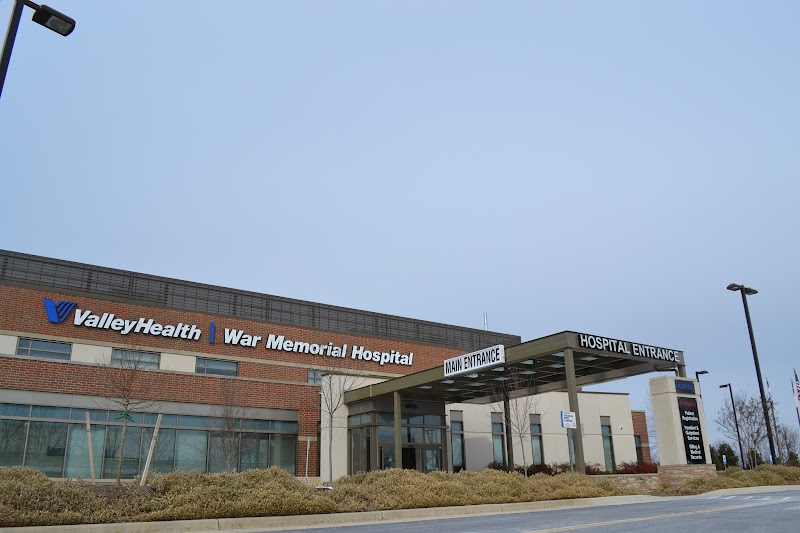
1 HEALTHY WAY, BERKELEY SPRINGS, WV 25411 (304) 258-6502
Non profit - Corporation 16 Beds Independent Data: November 2025
Trust Grade
95/100
#11 of 122 in WV
Last Inspection: October 2024

Within standard 12-15 month inspection cycle. Federal law requires annual inspections.

Overview

War Memorial Hospital in Berkeley Springs, West Virginia, has received a Trust Grade of A+, indicating it is an elite facility with top-tier quality. Ranking #11 out of 122 facilities in the state places it in the top half, and it is the best option among the two nursing homes in Morgan County. The facility is showing an improving trend, with issues decreasing from four in 2022 to just one in 2024. Staffing is a particular strength, boasting a 5/5 star rating and a low turnover rate of 22%, significantly below the state average of 44%, which suggests that residents receive consistent care from familiar staff. However, there have been some concerns, such as a failure to ensure that physician orders matched resident requests and not notifying a physician of significant weight loss in a timely manner, which could impact resident care. Overall, while there are some weaknesses to address, the facility's strengths make it a solid choice for families researching nursing homes.

Trust Score
A+
95/100
In West Virginia
#11/122
Top 9%
Safety Record
Low Risk
No red flags
Inspections
Getting Better
4 → 1 violations
Staff Stability
✓ Good
22% annual turnover. Excellent stability, 26 points below West Virginia's 48% average. Staff who stay learn residents' needs.
Penalties
✓ Good
No fines on record. Clean compliance history, better than most West Virginia facilities.
Skilled Nurses
✓ Good
Each resident gets 70 minutes of Registered Nurse (RN) attention daily — more than 97% of West Virginia nursing homes. RNs are the most trained staff who catch health problems before they become serious.
Violations
○ Average
7 deficiencies on record. Average for a facility this size. Mostly minor or procedural issues.
★★★★★
5.0
Overall Rating
★★★★★
5.0
Staff Levels
★★★★☆
4.0
Care Quality
★★★★★
5.0
Inspection Score
Stable
2022: 4 issues
2024: 1 issues

The Good

  • 5-Star Staffing Rating · Excellent nurse staffing levels
  • 4-Star Quality Measures · Strong clinical quality outcomes
  • Low Staff Turnover (22%) · Staff stability means consistent care
  • Full Sprinkler Coverage · Fire safety systems throughout facility
  • No fines on record
  • Staff turnover is low (22%)

    26 points below West Virginia average of 48%

Facility shows strength in staffing levels, quality measures, staff retention, fire safety.

The Bad

No Significant Concerns Identified

This facility shows no red flags. Among West Virginia's 100 nursing homes, only 1% achieve this.

The Ugly 7 deficiencies on record

Oct 2024 1 deficiency
CONCERN (D)

Potential for Harm - no one hurt, but risky conditions existed

Deficiency F0710 (Tag F0710)

Could have caused harm · This affected 1 resident

**NOTE- TERMS IN BRACKETS HAVE BEEN EDITED TO PROTECT CONFIDENTIALITY** Based on interviews and record reviews during a recertification survey on 10/16/24, the facility did not ensure timely notificat...

Read full inspector narrative →
**NOTE- TERMS IN BRACKETS HAVE BEEN EDITED TO PROTECT CONFIDENTIALITY** Based on interviews and record reviews during a recertification survey on 10/16/24, the facility did not ensure timely notification to the physician of Resident's significant weight loss. This is true for one (1) of three (3) Resident's reviewed for weight loss. Resident identifiers: Resident #2. Facility census: 15. Findings included: a) Resident #2 Resident #2 had diagnoses of Polyosteoarthritis, Heart failure, Chronic Obstructive Pulmonary Disease, Major Depressive Disorder, Type 2 diabetes, hypertension, and age-related physical debility. Record review on 10/15/24 at approximately 2:18 PM revealed the following: Resident had been weighed on 08/06/24 at 11:58 AM, and the weight recorded as 218.2 pounds. A nursing note on 08/07/24 at 10:28 PM by Licensed Practical Nurse (LPN) #21, which stated: Resident alert and oriented to person, place, time and situation. Speech clear. Resident able to make her needs known. Resident independent, set-up to supervision for ADL's, has been requiring staff assistance on occasion with ADLs depending on ability that day. Resident able to feed herself meals after tray set up. Resident wears upper and lower dentures. Resident takes care of her own dentures. Denies oral pain or discomfort at this time. No issues with chewing or swallowing noted. Resident continent of bladder and bowel but does have occasional incontinence episodes. Resident has bilateral hearing aids but usually does not wear them. Resident wears PRN oxygen at 2L via nasal cannula to maintain oxygen saturations above 92%. Resident walks with rollator walker independently in room and hallway. Has been using wheelchair for longer distances at times depending on ability that day. Resident participates with unit activities. Enjoys watching television, playing Bingo and participates with some unit activities. A nursing note on 08/08/24 at 6:50 PM by Registered Nurse (RN) #1 which stated: Resident with increased weakness and dyspnea with exertion. Resident is experiencing some confusion and states she feels shaky. Upon assessment, resident's vital signs WNL for resident. Blood glucose is 319. Resident does have tremors to hands and is having difficulty staying awake, even while conversing with staff. Lung sounds diminished to right side; fine crackles auscultated to left base. Resident required 2 staff assist to ambulate from the bathroom and reported fear of falling due to weakness. [Physician] was notified of change in condition. New orders for ER evaluation. POA, called and updated. POA and resident agreeable to transfer to ER. A note by LPN #21 on 08/08/24 at 7:00 PM which stated: Resident left floor via wheelchair with staff to ER. A follow up note on 08/08/24 at 10:26 PM by LPN #21 which stated: Spoke with ER nurse, resident admitted to (local hospital). MPOA, made aware. A note on 08/12/2024 at 10:23 AM by RN #5 which stated: Resident returned to unit via wheelchair on 2L portable oxygen from (local hospital) unit. VS were taken and are WNL for resident. Last BM reported on 8/11. Bowel sounds active in all 4 quads. Resident lung sounds are clear. Bilateral lower leg swelling +1 pitting edema noted. Resident c/o right knee pain 6/10 that is alleviated with Tylenol. Multiple bilateral arms bruising due to blood draws and IVs. Resident is currently sitting in recliner with call bell in reach. POA notified of residents return to unit. Plan of care ongoing. Resident's weight upon re-admission to the facility on [DATE] at 10:08 AM was documented as 201.4 pounds. This was a loss of 16.8 pounds in six (6) days, which correlates to a 7.7% weight change. During an interview with the Director of Nursing (DON) #34 on 10/16/24 at approximately 10:55 AM, she revealed a patient weighing policy. Review of the policy revealed that residents were to be re-weighed if resident's weight had increased or decreased by five (5) pounds, per physician's order, or at the request of the RN or Dietitian. Record review further revealed that facility staff were compliant with the policy. Resident #2 was re-weighed multiple times on 08/12/24: At 10:45 AM, her weight was again recorded as 201.4 pounds. At 11:15 AM she had been weighed once again and her weight was recorded as 201.4 pounds. On 08/13/24 at 10:31 AM resident's weight was recorded as 201.6 pounds. A progress note on 08/16/24 at 6:24 PM by DON #34 stated: [Resident] triggered for significant change in status (decline) in urinary incontinence this assessment period. On state assessment, [Resident] triggered for significant change in status (decline) in mood this assessment period. [Resident] has episodes of bladder incontinence and mood fluctuates from day to day and times throughout the day, therefore, will not complete a significant change in status this assessment period. During the seven days look back period (ARD 08/02/24), POC documents [Resident] as independent for bed mobility, transfer, toilet use, and supervision for eating. [Resident] was occasionally incontinent of bladder and always continent of bowel this assessment period. [Resident] has no behavior problems. [Resident] has no pressure injuries. Skin is intact. Current weight is 217.6 pounds (08/01/2024). [Resident] attends activities of her choosing and also participates in self-directed activities (television, music, crocheting, talking on the phone). [Resident] had no falls this assessment. [Resident's] family (son and family) live out of state and are supportive. [Resident] has no concerns for care conference and does not wish to participate in care conference. Letter regarding care conference was mailed to MPOA, with no response back. [Resident] requested a copy of her care plan be mailed to her MPOA, per pre request, a copy of care plan was mailed to [Resident's] MPOA. [Resident's] plan of care will continue. A review of Resident #2's care plan revealed the following note: NUTRITIONAL STATUS: [Resident] has the potential for nutritional problem related to Obese II BMI. Diet order Regular Consistency/Regular Diet with regular liquids. [Resident] has Type II Diabetes. Date Initiated: 03/18/19 Revision on: 08/16/24 GOALS: [Resident] will be free from any sign/symptoms of hyperglycemia through next review date. Date Initiated: 06/05/18 Revision on: 06/07/19 Target Date: 11/07/24 [Resident] will be free from any sign/symptoms of hypoglycemia through the next review date. Date Initiated: 06/05/18 Revision on: 06/07/19 Target Date: 11/07/24 [Resident] will have no complications related to Diabetes through the next review date. Date Initiated: 06/05/18 Revision on: 06/07/19 Target Date: 11/07/24 [Resident] will maintain adequate nutritional status as evidenced by maintaining weight within +/- 5%, no s/sx of malnutrition, and consuming at least 76-100% of each meal daily through the next review date. Date Initiated: 06/05/18 Revision on: 06/07/19 Target Date: 11/07/24 INTERVENTIONS: Administer medications (Lantus Insulin, 20 units SQ at bedtime x 1 week) as ordered. Monitor for adverse effects and effectiveness. Notify MD as indicated. Date Initiated: 08/13/24. Dietician offered education to resident due to excessive snacking at times, [Resident] declined education. She verbalized I know exactly what I am doing. Dietician will provide education to [Resident] as requested or indicated. Date Initiated: 03/18/19. Record review revealed a dietitian's note on 09/03/24 at 1:36 PM by Dietitian #27 which stated: Weight loss verified after re-weight. Significant weight loss noted. Current weight on 9/2/24 204.6 Lbs -5.0% change [ Comparison Weight 8/6/2024, 218.2 Lbs. -6.2%, -13.6 Lbs] Discussed POC with RN and [Resident] who are aware of weight loss. During recent acute care hospitalization, they removed fluid. Weight loss was expected. Skin intact at this time. No concerns noted during morning meal rounds. Feeds herself. Normally consumes 100 % of meals. An attempt was made to interview the Dietitian #27 on 10/16/24 at approximately 5:18 PM. The dietitian was not available for interview at that time. Further record review revealed no physician's orders, or progress notes, documenting or addressing the weight loss. An interview with RN #5 on 10/16/24 at approximately 8:55 AM revealed that she was aware of Resident #2's weight loss. During a follow-up interview with DON #34 on 10/16/24 at approximately 1:55 PM, she was asked whether she could produce any record that the facility notified the physician of the resident's 16.8-pound weight loss. DON #34 stated that she would review the facility records. At approximately 3:30 PM on 10/16/24 the DON #34 produced a handwritten physician's order dated 08/13/24 concerning Resident #2's diagnosis, and treatment, but did not refer to the resident's weight loss. She stated That's all I've got.
Nov 2022 4 deficiencies
CONCERN (D)

Potential for Harm - no one hurt, but risky conditions existed

Report Alleged Abuse (Tag F0609)

Could have caused harm · This affected 1 resident

. Based on record review, review of facility grievances, policy review, and staff interview, the facility failed to ensure that all allegations of neglect were reported within 24 hours to appropriate ...

Read full inspector narrative →
. Based on record review, review of facility grievances, policy review, and staff interview, the facility failed to ensure that all allegations of neglect were reported within 24 hours to appropriate state agencies as required. This was a random opportunity for discovery. Resident identifier: #7. Facility census: 16. Findings included: a) Resident #7 On 11/02/22 at 9:04 AM, a review of the facility grievance log from May 2022 through October 2022 found the following resident complaint: -Resident #7 reported, on 10/05/22, that she had asked the Certified Nurse Aide (CNA) to hand her oxygen to her. The CNA asked if she could say, Please? Resident also reported the CNA would not assist her with washing her bottom. A subsequent medical record review revealed the following details: -The annual Minimum Data Set (MDS) for Resident #7, with an assessment reference date of 08/29/22, reflected resident was cognitively intact and had a BIMS [Brief Interview for Mental Status] score of 15. -Resident #7 had experienced a fall in her room on 09/29/22 and sustained a broken right arm. Review of the facility's Abuse Prevention and Reporting policy, dated July 2022, indicates the facility will support all residents in reporting any suspected acts of abuse, neglect, or exploitation in accordance with [NAME] Virginia State Law without the fear of reprisal or retribution. Further, the facility policy defines neglect as the failure of the facility, its employees or service providers to provide goods and services to a resident that are necessary to avoid physical harm, pain, mental anguish, or emotional distress. During an interview on 11/02/22 at 9:25 AM, the Director of Nursing (DON) agreed that the concerns mentioned in the resident grievance should have been considered an allegation of neglect and it should have been reported according to state guidelines. The DON also acknowledged Resident #7 may have required more help with her routine following her broken arm. .
CONCERN (D)

Potential for Harm - no one hurt, but risky conditions existed

Assessment Accuracy (Tag F0641)

Could have caused harm · This affected 1 resident

. Based on medical record review and staff interview, the facility staff failed to accurately complete an annual comprehensive assessment of a resident's psychiatric/mood disorders. This is true for o...

Read full inspector narrative →
. Based on medical record review and staff interview, the facility staff failed to accurately complete an annual comprehensive assessment of a resident's psychiatric/mood disorders. This is true for one of five reviewed for unnecessary medications. Resident identifiers: 7. Facility census: 16. Findings include: a) Resident #7 Review of the medical record on 11/01/22 revealed R #7 diagnoses includes anxiety. A physician order dated 03/11/22 notes Celexa (antidepressant used to treat depression and anxiety) 30 milligrams once a day for depression and anxiety. The annual Minimum Data Set (MDS) comprehensive assessment with an assessment reference date of 08/29/22 is not marked to reflect the diagnosis of anxiety under section I5700 titled Psychiatric/Mood disorder. The Director of Nursing confirmed R #7's annual MDS assessment was coded incorrectly and does not reflect her diagnosis of anxiety during an interview on 11/01/22 at 4:00 PM. .
CONCERN (E)

Potential for Harm - no one hurt, but risky conditions existed

Medical Records (Tag F0842)

Could have caused harm · This affected multiple residents

**NOTE- TERMS IN BRACKETS HAVE BEEN EDITED TO PROTECT CONFIDENTIALITY** . Based on medical record review and staff interview, the facility failed to ensure physician orders and care plans matched the ...

Read full inspector narrative →
**NOTE- TERMS IN BRACKETS HAVE BEEN EDITED TO PROTECT CONFIDENTIALITY** . Based on medical record review and staff interview, the facility failed to ensure physician orders and care plans matched the resident and/or medical power of attorney's requests documented on the [NAME] Virginia Physician Orders for scope of treatment (POST) form. This is true for four (4) of four (4) residents reviewed. Resident identifiers: 3, 8, 13, 16. Facility census: 16. Findings include: a) Resident (R) #3 Review of the medical record on [DATE], revealed R #3 completed a POST form with his medical power of attorney and physician on [DATE]. The form states Do Not Attempt Resuscitation if found without a pulse and not breathing. Limited interventions include intravenous fluids (IV) for a trial period of no longer then three days and no feeding tube. The physician orders state DNR (Do not resuscitate) but lack any information related to the requested limited interventions. The care plan acknowledges his request to be a DNR but lacks information related to limited interventions of IV fluids for a trial period and no feeding tube. The Director of Nursing (DON) reviewed the medical record during an interview on [DATE] at 2:00 PM. The DON confirmed the physician's order and the care plan do not address R #3's requests listed on the POST form for limited interventions of IV fluids and no tube feedings. b) Resident (R) #8 Review of the medical record on [DATE], revealed R #8 completed a POST form with his physician on [DATE]. The form states Do Not Attempt Resuscitation if found without a pulse and not breathing. Limited interventions include IV fluids for a period of seven days and no feeding tube. The physician's order states DNR (Do not resuscitate) but is silent for the requested limited interventions of IV fluids for seven days and no feeding tube. The care plan identifies his request to be a DNR but lacks information related to limited interventions of IV fluids for a trial period and no feeding tube. The Director of Nursing (DON) reviewed the medical record during an interview on [DATE] at 2:00 PM. The DON confirmed the physician's order and the care plan do not address R #8's limited intervention requests listed on the POST form. c) Resident #13 A medical record review, completed on [DATE] at 3:00 PM, revealed the following details: -A Physician Orders for Scope of Treatment (POST) form, signed on [DATE], indicating the resident wanted to be considered a DNR, wanted to receive limited additional interventions, requested to receive IV fluids for a trial period of no longer than 10 days, and did not want to have a feeding tube. -Resident's Care Plan, dated [DATE], stated [Resident's First Name] is a DNR per MPOA and physician order. -A physician order, dated [DATE], stated, Physician Order: CODE STATUS: DNR. During an interview, on [DATE] at 3:17 PM, the DON stated the physician order and care plan only reflected the resident's desire to be considered a DNR. They did not match the resident's POST form which reflected limited additional interventions, a desire to receive IV fluids for a trial period or the desire to not have a feeding tube. d) Resident #16 A medical record review, completed on [DATE] at 3:13 PM, revealed the following details: -A Physician Order for Scope of Treatment (POST) Form, signed on [DATE], indicating resident wanted to receive CPR, wanted to receive full interventions, requested to receive IV fluids for a trial period of two (2) weeks, and did not want to have a feeding tube. -Resident's Care Plan, dated [DATE], stated, CODE STATUS: [Resident's First Name] is a Full Code per resident and physician order. -A physician order, dated [DATE], stated, Physician Order. Code Status: FULL CODE. During an interview, on [DATE] at 3:19 PM, the DON stated the physician order and care plan only reflects the resident's desire to receive CPR. They did not match the resident's POST form which reflected full interventions, a desire to receive IV fluids for a trial period or the desire to not have a feeding tube. .
CONCERN (E)

Potential for Harm - no one hurt, but risky conditions existed

Deficiency F0868 (Tag F0868)

Could have caused harm · This affected multiple residents

. Based on facility documentation and staff interview, the facility failed to meet at least quarterly to conduct required Quality Assurance and Performance Improvement (QAPI) activities. This practice...

Read full inspector narrative →
. Based on facility documentation and staff interview, the facility failed to meet at least quarterly to conduct required Quality Assurance and Performance Improvement (QAPI) activities. This practice had the potential to affect more than a limited number of residents at the facility. Facility census 16. Findings included: a) QAPI meetings Review of the facility's Quality Assurance and Performance Improvement (QAPI) plan revealed that the Medical Director, [NAME] President of Medical Affairs/designee, [NAME] President, DON, Dietician, Pharmacist, Infection Control Preventionist, Director of Activities, and the Director of Housekeeping were on the committee. A request was made for the attendance sheet from the QAPI meetings for the previous 12 months. Attendance sheets from April 2022 - November 2022 were provided. During an interview, on 11/01/22 at 2:30 PM, the Director of Nursing (DON) reported the facility did not have any QAPI meetings from October 2021 - March 2022. The DON reported she had participated in meetings on the acute care side of the hospital but failed to have meetings for the long-term care unit. The DON reported she had misinterpreted CMS guidance and had erroneously believed the QAPI meetings were waived altogether. The DON confirmed there were no meetings for the October 2021 - December 2021 quarter and the January 2022 - March 2022 quarter. .
Jul 2021 2 deficiencies
CONCERN (D)

Potential for Harm - no one hurt, but risky conditions existed

Report Alleged Abuse (Tag F0609)

Could have caused harm · This affected 1 resident

. Based on record review and interview, the facility failed to report a resident's major injury to the appropriate state entities, in a timely manner. This is true for one (1) of one (1) resident revi...

Read full inspector narrative →
. Based on record review and interview, the facility failed to report a resident's major injury to the appropriate state entities, in a timely manner. This is true for one (1) of one (1) resident reviewed for accidents. Resident identifier: #6. Facility census: 16. Findings included: a) Resident #6 On 07/17/21 at 5:10 PM, Resident #6 had an unwitnessed fall. Vital signs were obtained. The resident complained of right hip pain and was immediately sent to the Emergency Department of a local acute care hospital. The resident returned to the facility at 8:45 PM on this same date. X-rays showed no evidence of a broken bone. A Computed Tomography Scan (CT) was ordered by the physician. This scan found an Acute nondisplaced right inferior pubic ramus fracture. This is a stable pelvic fracture. This acute fracture is difficult to see on yesterday's x-ray of the pelvis. According to federal regulations serious bodily injuries should have been reported within two (2) hours of discovery. On 07/27/21 at 4:40 PM, the Director of Nursing (DON) explained she was not aware this regulation. .
CONCERN (D)

Potential for Harm - no one hurt, but risky conditions existed

Drug Regimen Review (Tag F0756)

Could have caused harm · This affected 1 resident

. Based on record review and staff interview, the pharmacist failed to recommend a gradual dose reduction (GDR) for a Resident #14 related to the use of an antidepressant. This is true for one (1) of ...

Read full inspector narrative →
. Based on record review and staff interview, the pharmacist failed to recommend a gradual dose reduction (GDR) for a Resident #14 related to the use of an antidepressant. This is true for one (1) of five (5) residents reviewed for unnecessary medications. Resident identifier: #14. Facility census: 16. Findings included: a) Resident #14 A medical record review for Resident #14 revealed Zoloft (antidepressant) with a start date of 06/07/20 received the same dose of Zoloft for greater than one (1) year. Continued review of the medical records found no evidence the pharmacist made a GDR for this antidepressant in the prior year, as required by federal Medicare and Medicaid regulations. On 07/28/21 at 10:00 AM, the Director of Nursing (DON) confirmed the pharmacist did not complete the GDR. .
Understanding Severity Codes (click to expand)
Life-Threatening (Immediate Jeopardy)
J - Isolated K - Pattern L - Widespread
Actual Harm
G - Isolated H - Pattern I - Widespread
Potential for Harm
D - Isolated E - Pattern F - Widespread
No Harm (Minor)
A - Isolated B - Pattern C - Widespread

Questions to Ask on Your Visit

  • "Can I speak with families of current residents?"
  • "What's your RN coverage like on weekends and overnight?"

Our Honest Assessment

Strengths
  • • Grade A+ (95/100). Above average facility, better than most options in West Virginia.
  • • No major safety red flags. No abuse findings, life-threatening violations, or SFF status.
  • • No fines on record. Clean compliance history, better than most West Virginia facilities.
  • • 22% annual turnover. Excellent stability, 26 points below West Virginia's 48% average. Staff who stay learn residents' needs.
Concerns
  • • No significant concerns identified. This facility shows no red flags across CMS ratings, staff turnover, or federal penalties.
Bottom line: Generally positive indicators. Standard due diligence and a personal visit recommended.

About This Facility

What is War Memorial Hospital's CMS Rating?

CMS assigns WAR MEMORIAL HOSPITAL an overall rating of 5 out of 5 stars, which is considered much above average nationally. Within West Virginia, this rating places the facility higher than 99% of the state's 100 nursing homes. This rating reflects solid performance across the metrics CMS uses to evaluate nursing home quality.
How is War Memorial Hospital Staffed?

CMS rates WAR MEMORIAL HOSPITAL's staffing level at 5 out of 5 stars, which is much above average compared to other nursing homes. Staff turnover is 22%, compared to the West Virginia average of 46%. This relatively stable workforce can support continuity of care.

What Have Inspectors Found at War Memorial Hospital?

State health inspectors documented 7 deficiencies at WAR MEMORIAL HOSPITAL during 2021 to 2024. These included: 7 with potential for harm.
Who Owns and Operates War Memorial Hospital?

WAR MEMORIAL HOSPITAL is owned by a non-profit organization. Non-profit facilities reinvest revenue into operations rather than distributing to shareholders. The facility operates independently rather than as part of a larger chain. With 16 certified beds and approximately 15 residents (about 94% occupancy), it is a smaller facility located in BERKELEY SPRINGS, West Virginia.
How Does War Memorial Hospital Compare to Other West Virginia Nursing Homes?

Compared to the 100 nursing homes in West Virginia, WAR MEMORIAL HOSPITAL's overall rating (5 stars) is above the state average of 2.7, staff turnover (22%) is significantly lower than the state average of 46%, and health inspection rating (5 stars) is much above the national benchmark.

What Should Families Ask When Visiting War Memorial Hospital?

Based on this facility's data, families visiting should ask: "Can I visit during a mealtime to observe dining assistance and food quality?" "How do you handle medical emergencies, and what is your hospital transfer rate?" "Can I speak with family members of current residents about their experience?"

Is War Memorial Hospital Safe?

Based on CMS inspection data, WAR MEMORIAL HOSPITAL has a clean safety record: no substantiated abuse findings (meaning no confirmed cases of resident harm), no Immediate Jeopardy citations (the most serious violation level indicating risk of serious injury or death), and is not on the Special Focus Facility watch list (a federal program monitoring the lowest-performing 1% of nursing homes). The facility has a 5-star overall rating and ranks #1 of 100 nursing homes in West Virginia. While no facility is perfect, families should still ask about staff-to-resident ratios and recent inspection results during their visit.

Do Nurses at War Memorial Hospital Stick Around?

Staff at WAR MEMORIAL HOSPITAL tend to stick around. With a turnover rate of 22%, the facility is 24 percentage points below the West Virginia average of 46%. Low turnover is a positive sign. It means caregivers have time to learn each resident's needs, medications, and personal preferences. Consistent staff also notice subtle changes in a resident's condition more quickly.

Was War Memorial Hospital Ever Fined?

WAR MEMORIAL HOSPITAL has no federal fines on record. CMS issues fines when nursing homes fail to meet care standards or don't correct problems found during inspections. The absence of fines suggests the facility has either maintained compliance or corrected any issues before penalties were assessed. This is a positive indicator, though families should still review recent inspection reports for the full picture.

Is War Memorial Hospital on Any Federal Watch List?

WAR MEMORIAL HOSPITAL is not on any federal watch list. The most significant is the Special Focus Facility (SFF) program, which identifies the bottom 1% of nursing homes nationally based on persistent, serious quality problems. Not being on this list means the facility has avoided the pattern of deficiencies that triggers enhanced federal oversight. This is a positive indicator, though families should still review the facility's inspection history directly.