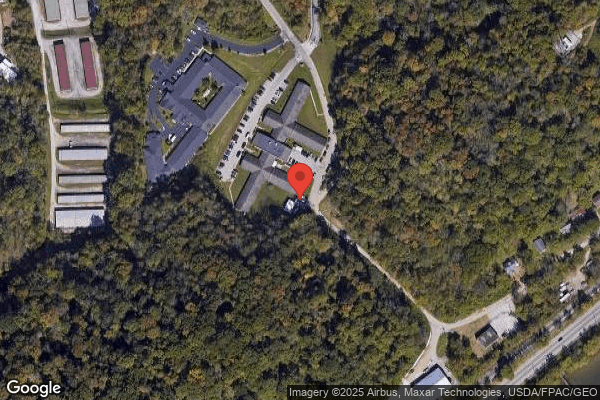
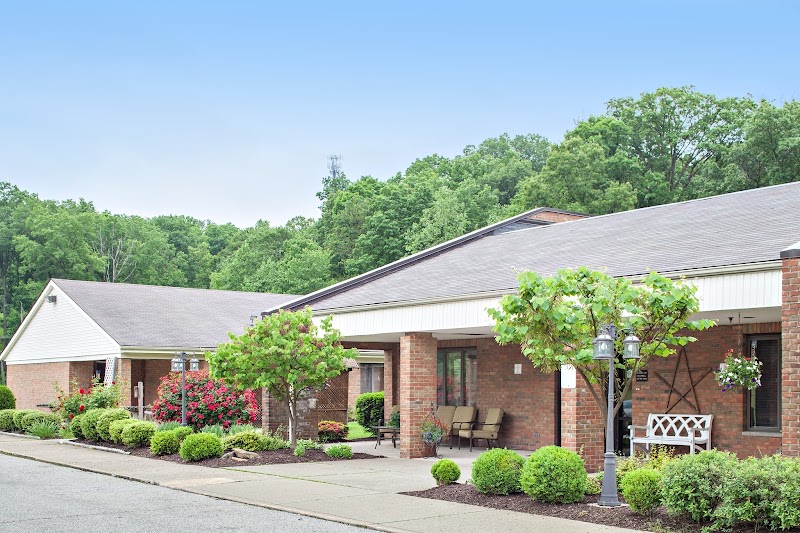


Dunbar Center

501 CALDWELL LANE, DUNBAR, WV 25064 (304) 744-4761
For profit - Corporation 120 Beds GENESIS HEALTHCARE Data: November 2025
Trust Grade
8/100
#95 of 122 in WV
Last Inspection: April 2025

Within standard 12-15 month inspection cycle. Federal law requires annual inspections.

Overview

Dunbar Center in Dunbar, West Virginia has a Trust Grade of F, indicating significant concerns about the quality of care provided. It ranks #95 out of 122 facilities in the state, placing it in the bottom half for West Virginia, and #9 out of 11 in Kanawha County, meaning there are only two better options nearby. Unfortunately, the facility is worsening, with the number of issues increasing from 18 in 2024 to 41 in 2025. Staffing ratings are low at 1 out of 5 stars, with a turnover rate of 49%, which is around the state average, suggesting instability in care staff. The facility has reported fines totaling $24,490, which is concerning and indicates ongoing compliance issues. Specific incidents include a failure to monitor nutrition for multiple residents, leading to significant weight loss and dehydration, and negligence in caring for a resident's skin condition, resulting in a hospital admission for infection. Additionally, pressure ulcers were not properly assessed or treated, leading to serious health complications for residents. While there are some average quality measures, the overall picture shows a facility with critical weaknesses that families should carefully consider.

Trust Score
F
8/100
In West Virginia
#95/122
Bottom 23%
Safety Record
High Risk
Review needed
Inspections
Getting Worse
18 → 41 violations
Staff Stability
⚠ Watch
49% turnover. Above average. Higher turnover means staff may not know residents' routines.
Penalties
✓ Good
$24,490 in fines. Lower than most West Virginia facilities. Relatively clean record.
Skilled Nurses
⚠ Watch
Each resident gets only 29 minutes of Registered Nurse (RN) attention daily — below average for West Virginia. Fewer RN minutes means fewer trained eyes watching for problems.
Violations
⚠ Watch
77 deficiencies on record. Higher than average. Multiple issues found across inspections.
★☆☆☆☆
1.0
Overall Rating
★☆☆☆☆
1.0
Staff Levels
★★★☆☆
3.0
Care Quality
★☆☆☆☆
1.0
Inspection Score
Stable
2024: 18 issues
2025: 41 issues

The Good

  • Full Sprinkler Coverage · Fire safety systems throughout facility
  • No fines on record

Facility shows strength in fire safety.

The Bad

1-Star Overall Rating

Below West Virginia average (2.7)

Significant quality concerns identified by CMS

Staff Turnover: 49%

Near West Virginia avg (46%)

Higher turnover may affect care consistency

Federal Fines: $24,490

Below median ($33,413)

Minor penalties assessed

Chain: GENESIS HEALTHCARE

Part of a multi-facility chain

Ask about local staffing decisions and management

The Ugly 77 deficiencies on record

3 actual harm
Jul 2025 15 deficiencies 1 Harm
SERIOUS (G) 📢 Someone Reported This

A family member, employee, or ombudsman was alarmed enough to file a formal complaint

Actual Harm - a resident was hurt due to facility failures

Deficiency F0692 (Tag F0692)

A resident was harmed · This affected 1 resident

**NOTE- TERMS IN BRACKETS HAVE BEEN EDITED TO PROTECT CONFIDENTIALITY** Based on observation, record review, caregiver interview and staff interview, the facility failed to ensure each resident mainta...

Read full inspector narrative →
**NOTE- TERMS IN BRACKETS HAVE BEEN EDITED TO PROTECT CONFIDENTIALITY** Based on observation, record review, caregiver interview and staff interview, the facility failed to ensure each resident maintains acceptable parameters of nutritional status, such as usual body weight or desirable body weight range and electrolyte balance, unless the resident's clinical condition demonstrates that this is not possible. This was true for four (4) of four (4) residents reviewed. This failed practice resulted in actual harm for Resident #64 who since the time of her admission has lost a severe amount of weight. The facility failed to track her consumption of meals, provide assistance at mealtimes and failed to implement the dietician's recommendation for a house supplement and the resident continued to lose weight. For Resident #119 #11 and #96 the facility failed to track their meal consumptions to identify any potential nutrition problems before the resident suffers weight loss or dehydration. Resident Identifiers; #119, #11, #96, and #64. Facility Census: 115.Findings Include: a) Resident #64 A review of Resident #64's medical record on 07/22/25 found the following weights recorded: 06/03/25- 117.8 pounds (lbs.) 06/10/25 - 118.4 lbs. 06/17/25 - 116 lbs. 06/24/25 - 111.6 lbs. 07/01/25- 111.4 lbs 07/09/25 - 109.7 lbs. 07/16/25 - 106.8 lbs. 0723/25 - 102 lbs. (this weight was obtained in the presence of the surveyor.) The percentage of weight loss was calculated using the following formula: (usual weight - actual weight) / (usual weight) x 100 = % of body weight loss For the first month in the facility the weights used were the weights from 06/03/25 and 07/01/25: (117.8-111.4)/117.8x100 = 5.43 percent. This is considered a severe weight loss in 30 days. Resident # 64 has continued to lose weight her most recent weight was 102 lbs. If the most recent weight is used to calculate weight loss since admission the following percentage is obtained: (117.8-102)/117.8X100=13.41 percent. Further review of the record found the following current orders pertaining to the residents nutritional status: Weekly weights x 4 weeks then monthly ordered on 07/02/25. House Supplement twice a day ordered on 0703/25. Both these orders came about when the Licensed Dietician reviewed the resident on 07/0225 after the severe weight loss in 30 days was captured. Further review of the record found the following progress notes and assessments related to Resident #64's weight loss. -- Progress note effective date 07/07/25 at 12:49 PM read as follows, :Weight warning Value: 111.4 Vital Date: 07/01/25. MDS -5.0 percent change over 30 days. Resident feed assist as she is blind and deaf. Care ongoing. -- Progress note with an effective date of 07/02/25 at 11:39 AM read as follows: Weight warning Value: 111.6 Vital Date 06/24/25 2:14 PM. -5.0 change over 30 days Resident is on regular diet with good PO intakes. Feeding ability varies. All meals served in bowl Kennedy cup to aid in self feeding. Resident is visually impaired and needs to be set up. Resident to continue current diet as ordered - appropriate with potential to meet needs. House Supp BID (twice a day) and weekly weights X4 weeks. Will follow for need to start further nutritional intervention. NP/MD/LD aware. The Licensed Dietician completed two (2) nutritional assessments on Resident #64 at of the time of this review. The first was on admission and was completed on 06/05/25 this assessment indicated that meal intakes since the time of admission the resident is eating 75 percent of her meals (Please note the resident was admitted on [DATE] and only had 4 meals documented prior to the LD's assessment. She was missing documentation for one (1) meal per day since her admission). The LD identified no nutritional concerns on admission. The second and final LD assessment was completed on 07/02/25 when the residents severe weight loss was identified. This assessment identified the resident had lost 5% of her body weight in one month. The LD noted the resident was consuming 75 percent of her meals in the seven day look back period. (Please note the intake for meals was only documented on 10 occasions during the 7 day look back period leaving 11 meals with no documentation entered and not available for the LD to review.) The LD made the following recommendations: House Supplement BID (twice daily) and weekly weights X4. Will follow for need to start further nutritional intervention. Review of the weekly weights found the resident continued to lose weight every week. The first week she lost 1.7 pounds. The second week she lost 2.9 pounds for a total of 4.6 pounds since the dieticians review. However, no additional notes or assessments were completed until after the surveyor [NAME] to question the residents weight loss. An interview with the LD in the afternoon of 07/22/25 confirmed she was aware of the residents weight loss. She stated, I am going to look at her again today. She indicated she recommended house supplements and to assist the resident with her meals. When asked how she could accurately assess the residents meal intake when the intakes are not consistently documented she stated, I can only work with what is available to me. A comprehensive review of meal intakes documented by the facility was completed by the surveyor on the afternoon of 07/22/25 found from 06/03/25 until 07/21/25 a total of 49 days. Resident #64 was served a total of 147 meals and the staff tracked the amount consumed on 76 occasions. At approximately 3:00 PM on 0722/25 the surveyor entered the room of Resident #64. The resident had a visitor who identified herself as the residents previous caregiver when she was at home. She stated, I have been here since about 12:15 pm. The surveyor asked the visitor if the resident had drank her shake. She stated, They have not brought her in anything like that. The MAR was reviewed prior to going to the room and 100 % of the supplement was documented as consumed. The surveyor then went to the kitchen and requested a list a of the supplements they send to the residents each day. The Dietary Manager (DM) provided the list and Resident #64 was not on the provided paper. The CDM confirmed the kitchen sends the supplements. She was asked if she could look and see if Resident #64 ever received a supplement. She looked at her computer and confirmed Resident #64 had never received a supplement from the kitchen. However a review of the medication administration record (MAR) at approximately 2:30 PM on 07/22/25 found on the following dates and times the nurses documented resident Resident #64 consumed 100 percent of her supplement despite never receiving it from the kitchen: 07/03/25 at 10:00 am and 2:00 pm. 07/04/25 at 10:00 am and 2:00 pm. 07/05/25 at 10:00 am and 2:00 pm. 07/10/25 at 10:00 am and 2:00 pm. 07/11/25 at 10:00 am and 2:00 pm. 07/12/25 at 10:00 am and 2:00 pm. 07/13/25 at 10:00 am and 2:00 pm. 07/14/25 at 10:00 am and 2:00 pm 07/15/25 at 10:00 am and 2:00 pm 07/16/25 at 10:00 am and 2:00 pm 07/17/25 at 10:00 am and 2:00 pm 07/18/25 at 10:00 am and 2:00 pm 07/19/25 at 10:00 am and 2:00 pm 07/20/25 at 10:00 am and 2:00 pm 07/21/25 at 10:00 am and 2:00 pm Observation of the morning meal on 07/23/25 beginning at 8:08 AM found the resident was sitting in her recliner in her room. The nurse aid took her in a cup of cranberry juice and told the resident she had brought her a cup of juice. The resident was then observed feeling around on her bed side table. She did not find the juice nor did she take a drink. At about 8:15 AM Registered Nurse (RN) #112 went in to the room and asked her how she was doing. The resident stated, I am just hungry. I am starved. The RN asked the resident if she wanted a drink of her juice and she assisted the resident in getting a drink. At 8:28 am the meal cart arrived on the floor from the kitchen. At 8:29 am Resident #64's roommate was served her meal and Resident #64's tray was left on the cart. The rest of the trays on the cart was served and Resident #64's tray was still on the cart. RN #112 was overheard asking Nurse Aide (NA) #86 if anybody needed assistance with their meal. The nurse aide stated. (Name of Resident #64) her tray is still on the cart we have to wait until the second cart comes out and the trays are all served. THe RN stated if her roommate has her food you need to go head and feed her. NA #86 then took her tray in at 8:35 am. The NA asked the resident if she was ready to eat and the resident stated, I have been ready for two (2) hours. The nurse aide was trying to assist her and the resident said, I usually just eat with my fingers honey. The resident told her to sit the eggs on her lap and she would get them with her fingers. She told the NA multiple times, that's how they always do it honey. At 8:45 am the attending physician went in to see the resident. He told her he was glad she was eating. She stated, I was starved. His reply was, Well you are. An additional observation of the noon time meal on 0723/25 found the resident resident eating her meal in the dining room on her unit. The observation began at approximately 12:30 PM. When the surveyor entered the dining room the resident was seated at a table with her meal in front of her. The meal consisted of a tuna salad sandwich (cut in half) a bowl of potato salad and a cup of sherbert. The resident was holding half of her sandwich and had just begun to eat it. She ate the entire half she was holding. Once finished with that half of her sandwich the resident felt around the table and found the second half of her sandwich. She attempted to pick it from bowl it was in. She only managed to get the slice of bread off the top of the sandwich. At this time Registered Nurse (RN) #94 who assisting other residents with their meal motioned to the Clinical Reimbursement Coordinator was standing near Resident #94 and told the CRC the resident needed help. At this time the CRC came over and cut up the remaining part of the tuna salad sandwich and put the residents spoon in it. Once the resident finished the top piece of bread she picked up from the sandwich she again felt around the table and found the bowl with the spoon in it she picked up the spoon which had no food on it and put it in her mouth. She then laid it down and began eating the remaining part of the tuna salad sandwich with her hands. She at only a couple more bites. She then felt around and found her potato salad she took a couple bites of it with her fingers. During this time no staff had assisted with her meal other than the one time the CRC cut up her sandwich. The LD then came over and the resident told her she did not like that potato salad. The LD put some salt and pepper on it but the resident stated she did not like it. The LD removed the potato salad from the table. At this time Resident 64 was observed feeling around for her sherbert she could not find it at first then the LD came over and helped her find it. The LD then stayed with the resident and helped her find sherbert after every bite and helped the resident ensure the sherbert was on her spoon. With the help of the LD the resident was able to eat her sherbert with her spoon. The resident requested for the staff to go to her room and bring her some muffins he son had brought. The staff did assist the resident with that request and the resident ate the entire bag of the mini muffins. At this time Nurse Aide (NA) #21 picked up the residents tray ticket and wrote something on it. The surveyor reviewed the ticket and found NA #21 had documented the resident had consumed 100 percent of her meal despite the fact the resident only hate a bit more than half her sandwich and did not eat her potato salad. An interview with the LD at 1:11 pm confirmed the resident did not eat 100 percent of her meal. She did state it was okay to give her credit for the muffins but that would still not be considered 100 percent. Further review of the tray ticket found the resident was to be assisted with all her meals. This meal observation was shared with the Nursing Home Administrator (NHA) and the Corporate Resource Nurse (CRN) #106 immediately after the interview with the LD. They agreed that what was describe would not be considered feeding assistant. CRN #106 stated they should sit down with her and help her. Findings Included: b) Resident #119 On 07/24/25 at 9:00 AM record review of Nutritional Assessments and meal intakes for Resident #119 shows insufficient documentation for an accurate nutritional assessment. According to the last Nutritional Assessment performed prior to the resident being transfered to the hospital it was stated that the resident did have a weight loss of 9%. It states per the Activities of daily living (ADL) documentation the resident was eating 44% of her meals. According to documentation of meal intakes for 03/01/25 through 04/01/25 (32 days) there were 44 missing documentations out of a possible 96 entries. It was reviewed with the Corporate Resource Nurse #106 on 07/24/25 at 10:10 AM when she agreed a more accurate nutritional assessment could be made with accurate meal intakes documented for every meal. Resident #11 On 07/23/25 at 2:00 PM, a record review was completed for Resident #11. The review included meal intake percentages for 06/23/25 through 07/22/25. The review found 42 of 90 meals were documented. Three refusals were noted as well. However, 45 meals were not documented in the resident record. A review found the resident's weight had remained stable. However, the facility physician and/or the registered dietician would not be able to evaluate the resident's meal consumption and nutritional needs. On 07/23/25 at approximately 3:30 PM, the Regional Corporate Nurse #106 was notified of the missing meal percentages. The Regional Corporate Nurse #106 confirmed all meals should be documented. Resident #96 On 07/23/25 at 2:40 PM, a record review was completed for Resident #96. The review included meal intake percentages for 06/23/25 through 07/22/25. The review found 44 of 90 meals were documented. However, 46 meals were not documented in the resident record. A review found the resident's weight has remained stable. However, the facility physician and/or the registered dietician would not be able to evaluate the resident's meal consumption and nutritional needs. On 07/23/25 at approximately 3:30 PM, the Regional Corporate Nurse #106 was notified of the missing meal percentages. The Regional Corporate Nurse #106 confirmed all meals should be documented.
CONCERN (D) 📢 Someone Reported This

A family member, employee, or ombudsman was alarmed enough to file a formal complaint

Potential for Harm - no one hurt, but risky conditions existed

Safe Environment (Tag F0584)

Could have caused harm · This affected 1 resident

**NOTE- TERMS IN BRACKETS HAVE BEEN EDITED TO PROTECT CONFIDENTIALITY** Based on observation, record review and staff interview, the facility failed to provide a safe, clean, homelike environment for ...

Read full inspector narrative →
**NOTE- TERMS IN BRACKETS HAVE BEEN EDITED TO PROTECT CONFIDENTIALITY** Based on observation, record review and staff interview, the facility failed to provide a safe, clean, homelike environment for Resident #11 and #96. This was a random opportunity for discovery. Resident Identifiers: #11 and #96. Facility Census: 115.Findings Include:a) Resident #11 On 07/22/25 at 10:45 AM, an observation of room [ROOM NUMBER] was made. The observation found Resident #11 sitting in a geri-chair with dried food and other debris on it. The resident was found facing the wall. There was no television or music playing. The resident appeared disheveled, and the room was noted with a foul odor of urine. The resident's fall mat was observed with a tear on the corner. The floor was sticky and food from breakfast as well as a plastic spoon were on the floor. The resident's clothes were dirty and were noted with a foul body odor. Her hair was disheveled. On 07/22/25 at 10:46 AM, Licensed Practical Nurse (LPN) #54 was asked, Who is caring for the residents in room [ROOM NUMBER]? LPN #54 responded, The nurse or aide? The Surveyor replied, the aide. On 07/22/25 at 10:49 AM, Nurse Aide (NA) #104 and NA #68 entered the room. At this time, both aides were asked Do you think these ladies look disheveled? NA #68 responded yes and NA #104 nodded her head yes. At this time, this surveyor requested the Regional Corporate Nurse (RCN) #106 come to the room. At 10:54 AM, RCN#106 entered the resident's room. RCN #106 looked around the room and agreed the room smelled like urine and the resident's fall mat was ripped. RCN #106 agreed the resident was disheveled and the overall care of the resident was poor. RCN #106 stated, Let me have someone get her in the shower .she needs a shower. b) Resident #96On 07/22/25 at 10:45 AM, an observation of room [ROOM NUMBER] was made. The observation found Resident #96 sitting in a geri-chair with dried food and other debris on it. The resident was found facing the wall. There was no television or music playing. The resident appeared disheveled, and the room was noted with a foul odor of urine. The resident's fall mat was observed with something wet underneath and a broken handle on the nightstand. The floor was sticky and food from breakfast as well as a plastic spoon were in the floor. The resident's clothes were dirty and was noted with a foul body odor. Her hair was disheveled. On 07/22/25 at 10:46 AM, Licensed Practical Nurse (LPN) #54 was asked, Who is caring for the residents in room [ROOM NUMBER]? LPN #54 responded, the nurse or aide? The Surveyor replied, the aide. On 07/22/25 at 10:49 AM, Nurse Aide (NA) #104 and NA #68 entered the room. At this time, both aides were asked Do you think these ladies look disheveled? NA #68 responded yes and NA #104 nodded her head yes. At this time, this surveyor requested the Regional Corporate Nurse (RCN) #106 come to the room. At 10:54 AM, RCN #106 entered the resident's room. RCN #106 looked around the room and agreed the room smelled like urine. RCN #106 agreed the resident was disheveled and the overall care of the resident was poor. RCN #106 stated, Let me have someone get her in the shower .she needs a shower. On 07/22/25 at approximately 11:15 AM RCN #106 and the Administrator confirmed the residents should have been showered, dressed in clean clothes and the room should have been cleaned.
CONCERN (D) 📢 Someone Reported This

A family member, employee, or ombudsman was alarmed enough to file a formal complaint

Potential for Harm - no one hurt, but risky conditions existed

Investigate Abuse (Tag F0610)

Could have caused harm · This affected 1 resident

Based on record review, staff interview and family interview, the facility failed to complete a thorough investigation regarding an allegation of neglect for Resident #123. This was true for one (1) o...

Read full inspector narrative →
Based on record review, staff interview and family interview, the facility failed to complete a thorough investigation regarding an allegation of neglect for Resident #123. This was true for one (1) of seven (7) residents reviewed under the care area of neglect. This failed practice had the potential to affect more than a few residents. Resident Identfiers: #123 Facility Census: 115. Findings Include:a) Resident #123On 07/23/25 at 11:00 AM, a review of a facility-reported incident regarding Resident #123 was completed. The review found the allegation of waiting over a one (1) hour wait time for the resident to receive assistance. The five (5) day follow-up was reviewed at this time as well. The following was documented: On April 17, 2025 (Name of Resident)'s son reported that his father contacted him the previous eveing stating his call light had been on for 1 hour and 45 minutes and he needed to use the bathroom. The son drove 15 minutes to the facility and when he arrived he saw the call light on. He checked with his dad, who had a bowel movement. He got the attention of staff, who immediately changed his father. (Typed as written.) This was reported to the appropriate state agencies. (Name of Resident) is a short term resident at the facility. He is (age) and lacks capacity to make medical decisions according to the facility physician. He has diagnoses that include, but are not limited to: metastatic prostate cancer, metabolic encephalopathy, altered mental status, atrial fibrillation, peripheral vascular disease, type 2 diabetes, hypotension, and chronic kidney disease. He has strong support from his son (Name of son), who assists with all his medical affairs. (Typed as written.)Investigation: SW (social worker #93) interviewed the resident. He indicated a specific instance he had to wait for a CNA (certified nursing assistant), but did not recall exactly how long and did not recall what he needed assistance with. He indicated no mental anguish. (Typed as written.)(Name of Nurse Aide #86) was assigned to (Name of the Resident). She was suspended pending the investigation. She reported she checked on (Name of Resident) several times throughout the day and he had no complaints including at approximately 4:30 PM. She left for the day at 5:30 PM and did not see his call light on at that time. (Name of Nurse Aide (NA) #16) reported she made multiple rounds through the day with (Nurse Aide #86) including one at 4:30 PM at which point (Name of Resident) had no requests or concerns. (Typed as written.)(Licensed Practical Nurse (LPN) #4) reported (Name of NA #86) notified her when she left at 5:30 PM and reported she had completed a final check on all her patients. Near 6pm (Name of Resident's son) came to her and requested his dad be changed. At that time the call light was on. LPN #4 and NA #43 immediately changed him. He had a bowel movement. They changed his brief. His sheets were clean and dry and did not need changed. He had no redness or known irritation to his peri area. (Typed as written.)NA #43 reported she cannot recall for sure when (Name of Resident) 's light came on or how long it was on. She helped change him near 6pm. (Typed as written.)Unit Manager (UM) #111 completed a skin assessment on 04/17 indicating no skin issues. Social Worker (SW) #93 interviewed several other residents, who reported NO concerns regarding their care. (Typed as written.)Conclusion: Neglect is not substantiated. There is no physical harm and no known mental anguish. (Typed as written.) On 07/23/25 at 1:15 PM, an interview was held with LPN #4. LPN #4 stated, Two aides left early that day .they said they completed their rounds. That left me, one aide on the floor and one aide in the dining room. I was in one room and the aide on the floor was in another room. When I came out of the room, the resident's son was there and he was furious. He yelled at me and wanted to know why no one was helping his dad. I apologized and the aide and I went and changed the resident. I don't know if his call light was on or how long it was on. On 07/23/25 at 4:00 PM, an interview was held with SW #93 regarding the investigation. SW #93 felt he had completed the investigation and his determination was based on the information the resident was unable to provide; such as how long of a wait time and what his need was.An interview was held with the Medical Power of Attorney (MPOA) on 07/24/25 at 9:35 AM. The MPOA stated, I'll tell you what happened. He is no longer there. I got a call from my mother .she said my father had just called her and could not get anyone to help him, that he had to use the bathroom and no one would bring him a bed pan. So I drove to the facility which is about 15 minutes away and the call light was on .when I asked him did someone help him he said no it's to late. There were two (2) people sitting at the desk and I wanted to know why no one has helped him .they immediately apologized and changed him. They insinuated there wasn't enough staff .the next day I spoke with the Administrator and was told they would do an investigation .after making a call to my mother, then my mother calling me, then me driving here it was a while he was needing assistance.An interview was held with the Regional Corporate Nurse #106 on 07/24/25 at 9:15 AM. A discussion was held regarding the information obtained from the interviews. Regional Corporate Nurse (RCN) #106 stated, Let me get the other aides and see if they can give any more information.On 07/24/25 at approximately 3:00 PM, an interview was held with Nurse Aide (NA) #43. NA #43 was asked, Do you remember what happened with the Resident when his son came to the facility?' NA #43 stated, Yes I remember .two (2) of the aides got to leave early that day .that left me and the nurse on the floor and the other aide in the dining room. The aides left a mess on their assignments. I started at the back of the hall and was working my way up. (Name of Resident) did know when he needed a bed pan and would use his call light only when he needed it. I came out of a room and the resident's son was yelling at the nurse. He said his father had been waiting for help and no one came to assist him. I'm not sure how long his light was on but I was tied up with another resident. I know the resident was continent and I'm sure he was needing a bed pan. The nurse and I went into the resident's room. He had an accident. We cleaned him up. He said he had waited as long as he could. I apologized to the resident and had to get back to my other residents. NA #43 was asked, Do you think the resident waited with his call light on? NA #43 stated, He knew what was happening and could tell her anytime he needed assistance .I think he did wait but I cannot say for exactly how long.On 07/24/25 at approximately 3:30 PM, an interview was held with the RCN #106. A discussion of the facts was held. RCN #106 was asked, How long do you think it would take for the resident to call his wife, then the wife to call the son, then the son to drive to the facility for approximately 15 minutes while the resident was waiting for a bed pan? The Regional Corporate Nurse #106 agreed it would have taken a while for all this to take place. The Regional Corporate Nurse #106 agreed the investigation was not thoroughly investigated.
CONCERN (D) 📢 Someone Reported This

A family member, employee, or ombudsman was alarmed enough to file a formal complaint

Potential for Harm - no one hurt, but risky conditions existed

Deficiency F0657 (Tag F0657)

Could have caused harm · This affected 1 resident

Based on record review and staff interview the facility failed to ensure Resident #59's care plan was revised to reflect the residents history of falls. This was true for one (1) of seven (7) resident...

Read full inspector narrative →
Based on record review and staff interview the facility failed to ensure Resident #59's care plan was revised to reflect the residents history of falls. This was true for one (1) of seven (7) residents reviewed in regards to Facility Reported Incidents during a complaint survey. Resident Identifiers: #59 . Facility Census:115. a) Resident #59A review of a facility reported incident (FRI) found Resident #59 suffered a fall on 08/10/24. A review of the facility's five-day follow-up report found the following, .He does have fall precautions in place, and secondary to this incident, his bed will now be placed against the wall to prevent falling from the bed. A review of the resident's current care plan on 07/22/25 found the resident had no care plan focus statement, goals, or interventions related to being at risk for falls and/or a history of falls. A revision history of the care plan found that on 02/21/25 the following focus statement was resolved Resident is at risk for falls: impaired mobility. This was added to Resident #59's care plan on 08/12/24 two (2) days after his last fall and the subject of investigated FRI and was resolved on 02/21/25 along with the goal and the interventions. An interview with the Corporate Resource Nurse (CRN) #106 at approximately 2:45 PM confirmed Resident #59's current care plan did not reflect his history of falls.
CONCERN (D) 📢 Someone Reported This

A family member, employee, or ombudsman was alarmed enough to file a formal complaint

Potential for Harm - no one hurt, but risky conditions existed

Accident Prevention (Tag F0689)

Could have caused harm · This affected 1 resident

Based on observation, record review and staff interview the facility failed to ensure the resident environment over which it had control was as free from accident hazards as possible to prevent injury...

Read full inspector narrative →
Based on observation, record review and staff interview the facility failed to ensure the resident environment over which it had control was as free from accident hazards as possible to prevent injury to the residents. Nurse Aide (NA) #12 transferred Resident #56 from the tilt shower chair to her bed using a stand and pivot method. The residents care plan, Kardex and physician orders all indicated Resident #56 was to be transferred via a total lift with the assistance of two (2) staff members.Resident Identifier: #56. Facility Census: 115. Findings Include: a) Resident #56 On 07/28/25 at 10:48 AM NA #12 was observed transporting Resident #56 back to her room from the shower room. The resident was in a tilt back shower chair at this time. NA #12 was observed taking Resident #56 into her room. No other staff members were observed in the room. At 10:51 AM another NA entered the room. At 10:52 AM the second NA exited the room with the tilt back shower chair. At 10:56 AM NA #12 opened the door to the residents room. Resident #56 was laying on her bed. Under her was a blue lift pad. NA #12 was asked how he transferred her to the bed he stated, I just picked her up. Not really picked her up she stood and I pivoted her to the bed she can still stand a little. A review of Resident #56's medical record found the following intervention related to Resident #56's transfer status, Provide resident/patient dependent with 2 staff members for transfers via mechanical lift with large blue pad. This intervention was added to the care plan on 04/26/23 and was revised on 02/11/25.A review of the residents kardex found the following in regards to the residents transfer status, Provide resident/patient dependent with 2 staff members for transfers via mechanical lift with large blue pad. A review of the medical record found the following physician order, Occupational Therapy(OT)-Evaluation & treatment as recommended Patient to be transferred via lift for all transfers [NAME] medium split lift pad dated 05/27/24 and was the active order at the time of the observation. The above findings were shared with Corporate Resource Nurse (CRN) #106 at 11:08 am on 07/28/25. At 11:17 am on 07/28/25 the interim Director of Nursing (DON) stated she had spoken to OT and found the resident was able to stand and pivot with a gait belt. She did confirm this information was not in the record at the time of the observations and record review by the surveyor. The surveyor asked when the last time Resident #56 was treated by Occupational Therapy. The Interim DON stated she would have to find out and get back to me. Later in the afternoon the facility provided a OT note dated 03/19/24 which contained the following sentence, Patient performed transfer into geri chair with maximal assist. Facility staff indicated this was the most recent note in which occupational therapy had mentioned the residents transfer status. The surveyor asked about the order which was entered on 05/27/24 which indicated occupational therapy wanted the resident to be transferred via a mechanical lift with a two (2) person assist. It was pointed out the order was entered on 05/27/24 which was more than two (2) months after the note which was provided. The facility staff remained silent at that time. Later in the afternoon the facility provided an evaluation from OT dated 07/28/25 which indicated OT would be working with the resident in regards to transfers. (Please note this evaluation was completed after the surveyors observation of the incorrect transfer.) The facility also provided a nursing communication sheet dated 07/28/25. This communication was from OT to nursing and read as follows: Patient to change to a stand pivot transfer with gate [SIC] belt and assistance of one, needing partial /moderate assistance for safest bed to chair - chair to bed transfers. Again this communication was completed after the surveyor's observation of the incorrect transfer. The statement given to the facility by NA #12 read as follows (typed as written): Put Miss (Last name of Resident #56) on shower bed without lift told them I help put her in chair one person not two put her in chair myself. I felt that she stand on her feet ant put her in chair an di the tranfer safely care plan need to be update. I work with her all the time. Review of Resident #56's task sheets for transfers for the previous 60 days found on the following occasions NA #12 documented Resident #56 was totally dependent on staff for transfers with the assist of two (2) staff members:-- 06/02/25 at 2:32 PM and 4:17 PM -- 06/03/25 at 11:17 AM an 3:40 PM -- 06/04/25 at 3:17 PM -- 06/06/25 at 10:07AM -- 06/11/25 at 9:51 AM and 3:16 PM -- 06/13/25 at 2:37 PM and 3:25 PM -- 06/16/25 at 12:10 PM and 3:55 PM-- 06/18/25 at 4:14 PM -- 0620/25 at 10:30 AM -- 06/23/25 at 12:22 PM -- 06/24/25 at 10:25 AM -- 06/25/25 at 11:33 AM -- 06/30/25 at 2:59 PM and 4:18 PM -- 07/01/25 at 10:44 AM and 5:06 PM -- 07/02/25 at 9:03 AM -- 07/03/25 at 11:59 AM-- 07/04/25 at 9:50 AM -- 07/07/25 at 1:34 PM -- 07/08/25 at 12:36 PM and 4:19 PM -- 07/09/25 at 10:56 AM and 4:13 PM -- 07/11/25 at 11:32 AM and 4:05 PM -- 07/14/25 at 12:09 PM and 4:21 PM -- 07/17/25 at 1:15 PM -- 07/18/25 at 1:48 PM -- 07/19/25 at 12:35 PM -- 07/21/25 at 1:23 PM and 4:17 PM. -- 07/22/25 at 2:45 PM -- 07/23/25 at 11:07 AM and 4:29 PM In the previous 60 days NA #12 never documented he transferred Resident #56 by himself without a lift, but in his statement he indicated he felt the care plan needed to be updated because he works with her all the time and she can safely transfer this way. Medical Record Review on 07/28/25 revealed after surveyor intervention Resident #56 was evaluated by the licensed nurse with no apparent injuries. The Occupational Therapist (OT) completed an evaluation for transfers with the licensed nurse on 7/28/25 and it was determined for Resident #56 for gaitbelt assistance of one.
CONCERN (D) 📢 Someone Reported This

A family member, employee, or ombudsman was alarmed enough to file a formal complaint

Potential for Harm - no one hurt, but risky conditions existed

Tube Feeding (Tag F0693)

Could have caused harm · This affected 1 resident

Based on observation, record review and staff interview the facility failed to ensure a resident who is fed by enteral means receives the appropriate treatment and services to prevent complications of...

Read full inspector narrative →
Based on observation, record review and staff interview the facility failed to ensure a resident who is fed by enteral means receives the appropriate treatment and services to prevent complications of enteral feeding including but not limited to weight loss and dehydration. This was true for one (1) of one (1) resident reviewed for the care area of Feeding Tubes during a complaint survey. Resident Identifier: #52. Facility Census:115. Findings Include: a) Resident #52 A review of Resident #52's medical record found a physician's order which read: Enteral feed order one time a day Glucerna:1.5 cal at 70 ML (Milliliters) per hour for 20 hours This order was current at the time of this review and began on 07/15/25. The resident was to be started on the feeding at 2:00 PM and unhooked at 10:00 AM the following day. At 4:15 PM on 07/22/25 an observation of Resident #52 with the Corporate Resource Nurse (CRN) #106 found Resident #52's feeding was running. The rate on the pump was observed to be running at only 60 ML per hour instead of the ordered 70 ML per hour. CRN #106 asked Licensed Practical Nurse (LPN) # 32 to confirm Resident #52's order. The LPN reviewed the electronic medical record (EMR) ad confirmed the rate was supposed to be set at 70 ML per hour. CRN #106 asked her to correct the rate on the pump.
CONCERN (E) 📢 Someone Reported This

A family member, employee, or ombudsman was alarmed enough to file a formal complaint

Potential for Harm - no one hurt, but risky conditions existed

Resident Rights (Tag F0550)

Could have caused harm · This affected multiple residents

Based on observation, record review and staff interview the facility failed to ensure all residents were treated with dignity and respect. This was true for five (5) residents and were random opportun...

Read full inspector narrative →
Based on observation, record review and staff interview the facility failed to ensure all residents were treated with dignity and respect. This was true for five (5) residents and were random opportunities for discovery. Resident Identifiers: #69, #11, #62, #64, and #52. Facility Census: 115. Findings Include: a) Resident #64 Observation of the morning meal on 07/23/25 beginning at 8:08 AM found the resident sitting in her recliner in her room. The nurse aid took her a cup of cranberry juice and told the resident she had brought her a cup of juice. The resident was observed feeling around on her bedside table. She did not find the juice, nor did she take a drink. At about 8:15 AM Registered Nurse (RN) #112 went into the room and asked her how she was doing. The resident stated, I am just hungry. I am starved. The RN asked the resident if she wanted a drink of her juice and she assisted the resident in getting a drink. At 8:28 am the meal cart arrived on the floor from the kitchen. At 8:29 am Resident #64's roommate was served her meal and Resident #64's tray was left on the cart. The rest of the trays on the cart were served and Resident #64's tray was still on the cart. RN #112 was overheard asking Nurse Aide (NA) #86 if anybody needed assistance with their meal. The nurse aide stated. (Name of Resident #64) her tray is still on the cart we have to wait until the second cart comes out and the trays are all served. The RN stated if her roommate has her food you need to go ahead and feed her. NA #86 then took her tray in at 8:35 am. The NA asked the resident if she was ready to eat and the resident stated, I have been ready for two (2) hours. The nurse aide was trying to assist her and the resident said, I usually just eat with with my fingers. The resident told her to sit the eggs on her lap, and she would get them with her fingers. She told the NA multiple times, that's how they always do it honey. b) Resident #52 On the morning of 07/23/25 at 7:15 AM Resident #52 was observed lying in his bed. He was awake and was talking with the surveyor even though he was confused. The resident was noted to be NPO (Nothing by mouth). This had been determined the previous day during a record review. The residents tube feeding was connected and running at the correct rate. On his bedside table was a cup with a blue handle (this is the type of cup all residents who had ice water were given by the facility) inside the cup was a small amount of a yellowish thin liquid. Registered Nurse (RN) #74 was asked to come to Resident #52's room. She looked in the cup and asked the resident if he had peed in the cup (the resident is confused and was unable to answer) she said, I don't know what that is maybe pee maybe broth of some sort. She then told the resident who is to have nothing by mouth the following: I'm going to dump this out I will get you some fresh ice water. To which the resident replied. “That would be good. She then proceeded to say, it’s almost time for breakfast too. To which the resident replied, That will be great.Resident #52 is NPO and could have neither breakfast nor ice water. Corporate Resource Nurse (CRN) #106 later in the morning confirmed she had smelled the cup the resident had at bedside, and it was pee in the cup. c) Resident #69 On 07/22/25 at approximately 1:25 PM, an observation of Resident #69 being pushed up the hallway from the receptionist's desk to the main hallway by Receptionist #18 was made. As the Receptionist was pushing the resident, the Receptionist made the statement, You can't be hungry you just ate lunch. The resident was left in the main hallway of the facility. The resident was propelling herself in the main hallway. Nurse Aide (NA) #68 was walking up the main hallway. NA #68 was asked, Do you know this resident? NA #68 stated, She is on the other unit .I can take her back. NA #68 was then asked Do you think she could be hungry? NA #68 states, She loves sweets sometimes she doesn't eat her food .let me go see if she ate. On 07/22/25 at 1:28 PM, NA #3 returned with a copy of the Resident's lunch ticket. The ticket had 75% noted. NA #3 stated, She didn't like the broccoli soup. NA #3 was asked, Does she normally only eat sweets? NA #3 stated, She likes snacks .I'll go get her something. On 07/22/25 at 1:30 PM, the incident was reported to the Administrator and the Regional Corporate Nurse #106 regarding the Receptionist dismissing the Resident. d) Resident #11 On 07/23/25at 12:38 PM, Resident #11 was observed trying to feed herself. The resident was attempting to pick up food but was not picking anything up and was still attempting to eat what she had not picked up. The resident was sucking her fingers trying to eat melted sherbert. The resident was wearing a clothing protector and was attempting to eat the edge of the clothing protector thinking it was food in her lap. The resident was also observed trying to pick up food from the tablecloth. She was moving the spoon around the plate and not getting any food on the spoon. The resident was not assisted from 12:38 PM to 1:01 PM. At this time, the Interim Director of Nursing (DON) arrived to the dining room and sat down beside the resident. The DON began to assist the resident, allowing the resident to feed herself. The resident was noted with a good appetite. On 07/22/25 at 1:30 PM, the incident was reported to the Administrator and the Regional Corporate Nurse #106 regarding the Resident #11 attempting to feed herself without any assistance. e) Resident #62 On 07/23/25 at 12:39 PM, Resident #62 was observed feeding herself with a butter knife. At 1:03 PM, the Registered Dietician (RD) #109 gave the resident a bite of food on her fork and began redirecting the resident. On 07/22/25 at 1:30 PM, the incident was reported to the Administrator and the Regional Corporate Nurse #106 regarding Resident #62 attempting to feed herself with a butter knife.
CONCERN (E) 📢 Someone Reported This

A family member, employee, or ombudsman was alarmed enough to file a formal complaint

Potential for Harm - no one hurt, but risky conditions existed

Free from Abuse/Neglect (Tag F0600)

Could have caused harm · This affected multiple residents

**NOTE- TERMS IN BRACKETS HAVE BEEN EDITED TO PROTECT CONFIDENTIALITY** Based on observation, record review and staff interview, the facility failed to keep the resident as free from neglect as possib...

Read full inspector narrative →
**NOTE- TERMS IN BRACKETS HAVE BEEN EDITED TO PROTECT CONFIDENTIALITY** Based on observation, record review and staff interview, the facility failed to keep the resident as free from neglect as possible. This failed practice had the potential to affect more than a limited number of residents. This was a random opportunity of discovery. Resident Identifiers: #11 and #96. Facility Census: 115. Findings include:a) Resident #11On 07/22/25 at 10:45 AM, an observation of room [ROOM NUMBER] was made. The observation found Resident #11 sitting in a geri-chair with dried food and other debris on it. The resident was found facing the wall. There was no television or music playing. The resident appeared disheveled, and the room was noted with a foul odor of urine. The resident's fall mat was observed with a tear on the corner. The floor was sticky and food from breakfast as well as a plastic spoon were in the floor. The resident's clothes were dirty and was noted with a foul body odor. Her hair was disheveled. On 07/22/25 at 10:46 AM, Licensed Practical Nurse (LPN) #54 was asked, Who is caring for the residents in room [ROOM NUMBER]? LPN #54 responded, the nurse or aide? The Surveyor replied, the aide. On 07/22/25 at 10:49 AM, Nurse Aide (NA) #104 and NA #68 entered the room. At this time, both aides were asked do you think these ladies look disheveled? NA #68 responded yes and NA #104 nodded her head yes. At this time, this surveyor requested the Regional Corporate Nurse #106 come to the room. At 10:54 AM, the Regional Corporate Nurse #106 entered the resident's room. The Regional Corporate Nurse #106 looked around the room and agreed the room smelled like urine and the resident's fall mat was ripped. The Regional Corporate Nurse #106 agreed the resident was disheveled and the overall care of the resident was poor. The Regional Corporate Nurse #106 stated, Let me have someone get her in the shower .she needs a shower. On 07/22/25 at 1:15 PM, a review of the bathing under the tasks tab from 06/23/25 through 07/22/25 was completed. The review found the resident received showers two (2) times within 30 days on 06/24/25 and 07/03/25. The shower schedule was reviewed for room [ROOM NUMBER]. The resident should have been given showers on Mondays and Thursdays. The resident should have an additional seven (7) showers within the documented 30 days. There were no refusals documented. On 0722/25 at approximately 2:00 PM, the Regional Corporate Nurse #106 confirmed the resident should have been given showers as scheduled. b) Resident #96On 07/22/25 at 10:45 AM, an observation of room [ROOM NUMBER] was made. The observation found Resident #96 sitting in a geri-chair with dried food and other debris on it. The resident was found facing the wall. There was no television or music playing. The resident appeared disheveled and the room was noted with a foul odor of urine. The resident's fall mat was observed with something wet underneath and a broken handle on the nightstand. The floor was sticky and food from breakfast as well as a plastic spoon were in the floor. The resident's clothes were dirty and was noted with a foul body odor. Her hair was disheveled. On 07/22/25 at 10:46 AM, Licensed Practical Nurse (LPN) #54 was asked, Who is caring for the residents in room [ROOM NUMBER]? LPN #54 responded, the nurse or aide? The Surveyor replied, the aide. On 07/22/25 at 10:49 AM, Nurse Aide (NA) #104 and NA #68 entered the room. At this time, both aides were asked do you think these ladies look disheveled? NA #68 responded yes and NA #104 nodded her head yes. At this time, this surveyor requested the Regional Corporate Nurse #106 come to the room. At 10:54 AM, the Regional Corporate Nurse #106 entered the resident's room. The Regional Corporate Nurse #106 looked around the room and agreed the room smelled like urine. The Regional Corporate Nurse #106 agreed the resident was disheveled and the overall care of the resident was poor. The Regional Corporate Nurse #106 stated, Let me have someone get her in the shower .she needs a shower. On 07/22/25 at 1:40 PM, a review of the bathing under the tasks tab from 06/23/25 through 07/22/25 was completed. The review found the resident received showers three (3) times within 30 days on 06/24/25 and 07/03/25 which was documented twice for this date. The shower schedule was reviewed for room [ROOM NUMBER]. The resident should have been given showers on Mondays and Thursdays. The resident should have an additional seven (7) showers within the documented 30 days. There were no refusals documented. On 0722/25 at approximately 2:00 PM, the Regional Corporate Nurse #106 confirmed the resident should have been given showers as scheduled.
CONCERN (E) 📢 Someone Reported This

A family member, employee, or ombudsman was alarmed enough to file a formal complaint

Potential for Harm - no one hurt, but risky conditions existed

Comprehensive Care Plan (Tag F0656)

Could have caused harm · This affected multiple residents

Based on observation, record review and staff interview, the facility failed to develop and/or implement the care plan regarding Resident #11's need for meal assistance and cueing for meals, Resident ...

Read full inspector narrative →
Based on observation, record review and staff interview, the facility failed to develop and/or implement the care plan regarding Resident #11's need for meal assistance and cueing for meals, Resident #117's negative pressure wound therapy (wound vac) and turning and repositioning for Resident #122, #21, #63, #7, and #104. This was true for seven (7) of 16 residents reviewed during the survey process. Resident Identifiers: #11, #117, #122, #21, #63, #7 and #104. Facility Census: 115.a) Resident #7 On 07/22/25 at 9:00 AM, a record review found that Resident #7 has multiple pressure ulcers, including his glutes and thighs. He had a Braden Scale for Predicting Pressure Score Risk dated 07/08/25 with a score of fifteen (15) which indicated he was at risk for pressure ulcers. He had an order to cleanse the stage 2 to left and right glutes with IHWC (wound cleanser), apply sure prep to peri wound, apply zinc oxide and leave open to air. Review of his care plan states under the focus of skin breakdown that he is to be turned and repositioned every 1-2 hours. Review of his task sheet for the last thirty (30) days for GG bed mobility indicates he is back and forth from substantial/maximal assistance to dependent for bed mobility. Review of his task sheet for the last thirty (30) days for turning and repositioning every 1-2 hours indicates he is not turned or repositioned as required. Review of the care plan states to turn and reposition every 1-2 hours which the facility did not implement. The above findings were confirmed with Corporate Resource Nurse (CRN) #106 on 07/22/25 at 11:45 AM at which time she agreed the care plan was not implemented to turn and reposition the resident. b) Resident #21 On 07/21/25 at 1:03 PM a record review of the Treatment Administration Record (TAR) for July 2025 shows that Resident #21 did not have wound treatments as ordered by the physician. There was an order for wound care to his right and left heel, right and left elbow, and a pressure ulcer to his coccyx. Review of his care plan states to provide wound treatment as order which the facility failed to implement. The above findings were confirmed with (CRN) #106 on 07/22/25 at 11:45 AM at which time she agreed the care plan was not implemented for wound care. c) Resident #11 On 07/23/25at 12:38 PM, Resident #11 was observed trying to feed herself. The resident was attempting to pick up food but was not picking anything up and was still attempting to eat what she had not picked up. The resident was sucking her fingers trying to eat melted sherbert. The resident was wearing a clothing protector and was attempting to eat the edge of the clothing protector thinking it was food in her lap. The resident was also observed trying to pick up food from the tablecloth. She was moving the spoon around the plate and not getting any food on the spoon. The resident was not assisted from 12:38 PM to 1:01 PM. At this time, the Interim Director of Nursing (DON) arrived to the dining room and sat down beside the resident. The DON began to assist the resident, allowing the resident to feed herself. The resident was noted with a good appetite. On 07/22/25at 1:15 PM, the care plan was reviewed. Under the focus area of risk for decreased ability to perform ADL(s) (activities of daily living) in bathing, grooming, personal hygiene, dressing, eating, bed mobility, transfer, locomotion, toileting related to recent illness and hospitalization. An intervention dated 02/27/25 states, provide resident with set up and supervision for queuing for eating. However, the tray ticket lists the resident as a feed assist. On 07/22/25 at 1:30 PM, the incident was reported to the Administrator and the Regional Corporate Nurse (RCN) #106 regarding Resident #11 attempting to feed herself without any assistance. The Regional Corporate Nurse #106 stated, She needs assistance and cueing while eating. The DON knows the resident needs assistance while eating. d) Resident #7 On 07/22/25 at 9:00 AM, a record review found that Resident #7 has multiple pressure ulcers, including his glutes and thighs. He has a Braden Scale for Predicting Pressure Score Risk dated 07/08/25 with a score of fifteen (15) which indicated he was at risk for pressure ulcers. He had an order to cleanse the stage 2 pressure to left and right glutes with IHWC, apply sure prep to peri wound, apply zinc oxide and leave open to air. Review of his care plan states under the focus of skin breakdown that he is to be turned and repositioned every 1-2 hours. Review of his task sheet for the last thirty (30) days for GG bed mobility indicates he is back and forth from substantial/maximal assistance to dependent for bed mobility. Review of his task sheet for the last thirty (30) days for turning and repositioning every 1-2 hours indicates he is not turned or repositioned as required. Review of the care plan states to turn and reposition every 1-2 hours which the facility did not implement. The above findings were confirmed with Corporate Resource Nurse (CRN) #106 on 07/22/25 at 11:45 AM at which time she agreed the care plan was not implemented to turn and reposition the resident. e) Resident #21 On 07/21/25 at 1:03 PM a record review of the Treatment Administration Record (TAR) for July 2025 shows that Resident #21 did not have wound treatments as ordered by the physician. There was an order for wound care to his right and left heel, right and left elbow, and a pressure ulcer to his coccyx. Review of his care plan states to provide wound treatment as order which the facility failed to implement. The above findings were confirmed with (CRN) #106 on 07/22/25 at 11:45 AM at which time she agreed the care plan was not implemented for wound care. f) Resident #63 On 07/21/25 at 1:03 PM a record review of the Treatment Administration Record (TAR) for July, 2025 shows that Resident #21 did not have wound treatments as ordered by the physician. He had wound care orders for his right and left elbow, his right and left heel and a pressure ulcer to his coccyx and left medial foot. The care plan stated to provide wound care as ordered which the facility faied to implement. The above findings were confirmed with the Corporate Resource Nurse #106 on 07/22/25 at 11:45 AM at which time she agreed the care plan was not implement wound care for the resident. g) Resident #104 On 07/24/25 at 10:00 AM record review and observation show Resident #104 had a pressure ulcer to his coccyx as well as his right leg and ankle. He had an order for wound care to venous wound to right ankle. The order also stated, “Cleanse wound with IHWC, apply sure prep, cover with foam dressing, monitor for skin integrity changes every day shift.” On 07/22/25 at 9:30 AM a record review found that Resident #104 had multiple pressure ulcers including his coccyx. He has a Braden Scale for Predicting Pressure Score Risk dated 05/08/25 with a score of eleven (11) which indicates he is at a high risk for pressure ulcers. Review of his care plan stated under the focus of skin breakdown that he is to be assisted in turning and repositioning every 1-2 hours. Review of his task sheet for the last thirty (30) days for GG bed mobility indicates he is mostly dependent for bed mobility. Review of his task sheet for the last thirty (30) days for turning and repositioning every 1-2 hours indicates he is not turned or repositioned as required. The care plan states to assist resident in turning and reposition every 1-2 hours which the facility did not implement. The above findings were confirmed with Corporate Resource Nurse #106 on 07/22/25 at 1:45 AM at which time she agreed the care plan was not implement to turn and reposition the resident. h) Resident #122 On 07/22/25 at 10:05 AM record review found that Resident #122 had multiple pressure ulcers including stage 2 to her left gluteus and an unstageable to her sacrum. She had a Braden Scale for Predicting Pressure Score Risk dated 06/20/25 with a score of ten (10 which indicates she is at high risk for pressure ulcers. Review of her care plan states under the focus of skin breakdown that she is to be assisted in turning and repositioning every 2-3 hours. Review of her task sheet for the last twelve (12) days for GG bed mobility indicates she was substantial/maximal assistance to dependent for bed mobility. Review of his task sheet for the last twelve (12) days for turning and repositioning as ordered indicates he was not turned or repositioned as required. Review of the care plan states the resident is to be assisted in turning and repositioning every 2-3 hours which the facility failed to implement. The above findings were confirmed with Corporate Resource Nurse #106 on 07/22/25 at 11:45 AM at which time she agreed the care plan was not implemented for turning and repositioning the resident. i) Resident #117 On 07/21/25 at 1:40 PM a record review of the Treatment Administration Record (TAR) for June and July 2025 showed that Resident #117 did not have wound treatments as ordered by the physician. The order stated “wound care cleanse diabetic ulcer to right foot 4th toe, cleanse venous wound to left leg Vashe soaked gauze for wound for 5 minutes. Apply calcium alginate cut to size of wound wrap with gauze and tape monitor for skin integrity changes, cleanse abrasion to top of left foot with IHWC, apply sure prep to peri wound and monitor for changes in skin integrity and signs and symptoms of infection, cleanse diabetic ulcer to right foot 4th toe wound cleanser, pat dry, apply sure prep, cleanse unstageable pressure ulcer to coccyx with IHWC, pat dry, apply Negative Pressure Wound Therapy (NPWT) and change dressing every Monday, Wednesday and Friday. Use black foam when replacing dressing, every day shift every Mon, Wed, Fri. and to cleanse venous wound to left leg Vashe soaked gauze to wound for 5 minutes, apply calcium alginate cut to size of wound wrap with gauze and tape monitor for skin integrity changes every day shift.” Review of the task for bed mobility and for turning and repositioning found the resident was not turned as required to prevent or heal pressure ulcers. Review of the focus in the care plan for skin breakdown stated the staff was to assist the resident in turning and repositioning every 1-2 hours which the facility did not implement. Also, the resident had a wound vac as per her orders stated above. The care plan was not developed for the wound vac or treatments for wound care on the care plan. The above findings were confirmed with the Corporate Resource Nurse #106 on 07/23/25 at 2:58 PM who agreed the staff did not implement or develop the care plan.
CONCERN (E) 📢 Someone Reported This

A family member, employee, or ombudsman was alarmed enough to file a formal complaint

Potential for Harm - no one hurt, but risky conditions existed

ADL Care (Tag F0677)

Could have caused harm · This affected multiple residents

**NOTE- TERMS IN BRACKETS HAVE BEEN EDITED TO PROTECT CONFIDENTIALITY** Based on observation, record review and staff interview, the facility failed to provide ADLs to dependent residents. This was tr...

Read full inspector narrative →
**NOTE- TERMS IN BRACKETS HAVE BEEN EDITED TO PROTECT CONFIDENTIALITY** Based on observation, record review and staff interview, the facility failed to provide ADLs to dependent residents. This was true for five (5) of seven (7) residents reviewed for the care area of ADL care during the complaint survey. Resident Identifiers: #11, #96, #21, #119, and #16. Facility Census: 115.Findings Included: a) Resident #21 On 07/23/25 9:00 AM record review of showers for this dependent resident were reviewed. Review of the shower schedule indicates that Resident #21 is scheduled for showers Tuesday and Friday evenings. He was scheduled for a shower but did not receive one on the following dates (six (6) days) 06/24/25, 07/04/25, 07/11/25, 07/15/25, 07/15/25 and 07/18/25. This was confirmed with the Corporate Resource Nurse #106 on 07/23/25 at 2:00 PM at which time she agreed the resident missed several of his showers. b) Resident #119 On 07/23/25 9:30 AM record review of showers for this dependent resident were reviewed. Review of the shower schedule indicates that Resident #119 was scheduled for showers Tuesday and Friday evenings. She was scheduled fand received a bed bath on 03/11/25 and did not receive another shower/bed bath until 03/24/25 (13 days later). This was confirmed with the Corporate Resource Nurse #106 on 07/23/25 at 2:00 PM at which time she agreed the resident missed several of her showers within that time range. c) Resident #16 On 07/21/25 Resident #16 was overheard telling the business office manager that she probably smelled bad because she was not getting her showers like she was supposed to. This conversation occurred in the afternoon outside of the conference room where the surveyors were sitting. A review of Resident #16's record found the resident is to receive a shower on Tuesday and Friday on dayshift. An interview with Resident #16 on the morning of 07/22/25 revealed the resident was displeased with her ability to get a shower at the facility. She stated I am supposed to get a shower every Tuesday and Friday but that does not always happen. She stated, I am supposed to get one today. I am going to go look on the board to see if I am up there. When asked why she does not get her showers she stated, Its usually because they don't have enough help. She stated, Sometimes I do refuse but not that often. Only if I don't feel good or if the water is too cold. Who wants to take a cold shower. However, a review of the past 60 days found the resident should have received 18 showers if showered every Tuesday and Friday. Resident #16 had only received 5 showers during this time frame. She had documented refusals on four (4) of the days reviewed. She received three (3) bed baths. On five days there was no documentation to show why resident #16 did not get her shower. This was confirmed with Corporate Resource Nurse (CRN) #106 on the afternoon of 07/22/25. d) Resident #11 On 07/22/25 at 10:45 AM, an observation of room [ROOM NUMBER] was made. The observation found Resident #11 sitting in a geri-chair with dried food and other debris on it. The resident was found facing the wall. There was no television or music playing. The resident appeared disheveled and the room was noted with a foul odor of urine. The resident's fall mat was observed with a tear on the corner. The floor was sticky and food from breakfast as well as a plastic spoon were in the floor. The resident's clothes were dirty and was noted with a foul body odor. Her hair was disheveled. On 07/22/25 at 10:46 AM, Licensed Practical Nurse (LPN) #54 was asked, who is caring for the residents in room [ROOM NUMBER]? LPN #54 responded, the nurse or aide? The Surveyor replied, the aide. On 07/22/25 at 10:49 AM, Nurse Aide (NA) #104 and NA #68 entered the room. At this time, both aides were asked do you think these ladies look disheveled? NA #68 responded yes and NA #104 nodded her head yes. At this time, this surveyor requested the Regional Corporate Nurse #106 come to the room. At 10:54 AM, the Regional Corporate Nurse #106 entered the resident's room. The Regional Corporate Nurse #106 looked around the room and agreed the room smelled like urine and the resident's fall mat was ripped. The Regional Corporate Nurse #106 agreed the resident was disheveled and the overall care of the resident was poor. The Regional Corporate Nurse #106 stated, Let me have someone get her in the shower .she needs a shower. On 07/22/25 at 1:15 PM, a review of the bathing under the tasks tab from 06/23/25 through 07/22/25 was completed. The review found the resident received showers two (2) times within 30 days on 06/24/25 and 07/03/25. The shower schedule was reviewed for room [ROOM NUMBER]. The resident should have been given showers on Mondays and Thursdays. The resident should have an additional seven (7) showers within the documented 30 days. There were no refusals documented. The care plan documentation states, Provide resident with extensive assist of 1 for bathing. (Typed as written.) On 0722/25 at approximately 2:00 PM, the Regional Corporate Nurse #106 confirmed the resident should have been given the showers as scheduled. e) Resident #96 On 07/22/25 at 10:45 AM, an observation of room [ROOM NUMBER] was made. The observation found Resident #96 sitting in a geri-chair with dried food and other debris on it. The resident was found facing the wall. There was no television or music playing. The resident appeared disheveled and the room was noted with a foul odor of urine. The resident's fall mat was observed with something wet underneath and a broken handle on the night stand. The floor was sticky and food from breakfast as well as a plastic spoon were in the floor. The resident's clothes were dirty and was noted with a foul body odor. Her hair was disheveled. On 07/22/25 at 10:46 AM, Licensed Practical Nurse (LPN) #54 was asked, who is caring for the residents in room [ROOM NUMBER]? LPN #54 responded, the nurse or aide? The Surveyor replied, the aide. On 07/22/25 at 10:49 AM, Nurse Aide (NA) #104 and NA #68 entered the room. At this time, both aides were asked do you think these ladies look disheveled? NA #68 responded yes and NA #104 nodded her head yes. At this time, this surveyor requested the Regional Corporate Nurse #106 come to the room. At 10:54 AM, the Regional Corporate Nurse #106 entered the resident's room. The Regional Corporate Nurse #106 looked around the room and agreed the room smelled like urine. The Regional Corporate Nurse #106 agreed the resident was disheveled and the overall care of the resident was poor. The Regional Corporate Nurse #106 stated, Let me have someone get her in the shower .she needs a shower. On 07/22/25 at 1:40 PM, a review of the bathing under the tasks tab from 06/23/25 through 07/22/25 was completed. The review found the resident received showers three (3) times within 30 days on 06/24/25 and 07/03/25 which was documented twice for this date. The shower schedule was reviewed for room [ROOM NUMBER]. The resident should have been given showers on Mondays and Thursdays. The resident should have an additional seven (7) showers within the documented 30 days. There were no refusals documented. The care plan documentation states, Provide patient with assist of 1 for bathing. (Typed as written.) On 0722/25 at approximately 2:00 PM, the Regional Corporate Nurse #106 confirmed the resident should have been given the showers as scheduled.
CONCERN (E) 📢 Someone Reported This

A family member, employee, or ombudsman was alarmed enough to file a formal complaint

Potential for Harm - no one hurt, but risky conditions existed

Quality of Care (Tag F0684)

Could have caused harm · This affected multiple residents

Based on record review and staff interview the facility failed to perform wound treatments as ordered by the physician. This was true for three (3) of five (5) residents reviewed for wound treatments....

Read full inspector narrative →
Based on record review and staff interview the facility failed to perform wound treatments as ordered by the physician. This was true for three (3) of five (5) residents reviewed for wound treatments. Resident Identifiers: #21, #63 and #117. Facility Census: 115Findings include:a) Resident #21On 07/21/25 at 1:03 PM a record review of the Treatment Administration Record (TAR) for July, 2025 shows that Resident #21 did not have wound treatments as ordered by the physician.On 07/04/25 a wound care order was not complete for Skin tear right elbow cleanse with hydrating form cleanser Sure prep wound cover with adhesive foam dressing every day shift for wound care. On 07/20/25 a wound care order was not complete for Sure prep left elbow cover adhesive foam dressing for comfort per resident request every day shift.On 07/20/25 a wound care order was not completed on day shift for Apply skin prep to right heel and ensure that heels are offloaded. Monitor skin for any changes to skin integrity every day and night shift for wound. On 07/20/25 a wound care order was not complete for Cleanse pressure ulcer to coccyx with in house wound cleanser (IHWC), pat dry, supply medihoney and monitor for changes in skin integrity every day shift for wound care.On 07/20/25 a wound care order was not complete on day shift or Cleanse stage II to left medical foot with wound cleanser, pat dry, apply sureprep every shift every day and night shift. On 07/20/25 a wound care order for Cleanse stage 2 pressure ulcer to left heel with Vashe soaked gauze for 5 minute, pat dry and apply Santyl to wound bed daily and PRN for soiled dressings, cover with foam dressing. Monitor skin for any changes to skin integrity and signs and symptoms of infection. On 07/04/25 and 07/20/25 a wound care order was not complete for Medi honey wound/burn dressing external paste (wound dressing) Apply to coccyx topically every day shift for pressure ulcer to coccyx.b) Resident #63On 07/21/25 at 1:10 PM a record review of the Treatment Administration Record f(TAR) for June and July, 2025 shows that Resident #63 did not have wound treatments as ordered by the physician.On 06/20/25 a wound care order was not complete for Cleanse area around suprapubic catheter with IHWC, pat dry, cover with dry drain sponge, every day shift. On 06/30/25 a wound care order was not complete for Cleanse stage 3 pressure to right gluteus with wound cleanser, pat dry and apply Medi honey sheet then cover with border gauze daily every day shift for open area. On 07/20/25 a wound care order was not complete for day or evening shift for biofreeze, roll on external gel 4% menthol (topical analgesic) apply to left shoulder topically two times a day for pain.On 07/20/25 a wound care order as not complete to cleanse area around suprapubic catheter with IHWC, pat dry, cover with dry split gauze every day shift.On 07/20/25 a wound care order was not complete to Cleanse Stage 4 pressure ulcer to right gluteal fold with IHWC, apply Vashe soaked gauze for 5 minutes, remove and pat dry, pack wound with calcium alginate rope and cover with foam dressing every day shift for wound care.c) Resident #117On 07/21/25 at 1:40 PM a record review of the Treatment Administration Record f(TAR) for June and July, 2025 shows that Resident #117 did not have wound treatments as ordered by the physician.On 06/26/25 and 06/27/25 a wound care order was not complete to Cleanse diabetic ulcer to right foot 4th toe wound cleanser, pat dry and apply sure prep daily on day shift.On 06/26/25 and 06/27/25 a wound care order was not complete to Cleanse venous wound to left leg Vashe soaked gauze for wound for 5 minutes. Apply calcium alginate cut to size of wound wrap with gauze and tape monitor for skin integrity changes every day shift.On 7/02/25 a wound care order was not complete to Cleanse abrasion to top of left foot with IHWC, apply sure prep to peri wound and monitor for changes in skin integrity and signs and symptoms of infection every day shift. On 07/02/25 a wound care order was not complete to Cleanse diabetic ulcer to right foot 4th toe wound cleanser, pat dry, apply sure prep daily every day shift.On 07/02/25 a wound care order was not complete to Cleanse unstageable pressure ulcer to coccyx with IHWC, pat dry, apply Negative Pressure Wound Therapy (NPWT) and change dressing every Monday, Wednesday and Friday. Use black foam when replacing dressing, every day shift every Mon, Wed, Fri.On 07/02/25 a wound care order was not complete to cleanse venous wound to left leg Vashe soaked gauze to wound for 5 minutes, apply calcium alginate cut to size of wound wrap with gauze and tape monitor for skin integrity changes every day shift.The above findings were confirmed with the Corporate Resource Nurse #106 on 07/22/25 at 1:58 PM who agreed the wound care was not provided on above instances.
CONCERN (E) 📢 Someone Reported This

A family member, employee, or ombudsman was alarmed enough to file a formal complaint

Potential for Harm - no one hurt, but risky conditions existed

Pressure Ulcer Prevention (Tag F0686)

Could have caused harm · This affected multiple residents

Based on record review and staff interview the facility failed to ensure residents received treatment or services to prevent or heal pressure ulcers. This was true for four (4) of five (5) residents r...

Read full inspector narrative →
Based on record review and staff interview the facility failed to ensure residents received treatment or services to prevent or heal pressure ulcers. This was true for four (4) of five (5) residents reviewed for turning and repositioning. Resident Identifiers: #7, #104, #117 and #122. Facility Census: 115.Findings Included:a) Resident #7On 07/22/25 at 9:00 AM record review found that Resident #7 has multiple pressure ulcers, including his glutes and thighs. He has a Braden Scale for Predicting Pressure Score Risk dated 07/08/25 with a score of fifteen (15) which indicates he is at risk for pressure ulcers.Review of his care plan states under the focus of skin breakdown that he is to be turned and repositioned every 1-2 hours. Review of his task sheet for the last thirty (30) days for GG bed mobility indicates he is back and forth from substantial/maximal assistance to dependent for bed mobility. Review of his task sheet for the last thirty (30) days for turning and repositioning every 1-2 hours indicates he is not turned or repositioned as required.The facility does not document every 1-2 hours, they do however document every shift if they completed the turning and repositioning as required during their shift. Thirty three (33) of the eighty seven (87) opportunities to turn and reposition the resident to assist in preventing or assist in healing a pressure ulcer were not documented. 06/23/25 - two shifts not documented06/24/25 - two shifts not documented06/26/25 - two shifts not documented06/27/25 - two shifts not documented06/28/25 - one shift not documented06/29/25 - two shifts not documented06/30/25 - two shifts not documented07/03/25 - one shift not documented07/04/25 - one shift not documented07/05/25 - one shift not documented07/06/25 - two shifts not documented07/07/25 - two shifts not documented07/08/25 - one shift not documented07/10/25 - two shifts not documented07/12/25 - one shift not documented07/13/25 - two shifts not documented07/16/25 - one shift not documented07/17/25 - two shifts not documented07/18/25 - one shift not documented07/19/25 - one shift not documented07/20/25 - two shifts not documentedb) Resident #104On 07/22/25 at 9:30 AM record review found that Resident #104 has multiple pressure ulcers including his coccyx. He has a Braden Scale for Predicting Pressure Score Risk dated 05/08/25 with a score of eleven (11) which indicates he is at a very high risk for pressure ulcers.Review of his care plan states under the focus of skin breakdown that he is to be assisted in turning and repositioning every 1-2 hours. Review of his task sheet for the last thirty (30) days for GG bed mobility indicates he is mostly dependent for bed mobility. Review of his task sheet for the last thirty (30) days for turning and repositioning every 1-2 hours indicates he is not turned or repositioned as required.The facility does not document every 1-2 hours, they do however document every shift if they completed the turning and repositioning as required during their shift. Twenty (20) of the eighty seven (87) opportunities to turn and reposition the resident to assist in preventing or assist in healing a pressure ulcer were not documented. 06/23/25 - one shift not documented06/26/25 - one shift not documented06/27/25 - two shifts not documented06/28/25 - one shift not documented06/29/25 - one shift not documented07/01/25 - two shifts not documented07/03/25 - one shift not documented07/10/25 - one shift not documented07/12/25 - two shifts not documented07/13/25 - one shift not documented07/14/25 - one shift not documented07/17/25 - two shifts not documented07/18/25 - two shifts not documented07/19/25 - one shift not documented07/21/25 - one shift not documentedc) Resident #117On 07/22/25 at 9:45 AM record review found that Resident #117 had multiple pressure ulcers including her coccyx. She has a Braden Scale for Predicting Pressure Score Risk dated 05/08/25 with a score of sixteen (16) which indicates she is at risk for pressure ulcers.Review of her care plan states under the focus of skin breakdown that she is to be assisted in turning and repositioning every 1-2 hours. Review of her task sheet for the last thirty (30) days for GG bed mobility indicates she was dependent for bed mobility. Review of his task sheet for the last thirty (30) days for turning and repositioning every 1-2 hours indicates he is not turned or repositioned as required.The facility does not document every 1-2 hours, they do however document every shift if they completed the turning and repositioning as required during their shift. Nine (9) of the eighty seven (87) opportunities to turn and reposition the resident to assist in preventing or assist in healing a pressure ulcer were not documented. 06/23/25 - one shift not documented06/26/25 - one shift not documented06/27/25 - one shift not documented06/28/25 - one shift not documented06/29/25 - one shift not documented06/30/25 - one shift not documented07/09/25 - one shift not documented07/12/25 - two shifts not documentedd) Resident #122On 07/22/25 at 10:05 AM record review found that Resident #122 had multiple pressure ulcers including a stage 2 to her left gluteus and an unstageable to her sacrum. She has a Braden Scale for Predicting Pressure Score Risk dated 06/20/25 with a score of ten (10 which indicates she is at high risk for pressure ulcers.Review of her care plan states under the focus of skin breakdown that she is to be assisted in turning and repositioning every 2-3 hours. Review of her task sheet for the last twelve (12) days for GG bed mobility indicates she was substantial/maximal assistance to dependent for bed mobility. Review of his task sheet for the last twelve (12) days for turning and repositioning as ordered indicates he is not turned or repositioned as required.The facility does not document every 1-2 hours, they do however document every shift if they completed the turning and repositioning as required during their shift. Twelve (12) of the thirty six (36) opportunities to turn and reposition the resident to assist in preventing or assist in healing a pressure ulcer were not documented. 06/11/25 - one shift not documented06/12/25 - one shift not documented06/13/25 - one shift not documented06/14/25 - two shifts not documented06/15/25 - three shifts not documented06/17/25 - one shift not documented06/18/25 - one shift not documented06/19/25 - one shift not documented06/21/25 - one shift not documentedThe above findings were confirmed with the Corporate Resource Nurse #106 on 07/22/25 at 11:45 AM at which time she agreed the residents listed were not turned and repositioned as required to assist in preventing or healing pressure ulcers.
CONCERN (E) 📢 Someone Reported This

A family member, employee, or ombudsman was alarmed enough to file a formal complaint

Potential for Harm - no one hurt, but risky conditions existed

Deficiency F0726 (Tag F0726)

Could have caused harm · This affected multiple residents

Based on record review and staff interview the facility failed to ensure all nursing staff possess the competencies and skill sets necessary to provide nursing and related services to meet the residen...

Read full inspector narrative →
Based on record review and staff interview the facility failed to ensure all nursing staff possess the competencies and skill sets necessary to provide nursing and related services to meet the residents' needs safely and in a manner that promotes each resident's rights, physical, mental and psychosocial well-being. This was true for two (2) of five (5) personnel records reviewed during the extended survey. Employee Identifiers: Nurse Aide (NA) #86 and NA #13. Facility Census: 115. Findings Include: a) Nurse Aide #13 A review of NA#13's competency check offs for the calendar year of 2024 found she had only completed two (2). One (1) for hand hygiene and one (1) for Putting on and taking of personal protective equipment. During an interview with the Nursing Home Administrator (NHA) at 3:12 PM on 07/28/25 confirmed NA #13 only had these two (2) check offs completed. b) Nurse Aide #86 A review of NA#86's competency check offs for the calendar year of 2024 found she had only completed two (2). One (1) for hand hygiene and one (1) for Putting on and taking of personal protective equipment. During an interview with the Nursing Home Administrator (NHA) at 3:12 PM on 07/28/25 confirmed NA #86 only had these two check offs completed.
CONCERN (E) 📢 Someone Reported This

A family member, employee, or ombudsman was alarmed enough to file a formal complaint

Potential for Harm - no one hurt, but risky conditions existed

Deficiency F0730 (Tag F0730)

Could have caused harm · This affected multiple residents

Based on record review and staff interview the facility failed to ensure all nurse aides received an annual performance evaluation. This was true five (5) for five (5) employee personnel records revie...

Read full inspector narrative →
Based on record review and staff interview the facility failed to ensure all nurse aides received an annual performance evaluation. This was true five (5) for five (5) employee personnel records reviewed. This failed practice has the potential to affect more than an isolated number of residents. Employee Identifiers: #86, #13, #21, #5, and #95. Facility Census: 115. Findings Include: a) Performance Reviews On 07/28/25 in the early afternoon the yearly performance evaluations were requested for Nurse Aide (NA) #86, #13, #21, #5 and #95. On 07/28/25 at 2:41 PM during an interviedw with Corporate Resource Nurse (CRN) #106 it was revealed that the facility did not have any of the five (5) performance evaluations requested.
CONCERN (E) 📢 Someone Reported This

A family member, employee, or ombudsman was alarmed enough to file a formal complaint

Potential for Harm - no one hurt, but risky conditions existed

Medical Records (Tag F0842)

Could have caused harm · This affected multiple residents

Based on medical record review and staff interview the facility failed to ensure a complete and accurate medical record. The facility failed to document meal percentages in the Tasks portions of media...

Read full inspector narrative →
Based on medical record review and staff interview the facility failed to ensure a complete and accurate medical record. The facility failed to document meal percentages in the Tasks portions of medial records for Resident #121. Facility Census: 115Findings included: a) Resident #121A review of Resident #121's tray cards revealed that the resident was scheduled to receive meal tray on the day of 05/31/25. A review of Resident #121's task documentation for meals had no information for the one day he was present in the facility on 05/31/25. Nurse Aide #43 was interviewed on 07/24/25 at 3:14 PM and reported that Resident #121 was admitted to the facility and left the facility against medical advice the same day as 05/31/25. She stated that he had been arguing with his family because he wanted to go home and they wanted him to stay for treatment. She reported that he was angry when the kitchen did not immediately send out his trays for lunch and breakfast on the food carts, but she had gone to the kitchen to get them for him for both meals, and he refused them both and did not document the refusals.
May 2025 11 deficiencies 2 Harm
SERIOUS (G) 📢 Someone Reported This

A family member, employee, or ombudsman was alarmed enough to file a formal complaint

Actual Harm - a resident was hurt due to facility failures

Free from Abuse/Neglect (Tag F0600)

A resident was harmed · This affected 1 resident

**NOTE- TERMS IN BRACKETS HAVE BEEN EDITED TO PROTECT CONFIDENTIALITY** Based on record review and staff interview, the facility failed to protect the resident's right to be free from neglect. The fac...

Read full inspector narrative →
**NOTE- TERMS IN BRACKETS HAVE BEEN EDITED TO PROTECT CONFIDENTIALITY** Based on record review and staff interview, the facility failed to protect the resident's right to be free from neglect. The facility failed to care for the resident's skin conditions and percutaneous endoscopic gastrostomy (PEG). The facility also failed to ensure the resident received bathing activities. The resident was hospitalized for a wound infection. The resident's PEG tube was adhered to her skin. This caused actual harm to the resident. Resident Identifiers: #110. Facility census: 109. a) Resident #110 Resident #110 was discharged from the hospital and returned to the facility on [DATE]. On 03/25/25, Resident #110 was transferred back to the hospital. Hospital records stated upon admission to the hospital, the resident was generally soiled with dirt and feces in her skin folds. She also had yeast appearing exudate.The hospital record also stated the resident had heart monitor lead stickers from her last hospitalization ending 03/18/25. The emergency room physician's note written on 03/25/25 stated, I spoke with daughter by phone has [sic] comfortable with quality of care her [sic] facility either .I feel it is in the patient's best interest [to be] admitted to the hospital today [to] involve case management to try to find an alternative placement. Review of Resident #110's bathing activities from 03/19/25 through 03/25/25 showed no showers documented during this time. Bed baths were documented on 03/24/25 and 03/25/25. On 05/07/25 at 1:00 PM, the Center Nurse Executive (CNA) confirmed the bathing activities task reports for 03/19/25 through 03/25/25 showed no showers documented for Resident #110. Review of Resident #110's electronic health records showed the resident returned to the facility from the hospital on [DATE]. A nursing note written on 03/18/25 at 11:45 PM documented the resident had the following pressure ulcers: - Sacrum According to the nursing note, Skin issue has been evaluated. Location: Sacrum. Issue type: Pressure ulcer/injury. Progress: Improving: overall wound characteristics improved. Pressure ulcer staging: Stage 3 pressure ulcer/injury - full thickness skin loss. Wound was present on admission. Wound is new. Signs and symptoms of infection: None. Staged by: In-house nursing. Measurements not documented as part of this assessment. Reason measurements not documented as part of this assessment: will assess with Swift wound photo application. Undermining: No. Tunneling: No. Epithelial: 80%. Granulation: 20%. Exudate amount: Light. Exudate type: Serosanguinous.: mixture of serous and sanguinous fluid, typically pale, red and watery. Odor after cleansing: None. Other: pink or red. Periwound: Attached. Surrounding tissue: Erythema. Surrounding tissue: Excoriated. Surrounding tissue: Fragile. Induration: None present. Edema: No swelling or edema. Periwound temperature: Normal. - Left lateral foot According to the nursing note, Skin issue has not been evaluated .Pressure ulcer staging: Unstageable pressure injuries presenting as deep tissue injury. Wound was present on admission. Wound is new. Staged by: In-house nursing. Undermining: No. Tunneling: No. The nursing note also stated, Wounds dressed and assessed today. Issue signing on to SWIFT photo app on personal device and facility device. Will contact IT [information technology] to try and resolve issue so that wound photos can be taken. A skin evaluation performed on 03/24/25 reported the same pressure ulcers as on 03/18/25. The wounds were described exactly the same as they were described in the note written on 03/18/25. The note even contained the same notation that Issue signing on to SWIFT photo app on personal device and facility device. Will contact IT to try and resolve issue so that wound photos can be taken. Resident #110's Treatment Administration Record (TAR) showed the following pressure ulcer wound treatments written after the resident returned to the facility on [DATE]: Cleanse stage 3 pressure ulcer injury to sacrum with IHWC [wound cleanser]. Pat dry. Apply plurogel thoroughly to wound, ensuring application to small open area at top of sacrum, every day shift. The order had been written to start on 03/19/25. The order was discontinued 03/26/25. The treatment had not been signed off as performed on the TAR for any of the days. Cleanse stage 3 pressure ulcer injury to sacrum with IHWC [wound cleanser]. Pat dry. Apply plurogel thoroughly to wound, ensuring application to small open area at top of sacrum, every day shift. The order had been written to start on 03/24/25. The order was discontinued 03/26/25. The treatment had not been signed off as performed on the TAR for any of the days. Cleanse DTI [deep tissue injury] to left lateral foot with IHWC. [NAME] dry. Apply sureprep rapid dry to wound. Leave open to air. Notify provider and wound team with any changes in wound status immediately. The order had been written to start on 03/19/25. The order was discontinued 03/26/25. The treatment had not been signed off as performed on the TAR for any of the days. Cleanse DTI [deep tissue injury] to left lateral foot with IHWC. [NAME] dry. Apply sureprep rapid dry to wound. Leave open to air. Notify provider and wound team with any changes in wound status immediately. The order had been written to start on 03/24/25. The order was discontinued 03/26/25. The treatment had not been signed off as performed on the TAR for any of the days. The resident had the following focus on her comprehensive care plan, Resident/patient is resistive to care related to: Refusing wound treatments. The TAR did not indicate the resident had refused any of the treatments discussed above. The resident's comprehensive care plan also included the following focus, Resident at risk for skin breakdown related to incontinence, morbid obesity, decreased activity, limited mobility secondary to acute illness with recent hospitalization, h/o [history of] pressure injuries and multi-disease processes, h/o skin tears, actual pressure ulcer, frail fragile skin, impaired cognition, impaired sensation, incontinence, informed refusal to aspects of care, moisture, nutritional concerns, poor safety awareness, and shear/friction risks AND pressure to sacrum and left lateral foot. Skin tears to left elbow, right inner forearm, right antecubital space, left outer forearm, front right knee, front right lateral lower leg. The focus was created on 12/25/2021 and revised on 02/28/25. On 03/25/25, the resident was transferred to the hospital after having low blood pressure during her dialysis treatment. The resident's sacral pressure ulcer was found to be infected with the organisms proteus and enterococcus. The resident was also given a diagnosis of septic shock, which the physician believed was caused by a combination of pneumonia and sacral wound infection. The resident required antibiotics for the wound infection through 04/04/25. The resident remained in the hospital until 04/07/25. On 05/07/25 at 11:00 AM, the Center Nurse Executive (CNE) confirmed the resident's pressure ulcer care and dressing changes had not been signed off on the TAR to indicate the care and dressing changes had been performed. No further information regarding Resident #110's pressure ulcer dressing changes or assessments was provided by the facility during the investigation. Review of Resident #110's electronic health records showed the resident was receiving enteral feeding through a percutaneous endoscopic gastrostomy (PEG) tube. A PEG tube is a surgically-placed tube that allows a person to receive nutrition directly through the stomach. Review of Resident #110's Treatment Administration Records (TARs) for February and March 2025 showed no orders for PEG tube treatment. According to Medline Plus, an online health information resource maintained by The National Library of Medicine, PEG tube sites should be cleaned one (1) to three (3) times a day. On 03/25/25, Resident #110 was transferred to the hospital. Hospital records stated upon admission to the hospital, the resident's PEG tube dressing was adhered to the skin by drainage. A photograph taken at the hospital showed the PEG tube dressing with beige-colored dressing on it. On 05/07/25 at 11:00 AM, the Center Nurse Executive confirmed Resident #110 did not have an order for PEG tube care. Through the completion of the investigation, no documentation was provided that Resident #110's PEG tube site had been cleaned. Review of Resident #110's electronic health records showed the resident returned to the facility from the hospital on [DATE]. A nursing note written on 03/18/25 at 11:45 PM documented the resident had the following skin tear wounds: - Front right lateral lower leg. According to the nursing note, Skin issue has been evaluated .Type 1: No skin loss. Wound was present on admission. Wound is new .Staged by: In-house nursing. Measurements not documented as part of this assessment. Reason measurements not documented as part of this assessment: will assess with Swift wound photo application. Undermining: No. Tunneling: No. Epithelial: 50%. Granulation: 50%. Exudate amount: Moderate. Exudate type: Serosanguineous: mixture of serous and sanguineous fluid, typically pale, red and watery. Odor after cleansing: None. Other: bleeding. Periwound: Attached. Surrounding tissue: Fragile. Surrounding tissue: Denuded. Surrounding tissue: Excoriated. Induration: None present. Edema: No swelling or edema. Periwound temperature: Normal. - Right inner forearm. According to the nursing note, Skin issue has not been evaluated .Type 2: Partial flap loss. Wound was present on admission. Wound is new. Staged by: In-house nursing. Undermining: No. Tunneling: No. Additionally, an open lesion to the left chest was noted to be resolved, healed and/or closed. The nursing note also stated, Wounds dressed and assessed today. Issue signing on to SWIFT photo app on personal device and facility device. Will contact IT [information technology] to try and resolve issue so that wound photos can be taken. A skin evaluation performed on 03/24/25 reported the same non-pressure wounds as on 03/18/25. The wounds were described exactly the same as they were described in the note written on 03/18/25. The note even contained the same notation that Issue signing on to SWIFT photo app on personal device and facility device. Will contact IT [information technology] to try and resolve issue so that wound photos can be taken. Resident #110's Treatment Administration Record (TAR) showed the following non-pressure ulcer wound treatments written after the resident returned to the facility on [DATE]: - Cleanse open lesion to left chest with IHWC [wound cleanser]. Pat dry. Sureprep wound and then leave open to air every day shift. The order had been written to start on 03/19/25. The order was discontinued 03/26/25. The treatment had not been signed off as performed on the TAR for any of the days. - Cleanse open lesion to left chest with IHWC [wound cleanser]. Pat dry. Sureprep wound and then leave open to air every day and evening shift. The order had been written to start on 03/24/25. The order was discontinued 03/26/25. The order was not signed off as performed on 03/24/25. On 03/25/25 evening shift, the TAR indicated the resident was in the hospital. - Cleanse skin tear to front right lateral lower leg with IHWC. Pat dry. Apply sureprep to periwound and cover wound with calcium alginate sheet. Cover with super absorbent 6x6 foam dressing. If drainage is scant or not present, notify skin tear, every day and evening shift. The order had been written to start on 03/19/25. The order was discontinued 03/26/25. The treatment had not been signed off as performed on the TAR for any of the days. - Cleanse skin tear to front right lateral lower leg with IHWC. Pat dry. Apply sureprep to periwound and cover wound with calcium alginate sheet. Cover with super absorbent 6x6 foam dressing. If drainage is scant or not present, notify skin tear, every day and evening shift. The order had been written to start on 03/24/25. The order was discontinued 03/26/25. The treatment had not been signed off as performed on the TAR for any of the days. - Cleanse skin tear to right inner forearm with IHWC, pat dry, and apply sureprep to periwound and adhesive contact area. Cover with foam dressing every day shift. The order had been written to start on 03/19/25. The order was discontinued 03/26/25. The treatment had not been signed off as performed on the TAR for any of the days. - Cleanse skin tear to right inner forearm with IHWC, pat dry, and apply sureprep to periwound and adhesive contact area. Cover with foam dressing every day shift. The order had been written to start on 03/24/25. The order was discontinued 03/26/25. The treatment had not been signed off as performed on the TAR for any of the days. The resident had the following focus on her comprehensive care plan, Resident/patient is resistive to care related to: Refusing wound treatments. The TAR did not indicate the resident had refused any of the treatments discussed above. The resident's comprehensive care plan also included the following focus, Resident at risk for skin breakdown related to incontinence, morbid obesity, decreased activity, limited mobility secondary to acute illness with recent hospitalization, h/o [history of] pressure injuries and multi-disease processes, h/o skin tears, actual pressure ulcer, frail fragile skin, impaired cognition, impaired sensation, incontinence, informed refusal to aspects of care, moisture, nutritional concerns, poor safety awareness, and shear/friction risks AND pressure to sacrum and left lateral foot. Skin tears to left elbow, right inner forearm, right antecubital space, left outer forearm, front right knee, front right lateral lower leg. The focus was created on 12/25/2021 and revised on 02/28/25. On 03/25/25, the resident was transferred to the hospital after having low blood pressure during her dialysis treatment. The hospital records had an emergency room nursing note dated 03/25/25 at 4:22 PM, While performing pericare it is noted patient has other mepilex dressings on various areas of her skin, dressings are dated for 03/13/25. The hospital records included a photograph of a dressing dated 03/13/25 on what appeared to be the resident leg. The emergency room physician's note stated, Also there was concerned [sic] that patient has dressing from 03/13 is [sic] not been changed. On 05/07/25 at 11:00 AM, the Center Nurse Executive (CNE) confirmed the resident's skin tear care and dressing changes had not been signed off on the TAR to indicate the care and dressing changes had been performed. The CNE and the Administrator stated the facility was not aware of the hospital's allegation that skin tear dressing changes had not been performed.
SERIOUS (G) 📢 Someone Reported This

A family member, employee, or ombudsman was alarmed enough to file a formal complaint

Actual Harm - a resident was hurt due to facility failures

Pressure Ulcer Prevention (Tag F0686)

A resident was harmed · This affected 1 resident

**NOTE- TERMS IN BRACKETS HAVE BEEN EDITED TO PROTECT CONFIDENTIALITY** Based on record review and staff interview, the facility failed to provide care and services for pressure ulcers in accordance w...

Read full inspector narrative →
**NOTE- TERMS IN BRACKETS HAVE BEEN EDITED TO PROTECT CONFIDENTIALITY** Based on record review and staff interview, the facility failed to provide care and services for pressure ulcers in accordance with professional standards of practice. This deficient practice had the potential to affect three (3) of three (3) residents reviewed for pressure ulcers. Pressure ulcers were not assessed weekly for Residents #110, #58, and #90. Additionally, Resident #110's pressure ulcers were not treated as ordered. This deficient practice caused actual harm to Resident #110, who was admitted to the hospital with a pressure ulcer infection. The hospital physician also diagnosed the resident with septic shock, believed to be caused by a combination of pneumonia and sacral pressure ulcer wound infection. Resident identifiers: #110, #58, #90. Facility census: 109. Findings included: a) Policy review Review of the facility's policy and procedure titled, Skin Integrity and Wound Management, with effective date 07/01/01 and revision date 05/01/25 stated wound evaluations would be performed weekly. b) Resident #110 Review of Resident #110's electronic health records showed the resident returned to the facility from the hospital on [DATE]. A nursing note written on 03/18/25 at 11:45 PM documented the resident had the following pressure ulcers: - Sacrum According to the nursing note, Skin issue has been evaluated. Location: Sacrum. Issue type: Pressure ulcer/injury. Progress: Improving: overall wound characteristics improved. Pressure ulcer staging: Stage 3 pressure ulcer/injury - full thickness skin loss. Wound was present on admission. Wound is new. Signs and symptoms of infection: None. Staged by: In-house nursing. Measurements not documented as part of this assessment. Reason measurements not documented as part of this assessment: will assess with Swift wound photo application. Undermining: No. Tunneling: No. Epithelial: 80%. Granulation: 20%. Exudate amount: Light. Exudate type: Serosanguinous.: mixture of serous and sanguinous fluid, typically pale, red and watery. Odor after cleansing: None. Other: pink or red. Periwound: Attached. Surrounding tissue: Erythema. Surrounding tissue: Excoriated. Surrounding tissue: Fragile. Induration: None present. Edema: No swelling or edema. Periwound temperature: Normal. - Left lateral foot According to the nursing note, Skin issue has not been evaluated .Pressure ulcer staging: Unstageable pressure injuries presenting as deep tissue injury. Wound was present on admission. Wound is new. Staged by: In-house nursing. Undermining: No. Tunneling: No. The nursing note also stated, Wounds dressed and assessed today. Issue signing on to SWIFT photo app on personal device and facility device. Will contact IT [information technology] to try and resolve issue so that wound photos can be taken. A skin evaluation performed on 03/24/25 reported the same pressure ulcers as on 03/18/25. The wounds were described exactly the same as they were described in the note written on 03/18/25. The note even contained the same notation that Issue signing on to SWIFT photo app on personal device and facility device. Will contact IT to try and resolve issue so that wound photos can be taken. Resident #110's Treatment Administration Record (TAR) showed the following pressure ulcer wound treatments written after the resident returned to the facility on [DATE]: - Cleanse stage 3 pressure ulcer injury to sacrum with IHWC [wound cleanser]. Pat dry. Apply plurogel thoroughly to wound, ensuring application to small open area at top of sacrum, every day shift. The order had been written to start on 03/19/25. The order was discontinued 03/26/25. The treatment had not been signed off as performed on the TAR for any of the days. - Cleanse stage 3 pressure ulcer injury to sacrum with IHWC [wound cleanser]. Pat dry. Apply plurogel thoroughly to wound, ensuring application to small open area at top of sacrum, every day shift. The order had been written to start on 03/24/25. The order was discontinued 03/26/25. The treatment had not been signed off as performed on the TAR for any of the days. - Cleanse DTI [deep tissue injury] to left lateral foot with IHWC. [NAME] dry. Apply sureprep rapid dry to wound. Leave open to air. Notify provider and wound team with any changes in wound status immediately. The order had been written to start on 03/19/25. The order was discontinued 03/26/25. The treatment had not been signed off as performed on the TAR for any of the days. - Cleanse DTI [deep tissue injury] to left lateral foot with IHWC. [NAME] dry. Apply sureprep rapid dry to wound. Leave open to air. Notify provider and wound team with any changes in wound status immediately. The order had been written to start on 03/24/25. The order was discontinued 03/26/25. The treatment had not been signed off as performed on the TAR for any of the days. The resident had the following focus on her comprehensive care plan, Resident/patient is resistive to care related to: Refusing wound treatments. The TAR did not indicate the resident had refused any of the treatments discussed above. The resident's comprehensive care plan also included the following focus, Resident at risk for skin breakdown related to incontinence, morbid obesity, decreased activity, limited mobility secondary to acute illness with recent hospitalization, h/o [history of] pressure injuries and multi-disease processes, h/o skin tears, actual pressure ulcer, frail fragile skin, impaired cognition, impaired sensation, incontinence, informed refusal to aspects of care, moisture, nutritional concerns, poor safety awareness, and shear/friction risks AND pressure to sacrum and left lateral foot. Skin tears to left elbow, right inner forearm, right antecubital space, left outer forearm, front right knee, front right lateral lower leg. The focus was created on 12/25/2021 and revised on 02/28/25. On 03/25/25, the resident was transferred to the hospital after having low blood pressure during her dialysis treatment. The resident's sacral pressure ulcer was found to be infected with the organisms proteus and enterococcus. The resident was also given a diagnosis of septic shock, which the physician believed was caused by a combination of pneumonia and sacral wound infection. The resident required antibiotics for the wound infection through 04/04/25. The resident remained in the hospital until 04/07/25. On 05/07/25 at 11:00 AM, the Center Nurse Executive (CNE) confirmed the resident's pressure ulcer care and dressing changes had not been signed off on the TAR to indicate the care and dressing changes had been performed. No further information regarding Resident #110's pressure ulcer dressing changes or assessments was provided by the facility during the investigation. c) Resident #58 Resident #58 had a pressure ulcer to his left elbow that had healed and reoccurred several times. According to the Center Nurse Executive (CNE), the left elbow pressure ulcer reoccurred 03/17/25. At the last assessment on 05/02/25, the area was recorded as facility acquired, stage II, with measurements of 5.9 centimeters (cm) x 5.3 cm x 0.1 cm. Prior assessments could not be located in the resident's electronic health record. Per the Center Nurse Executive on 05/07/25 at 1:00 PM, no previous assessments were located in the medical record of the left elbow pressure ulcer that occurred 03/17/25. d) Resident #90 Resident #90 had a sacral pressure ulcer that developed 04/09/25. Upon discovery, the pressure ulcer was assessed and treatment was initiated. The pressure ulcer was reassessed on 04/16/25. On 04/24/25, a skin check was recorded but the sacral pressure ulcer was not assessed. The Nurse Practitioner assessed Resident #90's pressure ulcer on 04/29/25. On 05/07/25 at 11:30 AM, the Center Nurse Executive confirmed an assessment of Resident #90's pressure ulcer had not been documented between 04/16/25 through 04/29/25.
CONCERN (D) 📢 Someone Reported This

A family member, employee, or ombudsman was alarmed enough to file a formal complaint

Potential for Harm - no one hurt, but risky conditions existed

Safe Environment (Tag F0584)

Could have caused harm · This affected 1 resident

Based on observation and staff interview, the facility failed to provide a safe, clean, comfortable, and homelike environment. The facility failed to keep the 100 Hall hallway at a comfortable tempera...

Read full inspector narrative →
Based on observation and staff interview, the facility failed to provide a safe, clean, comfortable, and homelike environment. The facility failed to keep the 100 Hall hallway at a comfortable temperature level. Additionally, the facility failed to keep the Maple Dining area at a comfortable temperature level. These were random opportunities for discovery. These practices had the potential to affect more than an isolated number of residents. Facility census: 109. Findings included: a) Temperature on 100 Hall and the Maple Dining Room Observation, on 05/06/25 at 8:25 AM, revealed Resident #13 was in the hallway by the nurses' station covered with a blanket. Observation, on 05/06/25 at 10:35 AM, revealed Resident #13 was up in a wheelchair wearing a sweater and was propelling around the Maple Dining Room. The Director of Maintenance took the ambient temperature [the temperature of the surrounding air] in the 100 Hallway on 05/06/25 at approximately 1:50 PM. The temperature was found to be 69.4 degrees Fahrenheit. The Director of Maintenance then took the ambient temperature of the Maple Dining. The temperature was found to be 68.7 degrees Fahrenheit. The Director of Maintenance indicated that she would address the temperatures immediately so they would meet the minimum requirement of 71 degrees.
CONCERN (D) 📢 Someone Reported This

A family member, employee, or ombudsman was alarmed enough to file a formal complaint

Potential for Harm - no one hurt, but risky conditions existed

Assessment Accuracy (Tag F0641)

Could have caused harm · This affected 1 resident

Based on record review and staff interview, the facility failed to ensure a complete and accurate Minimum Data Set (MDS) assessment in the area of pressure ulcers. This was a random opportunity for di...

Read full inspector narrative →
Based on record review and staff interview, the facility failed to ensure a complete and accurate Minimum Data Set (MDS) assessment in the area of pressure ulcers. This was a random opportunity for discovery during the investigation. Resident identifier: #7. Facility census: 109. Findings included: a) Resident #7 Review of Resident #7's electronic health record showed a skilled evaluation was performed on 04/29/25. The skilled evaluation included assessments of pressure ulcers on the sacrum, left heel, and left elbow. Further review of Resident #7's electronic health record showed a quarterly Minimum Data Set (MDS) assessment with Assessment Reference Date (ARD) 04/30/25. Item M0100 stated the resident had a pressure ulcer/injury, a scar over bony prominence, or a non-removable dressing/device. However, item M0210 answered No to the question, Does this resident have one or more unhealed pressure ulcer/injuries? Because this question was answered no, there was no response for item M0300, the current number of unhealed pressure ulcers/injuries at each stage. On 05/06/25 at 3:00 PM, the Coordinator for Clinical Reimbursement (CCR) confirmed Resident #7's MDS with ARD 04/30/25 was incorrect and should have indicated the resident had pressure ulcers. No further information was provided through the completion of the investigation.
CONCERN (E) 📢 Someone Reported This

A family member, employee, or ombudsman was alarmed enough to file a formal complaint

Potential for Harm - no one hurt, but risky conditions existed

Resident Rights (Tag F0550)

Could have caused harm · This affected multiple residents

Based on resident representative interview, record review, observation, and staff interview, the facility failed to treat each resident with respect and dignity and to care for each resident in a mann...

Read full inspector narrative →
Based on resident representative interview, record review, observation, and staff interview, the facility failed to treat each resident with respect and dignity and to care for each resident in a manner and in an environment that promoted maintenance or enhancement of his or her quality of life, recognizing each resident's individuality. The facility failed to ensure Resident #13 was wearing her glasses and also failed to ensure Resident #13's legs were covered when she was in a public area. Additionally, the facility failed to honor Resident #65's right to vote. This failed practice was true for one (1) of three (3) residents reviewed in the area of dignity throughout the complaint process and one (1) of five (5) residents reviewed in the area of activities and voting. Resident identifiers: #13 and #65. Facility census: 109. Findings included: a) Resident #13 During a telephone interview, on 05/05/25, Resident #13's legal representative stated she had discussed with the Administrator the need for Resident #13 to wear glasses for her to be able see. The legal representative stated when not in use, Resident #13's glasses were kept in the medication cart for safekeeping. Observations on the following dates and times revealed Resident #13 was not wearing her glasses. -- 05/05/25 at 11:25 AM -- 05/05/24 at 12:42 AM -- 05/05/25 at 1:33 PM -- 05/05/25 at 2:45 PM -- 05/05/25 at 4:30 PM -- 05/06/25 at 8:25 AM -- 05/06/25 at 11:45 AM -- 05/06/25 at 2:20 PM -- 05/06/25 at 4:15 PM Review of Resident #13's electronic medical record, on 05/06/25 at 4:00 PM, demonstrated that although the resident was care planned for refusals to wear her glasses on a routine basis, there was no documentation in the chart verifying that staff had offered resident her glasses and she had refused or that they had reapproached her throughout each day in an attempt to be successful in getting resident to wear her glasses. During an interview on 05/06/25, the Administrator spoke to the nurse on duty who confirmed that Resident #13's glasses were locked in the medication cart. The nurse stated she had put resident's glasses on her in the morning, but that resident had taken them off and sat them down. The nurse reported she had locked the glasses back up in the medication cart to safeguard them. The nurse on duty was unable to produce any documentation regarding her statement but did say that resident's legal representative was called by the nursing staff each time resident refused to wear her glasses. A subsequent call to Resident #13's legal representative was made. The resident's legal representative denied ever receiving a call from the facility staff stating they had been unsuccessful in getting her to wear her glasses. Observations on 05/07/25 and 05/08/25 found Resident #13 was wearing her glasses after surveyor intervention on 05/06/25. During a telephone interview, on 05/05/25, Resident #13's legal representative stated she had discussed with several staff members the fact that Resident #13 was a very religious individual all her life and would never have her legs showing while she was in a public area. Resident #13's legal representative stated she had requested that staff safeguard her dignity and ensure that they cover her legs if she is taken out of her room and in a public area. Observation, on 05/07/25 at 11:18, found Resident #13 sitting by the nurses' station. She was dressed in a pink nightgown and had a sweater over the nightgown. Resident #13's knees were visible as well as her legs down to her ankles where the resident had on non-slip socks. LPN #19 confirmed that the resident's legs were uncovered in a public area. c) Resident #65 During a record review on 05/07/25 at 9:50 AM, the following details were found: -- A quarterly Recreation Progress Note and Care Plan Evaluation assessment, dated 08/04/24, which read, It is important for me to vote. -- Resident #65's care plan listed the following goal, Resident will plan and choose to engage in preferred activities. The care plan listed the following intervention, It is important for me to vote. During an interview, on 05/07/25 at 11:30 AM, the Director of Recreation stated that the facility could produce no evidence that Resident #65 had been offered the opportunity to vote in the November 5, 2024, election.
CONCERN (E) 📢 Someone Reported This

A family member, employee, or ombudsman was alarmed enough to file a formal complaint

Potential for Harm - no one hurt, but risky conditions existed

Deficiency F0583 (Tag F0583)

Could have caused harm · This affected multiple residents

Based on observation and staff interview, the facility failed to secure and keep confidential residents personal and medical information. The facility failed to safeguard private information that was ...

Read full inspector narrative →
Based on observation and staff interview, the facility failed to secure and keep confidential residents personal and medical information. The facility failed to safeguard private information that was placed in a clear acrylic wall file holders located in the hallway outside of the Medical Records office and the Physician's office. These were random opportunities for discovery. Facility census: 109. Findings included: a) Identifiable Patient Information Visible Outside the Medical Records Office On 05/05/25 at 1:00 PM, a random observation for discovery found an acrylic wall file holder mounted outside of the Medical Records to the left of the door. The file holder pocket had: -- A determination later regarding a resident being cut from skilled care therapy which indicated the resident no longer met the Medicare coverage requirements for skilled nursing services. --A hospital progress note on a resident which outlined the results of an x-ray done to the resident's right foot and the results an MRI of the resident's right foot. -- A hospital discharge summary on a resident which included her primary discharge diagnoses, current medication list, reason for hospitalization, and post-discharge follow-up appointments. -- An after-visit summary on a resident which outlined which medications had changed and which medications resident should stop taking. Regulatory Compliance Advisor #98 acknowledged the above-mentioned information was stored in the acrylic wall file holder mounted outside the Medical Records office. The Regulatory Compliance Advisor stated staff should not leave health information records unattended in areas accessible to the public. b) Identifiable Patient Information Visible Outside the Physician's Office On 05/06/25 at approximately 1:12 PM, a random observation for discovery found an acrylic wall file holder mounted outside of the physician's office. The file holder pocket had: -- Pharmacy reviews on a new admission dated 04/30/25, 05/01/25, 05/02/25, and 05/04/25. -- A hospice plan of care for a resident who had been referred to hospice services. -- Standing orders for hospice for the above-mentioned patient. -- Two (2) admission certifications stating that the physician certified that a post-hospital skilled nursing placement was required for each patient. -- A faxed request for the physician's signature for a female resident's ordered chest x-ray. -- A faxed request for the physician's signature for a male resident's ordered chest x-ray. -- A resident's admission record face sheet which listed resident's name, date of birth , home address, and Medicare beneficiary ID. -- A physician's Discharge Summary for a resident which listed resident's history of illness, past medical history, surgical history, immunizations, diagnoses As she was walking by, Physical Therapist #122 confirmed the above-mentioned information was stored in the acrylic wall file holder outside the physician's door.
CONCERN (E) 📢 Someone Reported This

A family member, employee, or ombudsman was alarmed enough to file a formal complaint

Potential for Harm - no one hurt, but risky conditions existed

Quality of Care (Tag F0684)

Could have caused harm · This affected multiple residents

**NOTE- TERMS IN BRACKETS HAVE BEEN EDITED TO PROTECT CONFIDENTIALITY** Based on record review and staff interview, the facility failed to provide care and services for skin tears in accordance with p...

Read full inspector narrative →
**NOTE- TERMS IN BRACKETS HAVE BEEN EDITED TO PROTECT CONFIDENTIALITY** Based on record review and staff interview, the facility failed to provide care and services for skin tears in accordance with professional standards of practice. This deficient practice had the potential to affect four (4) of four (4) residents reviewed for skin tears. Resident identifiers: #110, #26, #58, #90. Facility census: 109. Findings included: a) Policy review Review of the facility's policy and procedure titled, Skin Integrity and Wound Management, with effective date 07/01/01 and revision date 05/01/25 stated wound evaluations would be performed weekly. b) Resident #110 Review of Resident #110's electronic health records showed the resident returned to the facility from the hospital on [DATE]. A nursing note written on 03/18/25 at 11:45 PM documented the resident had the following skin tear wounds: - Front right lateral lower leg. According to the nursing note, Skin issue has been evaluated .Type 1: No skin loss. Wound was present on admission. Wound is new .Staged by: In-house nursing. Measurements not documented as part of this assessment. Reason measurements not documented as part of this assessment: will assess with Swift wound photo application. Undermining: No. Tunneling: No. Epithelial: 50%. Granulation: 50%. Exudate amount: Moderate. Exudate type: Serosanguineous: mixture of serous and sanguineous fluid, typically pale, red and watery. Odor after cleansing: None. Other: bleeding. Periwound: Attached. Surrounding tissue: Fragile. Surrounding tissue: Denuded. Surrounding tissue: Excoriated. Induration: None present. Edema: No swelling or edema. Periwound temperature: Normal. - Right inner forearm. According to the nursing note, Skin issue has not been evaluated .Type 2: Partial flap loss. Wound was present on admission. Wound is new. Staged by: In-house nursing. Undermining: No. Tunneling: No. Additionally, an open lesion to the left chest was noted to be resolved, healed and/or closed. The nursing note also stated, Wounds dressed and assessed today. Issue signing on to SWIFT photo app on personal device and facility device. Will contact IT [information technology] to try and resolve issue so that wound photos can be taken. A skin evaluation performed on 03/24/25 reported the same non-pressure wounds as on 03/18/25. The wounds were described exactly the same as they were described in the note written on 03/18/25. The note even contained the same notation that Issue signing on to SWIFT photo app on personal device and facility device. Will contact IT [information technology] to try and resolve issue so that wound photos can be taken. Resident #110's Treatment Administration Record (TAR) showed the following non-pressure ulcer wound treatments written after the resident returned to the facility on [DATE]: - Cleanse open lesion to left chest with IHWC [wound cleanser]. Pat dry. Sureprep wound and then leave open to air every day shift. The order had been written to start on 03/19/25. The order was discontinued 03/26/25. The treatment had not been signed off as performed on the TAR for any of the days. - Cleanse open lesion to left chest with IHWC [wound cleanser]. Pat dry. Sureprep wound and then leave open to air every day and evening shift. The order had been written to start on 03/24/25. The order was discontinued 03/26/25. The order was not signed off as performed on 03/24/25. On 03/25/25 evening shift, the TAR indicated the resident was in the hospital. - Cleanse skin tear to front right lateral lower leg with IHWC. Pat dry. Apply sureprep to periwound and cover wound with calcium alginate sheet. Cover with super absorbent 6x6 foam dressing. If drainage is scant or not present, notify skin tear, every day and evening shift. The order had been written to start on 03/19/25. The order was discontinued 03/26/25. The treatment had not been signed off as performed on the TAR for any of the days. - Cleanse skin tear to front right lateral lower leg with IHWC. Pat dry. Apply sureprep to periwound and cover wound with calcium alginate sheet. Cover with super absorbent 6x6 foam dressing. If drainage is scant or not present, notify skin tear, every day and evening shift. The order had been written to start on 03/24/25. The order was discontinued 03/26/25. The treatment had not been signed off as performed on the TAR for any of the days. - Cleanse skin tear to right inner forearm with IHWC, pat dry, and apply sureprep to periwound and adhesive contact area. Cover with foam dressing every day shift. The order had been written to start on 03/19/25. The order was discontinued 03/26/25. The treatment had not been signed off as performed on the TAR for any of the days. - Cleanse skin tear to right inner forearm with IHWC, pat dry, and apply sureprep to periwound and adhesive contact area. Cover with foam dressing every day shift. The order had been written to start on 03/24/25. The order was discontinued 03/26/25. The treatment had not been signed off as performed on the TAR for any of the days. The resident had the following focus on her comprehensive care plan, Resident/patient is resistive to care related to: Refusing wound treatments. The TAR did not indicate the resident had refused any of the treatments discussed above. The resident's comprehensive care plan also included the following focus, Resident at risk for skin breakdown related to incontinence, morbid obesity, decreased activity, limited mobility secondary to acute illness with recent hospitalization, h/o [history of] pressure injuries and multi-disease processes, h/o skin tears, actual pressure ulcer, frail fragile skin, impaired cognition, impaired sensation, incontinence, informed refusal to aspects of care, moisture, nutritional concerns, poor safety awareness, and shear/friction risks AND pressure to sacrum and left lateral foot. Skin tears to left elbow, right inner forearm, right antecubital space, left outer forearm, front right knee, front right lateral lower leg. The focus was created on 12/25/2021 and revised on 02/28/25. On 03/25/25, the resident was transferred to the hospital after having low blood pressure during her dialysis treatment. The hospital records had an emergency room nursing note dated 03/25/25 at 4:22 PM, While performing pericare it is noted patient has other mepilex dressings on various areas of her skin, dressings are dated for 03/13/25. The hospital records included a photograph of a dressing dated 03/13/25 on what appeared to be the resident leg. The emergency room physician's note stated, Also there was concerned [sic] that patient has dressing from 03/13 is [sic] not been changed. On 05/07/25 at 11:00 AM, the Center Nurse Executive (CNE) confirmed the resident's skin tear care and dressing changes had not been signed off on the TAR to indicate the care and dressing changes had been performed. The CNE and the Administrator stated the facility was not aware of the hospital's allegation that skin tear dressing changes had not been performed. No further information regarding Resident #110's skin tear dressing changes or assessments was provided by the facility during the investigation. c) Resident #26 On 03/28/25 at 6:00 AM, a change of condition was written because Resident #26 was noted to have a skin tear to the right forearm. A dressing was applied. On 03/30/25 a change in condition form was initiated for some edema and redness to the right arm skin tear. The wound was evaluated by the telemedicine service who did not feel the skin tear was infected. An order was written on 03/30/25 to monitor the right forearm for worsening redness and swelling. An order for a dressing change to the skin tear was written on 04/01/25. The order was to cleanse right outer forearm with IHWC [wound cleanser], pat dry, sureprep periwound, cover with foam bandage. every day shift every Tuesday for skin tear and as needed for skin tear. On 05/07/25 at 11:00 AM, the Center Nurse Executive confirmed that the order for a dressing change to the skin tear had not been ordered until 04/01/25. She confirmed a wound care order was not initiated at the time the skin tear was observed on 03/28/25. She stated the initial assessment indicated a dressing had been applied to the wound. She stated the dressing had been changed before the order was written on 04/01/25 because assessments of the wound are documented. However, she confirmed an order was not written by the physician until 04/01/25 to specify the specific wound treatment and dressing to be applied. d) Resident #58 Resident #58 returned to the facility from the hospital on [DATE] with a skin tear to his left outer forearm. Treatment to the skin tear was initiated upon his return to the facility. An assessment of the skin tear was performed on 05/02/25. The skin tear measured 7.3 centimeters (cm) x 5.9 cm. Other characteristics of the wound, such as evidence of infection, exudate (drainage), periwound (around the wound), and pain were not completed on the skin and wound evaluation. On 05/07/25 at 1:00 PM, the Center Nurse Executive confirmed no assessments of Resident #58's skin tear had been documented until 05/02/25, and that this assessment had not been completed. e) Resident #90 Resident #90 had a skin tear on the front left leg that developed in January 2025. An assessment on 4/16/25 measured the wound as 6.75 centimeters (cm) x 5.9 cm with heavy purulent exudate. The resident was prescribed an antibiotic, doxycycline, twice a day for cellulitis from 04/16/25 through 04/23/25. On 04/24/25, a skin check was documented. The skin check stated the skin tear to the front left later lower leg has not been evaluated. An assessment on 5/6/25 measured the wound as 13.8 cm x 6.8 cm. Other characteristics of the wound, such as evidence of infection and exudate were not documented. On 05/07/25 at 11:30 AM, the Center Nurse Executive confirmed assessments of Resident #90's skin tear had not been documented from 04/16/25 through 05/06/25.
CONCERN (E) 📢 Someone Reported This

A family member, employee, or ombudsman was alarmed enough to file a formal complaint

Potential for Harm - no one hurt, but risky conditions existed

Tube Feeding (Tag F0693)

Could have caused harm · This affected multiple residents

Based on record review and staff interview, the facility failed to ensure percutaneous endoscopic gastrostomy (PEG) tube care in accordance with professional standards of care for one (1) of three (3)...

Read full inspector narrative →
Based on record review and staff interview, the facility failed to ensure percutaneous endoscopic gastrostomy (PEG) tube care in accordance with professional standards of care for one (1) of three (3) residents reviewed for PEG tube care. Resident identifier: #110. Facility census: 109. Findings included: a) Resident #110 Review of Resident #110's electronic health records showed the resident was receiving enteral feeding through a percutaneous endoscopic gastrostomy (PEG) tube. A PEG tube is a surgically-placed tube that allows a person to receive nutrition directly through the stomach. Review of Resident #110's Treatment Administration Records (TARs) for February and March 2025 showed no orders for PEG tube treatment. According to Medline Plus, an online health information resource maintained by The National Library of Medicine, PEG tube sites should be cleaned one (1) to three (3) times a day. On 03/25/25, Resident #110 was transferred to the hospital. Hospital records stated upon admission to the hospital, the resident's PEG tube dressing was adhered to the skin by drainage. A photograph taken at the hospital showed the PEG tube dressing with beige-colored dressing on it. On 05/07/25, the Center Nurse Executive confirmed Resident #110 did not have an order for PEG tube care. Through the completion of the investigation, no documentation was provided that Resident #110's PEG tube site had been cleaned.
CONCERN (E) 📢 Someone Reported This

A family member, employee, or ombudsman was alarmed enough to file a formal complaint

Potential for Harm - no one hurt, but risky conditions existed

Deficiency F0725 (Tag F0725)

Could have caused harm · This affected multiple residents

Based on resident interviews, anonymous nursing staff interviews, and hours per patient day review, the facility failed to ensure sufficient qualified nursing staff were available to provide nursing a...

Read full inspector narrative →
Based on resident interviews, anonymous nursing staff interviews, and hours per patient day review, the facility failed to ensure sufficient qualified nursing staff were available to provide nursing and related services to meet the residents' needs safely and in a manner that promoted resident rights, physical, mental and psychosocial well-being. The low staffing had the potential to affect all residents in the facility. Facility census: 109. Findings included: a) Anonymous Resident Interviews During an anonymous resident interview the resident reported, There are times when there is only one aide to a hall which means I need to wait a very long time to receive care when I put my call light on. Sometimes, it takes over an hour or more for the aide to get to me. b) Anonymous Nursing Staff Interviews During an anonymous Nurse Aide interview, the aide reported that she frequently rushes through her job in getting residents up and ready for the day stating, It makes me want to not work here. The aide explained that she feels as though it affects her residents because she is unable to pay attention to small things like hair care and things that would matter to a resident's overall dignity. During another anonymous Nurse Aide interview, the aide stated, Some days I go home feeling terrible. They [the residents] deserve so much more care. The aide explained being rushed and unable to do things like braiding a resident's hair when she requests or remembering to deliver more ice water to a resident who has requested it. The aide stated on days the nurse aides are working short, residents who require a mechanical lift to get out of bed are frequently given a bed bath instead of being taken to the shower room for a shower. That is because it takes two (2) staff members to operate the mechanical lift. During a third anonymous Nurse Aide interview, the aide stated, During Easter Sunday, there was only one (1) nurse aide to a hall until Noon. That meant that breakfast wasn't served until about 10:00 AM for those who required staff assistance because the aides were going from hall to hall helping to pass the meal trays. Only after all the meal trays had been served on all the hallways did the staff begin to sit down with residents who required assistance with eating their meals. The nurse aide also stated that when they are short-staffed it affects resident showers in a negative way simply because there are not enough staff in the building to get everything done. A fourth anonymous Nurse Aide interview revealed aides frequently are rushed and hurried. The nurse aide stated there is frequently not enough time to perform showers when they are short staffed. c) Review of Hours per Patient Day (HPPD) Review of the Daily Time Detail by Department reports for eight (8) sampled days demonstrated the following times direct care hours per resident day were below the state minimum of 2.25 hours. -2.20 hours per resident day on 03/16/25. -2.21 hours per resident day on 03/22/25.
CONCERN (E) 📢 Someone Reported This

A family member, employee, or ombudsman was alarmed enough to file a formal complaint

Potential for Harm - no one hurt, but risky conditions existed

Deficiency F0804 (Tag F0804)

Could have caused harm · This affected multiple residents

Based on food tray temperatures and staff interview, the facility failed to serve food to residents that was at an appetizing temperature. This failed practice was true for one (1) of one (1) hallway ...

Read full inspector narrative →
Based on food tray temperatures and staff interview, the facility failed to serve food to residents that was at an appetizing temperature. This failed practice was true for one (1) of one (1) hallway tested for food tray temperatures throughout the complaint survey process. This had the potential to affect more than an isolated number of residents. Facility census: 109. Findings included: a) 100 Hall Lunch Time Meal Observation During an observation on 05/05/25 at 1:30 PM, the last meal tray on the 100 Hall was tested by the Director of Operations for the Healthcare Services Group with the following results: -- Ham and Pinto Beans: 140.0 degrees Fahrenheit (F) -- Pan-Fried Potatoes: 112.2 degrees F -- Mixed Vegetables: 123.0 degrees F -- Banana Pudding: 72.1 degrees F The Director of Operations for the Healthcare Services Group agreed the food temperatures obtained for the pan-fried potatoes and the banana pudding were not considered to be the appropriate desired temperature for the point of delivery to the residents. It was discussed that hot foods would typically be served at 120 degrees F or above and cold foods would be served at 40 degrees F or below.
CONCERN (E) 📢 Someone Reported This

A family member, employee, or ombudsman was alarmed enough to file a formal complaint

Potential for Harm - no one hurt, but risky conditions existed

Infection Control (Tag F0880)

Could have caused harm · This affected multiple residents

Based on observation, record review, and staff interview, the facility failed to establish and maintain an infection prevention and control program designed to help prevent the development and transmi...

Read full inspector narrative →
Based on observation, record review, and staff interview, the facility failed to establish and maintain an infection prevention and control program designed to help prevent the development and transmission of communicable diseases and infections. Facility staff failed to follow contact precautions and enhanced barrier precautions. Staff also failed to perform appropriate hand hygiene during a dressing change. This deficient practice had the potential to affect more than a limited number of residents. Resident identifiers: #9 and #26. Facility census: 109. Findings included: a) Resident #9 The facility's policy and procedure titled Transmission Based Precautions with effective date 02/15/01 and revision date 05/01/25 stated that healthcare personnel caring for patients on contact precautions would wear a gown and gloves for all interactions that may involve contact with the patient or potentially contaminated areas in the patient's environment. On 05/05/25 at 12:25 PM, Respiratory Therapy Nurse #99 was observed in Resident #9's room, listening to the resident 's lungs with a stethoscope. Resident #9 had a contact precautions sign on her door. On the sign was a Post-it note that stated, Please wear a MASK. Respiratory Therapy Nurse #99 was not wearing any personal protective equipment. The contact precautions sign was red, with a stop sign on it. The sign read as follows: Standard plus contact precautions to prevent the spread of infection. Please see the nurse before entering the patient's room. Thank you! - Patient may NOT come out of room. - Wash hands with SOAP and WATER BEFORE and AFTER patient contact, contact with environment and after removal of PPE [personal protective equipment]. - Wear gloves upon entering this room; remove prior to exiting and discard. - Wear gowns upon entering this room; remove prior to exiting and bag before leaving room. - Please do not remove dedicated or single use disposable equipment from this room. - When dedicated equipment is not possible, disinfect shared patient equipment with EPA approved sporicidal. Please ask your nurse or infection preventionist if you have any questions. When questioned after leaving the room, Respiratory Therapy Nurse #99 stated she didn't know Resident #9 was in contact isolation and a mask was also required for entering the room. Review of Resident #9's electronic health record showed a banner at the top of the record indicating the resident was in isolation precautions. However, the resident did not have an order for contact precautions. On 05/05/25 at 3:04 PM, the Center Nurse Executive (CNE) stated the resident was on isolation precautions for metapneumovirus. Metapneumovirus is a virus that usually causes symptoms of coughing, a runny nose, and a sore throat. The virus can be more serious in people over the age of 65. The virus is spread through direct contact with someone who has it or from touching things contaminated with the virus. b) Resident #26 Review of the facility's policy titled Enhanced Barrier Precautions with effective date 01/06/20 and revision date 12/16/24 stated enhanced barrier precautions (EBP) would be implemented for residents with wounds. The policy also stated a gown, and gloves would be worn by staff when performing wound care. The facility's policy titled Wound Dressings: Aseptic gave the following procedures: - Apply clean gloves .remove soiled dressing. - Discard soiled dressing and gloves in the appropriate receptacle. - Perform hand hygiene. - Apply gloves. Resident #26 had a right arm wound dressing. She had an order written on 04/11/15 for infection precautions-enhanced barrier. Outside Resident #26's door was a sign indicating she was in enhanced barrier precautions. The sign stated as follows: Stop Very Important Enhanced barrier precautions Attention: Caregivers, Staff & Visitors - Patient may come out of room. - Perform Hand Hygiene before and after patient contact, contact with environment and after removal of PPE. - Wear Gown and Gloves prior to these activities: - During high-contact resident care activities - Dressing - Bathing/showering - Transferring - Providing hygiene - Changing linens - Changing briefs or assisting with toileting - Device care or use of a device (i.e. central lines, urinary catheters, feeding tubes, tracheostomies, ventilators) - Wound care: any skin opening requiring a dressing - Change PPE before caring for another resident/patient - Face protection may also be needed if performing activity with risk of splash or spray - Use dedicated equipment is not possible, disinfect shared patient equipment with EPA [Environmental Protective Agency] approved disinfection. - See care plan for additional information. Please ask your Nurse or Infection Preventionist if you have any questions. On 05/06/25 at 09:44 AM, the resident's dressing change was observed by Licensed Practical Nurse (LPN) #55. LPN #55 did not follow Enhanced Barrier Precautions during the dressing change. She did not wear a gown at any time during the procedure. Additionally, LPN #55 did not perform hand hygiene as required during the dressing change. She applied gloves before removing the old dressing. LPN #55 then cleaned the wound without changing gloves and performing hand hygiene. She then changed gloves but did not perform hand hygiene before proceeding to apply a new dressing. During an interview on 05/06/25 at 10:10 AM, the Center Nurse Executive confirmed that gowns should be worn when changing dressings for residents in Enhanced Barrier Precautions. She also confirmed that nurses are taught to perform hand hygiene with glove changes when going from dirty to clean during a procedure. No further information was provided through the completion of the investigation.
Apr 2025 15 deficiencies
CONCERN (D)

Potential for Harm - no one hurt, but risky conditions existed

Deficiency F0561 (Tag F0561)

Could have caused harm · This affected 1 resident

Based on interview with the resident, staff interview and record review, the facility failed to honor resident's choices for food. This was true for 1 (one) of 4 (four) residents reviewed in this annu...

Read full inspector narrative →
Based on interview with the resident, staff interview and record review, the facility failed to honor resident's choices for food. This was true for 1 (one) of 4 (four) residents reviewed in this annual survey. Resident identifier: #42. Facility census: 115. Findings include: a) Resident #42 On 03/31/25 at12:07 PM, during an interview with Resident, he stated, They give me chicken almost every day and I am not fond of it. For breakfast, I get pancakes or waffles and I don't care for them either. The oatmeal here is bad, too. When asked if he told them he wanted something else, he said he did once. A review of resident's care plan dated 02/25/25 documents: Resident is a nutritional concern r/t (related to) dependent upon hemodialysis, therapeutic diet Under interventions: Honor food preferences within meal plan Monitor for changes in nutritional status and report to food and nutrition/physician as indicated .Food allergies: fish/shellfish/seafood, mushrooms, pineapples, strawberries. Dislikes: chicken, eggs. A review of resident's dietary tray tickets for past two weeks (03/19/25 through 04/01/25), revealed resident was on a renal diet. Resident was served chicken or chicken salad, 9 (nine) meals out of 42 (forty-two), and an egg based entree 4 (four) times. During an interview with Dietary Aide #119 on 04/03/25 at approximately 9:38 AM, Dietary Aide stated, We were unaware of resident's dislike of chicken. We knew about the eggs. We can certainly make substitutions for the chicken.
CONCERN (D)

Potential for Harm - no one hurt, but risky conditions existed

Deficiency F0625 (Tag F0625)

Could have caused harm · This affected 1 resident

**NOTE- TERMS IN BRACKETS HAVE BEEN EDITED TO PROTECT CONFIDENTIALITY** Based on record review and [NAME] interview, the facility failed to provide a written notice of bed hold to the resident or resi...

Read full inspector narrative →
**NOTE- TERMS IN BRACKETS HAVE BEEN EDITED TO PROTECT CONFIDENTIALITY** Based on record review and [NAME] interview, the facility failed to provide a written notice of bed hold to the resident or resident representative. This was true for 2 (two) of 7 (seven) residents reviewed during the survey process. Resident identifiers: #36 and #24. Facility census: 115 Findings include: a) Resident #36 Resident was on Hospital leave 12/05/24 - 12/11/24. The Surveyor requested a copy of the bed hold notice and transfer notice from the Nursing Home Administrator (NHA). A review of the bed hold notice, shows it was signed by facility representative on 12/5/24. In the area on the form where the Resident or Resident's representative is suppose to sign, the form was blank, i.e. form was not signed by Resident or Resident representative. In the section for STAFF USE ONLY, at the bottom of the form, staff were to initial and date beside when each copy was sent to Resident or Resident's representative. There was no initials or dates in any of the fields for resident, resident's representative or ombudsman. There was no evidence that the transfer/discharge notice was sent to the Resident or Resident's representative or to the Ombudsman. On 04/02/25 12:10 PM, the NHA brought a copy of a fax form addressed to the Ombudsman, but there was no evidence that the fax was ever sent. b) Resident #24 Resident was on hospital leave on two occasions in 2024, June and October. Resident was re-admitted to the facility on both occasions. On 04/02/25 at 12:08 PM, surveyor requested a copy of the discharge notice and bed hold notice to resident or resident's representative and Ombudsman for months of June and October of 2024. NHA came in a few minutes later and provided the bed hold notices, but stated she did not have the transfer/discharge notice. A review of the bed hold notice for 10/13/24, observed the form was not signed by facility representative or Resident/Resident Representative. In the section of the form for STAFF USE ONLY, there were no initials or dates for where the form was to be distributed to Resident or Resident Representative, or Ombudsman. A review of the bed hold notice for 06/08/24, observed the form was not signed by Resident/Resident Representative. In the section of the form for STAFF USE ONLY, there were no initials or dates for where the form was distributed to Resident or Resident Representative,or Ombudsman. On 04/02/25 at approximately 3:40 PM. the NHA stated they are aware their process is broken for these notices and we are already fixing it.
CONCERN (D)

Potential for Harm - no one hurt, but risky conditions existed

PASARR Coordination (Tag F0644)

Could have caused harm · This affected 1 resident

Based on record review and staff interview, the facility failed to coordinate the PASARR's diagnosis of dementia, with the MDS assessment. This was found to be true for 1 (one) of 1 resident reviewed ...

Read full inspector narrative →
Based on record review and staff interview, the facility failed to coordinate the PASARR's diagnosis of dementia, with the MDS assessment. This was found to be true for 1 (one) of 1 resident reviewed during the survey process. Resident Identifier: #42. Facility census: 115. Findings include: A) Record review: Resident's PASARR was updated on 11/19/24, adding dementia as a diagnosis. The Resident's last MDS assessment was 02/10/25. Dementia was not marked in Section I of the MDS, under diagnoses. Resident's BIMS was assessed at 15.
CONCERN (D)

Potential for Harm - no one hurt, but risky conditions existed

Deficiency F0679 (Tag F0679)

Could have caused harm · This affected 1 resident

**NOTE- TERMS IN BRACKETS HAVE BEEN EDITED TO PROTECT CONFIDENTIALITY** Based on observation, record review and staff interview the facility failed to provide a program of activities to support reside...

Read full inspector narrative →
**NOTE- TERMS IN BRACKETS HAVE BEEN EDITED TO PROTECT CONFIDENTIALITY** Based on observation, record review and staff interview the facility failed to provide a program of activities to support residents one on one and sensory stimulation needs. This failed practice was found true for (1) one of (2) two residents reviewed for Activities during the Long-Term Care Survey Process. Resident identifier #43. Facility Census 115. Findings Include: a) Resident #43 The initial observation on 03/31/25 at 1:53 PM, found Resident #43 lying in bed, staring at the wall. No television or music was on in the residents room. An observation on 04/01/25, at 9:30 AM, found Resident #43 lying in bed, with her head at the foot of her bed, she was rolling the sheet in her fingers. No television or music was on in the residents room. A record review on 04/01/25 at 1:00 PM, of Resident #43's Activity Participation records for the Months of 01/2025, 02/2025, and 03/2025 revealed that within the (3) three month period, Resident #43 had participated in (6) six out of room activities. She is indicated every day for the (3) month period as participating in the same individual activities every day which is: Movies/TV, Relaxing/looking out the windows/resident/thinking, and Socializing. Further record review of Resident #43's Minimum Data Set (MDS) with an Assessment Reference Date (ARD) of 01/16/25, Section C, revealed that Resident #43 had a Brief Interview for Mental Status (BIMS) score of 0. The same MDS, Section F, indicates that it was important for Resident #43 to do things with groups of people. A record review on 04/02/25 at 10:00 AM, revealed an Activity Care Plan for Resident #43 that read as follows: Focus: While in the facility, resident/patient states that it is important that s/he has the opportunity to engage in daily routines that are meaningful relative to their preferences. Resident/Patient expresses specific preferences relative to daily routines. Goals: Resident will plan and choose to engage in preferred activities. Resident/Patient will express satisfaction that her/his daily routines and preferences are accommodated by staff. Interventions: Encourage and facilitate residents/patients activity preferences (select all that apply per Recreation Assessment) It is important for me to choose what clothing to wear. It is important for you to know which of my personal belongings I prefer to take care of myself. It is important for me to choose between a shower, bed bath or sponge bath. I like to snack between meals and prefer oatmeal cookies, chips. It is important for me to choose my bedtime and I prefer to go to bed whenever I want. I like to get up in the morning whenever I want. I like to take a nap whenever I want. It is important for me to have family or a close friend involved in discussions about my care. The following things help me feel better when I am upset: be by myself, listen to music, relax, watch TV. I would like a place to lock up things to keep them safe. I enjoy listening to music and prefer classical, country, and jazz. I like to participate in arts/crafts, movies and socializing with groups of people. I like to look out the window, lay down/rest, think, and watch TV/movies by myself in my bedroom, common spaces. [NAME] enjoys playing with baby doll. I enjoy watching/listening TV. During an interview on 04/02/25 at 11:37 AM, The Activity Director (AD) agreed that Resident #43's activity participation had declined and that she was marked for the same individual activities daily. The AD further stated, No we do not have a one on one schedule for residents with lower participation. The State Agency (SA) asked, How do you identify residents who need one to one visits and who would benefit from sensory stimulation groups? The AD replied, We just see them as we see them. A review of the policy on 04/02/25 at 11:45 AM, titled {Recreation Services}, under process (3) three, reads as follows Individual and independent programming is offered for patients who are unable or unwilling to participate in activities within the group setting, and/or prefer independent leisure involvement. Process (4) four reads as follows: The recreation program is evaluated on a regular basis to ensure the programs are planned in a manner responsive to patients' changing interests, preferences, needs, and abilities.
CONCERN (D)

Potential for Harm - no one hurt, but risky conditions existed

Deficiency F0761 (Tag F0761)

Could have caused harm · This affected 1 resident

Based on observation and staff interview the facility failed to properly store locked controlled medications and permit only authorized personnel to have access to the keys and medications. This was a...

Read full inspector narrative →
Based on observation and staff interview the facility failed to properly store locked controlled medications and permit only authorized personnel to have access to the keys and medications. This was a random opportunity for discovery. Facility census: 115 Findings Include: a) On 04/02/25 at 03:10 PM it was observed that the medication storage refrigerator had a narcotic medication storage box. The separately locked, permanently affixed box in the facility medication refrigeration was affixed to a removable shelf, however, the shelf was easily slid out of the refrigerator making it easy to remove the shelf and box from the facility. Also, the key to the box was placed (stored) in the lock itself. This was confirmed with Licensed Practical Nurse #56 on 04/02/25 at 3:10 PM and with the Administrator and Corporate Registered Nurse #134 on 04/02/25 at 3:20 PM when they both confirmed the narcotic box must be adhered to the refrigerator itself, not just the shelf.
CONCERN (D)

Potential for Harm - no one hurt, but risky conditions existed

Deficiency F0810 (Tag F0810)

Could have caused harm · This affected 1 resident

Based on observation, record review and staff interview, the facility failed to provide appropriate assistive devices to residents who need them to maintain or improve their ability to eat or drink in...

Read full inspector narrative →
Based on observation, record review and staff interview, the facility failed to provide appropriate assistive devices to residents who need them to maintain or improve their ability to eat or drink independently, by not ensuring Resident #36 was served lunch on a three (3) compartment plate. Facility census: 115. Findings included: a) Resident #36 On 04/01/25 at 1:12 PM while observing the kitchen plate the lunch meal, kitchen staff were observed serving the tray for Resident #36. It was noticed by staff that they did not have a three (3) compartment plate. District Manager of Dietary inquired as to the whereabouts of the three (3) compartment plates, Kitchen [NAME] #109 reported that they had some this morning but was unaware where they were at that time. Resident #36 was served his meal on a raised lip plate. b)On 04/01/25 at 3:00 PM a review of the care plan for Resident #36 revealed on page #14, Resident is a nutritional concern related to dependent edema, pressure injury, history of peg tube, SCI, aoristic dissection, respiratory failure, Cardiovascular Accident, weakness, paraplegia, constipation, anemia, hypertension, GERD and HDL that may impact nutritional status. Interventions included: three (3) compartment plate, Kennedy cup, foam handle utensils as ordered. c)On 04/01/25 at 3:24 PM during an interview the Facility Administrator reported that they now have plenty of three (3) compartment plates in stock and acknowledged that the resident was served on a raised lip plate at the lunch meal.
CONCERN (D)

Potential for Harm - no one hurt, but risky conditions existed

Garbage Disposal (Tag F0814)

Could have caused harm · This affected 1 resident

Based on observation, staff interview and review of documentation, the facility failed to ensure trash was properly contained in the dumpster. Dumpster door broken, another open. Medical Supplies (glo...

Read full inspector narrative →
Based on observation, staff interview and review of documentation, the facility failed to ensure trash was properly contained in the dumpster. Dumpster door broken, another open. Medical Supplies (gloves, wipes, chuck pads) on the ground surrounding area. Facility census: 115. Findings included: a) On 04/01/25 at 10:10 AM, a tour of the outside dumpster area. Three (3) green dumpsters were observed with medical supplies (including numerous latex gloves and chuck pads) on the ground surrounding dumpster. One dumpster did not have a door, and one dumpster did not have a door completely closed. On 04/01/25 at 10:20 AM, looked at the dumpster area with the Administrator who acknowledged that there were chuck pads, wipes and numerous latex gloves on the ground surrounding the dumpster. She reported that the facility had been in contact with the sanitation company on numerous occasions to repair the dumpsters. On 04/01/25 at 3:00 Pm a review of Healthcare Services Group Policy 028, procedure number seven (7) stated All trash will be properly disposed of in external receptacles (dumpsters) and the surrounding area will be free of debris.
CONCERN (D)

Potential for Harm - no one hurt, but risky conditions existed

Medical Records (Tag F0842)

Could have caused harm · This affected 1 resident

Based on record review and interview, the facility failed to ensure orders were being monitored by having an order for medicine to be taken orally for Resident #64 who is NPO (nothing by mouth). This ...

Read full inspector narrative →
Based on record review and interview, the facility failed to ensure orders were being monitored by having an order for medicine to be taken orally for Resident #64 who is NPO (nothing by mouth). This was a random opportunity for discovery and had the potential to affect a limited number of residents residing in the Long-Term Care Facility. Resident identifier: #64 Facility Census: 115 Findings include: a) Resident #64 On 04/01/25 02:58 PM during record review the following orders were found; Empagliflozin Oral Tablet 10 MG (Empagliflozin) Give 1 tablet by mouth one time a day for DM, ASCVD Pharmacy Active 3/14/2025 10:00 - 3/18/2025 NPO (nothing by mouth) diet, NPO texture, NPO consistency Diet Active 9/10/2024 17:48 9/11/2024 on 04/01/25 at 3:10 PM LPN #13 states he (resident #64) does not take anything by mouth. i give all his (Resident #64) medications via G-tube. At 3:20 PM Corporate Registered Nurse (RN) #134 stated We will get the clarified and corrected now.
CONCERN (D)

Potential for Harm - no one hurt, but risky conditions existed

Infection Control (Tag F0880)

Could have caused harm · This affected 1 resident

Based on observation and staff interview the facility failed to establish and maintain an infection prevention and control program during medication pass and by not properly disposing of urine. These ...

Read full inspector narrative →
Based on observation and staff interview the facility failed to establish and maintain an infection prevention and control program during medication pass and by not properly disposing of urine. These were random opportunities for discovery. Resident Identifier: #63. Facility Census: #115 Findings Include: a) Resident #63 On 04/01/25 at 7:40 AM during medication administration observation with Licensed Practical Nurse (LPN) #69 it was observed that the LPN placed a 50 milligram Tramadol pill in her ungloved hand and then placed it in the medication cup and administered to Resident #63. This was confirmed immediately with the LPN and then with the Administrator and Corporate Registered Nurse #134 on 04/01/25 at 8:45 AM.
CONCERN (D)

Potential for Harm - no one hurt, but risky conditions existed

Deficiency F0883 (Tag F0883)

Could have caused harm · This affected 1 resident

**NOTE- TERMS IN BRACKETS HAVE BEEN EDITED TO PROTECT CONFIDENTIALITY** Based on record review and staff interview the facility failed to educate, offer and obtain declination or consent for influenza...

Read full inspector narrative →
**NOTE- TERMS IN BRACKETS HAVE BEEN EDITED TO PROTECT CONFIDENTIALITY** Based on record review and staff interview the facility failed to educate, offer and obtain declination or consent for influenza and pneumococcal immunizations. This was true for one (1) of five (5) Residents screened for immunizations. Resident I\identifier: #83 Facility Census: 115 Findings Include: a) Resident #83 (Influenza and Pneumococcal) On 04/03/25 at 09:54 AM during record review of resident immunizations it was found that Resident #83 is a [AGE] year old that was admitted on [DATE]. There is no documentation of any past influenza (flu) or pneumococcal (pneumonia) immunizations education, consents or declinations. The influenza vaccination is marked Not eligible due to being admitted after flu season. The resident was admitted on [DATE]. According to the Centers for Disease Control and Prevention (CDC) guidelines, the flu season runs from October through May. The resident or Medical Power of Attorney (MPOA) should have been educated and offered the influenza vaccine in or near October of 2023 and again in or near October 2024. The pneumonia vaccination has no documentation of any historical or current immunizations in Point Click Care (PCC) the software for the facility. According to the facility policy IC601 Pneumococcal Vaccination Process: 2.2 . Adults aged greater than or equal to 65 years who have not previously received a pneumococcal conjugate vaccine of whose previous vaccination history is unknown should receive a pneumococcal conjugate vaccine PCV20 . Resident #83 is [AGE] years old and does not have capacity to make medical decisions. In an interview on 04/03/25 at 10:55 AM the Director of Nursing (DON) stated the facility has not been able to reach the residents Medical Power of Attorney for consent. However, there is no documentation available to indicate an attempt has been made to obtain the consent or declination. The DON agreed that the influenza and pneumococcal immunization consents or declination should have been completed since the resident was admitted almost 2 years ago.
CONCERN (D)

Potential for Harm - no one hurt, but risky conditions existed

Deficiency F0887 (Tag F0887)

Could have caused harm · This affected 1 resident

**NOTE- TERMS IN BRACKETS HAVE BEEN EDITED TO PROTECT CONFIDENTIALITY** Based on record review and staff interview the facility failed to educate, offer and obtain declination or consent for COVID-19 ...

Read full inspector narrative →
**NOTE- TERMS IN BRACKETS HAVE BEEN EDITED TO PROTECT CONFIDENTIALITY** Based on record review and staff interview the facility failed to educate, offer and obtain declination or consent for COVID-19 2024-2025 immunizations. This was true for one (1) of five (5) Residents screened for immunizations. Resident Identifier: #83 Facility Census: 115 Findings Include: a) Resident #83 (COVID 19) On 04/03/25 at 09:54 AM during record review of resident immunizations it was found that Resident #83 is [AGE] years old and was admitted on [DATE]. There is documentation that the resident received the following COVID 19 vaccinations prior to admission to the facility: COVID 19 Vaccine dose 1 03/06/21 COVID 19 Vaccine dose 2 04/10/21 Vaccine additional dose 10/27/21 Vaccine additional dose 05/16/22 There is no documentation that Resident #83 or the MPOA was educated or offered a COVID 19 2024-2025 updated vaccination. According to the Centers for Disease Control and Prevention (CDC) guidelines, People ages 65 years and older, vaccinated under the routine schedule, are recommended to receive 2 doses of any 2024-2025 COVID-19 vaccine (i.e., Moderna, Novavax, or Pfizer-BioNTech) separated by 6 months (minimum interval 2 months) regardless of vaccination history, with one exception: Unvaccinated people who initiate vaccination with 2024-2025 Novavax COVID-19 Vaccine are recommended to receive 2 doses of Novavax followed by a third dose of any COVID-19 vaccine 6 months (minimum interval 2 months) later. The resident or Medical Power of Attorney (MPOA) should have been educated and offered the COVID 19 2024-2025 vaccine. Resident #83 does not have the capacity to make medical decisions. In an interview on 04/03/25 at 10:55 AM the Director of Nursing (DON) stated the facility has not been able to reach the residents Medical Power of Attorney for consent. However, there is no documentation available to indicate an attempt has been made to obtain the consent or declination. The DON agreed that the COVID 19 2024-2025 immunization consents or declination should have been completed since the resident was admitted almost 2 years ago.
CONCERN (D)

Potential for Harm - no one hurt, but risky conditions existed

Deficiency F0947 (Tag F0947)

Could have caused harm · This affected 1 resident

Based upon record review and staff interview, the facility failed to provide 12 (twelve) hours of education for the past year for nursing aides (NA). This was true for 5 (five) of 5 (five) records rev...

Read full inspector narrative →
Based upon record review and staff interview, the facility failed to provide 12 (twelve) hours of education for the past year for nursing aides (NA). This was true for 5 (five) of 5 (five) records reviewed during the annual survey process. Employee iIdentifiers: NA #24, NA #37, NA #48, NA #75, and NA #66. Facility census: 115 Findings include: NA #24's inservices were less than 6 hours. NA #37's inservices were less than 11 hours. NA #48's inservices were less than 11.5 hours. NA #75's inservices were less than 9 hours. NA #66's inservices were less than 10 hours. During an interview, with the Nursing Home Administrator, on 04/03/25 at approximately 12:45 PM, she had nothing to add to about the finding.
CONCERN (E)

Potential for Harm - no one hurt, but risky conditions existed

Transfer Notice (Tag F0623)

Could have caused harm · This affected multiple residents

**NOTE- TERMS IN BRACKETS HAVE BEEN EDITED TO PROTECT CONFIDENTIALITY** Based on record review, and staff interview the facility failed to send a copy of transfer/discharge notifications to a represen...

Read full inspector narrative →
**NOTE- TERMS IN BRACKETS HAVE BEEN EDITED TO PROTECT CONFIDENTIALITY** Based on record review, and staff interview the facility failed to send a copy of transfer/discharge notifications to a representative of the Office of the State Long-Term Care Ombudsman. This failed practice was found true for six (6) of seven (7) seven residents reviewed for hospitalizations/discharges during the Long-Term Care Survey Process. Resident identifiers #105, #114, #36, #24,#68, and #5. Facility census: 115. Findings include: a) Resident #105 A record review on 03/31/25 at 3:15 PM, revealed that Resident #105 was transferred to the hospital on [DATE]. A record review on 04/02/25 at 3:12 PM, revealed a transfer/discharge notice was explained to Resident #105's Medical Power of Attorney ([NAME]), via telephone. No transfer/discharge notice was found in the medical record to indicate that the Ombudsman was notified of the transfer. During an interview on 04/02/25 at 3:18 PM, The Administrator stated, We would fax them and all I have is a fax confirmation sheet for each month but nothing to say which resident the notification was sent for. b) Resident #114 A record review on 04/02/25 at 3:22 PM, revealed that Resident #114 was transferred to the hospital on [DATE]. A record review on 04/02/25 at 3:12 PM, revealed A transfer/discharge notice signed by Resident #114's Medical Power of Attorney (MPOA). No transfer/discharge notice was found in the medical record to indicate the Ombudsman was notified of the transfer. During an interview on 04/02/25 at 3:18 PM, The Administrator stated, We would fax them and all I have is a fax confirmation sheet for each month but nothing to say which resident the notification was sent for. A review of the policy on 04/02/25 at 3:30 PM, titled {Discharge and Transfer), under process, 5. For patients transferred to a hospital, 5.1.1 reads as follows: Copies of notices for emergency transfers must also be sent to the Ombudsman, but they may be sent when practicable, such as in a list of patients on a monthly basis or per state requirements. f) Resident #68 On 04/01/25 at 1:20 PM record review shows Resident #68 was sent out to the local hospital on [DATE] and again on 08/14/24. Record review of required transfer documents found that the Notice Of Transfer or Discharge to the regional ombudsman was not sent for either transfer. On 04/01/25 at 03:19 PM it was confirmed with Corporate Register Nurse #134 that neither of the above transfers Notice of Transfer or Discharge Notifications to the Ombudsman were faxed until 04/01/25 at 2:45 PM, which was after the request for the documentation from the survey team. This was true for both hospitalizations. c) Resident #5 On 04/02/25 at 12:00 PM a review of resident records revealed that Resident #5 was hospitalized on the following dates: 07/16/24 07/24/24 09/10/24 An interview was conducted on 04/02/25 at 03:18 PM with Administrator who reported that the facility was unable to show evidence that the Notice of transfer or discharge for Resident #5 was reported to the Ombudsman for the following dates: 07/16/24 07/24/24 09/10/24 d) Resident #36 Resident was on Hospital leave 12/05/24 - 12/11/24. The Surveyor requested a copy of the bed hold notice and transfer notice from the Nursing Home Administrator (NHA). A review of the bed hold notice, showed it was signed by facility representative on 12/5/24. In the area on the form where the resident or resident's representative was supposed to sign, the form was blank, i.e. form was not signed by resident or resident representative. In the section for STAFF USE ONLY, at the bottom of the form, staff were to initial and date beside when each copy was sent to resident or resident's representative. There was no initials or dates in any of the fields for resident, resident's representative or ombudsman. There is no evidence that the transfer/discharge notice was sent to the Resident or Resident's representative or to the Ombudsman. On 04/02/25 12:10 PM, the NHA brought a copy of a fax form but there is no evidence that the fax was ever sent. e) Resident #24 Resident was out of the facility on two (2) occasions in 2024, June and October. Resident was re-admitted to the facility on both occasions. On 04/02/25 at 12:08 PM, surveyor requested a copy of the discharge notice to resident or resident's representative and Ombudsman for months of June and October of 2024. NHA came in a few minutes later and provided the bed hold notices, but stated she did not have the transfer/discharge notice. A review of the bed hold notice for 10/13/24, observation was the form was not signed by facility representative or Resident/Resident Representative. In the section of the form for STAFF USE ONLY, there were no initials or dates for where the form was to be distributed to Resident or Resident Representative, or Ombudsman. A review of the bed hold notice for 6/8/24, observation was the form was not signed by Resident/Resident Representative. In the section of the form for STAFF USE ONLY, there were no initials or dates for where the form was distributed to resident or resident Representative,or Ombudsman. On 04/02/25 at approximately 3:40 PM. the NHA stated they are aware their process was broken for these notices and We are already fixing it.
CONCERN (E) 📢 Someone Reported This

A family member, employee, or ombudsman was alarmed enough to file a formal complaint

Potential for Harm - no one hurt, but risky conditions existed

ADL Care (Tag F0677)

Could have caused harm · This affected multiple residents

**NOTE- TERMS IN BRACKETS HAVE BEEN EDITED TO PROTECT CONFIDENTIALITY** Based on resident interview, record review, staff interview and observation, the facility failed to ensure dependent residents r...

Read full inspector narrative →
**NOTE- TERMS IN BRACKETS HAVE BEEN EDITED TO PROTECT CONFIDENTIALITY** Based on resident interview, record review, staff interview and observation, the facility failed to ensure dependent residents received showers according to schedule/preference for Resident #14, #111, #62, and #42. Facility census: 115. Findings included: a) Resident #14 During an interview with Resident #14 on 03/31/25 at 02:50 PM, Resident #14 stated she had one shower since admitted to the facility. She stated she is told by staff that she does not get a bed bath often due to the facility being short staffed. Resident #14 reported that would prefer a shower as opposed to bed bath. Resident's hair was unkempt and she reported that it was not clean. On 04/01/25 at 11:24 AM a review of Resident #14's shower log revealed that the resident had zero showers recorded and a bed bath recorded on the following days since her admission on [DATE]: Friday, 03/21/25 at 12:25 AM and 2:22 PM Monday, 03/24/25 at 11:21 PM Tuesday, 03/25/25 at 1:04 PM On 04/01/25 at 11:35 AM a review of resident's Minimum Data Set (MDS) assessment dated [DATE] section F, question C. How important is it for you to choose between a tub, shower and bed bath or sponge. Marked 1) Very important. A review of shower schedule on 04/01/25 at 11:40 AM revealed Resident # 14 is on shower schedule for Thursdays and Saturdays. On 04/01/25 an interview with Administrator at approximately 3:00 PM who reported that she would see if there was further documentation on showers for this resident. No further information was provided. b) Resident #111 An interview was conducted with Resident #111 on 03/31/25 at 01:00 PM. Resident reported that she has been getting a bed bath from family, staff have given her two (2) baths since her admission on [DATE] but would prefer to have a shower at least one (1) time per week. On 04/01/25 at 11:42 AM, review of residents shower log for month of March, 2025 revealed that resident had zero showers recorded and a bed bath recorded for the following dates: Tuesday- 03/04/25 at 1:59 PM - bed bath/sponge Thursday-03/20/25 at 1:59 AM bed bath/sponge Friday- 03/21/25 at 12:12 AM bed bath/sponge and 1:50 PM bed bath/sponge On 04/01/25 at 11:50 AM a review of the Minimum Data Set (MDS) assessment dated [DATE] section F, question C. How important is it for you to choose between a tub, shower and bed bath or sponge. Marked 2) somewhat important. On 04/01/25 at 11: 55 AM a review of the resident shower schedule revealed that Resident #111 is scheduled for showers on Thursdays and Sundays. On 04/01/25 an interview with Administrator at approximately 3:00 PM who reported that she would see if there was further documentation on showers for this resident. No further information was provided. c) Resident #62 On 03/31/25 Resident #62 stated I am not getting my showers and I feel dirty. On 04/01/25 at 1:00 PM record review of the shower schedule provided by the facility shows Resident #62 is scheduled for a shower on Tuesday and Saturday during the evening shift. According to the GG Bathing task for the last 30 days, Resident #62 did not have a shower or bath from 03/07/25 through 03/20/25. This time frame indicated that there were four (4) showers/baths missed. Showers/bed baths during this time were scheduled for 03/08/25- not received 03/11/25 - not received 03/15/25 - not received 03/18/25 - not received On 04/01/25 at 01:45 PM it was confirmed with the Corporate Registered Nurse #134 that Resident #62 has missed four (4) scheduled showers/baths. d) Resident #42 During an interview with the resident on 03/31/25 at approximately 11:45 AM, the resident stated he had not had any shower in awhile. Resident's hair appeared to be long in back, and not clean (oily). Resident had not been shaven. [NAME] length was about 1/4 inch. Resident complained he had not received shower or shave. Resident stated, the night shift CNA promised to bath and shave him tonight. A re-visit to the resident on 04/01/25 at 11:29 AM, revealed he had been bathed and shaved. Record review: From his care plan: Provide resident/patient with extensive assist of 1 for bathing. Date Initiated: 08/29/2024 Created on: 08/29/2024 Resident's MDS does not indicate a preference for bath or shower. A review of the shower schedule shows he is scheduled to receive a shower/bed bath on Tuesdays and Saturdays. A review of documentation in resident/s medical record on bathing, documents: : 02/01/25 through 02/09/25 No baths or showers given Tuesday 02/04/25 Neither bath or shower given Saturday 02/08/25 Neither bath or shower given Monday 02/10/25 Bed bath given Tuesday, 02/11/25 Shower given Saturday 02/15/25 Bed bath given 02/16/25 through 02/27/25 Neither bath or shower given Friday 02/28/25 Bed bath given Thursday 03/06/25 Bed bath given Friday 03/07/25 Bed bath given Wednesday 03/12/25 Bed bath given Thursday 03/20/25 Bed Bath given 03/22/25 Resident refused 03/23/25 Resident refused Tuesday 03/25/25 Bed bath given 03/27/25 Resident refused Monday 03/31/25 Bed bath given The results of the record review were reviewed with the Director of Nursing on 04/02/25 in the afternoon, and she had no further documentation to share.
CONCERN (E)

Potential for Harm - no one hurt, but risky conditions existed

Quality of Care (Tag F0684)

Could have caused harm · This affected multiple residents

**NOTE- TERMS IN BRACKETS HAVE BEEN EDITED TO PROTECT CONFIDENTIALITY** Based on record review and staff interview the facility failed to follow the Physicians order for wound care and providing immun...

Read full inspector narrative →
**NOTE- TERMS IN BRACKETS HAVE BEEN EDITED TO PROTECT CONFIDENTIALITY** Based on record review and staff interview the facility failed to follow the Physicians order for wound care and providing immunizations as required. This was true for one (1) of five (5) residents' wounds reviewed and three (3) of five (5) immunizations records reviewed. Resident Identifiers: #84, #12, #83, #87. Facility Census: 115. Findings include: a) Resident #84 On 04/03/25 at 09:00 AM record review shows Resident #84 has a Zoster (shingles) vaccination pending. Further review indicated the Medical Power of Attorney was educated and gave consent for the vaccination to be administered on 10/11/24. However, Resident #84 has not received the shingles immunization as of this date (04/03/25). During an interview on 04/03/25 at 09:25 AM with the Infection Preventionist-Registered Nurse #72 it was explained as the facility running behind on all immunizations. It was confirmed at this time that the shingles vaccination should have already been administered. 2) Tuberculosis vaccine On 04/03/25 at 09:00 AM record review shows Resident #84 had a Tuberculosis (TB) Step 1 Mantoux skin test on 10/11/24. In addition there is documentation that Resident #84 also received a Step 2 Mantoux skin test on 01/30/25 and again on 04/01/25. According to the Facility Procedure for Tuberculosis Screening 2.4 . Administer first TST/Mantoux skin test. 24.1 If result is negative, repeat test in one to three weeks after first TST result is read On 04/03/25 at 09:20 AM the Infection Preventionist confirmed that the TB test for Resident #84 were not performed normally. She stated the 2nd test should have been administered shortly after 10/11/24. I was not in this position at that time. The next two TB test were administered too far apart, once the first was re-administered in January, the 2nd one should have been completed about a week afterwards according to our policy. b) Resident #12 (Shingles) On 04/03/25 at 09:00 AM record review shows Resident #12 has a Zoster (shingles) vaccination pending. Further reviews indicates the resident was educated and gave consent for the vaccination to be administered on 02/26/25. However, Resident #12 has not received the shingles immunization as of this date (04/03/25). During an interview on 04/03/25 at 09:25 AM with the Infection Preventionist-Registered Nurse #72 it was explained as the facility running behind on all immunizations. It was confirmed that the shingles vaccination should have already been administered. b) Resident #83 (RSV and Shingles) On 04/03/25 at 09:54 AM during record review of resident immunizations it was found that Resident #83 is a [AGE] year old that was admitted on [DATE]. There is no documentation of any Respiratory Syncytial Virus (RSV) or Zoster (shingles) immunizations education, consents or declinations. According to the Centers for Disease Control and Prevention (CDC) RSV vaccinations guidelines are: All adults aged 75 years and older should receive a single dose of an RSV vaccine. Adults aged 60 to 74 years with certain underlying medical conditions that increase their risk of severe RSV disease should also receive a single dose of an RSV vaccine. Vaccination should be administered in late summer or early fall, before the start of RSV season. According to the Centers for Disease Control and Prevention (CDC) shingles vaccinations guidelines are: CDC recommends 2 doses of Shingrix separated by 2-6 months for immunocompetent adults aged 50 years and older: Whether or not they report a prior episode of herpes zoster. Whether or not they report a prior dose of Zostavax, a shingles vaccine that is no longer available for use in the United States. Resident #83 is [AGE] years old and does not have capacity to make medical decisions. In an interview on 04/03/25 at 10:55 AM the Director of Nursing (DON) stated the facility has not been able to reach the residents Medical Power of Attorney for consent. However, there is no documentation available to indicate an attempt has been made to obtain the consent or declination. The DON agreed that the RSV and shingle immunization consents or declination should have been completed since the resident was admitted almost 2 years ago. d) Resident #87 The initial observation on 03/31/25 at 2:27 PM, revealed Gauze wrap to Resident #87's right shin A record review on 04/02/25 at 12:57 PM, revealed an order dated 02/26/25 for Resident #87 that reads as follows: Remove current dressing allowing it to soak until easily removed. Cleanse hematoma to right medial calf with Vashe soaked gauze, leaving in place for (5) five minutes. Remove Vashe soaked gauze and firmly pat the wound bed. Apply petroleum gauze to entirety of the wound. Cover with ABD. Wrap with Kerlix lightly. Secure with tape. Wrap Kerlix lightly around lower leg to avoid further skin breakdown. Every day shift. Further record review of the Treatment Administration Record (TAR) from 02/26/25 to present shows that the treatment has nothing marked for the following dates, 03/06/25, 03/10/25, 03/15/25 and 03/20/25. During an interview on 04/03/25 at 9:30 AM, The Director of Nursing (DON) stated, I researched some and found that on March 6 the resident was out to the hospital. The other days she was at Dialysis, but the treatment should have been completed when she got back.
Mar 2024 18 deficiencies
CONCERN (D)

Potential for Harm - no one hurt, but risky conditions existed

Resident Rights (Tag F0550)

Could have caused harm · This affected 1 resident

b) Resident #104 At approximately 2:02 PM on 03/17/24, while conducting an interview with Resident #104 in their room, Nurse Aide (NA) #132 opened the door without knocking and stated, I'm here to cha...

Read full inspector narrative →
b) Resident #104 At approximately 2:02 PM on 03/17/24, while conducting an interview with Resident #104 in their room, Nurse Aide (NA) #132 opened the door without knocking and stated, I'm here to change you, when they entered the room. When NA #132 noticed an interview was being conducted with Resident #104, they turned around and exited the room. Upon finishing the interview with Resident #104, an interview was conducted with NA #132 at approximately 2:15 PM. NA #132 stated, I know I should have knocked on the door before I entered, I just didn't think of it at the time. Based on observation and staff interview, the facility failed to provide a dignified and respectful existence for Resident #88 and #104. These were random opportunities of discovery. Facility Census: 118. Findings included: a) Resident #88 On 03/18/24 at 12:40 PM, an observation was made during preparation for wound care. Registered Nurse (RN) #102 was performing hand hygiene and Nurse Aide #107 was gathering supplies for incontinence care. After the incontinence care was complete, the resident remained uncovered from 12:42 PM through 12:52 PM. Resident #88 was lying in bed with her brief unfastened and folded down. On 03/18/24 at 12:52 PM, NA #107 obtained a blanket from the resident's closet and covered the resident after wound care was completed. On 03/18/24 at 12:58 PM, RN #102 was notified of the time frame the resident was exposed. RN #102 stated, oh, okay. On 03/18/24 at 1:05 PM, the Director of Nursing (DON) was notified about the resident being exposed while awaiting wound care. The DON stated, thank you for letting me know.
CONCERN (D)

Potential for Harm - no one hurt, but risky conditions existed

Safe Environment (Tag F0584)

Could have caused harm · This affected 1 resident

Based on observation, record review, and resident and staff interview, the facility failed to provide a safe, comfortable, and homelike environment by failing to ensure water temperatures in the showe...

Read full inspector narrative →
Based on observation, record review, and resident and staff interview, the facility failed to provide a safe, comfortable, and homelike environment by failing to ensure water temperatures in the shower room were comfortable for Resident #73. This was a random opportunity for discovery. Resident identifiers: #73. Facility census: 118. Findings included: a) Resident #73 At approximately 12:24 PM on 03/17/24, an interview was conducted with Resident #73 concerning the care they received while residing in the facility. Resident #73 stated their showers are frequently cold when they receive them. An interview was conducted with RN #41, in which it was confirmed Resident #73 received their showers in the 100 Hall Shower Room. At approximately 02:25 PM on 03/18/24, temperatures were taken in the shower rooms with the Maintenance Director (MD) and Maintenance Helper (MH) #99. The water temperature of the shower room on the 100 hall, where Resident #73 received showers, was taken twice. The first temperature taken by the MD was 86.9 degrees fahrenheit. The MD stated, This doesn't feel right, I'm gonna let it run a little longer and take the temperature again. When the MD took the temperature the second time, it was 80.7 degrees fahrenheit. The MD stated, I will need to go and adjust the water for this shower room. Review of the facility's water management program states the facility's water temperatures will be between 98 and 110 degrees fahrenheit.
CONCERN (D)

Potential for Harm - no one hurt, but risky conditions existed

ADL Care (Tag F0677)

Could have caused harm · This affected 1 resident

Based on observation and resident and staff interview, the facility failed to provide activities of daily living (ADL) care to a dependent resident by not providing proper nail care to Resident #104. ...

Read full inspector narrative →
Based on observation and resident and staff interview, the facility failed to provide activities of daily living (ADL) care to a dependent resident by not providing proper nail care to Resident #104. This was true for one (1) of two (2) residents reviewed for ADL care. Resident identifier: 104. Facility census: 118. Findings included: A) Resident #104 At approximately 01:55 PM on 03/17/24, while conducting an interview with Resident #104, their toenails were observed as being long. Resident #104 was asked if they preferred having long toenails, to which they stated, Not really, I would like to have them trimmed, but they haven't been touched in a long time. At approximately 2:57 PM on 03/17/24, an interview was conducted with Nurse Aide (NA) #132, who was providing care for Resident #104. NA #132 stated they knew Resident #104 would like to have their toenails trimmed and that it had not been done yet. NA #132 stated, I know they're long and they need trimmed but we just haven't had a chance to get to it yet. At approximately 09:45 AM on 03/19/24, Resident #104's toenails were observed as still not having been trimmed.
CONCERN (D)

Potential for Harm - no one hurt, but risky conditions existed

Accident Prevention (Tag F0689)

Could have caused harm · This affected 1 resident

Based on observation, resident interview and staff interview, the facility failed to maintain a safe and accident-free environment as possible. These were a random opportunities for discovery. Residen...

Read full inspector narrative →
Based on observation, resident interview and staff interview, the facility failed to maintain a safe and accident-free environment as possible. These were a random opportunities for discovery. Resident identifiers: #87 and #73. Facility Census: 118. Findings Included: a) Resident #87 On 03/17/24 at 11:47 AM, an interview with Resident #87 was held. During the interview, an observation of two (2) medication cups with a clear cream inside was found sitting on the over-the-bed table by the bed. The resident was asked, do you know what is in the medication cups? The resident responded, I think they use that for my wound on my leg. On 03/17/24 at 11:50 AM, Licensed Practical Nurse (LPN) #135 was notified regarding the two medication cups with a clear cream inside. LPN #135 stated, let me get rid of that .I'm not sure what it is .it looks like Aquaphor. On 03/17/24 at 12:30 PM, the Director of Nursing (DON) was notified and confirmed no medication should be kept at bedside. b) Resident #73 At approximately 12:27 PM on 03/17/24, an observation was conducted in the bathroom of Resident #104. A wash basin was sitting on the bathroom sink with two souffle cups full of a white cream. Resident #73 stated I'm not sure what kind of cream that is or why it's there. At approximately 12:41 PM on 03/17/24, Licensed Practical Nurse (LPN) #135 acknowledged the white cream in the souffle cups and stated they did not know what the cream was or what it would be used for.
CONCERN (D)

Potential for Harm - no one hurt, but risky conditions existed

Deficiency F0698 (Tag F0698)

Could have caused harm · This affected 1 resident

Based on observation and staff interview, the facility failed to maintain professional standards of care for residents receiving dialysis. This was true for one (1) of one (1) residents reviewed under...

Read full inspector narrative →
Based on observation and staff interview, the facility failed to maintain professional standards of care for residents receiving dialysis. This was true for one (1) of one (1) residents reviewed under the care area of dialysis. Resident Identifier: #51. Facility Census: 118. Findings Included: a) Resident #51 On 03/19/24 at 10:36 AM, a record review was completed for Resident #51. The review found the dialysis communication book was incomplete. On the following dates the hemodialysis communication book was missing information: --03/01/24 pre-dialysis facility nurse signature and date --03/01/24 post dialysis no assessment of the arteriovenous (AV) shunt and no indication of new orders from the dialysis center --03/04/24 dialysis center AV assessment was incomplete and the nurse signature and date were missing --03/04/24 post dialysis vital signs were not completed by the facility nurse --03/08/24 dialysis center section was incomplete in all fields including pre-and post weights --03/11/24 dialysis center section was incomplete in all fields including pre-and post weights --03/13/24 dialysis center section was incomplete in all fields including pre-and post weights --03/13/24 post dialysis section was incomplete including the facility nurse signature and date On 03/19/24 at 11:45 AM, the Director of Nursing (DON) was notified of the missing information. The DON stated, all sections should be complete, if it is the dialysis center section, the nurse can call and find out the missing information.
CONCERN (D)

Potential for Harm - no one hurt, but risky conditions existed

Deficiency F0730 (Tag F0730)

Could have caused harm · This affected 1 resident

Based on record review and staff interview, the facility failed to complete performance reviews for Nurse Aides at least once every twelve months. This was true for one (1) of five (5) employees revie...

Read full inspector narrative →
Based on record review and staff interview, the facility failed to complete performance reviews for Nurse Aides at least once every twelve months. This was true for one (1) of five (5) employees reviewed for performance reviews during the long term care survey process. Facility census: 118. Findings included: a) Nurse Aide #34 At approximately 01:39 PM on 03/19/24, record review was conducted for the facility's staffing. The Director of Nursing (DON) produced the yearly performance reviews for the requested employees, and stated We are missing the one for Nurse Aide (NA) #34. Upon further record review, it was confirmed the yearly performance review for NA #34 was missing.
CONCERN (D)

Potential for Harm - no one hurt, but risky conditions existed

Medication Errors (Tag F0758)

Could have caused harm · This affected 1 resident

Based on record review and staff interview the facility failed to identify a diagnoses for psychotropic medications. This was true for one (1) of five (5) residents reviewed for unnecessary medication...

Read full inspector narrative →
Based on record review and staff interview the facility failed to identify a diagnoses for psychotropic medications. This was true for one (1) of five (5) residents reviewed for unnecessary medications. Resident Identifier: #93 Facility Census: #118 Findings include: a) Resident #93 On 03/20/24 at 08:36 AM record review shows Resident #93 is on three (3) antidepressants. There is an active medical diagnosis listed for Resident #93 of depression and anxiety disease. Behavior documentation was reviewed. The Physician orders are written as: Escitalopram Oxalate Tablet 20 milligrams (MG) give one (1) table by mouth one time a day for targeted behavior(s) potential to demonstrate verbal behaviors related to: ineffective coping skills, related to not wanting a roommate, blasting volume on TV to bother roommates, making false allegations against staff members, can be become angry and yell at staff. Trazodone CL Tablet 50 MG Give 1 tablet by mouth at bedtime for targeted behavior(s) potential to demonstrate verbal behaviors related to: ineffective coping skills, related to not wanting a roommate, blasting volume on TV to bother roommates, making false allegations against staff members, can be become angry and yell at staff. Wellbutrin SR Oral tablet extended release 12 hour 100 MG Give 1 tablet by mouth one time a day for targeted behavior(s) potential to demonstrate verbal behaviors related to: ineffective coping skills, related to not wanting a roommate, blasting volume on TV to bother roommates, making false allegations against staff members, can be become angry and yell at staff. Wellbutrin SR Oral tablet extended release 12 hour 150 MG Give 1 tablet by mouth one time a day for targeted behavior(s) potential to demonstrate verbal behaviors related to: ineffective coping skills, related to not wanting a roommate, blasting volume on TV to bother roommates, making false allegations against staff members, can be become angry and yell at staff. The above orders do not identify a medical diagnosis for use, only the behaviors the Resident may exhibit for use of the medication. The above was confirmed with the Director of Nursing on 03/20/24 at 10:55 AM at which time she stated all of the orders listed should read for depression and then list the as evidenced behaviors.
CONCERN (D)

Potential for Harm - no one hurt, but risky conditions existed

Medical Records (Tag F0842)

Could have caused harm · This affected 1 resident

Based on record review and staff interview the facility failed to maintain complete and accurate medical records. This was true for one (1) of three (3) resident records reviewed for discharge during ...

Read full inspector narrative →
Based on record review and staff interview the facility failed to maintain complete and accurate medical records. This was true for one (1) of three (3) resident records reviewed for discharge during the Long-Term Care Survey Process. Resident #120 was discharged and the physician did not complete the recapitulation of the resident's stay. Resident identifier: #120. Facility census: 118 Findings included: a) Resident #120 A medical record review on 03/19/24 for Resident #120 revealed the resident was discharged on 12/20/23, with no anticipation to return to the facility. The physician failed to complete a recapitulation of the resident's stay. In an interview with the Nursing Home Administrator (NHA) on 03/19/24 at 10:52 AM, reported he was unable to locate the physician's recapitulation of Resident #120's stay while in the facility.
CONCERN (D)

Potential for Harm - no one hurt, but risky conditions existed

Deficiency F0919 (Tag F0919)

Could have caused harm · This affected 1 resident

Based on observation and staff interview, the facility failed to ensure a resident's call light was accessible. These were random opportunities for discovery and affected only a limited number of resi...

Read full inspector narrative →
Based on observation and staff interview, the facility failed to ensure a resident's call light was accessible. These were random opportunities for discovery and affected only a limited number of residents. Resident identifiers: #4 and #63. Facility census: 118. Findings included, a) Resident #4 At approximately 02:18 PM on 03/17/24, the call device for Resident #4 was observed lying on the floor beside the resident's bed and the resident was not able to reach from the bed to retrieve it. At approximately 02:33 PM on 03/17/24, the call device for Resident #4 was observed still on the floor, with the resident still unable to reach it. At approximately 02:35 on 03/17/24, Registered Nurse (RN) #41 entered Resident #4's room to provide assistance to their roommate. Upon entering, Resident #4 asked RN #41 for assistance. RN #41 acknowledged Resident #4, stepped over the call device, and moved the bedside table closer to Resident #4's bed. RN #41 then stepped over the call device again to go to Resident #4's roommate. As RN #41 turned around to leave the room, they walked past the call device again. At this point, RN #41 was alerted to the call device in the floor, turned around, acknowledged the device in the floor, and placed it on Resident #4's bed. b) Resident #63 Observation on 03/17/24 at 11:00 AM, found the resident was in bed, the resident's call light was hanging behind the head of her bed and was not within reach. Licensed Practical Nurse (LPN) #67 confirmed the call light was not within reach. At 8:30 AM on 03/19/24, observation found the call light was in the floor, the resident was in bed. This observation was verified by the Director of Nursing (DON,) who confirmed the call light was not within reach. At 8:50 AM on 03/20/24, the resident's call light was on the floor, the resident was in bed. This observation was verified by nurse aide (NA) #50, who confirmed the call light was not within reach.
CONCERN (E)

Potential for Harm - no one hurt, but risky conditions existed

Deficiency F0565 (Tag F0565)

Could have caused harm · This affected multiple residents

Based on record review, staff interview, and resident interview, the facility failed to consider the views of the resident counsel and act promptly upon the grievances and recommendations of the group...

Read full inspector narrative →
Based on record review, staff interview, and resident interview, the facility failed to consider the views of the resident counsel and act promptly upon the grievances and recommendations of the group concerning issues of resident care and life in the facility. This has the potential to affect more than a limited number of residents at the facility. Resident identifiers: #27, #95, #15, #29, #103, #16 and #58. Facility census: 118. Findings included: a) Resident council meeting During the resident council meeting held at 10:00 AM on 03/19/24, numerous residents of the of the seven (7) residents attending ( Residents #27, #95, #15, #29, #103, #16 and #58) either complained of medications being late, waiting for 30 minutes to an hour for call lights to be answered, or cold food. The residents said there was a problem with not having enough staff. They explained staff were scheduled to work but would, call in, leaving the facility short on help. The Residents said staff do the best they can and will apologize when they are late to answer a call light and will even explain what caused them to be late. All the Residents in attendance agreed the above issues had been discussed in the council meetings during the last several months. The surveyor reviewed the minutes of the last six (6) months of meetings with the residents in attendance and noted none of these issues were listed as being discussed in the minutes. The Residents said, We talk about staff in every meeting and we have talked about the food and receiving medications late. The residents in attendance said they had not received any follow up answers to their concerns other than the facility is trying to hire staff. One resident did say, The woman in the kitchen is usually at the meetings and will try to help us with food issues. After the meeting adjourned, at 11:06 AM on 03/19/24, the Director of Recreation (DR) #85, the facilitator of the monthly resident council meetings and the recorder of the minutes from the meetings was interviewed along with the administrator. DR #85 said he reviewed the concerns of the resident group in stand up meetings. If residents present concerns on the meeting day, then we would talk about those concerns at the 3:00 PM daily stand up meeting. DR #85 did say residents had complained about not having enough staff for the midnight shift, but he has never filled out any grievance forms. He said he did grievance forms for missing and lost items. When asked if information could be provided to substantiate the residents' concerns and show follow-up information was provided to the residents, he said he had no documentation to provide. On the afternoon of 03/19/24, the administrator provided a grievance form for the concerns and said the concerns would be addressed with the residents.
CONCERN (E)

Potential for Harm - no one hurt, but risky conditions existed

Comprehensive Care Plan (Tag F0656)

Could have caused harm · This affected multiple residents

**NOTE- TERMS IN BRACKETS HAVE BEEN EDITED TO PROTECT CONFIDENTIALITY** f) Resident #71 On 03/18/24 at 01:42 PM record review revealed Resident #71 had no personalized comprehensive care plan for the ...

Read full inspector narrative →
**NOTE- TERMS IN BRACKETS HAVE BEEN EDITED TO PROTECT CONFIDENTIALITY** f) Resident #71 On 03/18/24 at 01:42 PM record review revealed Resident #71 had no personalized comprehensive care plan for the advance directives they had in place according to the Physicians Order for Scope of Treatment. This was confirmed with the Director of Nursing on 03/18/24 at 02:16 PM. Based on record review, observation and staff interview, the facility failed to develop and/or implement care plans for six (6) of 38 residents reviewed during the long term care survey. Residents #17, #88 and #117 did not receive care and treatment for pressure ulcers as directed by the care plan. Resident #71 was not care planned for advanced directives. Resident #108's care plan was not implemented for the prevention of edema. Resident #63 did not have care plan interventions in place for the prevention of falls. Resident identifiers: #17, #63, #117, #108, #88, and #71. Facility census: 118. Findings included: a) Resident #17 Review of the current care plan found the following: Focus: (Revised 03/03/14) Resident at risk for skin breakdown related to decreased mobility and has actual skin breakdown unstageable to right buttock, skin tear to right knee. The goal associated with the focus: The resident's wound/skin impairment will show signs of healing as evidenced by decrease in size, absence of erythema and drainage and/or presence of granulation within 90 days. Interventions included: Turn and Reposition every 1-2 hours Observation on 03/18/24 found the following: At 12:00 AM on 03/18/24, observation found the resident was in her bed laying on her back. At 1:43 PM on 3/18/24, the resident said she is sometimes repositioned in the mornings, at meal times and sometimes in the night if she asks them to turn her. The resident said she could not turn herself, honestly I don't think the bed is even big enough for me to try. The Resident was in bed laying on her back. Observation at 2:00 PM on 03/18/24, found the resident was in bed laying on her back. Observation At 3:00 PM on 03/18/24, found the Resident was in bed still in the same position, on her back. At 3:10 PM on 03/18/24, the resident's nurse aide (NA) #108 was asked if she was turning and repositioning the resident? NA #108 said, I guess I didn't turn her after they did her dressing. At a minimum she should be turned every one (1) to two (2) hours. (The wound treatment was observed at 11:45 AM on 03/18/24.) Review of the resident bed mobility status, recorded by the NA's, in the electronic medical for the last 14 days (3/6/24 - 3/18/24) found resident requires either limited assistance (defined as resident highly involved in activity, staff provide guided maneuvering of limbs or other non weight bearing assistance;) or extensive assistance with bed mobility (defined as Resident involved in activity, staff provide weight-bearing support;) or total dependence (defined as full staff performance.) The resident was never coded as being independent or requiring supervision for bed mobility during this period. On 03/19/24 at 1:34 PM, the above observations and review of the mobility status were discussed with the DON. The DON confirmed the care plan directs to turn and reposition the resident every one (1) to two (2) hours. b) Resident #63 Review of the current care plan found the following focus: The Resident is at risk for falls: cognitive loss, medications. The goal associated with the focus is: Resident will have no falls through the next review. Date Initiated: 03/07/202 Interventions included: Place call light within reach while in bed or close proximity to the bed. Date Initiated: 04/03/2020 Created on: 04/03/2020 Observation on 03/17/24 at 11:00 AM, found the resident was in bed, the resident's call light was hanging behind the head of her bed and was not within reach. Licensed Practical Nurse (LPN) #67 confirmed the call light was not within reach. At 8:30 AM on 03/19/24, observation found the call light was in the floor, the resident was in bed. This observation was verified with the Director of Nursing (DON,) who confirmed the call light was not within reach. At 8:50 AM on 03/20/24, the resident's call light was in the floor, the resident was in bed. This observation was verified by nurse aide (NA) #50, who confirmed the call light was not within reach. On 03/19/24 at 1:34 PM, the above observations and care plan were discussed with the DON. No further information was provided. c) Resident #117 Record review found the resident was admitted to the facility on [DATE] with a Stage III pressure ulcer. Review of the current care plan created on 02/28/24 found the following focus: Resident at risk for skin breakdown related to decreased activity , frail fragile skin, incontinence, limited mobility, nutritional concerns and actual skin breakdown: pressure wound to sacrum . The goal associated with the problem: Healing Goal: The resident's wound /skin impairment will heal as evidenced by decrease in size, absence of erythema and drainage and/or presence of granulation through next review. Date Initiated: 02/28/2024 Interventions included: Provide preventative skin care i.e. lotions, barrier creams as ordered Created on: 02/28/2024 Provide wound treatment as ordered Created on 02/28/24 Review of the Treatment Administration Record (TAR) for February and March 2024 found: On 02/28/24 an order was written to, Cleanse the Stage III pressure wound to sacrum with in house wound cleanser (IHWC), gently pat dry, apply Plurogel to wound bed, cover with Optifoam gentle lite as needed (PRN.) On 03/01/24 an order was written to Cleanse the Stage III pressure wound to sacrum with in house wound cleanser (IHWC), gently pat dry, apply Plurogel to wound bed, cover with Optifoam gentle lite every day shift, Monday, Wednesday, and Friday. According to the TAR, the resident received no treatments to the Stage III pressure ulcer for six (6) days from 02/27/24 until 03/03/24. The first treatment was provided on 03/04/24. On 03/18/24 at 1:38 PM, the treatment nurse, Registered Nurse (RN) #102 reviewed the TAR's with the surveyor. She stated she was sure the resident did receive treatments in the first six (6) days of his admission but she was unable to find any documentation. She stated she staged the wound on 02/28/24 and she would have provided a treatment herself but she guessed she forgot to initial the TAR as having provided the treatment. In addition, RN #102 confirmed the second order for treatment, dated 03/01/24 was written on a Monday and the resident should have received a treatment on that day but the TAR did not indicate the treatment was performed. On 03/19/24 at 1:00 PM, the Director of Nursing (DON) confirmed the facility had no documentation that the resident's pressure ulcer was treated during the first siz (6) days of the resident's admission. The DON confirmed the resident should have been receiving treatments during this time period. In addition, when the order was written on 03/01/24 to provide treatment on M-W-F, the resident missed his first treatment to be provided on Monday, 03/01/24. d) Resident #108 On 03/17/24 at 11:30 AM, a record review was completed for Resident #108. The review found a physician's order stating, Patient to wear medium edema glove to right hand to decrease swelling and pain in R (right) hand. May remove for bathing. (Typed as written.) The record review, also, found the care plan stated under the focus area for at risk for skin breakdown an intervention which reads as Utilize edema glove to right hand to decrease swelling and pain in R (right) hand. May remove for bathing. (Typed as written.) The following dates and times, the resident was observed not wearing the edema glove to the right hand: --03/17/24 at 11:55 AM --03/18/24 at 9:47 AM --03/18/24 at 4:00 PM --03/19/24 at 8:20 AM On 03/19/24 at 8:20 AM, the resident was asked, Do you wear a glove on your right hand? The resident responded, no. On 03/19/24 at 9:12 AM, the DON was notified and, also, observed the resident was not wearing an edema glove to the right hand. The DON stated, We should be following the care plan. e) Resident #88 On 03/17/24 at 11:25 AM, a record review was completed for Resident #88. A physician's order was found stating, Extremity Protectors to be in place to bilateral arms. Remove every shift and prn (as needed) for bathing/skin inspections. (Typed as written.) The care plan under the focus area of resident has pressure injury to sacrum; open lesion to front right knee (Typed as written.) An intervention was noted as stating, Use arm protectors as ordered. (Typed as written.) On the following dates and times, the extremity protectors were not in place: --03/17/24 at 11:40 AM --03/18/24 at 12:40 PM --03/18/24 at 4:00 PM --03/19/24 at 8:20 AM On 03/19/24 at 8:25 AM, the resident was interviewed and asked, Do you wear the extremity protectors on your arms? The resident stated, I haven't worn them for a couple of weeks .I don't know when the last time was. On 03/19/24 at 9:25 AM, the Director of Nursing (DON) was notified. The DON stated, they should be in place .we follow the care plan.
CONCERN (E)

Potential for Harm - no one hurt, but risky conditions existed

Deficiency F0657 (Tag F0657)

Could have caused harm · This affected multiple residents

b) Resident #51 On 03/19/24 at 12:37 PM, a record review was completed for Resident #51. The review found on the care plan a focus area of the resident has a diagnosis of diabetes: Insulin Dependent. ...

Read full inspector narrative →
b) Resident #51 On 03/19/24 at 12:37 PM, a record review was completed for Resident #51. The review found on the care plan a focus area of the resident has a diagnosis of diabetes: Insulin Dependent. (Typed as written.) However, after reviewing the physician's orders, there were no current orders for any type of insulin. All previous insulin orders had been discontinued on 01/06/24, 01/07/24 and 01/08/24. On 03/19/24 at 1:00 PM, the Director of Nursing was notified of the focus area of the care plan. The DON stated, it must have been discontinued. c) Resident #77 A medical record review on 03/20/24 revealed a Smoking Evaluation was completed on 01/22/24, which indicated Resident #77 was able to smoke independently. The care plan had not been revised to reflect the resident no longer requires assistance to smoke. An interview with the Director of Nursing (DON) on 03/20/24 at 10:30 AM, verified the care plan had not been revised regarding Resident #77 being able to smoke independently. Based on record review and staff interview the facility failed to revise comprehensive care plans as needed. This was true for three (3) of thirty-eight (38) care plans reviewed during the Long Term Care Process. Resident Identifiers: #93, #77 and #51. Facility Census: #118 Findings include: a-1) Resident #93 On 03/20/24 at 11:15 AM record review of Resident #93's care plan shows she is permitted to smoke with supervision per the smoking assessment. The care plan was created on 08/29/22. According to the two smoking assessments on file, dated 10/02/23 and 01/03/24 Resident #93 is not allowed to smoke. Confirmation with the Director of Nursing on 03/20/24 at 11:30 AM confirms that Resident #93 does not smoke. a-2) Resident #93 On 03/20/24 at 11:15 AM record review of Resident #93's care plan shows she is at risk for complications related to the use of psychotropic drugs: anti-psychotic, anti-depressant, anti-manic and anti anxiety medications. The care plan was created on 04/05/22 and revised on 06/13/23. Review of current medications ordered for Resident #93 shows she is not on ant anti-psychotic or anti-manic medications, only anti-depressant and anti-anxiety medications This was confirmed with the Director of Nursing on 03/20/24 at 12:10 PM.
CONCERN (E)

Potential for Harm - no one hurt, but risky conditions existed

Quality of Care (Tag F0684)

Could have caused harm · This affected multiple residents

Based on record review, resident interview and staff interview, the facility failed to follow or obtain physician's orders regarding medication administration, obtain a weight and a physician's order ...

Read full inspector narrative →
Based on record review, resident interview and staff interview, the facility failed to follow or obtain physician's orders regarding medication administration, obtain a weight and a physician's order for advance directives. This is true for seven (7) of 38 residents reviewed during the survey process. Resident identifiers: #88, #9, #108, #112, #103 and #71. Facility Census: 118. Findings Included: a) Resident #88 On 03/17/24 at 11:40 AM, a physician's order was found stating, Extremity Protectors to be in place to bilateral arms. Remove every shift and prn (as needed) for bathing/skin inspections. (Typed as written. On the following dates and times, observations were made to show the extremity protectors were not in place: --03/17/24 at 11:40 AM --03/18/24 at 12:40 PM --03/18/24 at 4:00 PM --03/19/24 at 8:20 AM On 03/19/24 at 8:25 AM, the resident was interviewed and asked do you wear the extremity protectors on your arms? The resident stated, I haven't worn them for a couple of weeks .I don't know when the last time was. On 03/19/24 at 9:25 AM, the Director of Nursing (DON) was notified. The DON stated, they should be in place. b) Resident #9 On 03/17/24 at 12:05 PM, the resident was interviewed regarding her medication. The resident stated, my medication is always late or sometimes I don't get them. On 03/18/24 at 3:15 PM, a review of the Medication Administration Audit Report for late medications from 03/04/24 through 03/18/24 was completed. The following medications were administered late: --03/07/24 Depakote 500mg by mouth daily was ordered for 10:00 AM, was administered at 12:15 PM, which is 2 hours and 15 minutes late. --03/07/24 Eliquis 5mg by mouth two times daily was ordered for 10:00 AM, was administered at 12:14 PM, which is 2 hours and 14 minutes late. --03/07/24 Furosemide 20 mg by mouth daily was ordered for 10:00 AM, was administered at 12:15 PM, which is 2 hours and 15 minutes late. --03/07/24 Amiodarone 200 mg by mouth daily was ordered for 10:00 AM, was administered at 12:14 PM, which is 2 hours and 14 minutes late. --03/07/24 Atorvastatin 40 mg by mouth daily was ordered for 10:00 AM, was administered at 12:14 PM, which is 2 hours and 14 minutes late. --03/07/24 Metformin 1000 mg by mouth two times daily was ordered for 10:00 AM, was administered at 12:15 PM, which is 2 hours and 15 minutes late. --03/07/24 Metoprolol Succinate ER 25 mg by mouth daily was ordered for 10:00 AM, was administered at 12:16 PM, which is 2 hours and 16 minutes late. --03/08/24 Depakote 500 mg by mouth daily was ordered for 10:00 AM, was administered at 12:30 PM, which is 2 hours and 30 minutes late. --03/08/24 Eliquis 5 mg by mouth two times daily was ordered for 10:00 AM, was administered at 12:30 PM, which is 2 hours and 30 minutes late. --03/08/24 Furosemide 20 mg by mouth daily was ordered for 10:00 AM, was administered at 12:30 PM, which is 2 hours and 30 minutes late. --03/08/24 Amiodarone 200 mg by mouth daily was ordered for 10:00 AM, was administered at 12:30 PM, which is 2 hours and 30 minutes late. --03/08/24 Atorvastatin 40 mg by mouth daily was ordered for 10:00 AM, was administered at 12:30 PM, which is 2 hours and 30 minutes late. --03/08/24 Metformin 1000 mg by mouth two times daily was ordered for 10:00 AM, was administered at 12:30 PM, which is 2 hours and 30 minutes late. --03/08/24 Metoprolol Succinate ER 25 mg by mouth daily was ordered for 10:00 AM, was administered at 12:30 PM, which is 2 hours and 30 minutes late. --03/09/24 Amiodarone 200 mg by mouth daily was ordered for 10:00 AM, was administered at 12:33 PM, which is 2 hours and 33 minutes late. --03/09/24 Atorvastatin 40 mg by mouth daily was ordered for 10:00 AM, was administered at 12:33 PM, which is 2 hours and 33 minutes late. --03/09/24 Metformin 1000 mg by mouth two times daily was ordered for 10:00 AM, was administered at 12:33 PM, which is 2 hours and 33 minutes late. --03/09/24 Metoprolol Succinate ER 25 mg by mouth daily was ordered for 10:00 AM, was administered at 12:34 PM, which is 2 hours and 34 minutes late. --03/15/24 Depakote 500 mg by mouth daily was ordered for 10:00 AM, was administered at 11:42 AM, which is 1 hours and 42 minutes late. --03/15/24 Eliquis 5 mg by mouth two times daily was ordered for 10:00 AM, was administered at 11:42 AM, which is 1 hour and 42 minutes late. --03/15/24 Furosemide 20 mg by mouth daily was ordered for 10:00 AM, was administered at 11:42 AM, which is 1 hour and 42 minutes late. --03/15/24 Amiodarone 200 mg by mouth daily was ordered for 10:00 AM, was administered at 11:42 AM, which is 1 hour and 42 minutes late. --03/15/24 Atorvastatin 40 mg by mouth daily was ordered for 10:00 AM, was administered at 11:42 AM, which is 1 hour and 42 minutes late. --03/15/24 Metformin 1000 mg by mouth two times daily was ordered for 10:00 AM, was administered at 11:42 AM, which is 1 hour and 42 minutes late. --03/15/24 Metoprolol Succinate ER 25 mg by mouth daily was ordered for 10:00 AM, was administered at 11:42 AM, which is 1 hour and 42 minutes late. On 03/17/24 at 1:30 PM, the facility policy entitled, Medication Administration Times states in section 2, Facility should commence medication administration within sixty (60) minutes before the designated times of administration and should be completed by sixty (60) minutes after the designated times of administration. (Typed as written.) On 03/18/24 at 4:00 PM, an interview was held with Licensed Practical Nurse (LPN) #135 regarding late medication administration. LPN #135 states, I'm new .I'm still learning and the internet freezes up. On 03/18/24 at 4:12 PM, the DON was notified of the late medication administration for Resident #9. The DON stated, medications should not be late .if they are the nurses need to call the doctor and get a new order. c) Resident #108 On 03/17/24 at 11:30 AM, a record review was completed for Resident #108. The review found a physician's order stating, Patient to wear medium edema glove to right hand to decrease swelling and pain in R (right) hand. May remove for bathing. (Typed as written.) The following dates and times, the resident was observed while not wearing a edema glove to the right hand: --03/17/24 at 11:55 AM --03/18/24 at 9:47 AM --03/18/24 at 4:00 PM --03/19/24 at 8:20 AM On 03/19/24 at 8:20 AM, the resident was asked, do you wear a glove on your right hand? The resident responded, no. On 03/19/24 at 9:12 AM, the DON was notified and, also, observed the resident was not wearing an edema glove to the right hand. d) Resident 112 A medical record review on 03/20/24 revealed Resident #112 had a significant weight loss. On 11/02/23 the resident weighed 280 pounds and on 12/04/23 the weight recorded was 266 pounds. There was a 14 pound weight loss and there was no reweigh completed for the weight fluctuation. An interview with the Director of Nursing (DON) on 03/20/24 at 9:48 AM, verified there was no reweigh completed on the weight loss and it was their standard of practice to complete a reweigh when there was a five (5) pound fluctuation. e) Resident #103 Review of the facility policy entitled, Long Term Care Facility's Pharmacy Services and Procedures Manual, revised on 01/01/22 found: .2. Facility should commence medication administration within sixty (60) minutes before the designated times of administration and should be completed by sixty (60) minutes after the designated times of administration. During an interview with the resident on 03/17/24 at 3:18 PM, the resident said her medications were frequently given late. Review of the medication administration audit report ran from 03/04/24 through 03/17/24 found the following dates when medications were administered outside the parameters: 03/05/24 Potassium Chloride ER Oral extended release, give 10 milligrams (mg) - the medication was scheduled to be given at 9:00 AM, the medication was given at 12:17 PM, 2 hours and 17 minutes late. Fluticasone Propionate Suspension, 50 MCG/ACT 1 spray in each nostril one time a day for allergies. The medication was scheduled to be given at 9:00 AM, the medication was administered at 12:17, 2 hours and 17 minutes late. Wellbutrin SR Oral tablet, extended release 12 hour 150 mg. The medication was scheduled to be given at 9:00 AM, the medication was administered at 12:17, 2 hours and 17 minutes late. Celebrex capsule 100 mg one time a day for arthritis. The medication was scheduled to be given at 9:00 AM, the medication was administered at 12:17, 2 hours and 17 minutes late. Gabapentin 100 mg given 2 times a day for neuropathy. The medication was scheduled to be given at 9:00 AM, the medication was administered at 12:17, 2 hours and 17 minutes late. Lorazepam 0.5 mg, give 1 tablet by mouth 2 times a day for anxiety. The medication was scheduled to be given at 9:00 AM, the medication was administered at 12:17, 2 hours and 17 minutes late. 03/07/24 Potassium Chloride ER Oral extended release, give 10 milligrams (mg) - the medication was scheduled to be given at 9:00 AM, the medication was administered at 10:23, 23 minutes late. Fluticasone Propionate Suspension, 50 MCG/ACT 1 spray in each nostril one time a day for allergies. The medication was scheduled to be given at 9:00 AM, the medication was administered at 10:23 AM, 23 minutes late. Wellbutrin SR Oral tablet, extended release 12 hour 150 mg. The medication was scheduled to be given at 9:00 AM, the medication was administered at 10:23 AM, 23 minutes late. Celebrex capsule 100 mg one time a day for arthritis. The medication was scheduled to be given at 9:00 AM, the medication was administered at 10:23 AM, 23 minutes late. Gabapentin 100 mg given 2 times a day for neuropathy. The medication was scheduled to be given at 9:00 AM, the medication was administered at 10:23 AM, 23 minutes late. Lorazepam 0.5 mg, give 1 tablet by mouth 2 times a day for anxiety. The medication was scheduled to be given at 9:00 AM, the medication was administered at 10:23 AM, 23 minutes late. 03/08/23 Lorazepam 0.5 mg, give 1 tablet by mouth 2 times a day for anxiety. The medication was scheduled to be given at 9:00 AM, the medication was administered at 10:32 AM, 32 minutes late. Potassium Chloride ER Oral extended release, give 10 milligrams (mg) - the medication was scheduled to be given at 9:00 AM, the medication was administered at 10:32, 32 minutes late. Fluticasone Propionate Suspension, 50 MCG/ACT 1 spray in each nostril one time a day for allergies. The medication was scheduled to be given at 9:00 AM, the medication was administered at 10:30 AM, 30 minutes late. Wellbutrin SR Oral tablet, extended release 12 hour 150 mg. The medication was scheduled to be given at 9:00 AM, the medication was administered at 10:32, AM, 32 minutes late. Celebrex capsule 100 mg one time a day for arthritis. The medication was scheduled to be given at 9:00 AM, the medication was administered at 10:30 AM, 30 minutes late. Gabapentin 100 mg given 2 times a day for neuropathy. The medication was scheduled to be given at 9:00 AM, the medication was administered at 10:32 AM, 32 minutes late. 03/12/24 Lorazepam 0.5 mg, give 1 tablet by mouth 2 times a day for anxiety. The medication was scheduled to be given at 9:00 AM, the medication was administered at 10:11 AM, 11 minutes late. Potassium Chloride ER Oral extended release, give 10 milligrams (mg) - the medication was scheduled to be given at 9:00 AM, the medication was administered at 10:16, 16 minutes late. Fluticasone Propionate Suspension, 50 MCG/ACT 1 spray in each nostril one time a day for allergies. The medication was scheduled to be given at 9:00 AM, the medication was administered at 10:59 AM, 59 minutes late. Wellbutrin SR Oral tablet, extended release 12 hour 150 mg. The medication was scheduled to be given at 9:00 AM, the medication was administered at 10:16, AM, 16 minutes late. Celebrex capsule 100 mg one time a day for arthritis. The medication was scheduled to be given at 9:00 AM, the medication was administered at 10:16 AM, 16 minutes late. Gabapentin 100 mg given 2 times a day for neuropathy. The medication was scheduled to be given at 9:00 AM, the medication was administered at 10:11 AM, 11 minutes late. 03/13/24 Lorazepam 0.5 mg, give 1 tablet by mouth 2 times a day for anxiety. The medication was scheduled to be given at 9:00 AM, the medication was administered at 10:59 AM, 59 minutes late. Potassium Chloride ER Oral extended release, give 10 milligrams (mg) - the medication was scheduled to be given at 9:00 AM, the medication was administered at 11:03, 1 hour and 3 minutes late. Wellbutrin SR Oral tablet, extended release 12 hour 150 mg. The medication was scheduled to be given at 9:00 AM, the medication was administered at 11:02, 1 hour and 2 minutes late. Gabapentin 100 mg given 2 times a day for neuropathy. The medication was scheduled to be given at 9:00 AM, the medication was administered at 10:58 AM, 58 minutes late. At 3:00 PM on 03/18/24, Licensed Practical Nurse (LPN) #40 who administered medications late on 03/12/13/24 and 03/13/24 said she would run late when the facility scheduled 3 LPN's but only 2 would show up. At 4:09 PM on 03/18/24, the Director of Nursing (DON) and Licensed Practical Nurse (LPN) #57 were interviewed. LPN #57 who administered the medications late on 03/05/24 said she gave the medications on time but she didn't initial the medications as being given until later. The DON said she would expect all nurses to initial the medications on the electronic medical record when they were actually administered. The DON reviewed the medication administration audit report and confirmed medications were not always given one (1) hour before or one (1) hour after their scheduled times. No further information was provided. f) Resident #71 On 03/18/24 at 01:42 PM Record review shows Resident #71 had no Physician's order for the advance directives that were in place for the resident according to the Physician's Order for Scope of Treatment. This was confirmed with the Director of Nursing on 03/18/24 at 01:44 PM.
CONCERN (E) 📢 Someone Reported This

A family member, employee, or ombudsman was alarmed enough to file a formal complaint

Potential for Harm - no one hurt, but risky conditions existed

Pressure Ulcer Prevention (Tag F0686)

Could have caused harm · This affected multiple residents

**NOTE- TERMS IN BRACKETS HAVE BEEN EDITED TO PROTECT CONFIDENTIALITY** c) Resident #33 On 03/18/24 at 01:56 PM record review shows Resident #33 has a pressure ulcer to her sacrum. She has a low air l...

Read full inspector narrative →
**NOTE- TERMS IN BRACKETS HAVE BEEN EDITED TO PROTECT CONFIDENTIALITY** c) Resident #33 On 03/18/24 at 01:56 PM record review shows Resident #33 has a pressure ulcer to her sacrum. She has a low air loss mattress to relieve the pressure on her sacrum. She also had a red area to her right heel that turned into an open lesion. She has a surgical wound to her left lower quadrant abdomen and an ileostomy appliance. Review of the Treatment Administration Record (TAR) for February and March, 2024 shows the following missed treatments in February. Check the setting and function of the 36 low air loss mattress every shift for a setting of four (4). This was not performed on 02/10/24 for day, evening or night shift. Clean red area to right heel with cleanser, pat dry, apply sure prep and dry dressing every day and night shift. This was not performed on 02/10/24 day or night shift. Cleanse surgical wound to left lower quadrant abdomen with normal saline solution (NSS), pat dry, apply silvasorb gel to wound bed, loosely fill with saline moistened gauze, cover with abdominal (ABD) pad and secure with paper tape every day shift This was not performed on 02/10/24 and 02/19/24. Cleanse unstageable pressure wound to sacrum with NSS, pat dry, apply thin layer of santyl to wound bed, then apply calazime to surrounding excoriated skin and cover with dry dressing every day shift, This was not performed on 02/19/24. Ileostomy appliance change every day shift every three (3) days. This was not performed on 02/10/24, 02/19/24 and 02/22/24. Ileostomy care every day and night shift. This was not performed on 02/20/24 day or night shift and on 02/19/24 on day shift. Wound(s): Monitor sites daily for status of surrounding tissue and wound pain. Monitor for status of dressing(s). If applicable additional documentation in nurse note if needed every day shift. This was not performed on 02/10/24 and 02/19/24. The above information was confirmed with the Director of Nursing on 03/20/24 at 09:10 AM. Based on observation, record review, resident interview and staff interview, the facility failed to ensure three (3) of four (4) residents reviewed for the care area of pressure ulcers received the necessary treatment and services, consistent with professional standards of practice, to promote healing, prevent infection and prevent new ulcers from developing. Resident identifiers: #17, #117, and #33. Facility census: 118. a-1) Resident #17 - Treatments During an interview with the resident on 03/17/24 at 12:07 PM, the resident stated she developed a pressure ulcer on her backside while at the hospital, she still has it, but believes the area is getting better. Record review found the resident was admitted to the facility on [DATE] with an unstageable pressure ulcer to the right gluteus. Review of the treatment administration record (TAR) for February and March 2024 found the following orders for treatment to the pressure ulcer: -On 02/06/24 an as needed (PRN) order was written to, cleanse the unstageable pressure wound to the right gluteus with normal saline, gently pat dry. Apply Marathon barrier ointment to peri wound, paint on in circular motion. Apply Santyl to eschar and slough. Cover with foam dressing. This order was discontinued on 02/16/24. (No PRN treatments were provided from 02/06/24 through 02/16/24.) -On 02/07/24 an order was written to monitor the site daily for status of surrounding tissue and wound pain. Monitor for status of dressing, if applicable. Additional documentation in nursing notes if needed every day shift - this order continues. -On 02/07/24 an order was written to, Cleanse the unstageable pressure wound to the right gluteus with normal saline, gently pat dry. Apply Marathon barrier ointment to peri wound, paint on in circular motion. Apply Santly to eschar and slough. Cover with foam dressing every day. This order was discontinued on 02/16/24. -On 02/07/24 an order was written to apply Santyl external ointment 250 unit (Collagenase) to the right gluteus topically every day shift - this order continues. -On 02/16/24 an order was written to, Cleanse unstageable pressure wound to right gluteus with IHWC, (in house wound cleanser) pat dry, apply Plurogel to wound bed, cover with optifoam dressing as needed - this order continues. On 02/19/24 an order was written to, Cleanse unstageable pressure wound to right gluteus with IHWC, gently pat dry. Apply Plurogel to the wound bed, cover with Optifoam dressing every Monday, Wednesday and Friday. This order continues. On 03/19/24 at 9:00 AM, the residents' treatment orders were reviewed with the wound care nurse, Registered Nurse (RN) #102. RN #102 confirmed that according to the information on the TAR, the resident received no treatment to the wound on Saturday 02/10/24 when she was ordered a daily treatment. In addition there was no evidence the wound was monitored that day according to the TAR. According to the treatment orders on the TAR since 02/19/24, the Resident was receiving treatment with IHWC, apply Plurogel to the wound and cover with optifoam dressing every Monday, Wednesday, and Friday, yet a second order required Santyl to be applied daily to the wound. RN #102 was asked how a nurse would apply Santly daily when the wound was covered with a foam dressing along with Pluroget being applied every Monday, Wednesday, and Friday (M-W-F.) She was asked if the foam dressing was being removed on Tuesday, Thursday, Saturday and Sunday to apply the Santyl? Also during the wound treatments administered on M-W-F were both debriding agents - Santyl and Pluroget being applied? RN #102's first comment was, Well the Santyl should have been discontinued. RN #102 provided a copy of the wound care guidelines used by the facility. She said wound care is ordered based on the description of the wound. She noted the resident's wound was shallow and wet, and the guidelines directed Plurogel or a Therahoney sheet to be applied and covered with optifoam dressing. The wound care guidelines did not suggest using Santyl based on any wound descriptions. On 03/19/24, at 2:15 PM, Licensed Practical Nurse (LPN) #69 was interviewed. A copy of the March 2024, TAR was provided for her viewing. LPN #69 initialed the TAR on 03/07/24 as having applied the Santyl to the pressure area. She was asked if she removed the optifoam dressing to apply the Santyl. She said the optifoam was probably already off or she wouldn't have removed the foam dressing. She stated the dressing falls off all the time, you can't keep it on there. She was asked if the foam was not in place, what should she have done? She stated, I would have used the Plurogel and then reapplied the Optifoam. The surveyor pointed out there was a PRN order to apply Plurogel and Optifoam but she had not initialed the TAR on 03/07/24 indicating she had done so. At 2:42 PM on 03/19/24, the Director of Nursing (DON) said the order for Santyl had been discontinued by the physician and she provided a copy of the order. No further information was provided by the facility. a-2) Resident #17 (Resident observations) (Revised 03/03/14) Resident at risk for skin breakdown related to decreased mobility and has actual skin breakdown unstageable to right buttock, skin tear to right knee. The goal associated with the focus: The resident's wound/skin impairment will show signs of healing as evidenced by decrease in size, absence of erythema and drainage and/or presence of granulation within 90 days. Interventions included: Turn and Reposition every 1-2 hours. At 12:00 AM on 03/18/24, observation found the resident was in her bed laying on her back. At 1:43 PM on 3/18/24, the resident said she is sometimes repositioned in the mornings, at meal times and sometimes in the night if she asks them to turn her. The resident said she could not turn herself, honestly I don't think the bed is even big enough for me to try. The Resident was in bed laying on her back. Observation at 2:00 PM on 03/18/24, found the resident was in bed laying on her back. Observation At 3:00 PM on 03/18/24, found the Resident was in bed still in the same position, on her back. At 3:10 PM on 03/18/24, the resident's nurse aide (NA) #108 was asked if she was turning and repositioning the resident? NA #108 said, I guess I didn't turn her after they did her dressing. At a minimum she should be turned every one (1) to two (2) hours. (The wound treatment was observed at 11:45 AM on 03/18/24.) Review of the resident bed mobility status, recorded by the NA's, in the electronic medical for the last 14 days (3/6/24 - 3/18/24) found resident requires either limited assistance (defined as resident highly involved in activity, staff provide guided maneuvering of limbs or other non weight bearing assistance;) or extensive assistance with bed mobility (defined as Resident involved in activity, staff provide weight-bearing support;) or total dependance (defined as full staff performance.) The resident was never coded as being independant or requiring supervision during this period. On 03/19/24 at 1:34 PM, the above observations and review of the mobility status were discussed with the DON. No further information was provided. b) Resident #117 During an interview with the resident on 03/17/24 at 11:35 AM, the resident said he had a place on his rear end when he was admitted , stating it's getting better. Record review found the resident was admitted to the facility on [DATE] with a Stage III pressure ulcer. The length was noted to be 3.99 centimeters (cm), width was 1.43 cm, and the area was 5.74 cm. The wound bed was described as containing islands of epithelium, a light amount of serosanguineous exudate, no odor after cleaning, the edges were attached, the surrounding skin was fragile with no swelling or edema. Review of the Treatment Administration Record (TAR) for February and March 2024 found: On 02/28/24 an order was written to, Cleanse the Stage III pressure wound to sacrum with in house wound cleanser (IHWC), gently pat dry, apply Plurogel to wound bed, cover with Optifoam gentle lite as needed (PRN.) On 03/01/24 an order was written to Cleanse the Stage III pressure wound to sacrum with in house wound cleanser (IHWC), gently pat dry, apply Plurogel to wound bed, cover with Optifoam gentle lite every day shift, Monday, Wednesday, and Friday. According to the TAR, the resident received no treatments to the Stage III pressure ulcer for six (6) days from 02/27/24 until 03/03/24. The first treatment was provided on 03/04/24. On 03/18/24 at 1:38 PM, the treatment nurse, Registered Nurse (RN) #102 reviewed the TAR's with the surveyor. She stated she was sure the resident did receive treatments in the first six (6) days of his admission but she was unable to find any documentation. She stated she staged the wound on 02/28/24 and she would have provided a treatment herself but she guessed she forgot to initial the TAR as having provided the treatment. In addition, RN #102 confirmed the second order for treatment, dated 03/01/24 was written on a Monday and the resident should have received a treatment on that day but the TAR did not indicate the treatment was performed. On 03/19/24 at 1:00 PM, the Director of Nursing (DON) confirmed the facility has no documentation that the resident's pressure ulcer was treated during the first 6 days of the resident's admission. The DON confirmed the resident should have been receiving treatments during this time period. No further information was provided.
CONCERN (E)

Potential for Harm - no one hurt, but risky conditions existed

Deficiency F0761 (Tag F0761)

Could have caused harm · This affected multiple residents

**NOTE- TERMS IN BRACKETS HAVE BEEN EDITED TO PROTECT CONFIDENTIALITY** Based on observation and staff interview, the facility failed to ensure all medical supplies stored in the medication storage ro...

Read full inspector narrative →
**NOTE- TERMS IN BRACKETS HAVE BEEN EDITED TO PROTECT CONFIDENTIALITY** Based on observation and staff interview, the facility failed to ensure all medical supplies stored in the medication storage room were stored in accordance with currently accepted professional principles. This was a random opportunity for discovery and had the potential to affect more than a limited number of residents. Facility Census: #118 Findings include: a) Medication Storage Room on 200 hall On [DATE] at 10:42 AM observation of the medication storage room on the 200 hall found the following supplies to be expired: Expired supplies as listed: Fifty two (52) Female Luer Lock Caps expired 1- expired on 03-23-21. 18 - expired on 01-03-22 13 - expired on 09-02-22 3 - expired on 11-01-22 14 - expired on 01-11-23 3 expired on 02-19-24 Eleven (11) Magellan 1 milliliter Tuberculin Safety Syringes expired on 08-31-23. The above information was confirmed with the Director of Nursing on [DATE] at 10:50 AM.
CONCERN (E)

Potential for Harm - no one hurt, but risky conditions existed

Menu Adequacy (Tag F0803)

Could have caused harm · This affected multiple residents

Based on observation and staff interviews, the facility failed to post accurate menus prior to meal times. This was a random opportunity for discovery. This has the potential to affect more than a lim...

Read full inspector narrative →
Based on observation and staff interviews, the facility failed to post accurate menus prior to meal times. This was a random opportunity for discovery. This has the potential to affect more than a limited number of residents. Facility census: 118. Findings included: a) Observation At approximately 10:40 AM, on 03/17/24, the facility was observed having old menus hanging on the 300 and 400 hallways. The following menus were posted: Thursday's Breakfast Specials Cereal and Juice Oatmeal Scrambled Eggs Eggs prepared to order Choice of Bakery Breads Friday's Lunch Specials Tossed Salad with Signature Dressing Chicken Pot Pie Dinner Roll with Margarine or, Spinach Frittata Hash Browns Dinner Roll with Margarine Seasonal Fresh Fruit Saturday's Dinner Specials Baked Ham Seasoned [NAME] Beans Sweet Potato Casserole Dinner Roll with Margarine or, Roasted Chicken Season [NAME] Beans Sweet Potato Casserole Dinner Roll with Margarine Scalloped Apples At approximately 10:50 AM, the Record Management Manager (RMM) acknowledged the incorrect menus posted in the hallways. At approximately 11:00 AM on 03/17/24, Licensed Practical Nurse (LPN) #57 acknowledged the incorrect menus hanging in the hallways and made copies of the menus. At approximately 11:05 AM on 03/17/24 an interview was conducted with [NAME] #150 concerning the menus. [NAME] #150 stated, We gave them to the aides this morning to hang up, I guess they didn't do it.
CONCERN (E)

Potential for Harm - no one hurt, but risky conditions existed

Deficiency F0804 (Tag F0804)

Could have caused harm · This affected multiple residents

Based on observation, record review, and resident interview, the facility failed to serve food at palatable temperatures for resident consumption. There were a total of 18 complaints of cold food duri...

Read full inspector narrative →
Based on observation, record review, and resident interview, the facility failed to serve food at palatable temperatures for resident consumption. There were a total of 18 complaints of cold food during the survey process. This had the potential to affect more than a limited number of residents. Resident identifiers: #224, #223, #117, #33, #12, #51, #82, #59, #103, #73, #71 #55, #27, #95, #15, #29, #16 and #58 complained of cold food during the long term care survey. Facility census: 118. Findings included: a) Resident interviews Residents #224, #223, #117, #33, #12, #51, #82, #59, #103, #73, #71, #55 #27, #95, #15, #29, #103, #16 and #58 complained of cold food during the long term care survey on 03/17/24. In addition Residents #27, #95, #15, #29, #103, #16 and #58 complained of cold food during the resident council meeting held on 03/19/24 at 10:00 PM. b) Food temperatures At approximately 01:26 PM on 03/18/24, temperatures were taken by the Registered Dietitian (RD), along with the District Manager of Dietary Services (DMDS) and the Dietary Account Manager (DAM), from a test tray in the last hallway served. The facility served mashed potatoes (served hot) that were recorded at 122 degrees Fahrenheit and yogurt (served cold) that was 49.8 degrees Fahrenheit. c) Policy According to the facility's policy on food handling, hot food will be served at no less than 135 degrees Fahrenheit, while cold food will be served at no more than 41 degrees Fahrenheit, and be palatable to residents.
CONCERN (E)

Potential for Harm - no one hurt, but risky conditions existed

Infection Control (Tag F0880)

Could have caused harm · This affected multiple residents

**NOTE- TERMS IN BRACKETS HAVE BEEN EDITED TO PROTECT CONFIDENTIALITY** f) At approximately 01:13 PM on 03/18/24, while observing the facility's tray pass during lunch in the 200 hallway, the Activiti...

Read full inspector narrative →
**NOTE- TERMS IN BRACKETS HAVE BEEN EDITED TO PROTECT CONFIDENTIALITY** f) At approximately 01:13 PM on 03/18/24, while observing the facility's tray pass during lunch in the 200 hallway, the Activities Director (AD) was observed removing a tray from the delivery cart and delivering it to room [ROOM NUMBER]-B. Upon entering the room, the AD realized the resident was not there, at which point, they removed the tray, took it back to the delivery cart, and placed it inside with the remaining clean trays. The AD was notified the dirty tray could not be placed back in the clean delivery cart, to which they replied, I really had no idea it couldn't go back on there. At approximately 01:20 PM on 03/18/24, the Director of Nursing (DON) was notified of the AD placing the dirty tray back on the clean cart. Based on observation, record review and staff interview, the facility failed to establish and maintain an infection prevention and control program designed to help prevent the development and transmission of communicable diseases and infections due to not wearing protective protection equipment (PPE) in an enhanced barrier room and touching the surroundings with soiled glove for Resident #88, for proper storage of a nebulizer mask for Resident #62, no hand hygiene completed before meals for room [ROOM NUMBER], 408 and 411 and by placing a dirty meal tray on a clean dining cart. These were random opportunities for discovery. Resident Identifiers: #88 and #62 . Facility Census: 118. Findings Included: a1) Resident #88 On 03/18/24 at 12:40 PM, Nurse Aide (NA) #107 was observed completing incontinence care for Resident #88 without wearing proper PPE (gown). The door was noted with signage stating, Enhanced Barrier Precautions .during high-contact resident care activities .changing briefs and assisting with toileting .a gown and gloves are to be worn. On 03/18/24 at 12:41 PM, NA #107 was interviewed and asked, did you have a gown on during incontinence care? NA #107 shook her head no. On 03/18/24 at 1:10 PM, the Director of Nursing (DON) was notified. The DON stated, the staff should be aware of rooms requiring PPE while completing care for the resident. a2) Resident #88 On 03/18/24 at 12:52 PM, during an observation of wound care for Resident #88 was being completed by Registered Nurse (RN) #102, the resident was incontinent of bowel. NA #107 was assisting RN #102 with the wound care. When NA #107 completed the incontinence care, the soiled gloves were not removed. NA#107 touched the door handle of the room, obtained a clean blanket from the resident's closet and placed the blanket over the resident. On 03/18/24 at 1:03 PM, the wound care was completed by RN #102 and NA #107 removed her soiled glove and completed hand hygiene. The NA exited the room. On 03/18/24 at 1:05 PM, RN #102 was notified of the infection control breach and stated, I will talk to her. On 03/18/24 at 1:12 PM, the DON was notified of the infection control breach. The DON stated, I will discuss this with NA #107. b) Resident #62 On 03/17/24 at 11:30 AM, an observation of Resident #62 was completed. The observation found a nebulizer not stored properly in a respiratory bag. Three (3) additional observations were made on following dates and times of the nebulizer mask not being stored properly: --03/18/24 at 9:45 AM --03/18/24 at 4:00 PM --03/19/24 at 8:20 AM On 03/19/24 at 9:10 AM, the DON, also observed the nebulizer mask not stored properly in a respiratory bag. The DON stated, let me get rid of this. The DON removed the nebulizer mask and threw it away in a trash can in the room. c) room [ROOM NUMBER] A & B On 03/17/24 at 11:40 AM observation of the noon meal pass on the 400 hall found there were no hand hygiene procedures performed for the residents in room [ROOM NUMBER] prior to the meal. Certified Nurse Aide (CNA) passed lunch trays to three (3) rooms without offering any of the six (6) residents hand hygiene products. When ask about it she replied, we usually use a wash cloth with soap. When the surveyor commented that no hand hygiene had been observed, the CNA went to the drink cart and retrieved a hand wipe packet and held it up to show the surveyor. The surveyor interviewed the six (6) residents and they all commented they use to get hand wipes but they don't give us those anymore. d) room [ROOM NUMBER] A & B On 03/17/24 at 11:40 AM observation of the noon meal pass on the 400 hall found there were no hand hygiene procedures performed for the residents prior to the meal. Certified Nurse Aide (CNA) passed lunch trays to three (3) rooms without offering any of the six (6) residents hand hygiene products. When ask about it she replied, we usually use a wash cloth with soap. When the surveyor commented that no hand hygiene had been observed, the CNA went to the drink cart and retrieved a hand wipe packet and held it up to show the surveyor. The surveyor interviewed the six (6) residents and they all commented they use to get hand wipes but they don't give us those anymore. e) room [ROOM NUMBER] A & B On 03/17/24 at 11:40 AM observation of the noon meal pass on the 400 hall found there were no hand hygiene procedures performed for the residents prior to the meal. Certified Nurse Aide (CNA) passed lunch trays to three (3) rooms without offering any of the six (6) residents hand hygiene products. When ask about it she replied, we usually use a wash cloth with soap. When the surveyor commented that no hand hygiene had been observed, the CNA went to the drink cart and retrieved a hand wipe packet and held it up to show the surveyor. The surveyor interviewed the six (6) residents and they all commented they use to get hand wipes but they don't give us those anymore. The above was confirmed with the Administrator on 03/17/24 at 1:10 PM.
Jul 2023 2 deficiencies
CONCERN (D) 📢 Someone Reported This

A family member, employee, or ombudsman was alarmed enough to file a formal complaint

Potential for Harm - no one hurt, but risky conditions existed

Comprehensive Care Plan (Tag F0656)

Could have caused harm · This affected 1 resident

Based on record review and staff interview, the facility failed to provide an accurate care plan regarding transmission-based precautions. This is true for one (1) of four (4) residents reviewed for t...

Read full inspector narrative →
Based on record review and staff interview, the facility failed to provide an accurate care plan regarding transmission-based precautions. This is true for one (1) of four (4) residents reviewed for transmission-based precautions. Resident Identifier: #12. Facility Census: 112. Findings Included: a) Resident #12 On 07/05/23 at 11:00 AM, a record review was completed for antibiotic use for Resident #12. A current physician's order dated 07/03/23 was found for Cipro (antibiotic) 500mg (milligrams) po (by mouth) BID (twice daily) x (times) 7 (seven) days. The care plan was reviewed on 07/05/23 at 11:30 AM. The care plan stated the following: --Res (resident) on antibiotic therapy Cipro 500mg BID times 7 days for UTI (urinary tract infection). There were two (2) interventions listed under the above focus area. The first intervention was listed as Standard Precautions: Use the appropriate PPE based on anticipated exposure to blood and body fluids. The second intervention listed was Enhanced Barrier Precautions: Use gown and gloves when performing high-contact activities: dressing, bathing and showering, transferring, providing hygiene, changing linens, changing briefs or assisting with toileting device care or use of a device (e.g. central line, urinary catheter, feeding tube, tracheostomy, or ventilator), wound care (any skin opening requiring a dressing). On 07/05/23 at 12:20 PM, an observation of Resident #12's room was completed. The observation found no transmission-based precaution signage or personal protective equipment (PPE) available. On 07/05/23 at 2:14 PM, the Director of Nursing (DON) was notified of the care plan listing two (2) different types of transmission-based precaution interventions. The DON stated, it should not be the enhanced precautions .it can't be both .it is one or the other. On 07/05/23 at 2:23 PM, the Administrator was notified of the incorrect interventions on the care plan. The Administrator stated, we will get that fixed right away.
CONCERN (E) 📢 Someone Reported This

A family member, employee, or ombudsman was alarmed enough to file a formal complaint

Potential for Harm - no one hurt, but risky conditions existed

Quality of Care (Tag F0684)

Could have caused harm · This affected multiple residents

**NOTE- TERMS IN BRACKETS HAVE BEEN EDITED TO PROTECT CONFIDENTIALITY** Based on record review, staff interview and policy review the facility failed to follow the physicians order for blood pressure ...

Read full inspector narrative →
**NOTE- TERMS IN BRACKETS HAVE BEEN EDITED TO PROTECT CONFIDENTIALITY** Based on record review, staff interview and policy review the facility failed to follow the physicians order for blood pressure checks as well as their Vital Signs Policy #NSG242. This was true for one (1) of four (4) records reviewed with a diagnosis of Hypertension with medications ordered with no parameters for administration. Resident #113 Facility Census: 112 Findings included: a) Resident #113 Resident #113 was admitted from a local hospital on [DATE] for short term rehabilitation. Her admitting diagnosis was Positive Stemi status post Percutaneous translluminal coronary angioplasty (PTCA) with stents X 5. She had a history of acute systolic heart failure (CHF), hypertensive urgency, ST elevation (STEMI) myocardial infarction involving left anterior descending coronary artery, ischemic cardiomyopathy, essential (primary) hypertension and hyperlipidenia. She was dependent on two (2) liters of oxygen via nasal canula and a life vest both of which she was discharged with. Medications included: Brillinta 90 milligrams (mg) give 1 tablet by mouth two times a day for Coronary artery disease (CAD) s/p PTCA with stent Lasix 40 mg 1 tablet by mouth one time a day for CHF Lipitor oral tablet 80 mg give 1 tablet by mouth one time a day for hypercholesterolemia Lorsartan potassium tablet 100 mg give 1 tablet by mouth one time a day for hypertension (HTN) Metoprolol Succinate ER oral tablet Extended release 24 hour 50 mg, give one tablet by mouth one time a day for HTN Spironolactone oral tablet 25 mg give 1 tablet by mouth one time a day for CHF Ondansetron oral tablet 4 mg give 1 tablet by mouth every 4 hours as needed for nausea and vomiting for 4 days Review of the discharge summary from the local hospital shows the resident continued medications from the hospital to the facility upon admission. Review of the Medication Administration Record (MAR) shows she received all of her medications from admission on [DATE] until 01/22/23 at which time she was discharged home with her family per her request. She was discharged with Gentevia Home Health and all needed medication equipment was provided by WeCare. The care plan and Minimum Data Sheet (MDS) records were reviewed. According to the Gensis Vital Signs Policy dated with a revision date of 06/01/21: Vital signs (blood pressure, pulse, respiration, temperature, oxygen saturation) will be obtained and documented in the medical record: Every (Q) shift x 72 hours, then a minimum of daily for short stay admissions and monthly for long term admissions: Based on nursing judgement and patient condition, physician/advanced practice provider (APP) order or pharmacy instructions (e.g., medication parameters). On 07/05/23 at 12:45 PM during an interview with the Administrator, she states Resident #113 was a short stay admission with plans to discharge home with family once her Physical Therapy was completed. Therefore, she should have had vital signs checked and documented daily after the first seventy two (72) hours. There was a physicians order dated 01/05/23 for Vital Signs Short Term/skilled Pt every shift X 72 hours then daily every shift for 3 days. According to record review of vital signs entered in Point click care (PCC) and the MAR, there were no vital signs obtained after 01/09/23 at 10:20 AM. Review of the vital signs documented in PCC shows the following: 1/9/2023 10:20 107 / 65 mmHg 1/7/2023 22:32 137 / 69 mmHg 1/7/2023 22:00 135 / 72 mmHg 1/7/2023 10:54 130 / 66 mmHg 1/6/2023 22:35 134 / 69 mmHg 1/6/2023 17:51 126 / 70 mmHg 1/6/2023 16:34 122 / 74 mmHg 1/5/2023 22:38 128 / 68 mmHg 1/5/2023 17:06 118 / 62 mmHg 1/5/2023 16:09 113 / 58 mmHg 1/4/2023 19:45 120 / 75 mmHg Review of the vital signs documented in the MAR shows the following Blood Pressure readings. 01/05/23 AM 113/58 PM 118/62 01/06/23 AM 122/74 PM 126/70 01/07/23 AM 130/66 PM 135/72 The above findings were confirmed with the Administrator on 07/05/23 at 2:10 PM. No further documentation was submitted from the facility prior to exiting the facility.
Feb 2023 16 deficiencies
CONCERN (D)

Potential for Harm - no one hurt, but risky conditions existed

Deficiency F0582 (Tag F0582)

Could have caused harm · This affected 1 resident

. Based on medical record review and staff interview the facility failed to provide a notice of the Skilled Nursing Facility Advanced Beneficiary Notice of Non-coverage (SNF ABN) CMS-10055 form to ben...

Read full inspector narrative →
. Based on medical record review and staff interview the facility failed to provide a notice of the Skilled Nursing Facility Advanced Beneficiary Notice of Non-coverage (SNF ABN) CMS-10055 form to beneficiaries and/or representatives for one (1) out of three (3) residents reviewed for the care area of beneficiary notices during the Long-Term Care Survey. Resident Identifier: Resident #10. Facility Census: 115. Findings included: a) Resident #10 Record review found CMS form 10123 issued to residents' representative on 12/01/22 . The resident was discharged from skilled care due to reaching the maximum potential in therapy. The last day of covered services was 12/03/22. The resident was discharged from skilled care but continued to reside at the facility with Medicare benefit days remaining. During an interview on 02/14/23 at 2:14 the Business Office Manager (BOM) #140 stated she was unable to find evidence the resident #10's family representative receive an SNF ABN -CMS-10055 . .
CONCERN (D)

Potential for Harm - no one hurt, but risky conditions existed

Grievances (Tag F0585)

Could have caused harm · This affected 1 resident

. Based on observation, policy review, resident council meeting and staff interview the facility failed to make grievances forms accessible to all residents currently residing in the facility. This ha...

Read full inspector narrative →
. Based on observation, policy review, resident council meeting and staff interview the facility failed to make grievances forms accessible to all residents currently residing in the facility. This had the potential to affect an unlimited amount of residents living in the facility. Facility Census: 115 Findings Included: a) Grievance Forms A review of the facility policy titled Grievance/Concern with a revision date of 06/01/22 read as follows. .Process . 2.1 The right to file grievances orally (meaning spoken) or in writing, the right to file grievances anonymously; . During Initial Tour of facility on 02/13/23, observed that the Grievance forms were on the outside of the conference room door not at wheelchair level for resident accessibility. During an interview on 02/14/23 at 12:56 PM, Licensed Practical Nurse (LPN) #37 stated I am not sure about the grievance forms and where to find them, let me go find out. During an interview on 02/14/23 at 12:57 PM, LPN #37 stated the Social Worker is here Monday thru Friday and we send the resident to them. When the SW is not here there is a box outside the conference room containing the forms. During the Resident Council Meeting held on 02/15/23 at 11:11 AM, the Residents as a group were asked the question, Do you know where to access your grievance forms? The residents as a group stated No, we don't. During an interview on 02/15/23 at 12:19 PM, the Administrator stated, we do the grievance forms online, residents can come to any staff member and they can fill out it online. During an interview on 02/15/23 at 12:41 PM, the Administrator stated the anonymous concerns can be done by calling our hotline. We give them the number in their admission package and the number is posted. The Administrator stated, most of our residents can't write, why would they need them? There is one posted outside the conference room, which she showed the surveyor. The administrator acknowledged the hotline phone number was not at an accessible level for all residents. .
CONCERN (D)

Potential for Harm - no one hurt, but risky conditions existed

Assessment Accuracy (Tag F0641)

Could have caused harm · This affected 1 resident

**NOTE- TERMS IN BRACKETS HAVE BEEN EDITED TO PROTECT CONFIDENTIALITY** b) Resident #2 On 02/15/23 at 11:00 AM, the quarterly MDS dated [DATE] was reviewed for Resident #2. The MDS section O did not i...

Read full inspector narrative →
**NOTE- TERMS IN BRACKETS HAVE BEEN EDITED TO PROTECT CONFIDENTIALITY** b) Resident #2 On 02/15/23 at 11:00 AM, the quarterly MDS dated [DATE] was reviewed for Resident #2. The MDS section O did not indicate the resident was receiving dialysis. The resident's current physician's orders were reviewed indicating the resident does receive dialysis on Monday, Wednesday and Fridays of each week. On 02/15/23 at 11:50 AM, the Director of Nursing (DON) confirmed the quarterly MDS dated [DATE] was incorrect and the resident started dialysis in October, 2022. No further information was obtained during the long-term survey process. Based on medical record review and staff interview the facility failed to accurately complete a Minimum Data Set (MDS) assessments for two (2) of 23 residents reviewed during the Long-Term Care Survey (LTCSP). Resident #22's MDS was not coded to indicate the Resident's current dental status. Resident #2's MDS was not coded to indicate the resident was receiving dialysis. Resident identifiers: #22 and #2. Facility census: 115. Findings included: a) Resident #22 Observation of the resident on 02/13/23 at 10:19 AM, found she had several decayed teeth on the lower gum. Several teeth were missing and it was unclear if the teeth were broken. Two teeth were black in color. Record review found the resident was admitted to the facility on [DATE]. Review of the admission Minimum Data Set (MDS) with an assessment reference date (ARD) of 12/15/22 found the MDS did not indicate the resident had likely broken teeth or cavities. On 02/14/23 03:30 PM, the Director of Nursing was asked about the residents oral status. The DON said an oral examination would have been completed upon admission. Review of the Oral Health Evaluation with the DON, dated 12/08/22, revealed the condition of the resident's natural teeth was not completed. Question 5 noted the resident had both natural teeth and dentures/partials. The evaluation, question 5a, requires the evaluator to check the condition of the natural teeth and choose from the following: -Healthy (no decayed or broken teeth/roots) -Abnormalities found -Unable to examine. At the bottom of the assessment a ORAL health Dental care plan was checked: Resident exhibits or is at risk for oral health or dental care problems as evidenced by-----(this was not completed) No goals or interventions were selected. After review of the oral assessment, at approximately 3:35 PM on 02/14/23, observation of the resident's oral cavity with the DON found the resident has several natural teeth and had an upper partial. The resident said she had a lower partial but she didn't know where it was. The DON assessed the oral cavity and agreed there were at least 2 teeth on the bottom gum that were black and appeared decayed. The DON confirmed the annual MDS did not capture the Resident's current dental status. On 02/15/23 at 11:06 AM, the MDS coordinator said she did not complete the annual MDS. MDS #112 said she would assess the Resident's dental status. .
CONCERN (D) 📢 Someone Reported This

A family member, employee, or ombudsman was alarmed enough to file a formal complaint

Potential for Harm - no one hurt, but risky conditions existed

Deficiency F0657 (Tag F0657)

Could have caused harm · This affected 1 resident

**NOTE- TERMS IN BRACKETS HAVE BEEN EDITED TO PROTECT CONFIDENTIALITY** . Based on medical record review and staff interview, the facility failed to revise a care plan for fall interventions and dialy...

Read full inspector narrative →
**NOTE- TERMS IN BRACKETS HAVE BEEN EDITED TO PROTECT CONFIDENTIALITY** . Based on medical record review and staff interview, the facility failed to revise a care plan for fall interventions and dialysis. This was true for two (2) of 23 residents reviewed for the care area of care plans. Resident Identifiers: #266 and #2. Facility Census: 115. Findings Included: a) Resident #266 On 02/15/23 at 12:30 PM, the care plan was reviewed for Resident #266. The focus area entitled resident is at risk for falls and lists one (1) intervention. The intervention is keep personal items in reach. The resident was admitted on [DATE] with multiple diagnoses indicating the resident was a high risk for falls. The following diagnoses were listed upon admission: --unspecified lack of coordination --other abnormalities of gait and mobility --disorientation, unspecified --unsteadiness on feet --history of falling --muscle wasting and atrophy, not elsewhere classified, multiple sites --muscle weakness (generalized) The resident was noted with a fall with major injury on 12/24/22. The major injuries listed were fractures of C1 (cervical) , C2, C4 through C6 as well as a right scalp laceration requiring sutures. The cervical fractures required the resident to wear a cervical collar for eight (8) to 12 weeks. The new diagnoses added on 01/05/23 and 01/06/23 are as follows: --unspecified fall, initial encounter --fracture of neck, unspecified, subsequent encounter --unspecified fall, subsequent encounter --difficulty in walking, not elsewhere classified The care plan was not updated with any new interventions or new diagnoses after the fall with the major injuries. On 02/15/23 at 1:00 PM, the Director of Nursing (DON) confirmed the care plan should have been updated with new fall interventions. The DON stated, we realized there was a problem with the care plans . No further information was obtained during the long-term survey process. b) Resident #2 On 02/15/23 at 11:00 AM, the resident's current physician's orders were reviewed indicating the resident does receive dialysis on Monday, Wednesday and Fridays of each week. The care plan was reviewed as well indicating the resident was receiving hemodialysis on Tuesday, Thursday and Saturdays of each week. On 02/15/23 at 11:40 AM, the DON was interviewed regarding the dialysis days for Resident #2. The DON confirmed the current physician's orders were correct and the care plan was incorrect regarding the dialysis days. The DON stated the care plan is wrong it wasn't updated .the physician's order is correct. No further information was obtained during the long-term survey process. .
CONCERN (D)

Potential for Harm - no one hurt, but risky conditions existed

ADL Care (Tag F0677)

Could have caused harm · This affected 1 resident

**NOTE- TERMS IN BRACKETS HAVE BEEN EDITED TO PROTECT CONFIDENTIALITY** . Based on record review, staff interview and resident interview, the facility failed to ensure Resident #68 received showers as...

Read full inspector narrative →
**NOTE- TERMS IN BRACKETS HAVE BEEN EDITED TO PROTECT CONFIDENTIALITY** . Based on record review, staff interview and resident interview, the facility failed to ensure Resident #68 received showers as scheduled. This was true for one (1) of two (2) Residents reviewed for the care area of activities of daily living (ADL) care. Resident #68. Facility census: 115. Findings included: a) Resident #68 On 02/13/23 at 10:42 AM, the Resident said, I can only get 2 showers a week, I was told that's how it is. Other people here need to have showers to. I don't always get the 2 showers a week. The resident was alert and oriented and had capacity to make her own medical decisions. Record review found the resident was admitted to the facility on [DATE]. An interview on 2/14/23 at 2:35 PM, with Licensed Practical Nurse (LPN) #37 found when the resident was admitted on [DATE] she was in room [ROOM NUMBER]. Her shower days were Wednesday and Saturday. When the Resident moved to her current room, 410 on 02/06/23, she was showered on Wednesdays and Sundays LPN #37 confirmed the Resident would have been offered 2 showers a week no matter which room the Resident might have occupied. Showers should have been provided on: 01/4/23, 01/7/23, 01/11/23, 01/14/23, 01/18/23, 01/21/23, 01/25/23, 02/4/23, 02/8/23, and 02/12/23 for a total of 10 showers Only 4 showers were provided on 01/13/23, 01/25/23, 01/28/23, and 02/9/23. On 02/14/23 at 2:48 PM, the DON reviewed the shower sheets and confirmed only 4 showers were provided. On 02/15/23 at 9:35 AM, during an interview with the DON and the administrator, the DON said she spoke to the resident and the Resident doesn't want any extra showers in addition to the 2 showers scheduled a week. The DON said she thought showers were probably offered but staff did not document the Resident declined the offer. .
CONCERN (D)

Potential for Harm - no one hurt, but risky conditions existed

Quality of Care (Tag F0684)

Could have caused harm · This affected 1 resident

. Based on record review and staff interview the facility failed to follow a physician order to administrator an antibiotic as ordered for Resident #63. This failed practice had the potential to affec...

Read full inspector narrative →
. Based on record review and staff interview the facility failed to follow a physician order to administrator an antibiotic as ordered for Resident #63. This failed practice had the potential to affect a limited number of residents that currently reside at the facility. Resident identifier: #63. Facility census 115. Findings included: a) Resident #63 A record review found on 12/24/22 an order was given to administrator Ceftriaxone Sodium Solution Reconstituted 1 gram. (antibiotic given for a urinary tract infection) Use 1 gram intravenously every 24 hours for UTI for three (3) days. Review of the MAR (medication administration record) found Resident #63 only received two (2) doses for two days instead of three (3) as prescribed by the physician. During an interview on 02/15/23 at 1:20 PM, the Director of Nursing (DON) stated the staff did not give the total number of doses ordered. The DON said staff have been re-educated about checking and completing all orders. .
CONCERN (D)

Potential for Harm - no one hurt, but risky conditions existed

Deficiency F0687 (Tag F0687)

Could have caused harm · This affected 1 resident

. Based on observation, resident interview, staff interview, and record review, the facility failed to ensure that the foot care was provided, consistent with professional standards of practice. Resid...

Read full inspector narrative →
. Based on observation, resident interview, staff interview, and record review, the facility failed to ensure that the foot care was provided, consistent with professional standards of practice. Resident #44's toe nail were long and jagged. This was a random opportunity for discovery. Resident identifier: Resident #44. Facility Census: 115 Findings Included: a) Resident #44 During the initial interview process on 02/13/23 at 10:58 AM, observation found Resident #44's , toe nails were long and jagged with chipped red nail polish. Resident # 44's feet were very dry and cracking. During an interview on 02/13/23 at 10:58, Resident # 44 stated they never put lotion on my feet. I have not had my nails trimmed since I have been here. During an interview on 02/13/23 at 2:13 PM Registered Nurse (RN) #122 acknowledge Resident #44 long toenails and dry feet. RN #122 stated (name of company) sees her for her toe nails, there is no physician's orders for foot lotion but I will get one. During an interview on 02/13/23 at 2:52 PM, the Director of Nursing (DON) stated Resident # 44 was was receiving Hospice services when admitted , but now she is not. The DON said (Name of company) does not see the Resident due to her insurance. I have my scheduler trying to get her appointment with a walk - in podiatrist. I looked at her foot, her nails need trimmed and she needs an order for the lotion for her dry skin. During an interview on 02/14/23 at 11:01 AM, Resident # 44 stated I just got back from getting my nails trimmed. The podiatrist wrote me a prescription for some cream. I now have fungus under my toenails due to not getting them cut. .
CONCERN (D)

Potential for Harm - no one hurt, but risky conditions existed

Accident Prevention (Tag F0689)

Could have caused harm · This affected 1 resident

. Based on observation, record review and staff interview, the facility failed to ensure the residents' environment was free from accidents and hazards as is possible. This true for one (1) of six (6)...

Read full inspector narrative →
. Based on observation, record review and staff interview, the facility failed to ensure the residents' environment was free from accidents and hazards as is possible. This true for one (1) of six (6) reviewed for the care area of accidents. Resident Identifier: #7. Facility Census: 115. Findings Included: a) Resident #7 On 02/13/23 at 10:31 AM, a medicine cup with white powder inside was found at the bedside of Resident #7 with no label or name listed. On 02/13/23 at 10:33 AM, Licensed Practical Nurse (LPN) #33 was notified. LPN #33 stated, it looks like nystatin powder and it shouldn't be sitting at the bedside. On 02/13/23 at 10:45 AM, the Director of Nursing (DON) was notified and stated it should not be at bedside .I will get an education out right now. No further information was obtained during the long-term survey process. .
CONCERN (D)

Potential for Harm - no one hurt, but risky conditions existed

Respiratory Care (Tag F0695)

Could have caused harm · This affected 1 resident

. Based on observation, medical record review and staff interview the facility failed to provide necessary respiratory care and services. This was true for one (1) of two (2) residents reviewed for re...

Read full inspector narrative →
. Based on observation, medical record review and staff interview the facility failed to provide necessary respiratory care and services. This was true for one (1) of two (2) residents reviewed for respiratory care area. It was observed Resident #67 was not receiving the oxygen therapy at the prescribed rate. Resident identifier: Resident #67. Facility census: 115. Findings Included: a) Resident #67 During an observation on 02/12/23 at 10:52 AM Resident #67's oxygen flow rate was at five (5) liter/minute (l/m) via nasal cannula. On 02/13/23 at 1:25 PM Licensed Practical Nurse LPN #37 acknowledged Resident #67 was receiving her oxygen at five (5) l/m. After review of Resident #67's orders, the physician orders for oxygen was three (3) l/m. During a record review on 02/13/23 at 2:02 PM, Resident #67's medical record revealed a physician order dated 02/17/22: Oxygen via nasal cannula at three (3) liters for Shortness of Breath. .
CONCERN (D)

Potential for Harm - no one hurt, but risky conditions existed

Drug Regimen Review (Tag F0756)

Could have caused harm · This affected 1 resident

. Based on record review and staff interview, the facility failed to ensure the physician documented a rationale in the medical record when the physician disagreed with a recommendation from the pharm...

Read full inspector narrative →
. Based on record review and staff interview, the facility failed to ensure the physician documented a rationale in the medical record when the physician disagreed with a recommendation from the pharmacist to attempt a gradual dose reduction (GDR) of an antipsychotic medication for Resident #13. This was found for one (1) of five (5) residents reviewed for the care area of unnecessary medications. Resident identifier: #13. Facility census: 115. Findings included: a) Resident #13 Record review the resident was receiving the antipsychotic medication Olanzapine (Zyprexa) for a diagnosis of Schizoaffective disorder with hallucinations. A new order written on 02/07/23, found Olanzapine (Zyprexa) 1 tablet by mouth at bedtime. (The order failed to include the dose of the medication.) Prior to this order, the Resident was receiving Olanzapine (Zyprexa) 2.5 mg at bedtime for psychosis/hallucinations/confusion. This medication had a start date of 08/02/22 and was discontinued on 02/07/23. Record review found a pharmacist consultation report, dated 02/02/23. Under the comment section the pharmacist noted: Name of Resident) has received an antipsychotic, Zyprexa 2.5 milligrams mg HS (at bedtime) for psychosis. Please clarify the diagnosis. Recommendation from the pharmacist: Please attempt a gradual dose reduction (GDR) to Zyprexa to 1.25 mg while concurrently monitoring for reemergence of target and/or withdrawal symptoms. The physician's response was checked, I accept the recommendation(s) above, please implement as written. The Nurse Practioner signed and dated the report- 02/06/23. Handwritten on the report was a new diagnosis of Schizoaffective disorder with hallucinations for the use of Zyprexa. The form included a box for the physician to check the recommendation was declined and 2 separate boxes could have been checked to note why a GDR would be clinically contraindicated. These boxes were not checked. On 02/14/23 at 8:50 AM, the resident's Licensed Practical Nurse (LPN) #12 was asked to provide the packaging for the Olanzapine (Zyprexa) provided for Resident #13. LPN #12 opened the medication cart and produced a card of Olanzapine for Resident #13. She confirmed the milligrams of Olanzapine being provided to Resident #13 was 2.5 mg. Therefore a GDR was not attempted. A new order for Olanzapine was written on 02/07/23, for Olanzapine (Zyprexa) 1 tablet by mouth at bedtime. (The order failed to include the dose of the medication.) On 02/14/23 at 9:30 AM, the Nurse Practioner (NP) and the Director of Nursing (DON) were interviewed. The NP said she never intended the medication Zyprexa to be reduced. She said, I made a mistake, I should have included information for continuation of the medication. I thought I was just answering the recommendation to clarify the diagnosis which I did. On 02/14/23 at 10:02 AM, the DON said she did not understand why a citation would be given because the NP said she made a mistake. The mistake had not been addressed prior to surveyor intervention. The resident did not receive GDR of Zyprexa and there was no indication as to why a GDR would not be feasible. The Resident continued to receive the Zyprexa 2.5 mg daily after the pharmacist recommended a GDR on 02/02/23, and the NP acknowledged the recommendation and checked the box noting the recommendation was accepted on 02/06/23. .
CONCERN (D)

Potential for Harm - no one hurt, but risky conditions existed

Medication Errors (Tag F0758)

Could have caused harm · This affected 1 resident

. Based on record review and staff interview the facility failed to ensure an antipsychotic (Xanax) medication prescribed on an as needed basis (PRN) had non-pharmacological interventions implemented/...

Read full inspector narrative →
. Based on record review and staff interview the facility failed to ensure an antipsychotic (Xanax) medication prescribed on an as needed basis (PRN) had non-pharmacological interventions implemented/attempted before administration. In addition, the targeted behaviors that would warrant the administration of the PRN medication were not specific. The Resident also received the antipsychotic medication (Zyprexa) even though a gradual dose reduction was indicated by the physician. The Zyprexa was also administered in absence of the dose indicated for use. The medical record did not include the side effects of the medication for nursing staff to monitor. This was true for one (1) of five residents reviewed for the care area of unnecessary medications. Resident identifier: #13. Facility census: 115. Findings included a) Resident #13 I. Alprazolan (Xanax) On 12/16/22 an order was written for Alprazolam tablet 0.25 mg, give 1 tablet by mouth every 12 hours as needed for Anxiety for 7 days. The medication was administered on 12/18/22 at 7:29 PM, 12/18/22 at 7:29 AM and 7:50 PM, and 12/22/22 at 8:26 PM. There was no description of how the nursing staff would determine if the resident was anxious, such as crying, wringing hands, etc. Anxiety is a diagnosis not a behavior. In addition the 12/18/22 dose provided at 7:29 AM did not include attempting non-pharmacological interventions before administering. II. Olanzapine (Zyprexa) Record review the resident was receiving the antipsychotic medication Olanzapine (Zyprexa) for a diagnosis of Schizoaffective disorder with hallucinations. A new order written on 02/07/23, found Olanzapine (Zyprexa) 1 tablet by mouth at bedtime. (The order failed to include the dose of the medication.) Prior to this order, the Resident was receiving Olanzapine (Zyprexa) 2.5 mg at bedtime for psychosis/hallucinations/confusion. This medication had a start date of 08/02/22 and was discontinued on 02/07/23. Record review found a pharmacist consultation report, dated 02/02/23. Under the comment section the pharmacist noted: Name of Resident) has received an antipsychotic, Zyprexa 2.5 milligrams mg HS (at bedtime) for psychosis. Please clarify the diagnosis. Recommendation from the pharmacist: Please attempt a gradual dose reduction (GDR) to Zyprexa to 1.25 mg while concurrently monitoring for reemergence of target and/or withdrawal symptoms. The physician's response was checked, I accept the recommendation(s) above, please implement as written. The Nurse Practioner signed and dated the report- 02/06/23. Handwritten on the report was a new diagnosis of Schizoaffective disorder with hallucinations for the use of Zyprexa. The form included a box for the physician to check the recommendation was declined and 2 separate boxes could have been checked to note why a GDR would be clinically contraindicated. These boxes were not checked. On 02/14/23 at 8:50 AM, the resident's Licensed Practical Nurse (LPN) #12 was asked to provide the packaging for the Olanzapine (Zyprexa) provided for Resident #13. LPN #12 opened the medication cart and produced a card of Olanzapine for Resident #13. She confirmed the milligrams of Olanzapine being provided to Resident #13 was 2.5 mg. Therefore, a GDR was not attempted. A new order for Olanzapine was written on 02/07/23, for Olanzapine (Zyprexa) 1 tablet by mouth at bedtime. (The order failed to include the dose of the medication.) On 02/14/23 at 9:30 AM, the Nurse Practioner (NP) and the Director of Nursing (DON) were interviewed. The NP said she never intended the medication Zyprexa to be reduced. She said, I made a mistake, I should have included information for continuation of the medication. I thought I was just answering the recommendation to clarify the diagnosis which I did. The fact that an order was written for Zyprexa on 02/07/22 which did not include the dose to be given was discussed. The DON said she was surprised the pharmacy did not catch the error. The DON confirmed the medication needed to specify the dosage to be given. The DON confirmed the medication had been administered for 7 days without the dosage. On 02/14/23 at 10:02 AM, the DON said she did not understand why a citation would be given because the NP said she made a mistake. The mistake had not been addressed prior to surveyor intervention. The resident did not receive GDR of Zyprexa and there was no indication as to why a GDR would not be feasible. The Resident continued to receive the Zyprexa 2.5 mg daily after the pharmacist recommended a GDR on 02/02/23, and the NP acknowledged the recommendation and checked the box noting the recommendation was accepted on 02/06/23. The DON noted nursing staff document daily on the MAR for, Is the resident free from side effects of psychotherapeutic medications? (If no, document side effects in PN (progress notes) every day shift. and a second order stating: If no, document side effects in PN (progress notes) every night shift. The DON was unable to provide a list of side effects associated with the medication that would be available to the nursing staff. .
CONCERN (D)

Potential for Harm - no one hurt, but risky conditions existed

Deficiency F0813 (Tag F0813)

Could have caused harm · This affected 1 resident

**NOTE- TERMS IN BRACKETS HAVE BEEN EDITED TO PROTECT CONFIDENTIALITY** . Based on policy review, observation and staff interview, the facility failed to ensure safe and sanitary use of resident owned...

Read full inspector narrative →
**NOTE- TERMS IN BRACKETS HAVE BEEN EDITED TO PROTECT CONFIDENTIALITY** . Based on policy review, observation and staff interview, the facility failed to ensure safe and sanitary use of resident owned refrigerators. This is true for two (2) refrigerators identified by a random opportunity for discovery. Resident rooms: room [ROOM NUMBER] and room [ROOM NUMBER]. Facility census: 115. Findings include: a) room [ROOM NUMBER] A review of the facility policy titled Refrigerators: Patient In-Room with a revision date of 09/01/22 read as follows. .Practice Standards . .4.1 A Refrigerator/Freezer Temperature Log will be maintained for every patient refrigerator. 4.2 Nursing will observe and record temperatures of the refrigerator on a daily basis using the Refrigerator/freezer Temperature Log. During the initial tour on 02/13/23 at 10:38 AM an observation reveled the resident room refrigerator temperature log was incomplete. Evidence revealed the temperature log was missing documented temperatures for the following days: -02/04/23 void temperature and initials -02/05/23 void temperature and initials -02/11/23 void temperature and initials -02/12/23 void temperature and initials. During an interview on 02/13/23 at 10:39 AM Registered Nurse (RN) #122 acknowledged the refrigerator log was incomplete and should have been completed daily. RN #122 stated our Environmental Supervisor (EVS) or housekeeping completes the temperature log daily. During an interview on 02/13/23 at 10:42 AM the EVS #110 acknowledged the refrigerator log was incomplete and should have been completed daily. The EVS stated, I check them daily but when I am not here the housekeeper completes them. b) room [ROOM NUMBER] During the initial tour on 02/13/23 at 11:05 AM an observation reveled the resident room refrigerator temperature log was incomplete. Evidence revealed the temperature log was missing documented temperatures for the following days: -02/04/23 void temperature and initials -02/05/23 void temperature and initials -02/11/23 void temperature and initials -02/12/23 void temperature and initials. During an interview on 02/13/23 at 11:15 AM the EVS #110 acknowledged the refrigerator log was incomplete and should have been completed daily. During an interview on 2/13/23 at 12:04 PM, the Administrator stated The refrigerator policy stated the Nurses are supposed to check the refrigerator temperature, since we identified this area being a problem I switched it to the housekeeping staff. We started QAPI (Quality Assurance and Performance Improvement) on the refrigerator temperatures when we identified them as a problem last month. .
CONCERN (E)

Potential for Harm - no one hurt, but risky conditions existed

Comprehensive Care Plan (Tag F0656)

Could have caused harm · This affected multiple residents

. c) Resident #24 During the initial tour on 02/13/23 at 11:33 AM Resident #24 laying in bed, and was easily aroused. The room was dark with no stimulation provided. During an observation on 2/13/23 a...

Read full inspector narrative →
. c) Resident #24 During the initial tour on 02/13/23 at 11:33 AM Resident #24 laying in bed, and was easily aroused. The room was dark with no stimulation provided. During an observation on 2/13/23 at 2:18 PM, the Resident was laying in bed. The room continued to be dark with no sensory stimulation. During a review on 02/13/23 at 3:24 PM Resident #24's medical record revealed a care plan with an initiation date of 08/19/22. The care plan contained the following. Focus Statement: While in the facility, resident/patient states that it is important that she/he has the opportunity to engage in daily routines that are meaningful relative to their preferences. The goal associated with this focus was: Resident/Patient will express satisfaction that her/his daily routines and preferences are accommodated by staff. The interventions included: -I enjoy listening to music and prefer classical and country. -I like to participate in special events and music activities with group of people. -I enjoy watching/listening TV. During an observation on 02/14/23 at 8:12 AM Resident #24 lying in bed with eyes open looking at the ceiling, with no television or music provided in the room. During an observation on 02/14/23 at 12:27 PM Resident #24 lying in bed with eyes open looking at the wall, no sensory stimulation was provided in the room. During an interview on 02/15/23 at 8:30 AM, RN # 122 stated stated Resident #24 gets up daily. She will set at the nurses desk or dining room. During an interview on 02/15/23 at 8:34 AM, the Recreation Director(RD) #134 stated Resident #24 receives 1:1 visits. We have provided her with a radio in her for stimulation, and she watches TV. This surveyor informed the RD of the above observation with no sensory stimulation from radio or TV and that Resident #24 does not have a TV on her side of the room. The RD acknowledged the care plan was not being implemented and stated we definitely need to improve on that. During an interview on 02/15/23 at 9:48 AM, the Administrator stated Resident #24 does not like TV or music. The Administrator acknowledged the Care plans were not being implemented. d) Resident #70 During the initial interview on 02/13/23 at 11:26 AM Resident #70 stated there could be more activities, I get bored. During a review on 02/13/23 at 6:00 PM Resident #24's medical record revealed a care plan with an initiation date of 07/06/22 and a revision date of 10/12/22. The care plan contained the following: Focus Statement: While in the facility, resident/patient states that it is important that she/he has the opportunity to engage in daily routines that are meaningful relative to their preferences. The goal associated with this focus was: Resident/Patient will have opportunities to make decisions/choices related to/for self-directed involvement in meaningful activities. Resident will plan and choose to engage in preferred activities. The interventions included: -It is important for me to have reading materials such as mysteries and the local newspaper. -I keep up with the news by listening to the radio, reading the newspaper and watching TV. -I like to participate in special events and arts/crafts with groups of people. Further review of the medical record found activity participation record as follows: -02/01/23 to 02/14/23 was void of any documentation of Current Events/News. -02/14/23 was void of any documentation of the Valentine's Party that occurred on that date. -01/ 01/23 to 01/31/23 was void of any documentation of Current Events/News occurring on this day. -01/06/23 was void of any documentation of the Arts/Crafts activity that occurred on that date. -01/26/23 was void of any documentation of the Arts/Crafts activity that occurred on that date. -01/30/23 was void of any documentation of the Birthday Celebration that occurred on that date. -12/01/22 to 12/30/22 was void of any documentation of Current Events/News. -12/12/22 was void of any documentation of the Arts/Crafts activity that occurred on that date. -12/16/22 was void of any documentation of the Arts/Crafts activity that occurred on that date. -12/20/22 was void of any documentation of the Arts/Crafts activity that occurred on that date. During an interview on 02/15/23 at 8:36 AM, the Recreation Director(RD) #134 stated Resident #70 participates in a lot of activities. She likes arts and crafts and the parties. She says she is tired of Bingo. The documentation is just not there, but she does attend. We receive the local newspaper daily and sometimes she gets it. The RD acknowledged the care plan was not being implemented and stated, we definitely need to improve on that. e) Resident #13 Review of the Medication Administration Record (MAR) found the Resident was receiving the antipsychotic, Olanzapine (Zyprexa) (the dose was not indicated on the order,) 1 tablet at bedtime for Schizoaffective disorder with hallucinations. This order was dated 02/07/23. Prior to this order the Resident was receiving Olanzapine 2.5 milligrams 2.5 milligrams at bedtime for psychosis/hallucinations/confusion. The start date of this order was 08/02/22. In addition to the antipsychotic medication, the Resident was receiving the antidepressant, Citalopram Hydrobromide 20 mg. daily for depression/anxiety. Review of the current plan of care found the following: Focus: Resident/Patient exhibits or has the potential to demonstrate verbal behaviors related to: Cognitive loss/Dementia , Psychiatric Disorder(s): anxiety and depression. The goal associated with the focus: Resident/Patient will not exhibit verbal outbursts directed toward others by next review Interventions included: -Monitor medical conditions that may contribute to verbal behaviors. -Monitor medications, especially new/changed/discontinued, for side effects and resident's/patient's response contributing to verbal behaviors. -Evaluate the nature and circumstances (i.e., triggers) of the [verbal behavior] with resident/patient and/or resident representative. -Provide a calm, quiet, well-lit environment Review of the MAR found two (2) separate orders, one dated 07/18/22 and one dated 07/17/22, both orders directed: 07/17/22 -Is resident free from side effects of psychotherapeutic medications? If no, document side effects in PN (progress note) every night shift. 07/18/22- Is resident free from side effects of psychotherapeutic medications? If no, document side effects in PN (progress note) every day shift. Neither order or the care plan listed the side effects of the medication which staff should monitor the Resident for while receiving the antidepressant or the antipsychotic. On 02/15/23 09:16 AM, the Director of Nursing (DON) was asked where staff would find the side effects of the medications for monitoring and would both the antidepressant and the antipsychotic medications have the same side effects? Later in the afternoon at approximately 3:00 PM, the DON said she had talked to a corporate nurse and the MAR would be updated to include the side effects of the medications to enable staff to monitor the Resident. Based on observation, medical record review and staff interview, the facility failed to develop and implement a comprehensive person-centered care plan. This was true for five (5) of twenty three (23) residents reviewed for care plans. Resident Identifiers: # 76, #105, #24, #70, and #13. Facility Census: 115. Findings Included: a) Resident #76 On 2/14/23 at 9:54 AM, record review found Resident #76 has an active diagnosis of dementia. Her documented diagnosis is unspecified dementia, unspecified severity, without behavioral disturbance, psychotic disturbance, mood disturbance, and anxiety. On 2/14/23 at 11:00 AM, the Director of Nursing (DON) confirmed the resident's dementia was not care planned. b) Resident #105 On 2/13/23 during a review of Resident #105's Physicians orders, it was noted that there was an order dated 2/10/23 to Monitor surgical sites X 2 to R flank for S/S of infection, leave open to air. According to a Skin & Wound Evaluation form dated 2/08/23 this was a Chest tube removal site and it was noted see care plan for additional interventions. Upon review of the care plan, the facility had failed to add the surgical sights to the care plan. On 2/14/23 at 1:16 PM the above information was confirmed with the Administrator and the DON. .
CONCERN (E)

Potential for Harm - no one hurt, but risky conditions existed

Medical Records (Tag F0842)

Could have caused harm · This affected multiple residents

**NOTE- TERMS IN BRACKETS HAVE BEEN EDITED TO PROTECT CONFIDENTIALITY** . Based on record review, and staff interview the facility failed to ensure a complete and accurate medical record. The facility...

Read full inspector narrative →
**NOTE- TERMS IN BRACKETS HAVE BEEN EDITED TO PROTECT CONFIDENTIALITY** . Based on record review, and staff interview the facility failed to ensure a complete and accurate medical record. The facility failed to ensure the Physician's Orders for Scope of Treatment (POST) forms were completed per directions specified by the [NAME] Virginia Center for End of Life Care. This was true for four (4) of 23 reviewed for the Long-Term Care Survey Process. Resident Identifiers: #2, #9, #105 and #43. Facility Census: 115. Findings Included: a) Resident #2 On 02/13/23 at 2:00 PM, the Physician's Orders for Scope of Treatment (POST) was reviewed. On 03/11/21 a verbal consent was obtained by two (2) staff members from the Medical Power of Attorney (MPOA). A review of the [NAME] Virginia End-of-Life Center instructions for completing a POST form was reviewed. The review found the following: If the incapacitated patient's MPOA representative or health care surrogate is unavailable at the time of form completion, this section can be signed by two witnesses for verbal confirmation of agreement from the patient's MPOA representative or health care surrogate. The form should be signed at the earliest available opportunity. (Typed as written.) On 02/13/23 at 2:30 PM, Social Services (SS) #117 confirmed the POST form should have been signed by the MPOA. No further information was obtained during the long-term survey process. b) Resident #9 On 02/13/23 at 2:05 PM, the Physician's Orders for Scope of Treatment (POST) was reviewed. On 10/16/21 a verbal consent was obtained by two (2) staff members from the Medical Power of Attorney (MPOA). A review of the [NAME] Virginia End-of-Life Center instructions for completing a POST form was reviewed. The review found the following: If the incapacitated patient's MPOA representative or health care surrogate is unavailable at the time of form completion, this section can be signed by two witnesses for verbal confirmation of agreement from the patient's MPOA representative or health care surrogate. The form should be signed at the earliest available opportunity. (Typed as written.) On 02/13/23 at 2:30 PM, Social Services (SS) #117 confirmed the POST form should have been signed by the MPOA. No further information was obtained during the long-term survey process. c) Resident #105 On 2/13/23 at 1:05 PM during documentation review of the Physicians Orders for Scope of Treatment form (POST) for Resident #105 dated 3/19/22, it was noted that neither the Resident or her Health Care Surrogate (son) signed the POST form. Based on the Physicians Determination of Capacity dated 3/19/22 Resident #105 does not have capacity. According to the Advance Medical Directives Health Care Surrogate Appointment form dated 3/16/22 her son is appointed as her surrogate. However, he did not sign the POST form, his wife did. During an interview on 2/14/23 at 1:02 PM, Social Worker #117 confirmed that the Health Care Surrogate's wife should not have signed the Post form. That in fact, Resident #105's son, the Health Care Surrogate, should have signed it. d) Resident #43 Record review found the resident was admitted to the facility on [DATE]. A POST form was found in the resident's medical record. The form indicated the resident wished to be a DNR with selective treatments (May use non-invasive positive airway pressure antibiotics and IV fluids as indicated. Avoid intensive care. Transfer to hospital if treatment needs cannot be met in current location.) No artificial means of nutrition desired. The facility physician signed the POST form on 12/29/22. The POST form had not been signed by the resident or the responsible party. Further review found POST form noted the professional assisting the health care provider with the form competition was facility Social worker SW #117. The SW signed and dated the form - 05/30/1933. On 02/13/23 at 2:20 PM, SW #117 said he filled out the form after talking the the resident's responsible party (RP.) The RP was supposed to come to the facility and sign the POST form. In reference to the date (05/30/1933) as the time of competition, SW #117 said that date was the Resident's birth date not the date the POST form was completed, that was a mistake also. .
CONCERN (E)

Potential for Harm - no one hurt, but risky conditions existed

Infection Control (Tag F0880)

Could have caused harm · This affected multiple residents

. Based on record review, facility documentation, and staff interview the facility failed to implement an infection control intervention designed to reduce transmission of resistant organism (Multidru...

Read full inspector narrative →
. Based on record review, facility documentation, and staff interview the facility failed to implement an infection control intervention designed to reduce transmission of resistant organism (Multidrug-resistant organism (MDRO) transmission. This failed practice had potential to affect a more than a limited number of residents who currently reside at the facility. Resident identifiers: #38, #63, #26, #25 and #166. Facility census 115. Findings included: a) Resident #38 A review of the line listing for infections in the month of 01/23 found the following resident had an MDRO and was not placed in Contact Precautions. Resident #38 was positive for ESBL (extended spectrum beta-lactamase) in the urine on 01/27/23. The resident was treated with Fosfomycin Tromethamine (an antibiotic), and placed on standard precautions. The lab results were from an outside facility and were dated 01/27/23. The final results on the report were: Escherichia coli ESBL (extended spectrum betalactamase) Attention: ESBL!!! FOLLOW CONTACT PRECAUTIONS!!! On 02/15/23 at 8:55 AM, the Infection Preventionist (IP) was asked about Resident #38, and why with active ESBL in the urine was the resident place in standard precautions instead of transmission based precautions? The IP reported it was in the facility policy to do so. The IP left to get a copy of the facility policy. On 02/15/23 at 9:53 AM, Director of Nursing (DON) and IP returned with facility policies titled: IC309 Modified Enhanced Barrier Precautions (MEBP) Revision date:11/15/21 This policy mostly referred to Long-term MEBP for MDROs like CRE, CRP, and CRAB. These types of MDROS listed above may require MEBP long term to prevent spread. The policy did not mention other MDROs. b) Resident #63 A review of the line listing for infections for month of December, 2022, found Resident #63 was on the line listing for having ESBL in the urine on 12/26/23. The Resident was treated with Ceftriazone (antibiotic) for three (3) days 12/09/22, 12/10/22, and 12/12/22, then five (5) days, 12/15/22, 12/16/22, 12/17/22, 12/18/22, 12/19/22, plus an additional three (3) days, 12/25/22, 12/26/22, and again on 01/30/23 . The Resident was treated with Invanz for five (5) days, and was placed in Standard precautions. The lab results were from an outside facility and were dated 12/24/22. Final results: Escherichia coli ESBL Attention: ESBL!!! FOLLOW CONTACT PRECAUTIONS!!! On 02/15/23 at 8:55 AM, Infection Preventionist (IP) was asked about Resident #38, and why with active with ESBL in the urine was the resident placed in standard precautions? The IP reported it was in the facility policy to do so. Labs for a UA and C/S were collected on 12/27/22, however, an antibiotic was started on 12/09/22. Resident #63 was receiving an antibiotic for 10 days off and on in the month of December for the same UTI. The IP stated she would have to get back with some answers. c) Resident #26 A review of the line listing for infections for the month of 01/23, found Resident #26, was diagnosed with VRE (vancomycin-resistant enterococci) in urine on 01/31/23. The Resident was treated with Zyxox (antibiotic) and placed in Standard Precautions. The lab results were from an outside facility and was dated 12/24/22. Final results: VRE (Vancomycin Resistant Enterococci) Attention: VRE!!! FOLLOW CONTACT PRECAUTIONS!!! d) Resident #25 Resident #25 was positive for ESBL in the urine on 12/19/22. The Resident was treated with Fosfomycin tromethamine (antibiotic) and was placed in standard precautions. The lab results were from an outside facility and were dated 12/19/22. Final results: Escherichia coli ESBL (extended spectrum betalactamase) Attention: ESBL!!! FOLLOW CONTACT PRECAUTIONS!!! e) Resident #166 Resident #166 was positive for ESBL in the urine 12/21/22. Per the facility line-listing, the Resident was treated with Invanz (antibiotic) for seven (7) days and placed on standard precautions. Review of medical records Resident #166 was sent out to a local hospital for evaluation and returned with a diagnosis of Urinary Tract Infection (UTI) and positive for ESBL in the urine. On 02/15/23 at 8:55 AM, Infection Preventionist (IP) was asked about Resident #38, and why with active ESBL in the urine was the resident place in standard precautions? The IP reported it was in the facility policy to do so. The IP left to get a copy of the facility policy. On 02/15/23 at 9:53 AM, Director of Nursing (DON) and the IP returned with facility policies titled: IC309 Modified Enhanced Barrier Precautions (MEBP) Revision date:11/15/21 This policy mostly referred to Long-term MEBP for MDROs like CRE, CRP, and CRAB. These types of MDROS listed above may require MEBP long term to prevent spread. The IP was asked, if at the time of the above infections was there any type of signage placed on the doors to alert staff of the PPE (personal protection equipment) to be used while providing care? The IP said there was no need for signage, the residents were not in transmission based precautions. On 02/15/23 at 2:27 PM, the DON was asked about the above Residents, diagnosed with active MDROs, and treated with antibiotics for the infections at the time. The DON agreed, people with active MDROS should be in Contact Precautions. .
CONCERN (E)

Potential for Harm - no one hurt, but risky conditions existed

Antibiotic Stewardship (Tag F0881)

Could have caused harm · This affected multiple residents

. Based on record review, and staff interview the facility failed to ensure (1) of five (5) Residents reviewed for antibiotic use received the appropriate antibiotic for treatment of an infection. Res...

Read full inspector narrative →
. Based on record review, and staff interview the facility failed to ensure (1) of five (5) Residents reviewed for antibiotic use received the appropriate antibiotic for treatment of an infection. Resident identifier: #63. Facility census 115. Findings included: a) Resident #63 Review of the medical record found a note from the facility provider, dated 12/09/22: Resident #63 was reported to have had a fever. It was documented that Resident #63 had a Urinary tract infection on 11/17/22 and was admitted in an intensive care unit due to septic shock. On this day the provided ordered lab work, CBC, BMP, UA, and culture, however, with the contractures it is difficult to catheterize. Noted Resident #63 also had suprapubic tenderness with palpation. Medications ordered: Ceftriaxone (Rocephin) 1 gram intramuscularly (IM) every 24 hours for fever, likely UTI for three (3) days. Nursing note dated and timed 12/09/22 at 10:21 AM, read: Female nurse attempted to obtain urine for specimen, UTO (unable to obtain). Care provider notified. (This is the only nursing note found about attempting to get a urine sample.) On 02/15/23 at 10:23 AM, DON was asked why a UA/culture was not completed on 12/09/22 when ordered by the physician? The DON said the nursing staff have documented the UA could not be obtained due to Resident #63's contractures. The DON was asked if there were other notes to show failed attempts, other than the 12/09/22 note in the chart? By the end of the survey no additional information was given. The lab results ordered on 12/09/22 revealed an elevated white cell count (WBC) of 10.9, this indicates an infection, Elevated Metamyelocytes are indicative of infection. BUN and creatinine elevated, could indicate shock, and/or severe dehydration. Nursing notes dated 12/15/22 by the Primary Care Provider read: Resident #63 seen today for Hypertension. Nurse reports that residents blood pressure is 88/50 (this is hypotensive and can be caused by infection and/or dehydration) this morning. She has been treated for a UTI for the last several days with Rocephin she did receive a total of three days. She was running a fever and had episodes of drowsiness and confusion. She was seen on 12/12/22 and was feeling much better, however, this morning she said she is feeling bad again. Orders were given for Normal Saline to infuse at 100 milliliters per hour. Repeat labs CBC and BMP stat Give Rocephin 1 gram IM. Nursing note dated and timed: 12/15/22 at 3:59 PM, read: Change in condition reported: Blood pressure: 82/42 (hypotensive) Primary Care Provider note dated, 12/16/22 read: Follow-up visit for Resident #63 Hypertensive and UTI. Continued to receive IV fluids total of two (2) liters so far, and Blood pressure has improved. More alert and talking, she is also receiving Rocephin (Ceftriaxone) for UTI, her WBC was elevated at 13.8. Verbal order were entered on 12/24/22 for Ceftriaxone 1 gram intravenously (IV) every 24 hours for UTI for 3 days, and UA/CS one time for elevated [NAME] Blood Count. The results of the UA/CS were provided. The results were dated for 12/28/22. Attention: ESBL!!! FOLLOW CONTACT PRECAUTIONS!!! In addition, the culture showed the ESBL was resistant to Ceftriaxone. It was determined Resident #63 had received a total of 10 doses of Ceftriaxone to treat the UIT. Eight (8) were given IM and two (2) via IV. On 02/15/23 at 2:40 PM, DON was asked did the facility try at any other time to obtain a urine sample besides the documented attempt on 12/09/22? The DON did not have any other documentation to support any other failed attempts. The DON was informed Resident #63 received an unnecessary antibiotic for 18 days, and a total of 15 days passed before the urine was obtained with a culture and sensitivity. The antibiotic Invanz was susceptible and ordered to be started on 01/03/23 for 5 days. .
Understanding Severity Codes (click to expand)
Life-Threatening (Immediate Jeopardy)
J - Isolated K - Pattern L - Widespread
Actual Harm
G - Isolated H - Pattern I - Widespread
Potential for Harm
D - Isolated E - Pattern F - Widespread
No Harm (Minor)
A - Isolated B - Pattern C - Widespread

Questions to Ask on Your Visit

  • "What safeguards are in place to prevent abuse and neglect?"
  • "Can I speak with families of current residents?"
  • "What's your RN coverage like on weekends and overnight?"

Our Honest Assessment

Strengths
  • • Licensed and certified facility. Meets minimum state requirements.
Concerns
  • • Multiple safety concerns identified: Federal abuse finding, 3 harm violation(s). Review inspection reports carefully.
  • • 77 deficiencies on record, including 3 serious (caused harm) violations. Ask about corrective actions taken.
  • • $24,490 in fines. Higher than 94% of West Virginia facilities, suggesting repeated compliance issues.
  • • Grade F (8/100). Below average facility with significant concerns.
Bottom line: This facility has a substantiated abuse finding. Extreme caution advised. Explore alternatives.

About This Facility

What is Dunbar Center's CMS Rating?

CMS assigns Dunbar Center an overall rating of 1 out of 5 stars, which is considered much below average nationally. Within West Virginia, this rating places the facility higher than 0% of the state's 100 nursing homes. A rating at this level reflects concerns identified through health inspections, staffing assessments, or quality measures that families should carefully consider.

How is Dunbar Center Staffed?

CMS rates Dunbar Center's staffing level at 1 out of 5 stars, which is much below average compared to other nursing homes. Staff turnover is 49%, compared to the West Virginia average of 46%. RN turnover specifically is 55%, which is notably high. RNs provide skilled clinical oversight, so turnover in this role can affect medical care quality.

What Have Inspectors Found at Dunbar Center?

State health inspectors documented 77 deficiencies at Dunbar Center during 2023 to 2025. These included: 3 that caused actual resident harm and 74 with potential for harm. Deficiencies causing actual harm indicate documented cases where residents experienced negative health consequences.

Who Owns and Operates Dunbar Center?

Dunbar Center is owned by a for-profit company. For-profit facilities operate as businesses with obligations to shareholders or private owners. The facility is operated by GENESIS HEALTHCARE, a chain that manages multiple nursing homes. With 120 certified beds and approximately 111 residents (about 92% occupancy), it is a mid-sized facility located in DUNBAR, West Virginia.

How Does Dunbar Center Compare to Other West Virginia Nursing Homes?

Compared to the 100 nursing homes in West Virginia, Dunbar Center's overall rating (1 stars) is below the state average of 2.7, staff turnover (49%) is near the state average of 46%, and health inspection rating (1 stars) is much below the national benchmark.

What Should Families Ask When Visiting Dunbar Center?

Based on this facility's data, families visiting should ask: "What safeguards and monitoring systems are in place to protect residents from abuse or neglect?" "Can you walk me through typical staffing levels on day, evening, and night shifts?" "Can I visit during a mealtime to observe dining assistance and food quality?" "How do you handle medical emergencies, and what is your hospital transfer rate?" These questions are particularly relevant given the substantiated abuse finding on record and the below-average staffing rating.

Is Dunbar Center Safe?

Based on CMS inspection data, Dunbar Center has documented safety concerns. The facility has 1 substantiated abuse finding (meaning confirmed case of resident harm by staff or other residents). The facility has a 1-star overall rating and ranks #100 of 100 nursing homes in West Virginia. Families considering this facility should ask detailed questions about what corrective actions have been taken since these incidents.

Do Nurses at Dunbar Center Stick Around?

Dunbar Center has a staff turnover rate of 49%, which is about average for West Virginia nursing homes (state average: 46%). Moderate turnover is common in nursing homes, but families should still ask about staff tenure and how the facility maintains care continuity when employees leave.

Was Dunbar Center Ever Fined?

Dunbar Center has been fined $24,490 across 1 penalty action. This is below the West Virginia average of $33,324. While any fine indicates a compliance issue, fines under $50,000 are relatively common and typically reflect isolated problems that were subsequently corrected. Families should ask what specific issues led to these fines and confirm they've been resolved.

Is Dunbar Center on Any Federal Watch List?

Dunbar Center is not on any federal watch list. The most significant is the Special Focus Facility (SFF) program, which identifies the bottom 1% of nursing homes nationally based on persistent, serious quality problems. Not being on this list means the facility has avoided the pattern of deficiencies that triggers enhanced federal oversight. This is a positive indicator, though families should still review the facility's inspection history directly.