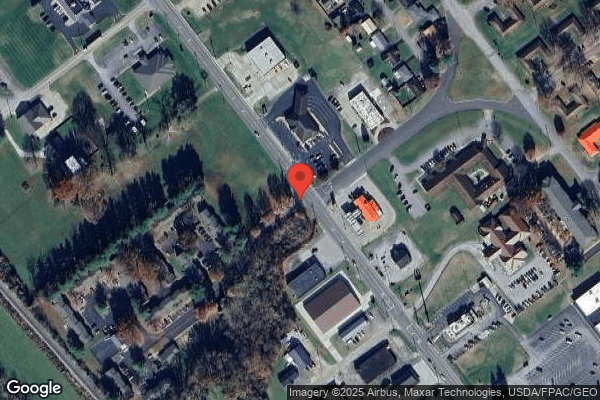
RAVENSWOOD VILLAGE

200 RITCHIE AVENUE, RAVENSWOOD, WV 26164 (304) 273-9385
For profit - Corporation 62 Beds GENESIS HEALTHCARE Data: November 2025
Trust Grade
68/100
#36 of 122 in WV
Last Inspection: March 2025

Within standard 12-15 month inspection cycle. Federal law requires annual inspections.

Overview

Ravenswood Village has a Trust Grade of C+, indicating it is slightly above average but not without concerns. It ranks #36 out of 122 facilities in West Virginia, placing it in the top half, and is the best option in Jackson County. The facility shows an improving trend, reducing issues from 14 in 2023 to 8 in 2025, but still has a notable number of concerns. Staffing is a mixed bag with a 3/5 star rating and a turnover rate of 48%, which is about average. Notably, there is good RN coverage, surpassing 94% of West Virginia facilities, which helps catch potential problems. However, there have been recent incidents that raise concerns. For example, the facility failed to update important resident health screenings after new diagnoses were made, which could impact care. Additionally, there was a failure to keep a janitor's closet locked, exposing residents to potentially hazardous cleaning chemicals. While the overall health inspection rating is good, families should weigh these strengths and weaknesses carefully when considering care for their loved ones.

Trust Score
C+
68/100
In West Virginia
#36/122
Top 29%
Safety Record
Low Risk
No red flags
Inspections
Getting Better
14 → 8 violations
Staff Stability
⚠ Watch
48% turnover. Above average. Higher turnover means staff may not know residents' routines.
Penalties
⚠ Watch
$3,250 in fines. Higher than 78% of West Virginia facilities, suggesting repeated compliance issues.
Skilled Nurses
✓ Good
Each resident gets 54 minutes of Registered Nurse (RN) attention daily — more than average for West Virginia. RNs are trained to catch health problems early.
Violations
⚠ Watch
36 deficiencies on record. Higher than average. Multiple issues found across inspections.
★★★★☆
4.0
Overall Rating
★★★☆☆
3.0
Staff Levels
★★☆☆☆
2.0
Care Quality
★★★★☆
4.0
Inspection Score
Stable
2023: 14 issues
2025: 8 issues

The Good

  • Full Sprinkler Coverage · Fire safety systems throughout facility
  • No fines on record

Facility shows strength in fire safety.

The Bad

Staff Turnover: 48%

Near West Virginia avg (46%)

Higher turnover may affect care consistency

Federal Fines: $3,250

Below median ($33,413)

Minor penalties assessed

Chain: GENESIS HEALTHCARE

Part of a multi-facility chain

Ask about local staffing decisions and management

The Ugly 36 deficiencies on record

Mar 2025 8 deficiencies
CONCERN (D)

Potential for Harm - no one hurt, but risky conditions existed

Comprehensive Assessments (Tag F0636)

Could have caused harm · This affected 1 resident

Based on record review, staff interview, and resident interview, the facility failed to complete an accurate Minimum Data Set (MDS) regarding a diagnosis of Post Traumatic Stress Disorder (PTSD). This...

Read full inspector narrative →
Based on record review, staff interview, and resident interview, the facility failed to complete an accurate Minimum Data Set (MDS) regarding a diagnosis of Post Traumatic Stress Disorder (PTSD). This was found to be true for one (1) of 20 residents sampled in the recertification survey. Resident identifier: #42. Facility census: 58. Findings included: a) Resident #42 During an interview with Resident #42 on 03/24/25 at 2:10 PM, when asked about the care and treatment for PTSD, the resident responded, I do not have that. A review of resident's medical record, provided the following: Resident #42 was admitted with the following diagnoses: Major Depressive Disorder, recurrent, mild 12/9/2024, Post-Traumatic Stress Disorder, chronic 12/9/2024, Delusional Disorders,12/9/2024, Anxiety Disorder, unspecified 4/22/2024 Resident #42's PASARR was completed on 04/08/24, and did not state any diagnoses of depression, PTSD, or anxiety. The PASARR had not been updated at the time of the survey. Physician orders included the following: Trazodone for insomnia as evidenced by (AEB) depression sleeplessness, not socializing. Active 8/23/2024; Risperidone AEB: depression, grabbing, yelling, restlessness Active 12/13/2024; and Buspirone HCl anxiety AEB pacing and nervousness, nerves Active 11/13/2024 The Social Services assessment was last completed on 01/08/25 by the Social Services Director (SSD). The assessment stated, A Social Services Assessment and Documentation UDA was completed today resulting in a (PTSD Checklist - Civilian (PCL-C) score that indicated a PCL-C negative screening for symptoms related to possible PTSD. The MDS was updated the same day (01/08/25). Section 1 - Active Diagnoses was marked for Depression, Psychotic Disorder, and Post Traumatic Stress Disorder. During an interview with the SSD on 03/26/25 at 9:32 AM, when asked about the social services assessment completed on 01/08/25 where note says negative screening for symptoms related to possible PTSD, and comparing to the MDS Section I completed on the same date the SSD stated I must have missed changing that.
CONCERN (D)

Potential for Harm - no one hurt, but risky conditions existed

ADL Care (Tag F0677)

Could have caused harm · This affected 1 resident

**NOTE- TERMS IN BRACKETS HAVE BEEN EDITED TO PROTECT CONFIDENTIALITY** Based on record review and staff interview, the facility failed to provide Activities of Daily Living (ADL) care to dependent re...

Read full inspector narrative →
**NOTE- TERMS IN BRACKETS HAVE BEEN EDITED TO PROTECT CONFIDENTIALITY** Based on record review and staff interview, the facility failed to provide Activities of Daily Living (ADL) care to dependent residents by not providing scheduled showers. This failed practice was found true for two (2) of seven (7) residents reviewed for ADL care during the Long-Term Care Survey Process. Resident identifiers: #210 and #39. Facility census 58. Findings Included: a) Resident #210 During the initial interview on 03/24/25 at 1:07 PM, Resident #210 stated, I have been here for a little over (2) two weeks and I have only had one (1) shower. A review of the shower schedule on 03/25/25 at 9:30 AM, revealed that Resident #210 was scheduled to receive showers on Mondays and Thursdays on the evening shift. A record review on 03/25/25 at 9:46 AM, of the shower task for Resident #210 revealed that the resident should have been given (3) three showers since admission and had only been given (1) one. Further record review of Resident #210's care plan, revealed a care plan for ADL care that reads as follows: Focus: Resident is at risk for decreased ability to perform ADL'S in bathing, grooming, personal hygiene, dressing, eating, bed mobility, transfer, locomotion, and toileting, related to: debility, weakness, and difficulty with ambulation. Goal: Resident will improve their current level of function in: bathing, grooming/personal hygiene, dressing, eating, bed mobility, transfer, locomotion, and toileting by next review as evidenced by improved ADL score. Interventions include: Assist x (1) one with dressing, grooming, personal hygiene, and bathing. During an interview on 03/25/25 at 11:30 AM, The Corporate Registered Nurse (CRN) confirmed that Resident #210 had only had one shower since admission on [DATE]. b) Resident #39 An observation on 03/24/25 at approximately 12:30 PM of Resident #39 showed residents hair to look unkempt and unwashed, and the resident was wearing a shirt that had stains around the neck. Another observation on 03/24/25 at approximately 10:00 AM showed Resident #39 had on the same shirt and hair still looked unkempt and unwashed. A record review completed on 03/24/25 at 1:42 PM revealed Resident #30 only had three (3) showers given in past 30 days with no refusals documented or care planed. Documentation revealed the following; 02/25/25 22:59 Response Not Required 03/03/25 22:59 (check mark under the shower tab) 03/17/25 22:19 (check mark under the shower tab) 03/20/25 22:21 ( check mark under the shower tab) During an interview on 03/25/25 at 11:30 AM, the Corporate Registered Nurse (CRN) confirmed that Resident #39 had only had three (3) showers in the past 30 days.
CONCERN (D)

Potential for Harm - no one hurt, but risky conditions existed

Medical Records (Tag F0842)

Could have caused harm · This affected 1 resident

**NOTE- TERMS IN BRACKETS HAVE BEEN EDITED TO PROTECT CONFIDENTIALITY** Based on record review and staff interview, the facility failed to ensure it had a complete and accurate medical record related ...

Read full inspector narrative →
**NOTE- TERMS IN BRACKETS HAVE BEEN EDITED TO PROTECT CONFIDENTIALITY** Based on record review and staff interview, the facility failed to ensure it had a complete and accurate medical record related to diagnosis of Post Traumatic Stress Syndrome (PTSD). This failed practice was found true for two (2) of six (6) residents reviewed for unnecessary medications and mood/behavior during the Long-Term Care Survey Process. Resident identifiers: #210, and #42. Facility Census 58. Findings Included: a) Resident #210 A record review on 03/25/25 at 10:54 AM, of Resident #210's current diagnosis revealed a diagnosis of Post Traumatic Stress Syndrome (PTSD) on admission. Further record review revealed a PTSD care plan that read as follows: Focus: Resident exhibits or is at risk for distressed/fluctuating mood symptoms related to: Depression, PTSD, Personality Disorder. Goal: Resident will express anxieties/fears to staff through next review. Interventions: Observe for pain and effectiveness of current interventions. Attempt nonpharmacologic interventions. - Administer pain medication as ordered and document effectiveness/side effects. - Observe for signs/symptoms of worsening sadness/depression/ anxiety/fear/anger/agitation. - Observe for worsening signs/symptoms of existing psychiatric disorders (e.g., mania, hypomania, frequent mood changes, etc.). Notify physician/advanced Practice Practitioner as needed. - Encourage resident/patient to seek staff support for distressed mood - Refocus resident/patient to something positive. - Allow time for expression of feelings; provide empathy, encouragement, and reassurance A record review on 03/25/25 at 11:00 AM, revealed the Initial Social Service assessment dated [DATE] is marked No for PTSD. During an interview on 03/25/25 at 11:23 AM, The Licensed Social Worker (LSW), stated, The CRC did his care plan. I must have missed that diagnosis. She confirmed that PTSD was not indicated on Resident #210's initial Social Service assessment. b) Policy A review of the policy on 03/25/25 at 2:30 PM, titled {Social Services Assessment}, Under Purpose, reads as follows: To determine the patient's social, functional, emotional and cognitive status and history of trauma and/ or PTSD. c) Resident #42 A review of Resident #42's medical record found the following (non-exclusive) diagnoses: Major Depressive Disorder, recurrent, mild 12/9/2024, Post-Traumatic Stress Disorder, chronic 12/9/2024, Delusional Disorders,12/9/2024, Anxiety Disorder, unspecified 4/22/2024 A Social Services Assessment was completed on 01/08/25 by the Director of Social Services. The Assessment stated, A Social Services Assessment and Documentation UDA was completed today resulting in a PCL-C score that indicated a PCL-C negative screening for symptoms related to possible PTSD. Resident's medical record diagnoses were never updated to reflect the change in diagnosis as of the date of this survey.
CONCERN (E)

Potential for Harm - no one hurt, but risky conditions existed

PASARR Coordination (Tag F0644)

Could have caused harm · This affected multiple residents

**NOTE- TERMS IN BRACKETS HAVE BEEN EDITED TO PROTECT CONFIDENTIALITY** Based on record review and staff interview, the facility failed to revise the Preadmission Screening and Resident Review (PASARR...

Read full inspector narrative →
**NOTE- TERMS IN BRACKETS HAVE BEEN EDITED TO PROTECT CONFIDENTIALITY** Based on record review and staff interview, the facility failed to revise the Preadmission Screening and Resident Review (PASARR) when residents were diagnosed with a new diagnosis after being admitted to the facility. This was true for three (3) of six (6) PASARRs' reviewed during the Long Term Care Process Survey. Resident Identifiers: #28, #1 and #42. Facility Census: 58. Findings Included: a) Resident #28 On 03/24/25 at 1:48 PM record review shows Resident #28 has a current medical diagnosis of dementia, anxiety, major depressive mood disorder and psychotic disorder with hallucinations. The Psychotic disorder with hallucinations was a new diagnoses after Resident #28 was admitted to the facility. There is an active order for Aripiprazole for targeted behavior(s) as evidenced by (AEB): auditory hallucinations and hears voices. According to the PASARR dated 09/24/24 which was provided by the facility, there is no indication of psychotic disorder with hallucinations on the PASARR. On 03/26/25 at 10:18 AM during an interview with the Social Services Director #34, it was confirmed that the psychotic disorder with hallucinations should be on the PASARR. b) Resident #1 On 03/26/25 at 9:51 AM record review shows Resident #1 had a current medical diagnosis of anxiety, vascular dementia, delusional disorder, major depressive disorder and bipolar. The major depressive disorder and delusional disorder were new diagnoses after Resident #1 was admitted to the facility. According to the PASARR dated 10/18/10 which was provided by the facility, there are no indications of major depressive disorder or delusional disorder on the PASARR. On 03/26/25 at 10:18 AM during an interview with the Social Services Director #34, it was confirmed that the major depressive disorder and delusional disorder should both be on the PASARR. c) Resident #42 Resident's PASARR was completed on 04/08/24, and did not state any diagnoses of depression, Post Traumatic Stress Disorder (PTSD), and anxiety. Resident had a new diagnosis of major depressive order on 12/09/24, Delusional Disorders on 12/09/24, and Anxiety Disorder was present upon admission. The PASARR was not updated with the new diagnoses from 12/09/24. The Social Services Assessment was completed on 01/08/25 by the Director of Social Services. The Assessment stated, A Social Services Assessment and Documentation UDA was completed today resulting in a PCL-C score that indicated a PCL-C negative screening for symptoms related to possible PTSD. The Minimun Data Set (MDS) assessment dated [DATE] Section I Diagnoses had Depression, Psychotic Disorder and Post Traumatic Stress Disorder marked. During an Interview with the Director of Social Services on 03/26/25 at 9:32 AM, when asked about the social services assessment completed on 01/08/25 where note stated negative screening for symptoms related to possible PTSD', and compared to MDS completed on same date with PTSD marked, Social Worker stated I must have missed changing that. During an interview with the Director of Nursing on 03/26/25 at 11:21 AM, the Director of Nursing (DON) acknowledged they missed updating the PASARR.
CONCERN (E)

Potential for Harm - no one hurt, but risky conditions existed

Deficiency F0645 (Tag F0645)

Could have caused harm · This affected multiple residents

Based on record review and staff interview, the facility failed to ensure the Preadmission Screening and Resident Review (PASARR) contained all admitting diagnoses. This was true for three (3) of six ...

Read full inspector narrative →
Based on record review and staff interview, the facility failed to ensure the Preadmission Screening and Resident Review (PASARR) contained all admitting diagnoses. This was true for three (3) of six (6) PASARRs' reviewed during the Long Term Care Process Survey. Resident Identifiers: #28, #14 and #1. Facility Census: 58. Findings Included: a) Resident #28 On 03/24/25 at 1:48 PM record review shows Resident #28 has a current medical diagnoses of dementia, anxiety, major depressive mood disorder and psychotic disorder with hallucinations. According to a list of medical diagnoses present on admission/readmission Resident #28 has a diagnosis of anxiety. According to the PASARR dated 09/24/24 which was provided by the facility, there is no indication of a diagnosis of Anxiety Disorder on the PASARR. On 03/26/25 at 10:18 AM during an interview with the Social Services Director #34, it was confirmed that the anxiety diagnosis should be on the PASARR. b) Resident #14 On 03/26/25 at 9:10 AM a record review shows Resident #14 has a current medical diagnosis of anxiety, bipolar, dementia/Alzheimer's disease. Resident #14 has an active physicians order for Lithium Carbonate Oral Capsule (Lithium Carbonate) for bipolar; Buspirone HCl for generalized anxiety disorder. According to a list of medical diagnoses present on admission/readmission Resident #14 was admitted with a diagnosis of bipolar and anxiety. According to the PASARR dated 03/15/23 which was provided by the facility, there is no indication of a diagnosis of bipolar or anxiety on the PASARR. On 03/26/25 at 9:45 AM during an interview with the Social Services Director #34, confirmed that both bipolar and anxiety should be on the PASARR. c) Resident #1 On 03/26/25 at 9:51 AM record review shows Resident #1 has a current medical diagnosis of anxiety, vascular dementia, delusional disorder, major depressive mood disorder and bipolar. According to a list of medical diagnoses present on admission/readmission both the anxiety disorder and bipolar diagnoses were present upon admission. According to the PASARR dated 10/18/10 which was provided by the facility, there were no indications of anxiety disorder, bipolar or major depressive disorder on the PASARR. On 03/26/25 at 10:18 AM during an interview with the Social Services Director #34 confirmed that anxiety disorder, bipolar or major depressive disorder should be on the PASARR.
CONCERN (E)

Potential for Harm - no one hurt, but risky conditions existed

Accident Prevention (Tag F0689)

Could have caused harm · This affected multiple residents

**NOTE- TERMS IN BRACKETS HAVE BEEN EDITED TO PROTECT CONFIDENTIALITY** . Based on observations, record review and staff interviews, the facility failed to ensure residents were free from accident haz...

Read full inspector narrative →
**NOTE- TERMS IN BRACKETS HAVE BEEN EDITED TO PROTECT CONFIDENTIALITY** . Based on observations, record review and staff interviews, the facility failed to ensure residents were free from accident hazards by not having the janitor's closet locked, and completing smoking evaluations for Resident #17. This failed practice was a random opportunity for discovery and had the potential to affect a minimal number of residents residing in the Long Term Care Facility. Resident Identifier: #17 Facility Census: 58. Findings included: a) Facility janitor closet unlocked On 03/25/25 at 10:20 AM this surveyor observed the janitor's closet door unlocked, this is located at the beginning of Hall 200 across from the nurses station. The following chemicals were on the MSDS Sheet and were stored in the janitor's closet. The sheet listed the following: virex 2-256 disinfectant Stride industrial floor cleaner GP forward industrial cleaner Glance Window cleaner triad 3 Disinfectant cleaner rapid disinfectant Disinfectant cleaner Bio Matic Cleaner [NAME] Dual Action FLoor cleaner Good sense Air Freshener During an interview on 03/25/25 at 10:30 AM with Housekeeper #30 who stated yes the door (janitor's closet) should be locked I must have forgotten and she immediately locked the door. On 03/25/25 at approximately 11:00 AM the Corporate Registered Nurse (CRN) provided the following policy: Manual title Environmental services policies and procedures Policy title EVN103 Environmental Services Safety Procedure under process number 3 states staff will ensure equipment (e.g., cords, ladders, or chemicals) is properly stored and not left unattended in areas that are accessible to patients/residents. When not in use, equipment must be stored in a locking closet, cabinet, or storage area for safety. b) Resident #17 On 03/24/25 at 2:55 PM according to a list provided by the facility, Resident #17 is an active nicotine user by means of smoking cigarettes. On 03/25/25 at 10:00 AM record review shows Resident #17 had a smoking assessment on 03/13/24 and 06/07/24. According to the facility Policy and Procedure OPS137 Smoking: it reads Residents will be assessed on admission, quarterly and with change in conditions for the ability to smoke safely and, if necessary, will be supervised. During an interview on 03/25/25 at 3:03 PM it was confirmed with the Administrator that there should have been an additional smoking assessment in September and December of 2024 and one due in March 2025 at a minimum, depending on any change of condition that may have occurred.
CONCERN (E)

Potential for Harm - no one hurt, but risky conditions existed

Medication Errors (Tag F0758)

Could have caused harm · This affected multiple residents

Based upon record review, staff interviews and policy review, the facility failed to ensure antipsychotic, antidepressant, antianxiety medications ordered by the physician had an appropriate diagnosis...

Read full inspector narrative →
Based upon record review, staff interviews and policy review, the facility failed to ensure antipsychotic, antidepressant, antianxiety medications ordered by the physician had an appropriate diagnosis. This was found to be true in three (3) of five (5) records reviewed during the recertification survey. Resident identifiers: #42, #35, #45. Facility census: 58. Findings included: a) Resident #42 Physician orders were as follows: Trazadone HCl for insomnia as evidenced by (AEB): Depression Sleeplessness, not Socializing. Active 8/23/2024; Risperidone AEB: Depression, Grabbing, Yelling, Restlessness 12/13/2024 ; and Buspirone for anxiety AEB pacing and nervousness nerves 11/13/2024 . Related diagnoses pacing and nervousness nerves. During an interview with Registered Nurse (RN) #26 on 03/25/25 at 2:53 PM, when asked about informed consents for these medication, she stated we dropped the ball and did not get this done. I have completed one just now and sent it out for physician's signature. b) Resident #35 Physician orders: Sertraline AEB: Unhappiness, Loss of Appetite, Poor Grooming, Withdrawn, Crying. Active 2/7/2025 Related diagnoses Unhappiness, Loss of Appetite, Poor Grooming. During an interview on 03/26/25 at 10:26 AM with the Director of Nursing (DON), she stated, We got some new guidelines and I know she has had a lot of physical behaviors so we may have mislabeled that. We just had some training on this, so we must have missed the mark on that. c) Resident #45 A record review on 03/26/25 at 9:18 AM, revealed that Resident #45 was ordered Trazodone oral tablet 100 milligrams (mg) by mouth one time a day, with an order date of 11/22/24. The indication for the usage is listed as agitation as evidenced by yelling and arguing. Under related diagnosis the medication is listed for: Restlessness and agitation. During an interview on 03/26/25 at 10:26 AM, the DON stated, We got some new guidelines and I know she has had a lot of physical behaviors so we may have mislabeled that. We just had some training on this so we must have missed the mark on that one. d) Policy A review of the policy on 03/26/24 at 11:45 AM, titled Medication Regimen Review and Reporting, under Procedures # two (2) reads as follows: The consultant pharmacist reviews the medication regimen and medical chart of each resident at least monthly to appropriately monitor the medication regimen and ensure that the medications each resident receives are clinically indicated .
CONCERN (E) 📢 Someone Reported This

A family member, employee, or ombudsman was alarmed enough to file a formal complaint

Potential for Harm - no one hurt, but risky conditions existed

Deficiency F0804 (Tag F0804)

Could have caused harm · This affected multiple residents

. Based on record review and staff interview, the facility failed to complete the in-room refrigerator temperature logs and to monitor food for proper labeling of the date the food was placed in the r...

Read full inspector narrative →
. Based on record review and staff interview, the facility failed to complete the in-room refrigerator temperature logs and to monitor food for proper labeling of the date the food was placed in the refrigerator as stated in the Policy and Procedure #OPS192 Refrigerators: Patient In-Room. This was true for three (3) of four (4) in room refrigerators observed. Resident identifiers: #28, #17 and #1. Facility Census: #58. Findings Included: a) Resident #28 On 03/24/25 at 1:27 PM observation of the Refrigerator/Freezer Temperature Log form, which was located on the front of Resident #28's in-room refrigerator, found nine (9) out of twenty three (23) days had not had a temperature check. In addition, there was food items in the refrigerator that were opened and not dated. On 03/24/25 at 1:30 PM it was confirmed with Licensed Practical Nurse (LPN) #44 there was a sandwich, two containers of unknown food and various other items in the refrigerator that were not dated. According to Policy OPS192 Refrigerators: Patient In-Room POLICY: Foods may be stored in refrigerators within patient rooms (in-room), at locations where in-room refrigerators are permitted. Food supplied by the patient/responsible party that requires refrigeration must be labeled with the date the food was placed in the refrigerator . Perishable food will be held in the refrigerator for three (3) days following the date on the label and will be discarded by staff upon notification to patient and/or patient representative. PROCESS: .nursing will observe and record temperatures of the refrigerator on a daily basis using the Refrigerator/Freezer Temperature Log. Nursing will monitor food for proper labeling, date food was placed in the refrigerator, Staff will discard food beyond expiration or perishable food held in the refrigerator for three (3) days following date on label upon notification of patient and/or representative. On 03/25/25 at 2:33 PM this was confirmed with the Administrator who agreed the temperatures are to be monitored daily and the food should be labeled with the date it is placed in the refrigerator and discarded after three (3) days. b) Resident #17 On 03/24/25 at 1:27 PM observation of the Refrigerator/Freezer Temperature Log form, which was located on the front of Resident #17's in-room refrigerator, found nine (9) out of twenty three (23) days had not had a temperature check. In addition, there was food items in the refrigerator that were opened and not dated. On 03/24/25 at 1:30 PM it was confirmed with Licensed Practical Nurse #44 there were two (2) opened containers of tarter sauce, a sandwich and various other items in the refrigerator that were not dated. On 03/25/25 at 2:33 PM this was confirmed with the Administrator who agreed the temperatures are to be monitored daily and the food should be labeled with the date it is placed in the refrigerator and discarded after three (3) days. c) Resident #1 On 03/24/25 at 1:27 PM observation of the Refrigerator/Freezer Temperature Log form, which was located on the front of Resident #1's in-room refrigerator, found four (4) out of twenty three (23) days had not had a temperature check. According to Policy OPS192 Refrigerators: Patient In-Room PROCESS: .nursing will observe and record temperatures of the refrigerator on a daily basis using the Refrigerator/Freezer Temperature Log. Resident #1's refrigerator contained nothing but bottles of unopened water. On 03/25/25 at 2:33 PM the Administrator confirmed the temperatures are to be monitored daily.
Mar 2023 14 deficiencies
CONCERN (D)

Potential for Harm - no one hurt, but risky conditions existed

Grievances (Tag F0585)

Could have caused harm · This affected 1 resident

. Based on policy review, record review, and staff interview, the facility failed to make prompt efforts to resolve a grievance/concern and to keep the resident's representative notified of progress t...

Read full inspector narrative →
. Based on policy review, record review, and staff interview, the facility failed to make prompt efforts to resolve a grievance/concern and to keep the resident's representative notified of progress toward resolution. This was true for one (1) of three (3) grievances reviewed during the Long-Term Care Survey Process (LTCSP). Resident identifier: #4. Facility census: 60. Findings Included: a) Policy Review of the facility's Grievance/Concern policy, with a review date of 06/01/22, directs the facility will: -Contact the person filing the grievance/concern to acknowledge receipt -Investigate the grievance/concern -Take corrective actions, if needed -Notify the person filing the grievance of resolution within 72 hours b) Resident #4 During an interview on 03/13/23 at 11:11 AM, Resident #4 stated she was not able to hear very well without her hearing aid. Resident #4's family member was at resident's bedside and reported the hearing aid was lost approximately a week or so ago but had not been found. Mom barely hears anything without it. Review of the Grievance/Concern log, on 03/14/23 at 1:37 PM, revealed the following details: -A Grievance/Concern was completed on 03/07/23 at 12:38 PM, stating, resident's left hearing aid is missing. -Staff who were aware of the Grievance/Concern were listed as Social Worker #12, the Director of Nursing, and the Administrator. During an interview on 03/14/23 at 2:33 PM, Social Worker #12 stated there was no resolution yet to the lost hearing aid. It is unfinished. We generally replace those if it was lost. Social Worker #12 was unable to produce any written verification/documentation that the facility had acted on the grievance in any way prior to Surveyor intervention. .
CONCERN (D)

Potential for Harm - no one hurt, but risky conditions existed

Report Alleged Abuse (Tag F0609)

Could have caused harm · This affected 1 resident

. Based on policy review, record review, and staff interview, the facility failed to ensure an allegation of neglect and a serious bodily injury were reported in a timely manner to the appropriate sta...

Read full inspector narrative →
. Based on policy review, record review, and staff interview, the facility failed to ensure an allegation of neglect and a serious bodily injury were reported in a timely manner to the appropriate state agencies. The failure to make a timely report was true for one (1) of three (3) sampled residents with neglect concerns reviewed under reportables during the Long-Term Care Survey Process. Resident identifiers: #27 and #19. Facility census: 60. Findings included: a) Policy Review of the facility's Abuse Prohibition policy, with a review date of 10/24/22, states immediately upon receiving information concerning a report of suspected or alleged neglect the facility will report allegations to the appropriate state and local authorities within 24 hours. Additionally, the policy states the facility will report within two (2) hours any event which results in serious bodily injury. b) Resident # 27 A review of reportables from October 2022 - March 2023, completed on 03/14/23 at 11:30 AM, revealed the facility had three (3) reportables related to allegations of neglect. An allegation of neglect, made on 01/15/23, revealed Resident #27 . was found in wet cloths/brief with a full wet bed when the next shift came on duty. The facility did not ensure the Immediate Fax Reporting of Allegations form was successfully sent to the Nurse Aide Registry, failing to note the error message on the fax confirmation page. Additionally, the facility failed to report to Adult Protective Services, per state guidelines. During an interview on 03/14/23 12:10 PM, Social Worker #12 confirmed the facility could not produce evidence the appropriate state agencies were notified. It was a weekend and the nurse on duty was responsible for faxing the Immediate Fax Reporting of Allegations form to the two (2) agencies. I did not realize it was not done. c) Resident #19 A review of Resident #19's medical record on 03/15/23 at 9:00 am found Resident #19 suffered an unwitnessed fall on 02/25/23. Further review of the record found the resident was sent to the emergency room and received seven (7) staples to her scalp. At 11:00 am the Director of Nursing (DON) was asked if this incident was reported to required state agencies. At 11:30 am the DON stated, We did not report this, but we are working on reporting it right now. .
CONCERN (D)

Potential for Harm - no one hurt, but risky conditions existed

Assessment Accuracy (Tag F0641)

Could have caused harm · This affected 1 resident

**NOTE- TERMS IN BRACKETS HAVE BEEN EDITED TO PROTECT CONFIDENTIALITY** . b) Resident #54 A medical record review, completed on 03/14/23 at 7:30 PM, revealed the following: -Resident #54 began receiv...

Read full inspector narrative →
**NOTE- TERMS IN BRACKETS HAVE BEEN EDITED TO PROTECT CONFIDENTIALITY** . b) Resident #54 A medical record review, completed on 03/14/23 at 7:30 PM, revealed the following: -Resident #54 began receiving Hospice/End of Life services on 12/11/22. -Section O of the Significant Change Minimum Data Set (MDS), dated [DATE], titled Special Treatments, Procedures, and Programs failed to identify Resident #54 was receiving Hospice care. -Section O of the Significant Change MDS, dated [DATE], also failed to identify identify Resident #54 was receiving Hospice care. During an interview on 03/15/23 at 9:30 PM, MDS Nurse #15 reported she had had erroneously failed to capture Hospice services for Resident #54 on the two (2) above-mentioned MDS dates. Based on record review and staff interview the facility failed to ensure resident Minimum data sets were completed and accurately reflected the residents status. Resident #35 had three (3) MDS assessments which were in accurate under section (N) medications. Also for Resident #35 the nutritional Care Area Assessment (CAA) for nutritional status was not fully complete. For Resident #54 the facility failed to complete an accurate MDS in regards to the residents hospice status. This was true for two (2) of 19 sampled residents reviewed during the Long Term Care Survey Process. Resident Identifiers: #35 and #54. Facility Census: 60. Findings Included: A) Resident #35 1) Medications A review of Resident #35's medical record at 7:30 am on 03/15/23 found three (3) MDS with the following assessment reference dates 10/03/22, 01/03/23, and 03/03/23. Review of all three (3) assessments found the following answers to Section N0450. Antipsychotic Medication Review: . B. Has a gradual dose reduction (GDR) been attempted? All three (3) MDSs indicated a GDR had not been attempted. Further review of the record found Resident #35 takes Seroquel 25 mg at night. This dosage was started on 08/01/22 following a pharmacy recommendation to reduce the medication to this dosage from the previous does of 25 mg twice a day. This GDR recommendation was accepted by the attending physician on 07/28/22 and was implemented on 08/01/22. An interview with the Registered Nurse Assessment Coordinator (RNAC) at 8:30 am on 03/15/23 confirmed all three (3) MDS assessments were coded incorrectly and Resident #35 has had a GDR of her antipsychotic medications. 2) Nutritional CAA completion A review of Resident #35's medical record on 03/15/23 at 7:30 am found Resident #35 lost from 112 pounds on 02/14/23 to 102 pounds on 03/03/23. A further review of the medical record found a Minimum Data Set (MDS) with and Assessment Reference Date (ARD) of 03/03/23. This MDS captured the fact Resident #335 experienced a significant weight loss. Because of the significant weight lost this Significant Change MDS triggered a Nutritional Status CAA. The medical record indicates this CAA was completed by the Certified Dietary Manager (CDM) further review of the CAA found the following areas were not answered and/or completed: -- Analysis of Findings. The CAA did not indicate if it is an Actual or Potential problem and did not explain the nature of the problem or the condition. -- Care Plan Consideration. The CAA did indicate the facility would proceed with the care plan. However the CAA did not answer the following question, If Care planning for this problem, what is the overall objective. In addition the section titled, Describe impact of this problem/need on the resident and your rationale for care plan decision. was also left blank. An interview with the CDM at 9:30 am confirmed she ha been responsible for completing the Nutritional Status CAA. She indicated she had only been doing them for about 30 days. She reviewed the Nutritional Status CAA for Resident #35's Significant Change MDS with an ARD of 03/03/23 and confirmed it was not complete. She stated, I always answer those areas it must not have saved my answers. .
CONCERN (D)

Potential for Harm - no one hurt, but risky conditions existed

Comprehensive Care Plan (Tag F0656)

Could have caused harm · This affected 1 resident

. Based on observation, record review and staff interview the facility failed to ensure Resident #19's care plan was implemented in the area of falls. This was true for one (1) of 19 sampled residents...

Read full inspector narrative →
. Based on observation, record review and staff interview the facility failed to ensure Resident #19's care plan was implemented in the area of falls. This was true for one (1) of 19 sampled residents. Resident Identifiers: #19. Facility Census: 60. Findings included: a) Resident #19 A review of Resident #19's medical record at 8:00 am on 03/15/23 found the following care plan focus statement: (First name of Resident #19) is at risk for falls and actual falls related to cognitive loss, lack of safety awareness, muscle weakness, and unsteadiness on feet The goal associated with this focus statement read as follows: (First name of Resident #19) will have no falls with no major injury through next review. The care plan contained the following intervention: Yellow tape to call light along with yellow laminated sign Please use call bell and wait for help placed in room to assist with visual cuing and promote safety awareness Observation of Resident #19's room with the Director of Nursing (DON) on 03/15/23 at 11:30 am found there was no a yellow laminated sign reading, please use call bell and wait for help in the resident room. Also the resident's call light was not accessible to the resident who was sitting beside her bed in her wheelchair. The call light cord was on the floor behind the resident's bed. The DON had to slightly move the residents bed to get the call light out from under the bed. .
CONCERN (D)

Potential for Harm - no one hurt, but risky conditions existed

Quality of Care (Tag F0684)

Could have caused harm · This affected 1 resident

. b) Resident Identifier #38 During electronic record review a consultation from MediTelecare was located under the documents section. This consultation was titled Med Management Note and dated 02/22/...

Read full inspector narrative →
. b) Resident Identifier #38 During electronic record review a consultation from MediTelecare was located under the documents section. This consultation was titled Med Management Note and dated 02/22/2023. The Advanced Practice Registered Nurse (APRN) wrote the following on this document: RECOMMENDATIONS/ORDERS, LABS, +FOLLOW-UP Medication Recommendations: Recommend EKG (electrocardiogram) to ensure medications are no leading to arrhythmias or QTc (corrected for heart rate) prolongation. Also consider reducing daytime dose of trazodone to 25mg (milligrams) PO (per oral) BID (bis in die). Under the progress notes section of the resident's electronic medical record, Registered Nurse (RN) #8 documented on 02/24/2023 at 10:14 AM, (Name of Facility's Medical Director) reviewed Meditelecare recommendations and in agreement to reduce Trazodone dosage to 25 mg BID. To continue all other psychotropic medications as previously prescribed. Surrogate informed via voice mail. There is no mention of an EKG in the note. Record review indicated there was not an order for the an EKG. On 03/14/2023 at 10:30 AM, an interview with the Director of Nursing (DON) confirmed that an EKG was not ordered but that the Medical Director had agreed with the Trazodone reduction and a new order was obtained. On 03/14/2023 at 10:50 AM, the DON confirmed that there was not any documentation that indicated whether or not the Medical Director wanted to order an EKG. The DON stated that they are calling the doctor to see if he wants the EKG or not. The surveyor located a new, verbal order from the Medical Director, dated 03/14/2023 at 12:25 PM, to obtain EKG through Mobile imaging services for antistrophic drug use. The facility failed to follow recommendations from 02/22/2023 until surveyor intervention on 03/14/2023. Based on observation, staff interview and record review the facility failed to ensure Resident #31's neurological assessments were completed when there was bruise discovered to her right outer eye. In addition Resident #38 had a recommendation from a medical specialist which was not addressed with the attending physician and was not completed prior to surveyor intervention. This was true for two (2) for 19 sampled residents reviewed during the long term care survey process. Resident Identifiers: #31 and #38. Facility census: 60. Findings included: a) Resident #31 An observation at Resident #31 on 03/13/23 at 2:53 PM found the resident had a bruise to the outside of her right eye. A review of her medical record found a change in condition dated 03/12/23 at 6:30 PM. The change in condition form indicated that neurological checks would be initiated. Further review of the record found no indication the neurological assessments were completed. An interview with Director of Nursing (DON) at 12:21 PM on 03/14/23, confirmed the neurological assessments were not completed. .
CONCERN (D)

Potential for Harm - no one hurt, but risky conditions existed

Deficiency F0685 (Tag F0685)

Could have caused harm · This affected 1 resident

. Based on resident/family interview, record review, and staff interview, the facility failed to assist a resident/resident representative in locating resources, as well as in making appointments, and...

Read full inspector narrative →
. Based on resident/family interview, record review, and staff interview, the facility failed to assist a resident/resident representative in locating resources, as well as in making appointments, and arranging for transportation to replace a lost hearing aid. This was true for one (1) out of three (3) residents reviewed for grievances. Resident identifier #4. Facility census: 60. Findings included: a) Resident #4 During an interview on 03/13/23 at 11:11 AM, Resident #4 stated she was not able to hear very well without her hearing aid. Resident #4's family member was at resident's bedside and reported the hearing aid was lost approximately a week or so ago but had not been found. Mom barely hears anything without it. Review of the Grievance/Concern log, on 03/14/23 at 1:37 PM, revealed the following details: -A Grievance/Concern was completed on 03/07/23 at 12:38 PM, stating, resident's left hearing aid is missing. -Staff who were aware of the Grievance/Concern were listed as Social Worker #12, the Director of Nursing, and the Administrator. During an interview on 03/14/23 at 2:33 PM, Social Worker #12 stated there was no resolution yet to the lost hearing aid. It is unfinished. We generally replace those if it was lost. Social Worker #12 was unable to produce any written verification/documentation that the facility had acted on the grievance in any way prior to Surveyor intervention and had not spoken to the resident representative to assist in making an appointment or arranging for transportation to replace the lost hearing aid. .
CONCERN (D)

Potential for Harm - no one hurt, but risky conditions existed

Accident Prevention (Tag F0689)

Could have caused harm · This affected 1 resident

. Based on observation, record review and staff interview the facility failed to ensure Resident #19's fall interventions were implemented; therefore, her environment was not as free from accident haz...

Read full inspector narrative →
. Based on observation, record review and staff interview the facility failed to ensure Resident #19's fall interventions were implemented; therefore, her environment was not as free from accident hazards as possible. This was true for one (1) of two (2) residents reviewed for the care area of accidents during the long term care survey. Resident Identifiers: #19. Facility Census: 60. Findings included: a) Resident #19 A review of Resident #19's medical record at 8:00 am on 03/15/23 found the following care plan focus statement: (First name of Resident #19) is at risk for falls and actual falls related to cognitive loss, lack of safety awareness, muscle weakness, and unsteadiness on feet The goal associated with this focus statement read as follows: (First name of Resident #19) will have no falls with no major injury through next review. The care plan contained the following intervention: Yellow tape to call light along with yellow laminated sign Please use call bell and wait for help placed in room to assist with visual cuing and promote safety awareness Observation of Resident #19's room with the Director of Nursing (DON) on 03/15/23 at 11:30 am found there was no a yellow laminated sign reading, please use call bell and wait for help in the resident room. Also the resident's call light was not accessible to the resident who was sitting beside her bed in her wheelchair. The call light cord was on the floor behind the resident bed. The DON had to slightly move the resident's bed to get the call light out from under the bed. .
CONCERN (D)

Potential for Harm - no one hurt, but risky conditions existed

Deficiency F0692 (Tag F0692)

Could have caused harm · This affected 1 resident

. Based on record review and staff interview the facility failed to ensure Resident #35 maintained acceptable parameters of nutrition. Resident #35 had abnormal lab values. In response to the lab valu...

Read full inspector narrative →
. Based on record review and staff interview the facility failed to ensure Resident #35 maintained acceptable parameters of nutrition. Resident #35 had abnormal lab values. In response to the lab values the physician ordered a low potassium diet. This order was never implemented by facility staff. This was true for one (1) of five (5) residents reviewed for the care area of nutrition during the long term care survey process. Resident Identifier: #35. Facility Census: 60. Findings Included: a) Resident #35 A review of Resident #35's medical record found a Comprehensive Metabolic Panel (CMP) dated 06/07/22 which indicated the residents potassium level was high at 4.7. A further review of the record found a nurses note dated 06/08/22 written at 12:04 PM which read as follows: Physician Notified (list name,date,time of notification): (Name of attending physician) 6/8/2022 Labs Reviewed (list labs): CMP Physician Response/Other Action Taken/Resident Representative notified if applicable: low potassium diet. Further review of the record found no indication the low potassium diet recommended by the physician was ever implemented. An interview with the Director of Nursing at 11:06 am on 03/15/23 confirmed the facility never implemented the low potassium diet as ordered by the physician. .
CONCERN (D)

Potential for Harm - no one hurt, but risky conditions existed

Staffing Information (Tag F0732)

Could have caused harm · This affected 1 resident

. Based on observation and staff interview, the facility failed to post the nurse staffing data on a daily basis at the beginning of each shift. This was a random opportunity for discovery and had the...

Read full inspector narrative →
. Based on observation and staff interview, the facility failed to post the nurse staffing data on a daily basis at the beginning of each shift. This was a random opportunity for discovery and had the potential to affect a limited number of residents and visitors wishing to view the information. Facility census: 60. Findings included: a) Staff posting Review of the facility's staff posting on 03/14/23 at 7:40 AM, found the previous day's nurse staffing on display. Receptionist #3 confirmed the nurse staff posting for 03/14/23 was not posted upon Surveyor entrance to the building. During an interview, on 03/14/23 at 9:40 PM, the Administrator acknowledged the facility's failure to have the current nurse staffing posted at the beginning of the morning shift. .
CONCERN (D)

Potential for Harm - no one hurt, but risky conditions existed

Medical Records (Tag F0842)

Could have caused harm · This affected 1 resident

. Based on record review and staff interview, the facility failed to maintain an accurate medical record for one (1) of 19 sampled residents reviewed in the Long-Term Care Survey process. The facility...

Read full inspector narrative →
. Based on record review and staff interview, the facility failed to maintain an accurate medical record for one (1) of 19 sampled residents reviewed in the Long-Term Care Survey process. The facility failed to update a resident Physician Orders for Scope of Treatment (POST) form to reflect the name and contact number of the Hospice agency providing services to resident. Resident identifier: #54. Facility census: 60. Findings included: a) Resident #54 A brief record review, completed on 03/13/23 at 1:49 PM, identified the following details: -Resident #54 had a Physician Orders for Scope of Treatment (POST) form on file. The facility had obtained consent from Resident #54's Health Care Surrogate (HCS) on 12/05/22. Social Worker #12 assisted with the completion of the form. -Resident #54 began to receive hospice services on 12/11/22. -A care plan conference was held on 12/15/22. The POST form was not updated at that time to reflect Resident #54 was receiving Hospice services or the name and contact number of the Hospice agency. The 2021 POST Form Guidance instructs, this form should be reviewed whenever the patient: -Is transferred from one level of care to another -Has a substantial change in health status During an interview on 03/14/23 at 10:28 AM, Social Worker #12 stated it was standard protocol to review the POST form for any changes/updates during each care plan conference. Social Worker #12 reported it was an error that the form was not updated during the last care plan conference on 12/15/22. .
CONCERN (D)

Potential for Harm - no one hurt, but risky conditions existed

Infection Control (Tag F0880)

Could have caused harm · This affected 1 resident

. Based on observation and staff interview, the facility failed to establish and maintain an infection prevention and control program designed to provide a safe, sanitary and comfortable environment a...

Read full inspector narrative →
. Based on observation and staff interview, the facility failed to establish and maintain an infection prevention and control program designed to provide a safe, sanitary and comfortable environment and to help prevent the development and transmission of communicable diseases and infections. A nurse failed to use a barrier during medication pass and staff failed to change their gloves and sanitize their hands after incontinence care. This was a random opportunity for discovery and has the potential to affect a limited number of residents. Resident identifier: 16 and 55. Facility census: 60. Findings include: a) Medication administration During an observation of medication administration on 03/14/23 at 8:16 AM, Licensed Practical Nurse (LPN) #17 placed three eye drop containers in the original boxes on Resident (R) #55's bedside table without a barrier. R#55 picked up one bottle at a time, removed the bottle from the box and placed the cap on the bedside table while administering each eye drop. R#55 replaced the cap and put each bottle back into it's box after each administration. LPN #17 returned the three eye drop containers in their boxes to the medication cart without any attempts to clean or sanitize. LPN#17 was interviewed immediately after this observation. She acknowledged she did not utilize a barrier to prevent contamination of the eye drop containers. b) Incontinence care On 03/14/23 at 2:20 PM, the Assistant Director of Nursing (ADON) and LPN #17 were observed performing incontinence care after completing wound care on R#16. LPN #117 and the ADON placed a clean brief under the resident's left hip. LPN #117 cleaned the peri area with wet wipes and pulled the brief up over genital area. Staff turned the resident to his left, removed the wet brief and secured the clean brief in place. Without removing their contaminated gloves, staff repositioned R#16 up in bed, placed pillows under both arms, straightened his gown and bed sheet, and repositioned his breath call light. During an interview immediately after this observation, both the ADON and LPN #17 agreed they should have removed the contaminated gloves and cleaned or sanitized their hands before repositioning the resident after care. .
CONCERN (D)

Potential for Harm - no one hurt, but risky conditions existed

Safe Environment (Tag F0921)

Could have caused harm · This affected 1 resident

. Based on observations and staff interview, the facility failed to maintain the walls in the residents' rooms. This was a random opportunity for discovery. Rooms identifiers: 301, 302, and 307. Facil...

Read full inspector narrative →
. Based on observations and staff interview, the facility failed to maintain the walls in the residents' rooms. This was a random opportunity for discovery. Rooms identifiers: 301, 302, and 307. Facility census: 60. Findings include: a) On 03/13/23, observations on the first day of the survey revealed the following concerns in residents' rooms. --301 multiple areas where paint was off the wall and dry wall was exposed. Trim broken, cracked and hanging off the edge of the wallboard at the head of the bed. --302 several holes in the drywall, trim ripped above resident's bed and hanging outward --307 paint missing off the wall and trim cracked and hanging out over the first resident's head of bed On 03/15/23 at 8:36 AM, a tour with the Maintenance Director confirmed the drywall was exposed where the paint was missing in all three rooms, the holes in the walls and the trim above the headboards needed repaired. .
CONCERN (E)

Potential for Harm - no one hurt, but risky conditions existed

Deficiency F0725 (Tag F0725)

Could have caused harm · This affected multiple residents

. d) Review of the Payroll Based Journal (PBJ) Data Report Review of the PBJ Staffing Data Report, for Fiscal Year Quarter 1 2023 (October 1, 2022 - December 31, 2022), revealed the facility triggered...

Read full inspector narrative →
. d) Review of the Payroll Based Journal (PBJ) Data Report Review of the PBJ Staffing Data Report, for Fiscal Year Quarter 1 2023 (October 1, 2022 - December 31, 2022), revealed the facility triggered for excessively low weekend staffing. During an interview, on 03/15/23 at 10:10 AM, the Administrator reported there had been issues with especially with nighttime weekend staffing and it had been necessary at times to have a licensed nurse work as a Nurse Aide or for key administrative personnel to cover the Nurse Aide duties in order to meet resident needs. The Administrator further explained when key administrative personnel have come in to cover those shifts it does not pull over to the clock-in / clock-out hours because those staff members are salaried. e) Resident and Resident Representative Interviews During Anonymous Resident Interview #1, on 03/13/23 at 11:51 AM, the resident reported, The facility does not have enough staff to provide adequate resident care. I have needed to wait hours for care concerns to be addressed. Also, my food is not hot when I am fed. The building simply does not have enough help. I have had to wait a week for a shower. My shower days are usually Tuesdays and Fridays. I have needed to wait from Tuesday to Tuesday and I have been told it's due to lack of staff. During Anonymous Resident Representative Interview #11, on 03/13/23 at 11:15 AM, the family member stated family visits the resident for a few hours every day and You can definitely tell on weekends there are fewer people working. Things take much longer, and the staff are running around trying to get it all done. During Anonymous Resident Representative Interview #15, on 03/13/23 at 3:11 PM, the family member stated, I have personally been in the building and know my loved one has waited over an hour to get care needs addressed when the call light has been put on. f) Review of the Facility Assessment Review on the facility assessment, on 03/15/23 at 10:10 AM, revealed the need for two (2) nurses and three (3) Nurse Aides for the 11:00 PM - 7:00 AM night sift. g) Review of Random Weekend Staffing Review of twelve random weekend days throughout the October 1, 2022 - December 31, 2022, timeframe revealed two (2) times where the facility failed to meet the three (3) Nurse Aides working for the 11:00 PM - 7:00 AM night shift. -On Sunday, November 27, 2022, the Daily Time Detail by Department report reflected there were only two (2) Nurse Aides working on the 11:00 PM - 7:00 AM night shift. During an interview, on 03/15/23 at 11:00 AM, the Administrator produced the Daily Staffing Sheet for November 27, 2022, which reflected she came in to assist with duties that night. The Administrator confirmed she did not have a nursing background and that the hours she worked would not technically count as direct care hours. -On Saturday, December 31, 2022, the Daily Time Detail by Department report reflected there were only two (2) Nurse Aides working on the 11:00 PM - 7:00 AM night shift. During an interview, on 03/15/23 at 11:01 AM, the Administrator produced the Daily Staffing Sheet for December 31, 2022, which had three (3) Nurse Aides on the schedule that night. There was no clock-in / clock-out hours produced for NA #58. The Daily Staffing Sheet for December 31, 2022 did not reflect anyone from Administration came in that night to assist with duties. Based on resident and family interview, facility record review and staff interview, the facility failed to ensure there is sufficient qualified staff available at all times to meet the needs of the residents. This practice has the potential to affect more than a limited number of residents. Facility census: 60. Findings include: a) Resident #113 and family/Power of Attorney (POA) interviews On 03/13/23 at 2:17 PM, R#113 and his POA/significant other reported short staffing on the night shift. R#113 stated he was unable to get assistance with hygiene care after an incontinence event and had to call his POA at home for assistance at 3:00 AM on either the 9th or 10th of this month. The POA acknowledged she came into the facility after the call to clean and change R#113's brief. b) Staff interviews On 03/14/23 at 3:17 PM, Nursing Assistant (NA) #58 reported the facility's urinary toileting program is to check and change the resident every two hours. NA #58 stated It takes a minimum of ten minutes to change a resident with urinary incontinence. Longer if they are assisted to the restroom or have a bowel movement. At 3:19 PM on 03/14/23, NA #79 acknowledged the facility's toileting program is to check and change the incontinent residents every two hours. NA #79 added it takes her no less than ten minutes to clean and change a resident with urinary incontinence. It takes at least 15 minutes if the resident has a bowel movement. On 03/15/23 at 8:45 AM, Licensed Practical Nurse (LPN) #2 acknowledged the facility currently has a large percentage of residents requiring a higher acuity of care for the number of staff available. Several of the residents require assistance with eating which takes an average of 15-20 minutes to feed one resident. In addition, R#12 and R#45 each take a half hour to feed each meal. This ties up two nursing assistants during meal service. c) Centers For Medicare & Medicaid (CMS) form 672 The CMS 672 form notes the facility currently has 60 residents. The Activities of Daily Living (ADL) section notes the following: Of the 60 residents 22 require the assistance of one to two staff for eating and eight are totally dependent on staff for nutrition. Of the 60 residents seven are able to toilet independently, 32 require the assistance of one or two for toileting and eight are totally dependent on staff for care. The daily staff postings dated 02/12/23 through 03/13/23 note night shift is staffed with three nursing assistants for 22.50 staffing hours, one Registered Nurse (RN) for 7.5 hours and one Licensed Practical Nurse (LPN) for 7.5 hours. The total nurse aide staffing hours for an eight hour night shift is 22.5 for an average census of 60 residents. **According to the CMS 672, 53 of the 60 residents residing in the facility require assistance with toileting. Checking and changing these 53 residents every two hours for a minimum of 10 minutes each equals 35.33 hours of patient care in an eight hour shift. .
CONCERN (E)

Potential for Harm - no one hurt, but risky conditions existed

Deficiency F0804 (Tag F0804)

Could have caused harm · This affected multiple residents

. Based on observation and staff interview, the facility failed to provide food at a safe and appetizing temperature. This had the potential to affect more than a limited number of residents. Resident...

Read full inspector narrative →
. Based on observation and staff interview, the facility failed to provide food at a safe and appetizing temperature. This had the potential to affect more than a limited number of residents. Resident identifiers: #49, #16, #40, #4, #32 and #36. Facility census: 60. Findings included: a) 200 Hall Lunch Time Meal Observation During an observation on 03/13/23 at 12:23 PM, it was noted that a food truck was brought out of the kitchen with all resident lunch trays for residents on the 200 hall who preferred to eat in their rooms. Staff members began to deliver the trays to resident rooms at 1:52 PM, 29 minutes later. On 03/13/23 at 1:00 PM, the Certified Dietary Manager (CDM) tested the temperature of Resident #49's lunch tray, the last tray to be served on the 200 Hall, with the following results: -Puree Chicken: 99.0 degrees Fahrenheit (F) -Puree Hash [NAME] Casserole: 116.9 degrees F -Puree Broccoli Florets: 106.7 degrees F -Fortified Pudding: 50.7 degrees F -Puree Homemade Dutch Apple Pie: 57.8 degrees F The CDM agreed the food temperatures obtained were not considered to be the appropriate desired temperature for the point of service. The CDM stated temps should be 120 degrees F for all hot food and 40 degrees F or below for cold foods. The CDM identified there was an issue with the hot food temperatures being too low and the cold foods being too warm at the point of service. b) 200 Hall Breakfast Meal Observation During an observation on 03/14/23 at 8:15 AM, it was noted that a food truck was brought out of the kitchen with all resident lunch trays for residents on the 200 hall who preferred to eat in their rooms. Staff members began to deliver the trays to resident rooms at 8:35 PM, 20 minutes later. On 03/14/23 at 8:50 AM, the CDM tested the temperature of Resident #49's breakfast tray, the last tray to be served on the 200 Hall, with the following results: -Puree Scrambled Eggs: 93.5 degrees F -Oatmeal: 111.2 degrees F The CDM identified the temperatures did not meet the desired temperature at the point of service. c) 200 Hall Breakfast Meal Observation on 03/15/23 During an observation on 03/15/23 at 7:55 AM, the food cart was already delivered to the hall. Staff members began to deliver the trays to resident rooms at 8:33 AM, 38 minutes later. On 03/15/23 at 8:51 AM, Resident #16's tray was pulled from the food cart to be served. The CDM tested the temperature of the tray which included two bowls of puree eggs with the following results: -First bowl of puree eggs: 104.3 degrees F -Second bowl of puree eggs: 107.0 degrees F. The CDM identified the temperatures did not meet the desired temperature at the point of service and reported to the Certified Nurse Aide she would need to prepare new food in the kitchen before resident could be served. Additionally, there were three remaining trays on the cart yet to be served. The CDM identified the fact that all three residents required staff assistance for eating. Those residents were Resident #40, Resident #4, and Resident #32. d) 100 hall noontime meal on 03/14/23 Observation of the noon time meal on 03/14/23 beginning at 12:12 pm found the meal cart was sitting on the 100 hall and the meal was not being served to the residents. The facility staff did not start serving the meal until 12:24 on 03/14/23. The next to the last tray was not served until 12:46 pm on 03/14/23. The Certified Dietary Manager (CDM) was asked to take the temperature of the last tray to be served. This tray belonged to Resident #36 who receives a pureed diet. The following temperatures were obtained by the CDM using facility equipment at 12:49 pm on 03/13/23: -- Pureed broccoli was 109.8 Fahrenheit (F) -- Mashed potatoes 106.5 F -- Pureed Chicken 95.1 F and -- Pureed Apple Pie 57.7 F The CDM stated the broccoli, potatoes and chicken should have all been at least 135 degrees F. She stated the apple needed to be at or below 50 degrees. She agreed none of the temperatures were appropriate at the time of service. .
Jan 2022 14 deficiencies
CONCERN (D)

Potential for Harm - no one hurt, but risky conditions existed

Deficiency F0557 (Tag F0557)

Could have caused harm · This affected 1 resident

. Based on observation, facility policy review and staff interview the facility failed to maintain the Resident #53's dignity by not pulling the curtain during a dressing change. This was a random opp...

Read full inspector narrative →
. Based on observation, facility policy review and staff interview the facility failed to maintain the Resident #53's dignity by not pulling the curtain during a dressing change. This was a random opportunity for discovery . Resident Identifier # 53 Facility Census: 56. Findings Included: a) Resident #53 A review of the the Facility Policy titled: Wound Dressings: Aseptic No Touch with an effective date of 06/01/96 with a review date: 12/01/21, and a revision date: 12/01/21 found the following: . 7 explain the procedure and provide privacy. On 01/26/22 at 10:35 AM , the Assistant Director of Nursing (ADON) was observed providing wound care to Resident #53's wound on his buttocks. The ADON proceeded to address Resident #53 and explained the procedure. The ADON at this time undressed Resident #53 leaving the curtain open and Resident #53 vulnerable to the view of anyone entering the room. As the ADON removed Resident #53's brief he stated Resident must have lost old dressing in brief, as there was not a dressing covering the wound. On 01/26/22 at 11:26 AM, The DON acknowledged that the curtain should have been drawn during the dressing change to provide privacy. .
CONCERN (D)

Potential for Harm - no one hurt, but risky conditions existed

Deficiency F0578 (Tag F0578)

Could have caused harm · This affected 1 resident

. Based on record review and staff interview, the facility failed to ensure three (3) of 18 residents reviewed during the long-term care survey process had a Physician Orders for Scope of Treatment (P...

Read full inspector narrative →
. Based on record review and staff interview, the facility failed to ensure three (3) of 18 residents reviewed during the long-term care survey process had a Physician Orders for Scope of Treatment (POST) form completed per directions specified by the [NAME] Virginia Center for End-of-Life Care in conjunction with the [NAME] Virginia Health Care Decisions Act (16-30-1). Resident identifiers: #19, #50, and #51. Facility Census: 56. Findings included: a) Resident #19 A medical record review, completed on 01/24/22 at 2:00 PM, found there was a signed POST form on file. The POST form was signed and dated by Resident #19 on 09/16/20. Section E of Resident #19's POST form did not list the telephone number of Resident #19's Medical Power of Attorney (MPOA). The guidance for completing the POST form, compiled by the [NAME] Virginia Center for End-of-Life, states the name, address, and phone number of the person legally authorized to make healthcare decisions [should the resident be incapacitated] are to be listed on the lines marked Name/Address/Phone. A Physician Determination of Capacity, dated 01/13/22, reflected that Resident #19 no longer had capacity to make her own medical decisions. During an interview on 01/25/22 at 1:35 PM, the Administrator acknowledged the Section E was not completed in its entirety as it did not list the telephone number of Resident #19's MPOA. The Administrator reported the facility would address the oversight. b) Resident #50 A medical record review, completed on 01/25/22 at 9:03 AM, found there was a signed POST form on file. The POST form was signed and dated by Resident #50's Health Care Surrogate (HCS) on 05/21/19. Section E of Resident #50's POST form did not correctly designate the emergency contact as Resident #50's Health Care Surrogate (HCS). During an interview on 01/25/22 at 1:32 PM, the Administrator acknowledged the Section E was not properly completed as it did not identify Resident #50's emergency contact as the Health Care Surrogate (HCS). The Administrator reported the facility would address the oversight. c) Resident #51 A medical record review, completed on 01/25/22 at 8:55 AM, found there was a signed POST form on file. The POST form was signed and dated by Resident #51 on 10/10/21. Section E of Resident #'51's POST form was left blank. In 2002, the POST form was incorporated into the [NAME] Virginia Health Care Decisions Act, which was enacted to ensure a patient's right to communicate healthcare decisions. (16-30-2). Further record review revealed there was a copy of Resident #51's Medical Power of Attorney (MPOA) paperwork, dated 09/05/09, which listed the resident's choice of MPOA. The guidance for completing the POST form, compiled by the [NAME] Virginia Center for End-of-Life, states the name, address, and phone number of the person legally authorized to make healthcare decisions [should the resident be incapacitated] are to be listed on the lines marked Name/Address/Phone. During an interview on 01/25/22 at 1:28 PM, the Administrator acknowledged the Section E was not completed and failed to provide any information regarding Resident #51's MPOA's name, address, and phone number. The Administrator reported the facility would address the oversight. .
CONCERN (D)

Potential for Harm - no one hurt, but risky conditions existed

Assessment Accuracy (Tag F0641)

Could have caused harm · This affected 1 resident

**NOTE- TERMS IN BRACKETS HAVE BEEN EDITED TO PROTECT CONFIDENTIALITY** . Based on record review, resident and staff interview, the facility failed to ensure one (1) of eighteen (18) sampled residents...

Read full inspector narrative →
**NOTE- TERMS IN BRACKETS HAVE BEEN EDITED TO PROTECT CONFIDENTIALITY** . Based on record review, resident and staff interview, the facility failed to ensure one (1) of eighteen (18) sampled residents had Minimum Data Sets (MDS) which were not completed and/or inaccurately coded. The MDS for Resident #22, failed to reflect his cognitive patterns (section C), mood (section D), behaviors (Section E) and medication (Section N) these sections were incomplete and/or inaccurate. Resident identifier: #22. Facility census: 56. Findings include: a) Resident #22 Review of resident #22's medical records, revealed the resident was admitted to the facility on [DATE]. diagnosis included anoxic brain damage, quadriplegic, communication deficient, cerebral infarction due to overdose of illegal substance, tracheostomy, gastrostomy, hepatic failure, and seizures. He was unable to communicate on admission. A significant change MDS with an assessment reference date (ARD) of 12/09/21 was completed. At that time the resident was coded as speech clear, and resident understands, and he is understood, this was a change from unable or rarely understood and no speech. On 01/26/22 at 2:10 pm an interview/observation found the resident had no tracheostomy, gastrostomy and his speech was very clear and he was eating by mouth. He also showed me he could feel and move all extremities with noted limited range of motion. He was alert to person, place, and time. On 01/26/22, an interview with the Nursing Home Administrator (NHA) and the MDS coordinator found the MDS failed to reflect his cognitive patterns (section C), mood (section D), behaviors (Section E) were incomplete and/or inaccurate. Review of sections C, D, and E were coded with (a dash, -), to indicate that the information is not available because it could not be assessed. When asked why these sections were marked with dashes, I was informed, there was no social worker in the facility, we utilized a roving social worker and she or no one else attempted to complete the above-mentioned sections (C, D, and E). Additionally, section N (medications) did not indicate the resident was taking an antidepressant. They both confirmed the above mentioned sections C, D, F, and N were incomplete/inaccurate. .
CONCERN (D)

Potential for Harm - no one hurt, but risky conditions existed

Comprehensive Care Plan (Tag F0656)

Could have caused harm · This affected 1 resident

. Based on record review and staff interview the facility failed to implement a comprehensive care plan for the care area of nutrition. Resident #30's fluid output was not monitored as directed in the...

Read full inspector narrative →
. Based on record review and staff interview the facility failed to implement a comprehensive care plan for the care area of nutrition. Resident #30's fluid output was not monitored as directed in the care plan. This was true for one (1) of 18 residents reviewed for care plan implementation. Resident Identifier # 30. Facility Census: 56 Findings Included: a) Resident # 30 A review of Resident #30's care plan with an initiated date of 01/03/22 reveals the following: A care plan focus that reads: Resident requires indwelling foley catheter 16fr (french) with 10 ml (milliliters) balloon The care plan interventions included: Monitor output for odor, color, consistency, and amount. On 01/25/22 at 2:25 PM, the DON acknowledged the care plan intervention stated the facility would document the amount of urine produced by Resident #30. The DON stated they do not have an order for strict I&O so they are not recording urine outputs. .
CONCERN (D)

Potential for Harm - no one hurt, but risky conditions existed

Deficiency F0657 (Tag F0657)

Could have caused harm · This affected 1 resident

**NOTE- TERMS IN BRACKETS HAVE BEEN EDITED TO PROTECT CONFIDENTIALITY** . Based on record review and staff interview the facility failed to revise the Resident #30's care plan in a timely manner regar...

Read full inspector narrative →
**NOTE- TERMS IN BRACKETS HAVE BEEN EDITED TO PROTECT CONFIDENTIALITY** . Based on record review and staff interview the facility failed to revise the Resident #30's care plan in a timely manner regarding his wishes for end of life care. This was true for one (1) of 18 residents reviewed for care plan implementation. Resident Identifier # 30. Facility Census: 56. Findings Included: a) Resident # 30 A review of the [NAME] Virginia Orders for Scope of Treatment (POST) form dated [DATE] on file in Resident #30's medical record found the following: Section A is selected No CPR (cardiopulmonary resuscitation): Do Not Attempt Resuscitation. Further review of the medical record revealed a physician order dated [DATE] at 12:38 PM, which read do not resuscitate (DNR). A Physician Determination of Capacity dated [DATE] states Resident #30 lacks sufficient mental or physical capacity to appreciate the nature and implication of health care decisions. Expected duration of incapacity is long term. This form is signed by MPOA and Facility Physician. A review of the medical records revealed a care plan with focus dated [DATE] which read as follows: Resident has an established advanced directive. He is a full code. An interview with the Administrator on [DATE] at 1:24 PM, confirmed that upon admission Resident #30 was a full code. She further confirmed on [DATE] Resident #30 was made a DNR by the MPOA. The Administrator acknowledged that the care plan was not updated with the new code status. .
CONCERN (D)

Potential for Harm - no one hurt, but risky conditions existed

Respiratory Care (Tag F0695)

Could have caused harm · This affected 1 resident

. Based on observation, resident interview, policy review, and staff interview, the facility failed to provide respiratory care and services consistent with professional standards of practice. The fac...

Read full inspector narrative →
. Based on observation, resident interview, policy review, and staff interview, the facility failed to provide respiratory care and services consistent with professional standards of practice. The facility failed to change humidifier bottles every seven (7) days. The failed practice was true for two (2) of two (2) residents reviewed for respiratory care. Resident identifiers #34 and #19. Facility census: 56. Findings included: a) Resident #34 Review of the facility policy entitled Respiratory Equipment / Supply Cleaning / Disinfecting, with a revision date of 06/01/21, revealed oxygen humidifiers were to be changed every seven (7) days. An observation, on 01/24/22 at 11:57 AM, revealed Resident #34 was receiving oxygen through a nasal cannula at the rate of two (2) liters per minute. Resident #34 reported, I think the water bottle has been completely empty for a while now. Surveyor observed no water in the humidifier bottle which was dated 01/13/22. During an interview, on 01/24/22 at 12:02 PM, the Director of Nursing (DON) confirmed there was no water in the humidifier bottle and it was dated 01/13/22. The DON then reported all humidifier bottles should be changed every Thursday. The DON stated she would get a nurse to address the error prior to leaving Resident #34's room. b) Resident #19 An observation, on 01/24/22 at 12:19 PM, revealed Resident #19 was receiving oxygen through a nasal cannula at the rate of two (2) liters per minute. Surveyor observed no water in the humidifier bottle which was dated 01/13/22. During an Interview with RN #50, on 01/24/22 at 12:27 PM, it was confirmed the humidifier bottle was empty. When asked about the frequency of the bottle being changed, RN #50 stated, It is usually done on night shift. It should have already been done. .
CONCERN (D)

Potential for Harm - no one hurt, but risky conditions existed

Deficiency F0757 (Tag F0757)

Could have caused harm · This affected 1 resident

. Based on record review and staff interview, the facility failed to ensure each resident's drug regimen was free from unnecessary drugs. This was true for one (1) of six (6) residents reviewed for un...

Read full inspector narrative →
. Based on record review and staff interview, the facility failed to ensure each resident's drug regimen was free from unnecessary drugs. This was true for one (1) of six (6) residents reviewed for unnecessary drugs. Resident Identifier: #51. Facility census: 56. Findings included: a) Resident #51 A medical record review, completed on 01/25/21 at 1:45 PM, revealed the consulting pharmacist had completed a medication regimen review (MRR) on 03/05/21. The MRR outlined the following recommendation: -Recommendation: No indication requiring Protonix twice daily, please change to once daily. There was no evidence the attending physician had reviewed the pharmacist's consultation report. There was no physician response documented. There was no physician signature. On 01/26/22 at 11:00 AM, the DON confirmed the facility failed to ensure the attending physician reviewed the irregularity and it was not documented what, if any, action had been taken to address it. The DON then stated she would need to follow-up with the physician to determine how to proceed. .
CONCERN (D)

Potential for Harm - no one hurt, but risky conditions existed

Deficiency F0760 (Tag F0760)

Could have caused harm · This affected 1 resident

. Based on observation and interview, the facility failed to ensure the residents were free from significant medication errors. This was a random opportunity for discovery and had the potential to aff...

Read full inspector narrative →
. Based on observation and interview, the facility failed to ensure the residents were free from significant medication errors. This was a random opportunity for discovery and had the potential to affect more than a limited number of residents. Census: 56. Resident identifier: Resident #6. Findings included: a) Resident #6 An observation made during the medication administration pass, on 01/25/22, at 08:40 AM, revealed Registered Nurse (RN) #50 pulled Toprol XL Tablet Extended Release 24-hour 50 MG for Resident #6. RN #50 proceeded to crush the Toprol XL Extended-Release tablet with other medications and placed them in pudding in preparation to administer to Resident #6. At this time, the surveyor questioned the crushing of an extended-release medication and Nurse #50 stated she was aware Toprol XL was an extended-release medication but stated the medications had to be crushed for Resident #6 before administering. RN #50 verified there was no specific order allowing for the extended release medication to be crushed. After surveyor stopped Nurse #50 from administering the crushed extended-release medication, an interview was conducted with the Assistant Director of Nursing (ADON) on 01/25/22 at 08:46 AM. The ADON verified the medication should not be crushed and there was no physician's order to administer an extended release in a crushed form for Resident #6. An interview with the Director of Nursing (DON), on 01/26/22 at 08:18 AM, verified the medication should not have been crushed and staff should have known not to crush an extended release medication. .
CONCERN (D)

Potential for Harm - no one hurt, but risky conditions existed

Food Safety (Tag F0812)

Could have caused harm · This affected 1 resident

. Based on observation and staff interview the facility failed to ensure food was stored in a safe and sanitary manner to prevent the spread of Food Borne illness. This failed practice had the potenti...

Read full inspector narrative →
. Based on observation and staff interview the facility failed to ensure food was stored in a safe and sanitary manner to prevent the spread of Food Borne illness. This failed practice had the potential to affect an isolated number of residents currently residing in the facility. The facility had outdated items stored in the facility's nutritional pantry. In addition the Refrigerator Temperature Log in the nutritional pantry was incomplete. Facility Census: 56. Findings Included: a) Initial Tour of the nutritional pantry During an initial tour of the nutritional pantry beginning at 11:43 am on 01/24/22 with the Certified Dietary Manager (CDM) the following issues were identified: -- One Gallon of Sweet Tea with the name of Resident #15 on it. The manufactured stamped expiration date was 11/12/21 and the tea was opened and a portion of the tea was gone. The tea was in a cabinet and not refrigerated. The container of tea also indicated the tea was to be Refrigerated. -- A Salad with the last name of Resident #48 written on it. The salad was not dated as to when it was made and placed in the refrigerator. -- There was a ziploc bag with sliced American cheese which was dated 01/14/22 and had a used by date of 01/20/22. -- The Refrigerator Temperature Log for the pantry refrigerator was not complete. The temperature for the following dates and time was incomplete: -- 01/17/22 both the AM and PM time was blank. -- 01/18/22 - 01/20/22 the AM time was blank. All the observations were confirmed with the CDM at the time of the observation. .
CONCERN (E)

Potential for Harm - no one hurt, but risky conditions existed

Deficiency F0583 (Tag F0583)

Could have caused harm · This affected multiple residents

. Based on a random opportunity for discovery, through observation and interview, the facility failed to ensure residents had the right to personal privacy and confidentiality of his or her personal a...

Read full inspector narrative →
. Based on a random opportunity for discovery, through observation and interview, the facility failed to ensure residents had the right to personal privacy and confidentiality of his or her personal and medical records. Electronic medical records were left open and visible to those passing by in the hallway of the facility. This random opportunity for discovery. Resident identifiers: Residents #17, #6 and #33. Census: 56. Findings included: a.) Policy Review A review of Policy OPS209 Privacy Rights: Patient, with a revision date of 11/28/16, notes the patient has a right to personal privacy and confidentiality of his/her personal and medical records. b.) Resident #17 An observation , on 01/25/22 at 08:32 AM, revealed the medication cart on A Hall with the Electronic Medication Administration Record (EMAR) visible as one walked down the hallway. No nurse was present at the medication cart. Information visible pertained to Resident #17 and included the following: name, allergies, code status, vital sign results and special instructions for medication administration. An interview with the Assistant Director of Nursing (ADON) on 01/25/22 at 08:36 AM, verified the EMAR was left open and visible when the nurse left the cart and it should not have been . An interview with Registered Nurse (RN #50) , on 01/25/22 at 08:38 AM, revealed the nurse had been trained to close the screen when leaving the cart and stated it was a violation of privacy. c.) Resident #6 An observation, during medication administration, on 01/25/22 at 08:46 AM, RN #50 poured medication for Resident #6, proceeded to enter the room and administer the medication but failed to secure the screen so no private or confidential information would be visible before leaving the area. The information that was visible included resident's name, vital sign values, code status and medications the resident was to be administered. An interview with RN #50, on 01/25/22 at 09:00 AM, verified RN #50 had poured and administered medications to Resident #6 and had failed to secure the medical information by closing the EMAR screen prior to leaving the cart. RN #50 further statedI left it open again, I need to do better. d) Resident #33 Observation on 01/24/22 at 11:45 AM, found on top of the A-Hall medication cart a computer screen had been left open to Resident #33's information which included code status and medications ordered for resident. Certified Nursing Assistant (CNA) #29 confirmed the screen was up and displayed Resident #33's code status and medications prescribed. CNA #29 then stated she would find a nurse to address the concern. On 01/24/22 at 11:51 AM, the Assistant Director of Nursing (ADON) joined surveyor on the A-Hall by the medication cart. The ADON confirmed the nurse assigned to the A-Hall medication cart had left the screen unlocked and unattended displaying resident information, it was a professional error to leave confidential resident information displayed for others to see, and then locked the computer screen. .
CONCERN (E)

Potential for Harm - no one hurt, but risky conditions existed

Quality of Care (Tag F0684)

Could have caused harm · This affected multiple residents

**NOTE- TERMS IN BRACKETS HAVE BEEN EDITED TO PROTECT CONFIDENTIALITY** . e) Resident #30 A review of the medical records reveals an order dated 12/28/21, Enteral Feed Order every shift related to GAS...

Read full inspector narrative →
**NOTE- TERMS IN BRACKETS HAVE BEEN EDITED TO PROTECT CONFIDENTIALITY** . e) Resident #30 A review of the medical records reveals an order dated 12/28/21, Enteral Feed Order every shift related to GASTROSTOMY STATUS (Z93.1) Glucerna: 1.5CAL (calorie) Administer Continuous via Pump 55ML (mililiter) per hour, Hours per day 24. To provide 1980 calories, 109 g (grams) PRO, 99g fat 176g CHO and 1002ml H2O. Rec 150 ml flush q (every) 4 (four) hours. A review of the medication administration record (MAR) reveals an entry box to be selected for every eight hour shift (7am-3pm; 3pm-11pm; 11pm-7am) for the following order: Enteral Feed Order every shift related to GASTROSTOMY STATUS (Z93.1) Glucerna: 1.5CAL Administer Continuous via Pump 55ML per hour, Hours per day 24. To provide 1980 calories, 109 g PRO, 99g fat 176g CHO and 1002ml H2O. Rec 150ml flush q 4 (four) hours. With a start date 12/28/21. There is not entry space for the every four(4) hour 150 ml flush to be document. On 01/25/22 at 2:24 PM, in an interview with DON regarding the order for 150 cc flush. The DON was unable to confirm that Resident #30 was receiving the 150 ml flush. c) Resident #6 A brief medical record review, on 01/24/22 at 6:00 PM, found the following active order for Resident #6: Patient is to be a supervised feed. No knives, plastic fork and spoon only. Observation on 01/25/22 at 8:23 AM, found Resident #6 sitting up in her bed with a breakfast tray placed on Resident #6's over the bed tray table which included traditional metal cutlery - a spoon, a fork, and a knife. There was no staff in Resident #6's room and no supervision of the breakfast meal was in place. The Director of Nursing (DON) joined Surveyor in Resident #6's room at 8:30 AM. The DON confirmed the breakfast food was in individualized bowls, there was milk and water present on the tray, and the food appeared to be untouched by Resident #6. The DON confirmed the presence of the metal fork, spoon, and knife. The DON acknowledged the Resident #6 should have been given a plastic spoon and a plastic fork stating the order was in place because Resident #6 had a history of being aggressive. The DON stated she would address the error with the Dietary Manager. When asked to confirm the order for Resident #6 to be a supervised feed, the DON stated, That's an old order we haven't changed. She usually feeds herself. CNAs (certified nursing assistants) come back and check to see if she has eaten and will assist if not. We forgot to change the order. I will address that immediately. d) Resident #51 A medical record review, on 01/24/22 at 12:34 PM, found the following sliding scale order for insulin on Resident #51's chart: ORDER: NovoLOG FlexPen Solution Pen-injector 100 UNIT/ML (Insulin Aspart) Inject as per sliding scale: if 151 - 200 = 2 unit; 201 - 250 = 4 units; 251 - 300 = 6 units; 301 - 350 = 8 units; 351 - 400 = 10 units, subcutaneously before meals for D.M. related to TYPE 2 DIABETES MELLITUS WITHOUT COMPLICATIONS (E11.9) If less than 70 or greater than 400 notify MD Subsequent reviews of the Medical Administration Records (MARS) for the months of November 2021, December 2021, and January 2022 found the following times the order was not carried out according to professional standards of practice: - On 11/23/21 at 4:00 PM, Resident #51's blood sugar was not documented. Without a documented blood sugar, there would have been no way for the nurse to determine if Resident #51 required insulin per physician's sliding scale order. - On 12/31/21 at 4:00 PM, Resident #51's blood sugar was documented as being 283. The nurse documented that insulin was administered. However, the nurse did not document how many units of insulin were given. - On 01/03/22 at 11:00 AM, Resident #51's blood sugar was documented as being 152. The nurse erroneously noted the blood sugar to be within range and no insulin was given. According to the sliding fee scale order, Resident #51 should have received two (2) units of insulin. During an interview on 01/26/22 at 10:30 AM, the DON acknowledged the errors on the November 2021, December 2021, and January 2022 MARS. The DON stated the professional documentation standard not met on 11/23/21 and 12/31/21 and the physician order was not followed on 01/03/21 when the nurse failed to administer two (2) units of insulin. Based on record review, observation, staff and resident interview, the facility failed to provide resident-centered care and services, in accordance with preferences, goals for care and professional standards of practice to meet each resident's physical, mental, and psychosocial needs. This was true for five (5) of eighteen (18) residents reviewed during the Long-term Survey Process Survey (LTCS). For Resident #32, the facility failed to complete an accurate readmission assessment when resident was readmitted , this was true for areas of vital signs including weights and failure to assess and identify pressure ulcers, For Resident #22, the facility failed to follow physician orders for antiseizure medications and Resident #6 the orders for supervision while eating and the special utensils. and for Resident #51 medications were not given as ordered and for Resident #30's orders for feeding tube flushes were not followed. Resident identifiers: #32, #22, #6, #51, and #30. Facility census: 56. Findings include: a) Resident # 32 A review of Resident #32's medical record found the resident was readmitted to the facility on [DATE]. Review of the Nursing Assessment found his respirations, oxygen saturation, blood pressure and weights were not obtained, and skin integrity failed to mention his wounds he had on readmission. Review of wounds found he had pressure ulcers on both lower extremities and on bilateral heels. Interview with the Director of Nursing (DON) on 01/26/22 at 1:30 pm. Review of the readmission assessment with the DON verified the assessment was not completed in the areas of respirations, oxygen saturation, blood pressure and weights, and skin integrity failed to mention his wounds which were present on readmission. b) Resident #22 Review of Resident #22's medical records, revealed the resident was admitted to the facility on [DATE]. diagnosis included anoxic brain damage, quadriplegic, communication deficient, cerebral infarction due to overdose of illegal substance, tracheostomy, gastrostomy, hepatic failure, and seizures. He was unable to communicate on admission. Review of Resident #22's Medication Administration Record (MAR) for January 2022, found on 01/24/22 and 01/25/22 at 8 am the nurse failed to administer the residents antiseizure (Vimpat) medication. An interview with the Director of Nursing (DON) on 01/26/22 at 1:30 pm. Review of Resident #22' s MAR with the DON found the antiseizure medication had not been administered on 01/24/22 and 01/25/22. She informed this surveyor the nurse failed to know the medication was a narcotic medication which required counting of narcotics at the beginning and end of each shift. She further stated the nurse failed to ask the staff and/or to notify the pharmacy when medication was not administered as ordered. .
CONCERN (E)

Potential for Harm - no one hurt, but risky conditions existed

Accident Prevention (Tag F0689)

Could have caused harm · This affected multiple residents

. Based on observation and staff Interview, the facility failed to ensure the facility was free from accident hazards over which it had control. The A-Hall medication cart was left unlocked and unatte...

Read full inspector narrative →
. Based on observation and staff Interview, the facility failed to ensure the facility was free from accident hazards over which it had control. The A-Hall medication cart was left unlocked and unattended on two (2) occasions, allowing access to medications by residents and unauthorized persons. These were random opportunities for discovery and had the potential to affect more than a limited number of residents. Facility Census: 56. Findings included: a) Unlocked Medication Cart on the A-Hall on 01/24/22 at 11:45 AM. Observation on 01/24/22 at 11:45 AM, found the medication (med) cart on the A-Hall was left unlocked and unattended. Certified Nursing Aide (CNA) #29 confirmed the med cart was unlocked and unattended, allowing access to medications by residents and unauthorized personnel. CNA #29 then stated she would find a nurse to address the concern. On 01/24/22 at 11:51 AM, the Assistant Director of Nursing (ADON) joined Surveyor on the A-Hall by the med cart. The ADON also confirmed the nurse assigned to the A-Hall med cart had left it unlocked and unattended. He confirmed it was a professional error to leave medications accessible to others, and then locked the med cart. b) Unlocked Medication Cart on the A-Hall on 01/24/22 at 2:11 PM. On 01/25/22 at 2:11 PM, the Surveyor observed the med cart on the A-Hall was unlocked and unattended. The Surveyor had time to open the med cart drawers and call out to Assistant Director of Nursing (ADON) who was sitting at the nurse's station just a few feet down the hall. RN #50 appeared from the opposite direction at the same time the ADON was approaching the med cart. RN #50 implored, I'm right here! I was just throwing trash away right down the hallway. During an interview on 01/25/21 at 2:16 PM, the Administrator stated it is facility policy that medication carts be locked, and medications secured at all times should a staff member walk away from the cart. .
CONCERN (E)

Potential for Harm - no one hurt, but risky conditions existed

Drug Regimen Review (Tag F0756)

Could have caused harm · This affected multiple residents

. Based on record review and staff interview, the facility failed to ensure the attending physician documented in the resident's medical record that the consulting pharmacist's identified irregulariti...

Read full inspector narrative →
. Based on record review and staff interview, the facility failed to ensure the attending physician documented in the resident's medical record that the consulting pharmacist's identified irregularities were reviewed and what, if any, action had been taken to address it. This was true for three (3) out of six (6) residents reviewed for unnecessary medications. Resident identifiers: #51, #34, and #19. Facility census: 56. Findings Included: a) Resident #51 A medical record review, completed on 01/25/22 at 1:45 PM, revealed the consulting pharmacist had completed a medication regimen review (MRR) on 03/05/21. The MRR outlined the following recommendation: -Recommendation: No indication requiring Protonix twice daily, please change to once daily. There was no evidence the attending physician had reviewed the pharmacist's consultation report. There was no physician response documented. There was no physician signature. On 01/26/22 at 11:00 AM, the Director of Nursing (DON) confirmed the facility failed to ensure the attending physician reviewed the irregularity and it was not documented what, if any, action had been taken to address it. b) Resident #34 A medical record review, completed on 01/25/22 at 1:56 PM, revealed the consulting pharmacist had completed a medication regimen review (MRR) on 10/24/21. The MRR outlined the following comment, recommendation, and rationale: -Comment: [Resident #34's First and Last Name]'s doxepin was recently increased (insomnia) and ropinirole was added. She is on an antibiotic for cellulitis. -Recommendation: Please evaluate for and document any comorbid contributors to sleep disturbance in this individual and any steps taken to minimize their impact. Consider adding acetaminophen 650 mg BID (twice a day) x 10 days then HS (at bedtime) x 4 weeks. -Rationale for Recommendation: Properly addressing these contributors may improve sleep. There was no evidence the attending physician had reviewed the pharmacist's consultation report. There was no physician response documented. There was no physician signature. On 01/25/22 at 4:00 PM, the DON confirmed the facility failed to ensure the attending physician reviewed the irregularity and it was not documented what, if any, action had been taken to address it. c) Resident #19 A medical record review, completed on 01/25/22 at 2:04 PM, revealed the consulting pharmacist had completed medication regimen reviews (MRRs) on 04/04/21 and 01/07/21. The MRRs outlined the following comment, recommendation, and rationale: -04/04/21 Comment: [Resident #19's First and Last Name] receives a routine order for Oxycodone/Acetaminophen 5/325 mg TID (three times a day) without a stimulant laxative. Seroquel recently initiated. -04/04/21 Recommendation: Please initiate Senna 8/6 mg 2 tablets once daily at bedtime (hold for loose stools), while continuing to monitor for signs and symptoms of constipation. -04/04/21 Rationale for Recommendation: Use of a stimulant laxative is recommended to prevent opioid-related adverse effects (e.g., constipation, fecal impaction). -01/07/21 Comment:[Resident #19's First and Last Name] has recently been diagnosed with COVID-19 and is currently not receiving anticoagulant therapy. She is on aspirin 81 mg daily. -01/07/21 Recommendation: Please consider evaluating the risk of thromboembolic complications for this resident. -01/07/21 Rationale for Recommendation: Coagulation abnormalities, particularly an increased risk in thromboembolic events, may increase the mortality of coronavirus disease 2019 (COVID-19). An individualized assessment of both thromboembolic risk and bleeding risk should be performed when determining if prophylaxis is necessary. The optimal thromboprophylaxis and treatment regimens for COVID-19 patients are currently unknown. Interim guidance from several organizations includes providing pharmacological thromboprophylaxis for all patients hospitalized with COVID-19, unless otherwise contraindicated. For higher risk patients with COVID-19 treated in long-term care facilities, consideration of similar thromboprophylaxis may be appropriate in some patients. There was no evidence the attending physician had reviewed the pharmacist's consultation reports for 04/04/21 and 01/01/21. There was no physician response documented for either report. There was no physician signature for either report. On 01/25/22 at 4:00 PM, the DON confirmed the facility failed to ensure the attending physician reviewed the irregularities and it was not documented what, if any, action had been taken to address them. .
CONCERN (E)

Potential for Harm - no one hurt, but risky conditions existed

Infection Control (Tag F0880)

Could have caused harm · This affected multiple residents

**NOTE- TERMS IN BRACKETS HAVE BEEN EDITED TO PROTECT CONFIDENTIALITY** . Based on observation, record review and staff interview the facility failed to establish and maintain an infection control pro...

Read full inspector narrative →
**NOTE- TERMS IN BRACKETS HAVE BEEN EDITED TO PROTECT CONFIDENTIALITY** . Based on observation, record review and staff interview the facility failed to establish and maintain an infection control program designed to provide a safe, sanitary, and comfortable environment to help prevent the transmission of communicable diseases and infections including COVID - 19. This was based on improper hand hygiene, wound care and catheter care. A Resident not being placed in transmission based precautions (TBP) per Center for Disease Control and Prevention (CDC) guidelines and visitation being denied. Facility Census 56. Resident Identifies # 30, #53, #32, #46 Findings Included: a) Medication pass On 01/25/22 at 9:24 AM, During medication pass this surveyor observed RN #51 use ABHR (Alcohol- based hand rub) over gloved hands to sanitize used gloves. RN # 51 then attempted to continue with medication pass but was stopped by this surveyor before touching medications. RN # 51 was guided to use centers for disease control and prevention (CDC) guidelines for hand hygiene. RN# 51 then took off the old gloves used ABHR and donned new gloves. Medication pass continued with out incidence. In an interview on 01/25/22 at 10:00 AM, the ADON acknowledged that ABHR should not be used over gloves as it is not standard procedure. b) Resident #30 A review of the facility's policy titled : Catheter: Indwelling Urinary-Care of with an effective date 06/01/96 and a Revision Date of 06/01/21 found the following: 1. Perform catheter care twice a day and PRN 2. Gather equipment: 2.1 Gloves 2.2 bed protector 2.3 basin, water, and soap 2.4 no-rinse perineal cleanser 2.5 towel and washcloth 2.6 Catheter tube holder 2.7 optional: 2.7.1 tape 2.7.2 disinfectant pad 2.7.3 goggles and mask 2.7.5 leg bag 3 Introduce yourself to the patient and verify patient identification 4 Explain the procedure and provide privacy 5 Cleanse hands 6 Position patient in supine position 7 Put on gloves 7.1 Put on other personal protective equipment (PPE) as needed 8 Inspect the catheter system to ensure connections are secure and there is no leakage 8.1 If disconnections or leakage occur, replace drainage system 9 Inspect the periurethral area for signs of inflammation and infection 10 Wash perineal area with no-rinse perineal cleanser; pat dry. Clean carefully to prevent catheter movement and urethral traction. 10.1 :FEMALE: use downward strokes from pubic to rectal area using alternate sites on the washcloth with each downward stroke to prevent contamination. 10.2 MALE: Wash area around catheter insertion site and then wash from the tip of the penis down to the body. Include the scrotum and skin folds around and underneath the scrotum. If male is uncircumcised, the foreskin must be retracted and cleaned. Return the foreskin to its original position once the penis is dry. 10.3 Do not us powder on the perineal area 11 Cleanse the proximal third of the catheter with soap and water, washing away from the insertion site and manipulation the catheter as little as possible. Rinse. 12 Use perineal cleanser to clean the periurethral area after each bowel movement 13 Secure catheter tubing to keep the drainage bag below the level of the patient's bladder and off the floor. Position catheter for straight drainage and keep catheter and tubing free from kinks. 14. Inspect the catheter tube holder daily and change when clinically indicated and as recommended by manufacturer 15 Empty the catheter drainage bag when it becomes 1/2 to 2/3 full 15.1 Do not allow the drainage spigot to come in contact with non-sterile collection container 15.2 Record output, if ordered. 15.3 change drainage bag with any catheter change or as needed 16 Monitor urine output color and notify physician/advanced practice provider (APP) of abnormal changes 17 Remove gloves and cleanse hands 18 Assist patient to a comfortable position with call light within east reach 19 Discard supplies according to infection control procedure 20 Report abnormal findings to nurse or physician/APP 21 Document 21.1 Catheter care 21.2 Amount of urine output if ordered 21.3 Abnormal findings and physician/APP notification, if indicated On 01/25/22 at 11:45 AM, an observation of Certified Nursing Aide (CNA) #34 performing catheter care on Resident # 30 was completed. CNA #34 brought a trash bag and two clean white cloths into the room and placed both white cloths into a trash bag at the end of Resident # 30's bed. CNA # 34 proceed to take one of the white cloth's and put a no rinse soap onto the wash cloth and cleaned Resident #30's catheter tubing toward the his penial head and then cleaned the penial head. After use CNA #34 placed the white cloth in the trash bag at end of Resident #30's bed and took the clean white cloth out of the trash bag and put a no rinse soap and proceeded to clean Resident 30#'s catheter tubing towards his penial head and then cleaned his scrotal area. On 01/25/22 at 11:50 AM, the Assistant Director of Nursing (ADON) stated he thought CNA # 34 knew better than to place dirty cloths with the clean cloths. Standard procedure is to wipe away from penial head when doing catheter care. c) Resident #53 A review of the Facility's Policy titled Wound Dressings: Aseptic No Touch with an effective date of 06/01/96, a review date of 12/01/21, and a revision date of 12/01/21 found the following: 1. Verify order 2. Gather supplies: 2.1 Disinfectant 2.2 Bed protector, if applicable (e.g., clean towel, chux, etc. ) 2.3 Clean Barrier (plastic bag, towel, etc) 2.4 Specific type of wound wash/irrigation 2.5 35 ml (milliliters) sterile syringe, with 19-gauge angiocather if indicated; 2.6 Gloves (two pairs) 2.7 Prepared label or secondary dressing with date and initials 2.8 Gauze 2.9 Bandage scissors 2.10 Personal protective equipment, as indicated 2.11 sterile tipped applicator, if indicated 2.12 Dressing/Medication/Ointment as ordered 2.13 Plastic bag 3. Apply personal protective equipment as indicated 4. clean and disinfect the over-bed table 5. place clean barrier on the over-bed table and place supplies on the barrier 6. introduce yourself to the patient and verify patient identification 7. explain the procedure and provide privacy 8. Evaluate comfort level or pain and treat as indicate 9. position the area to be treated 10 place a plastic bag for soled dressing supplies within easy reach 11 Perform hand hygiene 12 If patient has multiple wounds: 12.1 In close proximity: Treat the less contaminated wound first; 12.2 In separate locations: Treat each as a separate procedure 13 If a break in aseptic technique occurs, stop the procedure, remove gloves, perform hand hygiene, and apply clean gloves 14 Open dressing without contaminating. Keep the dressing/gauze within the open packet and place it directly on top of the barrier 15 prepare medication/ointment, if indicated, by placing on barrier 16. Expose area to be treated, minimizing exposure. 16.1 Apply clean gloves. If applicable, place bed protector under or adjacent to wound site and remove the soiled dressing 16.2 Discard soiled dressing and gloves according to infection control policy 17. Perform Hand Hygiene 18 Apply Clean gloves 19 Cleanse or irrigate wound and peri-wound gently, as ordered 19.1 Clean from least to most contaminated area 20 Pat any excess fluid from the surrounding skin using a dry, gauze wipe 21 Inspect wound for tissue type, color, odor and drainage 22 If indicated, measure the refer to (Wound Measuring procedure) 22.1 If gloves become contaminated, remove gloves, perform hand hygiene, and apply clean gloves. 23 Using sterile swab or applicator, if indicated, apply treatment medication as ordered 24 Apply skin barrier to the peri-wound as ordered 25 Apply and secure clean dressing 26 Remove gloves and discard according to infection control procedure 27 Apply prepared label 28 Perform hand hygiene 29. Assist patient to a comfortable position with call light within east reach 30 Unused supplies are discarded according to infection control procedure or remain dedicated to the patient and stored appropriately. 30.1 opened dressings and unused, single use products are discarded per manufacturer's instructions. 31 Reusable dressing are equipment (e.g., bandage scissors) must be cleaned and disinfected according to manufacturer's instructions. 32 Document: 31.1 Patient's response to treatment 32.2 Wound evaluation with unanticipated wound decline and /or if weekly assessment is due; 30.3 treatment on treatment administration record (TAR) On 01/26/22 at 10:35 AM , the ADON went to gather supplies for Resident #53 dressing change. Resident #53's wound care supplies were kept in the bottom drawer of the treatment cart in a plastic bag. The ADON placed the wound care supplies still in the plastic bag on Resident # 53's bedside table, without placing a barrier or cleaning bedside table. The ADON then proceeded to get supplies ready for Resident #53's wound care by placing the supplies on the bedside table. The ADON proceeded to address Resident #53 and explained the procedure. The ADON at this time undressed Resident #53 leaving the curtain open and Resident #53 vulnerable to the view of anyone entering the room. As the ADON removed Resident #53's brief he stated Resident must have lost old dressing in brief, as there was not a dressing covering the wound. The ADON then took wound spray and sprayed a 4 x 4 and cleaned Resident #53's wound. The ADON at this time went and performed hand hygiene and donned new gloves. The ADON then proceed to reach in his pocket for a pen so he could label the new dressing and document wound size on a piece of paper. The ADON proceeded to measure the wound with a cotton tip swab. The ADON then took gloves off and donned new glove with out performing hand hygiene and proceeded to apply wound cream and a new dressing. The ADON placed the wound cream back in the wound supply plastic bag and threw the wound spay in the trash bag at the end of the bed. The ADON stated I forgot to clean the bedside table and place a barrier. The ADON then proceeded to obtain a Clorox health care wipe and cleaned off the bedside table. The ADON took the supplies in the plastic bag and placed them back in the treatment cart with every other Resident's wound care supplies. On 01/26/22 at 11:39 AM, the DON acknowledged that infection control procedure and facility policy were not followed during dressing change. The DON stated He must have gotten nervous. We have already discussed it. d) Resident #32 Resident #32's daughter was at the nurse's station to visit with her father. The nurse told her she could not visit. An interview with Resident #32's Healthcare Decision Maker on 01/24/22 revealed she was not allowed to visit with her father today. She stated, I was told he tested positive for COVID -19 and when I asked to see him, they told me no. She stated, they did not explain to her any of the risks or benefits to her; they simply told her she could not visit with her father. She indicated she wanted to visit with him regardless. She stated he has had it two or three times and has never had any problems with it. Interview with the NHA on 01/25/22 at 11:15 am. This surveyor asked her why Resident #32's daughter was denied visitation. She said visitors were allowed after education was provided. She was not aware the family had been denied. All staff were reeducated concerning visitation. e) Resident #46 During a record review of Resident #20's medical record it was discovered she tested positive for COVID-19 on 01/23/22 and resided in room [ROOM NUMBER] from 01/15/21 through current. A record review of Resident #46's medical record on 01/24/22 found Resident #46 was moved from room [ROOM NUMBER] to room [ROOM NUMBER] on 01/23/22 on the date Resident #20 tested positive for COVID-19. Observation of Resident #46's room on 01/24/22 and 01/25/22 found the resident had no signage on her door to indicate she was on transmission based precautions nor was there any Personal Protective equipment readily available outside of the door of Resident #46's room. An observation of Resident #46's room with the Nursing Home Administrator (NHA) at 1:36 pm on 01/25/22 confirmed the resident was not on TBP. In an interview prior to this observation the NHA indicated Resident #46 should be on TBP because she was in the room with Resident #20 when she tested positive for COVID-19. The NHA agreed Resident #46 was not placed on TBP and should have been when the room move occurred. During the course of the survey on 01/24/22 and 01/25/22 Resident #46 who has a diagnosis of dementia had been seen roaming around the facility and was not wearing a mask. The NHA stated it would difficult to keep her in her room due to her dementia. Additional observations on 01/25/22 and 01/26/22 up until the time of exit found Resident #46 was not roaming about the facility. An interview with the Infection Preventionist at 3:10 pm on 01/25/22 confirmed they had placed Resident #46 on TBP and currently had one to one observation to try to keep her in her room at this time. She stated they tested her with a rapid test and was negative for COVID -19. .
Understanding Severity Codes (click to expand)
Life-Threatening (Immediate Jeopardy)
J - Isolated K - Pattern L - Widespread
Actual Harm
G - Isolated H - Pattern I - Widespread
Potential for Harm
D - Isolated E - Pattern F - Widespread
No Harm (Minor)
A - Isolated B - Pattern C - Widespread

Questions to Ask on Your Visit

  • "Can I speak with families of current residents?"
  • "What's your RN coverage like on weekends and overnight?"

Our Honest Assessment

Strengths
  • • No major safety red flags. No abuse findings, life-threatening violations, or SFF status.
  • • $3,250 in fines. Lower than most West Virginia facilities. Relatively clean record.
Concerns
  • • 36 deficiencies on record. Higher than average. Multiple issues found across inspections.
Bottom line: Mixed indicators with Trust Score of 68/100. Visit in person and ask pointed questions.

About This Facility

What is Ravenswood Village's CMS Rating?

CMS assigns RAVENSWOOD VILLAGE an overall rating of 4 out of 5 stars, which is considered above average nationally. Within West Virginia, this rating places the facility higher than 99% of the state's 100 nursing homes. This rating reflects solid performance across the metrics CMS uses to evaluate nursing home quality.

How is Ravenswood Village Staffed?

CMS rates RAVENSWOOD VILLAGE's staffing level at 3 out of 5 stars, which is average compared to other nursing homes. Staff turnover is 48%, compared to the West Virginia average of 46%.

What Have Inspectors Found at Ravenswood Village?

State health inspectors documented 36 deficiencies at RAVENSWOOD VILLAGE during 2022 to 2025. These included: 36 with potential for harm.

Who Owns and Operates Ravenswood Village?

RAVENSWOOD VILLAGE is owned by a for-profit company. For-profit facilities operate as businesses with obligations to shareholders or private owners. The facility is operated by GENESIS HEALTHCARE, a chain that manages multiple nursing homes. With 62 certified beds and approximately 58 residents (about 94% occupancy), it is a smaller facility located in RAVENSWOOD, West Virginia.

How Does Ravenswood Village Compare to Other West Virginia Nursing Homes?

Compared to the 100 nursing homes in West Virginia, RAVENSWOOD VILLAGE's overall rating (4 stars) is above the state average of 2.7, staff turnover (48%) is near the state average of 46%, and health inspection rating (4 stars) is above the national benchmark.

What Should Families Ask When Visiting Ravenswood Village?

Based on this facility's data, families visiting should ask: "Can I visit during a mealtime to observe dining assistance and food quality?" "How do you handle medical emergencies, and what is your hospital transfer rate?" "Can I speak with family members of current residents about their experience?"

Is Ravenswood Village Safe?

Based on CMS inspection data, RAVENSWOOD VILLAGE has a clean safety record: no substantiated abuse findings (meaning no confirmed cases of resident harm), no Immediate Jeopardy citations (the most serious violation level indicating risk of serious injury or death), and is not on the Special Focus Facility watch list (a federal program monitoring the lowest-performing 1% of nursing homes). The facility has a 4-star overall rating and ranks #1 of 100 nursing homes in West Virginia. While no facility is perfect, families should still ask about staff-to-resident ratios and recent inspection results during their visit.

Do Nurses at Ravenswood Village Stick Around?

RAVENSWOOD VILLAGE has a staff turnover rate of 48%, which is about average for West Virginia nursing homes (state average: 46%). Moderate turnover is common in nursing homes, but families should still ask about staff tenure and how the facility maintains care continuity when employees leave.

Was Ravenswood Village Ever Fined?

RAVENSWOOD VILLAGE has been fined $3,250 across 1 penalty action. This is below the West Virginia average of $33,111. While any fine indicates a compliance issue, fines under $50,000 are relatively common and typically reflect isolated problems that were subsequently corrected. Families should ask what specific issues led to these fines and confirm they've been resolved.

Is Ravenswood Village on Any Federal Watch List?

RAVENSWOOD VILLAGE is not on any federal watch list. The most significant is the Special Focus Facility (SFF) program, which identifies the bottom 1% of nursing homes nationally based on persistent, serious quality problems. Not being on this list means the facility has avoided the pattern of deficiencies that triggers enhanced federal oversight. This is a positive indicator, though families should still review the facility's inspection history directly.