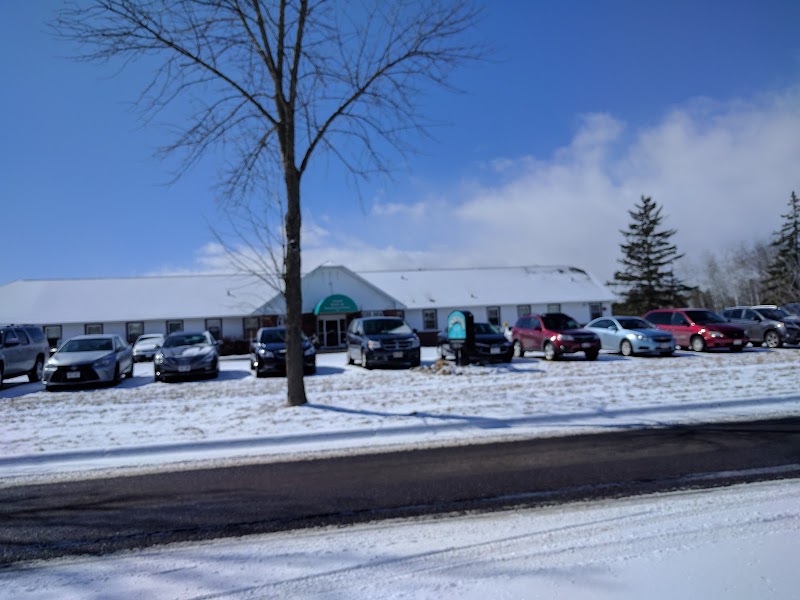
ASHLAND HEALTH SERVICES

1319 BEASER AVE, ASHLAND, WI 54806 (715) 682-3468
For profit - Limited Liability company 117 Beds NORTH SHORE HEALTHCARE Data: November 2025
Trust Grade
58/100
#78 of 321 in WI
Last Inspection: August 2025

Inspected within the last 6 months. Data reflects current conditions.

Overview

Ashland Health Services has a Trust Grade of C, which means it is considered average-neither particularly good nor bad compared to other facilities. It ranks #78 out of 321 nursing homes in Wisconsin, placing it in the top half, and #1 out of 2 in Ashland County, indicating it is the best option locally. The facility is showing improvement, with issues decreasing from 10 in 2024 to just 2 in 2025. Staffing is rated 3 out of 5 stars, but the 61% turnover rate is concerning, as it's higher than the state average of 47%. While there is good RN coverage, surpassing 93% of state facilities, recent inspections revealed significant concerns, including inadequate skin treatment for a resident and failures in infection control protocols, which could pose risks to residents. Overall, while there are strengths in RN coverage and an improving trend, families should be aware of staffing issues and specific care deficiencies that need addressing.

Trust Score
C
58/100
In Wisconsin
#78/321
Top 24%
Safety Record
Moderate
Needs review
Inspections
Getting Better
10 → 2 violations
Staff Stability
⚠ Watch
61% turnover. Above average. Higher turnover means staff may not know residents' routines.
Penalties
✓ Good
$19,988 in fines. Lower than most Wisconsin facilities. Relatively clean record.
Skilled Nurses
✓ Good
Each resident gets 71 minutes of Registered Nurse (RN) attention daily — more than 97% of Wisconsin nursing homes. RNs are the most trained staff who catch health problems before they become serious.
Violations
⚠ Watch
22 deficiencies on record. Higher than average. Multiple issues found across inspections.
★★★★☆
4.0
Overall Rating
★★★☆☆
3.0
Staff Levels
★★☆☆☆
2.0
Care Quality
★★★★☆
4.0
Inspection Score
Stable
2024: 10 issues
2025: 2 issues

The Good

  • Full Sprinkler Coverage · Fire safety systems throughout facility
  • No fines on record

Facility shows strength in fire safety.

The Bad

Staff Turnover: 61%

15pts above Wisconsin avg (46%)

Frequent staff changes - ask about care continuity

Federal Fines: $19,988

Below median ($33,413)

Minor penalties assessed

Chain: NORTH SHORE HEALTHCARE

Part of a multi-facility chain

Ask about local staffing decisions and management

Staff turnover is elevated (61%)

13 points above Wisconsin average of 48%

The Ugly 22 deficiencies on record

1 actual harm
Aug 2025 2 deficiencies
CONCERN (D)

Potential for Harm - no one hurt, but risky conditions existed

Comprehensive Care Plan (Tag F0656)

Could have caused harm · This affected 1 resident

**NOTE- TERMS IN BRACKETS HAVE BEEN EDITED TO PROTECT CONFIDENTIALITY** Based on interview, and record review, the facility did not implement a care plan to meet a resident's medical need for 1 of 5 r...

Read full inspector narrative →
**NOTE- TERMS IN BRACKETS HAVE BEEN EDITED TO PROTECT CONFIDENTIALITY** Based on interview, and record review, the facility did not implement a care plan to meet a resident's medical need for 1 of 5 residents (R) 5 reviewed for care plans.-CNA did not follow the care plan by not documenting R5's bowel movement for 2 days.R5 was admitted to the facility on [DATE] with diagnoses that include stroke with left sided paralysis, chronic pain, dementia, traumatic brain injury, epilepsy, anemia, and constipation. Minimum Data Set (MDS), dated [DATE], indicated R5 had a Brief Interview for Mental Status score of 99 meaning severe cognitive impairment. In addition, R5 is dependent on staff for eating, transfers, toileting, and extensive assist for bed mobility. R5 had an activated Power of Attorney for healthcare and finance. R5's care plan, dated 07/28/25, states: Bowel Elimination Alteration: At risk for constipation r/t: lack of exercise, medications. Interventions: Administer medications per MD order and observe effectiveness, . Record BM (bowel movement) . Repost (sp) S&S (signs and symptoms) such as abdominal cramping, diarrhea, n/v (nausea and vomiting), no BM for 3 days. Goal: Will have no complications related to constipation.On 08/05/25 at 1:10 PM, Surveyor spoke with R5's family member (FM) N who reported R5 did not seem usual self today and reported it to the nurse because FM N said, I never saw him like that before. Look how his belly is moving when he is breathing, and eyes look different too. Surveyor observed R5 using abdominal muscles with each breath and eyes open, glossy, and staring at ceiling.On 08/05/25 at 2:28 PM, Surveyor reviewed medications and discovered R5 routinely receives opioids, iron supplement, and antipsychotic medications that place him at high risk for constipation. Current physician orders include: Ferrous Sulfate Elixer 220 mg/5ml. Give 7.5 ml one time a day for anemia. Olanzapine 2.5mg every evening for dementia with behaviors. Hydrocodone- APAP 7.5/325 give one tablet 2 times a day, plus one at bedtime, plus one as needed for pain. Senna Plus 8.6-5mg give one tablet every day for constipation. MiraLAX 17gm by mouth once a day for constipation. Magnesium hydroxide 30ml every 24 hours as needed for constipation. Bisacodyl Suppository 10mg insert 1 rectal every 24 hours as needed for constipation. Fleet Enema 7-19gm/118ml insert 1 application rectally every 24 hours as needed for constipation. Surveyor reviewed R5's BM flow sheet and noted the last normal formed BM was recorded on 07/31/25. From 08/01/25 to 08/05/25, R5 had no BM documented (5 days). Surveyor informed Registered Nurse (RN) O of the findings for R5, and RN O said she would look into it. RN O stated R5's medications were recently decreased because he was having blow outs. On 08/06/2025 at 8:00 AM, Nursing Home Administrator (NHA) A provided updated information showing bowel movements were checked on 08/02/25 and 08/03/25. NHA A reported they contacted Certified Nursing Assistant (CNA) K who reported the computer system was down so unable to mark BMs and reported R5 had 2 large BMs, one on 08/02/25 and one on 08/03/25. Surveyor asked NHA A what the protocol is for following the care plan and documenting BMs if the computer access is down. NHA A said it only happened with CNA K who reported she had asked day shift CNAs to mark the bowel movements but assumed and did not ensure they did. NHA A said in the event of no access, staff are expected to call IT or Think ANEW, which CNA K did do, but did not gain access until Monday when CNA K updated R5's record. NHA A acknowledge CNA K did not follow the care plan when the bowel movements were not documented.
CONCERN (F)

Potential for Harm - no one hurt, but risky conditions existed

Infection Control (Tag F0880)

Could have caused harm · This affected most or all residents

**NOTE- TERMS IN BRACKETS HAVE BEEN EDITED TO PROTECT CONFIDENTIALITY** Based on interview and record review, the facility failed to ensure it maintained an infection prevention and control program de...

Read full inspector narrative →
**NOTE- TERMS IN BRACKETS HAVE BEEN EDITED TO PROTECT CONFIDENTIALITY** Based on interview and record review, the facility failed to ensure it maintained an infection prevention and control program designed to help prevent the development and transmission of communicable disease and infections such as COVID-19. This had the potential to affect all 36 residents.-The facility did not test staff with symptoms of COVID-19. -Staff used soiled cloth for catheter care and used a dropped alcohol wipe to disinfect the catheter of R7. Example 1 The CDC's COVID 19 website lists possible symptoms of COVID 19 which may include: Fever or chills Cough Shortness of breath or difficulty breathing Sore throat Congestion or runny nose New loss of taste or smell Fatigue Muscle or body aches Headache Nausea or vomiting Diarrhea The facility's policy titled Infection Prevention and Control Program, read in part .3. Surveillance: a. A system of surveillance is utilized for prevention, identifying, reporting, investigating, and controlling infections and communicable diseases for all residents, staff, volunteers, visitors, and other individuals providing services under a contractual agreement based upon a facility assessment and accepted national standards. On 08/05/25, Surveyor reviewed the facility's surveillance, including the employee infection line list. Surveyor noted the facility's last COVID 19 outbreak was in 01/2025, and employees were being tested for COVID 19 at that time. Surveyor noted beginning 02/2025, the facility's documentation did not show employee testing for staff exhibiting signs or symptoms of COVID 19. Surveyor noted the following: -02/15/25, Business Office Manager (BOM) E, symptoms of nausea and vomiting, no testing was completed and BOM E returned to work on 02/18/25. -02/19/25, Staff F, symptoms of vomiting with a fever, no testing was completed and Staff F returned to work 02/21/25. -02/25/25, Dietary Staff G, symptoms of vomiting and diarrhea, no testing was completed and Dietary Staff G returned to work on 02/27/25. -03/04/25, Staff H, symptoms of diarrhea and vomiting with a fever, with no return to work date. -03/14/25, Staff I, symptoms of vomiting and diarrhea, no testing was completed, Staff I returned to work on 03/16/25. -04/17/25, Certified Nursing Assistant (CNA) J, symptoms of nausea and vomiting, no testing was completed. CNA J returned to work 04/18/25. -05/21/25, CNA K, symptoms of chest congestion with fever, no testing was completed. CNA K returned to work on 05/22/25. -05/26/25, Staff L, symptoms of chest congestion, cough, and sore throat, no testing was completed. Staff L returned to work on 05/27/25. -07/14/25, Dietary Staff M, cold symptoms, no testing was completed. Dietary Staff M returned to work on 07/15/25. On 08/05/2025 at 12:38 PM, Surveyor interviewed Director of Nursing (DON) B and Infection Preventionist (IP) C. DON B and IP C reported no outbreaks since either have been employed at facility. DON B and IP C stated they use CDC for guidance on infection control. DON B and IP C were unsure if requirement for staff or resident testing is one symptom or more. Surveyor reviewed with DON B and IP C examples from the employee line list, including vomiting, nausea, diarrhea, fever, sore throat, cough, and cold symptoms. DON B and IP C stated they have not been testing staff with symptoms of headache, body ache, fever, vomiting, nausea, etc. DON B and IP C stated they would reach out to the previous DON and possibly the public health department and would get back to Surveyor. On 08/05/2025 at 1:36 PM, Surveyor interviewed DON B. DON B stated they were not testing staff, and stated they are changing the way they do things and will immediately begin testing staff/residents with signs and symptoms of COVID 19. Example 2 Facility policy titled, Catheter Care, dated 3/15/2023 stated in part: Female: 9. gently separate the labia to expose the urinary meatus. 10. Wipe from front to back with a clean cloth moistened with water and perineal cleaner (soap). 11. Use a new part of the cloth or different cloth for each side. 12. With a new moistened cloth, starting at the urinary meatus moving out, wipe the catheter making sure to hold the catheter in place so as to not pull on the catheter . R7 was admitted on [DATE] with a brief interview of mental status (BIMS) score of 15/15 which indicated R7 was cognitively intact. R7 had a diagnosis of neurogenic bladder (happens when an injury or disease interrupts the electrical signals between your nervous system and bladder function). Doctors order to perform catheter care every shift. On 08/05/2025 at 6:58 AM, Surveyor asked CNA D to observe any catheter care that was provided to R7. On 08/05/2025 at 7:23 AM, R7 agreed to allow Surveyor to observe morning cares which included catheter care. CNA D performed proper hand hygiene and put on gown and gloves per enhanced barrier precaution guidelines. CNA D then removed R7’s underwear. CNA D then washed R7’s lower abdomen, abdominal folds and perineum. CNA D then began to clean the insertion site of the catheter with the same gloved hands using the same soiled washcloth. CNA D then informed Surveyor that R7 wears a leg bag drainage system during the day and began to remove the bed drainage bag. CNA D took an alcohol wipe out and dropped it on the floor. CNA D then picked the alcohol wipe from the floor and cleaned the distal (exit) end of the catheter and connected R7’s catheter to the leg bag. On 08/05/2025 at 8:38 AM, Surveyor interviewed CNA D about the observations of the soiled washcloth and alcohol wipe. Surveyor asked CNA D, “Is this acceptable?” CNA D replied, “That is probably not acceptable.” On 08/05/2025 at 8:44 AM, Surveyor explained to the interim Director of Nursing (DON) B the observations made with CNA D using a soiled washcloth to perform catheter care and using the contaminated alcohol wipe to clean the catheter. DON B replied, “That is not acceptable.”
Jun 2024 10 deficiencies
CONCERN (D)

Potential for Harm - no one hurt, but risky conditions existed

Quality of Care (Tag F0684)

Could have caused harm · This affected 1 resident

**NOTE- TERMS IN BRACKETS HAVE BEEN EDITED TO PROTECT CONFIDENTIALITY** Based on interview and record review, the facility did not ensure residents received treatment and care in accordance with profe...

Read full inspector narrative →
**NOTE- TERMS IN BRACKETS HAVE BEEN EDITED TO PROTECT CONFIDENTIALITY** Based on interview and record review, the facility did not ensure residents received treatment and care in accordance with professional standards of practice for 1 of 12 sampled residents (R23). The facility did not follow physician orders for R23 to obtain a video fluoroscopy swallow study (VFSS) to determine appropriate and safe diet recommendations. Findings: R23 was admitted to the facility on [DATE], after hospitalization for dehydration, confusion, and weakness. R23's hospital discharge instructions were speech therapy (ST) related to dysphagia (difficulty swallowing), occupational therapy (OT), and physical therapy (PT) for strengthening. Admitting diagnoses to facility included dementia, stroke with left sided paralysis, diabetes mellitus type 2, chronic kidney disease stage 3, dysphagia, and depression. R23's admission Minimum Data Set (MDS) assessment confirmed R23 scored 05/15 during Brief Interview for Mental Status (BIMS), indicating severe cognitive impairment. MDS determined R23 required partial or moderate assistance with eating. R23's care plan, dated 10/24/23, included a focus area of: At risk for nutritional status changes related to need for mechanically altered texture and feeding assistance, variable oral intakes, weight loss, low body mass index, and altered skin integrity. Intervention: Encourage and assist as needed to consume foods and/or supplements as ordered. R23's nutrition assessment, dated 10/24/23, confirmed R23 had swallowing difficulty related to coughing during meals. R23's intakes were 50-100%. On 11/20/23, a change in condition evaluation was entered in R23's progress notes related to diarrhea, food/fluid intake, tired, weak, confused, or drowsy. On 12/07/23, a progress note was entered to monitor R23 related to increased fatigue, nausea, intermittent emesis, and loose stools. From 12/09/23-12/13/23, R23 was hospitalized for difficulty breathing, difficulty swallowing, decreased fluid intake, and vomiting. Hospital discharge summary included diagnoses of hypernatremia (elevated sodium), pneumonia, and urinary tract infection (UTI). Discharge instructions included follow up labs for hypernatremia, fluids changed to nectar thickened, and ST evaluation and treatment. On 12/15/23, a nutrition assessment was completed confirming R23's diet was downgraded to pureed with nectar thickened liquids related to dysphagia. R23's intakes were 0-75%. On 12/16/23, a physician order was entered, Would recommend video swallow study to determine objective findings related to integrity of the swallow. On 12/27/23, R23 was sent to the ER related to vomiting, respiratory congestion, and cough. R23 returned to the facility this same date, with diagnosis of UTI. On 01/28/24, ST notes read, Discussed recommendation of video fluoroscopy swallow study (VFSS) in order to identify if advancement in diet is safe/appropriate. On 03/07/24, R23's MDS assessment was completed and indicated a health condition of dehydration. On 03/07/24, a nutrition assessment was completed for R23. Assessment indicated R23 had experienced a gradual weight loss since admission, swallowing difficulty related to need for nectar thickened liquids, gastrointestinal concerns, and inadequate oral intakes. R23's body mass index (BMI) was 19.9. Nutrition assessment indicated R23's intakes were 25-100%. On 03/09/24, ST notes read, ST continues to recommend VSFF to determine safety with swallow and to identify if upgrade is safe. On 04/18/24, ST notes read, ST requested swallow study multiple times. On 05/08/24, R23 completed a bedside swallow study; this was not a VFSS. On 06/04/24, a nutrition assessment was completed for R23. Assessment confirmed R23 had a gradual weight change, swallowing difficulty, received pureed and nectar thickened liquids, nutritional problem related to inadequate oral intakes, and gastrointestinal concerns. R23's intakes were 51-100%. On 06/04/24 at 1:11 PM, Surveyor interviewed Speech Therapist (ST) U. ST U reported previous ST recommended the video swallow study on 12/16/23. ST U was not sure why R23's VFSS was not scheduled shortly after the recommendation on 12/16/24. ST U reported the swallow study that was completed on 05/08/24 was a bedside swallow study, not a VFSS. ST U reported ST completes bedside swallow studies in the facility. ST U stated a VFSS would help them to know if the reason for difficulty with swallowing is physical, and provide images of pharyngeal, esophagus, and ST U stated, It would help us to determine strategies such as a chin tuck, or type of fluids or foods he can/can't eat. Maybe he doesn't need nectar thickened, maybe it's food that is the problem and he could have thin liquids or that Coke he is asking for, but we can't determine that with a bedside swallow study only a VFSS. On 06/05/24 at 8:25 AM, Surveyor interviewed Social Worker (SW) D. SW D confirmed she was responsible for scheduling appointments prior to 02/19/24, as the facility hired new staff on 02/19/24 to assist with scheduling appointments. SW D reported she did not schedule R23's VFSS as R23's family would schedule his appointments. Surveyor requested evidence the facility spoke with R23's family regarding the VFSS recommendation on 12/16/23, and evidence the family agreed or disagreed to schedule the appointment. The facility did not provide evidence requested. R23's appointment had not been scheduled.
CONCERN (D)

Potential for Harm - no one hurt, but risky conditions existed

Pressure Ulcer Prevention (Tag F0686)

Could have caused harm · This affected 1 resident

Based on observations, interviews and record reviews, the facility failed to ensure staff practiced appropriate hand hygiene during a dressing change for a stage III Pressure Injury (PI) for 1 of 1 re...

Read full inspector narrative →
Based on observations, interviews and record reviews, the facility failed to ensure staff practiced appropriate hand hygiene during a dressing change for a stage III Pressure Injury (PI) for 1 of 1 resident (R21) reviewed and currently in-house with a PI. The CDC had outlined the following indications for hand washing and the wearing of gloves: A. When hands are visibly dirty or contaminated with proteinaceous material or are visibly soiled with blood or other body fluids, wash hands with either a nonantimicrobial soap and water or an antimicrobial soap and water . F. Decontaminate hands after contact with a patient's intact skin. G. Decontaminate hands after contact with body fluids or excretions, mucous membranes, nonintact skin, and wound dressings if hands are not visibly soiled . J. Decontaminate hands after removing gloves . The CDC continues to direct healthcare workers with the technique of hand hygiene: .2. E. Change gloves during patient care if moving from a contaminated body site to a clean body site . Surveyor reviewed the facility policy titled Clean Dressing Change dated 7/2022. The following was noted: It is the policy of this facility to provide wound care in a manner to decrease potential for infection and/or cross contamination . 7. Wash hands and put on clean gloves .remove the existing dressing .remove gloves .Wash hands and put on clean gloves. Cleanse the wound as ordered .Wash hands and put on clean gloves .dress the wound as ordered .and wash hands . This is evidenced by: R21 has medical diagnoses that include, but are not limited to, cerebral palsy, peripheral vascular disease and a long-standing stage III PI on the outer left ankle (malleolus). R21 was on Enhanced Barrier Precautions related to the wound and a current indwelling Foley urinary catheter. According to the most recent Minimum Data Set Assessment (MDSA), which was a quarterly assessment with an Assessment Reference Date (ARD) of 4/27/24, R21 has a stage III PI. In reviewing the history of this stage III PI, Surveyor identified that R21 has a long standing history of pressure injuries going back to admission of 2/18/21, at which time there was a PI located on the coccyx, and has since resolved. The PI that was currently being treated had an onset date of 8/19/23, of which was documented as an unstageable that measured 1.3 cm (centimeters) L (length) x 1.1 cm w (width). The wound was documented as containing 50% granulation tissue and 50% slough with light amount serous drainage; no odor or tunneling evident with distinct wound edges with a pink periwound tissue. Note: Granulation tissue is new connective tissue and microscopic blood vessels that form on the surfaces of a wound during the healing process. Slough is the yellow/white material in the wound bed. Slough is an accumulation of dead cells and is nonviable tissue that needs to be removed in order for healing to occur. Over time, this wound improved and worsened and on 11/22/23 and 2/7/24, positive cultures for MRSA (Methicillin-Resistant Staphylococcus Aureus) were obtained for the left outer ankle wound. This is an infection caused by a type of staph bacteria that's become resistant to many of the antibiotics used to treat ordinary staph infections. Without eradication of the infection, a wound would be difficult to heal. MRSA most often causes skin infections but it can also cause serious infections in the lungs, heart and bloodstream. The most recent assessment of the wound was documented on 5/28/24 and was measured as being slightly greater than 0.1 L x slightly greater than 0.1 W x slightly greater than 0.1 deep. In reviewing the care plan devised for R21, Surveyor noted the facility initiated a plan for the following: Actual infection: MRSA to wound on outer left ankle. The start date for this plan was 11/30/23 and last revised on 1/8/24. Included in the interventions were: - Encourage resident to use good clean hygiene techniques to avoid cross contamination. - Maintain Contact precautions as indicated. On 6/3/24 at 1:41 PM, Surveyor observed Licensed Practical Nurse (LPN) E complete the treatment and dressing change to the ankle wound. The following techniques were observed: - LPN E sanitized his hands upon entering the room and donned a pair of gloves. - LPN E then removed the old dressing from the left outer ankle. LPN E then removed the gloves but did not wash or sanitize his hands before proceeding to cleanse the wound with antibacterial soap and water contained in a basin. - LPN E then turned on the water faucet and rinsed the basin and filled with clean water. LPN E changed gloves but did not wash or sanitize his hands before donning a clean pair of gloves. LPN E then rinsed the wound of soap and dried the wound. LPN E then applied a Mepilex foam dressing to the wound. - With the same gloves, LPN E opened four dresser drawers to search for clean compression socks. Unable to locate, LPN E then sanitized his hands and left the room in search for clean socks. On 6/4/24, the wound was measured again, and there was no change in the assessment from 5/28/24. On 6/5/24 at 7:45 AM, Surveyor interviewed Interim Director of Nursing (DON) B regarding the expected practice of hand hygiene during treatment changes. IDON B stated, Wash hands before you start anything, then after removing the dirty and before placing the clean, you should wash. Should sanitize or something in between, with each glove change, and then wash again when finished . On 6/5/24 at 7:50 AM, Surveyor approached LPN E and interviewed him regarding his knowledge of hand hygiene with treatments and dressing changes. LPN E correctly identified that the hands should be washed with soap and water for at least 30 seconds and should wash between each glove removal. Surveyor pointed out the treatment observation made and explained that even though LPN E removed gloves at the appropriate times, he did not wash or sanitize hands after removing the soiled gloves. LPN E stated, Oh yeah, I thought I did that, but ok, that's right. I should have.
CONCERN (D)

Potential for Harm - no one hurt, but risky conditions existed

Deficiency F0692 (Tag F0692)

Could have caused harm · This affected 1 resident

**NOTE- TERMS IN BRACKETS HAVE BEEN EDITED TO PROTECT CONFIDENTIALITY** Based on interview and record review, the facility did not ensure 1 of 2 residents (R23) reviewed was offered sufficient fluid i...

Read full inspector narrative →
**NOTE- TERMS IN BRACKETS HAVE BEEN EDITED TO PROTECT CONFIDENTIALITY** Based on interview and record review, the facility did not ensure 1 of 2 residents (R23) reviewed was offered sufficient fluid intake to maintain proper hydration. The facility did not have a system in place for tracking daily intakes to ensure R23's fluid intake was adequate. Findings include: Findings: The facility's policy, Hydration, reads in part, The facility offers each resident sufficient fluid, including water and other liquids, consistent with resident needs and preferences to maintain proper hydration and health. 1. The facility will utilize a systemic approach to optimize the resident's hydration status: a. Identifying and assessing each resident's hydration status and risk factors. b. Evaluating/analyzing the assessment information. c. Developing and consistently implementing pertinent approaches. d. Monitoring the effectiveness of interventions and revising them as necessary. 3. Evaluation/analysis: a. The assessment shall clarify the resident's current hydration status and individual risk factors for dehydration or fluid imbalance. 4. Care plan implementation: a. The resident's goals and preferences regarding hydration will be reflected in the resident's plan of care. 5. Monitoring/revision: b. The resident will be monitored for signs and symptoms of dehydration including, but not limited to: viii. Confusion or change in mental status ix. Decreased urinary output x. Abnormal lab values e. The resident will be monitored for conditions that may increase fluid needs: ii. Vomiting or diarrhea iii. Fever/infection iv. Uncontrolled diabetes R23 was admitted to the facility on [DATE], after hospitalization for dehydration, confusion, and weakness. R23's hospital discharge instructions were speech therapy (ST) related to dysphagia (difficulty swallowing), occupational therapy (OT), and physical therapy (PT) for strengthening. Admitting diagnoses to facility included dementia, stroke with left sided paralysis, diabetes mellitus type 2, chronic kidney disease stage 3, dysphagia, and depression. R23's admission Minimum Data Set (MDS) assessment confirmed R23 scored 05/15 during Brief Interview for Mental Status (BIMS), indicating severe cognitive impairment. MDS determined R23 required partial or moderate assistance with eating. On 10/20/23, a dehydration risk screen was completed. The screening tool directed further assessment to be completed for any scores of 10 or higher. R23 scored a 6, as follows: 1. Skin turgor 3 seconds, 1. Ambulates with 2 assist, wheelchair with assistance, 1. Fluid intake/Eating-limited physical assistance, 0. No weight loss, 1. Incontinent of urine, 0. Risk factors: history of dehydration, diarrhea/vomiting in last 7 days, 1. Pre-disposing factors, 1. Medications. Dehydration assessment was not an accurate assessment related to R23's history of dehydration, need for moderate assistance with eating, and documented swallowing difficulty. R23's care plan, dated 10/24/23, included a focus area of: At risk for nutritional status changes related to need for mechanically altered texture and feeding assistance, variable oral intakes, weight loss, low body mass index, and altered skin integrity. Intervention: Encourage and assist as needed to consume foods and/or supplements as ordered. R23's nutrition assessment, dated 10/24/23, calculated R23's fluid needs to be 2040 ml daily. Nutrition assessment confirmed R23 had swallowing difficulty related to coughing during meals. R23's fluid intakes from 10/20/23-12/09/23 ranged from 0-1510 ml of daily fluid. Confirming R23 did not meet his daily fluid intake needs on any days. Documentation confirmed R23's fluid intake was less than 50% of recommended values to maintain proper hydration for 32 of 54 days. There was no evidence R23's fluid intakes were being monitored. There is no care plan for hydration. On 11/20/23, a change in condition evaluation was entered in R23's progress notes related to diarrhea, food/fluid intake, tired, weak, confused, or drowsy. R23's care plan was not updated. On 12/07/23, a progress note was entered to monitor R23 related to increased fatigue, nausea, intermittent emesis, and loose stools. R23's care plan was not updated. From 12/09/23-12/13/23, R23 was hospitalized for difficulty breathing, difficulty swallowing, decreased fluid intake, and vomiting. Hospital discharge summary included diagnoses of hypernatremia (elevated sodium), pneumonia, and urinary tract infection (UTI). Discharge instructions included follow up labs for hypernatremia, fluids changed to nectar thickened, and ST evaluation and treatment. On 12/13/23, a dehydration risk assessment was completed for R23. R23 scored 8, as follows: 0. Skin turgor 3 seconds, 2. Bedbound, 3. Swallowing difficulty, 0. Weight loss, 1. Incontinent of urine, 0. Risk factors: history of dehydration and vomiting/diarrhea, 1. Pre-disposing factors, 1. Medication. Dehydration assessment was not an accurate assessment related to R23's history of dehydration, need for moderate assistance with eating, vomiting/diarrhea, and documented swallowing difficulty. On 12/14/23, R23's primary care physician completed a skilled nursing facility (SNF) visit. PCP's assessment and plan stated, Chronic Kidney Disease Stage 3 with hypernatremia related to free water deficit since hospitalization. Continue to monitor fluid intake and encourage free water intake. R23's care plan was implemented for dehydration. On 12/15/23, a nutrition assessment was completed for R23. Nutrition assessment indicated R23's daily fluid intake needs were 2040 ml. Assessment confirmed R23 had a nutritional problem related to inadequate oral intake. R23's daily fluid intakes from 12/13/23-12/27/23 ranged from [PHONE NUMBER] ml. Confirming R23 did not meet his daily fluid intake needs on any days. Documentation confirmed R23's fluid intake was less than 50% of recommended values to maintain proper hydration for 13 of 15 days. There was no evidence R23's fluid intakes were being monitored. On 12/16/23, a physician order was entered, Would recommend video swallow study to determine objective findings related to integrity of the swallow. On 12/27/23, R23 was sent to the ER related to vomiting, respiratory congestion, and cough. R23 returned to the facility this same date, with diagnosis of UTI. On 01/07/24, R23's record included a progress note that read, Staff reported that he is having reduced urine output with few wet pads. Bladder scan done only 29 ml urine in bladder. There was no documentation related to follow-up of R23's reduced urine output. R23's daily fluid intakes from 12/28/23-01/07/24 ranged from [PHONE NUMBER] ml. Confirming R23 did not meet his daily fluid intake needs on any days. Documentation confirmed R23's fluid intake was less than 50% of recommended values to maintain proper hydration for 11 of 12 days. There was no evidence R23's fluid intakes were being monitored. On 01/28/24, ST notes read, Discussed recommendation of video fluoroscopy swallow study (VFSS) in order to identify if advancement in diet is safe/appropriate. On 02/26/24 and 02/27/24, R23's record confirmed R23 experienced emesis both days. On 03/02/24, R23's record confirmed diagnosis of UTI per urinalysis. R23's care plan was updated with 'UTI,' interventions included: offer and encourage adequate intake of fluids. On 03/07/24, R23's MDS assessment was completed and indicated a health condition of dehydration. R23 did not have a hydration care plan implemented. On 03/07/24, a nutrition assessment was completed for R23. Assessment indicated R23 had experienced a gradual weight loss since admission, swallowing difficulty related to need for nectar thickened liquids, gastrointestinal concerns, and inadequate oral intakes. R23's body mass index (BMI) was 19.9. Nutrition assessment indicated R23's daily fluid intake needs were 1850 ml. R23's care plan was updated with 'Nutrition,' interventions included: provide diet as ordered, pureed and nectar thickened liquids. R23's daily fluid intakes from 01/08/24-03/07/24 ranged from 0-1705 ml. Confirming R23 did not meet his daily fluid intake needs on any days. Documentation confirmed R23's fluid intake was less than 50% of recommended values to maintain proper hydration for 28 of 61 days. There was no evidence R23's fluid intakes were being monitored. On 03/09/24, ST notes read, ST continues to recommend VSFF to determine safety with swallow and to identify if upgrade is safe. On 03/13/24, R23's record confirmed emesis on this date. On 03/16/24, a dehydration risk assessment was completed for R23. R23 scored 13, as follows: 2. Skin turgor 3 seconds, 2. Bedbound, 3. Swallowing difficulty, 0. No weight loss, 1. Incontinent of urine, 3. Risk factors: history of dehydration, history of refusing liquids, diarrhea/vomiting, 1. Pre-disposing factors, 1. Medications. Dehydration assessment was not an accurate assessment related to R23's BMI less than 21 and weight loss. On 04/18/24, ST notes read, ST requested swallow study multiple times. On 05/08/24, R23 completed a bedside swallow study; this was not a VFSS. On 05/24/24, a urinalysis was ordered for R23. Progress notes indicated no urine return from R23. Progress notes indicated R23 had complaints of nausea and vomiting on this date. On 05/29/24, R23 was treated with antibiotics for a UTI. R23's care plan was reviewed, with no new interventions added. On 06/04/24, a dehydration risk assessment was completed for R23. R23 scored 7, as follows: 0. Skin turgor, 1. Ambulate with 2 assist, wheelchair with assistance, 1. Eating, limited physical assistance, 0. No weight loss, 1. Incontinent of urine, 2. Risk factors: history of dehydration and vomiting/diarrhea, 1. Pre-disposing risk factors, 1. Medications. Dehydration assessment was not an accurate assessment related to R23's BMI less than 21, weight loss, and need for moderate assistance with eating. On 06/04/24, a nutrition assessment was completed for R23. Assessment confirmed R23 had a gradual weight change, swallowing difficulty, received pureed and nectar thickened liquids, nutritional problem related to inadequate oral intakes, and gastrointestinal concerns. R23's BMI was 19.3. Nutrition assessment confirmed R23's daily fluid intake needs were 1850 ml. R23's daily fluid intakes from 03/08/24-06/02/24 ranged from 0-1410 ml. Confirming R23 did not meet his daily fluid intake needs on any days. Documentation confirmed R23's fluid intake was less than 50% of recommended values to maintain proper hydration for 52 of 70 days. On 06/04/24 at 1:11 PM, Surveyor interviewed Speech Therapist (ST) U. ST U reported previous ST recommended the video swallow study on 12/16/23. ST U reported the swallow study that was completed on 05/08/24 was a bedside swallow study, not a VFSS. ST U reported beside ST completes bedside swallow studies in the facility. ST U stated a VFSS would help them to know if the reason for difficulty with swallowing is physical, and provide images of pharyngeal, esophagus, and ST U stated, It would help us to determine strategies such as a chin tuck, or type of fluids or foods he can/can't eat. Maybe he doesn't need nectar thickened, maybe its food that is the problem and he could have thin liquids or that coke he is asking for, but we can't determine that with a bedside swallow study only a VFSS. On 06/04/24 at 12:32 PM, Surveyor interviewed Registered Nurse (RN) M. RN M stated, We encourage him to drink fluids because he does not drink enough, we document it in the MAR. (RN checked MAR). Oh sorry, he does not have it in there. So what the CNAs document is what he is receiving at meals, the nurses are not documenting additional intakes. On 06/05/24 at 9:13 AM, Surveyor interviewed Director of Nursing (DON) B. DON B stated, We just reviewed his dehydration assessments. I agree they are not accurate. When we were reviewing the assessments we were scoring him at a 13, and the assessments are like a 7. There is no care plan which is another issue. If this had been done accurately, we would have discussed intakes in weekly or daily stand-up meetings, and reviewed his status, MD would have been updated. We are not doing anything with the data at this time, and the data may not be accurate, as it should be intakes per shift. I think the NP was updated; however it may not have been documented.
CONCERN (D)

Potential for Harm - no one hurt, but risky conditions existed

Deficiency F0699 (Tag F0699)

Could have caused harm · This affected 1 resident

**NOTE- TERMS IN BRACKETS HAVE BEEN EDITED TO PROTECT CONFIDENTIALITY** Based on observations, interviews and record reviews, the facility failed to ensure 2 of 2 residents (R31 and R1) reviewed for p...

Read full inspector narrative →
**NOTE- TERMS IN BRACKETS HAVE BEEN EDITED TO PROTECT CONFIDENTIALITY** Based on observations, interviews and record reviews, the facility failed to ensure 2 of 2 residents (R31 and R1) reviewed for post-traumatic stress disorder (PTSD) received culturally competent trauma-informed care in accordance with professional standards of practice and accounting for each resident's experience and preferences in order to eliminate or mitigate retraumatization. This is evidenced by: According to Substance Abuse and Mental Health Services Administration (SAMHSA, 2014) (https://www.ncbi.nlm.nih.gov/books/NBK207191/), The impact of trauma can be subtle, insidious, or outright destructive. How an event affects an individual depends on many factors, including characteristics of the individual, the type and characteristics of the event(s), developmental processes, the meaning of the trauma, and sociocultural factors. SAMHSA explains trauma causes immediate and delayed emotional, behavioral, physical, cognitive, and existential reactions. The facility's Trauma Informed Care policy, dated 10/18/22, stated, in part, It is the policy of this facility to provide care and services which, in addition to meeting professional standards, are delivered using approaches which are culturally competent, account for experiences and preferences, and address the needs of trauma survivors by minimizing triggers and/or re-traumatization . Under Policy Explanation and Compliance Guidelines, the policy continued, stating . 4. The facility will collaborate with resident trauma survivors, and as appropriate, the resident's family, friends, the primary care physician, and any other health care professionals (such as psychologists and mental health professionals) to develop and implement individualized care plan interventions. 5. The facility will identify triggers which may re-traumatize residents with a history of trauma. Trigger-specific interventions will identify ways to decrease the resident's exposure to triggers which re-traumatize the resident, as well as identify ways to mitigate or decrease the effect of the trigger on the resident and will be added to the resident's care plan . Example 1 R31 was admitted to the facility 4/2/24 with medical diagnoses that include, but are not limited to, unspecified dementia without behavioral disturbance, psychotic disturbance, mood disturbance and anxiety, bipolar disorder, depression, history of alcohol use and post-traumatic stress disorder-chronic. R31 currently goes to psychiatric counseling, with the last visit being 5/10/24. In reviewing the dictations from these visits, the consultant mentions past trauma but did not indicate what caused the PTSD in R31's life history. Surveyor then reviewed the admission Psychosocial assessment dated [DATE] that the facility completed. According to this, R31 has diagnoses of bipolar disease, depression, PTSD and insomnia. The following was noted by Surveyor: - The facility checked the box: Prior trauma or history /diagnosis of PTSD: History/ Diagnosis of PTSD and entered, Has history of PTSD- unknown origin; family and [R31] unable to state PTSD diagnosis. - Under Care Planning: Trauma Informed Care is checked Section 2a. Trauma Informed Care: The facility checked the box Focus: At risk for re-traumatization of past event or experience where reminders/triggers of event or experience may cause behavioral changes and/or emotional distress; Goal: Reminder/triggering events will be avoided with minimal impact during stay within the facility. Included in the interventions: Determine, as able the triggers of traumatic event or experience, such as sights, smells, sounds and touch, which may lead to a set of emotional, physiological and behavioral responses that arise in service of survival and safety . Screen for past traumatic events that ay impact physical, emotional and mental well-being . The most recent Minimum Data Set Assessment (MDSA) was a Significant Change in Status assessment dated [DATE]. The documentation completed to justify the significant change was . Resident is determined to be a significant change due to weight loss, behaviors, falls . Behaviors include rejection of care 6 out of 7 days in the past week, poor appetite, 2 recent falls, nurse notes in past 2 days: restlessness, delusions, auditory hallucinations. SS (Social Services) has observed paranoia and suspicion by resident. Family/friend input reveals her dementia and cognition have progressively declined in the past several months. Biweekly appts with psychotherapist . According to the MDSA, R31 has a Brief Interview of Mental Status (BIMS) score of 9, indicating moderately impaired cognitive status. Behaviors identified on this MDSA include verbal behaviors and rejection of care. The mood or depression score for R31 on this assessment was listed as 10/27, indicating moderate depression. R31 has had 2 or more falls without injuries on this assessment and was also listed as having weight loss greater than 5%. In reviewing the weight loss, Surveyor identified that R31 sustained an unprescribed 13.65% weight loss since admission. On 4/2/24, R31 weighed 196.4 pounds and on 5/31/24, weighed 169.6 pounds. Note: According to the National Institute Of Mental Health clinical signs of depression can include poor concentration, feelings of excessive guilt or low self-worth, thoughts about dying or suicide, disrupted sleep, feeling very tired or low in energy or changes in appetite or weight. Surveyor reviewed the care plan developed for R31 and noted the following: 1. At risk for re-traumatization of past event or experience where reminders/triggers of event or experience may cause behavioral changes and/or emotional distress. Diagnosis of PTSD (start date 4/3/24, last revised 5/2/24). Interventions for this plan included: - Determine as able, the triggers of traumatic event or experience, such as sights, smells, sounds and touch, which may lead to a set of emotional, physiological and behavioral responses that arise in service of survival and safety (4/3/24) - Monitor for decreased social interaction and explore opportunities to avoid decline (4/3/24) - Monitor for increased withdrawal, anger or depressive behaviors and explore opportunities to avoid (4/3/24) - Screen for past traumatic events that may impact physical, emotional and mental well-being (4/3/24) 2. Alteration in behavior symptoms related to bipolar, dementia, declining assist with cares (start 4/9/24; last revised 5/2/24). Interventions for this plan included: - Psych referral as needed (5/2/24) - Use consistent approaches when giving care (5/2/24) 3. Cognitive loss as evidenced by short term memory deficit, poor recall related to cognitive impairment (Start 5/20/24) Interventions for this plan included: - Allow adequate time to respond. Do not rush or supply words (5/20/24) - Approach/speak in a calm, positive/reassuring manner (5/20/24) - Attempt to provide consistent routines/caregivers (5/20/24) - Explain each activity/care procedure prior to beginning it (5/20/24) - Identify self when speaking to resident (5/20/24) 4. At risk for changes in mood related to diagnosis of bipolar (start 4/9/24). Interventions for this plan include: - Assess for physical/environmental changes that may precipitate change in mood (4/3/24) - Observe for mental status/mood state changes when new medication is started or with dose changes (4/3/24) - Offer choices to enhance sense of control (4/3/24) - Validate feelings of loss (4/3/24) Note: There are no potential triggers listed in R31's care plan to alert staff to potential retraumatization, how to prevent these or how staff are to intervene. On 4/7/24, the facility documented a clinical follow-up and wrote, . The current status is [AGE] year old . with diagnoses including but not limited to . bipolar disorder . PTSD . insomnia . Res. has unspecified dementia . Denied pain. Mood is pleasant and cooperative this shift . In the above, the facility identified knowledge of R31 having PTSD. This was also noted in further documentation in R31's record. On 4/22/24 at 10:09 AM, the facility documented, . Resident very pleasant. Often refuses cares. Res does self transfer which has resulted in falls. Discharge plan is to return home. Resident voiced concern to writer about wanting to see her therapist . r/t (related to) feelings of giving up. Writer spoke with resident about this and asked if she was having any suicidal thoughts or ideations. Res stated she is not having any suicidal thoughts but would like to have an appointment with her Dr. (doctor) Writer will call and ask for appt. (appointment). The appointment was made for 4/26/24. However, there was still no care plan or PTSD assessment for R31 completed to identify the cause and potential triggers, prevention strategies or individualized approaches. On 4/29/24, the facility documented R31 as having an increase in behaviors or rejection of cares. On 5/13/2024, Social Services documented a review for the significant change in status, and included, Disorganized thought process and inattention switching from one subject to another . poor appetite, feeling tired, low energy, feeling not quite right, down a bit, feeling bad about self, lose of interest in pleasurable activities. is currently seeing . counselor bi-weekly . Behaviors which have increased since last MDS include rejection of care, restlessness, delusions, auditory hallucinations. Writer has observed paranoia and suspicion when staff or visitors walk by . continues on Seroquel, benztropine, Lexapro . Cognition is impaired, poor safety awareness, ST (short term) memory deficit and difficulty staying on subject or task. Multiple falls since last assessment. Attempting to schedule cognitive testing at the memory clinic . On 6/2/24 at 10:25 AM, Surveyor met with R31 and asked if she had an event in her past that affects her today. R31 stated, Oh we all have things as children, I am sure I had something happen. I really don't wish to talk about it. R31 did not appear to have specific knowledge regarding a traumatizing event or chose to not share it with Surveyor. On 6/3/24 at 1:27 PM, Surveyor met with Social Services Director (SSD) D regarding R31 and asked what caused R31's PTSD. SSD D stated that R31 was in the facility this past fall and had been living with a son, who had no insight into R31's PTSD. SSD D affirmed that she had not determined the cause of R31's PTSD. SSD D stated she had tried to contact the psychotherapist on 4/29/24 but had not yet received a return call. SSD D also affirmed she did not complete a follow-up call with the therapist to gain knowledge of R31's PTSD. SSD D continued to state, I reached out today to the psychiatrist who is treating her, had been treating her for many years. The therapist told me that [R31] had a sexual assault as a child with her father . Surveyor then informed SSD D of concerns related to the care plan for R31 with no individualized triggers, prevention strategies or individualized interventions for staff to use, should R31 show retraumatization. Surveyor then asked SSD D why the delay in completing follow-up with psychiatrist to determine the cause of the PTSD. SSD D acknowledged that she should have done follow-up prior to today, and When I didn't receive a call back, I should have kept calling to get the information, but I didn't. The therapist told me that she had been working with [R31] for 12 years. It took working with the resident for 6 years before [R31] disclosed the assault as a child to the therapist. The therapist told me that potential triggers for her would be reminiscing about family memories or childhood . On 6/3/24, SSD D completed a Trauma Informed Care Observation that stated, Per therapist/counselor-[R31] is a survivor of childhood sexual and emotional abuse. Sexual perpetrator was her father and her mother was cold and emotionally unavailable to her. Social worker asked [R31] about her PTSD her response was I had some rough times in my life but did not disclose trauma to social worker. When answering the questions below, [R31] answered no to physical or sexual assault. On 6/4/24 at 8:14 AM, Surveyor asked what the practice was in the facility during the admission process and the determination of PTSD. SSD D stated, First we find out what the diagnosis is, sometimes it's in the History and Physical other times in any outside service or therapist dictations. Then I interview resident or family. In this case, I went to the son first, and he didn't know. Yesterday I talked to therapist, who initially saw her for depression and alcohol abuse. I asked therapist yesterday if any triggers to watch for with the worsening dementia. As [R31's] dementia progresses, we may see some of her memories surface . Surveyor informed SSD D of the concern with R31 being admitted two months prior and there was no individualized care plan for staff to refer to, to direct them on how to respond for R31, should retraumatization occur. SSD D stated, Yeah, I know. I contacted therapist on 4/29, and I did not hear back from her. I did not do any follow up. I should have done it before yesterday. I did not ask her why she didn't get back to me. I just should have followed up before now . going forward I will be more individualized with care plans, interview residents more in-depth and follow up with therapists for the residents. On 6/4/24, Surveyor interviewed the following staff who were responsible for R31 on this date: - Licensed Practical Nurse (LPN) F (8:32 AM) - Certified Nursing Assistant (CNA) G (8:55 AM) - Life Enrichment Specialist (LES) I (9:02 AM) - CNA H (1:40 PM) None of the above staff had any knowledge that R31 suffered from PTSD, the cause, what potential triggers could cause retraumatization or what interventions may be effective to dispel behaviors or retraumatization. Example 2 Resident (R) 1 was admitted to the facility 11/26/23 with medical diagnoses that include but are not limited to chronic pain, anxiety disorder, post-traumatic stress disorder-chronic and alcohol abuse, in remission. The facility completed an admission Psychosocial assessment dated [DATE]. Under Section C Psychosocial-Concerns, Needs, Preferences the assessment states in 1bb. Has flashbacks at times but he is able to work through flashbacks and anxiety when they occur. 1dd. states, Prescribed Diazepam for PTSD. Section C 2. indicates resident practices Native American traditions and spiritual beliefs and values. 5. Prior Trauma and history/diagnosis of PTSD . 5aa PTSD from gang involvement and violence when he lived in Chicago . Under Section D. Care Planning: - Trauma Informed Care is checked 2a. Trauma Informed Care: The facility checked the box Focus: At risk for re-traumatization of past event or experience where reminders/triggers of event or experience may cause behavioral changes and/or emotional distress; Goal: Reminder/triggering events will be avoided with minimal impact during stay within the facility. Included in the interventions: Determine, as able the triggers of traumatic event or experience, such as sights, smells, sounds and touch, which may lead to a set of emotional, physiological and behavioral responses that arise in service of survival and safety . Screen for past traumatic events that may impact physical, emotional and mental well-being . Surveyor reviewed the comprehensive care plan developed for R1 and noted the following problems were included: 1. At risk for behavior symptoms r/t (related to): depression and anxiety (12/7/23; last revised 2/11/24). Interventions for this plan included: - Psych referral as needed (5/2/24) - Use consistent approaches when giving care (12/28/23) 2. Episodes of anxiety as evidenced by hx (history) rejection of care, verbalizations of anxiety and/or pain, heavy breathing r/t: anxiety disorder, PTSD, pain, nightmares. (start date 11/29/23; last revised 3/5/24). Interventions for this plan included: - Engage in relaxation techniques such as massage, breathing, guided imagery (specify) (11/29/23) - Evaluate effectiveness and side effects of medications for possible decrease/elimination of psychotropic drugs PRN (11/29/23) - Identify and decrease environmental stressors (11/29/23) - Offer choices to enhance sense of control (11/29/23) - Psych consult and treatment (11/29/23) 3. Pain in multiple locations evidenced by chronic use of opioid medications, frequent ER (emergency room) visits for pain r/t chronic pain, anxiety, PTSD. Interventions included: - Adjust times of ADL and treatment activities so that occur after analgesic benefits have been achieved (i.e. therapy, wound dressing changes, etc.) 11/27/23 - Implement non-drug therapies (heat, ice, repositioning) to assist with pain and monitor for effectiveness. (11/27/23; revised 1/22/24) - Report nonverbal expressions of pain such as moaning, striking out, grimacing, crying, thrashing, change in breathing, etc. (11/27/23) 4. History of substance use disorder as evidenced by: History of addiction to alcohol, chronic opioid use (12/4/23; revised 2/11/24). Interventions included: - Discuss coping strategies (12/4/23) - Encourage and allow resident to openly express feelings and to express fears and worries. (12/4/23) - Nurse to remain in room at all times during medication administration due to history of hiding/hoarding medications. (2/11/24) - Promote homelike environment, when possible use familiar objects from home, or objects with sentimental value (family picture, etc) (12/4/23) - Provide information on support groups or addiction treatment (12/4/23) - Report changes in mood and suspected use of substance use to physician. (12/4/23) - Support resident's strengths and provide positive affirmations. (12/4/23) 5. At risk for re-traumatization of past event or experience where reminders/triggers of event or experience may cause behavioral changes and/or emotional distress; PTSD from gang involvement when he lived in Chicago (12/3/23; revised 5/2/24) GOAL: Reminder/triggering events will be avoided with minimal impact during stay within the facility. (12/3/23; revised 1/12/24). Interventions for this plan included: - Determine as able, the triggers of traumatic event or experience, such as sights, smells, sounds and touch, which may lead to a set of emotional, physiological and behavioral responses that arise in service of survival and safety (12/3/23) - Monitor for decreased social interaction and explore opportunities to avoid decline (12/3/23) - Monitor for increased withdrawal, anger or depressive behaviors and explore opportunities to avoid (12/3/23) - Provide a safe environment (12/3/23) - Provide choice-making activities (12/3/23) - Refer to Psychology as indicated (12/3/23) - Screen for past traumatic events that may impact physical, emotional and mental well-being (12/3/23) There were no individualized triggers listed for R1, prevention strategies or individualized interventions for staff to use should R1 display potential retraumatization. A review of the Interdisciplinary Team Progress Notes was completed. Surveyor noted the following: - On 3/5/2024, a Behavior Note was entered and stated, . review of behaviors and psychotropic medications is noted to have 2 episodes of statements of feeling jittery, needing valium, but is signed out more consistently during the past month. He was concerned for having nightmares. Resident has PTSD from his younger years involved in gang wars. Has known episodes of anxiety, nightmares, feels jittery periodically surrounding this. PRN (as needed) valium is effective, updated behavior monitoring to include c/o (complaint of) nightmares, CP (care plan) updated . - On 5/28/2024 a behavior note was entered and included the following, . quarterly review of behavioral status, medications, and diagnoses as relates to psychosocial health. Resident does have diazepam ordered for nightmares and jittery feelings, related to PTSD from his younger years in gang wars. Review of PRN medication admin indicates utilized medication 4 x this month. Resident is aware of his feelings and needs for the medication, requests it for use very intermittently, and is effective in managing his symptoms. Most recent review of medication regimen in April, renewing same orders through October 2024. No changes to cp needed. On 6/4/24, Surveyor noted entries in R1's medical record that were not present when reviewed on 6/3/24 from SSD D. Surveyor noted the following: 1. A Social Services note dated 6/3/2024 at 7:00 PM that included the following, . Quarterly MDS . is alert and orientated with no cognitive deficits noted . diagnosis of Anxiety disorder and PTSD long standing . discussed his mood and anxiety this quarter . mood has been stable . anxiety fluctuates . Grounding techniques have been helpful . at times of increased anxiety r/t (related to) gang trauma-such as opening the window, going outside and breathing the air, listening to the sounds of nature to focus concentration specifically the birds. Declines mental health referral, No I have seen 3 psychiatrists in the past and I don't need to see anyone right now. No documented behavior . More detailed interventions updated on PTSD care plan . 2. Surveyor also noted updates to R1's care plan were made to include: - Certain TV shows with increased violence or portray gang violence may increase his anxiety level or produce nightmares later in the evening. revised 6/3/24) - Grounding techniques have been helpful to [R1] at times of increased anxiety r/t gang trauma-such as opening the window, going outside and breathing the air, listening to the sounds of nature to focus concentration specifically the birds. (6/3/24) On 6/4/24 at 8:14 AM, Surveyor approached SSD D to discuss R1 and the PTSD with the updates made. SSD D stated the process in the facility is First we find out what the diagnosis is, sometimes it's in the History and Physical other times in any outside service or therapist dictations. Then I interview resident or family . Surveyor explained concern over R1 not having an individualized care plan to alert staff of the cause and potential triggers of R1's PTSD. Without an individualized care plan, staff would not know how to intervene. SSD D stated, Yeah, you're right. I didn't do any training with staff, and there weren't any care plan triggers until yesterday. He had a quarterly MDS review and I talked to him yesterday for the assessments and talked to him about his nightmares. I made the updates after I spoke with him. [R1] is trying to not use Valium as much and felt doing the grounding exercises helped, birds and listening to the air. Going forward will be more individualized with care plans, interview residents more in-depth and follow up with therapists for the residents . On 6/4/24, Surveyor interviewed the following staff who were responsible for R1 on this date: - LPN F (8:32 AM) - CNA G (8:55 AM) - LES I (9:02 AM) - CNA H (1:40 PM) None of the above staff had any knowledge that R1 suffered from PTSD, the cause, what potential triggers could cause retraumatization or what interventions may be effective to dispel behaviors or retraumatization.
CONCERN (D)

Potential for Harm - no one hurt, but risky conditions existed

Pharmacy Services (Tag F0755)

Could have caused harm · This affected 1 resident

Based on observations, interviews and record reviews, the facility did not administer medications in a safe and effective manner for for 1 out of 1 resident (R1) observed having medications left at be...

Read full inspector narrative →
Based on observations, interviews and record reviews, the facility did not administer medications in a safe and effective manner for for 1 out of 1 resident (R1) observed having medications left at bedside. This is evidenced by: R1 has medical diagnoses that include, but are not limited to, chronic pain, chronic post-traumatic stress disorder, long term use of opiate analgesic and alcohol abuse, in remission. The most recent Minimum Data Set Assessment (MDSA) completed for R1 was a quarterly assessment with the ARD (Assessment Reference Date) 3/5/24. According to this MDSA, R1 has a Brief Interview of Mental Status (BIMS) of 15, indicating intact cognition. R1 has no mood indicators or behaviors listed. Surveyor then reviewed R1's care plan and noted the following: - History of substance use disorder as evidenced by history of addiction to alcohol, chronic opioid use. The start date of this problem was 12/4/23 and last revised 2/11/24. Interventions for this problem included: Nurse to remain in room at all times during medication administration due to history of hiding/hoarding medications. This intervention was initiated 2/11/24. On 6/3/24, while observing meal service to resident rooms on the 2nd Hall, Surveyor observed the following: - At 8:02 AM, the meal tray was delivered to R1. Resident is lying on top of the bed fully dressed. Meal remained covered in room. - At 8:06 AM, Licensed Practical Nurse (LPN) E dispensed R1's medications and delivered these in the medication cup in R1's room. - At 8:49 AM, Surveyor entered R1's room to observe meal intake. R1 remained on top of bed stretched out and asleep. Meal was not touched; entrée remained covered as well as the beverage glasses and the oatmeal. Sitting in a medicine cup were 11 medications. - At 9:51 AM, R1's breakfast tray remained in room. R1 stated to Surveyor, My stomach is messed up today. I have eaten all I wish to. Until my stomach feels better, I won't be eating or taking my meds. The medications have since been removed from the room. Surveyor then reviewed R1's record for Medication Self- Administration assessments and noted there were three completed as follows: - 2/22/19: Saline Nasal Spray, using daily each nare; Interdisciplinary Team (IDT) Review Summary: Resident able to identify his medication along with the ability to recall why he uses the Saline Nasal Spray. Easily able to demonstrate same. - 3/8/19: 1. clotrimazole cream apply topically to affected area BID 2. Betamethasone cream apply topically to affected area daily 3. Nystatin powder apply topically to affected area BID IDT review of self administration assessment and agree with resident able to self administer creams. Will keep at bedside locked drawer. Care plan to be adjusted. - 5/29/19: Metamucil in the morning and evening. IDT Review Summary: Resident is safe and competent and can self administer metamucil. There were no recent assessments completed and none located for self-administration of pills/capsules. On 6/3/24 at 11:18 AM, Surveyor approached Director of Nursing (DON) C and requested any recent Self-Administration assessments for R1. DON C was assisting Interim DON B during this survey as she is the DON at a sister facility and a former DON at this facility. DON C stated the proper procedure was to assess the resident and then call the physician for orders and put it on the care plan. At 1:54 PM on this same date, DON C approached Surveyor and stated there was no physician order or assessment completed for R1 to determine safety in self-administering medications. DON C stated that a phone call was placed to R1's physician for an order. On 6/3/24 at 1:56 PM, Surveyor approached LPN E and asked how nursing was to determine if a resident could self-administer medications. LPN E stated the resident would have a self-administration assessment completed and a physician order indicating the resident could self-administer their medications. Surveyor asked if one was completed for R1. LPN E searched the computer electronic medical record and then stated there was no assessment completed for R1 and no physician orders listed. Surveyor then asked LPN E why medications were left at R1's bedside if there was no assessment completed to determine R1 was safe to complete taking medications unsupervised. LPN E stated, [R1] took a couple for me when I was standing outside his room and said he would take the rest later. Surveyor then asked LPN E to verify the medications left at bedside and in the medicine cup as being: - Docusate Sodium capsule - Furosemide - Isosorbide Mononitrate Extended Release (ER) - Loratadine - Metoprolol Succinate ER - Tamsulosin - guaifenesin - Omeprazole (2 capsules) - Spironolactone - Acetaminophen At 4:18 PM, DON C approached Surveyor and stated R1's physician will not give an order for R1 to self-administer medications based on resident's history and the medications should not have been left at the bedside by the nurse.
CONCERN (E)

Potential for Harm - no one hurt, but risky conditions existed

Deficiency F0883 (Tag F0883)

Could have caused harm · This affected multiple residents

**NOTE- TERMS IN BRACKETS HAVE BEEN EDITED TO PROTECT CONFIDENTIALITY** Based on interview and record review, the facility did not have a comprehensive system for ensuring 5 (R5, R8, R9, R24, R31) of ...

Read full inspector narrative →
**NOTE- TERMS IN BRACKETS HAVE BEEN EDITED TO PROTECT CONFIDENTIALITY** Based on interview and record review, the facility did not have a comprehensive system for ensuring 5 (R5, R8, R9, R24, R31) of 5 residents reviewed for immunizations received or were offered the pneumococcal vaccination. *R5 - No documentation of receiving or declining PCV 15 or PCV20. *R8 - No documentation of receiving or declining PCV20 or PPSV23. *R9 - No documentation of receiving or declining PCV20. *R24 - No documentation of receiving or declining PCV15 or PCV20 *R31 - No documentation of receiving or declining PCV15 or PCV20. This is evidenced by: According to the Center for Disease Control. (2024, February 6). Pneumococcal Disease in Adults and Vaccines to Prevent It. CDC Pneumococcal Disease. https://www.cdc.gov/pneumococcal/prevent-pneumococcal-factsheet/index.html#cdc_generic_section_6-vaccination, Two types of vaccines used in the United States help prevent pneumococcal disease in adults: conjugate and polysaccharide vaccines. Recommendations: Center for Disease Control (CDC) recommends pneumococcal conjugate vaccination (PCV15 or PCV20) for Adults 65 years or older: All Adults younger than 65 years: Those at increased risk for pneumococcal disease If PCV15 is used, it should be followed by a dose of pneumococcal polysaccharide vaccine (PPSV23). Previously vaccinated: Adults who received an earlier pneumococcal conjugate vaccine (PCV13 or PCV7) should talk with a vaccine provider. The provider can explain options available to complete the recommended pneumococcal vaccine series. Adults 65 years or older have the option to get PCV20 if they have already received both of the following: PCV13 (but not PCV15 or PCV20) at any age PPSV23 at or after the age of [AGE] years old The facility policy titled, Pneumococcal Vaccine (Series) dated 02/20/23, revised 01/11/24 states: Policy: It is our policy to offer residents and staff immunization against pneumococcal disease in accordance with current CDC guidelines and recommendations. Policy Explanation and Compliance Guidelines: 1. Each resident will be assessed for pneumococcal immunization upon admission. Self-report of immunizations shall be accepted. Any additional efforts to obtain information shall be documented, including efforts to determine the date of immunization or type of vaccine received. 2. Each resident will be offered a pneumococcal immunization unless it is medically contraindicated, or the resident has already been immunized. 4. The resident/representative retains the right to refuse the immunization. Refusals should be documented in the medical record, along with what education was provided and a risk vs benefit discussion. Notify MD (Medical Doctor) if immunization is refused. 5. A consent form shall be signed prior to the administration of the vaccine and filed in the individual's record. 6. The type of pneumococcal vaccine (PCV15, PCV20, or PPSV23) offered will depend upon the recipient's age and susceptibility to pneumonia in accordance with current CDC guidelines and recommendations. On 06/05/24, Surveyor reviewed five residents' pneumococcal immunizations: R5 is [AGE] years old. R5 received the PPCV23 on 10/07/03 and 03/11/16. R5's medical record has no documentation of the facility offering or R5 declining PCV15 or PCV20 vaccine. The recommendation is 1 dose PCV15 OR 1 dose PCV20. Administer either PCV15 or PCV20 at least 1 year after the last PPSV23 dose. If PCV15 is given, no additional PPSV23 doses are recommended. R8 is [AGE] years old. R8 received Prevnar 13 on 11/04/15 and PPSV23 on 09/19/12. R8's medical record has no documentation of the facility offering or R8 declining the PCV20 or PCV23 vaccine since R8 received the PPSV23 vaccine before the age of 65. R9 is [AGE] years old. R9 received Prevnar 13 on 11/17/16 and PPSV 23 dose 1 on 07/11/06. R9's medical record has no documentation of the facility offering or R9 declining the PCV20 vaccine. The recommendation is 1 dose of PCV20 at least 5 years after the last pneumococcal vaccine if the individual received both PCV13 and PPSV23 and the PPSV23 vaccine was received at age [AGE] years or older. R24 is [AGE] years old. R24 declined the PCV13 vaccine. R24 has no other documentation of offering or R24 declining any pneumococcal vaccines. The recommendation is for individuals age [AGE] years or older who have not previously received a dose of PCV13, PCV15, or PCV20: 1 dose of PCV15 or 1 dose of PCV20. If PCV15 is given, 1 year after the PCV15 dose, 1 dose of the PPSV23 should be administered. R31 is [AGE] years old. R31's medical record has no documentation of previous pneumococcal vaccines and no documentation of the facility offering PCV15 or PCV20 if no previous vaccination or no previous vaccination history is known. If PCV15 is given, 1 dose of PPSV23 should be administered 1 year after the PCV15 dose. On 06/05/24 at 1:30 p.m., Surveyor interviewed Director of Nursing (DON) C from a sister facility and asked about the lack of documentation on the residents' pneumococcal vaccines. DON C looked for additional information on the vaccines, but there was no additional information. Surveyor asked DON C why the facility did not offer the residents pneumococcal vaccines. DON C stated there was no excuse, but the facility will put a positive improvement plan (PIP) into place to correct this.
CONCERN (F)

Potential for Harm - no one hurt, but risky conditions existed

Staffing Data (Tag F0851)

Could have caused harm · This affected most or all residents

Based on interview and record review, the facility failed to submit accurate data to Centers for Medicare and Medicaid Services (CMS) mandatory Payroll Based Journal (PBJ) for quarter 3 2023 (April 1-...

Read full inspector narrative →
Based on interview and record review, the facility failed to submit accurate data to Centers for Medicare and Medicaid Services (CMS) mandatory Payroll Based Journal (PBJ) for quarter 3 2023 (April 1-June 30), quarter 4 2023 (July 1-September 30), and quarter 1 2024 (October 1-December 31). This had the potential to affect all 40 residents. This is evidenced by: On 06/05/24 at 1:00 p.m., Surveyor interviewed Nursing Home Administrator (NHA) A about the low weekend staffing data that was triggered in the PBJ report for the third quarter 2023 (April 1-June 30), fourth quarter 2023 (July 1-September 30), and quarter 1 2024 (October 1-December 31). NHA stated the issues with the data reporting were due to agency staff not punching their hours on the facility time clock, so the accurate hours were not in the facility computer system. Surveyor compared the data with time punches. Surveyor did not identify any concerns related to low weekend staffing coverage. The facility assessment states: Day shift: 2 licensed nurses, 3-5 CNAs Evening shift: 2 licensed nurses, 3-5 CNAs NOC shift: 1 licensed nurse, 2-3 CNAs The data reviewed by Surveyor meets the facility assessment for staffing. Surveyor then reviewed the staff schedules for quarter 4 2023 (July 1-September 30) and compared the data with time punches for the PBJ report, triggering that the facility failed to have licensed nursing coverage 24 hours a day. On 07/04/23 (TU), 07/22/23 (SA), 09/03/23 (SU), 09/16/23 (SA), 09/17/23 (SU), and 09/30/23 (SA), two agency Registered Nurses (RN) failed to punch the facility time clock, and the facility did not have accurate data to submit for the PBJ report. The facility had licensed nursing coverage 24 hours a day. NHA A stated the facility recognized the issue of the agency staff not punching their hours. The facility has put into place the following: 1. Any agency staff has to punch their hours in the facility time clock, 2. The Business Office Manager then compares the punches from the time clock to the schedule of staff who worked, and 3. This information is then compared to the Center for Medicare and Medicaid Services (CMS) staff posting to ensure accuracy in the submission of hours for the PBJ report. On 06/05/24, Surveyor was unable to verify processes facility put in to place were effective in correcting the PBJ errors. The quarter 2 2024 PBJ report (January 1-March 31) was unavailable from CMS for review at time of survey.
CONCERN (F)

Potential for Harm - no one hurt, but risky conditions existed

Infection Control (Tag F0880)

Could have caused harm · This affected most or all residents

**NOTE- TERMS IN BRACKETS HAVE BEEN EDITED TO PROTECT CONFIDENTIALITY** Example 2: Facility policy and procedure entitled Infection Prevention and Control Program, last revised 03/14/23, stated in par...

Read full inspector narrative →
**NOTE- TERMS IN BRACKETS HAVE BEEN EDITED TO PROTECT CONFIDENTIALITY** Example 2: Facility policy and procedure entitled Infection Prevention and Control Program, last revised 03/14/23, stated in part, A resident with an infection or communicable disease shall be placed on transmission based precautions as recommended by current CDC guidelines. When a resident on transmission-based precautions must leave the resident care unit/area, the nurse shall communicate to all involved departments the nature of the isolation and shall prepare the resident for transport in accordance with current transmission-based precaution guidelines. R24 was admitted on [DATE] with diagnoses that include right sided paralysis, open wound to right lower leg, and methicillin resistant staphylococcus aureus (MRSA). R24's care plan identified that R24 requires assistance of 1 for bathing and toileting and needs assist sometimes with transfers and mobility. The diagnosis for MRSA was found on a lab result collected on 04/16/24 and was not in the care plan or the diagnosis sheet. R34 was admitted on [DATE] with diagnoses that include right sided paralysis, urinary retention, suprapubic urinary catheter, and MRSA. R34's care plan identified that R34 requires assistance of one for bathing, bed mobility, dressing, assist (does not state how many) for transfers requiring a mechanical lift, and assist of 2 for toileting. The diagnosis for MRSA was found on lab result collected on 04/16/24 and was not in the care plan or the diagnosis sheet. On 06/05/24 at 8:31 AM, Surveyor observed CNA G enter R24's room without gloves on. Surveyor noted a sign outside R24's room identifying R24 was on contact precautions and required gloves to be worn prior to entering the room. At 9:23 AM, Surveyor observed CNA G and CNA K enter R34's room that also had a sign outside the room identifying R34 is on contact precautions and staff should have gloves on prior to entering R34's room. Neither CNA donned gloves prior to entering R34's room. Surveyor observed the supply bins outside the room did not have gloves on them. Surveyor asked CNAs where they obtain gloves from and CNA G stated they are usually on top of the bins, but there were none today. We just got the gloves inside the rooms. On 06/05/24 at 9:38 AM, Surveyor interviewed DON C who stated the expectation is for any staff entering rooms with residents on contact precautions they would be wearing gloves. DON C immediately educated the CNAs and ensured all bins were stocked with gloves. Example 3: On 06/05/24, Surveyor noted R34 had two signs, one stating contact precautions and one Enhanced Barrier Precautions (EBP). On 06/05/24 at 12:10 AM, Surveyor interviewed DON C and informed her of two signs on R34's door which was confusing. DON C stated the EBP sign should have been removed. R34 was on contact precautions. Staff would be expected to follow contact precaution guidelines. Example 4: On 06/05/24, Surveyor noted R24 and R34 were both on contact precautions for MDROs. On 06/05/24 at 11:59 AM, Surveyor interviewed Licensed Practical Nurse (LPN) E and asked if they ever transferred residents to the hospital if they need it, which LPN E replied, Yes. Surveyor then asked how do you report to the hospital if a resident has an MDRO. LPN E stated, It should be on their diagnosis sheet. LPN E looked on the diagnosis sheet and care plan for R24 and R34. Neither resident had MDROs identified. LPN E said, I don't see it there. The process absolutely needs to be fixed. Surveyor inquired about the practice for reporting MDROs during transport for which DON C said she was not familiar with it in that particular facility. Surveyor informed DON C about the interview having no system to report MDROs when transferring residents. DON C stated they are hiring a new infection control and prevention staff. DON C plans to train them the correct way and set it all up for the facility. Based on observations, interviews, and record reviews, the facility did not establish and maintain an infection control program designed to help prevent the development and transmission of disease. This has the potential to affect all 40 residents. No surveillance log for staff infections. Staff did not apply gloves prior to entering rooms with residents on contact precautions. Precaution signs posted for Enhanced Barrier Precautions (EBP) and Contact precautions for R34 No process for reporting residents with Methicillin-Resistant Organisms (MRDO) when transporting to other facilities. This is evidenced by: Example 1: Facility policy titled, Infection Surveillance, dated as revised 03/08/23 states: Policy: A system of infection surveillance serves as a core activity of the facility's infection prevention and control program. Its purpose is to identify infections and to monitor adherence to recommended infection prevention and control practices in order to reduce infections and prevent the spread of infections. 1. The Infection Preventionist serves as the leader in surveillance activities, maintains documentation of incidents, findings, and any corrective actions made by the facility and reports surveillance findings to the facility's Quality Assessment and Assurance Committee, and public health authorities when required. 10. Employee, volunteer, and contract employee infections will be tracked, as appropriate, such as influenza or gastrointestinal infection outbreaks. On 06/05/24, Surveyor reviewed the facility's infection control program including surveillance logs. Upon review, Surveyor discovered the only documentation on staff infections and outbreaks was an email Infection Preventionist (IP) L sent to Nursing Home Administrator (NHA) A and Director of Nursing (DON) C stating it was the only information IP L had on the staff infection control and outbreaks. The email documentation includes: Registered Nurse (RN) N tested positive for influenza A on 01/04/24. Symptoms were listed. RN N returned to work 48 hours after symptoms resolved. RN N was off of work for one week. IP L did not document date as to when RN N returned to work. Certified Nursing Assistant (CNA) O tested positive for influenza A on 02/03/24. Symptoms were listed. OP L did not document as to when CNA O's symptoms resolved or when CNA O returned to work. CNA P (student) tested positive for COVID-19 on 02/06/24. CNA P completed clinicals at the facility on 02/05/24. CNA O worked with a few residents on unit 3. Contact tracing with residents conducted on 02/07/24, 02/09/24, and 02/11/24. All residents tested were negative for COVID-19. The email states CNA clinicals were placed on hold. IP L did not document as to how long the CNA clinicals were placed on hold. Surveyor unable to determine if CNA P returned to the facility in accordance with CDC guidelines. Physical Therapy Assistant (PTA) Q tested positive for COVID-19 on 04/07/24. Symptoms were listed. Two negative COVID-19 tests were conducted on PTA Q with no dates listed, contact tracing with residents on 04/08/24, 04/10/24, and 04/12/24 with all negative results. IP L did not document a return-to-work date for PTA Q. On 06/05/24 at 1:30 p.m., Surveyor interviewed DON C and asked about the surveillance logs for staff infections. DON C looked for additional information and admitted there was no other documentation or surveillance logs. DON C stated the facility had an influenza A outbreak starting on 01/25/24, a COVID-19 outbreak 11/01/23 through 12/21/23 and 04/07/24 through 05/28/24. DON C stated the facility will be initiating a performance improvement plan (PIP) on the infection control processes, policies, and surveillance.
CONCERN (F)

Potential for Harm - no one hurt, but risky conditions existed

Deficiency F0887 (Tag F0887)

Could have caused harm · This affected most or all residents

Based on interview and record review, the facility did not maintain documentation of screening, education, offering, and current Coronavirus 19 (COVID) vaccination status to staff. This has the potent...

Read full inspector narrative →
Based on interview and record review, the facility did not maintain documentation of screening, education, offering, and current Coronavirus 19 (COVID) vaccination status to staff. This has the potential to affect all 40 residents. This is evidenced by: On 06/05/24, Surveyor reviewed the facility's infection control program and policies. The facility policy titled, COVID-19 Vaccination with revised date of 10/27/23 states: Policy: It is the policy of this facility to minimize the risk of acquiring, transmitting, or experiencing complications from COVID-19 (SARS-CoV-2) by educating and offering our residents and staff the COVID-19 vaccine. Policy Explanation and Compliance Guidelines: 1. It is the policy of this facility to have an immunization program against COVID-19 in accordance with national standards of practice. 13. The facility will educate and offer the COVID-19 vaccine to residents, resident representatives, and staff and maintain documentation of such. 17. If a vaccination requires additional doses, the resident, resident representative, or staff member will be provided with current information regarding the additional doses, including any changes in the benefits, risks, or potential side effects associated with the COVID-19 vaccine, before requesting consent for administration of any additional doses. Upon review, Surveyor did not find any documentation of staff screening, education, offering of the covid vaccine, or current COVID-19 vaccination status of staff members. On 06/05/24 at 1:30 p.m., Surveyor interviewed Director of Nursing (DON) C and asked about the documentation of staff screening, education, offering, and current COVID-19 vaccination status. DON C stated there was no documentation, but a performance improvement plan (PIP) will be initiated to correct this deficiency in the infection control program.
MINOR (C)

Minor Issue - procedural, no safety impact

Deficiency F0680 (Tag F0680)

Minor procedural issue · This affected most or all residents

Based on interview and record review, the facility failed to ensure a qualified activity professional was hired to direct the activities program and to meet the activity needs of residents. This had t...

Read full inspector narrative →
Based on interview and record review, the facility failed to ensure a qualified activity professional was hired to direct the activities program and to meet the activity needs of residents. This had the potential to affect all 40 residents in the facility. The facility's Life Enrichment Specialist (LES) I or Activity Director, is not a qualified therapeutic recreation specialist and does not meet the qualifications required to direct the activities program. This is evidenced by: According to Federal Guidelines, the Activity Director must be a qualified therapeutic recreation therapist or must contain one of the following: Is licensed or registered, if applicable, by the State in which practicing; and (A) Eligible for certification as a therapeutic recreation specialist or as an activities professional by a recognized accrediting body on or after October 1, 1990; or (B) Has 2 years of experience in a social or recreational program within the last 5 years, one of which was full-time in a therapeutic activities program; or (C) Is a qualified occupational therapist or occupational therapy assistant; or (D) Has completed a training course approved by the State. The facility policy titled Activities dated 6/1/2017 and last reviewed 7/11/22 stated, in part, It is the policy of this facility to provide an ongoing program to support residents in their choice of activities based on their comprehensive assessment, care plan and preferences. Facility-sponsored group, individual, and independent activities will be designed to meet the interests of each resident, as well as support their physical mental and psychosocial well being .1. Each resident's interest and needs will be assessed on a routine basis. The assessment shall include, but is not limited to: a. RAI (Resident Assessment Instrument) Process: MDS/CAA (Care Area Assessment/Care Plan b. Activity assessment to include resident's interest, preferences and needed adaptations. c. Social history. d. Discharge information, when applicable. 2. Activities will be designed with the intent to: a. Enhance the resident's sense of well-being, belonging and usefulness. b. Promote or enhance physical activity. c. Promote or enhance cognition. d. Promote of enhance emotional health. e. Promote self-esteem, dignity, pleasure, comfort, education, creativity, success and independence. f. Reflect residents's interests and age. g. Reflect cultural and religious interests of the residents. h. Reflect choices of the residents . Surveyor noted activity programs were being conducted throughout the recertification survey in which multiple residents participated and were engaged. On 6/5/24 at 9:58 AM, Surveyor approached Life Enrichment Specialist (LES) I, who is currently the director of activity programming, to interview on her education and experience to direct activity programming. LES I stated she has 12 years background as a Certified Nursing Assistant and assumed the role of Activity Director in October 2023. LES I stated she has no education to date but has been reviewing programs for her to enroll in with the Nursing Home Administrator (NHA) A, but to date, has not signed up for any courses. LES I stated she works in activities 30-40 hours each week and completes all the activity programming schedules for the residents. LES I stated that at the present time, there is no one on staff that is overseeing her and the responsibilities she has as the director of activities. On 6/5/24 at 10:02 AM, Surveyor met with NHA A and asked what courses the facility was reviewing for LES I to enroll in to meet the Federal guidelines for activity directors in the State. NHA A stated, I sent LES I course information but LES I hasn't signed up for anything yet. We're looking at several different courses for her to enroll. On 6/5/24 at 10:45 AM, Surveyor again met with LES I and asked what her responsibilities are as they relate to activity programming. LES I stated that she completes all the User Designed Assessments (UDAs), the activity assessments and the life enrichment assessments on admission, which involves personal information, voting, past history, occupation, etc. LES I stated she has two activity aides that she oversees, both work part-time, and meets with them throughout the week to discuss how the programs are working for the residents (likes, dislikes). LES I also stated that she completes cognitive/mental programs and a physical program each day. In addition, LES I also holds the Resident Council Meetings each month, and just started working with Registered Nurse (RN) J, who is the Resident Care Management Director/Minimum Data Set Assessment Coordinator, on how to complete activity sections of the Minimum Data Set (MDS) Assessment. LES I stated that she develops all the activity programming for the residents and coordinates the calendar of activities. Surveyor then reviewed the job description for Life Enrichment Specialist. Under Summary/Objective: Responsible for supervising, creating and providing an exciting life enrichment program appropriate for the physical, social, cultural, spiritual, emotional and recreational needs for each resident. Provides the opportunity for residents to engage in normal pursuits while promoting a successful and well-balanced leisure lifestyle. Work with various disciplines to assist the resident in reaching their highest level of independence. Plans and monitors leisure activities for recreation and therapeutic purposes designed to enhance the quality of life for each resident while maintaining an open working relationship with the resident's center or guardian . Under Essential Functions, the Life Enrichment Specialist responsibilities include but is not limited to: - Plans, develops, organizes, implements, evaluates and directs the activity program. - Assesses individual/group resident/patient needs and develops related meaningful morning, afternoon, evening and special programs. The job description continues to describe the education and experience required for this position and includes, - Must be a qualified therapeutic recreation specialist of an activities professional who is currently licensed or registered, as required, by the State and is eligible for certification as a therapeutic recreation specialist or as an activity's professional by a recognized accrediting body - Two years of experience in a social or Life Enrichment program within the last five (5) years, one (1) of which was a full time in a patient activities program in a health care setting - Completed a training course as approved by the State LES I has no former education to meet the federal guidelines and completes all resident assessments as they relate to activity programming and coordinates, develops and assesses the activity programming throughout the facility. LES I has been in this role for 8 months with no enrollment in a course to meet the guidelines, as of this writing. All resident activity assessments and programming were being completed at the time of survey.
Jun 2023 10 deficiencies 1 Harm
SERIOUS (G)

Actual Harm - a resident was hurt due to facility failures

Quality of Care (Tag F0684)

A resident was harmed · This affected 1 resident

**NOTE- TERMS IN BRACKETS HAVE BEEN EDITED TO PROTECT CONFIDENTIALITY** Based on interview, observation and record review, the facility did not ensure all residents received treatment and care in acco...

Read full inspector narrative →
**NOTE- TERMS IN BRACKETS HAVE BEEN EDITED TO PROTECT CONFIDENTIALITY** Based on interview, observation and record review, the facility did not ensure all residents received treatment and care in accordance with professional standards of practice for 1 of 1 residents (R9) sampled for skin integrity out of a total sample of 12. R9 developed Moisture Associated Skin Damage (MASD) while residing in the facility. R9's schedule for offloading the area was not followed. R9 was having loose bowel movements that irritate and excoriate the skin; there was no follow up with the provider to reduce the laxatives to promote healing of the MASD. R9's MASD worsened, becoming larger in size and a new area of MASD developed. Findings include: The facility policy titled Pressure and Non-pressure Injuries, dated 8/2/21, states: .For those residents admitted with, or who subsequently developed a pressure injury or impaired skin integrity, they will receive care, treatment, and services that seek to promote healing, prevent infection, and prevent further development of pressure injuries/impaired skin integrity. R9 was admitted to the facility on [DATE]. Diagnoses include dementia, seizures, stroke affecting left side, depression, and anxiety. R9 has an activated Power of Attorney (POA) to assist in making healthcare decisions. A Minimum Data Set (MDS), dated [DATE], confirmed R9 is understood and understands others. R9 scored an 8/15 during Brief Interview for Mental Status (BIMS), indicating moderately impaired cognition. R9's care plan includes the following: 1. Activities of Daily Living (ADLs), interventions include: -12/10/20, I am typically incontinent of bladder, but usually continent of bowel. -1/20/23, Bariatric mattress and bilateral assist bars on bed for positioning and mobility. -1/21/23, Toilet use: . He is to be helped to the TOILET in the shower room per his request, with routine cares, during rounds and as needed. OK for check and change while in bed if he desires. -6/9/23, upright and out of bed for all meals, as patient tolerates. 2. Resident has actual skin integrity break - MASD to coccyx and open area to left buttocks secondary to incontinence-associated dermatitis, interventions include: -2/2/23, Turn and reposition to limit as much time as possible off coccyx. 3. Potential for Constipation related to medications, interventions include: -9/3/20, Monitor for frequency of bowel movements and administer softeners and laxatives as needed per MD orders. 4. Urinary Incontinence, interventions include: -1/21/23, During daytime hours: Provide incontinence and peri care upon waking, 30-60 minutes after all meals, at bedtime. During night hours: must be changed with each round (approximately every 2 hours). On 12/7/22, nursing documented that R9 was .Presenting with bilateral upper and lower extremity weakness, a decline in transfers status and a decline in self-care management skills . R9 was referred for physical and occupational therapies. Surveyor reviewed the Braden Scale for Predicting Pressure Ulcer Risk completed for R9 and noted the following: - 11/13/22 scored R9 as a moderate risk for the development of Pressure Injuries (PI.) - 12/13/22 scored R9 a moderate risk, as above. SKIN INTEGRITY: On 12/18/22, nursing documented .noted redden area on the sacral area with small amount of bleeding . Nurse reported using Mepilex during last dressing change. No dressing intact. This nurse cleaned the area with wound cleanser and dried and applied Mepilex dressing to the sacral area . Note: Surveyor was unable to locate this treatment order in record. On 12/20/22, documentation was noted that R9 had a dark reddish rash with superficial top layer of skin excoriated to gluteal cleft extending 10-12 cm (centimeters) long (L) by 4.5-5 cm wide (W) on both buttocks. On 12/28/22, R9 developed a facility-acquired breakdown to the coccyx. A treatment was ordered by the physician on 12/29/22, but there was no assessment of the area located. There is no documentation describing if this is a pressure injury or MASD. The first measurements of this area after 12/20/22, were dated 2/1/23 in which documentation indicated the area was 9.0 cm L x 15 cm W x 0.1 cm deep. This is 35 days after the area was first noted, with increase in width and depth. On 2/14/23, R9 was seen at the wound clinic in which they ordered R9 to be up in wheelchair for 1 hour at each meal and otherwise in bed to offload coccyx. R9 had no further appointments at the wound clinic. Surveyor then reviewed most recent documentation of the skin breakdown. - 6/9/23 Left buttock 3.5 x 1 cm x 0.1 Note: This area is actually the right buttock, making this entry inaccurate. There is no mention here of the MASD to the coccyx. - 6/12/23: continues with MASD to coccyx. Facility identified a new area to the left buttock, which again, is actually the right buttock. - 6/13/23: treatment order for left buttock (note that actual area is right buttock.) Inaccurate documentation of the location of the MASD continues. - 6/13/23 new treatment orders were received: - COCCYX: cleanse, apply calazime and cover with bordered sacral foam 7.2 x 7.2 dressing every 3 days and as needed for prophylaxis - LEFT BUTTOCKS: cleanse, apply calazime and cover with bordered foam 4 x 4 dressing every 3 days and as needed for prophylaxis (note that actual area is right buttocks.) - 6/19/23, Left buttock MASD angry red, 3.5 cm x 4 cm x 0.1 cm (note that actual area is right buttocks.) Note: This is an increase in size from 6/9/23 - 6/23/23, Left buttock MASD angry red, 3.5 cm x 4 cm x 0.1 cm (note that actual area is right buttock). The angry red description indicates increased inflammation of the skin. Surveyor observed R9 throughout the survey and noted the following: On 6/26/23 at 10:30 AM during the screening process of the survey, R9 was not in his room. Surveyor noted that R9 had a regular mattress on his bed. Surveyor located R9 attending an activity. He was sitting in his wheelchair. At 1:37 p.m., Surveyor observed staff transfer R9 into bed with mechanical lift. Note: According to Wound Clinic orders stated above, R9 is to be up for 1 hour at each meal, then placed into bed in order to offload the pressure sustained to the coccyx. R9 had been observed by Surveyor up in his wheelchair for over three hours. On 6/27/23 at 7:45 AM, R9 was up in his wheelchair in his room. He was assisted to the dining room at 7:48 AM. At 9:18 AM, Surveyor noted R9 was still up in the wheelchair. Surveyor interviewed CNA E (Certified Nursing Assistant) regarding R9's skin condition and care needs. CNA E stated that R9's .butt is horrible, it has been a problem . CNA E continued to state that staff are changing and repositioning him every hour. He is to be up for all meals. CNA E continued to state that R9 has a cushion in the wheelchair and in bed, uses bilateral grab bars for repositioning side to side. She stated that R9 will grab the bars but still needs help by staff. At 11:15 AM, Surveyor observed staff use a mechanical lift to transfer R9 into bed. Surveyor observed incontinence care provided. R9 was observed by Surveyor to be up in wheelchair approximately 3.5 hours. At 2:56 PM, Surveyor interviewed Director of Nursing (DON) B regarding R9's skin. DON B stated that R9's coccyx wound changes, it will improve then worsen. DON B stated that she believes R9 is having increased incontinence, and this is causing his MASD. She confirmed that R9 does not have an air mattress on his bed as he chose to have repositioning bars. According to facility policy, DON B stated that a resident cannot have both an air mattress and repositioning bars. On 6/28/23 at 11:26 AM, Surveyor observed staff providing perineal cleansing on R9, as well as the treatment to the buttocks by DON B. There was a dressing that was intact in which DON B removed. Surveyor observed a large, reddened area, with damage to the top layer of skin across gluteal cleft and extending down and across both buttocks. There was also a small red open area in the fold of the right buttock and right thigh, in which there was no dressing in place. DON B measured the area to be: - Coccyx 12 cm length x 14 cm width. The coccyx last measurement on 2/1/23, was 9 cm long x 15 cm width x 0.1 cm depth. This areas has increased length and width noted on Surveyor observation. - Right Buttock 4 cm length x 3 cm. width. Note: The prior measurement of the right buttock on 6/23/23 was 3.5 cm x 4 cm x 0.1 cm. This indicates worsening of the MASD. BOWELS: R9 was receiving the following medications to prevent constipation: - Miralax 17 grams twice daily for constipation - Milk of Magnesia 30 ml once daily - Docusate sodium 100 mg give two tablets at bedtime - Senna Plus 8.6-50 mg twice daily On 5/7/23, nursing documented that a request was made to the Physician to decrease Miralax (laxative) to once daily related to explosive bowel movements in the evening. The Physician responded to the facility request via facsimile that R9's bowel routine would be addressed on rounds with a visit planned for either 5/10 or 5/17. Facility monitored R9's bowels and Surveyor noted the following: - From 5/1/23-5/31/23, 26 of 29 bowel movements were documented as being watery/diarrhea. - From 6/1/23-6/28/23, 11 of 24 bowel movements coded as watery/diarrhea. The watery diarrhea on a frequent basis would excoritate R9's skin, increasing skin breakdown. As of 6/27/23, Surveyor was unable to locate that R9's bowel routine was addressed. On 6/27/23 at 2:51 PM, Surveyor interviewed DON B regarding request to provider to decrease Miralax to once daily. DON B stated that she did not think provider had completed rounds. DON B requested provider documentation of most recent nursing home rounds. Documentation supports provider completed rounds on 5/18/23 and 6/16/23, with no new orders for laxative medication. On 6/28/23 at 8:57 AM, interview with CNA F, who stated that he works with R9, and he is aware that R9 is on several medications for bowel regulation. CNA F reported that R9 has a bowel movement every few days, maybe every other day, and bowel movements are watery, like diarrhea, and explosive. On 7/6/23 at 2:00 PM, Surveyor interviewed MD N (Medical Doctor for R9). MD N stated that he had several conversations over the past few months regarding the skin damage. He stated that he received a fax from the facility regarding the loose stools and facility wanting to decrease the bowel meds. R9 has long-standing constipation and any changes to the bowel medication routine will cause a potential issue. MD N stated that he dislikes fax messages as they do not allow discussion, so he telephoned the facility and spoke with the nurse on duty at the time. He stated they discussed R9's history of constipation and his normal pattern. MD N stated that R9's normal pattern is that his bowels are loose for 6-7 days then he goes 2-3 days without any bowel movements. He then indicated that he thought the loop was closed on the matter, but it appeared to go sideways and he learned that the loop really wasn't closed after the State Surveyors were in the building. On 6/29/23, he telephoned DON B and discussed R9's bowel program further, after surveyors left the building. MD N stated that he made a small change in R9's bowel program and doesn't want to do any dramatic changes. There is no evidence that follow-up with R9's physician was completed regarding the laxatives R9 is currently receiving, and the ongoing diarrhea and loose stools, which are contributing factors for R9's skin breakdown.
CONCERN (D)

Potential for Harm - no one hurt, but risky conditions existed

Deficiency F0637 (Tag F0637)

Could have caused harm · This affected 1 resident

Based on interviews and record reviews, the facility did not complete and submit a Significant Change in Status (SCS) Minimum Data Set Assessment (MDSA) within 14 days after determining a SCS has occu...

Read full inspector narrative →
Based on interviews and record reviews, the facility did not complete and submit a Significant Change in Status (SCS) Minimum Data Set Assessment (MDSA) within 14 days after determining a SCS has occurred for 1 of 12 residents (R25) reviewed for assessments. This is evidenced by: The facility completed a SCS MDS with an Assessment Reference Date (ARD) of 3/11/23 for R25. The next assessment was due 6/11/23. However, R25 experienced a fall and sustained a fracture of the right hip on 5/21/23, significantly altering the plan of care. R25 returned to the facility from the hospital on 5/24/23. The facility completed a SCS MDSA with an ARD of 6/11/23. However, this assessment was not yet submitted as of 6/27/23. On 6/27/23 at 5:07 PM, Surveyor interviewed Staff K via telephone. Staff K is the Corporate Director of Clinical Reimbursement. Staff K stated that she oversees the MDS schedules and has direct discussions with the facilities regarding changes in residents that would constitute a significant change assessment. Staff K stated that she is the main contact for the MDSA's. Staff K stated that when the assessments are completed, she goes over them to ensure accuracy and then she will submit them. Staff K and Surveyor discussed R25 and the fall with hip fracture. Staff K stated that the team did discuss R25 and determined that R25 is a true significant change and the MDSA should have already been submitted. She will review the MDS to ensure it is completed and will submit later that evening. Surveyor explained the regulation is 14 days after the determination that a significant change occurred. Staff K stated, Yeah, I know that, but it's just easier to wait a bit instead of doing a significant change rather than to have to go back and do another one in another two weeks if they improve. Staff K stated that she received an E-Mail from DON B (Director of Nursing) that a SCS MDSA should be completed and that she would provide Surveyor with this E-Mail. On 6/29/23, Surveyor received a copy of this E-Mail. It was submitted to Staff K by DON B on 5/30/23 and indicated that a SCS MDSA should be completed for R25. However, as of the discussion between Surveyor and Staff K on 6/27/23, the SCS MDSA had not yet been submitted.
CONCERN (D)

Potential for Harm - no one hurt, but risky conditions existed

Assessment Accuracy (Tag F0641)

Could have caused harm · This affected 1 resident

**NOTE- TERMS IN BRACKETS HAVE BEEN EDITED TO PROTECT CONFIDENTIALITY** Based on record review, the facility did not ensure accuracy of Minimum Data Set Assessments (MDSA) for 2 of 12 residents (R16 a...

Read full inspector narrative →
**NOTE- TERMS IN BRACKETS HAVE BEEN EDITED TO PROTECT CONFIDENTIALITY** Based on record review, the facility did not ensure accuracy of Minimum Data Set Assessments (MDSA) for 2 of 12 residents (R16 and R25) reviewed. - Resident #16 was admitted [DATE]. An admission MDSA was completed with an Assessment Reference Date (ARD) of 1/6/23 in which several critical areas were left blank and not assessed, including that of Cognitive Status, Mood and Pain. - R25 did not have a Significant Change in Status (SCS) MDSA completed timely. When it was completed, the assessment did not include the development of a Stage II Pressure Injury to the Coccyx or the development of an Unstageable Deep Tissue Injury (DTI) to the heel. This is evidenced by: Example 1 R16 was admitted [DATE] with diagnoses that include but are not limited to Hemiplegia and Hemiparesis following Cerebrovascular Infarction affecting right dominant side, Abnormalities of Gait and Mobility, Difficulty walking, Dysarthria following Cerebrovascular Accident (CVA), Aphasia following CVA, Muscle Weakness, Hypertensive Heart Disease with heart Failure, Acute on Chronic Diastolic (Congestive) Heart Failure and Unilateral Primary Osteoarthritis Left knee. In reviewing R16's medical record, Surveyor noted the admission MDSA was incomplete. The following areas were left unassessed and blank: 1. Cognitive status- Section C0100 asks the evaluator, Should Brief Interview for Mental Status be conducted? The response was coded as yes However, the following sections in Section C were left blank or incomplete: - Section C0200 Repetition of Three Words - Section C0300 Temporal Orientation - Section C0400 Recall - Section C0500 Brief Interview of Mental Status Score - Section C0600 Should the staff assessment for Mental Status be conducted? - Section C0700 Short-Term Memory - Section C0800 Long-Term memory - Section C0900 Memory/Recall Ability - Section C1000 Cognitive Skills for Daily Decision-Making 2. Mood- Section D0100 asks the evaluator, Should Resident Mood Interview be conducted? The response was coded as Yes however the following sections were not evaluated or completed and left blank: - Section D0200 Resident Mood Interview with D0300 Total Severity Score OR - Section D0500 Staff assessment of mood for non-interviewable resident with D0600 Total Severity Score 3. Section J Health Conditions Section J0100 indicates that resident has been on a scheduled pain medication regimen; Section J0200 asks the evaluator if a pain assessment interview should be conducted. The response was Yes However, the following sections were not evaluated or completed and left blank: - Section J0300 Pain Presence - Section J0400 Pain Frequency - Section J0500 Pain effects on function (difficulty sleeping or limiting day to day activities as a result of pain) - Section J0600 Pain Intensity As of 6/28/23 2:18 PM, Surveyor noted the assessment was not yet modified to reflect R16's true status. Example 2 R25 was admitted [DATE]. Medical Diagnoses for R25 include but are not limited to Diabetes Mellitus Type 2, Cognitive Communication Deficit, Disorder of Bone Density and Structure, Dementia, Polyosteoarthritis, Chronic Kidney Disease- Stage 3, Atherosclerotic Heart Disease and Major Depressive Disorder. On 5/21/23, R25 had a fall and was transferred to the hospital where she was diagnosed with a right hip fracture. R25 returned to the facility on 5/24/23. In reviewing the MDSAs completed for R25, Surveyor noted the most recent assessment had an ARD of 3/11/23, which was a SCS assessment. According to the Resident Assessment Instrument, the next assessment was due 6/11/23. This assessment was not yet completed at the time of Survey (6/26/23). On 6/27/23 at 5:07 PM, Surveyor interviewed Staff K via telephone. Staff K is the Corporate Director of Clinical Reimbursement. Staff K stated that she oversees the MDS schedules and has direct discussions with the facilities regarding changes in residents that would constitute a significant change assessment. Staff K stated that she is the main contact for the MDSA's. She stated that when the assessments are completed, she goes over them to ensure accuracy and then she will submit them. Staff K and Surveyor discussed R25 and the fall with hip fracture. Staff K stated that the Team did discuss R25 and determined that R25 is a true significant change and the MDSA should have already been submitted. She will review the MDS to ensure it is completed and will submit later that evening. Surveyor reviewed the SCS MDS on 6/28/23 at 2:32 PM and noted two key areas that were inaccurate. They were: 1. The Stage II Pressure Injury on R25's Coccyx (onset date 6/26/23) was not indicated on this assessment. 2. The Unstageable Deep Tissue Injury (DTI) on R25's heel (onset date of 6/26/23) was not indicated on this assessment.
CONCERN (D)

Potential for Harm - no one hurt, but risky conditions existed

Comprehensive Care Plan (Tag F0656)

Could have caused harm · This affected 1 resident

**NOTE- TERMS IN BRACKETS HAVE BEEN EDITED TO PROTECT CONFIDENTIALITY** Based on observations, interviews and record review, the facility did not ensure a comprehensive care plan for pain management w...

Read full inspector narrative →
**NOTE- TERMS IN BRACKETS HAVE BEEN EDITED TO PROTECT CONFIDENTIALITY** Based on observations, interviews and record review, the facility did not ensure a comprehensive care plan for pain management was achieved for 1 of 12 residents (R) reviewed for care plans (R10). R10 had pain in the perineal area related to vulvar (the outer surface area of female genitals) cancer with radiation burn to the area. The perineal area is the layer of skin between the genitals (vaginal opening) and the anus/sacral area. There was no care plan to direct staff on managing R10's pain. This is evidenced by: Review of the facility policy, entitled Pain Management, dated 8/09/22, states: .The facility .Manage or prevent pain, consistent with the comprehensive assessment and plan of care, current professional standards of practice, and the resident's goals and preferences .Based on the evaluation, the facility ., will develop, implement, monitor, and revise as necessary the interventions to prevent or manage each individual resident's pain beginning at admission. The interventions for pain management will be incorporated into the components of the comprehensive care plan, Facility staff will reassess resident's pain management at established intervals for effectiveness and/or adverse consequences and revise the plan of care as needed . On 6/27/23, Surveyor reviewed R10's medical record to find the following: On 2/03/23, R10 was admitted to the facility with medical diagnoses that include but not limited to, malignant neoplasm of the vulva with radiation burn to the vulva area. R10's Minimum Data Set (MDS) assessment dated [DATE] showed a Brief Interview for Mental Status (BIMS) score of 10. BIMS score ranges from 00-15. 13-15: cognitively intact. 08-12: moderately impaired. 00-07: severe impairment. Surveyor reviewed R10's current pain regimen. According to the physician's orders, R10 had the following orders related to pain control: *Observation: Pain - Observe every shift. If pain is present, complete the pain flow sheet and treat it by trying non-pharmacologic interventions prior to medicating if appropriate. Document in the progress notes. Start date 2/03/23. *Apply a frozen perineal pad to the perineal area for discomfort as needed (PRN) every 3 hours. Start date 3/16/23. *Saline gauze to the perineal area for comfort PRN 3 times daily. Start date 3/16/23. *Gently wash the vulvar and sacral area daily with soap and water, rinse, and pat dry. Apply the Silvadene cream to the vulva one time a day related to burn of unspecified body region, unspecified degree. Start date 3/27/23. *Prophylactic wound care to sacrum - Keep the sacral area covered with sterile bordered gauze wound dressing with an adhesive border 4 x 4 every 3 days and PRN. Apply a thin layer of Vaseline or Aquaphor to the vulvar/vaginal area to protect the skin from urine. Change undergarments frequently throughout the day. Start date 6/26/23. *Monitor areas of impaired skin integrity (perineal area and left lower extremity) - Monitor areas for redness and report evidence of infection such as purulent drainage, swelling, localized heat, increased pain, etc. Start date 6/26/23. *Medicated Pads External Pad (Witch Hazel (Hamamelis Virginiana)) Apply to vaginal area topically PRN for burns related to burn of unspecified body region, unspecified degree. Start date 4/13/23. *Silvadene External Cream 1 % (Silver Sulfadiazine) Apply to the vulva topically everyday shift related to malignant neoplasm of overlapping sites of the vulva. Apply a very thin layer to the vulva daily. Start date 3/16/23. *Tylenol 1000mg every 12 hours PRN for pain. Start date 4/28/23. *Tylenol 500mg two times a day for pain. Start date 2/03/23. *Tramadol 12.5mg every 4 hours PRN for pain related to malignant neoplasm of the vulva. Start date 6/27/23. A review of R10's care plan revealed no comprehensive care plan developed to direct staff in R10's care and needs concerning pain control. A review of R10's Certified Nursing Assistant (CNA) [NAME] (care plan) also revealed no information on how to specifically care for R10 during perineal cleaning or information about R10's pain control. On 06/26/23 at 2:59 PM, R10 told this Surveyor that she had pain in the private area. R10 said it hurts her at times while sitting and is worse with having to be cleaned up. R10 said she had pain at this time while sitting up in her wheelchair. R10 had a grimacing facial expression during this time. On 06/27/23 at 11:10 AM, R10 was in the physical therapy room working with physical therapy assistant (PT) I. Surveyor asked R10 if she had any pain in the private area at this time. R10 stated she had some pain in the area now. Surveyor asked PT I if R10 had pain often in that area. PT I said yes, that is where her cancer is located. On 06/27/23 at 12:25 PM, Surveyor interviewed Certified Nursing Assistant (CNA) D concerning R10's pain in the private (perineal) area. CNA D stated R10 had told her it was painful in the area. CNA D stated R10 appeared to be in pain when cleaning the perineal area. Surveyor asked what did CNA D do if R10 was in pain. CNA D said she would tell the nurse that R10 was in pain to see if there was anything the resident could get for the pain. On 06/27/23 at 12:30 PM, Surveyor spoke with Registered Nurse (RN) H concerning R10 being in pain. RN H stated she received in report that R10 had a painful perineal area due to cancer. R10 was getting Silvadene treatment for the area of the pain. RN H said she was unaware of anything else specifically used for R10's perineal pain. RN H said R10 does get scheduled Tylenol for pain. On 06/27/23 at 12:35 PM, Surveyor spoke with the Director of Nursing (DON) B concerning R10's pain in the perineal area. DON B said the pain for R10 was not constant. It was worse when sitting for a long time or during cares. Silvadene was applied as scheduled and medicated pads have been ordered for the pain if needed. DON B stated the area had improved. On 06/28/23 at 7:53 AM, Surveyor spoke with CNA C about how perineal care went for R10 regarding pain. CNA C stated R10 did not have much pain during perineal care, but more so when R10 was sitting. CNA C stated she was extra gentle when doing perineal care to R10 due to vulvar cancer with radiation burn. Surveyor asked how a new CNA would know how to care for R10's perineal area. CNA C stated she would tell the new staff about how to properly care for R10's perineal area and there should be information on the [NAME] about this. On 06/28/23 at 8:04 AM, Surveyor spoke with the Nursing Home Administrator (NHA) A to obtain the reviewed documentation for R10. Surveyor asked for R10's care plan concerning pain, CNA [NAME], facility policy on pain management, physician orders, administration records, and pain assessments. On 06/28/23 at 11:22 AM, NHA A provided the requested documentation for R10 to this Surveyor. NHA A stated they just noticed there was no care plan for R10 concerning pain, so they developed one today.
CONCERN (D)

Potential for Harm - no one hurt, but risky conditions existed

Pressure Ulcer Prevention (Tag F0686)

Could have caused harm · This affected 1 resident

**NOTE- TERMS IN BRACKETS HAVE BEEN EDITED TO PROTECT CONFIDENTIALITY** Based on observations, interviews and record reviews, the facility did not ensure 2 of 4 residents (R25 and R27) reviewed for hi...

Read full inspector narrative →
**NOTE- TERMS IN BRACKETS HAVE BEEN EDITED TO PROTECT CONFIDENTIALITY** Based on observations, interviews and record reviews, the facility did not ensure 2 of 4 residents (R25 and R27) reviewed for high risk of Pressure Injury development received the necessary treatment and services to promote healing of existing skin impairments or prevent new pressure injuries from developing. - R25 has an existing PI to her coccyx and a Deep Tissue Injury (DTI) to her right heel. An observation was made of 3 hours 49 minutes in which staff did not offer or attempt repositioning or toileting. - R27 is high risk for the development of PIs. R27 was observed for 4 hours 29 minutes in which she was sitting in a Broda chair without staff offering or attempting to reposition or toilet. This is evidenced by: According to the NPIAP (National Pressure Injury Advisory Panel) 2019, page 115, . Repositioning and mobilizing individuals is an important component in the prevention of pressure injuries. The underlying cause and formation of pressure injuries is multifaceted; however, by definition, pressure injuries cannot form without loading, or pressure, on tissue. Extended periods of lying or sitting on a particular part of the body and failure to redistribute the pressure on the body surface can result in sustained deformation of soft tissues and, ultimately, in tissue damage . According to Wound Care Education Institute (2018), for immobile or bed bound individuals, a full change in position should be conducted a minimum of every two hours. Some individuals require more frequent repositioning due to their high risk status. The facility Policy and Procedure titled Pressure Injuries and Non-Pressure Injuries, dated 8/2/21 and last reviewed/revised 7/20/22 states in part, The center will complete a comprehensive assessment to identify risk factors for the development of pressure injuries and put in place measures intended to achieve the goal of prevention of pressure injuries in our residents . Under the section of Care Planning, the policy states under Activity, . If a resident is chair bound or bed bound, provide good positioning, good support surface and scheduled repositioning in the plan . Example 1 R25 has Medical Diagnoses that include but are not limited to Fracture of the Right Femur, Cognitive Communication Deficit, Diabetes Mellitus Type 2, Muscle Weakness, Lack of Coordination, Disorders of Bone Density and Structure, Alzheimer's Disease, Dementia, Chronic Kidney Disease (CKD) Stage 3 and Mild Major Depressive Disorder. The most recent Minimum Data Set Assessment (MDSA) was a Significant Change in Status (SCS) assessment dated [DATE] (Assessment Reference Date). According to this assessment, R25 requires extensive assistance of staff to meet her most basic needs of bed mobility, personal hygiene, toileting, bathing and dressing. R25 is non-ambulatory related to the recently acquired right hip fracture. R25 is also incontinent of bowel and bladder status. Observations were made throughout the survey (6/26/23 - 6/28/23) in which R25 remained on bedrest. Surveyor reviewed the Braden Scale For Predicting Pressure Sore Risk Assessments completed for R25 and noted the most recent was dated 6/26/2023, which scored R25 a number of 13. According to this assessment scores between 13-14 indicate a moderate risk for the development of a PI. Surveyor reviewed the Care Plan (CP) developed for R25 and noted the following plans: 1. Resident is at risk for skin integrity condition, or pressure sores r/t: Impaired mobility, Thin/Fragile skin (Initiated 5/11/21). The goal of this plan was The Resident will not develop pressure related tissue injury through next care plan review date. Interventions included in this plan were: - Apply alternating pressure air mattress to bed if indicated. Assure proper inflation - check frequently. - Apply pressure reduction chair cushion on wheelchair and pressure reduction mattress on the bed. Ensure cushion is properly placed, clean and dry - Assess skin for redness or pressure related changes with each care encounter. Report any changes immediately - Avoid friction/shearing while repositioning: if Resident is unable to assist, use at least two staff members, use lift sheet, bed should be as flat as possible with lifting. - Frequent repositioning in bed and chair. 2. I have a physical functioning deficit related to: Self care impairment (Initiated 5/12/21 last revised 6/20/23). Interventions for this plan included: - BED MOBILITY: assist x1. Provide reminders/cueing to turn and reposition with routine cares, during rounds, as needed and per request. (Initiated 5/12/21 and last revised 5/ 25/23) - BLADDER: . is incontinent of bladder. - BOWEL: [R25] is sometimes incontinent of bowel - TOILETING: Max assist x 2. She isn't always able to make toileting needs known and frequently declines help to use bathroom Offer toileting assistance with routine cares, during rounds, as needed and per request. 3. Actual impaired skin integrity surgical incision to right hip and open area (Moisture Associated Skin Damage) to right buttocks, pressure injury to right heel. Note: On 6/1/23, this plan was revised to reflect surgical incision to right hip and open area (MASD) to right buttocks. This was again revised on 6/26/23 to reflect the pressure injury to the right heel, but not yet revised to reflect the Stage II PI to the coccyx. Interventions for this plan included: - Dressings in place to buttocks and right heel. If dressing is not in place, or needs to be replaced, notify nurse immediately. - Encourage and assist as needed to turn and reposition; use assistive devices as needed - Float heels as able - Special mattress/cushion on bed/wheelchair (AIR MATTRESS) - Use pillows and/or positioning devices as needed Further review of R25's Medical Record revealed the development of Moisture Associated Skin Damage to the Right Buttock on 6/1/23 and the development of an initial Stage II blister to the right heel on 6/26/23. On 6/27/23, Surveyor observed R25 from 6:40 AM - 10:29 AM in which no offers or attempts were made to reposition resident (3 hours 49 minutes). The observation was as follows: - At 6:40 AM, R25 was noted to be lying in bed on her back with the upper part of her body, waist to neck, leaning to her left side. She was sitting up at a 90 degree angle. She was asleep and remained in this position until 7:48 AM, when DON B (Director of Nursing) entered the room with R25's meal tray. There was no offloading or toileting completed at that time. Surveyor noted R25 to still be at 90 degrees with the meal tray positioned over the bed and in front of the resident. She had a waffle with syrup, scrambled eggs, a bowl of oatmeal, 4 ounces of orange juice, 8 ounces of milk and coffee on the tray in front of her. - At 8:12 AM, R25 was nearly finished with her meal. - At 9:26 AM Speech Therapy and Occupational Therapy entered the room to work with R25. They were both in the room together and left at 9:36 AM. There was no repositioning of R25 at that time and she was again noted by Surveyor to still be in the 90 degree position in bed. - No additional staff entered the room after the two therapy staff left the room. At 10:00 AM, Surveyor approached CNA D (Certified Nursing Assistant) and asked what R25's care needs were. CNA D stated that R25 is able to perform some of her cares but relies on staff cues. She requires staff assistance for toilet changes and repositioning. When asked if she assisted R25 yet on this date, CNA stated that she did not. She reported to duty at 9:00 AM and was not sure yet, what tasks needed yet to be completed on the unit. At 10:10 AM, Surveyor approached CNA C and asked her what R25's care needs were. CNA C also stated that R25 requires assistance of staff to toilet her, often refuses and is currently being transferred with a mechanical lift related to the recent hip fracture. CNA C stated R25 is incontinent of bowel and bladder and does not inform staff of the need to be changed. CNA C stated R25 was to be repositioned every two hours. Surveyor then asked CNA C why R25 was not yet repositioned for the morning. CNA C stated that when she first came on duty at 6:00 AM, she was told there were staff on the unit doing cares. She learned at 6:20 AM that no staff was actually on the unit so she came down to the unit to work. She indicated she was behind schedule as a result. She had not yet been able to assist R25. After learning that R25 had not yet received toileting or repositioning for this morning, CNA C stated she would take care of R25 now. She entered R25's room at 10:15 AM along with CNA D. Surveyor observed the bathing activity. Upon rolling R25 onto her left side at 10:29 AM, Surveyor noted the incontinent brief was wet with urine and there was a soiled dressing on R25's coccyx. CNA C removed the dressing and revealed a Stage II PI over the coccyx bone, surrounded by macerated skin damage extending approximately 2 centimeters (CM) outward. She had an approximately 5 inch surgical wound over her right hip and a Deep Tissue Injury to her right heel that did not contain a dressing. CNA C left the room to report to RN H (Registered Nurse) that a new dressing needed to be applied to R25's coccyx. At 10:31 AM, RN H entered the room to apply Mepilex to the open area. The open area measured approximately 0.5 CM in diameter. RN H also examined the DTI to the right heel. It was flush with the skin and there was no fluid contained to the area. It measured approximately 3.5 cm x 2.0 cm and appeared as a purple bruise. Both CNA D and CNA C were unaware of the DTI or the coccyx wound. Also, RN H stated this was the first she had knowledge of either wounds, even though a dressing was in place on the coccyx. At 10:43 AM, DON B (Director of Nursing) entered the room and stated a dressing of a bordered foam was supposed to be in place and both DON B and RN H searched for the missing dressing in R25's bed and in the heel boots that were sitting on R25's wheelchair. They also searched the garbage can and were unable to locate the old dressing. DON B stated that she removed the boots when she set R25 up for the morning meal. R25 did not want them on through the meal. Surveyor asked DON B what the expectation for dressings to wounds and repositioning R25 was. DON B was reluctant to give Surveyor a time schedule but upon further questioning, stated R25 should be repositioned at least every two hours and whenever a dressing comes off, CNA staff were to notify the nurse to have it replaced. Note: A period of 3 hours and 49 minutes was noted in which R25 was not offered or encouraged to be repositioned. Further review of the Interdisciplinary Progress Notes indicated no entries in which R25 refused repositioning or toileting. Example 2 R27 was admitted on [DATE]. Medical Diagnoses for R27 include, but are not limited to Dementia, Major Depressive Disorder, Obstructive and Reflux Uropathy, Polyosteoarthritis, Generalized Anxiety Disorder and Radiculopathy of the Lumbar Region. On 11/19/22, R27 was admitted to the hospital following a fall in which she sustained a left hip and left elbow fracture. She returned to the facility 11/21/22, and enrolled in Hospice Services on 11/22/22. According to the most recent Minimum Data Set Assessment (MDSA), which was a Quarterly assessment with an Assessment Reference Date of 6/3/23, R27 requires extensive assistance of staff to meet her most basic tasks of bed mobility, toileting, personal hygiene and dressing. She is dependent on staff for bathing and transfers, is non-ambulatory and is incontinent of bowel and bladder function. R27 also has impaired short and long term memory and severely impaired daily decision-making abilities. R27 is 63 inches tall and last recorded weight was on 6/24/2023, in which R27 was 80.2 pounds. Surveyor then reviewed R27's Care Plan and noted the following included concerns: 1. I have a physical functioning deficit related to: Mobility impairment, Self care impairment (Initiated 9/2/22 and last revised 1/5/23) Interventions included: - assist of one for bathing - staff assist for bed mobility. Staff to turn and reposition during routine cares, with rounds, as needed and per request - Incontinent of bowel and bladder - Enrolled in hospice. Work with nursing, IDT and hospice team and family as resident declines to determine level of assist needed to ensure needs are met, with dignity, without having to express them while maintaining comfort. Provide staff assist accordingly - May be up in Broda chair if she chooses. Therapy recommending supervision while in Broda chair. - Total dependence for personal hygiene - Total dependence for toileting; check and change. Assist with routine cares, during rounds, as needed and per her request. - Transfers: may pivot transfer on Right Lower Extremity to chair if she can tolerate movement. Non-weight bearing left upper Extremity. May use Hoyer lift if transfers aren't tolerated. Full body sling size small. 2. Resident is at risk for skin integrity condition, or pressure sores r/t: Impaired mobility, Recent illness/surgery, Thin/Fragile skin (Initiated 9/2/21) Interventions for this plan included: - Frequent repositioning in bed and chair. The most recent Braden Scale For Predicting Pressure Sore Risk was completed for R27 on 12/14/22 and scored R27 a 12, indicating High Risk (High Risk is for scores of 10-12). There were no additional assessments completed after this. On 6/27/23, Surveyor made the following observation: - At 6:40 AM, R27 was sitting up in a Broda chair in the Unit 3 dining room. R27's legs were slightly extended and she was fiddling with the lap blanket over her legs and the straps to the mechanical lift sling, which were under her legs. She remained this way until her meal was served. - At 7:35 AM, R27 was served her meal of a waffle and scrambled eggs with a bowl of cream of wheat, 4 ounce orange juice, 4 ounce health shake and an 8 ounce milk and coffee. Surveyor monitored R27 while she was eating. - At 8:10 AM, R27 had eaten all of the waffle and eggs and one-half of the cream of wheat, She had take approximately 1 ounce of the shake but no other liquids. The meal tray was removed from in front of her. - At 9:01 AM, R27 was still up in the Broda chair at the table in the Unit 3 dining room. No staff had yet approached to offer or encourage toileting or repositioning. - At 9:10 AM, AA M (Activity Aide) began to set the room up for an activity and placed R27 and two other residents into a partial circle. She then left the room to retrieve additional residents. - At 9:30 AM, the activity began, it was Daily Chronicles followed by Exercise. R27 listened intently but did not participate in either program. - At 10:30 AM, the two programs had ended and R27 remained in the room. - At 11: 02 AM, CNA D and CNA C (Certified Nursing Assistants) removed R27 from the dining room and took her to her room to perform cares. Surveyor followed. - R27 was assisted onto the bed via a mechanical lift at 11:09 AM and rolled onto her side at that time to remove her pants and the heavily urine saturated incontinent brief. R27's buttocks was dark red but no open areas were noted. Surveyor continued to observe while CNA C cleansed R27 and placed a clean incontinent brief on her. Surveyor then asked both CNAs what time R27 was assisted to the Broda chair. Neither staff knew the time but stated that R27 was assisted by the night shift staff, which would have been before the day shift started at 6:00 AM. Surveyor then explained that R27 was being observed since 6:40 AM and there were no offers or attempts made to reposition and asked why the cares were not performed for this length of time. CNA C stated that she arrived to work at 6:00 AM and was told there was staff down on the unit doing cares. She learned at 6:20 AM that there was no staff on the unit so she came down. As a result, she was already 20 minutes behind in her tasks. CNA C stated R27 should have been repositioned every two hours but, . I guess we were just busy today. It got really busy. Note: This was a 4 hour 29 minute period of time in which R27 was not offered or attempted toileting or repositioning.
CONCERN (D)

Potential for Harm - no one hurt, but risky conditions existed

Incontinence Care (Tag F0690)

Could have caused harm · This affected 1 resident

**NOTE- TERMS IN BRACKETS HAVE BEEN EDITED TO PROTECT CONFIDENTIALITY** Based on observations, interviews and record reviews, the facility did not ensure 1 of 3 residents (R25) reviewed for Urinary Tr...

Read full inspector narrative →
**NOTE- TERMS IN BRACKETS HAVE BEEN EDITED TO PROTECT CONFIDENTIALITY** Based on observations, interviews and record reviews, the facility did not ensure 1 of 3 residents (R25) reviewed for Urinary Tract Infections (UTIs) received the necessary treatment and services to prevent infections and to restore continence to the extent possible. R25 is currently being treated for an active UTI with antibiotic therapy. An extended observation was made of 3 hours 49 minutes in which toileting or incontinence care was not provided for R25 to keep R25 clean and prevent infection. This is evidenced by: The Long-Term Care Nursing Desk Reference. HCPro, Inc. Chapter 13, pages 214-215 offers the following discussion on urinary incontinence in Long Term Care: . Incontinence is a medical problem that is, in many instances, beyond the resident's control. Incontinence is not a normal consequence of aging and can frequently be cured or improved . Most believe that toileting residents every two hours is the best means of keeping them dry, when in fact this is a dated and ineffective method. Effective urinary management is assessment-based and individualized to the resident. Incontinence management is a 'catch' program that keeps residents dry . R25 has Medical Diagnoses that include but are not limited to Fracture of the Right Femur, Cognitive Communication Deficit, Diabetes Mellitus Type 2, Muscle Weakness, Lack of Coordination, Disorders of Bone Density and Structure, Alzheimer's Disease, Dementia, Chronic Kidney Disease (CKD) Stage 3 and Mild Major Depressive Disorder. On [DATE], R25 was diagnosed with a UTI for which antibiotic therapy was prescribed. The most recent Minimum Data Set Assessment (MDSA) was a Significant Change in Status assessment dated [DATE] (Assessment Reference Date). According to this assessment, R25 requires extensive assistance of staff to meet her most basic needs of bed mobility, personal hygiene, toileting, bathing and dressing. R25 is also incontinent of bowel and bladder status. Note: Following discussions with facility staff, the facility did submit a delayed SCS MDSA with ARD of [DATE]. There were no changes noted to the above listed areas of physical functioning of R25 in this new assessment. Observations were made throughout the survey ([DATE] - [DATE]) in which R25 remained on bedrest. Surveyor reviewed the Care Plan (CP) developed for R25 and noted the following plans: 1. Urinary Tract Infection, potential or actual due to: History of urinary tract infections (Initiated [DATE] and last revised [DATE]). The goal for this plan was Urinary tract infection will resolve without complication. Interventions for this plan included: - Assist with toileting or incontinence care as needed 2. I have a physical functioning deficit related to: Self care impairment (Initiated [DATE] last revised [DATE]). Interventions for this plan included: - Assist of one for bed mobility. Provide reminders/cueing to turn and reposition with routine cares, during rounds, as needed and per request. (Initiated [DATE] and last revised 5/ 25/23) - Incontinent of bladder. - Sometimes incontinent of bowel - Toilet with assist of two. She isn't always able to make toileting needs known and frequently declines help to use bathroom Offer toileting assistance with routine cares, during rounds, as needed and per request. 3. Alterations in genitourinary system AEB (as evidenced by): Urinary incontinence r/t (related to): impaired mobility & CKD (Initiated [DATE] last revised [DATE]) Interventions for this plan included: - Adjust toileting times to meet resident's needs - Provide assistance with toileting - Provide incontinent care as needed 4. Actual infection UTI (Initiated [DATE]). Interventions for this plan included: - Monitor for side effects from antibiotic therapy and report to physician if present. - Offer and encourage adequate intake of fluids. - staff to use good clean hygiene techniques when providing peri care. Further review of R25's Medical Record revealed the development of Moisture Associated Skin Damage to the Right Buttock on [DATE] On [DATE], Surveyor observed R25 from 6:40 AM - 10:29 AM in which no offers or attempts were made to reposition resident (3 hours 49 minutes). The observation was as follows: - At 6:40 AM, R25 was noted to be lying in bed on her back with the upper part of her body, waist to neck, leaning to her left side. She was asleep and remained in this position until 7:48 AM, when DON B (Director of Nursing) entered the room with R25's meal tray. There was no offloading or toileting completed at that time. Surveyor noted R25 to be at 90 degrees with the meal tray positioned over the bed and in front of the resident. She had a waffle with syrup, scrambled eggs, a bowl of oatmeal, 4 ounces of orange juice, 8 ounces of milk and coffee on the tray in front of her. - At 8:12 AM, R25 was nearly finished with her meal. - At 9:26 AM, Speech Therapy and Occupational Therapy entered the room to work with R25. They were both in the room together and left at 9:36 AM. There was no repositioning of R25 at that time and she was again noted by Surveyor to still be in the 90 degree position in bed. - No additional staff entered the room after the two therapy staff left the room. At 9:10 AM, Surveyor approached CNA D (Certified Nursing Assistant) and asked what R25's care needs were. CNA D stated that R25 is able to perform some of her cares but relies on staff cues. She requires staff assistance for toilet changes and repositioning. When asked if she assisted R25 yet on this date, CNA stated that she did not. She reported to duty at 9:00 AM and was not sure yet, what tasks needed yet to be completed on the unit. At 10:10 AM, Surveyor approached CNA C and asked her what R25's care needs were. CNA C also stated that R25 requires assistance of staff to toilet her, often refuses and is currently being transferred with a mechanical lift related to the recent hip fracture. CNA C stated R25 is incontinent of bowel and bladder and does not inform staff of the need to be changed. CNA C stated R25 was to be repositioned every two hours. Surveyor then asked her why R25 was not yet toileted or given incontinence care for the morning. CNA C stated that when she first came on duty at 6:00 AM, she was told there were staff on the unit doing cares. She learned at 6:20 AM that no staff was actually on the unit so she came down to the unit to work. She indicated she was behind schedule as a result. She had not yet been able to assist R25. After learning that R25 had not yet received toileting or incontinence cares for this morning, CNA C stated she would take care of R25 now. She entered R25's room at 10:15 AM along with CNA D. Upon rolling R25 onto her left side at 10:29 AM, Surveyor noted the incontinent brief was wet with urine, causing a potential for further urinary tract infection issues.
CONCERN (D)

Potential for Harm - no one hurt, but risky conditions existed

Deficiency F0692 (Tag F0692)

Could have caused harm · This affected 1 resident

**NOTE- TERMS IN BRACKETS HAVE BEEN EDITED TO PROTECT CONFIDENTIALITY** Based on observation, interview and record review, the facility did not ensure a resident maintains acceptable parameters of nut...

Read full inspector narrative →
**NOTE- TERMS IN BRACKETS HAVE BEEN EDITED TO PROTECT CONFIDENTIALITY** Based on observation, interview and record review, the facility did not ensure a resident maintains acceptable parameters of nutritional status and weight. This affected one of four residents Resident (R) 9, reviewed for nutrition and hydration. R9 was not provided the ordered supplement to maintain nutritional pararmeters, adaptive equipment was not provided as indicated on the care plan, facility did not follow up on dietician recommendations for multi-vitamin, nor was R9's intake accurately recorded by staff to ensure adequate nuritional intake. This is evidenced by: R9 admitted to facility 12/11/2017. Diagnoses include dementia, seizures, stroke affecting left side, depression, and anxiety. R9 has an activated Power of Attorney (POA) to assist in making healthcare decisions. Minimum Data Set (MDS), dated [DATE], confirmed R9 is understood and understands others. R9 scored an 8/15 during Brief Interview for Mental Status (BIMS), indicating moderately impaired cognition. R9's care plan includes the following: At risk for nutritional status change, interventions include: -11/25/22, Adaptive equipment: red handled silverware, black handled knife, regular soup spoon. -2/9/23, Provide supplements as ordered: Sysco shake 4o.z or NJ supplement 6o.z daily for nutritional support. Nurses notes 12/28/22, R9 needing more assistance with breakfast and lunch meals. 1/1/23, weight #195.2. 1/26/23, nutritional assessment completed, no recommendations. 2/3/23, nutritional assessment, coccyx is worsening, overall downward weight trend. Sysco shake once daily added for nutritional support. 2/9/23, Weight #190.7, -2.31% from 1/1/23. 2/20/23, Weight #184.3, -5.58% from 1/1/23. 2/22/23, Nutritional assessment, significant weight change present. 2.5% weight decrease x 30 days 8.2% decrease x 90 days, 7.3% decrease x 180 days. Consider multi-vitamin with minerals. Unable to locate documentation that recommendation for multi-vitamin with minerals was considered. Surveyor noted no follow through with the multivitamin was completed, to maintain R9's nutritional status. 3/11/23, Weight #184.2, -5.64 from 1/1/23. 3/23/23, Nutritional assessment, -5.8% in one month. Sysco shake three times daily. Surveyor notes this is the first nutritional intervention added since 2/9/23, as R9 has continued to lose weight. 6/6/23, Weight #175.4, -10.14% from 1/1/23. 6/8/23 Nutritional assessment, weight down -10.3% in 6 months. Recommend staff provide assistance and encouragement with meals. 6/19/23, Weight #183.2 6/26/23 at 12:26 PM, Surveyor observed R9 eating in dining room. Certified Nursing Assistant (CNA) C was exiting the dining room. CNA C stated that she was assisting R9, but today he is doing well with eating independently. CNA C exited the dining room. Surveyor observed R9 ate approximately 25% of his meal, including a portion of chopped steak and a chocolate éclair. R9 had a coffee cup with chicken broth, a coffee cup with hot chocolate, and a glass of milk on his tray. R9's utensils were a black handled fork, regular spoon, and regular knife. R9's meal ticket showed he should be using a black handled knife and red handled silverware. His drinks should also include fruit punch and house shake; these were not noted on R9's tray. 6/26/23, review of record, staff documented that R9 ate 51-75% of meal, and MAR indicated 100% intake of Sysco shake. This is not accurate, as Surveyor observed actual intake for this meal of 25%. 6/27/23 at 7:48 AM, staff brought R9 to the dining room. R9's tray consisted of a black handled fork, regular spoon, and regular knife, and should be using black handled knife and red handled silverware. No Sysco or house shake was noted on R9's tray. MAR indicated 100% intake of Sysco shake. Again, this meal intake for the Sysco shake is inaccurate as Surveyor observed that it was not provided. During dining room observations, it was noted that administrative staff completed meal supervision in the dining room. Nursing Home Administrator (NHA) A confirmed and provided the schedule of staff including NHA, DON, Maintenance, Business Office Manager, and Social Worker. Surveyor did not observe staff documenting intakes during observations. 6/27/23 at 2:56 PM, interview with Director of Nursing (DON) B, stated that that R9's Sysco shakes come on his meal tray. Surveyor noted that these had not been observed on R9's meal tray. 06/27/23 at 4:29 PM, interview with Registered Nurse (RN) L, stated that R9 receives Sysco shake on his meal tray. Surveyor asked how a nurse knows what R9's intake of shake was, and she stated a nurse would have to check his tray in dining room. Surveyor reported to RN L that during dining observations, noted no nurse checked R9's tray for intake of shake. RN L stated that she was very busy and needed to check residents at this time. 06/27/23 at 4:36 PM, interview with DON B, reported that kitchen staff is pouring shake into a glass and that is why Surveyor did not see Sysco shake on tray. Surveyor stated to DON B that observations for both meals included hot chocolate, milk, and broth, which were also on R9's meal ticket. Surveyor observed no Sysco shake provided on the tray at the observed meals. Surveyor asked DON B how nurses are signing the MAR for administration and documenting intake if it comes on R9's tray from kitchen staff. DON B reported that nurses could ask nursing assistants. Surveyor asked how nutritional status parameters can be met, if intakes are not recorded accurately. Surveyor observations of dining indicated that administrative staff provide supervision in dining room. CNAs were not present in dining room at all times, so would not be able to assist or document intakes accurately. Nutritional interventions for R9 were not followed consistently to maintain parameters of nutrtional status and weight.
CONCERN (D)

Potential for Harm - no one hurt, but risky conditions existed

Deficiency F0697 (Tag F0697)

Could have caused harm · This affected 1 resident

**NOTE- TERMS IN BRACKETS HAVE BEEN EDITED TO PROTECT CONFIDENTIALITY** Based on observations, interviews and record review, the facility did not ensure pain management was achieved for 1 of 1 residen...

Read full inspector narrative →
**NOTE- TERMS IN BRACKETS HAVE BEEN EDITED TO PROTECT CONFIDENTIALITY** Based on observations, interviews and record review, the facility did not ensure pain management was achieved for 1 of 1 resident (R) reviewed for pain (R10). R10 had pain in the perineal area related to vulvar (the outer surface area of female genitals) cancer with radiation burn to the area. The perineal area is the layer of skin between the genitals (vaginal opening) and the anus / sacral area. There was no current pain assessment or care plan to direct staff on managing R10's pain. This is evidenced by: Review of the facility policy, entitled Pain Management, dated 8/09/22, states: .The facility will utilize a systematic approach for recognition, assessment, treatment, and monitoring of pain .Recognize when the resident is experiencing pain and identify circumstances when the pain can be anticipated .Manage or prevent pain, consistent with the comprehensive assessment and plan of care, current professional standards of practice, and the resident's goals and preferences .Observe for nonverbal indicators of pain .The facility will use a pain assessment tool, which is appropriate for the resident's cognitive status, to assist staff in the consistent assessment of a resident's pain .Based on the evaluation, the facility in collaboration with the attending physician/prescriber, other health care professionals, hospice providers and the resident and/or the resident's representative will develop, implement, monitor, and revise as necessary the interventions to prevent or manage each individual resident's pain beginning at admission. The interventions for pain management will be incorporated into the components of the comprehensive care plan, addressing conditions or situations that may be associated with pain or may be included as a specific pain management need or goal .Facility staff will reassess resident's pain management at established intervals for effectiveness and/or adverse consequences and revise the plan of care as needed . On 6/27/23, Surveyor reviewed R10's medical record to find the following: On 2/03/23, R10 was admitted to the facility with medical diagnoses that include but not limited to, malignant neoplasm of the vulva with radiation burn to the vulva area. R10's Minimum Data Set (MDS) assessment dated [DATE] showed a Brief Interview for Mental Status (BIMS) score of 10. BIMS score ranges from 00-15. 13-15: cognitively intact. 08-12: moderately impaired. 00-07: severe impairment. Surveyor reviewed R10's current pain regimen. According to the physician's orders, R10 had the following orders related to pain control: *Observation: Pain - Observe every shift. If pain is present, complete the pain flow sheet and treat it by trying non-pharmacologic interventions prior to medicating if appropriate. Document in the progress notes. Start date 2/03/23. *Apply a frozen perineal pad to the perineal area for discomfort as needed (PRN) every 3 hours. Start date 3/16/23. *Saline gauze to the perineal area for comfort PRN 3 times daily. Start date 3/16/23. *Gently wash the vulvar and sacral area daily with soap and water, rinse, and pat dry. Apply the Silvadene cream to the vulva one time a day related to burn of unspecified body region, unspecified degree. Start date 3/27/23. *Prophylactic wound care to sacrum - Keep the sacral area covered with sterile bordered gauze wound dressing with an adhesive border 4 x 4 every 3 days and PRN. Apply a thin layer of Vaseline or Aquaphor to the vulvar/vaginal area to protect the skin from urine. Change undergarments frequently throughout the day. Start date 6/26/23. *Monitor areas of impaired skin integrity (perineal area and left lower extremity) - Monitor areas for redness and report evidence of infection such as purulent drainage, swelling, localized heat, increased pain, etc. Start date 6/26/23. *Medicated Pads External Pad (Witch Hazel (Hamamelis Virginiana)) Apply to vaginal area topically PRN for burns related to burn of unspecified body region, unspecified degree. Start date 4/13/23. *Silvadene External Cream 1 % (Silver Sulfadiazine) Apply to the vulva topically everyday shift related to malignant neoplasm of overlapping sites of the vulva. Apply a very thin layer to the vulva daily. Start date 3/16/23. *Tylenol 1000mg every 12 hours PRN for pain. Start date 4/28/23. *Tylenol 500mg two times a day for pain. Start date 2/03/23. *Tramadol 12.5mg every 4 hours PRN for pain related to malignant neoplasm of the vulva. Start date 6/27/23. A review of R10's treatment administration record for the frozen perineal pad to the perineal area as needed and saline gauze to the perineal area as needed both show no documentation of perineal pad or saline gauze being administered since it was ordered in March 2023. A review of R10's medication administration record shows PRN Tylenol was administered two times in April and two times in May. No administration in June. There were no medicated pads administered since ordered on 4/13/23 except for one time on 4/15/23. Tramadol was just ordered on 6/27/23, so no administration yet at this time. A review of R10's care plan revealed no comprehensive care plan developed to direct staff in R10's care and needs concerning pain control. A review of R10's Certified Nursing Assistant (CNA) [NAME] (care plan) also revealed no information on how to specifically care for R10 during perineal cleaning or information about R10's pain control. A review of R10's pain assessments shows on 2/5/23 pain to bilateral heels with a score of 5 out of 10 pain at its worst. On 2/8/23 pain in the legs with a score of 3 out of 10 pain at its worst. On 6/27/23 pain to the vaginal area/radiation burn with a score of 5 out of 10 pain at its worst. These are the only pain assessments completed for R10. On 06/26/23 at 2:59 PM, R10 told this Surveyor that she had pain in the private area. R10 said it hurts her at times while sitting and is worse with having to be cleaned up. R10 said she had pain at this time while sitting up in her wheelchair. R10 had a grimacing facial expression during this time. On 06/27/23 at 11:10 AM, R10 was in the physical therapy room working with physical therapy assistant (PT) I. Surveyor asked R10 if she had any pain in the private area at this time. R10 stated she had some pain in the area now. Surveyor asked PT I if R10 had pain often in that area. PT I said yes, that is where her cancer is located. On 06/27/23 at 12:25 PM, Surveyor interviewed Certified Nursing Assistant (CNA) D concerning R10's pain in the private (perineal) area. CNA D stated R10 had told her it was painful in the area. CNA D stated R10 appeared to be in pain when cleaning the perineal area. Surveyor asked what did CNA D do if R10 was in pain. CNA D said she would tell the nurse that R10 was in pain to see if there was anything the resident could get for the pain. On 06/27/23 at 12:30 PM, Surveyor spoke with Registered Nurse (RN) H concerning R10 being in pain. RN H stated she received in report that R10 had a painful perineal area due to cancer. R10 was getting Silvadene treatment for the area of the pain. RN H said she was unaware of anything else specifically used for R10's perineal pain. RN H said R10 does get scheduled Tylenol for pain. On 06/27/23 at 12:35 PM, Surveyor spoke with the Director of Nursing (DON) B concerning R10's pain in the perineal area. DON B said the pain for R10 was not constant. It was worse when sitting for a long time or during cares. Silvadene was applied as scheduled and medicated pads have been ordered for the pain if needed. DON B stated the area had improved. On 06/28/23 at 7:53 AM, Surveyor spoke with CNA C about how perineal care went for R10 regarding pain. CNA C stated R10 did not have much pain during perineal care, but more so when R10 was sitting. CNA C stated she was extra gentle when doing perineal care to R10 due to vulvar cancer with radiation burn. On 06/28/23 at 8:04 AM, Surveyor spoke with the Nursing Home Administrator (NHA) A to obtain the reviewed documentation for R10. Surveyor asked for R10's care plan concerning pain, CNA [NAME], facility policy on pain management, physician orders, administration records, and pain assessments for a comprehensive pain management program for R10. On 06/28/23 at 11:22 AM, NHA A provided the requested documentation for R10 to this Surveyor. NHA A acknowledge there was no comprehensive pain management plan in place for R10.
CONCERN (D)

Potential for Harm - no one hurt, but risky conditions existed

Deficiency F0757 (Tag F0757)

Could have caused harm · This affected 1 resident

**NOTE- TERMS IN BRACKETS HAVE BEEN EDITED TO PROTECT CONFIDENTIALITY** Based on observation, interview and record review, the facility did not ensure that a resident's drug regimen was free from unne...

Read full inspector narrative →
**NOTE- TERMS IN BRACKETS HAVE BEEN EDITED TO PROTECT CONFIDENTIALITY** Based on observation, interview and record review, the facility did not ensure that a resident's drug regimen was free from unnecessary medications in the presence of adverse consequences which indicate the dose should be reduced or discontinued for 1 of 5 residents (R) reviewed for unnecessary medications (R9). Facility did not follow up with provider after request to reduce laxative related to R9 having loose bowel movements. R9 continued to have loose watery stools with no change in laxative medications. Findings include: R9 admitted to facility 12/11/2017. Diagnoses include dementia, seizures, stroke affecting left side, depression, and anxiety. R9 has an activated Power of Attorney (POA) to assist in making healthcare decisions. Minimum Data Set (MDS), dated [DATE], confirmed R9 is understood and understands others. R9 scored an 8/15 during Brief Interview for Mental Status (BIMS), indicating moderately impaired cognition. R9's care plan includes the following: Activities of Daily Living (ADLs), interventions include: -1/21/23, Toilet use: requires staff assist x 2. He is to be helped to the TOILET in the shower room per his request, with routine cares, during rounds and as needed. OK for check and change while in bed if he desires. Resident has actual skin integrity break - MASD to coccyx and open area to left buttocks secondary to incontinence-associated dermatitis, interventions include: Potential for Constipation related to medications, interventions include: -9/3/20, Auscultation of bowel sounds in all four quadrants: noting hyperactive, hypoactive, or absence of sound. Report any significant change to physician. -9/3/20, Monitor for frequency of bowel movements and administer softeners and laxatives as needed per MD orders. -12/4/20, Encourage to sit on toilet to evacuate bowels. Orders Related medications: Miralax 17 grams twice daily for constipation, Milk of Magnesia 30 mL once daily for constipation, docusate sodium 100 mg give two tablets at bedtime, Senna Plus 8.6-50 mg twice daily for constipation. 1/26/23 Bowel and bladder tracking, no trends noted. 5/7/23, request to medical provider to decrease Miralax (laxative) to once daily related to explosive bowel movements. Provider faxed response that bowel routine will be addressed on rounds, goal visit 5/10 or 5/17. Unable to find documentation that bowel routine was addressed. No medication changes. R9's bowel medications: Miralax 17 grams twice daily for constipation, Milk of Magnesia 30 mL once daily for constipation, docusate sodium 100 mg give two tablets at bedtime, Senna Plus 8.6-50 mg twice daily for constipation continue after the 5/7/23 fax to the provider. 5/1/23-5/31/23, 26 of 29 bowel movements coded as watery/diarrhea. 06/27/23 at 9:18 AM, interview with CNA E, reported R9's, butt is horrible, but it has been a problem. Staff are changing and repositioning him every hour. 6/1/23-6/28/23, 11 of 24 bowel movements coded as watery/diarrhea. 6/28/23 at 8:57 AM, interview with CNA F, stated that he works with R9, and he is aware that R9 is on several medications for bowel regulation. CNA F reported that R9 has a bowel movement every few days, maybe every other day, and bowel movements are watery, like diarrhea, and explosive. 6/27/23 at 2:51 PM, interview with DON B regarding request to provider to decrease Miralax to once daily. DON B stated that she did not think provider had completed rounds. 6/27/23 at 4:51 PM, interview with Medical Records (MR) G, reviewed provider schedule. Schedule indicated rounds were completed on 5/13/23. MR G reported that she thinks provider was present in facility 5/13. Review of R9's record showed no new orders on 5/13/23. MR G stated that this provider comes at different times, does not always round with a staff present, and sometimes staff are unsure when he has been to facility or if provider identified any changes. DON B requested provider documentation of most recent nursing home rounds. Documentation supports provider completed rounds on 5/18/23 and 6/16/23, with no new orders to address the needed change in bowel medication to prevent diarrhea (adverse consequence of the laxative medication) that contributed to MASD worsening. 6/27/23 at 2:56 PM, interview with Director of Nursing (DON) B, who stated that she believes R9 is having increased incontinence, and this is causing his MASD. On 7/6/23 at 2:00 PM, Surveyor interviewed MD N (Medical Doctor for R9). MD N stated that he had several conversations over the past few months regarding the skin damage. He stated that he received a fax from the facility regarding the loose stools and facility wanting to decrease the bowel meds. He added that R9 has long-standing constipation and any changes to the bowel medication routine will cause a potential issue. MD N stated that he dislikes fax messages as they do not allow discussion, so he telephoned the facility and spoke with the nurse on duty at the time a few months back. He stated they discussed R9's history of constipation and his normal pattern. MD N stated that R9's normal pattern is that his bowels are loose for 6-7 days then he goes 2-3 days without any bowel movements. He then indicated that he thought the loop was closed on the matter, but it appeared to go sideways and he learned that the loop really wasn't closed after the State Surveyors were in the building. On 6/29/23, he telephoned DON B and discussed R9's bowel program further after Surveyors left the building. MD N stated that he made a small change in R9's bowel program and doesn't want to do any dramatic changes.
CONCERN (E)

Potential for Harm - no one hurt, but risky conditions existed

Infection Control (Tag F0880)

Could have caused harm · This affected multiple residents

Based on observations and interview, the facility failed to maintain an infection prevention and control program designed to provide a safe, sanitary and comfortable environment and to help prevent th...

Read full inspector narrative →
Based on observations and interview, the facility failed to maintain an infection prevention and control program designed to provide a safe, sanitary and comfortable environment and to help prevent the development and transmission of communicable diseases and infections. This practice had the potential to affect 13 residents residing in the facility. The facility did not provide hand hygiene to the residents before eating meals. This is evidenced by: The facility policy, entitled Dining Experience, dated 07/27/22, states: .Individuals will be provided with proper hand hygiene prior to each meal or snack . On 06/26/23 at 11:40 AM, Surveyors observed hall service meals. No hand hygiene was offered to the residents who ate in their rooms. R25, R27, R19, R7, R20, R10. On 06/26/23 at 11:50 AM, Surveyors observed staff assisting residents in the main dining room with lunch. No observation of staff offering hand hygiene to the residents before eating. No hand wipes or hand sanitizer in the dining room. R29, R9, R13, R15, R3, R6, R17. On 06/27/23 at 7:35 AM, Surveyor observed residents in the dining room getting ready for breakfast. Staff did not offer hand hygiene to the residents before eating breakfast. No hand wipes or hand sanitizer in the dining room. On 06/27/23 at 7:44 AM, Surveyor spoke with R15 who was in the dining room at the time to see if staff help with providing hand cleaning before eating meals. R15 stated the staff cleaned my face and my hands this morning. Surveyor asked if the staff cleaned the resident's hands before eating each meal. Resident stated I'm not sure, but we will see if they do. On 06/27/23 at 7:56 AM, Surveyor continued to observe breakfast being served to the residents in the dining room. No hand hygiene was offered to the residents before starting to eat. On 06/27/23 at 8:32 AM, Surveyor observed the medical records coordinator (MR) G offering disposable towels to the resident to clean their hands and faces after eating. On 06/27/23 at 8:58 AM, Surveyor spoke with MR G and asked if the residents are offered hand hygiene before eating. MR G stated that sometimes residents are provided hand hygiene before eating, but sometimes the hand wipes are not stocked. MR G stated she had to look for the wipes today as they were not in the dining room like they are supposed to be. On 06/27/23 at 10:25 AM, Surveyor interviewed family member (FM) J who is here daily from 8 am until 6 pm. Surveyor asked FM J if he had seen staff offer hand hygiene to the residents before eating. FM J said no, they do not offer hand hygiene to the residents before eating. On 06/28/23 at 8:00 AM, Surveyor asked the Nursing Home Administrator (NHA) A, for the facility's policy on hand hygiene for the residents before eating. On 06/28/23 at 9:05 AM, the NHA A provided the facility policy on the dining experience. NHA A stated they realized hand hygiene was not being offered to the residents before eating, so they started a performance improvement to make sure this was completed. This was started yesterday.
Understanding Severity Codes (click to expand)
Life-Threatening (Immediate Jeopardy)
J - Isolated K - Pattern L - Widespread
Actual Harm
G - Isolated H - Pattern I - Widespread
Potential for Harm
D - Isolated E - Pattern F - Widespread
No Harm (Minor)
A - Isolated B - Pattern C - Widespread

Questions to Ask on Your Visit

  • "Why is there high staff turnover? How do you retain staff?"
  • "Can I speak with families of current residents?"
  • "What's your RN coverage like on weekends and overnight?"

Our Honest Assessment

Strengths
  • • Licensed and certified facility. Meets minimum state requirements.
Concerns
  • • 22 deficiencies on record, including 1 serious (caused harm) violation. Ask about corrective actions taken.
  • • $19,988 in fines. Above average for Wisconsin. Some compliance problems on record.
  • • Grade C (58/100). Below average facility with significant concerns.
  • • 61% turnover. Above average. Higher turnover means staff may not know residents' routines.
Bottom line: Mixed indicators with Trust Score of 58/100. Visit in person and ask pointed questions.

About This Facility

What is Ashland Health Services's CMS Rating?

CMS assigns ASHLAND HEALTH SERVICES an overall rating of 4 out of 5 stars, which is considered above average nationally. Within Wisconsin, this rating places the facility higher than 99% of the state's 100 nursing homes. This rating reflects solid performance across the metrics CMS uses to evaluate nursing home quality.

How is Ashland Health Services Staffed?

CMS rates ASHLAND HEALTH SERVICES's staffing level at 3 out of 5 stars, which is average compared to other nursing homes. Staff turnover is 61%, which is 15 percentage points above the Wisconsin average of 46%. High turnover can affect care consistency as new staff learn residents' individual needs. RN turnover specifically is 58%, which is notably high. RNs provide skilled clinical oversight, so turnover in this role can affect medical care quality.

What Have Inspectors Found at Ashland Health Services?

State health inspectors documented 22 deficiencies at ASHLAND HEALTH SERVICES during 2023 to 2025. These included: 1 that caused actual resident harm, 20 with potential for harm, and 1 minor or isolated issues. Deficiencies causing actual harm indicate documented cases where residents experienced negative health consequences.

Who Owns and Operates Ashland Health Services?

ASHLAND HEALTH SERVICES is owned by a for-profit company. For-profit facilities operate as businesses with obligations to shareholders or private owners. The facility is operated by NORTH SHORE HEALTHCARE, a chain that manages multiple nursing homes. With 117 certified beds and approximately 35 residents (about 30% occupancy), it is a mid-sized facility located in ASHLAND, Wisconsin.

How Does Ashland Health Services Compare to Other Wisconsin Nursing Homes?

Compared to the 100 nursing homes in Wisconsin, ASHLAND HEALTH SERVICES's overall rating (4 stars) is above the state average of 3.0, staff turnover (61%) is significantly higher than the state average of 46%, and health inspection rating (4 stars) is above the national benchmark.

What Should Families Ask When Visiting Ashland Health Services?

Based on this facility's data, families visiting should ask: "How do you ensure continuity of care given staff turnover, and what is your staff retention strategy?" "Can I visit during a mealtime to observe dining assistance and food quality?" "How do you handle medical emergencies, and what is your hospital transfer rate?" "Can I speak with family members of current residents about their experience?" These questions are particularly relevant given the facility's high staff turnover rate.

Is Ashland Health Services Safe?

Based on CMS inspection data, ASHLAND HEALTH SERVICES has a clean safety record: no substantiated abuse findings (meaning no confirmed cases of resident harm), no Immediate Jeopardy citations (the most serious violation level indicating risk of serious injury or death), and is not on the Special Focus Facility watch list (a federal program monitoring the lowest-performing 1% of nursing homes). The facility has a 4-star overall rating and ranks #1 of 100 nursing homes in Wisconsin. While no facility is perfect, families should still ask about staff-to-resident ratios and recent inspection results during their visit.

Do Nurses at Ashland Health Services Stick Around?

Staff turnover at ASHLAND HEALTH SERVICES is high. At 61%, the facility is 15 percentage points above the Wisconsin average of 46%. Registered Nurse turnover is particularly concerning at 58%. RNs handle complex medical decisions and coordinate care — frequent RN changes can directly impact care quality. High turnover means new staff may not know residents' individual needs, medications, or preferences. It can also be disorienting for residents, especially those with dementia who rely on familiar faces. Families should ask: What is causing the turnover? What retention programs are in place? How do you ensure care continuity during staff transitions?

Was Ashland Health Services Ever Fined?

ASHLAND HEALTH SERVICES has been fined $19,988 across 1 penalty action. This is below the Wisconsin average of $33,279. While any fine indicates a compliance issue, fines under $50,000 are relatively common and typically reflect isolated problems that were subsequently corrected. Families should ask what specific issues led to these fines and confirm they've been resolved.

Is Ashland Health Services on Any Federal Watch List?

ASHLAND HEALTH SERVICES is not on any federal watch list. The most significant is the Special Focus Facility (SFF) program, which identifies the bottom 1% of nursing homes nationally based on persistent, serious quality problems. Not being on this list means the facility has avoided the pattern of deficiencies that triggers enhanced federal oversight. This is a positive indicator, though families should still review the facility's inspection history directly.