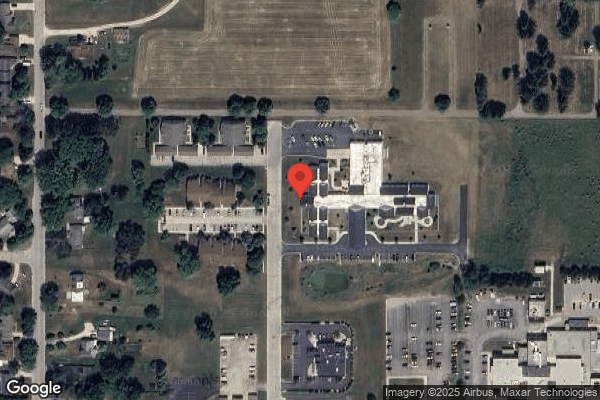
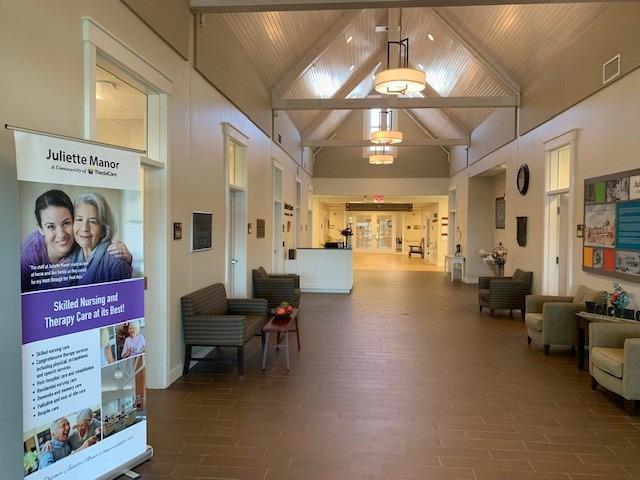
JULIETTE MANOR

482 OAK STREET, BERLIN, WI 54923 (920) 361-3092
Non profit - Corporation 37 Beds Independent Data: November 2025
Trust Grade
58/100
#99 of 321 in WI
Last Inspection: February 2025

Within standard 12-15 month inspection cycle. Federal law requires annual inspections.

Overview

Juliette Manor in Berlin, Wisconsin, has a Trust Grade of C, meaning it is average among nursing homes, falling in the middle of the pack. It ranks #99 out of 321 facilities in Wisconsin, placing it in the top half, but is #2 out of 2 in Green Lake County, indicating only one other local option is better. Unfortunately, the facility's trend is worsening, with issues increasing from 1 in 2024 to 6 in 2025. Staffing is a strong point, receiving a perfect 5/5 rating and having only 53% turnover, which is average, while they also provide more RN coverage than 96% of state facilities, ensuring better oversight of resident care. However, the facility has faced $9,653 in fines, which is concerning, and there have been serious incidents, including a resident who was not monitored properly, leading to hospitalization for kidney failure, and another resident whose surgical wound was not properly managed, resulting in infections. Overall, while Juliette Manor has good staffing and RN coverage, its recent increase in issues and specific care failures highlight significant areas for improvement.

Trust Score
C
58/100
In Wisconsin
#99/321
Top 30%
Safety Record
Moderate
Needs review
Inspections
Getting Worse
1 → 6 violations
Staff Stability
⚠ Watch
53% turnover. Above average. Higher turnover means staff may not know residents' routines.
Penalties
✓ Good
$9,653 in fines. Lower than most Wisconsin facilities. Relatively clean record.
Skilled Nurses
✓ Good
Each resident gets 109 minutes of Registered Nurse (RN) attention daily — more than 97% of Wisconsin nursing homes. RNs are the most trained staff who catch health problems before they become serious.
Violations
⚠ Watch
21 deficiencies on record. Higher than average. Multiple issues found across inspections.
★★★★☆
4.0
Overall Rating
★★★★★
5.0
Staff Levels
★★☆☆☆
2.0
Care Quality
★★★☆☆
3.0
Inspection Score
Stable
2024: 1 issues
2025: 6 issues

The Good

  • 5-Star Staffing Rating · Excellent nurse staffing levels
  • Full Sprinkler Coverage · Fire safety systems throughout facility
  • No fines on record

Facility shows strength in staffing levels, fire safety.

The Bad

Staff Turnover: 53%

Near Wisconsin avg (46%)

Higher turnover may affect care consistency

Federal Fines: $9,653

Below median ($33,413)

Minor penalties assessed

The Ugly 21 deficiencies on record

2 actual harm
Sept 2025 2 deficiencies
CONCERN (D) 📢 Someone Reported This

A family member, employee, or ombudsman was alarmed enough to file a formal complaint

Potential for Harm - no one hurt, but risky conditions existed

Report Alleged Abuse (Tag F0609)

Could have caused harm · This affected 1 resident

**NOTE- TERMS IN BRACKETS HAVE BEEN EDITED TO PROTECT CONFIDENTIALITY** Based on staff interview and record review, staff did not report an allegation of abuse in a timely manner for 1 resident (R) (R...

Read full inspector narrative →
**NOTE- TERMS IN BRACKETS HAVE BEEN EDITED TO PROTECT CONFIDENTIALITY** Based on staff interview and record review, staff did not report an allegation of abuse in a timely manner for 1 resident (R) (R1) of 4 sampled residents.On 8/27/25, Certified Nursing Assistant (CNA)-C witnessed CNA-D yell and swear at R1. R1 reported that CNA-D told R1 to urinate in R1's brief. The allegation of abuse was not reported timely to Nursing Home Administrator (NHA)-A.Findings includeThe facility's Long Term Care (LTC) Resident Abuse Prevention and Reporting Policy, revised 4/11/25, indicates: .G. Reporting: 1. Anyone who witnesses an act that may potentially meet the definition of abuse or any other defined misconduct, or to whom someone has reported abuse or any other defined misconduct, will immediately ensure resident safety and then report the allegation to the Administrator. 2. The proper method of reporting is in-person or phone call to assure prompt notification is made .5. For alleged violations of abuse, or if there is serious bodily injury, the facility must report the allegation to the Division of Quality Assurance (DQA) immediately, but no later than two hours after the allegation is made in accordance with state law. In addition, local law enforcement will be notified of any reasonable suspicion of a crime against a resident in the facility. 6. For alleged violations of neglect, exploitation .or mistreatment that do not result in great bodily injury, the facility must report the allegations to DQA no later than 24 hours in accordance with state law. On 9/10/25, Surveyor reviewed R1's medical record. R1 was admitted to the facility on [DATE] and had diagnoses including hemiplegia and hemiparesis following cerebral infarction affecting left non-dominant side, major depressive disorder, nicotine dependence, and contracture to left hand. R1's Minimum Data Set (MDS) assessment, dated 8/28/25, had a Brief Interview for Mental Status (BIMS) score of 14 out of 15 which indicated R1 had intact cognition. R1's was responsible for R1's healthcare decisions. On 9/10/25, Surveyor reviewed a facility-reported incident (FRI) that was submitted to the State Agency (SA) on 8/27/25 at 8:38 PM. The FRI indicated CNA-C reported on 8/27/25 that CNA-D entered R1's room, yelled, pointed, and swore at R1, and told R1 to urinate in R1's brief. CNA-D was suspended upon report of the incident and the facility contacted local law enforcement. On 9/10/25, Surveyor reviewed the facility's investigation which was submitted to the SA on 9/2/25 at 11:17 AM. The investigation indicated there was a delay in providing care to R1 because CNA-D did not provide assistance or change R1's brief when R1 activated the call light. CNA-D admitted to yelling at R1. The investigation indicated there was willful intent and CNA-D acted deliberately by yelling at R1 and denying R1 care. On 9/10/25 at 11:11 AM, Surveyor interviewed CNA-C via phone who stated on 8/27/25 at approximately 5:00 AM, CNA-C noted staff kept turning R1's call light off. CNA-C went to see what R1 needed because R1 was yelling for assistance. R1 stated R1 needed to use the bathroom and wanted to go outside to smoke but the other CNAs kept turning R1's light off. CNA-C stated CNA-D entered R1's room, pointed at R1 and yelled, This is bullshit. You need to stay in bed and wait. This smoking shit is going to stop or you will have it taken away. R1 was upset and yelled back at CNA-D. R1 told CNA-C that CNA-D always tells R1 to piss in R1's brief. CNA-C stated Registered Nurse (RN)-E entered R1's room seconds after CNA-D left and was also aware that CNA-D yelled at R1 and did not provide assistance. CNA-C reported that R1 told RN-E that staff told R1 to piss in R1's brief. CNA-D finished the shift and left for the day. CNA-C went home and was still bothered by the incident. CNA-C returned to the facility the same day (8/27/25) at approximately 1:00 PM to complete training and reported the incident to RN-F at approximately 3:00 PM. CNA-C verified CNA-C should have reported the incident sooner. On 9/10/25 at 3:21 PM, Surveyor interviewed NHA-A, Director of Nursing (DON)-B, and RN-F via phone conference. DON-B indicated CNA-C reported the incident to RN-F. RN-F confirmed CNA-C reported the incident to RN-F on 8/27/25 at approximately 4:00 PM. RN-F immediately educated CNA-C regarding reporting requirements and told CNA-C that CNA-C should have reported the incident to administration immediately. On 9/10/25 at 4:08 PM, Surveyor interviewed Regional Nurse Consultant (RNC)-G who stated the facility's policy indicates if there is no serious bodily injury, the facility has up to 24-hours to report. Surveyor informed RNC-G of the regulation and reviewed the facility's policy with RNC-G. The facility's policy indicates for alleged violations of abuse, OR if there is serious bodily injury, the facility must report the allegation to the SA immediately but no later than two hours after the allegation is made. RNC-G acknowledged the verbiage in the policy and confirmed the facility's investigation substantiated that abuse occurred.
CONCERN (D) 📢 Someone Reported This

A family member, employee, or ombudsman was alarmed enough to file a formal complaint

Potential for Harm - no one hurt, but risky conditions existed

Investigate Abuse (Tag F0610)

Could have caused harm · This affected 1 resident

**NOTE- TERMS IN BRACKETS HAVE BEEN EDITED TO PROTECT CONFIDENTIALITY** Based on staff interview and record review, the facility did not ensure an allegation of abuse was thoroughly investigated and c...

Read full inspector narrative →
**NOTE- TERMS IN BRACKETS HAVE BEEN EDITED TO PROTECT CONFIDENTIALITY** Based on staff interview and record review, the facility did not ensure an allegation of abuse was thoroughly investigated and corrective actions were taken to prevent further abuse for 1 resident (R) (R1) of 4 sampled residents. On 8/27/25, Certified Nursing Assistant (CNA)-C witnessed CNA-D enter R1's room, yell and swear at R1, and tell R1 to urinate in R1's brief. The facility's investigation did not include thorough staff education on abuse prevention and reporting or ensure education retention. In addition, staff did not immediately intervene and remove CNA-D from resident care per the facility's policy.Findings include:The facility's Long Term Care (LTC) Resident Abuse Prevention and Reporting Policy, revised 4/11/25, states the purpose of the policy is to outline standards and processes to ensure: (1) Residents live in a safe environment where they are free from abuse and neglect and are treated with respect and dignity, and, (2) to be in compliance with state and federal laws and regulations.E. Protection.(2) Safety, security, and support of the residents will be provided. The facility will take immediate action to correct the issue to reduce risk of further harm occurring .The alleged perpetrator will immediately be removed and the resident protected. Team members accused of alleged abuse will be immediately removed from the facility and will remain removed pending the results of a thorough investigation .F. Investigation .(3) The investigation will include .F. Interviewing team members who worked previous shifts to determine if they aware of any injuries or incident .G. Reporting: 1. Anyone who witnesses an act that may potentially meet the definition of abuse or any other defined misconduct, or to whom someone has reported abuse or any other defined misconduct, will immediately ensure resident safety and then report the allegations to the Administrator. 2. The proper method of reporting is in-person or phone call to assure prompt notification is made .5. For alleged violations of abuse, or if there is serious bodily injury, the facility must report the allegation to the Division of Quality Assurance (DQA) immediately, but no later than two hours after the allegation is made, in accordance with state law. In addition, local law enforcement will be notified of any reasonable suspicion of a crime against a resident in the facility. 6. For alleged violations of neglect, exploitation .or mistreatment that do not result in great bodily injury, the facility must report the allegations to DQA no later than 24 hours, in accordance with state law. On 9/10/25, Surveyor reviewed R1's medical record. R1 was admitted to the facility on [DATE] and had diagnoses including hemiplegia and hemiparesis following cerebral infarction affecting left non-dominant side, major depressive disorder, nicotine dependence, and contracture to left hand. R1's Minimum Data Set (MDS) assessment, dated 8/28/25, had a Brief Interview for Mental Status (BIMS) score of 14 out of 15 which indicated R1 had intact cognition. R1 was responsible for R1's healthcare decisions.On 9/10/25, Surveyor reviewed a facility-reported incident (FRI) that was submitted to the State Agency (SA) on 8/27/25 at 8:38 PM. The full investigation was submitted on 9/2/25 at 11:17 AM. The FRI indicated CNA-C reported on 8/27/25 that CNA-D swore at R1 and told R1 to urinate in R1's brief. CNA-D was suspended upon report of the incident and the facility contacted local law enforcement. CNA-D admitted to yelling at R1. The facility determined there was willful intent and that CNA-D acted deliberately by yelling at R1 and denying R1 care. On 9/10/25 at 11:11 AM, Surveyor interviewed CNA-C via phone who indicated on 8/27/25 at approximately 5:00 AM, CNA-C noted staff kept turning off R1's call light. CNA-C went to see what R1 needed because R1 was yelling for assistance. R1 stated R1 needed to use the bathroom and wanted to go outside to smoke but the other CNAs keep shutting R1's light off. CNA-C stated CNA-D then entered R1's room, pointed at R1, and yelled, This is bullshit. You need to stay in bed and wait. This smoking shit is going to stop or you will have it taken away. R1 was upset and yelled back at CNA-D. R1 reported to CNA-C that CNA-D always tells R1 to piss in R1's brief. CNA-C stated Registered Nurse (RN)-E entered R1's room seconds after CNA-D left and was also aware that CNA-D yelled and did not provide assistance for R1. CNA-C indicated R1 also told RN-E that staff told R1 to piss in R1's brief. CNA-C finished the shift, went home, and continued to be bothered by the incident. CNA-C returned to the facility the same day (8/27/25) at 1:00 PM to complete training and reported the incident to RN-F at approximately 3:00 PM. CNA-C confirmed CNA-C should have reported the incident sooner. CNA-C denied the facility provided CNA-C with written or verbal education regarding abuse reporting requirements. CNA-C stated that since 8/27/25, CNA-C was aware of other instances when residents' call lights were intentionally not answered and residents were told to urinate in their briefs. CNA-C did not reported the additional instances to administration but planned to do so during CNA-C's next shift. Surveyor encouraged CNA-C to immediately notify administration.The FRI included a statement from RN-E, dated 8/27/25, that indicated RN-E overheard CNA-D speak loudly and saw CNA-D exit R1's room. Approximately 15 to 30 seconds later, CNA-C exited R1's room. RN-E indicated R1 wanted to get up and smoke but there was not time while staff were rounding. RN-E told CNA-C that RN-E would assist with transferring R1 if CNA-C got R1 dressed. CNA-C went back to R1's room and RN-E went to another resident's room. RN-E and CNA-C transferred R1 approximately 5 minutes later. During the transfer, R1 told RN-E that R1 was upset and had to wet R1's self because no one could get R1 to the bathroom. R1 did not mention the loud conversation that RN-E overheard. RN-E reported that CNA-C had a concerned look and nodded toward CNA-D who was at the nurses' station. After the transfer, RN-E told CNA-C to talk to someone if CNA-C had a concern. RN-E indicated that because CNA-D was within earshot, CNA-C did not elaborate. RN-E encouraged CNA-C to talk to Director of Nursing (DON)-B or RN-F and said RN-E would support CNA-C if necessary.On 9/10/25 at 10:58 AM, Surveyor attempted to interview RN-E via phone. Surveyor left a message for RN-E but the call was not returned.The FRI also included an undated statement from CNA-H that indicated on 8/27/25 at 4:30 AM, R1's call light was on. R1 wanted to put pants on and get up to smoke. CNA-H told R1 the CNAs were doing rounds and asked if R1 could wait until the AM shift. CNA-H indicated R1 did not say that R1 was wet and needed to be changed. CNA-H stated R1 activated the call light again at 5:00 AM and CNA-C answered it.On 9/10/25 at 3:19 PM, Surveyor attempted to interview CNA-H via phone. Surveyor left a message for CNA-H but the call was not returned.On 9/10/25 at 9:55 AM, Surveyor interviewed Social Service Designee (SSD)-I who worked on 8/27/25 but was not aware of the incident until 8/28/25 when SSD-I received an email from NHA-A. SSD-I stated SSD-I spoke with R1 at that time and wrote a statement.The FRI included a statement from SSD-I, dated 8/28/25, that indicated SSD-I spoke with R1 regarding the incident. R1 reported that R1 woke up at approximately 4:12 AM and activated the call light. Staff answered the call light and R1 requested to use the bathroom. R1 stated the staff told R1 they were all busy and R1 had to wait until they could get back to R1. R1 stated staff said if R1 wet the bed, they would clean R1 up. R1 stated R1 could not wait and was incontinent but would not have been if staff had provided assistance when R1 asked.Surveyor reviewed the facility's call light log, dated 8/28/25, which documented the following call lights for R1 on 8/27/25:Call light on at 4:08 AM; Duration of 22 minutes and 31 seconds.Call light on at 4:39 AM; Duration of 9 minutes and 42 seconds.Call light on at 4:49 AM; Duration 17 minutes 46 seconds.The FRI contained education for RN-E (signed 9/2/25) and CNA-H (signed 8/30/25) on the LTC Behavioral Disturbance Policy. The FRI did not include signed education from CNA-C on abuse prevention and reporting or all staff education regarding abuse prevention and reporting requirements.On 9/10/25 at 10:29 AM, SSD-I provided Surveyor with an educational sign-in form titled LTC Resident Abuse Prevention and Reporting Policy; Violence Free Workplace: Employee Assistance Program ([NAME]), with a creation date of 8/14/25. SSD-I stated the education was completed a week prior to 8/27/25 as a result of another incident. SSD-I stated additional education was not completed following the 8/27/25 incident because the facility had just educated staff.On 9/10/25 at 3:21 PM, Surveyor interviewed NHA-A, DON-B, and RN-F via phone conference. RN-F stated CNA-C reported the incident to RN-F on 8/27/25 at approximately 4:00 PM and RN-F immediately reported the incident to DON-B. RN-F immediately educated CNA-C regarding reporting requirements and told CNA-C that CNA-C should have reported the incident to administration immediately. NHA-A stated the facility educated specific staff who worked on 8/27/25 and provided reeducation through a nursing meeting. Surveyor requested to see the all staff education.On 9/10/25 at 4:08 PM, Regional Nurse Consultant (RNC)-G provided Surveyor with a Nursing Meeting Agenda. Surveyor reviewed the Nursing Meeting Agenda notes, dated 9/3/25 and 9/5/25, which indicated the following was discussed:Importance of maintaining professionalism in all interactions.Addressing challenges: tone, respect, accountability.Customer service expectations.Abuse reporting and resident rights.Surveyor reviewed staff signatures and noted CNA-C and RN-E's signatures were not listed. RNC-G showed Surveyor CNA-C and RN-E's signatures from the 8/18/25 education. When Surveyor asked the date that CNA-C and RN-E reviewed and signed the education, RNC-G stated RNC-G did not know when CNA-C and RN-E completed the education.RNC-G also provided Surveyor with a copy of the facility's LTC Behavioral Disturbance Policy and 3 copies of the LTC Resident Abuse Prevention and Reporting Policy. RNC-G indicated the policies were reviewed with CNA-C, RN-E, and CNA-H. Surveyor reviewed the documentation and noted the following:The LTC Behavioral Disturbance Policy intended for CNA-C's education stated on the last page the education was completed by DON-B via phone on 8/27/25. Education was completed by RN-F in person on 8/27/25. The document included signatures from DON-B and RN-F. The document did not include signed confirmation that CNA-C received and understood the education.The LTC Resident Abuse Prevention and Reporting Policy intended for CNA-C's education stated on the last page the education was completed by DON-B via phone on 8/27/25. Education was completed by RN-F in person on 8/27/25. The document included signatures from DON-B and RN-F. The document did not include signed confirmation that CNA-C received and understood the education.The LTC Resident Abuse Prevention and Reporting Policy intended for CNA-H's education stated on the last page the education was completed with CNA-H on 8/27/25 as part of corrective action and signed by RN-F. The document did not include signed confirmation that CNA-H received and understood the education.The LTC Resident Abuse Prevention and Reporting Policy intended for RN-E's education stated on the last page the education was completed with RN-E on 8/27/25 and signed by DON-B. The document did not include signed confirmation that RN-E received and understood the education.On 9/10/25 at 4:08 PM, Surveyor interviewed RNC-G who stated the facility's policy indicates the facility has up to 24-hours to report. Surveyor informed RNC-G of the regulation and reviewed the facility's policy with RNC-G. The facility's policy states for alleged violations of abuse, the facility must report the allegation to the SA immediately but no later than two hours after the allegation is made or known. RNC-G acknowledged the regulation and policy. Surveyor reported to RNC-G that CNA-C reported continued instances after 8/27/25 of concerns with call light response times and staff telling residents to urinate in their briefs. RNC-G acknowledged the concern with staff retention regarding abuse prevention and reporting.
Feb 2025 4 deficiencies
CONCERN (D)

Potential for Harm - no one hurt, but risky conditions existed

Report Alleged Abuse (Tag F0609)

Could have caused harm · This affected 1 resident

**NOTE- TERMS IN BRACKETS HAVE BEEN EDITED TO PROTECT CONFIDENTIALITY** Based on staff and resident interview and record review, the facility did not report an allegation of abuse to Nursing Home Admi...

Read full inspector narrative →
**NOTE- TERMS IN BRACKETS HAVE BEEN EDITED TO PROTECT CONFIDENTIALITY** Based on staff and resident interview and record review, the facility did not report an allegation of abuse to Nursing Home Administrator (NHA)-A or the State Agency (SA) in a timely manner for 1 resident (R) (R2) of 16 sampled residents. R2 reported to staff that Certified Nursing Assistant (CNA)-F was rough with cares and yelled at R2. The allegation of abuse was not reported timely to NHA-A or the SA. Findings include: The facility's Long Term Care (LTC) Resident Abuse Prevention and Reporting Policy, revised 9/12/24, indicates: .G. Reporting: 1. Anyone who witnesses an act that may potentially meet the definition of abuse or any other defined misconduct, or to whom someone has reported abuse or any other defined misconduct, will immediately ensure resident safety and then report the allegations to the Administrator. 2. The proper method of reporting is in-person or phone call to assure prompt notification is made .6. For alleged violations of abuse, or if there is serious bodily injury, the facility must report the allegation immediately, but no later than 2 hours after the allegation is made, in accordance with state law. In addition, local law enforcement will be notified of any reasonable suspicion of a crime against a resident in the facility. 7. For alleged violations of neglect, exploitation .or mistreatment that do not result in great bodily injury, the facility must report the allegations to the Division of Quality Assurance (DQA) no later than 24 hours, in accordance with state law. From 2/3/25 to 2/5/25, Surveyor reviewed R2's medical record. R2 was admitted to the facility on [DATE] and had diagnoses including encounter for surgical after care following surgery on the circulatory system, hypertensive heart and chronic kidney disease, type 2 diabetes, and major depressive disorder. R2's Minimum Data Set (MDS) assessment, dated 12/30/24, had a Brief Interview for Mental Status (BIMS) score of 12 out of 15 which indicated R2 had moderate cognitive impairment. R2 was R2's own person. Surveyor reviewed the facility's grievance file and noted a grievance, dated 1/20/25, that indicated R2 reported that CNA-F was rough during cares and raised CNA-F's voice at R2. The investigation indicated CNA-F admitted that CNA-F raised CNA-F's voice and reported to the nurse that R2 had a concern. The resolution section indicated Director of Nursing (DON)-B would follow-up/provide disciplinary action for CNA-F. The grievance was signed by Social Worker (SW)-J on 1/21/25 and by NHA-A on 1/24/25 and contained the following interviews: ~On 1/20/25, SW-J interviewed R2 who indicated CNA-F assisted R2 to the bathroom. When R2 moved R2's table and items fell on the ground, CNA-F told R2 not to touch the table again in a raised voice. When R2 was finished in the bathroom, CNA-F used a wipe to clean R2's bottom and a towel to dry R2. R2 indicated CNA-F was rough when drying R2 and complained that it hurt. CNA-F raised CNA-F's voice again when R2 told CNA-F to stop because CNA-F was rough. R2 indicated CNA-F was not happy when R2 moved the table and made a mess and CNA-F had to clean it up. ~On 1/20/25, SW-J interviewed CNA-G who was working with CNA-F on the night of the incident (1/18/25). CNA-G's statement indicated CNA-G did not see a concern when R2 spilled items off the table. CNA-G stated after R2 was assisted to the toilet, CNA-G left. CNA-F assisted R2 off the toilet and then reported to CNA-G that R2 no longer wanted CNA-F in the room. CNA-G indicated CNA-F appeared annoyed or bothered and was apologetic to CNA-G. R2 later told CNA-G that CNA-F was too rough during cares. ~On 1/20/25, SW-J interviewed Registered Nurse (RN)-H who was the AM nurse on 1/19/25. RN-H indicated RN-I (the night shift nurse) reported that R2 complained that CNA-F was too rough during cares. RN-H told RN-I that R2 said CNA-F yelled at R2 when R2 moved R2's table and made a mess. ~On 1/20/25, SW-J interviewed RN-I who indicated R2 reported that CNA-F was rough when CNA-F cleaned R2 after R2 used the bathroom. R2 was angry about what occurred and did not want CNA-F to assist R2 anymore. RN-I attempted to have CNA-F enter R2's room with RN-I to check R2's vital signs but R2 demanded CNA-F leave. CNA-F did not return to R2's room and told RN-I that R2 was mad at CNA-F. CNA-F appeared frustrated but RN-I did not hear CNA-F raise CNA-F's voice. RN-I stated CNA-F can be stern when frustrated. On 2/5/25 at 10:11 AM and 10:26 AM, Surveyor interviewed DON-B who indicated DON-B received an email on 1/19/25 (Saturday) at 8:40 AM from RN-I that R2 requested to speak with SW-J and management staff on 1/20/25 (Monday). DON-B was off on 1/20/25 and did not see the email on 1/19/25. DON-B indicated the incident occurred overnight on the 1/18/25 to 1/19/25 night shift and CNA-F also worked the 1/19/25-1/20/25 night shift. DON-B indicated CNA-F was removed from caring for R2 but did assist other residents. CNA-F was removed from the next scheduled shift on 1/22/25 because the facility was working through Human Resources after interviews were completed to find out what happened. DON-B indicated the allegation of abuse was not reported to the SA. DON-B indicated if staff have an abuse concern, they should call the shift leader instead of sending an email. DON-B thought RN-I did not consider the incident abuse and indicated the email sent by RN-H did not state why R2 wanted to talk to SW-J and management staff. On 2/5/25 at 10:50 AM, Surveyor interviewed R2 who recalled the event and indicated CNA-F was mean and it was not the first time. R2 stated CNA-F rubbed and rubbed so hard down there and R2 was sensitive in that area. R2 tried to grab the towel away but CNA-F yelled at R2 and said CNA-F was doing CNA-F's job. R2 told CNA-F that it hurt but CNA-F kept going. R2 told the night shift nurse what occurred. R2 stated R2 did not want CNA-F in R2's room and when CNA-F tried to enter the room, R2 kicked CNA-F out. On 2/5/25 at 11:26 AM, Surveyor interviewed RN-I via phone who stated CNA-F assisted R2 to the bathroom on 1/18/25 at approximately 8:00 PM or 9:00 PM. R2 reported that CNA-F was rough and hurt R2 when CNA-F cleaned R2. RN-I indicated R2's groin and buttocks were red and R2 didn't like how CNA-F provided care because R2 was already red in that area. RN-I heard R2 yelling and entered R2's room. R2 said CNA-F was being too aggressive, however, by the time RN-I entered the room, CNA-F had finished cares. CNA-F and RN-I then transferred R2 to bed. R2 repeatedly said I'm hurting and indicated R2 didn't want CNA-F in R2's room. RN-I verified R2 kicked CNA-F out of the room when CNA-F entered the room with RN-I and attempted to get R2's vital signs. RN-I reported the information to the AM shift and stated another CNA worked with R2 on the night of 1/19/25. RN-I stated RN-I wasn't sure if CNA-F was stubborn and continued to try to clean R2 up or if R2 over-reacted. On 2/5/25 at 10:56 AM, Surveyor interviewed NHA-A who heard about the incident on 1/20/25 from SW-J and started an investigation. NHA-A indicated it seemed to be more of a care issue and said R2 was upset with how CNA-F provided care and the technique CNA-F used. NHA-A did not feel the incident was an allegation of abuse and indicated CNA-F was a long-term employee with no previous abuse concerns. NHA-A verified CNA-F admitted to raising CNA-F's voice at R2. NHA-A indicated other residents were interviewed with no other concerns. NHA-A stated after gathering statements, NHA-A did not feel the incident was reportable and did not think it was an allegation of abuse since R2 did not want to talk to management until 1/20/25.
CONCERN (D)

Potential for Harm - no one hurt, but risky conditions existed

Investigate Abuse (Tag F0610)

Could have caused harm · This affected 1 resident

**NOTE- TERMS IN BRACKETS HAVE BEEN EDITED TO PROTECT CONFIDENTIALITY** Based on staff and resident interview and record review, the facility did not ensure an allegation of abuse was thoroughly inves...

Read full inspector narrative →
**NOTE- TERMS IN BRACKETS HAVE BEEN EDITED TO PROTECT CONFIDENTIALITY** Based on staff and resident interview and record review, the facility did not ensure an allegation of abuse was thoroughly investigated for 1 resident (R) (R2) of 16 sampled residents. R2 reported that Certified Nursing Assistant (CNA)-F was rough with cares and yelled at R2. R2 informed staff that R2 did not want CNA-F to care for R2. CNA-F attempted to go back into R2's room to obtain R2's vital signs but R2 yelled at CNA-F to get out. CNA-F was not removed from or supervised during resident care until 1/22/25. Findings include: The facility's Long Term Care (LTC) Resident Abuse Prevention and Reporting Policy, revised 9/12/24, indicates: .E. Protection: 1. Immediately upon receiving a report of alleged abuse or any other defined misconduct, the facility will take all necessary steps to protect residents from additional harm. The facility will coordinate delivery of appropriate medical and/or psychological care and attention. 2. Safety, security, and support of the residents will be provided. The facility will take immediate action to correct the issue to reduce the risk of further harm occurring. This will include as appropriate .The alleged perpetrator will immediately be removed and the resident protected. Team members accused of abuse will be immediately removed from the facility and will remain removed pending the results of a thorough investigation. From 2/3/25 to 2/5/25, Surveyor reviewed R2's medical record. R2 was admitted to the facility on [DATE] and had diagnoses including encounter for surgical after care following surgery on the circulatory system, hypertensive heart and chronic kidney disease, type 2 diabetes, and major depressive disorder. R2's Minimum Data Set (MDS) assessment, dated 12/30/24, had a Brief Interview for Mental Status (BIMS) score of 12 out of 15 which indicated R2 had moderate cognitive impairment. R2 was R2's own person. Surveyor reviewed the facility's grievance file and noted a grievance, dated 1/20/25, that indicated R2 reported that CNA-F was rough and raised CNA-F's voice at R2 during cares. The investigation indicated CNA-F admitted that CNA-F raised CNA-F's voice at R2 and reported to the nurse that R2 had a concern. The facility interviewed other residents on 1/22/25 and 1/23/25 with no concerns. The resolution section indicated Director of Nursing (DON)-B would follow-up/provide disciplinary action for CNA-F. The grievance was signed by Social Worker (SW)-J on 1/21/25 and by Nursing Home Administrator (NHA)-A on 1/24/25. The grievance contained the following interviews: ~On 1/20/25, SW-J interviewed R2 who indicated CNA-F assisted R2 to the bathroom. When R2 moved R2's table and items fell on the ground, CNA-F told R2 not to touch the table again in a raised voice. When R2 was finished in the bathroom, CNA-F used a wipe to clean R2's bottom and a towel to dry R2. R2 indicated CNA-F was rough when drying R2 and complained that it hurt. CNA-F raised CNA-F's voice again when R2 told CNA-F to stop. R2 indicated CNA-F was not happy when R2 moved the table and made a mess and CNA-F had to clean it up. ~On 1/20/25, SW-J interviewed CNA-G who worked with CNA-F on the night of the incident (1/18/25). CNA-G's indicated CNA-G did not see a concern when R2 spilled items off the table. CNA-G stated after R2 was assisted to the toilet, CNA-G left. CNA-F assisted R2 off the toilet and then reported to CNA-G that R2 no longer wanted CNA-F in the room. CNA-G indicated CNA-F appeared annoyed or bothered and was apologetic to CNA-G. R2 later reported to CNA-G that CNA-F was too rough during cares. CNA-G had not heard any other residents make other accusations or negative comments about CNA-F. ~On 1/20/25, SW-J interviewed Registered Nurse (RN)-H who was the AM shift nurse on 1/19/25. RN-H indicated RN-I (the night shift nurse) reported that R2 complained about CNA-F being too rough with cares. RN-H told RN-I that R2 stated CNA-F yelled at R2 when R2 moved R2's table and made a mess. ~On 1/20/25, SW-J interviewed RN-I who indicated R2 reported that CNA-F was rough when CNA-F cleaned R2 after R2 used the bathroom. R2 was angry about what occurred and did not want CNA-F to assist R2 anymore. RN-I attempted to have CNA-F enter R2's room with RN-I and obtain R2's vital signs but R2 demanded CNA-F leave the room. CNA-F did not return to R2's room and told RN-I that R2 was mad at CNA-F. CNA-F appeared frustrated but RN-I did not hear CNA-F raise CNA-F's voice. RN-I stated CNA-F can be stern when CNA-F is frustrated. On 2/5/25 at 10:11 and 10:26 AM, Surveyor interviewed Director of Nursing (DON)-B who indicated DON-B received an email on 1/19/25 (Sunday) at 8:40 AM from RN-I that R2 requested to speak with SW-J and management staff on 1/20/25 (Monday). DON-B was off on 1/20/25 and did not see the email on 1/19/25. The email also was sent to SW-J and a unit manager. DON-B indicated the incident occurred overnight from 1/18/25 to 1/19/25. DON-B indicated CNA-F worked the 1/19/25-1/20/25 night shift. CNA-F was removed from caring for R2 but assisted other residents. DON-B indicated CNA-F was removed from the schedule on 1/22/25 based on the interviews completed and CNA-F's admission that CNA-F raised CNA-F's voice to R2. On 2/5/25 at 10:50 AM, Surveyor interviewed R2 who recalled the event and indicated CNA-F was mean and it was not the first time. R2 stated CNA-F rubbed and rubbed so hard down there and R2 was sensitive in that area. R2 tried to grab the towel but CNA-F yelled at R2 and said CNA-F was doing CNA-F's job. R2 told CNA-F that it hurt but CNA-F kept going. R2 told the night shift nurse what happened and stated R2 did not want CNA-F in R2's room. R2 indicated when CNA-F later tried to enter R2's room to take vital signs, R2 kicked CNA-F out. On 2/5/25 at 11:26 AM, Surveyor interviewed RN-I via phone who stated R2 had to use the bathroom at approximately 8:00 PM or 9:00 PM on 1/18/25 and CNA-F assisted R2. RN-I indicated when CNA-F cleaned R2, R2 said CNA-F was rough and hurt R2. RN-I indicated R2's groin and buttocks were red and R2 didn't like how CNA-F provided care because R2 was already red in that area. RN-I heard R2 yelling and entered R2's room. R2 said CNA-F was being too aggressive, however, when RN-I entered the room, CNA-F was already finished with cares. CNA-F and RN-I then transferred R2 to bed. R2 repeatedly said I'm hurting and that R2 did not want CNA-F in R2's room any more. RN-I stated CNA-F later attempted to go in R2's room and obtain vital signs with RN-I, however, R2 refused to allow CNA-F in the room and told CNA-F to get out. RN-I reported the information to the AM shift and stated another CNA worked with R2 on the night of 1/19/25. RN-I stated RN-I wasn't sure if CNA-F was stubborn and continued to try to clean R2 or if R2 overreacted. On 2/5/25 at 10:56 AM, Surveyor interviewed NHA-A who was notified of the incident until 1/20/25. When Surveyor reviewed the timeline with NHA-A, Surveyor noted CNA-F was removed from caring for R2 on 1/18/25, however, CNA-F still provided care for other residents and worked the following night shift. NHA-A indicated the facility gives latitude to nurses to change assignments for CNAs and indicated some residents have a caregiver gender preference so the nurse removed CNA-F from R2's care based on R2's wishes.
CONCERN (D)

Potential for Harm - no one hurt, but risky conditions existed

Infection Control (Tag F0880)

Could have caused harm · This affected 1 resident

**NOTE- TERMS IN BRACKETS HAVE BEEN EDITED TO PROTECT CONFIDENTIALITY** Based on observation, staff interview, and record review, the facility did not maintain an infection prevention and control prog...

Read full inspector narrative →
**NOTE- TERMS IN BRACKETS HAVE BEEN EDITED TO PROTECT CONFIDENTIALITY** Based on observation, staff interview, and record review, the facility did not maintain an infection prevention and control program designed to prevent the transmission of communicable disease and infection for 1 resident (R) (R2) of 1 resident observed during wound care. Registered Nurse (RN)-C did not complete hand hygiene during wound vac dressing changes for R2. Findings include The facility's Long Term Care (LTC) Infection Prevention and Control Policy, dated 12/23/24, indicates: .2. Hand Decontamination: a. Team members will use an alcohol-based hand rub: .iii. Before and after resident contact; iv. After contact with a resident's surroundings or equipment; v. Prior to performing any aseptic procedures .vii. Prior to contact with a resident's invasive medical device . From 2/3/25 to 2/5/25, Surveyor reviewed R2's medical record. R2 was admitted to the facility on [DATE] and had diagnoses including encounter for surgical after care following surgery on the circulatory system, hypertensive heart and chronic kidney disease, type 2 diabetes, and major depressive disorder. R2's Minimum Data Set (MDS) assessment, dated 12/30/24, had a Brief Interview for Mental Status (BIMS) score of 12 out of 15 which indicated R2 had moderate cognitive impairment. R2 was R2's own person. R2's medical record indicated the following: ~R2 was admitted to the facility with lower leg and groin surgical wounds after a hospital stay due to a lower leg thromboembolism and critical limb ischemia (a blood clot that travels and blocks blood flow). At the hospital, R2 underwent thromboectomy (surgical removal of the blood clot) and left anterior tibial compartment fasciotomy due to acute compartment syndrome (a surgical procedure where incisions are made to release pressure caused by a medical emergency called acute compartment syndrome which occurs when high pressure builds up within the muscle compartment, potentially damaging muscle and nerve tissue if not treated promptly). ~R2 had a history of extended-spectrum beta lactamase (ESBL) (an enzyme that makes bacteria resistant to certain antibiotics) and was to be on enhanced barrier precautions (EBP) for the duration of R2's admission. ~On 1/30/25, R2 had a vascular surgery appointment. A note indicated R2 had a necrotic left calf fasciotomy site and a right groin open and draining wound. A wound vac was applied to both wounds and was to be changed 3 times weekly. On 2/4/25 at 10:45 AM, Surveyor observed RN-C complete R2's wound vac dressing changes. Prior to the dressing change, RN-C completed hand hygiene and donned a gown and gloves. With a gloved hand, RN-C pushed a bedside table that contained a clean towel and dressing change supplies toward R2's bed. With gloved hands, RN-C then picked up and moved R2's wheelchair by the handles and continued to push the table toward the foot of R2's bed. RN-C then walked across the room, picked up a garbage can, and put the can underneath the table. With the same gloved hands, RN-C disconnected the tubing and removed the bandages from R2's leg and groin. After R2's dressings were removed, RN-C removed gloves and completed hand hygiene. On 2/4/25 at 11:30 AM, Surveyor interviewed RN-C about not completing hand hygiene after RN-C touched R2's wheelchair and the garbage can and then removed R2's bandages. RN-C indicated RN-C completed all of the dirty tasks before the clean. On 2/4/25 at 2:27 PM, Surveyor interviewed Director of Nursing (DON)-B who confirmed RN-C should have completed hand hygiene and donned clean gloves prior to removing R2's dressings. DON-B indicated RN-C thought RN-C was completing all of the dirty tasks first.
CONCERN (E)

Potential for Harm - no one hurt, but risky conditions existed

Menu Adequacy (Tag F0803)

Could have caused harm · This affected multiple residents

**NOTE- TERMS IN BRACKETS HAVE BEEN EDITED TO PROTECT CONFIDENTIALITY** Based on staff interview and record review, the facility did not ensure therapeutic diets were followed for 5 residents (R235, R...

Read full inspector narrative →
**NOTE- TERMS IN BRACKETS HAVE BEEN EDITED TO PROTECT CONFIDENTIALITY** Based on staff interview and record review, the facility did not ensure therapeutic diets were followed for 5 residents (R235, R23, R184, R186, and R10) of 36 sampled residents. R235, R23 and R184 had orders for cardiac diets. R235, R23, and R184 did not receive their ordered diets for lunch on 2/4/25. R186 had an order for a renal diet. R186 did not receive R186's ordered diet for lunch on 2/4/25. R10 had an order for a cardiac/diabetic/renal diet. R10 did not receive R10's ordered diet for lunch on 2/4/25. Findings include: The facility's extended menu (that contains what residents on therapeutic diets should receive) for the 2/4/25 lunch meal indicated the following: ~General diet: Breaded chicken, mashed potatoes with gravy, carrots, a raspberry pocket, and milk ~Cardiac diet: Plain chicken breast, baked potato, fruit, and milk ~Renal diet: Grilled chicken breast, large garden salad, and fruit Between 2/4/25 and 2/5/25, Surveyor reviewed residents' medical records and diet orders and made the following observations: ~R235 was admitted to the facility on [DATE] and had diagnoses including stroke, atrial fibrillation, hypertension, and carotid artery disease. R235 was prescribed a cardiac diet. During the lunch meal on 2/4/25, R235 did not receive a baked potato or fruit. R235 received mashed potatoes and gravy and a raspberry pocket instead. . ~R23 was admitted to the facility on [DATE] and had diagnoses including chronic diastolic (congestive) heart failure and peripheral vascular disease (PVD). R23 was prescribed a cardiac diet. During the lunch meal on 2/4/25, R23 did not receive a baked potato or fruit. R23 received mashed potatoes and gravy and a raspberry pocket instead. ~R184 was admitted to the facility on [DATE] and had diagnoses including chronic systolic (congestive) heart failure and hypertensive heart and chronic kidney disease with heart failure. R184 was prescribed a cardiac diet. During the lunch meal on 2/4/25, R184 did not receive a baked potato or fruit. R184 received mashed potatoes and gravy and a raspberry pocket instead. ~R186 was admitted to the facility on [DATE] and had diagnoses including hypertensive heart and chronic kidney disease with heart failure and stage 5 chronic kidney disease, end stage renal disease, and congestive heart failure (CHF). R186 was on dialysis and was prescribed a renal diet. During the lunch meal on 2/4/25, R186 did not receive a garden salad or fruit. R186 received mashed potatoes and gravy and a raspberry pocket instead. ~R10 was admitted to the facility on [DATE] and had diagnoses including end stage renal disease, diabetes, hypertension, atrial fibrillation, stroke, and carotid stenosis. R10 was prescribed a cardiac/diabetic/renal diet. During the lunch meal on 2/4/25, R10 did not receive a baked potato, garden salad, or fruit. R10 received mashed potatoes and gravy and a raspberry pocket instead. On 2/4/25 at 1:30 PM, Surveyor interviewed Dietary Aid (DA)-D who indicated DA-D was not aware that all diet orders did not receive the same dessert. DA-D indicated the cook usually sets up trays a head of time with desserts. On 2/4/25 at 2:36 PM, Surveyor interviewed Dietary Manager (DM)-E and informed DM-E of the observations during meal service. DM-E indicated staff should follow the menus for the therapeutic diets and should have baked potatoes, salad, and fruit available for residents on therapeutic diets.
Nov 2024 1 deficiency
CONCERN (D) 📢 Someone Reported This

A family member, employee, or ombudsman was alarmed enough to file a formal complaint

Potential for Harm - no one hurt, but risky conditions existed

Accident Prevention (Tag F0689)

Could have caused harm · This affected 1 resident

**NOTE- TERMS IN BRACKETS HAVE BEEN EDITED TO PROTECT CONFIDENTIALITY** Based on observation, staff interview, and record review, the facility did not ensure appropriate supervision was implemented to...

Read full inspector narrative →
**NOTE- TERMS IN BRACKETS HAVE BEEN EDITED TO PROTECT CONFIDENTIALITY** Based on observation, staff interview, and record review, the facility did not ensure appropriate supervision was implemented to ensure the safety of 3 residents (R) (R5, R6, and R7) of 8 sampled residents. On 3/1/24, R1 made a lewd comment to R5. The facility did not complete a thorough investigation. On 6/19/24, R1 asked R6 to expose R6's self while R1 watched from outside the window. The facility did not revise R1's care plan to provide sufficient supervision. On 8/9/24, R1 entered R7's room while R7 was sleeping. The facility did not complete a thorough investigation or revise R1's care plan to provide sufficient supervision. Findings include: The facility's LTC (Long Term Care) Resident Abuse Prevention & Reporting Policy, with a review date of 9/12/24, indicates: The purpose of this policy is .to ensure: (1) Residents live in a safe environment where they are free from abuse and neglect and are treated with respect and dignity .C. Prevention: .5. The population of LTC facilities present the following factors which could result in mistreatment of residents, including but not limited to: a. The assessment, planning of care and services, and monitoring of residents with needs and behaviors which might lead to conflict or neglect, such as residents with a history of cognitive deficits, sensory deficits, aggressive behaviors, residents who have behaviors such as entering other residents' rooms .socially inappropriate behaviors .E. Protection: 1. Immediately upon receiving a report of alleged abuse or any other defined misconduct, the facility will take all necessary steps to protect residents from additional harm .F. Investigation: 1. When an incident or suspected incident of abuse or any other defined misconduct is reported, the Administrator, or their designee, will promptly and thoroughly investigate the incident . On 11/25/24, Surveyor reviewed R1's medical record. R1 was admitted to the facility on [DATE] and had diagnoses including emphysema (shortness of breath due to swelling of the tiny air sacks in the lungs). R1's Minimum Data Set (MDS) assessment, dated 9/26/24, stated R1's Brief Interview for Mental Status (BIMS) score was 15 out of 15 which indicated R1 had no cognitive impairment. R1 was responsible for R1's healthcare decisions. R1's medical record contained a Care Management Final Disposition document from the hospital, dated 12/20/24, that stated, .Legal Concerns: Sex Offender Registry . R1's care plan contained no mention of sexually inappropriate concerns. A safety plan for R1, dated 11/18/24, indicated R1 was a low security risk. R1 had reported/initial behavior of a history of making inappropriate remarks to staff and residents which made staff and residents feel uncomfortable around R1. The safety plan indicated staff should sustain a quiet environment, maintain proper spacing and reactionary distances and, in case of emergency, contact Security for assistance. Security should confirm that a safety plan visual was displayed outside R1's room at eye level and reinforce that inappropriate behavior and remarks would not be tolerated. On 11/25/24 at 10:25 AM, Surveyor attempted to interview R1 in R1's room. R1 indicated R1 did not want to talk to anyone about anything. Surveyor noted there was not a safety plan visual displayed outside R1's room. On 11/25/24 at 12:14 PM, Surveyor interviewed Certified Nursing Assistant (CNA)-C. When asked what a safety plan visual looked like, CNA-C indicated residents had a plan of care in their closet that indicated what kind of assistance they needed. On 11/25/24 at 12:18 PM, Surveyor interviewed Registered Nurse (RN)-D. When asked what a safety plan visual looked like, RN-D appeared confused and indicated the facility had a video system that detected movement in rooms of residents assessed to be at risk for falls which displayed a green light above the door. Surveyor reviewed an investigation that indicated on 6/19/24, R6 reported that R1 asked if R6 was interested in a relationship and asked R6 to stand in R6's bedroom window and expose R6's self to R1 outside. An investigation was completed including a report to law enforcement, however, there were no changes made to R1's care plan. The investigation indicated R1's safety plan was updated. On 11/25/24, Surveyor reviewed R6's medical record. R6 was admitted to the facility on [DATE] and had diagnoses including seizure disorder and anxiety. R6's MDS assessment, dated 6/20/24, stated R6's BIMS score was 13 out of 15 which indicated R6 had little to no cognitive impairment. R6 had a court-appointed guardian who was responsible for R6's healthcare decisions. R6 was discharged to the community on 7/17/24. On 11/25/24 at 1:34 PM, Surveyor interviewed Nursing Home Administrator (NHA)-A who indicated staff could see a resident's safety plan (if applicable) on the left side of their computer screen when logged into a resident's electronic medical record (EMR). On 11/25/24 at 1:47 PM, Surveyor interviewed RN-D. When asked to show Surveyor R1's safety plan, RN-D indicated RN-D didn't know how. When Surveyor and RN-D viewed R1's EMR, Surveyor pointed out the safety plan which was was noted by a flag in a column on the left side of R1's profile screen. RN-D indicated RN-D had only worked at the facility for two weeks. On 11/25/24 at 1:59 PM, Surveyor interviewed NHA-A and Director of Nursing (DON)-B. NHA-A verified the facility was aware upon admission that R1 was on the sex offender list. NHA-A indicated NHA-A was told R1 was on the list but didn't need a case worker because R1's charge was old. When asked what interventions were put in place after R1 asked R6 to expose R6's self, NHA-A indicated the facility called law enforcement and had Security visit more frequently. NHA-A indicated the facility had not needed to called Security for R1 prior to that incident. NHA-A indicated the plan was to have staff call Security and NHA-A immediately if anything further occurred. DON-B indicated Security typically visited R1's unit twice in a 24-hour period. DON-B indicated Security did not talk to R1 during the visits unless staff had concerns. On 11/26/24 at 8:13 AM, Surveyor interviewed NHA-A who indicated R1's safety plan provided to Surveyor on 11/25/24 only contained active notes. NHA-A then provided Surveyor with documents that NHA-A indicated contained all of R1's active and inactive safety notes. Surveyor reviewed the safety documents which indicated the following: ~ On 2/21/24, R1 verbally sexually harassed staff with lewd remarks. A care plan intervention was added for two staff when completing cares. An E-mail sent to nurses contained information on where to locate R1's safety plan and indicated a yellow safety sign was put on R1's door. ~ On 3/1/24, R1 made a lewd remark to R5. A care plan intervention was added for R1 to have no contact with R5 unless in a supervised area. ~ Notes indicated R1 had no behavior concerns from a Security standpoint during the months of March and April (2024). Notes indicated on 4/28/24, R1 was removed from the safety plan for good behavior. ~ On 6/19/24, R1 asked R6 to expose R6's self. The safety plan was reinitiated and indicated R1 was at low risk. Security officers were to reinforce that inappropriate behavior and remarks would not be tolerated. ~ On 8/1/24, NHA-A requested a safety plan update that included education for R1 about being respectful to residents and staff and that R1 needed to knock and receive permission before entering residents' rooms. ~ On 8/9/24, R1 was discovered in R7's room while R7 was asleep. Notes indicated R1 indicated a CNA gave R1 permission to enter the room, however, the CNA denied giving R1 permission. The note stated, . I spoke to (R1) and will file a report when further information is gathered from the Administrator . There was no change in verbiage for R1's plan for Security. On 11/26/24, Surveyor reviewed R5's medical record. R5 was admitted to facility on 12/28/21 and had diagnoses including dementia and anxiety. R5's MDS assessment, dated 9/19/24, stated R5's BIMS score was 8 out of 15 which indicated R5 had moderate cognitive impairment. R5 had a court-appointed guardian who was responsible for R5's healthcare decisions. A note, dated 3/1/24, indicated staff spoke to R5 regarding an incident with another patient and a plan to prevent reoccurrence. The note indicated R5 expressed understanding that R5 should notify staff if the other resident violated the safety agreement. On 11/26/24, Surveyor reviewed R7's medical record. R7 was admitted to the facility on [DATE] and had diagnoses including emphysema. R7's MDS assessment, dated 9/13/24, stated R7's BIMS score was 12 out of 15 which indicated R7 had moderate cognitive impairment. R7 was responsible for R7's healthcare decisions. R7's medical record did not contain notes regarding the above mentioned incident on 8/9/24. On 11/26/24 at 10:02 AM, Surveyor interviewed CNA-E who indicated staff can't always pay attention to what R1 is doing. When asked about R1's safety plan, CNA-E first indicated the facility had green lights in the hall connected to a movement sensor for residents who were at risk for falls. CNA-E indicated R1 did not have a green light. When asked if R1 was on a safety plan, CNA-E stated, I don't think so. We just try to keep an eye on (R1). CNA-E indicated nurses put notes in the EMR when they are notified of concerns. CNA-E indicated CNAs did not complete behavior monitoring documentation. Surveyor reviewed a document that indicated NHA-A interviewed CNA-F on 11/26/24. CNA-F indicated CNA-F did not permit R1 to enter R7's room but waved to R1 as CNA-F weighed residents on the scale. CNA-F checked on R7 within three minutes and redirected R1 to R1's room. On 11/26/24 at 10:44 AM, Surveyor interviewed NHA-A and DON-B. NHA-A verified CNA-F was the CNA mentioned in R1's safety plan notes for 8/9/24. DON-B was unsure of the specific time of day the 8/9/24 incident occurred but thought it was later in the afternoon. NHA-A indicated CNA-F was weighing residents in the same hall as R7's room when R1 waved to CNA-F and CNA-F waved back. After CNA-F finished obtaining weights, CNA-F observed R1 in R7's room and redirected R1 out of the room. NHA-A indicated the facility's Social Worker interviewed R7 who did not know R1 was in R7's room. NHA-A verified a thorough investigation was not completed. NHA-A indicated other residents were not interviewed because nothing else was reported. NHA-A indicated other staff were not interviewed because CNA-F was the one who reported the concern. When asked if interventions were put in place, NHA-A indicated the facility notified Security and followed the same intervention to call Security. When asked if preventative measures were put in place, NHA-A indicated R1 stated R1 had approval to enter R7's room. Staff re-educated R1 that R1 was not permitted to enter a resident's room unless R1 knocked on the door and received verbal permission. NHA-A indicated the incident was an unfortunate misunderstanding. DON-B indicated updates were R1's safety plan notes which nursing staff could see in R1's EMR. When asked why CNA-F's interview with NHA-A was dated 10/26/24, NHA-A indicated NHA-A had to verify the SW spoke to CNA-F the day it happened. NHA-A indicated NHA-A was made aware of the incident on 8/9/24 and would have been made aware of the incident the following morning at morning meeting. On 11/26/24 at 11:06 AM, Surveyor interviewed CNA-F via phone. CNA-F indicated the incident on 8/9/24 occurred in the morning after 8:00 AM. CNA-F indicated CNA-F was weighing three residents when R1 came from other unit (R1 did not reside on same unit as R7). CNA-F indicated R7 kept R7's door open enough so staff could see R7's bed. CNA-F was in the hall approximately twenty feet from R7's room. CNA-F indicated R1 was by R7's door when R1 made a friendly wave to CNA-F and CNA-F waved back. After CNA-F finished weighing residents, CNA-F saw R1 in R7's room. When CNA-F asked what R1 was doing, R1 said, You told me I could come in. CNA-F stated, No. (R7) is sleeping. CNA-F indicated R1 stormed off to another unit. CNA-F indicated R1 was in R7's room for approximately three to four minutes. CNA-F indicated the SW asked CNA-F about the incident later that afternoon. On 11/26/24 at 11:51 AM, Surveyor interviewed NHA-A who indicated Security sometimes picked up labs to take to the hospital and did rounds and checked-in with staff. NHA-A indicated lab runs were often done around 2:00 AM. On 11/26/24 at 11:55 AM, Surveyor interviewed Social Services Designee (SSD)-G who was the facility's SW but was not licensed. SSD-G indicated SSD-G was on vacation during the 3/1/24 incident. Regarding the 8/9/24 incident, SSD-G indicated R1 and staff reported the incident. SSD-G indicated R1 and R7 were previously friends and R7 would let R1 into R7's room to talk. SSD-G indicated staff reminded R1 that R1 needed to knock and be invited into rooms before entering. Staff informed Security of the incident. SSD-G verified no other residents were interviewed during the investigation. On 11/26/24 at 12:35 PM, Surveyor interviewed Lead Security Officer (LSO)-H who indicated a safety plan visual was a yellow triangle shaped placard with an exclamation point in the middle which alerted staff to check the resident's safety plan before entering the room. Surveyor and LSO-H observed R1's room. LSO-H verified there was not a safety plan visual on R1's door and indicated a safety plan visual should be on the door based on R1's safety plan. LSO-H indicated nurses were responsible for putting a safety plan visual on a resident's door. LSO-H indicated when R1 was rude and uppity, staff would tell Security who talked to R1 and R1 calmed down. LSO-H was aware R1 was on the sex offender list and indicated Security checked on R1 approximately once per week. LSO-H indicated R1's safety plan was set up for nurses to contact Security for concerning events and indicated R1 was on a low risk plan. LSO-H indicated medium and high risk plans required daily or hourly Security checks. On 11/26/24 at 12:47 PM, Surveyor interviewed NHA-A and DON-B. Regarding the 8/1/24 incident, NHA-A indicated R5 notified the nurse about a comment R1 made to R5. NHA-A indicated the lewd comment included the word pussy. Staff brought the concern to administration's attention. When R5 was interviewed, R5 couldn't recall the conversation. When R1 was interviewed, R1 indicated the conversation never occurred. NHA-A indicated staff informed Security and suggested R1 no longer engage in conversation with R5. NHA-A indicated other residents were not interviewed because the facility felt it was an isolated incident. When asked how the facility determined it was isolated if other residents were not interviewed, NHA-A indicated there were no other reports from staff who indicated only R1 and R5 were involved in the incident. DON-B verified there was no further investigation. DON-B indicated R1 removed the yellow triangle shaped placard from R1's door. DON-B could not recall the date R1 removed the placard. DON-B indicated the placard was originally put on R1's door on 2/21/24 and R1 had taken it down prior to the 8/1/24 incident. DON-B was not sure if the placard was ever replaced. DON-B verified the yellow triangle placard should have been on R1's door to alert staff to review R1's safety plan.
Apr 2023 2 deficiencies
CONCERN (D) 📢 Someone Reported This

A family member, employee, or ombudsman was alarmed enough to file a formal complaint

Potential for Harm - no one hurt, but risky conditions existed

Report Alleged Abuse (Tag F0609)

Could have caused harm · This affected 1 resident

**NOTE- TERMS IN BRACKETS HAVE BEEN EDITED TO PROTECT CONFIDENTIALITY** Based on staff interview and record review, the facility did not ensure allegations of sexual abuse for 3 Residents (R) (R1, R2,...

Read full inspector narrative →
**NOTE- TERMS IN BRACKETS HAVE BEEN EDITED TO PROTECT CONFIDENTIALITY** Based on staff interview and record review, the facility did not ensure allegations of sexual abuse for 3 Residents (R) (R1, R2, and R3) of 3 residents were reported to the State Agency (SA) and law enforcement in a timely manner. Staff reported an allegation of sexual abuse involving R1 and R2 to administration. The allegation of abuse was not reported to the SA within 24 hours and the results of the investigation were not reported to the SA within five working days. In addition, the facility did not report the allegation of sexual abuse to law enforcement. Staff reported an allegation of sexual abuse involving R3 and Certified Nursing Assistant (CNA)-D to administration. The allegation of abuse was not reported to the SA within 24 hours and the results of the investigation were not reported to the SA within five working days. In addition, the facility did not report the allegation of sexual abuse to law enforcement. The facility's Abuse policy, revised 10/19/2022, contained the following information: For alleged violations of abuse .the facility must report the allegation immediately, but no later than 2 hours after the allegation is made, to Division of Quality Assurance (DQA) in accordance with the State law through established procedures. In addition, local law enforcement will be notified of any reasonable suspicion of a crime against a resident in the facility. 1. On 4/5/23, Surveyor reviewed R1's medical record. R1 was admitted to the facility on [DATE] with diagnoses to include dementia, chronic kidney disease, osteoporosis, and seizure disorder. R1's most recent Minimum Data Set (MDS) assessment, dated 1/5/23, indicated R1's cognition was severely impaired and R1 required the assistance of one staff for most activities of daily living (ADLs), but was independent with set-up assistance for locomotion on and off the unit. R1 had an activated Power of Attorney for Healthcare (POAHC). On 4/5/23, Surveyor reviewed R2's medical record. R2 was admitted to the facility on [DATE] with diagnoses to include Parkinson's disease, history of stroke, and congestive heart failure. R2's most recent MDS assessment, dated 1/29/23, indicated R2's cognition was moderately impaired and R2 required the assistance of one to two staff for ADLs. On 4/5/23 at 10:08 AM, Surveyor interviewed Registered Nurse (RN)-C regarding the incident between R1 and R2. RN-C stated R1 was found in R2's room touching R2's genital area. RN-C verified R1 was removed from R2's room and Director of Nursing (DON)-B was notified. RN-C also stated R1's POAHC was updated. On 4/5/23 at 12:12 PM, Surveyor interviewed DON-B who verified R1 was found in R2's room touching R2's genital area. DON-B stated when R1 and R2 were separated, R1 was upset and R2 voiced consent with being touched. DON-B added to the nursing report to keep R1 and R2 separated. DON-B verified neither R1 or R2 were assessed for the ability to consent to a sexual relationship. On 4/5/23 at 3:34 PM, Surveyor interviewed R1's POAHC who verified the facility notified POAHC of the incident between R1 and R2. R1's POAHC stated that behavior was not typical of R1 and believed R1 was not able to consent to a sexual relationship. On 4/5/23 at 5:23 PM, Surveyor interviewed Nursing Home Administrator (NHA)-A who verified NHA-A did not report the allegation of sexual abuse to the SA since it appeared R1 and R2 both consented to the sexual act. On 4/5/23 at 5:41 PM, Surveyor interviewed DON-B who confirmed the allegation of sexual abuse was not reported to the SA and the facility did not contact local law enforcement when administration was made aware of the allegation of sexual abuse between R1 and R2. On 4/6/23 at 12:28 PM, Surveyor again interviewed NHA-A who stated when staff reported the information to administration, the information was not presented as an allegation. NHA-A stated NHA-A now understands if an allegation of sexual abuse is reported to administration, administration is required to report the allegation to the SA. 2. On 4/5/23, Surveyor reviewed R3's medical record. R3 was admitted to the facility with a diagnosis of Guillain-Barre Syndrome. R3's quarterly MDS assessment, dated 1/3/23, documented R3's cognition was 15 out of 15 (the higher the score, the more cognizant). Additionally, R3's MDS documented R3's range of motion was impaired on both sides and R3 did not display any behaviors. On 4/5/23 at 10:08 AM, Surveyor interviewed RN-C regarding R3 and CNA-D. RN-C stated there were rumors that R3 and CNA-D were in some sort of relationship and DON-B was aware of the rumors. On 4/5/23 at 12:12 PM, Surveyor interviewed DON-B who stated DON-B was not aware of a relationship between R3 and CNA-D; however, DON-B stated staff members advised DON-B that CNA-D went in R3's room at night and laid in bed with R3. DON-B interviewed R3 and indicated R3 did not want to talk about the allegation and denied anything happened. DON-B stated CNA-D no longer worked for the facility at that time so DON-B did not follow up with CNA-D, but reported the findings to NHA-A and Social Worker (SW)-E. On 4/3/23 at 12:35 PM, Surveyor interviewed SW-E who stated SW-E heard a rumor that R3 said something about CNA-D being in R3's room, but did not hear what R3 and CNA-D did in the room. SW-E verified CNA-D slept at the facility one weekend during a snow storm. SW-E stated nothing was said to SW-E directly and it was just hearsay. SW-E did not speak with CNA-D regarding the rumor because CNA-D no longer worked at the facility when the allegation was reported. SW-E stated SW-E did not report the allegation of abuse to the SA or law enforcement. On 4/3/23 at 1:17 PM, Surveyor interviewed CNA-D and asked if CNA-D stayed with R3 during a snow storm. CNA-D verified CNA-D stayed at the facility during a snow storm in December 2022 and no longer worked at the facility in January 2023. CNA-D denied knowing/hearing any sexual allegations between staff and residents including R3. CNA-D then asked if we were after (CNA-D) and if (CNA-D) should be worried. CNA-D declined to answer further questions. On 4/5/23 at 5:06 PM, Surveyor interviewed RN-F who stated RN-F reported the allegation of sexual abuse to DON-B and stated a resident advised RN-F that a staff member was in bed cuddling and giving R3 a back rub in December 2022 or early January 2023. The staff member was CNA-D. On 4/5/23 at 5:23 PM, Surveyor interviewed NHA-A who stated NHA-A did not hear an allegation of sexual activity involving CNA-D and R3. NHA-A stated the rumor was that Licensed Practical Nurse (LPN)-G reported to DON-B that CNA-D was rumored to be laying in R3's bed with R3; however, R3 stated it was a rumor when asked by DON-B on 1/2/23. NHA-A stated the facility attempted to reach CNA-D, but CNA-D did not call back. NHA-A stated the facility did not report the allegation of abuse to the SA because it was a rumor, not an allegation. On 4/5/23 at 5:41 PM, Surveyor interviewed DON-B who stated R3 and CNA-D were consenting adults and R3 was not willing to talk about the allegation, or file a grievance or complaint against CNA-D, so it remained a rumor, not an allegation of sexual abuse. DON-B confirmed the allegation of sexual abuse was not reported to the SA, the results of the investigation were not reported to the SA, and the facility did not contact local law enforcement when administration was made aware of the allegation that CNA-D was in bed with R3. On 4/6/23 at 12:28 PM, Surveyor again interviewed NHA-A who stated when staff reported the information to administration, the information was not presented as an allegation. NHA-A stated NHA-A now understands if an allegation of sexual abuse is reported to administration, administration is required to report the allegation to the SA.
CONCERN (D) 📢 Someone Reported This

A family member, employee, or ombudsman was alarmed enough to file a formal complaint

Potential for Harm - no one hurt, but risky conditions existed

Investigate Abuse (Tag F0610)

Could have caused harm · This affected 1 resident

Based on staff interview and record review, the facility did not ensure allegations of sexual abuse were thoroughly investigated for 3 Residents (R1, R2, and R3) of 3 residents. Staff reported to admi...

Read full inspector narrative →
Based on staff interview and record review, the facility did not ensure allegations of sexual abuse were thoroughly investigated for 3 Residents (R1, R2, and R3) of 3 residents. Staff reported to administration that R1 was found in R2's room touching R2's genitals. The facility did not conduct a thorough investigation of the allegation of sexual abuse. Staff reported to administration that Certified Nursing Assistant (CNA)-D slept in bed with R3. The facility did not conduct a thorough investigation of the allegation to rule out sexual abuse. Findings include: The facility's Abuse policy, revised 10/19/2022, contains the following information: Reports of potential abuse are promptly and thoroughly investigated .The investigation will include: b. Define and document the who, where, what, how. c. Residents' statements .d. Interviewing the alleged perpetrator. e. Identifying and interviewing other staff or residents in the immediate area at the time of the incident who may have witnessed what occurred. f. Interviewing staff who worked previous shifts to determine if they were aware of an injury or incident g. Gather a description of resident's behavior and environment at the time of the incident .n. Resident to resident sexual activity should be investigated as abuse any time the facility suspects that a resident may not have the capacity to consent to sexual activity, lacks the ability to understand or who is incapable of declining to participate in sexual acts. 1. On 4/5/23 at 10:08 AM, Surveyor interviewed Registered Nurse (RN)-C regarding the incident between R1 and R2. RN-C stated R1 was found in R2's room touching R2's genital area. RN-C verified R1 was removed from R2's room and Director of Nursing (DON)-B was notified. RN-C also stated R1's Power of Attorney for Health Care (POAHC) was updated. On 4/5/23 at 12:12 PM, Surveyor interviewed DON-B who verified R1 was found in R2's room and was touching R2's genital area. DON-B stated when R1 and R2 were separated, R1 was upset at the separation and R2 voiced consent with the touching. DON-B stated DON-B added to the nursing report to keep R1 and R2 separated. DON-B verified neither R1 or R2 were assessed for the ability to consent to a sexual relationship. On 4/5/23 at 3:34 PM, Surveyor interviewed R1's POAHC who verified the facility notified POAHC of the incident between R1 and R2 and stated the behavior was not typical of R1. R1's POAHC believed R1 was not able to consent to a sexual relationship. On 4/5/23 at 5:23 PM, Surveyor interviewed Nursing Home Administrator (NHA)-A who verified NHA-A did not thoroughly investigate the allegation of sexual abuse because NHA believed R1 and R2 both consented to the sexual act. On 4/5/23 at 5:41 PM, DON-B provided a summary of the investigation, dated 12/23/22, which was the date filed, not written. The timeline indicated sexual behavior occurred between R1 and R2 in R2's room. DON-B and R1's POAHC had a discussion and determined R1's actions were consistently intentional with good understanding of choices in space and movement and agreed R1's decision to enter R2's room was intentional, consenting and with the ability to understand. The timeline stated other staff and residents were interviewed without concern, but the facility was unable to say who was interviewed or when. The facility did not have further documentation that the allegation was thoroughly investigated as other staff and residents were not interviewed regarding abuse. On 4/6/23 at 12:28 PM, Surveyor again interviewed NHA-A who stated when staff reported the information to administration, the information was not presented as an allegation. NHA-A stated NHA-A now understands if an allegation of sexual abuse is reported to administration, administration is required to investigate the allegation thoroughly. 2. On 12/21/22 at 6:19 PM, DON-B sent an email to facility staff advising staff that CNA-D would be staying at the facility in the Provider's office for the next 72 hours due to the winter storm warning. After CNA-D stayed at the facility, staff reported allegations of abuse to administration involving CNA-D and R3. On 4/5/23 at 5:06 PM, Surveyor interviewed RN-F who stated RN-F reported the allegation of sexual abuse to DON-B and stated a resident advised RN-F that a staff member was in bed cuddling and giving R3 a back rub in December 2022 or early January 2023. The staff member was CNA-D. On 4/5/23 at 5:23 PM, Surveyor interviewed NHA-A who stated NHA-A was not aware of an allegation of sexual activity involving R3 and CNA-D. NHA-A stated the rumor was that Licensed Practical Nurse (LPN)-G reported to DON-B that CNA-D was rumored to be laying in bed with R3. NHA-A stated NHA-A would provide a timeline of the investigation to Surveyor. On 4/5/23 at 5:41 PM, DON-B provided a summary of the investigation, dated 1/30/23, which was the date filed, not written. The timeline indicated two agency staff, RN-F and RN-H, approached DON-B two separate times on unknown dates and reported R3 made comments to staff that CNA-D visited and slept with R3 in R3's bed while CNA-D stayed at the facility during a snow storm in December 2022. DON-B spoke with R3 regarding the allegation. R3 stated, Nothing happened and I have nothing to tell you. DON-B verified the snow storm occurred in December 2022 and stated CNA-D's last day worked was 12/30/22. Additionally, DON-B stated DON-B did not investigate further to rule out sexual abuse because R3 denied anything happened. The facility did not have further documentation that the allegation was thoroughly investigated as other staff and residents were not interviewed regarding abuse. On 4/5/23 at 6:14 PM, Surveyor interviewed NHA-A who stated NHA-A was still gathering information and working on a timeline for the incident. On 4/6/23 at 12:28 PM, Surveyor again interviewed NHA-A who stated when staff reported the information to administration, the information was not presented as an allegation. NHA-A stated NHA-A now understands if an allegation of abuse is reported to administration, administration is required to thoroughly investigate the allegation.
Feb 2023 5 deficiencies
CONCERN (D) 📢 Someone Reported This

A family member, employee, or ombudsman was alarmed enough to file a formal complaint

Potential for Harm - no one hurt, but risky conditions existed

Notification of Changes (Tag F0580)

Could have caused harm · This affected 1 resident

Based on staff interview and record review, the facility did not consult with a Primary Care Provider (PCP) when 1 Resident (R) (R2) of 17 sampled residents was not administered an antiviral medicatio...

Read full inspector narrative →
Based on staff interview and record review, the facility did not consult with a Primary Care Provider (PCP) when 1 Resident (R) (R2) of 17 sampled residents was not administered an antiviral medication as ordered. The facility did not consult with R2's PCP when antiviral therapy did not arrive from the pharmacy in a timely manner. Findings include: The facility denied having a physician notification policy. From 2/16/23 through 2/20/23, Surveyor reviewed R2's medical record which documented R2 began experiencing COVID-19 symptoms on 1/12/23 and tested positive for COVID-19 on 1/13/23. On 1/13/23, R2's PCP ordered Paxlovid (an antiviral medication used to help fight the coronavirus infection by stopping the virus from replicating in the body) twice daily for five days. On 1/17/23, the facility notified R2's PCP that Paxlovid was not administered to R2 and R2 was on day six (outside the five day antiviral treatment window) after symptom onset. R2's PCP responded that R2 was beyond the window of treatment with Paxlovid. On 2/16/23 at 3:25 PM, Surveyor interviewed Medical Doctor (MD)-G regarding R2's Paxlovid. MD-G confirmed MD-G was R2's primary physician at the time of R2's COVID-19 infection. MD-G stated MD-G was on vacation when R2 tested positive; however, other providers in MD-G's PCP group immediately addressed R2's COVID-19 diagnosis and ordered Paxlovid the same day R2 received a positive test result. MD-G verified the facility did not update the PCP group when Paxlovid (ordered on 1/13/23) did not arrive from the pharmacy until R2 was beyond the antiviral treatment window on 1/17/23. On 2/20/23 at 2:30 PM, Surveyor interviewed Physician Assistant (PA)-F via telephone. PA-F verified PA-F worked for the PCP group who ordered R2's Paxlovid. PA-F stated PA-F expected a facility to update the PCP within 48 hours if a medication was not available or not administered. PA-F verified antiviral therapy needed to begin within five days of symptom onset. On 2/17/23 at 12:12 PM, Nursing Home Administrator (NHA)-A confirmed facility staff should have communicated with the PCP group earlier than 1/17/23.
CONCERN (D) 📢 Someone Reported This

A family member, employee, or ombudsman was alarmed enough to file a formal complaint

Potential for Harm - no one hurt, but risky conditions existed

Grievances (Tag F0585)

Could have caused harm · This affected 1 resident

Based on record review and staff and resident interview, the facility did not make prompt efforts to resolve grievances for 1 Resident (R) (R17) of 17 sampled residents. In addition, the grievances we...

Read full inspector narrative →
Based on record review and staff and resident interview, the facility did not make prompt efforts to resolve grievances for 1 Resident (R) (R17) of 17 sampled residents. In addition, the grievances were not noted in the facility's grievance file. On 10/24/22, R17's family expressed grievances to facility staff. The facility did not investigate or resolve the grievances in a timely manner. Findings include: The facility's Grievance-Nursing Home policy, last reviewed on 10/20/22, contained the following information: It is the policy of the facility that each resident has the right to voice grievances to the facility or other agency or entity that hears grievances without discrimination or reprisal and without fear of discrimination or reprisal. Such grievances include those with respect to care and treatment which has been furnished as well as that which has not been furnished, the behavior of staff and of other residents, and other concerns regarding their stay at the facility .The facility will ensure prompt resolution to all grievances, keeping the resident and resident representative informed throughout the investigation and resolution process .E. A grievance or concern can be expressed orally to the Grievance Official or facility staff or in writing using a grievance form .F. Grievances may be given to any staff member who will forward the grievance to the Grievance Office (sic) or they may file the grievances anonymously in the designated box located at each nurse station. G. Any employee of this facility who receives a complaint shall immediately attempt to resolve the complaint within their role and authority. If a complaint cannot be immediately resolved the employee shall escalate that complaint to their supervisor and the Grievance Official . On 2/20/23, Surveyor reviewed R17's medical record. R17 was admitted to the facility with diagnoses to include vascular dementia, chronic pain syndrome, diabetes mellitus and major depressive disorder. R17's Minimum Data Set (MDS) assessment, dated 1/29/23, contained a Brief Interview for Mental Status (BIMS) score of 6 out of 15 which indicated R17 had severe cognitive impairment. R17's Power of Attorney for Healthcare (POAHC) document, dated 1/24/11 and activated on 3/3/21, indicated R17's POAHC was responsible for R17's healthcare decisions. On 2/20/23, Surveyor reviewed a facility-provided nursing progress note, dated 10/24/22, that contained the following information: (R17), (adult child) and (spouse) present this shift, expressing concerns regarding recent and frequent medication changes as (R17) is expressing pain and .has been 'acting out' more often .(R17) is noted labile (characterized by emotions that are easily aroused or freely expressed, and that tend to alter quickly and spontaneously) at times, has had more frequent evenings calling out and screaming. Scheduled oxycodone (an opioid medication used to treat moderate to severe pain) at HS (hour of sleep/bedtime), repositioned into bed and ice application to acute surgical area, effective, resting well at this time. Family encouraged to follow up with management regarding their concerns during regular business hours, agreed and had no further complaints or concerns . Handwritten on the document was the following, Administrator was not aware of family concerns nor was this brought forward to management or social services. No grievance on file. On 2/20/23, Surveyor reviewed the facility's grievance file and noted the file did not contain a grievance that documented or addressed the concerns in the nursing progress note. On 2/20/23 at 3:28 PM, Surveyor interviewed Nursing Home Administrator (NHA)-A who verified NHA-A's handwriting was on the nursing progress note. NHA-A indicated the nurse should have filled out a grievance form and stated, Or just tell me so I can go to them (family). NHA-A verified grievances expressed by R17's family were not investigated, but should have been.
CONCERN (D) 📢 Someone Reported This

A family member, employee, or ombudsman was alarmed enough to file a formal complaint

Potential for Harm - no one hurt, but risky conditions existed

Deficiency F0710 (Tag F0710)

Could have caused harm · This affected 1 resident

Based on staff interview and record review, the facility did not ensure a Primary Care Provider (PCP) laboratory order was completed in a timely manner for 1 Resident (R) (R13) of 17 sampled residents...

Read full inspector narrative →
Based on staff interview and record review, the facility did not ensure a Primary Care Provider (PCP) laboratory order was completed in a timely manner for 1 Resident (R) (R13) of 17 sampled residents. The facility did not ensure Medical Doctor (MD)-G's order for R13's Thyroid-Stimulating Hormone (TSH) laboratory test was completed timely. Findings include: From 1/16/23 through 1/20/23, Surveyor reviewed R13's medical record which documented MD-G ordered a TSH laboratory test on 1/2/23. On 12/5/22, nursing staff documented they were unable to obtain a TSH sample for the test. MD-G's progress note, dated 1/16/23, documented R13's December TSH was not collected. On 1/17/23, R13's TSH lab was finally completed. On 2/20/23 at 11:33 AM, Medical Records (MR)-H confirmed R13's 1/2/23 orders included an order for a TSH laboratory test; however, R13's medical record did not include a TSH test until it was re-ordered on 1/17/23. On 2/20/23 at 12:09 PM, Nursing Home Administrator (NHA)-A stated the facility became aware through information provided by a PCP group on 2/17/23 that R13's TSH was ordered but not obtained in December.
CONCERN (D) 📢 Someone Reported This

A family member, employee, or ombudsman was alarmed enough to file a formal complaint

Potential for Harm - no one hurt, but risky conditions existed

Pharmacy Services (Tag F0755)

Could have caused harm · This affected 1 resident

**NOTE- TERMS IN BRACKETS HAVE BEEN EDITED TO PROTECT CONFIDENTIALITY** 2. On 2/20/23, Surveyor reviewed R15's medical record which indicated R15 was admitted to the facility on [DATE] with a diagnosi...

Read full inspector narrative →
**NOTE- TERMS IN BRACKETS HAVE BEEN EDITED TO PROTECT CONFIDENTIALITY** 2. On 2/20/23, Surveyor reviewed R15's medical record which indicated R15 was admitted to the facility on [DATE] with a diagnosis of psoriasis (a skin condition in which skin cells build up and form scales and itchy, dry patches). R15's hospital Discharge summary, dated [DATE], listed psoriasis as a diagnosis and indicated R15 was to continue taking Otezla. R15's medication administration record (MAR) contained an order to administer Otezla twice daily. R15 received Otezla twice daily from 11/18/22 through 12/30/22. From 12/30/22 through 1/17/23 (R15's date of discharge), R15's MAR indicated Otezla was not administered which resulted in 18 missed doses between 12/30/23 and 1/17/23. On 2/20/23 at 1:54 PM, Surveyor interviewed Registered Nurse (RN)-I who stated R15 brought Otezla from home and it ran out on 12/30/23 which is why Otezla was signed out as 'not given. On 2/20/23, Surveyor reviewed R15's medical record which contained no evidence R15's physician was notified when Otezla ran out and R15 was no longer receiving the medication. A physician summary note, dated 1/12/23, included a plan to continue Otezla. On 2/20/23 at 2:15 PM, Surveyor interviewed Director of Nursing (DON)-B who stated R15 had an order to continue Otezla and the facility should have provided services to ensure the order was implemented and R15's physician was notified. 3. The facility's Medication Administration policy, dated 12/3/22, contained the following information: 3. Scheduled medications are to be given within one hour before or after the scheduled time . On 2/20/23, Surveyor reviewed R11's medical record. R11 was admitted to the facility on [DATE] and had diagnoses to include coronary artery disease (the blood vessels that carry oxygen and nutrients to the heart become thick and stiff, sometimes restricting blood flow to the heart), atrial fibrillation (an irregular and often rapid heart rate), diabetes and low back pain radiating to the left leg. R11 was transferred to an emergency room (ER) on 1/7/23 and did not return to the facility. R11's medical record contained the following physician orders: ~ diclofenac sodium (Voltaren) (used topically (absorbed via the skin) to treat mild to moderate pain) 1 % gel Topical, 4 times daily On 2/20/23, Surveyor reviewed R11's medication administration history for the month of November 2022 which indicated Voltaren was scheduled to be administered at 8:00 AM, 12:00 PM, 4:00 PM, and 8:00 PM; however, Surveyor noted the following: ~ R11's Voltaren dose scheduled for 12:00 PM on 11/5/22 was not administered. ~ R11's Voltaren dose scheduled for 4:00 PM on 11/5/22 was administered at 6:28 PM. ~ R11's Voltaren dose scheduled for 12:00 PM on 11/6/22 was not administered. ~ R11's Voltaren dose scheduled for 4:00 PM on 11/6/22 was administered at 6:27 PM. ~ R11's Voltaren dose scheduled for 12:00 PM on 11/8/22 was administered at 2:47 PM. ~ R11's Voltaren dose scheduled for 8:00 AM on 11/14/22 was administered at 10:04 AM. ~ R11's Voltaren dose scheduled for 12:00 PM on 11/14/22 was administered at 1:41 PM. ~ R11's Voltaren dose scheduled for 4:00 PM on 11/19/22 was administered at 6:28 PM. ~ R11's Voltaren dose scheduled for 12:00 PM on 11/28/22 was administered at 2:14 PM. ~ R11's Voltaren dose scheduled for 4:00 PM on 11/29/22 was administered at 6:03 PM. On 2/20/23 at 3:23 PM, Surveyor interviewed DON-B who verified R11's missed and late doses of Voltaren were considered medication errors. DON-B stated DON-B expected nursing staff to administer medication within one hour before or one hour after the scheduled time. Based on staff interview and record review, the facility did not ensure medications were obtained from the pharmacy and administered in accordance with Primary Care Provider (PCP) orders for 3 Residents (R) (R2, R15 and R11) of 17 sampled residents. The facility did not obtain and administer R2's Paxlovid (an antiviral medication used to help fight the coronavirus infection by stopping the coronoavirus from replicating in the body) within four days of R2's PCP order and within the treatment window (five days from symptom onset) allowable for antiviral administration. The facility did not provide pharmacy services to ensure R15 received Otezla (treatment for psoriasis) as ordered. R11 did not consistently receive Voltaren Gel (a topical nonsteroidal anti-inflammatory gel used to treat pain) as ordered. Findings include: 1. From 2/16/23 through 2/20/23, Surveyor reviewed R2's medical record which documented R2 began experiencing COVID-19 symptoms on 1/12/23 and tested positive for COVID-19 on 1/13/23. On 1/13/23, R2's PCP ordered Paxlovid twice daily for five days. On 1/17/23, the facility notified R2's PCP that Paxlovid was not administered to R2 and R2 was on day six (outside the five day antiviral treatment window) after symptom onset. R2's PCP responded R2 was beyond the window of treatment with Paxlovid. Surveyor noted R2's medical record did not document any communication with the pharmacy from the time Paxlovid was ordered on 1/13/23 until 1/17/23 when R2 was outside the five day treatment window. On 2/16/23 at 2:49 PM, Director of Nursing (DON)-B stated R2's Paxlovid was delayed because of a drug interaction with oxycodone (an opioid medication used to treat moderate to severe pain). DON-B stated nurses working over the weekend communicated with the pharmacy to try to obtain R2's Paxlovid. On 2/16/23 at 2:53 PM, Registered Nurse (RN)-D verified RN-D worked the weekend when R2's Paxlovid did not arrive at the facility. RN-D stated RN-D contacted the pharmacy and was told the pharmacy would deliver R2's Paxlovid as soon as possible. RN-D verified RN-D did not document the communication in R2's medical record. On 2/17/23 at 1:08 PM, Surveyor interviewed Pharmacy Consultant (PC)-E via telephone. PC-E stated the pharmacy became aware on 1/17/23 that R2's Paxlovid was not delivered to the facility and conducted an investigation. The pharmacy noted R2's PCP office correctly rectified drug interaction concerns on 1/13/23 and updated the administration start date. R2's PCP office sent a duplicate of the official prescription order which was correctly attached to the original form to prevent a duplicate medication from dispensing; however, the wrong copy of the official prescription order was marked as complete which accidentally resulted in Paxlovid not being dispensed. PC-E reviewed the pharmacy's communication regarding R2's Paxlovid and indicated there was no record the facility contacted the pharmacy regarding R2's Paxlovid until 1/17/23. On 2/20/23 at 2:30 PM, Physician Assistant (PA)-F stated via telephone the role of antiviral use is to help decrease symptom intensity, shorten the time people experience symptoms, decrease the chance of long COVID, and decrease the chance of hospitalization or death. PA-F confirmed there is a five day window to begin antiviral therapy with day of onset as day one. On 2/17/23 at 12:12 PM, Nursing Home Administrator (NHA)-A verified R2's medical record did not contain documentation that the pharmacy was contacted regarding R2's Paxlovid until 1/17/23.
CONCERN (E) 📢 Someone Reported This

A family member, employee, or ombudsman was alarmed enough to file a formal complaint

Potential for Harm - no one hurt, but risky conditions existed

Deficiency F0887 (Tag F0887)

Could have caused harm · This affected multiple residents

Based on staff interview and record review, the facility did not ensure COVID-19 primary series vaccinations were available and offered to residents after bivalent vaccinations were introduced to the ...

Read full inspector narrative →
Based on staff interview and record review, the facility did not ensure COVID-19 primary series vaccinations were available and offered to residents after bivalent vaccinations were introduced to the market in August of 2022 for 4 (R3, R6, R7, and R8) of 5 residents reviewed for COVID-19 vaccinations. The facility did not offer COVID-19 primary vaccinations to R3, R6, R7, and R8 since bivalent vaccinations became available in August of 2022; the primary series vaccination rate for residents fell from 71.8% per National Health Safety Network (NHSN) data for the week ending 2/5/23 to 58.33% at the time of the investigation. Findings include: The facility's COVID-19 policy, revised on 10/17/22, contained the following information: Residents will be given information on COVID-19 immunization and encouraged to receive the vaccine unless they are up to date on their vaccination, or unless medically contraindicated .If the resident and/or representative initially refuses, additional education will be given and the vaccination will be reoffered. On 2/16/23, Surveyor reviewed resident COVID-19 vaccination documentation and noted 21 of 36 residents (58.33%) received primary series COVID-19 vaccination. NHSN data for the week ending 2/5/23 documented 71.8% of residents completed primary series COVID-19 vaccination. Surveyor selected a sample of residents for vaccination review and noted R3, R6, R7, and R8 were not vaccinated against COVID-19. On 2/16/23 at 11:54 AM, Surveyor interviewed Infection Preventionist (IP)-C regarding COVID-19 vaccinations. IP-C stated the pharmacy the facility contracted with stopped offering primary series vaccinations for COVID-19 when the bivalent vaccination became available in August of 2022. IP-C and Surveyor reviewed Centers for Disease Control and Prevention (CDC) COVID-19 vaccination guidelines together and IP-C confirmed bivalent vaccination was not to be offered until after primary series vaccination. IP-C confirmed the facility had not yet developed a plan to arrange primary series vaccines for residents who were not yet vaccinated. IP-C stated R3, R6, and R8 were not offered vaccination at the facility because they needed primary series vaccination and only bivalent vaccinations were being offered at the facility since August of 2022. On 2/17/23 at 11:25 AM, IP-C provided a COVID-19 vaccination declination form signed by R7's Power of Attorney (POA) on 12/28/21. IP-C confirmed the facility's COVID-19 vaccination policy directed staff to reoffer the vaccine, but did not indicate the frequency in which staff should reoffer. IP-C verified all other vaccinations at facility were reoffered annually; however, R7 was not reoffered the COVID-19 vaccination since 12/28/21.
Jan 2023 1 deficiency 1 Harm
SERIOUS (G) 📢 Someone Reported This

A family member, employee, or ombudsman was alarmed enough to file a formal complaint

Actual Harm - a resident was hurt due to facility failures

Quality of Care (Tag F0684)

A resident was harmed · This affected 1 resident

**NOTE- TERMS IN BRACKETS HAVE BEEN EDITED TO PROTECT CONFIDENTIALITY** Based on staff interview and record review, the facility did not ensure treatment and care were provided in accordance with prof...

Read full inspector narrative →
**NOTE- TERMS IN BRACKETS HAVE BEEN EDITED TO PROTECT CONFIDENTIALITY** Based on staff interview and record review, the facility did not ensure treatment and care were provided in accordance with professional standards of practice for 1 Resident (R) (R1) of 7 sampled residents. R1 was not monitored and treated for urinary symptoms which resulted in hospitalization for acute renal failure, a urinary tract infection (UTI) with pyelonephritis (inflammation of the kidneys) and obstructive uropathy (a blocked urinary tract). Findings include: R1 was admitted to the facility on [DATE] with diagnoses to include kidney disease (longstanding disease of the kidneys leading to renal failure), cerebral vascular accident (stroke), and atrial fibrillation (an irregular often rapid heart beat that commonly causes poor blood flow). R1's admission Minimum Data Set (MDS), dated [DATE], did not contain a Brief Interview for Mental Status (BIMS) assessment to indicate R1's cognition; however, the MDS documented R1 displayed an acute change in mental status, including inattention and disorganized thinking. The MDS also indicated R1 was frequently incontinent of bladder, always incontinent of bowel and required extensive assistance of two staff for toileting. R1's Certified Nursing Assistant (CNA) bladder documentation indicated R1 was incontinent of urine from 12/15/22 through 12/18/22. On 1/5/23, Surveyor reviewed R1's medical record which included a Provider SBAR (Situation, Background, Assessment and Recommendation) form, dated 12/15/22. The Assessment indicated R1 had strong, foul smelling urine, increased confusion, decreased mentation and was incontinent. The provider's response was to obtain a urinalysis (UA) with culture and sensitivity for diagnoses of altered mental status, urinary frequency and incontinence. R1's medical record did not contain evidence of nursing assessments, monitoring of symptoms or documentation of an attempt to obtain a UA on either 12/15/22 or 12/16/22. A nursing note, dated 12/16/22 at 5:21 AM, indicated R1 was incontinent and had a possible UTI. A late entry nursing note for 12/17/22, created on 12/18/22 at 1:49 PM, indicated R1 showed signs of confusion and chart review located an order on 12/15/22 for a UA due to confusion. The note indicated staff attempted to obtain a urine sample without success and the information was reported to the oncoming shift. R1's medical record did not contain evidence that R1's provider was notified of the missed order and unsuccessful attempt to obtain a urine sample. A nursing note, dated 12/18/22 at 11:37 AM, stated a urine sample was obtained at 7:30 AM while staff provided care. The note stated R1's urine had a strong, foul odor and was cloudy with pink tinge. Staff also noted R1's mouth contained traces of bright red blood and crusty residue. An oral cavity assessment found a dark crumb like substance pocketed on both sides of R1's mouth. An order was obtained to send R1 to the Emergency Department (ED). R1 left the facility at 9:15 AM. On 1/5/23 at 11:13 AM, Surveyor interviewed Registered Nurse (RN)-C who stated when a resident experienced a change of condition, nursing staff placed the resident on the 24 hour shift report log which was verbally communicated from shift to shift. If new orders were obtained, staff wrote the orders on the log and entered the orders in the resident's electronic health record (EHR). RN-C also stated if a provider gave an order to obtain a UA for a change of condition, the UA should be obtained within 24 hours or a call to the provider should be made. Surveyor reviewed the facility's 24 hour reports, dated 12/15/22, 12/16/22, 12/17/22 and 12/18/22, which documented no evidence of urinary symptom changes or a UA order for R1. R1 was hospitalized from [DATE] through 12/26/22. R1's hospital Discharge summary, dated [DATE], stated R1's reason for admission was obstructive uropathy. The summary also stated R1's family reported R1 was able to eat and drink independently with no assistance upon admission to the facility (12/8/22); however, by 12/13/22, staff assisted R1 with eating and by 12/17/22, staff did all cares for R1 who was not able to do anything. The Discharge Summary indicated a UA was ordered on 12/15/22 secondary to increasing incontinence and altered mental status; however, the UA was not obtained. Upon admission to the ED, R1 was noted to have abdominal fullness. A catheter was placed with an immediate return of 2 liters of bloody urine and a UA was obtained which appeared infected. R1's white blood cell count was 16,000 white blood cells (WBCs) per microliter (a normal white blood cell count is 4,500-11,000 WBCs per microliter). R1 also had multiple abnormal lab results. The Discharge Summary also stated, Hospital Course: 1. Obstructive uropathy - patient had excellent and profound diuresis once Foley catheter was placed. Patient's creatinine (a molecule produced in the body from amino acids .primarily made in the liver and (to a lesser extent) the kidneys and pancreas) normalized. 2. Neurogenic bladder - initial unclear reason for patient's bladder dysfunction it was felt related to urinary tract infection versus possible stroke . 3. Urinary tract infection/pyelonephritis .we will complete a 14-day course of antibiotics. Treated with Ceftriaxone (an antibiotic used to treat bacterial infections) during the hospitalization and will be transition (sic) to Cefdinir (an antibiotic used to treat bacterial infections) at discharge . R1's final active discharge diagnoses included acute kidney injury, pyelonephritis, obstructive uropathy and E. (Escherichia) coli (bacteria found in the environment, foods and intestines of people and animals) UTI. Diagnoses of acute cystitis with hematuria (a urinary tract infection with blood in the urine), metabolic encephalopathy (a problem in the brain caused by a chemical imbalance in the blood) and acute kidney failure were resolved upon discharge. On 1/5/23 at 2:24 PM, Surveyor interviewed Nursing Home Administer (NHA)-A and Director of Nursing (DON)-B. DON-B stated nursing staff were expected to obtain a UA within 24 hours of the order or sooner depending on the resident's symptoms. DON-B verified staff should have updated R1's provider if they missed the order and/or could not obtain a urine sample.
Nov 2022 6 deficiencies 1 Harm
SERIOUS (G)

Actual Harm - a resident was hurt due to facility failures

Quality of Care (Tag F0684)

A resident was harmed · This affected 1 resident

**NOTE- TERMS IN BRACKETS HAVE BEEN EDITED TO PROTECT CONFIDENTIALITY** Based on interview and record review, the facility did not ensure surgical wound management was in accordance with professional ...

Read full inspector narrative →
**NOTE- TERMS IN BRACKETS HAVE BEEN EDITED TO PROTECT CONFIDENTIALITY** Based on interview and record review, the facility did not ensure surgical wound management was in accordance with professional standards of practice for 1 resident (R) (R38) of 1 sampled residents. R38's surgical wound was not consistently assessed and monitored or documented upon which resulted in multiple infections to the wound and sepsis. Findings include: Facility provided policy titled Skin Integrity date last revised 11/22/22, which stated: .The facility will ensure that a resident who enters the facility having areas of altered skin integrity receive necessary treatment to promote healing and receive services to prevent worsening and prevent infections associated with skin injuries . .Weekly Skin Check: 1. Weekly on scheduled bath days, resident's skin will be checked by the CNA (Certified Nursing Assistant) and Unit Nurse for any impairment in skin integrity . . Upon discovering a resident with a skin tear, blister, sheer, pressure wound, vascular wound, diabetic wound or other area of impaired skin integrity, the following should occur: 1. Notify provider of wound, and verify treatment plan 2. Notify resident/representative 3. Notify wound nurse 4. Measure wound and initiate/document on the LDA/Avatar. (Line, Drain, and Airway) tab, where Pressure Injuries should be documented in EHR (Electronic Health Record) 5. Provide initial wound care as appropriate 6. Initiate additional prevention/protection intervention as appropriate 7. An accident/incident report is to be filled out as soon as possible following the assessment of a new area of altered skin integrity 8. Identify wound on resident treatment administration record, with current treatment orders. .Ongoing Skin Treatment: 1. With each dressing change or at least weekly (and more often if indicated by wound complication or changes in wound characteristics) an evaluation of the wound should be documented. At a minimum, documentation should include the date observed and location and staging (if pressure injury), size (depth, and the presence, location and extent of any undermining or tunneling/sinus tract, exudate, pain, wound bed, description of wound edges and surrounding tissue). 2. Wound team to meet routinely to assess wounds, discuss wound treatment, healing (verses) vs. non-healing, alternative treatment, plan of care and wound evaluation form . From 11/28/22 to 11/30/22, Surveyor reviewed the medical record of R38 which documented a Resident Body Assessment dated 10/3/22, stating, 3 incisional areas (red scabbing). (Named Hospital) Discharge summary, dated [DATE], listed the following medical orders: .Brace: You will wear the brace whenever standing, walking, or sitting greater than 45 degrees. You may remove the brace to shower, while lying down and while sleeping. Always wear a thin clothing layer under the brace. Discharge incision care: Your surgical dressing should be removed 48 hours after surgery. If incision is clean and dry, keep it open to air, even for showering. Your incision should remain uncovered as dressing can trap moisture, which can lead to infection . On 11/30/22 at 8:56 AM, Surveyor interviewed Licensed Practical Nurse (LPN)-C who indicated that a gauze pad was placed on R38's incision anytime brace was used the to prevent rubbing against skin. LPN-C verified it was the expectation of licensed staff to document wound assessment in the LDA avatar. Upon review by Surveyor, documentation of the three surgical wounds to mid back could not be found from 10/3/22 through 11/3/22. Documentation on 11/3/22 stated, dry and healing. Surveyor reviewed daily Medicare charting from 10/3/22 through 10/11/22 which indicated there were incisions to the back of R38. There was no Medicare charting on 10/6/22, 10/9/22, and 10/10/22. From 10/8/22 through 10/11/22, no medicare documentation was provided related to condition or monitoring of R38's surgical wounds. On 10/8 a nurses note indicated, healing, however this was not able to be confirmed with any additional documentation. Surveyor requested weekly skin assessments for R38. No weekly skin assessments were provided. Surveyor requested any other documentation from 10/3/22 through 10/11/22 such as plan of care, nursing assessment, completion of physician orders for R38's three surgical wounds - no further information was provided. On 10/11/22 R38's Register Nurse (RN) note indicated purulent drainage from middle incision on spine. New orders were initiated by the physician. On 10/12/22, R38 was admitted to the hospital with sepsis (life-threatening infection) of the surgical wound. R38 was treated with 2 units of packed Red Blood Cells (RBC) and Intravenous IV antibiotics. The wound culture was positive for Escherichia coli (E coli) (bacteria normally live in the intestines of people). An I and D (incision and drainage) procedure on 10/13/22 found the wound to have necrosis (dead tissue) at the site. Post-op Progress Note dated 10/17/22 included assessment/plan: .5. Thoracic dressing to be removed. Bacitracin ointment to be applied to wound BID (twice daily). 6. Patient needs to avoid lying supine, side-lying only. Concern is for skin necrosis . (Named Hospital) Discharge summary, dated [DATE], included wound instructions: .Patient to be side-lying ONLY while in bed. Avoid supine positioning if at all possible. Bacitracin ointment BID to incision. Surveyor reviewed R38's weekly summary Medicare notes which indicated a dressing to the surgical wounds was applied on 10/18/22 and 10/19/22. Orders indicated leave open to air, dressing can trap moisture and cause infection. Surveyor reviewed nursing notes dated 10/27/22 which stated Dressing to spinal incision changed this shift. Sutures remain intact, Skin surrounding incision slightly reddened, warm to the touch. Resident states that (R38) does not have increased pain or discomfort at this time, reports (R38) sees the surgeon tomorrow. Surveyor reviewed medical record of R38 which revealed no evidence of physician notification of redness or warmth to surgical site. On 11/29/22 at 2:41 PM, Surveyor interviewed LPN-C who had done treatment to R38's incision site over the previous month. According to LPN-C, when R38 returned from the hospital on [DATE] the incision was being covered with gauze and paper tape. Prior to the hospitalization, R38's wounds were covered when up and using the brace. There was a day R38's spouse removed dressing to show LPN-C a remaining suture that was not removed at the appointment and this had fallen out over time. LPN-C stated R38 did lay on back but was educated and repositioned as scheduled. On 11/30/22 at 9:47 AM, Surveyor interviewed CNA-M who had been assisting R38 since admission to the facility. CNA-M had assisted to apply the back brace. CNA-M was working night shift and would assist R38. CNA-M stated R38 had a mepilex dressing on for a few days after admission, therefore CNA-M was unable to describe wound appearance. CNA-M stated they could only identify a day or two where the wound was open to air. CNA-M provided assistance to R38 for repositioning side to side, R38 preferred laying on their back. On 11/30/22 at 9:47 AM, the Surveyor interviewed CNA-N who recalled the white dressing, was with the resident on 10/12/22 when the dressing was removed, and recalled seeing green/tan drainage on the old dressing. CNA-N indicated they had not worked consistently with R38 from admission through 11/30/22, but when CNA-N had been working with R38, the incision had been covered. Surveyor reviewed the physician discharge plan of care dated 10/28/22 which indicated .Medication changes, Keflex 500 milligrams (MG) 4 times daily times 14 days. Follow up 1 week. Continue wound care as prescribed. Other, consult to wound care (urgent), consult to plastics . Additional orders indicated .4. Keep wound covered while draining. Apply antibiotic ointment to wound at least twice a day (BID) . Surveyor reviewed R38's medical record which showed no evidence of completion for the new orders to surgical wounds from 10/28/22 through 11/3/22 when R38 went to the wound clinic. Surveyor reviewed wound care clinic notes dated 11/3/22 which stated, .Excisional debridement was performed. Indications for medically necessary are, delayed wound healing, complex wound, and presence of necrotic tissue. Post debridement measurements: wound 1 - 6.7 by 0.8 by 0.2 centimeters (CM), wound 2 - 9.8 by 1.4 by 0.2 CM, wound 3 - 12.4 by 0.8 by 0.2 CM. Dressing applied change weekly and PRN . On 11/30/22 at 2:38 PM, Surveyor interviewed Director of Nursing (DON)-B and Nursing Home Administrator (NHA)-A regarding R38's surgical wounds. The timeline from admission on [DATE] through first wound care visit on 11/3/22 identified lack of nursing assessment to surgical wound, incorrect and lack of following physician orders, and failure to notify the physician when change occurred. DON-B verified it was policy and standard of practice for licensed staff to monitor and assess surgical wounds daily on residents in the facility. DON-B further stated it was the exception of all licensed staff to notify the physicians of any change of condition. On 11/31/22 at 11:11 AM, Surveyor interviewed Neurosurgeon (N)-O regarding history of surgical wound. N-O indicated it was very uncommon to have a bacterial infection of E-Coli in a wound like R38's. The wound also became necrotic (dead tissue) which indicated long periods of time laying supine (on the back). After the hospital visit on 10/12/22 the wound was improving and for an unknown reason became open again and necrotic. N-O stated, It is not normal for a wound to do this . R38 was seen by wound care and debridement took place. The consultation with plastics (Plastic Surgery) indicated that the condition of the wound is unsustainable to place a flap to close the wound and R38 will have to continue with wound care for treatment.
CONCERN (D)

Potential for Harm - no one hurt, but risky conditions existed

Deficiency F0551 (Tag F0551)

Could have caused harm · This affected 1 resident

**NOTE- TERMS IN BRACKETS HAVE BEEN EDITED TO PROTECT CONFIDENTIALITY** Based on staff interview and record review, the facility did not ensure a petition for protective placement was made for one res...

Read full inspector narrative →
**NOTE- TERMS IN BRACKETS HAVE BEEN EDITED TO PROTECT CONFIDENTIALITY** Based on staff interview and record review, the facility did not ensure a petition for protective placement was made for one resident (R) (R22) of three residents reviewed with legal guardians and whose nursing home stay exceeded 60 days without active discharge planning (allowing an additional 30 days) in accordance with State Statute Chapter 55.055 (1)(b) R22's medical record documented R22 had a legal guardian in place at the time of admission on [DATE]. Protective placement was not pursued for R22's stay at the skilled nursing facility. Findings include: On 11/28/22, Surveyor reviewed R22's medical record. R22 was admitted to the facility on [DATE] and that R22 had a legal guardian responsible for decisions. Documents included a 12/10/20 order of temporary guardianship and a 2/2/22 court hearing and order on permanent guardianship determination. The Surveyor noted no temporary or permanent protective placement paperwork in R22's medical record. On 11/28/22 at 12:54 PM, Surveyor requested protective placement paperwork from Nursing Home Administrator (NHA)-A. NHA-A indicated that protective placement paperwork would be located and given to the Surveyor. On 11/29/22 at 10:50 AM the Surveyor interviewed Director of Social Services (DSS)-G to determine the location of R22's protective placement paperwork. DSS-G confirmed there was no protective placement paperwork for R22. DSS-G indicated that R22's protective placement paperwork was in the works. DSS-G confirmed that R22 was admitted to the facility with a guardianship ordered by the courts prior to R22's admission of 12/28/21. DSS-G explained that at the time of R22's admission the facility discussed protective placement paperwork with R22's guardian and R22's guardian informed the facility that R22 did not need a protective placement for admission to the facility. DSS-G confirmed that no further action was taken by the facility to obtain protective placement paperwork until 11/29/22 at which time calls were placed to County Adult Protective Services (APS) and R22's guardian to follow up on pursing R22's protective placement and DSS-G was awaiting calls back. On 11/29/22 at 1:22 PM, Surveyor interviewed NHA-A who stated, It (protective placement) is a state statue, Chapter 55, and we (facility) know that, there was just a gap and it (R22's protective placement) fell through the cracks.
CONCERN (D)

Potential for Harm - no one hurt, but risky conditions existed

Report Alleged Abuse (Tag F0609)

Could have caused harm · This affected 1 resident

Based on record review and interview, the facility did not ensure that all alleged violations involving abuse, neglect, exploitation or mistreatment were reported to the State Survey Agency (SA) for o...

Read full inspector narrative →
Based on record review and interview, the facility did not ensure that all alleged violations involving abuse, neglect, exploitation or mistreatment were reported to the State Survey Agency (SA) for one resident (R) (R9) of one resident reviewed for abuse/neglect/mistreatment. On 11/28/22, R9 indicated to Surveyor that night shift Registered Nurse (RN)-H yells at and harasses R9. Facility grievance report, dated 5/12/22 indicated R9 reported potential abuse/neglect/mistreatment-related concerns. The facility did not report the allegations to the SA. Findings: Facility policy titled Grievance with a review date of 10/20/22, read as follows: Upon receipt of a grievance concern, the Grievance Official will review the grievance and determine immediately if the grievance meets a reportable allegation. Consistent with the facility's Abuse Prevention Policy, the facility Administrator and Grievance Official will immediately report all alleged violations involving neglect, abuse, including injury of unknown source, and/or misappropriation of resident property, by anyone furnishing services on behalf of the provider, to the administrator of the provider; and as required by State and federal law. Facility policy titled Abuse Prevention, Response with a a review date of 10/29/22 read as follows: Reporting Components: It is the policy of the facility that all allegations be reported per Federal and State Law, be reported accurately and to the best of its knowledge at the time of the report . On 11/28/22 at 10:50 AM, Surveyor interviewed R9 who stated, I got this one nurse who harasses me big time, (naming RN-H.) RN-H yells at me. R9 indicated this (yelling) makes them upset and that R9 cries and cannot sleep after RN-H yells at them. On 11/28/22 at 10:55 AM, Surveyor reported the above noted allegation to Nursing Home Administrator (NHA)-A. Director of Nursing (DON)-B was present at that time and indicated that R9 has made allegations against staff in the past and that we have talked with (R9) on several occasions. DON-B indicated RN-H has a good record, with no concerns. NHA-A indicated having grievances related to R9's allegations in the past and NHA-A would provide Surveyor with the grievances. On 11/29/22 at 10:44 AM, Surveyor interviewed Social Services Director (SSD)-G who provided Surveyor with a grievance file related to R9's allegation made to Surveyor on 11/28/22. When asked if R9 had alleged staff yelled at and harassed R9 before, SSD-G confirmed R9 has made such allegations in the past. SSD-G stated, Through the grievance process, we have found otherwise. SSD-G added that R9 has indicated in the past RN-H has an attitude towards R9. SSD-G then provided Surveyor with another grievance for R9 dated 5/12/22. On 11/29/22, Surveyor reviewed the facility-provided grievances related to R9. The grievance dated 5/12/22 read: Date and Time of Concern: Ongoing complaint - night staff. Summary of Grievance: Resident complains about the night shift staff and that R9 thinks that they don't like R9. Interview with Resident filing grievance: Resident stated to writer that R9 has issues with the night staff and thinks that they don't like R9. They are rude and do not want to help R9 .R9 had a special mattress on bed and felt uncomfortable and asked staff to fix it, staff responded with I don't know how to fix the damn thing.One night R9 had a bad dream and woke up yelling and staff yelled at R9 but did not help R9. R9 will get up to wheelchair during the night and when asking staff to help R9 back to bed they (night staff) tell R9, You got yourself up, you get yourself back to bed. The facility's investigation contained an interview with night shift RN-J who indicated in RN-J's statement that R9 explained R9's actions of name-calling to staff due to everyone is mean to (R9). The facility's investigation also contained an interview with day shift Certified Nursing Assistant (CNA)-K who indicated R9 complains to CNA-K about night shift. R9 tells CNA-K that they (night shift staff) don't like R9 and when R9 asks for help they tell R9 that R9's fine. Root Cause of grievance indicated: Resident seems to struggle as the day gets later and R9 anticipates the night coming. Resident is worried that staff won't be available to help R9 overnight. Surveyor reviewed grievance dated 11/28/22 which read: Summary of Concern: RN-H storms in and out of room and has an attitude toward me and yells .I think it is because I told DON-B that RN-H did not have a mask on one night because RN-H told me that RN-H was upset that I reported to DON-B. Interview with Resident: R9 stated that RN-H has an attitude toward R9 and makes things hard for R9 . R9 said RN-H will come in the room, give medications that R9 often will take in bed, then RN-H just yells at R9. On 11/30/22 at 8:20 AM, Surveyor interviewed NHA-A who confirmed having conducted an investigation into R9's allegations but had not reported R9's 5/12/22 or 11/28/22 allegations to the SA. NHA-A indicated, R9 has a history of making statements against staff and after each of R9's allegations management talks to R9 about these statements; that R9 has developed a pattern of making allegations and then changing or retracting the allegation. NHA-A confirmed no other allegations have been reported to SA related to R9. NHA-A indicated that when SSD-G interviewed R9 about the 11/28 allegation of RN-H yelling at R9, NHA-A had SSD-G ask R9 to clarify yelling. NHA-A indicated, R9 did not describe an angry tone or angry facial expressions. NHA-A explained having SSD-G go back to R9 to clarify what yelling meant to R9 and R9 then no longer described the event as yelling. On 11/30/22 at 8:46 AM, Surveyor interviewed SSD-G who indicated that they re-interviewed R9 the previous day. R9 restated their allegation that RN-H doesn't like me, continues to yell, has a beef with (R9). On 11/30/22 at 11:18 AM, Surveyor interviewed R9, who said, .that nurse was screaming at me, slamming doors, upsets me to the point I start crying. R9 indicated other staff working did not help R9 because they are with RN-H .RN-H tells them (other staff) what to do and they do it. Then they give me a bad attitude. This all started when I asked RN-H if RN-H should be wearing a mask and RN-H told me 'I do what I want to do' . I reported that to DON-B and ever since then RN-H has been harassing me.
CONCERN (D)

Potential for Harm - no one hurt, but risky conditions existed

Pressure Ulcer Prevention (Tag F0686)

Could have caused harm · This affected 1 resident

**NOTE- TERMS IN BRACKETS HAVE BEEN EDITED TO PROTECT CONFIDENTIALITY** 2. On 11/29/22, Surveyor conducted a record review for R3. R3's Physician Order Review document dated 11/15/22 included diagnosi...

Read full inspector narrative →
**NOTE- TERMS IN BRACKETS HAVE BEEN EDITED TO PROTECT CONFIDENTIALITY** 2. On 11/29/22, Surveyor conducted a record review for R3. R3's Physician Order Review document dated 11/15/22 included diagnosis of skin breakdown. R3's skin integrity careplan included interventions of, Assist with skin interventions to protect my skin from breakdown or injury and Ensure the bed cradle positioned on bed to protect my feet. R3's MDS dated [DATE] indicated R3 was at risk of developing pressure injuries and required extensive assistance of two staff for bed mobility. On 11/28/22 at 11:55 AM, Surveyor observed R3 laying in bed on R3's back with heels resting directly on the mattress. There was not a bed cradle in R3's bed. On 11/29/22 at 1:46 PM, Surveyor observed R3 laying in bed on R3's back with heels resting directly on the mattress. There was not a bed cradle in R3's bed. On 11/29/22 at 1:54, Surveyor observed Registered Nurse (RN)-L assist R3 with a care need. Following the interaction, R3 remained laying in bed, R3's heels remained resting directly on the mattress and a bed cradle was not placed. On 11/29/22 at 1:57, Surveyor observed CNA-E enter R3's room to assist R3. Following the interaction, R3 remained laying in bed, R3's heels remained resting on the mattress and a bed cradle was not placed. On 11/29/22 at 2:40 PM , Surveyor observed R3 laying in bed on R3's back, heels resting directly on mattress. There was not a bed cradle in R3's bed. On 11/30/22 at 8:22 AM, Surveyor observed R3 laying in bed on R3's back, heels resting directly on mattress. There was no bed cradle in R3's bed. On 11/30/22 at 10:17 AM, Surveyor, along with Licensed Practical Nurse (LPN)-D, observed R3 laying in bed on R3's back. R3's right foot had a heel protector boot on it; a pillow was under R3's left leg which floated the left heel off mattress. There was a heel protector boot laying in R3's bed; R3 confirmed it was on the left foot, but had come off. LPN-D indicated that R3's heels have looked a little boggy at times, so we (staff) started using the heel protecting boots. LPN-D indicated they were not sure if the boots were entered on R3's care plan but did confirm that a bed cradle was on R3's care plan. LPN-D looked at R3's bed and around R3's room and confirmed there was not a bed cradle present. LPN-D indicated, I do not know why it is not here, R3 used to have it (cradle) because I recall putting blankets over top of it when putting R3 to bed. On 11/30/22 at 10:20 AM, Surveyor interviewed CNA-I who indicated R3 used to have a bed cradle a while ago. CNA-I stated I do not know why R3 doesn't have it (cradle) anymore .R3 will complain sometimes about heels hurting and then will wear the heel protecting boots. On 11/30/22 at 10:25 AM, Surveyor reviewed R3's skin integrity careplan, which did not include heel protecting boots. On 11/30/22 at 12:42 PM, Surveyor interviewed DON-B who confirmed R3's skin integrity care plan interventions, including the bed cradle. DON-B said, I am not sure what happened (regarding the interventions not in place). I had LPN-D go talk with R3 to see what R3 wants. Based on observation, record review and staff interview, the facility did not ensure care and services consistent with professional standards of practice to prevent pressure injuries (PI) for 2 of 3 sampled residents (R) (R18 and R3) investigated for pressure injuries. R18 was assessed to be high risk for pressure injury development. R18's heels were observed on the mattress during the survey. R3 was assessed to be at moderate risk for pressure injury development. R3's heels were observed with direct contact on the mattress during the survey. Findings include: Facility policy Skin Integrity, last revised and reviewed on 11/22/22, under Routine Interventions and Procedures stated, Those residents, who have a score of less than 18, on the Braden Scale, will have preventative measures specific to the areas of risk implemented and documented in the resident's plan of care, and Ensure that heels are free of the surface of the bed for those residents that are at risk for heel pressure injury. 1. R18 had a care plan for skin integrity dated 11/29/20, with interventions to include floating R18's heels off the mattress. On 11/29/22, Surveyor conducted a record review for R18. R18's last entry Minimum Data Set (MDS) (a standardized assessment tool that measures health status in nursing home residents) was dated as 11/1/22. R18 had diagnosis including but not limited to sepsis (infection) of the right lower extremity, bilateral lower extremity edema and history of pressure injury. R18 was care planned as being dependent on staff for activities of daily living (ADLs), including repositioning and transferring. R18 was moderately cognitively impaired with a Brief Interview for Mental Status (BIMS) score of 10. Surveyor observed R18's heels resting directly on the mattress on 11/28/22 at 9:56 AM and 1:40 PM, and on 11/29/22 at 9:12 AM and 1:11 PM. R18 was unable to move and reposition lower extremities on R18's own and needed assist to ensure heels were free floated. On 11/29/22 at 1:26 PM, Surveyor interviewed Certified nursing Assistant (CNA)-E. CNA-E and Surveyor met in R18's room. CNA-E indicated that staff would reposition, use pillows, and heel protector boots as PI prevention measures for R18. R18's heels were resting on the mattress. CNA-E observed R18's heels on the bed and indicated R18 had heel protector boots and placed a boot which had been in the corner of the room, on R18's left foot. There was not a second boot of the same type in R18's room. R18 freely allowed staff to place the boot. CNA-E then placed the pillow under R18's right foot. R18's heel was remained resting on the mattress despite placement of the pillow. Surveyor pointed this out to CNA-E who then then rolled the end of the pillow to float R18's heels off the mattress. On 11/29/22 at 1:46 PM, Surveyor interviewed Licensed Practical Nurse (LPN)-C and LPN-D who indicated R18 was assessed high risk for PI development and had a Braden Scale for Predicting Pressure Risk score of 12 (High risk). LPN-C indicated staff measures to prevent PI development for R18 included floating R18's heels, repositioning R18 and checking that R18's heels were floating each time staff walked by R18's room and every 2 hours during cares. LPN-C indicated R18 also had heel protector boots that were to be worn whenever R18 was in bed unless R18 refused. On 11/30/22 at 1:20 PM, Surveyor interviewed Director of Nursing (DON)-B who indicated the expectation was that staff would float the heels of at-risk residents and that heel protector boots would be placed as ordered.
CONCERN (D)

Potential for Harm - no one hurt, but risky conditions existed

Deficiency F0698 (Tag F0698)

Could have caused harm · This affected 1 resident

**NOTE- TERMS IN BRACKETS HAVE BEEN EDITED TO PROTECT CONFIDENTIALITY** Based on record review and staff interview, the facility did not ensure communication with the dialysis center was obtained post...

Read full inspector narrative →
**NOTE- TERMS IN BRACKETS HAVE BEEN EDITED TO PROTECT CONFIDENTIALITY** Based on record review and staff interview, the facility did not ensure communication with the dialysis center was obtained post-visit for 1 Resident (R) R23 of 1 resident receiving dialysis care and services. The facility did not obtain dialysis center communication forms post dialysis treatment, and ensure they were included in R23's medical record. Findings include: The Surveyor reviewed R23's medical record from 11/28/22 through 11/30/22. R23's medical record documented R23 was admitted to the facility on [DATE] with a diagnoses of ESRD (End Stage Renal Disease) and attended dialysis treatments on Mondays, Wednesdays, and Fridays. The Surveyor did not locate any communication forms in R23's EMR (Electronic Medical Record) or in R23's paper medical record. After 3 attempts of asking staff to assist in locating the dialysis communication forms, the Surveyor interviewed DON (Director of Nursing)-B on 11/30/22 at 9:44 AM regarding the dialysis communication forms for R23. The DON shared with the Surveyor DON-B was told by staff the communication binder was in R23's wife's vehicle but understood the communication forms needed to be accessible for the facility staff and kept in R23's medical record. The Surveyor interviewed LPN (Licensed Practical Nurse)-C on 11/30/23 at 9:50 AM regarding R23's dialysis communication binder. LPN-C stated LPN-C did not realize there was a dialysis communication binder and further stated LPN-C has never seen one.
MINOR (B)

Minor Issue - procedural, no safety impact

MDS Data Transmission (Tag F0640)

Minor procedural issue · This affected multiple residents

Based on record review and staff interview, the facility did not ensure timely transmittal of Resident Assessment Information (RAI)/Minimum Data Set (MDS) (a standardized, comprehensive assessment of ...

Read full inspector narrative →
Based on record review and staff interview, the facility did not ensure timely transmittal of Resident Assessment Information (RAI)/Minimum Data Set (MDS) (a standardized, comprehensive assessment of an adult's functional, medical, psychosocial and cognitive status) assessments for 4 of 7 residents (R) (R1, R31, R13 and R27) reviewed for resident assessment. The facility did not transmit timely RAI / MDS assessments for R1, R31, R13 and R27. Findings include: The Long-Term Care Facility Resident Assessment Instrument 3.0 User's Manual, Version 1.17.1 dated October 2019 (the RAI Manual) states all Medicare and/or Medicaid-certified nursing homes must transmit required MDS data records to the Centers for Medicare and Medicaid Services' (CMS') Quality Improvement and Evaluation System (QIES) Assessment Submission and Processing (ASAP) system. Required MDS records include admission, quarterly, annual, and discharge assessments and entry tracking records. Transmitted means electronically transmitting to the Quality Improvement Evaluation System (QIES) Assessment Submission and Processing (ASAP) System, an MDS record that passes CMS' standard edits and is accepted into the system, within 14 days of the assessment reference date (ARD) (last day of the resident assessment period). R27's ARD was 10/7/22 and should have been trasnmitted by 10/21/22. R27's MDS was transmitted on 11/2/22. R1's ARD was 10/10/22 and should have been transmitted by 10/24/22. R1's MDS was transmitted on 11/2/22. R31's ARD was 10/7/22 and should have been transmitted by 10/21/22. R31's MDS was transmitted on 11/2/22. R13's ARD was 10/15/22 and should have been transmitted by 10/29/22. R13'a MDS was transmitted on 11/2/22. On 11/30/22 at 1:15 PM, Surveyor interviewed MDS Registered Nurse (RN)-F who indicated MDS assessments for R27, R1, R31 and R13 were not transmitted within 14 days of the ARD date as required by the RAI Manual. RN-F indicated the assessments should have been transmitted within 14 days of the ARD date.
Understanding Severity Codes (click to expand)
Life-Threatening (Immediate Jeopardy)
J - Isolated K - Pattern L - Widespread
Actual Harm
G - Isolated H - Pattern I - Widespread
Potential for Harm
D - Isolated E - Pattern F - Widespread
No Harm (Minor)
A - Isolated B - Pattern C - Widespread

Questions to Ask on Your Visit

  • "Can I speak with families of current residents?"
  • "What's your RN coverage like on weekends and overnight?"

Our Honest Assessment

Strengths
  • • Licensed and certified facility. Meets minimum state requirements.
Concerns
  • • 21 deficiencies on record, including 2 serious (caused harm) violations. Ask about corrective actions taken.
  • • Grade C (58/100). Below average facility with significant concerns.
Bottom line: Mixed indicators with Trust Score of 58/100. Visit in person and ask pointed questions.

About This Facility

What is Juliette Manor's CMS Rating?

CMS assigns JULIETTE MANOR an overall rating of 4 out of 5 stars, which is considered above average nationally. Within Wisconsin, this rating places the facility higher than 99% of the state's 100 nursing homes. This rating reflects solid performance across the metrics CMS uses to evaluate nursing home quality.

How is Juliette Manor Staffed?

CMS rates JULIETTE MANOR's staffing level at 5 out of 5 stars, which is much above average compared to other nursing homes. Staff turnover is 53%, compared to the Wisconsin average of 46%.

What Have Inspectors Found at Juliette Manor?

State health inspectors documented 21 deficiencies at JULIETTE MANOR during 2022 to 2025. These included: 2 that caused actual resident harm, 18 with potential for harm, and 1 minor or isolated issues. Deficiencies causing actual harm indicate documented cases where residents experienced negative health consequences.

Who Owns and Operates Juliette Manor?

JULIETTE MANOR is owned by a non-profit organization. Non-profit facilities reinvest revenue into operations rather than distributing to shareholders. The facility operates independently rather than as part of a larger chain. With 37 certified beds and approximately 34 residents (about 92% occupancy), it is a smaller facility located in BERLIN, Wisconsin.

How Does Juliette Manor Compare to Other Wisconsin Nursing Homes?

Compared to the 100 nursing homes in Wisconsin, JULIETTE MANOR's overall rating (4 stars) is above the state average of 3.0, staff turnover (53%) is near the state average of 46%, and health inspection rating (3 stars) is at the national benchmark.

What Should Families Ask When Visiting Juliette Manor?

Based on this facility's data, families visiting should ask: "Can I visit during a mealtime to observe dining assistance and food quality?" "How do you handle medical emergencies, and what is your hospital transfer rate?" "Can I speak with family members of current residents about their experience?"

Is Juliette Manor Safe?

Based on CMS inspection data, JULIETTE MANOR has a clean safety record: no substantiated abuse findings (meaning no confirmed cases of resident harm), no Immediate Jeopardy citations (the most serious violation level indicating risk of serious injury or death), and is not on the Special Focus Facility watch list (a federal program monitoring the lowest-performing 1% of nursing homes). The facility has a 4-star overall rating and ranks #1 of 100 nursing homes in Wisconsin. While no facility is perfect, families should still ask about staff-to-resident ratios and recent inspection results during their visit.

Do Nurses at Juliette Manor Stick Around?

JULIETTE MANOR has a staff turnover rate of 53%, which is 7 percentage points above the Wisconsin average of 46%. Moderate turnover is common in nursing homes, but families should still ask about staff tenure and how the facility maintains care continuity when employees leave.

Was Juliette Manor Ever Fined?

JULIETTE MANOR has been fined $9,653 across 1 penalty action. This is below the Wisconsin average of $33,175. While any fine indicates a compliance issue, fines under $50,000 are relatively common and typically reflect isolated problems that were subsequently corrected. Families should ask what specific issues led to these fines and confirm they've been resolved.

Is Juliette Manor on Any Federal Watch List?

JULIETTE MANOR is not on any federal watch list. The most significant is the Special Focus Facility (SFF) program, which identifies the bottom 1% of nursing homes nationally based on persistent, serious quality problems. Not being on this list means the facility has avoided the pattern of deficiencies that triggers enhanced federal oversight. This is a positive indicator, though families should still review the facility's inspection history directly.