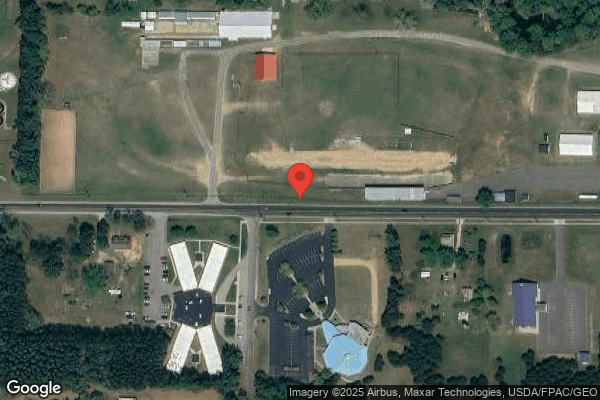
Aria at Villa Pines

201 Park St., Friendship, WI 53934 (608) 339-3361
For profit - Corporation 50 Beds ARIA HEALTHCARE Data: November 2025
Trust Grade
90/100
#6 of 321 in WI
Last Inspection: February 2025

Within standard 12-15 month inspection cycle. Federal law requires annual inspections.

Overview

Aria at Villa Pines has earned an impressive Trust Grade of A, indicating it is highly recommended and excels in care. It ranks #6 out of 321 nursing homes in Wisconsin, placing it in the top tier of facilities statewide, and is the only option in Adams County, making it a standout choice locally. The facility is improving, having reduced its issues from four in 2024 to two in 2025. While staffing is average with a 3/5 rating, the turnover rate is an excellent 0%, significantly lower than the state average, and it has more RN coverage than 94% of facilities, ensuring better oversight of resident care. However, there have been concerns noted by inspectors, such as food not being served at the right temperatures and grievances not being properly addressed, signaling areas that need attention despite the overall positive rating.

Trust Score
A
90/100
In Wisconsin
#6/321
Top 1%
Safety Record
Low Risk
No red flags
Inspections
Getting Better
4 → 2 violations
Staff Stability
○ Average
Turnover data not reported for this facility.
Penalties
✓ Good
No fines on record. Clean compliance history, better than most Wisconsin facilities.
Skilled Nurses
✓ Good
Each resident gets 96 minutes of Registered Nurse (RN) attention daily — more than 97% of Wisconsin nursing homes. RNs are the most trained staff who catch health problems before they become serious.
Violations
○ Average
6 deficiencies on record. Average for a facility this size. Mostly minor or procedural issues.
★★★★★
5.0
Overall Rating
★★★☆☆
3.0
Staff Levels
★★★★★
5.0
Care Quality
★★★★★
5.0
Inspection Score
Stable
2024: 4 issues
2025: 2 issues

The Good

  • 5-Star Quality Measures · Strong clinical quality outcomes
  • Full Sprinkler Coverage · Fire safety systems throughout facility
  • No fines on record

Facility shows strength in quality measures, fire safety.

The Bad

Chain: ARIA HEALTHCARE

Part of a multi-facility chain

Ask about local staffing decisions and management

The Ugly 6 deficiencies on record

Sept 2025 1 deficiency
CONCERN (D) 📢 Someone Reported This

A family member, employee, or ombudsman was alarmed enough to file a formal complaint

Potential for Harm - no one hurt, but risky conditions existed

Grievances (Tag F0585)

Could have caused harm · This affected 1 resident

**NOTE- TERMS IN BRACKETS HAVE BEEN EDITED TO PROTECT CONFIDENTIALITY** Based on interview and record review, the facility did not make prompt efforts to document, investigate, and resolve grievances ...

Read full inspector narrative →
**NOTE- TERMS IN BRACKETS HAVE BEEN EDITED TO PROTECT CONFIDENTIALITY** Based on interview and record review, the facility did not make prompt efforts to document, investigate, and resolve grievances a resident may have for 1 of 3 residents reviewed for grievances (R2). R2 voiced a grievance to the facility, and the facility did not complete appropriate interviews or provide follow up with the complainant after the conclusion of the investigation. Evidenced by: The facility's policy titled Grievance Policy dated 4/1/25 states in part .4. The Grievance Officer will route the grievance to the appropriate department head related to the grievance filed, and an investigation of the grievance will be conducted. Based on the nature of the grievance, the Grievance Officer will initiate any additional interventions that are indicated at that time.When indicated, a review of the resident's medical record to obtain information regarding the resident's clinical condition will be completed.5. After thorough research has been conducted, the Department Head and/ or Grievance officer will work with staff identified as key individuals critical to problem resolution for the specifically identified concern.7. The resident will be provided with a verbal follow- up to their grievance, including the following information: a. The name of the Department Head conducting the investigation. b. The steps are taken to investigate the grievance. c. The final results of the grievance- a. Signature by resident or representative on grievance document. R2 was admitted to the facility on [DATE] with diagnoses that include fracture of left pubis (a break in the pubic bone (pelvis)), type 2 diabetes mellitus, major depressive disorder, and chronic pain. R2's most recent MDS (Minimum Data Set) dated 8/26/25 states that R2 has a BIMS (Brief Interview of Mental Status) of 15 out of 15, indicating that R2 is cognitively intact. R2's physician orders state in part: Hydrocodone- acetaminophen 10/325mg (milligrams) Give 2 tablets by mouth 6 times a day for pain. On 8/21/25, R2 reported to facility staff that she had concerns regarding a specific nurse and not getting the correct medications. The facility filed a grievance. The facility's document titled Grievance Form states in part Date grievance submitted: 8/21/25.Grievance Information: Nurse [Nurse's Name] gave medications on the night shift she was unsure of.Requested Grievance Resolution: Resident had no request immediately then informed [SSD (Social Services Director) Name] that she wanted it looked into.Summary of Investigation Findings/Conclusion: [R2] recognized a medication on 8/21 by [Nurse's Name] that she was not aware of She did not care for interaction with - see [SSD Name] attached. Was the grievance substantiated? Yes. The facility took the following corrective action: Med count was correct and accurate. [Nurse's Name] was called on 8/21/25 by [NHA (Nursing Home Administrator) Name] and [DON (Director of Nursing) Name] staff member was written up via verbal conversation on 8/21/25.The attached documentation mentioned above from SSD C states in part .The resident reported that she had an experience with the night nurse [Nurse's Name] she felt unsettled about. Resident stated on the NOC (night) shift the night before our conversation on 8/21/25 the nurse brought her medications to her room, and the resident requested that the meds be handed to her and not given directly from med cup.When she looked at the 3 medications in her cup, she recognized 2 of the medications but one of them looked different. When the resident questioned the nurse, [Nurse's Name] took the medications to the hall where the med cart was and returned within a reasonable amount of time with the correct medication. It is important to note that the grievance investigation does not have documentation of staff or resident interviews, other than SSD C's interview with R2. Additionally, the facility does not have documentation that the resolution of the grievance was communicated, in writing, with the resident. On 9/16/25 at 12:22 PM, Surveyor interviewed R2. Surveyor asked R2 to explain the incident, R2 reported that the nurse came into her room to administer her medications and attempted to pour the medications into her mouth, instead of handing them to her. R2 stated that she requested the medications to be placed into her hand and then realized that she did not have the correct medications, stating that she has taken these medications for 15 years and knows what they look like. R2 reported that the nurse then went back to the med cart and brought in the correct medications. Surveyor asked R2 who she reported her concerns to, R2 stated SSD C. Surveyor asked R2 if the facility followed up with her regarding a resolution, R2 stated no. On 9/16/25 at 12:30 PM, Surveyor interviewed SSD C. Surveyor asked SSD C what the process is once a resident expresses a grievance, SSD C stated that the facility initiates an investigation. Surveyor asked SSD C if facility staff follow- up with residents to discuss the resolution once the grievance has been fully investigated, SSD C stated that they follow- up with residents or their representatives verbally and it is signed off on the bottom of the grievance form by facility staff. Surveyor asked SSD C if they obtain a signature from the resident or their representative indicating that they agree or disagree with the resolution, SSD C stated no. Surveyor asked SSD C if they met with R2 to discuss the outcome of her grievance, SSD C stated that she met with R2 the following day and gave her a verbal update, indicating to R2 that facility staff identified that the nurse was attempting to give her Tylenol, and that the nurse was educated.It is important to note that R2 did not have an order for Tylenol/ acetaminophen. On 9/16/25 at 1:25 PM, Surveyor interviewed NHA A (Nursing Home Administrator). Surveyor asked NHA A if they asked the nurse why she was attempting to give R2 Tylenol instead of her scheduled hydrocodone- acetaminophen 10/325mg, NHA A reported that the nurse needed to get the medication from their contingency (back-up) supply, but the nurse decided to administer the Tylenol instead. Surveyor asked NHA A if R2 had an order for Tylenol, NHA A stated that she would have to look. Surveyor asked NHA A if they interviewed other residents about not getting the correct medications, NHA A stated no. NHA A reported that she did come in on a night shift to make observations of the nurse and spoke with the CNA (Certified Nursing Assistant) regarding another grievance but did not have any staff interviews regarding R2's grievance. On 9/16/25 at 2:25 PM, Surveyor interviewed DON B (Director of Nursing). Surveyor asked DON B if she asked the nurse why she was attempting to give R2 Tylenol instead of her scheduled pain medication, DON B stated that the nurse reported that R2's scheduled pain medication was not available, so she attempted to administer the Tylenol. Surveyor asked DON B if R2 had an order for Tylenol, DON B stated that she would have to check. The facility failed to conduct a complete investigation into R2's grievance and provide adequate follow- up with R2 regarding the resolution of the grievance.
Aug 2025 1 deficiency
CONCERN (D) 📢 Someone Reported This

A family member, employee, or ombudsman was alarmed enough to file a formal complaint

Potential for Harm - no one hurt, but risky conditions existed

Deficiency F0804 (Tag F0804)

Could have caused harm · This affected 1 resident

Based on observation, interview, and record review, the facility did not ensure for 2 of 7 residents (R2 and R5), each resident received food with at a palatable temperature. An anonymous complainant ...

Read full inspector narrative →
Based on observation, interview, and record review, the facility did not ensure for 2 of 7 residents (R2 and R5), each resident received food with at a palatable temperature. An anonymous complainant voiced concerns regarding food temperatures. R2 and R5 voiced concern related to cold food. Test tray found food was not served at appropriate temperatures. In addition, the cauliflower/broccoli was mushy. Evidenced byFacility policy, Food Temperatures, undated, states, as follows: Procedure: All hot food items must be cooked to appropriate internal temperatures, held and served at a temperature of at least 135 degrees F (Fahrenheit). All cold food items must be stored and served at a temperature of 41 degrees F or below. Food preparation and service areas will follow these methods: Hold foods at or below 41 degrees F for cold foods and at or above 135 degrees F for hot foods (to keep food out of the temperature danger zone.)The facility serves the halls in the following order: 300, 100, 200. Surveyor requested a room test tray after all the residents on the 200 wing were served lunch.On 8/5/25 at 11:50 AM, Surveyors observed staff begin tray line. At 12:40 PM, the food cart was brought to the 200 wing (the last wing served). At 12:46 PM, Surveyor was provided with a test tray after the last person on the 200 wing was served lunch. The food temperatures were as follows: Chicken Tetrazzini 128.7 F (Fahrenheit), Cauliflower /Broccoli 130.5 F, Milk 50.5 F. The food was cold and not palatable. The cauliflower/broccoli was mushy and not palatable. On 8/5/25 at 9:43 AM, Surveyor spoke with R2. R2 stated, half the times her eggs are cold. On 8/5/25 at 10:00 AM, Surveyor spoke with R5. R5 stated, the food is not always hot enough.On 8/5/25 at 2:10 PM, Surveyor spoke with DM C (Dietary Manager). DM C stated, staff were running late for tray line today. DM C stated, staff usually start tray line at 11:50 AM and are done at 12:10 PM. DM C added, there is a new staff member in training in the kitchen and that may have slowed the tray line process. Surveyor asked DM C, what temperature should food be when it's served to residents. DM C stated, we do not want food to be under 140 degrees F (Fahrenheit) when it reaches the residents. DM C stated, cold foods should not be served less than 40 degrees F. Surveyor stated, Chicken Tetrazzini on the Test Tray was 128.7 degrees F. DM C stated, that is cold, it should be at least 140 degrees F. DM C stated, she has not had complaints regarding cold food just the food items themselves. Surveyor shared the milk was 50.5 degrees. DM C stated, the milk needs to be at 40 degrees F or below. Surveyor shared with DM C the food was not palatable due to the temperature of the foods and the broccoli/cauliflower being overcooked and mushy.
Feb 2024 4 deficiencies
CONCERN (D)

Potential for Harm - no one hurt, but risky conditions existed

Accident Prevention (Tag F0689)

Could have caused harm · This affected 1 resident

**NOTE- TERMS IN BRACKETS HAVE BEEN EDITED TO PROTECT CONFIDENTIALITY** Based on observation, interview, and record review, the facility did not ensure each resident receives adequate supervision and ...

Read full inspector narrative →
**NOTE- TERMS IN BRACKETS HAVE BEEN EDITED TO PROTECT CONFIDENTIALITY** Based on observation, interview, and record review, the facility did not ensure each resident receives adequate supervision and assistance devices to prevent accidents for 2 of 6 residents reviewed for accidents (R12 and R14). Surveyor observed R14 to be seated next to a charging electric power wheelchair in a common tv room. R12 is at risk for aspiration pneumonia and Surveyor observed CNA L (Certified Nursing Assistant) assisting R12 with his meal in a reclining position in bed and not upright. Surveyor observed CNA L to be organizing R12's room instead of supervising him and assisting him with his meal. CNA L did not use the care planned adaptive equipment, a plastic spoon. CNA L did not assist R12 in putting ½ teaspoon sized bites on his spoon. R12 had seven (7) coughing episodes during observation. Example 1 Facility policy, entitled Electric Power Wheelchair, reviewed October 2023, includes, in part: charging of electric wheelchairs will be done in a designated area . R14 admitted to the facility on [DATE]. R14's most recent Minimum Data Set, with Assessment Reference Date of 1/7/24, indicates R14 is impaired on one of his upper extremities and both of his lower extremities and is fully dependent on staff to wheel him in his wheelchair. On 2/13/24 at 11:27 AM, Surveyor observed R14 to be sitting at a table watching TV in a visiting area. Surveyor observed a power wheelchair charging next to R14. (It is important to note the electric/power wheelchair did not belong to R14, but R14 was put at risk as he was positioned next to the charging power wheelchair.) On 2/13/24 at 11:31 AM, CNA H (Certified Nursing Assistant) indicated the staff normally charge the power wheelchairs here and she was unaware of the risk of the resident injury due to the battery exploding and that the power chair should be charging behind a fire safe door. On 2/13/24 at 11:34 AM, Activity Director I and CNA L indicated they charge two power wheelchairs in this area and residents often sit in the area as well. Activity Director I and CNA L indicated they were not aware the power chair should be charging behind a fire safe door. On 2/13/24 at 11:41 AM, NHA A (Nursing Home Administrator) indicated staff charge two power chairs in this area and not behind a fire safe door. NHA A also indicated R14 tends to spend a lot of time watching TV in this area while chairs are charging. NHA A indicated she thought the facility had to charge power chairs in a public area and not in a resident room due to being told they could catch on fire. Surveyor asked if the power chair could catch on fire in the current location with R14 sitting right next to it. NHA A indicated this is possible and the power chairs should be charging behind a fire safe door to prevent resident injury. Surveyor observed staff unplugging power wheelchair and moving it to a safe location to charge. Example 2 Facility policy, entitled Meal Supervision and Assistance, reviewed 11/23, includes: the facility will develop and implement an individualized care plan based on the resident assessment to address the resident's needs and goals, and to monitor the results of the planned interventions such as adequate supervision during meal time. The resident should be positioned so his or her head and upper body are as upright as possible and with the head tipped slightly forward. If the resident is served his or her meal in bed, use wedges and pillows to achieve a nearly upright position . When assisting resident with eating staff should remain seated next to the resident so they are at the resident's level not standing over resident . Be careful to provide portions of food easy for the residents to chew . Wipe the resident's mouth as needed . encourage the resident to participate with his or her meal as much as possible . Report any swallowing difficulties and refer to the speech therapy department. R12 admitted to the facility on [DATE] with diagnoses including dysphagia, autistic disorder, dementia, hemiplegia, and hemiparesis following cerebral infarction affecting left non-dominant side, vision loss in both eyes, contracture of left hand, personality and behavior disorder, deaf, and non-speaking. R12's Comprehensive Care Plan, initiated 9/23/2019, includes, in part: 5/16/23- Focus-R12 is at risk for aspiration pneumonia related to mechanically altered diet. 5/16/23- Goal- the resident will be free of signs and symptoms of aspiration pneumonia through the next review date . 5/16/23- Approach- Encourage good fluid intake as well as good nutrition and adequate rest. 11/15/21- Approach- Consult with Registered Dietician and change diet if chewing/swallowing problems are noted . 5/16/23- Approach- Monitor/document/report to Medical Doctor as needed for the following signs and symptoms of aspiration pneumonia: fever but no chills, pink, frothy foul-smelling sputum, cyanosis . 2/5/24- Goal- Resident will be able to feed self with supervision, set-up, and assistance as needed . 1/30/24 Approach- Monitor/document for physical/nonverbal indicators of discomfort or distress, hitting self, and follow up as needed . 4/18/23 Focus- R12 has a mechanically altered diet . is nutritional at risk related to . cerebral infarction, speech and language deficit, dementia without behaviors, visual loss, anxiety disorder, dysphagia, autistic, pain, and deaf . 3/8/23- Approach- Encourage to dine in wing lounge for meals. Position upright for all intake by mouth food- ½ spoonful's, one on one assist with meals, one on one supervision for self-feeding of snacks . assist resident to scoop food onto plastic teaspoon . alternate food and drinks . adaptive equipment- plastic teaspoon, two handled cups with lids for liquids . On 2/13/24 at 12:13 PM, Surveyor observed CNA L (Certified Nursing Assistant) assisting R12 with his lunch meal. CNA L was wearing gloves throughout the observation. CNA L went from assisting R12 with eating to rearranging items and touching dirty linens in his room to assisting him again, without washing hands and donning new gloves in between. CNA L stood over R12 when she was assisting him. R12 was slouched down in his bed and leaning to his left. He was not upright. Surveyor observed R12 throwing bed pillows and a neck pillow behind himself as he attempted to readjust himself. Surveyor observed R12 scoop large heaping spoonful's of food to his mouth, dropping some on his neck napkin. Surveyor observed R12 experience difficulty in swallowing and coughing 7 times during the observation. R12 lifted his chin to the right, lifted his chin to the left, and R12 tucked his chin in to his neck trying to swallow his food. After bites some of his food ran out of his mouth, down his chin to his neck napkin and after other bites R12 pocketed his food in his mouth. Surveyor observed R12 startle when CNA L put the metal spoon in his hand without notice from his left side and when she put his cup into his hand without notice from his right side. CNA L was approaching R12 from both sides while standing and in between straightening his room out. Surveyor observed R12 hit himself in the head several times with an open hand and make grunting noises as if he was frustrated. When interviewed, CNA L indicated R12 was deaf and blind. CNA L indicated she was assisting R12 and allowing him to do as much as he can for himself. CNA L indicated she also was organizing his room in between assisting R12. CNA L indicated R12 eats all his meals in his bed. On 2/15/24 at 8:29 AM, Surveyor observed CNA H assisting R12 with his meal. During an interview, CNA H indicated R12 is blind, deaf, and non-verbal. CNA H indicated she makes her presence known by lightly touching R12 on the back of his hand on the side she will be on. CNA H indicated she sits next to R12 at his eye level to assist him and she does not move about the room or complete other tasks while assisting R12 with his meal. CNA H explained, This way he knows I am here and ready to assist. CNA H indicated R12 is to be upright in a 90-degree position for meals and for an hour after meals, so he does not aspirate. CNA H indicated when R12 hits his head with an open hand it means he is mad or frustrated. CNA H indicated R12 is to have a plastic spoon and he is to take small bites like the size of half of the spoon and that is why she spreads his food out on the plate, so he does not get heaping spoonful's when he self feeds. On 2/15/24 at 9:10 AM, Med Tech D indicated R12 is to be upright at a 90-degree angle for meals and for at least 20 minutes after eating. Med Tech D indicated R12 is to have a plastic spoon and cups with two handles and a lid to minimize his risk of aspiration or other accidents. Med Tech D indicated staff are to be seated next to R12, offering assistance, and supervising R12 while eating, and not working on other tasks throughout his room. Med Tech D indicated staff are to report to the floor nurse when R12 is having difficulty with swallowing or experiencing coughing while eating.
CONCERN (D)

Potential for Harm - no one hurt, but risky conditions existed

Infection Control (Tag F0880)

Could have caused harm · This affected 1 resident

**NOTE- TERMS IN BRACKETS HAVE BEEN EDITED TO PROTECT CONFIDENTIALITY** Based on observation, interview, and record review, the facility did not maintain an infection prevention and control program de...

Read full inspector narrative →
**NOTE- TERMS IN BRACKETS HAVE BEEN EDITED TO PROTECT CONFIDENTIALITY** Based on observation, interview, and record review, the facility did not maintain an infection prevention and control program designed to provide a safe, sanitary, and comfortable environment and to help prevent the development and transmission of communicable diseases and infections for 2 (R23 and R12) of 5 opportunities and 1 (R10) of 1 supplemental for hand hygiene for sampled residents. Surveyor had an observation of multiple breaks in appropriate infection control practice for handwashing and catheter care for R23. Surveyor had an observation of a break in appropriate infection practice by not wearing gloves when administering R10's eye drops. Surveyor observed CNA L (Certified Nursing Assistant) wearing gloves assisting R12 with his meal and touching dirty linens and other things around R12's room without removing gloves and without handwashing. This is evidenced by: The facility's policy, entitled Hand Hygiene, dated 6/23, states, in part . Policy: All staff will perform proper hand hygiene procedures to prevent the spread of infection to other personnel, residents, and visitors. This applies to all staff working in all locations within the facility. Definitions: Hand hygiene is a general term for cleaning your hands by handwashing with soap and water or the use of an antiseptic hand rub, also known as alcohol-based hand rub (ABHR) . 6. Additional considerations: a. The use of gloves does not replace hand hygiene. If your task requires gloves, perform hand hygiene prior to donning gloves, and immediately after removing gloves . Hand Hygiene Table . After handling contaminated objects . After handling items potentially contaminated with blood, body fluids, secretions, or excretions . After assistance with personal body functions ( . elimination .) Either Soap and Water or Alcohol Based Hand Rub (ABHR is preferred) . The facility's policy, entitled Administration of Eye Drops or Ointments, dated 10/23, states, in part . 3. Wash hands or utilize alcohol-based hand rub and apply gloves . Example 1 R23 was admitted to the facility on [DATE] and has diagnoses that include neuromuscular dysfunction of the bladder, unspecified, (a person lacks bladder control due to brain, spinal cord, or nerve problems), and benign prostatic hyperplasia (a noncancerous enlargement of the prostate gland) with lower urinary tract symptoms. On 2/15/24 at 1:22 PM, Surveyor observed CNA E (Certified Nursing Assistant) empty R23's catheter bag. CNA E performed hand hygiene, donning a gown, and gloves applied. CNA E obtained alcohol wipes from R23's cabinet and a clear plastic bag that had a graduate cylinder inside the bag. CNA E removed the graduate from the clear plastic bag and used the plastic bag as a barrier by placing it on the floor. CNA E placed the graduate on top of the plastic bag. CNA E continued to perform cares by wiping the catheter spout with an alcohol pad, unclamped the spout, emptied the urine contents into the graduate, then clamped and wiped the catheter spout with an alcohol pad. CNA E proceeded to R23's bathroom, read the amount of urine, emptied the contents into the toilet, obtained a paper towel, and placed it into the graduate (note: the graduate was not rinsed nor washed out). CNA E came back to R23 and placed the graduate in the same plastic bag from the floor, opened R23's cabinet, and returned the plastic bag to the cabinet. On 2/15/24 at 1:40 PM, Surveyor interviewed CNA E. CNA E reviewed the process of emptying a catheter bag with the Surveyor. CNA E indicated that after she put the paper towels inside the graduate, she forgot to change her gloves. Surveyor asked CNA E if she should perform hand hygiene before touching a resident's personal belonging after handling a contaminated graduate, she indicated she did not and that she usually changes her gloves and should have performed hand hygiene. Surveyor asked CNA E if she rinsed out the graduate after emptying the contents, she indicated she does not and she rinses them out every other day. CNA E further indicated that the second shift rinses the graduates out. On 2/19/24 at 10:33 AM, Surveyor interviewed CNA F. CNA F explained the process of emptying a catheter. CNA F indicated that she uses a paper towel from the bathroom as a barrier and does not use the plastic bag as a barrier. The plastic bag goes into the resident's drawer in their room. CNA F further indicated that after emptying the graduate into the toilet, she rinses the graduate with hot soapy water. Surveyor asked CNA F if she would perform hand hygiene after handling bodily fluids, she indicated she would remove her gloves and perform hand hygiene prior to touching any resident's belongings. On 2/19/24 at 1:38 PM, Surveyor interviewed DON B (Director of Nursing). DON B explained the process of emptying a catheter bag. Surveyor shared the observation of R23's catheter bag emptied by CNA E. DON B indicated the graduate should have been rinsed out, hand hygiene should have been performed after handling bodily fluids and a paper towel should have been used a barrier. Example 2 R10 was admitted to the facility on [DATE] and has diagnoses that include unspecified dementia (a condition in which a person loses the ability to think, remember, learn, make decisions, and solve problems), and combined forms of age-related cataract, bilateral. R10's Physician Order states, in part Artificial Tears solution . instill 1 drop in both eyes two times a day for dry eyes . Order date 8/25/21. On 2/15/24 at 8:34 AM, Surveyor observed MT D (Medication Technician) administering eye drops to R10. MT D performed hand hygiene, obtained a tissue, administered an eye drop into each eye, and performed hand hygiene. On 2/15/24 at 9:03 AM, Surveyor interviewed MT D. MT D indicated she did not wear gloves when administering R10's eye drops, and she should have. On 2/15/24 at 9:53 AM, Surveyor interviewed DON B. DON B indicated she was advised of the eye drop administration by MT D, and she should have worn gloves. On 2/19/24 at 1:30 PM, Surveyor interviewed LPN G (Licensed Practical Nurse). LPN G explained the process for administering eye drops. LPN G indicated that gloves should be always worn when administering eye drops. On 2/19/24 at 1:38 PM, Surveyor interviewed DON B again. Surveyor updated on LPN G's interview. DON B indicated that gloves should have been worn when administering eye drops. Example 3 R12 admitted to the facility on [DATE] with diagnoses including dysphagia, autistic disorder, dementia, hemiplegia, and hemiparesis following cerebral infarction affecting left non-dominant side, vision loss in both eyes, contracture of left hand, personality and behavior disorder, deaf, and non-speaking. On 2/13/24 at 12:13 PM, Surveyor observed CNA L (Certified Nursing Assistant) holding R12's spoon handle assisting him with his lunch. CNA L had gloves on both hands. CNA L walked around R12's room picking items up and touching dirty linens. CNA L then went back to assisting R12 with his meal. CNA L did not wash her hands or remove her gloves after touching things around the room and before assisting R12 with his meal. On 2/15/24 at 8:29 AM, CNA H indicated she does not wear gloves to assist with feeding R12 and if she were to touch dirty linens or other things around in R12's room she would wash her hands before assisting him with his meal. On 2/15/24 at 9:10 AM, Med Tech D (Medication Technician) indicated staff are to wash hands before assisting residents with meals. Med Tech D indicated if staff stop assisting a resident with a meal to fold linens or to organize items in the room, they should wash their hands before beginning to assist with meal again. On 2/15/24 at 9:49 AM, DON B (Director of Nursing) indicated staff so not need to wear gloves to assist residents with their meal unless they intend to touch the food. DON B indicated staff are to remove gloves and wash hands after touching dirty linens and items and before assisting residents with meals.
CONCERN (F)

Potential for Harm - no one hurt, but risky conditions existed

Food Safety (Tag F0812)

Could have caused harm · This affected most or all residents

**NOTE- TERMS IN BRACKETS HAVE BEEN EDITED TO PROTECT CONFIDENTIALITY** Based on observation, interview, and record review, the facility did not store, prepare, distribute, and serve food in accordanc...

Read full inspector narrative →
**NOTE- TERMS IN BRACKETS HAVE BEEN EDITED TO PROTECT CONFIDENTIALITY** Based on observation, interview, and record review, the facility did not store, prepare, distribute, and serve food in accordance with professional standards for food service safety. This has the potential to affect all 26 residents. Surveyor observed [NAME] J use single use alcohol pads multiple times. [NAME] J did not allow thermometer to air dry before using it in different dishes. Surveyor observed 3 utensils to have pieces missing from them and in circulation. Surveyor observed food to be removed from original container, undated, and not closed properly in freezer. Surveyor observed food in refrigerator past the use by date. Evidenced by: Example 1 Manufacturer's recommendations for use of Medline Large Alcohol Prep Pad, 70% isopropyl alcohol, dated ., includes: Sterile pads are packaged in single-use packs for convenience . This product is intended for use on the body only. Safety Data Sheet for Medline Large Alcohol Prep Pad, revised 1/5/24, includes: . May be harmful if swallowed . Wash thoroughly with soap and water after handling and before eating . If ingested, seek medical advice immediately and show the container or the label . Ingestion: If swallowed, call a physician immediately. Rinse mouth and throat thoroughly with water. Do not induce vomiting unless directed to do so by a physician. On 2/15/24 at 11:44 AM, Surveyor observed [NAME] J pulling hot food out of the oven and setting it up to take the temperature. [NAME] J used a single use alcohol prep pad to wipe the thermometer and then stuck it in chicken drumsticks. [NAME] J did not allow the thermometer to air dry before sticking it in the chicken drumsticks. [NAME] J then used the same single use alcohol wipe to wipe the thermometer. [NAME] J stuck the thermometer in the next food (potatoes) without allowing it to air dry. [NAME] J repeated this practice with the following foods: chicken, potatoes, carrots, pureed meat, mechanical soft meat, gravy, soup, and beef patties. On 2/15/24 at 11:54 AM, during an interview, [NAME] J indicated she did not know the surface contact time for the alcohol prep pads she was using. [NAME] J indicated she did not allow the thermometer to air dry before putting it into food. [NAME] J and Surveyor observed and reviewed the packaging for the alcohol prep wipes, noting the package states: for removal of oils and residue from skin, . discard after single use, . if accidentally swallowed seek medical assistance or contact Poison Control Center right away ., intended for use on the body only . [NAME] J indicated she should not use the wipe with more than one food or she could cross contaminate the foods and the wipe is intended for one time use only. [NAME] J indicated she was unaware the product was not for surface cleaning and was for use on skin. Example 2 On 2/13/24 at 9:57 AM, during initial tour of the facility's kitchen, Surveyor observed 2 spatulas to have chips and cracks in the rubber with pieces missing. Surveyor also observed a pancake [NAME] to have been melted and still in circulation. On 2/13/24 at 9:57 AM, during initial tour, [NAME] K indicated these pieces could have broken off into the food and could continue to chip off into food if they are not discarded. [NAME] K indicated when the utensils are damaged, they need to be removed. Example 3 On 2/13/24 at 9:57 AM during initial tour, Surveyor observed French toast in the facility's freezer to be removed from the original container and without an open date or use by date. Surveyor also observed the food to be exposed as the plastic around it was not closed properly. [NAME] K indicated the French toast should be covered and it should be marked with a use by date and/or the manufacturer's expiration date. Example 4 On 2/13/24 at 9:57 AM, during initial tour, Surveyor observed biscuits in the facility's refrigerator with the date of 2/3/24. [NAME] K indicated the biscuits should have been tossed out within 5 to 7 days.
MINOR (C)

Minor Issue - procedural, no safety impact

Staffing Information (Tag F0732)

Minor procedural issue · This affected most or all residents

Based on observation, interview, and record review, the facility did not ensure that nursing staffing information was accurate and current. This has the potential to affect all 26 residents in the fac...

Read full inspector narrative →
Based on observation, interview, and record review, the facility did not ensure that nursing staffing information was accurate and current. This has the potential to affect all 26 residents in the facility. The facility's nursing staff information postings were not updated daily. This is evidenced by: Division of Quality Assurance (DQA) memo 12-020 titled, Clarification Concerning Posting Requirements for Nurse Staffing documents: Required Staffing Information .Nursing homes must post information about the number of staff directly responsible for resident care on each shift. This information must be posted in a prominent place, readily accessible to residents and visitors at the start of each shift . The information that is posted must include the following . 1. Facility name. 2. The current date. 3. The total number of staff directly responsible for resident care per shift for each of the following categories: licensed (RNs (Registered Nurse), LPNs (Licensed Practical Nurse), and unlicensed (CNAs (Certified Nursing Assistant)). (For example, 1 RN, 2 LPNs, and 4.5 CNAs.) The number of RNs must be separate from the number of LPNs. 4. The actual hours worked per shift for each of the following categories: licensed (RNs, LPNs), and unlicensed (CNAs). 5. Resident census. Timing: Information is to be posted daily and must be present at the start of each shift. Nursing homes can choose to post staffing information for the entire day or for the current shift. Nursing homes are required to update the posted staffing if any changes arise, for example, if a nursing assistant calls in sick or goes home sick and is not replaced. The facility policy entitled, Nurse Staffing Posting Information dated 10/23, states in part, . 1. The Nurse Staffing Sheet will be posted on a daily basis . 2. The facility will post the Nurse Staffing Sheet at the beginning of each shift . On 2/13/24 at 9:30 AM, Surveyor observed the nursing staff information posting dated 2/12/24. On 2/13/24 at 1:10 PM, Surveyor observed the nursing staff information posting dated 2/12/24. On 2/14/24 at 8:05 AM, Surveyor observed the nursing staff information posting dated 2/12/24. On 2/14/24 at 12:28 PM, Surveyor observed the nursing staff information posting dated 2/12/24. On 2/15/24 at 7:55 AM, Surveyor observed the nursing staff information posting dated 2/12/24. On 2/15/24 at 9:53 AM, Surveyor interviewed DON B (Director of Nursing). Surveyor asked DON B who is responsible for the staff information posting, she indicated the scheduler or the NHA (Nursing Home Administrator). On 2/15/24 at 9:53 AM, Surveyor interviewed RO C (Regional Operations). RO C indicated she noticed the staff information posting was not updated and she had changed it. RO C reported that the scheduler is out ill and indicated that the staff information posting was missed. On 2/19/24 at 8:51 AM, Surveyor interviewed NHA A (Nursing Home Administrator). NHA A indicated that the staff information posting should be changed daily as changes occur.
Understanding Severity Codes (click to expand)
Life-Threatening (Immediate Jeopardy)
J - Isolated K - Pattern L - Widespread
Actual Harm
G - Isolated H - Pattern I - Widespread
Potential for Harm
D - Isolated E - Pattern F - Widespread
No Harm (Minor)
A - Isolated B - Pattern C - Widespread

Questions to Ask on Your Visit

  • "Can I speak with families of current residents?"
  • "What's your RN coverage like on weekends and overnight?"

Our Honest Assessment

Strengths
  • • Grade A (90/100). Above average facility, better than most options in Wisconsin.
  • • No major safety red flags. No abuse findings, life-threatening violations, or SFF status.
  • • No fines on record. Clean compliance history, better than most Wisconsin facilities.
Concerns
  • • No significant concerns identified. This facility shows no red flags across CMS ratings, staff turnover, or federal penalties.
Bottom line: Generally positive indicators. Standard due diligence and a personal visit recommended.

About This Facility

What is Aria At Villa Pines's CMS Rating?

CMS assigns Aria at Villa Pines an overall rating of 5 out of 5 stars, which is considered much above average nationally. Within Wisconsin, this rating places the facility higher than 99% of the state's 100 nursing homes. This rating reflects solid performance across the metrics CMS uses to evaluate nursing home quality.

How is Aria At Villa Pines Staffed?

CMS rates Aria at Villa Pines's staffing level at 3 out of 5 stars, which is average compared to other nursing homes.

What Have Inspectors Found at Aria At Villa Pines?

State health inspectors documented 6 deficiencies at Aria at Villa Pines during 2024 to 2025. These included: 5 with potential for harm and 1 minor or isolated issues.

Who Owns and Operates Aria At Villa Pines?

Aria at Villa Pines is owned by a for-profit company. For-profit facilities operate as businesses with obligations to shareholders or private owners. The facility is operated by ARIA HEALTHCARE, a chain that manages multiple nursing homes. With 50 certified beds and approximately 28 residents (about 56% occupancy), it is a smaller facility located in Friendship, Wisconsin.

How Does Aria At Villa Pines Compare to Other Wisconsin Nursing Homes?

Compared to the 100 nursing homes in Wisconsin, Aria at Villa Pines's overall rating (5 stars) is above the state average of 3.0 and health inspection rating (5 stars) is much above the national benchmark.

What Should Families Ask When Visiting Aria At Villa Pines?

Based on this facility's data, families visiting should ask: "Can I visit during a mealtime to observe dining assistance and food quality?" "How do you handle medical emergencies, and what is your hospital transfer rate?" "Can I speak with family members of current residents about their experience?"

Is Aria At Villa Pines Safe?

Based on CMS inspection data, Aria at Villa Pines has a clean safety record: no substantiated abuse findings (meaning no confirmed cases of resident harm), no Immediate Jeopardy citations (the most serious violation level indicating risk of serious injury or death), and is not on the Special Focus Facility watch list (a federal program monitoring the lowest-performing 1% of nursing homes). The facility has a 5-star overall rating and ranks #1 of 100 nursing homes in Wisconsin. While no facility is perfect, families should still ask about staff-to-resident ratios and recent inspection results during their visit.

Do Nurses at Aria At Villa Pines Stick Around?

Aria at Villa Pines has not reported staff turnover data to CMS. Staff turnover matters because consistent caregivers learn residents' individual needs, medications, and preferences. When staff frequently change, this institutional knowledge is lost. Families should ask the facility directly about their staff retention rates and average employee tenure.

Was Aria At Villa Pines Ever Fined?

Aria at Villa Pines has no federal fines on record. CMS issues fines when nursing homes fail to meet care standards or don't correct problems found during inspections. The absence of fines suggests the facility has either maintained compliance or corrected any issues before penalties were assessed. This is a positive indicator, though families should still review recent inspection reports for the full picture.

Is Aria At Villa Pines on Any Federal Watch List?

Aria at Villa Pines is not on any federal watch list. The most significant is the Special Focus Facility (SFF) program, which identifies the bottom 1% of nursing homes nationally based on persistent, serious quality problems. Not being on this list means the facility has avoided the pattern of deficiencies that triggers enhanced federal oversight. This is a positive indicator, though families should still review the facility's inspection history directly.