ST ELIZABETH NURSING HOME
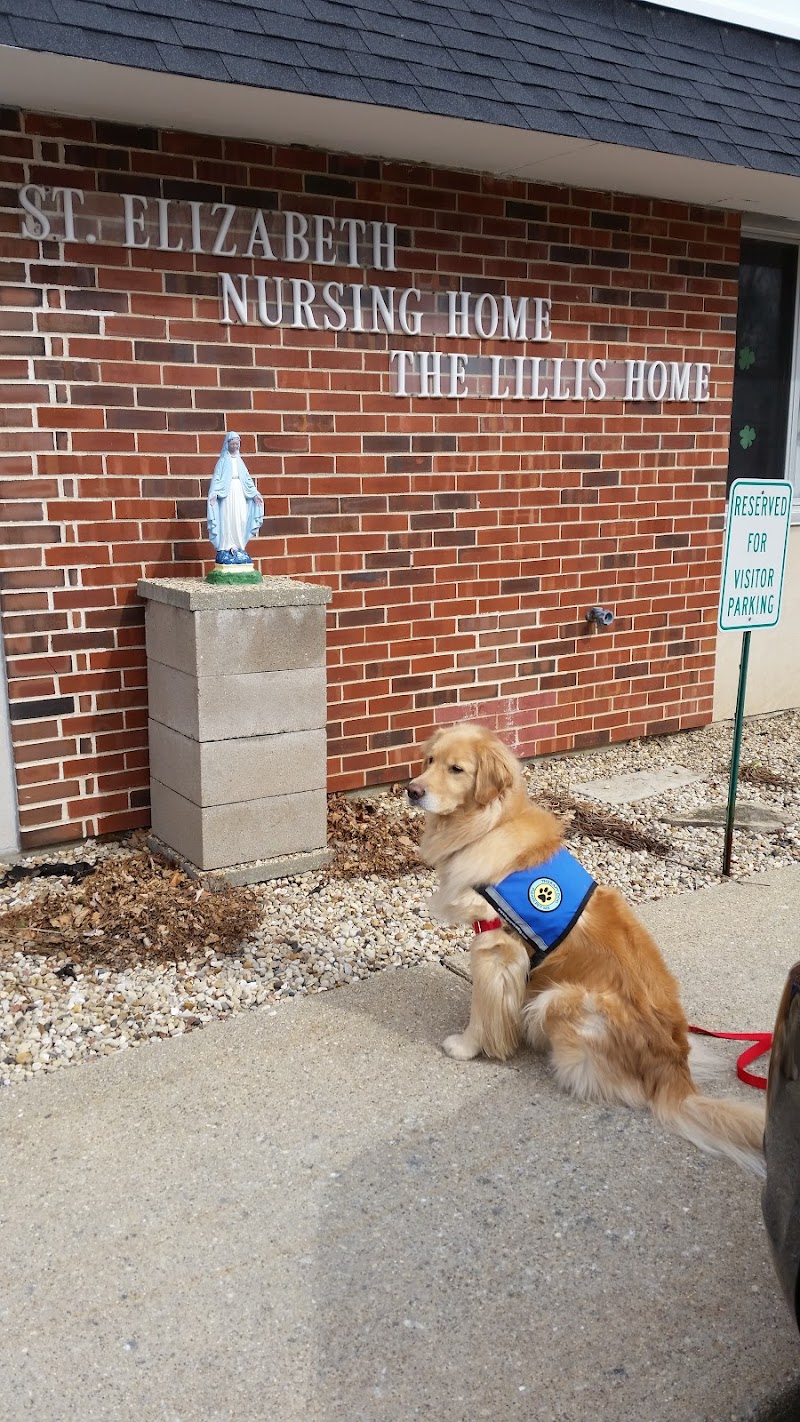
109 S ATWOOD AVENUE, JANESVILLE, WI 53545 (608) 752-6709
Non profit - Corporation 43 Beds Independent Data: November 2025 2 Immediate Jeopardy citations
Trust Grade
1/100
#313 of 321 in WI
Last Inspection: February 2025

Within standard 12-15 month inspection cycle. Federal law requires annual inspections.

Overview

St. Elizabeth Nursing Home has a Trust Grade of F, indicating significant concerns about the quality of care provided. It ranks #313 out of 321 facilities in Wisconsin, placing it in the bottom half of all nursing homes in the state, and is last in Rock County. Although the facility's trend is improving-reducing issues from 33 in 2024 to 12 in 2025-there are still serious problems, including high staffing turnover at 70%, which is concerning compared to the state average of 47%. The nursing home has faced $31,171 in fines, higher than 76% of Wisconsin facilities, suggesting ongoing compliance issues. Specific incidents include a failure to monitor a resident's diabetic wound, resulting in an amputation, and inadequate supervision leading to a resident eloping from the facility, raising serious safety concerns. While there is some RN coverage, it is still less than 78% of state facilities, meaning residents may not receive adequate medical oversight.

Trust Score
F
1/100
In Wisconsin
#313/321
Bottom 3%
Safety Record
High Risk
Review needed
Inspections
Getting Better
33 → 12 violations
Staff Stability
⚠ Watch
70% turnover. Above average. Higher turnover means staff may not know residents' routines.
Penalties
⚠ Watch
$31,171 in fines. Higher than 80% of Wisconsin facilities, suggesting repeated compliance issues.
Skilled Nurses
○ Average
Each resident gets 37 minutes of Registered Nurse (RN) attention daily — about average for Wisconsin. RNs are the most trained staff who monitor for health changes.
Violations
⚠ Watch
64 deficiencies on record. Higher than average. Multiple issues found across inspections.
★☆☆☆☆
1.0
Overall Rating
★★☆☆☆
2.0
Staff Levels
★☆☆☆☆
1.0
Care Quality
★☆☆☆☆
1.0
Inspection Score
Stable
2024: 33 issues
2025: 12 issues

The Good

  • Full Sprinkler Coverage · Fire safety systems throughout facility
  • No fines on record

Facility shows strength in fire safety.

The Bad

1-Star Overall Rating

Below Wisconsin average (3.0)

Significant quality concerns identified by CMS

Staff Turnover: 70%

24pts above Wisconsin avg (46%)

Frequent staff changes - ask about care continuity

Federal Fines: $31,171

Below median ($33,413)

Moderate penalties - review what triggered them

Staff turnover is elevated (70%)

22 points above Wisconsin average of 48%

The Ugly 64 deficiencies on record

2 life-threatening 1 actual harm
Feb 2025 8 deficiencies
CONCERN (D)

Potential for Harm - no one hurt, but risky conditions existed

Deficiency F0578 (Tag F0578)

Could have caused harm · This affected 1 resident

**NOTE- TERMS IN BRACKETS HAVE BEEN EDITED TO PROTECT CONFIDENTIALITY** Based on interview and record review, the facility failed to ensure that residents advance directive was signed by resident or r...

Read full inspector narrative →
**NOTE- TERMS IN BRACKETS HAVE BEEN EDITED TO PROTECT CONFIDENTIALITY** Based on interview and record review, the facility failed to ensure that residents advance directive was signed by resident or resident representative for 1 of 3 (R18) reviewed for advanced directives. The code status preference form for R18 was not completed when she went from Do Not Resuscitate (DNR) to wanting Cardiopulmonary Resuscitation (CPR). Findings include The facility's code status policy states, in part: *If an individual wishes to be a full code, the individual's wishes will be maintained within the medical record *Staff will identify an individual's code status by documentation within the medical record *The individual's medical record will be the primary reference in case of an emergency to verify code status. The facility commonly uses a Resident CPR Preference Form to indicate the resident's choice between 1) No--I do NOT want cardiopulmonary resuscitation attempts or 2) YES--I want cardiopulmonary resuscitation attempts. This form is then signed by the resident or their representative. R18 was admitted to the facility on [DATE]. She was deemed incapacitated prior to her admission to the facility. The facility's records indicate R18's Power of Attorney (POA) signed a Resident CPR Preference Form indicating R18 Did NOT want cardiopulmonary resuscitation attempts. Additionally, R18's POA signed a state DNR form on behalf of R18 on [DATE]. R18 required a hospital stay, starting [DATE] and returning back to the facility on [DATE]. Hospital discharge paperwork, dated [DATE], indicated family had revoked R18's DNR. On [DATE] at 2:39 PM, Surveyor interviewed POA G (R18's Power of Attorney) who stated that shortly after R18 returned from the hospital, she (POA G) went to the nurse's station and told facility staff that they had revoked the DNR and wished R18 to be full code. The staff stated they would take care of it. POA G stated that she checked back in a few days later to make sure the facility had updated R18's status and facility staff had said it was done. POA G stated she was never asked to sign anything. On [DATE] at 4:35 PM, Surveyor interviewed ADON C (Assistant Director of Nursing) who stated that any resident that goes from a signed DNR to full code needs representative signed document. At this time, ADON C provided Surveyor an updated and POA-signed Resident CPR Preference Form indicating R18 wanted CPR. The form was dated [DATE]. ADON C indicated the form should have been given to R18's POA.
CONCERN (D)

Potential for Harm - no one hurt, but risky conditions existed

Comprehensive Care Plan (Tag F0656)

Could have caused harm · This affected 1 resident

**NOTE- TERMS IN BRACKETS HAVE BEEN EDITED TO PROTECT CONFIDENTIALITY** Based on interview and record review, the facility failed to ensure that a comprehensive person-centered care plan included a sl...

Read full inspector narrative →
**NOTE- TERMS IN BRACKETS HAVE BEEN EDITED TO PROTECT CONFIDENTIALITY** Based on interview and record review, the facility failed to ensure that a comprehensive person-centered care plan included a sleep assessment and sleep monitoring/tracking to meet the resident's medical, nursing, and mental and psychosocial needs for 3 of 6 residents (R8, R15, and R30) reviewed for unnecessary medications. R8 is receiving Melatonin for sleep and did not have a sleep assessment or sleep tracking. R15 is receiving Melatonin for sleep and did not have a sleep assessment or sleep tracking. R30 is receiving Melatonin for sleep and did not have a sleep assessment or sleep tracking. This is evidenced by: Example 1 R8 was admitted to the facility on [DATE] with diagnoses that include, in part: depression, unspecified (medical condition characterized by low mood, loss of interest or pleasure in activities, and other symptoms that interfere with daily functioning); insomnia, unspecified (a sleep disorder characterized by difficulty falling or staying asleep, resulting in poor sleep quality and daytime fatigue); other specified anxiety disorders (a group of mental health conditions characterized by excessive and persistent worry, fear, and nervousness that can significantly interfere with daily life); and panic disorder (a disorder characterized by a sudden wave of fear or discomfort or a sense of losing control even when there is no clear danger). R8's Minimum Data Set (MDS) dated [DATE] indicates a Brief Interview for Mental Status (BIMS) of 15, indicating R8 is cognitively intact. R8's physician orders include, in part: Melatonin 3 mg by mouth at bedtime related to insomnia-order date 10/30/24. Surveyor requested a policy on sleep assessments/tracking and R8's sleep assessment and monitoring documentation. Documentation was not provided. Example 2 R15 was admitted to the facility on [DATE] with diagnoses that include, in part: unspecified dementia, unspecified severity, without behavioral disturbance, psychotic disturbance, mood disturbance, and anxiety (when a person exhibits symptoms of dementia but the cause cannot be determined. Symptoms of dementia include memory loss, difficulty with thinking and problem solving, confusion and disorientation, changes in personality and behavior, and reduced ability to manage daily activities.), insomnia due to other mental disorder; and anxiety disorder. R15's MDS dated [DATE] indicates a BIMS of 0, indicating R15 has severe cognitive impairment. R15's physician orders include, in part: Melatonin 3 mg by mouth at bedtime related to insomnia due to other mental disease. Start date: 1/12/2025 Surveyor requested R15's sleep assessment and monitoring. Documentation was not provided. Example 3 R30 was admitted to the facility on [DATE] with diagnoses that include, in part: Alzheimer's Disease (a progressive brain disorder that causes memory loss, thinking problems, and behavioral changes) and dementia with behavioral disturbance. R30's MDS dated [DATE] indicates a BIMS of 10, indicating R30 has moderate cognitive impairment. R30's physician orders include, in part: melatonin 3 mg by mouth at bedtime for insomnia. Start date: 11/14/24 Surveyor requested R30's sleep assessment and monitoring. Documentation was not provided. On 2/13/25 at 8:04 AM, Surveyor interviewed DON B (Director of Nursing) and asked about protocol when sleep medications are ordered. DON B stated a sleep assessment is completed and targeted behaviors are added to the MAR (Medication Administration Record). Surveyor asked if R8, R15, and R30 had sleep assessments and sleep tracking. DON B stated no. Surveyor asked if the facility would expect that a sleep assessment and sleep tracking would be completed for residents with melatonin. DON B stated yes.
CONCERN (D)

Potential for Harm - no one hurt, but risky conditions existed

Accident Prevention (Tag F0689)

Could have caused harm · This affected 1 resident

Based on observation, interview, and record review, the facility did not ensure that the resident environment remains as free of accident and hazards as possible for 1 of 1 sampled residents (R8). Su...

Read full inspector narrative →
Based on observation, interview, and record review, the facility did not ensure that the resident environment remains as free of accident and hazards as possible for 1 of 1 sampled residents (R8). Surveyor observed R8's motorized wheelchair (Motorized Assistive Devices) being charged in her room. Staff state the wheelchair should be charged in the Beauty Shop. Evidenced by The facility policy, Motorized Assistive Device, reviewed 11/8/23, documents, in part, as follows: Policy: Individuals identified to use motorized assistive devices to reach the highest level of independent mobility will demonstrate safe and proper use of the equipment. Battery Storage: Batteries must be charged in a non-resident approved area. On 2/11/25 at 12:00 PM, Surveyor observed R8's motorized wheelchair battery plugged in and charging in her room next to R8's bed where R8 was sleeping. On 2/11/25 at 12:05 PM, Surveyor asked NHA A (Nursing Home Administrator) to come to R8's room. Surveyor asked NHA A, is it acceptable to charge R8's motorized wheelchair in her room. NHA A stated, no, all wheelchairs are to be charged in the Beauty Shop. On 2/11/25 at 12:07 PM, Surveyor spoke with DON B (Director of Nursing). DON B stated, motorized wheelchairs are to be charged in the Beauty Shop. DON B stated, motorized wheelchairs are not to be charged in resident rooms. On 2/13/25 at 9:50 AM, Surveyor spoke with CNA I (Certified Nursing Assistant). Surveyor asked CNA I, where are motorized wheelchairs charged. CNA I stated, in the Beauty Shop. CNA I stated, we currently only have one (1) resident with an motorized wheelchair. R8 is the resident with an motorized wheelchair. On 2/13/25 at 9:55 AM, Surveyor observed NHA A (Nursing Home Administrator) walking down the hall by the Beauty Shop. Surveyor asked NHA A, should wheelchair batteries be charged behind a fire safe door. On 2/13/25 at 1:11 PM, Surveyor spoke with DON B (Director of Nursing). DON B shared the following education she started with staff: Education electric wheelchair charging: All power chairs, electric scooters or electric wheelchairs need to be charged in the Beauty shop ONLY. If staff notice that a resident is attempting to or has plugged in the electric device anywhere but the Beauty shop, it must immediately be unplugged and the charger removed from room. Remind the resident of the charging procedure. If the chair needs charging bring it to the Beauty shop for full charging.
CONCERN (D)

Potential for Harm - no one hurt, but risky conditions existed

Deficiency F0697 (Tag F0697)

Could have caused harm · This affected 1 resident

**NOTE- TERMS IN BRACKETS HAVE BEEN EDITED TO PROTECT CONFIDENTIALITY** Based on observation, interview, and record review, facility staff did not adequately assess and treat pain and provide necessar...

Read full inspector narrative →
**NOTE- TERMS IN BRACKETS HAVE BEEN EDITED TO PROTECT CONFIDENTIALITY** Based on observation, interview, and record review, facility staff did not adequately assess and treat pain and provide necessary care and services to attain or maintain the highest practicable physical well-being for 1 of 2 residents (R6) reviewed for pain management. The facility failed to provide R6 with his scheduled pain patch and effectively manage his pain causing him to miss two physical therapy sessions. The facility also failed to assess the resident's pain goal and complete a comprehensive care plan to include his pain goal and non-pharmacological interventions. This is evidenced by: The facility policy entitled, Pain, dated 8/10/23, states, in part: Policy: Nursing staff will identify appropriate treatment and services for each individual's pain management .2. Care Planning a. Staff will manage an individual-centered interdisciplinary care plan and implement interventions/approaches to pain management including non-pharmacological interventions . 4. Notification. a. The medical provider will be consulted if pain interventions are not effective. b. The individual and/or individual representative will be updated on any changes. The facility policy entitled, Medication Administration-General Guidelines, dated 12/2019, states, in part, . B. Administration . 2) Medications are administered in accordance with written orders of the prescriber . D. Documentation (including electronic) . 6) If a dose of regularly scheduled medication is withheld, refused, not available, or given at a time other than the scheduled time . If electronic MAR (medication administration record) is used, documentation of the unadministered dose is done as instructed by the procedures for use of the eMAR system. An explanatory note is entered on the reverse side of the record . 7) If an electronic MAR system is sued, specific procedures required for . documentation of administration, refusal, holding of doses, and dosing parameters such as vital signs and lab values are described in the system's use manual . On 2/11/25 at 12:20 PM, Surveyor interviewed R6. R6 indicated he was not getting his pain medication as prescribed, which was preventing him from participating in therapy. R6 states that staff frequently run out of his lidocaine patches, and sometimes cut them in half due to not having enough patches. R6 was admitted to the facility on [DATE], with diagnoses that include, in part: Adult failure to thrive, chronic obstructive pulmonary disease (lung disease causing difficulty breathing), muscle weakness, personal history of (healed) traumatic fracture, and other chronic pain. R6's admission Minimum Data Set (MDS), with a target date of 11/27/24, indicates R6 has a Brief Interview for Mental Status (BIMS) score of 13 out of 15, indicating R6 is cognitively intact. Section J indicates R6 frequently has pain, the pain rarely effects his sleep, the pain frequently interferes with therapy activities, and the pain occasionally interferes with day-to-day activities. R6's Comprehensive Care Plan states, in part: Focus: resident has (chronic) pain r/t (related to) History of [sic] Fracture left lower extremity, pressure injury left buttock, non-pressure injury left calf. Goal: The resident will not have an interruption in normal activities due to pain through the review date. The resident will not have discomfort related to side effects of analgesia through the review date. The resident will verbalize adequate relief of pain or ability to cope with incompletely relieved pain through the review date. Will verbalize adequate relief of pain using numeric pain scale through review date. Interventions: Administer analgesia as per orders. Give ½ hour before treatments or care. Administer medication per MD (medical doctor) order. Anticipate the resident's need for pain relief and respond immediately to any complaint of pain. Evaluate the effectiveness of pain interventions (prn) Review for compliance, alleviating of symptoms, dosing schedules and resident satisfaction with results, impact on functional ability and impact on cognition. Of note: There is no documented pain goal for R6 or effective non-pharmacological interventions. Physician Orders state, in part: Lidocaine External Patch. Directions: Apply to affected area topically one time a day for pain related to OTHER CHRONIC PAIN (G89.29) and remove per schedule. Start date: 12/31/24. Order status: Active. Record pain on scale of 0-10 every shift. Use number rating scale or Wong-Baker faces scale. Every shift. Start date: 11/20/24. Order status: Active. R6's Medication Administration Record states, in part: 1/15/25: Lidocaine: Remove: 7:29, Apply: 7:30 both marked 16 which indicates the medication was not administered due to the medication not being available. 1/21/25: Lidocaine: Remove: 7:29, Apply: 7:30 both marked 16 1/22/25: Lidocaine: Apply: 7:30 marked 16 1/23/25: Lidocaine: Remove: 7:29, Apply: 7:30 both marked 16 1/24/25: Lidocaine: Remove: 7:29, Apply: 7:30 both marked 16 2/6/25: Lidocaine: Remove: 7:29, Apply: 7:30 both marked 16 2/7/25: Lidocaine: Remove: 7:29, Apply: 7:30 both marked 16 2/10/25: Lidocaine: Remove: 7:29, Apply: 7:30 both marked 16 R6's Pain Level documentation states, in part: 1/16/25 at 7:03 PM: 8 1/17/25 at 7:31 AM: 10 1/17/25 at 12:26 PM: 8 1/17/25 at 8:28 PM: 8 1/19/25 at 8:53 PM: 8 1/21/25 at 7:30 AM: 8 1/21/25 at 1:15 PM: 8 1/23/25 at 8:20 AM: 8 1/25/25 at 7:29 AM: 10 1/25/25 at 11:59 AM:8 1/27/25 at 7:37 AM: 10 1/30/25 at 12:19 AM: 9 1/31/25 at 7:32 AM: 9 2/1/25 at 7:19 AM: 9 2/2/25 at 8:07 AM: 9 2/5/25 at 8:28 AM: 9 2/6/25 at 9:18 AM: 9 2/7/25 at 7:52 AM: 8 2/10/25 at 3:55 PM: 8 On 2/11/25 at 2:50 PM, Surveyor interviewed PTA D (Physical Therapy Assistant). Surveyor asked PTA D if R6 has been compliant with his therapy. PTA D notes she only started working at the facility around 1 week ago, but states R6 has been compliant with her. Surveyor asked PTA D to check for notes regarding R6 missing therapy. PTA D searched her documentation and states on 1/20/25 there is a note written that states left lower extremity hurting too much not willing to do therapy. PTA D states on 2/5/25, there is a note written about R6 refusing therapy due to not being able to participate due to the pain in his leg. On 2/12/25 at 1:07 PM, Surveyor interviewed R6. R6 indicated he has a pain goal of 0 out of 10, however, he understands that he has chronic pain and just wants to participate in therapy, which he could do at a 6 or 7 out of 10. R6 emphasizes that he just wants to go home and needs to do therapy to go home. Surveyor asked R6 if there are any non-pharmacological interventions that help his pain. R6 reports heat helps the pain. Surveyor notes that during the interview, R6 was visibly wincing every time he attempted to reposition himself in his recliner. R6 reports his pain level is an 8 out of 10 at this time. Of note: R6's care plan does not have a goal pain level indicated and no non-pharmacological interventions are listed on the care plan or MAR (Medication Assessment Record) On 2/12/25 at 2:37 PM, Surveyor interviewed LPN E (Licensed Practical Nurse). Surveyor asked LPN E what the process is if a medication that is ordered for a resident is unavailable. LPN E states they try to pull it from contingency, if it is not available in contingency, they write a note and contact the pharmacy for resupply. Surveyor asked LPN E who has access to contingency stock. LPN E states only licensed nurses, so if med techs need a medication from contingency, they need to ask a licensed nurse. Surveyor asked LPN E if a provider should be contacted if a medication is missed. LPN E states, yes, because it is technically a medication error. On 2/13/25 at 8:49 AM, Surveyor interviewed LPN F. Surveyor asked LPN F what the process is if a medication that is ordered for a resident is unavailable. LPN F states if it's a normal medication they check contingency, if it's not in contingency, they contact the pharmacy to reorder the medication. Surveyor asked LPN F who has access to contingency stock. LPN F states all nurses have access. Surveyor asked LPN F if an ordered medication is not administered for any reason, should a progress note be written. LPN F states staff must write a progress note. Surveyor asked if any non-pharmacological interventions are effective for R6. LPN F states staff are frequently in his room repositioning him, but generally it's the pain medication that is effective. LPN F also states that PT (physical therapy) has been making R6 really sore. Surveyor asked LPN F what a 16 means on the MAR. LPN F states that it means the medication was not available. Surveyor advises LPN F that she marked R6's Lidocaine as 16 on the following dates: 1/15/25, 1/21/25, 1/24/25, and that no progress note was written. Surveyor asked LPN F if a progress note should have been written on those dates. LPN F states, yes, R6 should have had a progress note for those missed dates. On 2/13/25 at 10:35 AM, Surveyor interviewed DON B (Director of Nursing) B. Surveyor asked DON B what the expectation is if an ordered medication is not available. DON B indicates staff should let the doctor know so that they can hold the medication or change it to a different medication. DON B also indicates a progress note should be written. Surveyor asked DON B if there is a contingency stock. DON B states, that the licensed nurses have access. Surveyor asked DON B if a missed medication is considered a medication error. DON B states, yes, and it gets put into risk management, and the doctor, resident's power of attorney, and the resident are notified. Surveyor asked DON B what is R6's pain goal. DON B states we don't have a number goal for him, but that one should be listed as part of the pain assessment. Surveyor asked DON B if therapy should notify nursing staff if a resident is refusing therapy due to pain. DON B states, yes. Surveyor asked DON B if a pain goal should be part of R6's care plan. DON B states, yes. Surveyor asked DON B what non-pharmacological interventions are effective for R6. DON B indicates there are no non-pharmacological interventions on his care plan but there should be something documented. DON B also indicates there is nothing on the MAR regarding non-pharmacologic interventions. Surveyor asked DON B if she thinks R6's pain management is effective. DON B states, probably not, but he is going to a pain management clinic and has known addiction issues.
CONCERN (D)

Potential for Harm - no one hurt, but risky conditions existed

Pharmacy Services (Tag F0755)

Could have caused harm · This affected 1 resident

**NOTE- TERMS IN BRACKETS HAVE BEEN EDITED TO PROTECT CONFIDENTIALITY** Based on interview and record review, the facility did not provide pharmaceutical services including procedures that assure the ...

Read full inspector narrative →
**NOTE- TERMS IN BRACKETS HAVE BEEN EDITED TO PROTECT CONFIDENTIALITY** Based on interview and record review, the facility did not provide pharmaceutical services including procedures that assure the accurate acquiring, receiving, dispensing, and administering of all drugs and biologicals to meet the needs of each resident (R) for 1 of 1 residents (R6). R6 did not receive his ordered Lidocaine (Numbing medication used for pain control) on 1/21/25, 1/22/25, 1/23/25, 1/24/25, 2/6/25, 2/7/25, and 2/10/25 due to the medication not being available. This is evidenced by: The facility policy entitled, Medication Administration-General Guidelines, dated 12/2019, states, in part, . B. Administration . 2) Medications are administered in accordance with written orders of the prescriber . D. Documentation (including electronic) . 6) If a dose of regularly scheduled medication is withheld, refused, not available, or given at a time other than the scheduled time . If electronic MAR (medication administration record) is used, documentation of the unadministered dose is done as instructed by the procedures for use of the eMAR (electronic medication administration record) system. An explanatory note is entered on the reverse side of the record . 7) If an electronic MAR system is sued, specific procedures required for . documentation of administration, refusal, holding of doses, and dosing parameters such as vital signs and lab values are described in the system's use manual . R6 was admitted to the facility on [DATE], with diagnoses that include, in part: Adult failure to thrive, chronic obstructive pulmonary disease (lung disease causing difficulty breathing), muscle weakness, personal history of (healed) traumatic fracture, and other chronic pain. R6's admission Minimum Data Set (MDS), with a target date of 11/27/24, indicates R6 has a BIMS score of 13 out of 15, indicating R6 is cognitively intact. Section J indicates R6 frequently has pain, the pain rarely effects his sleep, the pain frequently interferes with therapy activities, and the pain occasionally interferes with day-to-day activities. Physician Orders state, in part: Lidocaine External Patch. Directions: Apply to affected area topically one time a day for pain related to OTHER CHRONIC PAIN (G89.29) and remove per schedule. Start date: 12/31/24. Order status: Active. R6's Medication Administration Record states, in part: 1/15/25: Lidocaine: Remove: 7:29, Apply: 7:30 both marked 16 which indicates the medication was not administered due to the medication not being available. 1/21/25: Lidocaine: Remove: 7:29, Apply: 7:30 both marked 16 1/22/25: Lidocaine: Apply: 7:30 marked 16 1/23/25: Lidocaine: Remove: 7:29, Apply: 7:30 both marked 16 1/24/25: Lidocaine: Remove: 7:29, Apply: 7:30 both marked 16 2/6/25: Lidocaine: Remove: 7:29, Apply: 7:30 both marked 16 2/7/25: Lidocaine: Remove: 7:29, Apply: 7:30 both marked 16 2/10/25: Lidocaine: Remove: 7:29, Apply: 7:30 both marked 16 On 2/11/25 at 12:20 PM, Surveyor interviewed R6. R6 indicated he was not getting his pain medication as prescribed, which was preventing him from participating in therapy. R6 states that staff frequently run out of his Lidocaine patches, and sometimes cut them in half due to not having enough patches. On 2/12/25 at 2:37 PM, Surveyor interviewed LPN (Licensed Practical Nurse) E. Surveyor asked LPN E what the process is if a medication that is ordered for a resident is unavailable. LPN E states they try to pull it from contingency, if it is not available in contingency, they write a note and contact the pharmacy for resupply. Surveyor asked LPN E who has access to contingency stock. LPN E states only licensed nurses, so if med techs need a medication from contingency, they need to ask a licensed nurse. Surveyor asked LPN E if a provider should be contacted if a medication is missed. LPN E states, yes, because it is technically a medication error. On 2/13/25 at 8:49 AM, Surveyor interviewed LPN F. Surveyor asked LPN F what the process is if a medication that is ordered for a resident is unavailable. LPN F states if it's a normal medication they check contingency, if it's not in contingency, they contact the pharmacy to reorder the medication. Surveyor asked LPN F who has access to contingency stock. LPN F states all nurses have access. Surveyor asked LPN F if an ordered medication is not administered for any reason, should a progress note be written. LPN F states staff must write a progress note. Surveyor asked LPN F what a 16 means on the MAR. LPN F states that it means the medication was not available. Surveyor advises LPN F that she marked R6's Lidocaine as 16 on the following dates: 1/15/25, 1/21/25, 1/24/25, and that no progress note was written. Surveyor asked LPN F if a progress note should have been written on those dates. LPN F states, yes, he should have had a progress note for those missed dates. On 2/13/25 at 10:35 AM, Surveyor interviewed DON (Director of Nursing) B. Surveyor asked DON B what the expectation is if an ordered medication is not available. DON B indicates staff should let the doctor know so that they can hold the medication or change it to a different medication. DON B also indicates a progress note should be written. Surveyor asked DON B if there is a contingency stock. DON B states, and that the licensed nurses have access. Surveyor asked DON B if a missed medication is considered a medication error. DON B states, yes, and it gets put into risk management, and the doctor, resident's power of attorney, and the resident are notified. R6 did not receive his lidocaine patch per physician orders on eight different occasions, resulting in medication errors.
CONCERN (D)

Potential for Harm - no one hurt, but risky conditions existed

Medication Errors (Tag F0758)

Could have caused harm · This affected 1 resident

**NOTE- TERMS IN BRACKETS HAVE BEEN EDITED TO PROTECT CONFIDENTIALITY** Based on interview and record review, the facility did not ensure that residents (R) receiving psychotropic medication were free...

Read full inspector narrative →
**NOTE- TERMS IN BRACKETS HAVE BEEN EDITED TO PROTECT CONFIDENTIALITY** Based on interview and record review, the facility did not ensure that residents (R) receiving psychotropic medication were free from unnecessary medications for 2 of 5 residents (R16 and R22) reviewed for unnecessary medications. R16 receives psychotropic medications. R16 does not have a care plan with targeted behaviors or behavior tracking for the anti-anxiety or antidepressant medications. R16 was receiving an as needed (PRN) anti-anxiety medication beyond 14 days without physician follow up. R22 receives psychotropic medication. R22 did not have an Abnormal Involuntary Movement Scale (AIMS; screening to identify abnormal movements which can develop as a side effect of antipsychotic medication use). Findings include: The facility's Standard Psychoactive Medications Protocol, undated, states, in part: .Goal: Individual will have minimized side effects of psychotropic drug use. MAA (medication assistant): .document target behaviors and report changes to licensed nurse.Nursing: .document target behaviors, interventions, and effectiveness . Complete AIMS per policy . The facility's Tardive Dyskinesia Monitoring policy, dated 7/22/22, states, in part: Policy: Individuals who receive antipsychotic medications will be monitored for signs and symptoms of Tardive Dyskinesia (TD) with the use of the Abnormal Involuntary Movement Scale (AIMS). Procedure: A. Individuals receiving antipsychotic medications will be monitored with an AIMS assessment every six months by a licensed nurse. B. Individuals who have a dose increase/decrease of antipsychotic medications should be monitored with an AIMS monthly times three months. C. Individuals who are placed on an antipsychotic medications should receive an AIMS assessment within seven days of initiation of the antipsychotic medication. D. Pharmacist/designee will monitor AIMS assessments monthly . Example 1 R16 admitted to the facility on [DATE] with diagnoses that include, in part: anxiety disorder (a mental health conditions characterized by excessive and persistent worry, fear, and nervousness that can significantly interfere with daily life); depression (medical condition characterized by low mood, loss of interest or pleasure in activities, and other symptoms that interfere with daily functioning); and insomnia (a sleep disorder characterized by difficulty falling or staying asleep, resulting in poor sleep quality and daytime fatigue). R16's Minimum Data Set (MDS) dated [DATE] indicates a Brief Interview for Mental Status (BIMS) score of 15, indicating R16 is cognitively intact. R16's physician orders include, in part: *Lorazepam 1mg (milligram) by mouth every 12 hours as needed for anxiety. Order date: 1/24/25. It is important to note: there is no stop date indicated for this medication. *Sertraline 25 mg by mouth in the morning for depression/anxiety. Order date: 2/9/25 R16's Medication Administration Record (MAR) indicates PRN lorazepam was administered on 2/9/25, 2/11/25, and 2/12/25. Important to note: these administrations are after the 14 day period allowed for PRN (as needed) psychotropic medication orders. On 2/13/25 at 7:26 AM, Surveyor interviewed LPN J (Licensed Practical Nurse) and asked about PRN psychotropic medications. LPN J stated the order is good for 14 days, then would need to be reordered. LPN J stated that when entering a PRN order into the resident's chart, a 14-day duration is added, so that the medication ends and a re-assessment is completed. On 2/13/25 at 8:04 AM, Surveyor interviewed DON B (Director of Nursing) and asked about psychotropic medication protocols. DON B stated that the resident needs to have behavior monitoring of targeted behaviors. Surveyor asked about PRN psychotropic medications. DON B stated they get a 14-day stop date and then the physician needs to do a face to face visit before reordering the medication. Surveyor asked if R16 has tracking of targeted behaviors. DON B stated no. Surveyor asked if facility would be expected to track targeted behaviors for R16. DON B stated yes. Surveyor asked if R16 should have received lorazepam on 2/9/25, 2/11/25, and 2/12/25. DON B indicated no, R16 should not have gotten this medication as there was not a 14-day physician review/assessment. Example 2 R22 admitted to the facility on [DATE] with diagnoses that include, in part: depression and unspecified dementia with psychotic disturbance (a condition where cognitive decline characteristic of dementia is accompanied by psychotic symptoms, such as hallucinations and delusions). R22's MDS, dated [DATE], indicates a BIMS was not completed due to the resident is rarely / never understood. R22's physician orders include, in part: Zyprexa 5 mg by mouth in the morning related to dementia with psychotic disturbance. On 2/12/25 at 2:53 PM, Surveyor interviewed LPN E and asked about protocols for an antipsychotic medication. LPN E stated that AIMS (Abnormal Involuntary Movement Scale) assessment is to be completed by the floor nurse at admission and quarterly. On 2/13/25 at 8:04 AM, Surveyor interviewed DON B (Director of Nursing) and asked about protocols for an antipsychotic medication. DON B indicated that AIMS is to be done on admission, with a new order/change in order, and quarterly. Surveyor asked if R22 had an AIMS assessment. DON B stated no. Surveyor asked if facility would expect R22 to have had an AIMS assessment. DON B stated yes.
CONCERN (D)

Potential for Harm - no one hurt, but risky conditions existed

Deficiency F0887 (Tag F0887)

Could have caused harm · This affected 1 resident

**NOTE- TERMS IN BRACKETS HAVE BEEN EDITED TO PROTECT CONFIDENTIALITY** Based on interview and record review, the facility did not ensure the COVID-19 Vaccine policy and procedure was up-to-date and i...

Read full inspector narrative →
**NOTE- TERMS IN BRACKETS HAVE BEEN EDITED TO PROTECT CONFIDENTIALITY** Based on interview and record review, the facility did not ensure the COVID-19 Vaccine policy and procedure was up-to-date and implemented for 2 of 5 (R22 and R11) residents reviewed. R22 and R11 did not have, nor were they offered the 2024-2025 COVID-19 Vaccine. This is evidenced by: The facility's Policy and Procedure titled Individual Immunizations dated 12/5/24 documents in part: .1. Immunization a. Upon admission, the organization will verify the individual's immunization status, update Primary Care Provider (PCP) as indicated, and administer immunizations as ordered, b. Individual will be offered immunization based upon the Center for Disease Control (CDC) recommendations and guidelines and as prescribed by their PCP . The facility provided the following: The CDC's Recommendation Adult Immunization Schedule United States 2024 dated 11/16/23 documents, in part: .COVID-19 vaccination .2023-2024 Formula . It is important to note the facility's current recommendations are not up to date as they are for 2023-2024 formula. Of note: The CDC's Interim Clinical Considerations for Use of COVID-19 Vaccines in the United States dated 10/31/24 documents, in part: .People ages 65 years and older, vaccinated under the routine schedule, are recommended to receive 2 doses of any 2024-2025 COVID-19 vaccine (i.e., Moderna, Novavax, or Pfizer-BioNTech) separated by 6 months (minimum interval 2 months) regardless of vaccination history, with one exception: Unvaccinated people who initiate vaccination with 2024-2025 Novavax COVID-19 Vaccine are recommended to receive 2 doses of Novavax followed by a third dose of any COVID-19 vaccine 6 months (minimum interval 2 months) later . Example 1 R22 is over the age of [AGE] years old and has the following diagnoses: essential hypertension (high blood pressure), senile degeneration of brain (dementia), history of transient ischemic attack (mini stroke) and cerebral infarction without residual deficits (stroke), and dementia with psychotic disturbance. R22 has documented COVID-19 vaccines on 2/2/21, 3/2/21, and 11/3/21. R22 does not have a documented vaccine for 2024-2025 season, nor does the facility has evidence R22 declined the vaccination. Example 2 R11 is over the age of [AGE] years old and has the following diagnoses: chronic diastolic (congestive) heart failure (heart becomes stiff and can't relax properly in-between beats), chronic obstructive pulmonary disease (lung condition), nonrheumatic mitral (valve) insufficiency (valve isn't closing properly), anemia (not enough healthy red blood cells), chronic kidney disease (kidneys are damaged, causing buildup of waste), obstructive sleep apnea (breathing repeatedly stops and starts during sleep), and pneumonia (lung infection). R11 has documented COVID-19 vaccines on 5/6/21, 6/2/21, 2/2/22, and 10/6/22. R11 does not have a documented vaccine for 2024-2025 season nor does the facility have evidence R22 declined the vaccination. On 2/13/25 at 9:44 AM, Surveyor interviewed DON/IP B (Director of Nursing/Infection Preventionist). Surveyor asked DON/IP B if R22 or R11 were offered the 2024-205 COVID-19 vaccine. DON/IP B said no, not that I know of. Surveyor asked DON/IP B should R22 and R11 have been offered the 2024-2025 COVID-19 vaccine; DON/IP B stated yes.
CONCERN (F)

Potential for Harm - no one hurt, but risky conditions existed

Infection Control (Tag F0880)

Could have caused harm · This affected most or all residents

**NOTE- TERMS IN BRACKETS HAVE BEEN EDITED TO PROTECT CONFIDENTIALITY** Based on interview and record review, the facility did not maintain an infection prevention and control program designed to prov...

Read full inspector narrative →
**NOTE- TERMS IN BRACKETS HAVE BEEN EDITED TO PROTECT CONFIDENTIALITY** Based on interview and record review, the facility did not maintain an infection prevention and control program designed to provide a safe, sanitary, and comfortable environment and to help prevent the development and transmission of communicable diseases and infections. This has the potential to affect 33 of 33 residents residing in the facility. The facility's Water Management Plan team members were not aware of their role nor were control measures being executed and documented. The facility had no infection control rates calculated for the past year. The facilities COVID-19 and Pneumococcal vaccine protocol does not contain the newest Centers for Disease Control and Prevention (CDC) guidance. The facility has two policies and procedures that were not reviewed annually. This is evidenced by: The facility's Policy and Procedure titled Water Management Program (Legionella) dated 12/13/23 documents in part: .A. Water Management Team i. Entity's Water Management Program is overseen by the Water Management Team. ii. The team consists of, at a minimum, the Executive Director, Environmental Services Lead, and Infection Preventionist .C. Monitoring i. The Water Management Team will be responsible for monitoring risk and identifying potential cases or breaches of control measures of concern .vii. If rooms are closed due to low census or put out of use, a routine process will be implemented to run faucets, showers, and to flush toilets. viii. Documentation will be retained .D. Water Management Plan i. The Water Management Plan will be reviewed annually or more often as indicated . The facility's Risk Management Plan for Legionella Control dated 4/22/22 documents in part: .Operational and Verification Monitoring .Verification monitoring involves the taking of samples for analysis of a particular parameter. The results of the samples confirm that control measures are effective and water quality risk is being managed .System Component: Water Heaters, Risk: Water Temp (temperature) Fall Below 135, Frequency: Monitor temperature of all water heaters weekly .System Component: Circulation Pumps, Risk: Causing large dead leg areas in system, Frequency: Check operation of all pumps weekly . The facility's Policy and Procedure titled Individual Immunizations dated 12/5/24 documents, in part: .1. Immunization .b Individual will be offered immunization based upon the CDC recommendations and guidelines and as prescribed by their PCP (Primary Care Provider) . The facility's Policy and Procedure titled Infection Prevention and Control Program dated 12/5/24 documents in part: .4. Investigating i. Trends and patterns will be discussed with the Quality Assurance Performance Improvement (QAPI) committee. Process Improvement Projects will be charted and managed around identified opportunities for improvement, resulting in countermeasures . Example 1 DON/IP B (Director of Nursing/Infection Preventionist) and FSM H (Facility Service Manager) were not aware that they were part of the Water Management Team. The control measures to prevent Legionella were not being completed routinely or documented. On 2/13/25 at 8:10 AM, Surveyor interviewed FSM H. Surveyor asked FSM H what role you play in the Water Management Team? FSM H said we've not had a meeting about it, but recently I've found bits and pieces about it. Surveyor asked FSM H what control measures are being done on a routine basis to ensure that the facility doesn't develop Legionella? FSM H replied, empty rooms are being cleaned, flushing toilets, and in soiled utility room, dumping water in drain. Surveyor asked FSM H if there is documentation in place for this? FSM H replied they are working on putting that together. Surveyor asked FSM H if water heater temperatures are being monitored; FSM H stated not really. Surveyor asked FSM H if circulation pumps are being monitored; FSM H said the boiler room is my first stop in the morning. Surveyor asked FSM H if there was documentation of that, FSM H said no. On 2/13/25 at 9:44 AM, Surveyor interviewed DON/IP B. Surveyor asked DON/IP B what role you play in the Water Management Team? DON/IP B stated nothing yet. Surveyor asked DON/IP B, do you know what control measures should be being done on a routine basis to ensure that the facility doesn't develop Legionella; DON/IP B stated no. Example 2 The facility's Immunization Protocol information is not up to date with the most recent recommendations: The facility provided the following: The CDC's Recommendation Adult Immunization Schedule United States 2024 dated 11/16/23 documents, in part: .COVID-19 vaccination .2023-2024 formula not the most recent update .Pneumococcal vaccination: age [AGE] years or older . It is important to note: CDC's Interim Clinical Considerations for Use of COVID-19 Vaccines in the United States dated 10/31/24 documents, in part: .People ages 65 years and older, vaccinated under the routine schedule, are recommended to receive 2 doses of any 2024-2025 COVID-19 vaccine (i.e., Moderna, Novavax, or Pfizer-BioNTech) separated by 6 months (minimum interval 2 months) regardless of vaccination history, with one exception: Unvaccinated people who initiate vaccination with 2024-2025 Novavax COVID-19 Vaccine are recommended to receive 2 doses of Novavax followed by a third dose of any COVID-19 vaccine 6 months (minimum interval 2 months) later . The CDC's Pneumococcal Vaccine Recommendations dated 10/26/24 documents in part: CDC recommends pneumococcal vaccination for children younger than 5 years and adults 50 years or older. The facility policies did not have the newest information for COVID-19 and Pneumococcal vaccinations. On 2/13/25 at 9:44 AM, Surveyor interviewed DON/IP B. Surveyor asked DON/IP B if she was familiar with the most recent update to the CDC's COVID-19 and pneumococcal vaccine recommendations; DON/IP B replied, no. Surveyor asked DON/IP B, does your policy for vaccines reflect these updates; DON/IP B stated no. Example 3 Surveyor reviewed the facility's Risk Management Plan for Legionella Control dated 4/22/22 and the facility's Policy and Procedure titled Water Management Program (Legionella) dated 12/13/23. On 2/13/25 at 9:44 AM, Surveyor interviewed DON/IP B. Surveyor asked DON/IP B how often the facility's infection control policies are reviewed. DON/IP B looked to Regional Nurse Consultant and replied annually and upon any changes/updates. It should be noted these policies were not updated annually. Example 4 The facility did not have any infection control rates completed for the past year. Infection control rates are one way for a facility to track and trend the type of infections the facility has had month over month and year over year. Upon Surveyor's request, DON/IP B came to get the monthly infection control documentation that she had provided for review. On 2/13/25 at 9:44 AM, Surveyor interviewed DON/IP B. Surveyor asked DON/IP B when infection control rates are completed. DON/IP B said at the end of the month. Surveyor asked DON/IP B when these infection control rates were completed. DON/IP B stated when you asked for them.
Jan 2025 4 deficiencies 1 Harm
SERIOUS (G) 📢 Someone Reported This

A family member, employee, or ombudsman was alarmed enough to file a formal complaint

Actual Harm - a resident was hurt due to facility failures

Antibiotic Stewardship (Tag F0881)

A resident was harmed · This affected 1 resident

**NOTE- TERMS IN BRACKETS HAVE BEEN EDITED TO PROTECT CONFIDENTIALITY** Based on interview and record review the facility did not ensure an antibiotic stewardship program that includes antibiotic use ...

Read full inspector narrative →
**NOTE- TERMS IN BRACKETS HAVE BEEN EDITED TO PROTECT CONFIDENTIALITY** Based on interview and record review the facility did not ensure an antibiotic stewardship program that includes antibiotic use protocols and a system to monitor antibiotic use. This affected 1 of 4 sampled residents (R2). On 10/15/24, R2 was seen in the Emergency Department (ED) where he was diagnosed with a Urinary Tract Infection (UTI) that grew greater than 100,000 colonies of Enterobacter cloacae complex and greater than 100,000 colonies of Methicillin Resistant Staphylococcus aureus (MRSA), a multi-drug resistant organism. The facility failed to obtain R2's Urinalysis Culture and Sensitivity (UA C/S) from the hospital to ensure R2 was receiving the appropriate antibiotic. R2 was not receiving the correct antibiotic to effectively treat MRSA. On 10/19/24, R2 began experiencing abdominal pain, exhibiting signs of distress including heaving breathing and groaning, was febrile (running a fever) with an elevated pulse, and experiencing general weakness when he was sent to the ED. Subsequently, R2 was hospitalized for sepsis due to the UTI and treated with Vancomycin, Cefepime and Levaquin via IV (intravenously) and required an intravenous fluid (IVF) bolus. This is evidenced by: The facility's Antibiotic Stewardship policy and reviewed 12/5/24, documents in part: The organization will implement an Antibiotic Stewardship Program (ASP) as outlined below. Procedure: Leadership i. The Infection Preventionist (IP) will be identified to support the facility's safe and appropriate use of antibiotics. ii. The IP will communicate the facility's expectations for antibiotic use to the medical director and collaborate in communicating these to prescribing clinicians. 2. Accountability i. The IP will collaborate with the Medical Director, Executive Director, Director of Nursing, pharmacy consultant, and laboratory representative as needed to: 1. Review infections and monitor antibiotic usage patterns through Quality Assurance Performance Improvement (QAPI) process. 2. Obtain and review antibiograms for institutional trends of resistance as available. 3. Monitor antibiotic resistance patterns and infections. ii. Laboratory will provide facility-specific antibiogram as available.4. Action i. Licensed nurse to complete evaluation at time of signs and symptoms or when antibiotic is ordered. ii. IP and/or designee will review completed Infection Screener Evaluation which follows McGeers Infection Criteria. iii. Appropriateness of use and duration of antibiotic(s) will be monitored and reviewed as needed. 5. Education i. educational opportunities as identified by the QAPI Team should be provided for clinical staff as well as residents and their Resident Representative on appropriate use of antibiotics R2 was admitted to the facility on [DATE] with diagnoses including, but not limited to, the following: diabetes mellitus type 2 (a disease that occurs when your blood sugar is too high), chronic respiratory failure with hypercapnia (a condition where there is too much carbon dioxide in the blood over a prolonged period of time), heart failure (a chronic condition in which the heart doesn't pump blood as well as it should), and dementia (a group of thinking and social symptoms that interferes with social functioning). R2 is his own decision maker. On 10/15/24 at 6:49 PM, the facility documented the following eInteract SBAR (Situation, Background, Assessment and Recommendations): Situation: The Change in Condition reported to the CIC (Change in Condition) Evaluation are/were: Abdominal pain. At the time of the evaluation resident/patient vital signs, weight and blood sugar were: Blood Pressure: 111/74 (9/4/24 at 2:02 PM-not current); Pulse: 95 (9/4/24 at 2:04 PM-not current); R: 18 (9/4/24 at 2:04 PM-not current); Temp: 98.0 (9/4/24 at 2:04 PM-not current); Weight 337.6 (10/15/24 8:12 AM); Pulse Oximetry: 96% oxygen via Nasal Canula (9/4/24 at 2:04 PM-not current) Primary Diagnoses: Chronic Respiratory Failure with Hypercapnia Relevant medical history is CHF, COPD (Chronic Obstructive Pulmonary Disease-a lung disease that makes it difficult to breathe) or, Dementia, Diabetes Code Status: Full Code Resident/Patient had the following medication changes in the past week: N/A (not applicable) Resident/Patient is on Coumadin/warfarin: No Outcomes of Physical Assessment: Positive findings reported on the resident/patient evaluation for this change in condition were: Mental Status Evaluation: No changes observed. Functional Status Evaluation: No changes observed. Behavioral Status Evaluation: Blank Respiratory Status Evaluation: Blank Cardiovascular Status Evaluation: Blank Abdominal/GI (gastrointestinal): Abdominal pain GU/Urine Status Evaluation: Lower abdominal pain or tenderness Skin Status Evaluation: Blank pain Status Evaluation: Does the resident/patient have pain: Yes. Neurological Status Evaluation: Blank Nursing observation, evaluation, and recommendations are: Primary Care Provider Feedback: Primary Care Provider responded with the following feedback: A. Recommendations: (Name and clinic) notified of resident transfer to hospital. New Testing Orders: Urinalysis or culture New Intervention Orders: Blank New or Change in Medications: Blank On 10/15/24 at 7:28 PM, R2's Progress Notes document as follows: Per family request, Resident sent to ER (Emergency Room) at 3:30 PM for severe abd (abdominal)/groin pain. Resident stated his catheter is not releasing urine. The nurse did a flush of Resident catheter without experiencing any resistance. Call made to provider to notify them of the transfer to ER. Resident's family member with him for entire visit. Resident returned with a diagnosis of Acute cystitis with hematuria. Order for Cefdinir has been sent to pharmacy. On 10/15/24, R2's hospital emergency room report documents, in part, the following: Patient (Pt) presents to ED with concern that his Foley isn't draining. He has had this in for about a month now. They attempted to flush it at the facility, and it seemed to be working properly. Pt (patient) seems to have a little pain at the tip of his penis, no wound appreciated there. Pt reports he feels like he is having some bladder pain as well. Pt with no fevers/chills Medical Decision Making: Resident presents to ED with some urinary discomfort/bladder pain. Pt has a Foley in place. This is draining well. Bladder scan here is negative. I don't believe flushing or replacing is needed at this point. Will check UA (urinalysis), does feel like might have UTI (Urinary Tract Infection). Pt also notes some constipation as well. Pt with very benign abdominal exam. Low suspicion for obstruction or diverticulitis (doesn't have an appendix). I discussed possible labs/CT (Computed Tomography is an x-ray/imaging of the inside of the body) to further assess, but at this point we are in agreement with holding off. On 10/15/24 at 4:58 PM, the ED physician ordered a STAT (immediate) urinalysis with reflex culture if indicated. On 10/15/24 at 6:09 PM, R2's UA C/S indicate the following: >100,000 CFU/ml (colonies) Enterobacter cloacae complex >100,000 CFU/ml **Methicillin Resistant Staphylococcus aureus The physician documents the UA (urinalysis) does have some evidence of infection. After reviewing previous cultures, will start him on Omnicef Family member given strict return precautions. Pt to follow up with PCP (Primary Care Provider). Clinical Impression: Acute cystitis with hematuria New Prescriptions Cefdinir (Omnicef) 300 mg (milligrams) oral capsule - Take 1 capsule by mouth 2 (two) times daily for 7 days. It is important to note, Cefdinir is not an effective medication to treat MRSA. On 10/15/24, R2 returned to the facility (at an unknown time). The facility did not begin administered Cefdinir until the following morning as it is not available in contingency. It is important to note, the emergency department ran a urine culture and sensitivity (C&S) to identify the appropriate antibiotics for R2's urinary tract infection. This was collected on 10/15/24 and resulted on 10/18/24. The facility did not request these results or follow up on the urine culture and sensitivity, and thus did not recognize a cephalosporin such as Cefdinir was not indicated to treat the MRSA infection. If the facility would have called for the C&S and noted Cefdinir was not indicated for MRSA, they could have consulted with the physician to perhaps initiate another antibiotic or an additional antibiotic. R2's C&S dated 10/15/24 and resulted (lab results were ready) 10/18/24 state in part: >100,000 CFU/ml (colonies) Enterobacter cloacae complex >100,000 CFU/ml **Methicillin Resistant Staphylococcus aureus (MRSA) Under Enterobacter cloacae complex the following cephalosporins are sensitive (ok to use to treat this bacteria) Cefepime, Cefptaxime and Ceftazidine. It should be noted under MRSA these cephalosporins are blank indicating cephalosporins were not indicated for MRSA. On page 2 of the C&S report there are multiple other antibiotics which are sensitive to both Enterobacter and MRSA. On 10/18/24 at 7:35 PM, R2's Progress Notes document as follows: Resident has had several episodes of loose stool this evening. Placed call to on call to have resident's Loperamide order reinstated. Awaiting call back from on call. On 10/19/24 at 7:53 PM, R2's Progress Notes document as follows: Resident has fever that is not responding to Acetaminophen. Temp 100, BP 146/96, P 113, Resp 20, O2 95% at 3 liters. Provider contacted on call physician to receive order to send Resident to ER (Emergency Room). Family member notified of Resident's condition and will meet him at the ER. On 10/19/24, R2's hospital notes document the following: Pt (Patient) was admitted on [DATE] for issues with genital discomfort and generalized body aches. He had associated SOB (shortness of breath). He was previously on a course of cefdinir for a UTI prior to this issue but had no improvement in symptoms. Initial work up revealed lactic acidosis along with urine clx (culture) positive gram-negative bacteria. He did initially receive Vancomycin and Cefepime (intravenous antibiotics) for abx (antibiotic) coverage but was later switched to Levaquin (a third intravenous antibiotic) as indicated by culture susceptibilities. He also received 1L (liter) IVF (intravenous fluid). The following day patient had resolution of his lactic acidosis. He did tolerate antibiotic change well and did have his foley catheter changed He is to finish his course Levaquin - last day of administration would be on 10/27/24. admission Diagnosis: UTI Urinary tract infection associated with indwelling urethral catheter. Sepsis, due to unspecified organism, unspecified whether acute organ dysfunction present Secondary Diagnoses: Sepsis secondary to UTI R2 was hospitalized on [DATE] and discharged back to the facility on [DATE]. On 10/19/24 at 9:53 PM, R2's progress notes document as follows: This nurse spoke to Registered Nurse at ER. Resident is to be admitted with unresolved UTI. Antibiotics will be given via IV (Intravenous). On 10/20/24 at 6:24 PM, the facility documented the following eINTERACT SBAR Summary for Providers (a late entry): Situation: The Change in Condition/s reported on this CIC (change in condition) Evaluation are/were: Abdominal pain, Abnormal vital signs (low/high) BP, heart rate, respiratory rate, weight change) At the time of evaluation resident/patient vital signs, weight and blood pressure were: Pulse: P 113 - 10/19/24 6:28 PM Type: Regular RR: R 20 10/19/24 at 6:28 PM Temp: T 100 10/19/24 at 6:29 PM Weight: 337.6 pounds 10/15/24 at 8:12 AM Pulse Oximetry: O2 96% 9/4/24 at 2:02 PM Oxygen via Nasal Canula Blood Glucose: BS 159 10/19/24 at 3:14 PM Resident/Patient is in the facility for Long Term Care Primary Diagnosis is: Chronic Respiratory Failure with hypercapnia. Relevant medical history is CHF, COPD, Dementia, Diabetes Code Status: Full Code Advance Directives: N/A (not applicable) Resident/patient had the following medication changes in the past week: Cefdinir. Resident/patient is not anticoagulant other than warfarin: Yes. Resident is on hypoglycemic medications: Insulin. Outcomes of physical assessment: Positive findings reported on the resident for this change in condition were: Mental Status Evaluation: No changes observed. Functional Status Evaluation: General weakness. Behavioral Status Evaluation: Blank. Respiratory Status Evaluation: Blank. Cardiovascular Status Evaluation: Resting pulse greater than 100 or less than 50. Abdominal/GI Status Evaluation: Diarrhea, Abdominal pain. GU/Urine Status Evaluation: Lower abdominal pain or tenderness. Skin Status Evaluation: Blank. Pain Status Evaluation: Does the resident/patient have pain: Yes. Neurological Status Evaluation: Blank. Nursing observations, evaluation, and recommendations: Resident exhibiting signs of distress with heavy breathing and groaning. Temp elevated as well as pulse. Primary Care provider Feedback: Primary Care Provider responded with the following feedback: Recommendations: On call nurse contacted and order given to send Resident to ER for further assessment. New Testing orders: Urinalysis or culture. New Intervention Orders: Blank. Other: Resident admitted to hospital for IV (intravenous) antibiotic therapy. It is important to note, on 10/15/24 the facility failed to obtain R2's UA C/S (Urinalysis Culture and Sensitivity) from the hospital laboratory to ensure R2 was receiving the appropriate antibiotic. Note, R2 was not receiving the correct antibiotic to effectively treat MRSA (Methicillin-Resistant Staphylococcus Aureus). Subsequently, R2 was hospitalized for sepsis due to the UTI (Urinary Tract Infection) and treated with IV (intravenously) antibiotics and IVF (intravenous fluid) bolus. It is also important to note, the facility did not contact the physician about the culture results. On 1/8/25 at 3:10 PM, Surveyor spoke with DON B (Director of Nursing) and RN C (Registered Nurse - Corporate). Surveyor asked DON B and RN C, what is the process when a resident is diagnosed with a UTI in the ER and discharges back to the facility. RN C stated, there should be follow up regarding the culture and sensitivity to ensure the resident is receiving the correct antibiotic. RN C stated this process is considered antibiotic stewardship. RN C stated, the facility recognizes that there is an overall lack of follow up and stated they are working to be better. RN C stated, the previous DON (Director of Nursing) who was also the IP (Infection Preventionist) is no longer employed at the facility due to lack of follow up. RN C stated this was the previous DON's responsibility to follow up on culture and sensitivity reports to ensure residents are receiving the correct antibiotic. RN C stated, this was not done, and it should have been. RN C stated, we have to always track down the culture and sensitivity. RN C stated, the facility does not have access to EPIC Link (electronic charting used by the hospital), so they need to call the lab and request the results be faxed to them. Surveyor asked RN C, was the physician notified of the culture and sensitivity. RN C stated, no, the physician was not notified and he/she should have been notified.
CONCERN (D) 📢 Someone Reported This

A family member, employee, or ombudsman was alarmed enough to file a formal complaint

Potential for Harm - no one hurt, but risky conditions existed

Notification of Changes (Tag F0580)

Could have caused harm · This affected 1 resident

**NOTE- TERMS IN BRACKETS HAVE BEEN EDITED TO PROTECT CONFIDENTIALITY** Based on interview and record review, the facility failed to immediately consult with a physician when needing to alter treatmen...

Read full inspector narrative →
**NOTE- TERMS IN BRACKETS HAVE BEEN EDITED TO PROTECT CONFIDENTIALITY** Based on interview and record review, the facility failed to immediately consult with a physician when needing to alter treatment for 1 of 3 (R3) residents reviewed for physician notification. R3 had four instances of hypotension (low blood pressure) from November 2024 to January 2025. The facility did not call the on-call physician to report R3's hypotension to allow for an alteration of treatment if the physician deemed it necessary. This is evidenced by: The facility policy titled Change of Condition and Provider Notification with a review date of 8/10/23 states in part; a change of condition (COC) is a deviation from an individuals baseline .a licensed nurse is involved in the assessment process and contributes to the collection of the data base, the planning of interventions and evaluation of the individuals response to the COC .The primary care provider will be contacted for notification and to obtain further orders from the provider as necessary. According to American Medical Directors Acute Change of Condition in Long Term Care Setting indicates a blood pressure (BP) less than 90 requires immediate MD notification and a pulse greater than 100 requires immediate notification. Of note the facility uses INTERACT as their standard of practice. According to INTERACT II dated 2010 a blood pressure (BP) less than 90 requires immediate MD notification. R3 was admitted to the facility on [DATE] with diagnoses that include, in part: Chronic Obstructive Pulmonary Disease (Chronic lung disease that progressively obstructs the resident's ability to breathe), Congestive Heart Failure (Failure of the heart to adequately pump blood, causing fluid to back up into the lungs), chronic kidney disease (kidneys inadequately filtering blood), Atrial fibrillation (irregular heart rhythm), and obstructive sleep apnea (inadequate lung ventilation while sleeping). R3's most recent Minimum Data Set (MDS) with Assessment Reference Date (ARD) of 11/18/24 states that R3 has a Brief Interview of Mental Status (BIMS) of 14 out of 15, indicating that R3 is cognitively intact. On 1/8/25, Surveyor reviewed R3's After Visit Summary and Discharge Transfer Orders documents from her hospital stay from 11/8/24-11/11/24. These documents indicate R3 had transfer orders that include, in part: to notify the physician of a systolic blood pressure under 90, a diastolic blood pressure under 60. R3's Vital Sign documentation states, in part: 11/3/24 at 10:29 AM: Blood Pressure (BP) 87/67. Warning: Systolic (Blood pressure when heart contracts) Low of 90 exceeded. 11/22/24 at 7:29 PM: BP 88/60. Warning: Systolic Low of 90 exceeded. 12/30/24 at 7:20 PM: BP 89/54. Warning: Diastolic (Blood pressure when heart relaxes) Low of 60 exceeded, Systolic Low of 90 exceeded. 1/1/25 at 9:11 PM: BP 81/46. Surveyor reviewed R3's progress notes. No progress notes were written indicating a physician was notified of these vital signs for the listed dates. Surveyor requested DON B (Director of Nursing), RN C (Registered Nurse) to review the facility's secure chat log and other facility documents for any evidence that a physician was notified for these dates. No documentation was able to be provided to Surveyor regarding physician notification. On 1/8/25 at 1:30 PM, Surveyor interviewed DON B (Director of Nursing) and RN C (Registered Nurse). Surveyor asked DON B and RN C if they consider discharge transfer orders to be physician orders. DON B and RN C indicate that these are orders and should have either been transcribed into the electronic medical record or provided to the facility physician for review. Surveyor asked DON B if a complete RN assessment, including a full set of vital signs, should have been conducted upon the discovery of R3's hypotension. DON B indicates a full RN assessment, including a full set of vital signs should have been conducted. Surveyor asked DON B and RN C if a physician should have been notified following identification of R3's hypotension and tachycardia. DON B and RN C indicate a physician should have been notified at that time.
CONCERN (D) 📢 Someone Reported This

A family member, employee, or ombudsman was alarmed enough to file a formal complaint

Potential for Harm - no one hurt, but risky conditions existed

Deficiency F0658 (Tag F0658)

Could have caused harm · This affected 1 resident

**NOTE- TERMS IN BRACKETS HAVE BEEN EDITED TO PROTECT CONFIDENTIALITY** Based on interview and record review, the facility failed to meet professional standards of quality for 1 of 3 Residents (R3) re...

Read full inspector narrative →
**NOTE- TERMS IN BRACKETS HAVE BEEN EDITED TO PROTECT CONFIDENTIALITY** Based on interview and record review, the facility failed to meet professional standards of quality for 1 of 3 Residents (R3) reviewed for weights. R3 has a history of Congestive Heart Failure (Failure of the heart to adequately pump blood, causing fluid to back up into the lungs) and had no physician order for weights, and was not weighed for months at a time. This is evidenced by: The facility policy, entitled, Weighing Individuals, dated 6/13/23, states, in part: Policy: Individuals are weighed according to orders. Procedure: A. Weights are obtained per order and reviewed: 1. On admission/readmission, 2. Weekly for the first four weeks, 3. Monthly. B. Weights are documented and reviewed with previous weights for any changes. C. The Provider is updated with weights as ordered or indicated . R3 was admitted to the facility on [DATE] with diagnoses that include, in part: Chronic Obstructive Pulmonary Disease (Chronic lung disease that progressively obstructs the resident's ability to breathe), Congestive Heart Failure, chronic kidney disease (kidneys inadequately filtering blood), Atrial fibrillation (irregular heart rhythm), and obstructive sleep apnea (inadequate lung ventilation while sleeping). R3's most recent Minimum Data Set (MDS) with Assessment Reference Date (ARD) of 11/18/24 states that R3 has a Brief Interview of Mental Status (BIMS) of 14 out of 15, indicating that R3 is cognitively intact. Surveyor reviewed R3's physician orders. R3's physician orders do not include an order for weights. R3's Weight Summary from July 2024-December 2024 shows: 7/18/24: 143 lbs. (pounds) 9/12/24: 137 lbs. 11/11/24: 156 lbs. (Of note: The American Heart Association (AHA) recommends daily weights for people with heart failure because it can be an early indicator of worsening heart failure. This is due to the body retaining fluid due to the improper functioning of the heart. The AHA recommends having knowledge of the physician's recommended weight change parameters and notifying the physician if this weight change occurs). Source: https://www.heart.org/en/health-topics/heart-failure/warning-signs-of-heart-failure/managing-heart-failure-symptoms On 1/3/25 at 7:57 AM, Surveyor reviewed NP D's (Nurse Practioner) progress note. This note states, in part: . Monitor weights/volume status-no recent weight . On 1/8/25, Surveyor reviewed R3's Discharge Transfer Orders documents from her hospital stay from 11/8/24-11/11/24. These documents indicate R3 had transfer orders that include, in part: to notify the physician of a weight gain or loss of 3 lbs. in a day or 3 lbs. in a week. On 1/8/25 at 1:30 PM, Surveyor interviewed DON B (Director of Nursing) and RN C (Registered Nurse). Surveyor asked DON B and RN C if they consider discharge transfer orders to be physician orders. DON B and RN C indicate that these are orders and should have either been transcribed into the electronic medical record or provided to the facility physician for review. Surveyor asked DON B and RN C if the facility has a standard for weighing residents, whether that be every resident gets weighed weekly, monthly, etc. RN C indicates there is no standard, and the facility follows physician orders. Surveyor asked DON B and RN C if R3 should have a physician order for weights due to her history of congestive heart failure. DON B and RN C indicate that R3 should have an order for weights. On 1/8/25 at 1:58 PM, Surveyor called NP D, to ask questions regarding their expectation for resident care. NP D did not answer, and a message was left with a request for a return call. NP D did not return Surveyor call regarding R3's care.
CONCERN (D) 📢 Someone Reported This

A family member, employee, or ombudsman was alarmed enough to file a formal complaint

Potential for Harm - no one hurt, but risky conditions existed

Deficiency F0761 (Tag F0761)

Could have caused harm · This affected 1 resident

**NOTE- TERMS IN BRACKETS HAVE BEEN EDITED TO PROTECT CONFIDENTIALITY** Based on observation, interview, and record review, the facility did not ensure drugs and biologicals used in the facility were ...

Read full inspector narrative →
**NOTE- TERMS IN BRACKETS HAVE BEEN EDITED TO PROTECT CONFIDENTIALITY** Based on observation, interview, and record review, the facility did not ensure drugs and biologicals used in the facility were labeled in accordance with current accepted professional principles for 1 of 1 residents (R2) reviewed for insulin administration. Surveyor observed Medication Technician Med Tech E (Medication Technician) administer Humalog (Lispro) to R2 from a vial with no resident name indicated. This is evidenced by: The facility policy, Medication Administration, effective May 2018, documents, in part, as follows: Medications are administered as prescribed in accordance with good nursing principles and practices and only by persons legally authorized to do so. Personnel authorized to administer medications do so only after they have been properly oriented to he facility's medication distribution system (procurement, storage, handling, and administration.) Five Rights: Right resident, right drug, right dose, right route and right time, are applied for each medication being administered. A triple check of these 5 Rights is recommended at three steps in the process of preparation of a medication for administration (1) when the medication is selected, (2) when the dose is removed from the container, and finally (3) just after the dose is prepared and the medication put away. Check #1: Select the Medication- label, container and contents are check for integrity and compared compared against the medication administration record (MAR) by reviewing the 5 Rights. Check #2: the dose is removed from the container and verified against the label and the MAR by reviewing the 5 Rights. Check #3 : Complete the preparation of the dose and re-verify the label against the MAR by reviewing the 5 Rights. R2 was admitted to the facility on [DATE] with diagnoses including, but not limited to, the following: diabetes mellitus type 2 (a disease that occurs when your blood sugar is too high), chronic respiratory failure with hypercapnia (a condition where there is too much carbon dioxide in the blood over a prolonged period of time), heart failure (a chronic condition in which the heart doesn't pump blood as well as it should), and dementia (a group of thinking and social symptoms that interferes with social functioning). R2's current Physician Orders document the following order: Insulin Lispro Injection Solution 100 units/ml (milliliter) (Insulin Lispro) Inject as per sliding scale: if 151-200=5 <60 hypoglycemia protocol and call physician, [PHONE NUMBER]=10, 251-300=14, 301-350=17, 351-400=20, 401-450=26, >400 25 units and call physician subcutaneously three times a day for DM2 (diabetes mellitus type 2) with meals. On 1/8/25 at 12:05 PM, Surveyor observed Med Tech E (Medication Technician) administer 5 units of Humalog (Lispro) to R2. Surveyor observed there is no resident name on the vial or the clear plastic bag containing the vial. The date opened indicated 1/6/25. On 1/8/25 at 12:08 PM, Surveyor spoke with Med Tech E (Medication Technician). Surveyor asked Med Tech E if R2's name was on the Humalog vial. Med Tech E stated, no. Med Tech E stated, this has to be R2's as he is the only person that receives Humalog for this cart. Med Tech E stated, this vial of Humalog was pulled from contingency (due to not having resident name indicated). On 1/8/25 at 12:10 PM, Surveyor spoke with LPN F (Licensed Practical Nurse). Surveyor asked LPN F if the Humalog vial should be labeled with a resident name. LPN F stated, yes. LPN F stated, she notified the DON (Director of Nursing) and labeled the vial. On 1/8/25 at 3:10 PM, Surveyor spoke with DON B (Director of Nursing). Surveyor asked DON B, when a medication is pulled from contingency what is the process for labeling. DON B stated, staff should label the medication right away with the resident name and room number. Surveyor asked DON B, should all medications be labeled. DON B stated, yes.
Oct 2024 8 deficiencies 1 IJ
CRITICAL (J) 📢 Someone Reported This

A family member, employee, or ombudsman was alarmed enough to file a formal complaint

Immediate Jeopardy (IJ) - the most serious Medicare violation

Quality of Care (Tag F0684)

Someone could have died · This affected 1 resident

**NOTE- TERMS IN BRACKETS HAVE BEEN EDITED TO PROTECT CONFIDENTIALITY** Based on interview and record review, the facility failed to ensure residents receive treatment and care in accordance with prof...

Read full inspector narrative →
**NOTE- TERMS IN BRACKETS HAVE BEEN EDITED TO PROTECT CONFIDENTIALITY** Based on interview and record review, the facility failed to ensure residents receive treatment and care in accordance with professional standards of practice when experiencing a change in condition for 2 of 4 sampled residents (R7 and R8). R7 had a change in condition on 6/22/24. R7 has diabetes mellitus type 2. The facility has not completed daily diabetic foot checks, assessed, nor measured R7's diabetic wound, described the wound bed or continuously monitored R7's wound. In addition, R7's provider was not updated. R7 was sent to the hospital on 6/27/24 for osteomyelitis of the right second toe. Subsequently, R7's right second toe was amputated on 6/28/24. R7 developed a new diabetic wound that worsened and became infected with MRSA (Methicillin-Resistant Staphylococcus Aureus), Corynebacterium Striatum, Pseudomonas aeruginosa, and Enterococcus Faecalis; MRSA and Corynebacterium Striatum are life-threatening Multidrug-Resistant Organisms (MDRO). Staff failed to measure and assess R7's wound weekly, failed to contact a Physician/NP (Nurse Practitioner) timely, failed to complete wound treatments and failed to implement aggressive preventative measures to prevent R7's wound from deteriorating/worsening. These failures created a finding of immediate jeopardy that began on 6/22/24. NHA A (Nursing Home Administrator) was notifed of the immediate jeopardy on 10/10/24 at 12:35 PM. The immediate jeopardy was removed on 10/10/24 and continues at a severity/scope level of G (actual harm/isolated) as evidenced by the following: R8 received a burn on his foot from Tea Tree Oil after a nurse completed the treatment incorrectly placing undiluted Tea Tree Oil directly on R8's foot. The facility did not complete weekly assessment per standards of practice. R8's wound became infected requiring antibiotics. As evidenced by: The facility policy, Standard Diabetes Mellitus Protocol, undated, indicates, in part, as follows: Problem: Patient has potential for fluctuating blood sugar and/or complications of diabetes mellitus. Goal: Patient will: 1) remain compliant with diet 2) blood sugars to be within parameters as determined by the physician orders 3) exhibit no hypo/hyperglycemia episodes. Complete daily foot checks; Update physician and responsible party as needed, check blood sugars/labs as ordered. The facility policy, Pressure Injury Prevention and Managing Skin Integrity, reviewed 8/10/23, indicates, in part, as follows: Weekly Wound Rounds: a. Upon identification of abnormal skin findings, a licensed nurse will complete a skin assessment. Individual with abnormal skin concern(s) will be added to weekly wound rounds. b. Registered Nurse (RN) or designee will: i. Conduct weekly skin evaluation, ii. Update the PCP (Primary Care Provider) with any decline in wound appearance, or as necessary. iii. Update the care plan with interventions as applicable. Administrative Review a. Interdisciplinary Team (IDT) reviews Pressure Ulcer/Abnormal Skin Findings through Quality Assurance Committee. R7 was admitted to the facility on [DATE] with diagnoses including, but not limited to, diabetes mellitus type 2, neuropathy, BKA (below the knee amputation) to LLE (left lower extremity) on 12/16/22, toe amputation to right foot (7/28/21), peripheral arterial disease, phantom limb pain, history of MRSA (Methicillin-Resistant Staphylococcus Aureus) (unclear source), and Chronic Kidney Disease Stage 3b. R7's admission Minimum Data Set (MDS) dated [DATE] indicates R7 is cognitively intact with a Brief Interview for Mental Status (BIMS) of 15. R1's MDS indicates he is at risk for skin impairment and was admitted with no skin impairment. R7's Certified Nursing Assistant (CNA) Kardex, dated 10/8/24, documents the following: Skin Integrity Monitor/document/report PRN (as needed) any changes in skin status: appearance, color, wound healing, s/sx (signs/symptoms) of infection, wound size (length x width x depth), stage. R7's Progress Notes: On 6/10/2 at 10:25 PM, LPN O (Licensed Practical Nurse) documents, in part, the following: Rt (right) leg/foot noted with redness and weeping to the top of R foot cleansed with NS and wrapped with kerlix. On 6/11/24 9:45 PM, LPN O documents the following: Resident in w/c (wheelchair) started on PO (oral)/ABT (antibiotic)/Cellulitis/Rt Foot (right) with CDI (clean, dry, intact) T97.6 no adverse reaction noted. On 6/11/24, R7 was started on Cedfinir oral capsule 300 mg Give 1 capsule 2x/d for cellulitis for 10 days for right foot cellulitis. Note, Cefdinir is an antibiotic used to treat bacterial infections. On 6/12/24 at 11:59 PM, LPN O documents the following: Resident A/O x4 (Alert and Oriented) remains on PO/ABT/Tx/Cellulitis Leg with CDI dressing. T98.9 no adverse reaction noted. On 6/15/24 at 1:37 PM, LPN O documents the following: Resident up in w/c A/O/4 remains on PO/ABT/Cellulitis Rt Foot Red and dry no wheeping [SIC] noted Tx applied per MD (Medical Doctor) order tolerated well T-97.9 On 6/15/24 at 8:53 PM, LPN O documents the following: Resident remains on PO/ABT/Rt Leg infection no adverse reaction noted T98.7 Tx done per MD order tolerated it well. T97.9 On 6/16/24 at 11:49 AM, Resident remains on PO/ABT/TX no adverse reaction noted T97.6 Rt Foot Tx done tolerated it well to Rt Foot. On 6/17/24 at 10:11 PM, LPN O documents the following: Resident remains on PO/ABT/Tx/Lft [SIC] Leg Cellulitis no adverse reaction noted T97.6 Rt Foot Tx applied after Shower Foot very Red and Moist tolerated Tx well. R7 has an order for Mupirocin oint (ointment) 2% (Used to treat bacterial skin infections or staph) apply followed by ABD (dressing) and wrap with kerlix. The facility did not complete a total of ten (10) treatments on the following dates: 6/10/24, 6/12/24, 6/17/24, 6/19-6/22/24, 6/24-6/26/24; note there are no measurements or indication why the facility is using this. On 6/17/24, R7's Weekly skin check is blank. On 6/22/24 at 5:22 AM, LPN O documents as follows: Tx done per MD order to Rt Foot and Buttock both draining very much with foul order [SIC] and large amount of [NAME] drainage advised to keep leg elevated and take a break from sitting up in the W/C (wheel chair) resident is very non-compliant was also told that on PM shift as well but didn't listen. T97.8 It is important to note, there is no update to the provider, no measurement, or wound assessment. On 10/9/24 at 11:45 AM, Surveyor called LPN O (Licensed Practical Nurse). LPN O did not return Surveyor's call. On 6/24/24 at 1:30 PM, NP Q (Nurse Practitioner) documents the following: Chief Complaint: seen for follow up diffuse rash x 3 days R7 was seen resting in bed. He is seen for diffuse rash to upper torso, arms, legs, groin. He has increased edema to bilateral thighs as well as redness to bilateral groin. He was treated with Diflucan as well as nystatin cream with little improvement for intertrigo (a rash that appears between the folds of skin). He does have a diagnosis of T2DM (Diabetes Mellitus Type 2), but unable to see blood glucose monitoring. Will add Bumex (a diuretic to decrease fluid), will update A1C (blood glucose monitoring over 3 months), update labs, will add prednisone, continue Benadryl. Facility staff made aware of plan of care. Continue wound care with [NAME] [SIC], encourage to shower three times weekly if possible, patient agrees with POC (Plan of Care). Skin - no masses, no rashes, no lesion on exposed skin, PVD (peripheral vascular disease) skin change to RLE (right lower extremity) . Of note, NP Q is no longer employed with clinic and instructed the facility to not contact her. On 10/9/24 at 1:35 PM, Surveyor contacted NP Q (Nurse Practitioner). NP Q did not return Surveyor's call. On 6/24/24, R7's Weekly skin check is blank. On 6/24/24 at 10:21 PM, LPN O documents, in part, the following: Skin Evaluation: Skin warm & dry, skin color WNL (within normal limits), mucous membranes moist, turgor normal. Resident has current skin issues. Skin tissue: Open lesion (other than ulcers, rashes and cuts). Skin issue location .Infection of the foot. Skin issue location: Rt Foot Wound bed: Granulation. Wound exudate: Purulent. Per wound condition: Maceration. Dressing saturation: Heavy (75%). Wound odor: Yes. Tissue: Cool. Note: .Cellulitis to Rt Foot Note: Provider not updated, no indication of what the wound looks like or being updated on the odor or drainage. On 6/25/24 at 10:30 PM, LPN O document the following: Resident in recliner with leg elevated on a pillow with CDI (Clean, dry and intact) dressing to Rt Foot. On 6/27/24 at 4:47 AM, Physician/Med Dir R (Physician/Medical Director) conducted a visit at the facility. Physician/Med Dir R documents the following: Reason: Physician Monthly Follow-up Visit Type: SNF (Skilled Nursing Facility) Monthly Compliance Subjective: Patient seen today for multiple chronic conditions. Laying in bed no fever, chills, nausea, vomit, chest pain or chest tightness. Has a diffuse rash for which he was started on prednisone. It has been pruritic (itchy skin) but it seems to be improving as well. He does have some flaky skin and thus was started on Aquaphor as well. Care discussed with nursing staff. Physical Exam - General-no acute distress, comfortable Extremities-left below the knee amputation, right lower extremity dressing Phantom limb syndrome Type 2 diabetes mellitus with foot ulcer. Continue with current plan of care, monitor blood sugars, avoid hypoglycemia. Followed by wound care as well. It is important to note, this MD (Medical Doctor) note is for monthly compliance. The note indicates, right lower extremity dressing and Type 2 diabetes mellitus with foot ulcer. MD/Med Dir R's note does not indicate if Physician/Med Dir assessed or looked at R7's wound, or if he was aware that there was purulent drainage or an odor. On 6/27/24 at 6:53 AM, Physician S, a traveling wound physician, documented the first assessment and measurements for R7's wound. Non-Pressure wound of the Right, second toe Full Thickness Etiology (quality): Undetermined/Unknown Further Etiology Detail unclear of how wound developed per patient Duration: >1 day Objective: Healing/Maintain Healing Wound Size (L x W x D): 1.3 x 1.3 x 0.1 cm (centimeter) Surface Area: 1.69 cm2 Exudate: Moderate Sero-sanguinous Granulation Tissue: 60% Other viable tissues: 40% (Bone, Cartilage) Additional Wound Detail: bone/joint exposed in appearing toe fracture with surrounding cellulitis, unclear etiology of wound and onset and whether surrounding cellulitis is indicative of superficial vs deep (bone) involvement. Expanded Evaluation Performed: .Patient requiring an increase in the level of care, recommend sending patient to ED (emergency department) given toe wound with bone exposed with surrounding cellulitis, unknown duration of wound given cellulitis and bone exposure reccomend ED (emergency department) eval for abx (antibiotics) and possible amp (amputation). On 6/27/24, R7 was immediately sent to the ED following Physician S's assessment. R7's second (2nd) toe on his right foot was amputated on 6/28/24. On 6/27/24 at 8:14 AM. The facility notified the clinic (name) regarding resident bone/joint exposed in appearing toe fracture with surrounding cellulitis, unclear etiology of wound and onset and whether surrounding cellulitis is indicative of superficial vs deep (bone) involvement. Resident sent to Hospital ED. R7's hospital report documents the following: Chief complaint exposed bone, R (right) foot exposed bone - cefepime and vanco (intravenous antibiotics) given in ER - (ended up with [NAME] syndrome from vanco) - No s/sx (sign/symptoms) systemic infection. HX MRSA (Methicillin-Resistant Staphylococcus Aureus) and CKD (Chronic Kidney Disease) stg (stage) 3. R7 was hospitalized 6/27 - 7/2/24. (5 days) R7's Hospital Report documents the following: admission Dx (Diagnosis): Injury of toe on right foot, initial encounter. Reason for Hospitalization: Development of new ulcer with exposed bone wound of second toe on right foot. Significant Findings: Osteomyelitis of the second right toe Patient Course & Care: .R7 was sent for admission due to wound of his second right toe which looked infected. He was admitted and started on IV (intravenous) antibiotics and podiatry was consulted. Decision was made to do the toe amputation which was done. Infectious diseases was consulted and made long-term antibiotic recommendations. He was able to discharge back to his SNF (Skilled Nursing Facility) and receive his IV antibiotics they are to follow-up with podiatry and infectious diseases. PRINCIPAL/FINAL DIAGNOSES: Osteomyelitis right second toe On 8/1/24, R7 was seen by Infectious Disease. The report documents the following: Reason for follow up right foot secondary to osteomyelitis. Surgical cx (culture) distal portion of amp (amputation) 6/28/24 - MRSA (Methicillin-Resistant Staphylococcus Aureus); Pseudomonas aeruginosa, Corynebacterium Striatum. It is important to note, MRSA and Corynebacterium Striatum are both life-threatening Multidrug-Resistant Organisms (MDROs). Surgical cx (culture) proximal amp/bone 6/28/24: E. Faecalis (Enterococcus Faecalis); Corynebacterium Striatum Visit Diagnosis: Acute osteomyelitis of Right Foot On 10/7/24 at 11:45 AM, Surveyor spoke with R7. Surveyor asked R7 regarding the right second toe that was amputated. Surveyor asked R7 how the wound occurred. R7 stated he is unsure how the wound occurred; however, he may have stubbed or bumped it on something. Surveyor asked R7, is there anything that staff did to cause the wound. R7 stated, No. On 10/9/24 at approximately 12:00 PM Surveyor spoke with DON B (Director of Nursing). Surveyor asked DON B, do you expect medication to be administered per physician orders. DON B stated, Yes. Surveyor shared R7's order for Muprocin ointment: Muprocin oint (ointment) 2% (Used to treat bacterial skin infections or staph) apply followed by ABD and wrap with kerlix. Surveyor asked DON B, do you expect R7's Muprocin (an antibiotic)/treatment to be completed per physician orders. DON B stated, Yes. Surveyor shared with DON B that R7's Muprocin/treatment was not completed on the following dates: 6/10, 6/12, 6/17, 6/19-6/22 and 6/24-6/26. Surveyor asked DON B, should R7 have received Muprocin/treatment per physician orders. DON B stated, Yes. Surveyor asked DON B, did the facility identify that Cefdinir/treatment was not completed per physician orders. DON B stated, no. Surveyor shared LPN O's progress note on 6/22/24 that documents R7's toe was Draining very much with foul odor and Large amount of green drainage. Surveyor asked DON B if he sees documentation that the provider was notified. DON B reviewed R7's medical record for documentation. DON B stated, he does not see documentation that R7's provider was notified on this date (6/22/24) or any day prior to R7 being sent to the ED (emergency department). Surveyor asked DON B, should LPN O have notified the provider regarding Draining very much with foul odor and Large amount of green drainage. DON B stated, Yes. Surveyor asked DON B, how often should diabetic foot checks be done. DON B stated, Daily. Surveyor asked DON B, why is it important that this is completed daily. DON B stated, so we can catch things early so they don't become problematic later on. DON B added, We don't want a delay in care for our residents. Surveyor asked DON B, do you expect daily diabetic foot checks to be completed for diabetic residents. DON B stated, I would, yes. Surveyor stated, R7's weekly skin assessments are not completed on 6/17/24 and 6/24/24. Surveyor asked DON B, should staff have completed R7's weekly skin assessments on 6/17/24 and 6/24/24. DON B stated, Yes. Surveyor asked DON B, are any staff WCC (Wound Care Certified) staff. DON B stated, No, nobody has the credentials. Surveyor asked DON B, do you expect staff to assess and measure wounds. DON B stated, yes. DON B stated, A description of some sort should happen. DON B stated, he normally leaves wound measurements up to the wound care physician. Surveyor asked DON B, how often should wounds be measured. DON B stated, Weekly. On 10/9/24 at approximately 1:00 PM, Surveyor observed R7's amputation site is healed. On 10/9/24 at 4:05 PM, Surveyor spoke with PA P (Physician Assistant). Surveyor shared with PA P that the facility is not completing daily diabetic foot checks for R7. Surveyor asked PA P, would you expect the facility to be completing daily diabetic foot checks. PA P stated, Yes. Surveyor shared LPN O's (Licensed Practical Nurse) progress note from 6/22/24 documenting R7's toe wound as Draining very much with foul odor and Large amount of green drainage. Surveyor asked PA P, would you expect to be notified. PA P stated, Yes, absolutely in a situation like that. Surveyor asked PA P, how soon would you expect to be notified. PA P stated, Immediately upon finding this and Don't delay, even 1 hour. PA P checked the clinic records and stated on 6/22/24 there is no note that a provider was updated by the facility. PA P added, on 6/24/24 there was a follow up for a rash and no indication of the toe. Surveyor asked PA P, do you expect the facility to administer medications and treatments per provider orders. PA P stated, Yes, absolutely. The facility's failure to complete daily diabetic foot checks, assess, measure, and describe wound beds weekly, continuously monitor R7's wound, and notify R7's provider when the wound has deteriorated resulted in R7 being sent hospital on 6/27/24 for osteomyelitis of the right second toe. Subsequently, R7's right second toe was amputated on 6/28/24. This created a finding of immediate jeopardy which was removed on 10/10/24 when the facility completed the following: 1. Skin sweep of entire facility completed 10/10/2024 2. Sweep of all active treatment orders completed for accuracy done 10/10/2024. 3. All residents with DM have daily foot checks added to TAR. done 10/10/2024 4. Education will be mandatory for all nurses and CNA prior to next working shift including: DM foot care with completing daily diabetic foot checks; skin change observation expectations are that CNA report all skin changes immediately to the nurse; provider notification and change of conditions expectations are that nurses will report all diabetic foot ulcers, redness, purulence, drainage to physician; weekly wound assessments with measurements;and treatments completed as ordered. Starting 10/10/24 pm shift thru all staff completion. Monitoring, Audits, QAPI, and Facility Assessment 1. DON or designee will ensure DM foot checks done daily X 14, weekly x 4 and monthly x 2 bringing results to QAPI. 2. DON or designee will ensure weekly skin checks are completed daily x 14, weekly X 4 and monthly X 2 bringing results to QAPI. 3. DON or designee will ensure weekly skin documentation completed during wound rounds; weekly X 6 and monthly x 2 bringing results to QAPI. 4. DON or designee will audit wound care treatments two residents weekly X 6, monthly x 2 bringing results to QAPI. 5. Clinical Nurse Consultant will audit process of PCC documentation / 24 hour board follow up weekly x 6 and monthly X 2 to ensure changes of condition have needed follow up completed. Example 2 R8 was admitted to the facility 7/23/24 with diagnoses including, but not limited to, as follows: diabetes mellitus type 2, hemiplegia and hemiparesis following cerebral infarction affecting left non-dominant side, non-pressure chronic ulcer of the left foot, cellulitis of left lower limb, muscle weakness, lack of coordination, cramp and spasm. R8's Quarterly Minimum Data Set (MDS) dated [DATE] indicates R8 is cognitively intact with a Brief Interview for Mental Status (BIMS) of 15. R1's MDS indicates he does not have current venous or arterial ulcers. On 3/5/24 Physician/Med Dir R (Physician/Medical Director) ordered the following treatment: 3 drops of Tea Tree oil per ounce of water to soak left great toe three times a week. Every evening shift every Tue, Thu, Sat for fungal treatment of Left great toe. (It is important to note, Physician/Med Dir R (Physician/Medical Director) ordered the Tea Tree oil to be diluted and not applied directly to or under the the toenail.) On 4/4/24 R8's Weekly Skin Check indicates no areas of concern. On 4/24/24 R8's Weekly Skin Check indicates No skin issues. On 4/20 or 4/28/24, per interview with DON B (Director of Nursing) R8 reported to DON B (Director of Nursing) the second digit on his left foot was burning. DON B stated, he assessed the area and did not see anything. DON B stated, he thought this burning pain may be from neuropathy. DON B stated, R8's skin was intact with no redness. DON B did not document this encounter. DON B stated, this occurred when he was working the floor on a PM shift and completed R8's Tea Tree oil treatment. On 5/1/24, R8's Weekly Skin Check indicates the previous ADON (Assistant Director of Nursing; no longer employed at the facility) circled R8's feet and initiated; no additional information is provided. No areas of concern are documented on the Skin Check or Progress Notes. On 5/6/24 at 4:42 PM, updated by ADON (previous) on open area to Left foot/toe 2.0 cm x 0.4 cm x 0.3 cm. Great toe and next 2nd toe S/S (signs/symptoms) of infection, minimal drainage, redness and increased pain to area. New orders received: Culture wound prior to start of ABX (antibiotic) Start on Cefdinir 300 mg PO (by mouth) BID x 10 days Tx (Treatment): Cleanse Left foot with wound cleanser and apply non-adhesive dressing Daily x 10 days. Monitor S/S infection daily. On 5/6/24 at 5:52 PM, a Registered Nurse documented the following: Cx (culture) to Left toe obtained and sent to (hospital name) by Assistant Director of Nursing (prior), Tx (treatment) completed post cx (culture) by RN. Resident toes on left foot very sensitive. ABD applied to top of Telfa for protection. Physician S, a wound physician, completed the following wound assessments. 5/9/24 (Initial assessment) Exam - Peripheral Vascular: Examination of left lower extremities. Mild edema, foot warm, wound present. See Focused Wound Exam below. Examination of right lower extremities: Mild edema, foot warm Pedal pulses left .Dorsalis Pedis Monophasic Signal Detected by Portable Doppler Pedal pulses right .Dorsalis Pedis Monophasic Signal Detected by Portable Doppler Focused Wound Exam: Chief complaint: Patient present with a wound on his left foot. Focused Wound Exam: Burn Wound of The Left Foot Full Thickness Etiology: Burn Duration: > (greater than) 7 days Objective: Healing/Maintain Healing Wound Size: 1.5 x 0.5 x Not measurable cm (centimeters) Depth is unmeasurable due to presence of nonviable tissue and necrosis. Surface Area: 0.75 cm2 Exudate: Light Sero-sanguinous Thick adherent devitalized necrotic tissue: 30% Granulation Tissue: 70% 5/16/24 .Focused Wound Exam: Burn Wound of The Left Foot Full Thickness Etiology: Burn Duration: > (greater than) 14 days Objective: Healing/Maintain Healing Wound Size: 1.5 x 0.5 x 0.1 cm (centimeters) Surface Area: 0.75 cm2 Exudate: Light Sero-sanguineous Thick adherent devitalized necrotic tissue: 30% Granulation Tissue: 70% Wound Progress: Not at goal 5/23/24 .Peripheral Vascular Focused Wound Exam: Burn Wound of The Left Foot Full Thickness Etiology: Burn Duration: > (greater than) 21 days Objective: Healing/Maintain Healing Wound Size: 1.3 x 0.5 x 0.1 cm (centimeters) Surface Area: 0.65 cm2 Exudate: Light Sero-sanguineous Granulation Tissue: 100% Expanded Evaluation Performed: .The patient's advancing peripheral arterial disease/gangrene significantly increases their susceptibility to complications and poor prognosis. Patient with L (left) SFA (Superficial femoral artery) occlusion with distal region to popiteal. PT (Physical Therapy and DP (Doctor of Podiatry) referral to vascular surgery for revascularize discussion with angio with PTA (angiogram with percutaneous transluminal angioplasty is a procedure that combines an angiogram with an interventional procedure to open a blocked or narrowed artery. PTA is a minimally invasive procedure that involves inserting a catheter with a balloon into an artery to widen it and improve blood flow.) vs operative planing for possible distal bypass target given delayed wound healing from his injury. Wound Progress: Improved evidence by decreased surface area 5/30/24 .Focused Wound Exam: Burn Wound of The Left Foot Full Thickness Etiology: Burn Duration: > (greater than) 28 days Objective: Healing/Maintain Healing Wound Size: 1.4 x 0.7 x 0.1 cm (centimeters) Surface Area: 0.98 cm2 Exudate: Light Sero-sanguineous Granulation Tissue: 100% Wound progress: Not at goal 6/6/24 .Focused Wound Exam: Burn Wound of The Left Foot Full Thickness Etiology: Burn Duration: > (greater than) 35 days Objective: Healing/Maintain Healing Wound Size: 1.2 x 0.6 x 0.1 cm (centimeters) Surface Area: 0.72 cm2 Exudate: Light Sero-sanguineous Granulation Tissue: 100% Wound Progress: Improved evidence by decreased surface area 6/13/24 .Focused Wound Exam: Burn Wound of The Left Foot Full Thickness Etiology: Burn Duration: > (greater than) 42 days Objective: Healing/Maintain Healing Wound Size: 1.0 x 0.7 x 0.1 cm (centimeters) Surface Area: 0.70 cm2 Exudate: Light Sero-sanguineous Granulation Tissue: 100% Wound progress: Improved evidence by decreased surface area Dressing Treatment Plan: Primary Dressing(s): Silver sulfadiazine apply once [NAME] for 23 days. Secondary dressing(s): Telfa apply once daily for 23 days. Gauze roll (kerlix) 2.25 (inch) apply once daily for 23 days. 6/27/24 .Focused Wound Exam: Burn Wound of The Left Foot Full Thickness (*Note, the facility went 14 days in between wound assessments and measurements. The wound worsened and is now 50% slough. The facility did not notify Physician S that R8's wound worsened. Physician S assessed R8 for a routine wound care visit and noted R8's change in condition.) Etiology: Burn Duration: > (greater than) 56 days Objective: Healing/Maintain Healing Wound Size: 1.5 x 1.5 x 0.1 cm (centimeters) Surface Area: 2.25 cm2 Exudate: Light Sero-sanguineous Slough: 50% Granulation Tissue: 50% Wound progress: Not a goal Dressing Treatment Plan: Primary Dressing(s): Santyl apply once daily for 30 days; Alginate calcium with silver apply once daily for 30 days: silver will not inactivate santyl Secondary Dressing: Gauze island with bdr (border) apply once daily for 30 days Reason for no sharp debridement: Debridement not indicated secondary to severe peripheral arterial disease 7/4/23 .Focused Wound Exam: Burn Wound of The Left Foot Full Thickness Etiology: Burn Duration: > (greater than) 63 days Objective: Healing/Maintain Healing Wound Size: 1.7 x 1.5 x 0.1 cm (centimeters) Surface Area: 2.55 cm2 Exudate: Light Sero-sanguineous Slough: 30% Granulation Tissue: 70% Wound progress: Not a goal Dressing Treatment Plan: Santyl apply once daily for 23 days; Alginate calcium with silver apply once daily for 23 days: silver will not inactivate santyl Secondary Dressing: Gauze island with bdr (border) apply once daily for 23 days Reason for no sharp Debridement: Debridement not indicated secondary to severe peripheral arterial disease Investigations: Recommended And/Or Reviewed: X-ray recommended on left D2 (digit 2/2nd toe) R/O (rule out) OM (osteomyelitis) on 7/4/24. On 7/4/24 Physician S wrote the following new order: Doxycycline 100 mg (milligrams) BID (two times a day)x 14 days stop 7/18/24. pre-medicate prior to dressing changes given patient's pain with change and following to minimize patient refusal of care due to pain. *7/11/24 .Focused Wound Exam: Burn Wound of The Left Foot Full Thickness Etiology: Burn Duration: > (greater than) 70 days Objective: Healing/Maintain Healing Wound Size: 1.7 x 1.5 x 0.1 cm (centimeters) Surface Area: 2.55 cm2 Exudate: Light Sero-sanguineous Slough: 30% Granulation Tissue: 70% Wound progress: Not a goal Expanded Evaluation Performed: .The patient's advancing peripheral arterial disease/gangrene significantly increases their susceptibility to complications and poor prognosis, patient with PAD (peripheral arterial disease), have previously recommended vasc (vascular) studies and PVS (an ultrasound for Peripheral Vascular Disease) given nonhealing wound in setting of PAD (Peripheral Arterial Disease). MRI (Magnetic Resonance Imaging) ordered for definitive eval of possible underlying OM (osteomyelitis), patient will require sedation to perform as prior attempt unsuccessful. On 7/11/24, Physician S documented the following Progress Note: Patient with erythema surrounding wound site despite ongoing Doxycycline therapy, patient scheduled to see pcp (primary care physician) for clearance or MRI however given this erythema despite abx (antibiotic) patient would likely require hosp (hospital) admission for broadspec (broadspectrum) abx (antibiotic) and expidited workup for OM and intervention (revasc if possible) +1 amp. R8 was hospitalized from 7/11-7/23/24. On 7/18/24, Physician S's documented the following Progress Note: The patient's visit has been rescheduled, patient remains in hospital s/p (status post) LE (left extremity) stent placement. IV abx (antibiotics) R8's hospitalization documents the following: Chief Complaint: Toe necrosis/cellulitis Patient with worsening necrosis of his foot and some spreading cellulitis appearance. He had been on Doxycycline and followed closely by wound care in the outpatient setting. he has since been put on Cefepime and vancomycin under the direction of the infectious disease team. With evaluation by local podiatry they did not feel like they could definitely amputate the involved toe without knowing more about his vasculature. Apparently there is inability to get CT angiogram for a number of days locally. He is being brought up to facilitate the workup here with vascular evaluation and CT angiogram imaging. At the time of my evaluation he describes just the discomfort in his left second digit as noted. No new areas of discomfort. Feels like the erythema in his leg is improving. Physical Exam: Extremities: Some degraded tissue on the left second digit with some other surrounding erythema, the erythema up his foot to his is receding. Circulation: Radial, pedal pulses are intact and symmetrical Assessment and Plan Infected diabetic left foot ulcer Possible Left 2nd toe OM (osteomyelitis) Cellulitis Culture from 7/11/24 growing pseudomonas/MRSA (Methicillin-Resistant Staphylococcus Aureus) ID (Infectious Disease) consulted, appreciate recs - vanco (vancomycin), cefepime, metronidazole (intravenous antibiotics), continue on discharge, ordered per ID. He will need a 6 week course of IV (intravenous) antibiotic therapy, day 0 of therapy is 7/12/24. Surveillance labs while on IV antibiotic therapy to include weekly CBC (Complete Blood Count) with differential, creatinine, ALT (Alanine aminotransferase), and vancomycin trough (tests level of vancomycin in the bloodstream), and every other week CRP (C-Reactive Protein). Podiatry consulted, recs appreciated - underwent soft debridement, patient unable to [NAME][TRUNCATED]
CONCERN (D) 📢 Someone Reported This

A family member, employee, or ombudsman was alarmed enough to file a formal complaint

Potential for Harm - no one hurt, but risky conditions existed

Investigate Abuse (Tag F0610)

Could have caused harm · This affected 1 resident

**NOTE- TERMS IN BRACKETS HAVE BEEN EDITED TO PROTECT CONFIDENTIALITY** Based on interview and record review, the facility did not ensure that in response to allegations of abuse, neglect, exploitatio...

Read full inspector narrative →
**NOTE- TERMS IN BRACKETS HAVE BEEN EDITED TO PROTECT CONFIDENTIALITY** Based on interview and record review, the facility did not ensure that in response to allegations of abuse, neglect, exploitation, or mistreatment, all alleged violations were thoroughly investigated for 1 of 15 residents (R2) reviewed for abuse. On 8/2/24, the facility became aware of an allegation of abuse by a Certified Nursing Assistant to a resident and did not conduct a thorough investigation. Findings include. The facility's policy titled, Abuse, Neglect, Mistreatment and Misappropriation of Resident Property states, Investigation of abuse: When an incident or suspected incident of abuse is reported, the Executive or designee will investigate the incident with the assistance of appropriate personnel. The investigation will include i.) Who was involved ii.) Residents' statements, iii.) Resident's roommate statements (if applicable), iv.) Involved staff and witness statements of events . Additionally, the policy goes on to state, It is the policy of this facility that the resident(s) will be protected from the alleged offender(s). Immediately upon receiving a report of alleged abuse, the Executive Director, and or designee will coordinate delivery of appropriate medical and/or psychological care and attention. Ensuring safety and well-being for the vulnerable resident are of utmost priority. Safety, security and support of the resident, their roommate, if applicable, and other residents with the potential to be affected will be provided .the alleged perpetrator will immediately be removed, and resident protected. Employees accused of alleged abuse will be immediately removed from the facility and will remain removed pending the results of a thorough investigation. R2 was admitted to the facility on [DATE]. Her most recent Minimum Data Set (MDS), dated [DATE], includes a Brief Interview for Mental Status (BIMS) score of 13, indicating R2 is cognitively intact. On 8/2/24, the facility became aware of an allegation of abuse between a Certified Nursing Assistant (CNA) and resident and began an investigation. During the investigative process, the facility conducted interviews of residents and staff, beginning on 8/2/24. Questions for residents involved safety at the facility, if any staff touched residents inappropriately, and if residents had any care concerns with any staff. Staff questions involved observations or concerns with fellow staff and their treatment and care of residents. When R2 was interviewed, she was asked if she felt safe at the facility. R2's response stated on 8/1/24 a CNA had come into her room to bring her meal tray and, due to R2's over-the-bed table being covered with personal items, the CNA said, There's no place to put the tray, you dumb f**k. R2 did not know the name of the CNA but provided a description. The description and alleged date of the incident assisted the facility in preliminarily identifying CNA C as the potential perpetrator (not the alleged perpetrator that initiated the investigation). The facility suspended CNA C on 8/2/24 while continuing the investigation, however, the facility allowed CNA C to return to the facility on 8/3/24. The facility did not finish conducting the investigation until 8/6/24. R2 was interviewed again on 8/5/24 and is documented as being fuzzy on occurrence. The facility did not have a statement from CNA C regarding the initial allegation of abuse or the allegation against her. In the facility's summary of the incident involving R2, NHA D (Nursing Home Administrator), who no longer works at the facility, documented the following: *It was discovered CNA C was not clocked in on 8/2/24 *Interviews with a CNA indicated CNA C was not in the building on 8/1/24 and on 8/2/24 CNA C was in the dining room assisting residents. *CNA C was told she could return to work on 8/3/24 by NHA D. NHA D requested that CNA C not take care of R2 until further notice, or to have another nursing staff with her. Facility-provided timesheet documentation shows CNA C worked in the facility on 8/1/24, 8/2/24, 8/3/24, and 8/4/24. On 10/8/24 at 2:03 PM, Surveyor interviewed DON B (Director of Nursing). When asked why CNA C was allowed back into the facility while the investigation was ongoing, DON B stated that perhaps they had enough information that CNA C could return to work. When asked if it were possible that between 8/3/24 when CNA C was allowed to return to work and 8/6/24 when the investigation was completed that additional resident or staff interviews could have revealed additional concerns regarding CNA C, DON B stated, It is possible. On 10/8/24 at 2:54 PM, Surveyor interviewed CNC E (Clinical Nurse Consultant) who stated that she contacted NHA D who stated that she (NHA D) did not have a statement for CNA C and that her return to work so soon after the allegation was due to the belief that CNA C had not passed room trays on 8/1/24. When asked if there were any additional interviews regarding who passed room trays on or around 8/1/24 or information identifying who may have been in R2's room around various mealtimes, CNC E stated there was not, but she would get a statement from CNA C. The facility was aware of an allegation of abuse and did not protect residents while the investigation was ongoing and did not interview/gather a statement from the alleged staff (CNA C) to help identify any additional potential perpetrators and/or victims.
CONCERN (D) 📢 Someone Reported This

A family member, employee, or ombudsman was alarmed enough to file a formal complaint

Potential for Harm - no one hurt, but risky conditions existed

Incontinence Care (Tag F0690)

Could have caused harm · This affected 1 resident

**NOTE- TERMS IN BRACKETS HAVE BEEN EDITED TO PROTECT CONFIDENTIALITY** Based on interview and record review, the facility did not ensure that a resident who enters the facility with an indwelling cat...

Read full inspector narrative →
**NOTE- TERMS IN BRACKETS HAVE BEEN EDITED TO PROTECT CONFIDENTIALITY** Based on interview and record review, the facility did not ensure that a resident who enters the facility with an indwelling catheter receives appropriate treatment and services for 3 of 3 residents reviewed for indwelling catheters (R1, R11, and R14.) R1 has an indwelling urinary catheter, and his urine output is not being monitored. Additionally, R1 has a physician order for monthly catheter changes, which is not current standard of practice. R11 has an indwelling urinary catheter, and her urine output is not being monitored. Additionally, R11 has a physician order for monthly catheter changes, which is not current standard of practice. R14 has an indwelling urinary catheter and has active orders for two different sizes of foley catheter. This is evidenced by: Facility policy titled Bowel and Bladder - Catheter Care, dated 6/24/22, states in part: Policy: Nursing staff will assess catheter use to promote proper care. Procedure: A. Upon admission or Insertion of Catheter . 2. Obtain Physician's Order including appropriate diagnoses/medical justification . C. Monitoring 1. Ongoing catheter use will be monitored for appropriate use and effectiveness . Facility policy titled Standard Indwelling Catheter Protocol, undated, states in part: Problem: Individual has Indwelling Catheter. Goal: Patency will be maintained, and risk of infection will be minimized. RN/LPN (Registered Nurse/Licensed Practice Nurse): . Change catheter/bag per CDC (Center for Disease Control) guidelines or as ordered by MD (Medical Doctor) . CNA (Certified Nursing Assistant): Provide perineal care am (morning) and pm (evening) shift and as needed . Empty drainage bag and document every shift in electronic record. Report urine characteristics to licensed nurse: odor, blood, lack of output, leaking around catheter, and individual urinary complaints . According to a CDC document with a revision date of 10/24/16: Changing indwelling catheters or drainage bags at routine, fixed intervals is not recommended. Rather, it is suggested to change catheters and drainage bags based on clinical indications such as infection, obstruction, or when the closed system is compromised. Example 1: R1 was admitted to the facility on [DATE] with diagnoses to include in part: Chronic Respiratory Failure with Hypercapnia (high levels of carbon dioxide in blood), Chronic Obstructive Pulmonary Disease, Type 2 Diabetes, Hereditary and idiopathic Neuropathy (damaged nerves causing numbness or pain), Dementia, Neuromuscular Dysfunction of Bladder, Chronic Diastolic Heart Failure, Benign Prostatic Hyperplasia with Lower Urinary Tract Symptoms, and Retention of Urine. R1's Quarterly Minimum Data Set (MDS) assessment, with an Assessment Reference Date (ARD) of 7/11/24, indicated that R1 has a Brief Interview for Mental Status (BIMS) of 14 out of 15 indicating that he is cognitively intact. Section H indicates that R1 is currently utilizing an indwelling catheter. R1's Comprehensive Care Plan states in part: [Resident Name] has an Indwelling Foley Catheter due to neurogenic bladder, potential for functional bowel incontinence. Has recent UTIs (urinary tract infections) . Interventions: CATHETER: care per MD orders . Monitor catheter patency, color, odor, etc. Monitor/document for pain/discomfort due to catheter. Monitor/record/report to MD for s/sx (signs and symptoms) UTI . R1's Physician Orders state, in part: 20FR (French)/30cc (cubic centimeters) latex free catheter. Order date: 9/12/2024. Foley catheter-change as needed for occlusion or infection. Use latex Free Cath (catheter). Order date: 8/21/24. Foley catheter - change one time a day starting on the 21st and ending on the 21st every month for routine change. Use latex Free Cath. Order date: 8/21/24. Catheter care Q-shift (every shift) and prn (as needed) three times a day. Provide catheter care with warm damp cloth. Discontinue date: 8/7/24 at 9:06 AM. R1's Treatment Administration Record (TAR) indicates that his indwelling catheter was changed on 8/5/24, 8/21/24, 8/27/24, and 9/21/24. R1's TAR also indicates R1 missed 7 ordered catheter care treatments between 8/1/24 and 8/7/24. (Of note: R1's TAR does not contain any additional documentation of catheter care being performed every shift per policy, or any documentation of R1's urine output.) Example 2: R11 was admitted to the facility on [DATE] with diagnoses to include in part: Encounter for Palliative Care, Malignant Neoplasm of Left Female Breast, Multiple Sclerosis, Bipolar Disorder, and chronic kidney disease. R11's admission Minimum Data Set (MDS) assessment, with an Assessment Reference Date (ARD) of 8/29/24, indicates that R11 has a Brief Interview for Mental Status (BIMS) of 11 out of 15 indicating that she has moderate cognitive impairment. Section H indicates that R11 is currently utilizing an indwelling catheter. R11's Comprehensive Care Plan states in part: The resident has an Indwelling Catheter: Terminal Condition . Interventions: CATHETER: The resident has 16FR Foley Catheter. Position catheter bag and tubing below the level of the bladder and away from entrance room door. Monitor and document intake and output per facility policy. Monitor/record/report to MD for s/sx UTI . (Of note: Facility policy states urine output should be monitored once per shift.) R11's Physician Orders state, in part: Catheter care three times a day. Provide catheter care. Start date: 8/22/24. Change drainage bag with Foley change and prn in the evening every 30 day(s). Date bag when changing. Start date: 8/22/24. Foley catheter - change q-30 days and prn as needed for occlusion or infection. Start date: 8/22/24. Indwelling foley catheter 16fr with 10cc balloon for comfort care. Order date: 8/22/24. No start date. Monitor Catheter Output every shift for output. Start date: 8/22/24. R11's Treatment Administration Record (TAR) indicates that her indwelling catheter was changed on 8/22/24, 9/21/24, and 9/28/24. Additionally, R11 did not receive catheter care on 8/27/24 in the AM (morning) and afternoon, on 9/6/24 in the AM and afternoon, on 9/10/24 in the AM and afternoon, on 9/11/24 in the AM and afternoon, on 9/16/24 in the AM and afternoon, on 9/20/24 in the afternoon, on 9/23/24 in the evening, and on 9/30/24 in the AM and afternoon. In October, R11 did not receive catheter care on 10/4/24 in the evening and did not receive any catheter care on 10/7/24. In total, from her admission on [DATE] through 10/8/24, R11 did not receive catheter care according to physician order and facility policy 18 times. (Of note: R11's TAR does not contain any documentation of R1's urine output.) Example 3 R14 was admitted to the facility on [DATE] with diagnoses to include in part: Dementia, degenerative disease of nervous system, Asthma, Epilepsy, Benign Prostatic Hyperplasia (BPH), and personal history of urinary (tract) infections. R14's Quarterly Minimum Data Set (MDS) assessment, with an Assessment Reference Date (ARD) of 9/19/24, indicates that R14 has a Brief Interview for Mental Status (BIMS) of 11 out of 15 indicating that he has moderate cognitive impairment. Section H indicates that R14 is currently utilizing an indwelling catheter. R14's Comprehensive Care Plan states in part: [Resident Name] has a foley catheter and functional/urge bowel incontinence and is at further risk r/t (related to) Dementia, need for assist with toileting, BPH with history of retention/catheter, Anxiety/Depression with psychotropic medication . Interventions: .Foley catheter care q (every) shift. Monitor output q shift . Monitor for signs of urinary retention due to catheter use and history . R14's Physician Orders state, in part: Change foley catheter q 30 days and prn 15th day. 16F (French) 10 cc balloon. In the evening every 1 month(s) starting on the 2nd for 1 day(s) for Benign Prostate Hyperplasia with obstruction. Start date: 9/2/24. Change foley catheter q 30 days. 16F 10 cc balloon. In the evening every 30 day(s) for Benign Prostatic Hyperplasia with obstruction. Start date: 9/2/24. Change foley catheter and bag every 4 weeks. 18Fr (French) 30cc one time a day starting on the 15th and ending on the 15th every month for Catheter change. Start date: 3/9/24. Flush foley catheter with 30 cc of normal saline q shift to prevent sediment build up per on call every shift related to BENIGN PROSTATIC HYPERPLASIA WITH LOWER URINARY TRACT SYMPTOMS (N40.1). Start date: 5/8/24. (Of note: R14's physician orders indicate he has active orders for two different sizes of indwelling catheters, 16FR and 18FR) R14's Treatment Administration Record (TAR) indicates that his indwelling catheter was changed on 8/13/24 and 9/12/24. On 10/8/24 at 9:36 AM, Surveyor interviewed LPN F (Licensed Practical Nurse). Surveyor asked LPN F who is responsible for measuring output from indwelling catheters. LPN F stated it is the CNAs' (Certified Nursing Assistant) responsibility, but the nurses will do it when they have time as well. Surveyor asked LPN F how often urine output should be measured and charted. LPN F stated every time it gets emptied. Surveyor asked LPN F where this information gets charted. LPN F stated in the electronic medical record and that there is no paper documentation. On 10/8/24 at 9:39 AM, Surveyor interviewed CNA N (Certified Nursing Assistant). Surveyor asked CNA N who is responsible for measuring output from indwelling catheters. CNA N states it is the CNAs' responsibility, but nurses will help if they have time. Surveyor asked CNA N how often she empties indwelling catheters. CNA N stated at least twice a day. CNA N also stated that only one of the residents in the facility with a catheter has orders placed for monitoring urine output. CNA N also stated that she has repeatedly advised nurses on PM (Evening) and NOC (Night) shifts as well as the DON (Director of Nursing) that these orders need to be added to the electronic medical record so that she can chart the output. CNA N states this has not been done yet for two of the residents. CNA N demonstrated charting in the electronic medical record for Surveyor, showing that only one resident with a catheter has an option to chart urine output. On 10/8/24 at 1:37 PM, Surveyor interviewed DON B (Director of Nursing). Surveyor asked if DON B knew how many residents in his facility have a catheter. DON B stated, he believes there are three. Surveyor asked DON B what his expectations were for monitoring urine output for residents with catheters. DON B states that he expects urine output to be monitored every shift for residents with catheters. Surveyor asked DON B where he expects this information to be charted. DON B states there is a section to chart this information in (Electronic Medical Record), and that there is no paper documentation. Surveyor asked DON B if all residents with catheters should have urine output measured every shift. DON B states, yes, they should. Surveyor asked DON B regarding Foley catheter orders and if a resident has two orders for different sizes how the nurse would know which size to use. DON B stated the order should be clarified.
CONCERN (D) 📢 Someone Reported This

A family member, employee, or ombudsman was alarmed enough to file a formal complaint

Potential for Harm - no one hurt, but risky conditions existed

Medication Errors (Tag F0758)

Could have caused harm · This affected 1 resident

**NOTE- TERMS IN BRACKETS HAVE BEEN EDITED TO PROTECT CONFIDENTIALITY** Based on interview and record review, the facility did not ensure that 3 (R11, R10, and R12) of 5 residents reviewed for receivi...

Read full inspector narrative →
**NOTE- TERMS IN BRACKETS HAVE BEEN EDITED TO PROTECT CONFIDENTIALITY** Based on interview and record review, the facility did not ensure that 3 (R11, R10, and R12) of 5 residents reviewed for receiving a psychotropic medication were free from unnecessary drugs. R11 receives Quetiapine, an antipsychotic medication, for agitation/anxiety. R10 receives Citalopram (antidepressant) and was receiving Haldol (antipsychotic) and the physician orders do not indicate which diagnoses are associated with these medications. R12 receives Quetiapine, an antipsychotic medication, for dementing illness with behaviors. This is evidenced by: The facility policy titled, Medication Monitoring and Management, with an effective date of May 2018, indicates, in part: .Procedures: A.5) When a resident receives a new medication, the medication order is evaluated for the following: .b. A written diagnosis, an indication, and/or documented objective findings support each medication Example 1 R11 was admitted to the facility on [DATE] with diagnoses including breast cancer, multiple sclerosis, bipolar disorder, hyperlipidemia, kidney disease, and unspecified fall. R11's current physician order states, in part; .Quetiapine Fumarate tab 50 mg give 3 tablets by mouth at bedtime for agitation/anxiety. Start date 8/23/24 . It is important to note agitation/anxiety is not an appropriate indication of use for an antipsychotic. On 10/9/24 at 11:30 AM, DON B (Director of Nursing) indicated that R11 did not have an appropriate diagnoses or indication for the use of their antipsychotic, Quetiapine. The facility failed to ensure residents receiving antipsychotic medications have appropriate diagnoses for medication use. Example 2 R10 admitted to the facility on [DATE] with diagnoses that include, in part: Alzheimer's disease, Bipolar disorder, and dementia. R10's September 2024 Physician Orders, include, in part: 1) Citalopram Hydrobromide Oral Tablet 10mg - Give 1 tablet by mouth one time a day for ****NURSE TO ENTER DIAGNOSIS****. Start date: 8/29/24 2) Haloperidol Lactate Oral Concentrate 2mg/ml - Give 0.5ml by mouth every 2 hours as needed for ****NURSE TO ENTER DIAGNOSIS****. Start date: 8/28/24. Discontinue Date: 9/11/24. Surveyor reviewed R10's medical record for medication consents that would indicate the associated diagnoses. No consents were found. Surveyor requested these from the facility. On 10/8/24 at 2:35 PM, Surveyor interviewed DON B (Director of Nursing). During the interview DON B indicated that the facility did not have the signed written consents for the medications for R10. On 10/9/24 at 4:09 PM, Surveyor interviewed DON B (Director of Nursing) who indicated that R10's psychotropic medications should have a diagnoses associated with the physician orders for them. DON B indicated that a lot of times the physician order gets put in and then the diagnoses get added later, usually within 48 hours. DON B indicated that without the diagnoses included in the physician order you would not know what diagnoses each medication is being given for. DON B indicated that he should have gone back into the chart and added them. Example 3 R12 admitted to the facility on [DATE] with diagnoses that include, in part: unspecified dementia and altered mental status. R12's Current Physician's Orders, include, in part: 1) Quetiapine Fumarate Tablet 25mg -- Give 1 tablet by mouth at bedtime for Dementing illness with associated behavioral symptoms. Start date 9/12/24. It is important to note that dementing illness with associated behaviors is not an appropriate indication of use for an antipsychotic. On 10/9/24 at 1:25 PM, Surveyor interviewed DON B. DON B indicated that R12 did not have an appropriate diagnosis or indication for the use of their antipsychotic, Quetiapine.
CONCERN (D) 📢 Someone Reported This

A family member, employee, or ombudsman was alarmed enough to file a formal complaint

Potential for Harm - no one hurt, but risky conditions existed

Deficiency F0760 (Tag F0760)

Could have caused harm · This affected 1 resident

**NOTE- TERMS IN BRACKETS HAVE BEEN EDITED TO PROTECT CONFIDENTIALITY** Example 3 R1 admitted to the facility on [DATE] with diagnoses that include, in part: chronic respiratory failure, chronic obstr...

Read full inspector narrative →
**NOTE- TERMS IN BRACKETS HAVE BEEN EDITED TO PROTECT CONFIDENTIALITY** Example 3 R1 admitted to the facility on [DATE] with diagnoses that include, in part: chronic respiratory failure, chronic obstructive pulmonary disease, Type 2 Diabetes Mellitus without complications, hypertensive heart disease with heart failure, chronic congestive heart failure, personal history of pulmonary embolism, personal history of other venous thrombosis and embolism. R1's Minimum Data Set (MDS) dated [DATE] indicates that R1 has a Brief Interview of Mental Status (BIMS) of 14, indicating R1 is cognitively intact. R1's physician orders dated 8/8/24, state in part: insulin glargine subcutaneous solution 100 unit/mL (Insulin Glargine). Inject 10 units subcutaneous at bedtime related to Type 2 Diabetes Mellitus without complications. R1's hospital transfer orders from (Hospital Name) dated 8/7/24 indicate in part: start taking Enoxaparin Sodium Injection Solution 300 mg/3 mL (Enoxaparin Sodium). Inject 1.5 mL subcutaneously every morning and at bedtime for Blood clot prevention for 5 days. Start Date 8/9/24. End date: 8/14/24. R1's Medication Administration Record (MAR) for August 2024 shows: Insulin Glargine for 8/16/24 and 8/17/24 indicates H for evening dose Held - Medication not administered. On 8/22/24 evening dose for Insulin Glargine was blank - Medication not administered. The 6:00 AM doses for Enoxaparin Sodium Injection for dates 8/10/24, 8/11/24, 8/13/24, and 8/14/24 as well as the 7:00 PM doses for dates 8/9/24, 8/10/24, 8/11/24, 8/12/24, and 8/13/24 indicate H - Medication not administered. On 9/19/24 and 9/26/24 Insulin Glargine 7:00 PM dose indicates blank - Medication not administered. Important to note: R1's medical record did not include a signed hold order from the physician for Enoxaparin. R1's hospital discharge notes date 9/3/24 indicate the following, in part: . a possible concern over his prior DVT/PE (deep vein thrombosis/pulmonary embolism) and ongoing warfarin dose . his INR (International Normalized Ration, which is a blood test that measures how long it takes for blood to clot) is only 1.5, suggesting that he is subtherapeutic and at increased risk of a clot . we will bridge with Lovenox/Enoxaparin 1 mg/kg BID (two times a day) . Medication at time of discharge: Enoxaparin (Lovenox) 150 mg/mL subcutaneous syringe. Inject 1 ML under the skin 2 times per day for deep vein thrombosis. R1's eMAR for September 2024 includes in part: Enoxaparin Sodium Injection Solution filled syringe 150 mg/mL (Enoxaparin Sodium). Inject 1 mL subcutaneously two times a day for DVT prevention. Start date 9/4/24. discharge date [DATE]. Important to note: R1's medical record did not include a signed discharge order from the physician for Enoxaparin. On 10/8/24 at 1:27 PM, Surveyor interviewed DON B (Director of Nursing) who stated that any of the nurses can transcribe physician orders. DON B indicated that he goes in and confirms verbal orders himself. DON B denied keeping any hard charts or written signed physician orders. Surveyor asked DON B what a blank on the eMAR meant. DON B indicated that blanks meant there was a missed dose. On 10/8/24 at 2:32 PM, Surveyor interviewed DON B who stated he assumed that all physician orders were signed electronically. Surveyor reviewed the medication history in R1's medical record, which indicated that no medications had been signed since 6/19/24. Surveyor asked DON B if he would consider medications that were ordered by the physician and not administered a medication error. DON B stated yes, he would consider that a medication error. Surveyor asked DON B if the physician should be contacted for missed medications/med errors. DON B stated yes, the physician should have been contacted. Based on interview and record review, the facility did not ensure residents are free of significant medication errors for 3 of 7 total sampled residents (R1, R9, and R13). R9 did not receive a dose of her Apixaban (blood thinner) on 9/7/24 at 8:00 PM. R13 did not receive 2 doses of her Insulin Glargine (Long-Acting Insulin) on 9/20/24 and 9/22/24 at 8:00 PM. R1 did not receive scheduled doses of insulin and had an anticoagulant held and not given without a valid signed physician's order, nor was the doctor notified of these medication errors. Example 1 R9 admitted to the facility on [DATE] with diagnoses that include, in part: Nontraumatic subarachnoid hemorrhage from unspecified intracranial artery, Acute embolism and thrombosis of inferior vena cava, dysphagia (difficulty swallowing) . R9's September 2024 Medication Administration Record (MAR) indicates, in part: Apixaban Oral Tablet 2.5mg - Give 2 tablet via G-Tube two times a day for antiplatelet. Start date: 9/7/24. R9's 9/7/24 8:00 PM dose has documented 16, which the MAR chart code indicates means Med Unavailable - Pharmacy Contacted. On 10/9/24 at 11:35 AM, Surveyor interviewed DON B (Director of Nursing). DON B indicated that if a med is marked as not available and is not given it is considered a medication error. Surveyor reviewed R9's MAR with DON B who indicated he was not aware of a pharmacy issue and that it is correct that 16 means the medication was unavailable. DON B indicated the medication was not given and should have been and that the physician should have been contacted. Example 2 R13 was admitted to the facility on [DATE] with diagnoses that include in part: Type I Diabetes Mellitus (In this type of diabetes, the pancreas can't make insulin or makes so little of it that you need to take insulin to live) and Gastroparesis. R13's September 2024 MAR indicates, in part: Insulin Glargine Solution 100unit/ml - Inject 16 unit subcutaneously (beneath the skin) two times a day for diabetes. Start Date 9/17/24. R13's 9/20/24 and 9/22/24 08:00PM doses have documented 9, which the MAR chart code indicates means Other/See Progress Note. R13's Electronic Medication Administration Record (eMAR) progress note for 9/20/24 do not contain a note referencing Insulin Glargine. R13's eMAR progress note for 9/22/24 at 9:14PM indicates: Note Text: Insulin Glargine .held did not eat. On 10/8/24, Surveyor interviewed LPN F (Licensed Practical Nurse) and during the interview reviewed R13's MAR, which included blood sugar readings, and physician orders for September. LPN F indicated she could not find parameters for when to hold R13's Insulin in the orders and there should be. LPN F indicated she would contact the on call for recommendations prior to making a decision to hold insulin. On 10/8/24 at 11:35 Surveyor interviewed DON B (Director of Nursing) and reviewed R13's 9/20/24 and 9/22/24 Insulin Glargine doses that were held and the overall physician orders. DON B indicated he was unable to find any hold orders for R13's insulin. DON B indicated for the held doses on 9/20/24 and 9/22/24 he would have expected the nurse to contact the doctor for guidance instead of just holding the dose.
CONCERN (E) 📢 Someone Reported This

A family member, employee, or ombudsman was alarmed enough to file a formal complaint

Potential for Harm - no one hurt, but risky conditions existed

Deficiency F0687 (Tag F0687)

Could have caused harm · This affected multiple residents

**NOTE- TERMS IN BRACKETS HAVE BEEN EDITED TO PROTECT CONFIDENTIALITY** Example 3 R1 was admitted to the facility on [DATE] with diagnoses including respiratory failure, difficulty in walking, major d...

Read full inspector narrative →
**NOTE- TERMS IN BRACKETS HAVE BEEN EDITED TO PROTECT CONFIDENTIALITY** Example 3 R1 was admitted to the facility on [DATE] with diagnoses including respiratory failure, difficulty in walking, major depressive disorder, heart failure, dementia, and type 2 diabetes. Surveyor reviewed R1's MAR/TAR (Medication Administration Record/Treatment Administration Record) and current physician orders there is no evidence in R1's medical record to indicate daily diabetic foot checks were completed for R1. Example 4 R15 was admitted to the facility on [DATE] with diagnoses including cirrhosis of liver, kidney disease, and type 2 diabetes. Surveyor reviewed R15's MAR/TAR (Medication Administration Record/Treatment Administration Record) and current physician orders. There is no evidence in R15's medical record to indicate daily diabetic foot checks were completed for R15. Surveyor requested R15's daily diabetic foot checks and any documentation supporting this task. Facility did not provide any further documentation. Based on record review and interview, the facility did not ensure that 4 of 4 sampled residents (R7, R8, R1, and R15) received treatment and care in accordance with professional standards of practice for foot care. The facility failed to ensure daily diabetic foot checks were completed for R7, R8, R1, and R15. As evidenced by: The facility policy Standard Diabetes Mellitus Protocol, undated, indicates in part as follows: Problem: Patient has potential for fluctuating blood sugar and/or complications of diabetes mellitus.Complete daily foot checks. Example 1 R7 was admitted to the facility on [DATE] with diagnoses including, but not limited to, diabetes mellitus type 2, neuropathy, BKA (Below the Knee) amputation to LLE (left lower extremity) (12/16/22), toe amputation to right foot (7/28/21), peripheral arterial disease, phantom limb pain, history of MRSA (Methicillin-Resistant Staphylococcus Aureus) (unclear source), and Chronic Kidney Disease Stage 3b. Surveyor reviewed R7's medical record and current physician orders. The facility failed to ensure daily diabetic foot checks were completed for R7. Surveyor requested R7's daily diabetic foot checks and any documentation supporting this task. Facility did not provide any further documentation. Example 2 R8 was admitted to the facility 7/23/24 with diagnoses including, but not limited to, diabetes mellitus type 2, hemiplegia and hemiparesis following cerebral infarction affecting left non-dominant side, non-pressure chronic ulcer of the left foot, cellulitis of left lower limb, muscle weakness, lack of coordination, cramp, and spasm. Surveyor reviewed R8's medical record and current physician orders. The facility failed to ensure daily diabetic foot checks were completed for R8. Surveyor requested R8's daily diabetic foot checks and any documentation supporting this task. Facility did not provide any further documentation. On 10/9/24 at approximately 12:00 PM, Surveyor spoke with DON B (Director of Nursing). Surveyor asked DON B, do you expect daily diabetic foot checks to be completed for diabetic residents? DON B stated, I would, yes. Surveyor asked DON B to review R7, R8, R1, and R15's medical record. Surveyor asked DON B, is there documentation to demonstrate the facility is completing daily diabetic foot checks for R7, R8, R1, and R15? DON B stated, no. Surveyor asked DON B, should daily diabetic foot checks be completed and documented for these residents as well as all diabetic residents? DON B stated, Yes.
CONCERN (F) 📢 Someone Reported This

A family member, employee, or ombudsman was alarmed enough to file a formal complaint

Potential for Harm - no one hurt, but risky conditions existed

Deficiency F0725 (Tag F0725)

Could have caused harm · This affected most or all residents

**NOTE- TERMS IN BRACKETS HAVE BEEN EDITED TO PROTECT CONFIDENTIALITY** Based on interview and record review, the facility did not ensure that sufficient nursing staff was provided to attain or mainta...

Read full inspector narrative →
**NOTE- TERMS IN BRACKETS HAVE BEEN EDITED TO PROTECT CONFIDENTIALITY** Based on interview and record review, the facility did not ensure that sufficient nursing staff was provided to attain or maintain the highest practicable physical, mental, and psychosocial well-being of each resident. This has the potential to affect all 38 residents residing at the facility. Residents (R6 and R11) expressed long call light wait times due to not having enough staff. Staff voiced concerns with not being able to get tasks done due to not having enough staff per shift. Facility Scheduler indicated previous Administration directed Scheduler K to follow a grid that shows staff per resident ratio per shift. The grid does not take into consideration the acuity of the facility's resident population. The grid is currently being used to determine how to staff the facility. Evidenced by: The facility assessment titled Facility Wide Resource Assessment dated 12/22, states, in part: .Introduction: The Facility Wide Resource Assessment is required by the nursing home requirements of participation to identify and analyze the facility's resident population and identify the personnel, physical plant, environmental and emergency response resources needed to competently care for the residents during day-to-day operations and emergencies .The Facility Assessment collects information about the facility's resident population to identify the number of residents; facility capacity; the care required; staff competencies; the ethnic; cultural and religious aspects of the unique resident population; physical; personnel resources needed; . Example 1: R6 was admitted to the facility on [DATE] with diagnoses including kidney disease, heart disease, depression, anxiety disorder, and osteoarthritis. R6's most recent Minimum Data Set (MDS) with Assessment Reference Date (ARD) of 8/23/24, indicates R6 has a Brief Interview for Mental Status (BIMS) score of 14 indicating R6 is cognitively intact. R6 is her own person. On 10/7/24 at 10:30 AM, R6 indicated there are not enough staff at the facility. R6 indicated there are times that she must wait an hour for her call light to be answered due to the facility not having enough staff. R6 indicated there was a time that R6 had to wait an hour and a half for her call light to be answered. R6 indicated she was very upset and told staff this. R6 indicated it is usually the PM shift that call lights take a long time to be answered because the staff that are here are so busy. Example 2: R11 was admitted to the facility on [DATE] with diagnoses including breast cancer, multiple sclerosis, and kidney disease. R11's most recent Minimum Data Set (MDS) with Assessment Reference Date (ARD) of 8/29/24 indicates R11 has a Brief Interview of Mental Status (BIMS) score of 11 indicating R11 is moderately impaired. R11 is her person. On 10/7/24 at 11:15 AM, R11 indicated there are times she has to wait a long time for her call light to be answered. R11 indicated she has had to wait up to an hour. R11 indicated there are not enough staff working per shift and the staff that are here are overworked due to not having enough staff. R11 indicated staff know she is frustrated when this happens. R11 indicated right now she had asked to lay down and was told someone would be in R11's room in a minute. R11 indicated R11's bottom hurts and she has been waiting now for an hour. R11 indicated it takes a long time for assistance when there is shift change as well. On 10/7/24 at 11:37 AM, CNA J (Certified Nursing Assistant) indicated there have been issues with call-ins. There has been a lot of call-ins and new management is starting to hold staff accountable, previously this was not the case. CNA J indicated there are times tasks can't get done due to low staffing, but everyone tries to work together. On 10/7/24 at 3:55 PM, CNA M indicated there have been issues with call-ins and not having enough staff per shift. CNA M indicated there have been issues with not being able to get showers completed due to not having enough staff. On 10/7/24 at 4:05 PM, LPN O (Licensed Practical Nurse) indicated there are times that the facility has had one CNA on shift due to call-ins. LPN O indicated there are times that showers do not get done because of not having enough staff per shift. On 10/7/24 at 4:15 PM, CNA G indicated there are times that there is only one CNA on shift and a nurse. CNA G indicated there are times that there is one CNA because of call-ins, and it has been scheduled with only one as well. CNA G indicated she has worked NOC shifts where she couldn't get people up in the morning because of not having enough staff. CNA G indicated she felt like residents were not getting the care they need and were not getting assistance with being checked and changed because there was only one CNA. CNA G indicated everyone was complaining about the staffing. On 10/8/24 at 7:55 AM, MA H (Med Assistant) indicated there are tasks that do not get done due to not having enough staff on shift. MA H indicated showers, trays, water, and changing residents does not always get done due to not having enough staff on shift. On 10/8/24 at 8:55 AM, CNA I indicated the facility looks at the census and not acuity of the population of residents at the facility. CNA I indicated there has been times that she has worked at the facility being the only CNA due to call-ins. When this happens, she cannot get anyone up in the morning until AM shift comes in, showers and restorative cares do not always get done due to not having enough staff per shift. CNA I indicated she hopes staffing starts to get better with new administration. On 10/8/24 at 10:00 AM, CNA L indicated there have been times when there is only one CNA in the facility due to staffing. CNA L indicated charting does not always get done due to not having enough staff per shift. On 10/7/24 at 2:50 PM, Scheduler K (Scheduler) indicated she has been at the facility since April and picks up CNA hours as well. Scheduler K indicated she was directed by previous administrator to follow grid for staffing per shift. Scheduler K indicated the grid shows a census and then the number of CNAs and Nurses that the facility can staff per shift. Scheduler K indicated currently she tries to schedule 3 CNAs AM, 2.5 PM, and 2 on NOCs. Scheduler K indicated the previous administrator directed her to follow this grid. Scheduler K indicated, There's not enough staff here on each shift. I do hear this a lot from staff. Scheduler K indicated she currently is following this grid to staff shifts. Scheduler K indicated she will pick up shifts if there are call-ins or if she can't get shifts filled. Scheduler K indicated the grid does not take into account the acuity of the resident population. Scheduler K indicated another big issue was the previous administrator was taking all calls when there were call-ins, so Scheduler K didn't know when someone called in. On 10/8/24 at 8:00AM, NHA A (Nursing Home Administrator) indicated the grid that Scheduler K utilizes for staffing the facility does not take into consideration the acuity of the residents supported at the facility. NHA A indicated he has not seen the grid that Scheduler K uses and will ask another coworker if it is used throughout the organization. At 9:15 AM, NHA A indicated, Obviously I will adjust scheduling of the facility to include acuity of the residents. On 10/9/24 at 8:00 AM, DON B (Director of Nursing) indicated DON B had worked a lot of shifts throughout the summer. DON B indicated staffing was a concern over the summer because the facility was switching from agency to using own staff. DON B indicated staffing was rough and indicated understanding with the staffing concerns at the facility. The facility failed to ensure sufficient nursing staff was provided to attain or maintain the highest practicable physical, mental, and psychosocial well-being of each resident.
CONCERN (F) 📢 Someone Reported This

A family member, employee, or ombudsman was alarmed enough to file a formal complaint

Potential for Harm - no one hurt, but risky conditions existed

Deficiency F0838 (Tag F0838)

Could have caused harm · This affected most or all residents

Based on interview and record review, the facility did not conduct and document an up-to-date facility-wide assessment to determine what resources are necessary to care for its residents competently d...

Read full inspector narrative →
Based on interview and record review, the facility did not conduct and document an up-to-date facility-wide assessment to determine what resources are necessary to care for its residents competently during both day-to-day operations and emergencies. The facility did not review and update that assessment, as necessary, and at least annually. The lack of assessment has the potential to affect all 38 residents. The facility's Facility Assessment has not been updated annually and/or as necessary. Facility assessment dated 12/22, does not address current resident population at facility and resources/education needed for facility to appropriately care for resident population. Evidenced by: The facility document, Facility Wide Resource Assessment, dated 12/22, states in part; .The facility wide resource assessment is required by the nursing home requirements of participation to identify and analyze the facility's resident population and identify the personnel, physical plant, environmental and emergency response resources needed to competently care for the residents during day-to-day operations and emergencies. On 10/7/24, Surveyor asked for most up-to-date Facility Assessment. NHA A (Nursing Home Administrator) provided Surveyor a power point titled, CMS minimum staffing mandate and facility assessment enhancements. Surveyor asked NHA A if facility had any sort of actual assessment. On 10/8/24 at 7:50 AM, Surveyor asked CNC E (Clinical Nurse Consultant) about power point and if facility had anything else to provide. CNC E stated, Yes, that's embarrassing. CNC E indicated they would look and see if there was any sort of assessment completed. On 10/8/24 at 8:00 AM, NHA A indicated NHA A will continue looking for Facility Assessment. NHA A indicated NHA A is new to facility and position. NHA A indicated the power point is not an actual facility assessment of the population that is served at facility. On 10/9/24 at 1:00 PM, NHA A provided Facility Wide Resource Assessment, dated 12/22, to Surveyor. NHA A indicated NHA A will be completing an accurate and up-to-date facility assessment. NHA A indicated assessment is not accurate and assessment should be updated annually and as needed. The facility failed to conduct and document an up-to-date facility wide assessment to determine what resources are necessary to care for its resident population.
Jul 2024 7 deficiencies
CONCERN (D) 📢 Someone Reported This

A family member, employee, or ombudsman was alarmed enough to file a formal complaint

Potential for Harm - no one hurt, but risky conditions existed

Deficiency F0554 (Tag F0554)

Could have caused harm · This affected 1 resident

**NOTE- TERMS IN BRACKETS HAVE BEEN EDITED TO PROTECT CONFIDENTIALITY** Example 2 On 7/17/24 at 9:41 AM, Surveyor interviewed R4. Surveyor asked R4 if medications are given to her or if they are left ...

Read full inspector narrative →
**NOTE- TERMS IN BRACKETS HAVE BEEN EDITED TO PROTECT CONFIDENTIALITY** Example 2 On 7/17/24 at 9:41 AM, Surveyor interviewed R4. Surveyor asked R4 if medications are given to her or if they are left at her bedside. R4 stated staff generally bring her medications into her room and leave them on her bedside table. R4 stated, I am usually somewhere between sleep and awake when they come in. I don't like when they hover over me, so they leave the medications on the bedside table, and I take them within the hour. Surveyor asked R4 if the facility had performed an assessment for safe medication administration. R4 stated she did not recall an assessment. Surveyor reviewed R4's care plan, orders, and MAR/TAR (Medication Administration Record/Treatment Administration Record). R4's documentation does not have any notation indicating that R4 can safely self-administer medications. On 7/17/24 at 2:28 PM, Surveyor interviewed DON B (Director of Nursing). DON B stated that R4 does not have a self-administration of medication assessment. DON B stated that medications should not be left at R4's bedside. Based on observation, interview, and record review, the facility did not ensure that self-administration of medications was determined to be clinically appropriate for 2 (R5 and R4) of 3 residents reviewed out of a sample of 6 residents. Surveyor observed R5 to have medication at bedside. R5 does not have a self-administration of medication assessment completed and staff indicated medications should not be left at beside for R5. Evidenced by: The facility policy titled, Self-Administration of Medications, dated 1/18, states, in part; .In order to maintain the residents' high level of independence, residents who desire to self-administer medications are permitted to do so if the facility's interdisciplinary team has determined that the practice would be safe for the resident and other residents of the facility and there is a prescriber's order to self-administer .A. if the resident desires to self-administer medications, an assessment is conducted by the interdisciplinary team of the resident's cognitive (including orientation to time), physical, and visual ability to carry out this responsibility during the care planning process . Example 1 R5 was admitted to the facility on [DATE] with a diagnoses including heart and kidney disease, aftercare following joint replacement surgery, depression, anxiety disorder, osteoporosis, difficulty in walking, muscle weakness, unsteadiness on feet, and reflux disease. On 7/17/24 at 9:45AM, Surveyor noticed a half of a pill at bedside and no nurse present. Surveyor asked R5 if she has medication left at beside. R5 indicated she did not have an assessment completed but staff leave medication at beside because she (R5) is dependable. R5 indicated the medication is a vitamin and she will take it once she wakes up. Surveyor reviewed R5's care plan, orders, and MAR/TAR (Medication Administration Record/ Treatment Administration Record). R5's documentation does not have any documentation indicating R5 can safely administer medications on own. On 7/17/24 at 2:45PM, DON B (Director of Nursing) indicated R5 does not have a self-administration of medication assessment. DON B indicated R5 is not able to safely administer medications on own. DON B indicated medications should not be left at R5's bedside. The facility failed to assess residents to ensure resident can safely self-administer medications.
CONCERN (D) 📢 Someone Reported This

A family member, employee, or ombudsman was alarmed enough to file a formal complaint

Potential for Harm - no one hurt, but risky conditions existed

Investigate Abuse (Tag F0610)

Could have caused harm · This affected 1 resident

**NOTE- TERMS IN BRACKETS HAVE BEEN EDITED TO PROTECT CONFIDENTIALITY** Based on interview and record review, the facility did not ensure that in response to allegations of abuse, neglect, exploitatio...

Read full inspector narrative →
**NOTE- TERMS IN BRACKETS HAVE BEEN EDITED TO PROTECT CONFIDENTIALITY** Based on interview and record review, the facility did not ensure that in response to allegations of abuse, neglect, exploitation, or mistreatment all alleged violations were thoroughly investigated, and that steps were taken to prevent further potential abuse for 2 of 3 residents (R4 and R6) reviewed for abuse. On 6/23/24, the facility became aware of an alleged violation of abuse between R4 and R6 and did not conduct an investigation. Evidenced by: The Facility policy entitled, Abuse, Neglect, Mistreatment and Misappropriation of Resident Property dated 11/8/2023, states in part; Procedure: *Individuals will be protected from abuse, neglect, and harm while they are residing at the facility *No abuse or harm of any type will be tolerated. *Individuals and staff will be monitored for Protection .The facility will follow the attached Comprehensive Abuse, Neglect, Mistreatment and Misappropriation of Resident Property Program to comply with the seven-step approach to abuse and neglect detection and prevention. R4 was admitted to the facility on [DATE] with diagnoses that include, in part: Sjogren syndrome (disorder of immune system causing dry eyes and mouth), morbid obesity, depression, and anxiety disorder. R4's Minimum Data Set (MDS) with target date of 6/21/24 states R4 has a BIMS (Brief Interview of Mental Status) of 13, indicating R4 is cognitively intact. R4's 6/23/24 Progress Behavior Note states, pt (patient) has exhibited repeat behaviors during mealtimes towards other residents. Pt is easily irritated by other residents in the dining room. During this specific meal (6/23/24 dinner) care staff had brought another resident to the dining room at a different table from where the pt was already sitting, this other resident began to aspirate (inhale food/fluid into lungs) and cough due to an ongoing medical condition. Pt yelled at the other resident telling them to knock it off and shut up, the care staff who has seen the pt do this many times asked the pt to stop and explained that the resident cannot help the aspirations and that it hurt this residents' feelings the way they had talked to them . R4's 7/10/24 Psych (Psychiatric/Mental Health) Follow up note states, . 6/23-26 easily irritated; yelling at other residents in dining area, using foul language with staff . On 7/17/24 at 9:41AM, Surveyor interviewed R4 and asked if she had any concerns. R4 stated, sometimes the staff snaps at me. Surveyor asked for clarification. R4 stated, there is a resident who comes to the dining room and he gags. They hadn't told me that this was a medical condition. I told him he needed to stop. Staff then told me that he couldn't help it and that I shouldn't make comments to him. I didn't know he had a medical condition. On 7/17/24 at 12:17PM Surveyor interviewed CNA F (Certified Nursing Assistant) and asked if she recalled an incident that she documented on 6/23/24 between R4 and R6. CNA F stated she recalled R4 yelling at R6 in the dining room, telling him to knock it off and shut up. CNA F stated this had happened before and she felt she needed to speak up. CNA F stated that she asked R4 to stop making comments to R6, as R6 could not help his situation. CNA F stated that she moved R6 to a different table to offer separation. Surveyor asked if CNA F had updated anyone about the situation. CNA F stated, I don't recall who I told; then stated, I told LPN E (Licensed Practical Nurse). On 7/17/24 at 12:37PM, Surveyor interviewed LPN E (Licensed Practical Nurse) and asked if she recalled being updated about an incident on 6/23/24 between R4 and R6. LPN E stated, yes R4 was being mean to R6. She often makes comments after her husband makes comments. Surveyor asked LPN E if any intervention was made regarding the incident. LPN E stated that CNA F moved R6 to another table, separating the residents. Surveyor asked LPN E if this incident could be considered a resident to resident altercation or abuse. LPN E said, yes it could be. Surveyor asked LPN E what should occur if there is an incident of resident to resident altercation or abuse. LPN E stated the residents would need to be separated and an incident report would need to be completed. Surveyor asked LPN E if further action was taken following the incident. LPN E stated that she reported the situation to the floor nurse who was agency. LPN E stated she was unaware if any further action was taken by the agency nurse. LPN E stated, depending on what a resident says to another resident, it could be considered abuse. LPN E stated, I need to ask DON B (Director of Nursing) for clarity about what needs to be reported. On 7/17/24 at 2:55PM, Surveyor interviewed DON B and asked if a resident yells at another resident, stop that shut up, what should happen next? DON B stated, I expect staff to redirect the residents. If it is a one time thing, it is not such an issue. It is a reoccurring thing, then there should be further intervention. DON B stated, CNA F was upset as R4 had been yelling at a resident and at CNA F, but I thought the situation resolved itself. Surveyor asked DON B if a resident is yelling repeatedly would further intervention be warranted? DON B stated, yes, I would expect a grievance or something more for that. Surveyor asked DON B if the 6/23/24 dining incident had been investigated when reported? DON B stated, I spoke to CNA F and it seemed that the situation was resolved by removing R6 from the table. I didn't ask if this was a one time incident or a repeated incident. Surveyor asked if a resident yelling to another resident to 'shut up' should be investigated? DON B stated, they weren't trying to get at each other. Had I known that this was more than a one time thing, I would've had SW I (Social Worker) talk with R4. DON B stated, myself, SW I, or NHA A (Nursing Home Administrator) could have done more investigation to find the root cause. Yelling at another resident does deserve further follow up. Surveyor asked if DON B was aware of the 7/10/24 Psych Follow up note. DON B stated that after Psychiatric follow up visits and notation, there is a team meeting with focus on any medication changes. Surveyor asked DON B if there is a procedure for reviewing the Psych Follow Up notes when written. DON B stated, knowing now about the Progress Behavior Note from 6/23/24 and the Psych Follow Up note from 7/10/24, I'd have elevated this situation and done an investigation. The facility was aware of a potential verbal abuse allegation between R4 and R6 and an investigation was not completed.
CONCERN (D) 📢 Someone Reported This

A family member, employee, or ombudsman was alarmed enough to file a formal complaint

Potential for Harm - no one hurt, but risky conditions existed

Deficiency F0660 (Tag F0660)

Could have caused harm · This affected 1 resident

**NOTE- TERMS IN BRACKETS HAVE BEEN EDITED TO PROTECT CONFIDENTIALITY** Based on interview and record review, the facility did not develop and implement a discharge planning process that included prep...

Read full inspector narrative →
**NOTE- TERMS IN BRACKETS HAVE BEEN EDITED TO PROTECT CONFIDENTIALITY** Based on interview and record review, the facility did not develop and implement a discharge planning process that included preparation for discharge, ensuring discharge needs are identified and incorporated into a discharge planning care plan for 1 (R2) of 3 reviewed out of a total sample of 5 residents. Facility staff knew R2 had a plan to discharge home however, the facility was not discussing R2's discharge plan with R2. On 6/15/24 R2 decided to discharge home without a safe discharge plan in place. The facility was aware of R2's desire to return home but was not working on a safe discharge plan. Evidenced by The facility policy titled, Individual Transfer and Discharge, dated 2/21/24, states, in part; .The interdisciplinary Team will facilitate successful individual transfer and/or discharge, while complying with applicable regulations . R2 was admitted to the facility on [DATE] with a diagnoses including alcohol polyneuropathy, hypertension, insomnia, restless leg syndrome, depression, hypercholesterolemia, and reflux disease. R2's care plan states, in part; .Focus: The resident wishes to remain in the facility for a long stay. 5/17/21 revision on 5/20/22. Goal: The resident will be able to verbalize/communicate required assistance if discharge plans change. 5/17/24 revision on 2/13/24. Interventions: A new care conference will be set up if resident's discharge plans change 5/20/22. At home, resident has a walking, cane, and exercise bike 5/17/21. Encourage the resident to discuss feelings and concerns with impending discharge. Monitor for and address episodes of anxiety, fear, distress 5/17/21. Establish a pre-discharge plan with the resident/family/caregivers and evaluate progress and revise plan 5/17/21 revision 6/10/21. Evaluate and discuss with the resident/family/caregivers the prognosis for independent or assisted living. Identify, discuss, and address limitations, risks, benefits, and needs for maximum independence 5/17/21. SIL states his home may be condemned 5/17/21. Make arrangements with required community resources to support independence post-discharge 5/17/21 revision 6/10/21. Referral to be made to the ADRC (Aging and Disability Resource Center) 5/17/21. Resident declined a meeting with AA (Alcoholics Anonymous) and counselor 5/17/21. Residents house needs to be cleaned (according to the city) in order for him to return 5/27/21. It is important to note there has been no new interventions since 2022 documented in R2's care plan to ensure a safe and successful discharge. It is also unclear in R2's discharge care plan what R2's goal was for discharge. On 7/17/24 at 12:15PM, LPN E (Licensed Practical Nurse) indicated she was the nurse that was working the evening of 6/15/24. LPN E indicated staff came and got her because R2 was packing his bags and told staff he wanted to say goodbye to LPN E. LPN E indicated R2 was leaving to go home. LPN E indicated she educated R2 on the importance of a safe discharge. LPN E indicated R2 said he would wait while she called the on-call doctor. LPN E indicated the on-call doctor would not approve R2's discharge because they did not know R2. LPN E attempted to educate R2 on the importance of having his medications. R2 told LPN E he would be fine and didn't need his medications. LPN E indicated R2 had a house in town and that R2 had hired people to fix it up. On 7/17/24 at 1:00PM, CNA J (Certified Nursing Assistant) indicated she worked with R2 and knew him well. CNA J indicated R2 went back home. CNA J indicated R2 has a house in town, and he had hired workers to fix it up. CNA J indicated R2 wanted to go back home. CNA J stated R2 often spoke of going home soon and staff knew this was his plan. On 7/17/24 at 1:10PM, CNA K indicated R2 really wanted to go home. R2 hadn't been able to go home because he had some issues that needed to get fixed before he could go back. CNA K indicated R2 hired people to fix his house and that R2 showed CNA K the pictures of the updates to the house. CNA K stated R2 spoke often of returning home and staff knew his plan was to return home soon. On 7/17/24 at 2:45PM, DON B (Director of Nursing) indicated the facility had gone several months without a social worker and everyone was jumping in to get tasks done. DON B indicated R2 would talk about going home and that DON B thought R2 had left AMA (against medical advice). At 3:20PM, DON B indicated R2 had a desire to go home eventually. On 7/17/24 at 7:00PM, DON B indicated R2's goal regarding discharging had changed often while he was at the facility. DON B indicated R2's discharge care plan should have been current, reflect current desires and appropriate interventions. DON B indicated this would have been important for a safe discharge. Surveyor shared with DON B that staff were aware of R2's desires to go home and if a robust discussion would have taken place appropriate community supports, notifications, orders, and medications could have been in place to ensure a safe and successful discharge. DON B indicated understanding. The facility failed to support R2 in developing a safe and successful discharge goal and care plan.
CONCERN (D) 📢 Someone Reported This

A family member, employee, or ombudsman was alarmed enough to file a formal complaint

Potential for Harm - no one hurt, but risky conditions existed

ADL Care (Tag F0677)

Could have caused harm · This affected 1 resident

Based on observation, interview, and record review, the facility did not ensure that residents who are unable to carry out activities of daily living receive the necessary services to maintain good pe...

Read full inspector narrative →
Based on observation, interview, and record review, the facility did not ensure that residents who are unable to carry out activities of daily living receive the necessary services to maintain good personal hygiene. R4 did not receive a shower between 7/5/24 and 7/17/24. Evidenced by: Surveyors requested a policy related to ADL (Activities of Daily Living)/Showers and no further information was provided by the facility. R4 was admitted to facility on 9/7/23, with diagnoses that include, in part: need for assistance with personal care, morbid obesity due to excess calories, anemia (not enough oxygen in the blood which can cause tiredness, weakness, and shortness of breath), depression, urinary incontinence (inability to control bladder function), muscle weakness, and difficulty in walking. R4's Minimum Data Set (MDS), with target date of 6/21/24, indicates R4 has a BIMS (Brief Interview of Mental Status) of 13, indicating resident is cognitively intact. R4's Care Plan indicates: Focus- R4 has an ADL self-care performance deficit r/t (related to) weakness, morbid obesity, anemia, and depression. Goal-the resident will improve current level of function in personal cares to assisting with upper body; lower body as able (revised 4/3/24). Interventions-Set up for personal cares and 1A (assist of one) with those she is unable to perform. Note: Bathing/Showering section of care plan does not indicate amount of assistance required. On 7/17/24 at 9:41AM, Surveyor interviewed R4 and asked if she gets her showers as scheduled. R4 stated, I haven't had a shower in 2 weeks, look at my greasy hair. Surveyor observed R4's hair appeared greasy. Surveyor asked R4 if she had told staff about her missed shower. R4 stated, yes, I have asked, it goes in one ear and out the other. On 7/17/24 at 3:42PM, Surveyor interviewed CNA G (Certified Nursing Assistant) and asked if she is able to complete showers as scheduled. CNA G stated it depends on the day. Sometimes there are only 2 CNAs, and we are unable to complete all the showers. Surveyor asked CNA G what is done when a shower is missed. CNA G stated, I ask the resident if we can try to complete the shower the next day. CNA G indicated that the facility cannot find R4's shower sheets, normally her showers are on the Friday evening shift. Surveyor asked CNA G where showers are documented. CNA G stated that the CNA documents on a shower sheet, then gives the sheet to the nurse on duty to sign, then forwards the sheet to ADON C (Assistant Director of Nursing). Surveyor asked CNA G if R4 ever refuses a shower. CNA G stated that she has refused for a male CNA but has not refused recently. On 7/17/24 at 4:20PM, Surveyor interviewed DON B (Director of Nursing) and asked if there were shower sheets for R4 from 7/5/24 to present. DON B stated, not that I have found. On 7/17/24 at 4:34PM, Surveyor interviewed ADON C and asked what the expectation is if a shower is not completed as scheduled. ADON C stated it should be passed along to the next shift to be completed, it should be reported to the nurse, and it should be documented on the 24-hour board. ADON C stated there is no information regarding R4's shower on the 24-hour report sheet for the requested dates of 7/5/24 to present. R4 informed Surveyor that she had not received a shower in two weeks and the facility failed to provide evidence a shower was provided from 7/5/24 through 7/17/24.
CONCERN (D) 📢 Someone Reported This

A family member, employee, or ombudsman was alarmed enough to file a formal complaint

Potential for Harm - no one hurt, but risky conditions existed

Infection Control (Tag F0880)

Could have caused harm · This affected 1 resident

**NOTE- TERMS IN BRACKETS HAVE BEEN EDITED TO PROTECT CONFIDENTIALITY** Based on interview, and record review, the facility has not established an infection prevention and control program designed to ...

Read full inspector narrative →
**NOTE- TERMS IN BRACKETS HAVE BEEN EDITED TO PROTECT CONFIDENTIALITY** Based on interview, and record review, the facility has not established an infection prevention and control program designed to provide a safe, sanitary, and comfortable environment and to help prevent the development and transmission of communicable diseases and infections for 1 of 1 residents (R1). R1 was admitted to the facility with a diagnoses of C. diff (Clostridium difficile) infection and isolation precautions were not implemented per current standards of practice. This is Evidenced by: The facility policy, Outbreak and Isolation Procedures, with a review date of 9/20/23, indicates, in part: .3. Isolation precautions are encouraged for individuals and/or staff for any contagious element according to the CDC (Centers for Disease Control) guidelines . According to the CDC website (https://www.cdc.gov/c-diff/hcp/clinical-overview/index.html) C. Diff: Facts for Clinicians, Treatment and Recovery: .Isolate patients with possible C. diff immediately, even if you only suspect CDI (C. diff Infection) .If CDI is confirmed: Continue isolation and contact precautions. R1 was admitted to the facility on [DATE] with diagnoses that include, in part: enterocolitis due to clostridium difficile (inflammation that occurs throughout your intestines due to a bacterial infection of the intestinal tract that is highly contagious), Malignant neoplasm of unspecified part of unspecified bronchus or lung, Secondary malignant neoplasm of brain, and secondary malignant neoplasm of skin. On 7/17/24 Surveyors reviewed R1's medical record and infection control line list for June 2024. R1's After Visit Summary for hospitalization dates from 6/12/24 to 6/20/24 indicate the following under Take These Medications: Start Vancomycin (antibiotic) 125mg Cap - Take 1 capsule by mouth 4 times a day for 8 days for: Infectious Diarrhea, C. Diff. Last time this was given: 125mg on June 20, 2024 9:30AM . Surveyors found no evidence that R1 was placed on isolation for C. diff infection on admission to the facility. On 7/17/24 at 1:21PM, Surveyor interviewed RN D (Registered Nurse) regarding R1's admission to the facility and isolation for C. diff. RN D indicated during the interview that she was the nurse that began R1's admission process. RN D indicated it was at change of shift and hospice was also present trying to admit R1 to their service. RN D indicated she was not able to complete the entire admission process and the next shift was supposed to finish. RN D indicated R1 was not put on isolation for C. diff at that time. RN D indicated she was off the weekend and came back on Monday (6/24/24) and noted R1 was on oral Vancomycin. RN D called the NP (Nurse Practitioner) and placed R1 on isolation for C. diff that morning. RN D indicated she also spoke with the DON B (Director of Nursing) and told him about the oral vancomycin order and that the hospital notes indicated C. diff. On 7/17/24 at 2:49PM Surveyor interviewed DON B regarding R1's isolation for C. diff. DON B indicated during the interview that they had initiated enhanced barrier precautions due to R1 having a wound and a foley catheter (catheter to drain urine). DON B indicated R1 was not put on contact precautions for C. diff until a few days after admission when they realized she had the diagnosis. DON B indicated R1 should have been put on contact isolation on admission to the facility and was not.
CONCERN (E) 📢 Someone Reported This

A family member, employee, or ombudsman was alarmed enough to file a formal complaint

Potential for Harm - no one hurt, but risky conditions existed

Deficiency F0657 (Tag F0657)

Could have caused harm · This affected multiple residents

**NOTE- TERMS IN BRACKETS HAVE BEEN EDITED TO PROTECT CONFIDENTIALITY** Example 3 R3 was admitted to the facility on [DATE] with diagnoses that include, in part: chronic diastolic heart failure, hyper...

Read full inspector narrative →
**NOTE- TERMS IN BRACKETS HAVE BEEN EDITED TO PROTECT CONFIDENTIALITY** Example 3 R3 was admitted to the facility on [DATE] with diagnoses that include, in part: chronic diastolic heart failure, hypertensive heart disease with heart failure, depression, atherosclerotic heart disease of native coronary artery, and angina pectoris. R3 did not have quarterly care conference. R3's last care conference was 2/12/24. Example 4 R4 was admitted to the facility on 9/7/2023 with diagnoses the include, in part: Sjogren syndrome, morbid obesity due to excess calories, essential hypertension, depression, and anxiety disorder. R4 did not have quarterly care caonference. R4's last care conference was 1/2/24. Based on interview and record review, the facility failed to provide social service assistance for 4 (R2, R5, R3, and R4) of 4 residents reviewed for social services. R2, R5, R3, and R4 were not assisted with their care conference meetings. The facility indicated they went several months without a social worker. The facility failed to support all residents in having care conference meetings at least quarterly to ensure person centered care and goals were priority while residing at facility. Evidenced by: The facility policy titled, Individual Advance Care Planning, dated 2/21/24, states, in part; .Individual, guardian and/or their individual representative will be provided the opportunity to discuss advance care planning with appropriate interdisciplinary team members and providers .B. Upon admission/re-admission, change in condition, and at Care Conferences: 1. Advance Care Planning will be discussed and/or verified 2. The resources available in the skilled nursing facility to treat symptoms and conditions will be discussed as appropriate . Example 1 R2 was admitted to the facility on [DATE] with a diagnoses including alcohol polyneuropathy, hypertension, insomnia, restless leg syndrome, depression, hypercholesterolemia, and reflux disease. R2 did not have a care conference meeting at all for 2024. Example 2 R5 was admitted to the facility on [DATE] with a diagnoses including heart and kidney disease, aftercare following joint replacement surgery, depression, anxiety disorder, osteoporosis, difficulty in walking, muscle weakness, unsteadiness on feet, and reflux disease. R5 has been at facility since 5/17/24. R5 did not have a care conference meeting at all since admission. On 7/17/24 at 2:45PM, DON B (Director of Nursing) indicated the facility went several months without a social worker. DON B indicated they now have a social worker. DON B indicated that everyone was assisting with social worker duties and trying to keep up on tasks. DON B indicated R5 did not have a care conference meeting at all since admission. DON B indicated R2 did not have a care conference meeting at all for 2024. Of note, R2 discharged from facility on 6/15/24. DON B indicated social worker has now set up R5's care conference meeting. It is important to note R5's care conference meeting was scheduled after Surveyor brought it to the attention of DON B. On 7/17/24 at 4:40PM, ADON C (Assistant Director of Nursing) indicated if R2 and R5 had a care conference meeting it would be documented in progress notes. ADON C indicated the facility went several months without a social worker and everyone was assisting with tasks. At 6:50PM, ADON C indicated care conference meetings were not occurring consistently at the facility while they were without a social worker. The facility failed to support all residents in having care conference meetings to ensure person centered care and goals were top priority while they resided at facility.
CONCERN (F) 📢 Someone Reported This

A family member, employee, or ombudsman was alarmed enough to file a formal complaint

Potential for Harm - no one hurt, but risky conditions existed

Deficiency F0727 (Tag F0727)

Could have caused harm · This affected most or all residents

Based on record review and interview, the facility did not ensure a Registered Nurse (RN) worked for 8 consecutive hours in a day, 7 days a week. This has the potential to affect all 32 residents (R) ...

Read full inspector narrative →
Based on record review and interview, the facility did not ensure a Registered Nurse (RN) worked for 8 consecutive hours in a day, 7 days a week. This has the potential to affect all 32 residents (R) residing within the facility. On Saturday July 6, 2024, and Sunday July 7, 2024, the facility did not have an RN in the building 8 consecutive hours. On 6/17/24 at approximately 4:00 PM, after reviewing the facility provided schedules, surveyor interviewed ADON C (Assistant Director of Nursing) regarding RN (Registered Nurse) coverage. Surveyor requested ADON C review the schedules and indicate which nursing staff listed were RNs. Nursing staff listed for Saturday July 6, 2024 and Sunday July 7, 2024 schedules were not noted to be RNs. ADON C indicated there is not always a Registered Nurse in the facility on weekends for 8 consecutive hours.
Jun 2024 3 deficiencies
CONCERN (D) 📢 Someone Reported This

A family member, employee, or ombudsman was alarmed enough to file a formal complaint

Potential for Harm - no one hurt, but risky conditions existed

Notification of Changes (Tag F0580)

Could have caused harm · This affected 1 resident

Based on interview, record review, and facility policy review, the facility failed to notify the physician when 1 of 3 sampled residents reviewed discharge (R1), left the facility against medical advi...

Read full inspector narrative →
Based on interview, record review, and facility policy review, the facility failed to notify the physician when 1 of 3 sampled residents reviewed discharge (R1), left the facility against medical advice (AMA). Findings included: A facility policy titled, Individual Discharge, with a review date of 08/10/2023, revealed, B. Discharges Against Medical Advice 1. Staff to complete Discharge Against Medical Advice (AMA) assessment. Per the policy, 3. Staff to notify Physician, Adult Protective Services (APS), Activated Power of Attorney for Health Care agent, or Guardian, as indicated. R1 was admitted to the facilty on 05/07/24. A discharge Minimum Data Set (MDS), with an Assessment Reference Date (ARD) of 05/12/24, revealed R1 discharged from the facility on 05/12/2024. R1's Progress Note, dated 05/12/24 at 1:30 PM, revealed Resident #1 left the facility AMA with a family member. R1's Progress Notes for the timeframe 05/07/24 to 05/12/24, revealed no evidence to indicate the physician was notified. During an interview on 06/21/24 at 11:24 AM, the Executive Director stated the physician was not notified R1 left the facility AMA. During an interview on 06/21/2024 at 3:00 PM, LPN E (Licensed Practical Nurse) stated the physician must be notified if a resident left the facility AMA.
CONCERN (D) 📢 Someone Reported This

A family member, employee, or ombudsman was alarmed enough to file a formal complaint

Potential for Harm - no one hurt, but risky conditions existed

Report Alleged Abuse (Tag F0609)

Could have caused harm · This affected 1 resident

**NOTE- TERMS IN BRACKETS HAVE BEEN EDITED TO PROTECT CONFIDENTIALITY** Based on interview, record review, document review, and facility policy review, the facility failed to timely report an allegati...

Read full inspector narrative →
**NOTE- TERMS IN BRACKETS HAVE BEEN EDITED TO PROTECT CONFIDENTIALITY** Based on interview, record review, document review, and facility policy review, the facility failed to timely report an allegation of misappropriation for 1 of 7 (R1) sampled residents reviewed for abuse. Findings include: A facility policy titled, Comprehensive Abuse, Neglect, Mistreatment and Misappropriation of Resident Property Program with a review date of 11/08/2023, indicated, It is the policy of this facility that abuse allegations are reported per Federal and State Law. The facility will ensure that all alleged violations involving abuse, neglect, exploitation, or mistreatment, including injuries of unknown source and misappropriation of resident property, are reported immediately, but not later than 2 hours after the allegation is made, if the events that cause the allegation involve abuse or result in serious bodily injury, or not later than 24 hours if the events that cause the allegation do not involve abuse and do not result in serious bodily injury, to the Executive Director of the facility and to other officials in accordance with State law through established procedures. R1 was admitted on [DATE] with a medical history that included diagnoses of fracture of the right femur, chronic pain, and opioid use. The facility incident report, completed by the Executive Director (ED) and dated 05/12/24, revealed on 05/10/24, R1 reported to a licensed practical nurse that their family member always took their money and used it to buy drugs. The incident report revealed the ED was notified of the allegation on 05/12/24, who then notified the local police department and adult protective services on 05/13/24. The Alleged Nursing Home Resident Mistreatment, Neglect, and Abuse Report revealed the facility notified the state agency of R1's allegations of misappropriation of resident property on 05/21/24. During an interview on 06/19/24 at 2:18 PM, the ED stated she found out about the allegation of misappropriation of resident's property on 05/11/24 and reported it to the state agency on 05/13/24. The ED stated that she thought she submitted all of the documentation, but probably did not submit it timely. During a follow-up interview on 06/19/2024 at 3:10 PM, the ED stated she knew she was outside of the reporting period, but went ahead and reported the incident.
CONCERN (D) 📢 Someone Reported This

A family member, employee, or ombudsman was alarmed enough to file a formal complaint

Potential for Harm - no one hurt, but risky conditions existed

Deficiency F0624 (Tag F0624)

Could have caused harm · This affected 1 resident

**NOTE- TERMS IN BRACKETS HAVE BEEN EDITED TO PROTECT CONFIDENTIALITY** Based on interview, record review, and facility policy review, the facility failed to arrange home health services for 1 of 5 sa...

Read full inspector narrative →
**NOTE- TERMS IN BRACKETS HAVE BEEN EDITED TO PROTECT CONFIDENTIALITY** Based on interview, record review, and facility policy review, the facility failed to arrange home health services for 1 of 5 sampled residents reviewed for discharge (R55). Findings included: A facility policy titled, Individual Transfer and Discharge, reviewed on 02/21/24, revealed, I. Policy: The Interdisciplinary Team will facilitate successful individual transfer and/or discharge while, while complying with applicable regulation. The policy specified, F. Records 1. Upon transfer or discharge of an individual, the appropriate documents shall be prepared and provided to the facility admitting the individual. An admission Record revealed the facility admitted R55 on 12/21/23. According to the admission Record, the resident had a medical history that included diagnoses of orthopedic aftercare following surgical amputation, acute right ankle and foot osteomyelitis, acquired absence of other right and left toes, and peripheral vascular disease. The admission Record revealed R55 discharged home with home health services on 01/30/2024. R55's care plan, initiated on 12/21/23, indicated the resident wished to return home after therapy was complete. Interventions directed staff to make arrangements with required community resources to support R55's independence post-discharge. A discharge Minimum Data Set (MDS), with an Assessment Reference Date (ARD) of 01/30/24, revealed R55 had a Brief Interview for Mental Status (BIMS) score of 14, which indicated the resident had intact cognition. The MDS indicated R55 was discharged home under the care of an organized home health service organization on 01/30/24. R55's Progress Notes, dated 01/30/24, revealed the resident was going to discharge home on [DATE] with in-home home health services through home health to include a registered nurse, physical therapy, and occupational therapy to evaluate and treat based on the assessment. R55's Progress Notes, dated 02/02/24 at 3:03 PM, revealed a facility staff member received a telephone call from R55, who stated they had not yet been contacted or seen by home health. During an interview on 06/20/24 at 2:53 PM, the Assistant Director of Nursing (ADON) stated R55 discharged from the facility on 01/30/24 and when the resident called her on 02/02/24, she realized the resident's home health services had not been ordered. The ADON stated it was at the point that she submitted the referrals for in-home health services for the resident. The ADON stated she did inform the resident to go to the emergency department for any wound care that they needed until home health was able to see them. The ADON acknowledged the resident's home health referrals were not made until the resident called her on 02/02/2024. During an interview on 06/20/24 at 4:10 PM, the Executive Director (ED) stated the nursing team was responsible to make sure the discharge referrals were sent to the home health agency. The ED stated she was not sure if R55's referral for home health services was set up. During an interview on 06/21/2024 at 8:15 AM, the Director of Nursing stated he expected the nursing staff to ensure the residents had everything set up for their referral before they were discharged .
Jan 2024 15 deficiencies
CONCERN (D) 📢 Someone Reported This

A family member, employee, or ombudsman was alarmed enough to file a formal complaint

Potential for Harm - no one hurt, but risky conditions existed

Deficiency F0576 (Tag F0576)

Could have caused harm · This affected 1 resident

**NOTE- TERMS IN BRACKETS HAVE BEEN EDITED TO PROTECT CONFIDENTIALITY** Based on interview and record review, the facility failed to protect the resident's right to send and receive mail, and to recei...

Read full inspector narrative →
**NOTE- TERMS IN BRACKETS HAVE BEEN EDITED TO PROTECT CONFIDENTIALITY** Based on interview and record review, the facility failed to protect the resident's right to send and receive mail, and to receive letters, packages and other materials delivered to the facility for the resident through a means other than a postal service for 1 Resident (R17) reviewed of a total sample of 18 Residents. R17 voiced concerns of his Amazon packages being opened prior to being delivered to his room. This is evidenced by: The facility policy titled, Exhibit E Resident Rights, undated, states in part, 1. Dignified Existence; Communication and Access. Resident has a right to a dignified existence, self-determination, communication with and access to persons and services inside and outside Facility. A resident of Facility has the right to private and unrestricted communications with Resident's family, physician, attorney, and any other person, unless medically contra-indicated as documented by Resident's physician in Resident's medical record, except that communications with public officials or with Resident's attorney shall not be restricted in any event. The right to private and unrestricted communications shall include, but is not limited to, the right to: a. Receive, send and mail sealed, unopened correspondence. No resident's incoming or outgoing correspondence shall be opened, delayed, held, or censored, except on the specific written authorization of Resident or guardian . R17 was admitted to the facility on [DATE] with the following diagnoses that include, in part: essential (primary) hypertension (an abnormally high blood pressure that's not the result of a medical condition), depression, and alcoholic polyneuropathy (a neurological disorder in which peripheral nerves throughout the body malfunction simultaneously). R17's quarterly Minimum Data Set (MDS) assessment, dated 10/27/23, indicated a Brief Interview of Mental Status (BIMS) score of 14, indicating R17 is cognitively intact. Surveyor reviewed R17's care plan and did not see documentation of an intervention of R17 receiving mail or packages to be delivered to DON B or to allow DON B to open his packages. Surveyor reviewed grievances from October 2023 through January 2024, and none were identified for R17. On 1/24/24 at 1:53 PM, Surveyor interviewed R17 during initial screening. Surveyor asked R17 if he had any concerns, he indicated DON B (Director of Nursing) sometimes opens his Amazon packages. R17 indicated he had confronted DON B and R17 is thinking of filing a police report. R17 reports his Amazon items are usually food items of chili and hot sauce. On 1/29/24 at 2:34 PM, Surveyor interviewed Sist N (Sister). Surveyor asked Sist N the mail process, she indicated that she sorts and passes the mail and packages to the residents. Sist N indicated except for R17, she gives the packages to DON B and if DON B is not present, she will take R17's packages to the nursing station to decide. Surveyor asked Sist N to explain why R17's packages are handled differently than other residents, she indicated that he was getting some items the facility was concerned about medications and smoking products. Surveyor asked Sist N if she has opened any mail or packages, she indicated she will open in front of the resident if the resident asks her to. On 1/29/24 at 3:41 PM, Surveyor interviewed NHA A (Nursing Home Administrator). Surveyor asked NHA A the process for dispersing mail, she indicated that Sist N does most of the mail. Surveyor asked NHA A the process for R17's packages, she indicated that R17 orders over the counter medications and they are given to DON B, who will go to his room, and they open the packages together. On 1/29/24 at 3:41 PM, Surveyor interviewed DON B. Surveyor asked DON B the process for packages to be dispersed, he indicated Sist N brings the administrative mail and supplies for the building. Surveyor asked DON B if Sist N brings him the packages that were delivered, he indicated she does because she doesn't normally know where they go. Surveyor asked DON B if he has opened any mail or packages, he indicated he did open one package that was for R17. DON B indicated it was pills and he brought the package to R17 who informed DON B that he should not have opened it. DON B indicated that he could not deny he opened R17's package. Surveyor asked DON B if there was a procedure with R17's packages, he indicated no. Surveyor asked DON B if he has opened any other packages with R17, he stated, I may have, if R17 has allowed me to.
CONCERN (D) 📢 Someone Reported This

A family member, employee, or ombudsman was alarmed enough to file a formal complaint

Potential for Harm - no one hurt, but risky conditions existed

Grievances (Tag F0585)

Could have caused harm · This affected 1 resident

**NOTE- TERMS IN BRACKETS HAVE BEEN EDITED TO PROTECT CONFIDENTIALITY** Example 2 R4 was admitted to the facility on [DATE] with the following diagnoses of: chronic respiratory failure with hypoxia, ...

Read full inspector narrative →
**NOTE- TERMS IN BRACKETS HAVE BEEN EDITED TO PROTECT CONFIDENTIALITY** Example 2 R4 was admitted to the facility on [DATE] with the following diagnoses of: chronic respiratory failure with hypoxia, morbid (severe) obesity due to excess calories, type 2 diabetes mellitus without complication (characterized by high levels of sugar in the blood), chronic diastolic (congestive) heart failure (CHF; the heart has trouble supplying the body's organs and tissues with the oxygen-rich blood they need and the hallmarks are shortness of breath with exertion or when lying down; swelling in the legs, ankles, or abdomen, unexplained fatigue, or a bulging jugular vein), chronic kidney disease, stage 3 unspecified (a disease characterized by progressive damage and loss of function in the kidneys) and anxiety disorder (involves persistent and excessive worry that interfere with daily activities). R4's quarterly Minimum Data Set (MDS) assessment, dated 1/16/24, indicated a Brief Interview of Mental Status (BIMS) score of 15, indicating R4 is cognitively intact. Functional assessment in section GG indicated toileting, upper and lower body, transferring, shower or bathing is dependent on staff doing all the effort and the resident does none of the effort. The urinary and bowel assessment indicated that R4 is occasionally incontinent. R4's Comprehensive Care Plan indicates, in part: . Focus: R4 has an ADL (activities of daily living) self-care performance deficit r/t (related to) weakness, bilateral Charcot ankles, obesity, and depression . Goal: The resident will improve current level of function in personal cares to independence as her health allows . The resident will be able to transfer/amb (ambulate) self w/ww (with wheeled walker) as her health allows . Interventions: . Toilet use: 2A (2 staff assist), Transfer: 2A hoyer . Date initiated 10/11/23 . Focus: R4 is at risk for falls r/t weakness, bilateral Charcot ankles, need for assist with mobility, HTN (hypertension), PAF (paroxysmal atrial fibrillation), diastolic CHF, CAD (coronary artery disease), IDDM (insulin dependent diabetes mellitus) type 2 with neuropathy, morbid obesity, chronic hypoxic/hypercapnic respiratory failure with 02 (oxygen), iron deficiency, anemia . balance concerns, range of motion loss . Goal: Risk of falls with injury will be minimized . Interventions: Be sure resident's call light is within reach and encourage the resident to use it for assistance . Date initiated 10/11/23 . R4 has potential for urge bowel/bladder incontinence r/t need for assist with toileting, . Goal Reduce skin breakdown, decrease episodes of incontinence as able, maintain regular bowel pattern . Interventions: . Clean peri-area with each incontinence episode . encourage fluids during the day . Monitor skin for sign of skin breakdown related to incontinence . Date initiated 10/11/23 . On 1/24/24 at 11:55 AM, Surveyor interviewed R4 during initial screening. R4 reported 2 concerns to the Surveyor of being left on the bed pan and not answering the call light timely. R4 indicated she reported her concern to the CNA (Certified Nursing Assistant) of being left on the bed pan and was forgotten about. The staff member that placed R4 on the bed pan had left for the day. R4 reported she had to put on her call light to get assistance and when the CNA came in, she informed several of CNAs at that time. R4 further indicated it was the same male CNA that placed her on the bed pan, he will put her on the bedpan and never come back for the results. Surveyor asked R4 how that makes her feel, she indicated like they don't care. R4 indicated she has been told by staff not to call during shift change when they are having their meeting, and not to call during mealtimes. R4 reported to the Surveyor feeling that she should schedule her time to go to the bathroom. Surveyor asked R4 if she has had accidents, she indicated she has in her diaper a couple of times and that she hates doing that, it is degrading. R4 reported her average call light waiting time is 30-45 minutes and has sometimes waited an hour. R4 reported another incidence of call light wait time to the Surveyor. R4 indicated it was around Christmas time and thought the staff were having their holiday party as she could hear them laughing. R4 indicated she had her call light on from approximately 4:00 PM to midnight. R4 indicated she called her daughter sometime after 6:00 PM for help, who then called the facility at each extension, and nobody answered. R4 indicated that around midnight, she had called the police, and went to the bathroom in her bed. R4 voiced concerns that she has a lot of skin breakdown, it is fragile, and that a washcloth will open her skin. On 1/30/24 at 9:14 AM, Surveyor interviewed MT Q (Medication Technician). Surveyor asked MT Q if R4 had called the police, she indicated that R4 informed her and it was because someone did not come soon enough when she had her call light on. Surveyor asked MT Q if this information was reported, she indicated she reported it to the DON (Director of Nursing). Surveyor asked MT Q if there any follow up, she indicated that when she reported it, the DON went in to talk to her. Surveyor asked MT Q if R4 reported any concerns of being left on the bed pan, she indicated she heard in report that R4 was left on the bed pan a long time and that it left a mark on her skin. Surveyor asked MT Q if there was any follow up, she indicated she did not hear anything and that it was after Christmas. On 1/30/24 at 11:49 AM, Surveyor interviewed CNA O. Surveyor asked CNA O if R4 has had any concerns, she reported that she was left on the bed pan from the second shift. CNA O further indicated that she reported this to the nurses, and it was a couple of weeks ago. CNA O indicated R4 has voiced concerns of the call light taking too long and that it takes someone forever to come on the second shift. Surveyor asked CNA O if she has reported this concern, she indicated she informed the nurse, nurse has told her it will be handled and that it is not right. On 1/30/24 at 1:30 PM, Surveyor interviewed DON B. Surveyor asked DON B the process if a resident expresses a concern, he indicated they can fill out a grievance form. Surveyor asked DON B of when he expects staff to answer call lights, he indicated within 30 minutes. Surveyor asked if there were any grievances brought to his attention of R4's call light concern, he indicated he did hear that the police were called and that he had talked to her. DON B further indicated that he goes into her room and talks with her frequently since then and asks how it's going. Surveyor asked if a grievance should have been filled out, he indicated that it was dependent on the situation. Surveyor asked if R4 has been left on the bed pan, he indicated he was not aware of the situation. Surveyor explained to DON B how staff was advised in shift report of the redness on R4's skin and how R4 feels. DON B indicated he would expect staff to inform him. Grievance log was reviewed and surveyor found one grievance of R4 related to insufficient peri care after incontinence. There are no grievances of R4's voiced concerns of lengthy call light wait times or R4 being left on the bed pan even though staff were aware of R4's concerns. Based on record review, observation, and interview, the facility did not ensure prompt resolution of all grievances for 1 of 18 sampled residents (R4) and 1 of 1 supplemental residents (R35) reviewed for grievances. Resident Representative L indicated she has brought forth concerns regarding R35's care and treatment and has not received any follow up. Facility staff voiced being aware of Resident Representative L's concerns regarding R35 and did not follow the facility's grievance process. R4 voiced concern of calling the police due to the call light not being answered and having to be incontinent in her bed. R4 voiced concern of being left on the bed pan and forgotten about to staff. Evidenced by: Facility policy, entitled Grievance, last reviewed 3/8/23, includes: . Individual, Guardian, and/or Individual Representative will be informed of the process to file a grievance or complaint and the facility's process to make prompt efforts to resolving grievances . the facility fosters an environment of direct communication, prompt resolution, and continuous process improvement. Grievances may be brought to any staff member at any time orally, in writing, or made anonymously. Grievances will be forwarded to the designated grievance officer and investigated through the QAPI committee. Grievance officer will log all formal complaints into the grievance tracking log. Grievance officer will provide a quality assurance designee with the written grievance form and keep a copy. Quality assurance designee will assign a manager to complete the quality assurance grievance investigation. The assigned manager will investigate the grievance and respond to the individual, guardian, and/or individual representative within 5 working days . if the individual, guardian, and/or individual representative are not satisfied with the manager's response the complaint may be taken to the department director or the executive director . investigations of grievances will be kept for three years . (It is important to note this policy does not reflect the regulation language of the right of the individual filing the grievance to obtain a written decision regarding his or her grievance.) R35 admitted to the facility on [DATE]. Her most recent Minimum Data Set (MDS) with Assessment Reference Date (ARD) of 1/10/24 indicates R35's cognition is moderately impaired with a Brief Interview for Mental Status (BIMS) score of 9 out of 15. On 1/29/24 at 8:28 AM, Resident Representative L indicated she has voiced concerns related to the care of R35 and has not received any follow up. Resident Representative L indicated she voiced the following concerns to NHA A (Nursing Home Administrator), DON B (Director of Nursing), LPN C (Licensed Practical Nurse), and RN G (Registered Nurse): -R35 was made to go to an appointment by cab without supervision on 12/20/23. While at the appointment R35 got lost and Resident Representative L who was at the time Covid-19 positive had to go pick R35 up with her vehicle and bring her back to the facility. -R35 told Representative L that she should just kill herself. Resident Representative L indicated they have had a suicide in the family and this is not something that the family wants to ever face again. Resident Representative L was visibly upset during interview. Surveyor observed Resident Representative L's eyes begin to shed tears. -R35 is not receiving her showers as care planned. -Nurses are leaving R35's medications in her room and not staying to watch her take them. Resident Representative indicated she is worried R35 will stock pile her medications and then take too many at once. -The wall hand sanitizers are broken or empty near R35's room. On 1/30/24 at 10:12 AM, NHA A indicated Resident Representative L does voice concerns quite a bit. NHA A indicated she does not document Resident Representative L's concerns using a grievance form and does not have any documented follow up regarding Resident Representative L's concerns. On 1/30/24 at 10:15 AM, LPN C indicated Resident Representative L has complained to her about R35 not receiving her showers. LPN C indicated she did not fill out a grievance form regarding Resident Representative L's concern. On 1/30/24 at 10:17 AM, RN G indicated Resident Representative L has voiced concerns to her regarding R35 not receiving her showers when she is supposed to and about staff not allowing R35 to go outside to smoke. RN G indicated she did not fill out a grievance form regarding Resident Representative L's concerns. On 1/30/24 at 10:26 AM, DON B indicated Resident Representative L has voiced concerns to him regarding R35 not receiving her showers timely, making suicidal comments, the transportation company forgetting R35 on 12/20/23, R35 not being assisted outside to smoke, pills being left by the nurse and the nurse not observing R35 ingest her pills before exiting the room, and the wall hand sanitizers being empty all of the time or broken. DON B indicated he did not document any of Resident Representative L's concerns and he does not have any documented follow up regarding Resident Representative L's concerns. DON B indicated he was just glad R35 made it back to the facility on [DATE] and he does not know if the cab company forgot R35 or if Resident Representative L just did not give them enough time to get there.
CONCERN (D)

Potential for Harm - no one hurt, but risky conditions existed

Abuse Prevention Policies (Tag F0607)

Could have caused harm · This affected 1 resident

Based on record review and interview, the facility did not ensure their abuse policy was implemented for 1 of 8 (CNA I) (Certified Nursing Assistant) employees reviewed for caregiver background checks...

Read full inspector narrative →
Based on record review and interview, the facility did not ensure their abuse policy was implemented for 1 of 8 (CNA I) (Certified Nursing Assistant) employees reviewed for caregiver background checks. Findings include: The Facility's policy titled Comprehensive Abuse, Neglect, Mistreatment and Misappropriation of Resident Property Program with a review date of 11/08/2023, documents, each individual will be free from abuse, neglect, and misappropriation of property, abuse. It is the policy of this facility to screen employees and volunteers prior to working with residents. Screening components include verification of references, certification and verification of license and criminal background check.A criminal background check will be conducted on all prospective employees as provided by the facility's policy on criminal background checks. A significant finding on the background check will result in denied employment consistent with the criminal background check policy in accordance with State and Federal Regulation. The facility's policy titled Caregiver Background Checks, with a review date of 6/28/23, documents, Employee Caregiver Background Checks 2. Ongoing 1. Every Four Years 1. A Caregiver Background Check will be completed prior to the conclusion of every four years. 2. HR (Human Resources) or designee will initiate a Caregiver Background Check. a. Distribute BID (Background Information Disclosure) to all employees due for a Caregiver Background Check. b. Submit a Criminal History Request to the Department of Justice On 1/30/2024, the Surveyor completed the review of a sample of employee's background check information and noted CNA I was hired more than 4 years ago. The facility hired CNA I on 10/21/19. The facility has not obtained an updated Department of Justice (DOJ) and Integrated Background Information System (IBIS) since 10/3/19. On 1/30/24 at 11:10 AM, Surveyor spoke with NHA A (Nursing Home Administrator). NHA A stated the facility did not obtain an updated DOJ and IBIS for CNA I. NHA A stated, we need to obtain an updated BID and IBIS and will follow up with HR (Human Resources) today to do this. Surveyor asked NHA A, would you expect the DOJ and IBIS to be run every four (4) years. NHA A stated, Of course.
CONCERN (D) 📢 Someone Reported This

A family member, employee, or ombudsman was alarmed enough to file a formal complaint

Potential for Harm - no one hurt, but risky conditions existed

Pressure Ulcer Prevention (Tag F0686)

Could have caused harm · This affected 1 resident

**NOTE- TERMS IN BRACKETS HAVE BEEN EDITED TO PROTECT CONFIDENTIALITY** Based on observation, interview, and record review the facility failed to ensure Residents (R) receive care, consistent with pro...

Read full inspector narrative →
**NOTE- TERMS IN BRACKETS HAVE BEEN EDITED TO PROTECT CONFIDENTIALITY** Based on observation, interview, and record review the facility failed to ensure Residents (R) receive care, consistent with professional standards of practice to promote healing, prevent infection, and prevent new ulcers from developing for 2 of 4 Residents reviewed for Pressure Injuries out of a total sample of 18 Residents (R4, and R9). The facility did not follow R4's physician orders for wound care treatment. The facility did not follow R9's physician orders for wound care treatment. This is evidenced by: The facility policy entitled Pressure Injury Prevention and Managing Skin Integrity, Review date of 8/10/23, states in part: . I. Policy: Prevention measures are put in place to reduce the occurrence of pressure injuries . II . 2. Identify Interventions and Care Plan a. Identify Interventions i. The care and intervention for any identified skin breakdown or wound is intended to prevent any further advancement of the wound or additional skin breakdown. 1. There will be collaboration with the interdisciplinary team (IDT) regarding the presence of breakdown and the intervention plan. 2. When indicated, a referral to additional resources (ie Wound Care Specialist .) may occur. 3. Identification of risk factor present or acquired that compromise skin integrity will be considered . 3. Skin Checks a. Skin check will be done upon admission, readmission or as clinically indicated. B. While providing routine care, a licensed nurse is to monitor the skin condition of each individual weekly and document the Skin Check in the medical record. 4. Weekly Wound Rounds a. Upon identification of abnormal skin findings, a licensed nurse will complete a skin assessment. Individual with abnormal skin concern(s) will be added to weekly wound rounds. b. Registered Nurse (RN) or designee will: i. Conduct weekly skin evaluation . National Pressure Injury Advisory Panel defines a stage 3 as Full-thickness skin loss Full-thickness loss of skin, in which adipose (fat) is visible in the ulcer and granulation tissue and epibole (rolled wound edges) are often present. Slough and/or eschar may be visible. The facility policy entitled, Hand Hygiene, with a review date of 9/20/23, states in part, .II. Procedure: B. Specific Indications for Hand Hygiene 7. Immediately before touching a patient 8. Before performing an aseptic task . 9. Before moving from work on a soiled body site to a clean body site on the same patient 10. After touching a patient or the patient's immediate environment 11. After contact with blood, body fluids, or contaminated surfaces 12. Immediately after glove removal . Example 1 R4 was admitted to the facility on [DATE] with the following diagnoses of chronic respiratory failure with hypoxia, morbid (severe) obesity due to excess calories, type 2 diabetes mellitus without complication (characterized by high levels of sugar in the blood), chronic diastolic (congestive) heart failure (CHF) (the heart has trouble supplying the body's organs and tissues with the oxygen-rich blood they need and the hallmarks are shortness of breath with exertion or when lying down; swelling in the legs, ankles, or abdomen, unexplained fatigue, or a bulging jugular vein), chronic kidney disease, stage 3 unspecified (a disease characterized by progressive damage and loss of function in the kidneys), anxiety disorder (involves persistent and excessive worry that interfere with daily activities), depression, hereditary and idiopathic neuropathy, chronic respiratory failure with hypercapnia, Charcot's joint right and left ankle and foot (a chronic, devastating, and destructive disease of the bone structure and joints in patients with neuropathy; it is characterized by painful or painless bone and joint destruction in limbs that have lost sensory innervation), unspecified osteoarthritis (a type of arthritis that occurs when flexible tissue at the ends of bones wears down), acquired absence of kidney, non-pressure chronic ulcer of unspecified part of left lower let with fat layer exposed. R4's quarterly Minimum Data Set (MDS) assessment, dated 1/16/24, indicated a BIMS (Brief Interview of Mental Status) score of 15, indicating R4 is cognitively intact. Functional assessment in section GG indicated toileting, upper and lower body, transferring, shower or bathing is dependent on staff doing all the effort and the resident does none of the effort. The urinary and bowel assessment indicated that R4 is occasionally incontinent. On 10/9/23, the hospital discharge summary indicates the following diagnoses of leg ulcer, left with fat layer exposed, closed fracture of left hip, and postoperative wound infection of left hip. R4's Skin evaluation done on 10/16/23 indicates no skin issues. R4's skin evaluation done on 10/22/23 indicates 3 skin concerns of excoriation of the buttocks, open lesion of the left calf and left shin and surgical wound to the left hip. R4's skin evaluation done on 1/22/24 indicates 3 skin concerns of surgical wound to the left hip, open lesion to the left lower extremity and fungal to the abdominal folds. (It is important to note the first skin evaluation indicates no skin issues and the resident had known wounds from the hospital upon admission. The policy indicates an admission skin assessment is to be completed and it was not performed until 10/22/23 and was not completed weekly after. No documentation of wound measurements in the skin evaluations were performed.) On 1/24/24 at 11:55 AM, Surveyor interviewed R4 during initial screening. R4 voiced concern of not getting her dressing changes done. R4's initial NP (Nurse Practitioner) note dated 10/10/23, states in part: .Wound MD to evaluate for wound on her left leg . Skin-no masses, BLE (bilateral lower extremity) one small open chronic wound on LLE= covered- CDI (clean, dry, intact) . (It is important to note, wound MD initial visit was on 11/9/23, a month after admission to the facility.) R4's initial wound MD visit on 11/9/23 indicated the following: Stage III pressur injury ~ Wound size: 7.5 cm (centimeters) length x 15 cm width x 0.1 cm depth ~ Dressing treatment plan: Alginate calcium apply once daily for 30 days. ABD (abdominal) pad apply once daily for 30 days; Gauze roll (kerlix) 4.5 apply once daily for 30 days. ~ Wound progress: Exacerbated due to calcinosis cutis, recent. R4's MAR/TAR for November (11/1/23-11/16/23), does not indicate this order was transcribed. (It is important to note that there is no documentation of the daily dressing changes being completed.) R4's wound MD visit on 11/16/23 indicated the following: ~ Wound size: 7.5 cm length x 20 cm width x 0.1 cm depth ~ Dressing treatment plan: Leptospermum honey apply once daily for 30 days; Telfa apply once daily for 30 days. Gauze roll (kerlix) 4.5 apply once daily for 23 days. ~ Wound progress: Exacerbated due to calcinosis cutis R4's MAR/TAR for November (11/16/23-11/30/23), does not indicate this order was transcribed. (It is important to note that there is no documentation of the daily dressing changes being completed.) There is no documentation of a skin assessment or a wound MD visit from 11/16/23-11/30/23, indicating staff missed a weekly wound assessment R4's wound MD visit on 11/30/23 indicated the following: ~ Wound size: 11 cm length x 20 cm width x 0.5 cm depth ~ Dressing treatment plan: Telfa apply once daily for 16 days; Silver sulfadiazine apply once daily for 30 days. Gauze roll (kerlix) 4.5 apply once daily for 9 days. (It is important to note, this order was not started in R4's TAR until 12/2/23.) ~ Wound progress: Exacerbated due to multifactorial R4's Physician Order states, in part: . Treatment-Left shin skin- Clean with n/s, pat dry. Apply med honey to gauze, apply to skin and cover with kerlix daily and prn (as needed) every day shift for treatment . Start date: 11/25/23 . Stop date: 12/1/23 . R4's TAR for November (11/1/23-11/30/23) and December (12/1/23-12/31/23) indicate the following 3 missed wound care treatments to the left shin: 11/26/23, 11/29/23, and 12/1/23. R4's Physician Order states, in part: . Treatment-Left shin skin- Clean with n/s or wound cleanser, pat dry. Apply silver sulfadiazine to telfa pad., apply to skin and cover with kerlix daily and prn every day shift for treatment for 9 days . Start date: 12/2/23 . R4's TAR for December (12/1/23-12/31/23) indicate the following 3 missed wound care treatments to the left shin: 12/5/23, 12/9/23 and 12/10/23. R4's wound MD visit on 12/7/23 indicated the following: ~ Wound size: 11 cm length x 20 cm width x 0.5 cm depth ~ Dressing treatment plan: Telfa apply once daily for 9 days, silver sulfadiazine apply once daily for 23 days. Gauze roll (kerlix) 4.5 apply once daily for 30 days. ~ Wound progress: Not a goal R4's Physician Order states, in part: . Silver Sulfadiazine Cream 1%. Apply to left shin topically in the morning related to nonpressure chronic ulcer of unspecified part of left lower leg with fat layer exposed for 23 days . Start date: 12/9/23 . (Note, this order was started 2 days after it was ordered and the Wound MD indicates this area is a stage III pressure injury.) R4's TAR for December (12/1/23-12/31/23) indicate the following 8 missed wound care treatments to the left lower leg: 12/10/23, 12/12/23, 12/13/23, 12/14/23, 12/15/23, 12/19/23, 12/21/23, and 12/28/23. R4's wound MD visit on 12/15/23 indicated the following: ~ Wound size: 11 cm length x 20 cm width x 0.5 cm depth ~ Dressing treatment plan: Silver sulfadiazine apply once daily for 16 days; ABD pad apply once daily for 30 days. ~ Wound progress: Not at goal R4's wound MD visit on 12/21/23 indicated the following: ~ Wound size: 11 cm length x 20 cm width x 0.5 cm depth, noted the same measurements as previous visit. ~ Dressing treatment plan: Silver sulfadiazine apply once daily for 9 days; ABD pad apply once daily for 24 days. ~ Wound progress: Not at goal R4's wound MD visit on 12/28/23 indicated the following: ~ Wound size: 11 cm length x 20 cm width x 0.5 cm depth, noted the same measurement as previous visit. ~ Dressing treatment plan: Silver sulfadiazine apply once daily for 30 days; ABD pad apply once daily for 17 days. ~ Wound progress: Improved, evidenced by increased epithelialization R4's wound MD visit on 1/4/24 indicated the following: ~ Wound size: 10 cm length x 20 cm width x 0.5 cm depth ~ Dressing treatment plan: Silver sulfadiazine apply once daily for 23 days; ABD pad apply once daily for 10 days ~ Wound progress: Improved evidenced by decreased surface area R4's wound MD visit on 1/11/24 indicated the following: ~ Wound size: 10 cm length x 10 cm width x 0.5 cm depth ~ Dressing treatment plan: Silver sulfadiazine apply once daily for 16 days; ABD pad apply once daily for 30 days ~ Wound progress: Improved, evidenced by decreased surface area R4's wound MD visit on 1/18/24 indicated the following: ~ Wound size: 5 cm length x 10 cm width x 0.3 cm depth ~ Dressing treatment plan: Silver sulfadiazine apply once daily for 9 days; ABD pad apply once daily for 23 days ~ Wound progress: Improved, evidenced by decreased surface area, decreased depth R4's wound MD visit on 1/25/24 indicated the following: ~ Wound size: 5 cm length x 5 cm width x 0.3 cm depth ~ Dressing treatment plan: Silver sulfadiazine apply once daily for 30 days; ABD pad apply once daily for 16 days ~ Wound progress: Improved evidenced by decreased surface area R4's Physician Order states, in part: . Stage 3 pressure wound of the left shin full thickness: Silver sulfadiazine apply once daily with ABD pad in the morning for wound treatment . Start date: 1/19/24 . R4's TAR for January (1/1/24-1/30/24) indicates the following 6 missed wound care treatments to the left shin: 1/20/24, 1/21/24, 1/22/24, 1/23/24, 1/26/24, and 1/27/24. R4's wound MD visit on 2/1/24 indicated the following: ~ Wound size: 2 cm length x 6 cm depth x 0.3 cm depth ~ Dressing treatment plan: Silver sulfadiazine apply once daily for 23 days; ABD pad apply once daily for 9 days. ~ Wound progress: Improved evidenced by decreased surface area On 1/30/24 at 10:44 AM, Surveyor observed R4's wound observation with ADON G (Assistant Director of Nursing). Hand hygiene done, applied gloves, applied a clean chux pad under R4 and rolled up a dirty chux. ADON G positioned resident, applied wound wash to the lower left leg area, removed the soiled chux, applied a clean chux, gloves discarded and clean gloves applied (no hand hygiene), zinc oxide applied, CNA O (Certified Nursing Assistant), assisted with dressing change and was asked to open 2 ABD dressings, CNA O removed her gloves (no hand hygiene) and opened the supplies, CNA O applied a clean pair of gloves. ADON G applied the ABD dressings, discarded gloves, applied clean pair of gloves (no hand hygiene) and both staff continued with repositioning and cares after the treatment. On 1/30/24 at 11:49 AM Surveyor interviewed CNA O. CNA O indicated she washes her hands before cares and when switching gloves. CNA O further indicated she should have washed her hands before obtaining and opening clean wound supplies. On 1/30/24 at 11:55 AM Surveyor interviewed ADON G. Surveyor asked ADON G when hand hygiene should be performed, she indicated before she starts and then if she has touched anything dirty with her skin. Surveyor asked ADON G if she should wash her hands after removing soiled gloves, she indicated in theory yes, and stated I made sure I didn't touch contaminants, it's not a sterile procedure. Surveyor asked ADON G if she performed hand hygiene when working from dirty to clean or removing gloves, she indicated she did not. Surveyor asked ADON G if the dressing on the wounds were dated, she indicated they were not and that they did not have a policy to date the dressings because it is charted. On 1/30/24 at 1:30 PM, Surveyor interviewed DON B (Director of Nursing). Surveyor asked DON B if hands should be washed when removing gloves and when going from dirty to clean, he indicated yes. Surveyor explained to DON B R4's wound care observation. Surveyor asked DON B if the wound care dressing should be dated, he indicated and that it was not a practice of his. Surveyor asked DON B how he would know when the wound care was last done, he indicated the wound care is documented in the resident's EHR (electronic health record). Surveyor asked DON B what the understanding is if the box is empty in the MAR/TAR, he indicated he would assume that it is not done. Surveyor and DON B reviewed MAR/TAR open boxes, he indicated he would expect the wound care to have been done. Surveyor asked DON B if he performs wound care audits, he indicated he does not and there should be better compliance. Surveyor asked DON B if he would expect the facility to follow physician orders of skin assessments and wound care orders, he indicated yes. On 1/30/24 at 4:03 PM, Surveyor interviewed DON B again regarding R4. DON B indicated he would expect skin checks to be done on the resident's shower day, on admission and if something is observed, the nurse is altered to observe and get orders if needed. DON B indicated he did not see any progress notes of the NP (Nurse Practitioner) being contacted. Surveyor asked DON B, if a resident comes in from the hospital with known wounds what is the procedure, he indicated to obtain treatment orders, staff does not stage a wound and refers the staging and measurements to the wound MD. DON B indicated he would expect weekly wound documentation of tissue types and some type of description in the admission assessment. Surveyor asked DON B if there was any type of a wound assessment performed from 11/16/23-11/30/23, he indicated he does see one on 11/17/23 for a thigh/ankle assessment and would expect a call to the NP if there was an increase in size. DON B indicated he did not see a progress note informing the NP of an increase in wound size. Example 2 R9 was admitted to the facility on [DATE] with diagnoses that include, in part: local infection of the skin and subcutaneous tissue, pressure ulcer of sacral region, and prediabetes. R9's Skin Only Evaluation dated 10/24/23 indicates the presence of a sacrum/coccyx Stage IV: Full thickness tissue loss. R9's Physician orders include, in part: 1) Start date of 11/13/23: Cleanse coccyx wound with normal saline, pat dry. Apply Calcium Alginate with silver to wound bed, Cover with ABD (abdominal) Pad. Twice daily and PRN (as needed) two times a day for wound care. 2) Start date of 12/14/23: Cleanse coccyx wound with normal saline, pat dry. Apply Calcium Alginate with silver to would bed and pack tunneling area at the posterior end of wound. Cover with ABD Pad. Twice daily and PRN two times a day for wound tx (treatment) for 23 Days 3) Start date 1/18/24: Stage 4 pressure wound coccyx full thickness: Sodium hypochlorite solution (dakins) apply twice daily: full strength, wet to moist follow with ABD pad every morning and at bedtime for Wound treatment. R9's 12/1/23 to 12/31/23 and 1/1/24 to 1/31/24 Treatment Administration Record (TAR) are missing wound treatment documentation for the following dates: --12/1/23 AM --12/2/23 AM and HS (bedtime) --12/6/23 PM --12/8/23 AM --12/12/23 AM --12/15/23 AM --12/20/23 HS --1/21/24 AM and HS --1/22/24 AM --1/23/24 AM (R9's wound has improved even though the wound treatements were missed 12 times) On 1/30/24 at 1:30 PM, Surveyor interviewed DON B (Director of Nursing). Surveyor asked DON B what the understanding is if the box is empty (blank) in the MAR/TAR, he indicated he would assume that it is not done. Surveyor and DON B reviewed MAR/TAR open boxes, he indicated he would expect the wound care to have been done. On 1/30/24 at 4:03 PM, Surveyor interviewed DON B regarding R9. DON B reviewed R9's MAR/TAR and the wound treatments. DON B indicated it looked like there are gaps and he would expect to see a check mark in the MAR/TAR to indicate the treatment was completed.
CONCERN (D) 📢 Someone Reported This

A family member, employee, or ombudsman was alarmed enough to file a formal complaint

Potential for Harm - no one hurt, but risky conditions existed

Accident Prevention (Tag F0689)

Could have caused harm · This affected 1 resident

**NOTE- TERMS IN BRACKETS HAVE BEEN EDITED TO PROTECT CONFIDENTIALITY** Based on observation, interview, and record review, the facility did not ensure the environment remained free of hazards for 2 o...

Read full inspector narrative →
**NOTE- TERMS IN BRACKETS HAVE BEEN EDITED TO PROTECT CONFIDENTIALITY** Based on observation, interview, and record review, the facility did not ensure the environment remained free of hazards for 2 of 2 Residents (R35 and R29) who smoke, out of a total sample of 4 Residents. NHA A (Nursing Home Administrator) indicated there were no residents who smoke during Entrance Conference while Surveyors observed two residents smoking near the front door entrance. The facility failed to assess R35 and R29 for safety, failed to have a plan in place for storing smoking materials, and failed to have a designated area for smoking that includes a safe way to dispose of cigarette butts. Evidenced by: On 1/24/24 at 9:20 AM, during Entrance Conference, NHA A indicated there are no residents who smoke residing in the home. NHA A provided a Survey Ready Binder with the following: Facility's Survey Ready Binder included a form, undated, stating: (Facility Name) has a non-smoking campus. Therefore, we do not have any designated smoking times nor specific locations on our grounds. On 1/25/24 at 1:00 PM, Survey Team observed R35 and R29 smoking outside the front entrance. R35 admitted to the facility on [DATE] with diagnoses including unspecified asthma and vascular dementia. Her most recent Minimum Data Set (MDS) with Assessment Reference Date (ARD) of 1/10/24 indicates R35's cognition is moderately impaired with a BIMS score of 9 out of 15. R35's Medical Record did not contain a smoking assessment that determined if R35 was safe to smoke independently or with supervision. R35's Comprehensive Care Plan did not include a goal or interventions related to storing smoking materials, smoking times, or smoking safety. R29 admitted to the facility on [DATE]. His most recent MDS with ARD of 10/31/23 indicates R29's cognition is intact with a BIMS score of 15 out of 15. R29's Medical Record did not include a smoking assessment that determined if he was safe to smoke independently or with supervision. R29's Comprehensive Care Plan did not contain goals or interventions related to storing his smoking materials or smoking safety. On at 1/29/24 at 10:49 AM, Surveyor observed R35 pushing R29 down the hallway while pushing her own walker with one hand. R35 left her walker and was only pushing R29 out the front entrance to the right. Surveyor observed R35 walk without her walker to go back and get her walker inside of the entrance. R35 and R29 then lit up cigarettes about 18 feet from the front entrance of the facility. During an interview, R29 indicated he cannot get out of the front entrance by himself, and he has to go backwards to get back inside of the entrance due to the slope. R29 indicated he has gone backwards down the slope towards the street several times before, but has never fallen. R35 indicated she struggles with the slope, managing the door, and managing her walker, but R29 and her work together. R29 and R35 both indicated they store their own smoking materials in their rooms. R29 indicated he has to discard his cigarette butts on the ground next to him because the facility refuses to place a safe receptacle outside for him. Surveyor observed about 30 discarded cigarette butts on the ground where the bushes and rock landscape meets the building. R35 indicated she has to toss her cigarette butts next to her, too. Surveyor observed about 50 cigarette butts in the snowbank next to the stairs to the old convent building. R35 stated she was smoking with staff in the staff smoking area out back but then a resident fell out there, so the facility took away her rights to smoke and has made it hard on her to continue smoking. R35 indicated the facility has never offered her a nicotine patch. R29 indicated the facility has never offered him a nicotine patch either. On 1/29/24 at 10:00 AM, DM F (Dietary Manager) indicated there are two residents who smoke, R35 and R29. On 1/29/24 at 10:06 AM, CNA E (Certified Nursing Assistant) indicated 2 residents residing in the home smoke every day and staff do not take the residents out to smoke any more, but they used to take them to the staff smoking area out back until a resident fell. CNA E indicated R29 and R35 are the residents who smoke. On 1/29/24 at 1:37 PM, Corporate Consultant M indicated R29 and R35 should have smoking assessments and smoking care plans in place, but they do not. Corporate Consultant M indicated the facility is working on creating smoking assessments and care plans for R29 and R35. Corporate Consultant indicated the front door is not handicap accessible and it does have a slope down. On 1/29/24 at 4:08 PM, LPN C (Licensed Practical Nurse) indicated R29 and R35 smoke daily, should have smoking assessments completed and care plans related to storing smoking materials and smoking safety. LPN C indicated R29 needs help getting out and in the front entrance. LPN C indicated a staff member should assist R29 out the front door and R35 should not help R29 in and out the front entrance. On 1/30/24 at 10:26 AM, DON B (Director of Nursing) indicated R29 and R35 should have had smoking assessments and smoking care plans in place but did not. On 1/30/24 at 4:00 PM, NHA A provided a copy of the following smoking policy and indicated she is aware of R35 and R29 smoking outside of the front door. NHA A indicated R35 and R29 should have had an assessment completed to determine if they are safe to smoke independently. NHA indicated this assessment should have included an observation of R35 and R29 accessing the smoking area, smoking, and returning inside of the facility. NHA A indicated R35's and R29's Comprehensive Care Plan should include interventions and goals related to storing smoking materials and smoking safety. Facility policy, entitled Smoking Assistance Limitations and Restrictions, last reviewed 11/8/23, includes: (Facility name) is a non-smoking campus. If assistance is needed with transportation or smoking safety, it will be provided by staff with the following limitations. Smoking assessments shall be completed by the nurse. Time of day: 7:00 AM, 1:00 PM, 6:00 PM . Weather conditions: Within reason to ensure safety . Frequency: 3 times da y for 15 minutes . Transportation Assistance: Designated staff member will transport individual to the sidewalk . Smoking assistance: Designated staff member and other safety interventions will be provided as indicated . Limitations and restrictions are subject to change. Facility policy, entitled Individual Smoking, reviewed 11/8/23, includes: Any individual requesting to smoke while residing in the facility will be assessed and interventions will be put in place for safety . smoking- burning or holding, inhaling or exhaling smoke from, . a lighted cigar, a lighted cigarette, a lighted pipe, any other smoking equipment, any electronic cigarettes/vapes . the campus is designated as smoke free . smoking is allowed on public areas or in personal vehicles . individual will be assessed to determine whether they are an independent or dependent while smoking . if dependent individual will sign out and will be accountable to self while off premises . individual education regarding safety interventions will be provided . if dependent individual will be prohibited to smoke alone. Individual will have staff supervision while smoking per smoking accommodations and limitations resource . individual will be reassessed quarterly and with any significant change. (It is important to note this policy do not address where smoking materials will be stored or handled while in the facility.) (It is important to note Surveyor did investigate the resident who fell in the back of the building in the staff smoking area and had no concerns with this fall or with smoking. This resident is not included in this citation.)
CONCERN (D) 📢 Someone Reported This

A family member, employee, or ombudsman was alarmed enough to file a formal complaint

Potential for Harm - no one hurt, but risky conditions existed

Tube Feeding (Tag F0693)

Could have caused harm · This affected 1 resident

**NOTE- TERMS IN BRACKETS HAVE BEEN EDITED TO PROTECT CONFIDENTIALITY** Based on observation, interview, and record review the facility did not ensure that a resident who is fed by enteral means recei...

Read full inspector narrative →
**NOTE- TERMS IN BRACKETS HAVE BEEN EDITED TO PROTECT CONFIDENTIALITY** Based on observation, interview, and record review the facility did not ensure that a resident who is fed by enteral means receives the appropriate treatment and services 1 of 1 sampled resident (R2) reviewed for G/T (gastrostomy tube) care. Facility staff checked R2's G/T placement by auscultation prior to a bolus feeding. The facility did not follow the current standard of care of checking G/T placement. This is evidenced by: The facility provided book entitled Nursing Procedures, eight edition, author [NAME], pages 796-797, states in part, . Tube Feedings .verify tube placement before administration using at least two of the following methods: . Aspirate contents from the tube with an enteral syringe . and evaluate the color of the aspirate; . If performed in your facility, measure the pH (potential of hydrogen) is usually 5 or less . R2 was admitted to the facility for long term care on 11/2/18 and has the following diagnosis of unspecified dementia (a condition in which a person loses the ability to think, remember, learn, make decision, and solve problems), gastro-esophageal reflux disease without esophagitis (a common condition in which the stomach contents move up into the esophagus), and gastrostomy (an opening into the stomach from the abdominal wall, made surgically for the introduction of food). R2's quarterly Minimum Data Set (MDS) assessment, dated 12/18/23, indicated a BIMS (Brief Interview of Mental Status) score of 15, indicating R2 is cognitively intact. R2's Physician Orders states in part, . Verify tube placement by aspiration of gastric contents prior to medication or formula administration. Notify provider if >150 cc (cubic centimeter) three times a day. Start date 8/29/21 . TwoCal HN (high nitrogen) liquid; . 1 8 ounce can; gastric tube. Special instructions: mix with 400 ml (milliliters) tap water via gastric tube three times a day for TID (three times a day) for tube feeding related to unspecified protein-calorie malnutrition . Start date 11/2/23 . On 1/29/24 at 3:49 PM Surveyor observed LPN J (Licensed Practical Nurse) check placement of R2's G/T prior to medication administration. LPN J performed hand hygiene, applied gloves, obtained piston syringe, uncapped G/T port, inserted piston syringe, pulled the piston syringe plunger to remove stomach contrnts, while pulling back the G/T flattened. LPN J stated, I don't know why it's doing this. LPN J then repeated the process and obtained the same result of G/T flattening. LPN J did not proceed with medication administration and obtained DON B (Director of Nursing) for assistance. On 1/29/24 at 4:25 PM, Surveyor observed DON B (Director of Nursing) check placement of R2's G/T prior to tube feeding. DON B performed hand hygiene, applied gloves, obtained piston syringe, and demonstrated to the Surveyor of drawing up 10 cc of air, uncapped G/T port, inserted piston syringe, placed stethoscope on R2's abdomen near G/T site, injected air from piston syringe, and stated to the surveyor heard gurgles (indicating hearing the sound of air movement into the stomach), removed the piston syringe and proceeded with tube feeding. On 1/30/24 at 11:30 AM, NHA A (Nursing Home Administrator) came into the conference room and stated they did not have a policy for tube feeding and use the [NAME] book. On 1/30/24 at 1:30 PM, Surveyor interviewed DON B. Surveyor asked DON B the procedure to check placement for a G/T, he indicated to insert 10-15 cc of air and auscultate for the sound back. Surveyor asked DON B if there was a policy, he indicated he has not looked. Surveyor asked DON B if staff are trained of how to check placement in orientation, he indicated he has not seen it in the new orientation process. Surveyor asked DON B what standard of practice would be used, he indicated the [NAME] book. Surveyor provided the [NAME] book to DON B and discussed the pages 796-797 to check for placement for a G/T. Surveyor asked DON B how G/T placement should be checked, he indicated to aspirate the content or to check for the pH. DON B further indicated that he did not aspirate or check the pH and he should have according to the procedure in the book.
CONCERN (D) 📢 Someone Reported This

A family member, employee, or ombudsman was alarmed enough to file a formal complaint

Potential for Harm - no one hurt, but risky conditions existed

Deficiency F0757 (Tag F0757)

Could have caused harm · This affected 1 resident

**NOTE- TERMS IN BRACKETS HAVE BEEN EDITED TO PROTECT CONFIDENTIALITY** Based on observation, interview, and record review, the facility did not ensure each resident's drug regimen is free from unnece...

Read full inspector narrative →
**NOTE- TERMS IN BRACKETS HAVE BEEN EDITED TO PROTECT CONFIDENTIALITY** Based on observation, interview, and record review, the facility did not ensure each resident's drug regimen is free from unnecessary drugs for 1 of 5 Residents (R30) reviewed for unnecessary medicaitons. R30 is taking Trazadone and Melatonin for sleep. R30 does not have a sleep assessment to show the need or effectiveness of the medication. This is evidenced by: Facility Policy entitled 'Medication Monitoring and Management,' dated May 2018, states in part: .IIIB2:Medication Management. Policy .when selecting medications and non-pharmacological interventions, members of the interdisciplinary team participate in the care process to identify, assess, address, advocate for, monitor, and communicate the resident's needs and changes in condition. Procedures. A. the interdisciplinary team reviews the resident's medication regimen for efficacy and actual or potential medication -related problems [on an ongoing basis/quarterly]. 1) When possible, non-pharmacologic interventions are considered before initiating a new medication. 2) The resident is evaluated before initiating, withdrawing, or withholding medication(s), or using non-pharmacologic approaches. a. The extent of the evaluation will vary according to the resident's current condition, but may include: 1. An appropriately detailed evaluation of mental, physical, psychosocial, and functional status, including comorbid conditions and pertinent psychiatric symptoms and diagnoses, and a description of resident complaints, symptoms, and signs (including the onset, scope, frequency, intensity, precipitating factors, and other important features). 2. Resident's goals and preferences. 3. Allergies to medications and foods and potential for medication interactions. 4. History of prior and current medications and non-pharmacological interventions (including therapeutic effectiveness and any adverse consequences). 5. Recognition of the need for end-of-life or palliative care. 6. Refusal of care and treatment, including the basis for declining it, and the identification of pertinent alternatives. 3) Information gathered during the initial and ongoing evaluations is incorporated into a comprehensive care plan that reflects appropriate medication-related goals and parameters for monitoring the resident's condition and ongoing need for the medication(s), including, but not limited to, what is monitored, who will be responsible for monitoring, and how often and when a re-evaluation is necessary . . Sedatives/Hypnotics. A GDR (gradual dose reduction) is attempted quarterly for residents receiving sedatives/hypnotics that are used routinely and beyond the manufacturer's recommendations for duration of use, unless clinically contraindicated. 1. A GDR is considered clinically contraindicated if: a) Target symptoms returned or worsened after most recent attempt at GDR and the physician documents the clinical rationale for why any additional attempt to taper would likely impair the resident's function or cause psychiatric instability by exacerbating an underlying medical or psychiatric disorder. -OR- b) The continued use is in accordance with relevant current standard of practice and the physician documents the clinical rationale for why any additional attempted dose reductions would likely impair the resident's function, increase distressed behavior, or cause psychiatric instability by exacerbating an underlying medical or psychiatric disorder R30 was admitted on [DATE]. Insomnia is not listed as a diagnosis under R30's diagnoses list. R30's Physician orders printed on 2/1/24 indicate the following: * Melatonin Tablet 3 MG Give 1 tablet by mouth at bedtime for Insomnia. Active 11/28/2023 * Trazodone HCl Oral Tablet 100 MG (Trazodone HCl) Give 100 mg by mouth every night shift for depression and insomnia Give at midnoc per res request. Active 12/5/2023. Surveyor was unable to locate a sleep assessment prior to starting trazadone on 12/5/23 or melatonin for sleep on 11/28/23. Surveyor was unable to locate a sleep assessment/monitoring indicating R30's sleep has been evaluated for improvement, decline, or no change, since starting on Trazadone or Melatonin. On 1/30/24 at 2:12 PM, Surveyor observed R30 in room with TV on and appeared to be sleeping. On 1/30/24 at 2:36 PM, Surveyor interviewed LPN C (Licensed Practical Nurse) regarding R30's melatonin and Trazadone use. LPN C indicated that R30 was using Oxycodone for sleep, and staff can't give it for that reason, so started on Trazadone for sleep. Surveyor asked if R30 takes melatonin, LPN C replied yes. Surveyor asked if R30 has any sleep assessments completed, LPN C indicated she is unaware of one. Surveyor asked if R30 should have one, for staff to know if the medication is effective, LPN C replied yes. Surveyor asked if LPN C knew if R30's trazadone or melatonin has been reassessed since starting it, LPN C replied she did not know. No documentation was provided to show staff are or were monitoring R30's sleep related to Trazadone or Melatonin use.
CONCERN (D) 📢 Someone Reported This

A family member, employee, or ombudsman was alarmed enough to file a formal complaint

Potential for Harm - no one hurt, but risky conditions existed

Medication Errors (Tag F0758)

Could have caused harm · This affected 1 resident

**NOTE- TERMS IN BRACKETS HAVE BEEN EDITED TO PROTECT CONFIDENTIALITY** Example 3 R2 was admitted to the facility on [DATE], and has diagnoses that include: unspecified dementia, unspecified severity,...

Read full inspector narrative →
**NOTE- TERMS IN BRACKETS HAVE BEEN EDITED TO PROTECT CONFIDENTIALITY** Example 3 R2 was admitted to the facility on [DATE], and has diagnoses that include: unspecified dementia, unspecified severity, with other behavioral disturbance; anxiety disorder; and major depressive disorder. R2's Quarterly Minimum Data Set (MDS) Assessment, dated 12/18/23, shows R2 has a Brief Interview of Mental Status (BIMS) score of 15 indicating R2 is cognitively intact. R2's Medication Administration Record (MAR) for February, states, in part: . Seroquel Tablet 25 milligrams (MG) . Give 12.5 mg via G- Tube (gastrointestinal) in the evening every Monday, Tuesday, Wednesday, Thursday, Friday and Sunday related to Unspecified Dementia with Behavioral Disturbance . Give 12.5 MG via PEG (Percutaneous endoscopic gastrostomy) Tube in the evening for irritability and inappropriate behaviors . *R2's November 1-31 2023 Targeted Behavior tracking shows, Targeted Behavior: Agitation r/t (related to) change in routine. 'Y' if occurred. 'N' if no behavior occurred. Every shift Frequency: how often behavior occurred. Intensity: how resident responded to redirection. Intensity Code: 0=Did not occur, 1= Easily Altered, 2=Difficult to Redirect. 15=No Behavior Occurred Every shift Start Date: 11/23/20 . Day shift has documented: 'N' for 11 days, '15' for 8 days, '1' for 2 days and 10 days are left blank, PM shift has documented: 'N' for 12 days, '15' for 9 days, , '1'for 3 days and 7 days are left blank Night shift has documented: '15' for 29 days and 2 days are left blank. *This does not indicate persistent and harmful behaviors to self or others. *R2's December 1-30 2023 Targeted Behavior tracking shows, Targeted Behavior: Agitation r/t (related to) change in routine. 'Y' if occurred. 'N' if no behavior occurred. Every shift Frequency: how often behavior occurred. Intensity: how resident responded to redirection. Intensity Code: 0=Did not occur, 1= Easily Altered, 2=Difficult to Redirect. Start Date: 11/23/20 .15=No Behavior Occurred Every shift Day shift has documented: 'N' for 21 days, '15' for 3 days, 6 days are left blank PM shift has documented: 'N' for 16 days, '15' for 6 days, 8 days are left blank Night shift has documented: 'N' for 6 days, '15' for 19 days and 4 days are blank *This does not indicate persistent and harmful behavior to self or others. *R2's January 1-31 2023 Targeted Behavior tracking shows, Targeted Behavior: Agitation r/t (related to) change in routine. 'Y' if occurred. 'N' if no behavior occurred. Every shift Frequency: how often behavior occurred. Intensity: how resident responded to redirection. Intensity Code: 0=Did not occur, 1= Easily Altered, 2=Difficult to Redirect. Start Date: 11/23/20 .15=No Behavior Occurred Every shift Day shift has documented: 'N' for 20 days, 11 days are left blank PM shift has documented: 'N' for 18 days, '15' for 9 days, , '1' for 1 day and 3 days are left blank Night shift has documented: 'N' for 4 days, '15' for 23 days and 4 days are blank. *This does not indicate persistent and harmful behavior to self or others. Of note, Surveyor did request Certified Nursing Assistant (CNA) behavior charting for November 2023, December 2023, and January 2024 and was not provided documentation. On 1/30/24, at 2:55 PM, Surveyor interviewed DON B (Director of Nursing) and asked for the diagnosis for R2's Seroquel and DON B indicated unspecified dementia with behavioral disturbance. Surveyor asked DON B if that was an appropriate diagnosis for Seroquel use and DON B indicated he would have to address that with the nurse practitioner. Surveyor asked DON B if R2 has persistent behaviors that are harmful to self or others. DON B indicated the facility is targeting verbal aggression and agitation for R2. Surveyor asked DON B if verbal aggression and agitation would be considered harmful behaviors to self or others, and DON B indicated it would depend on the agitation. DON B indicated he has seen R2's behaviors under control and has not seen any verbal aggression or agitation from R2. Surveyor asked DON B, by looking at the CNA behavior documentation it shows 1 out of 28 days it is documented R2 for yelling/screaming. Surveyor asked DON B if he would consider that to be persistent and harmful behaviors and DON B indicated no. On 1/30/24, at 3:07 PM, Surveyor asked CNA S if R2 has persistent and harmful behaviors to self or others and CNA S indicated no, R2 just gets antsy. On 1/30/24, at 3:09 PM, Surveyor interviewed CNA T and asked if R2 has persistent and harmful behaviors to self and others and CNA T indicated no, not that I have seen. R2 has a diagnosis of dementia and is receiving seroquel for behaviors that are not persistent or harmful to himself or others. irritability and inappropriate behaviors can be symptoms of dementia. Example 2: R3 was admitted to the facility on [DATE] with diagnoses that include, in part: anxiety disorder, major depressive disorder, and dementia. R3's physician orders include, in part: Lorazepam 0.5mg every 8 hours as needed with a start date of 1/9/24. There is no evidence of a documented end date or provider rational for extending beyond 14 days. On 1/30/24 at 2:14 PM, Surveyor interviewed LPN C (Licensed Practical Nurse). Of note, LPN C indicated she is the Nurse Manager for the facility. Surveyor asked LPN C what the facility process is for as needed psychotropic/anxiolytics, like lorazepam. LPN C indicated they should be re-evaluated every 14 days. Surveyor asked where this information should be documented. LPN C indicated she was unsure. Surveyor asked LPN C if she could locate any re-evaluation/rationale for the lorazepam order dated 1/9/24. LPN C indicated she could not. On 1/30/24 at 2:21 PM, Surveyor interviewed DON B (Director of Nursing) and asked what the process is for orders for psychotropics like lorazepam when a physician writes the order with no end date. DON B indicated if they receive an order and there is no stop date, the floor nurse should call and get the stop date and if it extends beyond 14 days, they are to get the reasoning and document in the progress note. DON B also indicated the Nurse Practitioner usually writes their own progress note for when they come back to assess. Surveyor asked DON B if he could locate any documentation of a stop date or of a provider rationale to extend the lorazepam order beyond 14 days. DON B indicated no. Surveyor asked if this should be in place. DON B indicated yes. Based on observation, interview and record review the facility did not ensure each residents medication regimen was free of unnecessary psychotropic medications for 3 of 5 Residents (R24, R3, and R2) reviewed for unnecessary medications. R24's care plan is not personalized and does not include non-pharmacological interventions related to receiving psychotropic medications. R24 does not have consents signed for her psychotropic medications. R24's behavior tracking is incomplete for multiple shifts. R3 had a physician order for as needed lorazepam (a psychotropic medication used for anxiety) that extends greater than 14 days without a provider documented rationale. R2 has a dementia diagnosis and is receiving an antipsychotic medicaiton for behaviors that are not persistent or harmful to himself or others. This is evidenced by: Facility Policy entitled 'Medication Monitoring and Management,' dated May 2018, states in part: .IIIB2:Medication Management. Policy .when selecting medications and non-pharmacological interventions, members of the interdisciplinary team participate in the care process to identify, assess, address, advocate for, monitor, and communicate the resident's needs and changes in condition. Procedures. A. the interdisciplinary team reviews the resident's medication regimen for efficacy and actual or potential medication -related problems [on an ongoing basis/quarterly]. 1) When possible, non-pharmacologic interventions are considered before initiating a new medication. 2) The resident is evaluated before initiating, withdrawing, or withholding medication(s), or using non-pharmacologic approaches. a. The extent of the evaluation will vary according to the resident's current condition, but may include: 1. An appropriately detailed evaluation of mental, physical, psychosocial, and functional status, including comorbid conditions and pertinent psychiatric symptoms and diagnoses, and a description of resident complaints, symptoms, and signs (including the onset, scope, frequency, intensity, precipitating factors, and other important features). 2. Resident's goals and preferences. 3. Allergies to medications and foods and potential for medication interactions. 4. History of prior and current medications and non-pharmacological interventions (including therapeutic effectiveness and any adverse consequences). 5. Recognition of the need for end-of-life or palliative care. 6. Refusal of care and treatment, including the basis for declining it, and the identification of pertinent alternatives. 3) Information gathered during the initial and ongoing evaluations is incorporated into a comprehensive care plan that reflects appropriate medication-related goals and parameters for monitoring the resident's condition and ongoing need for the medication(s), including, but not limited to, what is monitored, who will be responsible for monitoring, and how often and when a re-evaluation is necessary . . 6) As needed (PRN) orders include an indication for use. a. If the PRN medication is used to modify behavior, the indication(s) for use is clearly defined in objective terms, e.g., what specific symptom(s) is being addressed. b. The resident is monitored for the effectiveness of the medication or possible adverse consequence. Results are documented in the resident's active record . 8) The medication regimen is re-evaluated [periodically] to determine whether prolonged or indefinite use of a medication is indicated. a. Prescribers, facility staff, and consultants document progress towards, maintenance of, or regression from therapeutic goals. b. If the resident's condition has not responded to treatment or has declined despite treatment, the resident is evaluated to determine whether the medication should be discontinued, or the dosing should be altered. 9) When a resident's clinical condition has improved or stabilized, the underlying causes of the original target symptoms have resolved, and/or non-pharmacological interventions, including behavioral interventions, have been effective in reducing the symptoms, the resident is evaluated for the appropriateness of a taper or gradual dose reduction (GDR) of the medication. B. If a medication seems unnecessary or harmful to the resident, the [Director of Nursing, consultant pharmacist] requests the prescriber evaluate the continued need for the medication and/or consider reducing the dosage of the medication. If the prescriber deems the medication necessary, a documented clinical rationale for the benefit of, or necessity for, the medication is documented in the resident's [active record]. C. When other organizations perform medication therapy management services, e.g., Medicare Prescription Drug Plans (PDPs), the consultant pharmacist evaluates the recommendation for applicability to the longterm care resident. NOTE: The above procedures are applicable to any therapeutic monitoring. The following includes specifications for n monitoring psychopharmacologic medications. Many other drug classes may also warrant special monitoring. Antipsychotics. If a resident is admitted on an antipsychotic medication or the facility initiates antipsychotic therapy, the facility must attempt a GDR in two separate quarters (with at least one month between the attempts) within the first year, unless clinically contraindicated. After the first year, a GDR must be attempted annually, unless clinically contraindicated. 1. A GDR is considered clinically contraindicated if: a) Target symptoms returned or worsened after the most recent attempt at a GDR and the physician documents the clinical rationale for why any additional attempted dose reductions would likely impair the resident's function, increase distressed behavior, or cause psychiatric instability by exacerbating an underlying medical or psychiatric disorder. -OR- b) The continued use is in accordance with relevant current standard of practice and the physician documents the clinical rationale for why any additional attempted dose reductions would likely impair the resident's function, increase distressed behavior, or cause psychiatric instability by exacerbating an underlying medical or psychiatric disorder. Sedatives/Hypnotics. A GDR is attempted quarterly for residents receiving sedatives/hypnotics that are used routinely and beyond the manufacturer's recommendations for duration of use, unless clinically contraindicated. 1. A GDR is considered clinically contraindicated if: a) Target symptoms returned or worsened after most recent attempt at GDR and the physician documents the clinical rationale for why any additional attempt to taper would likely impair the resident's function or cause psychiatric instability by exacerbating an underlying medical or psychiatric disorder. -OR- b) The continued use is in accordance with relevant current standard of practice and the physician documents the clinical rationale for why any additional attempted dose reductions would likely impair the resident's function, increase distressed behavior, or cause psychiatric instability by exacerbating an underlying medical or psychiatric disorder Example 1 R24 was admitted on [DATE] with diagnoses that include anxiety disorder, unspecified dementia (unspecified severity, without behavioral disturbance, psychotic disturbance, mood disturbance and anxiety), and depression. R24 is not her own person. R24's Physician Orders indicates the following: Targeted Behavior: (delusions). 'Y' if occurred. 'N' if no behavior occurred. every shift Frequency: how often behavior occurred. Intensity: how resident responded to redirection. Intensity Code: 0=Did Not Occur; 1=Easily Altered; 2=Difficult to Redirect. Describe interventions in Progress Note. Active 04/12/2023. Targeted Behavior: (exit seeking). 'Y' if occurred. 'N' if no behavior occurred. every shift Frequency: how often behavior occurred. Intensity: how resident responded to redirection. Intensity Code: 0=Did Not Occur; 1=Easily Altered; 2=Difficult to Redirect. Describe interventions in Progress Note. Active 04/12/2023. Targeted Behavior: excessive worrying. 'Y' if occurred. 'N' if no behavior occurred. every shift Frequency: how often behavior occurred. Intensity: how resident responded to redirection. Intensity Code: 0=Did Not Occur; 1=Easily Altered; 2=Difficult to Redirect. Describe interventions in Progress Note. Active 01/18/2023. Targeted Behavior: paranoia. 'Y' if occurred. 'N' if no behavior occurred. every shift Frequency: how often behavior occurred. Intensity: how resident responded to redirection. Intensity Code: 0=Did Not Occur; 1=Easily Altered; 2=Difficult to Redirect. Describe interventions in Progress Note. Active 04/12/2023. Targeted Behavior: tearful. 'Y' if occurred. 'N' if no behavior occurred. every shift Frequency: how often behavior occurred. Intensity: how resident responded to redirection. Intensity Code: 0=Did Not Occur; 1=Easily Altered; 2=Difficult to Redirect. Describe interventions in Progress Note. Verbal Active 01/18/202. Bupropion HCl Oral Tablet 100 MG (Bupropion HCl) Give 1.5 tablet by mouth in the morning for depression. Active 02/09/2023. Escitalopram Oxalate Oral Tablet 20 MG (Escitalopram Oxalate) Give 20 mg by mouth in the morning for anxiety. Active 06/07/2023. Lorazepam Oral Tablet 0.5 MG (Lorazepam) Give 0.5 tablet by mouth at bedtime for anxiety related to encounter for palliative care (Z51.5); Anxiety disorder, unspecified (F41.9). Active 11/07/2023. Lorazepam Oral Tablet 0.5 MG (Lorazepam) Give 1 tablet by mouth every 1 hours as needed for anxiety. Active 01/04/2024. (R24 was to have a face-to-face visit for renewal of her PRN lorazepam after the first 14 days which would have occurred on or around 1/18/24. There is no evidence of this in R24's record at the time of survey nor a rational or duration of use for continuing this medication.) Seroquel Oral Tablet 25 MG (Quetiapine Fumarate) Give 1 tablet by mouth in the afternoon related to unspecified dementia, unspecified severity, without behavioral disturbance, mood, anxiety (F03.90). Active 11/02/2023. Seroquel Oral Tablet 25 MG (Quetiapine Fumarate) Give 25 mg by mouth at bedtime related to unspecified dementia, unspecified severity, without behavioral disturbance, mood, anxiety (F03.90). Active 12/13/2023. Bupropion (Wellbutrin), escitalopram (Lexapro), lorazepam (Ativan), and Seroquel (quetiapine) are all medications that have a black box warning (a black box warning is meant to draw attention to a medication's serious or life-threatening side effects or risks) which requires consent before being administered. R24 does not have a medication consent signed for any of these medications prior to being administered. R24's care plan states in part the following: The resident uses anti-anxiety medications r/t exit seeking and restlessness (Date Initiated: 11/7/2023 Revision on: 11/7/2023) o The resident will show decreased number of episodes of anxiety through the review date. Date Initiated: 11/07/2023 Revision on: 01/16/2024 Target Date: 02/03/2024 Administer ANTI-ANXIETY medications as ordered by physician. Monitor for side effects and effectiveness Q-SHIFT. Date Initiated: 11/07/2023. Monitor/document/report PRN any adverse reactions to ANTI-ANXIETY therapy: Drowsiness, lack of energy, clumsiness, slow reflexes, Sslurred [sic] speech, confusion and disorientation, depression, dizziness, lightheadedness, impaired thinking and judgment, memory loss, forgetfulness, nausea, stomach upset, blurred or double vision. UNEXPECTED SIDE EFFECTS: Mania, hostility, rage, aggressive or impulsive behavior, hallucinati [sic] Date Initiated: 11/07/2023. R24's anti-anxiety care plan does not indicate non-pharmacological interventions to be used when R24 experiences anxiety. R24's care plan is not personalized to show signs or triggers for R24's anxiety as R4's care plan does not address what anxiety looks like for R24 for staff to know that R24 is experiencing anxiety, and what they are expected to do for interventions. The resident uses psychotropic medications Seroquel r/t delusions and Behavior management Date Initiated: 11/07/2023 Revision on: 11/07/2023 The resident will be/remain free of psychotropic drug related complications, including movement disorder, discomfort, hypotension, gait disturbance, constipation/impaction or cognitive/behavioral impairment through review date. Date Initiated: 11/07/2023 Revision on: 01/16/2024 Target Date: 02/03/2024 Administer psychotropic medications as ordered by physician. Monitor for side effects and effectiveness Q-SHIFT. Date Initiated: 11/07/2023 Monitor/document/report PRN any adverse reactions of PSYCHOTROPIC medications: unsteady gait, tardive dyskinesia, EPS (shuffling gait, rigid muscles, shaking), frequent falls, refusal to eat, difficulty swallowing, dry mouth, depression, suicidal ideations, social isolation, blurred vision, diarrhea, fatigue, insomnia, loss of appetite, weight loss, muscle cramps nausea, vomiting, behavior symptoms not usual to the person. Date Initiated: 11/07/2023. R24's psychotropic medication care plan does not address that she is on antidepressants (Lexapro and Wellbutrin). The care plan only addresses Seroquel. R24's care plan is not personalized with what triggers R24 to have excessive worrying, tearfulness, paranoia, or delusions for her based on her behaviors being montiroed/tracked. The care plan does not specify what these behaviors look like for R24 such as how she displays these behaviors or what staff should do non-pharmacologically when she is showing/experiencing excessive worry, tearfulness, paranoia, or delusions. R24's November 2023 Behavior monitoring shows 21 shifts are missing documentation out of 90 total shifts (3 shifts (Day, Eve, NOC) a day for 30 days). R24's December 2023 Behavior monitoring shows 21 shifts are missing documentation out of 93 total shifts. R24's January 2024 Behavior monitoring shows 13 shifts are missing documentation from 1/1/24 until 1/30/24. On 1/30/24 at 2:14 PM, Surveyor interviewed CNA U (Certified Nursing Assistant) about R24. CNA U indicated that R24 does not have behaviors during the day but at night when they change her she can be kind of feisty. Surveyor asked if R24 ever has delusions or hallucinations, CNA U indicated no. CNA U indicated if a resident has behaviors, it would be on their care plan. CNA U indicated she goes by their CNA sheet. CNA U looked at her assignment sheet and indicate there are no behaviors listed on the sheet. CNA U indicated she is aware that R24 would hit at them and kick them on 3rd shift as R24 doesn't like to be woke up in the night. CNA U indicated that if she sees behaviors she goes right away to the nurse. CNA U indicated that if R24 is scooting down in her chair, she usually needs to go to the bathroom and likes to wander, otherwise R24 is delightful and takes cues well. On 1/30/24 at 2:19 PM Surveyor interviewed LPN C regarding R24. LPN C indicated that R24 is actually pretty stable and does do exit seeking stuff, usually around holidays when a lot of visitors come, otherwise hasn't had behaviors lately. Surveyor asked LPN C the reason why R24 is taking Seroquel, LPN C indicated unspecified dementia without behavioral disturbance. Surveyor asked LPN C if that diagnosis is appropriate for the use of Seroquel, LPN C responded no. LPN C indicated R24 has not had delusions since she's been working here. LPN C indicated R24 is orientated to herself and does not show any type of anxiety, but is pleasantly confused. Surveyor asked LPN C to look at R24's care plan related to her behaviors and medication usage. Surveyor asked if staff are able to tell what paranoia, delusions, tearfulness, excess worry looks like for R24, LPN C indicated she's not even sure. Surveyor asked if the care plan is personalized to R24's behaviors and what staff are to do for her, LPN C indicated it was not personalized as it doesn't meet her behaviors of excess worrying, tearful, paranoia, or delusions. Surveyor asked about non-pharmacological interventions being on the care plan, LPN C indicate there are none. Surveyor asked LPN C about R24's PRN (as needed) lorazepam order, LPN C indicated she needs to be renewed after 14 days. Surveyor asked for a renewal order or rational for R24, LPN C indicated she doesn't see one, and that hospice does them. LPN C indicated that R24 does not have a consent for Seroquel, lorazepam, or buspirone. No additional information was provided to surveyor.
CONCERN (D) 📢 Someone Reported This

A family member, employee, or ombudsman was alarmed enough to file a formal complaint

Potential for Harm - no one hurt, but risky conditions existed

Antibiotic Stewardship (Tag F0881)

Could have caused harm · This affected 1 resident

Based on interview and record review, the facility did not ensure an antibiotic stewardship program that includes antibiotic use protocols and a system to monitor antibiotic use was in place for 1 of ...

Read full inspector narrative →
Based on interview and record review, the facility did not ensure an antibiotic stewardship program that includes antibiotic use protocols and a system to monitor antibiotic use was in place for 1 of 18 sampled residents (R2) and 2 supplemental residents (R23 and R6). R23 was treated with antibiotics for a urinalysis culture and sensitivity (UA C/S) dated 11/13/23. Facility did not provide sensitivity to show antibiotic ordered was effective. Facility did not provide Standards of Practice (SOP) McGeers documentation to show criteria was met. R23 was treated with antibiotics for urinary tract infection (UTI) dated 11/16/23. Facility could not provide the UA C/S or McGeers. R2 was treated with antibiotics for a UA C/S dated 12/29/23 that indicated a recollection recommended due to mixed multiple morphologies present including potential uropathogens. Facility could not provide documentation this was completed. R6 was treated with antibiotics for a UA C/S dated 1/30/24 that indicated a recollection recommended due to mixed multiple morphologies present including potential uropathogens. Facility could not provide documentation this was completed. Evidenced by: The facility policy, entitled Antibiotic Stewardship, dated 9/20/23, states, in part: . I. Policy: The organization will implement an Antibiotic Stewardship Program (ASP) as outlined below. II. Procedure: 1. Leadership i. The Infection Preventionist (IP) will be identified to support the facility's safe and appropriate use of antibiotics. ii. The IP will communicate the facility's expectations for antibiotic use to the medical director and collaborate in communicating these to prescribing clinicians. 2. Accountability . i. The IP will collaborate with the Medical Director, Administrator, Director of Nursing, pharmacy consultant, and laboratory representative as needed to: 1. Review infections and monitor antibiotic usage patterns through Quality Assurance Performance Improvement (QAPI) process . 3. Monitor antibiotic resistance patterns and infections . 4. Action i. Licensed nurse to complete evaluation at time of signs and symptoms or when antibiotic is ordered. ii. IP and/or designee will review completed Infection Screener Evaluation which follows McGeers Infection Criteria. iii. Appropriateness of use and duration of antibiotic(s) will be monitored and reviewed as needed . The facility utilizes McGeer's Criteria for their Infection Control Standard of Practice. McGeer's Criteria related to Infections in Long-Term Care Facilities Resource: National Institutes of Health Infection: Infection Control Hospital Epideminol 2012 October; 33 (10): 965-977. Doi:10.1086/667743 states, in part: .Resident must have one of the criteria from Table 2 .No indwelling catheter: BOTH criteria one and two must be present: 1. At least one of the following symptoms sub-criteria: a) Acute dysuria or acute pain, swelling, or tenderness of the testes, epididymis, or prostate, b) Fever or leukocytosis and at least one of the following localizing urinary tract sub-criteria: - Acute costovertebral angle pain or tenderness, - Supra-pubic pain, - Gross hematuria, - New or marked increase in incontinence, - New or marked increase in urgency, - New or marked increase in frequency, c) In the absence of fever or leukocytosis, then 2 or more of the following localizing urinary tract sub criteria: i) Suprapubic pain, ii. Gross hematuria, iii. New or marked increase, iv. New or marked increase in urgency, v. New or marked increase in frequency 2. One of the following microbiologic sub criteria, a) One of the following microbiologic sub-criteria, a) At least 100,000 cfu (colony-forming unit)/mL (milliliter) of no more than 2 species of microorganism in a voided urine, b) At least 100 cfu/mL of any number of organisms in a specimen collected by an in-and-out catheter. B) For residents with an indwelling catheter (both criteria 1 and 2 must be present), 1) At least 1 of the following sign or symptom sub criteria, a) Fever, rigors, or new-onset hypotension, with no alternate site of infection, b) Either acute change in mental status or acute functional decline, with no alternate diagnosis and leukocytosis, c) New-onset supra pubic pain or costoverbral angle pain or tenderness, d) Purulent discharge from around the catheter or acute pain, swelling, or tenderness of the testes, epididymis, or prostate, 2) Urinary catheter specimen culture with at least 100,000 cfu/mL of any organism(s) . Example 1 Upon review of the facility's Infection Control Line List and supporting documentation, the month of November 2023, R23 was treated with Ciprofloxacin for a UA C/S (Urinalysis with Culture and sensitivity) that grew greater than 100,000 CFU/mL Enterococcus faecalis (Abnormal) and 10,000- 50,000 CFU/mL Mixed normal urogenital flora. The sensitivity shows Ampicillin and Vancomycin are susceptible to that bacterium. The facility did not provide documentation that meets McGeers criteria to support a UA C/S or R23 being treated with Ciprofloxacin. Example 2 Upon review of the facility's Infection Control Line List and supporting documentation, the month of November 2023, R23 was treated with Macrobid for a UTI. Facility could not provide documentation for a UA C/S (Urinalysis with Culture and sensitivity). The facility did not provide documentation that meets McGeers criteria to support a UA with C/S or being treated with macrobid. Example 3 Upon review of the facility's Infection Control Line List and supporting documentation, for the month of December 2023, R2 was treated with Keflex for a UA C/S that grew greater than 100,000 CFU/mL Gram-positive cocci resembling Enterococcus (Abnormal). The report indicated a recollection recommended due to mixed multiple morphologies present including potential uropathogens. Facility could not provide documentation this was completed. The facility did not provide documentation that meets McGeers critieris to support being treated with Keflex for a UTI. Example 4 Upon review of the facility's Infection Control Line List and supporting documentation, the month of January 2024, R6 was treated with Ceprozil for a UA C/S that grew greater than 100,000 CFU/mL mixed flora. The report indicated a recollection recommended due to mixed multiple morphologies present including potential uropathogens. Facility could not provide documentation this was completed. The facility did not provide documentation that meets McGeers criteria to support being treated with Ceprozil for a UTI. On 1/29/24 at 1:59 PM, Surveyor interviewed DON B (Director of Nursing) and asked how the facility determines if an infection meets the criteria for standards of practice for infection control and DON B indicated they follow CDC (Centers for Disease Control and Prevention) and McGeers. Surveyor asked DON B regarding R23 being treated with Ciprofloxacin with a stop date of 11/13/23, that is not listed on the susceptibility list, is ciprofloxacin the appropriate treatment. DON B indicated he would look into that and provide documentation. Surveyor asked DON B if R23 met McGeers criteria. DON B indicated he would look into that and provide documentation. Surveyor asked DON B if he could provide documentation for UA C/S and McGeers for R23 when R23 was treated with Macrobid with a stop date of 11/23/23. The report indicated a recollection was recommended due to mixed multiple morphologies present including potential uropathogens. (Facility could not provide documentation this was completed or McGeers criteria being met.) Surveyor asked DON B if he could provide documentation that the recommended recollection of UA C/S was completed from 12/29/23 culture report and McGeers criteria for R2. The report indicated a recollection recommended due to mixed multiple morphologies present including potential uropathogens. (Facility could not provide documentation this was completed or a McGeers.) Surveyor asked DON B if he could provide documentation that the recommended recollection of UA C/S was completed from 1/30/24 Culture report for R6. The Facility did not provide the documentation or a McGeers criteria for R23, R2 or R6.
CONCERN (D) 📢 Someone Reported This

A family member, employee, or ombudsman was alarmed enough to file a formal complaint

Potential for Harm - no one hurt, but risky conditions existed

Deficiency F0883 (Tag F0883)

Could have caused harm · This affected 1 resident

**NOTE- TERMS IN BRACKETS HAVE BEEN EDITED TO PROTECT CONFIDENTIALITY** Based on interview and record review, the facility did not ensure that before offering the influenza and/or pneumococcal immuniz...

Read full inspector narrative →
**NOTE- TERMS IN BRACKETS HAVE BEEN EDITED TO PROTECT CONFIDENTIALITY** Based on interview and record review, the facility did not ensure that before offering the influenza and/or pneumococcal immunizations, each resident or the resident's representative receives education regarding the benefits and potential side effects of the immunization, and the resident's medical record includes documentation that indicates, at a minimum, the following: that the resident or resident's representative was provided education regarding the benefits and potential side effects of influenza and/or pneumococcal immunizations; and that the resident either received the influenza and/or pneumococcal immunizations or did not receive the influenza and/or pneumococcal immunizations due to medical contraindications or refusal. This affected 3 of 5 residents (R2, R30, and R24) reviewed for immunizations. R2 was not offered pneumococcal vaccines. Facility does not have a declination or consent for the pneumococcal vaccine. R30 was not offered the influenza or pneumococcal vaccines. Facility does not have a declination or consent for vaccines. R24 was offered the influenza vaccine and consent was received, but R24 never received it. R24 was not offered the pneumococcal vaccine. Facility does not have a declination or consent for the pneumococcal vaccine. Evidenced by: The facility policy entitled Individual Immunizations, dated 9/20/23, states, in part: . I. Policy: Prophylactic immunizations will be offered to individuals to promote the absence of Health Care Acquired Infections. II. Procedure: 1. Immunizations a. Upon admission, the organization will verify the individual's immunization status, update Primary Care Provider (PCP) as indicated, and administer immunizations as ordered. b. Individual will be offered immunizations based upon the Center for Disease Control (CDC) recommendations and guidelines and as prescribed by their PCP . 2. Education a. Vaccination Information Sheet (VIS) will be provided and reviewed with individuals including benefits, risks, and potential side effects associated with vaccination. 3. Documentation . b. Immunization consent and or refusal shall be documented within the Electronic Medical Record . Example 1 R2 admitted to the facility on [DATE]. R2 is [AGE] years old. R2 had a Pneumovax Vaccine documented on 1/7/09. R2 was not offered the PCV15 or PCV20 per CDC recommendations. There is no documentation that R2 was offered the next pneumococcal vaccine. Facility could not provide a declination or consent for R2. Per Pneumo Recs VaxAdvisor, the recommendation for R2 is to give one dose of PCV15 or PCV20 at least one (1) year after the last dose of PPSV23. Regardless of which vaccine is used (PCV15 or PCV20), their pneumococcal vaccinations are complete. R2 did not receive PCV15 or PCV20 therefore R2's Pneumococcal vaccinations are not complete. Example 2 R30 admitted to the facility on [DATE]. R30 is [AGE] years old and has chronic condition of alcoholism. Per Pneumo Recs VaxAdvisor, the recommendation for R30 is to give one dose of PCV15 or PCV20. If PCV15 is used, follow with one dose of PPSV23 to complete their pneumococcal vaccinations. The recommended interval between PCV15 and PPSV23 is at least 1 year. The minimum interval is 8 weeks and can be considered in adults with immunocompromising conditions, cochlear implants, or cerebrospinal fluid leaks. R30 has no documentation of influenza or pneumococcal vaccines in his medical record. There is no documentation that R30 was offered the influenza or pneumococcal vaccines per CDC recommendations. Facility could not provide a declination or consent for vaccines for R30. Example 3 R24 admitted to the facility on [DATE]. R24 is [AGE] years old. R24 had documented Influenza received 9/30/22. R24 signed a consent to receive the Influenza vaccine on 11/17/23. R24 has not received the Influenza vaccine per R24's medical record. R24 has no documentation of pneumococcal vaccines in R24's medical record. The facility could not provide a declination or consent for the pneumococcal vaccine per CDC recommendations. Per Pneumo Recs VaxAdvisor, the recommendation for R24 is to give one dose of PCV15 or PCV20. If PCV20 is used, their pneumococcal vaccinations are complete. If PCV15 is used, follow with one dose of PPCV23 to complete their pneumococcal vaccinations. The recommended interval between PCV15 and PPSV23 is at least 1 year. The minimum interval is 8 weeks and can be considered in adults with immunocompromising conditions, cochlear implants, or cerebrospinal fluid leaks. On 1/29/24, at 1:59 PM, Surveyor interviewed DON B (Director of Nursing). DON B indicated R2 was not offered the pneumococcal vaccine and should have been offered. Surveyor asked if R2 had a declination or consent signed and DON B indicated no. Surveyor asked DON B if R30 was offered the pneumococcal and the influenza vaccines and DON B indicated R30 declined the influenza vaccine, and the pneumococcal vaccine was not offered. DON B could not provide a declinations or consent for R30. Surveyor asked if the vaccines should have been offered to R30 and DON B indicated yes. On 1/30/24, at 1:32 PM, Surveyor interviewed DON B and asked if R24 received the influenza vaccine for 2023 and DON B indicated no, there is nothing documented. Surveyor asked DON B if R24 should have received the influenza based on the consent she signed and dated 11/17/23 and DON B indicated yes. Surveyor asked if the pneumococcal vaccine was offered to R24, and DON B indicated there was no documentation. DON B indicated it should have been offered.
CONCERN (E) 📢 Someone Reported This

A family member, employee, or ombudsman was alarmed enough to file a formal complaint

Potential for Harm - no one hurt, but risky conditions existed

Safe Environment (Tag F0584)

Could have caused harm · This affected multiple residents

**NOTE- TERMS IN BRACKETS HAVE BEEN EDITED TO PROTECT CONFIDENTIALITY** Based on record review, observation, and interviews, the facility did not ensure each resident had a safe, clean, comfortable, a...

Read full inspector narrative →
**NOTE- TERMS IN BRACKETS HAVE BEEN EDITED TO PROTECT CONFIDENTIALITY** Based on record review, observation, and interviews, the facility did not ensure each resident had a safe, clean, comfortable, and homelike environment or ensure housekeeping provided necessary services to maintain a sanitary, orderly, and comfortable area for 4 of 18 sampled residents (R20, R13, R29, and R22) and 1 of 3 supplemental residents (R35). R20, R13, R35, R29, and R22 voiced concerns related to facility cleanliness. Surveyor observed dust to be gathered in corners, under heat registers, under beds, along baseboards, and along floor transition strips in the facility hallways, resident rooms, and the dining area. Surveyors observed dried spills and stains on the floor and overflowing waste baskets. Facility staff voiced concerns related to not having enough housekeeping staff to complete daily cleaning and deep cleaning. Evidenced by: Facility admission Packet indicates the following services and supplies are included in the Basic Rate- Housekeeping, linens, and personal laundry. The facility did not provide a policy and procedure related to how often they clean what the cleaning entails, or who is responsible for the cleaning. Room Inspection Checklist, undated, includes: bed is sanitized, lift chair, extra chair, bed pan, wash basin, emesis basin in nightstand, 12 hangers in closet, over the bedside table is sanitized, bed made, pillow included, call light/night light, carpet extraction, window, bulletin board, waste baskets, bathroom floor, dresser is sanitized, nightstand is sanitized . (It is important to note this facility document does not include what daily cleaning will consist of and what deep cleaning will consist of, nor does the document say how often cleaning will occur.) Example 1 On 1/24/24 at 9:15 AM while walking to the kitchen, Surveyor observed balls of dust along the baseboards in the hallway, dust and debris collecting along the floor transition strips, hairlike dust under the long heat register in the facility's main dining area, and around the perimeter of the piano was a layer of dust on the floor. Surveyor also observed the corners of the resident room doorways to have dust, hair, and debris collecting. Example 2 R20 admitted to the facility on [DATE]. His most recent Minimum Data Set (MDS) with Assessment Reference Date (ARD) of 12/28/23 indicates R20's cognition is intact with a Brief Interview for Mental Status (BIMS) score of 15 out of 15. On 1/25/24 at 9:34 AM, R20 indicated the housekeeping does not come in every day and clean, because there is only one lady working in the department and she needs help. She cannot keep up. Example 3 R13 admitted to the facility on [DATE]. Her most recent MDS with ARD of 11/3/23 indicates R13's cognition is intact with a BIMS score of 14 out of 15. On 1/24/24 at 3:34 PM, R13 indicated the facility is not as clean as she would like and that on the weekends there is no housekeeper. R13 pointed out her overflowing garbage can stating, Housekeeping should come every day, but they don't. Surveyor observed R13's garbage can to be filled pass the rim with Kleenexes and other garbage. Example 4 R35 admitted to the facility on [DATE]. Her most recent MDS with ARD of 1/10/24 indicates R35's cognition is moderately impaired with a BIMS score of 9 out of 15. On 1/29/24 at 10:50 AM, R35 indicated the facility is filthy and could do better with cleanliness. R35 indicates the facility also will not give her an ashtray outside and she is left to leave all her cigarette butts on the ground. Surveyor observed approximately 50 cigarette butts in the snow bank next to R35. Example 5 R29 admitted to the facility on [DATE]. His most recent MDS with ARD of 10/31/23 indicates R29's cognition is intact with a BIMS score of 15 out of 15. On 1/29/24 at 10:50 AM, R29 indicated staff do not clean the facility as often as they should, and he has to throw cigarette butts on the ground because they refuse to offer him an ashtray. Surveyor observed about 30 cigarette butts next to R29. R29 indicated he throws his cigarette butts here and his friend throws hers on the other side of the sidewalk. Example 6 R22 admitted to the facility on [DATE]. Her most recent MDS with ARD of 12/18/23 indicates R22's cognition is severely impaired with a BIMS score of 4 out of 15. Resident Representative L and R22 indicated the room is seldom cleaned pointing out a 9 inch in diameter dust form under R22's bed. Surveyor observed this. Surveyor observed dust to be collected around the perimeter of R22's room along the base boards. Resident Representative L indicated the garbage can is not emptied daily and sometimes on the weekends there is no housekeeper at all. On 1/29/24 at 10:06 AM, CNA E (Certified Nursing Assistant) indicated staff do not keep up with the cleaning in the facility, because there is only one housekeeper, and it is too much for her. Surveyor and CNA E observed dust to be collecting in the corners, along the baseboards, around the piano, and along the floor transition strips. On 1/30/24 at 7:49 AM, LPN C (Licensed Practical Nurse) and Surveyor observed hairlike dust to be collected at the threshold of the nurses station, under the heat register, along the baseboards in the hallway, and along the transition strips of the floor. LPN C indicated this has been an ongoing issue and the one housekeeper the facility has is not able to keep up. On 1/30/24 at 7:55 AM, DM F (Dietary Manager) and Surveyor observed dust to be collected around the piano in the main dining area, along the baseboards throughout the facility hallways, in the threshold of resident rooms, where the transition strips are, and under the long heat register. DM F indicated the cleanliness of the facility needs some work and the one housekeeper the facility has is not able to do all the required cleaning. On 1/30/24 at 8:43 AM, Housekeeper and Laundry Aide D indicated there is no way she can complete all her duties in one day. Housekeeper and Laundry Aide D stated, When I come in, I pull laundry and get washer and dryer going. Come up and empty cart of new linens. Then go back to laundry. Housekeeper and Laundry Aide D indicated she has shared her concerns of not being able to keep up with NHA A (Nursing Home Administrator) and stated, We are budgeted for 2 housekeepers and 1 laundry person, but the housekeepers are doing laundry. On 1/30/24 at 9:00 AM, NHA A and Surveyor walked in the facility and observed hairlike dust collected around the perimeter of the piano, under the long heat register in the facility's main dining room and hallway, dust built up at the threshold of the nurse' station, dust balls formed in the corners of the hallway, dust collected at the transition strips in the hallway, and at resident room entrances dust and debris had collected. NHA A took photos of the dust build up with her cellular phone. Surveyor and NHA A walked into R22's room. NHA A took photos of the dust build up under R22's bed and along the floor's baseboard. NHA A indicated she is aware of this issue, and she is working on correcting it. NHA A indicate there are open positions in the housekeeping and laundry departments and she is working on filling them.
CONCERN (E) 📢 Someone Reported This

A family member, employee, or ombudsman was alarmed enough to file a formal complaint

Potential for Harm - no one hurt, but risky conditions existed

Deficiency F0678 (Tag F0678)

Could have caused harm · This affected multiple residents

**NOTE- TERMS IN BRACKETS HAVE BEEN EDITED TO PROTECT CONFIDENTIALITY** Based on record review and interview, the facility did not have a system in place to ensure there was at least one licensed staf...

Read full inspector narrative →
**NOTE- TERMS IN BRACKETS HAVE BEEN EDITED TO PROTECT CONFIDENTIALITY** Based on record review and interview, the facility did not have a system in place to ensure there was at least one licensed staff member available 24 hours a day, seven days a week who could immediately initiate cardiopulmonary resuscitation (CPR) to any resident requiring such care prior to the arrival of emergency medical personnel in accordance with related Physicians Orders and the resident's advance directives for 13 of 31 (R) residents residing in the facility. The facility failed to provide licensed staff on two partial shifts who could immediately initiate CPR to any resident whose advanced directive indicated they desired to be a full code. The facility failed to have a process in place or a tracking system to ensure employees are current and up to date on their CPR certifications. Evidenced by: Per CMS S & C 14-01, nursing homes must have staff certified in CPR on duty every shift. These individuals must provide CPR for any resident who becomes pulseless and non-breathing. unless: (1) the resident has a do not resuscitate (DNR) order. (2) the resident has obvious signs of clinical death (e.g., rigor mortis, dependent lividity [pooling of the blood that occurs after death and may look blue, purple, or black and is similar to bruising], decapitation, transection, or decomposition) or (3) the initiation of CPR could cause injury or peril to the rescuer. The facility policy titled, Cardiopulmonary Resuscitation (CPR), with a review date of [DATE], indicates, in part: I. Policy: To provide a systematic response to a resident cardiac event. II. Procedure: .B. Execution: .3. CPR certified staff members should initiate CPR, if indicated, and follow current CPR standards of practice. On [DATE], Surveyors requested copies of CPR certifications for staff and schedules for the last 30 days indicating who the CPR certified staff member was for each shift. On [DATE] Surveyors received the following information: --On the [DATE] and [DATE] schedules provided the facility documented no CPR 10 - 2am, for night shift, indicating no CPR certified staff member was working during these hours. --LPN J (Licensed Practical Nurse) had a CPR Certification with a course completion date of [DATE] and a recommended renewal date of 4/2023. Of note, LPN J was the staff member listed on the provided schedules for [DATE] and [DATE] night shift 10:00 PM to 2:00 AM. --NHA A (Nursing Home Administrator) indicated staff with expired CPR certifications have been scheduled for a renewal class for [DATE]. On [DATE] at 12:06 PM, Surveyor interviewed NHA A and asked when the [DATE] CPR class was scheduled. NHA A indicated, yesterday as soon as we found out it was an issue. On [DATE] at 10:43 AM, Surveyor interviewed NHA A and requested the code status of all residents for the last 30 days. On [DATE] at 11:59 AM, Surveyor interviewed DON B (Director of Nursing) and asked what the process was for ensuring someone was on the schedule that was CPR certified prior to surveyors bringing this concern forward. DON B indicated he thought the CPR certification for LPN's and RN's (Registered Nurse) was something Human Resources asked them for upon hire. Surveyor asked DON B, prior to the survey start what was the process for tracking when CPR certifications expire. DON B indicated he thought that human resources monitored the CPR certifications. Surveyor asked DON B who is responsible for completing the nursing schedule. DON B indicated he has been doing the schedule for about 3 months. Surveyor asked DON B, is it correct that when you were doing the schedules you thought everyone was CPR certified and there wasn't really a process for ensuring a CPR certified person was on the schedule. DON B indicated that was a fair statement. On [DATE] at 1:39 PM, Surveyor received a list of full code residents for the last 30 days. Currently 13 residents residing in the facility are marked as full code status. Surveyor asked NHA A if it is correct that on [DATE] and [DATE] from 10:00 PM to 2:00 AM there was not a CPR certified staff member in the facility. NHA indicated this was correct.
CONCERN (E) 📢 Someone Reported This

A family member, employee, or ombudsman was alarmed enough to file a formal complaint

Potential for Harm - no one hurt, but risky conditions existed

Quality of Care (Tag F0684)

Could have caused harm · This affected multiple residents

**NOTE- TERMS IN BRACKETS HAVE BEEN EDITED TO PROTECT CONFIDENTIALITY** Example 2 The facility policy entitled Pressure Injury Prevention and Managing Skin Integrity, Review date of [DATE], states in ...

Read full inspector narrative →
**NOTE- TERMS IN BRACKETS HAVE BEEN EDITED TO PROTECT CONFIDENTIALITY** Example 2 The facility policy entitled Pressure Injury Prevention and Managing Skin Integrity, Review date of [DATE], states in part: . I. Policy: Prevention measures are put in place to reduce the occurrence of pressure injuries . II . 2. Identify Interventions and Care Plan a. Identify Interventions i. The care and intervention for any identified skin breakdown or wound is intended to prevent any further advancement of the wound or additional skin breakdown. 1. There will be collaboration with the interdisciplinary team (IDT) regarding the presence of breakdown and the intervention plan. 2. When indicated, a referral to additional resources (ie Wound Care Specialist .) may occur. 3. Identification of risk factor present or acquired that compromise skin integrity will be considered . 3. Skin Checks a. Skin check will be done upon admission, readmission or as clinically indicated. B. While providing routine care, a licensed nurse is to monitor the skin condition of each individual weekly and document the Skin Check in the medical record. 4. Weekly Wound Rounds a. Upon identification of abnormal skin findings, a licensed nurse will complete a skin assessment. Individual with abnormal skin concern(s) will be added to weekly wound rounds. b. Registered Nurse (RN) or designee will: i. Conduct weekly skin evaluation . The facility policy entitled, Hand Hygiene, with a review date of [DATE], states in part, .II. Procedure: A. Specific Indications for Hand Hygiene 1. Immediately before touching a patient 2. Before performing an aseptic task . 3. Before moving from work on a soiled body site to a clean body site on the same patient 4. After touching a patient or the patient's immediate environment 5. After contact with blood, body fluids, or contaminated surfaces 6. Immediately after glove removal . R4 was admitted to the facility on [DATE] with the following diagnoses of: chronic respiratory failure with hypoxia, morbid (severe) obesity due to excess calories, type 2 diabetes mellitus without complication (characterized by high levels of sugar in the blood), chronic diastolic (congestive) heart failure (CHF; the heart has trouble supplying the body's organs and tissues with the oxygen-rich blood they need), chronic kidney disease, stage 3 unspecified (a disease characterized by progressive damage and loss of function in the kidneys), anxiety disorder, depression, hereditary and idiopathic neuropathy, Charcot's joint right and left ankle and foot (a chronic, devastating, and destructive disease of the bone structure and joints in patients with neuropathy) and non-pressure chronic ulcer of unspecified part of left lower let with fat layer exposed. R4's quarterly Minimum Data Set (MDS) assessment, dated [DATE], indicated a Brief Interview of Mental Status (BIMS) score of 15, indicating R4 is cognitively intact. Functional assessment in section GG indicated toileting, upper and lower body, transferring, shower or bathing is dependent on staff doing all the effort and the resident does none of the effort. The urinary and bowel assessment indicated that R1 is occasionally incontinent. R4's Physician Orders states, in part: ~ . Complete skin assessment on admission or readmission every day every Mon (Monday) for prophylaxis if any new skin abnormalities upon assessment, complete skin only evaluation . Order date: [DATE] . ~ Complete weekly skin check and bath . every day shift every Mon (Monday) if any new skin abnormalities at assessment, complete skin only evaluation Order date: [DATE] . ~ Wound MD (Medical Doctor) to evaluate one time a day every Thu (Thursday) for hip wound and LLE (left lower extremity) wounds . Start date: [DATE] . R4's Skin evaluations: ~ On [DATE] states in part, . Skin. Does the resident have any skin issues? B. No . ~ On [DATE] states in part, . Skin. Does the resident have any skin issues? A. Yes . Skin Issue #1 . l) Excoriation . Location Buttocks (no measurements) . Skin Issue #2 . p) Open lesion (other than ulcers, rashes and cuts) . Location left calf and left shin (no measurements) . Skin Issue #3 . v) Surgical wound . Location left hip (no measurements) . Skin Note: Reddened and excoriated buttocks, . left hip has dressing intact. Under left breast was slightly reddened cream applied. Under abdominal folds slightly reddened cream applied . ~ On [DATE] states in part, . Skin. Does the resident have any skin issues? A. Yes . Skin Issue #1 . v) Surgical wound . Location: left hip (no measurements) . Skin Issue #2 . p) Open lesion (other than ulcers, rashes and cuts) . Location: left lower extremity/calcium build up . Skin Issue #3 . y) fungal issues, Location: abdominal skin fold . (It is important to note, the physician order of an admission skin assessment was performed on [DATE] as no skin issues and on [DATE] with 3 skin issues. This is an admission assessment that was ordered [DATE] on admission. R4 was admitted with known wound care.) R4's Physician Order state, in part: . ABD pads to left and right abdominal folds to reduce moisture. Change daily and PRN (as needed) everyday shift for treatment . Start date: [DATE] . R4's Treatment Administration Record (TAR) for November ([DATE]-[DATE]), December ([DATE]-[DATE]), and January ([DATE]-[DATE]) indicate the following wound care treatments dates to the abdominal folds were missed: [DATE], [DATE], [DATE], [DATE], [DATE], [DATE], [DATE], [DATE], [DATE], [DATE], [DATE], [DATE], [DATE], [DATE], [DATE], [DATE], [DATE], [DATE], [DATE], [DATE], and [DATE]. R4's wound care to abdominal folds was missed a total of 21 times. R4's Physician Order state, in part: . Treatment-Left abdomen, clean with n/s (normal saline) or wound cleanser, pat dry. Apply calcium alginate cover with foam dressings daily and prn (as needed) every day shift for treatment . Start date: [DATE], Stop date [DATE] . R4's TAR for November ([DATE]-[DATE]), December ([DATE]-[DATE]), and January ([DATE]-[DATE]) indicate the following wound care treatment dates to the left abdomen were missed: [DATE], [DATE], [DATE], [DATE], [DATE], [DATE], [DATE], [DATE], [DATE], [DATE], [DATE], [DATE], [DATE], [DATE], [DATE], [DATE], [DATE], [DATE], [DATE], [DATE], [DATE], [DATE], [DATE], and [DATE]. R4's wound care to the left abdomen was missed a total of 24 times. R4's Physician Order state, in part: . Treatment-left hip- Clean with n/s or wound cleanser, pat dry. Apply calcium alginate, cover with foam dressing daily and prn every day shift for treatment . Start date: [DATE], Stop date: [DATE] . R4's TAR for November ([DATE]-[DATE]) and December ([DATE]-[DATE]) indicate the following wound care treatments dates to the left hip were missed: [DATE], [DATE], [DATE], [DATE], [DATE], [DATE], [DATE], [DATE], [DATE], [DATE], [DATE], and [DATE]. R4's wound care to the left hip was missed 12 times. R4's Physician Order state, in part: . Treatment-left knee skin tear- Clean with n/s or wound cleanser, pat dry. Apply thin layer of med honey to gauze and secure to left knee daily every day shift for treatment . Start date: [DATE], Stop date: [DATE] . R4's TAR for November ([DATE]-[DATE]) and December ([DATE]-[DATE]) indicate the following wound care treatments dates to the left knee skin tear were missed: [DATE], [DATE], [DATE], [DATE], [DATE], [DATE], [DATE], [DATE], [DATE], [DATE], [DATE], [DATE], and [DATE]. R4's wound care to the left knee skin tear was missed 13 times. R4's Physician Order state, in part: . Treatment-Right abdomen, clean with n/s (normal saline) or wound cleanser, pat dry. Apply Medihoney, cover with foam dressing daily and prn every day shift for treatment . Start date: [DATE], Stop date [DATE] . R4's TAR for November ([DATE]-[DATE]) indicates the following 2 dates staff missed wound care treatments to the right abdomen: [DATE] and [DATE]. R4's Physician Order states, in part: . Non-Pressure wound of the right, anterior knee full thickness: Calazime apply twice daily and as needed for 30 days with ABD pad apply twice daily for 30 days . every day and evening shift for wound treatment . Start date: [DATE] . Stop date: [DATE] . R4's TAR for December ([DATE]-[DATE]) and January ([DATE]-[DATE]) indicate the following 11 dates staff missed wound care treatments to the right anterior knee: [DATE] (evening), [DATE] (day), [DATE] (day), [DATE] (day), [DATE] (day), [DATE] (day), [DATE] (day), [DATE] (day), [DATE] (day), [DATE] (day), and [DATE] (day). R4's Physician Order states, in part: . Post-surgical wound of the left hip full thickness: Alginate calcium apply once daily for 30 days one time a day for wound treatment . Start date: [DATE] . R4's TAR for January ([DATE]-[DATE]) indicate the following 3 dates staff missed wound care treatments to the post-surgical left hip: [DATE], [DATE], and [DATE]. R4's Physician Order states, in part: . Post-surgical wound of the left hip full thickness; Skin sub application (carepatch) applied on [DATE]. DO NOT REMOVE or disturb the wound bed. Dressing to be changed on [DATE]. Dressing to be Alginate calcium apply once daily for 9 days with gauze island w/bdr (with border) apply once daily for 9 days . in the morning for wound treatment . Start date: [DATE] . Stop date: [DATE] . R4's TAR for January ([DATE]-[DATE]) indicate the following 3 dates staff missed wound care treatments to the post-surgical left hip: [DATE], [DATE] and [DATE]. R4's Physician Order states, in part: . Post-surgical wound of the left hip full thickness; skin sub application (carepatch) applied on [DATE]. DO NOT REMOVE or disturb the wound bed. Dressing to be changed on [DATE]. Dressing to be alginate calcium apply once daily for 9 days with gauze island w.bdr apply once daily for 9 days . one time a day for wound treatment . Start date: [DATE] . Stop date: [DATE]. R4's TAR for December ([DATE]-[DATE]) and January ([DATE]-[DATE]) indicate the following 2 dates staff missed wound care treatments to the post-surgical left hip: [DATE] and [DATE]. On [DATE] at 10:44 AM, Surveyor observed R4's wound observation with ADON G (Assistant Director of Nursing). During pannus wound care, ADON G performed hand hygiene, applied gloves, cleaned pannus with wound wash and blotted with a wash cloth, then obtained a clean washcloth and folded it into the pannus with dirty gloves, removed gloves, obtained a trash bag for dirty linen and placed the soiled washcloth from washing the wound in the trash bag with bare hands. (It is important to note that hand hygiene was not performed from dirty to clean and the use of bare hands that handled soiled linen.) During right knee wound care observation, ADON G performed hand hygiene, applied gloves, removed undated dressing, mupirocin ointment applied to right knee, removed one glove, opened clean dressing packaging, and applied to R4, discarded other glove, moved the trash can and applied new gloves (no hand hygiene was performed), and then proceeded to remove the dressing to the posterior right knee. Wound care to the posterior right knee consisted of washing the wound with wound wash and dried with a clean washcloth, ADON G opened the ABD (abdominal) pad, and placed it on the bed. Removed her gloves and applied clean gloves (no hand hygiene), went into R4's cabinet to look for supplies, removed left hand glove, removed Medihoney from her scrub pocket and applied it to R4s right knee wound, applied ABD pad, removed her other glove and discarded, applied tape to secure the dressing to the right knee and dated the tape, obtained more gloves from the bathroom and applied clean gloves, picked up wound supplies off the bed and proceeded to the other side of the bed, removed and discarded gloves, picked up the trash bag from the floor and moved it to the other side of the bed, applied clean gloves (no hand hygiene and handled trash), repositioned R4 with lift sheet, ADON G indicated she was unable to find R4's zinc oxide, discarded gloves (no hand hygiene), removed keys from her scrub pocket, left R4's room to the medication cart and removed another resident's zinc oxide and stated the tube is a different color, went back into the room and performed hand hygiene. (It is important to note that several missed opportunities of hand hygiene were not performed from dirty to clean and discarding gloves and putting on clean gloves without hand hygiene.) Left hip dressing change began with hand hygiene, gloves applied, removed undated dressing, washed wound with wound cleanser, removed one glove and went into R4's closet for supplies with bare hand, removed other glove and discarded, went into the bathroom and obtained clean gloves, opened wound supplies with bare hands, applied gloves, applied calcium alginate to the wound, 4x4 dressing applied to the wound, taped the dressing to the left hip, removed one glove and dated the dressing, the other glove removed and then discarded. ADON G applied clean gloves and proceeded to the left knee dressing change (no hand hygiene and went to perform cares on the next wound). Removed the left knee undated dressing, washed the wound with wound cleanser, applied ointment to the wound with one gloved hand, gloves discarded, went into R4's cabinet and removed a clean ABD dressing and opened it, went into the bathroom and obtained more gloves, applied gloves, dressing applied and taped to the left knee. ADON G proceeded to next wound. (It is important to note, ADON G removed soiled gloves and reapplied clean gloves without hand hygiene and went into R4's cabinet without performing hand hygiene.) On [DATE] at 11:55 AM, Surveyor interviewed ADON G. Surveyor asked ADON G when hand hygiene should be performed, she indicated before she starts and then if she has touched anything dirty with her skin. Surveyor asked ADON G if she should wash her hands after removing soiled gloves, she indicated in theory yes, and stated, I made sure I didn't touch contaminants, it's not a sterile procedure. Surveyor asked ADON G if she performed hand hygiene when working from dirty to clean or removing gloves, she indicated she did not. Surveyor asked ADON G if R4 has the ordered zinc oxide, she indicated no and that she had pulled the wrong one. Surveyor and ADON G looked through the treatment cart together. Surveyor asked ADON G if R4 had zinc oxide ointment, she indicated that R4 must be out and would have to order it. Surveyor asked ADON G if the zinc oxide should have been used from another resident, she indicated no, and that the ointment is usually in the cart. Surveyor asked ADON G if the dressing on the wounds were dated, she indicated they were not and that they did not have a policy to date the dressings because it is charted. On [DATE] at 1:30 PM, Surveyor interviewed DON B (Director of Nursing). Surveyor asked DON B if hands should be washed when removing gloves and when going from dirty to clean, he indicated yes. Surveyor explained to DON B R4's wound care observation. Surveyor asked DON B if the ointments that are used during wound care should be prescribed to R4, he indicated yes. Surveyor explained to DON B the zinc ointment used during the wound care observation was from another resident, DON B indicated the bag should be labeled to R4. Surveyor asked DON B if the wound care dressing should be dated, he indicated hat it was not a practice of his. Surveyor asked DON B how he would know when the wound care was last done, he indicated the wound care is documented in the resident's EHR (electronic health record). Surveyor asked DON B what the understanding is if the box is empty in the MAR/TAR, he indicated he would assume that it is not done. Surveyor and DON B reviewed MAR/TAR open boxes, he indicated he would expect the wound care to have been done. Surveyor asked DON B if he performs wound care audits, he indicated he does not and there should be better compliance. Surveyor asked DON B if he would expect the facility to follow physician orders of skin assessments and wound care orders, he indicated yes. Based on observation, interview, and record review, the facility did not ensure the facility crash cart was checked by facility staff to ensure appropriate basic life support (BLS) could be provided to any resident requiring such care prior to arrival of emergency medical personnel in accordance with related Physicians Orders and the resident's advance directives for 13 of 31 (R) residents residing in the facility. Facility did not ensure to follow standards of practice for wound care for 1 of 2 Residents reviewed for wounds out of a total sample of 18 Residents (R4). The facility did not ensure the necessary supplies and equipment were readily available for residents of the facility who have chosen to receive basic life support if needed. The facility did not complete R4's wound care treatments per physician orders. The facility did not complete R4's Skin assessments per physician orders. R4 was observed during wound care, where the Registered Nurse (RN) did not consistently follow correct infection control techniques. Evidenced by: The facility policy titled, Crash Cart, with a review date of [DATE], indicates, in part: I. Policy: Facilities will maintain crash carts to have the necessary supplies and equipment to assist during a potential life-threatening situation. II. Procedure: .B. Audit: 1. The location and contents of the crash cart will be audited routinely by designated staff members. 2. Designated staff members will use a standard checklist to audit the crash cart. On [DATE] at 3:10 PM, Surveyors observed the facility crash cart. A clipboard with checklists titled Crash Cart Supply Audit is on the crash cart. There are a total of 8 audit pages and no audits are documented. A red laminated page under the check lists says Crash Cart Checklist Items to be on Crash Cart and replaced to appropriate PAR level EVERY NIGHT. Night Shift Nurse to initial in designated box for date completed. At the bottom of the checklist it states: To be completed each NOC (night) by NOC nurse. Form to be turned into DON (Director of Nursing) at the end of the month when complete. *Check expiration date or battery life. If anything is missing or expired replace if available, if not available notify Supply Person to order next day. There are 18 lines with supplies to be checked. Surveyors compared the checklist to items on the crash cart and noted no Ambu Bag (Artificial Manual Breathing Unit - used to assist with providing rescue breaths during resuscitation efforts) and no oxygen tank were present on the crash cart. On [DATE] at 3:16 PM, Surveyor interviewed RN K (Registered Nurse) and asked when the crash cart should be checked. RN K indicated it is checked on night shift. Surveyor asked RN K if there is more than one crash cart in the facility. RN K indicated there is only one at the nurses station. Surveyor asked RN K if she would expect the items on the checklist to be on the crash cart. RN K indicated yes. Surveyors reviewed the crash cart checklist and the crash cart items with RN K. RN K agreed that the ambu bag and oxygen are shown on the checklist and are not currently on the crash cart. Surveyor asked RN K if these items should be on the crash cart. RN K indicated they should. Surveyor asked RN K what she would do if a code occurred. RN K indicated she would grab the crash cart and yell for assistance. Surveyor asked RN K if appropriate life-saving measures could be provided without the ambu bag and oxygen. RN K indicated no. On [DATE] at 3:21 PM, Surveyor interviewed LPN C (Licensed Practical Nurse). LPN C indicated she is the Nurse Manager for the facility. Surveyor reviewed crash cart checklists from the clipboard with LPN C. LPN C indicated they are blank and are not being completed. Surveyor and LPN C reviewed the crash cart and LPN C agreed the ambu bag and oxygen were not present. Surveyor asked LPN C if there was an ambu bag elsewhere in the facility. LPN C indicated the other one was expired and they ordered a new one and it's not here yet. LPN C indicated it was still here on Saturday the 20th and it was the other nurse who noticed it was expired and the new one hasn't arrived. Surveyor requested invoice for ambu bag and no further information was provided. Surveyor asked LPN C what her expectation of staff would be if there is a code and there is no ambu bag or oxygen on the crash cart. LPN C indicated we would have to do mouth to mouth. LPN C indicated there is a portable oxygen tank in the facility staff could get. Surveyor requested to see where staff would go to obtain an oxygen tank for the crash cart during a code situation. LPN C took surveyor down the long hall unit and turned onto the short hall unit to a locked door that housed the facility oxygen. Of note, this closet was approximately 60 feet from the crash cart. On [DATE] at 3:33 PM, Surveyor interviewed LPN H if she ever works night shift. LPN H indicated her first night shift was last night. Surveyor asked LPN H if she was ever told to do the checklist for the crash cart on the night shift. LPN H indicated yes. Surveyor asked LPN H if she completed the crash cart checklist during her night shift. LPN H indicated no. Surveyor asked LPN H if she should have completed the checklist. LPN H indicated yes, I definitely should have. On [DATE] at 3:40 PM, Surveyors were completing and interview with LPN H when RN G approached and indicated, That cart is mine. I noted it last week and identified the concern. RN G indicated she is the ADON (Assistant Director of Nursing) for the facility. Surveyor asked RN G what concerns were identified. RN G indicated that the crash cart was not fully stocked and it was stocked it with what they had but everything else had to be ordered. Surveyor asked RN G when these concerns were identified last week was there oxygen or ambu bag on the crash cart. RN G indicated no. Surveyor asked RN G what her expectation of staff would be if there is a code and there is no ambu bag or oxygen on the crash cart. RN G indicated staff should ensure they call 911, ensure someone is doing compressions; we can do mouth to mouth. Surveyor asked RN G if staff should be performing mouth to mouth resuscitation. Surveyor asked RN G if the oxygen tank should be on the crash cart. RN G indicated yes. RN G indicated there is portable oxygen that nurses can use. Surveyor asked RN G if a resident is requiring basic life support on the hall farthest from the nurses station and a staff member has to get the crash cart from the nurses station and they have to obtain oxygen from a locked room in the facility, would this delay life-saving measures. RN G indicated yes. The facility was aware of missing items from the crash cart and failed to ensure items were replaced and available in the event of a resident requiring basic life support measures.
CONCERN (F) 📢 Someone Reported This

A family member, employee, or ombudsman was alarmed enough to file a formal complaint

Potential for Harm - no one hurt, but risky conditions existed

Infection Control (Tag F0880)

Could have caused harm · This affected most or all residents

Example 6: The facility policy entitled, Hand Hygiene, with a review date of 9/20/23, states in part, .II. Procedure: A. Specific Indications for Hand Hygiene 1. Immediately before touching a patie...

Read full inspector narrative →
Example 6: The facility policy entitled, Hand Hygiene, with a review date of 9/20/23, states in part, .II. Procedure: A. Specific Indications for Hand Hygiene 1. Immediately before touching a patient 2. Before performing an aseptic task . 3. Before moving from work on a soiled body site to a clean body site on the same patient 4. After touching a patient or the patient's immediate environment 5. After contact with blood, body fluids, or contaminated surfaces 6. Immediately after glove removal . R2 was admitted to the facility for long term care on 11/2/18 and has the following diagnoses of unspecified dementia (a condition in which a person loses the ability to think, remember, learn, make decision, and solve problems), personal history of urinary (tract) infections, benign prostatic hyperplasia (BPH) with lower urinary tract symptoms, gastro-esophageal reflux disease without esophagitis (a common condition in which the stomach contents move up into the esophagus), and gastrostomy (an opening into the stomach from the abdominal wall, made surgically for the introduction of food). R2's quarterly Minimum Data Set (MDS) assessment, dated 12/18/23, indicated a BIMS (Brief Interview of Mental Status) score of 15, indicating R2 is cognitively intact. R2's Care Plan provided to the Surveyor, states in part, .R1 has a foley catheter and functional/urge bowel incontinence and is at further risk r/t (related to) Dementia, need for assist with toileting, BPH with a history of retention/catheter . initiated on 12/11/2020 . Goal: Reduce skin breakdown, decrease episode of incontinence as able, maintain regular bowel pattern, and minimize UTI (urinary tract infection) signs and symptoms. Interventions: . Foley catheter care q (every) shift . Monitor for signs of urinary retention due to catheter use and history . (It is important to note that R1 has a has a personal history of urinary tract infections and does not have an intervention for monitoring for infection.) On 1/24/24 at 10:27 AM, Surveyor observed CNA P (Certified Nursing Assistant) performing catheter care during initial screening. CNA P performed hand hygiene, applied gloves, placed barrier on the floor, obtained a graduate cylinder and placed on the floor, removed catheter bag port, cleaned the port with an alcohol pad, opened port to empty urine into graduate cylinder until cylinder was full, clamped port, emptied graduate cylinder into the toilet, obtained more alcohol pads (with dirty gloves on) and placed some on the bedside table, opened catheter bag port again and drained the remaining urine, clamped the port, cleaned with alcohol pad and placed into the catheter bag sleeve, emptied urine into the toilet, removed gloves and performed hand hygiene. CNA P obtained and applied a pair of gloves and continued with morning cares of washing R1's peri area; after washing, CNA P obtained a container of nystatin powder from R1's bedside drawer with dirty gloves on. Surveyor interviewed CNA P. Surveyor asked how often catheter bags get emptied. She indicated every shift and was, kind of wondering if R1's was done because he normally has 300-400 cc (cubic centimeter) in the morning, and I had 1275 cc out. Surveyor discussed with CNA P the observation of obtaining supplies with dirty gloves on; she indicated she should not have had her dirty gloves on when getting clean supplies and should have washed her hands. On 1/25/24 at 9:37 AM, Surveyor observed R1's catheter bag hanging from the bed frame with the lower half of the foley bag folded over on the floor. On 1/30/24 at 11:49 AM, Surveyor interviewed CNA O. Surveyor asked CNA O about the catheter care procedure; she indicated they get checked every 2 hours and empty them every shift and they should not be touching the floor. On 1/30/24 at 1:30 PM, Surveyor interviewed DON B (Director of Nursing). Surveyor explained the observations of catheter care of obtaining supplies and the catheter bag laying partially on the floor to DON B. DON B indicated that he would expect hands to be washed before obtaining clean supplies, the catheter bags to be emptied every shift, and the catheter bags to be off the floor. Based on observation, interview, and record review, the facility does not have a system for preventing, identifying, reporting, investigating, and controlling infections and communicable disease for all residents. This has the potential to affect the census of 31 residents. The facility does not have a staff call-in process to ensure appropriate signs and symptoms (S/Sx) of illness are known, length of time off is adequate, and that staff are testing for COVID when they have S/Sx that may be indicative of COVID. Resident surveillance does not include S/Sx and symptom onset dates. The facility only tracks residents that are being treated with antibiotics. Facility was unable to provide McGeers documentation to show criteria was met for antibiotic use. Facility does not have infection control rates for the past year. The facility has little to no information for COVID outbreaks in December 2023 and January 2024. Return to work (RTW) dates are incorrect and staff were returning to work too soon. Facility could not provide testing for residents and staff for outbreak in December 2023 and only staff in January 2024. Facility did not notify Medical Director of COVID Outbreaks in December 2023 or January 2024. During tour of the laundry area, cross contamination was observed with soiled, bagged laundry on the clean side of the laundry area. R2 was observed in bed with his foley catheter hanging from the frame of bed with the lower half of the foley bag folded over on the floor. Surveyor observed catheter care with contamination of clean supplies. Evidenced by: The facility policy, entitled Infection Prevention and Control Program, with a revision date of 9/20/23, states, in part: . I. Policy: To prevent the development and transmission of disease and infection, the organization will follow the Infection Prevention and Control Program procedures below. II. Procedure: 1. Prevention and Surveillance. The facility will: i. Perform surveillance and investigation to prevent, to the extent possible, the onset and the spread of infection; . iv. Use record of symptom onset or antibiotic start, including but not limited to: Electronic Medical Record (EMR) capabilities, Line Lists for individuals, and changes of condition/24-hour reports to monitor for trends and improve its infection control processes and outcomes by taking corrective actions, as indicated; v. Utilize hand hygiene practices consistent with accepted standards of practice, to reduce the spread of infections and prevent cross- contamination; and vi. Properly store, handle, process, and transport linens to minimize contamination 2. Identification iii. Staff will follow McGeers criteria for infection identification . 5. Controlling Infections and Communicable Diseases i. The organization will follow CDC, State of Wisconsin, and/or Public Health guidelines for identification of and monitoring of outbreak . The facility policy, entitled Staff Surveillance & Monitoring, with a revision date of 9/20/23, states, in part: . I. Policy: To identify and prevent potential spread of illness, the organization will track and monitor staff for signs, symptoms, and/or illness that could indicate possible transmissible infection. II. Procedure: . B. Absences, return to work, and symptom surveillance are monitored daily by the Infection Preventionist (IP) and/or the Director of Nursing (DON). C. Line Lists of staff data around infections are managed by the IP. D. Employees will be able to return to work according to Center for Disease Control (CDC) Guidelines and/or local Public Health guidance . The facility policy, entitled COVID-19 Testing, with a revision date of 9/23/23, states, in part: . I. Policy: The entity will follow the guidance in the Center for Medicare and Medicaid Services (CMS) QSO-20-38-NH memo and will produce a framework for testing of staff and individuals . II. Procedure: A. QSO-20-38-NH memo (updated 09/23/2022) contains information regarding the following: . iii. Testing of Staff and Residents During an Outbreak Investigation . vii. Conducting Testing viii. Reporting and Documentation of Test Results B. Reference CDC Interim Infection Prevention and Control Recommendations for Healthcare Personnel During the Coronavirus Disease 2019 (COVID-19) Pandemic . E. QSO-20-38-NH Memo Table 1 Listed Below: . Testing Trigger: Newly identified COVID-19 positive staff or resident in a facility that can identify close contacts. Staff: Test all staff, regardless of vaccination status, that had a higher-risk exposure with a COVID-19 positive individual. Residents: Test all residents, regardless of vaccination status, that had close contact with a COVID-19 positive individual. Testing Trigger: Newly identified COVID-19 positive staff or resident in a facility that is unable to identify close contacts. Staff: Test all staff, regardless of vaccination status, facility- wide or at a group level if staff are assigned to a specific location where the new case occurred (e.g., unit, floor, or other specific area(s) of the facility) Residents: Test all residents, regardless of vaccination status, facility-wide or at a group level (e.g., unit, floor, or other specific area(s) of the facility) . Per CDC guidelines: HCP with mild to moderate illness who are not moderately to severely immunocompromised could return to work after the following criteria have been met: At least 7 days have passed since symptoms first appeared if a negative viral test* is obtained within 48 hours prior to returning to work (or 10 days if testing is not performed or if a positive test at day 5-7), and At least 24 hours have passed since last fever without the use of fever-reducing medications, and Symptoms (e.g., cough, shortness of breath) have improved. *Either a NAAT (molecular) or antigen test may be used. If using an antigen test, HCP should have a negative test obtained on day 5 and again 48 hours later. HCP who were asymptomatic throughout their infection and are not moderately to severely immunocompromised could return to work after the following criteria have been met: At least 7 days have passed since the date of their first positive viral test if a negative viral test* is obtained within 48 hours prior to returning to work (or 10 days if testing is not performed or if a positive test at day 5-7). *Either a NAAT (molecular) or antigen test may be used. If using an antigen test, HCP should have a negative test obtained on day 5 and again 48 hours later. The facility policy, entitled Outbreak and Isolation Procedures, dated 9/20/23, states, in part: . I. Policy: The entity will follow the recommendations of the Center for Disease Control around Outbreak Procedures should an outbreak be identified. II. Procedure: . b. Covid-19 Outbreak is considered one (1) staff and/or individual with a positive test result. 2. The following control measures are considered for outbreak and isolation management: a. Collaboration and notification will occur between Medical Director, Director of Nursing, IP . b. Initiate timeline documentation of outbreak management . Example 1: The facility does not have a staff call-in process to ensure appropriate signs and symptoms (S/Sx) of illness are known, length of time off is adequate, and that staff are testing for COVID when they have S/Sx that may be indicative of COVID. The facility is not tracking infections for staff. Facility has no staff line list for November 2023, December 2023, or January 2024. Example 2: The facility tracks residents on the line lists that are on antibiotics only. November 2023, December 2023, and January 2024 Resident Line lists are incomplete without symptoms, symptom onset dates, and antibiotic start dates. Resident line lists includes: Name, Type of Infection, Medication, McGeers Met? And Stop Date. The November 2023 Resident Line List includes 6 residents without symptoms, symptom onset dates, and antibiotic start dates. The December 2023 Resident Line List includes 4 residents without symptoms, symptom onset dates, and antibiotic start dates. The January 2024 Resident Line List includes 5 residents without symptoms, symptom onset dates, and antibiotic start dates. Example 3: The facility does not complete monthly infection control rates for infections. No documentation for the past year of infection control rates was provided when requested. Example 4: The facility's COVID Line List for December 2023 and January 2024 shows staff returned to work too early. For December 2023 Outbreak, it identified 2 staff members with incorrect return to work (RTW) dates. One staff had a symptom (sx) onset date of 12/12/23 but had no sx listed, a Well Date/Time of 12/14/23, and a RTW date of 12/1/23. Another staff had a sx onset date of 12/13/23 with nasal congestion, a Last Sx Date/Time of 12/14/23 and a RTW date of 12/16/23. Both have diagnostic testing labeled as rapid. No testing dates or documentation was provided. The facility's COVID Line List for January 2024 shows a staff member with a last work date of 1/5/24, no sx onset date/time, RTW date 1/11/24, and diagnostic testing lists rapid. No testing date or documentation was provided. No testing documentation was provided for residents for December 2023 or January 2024 outbreaks. For the December 2023 Outbreak, the facility had only been able to provide a COVID line list that included residents and staff, and no other documentation regarding the outbreak. Example 5: On 1/30/24 at 10:48 AM, during tour of the laundry area, Surveyor observed 2 plastic bags tied shut containing dirty laundry sitting next to the dryer in the clean area of the laundry room. Surveyor observed a fan sitting on the floor between the dryer and wash machines blowing on bags of laundry untied on the floor. On 1/30/24 at 10:48 AM, Surveyor interviewed Housekeeper D and Housekeeper D indicated the two plastic bags next to the dryer were dirty laundry. Surveyor asked Housekeeper D if the bags should be in the clean area and Housekeeper D indicated no and picked them up and took them over to the dirty side of the room and put them with the other bags. On 1/29/24 at 1:59 PM, Surveyor interviewed DON B (Director of Nursing). DON B indicated the facility uses CDC (Center for Disease Control), facility's policy and procedures, Rock County, and McGeers for Standards of Practice. Surveyor asked DON B how the facility tracks healthcare and community associated infections and DON B indicated for community, the facility goes by the county website and for healthcare, the facility completes line listing to track antibiotics. DON B indicated anyone assigned an antibiotic is put on the line list. For residents not on an antibiotic we just monitor unless specific instructions from the physician. Surveyor asked how the facility tracks residents not on antibiotics but still have illness. DON B indicated they don't, the facility is in the process of coming up with a system. Surveyor asked DON B if they should be tracking those not on antibiotics and DON B indicated yes. Surveyor asked if the facility was calculating infection control rates and DON B indicated he would have to check into that. Surveyor asked DON B by looking at your resident line list does it include symptoms and symptom onset dates. DON B indicated no, that is something we can add. Surveyor asked DON B if surveillance should include symptoms and symptoms onset and DON B indicated yes. Surveyor asked DON B if he has a staff surveillance/line list and DON B indicated no. Surveyor asked if he should have staff surveillance/line lists and DON B indicated yes. Surveyor asked DON B how the facility tracks staff with sickness and DON B indicated they record symptoms on a green sheet, but it is not done effectively. Surveyor asked if DON B could provide these green sheets to Surveyor and DON B indicated he cannot recall any of those. DON B indicated when an employee calls in, he records it in his log book. DON B indicated he will just record the staff being sick no specific symptoms. DON B showed Surveyor his Attendance Tracking List which contained the date, employee name, reason for call off, and comments. No specific symptoms listed. Surveyor asked DON B how return to work dates are determined, and DON B indicated he just checks in with them or have them do a Covid test and stays in contact with them. Surveyor asked DON B if that was an effective and appropriate way to determine return to work dates and DON B indicated no. Surveyor asked DON B how he determined return to work dates for staff during the December 2023 and January 2024 Covid outbreaks, and DON B indicated he determined return to work date by fever free with no medications after day 5 from test and if symptoms improved. Surveyor went over the CDC guidelines with DON B regarding staff returning to work from being positive for Covid. Surveyor asked if the return to work dates for staff in December and January were correct and DON B indicated no. Surveyor asked DON B if he could provide resident test dates and DON B indicated they should be in the residents' medical records. Surveyor asked DON B if he could provide testing for the staff that were out with Covid and dates and DON B indicated no. Surveyor asked DON B if the facility contacted the Medical Director with the December 2023 and January 2024 Covid outbreaks and DON B indicated no, and he would expect the Medical Director to be contacted. Surveyor asked DON B if he could provide any documentation for December Covid outbreak and DON B indicated no, the December COVID line list was all he had.
MINOR (C)

Minor Issue - procedural, no safety impact

Deficiency F0868 (Tag F0868)

Minor procedural issue · This affected most or all residents

Based on staff interview and record review, the facility did not ensure a Quality Assessment and Assurance (QAA) committee with the required members met at least quarterly. This practice has the poten...

Read full inspector narrative →
Based on staff interview and record review, the facility did not ensure a Quality Assessment and Assurance (QAA) committee with the required members met at least quarterly. This practice has the potential to affect 31 of 31 residents. Findings include: Surveyor reviewed the facility's QAA committee meeting sign-in sheets for the past 12 months and noted that the QAA committee did not meet quarterly in 2023. The facility's QA sign in sheets indicate the following meeting dates: January - March (Quarter 1): January 21, 2023 April - June (Quarter 2): May 10, 2023 July - September (Quarter 3): None October - December (Quarter 4): October 6 and October 10, 2023 On 1/30/23 at 3:53 PM, Surveyor asked NHA A (Nursing Home Administrator) if the facility had a QA meeting between the months of July through September. NHA A stated, that the July QA meeting was postponed due to a lack of DON (Director of Nursing) and the facility transition. NHA A stated that there were multiple interim DONs during that time and the Medical Director was on vacation. Surveyor asked NHA A, would you expect there to have been a QA meeting held during July-September. NHA A stated, Yes, of course.
Nov 2023 1 deficiency
CONCERN (D) 📢 Someone Reported This

A family member, employee, or ombudsman was alarmed enough to file a formal complaint

Potential for Harm - no one hurt, but risky conditions existed

Quality of Care (Tag F0684)

Could have caused harm · This affected 1 resident

**NOTE- TERMS IN BRACKETS HAVE BEEN EDITED TO PROTECT CONFIDENTIALITY** Example 2 R6 was admitted to the facility on [DATE] with a diagnoses including: heart disease, osteoporosis, chronic respiratory...

Read full inspector narrative →
**NOTE- TERMS IN BRACKETS HAVE BEEN EDITED TO PROTECT CONFIDENTIALITY** Example 2 R6 was admitted to the facility on [DATE] with a diagnoses including: heart disease, osteoporosis, chronic respiratory failure, depression, insomnia, obesity, diabetes, anxiety disorder, obstructive sleep apnea, sleep related hypoventilation in conditions classified elsewhere, mood disorder, and weakness. R6 most recent Minimum Data Set (MDS) with Assessment Reference Date (ARD) of 10/16/23, indicates R6 has a Brief Interview for Mental Status (BIMS) score of 15 indicating R6 is cognitively intact. R6 is own person. R6 hospital discharge paperwork states, in part; TRANSFER ORDERS FOR RECEIVING FACILITY Expected discharge date [DATE], .General Instructions Follow up Instructions Please continue to wear your home cpap/bipap during times of sleepiness, unless otherwise instructed. Some medications that you may have been prescribed or were used during a procedure may increase the change of sleep apnea complications . R6's care plan states, in part; R6 has altered respiratory status/difficulty breathing r/t (related to) nocturnal hypoxia (lack of oxygen at night) with chronic hypoxic and hypercapnic respiratory failure; OSA (Obstructive Sleep Apnea) with Bipap date initiated 10/11/23 .Goal The resident will have no s/sx (signs/symptoms) of poor oxygen absorption through the review date. The resident will maintain normal breathing pattern as evidenced by normal respirations, normal skin color, and regular respiratory rate/pattern through the review date initiated 10/11/23. Interventions/Tasks .BIPAP as ordered date initiated 10/11/23 R6's most recent Medication Administration Record/Treatment Administration Record (MAR/TAR) dated 11/1/23-11/30/23 states, in part; .Bipap at Bedtime Start date: 10/10/23. On 11/9/23 at 2:30 PM, R6 indicated R6 has not had Bipap machine since being admitted to the facility. R6 indicated R6 has talked with DON B (Director of Nursing) regarding this concern. R6 indicated the facility did not have a Bipap machine at the time of her admission and they just recently got one. R6 indicated the facility does not know what her settings need to be on the Bipap machine so she still has not used the Bipap machine since admission. Surveyor observed Bipap machine at bedside. On 11/9/23 at 3:10 PM, RN C (Registered Nurse) indicated RN C was not sure if R6 has an order for Bipap machine. RN C asked R6. R6 indicated she should be using Bipap machine, but the facility does not have the settings. RN C indicated DON B (Director of Nursing) would be the best person to discuss this with. On 11/9/23 at 3:20 PM, DON B indicated R6 now has Bipap machine, but there was some confusion with daughter and resident on who was going to call to get the settings for the machine. Surveyor asked DON B when the Bipap machine came to facility. DON B indicated the facility received the Bipap machine on 11/1/23 and that they were still working on getting the settings. DON B indicated the Bipap machine was not on R6's discharge orders at time of admission to the facility. DON B indicated R6 has not been using Bipap machine since time of admission to current. On 11/9/23 at 4:30 PM, DON B and Surveyor reviewed R6's hospital discharge paperwork from 10/6/23, Surveyor asked if DON B would consider the information regarding the Bipap machine as an order. DON B indicated he would have expected someone to follow up on the instructions and clarify if needed. DON B indicated as of 11/9/23 the facility now has R6's settings for the Bipap, so R6 will be utilizing machine starting this night (HS). Based on interview and record review, the facility did not ensure that residents receive care and treatment in accordance to professional standards for 2 of 7 sampled residents (R1 and R6). R1 did not attend a scheduled appointment that was part of her admission orders to the facility. The facility failed to follow R6's hospital discharge instructions. R6's orders indicated R6 should utilize Bipap machine every HS (at night/bedtime), and this was not done. R6 went from 10/9/23 to 11/9/23 (time of survey) without utilizing Bipap machine. This is evidenced by: Example 1 The Facilities Policy and Procedure entitled Resident Appointments and Transportation, undated, documents in part: .Appointments/Transportations (A/T) How do I notify HIS (Health Information Systems) of a Resident appointment for either a new admit or an existing resident? Powered by Survey Monkey, a form to request A/T scheduling is available in the EHR (Electronic Health Record) system. To access this form, please login to EHR. On the Home Page, click on the bulletin board Have a new Resident appointment? Submit the request to HIS here! You will be directed to the form to complete, please fill out the form completely, not leaving any fields blank. HIS will pull the completed form, schedule, and post the information in the calendar on EHR . R1 was hospitalized [DATE]-[DATE] with the following diagnoses: chronic conditions, deconditioning, constipation, and recent admission with heart block/PEA cardiac arrest- cardiology follow up. R1 discharged to the facility 9/28/23 for short term rehabilitation. R1 has a pacemaker (an artificial device for stimulating the heart muscle and regulating its contractions). R1's Discharge summary dated [DATE] documents the following: .Follow-up Plan .Follow up with cardiology in 2 weeks . R1's After Visit Summary dated 9/28/23 documents the following: On front page under heading Your Next Steps .[DATE] Nurse 11:15 AM .Cardiology ., with site address and phone number listed. On page 3 under heading What's Next .[DATE] Nurse Thursday [DATE], 11:15 AM ., with site address and phone number listed. Electronic Health Record (EHR) calendar for October 2023: R1's name is on 10/12/23 with time of 9:30 AM. R1's Treatment Administration Record (TAR) does not have any documentation of a pacemaker check for her entire stay at the facility. R1's care plan documents the following: R1 has altered cardiovascular status r/t (related to) recent cardiac arrest with pacemaker placement, ischemic strokes, and Diastolic CHF (Congested Heart Failure- heart doesn't pump blood as well as it should). Cardiology follow up as directed. Pacemaker checks as directed. R1's Nurse's Notes do not have any indication of why R1 did not attend 10/12/23 appointment or that pacemaker check was completed. On 11/9/23 at 11:15 AM, Surveyor interviewed FM D (Family Member). Surveyor asked FM D if there was any additional information that she wanted to share, FM D stated they wouldn't have done her pacemaker check if I hadn't pressed it. Surveyor asked FM D to explain the situation, FM D explained that originally R1 had an appointment for her pacemaker check at the Cardiology Clinic but for some reason she didn't go so she had asked some nurses about getting her pacemaker check done and finally talked to DON B (Director of Nursing); FM D said once she talked to DON B she thought it would get done but it didn't, so one day she waited at the facility with the equipment until DON B came and the completed the pacemaker check over the phone on 11/6/23. On 11/9/23 at 3:35 PM, Surveyor interviewed LPN E (Licensed Practical Nurse). Surveyor asked LPN E if a resident has a pacemaker and has orders for the pacemaker to be checked, how would someone know that LPN E said it would be on the TAR. Surveyor asked LPN E if a resident has an appointment, how would someone know that, LPN E explained they fill out the form on the computer which automatically puts it on the calendar in the EHR and then it is written on the white board calendar. On 11/9/23 at 4:22 PM, Surveyor interviewed DON B. Surveyor asked DON B how orders for upcoming appointments are completed, DON B explained the floor nurse completing the admission scans through paperwork then completes form on computer, transportation is set up, then it gets put on the EHR calendar, and nurse updates family and resident of details. Surveyor asked DON B if he was aware that R1 had an appointment on 10/12/23 with Cardiology Clinic, DON B stated he was not aware and that they had done R1's pacemaker check here in the facility on 11/7/23. Surveyor asked DON B how the equipment to conduct the over the phone pacemaker check was obtained, DON B said FM D brought it in. Surveyor asked DON B if R1 should have attended the appointment on 10/12/23 as ordered, DON B stated yes unless something prevented her from going. It is important to note that there was no indication anywhere in R1's record that indicated why she did not go to this appointment.
Aug 2023 4 deficiencies
CONCERN (D) 📢 Someone Reported This

A family member, employee, or ombudsman was alarmed enough to file a formal complaint

Potential for Harm - no one hurt, but risky conditions existed

Report Alleged Abuse (Tag F0609)

Could have caused harm · This affected 1 resident

**NOTE- TERMS IN BRACKETS HAVE BEEN EDITED TO PROTECT CONFIDENTIALITY** Based on interview and record review, the facility failed to ensure that an allegation of misappropriation of resident's propert...

Read full inspector narrative →
**NOTE- TERMS IN BRACKETS HAVE BEEN EDITED TO PROTECT CONFIDENTIALITY** Based on interview and record review, the facility failed to ensure that an allegation of misappropriation of resident's property was reported within 24 hours to the State Survey Agency (SSA) for 1 of 2 residents (R11) reviewed for misappropriation of property. Findings include: Review of the January through July 2023 facility Grievance logs showed R11 reported a missing cell phone on 06/23/23. Review of R11's Receipt of Grievance form showed the Social Services Director (SSD) received the allegation of missing property on 06/23/23. In the Investigation Findings portion of the document, the SSD wrote, emailed [laundry person's name], checked room. Then, written in the Resolution Description portion of the document was: not [sic] found 6/27/23 - spoke with son, [name], and he will replace when he returns home. Review of the SSA's Facility Reported Incidents (FRIs) for the past six months, contained two incidents, one was a misappropriation allegation (including a cell phone) of an intake the survey team was investigating, which was not R11's missing cell phone. Review of the Incidents log from August 2022 through August 2023 showed falls and wounds, but no other types of incidents. During an interview on 08/15/23 at 8:55 AM, with SSD (Social Service Director) regarding the reporting of the missing cell phone to the SSA, the SSD stated that R11 waited a week to report it and that she emailed (Laundry) and they checked the room. She stated she did not get an email back and did not follow up with laundry. When asked which staff was interviewed regarding the missing phone, SSD stated, I called the son and he said he just replaced the phone and didn't want to replace it again. When asked if this was an allegation of misappropriation, the Clinical Nurse Consultant (CNC,) who was in the room during the interview, shook her head affirming that the missing cell phone was an allegation of misappropriation or resident's property. In an interview on 08/15/23 at 12:30 PM regarding the SSD's investigation into the missing cell phone, the Covering Administrator stated, If it had been my building, there would have been a lot more questions asked and an investigation, not just the resolution with one phone call. When asked if the facility missed an allegation of misappropriation, the Covering Administrator simply stated that in his building there would have been more information attached to the grievance and he would have replaced the phone. At 4:15 PM, the Covering Administrator stated the State Agency had been notified and an investigation would be completed. Review of the facility's policy attachment titled Comprehensive Abuse, Neglect, Mistreatment and Misappropriation of Resident Property Program, reviewed 12/01/22, showed: Preface It is the policy of the facility that each resident will be free from abuse. The term abuse will be used throughout this Policy and Comprehensive Abuse, Neglect, Mistreatment and Misappropriation of Resident Property Program to relate to: Definitions of Abuse and Neglect .d. Misappropriation of resident property means the deliberate misplacement, exploitation, or wrongful, temporary, or permanent use of a resident's belongings or money without the resident's consent. G. Reporting and Response, Abuse Policy Requirements It is the policy of this facility that abuse allegations are reported per Federal and State Law. The facility will ensure that all alleged violations involving abuse, .and misappropriation of resident's property, are reported immediately .or no later than 24 hours if the events that caused the allegation do not involve abuse and do not result in serious bodily injury .
CONCERN (D) 📢 Someone Reported This

A family member, employee, or ombudsman was alarmed enough to file a formal complaint

Potential for Harm - no one hurt, but risky conditions existed

Investigate Abuse (Tag F0610)

Could have caused harm · This affected 1 resident

**NOTE- TERMS IN BRACKETS HAVE BEEN EDITED TO PROTECT CONFIDENTIALITY** Based on interview and record review, the facility failed to ensure that an allegation of misappropriation incident was thorough...

Read full inspector narrative →
**NOTE- TERMS IN BRACKETS HAVE BEEN EDITED TO PROTECT CONFIDENTIALITY** Based on interview and record review, the facility failed to ensure that an allegation of misappropriation incident was thoroughly investigated for one of two residents (R11) reviewed for misappropriation of resident's property. Findings include: Review of R11's admission Record from the Electronic Medical Record (EMR) Profile tab showed an admission date of 06/09/23 with medical diagnoses that included bipolar and panic disorders. Review of R11's admission Minimum Data Set (MDS) with an Assessment Reference Date (ARD) 06/16/23 showed the resident had a Brief Interview for Mental Status (BIMS) score of 13 out of a possible 15, indicative of being cognitively intact. Review of January through July 2023 facility Grievance logs showed R11 had reported a missing cell phone on 06/23/23. Review of R11's Receipt of Grievance form showed the Social Services Director (SSD) received the allegation of missing property on 06/23/23. In the Investigation Findings portion of the document, the SSD wrote emailed [laundry person's name], checked room. Then, written in the Resolution Description portion of the document was not found 6/27/23 - spoke with son, [name], and he will replace when she returns home. During an interview on 08/15/23 at 8:55 AM regarding the investigation, SSD stated, She lost her phone and didn't report it for a week. The SSD stated that she emailed (Laundry) and they [staff] checked the room. She stated she did not get an email back and did not follow up with laundry. When asked what staff was interviewed regarding the missing phone, SSD stated, I called the son and he said he just replaced the phone and didn't want to replace it again. In an interview on 08/15/23 at 12:30 PM regarding the SSD's investigation into the missing cell phone, the Covering Administrator stated, If it had been my building, there would have been a lot more questions asked and an investigation, not just the resolution with one phone call. Review of the facility policy titled Abuse, Neglect, Mistreatment and Misappropriation of Resident Property, reviewed 12/01/22, showed: I. Policy: It is the policy of the facility that each individual will be from Abuse. [sic] The term abuse will be used throughout this policy and Comprehensive Abuse, Neglect . misappropriation of individual property. Review of the facility policy attachment titled Comprehensive Abuse, Neglect, Mistreatment and Misappropriation of Resident Property Program, reviewed 12/01/22, showed: Preface It is the policy of the facility that each resident will be free from abuse. The term abuse will be used throughout this Policy and Comprehensive Abuse, Neglect, Mistreatment and Misappropriation of Resident Property Definitions of Abuse and Neglect .d. Misappropriation of resident property means the deliberate misplacement, exploitation, or wrongful, temporary, or permanent use of a resident's belongings or money without the resident's consent. E. Investigation. c. Investigation regarding misappropriation: complete an active search for missing item(s) including documentation of investigation. 1. The investigation will consist of at least the following: -A review of the completed complaint report -An interview with the person or persons reporting the incident -Interviews with any witnesses to the incident -A review of the resident medical record if indicated -A search of resident room (with resident permission) -An interview with staff members having contact with the resident during the relevant periods or shifts of the alleged incident -Interviews with the resident's roommate, family members, and visitors -A root-cause analysis of all circumstances surrounding the incident.
CONCERN (D) 📢 Someone Reported This

A family member, employee, or ombudsman was alarmed enough to file a formal complaint

Potential for Harm - no one hurt, but risky conditions existed

Transfer Notice (Tag F0623)

Could have caused harm · This affected 1 resident

**NOTE- TERMS IN BRACKETS HAVE BEEN EDITED TO PROTECT CONFIDENTIALITY** Based on record review and interview, the facility failed to ensure 2 of 2 residents (R4 and R19) or their representatives were ...

Read full inspector narrative →
**NOTE- TERMS IN BRACKETS HAVE BEEN EDITED TO PROTECT CONFIDENTIALITY** Based on record review and interview, the facility failed to ensure 2 of 2 residents (R4 and R19) or their representatives were provided with written transfer notice that contained all required information. Findings include: Example 1 Review of R4's admission Record from the Electronic Medical Record (EMR) Profile tab showed an admission date of 02/05/23. Review of R4's EMR Progress Notes showed the last entry as: Effective Date: 04/11/2023 20:31 [8:31 PM] Note Text: Tonight, at approximately 2015 [8:15 PM] resident complained of numbness and tingling in her right jaw/face. Writer noted slurred speech .911 called, transported to [name] hospital for further evaluation. Review of R4's EMR Assessments, Progress Notes, and Misc. (Miscellaneous) tabs did not show evidence a written notice of transfer/discharge was provided to the resident or resident representative (RR). Example 2 Review of R19's admission Record from the EMR Profile tab showed an admission date of 04/08/22. Review of R19's significant change of status Minimum Data Set (MDS) Assessment Reference Date (ARD) of 07/14/23 showed a Brief Interview for Mental Status (BIMS) score of 04 out of a possible 15, indicative of severe cognitive impairment. Review of R19's EMR Progress Notes tab showed: Effective Date: 06/13/2023 12:30 [PM] . Note Text: CNA [Certified Nurse Aide] asked this writer to take a look at [R19] given decreased responsiveness. Upon entering room, [R19] would only keep eyes open for a few seconds. Eyes not in focus when attempting to look at this writer. Speech is slower than usual. he would not follow commands. This writer placed call to 911, ambulance arrived for transport . Review of R19's EMR Assessments, Progress Notes, and Misc. tabs did not show evidence a written notice of transfer/discharge was provided to the resident or RR. During an interview on 08/15/23 at 9:00 AM, the Covering Administrator and Clinical Nurse Consultant (CNC) discussed the request for written transfer notice. The Covering Administrator stated, Yeah, we're not going to have that. The Covering Administrator clarified they would not have evidence of provision of the written transfer notice for either R4 or R19. Review of the facility policy titled Individual Transfer and Discharge, dated 03/08/23, showed: I. Policy: The Interdisciplinary Team (IDT) will facilitate successful individual transfer and/or discharge, while complying with applicable regulations. II. Procedure: A. Acceptable conditions for transfer or discharge from the facility: . 4. For medical reasons as ordered by a physician 5. In case of a medical emergency or disaster . B. Notice: 1. The individual, the individual's physician, guardian, relative or other individual representative will receive a written notice including the reasons for the transfer at least 30 days in advance of an involuntary removal unless the continued presence of the individual endangers the health, safety, or welfare of the individual or other individuals. 2. The notice shall contain the name, address, and telephone number of the board on aging and long-term care. The policy did not address the provision of a written notice of transfer and required elements for an emergent transfer.
CONCERN (D) 📢 Someone Reported This

A family member, employee, or ombudsman was alarmed enough to file a formal complaint

Potential for Harm - no one hurt, but risky conditions existed

Medical Records (Tag F0842)

Could have caused harm · This affected 1 resident

**NOTE- TERMS IN BRACKETS HAVE BEEN EDITED TO PROTECT CONFIDENTIALITY** Based on interview, record review and policy review, the facility failed to maintain a complete medical record for 2 of 23 resid...

Read full inspector narrative →
**NOTE- TERMS IN BRACKETS HAVE BEEN EDITED TO PROTECT CONFIDENTIALITY** Based on interview, record review and policy review, the facility failed to maintain a complete medical record for 2 of 23 residents (R4 and R22). Findings include: Example 1 Review of R4's admission Record from the Electronic Medical Record (EMR) Profile tab showed an admission date of 02/05/23 with medical diagnoses that included flaccid hemiplegia following a cerebral infarction, type II diabetes, hypertension, and altered mental status. R4 was discharged to the hospital on [DATE]. a. Review of R4's EMR Tasks (Certified Nurse Aide Point of Care (POC) documentation) tab indicated R4 was to have baths on Wednesday day shift and Saturday evening shift and showed the following dates that bathing occurred during her stay at the facility: 03/04/23 03/11/23 03/25/23 04/08/23 In an interview on 08/14/23 at 1:05 PM, the Covering Administrator stated the expectation of was 100% completion of POC documentation. During an interview on 08/15/23 at 4:15 PM, the Covering Administrator reviewed R4's bathing record and stated, There is nothing I can provide to prove she had them. The Covering Administrator confirmed there was documentation missing from the record. b. Review of R4's admission Skin Only Evaluation, dated 02/05/23 from the EMR Assessments tab, showed R4 was admitted to the facility with a stage II sacral pressure injury. Further review of the EMR Assessments, Progress Notes, and Misc. [Miscellaneous] tabs did not reveal weekly wound documentation. In response to a request for the weekly wound documentation (for descriptive status, measurements, exudate, etc.) on 08/14/23 at 2:50 PM, the Clinical Nurse Consultant (CNC) confirmed there was no weekly wound documentation. We have identified the issue that wounds were not being charted on weekly. c. Review of R4's EMR Progress Notes and Misc. tab for the Physician's visit required in the first 30 days of admission showed only Nurse Practitioner visits dated 02/07/23, 02/14/23, 02/16.23, 02/21/23 and 02/28/23 in the EMR. In response to a request for the Physician's admission visit documentation on 08/14/23 at 2:50 PM for R4, the Covering Administrator and CNC confirmed the initial Physician's visit within 30 days of admission was not in the EMR. Review of the EMR revealed R4 was admitted on [DATE]. Review of R4's weights from the EMR Vital Signs tab lacked an admission weight and showed the first weight was obtained on 02/09/23 (four days after admission) at 179 pounds. The next weight was on 02/19/23 at 169.5 pounds; on 02/20/23 at 168.0 pounds; on 03/10/23 at 159.0 pounds and on 03/22/23 at 154.0 pounds. During an interview on 08/15/23 at 2:05 PM, the Registered Dietician (RD) stated that the expectation was that weights would be taken upon admission and then weekly for the first four weeks to obtain a baseline, then, if needed, continue weekly or go to monthly. After reviewing R4's weights in the EMR, the RD stated, No, weight was not obtained on admission and weights were not obtained weekly for four weeks. Review of the facility policy titled Weighing Individuals, reviewed 06/13/23 showed: .Procedure A. Weights are obtained per order and reviewed: 1. On admission/readmission, 2. Weekly for the first four weeks . Example 2 Review of R22's admission Record from the EMR Profile tab showed a facility admission date of 01/20/23, a readmission date of 01/30/23, with medical diagnoses that included collapsed vertebrae, bipolar and anxiety disorder, bone density disorder, obstructive sleep apnea, hypertension, and irritable bowel syndrome. Review of R22's EMR Progress Notes and Misc. tab for the Physician's visit required in the first 30 days of admission showed only Nurse Practitioner visits dated 01/23/23, 02/01/23, 02/03/23, 02/07/23, 02/14/23, 02/21/23 and 02/23/23 in the EMR. In response to a request for the Physician's admission visit documentation on 08/15/23 at 9:46 AM for R22, the Covering Administrator stated it had just been received and confirmed it had not been in R22's EMR prior to the request. In an interview on 08/14/23 at 1:05 PM, the Covering Administrator stated there was no policy regarding documentation of medical records.
Jan 2023 2 deficiencies
CONCERN (D) 📢 Someone Reported This

A family member, employee, or ombudsman was alarmed enough to file a formal complaint

Potential for Harm - no one hurt, but risky conditions existed

Free from Abuse/Neglect (Tag F0600)

Could have caused harm · This affected 1 resident

**NOTE- TERMS IN BRACKETS HAVE BEEN EDITED TO PROTECT CONFIDENTIALITY** Based on interview and record review the facility failed to ensure each Resident has the right to be free from abuse and neglect...

Read full inspector narrative →
**NOTE- TERMS IN BRACKETS HAVE BEEN EDITED TO PROTECT CONFIDENTIALITY** Based on interview and record review the facility failed to ensure each Resident has the right to be free from abuse and neglect for 1 of 3 Residents (R2) out of a total sample of 3 residents. The facility failed to prevent physical abuse from occurring to R2. On 12/27/22 there is evidence that Family Member D (FM) slapped R2 after R2 hit FM D in the face, causing FM D to sustain an injury. Evidenced by: The facility policy entitled 'Abuse, Neglect, and Misappropriation of Resident Property,' with a review date of 12/1/22, states in part: .Procedure: A. Individuals will be protected from abuse, neglect and harm while they are residing at the facility. B. No abuse or harm of any type will be tolerated. C. individuals and staff will be monitored for protection . F. The Nursing Home Administrator or designees will report abuse to the state agency per state and federal guidelines . Wisconsin department of Health Services/Division of Quality Assurance, Misconduct Definitions, (P-00976 (11/2017)) states in part: .Abuse .willful as used in this definition of abuse, means that the individual must have acted deliberately, not that the individual must have intended to inflict injury or harm.physical abuse includes, but is not limited to hitting, slapping, punching, biting, and kicking . R2 was admitted on [DATE] with diagnoses of unspecified dementia, unspecified macular degeneration, and unspecified hearing loss. R2's Care Plan indicates (R2) is/has potential to be physically aggressive towards staff r/t (related to) Dementia. (12/14/2022). R2's goal will demonstrate effective coping skills through the review date, and the resident will not harm self or others through the review date. Interventions for R2 include Communication: provide physical and verbal cues to alleviate anxiety; give positive feedback, assist verbalization of source of agitation, assist to set goals for more pleasant behavior, encourage seeking out of staff member when agitated. (12/14/22) when the resident becomes agitated: intervene before agitation escalates; guide away from source of distress; Engage calmly in conversation; if response is aggressive, staff to walk calmly away, and approach later. (12/14/22) R2's admission Minimum Data Set (MDS), dated [DATE], indicates R2 has a Brief Interview for Mental Status (BIMS) of a 2 out of 15, indicating R2 is cognitively impaired. R2 is indicated as not having any type of behaviors during the look back period. R2 is dependent on staff for transfers and needs assist of 2 with toileting and dressing. R2 uses a wheelchair for locomotion. On 1/5/23, Surveyor conducted record review on R2 and noted a nurses note dated 12/27/22 at 4:03 PM, indicating R2 experienced physical abuse from Family Member D (FM). Surveyor asked NHA A (Nursing Home Administrator) for the investigation involving R2's physical abuse incident. On 12/27/22 at 4:03 PM, R2's Nurses Note states in part: (Hospice company) is here to admit this resident. (Hospice Registered Nurse (RN) G), Hospice nurse, told me (RN C) when she was leaving that (R2) hit his daughter (FM D) in the forehead and she actually hit him back-CNA's (Certified Nursing Assistant) reported to me that daughter has a cut near her eye brow from her eyeglasses-(R2) has no injury - I will get witness statements from (CNA N's name) and (CNA F's name) regarding what they saw. I did not witness this event. 1815 (6:15 PM) I did let our administrator, (NHA A) know about the incident. Author: (RN C). On 12/27/22 at 8:30 PM, R2's Nurses Note states in part: Spoke with (FM D), daughter. I called to ask her if she was doing alright after the incident with her father. She says she does have a h/a (headache) but the cut on her eyebrow is not bleeding, and she says it was not a deep cut. (FM D) said the thing I feel bad about is when he hit me, I slapped his face. It was just an automatic reaction, and I feel so guilty about it. I validated (FM D) feelings and told her that (R2) was talking this evening about repenting and repairing what he had done. Author: (RN C). Facility reported incident reported initially on 12/29/22, states in part: Summary of incident: Resident was visiting with his daughter and slapped his daughter in the face causing her glasses to come off her face and she presented with a cut on her eyebrow; in reaction to him slap [sic] she slapped him. Called to (city)police department on 12/27/2022 no case number or officer name given. Daughter has placed visits on hold but continues to support her father remotely . (Please reference F609 as the police were not called or notified until 1/6/23, when Surveyor inquired about the case number from the Police Department) Investigation summary dated 1/3/23, states in part: .RE: (regarding)physical abuse .On December 27,2022 at approximately 6:30PM staff notified the interim administrator of the alleged physical abuse incident, and an investigation immediately began. (RN C) was advised to contact (city name) police department (no case number given), obtain witness statements from staff members and to ensure the immediate safety of (R2). According to (RN C), RN (charge nurse on duty) she reported that (RN H) the (hospice agency) nurse was here to evaluate (R2) for hospice services. Towards the end of the assessments (R2) became agitated over wanting his shirt taken off vs. (versus) staying dressed to have dinner. (RN H), the hospice nurse reported to (RN C), RN that she observed (R2) hit his daughter (FM D) causing a gash in her temple from her eyeglasses; out of reaction (self-defense) she observed (FM D) strike her father. (R2) presented with no injury or recall of this incident. At approximately 8:30PM (RN C), RN (charge nurse) contacted (FM D) to see how she was doing after the incident with (R2). (FM D) stated that she did have a cut on her eyebrow/temple that is not bleeding nor is a deep cut. (FM D) state the thing I feel bad about is when he hit me, I slapped his face. It was just an automatic reaction, and I feel so guilty about it. (RN C) validated (FM D's) feeling and told her that (R2) was talking this evening about repenting and repairing what he had done. Witness statements from staff on duty at the time were received the [sic] on December 28, 2022, which concluded observation of the cut on (FM D) eyebrow/temple but staff members did not witness the incident. Witness statements from (Hospice RN G), the hospice nurse confirm that (R2) did slap and cause injury to (FM D). That statement also confirms that (FM D) did out of reaction slap (R2) back not causing any injury or bruising. (FM D) stated when (Hospice RN G) was there we were at the end of the evaluation for hospice, and she was packing up to go. (R2) kept getting agitated and he wanted to take his shirt off. Which he has been doing more frequently; (R2) wanted his shirt on and (FM D) reminded him that supper time was coming, and he should keep his shirt on. (FM D) stated that she said, no dad, let's keep it on and he insisted on wanting to take his shirt off; he also wanted a pair of scissors to cut his shirt off. (FM D) state that she told him no, and at that point, she was too close to him; he swung hitting me in the eyebrow/temple. (FM D) stated that she was just floored and she reacted without thinking about it and slapped him stating don't you ever hit me again. And that was the end of it. At that point some of the nursing staff heard what was going on and they came to assist. (FM D) further stated when you see crimes being committed on tv; do you ever wonder would I fight or flee - I found out how I would be. My reaction surprised me, but it was so spontaneous, and I felt so bad afterwards. But he has no memory of the incident.Based off investigation, it can be concluded that this was a one-off incident that was not expected by the (FM D) daughter/power of attorney. This act was not done willfully; nor done with intent to harass, intimidate, humiliate, threaten, or frighten (R2) but was merely a reaction to (R2) causing injury to (FM D) by striking her first causing her glasses to cut her above the eye. (FM D) .is aware that this incident would be reported to the State of Wisconsin and hopes that she will not be charged under the Elder Justice Act. In good faith, the facility continues to monitor (R2) and (FM D's) interactions. To date, there have been no other instances of this behavior with (R2) of his daughter. Witness statements are as follows: RN C: I did not see the incident, Hospice RN G told (RN C) that (R2) had hit his daughter (FM D) and her glasses cause a cut on eyebrow. (Hospice RN G) said that (FM D) in reaction slapped (R2) on the face. CNA F: 4 PM I heard something hit floor and R2 yell bitch me & (other CNA) ran from (room number) to (R2's room number) R2 had struck his daughter in face, she was bleeding, she did state I hit him back. She felt terrible, Hospice RN G witnessed. CNA N at 4 PM on 12/27 I heard glasses hit the floor and the resident holler put my shirt on you b****. A coworker and I walked into (R2's room number) and witnessed his daughter and the hospice nurse calming the resident down. The resident's daughter had a cut on the side of her face and stated her dad hit her and she hit him back as a reaction and felt bad. I assisted with re-directing the resident and gave his daughter a band-aide. Hospice RN G indicated (R2) very agitated and that everything happened quickly. (R2) struck daughter and caused gash. Reactionary by daughter slapped (R2) back (no) injury to (R2). On 1/5/23 at 11:39 AM, Surveyor interviewed RN C regarding the incident between R2 and FM D. RN C indicated that R2 was being admitted to hospice-by-Hospice RN G. RN C indicated that Hospice RN G told her about it, and that R2 hit his daughter resulting in a gash. RN C indicated she was told that R2's daughter hit him back and that Hospice RN G did not make a big deal about it, but that 2 CNA's heard it. RN C indicated she later called FM D to get her take on the incident that he hit her and no need for stitches and that FM D felt bad about slapping him (R2) back. RN C indicated she called NHA A, who instructed her to get witness statements. Surveyor asked if anyone intervened, RN C indicated she did not know that, as she did not know until after FM D left. RN C indicated that R2 kept saying I repent and he seemed remorseful. RN C has not noticed any behavior changes. RN C indicated she has not received abuse education since the incident occurred on 12/27/22. RN C indicated that this altercation could be physical abuse. Surveyor asked if the police were called, RN C indicated she did not believe so, and that she did not call the police. On 1/5/23 at 11:59 AM, Surveyor placed a call to Hospice RN G, Hospice company indicated she was off today. Surveyor was transferred to Regional Hospice Manager (RHM) H. On 1/5/23 at 12:05PM Surveyor was able to leave a voice message for Hospice RN G (HRN) asking for a return call. On 1/5/23 at 12:07 PM Surveyor interviewed RHM H regarding R2 and FM D's interaction. RHM H indicated the incident was reported to her by HRN G. RHM H indicated staff are to report the incident to her, the NHA, or DON of the facility or the nurse on duty as well as make a note. RHM H indicated hospice staff should attempt to remove the person from the situation. RHM H indicated she met with FM D, and it was a fight or flight reaction, not abuse. On 1/5/23 at 12:20 PM, Surveyor interviewed NHA A regarding the incident. Surveyor asked if the hospice nurse or facility staff have been educated on abuse since 12/27/22 incident with R2, NHA A indicated no. Surveyor asked if the police were called, NHA A indicated she instructed RN C to call the police, NHA A did not call the police. NHA A indicated she would expect the nurse that was in the room to separate the resident and family member, ensure safety of the resident, get witness statements then call the DON (Director of Nursing) or NHA, if it's after hours they're to call law enforcement. NHA A indicated the initial report was sent in late to the state, as the incident occurred on 12/27/22 and the report was not sent in until 12/29/22, with the 5-day report being sent in on 1/3/23. NHA A indicated slapping a resident can be considered physical abuse. Surveyor asked about visits between R2 and FM D, NHA A indicated they're to be in direct line of sight, with room door open or visit in the dining room. NHA A indicated that R2 is partially blind, and hard of hearing. On 1/5/23 at 12:30PM Surveyor interviewed CNA F regarding 12/27/22 incident with R2. CNA F indicated that her and another CNA were next door when they heard glass hit the floor and R2 yell son of a bitch. CNA F indicated that FM D indicated he hit her, and she hit him back and FM D was bleeding. CNA F indicated that FM D felt sorry and called to check on R2 multiple times that shift. Surveyor asked CNA F if anyone intervened, CNA F indicated no, and said that FM D left shortly after given a band aid. Surveyor asked CNA F if she knew if the police were called, CNA F indicated she did not believe so. CNA F indicated to Surveyor that that type of incident can be considered abuse. CNA F indicated she reported it immediately to RN C. On 1/5/23 at 12:44 PM, NHA A sent out an email to staff with information regarding abuse, neglect, and misappropriation definitions and their policy. (Please note there is no evidence of monitoring occurring with R2 and FM D during visits. R2's care plan has not been updated to reflect any type of monitoring during visitations to ensure R2 is safe; staff are not aware of any changes related to R2's visitations with FM D.) On 1/5/23 at 1:09 PM, Surveyor interviewed Former DON I (FDON) regarding the incident. FDON I, indicated she understood that R2 got agitated by his daughter, he hit her, and she hit him back. Surveyor asked FDON I about monitoring/safety measures being put into place, FDON I indicated she came in for the night shift as a floor nurse and was told about it in report. FDON, I indicated she called the NHA and left a voice mail, when NHA A called back she was told it was being taken care of. FDON I indicated she did not put new interventions in place. FDON I indicated that staff should have intervened and removed FM D from the situation to protect R2. On 1/5/23 at 2:08 PM, Surveyor interviewed FM D regarding the incident that occurred on 12/27/22. FM D indicated she was visiting her dad (R2) that day and met with Hospice RN G which took about 2 hours. FM D indicated R2 was in his room and grew increasingly restless and Hospice RN G and FM D were getting ready to leave when R2 said take my clothes off, FM D told him no dad we're not going to do that, going to supper, R2 stated take my shirt off, I (FM D) said no, not going to do that, he then asked for a scissors and said cut these clothes off, FM D told him no. FMD said he (R2) hit me in the side of the temple with a fist, my reaction was to slap him, with my right hand open and stated don't you ever hit me again. FM D indicated she felt bad, that she hit him. FM D indicated some of the nursing staff in the hall, she thinks were CNAs and a Nurse came in. Surveyor asked FM D if anyone intervened, she said she wouldn't say they intervened, but they did distract dad (R2). FM D indicated she was bleeding, as her glasses flew across the room, and it wouldn't stop. FM D indicated that staff distracted R2 and mentioned that he does strike out, FM D indicated that R2 did try to swing at her with both hands before he hit her. Surveyor asked if the police department has contacted her, and FM D replied no, they have not. FM D indicated that she visits two times a week. Surveyor asked if anything with visits have changed such as leaving the door open, supervising, or specific areas to visit, FM D asked surveyor if surveyor meant to ensure I don't hit dad again, Surveyor replied yes, and FM D replied No. On 1/5/23 at 3:00 PM, Surveyor interviewed CNA J regarding monitoring/supervision or changes with family visits for R2. CNA J indicated she heard about the incident with R2. CNA J told surveyor they put a packet out today regarding it. CNA J is not aware of any changes. On 1/5/23 at 3:02PM, Surveyor interviewed RN C regarding any visitation changes with R2. RN C said no, (FM D) came to see R2 after a fall a couple days ago. Surveyor asked RN C if supervision or observations of visitations are occurring, RN C indicated no. On 1/5/23 at 3:05PM, Surveyor interviewed CNA K regarding R2 and visiting. CNA K indicated no changes have been made with family visits. Surveyor asked if the nurse or management has notified her of any changes such as in common areas or room door open, in line of sight etc., CNA K said no. R2 had a physical altercation with FM D, the facility has not put any interventions into place to ensure R2's safety while allowing visits with FM D. R2's care plan was not updated to reflect any new safety interventions related to the incident. Staff were not provided education on abuse after the incident occurred, and there is no evidence that abuse education was provided to Hospice RN G after the incident.
CONCERN (D) 📢 Someone Reported This

A family member, employee, or ombudsman was alarmed enough to file a formal complaint

Potential for Harm - no one hurt, but risky conditions existed

Report Alleged Abuse (Tag F0609)

Could have caused harm · This affected 1 resident

**NOTE- TERMS IN BRACKETS HAVE BEEN EDITED TO PROTECT CONFIDENTIALITY** Based on interview and record review the facility failed to ensure reporting reasonable suspicion of crimes against a resident o...

Read full inspector narrative →
**NOTE- TERMS IN BRACKETS HAVE BEEN EDITED TO PROTECT CONFIDENTIALITY** Based on interview and record review the facility failed to ensure reporting reasonable suspicion of crimes against a resident or individual receiving care from the facility to the appropriate entities for 1 of 3 Residents (R2) out of a total sample of 3 residents. The facility failed to report to law enforcement an incident of physical abuse that occurred on 12/27/22 as there is evidence that Family Member D (FM) slapped R2 after R2 hit FM D in the face, causing FM D to sustain an injury. The Facility Policy, Policy and Procedure .Subject: Abuse, Neglect, Mistreatment and Misappropriation of Resident Property, with a review date of 11/4/20, notes in part: I. Policy: It is the policy of the facility that each resident will be free from Abuse. The term Abuse will be used throughout this Policy and Comprehensive Abuse, Neglect, Mistreatment and Misappropriation of Resident Property Program to relate to: mental, sexual, or physical Abuse . II. Procedure: A. Residents will be protected from Abuse, neglect, and harm while they are residing at the facility .F. The Nursing Home Administrator or designee will report Abuse to the state agency per State and Federal Guidelines . The Facility Attachment, to the above policy, titled, Comprehensive Abuse, Neglect, Mistreatment and Misappropriation of Resident Property Program, notes in part: F. Protection .Procedure: Immediately upon receiving a report of alleged Abuse, the Administrator, and or designee will coordinate delivery of appropriate medical and/or psychological care and attention .a. Procedures must be in place to provide the resident with a safe, protected environment during the investigation: vii. Notification of law enforcement and/or State Agency, Crisis Response, Poison Control, etc. as indicated . Wisconsin department of Health Services/Division of Quality Assurance, Misconduct Definitions, (P-00976 (11/2017)) states in part: .Abuse .willful as used in this definition of abuse, means that the individual must have acted deliberately, not that the individual must have intended to inflict injury or harm.physical abuse includes, but is not limited to hitting, slapping, punching, biting, and kicking . R2 was admitted on [DATE] with diagnoses of unspecified dementia, unspecified macular degeneration, and unspecified hearing loss. R2's admission Minimum Data Set (MDS) dated [DATE], indicates R2 has a Brief Interview of Mental Status (BIMS) of a 2 out of 15, indicating R2 is cognitively impaired. R2 is indicated as not having any type of behaviors during the look back period. R2 is dependent on staff for transfers and needs assist of 2 with toileting and dressing. R2 uses a wheelchair for locomotion. On 1/5/23, Surveyor conducted record review on R2 and noted a nurses note dated 12/27/22 at 4:03 PM, indicating R2 experienced physical abuse from family member D (FM). Surveyor asked NHA A (Nursing Home Administrator) for the investigation involving R2's physical abuse incident. On 12/27/22 at 4:03 PM, R2's Nurses Note states in part: (Hospice company) is here to admit this resident. (Hospice Registered Nurse (RN) G), Hospice nurse, told me (RN C) when she was leaving that (R2) hit his daughter (FM D) in the forehead and she actually hit him back-CNA's (Certified Nursing Assistant) reported to me that daughter has a cut near her eye brow from her eyeglasses-(R2) has no injury - I will get witness statements from (CNA's name) and (CNA F's name) regarding what they saw. I did not witness this event. 1815 (6:15 PM) I did let our administrator, (NHA A) know about the incident. Author: (RN C). Facility reported incident reported initially on 12/29/22, states in part: Summary of incident: Resident was visiting with his daughter and slapped his daughter in the face causing her glasses to come off her face and she presented with a cut on her eyebrow; in reaction to him slap [sic] she slapped him. Called to (city)police department on 12/27/2022 no case number or officer name given. Daughter has placed visits on hold but continues to support her father remotely . Investigation summary dated 1/3/23, states in part: .RE: (regarding)physical abuse .On December 27,2022 at approximately 6:30PM staff notified the interim administrator of the alleged physical abuse incident, and an investigation immediately began. (RN C) was advised to contact (city name) police department (no case number given), obtain witness statements from staff members and to ensure the immediate safety of (R2). According to (RN C), RN (charge nurse on duty) she reported that (RN H) the (hospice agency) nurse was here to evaluate (R2) for hospice services. Towards the end of the assessments (R2) became agitated over wanting his shirt taken off vs. (verse) staying dressed to have dinner. (RN H), the hospice nurse reported to (RN C), RN that she observed (R2) hit his daughter (FM D) causing a gash in her temple from her eyeglasses; out of reaction (self-defense) she observed (FM D) strike her father. (R2) presented with no injury or recall of this incident. At approximately 8:30PM (RN C), RN (charge nurse) contacted (FM D) to see how she was doing after the incident with (R2). (FM D) stated that she did have a cut on her eyebrow/temple that is not bleeding nor is a deep cut. (FM D) state the thing I feel bad about is when he hit me, I slapped his face. It was just an automatic reaction, and I feel so guilty about it. (RN C) validated (FM D's) feeling and told her that (R2) was talking this evening about repenting and repairing what he had done. On 1/5/23 at 11:39 AM, Surveyor interviewed RN C regarding the incident between R2 and FM D. RN C indicated she called NHA A, who instructed her to get witness statements. RN C indicated that this altercation could be physical abuse. Surveyor asked if the police were called, RN C indicated she did not believe so, and that she did not call the police. On 1/5/23 at 12:20 PM, Surveyor interviewed NHA A regarding the incident. Surveyor asked if the police were called, NHA A indicated she instructed RN C to call the police, and NHA A did not call the police. NHA A indicated she would expect the nurse that was in the room to separate the resident and family member, ensure safety of the resident, get witness statements then call the DON (Director of Nursing) or NHA, if it's after hours they're to call law enforcement. On 1/5/23 at 12:30PM Surveyor interviewed CNA F regarding 12/27/22 incident with R2. CNA F indicated that FM D indicated he hit her, and she hit him back and FM D was bleeding. Surveyor asked CNA F if she knew if the police were called, CNA F indicated she did not believe so. CNA F indicated to surveyor that that type of incident can be considered abuse. On 1/5/23 at 12:44 PM, NHA A sent out an email to staff with information regarding abuse, neglect, and misappropriation definitions and their policy. On 1/5/23 at 12:48PM, Call placed to (City) Police department to inquire about police report and if it had been reported. Voice message left for Police Department. On 1/5/23 at 2:08 PM, Surveyor interviewed FM D regarding the incident that occurred on 12/27/22. Surveyor asked if the police department has contacted her, and FM D replied no, they have not. On 1/6/23 at 11:56 AM, Surveyor placed 2nd call to (city) police department regarding incident between R2 and FM D. surveyor spoke with Record clerk O who indicated she was not able to find anything being reported from 12/27/22 to current. Record Clerk O transferred surveyor to dispatch where an officer would be contacting Surveyor back. On 1/6/23 at 12:58PM, Surveyor received a call from Police Officer P, who indicated he reported to the facility today (1/6/23) based on Surveyor's phone call and the facility did not report the incident prior to this Surveyor contacting the department for information. A physical altercation between FM D and R2 that occurred on 12/27/22 was not reported to local law enforcement until Surveyor inquired about the incident being reported to law enforcement on 1/6/23. Cross reference F600.
Nov 2022 2 deficiencies
CONCERN (D) 📢 Someone Reported This

A family member, employee, or ombudsman was alarmed enough to file a formal complaint

Potential for Harm - no one hurt, but risky conditions existed

Tube Feeding (Tag F0693)

Could have caused harm · This affected 1 resident

**NOTE- TERMS IN BRACKETS HAVE BEEN EDITED TO PROTECT CONFIDENTIALITY** Based on observation, interview and record review, the facility failed to ensure that gastrostomy tube (G-tube) placement was ve...

Read full inspector narrative →
**NOTE- TERMS IN BRACKETS HAVE BEEN EDITED TO PROTECT CONFIDENTIALITY** Based on observation, interview and record review, the facility failed to ensure that gastrostomy tube (G-tube) placement was verified according to standards of practice before medication and feeding administration for 1 of 2 residents with a gastrostomy tube of 5 sampled residents (R4) reviewed with a G-tube. R4's G-tube placement was not verified before administration of medication and water. A G-tube is a tube that is placed directly into the stomach through an abdominal wall incision for administration of food, fluids, and medications. This is evidenced by: According to Professional Standards of Practice published by [NAME] & [NAME] in 2018. Radiographic or endoscopic imaging is considered the gold standard for confirming placement of EN tubes (strength of recommendation). Alternative techniques to check for tube placement are (1) aspiration of gastric contents and confirmation that the pH is 5 or less, (2) irrigation of the tube with 3 to 50 mL of sterile water without resistance or leakage from around the stoma, (3) assessment of the external length of the tube, and (4) manipulation of the tube via rotation and in-out movement. Do not introduce air through the tube while listening to peristalsis; this technique has proved unreliable for confirmation of tube placement; specifically, it was failed to distinguish whether peristalsis originated from the stomach or intestine Example 1 R4 was admitted to the facility on [DATE], and has diagnoses that include Dysphagia oropharyngeal phase, Encounter for Attention to Gastrostomy and Hemiplegia and Hemiparesis following Cerebral Infarction affecting left non-dominant side. R4's MDS (minimum data set) Quarterly Assessment, dated 11/9/22, shows R4's BIMS (brief interview of mental status) score of 3 indicating R4 is severely cognitively impaired. R4's physician orders dated 11/30/22, states, in part: . -Administer Jevity 1.2 75/mL(milliliters) hour continuous. Continuous for G-tube related to Dysphagia, Oropharyngeal Phase .Administer 1.2 Jevity 75/mL hour continuous . R4's care plan dated 5/4/22, states, in part: . Resident with swallowing problems related to dysphagia as e/b (evidenced by) need of enteral feeding for nutrition and hydration needs. Resident .Date Initiated: 5/4/22 Revision Date: 5/4/22 .Interventions: .Provide local care to G-tube site as ordered .The resident is dependent with tube feeding and water flushes. See MD (medical director) orders for current feeding orders . On 11/29/22, at 12:10 PM, Surveyor observed RN D (Registered Nurse) administer R4's medications through enteral tube. RN D crushed Tylenol 500 mg 2 tablets, Miodrine 10 mg tablet, Sodium Bicarb 325 mg 3 tablets and phenibarbitol 97.2 mg tablet. RN D mixed all medications together with 60 mL of water. RN D stopped continuous feeding by turning stop cock. RN D flushed tube with 60 mLs water with syringe. RN D drew up the medication water mixture in a 60 mL plastic syringe and administered through the enteral tube. RN D flushed enteral tube with 60 mL water and restarted continuous feeding. Surveyor asked RN D when placement should be checked with an enteral tube. RN D indicated she checked the placement of R4's tube this AM with medication pass. Surveyor asked RN D if placement should be checked any other time and RN D indicated she just checks tube placement with first encounter with enteral tube of shift unless there is a specific order for other times. On 11/30/22, at 3:30 PM, Surveyor interviewed DON B (Director of Nursing) via telephone and asked what standard of practice was for checking enteral tube placement. DON B indicated prior to any medication administration and feedings. On 11/30/22 at 1:05 PM, Surveyor interviewed RN D (Registered Nurse). Surveyor asked RN D if she could explain the process for checking placement of a G/T (gastrostomy tube- artificial opening into the stomach through the abdominal wall); RN D explained that she aspirates gastric contents, measures them, and would update MD (Medical Doctor) according to order as necessary. Surveyor asked RN D how often she checks placement, RN D stated in AM with 1st insertion. Surveyor asked RN D if she would check placement more frequently in any circumstance, RN D said only unless ordered differently.
CONCERN (D) 📢 Someone Reported This

A family member, employee, or ombudsman was alarmed enough to file a formal complaint

Potential for Harm - no one hurt, but risky conditions existed

Pharmacy Services (Tag F0755)

Could have caused harm · This affected 1 resident

**NOTE- TERMS IN BRACKETS HAVE BEEN EDITED TO PROTECT CONFIDENTIALITY** Based on interviews and record review, the facility did not ensure the facility provided pharmaceutical services including proce...

Read full inspector narrative →
**NOTE- TERMS IN BRACKETS HAVE BEEN EDITED TO PROTECT CONFIDENTIALITY** Based on interviews and record review, the facility did not ensure the facility provided pharmaceutical services including procedures that assure the accurate acquiring, receiving, dispensing, and administering of all drugs and biologicals to meet the needs of each resident for 3 of 3 out of 5 sampled residents (R2, R3, & R4) reviewed for pharmacy services. The facility did not have a system to ensure medications were accounted for. The facility filed a self-report on 10/27/22 for questionable drug diversion regarding R3's oxycodone. This was reported to the facility by HRN C (hospice registered nurse) on 10/25/22 that 30mg (milligrams) of R3's oxycodone was unaccounted for. During the investigation the facility found there was no proper system in place for reconciling controlled substances and no education has been provided to licensed nurses to current date. The facility has no system in place for controlled substances reconciliation. The facility did not have an appropriate order to mix medications to be administered via enteral tube for R4. (An enteral tube is a tube that is placed directly into the stomach through an abdominal wall incision or intestine for administration of food, fluids, and medications.) On 9/11/22, facility staff found controlled substances in R2's suitcase. The controlled substances were counted and placed in a locked medication cabinet, but on 10/30/22, the medications were recounted and some were missing. The facility was not able to find how the diversion of controlled substances occurred. This is evidenced by: The facility policy, entitled Controlled Substances, dated May 2018, states, in part: . Policy- Medications included in the Drug Enforcement Administration (DEA) classification as controlled substances are subject to special handling, storage, disposal, and recordkeeping in the facility, in accordance with federal and state laws and regulations. Procedures .C. [All controlled substances, CII-V] are stored and maintained in a locked cabinet or compartment .E. Accurate accountability of the inventory of all controlled medications is maintained at all times. When a controlled substance is administered, the licensed nurse administering the medication immediately enters the following information on the accountability record and the medication administration record (MAR): 1) Date and time of administration (MAR, Accountability Record). 2) Amount administered (Accountability Record). 3) Remaining quantity (Accountability Record). 4) Initials of the nurse administering the dose, completed after the medication is actually administered (MAR, Accountability Record) . The facility policy entitled Medication Administration - General Guidelines, dated May 2018, states, in part: . Policy- Medications are administered as prescribed in accordance with good nursing principles and practices and only by persons legally authorized to do so . Procedures .h. Medication should be crushed and administered individually if administered via any feeding tube . Example 1 R3 was admitted to the facility on [DATE], and has diagnoses that include Parkinson's Disease, Degenerative Disease of Basal Ganglia, and Encounter for Palliative Care. R3's Minimal Data Set (MDS) Quarterly Assessment, dated 10/7/22, indicated that R3 has a Brief Interview for Mental Status (BIMS) score of 07 indicating R3 is severely cognitively impaired. R3's physician's orders include oxycodone HCI (hydrochloride) Tablet 5 mg (milligram)- Give 5mg by mouth every 4 hours as needed for pain related to Encounter for Palliative Care Start Date: 10/18/21. Health Direct Packing slip dated 10/7/22 and 10/17/22 indicated 30 tablets of oxycodone 5 mg for R3 was delivered. During the investigation it was noted the narcotic count sheets were unable to be located. The facility lacks a system to ensure narcotic sheets are accounted for and part of residents medical record. Example 2 R4 was admitted to the facility on [DATE], and has diagnoses that include Dysphagia oropharyngeal phase, Encounter for Attention to Gastrostomy and Hemiplegia and Hemiparesis following Cerebral Infarction affecting left non-dominant side. R4's physician orders dated 11/30/22, states, in part: . -Administer Jevity 1.2 75/mL(milliliters) hour continuous. Continuous for G-tube related to Dysphagia, Oropharyngeal Phase .Administer 1.2 Jevity 75/mL hour continuous . R4's care plan dated 5/4/22, states, in part: . Resident with swallowing problems related to dysphagia as e/b (evidenced by) need of enteral feeding for nutrition and hydration needs. Resident .Date Initiated: 5/4/22 Revision Date: 5/4/22 .Interventions: .Provide local care to G-tube site as ordered .The resident is dependent with tube feeding and water flushes. See MD (medical director) orders for current feeding orders . On 11/29/22, at 12:10 PM, Surveyor observed RN D (Registered Nurse) administer R4's medications through enteral tube. RN D crushed Tylenol 500 mg 2 tablets, Miodrine 10 mg tablet, Sodium Bicarb 325 mg 3 tablets and phenibarbitol 97.2 mg tablet. RN D mixed all medications together with 60 mL of water. RN D stopped continuous feeding by turning stop cock. RN D flushed tube with 60 mLs water with syringe. RN D drew up the medication water mixture in a 60 mL plastic syringe and administered through the enteral tube. RN D flushed enteral tube with 60 mL water and restarted continuous feeding. Note: There is no appropriate order to mix all medications together and administer via enteral tube. On 11/29/22, at 11:35 AM, Surveyor interviewed RN D and asked if she received any education regarding controlled substance administration/reconciliation. RN D indicated no. Surveyor asked RN D how often controlled substance reconciliation is performed and RN D indicated before every shift with the oncoming nurse. Surveyor asked what the process is if the controlled substance count is off and RN D indicated she would notify DON (Director of Nursing), ADON (Assistant Director of Nursing) or NHA (Nursing Home Administrator). On 11/29/22, at 11:40 AM, Surveyor interviewed NHA A and asked what the process is when the controlled substance reconciliation is not correct. NHA A indicated the process consists of talking to nurses, med technicians, going through the shredded bins, checking the MAR (medication administration record) and the controlled substance book to validate. Surveyor asked if education has been provided to licensed staff regarding controlled substance administration/reconciliation. NHA A indicated that she was going to be getting education out to staff on medication administration, specifically regarding controlled substance medications this week. NHA A indicated the facility has been working with pharmacy and was planning on getting education out to staff this week but the DON B and the ADON are out sick and then state entered the building. On 11/29/22, at 2:15 PM, Surveyor interviewed RN E and asked if education was received on controlled substance administration/reconciliation and RN E indicated she had only received education on calling the DON when a resident brings in own medication in general or on admission. Surveyor asked RN E when admitting a new resident does the facility complete an inventory record on resident's personal belongings and RN E indicated no. Surveyor asked RN E what the process is for receiving medications from pharmacy and when deliveries occur. RN E indicated pharmacy deliveries occur between 10:00 PM - 12:00 AM. RN E indicated the night nurse is responsible for checking in the medications from pharmacy. RN E indicated if she is here at time of delivery RN E puts them aside for the night nurse to check in. RN E indicated she does not open the packs or count them, just sets them to the side for the night nurse. On 11/30/22, at 8:00 AM, Surveyor interviewed NHA A and DON B (via telephone). NHA A indicated on 10/25/22 HRN C reported 30 mg of R3's oxycodone was missing. NHA A and DON B indicated the Controlled Drug Receipt Record/Disposition Form (a form used to log the medication administrations date & time and amount) dated 10/27/22 did not match up to R3's October MAR. NHA A and DON B indicated some of the Controlled Drug Receipt Record/Disposition Forms were missing. NHA A and DON B indicated they both went through the shredded bins on 10/26/22 and found some of the Controlled Drug Receipt Record/Disposition Forms to be shredded. DON B indicated some of the nurses were putting the forms in her box and others were shredding the forms. Surveyor asked if there was any record to trace the oxycodone received from pharmacy and administered and DON B indicated some of the pharmacy packing slips were in her office and the only Controlled Drug Receipt Record/Disposition Form the facility is the one dated 10/27/22. NHA A indicated she would look for the pharmacy packing slips in DON B's office. (Note: Surveyor never received no other pharmacy packing slips but the one dated 10/17/22) Surveyor asked NHA A and DON B how it was discovered 30 mg of oxycodone was missing and NHA A indicated HRN C reported the facility was requesting for refills of the oxycodone too soon than should have been. NHA A and DON B indicated they found that the problem is the MAR and the Controlled Drug Receipt Record/Disposition Forms do not match and there was no process the nurses were following for the reconciliation of the controlled substances. Surveyor asked if education was provided to licensed staff and DON B indicated education was provided to all nurses, med techs and agency nurses. NHA A indicated this education was verbal and there is no documentation. DON B indicated nurses were educated on shredding Controlled Drug Receipt Record/Disposition Forms vs. giving the completed ones to DON B but there is no documentation of this. DON B indicated audits have been being conducted on the controlled substance reconciliation since 10/25/22. NHA A indicated there is no documentation of this. On 11/30/22 at 10:00 AM, Surveyor interviewed HRN C. HRN C indicated she has been suspecting drug diversion for a while. HRN C indicated there was an investigation with the old DON a year ago and nothing was found. HRN C indicated she had reported 30 mg of oxycodone were missing to the NHA A on 10/25/22. HRN C indicated she had come to this conclusion because the nurses were asking for refills before the time they should have needed to be refilled. HRN C indicated there had been a whole card of oxycodone missing a few months back. HRN C indicated hospice has now put in a stipulation with the facility and Health Direct Pharmacy regarding R3's oxycodone. HRN C indicated the facility can no longer request refills on R3's oxycodone; the hospice nurse has to contact Health Direct and request refills. Health Direct will only dispense 10 tablets of oxycodone 5 mg at one time. HRN C indicated hospice now monitors the Controlled Drug Receipt Record/Disposition Forms to the MAR. On 11/30/22, at 10:10 AM, Surveyor asked NHA A if there was documentation on education regarding MARs and Controlled Drug Receipt Record/Disposition Forms matching and process. NHA A indicated no, all education was verbal. The facility had identified there was no system in place for controlled substance reconciliation and at current time, no education has been provided to staff to put a system into place. Example 3 Record review of R2's progress notes have on 9/11/22 at 6:18 AM CNA (Certified Nurse Assistant) reported to this writer that R2 had several pills in his suitcase. Among the medications were two controlled substances .Second staff nurse assisted in counting the controlled meds (Percocet (Oxycodone) 10/325 qty 38 tabs and zolpidem (Ambien) qty 56 tabs) among other prescription medication .Medications were locked up in the cupboard that the facility keeps it's narcotic contingency box in. ADON (Assistant Director of Nursing) notified via phone . It's important to note the ADON no longer works at the facility. Surveyor did call the CNA that found the medication and nurse that authored the note, but did not receive a return call. The facility did not have a policy on securing medications that residents have brought from home. On 11/3/22, DON B (Director of Nursing) started a Performance Improvement Project (PIP) about R2's controlled substances found in his room. DON B documents about the 9/11/22 progress note when the controlled substances were found in R2's room and that the nurse secured the controlled substances in the locked medication room cabinet. On or about 10/30/22, the medication was discovered and counted. Count was not the same as when first counted. Meds were put back in the cabinet and counted on the next night. The count was off again. The Admin and DON were notified. On 11/29/22 at 11:00 AM, Surveyor spoke with RN E (Registered Nurse). RN E said the med tech (medication technician) told me we had to count the pills on 10/30/22. So we counted the Oxycodone and there were 17 pills and Ambien was 56 pills. I did not report this to anyone. So the next day or so, I was hearing about more pills missing. So the med tech and I counted again and there were 12 Oxycodone and 56 Ambien. The med tech said I should call DON B (Director of Nursing) and I should have. I should have reported it on 10/30/22 the first time we counted it and there were some missing pills. Surveyor asked RN E why she did not report the missing pills to DON B. RN E said I didn't think it was a big concern. On 11/30/22, Surveyor spoke to NHA A (Nursing Home Administrator). NHA A said it was difficult for her to piece together the information about the missing controlled substances, since much time had passed from the initial medication discovery date.
Nov 2022 10 deficiencies 1 IJ
CRITICAL (J) 📢 Someone Reported This

A family member, employee, or ombudsman was alarmed enough to file a formal complaint

Immediate Jeopardy (IJ) - the most serious Medicare violation

Accident Prevention (Tag F0689)

Someone could have died · This affected 1 resident

**NOTE- TERMS IN BRACKETS HAVE BEEN EDITED TO PROTECT CONFIDENTIALITY** Based on observation, interview, and record review, the facility failed to provide adequate supervision and assistive devices to...

Read full inspector narrative →
**NOTE- TERMS IN BRACKETS HAVE BEEN EDITED TO PROTECT CONFIDENTIALITY** Based on observation, interview, and record review, the facility failed to provide adequate supervision and assistive devices to prevent accidents for 1 of 1 supplemental residents (R180) reviewed for elopement, 2 of 2 residents (R17 and R23) reviewed for motorized wheelchair charging, and 1 of 3 sampled residents (R24) and 1 of 1 supplemental residents (R180) reviewed for falls. R180 was a high risk for elopement. The facility failed to ensure R180 had adequate supervision to prevent elopement. In addition, the facility did not ensure R180 had an elopement device on his person when the resident returned from a hospitalization. R180 eloped and traveled over ½ mile from the facility. R180 was at risk for falls and had numerous falls with fractures while at the facility. The facility failed to complete comprehensive, contemporaneous evaluations of each fall, identify root cause of the falls, and implement robust care plan interventions to prevent further falls or prevent injury from falls. The facility's failure to provide adequate supervision for a resident known to wander with a history of elopement, failure to check Wander Guard and door alarms per manufacturer's recommendations, failure to reapply Wander Guard device after R180 returned from an appointment, and failure to ensure interventions were in place to prevent falls with injury created a finding of immediate jeopardy (IJ) that began on 02/07/22. On 10/27/22 at 12:00 PM, NHA A (Nursing Home Administer) and DON B (Director of Nursing) were notified of the IJ. The immediate jeopardy was removed on 10/27/22 and continues at a scope and severity of D (isolated/no actual harm) as the facility continues to implement their removal plan. R17's and R10's motorized wheelchairs were observed charging in their rooms and not in a contained area behind firesafe doors. R24 did not have a call light within reach. Evidenced by: The facility's Elopement Prevention policy, reviewed 7/22/22, includes, in part, Policy: interventions for wandering prone individuals will be individualized to maximize their independence, safety, and well-being. Procedure: at the time of admission, gather data regarding history of wandering or elopement. A licensed nurse will complete the elopement risk evaluation upon admission, quarterly and change of condition. An interim plan of care for minimizing the risk of elopement will be initiated upon high-risk determination. The interdisciplinary team will initiate a plan of care for an individual determined high risk for elopement. Interventions to decrease risk of wandering such as devices and monitoring will be initiated . and documented in the individual's plan of care. Revisions of the Elopement Risk Evaluation will be completed quarterly and or upon an individual's significant change in condition, as needed, determined by the interdisciplinary team. the plan of care for minimizing elopement risk will be reviewed each time the elopement risk evaluation is completed. Employees will be educated to elopement prevention. The facility's policy, entitled Standard Wander Protocol, undated, includes: . problem has a history of wandering and/or displays risk of elopement . goal: to ensure safety of the individual who wanders or is at risk for wandering. RN/LPN: initiate wander guard . check wonder guard placement every shift . check wander guard functionality daily . document wandering incidents, including actions taken . replace wander guard per manufacturer's guidelines . review need for wander guard placement and removal quarterly . All: provide diversional activity is as appropriate, respond to alarms, redirect from unsafe situations, maintain a calm approach to the individual, approach from the front, walk in step with individual first before redirecting when attempting to elope, involve individual and/or responsible party in care plan process. Wander Guard, manufacturer's recommendations, include: . test your departure alarm system regularly. Test monitors weekly on each shift with all surrounding power devices turned on. Test signaling devices daily as detailed in the signaling device instructions and your Wander Guard user manual. Record results on the resident's med chart. Failure to regularly test your Wander Guard departure alert system could result in an unauthorized departure and cause injury or death to a resident. Wander Guard's departure alert system is designed to assist staff, not replace them. Because the Wander Guard system is so effective when used properly, staff may become complacent, thinking the system will not fail. Anything electronic can fail. The responsibility for maintaining the security of wanderers remains with a conscientious, alert staff. Test your Wander Guard system regularly . Troubleshooting: The alarm doesn't always sound when it should . Is there a metal object, such as a table or cabinet within 5 inches of the top, front or sides of the door monitor? . Is a nearby electromagnetic device such as computer . interfering with the system? . Are signaling devices worn by the monitored resident working? . Facility policy, entitled Falls, reviewed 6/24/22, includes, in part: a licensed nurse will determine the individual's risk for falls and individualized care needs . if the individual is at risk for falls then create a falls care plan. An individual falls care plan will be created as indicated. Administrative review: upon review of the fall incident report the interdisciplinary team (IDT) using root cause analysis will gather information to investigate and gather relevant information. IDT reviews fall event through quality assurance committee. Example 1: R180 admitted to the facility 2/2/2022 with diagnoses including schizoaffective, dementia without behavioral disturbance, anxiety disorder, and repeated falls. R180 was assessed as a high risk to wander. R180's Minimum Data Set (MDS), dated [DATE], indicated R180's cognition is severely impaired with a BIMS (Brief Interview for Mental Status) score of 3 out of 15. R180 required one person limited physical assist with walking, bed mobility, dressing, transfers, and toileting. R180 is incapacitated. R180's Wandering Risk Assessment, dated 2/2/22, indicates in part the following: R180 has a diagnoses of dementia . is independently mobile . paces, wanders, tries to get out doors, . perceives the need to be doing something other than what he is doing . does not exhibit sign of sundowners . does not have a history of elopement . family/responsible party has voiced concerns that would indicate resident may have wandering tendencies or try to leave . Resident has diagnosis of dementia. Resident is also a smoker. Was observed walking to door. Very forgetful, but easily redirected. Wander Guard was placed on ankle to alert staff. Score: 16 Category: High Risk R180's fall risk assessment, dated 2/2/22, indicates R180 is at risk for falls, with the following risk factors: intermittent confusion, 3 or more falls in last 3 months, incontinent, jerking, or unstable making turns, balance problems when walking, balance problems while standing, decreased muscular coordination, requires use of assistive devices (walker), takes 3 to 4 medications currently and has 1 to 2 predisposing diseases . R180's Care Plan includes, in part, the following: The resident is an elopement risk/wanderer related to History of attempts to leave facility unattended, Wander Guard in place Date Initiated: 2/14/22 The resident will not leave facility unattended through the review date. Date Initiated: 2/14/22 Distract resident from wandering by offering pleasant diversions, structured activities, food, conversation, television, book. Resident prefers: (blank) . Date Initiated: 2/14/22 Family brought in vending machine money for resident to use instead of going to gas station Date Initiated: 3/4/22 Red Stop Sign Velcro exit signs posted by frequently attempted doors Date Initiated: 3/4/22 Signs in room to call for assist Date Initiated: 3/4/22 WANDER ALERT: Wander Guard Date Initiated: 2/14/22 R180's Care Plan, includes: R180 is at risk for falls related to deconditioning/weakness post hospitalization . need for assist with mobility, impulsivity, anxiety/depression, and Schizophrenia with psychotropic medication, . abnormal labs, balance concerns, history of falls . Interventions: 2/3/22 Bed mobility - one assist . Transfer - one assist with wheeled walker . Encourage R180 to use bell to call for assistance . 2/14/22 distract R180 from wandering by offering pleasant diversions, structured activities, food, conversation, television, books. Resident prefers: (blank) . Wander Guard applied. 2/25/22 R180 is to wear gripper socks 3/4/22 bedroom door alarm added. Family brought in vending machine money for resident to use instead of going to the gas station. Family provided scratch off tickets for use as needed. Signs in room to call for assist. 8/5/22 R180 to have a low-profile bed, mats next to bed, Dycem to chair 8/22/22 R180 is not to be left alone in dining room. R180 is to get up first in the morning unless he is sleeping, check often to see if he is awake. R180's Physician Orders, include: Start date: 2/3/22 End date: 7/28/22 check placement and function of Wander Guard every shift. Start date: 2/15/22 End date: 7/28/22 15-minute checks R180's Medical Record included the following: R180's Nurse's Note, dated 2/5/22 at 9:08 PM, includes Resident voiced wanting to go outside for a cigarette. Resident was easily re-directed. Medical Doctor (MD) was notified and request for nicotine patch was ordered for 21 mg 24-hour patch. Resident was given a shower. No skin breakdown. Resident's sister coming tomorrow morning to cut resident's hair. Will continue to monitor for smoking sensation and elopement. R180's Nurse's Note, dated 2/7/22 at 12:44 AM, includes Writer and CNA (Certified Nursing Assistant) were providing cares in room on short hall. Writer walked out of room to hear door alarm going off. Writer and CNA immediately began checking doors. While going to door by kitchen writer saw resident heading across parking lot. Writer opened door and directed resident back inside building. Resident offered no resistance but appeared a little shaky. When asked where he was planning on going resident stated he was headed to get coffee. Writer assisted resident back to his room and educated on risks of elopement to which resident stated Yes, I could freeze to death out there Resident was walking at fast pace and shuffling feet with walker not touching ground. Educated on need to use call light and wait for assistance as well for safety. decaf coffee made and given. Call placed with messages left for DON (Director of Nursing), NHA A (Administrator), and R180's first contact. Placed on 15-minute checks at this time. On 2/7/22 there was a high of 27 degrees and a low of 18 degrees in this area. R180's Nurse Note, dated 2/14/22 at 12:09 PM, includes: R180 has Wander Guard intact, and family is bringing in scratch off tickets as needed to keep his mind off going to gas station. R180's Nurse Note, dated 2/14/22 at 4:02 PM includes Nurse alerted by dietary that resident exited the building. Dietary aide seen the resident walk out the door. Resident's Wander Guard was in place but did not alert the alarm. The resident was found just outside exit door next to dietary. When the resident was asked where he was going the resident stated, I was trying to go to my mom's house. Resident was easily redirected back to his room. Family and DON notified of elopement. Implementing 15-minute checks and Wander Guard system check every shift. Will continue to monitor. On 2/14/22 there was a high of 27 degrees and a low of 12 degrees in this area. R180's Medical Record contained the following: Nurse's Note (NN) Fall report: 147 Witnessed Date: 2/24/22 Time: 8:05pm Location: Outside Injury: none Outcome: Root Cause: none Interventions in place at time of fall, noted in Report Notification: Yes Assessment: [NAME]: New Interventions: Yellow neon sign was placed on exit door near room to STOP do not exit Notes/Concerns: Med Tech Picked resident up off ground outside, R180's Fall Report, dated 2/24/22 at 8:05 PM, includes location - outside . Yellow neon sign was placed on exit door near room to stop and do not exit . Medication Technician picked resident up off of the ground outside. On 2/24/22 there was a high of 25 degrees and low of 10 degrees in this area. Fall report: 148 Unwitnessed Date: 2/25/22 Time: 6:15AM Location: Dining room Injury: none Outcome: Root Cause: not using walker regular socks on Interventions in place at time of fall, noted in Report Notification: Yes Assessment: [NAME]: Yes New Interventions: have gripper socks/or shoes on when ambulating Notes/Concerns: R180's NN 2/25/2022 06:51 AM Phone call to POA (Power of Attorney) to inform of resident's unwitnessed fall in the dining room. Spoke with POA who said, That's why I'm so relieved that he is going to stay longer than his therapy anticipated so he can be watched. R180's NN 2/25/2022 06:51 AM Resident up this am and walking down long hallway with walker looking for bathroom as his was clogged with cups and straws. Was assisted to bathroom in activity room. Writer getting report and was then called to dining room to resident on floor. He was not able to state why he fell. [NAME] was left in hallway and resident was only in regular socks. neuro checks, body check, and VS stable R180's Nurse's Note, dated 2/27/2022 at 3:15 AM Resident was not in his room. Staff had been doing rounds on other residents. Staff immediately went looking for him. Resident was found sitting in the employee break room eating a bag of potato chips he had purchased from the vending machine. Resident has his wallet and several dollars on the break room table. Resident was asked if he would like something to drink. Resident stated he wanted a Pepsi. Staff offered resident a 6oz can of cola from the kitchen, so he did not have to spend his money. Resident also had a pack of cookies to eat. Resident assisted to find his new room where he sat on the bed to watch TV. R180's Comprehensive Care Plan was updated with bedroom door alarm Date Initiated: 3/4/2022 NN dated 3/1/2022 8:03 AM Upon start of shift R180 displays erratic behavior with cognitive decline from baseline. Pt VS with tachycardia and hypotension increasing R180 fall risk status. R180 observed wearing pants upside down, walking in the hall with a commode as a walker, R180 able to answer question only to name, unaware of place, time, and situation. R180 shows flat affect and slight agitation with interaction, R180 room displays manic behavior with magazines, candy, and clothes everywhere and items placed in the toilet. R180 suspected to be psychiatric episode, this facility unable to safely attend to R180 to ensure fall and elopement risks. ER NOTE 3/1/22: your CT scan showed a T11 endplate fracture (small fx of thoracic spine . Follow up with Personal Care Provider in one week . (It is important to note the facility did not report this injury of unknown origin to the state agency or conduct a thorough investigation regarding this injury.) NN 3/1/2022 9:22 PM Wander guard replaced to left arm would not allow this nurse to place it on his ankle. Nurse Practitioner Note, 3/9/22: Patient seen ambulating in facility with his TLSO brace on .denies pain . no elopement attempts . Neurosurgery Note, 3/16/22 - wear brace at all times when you are not lying flat in bed . Do not lift anything greater than 5 lbs. restrict bending twisting or turning of the mid back and lower back . return to Neurosurgery in one month NN 3/21/2022 10:44 AM: Resident has an MRI April 6th @ 11:30 (hospital name). Pick up between 11:00 AM and 11:15 AM. (social worker name) will take to appointment. Fall report: 155 unwitnessed Date: 3/22/22 Time: 7:00pm Location: Hallway Injury: Right Knee Outcome: Bruising on Right Knee (front) Root Cause: Interventions in place at time of fall, noted in Report Notification: Yes Assessment: Yes [NAME]: New Interventions: Notes/Concerns: 6/22/22 resident is impulsive and has no safety awareness. Staff will be present with him, and they turn their head for one second and he attempts to get up on his own. Will continue to monitor res. To keep from having major injuries. (It is important to note 3 months after the fall the IDT team met and discussed this fall.) NN 3/22/2022 7:47PM: Resident was heard by Med Tech but not physically seen as he was pushing his w/c and went down in hallway landing on his knees. Some bruising noted to right knee. Neuro checks initiated. Dr. and family notified. Resident with dx. of schizophrenia stated he was just going too fast, stated everything was just going too fast, offered lorazepam which he took, and a snack sat in dining room for a while. Assisted to bed. Fall report: 157 Date: 3/25/22 Time: 2:00pm Location: Resident bedroom, By bed unwitnessed Injury: None Outcome: Root Cause: Interventions in place at time of fall, noted in Report Notification: Yes Assessment: [NAME]: New Interventions: Notes/Concerns: Fall report: 158 Unwitnessed Date: 3/26/22 Time: 2:00pm Location: resident's bedroom by Bathroom door Injury: Hit back of head Outcome: ER, Root Cause: Interventions in place at time of fall, noted in Report Notification: Yes Assessment: Yes [NAME]: New Interventions: Notes/Concerns: resident has had increase in tremor like movements, poor color with grayish hue. Constant reminders to call for assist. NN 3/25/2022 10:51 PM: At 2:00 PM R180 spilled his pop while attempting to pick it up slid down on floor next to his bed. No apparent injuries. Dr. and family notified. Neuro checks started. NN 3/31/2022 2:17 PM: R180 had unwitnessed fall during lunch, R180 was eating in dining room, staff unsure how as dining room is closed related to covid precautions. This RN was on break when another staff member alerted that R180 is on floor in dining room. R180's vitals obtained at the time and are within normal limits. No visible injury, R180 states a lot of pain all over. Non emergent paramedics called with no availability, 911 called and transported R180 to Hospital Emergency Department for evaluation. POA called without answer, message left to call hospice service for update. NN 3/31/2022 6:41PM: Resident returned from ER visit following a fall, No new orders. No apparent injuries. Had CT scan of head which was negative. NN 4/2/2022 12:37PM: Late Entry: Resident very weak this am, having a hard time standing and focusing. [NAME] skin tone. Stating he does not feel great. This writer was one on one with resident totally dependent on feeding. Was unable to hold cup d/t tremors. Oak medical was updated and will be in to evaluate. Spoke with POA [NAME] who stated just to monitor. Will speak to NP when she arrives. Will continue to monitor. 4/2/2022 17:03 Nurse's Note Late Entry: Note Text: Nurse completed AIMS assessment on resident related to increased uncontrollable body movements. Resident needs assistance with feeding due to uncontrollably shaking of the arms. Increase in shuffling gait. Increase in need of assistance with cares. POA and MD updated on change in condition. Neuro Note, 4/6/22: new acute fractures noted on MRI at T2, T5, and T11. (It is important to note the facility did not thoroughly investigate the new injuries of unknown origin and did not report them to the state agency.) NN 4/7/2022 8:49PM: This writer received call from R180's Nurse Practitioner (NP) from neuro. NP stated scan on 4/6/2022 revealed T2, T5, and T11 fracture. Not certain if this is old or new. Wanted R180 to come in tomorrow 4/8/22 to Ortho at 3:00 PM to receive new brace from neck to waist. Social Worker who usually transfers resident was unable. R180's family member will transport. Discussed with NP that resident has no complaints of pain and no facial grimacing noted. NP understands that R180 will probably not wear brace. Left message for POA to return call back. 2nd contact was updated on plan. NN 4/8/2022 5:01AM: Resident was walking down the hallway looking lost early this AM. Resident smelled strongly of bowel movement. Staff assisted resident into his bathroom to clean him up. He was incontinent of an extremely large bowel movement (BM) with formed stool balls (approx. 5 balls of BM that were approx. 3-4 in diameter) mixed with thick liquid stool. Perhaps this is what caused resident's nausea and emesis earlier. NN 4/8/2022 12:23PM: Sent to emergency room for change of condition, 2 falls, loose stools, leaning heavily to the right. Report called to emergency room nurse, family aware and will meet him there. Fall report: 162 Unwitnessed Date: 4/8/22 Time: 3:30pm Location: Bathroom Injury: Outcome: Root Cause: Interventions in place at time of fall, noted in Report Notification: Assessment: [NAME]: New Interventions: Notes/Concerns: med change lithium dose cut in half, possible change of plane Fall report: 163 Unwitnessed Date: 4/8/22 Time: 7:47pm Location: resident bedroom floor next to tv stand Injury: none Outcome: Root Cause: Interventions in place at time of fall, noted in Report Notification: Yes Assessment: Yes [NAME]: New Interventions: Notes/Concerns: Resident restless all morning, color pale NN 4/8/2022 8:03PM: Resident had a fall in his rm., had been more restless with multiple self-transfers after redirection. More tremors noted. Incontinent of loose stool 3 times this morning. Dr. notified along with POA. NN 4/9/2022 2:32 AM: Phone call to Mercy Hospital to get update on resident. Resident was admitted to 4th floor ortho RM [ROOM NUMBER] with DX of colitis (with MRI inflamed colon) and being treated with IV ABX. Resident also noted to have metabolic encephalopathy. Resident is reportedly on a video monitor in his room because he keeps getting up unassisted to walk around. This writer informed nurse on phone of resident passing of 5 huge round balls of hard formed stool (about the size of tennis ball or baseball) on the NOC shift 4/7/22 at approx. 0300. NN 4/9/2022 2:32 AM: Phone call to Hospital to get update on resident. R180 was admitted to 4th floor ortho RM [ROOM NUMBER] with diagnosis of colitis (with MRI inflamed colon) and being treated with IV antibiotics. Resident also noted to have metabolic encephalopathy. NN 4/13/2022 readmitted from Hosp . Catheter placed for retention . Fall report: 165 Date: 4/13/22 Time: 6:30pm Location: Dining Room Injury: redness to area on shin Outcome: Root Cause: Interventions in place at time of fall, noted in Report: had back brace on Notification: Assessment: [NAME]: New Interventions: Notes/Concerns: Resident restless reminded frequently to call for assist does not. Makes sudden moves. Hx of frequent falls. Fall report:166 witnessed Date:4/14/22 Time: 7:08pm Location: dining room Injury: none Outcome: Root Cause: Interventions in place at time of fall, noted in Report Notification: Yes Assessment: Yes [NAME]: New Interventions: Notes/Concerns: (noted that resident was 1:1, broda chair, back brace) Fall report: 167 Witnessed Date: 4/14/22 Time: 11:00pm Location: Nursing Station Injury: none Outcome: Root Cause: Interventions in place at time of fall, noted in Report Notification: Yes Assessment: [NAME]: New Interventions: Notes/Concerns: 1:1 d/t constantly trying to get up to walk when his legs are too weak to support him, and his balance is way off. Res. Being 1:1 due to earlier fall on PM at supper in DR. has made several attempts to stand up from broda chair while 1:1 at nurses' station. Went to get out of broda to stand up and went off the left side of footrest. NN 4/14/2022 11:17 PM: This nurse was getting this resident a drink while getting ice witnessed resident attempt to stand and went down on buttocks. No apparent injuries did not hit head. Resident very restless redirected freq. has decreased cognition and will reattempt to self-transfers at times just mins. later. NN 4/15/2022 12:55 AM: Fax out to clinic to inform of resident's witnessed fall while trying to stand up from his broda chair this night shift. Resident's legs are weak, and his balance continues to be very off so that whenever he attempts to stand unassisted, his legs give out and he drops straight to the floor. Resident also had a fall around supper time on the PM shift when he tried standing up from his chair. That fall was also reported as being witnessed. Resident currently on neuro checks from the same type of fall that he had yesterday 4/13/22 on the PM shift. R180 was wearing his back brace for all the falls. Fall report: 169 Witnessed Date:4/18/22 Time: 7:02pm Location: dining room self-transferring Injury: none Outcome: Root Cause: none Interventions in place at time of fall, noted in Report Notification: Assessment: [NAME]: New Interventions: Notes/Concerns: instructed multiple times to call for assist attempted to stand again in front of nurse right after instruction. Difficult to redirect. R180's MDS, with ARD 4/20/22, indicates R180's cognition is severely impaired with a BIMS score of 3 out of 15. NN 4/23/2022 3:53 AM: Resident seems to be much more alert and brighter with better balance. He woke up around 1am and was out in hallway looking for staff in his wheelchair. Resident was not wearing his brace. Resident easily redirected back to his room, assisted to toilet and then back to his bed. Resident refused to wear his back brace in bed. Resident sat up and ate two McDonalds hamburgers and drank a 4oz root beer then went back to sleep. NN 4/26/2022 6:32 PM: Resident ambulating independently fell, hit his head as witnessed by another resident. Did not move . called 911 for transport to Emergency Room, transported at 6:30 PM, POA notified. NN 4/29/2022 12:20 MDS: Weekly Medicare review for April: 4/19: PT: Max assist for mobility, significant fall risk. Have not been able to progress ambulation. Standing tolerance of 20 seconds. OT: max assist for all cares. Very confused. No carryover to directions. ST: brace appears to contribute to swallow issues. Nsg-assisted with mobility/personal cares. 2 falls with leg weakness, refusing brace use at times. Fall report:173 Unwitnessed 5/1/22 8:49 AM checking for ants in dining room Date: 5/1/22 Time: 8:49am Location: dining room Injury: none Outcome: Root Cause: Interventions in place at time of fall, noted in Report Notification: Yes Assessment: [NAME]: New Interventions: Notes/Concerns: 5/2/22 - res has had multiple falls throughout stay. All previous interventions have been in place and remain in place. Resident has memory issues and can't recall discussions from 2 min. ago. Will continue with interventions. will continue with frequent checks. NN 5/1/22 9:03 AM: Writer found Resident lying on right side in the dining room, near his table, approximately 6-8 feet from his wheelchair. On assessment, he was alert and oriented as per usual x1. When asked what he was doing on the floor, he responded, I'm checking for ants! and began to laugh. He was not wearing his brace at the time of the fall but was applied after the fall. He had no complaints of pain and moved all extremities well. CMS intact x4. No external rotation or shortening noted hips. Resident lifted to wheelchair after assessment with mechanical lift. VSS. NN 5/1/2022 12:30PM: . Was approached by CNA to assess the resident due to him leaning to the right in his wheelchair. On assessment, I found him leaning 45 degrees in his wheelchair. Alert and Oriented x1 as per usual. Resident denies pain at this time. BP= 169/103; P=112; r=20 SpO2=94% RA and T=97.7. Writer decided to send Resident to Emergency Department 911. 1240 Call place to on call Oak Medical. No one was available to speak to and to receive order. 1245 Call to Rock County 911 Center. 1250 While talking to 911 dispatcher, writer heard a sound behind me, and I turned around and found that resident had fallen out of his wheelchair onto the floor hitting his head on the med cart. 1257 Janesville Paramedics here to assess and transport resident Fall report: 5/1/22 1:18 PM - change of condition, leaning to the right, fall at nurses stations. RN turned back and resident fell. - sent to ER. NN 5/1/2022 8:35 PM: Resident returned to facility from emergency room following a fall on a.m. shift. No injuries were sustained, or evidence of any injuries found in ED. NN 5/2/2022 10:04 AM: Pt had another unwitnessed fall this morning in dining room after breakfast. R180 stated standing to obtain chocolate milk. R180 multiple times daily reminded to ask for help with transfers, staff unable keep R180 within sight constantly although attempted. NP at facility during incident, assessment shows R180 cognitive baseline decreased with unwitnessed fall, resident stated might have hit head. No visible injury assessed R180 sent to emergency room via paramedics per NP orders. Call placed to POA, and message left to return call to hospice services. Fall report: 174 Date:5/2/22 Time: 1:18pm Location: nurses station Injury: hit head on med cart Outcome: ER Root Cause: Interventions in place at time of fall, noted in Report Notification: POA Not notified Assessment: [NAME]: yes New Interventions: Notes/Concerns: No follow up in report 5/2/22 elopement risk score 15 NN 5/5/2022 7:18 PM Resident removed indwelling foley catheter. Resident had foley catheter in ER on [DATE] for urinary retention. Resident voided a total of 600 ml this p.m. shift. Resident showed no residual urine on bladder scan. MD notified. Order placed for bladder scan x3 days for residual urine monitoring. Resident has a urologist referral order placed. Will continue to monitor. NN 5/13/2022 4:49 AM: Resident was apparently seen by Neurosurgery on 5/12/22. After Visit summary scanned . Appointment for 5/24 was voided out. No new orders. Resident to be encouraged to wear brace at all times when not laying flat in his bed. NN 5/14/2022 3:45 PM: Nurse received a phone call at the nurses station from the lobby. The dietary aide on the call stated that a resident was in the lobby who needed assistance. Nurse went to the lobby with a wheelchair to assist the resident. The resident was in the lobby sitting in a lobby chair. Nurse transported resident to resident's room via wheelchair. Resident stated to a CNA on p.m. shift that he just returned from the library. CNA reported resident's statement to the nurse. Nurse asked resident if he had just gotten back from the library. Resident did not have a wander guard on his body. Nurse began to look for wheelchair and it was not located. Nurse placed a wander guard on R180's L ankle. When placed nurse noticed an open pack of cigarettes and a lighter tucked in his sock. Nurse could also smell cigarette smoke in the resident's room. Nurse then removed cigarettes and lighter from resident's possession. Nurse then asked the resident where the lighter and cigarettes had come from. Resident stated that he had gotten them from the gas station that he had went to today. Resident stated that his wheelchair was near the gas station. Staff located the wheelchair near a local gas station (location given in town 0.7 miles from facility). The wheelchair was returned to facility by a staff member. The wheelchair did not have the resident's Wander Guard. Nurse placed a [TRUNCATED]
CONCERN (D) 📢 Someone Reported This

A family member, employee, or ombudsman was alarmed enough to file a formal complaint

Potential for Harm - no one hurt, but risky conditions existed

Resident Rights (Tag F0550)

Could have caused harm · This affected 1 resident

**NOTE- TERMS IN BRACKETS HAVE BEEN EDITED TO PROTECT CONFIDENTIALITY** Based on interview and record review, the facility did not ensure that every resident was treated with dignity and respect when ...

Read full inspector narrative →
**NOTE- TERMS IN BRACKETS HAVE BEEN EDITED TO PROTECT CONFIDENTIALITY** Based on interview and record review, the facility did not ensure that every resident was treated with dignity and respect when providing activities of daily living for 2 of 3 (R17 & R15) residents sampled residents and 1 of 1 supplemental residents (R23) out of a total of 12 residents reviewed. R17, R15, and R23 voiced concerns of their catheters being uncovered and visible to others. Evidenced by: Example 1 R17 admitted to the facility on [DATE]. R17 has diagnoses that include Functional Quadriplegia; Neuromuscular Dysfunction of Bladder, unspecified; Personal History of Urinary Tract Infections (UTIs); Infection and Inflammatory Reaction Due to Indwelling Urethral Catheter, Subsequent Encounter. R17's most recent Minimum Data Set (MDS) with ARD (Assessment Reference Date) of 10/3/22 states R17 has Brief Interview for Mental Status (BIMS) score of 15. This score indicates R17 is cognitively intact. Section G of R17's MDS indicates that R17 is totally dependent on staff for toilet use, bed mobility, and transfer. On 9/15/22 R17 went to the hospital and was treated for a Urinary Tract Infection with IV antibiotics and was hospitalized until 9/26/22. 0n 10/25/22 at 10:33 AM Surveyor observed R17 participating in Bingo, in the facility's main dining room. R17's catheter bag was uncovered. R17 indicated he would like the facility to cover his catheter, so it is not visible to others. On 10/25/22 at 10:35 AM during an interview, DON B (Director of Nursing) indicated the facility has covers for the catheters and she is not sure why staff are not using them. Example 2 R23 was admitted to the facility on [DATE]. R23 has diagnoses, that include Retention of Urine. R23's most recent Minimum Data Set (MDS) with ARD (Assessment Reference Date) of 10/06/22 states R23 has Brief Interview for Mental Status (BIMS) score of 14, indicating R23 is cognitively intact. Section G of R23's MDS indicates that R23 requires the extensive physical assistance of staff for toilet use, bed mobility, and transfer. On 10/25/22 at 10:24 AM Surveyor observed R23s uncovered catheter bag to be in direct contact with the floor. (It is important to note that there was no barrier between R23 catheter bag and the floor) On 10/25/22 at 10:30 AM CNA M (Certified Nursing Assistant) indicated R23's catheter bag should be covered. On 10/25/22 at 10:35 AM DON B indicated catheter bags should not be in direct contact with floor and the staff have bags to cover catheters. Example 3 R15 admitted to the facility on [DATE] with diagnoses, including history of Urinary Tract Infections, disorder of bladder, and paraplegia. On 10/25/22 at 10:43 AM Surveyor observed R15's catheter to be uncovered and hanging on the side of her bed. During an interview R15 indicated she would like the facility to cover her catheter for dignity reasons. On 10/25/22 at 10:35 AM DON B indicated catheter bags should not be in direct contact with floor and the staff have bags to cover catheters.
CONCERN (D) 📢 Someone Reported This

A family member, employee, or ombudsman was alarmed enough to file a formal complaint

Potential for Harm - no one hurt, but risky conditions existed

Report Alleged Abuse (Tag F0609)

Could have caused harm · This affected 1 resident

**NOTE- TERMS IN BRACKETS HAVE BEEN EDITED TO PROTECT CONFIDENTIALITY** Based on interview and record review, the facility did not ensure that all alleged violations involving abuse, neglect, exploita...

Read full inspector narrative →
**NOTE- TERMS IN BRACKETS HAVE BEEN EDITED TO PROTECT CONFIDENTIALITY** Based on interview and record review, the facility did not ensure that all alleged violations involving abuse, neglect, exploitation, or mistreatment are reported immediately, but no later than 2 hours after the allegation is made, if the events that cause the allegation involve abuse to the appropriate agencies for 1 resident (R180) reviewed for abuse allegations out of a total sample of 12 residents. The facility did not report R180's multiple injuries of unknown origin to the state agency. Evidenced by: The Facility Policy, Policy and Procedure .Subject: Abuse, Neglect, Mistreatment and Misappropriation of Resident Property, with a review date of 11/4/20, notes in part: I. Policy: It is the policy of the facility that each resident will be free from Abuse. The term Abuse will be used throughout this Policy and Comprehensive Abuse, Neglect, Mistreatment and Misappropriation of Resident Property Program to relate to: mental, sexual, or physical Abuse . II. Procedure: A. Residents will be protected from Abuse, neglect, and harm while they are residing at the facility .F. The Nursing Home Administrator or designee will report Abuse to the state agency per State and Federal Guidelines . The Facility Attachment, to the above policy, titled, Comprehensive Abuse, Neglect, Mistreatment and Misappropriation of Resident Property Program, notes in part: F. Protection .Procedure: Immediately upon receiving a report of alleged Abuse, the Administrator, and or designee will coordinate delivery of appropriate medical and/or psychological care and attention .a. Procedures must be in place to provide the resident with a safe, protected environment during the investigation: vii. Notification of law enforcement and/or State Agency, Crisis Response, Poison Control, etc. as indicated .G. Reporting and Response Abuse Policy Requirements: It is the policy of this facility that Abuse allegations are reported per Federal and State Law. The facility will ensure that all alleged violations involving Abuse, neglect, exploitation or mistreatment, including injuries of unknown source and misappropriation of resident property, are reported immediately, but not later than 2 hours after the allegation is made, if the events that cause the allegation involve Abuse or result in serious bodily injury, or not later than 24 hours if the events that cause the allegation do not involve Abuse and do not result in serious bodily injury, to the administrator of the facility and to the other officials (including to the State Survey Agency and adult protective services where state law provides for jurisdiction in long-term care facilities) in accordance with State law through established procedures. In addition, local law enforcement will be notified of any reasonable suspicion of a crime against a resident in the facility .Procedure: Internal Reporting: a. Employees must always report any Abuse or suspicion of Abuse immediately to the Administrator. **Note: Failure to report can make employee just as responsible for the Abuse in accordance with State Law. b. The Administrator, will involve key leadership personnel as necessary to assist with reporting, investigation and follow up. External Reporting: Initial reporting of allegations: If an incident or allegation is considered reportable, the Administrator or designee will make an initial (immediate or within 24 hours) report to the State Agency. A follow-up investigation will be submitted to the State Agency within five (5) working days . R180 admitted to the facility 2/2/2022 with diagnoses including schizoaffective, dementia without behavioral disturbance, anxiety disorder, and repeated falls. R180 was assessed as a high risk to wander. R180's Minimum Data Set (MDS), dated [DATE], indicated R180's cognition is severely impaired with a Brief Interview for Mental Status (BIMS) score of 3 out of 15. R180 required one person limited physical assist with walking, bed mobility, dressing, transfer, and toileting. R180 is incapacitated. emergency room Note 3/1/22: your CT scan showed a T11 endplate fracture (small fx of thoracic spine . Follow up with Personal Care Provider in one week . (It is important to note the facility did not report this injury of unknown origin to the state agency or conduct a thorough investigation regarding this injury.) Neuro Note, 4/6/22: new acute fractures noted on MRI (x-ray) at T2, T5, and T11. Nurse Note 4/7/22 8:49PM: This writer received call from R180's Nurse Practitioner (NP) from neuro. NP stated scan on 4/6/22 revealed T2, T5, and T 11 fracture. Not certain if this is old or new. Wanted R180 to come in tomorrow 4/8/22 to Ortho (Orthopedic Physician) at 3:00 PM to received new brace from neck to waist. Social Worker who usually transfers resident was unable. R180's family member will transport. Discussed with NP that resident has no complaints of pain and no facial grimacing noted. NP understands that R180 will probably not wear brace. Left message for POA (Power of Attorney) to return call back. 2nd contact was updated on plan. (It is important to note the facility did not report injuries of unknown origin to the state agency.) On 10/27/22 at 4:52 PM NHA A (Nursing Home Administrator) and DON B (Director of Nursing) indicated the facility did not report these injuries of unknown origin to the state agency and should have.
CONCERN (D) 📢 Someone Reported This

A family member, employee, or ombudsman was alarmed enough to file a formal complaint

Potential for Harm - no one hurt, but risky conditions existed

Investigate Abuse (Tag F0610)

Could have caused harm · This affected 1 resident

**NOTE- TERMS IN BRACKETS HAVE BEEN EDITED TO PROTECT CONFIDENTIALITY** Based on interview and record review, the facility did not ensure that all alleged violations involving abuse, neglect, exploita...

Read full inspector narrative →
**NOTE- TERMS IN BRACKETS HAVE BEEN EDITED TO PROTECT CONFIDENTIALITY** Based on interview and record review, the facility did not ensure that all alleged violations involving abuse, neglect, exploitation, or mistreatment are reported immediately, but no later than 2 hours after the allegation is made, if the events that cause the allegation involve abuse to the appropriate agencies for 1 supplemental resident (R180) reviewed for abuse allegations out of a total sample of 12 residents. The facility did not report R180's multiple injuries of unknown origin to the state agency. Evidenced by: The Facility Policy, Policy and Procedure .Subject: Abuse, Neglect, Mistreatment and Misappropriation of Resident Property, with a review date of 11/4/20, notes in part: I. Policy: It is the policy of the facility that each resident will be free from Abuse . II. Procedure: A. Residents will be protected from Abuse, neglect, and harm while they are residing at the facility . The Facility Attachment, to the above policy, titled, Comprehensive Abuse, Neglect, Mistreatment and Misappropriation of Resident Property Program, notes in part: E. Investigation. Abuse Policy Requirements: It is the policy of this facility that reports of Abuse are promptly and thoroughly investigated through the organization's QAPI (Quality Assurance and Performance Improvement) incident Report and Investigation process. Procedure: The investigation is the process used to try to determine what happened. The designated facility personnel will begin the investigation immediately. A root cause investigation and analysis will be completed. The information gathered is given to administration. a. Investigation of Abuse: When an incident or suspected incident of Abuse is reported, the Administrator or designee will investigate the incident with the assistance of appropriate personnel. The investigation will include: i. Who was involved ii. Resident's statements a. For non-verbal residents, cognitively impaired residents or residents who refuse to be interviewed, attempt to interview resident first. If unable, observe resident complete an evaluation of resident behavior, affect and response to interaction, and document findings iii. Resident's roommate statements (if applicable) iv. Involved staff and witness statements of events v. A description of the resident's behavior and environment at the time of the incident vi. Injuries present including a resident assessment. vii. Observation of resident and staff behaviors during the investigation viii. Environmental considerations . Additional Investigation Protocols .A summary of the investigation will be submitted to the State agency within five working days of the initial report . R180 admitted to the facility 2/2/2022 with diagnoses including schizoaffective, dementia without behavioral disturbance, anxiety disorder, and repeated falls. R180 was assessed as a high risk to wander. R180's Minimum Data Set (MDS), dated [DATE], indicated R180's cognition is severely impaired with a BIMS (Brief Interview for Mental Status) score of 3 out of 15. R180 required one person limited physical assist with walking, bed mobility, dressing, transfer, and toileting. R180 is incapacitated. emergency room Note 3/1/22: your CT scan showed a T11 endplate fracture (small fx of thoracic spine . Follow up with Personal Care Provider in one week . (It is important to note the facility did not thoroughly investigate this injury of unknown origin.) Neuro Note, 4/6/22: new acute fractures noted on MRI at T2, T5, and T11. Nurse Note 4/7/2022 8:49PM: This writer received call from R180's Nurse Practitioner (NP) from neuro. NP stated scan on 4/6/22 revealed T2, T5, and T11 fracture. Not certain if this is old or new. Wanted R180 to come in tomorrow 4/8/22 to Ortho (Orthopedic Physician) at 3:00 PM to received new brace from neck to waist. Social Worker who usually transfers resident was unable. R180's family member will transport. Discussed with NP that resident has no complaints of pain and no facial grimacing noted. NP understands that R180 will probably not wear brace. Left message for POA (Power of Attorney) to return call back. 2nd contact was updated on plan. (It is important to note the facility did not thoroughly investigate these injuries of unknown origin.) On 10/27/22 at 4:52 PM NHA A (Nursing Home Administrator) and DON B (Director of Nursing) indicated the facility did not thoroughly investigate these incidences of unknown origin and should have.
CONCERN (D) 📢 Someone Reported This

A family member, employee, or ombudsman was alarmed enough to file a formal complaint

Potential for Harm - no one hurt, but risky conditions existed

ADL Care (Tag F0677)

Could have caused harm · This affected 1 resident

**NOTE- TERMS IN BRACKETS HAVE BEEN EDITED TO PROTECT CONFIDENTIALITY** Based on observation, interview and record review, the facility did not ensure that a resident who is unable to carry out the ta...

Read full inspector narrative →
**NOTE- TERMS IN BRACKETS HAVE BEEN EDITED TO PROTECT CONFIDENTIALITY** Based on observation, interview and record review, the facility did not ensure that a resident who is unable to carry out the task of personal hygiene independently receives the necessary services to maintain good grooming and personal hygiene for 1 of 12 residents reviewed for ADLs out of a sample of 12 residents (R4). Evidenced by: R4 was admitted to the facility 4/28/22 with diagnoses including, but not limited to, need for assistance with personal care, mechanical complication of internal left hip prosthesis, chronic pain syndrome and chronic obstructive pulmonary disease. R4's MDS (Minimum Data Set) assessment dated [DATE] notes a Brief Interview of Mental Status score of 14/15 indicating R4 is cognitively intact. R4 requires extensive assist of 1 staff for bathing. R4 is his own decision maker. The Bath Schedule indicates R4 is to receive a shower every Friday on the AM (morning) shift. R4's Certified Nursing Assistant (CNA) Care Card, dated 10/31/22, documents the following: Bathing: Bathing/showering: Check nail length and trim and clean on bath day and as necessary R4's Comprehensive Care Plan indicates a Focus: (Date Initiated 4/29/22): Bathing/Showering: Check nail length and trim and clean on bath day and as necessary On 10/24/22 at 3:41 PM, Surveyor observed R4's fingernails to be 3/4 of an inch long. On 10/26/22 at 2:25 PM, Surveyor observed R4's hair to be long, unkempt and severely matted. R4 stated he has not had a haircut in over a year. Surveyor observed R4 scratching his head while his hair moved in one solid matted piece. Note, staff report to Surveyor that they did not realize that R4 has hair as he normally wears a Do-Rag (a piece of cloth used to cover the head). On 10/24/22 at 3:41 PM, Surveyor observed R4's fingernails to be approximately 3/4 in length. R4 stated he does not like his fingernails this long. R4 stated he has been asking staff to cut his fingernails, but nobody is listening. On 10/26/22 at 2:33 PM, Surveyor asked CNA G (Certified Nursing Assistant) to enter R4's room with Surveyor. CNA G stated she has worked at the facility for six (6) years. Surveyor asked CNA G, when are residents' nails trimmed. CNA G stated, When they have showers weekly. Surveyor asked CNA G, are R4's fingernails long and unkempt. CNA G, stated, yes. Surveyor asked CNA G, should R4's nails be neat, clean, and trimmed. CNA G stated, yes, they should be short. Surveyor asked CNA G to remove R4's socks to observe his toenails. Surveyor observed the skin on R4's feet flaking off in large quantities when his socks are removed. CNA G stated, she has never seen R4's feet this dry and flaky. Surveyor observed R4's toenails to be long, overgrown, fungal toenails. Surveyor asked CNA G are R4's toenails long and unkempt. CNA G stated, yes. Surveyor asked CNA G, should they be short. CNA G stated, yes. Surveyor observed R4's hair (he was not wearing a Do-Rag). R4 stated he has not had a haircut in over a year. Surveyor observed R4 scratching his head while his hair moved in one solid matted piece. R4 stated, his hair feels like, A carpet. Surveyor observed R4's hair to be long, unkempt and severely matted. CNA G stated, this is the first time she has ever seen R4's hair and agreed it is long, unkempt and matted. Surveyor asked R4 how this lack of grooming makes him feel. R4 stated, I'm feeling like I'm feeling (clarified frustrated) but nobody is listening to me. R4 does not like his hair, fingernails, and toenails overgrown. R4 does not like missing showers and having dry flaky skin. CNA G stated that R4 will refuse showers. Surveyor asked CNA G, if R4 refuses his scheduled shower, do staff still offer to trim his fingernails and toenails. CNA G stated, no, they do not offer to trim his fingernails and toenails, but they can start to do so. There is no documentation of showers, nail care, lotion to skin, shampoo, nor haircuts in R4's record. On 10/26/22 at 3:00 PM, Surveyor spoke with Life Coach H (Grievance Officer). Surveyor asked Life Coach H, does the facility have a Beautician. Life Coach H stated, the previous Beautician worked at the facility for 25 years. Life Coach H stated, at one point during COVID she was cutting residents' hair but has no training to do so. Life Coach H stated, we have no professional Beautician here we just can't find someone. Life Coach H stated, at one point she called every salon in town looking for a Beautician to come to the facility one time per month and couldn't get anybody to do it. Surveyor asked Life Coach H, how do residents get their hair cut. Life Coach H stated, there are a couple residents that go out to get their hair done. Note, the facility currently has 30 residents. Surveyor asked Life Coach H, are you aware that R4 needs a haircut? Life Coach H stated, To be honest I didn't know he had hair. Life Coach H stated the first time she saw it was yesterday. Life Coach H stated she will follow up regarding this but has not yet done so. Life Coach H stated, R4 usually wears a Do-Rag, and nobody has seen his hair. Surveyor asked Life Coach H, are you aware his hair is matted. Life Coach H stated, Oh my gosh, I know, I saw it yesterday. Life Coach H stated, other staff members stated to her that they were also unaware that R4 has hair. On 10/27/22 at 1:00 PM and 1:27 PM, Surveyor spoke with DON B (Director of Nursing). Surveyor had previously asked DON B for R4's shower/bath documentation. DON B stated, the facility has no documentation of showers/nail care, shampoo nor haircuts for R4 since admission (6 months ago). DON B stated she expects R4 to be bathed at least once per week. DON B stated, with this gentleman staff should offer and document R4's refusals at the very minimum. DON B stated R4 should be offered to have his fingernails and toenails trimmed on bath days if he is not diabetic (Note, the resident is not diabetic). DON B stated R4 has not been seen by Podiatry at the facility. Surveyor shared with DON B that R4 has not had a haircut in one (1) year R4 shared his desire to have his hair and nails trimmed.
CONCERN (D)

Potential for Harm - no one hurt, but risky conditions existed

Pressure Ulcer Prevention (Tag F0686)

Could have caused harm · This affected 1 resident

**NOTE- TERMS IN BRACKETS HAVE BEEN EDITED TO PROTECT CONFIDENTIALITY** Based on interview and record review, the facility did not ensure that a resident with pressure ulcers receives necessary treatm...

Read full inspector narrative →
**NOTE- TERMS IN BRACKETS HAVE BEEN EDITED TO PROTECT CONFIDENTIALITY** Based on interview and record review, the facility did not ensure that a resident with pressure ulcers receives necessary treatment and services, consistent with professional standards of practice, to promote healing, prevent infection and prevent new ulcers from developing for 1 of 2 residents reviewed for pressure injuries of a total sample of 12 (R128). R128 developed a facility acquired deep tissue pressure injury and the facility did not put a treatment in place to address the the pressure injury. Findings include The facility's pressure injury policy states the following: *Upon identification of abnormal skin findings, a licensed nurse will complete a skin assessment. Individual with abnormal skin concern(s) will be added to weekly wound rounds. *The staff nurses will follow through with the skin care interventions implemented for prevention and treatment of skin breakdown According to the National Pressure Injury Advisory Panel a Deep Tissue Pressure Injury is defined as: Persistent non-blanchable deep red, maroon or purple discoloration Intact or non-intact skin with localized area of persistent non-blanchable deep red, maroon, purple discoloration or epidermal separation revealing a dark wound bed or blood filled blister. Pain and temperature change often precede skin color changes. Discoloration may appear differently in darkly pigmented skin. This injury results from intense and/or prolonged pressure and shear forces at the bone-muscle interface. The wound may evolve rapidly to reveal the actual extent of tissue injury, or may resolve without tissue loss. R128 was admitted to the facility on [DATE]. Upon admission, the facility conducted a head to toe skin assessment of R128 and documented no skin concerns. Additionally, R128's Braden Scale score on the day of admission was documented as a 9 (very high risk to develop pressure injuries). R128's most recent MDS (Minimum Data Set), dated 10/19/22, shows he requires extensive assistance of at least 2 staff for bed mobility and is totally dependent for transfers, requiring 2 staff with assistance. R128's care plan dated 10/13/22 states in part; potential for skin breakdown/pressure ulcer development related to need for assist with mobility, anemia and failure to thrive. Interventions include: requires a pressure relieving/reducing device on bed/chair 10/13/22, low air loss mattress dated 10/18/22, Prevalon Boots dated 10/20/22. Of note, R128 did not have intervention to offload heels prior to R128's DTI developing. On 10/18/22 at 5:07 AM, the facility documented the following progress note for R128: Resident observed to have what looks to be an unstageable pressure ulcer on his right heel measuring approx. 2 in diameter, dark purple and mushy. A weekly wound round document dated 10/19/22 filled out by the ADON (Assistant Director of Nursing) notes type of pressure injury (PI) deep tissue injury (DTI) onset: 10/18/22, site: right heel, acquired:facility, lengthxwidthx depth: 4 x4.4x0 periwound: normal odor/drainage: blister intact, current treatment: skin prep, low airloss mattress and boot. No documentation or orders were found for any skin prep or wound healing medications/dressings. On 10/26/22 at 8:35 AM, Surveyor interviewed NP F (Nurse Practitioner) who looked for the order and could not find it electronically. NP F stated that the order was not put into the system and would put it in today. NP F also stated that she was unable to find what was being done up until this point. A facility progress note, dated 10/26/22 at 11:37 AM states, Skin assessment to right heel: unstageable pressure ulcer approximately 2 in diameter, dark purple and mushy .new treatment: cleanse pressure ulcer with NS, dry gently, apply betadine, place Allevyn heel cushion wrapped with kerlix, and apply prevalon boot daily. On 10/27/22 NP F put in the following order: Cleanse pressure sore with NS, dry gently, apply betadine, place Allevyn heel cushion wrapped with kerlix, and apply prevlon boot daily. On 10/27/22 at 10:39 AM, Surveyor interviewed ADON C (Assistant Director of Nursing) who stated the skin prep: was an agent that builds up/strengthens up the skin and should be done anywhere from 3-5 days but nursing staff wouldn't know to do it if it's not ordered and on the TAR (Treatment Administration Record). ADON C stated the skin prep should have been ordered. ADON C also stated she did not have a record of any skin prep or other direct skin treatments since 10/18/22. R128 developed a facility acquired deep tissue injury. The facility failed to implement aggressive PI prevention measure to prevent a PI from developing and failed to implement treatment measures as ordered.
CONCERN (D) 📢 Someone Reported This

A family member, employee, or ombudsman was alarmed enough to file a formal complaint

Potential for Harm - no one hurt, but risky conditions existed

Infection Control (Tag F0880)

Could have caused harm · This affected 1 resident

**NOTE- TERMS IN BRACKETS HAVE BEEN EDITED TO PROTECT CONFIDENTIALITY** Based on observation, interview and record review, the facility did not establish and maintain an Infection Control Program desi...

Read full inspector narrative →
**NOTE- TERMS IN BRACKETS HAVE BEEN EDITED TO PROTECT CONFIDENTIALITY** Based on observation, interview and record review, the facility did not establish and maintain an Infection Control Program designed to provide a safe, sanitary, and comfortable environment to help and prevent the development and transmission of disease and infection. Staff were observed not assuring catheter bag/tubing remained off the floor for 2 of 2 sampled residents (R17 and R15) and 1 of 1 supplemental resident's (R23) reviewed for catheters of a total of 12 sampled residents. Surveyor observed R23's catheter bag lying in direct contact with the facility floor. R17 has had a history of (UTI) urinary tract infections and sepsis with UTI. Surveyor observed R17's catheter bag uncovered and in direct contact with the wheel of his motorized wheelchair. Evidenced by: Facility policy & procedure entitled Bowel and Bladder-Catheter Care last reviewed on 06/24/2022 does not contain any information, approaches, and interventions for infection control. Example 1 R17 admitted to the facility on [DATE]. R17 has diagnoses that include Functional Quadriplegia; Neuromuscular Dysfunction of Bladder, unspecified; Personal History of Urinary Tract Infections (UTIs); Infection and Inflammatory Reaction Due to Indwelling Urethral Catheter, Subsequent Encounter. R17's most recent Minimum Data Set (MDS) with ARD (Assessment Reference Date) of 10/3/22 states R17 has Brief Interview for Mental Status (BIMS) score of 15. This score indicates R17 is cognitively intact. Section G of R17's MDS indicates that R17 is totally dependent on staff for toilet use, bed mobility, and transfer. On 9/15/22 R17 went to the hospital and was treated for a Urinary Tract Infection with IV antibiotics and was hospitalized until 9/26/22. 0n 10/25/22 at 10:33 AM Surveyor observed R17 participating in Bingo, in the facility's main dining room. R17's catheter bag was uncovered with tubing visibly touching the floor. On 10/25/22 at 10:35 AM during an interview, DON B (Director of Nursing) indicated the tubing should not be touching the floor to prevent infection. Example 2 R23 was admitted to the facility on [DATE]. R23 has diagnoses, that include Retention of Urine. R23's most recent Minimum Data Set (MDS) with ARD (Assessment Reference Date) of 10/06/22 states R23 has Brief Interview for Mental Status (BIMS) score of 14, indicating R23 is cognitively intact. Section G of R23's MDS indicates that R23 requires the extensive physical assistance of staff for toilet use, bed mobility, and transfer. On 10/25/22 at 10:24 AM Surveyor observed R23s uncovered catheter bag to be in direct contact with the floor. (It is important to note that there was no barrier between R23 catheter bag and the floor) On 10/25/22 at 10:35 AM DON B indicated catheter bags should not be in direct contact with floor. Example 3 R15 admitted to the facility on [DATE] with diagnoses, including history of Urinary Tract Infections, disorder of bladder, and paraplegia. On 10/25/22 at 10:43 AM Surveyor observed R15's catheter to be uncovered and hanging on the side of her bed. On 10/25/22 at 10:35 AM DON B indicated catheter bags should not be in direct contact with floor.
CONCERN (D)

Potential for Harm - no one hurt, but risky conditions existed

Deficiency F0883 (Tag F0883)

Could have caused harm · This affected 1 resident

Based on record review and interview, the facility did not offer each resident influenza and pneumococcal immunizations, and the resident's medical record does not include documentation the resident e...

Read full inspector narrative →
Based on record review and interview, the facility did not offer each resident influenza and pneumococcal immunizations, and the resident's medical record does not include documentation the resident either received, refused, or was educated on the risks and benefits of the influenza and pneumococcal immunization for 1 of 5 residents (R3) reviewed for immunizations. R3 did not receive the pneumococcal vaccine. This is evidenced by: The facility's policy titled, Individual Immunizations, review date 7/22/2022 states in part .A. Immunization 1. Upon admission, the organization will verify the individual's immunization status, update the Primary Care Provider (PCP) as indicated, and administer immunizations as ordered. 2. Individual will be offered immunizations based upon the Center for Disease Control (CDC) recommendations and guidelines and as prescribed by their PCP .B. Education 1. Vaccine Information Sheet (VIS) will be provided and reviewed with individuals including benefits, risks, and potential side effects associated with the vaccination . Example 1 R3's medical record states that R3 received pneumovax dose 1 on 4/15/19; the medical record does not specify if R3 received Pneumococcal 13- valent conjugate vaccine (PCV13), Pneumococcal 15- valent conjugate vaccine (PCV15), Pneumococcal 20- valent conjugate vaccine (PCV20), or Pneumococcal 23- valent polysaccharide vaccine (PPSV23). The facility has no evidence or documentation to show that R3 or their representative was provided education, risks vs. benefits, or side effects regarding the pneumococcal vaccination in order to make an informed choice about receiving/declining the pneumococcal vaccination. There is no evidence of R3 declining the pneumococcal vaccination. On 10/26/22 at 2:28 PM, Surveyor interviewed DON B (Director of Nursing). Surveyor asked DON B if she could identify which vaccine R3 received, DON B stated that she was unsure and was gathering information from WIR (Wisconsin Immunization Registry). Note: Additional information was not provided to Surveyor regarding which dose of the pneumococcal vaccine R3 had received.
CONCERN (D)

Potential for Harm - no one hurt, but risky conditions existed

Deficiency F0887 (Tag F0887)

Could have caused harm · This affected 1 resident

Based on interview and record review, the facility did not ensure that a resident's medical record included documentation that indicates the resident or resident representative was provided education ...

Read full inspector narrative →
Based on interview and record review, the facility did not ensure that a resident's medical record included documentation that indicates the resident or resident representative was provided education regarding the benefits and potential side effects of the COVID-19 vaccine, and that the resident (or representative) either accepted, received, or declined the COVID-19 vaccine for 2 of 5 residents (R19 and R22) reviewed for COVID-19 vaccinations. R19 was not vaccinated for COVID-19. R22 was not vaccinated for COVID-19. This is evidenced by: The Centers for Medicare and Medicaid Services (CMS) Quality, Safety & Oversight Group (QSO) Memo (Ref: QSO-21-19-NH) released on May 11, 2021, addresses the Interim Final Rule related to COVID-19 Vaccine Immunization Requirements for Residents and Staff, which includes requirements for educating residents or resident representatives and staff regarding the benefits and potential side effects associated with the COVID-19 vaccine, and offering the vaccine. Additionally, the facility must maintain appropriate documentation to reflect that the facility provided the required COVID-19 vaccine education, and whether the resident or staff member received the vaccine. The facility's policy titled, Individual Immunizations, review date 7/22/2022 states in part .A. Immunization 1. Upon admission, the organization will verify the individual's immunization status, update the Primary Care Provider (PCP) as indicated, and administer immunizations as ordered. 2. Individual will be offered immunizations based upon the Center for Disease Control (CDC) recommendations and guidelines and as prescribed by their PCP .B. Education 1. Vaccine Information Sheet (VIS) will be provided and reviewed with individuals including benefits, risks, and potential side effects associated with the vaccination . The facility's policy titled, Mandatory COVID-19 Vaccine does not include information regarding residents and the vaccine. Example 1 R19's medical record has no evidence or documentation to show that R19 was provided education, risks vs. benefits, or side effects regarding the COVID-19 vaccination in order to make an informed choice about receiving/declining the vaccination. There is no evidence of R19 declining the COVID-19 vaccination. Example 2 R22's medical record indicates that R22's Power of Attorney (POA) gave verbal consent for the COVID-19 vaccine on 7/13/22. There is no documentation in R22's medical record showing that he received the vaccination. On 10/26/22 at 2:28 PM, Surveyor interviewed DON B (Director of Nursing). Surveyor asked DON B if R19 should have been offered and/or been provided education regarding the COVID-19 vaccination, DON B stated yes. Surveyor asked DON B if she would expect that to have been documented in R19's medical record, DON B stated yes. Surveyor asked DON B if R22 should have received the COVID-19 vaccination if facility staff received verbal consent from his POA, DON B stated that if they have the consent, he should have received the vaccination.
CONCERN (F)

Potential for Harm - no one hurt, but risky conditions existed

Food Safety (Tag F0812)

Could have caused harm · This affected most or all residents

Based on observation and interview, the facility did not store, prepare, distribute, and serve food in accordance with professional standards for food service safety. This has the potential to affect ...

Read full inspector narrative →
Based on observation and interview, the facility did not store, prepare, distribute, and serve food in accordance with professional standards for food service safety. This has the potential to affect all 30 residents. Hood vents were observed to have visible clumps of dust and dirt. Staff was observed in the kitchen without a hair net A scoop was found in a container of sugar. Findings include Example 1 On 10/27/22 2:33 PM observed the kitchen's hood vents to be covered in dirt and clumps of dust sitting over the stove, which the kitchen was actively using at the time. DM D (Dietary Manager) stated it was dirty and acknowledged the clumps of dust and stated it needed to be cleaned. DM D stated the hood gets deep cleaned twice per year with the next cleaning to be done in November. DM D stated the hood vents can be removed and run through the dishwasher to surface clean the hood vents in order to remove and prevent dust. Example 2 On 10/25/22 at 7:27 AM, Surveyor observed LC H (Life Coach) in the kitchen getting a drink cart ready with no hairnet on. DM D stated to Surveyor at 8:40 AM that she saw LC H did not have a hairnet on and should have had one. Example 3 On 10/24/22 at 10:59 AM, Surveyor observed a container of sugar with two scoops sitting in the sugar. DM D (Dietary Manager) observed the scoops, removed them, and stated they were not to be sitting in the sugar due to potential cross contamination.
Understanding Severity Codes (click to expand)
Life-Threatening (Immediate Jeopardy)
J - Isolated K - Pattern L - Widespread
Actual Harm
G - Isolated H - Pattern I - Widespread
Potential for Harm
D - Isolated E - Pattern F - Widespread
No Harm (Minor)
A - Isolated B - Pattern C - Widespread

Questions to Ask on Your Visit

  • "What changes have you made since the serious inspection findings?"
  • "Why is there high staff turnover? How do you retain staff?"
  • "Can I speak with families of current residents?"
  • "What's your RN coverage like on weekends and overnight?"

Our Honest Assessment

Strengths
  • • Licensed and certified facility. Meets minimum state requirements.
Concerns
  • • Multiple safety concerns identified: 2 life-threatening violation(s), 1 harm violation(s), $31,171 in fines. Review inspection reports carefully.
  • • 64 deficiencies on record, including 2 critical (life-threatening) violations. These warrant careful review before choosing this facility.
  • • $31,171 in fines. Higher than 94% of Wisconsin facilities, suggesting repeated compliance issues.
  • • Grade F (1/100). Below average facility with significant concerns.
Bottom line: Trust Score of 1/100 indicates significant concerns. Thoroughly evaluate alternatives.

About This Facility

What is St Elizabeth's CMS Rating?

CMS assigns ST ELIZABETH NURSING HOME an overall rating of 1 out of 5 stars, which is considered much below average nationally. Within Wisconsin, this rating places the facility higher than 0% of the state's 100 nursing homes. A rating at this level reflects concerns identified through health inspections, staffing assessments, or quality measures that families should carefully consider.

How is St Elizabeth Staffed?

CMS rates ST ELIZABETH NURSING HOME's staffing level at 2 out of 5 stars, which is below average compared to other nursing homes. Staff turnover is 70%, which is 24 percentage points above the Wisconsin average of 46%. High turnover can affect care consistency as new staff learn residents' individual needs.

What Have Inspectors Found at St Elizabeth?

State health inspectors documented 64 deficiencies at ST ELIZABETH NURSING HOME during 2022 to 2025. These included: 2 Immediate Jeopardy (the most serious level, indicating potential for serious harm or death), 1 that caused actual resident harm, 60 with potential for harm, and 1 minor or isolated issues. Immediate Jeopardy findings are rare and represent the most serious regulatory concerns. They require immediate corrective action.

Who Owns and Operates St Elizabeth?

ST ELIZABETH NURSING HOME is owned by a non-profit organization. Non-profit facilities reinvest revenue into operations rather than distributing to shareholders. The facility operates independently rather than as part of a larger chain. With 43 certified beds and approximately 36 residents (about 84% occupancy), it is a smaller facility located in JANESVILLE, Wisconsin.

How Does St Elizabeth Compare to Other Wisconsin Nursing Homes?

Compared to the 100 nursing homes in Wisconsin, ST ELIZABETH NURSING HOME's overall rating (1 stars) is below the state average of 3.0, staff turnover (70%) is significantly higher than the state average of 46%, and health inspection rating (1 stars) is much below the national benchmark.

What Should Families Ask When Visiting St Elizabeth?

Based on this facility's data, families visiting should ask: "What changes have been made since the serious inspection findings, and how are you preventing similar issues?" "How do you ensure continuity of care given staff turnover, and what is your staff retention strategy?" "Can you walk me through typical staffing levels on day, evening, and night shifts?" "Can I visit during a mealtime to observe dining assistance and food quality?" These questions are particularly relevant given the facility's Immediate Jeopardy citations, the facility's high staff turnover rate, and the below-average staffing rating.

Is St Elizabeth Safe?

Based on CMS inspection data, ST ELIZABETH NURSING HOME has documented safety concerns. Inspectors have issued 2 Immediate Jeopardy citations (the most serious violation level indicating risk of serious injury or death). The facility has a 1-star overall rating and ranks #100 of 100 nursing homes in Wisconsin. Families considering this facility should ask detailed questions about what corrective actions have been taken since these incidents.

Do Nurses at St Elizabeth Stick Around?

Staff turnover at ST ELIZABETH NURSING HOME is high. At 70%, the facility is 24 percentage points above the Wisconsin average of 46%. High turnover means new staff may not know residents' individual needs, medications, or preferences. It can also be disorienting for residents, especially those with dementia who rely on familiar faces. Families should ask: What is causing the turnover? What retention programs are in place? How do you ensure care continuity during staff transitions?

Was St Elizabeth Ever Fined?

ST ELIZABETH NURSING HOME has been fined $31,171 across 2 penalty actions. This is below the Wisconsin average of $33,391. While any fine indicates a compliance issue, fines under $50,000 are relatively common and typically reflect isolated problems that were subsequently corrected. Families should ask what specific issues led to these fines and confirm they've been resolved.

Is St Elizabeth on Any Federal Watch List?

ST ELIZABETH NURSING HOME is not on any federal watch list. The most significant is the Special Focus Facility (SFF) program, which identifies the bottom 1% of nursing homes nationally based on persistent, serious quality problems. Not being on this list means the facility has avoided the pattern of deficiencies that triggers enhanced federal oversight. This is a positive indicator, though families should still review the facility's inspection history directly.