CARE & REHAB - LADYSMITH 2
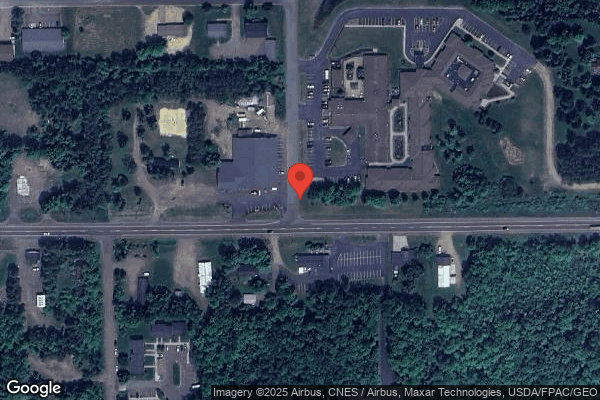
1001 E 11TH ST N, LADYSMITH, WI 54848 (715) 532-5546
For profit - Corporation 30 Beds CARE & REHAB Data: November 2025
Trust Grade
90/100
#12 of 321 in WI
Last Inspection: March 2025

Within standard 12-15 month inspection cycle. Federal law requires annual inspections.

Overview

Care & Rehab - Ladysmith has received an excellent Trust Grade of A, indicating that it is highly recommended and performs well compared to other facilities. It ranks #12 out of 321 nursing homes in Wisconsin, placing it in the top half, and is the second-best option in Rusk County. However, the facility is experiencing a worsening trend, with the number of reported issues increasing from one in 2024 to two in 2025. Staffing is a relative strength, with a rating of 4 out of 5 stars and a turnover rate of 33%, which is below Wisconsin's average. On the downside, there were concerns about infection control, as staff did not ensure residents had the opportunity for hand hygiene before meals, and there were issues with food handling and assisting residents safely during transfers. Despite these weaknesses, the absence of fines and solid staffing levels are positive aspects to consider.

Trust Score
A
90/100
In Wisconsin
#12/321
Top 3%
Safety Record
Low Risk
No red flags
Inspections
Getting Worse
1 → 2 violations
Staff Stability
○ Average
33% turnover. Near Wisconsin's 48% average. Typical for the industry.
Penalties
✓ Good
No fines on record. Clean compliance history, better than most Wisconsin facilities.
Skilled Nurses
✓ Good
Each resident gets 53 minutes of Registered Nurse (RN) attention daily — more than average for Wisconsin. RNs are trained to catch health problems early.
Violations
✓ Good
Only 3 deficiencies on record. Cleaner than most facilities. Minor issues only.
★★★★★
5.0
Overall Rating
★★★★☆
4.0
Staff Levels
★★☆☆☆
2.0
Care Quality
★★★★★
5.0
Inspection Score
Stable
2024: 1 issues
2025: 2 issues

The Good

  • 4-Star Staffing Rating · Above-average nurse staffing levels
  • Full Sprinkler Coverage · Fire safety systems throughout facility
  • No fines on record
  • Staff turnover below average (33%)

    15 points below Wisconsin average of 48%

Facility shows strength in staffing levels, fire safety.

The Bad

Staff Turnover: 33%

13pts below Wisconsin avg (46%)

Typical for the industry

Chain: CARE & REHAB

Part of a multi-facility chain

Ask about local staffing decisions and management

The Ugly 3 deficiencies on record

Mar 2025 2 deficiencies
CONCERN (D)

Potential for Harm - no one hurt, but risky conditions existed

Accident Prevention (Tag F0689)

Could have caused harm · This affected 1 resident

**NOTE- TERMS IN BRACKETS HAVE BEEN EDITED TO PROTECT CONFIDENTIALITY** Based on observation, record review and interview the facility did not provided the needed services and assistive devices. The f...

Read full inspector narrative →
**NOTE- TERMS IN BRACKETS HAVE BEEN EDITED TO PROTECT CONFIDENTIALITY** Based on observation, record review and interview the facility did not provided the needed services and assistive devices. The facility practice had the potential to affect 1 of 5 residents (R) (R17) observed for transfer and ambulation This is evidenced by: Surveyor reviewed the facility policy titled Gait belts dated 7/24. The policy in part read: Policy: A gait belt provides a firm, grasping surface for the caregiver, protects the resident from accidental trauma to the skin, provides a sense of security to the resident, and protects the caregiver and resident from injury while transferring or ambulating. Suveyor reviewed the facility policy titled Fall Risk Management Policy dated 11/24. The policy in part read: Policy: It is the policy of Care and Rehab-Ladysmith to promote resident safety by identifying residents at risk for falling; assessing fall risk factors: provide guidelines for fall and repeat fall preventative interventions and to outline documentation and communication procedures to minimize the number of falls with major injury as well as implement appropriate interventions to prevent continued/repeated falls. R17 was admitted [DATE] with diagnoses that included non-Alzheimer dementia, weakness and hemiplegia. R17's admission Minimum Data Set (MDS), dated [DATE], indicates R17 is understood, usually understands and has impaired cognition. R17 can walk 150 feet: once standing, the ability to walk at least 150 feet in a corridor or similar space: partial staff assistance required. R17 has fall history prior to admission and has fallen in the facility with no injury. R17's Fall Risk Assessment, dated 1/9/25, notes resident at risk for falling with the following risk factors: 3 or more falls in past 3 months, intermittent confusion, poor vision, 1-2 predisposing diseases, change in condition in past 14 days, balance problem with standing/walking, requires use of assistive device, takes 1-2 medications. Score: 19 (10 or higher equals high risk for falls) R17's care plan includes in part: Potential for falls/injury: cognitive deficit, history (Hx) of falls prior to admission, Hx fall since admission. I am at risk for falls due to balance issues, poor judgment in safety, continued self-transfers with assistance is needed Mobility change due to recent stroke including abnormal involuntary movements, new environment. Goal: Initiated: 1/02/25 . Intervention Intervention to lessen my risk for falls/injury: 1) Remind me to call for help rather than to get up by myself. 2)Anticipate my needs. 3) Report pain indicators. 4) Keep items/devices in reach. 5) Encourage use of non-slip footwear. 6)Follow toileting schedule. FALL RISK: I am at a High Risk for falls due to poor judgment in safety, self-transfers, attempts to complete tasks independently when assistance is needed, history of falls prior to and since admission, balance issues, and involuntary movement. Assess fall risk and implement fall reduction measures as indicated. Assure adequate pain management. Invite, encourage, and assist me to participate in activities that promote exercise, physical activity for strengthening and improved mobility and balance. Monitor that alarms are on at all times Please see self-care deficit care plan. Every 2 hour toileting with staff education. Alarms in place. Seek order for OT Evaluate/treat as indicated. Seek order for PT Evaluate/treat as indicated. CONCERN: SELF CARE DEFICIT: Cognitive and physical limitations: I will allow completion of cares that I am unable to do myself. Initiated: 1/02/25 Revised on 1/29/25 Target Date: 4/23/25 TRANSFER/LOCOMOTION/AMBULATION: Assist of 1 with FWW and gait belt. Does not use call light for assistance and will self transfer. Sign in room for reminder to use call light and to use walker. Ambulate with FWW (front wheel walker), gait belt, assist of one with wheelchair to follow in hallway. He may need cueing, occasional assistance to steer walker correctly. On 3/04/25 at 7:33 AM, Surveyor observed R17 ambulating from dining room with Certified Nursing Assistant (CNA) C with walker. R17 did not have a gait belt around his waist to allow staff to maintain contact guard assistance with walking. Surveyor observed a gait belt hanging from R17's walker. CNA C was observed walking beside resident to his room where he was seated in chair. Surveyor observed no wheelchair following behind R17 by staff. On 03/04/25 at 11:43 AM, Surveyor observed R17 in his bathroom with Licensed Practical Nurse (LPN) D in R17's room just outside the bathroom. LPN D entered R17's bathroom, cued him to stand from the toilet and walked beside R17 to his bed. LPN D did not apply a gait belt to R17's waist to maintain contact guard assistance when she walked beside him to his bed. Surveyor again noted a gait belt on R17's walker. CNA E, who was in R17's room, assisted R17 to stand from his bed to walk to his recliner to sit. Again no gait belt was applied to R17's waist to maintain contact guard assistance when assisting him to stand and walk to his recliner. Following the observation Surveyor spoke with LPN D and CNA E about R17's fall risk and use of gait belt, when walking and use of wheelchair following behind R17 when walking. LPN D indicated R17 is at risk for falls; using a gait belt would give staff something to hold onto to maintain contact guard which would be better than grabbing his arm. LPN D expressed R17's care plan should be followed. On 03/04/25 at 12:50 PM, Surveyor spoke with CNA C about the observation. CNA C indicated R17 is at risk for falling; not using the gait belt, contact guard assistance and following behind him with wheelchair places him at risk for falling. Staff should use gait belt, should maintain contact guard with R17 and should use a wheelchair close behind R17 when walking. On 3/04/25 at 12:55 PM, Surveyor spoke with Director of Nursing (DON) B about the observations. DON B indicated R17 is high risk for falls. R17 fell at home prior to his admission and has fallen at the facility. R17 has involuntary movements which increases his risk for falling. The approaches for safe ambulation are via therapy and should be followed. DON B expressed she would expect staff to follow therapy recommendations to use a gait belt for ambulation as noted in his care plan.
CONCERN (D)

Potential for Harm - no one hurt, but risky conditions existed

Food Safety (Tag F0812)

Could have caused harm · This affected 1 resident

Based on random observation, record review and interview, the facility did not distribute foods in a sanitary manner. The facility practice affected one of one resident's (R) tray line service observe...

Read full inspector narrative →
Based on random observation, record review and interview, the facility did not distribute foods in a sanitary manner. The facility practice affected one of one resident's (R) tray line service observed, (R17). This is evidenced by: Surveyor requested and reviewed the facility policy titled Food Handling Techniques For All Staff. which is not dated. The policy in part read: 1. What foods may not be touched with your bare hands? Answer: READY-TO-EAT FOODS Examples include: .Bread, toast, rolls, baked goods 2. What methods may be used to handle READY TO EAT FOODS? Answer: Utensils, tongs, napkins or disposable gloves. 3. Why is bare hand contact prohibited with READY-TO-EAT FOODS? Answer: Employees may transmit disease through unwashed or poorly washed hands. Wearing Gloves or using utensils protects the resident from germs the employee may be carrying on their hands. On 3/03/25 at 12:10 PM, Certified Nursing Assistant (CNA) F was observed picking up R17's hamburger bun with her bare hands to apply ketchup to the bun. CNA F placed the bun back on top of R17's burger and served it to R17. R17 immediately took a bite of the hamburger and bun. On 03/05/25 at 7:03 AM, Surveyor spoke with CNA F about the observation. CNA F indicated she should have worn gloves when handling R17's hamburger bun to apply the ketchup. Surveyor asked CNA F why wearing gloves when handling resident foods is important. CNA F responded to prevent the spread of bacteria or infections such as norovirus. On 03/05/25 at 7:26 AM, Surveyor spoke with Infection Control Preventionist (ICP) G. Surveyor shared the observation with ICP G. Surveyor asked about the facility expectation regarding bare hand food handling of resident foods. ICP G indicated staff should wash their hands and don gloves before handling any resident foods to not contaminate the resident foods. It is important to prevent the spread of infection.
Feb 2024 1 deficiency
CONCERN (E)

Potential for Harm - no one hurt, but risky conditions existed

Infection Control (Tag F0880)

Could have caused harm · This affected multiple residents

Based on observations and interviews, the facility did not establish and implement an ongoing infection prevention and control program to prevent and control the onset and spread of infection as evide...

Read full inspector narrative →
Based on observations and interviews, the facility did not establish and implement an ongoing infection prevention and control program to prevent and control the onset and spread of infection as evidenced by the following observations. The facility did not ensure 12 of 16 residents (R) (R3, R6, R9, R12, R15, R16, R17, R18, R20, R23, R24, R25) were given the opportunity to conduct hand hygiene prior to meal services. The facility staff did not perform sanitization of durable medical equipment to prevent the spread of infection when warranted between resident transfers affecting 2 of 2 resident (R7 and R12). This is evidenced by: The Facility Policy entitled Hand Hygiene - Skilled Nursing Facility Resident, revised 01/24, states: Hand washing is considered to be the single most important task that can be done to help prevent the transmission of infection. Employees should educate the residents as to the importance of performing hand hygiene, provide the resources needed to do so (soap and water or alcohol-based hand sanitizers) and aid those who are unable to independently carry out this task. Facility policy under the section Procedure has a bullet point that states: Staff should pay special attention to those residents who wheel themselves to the dining area. Provide the opportunity to wash their hands or use hand sanitizer before eating. Facility policy entitled Mechanical Lift Slings - Types, Use & Cleaning, revised 07/23 states in part .all lifts will be wiped down following each use, using Super Sani-cloth disinfectant wipes and sling is to be used on one resident only, not used on multiple residents. Example 1 On 02/08/24 at 7:22 AM, Surveyors observed residents going to Atrium Dining room via walker or wheelchair for breakfast. No residents were offered hand hygiene prior to receiving breakfast meal. During observation, Surveyor observed R6, R9, R12, R15, R16, R17, R18, R20, R3, R23, R24 and R25, who all received toast and bacon and used bare hands to consume all or part of the food items. On 02/08/24 at 7:40 AM, Surveyor interviewed Certified Nursing Assistant (CNA) D regarding resident hand hygiene prior to meals. CNA D stated that residents get washed up in the morning before coming to breakfast. CNA D was asked about hand hygiene prior to lunch. CNA D stated, I am not really sure. CNA D confirmed that resident hand hygiene was not offered prior to meal service. On 02/08/24 at 8:04 AM, Surveyor interviewed CNA C regarding resident hand hygiene prior to meal. CNA C stated usually we do before meals, but most of the residents just got up for breakfast. CNA C confirmed that all 11 residents either use their hands to move or propel wheelchair or utilize a walker independently at least part if not all day. CNA C confirmed this could be an issue if resident hand hygiene was not offered prior to meal service. On 02/08/24 at 11:34 AM, Surveyor interviewed Director of Nursing (DON) B regarding observation of no hand hygiene offered to residents prior to meal. DON B stated the expectation would be hand hygiene offered prior to receiving meals per policy. Example 2 On 02/08/24 at 7:16 AM, Surveyor observed CNA D bring mechanical stand lift and body sling out of R7's room after transferring R7 to wheelchair. No sanitization of lift or sling was observed by Surveyor. On 02/08/24 at 10:36 AM, continuous observation by Surveyor noted CNA D used the mechanical stand lift and body sling to transfer R12 on and off the toilet. Surveyor observed CNA D remove the mechanical lift and place it in the hallway, draping the used sling over the lift. Observation of sanitizing lift, sanitizing sling, or obtaining a clean sling prior to transferring R12 on and off the toilet was not observed by Surveyor. On 02/08/24 at 11:03 AM, Surveyor followed CNA C and CNA D to R7's room pushing the sit to stand lift and used sling to transfer R7 to and from the toilet. Observation of sanitizing lift, sanitizing sling, or obtaining a clean sling prior to transferring to toilet or after toileting was not observed by Surveyor. On 02/08/24 at 11:13 AM, Surveyor interviewed CNA C and CNA D regarding expectation of sanitization of lifts. Both CNA C and CNA D stated the expectation is to sanitize lifts between residents. CNA D stated that there should be a tub of wipes in bag hanging from lift, but there isn't any. On 02/08/24 at 1:05 PM, Surveyor interviewed CNA C regarding sanitization expectation of mechanical sit to stand lift sling between residents. CNA C stated, I don't really know what we are supposed to do. I know each resident should have their own sling, but we have 2 sit to stand lifts and each only have 1 sling available. On 02/08/24 at 11:34 AM, Surveyor interviewed DON B, regarding observation of no sanitization of lifts during resident transfers. DON B stated the expectation would be lifts are sanitized between each resident and resident should each have their own sling per policy.
Understanding Severity Codes (click to expand)
Life-Threatening (Immediate Jeopardy)
J - Isolated K - Pattern L - Widespread
Actual Harm
G - Isolated H - Pattern I - Widespread
Potential for Harm
D - Isolated E - Pattern F - Widespread
No Harm (Minor)
A - Isolated B - Pattern C - Widespread

Questions to Ask on Your Visit

  • "Can I speak with families of current residents?"
  • "What's your RN coverage like on weekends and overnight?"

Our Honest Assessment

Strengths
  • • Grade A (90/100). Above average facility, better than most options in Wisconsin.
  • • No major safety red flags. No abuse findings, life-threatening violations, or SFF status.
  • • No fines on record. Clean compliance history, better than most Wisconsin facilities.
  • • Only 3 deficiencies on record. Cleaner than most facilities. Minor issues only.
Concerns
  • • No significant concerns identified. This facility shows no red flags across CMS ratings, staff turnover, or federal penalties.
Bottom line: Generally positive indicators. Standard due diligence and a personal visit recommended.

About This Facility

What is Care & Rehab - Ladysmith 2's CMS Rating?

CMS assigns CARE & REHAB - LADYSMITH 2 an overall rating of 5 out of 5 stars, which is considered much above average nationally. Within Wisconsin, this rating places the facility higher than 99% of the state's 100 nursing homes. This rating reflects solid performance across the metrics CMS uses to evaluate nursing home quality.

How is Care & Rehab - Ladysmith 2 Staffed?

CMS rates CARE & REHAB - LADYSMITH 2's staffing level at 4 out of 5 stars, which is above average compared to other nursing homes. Staff turnover is 33%, compared to the Wisconsin average of 46%. This relatively stable workforce can support continuity of care.

What Have Inspectors Found at Care & Rehab - Ladysmith 2?

State health inspectors documented 3 deficiencies at CARE & REHAB - LADYSMITH 2 during 2024 to 2025. These included: 3 with potential for harm.

Who Owns and Operates Care & Rehab - Ladysmith 2?

CARE & REHAB - LADYSMITH 2 is owned by a for-profit company. For-profit facilities operate as businesses with obligations to shareholders or private owners. The facility is operated by CARE & REHAB, a chain that manages multiple nursing homes. With 30 certified beds and approximately 28 residents (about 93% occupancy), it is a smaller facility located in LADYSMITH, Wisconsin.

How Does Care & Rehab - Ladysmith 2 Compare to Other Wisconsin Nursing Homes?

Compared to the 100 nursing homes in Wisconsin, CARE & REHAB - LADYSMITH 2's overall rating (5 stars) is above the state average of 3.0, staff turnover (33%) is significantly lower than the state average of 46%, and health inspection rating (5 stars) is much above the national benchmark.

What Should Families Ask When Visiting Care & Rehab - Ladysmith 2?

Based on this facility's data, families visiting should ask: "Can I visit during a mealtime to observe dining assistance and food quality?" "How do you handle medical emergencies, and what is your hospital transfer rate?" "Can I speak with family members of current residents about their experience?"

Is Care & Rehab - Ladysmith 2 Safe?

Based on CMS inspection data, CARE & REHAB - LADYSMITH 2 has a clean safety record: no substantiated abuse findings (meaning no confirmed cases of resident harm), no Immediate Jeopardy citations (the most serious violation level indicating risk of serious injury or death), and is not on the Special Focus Facility watch list (a federal program monitoring the lowest-performing 1% of nursing homes). The facility has a 5-star overall rating and ranks #1 of 100 nursing homes in Wisconsin. While no facility is perfect, families should still ask about staff-to-resident ratios and recent inspection results during their visit.

Do Nurses at Care & Rehab - Ladysmith 2 Stick Around?

CARE & REHAB - LADYSMITH 2 has a staff turnover rate of 33%, which is about average for Wisconsin nursing homes (state average: 46%). Moderate turnover is common in nursing homes, but families should still ask about staff tenure and how the facility maintains care continuity when employees leave.

Was Care & Rehab - Ladysmith 2 Ever Fined?

CARE & REHAB - LADYSMITH 2 has no federal fines on record. CMS issues fines when nursing homes fail to meet care standards or don't correct problems found during inspections. The absence of fines suggests the facility has either maintained compliance or corrected any issues before penalties were assessed. This is a positive indicator, though families should still review recent inspection reports for the full picture.

Is Care & Rehab - Ladysmith 2 on Any Federal Watch List?

CARE & REHAB - LADYSMITH 2 is not on any federal watch list. The most significant is the Special Focus Facility (SFF) program, which identifies the bottom 1% of nursing homes nationally based on persistent, serious quality problems. Not being on this list means the facility has avoided the pattern of deficiencies that triggers enhanced federal oversight. This is a positive indicator, though families should still review the facility's inspection history directly.