NORTH RIDGE HEALTH AND REHABILITATION CENTER
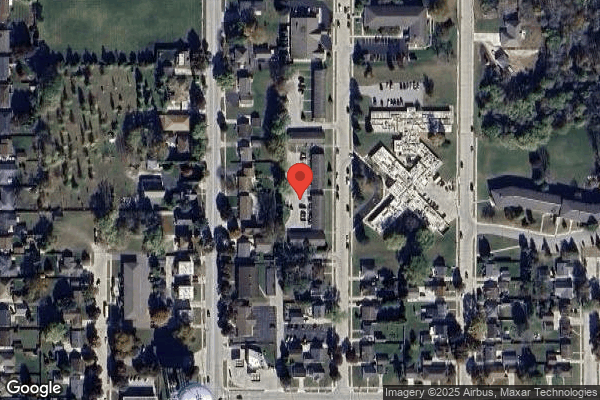
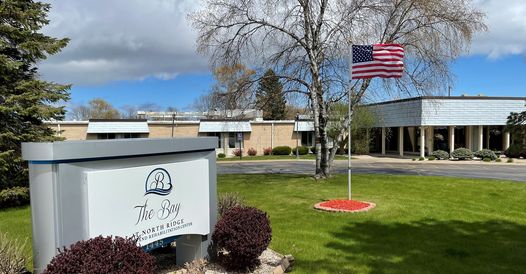
1445 N 7TH ST, MANITOWOC, WI 54220 (920) 682-0314
For profit - Corporation 94 Beds CHAMPION CARE Data: November 2025 1 Immediate Jeopardy citation
Trust Grade
23/100
#304 of 321 in WI
Last Inspection: August 2024

Within standard 12-15 month inspection cycle. Federal law requires annual inspections.

Overview

North Ridge Health and Rehabilitation Center in Manitowoc, Wisconsin, has received a Trust Grade of F, indicating significant concerns about the facility's quality and care. It ranks #304 out of 321 in Wisconsin and #6 out of 6 in Manitowoc County, placing it in the bottom half of nursing homes in both the state and the county. The facility is showing some improvement, as it has reduced its issues from 21 in 2024 to 5 in 2025, but it still has a concerning total of 54 issues, including one critical finding regarding a resident who eloped due to inadequate supervision. Staffing is rated 2 out of 5 stars, with a 56% turnover rate, which is about average for the state, but the facility has no fines on record, suggesting a lack of financial penalties. However, there are serious concerns about food safety practices, with incidents of improper food storage and preparation that could affect many residents.

Trust Score
F
23/100
In Wisconsin
#304/321
Bottom 6%
Safety Record
High Risk
Review needed
Inspections
Getting Better
21 → 5 violations
Staff Stability
⚠ Watch
56% turnover. Above average. Higher turnover means staff may not know residents' routines.
Penalties
✓ Good
No fines on record. Clean compliance history, better than most Wisconsin facilities.
Skilled Nurses
✓ Good
Each resident gets 60 minutes of Registered Nurse (RN) attention daily — more than 97% of Wisconsin nursing homes. RNs are the most trained staff who catch health problems before they become serious.
Violations
⚠ Watch
54 deficiencies on record. Higher than average. Multiple issues found across inspections.
★☆☆☆☆
1.0
Overall Rating
★★☆☆☆
2.0
Staff Levels
★★★★☆
4.0
Care Quality
★☆☆☆☆
1.0
Inspection Score
Stable
2024: 21 issues
2025: 5 issues

The Good

  • 4-Star Quality Measures · Strong clinical quality outcomes
  • Full Sprinkler Coverage · Fire safety systems throughout facility
  • No fines on record

Facility shows strength in quality measures, fire safety.

The Bad

1-Star Overall Rating

Below Wisconsin average (3.0)

Significant quality concerns identified by CMS

Staff Turnover: 56%

Near Wisconsin avg (46%)

Frequent staff changes - ask about care continuity

Chain: CHAMPION CARE

Part of a multi-facility chain

Ask about local staffing decisions and management

Staff turnover is elevated (56%)

8 points above Wisconsin average of 48%

The Ugly 54 deficiencies on record

1 life-threatening
Aug 2025 1 deficiency
CONCERN (D) 📢 Someone Reported This

A family member, employee, or ombudsman was alarmed enough to file a formal complaint

Potential for Harm - no one hurt, but risky conditions existed

Pressure Ulcer Prevention (Tag F0686)

Could have caused harm · This affected 1 resident

**NOTE- TERMS IN BRACKETS HAVE BEEN EDITED TO PROTECT CONFIDENTIALITY** Based on observation, staff interview, and record review, the facility did not ensure 1 resident (R) (R1) of 6 sampled residents...

Read full inspector narrative →
**NOTE- TERMS IN BRACKETS HAVE BEEN EDITED TO PROTECT CONFIDENTIALITY** Based on observation, staff interview, and record review, the facility did not ensure 1 resident (R) (R1) of 6 sampled residents received the appropriate care and services to promote healing and/or prevent pressure injuries from developing. R1 had a stage 3 presure injury on the coccyx upon admission. R1's wound care was not provided in accordance with a physician's order on 7/6/25. R1 developed a wound infection that required intravenous (IV) antibiotics and debridement.Findings include: The facility's Wound Treatment Management policy, revised 12/3/24, indicates: .1. Wound treatments will be provided in accordance with physician orders, including the cleansing method, type of dressing, and frequency of dressing change .On 8/6/25, Surveyor reviewed R1's medical record. R1 was admitted to the facility on [DATE] and had diagnoses including metabolic encephalopathy due to carbon monoxide poisoning, hemiplegia and hemiparesis, tracheostomy, and pressure ulcer of sacral region stage 3. R1's Minimum Data Set (MDS) assessment, dated 6/16/25, had a Brief Interview for Mental Status (BIMS) score of 0 out of 15 which indicated R1 had severely impaired cognition. R1 had a Guardian for healthcare decisions. A care plan, dated 6/10/25, indicated R1 had potential for infection related to trach and wounds and had a history of methicillin-resistant Staphylococcus aureus (MRSA) The goal indicated R1would remain free of complications related to infection. The care plan contained the following interventions: Contact precautions; Monitor/document/report as needed (PRN) any signs/symptoms of infection, including fever, redness, drainage or swelling around wounds or catheter site, cough, respiratory symptoms, dysuria, hematuria, flank pain, and foul-smelling urine; Monitor/document/report PRN abnormal laboratory values (e.g., white blood cell count and differential, serum protein, serum albumin, and cultures).Upon admission on [DATE], R1's wound measured 8.0 centimeters (cm) (length) x 3.0 cm (width) x 0.1 cm (depth) and was classified as a stage 3. A hospital Discharge summary, dated [DATE], indicated the wound was terminal. R1 had a treatment order to cleanse with normal saline and cover with a dry dressing every day one time a day for wound care (dated 6/9/25). Advanced Practice Nurse Prescriber (APNP)-E documented on 6/16/25 that R1's wound measured 5.0 cm x 0.8 cm x 0.1 cm. R1 had the following treatment order: Cleanse with normal saline or wound wash and pat dry. Apply honey gel to the wound bed and cover with a bordered foam dressing; Change 3 times per week and PRN. One time a day every Monday, Wednesday, and Friday (dated 6/16/25). APNP-E documented on 6/23/25 that R1's wound measured 5.0 cm x 1.5 cm x 0.1 cm. R1 had the following treatment order: Cleanse with normal saline or wound wash and pat dry. Apply Hydrofera blue foam to open area. Zinc to peri wound. Cover both with ABD (abdominal) (pad) and tape. One time a day for wound care (dated 6/23/25). APNP-E documented on 6/30/25 that R1's wound was stable and measured 5.4 cm x 2.4 cm x 0.1 cm. R1 had the following treatment order: Cleanse with normal saline or wound wash. Apply honey to wound and cover with Aquacel AG. Cover both with foam border. One time a day for wound care (dated 6/30/25). APNP-E documented on 7/7/25 that R1 had the wrong dressing in place. R1's wound had worsened, had a strong odor, and measured 11.0 cm x 9.0 cm x (unable to determine). R1 had the following treatment order: Cleanse with normal saline or wound wash. Apply Iodosorb to wound and cover with ABD. Two times a day for wound care (dated 7/7/25).R1's medical record indicated R1 had a temperature of 102 degrees Fahrenheit (F) and increased respirations on 7/7/25. Wound culture results were positive for MRSA and E-coli. R1 was started on IV cefepime and linezolid (antibiotic medications) on 7/8/25 for 7 days. A sacral X-ray was negative for osteomyelitis. R1 was started on Juven (a nutrition powder used to promote wound healing) and a vitamin D supplement. R1 was administered IV fluids on 7/9/25 and 7/10/25. On 7/11/25, a wound clinic appointment was scheduled for 7/17/25. At the request of Family Member (FM)-F, R1 was transported to hospital on 7/11/25 for evaluation and admitted to the Intensive Care Unit (ICU) with diagnoses of sepsis, wound infection, dehydration, and surgical debridement of wound. On 8/6/25 at 3:57 PM, Surveyor interviewed APNP-E who indicated on 7/7/25, R1's wound had changed drastically from the last visit. APNP-E documented in R1's treatment notes that the wound contained the wrong dressing on 7/7/25, however, APNP-E did not feel the wrong dressing would have made that significant of a change in the condition of the wound or impacted R1's outcome. On 8/7/25 at 10:08 AM, Surveyor interviewed FM-F who indicated Wound Registered Nurse (WRN)-G informed FM-F on 7/7/25 that R1's wound was getting worse. WRN-G indicated R1's wound contained the wrong dressing and staff were using the wrong kind of honey. FM-F indicated R1 had a condom catheter that consistently fell off. FM-F requested an indwelling catheter for R1. FM-F alerted staff on 7/7/25 that R1 was sick and had a temperature of 102 degrees F. FM-F stated a grievance was filed with Director of Nursing (DON)-B on 7/7/25.On 8/7/25 at 3:10 PM, Surveyor interviewed FM-C who indicated FM-C assisted with repositioning R1 on 7/6/25. FM-C indicated when R1 was rolled to the side, FM-C noted R1's coccyx dressing was saturated with urine and rolled up in a ball. FM-C indicated Licensed Practical Nurse (LPN)-D indicated the dressing should be water- and urine-proof. LPN-D left the room to obtain a new dressing and returned with a heart-shaped bandage. FM-C stated LPN-D applied something to the bandage and secured the bandage to R1's coccyx without cleansing the wound. LPN-D indicated to FM-C that it was LPN-D's first time working with R1.On 8/7/25 at 11:21 and 11:30 AM, Surveyor interviewed LPN-D who did not recall what type of dressing LPN-D applied to R1's coccyx on 7/6/25 and indicated LPN-D would have followed R1's order. LPN-D indicated FM-C stated the wound looked way worse than it had. LPN-D notified DON-B that FM-C was upset about the wound.On 8/7/25 at 4:42 PM, Surveyor interviewed WRN-G who indicated WRN-G and APNP-E assessed R1's wound and changed the dressing on 7/7/25. WRN-G indicated R1's dressing was intact at the time of the assessment but was not the dressing that was ordered. WRN-G indicated to FM-F that R1's wound was getting worse and an incorrect dressing was applied. WRN-G indicated WRN-G identified residents with incorrect and undated dressings on multiple occasions during wound rounds.On 8/8/25 at 9:53 AM, Surveyor interviewed DON-B who indicated upon finding a resident with a non-intact dressing, staff should cleanse the wound and apply the proper dressing. DON-B indicated when staff identify that a resident has the wrong dressing, staff should notify DON-B, apply the correct dressing, and document the findings in a progress note. DON-B indicated when agency staff work at the facility, DON-B assesses their comfort level with wounds and assigns them to a unit that is less acute at first. DON-B stated DON-B was not informed that staff were not dating residents' dressings and would have done education and audits if notified.
Jun 2025 4 deficiencies 1 IJ
CRITICAL (J) 📢 Someone Reported This

A family member, employee, or ombudsman was alarmed enough to file a formal complaint

Immediate Jeopardy (IJ) - the most serious Medicare violation

Accident Prevention (Tag F0689)

Someone could have died · This affected 1 resident

**NOTE- TERMS IN BRACKETS HAVE BEEN EDITED TO PROTECT CONFIDENTIALITY** Based on staff and resident interview and record review, the facility did not ensure adequate supervision was provided for 1 res...

Read full inspector narrative →
**NOTE- TERMS IN BRACKETS HAVE BEEN EDITED TO PROTECT CONFIDENTIALITY** Based on staff and resident interview and record review, the facility did not ensure adequate supervision was provided for 1 resident (R) (R2) of 1 resident reviewed for elopement. An elopement risk assessment, dated 1/31/25, indicated R2 was at risk for elopement. A WanderGuard (a security device that triggers an alarm if the wearer exits the facility) was placed on R2's left ankle. On 6/12/25 at 3:10 AM, R2 eloped from the facility and was found at approximately 3:55 AM approximately two miles from the facility. An investigation determined R2 exited the facility through the 200 wing door which had an alarm that sounded, however, staff were unable to hear the alarm because they were in residents' rooms providing care. Staff did not respond to the alarm until approximately 3:15 AM. The facility's failure to provide adequate supervision for a resident assessed to be at risk for elopement created a finding of immediate jeopardy that began on 6/12/25. Nursing Home Administrator (NHA)-A was notified of the immediate jeopardy on 6/20/25 at 3:52 PM. The immediate jeopardy was removed on 6/20/25, however, the deficient practice continues at a scope/severity level D (potential for more than minimal harm/isolated) as the facility continues to implement its action plan. Findings include: The facility's Elopements and Wandering Residents policy, dated 2/20/23, indicates: .1. The facility is equipped with door locks/alarms to help avoid elopements. 2. Alarms are not a replacement for necessary supervision. Staff are to be vigilant in responding to alarms in a timely manner .4 .Adequate supervision will be provided to help prevent accidents or elopements. On 6/20/25, Surveyor reviewed R2's medical record. R2 was admitted to the facility on [DATE] and had diagnoses including paranoid schizophrenia, epilepsy, panic disorder, anxiety, and depression. R2's Minimum Data Set (MDS) assessment, dated 5/6/25, had a Brief Interview for Mental Status (BIMS) score of 3 out of 15 which indicated R2 had severely impaired cognition. R2 had a Guardian. A care plan, revised on 6/12/25, indicated R2 was at risk for elopement and wandering. R2 had a WanderGuard due to impaired cognition and exit-seeking behavior. The care plan also indicated R2 was at moderate risk for falls due to the use of assistive devices, decrease in muscle coordination, and a history of multiple falls in the facility. On 6/20/25, Surveyor reviewed R2's nursing progress notes for history of elopement/exit seeking behaviors and noted the following: ~ On 9/16/24, staff responded to a door alarm and noted R2 was attempting to exit and stated R2 needed to get to the parking lot and go home. ~ On 12/27/24, R2 exit sought throughout the day, walked fast to the front of the building, and tried to exit the front door. R2 was difficult to redirect. ~ On 1/31/25, R2 eloped out the 500/600 wing exit and was found almost a mile away from the facility. R2 had an unwitnessed fall during the elopement that resulted in scrapes and bruising to R2's right knee. ~ On 2/6/25, R2 attempted to open the 200 wing door and stated R2 wanted to leave. ~ On 3/25/25, R2 attempted to the leave the facility for the seventh time and was redirected on several occasions. ~ On 4/20/25, R2 exhibited signs of anxiety, paced back and forth, attempted to exit the facility, and wandered off the unit several times. Surveyor reviewed the facility's investigation which indicated on 6/12/25 at approximately 3:10 AM, R2 exited the facility through the 200 wing door. At approximately 3:15 AM, staff called a code white (missing resident) after determining R2 was not in the facility. Staff searched the immediate vicinity of the facility but were unable to locate R2. At 3:40 AM, NHA-A notified the local police. At 3:55 AM, Registered Nurse (RN)-M located R2 approximately two miles from the facility. R2 was returned to the facility and placed on 1:1 supervision. R2 was unable to answer questions about where R2 was going. According to weatherunderground.com, the temperature at the time R2 left the facility was approximately 55 degrees. Surveyor reviewed a map of the city and noted Lake Michigan was less than 300 feet from where R2 was found. Surveyor noted R2 walked approximately two miles east down a busy four lane street, through a busy intersection ([NAME] Street and Highway 42), and across Highway 42 before R2 was found by staff. On 6/20/25 at 6:36 AM, Surveyor interviewed RN-M who was assigned to the 200/300 wings on the 6/11/25-6/12/25 night (NOC) shift. RN-M stated RN-M was assisting Certified Nursing Assistant (CNA)-L with cares in a resident's room on the 300 wing. CNA-L left the room before RN-M and then came back and stated the 200 wing door was alarming. RN-M verified RN-M could not hear the alarm while in the resident's room because the door was closed and the resident had a ventilator. RN-M instructed CNA-L to look for R2 due to R2's history of exit seeking. When staff noted R2 was not in R2's room, RN-M called a code white and conducted a head count of residents. RN-M stated when NHA-A and Director of Nursing (DON)-B arrived at the facility, RN-M got in RN-M's car to look for R2 and found R2 approximately two miles away on a concrete path next to Highway 42. RN-M convinced R2 to get in the car and took R2 back to the facility. RN-M confirmed that staff should respond immediately to door alarms. On 6/20/25 at 11:12 AM, Surveyor interviewed CNA-L who was assigned the 200/300 wings on the 6/11/25-6/12/25 NOC shift. CNA-L stated CNA-L was on the 300 wing taking care of a resident. When cares were completed, CNA-L exited the room and heard the door alarm on the 200 wing. CNA-L looked out the 200 wing, did not see any residents, and reported the door alarm to RN-M. CNA-L then checked for R2 on the 600 wing due to R2's frequent wandering and exit seeking but could not locate R2. CNA- L was not sure how long the alarm was sounding before CNA-L heard it. CNA-L verified CNA-L was not able to hear the alarm while in a resident's room with the door closed and confirmed that staff should respond immediately to door alarms. On 6/20/25 at 11:20 AM, Surveyor interviewed CNA-N who was assigned to the 600 wing on the 6/11/25-6/12/25 NOC shift. CNA-N stated CNA-N last saw R2 in bed between 1:00 and 2:00 AM. CNA-N stated CNA-L entered the unit at approximately 3:20 AM, asked where R2 was, and indicated an alarm was sounding on the 200 wing. CNA-N stated CNA-N could not hear the 200 wing door alarm because it was on the other side of the building. On 6/20/25 at 11:25 AM, Surveyor interviewed CNA-O who was assigned to the 500 wing on the 6/11/25-6/12/25 NOC shift. CNA-O stated CNA-O was not aware that R2 was missing until a code white was called at approximately 3:15 AM. CNA-O verified the fire door alarms on each wing (200, 300, 500, and 600) and WanderGuard alarms were hard to hear while in a resident's room with the door closed. On 6/20/25 at 2:14 PM, Surveyor interviewed Licensed Practical Nurse (LPN)-P who was assigned to the 500/600 wings on the 6/11/25-6/12/25 NOC shift. LPN-P stated LPN-P was either at the nurses' station or in a resident's room when R2 eloped. LPN-P verified LPN-P would not have been able to hear the 200 wing door alarm which was on the other side of the building. LPN-P stated it is hard to hear any of the alarms when in a resident's room with the door closed. LPN-P stated LPN-P typically leaves room doors open and uses the curtain to provide privacy so LPN-P can hear if an alarm sounds or if anyone needs help. A statement from RN-R obtained by the facility on 6/12/25, indicated RN-R was in a resident's room on the 300 wing administering medication. RN-R stated RN-R did not see R2 on the 200 wing at all. When RN-R exited the resident's room, RN-R heard CNA-L state the 200 wing door was alarming. When staff could not locate R2, RN-R notified DON-B that R2 was missing and began conducting a head count and searching for R2. Surveyor reviewed R2's 1:1 supervision and 15 minute checks documentation and noted R2 was on 1:1 supervision from 6/12/25 to 6/16/25 and then placed on 15 minute checks. Surveyor noted R2's 15 minute check sheets were missing documentation on 6/17/25 from 7:15 PM to 9:45 PM. The facility's investigation included weekly door alarm/WanderGuard audits as well as all staff education which included ensuring staff respond immediately to door alarms and immediately check to ensure no residents have eloped. The education indicated the reaction must be instantaneous and there was no room for a delay in response to an alarm. The investigation indicated random audits would be completed to ensure knowledge and compliance. On 6/20/25 at 2:18 PM, Surveyor interviewed NHA-A who verified staff should respond to door alarms immediately. NHA-A stated NHA-A was not aware staff could not hear door alarms while in residents' rooms. NHA-A stated the only way to make the alarms louder was to install a new alarm system and verified during the survey that there was nothing in process to correct the issue. On 6/20/25, Surveyor observed R2 multiple times during the AM and PM shifts and noted a functioning WanderGuard on R2's left ankle. Surveyor also noted the facility's WanderGuard and door alarm systems were armed and functioning. The failure to provide adequate supervision for a resident at risk for elopement and follow the elopement procedure when a door alarm sounded created a finding of immediate jeopardy. The facility removed the immediate jeopardy on 6/20/25 when it had completed the following: 1. Assigned staff to post at each nursing station where door alarms can be clearly heard immediately upon activation to ensure timely response. 2. Ordered a Safety Technology International STI-6402 105dB Exit Stopper (Multifunction Door Alarm) to be installed upon arrival. NHA-A and/or designee to complete validation of the alarm volume to ensure staff can hear the alarm sounding in any resident room or area where the doors is closed. Assigned stationary staff will remain in place until validation occurs. 3. Completed an elopement investigation that included review of R2's care plan as well as new BIMS, trauma, skin, pain, and elopement evaluations. 4. Completed elopement evaluations for all in-house residents. 5. Provided staff education on the facility's elopement policy, responding to alarms timely, and 1:1 supervision expectations. 6. Implemented Stop signs on egress doors to deter residents from using exit doors 7. Implemented audits to ensure comprehension of the education and to ensure staff respond to alarms in a timely manner.
CONCERN (D) 📢 Someone Reported This

A family member, employee, or ombudsman was alarmed enough to file a formal complaint

Potential for Harm - no one hurt, but risky conditions existed

Notification of Changes (Tag F0580)

Could have caused harm · This affected 1 resident

**NOTE- TERMS IN BRACKETS HAVE BEEN EDITED TO PROTECT CONFIDENTIALITY** Based on staff and resident representative interview and record review, the facility did not ensure a resident representative wa...

Read full inspector narrative →
**NOTE- TERMS IN BRACKETS HAVE BEEN EDITED TO PROTECT CONFIDENTIALITY** Based on staff and resident representative interview and record review, the facility did not ensure a resident representative was notified of a change in condition for 1 resident (R) (R4) of 13 sampled residents. R4 was diagnosed with yeast in the urine and had an order for antibiotic treatment. R4's Power of Attorney for Healthcare (POAHC) was not notified of the change in condition or antibiotic treatment. In addition, R4 had low blood pressure readings on 5/10/25 and 5/11/25. R4's physician and POAHC were not notified. Findings include: The facility's Notification of Changes policy, revised 3/31/25, indicates: The purpose of this guideline is to ensure the facility promptly informs the resident, consults the resident's physician, and notifies, consistent with his or her authority, the resident's representative when there is a change requiring notification. Changes of condition require an evaluation .and ensures proper documentation and notification has been made .2. Significant change in the resident's physical, mental, or psychosocial condition such as deterioration in health, mental, or psychosocial status. This may include: a. Life-threatening conditions, or b. Clinical complications, c. Critical lab values. 3. Circumstances that require a need to alter treatment may include: a. New treatment, b. Discontinuation of current treatment due to: i. Adverse consequences, ii. Acute condition, iii. Exacerbation of a chronic condition .Additional considerations: 1. Competent individuals: a. The facility must still contact the resident's physician and notify the resident's representative, if known .When a resident is mentally competent, a designated family member should be notified of significant changes in the resident's health status because the resident may not be able to notify them personally, especially in the case of sudden illness or accident . On 6/20/25, Surveyor reviewed R4's medical record. R4 was admitted to the facility on [DATE] and had diagnoses including quadriplegia, diabetes mellitus type 2, and pressure ulcer of sacral region stage 4. R4's Minimum Data Set (MDS) assessment, dated 5/9/25, had a Brief Interview for Mental Status (BIMS) score of 15 out of 15 which indicated R4 had intact cognition. R4 had an activated POAHC who was responsible for R4's healthcare decisions. On 6/20/24 at 8:38 AM, Surveyor interviewed R4's POAHC (POAHC-H) who indicated POAHC-H was not informed about the results of a second urine test ordered for R4 or any treatment from the result. POAHC-H indicated the next time POAHC-H was notified of any changes was on 5/11/25 when R4 was going to be transferred to the hospital. POAHC-H indicated POAHC-H did not know when the facility received the results or what the facility was doing for R4's infection. R4's medical record indicated R4 had increased confusion on 5/8/25 that was documented by Registered Nurse (RN)-I. The physician was updated and ordered a urinalysis (UA) and urine culture (UC). R4's medical record indicated POAHC-H was updated on the order to obtain a UA/UC. The UA/UC results indicated R4 had an infection of yeast in the urine. R4's medical record did not indicate POAHC-H was updated on the result. A progress note, dated 5/8/25 at 10:29 PM by RN-J, indicated R4 was prescribed fluconazole (an antifungal medication) 200 milligrams (mg) daily for 14 days for a candidal urinary tract infection (UTI). R4's medical record did not indicate POAHC-H was notified of the fluconazole order. A clinical summary documentation, dated 5/9/25 at 10:15 AM by Assistant Director of Nursing (ADON)-K, indicated R4 had a new order for an antifungal medication due to a candidal UTI. The documentation did not indicate POAHC-H was notified. R4's medical record contained the following low blood pressure readings: ~On 5/10/25 at 5:03 PM - 83/47 millimeters of mercury (mmHg) ~On 5/10/25 at 6:32 PM - 89/52 mmHg ~On 5/11/25 at 8:18 AM - 88/56 mmHg R4's medical record did not indicate R4's physician or POAHC-H were notified of R4's low blood pressure readings. R4's medical record indicated POAHC-H was notified on 5/11/25 when R4 was unresponsive to verbal or touch stimuli and was transferred to the hospital. On 6/20/25 at 12:20 PM, Surveyor interviewed Director of Nursing (DON)-B who indicated POAHC-H was notified of R4's UA, UTI, and treatment which was documented in the facility's McGeer's tracking assessment. Surveyor reviewed McGeer's infection symptom tracking documentation completed by DON-B that was a late entry with an effective date of 5/9/25 and a signed date of 5/19/25. The documentation indicated POAHC-H was notified on 5/9/25. On 6/20/25 at 12:40 PM, Surveyor interviewed DON-B and reviewed R4's low blood pressure readings. When asked if R4's physician and POAHC-H were notified of the low blood pressure readings, DON-B indicated R4's physician and POAHC-H were not notified but should have been. DON-B also indicated the nurse should have questioned the blood pressure readings. On 6/20/25 at 3:37 PM, Surveyor interviewed ADON-K who verified ADON-K did not notify POAHC-H of the antifungal order because ADON-K was not the one who received the order. ADON-K indicated RN-J received the order and should have notified POAHC-H. ADON-K verified the physician should be updated if a resident has a low blood pressure reading. ADON-K indicated the facility's standing order on blood pressure is to notify the physician if the systolic number (top) is less than 90 or greater than 180 and the diastolic number (bottom) is greater than 90. On 6/20/25 at 4:04 PM, Surveyor again interviewed POAHC-H who indicated POAHC-H was aware the facility was going to do another UA for R4, however, the facility did not follow-up with the results of the UA and did not notify POAHC-H of any new orders. POAHC-H did not recall DON-B updating POAHC-H on 5/9/25 with the UA results and treatment and indicated POAHC-H would have remembered being notified. POAHC-H indicated the next tine POAHC-H was notified about anything was on 5/11/25 when R4 was transferred to the hospital.
CONCERN (D) 📢 Someone Reported This

A family member, employee, or ombudsman was alarmed enough to file a formal complaint

Potential for Harm - no one hurt, but risky conditions existed

Infection Control (Tag F0880)

Could have caused harm · This affected 1 resident

**NOTE- TERMS IN BRACKETS HAVE BEEN EDITED TO PROTECT CONFIDENTIALITY** 2. On [DATE], Surveyor reviewed R6's medical record. R6 was admitted to the facility on [DATE] and had diagnoses including malig...

Read full inspector narrative →
**NOTE- TERMS IN BRACKETS HAVE BEEN EDITED TO PROTECT CONFIDENTIALITY** 2. On [DATE], Surveyor reviewed R6's medical record. R6 was admitted to the facility on [DATE] and had diagnoses including malignant neoplasm of glottis, chronic obstructive pulmonary disease (COPD), chronic respiratory failure, and tracheostomy status. A care plans, initiated on [DATE], indicated R6 had a Clostridioides difficile (C. diff) infection (a highly contagious bacterium that causes diarrhea and colitis) and was on contact precautions. On [DATE] at 1:25 AM, Surveyor observed CNA-R and CNA-S enter R6's room without donning PPE. Surveyor observed a sign posted on R6's door that indicated R6 was on contact precautions. Surveyor observed CNA-R and CNA-S prepare to transfer R6 from bed to wheelchair. CNA-S applied R6's socks and shoes while CNA-R retrieved R6's wheelchair and a gait belt. CNA-R then applied the gait belt and assisted R6 to the wheelchair. CNA-R unhooked R6's trach hose, assisted R6 to a sitting position, then reapplied the hose. Registered Nurse (RN)-M then entered room without donning PPE and straightened R6's bed and tidied the room. When CNA-R and CNA-S exited the room, Surveyor asked if R6 was on contact precautions. CNA-R answered yes and confirmed CNA-R should have worn PPE in R6's room. When RN-M exited R6's room at 1:32 AM, Surveyor asked RN-M if R6 was on contact precautions. RN-M confirmed R6 was on contact precautions and indicated RN-M should have worn PPE in R6's room. On [DATE] at 3:30 AM, Surveyor interviewed Nursing Home Administrator (NHA)-A who confirmed staff should don PPE for residents on contact precaution. NHA-A indicated contact precautions require staff to don a gown and gloves prior to entering the room. Based on observation, staff and resident interview, and record review, the facility did not maintain an infection prevention and control program designed to prevent the transmission of communicable disease and infection for 2 residents (R) (R10 and R6) of 2 sampled residents. During an observation of incontinence care for R10, Certified Nursing Assistant (CNA)-C did not complete hand hygiene in between glove changes and prior to applying barrier cream and did not complete thorough pericare. R6 was on contact precautions. On [DATE], multiple staff entered R6's room and provided care without donning appropriate personal protective equipment (PPE). Findings include: The facility's Hand Hygiene policy, revised [DATE], indicates: All staff will perform proper hand hygiene procedures to prevent the spread of infection to other personnel, residents, and visitors .Hand hygiene is indicated and will be performed under the conditions listed in, but not limited to, the attached hand hygiene table .Before applying and after removing personal protective equipment (PPE), including gloves .During resident care when moving from a contaminated body site to a clean body site . The facility's Perineal Care policy, revised [DATE], indicates: It is the practice of this facility to provide perineal care to all incontinent residents .2. Gather supplies .c. Separate the resident's labia with one hand, and cleanse perineum with the other hand by wiping in direction from front to back .d. Repeat on opposite side using separate section of wash cloth or disposable wipe. e. Clean urethral meatus and vaginal orifice .f. Pat dry .g. Turn resident .h. Clean and dry the anal area . The facility's Transmission-Based Precautions (TBP) policy, dated 2025, indicates: It is our policy to take appropriate precautions to prevent transmission of pathogens based on the pathogens' modes of transmission .1. Facility staff will apply TBP, in addition to standard precautions, to residents who are known or suspected to be infected or colonized with certain infectious agents requiring additional controls to prevent transmission .10. Contact Precautions - A. Intended to prevent transmission of pathogens that are spread by direct or indirect contact with the resident or the resident's environment .Healthcare personnel caring for residents on contact precautions wear a gown and gloves for all interactions that may involve contact with the resident or potentially contaminated areas in the resident's environment .Donning PPE upon entry and discarding before exiting the room is done to contain pathogens, especially those that have been implicated in transmission through environmental contamination . 1. On [DATE], Surveyor reviewed R10's medical record. R10 was admitted to the facility on [DATE] and had diagnoses including myotonic muscular dystrophy, chronic respiratory failure, encephalopathy, and heart failure. R10's Minimum Data Set (MDS) assessment, dated [DATE], had a Brief Interview for Mental Status (BIMS) score of 13 of 15 which indicated R10 had intact cognition. A care plan, dated [DATE], indicated R10 required the assistance of 1 staff for toileting and personal hygiene and the assistance of 2 staff with a full body lift. On [DATE] at 1:28 PM, Surveyor observed CNA-C and Licensed Practical Nurse (LPN)-D apply PPE prior to entering R10's room and observed CNA-C and LPN-D transfer R10 from wheelchair to bed via full body lift. Surveyor noted the blanket on R10's wheelchair was wet and R10 informed CNA-C and LPN-D that R10 had urinated in R10's brief. CNA-C retrieved disposable wipes and barrier cream. LPN-D assisted R10 onto R10's right side while CNA-C removed R10's wet brief, wiped R10's buttocks from front to back, and applied barrier cream to R10's buttocks. CNA-C removed gloves, completed hand hygiene, donned clean gloves, and tucked a clean brief underneath R10. CNA-C assisted R10 onto R10's left side. LPN-D adjusted the brief and assisted R10 into a supine position. CNA-C pulled the brief over R10's anterior peri area without cleansing the area and removed gloves. Without completing hand hygiene, CNA-C donned clean gloves, put on R10's heel boots, and removed gloves. Without completing hand hygiene, CNA-C donned clean gloves, removed R10's soiled gown, and put a clean gown on R10. CNA-C then placed pillows under R10's head and knees and ensured R10's bed was at a 45 degree angle. LPN-D and CNA-C each put a blanket on R10. LPN-D then removed PPE and washed hands. CNA-C removed CNA-C's gown, changed R10's garbage, and removed gloves. Without completing hand hygiene, CNA-C donned clean gloves and cleaned the lift with Sani wipes. CNA-C then removed gloves and washed hands. On [DATE] at approximately 1:48 PM, Surveyor interviewed R10 who indicated it did not seem like CNA-C washed R10's frontal peri area but indicated it seemed to be clean. On [DATE] at 1:58 PM, Surveyor interviewed CNA-C who verified CNA-C should have completed hand hygiene between gloves changes. CNA-C indicated CNA-C did not provide full perineal care because R10 was not soiled with stool. CNA-C indicated CNA-C should have donned clean gloves prior to applying barrier cream. On [DATE] at approximately 2:15 PM, Surveyor interviewed Director of Nursing (DON)-B who indicated CNA-C should have completed hand hygiene between glove changes and should have changed gloves prior to putting barrier cream on R10. DON-B verified staff should cleanse a resident's entire perineal area during soiled brief changes.
CONCERN (E) 📢 Someone Reported This

A family member, employee, or ombudsman was alarmed enough to file a formal complaint

Potential for Harm - no one hurt, but risky conditions existed

Food Safety (Tag F0812)

Could have caused harm · This affected multiple residents

Based on observation, staff interview, and record review, the facility did not ensure food was stored and prepared in a safe and sanitary manner. This practice had the potential to affect 39 of the 54...

Read full inspector narrative →
Based on observation, staff interview, and record review, the facility did not ensure food was stored and prepared in a safe and sanitary manner. This practice had the potential to affect 39 of the 54 residents residing in the facility. There were 15 residents who received nutrients exclusively via tube feeding. Staff did not wear hair restraints consistently throughout the kitchen. Kitchen equipment and food services areas were not in a clean and sanitary condition. Staff did not follow appropriate hand hygiene procedures when they prepared and served food. Resident food and beverages were not served at appropriate temperatures. Findings include: Hair Restraints: The 2022 Federal Food and Drug Administration (FDA) Food Code documents at 2-402.11 Hair Restraints: (A) Except as provided in (B) of this section, Food Employees shall wear hair restraints such as hats, hair coverings or nets, beard restraints, and clothing that covers body hair, that are designed and worn to effectively keep their hair from contacting exposed food, clean equipment, utensils and linens, and unwrapped single-service and single-use articles. The facility's Maintaining a Sanitary Tray Line policy, revised 11/6/24, indicates: .Wear hair restraints (bonnets, caps, nets, to cover hair) when preparing or handling food . The facility's Food Safety Requirements policy, revised 3/26/25, indicates: .Dietary staff must wear hair restraints (e.g., hairnet, hat, and/or beard restraint) to prevent hair from contacting food .Hairnets should be worn when cooking, preparing, or assembling food, such as stirring pots or assembling the ingredients of a salad . On 6/20/25 at 7:30 AM, Surveyor observed a sign near the entrance to the kitchen that indicated all staff entering the kitchen must have their hair covered by a hair restraint. On 6/20/25 at 7:31 AM, Surveyor observed [NAME] (CK)-F with a hair restraint on CK-F's head and a beard restraint on CK-F's face, however, the hair and beard restraints did not cover all of CK-F's hair and the back sides of CK-F's beard were exposed while CK-F prepared and served residents breakfast from 7:31 AM to 8:27 AM. On 6/20/25 at 7:31 AM, Surveyor observed Dietary Aide (DA)-G with a hair restraint on DA-G's head, however, DA-G's hair was uncovered on both sides of the hair restraint near DA-G's ears. Surveyor observed DA-G prepare residents' meal trays and move throughout the kitchen with DA-G's hair not fully covered from 7:31 AM to 8:27 AM while breakfast was being prepared and served. On 6/20/25 at 12:04 PM, Surveyor observed CK-F with a hair restraint on CK-F's head and a beard restraint on CK-F's face, however, the hair and beard restraints did not cover all of CK-F's hair and the front of CK-F's beard net was pulled down which left CK-F's mustache and part of CK-F's beard exposed. In addition, the back sides of CK-F's beard were also exposed while CK-F served residents food from 12:04 PM to 12:29 PM. On 6/20/25 at 12:29 PM, Surveyor interviewed CK-F who verified CK-F's hair and beard should be fully covered. CK-F indicated CK-F could not breathe well with the beard restraint on and forgot to fully cover CK-F's facial hair during lunch service. On 6/20/25 at 1232 PM, Surveyor interviewed Director of Dining (DD)-E who indicated staffs' hair and facial hair should be fully covered while in the kitchen. Cleanliness: The 2022 FDA Food Code documents at 4-601.11 Equipment, Food-Contact Surfaces, Nonfood-Contact Surfaces, and Utensils: (A) Equipment food-contact surfaces and utensils shall be clean to sight and touch. (B) The food-contact surfaces of cooking equipment and pans shall be kept free of encrusted grease deposits and other soil accumulations. The 2022 FDA Food Code documents at 4-602.12 Cooking and Baking Equipment: (A) Food-contact surfaces of cooking and baking equipment shall be cleaned at least every 24 hours. The 2022 FDA Food Code documents at 4-602.13 Nonfood-Contact Surfaces: Non-food-contact surfaces of equipment shall be cleaned at a frequency necessary to preclude accumulation of soil residue. The facility's Food Safety Requirements policy, revised 3/26/25, indicates: .All equipment used in the handling of food shall be cleaned and sanitized, and handled in a manner to prevent contamination .Staff shall follow facility procedures for dishwashing and cleaning of fixed cooking equipment . On 6/20/25 from 7:31 AM to 8:30 AM and from 12:04 PM to 12:40 PM, Surveyor observed the kitchen and noted the floors were dirty and contained debris. Surveyor also observed numerous shelves in the cook, prep, and serve areas that contained debris. On 6/20/25, Surveyor reviewed copies of the kitchen's cleaning logs and noted the logs were not thoroughly filled out. Daily tasks were assigned, however, most of the tasks were not signed off. Surveyor noted there were 117 spots assigned (16 daily x 7 days) but only 26 were signed as completed. The assignment sheet for Dietary Aides also contained 117 assignments for the week, however, only 14 assignments were marked as completed. Surveyor reviewed several weeks of cleaning assignments with similar results. On 6/20/25 at 12:32 PM, Surveyor interviewed DD-E who indicated staff should complete their cleaning assignments daily. Hand Hygiene: The 2022 FDA Food Code documents at 2-301.14: Food Employees shall clean their hands and exposed portions of their arms as specified under § 2-301.12 immediately before engaging in food preparation including working with exposed food, clean equipment and utensils, and unwrapped single-service and single-use articles. The 2022 FDA Food Code documents at 3-301.11 Preventing Contamination from Hands: (A) Food Employees shall wash their hands as specified under § 2-301.12. (B) Except when washing fruits and vegetables as specified under §3-302.15 or as specified in (D) and (E) of this section, Food Employees may not contact exposed, ready-to-eat food with their bare hands and shall use suitable utensils such as deli tissue, spatulas, tongs, single-use gloves, or dispensing equipment. The facility's Maintaining a Sanitary Tray Line policy, revised 11/6/24, indicates: .Wear gloves when handling food items, particularly when direct contact between the hands and food occurs or when handling ready to eat foods such as salads, fruits, sandwiches, breads, etc .Use gloves that fit properly .Wash hands before and after wearing or changing gloves .Change gloves when activities are changed, or when the type of food being handled is changed, or when leaving the work station .Change gloves after sneezing, coughing or touching face, hands, or hair with gloved hands . The facility's Food Safety Requirements policy, revised 3/26/25, indicates: .Staff shall adhere to safe hygienic practices to prevent contamination of foods from hands or physical objects .Staff shall wash hands according to facility procedures .Gloves will be worn when directly touching ready to eat foods and when serving residents who are on transmission-based precautions. On 6/20/25 at 7:31 AM, Surveyor observed CK-F cook and serve breakfast and touch residents' plates with a bare left hand. At 8:06 AM, Surveyor observed CK-F wipe CK-F's hands on CK-F's clothing and continue to serve food and touch plates with a bare hand. At 7:57 AM, 7:59 AM, 8:02 AM, 8:05 AM, 8:08 AM, 8:13 AM, and 8:15 AM, CK-F adjusted CK-F's glasses with a bare left hand. At 8:17 AM, CK-F washed hands and continued to serve food and touch residents' plates with a bare hand. At 8:22 AM, CK-F again adjusted CK-F's glasses and touched a resident's plate with a bare hand. On 6/20/25 at 12:04 PM, Surveyor observed CK-F serve residents lunch with gloved hands. CK-F picked up plates with CK-F's left hand and plated food per residents' meal tickets. At 12:10 PM, CK-F adjusted CK-F's glasses and used then used the same gloved hand to pick up residents' plates. At 12:22 PM, CK-F changed gloves and indicated there was a resident who was allergic to fish. CK-F began to don another pair of gloves with completing hand hygiene, dropped the left glove on the floor, and then picked up the next resident's plate with a bare left hand. After plating food for the resident, CK-F donned a new left glove without completing hand hygiene. On 6/20/25 at 12:29 PM, Surveyor interviewed CK-F who verified CK-F should complete hand hygiene between glove changes. On 6/20/25 at 12:32 PM, Surveyor interviewed DD-E who indicated staff should complete hand hygiene between glove changes and should be aware of the facility's policy. Food and Beverage Temperatures: The 2022 FDA Food Code documents at 3-501.16 Time/Temperature Control for Safety Food, for Hot and Cold Holding: Bacterial growth and/or toxin production can occur if time/temperature control for safety food remains in the temperature Danger Zone of 41 degrees Fahrenheit (F) to 135 degrees F too long. Up to a point, the rate of growth increases with an increase in temperature within this zone. Beyond the upper limit of the optimal temperature range for a particular organism, the rate of growth decreases. Operations requiring heating or cooling of food should be performed as rapidly as possible to avoid the possibility of bacterial growth: (A) Except during preparation, cooking, or cooling, or when time is used as the public health control .(1) At 135 degrees F or above or (2) At 41 degrees F or less. The facility's Maintaining a Sanitary Tray Line policy, revised 11/6/24, indicates: .This facility prioritizes tray assembly to ensure foods are handled safely and held safely and held at proper temperatures in order to prevent the spread of bacteria that may cause food borne illness .Periodically monitor food temperatures throughout the meal service to ensure proper hot (at or above 135 degrees) or cold holding temperatures (at or below 41 degrees) are maintained . The facility's Food Safety Requirements policy, revised 3/26/25, indicates: .Cooking - foods shall be prepared as directed until recommended temperatures for the specific foods are reached. Staff shall refer to the current FDA Food Code and facility policy for food temperatures as needed .Holding - staff shall monitor food temperatures while holding for delivery to ensure proper hot and cold holding temperatures are maintained. Staff shall refer to the current FDA Food Code and facility policy for food temperatures as needed .Foods and beverages shall be distributed and served to residents in a manner to prevent contamination and maintain food at the proper temperature and out of the Danger Zone. Strategies include, but are not limited to: .Timely distribution of all meals/snacks. The facility's Food Preparation Guidelines policy, revised 12/17/24, indicates: .Food and drinks shall be palatable, attractive, and at a safe and appetizing temperature. Strategies to ensure resident satisfaction include: .Serving hot foods/drinks hot and cold food/drinks cold .Addressing resident complaints about food/drinks . On 6/20/25 at 7:48 AM, Surveyor observed CK-F temp scrambled eggs from the steamer and record the temperature on the cooking temperature log and the hot holding/steam table log. Surveyor observed CK-F place food in the steam table and noted steam table/holding temperatures were not obtained. Surveyor also observed DD-E ask CK-F for temperatures of the other foods. CK-F indicated the temperature of the pureed eggs was 184 degrees, the pureed sausage was 184 degrees, the sausage was 178 degrees, the bacon was 183 degrees, and the oatmeal was 205 degrees. Surveyor observed DD-E record the temperatures on the cooking temperature log and the hot holding/steam table log. Surveyor noted the numbers reported by CK-F were not actual temperatures because CK-F did not temp the food. During breakfast service, Surveyor noted milk and juice were placed in covered cups in tubs. Surveyor observed pieces of ice on top of the cups and above the fluids in the cups. (The ice pieces did not touch the sides of the cup and there was no ice in between the cups.) On 6/20/25 at 12:10 PM while CK-F served food, Surveyor observed the cooking temperature log and the hot holding/steam table log and noted CK-F recorded 176 degrees on both logs for the meat and mechanical soft meat. There were no other temperatures recorded for any of the foods being served. Surveyor observed CK-F finish lunch service and noted CK-F did not obtain or record any food temperatures. During lunch service, Surveyor noted milk and juice were placed in covered cups in tubs. Surveyor observed pieces of ice on top of the cups and above the fluids in the cups. (It appeared as if one scoop of ice was put on top of the cups. There was no ice in the tubs or in contact with the sides of the cups.) On 6/20/25 at 12:29 PM, Surveyor interviewed CK-F who indicated the temperatures were good out of the oven, however, CK-F forgot to temp the potatoes (2 types) and forgot to record the temperatures. Surveyor then observed CK-F record temperatures on the cooking temperature log and the hot holding/steam table log without obtaining the temperatures of the food at that time. Surveyor noted CK-F wrote the same temperature for each of the foods on the cooking temperature log and the hot holding/steam table log. CK-F verified temperatures should be obtained and recorded right away. On 6/20/25, Surveyor noted beverage temperatures were often not obtained/recorded on the logs. On 6/20/25 at 8:51 AM, Surveyor requested and received a breakfast test tray. Surveyor temped the foods and beverages on the tray and noted the following: ~ Eggs - 110.1 degrees ~ Oatmeal - 129.5 degrees ~ Cottage cheese - 55.7 degrees ~ Orange juice - 60.2 degrees ~ Milk - 61.7 degrees ~ Coffee - 139.5 degrees (within range) The hot and cold foods, with the exception of the coffee, were not within the appropriate ranges in accordance with the FDA Food Code and the facility's policy. On 6/20/25 at 12:44 PM, Surveyor requested and received a lunch test tray. Surveyor temped the foods and beverages on the tray and noted the following: ~ Chicken patty - 110.6 degrees ~ Fish patty -139.2 degrees (within range) ~ Mashed potatoes and gravy - 120.7 degrees ~ Potato coins - 117.4 degrees ~ Coleslaw - 60.0 degrees ~ Lemonade - 58.4 degrees ~ Milk - 58.8 degrees ~ Cheesecake - 60.8 degrees ~ Coffee - 146.9 degrees (within range) The hot and cold foods, with the exception of the fish patty and coffee, were not within the appropriate ranges in accordance with the FDA Food Code and the facility's policy. On 6/20/25, Surveyor reviewed resident grievances and noted several food concerns regarding cold food served warm and hot food served cold. On 6/20/25, Surveyor reviewed resident council meeting minutes and noted several food concerns including cold food served warm and hot food served cold. On 6/20/25 at 12:32 PM, Surveyor interviewed DD-E who indicated food temperatures should be obtained and recorded at the time they are taken. DD-E indicated it is not acceptable for staff to make up temperatures and record them. DD-E was unsure why DD-E recorded temperatures on the cooking temp log and the holding/steam table temp log for CK-F during breakfast when DD-E saw that CK-F was not taking the temperatures. DD-E indicated staff must obtain oven or cook temperatures as well as steam table temperatures and was aware that was not occurring. DD-E verified there are safety concerns when food and beverages are not served at the correct temperatures and confirmed the importance of obtaining and recording correct cooking and holding temperatures. On 6/20/25 at 4:17 PM, Surveyor interviewed Nursing Home Administrator (NHA)-A who was aware of food temperature issues and complaints. NHA-A indicated there had been concerns for as long as NHA-A had been there and there were still ongoing issues. NHA-A verified kitchen staff should follow the FDA Food Code and the facility's policies regarding food temperatures, hand hygiene, kitchen cleanliness, and hair restraints. NHA-A indicated NHA-A saw Surveyor's breakfast test tray that morning and indicated NHA-A would not have eaten the food either. NHA-A indicated the facility is working on getting better food service for residents.
Aug 2024 14 deficiencies
CONCERN (D)

Potential for Harm - no one hurt, but risky conditions existed

Deficiency F0554 (Tag F0554)

Could have caused harm · This affected 1 resident

**NOTE- TERMS IN BRACKETS HAVE BEEN EDITED TO PROTECT CONFIDENTIALITY** 3. From 8/12/24 to 8/14/24, Surveyor reviewed R41's medical record. R41 was admitted to the facility on [DATE] with a history of...

Read full inspector narrative →
**NOTE- TERMS IN BRACKETS HAVE BEEN EDITED TO PROTECT CONFIDENTIALITY** 3. From 8/12/24 to 8/14/24, Surveyor reviewed R41's medical record. R41 was admitted to the facility on [DATE] with a history of emphysema (lower respiratory tract disease), acute respiratory failure with hypoxia (lack of oxygen), muscle weakness, and myxedma coma (severe hypothyroidism resulting in a decompensated metabolic state and mental status change). R41's MDS assessment, dated 7/16/24, had a BIMS score of 15 out of 15 which indicated R41 had intact cognition. On 8/12/24 at 9:03 AM, Surveyor observed a nebulizer solution in a nebulizer cup in R41's room. R41 stated RN-K brought the nebulizer solution into R41's room and set up the nebulizer machine for R41 to self-administer the medication. R41's medical record did not contain a physician's order, self-administration of medication assessment, or care plan that indicated R41 could safely and accurately self-administer medication. On 8/12/24 at 9:51 AM, Surveyor interviewed RN-K who confirmed RN-K left the nebulizer solution in R41's room for R41 to self-administer. On 8/13/24 at 1:45 PM, Surveyor interviewed DON-B who confirmed R41 did not have a physician's order, self-administration of medication assessment, or care plan prior to 8/13/24 that indicated R41 could safely and accurately self-administer medication. Based on observation, staff and resident interview, and record review, the facility did not ensure 3 Residents (R) (R11, R16, and R41) of 3 sampled residents were assessed as able to safely and accurately self-administer medication. On 8/12/24, License Practical Nurse (LPN)-U left medication with R11 for R11 to self-administer after breakfast. R11 did not have a physician's order, self-administration of medication assessment, or care plan that indicated R11 could safely and accurately self-administer medication. On 8/12/24, LPN-U left medication at R16's bedside for R16 to self-administer. R16 did not have a physician's order, self-administration of medication assessment, or care plan that indicated R16 could safely and accurately self-administer medication. On 8/12/24, Registered Nurse (RN)-K prepared a nebulizer treatment for R41 to self-administer. R41 did not have a physician's order, self-administration of medication assessment, or care plan that indicated R41 could safely and accurately self-administer medication. Findings include: The facility's Resident Self-Administration of Medication policy, dated 5/1/24, indicates: It is the policy of this facility to support each resident's right to self-administer medication. A resident may only self-administer medication after the facility's Interdisciplinary Team has determined which medication may be self-administered safely .4. The results of the Interdisciplinary Team assessment are recorded on the Medication Self-Administration Assessment Form which is placed in the resident's medical record .13. The care plan must reflect resident self-administration and storage arrangements for such medications. The facility's Bedside Medication Storage policy, dated 1/2024, indicates: .2. A written order for the bedside storage of medication is present in the resident's medical record . 1. From 8/12/24 to 8/14/24, Surveyor reviewed R11's medical record. R11 was admitted to the facility on [DATE] with diagnoses including congestive heart failure (CHF), chronic respiratory failure, chronic obstructive pulmonary disease (COPD), and ventilator dependency. R11's Minimum Data Set (MDS) assessment, dated 5/31/24, had a Brief Interview for Mental Status (BIMS) score of 15 out of 15 which indicated R11 had intact cognition. R11's medical record indicated R11 was responsible for R11's healthcare decisions. On 8/12/24 at 9:20 AM, Surveyor observed LPN-U leave a medication cup for R11 that contained two 500 mg (milligram) tablets of calcium carbonate (an antacid medication). LPN-U stated R11 saves the medication for after breakfast. R11's medical record did not contain a physician's order, self-administration of medication assessment, or care plan that indicated R11 could safely and accurately self-administer medication. 2. From 8/12/24 to 8/14/24, Surveyor reviewed R16's medical record. R16 was admitted to the facility on [DATE] with diagnoses including acute and chronic respiratory failure, morbid obesity, asthma, anxiety, tracheostomy, and ventilator dependency. R16's MDS assessment, dated 6/3/24, had a BIMS score of 9 out of 15 which indicated R16 had moderate cogitative impairment. R16's medical record indicated R16 had an activated Power of Attorney for Healthcare (POAHC). On 8/12/24 at 9:35 AM, Surveyor observed LPN-U leave a medication cup with two 250 mg tablets of ethosuximide (an anticonvulsant medication) at R16's bedside. R16's medical record did not contain a physician's order, self-administration of medication assessment, or care plan that indicated R16 could safely and accurately self-administer medication. On 8/12/24 at 12:56 PM, Surveyor interviewed Director of Nursing (DON)-B who verified R11 and R16 did not have physician orders, self-administration of medication assessments, or care plans that indicated R11 and R16 could safely and accurately self-administer medication.
CONCERN (D)

Potential for Harm - no one hurt, but risky conditions existed

Deficiency F0558 (Tag F0558)

Could have caused harm · This affected 1 resident

**NOTE- TERMS IN BRACKETS HAVE BEEN EDITED TO PROTECT CONFIDENTIALITY** Based on observation, staff and resident interview, and record review, the facility did not ensure 1 Resident (R) (R9) of 9 samp...

Read full inspector narrative →
**NOTE- TERMS IN BRACKETS HAVE BEEN EDITED TO PROTECT CONFIDENTIALITY** Based on observation, staff and resident interview, and record review, the facility did not ensure 1 Resident (R) (R9) of 9 sampled residents had a call light within reach. R9's plan of care contained an intervention to be sure R9's call light was within reach. During an observation on 8/12/24, R9's call light was not within reach. Findings include: The facility's undated Call Lights: Accessibility and Timely Response policy indicates: .4. Staff will ensure the call light is within reach of resident and secured . From 8/12/24 to 8/14/24, Surveyor reviewed R9's medical record. R9 was admitted to the facility on [DATE] with diagnoses including hemiplegia (paralysis on one side of the body) and hemiparesis (weakness on one side of the body) following cerebral infarction affecting the right dominant side, type 2 diabetes mellitus, and muscle weakness. R9's Minimum Data Set (MDS) assessment, dated 6/28/24, had a Brief Interview for Mental Status (BIMS) score of 14 out of 15 which indicated R9 had intact cognition. R9's fall care plan indicated R9 was at risk for falls/had potential for falls related to right-sided hemiplegia, a history of falls, gait imbalance, generalized weakness, and incontinence. The care plan contained an intervention to be sure resident's call light is within reach . Surveyor reviewed the facility's grievance file and noted a grievance for R9, dated 7/12/24. The grievance indicated R9 did not have R9's call light within reach after transfers. The grievance indicated the facility added call light placement to R9's care plan and [NAME] (an abbreviated care plan used by nursing staff), posted a sign in R9's room for staff to ensure R9's call light was within reach, and provided staff education on 7/16/24. On 8/12/24 at 8:45 AM, Surveyor interviewed R9 in R9's room. R9 was in a Broda chair and R9's call light was attached to the bed rail. Surveyor observed two signs posted on the wall to remind staff to ensure R9's call light was within reach. When Surveyor asked if R9 could reach the call light, R9 confirmed the call light was not within reach. On 8/12/24 at 9:00 AM, Surveyor informed Registered Nurse (RN)-K that R9's call light was not within reach. RN-K entered R9's room and placed R9's call light within reach. On 8/13/24 at 1:45 PM, Surveyor interviewed Director of Nursing (DON)-B who confirmed call lights should be within reach for all residents.
CONCERN (D)

Potential for Harm - no one hurt, but risky conditions existed

Deficiency F0578 (Tag F0578)

Could have caused harm · This affected 1 resident

**NOTE- TERMS IN BRACKETS HAVE BEEN EDITED TO PROTECT CONFIDENTIALITY** Based on staff and resident interview and record review, the facility did not ensure the medical record contained advance direct...

Read full inspector narrative →
**NOTE- TERMS IN BRACKETS HAVE BEEN EDITED TO PROTECT CONFIDENTIALITY** Based on staff and resident interview and record review, the facility did not ensure the medical record contained advance directives for 1 Resident (R) (R13) of 17 sampled residents. R13 was admitted to the facility on [DATE]. R13's medical record did not contain advance directives, including a Power of Attorney for Healthcare (POAHC) document. Findings include: The facility's Resident's Rights Regarding Treatment and Advance Directive policy, dated on 8/9/24, indicates: It is the policy of this facility to support and facilitate a resident's right to request, refuse, and/or discontinue medical or surgical treatment and to formulate an advance directive .Advance directive is a written instruction, such as a living will or durable power of attorney for health care, recognized under State law, relating to the provision of health care when the individual is incapacitated .1) On admission, the facility will determine if the resident has executed an advance directive, and if not, determine whether the resident would like to formulate an advance directive; 2) The facility will provide the resident or resident representative information, in a manner that is easy to understand, about the right to refuse medical or surgical treatment and formulate an advance directive; 3) Upon admission, should the resident have an advance directive, copies will be made and placed in the chart as well as communicated to staff; 4) The facility will periodically assess the resident for decision-making abilities and approach the health care proxy or legal representative if the resident is determined not to have decision making capacities; 5) The facility will identify or arrange for an appropriate representative for the resident to serve as primary decision maker if the resident is assessed as unable to make relevant health care decisions. From 8/12/24 to 8/14/24, Surveyor reviewed R13's medical record. R13 was admitted to the facility on [DATE] with diagnoses including congestive heart failure and pulmonary embolism. R13's Minimum Data Set (MDS) assessment, dated on 5/17/24, had a Brief Interview for Mental Status (BIMS) score of 15 out of 15 which indicated R13 had intact cognition. R13 did not have an activated POAHC. On 8/12/24 at 1:30 PM, Surveyor interviewed R13 who stated R13 was not sure if R13 had POAHC paperwork, but R13's spouse might have a copy. R13 stated it had been a long time since staff asked about POAHC paperwork and R13 did not remember. On 8/13/24 at 9:26 AM, Surveyor interviewed R13 who stated staff spoke with R13 regarding an advance directive and formulating a POAHC after Surveyor interviewed R13 on 8/12/24. R13 stated staff indicated they would work on R13's POAHC paperwork. On 8/13/24 at 9:31 AM, Surveyor interviewed Nursing Home Administrator (NHA)-A and Social Worker (SW)-D. NHA-A stated R13 had POAHC paperwork that was recently completed after Surveyor's request to review the paperwork on 8/12/24. SW-D stated SW-D had been communicating with R13's spouse and had a hard time getting the POAHC paperwork until it was completed yesterday. Per NHA-A, R13's spouse had the POAHC paperwork, but was unable to find the paperwork. On 8/13/24 at 9:49 AM, Surveyor called R13's spouse and left a message. A return call was not received as of this writing. On 8/13/24 at 9:52 AM, Surveyor noted POAHC paperwork in R13's medical record, The paperwork was dated 8/12/24 and scanned on 8/13/24. On 8/13/24 at 1:26 PM, Surveyor interviewed SW-D and Administrator in Training (AIT)-C. When Surveyor asked about the facility's next step if a resident's representative was not able to produce POAHC paperwork for 3 years, SW-D and AIT-C did not indicate if 3 years was a reasonable timeframe to formulate a POAHC. AIT-C stated if there was a concern regarding R13's capacity to make decisions, the facility would address the issue at that time. AIT-C stated the facility's current process is that POAHC paperwork should be completed upon admission. When Surveyor asked if facility's process had recently changed, AIT-C stated AIT-C was unsure and needed to review the facility's admission agreement. SW-D stated communication with R13's spouse regarding POAHC paperwork was documented on 2/1/22, 6/6/22, 1/24/24, and 5/6/24. Surveyor noted the following documentation in R13's medical record: ~ A Social Services note, dated 2/1/22, indicated: Spoke with R13's spouse who had questions about completing a healthcare Power of Attorney (POA) and financial POA. Educated spouse who will try to bring in two people to witness R13's signature and a friend who is a Notary. Referred spouse to resources which might be able to help with tax information and spouse's home deed. ~ A Social Services note, dated 1/24/24, indicated: Left voicemail for R13's spouse for a copy of POA paperwork. ~ A Social Services note, dated 5/6/24, indicated: R13 has an advance directive with spouse who was contacted twice and did not answer. Cannot obtain paperwork at this time. ~ A Social Services note, dated 6/6/22, did not indicate there was communication with R13's spouse regarding POA paperwork
CONCERN (D)

Potential for Harm - no one hurt, but risky conditions existed

Transfer Notice (Tag F0623)

Could have caused harm · This affected 1 resident

**NOTE- TERMS IN BRACKETS HAVE BEEN EDITED TO PROTECT CONFIDENTIALITY** Based on staff and resident interview and record review, the facility did not ensure 3 Residents (R) (R12, R23, and R31) of 3 re...

Read full inspector narrative →
**NOTE- TERMS IN BRACKETS HAVE BEEN EDITED TO PROTECT CONFIDENTIALITY** Based on staff and resident interview and record review, the facility did not ensure 3 Residents (R) (R12, R23, and R31) of 3 residents reviewed for hospitalization received the proper notice of transfer, reason for transfer, location of transfer, appeal rights, and contact information for the State Long-Term Care Ombudsman. R12 was transferred to the hospital on 7/23/24. R12's activated Power of Attorney for Healthcare (POAHC) did not receive a written transfer notice. R23 was transferred to the hospital on 1/11/24. R23 was not provided with a written transfer notice. R31 was transferred to the hospital on 9/12/23, 10/21/23, 3/8/24, and 4/20/24. R31's court-appointed guardian did not receive written transfer notices. Findings include: The facility's Transfer and Discharge policy, dated 10/26/22, indicates: .4. The facility's transfer/discharge notice will be provided to the resident and the resident's representative in a language and way they can understand. The notice will include all the following at the time it is provided: .D. An explanation of the right to appeal the transfer or discharge to the State. E. The name, address (mailing and email) and telephone number of the state entity which receives such appeal hearing requests. F. Information on how to obtain an appeal form. G. Information on obtaining assistance in completing and submitting the appeal hearing request. H. The name, address (mailing and email), and phone number of the representative of the Office of the State Long-Term Care Ombudsman .12. Emergency Transfers/Discharges: .g. Provide a notice of transfer and the facility's bed hold policy to the resident and representative as indicated. 1. From 8/12/24 to 8/14/24, Surveyor reviewed R12's medical record and noted R12 was transferred to the hospital on 7/23/24 due to hypotension and increased lethargy. R12's medical record did not include a copy of the transfer notice given to R12 or R12's POAHC. 2. From 8/12/24 to 8/14/24, Surveyor reviewed R23's medical record and noted R23 was transferred to the hospital on 1/11/24 due to paralysis. R23's medical record did not include a copy of the transfer notice given to R23. On 8/12/24 at 9:44 AM, Surveyor interviewed R23 who verified R23 was transferred to the hospital and did not sign or receive a written transfer notice. 3. On 8/12/24 at 9:47 AM, Surveyor interviewed R31's guardian who stated R31 was transferred to the hospital several times over the last year. R31's guardian stated R31's guardian did not receive any paperwork regarding the transfers. From 8/12/24 to 8/14/24, Surveyor reviewed R31's medical record and noted: R31 was transferred to the hospital on 9/12/24 due to abnormal lung sounds, decreased oxygen saturation, and increased secretions; R31 was transferred to the hospital on [DATE] due to abnormal lung sounds; R31 was transferred to the hospital on 3/8/24 due to possible infection/sepsis; and R31 was transferred to the hospital on 4/20/24 for seizure activity. R31's medical record did not include copies of transfer notices given to R31 or R31's guardian. On 8/13/24 at 10:55 AM, Surveyor requested transfer notifications for R12, R23, and R31 from Administrator In Training (AIT)-C. On 8/14/24 at 9:15 AM, Surveyor received copies of transfer notifications for R12, R23, and R31 from Social Worker (SW)-D who confirmed SW-D was responsible for ensuring written transfer notices were provided to residents and/or their representatives. Surveyor reviewed the transfer notices and noted the following: ~ A transfer notification, dated 7/23/24, indicated a verbal transfer authorization was obtained from R12's POAHC on 7/23/24. The notice did not contain a signature from R12's POAHC. R12's medical record did not indicate R12's POAHC was provided written notice of the transfer. ~ A transfer notification, dated 1/11/24, indicated a verbal transfer authorization was obtained from R23 on 1/11/24. The transfer notification did not contain R23's signature. ~ A transfer notification, dated 9/12/24, indicated a verbal transfer authorization was obtained from R31's guardian on 9/12/24. A transfer notification, dated 10/21/23, indicated yes with no given date or time. A transfer notification, dated 3/8/24, indicated verbal transfer authorization was obtained on 3/8/24. A transfer notification, dated 4/20/24, indicated verbal authorization was obtained on 4/20/24. The transfer notices did not contain signatures from R31's guardian and R31's medical record did not indicate R31's guardian was provided written notice of the transfers. On 8/14/24 at 9:57 AM, Surveyor interviewed SW-D who stated nursing staff should obtain verbal authorization and sign the completed paperwork when the information is relayed to the resident or their representative at the time of the transfer. SW-D stated SW-D was responsible for ensuring a written copy was provided to the resident or their representative. SW-D confirmed SW-D did not ensure residents or their representatives signed the notices to confirm receipt or document in the resident's medical record that the notice was sent to the resident or their representative.
CONCERN (D)

Potential for Harm - no one hurt, but risky conditions existed

Deficiency F0625 (Tag F0625)

Could have caused harm · This affected 1 resident

**NOTE- TERMS IN BRACKETS HAVE BEEN EDITED TO PROTECT CONFIDENTIALITY** Based on staff and resident interview and record review, the facility did not ensure 3 Residents (R) (R12, R23, and R31) of 3 re...

Read full inspector narrative →
**NOTE- TERMS IN BRACKETS HAVE BEEN EDITED TO PROTECT CONFIDENTIALITY** Based on staff and resident interview and record review, the facility did not ensure 3 Residents (R) (R12, R23, and R31) of 3 residents reviewed for hospitalization received written information of the duration of the bed hold policy, the reserve bed payment policy, and the right to return to the facility. R12 was transferred to the hospital on 7/23/24. R12's activated Power of Attorney for Healthcare (POAHC) was not provided with a written notice of the bed hold policy. R23 was transferred to the hospital on 1/11/24. R23 was not provided with a written notice of the bed hold policy. R31 was transferred to the hospital on 9/12/23, 10/21/23, 3/8/24, and 4/20/24. R31's court-appointed guardian was not provided with written notices of the bed hold policy. Findings include: The facility's Transfer and Discharge policy. dated 10/26/22 indicates: .4. The facility's transfer/discharge notice will be provided to the resident and the resident's representative in a language and way they can understand. The notice will include all the following at the time it is provided .12. Emergency Transfers/Discharges: .g. Provide a notice of transfer and the facility's bed hold policy to the resident and representative as indicated. 1. From 8/12/24 to 8/14/24, Surveyor reviewed R12's medical record. R12 was transferred to the hospital on 7/23/24 due to hypotension and increased lethargy. R12's medical record did not include a copy of the bed hold notice given to R12 or R12's POAHC. 2. From 8/12/24 to 8/14/24, Surveyor reviewed R23's medical record. R23 was transferred to the hospital on 1/11/24 due to paralysis. R23's medical record did not include a copy of the bed hold notice given to R23. On 8/12/24 at 9:44 AM, Surveyor interviewed R23 who verified R23 was transferred to the hospital and did not sign or receive a bed hold notice. 3. From 8/12/24 to 8/14/24, Surveyor reviewed R31's medical record which indicated: R31 was transferred to the hospital on 9/12/24 due to abnormal lung sounds, decreased oxygen saturation, and increased secretions; R31 was transferred to the hospital on [DATE] due to abnormal lung sounds; R31 was transferred to the hospital on 3/8/24 due to possible infection/sepsis; and R31 was transferred to the hospital on 4/20/24 for seizure activity. R31's medical record did not include copies of the bed hold notices given to R31 or R31's guardian. On 8/12/24 at 9:47 AM, Surveyor interviewed R31's guardian who stated R31 was transferred to the hospital several times over the past year. R31's guardian stated R31's guardian did not sign or receive any paperwork regarding the facility's bed hold policy. On 8/13/24 at 10:55 AM, Surveyor requested bed hold notifications for R12, R23 and R31 from Administrator In Training (AIT)-C. On 8/14/24 at 9:15 AM, Surveyor received copies of bed hold notifications for R12, R23 and R31 from Social Worker (SW)-D who stated SW-D was responsible for ensuring bed hold notifications were provided to residents and/or their representatives. Surveyor reviewed the bed hold notices and noted the following: ~ A notification, dated 7/23/24, indicated verbal authorization was obtained from R12's POAHC on 7/23/24 and indicated yes for the bed hold. The notice was not signed by R12's POAHC. R12's medical record did not indicate R12 or R12's POAHC were provided notice of the bed hold policy. ~ A notification, dated 1/11/24, indicated verbal authorization was obtained from R23 on 1/11/24 and indicated yes to the bed hold. The notice did not contain R23's signature. ~ A notification, dated 9/12/24, indicated verbal authorization was obtained from R31's guardian on 9/12/24. A notification, dated 10/21/23, indicated yes with no date or time. A notification, dated 3/8/24, indicated verbal authorization was obtained on 3/8/24. A notification, dated 4/20/24, indicated verbal authorization was obtained on 4/20/24. The notifications indicated yes for a bed hold but were not signed by R31's guardian. R31's medical record did not indicate written notice of the bed hold policy was provided to R31 or R31's guardian. On 8/14/24 at 9:57 AM, Surveyor interviewed SW-D who stated nursing staff should obtain verbal authorization and relay verbal information regarding the bed hold policy to a resident or their representative at the time of transfer and sign the completed paperwork. SW-D confirmed SW-D was responsible for ensuring written copies were provided to residents or their representatives. SW-D confirmed R12, R23, and R31's medical records did not indicate bed hold notices were provided to R12, R23, R31 or their representatives and SW-D did not ensure R12, R23, R31 or their representatives signed the written bed hold notices to confirm receipt.
CONCERN (D)

Potential for Harm - no one hurt, but risky conditions existed

Pressure Ulcer Prevention (Tag F0686)

Could have caused harm · This affected 1 resident

Based on observation, staff interview, and record review, the facility did not ensure 1 Resident (R) (R31) of 5 residents reviewed for pressure injuries received the necessary care and services to pro...

Read full inspector narrative →
Based on observation, staff interview, and record review, the facility did not ensure 1 Resident (R) (R31) of 5 residents reviewed for pressure injuries received the necessary care and services to promote healing and/or prevent pressure injuries from developing. R31 had multiple healed pressure and deep tissue injuries and received wound care to prevent the injuries from re-opening. During observations on 8/12/24, R31's wound care orders and care plan interventions were not implemented as ordered. Findings include: The facility's Pressure Injury Prevention Guidelines, dated 2/14/23, indicate: To prevent the formation of avoidable pressure injuries and to promote healing of existing pressure injuries, it is the policy of this facility to implement evidence-based interventions for all residents who are assessed at risk or who have a pressure injury present .1. Individualized interventions will address specific factors identified in the resident's risk assessment, skin assessment, and any pressure injury assessment .8. Compliance with interventions will be documented in the medical record .Preventative Skin Care: 3. Avoid positioning the resident on an area of redness whenever possible .Repositioning techniques: a. Avoid positioning the resident on bony prominences/turning surfaces with existing pressure injuries, including stage 1 .f. Ensure heels are floated off the surface of the bed, using pillows or devices that elevate and offload the heels in such a way as to distribute the weight of the leg along the calf without placing pressure on the Achilles tendon .Pressure re-distribution devices: .3.(b) For stage 3, 4, unstageable, or deep tissue injury: Place the foot and leg into a heel suspension boot that elevates the heel from the surface of the bed, completely offloading the pressure injury. Check skin each shift and as needed for signs of redness or skin breakdown related to the boot. From 8/12/24 to 8/14/24, Surveyor reviewed R31's medical record. R31 had diagnoses including anoxic brain damage, persistent vegetative state, respirator dependent, quadriplegia, left medial ankle deep tissue injury and area of concern (closed and blanchable area), left lateral foot deep tissue injury (closed and blanchable), left lateral malleolus healed stage 4 pressure ulcer, left lateral foot deep tissue injury (closed), and right lateral foot proximal 5th metatarsal area deep tissue injury (healed). R31's Minimum Data Set (MDS) assessment, dated 6/28/24, had a Brief Interview for Mental Status (BIMS) score of 0 out of 15 which indicated R31 had severe cognitive impairment. R31 had a court-appointed guardian for decision making. R31's care plan indicated R31 had the potential for pressure injuries related to persistent vegetative state, tube feeding status, fragile skin, diabetes, and history of pressure injuries to bilateral heels. R31's care plan contained interventions for a hip abductor pillow between the knees, a pillow between the lower legs, legs to be positioned with the ankles not in contact with each other, and soft heel boots. R31's physician and wound care orders included the following: ~ Left medial ankle area of concern: Cleanse with normal saline or wound wash and pat dry. Apply a bordered foam dressing. Change once per week and as needed (PRN). ~ Left lateral foot deep tissue injury (DTI): Cleanse with normal saline or wound wash and pat dry. Apply skin prep and cover with bordered foam. Change 3 times per week and PRN. ~ Left lateral malleolus stage 4 pressure ulcer (healed): Apply skin prep to site and cover with bordered foam. Change once per week and PRN for protection. ~ Left lateral malleolus stage 4 pressure injury (healed but fragile): Cover with bordered foam. Change weekly and PRN. Offload area and feet with boots. ~ Right lateral foot proximal 5th metatarsal head area DTI (healed, but fragile): Leave open to air. Offload heels with boots. ~ Left lateral foot DTI: Cleanse area with normal saline. Pat dry. Apply skin prep and bordered foam. Change 3 times per week and PRN. Offloading boots. ~ Left medial ankle area of concern (blanchable reddened area): Cleanse with normal saline or wound wash and pat dry. Apply skin prep and cover with bordered foam. Change 3 times per week and PRN. ~ Soft heel boots on at all times. On 8/12/24 at 8:30 AM and 10:01 AM, Surveyor observed R31 in bed with two bordered foam bandages on the left lateral foot and medial ankle and one bordered foam bandage on the right lateral foot. The bandages were dated 8/7/24. Surveyor noted R31's left foot, ankle, and heel were in direct contact with the mattress. R31's right foot, ankle, and heel touched the top of R31's left foot, ankle, and heel. R31 was on a pressure relieving mattress with no other pressure relieving devices. On 8/12/24 at 10:31 AM, Surveyor observed Certified Nursing Assistant (CNA)-J enter R31's room. Surveyor interviewed CNA-J who stated CNA-J would check R31, provide incontinence care, and reposition R31. On 8/12/24 at 10:34 AM, Surveyor observed Advance Practice Nurse Practitioner (APNP)-G and Registered Nurse (RN)-F in the hallway with a treatment cart. When Surveyor interviewed RN-F regarding wound care for R31, RN-F stated R31 had multiple current and healed areas of concern on R31's feet that RN-F and APNP-G would provide wound care for. On 8/12/24 at 10:45 AM, Surveyor observed R31 in bed with a pillow between R31's knees. R31's right foot, ankle, and heel were in direct contact with the mattress. R31's left foot, ankle, and heel touched the top of R31's right foot, ankle, and heel. R31 was on a pressure relieving mattress. R31's heels were not free-floated and R31 was not wearing heel boots. On 8/12/24 at 11:16 AM, Surveyor observed APNP-G and RN-F perform wound care for R31 who was in bed with R31's right foot, ankle, and heel in direct contact with the mattress and R31's left foot, ankle, and heel in contact with R31's right foot, ankle, and heel. R31's heels were not free-floated and R31 was not wearing heel boots. APNP-G stated R31's wounds were not open but wound care orders continued because R31's skin was fragile and R31 was at risk for the wounds to reopen or for new wounds to develop. After wound care was completed, APNP-G asked RN-F if R31 had heel boots. RN-F stated R31 was supposed to have heel boots and pillows that kept R31's knees from resting on each other and floated R31's feet off the bed. RN-F stated the heel boots were possibly soiled and RN-F would obtain new boots for R31. When Surveyor asked RN-F when R31's dressings should be changed, RN-F stated the dressings on R31's left lateral foot and ankle should be changed three times weekly. When Surveyor indicated the dressings on R31's left lateral foot and ankle were dated 8/7/24, RN-F stated 8/7/24 seems to be a long time for the dressings to remained unchanged. Surveyor reviewed R31's Treatment Administration Record (TAR) which indicated the dressings on R31's left lateral foot and ankle were changed on 8/9/24 per staff initials and a check mark that indicated the treatment was completed. On 8/13/24 at 2:07 PM, Surveyor interviewed Director of Nursing (DON)-B who stated R31 had prior healed pressure injuries and current DTIs which were being treated. DON-B stated DON-B expects nurses and CNAs to position pressure relieving pillows, apply heel boots, and float R31's heels. DON-B confirmed R31 had orders for wound care to the left lateral foot and ankle and dressing changes three times weekly. DON-B stated DON-B expects staff to complete wound treatments in accordance with physician orders and date bandages when they are changed. Surveyor asked DON-B the name of the nurse who indicated on R31's TAR that R31's dressings were changed on 8/9/24. DON-B stated the nurse was RN-H. On 8/14/24 at 10:49 AM, Surveyor interviewed RN-H who confirmed RN-H worked on 8/9/24. RN-H stated RN-H completed all documentation during the shift and should have provided wound care if wound care was initialed; however, RN-H did not recall completing wound care for R31.
CONCERN (D)

Potential for Harm - no one hurt, but risky conditions existed

Accident Prevention (Tag F0689)

Could have caused harm · This affected 1 resident

Based on staff and resident interview and record review, the facility did not ensure the resident environment remained as free of accident hazards as possible for 1 Resident (R) (R38) of 1 resident re...

Read full inspector narrative →
Based on staff and resident interview and record review, the facility did not ensure the resident environment remained as free of accident hazards as possible for 1 Resident (R) (R38) of 1 resident reviewed for smoking. R38 was known by the facility to smoke cigarettes. The facility did not assess R38's ability to safely smoke on a quarterly basis in accordance with the facility's policy. Findings include: The facility's Smoking Safety policy, with a revision date of 5/13/24, indicates: .1. Residents who smoke tobacco products shall have a smoking assessment completed upon admission, quarterly, and as needed. During the entrance conference on 8/12/24 at 9:10 AM, Nursing Home Administrator (NHA)-A confirmed the facility had 3 residents who smoked. From 8/12/24 to 8/14/24, Surveyor reviewed R38's medical record. R38 was admitted to facility on 6/2/23 and had diagnoses including emphysema and chronic obstructive pulmonary disease (COPD). R38's Minimum Data Set (MDS) assessment, dated 7/17/24, had a Brief Interview for Mental Status (BIMS) score of 15 out of 15 which indicated R38 had intact cognition. R38's plan of care indicated R38 smoked tobacco-cigarette products. R38 had an admission smoking assessment, dated 6/2/23, and two additional smoking assessments, dated 4/18/24 and 7/8/24. The assessment on 7/28/24 indicated R38 was an unsupervised smoker and the facility stored R38's lighter and cigarettes. The assessment also indicated R38 was educated on the facility's smoking procedure. On 8/12/24 at 11:42 AM, Surveyor interviewed R38 who confirmed R38 smoked cigarettes. On 8/13/24 at 1:45 PM, Surveyor interviewed Director of Nursing (DON)-B who confirmed staff completed smoking assessments for R38 on 6/2/23, 4/18/24, and 7/8/24. DON-B verified smoking assessments should be completed quarterly per policy and indicated R38's 9/2023, 12/2023, and 3/2024 quarterly smoking assessments had not been completed and education was not initiated to ensure smoking assessments were completed timely.
CONCERN (D)

Potential for Harm - no one hurt, but risky conditions existed

Deficiency F0698 (Tag F0698)

Could have caused harm · This affected 1 resident

**NOTE- TERMS IN BRACKETS HAVE BEEN EDITED TO PROTECT CONFIDENTIALITY** Based on staff interview and record review, the facility did not ensure vital signs and weights were consistently completed pre-...

Read full inspector narrative →
**NOTE- TERMS IN BRACKETS HAVE BEEN EDITED TO PROTECT CONFIDENTIALITY** Based on staff interview and record review, the facility did not ensure vital signs and weights were consistently completed pre- and post-dialysis and communicated to the dialysis facility for 1 Resident (R) (R30) of 1 resident reviewed for dialysis. Staff did not consistently complete R30's dialysis communication sheets and did not consistently obtain R30's pre- and post-dialysis vital signs and weights. Findings include: The facility's Hemodialysis policy, dated 2/15/23, indicates: This facility will provide the necessary care and treatment consistent with professional standards of practice, physician orders, the comprehensive person-centered care plan, and the resident's goals and preferences, to meet the special medical, nursing, mental, and psychosocial needs of residents receiving hemodialysis .The facility will assure that each resident receives care and services for the provision of hemodialysis and peritoneal dialysis consistent with professional standards of practice. This will include: The ongoing evaluation of the resident's condition and monitoring for complications before and after dialysis treatments received at a certified dialysis facility; .2) The facility will coordinate and collaborate with the dialysis facility to assure that .c) Documentation requirements are met to assure treatments are provided as ordered by the nephrologist, attending practitioner, and dialysis team .4) The licensed nurse will communicate to the dialysis facility via telephonic communication or written format, such as a dialysis communication form or other form, that will include, but not limit itself to: .b) Physician/treatment orders, laboratory values, and vital signs .d) Nutritional/fluid management including documentation of weights . From 8/12/24 to 8/14/24, Surveyor reviewed R30's medical record. R30 was admitted to the facility on [DATE] with diagnosis including end stage renal disease, congestive heart failure (CHF), and dependence on renal dialysis. R30's Minimum Data Set (MDS) assessment, dated 6/19/24, had a Brief Interview for Mental Status (BIMS) score of 12 out of 15 which indicated R30 had intact cognition. R30 had an activated Power of Attorney (POA) as of 5/10/22. R30's medical record contained the following physician orders: ~ Dialysis 3 times per week every day shift on Mondays, Wednesdays and Fridays. ~ Weights on Mondays, Wednesdays, and Fridays before dialysis one time a day. ~ Vital signs prior to sending to dialysis every day shift on Mondays, Wednesdays, and Fridays. ~ Vital signs upon returning from dialysis every evening shift on Mondays, Wednesdays, and Fridays. Surveyor reviewed R30's dialysis communication binder and noted missing documentation on R30's communication form for pre-dialysis weight on the following dates: 7/8/24, 7/10/24, 7/15/24, 7/19/24, 7/24/24, 8/9/24, and 8/12/24. Surveyor noted missing documentation on R30's communication form for post-dialysis weight on the following dates: 7/8/24, 7/10/24, 7/15/24, 7/19/24, 7/24/24, 7/26/24, 7/29/24, 8/2/24, 8/9/24, and 8/12/24. Surveyor noted missing documentation on R30's communication for pre-dialysis vital signs on the following dates: 7/19/24 (missing pain), 7/26/24 (missing pain), 8/2/24 (missing temperature), and 8/12/24 (missing pain). Surveyor reviewed R30's hemodialysis communication forms and noted the communication forms were not consistently completed on 7/12/24, 7/17/24, 7/22/24, 7/31/24, 8/5/24, 8/7/24, and 8/9/24. On 8/13/24 at 11:59 AM, Surveyor interviewed Director of Nursing (DON)-B who stated staff should obtain and document a resident's weight and vital signs prior to and after dialysis. DON-B stated DON-B expects nurses to complete assessments per physician orders. DON-B verified weights and vital signs were missing on dialysis communication forms in R30's medical record and dialysis communication binder. On 8/13/24 at 12:10 PM, Surveyor interviewed Registered Nurse (RN)-N who stated pre- and post-dialysis vital signs and weights should be obtained. RN-N stated two sets of vital signs and weights should be documented on dialysis dates and verified R30's vital signs and weights were missing on multiple dates.
CONCERN (D)

Potential for Harm - no one hurt, but risky conditions existed

Drug Regimen Review (Tag F0756)

Could have caused harm · This affected 1 resident

**NOTE- TERMS IN BRACKETS HAVE BEEN EDITED TO PROTECT CONFIDENTIALITY** Based on staff interview and record review, the facility did not ensure monthly medication reviews were completed or followed-up...

Read full inspector narrative →
**NOTE- TERMS IN BRACKETS HAVE BEEN EDITED TO PROTECT CONFIDENTIALITY** Based on staff interview and record review, the facility did not ensure monthly medication reviews were completed or followed-up on for 2 Residents (R) (R36 and R39) of 5 residents reviewed for unnecessary medication. R36 had a pharmacist recommendation from R36's October 2023 monthly medication review (MMR). The recommendation was not addressed until 2/5/24. In addition, R36 did not have an MMR documented for March of 2024. R39 had a pharmacist recommendation from R39's November 2023 MMR. The recommendation was not addressed at the time of the annual survey. Findings include: The facility's Medication Regimen Review and Reporting policy, dated 2007, indicates: The consultant pharmacist reviews the medication regimen and medical chart of each resident at least monthly to appropriately monitor the medication regimen and ensure the medications each resident receives are clinically indicated .Medication Regimen Review recommendations and findings are documented and acted upon by the nursing center within 30 calendar days. 1. On 8/13/24, Surveyor reviewed R36's medical record. R36 was admitted to the facility on [DATE] with diagnoses including anoxic brain injury, persistent vegetative state, anxiety, diabetes, and pressure injuries. R36's most recent Minimum Data Set (MDS) assessment, dated 5/14/24, had a Brief Interview for Mental Status (BIMS) score of 00 out of 15 which indicated R36's cognition was severely impaired. Surveyor reviewed R36's MMRs from October of 2023 through July of 2024. R36's October 2023 MMR included a pharmacy recommendation that R36's as needed (PRN) lorazepam (an antianxiety medication) should be discontinued or a new order created because PRN psychotropic medication orders cannot exceed 14 days unless a rationale and duration is documented by the prescriber. R36's PRN lorazepam was not discontinued until 2/5/24 (122 days after the recommendation). R36 was administered PRN lorazepam 3 times in November of 2023, once in December of 2023, and once in January of 2024. Surveyor also noted R36 did not have an MMR completed in March of 2024. On 8/14/24 at 11:23 AM, Surveyor interviewed Director of Nursing (DON)-B who was unsure why R36's pharmacy recommendation from October of 2023 was not addressed sooner and stated it was before DON-B started as the DON. DON-B agreed pharmacy recommendations should be followed-up on in a timely manner. DON-B stated R36's recommendation from March of 2024 was not completed because R36 was hospitalized from [DATE] to 3/12/24 (per pharmacy documentation). DON-B verified R36 was expected to return to the facility and was present in the facility for the rest of March. 2. On 8/13/24, Surveyor reviewed R39's medical record. R39 was admitted to the facility on [DATE] with diagnoses including anoxic brain injury, persistent vegetative state, chronic respiratory failure, and hypertension. R39's MDS assessment, dated 7/12/24, had a BIMS score of 00 out of 15 which indicated R39's cognition was severely impaired. Surveyor reviewed R39's MMRs from November of 2023 through July of 2024. R39's November of 2023 MMR included a pharmacy recommendation to conduct a self-administration assessment for R39's nebulizer treatment to ensure R39's ability to administer the medication appropriately. R39's medical record did not indicate R39's ability to self-administer the nebulizer was assessed. On 8/14/24 at 11:23 AM, Surveyor interviewed DON-B who verified R39 did not have a self-administration of medication assessment completed for the nebulizer treatment.
CONCERN (E)

Potential for Harm - no one hurt, but risky conditions existed

Deficiency F0551 (Tag F0551)

Could have caused harm · This affected multiple residents

**NOTE- TERMS IN BRACKETS HAVE BEEN EDITED TO PROTECT CONFIDENTIALITY** Based on staff interview and record review, the facility did not ensure guardianship and protective placement orders were obtain...

Read full inspector narrative →
**NOTE- TERMS IN BRACKETS HAVE BEEN EDITED TO PROTECT CONFIDENTIALITY** Based on staff interview and record review, the facility did not ensure guardianship and protective placement orders were obtained and advance directive wishes were followed for 4 Residents (R) (R31, R43, R39, and R30) of 17 sampled residents. R31 had a legal guardian at the time of admission on [DATE]. R31's medical record contained petitions for guardianship and protective placement, dated 9/28/22; however, R31's medical record did not contain guardianship or protective placement orders. R43 had a legal guardian at the time of admission on [DATE]. R43's medical record contained an Order and Notice of Hearing on Guardianship and Protective Placement, dated 3/23/24, with a hearing date of 5/6/24; however R43's medical record did not contain guardianship or protective placement orders. R39 had a legal guardian at the time of admission on [DATE]. R39's medical record contained petitions for guardianship and protective placement, dated 6/27/23; however, R39's medical record did not contain guardianship or protective placement orders. R30 completed a Power of Attorney for Healthcare (POAHC), dated 10/23/20, prior to admission. R30's advance directive contained no to nursing home placement. R30's choice to not be admitted to a nursing home was not honored. Findings include: State Statue Chapter 154.03(2) indicates: The choices in this document were made by a competent adult. Under the law, the patient's stated desires must be followed unless belief that withholding or withdrawing life-sustaining procedures or feeding tubes would cause the patient pain or reduced comfort and that the pain or discomfort cannot be alleviated through pain relief measures. If the patient's stated desires are that life-sustaining procedures or feeding tubes be used, this directive must be followed. State Statute Chapter 55.03(4) indicates: The law requires a court-ordered protective placement for any resident admitted to a nursing home who has a legal guardian and whose nursing home stay exceeds sixty days only be extended with court approval (State Statute Chapter 55.05(b)). Protective placement is reviewed annually (State Statute Chapter 55.18) to determine if the placement continues to be the least restrictive and in the best interest of the individual. 1. On 8/12/24, Surveyor reviewed R31's medical record. R31 had a court-ordered guardianship and a diagnosis of persistent vegetative state. R31's Minimum Data Set (MDS) assessment, dated 6/28/24, had a Brief Interview for Mental Status (BIMS) score of 0 out of 15 which indicated R31 had severe cognitive impairment. R31's medical record contained petitions for guardianship and protective placement, dated 9/28/22. R31's medical record did not contain guardianship or protective placement orders. 2. On 8/12/24, Surveyor reviewed R43's medical record. R43 had a court-ordered guardianship and a diagnosis of dementia. R43's MDS assessment, dated 7/27/24, had a BIMS score of 0 out of 15 which indicated R43 had severe cognitive impairment. R43's medical record contained an Order and Notice of Hearing on Guardianship and Protective Placement, dated 3/23/24, with a hearing date of 5/6/24. R43's medical record did not contain guardianship or protective placement orders. 3. On 8/12/24, Surveyor reviewed R39's medical record. R39 had a court-ordered guardianship and a diagnosis of anoxic brain injury and persistent vegetative state. R39's MDS assessment, dated 7/12/24, had a BIMS score of 00 out of 15 which indicated R39 had severe cognitive impairment. R39's medical record contained petitions for guardianship and protective placement, dated 6/27/23. R39's medical record did not contain guardianship or protective placement orders. On 8/12/24 at 12:17 PM, Surveyor requested updated and current guardianship and protective placement paperwork for R31, R43, and R39. On 8/13/24 at 9:21 AM, Surveyor received documentation for R31, R43, and R39 from Social Worker (SW)-D and noted the documentation was the same documentation Surveyor observed in R31, R43, and R39's medical records. On 8/13/24 at 1:35 PM, Surveyor interviewed SW-D who stated protective placement paperwork was completed yearly and guardianship paperwork was obtained upon admission. SW-D was unsure who to obtain the paperwork from and stated the facility did not receive or obtain guardianship or protective placement paperwork after the facility was notified by the court that a hearing was scheduled. SW-D stated when notice and order of hearing paperwork is received, the paperwork is scanned into the resident's medical record and no further action is completed by the facility. SW-D stated the facility does not have a process in place to ensure guardianship and protective placement paperwork is obtained and documented in residents' medical records. SW-D confirmed R31 and R43's medical records did not contain orders for guardianship or protective placement and R39's medical record did not contain a current protective placement order. 4. On 8/12/24, Surveyor reviewed R30's medical record. R30 was admitted to the facility on [DATE] with diagnoses including end stage renal disease, congestive heart failure, and dependence on renal dialysis. R30's MDS assessment, dated 6/19/24, had a BIMS score of 12 out of 15 which indicated R30 had moderately impaired cognition. Upon admission to the facility, R30 was R30's own decision maker. R30's POAHC was activated on 5/10/22. R30's medical record indicated R30 signed POAHC paperwork on 10/23/20 that indicated: My health care agent may admit me to a nursing home or community-based residential facility for short-term stays for recuperative care or respite care. Agent Authority to admit me to a nursing home or community-based residential facility for long-term care. If I check No I cannot be admitted to a Wisconsin long-term care facility without a court order. R30 checked the box that indicated: No, my health care agent does not have the authority to admit me to a nursing home or a community-based residential facility for a long-term stay. On 8/12/24 at 2:21 PM, Surveyor interviewed SW-D who verified R30's POAHC paperwork was marked No for nursing home placement. SW-D stated R30 was admitted to the facility before SW-D was employed by the facility and SW-D had not seen that indicated on a resident's POAHC paperwork. SW-D stated if a resident checks No to nursing home admission on POAHC paperwork, the resident should not be admitted to the facility since that is not the resident's wish. SW-D stated SW-D is not involved in the admission process and the hospital should have fixed it prior to R30's admission to the facility. On 8/12/24 at 2:48 PM, Surveyor interviewed Business Office Staff (BOS)-Q who used to work in admissions when R30 was admitted . BOS-Q stated BOS-Q was unsure what to do if a resident marked No to nursing facility on POAHC paperwork and needed medical care. On 8/12/24 at 2:51 PM, Surveyor interviewed Nursing Home Administrator (NHA)-A who stated if a resident marks No to nursing home admission on POAHC paperwork, the facility would review it and not admit the resident.
CONCERN (E)

Potential for Harm - no one hurt, but risky conditions existed

Deficiency F0761 (Tag F0761)

Could have caused harm · This affected multiple residents

Based on observation, staff interview, and record review, the facility did not ensure all drugs and biologicals were stored in accordance with the facility's policy. Three of 4 medication carts were o...

Read full inspector narrative →
Based on observation, staff interview, and record review, the facility did not ensure all drugs and biologicals were stored in accordance with the facility's policy. Three of 4 medication carts were observed unlocked and unattended. In addition, 2 of 2 medication carts and 1 of 2 mediation storage rooms contained expired medication and medical supplies. This practice had the potential to affect multiple residents in the facility. Medication carts on the 500, 600, and 300 wings were unlocked and unattended on 8/12/24 and 8/13/24. Medication carts and the medication storage room on the 200 and 300 wings contained expired medications and medical supplies. Findings include: The facility's Medication Storage policy, dated 1/2024, indicates: Medications and biologicals are stored properly, following manufacturers' or provider pharmacy recommendations, to keep their integrity and to support safe, effective drug administration. The medication supply shall be accessible only to licensed nursing personnel, pharmacy personnel, or staff members lawfully authorized to administer medication .4. Medication rooms, cabinets, and medication supplies should remain locked when not in use or attended to by persons with authorized access .14. Outdated, contaminated, and discontinued medications and those in containers that are cracked, soiled, or without secure closures are immediately removed from stock . Medication Cart: On 8/12/24 at 8:58 AM, Surveyor observed a medication cart unattended and unlocked on the 500 wing with a computer screen on top of the medication cart that was open to residents' health information. The medication cart faced toward the hallway and exposed the drawers and computer screen while Registered Nurse (RN)-K was in R38's room. On 8/12/24 at 10:05 AM, Surveyor noted the 600 wing medication cart was unlocked in the hallway. On 8/12/24 at 10:07 AM, a Certified Nursing Assistant (CNA) located RN-L in the nursing station. RN-L confirmed the medication cart should be locked when unattended. RN-L locked the cart after the discussion. On 8/12/24 at 12:54 PM, Surveyor noted the 300 wing medication cart was unlocked and unattended. RN-N then exited a resident's room and prepared medication for another resident. At 1:03 PM, RN-N again left the medication cart unlocked and unattended during the administration of medication. Immediately following the observation, Surveyor interviewed RN-N who stated RN-N must have forgotten to lock the cart and verified medication carts should be locked when unattended. On 8/13/24 at 7:45 AM, Surveyor noted the 500 wing medication cart was unlocked in the hallway. On 8/13/24 at 7:45 AM, Surveyor interviewed RN-K who confirmed the medication cart should be locked. On 8/13/24 at 1:45 PM, Surveyor interviewed Director of Nursing (DON)-B who confirmed medication carts and computer screens should be locked when not attended. Expired Medications and Supplies: On 8/12/24 at 2:20 PM, Surveyor observed 2 of 4 medication carts and 1 of 2 medication storage rooms and noted the following: 200 Wing Medication Cart: ~ Two boxes of Smartemp probe covers with an expiration date of 5/4/21 ~ Five 25 g (gram) syringes with expiration dates of 1/5/23 ~ A bottle of stye medication that was opened on 6/30/24 and expired on 7/30/24 ~ Three bottles of Artificial Tears with expiration dates of 7/30/24 ~ A bottle of aspirin with an expiration date of 7/2024 ~ A bottle of Geri-Mox with an expiration date of 7/2024 300 Wing Medication Cart: ~ A bottle of vitamin B6 100 mg (milligrams) with an expiration date of 7/2024 ~ An unlabeled tube of Diclofenac gel with an open date of 7/30/24 ~ An unlabeled tube of PeriGuard ointment with an open date of 7/12/24 ~ An open, unlabeled, and undated tube of lubricating jelly ~ An open, unlabeled, and undated tube of Triple Antibiotic ointment 200/300 Wing Medication Storage Room: ~ A box of self-adhesive dressing retention sheets with expiration dates of 1/2023 ~ A bottle of Geri-Mox with an expiration date of 7/2024 ~ One and a half boxes of 25 g syringes with expiration dates of 1/5/23 ~ Undated pudding for medication pass in the refrigerator ~ A tube of stye eye ointment with an expiration date of 6/2023 ~ A bottle of zinc sulfate 220 mg (milligrams) with an expiration date of 3/2024 ~ Five bottles of meclizine 12.5 mg with expiration dates of 7/2024 ~ Two bottles of flaxseed oil 1000 mg with expiration dates of 7/2024 On 8/12/24 at 2:38 PM, Surveyor interviewed Licensed Practical Nurse (LPN)-U and LPN-V who verified the above findings. LPN-V stated night shift nurses should monitor the medication carts and storage rooms for expired medications and supplies. On 8/13/24 at 12:24 PM, Surveyor interviewed DON-B who verified the medication carts and storage rooms contained expired medication and supplies. DON-B stated expiration dates should be reviewed when staff load medication carts and night shift nurses should monitor the medication carts and storage rooms for expired medication and supplies.
CONCERN (E)

Potential for Harm - no one hurt, but risky conditions existed

Food Safety (Tag F0812)

Could have caused harm · This affected multiple residents

Based on observation, staff interview, and record review, the facility did not ensure food was stored and prepared in a sanitary manner. This practice had the potential to affect 33 of 47 residents re...

Read full inspector narrative →
Based on observation, staff interview, and record review, the facility did not ensure food was stored and prepared in a sanitary manner. This practice had the potential to affect 33 of 47 residents residing in the facility. (Fourteen residents received nutrition exclusively via tube feeding.) Kitchen equipment and food service areas were not kept in a clean and sanitary condition to prevent cross contamination. Staff did not perform appropriate hand hygiene and safe food handling practices when cooking and serving food. Staff did not document food holding temperatures. The resident refrigerator and reach-in cooler contained food and beverages that were past the discard date or not labeled with a discard date. Findings include: On 8/12/24 at 8:55 AM, Surveyor began an initial tour of the kitchen with the Dietary Manager (DM)-E who stated the facility followed the State and Federal Food Codes. Cleanliness: The 2022 Food and Drug Administration (FDA) Food Code documents at 4-601.11 Equipment, Food-Contact Surfaces, Nonfood-Contact Surfaces, and Utensils: (A) Equipment food-contact surfaces and utensils shall be clean to sight and touch. (B) The food-contact surfaces of cooking equipment and pans shall be kept free of encrusted grease deposits and other soil accumulations. The 2022 FDA Food Code documents at 4-602.13 Nonfood-Contact Surfaces: Nonfood-contact surfaces of equipment shall be cleaned at a frequency necessary to preclude accumulation of soil residue. The 2022 FDA Food Code documents at 4-602.12 Cooking and Baking Equipment: (B) The cavities and door seals of microwave ovens shall be cleaned at least every 24 hours by using the manufacturer's recommended cleaning procedure. During an initial kitchen tour that began on 8/12/24 at 8:55 AM, Surveyor observed the following: ~ Dust, dried food debris, and unidentified substances on the top, bottom, sides, and drawer frames of two plastic storage bins of serving and cooking utensils ~ A broken top on a bin of serving and cooking utensils that exposed the items to air ~ Food debris and spilled liquids on food preparation services, including the tray line conveyor, cooktop, and kitchen floor ~ An open Ziploc bag of sausage links on top of visibly soiled scissors and tinfoil ~ Dried yellow food debris on the interior top and sides of the microwave During a follow-up visit to the kitchen on 8/13/24 at 11:25 AM, Surveyor observed the following: ~ Two visibly soiled oven mitts on the eye wash station next to the handwashing sink ~ Two visibly soiled oven mitts on a shelf with containers of food for resident consumption ~ Three clipboards and a three-ring binder against/on shelves with clean kitchenware ~ Two clipboards and a box of gloves on top of clean water mugs On 8/13/24 at 1:22 PM, Surveyor interviewed DM-E who stated cleaning tasks were assigned on the daily schedule; however, staff did not complete a cleaning log or sign off when cleaning tasks were completed. DM-E stated DM-E completed a daily checklist that included verifying the completion of cleaning tasks. Hand Hygiene: The 2022 FDA Food Code documents at 3-304.15 Gloves, Use Limitation: (A) If used, single-use gloves shall be used for only one task such as working with ready-to-eat food or with raw animal food, used for no other purpose, and discarded when damaged or soiled, or when interruptions occur in the operation. The 2022 FDA Food Code documents at 2-301.14 When to Wash: Food employees shall clean their hands and exposed portions of their arms as specified under § 2-301.12 immediately before engaging in food preparation including working with exposed food, clean equipment and utensils, and unwrapped single-service and single use articles and: .(E) After handling soiled clean equipment and utensils. On 8/13/24 at 11:25 AM, Surveyor observed [NAME] (CK)-P prepare lunch in the kitchen and noted the following: ~ On six instances, CK-P touched the conveyor shelf with gloved hands. ~ On ten instances, CK-P touched and served biscuits with gloved hands. ~ On two instances, CK-P touched potatoes with gloved hands. ~ On one instance, CK-P touched steamed vegetables with a gloved hand. During the 42 minute observation, CK-P completed the above tasks with the same pair of gloves and did not change gloves or complete hand hygiene. On 8/13/24 at 1:27 PM, Surveyor interviewed CK-P who stated staff are expected to change gloves and complete hand hygiene whenever they leave the trayline. CK-P stated kitchen staff receive hand hygiene education with nursing staff, but CK-P was uncertain how often the education occurred. On 8/14/24 at 10:18 AM, Surveyor interviewed DM-E who stated staff are expected to complete hand hygiene if they leave the trayline, touch a contaminated surface (such as opening the oven door), or if a resident has a known allergy. DM-E acknowledged concerns with CK-P's hand hygiene during meal service. Holding Temperatures: The 2022 FDA Food Code documents at 3-501.16 Time/Temperature Control for Safety Food, for Hot and Cold Holding indicates: Bacterial growth and/or toxin production can occur if time/temperature control for safety food remains in the temperature Danger Zone of 41 degrees Fahrenheit (F) to 135 degrees F too long. Up to a point, the rate of growth increases with an increase in temperature within this zone. Beyond the upper limit of the optimal temperature range for a particular organism, the rate of growth decreases. Operations requiring heating or cooling of food should be performed as rapidly as possible to avoid the possibility of bacterial growth: (A) Except during preparation, cooking, or cooling, or when time is used as the public health control .(1) At 135 degrees F or above or (2) At 41 degrees F or less. On 8/14/24 at 10:18 AM, Surveyor interviewed DM-E who stated staff complete one set of temperatures which is done when the food in still in the oven or while cooking to ensure internal temperatures are met. DM-E stated the food is then placed in the steam table and served. DM-E stated staff do not complete holding temps unless an audit is being completed. Open and Undated/Expired Food Items: The 2022 FDA Food Code documents at 3-501.17 Ready-to-Eat, Time/Temperature Control for Safety Food, Date Marking: .(B) Except as specified in (E)-(G) of this section, refrigerated, Ready-to-Eat Time/Temperature Control for Safety Food Prepared and Packaged by a Food Processing Plant shall be clearly marked, at the time the original container is opened in a food establishment and if the food is held for more than 24 hours, to indicate the date or day by which the food shall be consumed on the premises, sold, or discarded, based on the temperature and time combinations specified in (A) of this section and: (1) The day the original container is opened in the food establishment shall be counted as Day 1; and (2) The day or date marked by the food establishment may not exceed a manufacturer's use-by date if the manufacturer determined the use-by date based on food safety. During an initial kitchen tour that began on 8/12/24 at 8:55 AM, Surveyor and DM-E observed the following items in the reach-in cooler that were not labeled or discarded by the discard date: ~ A pitcher of mixed pink lemonade with an open date of 8/2/24 and a discard date of 8/8/24 ~ A pitcher of mixed pink lemonade with an open date of 7/31/24 and a discard date of 8/6/24 ~ Pre-thickened cranberry juice with an open date of 8/5/24 that did not have a discard date During an initial kitchen tour that began on 8/12/24 at 8:55 AM, Surveyor and DM-E observed a resident refrigerator that contained the following item that did not have a discard date: ~ A box of one piece of pizza with a date of 8/4/24 and no discard date
CONCERN (E)

Potential for Harm - no one hurt, but risky conditions existed

Infection Control (Tag F0880)

Could have caused harm · This affected multiple residents

**NOTE- TERMS IN BRACKETS HAVE BEEN EDITED TO PROTECT CONFIDENTIALITY** 2. On 8/12/24 from 8:39 AM to 8:42 AM, Surveyor noted staff either did not wear masks or did not wear masks appropriately on the...

Read full inspector narrative →
**NOTE- TERMS IN BRACKETS HAVE BEEN EDITED TO PROTECT CONFIDENTIALITY** 2. On 8/12/24 from 8:39 AM to 8:42 AM, Surveyor noted staff either did not wear masks or did not wear masks appropriately on the 500 and 600 wings. Surveyor noted Certified Nursing Assistant (CNA)-M's mask was below CNA-M's chin while CNA-M assisted R2 with breakfast in R2's room. On 8/12/24 at 9:00 AM, Surveyor observed CNA-M assist R2 with breakfast and noted CNA-M's mask was still below CNA-M's chin. Surveyor confirmed with Registered Nurse (RN)-K that a mask should be worn at all times. RN-K then informed CNA-M that a mask should be worn at all times. During the entrance conference on 8/12/24 at 9:11 AM, Nursing Home Administrator (NHA)-A confirmed masks on the 500 and 600 wings were initiated by DON-B due to a COVID-19 positive resident. On 8/12/24 at 10:05 AM, Surveyor noted CNA-M's mask covered CNA-M's mouth but left CNA-M's nose exposed. On 8/12/24 from 11:47 AM to 11:50 AM, Surveyor observed RN-L in the 600 wing hallway by the medication cart and near residents without a mask. Surveyor also observed CNA-M push a resident in the 500 wing hallway without a mask. On 8/13/24 at 8:32 AM, Surveyor observed CNA-M on the 600 wing and noted CNA-M's mask was below CNA-M's chin while CNA-M was in the hallway with residents present. On 8/13/24 at 10:47 AM, Surveyor noted RN-N and CNA-M's masks were below their chins in the 500 and 600 hallways with residents present. On 8/14/24 at 1:45 PM, Surveyor interviewed DON-B who confirmed surgical masks should be worn at all times on the 500 and 600 wings due to a COVID-19 positive resident. 3. On 8/13/24 at 1:23 PM, Surveyor observed RN-K apply cream to a R2's buttock, remove gloves, don clean gloves, and apply powder. RN-K did not complete hand hygiene after RN-K removed soiled gloves and donned clean gloves. On 8/13/24 at 1:45 PM, Surveyor interviewed DON-B who confirmed RN-K should have completed hand hygiene after RN-K removed soiled gloves and before RN-K donned clean gloves. 4. On 8/14/24 at 7:47 AM, Surveyor observed Physical Therapist (PT)-T provide therapy for R9 who was on EBP for carbapenem-resistant Acinetobacter baumannii (CRAB). Surveyor noted an EBP sign on R9's door. PT-T had direct contact with R9 during the therapy session and wore gloves, but did not wear a gown. On 8/14/23 at 9:40 AM, Surveyor interviewed DON-B who confirmed R9 was on EBP and verified PT-T should have worn a gown during the therapy session. On 8/14/24 at 9:51 AM, Surveyor interviewed PT-T who confirmed PT-T did not wear a gown during therapy with R9. 6. On 8/12/24 at 9:20 AM, Surveyor observed Licensed Practical Nurse (LPN)-U prepare medication for R11. After medication preparation, LPN-U donned gloves without completing hand hygiene. LPN-U administered R11's medication and then prepared to suction R11. LPN-U removed gloves, donned a gown, and donned gloves a second time without completing hand hygiene. 7. On 8/12/24 at 9:35 AM, Surveyor observed LPN-U prepare medication for R16. LPN-U did not complete hand hygiene prior to medication preparation. 8. On 8/12/24 at 9:50 AM, Surveyor observed LPN-U prepare medication for R4. LPN-U did not complete hand hygiene prior to donning gloves. On 8/12/24 at 9:59 AM, Surveyor interviewed LPN-U who stated hand hygiene should be completed before medication is prepared and after medication is administered. LPN-U verified LPN-U did not complete hand hygiene after medication preparation and prior to donning gloves. On 8/13/24 at 12:24 PM, Surveyor interviewed DON-B who verified LPN-U did not complete appropriate hand hygiene during medication administration. DON-B stated staff should perform hand hygiene prior to medication preparation, after medication preparation, and after medication administration. 5. From 8/12/24 to 8/14/24, Surveyor reviewed R17's medical record. R17 was admitted to the facility on [DATE] with diagnoses including quadriplegia, diabetes mellitus type 2, pressure ulcer of sacral region stage 4, and extended-spectrum beta lactamase (ESBL) resistance. R17 had an indwelling urinary catheter. R17's MDS assessment, dated 5/10/24, had a BIMS score of 14 out of 15 which indicated R17 had intact cognition. On 8/13/24 at 1:52 PM, Surveyor observed a sign outside R17's room that stated EBP was needed during cares and transfers. Surveyor observed RN-N and CNA-O transfer R17 via Hoyer lift from wheelchair to bed and reposition R17. RN-N and CNA-O wore gloves and a mask during the transfer; however, RN-N and CNA-O did not wear a gown as indicated on the EBP sign. On 8/13/24 at 1:59 PM, Surveyor observed RN-N exit R17's room with the Hoyer lift without removing gloves and cleansing hands. RN-N then re-entered R17's room, removed gloves, and completed hand hygiene. On 8/13/24 at 3:00 PM, Surveyor interviewed RN-N who verified RN-N and CNA-O should have worn gowns during the transfer and RN-N should have removed gloves and completed hand hygiene prior to leaving R17's room with the lift. On 8/13/24 at 3:03 PM, Surveyor interviewed DON-B who stated full PPE should be worn during transfers as indicated on R17's EBP sign. Based on observation, staff interview, and record review, the facility did not maintain an infection prevention and control program designed to help prevent the development and transmission of disease and infection as observed during the provision of care for 7 Residents (R) (R36, R2, R9, R17, R11, R16, and R4) of 10 residents. On 8/12/24, staff did not complete appropriate hand hygiene during wound care for R36. On 8/12/24 and 8/13/24, staff did not wear masks or complete hand hygiene appropriately during the provision of care for R2. On 8/13/24, staff did not wear appropriate personal protective equipment (PPE) during a therapy session with R9 who was on enhanced barrier precautions (EBP). On 8/13/24, staff did not complete appropriate hand hygiene or wear required PPE during a transfer for R17 who was on EBP. On 8/12/24, staff did not complete proper hand hygiene while administering medication to R11, R16, and R4. Findings include: The facility's Hand Hygiene policy, dated October 2022, indicates: All staff will perform proper hand hygiene procedures to prevent the spread of infection to other personnel, residents, and visitors. This applies to all staff working in all locations within the facility .2. Hand hygiene is indicated and will be performed under the conditions listed in, but not limited to the attached hand hygiene table. The hand hygiene table attached to the policy indicated before applying or after removing personal protective equipment, including gloves, staff should either use soap and water or an alcohol-based hand rub. Hand hygiene should be completed before and after handling soiled dressings, after handling items potentially contaminated with bodily fluids, and when moving from a contaminated body site to a clean body site. The facility's Enhanced Barrier Precautions policy, with a copyright of 2024, indicates: .Implementation of Enhanced Barrier Precautions (EBP): .b. Personal protective equipment (PPE) for EBP is only necessary when performing high contact care activities . The facility's COVID-19 Prevention, Response and Reporting policy indicates: .10. Broader use of masking should be determined by the facility as to how and when to implement . 1. From 8/12/24 to 8/14/24, Surveyor reviewed R36's medical record. R36 was admitted to the facility on [DATE] with diagnoses including anoxic brain injury, persistent vegetative state, anxiety, diabetes, and pressure injuries. R36's Minimum Data Set (MDS) assessment, dated 5/14/24, had a Brief Interview for Mental Status (BIMS) score of 00 out of 15 which indicated R36 had severely impaired cognition. On 8/12/24 at 9:33 AM, Surveyor observed Advance Practice Nurse Prescriber (APNP)-G provide wound care for R36's stage 3 coccyx (area at the base of the spine just above the buttocks) pressure injury. APNP-G removed R36's soiled dressing and noted there was a moderate amount of drainage. APNP-G cleansed the wound and surrounding area with gauze and wound wash and noted there was stool present. APNP-G stated the wound measured 0.6 cm (centimeters) x 0.5 cm x 1.8 cm. Surveyor observed APNP-G insert a gloved finger in R36's wound bed to check for tunneling which was 2 cm at the 3-4 o'clock position. APNP-G then packed R36's wound with saline-soaked gauze and covered the wound with a foam border dressing. Without removing gloves and cleansing hands, APNP-G touched R36's pressure-relieving boots, blankets, lift sheet, and feet to conduct a heel check. On 8/12/24 at 11:12 AM, Surveyor interviewed APNP-G who stated if a wound is open or if a resident is incontinent during wound care, APNP-G changes gloves when going from dirty to clean by removing APNP's soiled gloves, completing hand hygiene, and applying new gloves. On 8/13/24 at 9:25 AM, Surveyor interviewed Director of Nursing (DON)-B who verified APNP-G should have removed soiled gloves and completed hand hygiene prior to measuring R36's wound and applying a clean dressing. DON-B also verified APNP-G should have completed hand hygiene and applied clean gloves prior to touching R36's wound bed.
MINOR (C)

Minor Issue - procedural, no safety impact

Staffing Data (Tag F0851)

Minor procedural issue · This affected most or all residents

Based on staff interview and record review, the facility did not ensure the accurate submission of mandatory staffing information based on payroll data in a uniformed electronic format to the Centers ...

Read full inspector narrative →
Based on staff interview and record review, the facility did not ensure the accurate submission of mandatory staffing information based on payroll data in a uniformed electronic format to the Centers for Medicare & Medicaid Services (CMS). This had the potential to affect all 47 residents residing in the facility. Staffing data for fiscal quarter 1 (date range: 10/1/23-12/31/23) and quarter 2 (date range: 1/1/24-3/31/24) of the Payroll Based Journal (PBJ) were not submitted accurately to CMS. Findings include: The Centers for Medicare & Medicaid Services (CMS) Electronic Staffing Data Submission Payroll-Based Journal, Long-Term Care Facility Policy Manual, dated June 2022, indicates: Chapter 1: .(U) mandatory submission of staffing information based on payroll data in a uniform format. Long-term care facilities must electronically submit to CMS complete and accurate direct care staffing information, including information for agency and contract staff, based on payroll and other verifiable and auditable data in a uniform format according to specifications established by CMS 1.2 Submission Timelines and Accuracy. Direct care staffing and census data will be collected quarterly and is required to be timely and accurately .Report Quarter: staffing and census data will be collected for each fiscal quarter. Staffing data includes the number of hours paid to work by each staff member each day within a quarter. Census data includes the facility's census on the last day of each of the three months in a quarter. The fiscal quarters are as follows: Fiscal quarter, date range: (quarter 1) October 1-December 31, (quarter 2) January 1-March 31, (quarter 3) April 1-June 30, (quarter 4) July 1-September 30. On 8/12/24, Surveyor reviewed the PBJ Staffing Data Report/CASPER Report 1705 D for fiscal year 2024 which indicated quarter 1 of 2024 (October 1-December 31) and quarter 2 of 2024 (January 1-March 31) triggered for excessively low weekend staff. During the entrance conference with Nursing Home Administrator (NHA)-A on 8/12/24, Surveyor requested weekend staff postings and schedules for quarter 2. On 8/12/24 at 11:15 AM, Surveyor received and reviewed the staff postings and schedules and noted staff ratios were appropriate per the Facility Assessment and did not indicate low staffing during weekends. On 8/12/24 at 1:30 PM, Surveyor interviewed NHA-A who stated Corporate Business Office Manager (CBOM)-I submitted all staffing data for the facility. NHA-A stated it was possible the data was not submitted correctly because staff ratios were not low on weekends. Surveyor requested the phone number of CBOM-I who did not work in the facility. On 8/12/24 at 3:09 PM and on 8/13/24 at 12:35 PM, Surveyor called CBOM-I and left voicemail messages requesting a return call. On 8/13/24 at 3:30 PM, Surveyor interviewed NHA-A and Administrator In Training (AIT)-C and indicated Surveyor did not receive a return call from CBOM-I regarding the PBJ data. NHA-A and AIT-C stated they would ensure Surveyor received a return call. On 8/14/24 at 11:11 AM, AIT-C approached Surveyor and stated AIT-C worked with CBOM-I via email regarding the staffing data that was submitted. AIT-C stated CBOM-I found that salary employees such as Director of Nursing (DON)-B who worked on weekends did not pull through automatically. AIT-C stated CBOM-I was working on how to fix the issue which occurred with the introduction of a new payroll system in October of 2023. When Surveyor asked AIT-C when the issue was noticed by the facility, AIT-C stated the issue was not noticed by the facility in October of 2023 possibly because no salaried employees worked weekends during that quarter. On 8/14/24 at 11:59 AM, Surveyor obtained and reviewed PBJ data for quarter 1 of 2024 and noted excessively low weekend staffing was indicated on the PBJ report. On 8/14/24 at 12:11 PM, Surveyor interviewed NHA-A and AIT-C and showed NH-A and AIT-C a copy of the quarter 1 PBJ report that indicated excessively low weekend staffing. NHA-A and AIT-C reviewed the PBJ report and confirmed the facility had not begun working on a plan to fix the systems issue for accurately reporting to CMS prior to Surveyor's inquiry. NHA-A and AIT-C confirmed the data was inaccurately transmitted to CMS for quarters 1 and 2 of 2024.
Jul 2024 5 deficiencies
CONCERN (D) 📢 Someone Reported This

A family member, employee, or ombudsman was alarmed enough to file a formal complaint

Potential for Harm - no one hurt, but risky conditions existed

Quality of Care (Tag F0684)

Could have caused harm · This affected 1 resident

**NOTE- TERMS IN BRACKETS HAVE BEEN EDITED TO PROTECT CONFIDENTIALITY** Based on staff interview and record review, the facility did not ensure appropriate care and treatment were provided when 1 resi...

Read full inspector narrative →
**NOTE- TERMS IN BRACKETS HAVE BEEN EDITED TO PROTECT CONFIDENTIALITY** Based on staff interview and record review, the facility did not ensure appropriate care and treatment were provided when 1 resident (R) (R1) of 12 sampled residents experienced a change of condition. On 5/5/24, R1 experienced a change of condition. Staff did not document complete and accurate assessments regarding R1's change of condition or notify R1's physician in a timely manner. Findings include: The facility's Notification of Changes policy, dated 10/22/22, indicates: The purpose of this policy is to ensure the facility informs the resident, consults the resident's physician, and notifies, consistent with his or her authority, the resident's representative when there is a change requiring notification .Need to alter treatment significantly means a need to stop a form of treatment because of adverse consequences (such as adverse drug reaction) or commence a new form of treatment to deal with a problem (for example, the use of any medical procedure, or therapy that has not been used on that resident before) .The facility must inform the resident, consult with the resident's physician and/or notify the resident's family member or legal representative when there is a change requiring such notification. Circumstances requiring notification include: .2. Significant change in the resident's physical, mental or psychosocial condition such as deterioration in health, mental or psychosocial status .3. Circumstances that require a need to alter treatment. On 7/9/24, Surveyor reviewed R1's medical record. R1 was admitted to the facility on [DATE] with diagnoses including nontraumatic intracranial hemorrhage (commonly known as stroke), chronic respiratory failure, and congestive heart failure (CHF). R1's Minimum Data Set (MDS) assessment, dated 5/5/24, had a Brief Interview for Mental Status (BIMS) score of 10 out of 15 which indicated R1 had moderately impaired cognition. R1's medical record indicated R1's Power of Attorney for Healthcare (POAHC) was responsible for R1's healthcare decisions. R1's medical record contained the following notes: ~ A note, dated 5/5/24 at 3:51 AM, indicated R1 slept most of night shift and did not wake up until 3:30 AM to use the urinal. ~ A note, dated 5/5/24 at 2:46 PM, indicated R1 had increased lethargy and an oxygen saturation level of 80% (normal is 90% or above) on room air at 11:00 AM. R1 did not have any medication changes in the past week. The note indicated a Nurse Practitioner (NP) was notified at 2:20 PM and R1's POAHC was notified at 2:30 PM. R1's medical record did not contain any other documentation between the above entries. R1's medical record indicated R1 received a new order for trazodone (used to treat depression and also help with sleep) 25 mg (milligrams) with the first dose received on the evening of 5/4/24. On 7/9/24 at 2:01 PM, Surveyor interviewed Registered Nurse (RN)-C who verified RN-C was assigned to R1's unit on 5/5/24 and completed the note written on 5/5/24 at 2:46 PM. When asked what happened with R1 on 5/5/24, RN-C stated R1 was ok in the morning then started having a slight decline at approximately 10:00 or 11:00 AM and slowly declined more and more and more. When asked if RN-C had checked R1's vital signs, RN-C stated RN-C had obtained R1's vital signs at least three or four times but probably didn't chart all the vital signs RN-C obtained. RN-C stated RN-C contacted R1's NP twice and indicated the NP instructed RN-C to monitor R1 unless R1 got worse. RN-C stated R1 was responsive at first but slowly declined. RN-C stated R1's family came to the facility and a decision was made to send R1 to the emergency room (ER). RN-C contacted the NP again and obtained an order for ER evaluation. When asked what assessments RN-C completed for R1, RN-C stated RN-C assessed R1's mental status, listened to R1's lungs, and obtained full sets of vital signs including blood pressure, pulse, temperature, and oxygen saturation level. RN-C stated staff took a machine into R1's room to obtain frequent vital signs. RN-C stated RN-C remembered taking R1's vital signs at least three times and assessed R1 every time vital signs were taken. RN-C verified RN-C should have documented the assessments and stated, I dropped the ball on documentation. On 7/9/24 at 2:17 PM, Surveyor interviewed Director of Nursing (DON)-B who, following a discussion of the above documentation and interview, stated RN-C should have documented the assessments RN-C completed in R1's medical record. On 7/10/24, Surveyor reviewed documentation from R1's medical group provider which indicated the following: ~ Documentation, dated 5/5/24 at 1:08 PM, indicated: An RN reported increased lethargy with R1 who's neurostatus is slightly confused at baseline. Lung sounds with crackles on the left side. Orders were given for albuterol nebulizers (a breathing treatment used to help open airways) every 4 hours as needed, PA and lateral chest X-ray, and oxygen at 1 to 2 liters to keep oxygen saturation level greater than 90%. ~ Documentation, dated 5/5/24 at 2:25 PM, indicated: An RN reported R1's family is at bedside, feels R1's neurostatus had changed, and requested R1 be sent out for further evaluation. Okay to send out. On 7/10/24 at 10:29 AM, Surveyor interviewed DON-B via phone regarding incorrect information in the documentation about medication order changes and a delay in care concern from 11:00 AM to 1:08 PM. DON-B stated the RN may have called the NP earlier but did not receive return call until 1:08 PM. When asked DON-B's expectation related to R1's change of condition that started at 11:00 AM, DON-B stated, I would expect provider to be notified right away. On 7/10/24 at 4:43 PM, Surveyor interviewed Medical Director (MD)-D via phone. MD-D verified MD-D was the Medical Director for R1's medical group. MD-D stated MD-D reviewed the notes from the medical group's on-call service. MD-D indicated the facility called on 5/5/24 at 1:05 PM and NP returned the call at 1:08 PM and gave the above listed orders in relation to R1's change of condition. MD-D stated the facility's next call came in on 5/5/24 at 2:21 PM. NP returned the call at 2:25 PM and gave orders to send R1 to the ER. On 7/10/24 at 4:56 PM, Surveyor interviewed Nursing Home Administrator (NHA)-A via phone. NHA-A expressed understanding of the above concerns related to a delay in care, lack of documentation, and inaccurate documentation.
CONCERN (D) 📢 Someone Reported This

A family member, employee, or ombudsman was alarmed enough to file a formal complaint

Potential for Harm - no one hurt, but risky conditions existed

Tube Feeding (Tag F0693)

Could have caused harm · This affected 1 resident

**NOTE- TERMS IN BRACKETS HAVE BEEN EDITED TO PROTECT CONFIDENTIALITY** Based on staff interview and record review, the facility did not ensure 2 residents (R) (R10 and R11) of 4 residents with a perc...

Read full inspector narrative →
**NOTE- TERMS IN BRACKETS HAVE BEEN EDITED TO PROTECT CONFIDENTIALITY** Based on staff interview and record review, the facility did not ensure 2 residents (R) (R10 and R11) of 4 residents with a percutaneous endoscopic gastrostomy (PEG) tube (a medical procedure in which a tube is passed into the stomach through the abdominal wall) received treatment and services to prevent adverse consequences of enteral feeding. Staff did not obtain weights for R10 and R11 in accordance with physicians' orders. Findings include: The facility's Weight Monitoring Policy, dated 11/1/23, indicates: Based on the resident's comprehensive assessment, the facility will ensure all residents maintain acceptable parameters of nutritional status, such as usual body weight or desirable body weight range and electrolyte balance, unless the resident's clinical condition demonstrates that this is not possible or resident preferences indicate otherwise .Weight can be a useful indicator of nutritional status. Significant unintended changes in weight (loss or gain) or insidious weight loss (gradual unintended loss over a period of time) may indicate a nutritional problem .5. A weight monitoring schedule will be developed upon admission for all residents: a. Weights should be recorded at the time obtained .d. If clinically indicated, monitor weight daily. 1. On 7/9/24, Surveyor reviewed R10's medical record. R10 was admitted to the facility on [DATE] with diagnoses including cerebral hemorrhage, stomatitis, chronic obstructive pulmonary disease (COPD), morbid obesity, and acute respiratory failure (ARF). R10's Minimum Data Set (MDS) assessment, dated 4/29/24, had a Brief Interview for Mental Status (BIMS) score of 9 out of 15 which indicated R10 had moderate cognitive impairment. R10's medical record indicated R10 was not responsible for R10's healthcare decisions. R10's care plan, dated 4/8/24, indicated R10 had a nutritional problem or potential nutritional problem related to nontraumatic intracerebral hemorrhage, morbid obesity, unspecified severe protein calorie malnutrition, and supplemental tube feeding. The care plan contained a goal for R10 to maintain adequate nutritional status by maintaining weight and an intervention to obtain weight per MD order/facility protocol. R10's medical record contained an order, dated 4/4/24, for Daily weights. R10's Treatment Administration Record (TAR) contained missing weights on: 4/14/24, 4/16/24, 4/18/24, 4/26/24, 4/27/24, 4/28/24, 5/1/24, 5/2/24, 5/3/24, 5/4/24, 5/5/24, 5/7/24, 5/8/24, 5/9/24, 5/11/24, 5/12/24, 5/13/24, 5/15/24, 5/16/24, 5/17/24, 5/18/24, 5/19/24, 5/20/24, 5/21/24, 5/22/24, 5/24/24, 5/25/24, 5/31/24, 6/1/24, 6/2/24, 6/5/24, 6/6/24, 6/8/24, 6/9/24, 6/12/24, 6/13/24, 6/15/24, 6/17/24, 6/20/24, 6/21/24, 6/22/24, 6/27/24, 6/30/24, 7/3/24, 7/4/24, and 7/5/24. In total, R10 was missing 48 of 91 ordered daily weights. On 7/9/24 at 11:57 AM, Surveyor interviewed Registered Nurse (RN)-K who stated R10 was on nighttime feedings and was unsure why R10's weights were missing. On 7/9/24 at 12:37 PM, Surveyor interviewed Director of Nursing (DON)-B who verified daily weights were ordered for R10 and 48 of 91 required weights were not obtained. 2. On 7/9/24, Surveyor reviewed R11's medical record. R11 was admitted to the facility on [DATE] with diagnoses including cerebral infarction, stiff-man syndrome, cardiac arrest, and dysphagia. R11's MDS assessment, dated 5/24/24, had a BIMS score of 15 out of 15 which indicated R11 had intact cognition. R11's medical record indicated R11 was responsible for R11's healthcare decisions. R11's care plan, dated 12/17/23, indicated R11 had potential a nutritional problem related to swallowing difficulties related to dysphagia and required a mechanically altered diet. The care plan contained a goal that R11 would maintain adequate nutritional status by maintaining weight with no significant weight changes for 30-180 days and an intervention for weight per MD order/facility protocol. R11's medical record contained an order, dated 4/27/24, for weekly weights can be obtained on bath day . R11's TAR contained missing weights on: 5/18/24, 5/25/24, 6/8/24, 6/15/24, 6/22/24, and 6/29/24. In total, R11 was missing 6 of 11 weekly weights. On 7/9/24 at 11:57 AM, Surveyor interviewed RN-K who stated R11 required daily weights and Certified Nursing Assistants (CNAs) entered the weights in R11's TAR. On 7/9/24 at 12:01 PM, Surveyor interviewed CNA-L who stated R11 should be weighed weekly on bath days. On 7/9/24 at 12:15 AM, Surveyor interviewed RN-C who verified R11 should be weighed weekly on bath days and verified R11 had missing weights. On 7/9/24 at 12:37 PM, Surveyor interviewed DON-B who verified R11 should be weighed weekly and 6 of 11 required weights were not obtained.
CONCERN (D) 📢 Someone Reported This

A family member, employee, or ombudsman was alarmed enough to file a formal complaint

Potential for Harm - no one hurt, but risky conditions existed

Menu Adequacy (Tag F0803)

Could have caused harm · This affected 1 resident

**NOTE- TERMS IN BRACKETS HAVE BEEN EDITED TO PROTECT CONFIDENTIALITY** Based on observation, staff interview, and record review, the facility did not ensure menu items were prepared according to the ...

Read full inspector narrative →
**NOTE- TERMS IN BRACKETS HAVE BEEN EDITED TO PROTECT CONFIDENTIALITY** Based on observation, staff interview, and record review, the facility did not ensure menu items were prepared according to the recipe and served according to the extended menu for 1 resident (R) (R13) of 1 resident who was on a pureed diet. During lunch service on 7/9/24, staff did not follow the pureed food recipe and did not use an appropriate serving size to serve pureed chicken. Findings include: The facility's Food Preparations Guidelines policy, with an implementation date of 10/24/22, indicates: 1. The cook, or designee, shall prepare menu items following the facility's written menus and standardized recipes. 2. Food shall be prepared by methods that conserve nutritive value, flavor, and appearance. This includes .b. Preparing foods as directed. On 7/9/24, Surveyor reviewed R13's medical record. R13 was admitted to the facility on [DATE] with diagnoses including dysphagia (difficulty swallowing). R13 had an order for a pureed diet. In addition, R13 received nutrition via tube feeding. On 7/9/24 at 11:30 AM, Surveyor observed [NAME] (CK)-G add chicken broth from a pitcher to baked chicken in a food processor. CK-G poured the chicken broth in the food processor without measuring the broth prior to pureeing the chicken. CK-G then poured the pureed chicken mixture into bowls for serving without measuring the serving size. On 7/9/24 at 11:43 AM, Surveyor interviewed Dietary Manager (DM)-F who stated staff should measure the chicken stock that is added to pureed food to maintain the nutritional value. DM-F stated staff should follow portion sizes on the menu and use accurate measuring devices for serving. DM-F stated staff should know better because DM-F provided staff education four months ago. DM-F stated DM-F would reeducate staff. On 7/9/24 at 12:20 PM, Surveyor interviewed CK-G who verified CK-G did not follow the recipe when CK-G pureed food for lunch on 7/9/24. CK-G stated CK-G poured chicken broth into the chicken until it was at the desired thickness because some residents had nectar-thick consistency and some residents had honey-thick consistency. CK-G stated CK-G used brown broth for brown meat and white broth (chicken broth) for white meat. When Surveyor asked about the serving size for pureed chicken, CK-G stated CK-G poured pureed chicken up to the line on the bowl. When asked to show Surveyor the line on the bowl, CK-G was unable to find a line, indentation, or marking to indicate how full to fill the bowl or the actual amount served. CK-G then stated, We just eyeball it. While in DM-F's office on 7/9/24 at 1:23 PM, Surveyor asked DM-F for the extended menu with serving sizes for pureed diets. DM-F stated the menus were in a book in the kitchen near the cooks and tried to print a menu from the computer. When Surveyor asked for a copy from the book in the kitchen, DM-F obtained the book which did not contain pureed food recipes or extended menu serving sizes for specialized diets. When asked when the book was last updated, DM-F stated the book was last updated on 4/11/24 per the printed date on the bottom of the pages when the new spring/summer menus were started. DM-F stated it was DM-F's error that the recipes and extended menus were not in the book. DM-F confirmed kitchen staff had not had access to pureed diets recipes and serving sizes for all meals since the menu was changed on 4/11/24. Surveyor reviewed the recipe for pureed chicken sandwich provided by DM-F and noted a serving contained 2 ounces of chicken with 1.5 teaspoons of mayonnaise or a similar dressing pureed prior to serving with additional mayonnaise added as needed. Surveyor noted CK-G did not use mayonnaise in the recipe and added an unmeasured amount of chicken broth. Per the extended menu for the 7/9/24 meal, the serving size for pureed chicken sandwich was 1/3 cup. On 7/9/24 at 3:11 PM, Surveyor interviewed Nursing Home Administrator (NHA)-A who stated NHA-A expects kitchen staff to follow policies regarding preparing and serving food.
CONCERN (E) 📢 Someone Reported This

A family member, employee, or ombudsman was alarmed enough to file a formal complaint

Potential for Harm - no one hurt, but risky conditions existed

Deficiency F0804 (Tag F0804)

Could have caused harm · This affected multiple residents

Based on observation, staff interview, and record review, the facility did not ensure it served pasta salad at a safe and appetizing temperature. This practice had the potential to affect multiple res...

Read full inspector narrative →
Based on observation, staff interview, and record review, the facility did not ensure it served pasta salad at a safe and appetizing temperature. This practice had the potential to affect multiple residents residing in the facility, excluding 19 of 50 residents who received nutrition via enteral feeding. On 7/9/24, the temperature of cold pasta salad was 61.7 degrees Fahrenheit (F). Findings include: The Wisconsin Food Code documents at 3-501.16 Potentially Hazardous Food (Time/Temperature Control for Safety Food), Hot and Cold Holding: (A) Except during preparation, cooking, or cooling, or when time is used as the public health control as specified under § 3-501.19, and except as specified under (B) and in (C) of this section, Potentially Hazardous Food (Time/Temperature Control for Safety Food) shall be maintained: (1) At 57°C (Celsius)(135°F) or above, except that roasts cooked to a temperature and for a time specified in 3-401.11 (B) or reheated as specified in 3-403.11 (E) may be held at a temperature of 54°C (130°F) or above; or (2) At 5°C (41°F) or less. (B) Eggs that have not been treated to destroy all viable Salmonella shall be stored in refrigerated equipment that maintains an ambient air temperature of 5°C (41°F) or less. (C) Potentially Hazardous Food (Time/Temperature Control For Safety Food) in a homogenous liquid form may be maintained outside of the temperature control requirements, as specified under (A) of this section, while contained within specially designed equipment that complies with the design and construction requirements as specified under 4-204.13 (E). The facility's Food Preparation Guidelines policy, dated 10/24/22, indicates: It is the policy of this facility to prepare food in a manner to preserve or enhance a resident's nutrition and hydration status .3. Food and drinks shall be palatable, attractive, and at a safe and appetizing temperature. Strategies to ensure resident satisfaction include: .c. Serving hot food/drinks hot and cold food/drinks cold. The facility's undated Food Temperature log indicates: Temperatures must be taken on a daily basis .Cold food 41 (degrees) F and below. On 7/9/24 at 11:22 AM, Surveyor observed kitchen staff prepare food for the lunch meal. Surveyor observed [NAME] (CK)-G scoop a mayonnaise-based cold pasta salad from a large pan into individual bowls with lids for resident consumption. Surveyor noted the temperature of the pasta salad was 61.7 degrees F. A second temperature on another bowl of pasta salad was 60.0 degrees F. CK-G stated CK-G made the pasta salad and had the pasta in cold water for an hour. CK-G stated CK-G thought the pasta salad should be at 42 degrees F. After Surveyor indicated the pasta salad should be 41 degrees F or below, CK-G stated CK-G would put the pasta salad in an ice bath and take it to the freezer to cool before serving. CK-G stated CK-G needed to serve the pasta salad in 15 minutes. At 11:39 AM, CK-G stated CK-G did not ice the pasta salad or put the pasta salad in the freezer because CK-G was too busy. At 11:43 AM, Surveyor observed Dietary Manager (DM)-F retrieve the cart of pasta salad from the cooler, put ice over the servings in a large pan, and place the cart in the freezer. On 7/9/24 at 12:20 PM, Surveyor observed CK-G put pasta salad servings from the iced pan on residents' lunch trays. Most had been served already. Surveyor asked CK-G to take the temperature of some of the bowls of pasta salad. After recalibrating the thermometer in an ice bath, CK-G obtained four temperatures (56.1 degrees F, 53.8 degrees F, 54.1 degrees F, and 52.5 degrees F) and served the rest of the bowls of pasta salad. CK-G stated CK-G temped the pasta salads at 38 degrees 10-15 minutes prior and felt the pasta salad had warmed up even though the servings were in a pan of ice. On 7/9/24 at 11:39 AM, Surveyor interviewed CK-G who indicated if Surveyor had not asked for temperatures of the pasta salad, CK-G would not have obtained the temperatures. On 7/9/24 at 11:41 AM, Surveyor interviewed Dietary Manager (DM)-F who stated the facility followed the Wisconsin Food Code. DM-F also stated the pasta salad should have been iced to cool down. On 7/9/24 at 1:37 PM, Surveyor interviewed DM-F who indicated staff are aware of food temperatures and should have cooled the pasta salad to 41 degrees F or lower before serving. DM-F stated pasta salad is usually made the day prior and is cooled to a correct temperature overnight in the cooler, however, staff made the pasta salad the same day. DM-F stated DM-F had previously educated staff on food temperatures and expects staff to use the facility's food temperature logs and temp all foods prior to serving. On 7/9/24 at 3:11 PM, Surveyor interviewed Nursing Home Administrator (NHA)-A who stated NHA-A expects kitchen staff to follow policies regarding preparing, temping, and serving food.
CONCERN (E) 📢 Someone Reported This

A family member, employee, or ombudsman was alarmed enough to file a formal complaint

Potential for Harm - no one hurt, but risky conditions existed

Food Safety (Tag F0812)

Could have caused harm · This affected multiple residents

Based on observation, staff interview, and record review, the facility did not ensure food was stored and prepared in a safe and sanitary manner. This practice had the potential to affect multiple res...

Read full inspector narrative →
Based on observation, staff interview, and record review, the facility did not ensure food was stored and prepared in a safe and sanitary manner. This practice had the potential to affect multiple residents residing in the facility, excluding 19 of 50 residents who received nutrition via enteral feeding. Staff did not perform proper hand hygiene prior to donning/doffing gloves, while preparing food, prior to touching ready to eat food, and while throwing away garbage. Findings include: On 7/9/24 at 11:19 AM, Surveyor began an initial kitchen tour of the kitchen with Dietary Manager (DM)-F who stated the facility follows the Wisconsin Food Code. The Wisconsin Food Code documents at Chapter 2 Personal Cleanliness at 2-301.14 When to Wash: Food employees shall clean their hands and exposed portions of their arms as specified under 2-301.12 immediately before engaging in food preparation including working with exposed food, clean equipment and utensils, and unwrapped single-service and single-use articles and: (A) After touching bare human body parts other than clean hands and clean, exposed portions of arms .(E) After handling soiled equipment or utensils; (F) During food preparation, as often as necessary to remove soil and contamination and to prevent cross contamination when changing tasks; (H) Before putting on gloves to initiate a task that involves working with food; and after engaging in other activities that contaminate the hands. DM-F provided Surveyor with staff education titled Handwashing/Preventing Cross Contamination/Temperatures in Dietary Services, dated 5/29/24. All kitchen staff had signed off on the training. The Health Technologies Inc. training indicated: When is handwashing necessary .after handling trash .before putting on new gloves .Single use gloves shall be used for only one task .Discard when damaged, soiled or when interruptions occur. Gloves are not meant to be used as a replacement for handwashing. Throw away gloves after completing tasks, then wash hands. Put on a new pair of gloves before starting a new task. During lunch service preparation and serving on 7/9/24 at 11:19 AM, Surveyor noted the kitchen garbage can was a large round drum with a snap on lid that did not contain a foot pedal or a means to access the garbage can without touching the lid. On 7/9/24 at 11:22 AM, Surveyor observed [NAME] (CK)-G put disposable plastic lids on bowls of pasta salad with bare hands. Surveyor noted CK-G's fingers touched the insides of plastic lids. On 7/9/24 at 11:29 AM, Surveyor observed DM-F pick a small item off the floor with a bare hand, unsnap the garbage lid, put the item in the garbage can, and snap the lid back in place. DM-F then donned a pair of gloves without performing hand hygiene. On 7/9/24 at 11:31 AM, Surveyor observed Dietary Aide (DA)-H put disposable plastic lids on residents' drinks with bare hands. Surveyor noted DA-H's fingers touched the insides of the plastic lids. When Surveyor asked DA-H if DA-H should have gloves on, DA-H stated DA-H probably should. DA-H then donned a pair of gloves without performing hand hygiene. On 7/9/24 at 11:33 AM, Surveyor observed CK-I wash hands at the hand washing sink. CK-I then lifted the garbage can lid with bare hands to dispose of a paper towel and snapped the lid back in place with a bare hand. On 7/9/24 at 11:22 AM, Surveyor interviewed CK-G who stated CK-G thought the garbage was supposed to be covered. When asked how CK-G disposed of paper towels after CK-G completed hand hygiene, CK-G stated put used paper towels on a cart in the kitchen and disposed of them later. On 7/9/24 at 11:36 AM, Surveyor interviewed CK-I who stated touching the garbage can lid after washing hands was not a sanitary practice. When asked how CK-I usually washed hands and disposed of items, CK-I stated the garbage can lid was often off and CK-I put paper towels in the garbage without touching or closing the lid. On 7/9/24 at 11:38 AM, Surveyor interviewed DM-F regarding putting an item in the garbage can, touching the lid, and donning gloves without completing hand hygiene. DM-F stated DM-F was usually meticulous with hand hygiene and was probably nervous and forgot. DM-F stated kitchen staff should know proper hand hygiene because DM-F did in-service hand hygiene training in May. On 7/9/24 at 1:37 PM, Surveyor interviewed DM-F who stated it wasn't sanitary for staff to touch the garbage can lid to access the garbage. DM-F stated staff sometimes put garbage on a cart instead of in the garbage can. DM-F verified leaving garbage out in the kitchen was not a sanitary practice and stated DM-F would order new garbage cans right away. On 7/9/24 at 3:11 PM, Surveyor interviewed Nursing Home Administrator (NHA)-A who stated NHA-A expects kitchen staff to follow the Wisconsin Food Code and the facility's hand hygiene policy.
May 2024 2 deficiencies
CONCERN (E) 📢 Someone Reported This

A family member, employee, or ombudsman was alarmed enough to file a formal complaint

Potential for Harm - no one hurt, but risky conditions existed

Deficiency F0804 (Tag F0804)

Could have caused harm · This affected multiple residents

Based on observation, staff interview, and record review, the facility did not ensure it served milk at a safe and appetizing temperature. This practice had the potential to affect multiple residents ...

Read full inspector narrative →
Based on observation, staff interview, and record review, the facility did not ensure it served milk at a safe and appetizing temperature. This practice had the potential to affect multiple residents residing in the facility, excluding 19 of 52 residents who received nutrition via enteral feeding. On 5/20/24, the temperature of milk served on a test tray was 53.6 degrees Fahrenheit (F). Findings include: The facility's Food Preparation Guidelines policy, dated 10/24/22, indicates: It is the policy of this facility to prepare food in a manner to preserve or enhance a resident's nutrition and hydration status .3. Food and drinks shall be palatable, attractive, and at a safe and appetizing temperature. Strategies to ensure resident satisfaction include: .c. Serving hot food/drinks hot and cold food/drinks cold . The facility's undated Food Temperature log indicates: .Temperatures must be taken on a daily basis .Cold food 41 (degrees) F and below . On 5/20/24 at 11:36 AM, Surveyor observed kitchen staff prepare room trays for the lunch meal. Surveyor observed [NAME] (CK)-C obtain the temperature of the milk from a deep tray that contained ice and individual drinks. The temperature of the milk was 42.8 degrees F. Surveyor requested a test tray be prepared along with the trays to be delivered to residents the 500 wing. Tray preparation started at 11:47 AM. A meal cart with meal trays left the kitchen at 12:00 PM and arrived on 500 wing at 12:02 PM. The first meal tray was delivered at 12:03 PM. Surveyor noted the door to the meal cart was left open at times during the delivery process. The last meal tray was delivered at 12:12 PM. The last resident to receive a tray was observed in the hallway waiting for staff to assist the resident with eating. As staff assisted the resident into the resident's room at 12:14 PM, Surveyor observed CK-C obtain the temperature of items on the test tray. Surveyor noted the milk was 53.6 degrees F. CK-C stated, That's too warm. On 5/20/24 at 12:39 PM, Surveyor interviewed Dietary Manager (DM)-D who stated milk should be served between 32 and 40 degrees F unless they (residents) request it warmer. Following a discussion of the above observation, DM-D verified the milk was too warm and stated, I don't think it was iced down enough today.
CONCERN (E) 📢 Someone Reported This

A family member, employee, or ombudsman was alarmed enough to file a formal complaint

Potential for Harm - no one hurt, but risky conditions existed

Infection Control (Tag F0880)

Could have caused harm · This affected multiple residents

Based on observation, staff interview, and record review, the facility did not ensure staff performed appropriate hand hygiene during food preparation. This practice had the potential to affect multip...

Read full inspector narrative →
Based on observation, staff interview, and record review, the facility did not ensure staff performed appropriate hand hygiene during food preparation. This practice had the potential to affect multiple residents residing in the facility, excluding 19 of 52 residents who received nutrition via enteral feeding. On 5/20/24, [NAME] (CK)-C did not consistently perform appropriate hand hygiene during food preparation. Findings include: The facility provided a Centers for Disease Control and Prevention (CDC) document titled Food Worker Handwashing and Food Preparation, dated September 2011, that indicated: The spread of germs from the hands of food workers to food is an important cause of foodborne illness outbreaks .Proper handwashing can reduce germs on workers' hands. It can also reduce the spread of germs from hands to food and from food to other people. The U.S. Food and Drug Administration (FDA) advises that hands be washed before making food .The FDA also advises that hands be washed after handling dirty equipment . On 5/20/24 at 10:47 AM, Surveyor observed CK-C prepare coffee cake batter. During the observation, Surveyor observed CK-C mix moist cake batter in a metal bowl with a whisk and CK-C's bare hands. Surveyor observed CK-C leave the food preparation area, touch the storage door's electronic lock and door handle, and obtain a bag of dry cake mix from the storage area. Without performing hand hygiene, CK-C poured dry cake mix from the bag into the mixing bowl and continued mixing the cake batter. Surveyor then observed CK-C pour the batter into a pan, turn on the oven, and wash CK-C's hands. On 5/20/24 at 12:39 PM, Surveyor interviewed Dietary Manager (DM)-D who indicated kitchen staff who need to leave the food preparation are expected to wash hands before they return to food preparation. Following a discussion of the above observation, DM-D verified CK-C should have washed hands after CK-C touched the electronic lock and door handle and prior to mixing more cake batter.
Nov 2023 1 deficiency
CONCERN (D) 📢 Someone Reported This

A family member, employee, or ombudsman was alarmed enough to file a formal complaint

Potential for Harm - no one hurt, but risky conditions existed

Quality of Care (Tag F0684)

Could have caused harm · This affected 1 resident

**NOTE- TERMS IN BRACKETS HAVE BEEN EDITED TO PROTECT CONFIDENTIALITY** Based on staff interview and record review, the facility did not ensure care and treatment was provided in accordance with profe...

Read full inspector narrative →
**NOTE- TERMS IN BRACKETS HAVE BEEN EDITED TO PROTECT CONFIDENTIALITY** Based on staff interview and record review, the facility did not ensure care and treatment was provided in accordance with professional standards of practice for 1 Resident (R) (R2) of 2 sampled residents. R2 was not monitored after a change in condition which resulted in a hospitalization for septic shock. Findings include: R2 was admitted to the facility on [DATE] with diagnoses including anoxic brain damage, persistent vegetative state, chronic respiratory failure, chronic obstructive pulmonary disease, neuromuscular dysfunction of bladder, tracheostomy and gastrostomy status. R2 had an activated Guardian. On 11/8/23, Surveyor reviewed R2's medical record. A nursing assessment, dated 10/10/23, indicated R2 had bilateral increased upper extremity edema (swelling). On 10/11/23, R2 was evaluated by Nurse Practitioner (NP)-D who initiated a plan to monitor R2's edema and weight. R2's medical record did not indicate R2's edema or weight was monitored between 10/11/23 and 10/16/23. On 10/16/23, R2's medical record included nursing and respiratory therapy notes regarding a change of condition, including a low grade fever, worsening upper extremity edema, a change in respiratory status, and that R2's urinary catheter was not draining properly. R2's medical record included orders, dated 10/16/23, for blood work, including a complete blood count (CBC) and basic metabolic panel (BMP), and a urinalysis. On 10/17/23, R2's blood work was indicative of infection. R2 was sent to the hospital at 2:00 PM and admitted with septic shock related to a urinary tract infection (UTI) and pneumonia. Surveyor noted a urinalysis was not obtained at the facility on 10/16/23 or 10/17/23, and R2's medical record did not include a nursing assessment of R2's condition on 10/17/23. On 11/8/23 at 11:11 AM, Surveyor interviewed Registered Nurse (RN)-C who stated when a physician orders weight and edema monitoring, it is important to enter the orders in the resident's medical record. RN-C stated the resident should be placed on the 24 hour board for each shift and an assessment should be documented in a progress note. On 11/8/23 at 11:58 AM, Surveyor interviewed Director of Nursing (DON)-B and asked what is expected of staff if a physician orders weight and edema monitoring. DON-B stated staff should clarify the order to understand how often the resident's weight should be obtained and add a progress note or daily skilled note for evaluation of the edema. Surveyor reviewed the facility's 24 hour reports of resident condition and nursing unit activities from 10/10/23 through 10/17/23, and noted R2 was not listed on the reports for monitoring. In addition, the following dates were not provided to Surveyor for review: 10/11/23, 10/13/23, 10/14/23, 10/15/23, and 10/16/23. DON-B provided Surveyor with a clinical follow up tool which was used as a day-to-day review for DON-B's tracking. Surveyor noted R2 was not included on DON-B's tracking tool from 10/10/23 through 10/17/23. On 11/8/23 at 1:04 PM, Surveyor interviewed DON-B who verified the 24 hour report sheets were not complete. DON-B stated blood work and a urinalysis can be obtained at any time of the day and nursing staff are expected to place residents on the 24 hour report for monitoring. DON-B stated when a resident has a change in condition, nursing should monitor and document assessments. DON-B verified R2 was not assessed by nursing staff from 10/11/23 through 10/15/23 or on 10/17/23 after changes in R2's condition occurred on 10/16/23.
Aug 2023 1 deficiency
CONCERN (D) 📢 Someone Reported This

A family member, employee, or ombudsman was alarmed enough to file a formal complaint

Potential for Harm - no one hurt, but risky conditions existed

Grievances (Tag F0585)

Could have caused harm · This affected 1 resident

**NOTE- TERMS IN BRACKETS HAVE BEEN EDITED TO PROTECT CONFIDENTIALITY** Based on staff and resident interview, and record review, the facility did not ensure a grievance was filed, investigated and re...

Read full inspector narrative →
**NOTE- TERMS IN BRACKETS HAVE BEEN EDITED TO PROTECT CONFIDENTIALITY** Based on staff and resident interview, and record review, the facility did not ensure a grievance was filed, investigated and resolved for 1 Resident (R4) of 7 residents reviewed. R4 informed Director of Nursing (DON)-B of a care concern. A grievance form was not filled out and the grievance was not thoroughly investigated or resolved. Findings include: The facility's Grievances/Complaints Filing from 2001 Med-Pass, Inc (Revised April 2017) document indicated: .1. Any resident .may file a grievance or complaint concerning care, treatment, behavior of other residents, staff members .Grievances may also be voiced or filed regarding care that has not been furnished. 3. All grievances, complaints or recommendations stemming from resident or family groups concerning issues of resident care in the facility will be considered. Actions on such issues will be responded to in writing, including a rationale for the response. 8. Upon receipt of a grievance and/or complaint, the Grievance Officer will review and investigate the allegations and submit a written report of such findings to the Administrator within 5 working days of receiving the grievance and/or complaint. R4 was admitted to the facility on [DATE]. R4's Minimum Data Set (MDS) assessment, dated 7/14/23, contained a Brief Interview for Mental Status (BIMS) score of 15 out of 15 which indicated R4 was not cognitively impaired. R4 required 1 person stand by assist for transfers and 1 person contact guard assist for toileting. On 8/16/23 at 11:05 AM, Surveyor interviewed R4 who indicated Certified Nursing Assistant (CNA)-C does not treat people respectfully. R4 indicated last week (could not recall the date), CNA-C (who works the night shift) came into R4's room and changed R4. R4 indicated CNA-C forgot to change the Chux Pad under R4, and R4 had to pull the Chux Pad out. R4 indicated CNA-C had a bad attitude which R4 did not like. R4 indicated the day after the incident, R4 asked to speak with DON-B and the Unit Manager (who no longer worked at the facility at the time of Surveyor's investigation). R4 indicated R4 filed a formal grievance with DON-B regarding CNA-C and told DON-B that R4 did not want CNA-C to care for R4 any more. R4 indicated DON-B stated CNA-C would not care for R4 and the night shift nurse would take care of R4's needs. Since the incident, R4 indicated CNA-C was still coming in R4's room with the same bad attitude. R4 indicated R4's grievance was not followed up on and R4 was upset that CNA-C was still caring for R4. On 8/16/23 at 2:00 PM, Surveyor requested documentation from Nursing Home Administrator (NHA)-A and DON-B regarding R4's grievance. DON-B initially could not recall any grievances or concerns related to R4. NHA-A recalled hearing something about the night shift. NHA-A acknowledged the concern involved CNA-C when Surveyor provided details. NHA-A indicated to DON-B this might have been why DON-B was checking if residents were overly wet in the morning because the AM shift had concerns regarding night shift staff leaving residents wet. DON-B indicated DON-B might have notes regarding the concern. NHA-A indicated NHA-A heard R4 was going to talk to NHA-A to give NHA-A more details, but R4 hadn't approached NHA-A yet. DON-B then recalled the incident was last Wednesday (8/9/23) and this was part of the reason CNA-C was recently disciplined. NHA-A and DON-B provided documentation that indicated CNA-C was disciplined and educated for not checking and changing residents timely. On 8/16/23 at 2:30 PM, DON-B provided a copy of an undated handwritten note from DON-B's notebook that indicated: (R4) had complaint of night CNA (CNA-C). (R4) said (CNA-C) did not change (R4) when (R4) asked. Explained to (R4), I (DON-B) was doing bed checks on all shifts. (R4) felt fine with that, but didn't want (CNA-C) caring for (R4). Nurse agreed to do cares for (R4) when (CNA-C) worked. When asked if (R4) wanted more done, (R4) said not now. Surveyor then interviewed DON-B who indicated DON-B did not follow up with R4 because CNA-C was told not to provide care for R4 and DON-B thought the situation was resolved. DON-B indicated there was no further documentation or investigation because R4 was fine with the outcome at the time of their conversation. Surveyor requested to see R4's plan of care since the concern was expressed. DON-B provided a copy of R4's plan of care and Surveyor noted there were no updates since R4 reported the concern. On 8/16/23 at 3:30 PM, Surveyor asked NHA-A to read the note from DON-B's notebook and indicate what NHA-A would have done if NHA-A was aware of the concern. NHA-A indicated NHA-A would need more information and would talk to more people. NHA-A indicated the facility had shift wars which was another reason DON-B came in early to check beds for wetness. NHA-A indicated since CNA-C doesn't work with a lot of expression, CNA-C may come off as non-caring and there might be a personality conflict. On 8/16/23 at 4:08 PM, Surveyor interviewed NHA-A and DON-B. NHA-A confirmed NHA-A expects more documentation and investigation as well as follow up when a resident files a grievance, especially if a resident requests that a particular staff not care for them. DON-B indicated DON-B recalled speaking with R4 and the Unit Manager, but was not aware CNA-C was still providing care for R4.
Jun 2023 11 deficiencies
CONCERN (D)

Potential for Harm - no one hurt, but risky conditions existed

Deficiency F0655 (Tag F0655)

Could have caused harm · This affected 1 resident

**NOTE- TERMS IN BRACKETS HAVE BEEN EDITED TO PROTECT CONFIDENTIALITY** Based on staff interview and record review, the facility did not ensure a complete baseline care plan was developed within 48 ho...

Read full inspector narrative →
**NOTE- TERMS IN BRACKETS HAVE BEEN EDITED TO PROTECT CONFIDENTIALITY** Based on staff interview and record review, the facility did not ensure a complete baseline care plan was developed within 48 hours of admission for 1 Resident (R) (R35) of 2 sampled residents reviewed for new admission. R35 was admitted to the facility with diagnoses including tracheostomy (an opening surgically created through the neck into the trachea (windpipe) to allow air to fill the lungs), gastrostomy (an artificial external opening into the stomach for nutritional support) and ventilator (a machine used medically to support or replace the breathing of a person) dependence. R35's baseline care plan did not address the diagnoses. Findings include: From 6/12/23 through 6/14/23, Surveyor reviewed R35's medical record. R35 was admitted to the facility on [DATE] with diagnoses to include persistent vegetative state, tracheostomy status, gastrostomy status, dependence on ventilator status, and diabetes. R35's Minimum Data Set (MDS) assessment, dated 5/24/23, indicated R35 received nutrition through a feeding tube and was dependent on staff for bed mobility, dressing, eating and toileting. R35 had an activated Power of Attorney for Healthcare (POAHC) who was responsible for R35's healthcare decisions. R35's medical record contained the following physician orders: -Tracheostomy size and type Shiley 8 XLT Distal with disposable inner cannula 80XLTIN (back up supplied by hospital check daily in room) one time a day. -Osmolite 1.5 Cal Oral Liquid (Nutritional Supplement) Give 60 ml/hr (milliliters/hour) via PEG (percutaneous endoscopic gastronomy) Tube (a tube passed into the stomach through the abdominal wall to provide nutrition) every shift for nutrition via pump continuous. -Ventilator settings: AC/480/16/+5/RA or SIMV/480/16/+16/+5. On 6/13/23, Surveyor reviewed R35's baseline care plan, dated 5/17/23, which did not include use of a trach, PEG Tube or ventilator and did not contain monitoring interventions. On 6/13/23 at 3:41 PM, Surveyor interviewed Director of Nursing (DON)-B who verified R35's baseline care plan did not address R35's tracheostomy, gastrostomy and ventilator use, but should have.
CONCERN (D)

Potential for Harm - no one hurt, but risky conditions existed

ADL Care (Tag F0677)

Could have caused harm · This affected 1 resident

**NOTE- TERMS IN BRACKETS HAVE BEEN EDITED TO PROTECT CONFIDENTIALITY** Based on staff interview and record review, the facility did not ensure 2 Residents (R) (R50 and R58) of 5 residents reviewed fo...

Read full inspector narrative →
**NOTE- TERMS IN BRACKETS HAVE BEEN EDITED TO PROTECT CONFIDENTIALITY** Based on staff interview and record review, the facility did not ensure 2 Residents (R) (R50 and R58) of 5 residents reviewed for Activities of Daily Living (ADLs) were provided weekly showers. R50 was admitted to the facility on [DATE] and had four documented showers since 4/1/23. R58 was admitted to the facility on [DATE] and had one documented shower since 5/1/23. Findings include: 1. R50 was admitted to the facility on [DATE]. R50's Minimum Data Set (MDS) assessment, dated 5/23/23, indicated R50 had severe cognitive impairment and required the assistance of one staff for bathing. On 6/12/23 at 10:14 AM, Surveyor observed R50 in R50's room. Surveyor noted R50's hair was unkept and appeared greasy. Between 6/12/23 and 6/14/23, Surveyor reviewed R50's medical record and noted R50 received showers on 4/30/23, 5/6/23, 5/16/23, and 6/6/23 and refused showers on 4/18/23, and 4/29/23. R50's weekly shower was scheduled on the Tuesday AM shift. R50 had seven missed opportunities for showers. 2. R58 was admitted to the facility on [DATE]. R58's MDS assessment, dated 4/26/23, indicated R58 had moderately impaired cognition and require the assistance of one staff for bathing. On 6/12/23 at 9:36 AM, Surveyor observed R58 in bed resting and receiving nutrition via feeding tube. Surveyor noted R58 appeared unkept and had greasy, tangled hair. Between 6/12/23 and 6/14/23, Surveyor reviewed R58's medical record and noted R58 received a shower on 6/12/23. Surveyor noted R58 did not have an assigned shower date and time and six opportunities for showers were missed. On 6/13/23 at 1:33 PM, Surveyor interviewed Certified Nursing Assistant (CNA)-F and CNA-G about their ability to complete resident cares. CNA-F and CNA-G stated at times there is not enough staff to complete resident cares and verified cares can be missed, including showers. On 6/14/23 at 9:03 AM, Surveyor interviewed CNA-E regarding CNA-E's ability to complete resident cares. CNA-E stated there were usually enough staff to complete cares, but on days where there are not enough staff, showers can be missed. On 6/13/23 at 1:26 PM, Surveyor interviewed Unit Manager (UM)-D who verified UM-D expected showers to be completed weekly. Surveyor showed UM-D R50 and R58's bathing documentation. UM-D verified R50 and R58 had missing bathing documentation.
CONCERN (D)

Potential for Harm - no one hurt, but risky conditions existed

Deficiency F0692 (Tag F0692)

Could have caused harm · This affected 1 resident

**NOTE- TERMS IN BRACKETS HAVE BEEN EDITED TO PROTECT CONFIDENTIALITY** 2. From 6/12/23 through 6/14/23, Surveyor reviewed R35's medical record. R35 was admitted to the facility on [DATE] with diagnos...

Read full inspector narrative →
**NOTE- TERMS IN BRACKETS HAVE BEEN EDITED TO PROTECT CONFIDENTIALITY** 2. From 6/12/23 through 6/14/23, Surveyor reviewed R35's medical record. R35 was admitted to the facility on [DATE] with diagnoses to include persistent vegetative state, tracheostomy status, gastrostomy status, dependence on ventilator status, and diabetes. R35 had an activated Power of Attorney. R35's Minimum Data Set (MDS) assessment, dated 5/24/23, indicated R35 received enteral nutrition and was dependent on staff for bed mobility, dressing, eating and toileting. R35's medical record included the following physician orders: -Complete weekly weights on shower day one time a day every Tuesday, start on 5/23/2023 -Osmolite 1.5 Cal Oral Liquid (Nutritional Supplements) give 60 ml/hr via PEG (percutaneous endoscopic gastronomy) Tube every shift for nutrition via pump continuous. R35's medical record contained the following documented weight changes and missed weekly weight for R35: -5/17/23: 176.5 pounds -5/23/23: 166 pounds (There was a weight loss of 10 pounds between 5/17/23-5/23/23) -There was no weight documented the week of 5/28/23. -6/5/23: 158.8 pounds (There was a weight loss of 7.5 pounds between 5/23/23-6/5/23) -6/6/23: 157 pounds (There was a weight loss of 1.8 pounds between 6/5/23-6/6/23) -6/7/23: 157 pounds From 6/12/23 through 6/13/23, Surveyor observed R35's Osmolite TF running at 35 ml/hr via pump. On 6/13/23 at 9:01 AM, Surveyor interviewed Registered Nurse (RN)-J who verified R35's TF was running at 35 ml/hr. RN-J stated RN-J needed to check R35's order for the TF rate. RN-J confirmed the TF rate was ordered at 60 ml/hr. On 6/13/23 at 1:45 PM, Surveyor interviewed UM-D who verified R35's weekly weights were not obtained as ordered. UM-D also verified R35's TF should have been running at 60 ml/hr and was unsure why the TF was running at 35 ml/hr. On 6/13/23 at 2:25 PM, Surveyor interviewed RD-H who verified R35's weekly weight was missed the last week of May. RD-H stated RD-H expected staff to follow physician orders and obtain weekly weights. On 6/13/23 at 3:45 PM, Surveyor interviewed Director of Nursing (DON)-B who stated staff should follow physician orders for weekly weights and TF rates. Based on staff interview and record review, the facility did not obtain weights as part of nutritional monitoring for 2 Residents (R) (R58 and R35) of 4 sampled residents reviewed for nutrition. R58 did not have an order on admission for weight monitoring. The facility's policy stated to obtain weights weekly for four weeks and monitor residents with weight loss weekly. R35 had an order for weekly weights and a tube feeding (TF) rate of 60 ml/hr (milliliters/hour). The facility did not consistently monitor R35's weight on a weekly basis or ensure the TF rate was followed per physician order. Findings include: The facility's undated Weight Monitoring policy contained the following information: a. A weight monitoring schedule will be developed upon admission for all residents; b. Newly admitted residents - Monitor weight weekly for 4 weeks; c. Residents with weight loss - monitor weight weekly. 1. From 6/12/23 through 6/14/23, Surveyor reviewed R58's medical record. R58 was admitted to the facility on [DATE] with diagnoses to include transient cerebral ischemic attack (stroke), encephalopathy, gastrostomy, dysphagia, and hemiplegia. R58's medical record contained the following weights: 138.6 pounds (4/14/23), 125.5 pounds (5/12/23), 122 pounds (5/15/23), 119 pounds (5/16/23), 115 pounds (5/17/23), 117.2 pounds (5/20/23), and 117.5 pounds (6/5/23). R58 had five missed opportunities for weekly weight checks. R58's medical record contained a Hospital Discharge summary, dated [DATE], that indicated R58's weight was 138 pounds 7.2 ounces and did not indicate the frequency R58's weight should be obtained. R58's medical record did not contain a physician order for weights. R58 had a tube feeding order for Osmolite 1.2 350 ml bolus feeding QID (four times daily) over 2 hours and Magic Cup (a supplement) three times daily, both dated 5/19/23. R58's care plan stated to obtain R58's weight per facility protocol. On 6/13/23, Surveyor reviewed a Nutritional Evaluation completed by Registered Dietician (RD)-H and dated 4/19/23. The evaluation indicated R58 received pureed food and nectar thickened liquids orally in addition to being tube fed. R58's tube feeding indicated R58 would receive 1638 calories from tube feeding and 76 grams of protein. Surveyor reviewed a Nutritional Evaluation, dated 5/15/23, which recommended a re-weight and weekly weights after for closer weight monitoring. On 6/13/23, Surveyor reviewed an IDT (Interdisciplinary Team) note, dated 5/18/23, that indicated the IDT suspected R58's initial weight of 138 pounds was inaccurate and would initiate weekly weights. The note also indicated a Magic Cup three times daily was recommended for additional nutrition. On 6/13/23 at 2:04 PM, Surveyor interviewed Unit Manager (UM)-D who verified R58 should have been weighed weekly. On 6/13/23 at 2:24 PM, Surveyor interviewed RD-H who stated RD-H expected R58 to be weighed weekly.
CONCERN (D)

Potential for Harm - no one hurt, but risky conditions existed

Deficiency F0757 (Tag F0757)

Could have caused harm · This affected 1 resident

**NOTE- TERMS IN BRACKETS HAVE BEEN EDITED TO PROTECT CONFIDENTIALITY** Based on staff interview and record review, the facility did not ensure high-risk medications were monitored for 2 Residents (R)...

Read full inspector narrative →
**NOTE- TERMS IN BRACKETS HAVE BEEN EDITED TO PROTECT CONFIDENTIALITY** Based on staff interview and record review, the facility did not ensure high-risk medications were monitored for 2 Residents (R) (R33 and R44) of 5 residents reviewed for unnecessary medications. R33 and R44's medical records did not contain documentation that R33 and R44 were monitored for potential side effects of diuretic medication. Findings include: According to the Davis's Drug Guide for Nurses 18th edition copyright 2023, adverse reactions/side effects of diuretic medication such as thirst, dry mouth, lethargy, weakness, hypotension, or oliguria may occur .Monitor daily weight, intake and output ratios, amount and location of edema, lung sounds, skin turgor, and mucous membranes .Monitor blood pressure and pulse before and during administration. 1. On 6/6/23, Surveyor reviewed R33's medical record and noted an order for Lasix (a diuretic (water pill) that prevents the body from absorbing too much salt) 20 mg daily related to essential (primary) hypertension. R33's plan of care did not contain medication side effect monitoring for Lasix. On 6/13/23 at 8:58 AM, Surveyor interviewed Director of Nursing (DON)-B who stated residents on high-risk medications, such as diuretics, should have medication side effect monitoring in their plan of care. DON-B confirmed R33 was administered Lasix daily and verified R33's plan of care did not contain monitoring for potential side effects related to Lasix. 2. On 6/14/23, Surveyor reviewed R44's medical record. R44 was admitted to the facility on [DATE] with diagnoses to include myocardial infraction (heart attack), and hypertension. R44 had an order for furosemide (a diuretic medication) 20 mg tablet, give 1 tablet by mouth one time a day. Surveyor noted R44's plan of care did not contain monitoring for potential side effects related to furosemide. On 6/14/23 at 12:31 PM, Surveyor interviewed DON-B who verified R44's plan of care did not contain side effect monitoring for furosemide and stated monitoring should have been included in R44's plan of care.
CONCERN (D)

Potential for Harm - no one hurt, but risky conditions existed

Medication Errors (Tag F0758)

Could have caused harm · This affected 1 resident

**NOTE- TERMS IN BRACKETS HAVE BEEN EDITED TO PROTECT CONFIDENTIALITY** Based on staff interview and record review, the facility did not ensure potential side effects and adverse reactions for a psych...

Read full inspector narrative →
**NOTE- TERMS IN BRACKETS HAVE BEEN EDITED TO PROTECT CONFIDENTIALITY** Based on staff interview and record review, the facility did not ensure potential side effects and adverse reactions for a psychotropic medication were monitored for 1 Resident (R) (R44) of 5 residents reviewed for unnecessary medications. R44 was prescribed lorazepam (an anti-anxiety medication). The facility did not include monitoring for side effects or adverse reactions to the medication in R44's plan of care. Findings include: On 6/14/23, Surveyor reviewed R44's medical record. R44 was admitted to the facility on [DATE] with diagnoses to include anxiety and depression. R44 had an order for lorazepam tablet 1 milligram, give 1 tablet by mouth two times a day for anxiety. R44's plan of care did not contain monitoring for potential side effects or adverse reactions to lorazepam. On 6/14/23 at 12:31 PM, Surveyor interviewed Director of Nursing (DON)-B who verified R44's plan of care did not contain monitoring for side effects or adverse reactions to lorazepam. DON-B stated side effect and adverse reaction monitoring for lorazepam should have been included in R44's plan of care.
CONCERN (D)

Potential for Harm - no one hurt, but risky conditions existed

Deficiency F0804 (Tag F0804)

Could have caused harm · This affected 1 resident

**NOTE- TERMS IN BRACKETS HAVE BEEN EDITED TO PROTECT CONFIDENTIALITY** Based on observation, staff interview, and record review, the facility did not ensure Residents (R) on a pureed diet had meals p...

Read full inspector narrative →
**NOTE- TERMS IN BRACKETS HAVE BEEN EDITED TO PROTECT CONFIDENTIALITY** Based on observation, staff interview, and record review, the facility did not ensure Residents (R) on a pureed diet had meals prepared by a method that conserved nutritive value for 2 (R20 and R58) of 2 residents with pureed diets. Kitchen staff used water to puree multiple food items which did not conserve the nutritive value of the food. Findings include: During an initial kitchen tour that began at 8:12 AM on 6/13/23, Dietary Manager (DM)-L stated R20 and R58 had orders for a pureed diet. The facility's Menu Matrix, dated 9/19/18, contained the recipe for pureed cooked green beans .liquids should be added gradually and may need to be increased or decreased slightly to ensure foods are served at a proper consistency. Other fluids deemed more appropriate may be substituted to improve the taste quality of the food without impacting the overall nutritional quality of the meal .Note: cooking liquid, broth or other suitable liquid may be used when pureeing this food. According to the publication All About Recipes, Part II from the College of Agriculture, Biotechnology and Natural Resources [NAME], A., and [NAME], S. 2021, It is important to follow a recipe to ensure accurate nutrition content, which is important for schools, hospitals, and nursing homes. Modifying a recipe by adding water lowers the nutritional quality of the food. During a continuous lunch observation that began at 11:20 AM on 6/13/23, Surveyor observed [NAME] (CK)-N pour what appeared to be green water with chunks of green food particles from a blender into two small serving bowls. CK-N stated the blender contained pureed green beans. CK-N stated CK-N used water to puree vegetables and most meats and sometimes used milk to puree bread. CK-N was unsure how much liquid to use per pureed recipe. During tray line service at the steam table, Surveyor observed pureed Italian sausage that was light pink with a watery consistency and grainy appearance. On 6/13/23 at 1:00 PM, Surveyor interviewed DM-L who stated the facility did not have recipes for menu items that indicated serving sizes or liquids to use for pureed foods. On 6/13/23 at 1:05 PM, CK-M showed Surveyor menu recipe books located in the kitchen and stated weekly menu binders contained recipes and may have serving sizes and liquids to be used for puree diets. CK-M stated staff did not frequently reference the recipe books and only used the recipes when staff don't know how to cook something. On 6/13/23 at 2:27 PM, Surveyor interviewed Registered Dietician (RD)-H regarding liquids to be used to maintain the nutritive value of pureed foods. RD-H stated it was recommended staff use milk for pureed desserts, broth or vegetable juice for pureed vegetables, and meat gravy, juice or broth for pureed meats. RD-H verified water was not recommended to maintain nutritive value or palatability.
CONCERN (D)

Potential for Harm - no one hurt, but risky conditions existed

Infection Control (Tag F0880)

Could have caused harm · This affected 1 resident

**NOTE- TERMS IN BRACKETS HAVE BEEN EDITED TO PROTECT CONFIDENTIALITY** 2. On 6/12/23 at 11:24 AM, Surveyor observed CNA-K and CNA-E provide perineal care for R17. CNA-K and CNA-E cleansed hands and d...

Read full inspector narrative →
**NOTE- TERMS IN BRACKETS HAVE BEEN EDITED TO PROTECT CONFIDENTIALITY** 2. On 6/12/23 at 11:24 AM, Surveyor observed CNA-K and CNA-E provide perineal care for R17. CNA-K and CNA-E cleansed hands and donned the appropriate personal protective equipment (PPE). CNA-K opened the tabs of R17's soiled brief and tucked the front end of the brief underneath R17's buttocks. CNA-K provided perineal care with a wet, soapy washcloth. With the same gloved hands, CNA-K dried R17's perineal area with a towel. CNA-K then removed and disposed of R17's soiled brief. With the same gloved hands, CNA-K touched furniture, cream, powder and a clean brief. CNA-K then removed gloves. Without cleansing hands, CNA-K donned clean gloves, placed a clean brief under R17's buttocks and applied cream to R17's buttocks. CNA-K then removed gloves. Without cleansing hands, CNA-K donned clean gloves and closed the tabs on R17's brief. CNA-K put a clean gown on R17 and both CNAs positioned R17 in bed. After removing gloves and PPE, CNA-K did not perform hand hygiene prior to exiting the room and touching the door knob. On 6/12/23 at 1:42 PM, Surveyor interviewed CNA-K who verified CNA-K did not change gloves or perform hand hygiene following PPE removal, prior to touching multiple items and surfaces in R17's room and prior to leaving the room. 3. The facility's Infection Prevention and Control Program policy, implemented 5/16/23, contained the following information: 1. The designated Infection Preventionist (IP) is responsible for oversight of the program and serves as a consultant to our staff on infectious diseases .staff and resident exposures, surveillance and epidemiological investigations of exposures of infectious diseases. 2. All staff are responsible for following all policies and procedures related to the program. 3. Surveillance: a. A system of surveillance is utilized for prevention, identifying, reporting, investigating and controlling infections and communicable diseases for all residents, staff, volunteers, visitors and other individuals providing services under a contractual arrangement based upon a facility assessment and accepted national standards. b. The IP serves as the leader in surveillance activities, maintains documentation of incidents, findings and any corrective actions made by the facility and reports surveillance findings to the facility's Quality Assessment and Assurance Committee. 4. Standard Precautions: a. All staff shall assume that all residents are potentially infected or colonized with an organism that could be transmitted during the course of providing resident care services. b. Hand hygiene shall be performed in accordance with our facility's established hand hygiene procedures. According to https://www.cdc.gov/handhygiene/providers/guideline.html and last reviewed: January 30, 2020, titled The Core Infection Prevention and Control Practices for Safe Care Delivery in All Healthcare Settings recommendations of the Healthcare Infection Control Practices Advisory Committee (HICPAC) include the following strong recommendations for hand hygiene in healthcare settings. Healthcare personnel should use an alcohol-based hand rub or wash with soap and water for the following clinical indications: Immediately before touching a patient. Before performing an aseptic task (e.g., placing an indwelling device) or handling invasive medical devices. Before moving from work on a soiled body site to a clean body site on the same patient. After touching a patient or the patient's immediate environment. After contact with blood, body fluids, or contaminated surfaces. Immediately after glove removal. On 6/14/23, Surveyor reviewed the facility's infection line lists for staff and residents. The facility did not have a documented staff infection line list for the last four months. On 6/14/23, Surveyor reviewed call in sheets for employees. Surveyor noted the call in sheets contained report dates and signs/symptoms of sickness; however, there were no well dates or return to work dates. On 6/14/23 at 12:42 PM, Surveyor interviewed DON-B who stated DON-B could not locate a recent staff infection line list. DON-B verified after staff call in sick, there is no oversight or follow up. Based on observation, staff interview, and record review, the facility did not maintain an infection prevention and control program designed to provide a safe and sanitary environment to prevent the transmission of communicable disease and infection for 2 Residents (R) (R59 and R17) of 4 residents observed during the provision of cares. In addition, the facility did not maintain a staff infection line list to monitor illness. During the provision of cares for R59, staff did not appropriately change gloves or cleanse hands. During the provision of perineal care for R17, staff did not appropriately change gloves or cleanse hands. The facility did not maintain a staff infection line list. Findings include: 1. R59 was admitted to the facility on [DATE] with diagnoses of paraplegia, neuromuscular dysfunction of bladder, spinal cord injury, and acute kidney failure. R59's MDS (Minimum Data Set) assessment, dated 5/24/23, indicated R59 required extensive staff assistance with bed mobility, transfers, dressing and personal hygiene. On 6/12/23 at 9:43 AM Surveyor observed Certified Nursing Assistant (CNA)-C perform catheter care for R59. CNA-C washed hands and donned gloves. CNA-C removed R59's brief and cleansed R59's scrotum with a clean soapy wash cloth. CNA-C then cleansed R59's meatus and Foley catheter tubing from the meatus down the tubing. With the same gloved hands, CNA-C assisted R59 on R59's right side, touched R59's bedding and finished removing R59's brief. With the same gloved hands and the same wash cloth, CNA-C cleansed R59's buttocks from front to back and dried the area with a towel, retrieved a clean brief from R59's closet, and touched multiple surfaces. CNA-C then removed gloves and, without cleansing hands, donned clean gloves. CNA-C placed R59's old brief and the used wash cloths and towels in a pile on top of R59's bed. CNA-C assisted R59 with putting on a new brief, socks and sweat pants. CNA-C then removed gloves, and without cleansing hands, left R59's room and touched multiple objects, including R59's door handle. CNA-C returned to room with clean gloves in hand, washed hands at the sink and donned clean gloves. CNA-C then retrieved paper towels and a container from R59's bathroom. CNA-C placed a paper towel on the floor, and placed the container on top of the paper towel. CNA-C opened the port from the catheter tubing, emptied the contents of R59's drainage bag into the container, and closed the port. CNA-C then emptied the container in the toilet, rinsed the container in R59's sink, and removed gloves. Without cleansing hands, CNA-C exited the room and touched the door handle on the way out. CNA-C returned to R59's room with a new box of gloves, washed hands and donned clean gloves. CNA-C helped R59 get dressed and transferred R59 from bed to wheelchair. On 6/12/23 at 10:05 AM, Surveyor interviewed CNA-C who verified CNA-C did not change gloves and used the same wash cloth during catheter care. CNA-C also verified CNA-C did not cleanse hands during glove changes.
CONCERN (E)

Potential for Harm - no one hurt, but risky conditions existed

Deficiency F0645 (Tag F0645)

Could have caused harm · This affected multiple residents

**NOTE- TERMS IN BRACKETS HAVE BEEN EDITED TO PROTECT CONFIDENTIALITY** Based on staff interview and record review, the facility did not provide Pre-admission Screening and Resident Review (PASRR) ser...

Read full inspector narrative →
**NOTE- TERMS IN BRACKETS HAVE BEEN EDITED TO PROTECT CONFIDENTIALITY** Based on staff interview and record review, the facility did not provide Pre-admission Screening and Resident Review (PASRR) services for 4 Residents (R) (R30, R53, R44 and R50) of 5 sampled residents. The facility did not accurately complete PASRR Level I Screens and/or submit PASRR Level II Screens for R30, R53, R44, and R50. Findings include: The facility's Resident Assessment: Coordination with PASRR Program policy, dated 5/8/23, contained the following information: This facility coordinates assessments with the preadmission screening and resident review (PASRR) program under Medicaid to ensure individuals with a mental disorder, intellectual disability or a related condition receive care and services in the most integrated setting appropriate to their needs .ii. Positive Level I Screen necessitates a PASRR Level II evaluation prior to admission .2. The facility will only admit individuals with a mental disorder or intellectual disability who the State mental health or intellectual disability authority has determined as appropriate for admission .4. Exceptions to the preadmission screening program include those individuals who are .b .admitted directly from a hospital, require nursing facility services for the condition for which the individual received care in the hospital and has been certified by the attending physician before admission that the individual is likely to require less than 30 days of nursing facility services .5. If a resident was not screened due to an exception above and the resident remains in the facility for longer than 30 days: a. The facility must screen the individual using the State's Level I screening process and refer any resident who has or may have mental health diagnoses or intellectual disability or a related condition to the appropriate state designated authority for Level II PASRR evaluation and determination .The Level II resident review must be completed within 40 calendar days of admission. PASRR information requires that all applicants to Medicaid-certified nursing facilities must be assessed to determine whether they have an intellectual disability or mental illness; this is a Level I screen. The purpose of a Level I screen is to identify individuals whose needs require they receive additional services for their intellectual disability or serious mental illness. Individuals who have a positive Level I screen are then evaluated in depth to confirm the determination of an intellectual disability or mental illness for PASRR purposes; this is a Level II screen. The assessment produces a set of recommendations for necessary services that are meant to inform the individual's plan of care. 1. On 6/13/23, Surveyor reviewed R30's medical record which included a PASRR Level I Screen completed on 10/4/22. The Level I Screen, dated 10/4/22, indicated R30 did not have a major mental disorder, did not receive psychotropic medication, had a severe medical condition in which a physician indicated there was six months or less life expectancy, and had a 30 day hospital exemption. R30's medical record indicated R30 was admitted to the facility with a diagnosis of other specified depressive disorders (a category DSM-5 diagnosis that applies to individuals who have symptoms characteristic of a depressive disorder (e.g., major depressive disorder), but do not meet the full criteria for any of them). Additional directions on the form indicated .during the short-term stay, if it is established that the person will be staying for a longer period of time than permitted above (30 days), the person must be referred for a Level II Screen on or before the last day of the permitted time period. R30's medical record did not contain a PASRR Level II Screen. On 6/13/23 at 10:52 AM, Surveyor interviewed Admissions Coordinator (AC)-I who verified AC-I completed PASRR assessments. AC-I stated AC-I did not submit a PASRR Level I Screen for R30 because AC-I believed R30 did not have a mental illness and was not prescribed psychotropic medication. AC-I stated after AC-I reviewed R30's PASRR Level I Screen, AC-I noted the Level I Screen should be submitted to the State designated authority. AC-I also verified a PASRR Level II Screen for R30 should have been completed prior to 11/4/22 because R30 remained in the facility for longer than 30 days. On 6/13/23 at 11:13 AM, Surveyor interviewed AC-I regarding R30's diagnosis of other specified depressive disorders, prescription for Remeron (an anti-depressant medication) on 5/10/23, and whether a Level I Screen should be completed, AC-I confirmed a Level I Screen was required at admission as well a new Level I Screen when R30 was prescribed Remeron for depression. 2. On 6/13/23, Surveyor reviewed R53's medical record and noted a PASRR Level I Screen was completed on 3/6/23 by AC-I. The Level I Screen indicated R53 had a major mental disorder, received anti-anxiety and anti-depressant medication, and had a 30 day hospital exemption. R53's medical record indicated R53 has diagnoses including paranoid schizophrenia, anxiety, panic disorder, and auditory hallucinations. R53's medical record did not contain a PASRR Level II Screen. On 6/13/23 at 10:45 AM, Surveyor interviewed AC-I who stated a Level II Screen was not completed for R53. AC-I verified a Level II screen should have been submitted by 4/6/23 because R53 remained in the facility for longer than 30 days and had a diagnosis of a serious mental illness. 4. On 6/14/23, Surveyor reviewed R44's medical record. R44 was admitted to the facility on [DATE] with diagnoses to include depression and anxiety disorder and was prescribed lorazepam (anti-anxiety medication) and citalopram (anti-depressant medication). On 6/14/23, Surveyor reviewed R44's PASRR Level I Screen, dated 3/30/22. The Level I Screen indicated R44 was not suspected of having a serious mental illness and did not receive psychotropic medications. On 6/14/23, Surveyor reviewed R44's Minimum Data Set (MDS) assessment, dated 2/18/22, which indicated in Section A at 1500 yes to the question, Is the resident currently considered by the state level II PASRR process to have a serious mental illness and/or intellectual disability or a related condition? On 6/14/23 at 1:00 PM, Surveyor interviewed Director of Nursing (DON)-B who verified R44's PASRR Level I Screen did not indicate, but should have indicated R44 had a serious mental illness. DON-B verified R44 had diagnoses of anxiety and depression. 3. On 6/13/23, Surveyor reviewed R50's medical record which included a PASRR Level I Screen completed on 11/18/22 by AC-I. The Level I Screen, dated 11/18/22, indicated R50 had a major mental disorder and received anti-psychotic medication. R50's medical record indicated R50 has diagnoses including dementia with other behavioral disturbance, depression, and anxiety. R50's PASRR Level I Screen R50 was suspected of having a serious mental illness and the Level I Screen should be forwarded to the screening agency. R50's Level I Screen also indicated R50 had a 30 day maximum hospital discharge exemption. R50's medical record did not contain a PASRR Level II Screen. On 6/14/23 at 11:44 AM, Surveyor interviewed AC-I who verified a PASRR Level II Screen was not completed for R50.
CONCERN (E)

Potential for Harm - no one hurt, but risky conditions existed

Menu Adequacy (Tag F0803)

Could have caused harm · This affected multiple residents

Based on observation, staff interview, and record review, the facility did not ensure menu serving sizes for pureed and mechanically altered diets were followed for 8 Residents (R) (R58, R20, R10, R43...

Read full inspector narrative →
Based on observation, staff interview, and record review, the facility did not ensure menu serving sizes for pureed and mechanically altered diets were followed for 8 Residents (R) (R58, R20, R10, R43, R8, R4, R3, and R41) of 44 residents. The facility served smaller serving portions than the menu indicated for pureed green beans, pureed polish sausage on a bun and mechanically altered polish sausage during the lunch meal on 6/13/23. Findings include: The facility's extended menu documented the lunch meal serving size as 6 ounces (oz) (black handle food scoop) for regular portions of pureed green beans and pureed polish sausage on a bun. The menu also contained a serving size of 1 polish sausage and 1 bun for mechanically altered meat. Lunch menu for 6/12/23: Polish sausage Corn Potato salad Cookie BBQ (barbecue) pork on a bun (alternative) During a continuous lunch preparation and meal service observation on 6/12/23 beginning at 11:20 AM, Surveyor noted [NAME] (CK)-N did not reference an extended menu while placing scoops in food on the steam table. Surveyor observed CK-N pour watery green liquid with green food flakes into serving bowls with a cooking spoon. Surveyor interviewed CK-N who stated the food was pureed green beans. Surveyor noted a serving spoon was not used to measure the amount of pureed green beans placed in each bowl. When asked how pureed food portions were measured, CK-N stated CK-N eyeballed the amounts and did not use serving scoops. CK-N stated R20 received a double portion and R58 received a regular portion and pointed to the lines on the bowls as the measurement method. During lunch service, Surveyor observed CK-N use a 3 oz food scoop to serve pureed Polish sausage for R20 and R58's lunch meals. Surveyor also observed mechanical soft meat in a steam table container. Surveyor observed CK-N place a tong in the container. During lunch service, Surveyor observed CK-N place a bun on a plate and use the tongs to grab an unmeasured amount of mechanical soft Polish sausage and place it on the bun. Surveyor observed CK-N also use the tongs to serve mechanical soft meat for R10, R43, R8, R4, R3, and R41. Surveyor interviewed CK-N who was unaware of which extended menu food scoop to use for serving portions. Surveyor observed food trays with pureed and mechanical soft diets loaded on carts for service in resident rooms and the dining room. On 6/13/23 at 1:00 PM, Surveyor interviewed Dietary Manager (DM)-L who stated the facility did not have recipes for menu items that indicated the serving size/utensil to use for pureed and mechanically altered diets. On 6/13/23 at 1:05 PM, CK-M showed Surveyor menu recipe books located in the kitchen and stated the weekly menu binders contained recipes and may have serving sizes. CK-M stated staff did not frequently reference the recipe books and only used them when they don't know how to cook something. On 6/13/23, Surveyor reviewed the facility's recipe and serving portions document titled Menu Matrix located in the binder and noted the following: Menu Matrix recipe and serving sizes for the 6/12/23 lunch meal: Green beans-pureed regular portions: Serve #12 scoop (1/3 cup) Green beans-pureed double portions: Serve 2-#12 scoops (2/3 cup) Polish sausage pureed regular portions: Serve 6 oz (black handle scoop- 3/4 cup) Polish sausage on bun-mechanical soft regular portions: 1 Polish sausage and bun. The recipe indicated to use the amount of Polish sausage portions for the number of servings needed, measure amount and equally place on bun.
CONCERN (F)

Potential for Harm - no one hurt, but risky conditions existed

Deficiency F0801 (Tag F0801)

Could have caused harm · This affected most or all residents

Based on staff interview and record review, the facility did not designate a person to serve as the director of food and nutrition services who was a certified dietary or food service manager, who had...

Read full inspector narrative →
Based on staff interview and record review, the facility did not designate a person to serve as the director of food and nutrition services who was a certified dietary or food service manager, who had a national certification for food service management and safety from a national certifying body, or who had an associate level or higher degree in food service management or hospitality. This had the potential to affect 44 out of 57 residents who resided in the facility. (Thirteen residents were exclusively tube fed.) Findings include: During an initial tour of the kitchen on 6/12/23 at 8:15 AM, Dietary Manager (DM)-L stated DM-L did not know what standard of practice the facility followed for food safety. DM-L stated DM-L was hired several years ago as a cook and was promoted to the Dietary Manager role approximately two years ago. DM-L stated during the time DM-L worked as the Dietary Manager, DM-L took a leave of absence for six months and returned to the role in approximately February 2023. Surveyor reviewed documentation provided by the facility and noted DM-L was hired as a cook in 2019. On 6/13/23 at 1:00 PM, Surveyor interviewed DM-L who stated DM-L did not complete a national certification for food service management and safety from a national certifying body, and did not have an associate level or higher degree in food service management or hospitality. On 6/13/23 at 1:40 PM, Surveyor interviewed Registered Dietitian (RD)-H who confirmed RD-H was employed as the facility's dietitian; however, RD-H worked between three facilities and was not on-site full-time weekly at any facility.
CONCERN (F)

Potential for Harm - no one hurt, but risky conditions existed

Food Safety (Tag F0812)

Could have caused harm · This affected most or all residents

Based on observation, staff interview, and record review, the facility did not ensure food was stored and prepared in a sanitary manner. This practice had the potential to affect 44 of 57 residents re...

Read full inspector narrative →
Based on observation, staff interview, and record review, the facility did not ensure food was stored and prepared in a sanitary manner. This practice had the potential to affect 44 of 57 residents residing in the facility. (Thirteen residents received nutrition exclusively via tube feeding.) Staff did not test Quaternary sanitizing solution per manufacturer's instructions. Cook (CK)-N did not wait two minutes to take microwave reheated food temperature to ensure food was heated evenly. Staff did not ensure food-contact and non-food contact equipment, including a can opener, stove griddle, oven, and double oven were clean and dry for storage or use. The facility did not monitor and document hot holding temperatures. The facility did not cool foods with an approved food cooling method. Findings include: During an initial tour of the kitchen on 6/13/23, Dietary Manager (DM)-L stated DM-L was unsure which standard of practice the facility followed for food safety. On 6/13/23 at 2:45 PM, Surveyor interviewed Registered Dietician (RD)-H who was also unsure which standard of practice the facility followed for food safety. On 6/13/23 at 3:00 PM, RD-H provided Surveyor with a copy of an email response from the facility's food vendor that stated WI Food Code, ServSafe, and FDA Food Code. RD-H stated RD-H was unsure if that was what Surveyor was looking for. On 6/14/23, RD-H provided Surveyor with the facility's food policies which referenced the FDA (Food and Drug Administration) Food Code. Sanitizing Solution Testing: Quaternary test strips used by the facility contained a package insert that indicated the test solution should be between 65 and 75 degrees Fahrenheit (F) at the time of testing. Pro Power Quaternary Sanitizing solution manufacturer's instructions for use indicate the sanitizing solution should be tested with Quaternary test strips. During an initial tour of the kitchen beginning at 8:15 AM on 6/12/23, DM-L stated staff used buckets filled with sanitizing solution to clean kitchen prep and surface areas. DM-L also stated staff used the three-compartment sink with sanitizing solution to complete dishwashing. Surveyor observed baking sheets, pans, and utensils in the three-compartment sink. DM-L verified the facility used Pro Power Quaternary sanitizing solution and Eco Strip Chlorine Strips to test the sanitizing solution in the buckets and three compartment sink. Surveyor observed a Quat Sanitizer Chart for the sanitizing buckets and three-compartment sink and noted the chart documented PPM (parts per million) of the sanitizing solution in the buckets and three compartment sink. The chart indicated 200 PPM for May and June 2023. Surveyor noted the bottom of the Quat Sanitizer Chart indicated the solution should be 65-75 degrees F. Surveyor noted the temperature of the water used in the sanitizing solution was not obtained. Surveyor interviewed DM-L who did not indicate DM-L understood the use of Quaternary test strips for the Quaternary sanitizing solution and Eco Strip Chlorine Strips for the warewashing machine. DM-L also indicated PPM was the temperature of the water used in the sanitizing buckets and three-compartment sink. On 6/13/23 at 9:00 AM, Surveyor interviewed Dietary Aide (DA)-O while DA-O completed dishwashing in the warewashing machine and three-compartment sink. DA-O stated the only test strips used in the sanitizing buckets, three-compartment sink and warewashing machine were Eco Lab Chlorine test strips. On 6/13/23 at 9:27 AM, Surveyor interviewed CK-M who stated the facility previously used different strips which were kept on a shelf outside the dish room. CK-M stated the strips repeatedly fell off the shelf and CK-M thought they were thrown away. CK-M confirmed Eco Lab Chlorine strips were used for the warewashing machine, sanitizing buckets and the three-compartment sink. CK-M stated CK-M thought the Eco Lab Chlorine test strips should be used only for the dishwasher, but also used them to test sanitizing buckets and the three-compartment sink. Microwave Reheating: FDA Food Code 2022 documented at 3-403.11 Reheating for Hot Holding. (A) Except as specified under (B) and (C) and in (E) of this section, Time/Temperature control for safety food that is cooked, cooled, and reheated for hot holding shall be reheated so that all parts of the food reach a temperature of at least 74 degrees C (Celsius) (165 degrees F) for 15 seconds. (B) Except as specified under (C) of this section, time/temperature control for safety food reheated in a microwave oven for hot holding shall be reheated so that all parts of the FOOD reach a temperature of at least 74 degrees C (165 degrees F) and the food is rotated or stirred, covered, and allowed to stand covered for 2 minutes after reheating. During a continuous kitchen observation beginning at 11:20 AM on 6/12/23, Surveyor observed CK-N cover and microwave small bowls of pureed green beans for 2 minutes and 45 seconds. Surveyor then observed CK-N remove the covered bowls from the microwave and place the bowls on serving trays without stirring, waiting the appropriate amount of time or checking the temperature. On 6/13/23 at 1:15 PM, DM-L verified CK-N did not microwave food per food safety standards. DM-L stated staff should to stir microwaved foods, obtain a temperature and let the food stand covered for two minutes. Cleanliness: FDA Food Code 2022 documented at 4-602.12 Cooking and Baking Equipment. (A) The food-contact surfaces of cooking and baking equipment shall be cleaned at least every 24 hours. FDA Food Code 2022 documented at 4-602.13 Nonfood-Contact Surfaces. Non-food contact surfaces of equipment shall be cleaned at a frequency necessary to preclude accumulation of soil residues. During an initial tour of the kitchen beginning 8:15 AM on 6/12/23, Surveyor noted the stove griddle and oven contained yellow food spills, dried white/yellow drips down the griddle onto the oven where the oven handles contained a yellow/brown sticky food spill, and several greasy hand prints on the front of the oven front. Surveyor noted the double oven contained black and brown food particles, stains on the bottom of the oven, greasy material on the oven doors, and brown/black stains and what appeared to be food crumbs on the front of the oven and oven door seals. Surveyor also noted the can opener contained hair, green label particles and grease on the inside of the can opener where the blade was located. On 6/13/23 at 9:15 AM, Surveyor noted the stove griddle and oven contained yellow food spills, dried white/yellow drips down the griddle onto the oven where the oven handles contained a yellow/brown sticky food spill, and several greasy hand prints on the front of the oven front. Surveyor noted the double oven contained black and brown food particles, stains on the bottom of the oven, greasy material on the oven doors, and brown/black stains and what appeared to be food crumbs on the front of the oven and oven door seals. Surveyor also noted the can opener contained hair, green label particles and grease on the inside of the can opener where the blade was located. On 6/13/23 at 1:10 PM, DM-L confirmed the above observations and indicated CK-N cleaned the double ovens on 6/12/23. DM-L verified the can opener contained hair, green label particles and grease where the blade was located. On 6/13/23, Surveyor reviewed the kitchen cleaning check off document and noted the range top, can opener, and single oven were documented as cleaned by the 5:30 AM-1:30 AM cook as well as the 12:00 PM-7:30 PM cook. Holding Temperatures: FDA Food Code 2022 documents at section 3-501.16 Time/Temperature Control for Safety Food, Hot and Cold Holding .Time/Temperature Control for Safety Food shall be maintained: (1) At 57°Celcuis (C) (135°Fahrenheit (F)) or above, except that roast cooked to a temperature and for a time specified in 3-401.11 (B) or reheated as specified in 3-403.11 (E) may be held at a temperature of 54°C (130°F) or above; (2) At 5°C (41°F) or less. In a January 2001 report, the National Advisory Committee on Microbiological Criteria for Foods (NACMCF) recommended that the minimum hot holding temperature specified in the Food Code: Be greater than the upper limit of the range of temperatures at which Clostridium perfringens (C. perfringens) and Bacillus cereus (B. cereus) may grow; and provide a margin of safety that accounts for variations in food matrices, variations in temperature throughout a food product, and the capability of hot holding equipment to consistently maintain product at a desired target temperature. C. perfringens has been reported to grow at temperatures up to 52°C (126°F). Growth at this upper limit requires anaerobic conditions and follows a lag phase of at least several hours. The literature shows that lag phase duration and generation times are shorter at incubation temperatures below 49°C (120°F) than at 52°C (125°F). Studies also suggest that temperatures that preclude the growth of C. perfringens also preclude the growth of B. cereus. The CDC estimates that approximately 250,000 foodborne illness cases can be attributed to C. perfringens and B. cereus each year in the United States. These spore-forming pathogens have been implicated in foodborne illness outbreaks associated with foods held at improper temperatures. This suggests that preventing the growth of these organisms in food by maintaining adequate hot holding temperatures is an important public health intervention. Taking into consideration the recommendations of NACMCF and the 2002 Conference for Food Protection meeting, the Food and Drug Administration (FDA) believes that maintaining food at a temperature of 57°C (135°F) or greater during hot holding is sufficient to prevent the growth of pathogens and is therefore an effective measure in the prevention of foodborne illness. During a continuous lunch service observation on 6/12/23 beginning at 11:20 AM, Surveyor interviewed CK-N who stated the facility's food temperature log contained the cooked temperatures for foods served at the meal. CK-N stated other temperatures were taken throughout the cooking and serving process, but were not documented. During tray service at 12:00 PM, CK-N was asked by DM-L at the steam table to take food temperatures. Surveyor observed CK-N take menu item temperatures, but noted CK-N did not document the temperatures. Surveyor observed the following temperatures: Polish sausage - 165 degrees F Corn - 156 degrees F Mashed potatoes - 158 degrees F Pureed Polish sausage -118 degrees F (was placed back in the oven until reached 140 degrees F) Gravy - 140 degrees F Coffee - 164 degrees F Green beans - 153 degrees F Surveyor noted the temperature of potato salad was not obtained at the beginning, during, or at the end of meal service. Surveyor interviewed CK-N regarding necessary temperatures of menu items for hot holding. CK-N stated 165 degrees. Following the observation, DM-L verified holding temperatures were not documented. Cooling Methods: The FDA Food Code 2022 section 3-501.14 documents Cooling Methods. (A) Cooling shall be accomplished in accordance with the time and temperature criteria specified under § 3-501.14 by using one or more of the following methods based on the type of food being cooled: (1) Placing the food in shallow pans; (2) Separating the food into smaller or thinner portions; (3) Using rapid cooling equipment; (4) Stirring the food in a container placed in an ice water bath; (5) Using containers that facilitate heat transfer; (6) Adding ice as an ingredient; or (7) Other effective methods. During an initial tour of the kitchen beginning at 8:15 AM on 6/12/23, Surveyor noted kitchen coolers contained left over food items labled with the date, time and use by date. DM-L stated the facility kept leftovers. Surveyor reviewed the food cooling temperature logs and noted no concerns at that time. On 6/13/23 at 9:27 AM, Surveyor observed containers with pre-cooked menu items being labeled for future use. Surveyor interviewed CK-M who stated the food was being used later that day and would remain on the counter until it was cooled. CK-M stated temperatures would be taken and documented and when the right temperature was obtained, the food would be put in the cooler. On 6/13/23 at 1:08 PM, Surveyor interviewed DM-L regarding cooling methods. DM-L stated DM-L was not familiar with safe and approved methods for cooling foods and believed food left uncovered to cool on the counter for hours was safe from contamination.
Nov 2022 1 deficiency
CONCERN (D) 📢 Someone Reported This

A family member, employee, or ombudsman was alarmed enough to file a formal complaint

Potential for Harm - no one hurt, but risky conditions existed

Pressure Ulcer Prevention (Tag F0686)

Could have caused harm · This affected 1 resident

**NOTE- TERMS IN BRACKETS HAVE BEEN EDITED TO PROTECT CONFIDENTIALITY** Based on observation, interview, and record review, the facility did not provide necessary treatment and services, consistent wi...

Read full inspector narrative →
**NOTE- TERMS IN BRACKETS HAVE BEEN EDITED TO PROTECT CONFIDENTIALITY** Based on observation, interview, and record review, the facility did not provide necessary treatment and services, consistent with standards of practice, to promote healing of pressure injuries for 2 Resident (R) (R1 and R2) of 3 sampled residents with pressure injuries. R2 was diagnosed with a Stage IV pressure injury to the coccyx. R2's pressure-reducing mattress was not set appropriately to ensure maximum pressure-reducing function. R1 was diagnosed with Stage I pressure injuries to the coccyx (bony area at the base of the spine) and an Unstageable pressure injury to the left heel. R1's medical record did not contain an admission wound assessment or a care plan related to pressure injuries. Findings Include: The facility's policy titled Pressure Ulcer/Injury Risk Assessment, revised July 2017, states: .assessment should be conducted as soon as possible after admission, but no later than eight hours afte radmission is completed. 1. R2 was admitted to the facility on [DATE] with diagnoses to include traumatic brain inujury, stroke, atrial fibrilation, hypertension, diabetes, anxiety and depression. R2's most recent Minimum Data Set (MDS) assessment, dated 9/30/22, indicates R2's cognition to be severely impaired and that R2 requires extensive assist from two staff for Activities of Daily Living (ADLs) such as bed mobility, toileting, grooming, and dressing. On 11/22/22, the Surveyor observed R2's pressure reducing air mattress. The mattress was set to static and the weight dial set to the max 350. On 11/22/22, the Surveyor reviewed R2's medical record to include orders and care plan. R2's medical record did not contain any information regarding R2's mattress or indicate what the appropriate settings were. On 11/22/22 at 2:20 P.M., the Surveyor interviewed the Director of Nursing (DON) - B, who stated that R2's mattress should have been set to alternating instead of static and that R1's weight dial should have been set to 150 instead of 350 since R2's weight was close to 150 lbs. DON-B verified that having the mattress set to 350, rather than 150, would cause the mattress to be firmer than appropriate for R2. 2. R1 was admitted to the facility on [DATE] with diagnoses to include type II diabetes, dysphasia (difficulty swallowing) chronic kidney disease, hypertension (high blood pressure), and cognitive communication deficit. R1's most recent Minimum Data Set (MDS) assessment, dated 10/17/22, indicates R1's cognition to be moderately impaired and that R1 required extensive assist of two staff for ADLs including bed mobility, grooming, personal hygiene, and transfers. R1 discharged from the facility on 10/31/22. On 11/22/22, the Surveyor reviewed R1's medical record. A nurse's progress note, dated 10/10/22, states that R1 was admitted with a pressure injury on the coccyx and notes a coccyx wound dressing intact. R1's most recent comprehensive care plan, revised 11/4/22, does not include any goals or interventions related to R1's pressure injuries. R1's record contained weekly wound measurements as follows: 10/19/22 - Sacrum pressure, 0.1 cm x 0.1 cm x <0.1 cm, Stage I 10/19/22 - Left Heel pressure 1.5 cm x 1.0 cm x Unable to Determine (UTD) 10/26/22 - Sacrum pressure, 0.1 cm x 0.1 cm x <0.1 cm, Stage I, small amount of serosanguinous (blood-tinged) drainage. 10/26/22 - Left Heel pressure, 1.5 cm x 0.5 cm x UTD On 11/22/22 at 2:13 P.M., the Surveyor interviewed DON- B, who verified that R1's care plan did not include necessary information related to R1's pressure injury and that R1's pressure injury should have been assessed upon admission, rather than 9 days later, to help monitor any wound changes and effectiveness of interventions. DON-B added that R1's 10/26 coccyx wound assessment indicated a Stage I but then stated there was serosanguinous drainge, indicating a Stage II or higher.
Jun 2022 14 deficiencies
CONCERN (D)

Potential for Harm - no one hurt, but risky conditions existed

Deficiency F0551 (Tag F0551)

Could have caused harm · This affected 1 resident

**NOTE- TERMS IN BRACKETS HAVE BEEN EDITED TO PROTECT CONFIDENTIALITY** Based on staff interview and record review, the facility did not ensure residents with a guardianship were provided services fol...

Read full inspector narrative →
**NOTE- TERMS IN BRACKETS HAVE BEEN EDITED TO PROTECT CONFIDENTIALITY** Based on staff interview and record review, the facility did not ensure residents with a guardianship were provided services following State Statute Chapter 55.03(4). The law requires a court ordered protective placement and annual review of protective placement for any resident admitted to a nursing home who has a legal guardian and whose nursing home stay exceeds ninety days for 2 Residents (R15, R36) of 28 residents reviewed. The facility also did not follow up when a temporary guardianship expired for 1 of 28 Residents (R) (R158) reviewed. R15 had a guardianship of person and did not have a protective placement in place and has resided at the facility for greater than 90 days. R36 had a guardianship of person and did not have an annual review of protective placement since [DATE]. R158 had a temporary guardianship that expired on [DATE] and the facility had no follow up. Findings include: 1. R15 admitted to the facility on [DATE]. On R15's admission Minimum Data Set (MDS) dated [DATE], R15 scored a 1/15 on the Brief Interview of Mental Status (BIMS) exam (a brief verbal test that is an indicator of one's level of cognition). This score indicated that R15 was severely impaired. R15 had a Guardianship of Person in place since [DATE] (prior to admission). On [DATE], Surveyor reviewed R15's Medical Record and could not find any protective placement paperwork. On [DATE] at 9:52 AM, Surveyor interviewed Guardian-J who indicated that there was no Protective Placement for R15. On [DATE] at 2:00 PM, Surveyor interviewed Director of Nursing (DON-B) who indicated the Social Worker, who is no longer employed at the facility, should be tracking Guardianship and Protective Placement paperwork. DON-B confirmed the facility did not have any protective placement paperwork for R15. DON-B confirmed that R36 should have had Protective Placement paperwork initiated. 2. R36 was admitted to the facility on [DATE]. On R36's quarterly MDS dated [DATE] indicated R36 is never / rarely understood and had severe cognitive impairment. R36 was admitted with a Guardianship of Person in place since [DATE]. Between [DATE] and [DATE], Surveyor reviewed R36's Medical Record and noted the last Protective Placement Paperwork was dated [DATE]. On [DATE] at 9:52 AM, Surveyor interviewed DON-B who indicated the Social Worker, who is no longer employed at the facility, should have been tracking the paperwork for Guardianships and Protective Placements. DON-B indicated the facility could not provide any updated Protective Placement Paperwork for R36. DON-B confirmed the facility should have this in R36's Medical Record. 3. R158 was admitted to the facility on [DATE]. R158's admission MDS dated [DATE] noted a staff assessment for cognitive functioning completed and R158 was assessed as Modified Independence for decision making. R158 had a Temporary Guardianship initiated prior to admission on [DATE]. Between [DATE] and [DATE], Surveyor reviewed R158's Medical Record and noted on the Temporary Guardianship paperwork, it indicated that the Temporary Guardianship expired on [DATE]. Surveyor could not locate any update to the Guardianship paperwork. The facility was unable to provide updated Guardianship paperwork. On [DATE] at 9:52 AM, Surveyor interviewed DON-B who indicated the Social Worker, who is no longer employed at the facility, should have been tracking Protective Placements and Guardianships. DON-B indicated that DON-B thought there was a hearing upcoming for R158 and the facility was still going through the assigned Temporary Guardian for decision making even though the Temporary Guardianship had expired. DON-B confirmed the facility did not have any updated information on R158's Temporary Guardianship.
CONCERN (D)

Potential for Harm - no one hurt, but risky conditions existed

Deficiency F0552 (Tag F0552)

Could have caused harm · This affected 1 resident

Based on staff interview and record review, the facility did not ensure 2 Residents (R) (R42 and R47) of 5 residents reviewed for unnecessary medications had documentation the resident or the resident...

Read full inspector narrative →
Based on staff interview and record review, the facility did not ensure 2 Residents (R) (R42 and R47) of 5 residents reviewed for unnecessary medications had documentation the resident or the residents legal representative had been informed in advance of the risks and benefits of prescribed psychotropic medications. R42 was prescribed Citalopram (an antidepressant medication). The facility did not obtain written consent from R42's legal representative for this medication. R47 was prescribed quetiapine fumarate (an antipsychotic medication), Citalopram, and Lorazepam (an antianxiety medication). The facility did not obtain written consent from R47 or R47's legal representative for this medication. Findings include: According to Wisconsin state legislature chapter 50.08 indicated informed consent for psychotropic medications is valid up to 15 months from the time the consent is given. 1. On 6/14/22, the Surveyor reviewed R42's medical record. R42 had diagnoses including other specified depressive episodes (used in situations in which the clinician chooses to communicate the specific reason that the presentation does not meet the criteria for any specific depressive disorder), anxiety disorder (a mental health disorder characterized by feelings of worry, anxiety, or fear that are strong enough to interfere with one's daily activities), and mood disorder due to know physiological condition (mood disorders are conditions that include depressed episodes, manic episodes, or cycles of mania and depression). The Surveyor noted R42's current physician orders included the following medications with black box warnings (the strictest warning put in the labeling of prescription drugs or drug products by the Food and Drug Administration (FDA) when there is reasonable evidence of an association of a serious hazard with the drug.): ~Citalopram 10 mg (milligram) give 1 tablet via G-tube (gastrostomy tube (also called a G-tube) is a tube inserted through the belly that brings nutrition directly to the stomach daily for depression). R42's medical record included an outdated informed consent for Citalopram from January 2021, the information on the consent included the risks and benefits of the medication, potential side effects or adverse reactions, or alternatives to treatment. 2. On 6/14/22, the Surveyor reviewed R47's medical record. R47 had diagnoses including other specified depressive episodes, anxiety disorder, and encephalopathy (a disease in which the functioning of the brain is affected by some agent or condition). The Surveyor noted R47's current physician orders included the following medications with black box warnings (the strictest warning put in the labeling of prescription drugs or drug products by the FDA when there is reasonable evidence of an association of a serious hazard with the drug.): ~Quetiapine fumarate 25 mg tablet give 1 tablet via PEG-tube (percutaneous endoscopic gastrostomy, a procedure in which a flexible feeding tube is placed through the abdominal wall and into the stomach) twice daily for anxiety and agitation. ~Citalopram 20 mg give 1 tablet via PEG-tube one time a day for for depression. ~Lorazepam 1 mg Give 1 mg via PEG-Tube two times a day for anxiety. R47's medical record did not include informed consents for any of these medications, including the risks and benefits of the medications, potential side effects or adverse reactions, or alternatives to treatment. On 6/14/22 at 11:50 AM, the Surveyor interviewed DON (Director of Nursing )-B regarding R42 and R47's informed consents for medications. DON-B verified R42's consent was outdated and stated all of the consents are scanned into the resident's electronic medical record. If there are not any consents in R47's medical record, the facility social worker did not obtain them. DON-B stated the social worker who is no longer employed at the facility.
CONCERN (D)

Potential for Harm - no one hurt, but risky conditions existed

Comprehensive Care Plan (Tag F0656)

Could have caused harm · This affected 1 resident

**NOTE- TERMS IN BRACKETS HAVE BEEN EDITED TO PROTECT CONFIDENTIALITY** The facility did not ensure care plans were created for 2 Residents (R) (R54 and R40) of 28 residents reviewed. R54 did not have...

Read full inspector narrative →
**NOTE- TERMS IN BRACKETS HAVE BEEN EDITED TO PROTECT CONFIDENTIALITY** The facility did not ensure care plans were created for 2 Residents (R) (R54 and R40) of 28 residents reviewed. R54 did not have Comprehensive Care Plans developed within 14 days of admission. R40 utilized a Continuous Positive Airway Pressure (CPAP) machine. A care plan was not developed to address the use of CPAP, nor was there a physician order for the CPAP. Findings include: 1. Facility Policy titled, Resident Participation - Assessment / Care Plans dated December 2016 (Med-Pass) indicated: Residents assessments are begun on the first day of admission and completed no later than the Fourteenth Day after admission. A Comprehensive Care Plan is developed within seven days of completing the resident assessment. R54 was admitted to the facility on [DATE] and had diagnoses that included: Spinal Stenosis (Lumbar Region with Neurogenic Claudication) (Narrowing of spaces in spine which put pressure on nerves); Encounter for Other Orthopedic Aftercare; Bipolar Disorder; Low Back Pain; Other Specified Depressive Episodes; Unspecified Abnormalities of Gait and Mobility; Retention of Urine; Neuromuscular Dysfunction of Bladder; and Muscle Weakness. R54's admission Minimum Data Set (comprehensive Assessment) was completed on 5/31/22. Per policy, R54's Comprehensive Care Plans should have been in R54's EHR by 6/7/22. On 6/12/22, Surveyor reviewed R54's Electronic Health Record and noted that R54 had only one Comprehensive Care Plan in place (an Altered Nutrition Care Plan) which was initiated on 6/6/22. On 6/13/22 at 12:13 PM, Director of Nursing (DON-B) provided a copy of R54's Comprehensive Care Plans. Surveyor noted that the following care plans were initiated on 6/13/22. ~Resident will keep involved with family ~Eye Infection ~At risk for pain / potential for pain related to generalized discomfort and spinal stenosis ~At risk for falls, accidents, and incidents related to generalized weakness ~Resident to Keep Active ~Resident enjoys time with family ~Resident has Potential for impaired skin integrity related to altered nutritional status, assist needed with turning and/or repositioning, decreased mobility ~Resident has Impaired Skin integrity: Surgical Wound spine ~ADL Self Care Performance Deficit related to Fatigue ~Limited physical mobility related to Weakness ~Potential for pressure ulcer development related to limited mobility ~Indwelling Catheter: Neurogenic bladder with urinary retention ~Potential for pain related to spinal stenosis, surgical incision ~Psychotropic medications related to bipolar disorder: Effexor, Lamictal, Abilify ~Risk for infection related to COVID-19 pandemic On 6/13/22 at 12:13 PM, Surveyor interviewed DON-B who indicated that the above care plans were just created. DON-B indicated that either DON-B, the MDS nurse, or Unit Manager would create care plans. DON-B indicated the expectation is that Comprehensive Care Plans to be created within 14 days after admission. DON-B indicated R54 must have gotten missed. DON-B and others had been filling in frequently to help cover care needs on the floor. 2. Facility policy titled CPAP/BiPAP (bi-level positive airway pressure) Support with a revision date of March 2015 indicated: Preparation: 2. Review the resident's medical record to determine his/her baseline oxygen saturation or arterial blood gases (ABGs), respiratory, circulatory and gastrointestinal status. 3. Review the physician's order to determine the oxygen concentration and flow, and the PEPP pressure for the machine. General Guidelines: Side effects associated with CPAP may include: a. Claustrophobia b. Sleep disturbances c. Discomfort upon exhaling d. Headaches e. Dry mouth f. Sore throat. g. Nosebleeds h. Gastrointestinal distension. Complications associated with CPAP may include: a. Tension pneumothorax b. Skin breakdown around the mask c. Aspiration d. Diminished cardiac output. Guidelines for Cleaning 4. Machine cleaning: Wipe machine with warm, soapy water and rinse at least once a week and as needed. 5. Humidifier (if used): Use clean, distilled water only in the humidifier chamber. Clean humidifier weekly and air dry. To disinfect, place vinegar-water solution (1:3) in clean humidifier. Soak for 30 minutes and rinse thoroughly. 6. Filter Cleaning: Rinse washable filter under running water once a week to remove dust and debris. Replace this filter at least once a year. Replace disposable filters monthly. 7. Masks, nasal pillow and tubing: Clean daily by placing in warm, soapy water and soaking/agitating for 5 minutes. Mild dish detergent is recommended. Rinse with warm water and allow it to air dry between uses. 8. Headgear (strap): Wash with warm water and mild detergent as needed. Allow to air dry. R40 was admitted to the facility on [DATE]; diagnoses included chronic obstructive pulmonary disease (COPD) (constricting of the airways and difficulty with breathing) morbid obesity, acute and chronic respiratory failure with hypoxia (deficiency in the amount of oxygen reaching the tissues), atherosclerotic heart disease (arteries become clogged with fatty substances), gastrointestinal hemorrhage (bleeding in intestinal tract) and oxygen dependency. A cognitive screen was completed on R40 on 6/2/22 which indicated a score of 14/15; cognitively intact. On 6/12/22 at 12:06 PM, While interviewing R40, Surveyor noted a CPAP machine at R40's bedside which had a small amount of debris on the machine portion itself. When asked, R40 indicated, they (staff) do not clean/change the CPAP device, mask or tubing that R40 is aware of. R40 stated They should. On 6/13/22, Surveyor reviewed R40's Electronic Health Record (EHR) which did not contain a care plan nor an order related to CPAP. On 6/13/22 at 11:18 AM, Surveyor interviewed Director of Nursing (DON)-B who indicated R40 does have a CPAP from home and that it was just brought in. Upon review of R40's record, DON-B confirmed there was no care plan nor orders related to the CPAP. DON-B indicated, R40 had been here and then went out to the hospital (per record 5/25/22 returned to facility) and DON-B indicated being certain the CPAP had not been at the facility on admit, DON-B stated, Because R40 had COVID and I check for CPAPs for residents while they are COVID positive. DON-B also indicated having just spoken with MDS Nurse-KK who indicated that MDS-KK did not recall seeing the CPAP last week when by R40. On 6/13/22 PM, Surveyor conducted additional record review and noted the following progress notes: 5/25/22 7:40 PM Nurses Note Note Text: [AGE] year white married (gender) readmitted to room [ROOM NUMBER]-2. Came via car van. Is alert and aware. Has O2 (oxygen) on at 2 l (liters) per nasal cannula. Is alert and aware x3. Lungs cl (clear) but diminished Did not wear CPAP last noc (night). by Licensed Practical Nurse (LPN)-W 5/13/22 5:08 AM Clinical follow up. Focus area: F/U positive for covid. Current status: VSS. Lungs clear. No c/o (complaint of) pain or discomfort. Is on O2 per CPAP. IS ON ISOLATION. Will continue to monitor. BY LPN-W 5/7/22 5:39 AM Clinical follow up Focus area: F/U positive for covid. Current status: Is alert and aware of surroundings. No c/o pain or discomfort. Sleeps well at noc. Wears a CPAP machine. By LPN-W 4/25/22 3:35 PM MDS note Note Text: Interview completed for MDS: Resident has COPD and does use oxygen and CPAP while at sleep. Reports shortness of breath with exertion and does require HOB (head of bed) elevated while at rest. by MDS-KK 4/20/22 7:30 AM Clinical follow up Focus area: f/u admit Current status: resident is alert and orientated, skin warm and dry, continues on O2 on at 3L per nasal cannula, wears CPAP on at noc . 4/19/22 11:30 PM Clinical follow up Focus area: F/U admit. Current status: Is alert and aware of surroundings. Skin warm and dry. O2 on at 3L per nasal cannula. Has a CPAP, on at noc. Skin warm and dry. By LPN-W Following discussion with DON-B, Surveyor now noted the following orders in place in R40's EHR: Clean CPAP with soap and water each week. One time a day every Sunday for monitoring. Active start date 6/19/22 6:00, revision date 6/13/22 CPAP with home settings to be put on each night for COPD. One time a day for COPD. Active start date 6/13/22 7:00 PM, revision 6/13/22 And a Care Plan initiated related to R40's CPAP and COPD with a date initiated as 6/13/22 by UM-O. (Of note, some entries were not completed specific to R40 yet): - BIPAP/CPAP/VPAP SETTINGS: (My, the residents, [PREFERRED NAME]'s (Specify: CPAP/BIPAP) settings are- Titrated pressure: (X)cmH2O via (nasal pillow, nose mask or full-face mask) (FREQ) (frequency). CNA · Monitor /document changes in orientation, increased restlessness, anxiety, and air hunger. Date Initiated: 6/13/22 Created on: 6/13/22
CONCERN (D)

Potential for Harm - no one hurt, but risky conditions existed

Deficiency F0659 (Tag F0659)

Could have caused harm · This affected 1 resident

**NOTE- TERMS IN BRACKETS HAVE BEEN EDITED TO PROTECT CONFIDENTIALITY** Based on observation, record review and interview, the facility did not ensure prescription cream was administered by a qualifie...

Read full inspector narrative →
**NOTE- TERMS IN BRACKETS HAVE BEEN EDITED TO PROTECT CONFIDENTIALITY** Based on observation, record review and interview, the facility did not ensure prescription cream was administered by a qualified person for one Resident (R) R10 of 28 sampled residents. R10 had an order for a prescription cream which Certified Nursing Assistants (CNAs) were administering outside of their scope of practice. Findings: Facility policy titled Administering Medications with a revision date of April 2019 read as follows: Medications are administered in a safe and timely manner and as prescribed. 1. Only persons licensed or permitted by this state to prepare, administer and document the administration of medications may do so On 6/13/22, Surveyor conducted review of R10's electronic health record (EHR). R10 was admitted to the facility on [DATE]. Diagnoses list included (but not limited to) disorders of bladder, muscle weakness, morbid obesity, diabetes mellitus, reduced mobility, cellulitis (inflammation of deepest layer of skin) of right and left lower limb, non-pressure chronic ulcer of buttock limited to breakdown of skin and full incontinence of feces. On 3/18/22, R10's cognitive screening indicated a score of 15 out of 15, cognitively intact. R10's physician orders read as follows: - Change wound dressings to buttocks every other day and PRN (as needed). Cover buttocks w/ non-adhesive foam, then ABDs (pads which absorb fluid from drainage of wounds) as second layer, no adhesive to prevent shearing. One time a day every other day and as needed. (Initiated 3/3/22) -Happy Butt cream (compound) apply to buttocks TID (three times a day) and PRN then apply dressings per other tx (treatment) order every shift for denuded/excoriated & shearing to buttocks. (Initiated: 3/3/22) -Bilateral buttocks - use oil emulsion and ABD pad daily and PRN for wound care one time a day for wound care, place oil emulsion and ABD pad daily and PRN for wound care and as needed. (Initiated: 5/17/22) On 6/13/22 at 12:47 PM, Surveyor entered R10's room where Certified Nursing Assistant (CNA)-Y was talking with R10. CNA-Y indicated having not worked down on this side of the unit for about a month and now after seeing R10's buttocks/thigh skin stated, It has gotten much worse; (the area) looks like chipped beef. R10 then stated, Supposedly UM-O is the wound care nurse here, but UM-O is busy. R10 indicated the skin area feels better when CNAs apply barrier cream and happy baby butt cream along with ABD pads. R10 confirmed CNAs apply the butt cream after changing/cleaning resident following an incontinence episode. R10 indicated the Happy Butt cream is a prescription cream that is sent to the facility by the pharmacy. Surveyor observed a bin with ABD pads, oil emulsion dressings and a nearly-empty container of Happy Butt cream, which had a pharmacy label/sticker, on the countertop in R10's room. On 6/13/22 at 1:59 PM, Surveyor interviewed Director of Nursing (DON)-B who indicated R10's skin issue to buttocks/thigh is maceration. DON-B indicated R10 came in to the facility with it. DON-B stated, Its not great. Been getting worse, but it fluctuates. DON-B confirmed, R10 is not seen by facility's Wound Care (WC) Nurse (who is (Unit Manager) UM-O). DON-B stated, (R10) is managed by the floor nurses due to the area not being pressure. Surveyor questioned DON-B who determines when a new treatment may be needed for the wound, DON-B responded, there is a LPN that is a regular down there (on R10's unit), who would update the Nurse Practitioner if LPN felt it (wound) was getting worse. On 6/14/22 at 10:09 AM, Surveyor observed the Happy Butt cream container to not be in R10's room. R10 indicated, someone probably forgot to order it so CNAs only used barrier cream this morning. In discussion regarding CNAs applying the Happy Butt cream, R10 indicated, it's just easier if they (CNAs) put it (cream) on otherwise it takes 30 minutes for a nurse to show up and apply it. On 6/14/22 at 10:20 AM, Surveyor interviewed Hospitality Aide (HA)-II who indicated having used to been a CNA. HA-II indicated having applied the Happy Butt cream to R10's wound on the buttock when acting as a CNA. HA-II confirmed it was a prescription cream and it was kept in R10's room. HA-II added, we put an ABD on top (of the cream). HA-II confirmed CNAs are applying the cream to R10's skin. On 6/14/22 at 2:45 PM, Surveyor interviewed CNA-L who indicated, We have the Happy Butt cream and I put that on when change R10. CNA-L added, sometimes we (CNAs) do not have the Happy Butt cream because we run out of it so then the CNAs will mix it up using calceptine from nurse who usually gets (the calceptine) out of locked closet and we can keep some in R10's room also. CNA-L explained, We mix it (calceptine) with barrier cream - it is like a white cream, we mix them (different creams) up and make R10's butt cream. CNA-L added, (R10's) skin is so fragile back there (buttock area). CNA-L confirmed, that the nurses are aware we (CNAs) put it on. CNA-L stated, It seems like it (R10's wound) goes through spurts; it gets better and then we are back to square one. On 6/14/22 at 3:08 PM, Surveyor interviewed Director of Nursing (DON)-B who confirmed the order for R10 to be Happy Butt cream which DON-B explained was a compound mixture of Zinc Oxide, A & D and Lidocaine which is mixed at the facility's contracted pharmacy. DON-B stated, Absolutely CNAs should not be applying the cream. When discussing CNAs mixing a cream for R10, DON-B confirmed CNAs should not be mixing creams. DON-B indicated that due to R10's insurance, the Happy Butt cream sometimes may run out as the facility has to order it often. DON-B explained that the mixing of cream the CNA referred to is likely not the same as Happy Butt cream as it does not have the Lidocaine in it. DON-B explained the cream they are mixing is likely Dermaseptine (an ointment with zinc oxide and calamine). DON-B confirmed not knowing CNAs were mixing/making R10's cream.
CONCERN (D)

Potential for Harm - no one hurt, but risky conditions existed

Medication Errors (Tag F0758)

Could have caused harm · This affected 1 resident

Based on interview and record review, the facility did not provide adequate monitoring to ensure the medication regimen of 1 Resident (R) (R42) of 5 sampled residents was free from unnecessary medicat...

Read full inspector narrative →
Based on interview and record review, the facility did not provide adequate monitoring to ensure the medication regimen of 1 Resident (R) (R42) of 5 sampled residents was free from unnecessary medications. R42 had a physician order for PRN (as needed) Lorazepam (an antianxiety medication). The facility did not obtain a stop date or rationale for extending the use of the PRN Lorazepam beyond the 14 days. Findings include: On 6/14/22, the Surveyor reviewed R42's medical record. R42's physician order included Lorazepam 1 mg (milligram) via PEG-tube (percutaneous endoscopic gastrostomy is an endoscopic medical procedure in which a tube is passed into a patient's stomach through the abdominal wall, most commonly to provide a means of feeding when oral intake is not adequate) every 2 hours as needed for agitation and restlessness. The Surveyor noted R42's PRN Lorazepam order did not have an end date or rationale for extending the use of the PRN Lorazepam beyond the 14 days. On 6/14/22 a 11:48 AM, the Surveyor interviewed DON (Director of Nursing)-B regarding PRN psychotropic medications. DON-B verified R42's PRN Lorazepam order did not have an end date or rationale to extend it's use beyond the 14 days. DON-B stated R42's MD (Medical Doctor) reviews R42's medication orders monthly and told DON-B that if the MD didn't feel the medication was appropriate, the MD would discontinue the medication.
CONCERN (E)

Potential for Harm - no one hurt, but risky conditions existed

Deficiency F0578 (Tag F0578)

Could have caused harm · This affected multiple residents

**NOTE- TERMS IN BRACKETS HAVE BEEN EDITED TO PROTECT CONFIDENTIALITY** Based on record review and family/staff/resident interview, the facility did not complete code status paperwork or have code sta...

Read full inspector narrative →
**NOTE- TERMS IN BRACKETS HAVE BEEN EDITED TO PROTECT CONFIDENTIALITY** Based on record review and family/staff/resident interview, the facility did not complete code status paperwork or have code status updated in the Electronic Health Record (EHR) for 7 Residents (R) (R11, R15, R32, R44, R4, R40, R43) of 28 residents reviewed for advanced directives. R11 did not have code status noted in R11's Electronic Health Record (EHR) and the physician had not signed R11's code status paperwork. R15's DNR code status could not be located in R15's EHR. R32 had no code status paperwork on file or noted in R32's EHR. R44 did not have code status paperwork filled out and there was no code status noted in R44's EHR. R4 had no code status paperwork on file nor direction/resident wishes related to code status noted in R4's EHR. R40 had no Power of Attorney for Healthcare (POAHC) paperwork in R40's EHR nor was there evidence POAHC paperwork was offered to R40. R43 had no code status paperwork on file nor was there an order indicating R43's code status wishes noted in EHR. Findings Include: Facility policy titled, Advance Directive dated 2/1/2016 indicated: 4. Information about whether or not the resident has executed an advance directive shall be displayed prominently in the medical record. 1. R11 was admitted to the facility on [DATE] and R11 had a Brief Interview of Mental Status Score (a brief verbal test that indicates the level of one's cognition) (BIMS) of 14/15 though R11 did have an Activated Power of Attorney for Healthcare. Between 6/12/22 and 6/13/22, Surveyor reviewed R11's medical record and could not locate code status in the Electronic Health Record (EHR). On 6/13/22 at 8:55AM, Director of Nursing (DON-B) provided code status paperwork signed by R11's Power of Attorney (POA) on 12/10/21 but was not signed by R11's physician. This paperwork designated R11 as a Full code DON-B confirmed the form was not signed by the physician and should have been. DON-B also indicated that due to the physician not yet signing the form, there was no physician's order related to code status in R11's EHR and the code status was not listed in R11's EHR. DON-B confirmed would expect this to be done shortly after admission. 2. R15 was admitted to the facility on [DATE] and had a BIMS score of 1/15 which indicated that R15 was severly cognitively impaired. R15 did have a Legal Guardian. Between 6/12/22 and 6/13/22, Surveyor reviewed R15's Medical Record and noted there was Do Not Resuscitate paperwork signed by R15's Legal Guardian on 12/13/2021 and R15's Physician on 12/15/21. Surveyor did not find a physician's order for DNR code status, a care plan for DNR code status, or any designation for R15's code status in R15's EHR. On 6/13/22 at 11:15 AM, DON-B indicated that DON-B was unsure what happened. DON-B confirmed R15's code status should be designated in the Electronic Health Record as well as the paper chart. DON-B indicated that if staff could not locate information in the EHR, staff would look in the paperchart. If no code status could be located, staff would default to Full Code. 3. R32 was admitted to the facility on [DATE]. R32 had a BIMS score of 6/15 which indicated that R32 was severely cognitively impaired. R32 had a Legal Guardian. Between 6/12/22 and 6/13/22, Surveyor reviewed R32's Medical Record and noted there was no code status paperwork notated in the EHR and none located in the paperchart. On 6/13/22 at 8:55 AM, DON-B provided Code Status Paperwork that was dated 6/12/22. This paperwork had designated R32 as a Full Code but had not been signed by a physician. At this time, DON-B confirmed there was no code status paperwork in R32's chart and it had just been initiated yesterday. DON-B indicated the paperwork will need to be signed by a physician as well. Once the physician signs the paperwork the code status can then be entered into the EHR. 4. On 6/13/22 at 9:58 AM, Surveyor reviewed R44's medical record. R44 was admitted to the facility on [DATE]. R44 had a 0 / 15 score on the BIMS which indicated that R44 was severely cognitively impaired. R44 did have an activated Power of Attorney for Health Care. R44's medical record did not include code status documentation. On 6/1/22 at 8:20 AM, the Surveyor interviewed DON-B regarding R44's code status documentation. DON-B verified there is no code status documentation and agreed code status should have been filled out and signed on admission. DON-B verbalized, if resident does not have a code status document signed then code status defaults to a full code. 5. R4 was admitted to the facility on [DATE]; diagnoses included Diabetes Mellitus, chronic obstructive pulmonary disease (COPD) (a condition involving constriction of airways), congestive heart failure (CHF) (a weakness of the heart that leads to a buildup of fluid in the lungs and surrounding body tissues and dysphagia (difficulty swallowing). Cognitive screen dated 6/8/22 indicated R4 scored 15/15; cognitively intact. On 6/13/22, Surveyor conducted record review and noted R4's EHR did not include R4's code status on the top banner of the EHR. Surveyor reviewed R4's orders, which also did not include R4's code status. Surveyor reviewed EHR scanned documents as well as R4's paper record and could not locate paperwork indicating what R4's code status preference was. On 6/12/22 at 2:05 PM, Surveyor interviewed, Registered Nurse (RN)-DD who looked in R4's paper medical record and confirmed the code status papers were not located in R4's chart. RN-DD stated, They must be scanned in the electronic record. On 6/12/22 at 3:00 PM, Surveyor requested of DON-B, paperwork indicating R4's code status preferences. On 6/13/22, DON-B provided Surveyor with a form titled Resident Code Status which was completed by R4 and dated 6/12/22 indicating R4 would like to be a Full Code. DON-B confirmed having asked a nurse for the form on 6/12/22 and the nurse must not have been able to find it, so this form was now completed as of yesterday (6/12/22) upon Surveyor's request. DON-B indicated that DON-B has now also sent the form out for the doctor to sign so that an order can be entered into R4's EHR. 6. R40 was admitted to the facility on [DATE]; diagnoses included chronic obstructive pulmonary disease (COPD) (constricting of the airways and difficulty with breathing) morbid obesity, acute and chronic respiratory failure with hypoxia (deficiency in the amount of oxygen reaching the tissues), atherosclerotic heart disease (arteries become clogged with fatty substances), gastrointestinal hemorrhage (bleeding in intestinal tract) and oxygen dependency. A cognitive screen was completed on R40 on 6/2/22 which indicated a score of 14/15; cognitively intact. On 6/12/22, Surveyor conducted a review of R40's EHR and paper medical record. There was no documentation related to POAHC. Surveyor requested documentation of a POAHC or proof that it was offered and refused of DON-B. On 6/13/22 at 9:32 AM, DON-B notified Surveyor that the facility does not have a POAHC document for R40. When asked if one was offered since admission to R40, DON-B stated, I don't know, that is a Social Worker thing. DON-B indicated the Social Worker is no longer employed with the facility. On 6/13/22 at 12:18 PM, Surveyor conducted additional record review and was not able to locate indication that R40 was offered POAHC documents. On 6/13/22 at 12:40 PM, Surveyor interviewed R40. R40 did not recall anyone at the facility offering R40 POAHC documents to complete or assistance in doing so. R40 stated, I think I might already have paperwork like that in place. R40 did not recall anyone at the facility asking for copies of such documents or if R40 had such documents already completed. 7. R43 was admitted to the facility on [DATE] for short-term respite stay. Diagnoses included intracranial (within the skull) injury, history of venous thrombosis (blood clot) and embolism (obstruction of an artery), aphasia (difficulty speaking), dysphagia (difficulty swallowing), and anoxic brain damage (brain injury caused by restricted oxygen). R43 had a guardian as R43's decision-maker. On 6/12/22, Surveyor conducted a record review and noted R43's EHR did not include R43's code status on the top banner of the EHR. Surveyor reviewed R43's orders, which also did not include R43's code status. Surveyor reviewed EHR scanned documents as well as R43's paper record and could not locate paperwork indicating what R43's code status preference was. On 6/12/22 3:00 PM, Surveyor requested of DON-B, paperwork indicating R43's code status preferences. On 6/13/22 at 2:23 PM, DON-B informed Surveyor, the facility does not have a code status form for R43 and they are currently working on getting one completed now. On 6/14/22, DON-B provided Surveyor with a form titled Resident Code Status which indicated Full Code and was signed by R43's guardian on 6/13/22 and signed by R43's physician on 6/14/22. 6/14/22: DON-B confirmed the expectation is that Code forms are completed upon resident's admission to the facility. DON-B explained that should a resident experience an event which required DNR or resuscitation, staff are to look for the signed code status form in the resident's paper chart. DON-B added, if a form is not completed, the resident is automatically a full code.
CONCERN (E)

Potential for Harm - no one hurt, but risky conditions existed

Deficiency F0657 (Tag F0657)

Could have caused harm · This affected multiple residents

**NOTE- TERMS IN BRACKETS HAVE BEEN EDITED TO PROTECT CONFIDENTIALITY** 3. R15 was admitted to the facility on [DATE]. R15 had a Guardian of Person already designated at admission. R15 had a Brief Int...

Read full inspector narrative →
**NOTE- TERMS IN BRACKETS HAVE BEEN EDITED TO PROTECT CONFIDENTIALITY** 3. R15 was admitted to the facility on [DATE]. R15 had a Guardian of Person already designated at admission. R15 had a Brief Interview of Mental Status Score (BIMS) (A brief verbal test that is an indicator of one's cognitive level) score of 1/15 which indicated that R15 was severely cognitively impaired. On 6/13/22 at 9:52 AM, Surveyor interviewed Guardian-J as part of the Long Term Care Survey Process. Guardian-J indicated that Guardian-J had not been invited to or attended any care conferences since R15's admission to the facility. Guardian-J also indicated that R15's care team had been trying to get a hold of the facility for a while to schedule a 6 month review. Guardian-J indicated that the facility was not calling the Care Team Representative back to schedule this review. On 6/14/22 at 11:35 AM, Interview with Director of Nursing (DON-B) indicated that DON-B could not find any evidence that Guardian-J had been invited to any care conferences or R15's quarterly care conference had occurred. DON-B indicated the expectation is care conferences happen every 3 months and legal representatives would be invited. DON-B indicated the Social Worker, who no longer worked at the facility, was responsible for setting these up and contacting residents and representatives. DON-B also indicated that DON-B had just learned that R15's Care Team had been trying to contact the Social Worker to set up a meeting and DON-B was going to be working to schedule this meeting with R15's care team. 4. R16 was admitted to the facility on [DATE]. Diagnoses included Diabetes Mellitus, chronic fatigue, iron deficiency anemia, muscle weakness and need for assistance with personal cares. A cognitive screen conducted on 3/25/22 for R16 indicated score of 15/15; cognitively intact. R16's quarterly and comprehensive MDSs were dated 3/23/21, 6/11/21, 7/15/21, 10/15/21, 10/28/21, 1/28/22 and 3/24/22. On 6/12/22 at 11:30 AM, Surveyor interviewed R16. When asked if R16 was invited to care conferences, R16 responded, What is that? Surveyor further explained what a care conference was and R16 confirmed not being invited to or a part of such meetings nor had R16's representative. On 6/13/22 at 10:20 AM, Surveyor requested proof of care conferences for R16 of Director of Nursing (DON)-B and again from Regional Director (RD)-HH on 6/14/22 at 9:29 AM. On 6/14/22 at 11:41 AM, DON-B stated to Surveyor, I have nothing for (R16's) care conferences. DON-B explained that the Social Worker was in charge of care conferences and is no longer employed at the facility. DON-B stated, I do not recall doing one (a care conference) with R16. 2. R6 was admitted on [DATE]. R6 was R6's own decision maker. R6's quarterly and comprehensive Minimum Data Sets (MDSs) were dated 4/15/2020, 7/16/2020, 9/23/2020, 12/23/2020, 3/25/2021, 6/25/2021, 11/17/2021, 12/15/2021, and 3/3/2022. R6's comprehensive assessment was dated 12/23/2020. R6's medical record included one care conference document dated 6/26/2020 and one social service note dated 3/11/2021 stating R6 declined the care conference. On 6/12/22 at 1:58 PM, Surveyor interviewed R6 who stated the social worker would ask R6 questions like a survey. R6 stated the social worker would not include R6 in care planning. On 6/12/22, Surveyor reviewed R6's medical record which contained one care conference document dated 7/17/20 and one social service note dated 3/11/21. The social services note dated 3/11/21 stated, social service asked resident if (R6) would like to have a care conference and resident stated that (R6) does not need one at this time and that everything is fine and happy with everything. On 6/12/22, Surveyor requested any documentation related to R6's care conferences. Two documents provided by facility verified resident had one care conference and one declined care conference since admission. A review of R6's medical record revealed no other care conference documentation. Based on interview and record review, the facility did not ensure comprehensive interdisciplinary team care plan reviews were held or that residents/resident representatives were included in comprehensive care plan reviews with the interdisciplinary team after each assessment, including both the comprehensive and quarterly review assessments, for 4 of 28 Residents (R) (R38, R6, R15 and R16). -R38's medical record recorded R38's last entry date as 05/17/2021. R38's diagnosis included but were not limited to: Cerebral infarction with right- sided weakness, chronic respiratory failure and tracheostomy. R38's cognitive status was coded as cognitively intact dated 02/01/2022. R38 was under guardianship of person and estate. -R6's medical record indicated R6 was initially admitted on [DATE]. Of ten documented opportunities for a care conference, R6 had one care conference dated 6/26/2020 and one social service note dated 3/11/2021 stating R6 declined the care conference. -R15's medical record indicated R15 was admitted on [DATE]. The facility could not provide documentation that R15's Guardian had been invited to a care conference. -R16 was admitted on [DATE]. The facility could not provide documentation indicating that a care conference was conducted for R16 or that R16 had been invited to a care conference. Findings Include: Facility Policy titled, Resident Participation - Assessment / Care Plans (2001 Med-Pass, Revised December 2016) indicated: 1. The resident and his or her legal representative are encouraged to attend and participate in hte resident's assessment and in the development of the person centered care plan with the resident's permission. 7. A Seven (7) day notice of teh care planning conference is provided to the resident and his or her representative. Such notice is made by mail and/or telephone. 8. The Social Services Director or Designee is responisble for notifying the resident/representative and for maintaining records of such notices. Notices include: a. The date, time and location of the conference; The name of each person contacted and the date he or she was contacted; The method of contact (mail, telephone, email, etc), Input from the resident or representative if they are not able to attend; Refusal of participation if applicable; and The date and signature of the individual making the contact. 1. R38's medical record revealed documentation dated 04/07/2022 at 1:26 PM indicating R38 had a care conference on same date. A review of R38's medical record revealed no other care conference documentation. On 06/13/2022 at 1:48 PM, Surveyor interviewed DON-B who indicated R38 had a care conference in April, 2022. DON-B indicated it was quite a while before April when R38's last care conference was stating that due to COVID it was hard to get the care conferences completed.
CONCERN (E)

Potential for Harm - no one hurt, but risky conditions existed

ADL Care (Tag F0677)

Could have caused harm · This affected multiple residents

**NOTE- TERMS IN BRACKETS HAVE BEEN EDITED TO PROTECT CONFIDENTIALITY** 5. R36 was admitted to the facility on [DATE]. R36 was assessed on the quarterly MDS dated [DATE] under Section GG 0130 (Self-Ca...

Read full inspector narrative →
**NOTE- TERMS IN BRACKETS HAVE BEEN EDITED TO PROTECT CONFIDENTIALITY** 5. R36 was admitted to the facility on [DATE]. R36 was assessed on the quarterly MDS dated [DATE] under Section GG 0130 (Self-Care) Bathing as Dependent. On the annual MDS dated [DATE] under Section F Preferences, the staff assessment was completed due to R36's level of cognition. R36 was assessed as it being important for R36 to receive showers, bed baths, and sponge baths. On 6/12/22 at 1:28 PM, Surveyor observed R36. R36 was lying in bed and R36's hair was pulled up and looked greasy / stringy. On 6/14/22, Facility provided bath records for R36 which noted gaps in some of the dates. Bath records showed R36 had gone 19 days without a bath between 5/5 and 5/24 and 12 days without a bath between 6/2/22 and 6/14/22 (Date of review). Documented bath record showed the following: . ~5/5/22 - Bed Bath ~5/24/22 - Shower (19 days between) ~5/26/22 - Not Applicable ~5/31/22 - Shower ~6/2/22 - Shower (12 days as of 6/14) On 6/14/22, Surveyor interviewed Director of Nursing (DON-B) who confirmed that documentation showed that R36 had missed showers. DON-B confirmed that residents should have their shower per their weekly schedule. 6. R54 was admitted to the facility on [DATE]. R54 was assessed on the admission MDS assessment dated [DATE] under Section GG (0130) Self Care / Bathing as Partial / Moderate Assist. Under Section F (Routine / Activity Preferences) R54 indicated it was somewhat important to choose between a bed bath, sponge bath, shower). R54 scored a 14/15 on the BIMS which indicated that R54 was cognitively intact. On 6/12/22 at 10:42 AM, Surveyor interviewed R54 who indicated that R54 had one shower and all bed baths since R54 was admitted . R54 indicated that it would be nice to have a shower one time a week but R54 understands that staff are very busy. On 6/14/22, Surveyor reviewed R54's bath record since admission which indicated that R14 regularly had bed baths / sponge baths but had no showers. On 6/14/22 at 9:15 AM, DON-B indicated that the expectation is if a resident would like a shower, the resident should be able to get a shower. 3. R40 was admitted to the facility on [DATE]; diagnoses included chronic obstructive pulmonary disease (COPD) (constricting of the airways and difficulty with breathing) morbid obesity, acute and chronic respiratory failure with hypoxia (deficiency in the amount of oxygen reaching the tissues), atherosclerotic heart disease (arteries become clogged with fatty substances), gastrointestinal hemorrhage (bleeding in intestinal tract) and oxygen dependency. A cognitive screen was completed on R40 on 6/2/22 which indicated a score of 14/15; cognitively intact. R40's most recent comprehensive MDS dated [DATE] indicated R40 required extensive assistance of staff for transfers as well as staff assistance for bathing. Section F Preferences for Routine and Activities asked How important is it to you to choose between a tub bath, shower and bed bath, or sponge bath? 2. Somewhat important. On 6/12/22 at 12:06 PM, Surveyor interviewed R40, who stated, They (staff) don't spend much time with you (residents). They are so short of help. It's hurry up. R40 indicated having only received one shower since admission [DATE]) to the facility R40 indicated R40 would like to have a shower or bath at least twice a month or every other week. On 6/13/22 AM, Surveyor reviewed R40's EHR which indicated R40 was to receive a bath weekly on Sunday PM shift and as needed. Surveyor was not able to locate documentation of a bath/shower occurring in the past 30 days for R40. Surveyor requested proof of bath/shower documentation of DON-B. On 6/13/22 at 9:22 AM, DON-B informed surveyor the only bath/shower documentation for R40 was for the date of 5/6//22. 4. Facility policy titled Mouth Care with a revision dated of September 2021 read as follows: Purpose: The purposes of this procedure are to keep the resident's lips and oral tissues mouth, to cleanse and freshen the resident's mouth and to prevent oral infection. Preparation: Review the resident's care plan to assess for any special needs of the resident. Assemble the equipment and supplies as needed . Documentation: The following information should be recorded in the resident's medical record: -The date and time the mouth care was provided. The name and title of the individual(s) who provided the mouth care. All assessment data obtained concerning the resident's mouth. The certified nursing assistant should report to the licensed nurse to record in the medical record . -If the resident refused the treatment, the reason(s) why and the intervention taken. -The signature and titled of the person recording the data. R43 was admitted to the facility on [DATE] for short-term respite stay. Diagnoses included intracranial (within the skull) injury, history of venous thrombosis (blood clot) and embolism (obstruction of an artery), aphasia (difficulty speaking), dysphagia (difficulty swallowing), and anoxic brain damage (brain injury caused by restricted oxygen). R43 received tube feedings as a nutritional source. R43 had a guardian as R43's decision-maker. R43's most recent MDS dated [DATE] (from prior respite admission) indicated R43 was totally dependent on staff for ADL cares. On 6/12/22 at 11:48 AM, Surveyor observed R43's teeth to have what appeared to be a detached layer of skin (light pink in color) dried onto R43's front top teeth. On 6/14/22 at 4:22 PM, Surveyor observed R43's teeth to have what appeared to be the same detached layer of skin dried onto R43's front top teeth. On 6/14/22 at 4:23 PM, Surveyor interviewed CNA-JJ about R43's oral care. CNA-JJ indicated not being familiar with R43. CNA-JJ did show Surveyor a drawer in the center of R43's room between R43 and roommate which CNA-JJ pointed out had a tooth brush and toothpaste in. On 6/14/22 at 4:24 PM, Surveyor interviewed CNA-L who was working on the unit R43 resided. CNA-L indicated not know R43's oral care routine due to not working this side of the unit that R43 resided on often. On 6/14/22 at 4:37 PM , Surveyor interview DON-B who indicated the facility does not brush R43's teeth due to R43's risk of aspiration. DON-B indicated sponges and mouth rinse is used for swabbing R43's mouth. DON-B indicated DON-B would go clean R43's mouth right away. On 6/14/22 at 5:04 PM, Surveyor observed R43's mouth to be clean. R43's roommate indicated to Surveyor that the toothbrush and toothpaste CNA-JJ showed Surveyor earlier belonged to self and R43's oral care products were in the nightstand next to R43. Surveyor observed sponge swabs and green mouth rinse in R43's nightstand drawer. On 6/14/22 at 5:11 PM, DON-B indicated to Surveyor that there was definitely skin on R43's teeth. DON-B stated, I made sure I soaked it good. In all honesty, I had to really rub at it. (R43) has mouth open often. DON-B indicated it appeared that R43 liked having teeth cleaned. DON-B added, To be honest, they (nursing staff) probably are not doing it (oral cares) every day. I can tell by looking at it (mouth) it is not being done like it should be done. DON-B confirmed the expectation would be to have oral cares completed daily. Surveyor reviewed R43 medical record documentation related to the task of oral cares; the only entry noted was for 6/14/22. Based on record review, interviews, and observations, the facility did not ensure each resident who was unable to carry out activities of daily living (ADL's), received the necessary services to maintain good personal hygiene for 8 Residents (R) (R42, R307, R40, R43, R36, R54, R48, and R53) of 16 sampled residents. R42 was dependent on staff for performing ADL's. R42's last documented shower was provided 5/15/2022. R307 was dependent on staff for performing ADL's. R307's last documented shower was provided 5/21/2022. R40 was dependent on staff for performing ADL's. R40's last documented shower was provided 5/6/22. R43 was dependent on staff for performing ADL's. Oral care was not provided for R43. R36 was dependent on staff for performing ADL's. R36's last documented shower was provided 6/2/2022. R54 was dependent on staff for performing ADL's. R54 only had documented bed baths and resident wanted a weekly shower. R48 was dependent on staff for performing ADL's. R48's toenails were thick and long. Some of R48's toenails were curved around the end toward R48's toes. R53 was dependent on staff for performing ADL's. R53's fingernails were long, jagged and had brown substance underneath them. Findings include: Facility policy titled Bath, Shower/Tub with a revision date of February 2018 read as follows: Documentation: -The date and time the shower/tub bath was performed -The name and title of the individual(s) who assisted the resident with the shower/tub bath. - If the resident refused the shower/tub bath. -The signature of the title of the person record the data. 1. R42 was admitted [DATE] with pertinent diagnoses which included hemiplegia and hemiparesis following cerebral infarction affecting left non-dominant side (paralysis of one side of body), acute respiratory failure, ventilator status dependent, tracheostomy, cognitive communication deficit, TIA (mini stroke), and dystonia (movement disorder.) R42's most recent comprehensive MDS dated [DATE] stated in section F Preferences for Routine and Activities section C. How important is it to you to choose between a tub bath, shower, bed bath, or sponge bath? 2. Somewhat Important. Section G, Bathing: Total dependence. Support provided: Two plus persons physical assist. On 6/12/2022 at 9:55 AM, Surveyor observed R42 in bed with approximately five dark brown crust particles in R42's hair and approximately two dark brown crust particles on the inner right eye and bridge of nose area. Particles appeared to be scab like and less than the size of a piece of rice On 6/12/2022 at 3:04 PM, Surveyor observed R42 in bed with the same amount of dark brown crust particles on hair and inner right eye and bridge of nose area. On 6/13/2022 at 8:14 AM, Surveyor observed. res in bed with the same amount of dark brown crust particles on hair and inner right eye and bridge of nose area. On 6/13/2022, Surveyor performed record review. R42 medical record included the following documentation related to showers and bed baths: R42's shower/bath day was scheduled for Sunday PMs. R42 received four showers out of fifteen scheduled showers. 6/12/2022 - shower/bath due. No documentation. 6/5/2022 R42 received bed/sponge bath 5/22/2022 - R42 received bed/sponge bath 5/15/2022 - R42 received shower 5/8/2022 - R42 received bed/sponge bath 5/1/2022 - R42 received bed/sponge bath 4/17/2022 - R42 received shower 4/10/2022 - R42 refused 4/3/2022 - R42 received shower 3/27/2022 - R42 received shower 3/13/2022 - R42 received bed/sponge bath 3/6/2022 - R42 received bed/sponge bath 2. R307 was admitted [DATE] with pertinent diagnoses which included acute respiratory failure, amyotrophic lateral sclerosis (ALS - neurological disorder which results in weakened muscles and deformity), dependence on respirator [ventilator] status, congestive heart failure, and chronic pain. R6 was R6's own decision maker and did not have an activated healthcare power of attorney. R307's most recent MDS dated [DATE] stated in section F Preferences for Routine and Activities section C. How important is it to you to choose between a tub bath, shower, bed bath, or sponge bath? 2. Somewhat Important. Section G, Bathing: Total dependence. Support provided: Two plus persons physical assist. On 6/12/22 at 12:54 PM, Surveyor interviewed R307 who responded with head nods indicating yes or no, and by mouthing words without sound. R307 had not received a shower in four weeks. R307 is scheduled on Saturdays. R307 stated staff wash hair in the shower. R307 had never refused a shower and wants at least one shower per week. On 6/13/22 at 11:32 AM, Surveyor interviewed DON-B. DON-B stated Saturdays are no different than any other shift and would not be a reason a resident would not get out of bed or not get a shower. DON-B stated staff encourage bed baths if the resident is being suctioned frequently for sputum as the shower room will increase the need to suction. DON-B stated if that happened, the resident will get a bed bath with a shower cap to scrub hair. DON-B stated the shower caps do leave hair a bit greasy looking as they are not like water. On 6/13/22 at 1:08 PM, Surveyor reviewed R307's medical record. R307's medical record included the following documentation related to showers and bed baths: R307's shower/bath day was scheduled for Saturday PMs. R307 received four showers out of nine scheduled showers. 6/11/2022 R307 received bed/sponge bath 6/4/2022 R307 received bed/sponge bath 6/3/2022 R307 received bed/sponge bath 5/30/2022 R307 received bed/sponge bath 5/27/2022 R307 received bed/sponge bath 5/24/2022 R307 received bed/sponge bath 5/23/2022 R307 received bed/sponge bath 5/21/2022 R307 received shower 5/19/2022 R307 received bed/sponge bath times two 5/18/2022 R307 received bed/sponge bath 5/14/2022 R307 received shower 5/7/2022 R307 received shower 5/5/2022 R307 received bed/sponge bath 5/4/2022 R307 received bed/sponge bath 5/1/2022 R307 received bed/sponge bath 4/30/2022 R307 received shower 4/29/2022 R307 received bed/sponge bath 4/25/2022 R307 received bed/sponge bath 4/24/2022 R307 received bed/sponge bath 4/17/2022 R307 received bed/sponge bath 4/16/2022 R307 received bed/sponge bath On 6/13/2022 at 1:17 PM, Surveyor interviewed Aide in Training (AIT)-E who stated some showers do not get done as scheduled if there is only one CNA on the unit. AIT-E stated AIT-E is the only CNA for PM shift for 22 residents on the 200 and 300 units. AIT-E stated two CNA's are needed on the unit for a resident to get a shower; one CNA to wash person and one to stay on the unit to change the resident's sheets and to be available for other residents. Surveyor asked AIT-E if AIT-E ever heard when a resident needs too frequent of suctions that they should not go in the shower room due to the increased need of suctioning while showering. AIT-E stated AIT-E had never heard that. AIT-E stated she will let respiratory therapy know when a resident is going to be given a shower then respiratory therapy will suction the resident before the shower and perform tracheostomy care when resident is done with the shower. AIT-E stated there are a couple of resident's whose hair needs to be washed, but haven't been able to get them in the shower due to staffing issues and having only one CNA on the 200 and 300 units. AIT-E stated there are staffing issues often. On 6/14/2022 at 3:12 PM, Surveyor interviewed DON-B who stated the expectation is for the CNA to get the resident's shower done on the scheduled shower days, even with one CNA. The CNA should ask the nurse for assistance or they should move the resident's shower to a different day. The facility policy titled Fingernails/Toenails, Care of with a revision date of February, 2018 states The purpose of this procedure is to clean the nail bed, to keep nails trimmed, and to prevent infections . General Guidelines 1. Nail care includes regular trimming to be completed with shower cares and as needed. 7. R48 was admitted to the facility on [DATE]. R48's MDS (Minimum Data Set) with an ARD (Assessment Reference Date of 5/20/22 indicated R48 had a BIMS (Brief Interview for Mental Status) score of 15/15 indicating intact cognition. This MDS also indicated R48 needed extensive assistance with personal hygiene. R48's ADL care plan indicated R48 needed staff assistance for personal hygiene. On 6/12/22 at 11:05 AM, the Surveyor observed R48's bilateral toenails were long and thick. R48's bilateral great toenails extended at least a half inch past the skin and the toenails on the other toes were curving around R48's toes. The Surveyor asked R48 when the last time R48's toenails were trimmed and cared for, R48 rolled R48's eyes and stated it's been a long time. The Surveyor asked if R48 saw a Podiatrist and R48 shook R48's head no. On 6/13/22 at 2:07 PM, the Surveyor interviewed AIT (Aid in Training)-E regarding nail care for residents. AIT-E stated AIT-E would not cut R48's toenails as R48 is a diabetic. AIT-E further stated it would be the nurses responsibility to cut R48's toenails. On 6/13/22 at 2:24 PM, the Surveyor interviewed DON (Director of Nursing)-B regarding toenail care for R48. DON-B stated R48 is a diabetic so the CNA's (Certified Nursing Assistants) do not cut them. The expectation is the nurse would cut the toenails and if they (the nurses) are unable to cut them, the resident should be placed on a list to be seen by podiatry. DON-B added R48 was now added to the podiatry list. 8. R53 was admitted to the facility on [DATE]. R53's MDS with an ARD of 5/18/22 indicated R53 was not interviewable. This MDS further indicated R53 was dependent on staff for personal hygiene. On 6/12/22 at 10:08 AM, the Surveyor observed R53's fingernails to be long and jagged with a brown substance under the nails. 06/13/22 02:07 PM, the Surveyor interviewed AIT-E regarding nailcare for this resident. AIT-E stated AIT-E doesn't always get to the nail care as AIT-E is often the only staff person on the 200 &300 wings besides the nurse. AIT-E is the primary staff person who is responsible for providing care to all of the residents on both wings. On 6/13/22 at 2:24 PM, the Surveyor interviewed DON-B regarding R53's fingernails. DON-B stated the CNA's are responsible for cutting fingernails and toenails on shower day (unless the resident is a diabetic). DON-B stated the expectation is the nails stay trimmed and if the CNA's are unable to trim them, they should be letting the nurse know so the nurse can trim them or let the next shift know the nails would need to be trimmed by the staff on the next shift.
CONCERN (E)

Potential for Harm - no one hurt, but risky conditions existed

Quality of Care (Tag F0684)

Could have caused harm · This affected multiple residents

**NOTE- TERMS IN BRACKETS HAVE BEEN EDITED TO PROTECT CONFIDENTIALITY** Based on interview, observation, and record review, the facility did not provide the necessary care and services to maintain the...

Read full inspector narrative →
**NOTE- TERMS IN BRACKETS HAVE BEEN EDITED TO PROTECT CONFIDENTIALITY** Based on interview, observation, and record review, the facility did not provide the necessary care and services to maintain the highest practicable physical well-being in accordance with professional standards, the comprehensive assessment and plan of care for 5 Residents (R) (R10, R11, R36, R4, and R40) of 28 sampled residents. R10 did not have weekly skin checks completed per facility policy. In addition, documentation was not completed indicating that R10's wound(s) were being assessed by a nurse on a regular basis. R11 did not have weekly skin checks completed per plan of care. R36 did not have weekly skin checks completed per plan of care and was not wearing blue pressure relieving boots per plan of care. R4 was not weighed daily per R4's physician orders. R40 was not weighed daily per R40's physician orders. Findings Include: Facility policy titled Prevention of Pressure Ulcers/Injuries with a revision date of July 2017 read as follows: Preparation: Review the resident's care plan and identify the risk factors as well as the interventions deigned to reduce or eliminate those considered modifiable. Risk Assessment: - Assess the resident on admission (within eight hours) for existing pressure ulcer/injury risk factors. Repeat the risk assessment weekly and upon any changes in condition. 1. On 6/13/22, Surveyor conducted review of R10's Electronic Health Record (EHR). R10 was admitted to the facility on [DATE]. Diagnoses list included (but not limited to) disorders of bladder, muscle weakness, morbid obesity, diabetes mellitus, reduced mobility, cellulitis (inflammation of deepest layer of skin) of lower limbs, non-pressure chronic ulcer of buttock limited to breakdown of skin and full incontinence of feces. R10's care plan read as follows: Focus: Actual impairment to skin integrity related to blister on left shin (dated initiated 3/5/21, revision date 6/12/22). Intervention: Monitor/document location, size and treatment of skin injury. Report abnormalities, failure to heal, s/sx (signs/symptoms) of infection, maceration (softening and breaking down of skin resulting from prolonged exposure to moisture), etc to MD (physician). (Date Initiated: 3/5/21) Focus: Potential for pressure ulcer development r/t (related to) immobility. Intervention: Follow facility policies/protocols for prevention/treatment of skin breakdown. Focus: Mixed bladder incontinence r/t impaired mobility, bladder dysfunction. Goal: Resident will remain free from skin breakdown due to incontinence and brief use. R10's diagnosis list indicated: Non-pressure chronic ulcer of buttock limited to breakdown of skin. No care plan was noted for R10 related to this skin area. On 6/13/22 at 12:47 PM, Surveyor entered R10's room where Certified Nursing Assistant (CNA)-Y was talking with R10. CNA-Y indicated having not worked down on this side of the unit for about a month and now after seeing R10's buttocks/thigh skin stated, It has gotten much worse; (the area) looks like chipped beef. R10 then indicated, Supposedly UM (Unit Manager)-O is the wound care nurse here, but UM-O is busy. R10 indicated the skin area feels better when CNAs apply barrier cream and happy baby butt cream along with ABD pads (pads which absorb fluid from drainage of wounds). R10 explained having loose bowel movements (BMs) and the ABD pads protect the open skin from the BM. R10 indicated another facility had used oil of emulsion dressings on the skin area but that R10 feels those became dry quickly and then when removed, pulled off skin when the dressing was removed. R10 indicated that this facility is now trying to use the oil of emulsion again, but R10 was refusing to use them. Surveyor observed oil of emulsion dressing pads in R10's room along with a jar of cream with a prescription label and ABD pads. R10 indicated the jar of cream was the happy butt cream. R10 confirmed CNAs applied the prescription cream after cleaning R10 up from incontinence episodes. On 6/13/22 at 1:59 PM, Surveyor interviewed Director of Nursing (DON)-B who indicated R10's skin issue to buttocks/thigh is maceration. DON-B indicated R10 came in to the facility with it. DON-B stated, Its not great. Been getting worse, but it fluctuates. DON-B confirmed, R10 is not seen by facility's Wound Care (WC) Nurse (who is UM-O). DON-B stated, (R10) is managed by the floor nurses due to the area not being pressure. DON-B indicated, thinking UM-O worked the floor about one week ago and may have seen the wound and that DON-B has not seen the area in 3 weeks or so. Surveyor questioned DON-B who determines when a new treatment may be needed for the wound, DON-B responded, there is a LPN that is a regular down there (on R10's unit), who would update the Nurse Practitioner if LPN felt it (wound) was getting worse. Surveyor requested a careplan related to the buttock/thigh skin wound due to not seeing one during prior record review. On 6/13/22 at 4:03 PM, Surveyor interviewed Nursing Home Administrator (NHA)-A. Regarding NHA-A's expectation for a Wound Care Nurse to view R10's non-pressure injuries, NHA-A stated, I think it would be a good idea. On 6/14/22 at 8:00 AM, Surveyor reviewed R10's EHR and noted a Nutritional assessment dated [DATE] 5:34 PM completed by D (Dietician)-X which indicated: Skin Breakdown: Yes. Severe maceration and excoriation to poster thighs, buttocks with bleeding noted which is believed to be from moisture-associated dermatitis. Facility wound care team following. Assessment: . Resident at high nutritional risk secondary to multiple medical diagnosis Increased protein need to help promote healing and morbid obesity. Plan/Recommendations: Monitor meal intakes, labs prn (as needed), weight trend, skin integrity, wound healing, diet compliance and plan of care. Recommend GI (gastrointestinal) consult for further evaluation of continuous diarrhea as resident has usually right after eating. IDT (interdisciplinary team) requested pharmacy review. Recommend pro-source (nutritional supplement) to help promote healing and meet protein needs. Progress note dated 6/13/22 at 4:39 PM by D-X read as follows: IDT met to discuss resident current nutritional status, weight trend and skin integrity Severe maceration and excoriation to poster thighs, buttocks with bleeding noted which is believed to be from moisture-associated dermatitis. Facility wound care team following IDT requests RD (Registered Dietician) to complete new nutritional assessment and pharmacy review. Care plan reviewed. While conducting EHR review, Surveyor noted an alert in red print which stated Weekly Wound Assessment - 26 days overdue . in R10's record. On 6/14/22 at 8:53 AM, Surveyor interviewed D-X who stated, I didn't know about the wound. I was told it was excoriation and I do not usually get involved unless it is an open wound. Then, the Director of Nursing (DON-B and UM-O came in yesterday (6/13/22) and said to me Let's talk about (R10); it (wound) looks like hamburger. D-X confirmed DON-B and UM-O spoke with D-X after Surveyor talked with DON-B about R10's wound to buttocks/thigh area. D-X indicated, staff informed D-X now that R10's bowel movements are runny and occur right after eating. D-X indicated that a referral has now been made for R10 to be seen by a GI physician for the chronic diarrhea. D-X indicated, It's just not normal to have loose stools all the time. D-X confirmed having no other progress notes for R10 other than 6/13/22 notes. On 6/14/22, DON-B provided Surveyor with printed care plans for R10 as requested. Surveyor reviewed R10's careplans; there was no care plan related to R10's buttock/thigh wound. Surveyor was not able to locate one in R10's EHR either. On 6/14/22, Upon further record review, Surveyor noted an additional Nutritional Assessment completed by RD-X dated 3/9/22 which indicated, Skin Breakdown: Yes. Comments: Multiple areas noted - see skin assessment for further details. Has rectal tube due to bowel incontinence and buttocks breakdown. Assessment: .Resident currently at high nutritional risk secondary to multiple medical diagnoses .increased protein needs to help promote healing and morbid obesity. R10's physician orders read as follows: -Happy Butt cream apply to buttocks TID and PRN then apply dressings per other tx (treatment) order every shift for Denuded/excoriated & shearing to buttocks. Active: 3/3/22 (Initial order: 12/8/21) -Change wound dressings to buttocks every other day and prn cover buttocks w/ non-adhesive foam, then ABDs as second layer, no adhesive to prevent shearing; one time a day every other day and as needed. Active 3/3/22 - Weekly skin check. Complete in PCC (Point Click Care) (EHR) one time a day every Monday. Active 2/22/21 - Bilateral buttocks - use oil emulsion and ABD pad daily and PRN for wound care; one time a day for wound care place oil emulsion and ABD pad daily and PRN. Active 5/17/22. R10's progress notes related to the thigh/buttock wound for March 2022 to present read as follows: 5/21/22 1:46 PM Nurses note: Resident is encouraged to reposition off of buttocks however declines; skin to buttocks, posterior thighs extremely excoriated-macerated with bleeding present. Treatment to areas as ordered. 5/18/2022 15:41 IDT note: IDT reviewed bilateral buttocks maceration worsening area measures 14 X 10 to inferior left thigh with increase maceration. NP (Nurse Practitioner) updated of the above awaiting response back. Resident is aware of the above. 5/17/22 11:22 AM Skin/Wound Note: WCC (Wound Care - Certified) assessed bilateral buttocks maceration with worsening. Area 14 x 10 to interior left thigh with increased maceration. New request for oil emulsion and ABD daily and prn. Awaiting reply from NP. Resident aware of same and declines any update to family. (No April progress note documentation seen by Surveyor r/t thigh/buttocks area) 3/31/22 8:54 AM IDT note: IDT reviewed Resident informed of D recommendations for Arginine (an amino acid that builds protein) and MVI (multi-vitamin) with minerals to promote wound healing: Resident declines stating takes enough pills already- if (D) wants to give me a supplement (D) can get me boost (a nutritional drink). Resident was informed that these medications were to promote wound healing. Resident continued to decline recommendations. NP here for rounds and updated on the above. 3/20/22 10:41 AM Nurses Note: Resident's buttocks, groin, and inner thighs continue with excoriation, despite current creams and dressings. Writer observed shearing areas that are separating in chunks, on both inner buttocks. Both areas cleansed and dressed with Mepilex (a foam wound dressing), as the current foam/ABD combination is not effective, and when resident shifts in bed, those dressings are loose and bunching, creating more pressure. Entire area cleansed by CNA and writer, writer asked CNA to leave depends off. Resident is able to turn to left to expose area to the air, but states cannot turn to the right because can't breath. Pannus (layer of fatty tissue) is massive and leans to left side of body. Writer educated resident on importance of positioning to keep buttocks OTA (open to air) as much as can tolerate, resident listened but not receptive. ADON (Assistant Director of Nursing) updated. 3/13/22 11:30 PM Clinical follow up Focus area: F/U (follow up) IV (intravenous) antibiotic therapy. Current status: IV antibiotic therapy continues for cellulitis of RLE (right lower extremity) small scabs remain. Tx (treatment) of extreme maceration to posterior thighs and buttock. Bleeding noted during treatment. 3/12/22 1:31 PM Clinical follow up Focus area: IV antibiotic therapy for cellulitis. Current status: IV antibiotic therapy continues as ordered; few dry scab areas to tight lower extremity. Treatments provide as ordered; encouraged to lie on side however declines. Uses urinal and is continent of urine; does have stool incontinence with incontinence cares provided by staff. Skin to buttocks with beefy red macerated skin. 3/12/22 5:31 AM Clinical follow up Focus area: F/U abt. (antibiotic) therapy s/p (status post) Cellulitis. Current status: Abt therapy through 3/18/22. Tolerating well, no adverse effects. PICC (peripherally inserted central catheter) right arm without s/s of infection. Positive blood return. RLE with some rash-line areas remaining, flaky skin and scabbed areas improving. No increase swelling or warmth. Buttocks and post (posterior) thighs remains same hamburger-like, noted friction/shearing. Ref. to lay on side. Tx completed as directed. Remains incont. (incontinent) of bowel, utilizes urinal for voiding. Temp 97.2. Other VS not completed In addition, a floor nurse progress note dated 12/08/21 3:51 PM indicated: Writer spoke with wound nurse regarding resident's buttocks and deep excoriation and denuded skin. Increase discomfort per resident. Appearance raw hamburger like .Frequent incontinence of loose stools and per resident has tried everything in past r/t (related to) stools and last GI MD told resident that not much more could do so resident will no longer pursue. Resident utilizes trapeze in room to boost and notable friction and shear with resident positioning. Dressings are not appropriate r/t frequent changing, holding in moisture or adhesiveness to them and skin with frequent changing. Per DON documentation already in place. Wound Nurse recommends Happy Butt cream. NP was updated and order to d/c (discontinue) Dermaseptine and order for Happy Butt TID and PRN to buttocks - compound of Zinc Oxide, A & D, Lidocaine. Resident is aware. 4:48 PM: Pharmacy aware to send Happy Butt cream and order faxed. Record review also indicated that R10 had a Weekly Wound Assessment 4/6/22 by LPN- W. Prior to the 4/6/22 wound assessment, a Weekly Wound Assessment was not completed since 6/2/21. There were no other Weekly Wound Assessments completed after 4/6/22. For the 4/6/22 assessment, the wound measurement date was indicated to be taken 3/4/21, there were no actual measurements documented in the 4/6 assessment. The assessment indicated R10's wound to be non-pressure, that treatment had not changed in the past 2 weeks and under the recommendations category, treatment remains the same was documented. Review of weekly skin checks from January 2022 to present, showed weekly skin checks were not completed for R10 the week of 5/2/22, 4/25/22, 3/28/22, 3/21, 22, 3/7/22 and 2/28/22. 2. R11 was admitted to the facility on [DATE] with related diagnoses that included: Acute Cerebrovascular Insufficiency; Type 2 Diabetes Mellitus; Gout (inflammatory arthritis that is very painful); Other Idiopathic Peripheral Autonomic Neuropathy (numbness, pain, tingling in affected area); Hypertension (High Blood Pressure). Between 6/12/22 and 6/14/22, Surveyor reviewed R11's Electronic Health Record (EHR) which revealed the following skin checks had been completed since admission. R11 did have areas on R11's feet that were currently being treated and were noted in progress notes: ~On 5/29/2022 at 2:18 PM, Nurses Note indicated: L(eft) heel scabbed area noted. 3.4x0.6 States bumped it on the metal Piece on the end of the bed. Area scabbed over without s/s infection. c/o tenderness to site. Area cleansed, betadine applied and covered with Mepilex. ~6/7/2022 - Left heel (continue treatment as ordered for open area); Right toes (R 1st toe, scabbed area to top of toe and 5th toe black area to lateral side). ~5/17/2022 - Nothing identified ~4/12/2022 - Nothing Identified On 6/14/22 at 1:37 PM, Surveyor interviewed Director of Nursing (DON-B) who indicated that skin checks should be completed weekly with showers to ensure there are no new areas of concern and entered into PCC. DON-B indicated if there was not a skin check form completed, it more than likely was not done. 3. R36 was admitted to the facility on [DATE] with related diagnoses that included: Quadriplegia; Type 2 Diabetes; Cognitive Communication Deficit; Encephalopathy; Contracture of right and left foot; Atherosclerotic Heart Disease. R36 is assessed on the Minimum Data Set (MDS) Section C: Cognition as Severely Cognitively impaired and under section G: is assessed as 2 person physical assist for Bed Mobility. Between 6/12/22 and 6/14/22, Surveyor reviewed R36's EHR and noted the following orders: ~Boots to be worn to bilateral feet at all times except with bathing, three times a day for prevention initiated on 1/5/22. Surveyor also had the following observations: ~Weekly skin check. Complete in PCC initiated on ~On 6/12/22 at 2:36 PM, R36 was observed to not have boots on feet. The right foot was on a pillow and the left foot was on the bed. ~On 6/13/22 at 12:25 PM, R36 did not have boots on while in bed and Registered Nurse (RN-F) confirmed that boots were not on in bed. At this time RN-F indicated that R36 should have them on and R36 would check in laundry. Between 6/12/22 and 6/14/22, Surveyor reviewed R36's EMar Progress Notes and noted the following: ~On 6/13/2022 at 5:07 AM: eMar - Medication Administration Note: Boots to be worn to bilateral feet at all times except with bathing, three times a day for prevention - using pillows boots are still in laundry ~6/12/2022 at 5:15 AM: eMar - Medication Administration Note: Boots to be worn to bilateral feet at all times except with bathing, three times a day for prevention, using pillow, boots not available ~6/11/2022 at 5:33 AM: eMar - Medication Administration Note: Boots to be worn to bilateral feet at all times except with bathing, three times a day for prevention, using pillow, boot not available ~6/7/2022 at 5:35 AM: eMar - Medication Administration Note: Boots to be worn to bilateral feet at all times except with bathing three times a day for prevention: unable to locate ~6/3/2022 at 6:12 AM: eMar - Medication Administration Note: Boots to be worn to bilateral feet at all times except with bathing, three times a day for prevention: not on ~Surveyor noted that on 6/11/22, 6/12/22, and 6/13/22, the boots were signed out as worn on the PM and Night shifts. The only noted comments in the MAR were from the day shift on those dates. Between 6/12/22 and 6/14/22, Surveyor reviewed R36's weekly skin checks and noted R36 had 7 of 18 skin checks since 2/2/22. ~5/26/22 ~5/19/22 ~5/12/22 ~4/21/22 ~4/14/22 ~4/7/22 ~2/2/22 On 6/13/22 at 4:43 PM, Surveyor interviewed RN-F who indicated that RN-F had gotten new boots as RN-F found out the other were still being laundered. RN-F was unsure how long the boots had been missing or if anyone else had checked. On 6/14/22 at 9:13 AM, Surveyor interviewed Director of Nursing (DON-B) who indicated that R36 should have the blue boots on and orders should be followed. DON-B indicated that staff should be able to send items down to laundry in the afternoon to be and have it back by the next morning for use. DON-B indicated that the facility was having issues with getting laundry back timely. DON-B indicated it would be okay for staff to use pillows for R36 for one night, but not more than that. On 6/14/22 at 1:37 PM, Surveyor interviewed Director of Nursing (DON-B) who indicated that skin checks should be completed weekly and there was an assessment in PCC that should be filled out. Skin checks should be completed with showers to ensure there are no new areas of concern. DON-B indicated if there was not a skin check form completed, it more than likely was not done. 4. R4 was admitted to the facility on [DATE]; diagnoses included Diabetes Mellitus, chronic obstructive pulmonary disease (COPD) (a condition involving constriction of airways), congestive heart failure (CHF) (a weakness of the heart that leads to a buildup of fluid in the lungs and surrounding body tissues and dysphagia (difficulty swallowing). On 6/12/22 at 1:40 PM, Surveyor interviewed R4 who indicated having lost 100 pounds since coming to the facility. R4 added that food portions are small and half the time R4 sends food back indicating it is gross. On 6/13/22, Surveyor reviewed R4's EHR. R4's physician orders included: Daily weight - call physician if increased 3 pounds in one day or increased 7 pounds in one week. Active: 2/23/2022. Review of R4's weights indicated resident was weighed on the following dates: 6/15/2022 10:56 217.0 Lbs 6/14/2022 14:18 219.2 Lbs 6/5/2022 10:46 219.4 Lbs 5/18/2022 15:31 215.2 Lbs 3/3/2022 15:00 226.4 Lbs 2/25/2022 14:01 230.4 Lbs 2/23/2022 21:18 233.6 Lbs 2/18/2022 15:22 229.0 Lbs On 6/14/22 at 8:59 AM, Surveyor interviewed D-X who indicated there is ''nothing that would trigger me to get involved regarding R4. D-X confirmed R4's orders were to weigh R4 daily. Upon D-X's review of R4's weight records, D-X stated, (R4) is only getting monthly weights, they (daily weights) are obviously not getting done. 5. R40 was admitted to the facility on [DATE]; diagnoses included COPD, Diabetes Mellitus, morbid obesity, gastrointestinal hemorrhage and edema (fluid retention in body's tissues). On 6/12/22 at 12:13 PM, Surveyor interviewed R40. R40 indicated not getting an evening snack and would occasionally like to get one. On 6/13/22, Surveyor reviewed R40's EHR. R40's physician orders included two orders related to daily weights which read as follows: Daily weights, one time a day for fluid retention, daily weight in the AM (initiated 5/3/22) and Daily weights, update NP on 6/2/22, one time a day for daily weight (initiated 5/27/22). Review of R40's weights indicated R40 was weighed on the following dates: 6/12/2022 22:26 252.6 Lbs 6/10/2022 11:45 252.6 Lbs 6/7/2022 12:11 252.2 Lbs 6/5/2022 12:01 251.0 Lbs 6/2/2022 10:13 250.4 Lbs 6/1/2022 08:27 249.0 Lbs 5/31/2022 13:22 249.5 Lbs 5/30/2022 09:05 248.4 Lbs 5/26/2022 05:49 250.2 Lbs 5/12/2022 13:21 253.6 Lbs 5/8/2022 10:19 251.0 Lbs 5/7/2022 13:22 254.0 Lbs 4/19/2022 10:56 268.0 Lbs On 6/14/22 at 8:59 AM, Surveyor interviewed D-X who confirmed R40's orders were to weigh R40 daily. Upon D-X's review of R40's weight records, D-X confirmed R40's record indicated R40 is not being weighed daily per orders. On 6/14/22 at 11:43 AM, Surveyor interviewed DON-B who stated, We have a standard weight protocol unless there is a doctor order to do otherwise. DON-B confirmed R4 and R40's weights were not being done daily per doctor orders and the expectation was to follow the orders.
CONCERN (E)

Potential for Harm - no one hurt, but risky conditions existed

Deficiency F0688 (Tag F0688)

Could have caused harm · This affected multiple residents

**NOTE- TERMS IN BRACKETS HAVE BEEN EDITED TO PROTECT CONFIDENTIALITY** 3. R36 was admitted to the facility on [DATE] with related diagnoses that included Quadriplegia, Type 2 Diabetes, Encephelopathy...

Read full inspector narrative →
**NOTE- TERMS IN BRACKETS HAVE BEEN EDITED TO PROTECT CONFIDENTIALITY** 3. R36 was admitted to the facility on [DATE] with related diagnoses that included Quadriplegia, Type 2 Diabetes, Encephelopathy, Chronic Pain, and contractures of the right and left upper extremity and right and left feet. R36 is assessed as severely cognitively impaired. R36 has a care plan related to Limited hysical mobility r/t quadriplegia,contractures BUE (bilateral upper extremities), bilateral feet. R36's MDS dated [DATE] section G0400 (Functional Limitation in Range of Motion) assessed R36 as impairment on both sides. On 6/12/22, Surveyor observed R36 as part of the Long Term Care Survey Process screening and noted that R36's hands were contracted and did not have a splint or protector on them. On 6/14/22, Surveyor reviewed R36's chart which noted an Occupational Therapy Discharge summary dated [DATE] that indicated: Discharge Recommendations: Continue to wear palm protectors on both hands during the day and off at night. Restorative Program Established / Trained: Restorative Splint and brace program. Splint and Brace program established: Continue use of palm protectors and follow through with wearing schedule. Prognosis to maintain CLOF: Good with consistent staff follow through. On 6/14/22, Surveyor also noted that there was no update to R36's care plan regarding wearing the bilateral palm protectors and no order in R36's chart. On 6/14/22 at 12:02 PM, Surveyor interviewed Registered Nurse (RN-F) who indicated that she though R36 had them and recalled talking with therapy approximately 1 month ago as RN-F was looking for it. RN-F did not recall it getting discontinued. On 6/14/22 at 12:14 PM, Surveyor interviewed Director of Rehab (DR-G) who did not remember hearing R36 was not wearing the palm protectors or they were missing. DR-G indicated that palm protectors are easily misplaced and therapy would be notified if they were missing. DR-G confirmed that R36 had the recommendation from OT discharge note to wear them in the day and off at night. On 6/14/22 at 12:38 PM, Surveyor interviewed DON-B who was unaware that R36 had discharge instructions for bilateral palm protectors. DON-B would expect that when discharge instructions are received from therapy, they would be entered into the system and it would be tracked on the Medication or Treatment Administration Record. DON-B indicated therapy sends us a recommendation sheet and once it is entered into the system that sheet is tossed. DON-B indicated that if therapy had recommended them, R36 should be wearing them. 4. R38 was admitted to the facility on [DATE] with diagnoses to include stroke, flaccid hemiplegia (paralysis on one side of the body) affecting right dominant side, unsteadiness on feet, reduce mobility. R38's most recent Minimum Data Set (MDS) with an Assessment Reference Date (ARD) of 5/4/22 (G0400) indicated R38 had a functional limitation in range of motion (ROM) to both the upper and lower extremity. MDS indicated a Brief Interview of Mental Status (BIMS) of 13 (A score of 13 to 15 suggests the patient is cognitively intact). R38's limited physical mobility related to contractures care plan had an intervention which stated, Provide gentle range of motion as tolerated with daily care and Staff to provide Passive Range of Motion (PROM) to bilateral upper extremities daily every AM. Follow posted exercises in room. R38's activities of daily living (ADL) self-care performance deficit related to trauma, brain surgery/injury care plan had an intervention which stated, Assisted Active Range of Motion (AAROM) to bilateral upper extremity (BUE) complete elbow, forearm and wrist stretching exercises daily. 6/14/22 at 8:58 AM, the Surveyor observed R38 being assisted by Occupational Therapist OT-N with lower extremity and upper extremity dressing/care. CNA-C placed shoes on resident. OT-N and CNA-C assisted R38 with transferring from the sit-to-stand (a machine to assist the body from a sitting position to a standing position) into the high back wheelchair. No ROM exercises or schedule posted anywhere in R38's room. The Surveyor did not observe any PROM to BUE or stretching exercises to elbows, forearms or wrists completed by staff during morning care. On 6/14/22 at 2:21 PM the Surveyor interviewed R38 and asked if staff performs ROM exercises to resident's hands, wrists and arms; resident shook his head side to side indicating no. On 6/14/22 at 9: 57 AM the Surveyor interviewed DON-B regarding R38's ROM exercises not being completed. DON-B was not aware that ROM exercises are not being completed. DON-B's expectation is for ROM exercises to be performed and when ROM exercises are not completed then staff needs to inform the floor nurse or the DON. On 6/14/22 at 10:06 AM the Surveyor interviewed Unit Manager (UM)-O about when ROM exercises are to be completed and UM-O verbalized the ROM exercises are to be completed after AM cares. See interview with CNA-C following example number 7 with the date and time of 6/14/22 at 9:43 AM. 2. R307 was admitted on [DATE] with pertinent diagnoses which included acute respiratory failure, amyotrophic lateral sclerosis (ALS), dependence on respirator [ventilator] status, unspecified diastolic (congestive) heart failure, and chronic pain. R6 was R6's own decision maker and did not have an activated healthcare power of attorney. On 6/12/2022 at 10:21 AM, Surveyor observed CNA-M performing morning cares for R307. R307 was observed not wearing black splints on bilateral hands. CNA-M verified splints were not on R307. A sign taped to R307's wall above R307's bed stated, Please put black hand splints on at night. On 6/12/2022 at 1:11 PM, Surveyor interviewed R307 who was able to mouth words without sound. Surveyor asked if staff put on bilateral black hand splints at night. R307 stated, Sometimes. R307 verified staff forget to put on braces at night. On 6/13/2022 at 8:32 AM, Surveyor observed and interviewed R307 who stated R307 did not have splints on and staff did not put them on last night. On 6/14/2022 at 11:40 AM, DON-B provided R307's care plan and [NAME]. Bilateral hand splints were not mentioned. DON-B stated DON-B was waiting for physical therapy to verify R307's need for splints, then would add to R307's care plan and medical record as appropriate. On 6/14/2022 at 11:56 AM, DON-B provided Surveyor with R307's Discharge Summary and Discharge Instructions dated 4/12/22 which included, B (bilateral) resting hand splints (black) pt. (patient) will only wear at nights. Refuses to wear during day doing an on/off schedule states they are too hot. Continue with education of splints but pt. continues to refuse them often. DON-B provided Surveyor R307's therapy recommendations dated 4/14/2022 which stated, Other: B (bilateral) hand splints at night. Surveyor and DON-B entered R307's room. R307 did not have on bilateral hand splints. DON-B looked and found black hand splints in R307's closet. Based on observation, interviews and record review, the facility did not ensure 4 Residents (R) (R18, R307, R36, and R38) of 8 sampled residents reviewed for limited range of motion (ROM) received services to prevent further decrease in range of motion. R18's restorative nursing plan (a program that promotes a resident's ability to function at the highest level and/or prevents a decline in ROM) was not consistently completed. R307's medical record included R6 to wear bilateral hand splints at night. R6's hand splints were not placed on R6 during observations and interviews. R36 had an order for bilateral hand splints after discharge from therapy. Splints could not be located, were not being used, and were not noted in R36's Elecronic Health Record (EHR). R38's nursing care plan to promote resident's ability to function at the highest level and/or prevent a decline in ROM was not consistently completed. Findings include: 1. R18 was admitted to the facility on [DATE] with diagnoses to include hemiplegia and hemiparesis (paralysis on one side of the body) following cerebral infarction (the pathologic process that results in an area of necrotic tissue in the brain) affecting left non-dominant side, and muscle weakness. R18's most recent MDS (Minimum Data Set) with an ARD (Assessment Reference Date) of 4/1/22 (Section G0400) indicated R18 had a functional limitation in ROM to both the upper and lower extremity. R18's MDS also indicated R18's cognition was severely impaired. R18's impaired mobility related to decreased range of motion care plan had an intervention which stated gentle range of motion exercises to extremities during cares. On 6/12/22 at 3:01 PM, the Surveyor observed R18 laying in bed. The Surveyor noted a document taped to R18's wall near R18's doorway inside of R18's room dated 1/29/21, which described range of motion exercises for nursing staff to complete with R18's LUE (left upper extremity). The ROM exercises to be completed were 10 repetitions of each: shoulder flexion (flexion is a movement that decreases the angle between the two parts that the joint is connecting), elbow flexion/extension (when your forearm moves toward your body by bending at your elbow, it's called elbow flexion. The opposite movement is called elbow extension), wrist rotation (wrist rotation is a passive range of motion exercise where the patient lies on their back with their arms at their sides, while the therapist raises their hand and moves it in a circular motion, from side to side, as well as forward and backward), and finger flexion and extension (finger flexion occurs when the angle between the fingers and the palm decreases, as the fingers move toward the palm. When the angle between the fingers and the palm increases, finger extension occurs). On 6/14/22 at 9:43 AM, the Surveyor interviewed CNA (Certified Nursing Assistant)-C regarding R18's ROM exercises that were to be completed during cares. CNA-E stated they (CNA staff) do not have enough time to complete all of the cares the residents need, including the ROM exercises. CNA-E further stated they (the CNA staff) need more help. On 6/14/22 at 9:49 AM, the Surveyor interviewed DON (Director of Nursing)-B regarding R18's ROM exercises not getting completed. DON-B stated DON-B was not aware the ROM exercises were not getting completed. DON-B further stated the exercises should absolutely be completed as ordered, and if the CNA staff are unable to complete them (the exercises), they need to let the nurse working on the unit or the DON know the exercises are not getting completed.
CONCERN (E)

Potential for Harm - no one hurt, but risky conditions existed

Deficiency F0809 (Tag F0809)

Could have caused harm · This affected multiple residents

**NOTE- TERMS IN BRACKETS HAVE BEEN EDITED TO PROTECT CONFIDENTIALITY** 4. R158 was admitted to the facility on [DATE] and was assessed as modified independence for decision making on R158's admission...

Read full inspector narrative →
**NOTE- TERMS IN BRACKETS HAVE BEEN EDITED TO PROTECT CONFIDENTIALITY** 4. R158 was admitted to the facility on [DATE] and was assessed as modified independence for decision making on R158's admission Minimum Data Set (MDS). R158 indicated on MDS Section F (Preferences) that it was Very Important to R158 to have snacks between meals. Additionally, R158 had related medical diagnoses that included: Diabetes Mellitus Type 2 with foot ulcer, with other specified complication, and with polyneuropathy. R158 also had a care plan related to: I have an alteration in my nutritional status secondary to multiple medical diagnoses including DM (diabetes Mellitus), anxiety, GERD (Gastro Esophogeal Reflux Disease), HTN (Hypertension), depression, ADD (Attention Deficit disorder), dissociative identity disorder, motor tic disorder, eating disorder, borderline personality disorder; need for increased nutritional needs to promote healing, and need for therapeutic diet. This care plan had a related approach which included: Offer HS snack. Record acceptance. Date Initiated: 04/27/2022 On 6/12/22 at 11:00 AM, Surveyor interviewed R158 as part of the Long Term Care Survey Process. In this interview, R158 indicated that R158 did not receive a snack in the evening and would like some graham crackers. Between 6/12/22 and 6/14/22, Surveyor reviewed R158's EHR (Electronic Health Record) and noted the following: ~4/30/2022 at 8:15 PM Clinical follow up V.2 Focus area: behaviors: Writer heard another resident screaming at R158, writer saw [NAME] attempting to take the belongings of the other resident. R158 has been roaming the halls, trying to get food out of the vending machines, without money . On 6/14/22, Surveyor reviewed R158's snack documentation in R158's EHR and noted that offer of a snack had been documented inconsistently since 6/1/22. R158 was offered a snack on 7 of 14 days. Also noted, snack was passed prior to supper on 6/4/22 (at 16:38). ~6/1/22 at 8:53 PM - accepted snack - yes ~6/4/22 at 4:38 PM - accepted snack - yes ~6/5/22 at 10:29 PM - accepted snack -yes ~6/6/22 at 10:29 PM - accepted snack - yes ~6/8/22 at 10:29 PM - accepted snack - no ~6/10/22 at 7:13 PM - accepted snack -yes ~6/13/22 at 5:08 PM - accepted snack - yes SEE DON INTERVIEW UNDER NUMBER 5 5. R54 was admitted to the facility on [DATE] and had a Brief Interview of Mental Status (BIMS) (A brief verbal test that indicates a resident's level of cognition) of 14/15 which indicates that R54 was cognitively intact. On R54's admission MDS dated [DATE], R54 indicated on Section F (Preferences for Routine and Activities) that it was Somewhat Important for R54 to have snacks between meals. On 6/12/22 at 10:42 AM, Surveyor interviewed R54 as part of the Long Term Care Survey Process and R54 indicated that when R54 admitted R54 was told that the facility was trying to get some kind of snack cart going, but R54 had not seen it yet and R54 would not mind a snack in the evening but R54 knew staff was very busy. On 6/14/22, Surveyor reviewed R54's Snack documentation in R54's EHR and noted the following: ~6/1/22 at 8:59 PM - accepted snack - yes ~6/4/22 at 4:43 PM - accepted snack - no ~6/5/22 at 10:29 PM - accepted snack -no ~6/6/22 at 10:29 PM - accepted snack - no ~6/8/22 at 10:29 PM - accepted snack - no ~6/10/22 at 7:22 PM - accepted snack -yes ~6/13/22 at 5:31 PM - accepted snack - yes On 6/14/22 at 9:16 AM, Surveyor interviewed Director of Nursing (DON-B) regarding snacks and DON-B indicated that the expectation is that snack gets passed / offered to residents every evening around bedtime. DON-B indicated that this was something the facility had identified as a concern and had set up a process to ensure staff had a snack to pass to residents. There was supposed to be a basket that came down on the supper cart every night. DON-B indicated that at some point this stopped and DON-B was finding this out now. DON-B indicated DON-B had talked with Kitchen staff and kitchen staff just kept sending it back to the kitchen and not passing it. DON-B also indicated that the expectation was that snack would be delivered and documented on at bedtime and not before supper. Based on interview and record review, the facility did not consistently provide evening snacks for 5 Residents (R) (R4, R16, R40, R158, and R54) of 28 residents sampled. Timeframe from the supper meal to breakfast meal was noted to be in excess of a 14 hour lapse. R4 indicated in interview, R4 had not been offered a snack in the evening. R16 indicated in interview, R16 had not been offered a snack in the evening. R40 indicated in interviewed, R40 had not been offered a snack in the evening and would occasionally like one. R158 indicated in interview R158 had not received a snack in the evening and would like one. R54 indicated in interview, R54 had not received a snack in the evening and would like one. Findings Include: Facility policy titled, Snacks (Revised January 2022) indicated: The Purpose of the procedure is to provide the resident with adequate nutrition. The person performing this procedure should record the following information in the resident's medical record: Date and time snack was served; whether the resident accepted the snack, whether the resident refused the snack. 1. R4 was admitted to the facility on [DATE]; diagnoses included Diabetes Mellitus, chronic obstructive pulmonary disease (COPD) (a condition involving constriction of airways), congestive heart failure (CHF) (a weakness of the heart that leads to a buildup of fluid in the lungs and surrounding body tissues and dysphagia (difficulty swallowing). Cognitive screen dated 6/8/22 indicated R4 scored 15/15; cognitively intact. R4's nutritional care plan indicated: I have an alteration in my nutritional status secondary to multiple medical diagnoses .; need for therapeutic diet and high BMI (body mass index). Date Initiated: 04/27/2022 by D (Dietician)-X. Care plan included an intervention of: Offer HS (evening/bed time) snack. Record acceptance. Initiated 4/27/22 by D-X. On 6/12/22 at 1:40 PM, Surveyor interviewed R4 who indicated having lost weight since coming to the facility. R4 added that food portions are small and half the time R4 sends food back indicating it is gross. R4 indicated that staff do not offer R4 an evening snack. On 6/13/22, Surveyor requested from Director of Nursing (DON)-B documentation of HS snack offering and/or refusals for R4. DON-B provided documentation indicating R4 was offered and accepted a HS snack on 6/6/22. DON-B indicated that was all DON-B was able to locate. Upon further record review, Surveyor was able to locate additional HS snack offerings on 5/18, 5/22, 5/28 and 5/31, which R4 did accept as well. No further proof that R4 was offered HS snack each evening was provided by the facility. 2. R16 was admitted to the facility on [DATE]. Diagnoses included Diabetes Mellitus, chronic fatigue, iron deficiency anemia, muscle weakness and need for assistance with personal cares. A cognitive screen conducted on 3/25/22 for R16 indicated score of 15/15; cognitively intact. R16's nutritional care plan indicated: I have an alteration in my nutritional status secondary to multiple medical diagnoses including .; need for therapeutic diet, variable meal intakes,and advanced age. Date Initiated: 03/25/2021. An intervention of Offer HS snack. Record acceptance. was noted with an initiation date of 3/27/22 by Dietician X. On 6/12/22 at 11:17 AM, Surveyor interviewed R16 who indicated the facility does not offer an evening snack consistently. On 6/13/22, Surveyor requested from DON-B documentation of HS snack offering and/or refusals for R16. DON-B provided documentation indicating R16 was offered and accepted a HS snack on 6/6/22. DON-B indicated that was all DON-B was able to locate. Upon further record review, Surveyor was able to locate additional HS snack offerings on 5/15, 5/17, 5/22 and 5/31, which R16 did accept as well. No further proof that R16 was offered HS snack each evening was provided by the facility. 3. R40 was admitted to the facility on [DATE]; diagnoses included COPD, Diabetes Mellitus, morbid obesity, gastrointestinal hemorrhage and edema (fluid retention in body's tissues). A cognitive screen was completed on R40 on 6/2/22 which indicated a score of 14/15; cognitively intact. R40's nutritional care plan indicated: I have an alteration in my nutritional status secondary to multiple medical diagnoses .; need for increased nutritional needs to promote healing, and advanced age. Date Initiated: 04/27/2022 By D-X. On 6/12/22 at 12:13 PM, Surveyor interviewed R40. R40 indicated not getting an evening stack and would occasionally like to get one. On 6/13/22, Surveyor requested from DON-B documentation of HS snack offering and/or refusals for R40. DON-B provided documentation indicating R40 was offered and accepted a HS snack on 5/1/22 which R40 accepted and on 5/3/22 which R40 refused. No further proof that R40 was offered HS snack each evening was provided by the facility nor located thru Surveyor's record review. On 6/13/22 at 3:04 PM, Surveyor interviewed Dietary Supervisor (DS)-FF who indicated there is a container on wings with crackers that nursing department can pass out as HS snack. DS-FF indicated some residents will get a sandwich on their meal tray which nursing is supposed to remove and give to that resident later as an evening snack. DS-FF indicated for the 200 wing, the kitchen makes five sandwiches for the unit and the nurse comes in the kitchen about 8 PM and gets the sandwiches. DS-FF confirming that the snack container is not replenished daily - more like weekly - and DS-FF is not certain what nursing staff do if the snacks run out. DS-FF did then add, that staff otherwise let kitchen know if they need something for a resident. DS-FF provided Surveyor with a list of designated meal times which indicated a 15.25 hour lapse between supper and breakfast meals. On 6/13/22 at 5:09 PM, Surveyor observed supper tray pass for the 500 unit. Activity Director (AD)-T, who was passing trays, indicated not seeing sandwiches on the trays other than for R13 who sometimes has a sandwich. CNA-CC, who was passing trays, was interviewed by Surveyor and indicated not seeing sandwiches left on trays to be used for HS snack. On 6/13/22 at 6:45 PM, Surveyor interviewed CNA-JJ who indicated that nursing staff can go to the kitchen to obtain HS snacks for residents such as fudge stripe cookies. CNA-JJ said there are some residents who prefer a certain type of snack as well. CNA-JJ was not seemingly aware of snacks located on the unit to pass or sandwiches that are on meal trays. On 6/14/22 at 2:45 PM, Surveyor interviewed CNA-L who when asked if CNA-L passed HS snack, CNA-L indicated, If a resident is diabetic we can make a sandwich for them from the kitchen. CNA-L added, the kitchen used to make the sandwiches but now they do not and not survey why; we (CNAs) have to go make one (sandwich) now.
CONCERN (E)

Potential for Harm - no one hurt, but risky conditions existed

Medical Records (Tag F0842)

Could have caused harm · This affected multiple residents

**NOTE- TERMS IN BRACKETS HAVE BEEN EDITED TO PROTECT CONFIDENTIALITY** 5. R307 was admitted on [DATE] without a foley catheter (tubing inserted into bladder to drain urine.) R307's medical record con...

Read full inspector narrative →
**NOTE- TERMS IN BRACKETS HAVE BEEN EDITED TO PROTECT CONFIDENTIALITY** 5. R307 was admitted on [DATE] without a foley catheter (tubing inserted into bladder to drain urine.) R307's medical record contained documentation stating R307 was incontinent of bowel and bladder and required total assistance of staff. On 6/14/22, Surveyor was reviewing R307's medical records which contained the following documents and orders pertaining to a foley catheter: ~Care Plan: resident has, Catheter: indwelling catheter neurogenic bladder with urinary retention r/t (related to) ALS (Amyotrophic Lateral Sclerosis.) ~Kardex: Catheter: resident has, 16Fr (Fench, size of catheter), Position catheter bag and tubing below the level of the bladder and away from entrance room door. Monitor/document for pain/discomfort due to catheter. ~4/12/2022: Catheter care with soap and water every shift. This order was documented as completed on 4/13/2022 for day, evening, and night shift. ~4/12/2022: Record foley output every shift. This order was documented as completed on 4/13/2022 for day, evening, and night shift. ~4/12/2022: Catheter care with soap and water as needed for prophylaxis (prevention.) ~4/12/2022: Irrigate foley catheter as needed. On 6/14/2022 at 11:56 AM, Surveyor interviewed DON-B regarding R307's urinary catheter orders that were entered on and she went in room. no catheter and DON will look into why there are orders in related to urinary catheter. On 6/14/22 at 12:04 PM, DON-B reported to Surveyor that R307's foley catheter orders were put in by error and that the foley catheter orders were for a different resident. Based on observation, interview and record review, the facility did not ensure resident medical records contained accurate and complete documentation for 5 Residents (R) (R5, R19, R35, R47, and R307) of 5 sampled residents. R5, R19, R35, and R47's June 2022 Medication Administration Record (MAR) contained missing medication administration documentation on 6/11/22. R307's medical record contained orders for a urinary catheter. R307 did not have a urinary catheter. The orders were incorrectly entered into R307's medical record. Findings include: Facility provided policy titled Documentation of Medication Administration with revision date of April 2007 stated, The facility shall maintain a medication administration record to document all medications administered. 1. A Nurse or Certified Medication Aide (where applicable) shall document all medications administered to each resident on the resident's medication administration record (MAR). 2. Administration of medication must be documented immediately after (never before) it is given. 1. On 6/14/22, the Surveyor was reviewing the MAR of R5 when it was noted R5's MAR contained missing medication administration documentation for the AM shift of 6/11/22. The Surveyor noted there were 13 medications that were not signed out as being provided to R5. 2. On 6/14/22, the Surveyor was reviewing the MAR of R19 when it was noted R19's MAR contained missing medication administration documentation for the AM shift of 6/11/22. The Surveyor noted there were 7 medications that were not signed out as being provided to R5. In addition, R19 had missing documentation for R19's nutritional supplemental feeding (Osmolite 1.5 cal liquid) to be given via PEG-tube (percutaneous endoscopic gastrostomy is an endoscopic medical procedure in which a tube is passed into a patient's stomach through the abdominal wall, most commonly to provide a means of feeding when oral intake is not adequate), and water flushes (30 ml (milliliters)/hr (hour) continuous by pump via PEG-tube. 3. On 6/14/22, the Surveyor was reviewing the MAR of 35 when it was noted R35's MAR contained missing medication administration documentation for the Night shift of 6/11/22. The Surveyor noted there were 13 medications that were not signed out as being provided to R35. In addition, R35 had missing documentation for the flushing of R35's PEG-tube with 150 ml's of water and for checking R35's blood glucose level. 4. On 6/14/22, the Surveyor was reviewing the MAR of 47 when it was noted R47's MAR contained missing medication administration documentation for the AM shift of 6/11/22. The Surveyor noted there were 20 medications that were not signed out as being provided to R47. In addition, R47 had missing documentation for the flushing of R35's PEG-tube with 100 ml's of water pre-post bolus (single dose of a drug or other medicinal preparation given all at once) tube feeding and for R47's nutritional supplement of Glucerna 1.2 cal via PEG-Tube. On 6/14/22 at 1:24 PM, the Surveyor interviewed RN (Registered Nurse)-D regarding the missing medication documentation for 6/11/22. RN-D verified RN-D worked that day from 2:00 AM until 5-5:30 PM. RN-D stated it was a very hectic day. RN-D and 1 CNA (Certified Nursing Assistant) worked on the 200 and 300 wings that day. RN-D stated RN-D was interrupted multiple times during the medication pass and had to help the CNA with transferring of residents as well as providing ADL (Activity of Daily Living) assistance to some of the residents. RN-D stated it is not unusual for there to only be 1 nurse and 1 CNA working on units 200 and 300. RN-D stated RN-D usually checks to make sure all of the medications have been signed out for the shift, however, RN-D stated RN-D maybe looked at the wrong shift to verify all of the meds were signed out. RN-D stated the electronic healthcare system that is used at the facility is complicated. RN-D assured the Surveyor RN-D provided the medications to the residents. RN-D stated RN-D would never let anyone go without getting their medications. O 6/14/22 at 3:03 PM, the Surveyor interviewed DON (Director of Nursing)-B regarding medications not signed out on the MAR for 6/11/22. DON-B stated DON-B was not aware the medications were not signed out until the Surveyor brought the concern to DON-B's attention. DON-B stated the expectation of the nurses who provide the medications to residents is that they sign out the medications once they are provided to the resident.
CONCERN (E)

Potential for Harm - no one hurt, but risky conditions existed

Deficiency F0883 (Tag F0883)

Could have caused harm · This affected multiple residents

**NOTE- TERMS IN BRACKETS HAVE BEEN EDITED TO PROTECT CONFIDENTIALITY** Based on record review and staff interview, the facility did not ensure there was documented proof that four residents (R) (R2, ...

Read full inspector narrative →
**NOTE- TERMS IN BRACKETS HAVE BEEN EDITED TO PROTECT CONFIDENTIALITY** Based on record review and staff interview, the facility did not ensure there was documented proof that four residents (R) (R2, R1, R53 and R27) of five residents reviewed for immunizations were offered (and refused if applicable) influenza immunization annually and/or pneumococcal immunizations as required. R2's medical record did not have documentation indicating the facility offered R2 or that R2/R2's guardian was offered and/or refused the influenza immunization in 2021/2022. R1's medical record did not have documentation indicating the facility offered R1 or that R1 was offered and/or refused the influenza immunization in 2021/2022. R53's medical record did not have documentation indicating the facility offered R53 or that R53/R53's guardian was offered and/or refused the influenza immunization in 2021/2022. R27's medical record did not have documentation indicating the facility offered R27 or that R27 was offered and/or refused a pneumococcal immunization. Findings: Facility policy titled Vaccination of Residents with a revision date of October 2019 read as follows: All resident will be offered vaccines that aid in preventing infectious diseases unless the vaccine is medically contraindicated or the resident has already been vaccinated. 1. Prior to receiving vaccinations, the resident or legal representative will be provided information and education regarding the benefits and potential side effects of the vaccinations . 2. Provision of such education shall be documented in the resident's medical record. 3. All new residents shall be assessed for current vaccination status upon admission. 4. The resident or the resident's legal representative may refuse vaccines for any reason. 5. If vaccines are refused, the refusal shall be documented in the resident's medical record. 6. If the person receives a vaccine, at least the following information shall be documented in the resident's medical record: Site of administration, date of administration, lot number of vaccine (located on the vial), expiration date (located on vial) and name of person administering the vaccine. Facility policy titled Pneumococcal Vaccine with a revision date of October 2019 read as follows: All residents will be offered pneumococcal vaccines to aid in preventing pneumonia/pneumococcal infections. 1. Prior to or upon admission, residents will be assessed for eligibility to receive the pneumococcal vaccine series, and when indicated, will be offered the vaccine series within thirty days of admission to the facility unless medically contraindicated or the resident has already been vaccinated. 2. Assessments of pneumococcal vaccination status will be conducted within five working days of the resident's admission if not conducted prior to admission. 3. Before receiving a pneumococcal vaccination, the resident or legal representative shall review information and education regarding the benefits and potential side effects of the pneumococcal vaccine Provision of such education shall be documented in the resident's medical record. 4. Pneumococcal vaccines will be administered to resident (unless medically contraindicated, already given, or refused) per our facility's physician-approved pneumococcal vaccination protocol. 5. Resident/representatives have the right to refuse vaccination. If refused, appropriate entries will be documented in each resident's medical record indicating the date of the refusal of the pneumococcal vaccination Facility policy titled Influenza Vaccine with a revision date of October 2019 read as follows: All residents and employees who have no medical contraindication to the vaccine will be offered the influenza vaccine annually to encourage and promote the benefits associated with vaccinations against influenza. The facility shall provide pertinent information about the significant risks and benefits of vaccines to staff and residents (or residents' legal representatives); for example, risk factors that have been identified for specific age groups or individuals with risk factors such as allergies or pregnancy. 1. Between October 1st and March 31st each year, the influenza vaccine shall be offered to residents and employees, unless the vaccine is medically contraindicated or the resident or employee has already been immunized 4. Prior to the vaccination, the resident (or resident's legal representative) or employee will be provided information and education regarding the benefits and potential side effects of the influenza vaccine . 5. For those who received the vaccine, the date of vaccination, lot number, expiration date, person administering, and the site of vaccination will be documented in the resident's/employee's medical record. 6. A resident's refusal of the vaccine shall be documented on the Informed Consent for Influenza Vaccine and placed in the resident's medical record . On 6/14/22, Surveyor selected five residents for immunization review to include R2, R1, R53 and R27. Surveyor conducted record review to determine compliance with resident immunizations. - R2 was admitted to the facility on [DATE]. R2's medical record indicated R2 had a guardian who made R2's medical decisions. R2's Electronic Health Record (EHR) did not contain documentation related to influenza immunization being offered to R2 nor if R2's guardian refused the influenza immunization or if R2 had already received the immunization outside of the facility. On 6/14/22 at 3:40 PM, Surveyor interviewed Director of Nursing (DON)-B who indicated R2's decision-maker refused immunization. DON-B confirmed there was no documentation on R2's medical record to reflect that. - R1 was admitted to the facility on [DATE]. R1's medical record indicated R1 made own medical decisions. R1's EHR indicated an influenza immunization was given to R1 on 9/30/17. The record did not indicate R1 was offered and/or refused influenza immunization in 2021/2022. On 6/14/22 at 3:40 PM, Surveyor interviewed DON-B who confirmed R1's EHR did not reflect proof influenza immunization was offered nor offered and refused. - R53 was admitted to the facility on [DATE]. R53's medical record indicated R53 had a guardian who made R53's medical decisions. R53's EHR indicated an influenza immunization was given to R53 on 10/31/18. The record did not indicate R53/R53's decision-maker was offered and/or refused influenza immunization in 2021/2022. On 6/14/22 at 3:40 PM, Surveyor interviewed DON-B who indicated R53's decision-maker did not given consent to administer the immunization. DON-B confirmed R53's EHR did not reflect proof influenza immunization was offered nor offered and refused in 2021/2022. - R27 was admitted to the facility on [DATE]. R27's medical record indicated R27 made own medical decisions. R27 was 85-years-old at the time of this survey. R27's EHR indicated R27 refused the influenza immunization, no date was documented as to when this occurred. R27's record did not include documentation related to pneumococcal immunization status. On 6/14/22 at 3:40 PM, Surveyor interviewed DON-B who confirmed there was no documentation in R27's EHR related to pneumococcal immunization for R27 (neither offered or a refusal). DON-B confirmed R27 was eligible to receive a pneumococcal immunization. DON-B indicated that the facility does not document refusals of immunizations in the EHR/medical record. DON-B indicated the facility does not utilize a declination form either. DON-B indicated, the facility utilized Wisconsin Immunization Registry (WIR) to check if residents have already received immunizations at the time of admission. DON-B indicated that residents are offered a Vaccination Information Sheet (VIS) at the time immunizations are offered, whether or not the resident/representative refuses or accepts the immunization. DON-B confirmed that the facility does not document the education in the EHR. DON-B indicated not knowing if R27 was offered a pneumococcal immunization at the facility. DON-B stated, I cannot answer that, I did not offer R27 pneumo (pneumococcal) vac (vaccine) myself. On 6/14/22 at 4:09 PM, Surveyor interviewed Regional Director (RD)-HH who reviewed WIR with Surveyor present. RD-HH confirmed WIR did not contain information indicating R27 already had received a pneumococcal immunization prior to admission to the facility, nor to present date. On 6/14/22 at 4:40 PM, DON-B provided Surveyor with a document titled Declination of Influenza or Pneumococcal Vaccination which was signed by R27 and dated 6/14/22. DON-B confirmed having indicated earlier that the facility does not use declination forms. DON-B stated, I looked one up on-line. DON-B confirmed having R27 sign the document just now.
CONCERN (F)

Potential for Harm - no one hurt, but risky conditions existed

Infection Control (Tag F0880)

Could have caused harm · This affected most or all residents

**NOTE- TERMS IN BRACKETS HAVE BEEN EDITED TO PROTECT CONFIDENTIALITY** 3. R13 was admitted to the facility on [DATE]. R13 had related diagnoses that included: quadriplegia; retention of urine; cerebr...

Read full inspector narrative →
**NOTE- TERMS IN BRACKETS HAVE BEEN EDITED TO PROTECT CONFIDENTIALITY** 3. R13 was admitted to the facility on [DATE]. R13 had related diagnoses that included: quadriplegia; retention of urine; cerebral infarction; neuromuscular dysfunction of bladder; Type 2 Diabetes. R13 had an indwelling catheter. On 6/13/22 at 1:06 PM, Surveyor observed CNA-C empty R13's catheter. CNA-C performed hand hygiene and put gown and gloves on and emptied R13's catheter. Surveyor then observed CNA-C remove gown, remove gloves and place in the garbage can in the room. CNA-C tucked CNA-C's hair behind ear, touched the door handle to open the door and exited R13's room. CNA-C then walked up the hallway and grabbed another pair of gloves out of a box of gloves on a handrail in the hallway and placed them in R13's pocket and then continued to walk in the hallway. On 6/13/22 at 1:12 PM, Surveyor interviewed CNA-C regarding hand hygiene after removing gown/gloves and CNA-C acknowledged that CNA-C should have washed hands. On 6/14/22 at 9:47 AM, Surveyor interviewed DON-B who confirmed that CNA-C should have performed hand hygiene after removal of gown and gloves. 4. Facility Policy titled Perineal policy: copy write MED-PASS revised [DATE] indicated: For a male resident: wet washcloth and apply soap or skin cleansing agent. h. If the resident has an indwelling catheter, gently wash the juncture of the tubing from the urethra down the catheter about 3 inches. Gently rinse and dry the area. R38 was admitted to the facility on [DATE] and had related diagnoses that included: neuromuscular dysfunction of bladder, unspecified retention of urine, benign prostatic hyperplasia with lower urinary tract symptoms. R38 had an indwelling catheter. On 6/14/22 at 8:44 AM, Surveyor observed CNA-C complete indwelling urinary catheter care. CNA-C washed hands with soap and water then donned (put on) appropriate personal protective equipment (PPE). CNA-C completed catheter care using soap, water and a washcloth, then rinsed with a damp washcloth and dried the area with a dry washcloth. Surveyor noted catheter was cleaned from cath insertion site down cath tubing and back up again to cath insertion site. CNA-C did not use a new area of washcloth while going back up. While rinsing off the area, CNA-C rinsed from catheter tubing up to catheter insertion site and back down again. CNA-C also dried the area the same way. CNA-C threw soiled washcloths into a yellow colored garbage bag. CNA-C then removed gloves after drying area and did not perform hand hygiene. CNA-C then grabbed a brief in R38's closet and donned new gloves without performing hand hygiene. CNA-C then removed the old brief and cleansed, rinsed and dried the rectal area. After placing the soiled washcloths in the appropriate garbage bag, CNA-C proceeded to touch linens, grab a new gown, touch bed rails, call light and bed remote. CNA-C then doffed (removed) gloves and gown and placed into the garbage. CNA-C did not perform hand hygiene or use hand sanitizer after doffing PPE. CNA-C then exited R38's room. On 6/14/22 at 9:47 AM, Surveyor interviewed DON-B regarding hand hygiene. DON-B verbalized staff is annually audited for hand hygiene. DON-B indicated the expectation is to have staff complete cath care and perform hand hygiene during cares correctly per policy. On 6/12/22 at 10:05 AM, Surveyor observed Dietary Aide (DA)-Z doing dishes in the kitchen with surgical mask positioned below DA-Z's nose. On 6/12/22 at 11:02 AM, Surveyor observed CNA-AA and Hospitality Aide (HA)-BB walking in the resident room hallway with surgical masks below their noses and then enter a resident room (resident was in room) with surgical masks still positioned below their noses. On 6/12/22 at 11:04 AM, Surveyor observed CNA-CC in the 500 resident room hallway with surgical mask positioned below CNA-CC's nose. On 6/12/22 at 11:14 AM, Surveyor observed RN-DD walking in the 500 resident room hallway with surgical mask positioned below RN-DD's nose and then RN-DD entered a resident room to assist resident with RN-DD's surgical mask still below the nose. On 6/12/22 at 1:31 PM, Surveyor observed CNA-CC in R46's room (resident in room), CNA-CC's surgical mask was positioned below CNA-CC's nose. On 06/12/22 at 1:55 PM, Surveyor observed CNA-CC at the nurse desk with surgical mask below CNA-CC's chin and a resident at the desk within 6 feet of CNA-CC. On 6/12/22 at 2:02 PM, Surveyor observed CNA-CC walking in the resident room hallway with surgical mask below CNA-CC's nose. On 6/12/22 at 2:08 PM, Surveyor observed CNA-EE enter the 600 wing Nurse Office (which is located within the 600 wing resident room hallway) with no face mask or eye protection on at all. Surveyor heard RN-DD say to CNA-EE, Do you have a face shield? To which CNA-EE responded, I gotta get all that crap on yet. CNA-EE then walked to the back of the nurse office and proceeded to put on a N95 respirator. On 6/13/22 at 12:36 PM, Surveyor observed Nursing Home Administrator (NHA)-A in resident room hallway carrying a resident's food tray with NHA-A's surgical mask positioned below the nose. On 6/13/22 at 3:01 PM, Surveyor observed Dietary Supervisor (DS)-FF doing dishes in the kitchen with surgical mask positioned below the nose and mouth. On 6/13/22 at 3:02 PM, Surveyor observed DA-GG in the kitchen dish room (clean dishes side) with surgical mask below DA-GG's nose and mouth. On 6/14/22 at 4:18 PM, Surveyor observed CNA-EE walking in the resident room hallway with N95 respirator positioned below CNA-EE's nose and mouth. On 6/14/22 at 4:47 PM, Surveyor interviewed DON-B. DON-B indicated the expectation was that once staff enter the facility door; they should wear a mask. DON-B indicated, that is why masks are kept at the door. DON-B also confirmed the expectation is that when staff are in resident room hallways, they should have a mask on which covers their nose and mouth. Based on observations, interviews, and record review, the facility did not maintain an infection prevention and control program designed to provide a safe and sanitary environment to prevent the transmission of communicable diseases and infections for 4 Residents (R) (R307, R13, R15, R38), of 28 residents observed for provision of cares. Additionally, the facility did not maintain a safe environment by appropriately wearing surgical masks having the potential to affect all residents. CNA-M did not perform hand hygiene after performing perineal care on R307 and prior to contact with R307's environment. CNA-M did not properly dispose of and isolation gown after wearing and performing personal cares on R307. Multiple observations were made of staff not wearing their personal protective equipment (PPE)/face mask over the nose and/or mouth appropriately. Certified Nursing Assistant (CNA-C) did not perform hand hygiene after emptying R15's Catheter bag and exiting the room. CNA-C did not perform Catheter Care per standard of practice and did not perform hand hygiene appropriately when providing Catheter Care for R38. Findings: According to the CDC (Centers for Disease Control and Prevention), performing hand hygiene with alcohol based hand rub or soap and water prevents the spread of infectious diseases. One opportunity the CDC recommends to perform hand hygiene is, after touching a patient or the patient's immediate environment. The facility document titled Infection Control Guidelines for All Nursing Procedures Reviewed 3/14/2022 stated: General Guidelines 3. In most situations, the preferred method of hand hygiene is with an alcohol-based hand rub for twenty (20) seconds. If hands are not visibly soiled, use an alcohol-based hand rub containing 60-95% ethanol or isopropanol for all the following situations: a. Before and after direct contact with residents; j. Before moving from a contaminated body site to a clean body site during resident care; n. After removing gloves. According to the CDC COVID-19 Data Tracker for 6/12/22 through 6/14/22, the facility's county level of community transmission was high. 1. R307 was admitted [DATE] with pertinent diagnoses which included acute respiratory failure, amyotrophic lateral sclerosis (ALS - neurological disorder which results in weakened muscles and deformity), dependence on respirator [ventilator] status, congestive heart failure, and chronic pain. R307 was on Enhanced Barrier Precautions (EBP.) A sign indicating R307 was on EBP was posted next to R307's door which stated during high-contact resident care activities, staff need to wear gloves and gown prior to performing dressing, bathing/showering, transferring, providing hygiene, changing linens, changing briefs or assisting with toileting, device care or use: central line, urinary catheter, feeding tube, tracheostomy/ventilator, and wound care: any skin opening requiring a dressing. On 6/12/22 at 10:21 AM, Surveyor observed CNA-M perform peri-care on R307. After CNA-M completed peri-care on R307 with gloved hands, CNA-M continued without changing gloves and performing hand hygiene. CNA-M placed a new incontinence brief on R307. With the same gloves, CNA-M touched R307's vent line, gown, linens, bed remote, feeding tube pump, basin with water, bathroom door, and wash basin. With the same gloves, CNA-M exited the bathroom and put deodorant on under R307's arms. CNA-M moved R307's call-light mouth piece and put near R307's mouth, raised head of bed again with remote, and turned on television. CNA-M took off gloves and hung up disposable isolation gown in R307's room. CNA-M washed hands with soap and water for approximately five seconds. On 6/12/22 at 10:32 AM, Surveyor interviewed CNA-M who verified CNA-M did not change gloves and perform hand hygiene after peri-care and moving to clean areas of R307's environment. CNA-M stated CNA-M should have performed a glove change and hand hygiene after performing peri-care and before moving onto clean tasks. Surveyor verified with CNA-M that CNA-M washed hands with soap and water for approximately five seconds. CNA-M stated CNA-M scrubbed hard, but not for twenty seconds. On 6/13/22 at 11:32 AM, Surveyor interviewed DON-B who stated disposable gowns that are worn in a resident's room should not be reused by nursing staff. DON-B stated CNA-M should have washed CNA-M's hands after performing peri-care on R307 and before moving to the clean environment in R307's room. 2. According to the facility document titled Coronavirus Infection Prevention Control and Recommendations stated, Personal Protective Equipment: 17. The facility will ensure staff are trained and demonstrate an understanding of when to use PPE, what PPE is necessary, how to properly don (put on), use and doff (take off) PPE in a manner to prevent self-contamination; how to properly dispose of or disinfect and maintain PPE and the limitations of PPE. Understand and follow CDC (Centers for Disease Control and Prevention) PPE optimization strategies, which offer a continuum of options when PPE supplies are stressed, running low, or exhausted. On 6/12/22 at 11:20 AM, Surveyor observed RN-D walking down 200 unit with RN-D's surgical mask down below nose and mouth. RN-D then went into nurses station then down 300 unit with mask down below nose and mouth. RN-D worked at the med cart on the 300 unit with surgical mask still down below nose and mouth. At 11:29 AM, RN-D pulled surgical mask up and entered a resident's room. On 6/14/22 at 4:37 PM, Surveyor interviewed DON-B who stated the expectation of surgical masks are for all staff to cover the nose to the chin with a well-fitted mask in all resident care areas. DON-B stated the only time staff may pull down the surgical mask is when staff are in an office, break room, or at nurses' station as long as they are not within six feet of people and not in a resident care area. DON-B stated once staff enter the building, they need to have a surgical mask on.
Understanding Severity Codes (click to expand)
Life-Threatening (Immediate Jeopardy)
J - Isolated K - Pattern L - Widespread
Actual Harm
G - Isolated H - Pattern I - Widespread
Potential for Harm
D - Isolated E - Pattern F - Widespread
No Harm (Minor)
A - Isolated B - Pattern C - Widespread

Questions to Ask on Your Visit

  • "What changes have you made since the serious inspection findings?"
  • "Why is there high staff turnover? How do you retain staff?"
  • "Can I speak with families of current residents?"
  • "What's your RN coverage like on weekends and overnight?"

Our Honest Assessment

Strengths
  • • No fines on record. Clean compliance history, better than most Wisconsin facilities.
Concerns
  • • Multiple safety concerns identified: 1 life-threatening violation(s). Review inspection reports carefully.
  • • 54 deficiencies on record, including 1 critical (life-threatening) violation. These warrant careful review before choosing this facility.
  • • Grade F (23/100). Below average facility with significant concerns.
  • • 56% turnover. Above average. Higher turnover means staff may not know residents' routines.
Bottom line: Trust Score of 23/100 indicates significant concerns. Thoroughly evaluate alternatives.

About This Facility

What is North Ridge Center's CMS Rating?

CMS assigns NORTH RIDGE HEALTH AND REHABILITATION CENTER an overall rating of 1 out of 5 stars, which is considered much below average nationally. Within Wisconsin, this rating places the facility higher than 0% of the state's 100 nursing homes. A rating at this level reflects concerns identified through health inspections, staffing assessments, or quality measures that families should carefully consider.

How is North Ridge Center Staffed?

CMS rates NORTH RIDGE HEALTH AND REHABILITATION CENTER's staffing level at 2 out of 5 stars, which is below average compared to other nursing homes. Staff turnover is 56%, which is 10 percentage points above the Wisconsin average of 46%. High turnover can affect care consistency as new staff learn residents' individual needs.

What Have Inspectors Found at North Ridge Center?

State health inspectors documented 54 deficiencies at NORTH RIDGE HEALTH AND REHABILITATION CENTER during 2022 to 2025. These included: 1 Immediate Jeopardy (the most serious level, indicating potential for serious harm or death), 52 with potential for harm, and 1 minor or isolated issues. Immediate Jeopardy findings are rare and represent the most serious regulatory concerns. They require immediate corrective action.

Who Owns and Operates North Ridge Center?

NORTH RIDGE HEALTH AND REHABILITATION CENTER is owned by a for-profit company. For-profit facilities operate as businesses with obligations to shareholders or private owners. The facility is operated by CHAMPION CARE, a chain that manages multiple nursing homes. With 94 certified beds and approximately 56 residents (about 60% occupancy), it is a smaller facility located in MANITOWOC, Wisconsin.

How Does North Ridge Center Compare to Other Wisconsin Nursing Homes?

Compared to the 100 nursing homes in Wisconsin, NORTH RIDGE HEALTH AND REHABILITATION CENTER's overall rating (1 stars) is below the state average of 3.0, staff turnover (56%) is near the state average of 46%, and health inspection rating (1 stars) is much below the national benchmark.

What Should Families Ask When Visiting North Ridge Center?

Based on this facility's data, families visiting should ask: "What changes have been made since the serious inspection findings, and how are you preventing similar issues?" "How do you ensure continuity of care given staff turnover, and what is your staff retention strategy?" "Can you walk me through typical staffing levels on day, evening, and night shifts?" "Can I visit during a mealtime to observe dining assistance and food quality?" These questions are particularly relevant given the facility's Immediate Jeopardy citations, the facility's high staff turnover rate, and the below-average staffing rating.

Is North Ridge Center Safe?

Based on CMS inspection data, NORTH RIDGE HEALTH AND REHABILITATION CENTER has documented safety concerns. Inspectors have issued 1 Immediate Jeopardy citation (the most serious violation level indicating risk of serious injury or death). The facility has a 1-star overall rating and ranks #100 of 100 nursing homes in Wisconsin. Families considering this facility should ask detailed questions about what corrective actions have been taken since these incidents.

Do Nurses at North Ridge Center Stick Around?

Staff turnover at NORTH RIDGE HEALTH AND REHABILITATION CENTER is high. At 56%, the facility is 10 percentage points above the Wisconsin average of 46%. High turnover means new staff may not know residents' individual needs, medications, or preferences. It can also be disorienting for residents, especially those with dementia who rely on familiar faces. Families should ask: What is causing the turnover? What retention programs are in place? How do you ensure care continuity during staff transitions?

Was North Ridge Center Ever Fined?

NORTH RIDGE HEALTH AND REHABILITATION CENTER has no federal fines on record. CMS issues fines when nursing homes fail to meet care standards or don't correct problems found during inspections. The absence of fines suggests the facility has either maintained compliance or corrected any issues before penalties were assessed. This is a positive indicator, though families should still review recent inspection reports for the full picture.

Is North Ridge Center on Any Federal Watch List?

NORTH RIDGE HEALTH AND REHABILITATION CENTER is not on any federal watch list. The most significant is the Special Focus Facility (SFF) program, which identifies the bottom 1% of nursing homes nationally based on persistent, serious quality problems. Not being on this list means the facility has avoided the pattern of deficiencies that triggers enhanced federal oversight. This is a positive indicator, though families should still review the facility's inspection history directly.