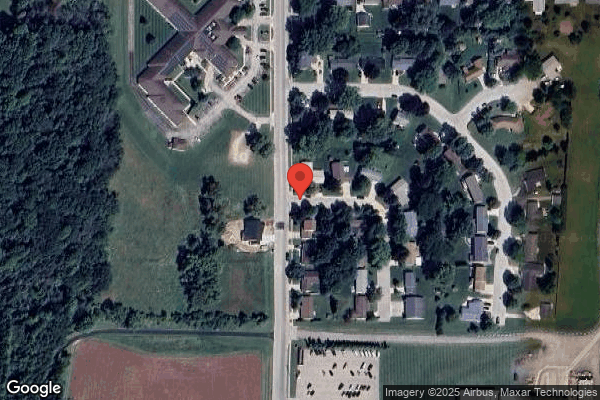

Avina of Mayville

305 S. Clark St., Mayville, WI 53050 (920) 387-0354
For profit - Corporation 80 Beds AVINA HEALTHCARE Data: November 2025
Trust Grade
58/100
#79 of 321 in WI
Last Inspection: August 2024

Within standard 12-15 month inspection cycle. Federal law requires annual inspections.

Overview

Avina of Mayville has a Trust Grade of C, indicating it is average among nursing homes, sitting in the middle of the pack. It ranks #79 out of 321 facilities in Wisconsin, which places it in the top half, but only #4 out of 10 in Dodge County, suggesting there are better local options available. The facility's trend is improving, with the number of issues decreasing from 9 in 2024 to 4 in 2025. Staffing received a rating of 3 out of 5 stars, but the 61% turnover rate is concerning as it is higher than the state average. In terms of fines, the facility has incurred $19,383, which is average compared to other facilities in the state. There is more RN coverage than many facilities, which is beneficial since registered nurses can catch issues that certified nursing assistants might miss. However, there have been serious concerns identified, including a resident developing a severe pressure injury that was not properly addressed until weeks after it occurred, and issues related to residents’ legal rights and the sanitary preparation of food. While there are strengths in RN coverage and an improving trend, families should weigh these against the identified weaknesses and staffing concerns when considering Avina of Mayville.

Trust Score
C
58/100
In Wisconsin
#79/321
Top 24%
Safety Record
Moderate
Needs review
Inspections
Getting Better
9 → 4 violations
Staff Stability
⚠ Watch
61% turnover. Above average. Higher turnover means staff may not know residents' routines.
Penalties
⚠ Watch
$19,383 in fines. Higher than 76% of Wisconsin facilities, suggesting repeated compliance issues.
Skilled Nurses
✓ Good
Each resident gets 42 minutes of Registered Nurse (RN) attention daily — more than average for Wisconsin. RNs are trained to catch health problems early.
Violations
⚠ Watch
27 deficiencies on record. Higher than average. Multiple issues found across inspections.
★★★★☆
4.0
Overall Rating
★★★☆☆
3.0
Staff Levels
★★★★★
5.0
Care Quality
★★★☆☆
3.0
Inspection Score
Stable
2024: 9 issues
2025: 4 issues

The Good

  • 5-Star Quality Measures · Strong clinical quality outcomes
  • Full Sprinkler Coverage · Fire safety systems throughout facility
  • No fines on record

Facility shows strength in quality measures, fire safety.

The Bad

Staff Turnover: 61%

15pts above Wisconsin avg (46%)

Frequent staff changes - ask about care continuity

Federal Fines: $19,383

Below median ($33,413)

Minor penalties assessed

Chain: AVINA HEALTHCARE

Part of a multi-facility chain

Ask about local staffing decisions and management

Staff turnover is elevated (61%)

13 points above Wisconsin average of 48%

The Ugly 27 deficiencies on record

1 actual harm
Jul 2025 1 deficiency
CONCERN (D) 📢 Someone Reported This

A family member, employee, or ombudsman was alarmed enough to file a formal complaint

Potential for Harm - no one hurt, but risky conditions existed

Pharmacy Services (Tag F0755)

Could have caused harm · This affected 1 resident

**NOTE- TERMS IN BRACKETS HAVE BEEN EDITED TO PROTECT CONFIDENTIALITY** Based on interview, record review, and facility policy review, the facility failed to ensure antibiotics were administered as or...

Read full inspector narrative →
**NOTE- TERMS IN BRACKETS HAVE BEEN EDITED TO PROTECT CONFIDENTIALITY** Based on interview, record review, and facility policy review, the facility failed to ensure antibiotics were administered as ordered by the physician for 1 (Resident #23) of 3 residents reviewed for medication administration.Findings included:A facility policy titled, Medication Administration, implemented 02/01/2025, revealed, Medications are administered by licensed nurses, or other staff who are legally authorized to do so in this state as ordered by the physician and in accordance with professional standards of practice, in a manner to prevent contamination or infection.An admission Record revealed the facility admitted Resident #23 on 05/16/2025. According to the admission Record, the resident had a medical history that included diagnoses of acute kidney failure, malignant neoplasm, and anxiety disorder. An admission Minimum Data Set (MDS), with an Assessment Reference Date (ARD) of 05/23/2025, revealed Resident #23 had a Brief Interview for Mental Status (BIMS) score of 15, which indicated the resident had intact cognition. Resident #23's Order Listing Report, for the timeframe from 05/07/2025 through 07/31/2025, revealed an order started on 05/27/2025 and revised on 05/28/2025 for azithromycin 250 milligram (mg) tablet, two tablets, one time a day on day 1, then one daily for four days for a sinus infection. Resident #23's 05/2025 Medication Administration Record [MAR] revealed staff documented that azithromycin 250 mg, two tablets were administered on 05/28/2025, and one tablet was administered on 05/29/2025, 05/30/2025 and 05/31/2025. Resident #23's 06/2025 Medication Administration Record revealed Licensed Practical Nurse A (LPN) documented 10, which indicated Other/See Progress Notes for the resident's 06/01/2025 dose (final dose) of azithromycin. Resident #23's Progress Notes, dated 06/01/2025, revealed azithromycin was unavailable. During an interview on 07/24/2025 at 3:45 PM, a Pharmacy Representative stated that azithromycin for Resident #23 was delivered to the facility on [DATE] at 1:56 AM. Per the Pharmacy Representative, the pharmacy delivered six tablets, with instructions to take two tablets on day one and one tablet daily thereafter. During an interview on 07/23/2025 at 10:52 AM, Resident #23 revealed they had a sinus infection and there was a mistake during their first round of antibiotic treatment. Resident #23 stated that they currently had no sinus pain or ongoing issues. During an interview on 07/24/2025 at 10:09 AM, LPN A stated that Resident# 23's azithromycin was unavailable (on 06/01/2025). She stated that she contacted the pharmacy, who promised delivery that night. She said the medication did not arrive and was not administered to the resident. LPN A stated that she was off for the next two days and did not leave notes for other nurses or notify the physician that the final dose of the antibiotic was not available. She stated that when she returned to work, the medication had arrived at the facility; however, she did not administer the medication because the resident had started a new round of antibiotics. During an interview on 07/24/2025 at 9:21 AM, the Director of Nursing (DON) stated that after speaking with LPN A, they discovered that the pharmacy had sent only five, instead of six, azithromycin tablets for Resident #23, resulting in a missed final dose. The DON stated the missing pill arrived the following night, but it was too late to administer. Per the DON, HUCU (Patient-Centered Secure Communication Application) was used to communicate with physicians, and a review of the system showed no documentation that the missed dose was reported. During an interview on 07/24/2025 at 2:17 PM, Nurse Practitioner C (NP) stated that regarding Resident #23, antibiotics were prescribed on 05/27/2025. She stated the resident missed a dose on 06/01/2025 but she was not notified. NP C stated it was important to complete an antibiotic course. During an interview on 07/24/2025 at 4:27 PM, the Administrator (ADM) stated when medications were unavailable, nursing staff were expected to contact the pharmacy, notify the physician or nurse practitioner, and provide updates. Per the ADM, staff utilized a messaging application to communicate such requests and updates to providers.
Feb 2025 3 deficiencies
CONCERN (D) 📢 Someone Reported This

A family member, employee, or ombudsman was alarmed enough to file a formal complaint

Potential for Harm - no one hurt, but risky conditions existed

Report Alleged Abuse (Tag F0609)

Could have caused harm · This affected 1 resident

**NOTE- TERMS IN BRACKETS HAVE BEEN EDITED TO PROTECT CONFIDENTIALITY** Based on interview and record review, the facility did not ensure that all alleged violations involving abuse, neglect, exploita...

Read full inspector narrative →
**NOTE- TERMS IN BRACKETS HAVE BEEN EDITED TO PROTECT CONFIDENTIALITY** Based on interview and record review, the facility did not ensure that all alleged violations involving abuse, neglect, exploitation or mistreatment, including injuries of unknown source and misappropriation of resident property, are reported immediately for 2 of 6 residents (R) reviewed for abuse (R5 and R6). The facility did not report a resident-to-resident altercation that occurred between R5 and R6. This is evidenced by: The facility policy titled Freedom from Abuse, Neglect, and Exploitation, undated, states in part: It is the policy of this community to take appropriate steps to prevent the occurrence of: Abuse . It is also the policy of this community to take appropriate steps to ensure that all alleged violations of federal or state laws which involve mistreatment, neglect, abuse .are reported immediately to the administrator of the community .such violations are also reported immediately to state agencies in accordance with existing state law. The community investigates each such alleged violation thoroughly and reports the results of all investigations to the administrator, as well as to state agencies and Adult Protective Services as required by state and federal law . Definitions: Abuse: The willful infliction of injury, unreasonable confinement, intimidation, or punishment with resulting physical harm, pain or mental anguish . Verbal Abuse is defined as the use of oral, written, or gestured language that willfully includes disparaging and derogatory terms to residents . Resident to Resident Altercations: An incident involving a nursing home resident who willfully inflicts injury upon another resident. Willful means the individual must have acted deliberately, not that he/she must have intended to inflict injury or harm . Prevention: The administrator and director of nursing services (DON) identify, intervene, and correct in situation in which abuse, neglect, or misappropriation of resident property is more likely to occur . Identification: Incidents of possible abuse or neglect .will be identified through ongoing assessment of resident conditions, incidents, resident interviews, family or resident councils, and verbal or written report of observations . Investigation: .The administrator, director of nursing, or designee will notify the appropriate regulatory, investigative or law enforcement agencies immediately, in accordance with state regulations. Allegations of abuse, neglect, or exploitation will be thoroughly investigated. The investigation will be initiated upon receipt of the allegation. The administrator, or designee, will complete the investigation process. The investigation can include, but is not limited to i. The name(s) of the resident(s) involved ii. The date and time the incident occurred iii. The circumstances surrounding the incident iv. Where the incident took place v. The names of any witnesses vi. The name of the person(s) alleged with committing the act . Reporting: . The administrator notifies the appropriate state agency immediately in accordance with state law. The results of all investigation are reported to the administrator and to the appropriate state agency . The administrator, or his/her designee, notifies the resident's representative regarding the alleged violation and assessment findings and reassures the resident's representative that an investigation has been initiated and appropriate action will be taken. R5 admitted to the facility on [DATE] with diagnoses including anxiety disorder and depression. R5's Brief Interview for Mental Status (BIMS), dated 2/6/25, has a score of 15, indicating R5 is cognitively intact. R6 admitted to the facility on [DATE] with diagnoses including post-traumatic stress disorder, anxiety, mood disorder, and cognitive communication deficit. R6's Brief Interview for Mental Status (BIMS), dated 12/30/24, has a score of 10, indicating R6's cognition is moderately impaired. R6's comprehensive care plan printed on 2/21/25, states in part: Focus: The resident has a behavior problem. Interventions: Intervene as necessary to protect the rights and safety of others. On 2/21/25 at 11:09 AM, Surveyor interviewed CNA C (Certified Nursing Assistant) regarding abuse. CNA C indicated a resident-to-resident altercation is abuse. CNA C indicated a resident swearing, name calling, or threatening another resident is abuse. CNA C stated R6 said you're a nosey bitch to R5 while CNA C was in the room. CNA C indicated this happened within the past 2 days. Of note, R5 and R6 share a room. On 2/21/25 at 2:10 PM, Surveyor spoke with NHA A (Nursing Home Administrator) regarding this incident. NHA A stated she was aware of the incident and did not report this incident as abuse to the state agency. NHA A stated she followed Resident-to-Resident Altercation Flowchart and decided to not report this incident. NHA A stated R5 was unbothered by the comment. Of note, the Resident-to-Resident Altercation Flowchart states in part: resident to resident altercation occurs - did resident act willfully? Willful means the individual's act was deliberate- not inadvertent or accidental regardless of whether or not the individual intended to inflict injury or harm. (A resident whose involuntary movements cause him/her to accidentally strike another has not committed a willful act.) if the no option is selected, do not report. Document an immediate assessment and lack of willful intent. Assess-care plan- intervene. Goal: Prevent reoccurrence and keep other residents safe. Also, the flowchart states Use of this flowchart must provide for immediate reporting (see F609) or the facility must clearly document the rationale for not reporting. It should be noted using the reasonable person concept a person would not be expected to be called names or swore at in their own home and may experience fear from such encounter. Surveyor requested R5 and R6's electronic health records documenting this incident including any assessments, nurses' progress notes, updated care plan, etc. Surveyor was not provided any electronic health records documenting the investigation of this incident. Of note there was no evidence the facility documented an immediate assessment and a lack of willful intent. Assessed R5 and R6's-care plan- intervened or implemented interventions to prevent reoccurrence and keep other residents safe.
CONCERN (D) 📢 Someone Reported This

A family member, employee, or ombudsman was alarmed enough to file a formal complaint

Potential for Harm - no one hurt, but risky conditions existed

Comprehensive Care Plan (Tag F0656)

Could have caused harm · This affected 1 resident

**NOTE- TERMS IN BRACKETS HAVE BEEN EDITED TO PROTECT CONFIDENTIALITY** Based on interview and record review the facility did not develop a comprehensive, person-centered care plan for 1 of 6 sampled ...

Read full inspector narrative →
**NOTE- TERMS IN BRACKETS HAVE BEEN EDITED TO PROTECT CONFIDENTIALITY** Based on interview and record review the facility did not develop a comprehensive, person-centered care plan for 1 of 6 sampled residents (R3) reviewed for person-centered care plans. R3 does not have a comprehensive care plan that includes triggers and monitoring targetd behaviors. Evidenced by: Facility policy entitled Comprehensive Care Plans, dated 1/25, states, in part; It is the policy of this facility to develop and implement a comprehensive person-centered care plan for each resident, consistent with resident rights, that includes measurable objectives and timeframes to meet a resident's medical, nursing, and mental and psychosocial needs and ALL services that are identified in the resident's comprehensive assessment and meet professional standards of quality . Policy Explanation and Compliance Guidelines: 1. The care planning process will include an assessment of the resident's strengths and needs, and will incorporate the resident's personal and cultural preferences in developing goals of care.3. The comprehensive care plan will describe, at a minimum, the following: . f. Resident specific interventions that reflect the resident's needs and preferences . 5. The comprehensive care plan will be reviewed and revised by the interdisciplinary team after each comprehensive and quarterly MDS (minimum data set) assessment. 6. The comprehensive care plan will include measurable objectives and timeframes to meet the resident's needs as identified in the resident's comprehensive assessment. The objectives will be utilized to monitor the resident's progress. Alternative interventions will be documented, as needed.8. Qualified staff responsible for carrying out interventions specified in the car plan will be notified of their roles and responsibilities for carrying out the interventions, initially and when changes are made. Example 1 R3 was admitted to the facility on [DATE] with diagnoses that include, in part: Dementia in other diseases classified elsewhere, unspecified severity, with psychotic disturbance, Anxiety disorder, unspecified, Major Depressive disorder, recurrent, unspecified, and Need for Assistance with personal care. R3s most recent Minimum Data Set (MDS) dated [DATE] states that R3 has a Brief Interview of Mental Status (BIMS) of 12 out of 15, indicating that R3 has mild cognitive impairment. R3's Comprehensive Care Plan states, in part: Focus: The resident demonstrates a pattern of situational and/or coping problems in areas such as: being alone after her spouse leaves. Psychosocial well-being, Mood state and/or behavioral symptoms. Date initiated 10/21/22. Revision on 7/1/24. Goal: The residents mental health and psychosocial well-being will be enhanced: staff encouragement, reminders of how well she is doing. Date initiated 10/21/22. Revision on 9/19/24. Interventions: Encourage the resident to express her thoughts and feelings. Date initiated 10/21/22. Help the resident feel welcome, accepted, acknowledge and well-received. Provide structure and guidance to help the resident feel safe, competent, involved, secure, valued, and appreciated. Work to help the resident develop a role that provides him/her with a sense of purpose and builds esteem/worth. Date initiated 10/21/22. Focus: The resident has an active order for anti-anxiety medication due to Anxiety disorder. Date Initiated 8/19/22. Revision on 8/19/22. Goal: The resident will be free from discomfort or adverse reaction to anti-anxiety therapy through the review date. Date initiated: 8/19/22. Revision on 9/19/24. Interventions: Administer anti-anxiety medications as ordered by physician. Date initiated 8/19/22. Monitor/document/report PRN (as needed) any adverse reactions to anti-anxiety therapy: Drowsiness, lack of energy, clumsiness, slow reflexes, slurred speech, confusion and disorientation, depression, dizziness, lightheadedness, impaired thinking and judgment, memory loss, forgetfulness, nausea, stomach upset, blurred or double vision. Unexpected side effects: Mania, hostility, rage, aggressive or impulsive behavior, hallucinations. Date initiated 8/19/22. Provide re-assurance if resident becomes anxious. Allow her to express herself, offer to call her husband. Date initiated 12/10/24 . Focus: The resident has an active order for antidepressant medication for Depression. Date initiated 9/17/24. Revision on 9/17/24. Goal: The resident will be free from discomfort or adverse reactions related to antidepressant therapy through the review date. Date: 9/17/24 isolation, suicidal thoughts, withdrawal, decline in ADL (Activities of Daily Living) ability, continence, no voiding, constipation, fecal impaction, diarrhea, gait changes, rigid muscles, balance problems movement problems, tremors, muscle cramps, falls, dizziness/vertigo, fatigue, insomnia, appetite loss, weight loss, nausea/vomiting, dry mouth, dry eyes. Date initiated 9/17/24. Provide reassurance if resident expresses sadness. Encourage her to think about things she enjoys like her visits with her husband and looking at animals outside her window. Date initiated 12/10/24. R3's Progress Notes, state in part: On 10/1/24 at 2:02 PM, Type: Behavior Note: During shower resident called CNA (Certified Nursing Assistant) a bitch several times and hit CNA in her right arm x2. CNA able to complete shower, no further issues. On 11/24/24 at 8:32 AM, Type: Behavior Note: Resident continues to refuse medications in the morning in an aggressive way. She never just states that she does not want it. She yells, sometimes swears, sometimes demands staff to get out. This is not just on the NOC (nocturnal, overnight) shift but have heard that this is happening on staff on the PM shift as well and she is not getting her important meds. Writer has noticed that she has been getting some of the Parkinson's effects of the tremors while drinking and just lying in bed. When I have brought this to her attention, she always states to me BULLS*** several times. She is also being non-compliant with wanting to be turned for her coccyx/sacrum wound while lying in bed. On 12/3/24 at 11:01 AM, Type: Behavior Note: Resident refuses shower after three attempts by three different people. Resident started to raise her voice and become extremely agitated after final attempt. On 12/21/25 at 1:37 AM, Type: Behavior Note: Resident has been acting out at night. She has been pushing the call light continuous at times stating that she is sinking. All CNA and RN (Registered Nurse) has checked the bed and the alarm on the bed is not going off. Today CNA went into check/change her and she slapped her. She has been getting more and more physical with the staff regarding cares. On 2/21/25 at 5:45 AM, Type: Behavior Note: Resident again, with the nurse helping to provide cares tried to kick the CNA a couple of times while changing her. The CNA asked her not to do that and the resident responded I can if I want to. The RN corrected her and stated NO, you can not. You should not be hitting anyone. On 2/21/22 at 2:22 PM, Surveyor interviewed CNA G (Certified Nursing Assistant) and asked her about R3's behaviors. CNA G stated she has heard of R3 being aggressive with other staff members but never with her. CNA G stated that R3 can become resistive with cares and refuse medications at times. Surveyor asked CNA G what interventions were in place for R3's behaviors. CNA G stated that she will reapproach, not push her, and back off. Surveyor asked CNA G where R3's behaviors and interventions would be listed. CNA G stated they would be in the care plan and CNA [NAME]. On 2/21/24 at 2:27 PM, Surveyor interviewed RN D (Registered Nurse) and asked her about R3's behaviors. RN D stated that R3 refuses cares and yells a lot, and that she does attempt to hit and kick with cares. Surveyor asked RN D what interventions were in place for R3's behaviors. RN D indicated that she attempts redirection or distraction, or will step away and let a new face reapproach. RN D indicated that when R3 is agitated, they do cares in pairs, meaning that two staff will go into R3's room together to provide cares. RN D stated that R3 becomes triggered when her husband is not here, that he comes twice a day but when he leaves R3 gets more agitated. Surveyor asked RN D where these behaviors, triggers, and interventions would be listed. RN D stated they would be in R3's care plan. On 2/21/25 at 2:11 PM, Surveyor interviewed CNA H and asked her about R3's behaviors. CNA H stated that R3 will refused cares a lot and get confused. CNA H stated that R3 doesn't like to be touched or messed with too much. CNA H stated that R3 will say no and become real aggressive. CNA H stated that R3 can become agitated and did try to kick her during cares. CNA H stated that R3's husband comes every day, but she becomes more agitated when he leaves. Surveyor asked CNA H what interventions were in place for R3's behaviors. CNA H stated that she offers R3 food, drink, or tries to change the subject to distract her. CNA H states that R3 likes hot chocolate and various snacks, so she will offer her those. Surveyor asked CNA H if these behaviors or interventions were listed on the CNA [NAME]. CNA H stated no, behaviors are not on the [NAME]. Surveyor asked CNA H if they were written down anywhere for staff to know how to care for R3. CNA H indicated that staff just know what triggers R3 and what can calm her down. On 2/21/25 at 2:25 PM, Surveyor interviewed DON B (Director of Nursing) and asked her if a resident's behaviors would be listed on the CNA [NAME]. DON B stated no, behaviors are not on the [NAME]. Surveyor asked DON B if a resident's behaviors should be listed on their care plan. DON B stated yes, behaviors should be listed on the care plan, and also that staff would get information related to resident behaviors in shift-to-shift report. The facility failed to develop and implement a care plan that described the specific aggressive behaviors that R3 was displaying, nor did they outline triggers or interventions to enable staff to provide quality care to R3.
CONCERN (D) 📢 Someone Reported This

A family member, employee, or ombudsman was alarmed enough to file a formal complaint

Potential for Harm - no one hurt, but risky conditions existed

Deficiency F0740 (Tag F0740)

Could have caused harm · This affected 1 resident

**NOTE- TERMS IN BRACKETS HAVE BEEN EDITED TO PROTECT CONFIDENTIALITY** Based on interview and record review, the facility did not provide behavioral health services to ensure a resident received the ...

Read full inspector narrative →
**NOTE- TERMS IN BRACKETS HAVE BEEN EDITED TO PROTECT CONFIDENTIALITY** Based on interview and record review, the facility did not provide behavioral health services to ensure a resident received the highest practicable mental and psychosocial well-being. The facility did not create a comprehensive assessment and plan of care to address substance use disorder (SUD) for 1 of 2 residents (R2) reviewed for SUDs. R2 has a SUD. The facility failed to create a care plan related to R2's alcohol consumption and failed to implement interventions for behaviors associated with R2's alcohol consumption. This is evidenced by: The facility policy titled Safety for Resident with Substance Use Disorder, dated 1/25, states in part: It is the policy of this facility to create an environment that is as free of accident hazards as possible, for residents with a history of substance use disorder. Definitions: substance use disorder (SUD) is defined as recurrent use of alcohol and/or drugs that causes clinically and functionally significant impairment, such as health problems, disability, and failure to meet major responsibilities at work, school, or home . 1. Residents with a history of SUD will be assessed for risks . Care plan interventions will be implemented to include increased monitoring and supervision of the resident and their visitors. 2. When substance use is suspected .facility staff should implement the care plan interventions, which includes notification of the resident's physician or non-physician practitioner. 3. Care planning interventions will address risks by providing appropriate diversions for resident and encouraging resident to seek out facility staff to discuss their plan of care .7. The facility will make an effort to prevent substance use which may include providing substance use treatment services, such as behavioral health services, medication-assisted treatment (MAT), alcoholic/narcotics anonymous meetings, working with their resident and the family, if appropriate, to address goals related to their stay in the nursing home, and increased monitoring and supervision. R2 admitted to the facility on [DATE] with diagnoses including alcohol abuse, repeated falls, unsteadiness on feet. R2's Brief Interview for Mental Status (BIMS) on 11/26/24 has a score of 15, indicating R2 is cognitively intact. R2's Medication administration and Treatment administration records for January 2025 and February 2025 do not include monitoring of behaviors and/or substance use. R2's physician orders dated 2/21/25 does not include an order stating R2 can consume alcoholic beverages. R2's comprehensive care plan dated 2/21/25, states in part: Focus: The resident is functioning at an independent level in his leisure pursuits. Goal: The resident will make one positive statement about his leisure pursuits to staff weekly. Interventions: Encourage the resident to pursue appropriate leisure interest on his/her own. Introduce yourself to the resident to establish a friendly and professional rapport. Offer the resident independent leisure materials for him to pursue. Provide the resident with a copy of the activity calendar on a monthly basis. Of note, R2's comprehensive care plan does not include R2's substance use disorder, nor the triggers related to substance use. R2's comprehensive care plan does not include goals related to R2's substance use disorder. R2's comprehensive care plan does not include person-centered interventions to prevent substance use nor mitigate the risks associated with substance use. R2's comprehensive care plan does not include R2's behaviors associated with R2's substance use. R2's nurses' progress notes state: 12/26/25 8:39 AM Resident appears to be intoxicated, smells of alcohol and slurring words. He was in the dining room arguing with other resident and family . 1/17/25 23:31 (11:31 PM) Nurse was called into the resident room for a fall. When Nurse arrived in room resident was getting up and trying to get into the bed. He had one shoe on and one shoe off with a regular sock on the other foot. This was making his foot slip. The CNA quickly assisted him to prevent a further fall, and the nurse assisted with the other side. Resident sat on the side of the bed and allowed the nurse to do a partial assessment. Resident stated that he did not hit his head. He stated that he was OK and that hisprde [sic] is the only thing that is hurt. Resident's BP (blood pressure) is low due to him being intoxicated all other vital signs are WNL (within normal limits) . 1/19/25 10:59 AM Per administration no resident were to go outside for smoking or store runs due to the freezing temperatures. Message was relayed to resident however resident refused to stay inside stating it's not that cold. Resident made multiple trips outside to smoke and went to Kwik Trip. The facility provided an investigation summary related to R2. The summary states in part: On 1/26/25 around 12:00 PM, R2 had a resident-to-resident altercation with R1. R2 threatened to kill R1. It was noted that R2 had been drinking that morning. Staff have noted on many different occasions, empty bottles of alcohol laying around R2's room along with a smell of alcohol coming off R2. On 2/21/25 at 11:19 AM, Surveyor interviewed RN D (Registered Nurse) regarding R2's behaviors. RN D indicated R2 likes to talk like he's tough and will make sexual comments to the staff. On 2/21/25 at 12:39 PM, Surveyor interviewed SSD E regarding R2's substance use, behaviors and his care plan. SSD E indicated R2's substance use, behaviors and interventions should be on the care plan. SSD E indicated there should be a care plan to monitor and intervene with R2's substance use and associated behaviors and R2 does not have a care plan related to substance use or behaviors. On 2/21/25 at 1:00 PM, Surveyor interviewed DON B regarding R2. DON B indicated R2 should have a care plan for his substance use and associated behaviors but does not.
Oct 2024 2 deficiencies
CONCERN (D) 📢 Someone Reported This

A family member, employee, or ombudsman was alarmed enough to file a formal complaint

Potential for Harm - no one hurt, but risky conditions existed

Deficiency F0554 (Tag F0554)

Could have caused harm · This affected 1 resident

**NOTE- TERMS IN BRACKETS HAVE BEEN EDITED TO PROTECT CONFIDENTIALITY** Based on observation, interview, and record review, the facility did not ensure that self-administering of medications was deter...

Read full inspector narrative →
**NOTE- TERMS IN BRACKETS HAVE BEEN EDITED TO PROTECT CONFIDENTIALITY** Based on observation, interview, and record review, the facility did not ensure that self-administering of medications was determined to be clinically appropriate for 1 of 1 resident (R3) reviewed for self-administration of medications out of a total sample of 3 residents. Surveyor observed R3 with a large green pill without staff present. The facility did not complete a self-administration of medication assessment on R3, and R3 did not have a physician order for administering her own medications. Evidenced by: The facility's policy, entitled Self-Administration of Medications and Treatments, undated, includes self-administration of medications and treatment are determined by physician order after determining that a resident is able to self-administer. Medications and treatments for self-administration are kept in a locked drawer in the resident's room . Assessment of the ability to self-administer medications will be done by nursing using the tool assessment for self-administer medications. Resident teaching will be performed by nursing staff. If a treatment is self-administered, the resident must perform a return demonstration of the treatment to be able to do the treatment independently. A care plan (is created) for the resident who self-administer, and documentation should be present in the nursing notes of teaching related to self-administration of medications or treatments. R3 admitted to the facility on [DATE] with diagnoses including cognitive communication deficit and other signs and symptoms involving cognitive function and awareness. On 10/2/24 at 9:47 AM, Surveyor observed a large green capsule lying on R3's bedside table. R3 indicated the nurse dropped off a cup of medications and exited the room. R3 indicated she took the other medications but was waiting on taking this one. R3 indicated the nurse usually sticks around until she has taken her medications, but today she did not. R3 was unsure what the medication was and if the dose was appropriate, but she thought this was a new antibiotic she was prescribed for an infection in her leg. On 10/2/24 at 10:00 AM, LPN C (Licensed Practicing Nurse) indicated R3 does have moments of confusion. LPN C indicated she dropped off R3's medications in her room this morning but did not observe her take them. LPN C indicated she was unaware R3 did not take the large green pill. LPN C indicated R3 does not have a completed assessment demonstrating safe self-administering medications and R3 does not have a physician order for self-administering her medications. On 10/2/24 at 10:15 AM, NHA A (Nursing Home Administrator) and DON B (Director of Nursing) indicated R3 gets confused at times. DON B and NHA A indicated R3 does not have an order for self-administration of medication or a completed assessment indicating R3 is safe to self-administer her medications. DON B indicated LPN C should not leave medications with R3 unsupervised.
CONCERN (D) 📢 Someone Reported This

A family member, employee, or ombudsman was alarmed enough to file a formal complaint

Potential for Harm - no one hurt, but risky conditions existed

Comprehensive Care Plan (Tag F0656)

Could have caused harm · This affected 1 resident

**NOTE- TERMS IN BRACKETS HAVE BEEN EDITED TO PROTECT CONFIDENTIALITY** Based on interview and record review, the facility did not develop a comprehensive, person-centered care plan for 1 (R3) of 1 re...

Read full inspector narrative →
**NOTE- TERMS IN BRACKETS HAVE BEEN EDITED TO PROTECT CONFIDENTIALITY** Based on interview and record review, the facility did not develop a comprehensive, person-centered care plan for 1 (R3) of 1 resident reviewed for person-centered care plans. R3's care plan states R3 has an active order for anti-anxiety and anti-depressant medication. R3's care plan does not include person-centered, non-pharmacological interventions for anxiety or depression. Evidenced by The facility policy, Comprehensive Care Plans, dated 9/26/22, states, in part; Purpose: To develop a comprehensive care plan that directs the care team and incorporates the resident's goals, preferences, and services that are to be furnished to attain or maintain the resident's highest practicable physical, mental, and psychosocial well-being.The care plan will describe interventions .in order to eliminate triggers . The facility policy, Medication Management, dated10/25/14, states, in part; In order to optimize the therapeutic benefit of medication therapy and minimize or prevent potential adverse consequences, facility staff, the attending physician/prescribers, and the consultant pharmacist perform ongoing monitoring for appropriate effective, and safe medication use. When selecting medications and non-pharmacological interventions, members of the interdisciplinary team participate in the care process to identify, assess, address, advocate for, monitor, and communicate the resident's needs . R3 was admitted to the facility on [DATE] with diagnoses including anxiety disorder, depression, and cognitive communication deficit. R3's care plan, states, in part; .Focus-the resident has an active order for antidepressant medication for depression. Date initiated 8/27/2024 .Focus-the resident has an active order for anti-anxiety medication for anxiety. On 10/2/24 at 5:47 PM, Surveyor interviewed DON B (Director of Nursing) and asked the facility would expect a comprehensive care plan to be developed for the residents. DON B stated yes. Surveyor asked if facility would expect non-pharmacologic interventions to be performed for a resident if they were having triggered behaviors. DON B stated yes. Surveyor asked if facility would expect that a resident receiving psychotropic medications would have a care plan that reflects a resident's triggered behaviors and the non-pharmacologic interventions to be utilized. DON B stated yes. Surveyor asked if R3 had non-pharmacologic interventions in her care plan. DON B stated no. The facility failed to create a person-centered care plan with interventions that are tailored to the specific individual.
Aug 2024 7 deficiencies
CONCERN (D)

Potential for Harm - no one hurt, but risky conditions existed

Deficiency F0582 (Tag F0582)

Could have caused harm · This affected 1 resident

Based on interview and record review, the facility did not ensure written notification of coverage change, the financial liability for continued stay, and appeal rights were provided to a Resident (R)...

Read full inspector narrative →
Based on interview and record review, the facility did not ensure written notification of coverage change, the financial liability for continued stay, and appeal rights were provided to a Resident (R) whose Medicare Part A benefits were ending for 2 (R45 and R7) of 3 residents reviewed for Medicare Part A notifications. The facility did not provide R45 and R7 with a Skilled Nursing Facility Advanced Beneficiary Notice of Non-Coverage (SNFABN) form, which includes, notification of change in coverage, financial liability, and appeal rights. Findings include: Per the Centers for Medicare and Medicaid Services (CMS) Form Instructions, the SNFABN provides information to the beneficiary so that he or she can decide whether to get the care that may not be paid for by Medicare and assume financial responsibility. The SNFABN includes information such as the care that may or may not be covered by Medicare, the estimated cost of the corresponding care that may not be covered by Medicare, and appeal options. Surveyor reviewed a sample of residents for Medicare Part A notifications. Surveyor noted two of three sampled residents, R45 and R7, remained at the facility following termination of Medicare Part A coverage. The facility only provided Surveyor with Notice of Medicare Non-Coverage (NOMNC) forms for both R45 and R7. On 08/15/24, at 10:46 AM, Surveyor spoke with Nursing Home Administrator (NHA)- A who indicated R45 and R7 did not receive SNFABN. NHA- A states the previous social worker was responsible for the SNFABN form and did not provide to R45 and R7. NHA- A indicates facility staff have changed and they have since resolved the concern. There is coverage now for these notices.
CONCERN (D)

Potential for Harm - no one hurt, but risky conditions existed

Deficiency F0583 (Tag F0583)

Could have caused harm · This affected 1 resident

**NOTE- TERMS IN BRACKETS HAVE BEEN EDITED TO PROTECT CONFIDENTIALITY** Based on observation, interview, and record review the Facility did not ensure 1 (R7) of 2 residents were provided privacy durin...

Read full inspector narrative →
**NOTE- TERMS IN BRACKETS HAVE BEEN EDITED TO PROTECT CONFIDENTIALITY** Based on observation, interview, and record review the Facility did not ensure 1 (R7) of 2 residents were provided privacy during personal cares. *R7 informed Surveyor staff will leave R7's window drapes open when providing personal cares. R7's window is next to a public patio area and R7 would like R7's privacy when personal cares are provided. *Surveyor observed staff leave the window drapes open while providing cares to R7. Findings include: R7 was admitted to the facility on [DATE] with diagnosis that include Type 2 Diabetes, Depression, Muscle weakness, and Lymphedema. R7's Quarterly Minimum Data Set (MDS) dated [DATE], documents R7 is cognitively intact. R7 is frequently incontinent of bowel and bladder and is dependent for toileting. On 08/12/2024, at 10:25 AM, Surveyor interviewed R7. R7 informed Surveyor R7 would prefer that his window curtains be closed when staff change R7's brief. R7 stated R7's window is off a shared, public patio. R7 indicated R7 does not like the fact that people can see in his room when R7 is receiving personal and private cares. On 8/14/2024. at 8:45 AM, Surveyor observed Certified Nursing Assistant (CNA)-F exiting R7's room with a sit to stand lift (EZ stand). Surveyor asked why CNA-F was in R7's room with the EZ stand. CNA-F indicated R7 needed R7's incontinence product changed, and personal cares completed. Surveyor asked CNA-F if the window curtains were closed prior to providing cares to R7. CNA-F stated No. CNA-F stated that CNA-F has asked R7 in the past if R7 wanted the window curtains closed and R7 told CNA-F that R7 did not care. CNA-F stated, I guess I could ask each time, but I didn't. On 8/14/24, at 8:52 AM, Surveyor interviewed R7. Surveyor asked R7 if CNA-F provided personal cares. R7 stated yes. Surveyor asked if the window curtains were closed. R7 stated No. Surveyor asked if R7 wanted the window curtains closed, R7 stated yes but at least there is no one on the patio at this time. On 8/14/2024, at 10:43 AM, Surveyor noted R7's call light was on. Surveyor observed Registered Nurse (RN)-G enter R7's room with the EZ stand. At 10:46 AM, Surveyor observed Director of Nursing (DON)-B enter R7's room. At 10:47 AM, Surveyor knocked on R7's door and observed R7 assisted by RN-G and DON-B in the EZ stand. The window curtain was open. RN-G and DON-B indicated they were doing cares. Surveyor closed the door. At 10:49 AM, Surveyor walked to the public patio located right outside of R7's window. Surveyor noted that R7's window drapes were open and R7's room was visualized from the public patio area. On 8/14/2024, at 10:51 AM, Surveyor interviewed R7. R7 stated staff were just in R7's room to change R7's incontinence product. R7 stated the window curtains were open the whole time. R7 stated staff did not ask if R7 wanted the curtains closed or not. R7 stated again that R7 would prefer the window curtains be closed when providing personal cares and opened when the cares are complete. On 8/14/2024, at 10:54 AM, Surveyor interviewed RN-G. Surveyor asked if RN-G was providing personal cares to R7. RN-G stated yes. Surveyor asked if the window drapes were open the whole time while providing care. RN-G stated yes. On 8/14/2024, at 11:22 AM, Surveyor interviewed DON-B and Nursing Home Administrator (NHA)-A. Surveyor informed DON-B and NHA-A that staff was observed providing personal cares to R7 with R7's window curtains open. Surveyor asked if the window curtains should be closed while providing personal care to a resident. DON-B stated DON-B would expect staff to ask the resident if they wanted the window curtains closed. DON-B stated that a lot of residents do not want them closed. DON-B indicated that DON-B was just in R7's room providing personal care. DON-B stated that DON-B asked R7 if R7 wanted the window drapes closed. DON-B stated that R7 stated R7 didn't care. Surveyor informed DON-B and NHA-A that surveyor's concern regarding R7's privacy remains. Surveyor informed DON-B and NHA-A that R7 expressed a preference the window drapes be closed with any personal cares and opened after the cares are complete due to the room being visible from the public patio area. DON-B stated DON-B will add R7's preference to R7's CNA [NAME]. No other information was provided as to why the Facility did not ensure R7 was provided privacy during personal cares.
CONCERN (D) 📢 Someone Reported This

A family member, employee, or ombudsman was alarmed enough to file a formal complaint

Potential for Harm - no one hurt, but risky conditions existed

Quality of Care (Tag F0684)

Could have caused harm · This affected 1 resident

**NOTE- TERMS IN BRACKETS HAVE BEEN EDITED TO PROTECT CONFIDENTIALITY** Based on record review and interview, the facility did not ensure a resident had a neurological assessment after potential head ...

Read full inspector narrative →
**NOTE- TERMS IN BRACKETS HAVE BEEN EDITED TO PROTECT CONFIDENTIALITY** Based on record review and interview, the facility did not ensure a resident had a neurological assessment after potential head injury and was comprehensively assessed prior to being transferred to the hospital. This was observed with 1 (R104) of 15 residents reviewed. * R104 had 2 unwitnessed falls without consistent completion of a neurological assessment. * R104 family requested R104 to be transferred to a hospital for evaluation on 7/3/24. There is not documentation of R104 clinical status. or physician order, prior to being transferred to the hospital. Findings include: The facility's policy and procedure Neurological Assessment, revision date 9/25/2023, was reviewed by Surveyor. The policy states Residents will have a neurological assessment completed when they experience a head injury, have an unwitnessed fall or a change in condition that deems it necessary or per physician order. The procedures include Observe, assess and document the resident's level of consciousness, speech, pupils, hand grasps and vitals signs. Neuro checks are completed following a schedule using an assessment tool that outlines said schedule. R104 was admitted to the facility on [DATE] with a diagnosis of (TBI) Traumatic Brain Injury with a subarachnoid hemorrhage. R104 has an Guardian for decision making. The Nursing admission assessment, completed 6/29/24, at 12:50 PM, assesses R104 as a fall-risk. On 6/29/24, at 4:15 PM, R104 has an unwitnessed fall in the hallway. The Fall Incident form documents, Was self ambulating in hallway and unable to state what happened. The Neurological Assessment Flowsheet documents: neurological assessment every 15 minutes x4, then every 30 minutes x4, then every 1 hour x4, then every 4 hours x4, then every 8 hours x3. The assessment includes areas to document vital signs, pupils, motor function, level of consciousness, pain response and other. R104's Neurological Flowsheet does not have an assessment for: 6/29/24, at 6:00 PM and 6:30 PM with a documented reason being, due to on the phone with family, 6/30/24, 7:00 AM and 6/30/24, at 3:00 PM. On 7/3/24, at 12:00 PM, R104 had an unwitnessed fall from their bed. The Fall Incident form documents Resident was looking for their brother and thought they slid out of bed. The Neurological Assessment Flowsheet documents: neurological assessment every 15 minutes x4, then every 30 minutes x4, then every 1 hour x4, then every 4 hours x4, then every 8 hours x 3. R104's Neurological Flowsheet does not have an assessment for: 7/3/24 at 12:45 AM, 1:00 AM, 1:30 AM, 2:00 AM, 2:30 AM, 3:00 AM and 4:00 AM, documented reason being, due to sleeping; 7/3/24, at 5:00 AM, 6:00 AM and 7:00 AM due to R104 refused. The Nurses Notes document on 7/3/24, at 11:56 AM, Resident leaving the facility to be evaluated at the hospital per family request. There is no documentation of a comprehensive clinical assessment of R104's status prior to being transferred. On 8/14/24, at 3:14 PM, Surveyor requested any information regarding R104's neurological assessments, and transfer assessment, from Nursing Home Administrator (NHA)-A, Director of Nurses (DON)-B, Consultant-D and Consultant-E. On 8/15/24, at 9:15 AM, NHA-A and Consultant-E spoke with Surveyor. NHA-A stated The nurse was talking to R104's family on 6/29/24 and could not end the conversation to complete the neurological assessments. On 7/3/24 the nurse did not want to wake R104 due to being agitated earlier in the shift. Surveyor noted R104 was admitted to the facility with a diagnosis of TBI with hemorrhage. R104 would be at a high-risk for any neurological changes. NHA-A and Consultant-E agreed. On 8/15/24, at 10:52 AM, DON-B spoke with Surveyor regarding an assessment prior to transfer to the hospital. DON-B stated R104's family wanted a different facility and there was not a change in condition on 7/3/24. DON-B did not provide documentation related to R104's clinical status, or physician order, prior to R104 being transferred to the hospital.
CONCERN (D) 📢 Someone Reported This

A family member, employee, or ombudsman was alarmed enough to file a formal complaint

Potential for Harm - no one hurt, but risky conditions existed

Accident Prevention (Tag F0689)

Could have caused harm · This affected 1 resident

**NOTE- TERMS IN BRACKETS HAVE BEEN EDITED TO PROTECT CONFIDENTIALITY** Based on record review and interview, the facility did not complete thorough investigations of resident falls, and identify and ...

Read full inspector narrative →
**NOTE- TERMS IN BRACKETS HAVE BEEN EDITED TO PROTECT CONFIDENTIALITY** Based on record review and interview, the facility did not complete thorough investigations of resident falls, and identify and implement revisions to the plan of care to prevent future falls. This was observed with 1(R104) of 2 residents reviewed with falls. *R104 had falls on 6/29/24, 7/2/24 and twice on 7/3/24. There was no documentation of a comprehensive assessment to determine causative factors. The Facility does not thoroughly investigate F104's falls to determine the root cause nor implement fall prevention interventions based on the identified root cause to prevent future falls. Findings include: The facility's policy and procedure entitled, Accidents/Fall Prevention Program, dated 1/30/2023, was reviewed by Surveyor. The policy documents: The facility strives to promote safety, dignity and overall quality of life for its residents by providing an environment that is free from any hazards for which the facility has control and by providing appropriate supervision and interventions to prevent avoidable accidents. Any episode of a fall should be documented in risk management. Each fall must be investigated and/or assessed using a root cause analysis process to determine the cause of the fall and prevent any further injury. The individual care plan is to be updated with any changes or new interventions post fall and communicated to staff and implemented. R104 was admitted to the facility on [DATE], at 12:50 PM with a diagnosis of TBI (Traumatic Brain Injury) with subarachnoid hemorrhage. R104 has a Guardian for decision making. The admission Nursing Assessment conducted on 6/29/24, at 12:50 PM, assesses R104 as a fall risk. Surveyor notes R104 was at the facility from 6/29/24 through 7/3/24 and had 4 falls during this time. R104 discharged prior to the completion of an admission Minimum Data Set (MDS) assessment. The initial plan of care for Fall Risk dated 6/29/24, with a resolved date of 7/1/2024, with a goal date of 9/27/2024 documents interventions dated 6/29/24: Call light within reach; Educate the resident/family/caregivers about safety reminders and what to do if a fall occurs; Ensure proper footwear; Follow facility fall protocol. The initial plan of care for ADL (activity of daily living) self-care performance deficit due to TBI with weakness, and poor impulse control, which increases risk for complications, such as falls and incontinence, dated 6/29/24 with revisions on 7/1/24, 7/5/24 and 7/8/24, and a goal date of 9/27/2024, was reviewed. The interventions documented: 7/1/24 provide adequate adaptive equipment necessary during transfer; toilet riser in bathroom; encourage to use call light; wheelchair with anti-rollbacks; 7/2/24 an intervention of do not leave alone in room. There is a revision date of 7/5/2024 with no changes in interventions. There is a revision date of 7/8/2024 with interventions: bariatric bed with bolsters and extender; call family and allow them to talk as this helps decrease agitation; encourage resident to stay in the common area when awake. The [NAME] for staff care printed 8/14/2024, includes under Resident Care: call family and allow them to talk as this helps decrease agitation; encourage resident to stay in the common area when awake. The [NAME] does not identify fall risk interventions for safety. FALLS * On 6/29/24, at 4:15 PM, R104 had an unwitnessed fall in the hallway. The fall documentation includes, improper footwear and ambulating without assistance. There is not a comprehensive assessment to determine causative factors to identify what R104 was doing at the time of the fall, when they were last assisted by staff and to support the immediate intervention of R104 to be placed in a wheelchair by the nurses station, then after supper, was transferred to a low bed, in their room. The initial plan of care for fall risk dated 6/29/24, with a resolved date of 7/1/2024, with a goal date of 9/27/2024, documented interventions starting 6/29/24 include to ensure proper footwear. Surveyor notes the fall was not thoroughly investigated to include causative factors leading up to the fall, along with identification of fall prevention interventions related to possible causative factors. On 8/15/24, at 9:15 AM, (Nursing Home Administrator) NHA-A provided additional fall investigation information that is not part of the medical record. The supplemental fall investigation information documented R104 was last toileted at 3:00 PM, had socks on and was not using an assistive device when they fell on 6/29/24. The intervention was to keep in a common area. * On 7/2/24, at 3:10 PM, R104 had an unwitnessed fall in their room. The fall incident does not include a comprehensive assessment of causative factors leading up to the fall. The initial plan of care for ADL (activity of daily living) self-care performance deficit due to TBI with weakness and poor impulse control which increases risk for complications such as falls and incontinence, dated 6/29/24 with revisions on 7/1/24, 7/5/24 and 7/8/24, and a goal date of 9/27/2024, was reviewed; The interventions: 7/1/24, provide adequate adaptive equipment necessary during transfer; toilet riser in bathroom; encourage to use call light; wheelchair with anti-rollbacks. On 8/15/24, at 9:15 AM, NHA-A provided additional fall information that is not part of the medical record which documented R104 was in an activity prior to the fall. The activity staff took R104 to their room to use the bathroom. The staff left R104 in their room to get staff to assist with toileting. The staff was re-educated to review [NAME] for fall interventions. Surveyor notes R104's [NAME] does not identify R104 as a fall risk or provide instructions to not leave R104 alone in their room. The [NAME] does not document fall prevention interventions. The ADL plan of care does documents on 7/3/24: do not leave R104 alone in room. * On 7/3/24, at 12:00 PM, R104 had an unwitnessed fall from bed. The fall incident does not document a comprehensive assessment to determine causative factors, along with interventions to prevent further falls. The fall incident report documents R104 was looking for their brother and was put to bed a few minutes prior to the fall. The immediate intervention implemented was 15 minute checks and transferred back to bed. Surveyor notes there is no comprehensive assessment to determine causative factors leading up to the fall to determine appropriate interventions to prevent further falls. On 8/15/24, at 9:15 AM, NHA-A provided additional fall information that is not part of the medical record. There was no information for possible causative factors leading up to the fall. The interventions were 15 minute checks. Surveyor notes there are no plan of care changes for 7/3/2024 fall and prevention. * On 7/3/24 at 6:40 AM R104 had a fall with staff present. R104 was urinating on the floor as they were walking to the bathroom. The staff was not able to use a gait belt for assistance, R104 legs become weak and they fell to the floor. There is not a documented comprehensive assessment to assess for injury, There was no immediate intervention documented related to this fall. Surveyor notes the fall care plan does not address R104's 4 falls. The initial plan of care for ADL(activity of daily living) self-care performance deficit due to TBI with weakness and poor impulse control which increases risk for complications such as falls and incontinence, dated 6/29/24 with revisions on 7/1/24, 7/5/24 and 7/8/24, and a goal date of 9/27/2024, was reviewed; The interventions: 7/1/24 provide adequate adaptive equipment necessary during transfer; toilet riser in bathroom; encourage to use call light; wheelchair with anti-rollbacks. On 7/2/24 an intervention of do not leave alone in room was added. On 8/15/24, at 9:15 AM, NHA-A provided additional fall information that is not part of the medical record. There was not documentation related to a comprehensive assessment of R104 at the time of the fall. There was no documentation of immediate interventions to prevent further injury. On 7/3/24 at 11:56 AM R104 family requested R104 to be transferred to the hospital. R104 did not return back to the facility. Surveyor informed Nursing Home Administrator-A R104's falls were not comprehensively assessed to identify a root cause analysis, along with appropriate fall prevention interventions identified and R104's care plan revised.
CONCERN (D)

Potential for Harm - no one hurt, but risky conditions existed

Incontinence Care (Tag F0690)

Could have caused harm · This affected 1 resident

Based on record review and interview, the facility did not ensure a resident's indwelling catheter was medically necessary. This was observed with 1 (R13) of 3 residents reviewed with indwelling cathe...

Read full inspector narrative →
Based on record review and interview, the facility did not ensure a resident's indwelling catheter was medically necessary. This was observed with 1 (R13) of 3 residents reviewed with indwelling catheters. * R13 returned from a hospital stay with an indwelling catheter. There were no medical indications for the use of the catheter and it was not removed for 2 months. Findings include: The facility's policy and procedure Catherization of a Resident or Intermittent Catherization, dated 1/30/2023, was reviewed by Surveyor. The policy documents a resident will only be catherized with a physician's order, and medical justification for use, utilizing proper infection control techniques. R13 was readmitted to the facility from a hospital visit on 6/3/24. The Nurses Note on 6/2/24, at 12: 55 AM, documents Writer called Hospital to check up on resident. Resident was admitted with acute respiratory failure. The Nurses Note on 6/3/24, at 6:54 PM, documents Patient sent to hospital 06/01 for sepsis. At hospital was very combative and given Haldol. Patient's family decided to start comfort care. Hospice coming tomorrow to admit. Patient resting back in bed. Also a catheter was placed. Surveyor notes there is no medical justification documented for the use of an indwelling catheter. The Physician Plan of Care documents an order on 6/4/2, Foley Catheter 16 French and 10 cc (cubic centimeter) balloon to gravity drainage. Every shift Foley Catheter Care. No medical diagnosis was documented. A Bowel and Bladder assessment was completed on 6/4/24. This assessment documents, catheter for [R13] cannot make needs known, as well as in the past, and needs to be checked on regularly. Surveyor notes R13 had an indwelling catheter from 6/10/24 -8/1/24 without medical justification. R13 had no urinary tract infections during the indwelling catheter use. R13 passed away on hospice care 8/13/24. On 8/13/24, at 3:00 PM, Surveyor requested any indwelling catheter justification for R13, during the exit meeting with Nursing Home Administrator (NHA)-A, (Director of Nurses) Director of Nursing (DON)-B, Consultant-D and Consultant-E. On 8/14/24, at 8:51 AM, DON-B spoke with Surveyor. DON-B stated when R13 returned from the hospital, they left it in for comfort, and for Hospice. Then R13, bounced back, and it was removed. Surveyor informed DON-B of the concern R13 had a catheter from 6/10/24-8/1/24 without medical justification.
CONCERN (D)

Potential for Harm - no one hurt, but risky conditions existed

Deficiency F0698 (Tag F0698)

Could have caused harm · This affected 1 resident

**NOTE- TERMS IN BRACKETS HAVE BEEN EDITED TO PROTECT CONFIDENTIALITY** Based on observation, interviews and record review, the facility did not ensure 1 (R156) of 1 residents reviewed for Dialysis re...

Read full inspector narrative →
**NOTE- TERMS IN BRACKETS HAVE BEEN EDITED TO PROTECT CONFIDENTIALITY** Based on observation, interviews and record review, the facility did not ensure 1 (R156) of 1 residents reviewed for Dialysis received Dialysis care in accordance with professional standards of practice. *R156 did not have physician's orders for dialysis and there is no evidence staff were assessing and monitoring R156's fistula site on days when R156 did not receive dialysis. Findings include: The facility policy titled, Dialysis Monitoring and Observation dated 5/17/2022, documents, in part: Purpose-To ensure residents receiving hemodialysis are monitored for complications. Monitoring- 1. Listen using a stethoscope for the bruit and thrill of the fistula daily. 2. Document the presence or absence of the bruit and thrill on the [Medication Administration Record (MAR)] or [Treatment Administrations Record (TAR)]. 3. While listening for the bruit and thrill, observe the skin condition for any increased redness or swelling and notify the physician and dialysis center if any present . 10. A care plan will be developed to reflect the need for [Hemodialysis (HD)]. R156 was admitted to the facility on [DATE] with diagnosis that include End Stage Renal Disease (ESRD) with dependence on Renal Dialysis. R156 has an (Arteriovenous Fistula) AV Fistula located in the Left forearm. R156's admission Minimum Data Set Assessment (MDS) dated [DATE] documents R156 is cognitively intact. R156 requires Dialysis. On 8/14/24, at 1:07 PM, Surveyor observed R156 in bed. Surveyor noted an AV fistula site in R156's left forearm. R156's care plan dated 8/5/2024 documents, Focus: The resident needs dialysis due to ESRD. Goal: The resident will have no [signs/symptoms] of complications from dialysis through the review date. Interventions: Check and change dressing daily at access site. Document (initiated 8/5/2024). Enhanced Barrier precautions (initiated 8/6/2024). Monitor labs and report to doctor as needed (initiated 8/6/2024). Monitor/document/report [as needed] for [signs and symptoms] of renal insufficiency: changes in level of consciousness, changes in skin turgor, oral mucosa, changes in heart and lung sounds (initiated 8/6/2024). Surveyor noted the care plan did not address the type of dialysis that R156 receives, did not address R156 has an AV Fistula, and did not address the monitoring of R156's AV Fistula. Surveyor reviewed R156's EMR (Electronic Medical Record) and noted R156 did not have a physician's order for dialysis nor a physician's order to monitor R156's fistula site. Surveyor reviewed R156's MAR and TAR. Surveyor did not locate documentation of R156's AV fistula site being assessed. On 8/14/2024, at 1:21 PM, Surveyor interviewed Registered Nurse (RN)-G. Surveyor asked if R156 needs an order for dialysis. RN-G stated no. Surveyor asked if staff monitor and document R156's AV fistula. RN-G stated that RN-G does check R156's AV fistula every day when she works. Surveyor asked where the assessment is documented. RN-G stated it is in the MAR or TAR. RN-G opened the Electronic Medical Record (EMR). RN-G did not locate any documentation of monitoring of the AV fistula in R156's MAR or TAR. RN-G stated, They should have it in there. On 8/14/2024, at 1:29 PM, Surveyor interviewed Assistant Director of Nursing (ADON)-C. Surveyor asked if an order for dialysis is needed. ADON-C stated No. Surveyor asked what physician orders are needed for a resident on hemodialysis. ADON-C indicated they would need an order to check the fistula site. On 8/14/2024, at 1:42 PM, Surveyor interviewed Nursing Home Administrator (NHA)-A and Director of Nursing (DON)-B. Surveyor asked what physician orders are needed for a resident who needed hemodialysis. DON-B stated there is not an order for dialysis needed, but there should be an order for the type of port/fistula the resident has, where the port/fistula is located and when to document the assessment of the port/fistula. Surveyor asked where the documentation of a fistula assessment would be located. DON-B stated it is in the TAR. Surveyor informed NHA-A and DON-B that R156 did not have an order for dialysis, did not have an order for monitoring of the AV fistula site and that there is no evidence that staff have been assessing R156's AV fistula site on days that R156 did not have dialysis. Surveyor asked how often the AV fistula site should be assessed. DON-B stated it should be assessed every shift. Surveyor noted after the facility was aware of Surveyor's concerns, the following physician orders were added on 8/14/2024: Pre dialysis vitals. Take BP on right arm only one time a day every Tue (Tuesday), Thu (Thursday), Sat (Saturday). Dialysis access type: Fistula located on the Left arm. Site monitored and intact with bruit/thrill without erythema/edema or bleeding unless otherwise documented. For bleeding: hold pressure directly over the site and notify physician. Every shift. Surveyor noted after the facility was aware of Surveyor's concerns, the following care plan intervention was added on 8/14/2024: Do not draw blood or take B/P (blood pressure) in arm with dialysis site. No further information was provided as to why the facility did not ensure R156 received Dialysis care in accordance with professional standards of practice.
CONCERN (D) 📢 Someone Reported This

A family member, employee, or ombudsman was alarmed enough to file a formal complaint

Potential for Harm - no one hurt, but risky conditions existed

Pharmacy Services (Tag F0755)

Could have caused harm · This affected 1 resident

**NOTE- TERMS IN BRACKETS HAVE BEEN EDITED TO PROTECT CONFIDENTIALITY** Based on record review and interview, the facility did not ensure a resident received a prescribed medication as ordered by the ...

Read full inspector narrative →
**NOTE- TERMS IN BRACKETS HAVE BEEN EDITED TO PROTECT CONFIDENTIALITY** Based on record review and interview, the facility did not ensure a resident received a prescribed medication as ordered by the physician. This was observed with 1 (R104) of 6 resident medication reviews. * R104 hospital discharge medication orders were not transcribed correctly upon admission to the facility. R104 did not receive the prescribed medication as directed by the physician. Findings include: R104 was admitted to the facility on [DATE] from the hospital. R104's hospital Discharge summary dated [DATE], documents propranolol10 mg (milligram) at breakfast and lunch. There is not a diagnosis indicated with this medication. The hospital history and physical includes propranolol prescribed for tremors. R104 history and physical paperwork does not include documentation of diagnoses of hypertension. The facility physician orders, on 6/29/24, documents propranolol 10 mg daily for hypertension. Surveyor notes the order was transcribed incorrectly and was only ordered daily vs the prescribed 2 times daily. The June (Medication Administration Record) MAR, indicates propranolol 10 mg one time a day for hypertension. This is documented as being administered on 6/30/24 at 6:30 AM. The July MAR, indicates propranolol 10 mg daily for hypertension. This is documented as being administered on 7/1/24 - 7/3/24, at 6:30 AM. On 8/14/24, at 3:14 PM, Surveyor, requested any information related to R104's propranolol prescription, during the daily exit meeting with Nursing Home Administrator (NHA)-A, Director of Nurses (DON)-B, Consultant-D and Consultant-E. On 8/15/24, at 9:15 AM, NHA-A and Consultant-E spoke with Surveyor and provided a Medication Occurrence form. Consultant-E stated the Assistant Director of Nurses (ADON)-C caught the prescription error during a 2nd check of admission orders. They thought it was saved in the computer. Consultant-E stated DON-B inputs the medication orders into the computer first and then there is a 2nd check of the orders and ADON-C thought the propranolol order was saved in the computer. The Medication Occurrence form, dated 7/3/24, documents, the medication was clarified to be for tremors, the nurse practitioner was updated, this was discovered after R104 was transferred out of the facility. Surveyor informed NHA-A and DON-B of the concern R104 did not receive the correct medication order at the facility.
Nov 2023 1 deficiency 1 Harm
SERIOUS (G) 📢 Someone Reported This

A family member, employee, or ombudsman was alarmed enough to file a formal complaint

Actual Harm - a resident was hurt due to facility failures

Pressure Ulcer Prevention (Tag F0686)

A resident was harmed · This affected 1 resident

**NOTE- TERMS IN BRACKETS HAVE BEEN EDITED TO PROTECT CONFIDENTIALITY** Based on observation, interview, medical record review, and facility policy and procedure review, the facility did not implement...

Read full inspector narrative →
**NOTE- TERMS IN BRACKETS HAVE BEEN EDITED TO PROTECT CONFIDENTIALITY** Based on observation, interview, medical record review, and facility policy and procedure review, the facility did not implement professional standards of practice to prevent pressure injuries (PI) from developing for 1 resident (R1) of 5 residents reviewed for PI. R1 is at risk for PI development. R1 developed an avoidable, facility acquired, unstageable, medical device related PI to his right scrotum from his Foley catheter. The facility did not determine the root cause of R1's PI until 10/20/23. Subsequently, the facility did not take action to remove the source of the pressure to promote healing and prevent additional pressure until 10/20/23. This is evidenced by: According to the National Pressure Ulcer Advisory Panel (NPUAP) - now known as National Pressure Injury Advisory Panel (NPIAP), an Unstageable pressure injury is defined as Full thickness tissue loss in which the base of the ulcer is covered by slough (yellow, tan, gray, green or brown) and/or eschar (tan, brown or black) in the wound bed. The facility's Pressure Injury and Skin Condition Assessment, dated 5/19/22, states, in part: Purpose: To establish guidelines for assessing, monitoring, and documenting the presence of skin breakdown, pressure injuries and other ulcers and assuring interventions are implemented. 2. Residents will have a weekly skin assessment by a licensed nurse. 4. Each resident will be observed for skin breakdown daily during care and on the assigned bath day by the CNA (Certified Nursing Assistant). Changes shall be promptly reported to the charge nurse who will perform the detailed assessment. 5. If the resident receives a shower, it will be necessary to have the resident stand or be returned to bed to visualize the buttock area and groin. 6. Caregivers are responsible for promptly notifying the charge nurse of skin breakdown. 12.If the wound is necrotic and the base of the wound bed is not visible or tunneling, the stage cannot be measured and must be recorded as non-stageable with an undetermined depth. R1 was admitted to the facility 8/24/23 with diagnoses including, but not limited to: diabetes mellitus type 2, paraplegia, fracture of T11-T12 vertebra, pneumonia, chronic kidney disease stage 3b (gradual loss of proper kidney function), benign prostatic hyperplasia (enlarged prostate gland), and morbid obesity. R1 has two (2) skin assessments documented prior to the PI being discovered: On 8/24/23, R1's admission Skin Assessment indicates Redness to skin folds and buttocks. On 8/26/23, R1's Skin Observation Tool documents the following: Skin Intact: Yes; New Finding: Yes; Resident skin is: Warm/dry; Does the resident have edema: No; Equipment ordered: Low air loss mattress, wheelchair cushion. Of note, from 8/27/23 to 9/7/23 (10 days), the facility has no evidence the staff completed skin observations for R1. Per facility protocol, residents should receive skin observations weekly on shower days. R1's PI was not discovered until it was an unstageable PI. R1's admission Minimum Data Set (MDS) assessment, on 8/31/23, indicates that R1's Brief Interview of Mental Status (BIMS) is 15, indicating he is cognitively intact. R1 requires extensive assist of 2 staff for bed mobility, hygiene, and toileting. R1 requires total assist of 2+ staff for transfers. Section M notes that R1 is at risk for PI development. R1's Braden Score (Risk factor for PI development) on 10/17/23 = 15 (At Risk). R1's Comprehensive Care Plan, dated 8/24/23, indicates Focus: (Date Initiated: 8/24/24, Revision on: 10/20/23) The resident has an actual impairment to skin integrity due to impaired mobility and paraplegia status: Unstageable pressure ulcer on scrotum. (Date Initiated: 8/24/24, Revision on: 10/20/23) Goal: The resident will develop clean and intact skin by the review date. Interventions: (Date Initiated: 8/24/24) Encourage good nutrition and hydration in order to promote healthier skin. (Date Initiated: 8/24/24) Follow facility protocols or treatment of injury. (Date Initiated: 8/24/24, Revision on: 10/20/23) Provide pressure relieving devices: air mattress, w/c (wheelchair) cushion and heels upon pillows. (Date Initiated: 8/24/24) Turn and position as necessary. R1's Visual/Bedside [NAME] Report indicates the following: Bed Mobility: The resident requires 2 assist with bilateral bed enablers and trapeze. Wedges placed bilaterally just above knees when patient is in bed. Dressing: The resident requires 2 staff dressing. Eating: The resident is able to eat independently. Personal Hygiene: The resident is dependent on 2 staff for personal hygiene and oral care. Provide pressure relieving devices: air mattress, w/c (wheelchair) cushion and heels up on pillows. Toilet Use: The resident requires 2 staff for check and change for bowels. 1 assist with Foley care. Transfer: The resident requires 2 assist with full body mechanical lift (Hoyer). R1's skilled daily note dated 9/6/23 at 13:04 (1:04 PM) states in part; see nursing notes for penis area that is infected. Update to the Nurse Practitioner states in part; two small areas on right side of penis that appear pus filled with surrounding edges bright red in color and has brown odorless scant discharge. On 9/8/23 the visiting wound physician assessed and measured R1's right scrotum PI with a progress note that states in part. Right Scrotum 9/8/23 (Initial Wound Evaluation & Management Summary) Wound Size: 1.0 x 4.0 x 0.1 cm (centimeters) Surface Area: 4 cm2 (centimeters squared) Etiology: Pressure Stage: Unstageable Necrosis Duration: > (greater than) 1 day Objective: Maintain Healing Phase Peri wound radius: Surrounding DTI (Deep Tissue Injury) (Purple/Maroon) Exudate: Light Serous Slough: 100% Treatment Plan: Zinc ointment apply twice daily for 30 days. **It is important to note, the wound physician identifies this area as an unstageable PI with surrounding DTI. 9/15/23 Wound Size: 1.0 x 3.5 x 0.1 cm (centimeters) Surface Area: 3.5 cm2 Etiology: Pressure Stage: Unstageable Necrosis Duration: > (greater than) 8 days Objective: Maintain Healing Phase Exudate: Light Serous Slough: 100% Wound Progress: Improved evidenced by decreased surface area. Treatment Plan: Zinc ointment apply twice daily for 23 days. 9/22/23 Wound Size: 1.0 x 3.5 x 0.1 cm (centimeters) Surface Area: 3.5 cm2 Etiology: Pressure Stage: Unstageable Necrosis Duration: > (greater than) 14 days Objective: Maintain Healing Phase Exudate: Light Serous Slough: 80% Granulation tissue: 20% Wound Progress: Improved evidence by decreased slough. Treatment Plan: Zinc ointment apply twice daily for 16 days. 9/29/23 Wound Size: 1.0 x 3.5 x 0.1 cm (centimeters) Surface Area: 3.5 cm2 Etiology: Pressure Stage: Unstageable Necrosis Duration: > (greater than) > (greater than) 21 days Objective: Maintain Healing Phase Exudate: Light Serous Slough: 80% Granulation tissue: 20% Wound progress: At Goal Treatment Plan: Zinc ointment apply twice daily for 9 days. 10/6/23 - Visit rescheduled. 10/13/23 Wound Size: 1.0 x 3.0 x 0.1 cm (centimeters) Surface Area: 3.0 cm2 Etiology: Pressure Stage: Unstageable Necrosis Duration: > (greater than) 34 days Objective: Maintain Healing Phase Exudate: Light Serous Slough: 20% Granulation tissue: 80% Treatment Plan: Zinc ointment apply twice daily for 30 days. *Surgical Excisional Debridement Procedure Indication for Procedure: Remove Necrotic Tissue and Establish the Margins of Viable Tissue Consent for procedure: Treatment options-risks-benefits and the possible need for subsequent additional procedures on this wound were explained on 10/13/23 to the patient who indicated agreement to proceed with the procedure(s) Procedure Note: The wound was cleansed with normal saline and anesthesia was achieved using topical benzocaine. Then with clean surgical technique, 15 blade was used to surgically excise devitalized tissue including slough, biofilm and non-viable subcutaneous level tissues were removed at a depth of 0.2 cm and healthy bleeding tissue observed. As a result of this procedure, the nonviable tissue in the wound bed decreased from 20 percent 10 percent. Hemostasis was achieved and a clean dressing was applied. Post-operative recommendations and updates to the plan of care are documented in the Assessment and Plan section below. Continue: Zinc ointment Plan of Care Reviewed and Addressed: Goal of treatment is healing evidenced by a 14.3% decrease in surface area and a 75.0% decrease in nonviable tissue within the wound bed. 10/20/23 Wound Size: 3.0 x 6.0 x 0.1 cm (centimeters) Surface Area: 18.00 cm2 Cluster Wound: Open ulceration are of 14.40 cm2. Etiology: Pressure Stage: Unstageable Necrosis Duration: > (greater than) 40 days Objective: Healing/Maintain Healing Exudate: Light Serous Thick adherent devitalized necrotic tissue: 30% Slough: 20% Granulation tissue: 30% Skin: 20% *Wound progress: Exacerbated due to Foley positioning Slough: 20% Granulation tissue: 80% Treatment Plan: Zinc ointment apply twice daily for 30 days. 10/27/23 Wound Size: 2.0 x 5.0 x 0.1 cm (centimeters) Surface Area: 10.0 cm2 Cluster Wound: open ulceration area of 8.0 cm2 Etiology: Pressure Stage: Unstageable Necrosis Duration: > (greater than) 46 days Objective: Healing/Maintain Healing Exudate: Moderate Serous Thick adherent devitalized necrotic tissue: 10% Slough: 20% Granulation tissue: 50% Skin: 20% Wound progress: Improved evidenced by decreased surface area, decreased slough. Continue: Zinc ointment Plan of care reviewed an addressed: Goal of treatment is healing evidenced by 44.4% decrease in surface area 40.0% decrease in nonviable tissue within the wound bed. 11/3/23 Wound Size: 2.0 x 4.0 x 0.1 cm (centimeters) Surface Area: 8.0 cm2 Cluster Wound open ulceration area of 6.4 cm2. Etiology: Pressure Stage: Unstageable Necrosis Duration: > (greater than) 53 days Objective: Healing/Maintain Healing Exudate: Light Serous Thick adherent devitalized necrotic tissue: 10% Slough: 20% Granulation tissue: 50% Skin: 20% Wound progress: Improved evidenced by decreased surface area. Continue: Zinc ointment apply twice daily for 9 days Expanded Evaluation Performed: The progress of this wound and the context surrounding the progress were considered in greater depth today. Of note, R1 has diagnoses of diabetes mellitus type 2, paraplegia, fracture of T11-T12 vertebra, chronic kidney disease stage 3b, benign prostatic hyperplasia with a Foley catheter, and morbid obesity. These diagnoses place R1 at increased risk for PI development due to impaired healing, impaired mobility, impaired tissue tolerance, and use of a Foley catheter. These diagnoses increase the need for robust skin checks and preventative interventions to prevent PI development. On 11/8/23 at 1:00 PM, Surveyor spoke with R1. Surveyor asked R1, do you have a PI to your scrotum? R1 stated, yes, he has a small PI to his right scrotum. Surveyor asked R1, what caused the PI to your right scrotum. R1 stated, The catheter. Surveyor asked R1, do staff reposition the catheter and tubing? R1 stated, Staff is good about my catheter, they always try. R1 stated, I'm in a chair or bed 24 hours a day. Surveyor observed the trapeze bar above R1's bed. R1 has use of his hands and arms. The trapeze is hooked up on the bar and out of R1's reach which limits his ability to attempt to reposition. On 11/8/23 at 3:34 PM, Surveyor spoke with DON B (Director of Nursing). Surveyor asked DON B, when are staff to complete skin checks? DON B stated, weekly on shower days. Surveyor asked DON B, when staff perform pericare and get residents dressed would you expect them to look resident's skin? DON B stated, Yes, and reporting to the nurse. DON B stated, R1 should have weekly skin assessments documented. Surveyor asked DON B, when did you identify the PI on R1's scrotum? DON B stated, we discovered the PI on 9/8/23. Surveyor asked what stage is the PI to R1's right scrotum DON B stated, It's unstageable. Surveyor asked DON B, have you determined the root cause of R1's PI to his right scrotum? DON B stated, We believe it was the catheter. Surveyor asked DON B, what did you put in place to prevent the PI to R1's scrotum from worsening? DON B stated, the wound physician indicated (10/20/23) that the catheter tubing was short due to R1's size and the Statlock (a securement device that prevents pulling on the catheter) was holding it (catheter) down against R1's scrotum (applying pressure). Note, the wound physician's note on 10/20/23 indicates, Wound progress: Exacerbated due to Foley positioning. DON B stated on 10/20/23 she removed the Statlock and educated staff to not use the Statlock. Note, there is no documentation of staff education, and it was not removed from R1's orders as it was bundled (clarified meaning Foley and Statlock together). Note, Surveyor observed the Statlock not in use.
Sept 2023 1 deficiency
CONCERN (D) 📢 Someone Reported This

A family member, employee, or ombudsman was alarmed enough to file a formal complaint

Potential for Harm - no one hurt, but risky conditions existed

Respiratory Care (Tag F0695)

Could have caused harm · This affected 1 resident

**NOTE- TERMS IN BRACKETS HAVE BEEN EDITED TO PROTECT CONFIDENTIALITY** Based on observation, staff and resident interview and record review, the facility did not ensure 1 Resident (R) (R4) of 3 resid...

Read full inspector narrative →
**NOTE- TERMS IN BRACKETS HAVE BEEN EDITED TO PROTECT CONFIDENTIALITY** Based on observation, staff and resident interview and record review, the facility did not ensure 1 Resident (R) (R4) of 3 residents reviewed for the use of oxygen therapy received necessary care and treatment. The facility provided R4 with oxygen therapy without a physician's order. R4's use of oxygen therapy was not care planned, assessed, or monitored. In addition, R4's oxygen tubing was not changed timely and the facility did not place no smoking/oxygen in use signage at the entrance to R4's room. Findings include: A facility policy dated 1/30/23, contained the following information: Oxygen will be safely administered per physician's orders .If your facility allows smoking, a 'No Smoking' sign is posted on the resident's room door .Nasal cannula: .c. Regulate flow in accordance with physician's order .f. Replace the oxygen tubing weekly and prn (as needed). g. Observe skin integrity behind ears daily .11. Document the date, time, and method of administration, number of liters per minutes, observations, and resident reactions in the nurse's notes. 12. Make the necessary notation on the resident care plan . On 9/6/23, Surveyor reviewed R4's medical record. R4 was admitted to the facility on [DATE] with diagnoses to include Pneumonia (infection of the air sacs in one or both the lungs), Pneumothorax (the improper presence of air between the lungs and the chest wall), Chronic Obstructive Pulmonary Disease (COPD) (a chronic inflammatory lung disease that causes obstructed airflow from the lungs), Congestive Heart Failure (heart failure can lead to the build-up of fluids in the body) and history of Right Lung Cancer. R4's Minimum Data Set (MDS) assessment, dated 8/18/23, contained a Brief Interview for Mental Status (BIMS) score of 15 out of 15 which indicated R4 had no cognitive impairment. R4's medical record indicated R4 was responsible for R4's healthcare decisions. On 9/6/23 at 12:08 PM, Surveyor observed R4 in R4's room. R4 had a nasal cannula in place which was connected to an oxygen concentrator machine set to 3 liters of oxygen per minute. Surveyor interviewed R4 who indicated no concerns with running out of oxygen. R4 stated, I need it (oxygen therapy) every minute of every day. On 9/6/23, Surveyor reviewed R4's medical record. R4's medical record did not contain a physician order for oxygen therapy. In addition, R4's care plan did not mention R4's need for oxygen therapy. R4's Treatment Administration Record did not mention R4's oxygen therapy and did not contain documentation of oxygen tubing changes. R4's medical record contained oxygen saturation levels daily since admission on [DATE] which were all within expected limits. Nursing progress notes mentioned R4's use of oxygen therapy. On 9/6/23 at 1:42 PM, Surveyor interviewed Director of Nursing (DON)-B who indicated DON-B was unaware R4 did not have a physician order for oxygen therapy and that R4's care plan did not mention R4's need for oxygen therapy. DON-B indicated oxygen saturation levels were checked daily during a resident's time of skilled service then checked monthly unless a resident exhibited symptoms requiring more frequent checks. On 9/6/23 at 1:50 PM, Surveyor noted R4's oxygen tubing contained a piece of medical tape with an illegible date. R4 stated, They changed it (oxygen tubing with cannula) last night. R4 indicated staff changed R4's oxygen tubing once after R4 was at facility for three weeks and again the previous night. R4 verified R4's oxygen tubing and cannula were only changed twice since 8/11/23. On 9/6/23 at 2:20 PM, Surveyor interviewed DON-B who indicated the facility did not obtain a physician order for oxygen therapy when R4 was readmitted on [DATE]. DON-B indicated R4's Nurse Practitioner was notified and gave an order for oxygen therapy on 9/6/23. DON-B indicated oxygen tubing should be changed once weekly and stated, They've (staff have) been doing that. DON-B indicated the facility did not have documentation of R4's tubing changes. Following a discussion of what R4 told Surveyor in the above interview regarding tubing changes, DON-B verified R4 was a reliable historian. DON-B also verified the facility allowed smoking on campus and R4 should have had a No Smoking sign on R4's door.
Apr 2023 4 deficiencies
CONCERN (D)

Potential for Harm - no one hurt, but risky conditions existed

Assessment Accuracy (Tag F0641)

Could have caused harm · This affected 1 resident

**NOTE- TERMS IN BRACKETS HAVE BEEN EDITED TO PROTECT CONFIDENTIALITY** 3. R6 was admitted to the facility on [DATE] and had diagnoses that included [NAME]-[NAME] syndrome (a genetic disorder that res...

Read full inspector narrative →
**NOTE- TERMS IN BRACKETS HAVE BEEN EDITED TO PROTECT CONFIDENTIALITY** 3. R6 was admitted to the facility on [DATE] and had diagnoses that included [NAME]-[NAME] syndrome (a genetic disorder that results in several physical, mental and behavioral problems), depression and anxiety. On 4/25/23, Surveyor reviewed R6's PASRR Level II, dated 7/26/22, which indicated R6 was suspected of having a developmental disability (DD). Surveyor also reviewed R6's MDS assessments, dated 7/26/22 and 11/2/22. Surveyor noted in Section A1510 Level II Preadmission Screening and Resident Review (PASRR) Conditions, intellectual disability (ID) was not marked for B. Under the same section, other related conditions were not marked for C. In Section A155 Conditions Related to ID/DD Status, nothing was marked to indicate a disability. On 4/25/23 at 12:33 PM, Surveyor interviewed SW-C who confirmed SW-C did not mark DD on R6's 7/6/22 MDS assessment. SW-C was aware R6's PASRR was marked for DD; however, SW-C did not update/correct R6's MDS assessment to reflect R6's PASRR. On 4/25/23 at 12:46 PM, Surveyor interviewed MDS RN-D who confirmed DD was not marked and corrected R6's MDS assessments to reflect R6's PASRR for DD. 2. From 4/23/23 through 4/25/23, Surveyor reviewed R28's medical record. R28 was admitted to the facility on [DATE] with diagnoses of schizoaffective disorder bipolar type and major depressive disorder and had moderately impaired cognition. R28's PASRR, dated 4/3/18, indicated R28 had a serious mental illness and took psychotropic medications. R28's MDS assessments, dated 1/12/23 and 1/20/22, documented R28 did not have a serious mental illness. On 4/24/23 at 2:21 PM, Surveyor interviewed MDS Registered Nurse (RN)-D regarding MDS Section A1500 that indicated R28 and R1 did not have a serious mental illness. RN-D verified R28 and R1's MDS' were coded wrong. RN-D stated SW-C coded Section A1500 for the MDS and stated RN-D would do a correction MDS for R28 and R1. On 4/24/23 at 2:29 PM, Surveyor interviewed SW-C regarding MDS Section A1500 that indicated R28 and R1 did not have a serious mental illness. SW-C stated SW-C was learning the PASRR and MDS process and thought the question indicated the PASRR wasn't done. SW-C verified R28 and R1's MDS' were coded wrong. Based on staff interview and record review, the facility did not ensure the Minimum Data Set (MDS) assessment accurately reflected the resident's status at the time of the assessment for 3 Residents (R) (R1, R28, and R6) of 18 residents reviewed. R1's MDS assessment, dated 4/26/22, did not accurately reflect R1's mental health status. R28's MDS assessments, dated 1/12/23 and 1/20/22, did not accurately reflect R28's mental health status. R6's MDS assessments, dated 8/2/22 and 11/2/22, did not accurately reflect R6's developmental disability as documented on R6's Preadmission Screen and Resident Review (PASRR) assessment. Findings include: The Diagnostic and Statistical Manual of Mental Disorders (DSM) (fifth edition), identifies schizophrenia, schizoaffective disorder, major depressive disorder, and depression as serious mental disorders. 1. From 4/23/23 through 4/25/23, Surveyor reviewed R1's medical record. R1 was admitted to the facility on [DATE] with diagnoses of schizophrenia and depression and had intact cognition. R1's PASRR, dated 7/22/09, indicated R1 had a serious mental illness and took psychotropic medications. R1's MDS assessment, dated 4/26/22, documented R1 did not have a serious mental illness. (See Social Worker (SW)-C interview under example 2).
CONCERN (D)

Potential for Harm - no one hurt, but risky conditions existed

Comprehensive Care Plan (Tag F0656)

Could have caused harm · This affected 1 resident

**NOTE- TERMS IN BRACKETS HAVE BEEN EDITED TO PROTECT CONFIDENTIALITY** Based on observation, staff interview, and record review, the facility did not develop and/or implement a comprehensive care pla...

Read full inspector narrative →
**NOTE- TERMS IN BRACKETS HAVE BEEN EDITED TO PROTECT CONFIDENTIALITY** Based on observation, staff interview, and record review, the facility did not develop and/or implement a comprehensive care plan for 2 Residents (R) (R6 and R49) of 18 residents reviewed. The facility did not develop a comprehensive care plan for R6 and R49 when R6 and R49 were diagnosed with a Multidrug-Resistant Organism (MDRO) and placed on Transmission-Based Precautions (TBP). Findings include: The facility's Comprehensive Care Plan policy, dated 8/10/22, contained the following information: The facility will develop and implement a comprehensive person-centered care plan for each resident, consistent with resident rights, that includes measurable objectives and timeframes to meet a resident's medical, nursing, mental and psychosocial needs that are identified in the comprehensive assessment .Developed within 7 days after completion of the comprehensive assessment. 1. R6 was admitted to the facility on [DATE] with diagnoses to include [NAME]-[NAME] syndrome (a genetic disorder that results in several physical, mental and behavioral problems), depression, anxiety, and urinary tract infection (UTI). R6's Minimum Data Set (MDS) assessment, dated 2/2/23, contained a Brief Interview for Mental Status (BIMS) score of 14 out of 15 which indicated R6 was not cognitively impaired; however, R6 had a guardian. On 4/23/23, Surveyor observed a personal protective equipment (PPE) supply cart and a sign that indicated R6 was on droplet/contact precautions outside the room of R6 and R49 (who are roommates). From 4/23/23 through 4/25/23, Surveyor reviewed R6's medical record. Surveyor noted a urine culture on 4/15/23 verified R6 had a UTI that contained Escherichia coli extended-spectrum beta-lactamase (ESBL). Surveyor reviewed R6's care plan which showed no evidence of infection, initiation of TPB or other interventions to help prevent the spread of infection. On 4/24/23 at 12:44 PM, Surveyor interviewed Certified Nursing assistant (CNA)-H who stated staff don't know why a resident is placed on TBP if the resident's care plan or [NAME] (an abbreviated care plan used by nursing staff) doesn't reflect the information. CNA-H stated staff ask a nurse if they have questions. On 4/24/23 at 1:08 PM, Surveyor interviewed Registered Nurse (RN)-I who stated when a resident is placed on TBP, a physician's order should be obtained and a care plan should be implemented. On 4/25/23 at 1:07 PM, Surveyor interviewed Director of Nursing (DON)-B who verified a TBP care plan should have been initiated for R6. 2. R49 was admitted to the facility on [DATE] with diagnosis to include diabetes, kidney failure and UTI. R49's MDS assessment, dated 3/11/23, contained a BIMS score of 12 out of 15 which indicated R49 had little to no cognitive impairment. R49 did not have an activated power of attorney. On 4/23/23, Surveyor observed a PPE supply cart and a sign that indicated R49 was on droplet/contact precautions outside the room of R49 and R6. From 4/23/23 through 4/25/23, Surveyor reviewed R49's medical record. Surveyor noted a urine culture verified on 4/16/23 that R49 had a UTI that contained Escherichia coli ESBL. Surveyor reviewed R49's care plan which showed no evidence of infection, initiation of TPB or other interventions to help prevent the spread of infection. On 4/25/23 at 1:07 PM, Surveyor interviewed DON-B who verified a TBP care plan should have been initiated for R49.
CONCERN (D)

Potential for Harm - no one hurt, but risky conditions existed

ADL Care (Tag F0677)

Could have caused harm · This affected 1 resident

**NOTE- TERMS IN BRACKETS HAVE BEEN EDITED TO PROTECT CONFIDENTIALITY** Based on staff and resident interview and record review, the facility did not ensure bathing assistance was provided as indicate...

Read full inspector narrative →
**NOTE- TERMS IN BRACKETS HAVE BEEN EDITED TO PROTECT CONFIDENTIALITY** Based on staff and resident interview and record review, the facility did not ensure bathing assistance was provided as indicated for 1 Resident (R) (R10) of 1 resident. R10 voiced a concern with receiving showers. R10's medical record indicated R10 was showered once in the previous 30 days. Findings include: The facility's Activities of Daily Living policy, dated 1/30/23, contained the following information: A resident who is unable to carry out activities of daily living receives the necessary services to maintain good nutrition, grooming and personal hygiene. From 4/23/23 through 4/25/23, Surveyor reviewed R10's medical record which indicated R10 had diagnoses of acute respiratory failure with hypoxia, major depressive disorder, and muscle weakness. R10's Minimum Data Set (MDS) assessment, dated 3/14/23, indicated R10 was not cognitively impaired. R10's care plan for bathing/showering indicated R10 required the assistance of 2 staff for a sponge bath. R10's care plan did not indicate R10 declined to bathe or instruct staff what to do if R10 declined to bathe when offered. Surveyor reviewed thirty days of bathing documentation which indicated R10 was scheduled to be showered on Tuesdays and was last bathed on 4/4/23 when R10 received a bed/sponge bath. R10 was hospitalized from [DATE] through 4/20/23, which included 4/18/23 when R10 was scheduled to receive a shower. On 4/23/23 at 12:00 PM, Surveyor interviewed R10 who voiced a concern with receiving showers. R10 stated R10 preferred showers, but most of the time received bed baths. On 4/25/23 at 8:58 AM, Surveyor conducted a follow-up interview with R10 who verified R10 had not received a shower in weeks. R10 stated staff tell R10 they do not have time and push R10's shower to a different shift or day. R10 stated when R10's shower is delegated to a different shift, the shower is not re-offered. On 4/25/23 at 8:54 AM, Surveyor interviewed Certified Nursing Assistant (CNA)-E and asked if the facility had enough staff to meet residents' needs. CNA-E stated CNA-E was the only CNA on the wing and had to ask the nurse to assist with residents who required the assistance of two staff for cares. CNA-E verified showers and baths are missed at times. On 4/25/23 at 10:45 AM, Surveyor interviewed CNA-F who stated if all scheduled staff are there for a shift, the facility has enough staff to complete showers; however, sometimes staff need to move showers and baths to other shifts/days. On 4/25/23 at 9:06 AM, Surveyor interviewed Director of Nursing (DON)-B and Nursing Home Administrator (NHA)-A regarding the provision of showers and baths. DON-B stated DON-B expects residents to receive showers or baths weekly. NHA-A stated R10 frequently refuses showers and baths. Surveyor requested documentation of R10's bathing since 4/4/23. On 4/25/23 at 10:41 AM, Surveyor interviewed NHA-A, DON-B and Nurse Consultant (NC)-G regarding R10. NHA-A stated NHA-A called the CNA who worked with R10 on the evening of 4/11/23 and the CNA stated R10 was given a bed bath. NC-G stated NC-G followed up with R10 regarding the provision of showers and verified R10 prefers showers over bed baths. When NC-G asked R10 about the bed bath on 4/11/23, R10 stated R10 was washed up, but was not rolled over and completely washed from head to toe. When Surveyor asked NC-G what NC-G considered a bed bath, NC-G verified a bed bath included getting washed from head to toe. DON-B stated DON-B planned to update R10's care plan to indicate R10 preferred showers.
CONCERN (D)

Potential for Harm - no one hurt, but risky conditions existed

Accident Prevention (Tag F0689)

Could have caused harm · This affected 1 resident

**NOTE- TERMS IN BRACKETS HAVE BEEN EDITED TO PROTECT CONFIDENTIALITY** 2. R55 was admitted to the facility on [DATE] with diagnoses to include a right femur fracture, chronic obstructive pulmonary di...

Read full inspector narrative →
**NOTE- TERMS IN BRACKETS HAVE BEEN EDITED TO PROTECT CONFIDENTIALITY** 2. R55 was admitted to the facility on [DATE] with diagnoses to include a right femur fracture, chronic obstructive pulmonary disease (COPD), bipolar disorder, and post-traumatic stress disorder (PTSD). R55's Minimum Data Set (MDS) assessment, dated 1/12/23, contained a Brief Interview for Mental Status (BIMS) score of 14 out of 15 which indicated R55 was not cognitively impaired. The facility's Smoking/Vaping Safety Policy and Procedure, dated December 2022, contained the following information: 3. A smoking/vaping safety assessment will be completed to determine the level of assistance and supervision needed during vaping, and the ability to carry and store vaping materials, in her/his room. The plan of care shall reflect the results of this assessment . On 4/23/23 at 10:30 AM, Surveyor interviewed R55 who stated R55 smoked and staff took residents to the smoking area a few times per day. On 4/24/23, Surveyor interviewed Licensed Practical Nurse (LPN)-L who stated R55 started to smoke a few weeks ago. LPN-L stated R55, R55's family and Hospice decided smoking makes R55 happy so staff assist R55 with smoking. On 4/24/23, Surveyor interviewed Certified Nursing Assistant (CNA)-M who verified CNA-M assists R55 to the outdoor patio off the dining room. CNA-M stated R55 can hold R55's cigarette, but staff assist with lighting the cigarette. CNA-M stated R55's smoking materials are locked in the medication room. On 4/24/23, Surveyor interviewed Social Worker (SW)-C who stated R55 smoked prior to admission to the facility, but hadn't smoked since admission. From 4/23/23 through 4/25/23, Surveyor reviewed R55's medical record which did not include a smoking assessment or care plan related to smoking. Surveyor also noted R55's MDS assessment, dated 1/19/23, indicated in Section J1300 that R55 did not use tobacco. On 4/24/23, Surveyor interviewed Director of Nursing (DON)-B who verified R55 did not have a smoking assessment or care plan. DON-B stated staff verified R55 began smoking with family and with staff assistance in early April (2023). Based on observation, staff and resident interview, and record review, the facility did not ensure hot and cold beverages were covered for 1 Resident (R) (R28) of 1 resident. In addition, the facility did not assess the ability to safely smoke for 1 (R55) of 1 resident. R28's care plan contained an intervention that indicated R28 drank hot and cold beverages out of a covered mug. That intervention was not consistently implemented and R28 sustained a burn. R55 smoked with the assistance of staff, however, R55 did not have a smoking assessment or care plan related to smoking. Findings include: 1. From 4/23/23 through 4/25/23, Surveyor reviewed R28's medical record. R28 was admitted to the facility on [DATE] with diagnoses of mild cognitive impairment of uncertain or unknown etiology, seizures, contracture of unspecified joint, hemiplegia (paralysis of one side of the body) unspecified affecting right dominant side, idiopathic peripheral autonomic neuropathy (damage of the peripheral nerves where cause can not be determined), and polyneuropathy (the simultaneous malfunction of peripheral nerves throughout the body). R28's care plan contained an intervention that indicated R28 drank hot and cold beverages out of a covered mug. The intervention was initiated on 12/01/20 and revised on 4/23/23. A progress note, dated 12/27/22 at 7:01 AM, indicated R28 was going back to R28's room from the dining room when R28 stated R28 needed to use the restroom. A dietary aide informed the writer that R28 spilled coffee on R28's self. R28 was brought to the bathroom and noted to have pink skin on the right abdomen from the nipple down with three blisters that did not contain fluid. A progress note, dated 12/27/22 and written by Medical Doctor (MD)-J, indicated R28 spilled coffee on the left abdomen and flank area (which conflicted with R28's progress note on 12/27/22). The burn was excoriated, sensitive to touch, and had erythema and blistering in scattered areas. R28's injury of known origin documentation indicated R28's coffee cup did not contain a lid. Surveyor reviewed staff education regarding hot liquids. On 4/24/23 at 12:20 PM, Surveyor observed staff serve R28 a meal tray in the dining room. Surveyor noted R28's cup did not contain a lid. Surveyor observed R28 bring the cup to R28's mouth and drink the contents without a lid. Surveyor then observed R28 open and pour an orange protein shake into the cup and drink the contents without a lid. On 4/24/23 at 12:25 PM, Surveyor observed R28 asked for coffee. At 12:27 PM, Surveyor observed dietary staff serve R28 a cup of coffee without a lid. At 12:28 PM, Surveyor observed staff place a cover on R28's coffee. On 4/24/23 at 12:31 PM, Surveyor observed R28's meal ticket. The meal ticket did not contain an intervention for a covered mug. On 4/24/23 at 12:47 PM, Surveyor interviewed R28 who stated when R28 eats in the dining room, R28 doesn't receive cups with lids. On 4/25/23 at 9:41 AM, Surveyor interviewed Dietary Aide (DA)-K who verified DA-K knew R28 was to have a covered mug for hot liquids, but did not realize cold liquids were supposed to be covered. DA-K stated DA-K was educated on 4/24/23 that liquids for R28 were supposed to be covered. On 4/24/23 at 1:41 PM, Surveyor was approached by Nursing Home Administer (NHA)-A regarding Surveyor's observations in the dining room. NHA-A verified NHA-A expected R28's liquids to be covered as care planned. On 4/24/23 at 1:46 PM, Surveyor interviewed NHA-A regarding R28's liquids being uncovered. NHA-A verified R28's chocolate milk was uncovered, but stated when R28 received coffee, staff placed a lid on the cup. NHA-A verified NHA-A expected staff to follow R28's care plan. NHA-A stated NHA-A would reference R28's Speech Therapy notes to see what was recommended. Surveyor asked for a copy of R28's Speech Therapy notes; however, the notes were not provided. On 4/24/23 at 2:26 PM, NHA-A stated R28 did not see Speech Therapy after the burn occurred. NHA-A stated R28's meal ticket would be updated to to indicate both hot and cold liquids should be covered.
May 2022 8 deficiencies
CONCERN (D)

Potential for Harm - no one hurt, but risky conditions existed

Deficiency F0552 (Tag F0552)

Could have caused harm · This affected 1 resident

Based on staff interviews and record review, the facility did not ensure informed consent was obtained initially or at the expiration of consent for 2 Residents (R) who were prescribed psychotropic me...

Read full inspector narrative →
Based on staff interviews and record review, the facility did not ensure informed consent was obtained initially or at the expiration of consent for 2 Residents (R) who were prescribed psychotropic medications (R32 and R54) of 5 residents reviewed for unnecessary medications. The facility did not obtain informed consent at the expiration of consent from R32 but continued administering citalopram (an antidepressant). R32 had a diagnosis of major depressive disorder. The facility did not obtain consent from R54's guardian prior to initiation and administration of olanzapine (an antipsychotic medication), venlafaxine (an antidepressant medication) and Depakote (an anticonvulsant medication that is also used to treat bi-polar disorder). R54 had a diagnosis of bi-polar disorder with psychotic features, dementia and aphasia. Findings: Food and Drug Administration (FDA) (fda.gov) documents, a boxed warning . is also commonly referred to as a black box warning. It appears on a prescription drug's label and is designed to call attention to serious or life-threatening risks. Wisconsin (WI) Department of Health Services (DHS) (dhs.wisconsin.gov) documents, A boxed warning, also known as a black box warning, or a black label warning is named for the border surrounding the text of the warning that appears on the package insert, label, and other literature describing the medication (e.g., magazine advertising). It is the most serious medication warning required by the FDA. All antipsychotics and antidepressants along with many other psychotropic medications have a black box warning. 1. From 05/01/2022 through 05/03/2022, Surveyor reviewed R32's medical record which documented R32's diagnosis of major depressive order, R32's intact cognition, and R32's order for citalopram. R32's medical record contained informed consent for citalopram, dated 10/14/2020, under the statement This medication consent is for a period effective immediately and not to exceed fifteen (15) months from the date of my signature. On 5/3/22 10:22 AM, Surveyor interviewed Director of Nursing (DON)-B. DON-B was unable to locate an electronic or other updated psychotropic consent in R32's medical record. DON-B agreed R32 required an updated consent. 2. From 05/01/2022 through 05/03/2022, Surveyor reviewed R54's medical record which documented R54's diagnosis of Bi-polar disorder with psychotic features, dementia and aphasia, guardianship, and R54's orders for olanzapine, venlafaxine and Depakote. On 05/02/2022 Surveyor requested consents for R54's psychotropic medications. On 05/02/2022 at 11:52 AM, Director of Nursing (DON)-B informed Surveyor DON-B was unable to locate consents for R54. On 05/3/22 10:22 AM, Surveyor interviewed DON-B. DON-B was unable to locate psychotropic consents in R54's medical record. DON-B indicated communication was made with R54's guardian and that R54's guardian was planning to visit the week of survey and sign R54's psychotropic consents. DON-B agreed R54 should have informed consents in place.
CONCERN (D)

Potential for Harm - no one hurt, but risky conditions existed

Deficiency F0582 (Tag F0582)

Could have caused harm · This affected 1 resident

Based on staff interview and record review, the facility did not ensure a Resident (R), whose Medicare Part A benefits ended, was provided with written beneficiary protection notifications for 2 (R65 ...

Read full inspector narrative →
Based on staff interview and record review, the facility did not ensure a Resident (R), whose Medicare Part A benefits ended, was provided with written beneficiary protection notifications for 2 (R65 and R35) of 3 residents sampled for beneficiary notifications. The facility did not provide R65's Power of Attorney for Healthcare (POAHC) written notification for Medicare Part A non-coverage, Notification of Medicare Non-coverage (NOMNC) (Form CMS- 10123) which includes appeal rights and third party review contact information. The facility did not provide R35 a written Advanced Beneficiary Notice (ABN) (Form CMS-10055), which includes financial liability information and appeal rights, at the time Medicare Part A coverage ended. Findings include: 1. On 12/7/21, R65 discharged home. Medicare Part A benefits terminated on 12/6/21. R65 had an activated POAHC at the time of discharge. R65's NOMNC form documented a telephone call to POAHC on 12/4/21 that Medicare Part A benefits would end. Surveyor noted facility did not document written notification was given or mailed to POAHC. On 5/2/22 at 12:21 PM, Surveyor interviewed Business Office Manager (BOM)-P who verified the NOMNC was not mailed and stated, did not know it needed to be mailed. 2. On 12/15/21, R35's Medicare Part A Benefit ended and R35 remained in the facility. The facility did not provide the ABN to indicate financial liability with estimated cost per day and appeal right information. The facility provided Surveyor with written reason for not providing R35's ABN was, remained in the facility under Family Care Payor.
CONCERN (D)

Potential for Harm - no one hurt, but risky conditions existed

Deficiency F0687 (Tag F0687)

Could have caused harm · This affected 1 resident

Based on observation, resident and staff interview and record review, the facility did not ensure each resident who was unable to carry out Activities of Daily Living (ADL), received the necessary ser...

Read full inspector narrative →
Based on observation, resident and staff interview and record review, the facility did not ensure each resident who was unable to carry out Activities of Daily Living (ADL), received the necessary services to maintain good personal hygiene for 1 (Residents) (R) (R44) of 2 sampled residents. R44 did not recieve toeneail care per policy resulting in nails that were long, jagged and thickened. Findings: A record review on 05/01/2022, of R44 revealed R44 was admitted to facility on 12/29/2021 with relevant diagnosis including Type II diabetes mellitus, acute on chronic respiratory failure and muscle weakness. R44's Brief Interview for Mental Status (BIMS) was coded as 13 (cognitively intact). Facility policy titled, Nail Care, dated April 1, 2008, stated, It is the facility's policy to keep a resident's fingernails and toenails cleaned and trimmed and A licensed professional does toenail trimming, calluses, and bunions on diabetic residents. On 05/01/22 at 10:44 AM, Surveyor observed R44's toenails were bilaterally thickened and very long. R44's left fourth toenail was grown over and under the toe, touching the skin of the ball of foot. R44 stated, They don't look at those, referring to R44's toenails. R44 stated, They need to be done. R44's feet were dry with flaking skin. R44's medical record contained an order for daily diabetic foot checks at bedtime dated 12/30/2021. On 05/02/2022 at 8:15 AM, Surveyor observed that R44's toenails remained long, jagged and thickened. R44's feet remained dry and flaky. On 05/02/22 at 12:29 PM, Surveyor interviewed Licensed Practical Nurse (LPN)-C. LPN-C indicated that daily diabetic foot checks consist of looking for any open areas, bruising, checking the heels, observing for dry skin and condition of toenails. LPN-C indicated that a licensed nurse conducted the foot checks and would trim a diabetic resident's toenails. LPN-C indicated that resident's skin and feet were also assessed on bath days, at least weekly. On 05/02/2022 at 02:24 PM, Surveyor interviewed Director of Nursing (DON)-B. DON-B indicated that all residents with diabetes had orders for foot checks daily on the evening shift. DON-B indicated that licensed nurses would trim toenails for diabetic residents. DON-B indicated residents can be referred to podiatry. DON-B indicated R44 was not referred to the most recent podiatry provider.
CONCERN (D)

Potential for Harm - no one hurt, but risky conditions existed

Deficiency F0710 (Tag F0710)

Could have caused harm · This affected 1 resident

**NOTE- TERMS IN BRACKETS HAVE BEEN EDITED TO PROTECT CONFIDENTIALITY** Based on Resident (R) interview, staff interviews, and record review, the facility did not ensure Medical Doctor (MD) orders wer...

Read full inspector narrative →
**NOTE- TERMS IN BRACKETS HAVE BEEN EDITED TO PROTECT CONFIDENTIALITY** Based on Resident (R) interview, staff interviews, and record review, the facility did not ensure Medical Doctor (MD) orders were clarified as needed and followed for 2 (R26 and R116) of 18 residents. The facility did not ensure R26, who was prescribed a diuretic (common referred to as a water pill) medication, was weighed as ordered. The facility did not ensure R116, who was prescribed a diuretic medication, was weighed as ordered. Additionally, R116's diuretic was ordered as a PRN (as needed) medication; staff did not clarify the order to obtain parameters for use. Findings include: From 5/1/22 through 5/3/22, Surveyor reviewed R26's medical record which documented R26's diagnoses included chronic combined systolic (congestive) and diastolic (congestive) heart failure (CHF). R26's prescriptions included a 4/27/22 order for furosemide (diuretic medication) daily and a 1/6/19 order for week weights (assigned for Wednesdays) for CHF monitoring. Staff were to update Medical Doctor (MD) if R26's weight increased by 5 pounds in one week. R26 was ordered a no added salt, low concentrated sugars diet and 2000 ml fluid restriction. Surveyor reviewed six months of R26's weights and noted only 8 weights entered between 11/1/21 and time of investigation (26 weeks). R26's most recent weight was obtained 3/9/22. Surveyor noted R26 was in building all Wednesdays for 26 weeks reviewed. On 5/1/22 at 10:52 AM, Surveyor observed a 2000 milliliter (ml) fluid limit posting next to R26's room door name sign. On 5/1/22 at 3:08 PM, Surveyor interviewed R26 regarding weight. R26 indicated R26 was aware R26 lost weight and weight loss was desirable per R26's conversations with MD. R26 was not aware of most recent weight but felt clothing fit more loosely. On 5/3/22 at 11:08 AM, Surveyor interviewed Director of Nursing (DON)-B regarding R26. At the time of interview, DON-B accessed R26's Electronic Health Record (EHR) and verified R26 was ordered weekly weights. DON-B accessed R26's weigh documentation and confirmed R26's weights were not being done weekly as ordered. DON-B verified R26's weight monitoring was important to ensure R26's diuretic medication and fluid restriction were working as intended. DON-B stated an expectation that staff follow MD orders. 2. From 5/1/22 through 5/3/22, Surveyor reviewed R116's medical record. R116 was admitted to the facility on [DATE] with an order for furosemide every 24 hours PRN. Surveyor noted there were no parameters for what would qualify for administration of a PRN dose of furosemide. R116 was ordered weekly weights (assigned Thursdays) for four weeks then monthly weights after initial four weeks. R116's medical record did not document any weights at facility. On 5/3/22 at 10:58 AM, Surveyor interviewed DON-B regarding R116's orders. DON-B accessed R116's EHR during interview. DON-B verified R116's weight was not obtained at facility but should have been. DON-B expressed an expectation that MD orders be followed by staff. DON-B explained staff should have clarified R116's PRN diuretic order so staff would know parameters that must be met for administration of diuretic. DON-B indicated staff did not administer any PRN doses of furosemide to R116 from admission on [DATE] through time of investigation.
CONCERN (D)

Potential for Harm - no one hurt, but risky conditions existed

Deficiency F0740 (Tag F0740)

Could have caused harm · This affected 1 resident

**NOTE- TERMS IN BRACKETS HAVE BEEN EDITED TO PROTECT CONFIDENTIALITY** Based on Resident (R) interview, family interview, staff interviews, and record review, the facility did not ensure a decline in...

Read full inspector narrative →
**NOTE- TERMS IN BRACKETS HAVE BEEN EDITED TO PROTECT CONFIDENTIALITY** Based on Resident (R) interview, family interview, staff interviews, and record review, the facility did not ensure a decline in psychosocial status was identified and addressed for 1 (R45) of 18 sampled residents. The facility did not identify R45's 9 Item Patient Health Questionnaire (PHQ-9) (depression screening assessment) score increased in severity from 2 (minimal depression) to 18 (moderately severe depression) between [DATE] and [DATE]. The facility did not address R45's depression. Findings include: On [DATE] at 11:20 AM, Surveyor attempted interview with R45, who could not hear Surveyor. R45 began verbalizing that R45 was ready to go (to heaven). R45 disclosed R45's own parents died in their early 60s. R45 expressed sadness that R45 outlived 12 siblings, half of whom were older and half of whom were younger than R45. R45's Adult Child (AC)-Q was with R45 at the time of interview attempt. AC-Q verified R45 frequently made statements about being ready to die and go to heaven. AC-Q explained that R45's vision and hearing both continued to decline and earlier in 2022, R45's vision degenerated to the point where R45 could no longer read, which is one activity R45 greatly enjoyed in the past. AC-Q disclosed R45 had a diagnosis of macular degeneration and the optometrist (eye doctor) communicated to R45 and AC-Q that R45's vision would continue to decline but was not a candidate for further interventions. AC-Q indicated audiology (ear doctor) said the hearing aids R45 had were the best available for R45 and R45's hearing could not be improved further. AC-Q confirmed AC-Q participated in R45's care conferences but denied having conversations regarding how to address R45's depression. AC-Q indicated R45 was not on an anti-depressant medication and AC-Q felt an anti-depressant may be beneficial to R45's well-being. From [DATE] through [DATE], Surveyor reviewed R45's medical record which documented R45 was diagnosed with anxiety disorder. R45's Minimum Data Set (MDS), dated [DATE], PHQ-9 score was 2 (minimal depression) and Brief Interview for Mental Status (BIMS) score was 14 out of 15 (the higher the number the more cognizant). R45's MDS, dated [DATE], PHQ-9 score was 18 (moderately severe depression) and BIMS score was 6 out of 15. R45's most recent care conference, dated [DATE], documented R45 and AC-Q were in attendance and social services review Mood/Affect/Behavior/Cognition/Communication, D/C (discharge) Plans, Concerns & Goals: No concerns. Surveyor noted R45 did not have a care plan addressing mood and was not prescribed psychotropic medications. On [DATE] at 11:23 AM, Surveyor interviewed Activities Director (AD)-E regarding R45's activities. AD-E disclosed that R45's vision changes were really bothering R45. AD-E recalled that when AD-E assessed R45 about 1.5 months ago to determine if a magnifying glass would assist R45 with being able to continue reading, R45 said, I'm so old I just want God to take me. I can't see, I can't hear. On [DATE] at 2:27 PM, Surveyor interviewed Social Services Designee (SSD)-D. SSD-D disclosed educational background as a Master's degree in psychology. SSD-D verified R45's PHQ-9 score was 18. SSD-D explained R45's score was largely related to R45's advanced age and R45 wanting to die. SSD-D indicated R45 was ready to die and there was nothing the facility could do to influence R45's experience. SSD-D expressed an understanding that R45's depression wasn't new and the score was stable over time. SSD-D verified R45 did not have a care plan to address R45's depression. SSD-D revealed developing a care plan would be higher priority if R45 had a plan or history of self-harm. At the time of interview, SSD-D accessed R45's Electronic Health Record (EHR) and confirmed R45 was not referred to psychological services between admission and time of investigation. SSD-D reviewed [DATE] and [DATE] PHQ-9 scores and verified R45's score was significantly different. On [DATE] at 3:40 PM, Surveyor interviewed Director of Nursing (DON)-B regarding when a Medical Doctor (MD) should be notified of a change. DON-B verbalized a policy that MD be notified of anything out of the norm. Surveyor reviewed R45's [DATE] and [DATE] PHQ-9 scores with DON-B. DON-B verified the scores indicated a significant increase in depression. DON-B verbalized wondering if the [DATE] score was accurate. DON-B also confirmed having knowledge that R45 made statements of wanting to die. On [DATE] at 11:12 AM, Surveyor interviewed Registered Nurse (RN)-F, who served as the facility MDS coordinator. RN-F indicated RN-F assessed R45's PHQ-9 score as 9 (mild depression) on [DATE]. RN-F verified R45's depression was increased since the previous PHQ-9 assessment RN-F conducted for R45 on [DATE]. RN-F confirmed R45's MD was not yet notified of R45's increased depression. RN-F indicated notification was not done on [DATE] when the assessment was completed because R45 did not have a plan for self-harm. RN-F revealed to Surveyor that RN-F provided additional training to SSD-D regarding how to find MDS comparative assessment scores for PHQ-9 and BIMS assessments. RN-F verified providing SSD-D initial MDS assessment training. RN-F determined SSD-D assessed R45 correctly on [DATE] and explained R45 responds differently to different staff and may have had a worse day on [DATE].
CONCERN (E)

Potential for Harm - no one hurt, but risky conditions existed

Deficiency F0551 (Tag F0551)

Could have caused harm · This affected multiple residents

**NOTE- TERMS IN BRACKETS HAVE BEEN EDITED TO PROTECT CONFIDENTIALITY** Based on interviews and record review, the facility did not ensure resident representative decisions did not exceed legal limits...

Read full inspector narrative →
**NOTE- TERMS IN BRACKETS HAVE BEEN EDITED TO PROTECT CONFIDENTIALITY** Based on interviews and record review, the facility did not ensure resident representative decisions did not exceed legal limits or Resident (R) delegation of rights for 5 (R1, R30, R52, R111, and R112) of 19 sampled and supplemental sampled residents. R1's medical record did not contain advanced directives or guardianship documents. R1 was not able to comprehend the consequences of medical decisions. The facility did not petition the court for R1, who had no legal guardian or advanced directives, to be assigned a legal guardian of person and protectively placed at the facility. R30's medical record indicated R30 had a legal guardian. Documentation in R30's medical record included a court ordered guardian beginning 11/15/17. R30's medial record did not contain determination of protective placement. R52's medical record indicated R52 had a named Power of Attorney for Healthcare (POAH) agent who was making medical decisions for R52. R52's medical record did not contain a POAH activation document. Facility did not ensure court non-emergent transfer orders were obtained for R111 and R112 prior to transferring R111 and R112 from court ordered protective placement facility. Findings include: 1. On 5/1/22, Surveyor reviewed R1's medical record. R1 was admitted to the facility on [DATE] with diagnoses to include Cerebral Infarction (also known as stroke, is a brain lesion in which a cluster of brain cells die when they don't get enough blood) with Receptive (ability to receive and understand information) and Expressive (ability to speak own thoughts coherently) Aphasia (an inability to comprehend or formulate language because of damage to specific brain regions), Diabetes Mellitus (a disease in which blood sugar levels are too high) and, added in August 2019, Malignant Neoplasm (an abnormal growth of cells, also known as a tumor, caused by cancer) of Colon. R1's Minimum Data Set (MDS) assessment dated [DATE] stated R1's Brief Interview for Mental Status (BIMS) score was 06 out of 15 which indicated R1 had severe cognitive impairment. R1's medical record did not contain advanced directives or guardianship documents. On 5/1/22 at 10:50 AM, Surveyor attempted to interview R1. R1 spoke making eye contact with Surveyor but rambled through various topics. Surveyor was able to understand R1 had difficulty hearing related to R1's stroke but Surveyor was unable to understand much of what R1 was trying to say related to broken sentences and incorrectly used words. On 5/1/22, Surveyor reviewed R1's care plan which stated, I have a communication and cognition problem r/t (related to) CVA (stroke) w/ (with) expressive and receptive aphasia. Difficult to understand and gage current cognition, able to make simple needs known. Resident becomes frustrated when [R1] is not able to communicate effectively with interventions to include Monitor/document frustration level. Wait 30 seconds before providing resident with word and Resident communicates best when conversation is written out for [R1] to read. On 5/1/22 at 1:00 PM, Surveyor wrote out simple sentences and attempted to interview R1 through writing. Written questions with R1's responses as follows: How is the food? - 'good.' Is the staff nice? - 'yea.' How long does it take to respond to call light? - 'not bad' (followed by rambled sentences Surveyor was unable to determine meaning of). Do you have any pain? - not too much, just small, surgery toes.' Any concerns about the care you receive here? - 'give them a good number, I get stronger, wanna get more stronger, get to walk' (followed by rambled sentences Surveyor was unable to determine meaning of). On 5/1/22 at 1:46 PM, Surveyor interviewed Director of Nursing (DON)-B who, when asked to provide R1's advanced directive (Power of Attorney for Healthcare document) stated, We don't have one for [R1] yet - [R1]'s [R1's] own person and [R1's] [sibling] is working on getting one set up. On 5/1/22 at 2:30 PM, Surveyor interviewed DON-B who indicated R1's medical record contained no documentation regarding of discussions with R1 about advanced directives. DON-B indicated R1's medical record did contain documentation of discussion with R1's sibling dated 10/29/21. DON-B stated, We have order for psych (psychological) eval (evaluation) but [R1] won't sign the consent to see them (psychology provider). DON-B additionally stated, [R1] understands information but doesn't understand the consequences of the medical decisions made and indicated, as an example, that a colonoscopy had been scheduled and rescheduled several times, related to R1's cancer diagnosis, which R1 agreed to (the colonoscopy) but then R1 refused to take the prep (medication to prepare bowel for colonoscopy) for the colonoscopy so appointments had to be cancelled. On 5/2/22, Surveyor reviewed R1's medical record which included the following progress notes: ~ 10/29/21: Writer called and spoke to resident's [sibling] regarding resident behaviors last night. Writer explained that resident was angry last night because [R1's] roommate's television was on the [NAME] Game. Resident doesn't like [named Packers quarterback] so [R1] was upset the game was on. [R1] wanted roommates television turned off. Resident was agitated, got up out of bed, started hitting a staff member and took [R1's] reacher and hit the television sending it to the ground and completely breaking the television . [R1's sibling] was upset with resident behavior and stated this just isn't like [R1]. Writer recommended resident to see Psych and maybe there are some medications that may help [R1] . Writer also asked about a POA (Power of Attorney) and was told they haven't completed one for resident. ~ 2/4/22: Resident refused most medications today. Did take 3 pills this am (morning) out of the 17 (pills) . Writer explained to resident the need for [R1's] carb (carbohydrate) controlled diet (ordered related to R1's diagnosis of Diabetes) and [R1's] medications. Unable to determine if resident comprehended what was told to [R1]. Will continue to encourage resident to take medications. R1's medical record which included a physician order dated 10/29/21 which stated, Psych to eval and treat. On 5/3/22 at 2:13 PM, Surveyor interviewed Nursing Home Administrator (NHA)-A who verified R1's medical record did not contain advanced directive documents and stated, Sounds like we need to get [R1] evaluated for potential guardianship. 2. Wisconsin (WI) State Statute documents at chapter 55.055(1)(b)(b) The guardian of an individual who has been adjudicated incompetent may consent to the individual's admission to a nursing home or other facility not specified in par. (a) for which protective placement is otherwise required for a period not to exceed 60 days. In order to be admitted under this paragraph, the individual must be in need of recuperative care or be unable to provide for his or her own care or safety so as to create a serious risk of substantial harm to himself or herself or others. Prior to providing that consent, the guardian shall review the ward's right to the least restrictive residential environment and consent only to admission to a nursing home or other facility that implements that right. Following the 60-day period, the admission may be extended for an additional 60 days if a petition for protective placement under s. 55.075 has been brought, or, if no petition for protective placement under s. 55.075 has been brought, for an additional 30 days for the purpose of allowing the initiation of discharge planning for the individual. admission under this paragraph is not permitted for an individual for whom the primary purpose of admission is for treatment or services related to the individual's mental illness or developmental disability. On 5/1/22, Surveyor reviewed R30's medical record. R30 was admitted to the facility on [DATE] with diagnoses to include Hemiplegia and Hemiparesis following Cerebral Infarction affecting Left Dominant Side. R30's MDS assessment dated [DATE] stated R30's BIMS score was 15 out of 15 which indicated R30 had no cognitive impairment. R1's medical record contained Letter of Guardianship dated 11/15/17 and Petition for Protective Placement dated 9/29/17. R30's medical record did not contain a Determination of Protective Placement. On 5/2/22 at 11:53 AM, Surveyor interviewed DON-B who indicated DON-B was unable to locate any Determination of Protective Placement documents for R30. On 5/3/22 at 2:12 PM, Surveyor interviewed NHA-A who verified R30's medical record did not contain Determination of Protective Placement and should have. 3. On 5/1/22, Surveyor reviewed R52's medical record. R52 was admitted to the facility on [DATE] with diagnoses to include Cerebral Infarction and Alzheimer's Disease (a type of brain disorder that causes problems with memory, thinking and behavior). R52's MDS dated [DATE] stated R52 was rarely/never understood. R52's medical record contained a POAH document dated 10/4/17 which indicated R52 would designate R52's spouse as Agent #1 and R52's adult child as Agent #2. R52's medical record indicated R52's adult child was responsible for R52's medical decision. R52's medical record did not contain a POAH activation document. On 5/2/22 at 9:31 AM, Surveyor interviewed R52's POAH Agent #2 (POA)-O who indicated R52's spouse had passed away in March of 2021 therefore POA-O was R52's healthcare decision maker. POA-O indicated R52's POAH document was activated by physicians prior to R52's admission to facility. On 5/2/22 at 11:54 AM, Surveyor interviewed DON-B who indicated DON-B was unable to locate R52's POAH activation document and verified R52's medical record should have contained legal proof of POAH activation. 4 and 5. WI State Statute chapter 55.15 documents that a non-emergency transfer of ward (person Legal Guardian (LG) makes decisions for) requires written consent of guardian, written consent of the county department, and 10 days written notice to the court. The court will evaluate the petition for transfer, make a determination, and create a notice of transfer if appropriate. From 5/1/22 through 5/3/22, Surveyor reviewed R111 and R112's medical records which documented R111 and R112 were transferred from another nursing facility on the same date. R111 and R112 had the same court ordered Legal Guardian (LG) and were protectively placed at a different skilled nursing facility as of 10/28/21. Surveyor was not able to locate R111 and R112's Notice of Transfer of Protective Placement (GN-4340), written consent by R111 and R112's LG, and written consent by the county department. (Written consent by county required if cost of stay increased with transfer to new facility.) On 5/2/22 at 10:50 AM, Surveyor interviewed Director of Nursing (DON)-B regarding R111 and R112's transfer. DON-B indicated DON-B would answer questions related to protective placement because Social Services Director (SSD)-D was newer and still in training. DON-B verified the facility did not have court transfer paperwork. DON-B indicated R111 and R112's transfer was a planned transfer. DON-B presented a voice message for Surveyor to hear from a person DON-B identified as a representative of Aging and Disability Resource Center (ADRC). DON-B concluded ADRC updated the court prior to transfer and no further documentation was needed. DON-B indicated DON-B was not aware paperwork was needed since R111 and R112's transfer was from a facility owned and operated by the same parent company. Surveyor referred DON-B to WI State Statute chapter 55 and provided an visual example of Notice of Transfer of Protective Placement to DON-B.
CONCERN (E)

Potential for Harm - no one hurt, but risky conditions existed

Food Safety (Tag F0812)

Could have caused harm · This affected multiple residents

Based on observation, staff interviews, and record review, the facility did not ensure food was prepared and stored under sanitary conditions. Facility did not ensure Dietary [NAME] (DC)-G's facial h...

Read full inspector narrative →
Based on observation, staff interviews, and record review, the facility did not ensure food was prepared and stored under sanitary conditions. Facility did not ensure Dietary [NAME] (DC)-G's facial hair was restrained. DC-G did not perform hand hygiene after touching trash and DC-G's body before working with resident beverages. Staff did not initiate a practice for dating time and temperature of controlled beverages when opened. Findings include: On 5/1/22 at 10:11 AM, Dietary Manager (DM)-H indicated the facility utilized ServSafe, which is based on the Food and Drug Administration (FDA) Food Code, as its standard of practice. Facial Hair Restraint FDA Food Code 2017 documents at 2-402.11(A) FOOD EMPLOYEES shall wear hair restraints such as hats, hair coverings or nets, beard restraints, and clothing that covers body hair, that are designed and worn to effectively keep their hair from contacting exposed FOOD; clean EQUIPMENT, UTENSILS, and LINENS; and unwrapped SINGLE SERVICE and SINGLE-USE ARTICLES On 5/2/22 at 11:25 AM, Surveyor observed Dietary [NAME] (DC)-G exit kitchen with meal tray cart. Surveyor observed DC-G's facial hair extended from face on from both sides of surgical mask to ears and below surgical mask, which was not pulled over chin, down DC-G's chin. Surveyor interviewed DC-G about facial hair restraint expectations. DC-G indicated facial hair restraints were not in stock at facility beginning two days prior to interview. Surveyor requested DC-G to show Surveyor location of where facial hair restraints were normally kept. DC-G walked to dry storage area and obtained facial hair restraint from open package. On 5/3/22 at 9:47 AM, Surveyor interviewed DM-H regarding facial hair restraints. DM-H denied having issues with facial hair restraint supply and availability. DM-H verified kitchen workers must restraint facial hair. Hand Hygiene FDA Food Code 2017 documents at 2-301.14 When to Wash. FOOD EMPLOYEES shall clean their hands and exposed portions of their arms as specified under § 2-301.12 immediately before engaging in FOOD preparation including working with exposed FOOD, clean EQUIPMENT and UTENSILS, and unwrapped SINGLE-SERVICE and SINGLE-USE ARTICLES and: (A) After touching bare human body parts other than clean hands and clean, exposed portions of arms; . (E) After handling soiled EQUIPMENT or UTENSILS; On 5/2/22 at 11:25 AM, Surveyor requested DC-G to show Surveyor location of where facial hair restraints were normally kept. DC-G walked to dry storage area and obtained facial hair restraint from open package. One facial hair restraint fell to floor. DC-G picked up facial hair restraint from floor and moved to trash. DC-G did not perform hand hygiene prior to applying facial hair restraint to DC-G's face. DC-G did not perform hand hygiene after applying facial hair restraint and before using hands to pick up and apply lids to resident beverage cups. Surveyor stopped DC-G. DC-G denied the need to wash hands. On 5/3/22 at 9:47 AM, Surveyor interviewed DM-H regarding DC-G's hand hygiene. DM-H verified DC-G should have washed hands after applying facial hair restraint which was before touching lids for resident beverages. Open Product Date Marking FDA Food Code 2017 documents at 3-501.17 Ready-to-Eat, Time/Temperature Control for Safety Food, Date Marking. (B) . refrigerated, READY-TO-EAT TIME/TEMPERATURE CONTROL FOR SAFETY FOOD prepared and PACKAGED by a FOOD PROCESSING PLANT shall be clearly marked, at the time the original container is opened in a FOOD ESTABLISHMENT and if the FOOD is held for more than 24 hours, to indicate the date or day by which the FOOD shall be consumed on the PREMISES, sold, or discarded, based on the temperature and time combinations specified in ¶ (A) of this section and: (1) The day the original container is opened in the FOOD ESTABLISHMENT shall be counted as Day 1 On 5/1/22, during initial kitchen tour beginning at 10:11 AM, Surveyor observed and DM-H verified the walk-in refrigerator contained one 46 ounce (oz) open, undated nectar thickened apple juice and one 46 oz open, undated nectar thickened lemon flavored water. At the time of observation, DM-H was not able to indicated when thickened apple juice and thickened lemon flavored water were opened. DM-H expressed an expectation that staff mark food and beverages when opened.
MINOR (B)

Minor Issue - procedural, no safety impact

Transfer Notice (Tag F0623)

Minor procedural issue · This affected multiple residents

2. From 5/1/22 through 5/3/22, Surveyor reviewed R30'a medical record which documented R30 was transferred to the hospital emergently on 2/19/22, returned to the facility 2/25/22, was emergently trans...

Read full inspector narrative →
2. From 5/1/22 through 5/3/22, Surveyor reviewed R30'a medical record which documented R30 was transferred to the hospital emergently on 2/19/22, returned to the facility 2/25/22, was emergently transferred to the hospital again on 2/27/22 and returned to the facility on 3/2/22. 3. From 5/1/22 through 5/3/22, Surveyor reviewed R52's medical record which documented R52 was emergently transferred to the hospital 4/4/22 and returned to the facility on 4/9/22. 4. From 5/1/22 through 5/3/22, Surveyor reviewed R213's medical record which documented R213 was transferred to the hospital emergently on 4/9/22, returned to the facility 4/10/22, was emergently transferred to the hospital again on 4/18/22 and returned to the facility on 4/29/22. 5. From 5/1/22 through 5/3/22, Surveyor reviewed R59's medical record which documented R59 was emergently transferred to the hospital for shaking, increased pain and elavated temperature on 3/27/22 and returned to the facility on 3/29/22. There was no documentation in the records of R26, R59, R30, R52, and R213 that the ombudsman was notified of the transfer to the hospital. On 5/3/22 at 10:26 AM, Nursing Home Administrator (NHA)-A disclosed to Surveyor that facility did not notify Ombudsman of hospital transfers in the year 2022. NHA-A verified Ombudsman should have been notified of transfers and discharges. NHA-A indicated all resident transfer and discharge information for 2022 was sent to Ombudsman via email on 5/3/22 when facility became aware of breakdown in system process. On 5/3/22, Surveyor reviewed facility provided email dated 5/3/22 to Ombudsman with attachment containing the hospitalization transfers of R26, R59, R30, R52, and R213 as detailed above along with other resident hospital transfers and discharges to other locations dated from 1/1/22 to 4/30/22. Based on staff interview and record review, the facility did not ensure the Office of the State Long-Term Care Ombudsman (Ombudsman) was notified of Resident (R) transfers for 5 (R26, R59, R30, R52, and R213) of 5 residents reviewed for hospitalizations. The facility did not have a system in place to notify Ombudsman of transfers and discharges; the facility did not notify Ombudsman of R26, R59, R30, R52, and R213's hospital transfers. Findings include: Ombudsman Memorandum, revision dated 6/7/17, documents When a resident is temporarily transferred on an emergency basis to an acute care facility .copies of notices for emergency transfers must also still be sent to the Office of the State Long Term Care Ombudsman, but they may be sent when practicable, such as in a list of residents on a monthly basis. 1. From 5/1/22 through 5/3/22, Surveyor reviewed R26's medical record which documented R26 had an emergency transfer to the hospital on 4/25/22 and returned to the facility on 4/26/22.
Understanding Severity Codes (click to expand)
Life-Threatening (Immediate Jeopardy)
J - Isolated K - Pattern L - Widespread
Actual Harm
G - Isolated H - Pattern I - Widespread
Potential for Harm
D - Isolated E - Pattern F - Widespread
No Harm (Minor)
A - Isolated B - Pattern C - Widespread

Questions to Ask on Your Visit

  • "Why is there high staff turnover? How do you retain staff?"
  • "Can I speak with families of current residents?"
  • "What's your RN coverage like on weekends and overnight?"

Our Honest Assessment

Strengths
  • • Licensed and certified facility. Meets minimum state requirements.
Concerns
  • • 27 deficiencies on record, including 1 serious (caused harm) violation. Ask about corrective actions taken.
  • • $19,383 in fines. Above average for Wisconsin. Some compliance problems on record.
  • • Grade C (58/100). Below average facility with significant concerns.
  • • 61% turnover. Above average. Higher turnover means staff may not know residents' routines.
Bottom line: Mixed indicators with Trust Score of 58/100. Visit in person and ask pointed questions.

About This Facility

What is Avina Of Mayville's CMS Rating?

CMS assigns Avina of Mayville an overall rating of 4 out of 5 stars, which is considered above average nationally. Within Wisconsin, this rating places the facility higher than 99% of the state's 100 nursing homes. This rating reflects solid performance across the metrics CMS uses to evaluate nursing home quality.

How is Avina Of Mayville Staffed?

CMS rates Avina of Mayville's staffing level at 3 out of 5 stars, which is average compared to other nursing homes. Staff turnover is 61%, which is 15 percentage points above the Wisconsin average of 46%. High turnover can affect care consistency as new staff learn residents' individual needs.

What Have Inspectors Found at Avina Of Mayville?

State health inspectors documented 27 deficiencies at Avina of Mayville during 2022 to 2025. These included: 1 that caused actual resident harm, 25 with potential for harm, and 1 minor or isolated issues. Deficiencies causing actual harm indicate documented cases where residents experienced negative health consequences.

Who Owns and Operates Avina Of Mayville?

Avina of Mayville is owned by a for-profit company. For-profit facilities operate as businesses with obligations to shareholders or private owners. The facility is operated by AVINA HEALTHCARE, a chain that manages multiple nursing homes. With 80 certified beds and approximately 56 residents (about 70% occupancy), it is a smaller facility located in Mayville, Wisconsin.

How Does Avina Of Mayville Compare to Other Wisconsin Nursing Homes?

Compared to the 100 nursing homes in Wisconsin, Avina of Mayville's overall rating (4 stars) is above the state average of 3.0, staff turnover (61%) is significantly higher than the state average of 46%, and health inspection rating (3 stars) is at the national benchmark.

What Should Families Ask When Visiting Avina Of Mayville?

Based on this facility's data, families visiting should ask: "How do you ensure continuity of care given staff turnover, and what is your staff retention strategy?" "Can I visit during a mealtime to observe dining assistance and food quality?" "How do you handle medical emergencies, and what is your hospital transfer rate?" "Can I speak with family members of current residents about their experience?" These questions are particularly relevant given the facility's high staff turnover rate.

Is Avina Of Mayville Safe?

Based on CMS inspection data, Avina of Mayville has a clean safety record: no substantiated abuse findings (meaning no confirmed cases of resident harm), no Immediate Jeopardy citations (the most serious violation level indicating risk of serious injury or death), and is not on the Special Focus Facility watch list (a federal program monitoring the lowest-performing 1% of nursing homes). The facility has a 4-star overall rating and ranks #1 of 100 nursing homes in Wisconsin. While no facility is perfect, families should still ask about staff-to-resident ratios and recent inspection results during their visit.

Do Nurses at Avina Of Mayville Stick Around?

Staff turnover at Avina of Mayville is high. At 61%, the facility is 15 percentage points above the Wisconsin average of 46%. High turnover means new staff may not know residents' individual needs, medications, or preferences. It can also be disorienting for residents, especially those with dementia who rely on familiar faces. Families should ask: What is causing the turnover? What retention programs are in place? How do you ensure care continuity during staff transitions?

Was Avina Of Mayville Ever Fined?

Avina of Mayville has been fined $19,383 across 1 penalty action. This is below the Wisconsin average of $33,273. While any fine indicates a compliance issue, fines under $50,000 are relatively common and typically reflect isolated problems that were subsequently corrected. Families should ask what specific issues led to these fines and confirm they've been resolved.

Is Avina Of Mayville on Any Federal Watch List?

Avina of Mayville is not on any federal watch list. The most significant is the Special Focus Facility (SFF) program, which identifies the bottom 1% of nursing homes nationally based on persistent, serious quality problems. Not being on this list means the facility has avoided the pattern of deficiencies that triggers enhanced federal oversight. This is a positive indicator, though families should still review the facility's inspection history directly.