PARK VIEW HEALTH CENTER
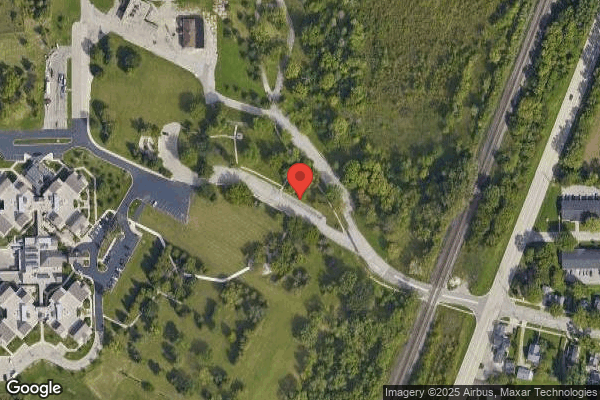
725 BUTLER AVE, OSHKOSH, WI 54901 (920) 237-6300
Government - County 168 Beds Independent Data: November 2025
Trust Grade
90/100
#53 of 321 in WI
Last Inspection: April 2025

Within standard 12-15 month inspection cycle. Federal law requires annual inspections.

Overview

Park View Health Center in Oshkosh, Wisconsin, has received an excellent Trust Grade of A, indicating a high level of quality care and reliability. It ranks #53 out of 321 facilities in Wisconsin, placing it in the top half, and #2 out of 8 in Winnebago County, suggesting only one local option is better. However, the facility's trend is worsening, as the number of issues found increased from 1 in 2024 to 2 in 2025. Staffing is a strength, with a 5/5 star rating and a turnover rate of 40%, which is below the state average, allowing staff to build relationships with residents. There were no fines on record, which is a positive sign, but recent inspections revealed concerns, such as failure to monitor dishwasher temperatures for proper sanitization and lapses in food safety and infection control practices, which could potentially affect residents' health.

Trust Score
A
90/100
In Wisconsin
#53/321
Top 16%
Safety Record
Low Risk
No red flags
Inspections
Getting Worse
1 → 2 violations
Staff Stability
○ Average
40% turnover. Near Wisconsin's 48% average. Typical for the industry.
Penalties
✓ Good
No fines on record. Clean compliance history, better than most Wisconsin facilities.
Skilled Nurses
✓ Good
Each resident gets 72 minutes of Registered Nurse (RN) attention daily — more than 97% of Wisconsin nursing homes. RNs are the most trained staff who catch health problems before they become serious.
Violations
○ Average
7 deficiencies on record. Average for a facility this size. Mostly minor or procedural issues.
★★★★★
5.0
Overall Rating
★★★★★
5.0
Staff Levels
★★★★★
5.0
Care Quality
★★★★★
5.0
Inspection Score
Stable
2024: 1 issues
2025: 2 issues

The Good

  • 5-Star Staffing Rating · Excellent nurse staffing levels
  • 5-Star Quality Measures · Strong clinical quality outcomes
  • Full Sprinkler Coverage · Fire safety systems throughout facility
  • No fines on record
  • Staff turnover below average (40%)

    8 points below Wisconsin average of 48%

Facility shows strength in staffing levels, quality measures, fire safety.

The Bad

Staff Turnover: 40%

Near Wisconsin avg (46%)

Typical for the industry

The Ugly 7 deficiencies on record

Apr 2025 2 deficiencies
CONCERN (D)

Potential for Harm - no one hurt, but risky conditions existed

Accident Prevention (Tag F0689)

Could have caused harm · This affected 1 resident

**NOTE- TERMS IN BRACKETS HAVE BEEN EDITED TO PROTECT CONFIDENTIALITY** Based on observation, staff, resident and resident representative interview, and record review, the facility did not ensure appr...

Read full inspector narrative →
**NOTE- TERMS IN BRACKETS HAVE BEEN EDITED TO PROTECT CONFIDENTIALITY** Based on observation, staff, resident and resident representative interview, and record review, the facility did not ensure appropriate supervision was in place to address wandering behavior and related concerns for 3 residents (R) (R32, R64, and R71) of 4 sampled residents. R32 wandered into residents' rooms and displayed intrusive behavior. R64, R71, and R71's Power of Attorney for Healthcare (POAHC) expressed concerns regarding R32's unwanted entry into their rooms. The facility did not provide adequate supervision or implement interventions to prevent R32 from entering residents' rooms. Findings include: The facility's Aggressive Behavior Prevention and Response policy, dated 11/26/18, indicates: .To identify causes, prevention techniques, and reaction methods for residents at risk of aggressive behavior. Performed by: All staff. Preventing Aggressive Behavior: Contributing factors: Dementia/cognitive impairment, delusions, hallucinations, situational causes and triggers, unwanted entry into bedroom; Procedure: .3. Call the Registered Nurse (RN) shift supervisor and they will respond to the area of concern. 4. Keep other residents safe .7. Once the resident is calm, the neighborhood nurse will assess the resident(s) involved for any injuries and initiate .immediate interventions to monitor physical and psychosocial status. The need for 1:1 monitoring of the resident will be assessed immediately following the incident .10. The Interdisciplinary Team (IDT) will complete a review of the incident to identify what led to the acute aggressive episode and put interventions in place to avoid reoccurrence. (Of note: When Director of Nursing (DON)-B provided the policy to Surveyor on 4/16/25, DON-B indicated the policy covered wandering behavior as well.) From 4/14/25 to 4/16/25, Surveyor reviewed R32's medical record. R32 was admitted to the facility on [DATE] and had diagnoses including unspecified dementia with psychotic disturbance, Alzheimer's disease, generalized anxiety disorder, and delusional disorder. R32's Significant Change Minimum Data Set (MDS) assessment, dated 3/31/25, indicated R32 was severely cognitively impaired. The MDS assessment also indicated R32 wandered 1-3 days during the observation period which significantly intruded on the privacy or activities of others. A care plan, dated 3/28/25, indicated R32 had the potential to feel overwhelmed, anxious/restless, and paranoid due to cognitive impairment and anxiety and indicated R32 may yell, shout, scream, not talk, have a hard time expressing what R32 needs, and may pace/wander throughout the neighborhood. The care plan indicated R32 was not able to distinguish between areas R32 was welcome to enter and those that R32 was not. The care plan instructed staff to provide 15 minute checks if R32 became intrusive, redirect R32 from areas where R32 was not welcome, and offer snacks or drinks (chocolate ice cream or cranberry juice) which were generally effective if R32 became resistive. R32's medical record indicated the following: ~ On 10/22/24, the facility implemented 1:1 supervision for R32 due to falls and intrusive behavior (wandering). At that time, R32 ambulated with a cane in the facility. ~ A physician note, dated 11/13/24, indicated quetiapine (an antipsychotic medication) was recently increased due to increased behaviors. R32 was also on buspirone (an anxiolytic medication) for generalized anxiety disorder. R32 continued to require 1:1 monitoring due to fall risk, pacing, and wandering into peers' rooms. ~ On 3/4/25, R32 went to the hospital due to a change in condition. R32 returned from the hospital on 3/10/25 with diagnoses including pneumonia, urinary tract infection (UTI), urinary retention, and sepsis. R32 was no longer ambulatory at that time. ~ On 3/17/25, the facility initiated a short-term care plan (STCP) that indicated: Trial (discontinue) of 1:1. The care plan instructed staff to document intrusiveness, provide 1:1 supervision as needed for increased agitation/intrusive behavior, use distraction techniques such as snacks, repositioning, fluids, walks, check and change, fidgets, etc., and update the Social Worker (SW) or RNs with concerns A Social Services note, dated 3/18/25, indicated the IDT discussed discontinuing R32's 1:1 on 3/17/25. Since R32 returned from the hospital, R32 was no longer ambulatory but attempted to self-propel a wheelchair. Nursing staff would transition R32 to a peddler Broda chair for comfort and mobility. Concerns with R32's behavior had decreased since R32 was less mobile and R32 had not been intrusive with peers. R32's 1:1 supervision was discontinued on 3/17 PM shift and R32 transitioned to 15 minute checks for 48 hours. A progress note, dated 3/23/25 at 9:21 PM, indicated R32 was on 15 minute checks, was not able to be redirected, and was intrusive while self-propelling a wheelchair around the neighborhood. A behavior assessment, dated 3/23/25, indicated R32 wandered aimlessly, had hallucinations, and significantly intruded on the privacy or activity of others. Interventions included 1:1 activity, reorientation, reassurance, offer a snack, and toileting. R32's behavior had not changed since the last assessment. A progress note, dated 3/25/25 at 8:36 AM, indicated a STCP was initiated on the 3/23/25 PM shift for increased agitation with cares and biting staff. Staff were instructed to immediately report further biting/agitation to the nurse. Fifteen minute checks were continued. Charting from 3/24/25 indicated R32 rested comfortably in bed the majority of the AM and PM shifts. R32 continued to be irritated with cares but was calm afterward. From 4/14/25 to 4/16/25, Surveyor reviewed R71's medical record. R71 was admitted to the facility on [DATE] and had diagnoses including dementia, major depressive disorder, generalized anxiety disorder, and difficulty in walking. R71's MDS assessment, dated 1/29/25, had a Brief Interview for Mental Status (BIMS) score of 9 out of 15 which indicated R71 had moderate cognitive impairment. R71 had an activated POAHC who visited daily. On 4/14/25 at 11:30 AM, Surveyor interviewed R71 and POAHC-L. R71 and POAHC-L expressed concerns about a resident (R32) who wandered into R71's room. R71 and POAHC-L indicated (R32) previously had a staff with (R32) at all times, however, staff were no longer with (R32) who entered R71's room uninvited. R71 informed Surveyor that R71 did not have a call light (per choice) recently when R71 was in R71's recliner. R71 indicated (R32) entered R71's room and touched R71's toe. R71 yelled for help and staff finally came. POAHC-L indicated sometimes (R32) enters R71's room when POAHC-L is visiting. POAHC-L stated POAHC-L tries to get (R32) out of the room. R71 indicated R71 witnessed (R32) be mean to staff and is not sure what (R32) will do when (R32) enters R71's room. R71 indicated it is scary to have to live like that. R71 and POAHC-L indicated staff are aware that (R32) wanders into rooms and have removed (R32) from R71's room. R71 and POAHC-L indicated staff had not talked to them about implementing interventions to deter (R32) from entering R71's room. From 4/14/25 to 4/16/25, Surveyor reviewed R64's medical record. R64 was admitted to the facility on [DATE] and had diagnoses including dementia and cerebrovascular disease. R64's MDS assessment, dated 1/22/25, had a BIMS score of 11 out of 15 which indicated R64 had moderate cognitive impairment. On 4/15/25 at 10:15 AM, Surveyor interviewed R64 who was sitting in a chair in R64's room. R64 indicated last week (R32) entered R64's room and waved both hands at R64. R64 indicated R64 thought (R32) wanted to fight R64 or live with R64. R64 activated the call light and staff responded. R64 indicated R64 does not like it when (R32) enters R64's room but indicated staff respond right away. R64 indicated R64 does not like it when people sneak up on R64 because R64 is a nervous person, is small, and cannot fight anyone if R64 needs to. On 4/15/25 at 10:17 AM, Surveyor observed R32 wandering in the hallway with no staff present. R32 slowly self-propelled a wheelchair down the hallway and entered a room on the left side of the hallway. Approximately one minute later, staff walked down the hallway, observed R32 in the room, and backed R32's wheelchair out of the room. Surveyor noted the resident whose room R32 entered was asleep on the bed. On 4/15/25 at 1:19 PM, Surveyor interviewed Certified Nursing Assistant (CNA)-H who worked the PM shift on R32's unit. CNA-H confirmed R32 wanders on the unit regularly, continues to enter residents' rooms, and is difficult to redirect at times. CNA-H indicated a few residents express concerns when R32 is in their room. CNA-H indicated R32 has not been aggressive toward other residents, just toward staff during cares. When asked if R32 had entered R71's room, CNA-H indicated R32 tried to get in R71's bed and was difficult to redirect. (R71 was not in bed at the time.) CNA-H indicated CNA-H has shut residents' doors, however, R32 opens doors easily. On 4/15/25 at 1:58 PM, Surveyor interviewed RN-J who confirmed R32 enters residents' rooms regularly. RN-J had not received any resident concerns regarding R32 and indicated when RN-J was on the unit, R32 was easily redirectable. On 4/15/25 at 2:01 PM, Surveyor interviewed CNA-K who worked on R32's unit the last two days. CNA-K indicated R32 was often in residents' rooms, however, no residents expressed concerns in the last two days. Surveyor reviewed progress notes for R32 since R32's 1:1 supervision was discontinued on 3/17/25. The progress notes did not indicate whose rooms R32 entered or was removed from. Surveyor also reviewed R64 and R71's progress notes which did not indicate R32 was found in either of their rooms. On 4/16/25 at 10:14 AM, Surveyor interviewed Unit Manager (UM)-I who indicated R32 was removed from 1:1 supervision when R32 returned from the hospital. UM-I was not aware residents expressed concerns that R32 wandered into their rooms. UM-I indicated R32 resides on a dementia unit and needs to be allowed to wander, however, interventions should be implemented to address the residents' concerns. Surveyor and UM-I discussed safety for R32 if R32 enters someone's space uninvited. UM-I indicated if residents express concerns, staff should report the concerns to the nurse or shift supervisor. UM-I indicated UM-I and the Social Worker communicate so the team can address any concerns appropriately. UM-I was unsure if staff followed-up with residents when R32 was removed from their rooms. On 4/16/25 at 12:10 PM, Surveyor interviewed Director of Nursing (DON)-B who indicated since R32 was not ambulatory when R32 returned from the hospital, the IDT trialed a removal of 1:1 supervision and monitored R32 and staff's reactions. DON-B indicated R32 was not aggressive toward peers and stated R32 was only aggressive during cares. DON-B was not aware that residents expressed concerns regarding R32 wandering into their rooms. When Surveyor informed DON-B that staff indicated residents had expressed concerns about R32 wandering into their rooms, DON-B indicated staff should communicate with the IDT so the concerns can be addressed.
CONCERN (E)

Potential for Harm - no one hurt, but risky conditions existed

Infection Control (Tag F0880)

Could have caused harm · This affected multiple residents

Based on observation, staff interview, and record review, the facility did not establish and maintain an infection prevention and control program designed to prevent the development and spread of comm...

Read full inspector narrative →
Based on observation, staff interview, and record review, the facility did not establish and maintain an infection prevention and control program designed to prevent the development and spread of communicable disease and infection. This practice had the potential to affect more than 4 of the 88 residents residing in the facility. The facility did not track last symptoms of illness and return to work dates for 3 staff (Certified Nursing Assistant (CNA)-D, CNA-E, and Licensed Practical Nurse (LPN)-F) during a gastrointestinal illness (GI) outbreak. R10 was on enhanced barrier precautions (EBP). LPN-F did not wear a gown or goggles while administering a tube feeding for R10 and while flushing R10's enteral tube. In addition, LPN-F did not complete hand hygiene prior to exiting R10's room. R37 was on EBP. Registered Nurse (RN)-G did not wear gloves during cares for R37. Findings include: The Facility's Acute Illness Policy and Procedure-Staff, dated 2/2024, indicates: To prevent the spread of illness within the facility by restricting staff with acute illness from working. Procedure for staff experiencing gastrointestinal (GI) illness: Symptoms include (minimum of 2 episodes of vomiting or loose stools); Acute onset of vomiting; Acute, explosive loose diarrhea; Low grade fever, nausea, chills, body aches, fatigue, abdominal cramping in addition to vomiting and diarrhea .1. Staff should call in according to the Employee Sick Call policy if they are experiencing acute GI illness symptoms of fever, vomiting, diarrhea and should be removed from the schedule. 2. Staff with GI symptoms must call scheduling daily to update on symptoms. 3. Staff must be removed from the schedule until 48 hours after the last incident of vomiting and/or diarrhea. The facility's Infection Control; Enhanced Barrier Precautions policy, dated 1/2025, indicates: Enhanced Barrier Precautions (EBP) expand the use of personal protective equipment (PPE) to include the use of gowns and gloves (face protection should also be used if there is a potential for splashes or sprays) during all high-contact resident care activities that provide an opportunity to transfer multidrug-resistant organisms (MDROs) to staffs' hands and clothing .Enhanced barrier precautions will be used for residents with any of the following: open wounds requiring dressing, indwelling urinary catheters, . feeding tubes .4. Staff will don a gown and gloves (face protection should also be used if there is a potential for splashes and sprays) prior to performing any of the following: .Device care or use: .feeding tubes .wound care .5. Once the above have been completed, PPE should be removed and disposed of and hand hygiene should be performed. 1. On 4/15/25, Surveyor reviewed the facility's infection surveillance and staff line list for a GI outbreak that started on 12/18/24. The staff line list included names, last worked dates, dates and times of onset of symptoms, symptoms, lab results, dates and times of last symptoms, well dates, and return to work dates. During the outbreak from 12/18/24 to 2/26/25, the staff line list did not include last symptom dates for staff who called in sick during that time period. On 4/15/25 at 10:50 AM, Surveyor interviewed Infection Preventionist (IP)-C who indicated call-in sheets are used to identify staffs' last symptom and when they can return to work. Surveyor asked to review the call-in sheets for 3 employees who had return to work dates that were 2 days after their initial call-in day with symptoms. ~ CNA-D called in sick on 12/16/24 with symptoms of nausea, vomiting, and abdominal cramps. CNA-D returned to work on 12/18/24. There was no date listed for CNA-D's last symptom. ~ CNA-E called in sick on 12/21/24 with symptoms of nausea and vomiting. CNA-E returned to work on 12/23/24. There was no date listed for CNA-E's last symptom. ~ LPN-F called in sick on 12/26/24 with symptoms of nausea and vomiting. LPN-F returned to work on 12/28/24. There was no date listed for LPN-F's last symptom. IP-C indicated IP-C could not provide call-in documentation for last symptoms for CNA-D, CNA-E, and LPN-F. IP-C indicated the facility's procedure is for the employee to call back when their symptoms have resolved and return to work 48 hours after the resolution of symptoms. IP-C indicated the facility's policy was not followed for CNA-D, CNA-E, and LPN-F. IP-C was not sure when CNA-D, CNA-E, and LPN-F's symptoms resolved. 2. On 4/16/25, Surveyor reviewed R10's guidelines for daily cares, dated 4/15/25, which indicated R10 was on EBP due to an enteral tube. On 4/15/25 at 9:10 AM, Surveyor observed LPN-F complete a tube feeding flush and administer R10's tube feeding. LPN-F completed hand hygiene, entered R10's room, and donned gloves. LPN-F did not don a gown or goggles prior to entering the room. LPN-F attached R10's tube to the gastric button, opened the clamp, and flushed the tube with water. LPN-F then attached R10's tube to an extension tube and started R10's tube feeding. LPN-F then removed gloves and exited R10's room. LPN-F did not complete hand hygiene prior to exiting the room. On 4/15/25 at 1:30 PM, Surveyor interviewed LPN-F and Director of Nursing (DON)-B regarding PPE and hand hygiene. LPN-F verified LPN-F did not wear a gown and goggles during R10's flush and tube feeding. LPN-F indicated LPN-F was aware of the need to wear a gown and goggles during the flush and tube feeding due to R10's EBP status. LPN-F also verified LPN-F did not complete hand hygiene before exiting R10's room. DON-B indicated R10 was on EBP due to an enteral tube and catheter and indicated staff should follow the facility's EBP policy. 3. On 4/16/25, Surveyor reviewed R37's guidelines for daily cares, dated 4/16/25, which indicated R37 was on EBP due to wounds. On 4/16/25 at 8:27 AM, Surveyor observed RN-G complete wound care for R37. RN-G washed hands, donned gloves and a gown, and completed wound care for R37's legs and left wrist. RN-G then removed RN-G's gown and gloves. Without cleansing hands and applying clean gloves, RN-G applied tubigrips to R37's legs, put on R37's socks, picked up a lift pad off the floor, and disposed of soiled bandages and the lift pad. R37 then sanitized hands and exited R37's room. On 4/16/25 at 8:41 AM, Surveyor interviewed RN-G regarding EBP and PPE. RN-G verified RN-G did not wear gloves while applying R37's tubigrips and socks and when RN-G disposed of R37's soiled bandages and lift pad. RN-G indicated RN-G should wear gloves at all times during cares for R37.
Aug 2024 1 deficiency
CONCERN (F) 📢 Someone Reported This

A family member, employee, or ombudsman was alarmed enough to file a formal complaint

Potential for Harm - no one hurt, but risky conditions existed

Food Safety (Tag F0812)

Could have caused harm · This affected most or all residents

Based on staff interview and record review, the facility did not ensure dishwasher temperatures were monitored and recorded to ensure proper sanitization of dishware on 5 of 5 neighborhoods in the fac...

Read full inspector narrative →
Based on staff interview and record review, the facility did not ensure dishwasher temperatures were monitored and recorded to ensure proper sanitization of dishware on 5 of 5 neighborhoods in the facility. This had the potential to affect all residents residing in the facility. Dishwasher temperatures were not monitored or documented daily on all 5 neighborhoods in the facility. Findings include: The facility's Temp Dot For Household Dishwasher policy, dated 12/2023, indicates: Certified Nursing Assistants (CNAs) will perform temperature indicator verification of each household dishwasher daily to assure sanitization temperature of 160 degrees is reached by locating the temperature log on the cabinet above the dishwasher and documenting the max temperature on the Dishwasher Temperature Log with initials .Unit Assistants (UAs) will monitor for completion of the temperature log at a minimum of once weekly. If logs are incomplete, UAs will follow up with the assigned staff. UAs will store temperature indicator logs in a designated area on the neighborhood for a duration of one year. On 8/22/24, Surveyor reviewed the dishwasher temperature logs from March 2024 through August 2024 and noted the following missing temperatures: Lakeside 1 North: Missing 8/7, 8/16, and 8/18 Lakeside 1 South: Missing 8/7 and 8/20 Lakeside 2 North: Missing 4/28 and 4/30 Lakeside 2 South: Missing 6/10 Parkside 1 North: Missing 4/3, 4/20, 5/3, 6/1, 6/2, 6/21, 6/22, 6/23, 8/7, and 8/15 Parkside 1 South: Missing 4/10, 5/3, 5/26, 5/27, 6/1, 6/2, and 8/15 Parkside 2 North: Missing 7/27, 7/28, 8/3, 8/18, 8/19, and 8/20 Parkside 2 South: Missing 7/27 and 7/28 Prarieside 1 North: Missing 7/6, 8/3, 8/6, 8/11, 8/13, and 8/15 Prarieside 1 South: Missing 8/4 and 8/6 (noted to be out of service as of 8/17/24) On 8/22/24 at 10:45 AM, Surveyor interviewed CNA-D regarding dishwasher temperature logs. CNA-D stated whoever does the dishes is responsible for monitoring and documenting the temperature on the tracking sheet located above each dishwasher. On 8/22/24 at 11:55 AM, Surveyor interviewed UA-C regarding the neighborhood dishwasher temperature logs. UA-C stated UAs are responsible for checking regularly to make sure temperature logs are filled in by either CNAs or Dietary Aides. UA-C stated if logs are not filled in, UA-C reports the concern to the Unit Manager to follow-up. On 8/22/24 at 12:29 PM, Surveyor interviewed Nursing Home Administrator (NHA)-A regarding monitoring and documenting dishwasher temperatures. NHA-A verified staff should monitor and document dishwasher temperatures daily on the neighborhoods.
Sept 2023 1 deficiency
CONCERN (D) 📢 Someone Reported This

A family member, employee, or ombudsman was alarmed enough to file a formal complaint

Potential for Harm - no one hurt, but risky conditions existed

Infection Control (Tag F0880)

Could have caused harm · This affected 1 resident

**NOTE- TERMS IN BRACKETS HAVE BEEN EDITED TO PROTECT CONFIDENTIALITY** Based on observation, staff interview and record review, the facility did not ensure staff performed proper hand hygiene during ...

Read full inspector narrative →
**NOTE- TERMS IN BRACKETS HAVE BEEN EDITED TO PROTECT CONFIDENTIALITY** Based on observation, staff interview and record review, the facility did not ensure staff performed proper hand hygiene during the provision of cares for 1 Resident (R) (R1) of 3 residents. On 9/12/23, Certified Nursing Assistant (CNA)-C did not perform appropriate hand hygiene during an observation of perineal care for R1. Findings include: The facility's Hand Hygiene Policy, dated 2/24/17, indicates: Hand hygiene continues to be the primary means of preventing the transmission of infection. The following is a list of some situations that require hand hygiene: .Before and after direct resident contact (for which hand hygiene is indicated by acceptable professional practice); .Before and after assisting a resident with personal care .Before and after touching inanimate objects .Before and after assisting a resident with toileting (hand washing with soap and water); .After handling soiled or used linens .After removing gloves .Consistent use by staff of proper hygienic practices and techniques is critical to preventing the spread of infections .Except for situations where hand washing is specifically required, antimicrobial agents such as ABHR (alcohol based hand rubs) are also appropriate for cleaning hands and can be used for direct resident care . In addition, gloves or the use of baby wipes are not a substitute for hand hygiene. On 9/12/23, Surveyor reviewed R1's medical record. R1 was admitted to the facility on [DATE] with diagnoses to include cerebral palsy (group of disorders that affect movement, muscle tone, balance, and posture) and vascular dementia (a general term describing problems with reasoning, planning, judgment, memory and other thought processes caused by brain damage from impaired blood flow to the brain). R1's Minimum Data Set (MDS) assessment, dated 8/17/23, indicated R1 was rarely/never understood and required extensive assistance of one staff for personal hygiene. On 9/12/23 at 6:18 AM, Surveyor observed CNA-C assisted R1 to the toilet and pulled down R1's pants and brief. CNA-C donned gloves, removed R1's soiled brief and, with the same gloved hands, washed and dried R1's legs with a washcloth and towel. CNA-C placed a clean brief, clean pants, socks, and shoes on R1. CNA-C shaved R1, combed R1's hair, removed a wet soaker pad from R1's bed, and placed a clean soaker pad on the bed. CNA-C then assisted R1 to a standing position, provided perineal care by washing and drying R1 with a washcloth and towel, and removed gloves. Without performing hand hygiene, CNA-C obtained barrier cream, placed a glove on CNA-C's right hand, applied barrier cream to R1's rear perineal area and removed the right glove. Without performing hand hygiene, CNA-C adjusted R1's clothing, walked R1 to the common area, and assisted R1 into a chair. CNA-C returned to R1's room, and removed a garbage bag and soiled linens from R1's bathroom. CNA-C exited R1's room, walked through the hallway, and removed a key from CNA-C's pocket. CNA-C put the key back in CNA-C's pocket when another staff unlocked the utility room door. CNA-C put a glove on CNA-C's right hand, and sorted R1's soiled linen from the garbage. CNA-C put the soiled linen in the washing machine, put the garbage in a container, and removed the right glove. Without performing hand hygiene, CNA-C removed a key from CNA-C's pocket, opened a cabinet, and poured laundry detergent into a cup. CNA-C put the key back in CNA-C's pocket, started the washing machine, and moved clean clothing from a second washer to a dryer. CNA-C placed a dryer sheet in the dryer, started the dryer and then washed hands. On 9/12/23 at 6:39 AM, Surveyor interviewed CNA-C who indicated the facility educated staff to perform hand hygiene always before going into a room and as soon as done with cares. CNA-C indicated ABHR was allowed, but stated, I didn't have any (ABHR) in my pocket. CNA-C indicated CNA-C sanitized hands with ABHR prior to entering R1's room and verified CNA-C should have performed hand hygiene after removing gloves and when moving from dirty to clean tasks. On 9/12/23 at 10:58 AM, Surveyor interviewed Director of Nursing (DON)-B who indicated the facility expected staff to complete hand hygiene before applying gloves, after removing gloves, after providing care, and when moving from dirty to clean tasks. Following a discussion of the above observations, DON-B stated, That's not our expectation.
Feb 2023 3 deficiencies
CONCERN (D)

Potential for Harm - no one hurt, but risky conditions existed

Deficiency F0740 (Tag F0740)

Could have caused harm · This affected 1 resident

Based on staff interview and record review, the facility did not ensure assessments, interventions, and increased monitoring were implemented after a statement of suicidal ideation was verbalized by 1...

Read full inspector narrative →
Based on staff interview and record review, the facility did not ensure assessments, interventions, and increased monitoring were implemented after a statement of suicidal ideation was verbalized by 1 Resident (R) (R69) of 5 residents reviewed for behavioral and emotional well-being. Licensed Practical Nurse (LPN)-I wrote a progress note that indicated R69 voiced a statement of suicidal ideation. LPN-I did not update the facility's Interdisciplinary Team (IDT), therefore, assessments, interventions and increased monitoring were not implemented and R69's psychologist/psychiatrist was not informed. Findings include: From 2/13/23 through 2/15/23, Surveyor reviewed R69's medical record and noted R69 had diagnoses to include Alzheimer's disease and anxiety disorder. LPN-I documented during staff intervention of R69's elopement attempt on 12/15/22, R69 stated, I should just go die in a snow bank. R69's Patient Health Questionnaire (PHQ)-9 (depression severity assessment) scores remained in the minimal depression range between 9/28/22 and 1/25/23 and decreased from 4 to 1 (lower score is less severe on 30 point scale). Surveyor noted R69's medical record did not contain a suicide prevention care plan, an assessment on the date of the statement, or increased monitoring following the statement. R69 met with psych on 12/20/22. The visit note documented R69 had no suicidal ideation. During the course of survey, LPN-I, who documented the 12/15/22 progress note, was not available for an on-site interview and did not respond via telephone. On 2/14/23 at 11:41 AM, Surveyor interviewed Social Worker (SW)-F regarding R69's 12/15/22 statement of suicidal ideation. SW-F denied awareness of R69's statement. SW-F stated the facility's practice was for staff to report statements of suicidal ideation to the unit manager, Registered Nurse (RN)-G, and/or report the incident to SW-F, who were members of the IDT. SW-F stated when SW-F is notified of suicidal ideation, SW-F assesses the resident to determine the urgency of a psychology visit. The urgency level either results in a phone call for an urgent visit or placement of the resident on the list for the next scheduled psych visit. SW-F also stated the IDT would create a short-term care plan. SW-F verified R69 had a psych visit on 12/20/22. SW-F stated SW-F and RN-G usually rounded with psych and SW-F would have informed psych of R69's suicidal ideation if SW-F was aware. On 2/14/23 at 12:15 PM, Surveyor interviewed RN-G regarding R69's suicidal ideation statement. RN-G denied awareness prior to Surveyor's investigation. RN-G stated there was an expectation that suicidal ideation statements be reported up the chain of command. RN-G verified suicidal ideation statements always required follow-up.
CONCERN (D)

Potential for Harm - no one hurt, but risky conditions existed

Deficiency F0883 (Tag F0883)

Could have caused harm · This affected 1 resident

Based on staff interview and record review, the facility did not ensure medical records contained documentation related to influenza immunizations for 3 Residents (R) (R10, R22 and R55) of 5 residents...

Read full inspector narrative →
Based on staff interview and record review, the facility did not ensure medical records contained documentation related to influenza immunizations for 3 Residents (R) (R10, R22 and R55) of 5 residents reviewed for immunizations. R10's medical record did not contain documentation indicating the facility offered or administered the influenza immunization for the 2022/2023 season. R22's medical record did not contain documentation indicating the facility offered or administered the influenza immunization for the 2022/2023 season. R55's medical record did not contain documentation indicating the facility offered or administered the influenza immunization for the 2022/2023 season. Findings include: The facility's Influenza Immunization Policy, dated 02/2018, contained the following information: The facility has developed policies and procedures that ensure that - (i) Before offering the influenza immunization, each resident or the resident representative receives education regarding the benefits and potential side effects of the immunization; (ii) Each resident is offered an influenza immunization October 1 through March 31 annually, unless the immunization is medically contraindicated or the resident has already been immunized during this time period; (iii) The resident or the resident representative has the opportunity to refuse immunization; (iv) The resident's medical record includes documentation that indicates, at a minimum, the following: (A) That the resident or resident representative was provided education regarding the benefits and potential side effects of influenza immunization; and (B) That the resident either received the influenza immunization or did not receive the influenza immunization due to medical contraindications or refusal. (v) The resident or resident representative will be re-offered the influenza vaccine with increased levels of influenza-like illness within the building or in the community. The facility's Seasonal Influenza Vaccination Procedure - Residents, dated 09/2022 contained the following information: 2. RN Neighborhood Supervisors: .Inform Infection Preventionist of any refusals *Refusals must be approached three times and documented in ECS (electronic medical record) for each encounter . The facility's Informed Consent - Influenza Immunization document, dated 02/2018, contained the following information: Procedure: 1. Prior to the annual vaccination date, which is determined by the QAA (Quality Assessment and Assurance) Committee sometime each fall usually after October 1st): a. Give competent resident a consent form and a copy of the most current VIS (Vaccine Information Sheet) from CDC (Centers for Disease Control and Prevention.) b. Mail consent forms and VIS forms to the resident representative of incompetent/incapacitated residents. 2. Forward completed consent to the RNNS (Nurse Supervisor)/Infection Preventionist. On 2/15/23, Surveyor reviewed R10, R22, and R55's medical records for documentation related to their influenza vaccination status and documentation for the 2022/2023 influenza season. R10, R22, and R55's medical records contained the following: 1. R10 was admitted to the facility in September of 2012. The most recent influenza consent/declination document in R10's medical record was signed and dated 11/1/20. 2. R22 was admitted to the facility in April of 2021. The most recent influenza consent/declination document in R22's medical record was signed and dated 4/6/21. 3. R55 was admitted to the facility in June of 2017. The most recent influenza consent/declination document in R55's medical record was signed and dated 9/26/19. On 2/15/23, Surveyor interviewed Registered Nurse Manager/Quality Assurance & Infection Control (IP)-C. IP-C stated IP-C had a log that contained documentation of all resident immunizations. IP-C stated IP-C would provide Surveyor a copy of the consent/declination forms. On 2/16/23 via e-mail, IP-C provided Surveyor with additional information which included progress notes related to influenza immunization consents and declinations as follows: R10 late entry dated 2/16/23 at 8:26 AM; R22 late entry dated 2/16/23 at 8:22 AM; R55 late entry dated 2/16/23 at 8:24 AM. On 2/16/23 at 2:02 PM via e-mail, IP-C stated IP-C documented the attempts on 2/16/23. IP-C attached the copies of the original consents that were sent to R10's, R22's, and R55's powers of attorney (POAs) on 9/22/22 and 12/1/22. IP-C stated IP-C did not see the documents in the chart but had the original copies with original logs that IP-C prepared at the start of the influenza season.
CONCERN (F)

Potential for Harm - no one hurt, but risky conditions existed

Food Safety (Tag F0812)

Could have caused harm · This affected most or all residents

Based on observation, staff interview, and record review, the facility did not ensure food was stored, and served under sanitary conditions. This practice had to potential to affect 94 of 98 residents...

Read full inspector narrative →
Based on observation, staff interview, and record review, the facility did not ensure food was stored, and served under sanitary conditions. This practice had to potential to affect 94 of 98 residents. (Four residents were exclusively fed via tube). Staff did not identify and address the main kitchen warewashing machine (dishwasher) internal surface temperature monitoring device did not reach the required 160 degrees Fahrenheit (F) since July of 2022. Staff did not date foods and beverages that were time and temperature controlled for safety upon opening and did not discard outdated items in accordance with food safety practices. Findings include: On 2/13/23 at 8:52 AM, Dietary Manager (DM)-H stated the facility used the Food and Drug Administration (FDA) Food Code as its standard of practice. Dishwasher Internal Temperature FDA Food Code 2022 documented at 4-703.11 After being cleaned, equipment food-contact surfaces and utensils shall be sanitized in: .(B) Hot water mechanical operations by being cycled through EQUIPMENT that is set up as specified under §§ 4-501.15, 4-501.112, and 4-501.113 and achieving a UTENSIL surface temperature of 71oC (160oF) as measured by an irreversible registering temperature indicator On 2/13/23, during an initial kitchen tour beginning at 8:52 AM, Surveyor reviewed the main kitchen dishwasher monitoring logs and noted the internal surface temperature was not reaching 160 degrees F. DM-H and Surveyor reviewed dishwasher documentation which revealed the dishwasher internal surface temperature stopped reaching the required minimum 160 degrees F in July 2022. DM-H explained DM-H referred to the FDA Food Code requirement at 4-501.112(A) which documented the maximum temperature of the sanitizing rinse is 194 degrees F when DM-H reviewed the dishwasher monitoring logs. Surveyor reviewed the FDA Food Code 4-703.11(B) with DM-H at that time. On 2/14/23 at 1:24 PM, Surveyor observed an internal surface temperature monitoring device run through dishwasher and reach the required minimum temperature of 160 degrees F. DM-H stated the facility determined the internal surface temperature monitoring device which registered temperatures below the required minimum was discovered by staff as defective and replaced by a new monitoring device. Time and Temperature Foods FDA Food Code 2022 documented at 3-501.17(B) Except as specified in ¶¶ (E) - (G) of this section, refrigerated, READY-TO-EAT TIME/TEMPERATURE CONTROL FOR SAFETY FOOD prepared and PACKAGED by a FOOD PROCESSING PLANT shall be clearly marked, at the time the original container is opened in a FOOD ESTABLISHMENT and if the FOOD is held for more than 24 hours, to indicate the date or day by which the FOOD shall be consumed on the PREMISES, sold, or discarded, based on the temperature and time combinations specified in ¶ (A) of this section and: (1) The day the original container is opened in the FOOD ESTABLISHMENT shall be counted as Day 1; and (2) The day or date marked by the FOOD ESTABLISHMENT may not exceed a manufacturer's use-by date if the manufacturer determined the use-by date based on FOOD safety On 2/13/23, during an initial kitchen tour beginning at 8:52 AM, Surveyor observed and DM-H verified the main kitchen walk-in refrigerator contained a one gallon container of lemon juice, delivery dated 10/4/22, which was open and undated. Food Keeper (foodsafety.gov) indicated lemon juice is good for two months in the refrigerator once opened. DM-H and Surveyor toured the household kitchenettes and noted the following Resident (R) specific foods in refrigerators were open and undated: R350 - 12 ounce (oz) jar of marinated herring R9 - 64 oz apple juice Surveyor observed and DM-H verified a household kitchenette freezer contained a Ziploc bag with 8 pancakes and an obvious build-up of ice particles in the bag and on the pancakes. The bag was marked with a use-by date of 1/20/23. DM-H verified all food products must be date marked at the time of opening and items past use-by dates should be discarded timely.
Understanding Severity Codes (click to expand)
Life-Threatening (Immediate Jeopardy)
J - Isolated K - Pattern L - Widespread
Actual Harm
G - Isolated H - Pattern I - Widespread
Potential for Harm
D - Isolated E - Pattern F - Widespread
No Harm (Minor)
A - Isolated B - Pattern C - Widespread

Questions to Ask on Your Visit

  • "Can I speak with families of current residents?"
  • "What's your RN coverage like on weekends and overnight?"

Our Honest Assessment

Strengths
  • • Grade A (90/100). Above average facility, better than most options in Wisconsin.
  • • No major safety red flags. No abuse findings, life-threatening violations, or SFF status.
  • • No fines on record. Clean compliance history, better than most Wisconsin facilities.
  • • 40% turnover. Below Wisconsin's 48% average. Good staff retention means consistent care.
Concerns
  • • No significant concerns identified. This facility shows no red flags across CMS ratings, staff turnover, or federal penalties.
Bottom line: Generally positive indicators. Standard due diligence and a personal visit recommended.

About This Facility

What is Park View's CMS Rating?

CMS assigns PARK VIEW HEALTH CENTER an overall rating of 5 out of 5 stars, which is considered much above average nationally. Within Wisconsin, this rating places the facility higher than 99% of the state's 100 nursing homes. This rating reflects solid performance across the metrics CMS uses to evaluate nursing home quality.

How is Park View Staffed?

CMS rates PARK VIEW HEALTH CENTER's staffing level at 5 out of 5 stars, which is much above average compared to other nursing homes. Staff turnover is 40%, compared to the Wisconsin average of 46%. This relatively stable workforce can support continuity of care.

What Have Inspectors Found at Park View?

State health inspectors documented 7 deficiencies at PARK VIEW HEALTH CENTER during 2023 to 2025. These included: 7 with potential for harm.

Who Owns and Operates Park View?

PARK VIEW HEALTH CENTER is owned by a government entity. Government-operated facilities are typically run by state, county, or municipal agencies. The facility operates independently rather than as part of a larger chain. With 168 certified beds and approximately 91 residents (about 54% occupancy), it is a mid-sized facility located in OSHKOSH, Wisconsin.

How Does Park View Compare to Other Wisconsin Nursing Homes?

Compared to the 100 nursing homes in Wisconsin, PARK VIEW HEALTH CENTER's overall rating (5 stars) is above the state average of 3.0, staff turnover (40%) is near the state average of 46%, and health inspection rating (5 stars) is much above the national benchmark.

What Should Families Ask When Visiting Park View?

Based on this facility's data, families visiting should ask: "Can I visit during a mealtime to observe dining assistance and food quality?" "How do you handle medical emergencies, and what is your hospital transfer rate?" "Can I speak with family members of current residents about their experience?"

Is Park View Safe?

Based on CMS inspection data, PARK VIEW HEALTH CENTER has a clean safety record: no substantiated abuse findings (meaning no confirmed cases of resident harm), no Immediate Jeopardy citations (the most serious violation level indicating risk of serious injury or death), and is not on the Special Focus Facility watch list (a federal program monitoring the lowest-performing 1% of nursing homes). The facility has a 5-star overall rating and ranks #1 of 100 nursing homes in Wisconsin. While no facility is perfect, families should still ask about staff-to-resident ratios and recent inspection results during their visit.

Do Nurses at Park View Stick Around?

PARK VIEW HEALTH CENTER has a staff turnover rate of 40%, which is about average for Wisconsin nursing homes (state average: 46%). Moderate turnover is common in nursing homes, but families should still ask about staff tenure and how the facility maintains care continuity when employees leave.

Was Park View Ever Fined?

PARK VIEW HEALTH CENTER has no federal fines on record. CMS issues fines when nursing homes fail to meet care standards or don't correct problems found during inspections. The absence of fines suggests the facility has either maintained compliance or corrected any issues before penalties were assessed. This is a positive indicator, though families should still review recent inspection reports for the full picture.

Is Park View on Any Federal Watch List?

PARK VIEW HEALTH CENTER is not on any federal watch list. The most significant is the Special Focus Facility (SFF) program, which identifies the bottom 1% of nursing homes nationally based on persistent, serious quality problems. Not being on this list means the facility has avoided the pattern of deficiencies that triggers enhanced federal oversight. This is a positive indicator, though families should still review the facility's inspection history directly.