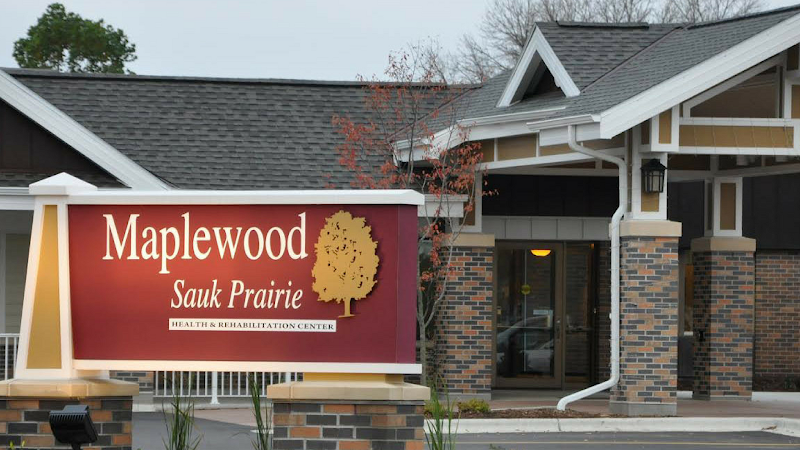
MAPLEWOOD OF SAUK PRAIRIE
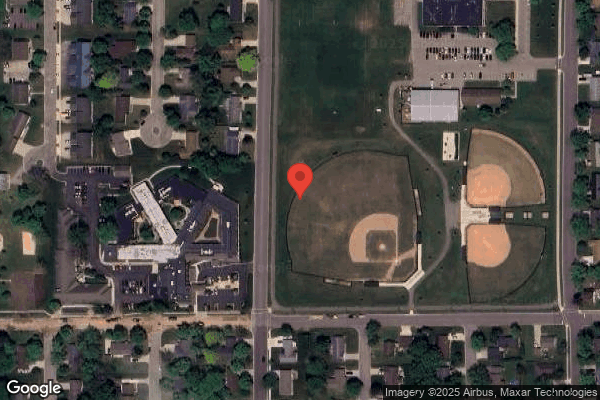
245 SYCAMORE ST, SAUK CITY, WI 53583 (608) 643-3383
For profit - Corporation 120 Beds Independent Data: November 2025
Trust Grade
85/100
#44 of 321 in WI
Last Inspection: September 2024

Within standard 12-15 month inspection cycle. Federal law requires annual inspections.

Overview

Maplewood of Sauk Prairie has a Trust Grade of B+, which indicates that it is above average and recommended for families considering care options. It ranks #44 of 321 nursing homes in Wisconsin, placing it in the top half of facilities statewide, and #2 of 5 in Sauk County, meaning only one local facility is rated higher. The trend is improving, with the number of issues decreasing from 5 in 2024 to just 2 in 2025. Staffing is a strong point, rated 5 out of 5 stars with a turnover rate of 33%, lower than the state average, indicating staff continuity and familiarity with residents. However, there are some weaknesses to consider; while there are no fines reported, RN coverage is less than that of 78% of Wisconsin facilities, which could impact the level of care. Specific incidents noted by inspectors include concerns about proper hand hygiene practices and food safety protocols, such as improperly air-drying kitchenware and storing undated food items, which may pose infection and foodborne illness risks. Overall, while Maplewood has many strengths, families should remain aware of the areas that need improvement.

Trust Score
B+
85/100
In Wisconsin
#44/321
Top 13%
Safety Record
Low Risk
No red flags
Inspections
Getting Better
5 → 2 violations
Staff Stability
○ Average
33% turnover. Near Wisconsin's 48% average. Typical for the industry.
Penalties
✓ Good
No fines on record. Clean compliance history, better than most Wisconsin facilities.
Skilled Nurses
○ Average
Each resident gets 41 minutes of Registered Nurse (RN) attention daily — about average for Wisconsin. RNs are the most trained staff who monitor for health changes.
Violations
⚠ Watch
13 deficiencies on record. Higher than average. Multiple issues found across inspections.
★★★★★
5.0
Overall Rating
★★★★★
5.0
Staff Levels
★★★★☆
4.0
Care Quality
★★★★☆
4.0
Inspection Score
Stable
2024: 5 issues
2025: 2 issues

The Good

  • 5-Star Staffing Rating · Excellent nurse staffing levels
  • 4-Star Quality Measures · Strong clinical quality outcomes
  • Full Sprinkler Coverage · Fire safety systems throughout facility
  • No fines on record
  • Staff turnover below average (33%)

    15 points below Wisconsin average of 48%

Facility shows strength in staffing levels, quality measures, fire safety.

The Bad

Staff Turnover: 33%

13pts below Wisconsin avg (46%)

Typical for the industry

The Ugly 13 deficiencies on record

Feb 2025 2 deficiencies
CONCERN (D) 📢 Someone Reported This

A family member, employee, or ombudsman was alarmed enough to file a formal complaint

Potential for Harm - no one hurt, but risky conditions existed

Report Alleged Abuse (Tag F0609)

Could have caused harm · This affected 1 resident

**NOTE- TERMS IN BRACKETS HAVE BEEN EDITED TO PROTECT CONFIDENTIALITY** Based on interview and record review, the facility did not ensure that all alleged violations involving abuse, neglect, exploita...

Read full inspector narrative →
**NOTE- TERMS IN BRACKETS HAVE BEEN EDITED TO PROTECT CONFIDENTIALITY** Based on interview and record review, the facility did not ensure that all alleged violations involving abuse, neglect, exploitation, or mistreatment are reported to the State Survey Agency for 3 of 3 residents reviewed for abuse (R4, R5, and R6). R4 filed a grievance regarding R5 verbally abusing R4. Staff observed R5 throw a cup of soup across the room and swear. Then staff observed R4, who was in the room at the time to be in an upset state. The facility did not report the resident to resident allegation/verbal abuse to the state agency. R6 voiced an allegation of a male coming in her room and attacking her, pulling off her stockings and pants without notice, and leaving her to feel violated. The facility failed to report this allegation of abuse to the state agency. Findings include: The facility's policy, titled Abuse Prevention and Investigation Policy and Procedure, reviewed 7/2024, includes: . The facility will not tolerate abuse, neglect, or misappropriation of resident's property. All allegations of abuse, neglect, or misappropriation and any injury of which the source cannot be identified will be investigated. The result of the investigation will be reported as required by state and federal laws and this policy and procedure . Verbal abuse: refers to any use of oral, written, or gestured language that includes disparaging and derogatory terms to residents or their families, or within their hearing distance, to describe residents, regardless of their age, ability to comprehend, or disability. Sexual abuse: is nonconsensual sexual contact of any type with a resident. This includes but is not limited to sexual harassment, sexual coercion, or sexual assault. Physical abuse- includes hitting, slapping, pinching, kicking . it also includes controlling behavior through corporal punishment . upon a complaint or observation of suspected resident abuse the following steps will be taken . a resident or family member may report an allegation of misconduct to any employee. Upon receiving an allegation the employee will immediately take the necessary steps to protect the resident As per state regulations the notification of necessary authorities will take place in appropriate time frames . notification will be made too the office of caregiver quality immediately via the completion of the online form . law enforcement agency will be notified if there is any reasonable suspicion of a crime . Time frames for reporting: any incident/allegation involving abuse or serious bodily injury will be reported to both state agency and law enforcement within two hours of knowledge of the incident/allegation. Any other allegation or incident will be reported within 24 hours. The employee whom received the allegation or was a witness to a reportable incident will compose a written statement detailing the alleged incident as reported by the resident or as witnessed. The resident with the complaint will be interviewed and a written statement will be composed. The employee or employees involved will be interviewed with such interview being documented. A written response to the allegations will be requested from the accused employee. Any other persons who may have additional information will be interviewed as well with written statements obtained if able. Investigation is to be done within 5 working days of the incident . it is important to note that abuse can occur by staff, family members, friends, visitors, other care providers, or buy another resident. Any abuse from any source will be handled in the same manner . Example 1 R5 admitted to the facility on [DATE]. Her diagnoses include: major depressive disorder, hypertension (high blood pressure), atrial fibrillation (irregular and rapid heart beat), and asthma. R4 admitted to the facility on [DATE]. Her diagnoses include: hemiplegia (complete paralysis) and hemiparesis (partial weakness) following cerebral infarction (stroke), aphasia (language disorder) following cerebral infarction, and anxiety disorder. Grievance, dated 1/24/25, includes: Complaint made by R4 . Nature of complaint: repeated rude, negative, verbally abusive language from roommate, roommate repeatedly calling R4 names, roommate throwing items at R4/throwing items towards R4's side of the room, prohibiting her right to watch/listen to TV. Investigation/Findings: Social Services has brought to attention of DON B (Director of Nursing) and NHA A (Nursing Home Administrator), instructed wing staff/nurses to document any inappropriate behavior/language from roommate, instructed to document changes in R4's mood due to roommate's behavior. Documentation has been collected, wing staff sharing ongoing concern. Corrective Action Taken: Administration/Leadership looking at options to separate the 2 ladies as soon as able. Currently no other room available. Staff to intervene immediately, ensure R4's safety, encourage out of room activities. Nurse Notes, dated 1/24/25, include: Wing nurse requested writer to intervene as R5 upset, swearing, throwing items in room, verbally aggressive towards staff and roommate. Writer did observe R5 throw a cup with tomato soup in it across the room causing it to spill. Writer counseled R5 for half hour, discussing her behavior. R5 was pleasant and calm with writer . R5 shared she threw her cup as she had a chunk in the straw of the tomato soup and was not able to drink it Writer overheard R5 talking to herself in her room, seeming upset. Writer visited with R5 who seemed very confused, concern that no one else was home, where did her family go, she could not find them. R5 also upset sharing she was the only one who did all the work in the house, but she felt bad as she was not able to do the work/chores because her legs no longer worked. R5 crying, upset, began to hit the wall, sharing she was so upset she just wanted to smash everything in sight . called to R4's room as nurse stating R4 was upset, crying, due to roommate calling R4 inappropriate names, throwing items across the room . writer did visit with R4 to offer support/reassurance. Informed R4 the interdisciplinary team was looking at plans to rectify the situation. R4 pointing to roommate shaking head stating no no no. Writer asked R4 if she wished to file a grievance on her roommate due to her behavior towards her and R4 shook her head and stated yes. Writer clarified what R4 wished to have in the grievance. As writer leaving for day, writer passing by R4's room, observed her roommate throw a cup of soup across the room, swearing. R4 once again upset. Once again writer intervened offering support/reassurance. On 2/17/25 at 11:36 AM DON B (Director of Nursing) and Surveyor reviewed Grievance, dated 1/24/25. DON B indicated this grievance contains an allegation of abuse, both verbal abuse and mental abuse. DON B indicated staff witnessed R5 throwing items and swearing and R4 in an upset state, but the facility did not follow the facility's abuse policy. DON B indicated throwing items, swearing, name calling, being rude, being negative, and using verbally abusive language could be intimidating and is an allegation of abuse that should have been reported to the state agency within 2 hours of the facility becoming aware. On 2/17/25 at 1:00 PM NHA A (Nursing Home Administrator) and Surveyor reviewed Grievance, dated 1/24/25. NHA A indicated throwing items, swearing, and verbally aggressive behavior are all allegations of abuse and could be intimidating. NHA A indicated the words verbally abusive were recorded and this is an allegation of abuse that should have been reported to the state agency within 2 hours of the facility becoming aware. Example 2 R6 admitted to the facility on [DATE] with the following diagnoses: mild cognitive impairment, chronic pain, major depressive disorder, and sleep disorder. Facility investigation, dated 12/12/24, includes: Staff statement: R6 walked down (hall) around 3:05 AM looking for (named Manager). I told her (named Manager) was not here as it was 3:00 AM, but if she needed something (named Nurse) was down (another hall). R6 stated that she was attacked last night by a tall man named (insert male name). R6 thought he was from the therapy department. I stated I did not know a (insert male name) but she wanted to speak to the nurse on the other hall . I walked her towards (other hall) and she said she had it from there . Staff statement: Around 3:15 AM Writer saw R6 standing in hallway by dining area . Writer went to assist with R6 stating that she had woke up crying at 3:00 AM remembering that someone had violated her at 9:50 PM. She stated she remembers the time because she was watching a tv show. She went on to tell writer she doesn't feel safe. Writer assisted her back to her room and questioned her more. She stated again around 9:50 PM a big guy, tall with white hair came in and pulled her stocking off and then pulled her pants down to look at her bottom. She stated he didn't explain anything . I questioned if it could have been the skin check we do and she stated if it was they explained nothing. Also questioned if possibly a dream since writer had been in 2 other times this night and she made no mention . She stated it was not a dream and she felt violated . stated was afraid we would try to cover this up. Told her we took this serious . DON B . voicemail . NHA A updated . told R6 this was going to be looked into and NHA was aware . Staff statement: I talked with resident. She was good with assessment at time . I gave her trazadone about 8:00 PM to 9:00 PM . Resident statements: 7:12 AM . they ripped my ted hose off. Physical therapy was rough and ripped my ted hose . I felt violated .I was dreaming, it was a bad dream . I don't know who he was, then Physical Therapy rushed in here and scared me at 9:50 PM . He woke me up from sleeping and took all my clothes off . On 2/17/25 at 11:36 AM, DON B (Director of Nursing) indicated R6 had come to the facility for rehab. She had come out into the hallway and was scared. She told staff a therapy man, a big guy came in and ripped her stockings and pants off to check her skin. DON B indicated this could be an allegation of sexual misconduct, citing the definition of sexual abuse as nonconsensual sexual contact of any kind. DON B indicated she thought at the time of the incident that this should be reported to the state agency and maybe local law enforcement, because of the resident saying she felt violated. DON B indicated she called the previous NHA (Nursing Home Administrator) and was advised she did not need to file a self report so she didn't. On 2/17/25 at 1:00 PM, during an interview, NHA A (Nursing Home Administrator) indicated a resident stating that they had been attacked, been violated, not feeling safe, and had a man come in and pulled their pants down to look at their bottom could be an allegation of sexual misconduct and this should have been reported to the state agency within 2 hours of facility becoming aware of allegation. NHA A indicated the facility should have reported this to the local law enforcement also so they could decide if allegations warranted an investigation. NHA A indicated staff consulted with the previous NHA and he advised not to report voiced allegations to the state agency.
CONCERN (D) 📢 Someone Reported This

A family member, employee, or ombudsman was alarmed enough to file a formal complaint

Potential for Harm - no one hurt, but risky conditions existed

Investigate Abuse (Tag F0610)

Could have caused harm · This affected 1 resident

**NOTE- TERMS IN BRACKETS HAVE BEEN EDITED TO PROTECT CONFIDENTIALITY** Based on interview and record review, the facility did not ensure that all alleged violations involving abuse, neglect, exploita...

Read full inspector narrative →
**NOTE- TERMS IN BRACKETS HAVE BEEN EDITED TO PROTECT CONFIDENTIALITY** Based on interview and record review, the facility did not ensure that all alleged violations involving abuse, neglect, exploitation, or mistreatment are thoroughly investigated for 3 of 3 residents reviewed for abuse (R4, R5, and R6). R4 filed a grievance regarding R5 verbally abusing R4. Staff observed R5 throw a cup of soup across the room and swear. Then staff observed R4, who was in the room at the time to be in an upset state. The facility did not conduct a thorough investigation including interviewing other residents who may have knowledge of R5's behavior or the incident. R6 voiced an allegation of a male coming into her room and attacking her, pulling off her stockings and pants without notice, and leaving her to feel violated. The facility failed to conduct a thorough investigation including interviewing all staff who worked with R6 recently or other residents who may have knowledge of the alleged incident. Findings include: The facility's policy, titled Abuse Prevention and Investigation Policy and Procedure, reviewed 7/2024, includes: . The facility will not tolerate abuse, neglect, or misappropriation of resident's property. All allegations of abuse, neglect, or misappropriation and any injury of which the source cannot be identified will be investigated. The result of the investigation will be reported as required by state and federal laws and this policy and procedure . Verbal abuse: refers to any use of oral, written, or gestured language that includes disparaging and derogatory terms to residents or their families, or within their hearing distance, to describe residents, regardless of their age, ability to comprehend, or disability. Sexual abuse: is nonconsensual sexual contact of any type with a resident. This includes but is not limited to sexual harassment, sexual coercion, or sexual assault. Physical abuse- includes hitting, slapping, pinching, kicking . it also includes controlling behavior through corporal punishment . upon a complaint or observation of suspected resident abuse the following steps will be taken . a resident or family member may report an allegation of misconduct to any employee. Upon receiving an allegation the employee will immediately take the necessary steps to protect the resident As per state regulations the notification of necessary authorities will take place in appropriate time frames . notification will be made too the office of caregiver quality immediately via the completion of the online form . law enforcement agency will be notified if there is any reasonable suspicion of a crime . Time frames for reporting: any incident/allegation involving abuse or serious bodily injury will be reported to both state agency and law enforcement within two hours of knowledge of the incident/allegation. Any other allegation or incident will be reported within 24 hours. The employee whom received the allegation or was a witness to a reportable incident will compose a written statement detailing the alleged incident as reported by the resident or as witnessed. The resident with the complaint will be interviewed and a written statement will be composed. The employee or employees involved will be interviewed with such interview being documented. A written response to the allegations will be requested from the accused employee. Any other persons who may have additional information will be interviewed as well with written statements obtained if able. Investigation is to be done within 5 working days of the incident . it is important to note that abuse can occur by staff, family members, friends, visitors, other care providers, or buy another resident. Any abuse from any source will be handled in the same manner . Example 1 R5 admitted to the facility on [DATE]. Her diagnoses include: major depressive disorder, hypertension (high blood pressure), atrial fibrillation (irregular and rapid heart beat), and asthma. R4 admitted to the facility on [DATE]. Her diagnoses include: hemiplegia (complete paralysis) and hemiparesis (partial weakness) following cerebral infarction (stroke), aphasia (language disorder) following cerebral infarction, and anxiety disorder. Grievance, dated 1/24/25, includes: Complaint made by R4 . Nature of complaint: repeated rude, negative, verbally abusive language from roommate, roommate repeatedly calling R4 names, roommate throwing items at R4/throwing items towards R4's side of the room, prohibiting her right to watch/listen to TV. Investigation/Findings: Social Services has brought to attention of DON B (Director of Nursing) and NHA A (Nursing Home Administrator), instructed wing staff/nurses to document any inappropriate behavior/language from roommate, instructed to document changes in R4's mood due to roommate's behavior. Documentation has been collected, wing staff sharing ongoing concern. Corrective Action Taken: Administration/Leadership looking at options to separate the 2 ladies as soon as able. Currently no other room available. Staff to intervene immediately, ensure R4's safety, encourage out of room activities. Nurse Notes, dated 1/24/25, include: Wing nurse requested writer to intervene as R5 upset, swearing, throwing items in room, verbally aggressive towards staff and roommate. Writer did observe R5 throw a cup with tomato soup in it across the room causing it to spill. Writer counseled R5 for half hour, discussing her behavior. R5 was pleasant and calm with writer . R5 shared she threw her cup as she had a chunk in the straw of the tomato soup and was not able to drink it Writer overheard R5 talking to herself in her room, seeming upset. Writer visited with R5 who seemed very confused, concern that no one else was home, where did her family go, she could not find them. R5 also upset sharing she was the only one who did all the work in the house, but she felt bad as she was not able to do the work/chores because her legs no longer worked. R5 crying, upset, began to hit the wall, sharing she was so upset she just wanted to smash everything in sight . [NAME] called to R fours room as nurse stating R4 was upset, crying, due to roommate calling R4 inappropriate names, throwing items across the room . writer did visit with R4 to offer support/reassurance. Informed R4 the interdisciplinary team was looking at plans to rectify the situation. R4 pointing to roommate shaking head stating no no no. Writer asked our four if she wished to file a grievance on her roommate due to her behavior towards her and our four shook her head and stated yes. Writer clarified what R4 wished to have in the grievance. As writer leaving for day, writer passing by R4's room, observed her roommate throw a cup of soup across the room, swearing. R4 once again upset. Once again writer intervened offering support/reassurance. On 2/17/25 at 11:36 AM, DON B (Director of Nursing) and Surveyor reviewed Grievance, dated 1/24/25. DON B indicated this grievance contains an allegation of abuse, both verbal abuse and mental abuse. DON B indicated staff witnessed R5 throwing items and swearing and R4 in an upset state, but the facility did not follow the facility's abuse policy. DON B indicated throwing items, swearing, name calling, being rude, being negative, and using verbally abusive language could be intimidating and is an allegation of abuse that should have been investigated thoroughly. DON B indicated the two residents were separated when a room became available. DON B indicated no other residents were interviewed and only one staff member was interviewed. On 2/17/25 at 1:00 PM NHA A (Nursing Home Administrator) and Surveyor reviewed Grievance, dated 1/24/25. NHA A indicated throwing items, swearing, and verbally aggressive behavior are all allegations of abuse and could be intimidating. NHA A indicated the words verbally abusive were recorded and this is an allegation of abuse that should have been reported to the state agency within 2 hours of the facility becoming aware. NHA A indicated no other residents were interviewed regarding this exchange and only the staff who witnessed the event were interviewed. NHA A indicated residents were eventually separated when a room became available. Example 2 R6 admitted to the facility on [DATE] with the following diagnoses: mild cognitive impairment, chronic pain, major depressive disorder, and sleep disorder. Facility investigation, dated 12/12/24, includes: Staff statement: R6 walked down (hall) around 3:05 AM looking for (named Manager). I told her (named Manager) was not here as it was 3:00 AM, but if she needed something (named Nurse) was down (another hall). R6 stated that she was attacked last night by a tall man named (insert male name). R6 thought he was from the therapy department. I stated I did not know a (insert male name) but she wanted to speak to the nurse on the other hall . I walked her towards (other hall) and she said she had it from there . Staff statement: Around 3:15AM Writer saw R6 standing in hallway by dining area . Writer went to assist with R6 stating that she had woke up crying at 3:00 AM remembering that someone had violated her at 9:50 PM. She stated she remembers the time because she was watching a tv show. She went on to tell writer she doesn't feel safe. Writer assisted her back to her room and questioned her more. She stated again around 9:50 PM a big guy, tall with white hair came in and pulled her stocking off and then pulled her pants down to look at her bottom. She stated he didn't explain anything . I questioned if it could have been the skin check we do and she stated if it was they explained nothing. Also questioned if possibly a dream since writer had been in 2 other times this night and she made no mention . She stated it was not a dream and she felt violated . stated was afraid we would try to cover this up. Told her we took this serious . DON B . voicemail . NHA A updated . told R6 this was going to be looked into and NHA was aware . Staff statement: I talked with resident. She was good with assessment at time . I gave her trazadone about 8:00 PM to 9:00PM . Resident statements: 7:12 AM . they ripped my ted hose off. Physical therapy was rough and ripped my ted hose . I felt violated .I was dreaming, it was a bad dream . I don't know who he was, then Physical Therapy rushed in here and scared me at 9:50 PM . He woke me up from sleeping and took all my clothes off . On 2/17/25 at 11:36 AM, DON B (Director of Nursing) indicated R6 had come to the facility for rehab. She had come out into the hallway and was scared. She told staff a therapy man, a big guy came in and ripped her stockings and pants off to check her skin. DON B indicated this could be an allegation of sexual misconduct, citing the definition of sexual abuse as nonconsensual sexual contact of any kind. DON B indicated an investigation was completed but it did not include other residents who may have been in earshot or eyeshot of the incident. On 2/17/25 at 1:00 PM, during an interview, NHA A indicated a resident stating that they had been attacked, been violated, not feeling safe, and had a man come in and pulled her pants down to look at her bottom could be an allegation of sexual misconduct and this should have been investigated thoroughly. NHA A indicated this incident was investigated but the investigation did not include interviews of other residents who may have been in earshot or eyeshot of the incident. The facility did not thoroughly investigate these allegation of abuse.
Sept 2024 2 deficiencies
CONCERN (E)

Potential for Harm - no one hurt, but risky conditions existed

Food Safety (Tag F0812)

Could have caused harm · This affected multiple residents

Based on observation, staff interview, and facility policy review, the facility failed to ensure kitchen staff properly air-dried plates prior to storage. This failure had the potential to increase th...

Read full inspector narrative →
Based on observation, staff interview, and facility policy review, the facility failed to ensure kitchen staff properly air-dried plates prior to storage. This failure had the potential to increase the risk of foodborne illness and had the potential to affect 31 of 31 residents who resided on 2 of 4 hallways out of a total census of 71. Findings include: Review of the facility's policy titled, Manual Ware Washing, dated 10/13/14, revealed, Purpose: To ensure dishes are properly cleaned and sanitized during manual ware washing. III. Procedure: .7. Allow dishes to air dry . Example 1 During an observation and interview on 9/23/24 at 9:40 AM of the kitchenette serving area located on the Oak hallway the Dietary Manager (DM) confirmed three plates were found to be wet. These plates had been placed in the cabinet for use. The DM stated, They were put away wet, they should have been left out to air dry longer. The Oak hallway had a census of 15. Example 2 During an observation and interview on 9/23/24 at 9:51 AM of the kitchenette serving area located on the Evergreen hallway the Dietary Manager (DM) confirmed four plates were found to be wet. These plates had been placed in the cabinet for use. The DM stated, They should have been left out to air dry longer. The Evergreen hallway had a census of 16.
MINOR (C)

Minor Issue - procedural, no safety impact

Staffing Information (Tag F0732)

Minor procedural issue · This affected most or all residents

Based on observation, interviews, and staffing document review, the facility failed to ensure daily posted staffing requirements were in place to include the census, number of staff, and number of sta...

Read full inspector narrative →
Based on observation, interviews, and staffing document review, the facility failed to ensure daily posted staffing requirements were in place to include the census, number of staff, and number of staff hours for 71 of 71 residents residing at the facility. This failure had the potential to affect the ability of residents and families to view the staffing information daily. Findings include: During an observation and interview on 9/24/24 at 3:46 PM, there was a book located at the nursing station that contained a staffing assignment sheet. The assignment sheet listed the name of the facility, the names of the staff, and the current date. The Director of Nursing (DON) stated this assignment sheet, located in the book was their posted staffing sheet. She stated she kept a tally of hours in her office but the sheet in the book was used as a live staffing assignment listing. The sheet contained the names of the staff working in the halls. She confirmed the sheets lacked the census, number of Certified Nurse Aides (CNAs), number of Licensed Practical Nurses (LPNs), number of Registered Nurses (RNs), and the number of working hours. During an interview on 9/25/24 at 9:24 AM, the DON stated they did not have a policy for the posted nurse staffing. During an interview on 9/25/24 at 11:52 AM, the Administrator confirmed they did not have a policy. He stated they had created a new sheet to include the required components and would post it in a more visible location.
Jun 2024 2 deficiencies
CONCERN (D) 📢 Someone Reported This

A family member, employee, or ombudsman was alarmed enough to file a formal complaint

Potential for Harm - no one hurt, but risky conditions existed

Deficiency F0554 (Tag F0554)

Could have caused harm · This affected 1 resident

**NOTE- TERMS IN BRACKETS HAVE BEEN EDITED TO PROTECT CONFIDENTIALITY** Based on observation, interview, and record review, the facility did not ensure that all residents are clinically appropriate to...

Read full inspector narrative →
**NOTE- TERMS IN BRACKETS HAVE BEEN EDITED TO PROTECT CONFIDENTIALITY** Based on observation, interview, and record review, the facility did not ensure that all residents are clinically appropriate to self-administer medications for 1 of 1 resident (R3) observed during screening. R3 was observed to have her medications left at the bedside. This is evidenced by: The facility's policy titled Addendum: Self Administration of Medications, undated, states in part, . Policy: Prior to allowing a resident to administer medications without direct supervision by licensed nursing staff, the resident's ability to do so will be assessed and doctor's order will be obtained . 2. Physician will be updated with resident's desire to administer medications without direct staff supervision, following set up of the medications by nursing. If physician is in agreement with the assessment made by staff and is okay with the resident taking medications without direct supervision, an order shall be obtained . R3 was admitted to the facility on [DATE] with diagnoses that include acquired absence of right leg below knee, major depressive disorder (a severe and persistent low mood, profound sadness, or a sense of despair), type 2 diabetes mellitus with hyperglycemia (characterized by high levels of sugar in the blood), chronic diastolic congestive heart failure (the heart has trouble supplying the body's organs and tissues with oxygen-rich blood they need and the hallmarks are shortness of breath with exertion or when lying down; swelling in the legs, ankles, or abdomen, unexplained fatigue, or a bulging jugular vein), acute embolism (a condition that results from a blood clot) and thrombosis of deep veins of left upper extremity, end stage renal disease (a medical condition in which the kidneys cease functioning on a permanent basis leading to the need for a regular course of long-term dialysis), dependence on renal dialysis, unspecified dementia, acute kidney failure, acute respiratory failure with hypoxia, hallucinations (an experience involving the apparent perception of something not present). R3's most recent Minimum Data Set (MDS) dated [DATE] states that R3 has a Brief Interview of Mental Status (BIMS) of 15 out of 15, indicating that R3 is cognitively intact. R3's medical record does not contain a Self-Administration Assessment. R3's current plan of care does not indicate that R3 is to self-administer any medications. R16's physician orders do not indicate a Self-Administration order. On 6/20/24 at 9:08 AM, Surveyor observed R3's morning medication on her bedside table in a medication cup. Surveyor asked R3 if that was her medication, she indicated that they it was and that they normally leave it there. R3 further indicated that she normally takes her medication after breakfast, and that breakfast was later today. Surveyor asked R3 how many medications were in the cup, she indicated she thought there were 14 medications. On 6/20/24 at 9:15 AM, Surveyor observed R3 being taken to the shower room by staff and the morning medication was left on R3's bedside table in the medication cup. On 6/20/24 at 9:21 AM, Surveyor interviewed LPN D (Licensed Practical Nurse). Surveyor walked with LPN D and obtained R3's medication cup with her medications and returned to the medication cart. Surveyor asked LPN D if R3 had a self-administration order, she indicated she did not see an order and she normally leaves her medication at R3's bedside. LPN D further indicated that she should have not left R3's medications at her bedside. Surveyor and LPN D verified each medication consisting of Sentry senior multivitamin 1 tablet, Creon DR 36000 units 2 capsules, Vitamin D 1000 International Unit (IU) 2 capsules, amlodipine 10 mg 1 tablet, fluoxetine 20mg 1 tablet, pantoprazole 40mg 1 tablet, loperamide 2mg 1 capsule, carvedilol 12.5mg tablet, potassium extended release 10 milliequivalent 2 capsules, bumetanide 2mg 1 capsule, and aspirin enteric coated 325mg 1 capsule (14 tablets/capsules total). LPN D then placed the medication in a paper envelope and labeled with R3's name and date and reported she would administer them after R3 was finished with her shower. On 6/20/24 at 10:12 AM, Surveyor interviewed R3 and asked if she had taken her medication and she indicated she did. On 6/20/24 at 2:06 PM, Surveyor interviewed DON B (Director of Nursing). Surveyor asked DON B if medications should be left in a resident's room unattended, she indicated no, and that the resident should have a self-administration order. Surveyor asked DON B if R3 has a self-administration order, she indicated R3 did not have a self-administration and that R3 should have had an order to self-administer her medications.
CONCERN (D) 📢 Someone Reported This

A family member, employee, or ombudsman was alarmed enough to file a formal complaint

Potential for Harm - no one hurt, but risky conditions existed

Grievances (Tag F0585)

Could have caused harm · This affected 1 resident

**NOTE- TERMS IN BRACKETS HAVE BEEN EDITED TO PROTECT CONFIDENTIALITY** Based on interview and record review, the facility did not make prompt efforts to document, investigate, and resolve grievances ...

Read full inspector narrative →
**NOTE- TERMS IN BRACKETS HAVE BEEN EDITED TO PROTECT CONFIDENTIALITY** Based on interview and record review, the facility did not make prompt efforts to document, investigate, and resolve grievances a resident may have for 1 of 3 residents reviewed for grievances (R1). The facility's Social Worker (SW) documented that R1's spouse had concerns with Activities of Daily Living (ADLs), fluid intake, soiled bed linens, and staffing; these concerns were not documented as grievances, investigated as grievances, or had a resolution provided to R1's spouse. Evidenced by: The facility's policy titled Grievance Policy and Procedure no date, states in part .Grievances can include things such as concerns about care and treatment provided or not provided, behavior of staff or other residents and any concerns related to the resident's stay in the facility .3. To file a grievance, the resident and/ or resident representative shall contact the facility grievance officer(s). The grievance can be filed orally, in writing, or by completing a Grievance Report Form. a. [facility name] grievance officers with be either social service representative .7. Grievance record keeping a. All grievance decisions will be documented to include the date that the grievance or grievance form was received, a summary statement of the grievance and a copy of the grievance form, steps taken to investigate the grievance, a summary of pertinent findings or conclusions regarding the concern, if the grievance was confirmed or not confirmed, any corrective action taken as a result of the grievance, and the date the written decision was issued. Example 1 R1 was admitted to the facility on [DATE] with diagnoses that include traumatic brain injury, epilepsy, major depressive disorder, and hyponatremia. R1's most recent Minimum Data Set (MDS) dated [DATE] indicates that R1 is barely/ never understood and that R1 is dependent on staff for all ADLs, transfers, and positioning/ transportation. On 4/10/24 at 3:09 PM, SW C documented, in part, the following note: Late entry from 4/8/24. Meeting with [R1's spouse], ombudsman, IDT (Interdisciplinary Team) including writer, DON (Director of Nursing), LTCM (Long Term Care Manager). [R1's spouse] requested ombudsman be present as she did not have any family/ friends who could attend with her/ wished for a neutral party to be present sharing she feels ganged up at meetings .[R1's spouse] shared ongoing concerns about R1's fluid intake, sodium levels, not getting his teeth brushed, wet linens .Encouraged [R1's spouse] to communicate her concerns with DON or point person. [R1's spouse] continuing to share her dissatisfaction . On 4/10/24 at 3:16 PM, SW C documented, in part, the following note: .Later in afternoon writer and DON met with [R1's spouse] . [R1's spouse] shared that her only concern about R1 this day is not having consistent wing staff .noting her dissatisfaction with agency staff . On 5/24/24 at 3:24 PM, SW C documented, in part, the following note: Writer and DON met with [R1's spouse] this day per her request as she shared her upset and disbelief that R1 was not placed in bed until 10:00 PM last night .Writer offered reassurance noting wing staff are well aware of [R1's spouse] ongoing concerns, therefor are hypersensitive to R1's needs .[R1's spouse] also noting she has observed R1 to be 'soaked' when she arrives, also noting that he did not eat last night as he did not know who was feeding him. Writer once again reiterated the importance of R1 and new staff needing time to get to know each other, thus R1 does need to work with new staff in order to build that rapport. Writer also reassured writer continues to check on R1 and his room throughout the days during the week to ensure R1 is receiving cares, and his room is clean and orderly. [R1's spouse] noting writer not here on weekends to do such. On 6/20/24 at 1:00 PM, Surveyor interviewed SW C, who is also the facility's grievance officer. Surveyor asked SW C what the process was for grievances, SW C stated that she encourages residents and family member to come to her or another member of leadership with hopes that they can address their concerns before it rises to a grievance. Surveyor asked SW C if a concern would be considered a grievance, SW C stated that it depends on the level and that a grievance is a repeated act. SW C reported to Surveyor that she has offered R1's spouse to fill out a grievance form. Surveyor asked SW C if R1's spouse expresses a concern, is she required to fill out a grievance form in order for her concerns to be addressed and is it the resident and/ or family member's responsibility to follow the facility's grievance policy, SW C stated that she would have to check with the Administrator. Surveyor asked SW C what concerns has R1's spouse reported, SW C stated she had concerns with hydration, oral intake, if R1's bed is not made, if R1 is not in bed at a certain time, range of motion, and ADLs. Surveyor asked SW C if these concerns were written up as grievances, SW C stated no. Surveyor asked if R1's spouse was provided with a written resolution, SW C stated no. On 6/20/24 at 1:59 PM, Surveyor interviewed DON B (Director of Nursing). Surveyor asked DON B what her understanding of a grievance is, DON B stated that a grievance can be anything such as a concern or a lost item. Surveyor asked DON B if she would expect R1's spouse's concerns to be a grievance, DON B stated yes and no, yes but we don't write them down. She (R1's spouse) has repetitive concerns and brings up complaints from four years ago. It is important to know that SW C and DON B reported that the facility had zero grievances.
Jan 2024 1 deficiency
CONCERN (D) 📢 Someone Reported This

A family member, employee, or ombudsman was alarmed enough to file a formal complaint

Potential for Harm - no one hurt, but risky conditions existed

Accident Prevention (Tag F0689)

Could have caused harm · This affected 1 resident

**NOTE- TERMS IN BRACKETS HAVE BEEN EDITED TO PROTECT CONFIDENTIALITY** Based on interview and record review, the facility did not ensure adequate supervision and safety to prevent accidents from occu...

Read full inspector narrative →
**NOTE- TERMS IN BRACKETS HAVE BEEN EDITED TO PROTECT CONFIDENTIALITY** Based on interview and record review, the facility did not ensure adequate supervision and safety to prevent accidents from occurring for 1 of 3 residents reviewed (R1) for falls. R1 had multiple falls while at the facility. Facility staff did not update the care plan after each fall, notify the physician promptly after a fall with a head injury, and complete and document neurological checks timely. This is evidenced by: The facility's policy titled Fall Prevention and Assistive devices for Fall Prevention last updated on [DATE], states in part: .Procedure: 1. Each resident will have a fall risk assessment tool completed (located within [EHR (Electronic Health Record)] upon admission, quarterly, with a significant change, following a fall and at the nurses' discretion .3. Each resident who is at risk for falls based on the falls assessment tool will have a falls care plan .5. Each resident will have an individualized interventions put into place to help achieve the goals of care .6. Post Fall Management: .e. Charge nurse or other RN (Registered Nurse) is to be called to the room if significant injury is suspected and further assessment should be completed. i. The nurse will complete resident post fall evaluation. The charge nurse would notify the MD (Medical Doctor) if fall resulted in a head or major injury. Neurological checks to be initiated with any fall where the resident was known to hit their head AND with any unwitnessed fall .i. Root cause analysis should occur to identify cause of fall if able. j. Current interventions should be evaluated for appropriateness and changed as needed with NEW intervention put into place in attempt to prevent future issues .Additional Interdisciplinary Responsibilities Nursing Staff: The Wing Nurse ensures that all fall prevention interventions are placed on the guidelines to daily care and assure that they are followed by CNA (Certified Nursing Assistant) staff . The facility's document titled [Facility] Neurological Checklist states in part: When a resident strikes his/ her head and requires neurological check please complete as followed: q (every) 15 minutes for 1 hour post fall, the q 1 hour for the next 4 hours and then q 4 hours thereafter until 24 hours post fall. If a resident has an UNWITNESSED fall, please complete neuro checks every 4 hours until 24 hours post fall. R1 was admitted to the facility on [DATE] with diagnoses that include non-ST-elevation myocardial infarction (NSTEMI; a type of heart attack that usually happens when your heart's need for oxygen can't be met), acute respiratory failure with hypoxia, diastolic heart failure, thrombocytopenia (a low number of platelets in the blood), and a history of transient ischemic attacks (TIAs; mini stroke). It is important to note that R1's diagnosis list states that R1 had a long-term use of anticoagulants and long-term use of aspirin. R1 was taking aspirin 81 mg by mouth daily. R1's Minimum Data Set (MDS) dated [DATE] states that R1 has a Brief Interview of Mental Status (BIMS) of 11 out of 15, indicating that R1 has moderate cognitive impairment. The MDS also indicates that R1 requires partial to moderate assist with bed mobility and transfers. R1's Fall risk assessment dated [DATE] states that R1's fall risk score is 11, indicating that R1 is at risk for falls. R1's Guidelines for Daily Care dated [DATE] states in part: .Mobility: I transfer with the help of 1 person, transfer me with a gait belt . This was appended on [DATE] to say: I transfer with 2 people, transfer me with a gait belt .Walking/ Moving: I walk: I use a standard walker with the help of 1 person . This was appended on [DATE] to say: I walk: I use a standard walker with the help of 2 people and gait belt . Under the box titled Safety Interventions dated [DATE] states low bed and floor mat. It is important to note that there were no fall interventions listed on the Guidelines for Daily Care until [DATE]. R1's Care Plan dated [DATE] states in part: .Safety I: have the potential to fall down and hurt myself .I show this by not being able to move around like I used to, tiring easily, getting short of breath, taking diuretic .Approach I need my nurses to ---remind me to ask for help. I need my aides to---frequently check on me, make sure my important items are within my reach, make sure I can reach my glasses, remind me to get up and move slowly, keep my room well-lit when I'm up, report signs that I'm in pain to my nurse, remind me to ask for help .Goal my goal is to : stay safe while I'm moving about without falls . It is important to note that R1's care plan was not updated after any of his falls. On [DATE] at 8:45 PM, R1 had a fall out of his lift recliner. Facility documentation states in part: .Actions/ New Interventions: encourage use of bed at night .Physician notification: no need to notify .Description of Incident: Found resident lying on his right side in front of the recliner which was all the way up. Found by [staff member], Hoyer lifted off floor into bed. Vitals stable, neuros wnl (within normal limits), no visible injury. Resident statement: I must've hit the wrong button and put the chair all the way up . R1's neuro checks were subsequently completed at: [DATE] at 12:49 AM [DATE] at 5:15 AM No additional neuro checks were completed. It is important to note that the intervention was not added to the care plan or the Guidelines for Daily Care document. Additionally, there is no evidence that the facility assessed R1 to be able to safely use a lift recliner. On [DATE] at 7:15 PM, R1 was lowered to the floor during a transfer. Facility documentation states in part: .Description of events: Resident was transferring from recliner to w/c (wheelchair), and then resident sat in w/c it moved and [CNA] lowered him to the floor on his knees and then to a sitting position. Bumped his head on the door frame when he was lowered. Assisted up off the floor via Hoyer lift and 2 CNAs, head to toe assessment completed with no apparent injury. Vitals stable, Neuro checks stable .Resident statement: I fell . R1's neuro checks were subsequently completed at: [DATE] at 9:21 PM [DATE] at 10:46 PM [DATE] at 10:49 PM [DATE] at 10:51 PM [DATE] at 10:53 PM [DATE] at 10:55 PM [DATE] at 10:57 PM [DATE] at 11:21 PM [DATE] at 12:23 AM On [DATE] at 2:50 AM, R1 had a fall out of bed. The facility's documentation states in part: .Injury: bruising to right forehead 1 x 1.2 cm (centimeters), right cheek 1.4 x 2.5 cm, right eye 0.75 x 1.0 cm, right hand 4.5 x 3.0 cm .Did resident hit head: yes, neuro assessment initiated .Physician notification: no need to notify. Family notification: will update in the morning .Description of Incident: resident found lying on stomach on the floor next to his bed. Neuro checks initiated and wnl. Hoyer lifted off floor and into bed. Bruising noted to right hand, right forehead, right cheek, and right eyelid and superficial scrape to left shin. Left shin cleansed and bandaid [sic] applied. Vital signs stable . R1's neuro checks were subsequently completed at: [DATE] at 3:41 AM [DATE] at 3:44 AM [DATE] at 3:46 AM [DATE] at 3:51 AM [DATE] at 4:54 AM [DATE] at 5:56 AM On [DATE] at 7:00 AM, R1 had a change in condition. Nurse's notes state in part: Writer was called down to R1's room around 7 AM to find R1 very minimally responsive and labored with his breathing (using accessory muscles), Pulse was 43 and irregular. BP (Blood Pressure) 150/70, oxygen 100% on O2 (oxygen), respirations 18 and labored. Writer noted a sweet smell to his breath, Pupils are quite large but reactive to light and PERRLA (Pupils are equal, round, and reactive to light and accommodation) is intact. Writer tried to ask R1 how he was feeling but R1 responded with grunts. Physician Contact: spoke with physician on call .regarding R1's falls and changes in his neurological checks. MD agreed that given his history to speak with family and see about comfort measures, due to concerns of a possible brain bleed . R1 was placed on comfort measures after speaking with the family. It should be noted R1 was on Coumadin (an anticoagulant/blood thinner) prior to admission to the facility this medication was discontinued just prior to R1 being admitted to the facility. R1 did expire; however, R1's death certificate indicates R1 expired from a stroke not a brain bleed. On [DATE] at 10:45 AM, Surveyor interviewed RN C (Registered Nurse). Surveyor asked RN C what the facility's policy was for falls, RN C stated that if the resident hit their head it was q 15 minutes x 4, then q 1 hour x 4, then q 4 hours, if the resident did not hit their head it was q 4 hours x 24 hours, and if the fall was unwitnessed and the resident said that they didn't hit their head it was q 4 hours x 24 hours. Surveyor asked RN C if the resident hits their head, should the MD be notified, RN C stated that if there is no serious injury then they will follow up in the morning. Surveyor asked if bruising to the face and head be considered a head injury, RN C stated yes. Surveyor asked RN C if a head injury would warrant a call to update the physician, RN C stated typically yes, but she couldn't remember the exact circumstances around R1's falls. On [DATE] at 12:57 PM, Surveyor spoke with MD D. Surveyor asked MD D if he would expect facility staff to immediately notify himself or the on-call MD if a resident had a fall with a head injury, MD D stated yes. On [DATE] at 1:31 PM, Surveyor interviewed DON B (Director of Nursing). Surveyor asked DON B if R1's fall on [DATE] was unwitnessed, DON B stated yes. Surveyor asked DON B if she would expect neuro checks to be completed, DON B stated yes. Surveyor asked DON B if the intervention listed in the fall documentation should have been added to R1's care plan and Guidelines for Daily Care document, DON B stated yes. Surveyor discussed R1's fall on [DATE] with DON B. Surveyor asked DON B if knowing that R1 hit his head, what her expectations were for neuro checks to be completed, DON B stated she would expect them to be completed q (every) 15 minutes for 1 hour post fall, the q 1 hour for the next 4 hours and then q 4 hours for 24 hours post fall. Surveyor asked DON B if she expects staff to have timely documentation of neuro checks, DON B stated yes. Surveyor discussed R1's fall on [DATE] with DON B. Surveyor asked DON B if given R1's head injury she would expect the nurse to have updated the MD, DON B stated yes. The facility failed to create a robust fall care plan for a resident at risk for falls, update the care plan after each fall, complete and document neuro checks timely, and notify the physician about R1's falls with hitting head/head injury.
Aug 2023 3 deficiencies
CONCERN (D)

Potential for Harm - no one hurt, but risky conditions existed

Pharmacy Services (Tag F0755)

Could have caused harm · This affected 1 resident

**NOTE- TERMS IN BRACKETS HAVE BEEN EDITED TO PROTECT CONFIDENTIALITY** Based on interview and record review, the facility did not ensure the provision of pharmaceutical services (including procedures...

Read full inspector narrative →
**NOTE- TERMS IN BRACKETS HAVE BEEN EDITED TO PROTECT CONFIDENTIALITY** Based on interview and record review, the facility did not ensure the provision of pharmaceutical services (including procedures that assure that accurate acquiring, receiving, dispensing, and administering of all drugs and biologicals) to meet the needs of each resident for 3 out of 4 sampled residents (R63, R326, and R32). R63, R326 and R32 had multiple medication errors related to not receiving medication timely as ordered by the physician. This is evidenced by: The facility policy entitled, Medication Administration Policy and Procedure, dated July 2022, states, in part: . Policy: Medication will be delivered to resident in accordance with the Physician's orders, manufacturer's specifications regarding preparation and administration and the accepted professional standards and principles. Procedure: Medication Administration Times ~ AM: 7am to 10:30am ~ Midday: 11am to 2:30pm ~ PM: 3pm to 6:30pm ~ HS (hours of sleep): 7pm to 10:30pm ~ NOC (night): 11:00pm to 2:30am ~ Early AM: 5am to 6:30am . Routine medications that require a more specific time (for example something such as a Parkinson's medication or insulin), will have an hour associated with the order and will be provided to the resident in a timely manner, which is defined below. Timely manner is defined as ~ No earlier than 60 minutes prior to scheduled time. ~ No later than 60 minutes after scheduled time . Example 1 R63 was admitted on [DATE] with diagnoses that include: chronic kidney disease (a disease characterized by progressive damage and loss of function in the kidneys), Gastro-esophageal reflux disease (a common condition in which the stomach contents move up into the esophagus), atrioventricular block, first degree (a disease of the electrical conduction system of the heart), essential (primary) hypertension (abnormally high blood pressure that's not the result of a medical condition), spinal stenosis (narrowing of the spinal canal, this can put pressure on the spinal cord and the nerves within the spine), chronic obstructive pulmonary disease (a group of diseases that cause airflow blockage and breathing-related problems). R63's Minimum Data Set (MDS) Quarterly Assessment, dated 5/26/23, shows that R63 has a Brief Interview of Mental Status (BIMS) score of 15 indicating R63 is cognitively intact. On 8/21/23 at 7:17 PM, Surveyor interviewed R63 during initial screening. Surveyor asked R63 if she receives her medications on time, R63 indicated that sometimes the medications are a little late and sometimes the medications are a little early, its ongoing. R63's July 2023 Medication Administration Record (MAR) indicates the following medication as being administered late on July 11, 2023: - Acetaminophen 500MG (milligram) tablet (1 tablet/500mg) by mouth four times per day 8:00 AM, 12:00 PM, 4:00 PM and 8:00 PM for pain, first date: 11/22/2022. The MAR scheduled time to be administered is at 8:00 AM. This medication was administered at 9:31 AM. R63's July 2023 MAR indicates the following medication as being administered late on July 18, 2023: - Acetaminophen 500MG tablet (1 tablet/500mg) by mouth four times per day 8:00 AM, 12:00 PM, 4:00 PM and 8:00 PM for pain, first date: 11/22/2022. The MAR scheduled time to be administered is at 8:00 AM. This medication was administered at 9:55 AM. R63's July 2023 MAR indicates the following medication as not being administered on July 27, 2023: - Acetaminophen 500MG tablet (1tablet/500mg) by mouth four times per day 8:00 AM, 12:00 PM, 4:00 PM and 8:00 PM for pain, first date: 11/22/2022. The MAR scheduled time to be administered is at 12:00 PM. This medication documentation box did not have documentation and is blank. R63's July 2023 MAR indicates the following medication as being administered late on July 28, 2023: - Atenolol 25 MG Tablet (2 tablet/50mg) by mouth daily AM first date: 8/22/22 for hypertension. The MAR scheduled time to be administered is at AM. This medication was administered at 12:40 PM. - Multivitamin/Iron Tablet (1tablet) by mouth daily AM first date: 8/22/22 for vitamin and mineral deficiency. The MAR scheduled time to be administered is at AM. This medication was administered at 12:40 PM. - Omeprazole 20MG capsule delayed release dose (1 capsule/20mg) by mouth daily AM, first date: 8/22/22 for gastroesophageal reflux disease. The MAR scheduled time to be administered is at AM. This medication was administered at 12:40 PM. - Hydrochlorothiazide 25MG tablet (0.5 tablet/12.5mg) by mouth daily AM, first date: 11/22/22 for edema. The MAR scheduled time to be administered is at AM. This medication was administered at 12:40 PM. - Amlodipine besylate 5MG (2 tablet/10mg) by mouth daily AM, first date: 12/6/22 for hypertension. The MAR scheduled time to be administered is at AM. This medication was administered at 12:40 PM. - Benazepril 20MG tablet (1 tablet/20mg) by mouth daily AM, first date: 12/8/22 for hypertension. The MAR scheduled time to be administered is at AM. This medication was administered at 12:40 PM. R63's August 2023 MAR indicates the following medication as being administered late on the following dates: - Acetaminophen 500MG tablet (1 tablet/500mg) by mouth four times per day 8:00 AM, 12:00 PM, 4:00 PM and 8:00 PM for pain, first date: 11/22/2022. The MAR scheduled time to be administered is at 8:00 AM. This medication was administered at 9:31 AM on 8/2/22, 10:05 AM on 8/4/22 and 9:54 AM on 8/21/23. The MAR scheduled time to be administered is at 12:00 PM. This medication was administered at 1:22 PM on 8/21/23. The MAR scheduled time to be administered is at 8:00 PM. This medication was administered at 9:55 PM on 8/1/23, 9:16 PM on 8/7/23, 9:25 PM on 8/8/23, 10:28 PM on 8/11/23, 9:38 PM on 8/12/23, 10:00 PM on 8/21/23 and 9:36 PM on 8/22/23. Example 2 R326 was admitted on [DATE] with diagnoses that include Parkinson's disease (a brain disorder that causes unintended or uncontrollable movements, such as shaking, stiffness, and difficulty with balance and coordination), and hypothyroidism (the thyroid doesn't create and release enough thyroid hormone into the body). R326's MDS Assessment has not been completed at the time of the survey. R326's August 2023 MAR indicates the following medication as not being administered as ordered on the following dates: - Carbidopa-Levodopa ER (extended release) 50MG-200MG tablet extended release (1 tablet) by mouth five times per day 4:00 AM, 8:30 AM, 1:00 PM, 5:30 PM and 10:00 PM, first date: 8/18/23 for Parkinson's disease. The MAR schedule time to be administered is at 4:00 AM. This medication was administered at 6:34 AM on 8/20/23 and at 5:56 AM on 8/21/23. The MAR schedule time to be administered is at 8:30 AM. This medication was administered at 10:20 AM on 8/22/23 and at 9:36 AM on 8/23/23. Example 3 R32 was admitted on [DATE] with diagnoses that include hypertension, adjustment disorder with mixed anxiety and depressed mood, generalized anxiety disorder with paranoid delusions and unspecified dementia, severe with anxiety. R32's MDS Quarterly Assessment, dated 6/1/23, shows that R32 has a BIMS score of 0 indicating R32 has severe cognitive impairment. R32's July 2023 MAR indicates the following medication as not being administered as ordered on the following dates: - Lisinopril 5MG table (1 tablet/5mg) by mouth daily, fist date: 5/24/19 for hypertension, early AM. The MAR scheduled time to be administered is at early AM. This medication was administered at 7:26 AM on 7/24/23. - Lamotrigine 25MG tablet (1 tablet/25mg) by mouth twice per day, Early AM, Midday, first date: 9/28/22 for mood changes. Discontinued on 7/11/23. The MAR scheduled time to be administered is at early AM. This medication was administered at 3:50 AM on 7/9/23. The MAR scheduled time to be administered is at midday. This medication was administered at 3:32 PM on 7/2/23. - Lamotrigine 25MG tablet (1tablet/25mg) by mouth twice per day, Early AM, Midday, first date: 7/12/23 for mood changes. This medication was administered at 7:26 AM on 7/15/23. - Quetiapine fumarate (Seroquel) 25MG tablet (1.5 tablet/37.5mg) by mouth daily, early AM, first date: 7/11/23 for behavioral disorders associated with dementia. This medication was administered at 7:26 AM on 7/15/23. R32's July 2023 MAR indicates the following medications as being administered late at 3:21 PM on 7/2/23: - Senna S Sennosides-Docusate sodium 8.6MG-50MG tablet (1 tablet) by mouth daily Midday, first date 3/23/23 for constipation. - Multivitamin Childrens Pediatric Multiple vitamins tablet chewable dose (1 tablet) by mouth daily Midday, first date 5/24/19 for vitamin and mineral deficiency. - MiraLAX Polyethylene glycol 3350 powder dose (34 grams) by mouth daily Midday, first date: 10/7/21 for constipation. - Depakote Sprinkles, Divalproex sodium 125MG capsule delayed release sprinkle dose (4 capsule/500mg) by mouth daily Midday, first date: 11/2/22 for mixed pattern seizure disorder. - Quetiapine fumarate 25MG tablet dose (1tablet/25mg) by mouth daily Midday, first date: 6/14/23 for agitation. On 8/24/23 at 9:21 AM, Surveyor interviewed LPN D (Licensed Practical Nurse). Surveyor asked LPN D the times of medication administration, she indicated early AM is around 6:00 AM and she will try between 5:30 AM- 6:00 AM, AM time is 7:00 AM-10:30 AM, Midday time is 11:00 AM- 2:30 PM, PM time is 3:00 PM-6:30 PM, and HS time is 7:00 PM-10:30 PM. Surveyor asked LPN D the procedure for a late medication, she indicated that if the medication is not within the time frames she does not administer the medication and will discard it. Surveyor asked LPN D if the physician would be called, she indicated she would call and advise the reason for not administering and obtain any further direction. LPN D further indicated she would contact the DON (Director of Nursing). On 8/24/23 at 10:54 AM, Surveyor interviewed RN E (Registered Nurse). Surveyor asked RN E the times of medication administration, she indicated early AM is around 5:00 AM- 6:00 AM, AM time is between 7:00 AM-9:00 AM, Midday time is between 11:00 AM- 1:00 PM, the PM time is from 3:00 PM-9:00 PM and the HS time is from 7:00 PM-9:00 PM. RN E indicated if the medication has an exact time, such for Parkinson's medications, those are to be given at specific times. RN E indicated that for a medication with an exact time, they are to administer the medication between one hour before and one hour after the ordered time. RN E continued to refer to Parkinson's medications, stated, I have seen with other resident too that is has to be at a very specific time, we put those times in there so there is no question. Surveyor asked RN E the procedure if a medication is outside the parameters, she indicated she would hold it, call the physician, and obtain the next steps from the physician. RN E further indicated if the medication was a missed dose, she would do an incident report. If the dose would need to be held, she would document in the EHR (Electronic Health Record) the medication was held, the reason and would make the charge nurse aware. Surveyor asked RN E the meaning if a box is blank in the MAR, she indicated the medication was not signed out or the resident did not receive the medication. RN E indicated she would further check the medication cards in the cart to see if it was given, then do an incident report and call the physician if needed based upon the findings. On 8/24/23 at 2:43 PM, Surveyor interviewed DON B. Surveyor reviewed R63, R326 and R32's MARs with DON B. DON B confirmed the administration times per policy. Surveyor asked DON B the procedure for medications that are not able to be given at the times by the physician order, she indicated the staff are to let herself and administration know if they are falling behind, call the physician, document the outcome of the medication, and if there was an error a medication error report form would be completed. Surveyor asked DON B if she was aware of these medications not being administered timely, she indicated she had nothing she could say to this and was not aware. Surveyor asked DON B what it means if the box is left empty or blank in the MAR, she indicated the medication was not given and would double check the medication cards in the cart. DON B further indicated the pharmacy will let her know if there are extra medications in the card. Surveyor asked DON B if any audits are performed for medication administration, she indicated she did not. Surveyor asked DON B if medication should be administered timely per the physician orders, she indicated yes.
CONCERN (D)

Potential for Harm - no one hurt, but risky conditions existed

Deficiency F0883 (Tag F0883)

Could have caused harm · This affected 1 resident

Based on interview and record review, the facility must develop policies and procedures to ensure that residents and/or resident responsible party receives education regarding the benefits and potenti...

Read full inspector narrative →
Based on interview and record review, the facility must develop policies and procedures to ensure that residents and/or resident responsible party receives education regarding the benefits and potential side effects of the immunization prior to offering the immunization and documentation is noted in the medical record on whether the resident received or declined the immunization, this affected 2 of 5 residents (R20 and R1) reviewed for immunizations of 18 sampled residents. R20 did not have a pneumococcal immunization offered and no documentation. R1 did not have a pneumococcal immunization offered and no documentation. This is evidenced by: The facility's Immunization Policy and Procedure, dated 10/22, states, in part: . Policy: All residents will be provided education and offered influenza and pneumococcal vaccine, per the recommended schedule put out by the CDC (Centers of Disease Control) and the Advisory Committee on immunization practices . Procedure: . Pneumococcal Immunization 1. Eash resident's immunization status will be reviewed. If the resident is eligible for any pneumococcal immunizations, they will be offered as appropriate. 2. To assess resident eligibility for vaccination (facility name) will utilize the most current standards for both routine pneumococcal vaccination and risk-based vaccination . 3. Each resident or his/her legal representative will be provided education about the benefits and potential side effects of the vaccines. A. The form of education used will be the Vaccine information Statement, in its updated version . 4. Resident or his/her legal representative will be given the opportunity to refuse the vaccine. 5. Documentation will be placed in the resident's medical record regarding a. The education/information provided b. The administration of the vaccine or c. The non-administration of the vaccine and the reason for this . Example 1 R20 was born in 1928 and therefore is eligible to receive the pneumococcal immunization due to chronic medical conditions. R20 admitted in July of 2019. There is no documentation that R20 was provided education on the risk and benefits of the pneumococcal immunization or that the immunization was offered, received, or declined since her admission in July of 2019. On 8/4/2020, progress notes document a voicemail was left for the healthcare power of attorney to offer the vaccine, and no further documentation was provided. Example 2 R1 was born in 1934 and therefore is eligible to receive the pneumococcal immunization. R1 admitted in March of 2019. There is no documentation that R1 was provided education on the risk and benefits of the pneumococcal immunization or that the immunization was offered, received, or declined since her admission in March of 2019. On 8/24/23 at 9:59 AM, Surveyor interviewed IP C (Infection Preventionist). Surveyor and IP C reviewed R20 and R1 on the CDC website and keyed in resident information on the vaccination advisor that indicated they are both due for the pneumococcal immunization. IP C provided Surveyor R20 and R1's admission vaccine consent forms and indicated she did not have any further documentation to support education, declination, or administration of the vaccine. Surveyor asked IP C if residents should be offered vaccinations every year, she indicated yes. On 8/24/23 at 2:43 PM, Surveyor interviewed DON B (Director of Nursing). Surveyor asked DON B if she would expect immunizations offered annually, expect education of the risks and benefits, a declination or proof of administration of the vaccine and the Infection Preventionist to be tracking the immunizations, she indicated yes.
CONCERN (F)

Potential for Harm - no one hurt, but risky conditions existed

Food Safety (Tag F0812)

Could have caused harm · This affected most or all residents

Example 3 The facility policy entitled, Infection Control Policy and Procedure, updated 6/23, states in part: . Hand Hygiene: Consistent and proper hand hygiene practices are critical in preventing th...

Read full inspector narrative →
Example 3 The facility policy entitled, Infection Control Policy and Procedure, updated 6/23, states in part: . Hand Hygiene: Consistent and proper hand hygiene practices are critical in preventing the spread of infection by preventing the spread of germs, including multi-drug resistant organisms. Hand hygiene means cleaning your hands by means of hand washing (using soap and water) or alcohol-based hand sanitizer (also referred to alcohol-based hand rub or ABHR) . 1. The following is a list of some situations that require hand hygiene. Note: there are many situations which require hand hygiene, and it is not possible to list all these situations . g. before and after handling food. (Hand washing with soap and water). h. Before and after assisting a resident with meals . p. Before donning and after doffing gloves and after removing PPE (Personal Protective Equipment) . 2 . Hand washing procedure is as follows: a. Wet hands with clean, running water, apply soap and rub hands together vigorously for at least 20 seconds covering all surfaces of the hands and finger, then rinse hands with water and dry thoroughly with a disposable towel . On 8/22/23 at 8:30 AM, Surveyor observed CNA G (Certified Nursing Assistant) prepare breakfast plates for the residents. Surveyor observed CNA G peel off a paper muffin wrapper from a cinnamon roll without gloves on, placed the cinnamon roll on the plate and then served the plate to the resident. Surveyor observed the same procedure repeated to another resident. Surveyor interviewed CNA G and asked if she should be wearing gloves when touching and handling resident's prepared food, she indicated she should have. Surveyor asked CNA G if she was wearing gloves while peeling off the wrapper from the cinnamon rolls, she indicated she did not because she had just washed her hands. Example 4 On 8/22/23 at 8:30 AM, Surveyor observed CNA G in the kitchenette preparing breakfast plates for the residents and had a large portion of long hair from the back of her head not in a hair net. Surveyor interviewed CNA G if all her hair was contained in the hair net, she indicated she thought she did, and it should all be in the hair net. Example 5 On 8/22/23 at 8:30 AM, Surveyor observed CNA G in the kitchenette washing her hands. Surveyor observed CNA G turn the faucet on, obtained soap, and then rinsed her hands within 3 seconds. Surveyor interviewed CNA G and asked how long hands should be washed, she indicated 15 seconds. Surveyor asked if she had washed her hands for 20 seconds, she indicated she did. Example 6 On 8/22/23 at 8:30 AM, Surveyor observed CNA G in the kitchenette preparing oatmeal for the residents. Surveyor observed CNA G open a lid of a container, used the spoon, and scooped out an ingredient, placed the ingredient onto the oatmeal, placed the spoon back into the container and put the lid back on the container. Surveyor interviewed CNA G and asked what the ingredient was, she indicated it was brown sugar. Surveyor asked CNA G if the spoon was left in the brown sugar, she indicated it was because she was using it to scoop the brown sugar out of the container. Example 7 On 8/23/23 at 8:17 AM, Surveyor observed CNA F in the kitchenette preparing breakfast for the residents. Surveyor observed CNA F remove her gloves, discarding them in the trash and immediately put on another pair of gloves without hand hygiene. Surveyor observed CNA F obtain a utensil from the floor, placed the utensil into the sink, removed and discarded her gloves, and then immediately put on another pair of gloves without hand hygiene. Surveyor interviewed CNA F and asked when hand hygiene should be performed, she indicated after removing her gloves and that she does know better. Surveyor asked CNA F if she should have performed hand hygiene after removing her gloves and she indicated she should have. On 8/24/23 at 2:43 PM, Surveyor interviewed DON B (Director of Nursing). Surveyor reviewed the observations of hand hygiene, hair net application, a spoon left in the brown sugar, and serving food without gloves. Surveyor asked DON B when hand hygiene should be performed, she indicated after removing gloves and that CNA F she have washed her hands. Surveyor asked DON B if a spoon should be left in the brown sugar container, she indicated no. Surveyor asked DON B how long hand washing should be performed, she indicated 15-20 seconds and CNA G should have washed her hands for that time frame. Based on observation and interview, the facility did not prepare, distribute, and serve food in accordance with professional standards for food service safety. This has the potential to affect all 71 residents. Food was observed sitting in and around deep fryers. A sanitizing agent did not meet recommended PPM (Parts Per Million). Surveyor observed the facility staff touching prepared food with no gloves on. Surveyor observed hand washing of 3 seconds during food preparation. Surveyor observed improper hairnet application. Surveyor observed a spoon left in the brown sugar container and reused. Surveyor observed no hand hygiene after removing gloves during meal preparation. Findings include. Example 1 On 8/21/23 at 7:22 PM, Surveyor observed two deep fryers in the facility's main kitchen, with visible chunks of food sitting by the fryer and floating in the fryer. It should be noted that at this time, all kitchen staff had gone home for the evening and the kitchen was out of service until the next day. On 8/22/23 at 8:48 AM, Surveyor, along with DM H (Dietary Manager), observed the fryer in the same state as the previous evening. DM H stated that the food crumbs, particles, and chunks should not be there. DM H stated the fryer oil is replenished, refreshed, or replaced once per week and food is supposed to be cleaned out daily. Example 2 The facility uses a sanitizing agent to wash certain dishes in the three-compartment sink, and to disinfect/clean equipment and countertops. On 8/23/23 at 9:27 AM, Surveyor tested the kitchen's three compartment sink sanitizer. According to documentation posted, the recommended sanitizer PPM is between 200 and 400 PPM. When dipping the test strip in the sanitizer, the test strip did not reach the necessary color indicating it was below 200 PPM. On 8/24/23 at 12:11 PM, Surveyor, along with DM H, once again tested the sanitizer in the three-compartment sink. The reading on the test strip, indicated the sanitizing agent was again below 200 PPM. DM H agreed and stated the sanitizing machine has been funny lately. At 1:46 PM Surveyor interviewed MS I (Maintenance Supervisor), who stated that he tested the sanitizer, and it was above 400 PPM, as indicated by the color on the test strips. MS I stated that he adjusted the flow of sanitizer coming out of the machine and it was now reading the correct PPM, which was confirmed by the Surveyor.
Jun 2022 3 deficiencies
CONCERN (D)

Potential for Harm - no one hurt, but risky conditions existed

Deficiency F0688 (Tag F0688)

Could have caused harm · This affected 1 resident

Based on interview and record review, the facility did not ensure residents with limited range of motion (ROM) and mobility maintained or improved function unless reduced range of motion/mobility was ...

Read full inspector narrative →
Based on interview and record review, the facility did not ensure residents with limited range of motion (ROM) and mobility maintained or improved function unless reduced range of motion/mobility was unavoidable based on the resident's clinical condition for 1 of 4 residents reviewed for ROM/mobility out of 18 total sampled residents (R5). R5 is to receive daily restorative care at the facility. The facility is not consistently offering, and documenting R5's restorative care nor refusals. This is Evidenced By: The facility's policy, Rehabilitation Policy and Procedure, updated May 2012, states, in part, as follows: Assessment of Rehabilitation Potential will be done of each resident's biological, psychological, social, and economic resources to determine the resident's ability to attain highest function following an acute illness or trauma or during the chronic phase of an illness. Restorative Nursing Services: Nurses plan an initiate a program of restorative nursing care for residents that may benefit with a program to maintain or restore functions. Nursing will assess residents quarterly and as needed to determine if a program is appropriate. A restorative program would be provided a minimum of six times per week and a minimum of fifteen minutes per day and be provided with a ratio of or less than four residents to one staff member. Measurable goals will be listed in a nursing order for each restorative program R5 was admitted to the facility 1/7/21 with diagnoses including, but not limited to, repeated falls, osteoarthritis, and heart failure. R1 currently has hemiparesis and hemiplegia on his left side due to a cerebrovascular accident (stroke). R5's Quarterly MDS (Minimum Data Set) documents R5's BIMS (Brief Interview of Mental Status) is 13/15, indicating he is cognitively intact. R5 is totally dependent on staff requiring 2+ assist for bed mobility, extensive assist of 2+ staff for transfers, total dependence 1+ staff assist for dressing and independent with eating. R5's Restorative Program was put in place and signed by the Physical Therapist on 7/21/21. R5's Restorative Program includes the following: * Omnicycle for 15 min (minutes) at LO and increasing resistance to tolerance. Encourage active participation. * Standing for 3-5 min or to tolerance with cues to extend hips and knees. Assist PT (Physical Therapy) to stand in the parallel bars with second assist to place sling. * Nursing: Transfers completed with the PALS (stand lift) and one assist. R5 received OT (Occupational Therapy) at the facility from 2/23/22 - 6/21/22 and PT (Physical Therapy) 2/14/22 - 4/12/22. DON B (Director of Nursing) provided Surveyor a list of residents with contractures. The documentation indicated R5 as having contractures starting in BUE (Bilateral Upper Extremities)-hands Newer onset seen by therapies On 6/21/22 at 8:47 AM, DON B (Director of Nursing) stated R5 consistently refuses restorative care. DON B stated she looked for documentation last night after Surveyor requested it and there is none. DON B stated, RA E (Restorative Aide) is not charting refusals. Surveyor asked DON B if she expects staff to document restorative care and refusals. DON B stated, Yes. DON B added, refusals should be marked with an R. DON B added, R5 is being discharged from skilled maintenance today due to his repeated refusals. On 6/21/22 at 9:19 AM, Surveyor spoke with RA E (Restorative Aide/Certified Nursing Assistant). RA E stated she works as the Restorative Aide and a Certified Nursing Assistant. RA E stated, she gets pulled from Restorative Aide duties to work as a CNA on the floor. Surveyor asked RA E how you know who is supposed to receive restorative care. RA E stated I get the restorative list from the therapy team; this information goes into a binder. RA E stated, she also gets FRP (Functional Restorative Sheets) from therapy and that binder is kept in the therapy office. RA E stated R5's therapy program started a few years ago and he would come occasionally. RA E added, now he's not willing to come. RA E added, R5 is usually sitting in his recliner or moves from his bed to the recliner. RA E stated, I never get a chance that he's not in his wheelchair (to transport him). RA E added, I would usually get him after lunch before he gets in the recliner. RA E stated, he likes to stay put in his recliner from what I see. RA E stated, R5 stated a while back it (restorative care) makes it worse to come. RA E stated, I don't know if he has aches and pains when he comes. He could do the Omnicycle but he chooses not to do the Omnicycle. RA E stated she only documents on paper and she doesn't do anything on a computer. Surveyor asked RA E when was the last time R5 participated in restorative care. RA E stated, Over a year ago. RA E added, R5 has a Maintenance Program with OT (Occupational Therapy), they try to get him once a week to keep things going but he refuses. Surveyor asked RA E do you document R5's refusals. RA E stated, no, all she has is her FRP sheets and if he came down her initials would be on the FRP sheets. RA E stated, I've offered restorative when I'm down here. Surveyor asked RA E when was the most recent time you offered R5 restorative care. RA E stated, last week, but he didn't want to get out of his recliner. RA E stated, she no longer has the ability to do end of month survey regarding a summary of restorative. RA E stated, R5 has nothing marked so he has not done it. FM E stated, there's no place to document resident refusals - there's nothing in the computer but she could put it on the paper sheet. Surveyor asked RA E do you know why it's important to document refusals. RA E stated, so we know that he's been offered and why he's not doing it. RA E offered to approach R5 and offer him restorative care so that Surveyor could observe R5's response. On 6/21/22 at 9:30 AM, RA E approached R5. R5 was sleeping in his recliner and declined restorative care at this time, however, when RA E asked R5 if he would be interested in restorative care after lunch. Resident stated, Yes. RA E offered the Omnicycle to R5 and R5 agreed to the Omnicycle after lunch today. On 6/21/22 at 12:45 PM, Surveyor spoke with R5. R5 demonstrated that he is able to move his right arm, hand, and fingers. R5 stated and demonstrated to Surveyor that he is unable to move his fingers on his left hand and stated it is not painful at this time. R5 stated he has not done any restorative for approximately 1 month and staff do not offer restorative care. Surveyor asked R5 if he is still interested in using the Omnicycle today. R5 stated yes, but nobody has returned to assist him to the therapy room. On 6/21/22 at 1:39 PM and 2:42 PM, Surveyor spoke with DR F (Director of Rehab). Surveyor asked DR F when was R5's contracture identified. DR F started R5 had a recert (recertification) completed on 5/3/22 and did not have a contracture at that time and was working on grip strengthening in both hands to decrease functional decline and to complete/maintain functional transfers. DR F stated on 5/12/22 we completed another recert due to R5 having pain in his left hand and he was diagnosed with a contracture in his left hand. DR F stated, It's a slight contracture - the hand is still functional and maintaining what he has with his exercise program, edema glove, and palm protector at night. OT (Occupational Therapy) services were terminated 6/21/22 at R5's request. It is important that the facility identify a system to ensure that restorative care if offered, completed, documented and refusals charted.
CONCERN (D)

Potential for Harm - no one hurt, but risky conditions existed

Unnecessary Medications (Tag F0759)

Could have caused harm · This affected 1 resident

Based on observation, interview and record review, the facility did not ensure that its medication error rate was 5% or less for 26 medication pass opportunities and 3 of 5 residents observed (R24, R3...

Read full inspector narrative →
Based on observation, interview and record review, the facility did not ensure that its medication error rate was 5% or less for 26 medication pass opportunities and 3 of 5 residents observed (R24, R33 and R131). The facility's medication error rate was 80.77% with 21 errors observed for R24, R33 and R131. This is evidenced by: The facility policy, Medication Administration, dated 10/11/17, states in part, as follows: Objective: The facility strives to provide all ordered medications in the appropriate, safe and timely manner to prevent errors. Policy: Medications will be delivered to residents in accordance with the Physician's orders, manufacturer's specifications regarding preparation and administration and the accepted professional standards and principles. Procedure: Medication Administration Times: Standard medication administration times will be 8am, 4pm, and 8pm. Medications will be scheduled at these times unless there are other specific reasons to schedule medications at alternate times. Routine medications will be provided to the resident in a timely manner. Timely manner is defined as: *No earlier than 60 minutes prior to scheduled time and *No later than 60 minutes after scheduled time. Resident 24 (R24) R24's Physician Orders, signed 4/19/22, include, in part, the following medications: 1. Tylenol Extra Strength (Acetaminophen) 500mg (milligrams) tablet (2 tablet / 1,000mg) by mouth twice per day 8:00 AM and 8:00 PM (Pain) 2. Polyethylene Glycol 3350 17gm/scoop (grams per scoop) Powder Dose: (17 grams) by mouth daily 8:00 AM (Constipation) 3. Vitamin D 25 mcg (micrograms) (1,000 units) tablet Dose: (2 tablets / 2,000 units) by mouth daily 8:00 AM (Vitamin D deficiency) 4. Diltiazem HCL ER (extended release) capsule 24 hour dose: (2 capsules/240mg) by mouth daily 8:00 AM (Hypertension) 5. Furosemide 20mg tablet Dose: (1 tablet / 20mg) by mouth daily 8:00 AM - (Edema) 6. Metoprolol Succinate ER (extended release) 50 mg tablet extended release 24 hour dose (1 tablet / 50 mg) by mouth daily 8:00 AM (Hypertension) On 6/16/22 at 9:20 AM, Surveyor observed RN D (Registered Nurse) administer the six (6) medications above to R24. This resulted in 6 medication errors due to timing (late administration). Resident 33 (R33) R33's Physician Orders, signed 4/19/22, include, in part, the following medications: 7. Tylenol 325mg tablet dose: (2 tablets / 650mg) by mouth twice per day 8:00 AM and 8:00 PM (Pain) 8. Ascorbic Acid (Vitamin C) 500mg tablet Dose: (1 tablet / 500mg) by mouth daily 8:00 AM (Inadequate Vitamin C) 9. Memantine HCL 10mg tablet dose (1 tablet / 10mg)by mouth twice per day 8:00 AM and 4:00 PM (Dementia) 10. Vitamin D (Cholecalciferol) 25 mcg (1,000 units) tablet Dose: (2 tablets) by mouth daily 8:00 AM (Vitamin D Deficiency) 11. Fluticasone Propionate 50mcg/act suspension Dose: (2 sprays) nasal (both) daily 8:00 AM (Nasal signs and symptoms) On 6/16/22 at 9:38 AM, Surveyor observed RN D administer the five (5) medications above to R33. This resulted in 5 medication errors due to timing (late administration). Resident 131 (R131) R131's Physician Orders, signed 6/16/22, include, in part, the following medications: 12. Allopurinol 100mg tablet Dose:1 tablet / 100mg) by mouth daily 8:00 AM (Idiopathic Gout) 13. Docusate Sodium 100mg capsule Dose: (1 capsule / 100mg) by mouth daily 8:00 AM (Constipation) 14. Lamotrigine 25 mg tablet by mouth daily 8:00 AM (Mood Disorder) 15. Depakote (Divalproex) Sodium 500 mg tablet delayed release (1 tablet / 500 mg) by mouth twice per day 8:00 AM and 8:00 PM (Seizures) 16. Ascorbic Acid (Vitamin C) 500mg tablet Dose: (1 tablet/500mg) by mouth daily 8:00 AM (Inadequate Vitamin C) 17. Furosemide 40mg tablet Dose (1 tablet/40mg) by mouth daily 8:00 AM (Edema) 18. Potassium Chloride ER (extended release) 10MEQ (milliequivalent) capsule extended release (2 capsules/20mEq) by mouth daily 8:00 (Hypokalemia) 19. Sertraline HCL 50mg tablet dose (1 tablet/50mg) by mouth daily 8:00 AM (Major Depression) 20. Vitamin D 25mcg (1,000 units) tablet Dose: (1 tablet) by mouth daily 8:00 AM (Vitamin and Mineral Deficiency) 21. Nitrofurantoin-Macrocrystal 100mg capsule Dose: (1 capsule/100mg) by mouth twice per day 8:00 AM and 8:00 PM (Urinary Tract Infection) At 6/16/22 at 9:58 AM, Surveyor observed RN D administer the ten (10) medications above to R131. This resulted in 10 medication errors due to timing (late administration). On 6/21/22 at 3:30 PM, Surveyor spoke with DON B (Director of Nursing). Surveyor informed DON B of the medication error rate of 80.77% due to late medication administration. Surveyor asked DON B, if she expects staff to follow Physician orders. DON B stated, Of course. Surveyor asked DON B if a medication is scheduled to be administered at 8:00 AM, when would you expect staff to administer the medication. DON B stated, Sometime between 7:00 AM - 9:00 AM. DON B stated these medications should have been administered per Physician orders.
CONCERN (F)

Potential for Harm - no one hurt, but risky conditions existed

Food Safety (Tag F0812)

Could have caused harm · This affected most or all residents

Based on observation and interview the facility did not maintain a safe and sanitary environment in which food is prepared, stored, and distributed. This has a potential to affect all 79 (R) residents...

Read full inspector narrative →
Based on observation and interview the facility did not maintain a safe and sanitary environment in which food is prepared, stored, and distributed. This has a potential to affect all 79 (R) residents who reside in the facility. *Surveyor observed 2 trays of cherry cheesecake fluff in fruit cups undated and 1 tray of cherry cheesecake pudding in fruit cups undated in the walk-in refrigerator. *Surveyor observed a pork shoulder thawing in the refrigerator with no pull date. *Surveyor observed the shelf above the stove, the side of the grease fryer and the top of the conventional oven with built up grime and dust particles. *Surveyor observed the flour and sugar bins with no dates. *Surveyor observed ice buildup on the ceiling of the walk-in freezer and individual ice cream cups covered with ice particles in two opened boxes of ice cream on the shelf of the walk-freezer. *Surveyor observed a plastic container of Hummus with a thick layer of ice on the top of the lid in the walk-in freezer. *Surveyor observed an undated gallon of 2% milk in the refrigerator on the Evergreen unit. *Surveyor observed an expired Blueberry yogurt cup in the refrigerator on the Elm unit. This is evidenced by: The facility policy, entitled Maplewood of Sauk Prairie - Food Storage, undated, states, in part: Policy: Sufficient storage facilities will be provided to keep foods safe, wholesome, and appetizing. Food will be stored in an area that is clean, dry, and free from contaminants. Food will be stored, at appropriate temperatures and by methods designed to prevent contamination or cross contamination. Procedure: .4. Plastic containers with tight-fitting covers must be used for storing cereals, cereal products, flour, sugar, dried vegetables, and broken lots of bulk foods. All containers must be legible and accurately labeled and dated .7 .c. Food should be dated as it is placed on the shelves .d. Date marking to indicate the date or day by which a ready-to-eat, time/temperature control for safety food should be consumed, sold, or discarded will be visible on all high-risk food .14. Refrigerated food storage: .f. All foods should be covered, labeled, and dated. All foods will be checked to assure that foods (including leftovers) will be consumed by their safe use by dates, or frozen (where applicable), or discarded .15. Frozen Foods: a. All freezer units will be kept clean and in good working condition at all times. b. Frozen foods must be maintained at a temperature to keep the food frozen solid .c. All foods should be covered, labeled, and dated. All foods will be checked to assure that foods will be consumed by their safe use by dates or discarded .h. Safe thawing: Frozen meat, poultry, and fish should be defrosted in a refrigerator for 24 to 48 hours, and should be used immediately after thawing . On 06/15/22, at 09:00 AM, Surveyor did walk through in the kitchen with DM (Dietary Manager) C. Surveyor observed 2 trays of cherry cheesecake fluff in fruit cups and 1 tray of cherry cheesecake pudding in fruit cups undated. These trays were on a cart with several other trayed items. The cart was completely covered by a plastic covering. DM C indicated the trays should have a date on them or the plastic covering over the whole cart should be dated. DM C indicated there was no date on the plastic covering as well as on the trays. On 06/15/22, at 09:00 AM, during the kitchen walk through with DM C, Surveyor observed a thawing pork shoulder in the refrigerator with no pull date. DM C indicated it should have a pull date on it and it must have got missed. On 06/15/22, at 09:00 AM, during the kitchen walk through with DM C, Surveyor observed the shelf above the stove, grill, and grease fryer with built up grime/grease with dust particles. Surveyor observed down the side of the grease fryer with built up grease/grime with dust particles stuck to the grime/grease. Surveyor observed the top of the conventional oven with built up grime and dust particles. Surveyor asked DM C if those areas were dirty with built up grime/grease with dust particles. DM C indicated yes; they need cleaning. On 06/15/22, at 09:00 AM, during the kitchen walk through with DM C, Surveyor observed the flour and sugar bins containing flour and sugar with no dates. Surveyor asked DM C if there should be dates on the bins. DM C indicated yes, the bins should be dated when new bags of four and sugar are emptied into the bins. DM C indicated there were no dates on the bins; the dates got missed. On 06/15/22, at 09:00 AM, during the kitchen walk through with DM C, Surveyor observed ice in the form of dripping water covering the whole freezer ceiling. Surveyor observed 2 opened boxes of ice cream cups with thick ice formed on the flaps of the boxes. Surveyor observed individual cups of orange sherbet in the one box with ice particles covering the cups. Surveyor observed individual cups of chocolate ice cream in the other box with ice particles covering the cups. Surveyor observed a thick layer of ice on the plastic lid of a Hummus container that was set on the shelf. Surveyor asked DM C to confirm the ice on the ceiling, ice layer on the Hummus and the ice particles on the ice cream cups. DM C indicated that the ceiling is covered with ice. DM C indicated the orange sherbet and chocolate ice cream cups did have ice particles covering them. DM C indicated the plastic lid of the Hummus container did have a thick layer of ice on it. DM C indicated the kitchen has been having issues with the freezer for months and has had a company come out to look at the freezer several times. DM C indicated not being able to identify if the problem has been fixed or not as the freezer has not been properly defrosted. On 06/20/22, at 13:50 PM, during the walk around on the units with DM C, Surveyor observed in the Evergreen refrigerator unit a gallon of 2% milk undated. DM C indicated the date should have been put on the gallon when it was opened, and it had not been. On 06/20/22, at 14:00 PM, during the walk around on the units with DM C, Surveyor observed in the Elm refrigerator unit a blueberry yogurt cup with an expiration date of 5/25/22. Surveyor asked DM C if the yogurt was expired, and DM C indicated yes. DM C threw the yogurt in the garbage. On 06/20/22, at 14:10 PM, Surveyor did exit interview with DM C. Surveyor asked DM C how one would know if the 3 trays of cherry cheesecake fluff/pudding were in the safe use by date with being undated. DM C indicated one wouldn't know. DM C indicated there was no date on the trays and there should have been a date when placed in the cart. Surveyor asked DM C about their safe thawing policy and DM C indicated DM C was not sure, but the kitchen usually pulls frozen meat 3 to 4 days before needing it. Surveyor asked DM C if the frozen pork shoulder should have had a pull date on it and DM C indicated yes. Surveyor asked DM C if the flour and sugar bins should have dates on them. DM C indicated when the bins are empty, the bins get washed and new packages of flour or sugar get emptied into the bins. DM C indicated at the time of new packages being emptied into the flour and sugar bins the date should be wrote on the bins. DM C indicated there were no dates on the bins and there should be. Surveyor asked DM C if the ice buildup in the freezer could indicate problems with the freezer. DM C indicated the company they used had been out to look at freezer at least 4 times in the past several months. DM C indicated the company was out last week and said it was fixed but DM C indicated not knowing what was fixed. DM C indicated not feeling the freezer is fixed properly as of today. DM C indicated the freezer should not be dripping. DM C indicated during the defrost cycle some of the ice goes away but not all of it. DM C indicated the anticipation of state having a problem with the freezer in this condition. Surveyor asked DM C if the expired blueberry yogurt on Elm should have been in circulation. DM C indicated the blueberry yogurt was expired and it should not have been in circulation. DM C indicated the E-Shifters, part of the kitchen staff, are responsible for going through the refrigerators and freezers three times a day starting with early morning, then around 09:30 AM and again in the afternoon. DM C indicated the E- shifters are responsible for checking for expired dates and undated items. DM C indicated the expired yogurt should have been caught. Surveyor asked if the 2% gallon of milk on Evergreen should have been dated. DM C indicated yes. DM C indicated if the kitchen opens it the kitchen dates it and if nursing opens it, nursing should date it. DM C indicated the E- shifters should have caught the undated milk.
Understanding Severity Codes (click to expand)
Life-Threatening (Immediate Jeopardy)
J - Isolated K - Pattern L - Widespread
Actual Harm
G - Isolated H - Pattern I - Widespread
Potential for Harm
D - Isolated E - Pattern F - Widespread
No Harm (Minor)
A - Isolated B - Pattern C - Widespread

Questions to Ask on Your Visit

  • "Can I speak with families of current residents?"
  • "What's your RN coverage like on weekends and overnight?"

Our Honest Assessment

Strengths
  • • Grade B+ (85/100). Above average facility, better than most options in Wisconsin.
  • • No major safety red flags. No abuse findings, life-threatening violations, or SFF status.
  • • No fines on record. Clean compliance history, better than most Wisconsin facilities.
  • • 33% turnover. Below Wisconsin's 48% average. Good staff retention means consistent care.
Concerns
  • • 13 deficiencies on record. Higher than average. Multiple issues found across inspections.
Bottom line: Generally positive indicators. Standard due diligence and a personal visit recommended.

About This Facility

What is Maplewood Of Sauk Prairie's CMS Rating?

CMS assigns MAPLEWOOD OF SAUK PRAIRIE an overall rating of 5 out of 5 stars, which is considered much above average nationally. Within Wisconsin, this rating places the facility higher than 99% of the state's 100 nursing homes. This rating reflects solid performance across the metrics CMS uses to evaluate nursing home quality.
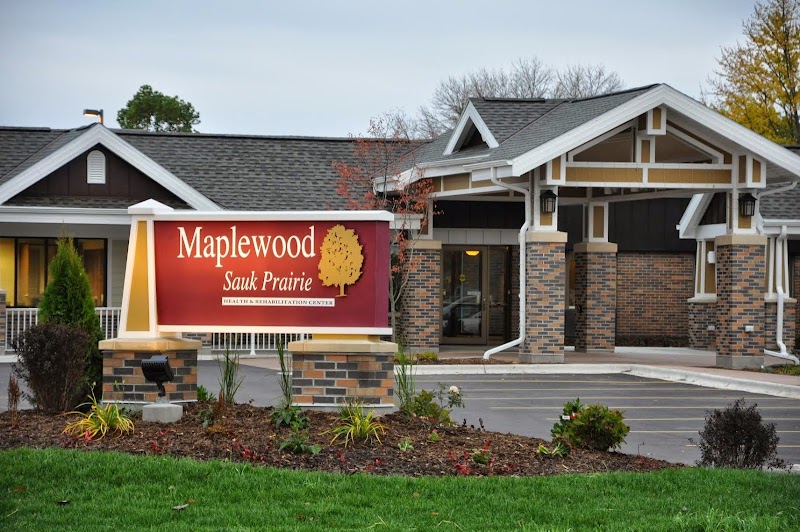
How is Maplewood Of Sauk Prairie Staffed?

CMS rates MAPLEWOOD OF SAUK PRAIRIE's staffing level at 5 out of 5 stars, which is much above average compared to other nursing homes. Staff turnover is 33%, compared to the Wisconsin average of 46%. This relatively stable workforce can support continuity of care.

What Have Inspectors Found at Maplewood Of Sauk Prairie?

State health inspectors documented 13 deficiencies at MAPLEWOOD OF SAUK PRAIRIE during 2022 to 2025. These included: 12 with potential for harm and 1 minor or isolated issues.
Who Owns and Operates Maplewood Of Sauk Prairie?

MAPLEWOOD OF SAUK PRAIRIE is owned by a for-profit company. For-profit facilities operate as businesses with obligations to shareholders or private owners. The facility operates independently rather than as part of a larger chain. With 120 certified beds and approximately 74 residents (about 62% occupancy), it is a mid-sized facility located in SAUK CITY, Wisconsin.
How Does Maplewood Of Sauk Prairie Compare to Other Wisconsin Nursing Homes?

Compared to the 100 nursing homes in Wisconsin, MAPLEWOOD OF SAUK PRAIRIE's overall rating (5 stars) is above the state average of 3.0, staff turnover (33%) is significantly lower than the state average of 46%, and health inspection rating (4 stars) is above the national benchmark.

What Should Families Ask When Visiting Maplewood Of Sauk Prairie?

Based on this facility's data, families visiting should ask: "Can I visit during a mealtime to observe dining assistance and food quality?" "How do you handle medical emergencies, and what is your hospital transfer rate?" "Can I speak with family members of current residents about their experience?"

Is Maplewood Of Sauk Prairie Safe?

Based on CMS inspection data, MAPLEWOOD OF SAUK PRAIRIE has a clean safety record: no substantiated abuse findings (meaning no confirmed cases of resident harm), no Immediate Jeopardy citations (the most serious violation level indicating risk of serious injury or death), and is not on the Special Focus Facility watch list (a federal program monitoring the lowest-performing 1% of nursing homes). The facility has a 5-star overall rating and ranks #1 of 100 nursing homes in Wisconsin. While no facility is perfect, families should still ask about staff-to-resident ratios and recent inspection results during their visit.

Do Nurses at Maplewood Of Sauk Prairie Stick Around?

MAPLEWOOD OF SAUK PRAIRIE has a staff turnover rate of 33%, which is about average for Wisconsin nursing homes (state average: 46%). Moderate turnover is common in nursing homes, but families should still ask about staff tenure and how the facility maintains care continuity when employees leave.

Was Maplewood Of Sauk Prairie Ever Fined?

MAPLEWOOD OF SAUK PRAIRIE has no federal fines on record. CMS issues fines when nursing homes fail to meet care standards or don't correct problems found during inspections. The absence of fines suggests the facility has either maintained compliance or corrected any issues before penalties were assessed. This is a positive indicator, though families should still review recent inspection reports for the full picture.

Is Maplewood Of Sauk Prairie on Any Federal Watch List?

MAPLEWOOD OF SAUK PRAIRIE is not on any federal watch list. The most significant is the Special Focus Facility (SFF) program, which identifies the bottom 1% of nursing homes nationally based on persistent, serious quality problems. Not being on this list means the facility has avoided the pattern of deficiencies that triggers enhanced federal oversight. This is a positive indicator, though families should still review the facility's inspection history directly.