SERENITY SPRING SENIOR LIVING AT SCANDIA VILLAGE
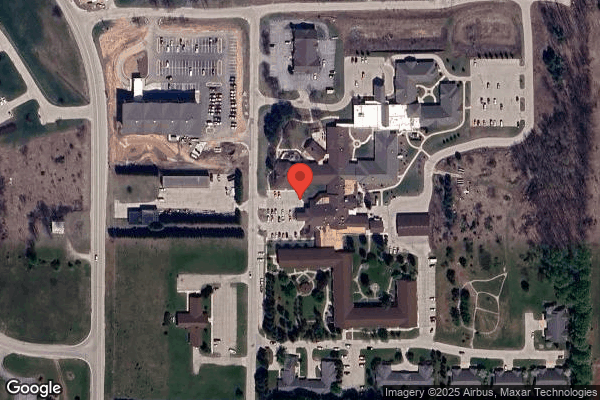
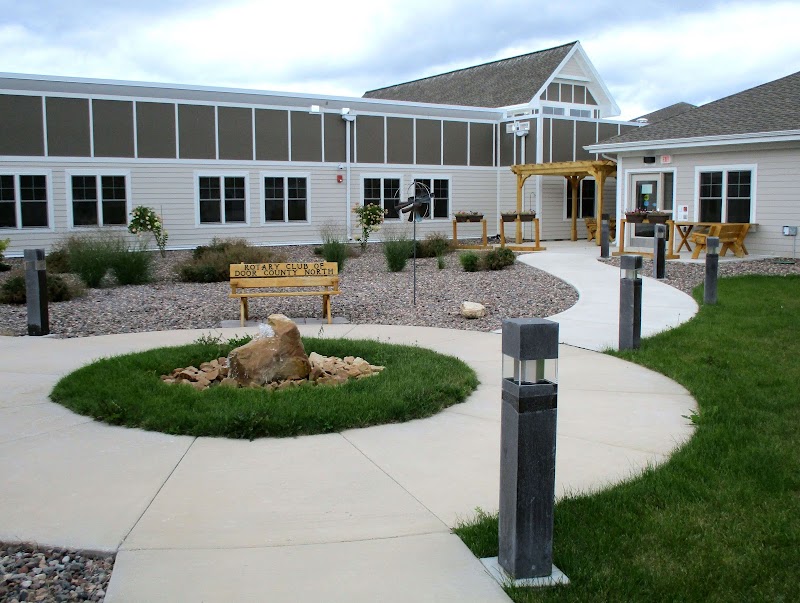
10560 APPLEWOOD RD, SISTER BAY, WI 54234 (920) 854-2317
For profit - Individual 50 Beds CONTINUUM HEALTHCARE Data: November 2025 1 Immediate Jeopardy citation
Trust Grade
18/100
#242 of 321 in WI
Last Inspection: May 2025

Inspected within the last 6 months. Data reflects current conditions.

Overview

Serenity Spring Senior Living at Scandia Village has received a Trust Grade of F, indicating significant concerns and poor performance overall. It ranks #242 out of 321 nursing homes in Wisconsin, placing it in the bottom half of facilities in the state, and #3 out of 3 in Door County, meaning it is the least favorable option in the area. The facility is showing some improvement, with the number of issues decreasing from 21 in 2024 to 11 in 2025, but it still has a high staff turnover rate of 77%, which is concerning compared to the state average of 47%. While they have no fines on record, which is a positive sign, the facility has reported serious incidents, including a resident who fell out of bed and fractured their arm due to inadequate fall prevention measures, and multiple residents who wandered outside after safety devices failed to alarm properly. Overall, while there are some strengths, such as good staffing ratings, the facility has critical weaknesses that families should carefully consider.

Trust Score
F
18/100
In Wisconsin
#242/321
Bottom 25%
Safety Record
High Risk
Review needed
Inspections
Getting Better
21 → 11 violations
Staff Stability
⚠ Watch
77% turnover. Very high, 29 points above average. Constant new faces learning your loved one's needs.
Penalties
✓ Good
No fines on record. Clean compliance history, better than most Wisconsin facilities.
Skilled Nurses
✓ Good
Each resident gets 60 minutes of Registered Nurse (RN) attention daily — more than 97% of Wisconsin nursing homes. RNs are the most trained staff who catch health problems before they become serious.
Violations
⚠ Watch
58 deficiencies on record. Higher than average. Multiple issues found across inspections.
★★☆☆☆
2.0
Overall Rating
★★★★☆
4.0
Staff Levels
★★★☆☆
3.0
Care Quality
★★☆☆☆
2.0
Inspection Score
Stable
2024: 21 issues
2025: 11 issues

The Good

  • 4-Star Staffing Rating · Above-average nurse staffing levels
  • Full Sprinkler Coverage · Fire safety systems throughout facility
  • No fines on record

Facility shows strength in staffing levels, fire safety.

The Bad

2-Star Overall Rating

Below Wisconsin average (3.0)

Below average - review inspection findings carefully

Staff Turnover: 77%

31pts above Wisconsin avg (46%)

Frequent staff changes - ask about care continuity

Chain: CONTINUUM HEALTHCARE

Part of a multi-facility chain

Ask about local staffing decisions and management

Staff turnover is very high (77%)

29 points above Wisconsin average of 48%

The Ugly 58 deficiencies on record

1 life-threatening 2 actual harm
May 2025 11 deficiencies
CONCERN (D)

Potential for Harm - no one hurt, but risky conditions existed

Deficiency F0552 (Tag F0552)

Could have caused harm · This affected 1 resident

**NOTE- TERMS IN BRACKETS HAVE BEEN EDITED TO PROTECT CONFIDENTIALITY** Based on staff interview and record review, the facility did not ensure 3 residents (R) (R25, R7, and R22) of 5 sampled resident...

Read full inspector narrative →
**NOTE- TERMS IN BRACKETS HAVE BEEN EDITED TO PROTECT CONFIDENTIALITY** Based on staff interview and record review, the facility did not ensure 3 residents (R) (R25, R7, and R22) of 5 sampled residents or their legal representatives were thoroughly informed in advance of the risks and benefits of prescribed psychotropic medication. R25 was prescribed lorazepam (an anti-anxiety medication), duloxetine (an antidepressant medication), trazodone (an antidepressant medication), and quetiapine (an antipsychotic medication). The facility did not ensure written consents were thoroughly reviewed and completed with R25's Power of Attorney for Healthcare (POAHC). R7 was prescribed venlafaxine (an antidepressant medication) and bupropion (an antidepressant medication). The facility did not ensure written consents were thoroughly reviewed and completed with R7's POAHC. R22 was prescribed citalopram (an antidepressant medication). The facility did not ensure a written consent was thoroughly reviewed and completed with R22's POAHC. Findings include: The facility's Psychotropic Medication policy, revised July 2022, indicates: .13. Residents (and/or resident representatives) will be informed of the recommendation, risks, benefits, purpose, and potential adverse consequences of antipsychotic medication use. Residents (and/or representatives) may refuse medications of any kind. Resident/Power of Attorney (POA) or Guardian will review and sign psychotropic medication consents. 1. From 5/5/25 to 5/7/25, Surveyor reviewed R25's medical record. R25 was admitted to the facility on [DATE] and had diagnoses including Alzheimer's disease, dementia with behavioral disturbance, anxiety, insomnia, and depression. R25's Minimum Data Set (MDS) assessment, dated 10/17/24, had a Brief Interview for Mental Status (BIMS) score of 4 out of 15 which indicated R25 had severe cognitive impairment. R25 was deemed incapacitated on 11/5/24 and had an activated POAHC to assist with healthcare decisions. R25's physician orders included the following medications with a black box warning (the strictest warning on the label of prescription drugs or drug products by the Food and Drug Administration (FDA) when there is reasonable evidence of an association of a serious hazard with the drug): ~ Lorazepam oral tablet 0.5 milligrams (mg). Give 0.5 mg by mouth every 6 hours as needed for anxiety. ~ Lorazepam oral tablet 0.5 mg. Give 0.5 mg by mouth three times a day related to anxiety. ~ Trazodone oral tablet. Give 25 mg by mouth one time a day related to insomnia. ~ Duloxetine oral capsule delayed release particles 30 mg. Give 30 mg by mouth one time a day for anxiety. ~ Quetiapine fumarate oral tablet 50 mg. Give 50 mg by mouth two times a day for behaviors related to dementia with other behavioral disturbance. R25's medical record contained medication consent forms for lorazepam, quetiapine, trazodone, and duloxetine that noted only verbal consent was obtained, as documented on the signature page by staff. There was no documentation to indicate written consent or an attempt to obtain written consent was made. The consent forms did not contain initials on all 12 pages and only 4 pages were dated with 12/17/24 to indicate R25's POAHC reviewed and understood the risks and benefits of the medications, including side effects, adverse reactions, and alternatives to treatment. 2. From 5/5/25 to 5/7/25, Surveyor reviewed R7's medical record. R7 was admitted to the facility on [DATE] and had diagnoses including hypertension, depression, and history of a stroke. R7's MDS assessment, dated 4/18/25, had a BIMS score of 8 out of 15 which indicated R7 had moderate cognitive impairment. R7 had an activated POAHC. R7's physician orders included the following medications with a black box warning: ~ Venlafaxine HCL ER oral tablet extended release 24 hour 150 mg for depression ~ Buproprion HCL ER (XL) oral tablet extended release 24 hour 150 mg for depression R7's medical record contained medication consent forms for venlafaxine and bupropion. R7's consent for venlafaxine did not include how the medication would be administered, the reason/benefits for the medication, alternative modes of treatment other than/in addition to the medication, and probable consequences of not receiving the medication. R7's consent for bupropion did not include alternative modes of treatment other than/in addition to the medication, probable consequences of not receiving the medication, or a staff signature. 3. From 5/5/25 to 5/7/25, Surveyor reviewed R22's medical record. R22 was admitted to the facility on [DATE] and had diagnoses including fracture, anemia, and depression. R22's MDS assessment, dated 4/19/25, had a BIMS score of 13 out of 15 which indicated R22 had intact cognition. R22's physician orders included the following medication with a black box warning: ~ Citalopram hydrobromide oral tablet 10 mg for depression R22's medical record contained a medication consent form for citalopram. R22's consent for citalopram did not include alternative modes of treatment other than/in addition to the medication and probable consequences of not receiving the medication. On 5/7/25 at 10:24 AM, Surveyor interviewed Registered Nurse (RN)-N who indicated the facility's protocol is for the Social Worker (SW) to obtain the resident/POA's consent for psychotropic medication. RN-N indicated if verbal consent is obtained from the resident's POA, a written signature should be obtained within 10 days On 5/7/25 at 10:29 AM, Surveyor interviewed Director of Nursing (DON)-B who indicated the SW goes over the medication forms and obtains the resident/POA's signature upon admission. DON-B indicated since the SW is no longer at the facility, DON-B obtains the medication consents. DON-B indicated after verbal consent is received from a resident's POA, written consent should be obtained within 10 days by mail or e-mail. DON-B reviewed R25's consent forms and indicated R25's POAHC should have signed the forms already. DON-B also indicated all pages should be initialed and dated.
CONCERN (D)

Potential for Harm - no one hurt, but risky conditions existed

Grievances (Tag F0585)

Could have caused harm · This affected 1 resident

**NOTE- TERMS IN BRACKETS HAVE BEEN EDITED TO PROTECT CONFIDENTIALITY** Based on staff and resident interview and record review, the facility did not ensure grievances were thoroughly investigated and...

Read full inspector narrative →
**NOTE- TERMS IN BRACKETS HAVE BEEN EDITED TO PROTECT CONFIDENTIALITY** Based on staff and resident interview and record review, the facility did not ensure grievances were thoroughly investigated and resolved for 1 resident (R) (R28) of 13 sampled residents. The facility did not document, investigate, and follow-up with R28 after R28 reported seven missing articles of clothing. Findings include: The facility's resident grievance policy was not provided during the survey. From 5/5/25 to 5/7/25, Surveyor reviewed R28's medical record. R28 was admitted to the facility on [DATE]. R28's Minimum Data Set (MDS) assessment, dated 2/13/25, had a Brief Interview for Mental Status (BIMS) score of 15 out of 15 which indicated R28 was not cognitively impaired. R28 made R28's own healthcare decisions. On 5/5/25 at 11:08 AM, Surveyor interviewed R28 who indicated R28 had informed several staff members, including housekeeping/laundry staff, about seven missing articles of clothing. R28 stated R28 was missing a yellow and tan t-shirt, a striped over-shirt, a matching top and bottom (missing since last year), a pair of navy blue sweatpants, and a green 1/4 zip sweatshirt. R28 indicated the clothes were labeled prior to when they went missing. R28 indicated grievance forms were not filled out. Surveyor reviewed the facility's grievance file which did not contain grievances for R28's missing items. On 5/6/25 at 12:06 PM, Surveyor interviewed Housekeeper (HK)-K who also works in laundry. HK-K indicated some of R28's missing clothing was addressed last year with the previous Social Worker (SW). HK-K indicated R28 informed HK-K about the most recent missing t-shirts approximately four weeks ago. HK-K recalled seeing R28's missing clothing in the laundry in the past but stated at this point the clothes were probably missing. HK-K indicated HK-K did not fill out a grievance form or notify Nursing Home Administrator (NHA)-A or Director of Nursing (DON)-B. HK-K indicated if residents inform HK-K of missing items, HK-K lets the SW know and a grievance form is filled out. HK-K did not let NHA-A know because HK-K was hoping the missing items would show up. On 5/6/25 at 2:08 PM, Surveyor interviewed NHA-A who indicated R28 was admitted to the facility last August and had issues with missing clothes. NHA-A indicated HK-K had taken R28 to find the missing clothes. NHA-A indicated staff should fill out a grievance form for any items that are reported missing.
CONCERN (D)

Potential for Harm - no one hurt, but risky conditions existed

Deficiency F0605 (Tag F0605)

Could have caused harm · This affected 1 resident

**NOTE- TERMS IN BRACKETS HAVE BEEN EDITED TO PROTECT CONFIDENTIALITY** Based on staff interview and record review, the facility did not monitor the effectiveness of psychotropic medication for 1 resi...

Read full inspector narrative →
**NOTE- TERMS IN BRACKETS HAVE BEEN EDITED TO PROTECT CONFIDENTIALITY** Based on staff interview and record review, the facility did not monitor the effectiveness of psychotropic medication for 1 resident (R) (R25) of 5 sampled residents. R25 had an order for lorazepam (an anti-anxiety medication) 0.5 milligrams (mg) as needed (PRN) every 6 hours for anxiety disorder/irritability and anger with a start date of 2/25/25. The medication was not discontinued or reviewed after 14 days. Findings include: The facility's Psychotropic Medication Use policy, revised July 2022, indicates: .Drugs in the following categories are considered psychotropic medications and are subject to prescribing, monitoring, and review requirements specific to psychotropic medications: .c. Anti-anxiety medications .12. Psychotropic medications are not prescribed or given on an as needed (PRN) basis unless the medication is necessary to treat a diagnosed specific condition .a. PRN orders for psychotropic medications are limited to 14 days. 1. For psychotropic medications .If the prescriber or attending physician believes it is appropriate to extend the PRN order beyond 14 days, he or she will document the rationale for extending the use and include the duration for the PRN order. From 5/5/25 to 5/7/25, Surveyor reviewed R25's medical record. R25 was admitted to the facility on [DATE] and had diagnoses including Alzheimer's disease, dementia with behavioral disturbance, and anxiety disorder. R25's Minimum Data Set (MDS) assessment, dated 10/17/24, had a Brief Interview for Mental Status (BIMS) score of 4 out of 15 which indicated R25 had severely impaired cognition. R25 had an activated Power of Attorney (POA) as of 11/5/24. R25 was prescribed lorazepam 0.5 mg PRN every 6 hours for anxiety disorder/irritability and anger with a start date of 2/25/25 and no end date. Surveyor also noted an order for lorazepam oral tablet 0.5. Give 0.5 mg by mouth every 6 hours as needed for anxiety until 5/19/25 (which was entered on 5/6/25). Surveyor reviewed R25's Medication Administration Record (MAR) and noted lorazepam was administered once in March 2025, eight times in April 2025, and twice in May 2025. On 5/6/25 at 3:00 PM, Surveyor and Director of Nursing (DON)-B reviewed R25's lorazepam orders. DON-B verified the order started on 2/25/25 was still active and did not contain an end date. DON-B requested to look at the order again on DON-B's computer. On 5/6/25 at 3:15 PM, DON-B approached Surveyor and indicated DON-B entered a new order on 5/6/25 for lorazepam PRN with a stop date of 5/19/25 but forgot to discontinue the previous PRN order. DON-B indicated the PRN lorazepam order that started on 2/25/25 should have been discontinued after 14 days. DON-B verified DON-B discontinued the previous PRN lorazepam order on 5/6/25 at 3:10 PM.
CONCERN (D)

Potential for Harm - no one hurt, but risky conditions existed

Deficiency F0628 (Tag F0628)

Could have caused harm · This affected 1 resident

Based on staff and resident interview and record review, the facility did not ensure 1 resident (R) (R11) of 1 resident reviewed for hospitalization received the proper notice of transfer, reason for ...

Read full inspector narrative →
Based on staff and resident interview and record review, the facility did not ensure 1 resident (R) (R11) of 1 resident reviewed for hospitalization received the proper notice of transfer, reason for transfer, location of transfer, appeal rights, and name and address (mailing and email) with telephone number of the Office of the State Long-Term Care Ombudsman. In addition, the facility did not ensure R11 received written information on the duration of the bed hold policy, the reserve bed payment policy, and the right to return to the facility. R11 was transferred to the Emergency Department (ED) on 5/1/25. R11 was not provided with a written transfer or bed hold notice. Findings include: The facility's Bed-Holds and Returns policy, revised October 2022, indicates: .Residents and/or representatives are informed (in writing) of the facility and state (if applicable) bed-hold policies .1. All residents .are provided written information regarding the .bed-hold policies, which address holding or reserving a resident's bed during periods of absence. Residents, regardless of payer source, are provided written notice about these policies at least twice .b. Notice 2: at the time of transfer (or if the transfer was an emergency, within 24 hours) . On 5/5/25, Surveyor reviewed R11's medical record and noted R11 was transferred to the ED on 5/1/25 due to a fall with head injury. R11's Minimum Data Set (MDS) assessment, dated 3/28/25, had a Brief Interview for Mental Status (BIMS) score of 15 out of 15 which indicated R11 was not cognitively impaired. R5's medical record included a Notice of Transfer and Bed-Hold Form, dated 5/1/25, that documented verbal consent was obtained on 5/1/25 and signed by staff. The form did not contain appeals information, the daily rate, or Ombudsman contact information and was not thoroughly filled out. On 5/7/25 at 10:56 AM, Surveyor interviewed Nursing Home Administrator (NHA)-A regarding R11's transfer/bed hold notice. When Surveyor indicated R11's transfer/bed hold notice did not contain Ombudsman information or appeals rights, NHA-A showed Surveyor the facility's admission packet which contained the facility's transfer/bed hold policy. NHA-A indicated residents are aware and sign admission paperwork. When Surveyor informed NHA-A that Ombudsman information and appeals rights should be a part of the transfer/bed hold notice each time a resident is transferred out of the facility, NHA-A indicated NHA-A needed to consult with Director of Operations (DO)-L and would get back to Surveyor. NHA-A indicated R11's form was verbal in the moment of transfer and NHA-A did not know if the form was sent with R11. When Surveyor asked NHA-A about the facility's transfer/bed hold notice process, NHA-A indicated when a resident is transferred to the hospital, the facility sends a medication list, code status, and activated power of attorney paperwork. Surveyor showed NHA-A a copy of R11's transfer/bed hold notice from 5/5/25 and asked if the form that was provided to Surveyor on 5/6/25 had the daily rate and location of transfer recently added. NHA-A indicated NHA-A would ask DO-L. On 5/7/25 at 11:15 AM, Surveyor interviewed DO-L who indicated DO-L knew R11's original copy of the transfer/bed hold notice was not thoroughly filled out, however, the nurse did attempt to fill it out. DO-L indicated residents are educated upon admission on transfer/bed hold notices and who to contact for appeals. DO-L indicated DO-L understood the notices were supposed to be sent and indicated the nurses were trying hard. DO-L was unsure if appeals rights and Ombudsman information were already given to the residents. When Surveyor asked if the information was documented anywhere, DO-L indicated staff would look for documentation and get back to Surveyor. The information was not provided at the time of survey exit. On 5/7/25 at 12:31 PM, Surveyor interviewed R11 and showed R11 the facility's Notice of Transfer and Bed-Hold Form. When Surveyor asked if R11 was given a copy of the form, R11 indicated R11 was not given the form when R11 was transferred to the ED and did not see the form until yesterday when someone put it on the table next to R11's recliner.
CONCERN (D)

Potential for Harm - no one hurt, but risky conditions existed

PASARR Coordination (Tag F0644)

Could have caused harm · This affected 1 resident

**NOTE- TERMS IN BRACKETS HAVE BEEN EDITED TO PROTECT CONFIDENTIALITY** Based on staff interview and record review, the facility did not ensure a Pre-admission Screening and Resident Review (PASRR) Le...

Read full inspector narrative →
**NOTE- TERMS IN BRACKETS HAVE BEEN EDITED TO PROTECT CONFIDENTIALITY** Based on staff interview and record review, the facility did not ensure a Pre-admission Screening and Resident Review (PASRR) Level I Screen was updated to initiate a PASRR Level II Screen when a newly evident mental disorder and/or change in medication was identified for 1 resident (R) (R22) of 5 sampled residents. R22 received new diagnoses and orders for psychotropic medication, including an antipsychotic medication. The facility did not update R22's PASRR Level I Screen and submit for PASRR Level II reevaluation. Findings include: R22 was admitted to the facility on [DATE] and had diagnoses including fracture, anemia, hypertension, depression, and mood disorder. R22's most recent Minimum Data Set (MDS) assessment, dated 4/19/25, had a Brief Interview for Mental Status (BIMS) score of 13 out of 15 which indicated R22 had intact cognition. R22's PASRR Level I Screen was completed by the facility on 1/11/24. The Level I Screen indicated R22 did not have any diagnoses or medications prescribed that would indicate a Level II evaluation was needed. R22's physician orders indicated R22 was prescribed citalopram (an antidepressant medication) 10 milligrams (mg) for depression on 2/19/25. R22's medical record contained diagnoses of a mood disorder on 9/24/24 and depression on 2/19/25. R22's medical record did not contain an updated PASRR Level I or Level II Screen for the initiation of new psychotropic medication and changes in R22's diagnoses. On 5/6/25 at 1:37 PM, Surveyor interviewed Nursing Home Administrator (NHA)-A who verified an updated Level I and Level II screen were not completed with R22's new medication and diagnoses. NHA-A stated it is the responsibility of the Social Worker (SW) to complete PASRR Screens.
CONCERN (D)

Potential for Harm - no one hurt, but risky conditions existed

Deficiency F0657 (Tag F0657)

Could have caused harm · This affected 1 resident

**NOTE- TERMS IN BRACKETS HAVE BEEN EDITED TO PROTECT CONFIDENTIALITY** Based on staff interview and record review, the facility did not revise a care plan in accordance with current care needs for 1 ...

Read full inspector narrative →
**NOTE- TERMS IN BRACKETS HAVE BEEN EDITED TO PROTECT CONFIDENTIALITY** Based on staff interview and record review, the facility did not revise a care plan in accordance with current care needs for 1 resident (R) (R34) of 4 sampled residents. R34 fell on 3/20/25 and fractured R34's left wrist. R34's care plan was not updated after the fall and did not include interventions to prevent future falls. Findings include: The facility's Falls-Clinical Protocol policy, revised March 2018, indicates: .Treatment/Management: 1. Based on the preceding assessment, the staff .will identify pertinent interventions to try to prevent subsequent falls and address the risks of clinically significant consequences of falling .2. If underlying causes cannot be readily identified or corrected, staff will try various relevant interventions, based on assessment of the nature or category of falling, until falling reduces or stops or until a reason is identified for its continuation .Monitoring and Follow-up: 1. The staff .will follow-up on any fall with associated injury until the resident is stable and delayed complications .2. The staff .will monitor and document the individual's response to interventions intended to reduce falling or the consequences of falling .3. If interventions have been successful in fall prevention, the staff will continue with current approaches and will discuss periodically with the physician whether these measures are still needed . The facility's Care Plans, Comprehensive Person-Centered policy, revised March 2022, indicates: .9. Care plan interventions are chosen only after data gathering, proper sequencing of events, careful consideration of the relationship between the resident's problem areas .11. Assessments of residents are ongoing, and care plans are revised as information about the residents and the residents' conditions change. 12. The interdisciplinary team reviews and updates the care plan: a. when there has been a significant change in the resident's condition; b. when the desired outcome is not met; c. when the resident has been readmitted to the facility from a hospital stay; and d. at least quarterly . From 5/5/25 to 5/7/25, Surveyor reviewed R34's medical record. R34 was admitted to the facility on [DATE] and had diagnoses including dementia with other behavioral disturbance, Alzheimer's disease, and diabetes. R34's admission Minimum Data Set (MDS) assessment, dated 2/18/25, had a Brief Interview for Mental Status (BIMS) score of 8 out of 15 which indicated R34 had moderately impaired cognition. R34 did not have an activated Power of Attorney (POA). R34's medical record indicated R34 had a fall on 3/20/25 that resulted in a left wrist fracture. A fall risk assessment, dated 3/21/25, indicated R34 was a moderate fall risk. R34's care plan (initiated on 2/11/25) did not indicate R34 had a fall and did not contain fall interventions. On 5/5/25 at 12:06 PM, Surveyor observed R34 with a brace on R34's left wrist. On 5/6/25 at 9:55 AM, Surveyor interviewed Registered Nurse (RN)-N who indicated R34 fell in the hallway on 3/20/25 and fractured the left wrist. RN-N verified R34's care plan did not contain fall interventions. RN-N indicated management updates residents' care plans. On 5/6/25 at 11:10 AM, Surveyor reviewed R34's medical record and noted a new fall care plan with interventions was initiated on 5/6/25. On 5/6/25 at 11:18 AM, Surveyor interviewed Regional Nurse Consultant (RNC)-M and Assistant Director of Nursing (ADON)-C. RNC-M confirmed R34 had a fall with injury. RNC-M indicated R34 should have had a fall care plan, however, it was missed. ADON-C indicated staff education to update residents' care plans after a fall was not completed.
CONCERN (D)

Potential for Harm - no one hurt, but risky conditions existed

Quality of Care (Tag F0684)

Could have caused harm · This affected 1 resident

**NOTE- TERMS IN BRACKETS HAVE BEEN EDITED TO PROTECT CONFIDENTIALITY** Based on staff interview and record review, the facility did not ensure 1 resident (R) (R18) of 4 sampled residents received car...

Read full inspector narrative →
**NOTE- TERMS IN BRACKETS HAVE BEEN EDITED TO PROTECT CONFIDENTIALITY** Based on staff interview and record review, the facility did not ensure 1 resident (R) (R18) of 4 sampled residents received care and treatment based on the resident's needs and hospital discharge instructions. R18 had a fall with a head laceration on 1/5/25. R18 was transferred to the emergency room (ER) and received staples to repair the laceration. R18's hospital discharge instructions stated to apply Neosporin or bacitracin ointment to the wound. The order was not implemented until two days after R18 returned to the facility. Findings include: From 5/5/25 to 5/7/25, Surveyor reviewed R18's medical record. R18 was admitted to the facility on [DATE] and had diagnoses including adult failure to thrive, chronic low back pain, peripheral neuropathy, and depression. R18's Minimum Data Set (MDS) assessment, dated 3/5/25, had a Brief Interview for Mental Status (BIMS) score of 7 out of 15 which indicated R18 had severe cognitive impairment. R18 had an activated Power of Attorney for Healthcare (POAHC) to assist with healthcare decisions. R18's medical record indicated R18 had an unwitnessed fall and sustained a laceration to the left side of the head on 1/5/25. R18 was transferred to the hospital and diagnosed with a closed head injury and laceration of the scalp which was repaired with staples. R18 returned to the facility on 1/5/25 with instructions to wash the wound gently with soap and water or shampoo, gently pat dry, and apply Neosporin or bacitracin to the laceration. The staples were to be removed in 10 days. Surveyor noted a fax to the provider, sent on 1/7/25 by Director of Nursing (DON)-B, that indicated R18 was seen in the emergency room (ER) on 1/5/25, received staples for a head laceration, and the discharge paperwork had wound care instructions to wash the area with soap/water, pat dry, and apply Neosporin or bacitracin. DON-B asked the provider if wound care as described should be done daily to which the provider responded yes. On 5/6/25 at 11:43 AM, Surveyor interviewed DON-B about the R18's wound care order for Neosporin or bacitracin which was not ordered upon R18's return to the facility on 1/5/25. DON-B was unsure why the order was not started on 1/5/25 and indicated DON-B thought the nurse looked at R18's discharge orders. On 5/6/25 at 3:16 PM, Surveyor interviewed DON-B who indicated there was no documentation that the physician orders from the ER were reviewed on 1/5/25 upon R18's return to the facility. R18 did not receive the Neosporin or bacitracin treatment until the order was obtained via fax on 1/7/25. DON-B agreed the order for Neosporin or bacitracin should have been ordered upon R18's return on 1/5/25.
CONCERN (D)

Potential for Harm - no one hurt, but risky conditions existed

Pharmacy Services (Tag F0755)

Could have caused harm · This affected 1 resident

**NOTE- TERMS IN BRACKETS HAVE BEEN EDITED TO PROTECT CONFIDENTIALITY** 2. From 5/5/25 to 5/7/25, Surveyor reviewed R33's medical record. R33 was admitted to the facility on [DATE] and had diagnoses i...

Read full inspector narrative →
**NOTE- TERMS IN BRACKETS HAVE BEEN EDITED TO PROTECT CONFIDENTIALITY** 2. From 5/5/25 to 5/7/25, Surveyor reviewed R33's medical record. R33 was admitted to the facility on [DATE] and had diagnoses including congestive heart failure, renal insufficiency, diabetes, and malnutrition. R33's most recent MDS assessment, dated 2/10/25, had a BIMS score of 13 out of 15 which indicated R33 had intact cognition. On 5/6/25 at 9:17 AM, Surveyor observed medication administration for R33 with LPN-O. While in R33's room, Surveyor observed a bottle of lubricating eye drops on R33's bedside table. Surveyor noted the eye drops were not labeled or dated. LPN-O removed the eye drops from R33's room. On 5/6/25 at 9:22 AM, Surveyor interviewed LPN-O who indicated LPN-O was not sure where the eye drops came from and was not sure if R33 had a self-administration of medication assessment. On 5/6/25 at 2:24 PM, Surveyor interviewed DON-B regarding the eye drops at R33's bedside. DON-B indicated a box of Systane eye wipes and a tube of triple antibiotic ointment were also found in R33's beside drawer. DON-B indicated DON-B was not sure where the medications came from but they were not from the facility's pharmacy. DON-B verified R33 did not have orders for the medication or a self-administration of medication assessment. On 5/7/25 at 3:15 PM, DON-B informed Surveyor that a self-administration of medication assessment was completed for R33 and indicated R33 was not able to self-administer the medications. DON-B stated DON-B would notify R33's family to ensure they don't bring medication without consulting with staff first. DON-B verified the medications should not have been left at R33's bedside. 3. On 5/6/25 at 8:50 AM, Surveyor observed medication administration for R29 with LPN-O. While preparing R29's medications, LPN-O dropped one of R29's pills on top of the medication cart. LPN-O picked up the pill with a bare hand and placed the pill in a medication cup. LPN-O then administered R29's medications. On 5/6/25 at 8:58 AM, Surveyor interviewed LPN-O who verified LPN-O should have disposed of the pill and obtained a new pill. On 5/7/25 at 9:31 AM, Surveyor interviewed DON-B who verified LPN-O should have disposed of the pill when it fell on the medication cart and should not have touched the pill with an unwashed bare hand. Based on observation, staff and resident interview, and record review, the facility did not provide pharmacy services to ensure the accurate and safe administration of medication for 3 residents (R) (R20, R33, and R29) of 13 sampled residents. A bottle of Refresh Tears and multivitamins were observed on R20's bedside table. R20 did not have a self-administration of medication assessment that indicated R20 could self-administer the medication. A bottle of lubricating eye drops, a box of Systane eye wipes, and a tube of triple antibiotic ointment were observed at R33's bedside. R33 did not have orders for the medication or a self-administration of medication assessment that indicated R33 could self-administer the medications. During medication administration for R29, Licensed Practical Nurse (LPN)-O dropped one of R29's pills on the medication cart, picked up the pill with a bare hand, and administered the pill to R29. Findings include: The facility's Self-Administration of Medications Policy indicates: Residents have the right to self-administer medications if the Interdisciplinary Team (IDT) has determined that it is clinically appropriate and safe for the resident to do so .1. As part of the evaluation/comprehensive assessment, the IDT assesses each resident's cognitive and physical abilities to determine whether self-administering medications is safe and clinically appropriate for the resident. 2. The IDT considers the following factors when determining whether self-administration of medications is safe and appropriate for the resident: a. The medication is appropriate for self-administration; b. The resident is able to read and understand medication labels; c. The resident can follow directions and tell time to know when to take the medication; d. The resident comprehends the medication's purpose, proper dosage, timing, signs of side effects, and when to report these to staff; e. The resident has the physical capacity to open medication bottles, remove medications from a container, and ingest and swallow (or otherwise administer) the medication; and f. The resident is able to safely and securely store the medication. The facility's Administering Oral Medications policy, revised October 2010, states: Do not touch the medication with your (staffs') hands. 1. From 5/5/25 to 5/7/25, Surveyor reviewed R20's medical record. R20 was admitted to the facility on [DATE] and had diagnoses including acute panmyelosis with myelofibrosis (a rare blood cancer affecting the bone marrow), osteopathic, and dry eyes. R20's Minimum Data Set (MDS) assessment, dated 2/4/25, had a Brief Interview for Mental Status (BIMS) score of 11 out of 15 which indicated R20 had moderate cognitive impairment. R20 made R20's own healthcare decisions. During an interview with R20 in R20's room on 5/6/25 at 10:53 AM, Surveyor observed a 1 ounce bottle of Refresh Tears labeled with R20's name on the bedside table. R20 indicated R20 self-administered Refresh Tears whenever R20 thought about it. R20's physician orders included an order (dated 1/10/25) for Refresh Plus Ophthalmic Solution 0.5%, instill 1 drop in both eyes 2 times daily for dry eyes unsupervised self-administration. Surveyor noted R20's medical record did not contain a self-administration of medication assessment. On 5/6/25 at 2:24 PM, Surveyor interviewed Director of Nursing (DON)-B who checked R20's room and found the Refresh eye drops and a bottle of One a Day complete multivitamins at R20's bedside. DON-B indicated DON-B needed to complete a self-administration of medication assessment before R20 could continue to keep and self-administer medication at the bedside. On 5/6/25 at 3:02 PM, Surveyor interviewed DON-B who indicated DON-B completed a self-administration of medication assessment that indicated R20 was appropriate to self-administer medication. DON-B also obtained an order and updated R20's care plan. DON-B agreed a self-administration of medication assessment should have been completed prior to 5/6/25.
CONCERN (D)

Potential for Harm - no one hurt, but risky conditions existed

Drug Regimen Review (Tag F0756)

Could have caused harm · This affected 1 resident

**NOTE- TERMS IN BRACKETS HAVE BEEN EDITED TO PROTECT CONFIDENTIALITY** Based on staff interview and record review, the facility did not ensure monthly medication reviews were completed for 2 resident...

Read full inspector narrative →
**NOTE- TERMS IN BRACKETS HAVE BEEN EDITED TO PROTECT CONFIDENTIALITY** Based on staff interview and record review, the facility did not ensure monthly medication reviews were completed for 2 residents (R) (R7 and R25) of 5 sampled residents. R7 did not have a monthly medication review (MMR) documented for November 2024, January 2025, or March 2025. R25 did not have a monthly medication review (MMR) documented for April 2025. Findings include: 1. From 5/5/25 to 5/7/25, Surveyor reviewed R7's medical record. R7 was admitted to the facility on [DATE] and had diagnoses including hypertension, depression, and history of a stroke. R7's Minimum Data Set (MDS) assessment, dated 4/18/25, had a Brief Interview for Mental Status (BIMS) score of 8 out of 15 which indicated R7 had moderate cognitive impairment. R7 had an activated Power of Attorney for Healthcare (POAHC). On 5/7/25 at 12:28 PM, Surveyor reviewed R7's MMRs from November 2024 through April 2025. R7's medical record did not contain an MMR for November 2024, January 2025, or March 2025. 2. From 5/5/25 to 5/7/25, Surveyor reviewed R25's medical record. R25 was admitted to the facility on [DATE] and had diagnoses including Alzheimer's disease, dementia with behavioral disturbance, anxiety, insomnia, and depression. R25's MDS assessment, dated 10/17/24, had a BIMS score of 4 out of 15 which indicated R25 had severe cognitive impairment. R25 was deemed incapacitated on 11/5/24 and had an activated POAHC to assist with healthcare decisions. On 5/7/25 at 1:30 PM, Surveyor reviewed R25's MMRs from November 2024 through April 2025 and noted R25's medical record did not contain an MMR for April 2025. On 5/7/25 at 2:13 PM, Surveyor interviewed Director of Nursing (DON)-B who verified the facility could not locate the missing MMRs and/or pharmacist recommendations for R7 or R25. DON-B verified medication reviews are completed monthly by the pharmacist and all recommendations are emailed to DON-B to ensure follow up with the physician.
CONCERN (E)

Potential for Harm - no one hurt, but risky conditions existed

Abuse Prevention Policies (Tag F0607)

Could have caused harm · This affected multiple residents

Based staff interview and record review, the facility did not ensure their abuse policy was implemented for 5 (Certified Nursing Assistant (CNA)-F, CNA-H, Dietary Aide (DA)-J, CNA-G, and Registered Nu...

Read full inspector narrative →
Based staff interview and record review, the facility did not ensure their abuse policy was implemented for 5 (Certified Nursing Assistant (CNA)-F, CNA-H, Dietary Aide (DA)-J, CNA-G, and Registered Nurse (RN)-I) of 8 employees reviewed for background checks. CNA-F was hired and started work on 2/24/25. CNA-F's Background Information Disclosure (BID) form was completed on 3/1/25 and Department of Justice (DOJ) report was run on 3/28/25. CNA-F did not have an Integrated Background Information System (IBIS) report. CNA-H and DA-J's background checks did not contain IBIS reports. CNA-G did not have a background check completed within the last 4 years. RN-I's DOJ and IBIS reports were completed before RN-I signed a BID form. Findings include: The facility's undated Employee Screening policy indicates: Employee screening will be respected in terms of state law and facility policy. Background screening: It is a condition of employment that every employee successfully completes a background screening. Program eligibility checks: We are required by law to do pre-employment and then ongoing period checks with various government sites and databases. Wisconsin State Statute at 50.065 - Criminal history and patient abuse record search. Outlines (b) Every entity shall obtain all of the following with respect to a caregiver of the entity: 1. A criminal history search from the records maintained by the Department of Justice. 2. Information that is contained in the registry under s. 146.40 (4g) regarding any findings against the person. (d) Every entity shall maintain, or shall contract with another person to maintain, the most recent background information obtained on a caregiver under par. (b). The information shall be made available for inspection by authorized persons, as defined by the department by rule. 3(b) Every 4 years or at any other time within that period that an entity considers appropriate, the entity shall request the information specified in sub. (2)(b) 1. to 5. for all caregivers of the entity. 1. Between 5/5/25 and 5/7/25, Surveyor reviewed background check information for CNA-F who was hired on 2/24/25. Surveyor noted CNA-F did not complete a BID form until 3/1/25. CNA-F's DOJ form was not completed until 3/28/25. In addition, the facility did not provide an IBIS report for CNA-F. On 5/6/25, Surveyor reviewed CNA-F's time card and noted CNA-F had worked 3 shifts prior to filling out the BID form and had worked 17 shifts prior to the facility obtaining CNA-F's DOJ report. 2. Between 5/5/25 and 5/7/25, Surveyor reviewed background check information for CNA-H who was hired on 4/1/24. Surveyor noted the facility did not provide CNA-H's IBIS report. 3. Between 5/5/25 and 5/7/25, Surveyor reviewed background check information for DA-J who was hired on 3/3/25. Surveyor noted the facility did not provide DA-J's IBIS report. 4. Between 5/5/25 and 5/7/25, Surveyor reviewed background check information for CNA-G who was hired on 12/28/11. The facility provided a BID form, DOJ report, and IBIS report dated 2/14/20. The facility did not provide a more recent background check for CNA-G. 5. Between 5/5/25 and 5/7/25, Surveyor reviewed background check information for RN-I and noted RN-I's DOJ and IBIS reports were run on 12/31/24. RN-I's BID form (that gives permission for DOJ and IBIS information to be obtained) was completed on 1/9/25. On 5/6/25 at 12:15 PM, Surveyor interviewed Nursing Home Administrator (NHA)-A who indicated the facility did not have a Business Office Manager at that time. NHA-A indicated NHA-A was completing the state background check information and the corporate office was completing the national search. NHA-A confirmed IBIS reports were not completed for CNA-F, CNA-H, and DA-J. NHA-A was not aware that the background check information NHA-A completed did not contain all the required forms. NHA-A also confirmed CNA-F's BID form and DOJ letter were completed after CNA-F started working at the facility. NHA-A confirmed BID forms should be completed prior to the DOJ and IBIS reports and background checks should be completed every 4 years.
CONCERN (F)

Potential for Harm - no one hurt, but risky conditions existed

Food Safety (Tag F0812)

Could have caused harm · This affected most or all residents

Based on observation, staff interview, and record review, the facility did not ensure food was stored and prepared in a safe and sanitary manner. This practice had the potential to affect all 40 resid...

Read full inspector narrative →
Based on observation, staff interview, and record review, the facility did not ensure food was stored and prepared in a safe and sanitary manner. This practice had the potential to affect all 40 residents residing in the facility. The deep fryer was stored uncovered and had food debris along the sides and in the oil. In addition, there was no cleaning schedule for the deep fryer. Butter was observed in an uncovered container in the prep area. Equipment in the kitchen was not in clean condition. The hood vent above the deep fryer and oven contained a greasy black substance. The stove top had dried food debris. The microwave in the kitchen contained dried food on the inside. Fifteen boxes were observed on the floor in the freezer. Findings include: On 5/5/25 at 9:54 AM, Surveyor interviewed [NAME] (CK)-D who indicated the facility follows the Wisconsin Food Code. Deep Fryer/Uncovered Food Items: The Wisconsin Food Code documents at 3-305.11 Food Storage: Food shall be protected from contamination by storing the food: .(2) Where it is not exposed to splash, dust, or other contamination. The user manual for the facility's commercial 70 pound fryer indicates: Care and Maintenance/Cleaning: Clean your fryer interior daily with the tank brush along with a damp cloth, and polish with a soft dry cloth. If regular cleaning is neglected, grease will be burned on and discolorations may form. Boil Out Procedure: Perform a boil out at least once a week, or as needed. 1. Drain the tank as described under draining the tank. Once the oil has been drained, flush out scraps and sediment with a small amount of warm oil, using the tank brush. Allow the tank to drain thoroughly .3. Close the drain valve and fill tank with non-corrosive, grease-dissolving commercial cleaner .4. Add commercial boil-out solution .5. Set thermostat to the temperature recommended for the solution being used. Allow solution to simmer for about 15 to 20 minutes. 6. Drain the cleaning solution from the tank and refill the tank with water. Add 1 cup (1/4 liter) of vinegar to neutralize alkaline left by the cleaner .8. Bring the solution to a simmer only, turn the thermostat off. Allow to stand for a few minutes. 9. Drain the tank .Rinse thoroughly with clear, hot water .Dry the tank thoroughly. 10. Close the drain valve and add oil. Follow the filling tank with oil procedure .Filter oil at least once a day .Use the tank brush to help clear sides and tubes of debris. During the initial kitchen tour with CK-D on 5/5/25, Surveyor observed the deep fryer. CK-D indicated there was not a schedule to change the oil or clean the deep fryer and stated the oil is changed when it is dirty. CK-D indicated CK-D would be using the fryer for lunch that day but stated the fryer is not used daily. When Surveyor asked if there is a cleaning schedule that staff follow, CK-D indicated there used to be a cleaning schedule but there was no paperwork. CK-D indicated the facility was between Dietary Managers and schedules had not been put out since the previous manager left. During a return visit to the kitchen on 5/6/25 at 1:09 PM, Surveyor observed the deep fryer and noted there was not a cover on the deep fryer which left the oil potentially exposed to contaminants. Surveyor also noted food debris floating on top of the oil and food debris stuck to the side of the fryer walls. During the same observation, Dietary Aid (DA)-E indicated there was no cover for the oil and confirmed the floating debris in the deep fryer. During the initial kitchen tour with CK-D on 5/5/25, Surveyor also observed a container of butter on the prep table next to the steam table. The butter was uncovered and exposed to potential contaminants. CK-D confirmed the butter was uncovered. Cleanliness of Equipment: The Wisconsin Food Code documents at 4-601.11 Equipment, Food: .(B) The food-contact surfaces of cooking equipment and pans shall be kept free of encrusted grease deposits and other soil accumulations. (C) Nonfood-contact surfaces of equipment shall be kept free of an accumulation of dust, dirt, food residue, and other debris. During the initial kitchen tour with CK-D on 5/5/25, Surveyor observed the stove top burners and noted they contained dried food and splatter. CK-D confirmed the burners should be cleaned. Surveyor also observed a black, greasy substance between the stove and hood vent. CK-D indicated the substance had been there for a while. CK-D indicated maintenance staff attempted to clean the substance that morning, however, debris started falling and food needed to be prepped so they could not clean it at that time. Microwave Cleanliness: The Wisconsin Food Code documents at 4-602.12 Cooking and Baking Equipment: .(B) The cavities and door seals of microwave ovens shall be cleaned at least every 24 hours by using the manufacturer's recommended cleaning procedure. During the initial kitchen tour with CK-D on 5/5/25, Surveyor observed the inside of the microwave which contained dried food splatter on the top and sides. CK-D indicated the microwave could use a cleaning. Boxes on the Floor: The Wisconsin Food Code documents at 3-305.11 Food Storage: Food shall be protected from contamination by storing the food: .(3) At least 15 centimeters (cm) (6 inches) above the floor. During the initial kitchen tour with CK-D on 5/5/25, Surveyor observed fifteen boxes on the floor in the freezer. CK-D indicated the delivery arrived on 5/1/25. CK-D indicated the cook who was supposed to put the delivery away quit and staff had not gotten to it yet.
Sept 2024 3 deficiencies
CONCERN (D) 📢 Someone Reported This

A family member, employee, or ombudsman was alarmed enough to file a formal complaint

Potential for Harm - no one hurt, but risky conditions existed

Investigate Abuse (Tag F0610)

Could have caused harm · This affected 1 resident

**NOTE- TERMS IN BRACKETS HAVE BEEN EDITED TO PROTECT CONFIDENTIALITY** 2. On [DATE], Surveyor reviewed R1's medical record. R1 was admitted to the facility on [DATE] and had diagnoses including clavi...

Read full inspector narrative →
**NOTE- TERMS IN BRACKETS HAVE BEEN EDITED TO PROTECT CONFIDENTIALITY** 2. On [DATE], Surveyor reviewed R1's medical record. R1 was admitted to the facility on [DATE] and had diagnoses including clavicle fracture and muscle weakness. R1's MDS assessment, dated [DATE], had a BIMS score of 12 out of 15 which indicated R1 had moderate cognitive impairment. R1 did not have an activated POAHC. On [DATE], the facility submitted a FRI that indicated R1 complained of new onset of pain on [DATE]. R1 was immediately assessed and sent to the ER for further evaluation. R1 was diagnosed with a clavicle fracture and returned the facility the same day. The facility initiated an investigation. A root cause analysis was completed and indicated the fracture could have been from a fall on [DATE]. At the time of the fall, R1 stated R1 was trying to pick up R1's mail and slipped out of R1's chair. R1 was immediately assessed. R1's range of motion, vital signs, and neuro checks were within normal limits. Dycem to R1's wheelchair was added as an intervention. The fall was an isolated incident and unwitnessed. Surveyor reviewed the FRI and noted the investigation contained interviews with R1 and 1 nursing staff who was working when R1 fell on [DATE]. The investigation did not contain interviews with any CNAs who were working or any other nursing staff who worked between [DATE] and [DATE] regarding the potential that another incident caused R1's fracture. In addition, R1 was not asked if another incident occurred between [DATE] and [DATE] that could have caused R1's fracture. On [DATE] at 1:10 PM, Surveyor interviewed NHA-A regarding the interviews and lack of questioning to rule out other causes of R1's fracture in the 3 days between R1's fall and change in condition. NHA-A acknowledged more interviews and questioning should have been completed as part of the investigation. Based on staff interview and record review, the facility did not ensure allegations of potential neglect were thoroughly investigated for 2 residents (R) (R2 and R1) of 3 sampled residents. R2 passed away on [DATE] following a fall on [DATE]. The facility did not thoroughly investigate the incident of potential neglect. R1 fell on [DATE]. R1 went to the hospital on [DATE] due to increased pain and a change in condition and was diagnosed with a clavicle fracture. The facility did not thoroughly investigate the fall or the potential for abuse or neglect. Findings include: The facility was unable to provide a policy related to abuse and neglect investigations. 1. On [DATE], Surveyor reviewed R2's medical record. R2 was admitted to the facility on [DATE] with diagnoses including cerebral infarction affecting right dominant side, familial dysautonomia (a rare inherited condition that affects the nervous system), congestive heart failure, sick sinus syndrome (a group of abnormal heart rhythms resulting from malfunction of the heart's primary pacemaker, the sinus node) and chronic kidney disease. R2's Minimum Data Set assessment, dated [DATE], stated R2's Brief Interview for Mental Status (BIMS) score was 15 out of 15 which indicated R2 had intact cognition. R2 had an activated Power of Attorney for Healthcare (POAHC). R2's code status was Do Not Resuscitate. R2 passed away at the facility on [DATE]. Surveyor reviewed a fall investigation report, dated [DATE], that indicated a Certified Nursing Assistant (CNA) called a nurse to R2's room. Upon arrival, the nurse observed R2 on the floor with a small amount of blood on R2's cheek. The report indicated R2 stated R2 was not sure what happened but did not lose consciousness. Surveyor reviewed a facility-reported incident (FRI) investigation that indicated R2 experienced an unwitnessed fall at approximately 10:27 PM on [DATE]. Emergency Medical Services (EMS) were contacted and responded immediately. EMS assessed R2 and indicated they could find no reason to transfer R2 to the hospital. R2 and R2's POAHC declined further evaluation at the emergency room (ER). Neurological (neuro) checks were initiated. On [DATE] at approximately 5:45 AM, staff reported that R2 was found deceased . The facility initiated an investigation. The report did not indicate any CNAs were interviewed and did not indicate when R2 was last seen alive. R2's medical record contained a Post-Fall Steps form, dated [DATE] at 9:30 PM, that indicated neuro checks should be completed every 30 minutes x four, then every eight hours x 3 days. The form indicated neurochecks were completed on [DATE] at 9:30 PM, 10:00 PM, 10:30 PM, 11:00 PM, and 11:30 PM. R2's medical record did not contain any CNA documentation for the overnight (NOC) shift of [DATE] to [DATE]. In addition, R2's medical record contained a nursing note, [DATE] at 11:30 PM, that indicated R2 was in bed, R2's neuro check was within baseline, and R2 did not complain of pain. A nursing note, dated [DATE] at 5:30 AM, indicated the nurse went to complete a neuro check and found R2 unresponsive with no heart rate or respirations. There were no nursing notes between [DATE] at 11:30 PM and [DATE] at 5:30 AM. On [DATE] at 12:15 PM, Surveyor interviewed Nursing Home Administrator (NHA)-A who verified the PM and NOC shift nurses were interviewed, but no CNAs were interviewed. On [DATE] at 1:43 PM, Surveyor interviewed Director of Nursing (DON)-B who indicated staff check residents on the NOC shift every two hours in general. DON-B indicated DON-B would have to check CNA documentation to see if R2 was checked by a CNA during the NOC shift. DON-B indicated R2 used a call light to have R2's urinal emptied if needed. On [DATE] at 4:08 PM, Surveyor interviewed CNA-C via phone who verified CNA-C worked the NOC shift of [DATE]-[DATE]. CNA-C indicated CNA-C also worked the [DATE] PM shift and found R2 on the floor and alerted the nurse. CNA-C indicated R2 was using a wheelchair to go to the bathroom at the time of the fall and was found with a scratch on R2's face. CNA-C indicated CNA-C and Licensed Practical Nurse (LPN)-D checked on R2 approximately every two hours during the night and CNA-C personally checked on R2 at 10:00 PM, 12:00 AM, 1:00 AM, and 3:00 AM. CNA-C indicated LPN-D found R2 passed away on last rounds. CNA-C indicated CNA-C did not notice anything unusual when R2 was checked. CNA-C indicated R2 was sleeping on R2's right side and CNA-C heard R2 snoring which was not unusual. CNA-C indicated R2 activated R2's call light at approximately 11:00 PM and asked to have R2's urinal emptied. On [DATE] at 10:12 AM, Surveyor interviewed LPN-D via phone. LPN-D verified LPN-D worked the NOC shift from [DATE]-[DATE]. LPN-D indicated when LPN-D arrived at approximately 10:00 PM, it was reported to LPN-D that R2 fell on the PM shift and refused to go to the hospital. LPN-D indicated LPN-D completed R2's neuro checks as described above. LPN-D indicated LPN-D checked R2 at approximately 3:00 AM and R2 was sleeping, breathing okay, and was not snoring. LPN-D indicated when LPN-D went into R2's room to complete a neuro check at 5:30 AM, LPN-D found R2 without a pulse, not breathing, and laying on R2's right side with the call light within reach.
CONCERN (D) 📢 Someone Reported This

A family member, employee, or ombudsman was alarmed enough to file a formal complaint

Potential for Harm - no one hurt, but risky conditions existed

Quality of Care (Tag F0684)

Could have caused harm · This affected 1 resident

**NOTE- TERMS IN BRACKETS HAVE BEEN EDITED TO PROTECT CONFIDENTIALITY** 2. On 9/17/24, Surveyor reviewed R1's medical record. R1 was admitted to the facility on [DATE] and had a diagnosis of clavicle ...

Read full inspector narrative →
**NOTE- TERMS IN BRACKETS HAVE BEEN EDITED TO PROTECT CONFIDENTIALITY** 2. On 9/17/24, Surveyor reviewed R1's medical record. R1 was admitted to the facility on [DATE] and had a diagnosis of clavicle fracture. R1's MDS assessment, dared 9/5/24, stated R1 had a BIMS score of 12 out of 15 which indicated R1 had moderate cognitive impairment. R1 did not have an activated POAHC. A progress note, dated 8/17/24 at 6:05 PM, indicated R1's family was informed that R1 slid out of R1's wheelchair and was found on the floor. R1 hit R1's head and had a small abrasion on the right temple but did not want to go to the hospital. The writer informed R1's family that the facility's fall protocol was to check vital signs and complete neuro checks for 72 hours. R1's family would be notified of any changes. Surveyor reviewed R1's neurological assessments. The assessment forms indicated: Purpose: To record observations following a fall resulting in a known or possible head injury or any other conditions requiring a neuro check. After the completion of the initial neuro check evaluation with vital signs, continue neuro check evaluations every (Q) 30 minutes x 4, then every 8 hours for 3 days or as directed by the provider. Surveyor noted the facility should have completed a total of 12 neuro checks per their policy, however, the facility completed 6 of 12 neuro checks. Surveyor also noted vital signs for 2 of the 6 neuro checks were obtained during a previous neuro check. Documentation was as follows: R1 fell. An initial neuro check was completed and entered at 6:17 PM on 8/17/24. Q 30 x 4 (1) - Completed at 6:30 PM on 8/17/24 Q 30 x 4 (2) - Not completed Q 30 x 4 (3) - Not completed Q 30 x 4 (4) - Completed at 8:00 PM on 8/17/24 Q Shift (1) - Night (NOC) shift - Completed at 4:00 AM (8/18/24). Surveyor noted vital signs were taken from the 8/17/24 neuro check at 8:00 PM. Q Shift (2) - 8/18/24 AM shift - Completed at 12:18 PM. Surveyor noted vital signs were taken from the 8/17/24 neuro check at 6:17 PM. Q Shift (3) - 8/18/24 PM shift - Not completed Q Shift (4) - 8/18/24 NOC shift - Not completed Q shift (5) - 8/19/24 AM shift - Completed at 8:42 AM Q shift (6) - 8/19/24 PM shift - Not completed Q shift (7) - 8/19/24 NOC shift - Not completed Q shift (8) - 8/20/24 AM shift - R1 experienced an increase in pain and was sent to the hospital Q shift (9) - 8/20/24 PM shift - R1 was at the hospital On 9/17/24 at 1:10 PM, Nursing Home Administrator (NHA)-A acknowledged neuro checks were not completed per the facility's policy and 2 of the neuro checks had previously obtained vital signs. NHA-A indicated a new set of vital signs should be taken for each neuro check. Based on staff interview and record review, the facility did not ensure thorough neurological checks were completed per the facility's policy for 2 residents (R) (R2 and R1) of 3 sampled residents. Staff did not consistently complete vital signs during neuro checks following R2's fall on 8/24/24. Staff did not complete neuro checks per the facility's policy after R1 fell and hit R1's head on 8/17/24. Findings include: The facility's Neurological Assessment 2001 Med-Pass policy, revised October 2010, indicates: Neurological Assessment are indicated: Upon physician order; Following an unwitnessed fall; Following a fall or other accident/injury involving head trauma; or when indicated by the resident's condition. 2. When assessing neurological status, always include frequent vital signs. Particular attention should be paid to widening pulse pressure (difference between systolic and diastolic pressures). This may be indicative of increasing intracranial pressure (ICP). Steps in the Procedure: .6. Take temperature, pulse, respirations, blood pressure. 1. On 9/17/24, Surveyor reviewed R2's medical record. R2 was admitted to the facility on [DATE] with diagnoses including cerebral infarction affecting right dominant side, familial dysautonomia (a rare inherited condition that affects the nervous system), congestive heart failure, sick sinus syndrome (a group of abnormal heart rhythms resulting from the malfunction of hearts primary pacemaker, the sinus node) and chronic kidney disease. R2's Minimum Data Set (MDS) assessment, dated 7/3/24, stated R2's Brief Interview for Mental Status (BIMS) score was 15 out of 15 which indicated R2 had intact cognition. R2 had an activated Power of Attorney for Healthcare (POAHC). R2's code status was Do Not Resuscitate. R2 passed away at the facility on 8/25/24. R2's medical record indicated R2 had an unwitnessed fall on 8/24/24. A Post-Fall Steps form, dated 8/24/23 at 9:30 PM, indicated neuro checks should be completed every 30 minutes times x four, then every eight hours x 3 days. The form indicated neuro checks were completed on 8/24/24 at 9:30 PM, 10:00 PM, 10:30 PM, 11:00 PM, and 11:30 PM. R2's neuro check forms included instructions in the Observations and Measurements section that stated, When entering the vital signs, click on 'new'. The date and time will auto-populate, but can be changed if needed. R2's neuro check forms contained the following information: ~ 9:30 PM: Temperature and oxygen saturation (O2 sat) from 6/19/24 at 1:26 AM ~ 10:00 PM: Same temperature as above entry, pulse and respiration rate from 8/24/24 at 9:30 PM ~ 10:30 PM: Same temperature as above entry, pulse and respiration rate from 8/24/24 at 9:30 PM and O2 sat from 8/24/24 at 10:00 PM ~ 11:00 PM: New set of all vital signs ~ 11:30 PM: All vital signs listed were from 8/24/24 at 11:00 PM On 9/17/24 at 1:43 PM, Surveyor interviewed Director of Nursing (DON)-B who verified nurses should obtain a new set of vital signs with every neuro check completed. DON-B verified not all R2's vital signs were completed as indicated above.
CONCERN (D) 📢 Someone Reported This

A family member, employee, or ombudsman was alarmed enough to file a formal complaint

Potential for Harm - no one hurt, but risky conditions existed

Accident Prevention (Tag F0689)

Could have caused harm · This affected 1 resident

**NOTE- TERMS IN BRACKETS HAVE BEEN EDITED TO PROTECT CONFIDENTIALITY** Based on observation, staff interview, and record review, the facility did not ensure adequate assistive devices and interventio...

Read full inspector narrative →
**NOTE- TERMS IN BRACKETS HAVE BEEN EDITED TO PROTECT CONFIDENTIALITY** Based on observation, staff interview, and record review, the facility did not ensure adequate assistive devices and interventions were in place to prevent falls for 1 resident (R) (R1) of 3 sampled residents. R1's care plan contained an intervention for a tab alarm. The intervention was not consistently implemented. Findings include: The facility's Safety and Supervision of Residents policy (from 2001 Med-Pass, Inc.), revised July 2017, indicates: Individualized, Resident-Centered Approach to Safety: .4. Implementing interventions to reduce accident risks and hazards shall include the following: .d. Ensuring that interventions are implemented. On 9/17/24, Surveyor reviewed R1's medical record. R1 was admitted to the facility on [DATE] and had diagnoses including clavicle fracture and muscle weakness. R1's Minimum Data Set (MDS) assessment, dated 9/5/24, stated R1 had a Brief Interview for Mental Status (BIMS) score of 12 out of 15 which indicated R1 had moderate cognitive impairment. R1 did not have an activated Power of Attorney for Healthcare (POAHC). R1's falls care plan, created on 6/29/23, indicated R1 had gait/balance problems and poor safety awareness. The care plan contained an intervention, dated 7/12/23, for a tab alarm used to alert staff to R1's movement and to assist staff in monitoring R1's movement. On 9/17/24 at 11:40 AM, Surveyor observed R1 in R1's room. R1 was dressed and sitting in the middle of the room in a wheelchair. Surveyor noted R1's tab alarm was not connected to R1's clothing. Certified Nursing Assistant (CNA)-E entered the room to escort R1 to lunch, retrieved R1's flannel shift from a chair, and connected the tab alarm to R1's shirt. When Surveyor asked CNA-E if the alarm should have been in place prior to that moment, CNA-E said yes and stated R1 had a shower that morning. In a subsequent interview at 12:28 PM, CNA-E indicated R1 received a shower at approximately 10:45 AM. On 9/17/24 at 1:10 PM, Surveyor interviewed Nursing Home Administrator (NHA)-A who acknowledged R1's tab alarm should have been in place while R1 was in R1's room in a wheelchair.
Apr 2024 18 deficiencies
CONCERN (D)

Potential for Harm - no one hurt, but risky conditions existed

Deficiency F0552 (Tag F0552)

Could have caused harm · This affected 1 resident

Based on staff interview and record review, the facility did not ensure a resident or their representative was informed and consented to the risks and benefits of care and the treatment for 2 resident...

Read full inspector narrative →
Based on staff interview and record review, the facility did not ensure a resident or their representative was informed and consented to the risks and benefits of care and the treatment for 2 residents (R) (R16 and R20) of 5 sampled residents. R16 was prescribed Seroquel (an antipsychotic medication), Lexapro (an antidepressant medication), Depakote (an anticonvulsant/mood stabilizing medication), Paxil (an antidepressant medication), Buspar (an anti-anxiety medication), and Namenda (a cognition-enhancing medication). R16's medical record did not contain current consents for the medications. R20 was prescribed Seroquel, Depakote, Paxil, Namenda, and Exelon (a cognition-enhancing medication). R20's medical record did not contain current consents for the medications. Findings include: On 4/24/24 at 11:00 AM, Surveyor requested the facility's Resident Rights policy from Regional Consultant (RC)-C who indicated the facility followed state and federal laws regarding resident rights. The facility's Psychotropic Medication Use policy indicates: Residents, families and/or their representatives are involved in the medication management process .Residents and/or their representatives have the right to decline treatment with psychotropic medications. The staff and physician will review with the resident/resident representative the risks related to not taking the medication as well as appropriate alternatives. 1. On 4/22/24, Surveyor reviewed R16's medical record which indicated R16 had an activated power of attorney(POA) and was prescribed Seroquel, Lexapro, Depakote, Paxil, Buspar, and Namenda. R16's medical record contained the following informed consents for medication: ~Depakote, signed 6/11/22 ~Lexapro, signed 10/9/21 ~Namenda, signed 10/9/21 ~Seroquel, signed 10/6/20 ~Buspar, signed 6/11/22 The informed consent for medication forms contained the following information: dose and when to be given, alternative mode of treatment or in addition to the medication, probable consequences of not receiving the proposed medication, possible side effects, warnings and cautions including rare side effects and overall health, and a signature for the informed consent that indicated the resident/resident representative has the right to refuse to consent to medication and can withdraw consent at any time. The forms indicated questions can be discussed and answered with the interdisciplinary team, medications may not be discontinued immediately, the resident/resident representative has a right to request a review of the record at any time and a legal right to file a compliant if they feel the resident's rights were inappropriately restricted. The form also indicated the resident/resident representative permits a dosage change within the anticipated dosage range without signing another consent, and understands the use, potential risks and benefits, and alternative treatments. The form indicated the consent was for a period effective immediately, but not to exceed fifteen months from the date of the signature. On 4/22/24 at 10:53 AM, Surveyor interviewed R16's POA who indicated they did not sign recent medication consents for R16. R16's POA stated they signed medication consent forms when R16 was admitted to the facility. R16's POA did not currently know what medications R16 was prescribed. 2. On 4/22/24, Surveyor reviewed R20's medical record which indicated R20 had an activated POA and was prescribed Seroquel, Depakote, Paxil, Namenda, and Exelon. R20's medical record contained the following informed consents for medication: ~Depakote, signed 4/15/22 ~Paxil, signed 4/15/22 ~Namenda, signed 4/15/22 ~Seroquel, signed 4/15/22 ~Exelon, signed 4/15/22 On 4/22/24 at 3:00 PM, Surveyor requested current medication consent forms for R16 and R20 from RC-C. On 4/24/24 at 10:30 AM, RC-C provided Surveyor with R16 and R20's medication consent forms. Surveyor reviewed the forms and indicated the consent forms were not signed within the 15 month time frame. RC-C confirmed the facility did not obtain and review medication consent forms with resident representatives and stated the facility had turnover in Social Services and a part-time Social Services Director who worked remotely. RC-C stated RC-C would continue to look for current signed informed consent for medication forms for R16 and R20 which were not provided to Surveyor as of this writing.
CONCERN (D)

Potential for Harm - no one hurt, but risky conditions existed

Transfer Notice (Tag F0623)

Could have caused harm · This affected 1 resident

**NOTE- TERMS IN BRACKETS HAVE BEEN EDITED TO PROTECT CONFIDENTIALITY** Based on staff interview and record review, the facility did not ensure 2 residents (R) (R12 and R22) of 2 residents reviewed fo...

Read full inspector narrative →
**NOTE- TERMS IN BRACKETS HAVE BEEN EDITED TO PROTECT CONFIDENTIALITY** Based on staff interview and record review, the facility did not ensure 2 residents (R) (R12 and R22) of 2 residents reviewed for hospitalization received a transfer notice that included the date of the transfer, the reason for the transfer, the location of the transfer, and appeal rights. In addition, the facility did not notify the Ombudsman of the transfers. R12 was transferred to the hospital on 6/3/23. R12 was not provided with a written transfer notice and the Ombudsman was not notified of the transfer. R22 was transferred to the hospital on [DATE]. R22 was not provided with a written transfer notice and the Ombudsman was not notified of the transfer. Findings include: The facility's Transfer Agreement policy, with an effective date of 8/1/17, indicates: Whenever the attending physician of a patient implements an order that a transfer of a patient from the facility to the hospital is medically necessary and appropriate, the facility shall transfer the patient .as promptly as possible .The facility shall arrange for safe transportation of the patient and be responsible for notification of the transfer. 1. On 4/22/24, Surveyor reviewed R12's medical record. R12 was admitted to the facility on [DATE] with diagnoses including heart failure, pathological fracture, venous insufficiency, and polyneuropathy. R12's Minimum Data Set (MDS) assessment, dated 3/4/24, contained a Brief Interview for Mental Status (BIMS) score of 10 out of 15 which indicated R12 had moderately impaired cognition. On 6/3/23, R12 had redness and pain in the right leg from knee to foot. R12 was transferred and admitted to the hospital for evaluation and treatment. R12's medical record did not contain a written transfer notice or indicate the Ombudsman was notified of the transfer. From 4/22/24 through 4/24/24, Surveyor requested a copy of R12's written transfer notice and Ombudsman notification which was not provided. On 4/23/24 at 12:28 PM, Surveyor interviewed Licensed Practical Nurse (LPN)-G who was not aware of facility's transfer agreement policy. On 4/24/24 at 12:50 PM, Surveyor interviewed Nursing Home Administrator (NHA)-A who confirmed the facility did not provide a written transfer notice when R12 was transferred to the hospital. 2. On 4/22/24, Surveyor reviewed R22's medical record. R22 was admitted to the facility on [DATE] with diagnoses including muscle weakness, difficulty walking, and long-term anticoagulant (blood thinner) use. R22's MDS assessment, dated 8/28/23, contained a BIMS score of 15 out of 15 which indicated R22 had intact cognition. On 11/17/23, R22 sustained a laceration to the head during an unwitnessed fall and was transported to the hospital for evaluation and treatment. R22's medical record did not contain a written transfer notice or indicate the Ombudsman was notified of the transfer. From 4/22/24 to 4/24/24, Surveyor requested a copy of R22's written transfer notice and Ombudsman notification. On 4/23/24 at 12:28 PM, Surveyor interviewed LPN-G who was not aware of the facility's transfer agreement policy. On 4/24/24 at 12:50 PM, Surveyor interviewed NHA-A who confirmed the facility did not provide a written transfer notice when R22 was transferred to the hospital.
CONCERN (D)

Potential for Harm - no one hurt, but risky conditions existed

Deficiency F0625 (Tag F0625)

Could have caused harm · This affected 1 resident

**NOTE- TERMS IN BRACKETS HAVE BEEN EDITED TO PROTECT CONFIDENTIALITY** Based on staff interview and record review, the facility did not ensure 2 residents (R) (R12 and R22) of 2 residents reviewed fo...

Read full inspector narrative →
**NOTE- TERMS IN BRACKETS HAVE BEEN EDITED TO PROTECT CONFIDENTIALITY** Based on staff interview and record review, the facility did not ensure 2 residents (R) (R12 and R22) of 2 residents reviewed for hospitalization received written information of the duration of the facility's bed-hold policy, the reserve bed payment policy, and the right to return to the facility. R12 was transferred to the hospital on 6/3/23 and was not provided a copy of the facility's bed-hold policy. R22 was transferred to the hospital on [DATE] and was not provided a copy of the facility's bed-hold policy. Findings include: The facility's Bed-Holds and Returns policy, revised 3/2022, indicates: Residents and/or representatives are informed (in writing) of the facility and state (if applicable) bed-hold policies .1. All residents/representatives are provided written information regarding the facility's bed-hold policies, which address holding or reserving a resident's bed during periods of absence (hospitalizations or therapeutic leave). Residents are provided written information about these policies at least twice: well in advance of any transfer (e.g., in the admission packet) and at the time of transfer (or, if the transfer was an emergency, within 24 hours). 1. On 4/22/24, Surveyor reviewed R12's medical record. R12 was admitted to the facility on [DATE] with diagnoses including heart failure, pathological fracture, venous insufficiency, and polyneuropathy. R12's Minimum Data Set (MDS) assessment, dated 3/4/24, contained a Brief Interview for Mental Status (BIMS) score of 10 out of 15 which indicated R12 had moderately impaired cognition. On 6/3/23, R12 had redness and pain in the right leg from knee to foot and was transferred and admitted to the hospital for evaluation and treatment. R12's medical record did not indicate a copy of the facility's bed-hold policy was provided to R12. From 4/22/24 to 4/24/24, Surveyor requested a copy of R12's bed-hold notification. On 4/23/24 at 12:28 PM, Surveyor interviewed Licensed Practical Nurse (LPN)-G who was not aware of the facility's bed-hold policy. On 4/24/24 at 11:07 AM, Surveyor interviewed Nursing Home Administrator (NHA)-A who confirmed R12 was not provided with the facility's bed-hold policy when R12 was transferred to the hospital. 2. On 4/22/24, Surveyor reviewed R22's medical record. R22 was admitted to the facility on [DATE] with diagnoses including muscle weakness, difficulty walking, and long-term anticoagulant (blood thinner) use. R22's MDS assessment, dated 8/28/23, contained a BIMS score of 15 out of 15 which indicated R22 had intact cognition. On 11/17/23, R22 sustained a laceration to the head during an unwitnessed fall and was transferred to the hospital for evaluation and treatment. R22's medical record did not indicate a copy of the bed-hold policy was provided to R22. From 4/22/24 to 4/24/24, Surveyor requested a copy of R22's bed-hold notification. On 4/23/24 at 12:28 PM, Surveyor interviewed LPN-G who was not aware of the facility's bed-hold policy. On 4/24/24 at 11:28 AM, Surveyor interviewed NHA-A who confirmed R22 was not provided with the facility's bed-hold policy when R22 was transferred to the hospital.
CONCERN (D)

Potential for Harm - no one hurt, but risky conditions existed

Assessment Accuracy (Tag F0641)

Could have caused harm · This affected 1 resident

**NOTE- TERMS IN BRACKETS HAVE BEEN EDITED TO PROTECT CONFIDENTIALITY** Based on staff interview and record review, the facility did not accurately code Minimum Data Set (MDS) 3.0 assessments for 2 re...

Read full inspector narrative →
**NOTE- TERMS IN BRACKETS HAVE BEEN EDITED TO PROTECT CONFIDENTIALITY** Based on staff interview and record review, the facility did not accurately code Minimum Data Set (MDS) 3.0 assessments for 2 residents (R) (R4 and R21) of 13 sampled residents. R4's MDS assessment, dated 2/21/24, did not contain a Brief Interview for Mental Status (BIMS) score or indicate R4's cognition was assessed. R21's MDS assessment, dated 3/28/24, did not contain a BIMS score or indicate R21's cognition was assessed. Findings include: The facility's MDS Completion and Submission Timeframes policy, revised July 2017, indicates: Our facility will conduct and submit resident assessments in accordance with current federal and state submission timeframes. 1. The Assessment Coordinator or designee is responsible for ensuring that resident assessments are submitted to the Centers for Medicare & Medicaid Services (CMS') Quality Improvement & Evaluation System (QIES) Assessment Submission and Processing (ASAP) system in accordance with current federal and state guidelines. 2. Timeframes for completion and submission of assessments are based on the current requirements published in the Resident Assessment Instrument Manual. 3. Submission of MDS records to the QIES ASAP is electronic. 1. R4 was admitted to the facility on [DATE] with diagnoses including chronic kidney disease, type two diabetes, and heart failure. Between 4/22/24 and 4/24/24, Surveyor reviewed R4's medical record. R4's Quarterly MDS assessment, dated 2/21/24, indicated in Section C (Cognitive Patterns) Question 1 (C0100) that a BIMS interview should be completed, however, a BIMS interview was not completed. In addition, R4's Quarterly MDS assessment, dated 11/21/23, indicated in Section C Question 1 that a BIMS interview should be completed, however, a BIMS interview was not completed. 2. R21 was admitted to the facility on [DATE] with diagnoses including Alzheimer's disease, dementia, cerebral infarction, and type two diabetes. Between 4/22/24 and 4/24/24, Surveyor reviewed R21's medical record. R21's Quarterly MDS assessment, dated 3/28/24, indicated in Section C Question 1 that a BIMS interview should be completed, however, a BIMS interview was not completed. In addition, R21's prior MDS assessment, dated 12/28/23, indicated in Section C Question 1 that a BIMS interview should be completed, however, a BIMS interview was not completed. On 4/23/24 at 11:44 AM, Surveyor interviewed Regional Consultant (RC)-C who indicated MDS' were completed by Minimum Data Set Coordinator (MDSC)-D who worked remotely. RC-C stated RC-C expected MDS and BIMS assessments to be completed. On 4/23/24 at 11:52 AM, Surveyor interviewed MDSC-D who indicated MDSC-D coded residents' MDS assessments. MDSC-D indicated R4 and R21's BIMS assessments were not completed because a Social Worker retired and another Social Worker worked part time. MDSC indicated the Social Worker was supposed to complete the in-person resident interview questions, including the BIMS assessment. MDSC-D stated MDSC-D expected BIMS assessment to be completed for MDS assessments. On 4/24/24 at 12:47 PM, Surveyor interviewed RC-C who confirmed the facility follows the MDS policy that was provided to Surveyor.
CONCERN (D)

Potential for Harm - no one hurt, but risky conditions existed

Deficiency F0645 (Tag F0645)

Could have caused harm · This affected 1 resident

**NOTE- TERMS IN BRACKETS HAVE BEEN EDITED TO PROTECT CONFIDENTIALITY** Based on staff interview and record review, the facility did not ensure a Level I Pre-admission Screening and Resident Review (P...

Read full inspector narrative →
**NOTE- TERMS IN BRACKETS HAVE BEEN EDITED TO PROTECT CONFIDENTIALITY** Based on staff interview and record review, the facility did not ensure a Level I Pre-admission Screening and Resident Review (PASRR) Screen was completed prior to admission for 1 resident (R) (R22) of 5 residents. The facility did not ensure R22's Level I PASRR Screen was completed prior to admission. Findings include: On 4/22/24, Surveyor reviewed R22's medical record. R22 was admitted to the facility on [DATE] with diagnoses including chronic obstructive pulmonary disease (COPD), anxiety, and post-traumatic stress disorder (PTSD). R22's Minimum Data Set (MDS) assessment, dated 8/28/23, contained a Brief Interview for Mental Status (BIMS) score of 15 out of 15 which indicated R22 had intact cognition. Surveyor noted R22's medical record did not contain a Level I PASRR Screen. On 4/24/24 at 2:31 PM, Surveyor interviewed Regional Consultant (RC)-C who could not locate R22's Level I PASRR Screen but agreed a Level I PASRR Screen should be completed for a resident with a diagnosis of anxiety. On 4/24/24 at 2:35 PM, Surveyor interviewed Nursing Home Administrator (NHA)-A who verified a Level I PASRR Screen should be completed for a resident with a diagnosis of anxiety.
CONCERN (D)

Potential for Harm - no one hurt, but risky conditions existed

Deficiency F0655 (Tag F0655)

Could have caused harm · This affected 1 resident

**NOTE- TERMS IN BRACKETS HAVE BEEN EDITED TO PROTECT CONFIDENTIALITY** Based on staff interview and record review, the facility did not ensure a baseline care plan was developed or provided within 48...

Read full inspector narrative →
**NOTE- TERMS IN BRACKETS HAVE BEEN EDITED TO PROTECT CONFIDENTIALITY** Based on staff interview and record review, the facility did not ensure a baseline care plan was developed or provided within 48 hours of admission for 1 resident (R) (R178) of 13 sampled residents. A baseline care plan was not completed or provided to R178 within 48 hours of admission. Findings include: The facility's Care Planning-Interdisciplinary Team policy, revised March 2022, indicates: Resident Care plans are developed according to the timeframes and criteria established by state statute (§) 483.21. According to §483.21 Comprehensive person-centered care planning: (a) Baseline care plans: (1) The facility must develop and implement a baseline care plan for each resident that includes the instructions needed to provide effective and person-centered care of the resident that meet professional standards of quality care. The baseline care plan must: (i) Be developed within 48 hours of a resident's admission; (ii) Include the minimum healthcare information necessary to properly care for a resident including, but not limited to: (A) Initial goals based on admission orders (B) Physician orders (C) Dietary orders (D) Therapy services (E) Social services (F) PASRR recommendation, if applicable (2) The facility may develop a comprehensive care plan in place of the baseline care plan if the comprehensive care plan: (i) Is developed within 48 hours of the resident's admission; (ii) Meets the requirements set forth in paragraph (b) of this section (excepting paragraph (b)(2)(i) of this section). (3) The facility must provide the resident and their representative with a summary of the baseline care plan that includes but is not limited to: (i) The initial goals of the resident; (ii) A summary of the resident's medications and dietary instructions; (iii) Any services and treatments to be administered by the facility and personnel acting on behalf of the facility; (iv) Any updated information based on the details of the comprehensive care plan, as necessary. On 4/22/24, Surveyor reviewed R178's medical record. R178 was admitted to the facility on [DATE] with diagnoses including mild neurocognitive disorder due to known physiological condition with behavioral disturbance, urinary tract infection (UTI), type two diabetes with hyperglycemia, chronic heart failure, and chronic atrial fibrillation. R178's most recent Minimum Data Set (MDS) assessment did not contain a Brief Interview for Mental Status (BIMS) score and indicated R178 was Rarely or never understood. R178 had an activated Power of Attorney for Healthcare (POAHC). R178's medical record contained an unspecified care plan (not designated as baseline or comprehensive) that was created on 4/12/24 which was outside of the 48-hour requirement. There were no other care plans available for R178 at the time of the survey. On 4/24/24 at 11:08 AM, Surveyor interviewed Director of Nursing (DON)-B and Nursing Home Administrator (NHA)-A. DON-B indicated a resident's plan of care (POC) should be developed immediately upon admission. NHA-A indicated the POC should ideally be completed within 48 hours. NHA-A confirmed the POC should be resident-specific and include the resident's name, diagnoses, goals, and pertinent care information. NHA-A confirmed the information should be available in the baseline POC. On 4/24/24 at 12:47 PM, Surveyor interviewed Regional Consultant (RC)-C who confirmed the care plan policy provided to Surveyor is what the facility follows.
CONCERN (D)

Potential for Harm - no one hurt, but risky conditions existed

Comprehensive Care Plan (Tag F0656)

Could have caused harm · This affected 1 resident

**NOTE- TERMS IN BRACKETS HAVE BEEN EDITED TO PROTECT CONFIDENTIALITY** Based on staff interview and record review, the facility did not develop or implement an individualized comprehensive care plan ...

Read full inspector narrative →
**NOTE- TERMS IN BRACKETS HAVE BEEN EDITED TO PROTECT CONFIDENTIALITY** Based on staff interview and record review, the facility did not develop or implement an individualized comprehensive care plan for 1 resident (R) (R21) of 13 sampled residents. R21 required assistance with activities of daily living (ADL). The facility did not develop a comprehensive care plan that included ADL interventions related to toileting and incontinence care. Findings include: The facility's Care Planning-Interdisciplinary Team policy, revised March 2022, indicates: Resident care plans are developed according to the timeframes and criteria established by state statute (§) 483.21. §483.21(b) Comprehensive Care Plans indicates a comprehensive care plan must be .Developed seven days after completion of the comprehensive assessment .(iii) Reviewed and revised by the interdisciplinary team after each assessment, including both the comprehensive and quarterly review assessments .Facility staff must develop the comprehensive care plan within seven days of the completion of the comprehensive assessment (Admission, Annual or Significant Change in Status) . On 4/23/24, Surveyor reviewed R21's medical record. R21 was admitted to the facility on [DATE] and had diagnoses including Alzheimer's disease, dementia, cerebral infarction (stroke), type two diabetes, anxiety, urinary tract infection (UTI), and sepsis. R21's Quarterly Minimum Data Set (MDS) assessment, dated 3/28/24, indicated a Brief Interview for Mental Status (BIMS) assessment was not completed. The MDS assessment also indicated R21 was occasionally incontinent of bladder and required partial/moderate assist for toileting hygiene. R21's previous MDS assessment, dated 12/28/23, indicated R21 was frequently incontinent of bladder and occasionally incontinent of bowel and required partial/moderate assist for toileting hygiene. R21 had an activated Power of Attorney for Healthcare (POAHC). Surveyor reviewed R21's most recent plan of care (POC) which did not contain interventions related to ADL self-care performance deficits including toileting and incontinence care. On 4/22/24 at 11:09 AM, Surveyor observed R21 in a recliner in R21's room. Surveyor noted R21's bed was stripped of bedding and the middle of the mattress contained irregular circle-shaped stains that were darker at the edges and consistent with that seen on a wet or previously wet mattress. R21 stated R21 was unhappy with the staff and woke up daily in a wet bed. On 4/23/24 at 10:55 AM, Surveyor interviewed R21's POAHC who indicated they were unhappy with R21's care and stated staff should check on R21 at least every 2-3 hours and offer toileting assistance. R21's POAHC indicated R21 often woke up in the morning with a wet bed which was then stripped and left unmade all day. R21's POAHC stated the facility did not address different approaches to help support R21. On 4/24/24 at 11:08 AM, Surveyor interviewed Nursing Home Administrator (NHA)-A who confirmed a POC should be resident-specific and include the resident's diagnoses, goals, and pertinent care information. On 4/24/24 at 12:47 PM, Surveyor interviewed Regional Consultant (RC)-C who confirmed the care plan policy provided to Surveyor was what the facility followed.
CONCERN (D)

Potential for Harm - no one hurt, but risky conditions existed

ADL Care (Tag F0677)

Could have caused harm · This affected 1 resident

**NOTE- TERMS IN BRACKETS HAVE BEEN EDITED TO PROTECT CONFIDENTIALITY** Based on observation, staff and resident interview, and record review, the facility did not provide assistance with activities o...

Read full inspector narrative →
**NOTE- TERMS IN BRACKETS HAVE BEEN EDITED TO PROTECT CONFIDENTIALITY** Based on observation, staff and resident interview, and record review, the facility did not provide assistance with activities of daily living (ADLs) for 1 resident (R) (R21) of 13 sampled residents. R21 required assistance with toileting and incontinence care which was not consistently provided. Findings include: On 4/23/24, Surveyor reviewed R21's medical record. R21 was admitted to the facility on [DATE] and had diagnoses including Alzheimer's disease, dementia, cerebral infarction (stroke), type two diabetes, anxiety, urinary tract infection (UTI), and sepsis. R21's Quarterly Minimum Data Set (MDS) assessment, dated 3/28/24, indicated a Brief Interview for Mental Status (BIMS) assessment was not completed. The MDS assessment also indicated R21 was occasionally incontinent of bladder and required partial/moderate assist for toileting hygiene. R21's previous MDS assessment, dated 12/28/23, indicated R21 was frequently incontinent of bladder and occasionally incontinent of bowel and required partial/moderate assist for toileting hygiene. R21 had an activated Power of Attorney for Healthcare (POAHC). Surveyor reviewed R21's most recent plan of care (POC) which did not contain interventions related to ADL self-care performance deficits including toileting and incontinence care. On 4/22/24 at 11:09 AM, Surveyor observed R21 in a recliner in R21's room. Surveyor noted R21's bed was stripped of bedding and the middle of the mattress contained large irregular circle-shaped stains that were darker at the edges and consistent with that seen a wet or previously wet mattress. Surveyor interviewed R21 who indicated R21 was unhappy with the staff. R21 stated R21 woke up daily in a wet bed. R21 stated R21 asked staff why R21's bed was wet and was told R21 was peeing the bed. On 4/23/24 at 10:55 AM, Surveyor interviewed R21's POAHC who indicated they were unhappy with R21's care and stated staff didn't pay attention to R21. R21's POAHC stated staff should check on R21 at least every 2-3 hours and offer assistance with needs, including toileting. R21's POAHC indicated R21 often woke up in the morning with a wet bed from incontinence which was then stripped and left unmade all day. R21 had to sit in a chair and could not lay down in bed if R21 wanted to. R21's POAHC stated they gave the facility pads to help with R21's nighttime incontinence, but the staff did not encourage or assist R21 to wear them. R21's POAHC indicated they reported their concerns with the lack of toileting, incontinence care, nighttime incontinence issues, and ignoring R21's needs and were told R21 was independent and staff could not go against R21's wishes. R21's POAHC stated the facility did not address different approaches to help support R21. On 4/24/24 at 9:43 AM, Surveyor interviewed Certified Nursing Assistant (CNA)-E who indicated R21 was independent with toileting. CNA-E indicated R21 wore an incontinence brief and was occasionally incontinent, including that morning when R21 was wet through R21's brief and pants. CNA-E indicated CNA-E told R21 to change R21's wet pants and brief. CNA-E indicated CNA-E told R21 to change R21's self before. CNA-E indicated CNA-E was aware R21's bed was wet at times in the morning and stated housekeeping changed R21's bedding and cleaned the mattress. CNA-E indicated CNA-E usually checked on R21 one to two times per shift and didn't need to do anything for R21 because R21 was independent. On 4/24/24 at 10:06 AM, Surveyor interviewed CNA-F who indicated R21 usually completed R21's own incontinence care. CNA-F indicated R21 wore a pull up brief for urinary incontinence and stated R21 was mostly incontinent at night when sleeping. CNA-F stated if R21's bed was wet in the morning, the CNAs stripped and sanitized the bed and left the bed unmade to give the mattress time to dry. CNA-F indicated CNA-F usually checked on R21 every 2 hours. On 4/24/24 at 10:20 AM, Surveyor interviewed Licensed Practical Nurse (LPN)-G who indicated R21 was independent with a lot of things but needed help with bed changes as well as reminders and cues. LPN-G stated R21 was not fully independent.
CONCERN (D)

Potential for Harm - no one hurt, but risky conditions existed

Quality of Care (Tag F0684)

Could have caused harm · This affected 1 resident

Based on observation, staff interview, and record review, the facility did not ensure the provision of care and treatment in accordance with professional standards of practice for 1 resident (R) (R13)...

Read full inspector narrative →
Based on observation, staff interview, and record review, the facility did not ensure the provision of care and treatment in accordance with professional standards of practice for 1 resident (R) (R13) of 1 sampled resident with edema. R13 had a diagnosis of edema. R13's plan of care did not contain interventions to treat, monitor, or provide edema relief. In addition, the facility did not update R13's physician on the effectiveness of a short-term medication order for edema. Findings include: The facility's undated Goals and Objectives, Care Plans policy indicates: Care plans shall incorporate goals and objectives that lead to the resident's highest obtainable level of independence .Care plan goals and objectives are defined as the desired outcome for a specific problem .When goals and objectives are not achieved, the resident's clinical record will be documented as to why the results were not achieved and what new goals and objectives have been established. Care plans will be modified accordingly .Care plan goals and objectives are derived from information contained in the resident's comprehensive assessment and: are resident oriented, are behavioral stated, are measurable, and contain timetables to meet the resident's needs in accordance with the comprehensive assessment .Goals and objectives are entered on the resident's care plan so that all disciplines have access to such information and are able to report whether or not the desired outcomes are being achieved. The facility's undated Medication Utilization and Prescribing-Clinical Protocol policy indicates: Cause Identification .2. The physician and staff will evaluate the effectiveness and effects of the medications in a resident's regimen .Treatment/Management: 1. Based on input from the staff and resident, the physician will adjust medication based on their efficacy, indications, and the continued presence of clinically significant risks .Monitoring .3. If the physician has stopped, tapered, or changed an existing medication, the staff will monitor for, document, and report any return of the symptoms. On 4/22/24 at 8:57 AM, Surveyor observed R13 and noted R13 had bilateral lower extremity edema. On 4/23/24, Surveyor reviewed R13's medical record. R13 had an activated Power of Attorney for Healthcare (POAHC) and had diagnoses including dementia-severe with mood disturbance, amnesia, anxiety, and edema. R13's Minimum Data Set (MDS) assessment, dated 3/13/24, contained a Brief Mental Interview for Mental Status (BIMS) score of 0 out of 15 which indicated R13 had severely impaired cognition. R13's medical record did not contain a current order for diuretic medication or interventions for the relief, monitoring, or management of edema. On 4/23/24 at 12:30 PM, Surveyor interviewed Certified Nursing Assistant (CNA)-O who confirmed R13 had lower extremity edema and stated R13 was previously prescribed medication for edema. CNA-O also confirmed R13 did not have an order for compression stockings or other interventions to prevent edema. CNA-O stated nursing staff should start transferring R13 to a chair in the afternoon to elevate R13's legs. On 4/23/24 at 1:04 PM, Surveyor interviewed Director of Nursing (DON)-B who indicated interventions for R13's edema included the addition of atenolol (a beta blocker medication) ordered on 3/15/24. DON-B stated the medication was for hypertension (high blood pressure) but could assist with edema as well. DON-B confirmed R13 did not have an order for a diuretic medication to treat edema and verified R13's care plan did not contain interventions to evaluate or monitor for edema. DON-B indicated DON-B would review R13's medical record and obtain further information regarding treatment and monitoring for edema. On 4/24/24 at 7:17 AM, DON-B approached Surveyor and indicated R13 had an order for Lasix (a diuretic medication) 20 mg (milligrams) for five days which was discontinued. DON-B confirmed R13 continued to have edema, but R13's plan of care did not contain interventions to address edema, including assessments or communication with Medical Doctor (MD)-J regarding the effectiveness of Lasix. DON-B provided Surveyor with documentation from R13's medical record regarding treatment that was provided for R13's edema. On 4/24/24, Surveyor reviewed the information provided from DON-B and noted MD-J saw R13 on 3/12/24 and ordered Lasix 20 mg daily for five days for edema. Surveyor reviewed R13's medication administration history and noted R13 was administered Lasix 20 on 3/15/24, 3/16/24, 3/17/24, 3/18/24, 3/19/24, and 3/20/24. Surveyor noted a current order, dated 3/15/24, for atenolol. The information did not contain updates to MD-J regarding edema resolution, the effectiveness of Lasix, or interventions including tubigrips, compression stockings, and repositioning to assist with edema relief. MD-J saw R13 again on 4/9/24 and indicated R13 had one plus to two plus swelling to both lower extremities. Surveyor noted no further plan at that time. An addendum to the assessment and plan, dated 4/24/24, indicated nursing staff commented on R13's increased swelling to the lower extremities and Lasix 20 mg was prescribed for five days in hopes to decrease the swelling. The skilled visit note indicated MD-J may opt to continue Lasix depending on how R13 responded to the medication. Surveyor noted there was not a continuation of the Lasix order or an update to R13's care plan to monitor for edema . On 4/24/24 at 1:22 PM, Surveyor spoke with MD-J via telephone regarding the assessment, interventions, and treatment plan for R13's edema. MD-J indicated Lasix 20 mg was ordered on 3/15/24 to see if the medication would help relieve R13's edema. MD-J indicated MD-J was not updated on the effectiveness of the Lasix, did not receive further communication about continuing the Lasix, and did not receive requests for additional interventions.
CONCERN (D)

Potential for Harm - no one hurt, but risky conditions existed

Accident Prevention (Tag F0689)

Could have caused harm · This affected 1 resident

**NOTE- TERMS IN BRACKETS HAVE BEEN EDITED TO PROTECT CONFIDENTIALITY** 2. On 4/23/24, Surveyor reviewed R16's medical record. R16 had an activated Power of Attorney for Healthcare (POAHC) and diagnos...

Read full inspector narrative →
**NOTE- TERMS IN BRACKETS HAVE BEEN EDITED TO PROTECT CONFIDENTIALITY** 2. On 4/23/24, Surveyor reviewed R16's medical record. R16 had an activated Power of Attorney for Healthcare (POAHC) and diagnoses including dementia with delusional disorder, cognitive communication disorder, dysthymic disorder, acquired absence of other specified parts of digestive system, and anxiety. R16's MDS assessment, dated 3/6/24, contained a BIMS score of 0 out of 15 which indicated R16 had severely impaired cognition. A progress note, dated 4/22/24, indicated: Certified Nursing Assistant (CNA) indicated R16 lost footing when walking and fell to buttocks on the floor. Bruising noted to R16's right mid back and right hip. R16 transferred with assist and reported no pain. The progress note indicated R16 did not have footwear on during the fall. Surveyor reviewed R16's care plan, with a revision date of 10/15/23, and noted R16 had falls due to confusion and advanced dementia, running down hallways, poor safety, and spatial awareness. The care plan contained an intervention to ensure R16 wore appropriate footwear, including slip resistant shoes or gripper socks when ambulating or mobilizing in wheelchair (dated 1/31/24). The care plan was not updated and did not contain an intervention following R16's fall on 4/22/24. On 4/23/24 at 10:01 AM, Surveyor interviewed CNA-O who was not informed of R16's fall on 4/22/24. CNA-O indicated falls are typically discussed in shift report. CNA-O indicated CNA-O was not informed of the fall or any new interventions that were implemented for R16. On 4/23/24 at 1:17 PM, Surveyor interviewed DON-B who indicated the facility's policy is to complete a falls investigation if they are unsure how the fall occurred. DON-B stated the root cause of R16's fall was that R16 was not wearing appropriate footwear at the time of the fall. DON-B indicated there were no care plan interventions implemented following the fall, however, interventions would typically be discussed in the next day's morning meeting. DON-B confirmed a fall investigation, root cause analysis, and care plan update for R16 did not occur because nursing staff did not follow the fall intervention that was already in place. Based on staff interview and record review, the facility did not ensure the environment remained as free of accident hazards as possible for 2 residents (R) (R22 and R16) of 2 residents reviewed for falls. R22 fell on 9/16/23 and 11/17/23. The falls were not thoroughly investigated to determine the root cause and R22's plan of care was not updated to prevent future falls. R16 fell on 4/22/24. Falls interventions contained in R16's plan of care were not implemented at the time of the fall. Findings include: The facility's Falls-Clinical Protocol, revised March 2018, indicates: .While many falls are isolated, a few individuals fall repeatedly. Those individuals often have an identifiable underlying cause .2. In addition, the nurse shall assess and document/report the following: .h. precipitating factors, details on how fall occurred .3. The staff and practitioner will review each resident's risk factors for falls and document in the medical record .5. The staff will evaluate, and document falls that occur while the individual is in the facility, for example, when and where they happen, any observations of the events, etc .For an individual who has fallen, the staff and practitioner will begin to try to identify possible causes within 24 hours of the fall .If the cause of a fall is unclear .a physician will review the situation and help further identify causes and contributing factors .3. The staff and physician will continue to collect and evaluate information until either the cause of the fall is identified, or it is determined that the cause cannot be found or is not correctable. Treatment/Management: 1. Based on the preceding assessment, the staff and physician will identify pertinent interventions to try to prevent subsequent falls .2. If underlying causes cannot be readily identified or corrected, staff will try various relevant interventions .Monitoring and Follow-up: .2. The staff and physician will monitor and document the individual's response to interventions intended to reduce falls or the consequences of falling .3. If interventions have been successful in fall prevention, the staff will continue with current approaches and will discuss periodically with the physician whether the measures are still needed .4. If the individual continues to fall, the staff and physician will re-evaluate the situation and reconsider possible reasons for the resident's falls .and also reconsider the current interventions . The facility's undated Goals and Objectives, Care Plans policy indicates: .5. Goals and objectives are reviewed/and or revised: When there has been a significant change in the resident's condition, when the desired outcome is not achieved, when the resident has been readmitted to the facility, and at least quarterly . 1. On 4/22/24, Surveyor reviewed R22's medical record. R22 was admitted to the facility on [DATE] with diagnoses including chronic obstructive pulmonary disease (COPD), anxiety, muscle weakness, difficulty walking, and long-term anticoagulant (blood thinner) use. R22's Minimum Data Set (MDS) assessment, dated 8/28/23, contained a Brief Interview for Mental Status (BIMS) score of 15 out of 15 which indicated R22 had intact cognition. R22's MDS assessment, dated 7/5/23, indicated R22 required partial/moderate assist for toileting. R22's MDS assessment, dated on 2/14/24, indicated R22 required partial/moderate assistance for lower body dressing. Surveyor noted R22 had two unwitnessed falls on 9/16/23 and 11/17/23. R22's falls care plan contained the following intervention: Ensure (R22) is wearing appropriate footwear e.g., fully enclosed slip resistant shoes when ambulating or mobilizing in wheelchair. On 4/23/24 at 10:30 AM, Surveyor observed R22 ambulate with a walker and gripper socks. R22 was not wearing enclosed slip resistant shoes per R22's care plan. On 4/23/24 at 10:35 AM, Surveyor interviewed Certified Nursing Assistant (CNA)-H who was not aware of R22's fall interventions or where to find them. On 4/23/24 at 12:14 PM, Surveyor interviewed Director of Nursing (DON)-B who read out loud R22's falls care plan which indicated R22 was at risk for falls related to deconditioning and gait/balance problems and had an actual fall on 9/16/23. The care plan contained the following interventions: (R22) will be free of falls through the review date; Remind (R22) not to bend over to pick up dropped items; Encourage use of grabber or to ask for assistance; Ensure (R22) is wearing appropriate footwear e.g., fully enclosed slip resistant shoes when ambulating or mobilizing in wheelchair; Avoid clothing that is too loose, slippery, too long. DON-B stared DON-B expected staff to implement R22's fall interventions. On 4/23/24 at 12:20 PM, Surveyor interviewed CNA-F who was not aware of R22's fall interventions. On 4/23/24 at 1:35 PM, Surveyor interviewed DON-B regarding R22's unwitnessed falls on 9/16/23 and 11/17/23. DON-B was unsure of the root cause of the falls. DON-B verified the falls were not investigated or discussed in follow-up meetings. DON-B also verified R22's care plan was not updated after the fall on 9/16/23. On 4/24/24 at 8:56 AM, DON-B stated DON-B read R22's progress notes and indicated the root cause of R22's unwitnessed fall on 9/16/23 was that R22 bent over to pick up something in the bathroom. DON-B stated the root cause of R22's unwitnessed fall on 11/17/23 was that R22 lost R22's balance when R22 attempted to sit on the toilet due to a change of condition and change in medication which affected R22's mobility. On 4/24/24 at 12:51 PM, Surveyor interviewed Nursing Home Administrator (NHA)-A who stated falls should be thoroughly investigated and have interdisciplinary team (IDT) follow up in order to determine the root cause and develop/update resident-centered fall interventions.
CONCERN (D)

Potential for Harm - no one hurt, but risky conditions existed

Deficiency F0757 (Tag F0757)

Could have caused harm · This affected 1 resident

**NOTE- TERMS IN BRACKETS HAVE BEEN EDITED TO PROTECT CONFIDENTIALITY** Based on staff interview and record review, the facility did not ensure monitoring of a high-risk medication was provided for 1 ...

Read full inspector narrative →
**NOTE- TERMS IN BRACKETS HAVE BEEN EDITED TO PROTECT CONFIDENTIALITY** Based on staff interview and record review, the facility did not ensure monitoring of a high-risk medication was provided for 1 resident (R) (R22) of 5 residents reviewed for unnecessary medications. The facility did not monitor R22 for potential side effects or adverse reactions of anticoagulant (blood thinner) medication. Findings include: On 4/22/24, Surveyor reviewed R22's medical record. R22 was admitted to the facility on [DATE] with diagnoses including chronic obstructive pulmonary disease (COPD), anxiety, muscle weakness, difficulty walking, and long-term anticoagulant use. R22's Minimum Data Set (MDS) assessment, dated 8/28/23, contained a Brief Interview for Mental Status (BIMS) score of 15 out of 15 which indicated R22 had intact cognition. R22 had a physician order for Eliquis (an anticoagulant mediation) 2.5 mg (milligrams), give 1 tablet by mouth two times daily for atrial fibrillation (abnormal heart rhythm). Surveyor noted R22's plan of care did not contain interventions that alerted staff to monitor R22 for signs and symptoms of bleeding and bruising. On 4/24/24 at 8:41 AM, Surveyor interviewed Director of Nursing (DON)-B who confirmed R22's plan of care did not contain anticoagulant monitoring. DON-B verified staff should monitor for signs and symptoms of bleeding and bruising for residents on anticoagulant medication.
CONCERN (D)

Potential for Harm - no one hurt, but risky conditions existed

Medication Errors (Tag F0758)

Could have caused harm · This affected 1 resident

**NOTE- TERMS IN BRACKETS HAVE BEEN EDITED TO PROTECT CONFIDENTIALITY** 3. On 4/22/24, Surveyor reviewed R178's medical record. R178 was admitted to the facility on [DATE] with diagnoses including mil...

Read full inspector narrative →
**NOTE- TERMS IN BRACKETS HAVE BEEN EDITED TO PROTECT CONFIDENTIALITY** 3. On 4/22/24, Surveyor reviewed R178's medical record. R178 was admitted to the facility on [DATE] with diagnoses including mild neurocognitive disorder due to known physiological condition with behavioral disturbance. R178 was prescribed lorazepam as needed for agitation and quetiapine (an antipsychotic medication). R178's most recent MDS assessment did not contain a BIMS score and indicated R178 was Rarely or never understood. R178 had an activated POAHC. On 4/23/24 at 12:30 PM, Surveyor requested an AIMS assessment and monitoring for adverse effects of lorazepam and quetiapine for R178 from DON-B. On 4/24/24, Surveyor reviewed an AIMS assessment and printed orders sheet for R178. The AIMS assessment was dated 4/24/24 at 10:45 AM and signed by Licensed Practical Nurse (LPN)-G. The order sheet contained two new orders, dated 4/24/24, to monitor for adverse side effects of lorazepam and to monitor for adverse side effects of quetiapine. On 4/24/24 at approximately 1:30 PM, Surveyor interviewed DON-B who verified R178 did not have monitoring orders or an AIMS assessment completed prior to 4/24/24. Based on staff interview and record review, the facility did not ensure monitoring for adverse effects of psychotropic medication was provided for 3 residents (R) (R16, R128, and R178) of 5 residents reviewed for unnecessary medications. R16 was prescribed antipsychotic, antidepressant, and anti-anxiety medication. R16's medical record did not indicate a gradual dose reduction was attempted within the last year or that a GDR was contraindicated. R128 was prescribed antipsychotic, antidepressant, and anti-anxiety medication. R128's plan of care did not contain monitoring for signs and symptoms of adverse effects or the effectiveness of the medication. In addition, R128's medical record did not contain an Abnormal Involuntary Movement Scale (AIMS) assessment. R178 was prescribed antipsychotic and anti-anxiety medication. R178's plan of care did not contain monitoring for adverse effects or the effectiveness of the medication. In addition, R178's medical record did not contain an AIMS assessment. Findings include: The facility's Psychotropic Medication Use policy indicates: A psychotropic medication is any medication that affects brain activity associated with mental processes and behavior .Drugs in the following categories are considered psychotropic medications and are subject to prescribing, monitoring, and review requirements specific to psychotropic medications: Antipsychotics, antidepressants, anti-anxiety medication and hypnotics .Residents on psychotropic medications receive gradual dose reductions, unless clinically contraindicated, in an effort to discontinue the medications .Residents who receive psychotropic medications are monitored for adverse consequences, including: anticholinergics effects .cardiovascular effects .neurologic effects including agitation, distress, extrapyramidal symptoms, neuroleptic malignant syndrome, Parkinsonism, tardive dyskinesia, cerebrovascular events .psychosocial effects .Situations which may prompt an evaluation or re-evaluation of the resident include: admission or re-admission, clinically significant change in condition/status, a new, persistent, or recurrent clinically significant symptom or problem, a worsening of an existing problem or condition, an unexplained decline in function or cognition, a new medication order or renewal of orders, or an irregularity identified in the pharmacist's medication regimen review . The facility's Tapering Medications and Gradual Drug Dose Reduction policy indicates: After medications are ordered for a resident, the staff and practitioner shall seek an appropriate dose and duration for each medication that also minimizes the risk of adverse consequences. All medications shall be considered for possible tapering. Tapering that is applicable to psychotropic medications are referred to as gradual dose reductions (GDR) .Within the first year after a resident is admitted on a psychotropic medication or after the resident has been started on a psychotropic medication, the staff and practitioner shall attempt a GDR at least annually, unless clinically contradicted .For any individual who is receiving a psychotropic medication to treat behavioral symptoms related to dementia, the GDR may be considered clinically contraindicated if: the resident's target symptoms return or worsen after the most recent attempt at a GDR within the facility and the physician has documented that the clinical rational for why any additional attempted dose reduction at that time would be likely to impair the resident's function or increase distressed behavior. 1. On 4/23/24, Surveyor reviewed R16's medical record. R16 had an activated Power of Attorney for Healthcare (POAHC) and diagnoses including dementia with delusional disorder, cognitive communication disorder, dysthymic disorder, anxiety, and major depressive disorder. R16's Minimum Data Set (MDS) assessment, dated 3/6/24, contained a Brief Interview for Mental Status (BIMS) score of 0 out of 15 which indicated R16 had severely impaired cognition. R16's medical record indicated a GDR was attempted on 12/2/20. R16 was prescribed the following medication: Seroquel (an antipsychotic medication), Lexapro (an antidepressant medication), Depakote (an anticonvulsant/mood stabilizing medication), Paxil (an antidepressant medication), Buspar (an antianxiety medication), and Namenda (a cognition-enhancing medication). On 4/23/24 at 11:48 AM, Surveyor requested R16's most recent GDR or physician documentation regarding contraindication for a GDR from Director of Nursing (DON)-B. When Surveyor stated R16's medical record indicated a GDR was last attempted on 12/2/20 and all further monthly medication reviews did not contain a GDR per recommendations or a contradiction from the physician to indicate the reason a GDR was not attempted, DON-B indicated DON-B would obtain and provide the information to Surveyor. On 4/23/23 at 2:54 PM, Surveyor interviewed Regional Consultant (RC)-C who indicated a GDR would be in R16's medical record. RC-C indicated RC-C would obtain the GDR or contradiction information and provide the information to Surveyor. The information was not provided. 2. On 4/23/24, Surveyor reviewed R128's medical record. R128 was admitted to the facility on [DATE] and had diagnoses including dementia and anxiety. R128's MDS assessment, dated 4/17/24, contained a BIMS score of 6 out of 15 which indicated R128 had severely impaired cognition. R128 had an activated POAHC and was prescribed the following medication: lorazepam (an antianxiety medication), duloxetine (an antipsychotic medication), and Seroquel (an antidepressant medication). R128's medical record did not contain an AIMS assessment or monitoring for adverse effects of the psychotropic medications. On 4/24/24 at 8:01 AM, Surveyor requested R128's AIMS assessment and adverse effect monitoring information from RC-C who indicated RC-C would obtain and provide the information to Surveyor. On 4/24/24 8:10 AM, DON-B approached Surveyor and indicated monitoring for adverse effects of antipsychotic, antidepressant, and anti-anxiety medication were located in the Treatment Administration Record (TAR) or resident's care plan. DON-B indicated AIMS assessments were located in the assessment section of the resident's medical record. DON-B reviewed R128's medical record, TAR, and care plan and confirmed an AIMS assessment was not completed upon admission. DON-B also confirmed R128 was not being monitored for adverse effects of the psychotropic medications. DON-B indicated an AIMS assessment should have been completed upon admission and monitoring for adverse effects should be contained in R128's care plan or TAR.
CONCERN (E)

Potential for Harm - no one hurt, but risky conditions existed

Deficiency F0657 (Tag F0657)

Could have caused harm · This affected multiple residents

Based on staff interview and record review, the facility did not ensure the comprehensive plan of care was reviewed and revised in a timely manner for 6 residents (R) (R2, R16, R18, R20, R21, and R22)...

Read full inspector narrative →
Based on staff interview and record review, the facility did not ensure the comprehensive plan of care was reviewed and revised in a timely manner for 6 residents (R) (R2, R16, R18, R20, R21, and R22) of 13 sampled residents. R2, R16, R18, R20, R21 and R22's care plans were not reviewed prior to or on the due dates listed on the care plans. Findings include: The facility's Care Planning-Interdisciplinary Team policy, revised March 2022, indicates: Resident care plans are developed according to the timeframes and criteria established in §483.21. §483.21(b) Comprehensive Care Plans indicates a comprehensive care plan must be .Developed seven days after completion of the comprehensive assessment .(iii) Reviewed and revised by the interdisciplinary team after each assessment, including both the comprehensive and quarterly review assessments .Facility staff must develop the comprehensive care plan within seven days of the completion of the comprehensive assessment (Admission, Annual or Significant Change in Status) and review and revise the care plan after each assessment. The Long-Term Care Facility Resident Assessment Instrument (RAI) 3.0 User's Manual, Version 1.18.1, dated October 2023, indicates all Medicare and/or Medicaid-certified nursing homes must complete .Comprehensive Minimum Data Set (MDS) assessments: include both the completion of the MDS as well as completion of the Care Area Assessment (CAA) process and care planning. Comprehensive MDS' include Admission, Annual, Significant Change .The MDS completion date must be no later than 14 days after the ARD (ARD + 14 calendar days) .The CAA(s) completion date must be no later than 14 days after the ARD (ARD + 14 calendar days) .The care plan completion date must be no later than 7 calendar days after the CAA(s) completion date (CAA(s) completion date + 7 calendar days) . On 4/22/24, Surveyor reviewed R2's medical record and noted R2's care plan was due for review on 4/11/24, however, the review was not completed which made the care plan eleven days overdue. On 4/22/24, Surveyor reviewed R16's medical record and noted R16's care plan was due for review on 4/8/24, however, the review was not completed which made the care plan fourteen days overdue. On 4/22/24, Surveyor reviewed R18's medical record and noted R18's care plan was due for review on 4/11/24, however, the review was not completed which made the care plan eleven days overdue. On 4/22/24, Surveyor reviewed R20's medical record and noted R20's care plan was due for review on 4/14/24, however, the review was not completed which made the care plan eight days overdue. On 4/22/24, Surveyor reviewed R21's medical record and noted R21's care plan was due for review on 4/6/24, however, the review was not completed which made the care plan sixteen days overdue. On 4/22/24, Surveyor reviewed R22's medical record and noted R22's care plan was due 4/11/24 but not completed which made the care plan eleven days overdue. On 4/23/23 at 2:54 PM, Surveyor interviewed Regional Consultant (RC)-C who indicated the previous Director of Nursing (DON) did not complete assessments and care plans timely. RC-C stated a past non-compliance form was filled out and indicated the plan moving forward was to ensure all past due cares plans were completed. Regarding the above listed care plans that were not completed timely, RC-C indicated the facility was attempting to complete the care plans with some newer staff, part-time staff, and remote staff. RC-C indicated RC-C would provide Surveyor with the plan for completion of the assessments and care plans. On 4/24/24, Surveyor reviewed the facility's past non-compliance form, dated 4/8/24, that indicated the following: After a transition to and from the permanent to interim DON, a full house sweep of care plans were reviewed. It was noted that some care plans were not up to date or had omissions regarding, but not limited to, baseline care plans, advanced directives, preferences, and social services .Root Cause: Turnover in nursing department, remote social services and MDS nurse in place, transition of DON duties, and floor nurses .Action: Full house sweep of care plans began .Meeting with nursing and departmental staff .Will be discussed in Quality Assurance meeting on 4/18/24. Surveyor noted despite the past non-compliance plan identified on 4/8/24 and reviewed on 4/18/24, care plans for R2, R16, R18, R20, R21 and R22 were overdue and not completed.
CONCERN (E)

Potential for Harm - no one hurt, but risky conditions existed

Deficiency F0692 (Tag F0692)

Could have caused harm · This affected multiple residents

**NOTE- TERMS IN BRACKETS HAVE BEEN EDITED TO PROTECT CONFIDENTIALITY** Based on observation, staff interview, record review, the facility did not ensure weights were obtained per physician orders for...

Read full inspector narrative →
**NOTE- TERMS IN BRACKETS HAVE BEEN EDITED TO PROTECT CONFIDENTIALITY** Based on observation, staff interview, record review, the facility did not ensure weights were obtained per physician orders for 4 residents (R) (R13, R20, R16 and R128) of 4 sampled residents. Staff did not obtain and document weekly weights for R13, R20, and R16 per physician orders. R128 was admitted to the facility on [DATE]. R128's medical record did not contain weight information. Findings include: On 4/23/24, Surveyor reviewed R13's medical record. R13 had an activated Power of Attorney for Healthcare (POAHC) and diagnoses including dementia-severe with mood disturbance, edema, hypothyroidism, and anxiety. R13's Minimum Data Set (MDS) assessment, dated 3/13/24, contained a Brief Interview for Mental Status (BIMS) score of 0 out of 15 which indicated R13 had severely impaired cognition. R13's medical record contained a signed order from Medical Director (MD)-J, dated 2/1/24, for weekly weights on Tuesdays. R13's medical record did not contain weekly weights. Surveyor noted since October 2023, R13's weights were documented monthly. On 4/23/24, Surveyor reviewed R16's medical record. R16 had an activated POAHC and diagnoses including dementia with delusional disorder, cognitive communication disorder, dysthymic disorder, vitamin D deficiency, and acquired absence of other specified parts of digestive system. R16's MDS assessment, dated 3/6/24, contained a BIMS score of 0 out of 15 which indicated R16 had severely impaired cognition. R16's medical record contained a signed order from MD-J, dated 2/1/24, for weekly weights to be obtained on Mondays. R16's medical record did not contain weekly weights. Surveyor noted since October 2023, R16's weights were documented monthly with the last weight obtained on 3/15/24. On 4/23/24, Surveyor reviewed R20's medical record. R20 had an activated POAHC and diagnoses including Alzheimer's disease, dementia, delusional disorder, vitamin D and B deficiency, disease of digestive systems, and malignant neoplasm of the brain. R20's MDS assessment, dated 4/19/24, contained a BIMS score of 0 out of 15 which indicated R20 had severely impaired cognition. R20's medical record contained a signed order from MD-J, dated 2/1/24, for weekly weights to be obtained on Wednesdays. R20's medical record did not contain weekly weights. Surveyor noted since October 2023, R20's weights were documented monthly. On 4/23/24, Surveyor reviewed R128's medical record. R128 was admitted to the facility on [DATE] with diagnoses including dementia and anxiety and had an activated POAHC. R128's MDS assessment, dated 4/17/24, contained a BIMS score of 6 out of 15 which indicated R128 had severely impaired cognition. R128's medical record contained an admission order from MD-J, dated 4/17/24, for weekly weights to be obtained on Mondays. R128's medical record did not include an admission weight or any weight information. On 4/23/24 at 10:01 AM, Surveyor interviewed Certified Nursing Assistant (CNA)-O who indicated obtaining weights was a problem on the unit because lightening hit the building and broke the scale in October 2023. CNA-O indicated CNA-O obtained weights when able and stated maintenance staff and administration were aware the scale was broken. CNA-O stated staff had to take residents to another unit to be weighed which was problematic because the unit was a dementia care unit. On 4/24/24 at 8:30 AM Surveyor interviewed Regional Consultant (RC)-C who indicated the facility monitored weights and stated residents who triggered for weight loss were monitored by Registered Dietician (RD)-L. RC-C indicated there were identified problems with weights being obtained and stated the facility had documentation of attempts to obtain a new scale for the unit. RC-C indicated RC-C would provide Surveyor with the information. On 4/24/24 at 8:46 AM, Surveyor interviewed RD-L who indicated residents should be weighed weekly or more often if indicated. RD-L verified RD-L monitored residents who triggered for weight loss or gain. RD-L was not aware staff were not obtaining weekly weights as ordered. On 4/24/24 at 11:32 AM, RC-C provided Surveyor information on the facility's attempts to obtain a new scale. RC-C indicated the scale was ordered and stated facility continued to work with the previous owner for payment of the scale. RC-C stated the facility had a plan for monitoring weights despite the broken scale and stated staff on the dementia unit should call another staff and take residents to another unit to be weighed. RC-C stated all residents should be weighed weekly or as ordered. On 4/24/24, Surveyor reviewed emails provided by RC-C and noted the following: ~2/29/24: An email from Nursing Home Administrator (NHA)-A to the Chief Operating Officer of the organization indicated the previous owners of the facility were responsible for payment of the new scale because the incident occurred prior to the sale of the facility in January 2024. Further communication with the Chief Operating Officer on 2/29/24 indicated NHA-A should obtain a list of the scales, including the make and models, and determine how residents were being weighed since October 2023 despite two broken scales. ~3/7/24: A print out from (supply company) indicated two electronic wheelchair scales were ordered and needed to be paid for. ~4/12/24: An email from the previous owners to RC-C indicated the previous owners would pay for one scale (for the dementia unit) and were looking at how to get the order confirmed and paid for. ~4/24/24 at 9:58 AM: An email from RC-C to the previous owners regarding follow-up on the scales. The previous owners indicated the scale and payment were figured out and they were working with (supply company) on how to order the scale. ~On 4/24/24 at 12:46 PM, RC-C provided Surveyor with a Performance Improvement Plan (PIP), dated 3/7/24, that indicated weight meetings were implemented for individuals who triggered for weight loss. RC-C indicated the PIP was added to the Quality Assurance meeting on 4/10/24 but the plan wasn't completed. RC-C stated staff on the memory care unit should call another staff to the unit to residents off of the unit to be weighed at the nearest nurses's station. RC-C stated the plan for obtaining weights was initiated on 3/7/24 and confirmed the facility was not in compliance with obtaining weights per physician orders. On 4/24/24, Surveyor reviewed the PIP which indicated the following: ~Education was provided to all staff regarding obtaining daily, 3 day admission, weekly, and monthly weights as ordered. ~All weights will be written orders to ensure each weight is obtained in a timely fashion and documented. ~ All 3 day admission, weekly, and monthly weights should be listed, recorded, and signed off on the Treatment Administration Record (TAR) by nursing staff. Surveyor noted the PIP contained scale instructions, including how to use the scale for a wheelchair, standing, or with a lift. The PIP indicated staff should call additional staff to take residents to another unit with a working scale to obtain residents' weights. On 4/24/24 at 12:46 PM, Surveyor requested the facility's weight policy from RC-C which was not provided.
CONCERN (F)

Potential for Harm - no one hurt, but risky conditions existed

Food Safety (Tag F0812)

Could have caused harm · This affected most or all residents

Based on observation, staff interview, and record review, the facility did not ensure food was stored and prepared in a sanitary manner. This practice had the potential to affect 27 of 27 residents re...

Read full inspector narrative →
Based on observation, staff interview, and record review, the facility did not ensure food was stored and prepared in a sanitary manner. This practice had the potential to affect 27 of 27 residents residing in the facility. Staff did not ensure time/temperature control foods were labeled with open or use-by dates. Staff did not wear hair or beard restraints consistently throughout the kitchen. Kitchen equipment and food services areas were not in a clean and sanitary condition. Findings include: On 4/22/24 at 9:23 AM, Dietary Director (DD)-K indicated the facility follows the Food and Drug Administration (FDA) Food Code. Open/Unlabeled/Undated/Expired Food: The FDA Food Code 2022 documents at 3-501.17 Ready-to-Eat, Time/Temperature Control for Safety Food, Date Marking: (A) Except when packaging food using a reduced oxygen packaging method as specified under § 3-502.12, and except as specified in (E) and (F) of this section, refrigerated, ready-to-eat, time/temperature control for safety food prepared and held in a food establishment for more than 24 hours shall be clearly marked to indicate the date or day by which the food shall be consumed on the premises, sold, or discarded when held at a temperature of 5º C (Celsius) (41º F) (Fahrenheit) or less for a maximum of 7 days. The day of preparation shall be counted as day 1. The FDA Food Code 2022 documents at 3-501.18 Ready-to-Eat, Time/Temperature Control for Safety Food, Disposition: (A) A food specified in 3-501.17 (A) or (B) shall be discarded if it: (1) Exceeds the temperature and time combination specified in 3-501.17 (A), except time that the product is frozen; (2) Is in a container or package that does not bear a date or day; or (3) Is inappropriately marked with a date or day that exceeds a temperature and time combination as specified in 3-501.17 (A). The facility's Date Marking-Food and Nutrition Policy, dated 4/12/23, indicates: Time/Temperature Control for Safety Food (TCS) items are date marked when received, when manufacturer package is opened, and when removed from the freezer into refrigeration .1. When TCS food is received, employees: a. Observe for vendors date of delivery and if not available, date-mark the item with the delivery date .d. If the items are removed from the original container/package, individual items are labeled and dated with date of receiving. 2. a. Ensure that ready-to-eat TCS foods opened at the location are clearly date-marked for: 1) The date/time the original container is opened. 2) The date or day by which the food shall be consumed on the premises, sold, or discarded. During an initial tour of the kitchen with DD-K on 4/22/24 at 9:23 AM, Surveyor observed the following: Dry Storage: -A unlabeled bag of shredded coconut (identified by DD-K) dated 4/19 (an open date per DD-K) with no use-by date -An unlabeled half full box of bananas with no delivery or use-by dates -An open box of yellow cake mix dated 4/4/24 (a delivery date per DD-K) with no open or use-by dates -A plastic container labeled R Bran(per DD-K the container held Corn Flakes) dated 4/17. DD-K was unsure if 4/17 was an open or use-by date. DD-K changed the label to the appropriate product name. -A two-gallon Ziploc bag labeled Raisin Bran dated 4/14. DD-K was unsure if 4/14 was an open or delivery date and there was no use-by date. -An open 35 ounce bag of Corn Flakes with no open or use-by dates -A plastic container labeled Cheerios dated 4/20. DD-K was unsure if 4/20 was an open or delivery date and there was no use-by date. - Three large racks of canned foods more than half of which did not contain delivery dates. Walk-In Cooler: -An unlabeled and undated tray of individual pineapple servings covered with saran wrap -An unlabeled and undated plastic container with six cabbage heads -An open, unlabeled bag of shredded carrots (identified by DD-K) dated 3/21. DD-K was unsure if 3/21 was an open or delivery date and there was no use-by date. -An open, undated, and unlabeled bag of salad mix (identified by DD-K) -An open, undated, and unlabeled bag of broccoli (identified by DD-K) -An open, unlabeled bag of carrots (identified by DD-K) dated 4/14. DD-K was unsure if 4/14 was an open or delivery date and there was no use-by date. -An open, undated, and unlabeled container of onions (identified by DD-K) -An open, two-thirds full five-pound bag of shredded mozzarella dated 3/21 (a delivery date per DD-K) with no open or use-by dates -An open, unlabeled, undated, one-eighth full bag of shredded parmesan cheese (identified by DD-K) Reach-In Cooler: -An undated, unlabeled container with twenty five shelled eggs -An unlabeled plastic quart-sized bag of sliced American cheese (identified by DD-K) dated 4/22 (an open date per DD-K) with no use-by date -An unlabeled container of tomato salad dated 4/23 with no use-by date Freezer: -An open bag of stir fry vegetables dated 4/20/24 (an open date per DD-K) with no use-by date -Three undated, unlabeled plastic bags of frozen peeled bananas (identified by DD-K) -An undated, unlabeled, open to air bag of California vegetable mix (identified by DD-K) -An undated, unlabeled plastic bag of tilapia filets (identified by DD-K) -An undated, unlabeled two gallon plastic resealable bag of cheese curds (identified by DD-K) -An undated, unlabeled plastic bag of chicken breasts (identified by DD-K) -An undated, unlabeled plastic bag of chicken drummies (identified by DD-K) -An undated, unlabeled plastic bag of fajita chicken (identified by DD-K) -Three undated, unlabeled plastic bags of potato chips (identified by DD-K) -An unlabeled five pound package of ground beef (identified by DD-K) dated 3/14 (a delivery date per DD-K) with no use-by date During the initial kitchen tour on 4/22/24, Surveyor interviewed DD-K who verified the facility used the FIFO (first in/first out) food storage process. DD-K indicated staff are supposed to date items with an open or made date as well as a use-by date. DD-K stated if staff don't date food when it is delivered, opened, made, or when it needs to be discarded, it makes it difficult to appropriately use food in a FIFO rotation and ensure food safety. DD-K indicated the undated items identified during the initial tour were an oversight with one staff and DD-K would schedule an in-service to ensure all staff followed the policy. DD-K stated DD-K would dispose of the unlabeled and undated items. Hair Net Use: The FDA Food Code 2022 documents at 2-402.11 Hair Restraints: Effectiveness (A) Except as provided in (B) of this section, food employees shall wear hair restraints such as hats, hair coverings or nets, beard restraints, and clothing that covers body hair, that are designed and worn to effectively keep their hair from contacting exposed food, clean equipment, utensils and linens and unwrapped single service and single use articles. The facility's Employee Hygiene and Dress Code-Food and Nutrition Services policy, dated 6/13/23, indicates: 1. Hair nets or hair restraints and beard nets or beard restraints are used: a. when cooking, preparing, assembling food or ingredients. This includes dish rooms and storage areas. See specific state guidelines. Hair is to be covered completely. On 4/22/24 at 9:23 AM, Surveyor noted DD-K's hair net did not cover DD-K's hair and left the back lower lower third of DD-K's hair exposed. On 4/23/24 at 7:52 AM, Surveyor observed [NAME] (CK)-N prep and serve food without a hair or beard net in the food preparation/serving area of the kitchen. CK-N wore a disposable face mask that did not cover CK-N's nose or the sides of CK-N's facial hair. On 4/23/24 at 8:04 AM, Surveyor observed an unidentified man enter the kitchen. The man went to the handwashing sink, performed maintenance, and then exited the kitchen. The man wore a hat, but did not wear a hair or beard net. On 4/23/24 at 8:22 AM, Surveyor again observed DD-K with a hair net that did not cover DD-K's hair and left the back lower third of DD-K's hair exposed. On 4/23/24 at 12:18 PM, Surveyor interviewed DD-K who stated the man who entered the kitchen was a maintenance man who checked the sink. DD-K indicated DD-K thought CK-N had a bald head and did not realize CK-N grew out CK-N's hair. DD-K verified all staff should wear hair nets and beard nets (if needed) in the kitchen that fully cover any and all hair. 3. Cleanliness: The FDA Food Code 2022 documents at 4-601.11 Equipment, Food-Contact Surfaces, Nonfood-Contact Surfaces, and Utensils: (A) Equipment food-contact surfaces and utensils shall be clean to sight and touch. (B) The food-contact surfaces of cooking equipment and pans shall be kept free of encrusted grease deposits and other soil accumulations. The FDA Food Code 2022 documents at 4-602.12 Cooking and Baking Equipment: (A) Food-contact surfaces of cooking and baking equipment shall be cleaned at least every 24 hours. The FDA Food Code 2022 documents at 4-602.13 Nonfood-Contact Surfaces: Non-food-contact surfaces of equipment shall be cleaned at a frequency necessary to preclude accumulation of soil residues. The facility's Cleaning Schedule-Food and Nutrition Services policy, dated 11/27/23, indicates: Cleaning Schedule: 1. The Director of Food and Nutrition Services .or designee is to post daily, weekly and monthly cleaning assignments in the kitchen area .2. Employees are responsible for knowing their assigned duty and carrying it out during the designated work shift. 3. Employees will initial the schedule after completing their cleaning duties each day. During the initial kitchen tour on 4/22/24, Surveyor noted the following: -The inside of the ice machine contained dark colored debris on the panel above the ice. -The area around the fryer (located between the flat top grill/griddle and steamer) contained grease and debris on the wall behind the fryer that was caked on and ran down the sides of the steamer and flat top griddle. -A large cooking pot contained water and was not covered. -The shelves above the floor in the kitchen (food prep area) and dishwashing area were not clean. The dishwashing area contained dirt and debris on the floor. -The walk-in cooler contained spills on the floor. During a subsequent kitchen tour on 4/23/24, Surveyor noted the following: -A large cooking pot contained water and was not covered. During the initial kitchen tour on 4/22/24, Surveyor interviewed DD-K who indicated DD-K does not cover the cooking pot and cleans it out before use. DD-K indicated DD-K expects the floors to be cleaned nightly and the kitchen to be cleaned daily and as needed. DD-K verified the fryer area was dirty and the floors were not clean. DD-K indicated the areas were unacceptable and would be addressed right away. DD-K indicated DD-K did not assign cleaning duties, but DD-K was aware of the cleaning issues. DD-K reported DD-K brought concerns to the Quality Assurance and Performance Improvement (QAPI) meeting on 4/10/24 and made a new cleaning list; however, DD-K did not start the new cleaning protocol or complete kitchen staff education yet.
CONCERN (F)

Potential for Harm - no one hurt, but risky conditions existed

Infection Control (Tag F0880)

Could have caused harm · This affected most or all residents

Based on observation, staff interview, and record review, the facility did not establish and maintain infection control and water management programs designed to help prevent the development and trans...

Read full inspector narrative →
Based on observation, staff interview, and record review, the facility did not establish and maintain infection control and water management programs designed to help prevent the development and transmission of disease and infection. In addition, the facility did not ensure enhanced barrier precautions were implemented for 4 residents (R) (R2, R18, R4, and R79) of 4 residents to reduce the transmission of multidrug-resistant organisms (MDROs) and did not ensure staff performed appropriate hand hygiene for 5 (R1, R9, R16, R129 and R19) of 5 residents observed during medication administration. These practices had the potential to affect all 27 residents residing in the facility. The facility did not maintain surveillance logs to assist with the recognition of trends and patterns of infection to help prevent the spread of communicable disease. In addition, the facility did not monitor residents for signs and symptoms of infection. The facility did not have a water management program that identified areas in the water system where Legionella could grow and spread and to reduce the risk of Legionnaires' disease. The facility did not ensure enhanced barrier precautions (EBP) were implemented for R2 who had an indwelling catheter. The facility did not ensure EBP were implemented for R18 and R4 who received wound care. The facility did not ensure EBP were implemented for R79 who received intravenous (IV) antibiotics for an active infection. Licensed Practical Nurse (LPN)-G did not perform proper hand hygiene during medication administration for R1, R9, R16, R129, and R19. Findings include: On 4/23/24 at 2:30 PM, Surveyor confirmed with Regional Consultant (RC)-C that the facility followed the infection prevention and control program policies and procedures listed under the previous owner's name and provided to Surveyor. 1. The facility's Infection Prevention and Control Program indicates: Purpose: To establish and maintain an infection prevention and control program designed to provide a safe, sanitary, and comfortable environment and to help prevent the development and transmission of communicable disease and infections . The facility's Surveillance policy indicates: Surveillance is an activity that a healthcare institution employs to find, analyze, control, and prevent nosocomial infections. Its definition can further include the following: collection, collation, analysis of data, and passing of the information to those who need to know and act. Once a baseline is established, it can then be determined where control is needed. Components of surveillance are the following: Definitions of infections, data collection procedures, forms and reports, analysis by using cultures, changes in prevalent organisms and increase in rates, and results which are given to appropriate persons .Procedure: Define events to be surveyed for nosocomial infections, define what data will be collected .determine the purpose of the data collection such as obtain baseline, determine endemic level of specific organisms, perform routine surveillance activities, identify outbreaks, prevent spread .report results .an outbreak investigation may be used to find ways to interrupt further transmission of the disease-causing agent .outbreak investigation steps: verify diagnosis and identify the agent, confirm that an outbreak exists, look for additional cases, characterize the cases by person, place and time, explain the observations, consider control measures, initiate the most appropriate .Documentation: For residents, complete the infection and antimicrobial tracking tool. On 4/22/24 at 10:09 AM, Surveyor requested the facility's infection, communicable disease, and outbreak surveillance data from Nursing Home Administrator (NHA)-A for the previous three months. On 4/23/24, Regional Consultant (RC)-C provided Surveyor with COVID-19 surveillance outbreak documentation. Surveyor did not receive any other surveillance data for the previous three months and again requested the information. When Surveyor asked the name of the facility's Infection Preventionist (IP), RC-C indicated RC-C would obtain the information for Surveyor. On 4/23/24 at 3:30 PM, Surveyor again requested infection surveillance data from RC-C who indicated the facility had a change of ownership and turnover in the IP and Director of Nursing (DON) positions. RC-C stated surveillance documentation was being located and would be provided when obtained. On 4/24/24 at 8:38 AM, Surveyor interviewed RC-C and NHA-A regarding surveillance data for upper respiratory infections (URIs) other than COVID-19, gastrointestinal infections, urinary tract infections (UTIs), skin infections, and any other infections tracked by the facility. RC-C stated the facility had no outbreaks besides the COVID-19 outbreak data provided to Surveyor. When Surveyor asked RC-C about R13 who was prescribed an antibiotic in March 2024 for a URI and was not included in the COVID-19 outbreak surveillance data, RC-C stated RC-C would continue to look for other infection surveillance data. NHA-A stated any resident diagnosed with a URI and prescribed an antibiotic should be on infection surveillance as well as antibiotic stewardship surveillance. On 4/24/24 at 8:47 AM, Surveyor interviewed IP-I via telephone. IP-I indicated IP-I worked for the facility remotely since January 2024 when the facility changed ownership. IP-I indicated the facility had surveillance lists for all infection types and had approximately eleven months of data that the previous IP printed for IP-I when the facility changed ownership. IP-I indicated the facility did not have many infections aside from a COVID-19 outbreak and one resident with a non-COVID URI in March 2024. IP-I indicated there was one resident on the February 2024 line list and no residents on the November 2023, December 2023 or January 2024 line lists per IP-I's knowledge. IP-I was uncertain of the accuracy of the line lists and stated IP-I needed to see the documentation because IP-I did not know of any other community-acquired or facility-acquired infections. IP-I stated IP-I would work with RC-C to find the documentation because IP-I did not have access to the line lists during the call. On 4/24/24 at 10:00 AM, Surveyor interviewed RC-C who stated RC-C spoke with IP-I who attempted via phone to locate the facility's infection surveillance data. RC-C stated the previous IP may have taken the data. When Surveyor indicated IP-I stated during a phone interview that the facility had surveillance data for the previous eleven months and IP-I would provide the data to RC-C to provide to Surveyor, RC-C stated RC-C would provide the data when it was obtained. On 4/24/24 at 12:15 PM, RC-C provided Surveyor with the infection surveillance data. Surveyor reviewed the data noting the following: ~Surveillance data for April 2024 indicated R79 was admitted to the facility in April 2024 with osteomyelitis (a bone infection) and was prescribed antibiotic medication. The April 2024 surveillance data did not contain any other information. Record review and investigation indicated R178 was monitored and tested for a UTI in April with the results pending during the recertification survey. Surveyor noted R178 was not on the facility's infection surveillance data. Record review and investigation also indicated R22 was treated with antibiotics for a toe infection in April. Surveyor noted R22 was not on the facility's infection surveillance data. ~Surveillance data for March 2024 contained COVID-19 outbreak data. Surveyor noted R13 was diagnosed with a URI on 3/17/24 and prescribed an antibiotic but was not on the facility's infection surveillance data. ~Surveillance data for February 2024 contained one resident (who no longer resided in the facility). The data contained the start date and end date of symptoms, the type of infection, and indicated the resident was prescribed Macrobid (an antibiotic) for a facility-acquired infection. The data did not contain information about the start and stop dates for Macrobid, any tests completed, the resident's symptoms, and when and what precautions were initiated/ discontinued to prevent the spread of the MDRO named on the surveillance list. ~Surveillance data for January 2024 indicated there were no infections. ~Surveillance data for December 2023 indicated there were no infections. Record review indicated R21 was admitted to the facility with a diagnosis of sepsis. ~Surveillance data for November 2023 indicated there were no infections. ~Surveillance data for June 2023 through October 2023 indicated the following information: resident name, start date, date symptoms resolved, type of infection (listed either as UTI other genitourinary, other skin and soft tissue, fungal skin, pneumonia, lower respiratory), status as closed or open, infection source as either community or facility- acquired, and surveillance criteria met. There was no information provided regarding signs and symptoms, antibiotics prescribed, tests completed, criteria met or unmet, and start and stop dates of precautions on any of the documentation provided. 2. The facility's Legionella Water Management Program, revised 2023, indicates: As part of the infection prevention and control program, our facility has a water management program that is overseen by the water management team. The water management team consists of at least the following personnel: the Infection Preventionist, the Administrator, the Director of Maintenance and the Director of Environmental Services. The purpose of the water management program is to identify areas in the water system where Legionella bacteria can grow and spread, and to reduce the risk of Legionnaires' disease. The water management program used by our facility is based on the Centers for Disease Control and Prevention (CDC) and the American Society of Heating, Refrigerating, and Air-Conditioning Engineers (ASHRAE) recommendations for developing a Legionella water management program. The water management program includes, but is not limited to the following elements: An interdisciplinary water management team, a detailed description and diagram of the water system in the facility, including the following: receiving, cold water distribution, heating, and hot water distribution. The identification of areas in the water system that could encourage the growth and spread of Legionella or other waterborne bacteria, including the following (if applicable): storage tanks, water heaters, filters, aerators, showerheads, hoses, misters, atomizers, air washers, humidifiers, hot tubs, fountains, and medical devices. The identification of situations that can lead to Legionella growth, such as construction, water main breaks, changes in municipal water quality, the presence of biofilm, scale or sediment, water temperature fluctuations, water pressure changes, water stagnation and inadequate disinfection. Specific measures used to control the introduction and/or spread of Legionella, the control limits or parameters that are acceptable and that are monitored, a diagram of where control measures are applied, a system to monitor control limits and the effectiveness of control measures, a plan for when control limits are not met or control measures are not effective, and documentation of the program. During the entrance conference on 4/22/24 at 10:09 AM, Surveyor requested the facility's Legionella prevention policy and water management program from NHA-A. On 4/23/24 at 3:30 PM, Surveyor again requested the information and RC-C stated RC-C would provide the information to Surveyor. On 4/24/24 at 1:15 PM, Surveyor interviewed NHA-A and again requested the information which was not provided. 3. The facility's Enhanced Barrier Precautions policy, dated April 2024, indicates: Enhanced barrier precautions (EBP) are recommended by the CDC to prevent the spread of multi-drug resistant organisms (MDROs) to residents .EBP are used as an infection prevention and control intervention to reduce the spread of MDROs and employ targeted gown and glove use during high-contact resident care activities when contact precautions do not otherwise apply: gloves and gown are applied prior to performing the high-contact resident care activity as opposed to before entering the room, personal protective equipment (PPE) is changed before caring for another resident, face protection may be used if there is also a risk of splash or spray .EBP are indicated for residents with wounds and/or indwelling medical devices regardless of MDRO colonization .examples of high contact resident care activities requiring the use of gown and gloves for EBP include: dressing, bathing/showering, transferring, providing hygiene, changing linens, changing briefs or assisting with toileting .device care or use of the following are some examples: .urinary catheters, feeding tubes .and wound care (any skin opening requiring a dressing related to drainage) for the following examples: pressure ulcers, diabetic foot ulcers, unhealed surgical wounds, venous/arterial ulcers, and chronic wounds which is a wound that is greater than 30 days .Staff are trained on EBP .signs are posted on the door or wall outside the resident's room indicating the type of precautions and PPE required. On 4/22/24 at 9:30 AM, Surveyor noted EBP precaution signs on R2, R18, R79 and R4's doors. On 4/22/24 at 1:00 PM, Surveyor reviewed R2, R18, R79, and R4's medical records and noted the following: ~R2 had a urinary catheter, received catheter care by staff, and was placed on EBP. ~R18 had a left ankle wound, received wound care by staff, and was placed on EBP. ~R79 received IV antibiotics by staff for a diagnosis of osteomyelitis and was placed on EBP. ~R4 had a heel wound, received wound care by staff, and was placed on EBP. On 4/23/24 at 7:42 AM, Surveyor interviewed Certified Nursing Assistant (CNA)-H who worked the units on which R2, R18, R79 and R4 resided. CNA-H stated CNA-H was not sure about EBP and thought EBP was barrier cream applied to a resident. CNA-H indicated CNA-H provided dressing, showering, toileting, and catheter care to residents on EBP but was unsure what personal protective equipment (PPE) should be used during care. CNA-H stated CNA-H had to ask a nurse or look in the task list to see if residents on EBP required PPE and indicated no residents currently required PPE because the units were free of COVID-19. On 4/23/24 at 1:13 PM, Surveyor observed LPN-G don gloves and perform right ankle wound care for R18. LPN-G did not wear any other PPE during wound care. Surveyor interviewed LPN-G and asked if staff were required to wear PPE for EBP during high contact care. LPN-G indicated LPN-G was not aware of EBP or additional PPE needed for high contact care provided to R18. LPN-G indicated if catheter care is performed, a gown must be worn in addition to gloves. LPN-G was unsure if R18, R79, and R2 were on EBP and was unsure what PPE should be worn for residents on EBP with wounds and IV medication or during high contact care such as toileting and showering, and for residents with MDRO diagnoses. On 4/23/24 at 1:30 PM, Surveyor interviewed DON-B regarding the facility's EBP policy and expectation when a resident has an EBP sign on their door. DON-B indicated DON-B was unsure what PPE was needed for EBP. When Surveyor relayed the observation of wound care by LPN-G, DON-B indicated DON-B was not sure which residents were on EBP and stated DON-B would look for a policy and find out what PPE was needed. On 4/23/24 at 1:45 PM, Surveyor interviewed CNA-F who worked the units on which R2, R18, R79 and R4 resided. CNA-F indicated CNA-F was not sure about EBP and didn't know what PPE was required and when it should be worn. CNA-F indicated CNA-F received training for EBP and stated it depended on the resident. On 4/23/24 at 3:11 PM, Surveyor interviewed R4's Power of Attorney (POA) who indicated they observed staff perform wound care multiple times because R4's POA was a retired nurse and wanted to ensure R4's wound was healing. R4's POA indicated staff wore gloves during wound care but did not wear gowns or eye protection. On 4/24/24 at 7:19 AM, Surveyor attempted to observe catheter care for R2, however, R2 informed Surveyor that staff already completed catheter and morning cares. R2 stated the CNA who assisted R2 that morning wore gloves during cares. When Surveyor asked if staff wore a gown or eye protection, R2 stated no and indicated R2 had never seen staff wear anything other than gloves during care. On 4/24/24 at 8:36 AM, Surveyor interviewed RC-C who indicated EBP training was provided prior to 4/1/24 for all nursing staff as well as on 4/16/24 by RC-C with the direction of IP-I. RC-C indicated staff signed off when they were trained and were given the facility's policy and a hand out that included when to use EBP, information on why EBP is implemented, and instructions to use EBP if there is a sign on a resident's door. Surveyor requested the training information which RC-C provided. On 4/24/24 at 10:00 AM, Surveyor confirmed with RC-C the following staff were listed on the EBP training log: CNA-F (3/31/24 and 4/16/24), CNA-H (4/16/24), and LPN-G (4/16/24). RC-C confirmed CNA-F, CNA-H, and LPN-G were the only staff signatures on the EBP training sheet. 4. The facility's Handwashing/Hand Hygiene policy, revised October 2023, indicates: This facility considers hand hygiene the primary means to prevent the spread of infections .1. All personnel are trained and regularly in-serviced on the importance of hand hygiene in preventing the transmission of healthcare associated infections; 2. All personnel are expected to adhere to hand hygiene policies and practices to help prevent the spread of infections to other personnel, residents, and visitors .1. Hand hygiene is indicated: a. immediately before touching a resident; b. after touching a resident; e. after touching the resident's environment; g. immediately after glove removal; .2. Use an alcohol-based hand rub containing at least 60% alcohol for most clinical situations . The facility's Administering Medications policy, revised April 2019, indicates: 25. Staff follows established facility infection control procedures (e.g., handwashing, antiseptic technique, gloves, isolation precautions, etc.) for the administration of medications, as applicable. On 4/23/24, Surveyor reviewed R1's medical record. R1 had an activated Power of Attorney for Healthcare (POAHC) and diagnoses including dementia with behavioral disturbance. R1's Minimum Data Set (MDS) assessment, dated 3/6/24, indicated R1 had severely impaired cognition. On 4/23/24, Surveyor reviewed R9's medical record. R9 had an activated POAHC and diagnoses including dementia. R9's MDS assessment, dated 4/3/24, indicated R9 had severely impaired cognition. On 4/23/24, Surveyor reviewed R16's medical record. R16 had an activated POAHC and diagnoses including dementia with delusional disorder and acquired absence of other specified parts of digestive system. R16's MDS assessment, dated 3/6/24, indicated R16 had severely impaired cognition. On 4/23/24, Surveyor reviewed R129's medical record. R129 had an activated POAHC and diagnoses including dementia and anoxic (absence of oxygen) brain damage. R129's MDS assessment, dated 2/7/24, indicated R129 had severely impaired cognition. On 4/23/24, Surveyor reviewed R19's medical record. R19 had an activated POAHC and diagnoses including Alzheimer's disease and dementia. R19's MDS assessment, dated 1/24/24, indicated R19 had severely impaired cognition. On 4/23/24 from 7:01 AM to 7:27 AM, Surveyor observed LPN-G prepare and administer medication to R1, R9, R16, R129, and R19. Surveyor did not observe LPN-G performed hand hygiene between medication administration for each resident. On 4/23/24 at 7:31 AM, Surveyor interviewed LPN-G who confirmed LPN-G only performed hand hygiene after LPN-G finished administering medication to R19. LPN-G indicated LPN-G should have performed hand hygiene between residents per the facility's policy. On 4/23/24 at 12:05 PM, Surveyor interviewed DON-B who indicated LPN-G should have performed hand hygiene between residents during medication administration.
CONCERN (F)

Potential for Harm - no one hurt, but risky conditions existed

Deficiency F0882 (Tag F0882)

Could have caused harm · This affected most or all residents

Based on staff interview and record review, the facility did not ensure the designated Infection Preventionist (IP) completed infection prevention and control training and was employed at least part-t...

Read full inspector narrative →
Based on staff interview and record review, the facility did not ensure the designated Infection Preventionist (IP) completed infection prevention and control training and was employed at least part-time in the facility. This practice had the potential to affect all 27 residents residing in the facility. The facility's designated IP worked remotely and did not work in the facility at least part-time. In addition, the IP's certificate of completion for infection prevention and control training was not provided to Surveyor. Findings include: The Centers for Medicare & Medicaid Services (CMS) memo QSO-22-19-NH, last revised 6/29/22, indicates: In 2016, CMS overhauled the Requirements for Participation for Long-Term Care (LTC) facilities (i.e., nursing homes) which was implemented in three phases: .Phase 3 (11/28/19) regulations require nursing homes to have an Infection Preventionist who has specialized training onsite at least part-time to effectively oversee the facility's infection prevention and control program. During the entrance conference on 4/22/24 at 10:09 AM, Nursing Home Administrator (NHA)-A informed Surveyor that Director of Nursing (DON)-B was the facility's IP. On 4/22/24 at 3:30 PM, Surveyor requested DON-B's certificate of completion for infection prevention and control training. On 4/23/24 at 7:30 AM, Surveyor interviewed DON-B who indicated DON-B was the interim DON and was not the facility's IP. DON-B stated DON-B replaced the facility's last DON who was also the IP. On 4/23/24 at 9:00 AM, Surveyor interviewed NHA-A who again indicated DON-B was the facility's IP. When Surveyor indicated that DON-B stated DON-B was not the facility's IP, NHA-A stated Regional Consultant (RC)-C might be the facility's IP. NHA-A stated NHA-A would find out and provide their certification to Surveyor. On 4/23/24 at 3:30 PM, Surveyor interviewed RC-C who indicated the previous DON was the IP but their employment ended on 4/8/24. When Surveyor asked the name of the current IP, RC-C stated RC-C would obtain the current IP's certification and provide it to Surveyor. On 4/24/24 at 8:38 AM, Surveyor interviewed RC-C who indicated the facility had an IP interim plan in place since the previous IP/DON left employment. RC-C stated IP-I oversaw the facility's infection prevention and control program and coordinated with other IPs and Registered Nurses (RNs) from the organization. RC-C stated IP-I worked remotely. When Surveyor requested IP-I's certificate of completion for infection prevention and control training, RC-C stated RC-C would obtain the certificate and provide it to Surveyor. On 4/24/24 at 8:48 AM, Surveyor interviewed IP-I via telephone. IP-I indicated IP-I oversaw the facility's IP program since January 2024 when the facility's ownership changed. IP-I stated IP-I worked remotely and oversaw the program in conjunction with the facility's IP who was also the DON. IP-I stated when the previous IP/DON left employment on 4/8/24, IP-I became the designated IP and worked remotely with another remote IP. IP-I indicated IP-I and the other IP did not work in the building. IP-I stated the goal was for IP-I to continue remote work as the IP and to hire a second RN or Assistant Director of Nursing (ADON) and for the DON to assume the IP role moving forward. On 4/24/24, Surveyor reviewed IP-I's certificate of completion for the Centers for Disease Control and Prevention (CDC) Infection Prevention Program training. Completion for modules 1-15 was provided. The trainings were completed from 1/1/20 through 3/31/23. Surveyor noted the training information did not contain a certificate of completion for all 23 modules or a certificate of completion that indicated the hours of training completed and successful completion of the program. When Surveyor indicated that a training certificate was required, RC-C indicated the certificate would be obtained and provided to Surveyor. The certification of completion was not provided.
MINOR (C)

Minor Issue - procedural, no safety impact

Deficiency F0868 (Tag F0868)

Minor procedural issue · This affected most or all residents

Based on staff interview and record review, the facility did not ensure the minimum required members of the Quality Assurance Performance Improvement (QAPI) committee met at least quarterly which had ...

Read full inspector narrative →
Based on staff interview and record review, the facility did not ensure the minimum required members of the Quality Assurance Performance Improvement (QAPI) committee met at least quarterly which had the potential to impact all 27 residents residing in the facility. Three of four required quarterly QAPI meetings held over the past year did not have the Medical Director (MD), Nursing Home Administrator (NHA), Director of Nursing (DON) and/or Infection Preventionist (IP) in attendance as required. Findings include: On 4/24/24 at 8:27 AM, Surveyor reviewed the facility's QAPI sign-in sheets for meetings held during the previous year. The sign-in sheets indicated a QAPI meeting was held on 6/14/23 with the NHA, DON, IP and seven other staff in attendance. A meeting was held on 9/13/23 with the MD, NHA, DON, IP and five other staff in attendance. A meeting was held on 12/13/23 with the NHA and five other staff in attendance. A meeting was held on 3/13/24 with the DON/IP and five other staff in attendance. On 4/24/24 at 9:47 AM, Surveyor interviewed NHA-A who indicated the DON was the delegated IP at QAPI meetings and stated the MD was emailed regarding QAPI meeting content when the MD was not in attendance. On 4/34/24 at 12:48 PM, Surveyor interviewed NHA-A who confirmed the MD attended one meeting in person during the last year. NHA-A indicated NHA-A expected the MD to attend the QAPI meetings in person and participate at least quarterly as required.
May 2023 1 deficiency
CONCERN (D) 📢 Someone Reported This

A family member, employee, or ombudsman was alarmed enough to file a formal complaint

Potential for Harm - no one hurt, but risky conditions existed

Deficiency F0727 (Tag F0727)

Could have caused harm · This affected 1 resident

Based on staff interview and record review, the facility did not ensure an RN (Registered Nurse) worked for at least eight consecutive hours on 1 of 14 days reviewed. The facility did not have an RN w...

Read full inspector narrative →
Based on staff interview and record review, the facility did not ensure an RN (Registered Nurse) worked for at least eight consecutive hours on 1 of 14 days reviewed. The facility did not have an RN working for at least eight consecutive hours on 5/14/23. Findings include: On 5/30/23, Surveyor reviewed the facility's nurse staff postings for 5/7/23 through 5/21/23. On 5/13/23, there were two Licensed Practical Nurses (LPNs) scheduled to work the PM shift (8 hours). On 5/14/23, there was one LPN scheduled to work the night shift (8 hours), one LPN and one Med Tech (MT) scheduled to work the AM shift (8 hours), and two LPNs scheduled to work the PM shift (8 hours). On 5/15/23, there was one LPN scheduled to work the night shift (8 hours). There was not an RN scheduled to work within the 40 hour period between 2:00 PM on 5/13/23 and 6:00 AM on 5/15/23. On 5/30/23, Surveyor reviewed time card punch details for 5/13/23 through 5/16/23 which indicated an RN did not work between the hours of 2:00 PM on 5/13/23 and 6:00 AM on 5/15/23. On 5/30/23 at 1:14 PM, Surveyor interviewed Nursing Home Administrator (NHA)-A regarding the lack of RN coverage between 5/13/23 and 5/15/23. NHA-A stated NHA-A was unsure why there was no RN scheduled for those dates. On 5/30/23 at 2:33 PM, Surveyor interviewed LPN-C who worked on 5/13/23 and 5/14/23. LPN-C verified there was no RN in the building on 5/14/23. On 5/30/23 at 2:51 PM, Surveyor interviewed Director of Nursing (DON)-B regarding the lack of RN coverage between 5/13/23 and 5/15/23. DON-B stated DON-B was in charge of the schedule and verified there was not an RN scheduled to work between 2:00 PM on 5/13/23 and 6:00 AM on 5/15/23.
Apr 2023 3 deficiencies 1 Harm
SERIOUS (G) 📢 Someone Reported This

A family member, employee, or ombudsman was alarmed enough to file a formal complaint

Actual Harm - a resident was hurt due to facility failures

Accident Prevention (Tag F0689)

A resident was harmed · This affected 1 resident

Based on staff and resident interview, and record review, the facility did not ensure 1 Resident (R) (R1) of 3 sampled residents reviewed for falls had adequate assistive devices and interventions in ...

Read full inspector narrative →
Based on staff and resident interview, and record review, the facility did not ensure 1 Resident (R) (R1) of 3 sampled residents reviewed for falls had adequate assistive devices and interventions in place to prevent future falls. R1 was at risk for falls and fell out of bed on 3/21/23 while having a bad dream. The facility did not implement additional interventions to prevent R1 from falling out of bed again while having a bad dream. On 4/7/23, R1 fell out of bed and fractured R1's right upper arm. Findings include: The facility's Fall Prevention & Follow-Up Reporting policy, reviewed/revised on 11/2/22, contained the following information: Each resident will be assessed for fall risk and, if identified as high risk for falls or fall precautions, the resident's care plan will be flagged with risk for falls and a risk for falls assessment will be reviewed quarterly. A fall is when a resident is found on the floor or is seen falling. A fall report will be completed on the computer and documented for 72 hours in progress notes. All 72 hour fall reports will be reviewed by the Director of Nursing (DON) or Social Services Designee within 72 hours of the incident. The Interdisciplinary Team (IDT) will review and discuss preventatives at weekly mini-managers meetings. A committee will review resident falls every month to determine what new, preventive measure(s) should be put in place. 1. On 4/26/23, Surveyor reviewed R1's medical record. R1 was admitted to the facility with diagnoses to include history of falls with fracture, diabetes mellitus, anxiety, depression, and dementia. R1's Annual Minimum Data Set (MDS) assessment, dated 3/28/23, indicated R1's cognition was 13 out of 15 (the higher the score, the more cognizant), R1 required set up assistance for transfers and ambulation and had one fall with injury. On 4/26/23, Surveyor reviewed R1's plan of care. R1's plan of care, initiated on 7/23/19 and revised on 4/12/23, indicated R1 had a fall on 4/7/23 with a right arm fracture and was at risk for falls related to gait/balance problems, history of falls resulting in left humeral fracture and backache. An intervention, initiated and revised on 4/22/21, indicated a concave mattress was placed on R1's bed. An intervention, dated 3/21/23, stated educate/instruct R1 and family on safe use of assistive devices. Additional interventions, dated 3/22/23, stated to contact physical therapy (PT) for consult for strength and mobility and X-ray to lumbar spine and right hip per physician order. R1's plan of care, dated 3/21/23, indicated R1 had a sleep disturbance related to nightmares/troubled dreams as evidenced by R1 having dreams about R1's ex-spouse and the emotional disturbance the dreams caused R1. Interventions, initiated and revised on 3/21/23, included to allow R1 time to respond due to slower processing of cognition skills and adjust R1's environment to promote sleep per R1's preference. R1's plan of care, initiated on 7/31/19 and revised on 3/21/23, indicated R1 had impaired cognitive function/dementia or impaired thought processes related to a diagnosis of dementia as evidenced by short-term memory deficits, confusion, poor safety awareness (rolling out of bed), and struggles with orientation to time. All interventions were initiated on 7/31/19. On 4/26/23 at 12:36 PM, Surveyor interviewed Anonymous Family Member (AFM)-D who verified R1 fell out of bed on 3/21/23 after having a bad dream. AFM-D stated no new interventions, including a fall mat, lowering the bed, or replacing the grab bars with partial side rails were attempted. AM-D stated a lipped mattress with an opening was on R1's bed for a long time prior to R1's 3/21/23 fall out of bed. AFM-D verified R1 fell out of bed again on 4/7/23 and fractured R1's right upper arm. AFM-D stated R1 will no longer sleep in bed because R1 is more comfortable sleeping in the recliner due to the fracture and is fearful of sleeping in bed. AFM-E was in the room during the interview with AFM-D and stated the facility did not put any interventions in place after R1's first fall on 3/21/23. AFM-E stated AFM-E asked numerous times why a fall mat wasn't placed on the floor, why the bed wasn't lowered, and why side rails weren't placed on the bed prior to R1 falling out of bed a second time on 4/7/23. On 4/26/23 at 12:44 PM, Surveyor interviewed R1 and AFM-E. R1 stated R1 won't sleep in bed because R1 is afraid of falling without a new intervention in place to prevent R1 from falling out of bed. AFM-E verified R1 was afraid of falling again since an intervention to prevent falls was not put in place after AFM-E told the facility's administration an intervention was needed. R1 then stated R1 would love to get back in bed. On 4/26/23 at 2:22 PM, Surveyor interviewed AFM-F who stated AFM-F was at the facility when AFM-E requested a new intervention be put in place to attempt to prevent R1 from falling out of bed. AFM-F stated the facility did not implement any new interventions, including a fall mat, lowering the bed, or putting different rails on the bed. AFM-F stated the facility indicated paperwork was being completed for a new intervention, but a new intervention was not initiated. On 4/27/23, Surveyor reviewed R1's fall report, dated 3/21/23 at 12:30 AM. The fall report indicated R1 was heard crying in R1's room and was found lying prone on the floor next to R1's bed. R1 was unable to recall what happened other than R1 thought R1 was laying in bed (not standing or walking) and having a bad dream about R1's ex-spouse. There were no injuries noted at the time and R1 was assisted to sit on the edge of the bed. R1's family member, physician and Interim Director of Nursing (IDON)-B were notified. R1 was oriented to person, place, time, and situation. The fall report indicated the IDT met to review the incident and R1's care plan was updated as needed. A root cause analysis was completed and indicated former trauma contributed to the fall. The report indicated R1 saw telepsych, Social Services (SS) would meet with R1 on a 1:1 basis as needed and staff would continue to monitor R1. On 4/27/23, Surveyor reviewed R1's progress note, dated 4/7/23 at 9:10 AM and written by Registered Nurse (RN)-G. The progress note indicated the hospital called to advise the facility R1 needed transport back to the facility and had sustained a bad break to the upper right arm. On 4/27/23, Surveyor reviewed R1's fall report, dated 4/7/23 at 1:10 AM. The fall report indicated R1 was on the floor next to R1's bed and crying in pain. R1 stated R1 fell out of bed, complained of shoulder pain and was unable to move R1's right shoulder. R1 was sent to the Emergency Department (ED) for evaluation. R1 was oriented to person and place. The IDT met to review the incident and a root cause analysis was completed. The report indicated this was a pattern with R1 and may be due to night tremors or other related psych diagnoses. The report stated R1's bed was as low as it could be and indicated staff would follow up and update R1's care plan as needed. On 4/27/23 at 12:48 PM, Surveyor interviewed RN-G who stated R1 was independent in R1's room and reported to staff that R1 was having nightmares. RN-G stated cueing and encouragement were provided. RN-G indicated one of R1's family members stated the family was going to file a lawsuit against the facility after the second fall on 4/7/23. RN-G advised R1's family member that people fall, (R1) is independent and (facility staff) can't be in (R1's room) all the time. On 4/27/23 at 1:12 PM, Surveyor interviewed IDON-B who stated R1 had a regular mattress prior to the first fall on 3/21/23 which was changed to a scoop mattress after the fall. IDON-B verified R1's plan of care indicated R1 had a concave mattress since 4/22/21, not a regular mattress. IDON-B stated Former Director of Maintenance (FDOM)-K got the scoop mattress for R1 and placed the mattress on R1's bed. IDON-B confirmed the facility did not place a mat on the floor because R1 was able to get out of bed independently prior to the second fall and could trip over the mat. In addition, IDON-B verified R1's bed could be lowered to the ground, but stated the facility did not lower the bed to the ground because R1 would get up and go to the bathroom independently. IDON-B confirmed R1 was able to raise and lower the bed per self. On 4/27/23 at 2:09 PM, Surveyor interviewed R1 and AFM-D regarding R1's mattress. R1 and AFM-D stated the lipped mattress with an opening was not changed after R1 fell out of bed on 3/21/23 and the same mattress was on R1's bed for awhile. On 4/27/23 at 2:12 PM, Surveyor interviewed Certified Nursing Assistant (CNA)-L regarding R1's mattress. CNA-L looked at R1's lipped mattress with an opening and stated R1 had the same mattress for a long time and well before the new year. On 4/27/23 at 3:17 PM, Surveyor interviewed IDON-B who stated interventions put in place after R1's fall on 3/21/23 included a mattress change and to monitor R1. IDON-B verified IDON-B did not document the mattress change. IDON-B confirmed R1's family members requested side rails for the bed. IDON-B didn't complete an assessment for side rails because IDON-B thought side rails were a restraint. On 5/4/23 at 8:40 AM, Surveyor interviewed CNA-H via telephone. CNA-H confirmed the same lipped mattress was on R1's bed prior to the fall on 3/21/23, after the fall on 3/21/23 and after the fall on 4/7/23. CNA-H verified R1's mattress had a lip with an opening before and after the falls. CNA-H stated R1's mattress was not changed after the first or second fall. On 5/4/23 at 9:02 AM, Surveyor interviewed Licensed Practical Nurse (LPN)-I who stated LPN-I was not quite sure honestly if mattress was changed after R1 fell on 3/21/23. On 5/4/23 at 11:08 AM, Surveyor interviewed IDON-B via telephone regarding the difference between a concave and scoop mattress. IDON-B stated the concave mattress has a continuous curve and the scoop mattress has a middle that sinks in and has an opening. IDON-B stated R1's mattress was changed from concave to scoop after R1 fell out of bed on 3/21/23 and additional monitoring was completed. IDON-B stated the monitoring consisted of staff visiting R1 more often during the day and night. IDON-B verified the monitoring was not documented and stated staff just checked on R1. On 5/4/23 at 12:29 PM, Surveyor interviewed FDOM-K who did not recall putting a mattress on R1's bed and stated there were four or five other maintenance staff working at the facility. FDOM-K stated if a nurse told maintenance a mattress was needed, maintenance would get the mattress. FDOM-K stated FDOM-K did not know the difference between a concave and scoop mattress because the facility only had one standard bolster (raised curve or lip on sides) mattress available and that mattress had an opening. On 5/4/23 at 1:28 PM, Surveyor interviewed RN-J who confirmed R1 had the same mattress with a lip on the edge prior to the fall on 3/21/23 and after the fall on 3/21/23 until RN-J no longer worked at the facility.
CONCERN (D) 📢 Someone Reported This

A family member, employee, or ombudsman was alarmed enough to file a formal complaint

Potential for Harm - no one hurt, but risky conditions existed

Incontinence Care (Tag F0690)

Could have caused harm · This affected 1 resident

Based on observation, staff interview and record review, the facility did not provide services to prevent a urinary tract infection (UTI) for 1 Resident) (R) (R1) of 3 sampled residents. R1 was not pr...

Read full inspector narrative →
Based on observation, staff interview and record review, the facility did not provide services to prevent a urinary tract infection (UTI) for 1 Resident) (R) (R1) of 3 sampled residents. R1 was not provided complete perineal cleansing after an episode of urinary incontinence. Findings include: The facility's Incontinence Care policy, reviewed/revised on 1/10/23, stated it is the practice of the facility to provide perineal care to keep skin clean, dry, free of irritation and odor, to prevent skin breakdown, and to prevent infection. Wash all soiled skin areas and dry very well, especially between skin folds. 1. R1's Annual Minimum Data Set (MDS) assessment, dated 3/28/23, documented R1's cognition was 13 out of 15 (the higher the score, the more cognizant). The MDS documented R1 was occasionally incontinent of bladder and required supervision from staff for personal hygiene. A progress note, dated 3/29/23 at 5:39 PM, stated R1 was sent to the ED (Emergency Department) and diagnosed with a UTI which was treated with an antibiotic. On 4/26/23 at 1:00 PM, Surveyor observed Registered Nurse (RN)-C assist R1 with toileting. Surveyor noted R1 was incontinent of urine and R1's incontinence brief was visibly wet. RN-C removed R1's brief and verified R1 was incontinent of urine. RN-C assisted R1 to a standing position and verified R1 had a bowel movement in the toilet. RN-C cleansed R1 from front (urethral area) to back (anal area) five times with disposable wipes and verified R1 now required extensive assistance from staff for personal hygiene. RN-C pulled up R1's clean incontinence brief without cleansing R1's groin area or buttocks. RN-C then transferred R1 to a wheelchair. On 4/26/23 at 1:15 PM, Surveyor interviewed RN-C regarding the observation of incontinence care. RN-C verified the above observation and stated RN-C could have provided full incontinence care to include the groin and buttocks after R1 was wet with urine, but didn't because the Certified Nursing Assistants (CNAs) provide full incontinence care in the morning and at night before bed.
CONCERN (D) 📢 Someone Reported This

A family member, employee, or ombudsman was alarmed enough to file a formal complaint

Potential for Harm - no one hurt, but risky conditions existed

Infection Control (Tag F0880)

Could have caused harm · This affected 1 resident

Based on observation and staff interview, the facility did not maintain an infection control program designed to prevent the development and transmission of disease and infection during a care observa...

Read full inspector narrative →
Based on observation and staff interview, the facility did not maintain an infection control program designed to prevent the development and transmission of disease and infection during a care observation for 1 Resident (R) (R1) of 3 sampled residents. Staff did not remove gloves and/or cleanse hands during an observation of incontinence care for R1. Findings include: The facility's Hand Hygiene policy, reviewed/revised on 3/29/22, stated hand hygiene is the single most important factor in preventing the spread of disease-causing organisms to patients and personnel in a healthcare setting. Hand hygiene will be performed after removing gloves regardless of task completed and when moving from a contaminated body site to a clean body site during patient care. The Morbidity and Mortality Weekly Report, dated 10/25/02 and published by the Centers for Disease Control and Prevention (CDC), titled Guideline for Hand Hygiene in Health Care Settings contains recommendations to wash hands after removing gloves and to decontaminate hands after contact with body fluids or excretions and when moving from a contaminated body site to a clean body site during patient care. The above information can also be found at: https://www.cdc.gov/handhygiene/providers/index.html with the page last reviewed on January 8, 2021. 1. On 4/26/23 at 1:00 PM, Surveyor observed Registered Nurse (RN)-C provide incontinence care for R1. RN-C washed hands, donned gloves, verified R1 was incontinent of urine, and removed R1's soiled incontinence brief. Without removing gloves and cleansing hands, RN-C placed a clean brief on R1's legs. RN-C then cleansed R1's urethral and anal areas from front to back five times with disposable wipes after R1 had a bowel movement in the toilet. Without removing gloves and cleansing hands, RN-C flushed the toilet, pulled up R1's clean brief, and assisted R1 back to R1's wheelchair with the use of a gait belt. RN-C then removed gloves and washed hands. On 4/26/23 at 1:15 PM, Surveyor interviewed RN-C regarding hand hygiene during incontinence care for R1. RN-C verified the above observation and stated there were not any gloves in the bathroom for RN-C to change gloves when needed. RN-C also stated RN-C should have sanitized hands when going from dirty to clean during the provision of care.
Feb 2023 2 deficiencies
CONCERN (D)

Potential for Harm - no one hurt, but risky conditions existed

Deficiency F0625 (Tag F0625)

Could have caused harm · This affected 1 resident

**NOTE- TERMS IN BRACKETS HAVE BEEN EDITED TO PROTECT CONFIDENTIALITY** 3 of 3 Resident #3 Hospitalization 01/30/23 12:39 PM hospitilized due to fall and surgery-out of facility from 12/29/30-1/3/23 ...

Read full inspector narrative →
**NOTE- TERMS IN BRACKETS HAVE BEEN EDITED TO PROTECT CONFIDENTIALITY** 3 of 3 Resident #3 Hospitalization 01/30/23 12:39 PM hospitilized due to fall and surgery-out of facility from 12/29/30-1/3/23 Sent to door county medical due to unwittnessed fall-called POA, sent out appropriately, had interventions in care plan to prevent falls but d/t dementia resident forgets that he has to use walker, and had fall. No bed hold document-transfer document found 01/31/23 09:58 AM requested document from: NHA [NAME] 01/31/23 12:28 PM [NAME]-Social Services Director DON or administrator would do the bed hold maybe if I am not here but there isafter hours then it would be called hospital stay or rehab staay is [NAME] we do the bed holds reason you wouldn't do the bed hold-qouls you always offer it-havent ever done a bed hold but doesn't know policy on who is supposed to do them, and would always offer it, four months, was told that they didn't need to know about what do you do if they call you ask her after hours? What would you do? would you call the family? What is the process for bed holds after hours [NAME]-Interview with [NAME]-Social Services Director- what do you do if they call you ask her after hours? What would you do? would you call the family? What is the process for bed holds after hours (BED HOLD) 02/01/23 10:25 AM SW states always called unless your on vacation, on leave, RN calls family, looking for a policy regarding bed hold process or procedure only if it is complete a bed hold if admit, they don't do bed hold for an ER visit and come back, or if injury pretty severe that they feel they will be admitted they will do bed hold. any ER visits from January 3rd and on? resident is [NAME] 1/6/22. requested bed hold from [NAME]. 02/01/23 10:37 AM SW-no bed hold for [NAME], don't do them for just ER visit only if admitted to the hospital 01/31/23 12:35 PM [NAME] RN do transfer form in the computer, obtain vitals , send mar notes and dr order to send them to hospital and call family,they are just trained on, transfer form and what to send she knows it is the social worker she believes that does the bed hold, contact NHA and SW and DON when someone is sent out. admit: [DATE]-[AGE] years old MDS date 1/9/23-extensive assist with ADLS-Walker with assist of one and gait belt Care Plan date:1/17/23 DX: displaced intertronchanteric fracture of left femur, Dementia date 9/27/2018, restless and agitation 12/19/18, Depression 9/21/22, other specified anxiety disorder 9/17/21, Adjustment disorder with depressed mood 5/3/21, Resident #27 Hospitalization 02/01/23 11:10 AM Admit 7/14/21 BIMS: 09-12/13/22 MDS date DX: other specified disorders of brain, vascular dementia unspecified severity, major depressive disorder, type 2 diabetes, cornorary diseases of native coronary artery with angina presence of coronary angioplasty implant and graft hypertension edema, hyperlipdemia, hypercholesterolemia, tinea unguium, unspecified atherosclerosis of native arteries of extremities, bilateral legs CP: 12/14/22- independent assist of one Hospitilization: No bed hold-verified by interveiw with SW and record review does not have bed hold. Progress notes: 1/5/23 @ 17:13-Resident sent to ER due to stating not feeling well, observed facial drooping and body leaning noted. Dr. notified 911 and was sent out at 1640 1/6/23 @ 08:02 Note text: resident was admitted to DCMC 1/6/23 @ 11:55 reason resident was hospitilized or recevied services at hospital: resident was hospitilized for TIA related to symptoms of facial drooping and upper extremity weakness. condition sand complications treated during most recent hospitilization. aresident ademitted with dx. TIA S/P symptoms of facial dropping and upper exremeity weakness. 1/6/23 @ 13:24 Resident returned from DCMC via facility van, he is sitting in w.c was admitted with dx of TIA. Based on record review and staff interview, the facility did not ensure 3 Residents (R) (R3, R7, R27) of 3 sampled residents reviewed for hospitalizations received written information regarding the duration of the bed hold policy, the reserve bed payment policy and the right to return to the facility. R3 was transferred to the hospital on [DATE] and was not provided a bed hold notice. R7 was transferred to the hospital on [DATE] and was not provided a bed hold notice. R27 was transferred to the hospital on 1/5/23 and was not provided a bed hold notice. Finding include: The facility's Notice of Bed-Hold Policy, dated 7/2004, contained the following information: The Notice of Bed-Hold Policy is provided to the resident/financially responsible party upon admission and at the time of transfer. 1. On 1/30/23, Surveyor reviewed R3's medical record. R3 was transferred to the hospital on [DATE] due to a fall with injury and returned to the facility on 1/3/23. R3's medical record did not include a copy of the bed hold policy or documentation to indicate R3 or R3's Power of Attorney (POA) was provided a copy of the bed hold policy. On 1/31/23, Surveyor requested the facility's bed hold policy and documentation for R3, R7, and R27 from Interim Nursing Home Administrator (INHA)-C. On 1/31/23 at 11:09 AM, INHA-C confirmed there was no bed hold documentation for R3, R7 or R27 and provided Surveyor with the facility's bed hold policy. INHA-C stated bed hold documents were not provided due to the facility being on hold status for admissions at the time R3, R7 and R27 were transferred to the hospital. INHA-C clarified the facility would not be able to admit another resident to the facility and R3, R7, and R27's beds at the facility would be available upon the residents' return from the hospital. INHA-C indicated upon completing a facility audit of various items, INHA-C noticed the facility needed improvement with the provision of bed hold notices and provided education to staff who were responsible for administering bed hold forms. INHA-C provided Surveyor with a facility document titled Staff Education Bed Hold Wisconsin, dated 1/3/23. The document contained the following information: Transfer and discharge activities shall include: Staff need to give out bed hold forms at discharge, regardless of the facility's admission status .You must give out this form even if the facility is on hold for admissions due to survey results/impositions and/or COVID outbreaks, etc. INHA-C stated education was provided to Social Worker (SW)-D, Nursing Home Administrator (NHA)-A and Director of Nursing (DON)-B regarding when to issue the bed hold policy. INHA-C provided Surveyor with an education attendance record signed and dated 1/3/23 by SW-D and DON-B. On 1/31/23 at 12:28 PM, Surveyor interviewed SW-D. SW-D verified SW-D was responsible for filling out bed hold forms for residents who transferred to the hospital for a stay or rehab stay. SW-D indicated DON-B, NHA-A or INHA-C would complete the bed hold notices maybe if SW-D was on vacation. SW-D confirmed SW-D had never completed a bed hold form with a resident during SW-D's employment with the facility. On 1/31/23 at 12:35 PM, Surveyor interviewed Registered Nurse (RN)-E regarding the procedure for hospital transfers. RN indicated floor nurses were to complete the discharge and transfer form in the computer, obtain vitals, send all necessary medical record information with the resident, call the resident's family or POA and obtain a physician order to send the resident to the hospital when medically necessary. RN-E indicated SW-D, or if necessary, NHA-A, INHA-C or DON-B were contacted at the time a resident was transferred or discharged from the facility to inform them of the transfer to the hospital because SW-D, NHA-A, INHA-C and/or DON-B were responsible for filling out bed hold forms. RN stated bed holds were completed when a resident was admitted to the hospital, but not when a resident transferred to the hospital and returned to the facility. On 2/1/23 at 10:25 AM, Surveyor interviewed SW-D regarding the bed hold procedure after business hours. SW-D verified after hours transfers and bed holds were the responsibility of SW-D unless SW-D was on leave or vacation and the the task was then delegated to NHA-A, INHA-C or DON-B. SW-D indicated the facility did not complete bed hold forms with residents who transferred to the hospital and were expected to return to the facility the same day. SW-D verified SW-D received education received regarding the bed hold policy and procedure from INHA-C on 1/3/23. Surveyor requested bed hold documentation completed by the facility after 1/3/23. SW-D stated R27 who was transferred to the hospital on 1/5/23. Surveyor requested bed hold documentation for R27. On 2/1/23 at 10:37 AM, SW-D confirmed there was no bed hold documentation for R27's hospital transfer on 1/5/23. 2. On 1/31/23, Surveyor reviewed R7's medical record. R7 was admitted to the facility on [DATE]. Surveyor noted R7 was transferred to the hospital on [DATE] due to a fall with injury. R7's medical record did not include a copy of the bed hold policy or documentation to indicate R7 or R7's POA was provided a copy of the bed hold policy. See interviews from example one. 3. On 2/1/23, Surveyor reviewed R27's medical record. R27 was admitted to the facility on [DATE]. Surveyor noted R27 was transferred to the hospital on 1/5/23 due to symptoms of facial dropping and upper extremity weakness. R27 was admitted to the hospital and returned to the facility on 1/6/23. R27's medical record did not include a copy of the bed hold policy or documentation to indicate R27 or R27's POA was provided a copy of the bed hold policy. See interviews from example one.
CONCERN (D)

Potential for Harm - no one hurt, but risky conditions existed

Medication Errors (Tag F0758)

Could have caused harm · This affected 1 resident

Based on record review and staff interview, the facility did not ensure three Residents (R) (R24, R19 and R20) of 5 residents reviewed for unnecessary medication use were monitored for potential side ...

Read full inspector narrative →
Based on record review and staff interview, the facility did not ensure three Residents (R) (R24, R19 and R20) of 5 residents reviewed for unnecessary medication use were monitored for potential side effects of the medication. In addition, R24's as needed (PRN) psychotropic medication order did not have an end date for use of the medication. R24 was prescribed the psychotropic medications (medication which affects behavior, mood, thoughts or perception) Lexapro (an antidepressant) 20 mg (milligrams) daily for depression, Seroquel (an antipsychotic) 50 mg daily for dementia with psychotropic disturbance and lorazepam (a medication used for anxiety) .5 mg every 4 hours PRN for agitation and anxiety. The facility did not monitor for side effects of the medications. Additionally, R24's PRN lorazepam contained no end date. R19 was prescribed Celexa (an antidepressant) 20 mg daily for depression. The facility did not monitor for side effects of the medication. R20 was prescribed Seroquel 25 mg at bedtime and sertraline (an antidepressant) for hallucinations and depression. The facility did not monitor for side effects of the medications. Findings include: The facility's Psychotropic Medications policy with a revision date of 12/09/22 reads as follows: Each resident's drug regimen must be free from unnecessary drugs. An unnecessary drug is any drug when used: * in excessive dose including duplicate drug therapy * for excessive duration * without adequate monitoring * without adequate indications for use * in presence of adverse consequences that indicate the dose would be reduced or discontinued * any combination of the reasons above. Procedure: 7 .PRN orders for psychotropic drugs are limited to 14 days. If the attending physician or prescribing practitioner believes that it is appropriate for the PRN order to be extended beyond 14 days, he or should document their rationale in the resident's medical record and indicate the duration for the PRN order. 9. Throughout the administration of the psychotropic medications, the following must be completed: b. Monitor for side effects of the medication. If the side effect occurs or worsening of a known side effect is noted, the nurse will make a note in the PN-Psychopharmocological Med/Physical Restraint in PCC (Point Click Care) (electronic medical record) and notify the physician and family/legal representative of this change in condition. 1. On 1/31/22 at 9:00 AM, Surveyor reviewed R24's medical record which contained orders for the psychotropic medications Lexapro 20 mg daily for depression, Seroquel 50 mg daily for dementia with psychotropic disturbance and lorazepam .5 mg every 4 hours PRN for agitation and anxiety. R24's care plan contained the following information: Goal: (R24) will be free of any discomfort or adverse side effects of antipsychotic/antidepressant medication use through the review date. Interventions: Monitoring (R24's) condition based on clinical practice guidelines or clinical standards of practice (related to) use of Seroquel and Lexapro. The care plan did not include monitoring for lorazepam. R24's orders and medication administration record (MAR) were reviewed and did not contain instructions to monitor for medication side effects or documentation that potential side effects were monitored. In addition, R24's physician order for PRN lorazepam did not contain an end date. 2. On 1/31/22 at 9:40 AM, Surveyor reviewed R19's medical record which contained orders for the psychotropic medication Celexa 20 mg daily for depressive disorder. R19's care plan contained the following information: Goal: (R19) will be free from discomfort or adverse side effects from antidepressant medication use through the review date. Interventions: Monitor (R19's) condition based on clinical practice guidelines or clinical standards of practice (related to) use of Lexapro and Remeron (an antidepressant). R19's care plan did not document R19's use of Celexa or indications to monitor for the side effects of Celexa. R19's orders and MAR were reviewed and did not include instructions to monitor for medication side effects or documentation that potential side effects were monitored. On 2/01/23 at 12:30 PM, Surveyor interviewed Director of Nursing (DON)-B who confirmed R24 and R19's medical records did not contain side effect monitoring for R24, R19 and R20's psychotropic medication use. DON-B indicated the facility needed to set up psychotropic medication side effect monitoring in a different way than what was occurring. DON-B also confirmed R24's PRN lorazepam order did not contain and end date for use of the medication. 3. On 1/31/22 at 11:36 AM, Surveyor reviewed R20's medical record which contained orders for the psychotropic medication Seroquel 25 mg at bedtime and sertraline 100 mg daily. R20's care plan contained the following information: Goal: (R20) will be free from discomfort or adverse side effects from antipsychotic medication use through the review date. Interventions: Monitor (R20's) condition based on clinical practice guidelines or clinical standards of practice (related to) use of Seroquel and sertraline. R20's orders and MAR were reviewed and did not include instructions to monitor for medication side effects or documentation that potential side effects were monitored.
Dec 2022 4 deficiencies
CONCERN (D) 📢 Someone Reported This

A family member, employee, or ombudsman was alarmed enough to file a formal complaint

Potential for Harm - no one hurt, but risky conditions existed

Notification of Changes (Tag F0580)

Could have caused harm · This affected 1 resident

**NOTE- TERMS IN BRACKETS HAVE BEEN EDITED TO PROTECT CONFIDENTIALITY** Based on record review and staff interview, the facility did not ensure the physician was immediately informed following a fall ...

Read full inspector narrative →
**NOTE- TERMS IN BRACKETS HAVE BEEN EDITED TO PROTECT CONFIDENTIALITY** Based on record review and staff interview, the facility did not ensure the physician was immediately informed following a fall that resulted in a head injury for 1 Resident (R) (R5) of 7 sampled residents. R5 had a witnessed fall on 12/5/22 at approximately 12:51 AM in which R5 hit R5's head and sustained a hematoma (a collection of blood outside the blood vessels). R5's physician was notified via fax at 5:31 AM. Findings include: The facility's Notification of Change policy, reviewed 11/29/22, states, Facility must immediately .consult with the resident's physician .when there is an accident involving the resident which results in injury and has the potential for requiring physician intervention . The facility's Fall Prevention and Management policy, reviewed 3/30/22, states, For residents with suspected head injury, physicians should be notified by phone and not fax. R5 was admitted to the facility on [DATE] with diagnoses to include dementia, anxiety, depression, anemia, and hypertension. R5's most recent Minimum Data Set (MDS) assessment, dated 9/17/22, indicated R5's cognition was severely impaired and R5 required extensive assistance of 1-2 staff for activities of daily living (ADLs) such as transfers, ambulation and repositioning. On 12/13/22, the Surveyor reviewed a facility-reported incident (FRI) related to R5's fall on 12/5/22. Per the FRI, R5 sustained a fall on 12/5/22 at approximately 12:51 AM in which R5 hit R5's head and sustained a hematoma. Licensed Practical Nurse (LPN)-C sent a fax to R5's physician that stated, (R5) got out of wheel chair and hit (R5's) face on the floor sustaining a hematoma on (R5's) forehead above (R5's) right eye. The fax was marked as Response Required rather than Urgent. The facility did not have any indication that the fax was responded to or seen by the physician. A progress note written by Infection Preventionist (IP)-J at 8:49 AM indicated IP-J spoke with R5's physician regarding a large hematoma and swelling to R(ight) eye orbit and large hematoma, swelling and star shaped lac(eration) to R forehead. (R5) presents with decreased LOC (level of consciousness) but could be due to lack of sleep . R5 was sent to the hospital at approximately 9:35 AM. It was discovered R5 also fractured R5's right wrist as a result of the fall. On 12/13/22 at 3:15 PM, the Surveyor interviewed LPN-C. LPN-C stated LPN-C was not educated on when to call the physician versus when to send a fax. LPN-C stated R5's fall was something LPN-C would have called the physician about in the past (rather than send a fax), but indicated that the facility and area physicians preferred faxes. On 12/13/22 at 4:21 PM, the Surveyor interviewed Director of Nursing (DON)-B who verified that a fall with a head injury was something a physician should be called about rather than faxed.
CONCERN (D) 📢 Someone Reported This

A family member, employee, or ombudsman was alarmed enough to file a formal complaint

Potential for Harm - no one hurt, but risky conditions existed

Accident Prevention (Tag F0689)

Could have caused harm · This affected 1 resident

**NOTE- TERMS IN BRACKETS HAVE BEEN EDITED TO PROTECT CONFIDENTIALITY** Based on record review and staff interview, the facility did not ensure adequate supervision and monitoring following a fall for...

Read full inspector narrative →
**NOTE- TERMS IN BRACKETS HAVE BEEN EDITED TO PROTECT CONFIDENTIALITY** Based on record review and staff interview, the facility did not ensure adequate supervision and monitoring following a fall for 1 Resident (R) (R5) of 1 resident reviewed for falls. R5 had a witnessed fall on 12/5/22 at approximately 12:51 AM in which R5 hit R5's head and sustained a hematoma (a collection of blood outside the blood vessels). The facility did not conduct neurological checks to monitor for a change in condition per the facility's protocol. Findings include: The facility's Fall Prevention and Management policy, reviewed 3/30/22, states, Neurological checks are required and must be documented in the medical record .continue to monitor the resident's condition. R5 was admitted to the facility on [DATE] with diagnoses to include dementia, anxiety, depression, anemia, and hypertension. R5's most recent Minimum Data Set (MDS) assessment, dated 9/17/22, indicated R5's cognition was severely impaired and R5 required extensive assistance of 1-2 staff for activities of daily living (ADLs) such as transfers, ambulation and repositioning. On 12/13/22, the Surveyor reviewed a facility-reported incident (FRI) related to R5's fall on 12/5/22. Per the FRI, R5 sustained a fall on 12/5/22 at approximately 12:51 AM in which R5 hit R5's head and sustained a hematoma. Licensed Practical Nurse (LPN)-C assessed R5 and obtained vital signs immediately post-fall with a hematoma noted. R5's medical record contained the following post-fall assessments: ~ 12:51 AM - Temperature (T)-98.4, Pulse (P)-70, Respiratory Rate (RR)-18 and Blood Pressure (BP)-169/88. There was no documentation of a pain evaluation or a neurological assessment. ~ 1:00 AM - Neurological check, T-98.2, P-77, RR-18, BP-171/96, Oxygen (O2) (saturation)-96%, pain at (level 4 out of 10), neurological assessment within normal limits. ~ 1:30 AM - Neurological check, T-98.4, P-79, RR-18, neurological assessment within normal limits. There was no documentation related to pain, BP or O2 saturation. ~ 1:56 AM - Vital Sign assessment noted, but no updated T, P, RR, BP or O2 saturation. There was also no documentation of a pain evaluation or neurological assessment. ~ 5:31 AM - A progress note indicated R5 had face, forehead, and right eye bruising and complained of pain. LPN-C provided R5 with Tylenol 500 mg (milligrams) and noted the medication was effective. There was no documentation of vital signs, a neurological assessment or a pain evaluation. ~ 7:00 AM - T-97.9, P-64, BP-108/63 and O2 saturation-92%. A neurological assessment was within normal limits and noted R5 was fidgety/restless. There was no documentation of a pain assessment. ~ 8:49 AM - A progress note indicated R5 had a large hematoma and swelling to the right eye orbit and a large hematoma, swelling and a star-shaped laceration to the right forehead. R5 also presented with decreased LOC (level of consciousness) but could be due to lack of sleep. There was no documentation of an additional neurological assessment, vital signs or a pain evaluation. On 12/5/22 at approximately 9:35 AM, R5 was sent to the hospital for evaluation. R5's discharge summary revealed no concerns with a head injury. It was also discovered R5 fractured R5's right wrist during the fall. On 12/13/22 at 3:40 PM, the Surveyor interviewed LPN-C. LPN-C stated LPN-C saw R5 two or three times after R5's fall. LPN-C stated neurological checks were completed, but could not recall how often they should be done. On 12/13/22 at 4:21 PM, the Surveyor interviewed Director of Nursing (DON)-B who verified neurological assessments should be completed every 30 minutes x 4 and then every 8 hours for all unwitnessed falls or falls with head injury. DON-B stated adequate neurological assessments would include vital signs (T, P, RR, BP and O2 saturation), a pain assessment and a neurological assessment such as level of consciousness, pupil size/reactivity, hand grasps and speech quality. DON-B verified R5's post-fall monitoring was not completed as often as it should have been.
CONCERN (D) 📢 Someone Reported This

A family member, employee, or ombudsman was alarmed enough to file a formal complaint

Potential for Harm - no one hurt, but risky conditions existed

Medical Records (Tag F0842)

Could have caused harm · This affected 1 resident

2. On 12/13/22, Surveyor reviewed R5's medical record as part of a complaint investigation. R5's medical record documented R5 had a witnessed fall and sustained a hematoma (a collection of blood outsi...

Read full inspector narrative →
2. On 12/13/22, Surveyor reviewed R5's medical record as part of a complaint investigation. R5's medical record documented R5 had a witnessed fall and sustained a hematoma (a collection of blood outside the blood vessels) on 12/5/22 at approximately 12:51 AM. R5's medical record did not contain updated vital signs and assessment information per the facility's protocol. LPN-C assessed R5 and obtained vital signs immediately post-fall with a hematoma noted. R5's medical record contained the following post-fall assessments: ~ 12:51 AM - Temperature (T)-98.4, Pulse (P)-70, Respiratory Rate (RR)-18 and Blood Pressure (BP)-169/88. There was no documentation of a pain evaluation or neurological assessment. ~ 1:00 AM - Neurological check, T-98.2, P-77, RR-18, BP-171/96, Oxygen (O2) (saturation)-96%, pain at (level 4 out of 10), neurological assessment within normal limits. ~ 1:30 AM - Neurological check, T-98.4, P-79, RR-18, neurological assessment within normal limits. There was no updated pain, BP or O2 saturation documentation. ~ 1:56 AM - Vital Sign assessment noted, but no updated T, P, RR, BP or O2 saturation documentation. In addition, there was no documentation of a pain evaluation or neurological assessment. ~ 5:31 AM - A progress note indicated R5 had face, forehead, and right eye bruising and complained of pain. LPN-C provided R5 with Tylenol 500 mg (milligrams) and noted it was effective. There was no documentation of vital signs, a neurological assessment or a pain evaluation. On 12/13/22 at 3:40 PM, the Surveyor interviewed LPN-C. LPN-C stated LPN-C saw R5 two or three times after R5's fall. LPN-C stated neurological checks were completed; however, LPN-C could not recall what should be documented in the medical record. On 12/13/22 at 4:21 PM, the Surveyor interviewed DON-B who stated DON-B recalled seeing LPN-C with R5's vital signs written on a piece of paper. DON-B verified the vital signs, along with facility-required post-fall assessment information, should have been documented in R5's electronic health record. Based on staff interview and record review, the facility did not ensure medical records were complete and accurate for 2 Residents (R) (R1 and R5) of 7 sampled residents. Licensed Practical Nurse (LPN)-C did not document R1's worsening congestion, decreased oxygen saturation, application of oxygen and alleged physician notification of changes. In addition, Certified Nursing Assistant (CNA)-I did not document R1's oxygen saturation. LPN-C did not document R5's post-fall monitoring, including neurological assessments, pain evaluations and vital signs. Findings include: The facility's Fall Prevention and Management policy, reviewed 3/30/22, states, Neurological checks are required and must be documented in the medical record. 1. On 12/13/22, Surveyor reviewed R1's medical record as part of a complaint investigation. R1's medical record documented R1's oxygen saturation on 11/30/22 at 9:59 PM was 90% on room air. A nursing note on 12/1/22 at 7:14 AM documented R1 was congested and a chest X-ray would be requested. At 7:30 AM, nursing notes documented R1's oxygen saturation decreased to 88% and R1 was noted to have increased congestion. Surveyor noted there were no nursing notes and no oxygen saturation levels documented for the night shift hours (generally 10:00 PM through 6:00 AM the following morning) for the night of 11/30/22 into the morning of 12/1/22. On 12/13/22 at 1:58 PM, Surveyor interviewed CNA-I via telephone. CNA-I recalled working with R1 the night of 11/30/22 and into the morning of 12/1/22. CNA-I recalled R1 experienced increased congestion and decreased oxygen saturation and alerted LPN-C when R1's oxygen saturation was 89%. CNA-I stated CNA-I documented R1's oxygen saturation in R1's electronic health record in a way that would pull through to an alert. On 12/13/22 at 3:40 PM, Surveyor interviewed LPN-C via telephone regarding R1's night from 11/30/22 into the morning of 12/1/22. LPN-C recalled working with R1 during the night of 11/30/22 into the morning of 12/1/22. LPN-C recalled R1 had increased congestion and R1's oxygen saturation was 89%. LPN-C stated oxygen was applied and a fax was sent to R1's physician to request a chest X-ray. LPN-C did not provide an explanation for why R1's change in condition was not documented in R1's electronic health record. On 12/13/22 at 4:45 PM, Surveyor interviewed Director of Nursing (DON)-B regarding documentation. DON-B stated DON-B expected nursing staff to enter a progress note when a resident experienced a change in condition that needed to be addressed. DON-B provided Surveyor with electronic health record alerts for 12/1/22 which did not document any concerns for R1 during the night shift.
CONCERN (E) 📢 Someone Reported This

A family member, employee, or ombudsman was alarmed enough to file a formal complaint

Potential for Harm - no one hurt, but risky conditions existed

Abuse Prevention Policies (Tag F0607)

Could have caused harm · This affected multiple residents

Based on staff interview and record review, the facility did not ensure out-of-state background checks were completed for 5 of 8 staff reviewed for background checks who lived out of state within thre...

Read full inspector narrative →
Based on staff interview and record review, the facility did not ensure out-of-state background checks were completed for 5 of 8 staff reviewed for background checks who lived out of state within three years of their date of hire. The facility did not complete a Georgia state background check for Licensed Practical Nurse (LPN)-C. The facility did not complete a South Carolina background check for LPN-D. The facility did not complete a Texas background check for LPN-E. The facility did not complete California and Wyoming background checks for Certified Nursing Assistant (CNA)-F. The facility did not complete a North Carolina background check for CNA-G Findings include: The facility's Hiring and Screening - Enterprise policy, review/revision dated 3/24/22, documented, Human Resources will conduct background checks on all new employees and transfers prior to beginning employment or transferring to a new position. All offers of employment are contingent upon successful completion of the background check, state-specific background check, professional/personal reference check, health assessment, drug screen, and any other pre-employment requirements. The Wisconsin Caregiver Program Manual, dated 12/2020, documented, The Department has determined that a good faith effort requires the entity to follow the process established in the other state to obtain complete background check information .If the caregiver resided in a closed record state, the entity may request the caregiver to provide the out-of-state record .The entity must document their attempts to obtain the information. The law does allow entities to contract with other agencies to obtain the caregiver background check results. The same good faith effort applies to a contract agency obtaining criminal history information from another state. On 12/13/22, Surveyor reviewed a sample of staff for background checks with the following discoveries: 1. LPN-C was hired on 10/10/22. LPN-C did not self-disclose on a Background Information Disclosure (BID) form (as requested) that LPN-C lived outside of Wisconsin in the past three years. The most recent renewal of LPN-C's Georgia LPN license, dated 1/20/21, documented LPN-C's Georgia address. The facility's out-of-state background screening included only three out of 159 counties in Georgia. No state-wide information was obtained. On 12/13/22 at 2:41 PM, Surveyor interviewed Business Office Manager (BOM)-H regarding background checks. BOM-H stated background checks were completed by off-site corporate human resources or by individual agencies the facility contracted with. BOM-H's responsibility was to print and provide records to Surveyor. BOM-H verified state-wide criminal searches were not completed for staff except selected states for CNA-F. 2. LPN-D was hired on 12/1/22. LPN-D self-disclosed on a BID form that LPN-D lived in South Carolina in the previous three years. The facility's out-of-state background screening included only two out of 46 counties in South Carolina. No state-wide information was obtained. See BOM-H's interview at example 1. 3. LPN-E was hired on 11/27/22. LPN-E self-disclosed on a BID form that LPN-E lived in Texas in the previous three years. The facility's out-of-state background screening included only three out of 254 counties in Texas. No state-wide information was obtained. See BOM-H's interview at example 1. 4. CNA-F was hired on 10/5/22. CNA-F self-disclosed on a BID form that CNA-F lived in California, Pennsylvania, Nebraska, Alaska, Wyoming and South Dakota in the previous three years. The facility's out-of-state background screening included state-wide background checks for Pennsylvania, Nebraska, Alaska and South Dakota. The out-of-state background screening included only two out of 58 counties in California and only one out of 23 counties in Wyoming. No state-wide information was obtained for California and Wyoming. See BOM-H's interview at example 1. 5. CNA-G was hired on 11/27/22. CNA-G did not self-disclose on a BID form that CNA-G lived outside of Wisconsin in the previous three years; however, CNA-G listed a home address in North Carolina. In addition, CNA-G's CNA registry was connected to North Carolina. The facility's out-of state background screening included only three out of 100 counties in North Carolina. No state-wide information was obtained for North Carolina. See BOM-H's interview at example 1.
Nov 2022 3 deficiencies
CONCERN (D) 📢 Someone Reported This

A family member, employee, or ombudsman was alarmed enough to file a formal complaint

Potential for Harm - no one hurt, but risky conditions existed

Grievances (Tag F0585)

Could have caused harm · This affected 1 resident

Based on Resident (R) interview, staff interview, and record review, the facility did not ensure a grievance was thoroughly investigated and resolved for 1 (R2) of 5 sampled residents. The facility di...

Read full inspector narrative →
Based on Resident (R) interview, staff interview, and record review, the facility did not ensure a grievance was thoroughly investigated and resolved for 1 (R2) of 5 sampled residents. The facility did not investigate and resolve R2's grievance, dated 11/5/22, of delayed call light response time, staff refusal to provide care, incorrect staff providing care, and preferred bedtime. Findings include: The facility's policy titled Grievances, Suggestions or Concerns - Rehab/Skilled, review dated 11/7/22, documented, An investigation must be completed for all grievances. The investigation may be informal, but must be thorough, affording all interested persons an opportunity to submit evidence relevant to the complaint . The written grievance decision must include the date the grievance was received, a summary statement of the resident's grievance, the steps taken to investigate the grievance, a summary of the pertinent findings or conclusions regarding the resident's concern(s), a statement as to whether the grievance was confirmed or not confirmed, any corrective action taken or to be taken by the facility as a result of the grievance, and the date the written decision was issued. On 11/23/22, Surveyor reviewed R2's grievance, dated 11/5/22, which documented R2's concerns with delayed call light response time, Certified Nursing Assistant (CNA)-E's refusal to provide care, provision of care by CNA-F (R2 requested not to have CNA-F help R2 in the past), and desire to go to bed between 7:00 PM and 8:00 PM. Surveyor noted the back of the grievance form was not filled out to indicate investigation, resolution, or follow-up were completed. On 11/23/22 at 11:28 AM, Surveyor interviewed R2. R2 stated, Things around here are a mess. R2 explained that CNA-E did not listen how to lift R2 and where to grab R2 on 11/2/22 and R2 was bruised as a result. R2 denied CNA-E intentionally injured R2. R2 indicated CNA-E refused to assist R2 after that which caused long wait times and resulted in CNA-F assisting R2 when R2 requested in the past that CNA-F not assist R2. R2 confirmed R2 submitted a grievance regarding delayed call light response time, staff refusal to provide care, incorrect staff providing care, and preferred bedtime. R2 explained R2 attended resident council meetings and was aware of how to file a grievance. R2 stated R2 wrote the concerns on the appropriate form and requested a caregiver slide the form under Social Worker (SW)-D's door. R2 denied asking the staff person to read the grievance prior to delivery. R2 indicated the grievance was not resolved. On 11/23/22 at 12:03 PM, Surveyor interviewed SW-D regarding R2's grievance. SW-D explained R2's grievance was slipped under SW-D's door and discovered by SW-D when SW-D reported to work on 11/7/22. SW-D stated the mention of a bruise took priority and the rest of R2's grievances were not investigated or resolved.
CONCERN (D) 📢 Someone Reported This

A family member, employee, or ombudsman was alarmed enough to file a formal complaint

Potential for Harm - no one hurt, but risky conditions existed

Deficiency F0839 (Tag F0839)

Could have caused harm · This affected 1 resident

Based on staff interview and record review, the facility did not ensure a Certified Nursing Assistant (CNA) was certified or enrolled in an approved training program prior to providing personal cares ...

Read full inspector narrative →
Based on staff interview and record review, the facility did not ensure a Certified Nursing Assistant (CNA) was certified or enrolled in an approved training program prior to providing personal cares to residents for 1 (CNA-G) of 5 sampled CNAs. The facility allowed CNA-G to assist residents with activities of daily living (ADL) including bathing, toileting, grooming, dressing/undressing, transfers, and obtaining vital signs without ensuring CNA-G was certified or in an approved training program prior to hire. Findings include: The facility's job description for Nursing Assistant Long Term Care, revision dated 11/14/22, documented. Provides assistance with basic health care needs including daily living activities that may include, but are not limited to, bathing, toileting, grooming, dressing/undressing, obtaining and recording vital signs, and providing psychosocial support and other personal care to assigned resident. Assists the resident in transferring, repositioning, and walking using correct and appropriate transfer techniques and equipment and also provides range of motion and passive exercises Surveyor noted certification or enrollment in an approved training program were not requirements listed in the job description. On 11/23/22, Surveyor selected a sample of five CNAs for review. CNA-G's Background Information Disclosure (BID) form documented CNA-G applied for a CNA position on 5/12/22. The facility hired CNA-G on 6/6/22. Surveyor noted no certification was provided by the facility or located in an online database when CNA-G was searched by name or social security number. Per CNA-G's timecard, CNA-G's most recent workday was 7/23/22. On 11/23/22 at 6:06 PM, Surveyor interviewed Nursing Home Administrator (NHA)-A regarding CNA-G. NHA-A indicated CNA-G was a seasonal worker and NHA-A's understanding was that since CNA-G did not resign, CNA-G may return to work at the facility. NHA-A denied awareness of CNA-G's participation in a training program and verified CNA-G was not certified as a CNA.
CONCERN (D)

Potential for Harm - no one hurt, but risky conditions existed

Deficiency F0883 (Tag F0883)

Could have caused harm · This affected 1 resident

**NOTE- TERMS IN BRACKETS HAVE BEEN EDITED TO PROTECT CONFIDENTIALITY** Based on staff interview and record review, the facility did not ensure Resident (R) vaccinations were reviewed, offered, and ad...

Read full inspector narrative →
**NOTE- TERMS IN BRACKETS HAVE BEEN EDITED TO PROTECT CONFIDENTIALITY** Based on staff interview and record review, the facility did not ensure Resident (R) vaccinations were reviewed, offered, and administered for 1 (R5) of 5 residents reviewed for vaccines. The facility did not review R5's vaccination history, or offer R5 the PPSV23: 23-valent pneumococcal polysaccharide vaccine (Pneumovax®). Findings include: Abbreviations (www.cdc.gov): PCV13: 13-valent pneumococcal conjugate vaccine (Prevnar13®) PPSV23: 23-valent pneumococcal polysaccharide vaccine (Pneumovax®) The facility's policy titled Immunization/Vaccinations for Residents, Pneumococcal, Influenza, COVID-19, Other, AL, R/S, LTC, HBS-Enterprise, review dated 3/8/22, documented a. Upon admission, each client, resident and/or resident representative will receive the Vaccination information Statements (VIS) for influenza and pneumococcal vaccines and the VIS or Fact Sheet for Recipients and Caregivers for the COVID-19 vaccine. i. Review current vaccinations. ii. Provide and document education on the benefits and potential side effects of the vaccinations for which the client/resident are eligible . b. If the client, resident and/or the resident representative consent to vaccination . v. Administer vaccination or refer to Provider or Pharmacy for vaccine administration . Pneumococcal Vaccination . It is recommended that: b. Adults 65+ who have received a dose of PCV13 should have PPSV23 on (sic) year later. On 11/23/22, Surveyor reviewed vaccination records for a sample of residents. R5 was admitted to the facility on [DATE] at the age of 79. The Wisconsin Immunization Registry (WIR) documented R5 was immunized with PCV13 on 10/2/15. No PPSV23 vaccination information was available for R5. On 11/23/22 at 5:43 PM, Surveyor interviewed Registered Nurse (RN)-C, who verified RN-C was responsible for the facility's Infection Prevention and Control (IPC) program, including resident vaccination efforts. RN-C verified RN-C did not review R5's vaccinations or offer R5 PPSV23 to date. RN-C stated time was a constraint in accomplishing resident vaccination reviews and offerings.
Nov 2022 3 deficiencies
CONCERN (D) 📢 Someone Reported This

A family member, employee, or ombudsman was alarmed enough to file a formal complaint

Potential for Harm - no one hurt, but risky conditions existed

Deficiency F0552 (Tag F0552)

Could have caused harm · This affected 1 resident

Based on record review and staff interview, the facility did not ensure staff acknowledged and honored the right to be informed of care and treatment for 1 Resident (R) (R2) of of 1 sampled resident o...

Read full inspector narrative →
Based on record review and staff interview, the facility did not ensure staff acknowledged and honored the right to be informed of care and treatment for 1 Resident (R) (R2) of of 1 sampled resident observed during medication administration. Registered Nurse (RN)-C informed R2 that the medication lorazepam (a benzodiazapine class of medication used to treat anxiety) was a vitamin. RN-C did not disclose the medication name and indication prior to administering lorazepam to R2. Findings include: R2 resided on the facility's secured unit due to exit seeking behavior. R2 had an an activated health care power of attorney due to R2's decreased cognition. On 11/13/22 at 12:40 PM, RN-C was talking with R2 as R2 was becoming agitated and exhibiting exit seeking behavior. RN-C told R2 that RN-C had a vitamin for R2. RN-C retrieved one lorazepam 0.5 mg (milligram) tablet from a medication cart. RN-C walked over to R2 and stated the medication was a vitamin to help keep R2 healthy and help prevent R2 from getting COVID-19. R2 agreed and took the medication. On 11/13/22 at 12:50 PM, Surveyor interviewed RN-C who stated the lorazepam would take approximately forty minutes to be effective. Surveyor asked RN-C what other intervention would have been effective to decrease R2's anxiety. RN-C stated staff have tried everything and nothing works because R2 gets wound up and charges and might strike at you. Surveyor asked RN-C if R2 knew R2 was being administered lorazepam. RN-C stated RN-C did not want to take the chance of telling R2 and risk R2 not taking the medication. RN-C stated RN-C wanted R2 to take the lorazepam because when staff arrived for 10:00 PM NOC (night) shift, there might only be one Certified Nursing Assistant (CNA) on the secured unit. RN-C stated it was difficult because at times that one CNA is parked at the door because R2 tries to elope and staff have other stuff to do. On 11/13/22 at 2:59 PM, Surveyor called Power of Attorney for Health Care (POAHC)-D who was aware of R2's lorazepam order. POAHC-D stated POAHC-D expected and hoped the nurse told R2 what lorazepam was and what it was for prior to administering lorazepam to R2. On 11/13/22 at 3:42 PM, Surveyor interviewed Director of Nursing (DON)-B who stated RN-C should have told R2 what RN-C was administering as that is the expectation whether a resident has dementia or not.
CONCERN (D) 📢 Someone Reported This

A family member, employee, or ombudsman was alarmed enough to file a formal complaint

Potential for Harm - no one hurt, but risky conditions existed

Report Alleged Abuse (Tag F0609)

Could have caused harm · This affected 1 resident

Based on record review and staff interview, the facility did not ensure all potential allegations of abuse were reported to the State Survey and Certification Agency (SSA) for 2 Residents (R) (R2 and ...

Read full inspector narrative →
Based on record review and staff interview, the facility did not ensure all potential allegations of abuse were reported to the State Survey and Certification Agency (SSA) for 2 Residents (R) (R2 and R11) of 11 residents reviewed for abuse. R2 reported allegations of employee-to-resident abuse to multiple facility employees. The allegations were not reported to Nursing Home Administrator (NHA)-A or to the SSA. The facility's grievance file contained an allegation of potential employee-to-resident abuse involving R11. The allegation was not reported to the SSA. Findings Include: The facility's policy titled Grievances, Suggestions or Concerns, with a revision date of 11/7/22, reads as follows: Procedure: 2. If the concern or grievance is an allegation of abuse, neglect, injury of unknown origin, misappropriation of resident property or exploitation, follow the abuse and neglect procedure. The facility's policy titled Abuse and Neglect, with a revision date of 10/13/22, reads as follows: Purpose: ~To ensure that employees are knowledgeable regarding the reporting and investigative process of abuse and neglect allegations at the location. ~To ensure that residents are not subjected to abuse by anyone . ~To ensure that all identified incidents or alleged or suspected abuse/neglect, including injuries of unknown origin, are promptly reported and investigated. Procedure: ~1. If an employee receives an allegation of abuse, neglect, exploitation or misappropriation of resident property or witnesses suspected abuse, neglect or misappropriation of resident property, the employee will take measures to protect the resident, provided the safety of the employee is not jeopardized. The employee will then report the allegation to a supervisor. ~4. Notification procedures: a. Alleged or suspected violation involving any mistreatment, neglect, exploitation or abuse including injuries of unknown origin will be reported immediately to the administrator. b. In case of absence of the administrator, follow the chain of command for notification (director of nursing services, social worker, etc.) c. Designated agencies will be notified in accordance with state law, including the State Survey and Certification Agency. If applicable, Adult Protective Services will be notified where state low provides for jurisdiction in long-term care centers. 1. On 11/13/22, Surveyor reviewed R2's electronic health record (EHR) which included a progress note, written by Licensed Practical Nurse (LPN)-E and dated 11/2/22, which read as follows, . resident began crying and becoming upset . resident accusing staff of calling (R2) a brat. On 11/13/22 at 9:55 AM, Surveyor interviewed Activity Assistant (AA)-D who was also R2's Power of Attorney for Healthcare (POAHC). AA-D indicated that on multiple occasions, the first being 10/29/22, R2 stated a female staff member slapped R2's face and made R2 go to R2's room and sit on the floor next to R2's bed. R2 also alleged the staff member called R2 a brat and said R2 was the worst resident (the facility) had. AA-D stated AA-D informed Activities Coordinator (AC)-G and Licensed Practical Nurse (LPN)-J of R2's allegations. AA-D confirmed AA-D did not report the allegations to NHA-A, Director of Nursing (DON)-B or Social Services (SS)-H. On 11/13/22 at 11:30 AM, Surveyor interviewed SS-H who, regarding R2's allegations of staff abuse, stated, I have heard it when we talked about it in our documentation review meeting. SS-H stated during the documentation review meeting, staff, including NHA-A, saw the documentation that stated R2 was called a brat. SS-H verified SS-H considered the name-calling allegation abusive. SS-H verified staff did not report the allegations of abuse to SS-H. SS-H also verified the allegations were not reported to the SSA. On 11/13/22 at 1:40 PM, Surveyor interviewed NHA-A who stated NHA-A recalled reviewing documentation in R2's EHR that R2 alleged R2 was called a brat. NHA-A confirmed multiple employees did not report the abuse allegations to NHA-A and NHA-A did not report the allegations to the SSA. On 11/13/22 at 2:17 PM, Surveyor interviewed AC-G who stated on 11/2/22, R2 told AC-G, That woman doesn't like me. She made me sit on the floor all night long. AC-G confirmed AA-D also told AC-G about abuse allegations made by R2. AC-G confirmed AC-G did not report the allegations to NHA-A, DON-B or SS-H. On 11/14/22 at 9:40 AM, Surveyor interviewed LPN-J. LPN-J confirmed AA-D reported R2's abuse allegations to LPN-J. LPN-J stated LPN-J told AA-D to tell SS-H. LPN-J stated because LPN-J did not hear the allegations directly from R2, LPN-J did not report the allegations to management. On 11/14/22 at 2:30 PM, Surveyor interviewed LPN-E who confirmed R2 stated staff called R2 a brat and made R2 sit on the floor. LPN-E stated, I know they (staff) wouldn't do that, so I thought (R2) was making an assumption. LPN-E stated LPN-E charted the allegations and monitored to see if R2 made another accusation. LPN-E confirmed LPN-E did not report the allegations to management. 2. On 11/13/22, Surveyor reviewed the facility's grievance file. The file contained a grievance, dated 10/21/22, that included an allegation made by Speech Therapist (ST)-K regarding Certified Nursing Assistant (CNA)-L and CNA-M who were talking negatively while feeding dependent residents a meal. The grievance indicated both CNAs were yelling at R11. ST-K indicated R11 appeared uncomfortable with the interaction. The grievance further indicated ST-K witnessed CNA-L grab R11's shirt below the neck and pull R11 toward CNA-L. CNA-L then grabbed R11 by the chin and pulled R11's face toward CNA-L while CNA-L continued to try to feed R11. ST-K stated ST-K felt threatened by the interaction, did not say anything to the CNAs at the time and waited to report the incident until after lunch. On 11/13/22 at 11:12 AM, Surveyor interviewed NHA-A regarding the 10/21/22 grievance related to R11. NHA-A stated NHA-A determined the incident was an education opportunity versus abuse. NHA-A stated the education opportunity consisted of staff training on how to reposition and talk to residents. NHA-A verified the allegation of abuse was not reported to the SSA. On 11/14/22 at 12:42 PM, Surveyor interviewed ST-K who stated ST-K thought the incident constituted verbal abuse. ST-K stated the CNAs verbally teased R11 and R11 could not cognitively grasp the teasing. ST-K stated R11 leaned away from the CNAs and appeared to be uncomfortable (eyebrows furrowed). ST-K stated CNA-L grabbed R11 by the shirt collar and clothing protector below R11's chin and stated, Look at me, I am talking to you! ST-K stated it appeared R11 had no idea what the CNAs wanted of R11. ST-K stated, I was shocked they would do that in front of another professional (ST-K) and wondered what they would do when other staff were not around.
CONCERN (E) 📢 Someone Reported This

A family member, employee, or ombudsman was alarmed enough to file a formal complaint

Potential for Harm - no one hurt, but risky conditions existed

Investigate Abuse (Tag F0610)

Could have caused harm · This affected multiple residents

Based on record review and staff interview, the facility did not ensure all potential allegations of abuse and neglect were thoroughly investigated and did not ensure corrective actions were taken to ...

Read full inspector narrative →
Based on record review and staff interview, the facility did not ensure all potential allegations of abuse and neglect were thoroughly investigated and did not ensure corrective actions were taken to prevent further abuse and neglect from occurring for 10 Residents (R) (R2, R11, R4, R5, R6, R7, R8, R9, R10, and R1) of 11 residents reviewed for abuse/neglect. R2 reported allegations of employee-to-resident abuse to multiple facility employees. A thorough investigation was not completed. The facility's grievance file contained an allegation of potential employee-to-resident abuse involving R11. The allegation was not thoroughly investigated nor was corrective action taken to prevent further abuse. The facility identified a neglect situation involving R4, R5, R6, R7, R8, R9 and R10. Corrective action was not taken to prevent further neglect. R1 reported to LPN (Licensed Practical Nurse)-E that R1 had been laying on floor all night yelling for help and no one ever came to check on me or help me. The facility did not conduct a thorough investigation of the allegation of possible abuse/neglect. Findings Include: The facility's policy titled Grievances, Suggestions or Concerns, with a revision date of 11/7/22, reads as follows: Procedure: 2. If the concern or grievance is an allegation of abuse, neglect, injury of unknown origin, misappropriation of resident property or exploitation, follow the abuse and neglect procedure. The facility's policy titled Abuse and Neglect, with a revision date of 10/13/22, reads as follows: Purpose: ~To ensure that employees are knowledgeable regarding the reporting and investigative process of abuse and neglect allegations at the location. ~To ensure the location has an effective system in place that, regardless of the source, prevents mistreatment, neglect, exploitation and abuse of residents and misappropriation of their property. ~To ensure that residents are not subjected to abuse by anyone . ~To ensure that all identified incidents of alleged or suspected abuse/neglect, including injuries of unknown origin, are promptly reported and investigated. ~To ensure a complete review of existing incidents by the investigation team to identify events, such as suspicious bruising of residents, occurrences, patterns and trends that may constitute abuse and to determine the direction of the investigation. Procedure: ~1. If an employee receives an allegation of abuse, neglect, exploitation or misappropriation of resident property or witnesses suspected abuse, neglect or misappropriation of resident property, the employee will take measures to protect the resident, provided the safety of the employee is not jeopardized . ~2a. If this is an allegation of employee-to-resident abuse, the employee will be removed from providing direct care to all residents. Additionally, the employee will be placed on suspension pending the results of the internal investigation. ~6. The investigation team (social worker, administrator and director of nursing services) will review all incidents no later than the next working day following the incident. ~7 . Ensure that someone is assigned to complete the investigation and that the care plan has been updated with any new interventions put into place. The investigation team will determine whether further investigation is needed . ~9. The investigation may include interviewing employees, residents or other witnesses to the incident. Interview all involved (employee, resident and family) individually, not as a group, so that their descriptions of the incident can be compared to determine any inconsistencies. Consider having each person write his or her memory of the event. If possible, get signed and dated statements from any witnesses . 1. On 11/13/22, Surveyor reviewed R2's electronic health record (EHR) which included a progress note, written by LPN-E and dated 11/2/22, which read as follows, . resident began crying and becoming upset . resident accusing staff of calling (R2) a brat. On 11/13/22 at 9:55 AM, Surveyor interviewed Activity Assistant (AA)-D who was also R2's Power of Attorney for Healthcare (POAHC). AA-D stated that on multiple occasions, the first being 10/29/22, R2 stated a female staff member slapped R2's face and made R2 go to R2's room and sit on the floor next to R2's bed. R2 also alleged the staff member called R2 a brat and said R2 was the worst resident (the facility) had. AA-D stated AA-D informed Activities Coordinator (AC)-G and LPN-J of R2's allegations. AA-D stated the facility did not conduct an investigation into the allegations. On 11/13/22 at 11:30 AM, Surveyor interviewed Social Services (SS)-H who, regarding the allegations of abuse made by R2, stated, I have heard it when we talked about it in our documentation review meeting. SS-H stated during the documentation review meeting, staff, including Nursing Home Administrator (NHA)-A, saw the documentation that stated R2 was called a brat and decided to look into the allegations more in depth. SS-H confirmed SS-H considered the name calling allegation abusive. SS-H verified an investigation was not initiated. On 11/13/22 at 1:40 PM, Surveyor interviewed NHA-A who stated NHA-A recalled reviewing documentation in R2's EHR that R2 alleged staff called R2 a brat. NHA-A stated, We decided it needed to be looked at. That we needed to investigate. NHA-A verified an investigation was not initiated. On 11/13/22 at 2:17 PM, Surveyor interviewed AC-G who stated on 11/2/22, R2 told AC-G, That woman doesn't like me. She made me sit on the floor all night long. AC-G confirmed AA-D also told AC-G about the abuse allegations made by R2. AC-G was not aware of an investigation into the allegations. On 11/14/22 at 9:40 AM, Surveyor interviewed LPN-J. LPN-J confirmed AA-D reported R2's allegations to LPN-J. LPN-J stated LPN-J told AA-D to tell SS-H. LPN-J was not aware of an investigation regarding the allegations. On 11/14/22 at 2:30 PM, Surveyor interviewed LPN-E who confirmed R2 stated staff called R2 a brat and made R2 sit on the floor. LPN-E stated, I know they (staff) wouldn't do that, so I thought (R2) was making an assumption. LPN-E stated LPN-E charted the allegations and monitored to see if R2 made another accusation. LPN-E verified LPN-E did not investigate the allegations. 2. On 11/13/22, Surveyor reviewed the facility's grievance file and noted a grievance, dated 10/21/22, that included an allegation made by Speech Therapist (ST)-K regarding Certified Nursing Assistant (CNA)-L and CNA-M who were talking negatively while feeding dependent residents a meal. The grievance indicated both CNAs were yelling at R11. ST-K indicated R11 appeared uncomfortable with the interaction. The grievance further indicated ST-K witnessed CNA-L grab R11's shirt below R11's neck and pull R11 toward CNA-L.CNA-L then grabbed R11 by the chin and pulled R11's face toward CNA-L while CNA-L continued to try to feed R11. ST-K stated ST-K felt threatened by the interaction and did not say anything to the CNAs at the time. ST-K stated ST-K waited to report the incident until after lunch. The grievance file included an interview with each of the two CNAs who were alleged as being abusive to R11 and an interview with one other resident at the table at the time. On 11/13/22 at 11:12 AM, Surveyor interviewed NHA-A regarding the 10/21/22 grievance involving R11. NHA-A stated NHA-A determined the incident was an education opportunity versus abuse. NHA-A stated the staff education consisted of training the named CNAs on how to reposition and talk to residents. NHA-A stated R11 could not be interviewed because R11 was unable to speak. NHA-A confirmed one other resident and the two accused staff were the only people interviewed. NHA-A verified NHA-A did not follow up with ST-K who witnessed the incident. NHA-A also confirmed facility staff, with the exception of CNA-L and CNA-M, were not trained on abuse and neglect following the incident. On 11/14/22 at 12:42 PM, Surveyor interviewed ST-K who stated ST-K believed the incident constituted verbal abuse. ST-K stated the CNAs verbally teased R11 who could not cognitively grasp the teasing. ST-K stated R11 leaned away from the CNAs and appeared to be uncomfortable (eyebrows furrowed). ST-K stated CNA-L grabbed R11 by the shirt collar and clothing protector below R11's chin and stated, Look at me, I am talking to you! ST-K stated it appeared R11 had no idea what the CNAs wanted of R11. ST-K stated, I was shocked they would do that in front of another professional (ST-K) and wondered what they would do when other staff were not around. 3. On 11/13/22, Surveyor reviewed a facility-reported incident (FRI) that indicated on 11/4/22, two day shift CNAs found R4, R5, R6, R7, R8, R9 and R10 soaked from incontinence episode(s). There was no evidence the residents were changed or toileted on the prior night shift. The FRI also included information that the nurse on the unit was not aware the residents were in that condition. The FRI stated all staff will partake in an in-service covering all aspects of abuse and neglect in an effort to prevent future occurrences. On 11/13/22 at 1:30 PM, Surveyor interviewed Director of Nursing (DON)-B who stated DON-B only provided abuse and neglect training to the two staff who discovered R4, R5, R6, R7, R8, R9 and R10 on the morning of 11/4/22 and that no other staff were educated yet. 4. On 11/13/22, the Surveyor reviewed a FRI. The FRI indicated R1 reported an allegation of abuse/neglect that occurred on and was discovered on 11/6/22. The FRI stated R1 ambulated to the bathroom and fell on the night shift. When found, R1 told LPN-E that R1 had been lying on the floor all night yelling for help after falling and no one came to check on or help R1. The FRI did not include documentation that the allegation of abuse/neglect was thoroughly investigated, as the facility did not interview other residents regarding abuse/neglect to determine if other residents were assisted or checked on by staff on the night shift when requested or needed. On 11/13/22 at 3:20 PM, the Surveyor interviewed SS-H. SS-H verified other residents were not interviewed to determine if other residents were assisted or checked on during the night shift when requested or needed. SS-H then stated the facility did not interview (other) residents, should have interviewed other residents to determine if residents were checked on or provided assistance by staff on the night shift when requested or needed.
Nov 2022 10 deficiencies 1 IJ (1 affecting multiple)
CRITICAL (K) 📢 Someone Reported This

A family member, employee, or ombudsman was alarmed enough to file a formal complaint

Immediate Jeopardy (IJ) - the most serious Medicare violation

Accident Prevention (Tag F0689)

Someone could have died · This affected multiple residents

**NOTE- TERMS IN BRACKETS HAVE BEEN EDITED TO PROTECT CONFIDENTIALITY** Based on observation, record review and staff interview, the facility failed to ensure that three residents (R) (R13, R11 and R2...

Read full inspector narrative →
**NOTE- TERMS IN BRACKETS HAVE BEEN EDITED TO PROTECT CONFIDENTIALITY** Based on observation, record review and staff interview, the facility failed to ensure that three residents (R) (R13, R11 and R23), received the necessary services to prevent wandering and ensure personal safety. The facility implemented a resident elopement warning system (Wanderguard - a sensor, attached to the resident's body via a band, designed to alarm when the resident exits through the door,) device on R13's body to prevent elopement from the facility. On 8/6/22, a staff member saw R13 outside through the window. Staff working at that time indicated the Wanderguard system was not alarming as intended when a resident wearing the Wanderguard device exited the door. The facility implemented a Wanderguard device on R11's body to prevent elopement from the facility. On 9/8/22, R11 was found outside by a staff member in the staff parking lot. Staff working at that time indicated the Wanderguard was not alarming as intended. The facility implemented a Wanderguard device on R23's body. On 10/12/22, R23 was observed outside the facility by a staff member. Staff working at that time indicated the Wanderguard was not alarming as intended. The failure to ensure the facility's resident Wanderguard system was functioning properly created a finding of Immediate Jeopardy that began on 8/6/22. Regional Field Operations Director (RFOD) notified the Director of Nursing (DON)-B of the immediate jeopardy 10/19/22 at 12:00 PM. The immediate jeopardy was removed on 10/20/22. However, the deficient practice continues at a scope and severity of E as the facility continues to implement its action plan. Additionally, based on observation, record review and staff interview, the facility did not ensure two residents, R11 and R16, who had a history of falls, had fall-prevention interventions implemented to reduce repeat falls. R11 fell at the facility on 9/30, 9/26, 9/20, 9/17, 8/14, 7/22, 6/20, 6/1 and 5/13/22. Immediate or subsequent fall interventions were not implemented following R11's falls to prevent further falls/injury. R16 used a personal tab alarm at all times as a fall prevention measure to alert staff when R16 attempted to exit the bed. R16 was observed in bed without the personal tab alarm in place. Findings include: Elopement Facility policy titled Elopement, with a revision date of 1/12/22, indicated the following: * Purpose: To assess and identify residents at risk for elopement. To clearly define the mechanisms and procedures for monitoring residents at risk for elopement. To provide a system of documentation for the prevention of, and in the event of, elopement. To minimize risk for elopement through individualized interventions. * Definition: Elopement: When a resident who needs supervision leave the premises or a safe area without authorization and/or any necessary supervision to do so. * Policy: The location will be responsible for maintaining a system that clearly defines the mechanisms and procedures for monitoring residents at risk for elopement. These include identifying environmental hazards and resident risk; evaluation/analyzing hazards and risks; implementing interventions; and monitoring/modifying interventions as needed. All residents will be assessed for risk of elopement through the pre-admission and/or admission process as needed. Each location will put measures in place to minimize the risk of elopement that are individualized to resident needs and identified on the care plan. When an elopement occurs, immediate efforts to locate the resident will be taken. All occurrences will be documented and all follow-up required by state and federal regulations will occur. *During the Stay: Elopement drills are recommended to be completed on a routine basis. When elopement drills are conducted, all employees will participate . Conduct the Preventing Elopement Focus Audit to review your facility's elopement prevention and response protocols to determine whether any gaps exist. * Elopement Search: The documentation should include the following information: A. Weather conditions at the time of elopement: raining, snowing, evening, daylight, temperature, etc. Facility policy titled Means of Egress Requirements, Elopement Alarm System, with a revision date of 2/15/22, indicated: Test receivers for functionality at all doors where installed. It is recommended that these devices be tested weekly. 1. R13 was admitted to the facility on [DATE]. R13's diagnoses included dementia, depression, adjustment disorder, anxiety and history of transient ischemic attack (TIA) (a brief stroke-like attack). Minimum Data Set (MDS) assessment, dated 8/29/22, indicated R13 required no physical assistance of staff for ambulation. R13 utilized a walker as an assistive device for ambulation. R13's cognitive score recorded on 6/6/22 and 8/29/22 was 3/15 (indicating severe cognitive impairment). R13's Elopement Assessments dated 9/16/21, 12/16/21, 3/16/22, 6/2/22 and 8/23/22 each indicated R13 was at-risk for elopement. R13's care plan indicated: The resident has potential for elopement r/t (related to) dementia, restlessness, agitation e/b (evidenced by) wandering, exit seeking. (Initiated 9/16/21. Revised: 8/8/22.) Goal: Resident will not leave facility unattended. (Date Initiated 9/28/18. Revised: 6/21/22) Interventions: Personal Alarm: Wanderguard used to alert staff to resident's movement and to assist staff in monitoring movement. (Initiated: 9/28/18. Revised: 9/16/21). Discontinued interventions for R13 related to elopement risk: 30 minutes checks initiated 8/8/22, discontinued 8/29/22. R13 resided on the facility's memory care unit (Birchwood) which contained two exit doors secured with alarms and alarmed doors leading to the main nursing home hallway. Each of the doorways in Birchwood alarmed if any individual opened the door. One of the two exit doors had the Wanderguard system which would sound a second alarm for any resident who utilized the Wanderguard system. The doors leading to the main nursing home hallway alarmed if opened without providing an access code before use. Surveyor reviewed R13's Electronic Health Record (EHR) which included a progress note by Licensed Practical Nurse (LPN)-P, dated 8/6/22 at 5:56 PM, which documented: CNA (Certified Nursing Assistant) notified writer that res (resident) was found outside. Res was walking outside on the sidewalk. CNA is not sure how resident escaped. Res at baseline confusion. Res was redirected into the facility easily. Wanderguard rechecked. Ordered CNAs to watch resident more closely. Progress note of 8/9/22 indicated: Resident alert. Resident has been actively exit seeking and frequently wants to leave to go look for (R13's) car. Resident is on 30 minute checks related to exit seeking. Able to make needs known. Ambulates with walker but needs frequent reminders to utilize walker 2. R11 was admitted to the facility on [DATE] and discharged on 10/3/22. R11's diagnoses included chronic kidney disease - Stage 3, anxiety, hallucinations, congestive heart failure, chronic arthritis, recent left wrist fracture and hip contusion post fall, hearing deficit and memory deficits. MDS assessments dated 7/26/22 and 10/2/22 indicated R11 required extensive assistance of staff for locomotion on the unit/in the corridors. R11 utilized a wheelchair for mobility. R11's cognitive score recorded on 7/26 and 10/2/22 was 12/15 (indicating moderate impairment). R11's Elopement assessment dated [DATE] indicated R11 was at-risk for elopement. On 7/20/22, R11's Elopement Assessment indicated R11 was not at-risk for elopement. The care plan for R11 indicated: The resident has potential for elopement r/t (related to) cognitive impairment and recent history of elopement. (Initiated 5/17/22.) Goal: Resident will not leave the facility. Interventions: Wanderguard to wrist used to alert staff to resident's movements. (Date initiated: 5/17/22. Revised: 5/21/22) R11 resided in the main portion of the facility (not the memory care unit), which contained nine exit doors equipped with a Wanderguard system designed to sound when a resident wearing a Wanderguard device was near the door as it opened or attempted to exit the alarmed door. Progress note for R11 dated 9/8/22 at 1:31 PM, documented by Registered Nurse (RN)-H indicated: Staff found resident out in the parking lot of (named facility), (R11) had propelled w/c (wheelchair) outside. Wanderguard was on (R11's) right wrist but did not alarm when (R11) went out the exit door. CNA and writer accompanied resident back into the facility, resident was sitting upright in w/c alert/with confusion. Progress note dated 9/8/22 at 4:26 PM documented by Activities Staff (AS)-V indicated, Resident had attended Devotions at 11:00. As each resident was being wheeled to dining room, this writer returned to the Chapel hallway to find resident pushing outside door leading to courtyard sitting midway over threshold. R11 said (R11) wanted to go outside. Writer pulled (R11) back in and told (R11) that we were not going outside at this time and that it was time for lunch. Resident was guided toward dining room as (R11) refused to be pushed with a very loud NO! After returning from wheeling another resident to the dining room, this writer found (R11) had returned to door getting ready to push it again. (R11) was again guided to the hall to find (R11's) way to the dining room as (R11) adamantly did not want to be pushed. 3. R23 was admitted to the facility on [DATE]. R23's diagnoses included Alzheimer's disease, dementia, anxiety, delusional disorders, depression and heart failure. MDS assessment, dated 8/30/22, indicated R23 required no physical assistance from staff for ambulation. R23 ambulated without an assistive device. R23's cognitive score recorded on 8/29/22 was 3/15 (indicating severe cognitive impairment). R23's elopement assessments, dated 3/10/22, 6/2/22 and 8/25/22, indicated R23 was at-risk for elopement. EHR indicated R23 initially resided in the main portion of the facility. On 10/13/22, R23 was moved to Birchwood. EHR indicated R23 would spend some time on the regular unit afterwards due to not adjusting to the move to Birchwood. Care plan for R23 indicated: The resident has potential for elopement r/t progression of dementia, exhibits wandering behavior, history of elopement. (Date initiated: 3/10/22. Revised 3/10/22.) Goal: Resident will not leave facility unattended. Interventions: Personal Alarm: Wanderguard used to alert staff to resident's movement and to assist staff in monitoring movement. (Date Initiated 3/21/22) Check Wanderguard functionality every shift to ensure Wanderguard is in working order. (Date Initiated 3/10/22) A progress note for R23, dated 10/12/22 at 7:35 AM, documented by RN-H indicated: Staff entering facility found resident (R23) sitting on the porch at the end of 500 wing. (R23's) Wanderguard was on (R23's) wrist. RN and writer entered outside to find (R23) ambulating toward the parking lot. Resident stated I'm just going to meet (family). Writer reassuring that (family) will meet (R23) inside at (R23's) room. Resident pushing at writer, RN and writer able to ambulate with (R23) into the facility. Alarm sounded as resident entered through the door. Vitals WNL (within normal limits), will continue to monitor. Progress note dated 10/13/22 at 6:48 AM documented by RN-H indicated: Resident ambulated down the 100 hallway, past housekeeping and exited 100 wing doors, as writer was coming around the corner, observed resident ambulating through the double doors and exited outside. Assist of two nurses, escorted resident back into the building, resident was compliant and escorted (R23) down to Birchwood. Teaching done with staff to supervise at all times d/t recent elopement, increased confusion/paranoid, Wanderguard on (R23's) wrist. On 10/18/22 at 3:00 PM, Surveyor interviewed LPN-G who stated, following an elopement, the nurse would obtain a set of vital signs, call the family and Social Services staff, then conduct a risk management assessment. This would be followed by a fax to the doctor. LPN-G offered that this (an elopement) recently happened with R23. LPN-G explained that Volunteer Coordinator (VC)-F found R23 outside on the porch. LPN-G indicated that at the time of elopement, the door alarms were not sounding despite R23 having a Wanderguard device. LPN-G indicated that the alarm did sound when R23 was brought back into the facility. LPN-G stated, Maintenance looked at it (door alarm) and said nothing was wrong with it (door alarm). LPN-G clarified the door looked at by maintenance was the 500 wing door. LPN-G stated, The same thing happened with R11. LPN-G further indicated that R23 was seen by LPN-G to be going out the 100 wing doors after being found outside the 500 wing door. LPN-G indicated the 100 wing doors did alarm, R23 made it outside then too, but staff responded. LPN-G stated, It's just the 500 wing door that doesn't seem to work. LPN-G confirmed the facility did not conduct elopement drills, LPN-G stated, It wouldn't be a bad idea. LPN-G indicated that R23 was moved to Birchwood after exiting the 100 wing doors So there are eyes on (R23). LPN-G confirmed it being Hard to keep an eye on R23 on the main unit. Out here (main unit) we (nursing department) are not fully staffed enough to keep an eye on everyone. LPN-G further indicated, even if we do 15 minutes checks (on residents at-risk for elopement), they could walk out of the room after we check on them. Somebody is always in the back on Birchwood, and we can trust those alarms to go off in Birchwood. LPN-G indicated LPN-G thought R11 exited the 500 wing door also. LPN-G indicated, at the time, R11 was found outside, there were no alarms sounding in the facility. LPN-G indicated residents' Wanderguard devices are checked on PM shift each day to ensure the devices are functioning properly. LPN-G confirmed these tests were done at the nurse station with a testing device, not at an exit door. Wanderguard device checks were not documented in the EHR for R11 on 9/19, 9/20, 9/21 and 9/30/22. On 10/18/22 at 3:45 PM, Surveyor interviewed RN-H who verified being at the nurses station on 9/8/22 when a housekeeper indicated R11 was out in the employee parking lot. RN-H confirmed no alarms were sounding from exit doors at that time. RN-H and another staff member went out to the parking lot and found R11 had walked down a sidewalk and deep into the parking lot. RN-H demonstrated where R11 was found. The sidewalk leading to the employee parking lot wrapped around the outside of the facility which Surveyor estimated to be over 100 feet. Surveyor observed a woods adjacent to the parking lot with a large decline, appearing to be an empty retention pond. The hole was approximately 15-20 feet deep and 45 to 60 feet wide. RN-H confirmed the end of the driveway ends with a downhill slope and dipped back up. RN-H also clarified the exit door alarm did sound when they brought R11 back in the door but was not sounding prior to that. RN-H contacted R11's family about the event and when family asked how R11 got out, RN-H responded, (R11) just wheeled out. RN-H expressed to Surveyor Sad thing is - (Nurses) are now helping the aides (CNAs). Pointing to the call light indicator panel at the nurses station We (nursing) can see these (lights for each room) but we cannot see down the halls. RN-H identified three other residents at risk for elopement stating, We cannot see through the walls. As a rule of thumb, we watch when residents go down 500 wing. Regarding R11, RN-H stated, Thank God (R11) did not get to the decline out of the parking lot .we would have never found (R11). RN-H further verified they were lucky because staff are usually not coming .housekeeper went out on a lunch break. Later, Maintenance checked the doors after the event and they felt really bad. RN-H also verified that R11 would not know or be able to remember the door code that disengages the alarm system. RN-H stated, (R23) went through there a couple days ago, same door. RN-H indicated the door alarm(s) were not alarming at the time R23 was found outside either. RN-H confirmed R23 was found by Volunteer Coordinator (VC)-F outside the facility near the 500 wing door. VC-F came in and said 'Oh my God, (R23) is out in front' and so we ran and went and got (R23). RN-H confirmed no alarms were sounding from the exit doors at the time. RN-H indicated Maintenance department checked the doors and nursing staff checked the resident devices at the nurse station. RN-H confirmed that no one interviewed RN-H following the elopement event. On 10/18/22 at 3:46 PM, Surveyor interviewed Social Services Coordinator (SS)-E who indicated an investigation was routinely begun after an elopement event; the Maintenance department checked the doors, nursing checked the resident's Wanderguard device and examined the resident. SS-E indicated that during the next clinical meeting, We discuss what happened and ask, can we figure out how they got out? Can we confirm which door they got out? And that the head of maintenance double checks the Wanderguard system computer to see if the elopement registered. SS-E then stated, Sometimes, unfortunately, it (Wanderguard) does (alarm) and sometimes it doesn't. With the resident, we try to interview as to what happened, sometimes they have no memory of leaving .best we could figure is the resident went out the end of 500 wing and however long it took - there is no timeline - it was difficult to establish other than long enough to get out the door, around the sidewalk and headed towards the employee parking lot .we would all be guessing because no one witnessed the elopement. SS-E believed R11 never got to the parking lot, only the sidewalk. SS-E confirmed not having staff interviews or any other sort of documentation for elopements. SS-E confirmed not having interviews of staff working during elopement timeframes to determine when and where the residents were last seen. SS-E indicated another resident eloped from that door (500 wing exit). SS-E stated, There is a problem with that door, it is very hit or miss if it goes off. On 10/18/22 at 5:50 PM, Surveyor interviewed Maintenance Supervisor (MS)-X. MS-X indicated being aware of one resident who went outside .out the 500 wing exit door. MS-X indicated that the company who installed the Wanderguard system ran into a little block of the signal (from the resident's device). MS-X indicated the receiver had to be moved to pick up a signal. MS-X also confirmed a second resident was found outside. MS-X indicated the 500 wing exit door was double-alarmed at the time of that next elopement with a tabs alarm (a device that has an alarm box with a string connecting from the box to a magnetic tab which alarms once the string pulls from the box). MS-X indicated resident was provided a new Wanderguard device which was tested and worked. MS-X confirmed having no documentation related to an investigation into the potential door alarm malfunction. On 10/18/22 at 6:05 PM, Surveyor interviewed Nursing Home Administrator (NHA)-A who stated, I cannot say without having concrete evidence that (R23) went out the said door (500 wing door). For all we know, (R23) could have followed someone out a door, or manipulated something or watched someone use the code. All we know is (R23) ended up outside in the 500 wing patio. It is certainly an option (R23) exited the 500 wing door. When asked what was done following R23's elopement, NHA-A indicated, We checked R23's Wanderguard at the nurse station with the device nursing uses to check resident Wanderguard devices. We know the Wanderguard alarmed when R23 returned through a door. NHA-A did not know which door R23 was returned into the facility. NHA-A confirmed Maintenance Department would check the exit doors which had Wanderguard sensors with the maintenance testing device. NHA-A indicated having made a request to have R23's Wanderguard device changed out of precaution as well. Surveyor questioned NHA-A about the tabs alarm mentioned by MS-X. NHA-A stated, They (maintenance staff) put a pull tab on the door as a means to alarm as the system was not alarming. On 10/18/22 at 6:21 PM, Surveyor and NHA-A observed the 500 wing exit door. Surveyor immediately observed the pull tab alarm was unattached; therefore it would not alarm if the door was opened. NHA-A took the end of the string, stuck it back onto the glass and stated, It must have come off. On 10/18/22 at 6:27 PM, Surveyor requested facility test a Wanderguard device through the 500 wing door to see if the door would alarm. Surveyor opened the 500 wing door with NHA-A near the door holding the Wanderguard device. Neither of the two alarms sounded. Surveyor then pointed out to NHA-A the tabs alarm and pull device/string were unattached and could not alarm if the door was opened. NHA-A stated, They weren't thinking when they did that. NHA-A confirmed the way the tabs alarm was set up, it would not alarm if a resident were to open/attempt to exit the door. The 500 wing door closed and Surveyor again opened it and NHA-A walked through the door while holding the Wanderguard device; the Wanderguard system again did not alarm. NHA-A stated, Maybe this (Wanderguard sensor) is a dud. NHA-A then retrieved R9's Wanderguard bracelet which, when tested through the door, also did not alarm. Several more attempts were made to activate and de-activate the door alarms with various bracelets and sensor placements, all of which verified inconsistent functioning. Maintenance Mechanic (MM)-L demonstrated an incorrect placement of the tabs alarm which again failed and verified via interview the malfunctioning door alarm was recognized 4 - 6 weeks prior. On 10/18/22 at 7:20 PM, Surveyor asked NHA-A and DON-B how many residents in the facility were at-risk for elopement and how staff would be aware which residents were at-risk for elopement. NHA-A and DON-B looked briefly around the nurse station for a list, and NHA-A indicated there was not one at the nurse's station. On 10/18/22 at 7:21 PM, Surveyor interviewed LPN-S who confirmed being a new employee and confirmed not being aware of which residents in the facility were at-risk for elopement. LPN-S looked through some papers and confirmed not having a list or knowing where to find a list of residents who were at-risk of elopement. On 10/18/22 at 7:55 PM, DON-B provided a list of residents, five total, who were at risk for elopement. DON-B retrieved the list from DON-B's computer. On 10/18/22 at 8:00 PM, NHA-A stated, We found another door that is not working, R23 could have gone out this door. MM-L indicated having not checked all exit doors yet. MM-L stated, Some are more temperamental than others. MM-L stated, MM-M will work on it (testing door alarms) tomorrow. Surveyor asked MM-L what would be done tonight, NHA verified tab alarm would be used. On 10/19/22 at 7:45 AM, Surveyor interviewed MS-X who indicated Maintenance mechanics were in the process of checking all alarmed exit doors. MS-X provided Surveyor with preventative maintenance logs which included a task titled Doors, locks, gates and alarms. The task was signed out weekly as completed. The tasks were not specific as to which doors were tested. MS-X explained each alarmed door is checked on a weekly basis. MS-X was not able to provide Surveyor with the date the doors were tested. When asked about an investigation into the elopement, MS-X indicated, only intervention put into place included a tabs alarm on the door after R11 was found outside. MS-X said for R23, R23 was given a new bracelet (where the Wanderguard device is attached to). MS-X indicated, maybe (R23) followed a staff out, but that would be making a guesstimate. Regarding the tab alarm being disconnected on 10/18/22, MS-X indicated, People go through that door and disconnect it (the tabs alarm) and likely do not reconnect. On 10/19/22 at 8:08 AM, Surveyor observed MM-M testing exit door alarms. MM-M confirmed utilizing the maintenance department's testing device to do so (not a device already assigned to a resident). MM-M tested nine doors which MM-M said were alarmed with a Wanderguard. Surveyor observed each door to alarm when maintenance tested them, including 500 Wing Exit Door. On 10/19/22 at 9:05 AM, Surveyor contacted the vendor who installed the Wanderguard. Customer Service Representative (CR)-T indicated the last service call made to the vendor by the facility was on 7/15/22. CR-T confirmed there were no tickets initiated by the facility or for the facility after 7/15/22. On 10/19/22 at 9:40 AM, Surveyor re-interviewed MS-X regarding contacting the Wanderguard vendor following the elopements in which alarms did not sound. MS-X stated, We did not call them (vendor). We moved the sensor ourselves. On 10/19/22 at 11:36 AM, Surveyor reviewed a computer-based door alarm report with MS-X. For 10/18/22, the report did not show an exit taking place with R9's device at 6:37 PM (which coincides with the door not alarming when NHA-A exited the 500 wing door with R9's device). At 6:38 PM, the report showed the alarm activated (which coincides with NHA-A's subsequent attempt to exit with R9's device after entering numbers into the keypad). MS-X confirmed the report only included one exit for R9's device for the evening of 10/18. Regarding maintenance tests following elopements and on a weekly basis, MS-X indicated these tests would likely not show up as maintenance does not use a device which is assigned to a resident name. MS-X reviewed the log for R23's elopement date of 10/12/22 and confirmed there was only one alarm noted (at main entry), which was at 7:32 AM. Surveyor indicated to MS-X that R23's EHR indicated the alarm sounded upon returning R23 to the facility. MS-X confirmed there was not an indication on the report for both an exit and an entry; only indication that the alarm activated once. For 9/8/22, the report indicated R11's sensor activated at 3:40 PM and at 3:46 PM (main entry). MS-X confirmed there to be no entry for R11's sensor around the time R11 was discovered outside earlier that date (approximately 1:30 PM). On 10/19/22 at 12:35 PM, Surveyor interviewed RN-H who stated, No one is supposed to use the 500 wing exit door, but to be honest, smokers (staff) sometimes do. Surveyor observed a piece of wood next to the door which RN-H confirmed is likely used to prop the door open. RN-H explained that even if a resident tried to follow a staff out the door, the door should alarm as the door can only be deactivated with the keypad. RN-H stated, (R11) went out that door (500 wing door), no doubt in my mind. RN-H further indicated, if (R11) would have exited another door, those alarms were more sensitive. RN-H indicated the 500 wing is newer and RN-H said, I think there is a spot somewhere in here (as RN-H stands by the 500 wing exit door) that does not receive the signal (Wanderguard device's). RN-H confirmed the tabs alarm now on the door and stated, When we (nursing staff) are all the way down the hall, we won't hear the tabs alarm. On 10/19/22 at 12:55 PM, Surveyor interviewed DON-B regarding investigations related to the three resident elopements. DON-B indicated these would be documented in the EHR under risk management. Surveyor reviewed EHR risk management report for R11's 9/8 elopement which was reviewed by DON-B on 9/21/222. Action Taken indicated: Writer (RN-H) - Resident was sitting upright in w/c (wheelchair), alert/pleasantly confused, speech is clear, unable to lift feet, CNA and writer escorted into facility. Wanderguard on right wrist, no injuries. Writer checked Wanderguard and noted it is working. Will get (R11) a new Wanderguard for safety. Risk management documentation for R13 indicated, 8/6/22: CNA notified writer (LPN-P) that resident was found outside. Resident was walking outside on the sidewalk. CNA is not sure how resident eloped. Resident is at baseline confusion. Action Taken: Resident was redirected into the facility. Wanderguard checked. Ordered CNAs to watch resident more closely. On 10/19/22 at 2:23 PM, Surveyor interviewed Environmental Services staff (ES)-W who indicated having found R11 in the employee parking lot. ES-W indicated, I tried to bring (R11) in and (R11) put (R11's) feet down, so I locked R11's wheelchair brakes and went inside to get the nurses. ES-W confirmed, when ES-W entered the facility to get help and when leaving the facility prior to finding R11, there were no alarms sounding. On 10/19/22 at 3:15 PM, Surveyor interviewed DON-B regarding R13. DON-B confirmed the elopement occurred on a Saturday. When DON-B returned to the facility on Monday, DON-B believed DON-B had maintenance check the doors for alarming on Birchwood unit. DON-B recalled one door's alarm to be quieter than DON-B wanted it to be so DON-B had maintenance staff turn the volume up. DON-B confirmed that, at the time staff found R13 outside, doors were not alarming at all. When asked what steps were taken to prevent elopements from recurring, DON-B stated, We met with the the Interdisciplinary Team, reviewed the care plan and we would have charted to monitor the resident closely in Point of Care charting (EHR CNA instructions). DON-B was unaware R13 was found outside. DON-B confirmed R13's care plan intervention of 30 minutes checks started on 8/8/22 and was discontinued on 8/29/22. Surveyor reviewed R13's EHR. R13's Treatment Administration Record (TAR) initiated on 8/8/22 at 3 PM read, Monitor resident q 30 (every 30) minutes due to elopement risk for two weeks. On 10/20/22 at 7:45 AM, Surveyor interviewed Volunteer Coordinator (VC)-F. VC-F confirmed being the staff who found R23 outside on 10/12/22. VC-F indicated, I was coming from the employee parking lot about 7:30 AM and saw (R23) outside. I was carrying a bunch of stuff so I went to the nurse station where I notified (RN-H). VC-F confirmed there were no door alarms sounding in the building at the time VC-F entered the facility. VC-F indicated the weather to be cooler, around 40-something that morning. VC-F confirmed R23 did not have a jacket on at the time nor interviewed about the elopement. VC-F confirmed R23 walked independently and was unaware of R13's elopement. On 10/20/22 at 8:09 AM, Surveyor interviewed NHA-A and DON-B regarding root cause analysis or investigative documents related to the elopements and/or the failure of the resident Wanderguard. NHA-A stated, I vaguely recall the elopement for (R13). With regards to the doors not alarming for the three residents who eloped, NHA-A confirmed the trial done on 10/18 in which R9's device did not alarm when exiting the 500 Wing door and stated, It is almost like there is something with the system, maybe it needs to be reset or something. NHA-A confirmed the facility did not conduct elopement drills. On 10/20/22 at 8:15 AM, Surveyor interviewed Social Services Coordinator (SS)-E regarding R13's elopement and elopement procedures. SS-E indicated, we have something at the nurse's station who should be called, certainly for an elopement, someone should call the DON or Social Service person on-call. SS-E looked for the policy which was not provided to Surveyor. On 10/20/22 at 8:40 AM, Surveyor interviewed CNA-Q who indicated not knowing how R13 eloped. CNA-Q said, We (CNAs) are left back h[TRUNCATED]
SERIOUS (G) 📢 Someone Reported This

A family member, employee, or ombudsman was alarmed enough to file a formal complaint

Actual Harm - a resident was hurt due to facility failures

Pressure Ulcer Prevention (Tag F0686)

A resident was harmed · This affected 1 resident

**NOTE- TERMS IN BRACKETS HAVE BEEN EDITED TO PROTECT CONFIDENTIALITY** Based on observation, record review, and staff interview, the facility did not ensure each resident received necessary treatment...

Read full inspector narrative →
**NOTE- TERMS IN BRACKETS HAVE BEEN EDITED TO PROTECT CONFIDENTIALITY** Based on observation, record review, and staff interview, the facility did not ensure each resident received necessary treatment to prevent pressure injuries from developing for 1 Resident (R) (R9) of 5 sampled residents reviewed for pressure injuries. R9 developed an unstageable pressure injury to the right ankle on 8/1/22. When R9 developed a scab to the pressure injury, facility staff did not properly assess R9's pressure injury until 10/18/22 after the pressure injury developed a scab and after A & D ointment was placed on the wound to soften the scab. The wound developed to a stage 3 pressure injury. R9's plan of care was not updated to include R9's unstageable pressure injury and R9 did not have a treatment plan in place. Findings include: The facility policy entitled Pressure Ulcer/Wound Care Resource Packet - Rehab/Skilled with a revised date of 5/26/22, indicated promotion of healing, pain management and prevention of complications is extremely important, as well as accurate assessment and documentation. Wound RN (Registered Nurse) Assessment is required at least every seven days and as needed when skin integrity is impaired or open area is present. Resources for the policy included NPIAP (National Pressure Injury Advisory Panel) and staff are to use and follow their recommendations. 1. On 10/18/22, the Surveyor reviewed R9's medical record. R9 was admitted to the facility with diagnoses to include cerebral infarction (stroke), rheumatoid arthritis and depression. R9's medical record also indicated R9 developed a red area on the outside of R9's right ankle bone at the facility on 8/1/22. R9's admission MDS (Minimum Data Set) assessment, dated 7/22/22, indicated R9's cognition was 12 out of 15 (the higher the score, the more cognizant). R9's MDS also indicated R9 was at risk for the development of pressure injuries, R9 did not have a pressure injury and R9 had pressure relieving devices for bed and chair. R9's plan of care, dated 7/18/22, indicated R9 had potential for pressure injury development related to impaired mobility and Braden score of 16. R9's interventions included to turn/reposition every two (2) hours and to notify the nurse immediately of any areas of skin breakdown including redness. R9's Braden Scale was completed on 10/12/22. R9's score was 19, which indicated, R9 was not at risk for the development of a pressure injuries. R9 was chairfast. Another Braden scale was completed on 10/19/22 after the Surveyor made the facility aware R9 had a pressure injury to the right ankle. The Braden scale completed on 10/19/22 indicated R9 was at mild risk for the development of pressure injuries with a score of 18. R9 was chairfast and mobility was slightly limited. R9's progress note, dated 7/18/22, indicated R9 was admitted to the facility on [DATE] with no open areas noted. R9's progress note, dated 8/1/22, indicated R9 had a red area on outside of R9's right ankle bone. Area not hot, but sensitive to touch. Sleeps on right side. Will wear heel lift boots to prevent skin breakdown. R9's MAR (medication administration record) and TAR (treatment administration record) were reviewed for September 2022 and October 2022 with no wound care noted. On 10/19/22 at 6:28 PM, the Surveyor interviewed DON (Director of Nursing)-B and IP/RN (Infection Preventionist/Registered Nurse)-J regarding the border gauze dressing on R9's right ankle which was not dated or initialed. DON-B and IP/RN-J stated they were not made aware of any pressure injuries or wounds to R9's right ankle. On 10/19/22 at 6:38 PM, the Surveyor interviewed LPN (Licensed Practical Nurse)-S regarding R9's right outer ankle. LPN-S removed R9's sock while R9 winced in pain. LPN-S confirmed R9 had a 4x4 border gauze dressing on the right ankle which was not dated nor initialed. LPN-S indicated LPN-S did not have knowledge of R9 having a wound on the right ankle. LPN-S confirmed R9's wound was not documented on R9's MAR or TAR. LPN-S measured the wound on the right outer ankle to be 0.5 cm (centimeter) x 0.5 cm x 0.2 depth and indicated the wound was white in the center and red on the periphery of the wound. LPN-S cleansed the wound with normal saline and placed a dry dressing on the wound until orders are received from the physician. LPN-S stated LPN-S would ask the nurse in the morning to follow up on the wound. On 10/19/22 at 6:45 PM, the Surveyor interviewed CNA (Certified Nursing Assistant)-Z, DON-B and IP/RN regarding the dressing on R9's right ankle. CNA-Z stated the dressing is from R9 scratching self. DON-B and IP/RN confirmed R9 did not have a TAR, did not have any wound orders, neither of them were notified of a pressure injury or wound to the right ankle, and the physician was not notified regarding the wound. On 10/20/22 at 9:47 AM, DON-B was taking off R9's sock to observe R9's wound on the right ankle. DON-B stated DON-B heard (R9's) ankle was red. R9 was wincing in pain and pulling leg slightly back when DON-B was removing R9's sock to be able to remove the bandage off R9's right ankle. DON-B stopped taking the bandage off due to pain and stated will administer pain medication prior to removing the bandage. On 10/20/22 at 12:29 PM, the Surveyor observed RN-H remove the dressing from R9's ankle. When removing the dressing, a thin layer of skin with a small amount of red drainage was on the dressing. RN-H stated there was slough in the wound. R9 stated the area was tender and requested to stay in bed because the wound hurt. On 10/20/22, RN-H sent a fax to R9's physician. The fax indicated R9 had an old scabbed area on right ankle that measure 0.6 cm x 0.4 cm x 0 cm. Reddened area. R9 complained of pain. Can we have an order to apply Hydrogel foam dressing? Change daily until healed. On 10/20/22 at 12:50 PM, the Surveyor interviewed DON-B regarding R9's pressure injury on the right ankle. DON-B stated DON-B was not aware R9 had a pressure injury to the right ankle until the Surveyor advised DON-B of the pressure injury to the right ankle. DON-B was not able to locate documentation which would indicate R9's wound was measured, if the physician was notified or if the pressure injury was staged and described to determine if slough. Per RN-H, It was a lack of communication and documentation that RN-H put A&D ointment on R9's right ankle pressure injury to remove the scab. Was not aware R9 had an open area prior to that. The next shift was not informed of the pressure injury, staff were not informed at shift change and there was not an RN assessment completed on the pressure injury. Per DON-B, R9's pressure injury is a stage 3 pressure injury as there is slough. Will request a honey dressing. Additionally, DON-B verified R9's plan of care did not include a pressure injury. On 10/20/22 at 1:38 PM, the Surveyor and WCCRN (Wound Care Certified Registered Nurse)-CC observed R9's pressure injury to the right ankle. WCCRN-CC stated, don't know what is under the slough. Could be a tunnel. Because there is slough in the wound bed, needs to be stage 3. Definitely pressure because on bony prominence. WCCRN-CC measured the pressure on R9's right ankle. The pressure injury on the right ankle measured 1 cm x 1.1 cm. WCCRN-CC then stated, a pressure injury can develop quickly if R9 did not get out of bed or was not repositioned. Medi-honey would be the best treatment. Foam dressing would be best to stay on for 3 to 5 days because each time the dressing is removed, the wound bed stops healing. A&D ointment should not be placed on a scab as the goal for the scab is to remain intact to protect the integrity and not introduce potential infection.
CONCERN (D) 📢 Someone Reported This

A family member, employee, or ombudsman was alarmed enough to file a formal complaint

Potential for Harm - no one hurt, but risky conditions existed

Abuse Prevention Policies (Tag F0607)

Could have caused harm · This affected 1 resident

Based on staff interview and record review, the facility did not implement their written policies and procedures that prohibit mistreatment, neglect and abuse of residents to screen potential employee...

Read full inspector narrative →
Based on staff interview and record review, the facility did not implement their written policies and procedures that prohibit mistreatment, neglect and abuse of residents to screen potential employees for 2 of 8 staff reviewed during the caregiver program compliance check. LPN (Licensed Practical Nurse)-I was hired on 1/31/21. LPN-I did not have a current BID (Background Information Disclosure) form on file. CNA-Y was hired on 7/17/22. CNA-Y did not have a current BID form on file. Findings include: The facility policy entitled Abuse And Neglect - Rehab/Skilled, Therapy & Rehab with a date revised of 10/13/22, indicated the location will not knowingly employ or otherwise engage individuals who have been found guilty of abusing, neglecting, exploiting, misappropriation of resident property or mistreating residents by a court of law or have had a finding entered into the state nurse aide registry concerning abuse or have a disciplinary action in effect against his or her professional license by a state licensure body as a result of a finding of abuse, neglect, exploitation, mistreatment of residents or misappropriation of resident property. On 10/19/22, the Surveyor completed a caregiver program compliance check for eight sampled staff employed at the facility. 1. LPN-I was hired on 1/31/21. On 10/19/22, the Surveyor requested to review LPN-I's criminal background check. The facility was not able to locate a BID form for LPN-I. LPN-I was not screened every four (4) years as LPN-I did not have a current BID form on file. 2. CNA-Y was hired on 7/17/22. On 10/19/22, the Surveyor requested to review CNA-Y's criminal background check. The facility was not able to locate a BID form for CNA-Y. CNA-Y was not screened every 4 years as CNA-Y did not have a current BID form on file. On 10/19/22 at 2:07 PM, the Surveyor interviewed BOS (Business Office Supervisor)-C regarding criminal background checks. BOS-C stated the facility was not able to locate LPN-I's BID form. LPN-I has worked at the facility for two (2) years and the BID form should be completed first. The facility does the 4 year background checks and corporate completes the new hires. Additionally, BOS-C stated the staffing agency was unable to locate CNA-Y's BID form because of a staffing position turn over. The BID form was not retained by the agency as it was saved on an employee account who no longer works at the agency.
CONCERN (D) 📢 Someone Reported This

A family member, employee, or ombudsman was alarmed enough to file a formal complaint

Potential for Harm - no one hurt, but risky conditions existed

Pharmacy Services (Tag F0755)

Could have caused harm · This affected 1 resident

Based on staff interview and record review, the facility did not ensure pharmacy services to meet the needs of 1 of 9 sampled R (Residents) (R4). Polytrim eye drops were not readily available or acces...

Read full inspector narrative →
Based on staff interview and record review, the facility did not ensure pharmacy services to meet the needs of 1 of 9 sampled R (Residents) (R4). Polytrim eye drops were not readily available or accessible to ensure R4 was administered the eye drops timely as prescribed by the physician. R4's physician prescribed Polytrim Solution eye drops for conjunctivitis (pink eye) and the eye drops were not available for administration for nine (9) days. Findings include: 1. R4 was admitted to the facility with diagnoses to include dementia and anxiety. R4 was diagnosed with conjunctivitis on 9/23/22. R4's physician ordered Polytrim Solution (Polymyxin B-Trimethoprim) instill two (2) drops in both eyes three times a day for conjunctivitis for five (5) days to start on 9/24/22. The medication did not arrive at the facility to be administered to R4. R4's MAR (Medication Administration Record) indicated the eye drops were not administered. On 9/26/22, the eye drops were ordered from the pharmacy again. The order indicated Polytrim Solution instill 2 drops in both eyes four (4) times daily for conjunctivitis for 5 days to start on 9/26/22. The medication did not arrive at the facility to be administered to R4. The September 2022 MAR indicated on 9/27/22 at 8:00 AM the eye drops were administered. At 12:00 PM and 4:00 PM, the eye drops were not available for administration, and at 8:00 PM the eye drops were administered. The MAR indicated on 9/28/22 at 8:00 AM and 12:00 PM the eye drops were not available for administration and at 4:00 PM and 8:00 PM, the eye drops were administered. The MAR indicated on 9/29/22 at 8:00 AM and 12:00 PM the eye drops were administered. At 4:00 PM the eye drops were not available for administration and at 8:00 PM the eye drops were administered. The MAR indicated on 9/30/22 at 8:00 AM the eye drops were administered. At 12:00 PM and 4:00 PM the eye drops were not available for administration and at 8:00 PM the eye drops were administered. On 10/1/22, R4's physician ordered the Polytrim Solution again for staff to instill 2 drops in both eyes 4 times a day to start on 10/2/22 with an end date of 10/7/22 for conjunctivitis. R4's October 2022 MAR indicated R4 was administered the eye drops starting on 10/2/22, nine days after the eye drops were ordered to start to treat conjunctivitis. On 10/19/22 at 5:41 PM, the Surveyor interviewed DON (Director of Nursing)-B regarding R4's eye drops. DON-B verified R4's eye drops for conjunctivitis were first ordered on 9/23/22 to start on 9/24/22. DON-B stated the facility could not get R4's eye drops from PharMerica (the pharmacy the facility uses), the facility does not keep the eye drops in contingency because not everything can be kept in contingency, and there is not a pharmacy in town, which is why R4 had to wait 9 days to be treated for conjunctivitis. DON-B then confirmed 9 days was a long time to wait for treatment for conjunctivitis.
CONCERN (D) 📢 Someone Reported This

A family member, employee, or ombudsman was alarmed enough to file a formal complaint

Potential for Harm - no one hurt, but risky conditions existed

Medical Records (Tag F0842)

Could have caused harm · This affected 1 resident

Based on record review and staff interview, the facility did not ensure resident medical records contained complete and accurate documentation for 1 Resident (R) (R5) of 5 Resident Records reviewed. R...

Read full inspector narrative →
Based on record review and staff interview, the facility did not ensure resident medical records contained complete and accurate documentation for 1 Resident (R) (R5) of 5 Resident Records reviewed. R5's MAR in the electronic medical record conflicted with information on R5's controlled drug record. Findings include: 1. On 10/18/22, the Surveyor reviewed R5's medical record. R5 was admitted to the facility with diagnoses to include dementia with behavioral disturbance and anxiety. R5's physician orders for October 2022, indicated R5 had an order for clonazepam one (1) mg (milligram) tablet to be administered two times a day. On 10/18/22, the Surveyor reviewed R5's MAR for the month of October 2022. The MAR indicated R5 was administered clonazepam 1 mg tablet two times a day related to anxiety and was administered to R5 at 4:00 AM and 8:00 PM from the AM dose on 10/1/22 through the AM dose on 10/17/22. On 10/18/22, the Surveyor reviewed R5's controlled drug record for R5's clonazepam 1 mg tablet. The first dose administered on the controlled drug record was 10/10/22. On 10/13/22, the controlled drug record indicated R5 was administered one tablet of clonazepam at 4:10 AM. To the right of the 10/13/22 at 4:10 AM documentation, it was documented with an arrow pointing below the morning administration, eve dose not given. On 10/14/22, the controlled drug record documented R5 was administered one tablet of clonazepam at 7:00 PM. The 7:00 PM dose had a line through the documentation and to the right of the documentation, it was documented no error, indicating R5 was not administered the clonazepam. There was not any other documentation on the controlled drug record for the PM administration of clonazepam on 10/13/22 and 10/14/22. On 10/18/22 at 2:00 PM, the Surveyor interviewed LPN (Licensed Practical Nurse)-G. LPN-G and the Surveyor reviewed R5's MAR and controlled drug record for clonazepam for October 2022. R5's MAR did not match the controlled drug record for 10/13/22 and 10/14/22. LPN-G verified the documentation on the MAR and the controlled drug record did not match, and stated R5 didn't get clonazepam one night for sure. On observation of R5's card of clonazepam, the count of tablets was accurate per LPN-G, indicating the documentation on the controlled drug record was was not correct for 10/14/22 and the documentation on the MAR was not correct for 10/13/22.
CONCERN (F) 📢 Someone Reported This

A family member, employee, or ombudsman was alarmed enough to file a formal complaint

Potential for Harm - no one hurt, but risky conditions existed

Deficiency F0725 (Tag F0725)

Could have caused harm · This affected most or all residents

9. On 10/17/22 between 9:26 AM and 9:40 AM, Surveyor observed R3, R8, and R17 sitting in their wheelchairs in the common area by the television (TV.) At 9:40 AM, Surveyor observed CNA-U bring R18 to t...

Read full inspector narrative →
9. On 10/17/22 between 9:26 AM and 9:40 AM, Surveyor observed R3, R8, and R17 sitting in their wheelchairs in the common area by the television (TV.) At 9:40 AM, Surveyor observed CNA-U bring R18 to the common area by a table facing the TV. R18 was provided a breakfast tray. Surveyor continued to observe the location of each resident throughout the morning, through lunch time, and after lunch when R3, R8, R17, and R18 were brought from the dining room back into the common area. On 10/17/22 at 1:15 PM, Surveyor interviewed CNA-U who stated the last time R17 was repositioned and had incontinence brief changed was approximately 8:00 AM; R8 was last repositioned and had incontinence brief changed at approximately 8:00 AM; R18 was last repositioned and had incontinence brief changed at approximately 9:20 AM; and R3 was last repositioned and had incontinence brief changed at approximately 10:45 AM. Surveyor did observe R3's cares at 10:39 AM. CNA-U stated R3 was repositioned and had brief changed at approximately 7:30 AM on 10/17/22 when CNA-U got R3 up that day. At 1:23 PM, Surveyor observed R3, R8, R17, and R18 still in the common area. At 1:32 PM, IP-J reclined R18's Broda chair. At 1:40 PM, Surveyor observed CNA-U and CNA-Z transfer R18 to bed, change R18's incontinence brief which contained a small bowel movement, and provide peri-care. Barrier cream was applied, dry incontinence brief applied, pants pulled up, and R18 was transferred back into the Broda chair and brought back out to the common area. R18 had been in the same position and brief from approximately 9:20 AM to 1:40 PM. At 1:59 PM, Surveyor went from R18's room to the common area. R3, R8, and R17 were still in the common area. At 2:16 PM, Surveyor interviewed CNA-Z. Surveyor asked CNA-Z if R8 or R17 had been repositioned or had their incontinence brief changed by CNA-Z. CNA-Z stated, No, because they are a two person assist, and that R8 and R17 were about to be toileted and, Plus, they need towels so they can get cleaned. CNA-Z walked away pushing a cart with towels and washcloths on it. On 10/17/22 at 9:45 AM, Surveyor observed CNA-U saying I can't do this on my own . Surveyor asked CNA-U how many staff are working on the unit right now. CNA-U stated CNA-U and LPN-G are working and there were twenty-four residents on the unit, eight of those residents are totals meaning full-assistance with cares. CNA-U stated an agency CNA, CNA-Z, was on the schedule for 6:00 AM on 10/17/22 and had not yet shown up. CNA-U stated CNA-U just got done with the residents now, at 9:45 AM, and that is too late. CNA-U stated staff get Residents up and ready earlier when they have another aide. On 10/17/22 at 3:47 PM, Surveyor interviewed Social Services Coordinator (SSC) E who stated on Friday, October 14th, there were two nurses, and one CNA on Birchwood (memory care unit), and one CNA on the other unit. The facility's scheduler figured out the staffing issue and found staff to come in to help. The scheduler no longer worked at the facility as of 10/17/22. SSC-E stated DON-B had worked the night shift that day and very consistently worked the PM and night shifts. SSC-E stated there were a number of exit seekers on Birchwood and that One dementia resident has become very territorial and staff have to keep an eye on resident. Resident can 'flash' in a moment. Some residents try to wiggle and get out of their chair and Birchwood is not a good place to have only one (CNA), let alone none. SSC-E also stated some medications are observed to be passed late by nurses. Part of the reason is some nurses are not a floor nurse, but stepping in to be a nurse or a CNA. At 5:33 PM, Surveyor interviewed Infection Preventionist (IP)-J regarding infection control and staffing. IP-J stated everyone is just worn out and doing the best job they can do without putting anyone in harm's way and feels the facility is Doing a pretty good job of it. IP-J stated DON-B is working a lot of hours. IP-J stated the facility is trying to do the best they can with the staff they have. IP-J stated, I can't do the job that I am hired to do, (DON-B) can't do the job DON-B was hired to do. DON-B is working 18 hour days. IP-J stated the facility is really struggling because they do not have the staff. On 10/17/22 at 6:00 PM, Surveyor interviewed CNA-Z who stated CNA-Z had worked 107 hours in one week recently. CNA-Z stated CNA-Z does not mind helping out, but they are very, very short staffed. CNA-Z stated even with short staff they (residents) get changed and showered. CNA-Z stated the previous weekend CNA-Z was the only CNA and had not had a day off since 09/15/22. CNA-Z stated R8 will get R8's scheduled shower tonight but that R18 is a two person assist and will need medications before R18's shower due to R18 grabbing at staff. CNA-Z stated R18 will also receive showers from hospice. On 10/18/22, Surveyor interviewed CNA AA who stated the amount of staffing the facility had is not acceptable and staff cannot give adequate resident care. CNA AA stated resident showers are not being completed as scheduled. On 10/19/22 at 4:42 PM, Surveyor reviewed R8's medical record which indicated R8 received a shower by CNA-Z on 10/17/22 at 1:59 PM, which was prior to the interview where CNA-Z stated R8 would be getting a shower the night of 10/17/22. On 10/19/22 at 4:46 PM, Surveyor interviewed CNA-Z regarding R8 and R18's shower they were supposed to receive on 10/17/22. CNA-Z stated CNA-Z provided R8 with a shower at approximately 5:00 PM or 6:00 PM 10/17/22. CNA-Z stated CNA-U crossed out R18's name on the shower schedule that day. Surveyor verified R18's shower documentation and there was no documentation for the past week. On 10/18/22 at 10:37 AM, Surveyor interviewed CNA-U, who stated CNA-U was the only CNA on the unit 10/18/22 from 5:30 AM until 10:00 AM. CNA-U then stated R16 had same set of clothes on as yesterday. CNA-U changed R16's clothes this morning. The CNA on PM shift on 10/17/22 was CNA-Z. On 10/18/22 at 10:38 AM, Surveyor interviewed LPN-G. LPN-G had worked at facility for multiple years and this is the worst LPN-G has ever seen staffing. LPN-G was working double shifts totaling between fifty and sixty hours per week. LPN-G stated staff never knew who was going to show up for their shift, every day for at least the last couple of months. On 10/18/22 at 11:24 AM, Surveyor interviewed R16. R16 stated R16 went to bed early last night, which was ok with R16. R16 stated R16 did not get cleaned up or get teeth brushed. R16 stated Yes, R16 wanted to get cleaned up and teeth brushed. R16 was put to bed in R16's same clothes R16 wore for the day, 10/17/22. R16 was not offered pajamas and wanted to be put in pajamas. R16 normally wears pajamas to bed. R16 did not know the CNA's name but was only CNA on unit that night. R16 stated R16's brief was not changed last night but was unable to tell if R16 was soiled or not. Surveyor asked R16 how R16 felt about this and R16 stated Gross. R16 verified R16 was cleaned up and changed this morning. On 10/19/22, Surveyor reviewed R8 and R18's bathing/shower documentation which documents what day and type of bath/shower a resident received. The facility provided copies that looked back 30 days from 10/19/22 at 5:07 PM for R8 and from 5:02 PM for R18. R8 and R18 are scheduled to receive bathing/showers on Mondays. R8's document included the following: 9/26/22 documented at 11:04 AM - shower 9/30/22 documented at 11:48 AM - sponge 10/3/22 documented at 1:59 PM - bed bath 10/4/22 documented at 0:33 AM - bed bath 10/9/22 documented at 1:59 PM - shower 10/17/22 documented at 1:59 PM - shower R18's document included the following: 9/26/22 documented at 10:53 AM - shower 9/30/22 documented at 1:24 PM - sponge 10/3/22 documented at 1:59 PM - bed bath 10/4/22 documented at 0:55 AM - bed bath 10/9/22 documented at 1:59 PM - not applicable 10/10/22 documented at 1:05 PM - shower On 10/20/22, Surveyor reviewed the facility provided document titled Time Card Report for CNA-Z. CNA-Z worked the following: 9/25/22 - 10/1/22: worked 90.89 hours 10/2/22 - 10/8/22: worked 84.54 hours 10/9/22 - 10/15 22: worked 107.22 hours 10/16/22 - 10/19/22: worked 47.19 hours Surveyor reviewed actual time clock record from 10/1/22 and 10/2/22: 10/1/22: CNA: 5:27 AM worked total of 10.4 hours LPN: 5:50 AM worked total 11.38 hours CNA: 5:53 AM worked total of 4.77 hours RN: 5:58 AM worked total of 8.72 hours CNA: 10:34 AM worked total of 12.35 hours CNA: 10:59 AM worked total of 11.07 hours LPN: 1:47 PM worked total of 16.7 hours CNA: 1:52 PM worked total of 8.4 hours LPN: 5:58 PM worked total of 4.03 hours CNA: 10:08 PM worked total of 12.27 hours 10/2/22: CNA: 5:24 AM worked total of 8.6 hours LPN: 5:54 AM worked total of 11.38 hours CNA: 5:58 AM worked total of 4.05 hours CNA: 6:03 AM worked total of 11.03 hours RN: 6:03 AM worked total of 8.27 hours CNA: 10:31 AM worked total of 4.03 hours LPN: 1:47 PM worked total of 16.55 hours RN/MDS 4:16 PM worked total of 2.25 hours LPN: 7:47 PM worked total of 4.97 hours CNA: 8:40 PM worked total of 2.67 hours CNA: 9:56 PM worked total of 9.18 hours CNA: 9:59 PM worked total of 12.05 hours On 10/20/22 at 11:52 AM, Surveyor interviewed DON-B. DON-B verified DON-B worked on 10/1/22 at 2:00 PM for sixteen hours and on 10/2/22 2:00 PM for eight hours. DON-B verified on 10/2/22 the only staff working on the resident units between 5:40 PM and 8:00 PM were DON-B, RN-H, and LPN-I. DON-B stated the ideal number of staff is four CNAs and two nurses for both the AM and PM shift and two CNAs and one nurse on night shift. DON-B verified the 10/2/22 PM shift was short compared to the ideal staffing, with three staff. DON-B stated all resident cares did get done during 10/2/22 PM shift, but the call lights may have taken longer to answer. DON-B stated the past few weeks DON-B had been working on the floor providing resident care more than performing DON duties. DON-B stated there had been multiple CNAs and nurses quit in the past few weeks requiring DON-B to work as a floor nurse. Based on observation, resident interviews, and staff interviews, the facility did not have sufficient nursing staff to ensure 11 Residents (R) (R6, R19, R1, R21, R22, R20, R16, R3, R8, R17, and R18) of 23 residents reviewed maintained the highest practicable physical, mental, and psychosocial well-being. On 10/16/22, seven residents on the memory care unit were not supervised for nine (9) minutes as there were not enough staff. On 10/16/22, Residents were not provided with incontinence cares timely. On 10/16/22, Residents were administered medications late at HS (hour of sleep). On 10/16/22, Residents were not provided with water at bedside. On 10/16/22, Staff interviewed indicated there were not enough staff to assist residents timely. On 10/17/22, Residents interviewed indicated there were not enough staff to assist residents timely. On 10/17/22 - 10/18/22, Residents were not provided incontinence care, repositioning, showers, oral care, and clean clothes timely. Findings include: The facility document titled Staffing Guidelines - Special Care Unit last revised 4/11/22 states Policy, 5. Preferably, two staff members should be on the unit at all times in case a resident requires one-to-one attention. There must be a system other than the telephone in place to notify staff in the general nursing center when a unit staff person needs assistance . 6. Staffing levels may need to be adjusted based on the residents' level of functioning, abilities and/or behaviors. 7. Consistent staffing is crucial on a special care unit. Staff should not be pulled from the unit to cover other areas, except in cases of an emergency. The facility document titled Nursing Services Staff R/S, LTC (Rehab/Skilled and Long Term Care) last revised 5/3/22 states Policy - Nursing Staff: The facility must have sufficient nursing staff with appropriate competencies and skills sets to provide nursing and related services to assure resident safety and attain or maintain the highest practicable physical, mental, and psychosocial well-being of each resident, as determined by resident assessments and individual plans of care and considering the number, acuity and diagnoses of the facility's resident population in accordance with the facility assessment. 1. On 10/16/22 at 8:36 PM, Surveyor observed seven (7) residents on the memory care unit by themselves without staff supervision in the dining/television areas. Three residents were watching television, one resident was in the corner looking at the wall, and three residents were sleeping in chairs. At 8:45 PM, CNA (Certified Nursing Assistant)-BB came on the unit. CNA-BB verified the residents were left alone on the memory care unit without supervision because CNA-BB was assisting others and LPN (Licensed Practical Nurse-I was off the unit. 2. On 10/16/22 at 9:01 PM, Surveyor observed CNA-BB and LPN-I provide incontinence cares for R6. CNA-BB and LPN-I removed R6's brief and confirmed R6's brief was soaking wet with urine because R6 had not been checked or offered toileting by CNA-BB since coming to work at 6:00 PM and had not been checked or offered toileting by LPN-I since coming to work at 6:00 AM. 3. On 10/16/22 at 9:35 PM, Surveyor observed CNA-BB and LPN-I provide incontinence cares for R19. CNA-BB and LPN-I removed R19's brief and confirmed R19's brief was dripping urine on the floor because R19's brief was soaking wet. CNA-BB and LPN-I stated none of the residents, except one female resident, were checked or offered toileting on the memory care unit since at least 5:00 PM when the other CNA left. There was not enough time to check or offer toileting because supper needs to be served and snacks need to be served along with other duties. 4. On 10/16/22 at 10:26 PM, Surveyor observed LPN-I administer HS (hour of sleep) medications to R1. R1 was in bed sleeping. LPN-I woke R1 up to administer the medications. LPN-I stated the medications were administered late because LPN-I wasn't aware another nurse didn't administer the medications because LPN-I was working on the memory care unit. LPN-I was not sure what time the medications should have been administered, but stated the medications were late as the MAR (medication administration record) showed the HS meds in red. 5. On 10/16/22 at 10:36 PM, Surveyor observed LPN-I administer HS medications to R21. R21 was in bed sleeping. LPN-I woke R21 up to administer the medications. 6. On 10/16/22 at 10:43 PM, Surveyor observed LPN-I administer HS medications to R22. R22 was in bed sleeping. LPN-I woke R22 up to administer the medications. LPN-I stated R22 goes to bed really early and R22 was sound asleep when LPN-I went in R22's room to administer late medications. 7. On 10/16/22 at 10:53 PM, Surveyor observed LPN-I administer HS medications to R20. R20 was awake watching television and stated to LPN-I, You're late tonight (administering medications.) 8. On 10/16/22 at 11:10 PM, Surveyor observed LPN-I administer HS medications to R16. R16 was in bed sleeping without a personal tabs alarm on. LPN-I woke R16 up to administer medications and placed the personal tabs alarm on R16. R16 stated CNA-Z did not put the alarm on when assisting to bed and did not have time to get water for R16. R16 requested ice water. LPN-I gave R16 ice water and assisted R16 to drink the water. Additionally, R16 stated, Would like (medications) earlier, so doesn't have to get woke up to take medications. On 10/16/22 at 11:19 PM, Surveyor interviewed CNA-Z regarding R16. CNA-Z verified CNA-Z assisted R16 to bed and thought CNA-Z removed the personal tab alarm from R16's Broda chair and placed the personal alarm on R16 in bed. CNA-Z then stated, Didn't (put alarm on) because busy. Not enough staff. On 10/17/22 at 11:00 AM, Surveyor interviewed R1. R1 stated for the past two days, R1 has not been laid down or gotten up timely in the afternoon. Staff make (R1) wait a long time because they need two people to transfer R1. CNA-Z has advised R1 that CNA-Z is the only one on the floor and says can't transfer R1 without assistance, so R1 will need to wait. There has been a couple of times in the past two weeks that staff were not able to assist R1 out of bed timely because there were not enough staff. R1 has missed breakfast in the dining room, so staff bring breakfast to R1's room. R1 was upset because R1 likes to eat meals in the dining room. Additionally, R1 stated R1 would like to receive HS medications earlier rather than having the nurses wake R1 up to administer the medications. R1 needs some sleep and did not like when LPN-I woke R1 up last night to get medications. Getting medications administered earlier is better because the nurses are on the floor helping and don't have time to pass the medications to residents timely.
CONCERN (F) 📢 Someone Reported This

A family member, employee, or ombudsman was alarmed enough to file a formal complaint

Potential for Harm - no one hurt, but risky conditions existed

Deficiency F0838 (Tag F0838)

Could have caused harm · This affected most or all residents

**NOTE- TERMS IN BRACKETS HAVE BEEN EDITED TO PROTECT CONFIDENTIALITY** Based on staff interview and record review, the facility did not review and update the facility-wide assessment annually. This p...

Read full inspector narrative →
**NOTE- TERMS IN BRACKETS HAVE BEEN EDITED TO PROTECT CONFIDENTIALITY** Based on staff interview and record review, the facility did not review and update the facility-wide assessment annually. This practice had the potential to effect all 37 residents. The facility did not review and revise the facility assessment annually. Findings include: On 10/18/22, Surveyor reviewed the facility assessment dated [DATE]. The facility assessment documentation was outdated and not reviewed at least annually. On 10/18/22 at 4:55 PM, Surveyor interviewed Nursing Home Administrator (NHA) A who verified the facility assessment dated [DATE] is the most up to date facility assessment.
CONCERN (F) 📢 Someone Reported This

A family member, employee, or ombudsman was alarmed enough to file a formal complaint

Potential for Harm - no one hurt, but risky conditions existed

Infection Control (Tag F0880)

Could have caused harm · This affected most or all residents

**NOTE- TERMS IN BRACKETS HAVE BEEN EDITED TO PROTECT CONFIDENTIALITY** Based on observation, record review and staff interview, the facility did not establish and maintain an Infection Control Progra...

Read full inspector narrative →
**NOTE- TERMS IN BRACKETS HAVE BEEN EDITED TO PROTECT CONFIDENTIALITY** Based on observation, record review and staff interview, the facility did not establish and maintain an Infection Control Program designed to provide a safe and sanitary environment. This had the potential to affect all 37 residents living in the facility. Additionally, the facility did not help prevent the development and transmission of disease and infection as staff did not ensure transmission based precautions were followed for 3 Residents (R) (R9, R19, and R1) of 5 residents observed during observations of cares. Infection Preventionist (IP)-J was unable to maintain the facility's infection prevention program due to staffing as a floor nurse. Certified Nursing Assistant (CNA)-Z did not perform appropriate hand hygiene during observation of cares for R9. Staff did not remove gloves and/or cleanse hands during an observation of cares for R19. Staff did not remove gloves and/or cleanse hands during an observation of cares for R1. 1. On 10/17/22 at 5:33 PM, Surveyor interviewed Infection Preventionist (IP)-J, Surveyor requested line lists and surveillance for infection control monitoring and IP-J stated, What is that? I haven't looked at that in the past month and I started the first of August. IP-J stated IP-J looked at antibiotics that residents were prescribed, but have not done anything about it. IP-J stated IP-J's last paycheck was 99 hours and all on floor and that IP-J is supposed to be 32 hours a week as IP. IP-J stated IP-J's specialized training for infection control included fifteen years of working in the emergency room and had taken the Centers for Disease Control and Prevention (CDC) Infection Prevention Course Just not the test. IP-J stated everyone is just worn out and doing the best job they can do without putting anyone in harms way and feels the facility is Doing a pretty good job of it. IP-J stated DON-B is working a lot of hours. IP-J stated the facility is trying to do the best they can with the staff they have. IP-J stated corporate infection prevention onboarding classes are also in progress. IP-J stated IP-J had performed hand hygiene auditing and COVID-19 testing. IP-J stated if an employee called in sick to work, IP-J would fill out a document, calls the employee and discusses illness and time needed off of work. IP-J then sends the document to Corporate and that IP-J might have copies on the computer. IP-J stated the facility did not have a binder to document sick-calls, but will print off or show Surveyor what is documented on-line. IP-J did stated the facility has not had any outbreaks since IP-J started. IP-J stated, I can't do the job that I am hired to do, [DON-B] can't do the job [DON-B] was hired to do. [DON-B] is working 18 hour days. IP-J stated the facility is really struggling because they do not have the staff. On 10/18/22 at 3:17 PM, Surveyor interviewed IP-J who showed Surveyor the antibiotic and antimicrobial tool that corporate uses to document infections. IP-J stated if a urinary tract infection (UTI) is suspected, the floor nurse would notify the physician, get an order for urinalysis with culture and sent to lab. A report would come back and facility ensures the physician or medical director received the report and wait for a prescription if needed. IP-J was unsure what criteria the facility used to determine if the resident met the criteria for an infection. No further investigation done on IP-J's part. IP-J was unsure if nurses have an algorithm or something to follow to determine if a resident meets the requirements of a UTI. IP-J stated when IP-J started, IP-J received a crash course related to COVID-19 for 3-4 weeks then was working on floor. IP-J did not have a current infection preventionist to assist on-site for training and that there was not much guidance. IP-J did do the work corporate wanted for onboarding. Corporate had one infection prevention contact for IP-J whom IP-J was to meet with virtually, but had only two meetings so far, and one was missed due to needing IP-J to work on the floor as a staff nurse. IP-J stated This is the first day I have been in my office for a month. IP-J stated there is not enough time to dedicate to the infection control program. There are no line lists or infection surveillance documentation IP could provide to Surveyor. On 10/18/22 at 3:52 PM, Surveyor interviewed Registered Nurse (RN)-H who stated if a resident appeared to be showing signs or symptoms of illness, RN-H would take the resident's vitals and update the physician due to the change in condition. RN-H would document in 24 hour report in the electronic health record (EHR). RN-H stated there is an area in the EHR infection control section, but the nurse would need a diagnoses first. RN-H stated for example if a resident had a cough, RN-H would contact IP-J and IP-J would possibly do a COVID test or whatever the physician wants to do. RN-H stated the resident could also go on transmission based precautions. On 10/18/22 at 11:07 AM, Surveyor interviewed IP-J who showed Surveyor more infection control information in the corporate on-line system. IP-J is still learning this system and just does not have time to dedicate to learning the system. IP-J did state there is no system in place to monitor for illness of staff or residents, only once they would be diagnosed with illness. IP-J stated communication is important if a resident has an illness, but there is no way to monitor for a trend in illnesses, only if a resident is diagnosed and given an antibiotic, that is when it shows up in corporate's infection control system. IP-J stated if an employee called in sick, IP-J or whoever took the call would fill out a form titled Absence/[NAME] Report. IP-J would then call the employee back to ask questions if IP-J did not triage the call. IP-J then gives the document to Business Office Supervisor (BOS)-C. On 10/19/22 at 2:03 PM, Surveyor interviewed BOS-C who stated that BOS-C would file the Absence/[NAME] Report in the employee personnel file once IP-J provided to BOS-C who just files it. 2. On 10/20/22 at 9:27 AM, Surveyor observed CNA-U and CNA-Z perform peri-care for R9. While R9 was in R9's bathroom with CNA-U and CNA-Z, Surveyor observed CNA-Z cleaning R9's peri-area after being incontinent of bowels. CNA-Z wiped R9, took off soiled gloves and did not perform hand hygiene before putting on new gloves. CNA-Z wiped R9's peri-area again and with the same pair of soiled gloves, pulled up R9's new incontinence brief and pants. CNA-Z then took soiled gloves off and did not perform hand hygiene. CNA-Z then touched handles of R9's wheelchair and clip for R9's personal alarm and propelled R9 in the wheelchair out of R9's room. CNA-Z then performed hand hygiene with soap and water. On 10/20/22 at 9:46 AM, Surveyor interviewed CNA-Z regarding the missed opportunities for hand hygiene during cares for R9. CNA-Z stated CNA-Z was trying to clean R9 up and stated Yeah CNA-Z missed the hand hygiene opportunities. On 10/20/22 at 9:55 AM, Surveyor interviewed DON-B regarding CNA-Z's missed hand hygiene opportunities and stated DON-B expects appropriate glove changes and hand hygiene and will provide CNA-Z with prompt education. The Morbidity and Mortality Weekly Report dated 10/25/02 and published by the CDC (Centers for Disease Control and Prevention) entitled, Guideline for Hand Hygiene in Health Care Settings, indicated recommendations to wash hands after removing gloves and to decontaminate hands after contact with body fluids or excretions and when moving from a contaminated body site to a clean body site during patient care. The above information can also be found at: https://www.cdc.gov/handhygiene/providers/index.html with the page last reviewed on January 8, 2021. 3. On 10/16/22 at 9:23 PM, the Surveyor observed CNA (Certified Nursing Assistant)-BB enter R19's room, wash hands, put one pair of gloves on and then put another pair of gloves over the first pair of gloves put on. CNA-BB stated the reason CNA-BB double gloves is because if punctures the first glove, is covered with having the second glove on. CNA-BB assisted R19 with brushing teeth, removed the right and left gloves and opened the door to ask LPN (Licensed Practical Nurse)-I to assist with incontinence cares. This left CNA-BB with a pair of gloves on. LPN-I entered R19's room, washed hands and put gloves on. CNA-BB and LPN-I provided incontinence cares for R19. CNA-BB verified R19's brief was wet with urine. CNA-BB cleansed R19's genital and anal areas with disposable wipes. Without removing gloves and without washing or sanitizing hands, CNA-BB placed barrier cream on R19's genital and anal areas, placed blankets over R19, lowered R19's bed with the remote, moved the mechanical lift, opened the door to the hall, moved the lift out of the room, and gave R19 the call light. CNA-BB showed the Surveyor the gloves with barrier cream on them to verify the cream was placed on R19. CNA-BB then removed gloves and washed hands. On 10/16/22 at 9:50 PM, the Surveyor interviewed CNA-BB regarding hand hygiene during cares for R19. CNA-BB verified the above observations and stated, I thought I took them (gloves) off and washed (hands). Did not. 4. On 10/17/22 at 12:25 PM, the Surveyor observed CNA-U and LPN-G provide incontinence cares for R1. CNA-U and LPN-G washed hands and put gloves on. CNA-U placed pink barrier cream and white barrier cream on the left glove to place on R1 when finished with cares. CNA-U and LPN-G removed R1's clothing and wet brief. CNA-U verified R1's brief was wet with urine. CNA-U cleansed R1's genital and anal areas with disposable wipes. CNA-U removed the right glove and without washing or sanitizing hands, CNA-U put a clean glove on the right hand, and placed the pink barrier cream on the buttocks and then placed the white barrier cream on the genital area. CNA-U removed gloves and sanitized hands. On 10/17/22 at 12:37 PM, the Surveyor interviewed CNA-D regarding hand hygiene during cares for R1. CNA-D verified the above observations and stated, I get what you're saying going from dirty to clean. Many times if we know there's a mess, we'll double glove so can just remove a glove.
CONCERN (F) 📢 Someone Reported This

A family member, employee, or ombudsman was alarmed enough to file a formal complaint

Potential for Harm - no one hurt, but risky conditions existed

Deficiency F0882 (Tag F0882)

Could have caused harm · This affected most or all residents

Based on staff interview and record review, the facility did not ensure a staff person designated as the Infection Preventionist (IP) completed specialized training in infection prevention and control...

Read full inspector narrative →
Based on staff interview and record review, the facility did not ensure a staff person designated as the Infection Preventionist (IP) completed specialized training in infection prevention and control potentially affecting all 37 residents in the facility. IP-J did not complete specialized training for infection prevention and control. Findings include: On 10/17/22 at 5:33 PM, Surveyor interviewed the facility's designated IP, IP-J. Surveyor asked IP-J if IP-J had taken any infection control courses as required by CMS (Centers for Medicare and Medicaid Services). IP-J verified the CDC (Centers for Disease Control and Prevention) training was in progress and just had to complete the final test. Surveyor reviewed IP-J's hire date revealing IP-J was hired on 7/25/22 as the facility's designated Infection Preventionist. IP-J stated IP-J was hired by the facility to work 32 hours per week as Infection Preventionist, but due to staffing shortages IP-J had not been able to dedicate time to complete the test. IP-J stated IP-J's last paycheck included 99 hours of work which was all staffing as a Registered Nurse, not as IP.
MINOR (C) 📢 Someone Reported This

A family member, employee, or ombudsman was alarmed enough to file a formal complaint

Minor Issue - procedural, no safety impact

Staffing Information (Tag F0732)

Minor procedural issue · This affected most or all residents

Based on observations and staff interviews, the facility did not ensure the required information was on the staff posting and did not ensure the nurse staffing was posted daily. This had the potential...

Read full inspector narrative →
Based on observations and staff interviews, the facility did not ensure the required information was on the staff posting and did not ensure the nurse staffing was posted daily. This had the potential to affect all 37 residents residing at the facility. Facility staff posting forms did not include either the facility name/location, the facility 24 hour shift schedule, the actual hours worked by RNs (Registered Nurses), LPNs (Licensed Practical Nurses) and CNAs (Certified Nursing Assistants), and/or the Resident census. On 10/18/22, the staff posting displayed was from 10/17/22. Findings include: On 10/16/22 at approximately 8:00 PM, the Surveyor observed the daily staff posting, dated 10/16/22. The daily staff posting did not include the facility name/location, the facility 24 hour shift schedule, the actual hours worked by the RNs, LPNs and CNAs, and did not include the Resident census. Daily staffing postings were requested and details are as follows: ~ 10/01/22 - Facility 24 hour shift schedule was not posted and actual hours worked were not posted on the day/evening shifts ~ 10/02/22 - Facility 24 hour shift schedule was not posted and actual hours worked were not posted ~ 10/03/22 - Facility 24 hour shift schedule was not posted and actual hours worked were not posted ~ 10/04/22 - Facility 24 hour shift schedule was not posted and actual hours worked were not posted ~ 10/05/22 - Facility 24 hour shift schedule was not posted and actual hours worked were not posted except for one other evening ~ 10/06/22 - Facility name/location, facility 24 hour shift schedule, the actual hours worked, and census were not posted ~ 10/07/22 - Facility staff posting not available ~ 10/08/22 - Facility name/location, facility 24 hour shift schedule, the actual hours worked, and the census were not posted ~ 10/09/22 - Facility 24 hour shift schedule, the actual hours worked and census were not posted ~ 10/10/22 - Facility name/location, facility 24 hour shift schedule, the actual hours worked, and the census were not posted ~ 10/11/22 - Facility name/location, facility 24 hour shift schedule, the actual hours worked, and the census were not posted ~ 10/12/22 - Facility name/location, facility 24 hour shift schedule, the actual hours worked, and the census were not posted ~ 10/13/22 - Facility name/location, facility 24 hour shift schedule, the actual hours worked, and the census were not posted ~ 10/14/22 - Facility 24 hour shift schedule, the actual hours worked and the census were not posted ~ 10/15/22 - Facility 24 hour shift schedule, the actual hours worked and the census were not posted ~ 10/16/22 - Facility name/location, facility 24 hour shift schedule, the actual hours worked, and the census were not posted On 10/16/22 at 9:55 PM, the Surveyor interviewed DON (Director of Nursing)-B regarding the daily staff postings. DON-B verified information required on the daily staff postings was not posted on the daily staff postings, and stated the information was not filled in on the 10/16/22 daily staff posting because the scheduler usually fills in the required information. On 10/18/22 at 11:30 AM, the Surveyor observed the daily staff posting, dated 10/17/22. The Surveyor interviewed LPN-G regarding the daily staff posting. LPN-G verified the daily staff posting was from 10/17/22 and stated the daily staff posting was from yesterday because the staff member that puts the daily staff posting up, quit yesterday.
Understanding Severity Codes (click to expand)
Life-Threatening (Immediate Jeopardy)
J - Isolated K - Pattern L - Widespread
Actual Harm
G - Isolated H - Pattern I - Widespread
Potential for Harm
D - Isolated E - Pattern F - Widespread
No Harm (Minor)
A - Isolated B - Pattern C - Widespread

Questions to Ask on Your Visit

  • "What changes have you made since the serious inspection findings?"
  • "Why is there high staff turnover? How do you retain staff?"
  • "Can I speak with families of current residents?"
  • "What's your RN coverage like on weekends and overnight?"

Our Honest Assessment

Strengths
  • • No fines on record. Clean compliance history, better than most Wisconsin facilities.
Concerns
  • • Multiple safety concerns identified: 1 life-threatening violation(s), 2 harm violation(s). Review inspection reports carefully.
  • • 58 deficiencies on record, including 1 critical (life-threatening) violation. These warrant careful review before choosing this facility.
  • • Grade F (18/100). Below average facility with significant concerns.
  • • 77% turnover. Very high, 29 points above average. Constant new faces learning your loved one's needs.
Bottom line: Trust Score of 18/100 indicates significant concerns. Thoroughly evaluate alternatives.

About This Facility

What is Serenity Spring Senior Living At Scandia Village's CMS Rating?

CMS assigns SERENITY SPRING SENIOR LIVING AT SCANDIA VILLAGE an overall rating of 2 out of 5 stars, which is considered below average nationally. Within Wisconsin, this rating places the facility higher than 0% of the state's 100 nursing homes. A rating at this level reflects concerns identified through health inspections, staffing assessments, or quality measures that families should carefully consider.
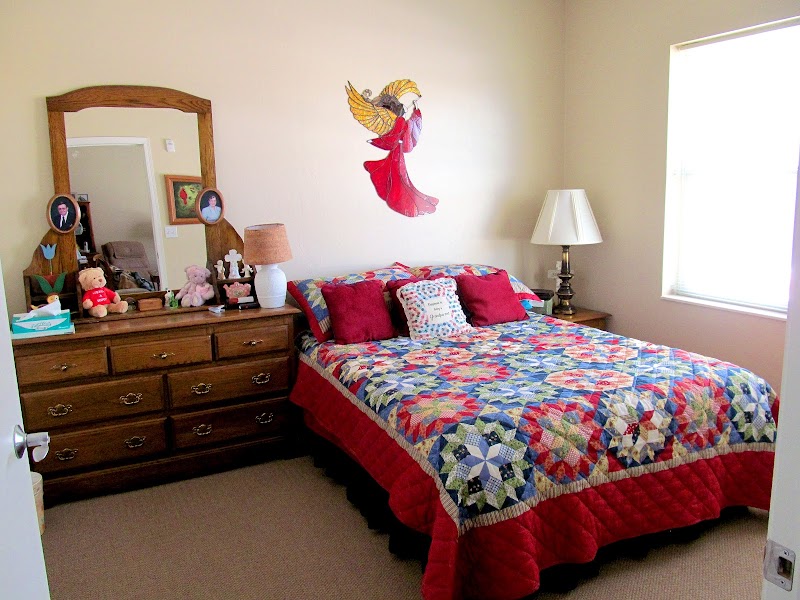
How is Serenity Spring Senior Living At Scandia Village Staffed?

CMS rates SERENITY SPRING SENIOR LIVING AT SCANDIA VILLAGE's staffing level at 4 out of 5 stars, which is above average compared to other nursing homes. Staff turnover is 77%, which is 31 percentage points above the Wisconsin average of 46%. High turnover can affect care consistency as new staff learn residents' individual needs. RN turnover specifically is 58%, which is notably high. RNs provide skilled clinical oversight, so turnover in this role can affect medical care quality.

What Have Inspectors Found at Serenity Spring Senior Living At Scandia Village?

State health inspectors documented 58 deficiencies at SERENITY SPRING SENIOR LIVING AT SCANDIA VILLAGE during 2022 to 2025. These included: 1 Immediate Jeopardy (the most serious level, indicating potential for serious harm or death), 2 that caused actual resident harm, 53 with potential for harm, and 2 minor or isolated issues. Immediate Jeopardy findings are rare and represent the most serious regulatory concerns. They require immediate corrective action.
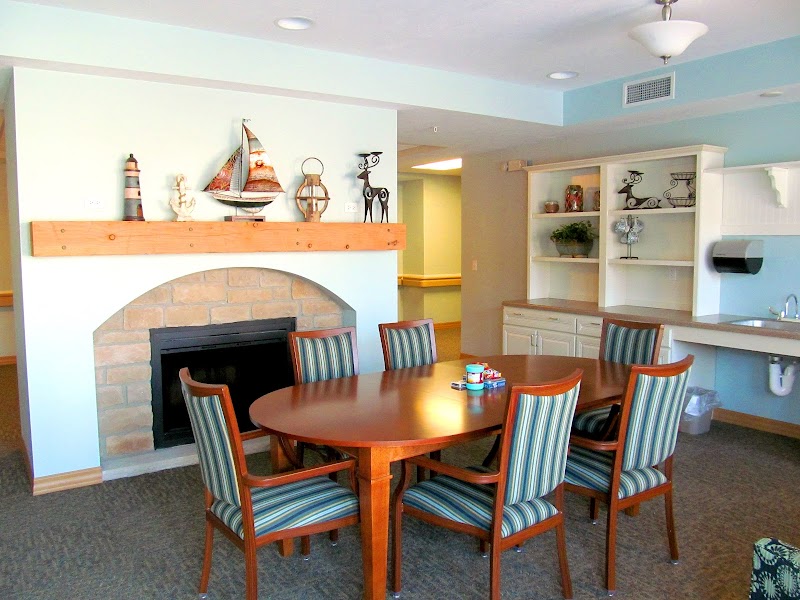
Who Owns and Operates Serenity Spring Senior Living At Scandia Village?

SERENITY SPRING SENIOR LIVING AT SCANDIA VILLAGE is owned by a for-profit company. For-profit facilities operate as businesses with obligations to shareholders or private owners. The facility is operated by CONTINUUM HEALTHCARE, a chain that manages multiple nursing homes. With 50 certified beds and approximately 39 residents (about 78% occupancy), it is a smaller facility located in SISTER BAY, Wisconsin.
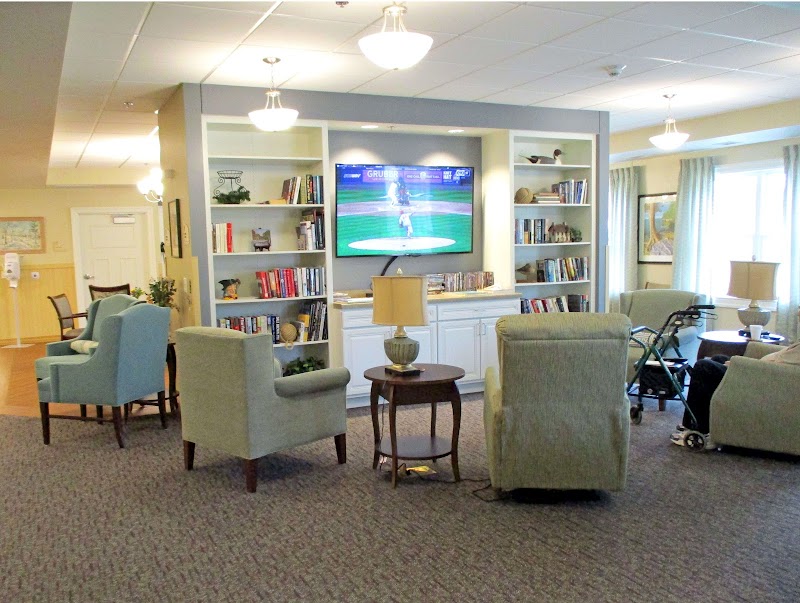
How Does Serenity Spring Senior Living At Scandia Village Compare to Other Wisconsin Nursing Homes?

Compared to the 100 nursing homes in Wisconsin, SERENITY SPRING SENIOR LIVING AT SCANDIA VILLAGE's overall rating (2 stars) is below the state average of 3.0, staff turnover (77%) is significantly higher than the state average of 46%, and health inspection rating (2 stars) is below the national benchmark.

What Should Families Ask When Visiting Serenity Spring Senior Living At Scandia Village?

Based on this facility's data, families visiting should ask: "What changes have been made since the serious inspection findings, and how are you preventing similar issues?" "How do you ensure continuity of care given staff turnover, and what is your staff retention strategy?" "Can I visit during a mealtime to observe dining assistance and food quality?" "How do you handle medical emergencies, and what is your hospital transfer rate?" These questions are particularly relevant given the facility's Immediate Jeopardy citations and the facility's high staff turnover rate.

Is Serenity Spring Senior Living At Scandia Village Safe?

Based on CMS inspection data, SERENITY SPRING SENIOR LIVING AT SCANDIA VILLAGE has documented safety concerns. Inspectors have issued 1 Immediate Jeopardy citation (the most serious violation level indicating risk of serious injury or death). The facility has a 2-star overall rating and ranks #100 of 100 nursing homes in Wisconsin. Families considering this facility should ask detailed questions about what corrective actions have been taken since these incidents.

Do Nurses at Serenity Spring Senior Living At Scandia Village Stick Around?

Staff turnover at SERENITY SPRING SENIOR LIVING AT SCANDIA VILLAGE is high. At 77%, the facility is 31 percentage points above the Wisconsin average of 46%. Registered Nurse turnover is particularly concerning at 58%. RNs handle complex medical decisions and coordinate care — frequent RN changes can directly impact care quality. High turnover means new staff may not know residents' individual needs, medications, or preferences. It can also be disorienting for residents, especially those with dementia who rely on familiar faces. Families should ask: What is causing the turnover? What retention programs are in place? How do you ensure care continuity during staff transitions?

Was Serenity Spring Senior Living At Scandia Village Ever Fined?

SERENITY SPRING SENIOR LIVING AT SCANDIA VILLAGE has no federal fines on record. CMS issues fines when nursing homes fail to meet care standards or don't correct problems found during inspections. The absence of fines suggests the facility has either maintained compliance or corrected any issues before penalties were assessed. This is a positive indicator, though families should still review recent inspection reports for the full picture.

Is Serenity Spring Senior Living At Scandia Village on Any Federal Watch List?

SERENITY SPRING SENIOR LIVING AT SCANDIA VILLAGE is not on any federal watch list. The most significant is the Special Focus Facility (SFF) program, which identifies the bottom 1% of nursing homes nationally based on persistent, serious quality problems. Not being on this list means the facility has avoided the pattern of deficiencies that triggers enhanced federal oversight. This is a positive indicator, though families should still review the facility's inspection history directly.