PAVILION AT GLACIER VALLEY
1900 AMERICAN EAGLE DR, SLINGER, WI 53086 (262) 297-6300
For profit - Limited Liability company 106 Beds FUNDAMENTAL HEALTHCARE Data: November 2025
Trust Grade
43/100
#232 of 321 in WI
Last Inspection: November 2024

Within standard 12-15 month inspection cycle. Federal law requires annual inspections.

Overview

Pavilion at Glacier Valley has a Trust Grade of D, indicating below-average quality with some concerning issues. It ranks #232 out of 321 nursing homes in Wisconsin, placing it in the bottom half, and #3 out of 4 in Washington County, meaning there is only one local option that is better. The facility's trend is improving, with a significant drop in reported issues from 20 in 2024 to just 1 in 2025. Staffing is average with a 3/5 star rating and a turnover rate of 46%, which is slightly better than the state average of 47%. However, there are some serious concerns, such as a resident developing a stage III pressure ulcer due to inadequate care and a lack of a qualified food services director, which could affect meal quality and safety for residents.

Trust Score
D
43/100
In Wisconsin
#232/321
Bottom 28%
Safety Record
Moderate
Needs review
Inspections
Getting Better
20 → 1 violations
Staff Stability
⚠ Watch
46% turnover. Above average. Higher turnover means staff may not know residents' routines.
Penalties
✓ Good
$9,750 in fines. Lower than most Wisconsin facilities. Relatively clean record.
Skilled Nurses
✓ Good
Each resident gets 48 minutes of Registered Nurse (RN) attention daily — more than average for Wisconsin. RNs are trained to catch health problems early.
Violations
⚠ Watch
58 deficiencies on record. Higher than average. Multiple issues found across inspections.
★★☆☆☆
2.0
Overall Rating
★★★☆☆
3.0
Staff Levels
★★★☆☆
3.0
Care Quality
★★☆☆☆
2.0
Inspection Score
Stable
2024: 20 issues
2025: 1 issues

The Good

  • Full Sprinkler Coverage · Fire safety systems throughout facility
  • No fines on record

Facility shows strength in fire safety.

The Bad

2-Star Overall Rating

Below Wisconsin average (3.0)

Below average - review inspection findings carefully

Staff Turnover: 46%

Near Wisconsin avg (46%)

Higher turnover may affect care consistency

Federal Fines: $9,750

Below median ($33,413)

Minor penalties assessed

Chain: FUNDAMENTAL HEALTHCARE

Part of a multi-facility chain

Ask about local staffing decisions and management

The Ugly 58 deficiencies on record

1 actual harm
Aug 2025 1 deficiency
CONCERN (D) 📢 Someone Reported This

A family member, employee, or ombudsman was alarmed enough to file a formal complaint

Potential for Harm - no one hurt, but risky conditions existed

Infection Control (Tag F0880)

Could have caused harm · This affected 1 resident

**NOTE- TERMS IN BRACKETS HAVE BEEN EDITED TO PROTECT CONFIDENTIALITY** Based on observation, staff interview, and record review, the facility did not maintain an infection prevention and control prog...

Read full inspector narrative →
**NOTE- TERMS IN BRACKETS HAVE BEEN EDITED TO PROTECT CONFIDENTIALITY** Based on observation, staff interview, and record review, the facility did not maintain an infection prevention and control program designed to prevent the transmission of communicable disease and infection for 2 residents (R) (R6 and R7) of 10 sampled residents. Staff did not ensure enhanced barrier precautions (EBP) were followed during high-contact cares for R6 and R7.Findings include:The facility's Infection Prevention and Control Policies and Procedures, revised 5/15/23, indicates: 1. Enhanced barrier precautions (EBP) expand the use of personal protective equipment (PPE) (gown and gloves) during high-contact resident care activities that provide opportunities for transfer of multidrug-resistant organisms (MDROs) to staffs' hands and clothing. A. EBP will be implemented for all residents with the following: .2. Wounds and/or indwelling medical devices (central line, urinary catheter, feeding tube, tracheostomy/ventilator) regardless of MDRO colonization status. B. EBP will be implemented during the following high-contact resident care activities: .3. Transferring; 4. Providing hygiene; .6. Changing briefs or assisting with toileting.1.On 8/8/25, Surveyor reviewed R6's medical record. R6 was admitted to the facility on [DATE] and had diagnoses including dementia, displaced fracture to shaft of left clavicle, wedge compression fracture of third lumbar vertebra, retention of urine, pain, weakness, and anxiety. On 8/8/25, Surveyor reviewed R6's August 2025 Treatment Record Administration (TAR) which indicated R6 was placed on EBP for chronic wounds on 6/27/25.On 8/8/25 at 9:39 AM, Surveyor observed Certified Nursing Assistant (CNA)-C assist R6 to the bathroom. Surveyor observed an EBP sign posted outside R6's room but did not observe a PPE cart near R6's room. CNA-C entered R6's room, donned gloves, put a gait belt around R6, and transferred R6 to the toilet. After CNA-C assisted R6 onto the toilet, CNA-C stepped outside the bathroom and Surveyor asked if R6 was on EBP. CNA-C indicated R6 was not on EBP. When Surveyor showed CNA-C the EBP sign outside R6's room, CNA-C stated there was no need for PPE and indicated there were no gowns in or near R6's room to put on. CNA-C indicated the sign meant extra precautions were needed.2. On 8/8/25, Surveyor reviewed R7's medical record. R7 was admitted to the facility on [DATE] and had diagnoses including traumatic subdural hemorrhage, urinary tract infection, local infection of the skin, neuromuscular dysfunction of bladder, pressure induced deep tissue damage of left heel, methicillin-resistant Staphylococcus aureus (MRSA) infection, and type 2 diabetes mellitus.On 8/8/25, Surveyor reviewed R7's August 2025 TAR which indicated R7 was placed on EBP for wounds, MDRO/MRSA to wound, and a Foley catheter on 2/5/25.On 8/8/25 at 10:16 AM, Surveyor observed CNA-E and Licensed Practical Nurse (LPN)-D in R7's room without PPE. Surveyor noted CNA-E and LPN-D were about to transfer R7 into bed. R7 had an indwelling catheter. Surveyor noted a sign outside R7's room that indicated R7 was on EBP and PPE should be worn during high-contact cares. After the transfer was completed, Surveyor interviewed CNA-E and LPN-D. When asked if R7 was on EBP, LPN-D was not sure. When asked if PPE should be worn while transferring a resident on EBP, LPN-D indicated R7 was on EBP due to scabs on R7's feet. When asked if PPE was needed because R7 had an indwelling catheter, LPN-D stated a gown was not needed. Surveyor did not observe any gowns in or near R7's room. On 8/8/25 at 12:27 PM, Surveyor interviewed Director of Nursing (DON)-B who confirmed PPE, including a gown and gloves, should be worn during high-contact cares for residents on EBP. DON-B verified transferring and toileting are considered high-contact cares and indicated residents on EBP should have bins near their rooms with PPE.
Nov 2024 13 deficiencies
CONCERN (D)

Potential for Harm - no one hurt, but risky conditions existed

Deficiency F0558 (Tag F0558)

Could have caused harm · This affected 1 resident

**NOTE- TERMS IN BRACKETS HAVE BEEN EDITED TO PROTECT CONFIDENTIALITY** Based on observation, staff and resident interview, and record review, the facility did not ensure a call light was within reach...

Read full inspector narrative →
**NOTE- TERMS IN BRACKETS HAVE BEEN EDITED TO PROTECT CONFIDENTIALITY** Based on observation, staff and resident interview, and record review, the facility did not ensure a call light was within reach for 1 resident (R) (R1) of 25 sampled residents. R1 was dependent on staff for mobility and other cares. During an observation on 11/10/24, R1's call light was not within reach. Findings include: From 11/10/24 to 11/12/24, Surveyor reviewed R1's medical record. R1 was admitted to the facility on [DATE] and had diagnoses including traumatic brain injury (TBI), non-pressure chronic ulcer of skin of other sites limited to breakdown of skin, pain, and dysphagia (difficulty swallowing). R1's Minimum Data Set (MDS) assessment, dated 10/18/24, had a Brief Interview for Mental Status (BIMs) score of 15 out of 15 which indicated R1 was not cognitively impaired. The MDS indicated R1 was dependent on staff for mobility and transfers. R1 had alteration in vision due to a TBI. R1 was legally blind and relied on staff to help with items R1 needed. R1's plan of care indicated staff should to explain to R1 where R1 could feel for the call light when clipped near R1, explain where R1's fluid cup was, and keep and explain where R1's phone was so R1 could access the phone on R1's own. A behavior symptoms care plan contained an intervention, dated 12/28/17, to familiarize R1 with new staff and familiarize new staff with R1 and R1's routine. On 11/10/24 at 6:51 PM, Surveyor entered R1's room and was told by R1's roommate (R54) that R1 needed R1's phone. Surveyor observed R1 in a Broda chair at the foot of R1's bed. Surveyor noted R1's phone was on the night stand which was next to the head of the bed. R1's call light pad was also on the nightstand. R1 confirmed R1 could not reach the phone or the call light. Surveyor had to step over a garbage can to get to the night stand which was approximately three feet from R1's Broda chair. R1 indicated staff usually clipped the call light to R1's pants and stated, He (staff) didn't give it (call light) to me. Surveyor noted a male agency Certified Nursing Assistant (CNA) (CNA-Y) was assigned to R1's wing with a female CNA (CNA-CC). Upon Surveyor's request, CNA-CC provided R1 with the phone and call light. On 11/10/24 at 6:57 PM, Surveyor interviewed CNA-CC who confirmed R1 could not reach the call light on R1's own. On 11/10/24 at 8:58 PM, Surveyor interviewed Nursing Home Administrator (NHA)-A who indicated CNA-Y was an agency staff and believed it was CNA-Y's first time working in the facility. NHA-A confirmed call lights should be within reach of residents.
CONCERN (D)

Potential for Harm - no one hurt, but risky conditions existed

Grievances (Tag F0585)

Could have caused harm · This affected 1 resident

**NOTE- TERMS IN BRACKETS HAVE BEEN EDITED TO PROTECT CONFIDENTIALITY** Based on staff interview and record review, the facility did not ensure a grievance was thoroughly investigated and resolution w...

Read full inspector narrative →
**NOTE- TERMS IN BRACKETS HAVE BEEN EDITED TO PROTECT CONFIDENTIALITY** Based on staff interview and record review, the facility did not ensure a grievance was thoroughly investigated and resolution was provided for 1 resident (R) (R7) of 25 sampled residents. R7 told staff that R7 was missing items from laundry. Staff did not follow the facility's grievance process or follow-up with R7. Findings include: The facility's Missing Items policy, with a review date of 6/9/23, indicates: .5. When personal items are missing, the resident/responsible party is responsible to inform staff immediately and will complete a complaint/grievance form. From 11/10/24 to 11/12/24, Surveyor reviewed R7's medical record. R7 was admitted to the facility on [DATE] and had diagnoses including hemiplegia and hemiparesis following cerebral infarction affecting right dominant side and muscle weakness (generalized). R7's Minimum Data Set (MDS) assessment, dated 9/11/24, had a Brief Interview for Mental Status (BIMS) score of 15 out of 15 which indicated R7 was not cognitively impaired. On 11/10/24 at 12:05 PM, Surveyor interviewed R7 who indicated R7 was missing a purple cat T-shirt and a blanket with polka dots. R7 indicated the items were meaningful to R7 because the cat T-shirt reminded R7 of R7's cats whom R7 missed and the blanket was given to R7 by a friend. R7 indicated R7 told staff about the missing items a couple of weeks ago. R7 indicated staff wrote a note and indicated they would give it to the laundry supervisor, however, R7 had not heard anything yet. On 11/11/24 at 12:55 PM, Surveyor interviewed Laundry Supervisor (LS)-X who indicated LS-X was new to the facility and still learning. LS-X indicated that since LS-X had started, LS-X had not seen any grievances for missing clothing. LS-X was not aware that R7 was missing anything and had not received a note regarding R7's missing items. LS-X showed Surveyor a cart that contained missing items and said residents and families can search through the items if they are missing anything. On 11/11/24 at 1:04 PM, Surveyor interviewed Laundry Aid (LA)-W who delivered laundry in the facility. LA-W indicated LA-W had not heard that R7 was missing clothing but thought LA-W saw a blanket with polka dots. LA-W and Surveyor checked the lost and found but did not find the blanket. LA-W pointed to a yellow sticky note pinned to the bulletin board in the laundry room and indicated if residents are missing items, staff write a note and put it on the bulletin board. LA-W indicated LA-W had not seen a grievance form and had not filled out a grievance form for missing laundry. On 11/11/24 at 1:58 PM, Surveyor interviewed Nursing Home Administrator (NHA)-A who was not aware R7 was missing items from laundry. NHA-A indicated R7 had a lot of belongings and still had belongings at a previous facility. NHA-A indicated if NHA-A had been aware of R7's missing items, NHA-A would have first checked R7's inventory to see if the items were logged on the inventory sheet. NHA-A then would have searched laundry. NHA-A confirmed a grievance form should be filled out for missing laundry items. NHA-A indicated Social Worker (SW)-V was the facility's Grievance Officer. On 11/11/24 at 2:22 PM, Surveyor interviewed SW-V who was not aware that R7 was missing any items. SW-V indicated that not all of R7's belongings came with R7 from a previous facility. SW-V checked R7's inventory log which did not contain the specified items. SW-V indicated there was not much on R7's inventory log, however, R7 ordered items online and a few inventory sheets contained R7's online orders. SW-V indicated if SW-V had been aware of R7's missing items, SW-V would have done a room search (with R7's permission), searched laundry, determined if the missing items required a self-report or a grievance form, and would have called R7's family members to see if they took the items home. SW-V indicated all grievances go through SW-V so they can be distributed to the correct departments for follow-up. Surveyor informed SW-V that laundry staff indicated they do not see grievances, do not fill out grievance forms when they hear about missing items, and that Certified Nursing Assistants (CNAs) write notes and put them in the laundry area if a resident is missing an item. SW-V indicated missing items should be turned into grievances so SW-V can track them and provide follow-up. On 11/12/24 at 11:25 AM, Surveyor interviewed Med Tech (MT)-T who indicated R7 told MT-T about a week and a half ago that R7 was missing a T-shirt and a polka dot blanket. MT-T indicated MT-T wrote a note and gave it to the supervisor on duty. On 11/12/24 at 3:32 PM, Surveyor interviewed NHA-A and informed NHA-A that staff knew about R7's missing items but the information was not received by laundry staff. NHA-A confirmed a grievance should have been completed for R7's missing items.
CONCERN (D)

Potential for Harm - no one hurt, but risky conditions existed

Pressure Ulcer Prevention (Tag F0686)

Could have caused harm · This affected 1 resident

**NOTE- TERMS IN BRACKETS HAVE BEEN EDITED TO PROTECT CONFIDENTIALITY** 2. From 11/10/24 to 11/12/24, Surveyor reviewed R17's medical record. R17 received Hospice services and had diagnoses including ...

Read full inspector narrative →
**NOTE- TERMS IN BRACKETS HAVE BEEN EDITED TO PROTECT CONFIDENTIALITY** 2. From 11/10/24 to 11/12/24, Surveyor reviewed R17's medical record. R17 received Hospice services and had diagnoses including chronic obstructive pulmonay disease (COPD), congestive heart failure (CHF), chronic kidney disease (CKD) stage 3, and recurrent and persistent hematuria (blood in the urine). A Braden scale assessment, dated 11/10/24, had a score of 14 which indicated R17 was at moderate risk for pressure injury development. R17 had a physician's order for 1-6 liters per minute (LPM) of oxygen per nasal cannula. On 11/10/24 at 10:38 AM, Surveyor observed R17 receiving oxygen at 2 liters per nasal cannula via a concentrator. Surveyor observed redness and irritation behind R17's left ear under the unpadded oxygen tubing. Surveyor interviewed R17 who indicated staff had looked at R17's ear but did nothing about it. Surveyor reviewed R17's skin assessments through 11/6/24 and noted the skin assessments did not contain documentation of redness or irritation behind R17's ear. A skin assessment, dated 11/10/24, documented a new reddened area behind the top of R17's left ear due to pressure from R17's oxygen tubing. Surveyor noted R17's care plan, dated 4/4/23, did not contain an intervention to inspect behind R17's ears due to the oxygen tubing. On 11/12/24 at 10:43 AM, Surveyor interviewed Director of Nursing (DON)-B who indicated if a resident is on oxygen staff should check placement of the oxygen tubing and assess skin integrity every shift. DON-B indicated staff should also ensure the oxygen tubing does not have kinks and provides appropriate airflow. DON-B indicated if there is irritation behind a resident's ear, staff should initiate some kind of protection such as foam ear protectors. Based on observation, staff, resident and family interview, and record review, the facility did not ensure 3 residents (R) (R67, R17 and R1) of 5 sampled residents reviewed for pressure injuries received the necessary care and services to promote healing and/or prevent pressure injuries from developing. R67 had a pressure injury on the right heel. R67 did not have interventions in place that were recommended by the wound care provider. In addition, R67's care plan did not contain the wound care provider's recommendations. R17 developed a pressure injury from oxygen tubing that was not padded. R1 had a self determination care plan that indicated R1 chose to have a urinal propped against R1's scrotal area. R1's care plan did not contain an intervention to monitor for or prevent potential skin injury to R1's scrotal area. Findings include: The facility's Wound care Policies and Procedures, with a revision date of 6/1/15, indicates: Evaluation is the formal process in which wound characteristics, underlying conditions and contributory medical history are identified/quantified. Evaluation should result in treatment approaches including elimination or compensation for causative factors and a prognosis for healing. 3. Evaluation results are communicated to the members of the care team through documentation, care plan meetings, and care planning. The National Pressure Injury Advisory Panel released the 2nd version (6/23) of the Standardized Pressure Injury Prevention Protocol Checklist (SPIPP-Adult) 2.0 which directs the care provider to: Assess risk factors for pressure injury to guide risk-based prevention: .Use a structured assessment approach (e.g. Braden or other validated risk tool) on admission; Reassess risk every shift and with significant change in condition; Patient/family informed of pressure injury risk and prevention plan; Assess skin/tissue for signs of skin damage and pressure injury; Assess skin (comprehensive, visual, palpation) upon admission and every shift for erythema, discoloration, edema, and temperature; Assess skin under medical devices every shift; Inspect heels every shift. 1. From 11/11/24 to 11/12/24, Surveyor reviewed R67's medical record. R67 was admitted to the facility on [DATE] and had diagnoses including dementia and a stage 2 pressure injury to the right heel. R67's Minimum Data Set (MDS) assessment, dated 8/4/24, indicated R67 was severely cognitively impaired. On 11/10/24 at 11:44 AM, Surveyor observed R67 sleeping in a wheelchair in R67's room with shoes on. Surveyor noted heel boots on R67's bed. R67's medical record indicated: ~ A care plan, initiated on 9/18/24, indicated R67 had a pressure injury on the right posterior ankle related to immobility, pain, diabetes mellitus type 2, anemia, and muscle weakness. The care plan contained an intervention (initiated on 9/18/24) to use pressure relieving boots to relieve pressure on the heels. ~ A wound note, dated 11/5/24, indicated R67 was seen by the wound care team and wound Nurse Practitioner (NP). R67 had a right posterior ankle wound. The wound bed was yellow with no drainage. The note indicated the wound could be left open to air with no shoe on the right foot. An order for Betadine 3 times per week was initiated. ~ A wound note, dated 11/12/24, indicated to protect R67's heels with 2-3 pillows/offloading boots. The note indicated the wound could be left open to air with no shoe on the right foot. On 11/11/24 at 12:01 PM, Surveyor observed R67 in the dining room in a Broda chair with shoes on. R67 was not wearing heel boots. On 11/11/24 at 4:02 PM, Surveyor observed R67 in the lobby with shoes on. R67 was not wearing heel boots. On 11/12/24 at 11:35 AM, Surveyor interviewed Medication Technician (MT)-T who indicated R67 usually wore shoes during the day and wore heel boots when R67 was in bed. On 11/12/24 at 12:32 PM, Surveyor interviewed Registered Nurse (RN)-U who did wound rounds with the wound care provider. Surveyor informed RN-U of Surveyor's observations of a shoe on R67's right foot and no heel boots. Surveyor also informed RN-U that R67's care plan did not indicate that R67 should not wear a shoe on the right foot. RN-U confirmed wound care provider interventions should be added to care plans and communicated to staff. RN-U confirmed R67 should not have been wearing a shoe on the right foot and should have had heel boots on. 3. From 11/10/24 to 11/12/24, Surveyor reviewed R1's medical record. R1 was admitted to the facility on [DATE] with diagnoses including traumatic brain injury (TBI), non-pressure chronic ulcer of skin of other sites limited to breakdown of skin, pain, and dysphagia (difficulty swallowing). R1's MDS assessment, dated 10/18/24, had a Brief Interview for Mental Status (BIMs) score of 15 out of 15 which indicated R1 was not cognitively impaired. The MDS also indicated R1 was dependent on staff for mobility and transfers. On 11/11/24 at 9:40 AM, Surveyor interviewed R1's Power of Attorney (POA-J) who indicated R1's Family Member (FM-K) visualized R1's skin (including R1's scrotal area) over the weekend and noted an area below the penis that looked reddened and ring-like. (According to the facility's visitor login, FM-K visited R1 on 11/9/24 from 11:48 AM to 1:41 PM.) POA-J also indicated a nurse told POA-J that a urinal was being left underneath R1's perineal area so R1 did not get wet (from urine). R1 was present at the time of the conversation and stated staff remove the urinal after R1 urinates, empty the urinal, and then put it back. POA-J indicated FM-K spoke with Registered Nurse (RN)-E and told RN-E to stop placing the urinal between R1's legs because it was causing a sore to the penile area. On 11/11/24 at 11:45 AM, Surveyor interviewed POA-J and DON-B. DON-B indicated placing the urinal between R1's legs was care planned as a request from R1. DON-B indicated staff completed skin checks regularly for R1. DON-B indicated DON-B was unaware of a reddened area on R1's penis and would check R1's medical record. On 11/11/24 at 1:30 PM, DON-B provided Surveyor with R1's self-determination care plan that indicated: Problem: R1 prefers to have urinal placed/propped between legs whenever uses urinal and at bedtime. Approach: Education provided in regards to skin integrity as R1 wishes to have the urinal placed/propped between legs at night. Long Term Target Date: 10/1/24, Skin integrity will remain intact. An evaluation note on the care plan indicated: 2/21/23, Seen by wound care NP (Nurse Practitioner)-L. NP-L was concerned about high risk of developing pressure injury to the scrotum/penis due to preference of urinal placement. R1 understood and stated R1 knows the risks of developing a pressure injury. R1 prefers to keep urinal placed between R1's leg while in bed. Last reviewed/revised: 7/8/24 by Assistant Director of Nursing (ADON)-M. On 11/12/24 at 10:13 AM, DON-B informed Surveyor that ADON-M assessed R1's skin on 11/11/24 after DON-B was notified of R1's perineal area and noted no reddened areas or sores to R1's scrotum. DON-B indicated R1 had a treatment order for buttock areas on the wound log (initiated on 11/7/24). On 11/12/24 at 12:52 PM, Surveyor interviewed RN-E who indicated RN-E worked regularly on R1's unit but was not aware of a sorer on R1's penis. RN-E indicated RN-E worked the 11/3/24 night shift into the morning of 11/4/24. As recent as that shift, RN-E indicated R1 demanded the urinal be placed between R1's legs. RN-E indicated R1's regularly-scheduled Certified Nursing Assistants (CNAs) placed the urinal between R1's legs per R1's request. RN-E indicated if staff do not place the urinal between R1's legs or if there is a new staff who is not aware of R1's request, R1 calls out repeatedly, activates R1's call light, and/or calls the nursing station by phone and demands the urinal be placed between R1's legs. RN-E indicated R1 wants the urinal there. RN-E indicated R1's regular CNAs know to check every two hours and empty the urinal. RN-E indicated FM-K told staff on 11/9/24 to stop putting the urinal between R1's legs. RN-E verified R1 did not request that staff stop placing the urinal between R1's legs. RN-E indicated R1 abides by R1's family's wishes for awhile and then goes back to what R1 wants. A skin check, dated 10/19/24, indicated R1's skin was checked by a CNA during a bath/shower and was also checked by Licensed Practical Nurse (LPN)-R. The skin check contained a body diagram with two small circles drawn on the front of the body below the stomach/top of groin. The comments section contained a hand-written note that indicated R1 had small red areas to the groin. A skin check, dated 10/22/24 with CNA and nurse signatures/initials, indicated R1 had no skin areas noted. An undated skin check form which was placed between the 10/22/24 skin check and the 11/3/24 skin check and signed by LPN-R contained a hand-written note in the comment section that indicated R1 had red areas on the groin. The body diagram contained the same marked areas as the 10/19/24 skin check. A Skin Focused Observation note, dated 10/27/24, indicated R1 had no new areas of concern, no open areas, and R1's buttocks were not red. A Skin Focused Observation note, dated 10/29/24, indicated R1 had no new skin issues. A Skin Focused Observation note, dated 11/1/24, indicated R1 had no new skin areas and a previous red area on the groin. Skin checks, dated 11/3/24 and 11/5/24, were signed by a nurse and a CNA and noted no marks on the diagram or comments related to skin areas. A Skin Focused Observation note, dated 11/5/24, contained no documentation related to the groin. In addition to the previously mentioned self-determination care plan, Surveyor reviewed an untitled care plan with a problem start date of 11/10/22 that indicated: R1 is at risk for skin breakdown related to a Braden score of 16, generalized weakness and need for staff to assist with repositioning, frequent incontinence, morbid obesity, high risk for shearing, contracture and tightening of joints, desire to hang on to items such as cell phone when in bed, rosacea, history of choric/recurring MASD (moisture-associated skin damage) under skin folds and between gluteal crease, redness of buttocks, lymphedema .R1 demands that a urinal be propped between legs when in bed with a pillow against it which pushes the urinal even tighter against R1's skin. If staff do not do this, R1 will keep calling the facility or yelling out for help until it is done. The care plan had a long term goal target date of 10/1/24 which was: R1 will have interventions to prevent skin breakdown. The care plan contained the following interventions: Assess R1's skin daily during bathing, especially over bony prominence; Licensed nurse to do a weekly skin check. The care plan did not contain an intervention to monitor for skin issues related to the urinal placement between R1's legs with the pillow against it which pushed the urinal tighter against R1's skin. On 11/12/24 at 2:02 PM, Surveyor interviewed LPN-D who indicated LPN-D gave R1 a shower that day. LPN-D indicated LPN-D did not observe any skin issues or reddened areas on R1's scrotum. LPN-D indicated R1 had small raised bumps on R1's lower abdomen approximately two weeks ago which were getting better. LPN-D indicated two scratched areas were observed on R1's coccyx on 11/7/24. LPN-D indicated LPN-D called POA-J with no answer, called FM-K with no answer, and called POA-J a second time and left a voicemail regarding the skin areas. LPN-D did not receive a return call. On 11/12/24 at 2:17 PM, Surveyor received R1's permission to view the area of concern. LPN-D and CNA-BB pulled R1's incontinence brief down and Surveyor observed two dark pink rings/creases on R1's scrotum. R1's skin was intact with no open areas. LPN-D indicated R1 used the bedpan, was incontinent at times, and wore a brief. LPN-D indicated LPN-D was not aware that R1 used a urinal. On 11/12/24 at 2:24 PM, Surveyor interviewed CNA-BB who indicated R1 requests staff prop a urinal on a towel and then notifies staff when R1 is finished urinating. When Surveyor asked about propping the urinal versus holding the urinal, CNA-BB indicated R1 prefers to have the urinal propped. CNA-BB indicated R1 asks staff to keep the urinal between R1's legs and usually calls staff shortly after. On 11/12/24 at 2:25 PM, Surveyor interviewed DON-B regarding the red marks on R1's scrotal area. DON-B indicated DON-B first heard about the red marks on 11/11/24 during the interview with POA-J and Surveyor. DON-B had ADON-M assess R1's skin which ADON-M indicated contained no open areas on the scrotum. DON-B also indicated R1's regular AM shift CNA (CNA-S) did not notice any red marks on 11/11/24. DON-B indicated R1 was reassessed after lunch on 11/12/24 and staff noted a u-shaped mark on R1's scrotal area. DON-B indicated RN-U obtained an order for zinc. DON-B indicated CNA-S told DON-B that R1 was placed on the urinal last night and CNA-S removed the urinal this morning. On 11/12/24 at 2:37 PM, Surveyor interviewed ADON-M who indicated ADON-M viewed R1's skin that morning and noted two bright red creases which, upon reassessment after lunch, appeared diminished and pink (versus red). ADON-M noted the potential causes for the marks which included incontinence while sitting in R1's Broda chair and use of the urinal. ADON-B confirmed staff rest the urinal between R1's legs per R1's request. ADON-M was unsure if R1 made the request that day. ADON-M confirmed regular staff place the urinal between R1's legs and new staff learn to do it when R1 demands they place the urinal there. ADON-M indicated R1's medical record confirmed the risks were explained to R1 and indicated an order for zinc was requested. On 11/12/24 at 2:45 PM, Surveyor interviewed DON-B who confirmed R1's care plan did not include prevention and/or monitoring of the skin for damage due to R1's request of the urinal placement.
CONCERN (D)

Potential for Harm - no one hurt, but risky conditions existed

Deficiency F0688 (Tag F0688)

Could have caused harm · This affected 1 resident

**NOTE- TERMS IN BRACKETS HAVE BEEN EDITED TO PROTECT CONFIDENTIALITY** Based on staff and resident interview and record review, the facility did not ensure the appropriate care and services were prov...

Read full inspector narrative →
**NOTE- TERMS IN BRACKETS HAVE BEEN EDITED TO PROTECT CONFIDENTIALITY** Based on staff and resident interview and record review, the facility did not ensure the appropriate care and services were provided to increase and/or prevent further decrease in range of motion for 3 residents (R) (R14, R6, and R7) of 3 sampled residents. R14 did not receive restorative therapy per therapy discharge recommendations. Staff did not correctly enter the recommendations in R14's medical record, therefore, R14's Minimum Data Set (MDS) assessment was not coded correctly. R6 did not consistently receive restorative therapy. R7 did not consistently receive range of motion (ROM) per R7's orders and care plan. Findings include: On 11/11/24, Surveyor requested the facility's policy for restorative services. The facility provided a training that was titled Restorative Nursing Program Quick Start from Fundamental Clinical and Operational Services, LLC 2024 which contained educational slides for the restorative nursing program (RNP). The training indicated: .Care planning: specific detail approaches, and periodic evaluation. Daily documentation 1. From 11/10/24 to 11/12/24, Surveyor reviewed R14's medical record. R14 was admitted to the facility on [DATE] and had diagnoses including hemiplegia and hemiparesis following cerebral infarction affecting the right dominant side and muscle weakness (generalized). R14's MDS assessment, dated 9/11/24, had a Brief Interview for Mental Status (BIMS) score of 15 out of 15 which indicated R14 was not cognitively impaired. The MDS assessment indicated R14 did not have a restorative program but had limited ROM. On 11/10/24 at 12:05 PM, Surveyor interviewed R14 and noted an exercise sheet on R14's wall. When Surveyor asked if staff did exercises with R14, R14 said no and wondered if R14 should be doing them on R14's own. On 11/11/24 at 12:35 PM, Surveyor interviewed Occupational Therapist Registered (OTR)-Q who indicated R14 had a restorative program from 7/22/24 that was posted in R14's room. OTR-Q indicated R14 should be doing the exercises with staff. OTR-Q indicated when a resident is discharged from therapy, therapy provides a sheet with information with what should be done. OTR-Q indicated OTR-Q also trains staff and posts exercises in residents' rooms. OTR-Q provided Surveyor with R14's therapy communication form, dated 7/22/24, that indicated: 1. Range of motion program daily prior to donning right resting hand splint-see attached. 2. R14 to wear right resting hand splint at night, for 8 hours daily, or per R14's tolerance. 3. R14 may wear left wrist splint up to 4 hours during AM or PM as requested for left wrist pain. Surveyor noted the restorative program was not in R14's care plan. Surveyor also noted there was no documentation on R14's restorative program in R14's medical record. On 11/11/24 at 2:52 PM, Surveyor interviewed Minimum Data Set Coordinator (MDSC)-I who indicated MDSC-I was responsible for restorative therapy. MDSC-I indicated another nurse put in the the order for R14's restorative care when it was sent from therapy, however, the staff entered the order under R14's physician orders and did not attach it to R14's Medication Administration Record (MAR) or Treatment Administration Record (TAR). MDSC-I indicated the staff also did not add the order to R14's care plan or to the Certified Nursing Assistant (CNA) tasks in R14's medical record. MDSC-I confirmed those steps should have been taken so staff knew R14 had a restorative program that they should complete and document. Because staff did not document or complete restorative therapy for R14, MDSC-I indicated MDSC-I did not code R14's MDS correctly to indicate that R14 had a restorative program. 2. From 11/10/24 to 11/12/24, Surveyor reviewed R6's medical record. R6 was admitted to the facility on [DATE] and had diagnoses including multiple sclerosis, muscle weakness, and abnormal posture. R6's MDS assessment, dated 8/21/24, had a BIMS score of 15 out of 15 which indicated R6 was not cognitively impaired. A care plan, dated 6/19/23, indicated R6 received passive range of motion (PROM) and active range of motion (AROM) and required splint brace assistance once per day. On 11/10/24 at 11:46 AM, Surveyor interviewed R6 and noted R6 was leaning in R6's chair and somewhat contracted. When asked if staff assisted R6 with exercises, R6 indicated sometimes they did. On 11/11/24 at 12:35 PM, Surveyor interviewed OTR-Q who confirmed R6 had a maintenance program for restorative therapy. OTR-Q provided Surveyor with a therapy communication form, dated 6/28/23, that indicated: PROM to left and right shoulder flexion. Elbow flexion/extension. Wrist flexion/extension and digit and thumb extension 11 reps. Bilateral lower extremity range of motion for ankle dorsiflexion, hip abduction, and knee extension 10 reps daily. OTR-Q also indicated splint assistance should be provided. Surveyor reviewed documentation on R6's restorative programming from 8/1/24 through 11/11/24 and noted the following: R6's Splint/Brace Assistance Restorative Program: In August 2024, there was no charting on 17 out of 31 days. In September 2024, there was no charting on 18 out of 30 days. In October 2024, there was no charting on 18 out of 31 days. In November 2024, there was no charting on 5 out of 10 days. R6's Active Range of Motion Restorative Program: In August 2024, there was no charting on 17 out of 31 days. In September 2024, there was no charting on 16 out of 30 days. In October 2024, there was no charting on 16 out of 31 days. In November 2024, there was no charting on 5 out of 10 days. R6's Passive Range of Motion Restorative Program: In August 2024, there was no charting on 7 out of 31 days. In September 2024, there was no charting on 3 out of 30 days. In October 2024, there was no charting on 13 out of 31 days In November 2024, there was no charting on 4 out of 10 days. On 11/11/24 at 12:35 PM, Surveyor interviewed MDSC-I who confirmed staff should consistently document on restorative programs, including refusals. MDSC-I indicated MDSC-I used the information to code residents' MDS assessments accurately. 3. From 11/10/24 to 11/12/24, Surveyor reviewed R7's medical record. R7 was admitted to facility on 6/30/15 and had diagnoses including multiple sclerosis, anxiety disorder, muscle weakness, abnormal posture, osteoporosis, and contracture of muscle and joint. R7's MDS assessment, dated 10/16/24, indicated R7 required substantial maximal assistance with bathing and upper dressing and was dependent on staff for toileting, lower dressing, and transfers. R7 had functional limitation with range of motion and impairment to the upper and lower extremities. A BIMS score indicated R7 was not cognitively impaired. A care plan, dated 10/16/23, indicated: Passive range of motion to bilateral lower extremities 4 to 7 days a week. dorsiflexion bilateral feet 2 times a day, toe passive range of motion 2 times a day, hip passive range of motion 2 times a day, lower trunk rotation, knee rocks 2 times a day, hip abduction/adduction 2 times a day. On 11/10/24 at 1:31 PM, Surveyor interviewed R7 who indicated staff were not doing R7's ROM anymore. R7 indicated ROM was supposed to be done in the morning and afternoon. R7 indicated there was only one CNA who assisted R7 with ROM. On 11/12/24, Surveyor reviewed R7's medical record for lower extremity ROM documentation from 8/1/24 to 11/11/24. The documentation was inconsistent and noted the following: On 8/1, 8/3, 8/4, 8/5, 8/6, 9/2. 9/10, 10/8, 10/13, 10/22, 10/27, 11/6, and 11/10, R7 missed both sessions. On 8/2, 8/9, 8/13, 8/16, 8/20, 8/27, 8/30, 8/31, 9/1, 9/4, 9/5, 9/8, 9/9, 9/14, 9/17, 9/22, 9/24, 10/7, 10/9, 10/11, 10/12, 10/14, 10/15, 10/18, 10/19, 10/20, 10/26, 10/28, 11/3, and 11/8, R7 missed 1 session On 11/12/24 at 12:22 PM, Surveyor interviewed MDSC-I who indicated if a resident's point of care history indicates ROM was not performed then ROM was not completed for that shift or day.
CONCERN (D)

Potential for Harm - no one hurt, but risky conditions existed

Incontinence Care (Tag F0690)

Could have caused harm · This affected 1 resident

Based on observation, staff interview, and record review, the facility did not provide the necessary care and services to prevent a urinary tract infection (UTI) for 1 resident (R) (R17) of 4 resident...

Read full inspector narrative →
Based on observation, staff interview, and record review, the facility did not provide the necessary care and services to prevent a urinary tract infection (UTI) for 1 resident (R) (R17) of 4 residents reviewed for catheter care. On 11/10/24, R17's uncovered catheter drainage bag was observed on the floor. Findings include: The facility's Catheter-Urinary Catheter, Cleaning and Maintenance Policy and Procedure taken from the Lippincott Nursing Procedures 9th edition (Copyright 2023 with complete revision: May 5, 2023) indicates: Don't place the drainage bag on the floor to reduce the risk of contamination and subsequent catheter-associated urinary tract infection (CAUTI). From 11/10/24 to 11/12/24, Surveyor reviewed R17's medical record. R17 received Hospice services and had diagnoses including chronic kidney disease (CKD) stage 3 and recurrent and persistent hematuria (blood in the urine). R17 had a physician order for an indwelling Foley catheter for acute urine retention (dated 10/18/24) and an order for a privacy bag in place every shift (dated 10/18/24). On 11/10/24 at 10:28 AM, Surveyor observed R17 in a recliner with catheter tubing that ran down R17's right pant leg and drained light clear yellow urine into an uncovered collection bag that was laying on the floor. On 11/10/24 at 10:53 AM, Surveyor interviewed Infection Preventionist (IP)-C who verified R17's uncovered catheter bag was on the floor. IP-C indicated the catheter bag should not touch the floor and should be covered for infection control and privacy. On 11/11/24 at 8:45 AM, Surveyor interviewed Registered Nurse (RN)-H who verified R17's uncovered catheter bag was secured to R17's bed frame. On 11/12/24 at 10:40 AM, Surveyor interviewed Director of Nursing (DON)-B who confirmed catheter drainage bags should be covered and not in contact with the floor.
CONCERN (D)

Potential for Harm - no one hurt, but risky conditions existed

Respiratory Care (Tag F0695)

Could have caused harm · This affected 1 resident

Based on observation, staff interview, and record review, the facility did not ensure 1 resident (R) (R17) of 25 sampled residents received the necessary care and treatment related for oxygen therapy....

Read full inspector narrative →
Based on observation, staff interview, and record review, the facility did not ensure 1 resident (R) (R17) of 25 sampled residents received the necessary care and treatment related for oxygen therapy. During an observation on 11/10/24, R17's oxygen tubing did not contain a date or initials to indicate when the tubing was last changed. Findings include: The facility's Oxygen Administration policy, with a revision date of 2/12/24, indicates: Nasal Cannula: Change weekly, when soiled, and on an as needed basis or per state regulations. From 11/10/24 to 11/12/24, Surveyor reviewed R17's medical record. R17 received Hospice services and had diagnoses including chronic obstructive pulmonary disorder (COPD), congestive heart failure (CHF), and chronic kidney disease (CKD) stage 3. R17 had a physician order for 1-6 liters per minute (LPM) of oxygen via nasal cannula. The facility's general nursing orders, dated 7/29/24, indicated: Equipment Oxygen: Change oxygen tubing/nasal cannula/mast/humidification system weekly once a day on Tuesday from 10:00 PM to 6:00 AM. On 11/10/24 at 10:38 AM, Surveyor observed R17 using oxygen at 2 liters per nasal cannula via a concentrator. Surveyor noted the tubing was not labeled with initials or the date the tubing was last changed. On 11/12/24 at 10:43 AM, Surveyor interviewed Director of Nursing (DON)-B who indicated nursing orders to change oxygen tubing are scheduled for the Sunday night (NOC) shift. DON-B indicated oxygen tubing should be labeled with the date and initials of the staff who changed the tubing. DON-B indicated improvement was anticipated because there was now more regular staff on the NOC shift.
CONCERN (D) 📢 Someone Reported This

A family member, employee, or ombudsman was alarmed enough to file a formal complaint

Potential for Harm - no one hurt, but risky conditions existed

Pharmacy Services (Tag F0755)

Could have caused harm · This affected 1 resident

**NOTE- TERMS IN BRACKETS HAVE BEEN EDITED TO PROTECT CONFIDENTIALITY** Based on staff and resident interview and record review, the facility did not ensure medications were administered within the or...

Read full inspector narrative →
**NOTE- TERMS IN BRACKETS HAVE BEEN EDITED TO PROTECT CONFIDENTIALITY** Based on staff and resident interview and record review, the facility did not ensure medications were administered within the ordered timeframe for 1 resident (R) (R1) of 6 sampled residents. R1's medications were administered late on 7/29/24, 8/2/24, 10/28/24, 10/30/24, and 11/7/24. Findings include: The facility's Medication Management Program policy, with a revision date of 5/5/23, indicates: .7. Medications are administered no more than one hour before to one hour after the designated medication pass time .11. Immediately after administering the medication to the resident, the authorized staff or licensed nurse will return to the medication cart and document medication administration with initials on the MAR (Medication Administration Record). From 11/10/24 to 11/12/24, Surveyor reviewed R1's medical record. R1 was admitted to the facility on [DATE] and had diagnoses including traumatic brain injury (TBI), non-pressure chronic ulcer of skin of other sites limited to breakdown of skin, pain, and dysphagia (difficulty swallowing). R1's Minimum Data Set (MDS) assessment, dated 10/18/24, had a Brief Interview for Mental Status (BIMs) score of 15 out of 15 which indicated R1 was not cognitively impaired. On 11/11/24, Surveyor reviewed the facility's grievance file which included a grievance from R1's Power of Attorney (POA) (POA-J) that indicated R1's 8:00 PM medications were given at 10:00 PM on 8/2/24. R1's medical record indicated R1's medications were also administered late on 10/30/24, 11/4/24, and 11/7/24. On 11/11/24, Surveyor interviewed Director of Nursing (DON)-B who provided the following information: ~ On 7/29/24, R1's 8:00 AM medications (Abilify, amiloride, Breo Ellipta, buspirone, calcium antacid, Eliquis, eye drops, fluticasone propionate nasal spray, gabapentin, levetiracetam, levocarnitine, Lexapro, metoprolol succinate, Miralax, olopatadine drops, oxybutynin, phenobarbital, potassium chloride, Senna-S, topiramate, and UTI-Stat) were not administered until after 10:10 AM. Per DON-B, an agency nurse arrived one hour late and needed a password reset in order to access residents' medical records. DON-B indicated the nurse also did not follow the direction to administer (R1's) medications first. ~ On 8/2/24, R1's 4:00 PM medications (Acidophilus, eye drops, methimazole, multiple vitamins and potassium chloride) were administered at 5:37 PM. A note in R1's MAR indicated the medications were administered, however, they were charted late. ~ On 8/2/24, R1's 8:00 PM medications (buspirone, calcium antacid, Eliquis, eye drops, gabapentin, levetiracetam, levocarnitine, melatonin, olopatadine drops, oxybutynin, phenobarbital, Senna-S, and topiramate) were not administered until 10:02 PM. A note in R1's MAR indicated the medications were administered, however, they were charted late. A grievance submitted by POA-J on 8/2/24 had a summary of findings that noted, Medication was given late by agency nurse. Nurse failed to follow facility protocol for medication administration and med error occurrence. Despite having been given verbal direction by administration. ~ On 10/28/24, R1's 5:00 AM medication (omeprazole) was not administered until 8:01 AM. No information was provided for the medication. ~ On 10/30/24, R1's 12:00 PM medications (busiprone, calcium antacid, ergocalciferol, eye drops, fexofenadine, gabapentin, levocarnitine, and topiramate) were not administered until 2:55 PM. Per DON-B, the medication administration delay was due to a resident in respiratory distress at 12:00 PM and three room moves that occurred between 10:30 AM and 2:00 PM. ~ On 11/4/24, R1's 8:00 AM medications (Abilify, amiloride, Breo Ellipta, buspirone, calcium antacid, Eliquis, eye drops, fluticasone propionate nasal spray, gabapentin, levetiracetam, levocarnitine, Lexapro, metoprolol succinate, Miralax, olopatadine drops, oxybutynin, phenobarbital, potassium chloride, Senna-S, topiramate, and UTI-Stat) were administered late. Per DON-B, R1 was picked up at 6:45 AM for an early morning appointment and returned at 9:45 AM. ~ On 11/7/24, R1's 4:00 PM medications (Acidophilus, eye drops, methimazole, multiple vitamins and potassium chloride) were not administered until 5:05 PM. Per DON-B, another resident was sent to the emergency room (ER) at 3:10 PM. R1 returned from an appointment at 3:30 PM and another resident fell at 3:40 PM. ~ On 11/7/24, R1's 8:00 PM medications (buspirone, calcium antacid, Eliquis, eye drops, gabapentin, levetiracetam, levocarnitine, melatonin, olopatadine drops, oxybutynin, phenobarbital, Senna-S, and topiramate) were documented as administered at 9:18 PM. R1's medical record indicated charted late. On 11/10/24 at 6:51 PM, Surveyor interviewed R1 who indicated R1's medications were administered late at times. On 11/11/24 at 9:45 AM, Surveyor interviewed POA-J who indicated POA-J had concerns with R1's medications being administered late. On 11/12/24 at 9:42 AM, Surveyor interviewed DON-B who indicated medication pass had gotten better since the facility had Med Techs and nurses pass medication. DON-B indicated staff were educated to not interrupt Med Techs and nurses during medication pass and to go to their supervisors instead. DON-B indicated the facility had the pharmacy review all residents' medication and DON-B adjusted medication times for medication scheduled at 7:00 AM and 8:00 AM to make them uniform. DON-B indicated the facility added an early morning med pass and indicated Med Techs arrived at 5:00 AM to help with the long-term care unit. DON-B indicated the medication review and changes began in mid-July and took approximately a week to complete. The pharmacy review was requested at the beginning of August and had started on the long-term care unit. On 11/12/24 at 12:56 PM, Surveyor interviewed Registered Nurse (RN)-E who indicated RN-E administered R1's medication late once because R1 had an early dentist appointment. RN-E indicated R1 wanted medication prior to the appointment, however, RN-E was not comfortable administering the medication because R1 had not eaten yet and there were multiple medications. RN-E administered R1's 8:00 AM medication when R1 returned from the appointment and administered R1's 12:00 PM medication later. RN-E indicated sometimes medications were administered late when agency staff were in the facility.
CONCERN (D)

Potential for Harm - no one hurt, but risky conditions existed

Deficiency F0800 (Tag F0800)

Could have caused harm · This affected 1 resident

Based on observation, staff and resident interview, and record review, the facility did not ensure preferences for dietary needs were met for 1 resident (R) (R276) of 25 sampled residents. R276 did no...

Read full inspector narrative →
Based on observation, staff and resident interview, and record review, the facility did not ensure preferences for dietary needs were met for 1 resident (R) (R276) of 25 sampled residents. R276 did not receive consistently receive the dietary preferences that R276 specified to dietary staff. Findings include: Surveyor requested the facility's policy on food preferences and received a Facility Module User Guide for Matrixcare Meal Tracker, dated October 2024. The User Guide indicated how to enter residents' preferences/special requests in the system. On 11/10/24, Surveyor reviewed R276's medical record. R276 had diagnoses including surgical aftercare on digestive system, hyperkalemia, protein calorie malnutrition, and colon cancer. R276's Minimum Data Set (MDS) assessment, dated 11/3/24, had a Brief Interview for Mental Status (BIMS) score of 15 out of 15 which indicated R276 was not cognitively impaired. R276's plan of care contained interventions to honor food preferences as feasible. R276 disliked oatmeal, bacon, sausage, and meats not in deli slice form. R276 liked fruit, sandwiches with plain white bread, hard-boiled eggs, deli meat, yogurt, and cottage cheese with fruit. A dietary note, dated 11/5/24, indicated R276 worked with speech therapy in 2006 following facial surgery to remove a tumor and R276's swallow ability was as good as it's gonna get. R276 had a removable plate on the roof of the mouth. R276 had difficulty swallowing meats that were not in thin deli meat form. R276's protein preferences were updated. R276 liked hard-boiled eggs, deli meat, yogurt, and cottage cheese with fruit. On 11/10/24 at 10:43 AM, Surveyor interviewed R276 who indicated the food at the facility was good for regular people, however, with R276's digestive and swallowing issues, R276 was unable to eat most of the food served. R276 met with the Dietitian and provided food preferences. R276 was unaware of an alternative menu. R276 indicated R276 informs staff who deliver meal trays, but nothing is done or offered as an alternative. R276 indicated R276's family has been bringing in food for R276. On 11/11/24 at 11:29 AM, Surveyor observed lunch service from the dining room steam table. R276's lunch meal ticket indicated: House diet - Deli meats only, no beef, pork, chicken, turkey entrees. R276's actual meal ticket indicated: 1 each deli sandwich, mashed potatoes, broccoli, roll, bread pudding, and a beverage. On 11/11/24 at 11:42 AM, Surveyor observed Dietary Aid (DA)-P put meatloaf on R276's plate. DA-P then covered the plate and put R276's meal ticket on the tray. When Surveyor stopped DA-P and indicated R276's meal ticket indicated R276 should get a deli sandwich, DA-P confirmed R276 should get a deli sandwich instead of meatloaf. DA-P asked another staff to make R276 a deli sandwich. At 11:44 AM, staff returned with a deli sandwich made with wheat bread. DA-P then added broccoli and mashed potatoes and sent the tray to R276's room. On 11/11/24 at 12:14 PM, Surveyor interviewed R276 who indicated R276 picked at the deli meat but was unable to eat the wheat bread. R276 indicated R276 was unable to eat the broccoli because it wasn't soft enough for R276's digestive/swallowing needs. R276 ate approximately 20% of the mashed potatoes. R276 stated R276 was frustrated that the facility was not able to meet R276's dietary preferences. On 11/12/24 at 8:05 AM, Surveyor observed R276's breakfast tray and noted R276 received a baked omelet, a hard-boiled egg, a banana, and a muffin. On 11/12/24 at 8:05 AM, Surveyor interviewed R276 who indicated R276 was able to eat the hard-boiled egg and one bite of the muffin. R276 was unable to eat the omelet and the banana. R276 was frustrated with the banana because R276 was told the day before that R276's potassium level was too high and required medication. R276 stated, I do not trust anything staff put on meal tray. A progress note, dated 11/11/24 at 12:26 PM, indicated that lab notified the facility of a critical potassium result. An order was initiated for an immediate dose of Lasix 20 mg. R276's potassium level was to be drawn again on 11/12/24. On 11/12/24 at 11:41 AM, Surveyor observed R276's lunch tray which contained a lettuce salad topped with cheese and tomatoes, refried beans, and Fritos. Surveyor interviewed R276 who indicated the only thing R276 would eat was the tomatoes. When Surveyor asked if R276 met with the Dietitian or Dietary Manager, R276 indicated R276 met with the Dietitian shortly after R276 was admitted . R276 indicated R276 needs vegetables cooked softly and will only will eat certain vegetables. R276 indicated R276 can only eat white bread but gets wheat bread. When asked about the cake on R276's tray, R276 indicated R276 wouldn't eat the cake but would eat Jell-O or peaches for dessert. When Surveyor asked if R276 was aware of an alternative menu, R276 indicated R276 was not aware of an alternative menu or that R276 could let the kitchen know what R276 wanted ahead of time. R276 again expressed frustration with not receiving R276's preferences at meal times. On 11/12/24 at 2:00 PM, Surveyor informed Dietary Manager (DM)-N of the contents of R276's lunch tray on 11/11/24. DM-N confirmed staff should have reviewed R276's meal ticket. DM-N also indicated DM-N had not met with R276 and had not heard that R276 was unhappy with R276's food. DM-N indicated the Dietitian met with R276 and gave DM-N a note about R276's meal preferences last week. Surveyor reviewed the hand-written note that indicated: Breakfast - No oatmeal, send banana, HB (hard-boiled) egg, yogurt. Lunch - No meat - sides only, white bread without anything on it, sandwich with deli meat. Dinner - cottage cheese with fruit, white bread with deli meat, send sides. DM-N indicated DM-N had not entered the information on R276's meal ticket yet, however, the information was posted in the kitchen at the steam table. When Surveyor pointed out that R276 was served from the steam table in the dining room, DM-N confirmed staff serving food would not have known R276's preferences. DM-N confirmed DM-N wanted R276's preferences to be honored and followed.
CONCERN (D)

Potential for Harm - no one hurt, but risky conditions existed

Infection Control (Tag F0880)

Could have caused harm · This affected 1 resident

Based on observation, staff interview, and record review, the facility did not maintain an infection prevention and control program designed to provide a safe and sanitary environment to help prevent ...

Read full inspector narrative →
Based on observation, staff interview, and record review, the facility did not maintain an infection prevention and control program designed to provide a safe and sanitary environment to help prevent the transmission of communicable disease and infection for 1 resident (R) (R275) of 25 sampled residents. R275 was on enhanced barrier precautions (EBP). R275 did not have EBP signage outside of R275's room to inform staff of infection prevention precautions needed during the provision of care. Findings include: The facility's Infection Prevention and Control Policies and Procedures, dated 5/15/23, indicates: Enhanced Barrier Precautions (EBP): 1. EBP expand the use of personal protective equipment (PPE) (gowns and gloves) during high-contact resident care activities that provide opportunities for transfer of multidrug-resistant organisms (MDROs) to staff hands and clothing. A. EBP will be implemented for all residents with the following: .2) Wounds and/or indwelling medical devices (central lines, urinary catheter, feeding tube, tracheostomy/ventilator) regardless of MDRO colonization status .F. The facility will post clear signage on the door or wall outside the room indicating the type of precautions and required PPE (gown and gloves) .H. The facility will provide gowns and gloves immediately outside of the resident's room and position a trash can inside the resident's room near the exit for discarding PPE after removal, prior to exit of the room, or before providing care for another resident in the same room. On 11/10/24, Surveyor reviewed R275's medical record. R275 was admitted to facility on 11/8/24 with right lower leg venous ulcers with copious amounts of drainage and had diagnoses including chronic venous hypertension with ulcer and inflammation of right lower extremity, congestive heart failure, and chronic kidney disease. R275's Minimum Data Set (MDS) assessment, dated 11/10/24, had a Brief Interview for Mental Status (BIMS) score of 15 out of 15 which indicated R275 was not cognitively impaired. R275 required daily and as needed dressing changes. On 11/10/24 at 10:25 AM, Surveyor noted EBP signage was not posted outside R275's room. On 11/11/24 at 9:30 AM, Surveyor interviewed Licensed Practical Nurse (LPN)-D who indicated EBP signage was assigned by the Infection Preventionist (IP). LPN-D indicated if the IP was not working, nursing staff were responsible for posting signage outside residents' rooms. LPN-D verified R275 did not have EBP signage posted outside R275's room and indicated signage should be posted to inform staff of the necessary precautions. On 11/12/24 at 10:24 AM, Surveyor interviewed Infection Preventionist (IP)-C who verified R275 required EBP signage related to a wound with copious drainage. IP-C indicated nurses are the first level to determine if residents need EBP. On 11/11/24 at 3:10 PM, Surveyor interviewed Director of Nursing (DON)-B who verified EBP should be assigned for residents with wounds. DON-B verified there was no signage posted outside R275's room to alert staff that R275 was on EBP.
CONCERN (E)

Potential for Harm - no one hurt, but risky conditions existed

ADL Care (Tag F0677)

Could have caused harm · This affected multiple residents

**NOTE- TERMS IN BRACKETS HAVE BEEN EDITED TO PROTECT CONFIDENTIALITY** 4. From 11/10/24 to 11/12/24, Surveyor reviewed R12's medical record. R12 was admitted to the facility on [DATE] and had diagnos...

Read full inspector narrative →
**NOTE- TERMS IN BRACKETS HAVE BEEN EDITED TO PROTECT CONFIDENTIALITY** 4. From 11/10/24 to 11/12/24, Surveyor reviewed R12's medical record. R12 was admitted to the facility on [DATE] and had diagnoses including obesity, overactive bladder, chronic kidney disease (CKD), and chronic peripheral venous insufficiency. R12's MDS assessment, dated 8/23/24, had a BIMS score of 15 out of 15 which indicated R12 was not cognitively impaired. On 11/10/24 at 12:17 PM, Surveyor interviewed R12 about care at the facility. R12 stated call light response times ranged from ten minutes to one hour. R12 indicated R12 asked for a bedpan which an unnamed CNA would not provide. R12 stated R12 thought the refusal was cruel and inhuman treatment. R12 also indicated R12 asked staff to hold down a bed pan while R12 turned to get off the bed pan. R12 said the CNAs didn't do it which caused the bed pan to spill. R12 indicated sometimes staff didn't change R12's bedding and R12 had to lay on wet bedding for a half hour until night shift staff arrived. On 11/11/24 at 11:39 AM, Surveyor interviewed NHA-A who was not aware of the incidents and indicated NHA-A would start an investigation. 5. From 11/10/24 to 11/12/24, Surveyor reviewed R30's medical record. R30 was admitted to the facility on [DATE] and had diagnoses including Parkinson's disease, chronic pain syndrome, diabetes type 2 with diabetic polyneuropathy, obesity, and anxiety. R30's MDS assessment, 8/21/24, had a BIMS score of 14 out of 15 which indicated R30 was not cognitively impaired. On 11/10/24 at 11:46 AM, Surveyor interviewed R30 regarding care at the facility. R30 stated an unnamed CNA on the PM shift refused to give R30 a bedpan which caused R30 to be incontinent of urine. R30 refused to name the CNA due to fear of retribution. On 11/10/24 at 2:46 PM, Surveyor observed a CNA enter R30's room and turn off the call light. The CNA did not toilet R30. On 11/10/24 at 3:36 PM, Surveyor interviewed R30 who indicated R30 needed assistance to the bathroom, but the CNA turned off the call light and left to get another staff and a lift. R30 indicated it was the fourth call R30 had made since 12:00 PM; the first and second calls were on the AM shift and the third and fourth calls were on the PM shift. R30 did not know the CNAs' names. R30 indicated R30 was incontinent of a small amount of urine due to the wait. R30 stated R30 felt like a second-class citizen. On 11/10/24 at 3:40 PM, Surveyor observed Medication Technician (MT)-T enter R30's room, ask about R30's concern, and turn off R30's call light to address another resident's fall. On 11/11/24 at 11:39 AM, Surveyor interviewed NHA-A who was not aware of the incident and indicated NHA-A would start an investigation. 6. From 11/10/24 to 11/12/24, Surveyor reviewed R26's medical record. R26 was admitted to the facility on [DATE] and had diagnoses including muscle weakness, difficulty in walking, unsteadiness on feet, and pain. R26's MDS assessment, dated 11/8/24, had a BIMS score of 14 out of 15 which indicated R26 was not cognitively impaired. The MDS assessment indicated R26 was dependent on staff for showering/bathing. On 11/10/24 at 12:44 PM, Surveyor interviewed R26 who indicated R26 was supposed to receive two showers per week but did not consistently receive them. On 11/11/24, Surveyor requested R26's shower documentation for the past three months. Surveyor received R26's shower documentation which was in the form of weekly skin checks (some did not state that R26 had a shower) and shower sheets that were not consistently completed and didn't always indicate if R26 had a shower or a bed bath. Surveyor also reviewed R26's medical record which contained inconsistent bathing documentation. R26's progress notes sometimes indicated whether R26 received a shower or bed bath or refused. Documentation indicated showers were given or refused on 10 of 26 opportunities since 8/1/24. The other missed documentation showed the following: ~ A weekly skin assessment on 8/1/24 did not note if a shower was given. ~ R26 received a bed bath on 8/15/24 but staff did not document if R26 refused a shower. ~ A progress note, dated 8/23/24, indicated R26's Power of Attorney for Healthcare (POAHC) was updated on R26's new schedule for twice weekly showers on Wednesdays and Saturdays. ~ Documentation indicated R26 received a partial bed bath on 8/24/24 but did not indicate if R26 refused a shower. ~ Documentation indicated R26 received a bed bath on 9/4/24 but did not indicate if R26 refused a shower. ~ A weekly skin assessment on 9/11/24 did not indicate if R26 had a shower. ~ A shower sheet, dated 9/21/24, was checked bath/shower; however the area that indicated if R26 received a bed bath or shower was not filled out. ~ A shower sheet, dated 9/28/24, was signed by the nurse but was not filled out. ~ A weekly skin assessment, dated 10/5/24, was completed but did not indicate if R26 had a shower. ~ A shower sheet, dated 10/9/24, was signed by the nurse but was not filled out. ~ There was no documentation on 10/16/24 or 10/19/24. ~ A bed bath was documented on 10/23/24 but did not indicate if R26 refused a shower. ~ There was no documentation on 10/26/24, 10/30/24, 11/2/24, or 11/6/24. On 11/11/24 at 4:04 PM, Surveyor interviewed CNA-O who showed Surveyor the shower schedule. Surveyor noted R26 was on the schedule on Wednesday and Saturday. CNA-O indicated shower sheets should be filled out and showers should be documented in residents' medical records. On 11/12/24 at 3:32 PM, Surveyor interviewed Director of Nursing (DON)-B who indicated showers were a problem for awhile but the facility had been working to restructure them. DON-B indicated DON-B expects CNA staff to complete shower sheets and nurses to complete weekly skin observations in residents' medical records. DON-B indicated audits were being done to ensure weekly skin observations were being completed. DON-B confirmed shower sheets should be filled out completely and refusals should be documented. DON-B indicated the facility was going trial a shower aid the following week. Based on observation, staff and resident interview, and record review, the facility did not ensure 6 residents (R) (R11, R17, R50, R12, R30, and R26) of 25 sampled residents who required the assistance of staff for activities of daily living (ADLs) were provided care in a timely and consistent manner. On 11/10/24, R11 activated R11's call light for assistance to bed. Certified Nursing Assistant (CNA)-Y turned off the call light and left the room without assisting R11. On 11/10/24, R17 activated R17's call light for assistance to bed. CNA-Z turned off the call light and left the room without assisting R17. On 11/10/24, R50 activated R50's call light for an evening snack. Licensed Practical Nurse (LPN)-F turned off the call light without providing a snack. R12 stated call light response times were lengthy and R12 was not given a bedpan or a bed change when requested. R30 was not given a bedpan or provided assistance to the toilet in a timely manner. R26 did not receive scheduled showers on a consistent basis. Findings include: The facility's Staff Education Policies/Procedures Competency: Showers, with a revision date of 7/1/13, contained sign-offs for the following areas: 1. Encourages participation where appropriate .12. Document appropriately. The facility did not provide a shower/bathing policy. 1. From 11/10/24 to 11/12/24, Surveyor reviewed R11's medical record. R11 was admitted to the facility on [DATE] and had diagnoses including congestive heart failure (CHF), cervical spondylosis (painful condition of the spine due to degeneration), chronic obstructive pulmonary disease (COPD), stage 4 chronic kidney disease, and venous insufficiency. R11's Minimum Data Set (MDS) assessment, dated 10/10/24, had a Brief Interview for Mental Status (BIMS) score of 15 out of 15 which indicated R11 was not cognitively impaired. The MDS indicated R11 required substantial/maximal assistance of staff for transfers. On 11/10/24 at 6:40 PM, Surveyor observed R11 enter the hallway from R11's room via wheelchair. R11 was visibly upset and stated, For cripes sake, he turned my light off and said he needs to find a lift, but the lift is sitting right there. Surveyor noted a mechanical lift in the hallway near R11's room. R11 explained to Surveyor that a male CNA had entered R11's room, turned off the call light which R11 had activated for assistance, and then went to help a resident across the hall and did not return. R11 indicated the lift R11 needed to transfer had been sitting in the same spot for 15 minutes but that was the excuse why R11 was not assisted. R11 stated, I am not dumb. R11's roommate (R57) then exited the room and stated to CNA-Y, You guys need to realize when they (residents) turn their lights on it is because they need someone to help them and you should not turn it (call light) off. R11 indicated call lights are frequently turned off and cares are not provided timely on the weekends. On 11/10/24 at 6:47 PM, Surveyor interviewed CNA-Y who confirmed CNA-Y turned off R11's call light even though CNA-Y did not provide R11 assistance. CNA-Y indicated CNA-Y needed another staff to assist with R11's transfer and another staff was not available. 2. From 11/10/24 to 11/12/24, Surveyor reviewed R17's medical record. R17 was admitted to the facility on [DATE] and had diagnoses including COPD, pressure injury, muscle weakness, insomnia, and obstructive sleep apnea. R17 received Hospice services. R17's MDS assessment, dated 10/28/24, had a BIMS score of 14 out of 15 which indicated R17 was not cognitively impaired. The MDS indicated R17 was dependent on staff for transfers. On 11/10/24 at 7:20 PM, Surveyor noted R17's call light was activated. Surveyor interviewed R17 who was sitting in a recliner and indicated R17 wanted to go to bed. R17 indicated the call light had been on for an hour now. On 11/10/24 at 7:21 PM, Surveyor observed CNA-Z turn off R17's call light and exit the room. Surveyor also observed CNA-Z turn off a call light across the hall and exit the room. Surveyor interviewed CNA-Z who confirmed CNA-Z turned off R17's call light without providing assistance and indicated CNA-Z needed to get a lift. Surveyor observed CNA-Z go to the 500 wing and start to move a lift in the hallway. As Surveyor walked in the opposite direction, CNA-Z stopped moving the lift and went to do something else. On 11/10/24 at 7:31 PM, Surveyor observed R17 still sitting in the recliner. R17's head was down and R17 appeared asleep. R17 had not been assisted to bed yet. 3. From 11/10/24 to 11/12/24, Surveyor reviewed R50's medical record. R50 was admitted to the facility on [DATE] and had diagnoses including major depressive disorder and generalized anxiety disorder. R50's MDS assessment, dated 10/15/24, had a BIMS score of 12 out of 15 which indicated R50 had moderate cognitive impairment. On 11/10/24 at 7:23 PM, Surveyor observed LPN-F turn off R50's call light without providing assistance. Surveyor interviewed LPN-F who indicated R50 wanted a snack but LPN-F was an agency staff and did not know where the snacks were located. On 11/12/24 at 3:40 PM, Surveyor interviewed Nursing Home Administrator (NHA)-A who confirmed NHA-A expects staff to complete residents' requests before turning off their call lights.
CONCERN (E) 📢 Someone Reported This

A family member, employee, or ombudsman was alarmed enough to file a formal complaint

Potential for Harm - no one hurt, but risky conditions existed

Deficiency F0725 (Tag F0725)

Could have caused harm · This affected multiple residents

Based on observation, staff and resident interview, and record review, the facility did not ensure sufficient staffing was provided to meet the needs of 5 residents (R) (R30, R11, R17, R50, and R26) o...

Read full inspector narrative →
Based on observation, staff and resident interview, and record review, the facility did not ensure sufficient staffing was provided to meet the needs of 5 residents (R) (R30, R11, R17, R50, and R26) of 25 sampled residents with the potential to affect additional residents. The facility had low staffing on 4/14/24, 5/11/24, 5/12/24, and 6/23/24. On 11/10/24, R30 activated R30's call light for assistance with toileting on multiple occasions. Staff turned off R30's call light without providing assistance. On 11/10/24, R11 activated R11's call light for assistance to bed. Certified Nursing Assistant (CNA)-Y turned off R11's call light and left the room without assisting R11. On 11/10/24, R17 activated R17's call light for assistance to bed. CNA-Z turned off R17's call light and left the room without assisting R17. On 11/10/24, R50 activated R50's call light for an evening snack. Licensed Practical Nurse (LPN)-F turned off R50's call light and left the room without providing a snack. R26 did not consistently receive scheduled showers. Findings include: The facility's Staffing Policy, dated 5/5/23, indicates: The facility will implement strategies to mitigate staffing shortages during times of illness, pandemic, or additional situations that may lead to decreased numbers of available staff. The facility will adjust staffing needs to include day, evening, and night shifts based on changes in the resident population .1. The facility will collaborate with Human Resources and regional personal to implement staffing strategies to mitigate staffing shortages in any department. 2. The facility will attempt to ascertain reasons or root causes for staff unavailability for work and address as practicable and able. Low Staffing: The facility calculates the number of CNAs and Registered Nurses (RNs) by the following formula: 3.08 times the census = total hours to schedule per day divided by 8 = number of staff to schedule per shift On 11/12/24, Surveyor reviewed the facility's staffing schedules from 4/1/24 to 6/30/24. Surveyor identified 4 weekend days in April, May, and June where the facility was low on staff. On 4/14/24, the facility had a census of 78 and required 240 staffing hours for the day. The facility had 199.8 hours scheduled and was down 4 CNAs due to call-ins and/or no-shows. On 5/11/24, the facility had a census of 73 and required 224 staffing hours for the day. The facility had 186.4 hours scheduled and was down 4 CNAs due to call-ins and/or no-shows. On 5/12/24, the facility had a census of 72 and required 221 staffing hours for the day. The facility had 201.8 hours scheduled and was down 3 CNAs due to call-ins and/or no-shows. On 6/23/24, the facility had a census of 77 and required 237 staffing hours for the day. The facility had 192.5 hours scheduled and was down 2 CNAs due to call-ins and/or no-shows. On 11/12/24 at 3:08 PM, Surveyor interviewed Nursing Home Administrator (NHA)-A who indicated the facility had low staffing on the above mentioned days and couldn't get coverage. NHA-A indicated the facility tries to call agency, other staff, or have nurse managers cover, but they couldn't find anyone on those days. Call Lights: On 11/10/24 (Sunday) at 2:46 PM, Surveyor observed a CNA enter R30's room, turn off the call light, and exit the room. On 11/10/24 at 3:36 PM, Surveyor interviewed R30 who indicated R30 activated the call light to use the bathroom, but a CNA turned off the call light and left to get another staff and a lift. R30 indicated it was the fourth call R30 had made since 12:00 PM; the first and second calls were on the AM shift and the third and fourth calls were on the PM shift. R30 did not know the CNAs' names. R30 indicated R30 was incontinent of a small amount of urine due to the wait and felt like a second-class citizen. On 11/10/24 at 3:40 PM, Surveyor observed Medication Technician (MT)-T enter R30's room, ask about R30's concern, and turn off R30's call light to address another resident's fall. On 11/10/24 at 6:40 PM, Surveyor observed R11 enter the hallway from R11's room in a wheelchair. R11 was visibly upset and stated, For cripes sake, he turned my light out and said he needs to find a lift, but the lift is sitting right there. Surveyor observed a mechanical lift in the hallway near R11's room. R11 indicated a male CNA entered R11's room, turned off R11's call light, went to help a resident across the hall, and did not return. R11 indicated the lift needed to transfer R11 had been in the same spot for 15 minutes, however, that was the excuse given why R11 was not assisted. R11 stated, I am not dumb. R11's roommate (R57) then exited the room and stated to CNA-Y, You guys need to realize when they (residents) turn their lights on it is because they need someone to help them, and you should not turn it (call light) off. R11 indicated staff frequently turn call lights off and don't provide timely care on the weekends. On 11/10/24 at 6:47 PM, Surveyor interviewed CNA-Y who confirmed CNA-Y turned off R11's call light without assisting R11. CNA-Y indicated CNA-Y needed a second staff to assist with the transfer and a second staff was not available. On 11/10/24 at 7:20 PM, Surveyor observed R17 in a recliner and noted R17's call light was activated. Surveyor interviewed R17 who stated R17 wanted to go to bed. R17 said R17's call light had been on for an hour now. On 11/10/24 at 7:21 PM, Surveyor observed CNA-Z turn off R17's call light and exit the room. Surveyor also observed CNA-Z turn off a call light across the hall and exit the room. Surveyor interviewed CNA-Z who confirmed CNA-Z turned off R17's call light without providing assistance because CNA-Z needed to get a lift. Surveyor observed CNA-Z go to the 500 wing and start to move a lift in the hallway. When Surveyor turned to leave, CNA-Z stopped moving the lift and went to do something else. On 11/10/24 at 7:31 PM, Surveyor observed R17 still sitting in the recliner. R17's head was down and R17 appeared to be asleep. R17 had not been assisted to bed yet. On 11/11/24 at 11:39 AM, Surveyor interviewed NHA-A who was not aware of the incidents and indicated NHA-A would start an investigation. Showers: On 11/10/24 at 12:44 PM, Surveyor interviewed R26 who indicated R26 was supposed to receive two showers per week but did not consistently receive them. Surveyor reviewed R26's shower documentation for the past three months which was in the form of weekly skin checks and shower sheets that were not consistently completed and didn't always indicate if R26 had a shower or a bed bath. Documentation indicated showers were given or refused by R26 on 10 of 26 opportunities since 8/1/24. On 11/12/24 at 3:32 PM, Surveyor interviewed Director of Nursing (DON)-B who indicated showers were a problem for awhile and the facility was working to restructure them. DON-B indicated the facility was going trial a shower aide the following week. Staff Interviews: On 11/11/24 at 10:34 AM, Surveyor interviewed CNA-DD who indicated staffing was a concern at times and CNA-DD sometimes had to care for a wing of 13 residents. CNA-DD indicated when the census is low on the rehab unit, there is no CNA on the night (NOC) shift. CNA-DD indicated CNA-DD has found that residents were not changed during the night. On 11/11/24 at 10:41 AM, Surveyor interviewed RN-E who indicated the facility had enough staff to care for residents unless there was a call in. RN-E indicated call light response times become longer when many residents make requests at the same time. On 11/11/24 at 10:49 AM, Surveyor interviewed Med Tech (MT)-G who indicated there were not enough staff to care for residents and indicated the facility did not find replacements for call ins. MT-G indicated there was turnover at the facility because CNAs quit when they felt they could not give good care. On 11/11/24 at 10:53 AM, Surveyor interviewed CNA-AA who indicated it is hard to find a replacement if someone calls in. CNA-AA indicated residents frequently complain about call light response times especially on the PM and NOC shifts.
CONCERN (E)

Potential for Harm - no one hurt, but risky conditions existed

Deficiency F0761 (Tag F0761)

Could have caused harm · This affected multiple residents

**NOTE- TERMS IN BRACKETS HAVE BEEN EDITED TO PROTECT CONFIDENTIALITY** Based on observation, staff interview, and record review, the facility did not ensure all drugs and biologicals were stored in a...

Read full inspector narrative →
**NOTE- TERMS IN BRACKETS HAVE BEEN EDITED TO PROTECT CONFIDENTIALITY** Based on observation, staff interview, and record review, the facility did not ensure all drugs and biologicals were stored in accordance with the facility's policy. One of five medication carts was observed unlocked and unattended in a resident hallway. One of two medication storage rooms contained expired medication and medical supplies. A prescription label on a medication card was not labeled according to the provider's order for 1 resident (R) (R33) observed during medication administration. This practice had the potential to affect more than 4 of the 72 residents residing in the facility. On [DATE], a medication cart on the 600 wing was unlocked and unattended. In addition, a cup that contained medication was on top of the cart and a computer screen that contained residents' personal information was open. The medication storage room on the long-term care unit contained expired medication and medical supplies. A medication card for R33 was not labeled according to the physician's order. Findings include: The facility's Medication Storage Policy, dated [DATE], indicates: Proper medication storage is a standard of practice. The pharmacy fills medications using a specially packaged administration system designed to assist facilities in reducing medication errors .Expired and/or discontinued medication should be stored separately from other medication and disposed of in a timely manner .Medication carts and cabinets should be locked when unattended .It is the qualified staff member's responsibility to maintain the possession of the keys and security of the medication cart. The medication cart always needs to be securely locked when it is out of the qualified staff member's visual sight. 1. On [DATE] at 3:24 PM, Surveyor noted a medication cart on the 600 wing was unlocked and unattended. In addition, a cup that contained medication was on the top of the cart and a computer screen that contained resident's information was open. Licensed Practical Nurse (LPN)-F returned to the cart at 3:28 PM. On [DATE] at 3:28 PM, Surveyor interviewed LPN-F who indicated it was not LPN-F's usual practice to leave the medication cart unlocked and unattended. LPN-F also indicated it was not LPN-F's usual practice to leave medication unattended on the cart and residents' information exposed. LPN-F indicated LPN-F was called away for a fall on another wing. LPN-F indicated LPN-F was an agency nurse and should not have to deal with all of this. On [DATE] at 3:10 PM, Surveyor interviewed Director of Nursing (DON)-B who indicated staff should lock medication carts and medication when unattended and should turn off or shut down computer screens when unattended. 2. On [DATE] at 2:14 PM, Surveyor observed the medication storage room on the long-term care unit with Registered Nurse (RN)-E and noted the following items: ~ Acetaminophen suppositories with an expiration date of 9/2023 ~ Asper crème lidocaine with an expiration date of 9/2024 ~ Oyster shell calcium 250 milligrams (mg) with an expiration date of 11/2023 ~ A Drug buster drug disposal system (3 containers) with expiration dates of 3/2024 ~ Twenty nine 18-gauge syringes with expiration dates of 2/2024 ~ Forty five pic line caps with expiration dates of 5/2024 ~ One female luer lock cap with an expiration date of 8/2024 ~ Multiple heparin lock flushes with expiration dates of 5/2024 and 6/2024 (75% of floor stock) On [DATE] at 2:30 PM, Surveyor interviewed RN-E who was not aware who was responsible for maintaining medications and supplies in the medication storage rooms. On [DATE] at 3:10 PM, Surveyor interviewed DON-B who indicated DON-B expects staff to dispose of expired medication and supplies. DON-B indicated pharmacy staff check the medication carts and storage rooms monthly and completed an annual quality review on 10/2024. 3. On [DATE] at 8:10 AM, Surveyor observed RN-H administer two bumetanide (Bumex) 2 mg tablets to R33. The pharmacy medication label stated bumetanide 2 mg (1 tab once a day to give with 1 mg to equal 3 mg total). On [DATE] at 8:15 AM, Surveyor asked RN-H about the discrepancy. RN-H verified the label was incorrect and indicated there was a new order for Bumex 4 mg daily in R33's Medication Administration Record (MAR). Surveyor verified R33's current order was for Bumex 4 mg daily.
CONCERN (F)

Potential for Harm - no one hurt, but risky conditions existed

Deficiency F0801 (Tag F0801)

Could have caused harm · This affected most or all residents

Based on staff interview and record review, the facility did not designate a person to serve as the food and nutrition services director who was a certified dietary manager, had a national certificati...

Read full inspector narrative →
Based on staff interview and record review, the facility did not designate a person to serve as the food and nutrition services director who was a certified dietary manager, had a national certification for food service management and safety from a national accrediting body, or had an associates or higher level degree in food service management or hospitality. This had the potential to affect all 72 residents residing in the facility. Dietary Manager (DM)-N did not have an approved dietary manager or food service manager certification course or other related education. Findings include: During an initial kitchen tour on 11/10/24 at 10:33 AM, Surveyor interviewed DM-N who indicated DM-N had been at the facility for a short time and did not have a dietary manager certification. DM-N indicated DM-N had a ServSafe certification, but was not yet enrolled in an approved course. DM-N also indicated the facility used a part-time Dietitian. On 11/12/24 at 1:41 PM, Surveyor interviewed Nursing Home Administrator (NHA)-A who confirmed DM-N did not have an approved certification course for dietary or food service management. NHA-A indicated DM-N was new and the facility's dietitian had sent NHA-A a couple of options for courses. NHA-A indicated the facility was in the process of reviewing the courses for DM-N and other kitchen staff. NHA-A verified NHA-A had not yet enrolled DM-N in a certified dietary manager course.
Jul 2024 5 deficiencies
CONCERN (D) 📢 Someone Reported This

A family member, employee, or ombudsman was alarmed enough to file a formal complaint

Potential for Harm - no one hurt, but risky conditions existed

Notification of Changes (Tag F0580)

Could have caused harm · This affected 1 resident

**NOTE- TERMS IN BRACKETS HAVE BEEN EDITED TO PROTECT CONFIDENTIALITY** Based on staff interview and record review, the facility did not ensure a physician was notified of a change in condition for 1 ...

Read full inspector narrative →
**NOTE- TERMS IN BRACKETS HAVE BEEN EDITED TO PROTECT CONFIDENTIALITY** Based on staff interview and record review, the facility did not ensure a physician was notified of a change in condition for 1 resident (R) (R3) of 10 sampled residents. R3's physician was not notified when R3 had a nearly 12 pound weight loss in one week. Findings include: The facility's Weighing the Resident policy, with a revision date of 5/5/23, indicates: .4. If there is an actual 5% or more gain or loss in one month, notify the patient/resident/family, physician, and the Nutrition/Culinary Services Director. Document this notification per facility protocol .8. Percent body weight change is calculated using the following formula: % body weight change = usual weight - actual weight x 100 divided by usual weight. 9. Unplanned and undesired weight variance will be evaluated for significance utilizing the following guidelines: 3% in one week, 5% in 30 days, 7.5% in 90 days, and 10% in 180 days. On 7/10/24, Surveyor reviewed R3's medical record. R3 was admitted to the facility on [DATE] and had diagnoses including multiple sclerosis, femur fracture, atrial fibrillation, and cognitive communication deficit. R3's Minimum Data Set (MDS) assessment, dated 4/8/24, contained a Brief Interview for Mental Status (BIMS) score of 14 out of 15 which indicated R3 had intact cognition. R3 was responsible for R3's healthcare decisions. R3's medical record included a treatment order for weekly weights. R3's medical record included the following weights: ~ 175 pounds on 4/3/24 ~ 175.8 pounds on 4/5/24 ~ 172.6 pounds on 4/8/24 ~ 160.8 pounds on 4/15/24 Per the facility's policy formula, R3 had a weight loss of 11.8 pounds which was an 8.11% weight loss between 4/8/24 and 4/15/24. R3's medical record did not indicate R3's physician was notified of the weight loss. On 7/10/24 at 12:55 PM, Surveyor interviewed Director of Nursing (DON)-B who stated if a resident had a significant weight change, staff should have reweighed the resident within 24 hours. On 7/10/24 at 1:31 PM, Surveyor interviewed DON-B who confirmed R3's physician was not notified regarding R3's weight loss. DON-B stated R3's physician was not notified because R3 discharged on 4/16/24. DON-B confirmed a reweight and notification should have been completed per policy.
CONCERN (D) 📢 Someone Reported This

A family member, employee, or ombudsman was alarmed enough to file a formal complaint

Potential for Harm - no one hurt, but risky conditions existed

Grievances (Tag F0585)

Could have caused harm · This affected 1 resident

Based on staff interview and record review, the facility did not ensure grievances were documented, investigated, and thoroughly resolved for 1 resident (R) (R5) of 10 sampled residents. R5's represe...

Read full inspector narrative →
Based on staff interview and record review, the facility did not ensure grievances were documented, investigated, and thoroughly resolved for 1 resident (R) (R5) of 10 sampled residents. R5's representative submitted grievances to the facility via email or phone on the following dates: 4/7/24, 4/27/24, 5/23/24, 5/29/24, 5/30/24, 5/31/24, 6/19/24, and 6/24/24. The facility did not ensure the grievances were documented, thoroughly investigated, or resolved. Findings include: The facility's Social Services Policies and Procedures, with a revision date of 11/6/23, indicates: Facility leadership acts promptly to understand and resolve complaints and grievances completed in a reasonable expected time frame .Responsibility of Grievance Official .7. Ensure that all written grievance decisions include a summary statement of: The date the grievance was received, the resident's grievance, steps taken to investigate the grievance, pertinent findings or conclusions, decision if the grievance was confirmed or not confirmed, corrective action taken or to be taken, the date the decision was issued .Maintain evidence demonstrating the result of all grievances for a period of no less than three years from the issuance of the grievance decision .Upon receipt of the grievance, the receiver completes all appropriate sections of the electronic grievance form .the Grievance Official ensures all sections of the grievance are completed appropriately by the staff completing the investigation and developing the resolution .Ensure any supportive documentation related to the grievance is attached .Upon completion of the resolution, the administrator reviews and checks the administrative review box. On 7/10/24 at 8:10 AM, Surveyor interviewed R5's representative via telephone. R5's representative stated they filed grievances via telephone and email with Director of Nursing (DON)-B and Nursing Home Administrator (NHA)-A for several months regarding the care of R5. R5's representative stated grievance resolutions were not communicated or completed per their knowledge. R5's representative provided the State Agency (SA) with all email communications regarding grievances sent to the facility. Surveyor reviewed emails from R5's representative to DON-B and NHA-A that documented concerns with R5's care and requested meetings, communication, and follow up regarding the grievances. Surveyor reviewed the facility's grievance log and noted the following grievances submitted to the facility by R5's representative via email were not included on the grievance log: ~ 4/7/24: An unsanitary toothbrush and bed pan were found in R5's room. ~ 4/27/24: R5's BiPAP mask did not have a good seal and R5 did not wear the BiPAP for more than four hours as indicated on the machine. ~ 5/23/24: R5 received medication late, including seizure medication. ~ 5/29/24: R5 receiving medications late, including seizure medication. ~ 5/30/24: R5 received medications late, including seizure medication. ~ 5/31/24: An unsanitary toothbrush and bed pan were found in R5's room. ~ 6/19/24: R5 did not receive enough fluids. ~ 6/24/24: R5's BiPAP mask did not have a good seal. ~ 6/27/24: An unsanitary bed pan was found in R5's room. On 7/10/24 at 3:15 PM, Surveyor interviewed DON-B and NHA-A regarding the emailed grievances from R5's representative. DON-B stated the facility continues to work with nursing staff on R5's representative's concerns. When Surveyor asked DON-B and NHA-A about documentation of the grievances received via email, the investigations, corrective actions taken, and the resolutions, DON-B stated corrective actions were taken, but confirmed the grievances, investigations, corrective actions, and conclusions were not documented. DON-B and NHA-A were unsure of follow up dates, when resolution was reached, and when communication was provided to R5's representative. NHA-A stated if NHA-A receives a grievance via email or voicemail, NHA-A enters the grievance on the grievance log and assigns staff to assist and follow-up with the grievance. NHA-A stated when a resolution is reached, NHA-A communicates the resolution via phone. NHA-A stated NHA-A spoke with R5's representative at length regarding resolutions and corrective actions taken. NHA-A and DON-B confirmed the grievances submitted by R5's representative via email were not entered on the grievance log. NHA-A and DON-B also confirmed the formal grievance process was not followed or documented to ensure resolutions were reached.
CONCERN (D) 📢 Someone Reported This

A family member, employee, or ombudsman was alarmed enough to file a formal complaint

Potential for Harm - no one hurt, but risky conditions existed

Report Alleged Abuse (Tag F0609)

Could have caused harm · This affected 1 resident

Based on observation, staff interview, and record review, staff did not immediately report a resident-to-resident physical altercation to Nursing Home Administrator (NHA)-A per the facility's policy f...

Read full inspector narrative →
Based on observation, staff interview, and record review, staff did not immediately report a resident-to-resident physical altercation to Nursing Home Administrator (NHA)-A per the facility's policy for 2 residents (R) (R7 and R8) of 2 sampled residents. Staff did not report a resident-to-resident altercation between R7 and R8 to NHA-A which delayed a report to the State Agency (SA). Findings include: The facility's undated Leadership Policies and Procedures indicates: .E. Resident-to-resident abuse: Bullying and threats of violence that cause mental anguish .Willful physical touching that leads to harm, mental anguish, or pain .V: Reporting/Response: .w. All alleged violations concerning abuse .are reported immediately to the facility's Abuse Coordinator, the Administrator, and to other officials in accordance with State law including the State Survey and Certification Agency. On 7/10/24, Surveyor reviewed R7's medical record. R7 had a diagnosis of vascular dementia without behavioral disturbance. R7's Minimum Data Set (MDS) assessment, dated 5/16/24, had a Brief Interview for Mental Status (BIMS) score of 0 out of 10 which indicated R7 had severely impaired cognition. R7 had an activated decision maker. R7's care plan indicated R7 had behavioral concerns and contained interventions to redirect and anticipate R7's needs, minimize environmental stimulants, and reintroduce cares and activities when R7 had calmed. On 7/10/24, Surveyor reviewed R8's medical record. R8 had a diagnosis of vascular dementia without behavioral disturbance. R8's MDS assessment, dated 6/25/24, had a BIMS score of 0 out of 10 which indicated R8 had severely impaired cognition. R8 had an activated decision maker. R8's care plan indicated R8 had behavioral concerns and contained interventions to redirect and anticipate R8's needs, minimize environmental stimulants, and reintroduce cares and activities when R8 had calmed. On 7/10/23 at 2:40 PM, Surveyor observed R7 and R8 in a lounge area by the nurses' station. Surveyor heard R7 yell to R8 get out of my way and observed R8 extend R8's leg and kick R7 in the right leg. R8 also made a swinging motion toward R7 and struck R7 on the left forearm. R7 attempted to kick R8 but did not make contact and Surveyor heard a staff member yell they are fighting. Surveyor observed Certified Nursing Assistant (CNA)-G separate R7 and R8 and redirect and assist R7 down the hall. R7 stated to CNA-G that R7 was just going to go to my room. Surveyor observed CNA-G inform R8 that CNA-G would take R8 outside for awhile. A few minutes later, Surveyor observed CNA-G assist R8 outside. On 7/10/24 at 2:59 PM, Surveyor observed R8 unattended in the lounge by the nurses' station in the 400 wing hallway. On 7/10/24 at 3:01 PM, Surveyor interviewed CNA-G who stated R7 and R8 did not have frequent altercations but R7's behaviors had been increasing. When asked about the steps to take when residents have physical altercations, CNA-G stated I am not really sure and indicated CNA-G did not know to separate the residents. When Surveyor asked CNA-G if a nurse was notified, CNA-G stated CNA-G notified a nurse but was unable to provide the name of the nurse. On 7/10/24 at 3:08 PM, Surveyor interviewed Licensed Practical Nurse (LPN)-D who confirmed LPN-D and another nurse were scheduled on the 400 and 500 wings. LPN-D stated LPN-D was not informed of a resident-to-resident altercation between R7 and R8. Surveyor then interviewed Registered Nurse (RN)-F who confirmed RN-F was also scheduled on the 400 and 500 wings. RN-F stated RN-F was not informed of a resident-to-resident altercation between R7 and R8. LPN-D and RN-F stated the Nurse Supervisor, RN-C, might have been informed. Surveyor then interviewed RN-C who stated RN-C was not informed of a resident-to-resident altercation between R7 and R8. RN-C stated the only other nurse who worked was RN-E who was the first shift RN but was still completing documentation at the nurses' station. Surveyor interviewed RN-E who stated RN-E heard a commotion, but was not informed of a resident-to-resident altercation between R7 and R8. On 7/10/23 at 3:45 PM, Surveyor interviewed Nursing Home Administrator (NHA)-A and Director of Nursing (DON)-B who stated they were not aware of a resident-to-resident altercation between R7 and R8 on 7/10/24. Surveyor informed DON-B and NHA-A of the altercation and indicated Surveyor witnessed the altercation. When Surveyor asked DON-B about the facility's policy and staff responsibilities when a resident-to-resident altercation occurs, DON-B stated staff are expected to separate the residents, ensure safety, and immediately notify the nurse so the nurse can assess the residents and report to management. Surveyor informed NHA-A and DON-B that CNA-G separated R7 and R8 and stated CNA-G notified a nurse but was unable to provide the nurse's name. Surveyor then informed NHA-A and DON-B that Surveyor interviewed all nurses on the unit who stated they were not informed of the incident. DON-B indicated that was not the facility's process and stated DON-B would interview staff and begin an investigation. DON-B confirmed nursing staff did not report the incident per the facility's policy and procedure.
CONCERN (D) 📢 Someone Reported This

A family member, employee, or ombudsman was alarmed enough to file a formal complaint

Potential for Harm - no one hurt, but risky conditions existed

Deficiency F0688 (Tag F0688)

Could have caused harm · This affected 1 resident

**NOTE- TERMS IN BRACKETS HAVE BEEN EDITED TO PROTECT CONFIDENTIALITY** Based on observation, staff and resident interview, and record review, the facility did not ensure a hand splint and passive ran...

Read full inspector narrative →
**NOTE- TERMS IN BRACKETS HAVE BEEN EDITED TO PROTECT CONFIDENTIALITY** Based on observation, staff and resident interview, and record review, the facility did not ensure a hand splint and passive range of motion (PROM) was provided for 1 resident (R) (R2) of 1 sampled resident . R2's hand splint was not included on R2's care plan. In addition, PROM was not completed as ordered and was not included on R2's care plan. Findings include: On 7/10/24, Surveyor reviewed R2's medical record. R2 was admitted to the facility on [DATE] with diagnoses including cerebral infarction (commonly referred to as stroke), hemiplegia (weakness on one side of the body), hemiparesis (paralysis on one side of the body), congestive heart failure (CHF), and chronic kidney disease (CKD). R2's Minimum Data Set (MDS) assessment, dated 6/12/24, had a Brief Interview for Mental Status (BIMS) score of 11 out of 15 which indicated R2 had moderate cognitive impairment. R2's medical record contained the following physician orders: ~ Compression sleeve left upper extremity (LUE) on in AM and off at hour of sleep - ordered 10/5/23 ~ Gentle range of motion (ROM) to left lower extremity (LLE) and LUE 3 times per day - ordered 9/27/23 ~ PROM LUE, see instruction sheets in room - ordered 7/2/24 ~ Splint left hand 4 hours per day - ordered 2/26/24 On 7/10/24 at 9:45 AM, Surveyor interviewed R2 who was sitting in wheelchair without a hand splint. R2 stated R2's therapy was discontinued because R2 was not making progress. R2 stated R2 was supposed to wear a hand splint for 4 hours per day and required assistance to don the splint. R2 stated R2 did not wear the hand splint daily and stated staff no longer provided daily PROM. Surveyor reviewed R2's Treatment Administration Record (TAR) which indicated administration of the above orders were completed except for PROM LUE, see instruction sheets in room - ordered on 7/2/24. The PROM order was not entered on R2's TAR and the TAR did not contain documentation that PROM was provided. Surveyor reviewed R2's care plan which did not address R2's hemiparesis or restorative care for the LUE and LLE. On 7/10/24 at 12:35 PM, Surveyor interviewed Certified Nursing Assistant (CNA)-H who stated the nurses applied R2's hand splint. CNA-H was not aware of a compression sleeve for R2's LUE. CNA-H indicated staff just started completing daily PROM for R2 which staff documented in the computer. On 7/10/24 at 1:11 PM, Surveyor observed CNA-H provide PROM for R2. On 7/10/24 at 1:18 PM, Surveyor interviewed Registered Nurse (RN)-I who entered R2's room to apply a wrist sleeve (which was different from the hand splint). RN-I stated the wrist sleeve was a new order and verified nurses applied hand splints. On 7/10/24 at 2:14 PM, Surveyor interviewed Director of Nursing (DON)-B who verified R2's care plan did not address restorative care for R2's LUE and LLE hemiparesis and stated DON-B expects restorative care to be care planned.
CONCERN (E) 📢 Someone Reported This

A family member, employee, or ombudsman was alarmed enough to file a formal complaint

Potential for Harm - no one hurt, but risky conditions existed

Pharmacy Services (Tag F0755)

Could have caused harm · This affected multiple residents

**NOTE- TERMS IN BRACKETS HAVE BEEN EDITED TO PROTECT CONFIDENTIALITY** Based on observation, staff interview, and record review, the facility did not ensure the accurate administration of medication ...

Read full inspector narrative →
**NOTE- TERMS IN BRACKETS HAVE BEEN EDITED TO PROTECT CONFIDENTIALITY** Based on observation, staff interview, and record review, the facility did not ensure the accurate administration of medication for 3 residents (R) (R2, R6, and R7) of 5 residents observed during medication administration. In addition, the facility did not provide pharmaceutical services to ensure the safe handling of drugs and biologicals for 2 (R4 and R7) of 5 residents observed during medication administration. On 7/10/24, R2, R6 and R7's AM medications were administered late. During medication pass on 7/10/24, Surveyor observed Registered Nurse (RN)-E drop R4's aspirin on the floor and dispose of the tablet in the garbage. RN-E also did not administer R4's carvedilol (used to treat high blood pressure). During medication pass on 7/10/24, Surveyor observed Medication Technician (MT)-J dispose of R7's sertraline (used to treat depression) tablet in a Sharps container. Findings include: The facility's Medication Management Program policy, revised 5/5/23, indicates: Discontinuation and Destruction of Medications Policy: .7. Non-controlled medications should be placed into the appropriate pharmaceutical destruction container. Disposed medications should be completed in the presence of a Registered Nurse and witnessed by one other staff member, in accordance with applicable law .12. Wasted medications are defined as medications contaminated or refused that require disposal. Preparing for the medication pass: .4. Authorized staff must understand .D. The 8 rights for administering medication: 1. The right resident; 2. The right drug; 3. The right dose; 4. The right time; 5. The right route; 6. The right charting; 7. The right results; and 8. The right reason 7. Medications are administered no more than 1 hour before to 1 hour after the designated medication pass time. Security and Safety Guidelines: .3. The medication cart is locked when not in use and in direct line of sight. 1. On 7/10/24, Surveyor reviewed R2's medical record. R2 was admitted to the facility on [DATE] with diagnoses including hypertension, heart failure, and depression. R2's Minimum Data Set (MDS) assessment, dated 6/12/24, had a Brief Interview for Mental Status (BIMS) score of 11 out of 15 which indicated R2 had moderate cognitive impairment. On 7/10/24 at 9:16 AM, Surveyor observed RN-E prepare and administer the following medications for R2: allopurinol (used to prevent high uric acid levels) 100 mg, vitamin D3 2000 units, carvedilol 6.25 mg, Eliquis (a blood thinner) 2.5 mg, gabapentin (used to treat nerve pain) 100 mg, furosemide (a diuretic) 20 mg, tamsulosin (used to treat urinary retention) 0.4 mg, pantoprazole (used to treat acid reflux) sodium delayed release 40 mg, sertraline 25 mg, Prostat (a supplement) 30 ml (milliliters), and Culturelle (a probiotic). On 7/10/24 at 12:50 PM, Surveyor reviewed R2's medication administration record (MAR) and noted the above medications were scheduled for 8:00 AM and were administered at 9:16 AM which was over one hour past the scheduled time and considered late per the facility's policy. 2. On 7/10/24, Surveyor reviewed R4's medical record. R4 was admitted to the facility on [DATE] with diagnoses including heart failure and depression. R4's MDS assessment, dated 6/19/24, had a BIMS score of 4 out of 15 which indicated R4 had severe cognitive impairment. On 7/10/24 at 8:53 AM, Surveyor observed RN-E prepare and administer the following medications for R4: aspirin 81 mg chewable (RN-E dropped the tablet, disposed of the tablet in the garbage, and obtained another tablet), losartan potassium (used to treat high blood pressure) 25 mg, escitalopram (used to treat depression) 10 mg, and a multi-vitamin with minerals. On 7/10/24 at 12:33 PM, Surveyor reviewed R4's MAR and noted RN-E did not administer R4's carvedilol 3.125 mg as ordered. On 7/10/24 at 1:35 PM, Surveyor interviewed RN-E regarding the missed carvedilol dose for R4. RN-E verified RN-E did not administer carvedilol to R4 and stated RN-E would update R4's provider about the missed dose. RN-E also confirmed RN-E dropped R4's aspirin tablet and should have discarded the tablet in a Drug Buster and not the garbage. 3. On 7/10/24, Surveyor reviewed R6's medical record. R6 was admitted to the facility on [DATE] with diagnoses including anxiety and depression. R6's MDS assessment, dated 6/12/24, had a BIMS score of 13 out of 15 which indicated R6 had intact cognition. On 7/10/24 at 9:20 AM, Surveyor observed RN-E obtain an atorvastatin 40 mg tab and clopidogrel 75 mg tab from contingency and administer both to R6. On 7/10/24 at 1:03 PM, Surveyor reviewed R6's MAR and noted clopidogrel and atorvastatin were scheduled for 8:00 AM and were administered at 9:20 AM which was over one hour past the scheduled time and considered late per the facility's policy. 4. On 7/10/24, Surveyor reviewed R7's medical record. R7 was admitted to the facility on [DATE] with diagnoses including hypertension, pneumonia, and depression. R7's MDS assessment, dated 5/16/24, had a BIMS score of 13 out of 15 which indicated R7 had intact cognition. On 7/10/24 at 10:00 AM, Surveyor observed MT-J prepare and administer the following medications for R7: acidophilus (a probiotic), atorvastatin (used to prevent heart disease) 20 mg, buspirone (used to treat anxiety) 7.5 mg, Myrbetriq (used to treat bladder issues) extended release 25 mg, quetiapine (used to treat depression) 50 mg, sertraline hydrochloride 50 mg, vitamin D3 50 mcg (micrograms) (2 caps), and PreserVision AREDS (an eye supplement). Surveyor observed R7 refuse the sertraline. On 7/10/24 at 10:04 AM, Surveyor observed MT-J dispose of R7's sertraline in a Sharps container. At 10:05 AM, Surveyor interviewed MT-J regarding late medication administration. MT-J stated any medications given after 9:00 AM for R7 were considered late. On 7/10/24 at 1:14 PM, Surveyor reviewed R7's MAR and noted the above medications were scheduled for 8:00 AM and were administered at 10:00 AM. 5. On 7/10/24 at 9:54 AM, Surveyor observed the 500 unit medication cart in the hallway and noted the cart was unlocked. There were no staff present and 2 residents were in close proximity. Surveyor observed MT-J return to the cart after several minutes. MT-J verified the medication cart was unlocked and stated MT-J usually locks the cart. MT-J stated MT-J must have forgotten to lock the cart when MT-J administered medication to a resident. On 7/10/24 at 10:06 AM, Surveyor interviewed RN-E who stated medications scheduled for 8:00 AM but administered after 9:00 AM were considered late. On 7/10/24 at 12:52 PM, Surveyor interviewed Director of Nursing (DON)-B who stated unattended medication carts should be locked. DON-B verified medications that are ordered for 8:00 AM and administered after 9:00 AM were considered late. On 7/10/24 at 12:57 PM, Surveyor interviewed DON-B who verified wasted medications should be discarded in a Drug Buster.
Jan 2024 2 deficiencies
CONCERN (D) 📢 Someone Reported This

A family member, employee, or ombudsman was alarmed enough to file a formal complaint

Potential for Harm - no one hurt, but risky conditions existed

Deficiency F0688 (Tag F0688)

Could have caused harm · This affected 1 resident

**NOTE- TERMS IN BRACKETS HAVE BEEN EDITED TO PROTECT CONFIDENTIALITY** Based on staff and resident interview, and record review, the facility did not ensure 2 Residents (R) (R6 and R2) of 3 residents...

Read full inspector narrative →
**NOTE- TERMS IN BRACKETS HAVE BEEN EDITED TO PROTECT CONFIDENTIALITY** Based on staff and resident interview, and record review, the facility did not ensure 2 Residents (R) (R6 and R2) of 3 residents received appropriate care and services to increase and/or prevent further decrease in range of motion (ROM). R6's therapy screen contained recommendations for staff to assist R6 with restorative exercises. R6's restorative program was not consistently followed. R2's therapy screen contained recommendations for staff to assist R2 with restorative exercises. R2's restorative program was not consistently followed. Findings include: The facility's Restorative Nursing Policies and Procedures, revised 5/1/22, indicated: ROM exercises: 1. Review care plan, determine the following: active or passive ROM exercises, body parts to be exercised, number of repetitions and special instructions; 4. Perform appropriate exercises as directed in the care plan. See techniques for passive range of motion exercises for specific instructions for each body part; 5. After the exercise sessions, report any changes immediately, document any changes, document completion of the program and time. Why range of motion exercise is important: increase mobility, less pain with regular exercise/joint movement, improves strength, endurance, balance/coordination and prevent deformities. 1. On 1/16/24, Surveyor reviewed R6's medical record. R6 was admitted to the facility on [DATE] with diagnosis including multiple sclerosis, contracture of unspecified joint, and ataxia unspecified. R6's Minimum Data Set (MDS) assessment, dated 10/23/23, documented R6's Brief Interview for Mental Status (BIMS) score was 15 out of 15 which indicated R6 was not cognitively impaired. On 1/16/24, Surveyor reviewed R6's care plan which contained the following problem area: Activities of Daily Living (ADL) functional status/rehabilitation potential; Goal: Resident will receive the highest of functioning over the next 90 days and resident will increase/maintain (active/passive) joint range in all extremities; Approach: Provide active/passive ROM to upper and lower extremity 7 days a week, record minutes ROM performed in plan of care (POC), follow sheet posted in room; Flowsheet: Restorative every shift AM, PM, Night; Discipline: Certified Nursing Assistant (CNA) and Restorative Nursing Assistant (RNA). On 1/16/24, Surveyor reviewed R6's restorative nursing documentation for December 2023 and January 2024. Surveyor noted 18 instances in December and 10 instances in January where R6's active range of motion (AROM) exercises were documented as not performed with a reason of not observed or no information. R6's medical record did not indicate why the exercises were not completed on the corresponding days. On 1/16/24 at 11:48 AM, Surveyor interviewed R6 who indicated R6 did not receive ROM exercises daily and stated R6's ROM exercises were posted on R6's closet. Surveyor noted a ROM exercise sheet on R6's closet that contained instructions for each extremity. On 1/16/24 at 3:14 PM, Surveyor interviewed Licensed Practical Nurse (LPN)-E who was not aware R6 had a restorative program. 2. On 1/16/24, Surveyor reviewed R2's medical record. R2 was admitted to the facility on [DATE] with diagnoses including traumatic brain injury, schizophrenia, lymphedema, anxiety disorder, and blindness. R2's MDS assessment, dated 11/15/23, documented R2's BIMS score was 15 out of 15 which indicated R2 was not cognitively impaired. R2 had an activated Power of Attorney (POA). On 1/16/24, Surveyor reviewed R2's care plan which contained the following problem area: Activities of Daily Living (ADL) functional status/rehabilitation potential; Goal: Resident will receive the highest of functioning over the next 90 days and resident will increase (active/passive) joint range; Approach: Provide active/passive ROM to upper and lower extremity 7 days a week, record minutes ROM performed in plan of care (POC), Flowsheet: Restorative every shift AM, PM, Night; Discipline: Certified Nursing Assistant (CNA) and Restorative Nursing Assistant (RNA). On 1/16/24 Surveyor reviewed R2's restorative nursing documentation for January 2024. Surveyor noted 6 instances in January when R2's AROM exercises were documented as not performed with a reason of not observed. R2's medical record did not indicate why the exercises were not completed on the corresponding days. On 1/16/24 at 3:14 PM, Surveyor interviewed LPN-E who was unsure how many exercises should be completed with R2. On 1/16/24 at 1:55 PM, Surveyor interviewed Director of Nursing (DON)-B regarding ROM documentation. DON-B confirmed ROM exercises documented as not performed or not observed/no information meant ROM exercises were not completed. DON-B stated DON-B expects staff to complete ROM exercises or update the nurse with a reason why the exercises were not completed. DON-B verified R6 and R2's medical records did not contain documentation to indicate why ROM exercises were not completed. On 1/16/24 at 3:01 PM, Surveyor interviewed Director of Therapy (DOT)-D who confirmed R2 and R6 were assessed by therapy staff and had restorative programs. DOT-D stated DOT-D expects staff to follow and complete residents' restorative programs.
CONCERN (D) 📢 Someone Reported This

A family member, employee, or ombudsman was alarmed enough to file a formal complaint

Potential for Harm - no one hurt, but risky conditions existed

Pharmacy Services (Tag F0755)

Could have caused harm · This affected 1 resident

**NOTE- TERMS IN BRACKETS HAVE BEEN EDITED TO PROTECT CONFIDENTIALITY** Based on observation, staff and resident interview, and record review, the facility did not ensure medications were administered...

Read full inspector narrative →
**NOTE- TERMS IN BRACKETS HAVE BEEN EDITED TO PROTECT CONFIDENTIALITY** Based on observation, staff and resident interview, and record review, the facility did not ensure medications were administered timely for 3 Residents (R) (R6, R2, and R1) of 5 residents reviewed. R6, R2, and R1's scheduled medications were not administered timely. Findings include: The facility's Medication Management Program, revised 5/5/23, indicated: Authorized staff must understand the 8 rights for administering medication .4. The right time .Medications are administered no more than one hour before to one hour after the designated medication pass time . 1. On 1/16/24, Surveyor reviewed R6's medical record. R6 was admitted to the facility on [DATE] with diagnosis including chronic pain syndrome, multiple sclerosis, and ataxia unspecified. R6's Minimum Data Set (MDS) assessment, dated 10/23/23, documented R6's Brief Interview for Mental Status (BIMS) score was 15 out of 15 which indicated R6 was not cognitively impaired. On 1/16/24 at 9:34 AM, Surveyor observed Registered Nurse (RN)-F administer the following scheduled 8:00 AM medications to R6: aspirin chewable 81 mg (milligrams) tablet, teriflunomide 14 mg tablet (for multiple sclerosis), baclofen 20 mg tablet (for muscle spasms), cranberry 450 mg tablet (supplement), docusate sodium 100 mg tablet (for constipation), famotidine 20 mg tablet (for stomach ulcer), acidophilus 1 capsule (probiotic), ClearLax 17 grams mixed with 8 ounces of water (for constipation), guaifenesin ER (extended release) 600 mg (2 tabs) (for cough/congestion), Multigen caplet (multiple vitamin supplement) 70/150/10 mcg (micrograms)-2 mg-75 mg capsule, oxycodone 5 mg tablet (for pain), pregabalin 150 mg capsule (for nerve pain), tolterodine tartrate 2 mg tablet (for overactive bladder), Xarelto 20 mg tablet (to prevent blood clots), and vitamin B-1 100 mg tablet (supplement). R6 refused a scheduled DuoNeb (an inhalation solution containing a combination of albuterol and ipratropium). RN-F stated R6's medication was administered last because R6 is not a morning person. During the observation, R6 stated, It's 9:30 already. You're about an hour late. On 1/16/24 at 9:47 AM, Surveyor interviewed RN-F regarding medication administration times. RN-F stated medication times can vary because some medications are scheduled from 6:00-10:00 AM, some medications are scheduled from 7:00 AM-9:30 AM, and other medications are scheduled for 8:00 AM. On 1/16/24 at 11:22 AM, Surveyor interviewed RN-F regarding R6's AM medication. RN-F confirmed R6's AM medications were scheduled for 8:00 AM and were administered late. RN-F indicated R6's medications were late because RN-F had to attend to another resident's fall that morning. On 1/16/24, Surveyor reviewed R6's medical record and noted R6 was prescribed aspirin chewable tablet 81 mg once daily at 8:00 AM. The following date on R6's Medication Administration Record (MAR) contained the notation Administered Late: ~1/9/24 administered at 9:02 AM On 1/16/24, Surveyor reviewed R6's medical record and noted R6 was prescribed teriflunomide 14 mg once daily at 8:00 AM. The following date on R6's MAR contained the notation Administered Late: ~1/9/24 administered at 9:02 AM On 1/16/24, Surveyor reviewed R6's medical record and noted R6 was prescribed baclofen 20 mg at 4:00 AM, 8:00 AM, 1:00 PM, 6:00 PM, and 10:00 PM. The following dates on R6's MAR contained the notation Administered Late: ~1/9/24 administered at 9:02 AM ~1/13/24 administered at 5:13 AM On 1/16/24, Surveyor reviewed R6's medical record and noted R6 was prescribed cranberry 425 mg once daily at 8:00 AM. The following date on R6's MAR contained the notation Administered Late: ~1/9/24 administered at 9:02 AM On 1/16/24, Surveyor reviewed R6's medical record and noted R6 was prescribed docusate sodium 100 mg at 8:00 AM and 8:00 PM. The following dates on R6's MAR contained the notation Administered Late: ~1/6/24 administered at 9:07 PM ~1/9/24 administered at 9:02 AM On 1/16/24, Surveyor reviewed R6's medical record and noted R6 was prescribed DuoNeb 0.5 mg/3 ml (milliliters) at 8:00 AM, 1:00 PM, and 8:00 PM. The following dates on R6's MAR contained the notation Administered Late: ~1/6/24 administered at 9:07 PM ~1/9/24 administered at 9:02 AM On 1/16/24, Surveyor reviewed R6's medical record and noted R6 was prescribed famotidine 20 mg at 8:00 AM and 8:00 PM. The following dates on R6's MAR contained the notation Administered Late: ~1/6/24 administered at 9:07 PM ~1/9/24 administered at 9:02 AM On 1/16/24, Surveyor reviewed R6's medical record and noted R6 was prescribed lactobacillus ES (extra strength) (acidophilus) 83 mg at 8:00 AM and 8:00 PM. The following dates on R6's MAR contained the notation Administered Late: ~1/6/24 administered at 9:07 PM ~1/9/24 administered at 9:02 AM On 1/16/24, Surveyor reviewed R6's medical record and noted R6 was prescribed Miralax 17 grams at 8:00 AM. The following date on R6's MAR contained the notation Administered Late: ~1/9/24 administered at 9:02 AM On 1/16/24, Surveyor reviewed R6's medical record and noted R6 was prescribed Mucinex 12 hour 600 mg ER at 8:00 AM and 8:00 PM. The following dates on R6's MAR contained the notation Administered Late: ~1/6/24 administered at 9:07 PM ~1/9/24 administered at 9:02 AM On 1/16/24, Surveyor reviewed R6's medical record and noted R6 was prescribed Multigen 70/150/10 mcg-2 mg-75 mg tablet once daily at 8:00 AM. The following date on R6's MAR contained the notation Administered Late: ~1/9/24 administered at 9:02 AM On 1/16/24, Surveyor reviewed R6's medical record and noted R6 was prescribed oxycodone 5 mg at 8:00 AM, 4:00 PM, and 10:00 PM. The following date on R6's MAR contained the notation Administered Late: ~1/9/24 administered at 9:02 AM On 1/16/24, Surveyor reviewed R6's medical record and noted R6 was prescribed pregabalin 150 mg at 8:00 AM, 1:00 PM, 6:00 PM, and 10:00 PM. The following date on R6's MAR contained the notation Administered Late: ~1/9/24 administered at 9:02 AM On 1/16/24, Surveyor reviewed R6's medical record and noted R6 was prescribed tolterodine tartrate 2 mg at 8:00 AM and 8:00 PM. The following dates on R6's MAR contained the notation Administered Late: ~1/6/24 administered at 9:07 PM ~1/9/24 administered at 9:02 AM On 1/16/24, Surveyor reviewed R6's medical record and noted R6 was prescribed Xarelto 20 mg once daily at 8:00 AM. The following date on R6's MAR contained the notation Administered Late: ~1/9/24 administered at 9:02 AM 2. On 1/16/24, Surveyor reviewed R2's medical record. R2 was admitted to the facility on [DATE] with diagnoses including traumatic brain injury, schizophrenia, lymphedema, anxiety disorder, and blindness. R2's MDS assessment, dated 11/15/23, documented R2's BIMS score was 15 out of 15 which indicated R2 was not cognitively impaired. R2 had an activated Power of Attorney (POA). On 1/16/24 at 9:04 AM, Surveyor interviewed R2's POA who indicated concerns regarding the timeliness of medication administration. On 1/16/24 at 3:07 PM, Surveyor interviewed R2 who indicated R2's medications were sometimes late. On 1/16/24, Surveyor reviewed R2's medical record and noted R2 was prescribed Abilify (for psychotic conditions) 10 mg daily at 8:00 AM. The following date on R2's MAR contained notation Administered Late: ~11/30/23 administered at 10:39 AM On 1/16/24, Surveyor reviewed R2's medical record and noted R2 was prescribed acidophilus 1 capsule daily at 8:00 AM. The following date on R2's MAR contained the notation Administered Late: ~11/30/23 administered at 10:39 AM On 1/16/24, Surveyor reviewed R2's medical record and noted R2 was prescribed Advair Diskus 250-50 mcg/dose (to prevent asthma attacks) every 12 hours at 8:00 AM and 8:00 PM. The following date on R2's MAR contained the notation Administered Late: ~12/1/23 administered at 12:04 PM On 1/16/24, Surveyor reviewed R2's medical record and noted R2 was prescribed amiloride (for high blood pressure) 5 mg once daily at 8:00 AM. The following date on R2's MAR contained the notation Administered Late: ~11/30/23 administered at 10:39 AM On 1/16/24, Surveyor reviewed R2's medical record and noted R2 was prescribed buspirone (for anxiety) 5 mg at 8:00 AM, 12:00 PM and 8:00 PM. The following dates on R2's MAR contained the notation Administered Late: ~11/30/23 administered at 10:39 AM ~12/13/23 administered at 1:08 PM ~1/9/24 administered at 1:12 PM ~1/15/24 administered at 2:49 PM On 1/16/24, Surveyor reviewed R2's medical record and noted R2 was prescribed calcium antacid chewable 200 mg at 8:00 AM, 12:00 PM and 8:00 PM. The following dates on R2's MAR contained the notation Administered Late: ~11/30/23 administered at 10:39 AM ~12/1/23 administered at 12:04 PM (8:00 AM dose) ~12/13/13 administered at 1:08 PM ~1/9/24 administered at 1:12 PM ~1/15/24 administered at 2:49 PM On 1/16/24, Surveyor reviewed R2's medical record and noted R2 was prescribed Carnitor (for high blood pressure) 330 mg at 8:00 AM, 12:00 PM and 8:00 PM. The following dates on R2's MAR contained the notation Administered Late: ~11/30/23 administered at 10:39 AM ~12/13/13 administered at 1:08 PM ~1/9/24 administered at 1:12 PM ~1/15/24 administered at 2:49 PM On 1/16/24, Surveyor reviewed R2's medical record and noted R2 was prescribed Eliquis (to prevent blood clots) 5 mg at 8:00 AM and 8:00 PM. The following dates on R2's MAR contained the notation Administered Late: ~11/30/23 administered at 10:39 AM On 1/16/24, Surveyor reviewed R2's medical record and noted R2 was prescribed fluticasone proportionate (nasal allergy relief) 50 mcg (1 spray per nostril) at 8:00 AM. The following dates on R2's MAR contained the notation Administered Late: ~11/30/23 administered at 10:39 AM ~12/1/23 administered at 12:04 PM (8:00 AM dose) On 1/16/24, Surveyor reviewed R2's medical record and noted R2 was prescribed gabapentin (for nerve pain) 600 mg at 8:00 AM, 12:00 PM and 8:00 PM. The following dates on R2's MAR contained the notation Administered Late: ~11/30/23 administered at 10:39 AM ~12/13/13 administered at 1:08 PM ~1/9/24 administered at 1:12 PM ~1/15/24 administered at 2:49 PM On 1/16/24, Surveyor reviewed R2's medical record and noted R2 was prescribed levetiracetam (to prevent seizures) 1000 mg at 8 AM and 8 PM. The following dates on R2's MAR contained the notation Administered Late: ~11/30/23 administered at 10:39 AM On 1/16/24, Surveyor reviewed R2's medical record and noted R2 was prescribed Lexapro (for depression) 10 mg at 8:00 AM, The following date on R2's MAR contained the notation Administered Late: ~11/30/23 administered at 10:39 AM On 1/16/24, Surveyor reviewed R2's medical record and noted R2 was prescribed methimazole (for overactive thyroid) 5 mg (½ tablet) at 8:00 AM. The following date on R2's MAR contained the notation Administered Late: ~11/30/23 administered at 10:39 AM On 1/16/24, Surveyor reviewed R2's medical record and noted R2 was prescribed metoprolol succinate (for high blood pressure) ER 24 hour 25 mg at 8:00 AM. The following date on R2's MAR contained the notation Administered Late: ~11/30/23 administered at 10:39 AM On 1/16/24, Surveyor reviewed R2's medical record and noted R2 was prescribed Miralax 17 grams at 8:00 AM. The following date on R2's MAR contained the notation Administered Late: ~11/30/23 administered at 10:39 AM On 1/16/24, Surveyor reviewed R2's medical record and noted R2 was prescribed olopatadine drops (for eye allergy symptoms) 0.1% (1 drop in each eye) at 8:00 AM and 8:00 PM. The following date on R2's MAR contained the notation Administered Late: ~12/1/23 administered at 12:04 PM (8:00 AM dose) On 1/16/24, Surveyor reviewed R2's medical record and noted R2 was prescribed potassium chloride (supplement) ER 20 mEq (milliequivalents) at 8:00 AM and 5:00 PM. The following dates on R2's MAR contained the notation Administered Late: ~11/30/23 administered at 10:39 AM On 1/16/24, Surveyor reviewed R2's medical record and noted R2 was prescribed topiramate (for epilepsy) 200 mg at 8:00 AM, 12:00 PM and 8:00 PM. The following dates R2's MAR contained the notation Administered Late: ~11/30/23 administered at 10:39 AM ~12/13/13 administered at 1:08 PM ~1/9/24 administered at 1:12 PM ~1/15/24 administered at 2:49 PM On 1/16/23 at 2:56 PM, Surveyor interivewed Director of Nursing (DON-B) who confirmed medications that contain the notation Administered Late in a resident's MAR were administered late. 3. R1 was admitted to the facility on [DATE] with diagnoses including type 2 diabetes mellitus with peripheral neuropathy and primary osteoarthritis of the left shoulder. R1's MDS assessment, dated 12/13/23, documented a BIMS score of 15 out of 15 which indicated R1 was not cognitively impaired. R1 was admitted to the hospital on [DATE] related to sepsis and a urinary tract infection (UTI) and remained in the hospital at the time of survey. On 1/16/24, Surveyor reviewed R1's medical record and noted R1 had a care plan related to pain and discomfort. In addition, a physician progress note, dated 1/10/24, indicated chronic pain was a problem for R1 and the facility should continue R1's current medication regimen which included multiple pain medications. Surveyor reviewed R1's physician orders and MAR and noted R1 was prescribed acetaminophen (Tylenol) (used to treat minor aches and pains and reduce fever) 500 mg (milligrams) orally every 8 hours at 4:00 AM, 12:00 PM, and 8:00 PM. The following dates on R1's MAR contained the notation Administered Late: ~12/1/23 administered at 5:10 AM ~12/5/23 administered at 5:35 AM ~12/10/23 administered at 1:16 PM ~12/12/23 administered at 1:05 PM ~1/4/24 administered at 5:09 AM ~1/7/24 administered at 5:04 AM ~1/12/24 administered at 5:20 AM ~1/13/24 administered at 10:06 PM On 1/16/24, Surveyor reviewed R1's medical record and noted R1 was prescribed pregabalin (Lyrica) (used to treat nerve pain) 150 mg twice daily at 8:00 AM and 8:00 PM. The following dates on R1's MAR contained the notation Administered Late: ~12/8/23 administered at 9:18 AM ~12/12/23 administered at 10:10 PM ~12/13/23 administered at 9:31 AM ~1/13/24 administered at 10:06 PM On 1/16/24, Surveyor reviewed R1's medical record and noted R1 was prescribed duloxetine (an antidepressant medication also used to treat nerve pain), delayed release 60 mg once daily at 8:00 AM. The following dates on R1's MAR contained the notation Administered Late: ~12/8/23 administered at 9:18 AM ~12/12/23 administered at 10:10 PM ~12/13/23 administered at 9:21 AM On 1/16/24, Surveyor reviewed R1's medical record and noted that R1 was prescribed Icy Hot (lidocaine-menthol) patch (used to treat pain) (2 patches) administer every 12 hours to bilateral feet on at 8:00 AM off at 8:00 PM. The following dates on R1's MAR contained the notation Administered Late: ~12/8/23 administered at 9:18 AM ~12/13/23 administered at 9:41 AM ~1/2/24 not administered/not available ~1/10/24 not administered/not available ~1/11/24 not administered/not available ~1/12/24 not administered/not available ~1/13/24 not administered/not available On 1/16/24 at 2:54 PM, Surveyor interviewed DON-B who indicated DON-B expects staff to administer medications up to 1 hour before or 1 hour after their scheduled time. DON-B stated when the medication is administered outside of those parameters, staff should document why the medication was administered late. DON-B stated if there is a notation on a resident's MAR that indicates the medication was administered late, then the medication was administered late because staff do not have the option to choose a reason related to late charting.
Dec 2023 9 deficiencies
CONCERN (D)

Potential for Harm - no one hurt, but risky conditions existed

Deficiency F0551 (Tag F0551)

Could have caused harm · This affected 1 resident

**NOTE- TERMS IN BRACKETS HAVE BEEN EDITED TO PROTECT CONFIDENTIALITY** Based on staff interview and record review, the facility did not ensure protective placement was obtained for 1 Resident (R) (R2...

Read full inspector narrative →
**NOTE- TERMS IN BRACKETS HAVE BEEN EDITED TO PROTECT CONFIDENTIALITY** Based on staff interview and record review, the facility did not ensure protective placement was obtained for 1 Resident (R) (R25) of 1 sampled resident. R25 had a legal guardian. The facility did not file a petition for protective placement when R25's stay at the facility exceeded 60 days from admission on [DATE]. Findings include: WI state statute chapter 55.055(1)(b) contains the following information: The guardian of an individual who has been adjudicated incompetent may consent to the individual's admission to a nursing home or other facility not specified in par. (a) for which protective placement is otherwise required for a period not to exceed 60 days. In order to be admitted under this paragraph, the individual must be in need of recuperative care or be unable to provide for his or her own care or safety so as to create a serious risk of substantial harm to himself or herself or others. Prior to providing that consent, the guardian shall review the ward's right to the least restrictive residential environment and consent only to admission to a nursing home or other facility that implements that right. Following the 60-day period, the admission may be extended for an additional 60 days if a petition for protective placement under s. 55.075 has been brought, or, if no petition for protective placement under s. 55.075 has been brought, for an additional 30 days for the purpose of allowing the initiation of discharge planning for the individual. From 12/11/23 through 12/13/23, Surveyor reviewed R25's medical record which indicated R25 had a legal Guardian when R25 was admitted to the facility on [DATE]. Surveyor noted protective placement documents were not contained in R25's medical record. On 12/12/23 at 9:58 AM, Nursing Home Administrator (NHA)-A and Director of Nursing (DON)-B verified R25 had been in the facility longer then 60 days. DON-B verified protective placement was not obtained for R25. On 12/12/23 at 10:35 AM, Surveyor interviewed Social Service (SS)-E who verified R25 had a Guardian upon admission and was not protectively placed at the facility. SS-E stared SS-E was not aware R25 needed to be protectively placed at the facility.
CONCERN (D) 📢 Someone Reported This

A family member, employee, or ombudsman was alarmed enough to file a formal complaint

Potential for Harm - no one hurt, but risky conditions existed

Investigate Abuse (Tag F0610)

Could have caused harm · This affected 1 resident

**NOTE- TERMS IN BRACKETS HAVE BEEN EDITED TO PROTECT CONFIDENTIALITY** Based on staff interview and record review, the facility did not ensure an injury of unknown origin was thoroughly investigated ...

Read full inspector narrative →
**NOTE- TERMS IN BRACKETS HAVE BEEN EDITED TO PROTECT CONFIDENTIALITY** Based on staff interview and record review, the facility did not ensure an injury of unknown origin was thoroughly investigated for 1 Resident (R) (R40) of 2 sampled residents. On 9/25/23, R40 was found on the floor and initially refused an injury assessment. Later in the day, staff noted R40 had a laceration on the left arm that required 19 sutures. The facility did not conduct a thorough investigation related to R40's injury of unknown origin. Findings include: Facility policy titled Abuse, Neglect, Exploitation, or Mistreatment with no noted revision dated indicated: 1. The facility's Leadership prohibits neglect, mental, physical and/or verbal abuse, use of a physical and/or chemical restraint not required to treat a medical condition, involuntary seclusion, corporal punishment, and misappropriation of a patient's/resident's property and/or funds and ensures that alleged violation involving abuse, neglect, exploitation, or mistreatment, including injuries of unknown source and misappropriation of resident property, an are reported immediately. 3. The facility's Leadership will conduct a prompt investigation of any allegation received of suspected abuse; neglect or exploitation or mistreatment and will implement immediate action to safeguard resident. Component VI: Investigation: The facility maintains that all allegations of abuse, neglect, misappropriate of property, etc are thoroughly investigated and appropriate action taken. On 12/11/23, Surveyor reviewed R40's medical record. R40 was admitted to the facility on [DATE] with diagnoses including unspecified dementia (a group of symptoms associated with a decline in memory severe enough to reduce a person's ability to perform everyday activities) without behavioral disturbance. R40's Minimum Data Set (MDS) assessment, dated 11/1/23, indicated R40 was rarely/never understood. R40's Power of Attorney for Healthcare (POAHC) document, dated 10/18/10 and activated on 11/6/17, indicated R40's POAHC agent was responsible for R40's healthcare decisions. On 12/12/23, Surveyor reviewed a facility-reported incident investigation that indicated: At approximately 8:00 AM on 9/25/23, Licensed Practical Nurse (LPN)-C heard a bang come from inside R40's room. LPN-C entered the room and observed R40 sitting on the floor with R40's head between the night stand and the head of the bed. The bed was in a higher position and it appeared R40 attempted to get back into bed and fell .R40 returned from the hospital with 19 sutures. Certified Nursing Assistant (CNA)-D was assigned to R40 during the night shift and recalled getting R40 dressed for the day. CNA-D saw R40 in the area outside of the dining room when CNA-D left at the end of CNA-D's shift. CNA-D stated CNA-D did not raise R40's bed and recalled leaving the bed in its standard position . The facility's investigation indicated the facility investigated what could have caused R40's laceration, but was unable to determine a cause. No blood was found in R40's room or in locations R40 was known to be prior to being found on the floor. The investigation did not include proof other residents were interviewed to investigate R40's injury of unknown origin or to rule out abuse. The investigation also did not include staff education to ensure residents' beds were kept at a height appropriate for their needs. The facility's investigation and R40's medical record also did not contain any new care plan interventions related to the height of R40's bed. On 12/12/23 at 1:37 PM, Surveyor interviewed Nursing Home Administrator (NHA)-A who indicated NHA-A asked other residents if anyone saw or heard anything unusual or unsafe. NHA-A verified NHA-A did not document the specific questions or responses, but verified NHA-A did not ask other residents about safety/abuse concerns. NHA-A verified R40's bed height could have been a factor in R40's fall and verified the facility did not provide staff education regarding the appropriate bed height for safety needs. NHA-A indicated the facility considered the possibility R40 may have raised R40's bed higher prior to the fall and indicated the facility should have considered new care plan intervention regarding a safe bed height for R40.
CONCERN (D)

Potential for Harm - no one hurt, but risky conditions existed

MDS Data Transmission (Tag F0640)

Could have caused harm · This affected 1 resident

**NOTE- TERMS IN BRACKETS HAVE BEEN EDITED TO PROTECT CONFIDENTIALITY** Based on staff interview and record review, the facility did not ensure the required Minimum Data Set (MDS) assessment data was ...

Read full inspector narrative →
**NOTE- TERMS IN BRACKETS HAVE BEEN EDITED TO PROTECT CONFIDENTIALITY** Based on staff interview and record review, the facility did not ensure the required Minimum Data Set (MDS) assessment data was completed, encoded, and transmitted timely for 1 Resident (R) (R6) of 3 residents reviewed. R6's MDS assessment, dated 10/25/23, did not have a completed transmission as of 12/12/23. Findings include: Chapter 5 of the Centers for Medicare and Medicaid Services (CMS) Long-Term Care Facility Resident Assessment Instrument (RAI) User's Manual, dated October 2023, indicates: .Nursing homes are required to submit Omnibus Budget Reconciliation Act (OBRA) required Minimum Data Set (MDS) records for all residents in Medicare- or Medicaid-certified beds regardless of the payer source .When the transmission file is received by iQIES, the system performs a series of validation edits to evaluate whether or not the data submitted meet the required standards. MDS records are edited to verify that clinical responses are within valid ranges and are consistent, dates are reasonable, and records are in the proper order with regard to records that were previously accepted by iQIES for the same resident. The provider is notified of the results of this evaluation by error and warning messages on a Final Validation Report. All error and warning messages are detailed and explained in the Error Messages guide .Providers must transmit all sections of the MDS 3.0 required for their State-specific instrument, including the Care Area Assessment (CAA) Summary (Section V) and all tracking or correction information. Transmission requirements apply to all MDS 3.0 records used to meet both federal and state requirements .Assessment Transmission: Comprehensive assessments must be transmitted electronically within 14 days of the Care Plan Completion Date . On 12/12/23, Surveyor reviewed R6's medical record. R6 was admitted to the facility on [DATE] with diagnoses including paraplegia (impairment in motor or sensory function of the lower extremities). R6's most recent MDS assessment was dated 10/25/23. On 12/12/23 at 12:55 PM, Surveyor interviewed Registered Nurse (RN)-F who indicated RN-F was the facility's MDS Coordinator and responsible for MDS transmissions. RN-F indicated after transmissions, RN-F receives a report that indicates if there are any concerns with transmission. RN-F stated, I think (R6's) October quarterly (MDS) was the one we had trouble with. RN-F located the MDS verification report, dated 10/30/23, that indicated R6's 10/25/23 MDS was rejected related to errors identified in R6's facility-completed MDS. RN-F indicated RN-F usually tried to figure out why an MDS was rejected and stated, I don't know if I just forgot about it or what. RN-F stated RN-F didn't know RN-F could run a Missing Assessment Report as another way to verify if MDS transmissions are transmitted/accepted timely. RN-F verified the facility used CMS' RAI Manual in place of the facility's policy for MDS completion and transmission.
CONCERN (D)

Potential for Harm - no one hurt, but risky conditions existed

Assessment Accuracy (Tag F0641)

Could have caused harm · This affected 1 resident

**NOTE- TERMS IN BRACKETS HAVE BEEN EDITED TO PROTECT CONFIDENTIALITY** Based on staff interview and record review, the facility did not ensure Minimum Data Set (MDS) assessments were accurate for 2 R...

Read full inspector narrative →
**NOTE- TERMS IN BRACKETS HAVE BEEN EDITED TO PROTECT CONFIDENTIALITY** Based on staff interview and record review, the facility did not ensure Minimum Data Set (MDS) assessments were accurate for 2 Residents (R) (R50 and R3) of 3 residents reviewed for MDS completion. R50's medical record contained a Preadmission Screen and Resident Review (PASRR) Level II, dated 5/12/22, that indicated R50 met the federal definition of a serious mental illness. R50's MDS assessment, dated 5/12/23, was incorrectly coded for the question, Is the resident currently considered by the state level II PASRR process to have serious mental illness and/or intellectual disability or related condition? R3's medical record contained a PASRR Level II, dated 2/8/22, that indicated R3 met the federal definition of a serious mental illness. R3's MDS assessment, dated 4/19/23, was incorrectly coded for the question, Is the resident currently considered by the state level II PASRR process to have serious mental illness and/or intellectual disability or related condition? Findings include: The Centers for Medicare and Medicaid Services (CMS) Long-Term Care Facility Resident Assessment Instrument (RAI) User's Manual indicates .A1500: Preadmission Screening and Resident Review (PASRR) .Steps for Assessment 1. Complete if A0310A = 01, 03, 04 or 05 (admission assessment, Annual assessment, SCSA, Significant Correction to Prior Comprehensive Assessment). 2. Review the Level I PASRR form to determine whether a Level II PASRR was required. 3. Review the PASRR report provided by the State if Level II screening was required .Code 1, yes: if PASRR Level II screening determined that the resident has a serious mental illness and/or intellectual disability (ID)/developmental disability (DD) or related condition. 1. On 12/11/23, Surveyor reviewed R50's medical record. R50 was admitted to facility on 5/6/22 with diagnoses including depression (a mood disorder that causes a persistent feeling of sadness and loss of interest). R50's medical record contained a PASRR Level II, dated 5/12/22, that indicated R50 met the federal definition of a serious mental illness. 2. On 12/11/23, Surveyor reviewed R3's medical record. R3 was admitted to the facility on [DATE] with diagnoses including schizophrenia (a serious mental disorder in which people interpret reality abnormally). R3's medical record contained a PASRR Level II, dated 2/8/22, that indicated R3 met the federal definition of a serious mental illness. On 12/12/23 at 12:55 PM, Surveyor interviewed Registered Nurse (RN)-F who verified on R50's 5/12/23 MDS, section A1500 was coded as no for the question, Is the resident currently considered by the state level II PASRR process to have serious mental illness and/or intellectual disability or related condition? RN-F also verified on R3's 4/19/23 MDS, section A1500 was coded as no for the question, Is the resident currently considered by the state level II PASRR process to have serious mental illness and/or intellectual disability or related condition? RN-F indicated the facility employed a Licensed Practical Nurse (LPN) to assist RN-F with completion of MDS assessments. RN-F indicated the LPN did not work on-site at the facility and completed MDS section data remotely. RN-F indicated the LPN completed R50's and R3's A1500 sections and RN-F signed the sections as completed. RN-F indicated RN-F did not always verify MDS sections were completed accurately. RN-F verified the facility uses CMS' RAI Manual in place of the facility's policy for MDS completion and transmission.
CONCERN (D)

Potential for Harm - no one hurt, but risky conditions existed

Incontinence Care (Tag F0690)

Could have caused harm · This affected 1 resident

**NOTE- TERMS IN BRACKETS HAVE BEEN EDITED TO PROTECT CONFIDENTIALITY** Based on observation, staff and resident interview, and record review, the facility did not ensure 1 Resident (R) (R330) of 3 sa...

Read full inspector narrative →
**NOTE- TERMS IN BRACKETS HAVE BEEN EDITED TO PROTECT CONFIDENTIALITY** Based on observation, staff and resident interview, and record review, the facility did not ensure 1 Resident (R) (R330) of 3 sampled residents received the appropriate treatment and services to prevent urinary tract infections (UTIs). R330 had a suprapubic catheter (a catheter inserted in the bladder through a small hole in the abdomen) and a history UTIs. R330's plan of care indicated R330's catheter drainage bag should be emptied every 2 hours which was not consistently completed. Findings include: According to the Centers for Disease Control and Prevention (CDC): A urinary tract infection (UTI) is an infection involving any part of the urinary system, including urethra, bladder, ureters, and kidney. UTIs are the most common type of healthcare-associated infection reported to the National Healthcare Safety Network (NHSN). On 12/12/23, Surveyor reviewed R330's medical record. R330 was admitted to the facility on [DATE] and had diagnoses including Multiple Sclerosis, UTIs, resistance to multiple antimycobacterial drugs, diabetes mellitus type 2, neuromuscular dysfunction of bladder, and urinary retention. R330's most recent Minimum Data Set (MDS) assessment contained a Brief Interview for Mental Status (BIMS) score of 15 out of 15 which indicated R330 had intact cognition. R330's plan of care indicated R330 required a suprapubic catheter for neurogenic bladder and urinary retention related to Multiple Sclerosis. The catheter drainage bag was to be emptied every even hour. On 12/11/23 at 12:17 PM, Surveyor interviewed R330 who indicated nursing staff do not empty R330's drainage bag every 2 hours and once R330's drainage bag contained 3500 cc of urine. On 12/12/23 at 8:48 AM, Surveyor observed R330 and noted R330's catheter drainage bag contained 400 ccs (cubic centimeters) of clear yellow urine. On 12/13/23 at 11:02 AM, Surveyor observed Certified Nursing Assistant (CNA)-L empty R330's drainage bag which contained 1,225 ccs of clear yellow urine. On 12/12/23 at 2:45 PM, Surveyor interviewed Director of Nursing (DON)-B who verified R330's catheter drainage bag should be emptied every two hours. After DON-B reviewed R330's Treatment Administration Record (TAR) from 11/12/23 through 12/12/23, DON-B verified there were several instances where R330's urinary output exceeded 1000 cc and was not emptied within a two-hour period. Examples of R330's urinary output included: -11/19/23 at 12:00 PM = 900 ccs; at 2:00 PM = not administered; at 4:00 PM = 1400 ccs -11/20/23 at 4:00 AM = not administered: refused; at 6:00 AM = not documented; at 8:00 AM = not administered: refused N/A; at 10:00 AM = 1600 ccs -12/4/23 at 6:00 AM = not administered: refused; at 8:00 AM = 350 ccs; at 10:00 = not administered; at 12:00 PM = 1100 ccs -12/5/23 at 4:00 AM = 300 ccs; at 6:00 AM = not administered: refused; at 8:00 AM = 1000 ccs; at 12:00 PM = 1700 ccs -12/6/23 at 8:00 AM = 1000 ccs; at 10:00 AM = not administered; at 12:00 PM = 1500 ccs -12/8/23 at 6:00 AM = 200 ccs; at 8:00 AM = no documentation; at 10:00 AM = no documentation; at 2:00 PM = 1000 ccs -12/11/23 at 2:00 PM = 250 ccs; at 4:00 PM = 2000 ccs Per DON-B, documentation that states not administered, N/A (not applicable), or is blank indicates the treatment was not done and R330's drainage bag was not emptied. On 12/13/23 at 10:24 AM, Surveyor again interviewed R330 who verified R330 saw urine back up in R330's catheter tubing. R330 stated in the past, R330 had pain and fullness and developed a UTI because nursing staff did not empty R330's drainage bag every two hours. R330 stated, The bag was so full it looked like a beach ball. On 12/13/23 at 12:50 PM, Surveyor interviewed DON-B who verified catheter drainage bags can contain up to 2000 ccs of urine, but stated 1500 ccs should be the maximum amount of urine in a drainage bag. DON-B indicated R330 did not always want R330's drainage bag emptied every 2 hours at night so new orders were obtained to empty R330's drainage bag at 12:00 AM and 4:00 AM. On 12/13/23 at 2:30 PM, DON-B provided Surveyor with documentation that indicated R330 had UTIs on 5/31/23, 7/28/23, 10/16/23, and 12/3/23.
CONCERN (D)

Potential for Harm - no one hurt, but risky conditions existed

Deficiency F0712 (Tag F0712)

Could have caused harm · This affected 1 resident

**NOTE- TERMS IN BRACKETS HAVE BEEN EDITED TO PROTECT CONFIDENTIALITY** Based on staff interview and record review, the facility did not ensure Physician visits were timely for 1 Resident (R) (R27) o...

Read full inspector narrative →
**NOTE- TERMS IN BRACKETS HAVE BEEN EDITED TO PROTECT CONFIDENTIALITY** Based on staff interview and record review, the facility did not ensure Physician visits were timely for 1 Resident (R) (R27) of 1 resident reviewed. R27 was admitted to the facility on [DATE]. R27 not seen by a Physician or Nurse Practitioner every 60 days as required. Findings include: The facility's Leadership Policies and Procedures indicates in Section VI: Medical Services 2. The physician visits the patient/resident according to the following guidelines: Every months for three months and every 60 days thereafter, or more often as clinically driven. On 12/11/23, Surveyor reviewed R27's medical record. R27 was admitted to the facility with diagnoses including congestive heart failure (CHF), chronic obstructive pulmonary disorder (COPD), chronic kidney disease stage 4, depression, anxiety, diabetes mellitus type 2, respiratory failure with hypoxia, ischemic cardiomyopathy, and pulmonary hypertension. R27 also had a pacemaker. R27's medical record contained fax and telephone communication between the facility and R27's Primary Care Physician (PCP); however, a face-to-face visit was not documented with R27's PCP in the last year. On 12/13/23 at 12:11 PM, Surveyor interviewed Medical Director (MD)-I who indicated one of MD-I's colleagues usually saw R27 for psychiatric and wound services. Surveyor noted R27 was last seen on 12/7/23 for psychiatric services by a provider other than R27's PCP. MD-I verified R27 had in-person visits with Pulmonology, Podiatry, Cardiology, and Ophthalmology within 60 days; however, R27's last in-person visit with R27's PCP was on 11/29/22. Following the interview, an appointment was made for R27 to see R27's PCP on 12/18/23.
CONCERN (D)

Potential for Harm - no one hurt, but risky conditions existed

Deficiency F0757 (Tag F0757)

Could have caused harm · This affected 1 resident

**NOTE- TERMS IN BRACKETS HAVE BEEN EDITED TO PROTECT CONFIDENTIALITY** Based on staff interview and record review, the facility did not ensure monitoring for adverse consequences of high-risk medicat...

Read full inspector narrative →
**NOTE- TERMS IN BRACKETS HAVE BEEN EDITED TO PROTECT CONFIDENTIALITY** Based on staff interview and record review, the facility did not ensure monitoring for adverse consequences of high-risk medications for 2 Residents (R) (R52 and R3) of 5 residents reviewed for unnecessary medications. R52 was prescribed tramadol and hydrocodone-acetaminophen (both high-risk medications in the opioid class used to treat moderate to severe pain). R52's care plan did not contain monitoring for adverse consequences of tramadol or hydrocodone-acetaminophen. R3 was prescribed tramadol. R3's care plan did not contain monitoring for adverse consequences of tramadol. Findings include: 1. On 12/11/23, Surveyor reviewed R52's medical record. R52 was admitted to the facility on [DATE] with diagnoses including cerebral infarction (also known as stroke; a brain lesion in which a cluster of brain cells die when they don't get enough blood). R52's medical record contained the following physician orders: ~Hydrocodone-acetaminophen - Schedule II tablet; 5-325 mg (milligrams); 1 tablet; oral every 6 hours - PRN (as needed) for pain. ~Tramadol - Schedule IV tablet; 50 mg; take 1 tablet by mouth every 6 hours PRN for pain. Surveyor noted R52's care plan did not indicate R52 was prescribed high-risk opioid medications and did not contain monitoring interventions for adverse consequences of tramadol or hydrocodone-acetaminophen. 2. On 12/11/23, Surveyor reviewed R3's medical record. R3 was admitted to the facility on [DATE] with diagnoses including traumatic brain injury (occurs when a sudden trauma causes damage to the brain). R3's medical record contained the following physician orders: ~Tramadol - Schedule IV tablet; 50 mg; one 50 mg tab as needed every 8 hours for pain. Surveyor noted R3's care plan did not contain monitoring interventions for adverse consequences of the high-risk opioid medication tramadol. On 12/12/23 at 2:24 PM, Surveyor interviewed Director of Nursing (DON)-B who indicated DON-B was unaware opioid medications were high-risk medications that required monitoring interventions for adverse consequences. DON-B indicated the facility's care plan process was a team effort and verified tramadol and hydrocodone-acetaminophen should have been addressed on R52 and R3's care plans to alert staff to monitor for adverse consequences.
CONCERN (D)

Potential for Harm - no one hurt, but risky conditions existed

Deficiency F0760 (Tag F0760)

Could have caused harm · This affected 1 resident

**NOTE- TERMS IN BRACKETS HAVE BEEN EDITED TO PROTECT CONFIDENTIALITY** Based on staff and resident interview, and record review, the facility did not ensure 1 Resident (R) (R58) of 5 sampled resident...

Read full inspector narrative →
**NOTE- TERMS IN BRACKETS HAVE BEEN EDITED TO PROTECT CONFIDENTIALITY** Based on staff and resident interview, and record review, the facility did not ensure 1 Resident (R) (R58) of 5 sampled residents was free from a significant medication error. R58 was readmitted to the facility on [DATE] with a hospital discharge order to take one 125 milligram (mg) capsule of vancomycin (an antibiotic) every 12 hours for 7 days. The order was transcribed without an end date and R58 received vancomycin through 12/12/23. Findings include: Center for Disease Control (CDC) web page Core Elements of Antibiotic Stewardship, updated of [DATE], indicates: Improving antibiotic prescribing and use is critical to effectively treat infections, protect patients from harms caused by unnecessary antibiotic use, and combat antibiotic resistance. The facility's Physician Orders policy, with a revision date of 5/5/23, contained the following information: The qualified licensed nurse completes an admission medication regimen review from the transfer record from an acute care hospital, home, or other entity. From 12/11/23 through 12/13/23, Surveyor reviewed R58's medical record. R58 was admitted to the facility with diagnoses including diabetes mellitus type two with diabetic nephropathy, anxiety disorder, depressive episodes, seizures, metabolic encephalopathy, and muscle weakness. R58's most recent Minimum Data Set (MDS) assessment contained a Brief Interview for Mental Statues (BIMS) score of 15 out of 15 which indicated R58 had intact cognition. A discharge summary following R58's hospitalization for septic shock, dated 8/28/23, contained the following: C. difficile history, testing consistent colonization, continued oral vanco prophylactically will continue for 1 more week. R58's discharge medications contained the following: vancomycin 125 mg capsule take 1 capsule by mouth every 12 hours for 7 days. A progress note written by Advanced Practice Nurse Prescriber (APNP)-G, dated 8/30/23, contained the following information: (R58) with recurrent C. difficile last diagnosed 5/30/23. (R58) was placed on oral vancomycin twice daily for prophylaxis for 1 week due to antibiotic for UTI. A History and Physical note written by Medical Doctor (MD)-H, dated 8/31/23, contained the following information: (R58) with recurrent C. difficile last diagnosed 5/30/23. (R58) was placed on oral vancomycin twice daily for prophylaxis for 1 week due to antibiotic for UTI. Surveyor reviewed R58's orders and note an order for vancomycin 125 mg 1 capsule every 12 hours with a start date of 8/28/23 and no end date. Surveyor reviewed R58's Medication Administration Record (MAR) and noted R58 received vancomycin 125 mg 1 capsule every 12 hours until 12/12/23. Surveyor noted 199 doses of vancomycin were administered after the physician order of 7 days. On 12/12/23, Surveyor interviewed R58 who denied any concerns with diarrhea or medication side effects. On 12/13/23 at 8:52 AM, Surveyor interviewed Director of Nursing (DON)-B who stated R58's vancomycin order was transcribed incorrectly and verified R58 should have only received vancomycin 125 mg every 12 hours for 7 days. On 12/13/23 at 9:13 AM, Surveyor interview APNP-G and MD-I who verified R58's vancomycin order was for 7 days. MD-I stated MD-I did not believe R58 suffered harm from receiving the extra doses of vancomycin.
CONCERN (E)

Potential for Harm - no one hurt, but risky conditions existed

Infection Control (Tag F0880)

Could have caused harm · This affected multiple residents

2. On 12/12/23 at 8:05 AM, Surveyor observed contact and droplet precautions signs outside R330's room and observed Certified Nursing Assistant (CNA)-L provide perineal care for R330. Surveyor observe...

Read full inspector narrative →
2. On 12/12/23 at 8:05 AM, Surveyor observed contact and droplet precautions signs outside R330's room and observed Certified Nursing Assistant (CNA)-L provide perineal care for R330. Surveyor observed CNA-L cleanse R330's rectal area of a small amount of soft dark brown stool. Without removing gloves and cleansing hands, CNA-L touched R330's bedsheet, bathroom door, and closet door. CNA-L then removed gloves, cleansed hands, and donned clean gloves. On 12/12/23 at 10:52 AM, Surveyor interviewed CNA-L who verified Surveyor's observation and stated,I know what I'm supposed to do, but . On 12/12/23 at 11:37 AM, Surveyor interviewed DON-B who verified DON-B expects staff to remove soiled gloves, complete hand hygiene, and then don clean gloves. Based on observation, staff interview, and record review, the facility did not establish and maintain an infection control program designed to provide a safe and sanitary environment to help prevent the development and transmission of disease and infection. The facility did not ensure the proper handling and storage of linens to prevent the spread of infection. This has the potential to affect multiple residents (R) in the facility. In addition, staff did not complete appropriate hand hygiene during the provision of care for R330. The top and side of a storage rack used for clean resident linens contained dust and debris. In addition, Surveyor observed clean linens touch the floor during the folding process. Staff did not complete appropriate hand hygiene during the provision of care for R330. Findings include: The facility's Laundry policy, dated 3/2006, contained the following: ~All Linens: 1. Linens are to be handled in a safe manner to prevent contamination of the linen, the personnel, and the environment. Clean Linen: 5. Covers used to protect clean linen are clean and in good condition. Housekeeping of Laundry Facility: 1. The laundry facilities are to be kept clean and debris free. 6. Cleaning schedules are maintained and adhered to. 7. Soiled linen containers are cleaned inside and out with disinfecting cleaner after each use. The facility's Infection Prevention and Control Policies and Procedure indicates: Hand Hygiene/Handwashing Procedures 1. Hand hygiene/hand washing is done: A. After contact with soiled or contaminated articles, such as articles that are contaminated with body fluids. B. After patient/resident contact. 1. On 12/11/23 at 10:11 AM, Surveyor observed the laundry facilities, including the dirty linen storage, clean linen storage, clean linen handling, and laundry environment. Surveyor observed stains, dust, and debris in the dirty linen storage. Surveyor observed the clean linen storage and noted dust and debris on the top and side of a rack used to store clean resident linens. Surveyor observed Laundry/Housekeeping Aid (LHA)-J fold clean linens and noted the linens touched the flooring during the clean linen handling process. Surveyor observed the overall laundry environment and noted dirty linens and debris behind the dirty linens storage, and dust and debris throughout the room. Surveyor also noted the hopper contained so much dust that Surveyor was unable to see the color of the hopper underneath. The inside of the hopper contained unidentified brown stains and debris, and a shelving unit used to store items, including an iron, was covered in white powder. Near the clean linen storage rack, Surveyor observed floor dust and debris, including used ChapStick, Kleenex, shoes laces, and strings. On 12/11/23 at 10:11 AM, Surveyor interviewed LHA-J regarding the cleaning schedule for the laundry room. LHA-J stated the laundry room is cleaned once weekly. When Surveyor asked about the clean linen handling process and if clean linens should touch the floor during the folding process, LHA-J stated, No. On 12/11/23 at 10:22 AM, Surveyor interviewed Laundry Manager (LM)-K who was unsure when the laundry facilities were last cleaned. LM-K verified the laundry room contained dust and debris, including the soiled linen containers and clean linen storage rack. On 12/12/23 at 10:30 AM, Surveyor interviewed Director of Nursing (DON)-B who observed the laundry room with Surveyor and verified Surveyor's observations. DON-B stated DON-B expects the laundry room to be cleaned daily and verified the laundry room and linen storage rack did not look like they were cleaned recently.
Oct 2023 6 deficiencies
CONCERN (D) 📢 Someone Reported This

A family member, employee, or ombudsman was alarmed enough to file a formal complaint

Potential for Harm - no one hurt, but risky conditions existed

Deficiency F0553 (Tag F0553)

Could have caused harm · This affected 1 resident

**NOTE- TERMS IN BRACKETS HAVE BEEN EDITED TO PROTECT CONFIDENTIALITY** Based on interview and record review the facility did not provide the opportunity for 1 (R1) of 2 Residents reviewed to particip...

Read full inspector narrative →
**NOTE- TERMS IN BRACKETS HAVE BEEN EDITED TO PROTECT CONFIDENTIALITY** Based on interview and record review the facility did not provide the opportunity for 1 (R1) of 2 Residents reviewed to participate in the development and implementation of their person-centered plan of care by not facilitating the inclusion of R1 in the care planning process. Findings Include: Surveyor requested a facility policy and procedure on the care planning process for Residents and was not provided a policy during the survey process. R1 was admitted to the facility on [DATE] with diagnoses of Unspecified Focal Traumatic Brain Injury with Loss of Consciousness, Primary Carnitine Deficiency, Muscle Weakness, Overactive Bladder, Morbid Obesity, Lymphedema, Anxiety, Delusional Disorders, Major Depressive Disorder, Schizoaffective Disorder of Bipolar Type, and Other Schizophrenia. R1 is currently R1's own person. R1's Quarterly Minimum Data Set (MDS) dated [DATE] documents R1's Brief Interview for Mental Status (BIMS) score to be a 15, indicating R1 is cognitively intact for daily decision making. R1's MDS also documents that R1 requires extensive assistance of 1 for dressing, eating, toileting, and hygiene. R1 requires extensive assistance of 2 for bed mobility. R1 has range of motion(ROM) impairment on both upper and lower extremities on both right and left side. R1 is gotten up in a broda chair when out of bed. On 10/3/23 at 10:37 AM, Surveyor reviewed the grievance log and notes there are multiple grievance from either R1 or family. Surveyor reviewed R1's participation in care conferences and notes the following: 2/28/23-There is no documentation that R1 was invited and/or participated. 5/9/23-There is no documentation that R1 was invited and/or participated. 8/15/23-There is no documentation that R1 was invited and/or participated. On 10/3/23 at 1:15 PM, Surveyor interviewed Social Services(SS-C). SS-C informed Surveyor that SS-C was informed by family to not include [R1] in [R1's] care conferences. SS-C confirmed that [R1] has not participated in R1's care conferences. On 10/3/23 at 1:53 PM, family was interviewed over the phone in regards to care conferences. Family stated the care conferences only happen over the phone, and [R1] has never been in attendance. Family further stated that they have never asked for [R1] to not be in attendance. On 10/3/23 at 2:06 PM, Surveyor spoke to R1 in regards to care conferences. R1 stated [R1] has only been invited to a couple of care conferences since R1 was admitted . R1 stated that [R1] would attend if R1 was invited. On 10/4/23 at 1:05 PM, Surveyor shared the concern with Administrator(NHA-A) and Director of Nursing (DON-B) the concern that R1 has not been invited to care conferences and has not been given the opportunity to be a part of R1's care planning process. No further information was provided by the facility at this time.
CONCERN (D) 📢 Someone Reported This

A family member, employee, or ombudsman was alarmed enough to file a formal complaint

Potential for Harm - no one hurt, but risky conditions existed

Comprehensive Care Plan (Tag F0656)

Could have caused harm · This affected 1 resident

**NOTE- TERMS IN BRACKETS HAVE BEEN EDITED TO PROTECT CONFIDENTIALITY** Based on interview and record review the facility did not develop and implement a comprehensive person- centered care plan for 1...

Read full inspector narrative →
**NOTE- TERMS IN BRACKETS HAVE BEEN EDITED TO PROTECT CONFIDENTIALITY** Based on interview and record review the facility did not develop and implement a comprehensive person- centered care plan for 1 (R2) of 5 residents reviewed. R2 did not have a comprehensive care plan addressing impaired skin integrity, pressure injuries, or risk for falls when admitted to the facility. Findings include: The facility policy, entitled Nursing Policy and Procedures: Care Plan Process, Person-Centered Care, revised on 5/5/2023, states: The facility will develop and implement a baseline and comprehensive care plan for each resident that includes the instructions needed to provide effective and person-centered care of the resident that meet professional standards of quality care. Person- centered care means the facility focuses on the resident as the center of control and supports each resident in making his or her own choices. Person-centered care includes trying to understand what each resident is communicating, verbally and nonverbally, identifying what is important to each resident with regard to daily routines and preferred activities, and understanding the resident's life before coming to reside in the nursing home. The facility will provide the resident and their legal representative with a summary of the baseline person-centered care plan that includes but is not limited to the initial goals of the resident, a summary of the residents medications and dietary instructions, and services and treatments to be administered by the facility and personnel acting on behalf of the facility and updated information based on the details of the comprehensive person- centered care plan, as necessary. The services provided or arranged by the facility, as outlined by the comprehensive person-centered care plan, will meet professional standards of quality. The facility will coordinate the development of the person-centered care plan within the required time frames. PROCEDURES: 1. Develop and implement the baseline person-centered care plan within 48 hours of the resident's admission. 2. The baseline person-centered care plan will include the minimum healthcare information necessary to properly care for the resident including, but not limited to initial goals based on admission orders, resident goals, physician orders, . 3. Following Resident Assessment Instrument (RAI) guidelines develop and implement a comprehensive person-centered care plan that includes measurable objectives and time frames to meet a resident medical, nursing, and mental and psychosocial needs that are identified in the comprehensive assessment. 4. Provide the resident and their legal representative a copy of the baseline person-centered care plan summary for completion date of the comprehensive assessment. a. The baseline person-centered care plan summary includes immediate resident needs. 9. Through ongoing assessment, the facility will initiate person-centered care plans when the resident's clinical status or change in condition dictates the need such as but not limited to falls and pressure ulcer development. R2 was admitted to the facility in 12/27/2022 and has diagnoses that include chronic respiratory failure with hypercapnia, encephalopathy, type 2 diabetes mellitus, diabetic chronic kidney disease, anxiety disorder, abnormalities of gait and mobility and was admitted with hospice services. R2's admission Minimum Data Set (MDS) assessment dated [DATE] indicated R2 had moderately impaired cognition with a Brief Interview for Mental Status (BIMS) score of 11 and the facility assessed R2 needing extensive assist with bed mobility, transferring, dressing, toileting, and hygiene. R2 was not steady while walking and used a walker with staff assist and used a wheelchair for long distance. R2 was assessed to be at moderate risk for developing pressure injury with a score of 14, and high risk for falls with a Morse Fall Scale score of 65. R2 was admitted to the facility with a pressure wound to the left thigh that had an abscess and was debrided while R2 was in the hospital. Surveyor noted R2 did not have a care plan with interventions put in place regarding impaired skin integrity or pressure injuries when admitted to the facility. On 1/7/2023 nursing assessed R2 to have a 3.0cm X 0.2 cm moisture slit to coccyx. On 1/24/2023 nursing assessed R2 to have moisture associated skin damage (MASD) Surveyor noted that there was still no care plan with interventions put in place for R2 for impaired skin integrity or pressure injuries. On 8/14/2023 R2 was re-admitted to the facility after going to the hospital for a fall. R2 was admitted with a right leg immobilizer and was put on bed rest. Surveyor noted a care plan with interventions was not put in place upon re-admission to the facility regarding risk for impaired skin integrity or risk for pressure injuries. On 8/29/2023 a care plan was initiated for alteration in skin integrity related to moisture slit to coccyx secondary to incontinence, obesity, and decreased mobility. R2 is receiving hospice care. On 8/29/2023 R2 had a care plan initiated for high risk got skin breakdown related to pain, decreased mobility, obesity, risk for shearing, use of right leg immobilizer, incontinence, hospice with poor appetite and bedbound status. Surveyor noted the care plans for alteration in skin integrity and high risk for skin breakdown were not initiated until 15 days after R2's re-admission to the facility. On 1/4/2023 R2 had a fall in R2's room. On 1/6/2023 R2 had another fall in R2's room. Surveyor noted that a falls care plan was not initiated until 1/7/2023 with interventions. On 10/4/2023 at 10:53 AM Surveyor interviewed Director of Nursing (DON)-B who stated currently the DON initiated the baseline care plans, but nurse manager and supervisors can initiate care plans as well. DON-B stated baseline care plans need to be done within 48 hours of the resident's admission then the comprehensive care plan goes into more detail regarding each resident's needs. DON-B was not sure why R2 did not have a pressure injury, skin integrity, or falls care plan initiated on admission. Surveyor expressed concerns to DON-B regarding R2 not having a pressure injury, skin integrity, or falls care plan initiated on admission. No further information was provided.
CONCERN (D) 📢 Someone Reported This

A family member, employee, or ombudsman was alarmed enough to file a formal complaint

Potential for Harm - no one hurt, but risky conditions existed

Quality of Care (Tag F0684)

Could have caused harm · This affected 1 resident

Based on observation, interview, and record review the Facility did not ensure quality of care was provided for 1 (R1) of 5 Residents. R1 was not wearing a compression glove on his right hand accordin...

Read full inspector narrative →
Based on observation, interview, and record review the Facility did not ensure quality of care was provided for 1 (R1) of 5 Residents. R1 was not wearing a compression glove on his right hand according to physician orders on 10/3/23 & 10/4/23. Findings include: R1's diagnoses includes traumatic brain injury, muscle weakness, abnormal posture, legally blind, and lymphedema. The quarterly MDS (Minimum Data Set) with an assessment reference date of 7/19/23 has a BIMS (brief interview mental status) score of 15 which indicates cognitively intact. R1 is assessed as not have any behaviors including refusal of cares. R1 is assessed as requiring extensive assistance with one person physical assist for dressing. The physician order's dated 7/26/23 documents To RUE (right upper extremity) Compression glove to help with finger swelling. Double the tetra grip of the hand. If uncomfortable use 2 layer tetra grip, layer tetra grip with glove, or 2 layer tetra grip with glove twice daily. On 10/3/23 at 9:06 a.m. Surveyor observed R1 sitting in a broda chair at a table being fed breakfast by CNA (Certified Nursing Assistant)-G. Surveyor did not observe a compression glove on R1's right hand. On 10/3/23 at 11:04 a.m. Surveyor observed R1 in a broda chair along side the bed. The back of R1's broda chair is reclined, with his legs extended, eyes closed and covered with a blanket. On 10/3/23 at 1:35 p.m. Surveyor observed R1 in a broda chair along side the bed. The back of R1's broda chair is reclined, his legs are extended and Surveyor observed R1 does not have a compression glove on his right hand. On 10/3/23 at 1:43 p.m. Surveyor asked R1 if he wears a glove on his right hand. R1 replied yes I did. Surveyor inquired what happened to the glove. R1 replied this place lost it. Surveyor asked how long the glove has been lost. R1 replied two weeks ago. On 10/3/23 at 3:06 p.m. Surveyor observed R1 continues to be in the broda chair along side the bed with his eyes closed. Surveyor observed R1 is still not wearing the compression glove on his right hand. On 10/3/23 at 3:55 p.m. Surveyor observed R1 continues to be in the broda chair along side the bed talking on the telephone. Surveyor observed R1 is still not wearing the compression glove on his right hand. On 10/4/23 at 7:17 a.m. Surveyor observed R1 dressed for the day sitting in a broda chair along side the bed. There is a towel across R1's chest, and an over bed table in front of R1 with a glass with a straw & blue liquid, oral care basin and two sippy cups. Surveyor observed R1 is not wearing a compression glove on his right hand. On 10/4/23 at 9:06 a.m. Surveyor observed R1 reclined back in the broda chair with his legs extended covered with a blanket. Surveyor observed R1's hands under the blanket & asked R1 if Surveyor could ask the nurse to show Surveyor where the pain patched was placed. R1 informed Surveyor he could show Surveyor. R1 moved the blanket to show Surveyor the pain patch. Surveyor observed R1 was not wearing a compression glove on his right hand. On 10/4/23 at 11:06 a.m. Surveyor asked UM/LPN (Unit Manager/Licensed Practical Nurse)-E why R1 was not wearing his compression glove on his right hand according to the physician's orders. UM/LPN-E informed Surveyor she saw him the other day and R1 was wearing the glove. UM/LPN-E informed Surveyor she hadn't seen R1 today. Surveyor asked who would put the glove on. UM/LPN-E indicated the nurse. Surveyor informed UM/LPN-E Surveyor did not observe the glove on R1's right hand yesterday (10/3/23) or today (10/4/23). On 10/4/23 at 11:08 a.m. Surveyor spoke with LPN-F and inquired why R1 was not wearing a compression glove on his right hand according to physician's orders. Surveyor then asked LPN-F if she places the compression glove on or does the CNA (Certified Nursing Assistant). LPN-F informed Surveyor the CNA does. LPN-F informed Surveyor she is going to go down to R1's room. Surveyor asked LPN-F to let Surveyor know why R1 isn't wearing the compression glove. Surveyor asked if CNA-D would know about R1's glove. LPN-F informed Surveyor CNA-D doesn't usually work this unit so she wouldn't know about the glove. On 10/4/23 at 11:14 a.m. Surveyor met with DON (Director of Nursing)-B to discuss R1. During this conversation, Surveyor asked DON-B why R1 wasn't wearing the compression glove on his right hand according to physician's orders. DON-B informed Surveyor she would have to look into this. Surveyor informed DON-B Surveyor observed R1 did not have the glove on his right hand yesterday & today. On 10/4/23 at 11:31 a.m. Surveyor observed R1 sitting in the broda chair with a family member in the room. R1's hands were under the blanket and Surveyor asked R1 if he was wearing a glove on his right hand. R1 replied no. Surveyor asked R1 if he could show Surveyor his right hand. R1 showed Surveyor his right hand which Surveyor observed did not have a glove on. The family member removed beige leg wraps from the window sill and then showed Surveyor the compression glove which was on the window sill also. On 10/4/23 at 1:32 p.m. LPN-F informed Surveyor CNA-D is not used to working down this unit and wasn't aware of all R1's cares. Surveyor asked LPN-F how CNA-D would know R1 is suppose to wear a glove on his right hand. LPN-F informed Surveyor she doesn't know what the CNA's see on their end. LPN-F informed Surveyor she was checking off cares, you saw it and basically read my mind. On 10/4/23 at approximately 1:45 p.m. Surveyor reviewed R1's treatment record. Surveyor noted although R1's compression glove is initialed as being on for the time period 06:00 (6:00 a.m.) - 14:00 (2:00 p.m.) on 10/3/23 Surveyor has observations during the day of R1 not wearing the compression glove.
CONCERN (D) 📢 Someone Reported This

A family member, employee, or ombudsman was alarmed enough to file a formal complaint

Potential for Harm - no one hurt, but risky conditions existed

Accident Prevention (Tag F0689)

Could have caused harm · This affected 1 resident

**NOTE- TERMS IN BRACKETS HAVE BEEN EDITED TO PROTECT CONFIDENTIALITY** Based on observation, interview, and record review, the facility did not ensure residents were free from accident hazards and we...

Read full inspector narrative →
**NOTE- TERMS IN BRACKETS HAVE BEEN EDITED TO PROTECT CONFIDENTIALITY** Based on observation, interview, and record review, the facility did not ensure residents were free from accident hazards and were provided supervision and assistive devices to prevent avoidable accidents for 3 (R2, R4, and R5) of 4 residents reviewed for accidents. * R2 did not have fall interventions in place for falls that occurred on 1/4/2023, 1/6/2023, and 1/7/2023. R2 did not have an investigation or root cause analysis done for a fall on 4/18/2023. * R4 did not have an investigation or root cause analysis done for a fall on 6/29/2023. * R5's bed was observed not at the lowest level as identified as a fall prevention in R5's care plan. Findings include: The facility policy, entitled Nursing Policies and Procedures: Fall Management, revised on 5/5/2023, states: 1. The facility will identify each patient/resident who is at risk for falls and will plan care and implement interventions to manage falls. 2. Qualified staff will complete the Fall Risk Evaluation to determine if patient/resident is a fall risk. 3. The fall management program includes education for staff in creative, functional strategies while recognizing patients/ resident's rights and highest practicable level of function. PROCEDURES: 1. Qualified staff evaluates all patients/residents for fall risk at a minimum upon admission, quarterly, with significant change and post-fall. 2. The Fall Risk Evaluation assists in identifying the appropriate preventative interventions that will be recorded on the patient/ resident's care plan. 3. The facility provides assistive devices based on individual resident needs to facilitate mobility and prevent falls. 5. Qualified staff evaluates patient/resident for injury from fall, identify and treat for pain related to fall, and determine contributing causes, including ascertaining what the resident was trying to do before he or she fell, addresses the risk factors for the fall such as the resident's medical conditions, facility environment issues, or staffing issue; and determines interventions to prevent future falls and completes a Fall Investigation Worksheet. 6. The care plan reflects individualized interventions that are reassessed and revised as needed. 1. R2 was admitted to the facility in 12/27/2022 and has diagnoses that include chronic respiratory failure with hypercapnia, encephalopathy, type 2 diabetes mellitus, diabetic chronic kidney disease, anxiety disorder, abnormalities of gait and mobility and was admitted with hospice services. R2's admission Minimum Data Set (MDS) assessment dated [DATE] indicated R2 had moderately impaired cognition with a Brief Interview for Mental Status (BIMS) score of 11 and the facility assessed R2 needing extensive assist of 2 staff with bed mobility, transferring, dressing, toileting, and hygiene. R2 was not steady while walking and used a walker with staff assist and used a wheelchair for long distance. R2 was assessed to be a high risk for falls with a Morse Fall Scale score of 65. Surveyor noted R2 did not have a risk for falls care plan initiated upon admission even though R2 was assessed to have a Morse Fall Scale score of 65 and had no fall interventions in place. On 1/4/2023 at 7:22 AM in the progress notes nursing charted R2 was found lying on the floor next to the right side of her bed at 5:15 AM. Surveyor reviewed the fall investigation packet for R2's fall on 1/4/2023. Surveyor noted there were no interventions in place at the time of R2's fall and R2's bed was noted to be in a high position at the time of the fall. On 1/6/2023 at 6:59 PM in the progress notes nursing charted R2 had a witnessed fall. Certified nursing assistant (CNA)-J was doing incontinence cares on R2 and R2 rolled to far and slid out of the bed. Surveyor reviewed the fall investigation packet for R2's fall on 1/6/2023. Surveyor noted CNA-J was performing cares with just 1 person assist and R2 should have a 2 person assist for cares/ bed mobility. On 10/4/2023 at 10:44 AM surveyor left a message for CNA-J with a call back number to clarify events of R2's witnessed fall on 1/6/2023. CNA-J did not return Surveyors phone call. On 1/7/2023 at 10:01 PM in the progress notes nursing charted R2 had an unwitnessed fall at 6:45 PM when R2 tried to transfer from R2's wheelchair into R2's bed. Surveyor reviewed a fall investigation packet for R2's fall on 1/7/2023. Surveyor noted the call light was not in reach for R2 to use to call a CNA for assistance. Surveyor also noted CNA-M charted the last time CNA-M checked on R2 was in the beginning of R2's shift. On 10/4/2023 at 9:52 AM Surveyor interviewed CNA-M who stated CNA-M did not recall a fall for R2 in January. Surveyor asked what shifts CNA-M usually works. CNA-M stated CNA-M usually will pick up first shift which is from 6:30AM until 2:30 PM. CNA-M stated CNA-M will often pick up a double shift that would go into second shift which is 2:30 PM until 10:30 PM. Surveyor asked CNA-M how often R2 is supposed to be checked on. CNA-M stated R2 gets round on about every two hours. Surveyor asked if R2 fell around 6:00 PM and it was charted that CNA last checked on R2 at the beginning of the shift and CNA worked a double, what time would that have been. CNA-M could not answer Surveyor. CNA-M stated CNA-M did not recall the situation, but CNA-M always rounds every two hours on residents stating especially R2 due to R2's frequent falls. A risk for falls/ injury related to decreased mobility care plan was initiated on 1/7/2023 for R2 with the following interventions: - Give R2 verbal reminders not to ambulate/transfer without assistance. - Keep call light in reach at all times. - Occupy R2 with meaningful distractions. - Provide toileting assistance per resident's routine schedule: incontinent cares as needed. - Physical therapy/ occupational therapy to evaluate and treat. - Provide resident with bariatric bed to allow increased mobility while in bed. Grab bars in place. (Initiated 1/9/2023) - Provide resident with safety device of a bariatric wheelchair to increase mobility and reduce risk for falls. - Keep bed in lowest position with brakes locked. (Initiated 1/16/2023) - Provide resident with safety device/appliance: fall mats - Mattress Promat Plus with pump and bolsters. (Initiated 3/16/2023) On 4/18/2023 at 2:29 AM in the progress notes nursing charted R2 was found lying on the floor by the CNA next to R2's bed. Surveyor asked for the fall investigation packet for R2's fall on 4/18/2023. The director of nursing (DON)-B could not locate a fall investigation packet for R2's fall on 4/18/2023. R2 did not have an investigation or root cause analysis done for R2's fall on 4/18/2024. On 10/4/2023 at 11:12 AM Surveyor interviewed licensed practical nurse/ unit manager (LPN UM)-E who stated falls are discussed in morning huddle groups that take part in the morning Monday through Friday. During the huddles the fall investigation is reviewed, and care plans are checked to see if the interventions are appropriate for the resident and updated. Surveyor asked LPN UM-E what the expectation of staff is when a resident falls. LPN UM-E stated the expectation when a resident falls is for a registered nurse (RN) to assess the resident, send the resident to the emergency room if needed, start a fall investigation packet, and collect statements from staff working, update the resident's physician and family/ contact person, notify the nursing home administrator, and initiate interventions if applicable. LPN UM-E stated then it is discussed in the morning huddle and care plans are updated if they were not at the time of the fall. LPN UM-E was not sure why R2 did not have a falls care plan in place until 1/7/2023 after R2 had two falls previously. On 10/4/2023 at 1:17 PM Surveyor interviewed Director of Nursing (DON)-B who agreed with LPN UM-E's explanation of expectations from staff when a resident falls. Surveyor told DON-B concerns regarding R2 with no interventions in place on 1/4/2023, only one CNA was providing cares for R2 on 1/6/2023, and no fall investigation or root cause analysis done for R2's fall on 4/18/2023. No further information was provided at this time. 3. R5 was admitted to the facility on [DATE] with diagnoses of Mild Protein-Calorie Malnutrition, Hypo-osmolality and Hyponatremai, Essentional Hypertension, and Major Depressive Disorder. R5 has an activated Health Care Power of Attorney (HCPOA). R5's Quarterly Minimum Data Set (MDS) dated [DATE] documents R5's Brief Interview for Mental Status(BIMS) score to be a 15, indicating R5 is cognitively intact for daily decision making. R5's MDS documents that R5 is understood and understands. R5's MDS also documents that R5 requires extensive assistance of 2 for bed mobility, transfers, and toileting. R5 requires extensive assistance of 1 for dressing. R5's MDS also documents that R5 does not have any range of motion impairment. When R5 is gotten up, R5 is placed in a wheelchair. On 10/21/22, R5's Care Area Assessment (CAA) documents that the team determined that R5 is at risk for falls related to mobility restriction as evidenced by not steady and only able to stabilize with human assistance for moving from seated to standing position. Goal is to be free from major injury if a fall was to occur. R5's post fall assessments dated 7/10/23 and 8/13/23 both document that R5 is at high risk for falls. The following care plan was put into place for R5's falls: R5 has fallen and continues to be at high risk of falling and high risk of injury related to falling due to generalized weakness, need for assistive device, recent weight loss, decreased cognition. Initiated 7/29/22 Revised 7/29/23 Interventions put into place with initiated date: -Non skid strips in front of sink-8/14/23 -Assist with toileting needs or incontinence care every morning upon waking, before and after every meal and at HS-6/19/23 -Check and change every 2-3 hours over night from 9PM-7AM-6/19/23 -Night shift to check and change R5 between 5-6AM every day-6/19/23 -Non skid strips to left side of bed-6/6/23 -Ensure that R5's cares are done before roommate in the morning-9/22/22 -Contact hospice about their caregiver schedule being developed to increase number of people available for cares/supervision of R5-9/13/22 -Specific daily routine/schedule-9/13/22 -Soft touch call light-5/31/23 -Non skid strips in front of toilet-8/23/23 -Encourage R5 to assume a standing position slowly-7/29/22 -Keep bed in lowest position with brakes locked-7/29/22 -Keep call light in reach at all times-7/29/22 -Provide proper, well-maintained footwear-7/29/22 On 10/3/23 at 12:03 PM, Surveyor observed R5 in bed, head of bed slightly elevated and the bed not in the lowest position as indicated per care plan intervention dated 7/29/22. On 10/3/23 at 12:03 PM, family of R5 was at bedside and Surveyor asked if R5 could use the control to lower and higher R5's bed. Family informed Surveyor that R5 was not capable of doing that. On 10/3/23 at 1:35 PM, Surveyor again observed R5 in bed and the bed is not in the lowest position. On 10/4/23 at 7:25 AM, Surveyor observed R5 in bed sleeping and R5's bed is not in the lowest position. On 10/4/23 at 8:42 AM, Surveyor observed R5 in bed sleeping, leaning to the right, head of bed slightly elevated and R5's bed is not in the lowest position. On 10/4/23 at 9:56 AM, Surveyor spoke with Certified Nursing Assistant (CNA-D) in regards to R5's bed. CNA-D confirmed CNA-D was assigned to R5, but informed that CNA-D usually works the rehabilitation unit. Surveyor asked CNA-D if R5 should be in a low bed. CNA-D stated, I don't know what his care plan says. Surveyor asked CNA-D to demonstrate to see if R5's bed was in the lowest position. CNA-D used the bed remote that was on the footboard of R5's bed and lowered R5's bed from the normal position to the lowest position. CNA-D agreed that R5's bed was not in the lowest position. On 10/4/23 at 11:50 AM, Surveyor interviewed Unit Manager (UM-E) in regards to R5's fall intervention of R5's bed expected to be in the lowest position at all times. UM-E understands the concern that the bed was not in the lowest position. UM-E stated the CNAs if they float should be checking the kiosk for instructions on how to care for the Residents. On 10/4/23 at 1:05 PM, Surveyor shared the concern with Administrator (NHA-A) and Director of Nursing (DON-B) the concern that during the survey process, R5's bed has not been in the lowest position when R5 was in bed and as indicated in R5's care plan intervention dated 7/29/22. The facility provided no further information at this time. 2. R4's diagnosis includes Alzheimer's Disease. The at risk for falls care plan with a start date of 4/15/22 has the following approaches: * Encourage [R4's first name] to assume a standing position slowly. Start date of 4/15/22. * Floor mats to side of bed. Start date of 4/15/22. * Frequent checks at night to ensure that O2 (oxygen) is on at all times. Increased confusion is noted when O2 is not on and SPO2 (oxygen saturation) drops down below baseline. Start date of 4/15/22. * Keep bed in lowest position with brakes locked. Start date of 4/15/22. * Keep call light in reach at all times. Start date 4/15/22. * Provide [R4's first name] with safety device/appliances as ordered. Start date 4/15/22. * Provide proper, well-maintained footwear. Start date 4/15/22. * Provide toileting assistance per [R4's first name] routine schedule; incontinent care as needed. Start date 4/15/22. * Air mattress with bolsters. Start date 6/30/23. The significant change MDS (Minimum Data Set) with an assessment reference date of 7/4/23 assesses R4 as having short & long term memory problems and is severely impaired for cognitive skills for daily decision making. R4 is assessed as requiring extensive assistance with one person physical assist for bed mobility & toilet use, extensive assistance with two plus person physical assist for transfers and does not ambulate. R4 is frequently incontinent of urine and bowel. R4 is assessed as not having any falls since prior assessment. The nurses note dated 6/29/23 documents Resident found kneeling on the right side of the bed with bed in lowest position. No visible injuries did not hit her head. Body was not completely on the floor. On 10/3/23 at 1:27 p.m. Surveyor observed R4 in bed on her right side with oxygen via nasal cannula. Surveyor observed the bed is at the lowest position and there are floor mats on each side of the bed. On 10/4/23 at 7:09 a.m. CNA (Certified Nursing Assistant)-D informed Surveyor R4 is in the shower because she was trying to climb out of bed. On 10/4/23 from 9:23 to 9:36 a.m. Surveyor observed R4 being transferred with a gait belt by CNA-D & CNA-H from the broda type wheelchair into bed and be provided with incontinence cares. At 9:37 a.m. Surveyor observed CNA-D & CNA-H remove their PPE (personal protective equipment), wash their hands, and leave R4's room. At 9:38 a.m. Surveyor observed there is a floor mat on the right side of R4's bed but not on the left side. On 10/4/23 at 10:27 a.m. Surveyor observed R4 in bed on the right side. Surveyor observed there is a mat on the right and left side of R4's bed. On 10/4/23 at 12:59 a.m. during a meeting with NHA (Nursing Home Administrator)-A and DON (Director of Nursing)-B Surveyor asked for the Facility's complete investigation & root cause for R4's fall on 6/29/23. On 10/4/23 at 1:06 p.m. Administrator-A informed Surveyor they are not able to locate any fall investigation for R4. On 10/4/23 at 1:18 p.m. Surveyor asked DON-B what is the process if a Resident falls. DON-B explained if a CNA finds a Resident on the floor they will get a nurse who will do an assessment to determine if the Resident can get up from the floor. An incident report is completed, they get statements from staff, there is a host of questions to determine the root cause, and they notify the doctor & family. DON-B informed Surveyor if there are no serious injuries or no injuries they will wait until the morning to call the family. The nurse will determine an immediate intervention at the time of the fall and they talk as a team to determine the root cause and put an intervention in place. Surveyor was not provided with an investigation or root cause of R4's fall on 6/29/23.
CONCERN (D) 📢 Someone Reported This

A family member, employee, or ombudsman was alarmed enough to file a formal complaint

Potential for Harm - no one hurt, but risky conditions existed

Pharmacy Services (Tag F0755)

Could have caused harm · This affected 1 resident

**NOTE- TERMS IN BRACKETS HAVE BEEN EDITED TO PROTECT CONFIDENTIALITY** Based on observation, interview, and record review, the facility did not ensure residents received routine drugs or obtain them ...

Read full inspector narrative →
**NOTE- TERMS IN BRACKETS HAVE BEEN EDITED TO PROTECT CONFIDENTIALITY** Based on observation, interview, and record review, the facility did not ensure residents received routine drugs or obtain them as ordered for 1 (R1) of 5 residents. On 02/13/23, R1 was prescribed Levocarnitine three times per day (8:00 AM, 12:00 noon, and 8:00 PM), by their Medical Doctor (MD). R1 did not receive Levocarnitine as ordered on 6/6/23, 6/7/23, 6/8/23 and 6/9/23 before the Nurse Practitioner (NP) was notified and the Levocarnitine put on hold. Findings Include: The facility policy, entitled, Pharmacy Services Policies and Procedures, dated 04/01/22, states: Section 3 0 General Information Subject: 3.1 Provision of Pharmacy Services Policy: 1. The Facility will ensure that the provision of pharmaceutical services meets the needs of the residents for prescription and non-prescription medications, infusion therapy and equipment, supplies and services as they relate to pharmacy. Procedures: 1. The facility maintains current up-to-date facility and provide pharmacy policy and procedures pertaining to pharmaceutical services that assure the accurate acquiring, receiving, dispensing, and administering of all drugs and biologicals to meet the needs of each resident. 3. The Facility and the Pharmacy Provider are responsible for rendering the required services to the facility and its residents in accordance with Federal, State, and Local laws and regulations. R1 was admitted to the facility on [DATE] with diagnoses of Unspecified Focal Traumatic Brain Injury with Loss of Consciousness, Primary Carnitine Deficiency, Muscle Weakness, Overactive Bladder, Morbid Obesity, Lymphedema, Anxiety, Delusional Disorders, Major Depressive Disorder, Schizoaffective Disorder of Bipolar Type, and Other Schizophrenia. R1's Quarterly Minimum Data Set (MDS) dated [DATE] documents R1's Brief Interview for Mental Status (BIMS) score to be a 15, indicating R1 is cognitively intact for daily decision making. On 10/03/23, at 9:35 AM, Surveyor interviewed R1 in their room. R1 told Surveyor that they did not always receive the medications. R1 stated that there have been errors with providing their medications. R1 stated they went out to a lymphedema appointment once and missed all of their noon medications. On 10/03/23, at 10:32 AM, Surveyor spoke with R1's family member who stated the care has been getting worse. R1 had missed medications. On 10/03/23, at 11:05AM, Surveyor reviewed the facility grievance log and noted there were multiple grievances from R1 and their family documented, however, none were related to missed medications. On 02/13/23 the physician's order Carnitor (Levocarnitine) tablet; 330 mg; amt; 3 tablets; oral 3 times a day; 0800 (8:00am), 12:00, and 2000 (8:00pm). On 10/03/23, at 11:35 AM, Surveyor reviewed R1's progress notes. Surveyor noted that on 06/06/23, R1's Levocarnitine was not available in the medical cart and was ordered from the pharmacy for STAT delivery. The progress notes further document that the Levocarnitine was not delivered until 06/10/23. Surveyor reviewed R1's Medical Administration Record (MAR) for June 2023 and noted the following documentation for R1's Carnitor(Levocarnitine) prescription: 06/06/23 0800 (8:00 AM) Not Administered: Drug/Item unavailable 06/06/23 12:22 (12:22 PM) Not Administered: Drug/Item unavailable 06/06/23 15:13 (03:15 PM) Not Administered: Drug/Item unavailable. Comment: pharmacy to deliver stat. 06/06/23 21:34 (09:34 PM) Late Administration: Charted Late. Comment: 06/07/23 800 (8:00AM) Late Administration: Chart Late. Surveyor noted this was initialed as given although previous notes indicate the medication was not available. 06/07/23 there is no information pertaining to the noon administration 06/07/23 20:58 (08:58 PM) Not Administered: Drug/Item unavailable 06/08/23 800 (8:00 AM) Not Administered: Drug/Item unavailable 06/08/23 10:18 (10:18 AM) Not Administered: Drug/Item unavailable 06/08/23 13:21 (01:21 PM) Not Administered: Drug/Item unavailable 06/08/23 20:11 (08:11 PM) Not Administered: Drug/Item unavailable 06/09/23 09:25 (09:25 AM) Not Administered: Drug/Item unavailable 06/09/23 12:34 (12:34 PM) Not Administered: Drug/Item unavailable 06/09/23 20:31 (08:31 PM) Not Administered: On Hold 06/10/23 09:09 (09:09 AM) Not Administered: On Hold 06/10/23 12:14 (12:14 PM) Not Administered: On Hold 06/11/23 09:49 (09:49 AM) Late Administration: Charted late. Comment: On 10/03/23, at 09:08 AM, Surveyor reviewed R1's facility progress notes in the Electronic Health Record (EHR). On 06/09/23, at 15:03 (3:03 PM) progress notes document [NP's Name] from [Agency Name] of facility updated on Levocarnitine not administered. Medication not delivered by pharmacy. Pharmacy contacted and will be delivering medication. [NP's Name] NP aware and ordered to put medication on hold until delivered by pharmacy. Order noted. - Unit Manager Licensed Practical Nurse (LPN)-E. On 10/04/23, at 11:25 AM, Surveyor interviewed Unit Manager Licensed Practical Nurse LPN-E regarding the facility's policy on medication administration. Unit Manger LPN-E told Surveyor that the facility is to contact the MD if there is a medication that is not available. The facility has four hours to get the medication to the building if it is a STAT order. Surveyor asked Unit Manager LPN-E about R1's missing medication from June. Unit Manger LPN-E told Surveyor that the pharmacy had the medication on back order. Surveyor asked if the medication was in contingency to to which Unit Manager LPN-E told Surveyor that it was not. On 10/04/23, at 1:00PM, Surveyor interviewed Nursing Home Administrator (NHA)-A regarding concerns with R1's medications. Surveyor informed NHA-A about R1's missing doses of Levocarnitine in June (missed at least 10 doses before the was notified and put this medication on hold). NHA-A stated that they believed it was an over the counter medication and that the NP told them that it was a supplement. NHA-A stated that they were ready to go purchase it from the store until they spoke to the NP about the medication. On 10/04/23, at 1:49 PM, Surveyor spoke to NP-I regarding R1 missing doses of Levocarnitine in June. NP-I stated that the medication is a supplement, but R1 was prescribed the order due to some issues with seizures. NP-I told Surveyor that R1 had missed the medication Levocarnitine for two days before the facility notified them. NP-I stated that when they were notified about R1's missing the medication, NP-I questioned why it was on R1's orders and told the facility to place the medication on hold until NP-I was able to research the history of the Levocarnatine order for R1.
CONCERN (D) 📢 Someone Reported This

A family member, employee, or ombudsman was alarmed enough to file a formal complaint

Potential for Harm - no one hurt, but risky conditions existed

Medication Errors (Tag F0758)

Could have caused harm · This affected 1 resident

**NOTE- TERMS IN BRACKETS HAVE BEEN EDITED TO PROTECT CONFIDENTIALITY** Based in interview, and record review the facility did not ensure and as needed (PRN) psychotropic medication was not utilized m...

Read full inspector narrative →
**NOTE- TERMS IN BRACKETS HAVE BEEN EDITED TO PROTECT CONFIDENTIALITY** Based in interview, and record review the facility did not ensure and as needed (PRN) psychotropic medication was not utilized more than 14 days unless an alternate duration with rationale was provided for 1 (R2) of 3 residents reviewed for psychotropic medication use. R2's PRN Lorazepam (anti-anxiety medication) order was not discontinued after 14 days or obtained an alternate duration with rationale. Findings include: The facility policy, entitled Pharmacy Services Policy and Procedures: Medication Management- Use of Psychotropic Drugs, revised on 5/24/2022, states: 1. A psychotropic drug is any drug that affects brain activities associated with mental processes and behavior. 2 D. PRN orders for psychotropic drugs are limited to 14 days. Except . if the attending physician or prescribing practitioner believes that is appropriate for the PRN order to be extended beyond 14 days, he or she should document their rationale in the resident's medical record and indicate the duration for PRN order. E. PRN orders for anti-psychotic drugs are limited to 14 days and cannot be renewed unless the attending physician or prescribing practitioner evaluates the resident for the appropriateness of that medication. 14. PRN Orders for Psychotropic Medications A. The facility will only order PRN psychotropic medication to treat a diagnosed specific condition and the prescribing physician must document the diagnosed specific condition and the indication for PRN use in the medical record and should be orders for no more than 14 days. R2 was admitted to the facility in 12/27/2022 and has diagnoses that include chronic respiratory failure with hypercapnia, encephalopathy, type 2 diabetes mellitus, diabetic chronic kidney disease, anxiety disorder, abnormalities of gait and mobility and was admitted with hospice services. R2's admission Minimum Data Set (MDS) assessment dated [DATE] indicated R2 had moderately impaired cognition with a Brief Interview for Mental Status (BIMS) score of 11 and the facility assessed R2 needing extensive assist with bed mobility, transferring, dressing, toileting, and hygiene and R2 did not exhibit any behaviors. R2 had orders for: Lorazepam 0.5mg - 1 tablet every two hours as needed for anxiety/ restlessness. End date: open ended Lorazepam 0.5mg - 2 tablets (= 1 mg) every two hours as needed for anxiety/ restlessness. End date: open ended On 10/4/2023 at 1:17 PM Surveyor interviewed Director of Nursing (DON)-B who stated DON-B would have to investigate the orders and see if there was anything in R2's charting about R2's lorazepam not having end date. On 10/4/2023 at 2:30 PM DON-B brought in paperwork from the facility's corporate pharmacy that showed R2's medication list was reviewed monthly with no indication about stopping R2's Lorazepam. Surveyor reviewed the paperwork DOB-B provided. On 10/4/2023 at 2:55 PM DON-B stated to Surveyor that according to the corporate pharmacist, if the medications are looked and cleared monthly for residents, there is no need to indicate an end date for PRN psychotropics especially in cases of hospice residents. Surveyor explained to DON-B that according to federal code, a rational and end date is required for PRN psychotropics medications. No further information was provided at this time.
May 2023 10 deficiencies
CONCERN (D) 📢 Someone Reported This

A family member, employee, or ombudsman was alarmed enough to file a formal complaint

Potential for Harm - no one hurt, but risky conditions existed

Notification of Changes (Tag F0580)

Could have caused harm · This affected 1 resident

**NOTE- TERMS IN BRACKETS HAVE BEEN EDITED TO PROTECT CONFIDENTIALITY** Based on interview and record review the facility failed to notify the physician of a change of condition for 1 (R7) of 3 reside...

Read full inspector narrative →
**NOTE- TERMS IN BRACKETS HAVE BEEN EDITED TO PROTECT CONFIDENTIALITY** Based on interview and record review the facility failed to notify the physician of a change of condition for 1 (R7) of 3 resident's reviewed for a change of condition. *On 03/27/23 R7 refused to go to scheduled dialysis appointment due to not feeling well. The facility failed to report this to the physician and R7 was hospitalized later that same day with shortness of breath and decreased pulse oxygen related to fluid overload. Findings include: Facility policy entitled, Physician and other Communication/Change in Condition revised on 5/5/23 documented, 1. Procedures: Complete assessment of the patient/resident which may include but is not limited to: . B. Current physical condition, C. Patient's/resident's previous condition . 3. Notify the physician of the change in medical condition. The nurse will document all assessments and changes in the patient's/resident's condition in the medical record . R7 was admitted to the facility on [DATE] and had diagnoses including End Stage Renal Disease on Hemodialysis and Congestive Heart Failure. R7's most recent quarterly Minimum Data Set assessment dated [DATE] documented R7 had a Brief Interview for Mental Status (BIMS) of 15, indicating R7 was cognitively intact and documented R7 goes to dialysis. R7's Care Plan, with a start date of 09/30/2022, documented, R7 receives dialysis three times per week and is at risk for nausea/vomiting; increased shortness of breath, chest pain; changes in blood pressure, itchy skin; and infected access site, and had interventions including: Monitor for increased complications from dialysis, report abnormals to MD (Medical Doctor). Surveyor reviewed R7's Electronic Medical Record (EMR) and noted the following nurses' progress note documented on 03/27/23 at 11:20 PM, Nurse was made aware of resident's condition by aide right as shift started, assessed patient upon arrival at approx. 2200 (10:00 PM) resident was lying in bed eyes closed and heavy, irregular, audible breathing. Resident's skin was hot to touch, although no perspiration was visible, and the room temperature was cool. BLE (Bilateral Lower Extremities) swollen below the knee and redness noted to LLE (Left Lower Extremity). Resident was hard to arouse and stopped talking mid sentence while answering questions. Vital signs were taken: Temporal Temp 98.5, pulse 41 and irregular, respirations 18-20 with episodes of apnea lasting 7+ seconds. B/P (blood pressure) 100/61 taken in the left arm manually. O2 (Oxygen) 70% on room air. Nurse sat resident up and took pulse ox (oxygen) again after resident to [sic] take a few deep breaths, O2 remained 72%. Nurse then called the MD, but with no answer, so per nursing judgement called 911. 4L (liters) of O2 applied via nasal cannula. Resident's O2 stats rose to 92%. Ambulance arrived approx. 10 min after called. Resident was sent to [name of hospital]. Resident's emergency contact was updated as was MD, and on call manager. Surveyor noted the following Nurse Practitioner documentation dated 03/31/23, .Resident was sent to the ED (Emergency Department) on 03/27/23 due to shortness of breath and leg pain. Patient was noted to be in fluid overload felt to be secondary to missing HD (hemodialysis) on 03/27. [Sex of resident] received additional dialysis on 03/28 and regular dialysis on 03/29 and felt to be improved . Surveyor reviewed R7's EMR and could not find documentation that R7 missed dialysis on 03/27/23 nor why R7 missed dialysis on 03/27/23. Surveyor noted the nurses' progress note prior to the above nurse's progress on 03/27/23 at 11:20 PM was from 03/22/23. There were no other progress notes between 03/22/23-03/27/23. Surveyor reviewed dialysis communication paperwork uploaded in R7's EMR. There was no dialysis communication form from 03/27/23. On 05/30/23, at 3:15 PM, Surveyor interviewed R7. R7 was outside on the patio area standing up sweeping. R7 informed Surveyor they do not normally miss dialysis. Surveyor asked about possibly missing dialysis in March. R7 stated yes, my legs were like baby grand pianos, and I might have missed dialysis, but I got it while in the hospital. R7 could not remember specific details on missing dialysis on 03/27/23 or the events leading up to their hospitalization. On 05/31/23, at 7:50 AM, Surveyor interviewed Certified Nursing Assistant (CNA)-O. CNA-O was on the schedule for 03/27/23. CNA-O informed Surveyor she was not on R7's unit that day but vaguely remembered hearing R7 might have missed dialysis due to not feeling well. Per CNA-O missing dialysis was unusual for R7 because R7 was usually on top of things in the morning and would get herself ready for dialysis. CNA-O had no additional information. On 05/31/23, at 8:48 AM, Surveyor interviewed CNA-P. CNA-P informed Surveyor she remembered working with R7 on 03/27/23. Per CNA-P, right around breakfast time R7 was sick, lying in bed and stated to CNA-P I do not feel good. CNA-P stated she informed the unit nurse but was unsure if the nurse had checked in on R7. CNA-P could not remember which nurse she informed. CNA-P thought R7 was sent to the hospital around lunch time that day. Surveyor could not locate documentation R7 was sent to the hospital at lunch time or during first shift on 03/27/23. On 05/31/23, at 9:21 AM, Surveyor left a message for Licensed Practical Nurse (LPN)-R. LPN-R worked the night shift form 03/27/23-03/28/23. LPN-R documented R7's change of condition and was the nurse that sent R7 to the hospital. LPN-R did not return Surveyor's call. On 05/31/23, at 9:22 AM, Surveyor interviewed Certified Medication Technician (CMT)-M. CMT-M was on the schedule 03/27/23 for AM and PM shift. CMT-M informed Surveyor she did not remember R7 missing dialysis in March or being sent to the hospital in March. Per CMT-M she did not remember R7, or any staff members telling her R7 was not feeling well on 03/27/23. On 05/31/23, at 9:46 AM, Surveyor interviewed LPN-Q. LPN-Q was on the schedule for 03/27/23. LPN-Q could not recall anything unusual regarding R7 and was uncertain if R7 missed dialysis. LPN-Q was interviewed via phone and asked if she could contact Surveyor later after she had time to think about it. On 05/31/23, at 10:00 AM, Surveyor interviewed Unit Manager, LPN-E. LPN-E was on the schedule on 03/27/23 PM shift for a couple of hours and was also the on-call manager. LPN-E informed Surveyor she did not remember R7 missing dialysis but if R7 did it was because R7 refused to go due to not feeling well. LPN-E stated she would look into the situation and get back to Surveyor. On 05/31/23, at 10:21 AM, Surveyor interviewed Dialysis Center-Clinical Secretary (CS)-S at the dialysis center R7 attends. CS-S informed Surveyor R7 refused to attend dialysis that day, 03/27/23, but was not sure why. CS-S stated she would interview the nursing staff at the dialysis center and would call Surveyor back if anyone had anymore details. Surveyor did not receive a return call from CS-S. On 05/31/23, at 10:28 AM, LPN-Q contacted Surveyor and stated she, LPN-Q, was not on R7's unit that day, 03/27/23. LPN-Q stated there was a med tech and a different LPN responsible for R7's unit on 03/27/23. LPN-Q stated she did not remember hearing anything unusual about R7 that day. On 05/31/23, at 10:32 AM, Surveyor interviewed Nurse Practitioner (NP)-N. NP-N stated R7 was sent out to the hospital on [DATE] due to shortness of breath and leg pain. Per NP-N the facility contacted the on-call staff late in the day. Surveyor asked NP-N if the facility informed her R7 was not feeling well and missed dialysis. Per NP-N, she was in the facility on 03/27/23 and thought she remembered the staff telling her R7 missed dialysis. NP-N stated from what she could remember R7 was not feeling well. NP-N stated sometimes R7 is fixated on leg pain, but NP-N was not sure if staff relayed what was wrong with R7 on 03/27/23. NP-N stated if staff did tell her on 03/27/23 that R7 was not feeling well it was probably not serious because NP-N did not assess R7 that day. NP-N informed Surveyor she did not have any documentation on R7 from 03/27/23. NP-N stated the staff usually do inform her if R7 misses dialysis. NP-N reiterated she thought she was aware on 03/27/23 that R7 was not feeling well and missed dialysis, but NP-N could not be certain and NP-N did not have any documentation on R7 from 03/27/23. NP-N stated if she sees a resident, or staff inform her of something going on with a resident she would usually make a note/document the situation. NP-N did not have any additional information for Surveyor. On 05/31/23, at 11:09 AM, Surveyor interviewed Director of Nursing (DON)-B. Surveyor explained concern of a lack of documentation and physician notification relating to R7 missing dialysis due to not feeling well and R7 subsequently being sent to the ED via 911 later in the day. Per DON-B she was not certain if the staff should notify the physician of a missed dialysis appointment because dialysis would be aware, and they would handle the situation. Surveyor expressed the concern that the CNAs stated R7 did feel well, but there was no nurse documentation relating to R7's condition causing R7 to miss dialysis on 03/27/23. Surveyor asked for any additional information. On 05/31/23, at 1:00 PM, LPN-E approached Surveyor and stated she could not locate documentation form the day shift nurses regarding R7 missing/refusing dialysis on 03/27/23. Per LPN-E there was no documentation over the weekend regarding R7 not feeling well. On 05/31/23, at 1:30 PM, Surveyor interviewed Nursing Home Administrator (NHA)-A. Surveyor explained concern of a lack of documentation and physician notification relating to R7 missing dialysis due to not feeling well and R7 subsequently being sent to the ED via 911 later in the day. Surveyor expressed the concern that the CNAs stated R7 did not feel well causing R7 to miss dialysis, but there was no nurse documentation relating to R7's condition on 03/27/23 until 11:20 PM. Surveyor asked for any additional information. On 05/31/23, at 2:19 PM, NHA-A provided Surveyor with a copy of the facility's transportation/appointment schedule form 03/27/23 and 03/28/23. NHA-A pointed to R7's scheduled dialysis transportation which was crossed off with a handwritten note documenting not going, doesn't feel well. Per NHA-A the scheduler had canceled the dialysis appointment that day and the dialysis center had rescheduled for the next day. No additional information was provided.
CONCERN (D) 📢 Someone Reported This

A family member, employee, or ombudsman was alarmed enough to file a formal complaint

Potential for Harm - no one hurt, but risky conditions existed

Grievances (Tag F0585)

Could have caused harm · This affected 1 resident

**NOTE- TERMS IN BRACKETS HAVE BEEN EDITED TO PROTECT CONFIDENTIALITY** Based on interview and record review, the facility did not make a prompt effort to resolve grievances for 1 (R4) of 3 residents ...

Read full inspector narrative →
**NOTE- TERMS IN BRACKETS HAVE BEEN EDITED TO PROTECT CONFIDENTIALITY** Based on interview and record review, the facility did not make a prompt effort to resolve grievances for 1 (R4) of 3 residents reviewed for grievances. *R4's family voiced concerns to the facility regarding R4's missing fleece & toiletries to AD (admission Director)-T. The facility did not create a grievance related to the concerns voiced by R4's family. The facility did not complete a written grievance decision to include the date the grievance was received, a summary statement of the resident's grievance, the steps taken to investigate the grievance, a summary of the pertinent findings or conclusions, a statement as to whether the grievance was confirmed or not confirmed and any corrective action taken or to be taken by the facility as a result of the grievance, and the date the the written decision was issued. Findings include: The Complaints and Grievance Process with a complete revision date of 10/1/2020 under procedures for Documentation: Complaint or Grievance intake documents: 1. The receiver of a grievance or complaint will instruct the complainant to complete the appropriate sections of a Complaint and Grievance Report. If the complainant is unable, the appropriate facility staff will provide assistance with the documentation. 2. The Grievance Official or designee will verify the completeness of the report and is signed by staff conducting the investigation and developing resolution. Supportive documentation is included in the file and could include but is not limited to education and training records, summary of statements from residents or staff, investigation steps and methods, summary of findings or conclusions, and corrective actions taken by Facility. 3. Upon complaint or grievance resolution, the Administrator reviews and signs the report or the monthly log indicating a review of the complaints and grievances. 4. The completed Complaint/Grievance Report is filed in The Facility Grievance Binder. 5. Complaints and grievances are recorded on the Grievance Log. Grievance Logs may be electronic or hardcopy. Monthly Complaint and Grievance records are kept in the Grievance Binder. R4 was admitted to the facility on [DATE] and discharged on 11/21/22. On 5/30/23, at 2:47 p.m., Surveyor reviewed the Facility's grievance log during the period R4 resided at the Facility. Surveyor noted there is one grievance dated 10/3/22 regarding an uncomfortable mattress. On 5/30/23, at 3:15 p.m., Surveyor asked AD (Admissions Director)-T if there were any concerns brought to his attention regarding R4. AD-T informed Surveyor R4's daughter mentioned R4 was missing a fleece and toiletries as well. Surveyor asked AD-T what he did after being informed of these missing items. AD-T informed Surveyor he went to look at the inventory sheet and believes one of the hospitality aides moved her belongings when there was a room change. AD-T informed Surveyor he also remembers going down to the laundry to see if there was anything with R4's name on it. Surveyor asked AD-T if he was able to find anything for R4. AD-T indicated he didn't find anything and had the housekeeping manager look as well. Surveyor asked about the missing toiletries. AD-T informed Surveyor if he remembers correctly the daughter was more concerned with the fleece. Surveyor asked AD-T if he reported R4's missing items to anyone. AD-T replied the housekeeping manager and social worker. Surveyor inquired which social worker. AD-T informed Surveyor the first name of SW (Social Worker)-U or [first name of another Social Worker] who is no longer here anymore. Surveyor asked after this was reported to the housekeeping manager & social worker would they have taken it from there. AD-T replied correct. On 5/31/23, at 8:20 a.m., Surveyor asked SW-U what the grievance procedure is at the Facility. SW-U informed Surveyor it depends on who takes the report. SW-U indicated social service will write out the grievance on a grievance form, give this form to Administrator-A or DON (Director of Nursing)-B and they will delegate who will do the investigation, who gets back to the Resident or family. SW-U indicated usually social service will but if UM (Unit Manager)-E does the investigation she will. Surveyor asked what happens if a Resident or family reports missing items such as toiletries. SW-U informed Surveyor for missing items she will look for them first, if can't locate them will write a grievance. Surveyor informed SW-U Surveyor noted one grievance for R4 regarding a mattress. SW-U informed Surveyor R4 was uncomfortable with the regular mattress so they got an air mattress for her. Surveyor informed SW-U Surveyor did not see a grievance for R4's missing toiletries & fleece and inquired why there wasn't a grievance. SW-U replied I don't know, I don't remember hearing about missing toiletries or fleece. Surveyor informed SW-U Surveyor had spoken to AD-T about R4's missing items and AD-T informed Surveyor he reported this to a social worker. SW-U explained it may have been reported to the other social worker who is no longer at the Facility. Surveyor asked SW-U if a grievance should have been written up for R4's missing toiletries and fleece. SW-U replied yes I would say so. Surveyor noted the facility did not complete a written grievance decision to include the date the grievance was received, a summary statement of the resident's grievance, the steps taken to investigate the grievance, a summary of the pertinent findings or conclusions and a statement as to whether the the grievance was confirmed or not confirmed and any corrective action taken or to be taken by the facility as a result of the grievance, and the date the the written decision was issued. On 5/31/23, at 1:26 p.m., Administrator-A was informed of the above.
CONCERN (D) 📢 Someone Reported This

A family member, employee, or ombudsman was alarmed enough to file a formal complaint

Potential for Harm - no one hurt, but risky conditions existed

Investigate Abuse (Tag F0610)

Could have caused harm · This affected 1 resident

**NOTE- TERMS IN BRACKETS HAVE BEEN EDITED TO PROTECT CONFIDENTIALITY** Based on interview, and record review the facility did not ensure all allegations of potential abuse and/or neglect were thoroug...

Read full inspector narrative →
**NOTE- TERMS IN BRACKETS HAVE BEEN EDITED TO PROTECT CONFIDENTIALITY** Based on interview, and record review the facility did not ensure all allegations of potential abuse and/or neglect were thoroughly investigated for 1 (R5) of 7 sampled Residents reviewed. *The facility self report submitted to the Division of Quality of Assurance (DQA) on 5/16/23 documents on 5/9/23, R11 alleged witnessing physical abuse of R5 by an agency certified nursing assistant (CNA). The facility completed an investigation into the alleged abuse. The facility's investigation however was not thorough in that the investigation did not identify why the accused CNA was not using a buddy system while providing cares to R5, and as directed to do so in R5's 10/17/22 care plan and CNA care card, when the alleged physical abuse occurred. Findings Include: (Cross Reference F656) R5 was admitted to the facility on [DATE] with diagnoses of Unspecified Dementia with Unspecified Severity with Agitation, Psychotic Disturbance, Mood Disturbance, Anxiety Essential Hypertension, and Dysphagia. R5 has an activated Health Care Power of Attorney (HCPOA). R5's Significant Change Minimum Data Set (MDS) assessment dated [DATE] documents R5 has both short and long term memory impairment and demonstrates severely impaired skills for daily decision making. R5's MDS also assessed R5 to require extensive assistance of 1 staff for bed mobility, transfers, dressing, toileting, and hygiene. No mood or behaviors concerns are documented in R5's MDS. R5's Resident Profile care card documents staff to use a buddy system (two people) for all cares. Chart refusals. Start Date of 10/17/22. R5's comprehensive care plan documents effective 11/6/17 that R5 has mobility and cognitive losses and currently receives staff support with daily cares. The intervention to use a buddy system (two people) for all cares and to chart refusals; established on 10/17/22. Surveyor reviewed the Facility's Misconduct Incident Report and investigative summary submitted to the Division of Quality Assurance (DQA) on 5/16/23 which documents: on 5/10/23, R11 reported an allegation of physical abuse to Director of Nursing (DON)-B. R11 stated on the evening of 5/9/23, R11 witnessed CNA-J put R5 into bed and push down on R5's legs two separate times. When R5 popped their legs back up, CNA-J allegedly smacked R5 on R5's right leg and told R5 to keep your legs down. CNA-J's statement confirms that CNA-J transferred R5 to bed by herself and no other staff were in R5's room. CNA-J's statement also includes that R5's roommate told CNA-J that evening to watch out so he (R5) don't hit you. CNA-J's statement also documents that CNA-J was unaware that R5 could strike out. Surveyor notes the investigative summary documents R5 is occasionally combative or resistive with staff during cares and is being monitored daily for behaviors. Surveyor also notes there is no documentation within the Facility Misconduct Incident Report that R5 was to receive care via the buddy system, or that CNA-J did not follow R5's care plan of using the buddy system. On 5/31/23, at 1:20 PM, Unit Manager (UM)-E confirmed with Surveyor that R5 is on the buddy system due to behaviors. UM-E stated even though R5 is assessed to require transfer assist of 1 staff, another staff member should be in the room for all cares. UM-E also stated that R5 is usually a transfer of 2 at night due to R5 being more fatigued. Surveyor notes that the investigation of abuse/neglect was not thoroughly investigated by the facility in that the buddy system should have utilized when CNA-J put R5 to bed on the evening of 5/9/23. On 5/31/23, at 1:49 PM, Nursing Home Administrator (NHA)-A who is responsible for completing Facility self reports that are submitted to DQA, confirmed that CNA-J was in the room by herself on the evening of 5/9/23 when putting R5 to bed. NHA-A informed Surveyor that NHA-A is aware that R5 is on the buddy system and R5's person centered care plan was not followed.
CONCERN (D) 📢 Someone Reported This

A family member, employee, or ombudsman was alarmed enough to file a formal complaint

Potential for Harm - no one hurt, but risky conditions existed

Comprehensive Care Plan (Tag F0656)

Could have caused harm · This affected 1 resident

**NOTE- TERMS IN BRACKETS HAVE BEEN EDITED TO PROTECT CONFIDENTIALITY** Based on interview, and record review the facility did not implement a comprehensive person-centered care plan for 1 (R5) of 7 s...

Read full inspector narrative →
**NOTE- TERMS IN BRACKETS HAVE BEEN EDITED TO PROTECT CONFIDENTIALITY** Based on interview, and record review the facility did not implement a comprehensive person-centered care plan for 1 (R5) of 7 sampled Residents reviewed. *R5's care card and comprehensive care plan directs staff to utilize the buddy system (two staff) for all cares. Certified Nursing Assistant (CNA)-J per self report investigation submitted to the Division of Quality Assurance (DQA) dated 5/16/23 documents that CNA-J transferred R5 to bed by herself. CNA-I confirmed on 5/31/23, that CNA-I transferred R5 by herself from bed to wheelchair and performed morning activities of daily living (ADL) cares on 5/31/23. Registered Nurse (RN)-L who knows R5 well, shared with Surveyor that RN-L does not know anything about R5 being on the buddy system. Findings Include: (Cross Reference F610) R5 was admitted to the facility on [DATE] with diagnoses of Unspecified Dementia with Unspecified Severity with Agitation, Psychotic Disturbance, Mood Disturbance, Anxiety Essential Hypertension, and Dysphagia. R5 has an activated Health Care Power of Attorney (HCPOA). R5's Significant Change Minimum Data Set (MDS) assessment dated [DATE] assesses R5 to have both short and long term memory impairment and demonstrates severely impaired skills for daily decision making. R5's MDS also assessed R5 to require extensive assistance of 1 staff for bed mobility, transfers, dressing, toileting, and hygiene. No mood or behaviors concerns are documented in R5's MDS. R5's Resident Profile care card documents staff to use a buddy system (two people) for all cares. Chart refusals. Start Date of 10/17/22 R5's comprehensive care plan documents effective 11/6/17 that R5 has mobility and cognitive losses and currently receives staff support with daily cares. The intervention to use a buddy system (two people) for all cares and to chart refusals; established on 10/17/22. Surveyor reviewed the Facility's Misconduct Incident Report and investigative summary submitted to the Division of Quality Assurance (DQA) on 5/16/23. The facility's investigation indicates R11 stated on the evening of 5/9/23, R11 witnessed CNA-J put R5 into bed and push down on R5's legs two separate times. When R5 popped R5's legs back up, CNA-J allegedly smacked R5 on the right leg and told R5 to keep your legs down. CNA-J's statement confirmed that CNA-J transferred R5 to bed by herself and no other staff were in R5's room . Surveyor noted CNA-J on 5/9/23, CNA -J did not utilize the buddy system for cares as directed to do so by R5's care plan dated 10/17/22. On 5/31/23, at 10:15 AM, Surveyor interviewed CNA-I who stated that CNA-I is an agency CNA but knows R5 really well. CNA-I informed Surveyor that this morning (5/31/23), CNA-I got R5 ready for the day by herself (ADLs) including transferring R5 from bed to wheelchair by herself. CNA-I informed Surveyor that CNA-I was unaware of R5 being on the buddy system. On 5/31/23, at 10:18 AM, Surveyor interviewed Registered Nurse (RN)-L who knows R5 well, but shared with Surveyor that RN-L does not know anything about R5 being on the buddy system. On 5/31/23, at 1:20 PM, Unit Manager (UM-E) confirmed to Surveyor that R5 is on the buddy system due to behaviors. UM-E stated even though R5 is a transfer of 1, another staff member should be in the room for all cares. UM-E also stated that R5 is usually a transfer of 2 at night due to R5 being more fatigued. On 5/31/23, at 1:42 PM, Surveyor shared the concern with Director of Nursing (DON)-B that certified nursing assistants are not following R5's care plan which instructs staff to utilize the buddy system for all cares for R5. No further information was provided by the facility at this time. On 5/31/23, at 1:49 PM, Administrator (NHA)-A) who is responsible for completing self reports that are submitted to DQA, confirmed that CNA-J was in the room by herself on the evening of 5/9/23 when putting R5 to bed. NHA-A informed Surveyor that NHA-A is aware that R5 is on the buddy system and R5's person centered care plan was not followed.
CONCERN (D) 📢 Someone Reported This

A family member, employee, or ombudsman was alarmed enough to file a formal complaint

Potential for Harm - no one hurt, but risky conditions existed

Quality of Care (Tag F0684)

Could have caused harm · This affected 1 resident

**NOTE- TERMS IN BRACKETS HAVE BEEN EDITED TO PROTECT CONFIDENTIALITY** Based on observation, interview, and record review the Facility did not ensure quality of care was provided for 2 (R4 & R1) of 7...

Read full inspector narrative →
**NOTE- TERMS IN BRACKETS HAVE BEEN EDITED TO PROTECT CONFIDENTIALITY** Based on observation, interview, and record review the Facility did not ensure quality of care was provided for 2 (R4 & R1) of 7 Residents. * There was no Registered Nurse (RN) assessment after R4 returned from the hospital on [DATE] when R4 couldn't feel her legs, walk or stand. There is no evidence the Facility was monitoring R4's bowel movements as the last documented bowel movement is 11/14/22, 5 days before R4 was discharged . R4's October 2022 & November 2022 MAR (medication administration record) reveal R4's medication has been administered late and not according to physician orders. * R1's April 2023 & May 2023 MAR (medication administration record) reveal R1's medication has been administered late and not according to physician orders. Findings include: 1.) R4 was admitted to the facility on [DATE], hospitalized [DATE] to 11/5/22 & discharged on 11/21/22. Diagnoses includes fusion of spine lumbar region, fibromyalgia, spinal stenosis lumbar region with neurogenic claudication, depression, hypomagnesemia, hypokalema, anxiety disorder, chronic pain syndrome, & hypertension. The nurses note dated 11/19/22, at 2:40 a.m., documents Patient reports increased and uncontrolled electrical shocks from her torso to feet. She expressed concern and requested she be sent out to be seen as did her daughter. [Name of medical group] updated and gave order for transfer to ED (emergency department), [Name] EMS (emergency medical services) arrived at 0220 (2:20 a.m.) - left at 0226 (2:26 a.m.). Daughter [Name] contacted at 0230 (2:30 a.m.), updated on patient condition and transfer to [Hospital name] ED and offered bed hold. The nurses note dated 11/19/22, at 9:00 a.m., documents called [Hospital name] ED - patient awaiting transfer back to facility at this time. Advised to continue administering medications as ordered, no new orders reported. The nurses note dated 11/19/22, at 11:21 a.m., documents Res (Resident) returned to facility at 1030 (10:30 a.m.) was transferred to her bed. Had received CBCD (complete blood count differential), BMP (basic metabolic panel), and Mg+ (magnesium) labs as well as PO chest PA or AP imaging tests. Receives orders for diazepam 5mg (milligrams) to be given daily for 48 hours, hydromorphone 2mg Q4H (every four hours) and continue scheduled Tylenol. Instructions state that it is important for her healing process and rehabilitation that her symptoms be well managed so she may fully participate in physical therapy. Call placed to [name of medical group] to obtain scripts, awaiting call back from [Name], NP (Nurse Practitioner). Surveyor notes this nurses note was written by RN-Z who is no longer at the Facility. The nurses note dated 11/19/22, at 6:28 p.m., documents No c/o (complaint of) pain taking medications as ordered s/p (status post) ER (emergency room) visit. The nurses note dated 11/21/22, at 9:47 a.m., documents Upon assessment this am (morning), res stated she was unable to feel her legs and feet when writer was touching them. Also unable to move her toes on command. Res incontinent of urine. Stated she did not get out of bed all weekend. Pain noted upper back. Scheduled Dilaudid q (every) 4hrs (four hours), Diazepam this am, Tylenol 1000 mg given. Therapy aware of COC (change of condition). Received call from [first name] NP to send to [hospital name]. Called report to [hospital name]. [Name of ambulance] called to transport. Left facility at this time. Called daughter to update, LM (left message) to return call. Res also called daughter to update. On 5/30/23, at 1:36 p.m. p.m., Surveyor spoke with SC (Staffing Coordinator)-AA to inquire about staff working on R4's unit on 11/19/23 including LPN (Licensed Practical Nurse)-Y. SC-AA informed Surveyor LPN-Y works for an agency and hasn't worked at the Facility in a number of months. SC-AA provided Surveyor with LPN-Y's phone number. On 5/30/23, at 2:10 p.m., Surveyor called & spoke with LPN-Y on the telephone. Surveyor informed LPN-Y Surveyor was calling her as Surveyor noted she was on the schedule on 11/19/22 when R4 returned from the hospital. Surveyor asked LPN-Y if she remembered this and asked LPN-Y to tell Surveyor what she remembers about R4. LPN-Y informed Surveyor she remembers she was very concerned about her, doesn't remember the day to a T, thinks R4 was only seen in the ER and she wasn't kept overnight. The hospital didn't run any diagnostic tests and R4's pain level was better as they attended to that. LPN-Y informed Surveyor R4 didn't have full function of her legs, remembers couldn't get her to stand, and according to the other nurses when R4 first arrived she was able to get around and walk. LPN-Y indicated her main concern was R4 couldn't walk or feel her legs. LPN-Y informed Surveyor she brought this up to the Facility's nurse as she was agency & this was her first shift at the Facility. Surveyor asked LPN-Y if RN-Z, who was working on the same unit, went to assess R4. LPN-Y indicated she didn't know. Surveyor asked LPN-Y if she called the doctor or nurse practitioner. LPN-Y replied I did not explaining it was her first shift and she relied on the RN. LPN-Y informed Surveyor she didn't feel it was her place to contact the doctor as she was agency and brought her concerns to the staff that were at the Facility full time. Surveyor asked LPN-Y if RN-Z called the doctor. LPN-Y replied probably not. LPN-Y informed Surveyor the next time she worked at the Facility was the 26th (11/26/22) and R4 was at the hospital. Surveyor was unable to locate documentation of a RN assessment regarding R4 not being able to feel her legs and/or not being able to stand or walk on 11/19/22. Surveyor was unable to interview RN-Z as RN-Z is no longer employed at the Facility. On 5/31/23, at 1:13 p.m., Surveyor informed DON (Director of Nursing)-B of the concerns of no RN assessment on 11/19/22 regarding R4 not being able to feel her legs, walk, or stand and asked if the Facility has 24 hour boards which may have this information. DON-B informed Surveyor she would have to locate them as R4 left 6 months ago. On 6/1/23, at 1:05 p.m., Surveyor received an email from DON-B with an attachment which had the Facility's Management of Urinary and Fecal Incontinence policy & procedure and a vital results report for urine dated 11/11/22 to 11/21/22 for R4. There were no 24 hour report sheets emailed to Surveyor. *Bowel Monitoring Surveyor reviewed the facility policy entitled, The Management of Urinary and Fecal Incontinence, with a complete revision date of 5/1/22 under policy documents, : . The Facility staff provides the appropriate urinary and fecal continence interventions based upon individual evaluation of residents. Under purpose documents Each resident will be assessed for bowel and bladder function and provide appropriate treatment, services and assistance to maintain continence and restore as much normal bladder and bowel function as possible. The at risk for constipation care plan with a start date of 10/2/22 documents the following approaches: * Encourage activities; with a start date of 10/2/22. * Encourage fluids; with a start date of 10/2/22. * Medications as ordered: Miralax, Senna; with a start date of 10/2/22. * Monitor and document BM's (bowel movement) every shift: alert MD (medical doctor)/nurse if no BM within 3 days; with a start date of 10/2/22. R4's physician orders with a start date of 11/5/22 includes Miralax (polyethylene glycol 3350) powder 17 gram/dose once daily. R4 received this medication on 11/6/22, refused from 11/7/22 to 11/15/22, and was discontinued on 11/16/22. There are PRN (as needed) bowel medications of Bisacodyl 10 mg (milligram) suppository once a day as needed which was not administered during November 2022, fleet enema (sodium phosphates) 19-7 gram/118 ml (milliliter) bottle once daily as needed which was not administered during November 2022, and milk of magnesia 400mg/5ml administer 30 cc (cubic centimeters) once daily as needed which was not administered during November 2022. R4's physician order dated 10/6/22 included Hydromorphone (Dilaudid) an opioid 2 mg every 4 hours prn which Surveyor noted was routinely administered. A side effect of this medication is constipation. On 11/19/22 this medication was scheduled every 4 hours. Surveyor reviewed bowel movement records under the vital report from 11/1/22 to 11/30/22. Surveyor noted the following bowel movements are documented: 11/2/22 at 2:26 p.m. size: medium. R4 was hospitalized from [DATE] to 11/5/22. 11/4/22 at 11:11 a.m. size: medium and type: continent. R4 was hospitalized from [DATE] to 11/5/22. 11/8/22 at 7:15 a.m. size: large. 11/11/22 at 9:38 a.m. size: medium. 11/14/22 at 10:58 a.m. size: large. There is no documented bowel movement for R4 after 11/14/22. The nurses note dated 11/6/22 includes documentation of Last BM was 11/5 at 1700 (5:00 p.m.) per res (resident). There are no further notes regarding R4 having a bowel movement. There are no nurses notes regarding a bowel program for R4. On 5/30/23, at 1:41 p.m., Surveyor spoke with Medication Technician (Med Tech)-M to inquire if Med Tech-M provided cares to R4. Med Tech-M informed Surveyor she doesn't recall if she took care of R4 and stated back in November can I recall, no. Surveyor inquired if a Resident is continent of bowel how would they know if the Resident was having bowel movements. Med Tech-M replied we will ask them and will chart what they said. Surveyor asked Med Tech-M if they chart on all Residents. Med Tech-M replied yes, they have to. On 5/30/23, at 2:34 p.m., Surveyor spoke with CNA (Certified Nursing Assistant)-X to inquire if she remembers R4. CNA-X informed Surveyor she remembers R4 being really sweet but never took care of her. On 5/31/23, at 1:00 p.m., Surveyor informed Director of Nursing (DON)-B the last bowel movement documented for R4 is on 11/14/22 and inquired how Resident's bowels are monitored. DON-B informed Surveyor the nurses print a no BM report everyday and residents who have not had a bowel movement for 3 days are on this report. DON-B informed Surveyor the Resident would receive milk of magnesia then a suppository and then enema if they get to this point. Surveyor informed DON-B Surveyor was unable to locate any evidence R4 was receiving this bowel protocol. DON-B informed Surveyor they may have missed it and stated she doesn't recall. DON-B informed Surveyor I know they are printing it and have seen the report. Surveyor asked DON-B for any additional information the Facility may have regarding monitoring of R4's bowels. On 5/31/23, at 1:13 p.m., Surveyor asked if the Facility has 24 hour boards which may have this information. DON-B informed Surveyor she would have to locate them as R4 left 6 months ago. On 6/1/23, at 1:05 p.m., Surveyor received an email from DON-B with an attachment which had the Facility's Management of Urinary and Fecal Incontinence policy & procedure and a vital results report for urine dated 11/11/22 to 11/21/22 for R4. There was no additional information regarding bowel monitoring for R4 and there were no 24 hour report sheets emailed to Surveyor. *Medications Surveyor reviewed R4's October 2022 MAR (medication administration record) and noted the following: Atorvastatin 40 mg (milligrams) was administered late for the schedule time of 8:00 p.m. on 10/1/22 & 10/27/22. Cyclobenzaprine 10 mg was administered late for the schedule time of 12:00 p.m. on 10/20/22, 8:00 p.m. on 10/27/22, & 5:00 a.m. on 10/29/22. Cyclobenzaprine 5 mg was administered late for the schedule time of 8:00 p.m. on 10/1/22. Hydroxyzine HCI 25 mg was administered late for the schedule time of 8:00 p.m. on 10/27/22. Levothyroxine 88 mcg (micrograms) was administered late for the schedule time of 5:00 a.m. on 10/29/22. Pregabalin (lyrica) 200 mg was administered late for the scheduled time of 8:00 p.m. on 10/1/22 & 10/27/22, 12:00 p.m. on 10/20/22 and 5:00 a.m. on 10/29/22. Senna Plus 8.6-50 mg was administered late for the scheduled time of 4:00 p.m. on 10/1/22. Surveyor reviewed R4's November 2022 MAR (medication administration record) and noted the following: Acetaminophen 1000 mg was administered late for the schedule time of 3:00 p.m. on 11/20/22. Hydromorphone (Dilaudid) 2 mg was administered late for the schedule time of 4:00 a.m. on 11/20/22 & 11/21/22. On 5/31/23, at 7:51 a.m., Surveyor informed RN (Registered Nurse)-L in a Resident's MAR under reasons/comments there is documentation administered late. Surveyor asked what this means. RN-L informed Surveyor after the one hour time frame, so it means the Resident did not receive their medication on time. On 5/31/23, at 12:58 p.m., Surveyor asked DON (Director of Nursing)-B if she has been made aware of Resident's medication being administered late and if she reviews Resident's MAR for late medication. DON-B informed Surveyor this wouldn't be brought to her attention but the unit manager would review the MAR and speak with the nurse. Surveyor informed DON-B of R1's medication being administered late in April & May. On 5/31/23, at 1:23 p.m., Surveyor asked UM (Unit Manager)-E if she reviews Resident's MAR to see if their medication is administered late. UM-E replied no not that often. 2.) R1's diagnoses includes Parkinson's disease and anxiety disorder. The annual MDS (minimum data set) with an assessment reference date of 3/29/23 assesses R1 as having a BIMS (brief interview mental status) score of 15 which indicates cognitively intact. On 5/30/23, at 9:42 a.m., Surveyor asked R1 about her medication and if she receives her medication on time. R1 informed Surveyor she has medication she is suppose to take at specific times. R1 explained she takes clonazepam which relaxes her muscles. R1 explained she has Parkinson's and she is suppose to receive this medication before breakfast and before dinner because her hand shakes. Surveyor inquired if she receives this medication today before breakfast. R1 informed Surveyor she received the medication with breakfast today. R1 informed Surveyor she receives her medication late and two nights ago there was a nurse from the outside and she didn't get her medication at all. Surveyor reviewed R1's April 2023 MAR (medication administration record) and noted the following: Acetaminophen 1000 mg was administered late for the schedule time of 8:00 a.m. on 4/3/23, 4/10/23, 4/12/23, 4/15/23, 4/16/23, 4/17/23 & 4/21/23. Acetaminophen 1000 mg was administered late for the schedule time of 8:00 p.m. on 4/9/23 & 4/11/23. Calcium 600 with Vitamin D3 10 mcg (microgram) was administered late for the scheduled time of 8:00 a.m. on 4/3/23, 4/10/23, 4/12/23, 4/15/23, 4/16/23, 4/17/23, 4/21/23, 4/22/23, & 4/23/23. Calcium 600 with Vitamin D3 10 mcg was administered late for the scheduled time of 8:00 p.m. on 4/9/23 & 4/11/23. Carbidopa-levodopa 25-100 mg was administered late for the scheduled time of 8:00 a.m. on 4/3/23, 4/10/23, 4/12/23, 4/15/23, 4/16/23, 4/17/23, 4/21/23, 4/22/23, & 4/23/23. Carbidopa-levodopa 25-100 mg was administered late for the scheduled time of 8:00 p.m. on 4/9/23 & 4/11/23. Clonazepam 0.5 mg was administered late for the scheduled time of 8:00 a.m. on 4/3/23, 4/10/23, 4/12/23, 4/15/23, 4/16/23, 4/17/23 & 4/21/23. Clonazepam 0.5 mg was administered late for the scheduled time of 8:00 p.m. on 4/9/23 & 4/11/23. Clonazepam 0.5 mg was administered late for the scheduled time of 7:00 a.m. on 4/22/23, 4/23/23, 4/27/23, 4/28/23, & 4/30/23. Gabapentin 100 mg was administered late for the scheduled time of 8:00 a.m. on 4/3/23, 4/10/23, 4/12/23, 4/15/23, 4/16/23, 4/17/23, 4/21/23, 4/22/23 & 4/23/23. Gabapentin 100 mg was administered late for the scheduled time of 8:00 p.m. on 4/9/23 & 4/11/23. Hydralazine 25 mg was administered late for the scheduled time of 8:00 a.m. on 4/3/23, 4/10/23, 4/12/23, 4/15/23, 4/16/23, 4/17/23, 4/21/23, 4/22/23, & 4/23/23. Hydralazine 25 mg was administered late for the scheduled time of 8:00 p.m. on 4/9/23 & 4/11/23. Icy hot max (lidocaine hcl-menthol) patch was administered late for the scheduled time of 8:00 a.m. on 4/3/23, 4/12/23, 4/15/23, 4/16/23, 4/17/23, 4/18/23, 4/21/23, 4/22/23, & 4/23/23. Icy hot max (lidocaine hcl-menthol) patch was administered late for the scheduled time of 8:00 p.m. on 4/9/23 & 4/11/23. Natural tears eye drops were administered late for the scheduled time of 8:00 a.m. on 4/3/23, 4/10/23, 4/12/23, 4/15/23, 4/16/23, 4/17/23, 4/22/23, & 4/23/23. Natural tears eye drops were administered late for the scheduled time of 8:00 p.m. on 4/9/23 & 4/11/23. Pantoprazole 40 mg was administered late for the scheduled time of 8:00 a.m. on 4/3/23, 4/10/23, 4/12/23, 4/15/23, 4/16/23, 4/17/23 & 4/21/23. Pantoprazole 40 mg was administered late for the scheduled time of 4:00 p.m. on 4/11/23. Surveyor reviewed R1's May 2023 MAR and noted the following: Calcium 600 with Vitamin D3 10 mcg was administered late for the scheduled time of 8:00 a.m. on 5/1/23, 5/2/23, 5/8/23, 5/13/23, 5/14/23, 5/21/23, & 5/24/23, 5/28/23, & 5/29/23. Calcium 600 with Vitamin D3 10 mcg was administered late for the scheduled time of 8:00 p.m. on 5/7/23 & 5/28/23. Carbidopa-levodopa 25-100 mg was administered late for the scheduled time of 8:00 a.m. on 5/1/23, 5/2/23, 5/8/23, 5/13/23, 5/14/23, 5/21/23, 5/24/23, 5/28/23, & 5/29/23. On 5/31/23 Surveyor observed medication being administered late. Carbidopa-levodopa 25-100 mg was administered late for the scheduled time of 12:00 p.m. on 5/2/23, 5/8/23, 5/12/23, & 5/22/23. Carbidopa-levodopa 25-100 mg was administered late for the scheduled time of 8:00 p.m. on 5/7/23 & 5/28/23. Clonazepam 0.5 mg was administered late for the scheduled time of 7:00 a.m. on 5/1/23, 5/2/23, 5/8/23, 5/13/23, 5/14/23, 5/21/23, 5/24/23, 5/28/23, & 5/29/23. On 5/31/23 Surveyor observed medication being administered late. Clonazepam 0.5 mg was administered late for the scheduled time of 4:00 p.m. 5/15/23 & 5/28/23. Gabapentin 100 mg was administered late for the scheduled time of 8:00 a.m. on 5/1/23, 5/2/23, 5/8/23, 5/13/23, 5/14/23, 5/21/23, 5/24/23,5/28/23, & 5/29/23. On 5/31/23 Surveyor observed medication being administered late. Gabapentin 100 mg was administered late for the scheduled time of 8:00 p.m. on 5/7/23 & 5/28/23. Hydralazine 25 mg was administered late for the scheduled time of 8:00 a.m. on 5/1/23, 5/2/23, 5/8/23, 5/13/23, 5/14/23, 5/21/23, 5/24/23, 5/28/23, & 5/29/23. On 5/31/23 Surveyor observed medication being administered late. Hydralazine 25 mg was administered late for the scheduled time of 12:00 p.m. on 5/2/23, 5/8/23, 5/12/23, & 5/22/23. Hydralazine 25 mg was administered late for the scheduled time of 8:00 p.m. on 5/7/23 & 5/28/23. Icy hot max (lidocaine hcl-menthol) patch was administered late for the scheduled time of 8:00 a.m. on 5/1/23, 5/2/23, 5/8/23, 5/13/23, 5/21/23, 5/24/23, 5/28/23, & 5/29/23. On 5/31/23 Surveyor observed medication being administered late. Icy hot max (lidocaine hcl-menthol) patch was administered late for the scheduled time of 8:00 p.m. on 5/7/23 & 5/28/23. Mucinex 600 mg was administered late for the scheduled time of 8:00 a.m. on 5/24/23 & 5/29/23. Mucinex 600 mg was administered late for the scheduled time of 8:00 p.m. on 5/28/23. Natural tears eye drops were administered late for the scheduled time of 8:00 a.m. on 5/1/23, 5/2/23, 5/8/23, 5/13/23, 5/14/23, & 5/21/23. Natural tears eye drops were administered late for the scheduled time of 8:00 p.m. on 5/28/23. Pantoprazole 40 mg was administered late for the scheduled time of 8:00 a.m. on 5/1/23, 5/2/23, 5/8/23, 5/13/23, 5/21/23, 5/24/23, 5/28/23, & 5/29/23. On 5/31/23 Surveyor observed medication being administered late. Pantoprazole 40 mg was administered late for the scheduled time of 4:00 p.m. on 5/15/23 & 5/28/23. On 5/31/23, at 7:51 a.m., Surveyor informed RN (Registered Nurse)-L in a Resident's MAR under reasons/comments there is documentation administered late. Surveyor asked what this means. RN-L informed Surveyor after the one hour time frame, so it means the Resident did not receive their medication on time. On 5/31/23, at 12:58 p.m., Surveyor asked DON (Director of Nursing)-B if she has been made aware of Resident's medication being administered late and if she reviews Resident's MAR for late medication. DON-B informed Surveyor this wouldn't be brought to her attention but the unit manager would review the MAR and speak with the nurse. Surveyor informed DON-B of R1's medication being administered late in April & May. On 5/31/23, at 1:23 p.m., Surveyor asked UM (Unit Manager)-E if she reviews Resident's MAR to see if their medication is administered late. UM-E replied no not that often.
CONCERN (D) 📢 Someone Reported This

A family member, employee, or ombudsman was alarmed enough to file a formal complaint

Potential for Harm - no one hurt, but risky conditions existed

Deficiency F0688 (Tag F0688)

Could have caused harm · This affected 1 resident

**NOTE- TERMS IN BRACKETS HAVE BEEN EDITED TO PROTECT CONFIDENTIALITY** Based on observation, interview, and record review the facility did not ensure 1 (R5) of 1 Residents reviewed with limited range...

Read full inspector narrative →
**NOTE- TERMS IN BRACKETS HAVE BEEN EDITED TO PROTECT CONFIDENTIALITY** Based on observation, interview, and record review the facility did not ensure 1 (R5) of 1 Residents reviewed with limited range of motion received appropriate treatment and services to increase range of motion and/or to prevent further decrease in range of motion. *R5 was observed not wearing R5's bilateral hand splints to prevent further decrease in range of motion. Findings Include: Surveyor requested a policy and procedure for the use of splints and/or restorative care, however, the policy and procedure provided by the facility do not document the procedure for Residents requiring the use of splints. R5 was admitted to the facility on [DATE] with diagnoses of Unspecified Dementia with Unspecified Severity with Agitation, Psychotic Disturbance, Mood Disturbance, Anxiety Essential Hypertension, and Dysphagia. R5 has an activated Health Care Power of Attorney (HCPOA). R5's Significant Change Minimum Data Set (MDS) assessment dated [DATE] documents R5 has both short and long term memory impairment and demonstrates severely impaired skills for daily decision making. R5's MDS also documents R5 requires extensive assistance of 1 staff for bed mobility, transfers, dressing, toileting, and hygiene. No mood or behavior concerns are documented. R5's Resident Profile care card instructs staff to don (apply) splints to right and left hands before R5 goes to bed at night. [NAME] splints after meal time for 2-3 hours at a time to decrease contracture development and to promote skin integrity. Start date of 7/12/20. R5's comprehensive care plan documents effective 11/6/17 [R5] has mobility and cognitive losses and currently receives staff support with daily cares. The intervention to don splints to right and left hands before R5 goes to bed at night. [NAME] splints after meal time for 2-3 hours at a time to decrease contracture development and to promote skin integrity was added on 7/12/20. Surveyor requested the most current physical and occupational therapy documentation for R5. Documentation indicates R5 is receiving physical and occupational therapies currently for strengthening. There is no documentation addressing R5's need for splints or the status of R5's hand contractures. On 5/30/23, at 10:40 AM, Surveyor observed R5 sleeping in bed and did not have any hand splints on. On 5/30/23, at 2:25 PM, Surveyor observed R5 sitting in wheelchair outside the dining room and did not have any hand splints on. Surveyor observed R5's fingers curled into the palms on both right and left hand. On 5/31/23, at 8:55 AM, Surveyor observed R5 in wheelchair in the small lounge area and did not have any hand splints on. Surveyor observed R5's fingers curled into palms on both the right and left hand. On 5/31/23, at 10:01 AM, Surveyor observed R5 in wheelchair outside R5's room and did not have any hand splints on. Surveyor observed R5's fingers curled into palms on both the right and left hand. On 5/31/23, at 10:15 AM, Surveyor interviewed Certified Nursing Assistant (CNA)-I who is an agency CNA but states they know R5 very well. CNA-I stated they have seen splints in R5's room and that R5 is usually cooperative. CNA-I along with Surveyor asked R5 if R5 would allow CNA-I to place splints on R5's hands and R5 nodded yes. On 5/31/23, at 10:18 AM, CNA-I along with Surveyor asked Registered Nurse (RN)-L who states they know R5 well, where R5's splints were located. RN-L stated they has never seen splints for R5. On 5/31/23, at 1:12 PM, Surveyor spoke with Physical Therapist (PT)-K who provided documentation of R5's restorative program ending on 5/5/23, but does not specifically document that R5's splints were no longer needed. PT-K stated there is no other documentation to provide to Surveyor. PT-K does not know why R5 would no longer need splints. On 5/31/23 at 1:20 PM, Surveyor interviewed Unit Manager (UM)-E who does not recall R5 having splints. On 5/31/23, at 1:35 PM, Surveyor interviewed CNA-G who used to work in the restorative program. CNA-G recalls R5 having splints. CNA-G stated R5 would wear the splints with the occasional refusals. CNA-G states the facility no longer has the restorative program and believes it ended a couple of years ago. CNA-G never instructed staff how to place the splints on R5 when the restorative program ended. CNA-G states a couple of months ago there was a class on how to place splints on. CNA-G stated R5 is contracted in both hands and would definitely benefit from splints. On 5/31/23, at 1:42 PM, Surveyor shared the concern with Director of Nursing (DON)-B that R5 has not been wearing his bilateral hand splints per care plan, no one knows where the splints are, and no one can establish if at one time the splints were no longer recommended. Surveyor shared the concern that R5 has not received appropriate treatment and services of the splints to prevent further contractures and decrease in R5's range of motion. No further information was provided by the facility at this time.
CONCERN (D) 📢 Someone Reported This

A family member, employee, or ombudsman was alarmed enough to file a formal complaint

Potential for Harm - no one hurt, but risky conditions existed

Unnecessary Medications (Tag F0759)

Could have caused harm · This affected 1 resident

**NOTE- TERMS IN BRACKETS HAVE BEEN EDITED TO PROTECT CONFIDENTIALITY** Based on observation, interview, and record review the Facility did not ensure there was a medication error rate below 5 percent...

Read full inspector narrative →
**NOTE- TERMS IN BRACKETS HAVE BEEN EDITED TO PROTECT CONFIDENTIALITY** Based on observation, interview, and record review the Facility did not ensure there was a medication error rate below 5 percent. There were 4 medication errors in 34 opportunities which resulted in a medication error rate of 11.67%. Medication errors were identified for R8 & R1. * R8's artificial tears was not dated when opened & administered to R8. * R1's Carbidopa-levodopa 25-100 mg, Pantoprazole 40 mg & Clonazepam 0.5 mg was administered late. Findings include: The Facility policy and procedure entitled, The Medication Management Program, with a complete revision date of [DATE], documents under the section preparing for the medication pass documents for #7. Medications are administered no more than one (1) hour before to one (1) hour after the designated medication pass time. 1.) On [DATE], at 7:37 a.m., Surveyor observed RN (Registered Nurse)-L prepare R8's medication which consisted of Lantus Solostar and Lispro insulin, fluticasone propionate 50 mcg (microgram) nasal spray, 16 po (by mouth) medications and artificial tears eye drops. At 7:43 a.m. Surveyor looked at R8's artificial tears bottle and did not observe an open date. Surveyor asked RN-L if eye drops are dated when opened. RN-L informed Surveyor they are and indicated she usually writes the date on the box. RN-L checked the box from which R8's artificial tears were removed and informed Surveyor it's not here. At 7:47 a.m., RN-L placed gloves on. RN-L then administered one drop of artificial tears into R8's right eye and then one drop into R8's left eye. On [DATE], at 8:50 a.m., Surveyor asked RN-L if R8's artificial tears are not dated when opened how does she know the eye drops aren't expired. RN-L replied I don't that's why I got a new bottle. Surveyor noted RN-L got a new bottle of eye drops for R8 after she administered the un-dated artificial tears eye drops. On [DATE], at 9:49 a.m. Surveyor asked DON (Director of Nursing)-B if a Resident's eye drop medication is not dated should these eye drops be administered. DON-B informed Surveyor they should probably get a new one unless they know when it was opened. DON-B informed Surveyor the bottle should be dated. This observation resulted in one medication error for R8. 2.) On [DATE] at 9:10 a.m., Surveyor observed RN (Registered Nurse)-F prepare R1's medication which consisted of Calcium 600 mg (milligram) with Vitamin D3 10 mcg (microgram) one tablet, Carbidopa-levodopa 25-100 mg one tablet, Clonazepam 0.5 mg one tablet, Gabapentin 100 mg one capsule, Hydralazine 25 mg one tablet, 4% lidocaine patch, Metoprolol succinate ER (extended release) 50 mg one tablet, Clear lax 17 grams, Guaifensin 600 mg one tablet, Pantoprazole 40 mg one tablet and artificial tears. At 9:15 a.m. Surveyor verified with RN-F 8 pills in the medication cup, eye drop, patch and clear lax. At 9:17 a.m. R1 informed RN-F she suppose to take Clonazepam and the stomach one an hour before she eats. (Surveyor observed R1 eating breakfast at 8:13 a.m. on [DATE]). RN-F informed R1 she can take care of it. RN-F informed R1 she will call the NP to have the protonix (pantoprazole) and clonazepam at 7:00 a.m. and she will get that fixed. R1 informed RN-F so many times they have to call outside people in to work. RN-F informed R1 she will have the night nurse give her this medication as they are here until 7:00 a.m. At 9:24 a.m. R1 started taking her medication, whole one pill at a time followed by water. R1 informed RN-F it's terrible to be shaky. Surveyor observed R1's hands were shaking during this observation. R1 refused to take her Guaifensin, clear lax, calcium with vitamin D and artificial tears eye drops. At 9:31 a.m. RN-F applied the 4% lidocaine patch to R1 lower back along the spine. After applying the patch RN-F washed her hands and then RN-F & Surveyor left R1's room. On [DATE], at 9:39 a.m., Surveyor asked RN-F for the two medications R1 was talking about, Clonazepam and protonix, what are the administration times on the MAR (medication administration record). RN-F showed Surveyor R1's MAR which indicated the administration time for Clonazepam is 7:00 a.m. and protonix is 8:00 a.m. On [DATE], at 10:15 a.m., Surveyor reviewed R1's physician orders & noted the following: Carbidopa-levodopa tablet; 25-100 mg; amt (amount) 1 tab (tablet); oral Three Times A day; 08:00 (8:00 a.m.), 12:00 (12:00 p.m.), 20:00 (8:00 p.m.) with a start date of [DATE]. Clonazepam - Schedule IV (4) tablet; 0.5 mg; amt: 1 tablet; oral Twice A Day; 07:00 (7:00 a.m.), 16:00 (4:00 p.m.) with a start date of [DATE]. Pantoprazole table, delayed release (DR/EC); 40 mg; amt: 1 tab; oral Twice A Day; 08:00, 16:00 with a start date of [DATE]. Administering R1's medication at 9:24 a.m. resulted in 3 medication errors for R1. On [DATE], at 12:55 p.m., DON (Director of Nursing)-B was informed of the medication errors for R8 & R1.
CONCERN (D) 📢 Someone Reported This

A family member, employee, or ombudsman was alarmed enough to file a formal complaint

Potential for Harm - no one hurt, but risky conditions existed

Deficiency F0805 (Tag F0805)

Could have caused harm · This affected 1 resident

**NOTE- TERMS IN BRACKETS HAVE BEEN EDITED TO PROTECT CONFIDENTIALITY** Based on observation, record review and staff interview, the facility did not ensure food was prepared in a form designed to mee...

Read full inspector narrative →
**NOTE- TERMS IN BRACKETS HAVE BEEN EDITED TO PROTECT CONFIDENTIALITY** Based on observation, record review and staff interview, the facility did not ensure food was prepared in a form designed to meet the needs of 1 (R2) of 1 Residents reviewed for difficulty with consuming prescribed diet. * R2 informed staff on 5/19/23 that R2's dentures had broke the night before and they were unable to use the dentures. R2's diet texture was not adjusted due to R2 not being able to chew food items without dentures. Findings Include: R2 was admitted to the facility on [DATE] with diagnoses of Chronic Diastolic Heart Failure, Dysphagia, Spondylosis, Chronic Kidney Disease, Stage 3, and Lymphoma. R2 has a health care power of attorney (HCPOA) that has not been activated. R2's Quarterly Minimum Data Set (MDS) dated [DATE] documents R2's Brief Interview for Mental Status (BIMS) score to be a 14, indicating R2 is cognitively intact for daily decision making. R2's MDS documents R2 requires extensive assistance of 2 for bed mobility, total dependence of 2 for transfers, and extensive assistance of 1 for dressing, toileting, and hygiene. R2's MDS assesses R2 as needing limited assistance of 1 for eating. R2's Resident Profile care card documents that R2 wears upper and lower dentures with a start date of 6/25/21. R2's comprehensive care plan identified on 6/29/21 that R2 receives a soft and bite sized diet with regular texture breads, desserts, toast and soup. R2 has increased needs due to history of unplanned weight loss and altered skin integrity. R2's current physician orders as of 5/25/23 indicate R2 is to receive bite size, regular diet. Special instructions: Regular Texture Breads, Desserts, Toast, Cold Cereal and Soups. On 5/30/23, at 12:45 PM, Surveyor observed R2 in bed with head of bed elevated. R2 had their lunch tray in front of them on an over bed table. Surveyor observed there was very little lunch eaten. Surveyor observed cut up pork chops, whole scalloped potatoes, and creamed spinach on the plate. Surveyor asked R2 where R2's dentures were. R2 stated there were broken. Surveyor asked R2 why R2 had not eaten much. R2 stated that the food is too hard to eat without dentures. R2 stated, the food is hard today. R2 informed Surveyor they would like softer food until R2's dentures are fixed. R2 informed Surveyor that R2 would be able to eat better and more food if R2's food was softer. R2 stated R2 would be okay with a temporary diet change if offered to R2. R2 is not certain where the facility is in the process of getting R2 to a dentist to fix R2's dentures. On 5/30/23, at 1: 50 PM, Surveyor spoke with Social Worker (SW)-C who stated they are aware R2's dentures are broken and communicated this to the Dietary Manager (DM)-H. SW-C stated the facility has been working on trying to get R2 to the dentist, but there is no transportation available for R2 due to R2 only being able to get up in a broda chair. On 5/31/23, at 7:45 AM, Surveyor interviewed DM-H who stated R2 has been getting bite size food regardless of having dentures or not. DM-H stated R2 receives a moist texture diet. DM-H stated moist means that it is soft foods and usually in a sauce. Surveyor asked DM-H if a regular cooked pork chop with no sauce is considered moist and DM-H stated it would not be. DM-H does not recall if DM-H was notified of R2's broken dentures. DM-H also indicated that R2 is being treated by speech therapy and would provide documentation from speech therapy. On 5/31/23, at 8:15 AM, Surveyor reviewed R2's speech therapy documented notes. Speech therapy was initiated on 5/18/23 for R2 for the goal to reduce risk of aspiration with oral intake resulting in a diet upgrade. Speech therapy was not initiated due to R2's broken dentures. The notes indicate that R2 is unable to wear upper and lower dentures due to issues at this time. The notes also indicate because R2 doesn't have dentures it results in prolonged mastication and delay in swallow initiation for R2. On 5/23/23 speech therapy notes documented that prolonged mastication of chicken present due to no dentures. The speech therapist was unavailable for Surveyor to interview during the survey process. On 5/31/23, at 8:26 AM, SW-C informed Surveyor that SW-C was informed by R2 on 5/19/23 that R2's dentures were broken due to a chunk missing and believes the dentures were broken the night of 5/18/23. SW-C had suggested to R2 the day R2 was speaking to the police on 5/10/23 that R2's dentures were sliding around in R2's mouth. SW-C had suggested to R2 that perhaps the dentures have been broken since then, but R2 insisted to SW-C the dentures broke on 5/18/23. SW-C informed Surveyor DM-H should have known about R2's dentures being broken as it was discussed in morning meeting. SW-C does not know if anything was communicated to alter R2's diet at that time. On 5/31/23, at 9:10 AM, Surveyor spoke with R2 again who remembered Surveyor from the day before. R2 informed Surveyor that R2 definitely wants a softer diet until R2's dentures can be fixed. R2 was very adamant about wanting a temporary diet change. R2 confirmed that no one has spoken to R2 about a diet change. On 5/31/23, at 11:02 AM, Surveyor interviewed Registered Dietitian (RD)-D who stated RD-D does make recommendations for diet changes if knows about things like broken dentures. RD-D was unaware that R2's dentures had been broken. RD-D stated if RD-D had known, RD-D would have spoken right away with R2 and would have offered softer foods and worked with the team to focus on foods that R2 could consume. RD-D confirmed that R2 has not had a weight loss. On 5/31/23, at 1:20 PM, Unit Manager (UM)-E informed Surveyor that UM-E was unaware R2's dentures were broken. Surveyor reviewed R2's oral intake documentation since 5/19/23. R2 usually eats 76-100%. However, there is multiple entries that document R2 ate 1-25% of dinner. On 5/29/23, R2 refused all meals. On 5/31/23, at 1:42 PM, Surveyor shared the concern with Director of Nursing (DON)-B that R2's diet had not been altered with interventions to accommodate R2's difficulty with hard textured food due to R2's dentures being broken. No further information was provided by the facility at this time.
CONCERN (D) 📢 Someone Reported This

A family member, employee, or ombudsman was alarmed enough to file a formal complaint

Potential for Harm - no one hurt, but risky conditions existed

Medical Records (Tag F0842)

Could have caused harm · This affected 1 resident

Based on interview the Facility did not safeguard a Resident's medical record against unauthorized use for 1 of 1 (unknown male resident) residents reviewed for confidentiality. On 11/18/22 R4's famil...

Read full inspector narrative →
Based on interview the Facility did not safeguard a Resident's medical record against unauthorized use for 1 of 1 (unknown male resident) residents reviewed for confidentiality. On 11/18/22 R4's family member was provided with an envelope marked with R4's name for an outside appointment. Inside this envelope was information for another Resident and did not contain R4's information. Findings include: The Facility policy entitled, Confidentiality, with a complete revision date of 3/1/23 under policy documents, The Administrator, with the assistance of Health Information Management staff, is responsible for making sure that any patient/resident-identifiable data and health care information, whether paper or computer based, is kept confidential to protect the privacy and security of the information and verify that information is released according to state and federal guidelines and professional standards. R4's nurses note dated 11/18/22 documents Res (Resident) continues on ABT (antibiotic) for back incision No reactions noted. Staples intact. Incision pink, no drainage noted. Back brace and aspen collar worn when in w/c (wheelchair), recliner and ambulating. Chronic pain noted to back. Received prn (as needed) Dilaudid per night nurse. Transfers and ambulates with 1 assist and walker. Frequently self transfers. Res out for ortho appt (appointment) at this time with daughter. Pleasant with cares. On 5/30/23, at 12:47 p.m., Surveyor spoke to R4's family member on the telephone. During this conversation, R4's family member informed Surveyor they had taken R4 to an ortho appointment and had another resident's information in the packet provided by the facility. Surveyor inquired when this was. Surveyor was informed on 11/18/22. Surveyor was informed R4's name was on the outside of the envelope but the papers inside weren't hers. R4's family member informed Surveyor they didn't know the name of the Resident but it was a male. On 5/30/23, at 1:53 p.m., Surveyor asked RN (Registered Nurse)-W if she was aware of R4's family member being provided with another Resident's papers when R4 was taken out of the Facility for a medical appointment. RN-W informed Surveyor she remembered this happening. RN-W informed Surveyor [first name of R4's daughter] received the wrong papers and when she realized the wrong set of papers were sent she faxed R4's papers over to the doctor. Surveyor asked RN-W how she realized R4's daughter had another Resident's paperwork. RN-W explained she's pretty sure there was another Resident going out, she knew R4 had left already and saw R4's paperwork sitting on the counter. RN-W informed Surveyor she said [name of R4] must of left her papers and someone said they sent the paperwork with R4. RN-W informed Surveyor that's when she realized they sent the wrong papers. RN-W informed Surveyor she called the daughter and faxed the correct papers to the doctor. On 5/31/23, at 1:26 p.m. Administrator-A was informed of the above.
CONCERN (D) 📢 Someone Reported This

A family member, employee, or ombudsman was alarmed enough to file a formal complaint

Potential for Harm - no one hurt, but risky conditions existed

Infection Control (Tag F0880)

Could have caused harm · This affected 1 resident

2) On 5/31/23, at 10:25 AM, Surveyor observed Registered Nurse (RN)-F enter R12's room with gloves on and administer medications to R12 and assist with holding a cup of water and straw. Surveyor obser...

Read full inspector narrative →
2) On 5/31/23, at 10:25 AM, Surveyor observed Registered Nurse (RN)-F enter R12's room with gloves on and administer medications to R12 and assist with holding a cup of water and straw. Surveyor observed RN-F take off RN-F's gloves and exit R12's room without performing hand hygiene either by washing hands or utilizing hand sanitizer. Surveyor observed a cart outside R12's room with hand sanitizer on the top of the cart. On R12's door there is a sign that states 'Enhanced Barrier Precautions' 'Everyone must clean their hands before entering and when leaving room'. On 5/31/23 at 3:25 PM, Surveyor shared the concern with Administrator(NH)-A and Director of Nursing(DON)-B that RN-F performed no hand hygiene after administering medications to R12 who was on enhanced barrier precautions. No further informations was provided by the facility at this time. Based on observation, interview, and record review the Facility did not maintain an infection control program to help prevent the development and transmission of communicable diseases and infections during 2 of 2 observations involving R9 & R12. * The glucometer was not disinfected after R9's blood sugar was obtained. * RN (Registered Nurse)-F did not perform hand hygiene before leaving R12's room who is on enhanced barrier precautions. Findings include: The facility policy entitled, Disinfection of Patient/Resident Care Equipment: Blood Glucose Meters, Point of Care Testing Devices, with a complete revision date of 5/15/2023 under policy documents 1. Glucometers and point of care testing devices will be maintained, cleaned and disinfected in accordance with acceptable policies. 2. Manufacturers' recommendations will be followed when cleaning or disinfecting medical equipment. Under procedures for Cleaning and Disinfection Product Selection documents: 4. The Facility uses a two-step cleaning and disinfecting procedures between every patient/resident use: 5. Use an EPA (Environmental Protection Agency) disinfectant wipe which is labeled effective against TB (tuberculosis) or HBV (Hepatitis B virus), HCV (Hepatitis C virus), and HIV (human immunodeficiency virus) to remove any visible contaminants, soil or other debris. 6. Use a second EPA disinfectant wipe to disinfect surfaces, ensuring adequate contact time. A. Contact time is the total time needed for the disinfectant solution to remain wet on the surface to achieve disinfection of all the stated efficacy kill claims. The contact time requirement can be located on the product's label. 1) On 5/30/23, at 11:27 a.m., RN (Registered Nurse)-F informed Surveyor she was going to check R9's blood sugar. RN-F cleansed her hands and place gloves on. RN-F informed Surveyor she cleaned the glucometer before she placed the glucometer in the drawer of the medication cart. Surveyor asked RN-F what she uses to disinfect the glucometer. RN-F informed Surveyor she has been using alcohol wipes otherwise Cavi wipes. RN-F stated the last time she used Cavi Wipes so she knows it's clean. On 5/30/23, at 11:34 a.m., RN-F cleansed R9's right thumb with an alcohol pad, poked R9's thumb, squeezed the thumb, placed blood on the strip and applied pressure on R9's right thumb with a tissue. RN-F then stated the blood sugar is 242. At 11:36 a.m. RN-F emptied R9's urinal in the toilet, removed her gloves, disposed of the lancet in the sharps container, washed her hands, and then RN-F & Surveyor left R9's room. On 5/30/23, at 11:37 a.m., RN-F placed gloves on, removed a wipe from the Cavi wipe container and at 11:37 & 47 seconds wiped the glucometer. At 11:38 & 2 seconds RN-F placed the glucometer on a tissue on top of the 500 unit medication cart, removed her gloves & cleansed her hands. At 11:39 a.m. RN-F removed the glucometer from the 500 unit medication cart & placed the glucometer on top of the 600 unit medication cart. On 5/30/23, at 11:56 a.m., Surveyor noted the directions on the Cavi wipe container documents for Pre cleaning instructions Use one Cavi Wipes towelette to completely preclean surfaces of all gross debris. For use as a virucide against HIV-1, HBV, & HCV applications and effectiveness against Methicillin resistant staphylococcus aureus (MRSA), Vancomycin-resistant enterococci (VRE) & Staphylococus aureus with reduced susceptibility to vancomycin. Use a second Cavi wipe towelette to thoroughly wet the surface. Repeated use of the product may be required to ensure that the surface remains visibly wet for 2 minutes at room temperature. On 5/30/23, at 12:02 p.m., RN-F observed RN-F gathering supplies to check a blood sugar. Surveyor asked RN-F what she was going to do. RN-F informed Surveyor she's going to check R10's blood sugar now. Surveyor stopped RN-F and asked RN-F how she disinfects the glucometer. RN-F informed Surveyor it has to be disinfected for 5 minutes. Surveyor asked about the 5 minute time. RN-F explained she has to leave it for 5 minutes before taking another Resident's blood sugar. Surveyor informed RN-F according to the Cavi wipe the glucometer needs to remain visibly wet for 2 minutes. RN-F informed Surveyor she cleaned the glucometer for 2 minutes. Surveyor then informed RN-F she wiped the glucometer at 11:37 & 47 seconds and placed the glucometer on a tissue at 11:38 & 2 seconds which is not 2 minutes. RN-F stated that's fine, going to check her blood sugar and Surveyor observed RN-F walking down the hall. At 12:05 p.m. Surveyor observed RN-F exiting R10's room. Surveyor asked RN-F if she checked R10's blood sugar. RN-F replied no, forgot the strip. At 12:06 p.m. Surveyor observed RN-F enter R10's room with the glucometer and from the hallway Surveyor observed RN-F check R10's blood sugar. Surveyor reviewed R9's medical record. Surveyor noted R9 has a diagnosis of diabetes mellitus and did not note any Bloodborne diseases such as Hepatitis B, Hepatitis C or HIV (human immunodeficiency virus). On 5/30/23, at 12:29 p.m., RN-F informed Surveyor she look at the policy and the glucometer is suppose to be saturated for 2 minutes then wrapped with a paper towel. On 5/31/23 at 12:55 p.m. Surveyor informed DON (Director of Nursing)-B of the above observation.
Jan 2023 3 deficiencies
CONCERN (D) 📢 Someone Reported This

A family member, employee, or ombudsman was alarmed enough to file a formal complaint

Potential for Harm - no one hurt, but risky conditions existed

Deficiency F0583 (Tag F0583)

Could have caused harm · This affected 1 resident

Based on observation and staff interview, the facility did not ensure privacy was maintained for 1 Resident (R) (R1) of 2 residents observed during the provision of cares. Certified Nursing Assistant ...

Read full inspector narrative →
Based on observation and staff interview, the facility did not ensure privacy was maintained for 1 Resident (R) (R1) of 2 residents observed during the provision of cares. Certified Nursing Assistant (CNA)-C left R1's door and privacy curtain open which left R1 exposed during cares. Findings include: On 1/17/23 at 11:39 AM, Surveyor observed CNA-C enter R1's room. R1 was in bed with a sheet covering the lower half of R1's body. From the hallway, Surveyor observed CNA-C remove the sheet, roll R1 onto the left side, remove a bed pan from underneath R1, and provide pericare. R1 was visible from the hallway because CNA-C did not close the door. R1 was also visible to R1's roommate because CNA-C did not close the privacy curtain between the residents. CNA-C then took the bedpan into the bathroom, placed a clean brief on R1, placed a pillow under R1's right side and covered R1 with a sheet. On 1/17/23 at 11:55 AM, Surveyor interviewed CNA-C who stated CNA-C usually closed doors and pulled privacy curtains prior to completing cares; however, CNA-C did not do so during Surveyor's observation. On 1/17/23 at 1:44 PM, Surveyor interviewed Director of Nursing (DON)-B who stated staff were expected to provide privacy to residents during the provision cares.
CONCERN (D) 📢 Someone Reported This

A family member, employee, or ombudsman was alarmed enough to file a formal complaint

Potential for Harm - no one hurt, but risky conditions existed

Infection Control (Tag F0880)

Could have caused harm · This affected 1 resident

Based on observation, staff interview, and record review, the facility did not maintain an infection prevention and control program designed to provide a safe and sanitary environment to help prevent ...

Read full inspector narrative →
Based on observation, staff interview, and record review, the facility did not maintain an infection prevention and control program designed to provide a safe and sanitary environment to help prevent or contain the transmission disease and infection for 2 residents (R) (R1 and R2) of 2 residents observed during the provision of cares. Certified Nursing Assistant (CNA)-C did not don the appropriate personal protective equipment (PPE) or perform appropriate hand hygiene during the provision of care for R1 who was on contact precautions. CNA-C did not perform hand hygiene after providing care for R1 and before providing care for R2. Findings include: The facility's Infection Prevention and Control Policies and Procedures stated, .HAND HYGIENE/HANDWASHING, POLICY: Proper hand hygiene/hand washing technique will be accomplished at all times that handwashing is indicated. NOTE: Hand Hygiene/Hand washing is the most important component for preventing the spread of infection. Maintaining clean hands is important for patients/residents/visitors as well as staff PROCEDURES: 1. Hand hygiene/hand washing is done: Before: A. Before patient/resident contact .After: B. After patient/resident contact .D. After toileting or assisting others with toileting, or after personal grooming . The facility's Infection Prevention and Control Policies and Procedures stated, .ISOLATION PRECAUTIONS INCLUDING STANDARD/UNIVERSAL PRECAUTIONS, AND ENHANCED BARRIER PRECAUTIONS .B. Personal Protective Equipment: determined by the nature of staff interaction, extent of anticipated blood, body fluid or pathogen exposure. Appropriate use of PPE includes but is not limited to: Gloves .Gown .Mask, Eye Protection, Face Shield . On 1/17/23 at 11:39 AM, Surveyor observed CNA-C walk down the 500 unit hallway and toss a garbage bag into an open, larger-size clear garbage bag that was on the floor against the wall. Surveyor noted two open garbage bags; one contained small bags with garbage, the other bag contained loose, soiled linen. CNA-C then entered R1's room wearing a mask and eye protection, but without performing hand hygiene and without wearing gloves. Without performing hand hygiene, CNA-C then donned gloves. R1's door contained a Contact Precautions sign that stated a gown, a mask, eye protection and gloves were needed to enter the room. Surveyor observed CNA-C roll R1 onto the left side, remove a bed pan and provide pericare. R1 was visible from the hall way because CNA-C did not close the door. CNA-C then took the bedpan into the bathroom and exited the bathroom in under ten seconds. Surveyor did not hear the water run or observe hand hygiene and a glove change. CNA-C then placed a clean incontinence brief on R1. With the same soiled gloves, CNA-C placed a pillow under R1's right side and covered R1 with a sheet. CNA-C then touched R1's wheelchair and removed an item from R1's closet. Surveyor observed CNA-C use gloved hands to touch CNA-C's surgical mask three times as it slipped down CNA-C's face. CNA-C then removed soiled gloves. Without performing hand hygiene, CNA-C entered R2's room. R2 was sitting in a wheelchair in the bathroom. Without performing hand hygiene, CNA-C donned clean gloves and assisted R2 onto the toilet. CNA-C took off R2's brief then placed a clean pad and in a clean brief. At 11:47 AM, Surveyor intervened and requested to speak with CNA-C outside the bathroom. Surveyor informed CNA-C of observations and missed hand hygiene opportunities. CNA-C stated, Oh . yeah and acknowledged the missed opportunities. CNA-C then removed the soiled gloves, sanitized hands with alcohol-based hand sanitizer, donned clean gloves and entered R2's room to complete care. On 1/17/23 at 11:55 AM, Surveyor interviewed CNA-C who stated CNA-C did don clean gloves on prior to entering R1's room, but did not wash or cleanse hands prior to donning gloves. Surveyor asked CNA-C what PPE was needed to enter R1's room and CNA-C stated assuming gown, gloves, and mask. Surveyor asked CNA-C why R1 was on Contact Precautions and CNA-C stated, No clue. On 1/17/23 at 1:44 PM, Surveyor interviewed Director of Nursing (DON)-B who stated staff were expected to perform hand hygiene in between gloves changes, wear the required PPE in Contact Precaution rooms, and perform hand hygiene before and after the provision of care.
CONCERN (E) 📢 Someone Reported This

A family member, employee, or ombudsman was alarmed enough to file a formal complaint

Potential for Harm - no one hurt, but risky conditions existed

Accident Prevention (Tag F0689)

Could have caused harm · This affected multiple residents

Based on observation and staff interview, the facility did not ensure the resident environment was as free of accident hazards as possible. This had the potential to affect residents who were able to ...

Read full inspector narrative →
Based on observation and staff interview, the facility did not ensure the resident environment was as free of accident hazards as possible. This had the potential to affect residents who were able to ambulate or self propel themselves in wheelchairs. The oxygen storage room door was not locked and the key was left in the door. One medication cart was left unattended while unlocked. Additionally, there was an unlocked box containing insulin pens on top of the medication cart. Findings include: 1. On 1/17/23 at 12:05 PM, Surveyor observed a door with a key left in the lock. The sign on the door stated Caution Medical Gasses no smoking or open flame; Oxygen storage. At the time of the observation, there were no staff or residents visible. 2. On 1/17/23 at 12:48 PM, Surveyor returned to the oxygen storage room and observed the key still in the door. Across from the oxygen storage room was a sitting area that contained an unlocked, unattended medication cart with a box of insulin pens sitting on top of the cart. At 12:49 PM, Licensed Practical Nurse (LPN)-D approached the cart. Surveyor interviewed LPN-D who stated LPN-D overlooked the insulin left on top of the cart and did not intentionally leave the medication cart unlocked. At the time of the observation, there were no staff in the vicinity of the medication cart which was at the top of the 500 hallway. On 1/17/23 at 1:44 PM, Surveyor interviewed Director of Nursing (DON)-B who stated staff were expected to keep the oxygen storage room locked and store the key on the nail near the top of the door frame. DON-B also stated staff were expected to lock medication carts and not leave unattended medications on top of the cart. On 1/17/23 at 2:05 PM, Surveyor and DON-B observed the oxygen storage room and noted the key was still in the door. DON-B opened the door which contained thirty-six portable oxygen tanks.
Oct 2022 9 deficiencies 1 Harm
SERIOUS (G)

Actual Harm - a resident was hurt due to facility failures

Pressure Ulcer Prevention (Tag F0686)

A resident was harmed · This affected 1 resident

**NOTE- TERMS IN BRACKETS HAVE BEEN EDITED TO PROTECT CONFIDENTIALITY** Based on observation, interview, and record review, the Facility did not ensure Residents (R) that were assessed to be at risk f...

Read full inspector narrative →
**NOTE- TERMS IN BRACKETS HAVE BEEN EDITED TO PROTECT CONFIDENTIALITY** Based on observation, interview, and record review, the Facility did not ensure Residents (R) that were assessed to be at risk for the development of pressure injuries or residents with pressure injuries receive necessary treatment and services, consistent with professional standards of practice, to promote healing, prevent infection, and prevent new ulcers from developing for 4 (R373, R64, R223, R67) of 6 Residents reviewed for pressure injuries. * R373 was assessed to be at high risk for the development of pressure injures. R373's care plan did not include person centered interventions to prevent the development of pressure injures based on R373's risk assessment. R373 developed a facility acquired stage lll pressure ulcer to the left buttock on 10/04/2022 and there were no wound care treatment orders implemented until 10/11/2022. * R64 was admitted to the facility on [DATE] with a community acquired deep tissue injury to the right heel, which was not comprehensively assessed, nor was there a treatment ordered until 9/13/2022. * R223 was admitted on [DATE] and noted to have an open area on buttock crease with zinc applied. On 10/1/22, there was no comprehensive assessment of the open area on the buttock crease other than measurements. There was no staging of the pressure injury, no description of the wound bed, whether there was drainage, and no description of the periwound. Three days later on 10/4/22 a wound assessment documents gluteal crease pressure injury is Unstageable - Slough and/or Eschar. Measurements in centimeters are for length 1.93, width 0.81, and depth 0.2. 75% slough with a new treatment order to cleanse with 1/4 dakins followed by skin prep followed by santyl, followed by bordered gauze daily. On 10/6/22 the wound assessment is documented as - coccyx: Unstageable pressure wound measures 1.0 x 0.5 x 0.2 cm. R223 was on a mattress appropriate for a for a stage I (1) or II (2) pressure wound until 10/06/22 even though R223 was noted to have an unstageable PI on 10/4/22. On 10/6/22, the facility implemented the use of an air mattress. On 10/6/22, the air mattress was not on while R223 was in bed at 2:07 pm, 3:06 pm, and at 3:17 pm. The air mattress was turned on at 3:50 pm. The facility had no information on R223's wheelchair cushion as to whether the cushion was appropriate for an unstageable PI. R223's care plan did not address the offloading of R223's heels. R223 was observed on 10/5, 10/6, and 10/10/22 to have their heels directly on the mattress and not floated. R223 was observed to have his feet/balls of his feet pressing against the foot board. * R67 was admitted on [DATE] with diagnoses that included a left tibia fracture with an immobilizer in place. On 9/29/22, R67 developed an area to the left thigh and an area to the left lower extremity related to the immobilizer. A nursing order was written on 9/29/22 to inspect skin under brace to left leg every shift. This had not been an order upon admission on [DATE] even though R67 had been wearing the immobilizer brace since admission. R67's wound to the left lateral thigh, caused by the brace, was not comprehensively assessed. There was no evidence that the physician was notified and that an order for treatment was obtained. Further review of the plan of care showed that it was not updated to list interventions to prevent further skin breakdown. As of the time of exit on 10/11/22, the facility had not comprehensively assessed the open area to R67's left lower leg that was first observed on 9/29/22. The facility did not obtain a treatment order for the area, nor did they update the plan of care with interventions to prevent further skin breakdown. Example 1 involving R373 rises to a scope and severity level of G (harm/isolated). Findings include: The facility policy titled, Wound Care Policies and Procedure, with the subject, Pressure Ulcers and an email revision date of 03/23/2017 states: . 1. Evaluate the pressure ulcer initially for location; stage (see specific policy), size (in cm's (centimeter)), sinus tracts, undermining, exudate (type, odors), necrotic tissue, and the presence and or absence of granulation tissue and epithelialization. .Suspected Deep Tissue Injury: Intact skin with localized area of persistent non-blanchable deep red, maroon, purple discoloration due to damage of underlying soft tissue .the wound may evolve rapidly to reveal the actual extent of tissue injury, or may resolve without tissue loss. If necrotic tissue, subcutaneous tissue, granulation tissue, fascia, muscle or other underlying structures are visible, this indicates a full thickness pressure ulcer. .Stage lll: Full thickness loss of skin, in which subcutaneous fat may be visible in the ulcer and granulation tissue and epibole (rolled wound edges) are often present . 1.) R373 was admitted to the facility on [DATE] with diagnoses that include, nondisplaced fracture of fifth cervical vertebra, subsequent encounter for fracture with routine healing, abnormal posture, muscle weakness, and depression. R373's admission MDS (Minimum Data Set) assessment, with an ARD (Assessment Reference Date) of 9/27/2022, documents R373 has a BIMS (Brief Interview for Mental Status) score of 14, indicating R373 is cognitively intact for daily decision making; a PHQ-9 (Patient Health Questionnaire) score of 16, indicating moderately severe depressive symptoms; requires extensive assist of 2 plus staff for bed mobility, is totally dependent on 2 plus staff for dressing, toilet use, and personal hygiene, and totally dependent on one staff person for eating, frequently incontinent of bowel and bladder; and is at risk for pressure ulcers, but did not have any pressure injuries documented upon admission. R373's CAAs (Care Area Assessment) related to skin breakdown documents, at risk for pressure injuries as evidenced by needing extensive assistance for bed mobility and incontinent of bowel and bladder. Staff will apply barrier cream to buttocks and peri area with cares to prevent skin breakdown. Goal is to be free from skin breakdown. Care plan will address to avoid complications and minimize risk and improve skin integrity. Staff will continue to assess skin condition with ADL (Activities of Daily Living) cares daily and report any abnormalities. Staff will continue to encourage and assist turning and repositioning regularly. R373's Braden scale assessment dated [DATE], documents a score of 12, indicating R373 is at high risk for the development of pressure ulcers. R373's care plan documents, Alteration in skin integrity related to bruises and scab on left elbow, initiated on 9/20/2022; interventions include: Assess/Monitor/Document and communicate with nurse signs and symptoms of itching, skin bleeding, blisters, broken/cracked skin . Assist with change of position every 2-3 hours . Check and change upon rising, before and after meals, at hour of sleep and with night shift rounds . Provide peri cares followed by moisture barriers as needed The above interventions were initiated on 09/20/2022. The care plan did not include person centered preventative interventions based on an assessment such as a pressure reducing mattress or speciality wheelchair cushion. Surveyor did not locate any other pressure ulcer care plan interventions until 10/4/2022 when R373 was seen by the wound care Nurse Practitioner (NP) and a wound to the left buttock was identified and assessed. The left buttock wound was assessed as a Stage III, measuring 1.43 cm (centimeters) by 1.76 cm with 100% granulation tissue. A treatment of zinc was ordered by the wound NP. On 10/4/22, R373's care plan was updated to include the following: Alteration in skin integrity related to abrasion to left buttock due to shearing. The interventions include all of the same interventions as the 9/20/22 alteration in skin integrity care plan with a newly added intervention of: treatment as per MD (Medical Doctor) order. Surveyor notes there were no new preventative interventions put in to place to address the assessed cause of the pressure injury as related to shearing. On 10/5/22, at 9:33 AM, Surveyor observed R373 lying in bed on back with pillows underneath bilateral arms. Heel riser boots were observed in place to bilateral lower extremities. R373 was lying on an air mattress. R373 told Surveyor, I have a decubitis ulcer on my rear end. It is small, maybe the size of a dime or quarter. R373 told Surveyor the ulcer was acquired at the facility. R373 stated she thought the staff cleaned the area good and put some type of cream on the area. Surveyor reviewed R373's medical record. On 10/4/22, at 13:24 (1:24 pm), LPN (Licensed Practical Nurse) M documented in R373's medical record, Resident seen by wound care team and wound care NP (Nurse Practitioner) for assessment of left buttock. Wound bed granulated with edges attached. Scant amount of serous drainage with no odor. Peri wound erythematous. New order to apply zinc TID (three times a day). On 10/4/2022, at 13:23PM (1:23 pm), LPN M documents R373's wound measurements: Length - head to toe direction (centimeters) 1.43 Width - side to side direction (centimeters) 1.76 Stage: Stage III Tissue Type: Granulation Tissue Percent of wound covered by granulation tissue: 100% Wound edges/margins: Edge attached to base Skin surrounding wound: Assess within 4 cm of wound edge Erythema (redness)/blanchable Comments: New patient - left buttock Stage 3 New Rx (Prescription) : zinc paste TID Surveyor reviewed R373's current physician's orders and could not find an order for zinc paste ordered by the wound NP on 10/4/22. On 10/6/22, at 9:21 AM, R373 gave permission for Surveyor to observe morning cares with two CNAs (certified nursing assistants), CNA N and CNA G. On 10/6/22, at 9:26 AM, R373 was turned onto left side and CNA N wiped R373's buttocks with wipes. Surveyor noted a small, quarter sized open area to left buttock. The wound appeared superficial with no signs or symptoms of infection. At this time, Surveyor could see a thick white cream surrounding the wound, but no cream on the wound. The two CNAs continued cleaning R373's peri-area and at 9:28 AM, CNA N applied zinc paste to coat the wound. On 10/10/2022, at 13:35 (1:35 pm) Surveyor asked RN (Registered Nurse) H what the current treatment for R373's pressure wound consists of. RN H stated she was not certain what the current treatment was. During R373's medical record review, Surveyor noted CNA W documented on 9/21/22, 9/26/22, and 9/28/22 that R373 has redness to buttock. Surveyor could not locate any other documentation relating to R373 having redness to the buttocks, prior to the 10/4/22 wound documentation. On 10/11/22, at 2:04 PM, Surveyor interviewed LPN M who stated R373's wound was being treated with Zinc cream and there should have been an order under the treatments section of the EMR (Electronic Medical Record). Surveyor informed LPN M that Surveyor was unable to locate an order for the zinc paste in R373's medical record. LPN M also told Surveyor that R373 had been seen by the wound team, and a new treatment was in place. At this time LPN M did not have access to the Internet and was going to review R373's medical records and report back to Surveyor. On 10/11/22, at 2:36 PM, LPN M informed Surveyor there was no order for zinc paste for R373. Surveyor asked when LPN M was made aware of the wound and LPN M replied either on 10/4/22 or the day before. Surveyor expressed concerns there were no wound care orders on the EMAR (Electronic Medication Administration record) or ETAR (Electronic Treatment Administration Record) from 10/4/22, date the left buttock wound was identified, until 10/11/22 when Surveyor brought the concern to the facility's attention. LPN M informed Surveyor the wound is getting better and there is a treatment order in now. On 10/11/22, at 2:40 PM, Surveyor interviewed CNA W who stated R373 had redness to the buttocks since admission. Per CNA W, the redness was localized to the buttocks area and where the wound is currently located. CNA W thought the nurses were aware of the redness and a zinc paste was being used. On 10/11/22, at 2:42 PM, Surveyor asked RN H if R373 had skin issues on buttocks prior to the wound. RN H told Surveyor yes it has always been red since admission, but RN H was unsure of the measurements. RN H stated she thought staff was putting zinc paste on it. Surveyor reviewed R373's medical record and noted a new physician's order dated 10/11/22 which documented, R (right) buttocks wound treatment: cleanse with 1/2 strength Dakins f/b (followed by) skin prep to periwound and bordered gauze daily. Surveyor notes the new physician's order for treatment to the buttocks was ordered for the right buttock when the pressure injury was located on the left buttock. Surveyor also notes a new wound assessment, dated 10/11/22, documenting wound healing status as improving with measurements of 0.87 cm x 1.01 cm. The wound is documented as a stage lll with light drainage and 100% granulation tissue. On 10/11/22, Surveyor informed Nursing Home Administrator A, Director of Nursing B and Assistant Director of Nursing C of the concern there is no documentation of interventions put into place to prevent pressure injuries when R373 was assessed to be at high risk for the development of pressure injuries such as a pressure relieving mattress or wheelchair cushion. R373 developed a Stage III pressure injury to the left buttocks on 10/4/22 and R373's care plan was not updated to include new preventative interventions other than the order for zinc paste. The zinc paste was not added to R373's treatment administration record and was not documented as being completed 3 times per day as ordered on 10/4/22. The first treatment order that was documented as being completed was on 10/11/22 after Surveyor brought the concern to the facility's attention. 2.) R64 was admitted to the facility on [DATE] with diagnoses that include, end stage renal disease, on dialysis; unsteadiness on feet, long term use of anticoagulants, and type two diabetes mellitus with diabetic neuropathy. R64's admission MDS (Minimum Data Set) assessment, with an ARD (Assessment Reference Date) of 9/14/2022, documents R64 has a BIMS (Brief Interview for Mental Status) score of 15, indicating R64 is cognitively intact for daily decision making; is at risk for pressure ulcers and has one stage three pressure ulcer that was present upon admission. R64's care plan titled, At risk for skin breakdown related to dialysis three days per week with prolonged sitting during this time, weakness, actual skin breakdown noted upon admission, shearing, incontinence of bladder, pain, obesity, HERD (end stage renal disease), lower extremity cellulitis and DM (diabetes mellitus), has a start date of 09/07/2022 and has interventions that include: Assess resident skin daily during bathing; Bilateral tubigrips; Diabetic foot checks daily; Use low air loss mattress for pressure reduction when resident is in bed. Surveyor notes all of the interventions for R64's skin breakdown care plan were initiated on 09/07/2022. Surveyor reviewed R64's medical record and notes documentation from [name of hospital] upon discharge, dated 9/07/2022 which documents, Community acquired: deep tissue pressure injury to right heel. On 9/8/22, at 1:15 AM, R 64's medical record documents: Skin check done. Resident right hand 2nd fingernail has come off. Dry skin noted to cuticle area. Blister that has popped is now dark skin which includes entire pad of finger. Dry flaky skin extends around entire area from pad of finger up around to nail bed. Right hand 3rd fingernail has come off and is slightly red around cuticle. Left anterior shin has 2.5 cm (centimeter) x (by) 1.5 cm superficial wound. Fresh bleeding noted. Resident also has a 2 cm x 3.5 cm bright to right antecubital space, a 6 x 6 cm bruise to right mid inner forearm from IVs (Intravenous therapy). Has a 9 cm x 4 cm faint black bruise to right back of hand. Has a 1 cm x 2.5 cm red area from cardiac monitors to left back rib area, Has bruises to abdomen from injections. Resident right foot 2nd toe missing r/t (related to) hx (history) of amputation. Has 1 cm blister behind right inner knee, Has a 5 cm x 7 cm faint bruise to right knee lateral. Has a 7.5 cm x 1.5 cm old blister area which is dark red in color under left anterior knee. Has a 4 cm x 3 cm scab to left 4th toe. 5th pinky toe amputated and well healed. Surveyor notes the 9/8/22 skin check does not document the presence of the right heel deep tissue pressure injury that was documented on R64's hospital discharge paperwork on 9/7/22. R64's admission physician orders, dated 9/07/2022 included: Diabetic foot checks every noc (night shift). Special Instructions: Check skin breakdown on feet every night. Surveyor was unable to locate documentation of a right heel, deep tissue injury documented during diabetic foot checks every night. On 9/13/2022, at 12:29 PM, LPN (Licensed Practical Nurse)-M documents in a progress note: Resident seen by wound care team and wound care NP (Nurse Practitioner) for assessment of left shin and right heel .Right heel wound bed with granulation and eschar. Edges attached. New order to cleanse with NS (Normal Saline). Apply iodosorb f/b (followed by) bordered gauze 3x (times)/week. On 9/13/2022, LPN-M documents in wound management progress notes: Date/Time Observed: 9/13/2022, at 13:57 PM (1:57 PM), New patient- right posterior heel Stage 3 . Length - head to toe direction (centimeters) 1.1 Width - side to side direction (centimeters) 1.32 . Tissue Type: Granulation Tissue Percent of wound covered by granulation tissue: 75% Percent of wound covered by eschar tissue: 25% . Present on admission/re-entry: Yes . R64 has an active physician's order with a start date of 9/13/2022 which documents, Right posterior heel treatment: Cleanse with NS f/b iodosorb f/b bordered gauze 3x/week and PRN(as needed) for soiling/saturation. Once A Day on Tue (Tuesday), Thu (Thursday), Sat (Saturday). Surveyor was unable to locate physician's orders or wound documentation related to the right heel deep tissue injury prior to 9/13/2022. On 10/11/22, at 1:40 PM, Surveyor interviewed LPN-M, who stated she works with the facility wound NP once a week and she documents the wound findings in the resident's charts. For an admission, LPN-M stated the admitting nurse should measure the wound, note what color the wound is, describe the wound bed and document the findings in a progress note and under the wound management tab in the resident's electronic chart. LPN-M stated, if a resident is admitted with a wound, the admitting nurse would use the wound care orders from the hospital until the resident is seen during wound rounds which happens on Tuesdays. LPN-M informed Surveyor the admitting nurse would do the wound assessment even if it is not always an RN (Registered Nurse). LPN-M stated, the ADON (Assistant Director of Nursing) and the DON (Director of Nursing) do not get involved with wound assessments, but sometimes the facility NP will assess a wound and prescribe a treatment, if needed. LPN-M informed Surveyor R64's right heel wound was not documented in the admission skin check, but R64 did admit with that wound. Surveyor expressed concerns regarding no wound assessment for R64's right heel deep tissue injury from admission on [DATE] until 9/13/2022. Surveyor asked LPN-M if any treatments were ordered for R64's right heel prior to 9/13/2022. LPN-M did not have access to the Internet at that time and told Surveyor she would check R64's medical records and get back to surveyor. On 10/11/22, at 2:04 PM, LPN-M informed Surveyor there were no treatment orders for R64's right heel deep tissue injury prior to 9/13/2022, but the wound is getting better. On 10/11/2022, at 7:16 am, Surveyor observed R64's right heel wound. RN-V removed R64's sock and Surveyor observed there was no dressing covering the right heel deep tissue injury. R64 stated the dressing must have come off but could not remember when. Wound care was preformed by RN-V per professional standards of practice. Surveyor noted the wound appeared superficial, did not have drainage and had no signs or symptoms of infections. R64 did not have signs of pain during the wound care, and R64 stated, I feel nothing on that foot. Surveyor reviewed R64's wound assessments which documented the right heel deep tissue injury had decreased in size from 1.1 cm x 1.32 cm on 9/13/2022 to 0.94 cm x 1.14 cm on 10/11/2022. However, Surveyor cannot ascertain if the wound worsened or progressed from admission on [DATE] until the first assessment of the area on 9/13/22 because there is no documentation of the right heel deep tissue injury until 9/13/2022. 3. R223 was admitted to the facility on [DATE] with diagnoses which includes dementia, anxiety, hypertension and benign neoplasm of meninges. The nurses note dated 10/1/22 documents Res (Resident) admitted to room [number] at 1400 (2:00 p.m.) via [name of] Ambulance. Res oriented to room, call light, TV remote, meal times, shower day, and staff. Res is A&O x (times) 2-3 (alert and orientated times two to three), occasional forgetfulness. Makes needs known. Understands and able to use call light. Denies dizziness. Speech clear, slow to respond. admitted to facility for strengthening following hospitalization r/t (related to) bilateral PE (pulmonary embolism), also has hx (history of) of BPH (benign prostatic hyperplasia), dementia, HTN (hypertension), heart failure, hyperlipidemia, meningoma with frontal craniotomy. LCTA (lungs clear to ausciltation)/diminished in the bases. Denies SOB (shortness of breath), but appears SOB when talking. POX (pulse oximetry) 97% 2L (liters). No coughing noted. HOB (head of bed) elevated. Covid test negative. Abdomen soft/nontender. BS (bowel sounds) active x 4. Appetite good. Able to feed self general diet. Oral mucosa pink and moist. Skin turgor WNL (within normal limits). Fluids encouraged. No s/sx (signs/symptoms) of dehydration. Continent of B&B (bowel and bladder). No c/o (complaint of) pain. 1 assist with walker for transfers. Skin assessment: bruises: 1.5 x 1.5 cm (centimeter) RAC (right antecubital), greenish, LAC (left antecubital) 0.5 x 0.5cm reddish, 5 x 5cm top of left hand greenish. 16 cm incision to forehead, sutures intact, no drainage noted. Open area to buttocks crease 2 cm x 0.5 cm, zinc applied. Res to participate in PT/OT (physical therapy/occupational) for strengthening. Wife here at this time. Pleasant with cares. The admission observation dated 10/1/22 under the skin section documents Skin temperature: Warm, Skin moisture: Dry, Skin color: Normal color, Petechiae present? No, Skin turgor: Normal, Alterations in skin? No, and Comments: see skin progress note and skin observation. The Focused Observation dated 10/1/22 under observation details for skin documents Skin temperature: Warm, Skin moisture: Dry, Skin color: Normal color, Petechiae present? No, Skin turgor: Normal, and Alterations in skin? Yes. Under Ulcer documents Location: coccyx, Length - head to toe direction (centimeters): 2, Width - hip to hip direction (centimeters): 0.5, Can depth be measured? No, and Proceed with wound care observation? No. Surveyor noted R223's coccyx pressure injury was not comprehensively assessed on 10/1/22 as the nurses note and focused observation only includes measurements and does not include the Stage of the pressure injury, description of the wound bed, whether there is drainage, and description of the periwound. The MD (medical doctor) order dated 10/1/22 documents Apply zinc barrier cream to buttocks TID (three times a day) and PRN (as needed). The Braden assessment dated [DATE] has a score of 18 which indicates at risk. The baseline care plan dated 10/3/22 under approach for skin integrity is checked for at risk & pressure ulcers. Complete skin checks is checked. The wound assessment dated [DATE] documents for R223's gluteal crease pressure injury for the Stage is Unstageable - Slough and/or Eschar. Measurements in centimeters are for length 1.93, width, 0.81 and depth 0.2. Exudate amount is light and exudate color and consistency is documented as serous (clear, amber, thin, and watery). The tissue type is documented as slough. The percent of wound covered by granulation tissue is documented as 25 and the percent of wound covered by slough tissue is 75. Under comments documents New patient - unstageable pressure ulcer to gluteal crease New Rx (prescription)- skin prep, Santyl then bordered gauze, change daily. Surveyor noted this comprehensive assessment is 3 days after R223 was admitted to the Facility. The nurses note dated 10/4/22 documents Resident seen by wound care team and wound care NP (nurse practitioner) for assessment of gluteal fold. Wound bed with granulation and slough, edges attached to base. Scant amount of serous drainage, no odor present. Periwound C/D/I (clean/dry/intact). New order to cleanse with 1/4 dakins f/b (followed by) SP (skin prep), f/b santyl, f/b bordered gauze daily. The physician order dated 10/4/22 documents Gluteal crease treatment: Cleanse with 1/4 strength dakins. Apply skin prep to periwound. Apply santyl to wound bed f/b (followed by) bordered gauze daily. Change PRN (as needed) for soiling/saturation. The pressure ulcer care plan with a start date of 10/5/22 has the following approaches all dated 10/5/22: * Assess pain (every) 4 hours and medicate prn (as needed) for dressing changes and wound rounds. * Avoid positioning directly on the trochanter. * Cleanse skin at the time of soiling. Avoid hot water, use mild cleansing agents. Use moisturizers on dry skin. Apply to skin while still damp from bathing. * CNA's (Certified Nursing Assistant) to inspect skin daily during bathing, especially over bony prominences LN (Licensed Nurse) to do skin check weekly. * Encourage foods high in protein and calories. * Minimize skin exposure to moisture from incontinence, perspiration, or wound drainage. Use barrier cream for skin protection. * Refer for nutritional assessment. * Reposition Q 2-3 hours. * Screen by OT/PT for rehab potential. * Use pressure relieving mattress support surface for bed. * Use turn sheets for positioning. * Wound care as ordered. See treatment record. * Wound team to evaluate wound(s), treatments and weekly healing. Surveyor noted there are no interventions regarding offloading R223's heels. On 10/5/22 at 12:02 p.m. Surveyor observed R223 sitting in a wheelchair in his room with a lunch tray on the over bed table in front of R223. Surveyor observed R223 has a cushion in his wheelchair. On 10/5/22 at 12:53 p.m. Surveyor observed R223 in bed on his back with the head of the bed elevated. R223's heels are on the mattress and R223's left foot is pressed against the foot board. On 10/5/22 at 1:31 p.m. Surveyor observed R223 continues to be in bed on his back. R223's heels continue not to be offloaded and R223's left foot continues to be pressing against the foot board. On 10/5/22 at 3:26 p.m. Surveyor observed R223 bed on his back with the head of the bed elevated watching TV. Surveyor observed R223 is wearing yellow gripper socks, R223's heels are resting directly on the mattress and the ball of R223's feet are pressing against the foot board. The nurses note dated 10/6/22 documents Wound assessment - coccyx: Unstageable pressure wound measures 1.0 x 0.5 x 0.2 cm, white center surrounded by granulation tissue, edges intact. No drainage or odor. Treatment applied per orders, skin prep to periwound f/b new bordered gauze dressing. Pillow to support R (right) hip placed for pressure relief to area, res lying toward L (left) side at 30 degrees. Heels firm with normal colored tissue. Pillow added to float heels. Spouse was present during treatment, stated notable improvement. On 10/6/22 at 7:31 a.m. Surveyor observed R223 in bed on his back with the head of the bed elevated. R223 is wearing glasses and oxygen via nasal cannula. Surveyor observed R223 heels are not being offloaded and the balls of R223's feet are pressing against the foot board. Surveyor asked R223 if staff have washed him up this morning. R223 replied not yet. Surveyor inquired about the treatment. R223 informed Surveyor it was already done. On 10/6/22 at 7:52 a.m. Surveyor observed R223 continues to be in bed on his back. R223's heels are not being offloaded. On 10/6/22 from 8:25 a.m. to 9:00 a.m. Surveyor observed morning cares for R223 with CNA (Certified Nursing Assistant)-G. During this observation at 8:20 a.m. Surveyor checked the cushion in R223's wheelchair which is black with gray. Surveyor did not note a brand name on the cushion. At 8:27 a.m. Surveyor observed R223 has direct supply panacea original mattress which is blue & gray on bed. On 10/6/22 at 9:47 a.m. Surveyor observed R223 in bed on his back with the head of the bed elevated. Surveyor observed R223's heels are not being offloaded. On 10/6/22 at 11:12 a.m. Surveyor observed R223 sitting in a wheelchair in the salon getting his hair cut. At 11:13 a.m. Surveyor observed CS (Central Supply)-S wheeling R223 out of the salon. Surveyor observed R223 has a cushion in the wheelchair. As CS-S was wheeling R223 by therapy, a therapist came out and asked R223 if he was up for therapy. Surveyor then observed R223 sitting in his wheelchair in the therapy department. On 10/6/22 at 11:20 a.m. Surveyor asked RN (Registered Nurse)-H asked if there is an admission nurse who would admit Residents. RN-H informed Surveyor there is someone that does the medications but she or who ever is working when a Resident arrives would do the admission. Surveyor inquired what happens when a Resident is admitted with a pressure injury. RN-H informed Surveyor that they usually look to see if there is a treatment and follow that same treatment. Surveyor asked RN-H if she stages the pressure injury. RN-H replied I don't. Surveyor asked RN-H if she measures the pressure injury. RN-H replied we measure it. Surveyor asked RN-H about the wound bed. RN-H informed Surveyor she describes it as best as she can on her wound note. Surveyor asked RN-H if she document the percentages of the wound bed. RN-H replied no. Surveyor asked RN-H after the initial note is completed who would assess the pressure injury next. RN-H informed Surveyor it would depend on what shift the treatment is on. RN-H explained there is a wound team on Tuesdays and that the wound NP (nurse practitioner) comes in with LPN (Licensed Practical Nurse)-M. Surveyor asked if the wound team consists of just the wound NP and LPN-M. RN-H replied usually just the two of them. Surveyor asked RN-H when R223 was admitted was there slough in the wound bed. RN-H informed Surveyor she doesn't recall and she's not good at describing the wound bed but told LPN-M right away. On 10/6/22 at 2:07 p.m. Surveyor observed R223 in bed on his back with the head of the bed elevated attempting to place batteries in his hearing aides. Surveyor observed R223's heels are on the mattress and both feet are against the foot board. Surveyor observed there is now an air mattress box at the foot board which is off. On 10/6/22 at 2:13 p.m. Surveyor asked RN-H if R223 received a new mattress today. RN-H replied I don't recall. On 10/6/22 at 3:06 p.m. Surveyor observed R223 in bed on his back with the head of the bed elevated high. R223's heels are not being offloaded and the balls of his feet are pressing [TRUNCATED]
CONCERN (D)

Potential for Harm - no one hurt, but risky conditions existed

Transfer Notice (Tag F0623)

Could have caused harm · This affected 1 resident

**NOTE- TERMS IN BRACKETS HAVE BEEN EDITED TO PROTECT CONFIDENTIALITY** 2. R225 was admitted to the facility on [DATE] with diagnoses to include congestive heart failure, chronic kidney disease, diabe...

Read full inspector narrative →
**NOTE- TERMS IN BRACKETS HAVE BEEN EDITED TO PROTECT CONFIDENTIALITY** 2. R225 was admitted to the facility on [DATE] with diagnoses to include congestive heart failure, chronic kidney disease, diabetes mellitus, and dementia. The nurses note dated 7/14/22 documents Ambulance is called for transport and ER (emergency room) is call for report. The nurses note dated 7/14/22 documents, Resident is alert to self, spouse is here most of the shift. Anticipate all cares and needs. Audible wheezing, using excessive accessory muscle for breathing. Unable to get a reading on pulse ox. Oral mucosa is dry, attempting to give fluids. Respiration is 26. Pulse 65. Place 2L (liters) via nasal cannula. Updated [Physician I] and POA (Power of Attorney). Resident is sent out to [hospital name] ER for eval (evaluate) and treat. The nurses note dated 7/15/22 documents Pt. (patient) admitted to [name of] hospital for exacerbated CHF (congestive heart failure) and acute kidney failure. Surveyor was unable to locate a written transfer information provided to R225 and R225's resident representative in R225's medical record. On 10/11/22 at 11:08 a.m., Surveyor asked RN (Registered Nurse) E if there is a written transfer/discharge notice that is provided to the Resident and their representative in writing. RN E informed Surveyor there is a transfer form under observations which is called interact to hospital transfer form which they print and send to the hospital. RN E explained unless the transfer is 911, they call the family to ask which hospital they would like their family member be sent to. RN E informed Surveyor she does not send anything to the families. On 10/11/22 at 11:14 a.m., Surveyor asked DON (Director of Nursing) B who would provide the Resident and their representative a transfer/discharge notice in writing. DON B replied, to be honest haven't heard of that. DON B recommended Surveyor check with the Business Office. On 10/11/22 at 11:25 a.m., Surveyor asked BOM (Business Office Manager) K if provides to the Resident and their representative a transfer/discharge notice in writing. BOM K informed Surveyor that would come from nursing. Surveyor informed BOM K Surveyor had spoken with nursing and they suggested Surveyor speak with her. BOM K informed Surveyor she will have to find out as she is new to this position and started with the Facility in May. On 10/11/22 at 12:40 p.m., BOM K informed Surveyor she can't find anyone who knows any information regarding the transfer/discharge notice. BOM K informed Surveyor they will have to figure out a process going forward as no one knows. Based on interview and record review, the Facility did not ensure that 2 out of 2 (R21, R225) Residents reviewed for hospitalizations received the required transfer and discharge notice in writing which identified the date of transfer, reason for transfer, location of transfer, appeal rights and contact information of the State Long Term Care Ombudsman. Findings include: 1. The medical record indicates R21 was transferred to the hospital from [DATE]- 4/11/22, due to a change in condition. On 10/12/22, Surveyor asked DON (Director of Nursing) B for a copy of R21's written documentation of transfer to the hospital. On 10/12/22 at 11:15 a.m., Surveyor conducted an interview with Administrator A in regard to providing a written transfer notice to R21 at the time of transfer to the hospital on 4/5/22. Administrator A stated that she was not able to provide evidence that a transfer notice was provided to R21.
CONCERN (D)

Potential for Harm - no one hurt, but risky conditions existed

ADL Care (Tag F0677)

Could have caused harm · This affected 1 resident

**NOTE- TERMS IN BRACKETS HAVE BEEN EDITED TO PROTECT CONFIDENTIALITY** Based on interview and record review the facility did not ensure residents who are unable to carry out activities of daily livin...

Read full inspector narrative →
**NOTE- TERMS IN BRACKETS HAVE BEEN EDITED TO PROTECT CONFIDENTIALITY** Based on interview and record review the facility did not ensure residents who are unable to carry out activities of daily living received the necessary services to maintain good personal hygiene for 1 of 1 (R58) residents reviewed for activities of daily living. R58 was not provided activity of daily living (ADL) cares according to his care plan. Findings include: The Facility policy titled Activities of Daily Living, Optimal Function dated 8/30/17, documents (in part) . .Activities of daily living (ADLs) refer to tasks related to personal care including, grooming, dressing, oral hygiene, transfer, bed mobility, eating, bathing and communication system. The facility provides necessary care to all residents that are unable to carry out activities of daily living on their own to ensure they maintain proper nutrition, grooming and hygiene. 3. Facility staff develop and implement interventions in accordance with the resident's assessed needs, goals for care, preferences and recognized standards of practice that address the identified limitations in ability to perform ADLs. R58 admitted to the facility on [DATE] and has diagnosis that include Multiple Sclerosis (MS), contracture of muscle multiple sites, neuromuscular dysfunction of bladder and Diabetes Mellitus. R58's Quarterly Minimum Data Set, dated [DATE] documents Personal hygiene/Self-Performance/Support - how resident maintains personal hygiene, including combing hair, brushing teeth, shaving, applying makeup, washing/drying face and hands, as extensive 1 person assist. R58's Care Plan, dated reviewed 5/5/22, documents: Problem: (R58) has an alteration in ADLs related to need to assist with bed mobility, transfers, locomotion, personal hygiene, toileting, bathing due to diagnosis of MS. Approach: Per (resident) request, offer a bed bath every AM and PM. Approach: (resident) will be asked every AM/PM when ready to get up/go to bed. If not ready will be reapproached at a later time or upon request. Approach: (resident) is able to complete grooming with setup, UB (upper body) bathing/dressing with min (minimal) A (assist), LB (lower body) bathing/dressing with mod (moderate)/max (maximum) A, dependent for toileting. On 10/5/22 at 10:35 AM during initial interview with the resident, R58 stated: Second shift does not do any cares at all. I'll put the call light on, they ask what do you want, then say I'm in the middle of doing cares, which I know is a lie - because if they were, they wouldn't have answered my light. R58 reported staff turns off his call light and leave. R58 reported he was unable to identify names of staff, but recognizes their voices. Surveyor asked R58 if he has reported this to anyone. R58 stated: No. I used to complain, years ago - I complained every week, nothing really changed. Now it probably wouldn't do any good, most of them are from agency anyway. On 10/10/22 at 10:30 AM Surveyor observed Certified Nursing Assistant (CNA)-D in R58's room providing morning cares. On 10/10/22 at 12:41 PM Surveyor spoke with R58 who reported CNA-D washed him up and did range of motion this morning, adding she is one of the good ones. R58 reported he did get washed up yesterday morning, but that was it, and not at all on Saturday (10/8/22). R58 reported he has not filed any grievances related to care not being done because he feels it wouldn't do any good anyway, most are agency staff. Surveyor review of CNA Point of Care (POC) documentation: 10/1/22 11:38 PM - How did the resident maintain personal hygiene? Activity did not occur 10/2/22 8:55 PM - How did the resident maintain personal hygiene? Activity did not occur 10/3/22 11:15 PM - How did the resident maintain personal hygiene? Activity did not occur 10/4/22 11:15 PM - How did the resident maintain personal hygiene? Activity did not occur 10/8/22 3:04 PM - How did the resident maintain personal hygiene? Activity did not occur 10/9/22 7:29 PM - How did the resident maintain personal hygiene? Activity did not occur 10/10/22 11:11 PM - How did the resident maintain personal hygiene? Activity did not occur Surveyor noted there was no documentation in facility progress notes indicating R58 refused cares or reason why ADL's were not performed on the above dates. Surveyor reviewed PM shift CNA POC documentation from 9/1/22 through 9/30/22. Surveyor noted 19 dates which documented Activity did not occur related to personal hygiene. There was no documentation to indicate R58 refused cares or why ADL's were not completed. On 10/11/22 at 8:01 AM Surveyor spoke with CNA-D regarding R58's ADL's. CNA-D stated: I can't speak to anyone else, but I always wash him up, he's particular about getting washed and brushing his teeth. Sometimes, if we're down on staff, I might get to him later, but I always do go in and get him washed up. Surveyor asked if R58 has complained to her about not getting washed up when she is not here. CNA- D stated: He doen't come out and say that directly, but he always tells me he's glad I'm working and I do a better job than everyone else. On 10/11/22 at 10:00 AM Surveyor advised Director of Nursing (DON)-B of above concerns related to R58 not receiving ADL care, particularly on PM shift. No additional information was provided.
CONCERN (D)

Potential for Harm - no one hurt, but risky conditions existed

Quality of Care (Tag F0684)

Could have caused harm · This affected 1 resident

**NOTE- TERMS IN BRACKETS HAVE BEEN EDITED TO PROTECT CONFIDENTIALITY** 2. R225 was admitted to the facility on [DATE] with diagnosis which includes congestive heart failure. The physician order date...

Read full inspector narrative →
**NOTE- TERMS IN BRACKETS HAVE BEEN EDITED TO PROTECT CONFIDENTIALITY** 2. R225 was admitted to the facility on [DATE] with diagnosis which includes congestive heart failure. The physician order dated 6/28/22 documents Daily Weights with special instructions to call MD (medical doctor) if greater than 3 pounds in one day or greater than 7 pounds in one week. Surveyor reviewed R225's weights under the vital tab and noted the following: On 7/3/22 R225's weight is recorded as 173 pounds. On 7/4/22 R225's weight is recorded as 176.6 pounds. This is a 3.6 pound weight gain in 1 day. Surveyor was unable to locate any evidence in R225's medical record Physician-I was notified of the 3.6 weight gain. On 7/5/22 R225's weight is recorded as 173.8 pounds. On 7/6/22 R225's weight is recorded as 178 pounds. This is a 4.2 pound weight gain in 1 day. Surveyor was unable to locate any evidence in R225's medical record Physician-I was notified of the 4.2 weight gain. On 7/6/22 R225's weight is recorded as 178 pounds. On 7/7/22 R225's weight is recorded as 181.2 pounds. This is a 3.2 pound weight gain in 1 day. Surveyor was unable to locate any evidence in R225's medical record Physician-I was notified of the 3.2 weight gain. The nurses note dated 7/14/22 which was recorded as a late entry on 7/15/22 documents Dr. (doctor) Updated and aware of 12lb (pound) weight gain since admit and poor appetite. The nurses note dated 7/14/22 documents [Physician-I] in to see resident. Orders received for lasix 40 mg (milligram) daily, chest x-ray, BMP (basic metabolic panel) weekly x (times) 2 on Monday. Husband aware. The nurses note dated 7/14/22 documents Ambulance is called for transport and ER (emergency room) is call for report. The nurses note dated 7/14/22 documents Resident is alert to self, spouse is here most of the shift. Anticipate all cares and needs. Audible wheezing, using excessive accessory muscle for breathing. Unable to get a reading on pulse ox. Oral mucosa is dry, attempting to give fluids. Respiration is 26. Pulse 65. Place 2L (liters) via nasal cannula. Updated [Physician-I] and POA (power of attorney). Resident is sent out to [hospital name] ER for eval (evaluate) and treat. The nurses note dated 7/15/22 documents Pt. (patient) admitted to [name of] hospital for exacerbated CHF (congestive heart failure) and acute kidney failure. On 10/11/22 at 10:33 a.m. Surveyor asked RN (Registered Nurse)-H if there is a physician order for the physician to be notified if a Resident gains more than 3 pounds in a day where would the notification be documented. RN-H replied in the progress note. Surveyor informed RN-H she had recorded for R225 a weight of 178 pounds which was a 4.2 pound weight gain on 7/6/22 and a weight of 181.2 which was a 3.2 pound weight gain on 7/7/22. Surveyor informed RN-H Surveyor was unable to locate evidence R225's physician was notified of the weight gain. RN-H informed Surveyor she doesn't recall if she contacted Physician-I regarding the weight gain and would normally have made a note in the progress notes. On 10/11/22 at 10:57 a.m. Surveyor spoke with Physician-I on the telephone regarding R225. Physician-I first informed Surveyor he couldn't place her (R225) and then informed Surveyor he was looking in the computer. Physician-I informed Surveyor he saw R225 for wheezing, thought she had fluid overload, CHF and that's why he started R225 on lasix, ordered a chest x-ray and blood work. Physician-I informed Surveyor R225 got worse and went to the hospital. Surveyor informed Physician-I Surveyor had noted his physician orders for daily weights and to notify him if there is more than a 3 pound weight gain in 1 day or 7 pounds in a week. Surveyor informed Physician-I Surveyor noted R225 gained more than 3 pounds on 7/4/22, 7/6/22, & 7/7/22 and asked if he could recall being notified by the Facility and asked if he has any notes regarding being notified regarding the weight gain. Surveyor informed Physician-I Surveyor did note documentation on 7/14/22 of 12 pound weight gain since admission. Physician-I informed Surveyor he doesn't have a note but that doesn't mean anything. Physician-I informed Surveyor he doesn't recall if a nurse called him and frankly doesn't think he was notified until that note on 7/14/22. On 10/11/22 at 2:07 p.m. Surveyor asked LPN (Licensed Practical Nurse)-M if she remembers R225. LPN-M replied vaguely and then Surveyor showed LPN-M a picture of R225. Surveyor informed LPN-M she recorded a weight of 176 pounds on 7/4/22 which was a 3.6 pound weight gain in 1 day for R225. Surveyor asked LPN-M if she remembers contacting the doctor for R225's weight gain as Surveyor was unable to locate a note regarding this. LPN-M asked Surveyor if R225 was one of Physician-I's patients. Surveyor informed LPN-M she was. LPN-M stated she was trying to remember but doesn't remember that far back. Neurological Checks: The Neurological Check (Neuro Checks) policy & procedure revised 7/1/16 under procedures documents 1. Neurological checks are performed following an actual or suspected head injury or change in level of consciousness per physician ordered frequency OR: A. Initially, then B. Every 15 minutes for 1 hour, then C. Every 30 minutes for 2 hours, then D. Every 1 hour for 2 hours then E. Every shift for 72 hours 2. Explain the procedure to the patient/resident and provide privacy. 3. Documentation is completed on the Neurological Evaluation Flow Sheet, via the Glasgow Coma Scale. Follow directions 3. R70's diagnoses includes diabetes mellitus, hypertension, and dementia. The admission MDS (minimum data set) with an assessment reference date of 8/17/22 documents a BIMS (brief interview mental status) score of 9 which indicates moderate impairment. R70 requires extensive assistance with two plus person physical assist for bed mobility & toilet use, is dependent with two plus persons physical assist for transfers, and does not ambulate. R70 fell in the month prior to admission, fell two to six months prior to admission and is coded as having fallen with injury since admission. The nurses note dated 8/14/22 documents Resident had an unwitnessed fall at 0225 (2:25 a.m.) and was found on her back on the floor. Blood pressure 134/59, HR (heart rate) 81, Oxygen 95% room air, temp (temperature) 97.9. Resident complains of left side rib pain, rating pain 10 out of 10 on pain scale. No redness, swelling, or bruising present. [Name of Physician] called and x-ray for left side ordered, every 15 minute checks initiated, bed in lowest position to the floor, will continue to monitor resident. Surveyor reviewed R70's neurological evaluation flow sheet dated 8/14/22 and noted neuro checks are not completed for 0230 (2:30 a.m.), 0245 (2:45 a.m.), 0300 (3:00 a.m.), 0315 (3:15 a.m.), 0330 (3:30 a.m.), 0400 (4:00 a.m.), 0430 (4:30 a.m.), 0500 (5:00 a.m.), 0530 (5:30 a.m.). The nurses note dated 8/15/22 documents Call to res (resident) room by unit CNA (Certified Nursing Assistant), upon entry of room res was lying on rt (right) side in front of w/c (wheelchair) with rt (right) side of head resting on foot pedal. W/C directly behind res in front of wardrobe cabinet. Hoyer sling slipped down in w/c. 2 cushions (roho cushion and regular cushion) in place in w/c. Call light in place on lt (left) side of bed and not on at time of fall. Bed in low position. Res (Resident) denies trying to get out of w/c and into bed. Denies reaching forward or trying to grab anything off the floor. States I was just sitting in w/c and started sliding out. Was last checked at 1325 (1:25 p.m.). Last witnessed by writer eating lunch at 1215 and visiting with family. Brief was changed at the time d/t (due to) incontinence. Gripper sock to rt foot. Room lights on. Bed side table was against wall on bathroom side of room. Assisted onto back. Hoyer lift with 3 assist off floor and into w/c-per res request. Neuro checks initiated. ROM-WNL (range of motion within normal limits). No pain with movement. Denies any pain or discomfort. Hand grasps even and strong. Pupils react to light. Post fall skin check completed. No new skin concerns noted. Regular cushion removed from w/c. Roho cushion remains in w/c. Dycem placed in w/c. VS (vital signs)-96.7-72-20-112/72-96% RA (room air). Surveyor reviewed R70's neurological evaluation flow sheet dated 8/15/22 and noted neurochecks are not completed on 8/15/22 for the PM (evening) shift and 8/16/22 for the NOC (night shift). The nurses note dated 8/22/22 for R70's fall on 8/21/22 at 3:20 p.m. documents CNA informed nurse resident found on floor at bedside, writer, Nurse responded immediately and observed resident on floor next to bed on the side where resident window is located. Resident states I was trying to pick something up off the floor! Writer observed nothing on the floor, walk way free of clutter. Resident remains alert denies pain or discomfort, no c/o (complaint of) tender to touch with ribs. Resident appears in no distress, able to make needs known. Resident encouraged to call for assist as needed for safety and bed in lowest position. Resident blood sugar wnl. Vss (vital signs stable). Resident emergency contact updated and aware, On call MD, [name] updated and aware with N.N.O. (no new orders) noted at this time. Hoyer transfer resident back to bed and frequent monitoring for safety this shift. Note resident was not incontinent with writer observations. Gripper sock to right foot, wound vac remains intact and functioning to L (left) knee amputation/stump, no bleeding noted. Will continue to monitor. Management updated and aware, awaiting return call from D.O.N. (Director of Nursing) message sent. Admin (Administrator) updated and aware. Will continue to monitor. Surveyor reviewed R70's neurological evaluation flow sheet dated 8/21/22 and noted neuro checks were not completed for the PM (evening) shift on 8/22/22. The nurses note dated 8/23/22 documents Writer responded to wound vac pump sounding upon entry of room res (resident) was found lying on rt (right) side on floor by foot board of bed with lt (left) side resting up against foot board. Call light not on and was located to rt side of bed. According to res states I was getting up to get ready for dialysis. Was last checked by writer at 0535 (5:35 a.m.) and was resting quietly at that time. Last checked by CNA at 0500 (5:00 a.m.). Gripper sock to rt foot. Wound vac drsg (dressing) off at lower aspect of drsg. Was inc (incontinent) of a small amt (amount) of stool. Rarely voids urine and denies any need to use BR (bathroom). Bed was in lowest position with bolster mattress in place. Neuro checks initiated. Pupils react to light. Hand grasps even and strong. Diffuse abrasion to lt side of lateral back. Drsg to CD&I (clean dry and intact) to port in rt chest. Surveyor reviewed R70's neurological evaluation flow sheet dated 8/23/22 and noted neuro checks were not completed for the PM (evening) shift on 8/24/22 and 8/25/22. The nurses note dated 9/10/22 documents Assigned CNA notified writer that she noted resident lying face first on the ground in her room. Upon writer's initial assessment resident was lying on her left side, with her face semi faced into the ground. Resident's body was on top of the base of the bedside table. Writer then notified RN (Registered Nurse) supervisor. VS (vital signs): 97.8, 97% RA, 63bpm (beats per minute), 131/72. Resident denies pain. A&O (alert and oriented) per baseline. Able to move extremities per baseline. New intervention: assist resident to bed upon her return from dialysis. Resident was wearing gripper sock on RLE (right lower extremity) at the time of the fall. Bilateral floor mats already implemented. On 10/11/22 at 12:42 p.m. Surveyor informed DON (Director of Nursing)-B Surveyor did not note any neuro checks for R70's fall on 9/10/22 and neuro checks provided are not consistently completed after R70's falls. On 10/11/22 at 2:59 p.m. Surveyor informed DON-B Surveyor still has not been provided with any neuro checks following R70's fall on 9/10/22. DON-B informed Surveyor she hasn't had time to look for the neuro checks. Surveyor was not provided with any neurochecks following R70's fall on 9/10/22. Based on record review and staff interviews, the facility did not always ensure that based on a comprehensive assessment, 3 of 18 residents reviewed ( R62, R225, R70) received care and treatment in accordance with professional standards of practice and the person- centered plan of care. * R62 developed an area of skin impairment to his penis on 9/25/22. A comprehensive assessment was not conducted until 2 days later on 9/27/22 as well as the facility did not obtain a treatment for the area to promote healing and did not update the plan of care with interventions to prevent further areas of skin impairment. * R225 was admitted to the facility on [DATE] with a diagnoses of CHF (congestive heart failure). R225's physician ordered daily weights & notify the physician if R225 gained more than 3 pounds in 1 day or 7 pounds in a week. R225's physician was not notified on 7/4/22, 7/6/22, & 7/7/22 when R225 gained more than 3 pounds on each of these days. * Neuro checks were not consistently completed following unwitnessed falls for R70 This is evidenced by: 1. R62 was originally admitted on [DATE]. Surveyor conducted a review of the quarterly MDS (Minimum Data Set) dated 8/23/22. R62 was said to have an indwelling catheter at this time as well as a Stage 3 pressure ulcer and 1 unstageable deep tissue injury. R62's physician discontinued the use of the catheter on 9/15/22. R62 originally had the catheter in place for wound healing. Nursing note dated 09/25/2022 at 1:27 p.m.; writer noticed o/a on penis. Alerted Unit Manager-on-call nurse to alert of concerns. Writer suggested Alginate until being seen by Wound team, on-call agreed. Notified NP (Nurse Practitioner) regarding penis. Updated Emergency Contact of o/a Resident adapting to antibiotics, no loose stools. Further review of the medical record did not show evidence that the new open area to R62's penis had been comprehensively assessed by a Registered Nurse. There was no evidence that the physician was alerted and there was no evidence that a treatment was obtained. In addition, the plan of care was not updated to reflect new interventions for R62 to help in the healing of the area to the penis and how the area may had developed. Nursing noted dated 09/27/2022 at 1:17 p.m., R62 seen by wound care team and wound care NP. New abrasion noted to penis. Wound bed granulated with edges attached. Small amount of serosanguinous drainage. No odor. Periwound edematous. New order to cleanse with NS f/b silver alginate f/b gauze daily. The facility had not identified the area as an abrasion although it is not clear if it is the same area that was identified on 9/25/22. Review of wound management notes: Penile abrasion: identified 9/27/22- 1.39 cm x 1.88 cm A review of the physician orders showed that a treatment for the skin impairment to the penis was not obtained until 9/27/22. MD orders: Penis treatment: Cleanse area with NS. Apply silver alginate to wound bed f/b gauze daily. Change PRN for soiling/saturation. Once A Day 06:00 - 2:00 p.m. 09/27/2022 Surveyor conducted a review of the NP (Medical) progress note dated 9/27/22 which stated the following: cellulitis penis gland Subjective: Patient( R62) is seen at the request of nursing to evaluate possible infection to penis gland. Per nursing, patient was evaluated by wound care nurse practitioner today who noticed puslike discharge from penis gland and recommended evaluation. Today patient is seen in his room lying in bed. Denies any pain or discomfort. On exam, patient has abrasion to anterior shaft of penis and penis glans is swollen, erythematous, and warm with pus around urethra. No other concerns reported on exam. reported by care team. Patient's chart reviewed including progress notes and orders. L03.90 - Cellulitis, unspecified: Patient with edema, erythema, drainage and warmth to penis gland. will treat with Doxycycline 100 mg BID x 10 days. monitor for response to antibiotics. Will check CBC and BMP 9/28/22 Nursing note dated 10/04/2022 at 12:51 p.m., R62 seen by wound care team and wound care NP. Penis wound bed fully granulated with edges attached. Small amount of serosanguinous drainage. No odor. Periwound edematous. NNO's (no new orders) . On 10/11/22 at 1:54 PM Interview with LPN (wound nurse) - M: who stated she was not made aware of the open area to R62's penis on 9/25/22. LPN- M stated that a lot of times she is not told until Tuesday which is wound round day with the Wound NP. LPN- M confirmed that there was just 1 area of impairment for R62 to the penis. LPN- M stated that different nurse will call skin impairments different things and that is why it was documented as a open area on 9/25/22 and then an abrasion on 9/27/22. The area did become infected and R62 was placed on an antibiotic. The wound team evaluated it today and it appears to be doing better. R62's still receives a treatment daily to the area of gauze and silver alginate daily. As of the time of exit, the facility was not able to provide evidence that on 9/25/22, when the area of skin impairment was first noted to R62's penis, that the facility comprehensively assessed the area, notified the physician, obtained a treatment and updated the plan of care.
CONCERN (D)

Potential for Harm - no one hurt, but risky conditions existed

Deficiency F0698 (Tag F0698)

Could have caused harm · This affected 1 resident

**NOTE- TERMS IN BRACKETS HAVE BEEN EDITED TO PROTECT CONFIDENTIALITY** Based on interview and record review the Facility did not provide dialysis services consistent with professional standards of pr...

Read full inspector narrative →
**NOTE- TERMS IN BRACKETS HAVE BEEN EDITED TO PROTECT CONFIDENTIALITY** Based on interview and record review the Facility did not provide dialysis services consistent with professional standards of practice for 1 (R70) of 2 Residents reviewed for dialysis. * R70 receives dialysis three times a week. R70's dialysis center communication records are not consistently completed by Facility nurses and there is no evidence of monitoring R70's access site for complications on days when R70 does not receive dialysis. Findings include: The Dialysis- Hemodialysis policy last revised 9/22/17 documents; 1. The Hemodialysis procedure will be under the direct responsibility and supervision of an offsite contracted dialysis agency through an order by the attending physician. 2. The facility staff will participate in ongoing communication with the dialysis center by using the Dialysis Communication Form which is filed in the resident's medical record. 3. The facility must inform each resident before or at the time of admission, and periodically during the resident's stay of dialysis services. If this service is not offered, the facility must help with relocation of a facility that does offer transportation services. 4. The facility must inform the dialysis facility if the resident/patient is transferred to an acute care setting. R70 was originally admitted to the facility on [DATE] with diagnosis which includes dependence on renal dialysis. The physician order dated 8/10/22 & 9/16 22 documents Dialysis Tues (Tuesday)/Thurs (Thursday)/Sat (Saturday) (10:40 a.m.) at [name of dialysis center] in [NAME] Bend. The nurses note dated 8/10/22 Resident admitted to facility with dx (diagnoses) of UTI (urinary tract infection), sepsis, anemia, dementia. Is alert and orientated x (times) 2-3 with forgetfulness. Is legally blind Has a double lumen dialysis port to right chest. Old dialysis sites noted to bilateral arms, but resident states they are no longer working The receives dialysis three times per week care plan with a start date of 8/11/22 has the following approaches all dated 8/11/22: * Auscultate for bruit/thrill per order. * Central line care per dialysis. * Encourage activity as tolerated. * Give medications per order. * Monitor access site each shift for s/s (signs/symptoms) of infection - report abnormal's to MD (medical doctor). * Monitor associated labs per MD order - report abnormal's to MD. * Monitor for increased complications from dialysis - report abnormal's to MD. * No blood pressure on right arm 2/2 (secondary to) fistula/permacath. * Provide comfort measures as needed. * Send communication form to dialysis and put completed form on chart upon resident's return to facility. * Serve diet per order - monitor intake. * Weight per dialysis instruction. The nurses note dated 8/16/22 documents Res (Resident) OOP (out on pass) to dialysis session. VS (vital signs)-96.9-72-20-102/60-92% RA (room air). Drsg (dressing) to port in rt (right) chest CD&I (clean dry and intact). No bleeding noted. Am (morning) meds (medication) given prior to leaving. BG (blood glucose) was 134. The admission MDS (minimum data set) with an assessment reference date of 8/17/22 has a BIMS (brief interview mental status) score of 9 which indicates moderately impaired. R70 is checked for dialysis while not a resident and while a resident. The nurses not dated 8/20/22 documents Called [name of dialysis center] in [NAME] Bend to schedule Dialysis appt. Res (Resident) to go out on Monday 8/22 for dialysis with chair time of 2pm, return at 530pm. Called [transportation company] for transport times. E-mail sent per their request. Phone [number], e-mail [address] Daughter is aware of appt (appointment) time. Res is resting at this time. No c/o (complaint of) pain. The nurses note dated 8/23/22 document Res returned from dialysis at this time in stable condition. Sitting at nurses station for close monitoring. The nurses note dated 8/25/22 document Res returned from dialysis at this time in stable condition. The nurses note dated 8/27/22 documents Res returned from dialysis. Received dose of calcitriol. Dry wt (weight) 62.7 kg (kilograms). The nurses note dated 8/30/22 documents Resident returned from dialysis and ate 100% of meal. Wound vac C/D/I and functioning. Dialysis form signed and placed in medical records basket. The nurses note dated 9/6/22 documents Res out to dialysis at this time. The nurses note dated 9/17/22 documents Res returned from dialysis at 1430 (2:30 p.m.). Call out to [name of physician's group] to clarify res receiving Metoprolol, Lisinopril, and Midodrine. Per NP (Nurse Practitioner) Lisinopril d/c'd (discontinued) for now. Metoprolol used for HR (heart rate). OK for [name of pharmacy] to send Midodrine. Monitor BP's (blood pressure). Attempted to call [Power of Attorney's name] to update. Mailbox is full. The nurses note dated 9/20/22 documents Res returned from dialysis in stable condition this afternoon. The nurses note dated 9/25/22 documents Res had dialysis treatment yesterday. Received Calditriol 0.5mcg (microgram) and liquicel PO (by mouth). Res had c/o buttocks pain during treatment. Dialysis center requested that a pillow be sent along with res. Dry wt was 136.4# (pounds) The nurses note dated 9/27/22 documents Resident returned from dialysis with no new orders. Dressing to port is C/D/I. Writer updated resident's daughter r/t (related to) changes in dressing change orders to LAKA (left above knee amputation) wound site. Resident's daughter ok with changes. On 10/6/22 at 7:48 a.m. Surveyor observed R70 sitting in wheelchair along side her bed with the call light in reach. R70 has a sling under her and is sitting on roho cushion. R70 informed Surveyor she already ate breakfast and is waiting for to leave for dialysis. Surveyor inquired what times she leaves. R70 replied about 9:00 a.m. Surveyor reviewed R70's physician orders and did not note any order to monitor R70's dialysis access site for potential bleeding or any other complications. Surveyor reviewed R70's August 2022, September 2022 & October 2022 MARs (medication administration record) and TARs (treatment administration record) and did not note any evidence of monitoring R70's dialysis access site for potential bleeding or any other complications. On 10/10/22 at 1:44 p.m. Surveyor asked RN (Registered Nurse)-H where Surveyor would be able to find monitoring of R70's access site for complications. RN-H informed Surveyor she's not sure as she doesn't see an order for it. On 10/10/22 at 3:09 p.m. during the end of the day meeting with Administrator-A, DON (Director of Nursing)-B and ADON (Assistant Director of Nursing)-C Surveyor asked where Surveyor would be able to locate monitoring of R70's access site for complications. ADON-C informed Surveyor it should be on the TAR. On 10/11/22 Surveyor asked DON-B for R70's dialysis communication records from 9/1/22 to present. Surveyor reviewed the Dialysis Center Communication Record provided by the Facility and noted for the 1st section is completed by the Facility Nurse. The instructions are To be completed by the facility licensed nurse prior to dialysis treatment. Included has bleeding after last treatment, signs of infection, & Bruit/Thrill present with either Yes or No to be circled. The 2nd section is completed by the Dialysis nurse. The 3rd section is completed by the Facility nurse with instructions to be completed by Facility nurse upon return to the facility for Post-Dialysis Assessment the Facility nurse is to answer the questions has Thrill/Bruit present yes no, bleeding at graft site Yes No If yes describe amount and document if any of the following are present: (check all that apply) Bleeding, S/S (sign/symptom) Infection, Nausea, Unsteady Gait, Seizures, Fluid Imbalances, Fatigue, Hypotension, Chest Pain, Electrolyte Imbalance, Leg Cramps & Headache. The 9/1/22, 9/6/22, 9/8/22, 9/17/22, 9/24/22, 9/29/22, 9/29/22, dialysis center communication records do not have the 3rd section completed by the Facility nurse post dialysis. The 9/10/22 dialysis center communication record does not have section 1 & section 3 completed by the Facility nurse. The 9/22/22 dialysis center communication record for 3rd section answers yes for bleeding at graft side but does not describe the amount. The 10/1/22 dialysis center communication record does not have section 1 completed by the Facility nurse. The 3rd section answers yes to bleeding at graft site but does not describe the amount. Surveyor noted the dialysis center communication records are not consistently completed by Facility nurses and there is no evidence of monitoring R70's access site for complications on days when R70 does not receive dialysis.
CONCERN (D)

Potential for Harm - no one hurt, but risky conditions existed

Deficiency F0760 (Tag F0760)

Could have caused harm · This affected 1 resident

**NOTE- TERMS IN BRACKETS HAVE BEEN EDITED TO PROTECT CONFIDENTIALITY** Based on observation, interview and record review the facility did not ensure residents were free of significant medication erro...

Read full inspector narrative →
**NOTE- TERMS IN BRACKETS HAVE BEEN EDITED TO PROTECT CONFIDENTIALITY** Based on observation, interview and record review the facility did not ensure residents were free of significant medication errors for 2 of 2 (R29 and R274) residents reviewed for medications. R29's Seroquel dose was not correctly transcribed in June, 2021 which resulted in the wrong dose having been administered since transcribed. R274's did not receive Lactose on 5/11/22 at 4:00pm and 8:00pm. The Lactose dose was not correctly transcribed, resulting in the wrong dose having been administered. R274 did not receive the physican ordered Lactose for 5 doses. Findings include: 1. R29 admitted to the facility on [DATE] and has diagnoses that include Parkinson's Disease, Dementia, major depressive disorder and anxiety disorder. R29's current Medication Administration Record (MAR) documents Seroquel 25 mg (milligrams) twice a day - start date 6/21/21. Surveyor located a Physician's IPC Geriatrics note dated 6/15/21 which documented: Seroquel 12.5 mg BID (twice daily) (RX 3-17-20, inc 11-17-20). Treatment recommendations: Increase in delusions reported by staff. Will increase Seroquel to 12.5 mg in AM and (a check mark next to) see orders 25 mg HS. Surveyor located a Physician telephone order dated 6/21/21 which documented: D/C (discontinue) Seroquel 12.5 mg. Increase to Seroquel 12.5 mg in AM and 25 mg Q (every) HS (hour of sleep). Review of facility progress note dated 6/21/21 documents: New orders received to increase Seroquel to 25 mg BID (twice daily). Message left with POA (power of attorney). R29's June, 2021 MAR documented Seroquel (quetiapine) tablet 25 mg; Amount to Administer: 25 mg; oral. Order Twice A Day. 06/21/2021 - Open Ended. Surveyor noted the physicians order on 6/21/21 indicated Seroquel 12.5 mg in the morning and 25 mg in the evening. R29's Seroquel was not transcribed correctly, resulting in R29 having received 25 mg twice daily since 6/21/21 and not 12.5 mg in the morning as ordered. On 10/10/22 at 8:37 AM Surveyor asked Nursing Home Administrator (NHA)-A for evidence of when R29's Seroquel was increased to 25 mg BID. On 10/10/22 at 11:30 AM Surveyor spoke with Assistant Director of Nursing (ADON)-C- who reported R29's Seroquel was increased to 25 mg BID on 6/21/21. Surveyor and ADON-C reviewed the Physician's order together which read to only increase the Seroquel hour of sleep dose to 25 mg and the morning dose was to remain the same at 12.5 mg. ADON-C reported R29 was being followed by IPC physician and she will look to find out when the Seroquel was increased to 25 mg BID. On 10/10/22 at 1:01 PM ADON-C reported having spoke to the physician and was advised to look at the top of the note to see what dosage the resident was taking. ADON-C showed Surveyor an IPC note dated 11/16/21 which documented: Seroquel 25 mg BID (Rx 3-17-20, inc 11-17-20, inc 6-21-21) adding She's very anal about writing down when the dose was changed. Surveyor advised per the physician order on 6/15/21, the dose was to be increased only at HS. Surveyor asked if the physician is provided the MAR to see what dose the resident taking. ADON-B reported she was not sure, but when (R29) was seen in November, 2021 she (physician) wrote (R29) was taking 25 mg BID. Surveyor advised R29 had been taking 25 mg since 6/21/21 since the order was transcribed as such, however the physician's order was for 12.5 mg in the morning and 25 mg at HS. On 10/10/22 at 3:31 PM during daily exit meeting, NHA-A, Director of Nursing (DON)-B and ADON-C were advised of above concern. No additional information was provided. 2. R274 was admitted to the facility on [DATE] with diagnosis of alcoholic cirrhosis of liver, type 2 diabetes, hypertension and fall with right wrist fracture. The medical record indicates R274 is alert and able to make her needs known. On 10/5/22 at 1:00 p.m. Surveyor interviewed R274. R274 stated she likes the staff at the facility but sometimes her medications are given to her late. R274 was unable to give Surveyor any examples or specific information on when and how often are her medications late. The hospital discharge medication list dated 5/11/22 indicate R274 was prescribed Lactose 30 mg (milligram) (45 ml (milliliter) four times a day for alcoholic cirrhosis of liver. The MAR (medication administration record) for May 2022 indicate on 5/11/22 and 5/12/22, Lactulose 10 gram/15 ml administer 30 ml four times a day. The MAR indicate on 5/11/22 the 4:00pm and 8:00pm dose was not administered because the drug/item unavailable. The MAR indicate on 5/12/22 the 8:00 am, 12:00pm., and 4:00 p.m., the 30 ml dose was given. The MAR indicate on 5/12/22 Lactulose dosage was change to 45 ml for the 8:00 p.m. dose. The MAR indicate after the 5/12/22 8:00 p.m. dose the Lactulose dose remained at 45 ml four times a day. On 10/11/22 at 1:00 p.m. Surveyor discussed with DON B the concern a medication error occurred upon admission with R274 Lactulose medication. Surveyor explained two doses of the Lactulose was not administered on 5/11/22 and when it was administered on 5/12/22, it was the wrong dose based on the hospital discharge medication list. DON B stated she was unaware of this and would look to see if she had any further information. As of 10/11/22 at 4:00pm. DON B had no further information regarding the medication error.
CONCERN (D)

Potential for Harm - no one hurt, but risky conditions existed

Infection Control (Tag F0880)

Could have caused harm · This affected 1 resident

**NOTE- TERMS IN BRACKETS HAVE BEEN EDITED TO PROTECT CONFIDENTIALITY** Based on observation, interview and record review, the Facility did not establish and maintain an infection control program desi...

Read full inspector narrative →
**NOTE- TERMS IN BRACKETS HAVE BEEN EDITED TO PROTECT CONFIDENTIALITY** Based on observation, interview and record review, the Facility did not establish and maintain an infection control program designed to help prevent the development and transmission of disease and infection for 3 (R70, R223, & R373) of 4 Residents. * On 10/10/22, RN Supervisor-J did not perform appropriate hand hygiene during R70's treatment. Additionally, R70's over bed table was not cleaned prior to treatment supplies being placed on it and scissors were not cleaned after being removed from RN Supervisor-J's pocket. * On 10/6/22, Certified Nursing Assistant (CNA) - G did not perform appropriate hand hygiene during R 223's cares. * On 10/6/22, CNA- G and CNA-N did not perform appropriate hand hygiene during cares for R373. Findings include: The Hand Hygiene/Hand Washing policy and procedure last revised 11/27/17 under policy for note documents Hand Hygiene/Hand washing is the most important component for preventing the spread of infection. Maintaining clean hands is important for patients/residents/visitors as well as staff. Under Procedures Hand hygiene/hand washing is done includes A. Before patient/resident contact. & E. Before taking part in a medical or surgical procedure. Under After includes A. After contact with soiled or contaminated articles such as articles that are contained with body fluids. B. After patient/resident contact. C. After contact with a contaminated object or source where there is a concentration of microorganisms, such as mucous membranes, non-intact skin, body fluids or wounds. D. After toileting or assisting others with toileting, or after personal grooming. and H. After removal of medical/surgical or utility gloves. 1. R70 has a left above knee amputation. The physician order dated 9/27/22 is to cleanse R70's surgical wound with normal saline, impregnate acticoat flex with gentamicin, pack into wound and cover with a bordered gauze dressing daily. On 10/10/22 at 3:35 p.m. RN (Registered Nurse) Supervisor-J informed R70 she is here to do her treatment and placed her treatment supplies on R70's over bed table. Surveyor observed RN Supervisor-J did not clean the over bed table prior to placing the treatment supplies on it. RN Supervisor-J asked R70 whether she wants the treatment done in the wheelchair or in bed. RN Supervisor-J then checked R70's pants and stated she will need to get someone to help put her in bed as her pants are too tight. On 10/10/22 at 3:42 p.m. CNA-Q and CNA-R entered R70's room with a Hoyer lift. CNA-Q washed her hands and placed gloves on. CNA-R placed gloves on. CNA-Q & CNA-R attached the sling to the Hoyer lift and R70 was transferred onto the bed. R70 was positioned from side to side and staff removed the Hoyer sling. CNA-Q told CNA-R to stay with R70 to make sure she was safe as the mats were not down while she went to get the nurse. CNA-Q removed her gloves, washed her hands, and left R70's room. On 10/10/22 at 3:52 p.m. RN Supervisor-J entered R70's room and washed her hands. CNA-R removed R70's pants. RN Supervisor-J moved the garbage can over by R70's bed, went into the bathroom, and washed her hands. RN Supervisor-J raised the height of R70's bed, moved the over bed table closer, removed the dressing from R70's left above knee amputation, threw the dressing away, removed her gloves, washed her hands and placed gloves on. RN Supervisor-J informed R70 looks like it's healing up, squirted normal saline in a cup containing four by four gauze. RN Supervisor-J removed her gloves, washed her hands, placed gloves on, removed scissors from her pocket and cut a piece of acticoat flex dressing. RN Supervisor-J placed gentamicin on a cotton applicator and placed the gentamicin on the acticoat flex. Surveyor observed RN Supervisor-J did not cleanse the scissors after removing the scissors from her pocket. RN Supervisor-J removed her gloves, washed her hands, and placed gloves on. RN Supervisor-J asked R70 if she could put her leg up, and cleansed the surgical wound with four by four gauze with normal saline. RN Supervisor-J did not remove her gloves and perform hand hygiene after cleaning R70's surgical wound. RN Supervisor-J placed the acticoat flex into R70's surgical wound with the cotton applicator then used the wood end of the cotton applicator to pack the acticoat flex into the wound. RN Supervisor-J removed her gloves, dated the dressing and washed her hands. RN Supervisor-J placed gloves on and covered the surgical incision line with a bordered gauze dressing. On 10/11/22 at 1:30 p.m. Surveyor asked RN Supervisor-J before doing a treatment, should the nurse clean the over bed table before placing the treatment supplies on the over bed table. RN Supervisor-J replied yes. Surveyor informed RN Supervisor-J Surveyor did not observe her clean off the over bed table. Surveyor asked before cutting a dressing should the scissors be cleaned. RN Supervisor-J informed Surveyor she cleaned the scissors at the treatment cart so they could dry and stated she has witnesses. Surveyor noted after RN Supervisor-J removed her scissors from her pocket, which is considered dirty, and the scissors should have been cleaned again. 2. On 10/6/22 at 8:16 a.m. Surveyor asked CNA (Certified Nursing Assistant)-G if she has completed any cares for R223. CNA-G replied no and Surveyor inquired when she would be doing cares for R223. CNA-G informed Surveyor R223 likes to get up after breakfast so after she is finished picking up the breakfast trays she will be doing his cares. On 10/6/22 at 8:19 a.m. Surveyor observed CNA-G in R223's room with gloves on asking R223 if his oxygen is on. CNA-G then checked the oxygen concentrator. Surveyor observed R223 is in bed on his back with the head of the bed elevated. At 8:21 a.m. CNA-G informed R223 she was going to go get a gait belt to get him up removed her gloves, threw the gloves in the garbage and left R223's room. Surveyor did not observe CNA-G perform any hand hygiene after taking her gloves off. At 8:25 a.m. CNA-G entered R223's room and placed gloves on. CNA-G asked R223 if he was ready to get up. CNA-G swung R223's legs off the bed, held onto R223's assisting R223 to sit on the bed. CNA-G told R223 to take a minute and lowered the bed down. CNA-G placed a gait belt around R223, moved the wheelchair over by the bed & locked the wheelchair brakes. CNA-G switched R223's oxygen from the concentrator to the tank on R223's wheelchair and informed R223 they were going to take their time. CNA-G asked if R223 was ready to transfer into the chair, assisted R223 to stand, R223 took a couple step and sat in the wheelchair. CNA-G wheeled R223 into the bathroom and R223 brushed his teeth. CNA-G washed R223's face, asked R223 if she could dress him in the bathroom, removed the gait belt & T-shirt. CNA-G washed R223's upper body and placed a T-shirt on. At 8:44 a.m. CNA-G removed a product from the closet, placed pants on R223, wheeled R223's wheelchair close to the grab bar near the toilet and placed the gait belt back on R223. CNA-G assisted R223 with standing up and R223 held onto the grab bar. CNA-G removed the incontinent product, threw the product in the garbage and washed R223's buttocks. After washing R223's buttocks, CNA-G threw the washcloth on the floor. CNA-G did not place the washcloth in a bag. R223 informed CNA-G he need to sit on the toilet and CNA-G assisted R223 to sit on the toilet. CNA-G informed R223 she would give him some time, picked up the soiled items, and left R223's room. At 8:49 a.m. CNA-G entered R223's room with towels, placed gloves on, made R223's bed with the assistance of R223's wife and removed her gloves. CNA-G did not perform any hand hygiene. At 8:54 a.m. CNA-G asked R223 if he was done, placed gloves on and assisted R223 with standing up from the toilet. CNA-G washed R223's frontal area and with a disposable wipe, wiped R223's rectal area to remove stool. R223 informed CNA-G he needed to sit down and CNA-G assisted R223 with sitting on the toilet. After wiping R223's rectal area, CNA-G did not remove her gloves and perform hand hygiene. While R223 was sitting on the toilet, CNA-G placed an incontinence product on R223. CNA-G informed R223 she was going to get a 2nd person so R223 doesn't fall, removed her gloves and left R223's room. CNA-G did not perform any hand hygiene before leaving R223's room. At 9:00 a.m. CNA-G and CNA-N entered R223's room, placed gloves on, and CNA-G assisted R223 with standing up. CNA-N pulled up & fastened R223's product, CNA-N placed the wheelchair behind R223 and R223 sat in the wheelchair. CNA-G wheeled R223 out of the bathroom, staff assisted R223 to stand up and R223 was transferred into the bed. CNA-N removed her gloves, washed her hands and left R223's room. CNA-G collected garbage, removed her gloves and left R223's room. During this observation, Surveyor did not observe CNA-G perform any hand hygiene. On 10/11/22 at 1:26 p.m. Surveyor asked RN (Registered Nurse) Supervisor-J during cares when should staff wash or cleanse their hands. RN Supervisor-J informed Surveyor before and after cares, and anytime hands are soiled. RN Supervisor- J informed Surveyor there are many, many times. Surveyor asked RN Supervisor-J if staff should perform hand hygiene after removing their gloves. RN Supervisor-J replied yes they better. Surveyor asked RN Supervisor-J if staff should remove their gloves and perform hand hygiene after incontinence cares. RN Supervisor-J replied yes they better. Surveyor informed RN Supervisor-J of the observation with CNA-G when Surveyor did not observe any hand hygiene. 3. R373 was admitted to the facility on [DATE] with diagnoses that include: nondisplaced fracture of fifth cervical vertebra, subsequent encounter for fracture with routine healing, abnormal posture and muscle weakness. R373's admission MDS (Minimum Data Set) with an ARD (Assessment Reference Date) of 09/27/2022 documents that R373 has a BIMS (Brief Interview for Mental Status) of 14, indicating R373 is cognitively intact and documents that R373 needs extensive to total assistance from staff for ADLs (Activities of Daily Living). On 10/06/22 at 09:21 AM, Surveyor observed R373 lying in bed on back. R373 had pillows under bilateral arms and heel riser boots were on to bilateral lower extremities. R373 had requested for staff to assist with morning cares and gave surveyor permission to observe cares. On 10/06/22 at 09:21AM, CNA (Certified Nursing Assistant)-N and CNA-G entered R373's room, performed hand hygiene and donned gloves. CNA-N explained the procedure, lowered the head of the bed, and untabbed R373's brief. On 10/06/22 at 09:25AM, CNA-G began cleaning R373's front peri-area with wash clothes. R373 had a small bowel movement. R373 was then assisted in turning onto left side. CNA-N then began to clean R373's buttocks and perineum with aloe wipes. Surveyor observed a small open area to R373's left buttock. There was a thick white cream surrounding the wound, but not on the wound. The wound bed was red, appeared to be clean and did not present with any signs or symptoms of infection. After cleaning the bowel movement from R373's buttocks, CNA-N grabbed a clean bath blanket and laid it on the bed followed by a clean brief, opened the brief and then laid the brief on top of the bath blanket. CNA-N did not perform hand hygiene or change her gloves during this time. On 10/06/22 at 09:27 AM, CNA-G took her gloves off and exited the room to grab more towels and wash clothes. CNA-G did not perform hand hygiene after taking off her dirty gloves and exiting the room. When CNA-G returned to the room, she handed CNA-N a clean towel which CNA-N used to dry off R373's buttocks/peri-area. CNA-N was still wearing the same gloves. On 10/06/22 at 09:28AM, CNA-N applied a zinc paste to R373's left buttock, covering the entire wound bed. CNA-N had not changed her dirty gloves nor performed hand hygiene. Both CNAs then assisted R373 onto back. On 10/06/22 at 09:31AM, both CNAs assisted in tabbing R373's clean brief. CNA-N did not change gloves nor perform hand hygiene. CNA-N then removed R373's used gown and after the gown was removed, CNA-N removed dirty gloves and performed hand hygiene. CNA-G removed old gloves and gathered the dirty towels and garbage to remove from the room. Surveyor did not witness CNA-G perform hand hygiene after glove removal. On 10/06/22 at 09:33AM, both CNAs put new gloves on; surveyor did not witness CNA-G perform hand hygiene prior to putting on new gloves. Both CNAs proceeded to wash, rinse and dry R373's upper body including face, stomach and arms/arm pits. On 10/06/22 at 09:37AM, both CNAs assisted in placing a clean gown on R373, neither CNA changed gloves nor did hand hygiene. On 10/06/22 at 09:41AM, Surveyor observed CNA-G empty the water basin, remove dirty gloves and perform hand hygiene. This was the first time during cares that surveyor observed CNA-G perform hand hygiene. At this time, CNA-N assisted R373 with water, as requested by R373. CNA-N did not remove her dirty gloves nor perform hand hygiene prior to holding R373's water cup and assisting R373 with drinking. On 10/06/22 at 09:43AM, CNA-N, removed dirty gloves, performed hand hygiene, donned new gloves and emptied R373's Foley catheter bag. On 10/11/22 at 1:26 p.m. Surveyor interviewed RN (Registered Nurse) Supervisor-J about hand hygiene during cares. RN Supervisor-J informed Surveyor staff should be performing hand hygiene before and after cares, and anytime hands are soiled. RN Supervisor- J informed Surveyor there are many times during cares that hand hygiene should be performed. Surveyor asked RN Supervisor-J if staff should perform hand hygiene after removing their gloves. RN Supervisor-J replied yes they better. Surveyor asked RN Supervisor-J if staff should remove their gloves and perform hand hygiene after incontinence cares. RN Supervisor-J replied yes they better. Surveyor asked RN Supervisor-J if gloves should be changed and hand hygiene performed prior to putting a cream over a wound and RN Supervisor-J said yes. Surveyor informed RN Supervisor-J of the observation of lack of hand hygiene with CNA-G and CNA-N during morning cares with R373 and the observation of CNA-N using dirty gloves to apply zinc cream to R373's buttocks which included an open area.
CONCERN (E)

Potential for Harm - no one hurt, but risky conditions existed

Deficiency F0804 (Tag F0804)

Could have caused harm · This affected multiple residents

Based on observation and interview the facility did not ensure residents received food that is palatable and served and an appetizing temperature for 5 of 5 (R58, R12, R19, R31, and R32) residents rev...

Read full inspector narrative →
Based on observation and interview the facility did not ensure residents received food that is palatable and served and an appetizing temperature for 5 of 5 (R58, R12, R19, R31, and R32) residents reviewed. Findings include: The facility Nutrition Policy and Procedure dated revised 8/1/20 documents (in part) . .Meal Delivery Policy: Nursing and culinary staff will work together to enhance the quality of the dining experience. Satisfaction with the dining experience leads to improved appetite and can enhance quality of life. Room trays will be delivered promptly to maintain food temperatures. 1. Designated staff announces the departure of trays from the kitchen to ensure all nursing staff is available and ready when the trays arrive on the unit or alternating dining areas. 2. Make every effort to deliver the trays at the same time each day so patients/residents and nursing staff can anticipate the approximate arrival time. 4. Schedule staff mealtimes around the patient/resident mealtime so that an adequate amount of nursing staff is present and available to assist patients or residents. This will ensure that the food is delivered to the patient/resident at the proper temperature and that there is enough monitoring of those residents who require assistance, reminders and/or direction. 10. Pass meal trays promptly upon tray cart's delivery to the nursing unit. On 10/5/22 at 10:39 AM Surveyor spoke with R58. R58 reported eating meals in his room and the food is always cold and overcooked, like the chicken breast are overcooked and so dry. R58 reported he does not ask staff to reheat his food because it is overcooked already and feels it will just make it worse. Surveyor asked if any specific meal is cold, to which R58 stated: All of them. They come on the cart and then sit on the cart for too long before they hand them out. The food is always cold. On 10/6/22 at 8:00 AM Surveyor observed the metal meal cart on R58's unit. No staff was passing out trays to residents. On 10/6/22 at 8:11 AM Surveyor observed 1 staff member obtain a tray and serve a resident seated in the dining room. On 10/6/22 at 8:15 AM Surveyor observed another staff member start passing out trays from the meal cart to resident rooms. On 10/6/22 at 8:20 AM Surveyor asked a staff member for R58's tray from the meal cart. Surveyor noted 2 additional meal trays remained inside the cart. Surveyor advised kitchen staff that R58 would need a new tray. On 10/6/22 at 8:20 AM Surveyor observed R58's meal tray. There was a plate on the tray, covered, with no hot plate underneath. The meal consisted of scrambled eggs, bacon, cubed potatoes, cold cereal and milk. Surveyor noted the eggs, bacon and potatoes were cold to the touch. The eggs tasted mushy and cold. The bacon was crisp, but cold. The potatoes were tender, but cold. The food was not palatable. On 10/6/22 at 2:55 PM during the resident group meeting, all 4 residents attending (R12, R19, R31 and R32) voiced concerns about the food. Complaints ranged from dry meat, food is mushy, food is cold and all meals are terrible. On 10/11/22 at 9:58 AM Surveyor shared the above observations, test tray findings and group concerns about the food with Director of Nursing (DON)-B. No additional information was provided.
CONCERN (F)

Potential for Harm - no one hurt, but risky conditions existed

Food Safety (Tag F0812)

Could have caused harm · This affected most or all residents

Based on observation, interview, and record review, the Facility did not ensure food was prepared, distributed, and served in accordance with professional standards for food service safety for 71 of 7...

Read full inspector narrative →
Based on observation, interview, and record review, the Facility did not ensure food was prepared, distributed, and served in accordance with professional standards for food service safety for 71 of 73 Residents residing in the Facility. * Internal dishwashing temperature was not being monitored and staff in the dish machine area did not know how to monitor the dishwasher to ensure dishes & utensils were being sanitized correctly. * [NAME] L's hair restraint was observed not covering the front portion of her head and was only covering [NAME] L's pony tail. Findings include: The 2017 Food and Drug Administration (FDA) Food Code 4-703.11 Hot Water and Chemical. After being cleaned, EQUIPMENT FOOD-CONTACT SURFACES and UTENSILS shall be SANITIZED in: (B) Hot water mechanical operations by being cycled through EQUIPMENT that is set up as specified under §§ 4-501.15, 4-501.112, and 4-501.113 and achieving a UTENSIL surface temperature of 71oC (160oF) as measured by an irreversible registering temperature indicator; 4-302.13 Temperature Measuring Devices, Manual Warewashing. Water temperature is critical to sanitization in warewashing operations. This is particularly true if the sanitizer being used is hot water. The effectiveness of cleaners and chemical sanitizers is also determined by the temperature of the water used. A temperature measuring device is essential to monitor manual warewashing and ensure sanitization. Effective mechanical hot water sanitization occurs when the surface temperatures of utensils passing through the warewashing machine meet or exceed the required 71°C (160°F). Parameters such as water temperature, rinse pressure, and time determine whether the appropriate surface temperature is achieved. Although the Food Code requires integral temperature measuring devices and a pressure gauge for hot water mechanical warewashers, the measurements displayed by these devices may not always be sufficient to determine that the surface temperatures of utensils are reaching 71°C (160°F). The regular use of irreversible registering temperature indicators provides a simple method to verify that the hot water mechanical sanitizing operation is effective in achieving a utensil surface temperature of 71ºC (160ºF). The Warewashing using dishwashing machine policy and procedure revised 8/1/20 documents under procedures: 1. Check the cleanliness of the machine. Fill wash and rinse tanks with clear water. Check the temperature of the wash and rinse cycles, verifying that both meet the temperatures posted on the dishwashing machine. (If the manufacturers' temperatures are not posted on the machine, request from vendor). If using a low temp machine, check the sanitizer level at contact times specified in accord with the product label. Record data on the Temperature and Sanitizer Log Form #CP1906. On 10/6/22 at 12:56 p.m., Surveyor observed [NAME] L working in the dish washer room. [NAME] L placed dishes in a rack into the dishwasher, rinsed her hands under running water, then went over to the sink and washed her hands shutting off the water with a paper towel. [NAME] L then went over to the clean side and removed plates from a rack, stacking them. On 10/6/22 at 12:58 p.m., Surveyor observed [NAME] L's hair restraint is only covering her pony tail on the back of her head. The hair restraint is not covering the front portion of [NAME] L's hair. On 10/6/22 at 1:00 p.m., Surveyor observed the dishwasher and observed the wash temperature was above 160 degrees and the rinse temperature was 188 degrees. Surveyor asked [NAME] L how they ensure the temperature readings on the dials are correct and the dishwasher is reaching the required temperatures. [NAME] L informed Surveyor to be honest she can't answer at this time. On 10/6/22 at 1:08 p.m., Surveyor asked DD (Dietary Director) F how they ensure the temperature for the dishwasher is reaching the required temperatures. DD F informed Surveyor they strictly go by the dials on the dishwasher and they check the temperature three times a day. Surveyor inquired if they use a temperature strip. DD F informed Surveyor they use a test strip for the sanitizer buckets. On 10/10/22 at 7:36 a.m., Surveyor observed [NAME] L's hair restraint is only covering her pony tail on the back of her head. The hair restraint is not covering the front portion of [NAME] L's hair. On 10/10/22 at 12:52 p.m., Surveyor asked DD F how staff should be wearing their hair restraints? DD F informed Surveyor the hair net should be at their hair line. Surveyor informed DD F of the observation of [NAME] L's hair restraint today & last Thursday was only covering [NAME] L's pony tail at the back of her head. DD F informed Surveyor the hair net may have slipped. At 12:53 p.m. DD F informed Surveyor since Surveyor questioned her last week about ensuring the dishwasher temperatures are accurate they have been taking surface temperature. Surveyor asked DD F how they are completing these surface temperatures. DD F explained they place a little sticker through the dishwasher and when the temperature reaches 160 degrees the sticker turns black. DD F informed Surveyor they started this Friday and also changed their temperature log sheet to include the surface temperature.
Understanding Severity Codes (click to expand)
Life-Threatening (Immediate Jeopardy)
J - Isolated K - Pattern L - Widespread
Actual Harm
G - Isolated H - Pattern I - Widespread
Potential for Harm
D - Isolated E - Pattern F - Widespread
No Harm (Minor)
A - Isolated B - Pattern C - Widespread

Questions to Ask on Your Visit

  • "Can I speak with families of current residents?"
  • "What's your RN coverage like on weekends and overnight?"

Our Honest Assessment

Strengths
  • • Licensed and certified facility. Meets minimum state requirements.
Concerns
  • • 58 deficiencies on record, including 1 serious (caused harm) violation. Ask about corrective actions taken.
  • • Grade D (43/100). Below average facility with significant concerns.
Bottom line: Trust Score of 43/100 indicates significant concerns. Thoroughly evaluate alternatives.

About This Facility

What is Pavilion At Glacier Valley's CMS Rating?

CMS assigns PAVILION AT GLACIER VALLEY an overall rating of 2 out of 5 stars, which is considered below average nationally. Within Wisconsin, this rating places the facility higher than 0% of the state's 100 nursing homes. A rating at this level reflects concerns identified through health inspections, staffing assessments, or quality measures that families should carefully consider.

How is Pavilion At Glacier Valley Staffed?

CMS rates PAVILION AT GLACIER VALLEY's staffing level at 3 out of 5 stars, which is average compared to other nursing homes. Staff turnover is 46%, compared to the Wisconsin average of 46%.

What Have Inspectors Found at Pavilion At Glacier Valley?

State health inspectors documented 58 deficiencies at PAVILION AT GLACIER VALLEY during 2022 to 2025. These included: 1 that caused actual resident harm and 57 with potential for harm. Deficiencies causing actual harm indicate documented cases where residents experienced negative health consequences.
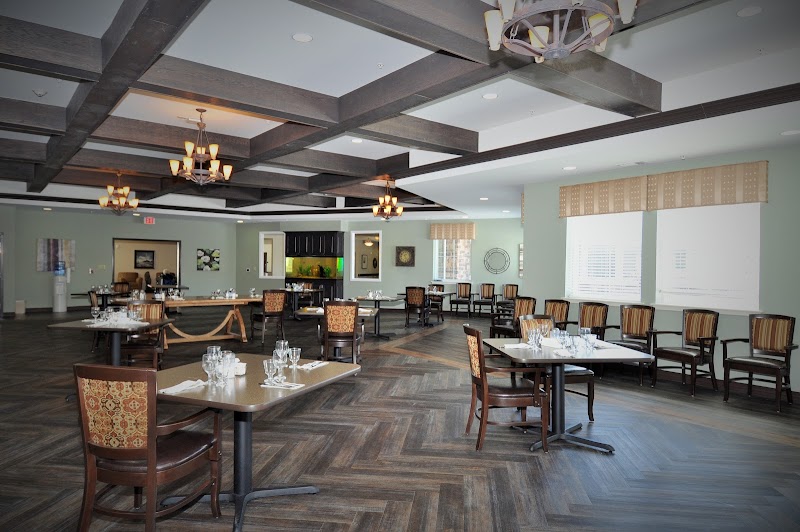
Who Owns and Operates Pavilion At Glacier Valley?

PAVILION AT GLACIER VALLEY is owned by a for-profit company. For-profit facilities operate as businesses with obligations to shareholders or private owners. The facility is operated by FUNDAMENTAL HEALTHCARE, a chain that manages multiple nursing homes. With 106 certified beds and approximately 72 residents (about 68% occupancy), it is a mid-sized facility located in SLINGER, Wisconsin.
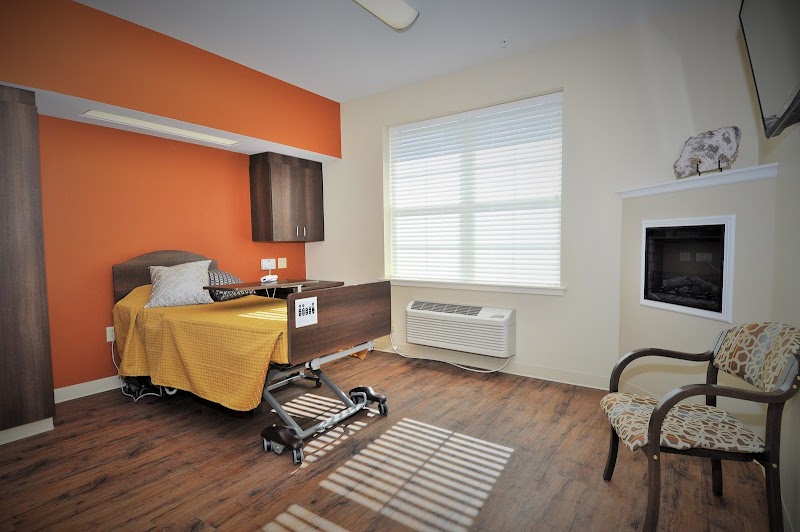
How Does Pavilion At Glacier Valley Compare to Other Wisconsin Nursing Homes?

Compared to the 100 nursing homes in Wisconsin, PAVILION AT GLACIER VALLEY's overall rating (2 stars) is below the state average of 3.0, staff turnover (46%) is near the state average of 46%, and health inspection rating (2 stars) is below the national benchmark.

What Should Families Ask When Visiting Pavilion At Glacier Valley?

Based on this facility's data, families visiting should ask: "Can I visit during a mealtime to observe dining assistance and food quality?" "How do you handle medical emergencies, and what is your hospital transfer rate?" "Can I speak with family members of current residents about their experience?"

Is Pavilion At Glacier Valley Safe?

Based on CMS inspection data, PAVILION AT GLACIER VALLEY has a clean safety record: no substantiated abuse findings (meaning no confirmed cases of resident harm), no Immediate Jeopardy citations (the most serious violation level indicating risk of serious injury or death), and is not on the Special Focus Facility watch list (a federal program monitoring the lowest-performing 1% of nursing homes). The facility has a 2-star overall rating and ranks #100 of 100 nursing homes in Wisconsin. While no facility is perfect, families should still ask about staff-to-resident ratios and recent inspection results during their visit.

Do Nurses at Pavilion At Glacier Valley Stick Around?

PAVILION AT GLACIER VALLEY has a staff turnover rate of 46%, which is about average for Wisconsin nursing homes (state average: 46%). Moderate turnover is common in nursing homes, but families should still ask about staff tenure and how the facility maintains care continuity when employees leave.

Was Pavilion At Glacier Valley Ever Fined?

PAVILION AT GLACIER VALLEY has been fined $9,750 across 1 penalty action. This is below the Wisconsin average of $33,176. While any fine indicates a compliance issue, fines under $50,000 are relatively common and typically reflect isolated problems that were subsequently corrected. Families should ask what specific issues led to these fines and confirm they've been resolved.

Is Pavilion At Glacier Valley on Any Federal Watch List?

PAVILION AT GLACIER VALLEY is not on any federal watch list. The most significant is the Special Focus Facility (SFF) program, which identifies the bottom 1% of nursing homes nationally based on persistent, serious quality problems. Not being on this list means the facility has avoided the pattern of deficiencies that triggers enhanced federal oversight. This is a positive indicator, though families should still review the facility's inspection history directly.