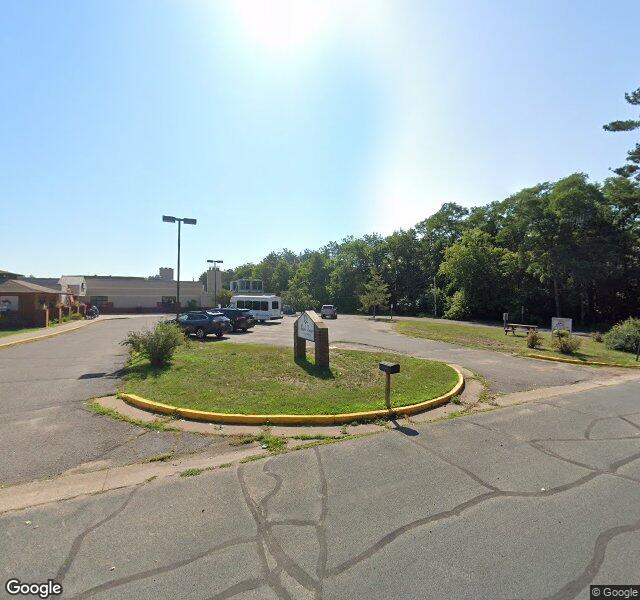
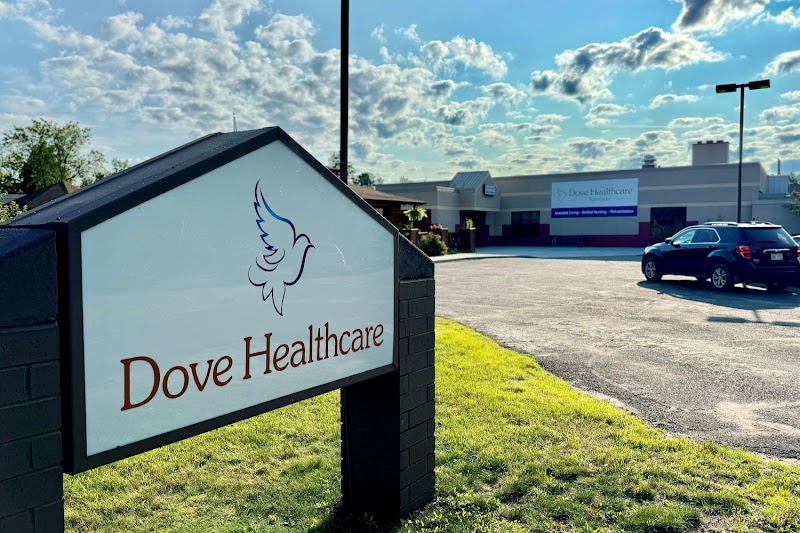
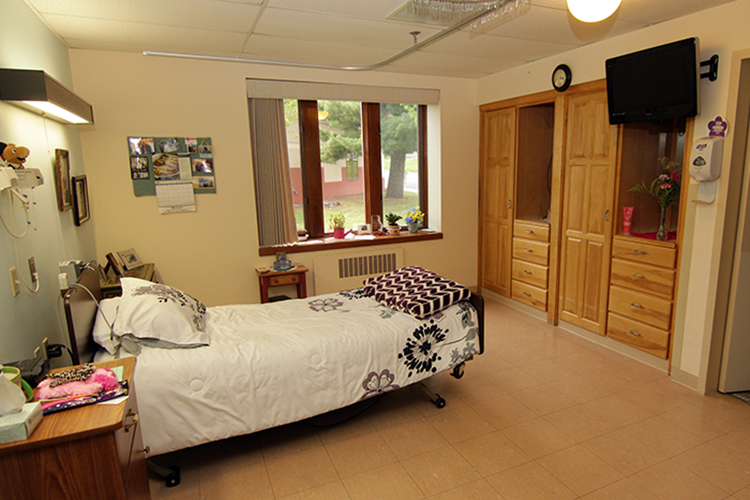
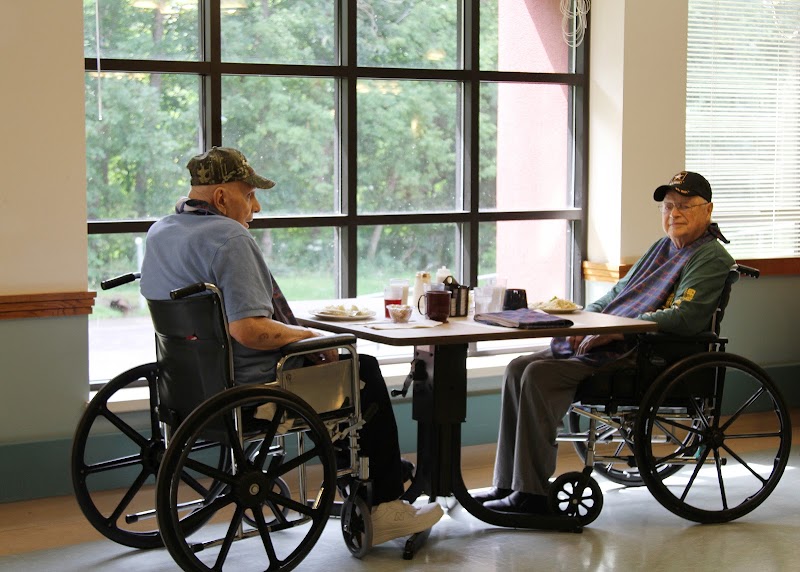
DOVE HEALTHCARE - SPOONER

510 FIRST ST, SPOONER, WI 54801 (715) 635-1415
For profit - Limited Liability company 75 Beds DOVE HEALTHCARE Data: November 2025
Trust Grade
50/100
#145 of 321 in WI
Last Inspection: July 2025

Inspected within the last 6 months. Data reflects current conditions.

Overview

Dove Healthcare - Spooner has a Trust Grade of C, which means it is average, falling in the middle of the pack for nursing homes. It ranks #145 out of 321 facilities in Wisconsin, placing it in the top half, but it is #2 out of 2 in Washburn County, indicating only one local option is better. The facility is improving, as the number of issues decreased from 15 in 2024 to 9 in 2025. Staffing is a strong point, with a perfect 5/5 star rating and turnover at 50%, which is average compared to the state. While there have been no fines, which is positive, there are concerns regarding care; for instance, staff failed to provide proper diabetic management for one resident, leading to significant medication errors. Additionally, there were issues with sanitation practices in the kitchen that could pose health risks. Overall, the facility has its strengths, particularly in staffing, but families should be aware of the care and sanitation concerns.

Trust Score
C
50/100
In Wisconsin
#145/321
Top 45%
Safety Record
Moderate
Needs review
Inspections
Getting Better
15 → 9 violations
Staff Stability
⚠ Watch
50% turnover. Above average. Higher turnover means staff may not know residents' routines.
Penalties
✓ Good
No fines on record. Clean compliance history, better than most Wisconsin facilities.
Skilled Nurses
✓ Good
Each resident gets 70 minutes of Registered Nurse (RN) attention daily — more than 97% of Wisconsin nursing homes. RNs are the most trained staff who catch health problems before they become serious.
Violations
⚠ Watch
39 deficiencies on record. Higher than average. Multiple issues found across inspections.
★★★☆☆
3.0
Overall Rating
★★★★★
5.0
Staff Levels
★★☆☆☆
2.0
Care Quality
★★☆☆☆
2.0
Inspection Score
Stable
2024: 15 issues
2025: 9 issues

The Good

  • 5-Star Staffing Rating · Excellent nurse staffing levels
  • Full Sprinkler Coverage · Fire safety systems throughout facility
  • No fines on record

Facility shows strength in staffing levels, fire safety.

The Bad

3-Star Overall Rating

Near Wisconsin average (3.0)

Meets federal standards, typical of most facilities

Staff Turnover: 50%

Near Wisconsin avg (46%)

Higher turnover may affect care consistency

Chain: DOVE HEALTHCARE

Part of a multi-facility chain

Ask about local staffing decisions and management

The Ugly 39 deficiencies on record

2 actual harm
Jul 2025 8 deficiencies
CONCERN (D)

Potential for Harm - no one hurt, but risky conditions existed

Notification of Changes (Tag F0580)

Could have caused harm · This affected 1 resident

**NOTE- TERMS IN BRACKETS HAVE BEEN EDITED TO PROTECT CONFIDENTIALITY** Based on observation, interview and record review, the facility did not notify the physician on call of R40's new break in skin ...

Read full inspector narrative →
**NOTE- TERMS IN BRACKETS HAVE BEEN EDITED TO PROTECT CONFIDENTIALITY** Based on observation, interview and record review, the facility did not notify the physician on call of R40's new break in skin on right great toe for 1 of 12 residents (R) reviewed for activities of daily living (ADL) (R40).Findings include:R40 was admitted to the facility on [DATE] with diagnoses including in part, acute respiratory failure with hypoxia, type 2 diabetes mellitus, obstructive sleep apnea, venous insufficiency, morbidly obese, bilateral osteoarthritis of hip, and prostatic hyperplasia. R40's care plan was initiated on 04/15/25 and included the following: DIABETIC:-Nursing to complete nail care on Tuesday evening. Surveyor reviewed R40's skin prevalence reports that did not note any skin issues. Surveyor reviewed diabetic foot checks weekly documentation:-On 07/07/25, R40's skin was intact.-On 07/14/25, R40's skin was intact.-On 07/15/25, R40's skin was intact.-On 07/21/25, R40's foot check was completed with right and left foot dry, not cracked, with slight edema which is not new to R40.-On 07/22/25, R40 had scant bleeding noted to right great toe, inflammation along line of toenail. Unable to determine exact open area for measurement due to placement of toenail/inflammation. No purulent drainage noted. Immediate action taken was cleansed right great toe with normal saline, applied band aid, gauze tube per R40's request. Added resident to weekly wound rounds, made appointment for R40 to be seen by provider due to resident being diabetic.Surveyor reviewed R40's progress notes and did not find any documentation that a staff member notified provider of new skin changes or assessed the new skin changes on R40's right great toe.Observations and interviewsOn 07/21/2025 at 10:36 AM, Surveyor interviewed R40. Surveyor asked if R40 had any sores or open areas on body. R40 reported to Surveyor that at this time R40 does not have any skin issues except R40's great right toe has a sore from podiatrist cutting toe nail off. Surveyor observed band aid and kerlix wrapped on great right toe.On 07/22/25 at 6:50 AM, Director of Nursing (DON) B asked if any Surveyor wants to observe wound dressing changes on any residents. Surveyor reported to DON B that Surveyor wanted to see what was going on with R40's band aid on great right toe. DON B reported to Surveyor that DON B would ask the Registered Nurse (RN) to bring Surveyor in once RN goes into R40's room.On 07/22/2025 at 7:23 AM, Surveyor observed Registered Nurse (RN) M walk out of R40's room. RN M reported to Surveyor that RN M was not aware of R40's right great toe and that the toe injury is new. Surveyor observed wound care supplies laid all over R40's bed when Surveyor entered. Surveyor asked RN M if RN M knew about the injury prior to today, 07/22/25. RN M reported that RN M did not know about it and that it is newly developed. RN M reported usually CNAs will let wound care nurse (RN M) know about it right away and no one has let RN M know yet. Surveyor asked RN M at what point did someone place a band aid on R40's right great toe. RN M stated, I am unsure. Surveyor asked RN M if there was any documentation in the chart to show the condition of R40's right great toe. RN M stated that RN M would look into it after dressing R40's wound. RN M stated to Surveyor that RN M would notify the on-call doctor to peek on R40 during virtual rounds. Surveyor asked RN M if RN M knew who placed the band aid on R40 and did not report it to RN M or provider. RN M reported to Surveyor that RN M is unsure but will call the shifts prior to day shift today. On 07/22/2025 at 7:45 AM, RN M reported to Surveyor that last skin checks documented for R40 were skin was intact. Surveyor asked where notes were that someone placed a band aid on R40. RN M reported that RN M would keep looking through the Electronic Health Record (EHR).On 07/22/2025 at 1:30 PM, Surveyor interviewed RN M and asked if RN M spoke with the staff who placed band aid on and why it was not reported to provider or another staff member. RN M reported to Surveyor that RN M has not heard back from staff yet. RN M reported to Surveyor that RN M contacted physician on call and will be completing a virtual visit to assess R40's diabetic toe. RN M reported that RN M will assess the skin issue, complete a Braden skin assessment, and update care plan as needed. On 07/23/25 at 8:01 AM, Surveyor interviewed RN M and asked if RN M spoke with the staff who placed band aid. RN M reported that no one has called back yet.On 07/23/2025 at 12:32 PM, Surveyor interviewed DON B and asked DON B's expectation of assessing R40's diabetic toe and then reporting it to physician. DON B reported to Surveyor that DON B's expectation is that whoever finds a new skin issue on any resident then it is reported immediately to next shift, physician on call, and DON B. Surveyor asked DON B's expectation for assessing and documenting new skin issues on R40. DON B reported to Surveyor that DON B expects staff to assess a new skin issue thoroughly, measure, cleanse, document, and notify on call provider. Surveyor asked DON B if DON B knew who placed the band aid on and who didn't report this upon finding the new skin issue on R40. DON B reported to Surveyor that RN M was reaching out to all previous shifts and had to leave messages. DON B reported so far there are no call backs.
CONCERN (D)

Potential for Harm - no one hurt, but risky conditions existed

Deficiency F0582 (Tag F0582)

Could have caused harm · This affected 1 resident

Based on staff interview and record review, the facility did not provide Advanced Beneficiary Notice (ABN) of non-coverage and/or Notice of Medicare of Non-Coverage (NOMNC) appropriately for residents...

Read full inspector narrative →
Based on staff interview and record review, the facility did not provide Advanced Beneficiary Notice (ABN) of non-coverage and/or Notice of Medicare of Non-Coverage (NOMNC) appropriately for residents (R) whose Medicare Part A coverage was discontinued with benefit days remaining for 2 of 3 residents (R) reviewed. (R55, R46) R55 had a skilled Medicare A Service Episode with a start date of 03/19/25 and last covered date of 04/19/25. The facility/provider initiated the discharge from Medicare A Services when benefit days were not exhausted. The facility checked the box on the SNF Beneficiary Protection Notification Review form that asked the question Was a Skilled Nursing Facility (SNF) Advanced Beneficiary Notice (ABN), Form CMS-10055 provided to the resident? The facility checked the box No with an explanation handwritten, Was given, however cannot find it in paper form or Electronic Medical Record (EMR). On the box on the SNF Beneficiary Protection Notification Review form that asked the question Was a Notice of Medicare of Non-Coverage (NOMNC) provided to the resident?, the box labeled No was checked with an explanation handwritten, Was given, however cannot find it in paper form or EMR. R46 had a skilled Medicare A Service Episode with a start date of 02/01/25 and last covered date of 03/19/25. The facility/provider initiated the discharge from Medicare A Services when benefit days were not exhausted. The facility checked the box on the SNF Beneficiary Protection Notification Review form that asked the question Was a Skilled Nursing Facility (SNF) Advanced Beneficiary Notice (ABN), Form CMS-10055 provided to the resident? The facility checked the box YES. On the box on the SNF Beneficiary Protection Notification Review form that asked the question Was a Notice of Medicare of Non-Coverage (NOMNC) provided to the resident? The box labeled YES. R46 received and dated the NOMNC on 03/18/25, which was only 1 day notice instead of the required 2-day notice. On 7/23/25 at 9:15 AM, Surveyor interviewed Social Worker (SW) G, regarding process of issuing and obtaining a NOMNC and ABN, SW G indicated that once a document is signed it is scanned into the system and SW G confirmed inability to locate the documents for R55. SW G stated the expectation of presenting a NOMNC to a resident for signature is a minimum of 2 days prior to last covered day. SW G was made aware of R46 signing the NOMNC the day prior to last covered day. SW G accessed computer system and confirmed document was signed 1 day prior and not 2 days prior to last covered day. On 07/23/2025 at 9:45 AM, Surveyor shared inability to find R55's NOMNC and ABN. Surveyor interviewed DON B and confirmed the facility was unable to locate the documents. Surveyor also shared observation of R46's NOMNC was not signed until 1 day prior to last covered day.
CONCERN (D)

Potential for Harm - no one hurt, but risky conditions existed

Deficiency F0605 (Tag F0605)

Could have caused harm · This affected 1 resident

**NOTE- TERMS IN BRACKETS HAVE BEEN EDITED TO PROTECT CONFIDENTIALITY** Based on interview and record review, the facility did not ensure 1 of 5 residents reviewed (R2) was free from unnecessary medic...

Read full inspector narrative →
**NOTE- TERMS IN BRACKETS HAVE BEEN EDITED TO PROTECT CONFIDENTIALITY** Based on interview and record review, the facility did not ensure 1 of 5 residents reviewed (R2) was free from unnecessary medications.-Facility did not ensure adequate indication for use of psychotropic medications.Findings include:R2 was admitted to the facility on [DATE] with diagnoses of dizziness and giddiness, and dementia (moderate) without behavioral disturbance, psychotic disturbance, mood disturbance, and anxiety.Most recent Minimum Data Set (MDS) shows a Brief Interview for Mental Status (BIMS) score of 13/15 indicating R2 is cognitively intact.Facility policy titled, Psychotropic Medication Evaluation and Utilization, last reviewed 12/2024, reads in part: Psychotropic medications and other medications with black box warnings are specifically identified as requiring additional monitoring.these medications require more in-depth review.due to the potential for limited effect and higher potential for significant side effects.all of these medications require individualized monitoring which may include.targeted behavior monitoring.Care Plan in part (prior to start of psychotropic medications):Focus: R2 is at risk for falls r/t syncopal episodes, medication use, and history of falling. (Last revised on 02/05/25) Interventions include 1:1 supervision provided related to fall and encourage R2 to use call light system for assistance (last reviewed on 02/05/2025)Record review indicated no targeted behavior monitoring in place prior to starting Lorazepam and Escitalopram. No previous diagnosis of anxiety or depression prior to beginning these medications.General behavior monitoring 30 days prior to start of medications indicated 4 episodes of anxiousness.Physician orders indicated R2 was on an antibiotic for a urinary tract infection (Nitrofurantoin Macro crystal) from 05/09/25-05/23/25.Progress note, from 05/21/25, indicates staff spoke with R2's daughter. R2's daughter requested a mood stabilizer. R2's daughter was not activated power of attorney (POA) at this time. Progress note, from 05/21/25, indicates R2 was sent to the emergency room for evaluation related to loss of consciousness/syncope. Progress note, from 05/22/25, indicated facility staff left message with clinic manager at hospital for R2's physician to address possible medication for mood stabilization. Progress note, from 05/22/25, indicated facility staff received a call from R2's physician for new orders for Escitalopram, Lorazepam, and a new diagnosis of depression with anxiety.Power of Attorney signed and activated on 05/22/25.Care plan initiated after new diagnosis/start of psychotropic medications on 05/22/25:SIDE EFFECT MONITORING: ANTIANXIETY-Monitor for side effects: Dizziness, Nausea, Drowsiness, Blurred Vision, Confusion, Weight Gain, Psychomotor Agitation, Panic AttacksSIDE EFFECT MONITORING: ANTIDEPRESSANT-Monitor for side effects: Nausea, Dizziness, Headache, Constipation, Weight gain, Drowsiness, Insomnia, fatigue, diarrhea, irritability, restlessnessSIDE EFFECT: ANTICOAGULANT-Monitor for side effects: Blood in urine/stool, black stool, severe bruising, prolonged nosebleeds, bleeding gums, vomiting/coughing up blood.Focus: I use antidepressant medication r/t mixed anxiety/depressive disorder with interventions including monitoring for change in behavior/mood/cognition; hallucinations/delusions; social isolation, suicidal thoughts, withdrawal, decline in ADL ability, continence, no voiding; constipation, fecal impaction, diarrhea, gait changes, rigid muscles, balance probs, movement problems, tremors, muscle cramps, falls, dizziness/vertigo, fatigue, insomnia, appetite loss, weight loss, nausea/vomiting, dry mouth, and dry eyesProgress note, from 05/24/25, indicated R2 was feeling dizzy and nauseated and stayed in the nurse's station for 15 minutes to be observed. Progress note, from 05/28/25, indicated R2 reported feeling dizzy but did not have nausea, and declined supper.Progress note, from 06/11/25, indicated a pharmacy recommendation was made to discontinue the as needed Lorazepam. R2's provider discontinued as recommended and gave new orders for Lorazepam daily scheduled at night.Progress note, from 06/17/25, indicated R2 was experiencing hallucinations and confusion.Progress note, from 06/17/25, indicated staff spoke with R2's power of attorney regarding dose of Lorazepam. R2's POA agreed the current dose was working.Record review indicated 1 episode of confusion and repetition of questions on 06/18/25 with neutral facial expressions and limited eye contact.Progress note, from 06/18/25, indicated staff contacted R2's physician in relation to increased anxiety and behaviors. R2's physician gave verbal orders to increase Lorazepam to twice daily.Progress note, from 06/22/25, indicated R2 experienced confusion.R2 was sent to emergency room on [DATE], after an unwitnessed fall and complaints of right hip and elbow pain. R2 returned to facility with order for antibiotic for a urinary tract infection. Intervention added to care plan: Offer to assist R2 to lay down after lunch. (06/22/2025)Progress note, from 07/06/25, indicated R2 had an unwitnessed fall. Intervention added to care plan: Anti-roll back bars on wheelchair (07/06/2025)Progress note, from 07/12/25, indicated R2 experienced hallucinations and restlessness.Progress note, from 07/15/25, indicated R2 experienced confusion, was roaming around R2's room, and undressing.R2 sent to emergency room on [DATE], after an unwitnessed fall. R2 returned to facility same day with no new orders. Intervention added to care plan: 1:1 supervision provided related to fall (07/20/2025) Resident Posting/Sign: Call, don't fall sign in room. (07/20/2025) Pharmacy review of medications. (07/21/2025) On 07/23/25 at 10:12 AM Surveyor interviewed R2. R2 stated she was frustrated that she keeps falling but is glad she has no broken bones. R2 stated she gets infections in her urine, and she gets turned around at times. R2 could not recall dates of falls, number of falls, or names of the new medications but did say they make her stopped up. R2 said when that happens it upsets her stomach, and she doesn't feel like eating.On 07/23/2025 at 11:21 AM, Surveyor interviewed Certified Nursing Assistant (CNA) O. CNA O stated R2 has always been anxious since she has been at the facility. CNA O stated CNA O hasn't noticed any changes in general, better or worse. CNA stated R2 is hit or miss for sleep and will sometimes sleep in the bed and sometimes in the recliner. CNA O stated they use pressure alarms on the bed and in the recliner, and a string alarm while in the wheelchair. CNA O also stated R2 was moved closer to the nurse's station for safety as well. CNA O stated they carry a copy of the resident care plan while working and stated those get updated as needed when things change. On 07/23/2025 at 11:27 AM, Surveyor interviewed Registered Nurse (RN) M. RN M stated R2 is anxious at baseline but seems to be becoming more confused. RN M stated she believes the behaviors R2 has seem to ebb and flow. There isn't consistency. RN M also stated they have noticed behaviors are more often in the evening and are planning to discuss possible sundowning with the provider. RN M stated the number of falls prior to, and post psychotropic meds are about the same. RN M stated a lot of symptoms and falls have correlated with when R2 had UTIs. RN M stated some of the interventions in place for safety are alarms, offering activities, dycem in the wheelchair, and physical and occupational therapy assessments. On 07/23/2025 at 12:07 PM, Surveyor interviewed Director of Nursing (DON) B. DON B stated facility staff receive yearly and as needed education on the procedure/expectations for psychotropic medications. DON B stated they assess the resident, look at their history, implement non-pharmacological interventions, and discuss with physician before starting on psychotropic medications. DON B stated behavior monitoring should be completed prior to starting the medication. DON B stated R2 has had the same provider for a long time, and he knows her and her family well. DON B stated R2's physician is aware of her history and possibly that is why he prescribed the medications so quickly. Surveyor located no behavior monitoring prior to the medication or rationale prior to the use of the psychotropic medication.
CONCERN (D) 📢 Someone Reported This

A family member, employee, or ombudsman was alarmed enough to file a formal complaint

Potential for Harm - no one hurt, but risky conditions existed

ADL Care (Tag F0677)

Could have caused harm · This affected 1 resident

**NOTE- TERMS IN BRACKETS HAVE BEEN EDITED TO PROTECT CONFIDENTIALITY** Based on observation, interview and record review, the facility did not ensure activities of daily living (ADLs) of toileting an...

Read full inspector narrative →
**NOTE- TERMS IN BRACKETS HAVE BEEN EDITED TO PROTECT CONFIDENTIALITY** Based on observation, interview and record review, the facility did not ensure activities of daily living (ADLs) of toileting and incontinence cares were provided for 1 of 12 residents (R6) reviewed. This is evidenced by:R6 was admitted to the facility on [DATE], with diagnoses including Alzheimer's disease unspecified, dementia, type 2 diabetes mellitus, essential hypertension, major depressive disorder, and dysphagia.R6's minimum data set (MDS) assessment, completed on 07/05/25, confirmed R6 is incontinent of urine and frequently incontinent of bowels. R6 requires supervision assistance with eating. R6 is substantial or maximal assist on staff for personal hygiene, showering/bathing, toileting, transferring, dressing lower body, and putting on/taking off footwear. R6's care plan was initiated on 02/05/25, and included the following: BED MOBILITY:-2 assist EATING:-Set-up assistance DRESSING:-2 assist TOILET USE:-2 assist TRANSFER:-1 assist [NAME] steadyOn 07/22/2025 at 6:40 AM, Surveyor observed R6's room door closed. Surveyor knocked and no one answered so Surveyor entered and observed R6 lying in bed on back. On 07/22/2025 at 7:53 AM, Surveyor observed R6's room door closed. Certified Nurse Assistant (CNA) H walked into room and asked if R6 wanted to participate in men's breakfast. R6 shook head no. CNA H let R6 rest in bed. On 07/22/2025 at 12:08 PM, Surveyor observed R6's room door closed. Surveyor observed R6 in bed, moving covers around, leaning part way off bed. Surveyor observed fall mat in place. On 07/22/2025 at 12:44 PM, Surveyor observed R6's room door closed. Surveyor observed CNA H go into R6's room and ask if R6 was ready to get up. R6 shook head no to CNA H. CNA H indicated to R6 that CNA H will be back into room to get R6 up for the day but would let him rest a little longer. Surveyor observed CNA H exit R6's room.On 07/22/2025 at 12:47 PM, Surveyor interviewed CNA H and asked CNA H if R6 has been up yet for the day as Surveyor saw R6 lying in bed since Surveyor came into building at 6:40 AM and did not see R6 eat breakfast or lunch thus far. CNA H reported to Surveyor that R6 is a late owl and didn't go to bed till 6 AM this morning. R6 use to work night shifts in his younger years on the railroad. CNA H reported that R6's usual is getting up around 1pm-2pm. CNA H reported to Surveyor that CNA H will be getting R6 up soon. CNA H indicated that is when R6 will get up for the day and eat. On 07/22/25 at 2:20 PM, Surveyor observed new evening staff on for their evening shift and day shift leaving. Surveyor observed R6 still lying in bed awake fiddling with covers and hanging part way off bed. Fall mat was in place. Surveyor did not observe any staff go into R6's room during the continuous observation to provide incontinent care or offer toileting. Observation from second Surveyor:On 07/22/25 at 2:58 PM, Surveyor observed R6's room door closed. Surveyor knocked and no one answered so Surveyor entered room. Surveyor saw R6 leaning off bed which was in its lowest position and just above another mattress that is positioned on R6's right side. On 07/22/25 at 3:07 PM, CNA J and CNA I entered room and Surveyor followed CNAs and noted R6 lying with just an incontinent brief totally on top of the mattress that was positioned next to bed and fall alarm sounding. Surveyor observed CNA I go into bathroom and begin to gather supplies to conduct ADL care. CNA I knelt on floor next to R6 and proceeded to wash R6. Surveyor observed incontinent brief was urine soaked.R6 was assisted to toilet by CNAs and continuation of cares was conducted. Surveyor observed soiled incontinent product of urine only was removed and deterioration of product was visible with numerous flakes of inner lining/filling of incontinent product falling onto bathroom floor, sticking to resident's skin and noted numerous additional flakes near and on mattress next to bed. Bed mattress was noticeable urine soaked and confirmed by CNA J. CNA J stated that per 1st shift, R6 had been in bed all day as he was up all night until earlier this AM.On 07/23/2025 at 6:59 AM, Surveyor observed R6 sleeping in wheelchair in lounge area near nurse's station. On 07/23/2025 at 7:20 AM, Surveyor observed Director of Nursing (DON) B offer R6 to use bathroom, change shirt, and get ready for breakfast. DON B stated to R6, I know you have been up all night. Let's get a clean shirt, breakfast, and then you can lie down. DON B wheeled R6 to room and began changing R6's shirt. Surveyor interviewed DON B and asked how R6 does in the day. DON B reported to Surveyor that R6 use to work the railroad and was a night shifter. DON B reported that sometimes R6 sleeps all day. Surveyor asked DON B's expectation for checking on R6 and providing cares during the day when sleeping in room. DON B reported that staff should be checking on R6 and offering toileting or incontinent cares at least every 2-3 hours. DON B reported that staff should still be offering meals through the day. On 07/23/2025 at 7:23 AM, Surveyor observed CNA K enter R6's room and assist DON B with R6's transfer to toilet. CNA K took R6's pants down, placed wet brief in trash can, then placed R6 on toilet to use the bathroom. DON B and CNA K gave R6 a few minutes to use the bathroom.On 07/23/2025 at 7:27 AM, Surveyor interviewed CNA H and asked CNA H what time day shift laid R6 down on 07/22/25 since R6 had been up all night the previous night on 07/21/25. CNA H reported night shift laid R6 down right before day shift arrived around 5:30 AM or so. Surveyor asked CNA H what time CNA H went in yesterday on day shift of 07/22/25. CNA H reported that CNA H went into R6's room around 8:30 AM and provided incontinent cares. Surveyor asked CNA H if CNA H went in at any point further through the day to provide incontinent cares or offer toileting. CNA H reported that CNA H did not go in again to provide cares or toilet R6 and that usually depends on R6 and how he feels if we toilet or not. Surveyor asked CNA H if breakfast and lunch were offered to R6 throughout the day while R6 was in room. CNA H stated to Surveyor, Well you saw me go in around lunch time and ask if [R6] wanted to get up for lunch. He declined getting up for lunch. Surveyor asked CNA H what common practice is when offering toileting or providing incontinent cares to R6. CNA H reported to Surveyor that it just depends on how R6 is feeling, but CNA H should have gone in again to provide cares. On 07/23/2025 at 7:35 AM, Surveyor observed CNA L enter R6's room to assist CNA K with R6's transfer. CNA L asked CNA K if R6 is going to bed since he has been up all night. CNA K responded to CNA L and stated, [DON B] wants [R6] to stay up for breakfast and then we can lay [R6] down. Surveyor observed CNA K and CNA L lift R6 off toilet. CNA L noted smearing of bowel movement (BM) on R6's bottom so CNA L cleansed R6's bottom of BM. CNA L placed clean brief on R6 and then pulled shorts up. Surveyor did not observe peri cares completed on R6's groin area after incontinent episode of urine in R6's brief. Surveyor observed CNA K and CNA L transfer R6 back into wheelchair. CNA K wheeled R6 to dining room for breakfast. On 07/23/2025 at 11:36 AM, Surveyor interviewed CNA L and asked CNA L's process for performing peri cares. CNA L reported to Surveyor that CNA L performs peri care from front to back when changing an incontinent soiled brief. Surveyor asked CNA L if CNA L cleansed R6's genital area after changing R6's wet brief and toileting R6. CNA L reported that CNA did not wipe R6's front area when toileting R6. On 07/23/2025 at 2:03 PM, Surveyor interviewed DON B and asked expectation for performing peri cares on R6 after an incontinent episode. DON B reported to Surveyor the expectation is for CNAs to clean the whole peri care area front and back.
CONCERN (D)

Potential for Harm - no one hurt, but risky conditions existed

Quality of Care (Tag F0684)

Could have caused harm · This affected 1 resident

**NOTE- TERMS IN BRACKETS HAVE BEEN EDITED TO PROTECT CONFIDENTIALITY** Based on observations, interviews and record reviews, the facility did not provide appropriate skin assessments and treatment by...

Read full inspector narrative →
**NOTE- TERMS IN BRACKETS HAVE BEEN EDITED TO PROTECT CONFIDENTIALITY** Based on observations, interviews and record reviews, the facility did not provide appropriate skin assessments and treatment by professional standards of practice to maintain a resident's highest practicable level of physical well-being for 1 of 12 residents (R40) reviewed.Staff did not assess or document R40's new break in skin on great right toe or treat the skin injury appropriately.Findings include:R40 was admitted to the facility on [DATE] with diagnoses including in part, acute respiratory failure with hypoxia, Type 2 Diabetes Mellitus, obstructive sleep apnea, venous insufficiency, morbidly obese, bilateral osteoarthritis of hip, and prostatic hyperplasia.R40's care plan was initiated on 04/15/25, and included the following:DIABETIC:-Nursing to complete nail care on Tuesday evening. Surveyor reviewed R40's skin prevalence reports that did not note any skin issues. Surveyor reviewed Diabetic foot checks weekly documentation:-On 07/07/25, R40's skin was intact.-On 07/14/25, R40's skin was intact.-On 07/15/25, R40's skin was intact.-On 07/21/25, R40's foot check was completed with right and left foot dry, not cracked, with slight edema which is not new to R40.-On 07/22/25 R40 has scant bleeding noted to right great toe, inflammation along line of toenail. Unable to determine exact open area for measurement due to placement of toenail/inflammation. No purulent drainage noted. Immediate action taken was cleansed right great toe with normal saline, applied band aid, gauze tube per R40's request. Added resident to weekly wound rounds, made appointment for R40 to be seen by provider due to resident being diabetic.Surveyor reviewed R40's progress notes and did not find any documentation that a staff member assessed the new skin changes on R40's right great toe. Observations and interviewsOn 07/21/2025 at 10:36 AM, Surveyor interviewed R40. Surveyor asked if R40 had any sores or open areas on body. R40 reported to Surveyor that at this time R40 does not have any skin issues except R40's great right toe has a sore from podiatrist cutting toe nail off. Surveyor observed band aid and kerlix wrapped on great right toe.On 07/22/25 at 6:50 AM, Director of Nursing (DON) B asked if any Surveyor wants to observe wound dressing changes on any residents. Surveyor reported to DON B that Surveyor wanted to see what was going on with R40's band aid on great right toe. DON B reported to Surveyor that DON B would ask the Registered Nurse (RN) to bring Surveyor in once RN goes into R40's room.On 07/22/2025 at 7:23 AM, Surveyor observed Registered Nurse (RN) M walk out of R40's room. RN M reported to Surveyor that RN M was not aware of R40's right great toe and that the toe injury is new. Surveyor observed wound care supplies laid all over R40's bed when Surveyor entered. Surveyor asked RN M if RN M knew about the injury prior to today, 07/22/25. RN M reported that RN M did not know about it and that it is newly developed. RN M reported usually CNAs will let wound care nurse (RN M) know about it right away and no one has let RN M know yet. Surveyor asked RN M at what point did someone place a band aid on R40's right great toe. RN M stated, I am unsure. Surveyor asked RN M if there was any documentation of an assessment in the chart to show the condition of R40's right great toe. RN M stated that RN M would look into it after dressing R40's wound. Surveyor asked RN M if RN M knew who placed the band aid on R40 and did not report it to RN M or provider. RN M reported to Surveyor that RN M is unsure but will call the shifts prior to day shift today. On 07/22/2025 at 7:45 AM, RN M reported to Surveyor that last skin checks documented for R40 were skin was intact. Surveyor asked where notes were that someone placed a band aid on R40 or assessed the toe. RN M reported that RN M would keep looking through the Electronic Health Record (EHR). On 07/22/2025 at 1:30 PM, Surveyor interviewed RN M and asked if RN M spoke with the staff who placed band aid on and why it was not reported to provider or another staff member. RN M reported to Surveyor that RN M has not heard back from staff yet. RN M reported that RN M will assess the skin issue, complete a Braden skin assessment, and update care plan as needed. On 07/23/25 at 8:01 AM, Surveyor interviewed RN M and asked if RN M spoke with the staff who placed band aid. RN M reported that no one has called back yet.On 07/23/2025 at 12:32 PM, Surveyor interviewed DON B and asked DON B's expectation for assessing and documenting new skin issues on R40. DON B reported to Surveyor that DON B expects staff to assess a new skin issue thoroughly, measure, cleanse, document, and notify on call provider. Surveyor asked DON B if DON B knew who placed the band aid on and who didn't report this upon finding the new skin issue on R40. DON B reported to Surveyor that RN M was reaching out to all previous shifts and had to leave messages. DON B reported so far there are no call backs.
CONCERN (D)

Potential for Harm - no one hurt, but risky conditions existed

Deficiency F0692 (Tag F0692)

Could have caused harm · This affected 1 resident

**NOTE- TERMS IN BRACKETS HAVE BEEN EDITED TO PROTECT CONFIDENTIALITY** Based on record review and interview, the facility did not ensure acceptable parameters of nutritional status to maintain usual ...

Read full inspector narrative →
**NOTE- TERMS IN BRACKETS HAVE BEEN EDITED TO PROTECT CONFIDENTIALITY** Based on record review and interview, the facility did not ensure acceptable parameters of nutritional status to maintain usual body weight. This occurred for 1 of 3 residents reviewed for nutritional status, Resident (R) R6.R6 was not weighed weekly to assess if he was maintaining his usual body weight. R6 had significant weight loss that was not assessed appropriately. Based on record review and interview, the facility did not ensure acceptable parameters of nutritional status to maintain usual body weight. This occurred for 1 of 3 resident reviewed for nutritional status. Resident (R) R6.R6 was not weighed weekly to assess if he was maintaining his usual body weight. R6 had significant weight loss that were not assessed appropriately. This is evidenced by:R6 was admitted to the facility on [DATE] with diagnoses including Alzheimer's disease unspecified, dementia, type 2 diabetes mellitus, essential hypertension, major depressive disorder, and dysphagia.R6's minimum data set (MDS) assessment, completed on 07/05/25, confirmed R6 is incontinent of urine and frequently incontinent of bowels. R6 requires supervision assistance with eating. R6 is substantial or maximal assist on staff for personal hygiene, showering/bathing, toileting, transferring, dressing lower body, and putting on/taking off footwear.R6's care plan was initiated on 02/05/25, and included the following:EATING:-Set-up assistance DENTAL CARE initiated on 02/05/25,-Consult with RD and follow recommendations.-Keep physician and significant other/designated family member informed of significant weight loss (.4% of previously obtained weight).-Monitor for weight loss. POTENTIAL FOR ALTERED NUTRITIONAL initiated on 07/05/25,-Diet as ordered CCHO, mechanical soft diet texture, thin liquids.-Eating: Independent, with supervision/set up-Provide and serve supplements as ordered.-Weights as ordered. Update RD/MD with weight gain/loss per facility protocol. Weekly weight report printed and examined.Surveyor reviewed R6's physician orders:-On 01/28/25, Weekly weights ordered.Surveyor reviewed R6's weights from 01/02/25 to present 07/22/25. -On 01/11/25 211 lbs.Staff missed 3 weeks of weights for R6.-On 02/07/25 223.7 lbs.-On 02/14/25 223 lbs.Staff missed 2 weeks of weights for R6.-On 03/07/25 224.3 lbs.-On 03/10/25 205 lbs.-On 03/19/25 208.6 lbs.-On 03/26/25 207.2 lbs.-On 03/31/25 208.3 lbs.Staff missed 2 weeks of weights for R6.-On 04/15/25 205.2 lbs.-On 04/22/25 206.6 lbs.-On 05/02/25 204.7 lbs.-On 05/08/25 208.6 lbs.-On 05/14/25 204.6 lbs.Staff missed 1 week of weights for R6.-On 05/30/25 200.5 lbs.-On 06/04/25 200.6 lbs.-On 06/10/25 201.2 lbs.Staff missed 2 weeks of weights for R6.-On 07/03/25 192.1 lbs.Surveyor calculated weight loss in percentage as follows: - On 02/07/2025, the resident weighed 223.7 lbs. On 05/02/2025, the resident weighed 204.7 lbs. which is a -8.49% loss.- On 02/07/2025, the resident weighed 223.7 lbs. On 07/11/2025, the resident weighed 200 lbs. which is a -10.59% loss.Surveyor reviewed Nutritional At Risk (NAR) reports from 01/03/25 to 07/18/25 for dietary in assessing and intervening for residents at risk or with weight loss. Surveyor did not find R6 noted on Dietary Manager (DM) N's NAR reports that she prints and brings to weekly meetings to the interdisciplinary team. Surveyor reviewed R6's progress notes:-On 02/28/25, Nutritional note: Diet CCHO, regular texture, thin liquids.eating independently with supervision/ set up. Intakes are quite varied, 25-100% of meals. Fluids are 240-720cc per meal. No issues chewing/swallowing noted. Weight: 223#, BMI of 33- obese. Care plan has been reviewed/updated. No new recommendations, RD to f/u and monitor prn.-On 04/17/25, Dietary note, Nutritional note: ST trial of Mech soft texture through 4/21/25 breakfast, monitoring for better meal intakes, re-eval at that time.-On 07/06/25, Nutritional risk assessment completed and noted R6 will proceed with nutritional diagnosis. Nutritional risk related to, if applicable: dysphagia related to difficulty swallowing as evidenced by requires modified texture diet. Care plan has been reviewed/updated. recommend offering sugar free house supplement BID, RD to follow up and monitor prn.Surveyor found no documentation for follow up on the trial for mechanical soft from 04/17/25 until 07/06/25 after R6 lost significant amount of weight. Surveyor did not find any documentation addressing R6's weight loss and updated care plan with new interventions until 07/05/25. On 07/23/25 at 12:01 PM, Surveyor interviewed DM N and asked DM N to explain process for monitoring weight loss in residents. DM N reported to Surveyor that DM N goes into EHR and follows weights. DM N will track trends and see who is at risk for weight loss or is actively losing weight and then documents in reports called NAR reports. DM N reported that the NAR reports go to the Registered Dietician (RD) and then interventions are put into place once RD reviews. DM N then reported that a dietary profile, mini nutrition assessment, and nutritional check assessment is concluded quarterly and annually. Surveyor asked DM N if R6 was on DM N's NAR reports. DM N reviewed NAR reports and stated, No R6 is not on NAR reports from 01/03/25 to present. Surveyor asked how R6 was missed for having significant weight loss. DM N was not sure how the significant weight loss was missed. On 07/23/2025 at 12:13 PM, Surveyor interviewed Director of Nursing (DON) B. Surveyor informed DON B of review of R6's nutrition and significant weight loss and the interview with DM N who reported somehow R6 did not populate as weight loss to review and intervene for further weight loss. Surveyor asked DON B's expectation of staff addressing the weight concerns for R6. DON B reported to Surveyor that DON B's expectation is that staff communicate about weight changes. DON B reported that CNAs tell the nurse the weights and if nurse sees a significant change that dietary is notified right away. DON B reported that DM N has her own way of assessing weights and then reporting significant changes to residents on a consistent basis. DON B reported that DON B would review and address R6's daily living and adjust schedule to preferences of sleep, eating, etc. VP of Clinical Operations E reported to Surveyor that VP of Clinical Operations E completed education regarding NAR reports, weight loss, nutrition in a meeting with all staff on 05/23/25.
CONCERN (F)

Potential for Harm - no one hurt, but risky conditions existed

Food Safety (Tag F0812)

Could have caused harm · This affected most or all residents

Based on observation, interview and record review, the facility did not ensure proper sanitation practices to prevent the outbreak of foodborne illness which had the potential to affect all 45 residen...

Read full inspector narrative →
Based on observation, interview and record review, the facility did not ensure proper sanitation practices to prevent the outbreak of foodborne illness which had the potential to affect all 45 residents.-The facility did not ensure dishes were dried appropriately.-The facility did not ensure proper cleaning of portable steam tables before replacing clean covers.Findings include:The facility policy entitled, Dishwashing, (no date) reads in part: All items are air dried in racks before storing.The facility policy regarding steam tables (no date, no title), reads in part: Wash top of steam table with warm soapy water and cloth. Spray sanitizing solution.empty water.wash all covers after each meal. On 07/22/25 at 9:20 AM, Surveyor entered the kitchen to observe dish washing. Surveyor observed plastic containers stacked together in the clean area near the 3-compartment sink. Visible moisture inside of the outside container. On 07/22/25 at 9:23 AM, Surveyor observed [NAME] Q stack slotted plastic dinner plates together immediately upon them coming out of the dish machine. Several plates were still visibly wet. Surveyor observed [NAME] Q place a clean cover for a portable steam table onto the steam table which still contained the water from prior to breakfast and had not been cleaned. Surveyor observed no pan in steam table when clean cover was replaced.On 07/22/25 at 9:27 AM, Surveyor interviewed [NAME] P. [NAME] P stated the portable steam tables get cleaned once a day at the end of the day, and once per week with Lime. [NAME] P stated the same water remains in them throughout the whole day. On 07/23/25 at 11:34 AM, Surveyor entered kitchen for follow up. Surveyor observed plastic containers now on the clean dishes shelf, still stacked, moisture present. On 07/23/25 at 11:42 AM, Surveyor interviewed Dietary Manager (DM) N. DM N stated all dishes should air dry completely prior to them being put away. DM N stated steam tables should at least be wiped down if visibly dirty and there should be a pan inside if the lid is on. On 07/23/25 at 12:05 PM, Surveyor interviewed Director of Nursing (DON) B. DON B stated she agreed that dishes should be completely dry and the clean lids on the dirty steam tables could have the potential for bacteria concerns.
CONCERN (F)

Potential for Harm - no one hurt, but risky conditions existed

Infection Control (Tag F0880)

Could have caused harm · This affected most or all residents

**NOTE- TERMS IN BRACKETS HAVE BEEN EDITED TO PROTECT CONFIDENTIALITY** Based on interview and record review, the facility failed to ensure it maintained an infection prevention and control program de...

Read full inspector narrative →
**NOTE- TERMS IN BRACKETS HAVE BEEN EDITED TO PROTECT CONFIDENTIALITY** Based on interview and record review, the facility failed to ensure it maintained an infection prevention and control program designed to help prevent the development and transmission of communicable disease and infections such as COVID-19. This had the potential to affect all 45 residents. -The facility did not test staff or residents with symptoms of COVID-19. -Staff did not use a barrier under the graduate when emptying the catheter for R3.-The facility did not ensure proper infection control measures were conducted when providing a shower and during catheter care for R3 who is on Enhanced Barrier Precautions (EBP). Example 1 The facility policy titled, “COVID-19 Prevention, Response, and Reporting,” last reviewed 01/2025, read in part, ”It is the policy of this facility to ensure that appropriate interventions are implemented to prevent the spread of COVID-19 and promptly respond to any suspected or confirmed COVID-19 infections. 2. Staff will be alert to signs of COVID-19 and notify the resident’s physician/practitioner if evident: a. Fever or chills b. cough c. Shortness of breath d. Fatigue e. Muscle or body aches f. Headache g. New loss of taste or smell h. Sore throat i. Congestion or runny nose j. Nausea or vomiting k. Diarrhea 28. The Infection Preventionist, or designee, will monitor and track COVID-19 related information to include, but not limited to: a. The number of residents and staff who exhibit signs and symptoms of COVID-19. b. The number of residents and staff who have suspected or confirmed COVID-19 and date of confirmation.” The facility policy titled, COVID-19 Response Plan, last reviewed 02/2025, read in part .”4. Residents and staff with a suspected or probable case of COVID-19 will receive viral testing in accordance with current CDC guidance.” On 07/22/25, Surveyor reviewed the facility’s line list from 06/2024-07/2025. Surveyor noted the last facility outbreak of COVID-19 was in 02/2025. Surveyor noted since 04/2025, there were no suspected or confirmed cases of COVID-19 on the line list. On 07/22/25 at 12:02 PM, Surveyor interviewed Infection Preventionist (IP) D via phone, as IP D was not present in the facility during the survey. Surveyor asked IP D how she was monitoring and tracking COVID-19 infections. IP D stated she was not testing residents and staff for COVID-19 infections as the community transmission level was low. IP D stated at the end of summer she would begin testing for COVID-19. Surveyor asked how long IP D has not been monitoring or tracking suspected or confirmed cases of COVID-19, [NAME] President (VP) of Clinical Operations E stated, “Sometime in April.” VP of Clinical Operations E agreed this was not the practice of the facility. On 07/22/25 at 3:00 PM, Surveyor held Resident Council meeting. Surveyor asked residents about respiratory symptoms and how the facility manages illnesses in the facility. R36 stated respiratory symptoms come but facility does not test or swab resident to see what he has. R36 was just told to stay in room for 48 hours then he could come out. Surveyor reviewed 04/2025-07/2025-resident line list and noted: -03/28/25, R56 had S&S of nausea and vomiting, with no indication of testing. -04/20/25, R16 had a fever with signs and symptoms (S&S) of the common cold, with no indication of testing. -05/27/25, R50 had diarrhea, with no indication of testing. Surveyor reviewed 04/2025-07/2025-staff line list and noted: -04/18/25, staff with fever and diarrhea, no indication of testing. -No date, staff with symptoms of sore throat with no indication of testing. -05/02/25, staff with cough and fever with no testing. -05/09/25, staff with symptoms of nausea and vomiting with no indication of testing. -06/07/25, staff with cough and nausea with no testing. -06/09/25, staff with vomiting, no indication of testing. -06/13/25, staff with fever and diarrhea, no testing. -06/16/25, staff with gastrointestinal complaints, no testing. -06/20/25, staff with nausea and vomiting, no testing. On 07/23/25 at approximately 7:30 AM, DON B shared an email from IP D. The email stated the following: “I spent a good bit of time last night trying to find guidance from the CDC that indicates that testing should be dependent on levels of transmission in the local or regional area. All the guidance I could find was last updated a year ago. If we followed that guidance, we would have people out of work for three days so that we could test them and then test them 48 hours later with any kind of symptoms. It just is impractical and doesn’t correlate with the levels of Covid transmission. I am monitoring the state’s respiratory reports of transmission levels on a weekly basis and will begin Covid testing again when transmission levels begin to rise. For weeks and maybe even months they have been minimal for Covid influenza and RSV throughout the state and have been stable. When [resident] was coughing I know they did test her for Covid. But we really haven’t had anybody else that we needed to test for Covid in terms of residents. There were a handful of staff members that tested for Covid in the past few months. Anyone who did test for Covid is noted either on the absence report or in PCC. I don’t think that we should get cited for not testing for Covid.” On 07/22/25 at 4:18 PM, Surveyor interviewed VP of Clinical Operations E and Director of Nursing (DON) B. VP of Clinical Operations E and DON B confirmed resident and staff testing had not been completed since sometime in 04/2025. VP Of Clinical Operations E and DON B were not sure where IP D found a resource indicating residents and staff with suspected or confirmed cases of COVID-19 did not require testing. VP of Clinical Operations and DON B acknowledged this was not a standard of practice and stated IP D would receive education. Example 2 The facility policy, titled “Emptying of Catheter,” last revised on 08/01/24, states: “It is the policy of this facility to ensure that residents with indwelling catheters receive appropriate catheter care and maintain their dignity and privacy when indwelling catheters are in use.” Under Section 4: Procedure Steps: states in part: . Place a barrier (e.g., paper towel or disposable pad) on the floor under the drainage bag. Place the graduate cylinder on the barrier and open drain to allow the urine to flow into the graduated cylinder. Place a clean barrier on a level, flat surface. Place the graduated cylinder on the barrier and with the graduated cylinder at eye level, read the amount of output. R3 was admitted on [DATE] and has diagnosis of Renal Insufficiency, Neurogenic bladder, History of Multi-Drug Resident Organism (MDRO) of Extended Spectrum Beta Lactamase (ESBL) resistance. R3’s current care plan states R3 has an indwelling catheter related to urinary retention that lists interventions of “FYI Cath Care” and “monitor and document intake and output as per facility policy.” On 07/22/2025 at 1:59 PM, Surveyor observed Certified Nursing Assistant (CNA) C conduct catheter care for emptying and measuring urine output from urinary drainage bag for R3. CNA C, after donning PPE and conducting hand hygiene, placed a graduated cylinder on floor without barrier and open drain to allow the urine to flow into the graduated cylinder. CNA C picked up graduated cylinder and brought to bathroom, and without placing a barrier down, placed the graduated cylinder on bathroom sink counter and read the amount output. On 07/22/2025 at 2:16 PM, Surveyor interviewed CNA C regarding the facility's expectation/policy on infection control and using a barrier between floor and graduated cylinder, CNA C stated was not aware of the facility policy or recent education on catheter care and need of using a barrier. On 07/23/2025 at 9:45 AM, Surveyor interviewed DON B regarding observation of CNA C emptying R3’s urinary bag without a barrier placed between flat service and graduated cylinder. DON B stated the expectation would be to place a barrier under the graduated cylinder, stating usually a paper towel is used. Example 3 On 07/21/25 at 11:58 AM, Surveyor observed EBP signage on door and Personal Protective Equipment (PPE) bin outside hallway of R3's room. On 07/22/25 at 7:52 AM, Surveyor observed CNA C, after preparing R3 for a shower, removed PPE of gown and gloves before exiting resident room and bringing R3 to shower room. During shower process, CNA C was observed not placing on PPE or wearing PPE during showering of R3. On 07/22/25 at 8:05 AM, upon taking R3 back to resident room, CNA C asked Surveyor, “I didn’t wear a gown in shower, was I supposed to?” Surveyor responded with asking what the facility policy was related to wearing PPE during resident shower who is on EBP. CNA C stated not aware of policy. On 07/22/25 at 8:25 AM, Surveyor interviewed CNA F, who entered R3’s room to assist with a transfer, regarding expectation of PPE during a shower. CNA F stated the expectation is PPE should be worn during a shower for R3. On 07/23/2025 at 9:45 AM, Surveyor interviewed DON B regarding expectation of wearing PPE on a resident who is under EBP during a shower. DON B stated expectation would be do wear PPE during a shower.
Jan 2025 1 deficiency
CONCERN (D) 📢 Someone Reported This

A family member, employee, or ombudsman was alarmed enough to file a formal complaint

Potential for Harm - no one hurt, but risky conditions existed

Pressure Ulcer Prevention (Tag F0686)

Could have caused harm · This affected 1 resident

**NOTE- TERMS IN BRACKETS HAVE BEEN EDITED TO PROTECT CONFIDENTIALITY** Based on observation, interview and record review, the facility did not ensure that 1 of 4 residents (R1) reviewed for pressure ...

Read full inspector narrative →
**NOTE- TERMS IN BRACKETS HAVE BEEN EDITED TO PROTECT CONFIDENTIALITY** Based on observation, interview and record review, the facility did not ensure that 1 of 4 residents (R1) reviewed for pressure injuries (PI) received care consistent with professional standards of practice to prevent potential skin breakdown and promote healing of existing PIs. R1 was on hospice and nearing end of life. R1 was at risk for PI; alternate support surfaces were not provided when skin issues were noted. Findings include: The facility policy, titled Pressure Injury Risk Assessment, revised January 21, 2025, states: .#1. Pressure injury risk assessments will be conducted by a licensed nurse on admission, weekly times four weeks, then quarterly. Assessments will be conducted after a change in condition or after any newly identified pressure injury .#5. Residents determined as at risk for developing pressure injuries will have interventions documented in plan of care base don specific factors identified in the risk assessment . The facility policy, titled Documentation of Wound Treatments, revised May 01, 24, states: .#4. Additional documentation shall include, but is not limited to: D. Modifications of treatments or interventions. E. Notifications to physician and/or responsible party regarding wound or treatment changes . On 01/21/25, Surveyor reviewed R1's medical record. R1 was admitted on [DATE] with unspecified dementia with behavioral disturbance, congestive heart failure, and hypertension. R1's Minimum Data Set (MDS) assessment, dated 04/12/24, had a Brief Interview for Mental Status (BIMS) score of 03 out of 15 which indicated R1 had severe impaired cognition. R1's MDS section GG for functional ability indicated R1 is total dependent on staff for transfers, toileting, repositioning, and personal hygiene. MDS indicated that R1 was admitted with no skin issues, but at risk for skin breakdown. Surveyor reviewed R1's Potential for pressure/ulcer injury care plan dated 04/08/24: -Conduct a full body skin inspection weekly. -Diet as ordered. Supplements per dietary recommendations. -Encourage physical mobility, activity, and range of motion to maximize potential. -Keep skin as clean and dry as possible. -Meds, labs, treatments as ordered. -Pressure reduction mattress, and wheelchair cushion. -Provide incontinence care after each incontinent episode. -Report areas of skin breakdown to nurse. Surveyor reviewed R1's assessments, progress notes, and weekly skin prevalence nursing assistant sheets: -On 04/08/24, admission observation noted R1 had no alterations in skin. -On 04/08/24, Braden skin assessment noted R1 had no ulcers, wounds, or skin problems. R1 scored 15 which indicated R1 was at risk for skin breakdown. -On 06/20/24, progress note indicated open area on left buttock. Placed exoderm satin on area, appears to have skin tear due to friction of sliding in wheelchair. -On 07/02/24, progress note indicated abrasion to left buttock resolved, d/c Hydrocolloid dressing. -On 07/11/24, Braden skin assessment noted R1 scored 11 which indicated R1 was at a high risk of skin breakdown. -On 09/21/24, weekly skin prevalence nursing assistant sheet indicated during shower CNA observed red excoriated area on left upper buttock. -On 09/23/24, progress note indicated R1 has open area to buttocks 1.0cm x 0.6cm superficial area to left buttock. Appears to be an abrasion due to shearing forces. Area cleansed; skin prep applied to entire wound area and covered with Hydrocolloid dressing. Will change every 5 days and as needed. -On 10/07/24, progress note indicated R1's dressing changed to abrasion of the left buttock. Area 100% epithelized, however tissue fragile, continue with Hydrocolloid dressing for protection at this time will observe again Monday. -On 10/13/24, progress note indicated . Cleansed area with normal saline and patted dry with gauze. Applied silicone sacral pad to coccyx area. -On 10/14/24, Braden skin assessment noted R1 scored 11 that indicated R1 was at a high risk of skin breakdown this is the same as the July braden assessment -On 10/21/24, progress note indicated R1's abrasion to left buttock healed. D/C Hydrocolloid dressing. Continue with alternating air overlay to mattress. Repositioning and barrier cream with cares. -On 11/08/24, weekly skin prevalence nursing assistant sheet indicates R1 had redness noted to coccyx area. -On 11/12/24, progress note indicates that R1 has redness and blanching to sacral area. Due to poor intakes and positioning in her Broda chair and recliner will add a protective Meplix to sacrum to be changed every 5 days. Of note, resident is on hospice and at end of life with poor fluid and food intake that is unavoidable. https://hospicefoundation.org/ When death is near, signs and symptoms: Although pressure wounds can develop at any stage of a terminal illness, open wounds may appear rapidly at the end of life as the skin, like other organs, begins to stop functioning. Surveyor did not find any new interventions put into place on R1's care plan for R1's high risk of skin breakdown such as a change in pressure relieving support surfaces for the broda chair and bed when redness noted on 11/12/24. -On 11/25/24, progress note indicates that writer following up on sacral foam dressing that was applied for protection. Last week all skin was intact and pink. This week writer noted a foul odor in room. Upon observation there was shadowing to sacral foam dressing. Sacral dressing removed exposing an unstageable pressure injury to her sacrum that measures 0.8cm x 1.5cm. Wound bed with 100% black eschar. Moderate amount of seropurulent drainage. Edge of wound well defined. Peri wound red and blanchable. Writer cleansed area with wound wash, patted dry. Collagen AG applied to wound bed for bacterial control and drainage control. New sacral foam applied. Staff instructed that resident no longer to sit in recliner at this time. Side to side positioning only in bed. Continue with pressure reduction mattress. Dietary notified of new wound. R1 continues on hospice. Hospice notified. POA-HC updated. CP updated with interventions. Surveyor reviewed R1's pressure/ulcer injury care plan dated 11/25/24: -R1 in Broda chair for meals only then position in bed. Position side to side. Change position every 1 hour while in bed. -Unstageable pressure injury to Sacrum: 1. Cleanse with wound wash. 2. Pat dry. 3. Apply skin prep to peri wound. 4. Cover wound bed with Aquacel AG or equivalent. 5. Cover with sacral foam dressing. Change daily. -On 11/26/24, progress note indicated that a call was placed to hospice to request order from provider for wound culture, Prosource 30ml three times a day with vanilla shakes, Roho cushion for recliner and wheelchair and to order wound care supplies. 4x4's, calcium alginate, small sacral foams, and wound wash. -On 11/28/24, progress note indicates preliminary wound culture results returned. Gram stain: no squamous epithelial cells. Moderate Gran stain positive cocci singly, in pairs and clusters. Rare gram-negative rods. Rare Gram-positive rods. POA-HC notified of preliminary results and will keep updated on final results and sensitives. -On 11/29/24, progress note indicates Many E-coli. Sent to provider for treatment. Of note, resident is incontinent and e. coli has high probability of getting into the sacral area. -On 11/29/24, progress note indicates provider orders Bactrim DS 800/160mg oral twice a day for 7 days for wound infection. -On 12/02/24, progress note indicates unstageable pressure injury to R1's sacrum measures 2.0cm x 2.0cm, wound bed with 100% green/grey stringy slough. Large amount of purulent drainage to old dressing. Edge of wound macerated, no longer attached to base. Undermining around entire wound bed, greatest depth of undermining at 12'o clock at 1.5cm. No tunneling. Peri wound red and blanchable. Writer cleansed area with wound wash, patted dry, collagen AG tucked into undermining areas of wound and new sacral foam applied. Continue side to side positioning while in bed. Continue Prosource three times a day. Hospice and POA-HC updated on wound status. -On 12/04/24 at 3:38 PM, progress note indicates R1 had expired. Family at bedside. Resident expired 9 days after PI identified. Interviews: On 01/21/25 at 1:41 PM, Surveyor interviewed Power of Attorney (POA) D who indicated there was not a cushion in the Broda chair until facility requested Roho cushion for chair from hospice on 11/26/24. POA D indicated there was a thin overlay mattress for pressure reduction on R1's bed before 11/26/24. On 01/21/25 at 3:14 PM, Surveyor interviewed Licensed Practical Nurse (LPN) C, wound nurse, and asked what LPN C process is for new wounds. LPN C indicated that LPN C places a note in the progress notes. Surveyor asked LPN C what mattress did R1 have upon admission. LPN C indicated that R1 started off with a basic overlay pressure reduction mattress. LPN C indicated that once R1 was found to have a PI in November then LPN C requested hospice bring an alternating air mattress for R1's bed. LPN C indicated that R1 had a basic cushion in R1's wheelchair until the Roho cushion was requested by hospice in November as well. LPN C indicated that at this point R1 needed to get off R1's bottom as it was painful and R1 became 1-2-hour repositioning. Surveyor asked LPN C if LPN C knew why there were no new interventions put into place when R1 declined on hospice and had a noted red area on 11/12/24. On 01/21/25 at 4:35 PM, Surveyor interviewed Director of Nursing (DON) B. Surveyor asked DON B if R1's PI could have been prevented. DON B indicated that DON B is unsure if the PI could be prevented as R1 was on hospice declining and nearing the end of life. Surveyor asked why R1 did not have an alternating air mattress or roho in place earlier than 11/26/24. DON B indicated the previous areas were not PIs and were blanchable. All areas healed with the interventions provided. DON B thought hospice was taking care of the air mattress and did not realize that R1 only had an overlay pressure reduction mattress and not the high flow alternating air mattress and ideally should have had alternate support surface when redness was noted on 11/12/24, and R1's condition was declining.
Aug 2024 1 deficiency
CONCERN (F) 📢 Someone Reported This

A family member, employee, or ombudsman was alarmed enough to file a formal complaint

Potential for Harm - no one hurt, but risky conditions existed

Room Equipment (Tag F0908)

Could have caused harm · This affected most or all residents

**NOTE- TERMS IN BRACKETS HAVE BEEN EDITED TO PROTECT CONFIDENTIALITY** Based on observation, interview and record review, the facility did not ensure that the steam heated hot water system is maintai...

Read full inspector narrative →
**NOTE- TERMS IN BRACKETS HAVE BEEN EDITED TO PROTECT CONFIDENTIALITY** Based on observation, interview and record review, the facility did not ensure that the steam heated hot water system is maintained in a safe operating condition resulting in the return hot water temperature at fixtures used by residents fluctuating in temperature, at times not adequate temperature for bathing/handwashing. This has the potential to affect all 46 residents (R) in the facility. Findings: Facility policy titled, Water Management Program Policy and Procedure, revision date May 29, 2024, states: Purpose: The purpose of this policy is to ensure the safety of our residents, staff, and guests. Through monitor, testing, and maintaining of our domestic water system under the guidelines and regulations by Centers for Medicare and Medicaid Services (CMS) and the Center for Disease control (CDC) recommendations. Implementation: 4. Weekly audits and water flushes completed on all high-risk areas for legionella to grow. Temps completed to all hot water holding tanks to be in compliant range of 140 degrees Fahrenheit (F) to 150 degrees F. Water Systems Flow 3. Cold water is heated to 140 degrees F by a closed loop steam heat exchanger which supplies a 250-gallon holding tank with a re-circulating loop. 4. Hot water is distributed to showers/spa, sinks, and hot water booster to the kitchen with a recirculating line designed to return to the holding tanks. Safe bathing water temperatures should be maintained at 100 degrees F. On 08/21/24, Surveyor's thermometer was calibrated (a procedure using ice water to ensure the thermometer is measuring correctly) before hot water temperature checks were obtained. The Surveyor's hot water temperature checks in resident rooms and showers beginning at 10:10 a.m. revealed the following. 10:10 a.m., resident room [ROOM NUMBER] was 100 degrees F. 10:15 a.m., resident room [ROOM NUMBER] was 100 degrees F. 10:25 a.m., resident room [ROOM NUMBER] was 90 degrees F. 10:40 a.m., 300-hall shower was 94 degrees F. 10:52 a.m., resident room [ROOM NUMBER] was 82 degrees F. 10:58 a.m., resident room [ROOM NUMBER] was 88 degrees F. 11:08 a.m., resident room [ROOM NUMBER] was 92 degrees F. 11:15 a.m., resident room [ROOM NUMBER] was 90 degrees F. 11:20 a.m., resident room [ROOM NUMBER] was 80 degrees F. 11:25 a.m., resident room [ROOM NUMBER] was 94 degrees F. 11:32 a.m., shower of 100-hall was 96 degrees F. 11:40 a.m., spa on 200 hall was 92 degrees F. 11:50 a.m., 400-hall shower was 94 degrees F. On 08/21/24 at 10:25 a.m., Surveyor interviewed R4 and asked if the hot water in the sink and in the shower is hot. R4 stated R4 takes mostly showers and the water is hot if it is run for a while first. R4 stated the hot water in the sink is fine. On 08/21/24 at 10:39 a.m., Surveyor interviewed Certified Nursing Assistant (CNA) C and asked if the resident room sinks and showers have hot water. CNA C stated the resident room sinks the water is not hot enough. CNA C stated the resident room sinks must be run a long time to get warm and the showers must have the water run for at least 15 minutes before it is hot. On 08/21/24 at 10:58 a.m., Surveyor interviewed R5 asked if the hot water in the sink and in the shower is hot. R5 stated the water in the sink is just warm enough to wash your face. On 08/16/24 at 11:16 a.m., Surveyor interviewed CNA D asked if the resident room sinks and showers have hot water. CNA D stated sometimes the water is real hot and sometimes it is not hot enough. CNA D stated it varies a lot. On 08/21/24 at 11:25 a.m., Surveyor interviewed R9 and asked if the hot water in the sink and in the shower is hot. R9 stated the water was warm enough, but not always hot. On 08/21/24 at 12:00 p.m., Surveyor interviewed Director of Maintenance (DOM) G and asked if the facility has had any hot water issues. DOM G stated the facility has a steam heated hot water system and it is old. It was installed in the 1960s. DOM G stated there have been issues over the years with the system, which were reported to management. DOM G indicated there have been no attempts to repair the system. DOM G stated on 08/20/24, DOM G most recently worked on the hot water. DOM G stated the steam valve sticks. DOM G needed to tweak the mixing valve for the water temperature. (Note: In a steam-heated water system, a mixing valve uses a piston to open and close a steam valve. The cold-water supply lifts the piston, which opens the steam valve. When the cold-water supply stops, the piston falls and closes the steam valve. The piston needs to move freely to maintain the design). DOM G stated when DOM G left work on 08/20/24, the system was functioning, and the water temperature was fine. DOM G stated the water is heated and stored in the holding tank at 140 degrees F and the return temperature is 120 degrees F. DOM G stated the system was checked early morning and the water temperature was working fine. DOM G indicated that frequently the system needs to be readjusted. DOM G stated on 08/21/24 mid-morning, the system was checked, and the return temperature was 90 degrees F. The early morning temperatures did not stay consistent by mid morning. DOM G stated this was adjusted later on 8/21/24. On 08/21/24 at 12:38 p.m., Surveyor asked DOM G to re-check water temperatures. DOM G stated the temperature on the return was 120 degrees F in the basement on the gauge of heating system before DOM G came to re-check temperatures. DOM G used an electronic thermometer. Temperatures were as follows: room [ROOM NUMBER] 107.4 degrees F room [ROOM NUMBER] 115.0 degrees F 300-hall shower 105.2 degrees F. On 08/21/24 at 1:00 p.m., Surveyor reported findings to Nursing Home Administrator (NHA) A and Director of Nursing (DON) B. Surveyor asked if NHA A has been aware of the water temperature issues as maintenance has stated. NHA A stated Dove Healthcare has been working on many improvements in the facility and NHA A stated the water temperature issues will be reported to the Dove Healthcare corporate office, so it can be addressed.
May 2024 14 deficiencies 2 Harm
SERIOUS (G)

Actual Harm - a resident was hurt due to facility failures

Quality of Care (Tag F0684)

A resident was harmed · This affected 1 resident

**NOTE- TERMS IN BRACKETS HAVE BEEN EDITED TO PROTECT CONFIDENTIALITY** Based on observations, interviews and record reviews, the facility did not provide diabetic care and treatment by professional s...

Read full inspector narrative →
**NOTE- TERMS IN BRACKETS HAVE BEEN EDITED TO PROTECT CONFIDENTIALITY** Based on observations, interviews and record reviews, the facility did not provide diabetic care and treatment by professional standards of practice to maintain a resident's highest practicable level of physical well-being for 1 of 14 residents (R32) reviewed. Staff did not follow diabetic protocol to manage R32's type 1 diabetic hypoglycemia episodes by not providing glucagon when blood sugars were below 70 and re-checking low blood glucose (BG) levels within 15 minutes after intervention. Staff did not notify R32's physician when hypoglycemic and hyperglycemic episodes were occurring to change treatment. Staff did not monitor R32's vital signs, monitor and documenting signs and symptoms. Findings include: Surveyor reviewed the policy titled, Management of Hypoglycemia, which stated in part, .-Symptoms of Hypoglycemia #1. Signs of symptoms of hypoglycemia usually have a sudden onset and may include the following: Weakness, dizziness, fainting, pale, cool, moist skin, excessive perspiration, stupor, unconsciousness, and/or convulsions, and coma. -Management of Hypoglycemia #2. For level 1 hypoglycemia (<70mg/dL but >54 mg/dL): a. Give resident an oral form of rapidly absorbed glucose (15-20grams); b. Notify the provider immediately. c. Remain with the resident; d. Recheck blood glucose in 15 minutes: (3) If blood glucose remains <70 mg/dL repeat oral glucose and notify physician for further orders. #3. For level 2 hypoglycemia (<54 mg/dL): a. Administer glucagon (intranasal, intramuscular, or as provided); b. Notify the provider immediately; c. Remain with the resident; d. Place the resident in a comfortable and safe place (bed or chair); e. Monitor vital signs; and f. Recheck blood glucose in 15 minutes as above. -Documentation #1. Document the resident blood glucose before intervention. #2. Note blood glucose after each administration of rapid-acting glucose and the follow-up blood glucose. #3. Record the resident's level of consciousness before and after intervention. #4. Document provider instructions . R32 was admitted to the facility on [DATE] with diagnoses including in part, type 1 diabetes mellitus with diabetic chronic kidney disease and ketoacidosis without coma, metabolic encephalopathy, chronic kidney disease stage 4, vascular dementia unspecified severity with agitation, paroxysmal atrial fibrillation, gastrostomy status, and dysphagia oropharyngeal phase following cerebral infarction. R32's minimum data set (MDS) assessment, completed on 01/29/24, confirmed R32 scored 11/15 during Brief Interview for Mental Status (BIMS), indicating moderate cognitive impairment. R32 has an activated power of attorney for healthcare decisions. R32 is dependent on staff for nutritional needs and R32 has gastrostomy (G)-tube placement. Review of R32's medical record identified the following physician orders stated in part, . -Monitor blood glucose levels before tube feeding and at bedtime . Review of R32's medical record identified the following notes: On 01/27/24 at 3:36 PM, BG flowsheet indicated that R32's BG was 50. Surveyor did not observe any progress notes indicating interventions to treat the low blood glucose level. Glucagon was not administered for less than 54 BG levels. BG was not rechecked within 15 minutes after initial low BG, and did not monitor signs and symptoms, and vital signs. Staff did not notify R32's physican of low blood glucose level. On 02/01/24 at 7:07 PM, BG flowsheet indicated BG 67. Surveyor did not observe any progress notes indicating interventions to treat the low blood glucose level. BG was not rechecked within 15 minutes after initial low BG, and did not monitor signs and symptoms, and vital signs. Staff did not notify R32's physican of low blood glucose level. On 02/04/24 at 4:41 AM, Medication Administration Record (MAR) indicated Glucagon 1mg given to R32. Surveyor did not observe any progress notes indicating the BG result and why R32 was treated with Glucagon. BG was not rechecked within 15 minutes after administration of Glucagon, and did not monitor signs and symptoms, and vital signs. Staff did not notify R32's physican of low blood glucose level. On 02/05/24 at 12:46 AM, MAR indicates that Glucagon 1mg was given for a BG of 77. No progress notes were observed for reasoning giving glucagon outside the BG parameters with any re-check of BG within 15 minutes, and did not monitor signs and symptoms, and vital signs. Staff did not notify R32's physican of low blood glucose level. On 02/05/24 at 6:11 AM, progress note indicated, . BG dropped to 71 and glucagon administered at 4:40 AM. Rechecked BG with result 332 at 6:30 AM. No progress notes were observed for reasoning giving glucagon outside the BG parameters. BG was not rechecked within 15 minutes after administration of Glucagon, and did not monitor signs and symptoms, and vital signs. Staff did not notify R32's physican of low blood glucose level. On 02/06/24 at 4:22 AM, progress notes indicated: .0030-BG 66 OJ with 3 sugar packets given via GT. 0100 BG 60 gave bolus of Jevity. 0300 BG 217 . Surveyor did not observe any other progress notes indicating the re-checks of BG results within 15 minutes of giving Jevity, and did not monitor signs and symptoms, and vital signs. Staff did not notify R32's physican of low blood glucose level. On 02/10/24 at 10:54 PM, MAR indicated that an 8:00 PM dose of Glargine was held. At this time BG was 64 and at 9:00 PM BG was 80. Surveyor did not observe any progress notes indicating interventions to treat the low blood glucose level. BG was not rechecked within 15 minutes after initial low BG, and did not monitor signs and symptoms, and vital signs. Staff did not notify R32's physican of low blood glucose level. On 02/11/24 at 4:39 AM, progress note indicated, . BG result 64 at HS on 02/10/24, Glargine given . Surveyor did not observe any progress notes indicating interventions to treat the low blood glucose level. BG was not rechecked within 15 minutes after initial low BG, and did not monitor signs and symptoms, and vital signs. Staff did not notify R32's physican of low blood glucose level. On 02/12/24 at 4:35 AM, progress note indicated, . BG result 56. Bolus of Jevity given. Surveyor did not observe any progress notes indicating any other interventions to treat the low blood glucose level. BG was not rechecked within 15 minutes after initial low BG, and did not monitor signs and symptoms, and vital signs. Staff did not notify R32's physican of low blood glucose level. On 02/12/24 at 9:18 PM, progress note indicated BG result 49. Insulin held. Surveyor did not observe any progress notes indicating any other interventions to treat the low blood glucose level. Glucagon was not administered for less than 54 BG levels. BG was not rechecked within 15 minutes after initial low BG, and did not monitor signs and symptoms, and vital signs. Staff did not notify R32's physican of low blood glucose level. On 02/13/24 at 12:19 PM, MAR indicated BG flowsheet indicated BG 53. On 02/13/24 at 12:19 PM, MAR indicated BG flowsheet indicated rechecked BG with the result of 44. Surveyor did not observe any progress notes indicating any other interventions to treat the low blood glucose level. Glucagon was not administered for less than 54 BG levels. BG was not rechecked within 15 minutes after initial low BG, and did not monitor signs and symptoms, and vital signs. Staff did not notify R32's physican of low blood glucose level. On 2/15/24 at 8:03 PM, BG flowsheet indicated BG 62. Surveyor did not observe any progress notes indicating any other interventions to treat the low blood glucose level. BG was not rechecked within 15 minutes after initial low BG, and did not monitor signs and symptoms, and vital signs. Staff did not notify R32's physican of low blood glucose level. On 2/17/24 at 11:10 AM, BG flowsheet indicated BG 51. Surveyor did not observe any progress notes indicating any other interventions to treat the low blood glucose level. Glucagon was not administered for less than 54 BG levels. BG was not rechecked within 15 minutes after initial low BG, and did not monitor signs and symptoms, and vital signs. Staff did not notify R32's physican of low blood glucose level. On 02/24/24 at 8:47 PM, BG flowsheet indicated BG 62. On 02/24/24 at 8:55 PM, progress note indicated BG 62 insulin Lispro was given 3 units. Surveyor did not observe any progress notes indicating any other interventions to treat the low blood glucose level. Re-check of BG within 15 minutes was not observed in progress notes. Insulin was still administered with low BG, and signs and symptoms and vital signs were not monitored. Staff did not notify R32's physican of low blood glucose level. On 02/29/24 at 5:57 AM, progress notes indicated BG 54, bolus of Jevity was given. Surveyor did not observe any progress notes indicating any other interventions to treat the low blood glucose level. Glucagon was not administered for less than 54 BG levels. BG was not rechecked within 15 minutes after initial low BG, and did not monitor signs and symptoms, and vital signs. Staff did not notify R32's physican of low blood glucose level. On 03/01/24 at 8:00 PM, MAR indicated that nurse gave insulin Lispro and Glargine. Surveyor did not observe any progress notes indicating any other interventions to treat the low blood glucose level. Re-check of blood glucose was not observed in progress notes. Insulin was still administered with low blood glucose level. At 8:51 PM, BG flowsheet indicated BG 61. Staff did not notify R32's physican of low blood glucose level. On 03/02/24 at 1:28 AM, progress notes indicated BG 61 bolus of Jevity given. Surveyor did not observe any progress notes indicating any other interventions to treat the low blood glucose level. BG was not rechecked within 15 minutes after initial low BG, and did not monitor signs and symptoms, and vital signs. Staff did not notify R32's physican of low blood glucose level. On 03/03/24 at 2:16 AM, Progress note indicated that on 03/02/24 at HS BG 30 and bolus Jevity given. Surveyor did not observe any progress notes indicating any other interventions to treat the low blood glucose level. Glucagon was not administered for less than 54 BG levels. BG was not rechecked within 15 minutes after initial low BG, and did not monitor signs and symptoms, and vital signs. Staff did not notify R32's physican of low blood glucose level. On 03/08/24 at 5:00 AM, progress notes indicated BG 50 and bolus given. Surveyor did not observe any progress notes indicating any other interventions to treat the low blood glucose level. Glucagon was not administered for less than 54 BG levels. BG was not rechecked within 15 minutes after initial low BG, and did not monitor signs and symptoms, and vital signs. Staff did not notify R32's physican of low blood glucose level. On 03/10/24 at 8:39 AM, BG flowsheet indicated BG 66. On 03/10/24 at 10:29 AM, progress note indicated resident had BG 66, resident did not want interventions just wanted feeding to start. Surveyor did not observe any progress notes indicating any other interventions to treat the low blood glucose level. BG was not rechecked within 15 minutes after initial low BG, and did not monitor signs and symptoms, and vital signs. Staff did not notify R32's physican of low blood glucose level. On 03/14/24 at 12:38 PM, progress notes indicated BG 57 bolus Jevity given. Surveyor did not observe any progress notes indicating any other interventions to treat the low blood glucose level. BG was not rechecked within 15 minutes after initial low BG, and did not monitor signs and symptoms, and vital signs. Staff did not notify R32's physican of low blood glucose level. On 03/15/24 at 10:51 AM, progress notes indicated BG 67 bolus Jevity given. On 03/15/24 at 1:02 PM, progress notes indicated BG 67 bolus Jevity given. Surveyor did not observe any progress notes indicating any other interventions to treat the low blood glucose level. BG was not rechecked within 15 minutes after initial low BG, and did not monitor signs and symptoms, and vital signs. Staff did not notify R32's physican of low blood glucose level. On 03/16/24 at 11:20 AM, BG flowsheet indicated BG 62. On 03/16/24 at 1:22 PM, progress notes indicated blood sugar was very low, bolus was given, and monitored resident closely. Staff did not notify R32's physican of low blood glucose level. On 03/16/24 at 1:22 PM, progress notes indicated resident symptomatic with low blood sugars, clammy, skin cool. Gave bolus of Jevity. Surveyor did not observe any progress notes indicating any other interventions to treat the low blood glucose level. BG was not rechecked within 15 minutes after initial low BG, and did not monitor signs and symptoms, and vital signs. Staff did not notify R32's physican of low blood glucose level. On 03/16/24 at 5:16 PM, BG flowsheet BG 388. Surveyor did not observe any progress notes indicating any other interventions to treat the high blood glucose level. Re-check of blood glucose was not observed in progress notes, and no monitoring of signs and symptoms, and vital signs. Staff did not notify R32's physican of the elevated blood glucose level. On 03/16/24 at 9:30 PM, BG flowsheet BG 465. Surveyor did not observe any progress notes indicating any other interventions to treat the high blood glucose level. Re-check of blood glucose was not observed in progress notes, and no monitoring of signs and symptoms, and vital signs. Staff did not notify R32's physican of the elevated blood glucose level. On 03/24/24 at 4:11 AM, progress notes indicated resident complaint of blood sugar low. BG was 66 and bolus Jevity started. At 8:00 AM, MAR indicates that the nurse administered insulin Lispro and Glargine. Staff did not notify R32's physican of low blood glucose level. On 03/24/24 at 4:50 PM, BG flowsheet indicated BG 63. Surveyor did not observe any progress notes indicating any other interventions to treat the low blood glucose level. BG was not rechecked within 15 minutes after initial low BG, and did not monitor signs and symptoms, and vital signs. Staff did not notify R32's physican of low blood glucose level. On 03/24/24 at 8:12 PM, BG flowsheet indicated that BG HIGH. Surveyor did not observe any progress notes indicating any other interventions to treat the high blood glucose level. Re-check of blood glucose was not observed in progress notes, and no monitoring of signs and symptoms, and vital signs. Staff did not notify R32's physican of the elevated blood glucose level. On 3/25/24 at 4:37 PM, BG flowsheet indicated BG 60. Surveyor did not observe any progress notes indicating any other interventions to treat the low blood glucose level. BG was not rechecked within 15 minutes after initial low BG, and did not monitor signs and symptoms, and vital signs. Staff did not notify R32's physican of low blood glucose level. On 3/29/24 at 3:43 PM, BG flowsheet indicated BG 57 Surveyor did not observe any progress notes indicating any other interventions to treat the low blood glucose level. BG was not rechecked within 15 minutes after initial low BG, and did not monitor signs and symptoms, and vital signs. Staff did not notify R32's physican of low blood glucose level. On 04/3/24 at 10:16 PM, BG flowsheet indicated BG 423. Surveyor did not observe any progress notes indicating any other interventions to treat the high blood glucose level. Re-check of blood glucose was not observed in progress notes, and no monitoring of signs and symptoms, and vital signs. Staff did not notify R32's physican of the eleveated blood glucose level. On 04/4/24 at 7:17 AM, BG flowsheet indicated BG 347. Surveyor did not observe any progress notes indicating any other interventions to treat the high blood glucose level. Re-check of blood glucose was not observed in progress notes, and no monitoring of signs and symptoms, and vital signs. Staff did not notify R32's physican of the elevated blood glucose level. On 04/04/24 at 11:29 AM, BG flowsheet indicated BG 364. Surveyor did not observe any progress notes indicating any other interventions to treat the high blood glucose level. Re-check of blood glucose was not observed in progress notes, and no monitoring of signs and symptoms, and vital signs. Staff did not notify R32's physican of the elevated blood glucose level. On 4/8/24 at 5:12 PM, BG flowsheet indicated BG 62. Surveyor did not observe any progress notes indicating any other interventions to treat the low blood glucose level. BG was not rechecked within 15 minutes after initial low BG, and did not monitor signs and symptoms, and vital signs. Staff did not notify R32's physican of low blood glucose level. On 4/9/24 at 3:38 PM, Blood Sugar flowsheet indicated BG 67. Surveyor did not observe any progress notes indicating any other interventions to treat the low blood glucose level. BG was not rechecked within 15 minutes after initial low BG, and did not monitor signs and symptoms, and vital signs. Staff did not notify R32's physican of low blood glucose level. On 4/19/24 at 5:02 AM, BG flowsheet indicated BG 54. On 04/19/24 at 5:03 AM, Progress note indicated the resident called the light on for a warning of low blood sugar. BG was 54, and 60 ml bolus of Jevity was given. Surveyor did not observe any progress notes indicating any other interventions to treat the low blood glucose level. Glucagon was not administered for less than 54 BG levels. BG was not rechecked within 15 minutes after initial low BG, and did not monitor signs and symptoms, and vital signs. Staff did not notify R32's physican of low blood glucose level. On 4/20/24 at 8:06 PM, BG flowsheet indicated BG 68. Surveyor did not observe any progress notes indicating any other interventions to treat the low blood glucose level. BG was not rechecked within 15 minutes after initial low BG, and did not monitor signs and symptoms, and vital signs. Staff did not notify R32's physican of low blood glucose level. On 4/21/24 at 3:54 PM, BG flowsheet indicated BG 52. Surveyor did not observe any progress notes indicating any other interventions to treat the low blood glucose level. Glucagon was not administered for less than 54 BG levels. BG was not rechecked within 15 minutes after initial low BG, and did not monitor signs and symptoms, and vital signs. Staff did not notify R32's physican of low blood glucose level. On 04/24/24 at 4:11 AM, progress notes indicated BG result 66. Gave bolus Jevity. Surveyor did not observe any progress notes indicating any other interventions to treat the low blood glucose level. BG was not rechecked within 15 minutes after initial low BG, and did not monitor signs and symptoms, and vital signs. Staff did not notify R32's physican of low blood glucose level. On 04/30/24 at 10:04 PM, progress notes indicated at 4:00 PM BG was 67. Surveyor did not observe any progress notes indicating any other interventions to treat the low blood glucose level. BG was not rechecked within 15 minutes after initial low BG, and did not monitor signs and symptoms, and vital signs. Staff did not notify R32's physican of low blood glucose level. Interviews: On 05/20/24 at 10:55 AM, Surveyor interviewed R32 and asked about insulin usage. R32 indicated that R32 is diabetic and sometimes staff give too much insulin at night and then R32 plummets in the night. R32 indicated that usually, the doctor will order insulin but always asks how R32 feels about the decision to change dosage or medication. R32 indicated, I am very aware of my blood sugars and how I feel when they are high or low. Lately, I have been low a lot. This morning I rang for staff to come in as I was low, and it took them 30 minutes to come in. On 05/23/24 at 8:16 AM, Surveyor interviewed Licensed Practical Nurse (LPN) Q and asked what LPN Q's process is for checking blood sugars for R32. LPN Q just documents the result and the insulin given in R32's medical record. Surveyor asked LPN Q how LPN Q follows the diabetic protocol for when R32 is hypoglycemic. LPN Q indicated that R32 has never been hypoglycemic in LPN Q's care, but that LPN Q has had R32's BG be 63ish and LPN Q just observes how R32 feels at that time and bases the insulin usage with what R32 would like. On 05/22/24 at 3:45 PM, Surveyor interviewed Director of Nursing (DON) B and asked about expectations for hypoglycemic episodes. DON B indicated that R32 is a brittle diabetic. DON B indicated that nurses were educated on diabetic protocol back in September of 2023. DON B indicated that DON B has had verbal discussions with nursing staff regarding R32's BG's but nurses keep doing what nurses want to do. On 05/23/24 at 10:12 AM, Surveyor interviewed Endocrinologist BB and asked what expectations are for hypoglycemic or hyperglycemic episodes. Endocrinologist BB indicated that facility staff should be following the diabetic protocol within the facility. Surveyor asked Endocrinologist BB if he wanted to be contacted with BG lower than 70 and Endocrinologist BB indicated yes, Endocrinologist BB wants to be notified. Endocrinologist BB indicated that Endocrinologist BB is on call 24/7 and staff should be calling at all hours with BGs lower than 70. Surveyor asked Endocrinologist BB if Endocrinologist BB is ok with R32 making R32's own decisions about insulin usage and requesting other units to be given. Endocrinologist BB stated, Absolutely not as R32 is a brittle diabetic. Surveyor asked what the likelihood of outcome is to R32's organs or body with low blood glucose levels. Endocrinologist BB indicated that R32 has multiple health complications and that extreme fluctuations in blood glucose levels can cause worsening of complications and even death from low blood glucose levels.
SERIOUS (G)

Actual Harm - a resident was hurt due to facility failures

Deficiency F0760 (Tag F0760)

A resident was harmed · This affected 1 resident

**NOTE- TERMS IN BRACKETS HAVE BEEN EDITED TO PROTECT CONFIDENTIALITY** Based on observation, record review and interview, the facility did not ensure that residents are free of significant medication...

Read full inspector narrative →
**NOTE- TERMS IN BRACKETS HAVE BEEN EDITED TO PROTECT CONFIDENTIALITY** Based on observation, record review and interview, the facility did not ensure that residents are free of significant medication errors for 1 of 14 residents (R32) reviewed for medication errors. R32 has a type 1 diabetes mellitus diagnosis. Facility staff administered glucagon three times with no documentation and reasoning for giving glucagon outside of blood glucose parameters. Facility staff did not administer glucagon when R32's blood glucose levels were 30 to 54. Facility staff did not follow physician orders when insulin was held and administered insulin as R32 requested. The facility did not have a physician order to allow R32 direct the amount of insulin administered. Findings include: Surveyor reviewed the policy titled, Management of Hypoglycemia which stated in part, #2. For level 1 hypoglycemia (<70mg/dL but >54 mg/dL: e. Give resident an oral form of rapidly absorbed glucose (15-20grams); f. Notify the provider immediately. g. Remain with the resident; h. Recheck blood glucose in 15 minutes: (4) If blood glucose remains <70 mg/dL repeat oral glucose and notify physician for further orders. #3. For level 2 hypoglycemia (,54 mg/dL): g. Administer glucagon (intranasal, intramuscular, or as provided); h. Notify the provider immediately; i. Remain with the resident; j. Place the resident in a comfortable and safe place (bed or chair); k. Monitor vital signs; and l. Recheck blood glucose in 15 minutes as above. -Documentation #1. Document the resident blood glucose before intervention. #2. Note blood glucose after each administration of rapid-acting glucose and the follow-up blood glucose. #3. Record the resident's level of consciousness before and after intervention. #4. Document provider instructions . R32 was admitted to the facility on [DATE] with diagnoses including in part, type 1 diabetes mellitus with diabetic chronic kidney disease and ketoacidosis without coma, metabolic encephalopathy, chronic kidney disease stage 4, vascular dementia unspecified severity with agitation, paroxysmal atrial fibrillation, gastrostomy status, and dysphagia oropharyngeal phase following cerebral infarction. R32's minimum data set (MDS) assessment, completed on 01/29/24, confirmed R32 scored 11/15 during Brief Interview for Mental Status (BIMS), indicating moderate cognitive impairment. R32 has an activated power of attorney for healthcare decisions. R32 is dependent on staff for nutritional needs and R32 has gastrostomy (G)-tube placement. Review of R32's medical record identified the following physician orders stated in part, .Monitor blood glucose levels before tube feeding and at bedtime. 01/23/24 - 02/7/24: insulin Glargine 25 units 8 am. 01/23/24 - 01/29/24 Insulin Lispro 10 units give QID simultaneously with tube feeding boluses 8 AM, 12 PM, 4 PM, and 8 PM. 01/23/24 - 01/25/24 insulin Lispro sliding scale with meals 8 12 4. 01/23/24 - 01/29/24 insulin Lispro sliding scale 8 pm. 01/29/24- 02/7/24 insulin Lispro 8 units QID give only before tube feeding 8 12 4 8. 01/29/24 - 02/20/24 insulin Lispro sliding scale QID before tube feeding (Three times a day 12p, 4pm, 8pm) . Review of R32's medical record identified the following notes: On 02/04/24 at 4:41 AM, Medication Administration Record (MAR) indicated Glucagon 1mg given to R32 with no documentation of BG results and why Glucagon was administered. On 02/05/24 at 12:46 AM, MAR indicates that Glucagon 1mg was given for a BG of 77. No notes were observed reasoning giving glucagon outside the BG parameters. On 02/05/24 at 6:11 AM, progress note indicates, . BG dropped to 71 and glucagon administered at 4:40 AM. No notes were observed reasoning giving glucagon outside the BG parameters. On 02/06/24 at 4:22 AM, progress notes indicate: .0030 BG 66 OJ with 3 sugar packets given via GT. 0100 BG 60 gave bolus of Jevity. 0300 BG 217 . Review of R32's medical record identified the following physician orders stated in part, on 02/07/24 at 1:00 PM, .Change Lantus to 11 units twice daily due to hypoglycemia. If blood sugar below 100mg.dl prior to tube feeding inject 3 units Humalog, not full dose. Continue Humalog 8 units before tube feedings if blood sugar is above or equal to 100mg/dl . On 02/08/24 at 1:35 PM, progress notes indicate, .Resident was 102 per order and was ordered to give 8 units of Lispro but residents did not want 8 units of Lispro. Order is less than 100 give 3 units of Lispro, 100 or greater give 8 units of Lispro but the resident only wanted 3 units . Staff did not follow physician orders to administer 8 units. MAR documented staff gave insulin and did not document the number of units administered. On 02/10/24 at 10:54 PM, MAR indicated that an 8:00 PM dose of Glargine was held. BG 64. Staff did not follow physician orders to administer 11 units. On 02/12/24 at 9:07 PM, MAR indicated R32 refused Lispro. BG 89. On 02/12/24 at 9:18 PM, progress note indicated BG result 49. Insulin held. Staff did not follow the diabetic protocol for hypoglycemic episode and administer Glucagon for BG under 54. On 02/13/24 at 12:19 PM, MAR indicated BG flowsheet indicated BG 53. Staff did not follow the diabetic protocol for hypoglycemic episode and administer Glucagon for BG under 54. On 02/13/24 at 12:19 PM, MAR indicated BG flowsheet indicated rechecked BG with the result of 44. Staff did not follow the diabetic protocol for hypoglycemic episode and administer Glucagon for BG under 54. On 2/17/24 at 11:10 AM, BG flowsheet indicated BG 51. Staff did not follow the diabetic protocol for hypoglycemic episode and administer Glucagon for BG under 54. On 02/21/24 at 8:37 PM, MAR indicated resident refused Glargine insulin and Lispro. Surveyor did not observe any progress notes indicating any other interventions for R32's refusal of insulin. On 02/24/24 at 8:55 PM, progress note indicated BG 62 and insulin Lispro was given 3 units. Surveyor did not observe any progress notes indicating any other interventions to treat the low blood glucose level. Insulin was still administered with low BG. Staff did not follow the diabetic protocol for hypoglycemic episode. On 02/29/24 at 5:57 AM, progress notes indicated BG 54, bolus of Jevity was given. Staff did not follow the diabetic protocol for hypoglycemic episode and administer Glucagon for BG under 54. On 03/01/24 at 8:00 PM, MAR indicated that nurse gave insulin Lispro and Glargine. Surveyor did not observe any progress notes indicating any other interventions to treat the low blood glucose level. Insulin was still administered with low BG. At 8:51 PM, BG flowsheet indicated BG 61. On 03/02/24 at 1:28 AM, progress notes indicated BG 61 bolus of Jevity given. Surveyor did not observe any progress notes indicating any other interventions to treat the low blood glucose level. Insulin was still administered with low BG. Staff did not follow the diabetic protocol for hypoglycemic episode. On 03/03/24 at 2:16 AM, progress note indicated that on 03/02/24 at HS BG 30 and bolus Jevity given. Staff did not follow the diabetic protocol for hypoglycemic episode and did not administer Glucagon for BG under 54. On 03/08/24 at 5:00 AM, progress notes indicated BG 50. Staff did not follow the diabetic protocol for hypoglycemic episode and did not administer Glucagon for BG under 54. On 03/08/24 at 8:00 AM, MAR indicated all insulins Glargine and Lispro were given as order. At 8:39 AM, BG flowsheet indicates BG 66. On 03/10/24 at 10:29 AM, progress note indicated resident had BG 66, resident did not want interventions just wanted feeding to start. Surveyor did not observe any progress notes indicating any other interventions to treat the low blood glucose level. On 03/14/24 at 12:38 PM, progress notes indicated BG 57 bolus given. Surveyor did not observe any progress notes indicating any other interventions to treat the low blood glucose level. Insulin was still administered with low BG. Staff did not follow the diabetic protocol for hypoglycemic episode. On 03/16/24 at 11:20 AM, BG flowsheet indicated BG 62. On 03/16/24 at 1:22 PM, Progress notes indicated resident symptomatic with low blood sugars, clammy, skin cool. Gave bolus. Surveyor did not observe any progress notes indicating any other interventions to treat the low blood glucose level. Staff did not follow the diabetic protocol for hypoglycemic episode. On 03/24/24 at 4:11 AM, progress notes indicated resident complaint of blood sugar low. BG was 66 and bolus Jevity started. On 03/24/24 at 4:50 PM, BG flowsheet indicated BG 63. Surveyor did not observe any progress notes indicating any other interventions to treat the low blood glucose level. Insulin was still administered with low BG. Staff did not follow the diabetic protocol for hypoglycemic episode. On 3/25/24 at 4:37 PM, BG flowsheet indicated BG 60. Surveyor did not observe any progress notes indicating any other interventions to treat the low blood glucose level. Insulin was still administered with low BG. Staff did not follow the diabetic protocol for hypoglycemic episode. On 3/29/24 at 3:43 PM, BG flowsheet indicated BG 57. Surveyor did not observe any progress notes indicating any other interventions to treat the low blood glucose level. Insulin was still administered with low BG. Staff did not follow the diabetic protocol for hypoglycemic episode. On 4/8/24 at 5:12 PM, BG flowsheet indicated BG 62. Surveyor did not observe any progress notes indicating any other interventions to treat the low blood glucose level. Insulin was still administered with low BG. Staff did not follow the diabetic protocol for hypoglycemic episode. On 4/9/24 at 3:38 PM, Blood Sugar flowsheet indicates BG 67. Surveyor did not observe any progress notes indicating any other interventions to treat the low blood glucose level. Insulin was still administered with low BG. Staff did not follow the diabetic protocol for hypoglycemic episode. On 4/19/24 at 5:02 AM, BG flowsheet indicated BG 54. Surveyor did not observe any progress notes indicating any other interventions to treat the low blood glucose level. Insulin was still administered with low BG. Staff did not follow the diabetic protocol for hypoglycemic episode. On 04/19/24 at 5:03 AM, progress note indicated the resident called the light on for a warning of low blood sugar. BG was 54. On 4/21/24 at 3:54 PM, BG flowsheet indicated BG 52. Surveyor did not observe any progress notes indicating any other interventions to treat the low blood glucose level. Insulin was still administered with low BG. Staff did not follow the diabetic protocol for hypoglycemic episode. Surveyor reviewed physician orders on 04/22/24 stated in part, .Decrease Lantus insulin Glargine to 7 units BID 8 am and 8 pm. Increase Humalog with 8am tube feed to 11 units, other tube feeds remain at 8 units. If blood sugar <100 and tube feed is planned, give 5 units. Give insulin within 10 minutes of tube feed start . Surveyor reviewed physician orders on 04/23/24 stated in part, .Humalog Lispro give 11 units with 8 am if BG below 100 give 5 units. Insulin Lispro every 6 hours BG below 100 give 5 units, over 100 8 units . On 04/24/24 at 4:11 AM, progress notes indicated BG result 66. Gave bolus Jevity. Surveyor did not observe any progress notes indicating any other interventions to treat the low blood glucose level. Provider was not notified. Re-check of blood glucose was not observed in progress notes. On 04/26/24 at 8:00 PM, BG flowsheet indicated BG 125. The MAR indicates that R32 requested Lispro 6 units. Staff administered Lispro 6 units to R32. Staff did not follow physician orders and the incorrect dose was given. On 04/27/24 at 4:00 PM, BG flowsheet indicated BG 107 and the MAR indicated R32 requested Lispro 6 units, staff administered Lispro 6 units. Staff did not follow physician orders and the incorrect dose was given. On 04/27/24 at 7:25 PM, BG flowsheet indicated BG 108. On 04/27/24 at 8:00 PM, MAR indicated R32 requested Lispro 3 units, staff administered Lispro 3 units. Staff did not follow physician orders and the incorrect dose was given. On 04/28/24 at 7:12 PM, blood sugar flowsheet BG 194. On 04/28/24 at 8:00 PM, MAR indicated Lispro was given 7 units. Staff did not follow physician orders and the incorrect dose was given. On 04/29/24 at 8:00 PM, MAR indicated resident requested Lispro 3 units, staff administered Lispro 3 units. At 8:44 PM, BG flowsheet indicated BG 76. Staff did not follow physician orders and the incorrect dose was given. On 05/04/24 at 8:44 PM, progress notes indicated R32 requested 3 units of Lispro and 5 units of Glargine for BG of 79. At 8:45 PM, the MAR indicated Lispro 3 units and Glargine 5 units was given. Staff did not follow physician orders and the incorrect dose was given. On 05/08/24 at 8:00 PM, MAR indicated Resident requested 6 units of Lispro. Staff administered 6 units of Lispro. Staff did not follow physician orders and the incorrect dose was given. On 05/08/24 at 9:07 PM, BG flowsheet indicated BG 142. On 05/13/24 at 10:03 PM, progress notes indicated R32 requested 3 units of Lispro and 5 units of Glargine for BG of 104. MAR indicated Lispro 3 units and Glargine 7 units given. Staff did not follow physician orders and the incorrect dose was given. On 05/15/24 at 11:04 PM, progress notes indicated R32 requested 4 units of Lispro and 5 units of Glargine for BG 125. MAR indicated Lispro 4 units and Glargine 5 units. Staff did not follow physician orders and the incorrect dose was given. On 05/18/24 at 11:58 PM, progress notes indicated R32 requested 3 units of Lispro and 5 units of Lantus for BS 100 at HS. MAR indicated Lispro 3 units and Glargine 5 units. Staff did not follow physician orders and the incorrect dose was given. On 05/19/24 at 8:00 PM, MAR indicated R32 requested 3 units of Lispro and was administered. At 8:43 PM, BG flowsheet indicates BG was 89. Staff did not follow physician orders and the incorrect dose was given. On 05/20/24 at 12:00 PM, MAR indicated 5 units of Lispro were given to R32. Staff did not follow physician orders and the incorrect dose was given. On 05/20/24 at 12:17 AM, progress notes indicated BG 89 and R32 requested 3 units of Lispro and 5 units of Glargine that was given by staff. Staff did not follow physician orders and the incorrect dose was given. On 05/21/24 at 10:14 PM, progress notes indicated BG 63, R32 requested 3 units of Lispro and 4 units of Glargine. Staff did not follow physician orders and the incorrect dose was given. Interviews: On 05/20/24 at 10:55 AM, Surveyor interviewed R32 and asked about insulin usage. R32 indicated that R32 is diabetic and sometimes staff give too much insulin at night and then R32 plummets in the night. R32 indicated that usually, the doctor will order insulin but always asks how R32 feels about the decision to change dosage or medication. R32 indicated, I am very aware of my blood sugars and how I feel when they are high or low. On 05/22/24 at 3:45 PM, Surveyor interviewed Director of Nursing (DON) B and asked about expectations for hypoglycemic episodes. DON B indicated that R32 is a brittle diabetic. DON B indicated all nurses are to follow the diabetic protocol and notify the physician of any changes or concerns with BGs. DON B indicated that nurses were educated on diabetic protocol back in September of 2023. DON B indicated that DON B has had verbal discussions with nursing staff regarding R32's BGs but nurses keep doing what nurses want to do. On 05/23/24 at 7:36 AM, Surveyor interviewed DON B and asked about the diabetic protocol and how it is applied to R32 when R32 is NPO. DON B indicated that nurses can still give the glucagon injection. Surveyor indicated to DON B that Surveyor reviewed MAR and MAR indicated that Glucagon was given several times with R32's BG 77, and 71 or over and Glucagon was given. DON B indicated that nurses are not following the diabetic protocol and the nurses should be. On 05/23/24 at 8:16 AM, Surveyor interviewed Licensed Practical Nurse (LPN) Q and asked what LPN Q's process is for checking blood sugars and deciding how much insulin is given to R32. LPN Q indicated that R32 has specific orders for set insulin but sometimes LPN Q steers more to how R32 feels. LPN Q asks R32 how R32 feels about insulin against BG result and if R32 doesn't feel comfortable with dosage then LPN Q gives as R32 requests. LPN Q just documents the result and the insulin given in R32's medical record. Surveyor asked LPN Q how LPN Q follows the diabetic protocol for when R32 is hypoglycemic. LPN Q indicated that R32 has never been hypoglycemic in LPN Q's care, but that LPN Q has had R32's BG be 63ish and LPN Q just observes how R32 feels at that time and bases the insulin usage with what R32 would like. On 05/23/24 at 10:07 AM, Surveyor interviewed RN AA and asked what RN AA's process is for checking blood glucose levels and deciding how much insulin is given to R32. RN AA indicated that after R32's medications were changed by the endocrinologist, RN AA gave insulin as the resident requested because RN AA felt R32 could make R32's own decisions. RN AA indicated that resident requests all the time to take less of Lispro or more depending on BG. RN AA indicates that RN AA administers insulin as resident feels that day. RN AA stated that R32 is a brittle diabetic and knows his BGs and how insulin affects R32. Surveyor asked if RN AA notifies the physician about low BGs or of the changes that resident is requesting. On 05/23/24 at 10:12 AM, Surveyor interviewed Endocrinologist BB and asked what expectations are for hypoglycemic or hyperglycemic episodes. Endocrinologist BB indicated that facility staff should be following the diabetic protocol within the facility. Surveyor asked Endocrinologist BB if Endocrinologist BB is ok with R32 making R32's own decisions about insulin usage and requesting other units to be given. Endocrinologist BB stated, Absolutely not as R32 is a brittle diabetic. Surveyor asked what the likelihood of outcome is to R32's organs or body with low blood glucose levels. Endocrinologist BB indicated that R32 has multiple health complications and that extreme fluctuations in blood glucose levels can cause worsening of complications and even death from low blood glucose levels.
CONCERN (D)

Potential for Harm - no one hurt, but risky conditions existed

Resident Rights (Tag F0550)

Could have caused harm · This affected 1 resident

**NOTE- TERMS IN BRACKETS HAVE BEEN EDITED TO PROTECT CONFIDENTIALITY** Based on observation, interview and record review, the facility did not treat each resident with respect and dignity and care fo...

Read full inspector narrative →
**NOTE- TERMS IN BRACKETS HAVE BEEN EDITED TO PROTECT CONFIDENTIALITY** Based on observation, interview and record review, the facility did not treat each resident with respect and dignity and care for each resident in a manner that promotes his quality of life. Resident (R43) was not provided privacy when lying in bed not fully clothed and covered while being visible from the hallway. For 1 of 13 sampled residents (R43). Findings include: R43 was admitted to the facility on [DATE] following a stroke. R43 was not able to speak but was able to nod head to yes and no questions. R43 had hemiplegia (paralysis) and hemiparesis (weakness) on the right side of the body following the stroke and was dependent on staff for all cares. R43's most recent Minimum Data Set (MDS) assessment, dated 4/23/24, identified R43 showed signs of mild depression with a PHQ-9 (depression scale) score of 09. On 05/20/24 at 11:03 AM, Surveyor observed R43 lying in bed in resident room. R43 was completely uncovered and only wearing an incontinent brief. The door to the room was open with no privacy curtain pulled and R43 was visible to everyone walking in the hallway. Surveyor also observed a urine drainage bag hanging on the side of the bed and half full of urine. The bag was not covered with a dignity cover. At 11:14 AM, Surveyor observed Licensed Practical Nurse (LPN) C walk past R43's room and look in but did not enter the room to cover R43 or close the privacy curtain. From 11:14 AM until 1:00 PM, Surveyor observed multiple staff members walk past R43's room, but no one went in to cover R43 or pull the privacy curtain, and R43 remained visible to the hallway wearing just an incontinent brief. On 05/20/24 at 2:26 PM, Surveyor observed R43 lying uncovered in bed wearing just a brief. The door was open, the privacy curtain was not pulled, and R43 was visible to everyone walking past the room. Surveyor interviewed LPN C and asked if R43 was able to communicate. LPN C stated R43 could nod head to yes/no questions and the speech therapist made a speech tool with words on it for staff or R43 to point to aid in communication. Surveyor asked if R43 always laid in bed wearing just a brief and no cover. LPN C stated R43 was often hot and pulled off any covers that staff put over R43. Surveyor asked if they always left the door open or privacy curtain open so R43 was visible from the hall. LPN C said they always pulled the curtain when R43 was uncovered but did not know why it was not pulled at that time. LPN C walked away and did not go into R43's room to pull the privacy curtain. On 05/21/24 at 6:37 AM, Surveyor observed R43 lying in bed with just an incontinent brief on. The door to R43's room was open, and the privacy curtain was pulled back so R43 was visible from the doorway. Surveyor also observed a urine drainage bag hanging on the side of the bed, visible from the hall, with no dignity cover over it. Surveyor observed maintenance staff, Certified Nursing Assistant (CNA) E and LPN C outside R43's doorway in the hall. No staff entered R43's room to close the privacy curtain or cover R43. On 05/21/24 at 8:40 AM, Surveyor observed R43 lying in bed, uncovered wearing just an incontinent brief. The urine drainage bag was hanging uncovered on the side of bed. R43 was visible from the hallway. The privacy curtain was not pulled, and the room door was not closed. Surveyor observed multiple staff members walk past R43's room and no one went in to cover R43 or pull the privacy curtain. On 05/21/24 at 2:39 PM, Surveyor interviewed R43 and asked if R43 was okay with the staff leaving the privacy curtain opened or the door opened when R43 was lying in bed uncovered with just a brief on. R43 very clearly shook head back and forth indicating no. On 05/22/24 at 7:01 AM, Surveyor observed R43 asleep in bed with nothing on but an incontinent brief. The blanket on the bed was covering R43 from feet to knees with the rest of R43's body exposed. The door was open, and the privacy curtain was open and R43 was visible from the hallway. There was a urine drainage bag hanging on the side of the bed with urine in it and no dignity cover. All of this was visible from the hallway. Surveyor observed multiple staff members walk by R43's room and no one entered the room to pull the privacy curtain or close the door. On 05/22/24 at 9:43 AM, Surveyor interviewed Director of Nursing (DON) B and explained multiple observations over the past three days of R43 lying in bed completely uncovered except for an incontinent brief with the privacy curtain open and door open. R43 was visible from the hallway. Surveyor observed multiple staff walked by the room and did not go in to cover R43 or close the privacy curtain. Surveyor asked R43 if R43 was okay with being visible from the hallway while lying in bed with just a brief on. Surveyor explained to DON B that R43 shook head back and forth to indicate no. Surveyor asked DON B if that was a concern for R43's dignity. DON B stated yes, that was a dignity concern and staff should be more attentive to R43's privacy and dignity when lying in bed uncovered.
CONCERN (D) 📢 Someone Reported This

A family member, employee, or ombudsman was alarmed enough to file a formal complaint

Potential for Harm - no one hurt, but risky conditions existed

Comprehensive Care Plan (Tag F0656)

Could have caused harm · This affected 1 resident

**NOTE- TERMS IN BRACKETS HAVE BEEN EDITED TO PROTECT CONFIDENTIALITY** Based on record review, observation and interview, the facility did not implement a comprehensive individualized safety care pla...

Read full inspector narrative →
**NOTE- TERMS IN BRACKETS HAVE BEEN EDITED TO PROTECT CONFIDENTIALITY** Based on record review, observation and interview, the facility did not implement a comprehensive individualized safety care plan to meet the needs of 1 of 14 residents (R). R34. This is evidenced by: R34 was admitted to the facility on [DATE] with diagnoses that included in part Alzheimer's disease, dementia, and cognitive communication deficit. On 03/24/24, a male resident was found in R34's room with his pants down urinating. One of the interventions from this incident was a stop sign barrier added to R34's entrance to her room to help prevent other residents from wandering into R34's room. R34's care plan, dated 03/24/24, with a target date of 05/29/24, states: .[R34] has a stop sign rope across doorway in room. Stop sign will prevent others from entering her room due to wondering behaviors. Intervention: Have stop sign on [R34]'s door if she is in her room at night while sleeping . R34's progress note on 03/30/24 stated, [R34] expressed concern about men going into her room. Nurse reassured resident that we would be monitoring and that we would try and avoid such an incident. She was understanding of this. When resident was in room stop sign was placed across doorway. R34's progress note on 03/31/24 stated, [R34] did not report any fears to nurse today. She has stop sign across doorway while in room to prevent entry into her room. R34's progress note on 04/01/24 stated, Stop sign to door remains in place. [R34] does not appear afraid. [R34] is in bed resting. Observations: On 05/20/24 at 11:16 AM, Surveyor observed no stop sign barrier to R34's door. R34 was lying in bed with eyes closed. No stop sign barrier found in R34's room. On 05/21/24 at 7:00 AM, Surveyor observed no stop sign barrier across R34's door. R34 was asleep in bed with door open, no staff in the room. No stop sign barrier found in R34's room. On 05/22/24 at 6:54 AM, Surveyor observed R34's room had a stop sign barrier that was hanging off to the side of the door, not across the doorway. R34 was asleep in bed, no staff in the room. R34's door was halfway open. On 05/23/24 at 6:57 AM, Surveyor observed R34's room had a stop sign barrier that was hanging off to the side of the door, not across doorway. R34's door was open. R34 was asleep lying in her bed, no staff in room. Based on the interventions set in place for R34, the stop sign barrier should have been utilized and hung across the doorway to prevent other residents from wandering into R34's room. Interviews: On 05/21/24 at 12:37 PM, Surveyor interviewed Certified Nursing Assistant (CNA) E and asked where the stop sign barrier was. CNA E said R34 had it on her door for the first few weeks of the incident, but not seen since. CNA E said she was not sure where it was. On 05/21/24 at 12:39 PM, Surveyor interviewed Licensed Practical Nurse (LPN) C and asked about R34's stop sign barrier. LPN C said R34 had been known to take it down and stash in her room. LPN C said the sign had magnets that attached to the doorway and was easy to remove. Surveyor asked LPN C to show where the stop sign was. LPN C went to R34's room to look but could not find it. On 05/21/24 at 12:58 PM, Surveyor interviewed LPN O and asked if R34 needed a stop sign barrier. LPN O said yes. We use the stop sign to prevent other residents from wandering into a resident's room. Surveyor asked LPN O where R34's stop sign was. LPN O went to R34's room and looked for the stop sign. LPN O said she does not see the stop sign barrier in R34's room. LPN O said she will go to the Director of Nursing (DON) and ask if the care plan was changed or where the stop sign was. On 05/21/24 at 2:50 PM, Surveyor interviewed CNA R and asked if R34 has had the stop sign barrier across the doorway at night. CNA R said no, the stop sign barrier had not been up for a while since R34 has been moved to this hall (300 hall). On 05/22/24 at 3:22 PM, Surveyor asked DON B if R34's stop sign barrier intervention put into place since the incident on 03/24/24 was still active. DON B said yes it was. Surveyor asked DON B if R34 had the stop sign barrier up before Surveyor asked about it. DON B said no, not sure if the stop sign barrier was not moved over during the room change. DON B said R34 should have the stop sign barrier across the doorway.
CONCERN (D)

Potential for Harm - no one hurt, but risky conditions existed

Deficiency F0657 (Tag F0657)

Could have caused harm · This affected 1 resident

**NOTE- TERMS IN BRACKETS HAVE BEEN EDITED TO PROTECT CONFIDENTIALITY** Based on record review and interview, the facility did not review and revise the comprehensive toileting care plan for 1 of 14 s...

Read full inspector narrative →
**NOTE- TERMS IN BRACKETS HAVE BEEN EDITED TO PROTECT CONFIDENTIALITY** Based on record review and interview, the facility did not review and revise the comprehensive toileting care plan for 1 of 14 sampled residents, Resident (R)7. This is evidenced by: The facility policy, entitled Incontinence, Catheters, & Urinary Tract Infections, last reviewed in January 2017, states in part: 7. The following items may be addressed in the care plan according to individualized resident needs: . interventions specific enough to guide the provision of services and treatment that are also dependent on resident choices and preference. R7 was admitted to the facility on [DATE] and has diagnoses that include hemiplegia and hemiparesis following cerebral infarction affecting left non-dominant side, unspecified osteoarthritis, unspecified site, anxiety disorder, unspecified, pain in unspecified hip, and constipation, unspecified. R7's Minimum Data Set (MDS) assessment, dated 03/21/24, indicated that resident is always incontinent of bowel and bladder. On 05/20/24 at 10:42 AM, Surveyor observed the resident being transferred to bed using a Hoyer lift. After being transferred to bed Certified Nursing Assistant (CNA) T talked to the resident about having a bowel movement while in bed and that they would be back in 20 minutes to see if they had made one. R7 was expected to defecate in bed as a way to toilet the resident. On 05/20/24 at 11:00 AM, Surveyor completed record review of the care plan dated 03/27/24 indicated: approach . provide incontinence care after each incontinent episode . report any signs of skin breakdown . apply moisture barrier . The care plan was not updated to include R7's preferred method of toileting. On 05/21/24 at 9:36 AM, Surveyor interviewed CNA T as to why they don't use other modes of toileting. CNA T said they had tried other modes like the commode, toilet, and a bed pan, but those interventions were too painful for R7. They found that using the Depends brief and making sure to check and change as soon as possible has been the best for the resident. When they had tried to use the bed pan R7 would move and wiggle in pain and the bed pan was not working. Surveyor asked where the information was related to how R7 was to be toileted. CNA T said they just knew it from experience and working here. This has been the system for R7 for a while and they check often. On 05/21/24 at 12:54 PM, Surveyor interviewed R7 regarding the current toileting plan. R7 said they did not have any concerns. Surveyor asked if they had tried other methods of toileting like the commode or bedpan, R7 said yes, they did, but they were too painful for her back. R7 indicated the current procedure was the least painful and they have no concerns related to toileting. On 05/21/24 at 2:07 PM, Surveyor interviewed Director of Nursing (DON) B regarding R7's toileting procedure. DON B said that a while ago R7 came back from a hospital stay and started going downhill. Previously they were able to use other options for toileting but then they became too painful for the resident. R7 prefers to lay on their left side and use their Depends. Surveyor asked if the care plan should reflect the mode of toileting. DON B said yes, they would expect the care plan to reflect the way R7 prefers to be toileted, and they will change that right away. On 05/22/24, Surveyor verified with therapy services that R7 had attempted some therapy for the use of other toileting methods, but R7 chose to stop all therapies and elected for palliative care. Therapy notes revealed a progress note related to this decision to stop all therapy and pursue palliative care.
CONCERN (D)

Potential for Harm - no one hurt, but risky conditions existed

ADL Care (Tag F0677)

Could have caused harm · This affected 1 resident

**NOTE- TERMS IN BRACKETS HAVE BEEN EDITED TO PROTECT CONFIDENTIALITY** Based on observation, interview and record review, the facility did not ensure activities of daily living (ADLs) of meal set-up,...

Read full inspector narrative →
**NOTE- TERMS IN BRACKETS HAVE BEEN EDITED TO PROTECT CONFIDENTIALITY** Based on observation, interview and record review, the facility did not ensure activities of daily living (ADLs) of meal set-up, repositioning, and incontinence cares were provided for 1 of 15 residents (R21) reviewed. This is evidenced by: R21 was admitted to the facility on [DATE], with diagnoses including alcohol induced persisting dementia, malignant neoplasm of esophagus, Wernicke's encephalopathy, aphasia following cerebral infarction, and depressive disorder. R21's minimum data set (MDS) assessment, completed on 04/04/24, confirmed R21 is incontinent of urine and frequently incontinent of bowels. R21 requires supervision assistance with eating. R21 is dependent on staff for personal hygiene, showering/bathing, toileting, transferring, dressing lower body, and putting on/taking off footwear. R21's care plan was initiated on 03/28/24, and included the following: BED MOBILITY: -The resident requires assist of one staff to turn and reposition in bed. -Turn/reposition as needed. EATING: -Supervision/Set-up. -Provide liquids/food as needed. PERSONAL HYGIENE: -The resident requires assistance of one with personal hygiene. DRESSING: -The resident requires assist of one with dressing upper and lower body dressing. TOILET USE -The resident requires assistance of one with utilizing bed pan/urinal for toileting. -Provide peri care as needed. TRANSFER -The resident requires is totally dependent on two staff for transferring. -The resident requires mechanical lift Hoyer lift with two staff assistance for transfers. INCONTINENT: -Provide incontinence care with each incontinence episode. POTENTIAL FOR NUTRITIONAL RISK: -Puree texture diet with thin liquids. -Elevate head of bed or position upright before feeding. -Observe closely for signs of choking and/or aspiration. -Provide adequate time for feeding self, assist as needed. On 05/20/24 at 9:12 AM, Surveyor observed Certified Nursing Assistant (CNA) Z deliver R21's breakfast tray to room. R21 tried grabbing a glass of milk and could not reach it. R21 was lying in bed unable to reach for items on bedside table. On 05/20/24 at 9:55 AM, Surveyor entered R21's room. Breakfast tray was sitting in front of R21. R21 only stated, Hi, when Surveyor introduced self. R21 could not speak clearly or offer any information to Surveyor. Surveyor observed R21 looked pale and fragile lying on back in bed. On 05/20/24 at 10:22 AM, Surveyor entered R21's room and observed breakfast tray sitting on bedside table not touched. R21 was still lying in bed on back, sheet over top, foot crossed, and fall mat in place. R21 was unable to reach for items on bedside table as bedside table crooked near bed. On 05/20/24 at 11:56 AM, Surveyor observed breakfast tray still on bedside and pushed away, R21 had kicked covers off, not positioned well in bed, and trying to say something but couldn't get anything out. Surveyor did not observe staff enter R21's room to assist R21. On 05/20/24 at 12:01 PM, Surveyor observed CNA Z enter R21's room. CNA Z did not check on R21 but went straight to roommate's bed and offered to assist ambulate down hall to lunch. Surveyor observed breakfast tray still in place at R21's bedside table. Surveyor observed CNA Z exit R21's room and did not check on R21. On 05/20/24 at 12:43 PM, Surveyor observed Licensed Practical Nurse (LPN) O enter R21's room to assist R21's roommate. Surveyor did not observe LPN O speak with R21 or check on R21. CNA Z stood at door and asked LPN O if R21 was a feeder. LPN O indicated R21 is an assist to feed but has not been eating good and that staff should be in room to assist R21. CNA Z stated, Ok, and walked down the hallway. On 05/20/24 at 12:58 PM, Surveyor observed CNA Z enter R21's room and asked R21 if R21 wanted lunch. R21 stated, Yes. CNA Z took breakfast tray out of room. Surveyor observed breakfast tray not touched with all food still on food tray. Surveyor observed CNA Z bring lunch tray in to R21's room and set the bedside table up closer to R21. CNA Z exited the room and walked down the hallway. Surveyor did not observe R21 try to eat anything. Surveyor did not see R21 move much at all. On 05/20/24 at 1:45 PM, Surveyor observed R21 lying in bed with lunch tray in front of R21 with no food eaten. Surveyor did not observe staff nearby or go into R21's room again. Surveyor did not observe meal assistance, repositioning, or incontinent care performed between 9:20 AM and 1:45 PM. On 05/21/24 at 1:50 PM, Surveyor interviewed CNA Z and asked about how often R21 is repositioned or provided incontinent care. CNA Z indicated that CNAs go in every so often and check on R21 but that R21 is on hospice. CNA Z indicated that CNA Z has been down the other halls and was just helping pass trays today so CNA Z was unsure when someone else checked on R21. On 05/22/24 at 8:54 AM, Surveyor interviewed Director of Nursing (DON) B and asked expectation for providing R21 repositioning and incontinent cares. DON B indicated that expectation for staff to provide repositioning and incontinent care should occur every two hours and as needed. Surveyor indicated that Surveyor did not observe repositioning or incontinent care from 9:20 AM-1:45 PM. DON B indicated expectation is that R21 should have been repositioned and provided incontinent care every two hours and as needed. Surveyor asked DON B expectation of R21 receiving assistance with breakfast meal and lunch meal. DON B indicated sometimes R21 will say if he wants breakfast or lunch and most of the time staff starts the first bite of food and then staff will drop the tray off and leave to pass other trays. Surveyor indicated to DON B that according to record review R21 has an order for dysphagia diet and care plan indicates that R21 is supposed to have assistance/supervision during meals to prevent aspiration. DON B indicated that staff are supposed to stay with R21 the entire time for meals if eating in room. DON B indicated that usually R21 comes to dining room to eat but that the last few days R21 was having behaviors and staff were keeping R21 in room instead.
CONCERN (D)

Potential for Harm - no one hurt, but risky conditions existed

Accident Prevention (Tag F0689)

Could have caused harm · This affected 1 resident

**NOTE- TERMS IN BRACKETS HAVE BEEN EDITED TO PROTECT CONFIDENTIALITY** Based on observation, interview and record review, the facility did not ensure a resident received adequate supervision and assi...

Read full inspector narrative →
**NOTE- TERMS IN BRACKETS HAVE BEEN EDITED TO PROTECT CONFIDENTIALITY** Based on observation, interview and record review, the facility did not ensure a resident received adequate supervision and assistance to prevent falls and injury. This occurred for 1 of 3 residents (R) reviewed for falls, (R40). The facility was not following the intervention of utilizing a pressure alarm that was set in place to prevent further falls for R40. This is evidenced by: R40 was admitted to the facility on [DATE] with diagnoses that included in part unspecified mood disorder, cognitive communication deficit, illiteracy and low level literacy, major depressive disorder, and insomnia. R40's care plan, dated 12/06/23, states: .[R40] is a risk for falls due to impaired balance, poor safety awareness, impulsiveness, and history of falling .Intervention: Pressure alarm for bed and chair . R40's fall risk assessment, completed on 12/06/23, showed moderate fall risk. 01/12/24 and 03/07/24 fall risk assessments showed R40 was a high fall risk. R40 fell at the facility on 12/28/23, 01/11/24, 01/17/24, and 02/25/24. R40's Physical Therapy (PT) evaluation, dated 05/08/24, stated: .Clinical impressions: Patient is safe to ambulate and perform transfers in room independently with a front wheel walker. Patient is not safe to ambulate in large open areas with inconsistent obstacles and, therefore, will continue to require assist x 1 with front wheel walker for safe ambulation in hallway of facility. Observations: On 05/20/24 at 3:20 PM, Surveyor observed R40 sitting in wheelchair in the common area near the nurse's station. No pressure alarm on R40's wheelchair. On 05/21/24 at 6:52 AM, Surveyor observed R40 sitting in wheelchair in common area near the nurse's station. No pressure alarm on R40's wheelchair. On 05/22/24 at 3:05 PM, Surveyor observed R40 sitting in wheelchair in common area by nursing station. R40's wheelchair does not have pressure alarm. R40's pressure alarm was set in place as one of the interventions to prevent falls. R40 should have had the pressure alarm to his wheelchair, but was not in place when Surveyor observed R40 sitting in his wheelchair. On 05/22/24 at 4:15 PM, Surveyor interviewed Certified Nursing Assistant (CNA) P and asked if R40 should have a pressure alarm while sitting in his wheelchair. CNA P said she was not sure. On 05/22/24 at 4:19 PM, Surveyor interviewed Licensed Practical Nurse (LPN) Q and asked if R40 was independent in his room. LPN Q said R40 was shaking on his feet and had fallen before, so we have pressure alarms on his wheelchair. Surveyor advised LPN Q of the observations of R40's wheelchair with no position alarm while R40 was in the wheelchair. LPN Q said R40 should have the pressure alarm in place while he was in the wheelchair. LPN Q went to R40 and took him to his room and placed the wheelchair pressure alarm. On 05/23/24 at 8:48 AM, Surveyor interviewed Director of Nursing (DON) B and asked about the chair alarm if that was still an active intervention. DON B said we were going to do a trial of the alarm off, but not sure about the details. DON B said Occupational Therapy (OT) S would know more. On 5/23/24 at 9:16 AM, Surveyor interviewed OT S and asked about R40's use of wheelchair pressure alarm. OT S said R40 was very impulsive and getting up, so we added the pressure alarm. Physical Therapy (PT) evaluated R40 on 05/08/24 and deemed R40 did not do well walking independent in open areas with long distances or corners as R40 was unsteady and at risk for falls. Surveyor asked OT S what R40 utilizes when outside his room. OT S said R40 used a wheelchair when out of room and a pressure alarm needed to be in use to alert staff that R40 was rising. On 5/23/24 at 11:14 AM, Surveyor interviewed DON B and advised what the PT note stated concerning R40's ambulation in large open areas. Surveyor asked DON B how R40 moved around while outside his room. DON B said R40 usually wheeled self in wheelchair when outside his room. Surveyor asked DON B if the wheelchair pressure alarm intervention was still in place if R40 was in the wheelchair. DON B said the wheelchair pressure alarm was still an intervention that needed to be in place to R40's wheelchair. Surveyor advised DON B of the observations of R40 without the wheelchair pressure alarm. DON B said R40 should have the alarm while in his wheelchair.
CONCERN (D)

Potential for Harm - no one hurt, but risky conditions existed

Incontinence Care (Tag F0690)

Could have caused harm · This affected 1 resident

**NOTE- TERMS IN BRACKETS HAVE BEEN EDITED TO PROTECT CONFIDENTIALITY** Example 2 R29 was admitted on [DATE], and has the diagnoses of unspecified dementia, type 2 diabetes mellitus with diabetic neph...

Read full inspector narrative →
**NOTE- TERMS IN BRACKETS HAVE BEEN EDITED TO PROTECT CONFIDENTIALITY** Example 2 R29 was admitted on [DATE], and has the diagnoses of unspecified dementia, type 2 diabetes mellitus with diabetic nephropathy, chronic kidney disease, stage 3 unspecified, other retention of urine, presence of urogenital implants, benign prostatic hyperplasia with lower urinary tract symptoms, disorder of kidney and ureter unspecified, personal history of malignant neoplasm of prostate. R29's Minimum Data Set (MDS) assessment, dated 03/08/24, states that R7 does have an indwelling catheter. On 05/22/24 at 1:35 PM, Surveyor reviewed R29's catheter orders which stated: Change Foley catheter 18F with 10 ml balloon. Change monthly. Once A Day on the 2nd of the Month. This was an open-ended order. On 05/22/24 at 2:53 PM, Surveyor interviewed DON B regarding the order to have catheter change completed monthly. DON B said they did not realize the standard of practice changed. They believed the standard was still to be changed regularly, and when someone would come back from the hospital they would have the order changed to represent what facility policies and standards of practice that they believed to be accurate. Moving forward DON B plans to make sure the correct standard is in place, and they would expect the catheter to be changed PRN (as needed). Based on observation, interview and record review, the facility did not ensure residents (R) with indwelling Foley catheters received care and treatment consistent with professional standards of practice to prevent complications or urinary tract infections (UTI) from the catheter. This occurred for 2 of 4 residents reviewed for urinary catheters. (R43 and R29). R43 was recently hospitalized with UTI and sepsis. Surveyor observed staff perform improper catheter care and did not use proper infection control practices for R43's catheter care. R29's Foley catheter was changed on a routine monthly basis without clinical indications and not following professional standards of practice. Findings include: Facility policy and procedure entitled, Perineal Care, last revised February 2018, stated in part, .For a male resident: a. Wet washcloth and apply soap or skin cleansing agent. b. Wash perineal area starting with urethra and working outward. c. If the resident has an indwelling catheter, gently wash the juncture of the tubing from the urethra down the catheter about 3 inches. Gently rinse and dry the area .f. Continue to wash the perineal area including the penis, scrotum and inner thighs . Facility policy and procedure entitled, Handwashing/Hand Hygiene, last revised August 2019, stated in part, .Applying and Removing Gloves 1. Perform hand hygiene before applying non-sterile gloves .3. When removing gloves, pinch the glove at the wrist and peel away from the hand, turning the glove inside out. 4. Hold the removed glove in the gloved hand and remove the other glove by rolling it down the hand and folding it into the first glove. 5. Perform hand hygiene. Facility policy and procedure entitled, Catheter Care, Urinary, last revised August 2022, stated in part, .Use aseptic technique when handling or manipulating the drainage system . The Centers for Disease Control and Prevention (CDC) suggests changing indwelling catheters or drainage bags at routine, fixed intervals is not recommended. Rather, it is suggested to change catheters and drainage bags based on clinical indications such as infection, obstruction, or when the closed system is compromised. Record review identified R43 was admitted to the facility on [DATE] with the following diagnoses, in part, cerebral infarction (stroke), encephalopathy (brain dysfunction), hemiplegia, and hemiparesis (weakness of one side of the body) following cerebral infarction affecting right dominant side, and UTI. Record review identified R43 had an indwelling urinary catheter removed on the day of admission, but had it re-inserted on 03/23/24 due to abdominal pain, inability to urinate, and urinary retention noted on bladder scan. A urinalysis and urinary culture were done at that time and R43 was diagnosed with and treated for a UTI. The record review further identified R43 was transferred to the emergency room for abnormal lab values on 04/19/24 and admitted to the hospital for UTI and sepsis. On 05/20/24 at 1:59 PM, Surveyor interviewed R43's representative who stated R43 had a recent hospitalization due to a UTI and thinks R43 has had multiple UTIs since admission to the facility. On 05/21/24 at 9:24 AM, Surveyor observed Certified Nursing Assistants (CNA) D and E provide perineal and catheter care for R43. Both CNAs used hand sanitizer and donned gowns and gloves prior to entering the room. After preparing the resident and gathering supplies at the bedside, CNA D unfastened and pulled down R43's brief. CNA D picked up a wet washcloth, applied soap and washed R43's lower abdomen and perineal area, including the scrotum and inner thighs on both sides. CNA D then washed the scrotum under the penis. Then using the same washcloth, CNA D washed the penis from the top down to the urethra and washed around the catheter and down the catheter tubing. CNA D took a new wet washcloth and rinsed and dried R43's skin in the same order. With CNA E's assistance they rolled R43 to one side and removed the incontinent brief. CNA D proceeded to wash and dry R43's back side and rectal area. They placed a clean incontinent brief under R43, turned R43 back and fastened the brief. CNA D while wearing the same gloves worn for all perineal care, took an alcohol wipe and wiped the connection between the catheter and the bedside drainage bag tubing. CNA D attempted to disconnect the drainage bag tubing from the catheter but was having trouble getting them disconnected. CNA D stated one glove ripped during the disconnection attempt. CNA D removed only the torn glove and put on a new glove, without washing hands or using hand sanitizer between glove change. CNA D then disconnected the tubing from the catheter and attached the leg bag extension tubing to the catheter. CNA D secured the catheter and leg bag to R43's leg and then pulled up R43's pants. CNA D removed the contaminated gloves and put on new gloves without using hand sanitizer or washing hands. Then both CNAs transferred R43 to a wheelchair using a mechanical lift. Immediately following the observation of perineal and catheter care, Surveyor interviewed CNA D and asked what CNA D understood the proper order was for providing perineal care for a resident with an indwelling urinary catheter. CNA D was not sure of the proper order. Surveyor asked CNA D when they were supposed to wash hands or use hand sanitizer when changing gloves during cares. CNA D stated they were supposed to use hand sanitizer between glove changes, but sometimes forgets when busy. Surveyor asked CNA D if they should have changed gloves after providing perineal care and before changing the urinary drainage bags. CNA D was not sure. On 05/21/24 at 10:49 AM, Surveyor interviewed Director of Nursing (DON) B and explained the above observation of catheter care and no hand hygiene between glove changes. DON B stated CNA D should have washed around the urethra and catheter insertion first and then the rest of the perineal area. DON B stated the CNA D should have changed gloves after perineal care and before changing the urine drainage bags. DON B stated CNA D should have used hand sanitizer between glove changes.
CONCERN (D)

Potential for Harm - no one hurt, but risky conditions existed

Tube Feeding (Tag F0693)

Could have caused harm · This affected 1 resident

**NOTE- TERMS IN BRACKETS HAVE BEEN EDITED TO PROTECT CONFIDENTIALITY** Based on observation, interview and record review, the facility did not ensure residents (R) who are fed by enteral means receiv...

Read full inspector narrative →
**NOTE- TERMS IN BRACKETS HAVE BEEN EDITED TO PROTECT CONFIDENTIALITY** Based on observation, interview and record review, the facility did not ensure residents (R) who are fed by enteral means receive the appropriate treatment and services of tube placement and storage of supplies to prevent complications of enteral feeding. This occurred for 2 of 2 residents observed for tube feedings. (R32 and R43). This is evidenced by: R32 was admitted to the facility on [DATE] with diagnoses including in part, type 1 diabetes mellitus with diabetic chronic kidney disease and ketoacidosis without coma, metabolic encephalopathy, chronic kidney disease stage 4, vascular dementia unspecified severity with agitation, paroxysmal atrial fibrillation, gastrostomy status, and dysphagia oropharyngeal phase following cerebral infarction. R32's minimum data set (MDS) assessment, completed on 01/29/24, confirmed R32 scored 11/15 during Brief Interview for Mental Status (BIMS), indicating moderate cognitive impairment. R32 has an activated power of attorney for healthcare decisions. R32 is dependent on staff for nutritional needs and R32 has gastrostomy (G)-tube placement. Review of R32's medical record identified the following physician orders stated in part, .NPO [nothing by mouth] due to choking risk and received all medications and feedings by gastrostomy tube (GT). -Change bag daily and please date irrigation sets with black marker. - Check Tube Placement by aspirating stomach contents. Before Meals 8:00 AM, 12:00 PM, 4:00 PM . Review of R32's care plan identified the following interventions stated in part, -Change bag daily and please date irrigation sets with black marker. -Check placement of tube by auscultating air passage before each feeding or medication administration . On 05/20/24 at 10:58 AM, Surveyor observed the tube feeding gravity bag hanging on a standard bedside pole near R32's bed. The tube from the bag was disconnected from R32's gastrostomy tube and the connecting end was tucked inside the top opening of the feeding bag. The top of the feeding bag was open to air. On 05/20/24 at 11:32 AM, Surveyor observed Licensed Practical Nurse (LPN) Y enter R32's room and go into R32's bathroom. Surveyor noted the water graduate, the Jevity graduate, and syringe were sitting right side up on the bathroom counter beside the sink where staff wash their hands after cares. None of the feeding supplies were covered to prevent contamination. LPN Y washed hands and applied gloves. Surveyor observed no label of date when tube feeding bag was opened. Surveyor observed tube feeding tubing sticking in gravity bag open to air. Surveyor interviewed LPN Y and asked how LPN Y knows when tubing and bag were opened. LPN Y indicated the bag should be labeled with open date so it can be changed out every 24 hours. LPN Y infused tube feeding to R32 and then labeled the bag after the feeding. LPN Y gathered warm water in graduate for flush and free water before tube feeding. LPN Y took the tube end which was in the tube feed bag with the top opened and pulled it out. LPN Y poured Jevity in the bag 340mls and primed the tubing. LPN Y connected the priming tube to the g-tube site and started running feeding in to R32 at 400ml/hr. Surveyor did not observe LPN Y check for placement of G-tube before the flush of free water, or before the administration of Jevity to R32. On 05/20/24 at 11:36 AM, Surveyor interviewed LPN Y and asked about the process for tube feeding with storing the tube that connects to the resident. LPN Y indicated that sometimes LPN Y places the priming tube back into the bag and leaves open, so the tubing doesn't fall and hit the ground. Surveyor asked LPN Y was it normal to leave the bag open to air between feedings and how often is bag changed. LPN Y indicated that no it is not supposed to be open, but LPN Y leaves it open. LPN Y indicated the bag gets changed every 24 hours. Surveyor observed the formula bag to be not labeled with an open date. Surveyor asked LPN Y how LPN Y knows when the bag needs to be changed out. LPN Y indicated the bag was there this morning and LPN Y assumed it was new from the night shift. LPN Y continued infusing the Jevity formula into R32 and exited R32's room, LPN Y took a marker, and labeled the bag for today's date of 05/20/24. Surveyor asked LPN Y about tube placement and LPN Y indicated that usually LPN Y checks the tube and the measurement on the tubing. LPN Y indicated that LPN Y did not measure tube or aspirate to check for placement before flushing and starting the tube feeding. On 05/21/24 at 4:01 PM, Surveyor interviewed Director of Nursing (DON) B and asked expectation for infection control measures during prepping and administering tube feeding. DON B indicated that facility's expectation is that staff use good hand hygiene. Staff are to utilize the Personal Protective Equipment (PPE) for R32's room since on Enhanced Barrier Precautions (EBP). Surveyor indicated that LPN Y was not observed donning PPE before prepping and administering tube feeding. DON B indicated that LPN Y should have used PPE before entering and then prepping and administering tube feeding to R32. Surveyor indicated to DON B that Surveyor observed tube feeding supplies were located on sink in the bathroom with graduate for feeding sitting upward with used syringe lying in the graduate. Surveyor asked DON B if DON B had any concerns with infection control practices with tube feeding supplies. DON B indicated that staff should have tube feeding supplies located outside the bathroom and maybe store on a shelf or a wheeled 3 drawer cart. Surveyor asked DON B what the expectation is for checking placement of G-tube during prepping and administering tube feeding. DON B indicated the nurses should be checking placement by aspirating contents before flushing and measuring the G-tube before administering flushes or feedings. Surveyor interviewed DON B and asked expectation for recapping tip of tubing during disconnecting after administering tube feeding. DON B indicated that expectation for nursing staff when disconnecting G-tube the end is recapped with a clean cap and draped over the bedside pump pole. Surveyor indicated that LPN Y was observed to have draped the end connector and tubing inside the feeding bag and bag left open to air. DON B indicated that LPN Y performed the incorrect process for recapping the tubing end and making sure the gravity bag is closed. Example 2: Record review identified R43 was admitted to the facility on [DATE] with the following diagnoses, in part, cerebral infarction (stroke), encephalopathy (brain dysfunction), hemiplegia, and hemiparesis (weakness of one side of the body) following cerebral infarction affecting right dominant side, and dysphagia (difficulty swallowing). R43 had orders for NPO (nothing by mouth) due to choking risk and received all medications and feedings by gastrostomy tube (GT). On 05/21/24 at 12:48 PM, Surveyor observed LPN C administer medications and Jevity feeding through R43's GT. LPN C provided medication and feeding using proper procedures. Surveyor noted both the water graduate and the Jevity graduate and syringe were sitting right side up on the bathroom counter beside the sink where staff empty the wash basin and wash their hands after cares. None of the feeding supplies were covered to prevent contamination. On 05/21/24 at 4:10 PM, Surveyor observed the tube feeding gravity bag hanging on a standard beside R43's bed. The tube from the bag was disconnected from R43's gastrostomy tube and the connecting end was tucked inside the top opening of the feeding bag. The top of the feeding bag was open.
CONCERN (E) 📢 Someone Reported This

A family member, employee, or ombudsman was alarmed enough to file a formal complaint

Potential for Harm - no one hurt, but risky conditions existed

Abuse Prevention Policies (Tag F0607)

Could have caused harm · This affected multiple residents

Based on record review and interview, the facility did not implement policy and procedures related to screening employees for a prior history of abuse, neglect, exploitation of residents, or misapprop...

Read full inspector narrative →
Based on record review and interview, the facility did not implement policy and procedures related to screening employees for a prior history of abuse, neglect, exploitation of residents, or misappropriation of resident property for 5 of 8 staff reviewed. This had the potential to affect all residents. Findings include: Facility policy and procedure entitled, Abuse Prohibition, last revised 11/28/16, stated in part, .Once an offer of employment has been made, the facility will submit a request to obtain a criminal history from the Department of Justice (DOJ). An electronic search will be conducted by the Department of Health and Family Services (DHFS) to check on the prospective employee's status in the following areas: the Nurse Aide Directory, Caregiver Finding of Abuse or Neglect of a client; or Misappropriation of a Client's Property, Denials or Revocations of Operating Licenses for Adult Programs, and any Rehabilitation Review Findings. In addition the Department of Regulation and Licensing (DRL) will also conduct an electronic search as to the status of Professional Credential(s), License(s), or Certificate(s) .Background Information Disclosure forms must be completed, and background checks shall be repeated every four years for employees who have access to residents . The policy and procedure also stated in part, .If a prospective employee is not a resident of Wisconsin, or at any time within the last 3 years preceding the date of the search that person has not been a resident of Wisconsin, the facility will make a good faith effort to obtain information from the state the person resided in, search information that is equivalent to the criminal history information specified in par. (a) 1.A or HFS 12.21 . On 05/22/24, Surveyor reviewed the caregiver background check information for eight staff members and found the following information. Dietary Aide (DA) G was hired on 07/27/22 and completed a Background Information Disclosure (BID) on 07/15/22. The Department of Justice (DOJ) Response and Integrated Background Information System (IBIS) Letter were both dated 10/06/24. On 05/22/24 at 4:50 PM, Surveyor interviewed Human Resources (HR) N and asked why the Caregiver Background Check was not completed for DA G until over two months after date of hire. HR N stated that employee was hired before HR N started working in this position and HR N did not know the reason for the delay. Housekeeper (HK) H was hired on 12/12/22 and completed a BID on 11/18/22. The BID identified HK H resided in Minnesota. The DOJ Response and IBIS Letter were both from the state of Wisconsin. On 05/22/24 at 4:50 PM, Surveyor interviewed HR N and asked if a Minnesota background check was completed for HK H prior to starting employment. HR N reviewed HK H's personnel file and did not locate a Minnesota or Federal background check. HR N stated this employee was hired before HR N started working in this position and HR N was unsure why there was no Minnesota background check completed. Environmental Services Director (ESD) I was hired on 08/02/22 and completed a Background Information Disclosure (BID) on 07/21/22. The Department of Justice (DOJ) Response and Integrated Background Information System (IBIS) Letter were both dated 08/16/22. This was 14 days after ESD I began employment. On 05/22/24 at 4:50 PM, Surveyor interviewed HR N and asked why the Caregiver Background Check was not completed for ESD I until 14 days after date of hire. HR N stated that employee was hired before HR N started working in this position and HR N did not know the reason for the delay. Certified Nursing Assistant (CNA) J was hired on 08/05/19. The BID was completed on 05/18/24. The DOJ Response and the IBIS Letter were both dated 05/22/24, which was greater than four years since the date of hire. On 05/22/24 at 4:50 PM, Surveyor interviewed HR N and asked if CNA J had a caregiver background check completed at time of hire. HR N showed Surveyor CNA J's personnel file and confirmed a caregiver background check was done at time of hire in 2019. Surveyor asked if the current caregiver background check, dated 05/22/24, was overdue. HR N confirmed CNA J's caregiver background check was overdue and should have been done last August. CNA K was hired on 06/21/21. The BID was completed on 06/04/21. The DOJ Response and IBIS Letter were both dated 07/02/21, which was 11 days after CNA K began employment. On 05/22/24 at 4:50 PM, Surveyor interviewed HR N and asked why the caregiver background check was not completed until 11 days after CNA K started employment. HR N stated that employee was hired before HR N started working in this position and HR N did not know the reason for the delay. On 05/22/24 at 5:10 PM, Surveyor interviewed Nursing Home Administrator (NHA) A, who stated when HR N was hired last fall they identified the caregiver background checks were out of compliance and they have been working on getting them into 100% compliance since that time.
CONCERN (F)

Potential for Harm - no one hurt, but risky conditions existed

Deficiency F0727 (Tag F0727)

Could have caused harm · This affected most or all residents

Based on record review and interview, the facility did not use the services of a registered nurse (RN) for at least 8 consecutive hours a day, 7 days a week. This has the potential to affect all 50 re...

Read full inspector narrative →
Based on record review and interview, the facility did not use the services of a registered nurse (RN) for at least 8 consecutive hours a day, 7 days a week. This has the potential to affect all 50 residents who reside in the facility. This is evidenced by: On 05/22/24 at 9:30 AM, Surveyor completed a record review for the month of May related to daily staff postings and noticed there were certain weekends where RN coverage hours were less than 8 hours. The dates of 05/04/24, 05/05/24, 05/18/24, and 05/19/24 all showed less than 8 hours of RN coverage. On 05/22/24 at 9:45 AM, Surveyor completed a record review of the time punches for the days of 05/04/24, 05/05/24, 05/18/24, and 05/19/24 and confirmed there were less than eight hours of coverage on those days. -On 05/04/24, only 4.5 hours were covered by a Registered Nurse. -On 05/05/24, only 4.5 hours were covered by a Registered Nurse. -On 05/18/24, only 4.5 hours were covered by a Registered Nurse. -On 05/19/24, there was no coverage from a Registered Nurse. On 05/22/24 at 1:25 PM, Surveyor interviewed Director of Nursing (DON) B and Nursing Home Administrator (NHA) A regarding the lower hours of RN coverage. They said the procedure for coving RNs is to call down the list of available RNs and if there is no one else to cover DON B or the Infection Preventionist will come in and cover the hours. Surveyor asked about the specific dates that show less than eight hours of coverage. DON B said yes they did come in, but they must not have worked for the full eight hours. NHA A confirmed they had no coverage on the date of 05/19/24 and they did not have eight hours of RN coverage on the dates listed.
CONCERN (F)

Potential for Harm - no one hurt, but risky conditions existed

Food Safety (Tag F0812)

Could have caused harm · This affected most or all residents

Based on observation, staff interview and record review, the facility did not prepare, distribute, and serve food in accordance with professional standards for food service safety. This had the potent...

Read full inspector narrative →
Based on observation, staff interview and record review, the facility did not prepare, distribute, and serve food in accordance with professional standards for food service safety. This had the potential to affect 48 of 50 residents within the facility that took nourishment from the kitchen. Opened milk in the refrigerator not labeled with open date. Staff touching ready to eat foods with contaminated gloves during food service. Staff did not perform hand hygiene between glove changes during food service. Findings: Milk not labeled: Facility policy titled, Infection Control, Sanitation, Safety the most current revision, states in part: .E. Storage Refrigerators/Freezers .7. Food must be covered and dated when stored . 10. Commercial products must be labeled as to date of initial opening and will be discarded per manufacturer's expiration date. On 05/20/24 at 9:06 AM, during initial tour of the kitchen, Surveyor noted that a gallon of milk did not have a date opened written on the container. Surveyor interviewed Dietary Manager (DM) L and asked, What date was this opened? DM L took the opened gallon of milk and replied, Thank you. Surveyor found a second gallon of milk in the refrigerator opened without a date and asked DM L, What date was this opened? DM L took the second gallon of milk from Surveyor and replied, Thank you again. Hand Hygiene/Touching ready to eat foods: The Wisconsin Food Code states in part: .3-304.15 Gloves, Use Limitation. (A) If used, single-use gloves shall be used for only one task such as working with ready to eat food or with raw animal food, used for no other purpose, and discarded when damaged or soiled, or when interruptions occur in the operation. The facility policy titled, Handwashing/Hand Hygiene revised August 2019, states in part: .7. Use an alcohol-based hand rub containing at least 62% alcohol; or alternatively, soap and water for the following situations: .m. After removing gloves .Applying and Removing Gloves 1. Perform hand hygiene before applying non-sterile gloves .4. Hold the removed glove in the gloved hand and remove the other glove by rolling it down the hand and folding it into the first glove. 5. Perform hand hygiene. On 05/21/24 at 11:31 AM, Surveyor observed [NAME] M serving the hot food service. [NAME] M had single use gloves on and touching multiple surfaces including ladles, covers for hot food, toaster, plates, spoons to plate food and bowls. [NAME] M removed gloves and put on new gloves; no hand hygiene was performed. [NAME] M had taken bread out of the bread bag after opening the twist tie that was securing the closed bag. The bread was picked up by [NAME] M with contaminated gloves and placed into the toaster. The toast was removed from toaster with same gloved hands and buttered the toast, plated the toast, and gave the staff to serve to the resident. [NAME] M removed gloves, no hand hygiene performed, and put on new gloves. [NAME] M returned to plating hot food and serving the plates to staff to serve the residents. Cook M took burned toast out of the toaster and placed onto a four wheeled serving cart. [NAME] M took bread from the bread bag with the same gloves that were used while serving. [NAME] M took the bread, made a meatball sandwich with the same contaminated gloves, and cut the meatball sandwich into four pieces. [NAME] M plated the sandwich and served to resident. Cook M then popped up the toaster, grabbed the toast with same gloved hands, buttered it, cut in half and served to the resident. Surveyor observed [NAME] M change gloves two additional times without any hand hygiene before finishing serving hot food items to residents. On 05/21/24 at 12:20 PM, Surveyor interviewed [NAME] M and asked, What is the process when wearing gloves and touching multiple potentially contaminated surfaces in the hot service area and touching ready to eat food like bread? [NAME] M replied, When I took the twist tie off to get the bread out I should have changed my gloves. Surveyor asked [NAME] M, When should hand hygiene be performed in regard to changing gloves? [NAME] M replied, As long as I am just working in this area I can just change the gloves and I don't have to wash my hands. On 05/21/24 at 12:35 PM, Surveyor interviewed DM L regarding observations made during hot food service. Surveyor asked DM, What should [Cook M] have done if working with contaminated gloves? DM L replied, [Cook M] should have changed gloves after untwisting the tie on the bread bag to get the bread out. Surveyor asked DM L, With glove changes is it ok to change gloves without hand hygiene? DM L replied, If staff are just working the hot service area, it is ok to change gloves without performing any hand hygiene. On 05/22/24 at 9:56 AM, Surveyor interviewed Director of Nursing (DON) B and asked, When in the kitchen serving food what is the expectation for hand hygiene with glove use? DON B replied, When they change gloves they should perform hand hygiene between glove changes. On 05/22/24 at 4:03 PM, Surveyor informed DON B an observation was made of [NAME] M touching multiple potentially contaminated surfaces then touching ready to eat foods. Surveyor asked DON B what the expectation in this scenario is. DON B replied, You should remove gloves and perform hand hygiene and put on new gloves before touching the toast.
CONCERN (F)

Potential for Harm - no one hurt, but risky conditions existed

Infection Control (Tag F0880)

Could have caused harm · This affected most or all residents

**NOTE- TERMS IN BRACKETS HAVE BEEN EDITED TO PROTECT CONFIDENTIALITY** Based on observation, interview and record review, the facility did not establish and maintain an infection prevention and contr...

Read full inspector narrative →
**NOTE- TERMS IN BRACKETS HAVE BEEN EDITED TO PROTECT CONFIDENTIALITY** Based on observation, interview and record review, the facility did not establish and maintain an infection prevention and control program designed to provide a safe, sanitary, and comfortable environment and to help prevent the development and transmission of communicable diseases and infections. This had the potential to affect all 49 residents (R). The facility did not have a clear water management process or plan in effect to prevent transmission of Legionella infection. Staff provided high-contact care to residents on Enhanced Barrier Precautions (EBP) without wearing proper Personal Protective Equipment (PPE). (R32 and R17). The facility is not tracking the type of symptoms for all staff and resident infections. The facility is not providing alternative testing to rule out influenza or RSV cases when residents and staff become sick. Findings include: Facility policy and procedure entitled: Enhanced Barrier Precautions, dated 04/01/24, stated in part, Enhanced barrier precautions (EBPs) are utilized to prevent the spread of multi-drug resistant organisms (MDROs) to residents .Gloves and gowns are applied prior to performing the high contact resident care activity .Examples of high-contact resident care activities requiring the use of gown and gloves for EBPs include: a. dressing; b. bathing/showering; c. transferring; d. providing hygiene; e. changing linens; f. changing briefs or assisting with toileting; g. device care or use (central line, urinary catheter, feeding tube, tracheostomy/ventilator, etc.); and h. wound care (any skin opening requiring a dressing) . Example 1 On 05/21/24 at 8:57 AM, Surveyor interviewed Infection Preventionist (IP) X and asked about the facility's water management plan and policy for Legionella. IP X indicated that IP X keeps track of [NAME] water filter audits daily and has logs. IP X handed Surveyor a binder that had logs from April 2023- April 2024 that indicated [NAME] water filters maintenance was conducted every day and tracked on monthly sheets. IP X indicated that IP X would need to go get the water management plan/policy from Maintenance Director W. On 05/21/24 at 10:08 AM, Nursing Home Administrator (NHA) A gave Surveyor a water management policy. Surveyor reviewed policy and did not find detailed report on the flow system diagram for water management, audits, logs, or ways to decrease the transmission of Legionella. On 05/21/24 at 3:02 PM, Surveyor interviewed NHA A and Maintenance Director W and asked about hot spots, stagnation, and dead leg areas on the diagram. NHA A indicated the facility has not implemented hot spots, stagnation, and dead-leg areas on the detailed policy/plan or the flow system diagram. NHA A asked Maintenance Director W if audits and dead legs were being conducted in the facility's Intel software or anywhere else. Maintenance Director W indicated that Maintenance Director W is not documenting audits in Intel or paper for audits of dead legs, flushing and that auditing documentation needs to be done. Surveyor observed no documentation or plan to prevent the transmission of Legionella through the facility policy and flow system diagram. Example 2 On 05/21/24 at 7:50 AM, Surveyor observed Certified Nursing Assistant (CNA) D and CNA E enter R17's room to assist R17 get washed up and dressed and transferred to a wheelchair. Surveyor observed a sign outside R17's room that stated Enhanced Barrier Precautions with a PPE cart under the sign. CNA D and CNA E did not put on gowns or gloves to provide cares for R17. At 8:00 AM, Surveyor observed CNA E bring R17 to the dining room for breakfast. Surveyor observed CNA D making R17's bed. Surveyor asked CNA D which resident in this room was on EBPs. CNA D was not sure and went to the nurse's station to ask. CNA D came back and informed Surveyor R17 was on EBP for a gastrostomy tube. CNA D stated they should have put on a gown and gloves to care for R17 but forgot. On 05/21/24 at 8:24 AM, Surveyor interviewed Director of Nursing (DON) B and explained observation of CNAs D and E providing morning cares and a lift transfer for R17 without gown or gloves on. Surveyor informed DON B that CNA D was not sure which resident in R17's room required EBP when Surveyor asked. DON B stated they should have known that and should have put on a gown and gloves to provide personal cares for R17. Example 3 On 05/20/24 at 9:24 AM, Surveyor observed PPE located outside R32's room. Surveyor interviewed CNA Z and asked what precautions R32 was on. CNA Z indicated that R32 is on EBP for tube feeding and wound dressing change to foot. On 05/20/24 at 11:32 AM, Surveyor observed LPN Y enter R32's room without PPE on in EBP room. LPN Y sanitized hands, applied gloves, and checked R32's Blood Glucose. Surveyor observed LPN Y connect R32's priming tube to start the tube feeding infusion. Surveyor did not observe LPN Y wear proper PPE for R32's tube feeding. On 05/20/24 at 12:45 PM, Surveyor interviewed LPN Y and asked about the process for utilizing PPE with R32's EBP room. LPN Y indicated during tube feeding and dressing change LPN Y always wears full PPE. LPN Y indicated LPN Y realized that she did not wear PPE. LPN Y indicated it is not ok to not wear PPE in an EBP room unless LPN Y is providing minimal care that doesn't require touching R32. Example 4 On 05/21/24 at 11:01 AM, Surveyor received infection surveillance from the COVID-19 outbreak starting 08/28/23 to 12/26/23. Surveyor did not observe the type and time of symptoms that started for all positive staff and residents starting 08/28/23 to 12/26/23. Surveyor received infection surveillance from the COVID-19 outbreak starting 01/01/24 to 05/02/24. Surveyor did not observe the type and time of symptoms that started for all positive staff and residents between 01/01/24 to 05/02/24. Surveyor did not observe alternative testing when COVID-19 testing was negative to rule out influenza or RSV for staff and residents. On 05/21/24 at 11:35 AM, Surveyor interviewed IP X and asked about how IP X tracks the onset of symptoms and how IP X tracks when staff members are fever free, or when symptoms are decreasing so staff know when to be allowed back to work. IP X indicated that IP X is not tracking on surveillance logs the exact type of onset of symptoms or decrease in symptoms for when staff can return to work. IP X indicated that all staff call into charge nurse if IP X is not in building and IP X follows up with sick staff member once IP X is back in the building. IP X indicated that unfortunately since IP X is only at the facility 3 times a week there was a recent staff member, CNA T, who came to work the next day after vomiting. The charge nurse had not given good instructions for staff members to stay home. IP X indicated that once IP X got to the facility IP X tried touching base with CNA T who was already at the facility after vomiting the day before. CNA T did not communicate what occurred and how CNA T was feeling before returning to work. IP X indicated during the COVID-19 outbreak the charge nurse on duty would call IP X on off-hours. IP X also indicated that IP X is not testing for influenza or RSV when staff are sick with possible symptoms because IP X didn't feel like IP X needed to. Surveyor asked IP X how staff know when residents can come off precautions/quarantine since IP X is not tracking the onset of symptom type. IP X indicated the nurses just know this. Surveyor asked IP X how the staff knew this. IP X indicated that since IP X is only at the facility 3 times a week, IP X had set up a document labeled Appendix A from the CDC that describes all infections and quarantine status, and the staff follow the guidelines located near the isolation carts when they need it. On 05/21/24 at 12:41 PM, Surveyor interviewed CNA T and asked about CNA T's process for when CNA T becomes sick and has a shift to work. CNA T indicated that usually CNA T will call the charge nurse at work and let them know that CNA T is sick. CNA T indicated then after when CNA T feels better, then CNA T can come back to work. Surveyor asked CNA T about the recent day CNA T called off from work due to vomiting. CNA T indicated that she felt better the next day and hadn't vomited but only a couple of times the day before. CNA T indicated that CNA T had talked with IP X before returning to work, and IP X texted CNA T and she could come back to work. Surveyor did not observe any documentation that IP X had talked with CNA T about returning to work nor any education on symptoms and not coming to work infectious.
MINOR (C)

Minor Issue - procedural, no safety impact

Transfer Notice (Tag F0623)

Minor procedural issue · This affected most or all residents

**NOTE- TERMS IN BRACKETS HAVE BEEN EDITED TO PROTECT CONFIDENTIALITY** Example 5 R40 was admitted to the facility on [DATE] and had diagnoses that included in part unspecified mood disorder, cognitiv...

Read full inspector narrative →
**NOTE- TERMS IN BRACKETS HAVE BEEN EDITED TO PROTECT CONFIDENTIALITY** Example 5 R40 was admitted to the facility on [DATE] and had diagnoses that included in part unspecified mood disorder, cognitive communication deficit, illiteracy and low-level literacy, major depressive disorder, and insomnia. Record review showed R40 was hospitalized from [DATE] to 1/12/24. No written notice of transfer was identified on R40's medical record. Example 4 R46 was admitted on [DATE] with a Brief Interview of Mental Status (BIMS) of 11 with a diagnosis of congestive heart failure (CHF is a long-term condition that happens when your heart can't pump blood well enough to give your body a normal supply). On 05/21/24 at 2:55 PM, Surveyor reviewed R46's medical record. On 04/18/24, R46 was hospitalized with diagnoses of CHF exacerbation and acute respiratory distress. Surveyor was unable to locate a notice of transfer to the resident to include a reason for the transfer in writing the resident could understand. On 05/21/24 at 2:57 PM, Surveyor interviewed NHA A and asked for this information. NHA A replied, We are not doing this, but I think that we can change one of our forms to make that work. On 05/21/24 at 3:51 PM, DON B brought in a modified bed hold form to include this information and is working on changing this process. Based on interview and record review, the facility did not notify the resident or the resident's representatives of a transfer and the reasons for the move in writing and in a language and manner they understand when transferred to the hospital for 5 residents (R) reviewed for hospitalizations. (R23, R43, R100, R46, R40) This had the potential to affect all 50 residents that reside in the facility. Findings include: Example 1 Record review identified R23 was admitted to the facility on [DATE] with spastic hemiplegia (partial paralysis) affecting the right side and aphasia (inability to speak) following a stroke. On 05/20/24 at 3:36 PM, Surveyor interviewed R23's legal guardian who stated R23 had frequent hospitalizations due to pneumonia. The legal guardian stated they had never received a written notice of discharge or transfer with the reason for the transfer at the time of any of R23's transfers to the hospital. R23's medical record identified R23 was transferred to the hospital on 6/27/23, 01/29/24, and 04/23/24. On 05/21/24 at 8:24 AM, Surveyor received the bedhold notification forms for R23's hospitalizations from Director of Nursing (DON) B but did not receive written notice of discharge or transfer forms. Example 2 Record review identified R43 was admitted to the facility on [DATE] with the following diagnoses, in part, cerebral infarction (stroke), encephalopathy (brain dysfunction), hemiplegia, and hemiparesis (weakness of one side of the body) following cerebral infarction affecting right dominant side. On 05/20/24 at 1:59 PM, Surveyor interviewed R43's representative who stated R43 had a recent hospitalization on 04/16/24. R43's representative stated the facility staff informed them over the phone at the time of the transfer, but they did not receive anything in writing. On 05/21/24 at 8:24 AM, Surveyor received the bedhold notification form for R43's hospitalization from DON B but did not receive a written notice of discharge or transfer form. Example 3 Record review identified R100 was admitted to the facility on [DATE] with the following diagnoses, in part, orthopedic aftercare following surgical amputation, acquired absence of left leg above knee, osteomyelitis, Methicillin resistant Staphylococcus aureus infection, acute kidney failure, type 2 diabetes mellitus with diabetic chronic kidney disease and hyperglycemia, chronic kidney disease stage 3a. On 05/20/24 at 11:46 AM, Surveyor interviewed R100, who reported they were hospitalized multiple times in the past year. R100 did not remember getting anything in writing explaining the reason for transfer to the hospital. Record review identified R100 was hospitalized on [DATE], 03/11/24, 03/21/24, 04/18/24, and 05/09/24. On 05/21/24 at 8:24 AM, Surveyor received the bedhold notification forms for R100's hospitalizations from DON B but did not receive any written notice of discharge or transfer forms. On 05/21/24 at 2:05 PM, Surveyor interviewed Nursing Home Administrator (NHA) A, and asked if the facility gave residents or their representatives written notice of discharge or transfer at the time of transfer to the hospital. NHA A stated they have not been giving a written notice of discharge or transfer that explains the reason for transfer to hospital.
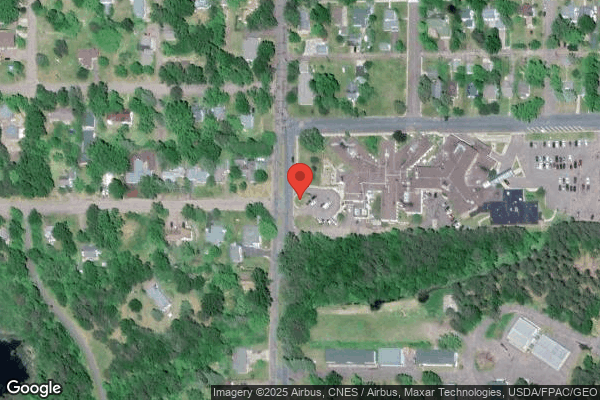
Apr 2023 14 deficiencies
CONCERN (D)

Potential for Harm - no one hurt, but risky conditions existed

Deficiency F0688 (Tag F0688)

Could have caused harm · This affected 1 resident

**NOTE- TERMS IN BRACKETS HAVE BEEN EDITED TO PROTECT CONFIDENTIALITY** Based on observation, interview, and record review, the facility did not provide the services necessary to maintain ROM (range o...

Read full inspector narrative →
**NOTE- TERMS IN BRACKETS HAVE BEEN EDITED TO PROTECT CONFIDENTIALITY** Based on observation, interview, and record review, the facility did not provide the services necessary to maintain ROM (range of motion) for 1 of 1 resident (R) reviewed. (R21) R21's plan of care states under category Pressure ulcer that R21 should be wearing a palm protector at all times as he allows. Remove only for daily cleaning and PROM (Passive range of motion). To encourage physical activity, mobility, and ROM to maximal potential. This is evidenced by: R21 was a [AGE] year old admitted to the facility on [DATE]. R21 had a DX of Hemiplegia and hemiparesis following a CVA (stroke), Alzheimer's disease, Dementia. R21 stroke affected the right side of the body resulting in a contracture to the right hand. On 4/11/23 at 7:00AM, Surveyor observed CNA F doing cares with R21. CNA F washed R21's right hand on the outside, briefly attempted to open the right hand but his contracture is tight so CNA F stated she would ask the nurse to help open the hand so it could be washed. There was no attempt to apply a washcloth in the palm or a palm protector. CNA F removed R21 into the hallway in the wheelchair and then wheeled R21 to the nurses station. CNA F did not ask nurse to help wash R21's right hand. Throughout the survey from 4/10/23-4/12/23 Surveyor observed R21 in the hallway and in activities. R21 never had a palm protector in hand nor a washcloth. Surveyor reviewed Occupational Therapy notes (OT). On 11/23/22, OT saw R21 for the last session. R21 allowed OT to massage the right hand. R21 took the palm protector for the OT and attempted to place in own hand. Therapist was able to get the palm protector in the hand; R21 did immediately try to adjust it. R21 was discharged from OT on this date with recommendations to use the Velcro palm protector as R21 allows. No further updates. Surveyor reviewed the MD orders for R21. The orders state: Resident is to wear mint colored palm protector. To be on at all times. Off for cleaning and daily PROM-right hand. On 4/11/23, Surveyor interviewed LPN J who was working the 300 hall where R21 resides. Surveyor asked LPN J if they have helped the CNAs clean out R21's contracted hand. LPN J stated maybe a couple times. Surveyor asked how the skin looked inside the contracted hand and LPN J stated, that they thought ok. Surveyor asked if R21 had a palm protector that was inserted in the hand that was mint green in color, and LPN J stated she had not seen one. On 4/11/23, Surveyor interviewed COTA (Certified Occupational Therapist Assistant) K about the mint green palm protector noted in the care plan. COTA K stated that she had ordered a mint green cone for R21's hand but R21 would not keep it in. The CNAs were directed to try a washcloth. Surveyor asked if the CNAs should try to open the right hand and clean the palm and COTA K stated yes as much as allowed. Surveyor asked when was the last time he had the mint green cone. COTA K stated it's been awhile. On 4/11/23, Surveyor reviewed R21's care plan. Noted that on care plan under the category of pressure ulcer dated 6/17/22 as a start date and updated on 11/15/22, it states that R21 should have a palm protector at all times as much as R21 allows. Remove only for daily cleaning and PROM. There is not an update to use a wash cloth etc. On 4/11/23, Surveyor reviewed the CNA care notes for 300 Hall. The instructions for care include code status, size of brief, type of diet, note that R21 gets up at night, should have a fall mat, and has a pacemaker. There is no instructions regarding care of the right hand contracture.
CONCERN (D)

Potential for Harm - no one hurt, but risky conditions existed

Incontinence Care (Tag F0690)

Could have caused harm · This affected 1 resident

Based on interviews and record reviews, the facility did not provide services and treatment to restore or improve as much bladder function to the extent possible for 1 of 1 residents (R29) reviewed fo...

Read full inspector narrative →
Based on interviews and record reviews, the facility did not provide services and treatment to restore or improve as much bladder function to the extent possible for 1 of 1 residents (R29) reviewed for bladder function. R29 (Resident) was admitted to the facility with an Indwelling Foley catheter following a Cerebrovascular Accident (CVA) affecting the left non-dominant side. The catheter has since been removed and the facility did not complete a comprehensive bladder assessment to assist R29 to improve or restore as much bladder function as possible. This is evidenced by: R29 was admitted to the facility 1/26/23 from another facility in which he resided for a short time following a stroke (CVA) with Hemiplegia and Hemiparesis that affected his left (non-dominant) side of the body. Other medical diagnoses include, but are not limited to Type 2 Diabetes Mellitus with other diabetic neurological complications, Chronic Kidney Disease, stage 2 (mild), Urinary Tract Infection and Depression. The admission Minimum Data Set Assessment completed for R29 was dated 2/3/23. According to this assessment, R29's cognitive function was fully intact with a Brief Interview of Mental Status of 15/15. R29 manifests no behavioral concerns and requires extensive assistance of two staff to meet daily tasks of bed mobility, dressing, personal hygiene and toileting. R29 is non-ambulatory and requires the assistance of two staff and a mechanical lift for transfers. R29 also has limited range of motion on one side of his body (left) for both the upper and lower extremities. The facility initial care plan indicated that upon admission, R29 utilized a bedpan for toileting needs. It did not indicate an Indwelling Foley catheter for urinary function; however, there was one present. On 04/10/23 at 9:42 AM, Surveyor interviewed R29 during the initial screening process. R29 stated the catheter has been removed and the staff . put me on the bed and use the pan to have a BM (bowel movement). I wet my pants, they don't put me on the toilet. Would like to sit on the toilet and try to go normally. A review of R29's Medical Record was completed and the following was noted: - On 1/31/23, the Indwelling Foley catheter was removed for a trial to determine if R29 was able to urinate on his own. The following Nursing Progress Notes were documented: - 01/31/2023 07:18 PM Medicare A Charting: Resident is alert and oriented. Vital signs within normal limits. No complaints of pain or other symptoms this shift . Urinary catheter pulled at 1030. Resident has not voided since. 8 hour post-cath removal bladder scan resulted in 435 ml (milliliters) . (MD) notified and said to give him 6 more hours to void. Resident says he feels his bladder is full; however, it is not painful or uncomfortable. Nurse aides are attempting to get him up to the commode to stimulate a void. - 02/02/2023 10:41 AM Resident was reporting significant pain and pressure to pelvic region in location of bladder stating, I feel like I have to go so bad but then I don't go. Bladder scanner unavailable at this time. Site distended at palpation, discomfort to palpation. 16F (French) 10mL foley place with leg bag secured. 425mL voided at time of placement and still flowing. Urine is clear and amber in color. Resident reports feeling significant relief. Fax out to provider with updates. A second trial for the discontinuation of the Foley catheter was again completed 3/6/23. The catheter has not been reinserted to date. Documentation in the Nursing Progress Notes indicates that R29 is both continent and incontinent of bowel and bladder function since the discontinuation of the catheter. A review was completed of the current care plan for R29. Included in the plan was the following: - (R29) has an Activities of Daily Living (ADLs) self-care deficit due to Hemiplegia. The start date for this plan was 1/31/23 and last revised 4/10/23. The goal for this plan was that R29 will have increased self-performance with ADLs by the next review date of 4/26/23. Interventions the facility determined would assist R29 in meeting this goal included the following: - Toileting: 1 assist to utilize the bedpan/urinal. The start date for this was 1/26/23 and has not since been revised with the discontinuation of the Indwelling Foley catheter. There were no new interventions or a toileting schedule to assist R29 to become as continent as his abilities would allow. On 4/11/23 at 3:43 PM, Surveyor requested the comprehensive bladder assessment completed for R29 since the discontinuation of the Indwelling Foley Catheter from DON B (Director of Nursing). DON B stated that she would search for it, but . If the assessment isn't in the computer for you to find, then there isn't one done. Surveyor then asked DON B what the expectation is for staff when a Foley catheter is discontinued. DON B stated, When a Foley Catheter is removed, there should be a bladder assessment. I know [resident name] had some retention. He wanted it out so we removed it and then we had to put it back in because he was retaining. Then we discontinued it again. He has some neurological issues from his CVA. The MDS Coordinator would know for sure if we have them. Surveyor then interviewed RN O (MDS Coordinator) at 3:45 PM. RN O stated, We have a bladder assessment that we do upon admission. I personally have not seen an assessment for when a catheter was discontinued. She then looked in the computer and stated, No, there isn't one. Of concern is that when the Indwelling Foley catheter was removed from R29, the facility did not complete a bladder assessment to give nursing staff critical information on R29's bladder function, such as a period of data collection for determination if R29 has periods of continence or a voiding pattern. Other important information would be the type of incontinence, a prior history of bladder functioning, medications used that may alter or affect continence levels, medications that resident may be receiving that stimulate or irritate the bladder, patterns of fluid intake, functional and cognitive level, type and frequency of physical assistance necessary to assist the resident on and off the toilet, any tests or studies completed and any environmental factors that would affect continence level. Without this information, an appropriate toileting plan cannot be devised to assist or allow the resident to reach their highest practicable level for urinary function.
CONCERN (D)

Potential for Harm - no one hurt, but risky conditions existed

Respiratory Care (Tag F0695)

Could have caused harm · This affected 1 resident

**NOTE- TERMS IN BRACKETS HAVE BEEN EDITED TO PROTECT CONFIDENTIALITY** Based on observation, interview and record review, the facility did not provide respiratory services in a manner consistent with...

Read full inspector narrative →
**NOTE- TERMS IN BRACKETS HAVE BEEN EDITED TO PROTECT CONFIDENTIALITY** Based on observation, interview and record review, the facility did not provide respiratory services in a manner consistent with professional standards of care for 1 of 1 residents reviewed for respiratory care. Oxygen (O2) was being delivered to R5 at a rate higher than what was ordered by the physician. There was no documentation or evidence that the tubing was being changed. This was evidenced by: R5 was admitted to the facility on [DATE]. R5 was [AGE] years old with diagnosis of Acute Heart Failure, Chronic Respiratory failure with Hypoxia, Chronic Obstructive Pulmonary Disease, and Obstructive Sleep Apnea among others. R5 was an interviewable resident. On 4/10/22 at 10:00 am, Surveyor observed R5 in his recliner with O2 on per nasal cannula at 3L per min. Surveyor observed that the O2 tubing had no date on it indicating the last time it was changed. On 4/11/23, Surveyor observed R5 in his recliner, O2 was running at 3L per minute. There was no date on the O2 tubing indicating when it was last changed. On 4/11/23, Surveyor interviewed R5 regarding the O2 therapy. R5 stated the O2 tubing had not been changed since he was admitted on [DATE]. R5 stated that he never touches the O2 machine or canister, and that someone did turn it down to 2L one time but he could not breathe. He had them turn it up to 3L as they just do what he says. On 4/11/23, Surveyor interviewed LPN J regarding R5's O2. Surveyor asked how often O2 tubing is changed. LPN J stated every five days. Surveyor asked if LPN J could show on the TAR where it is documented that it was changed. LPN J stated that they did not see it on the TAR. On 4/11/23, Surveyor interviewed RN M regarding R5's O2. Surveyor asked RN M what the order for R5's O2 was. RN M stated it read Supplemental O2 at 2L/min as needed for SOB(shortness of breath). Surveyor then asked why in the medicare charting RN M had done it stated that R5 continues on continuous O2 at 3L. RN M stated that the admission orders were entered wrong. On 4/11/23, Surveyor interviewed DON B regarding R5's O2. Surveyor noted that there was no order or evidence that R5's O2 tubing had been changed. DON stated it was part of the facility standing orders. On 4/11/23, Surveyor reviewed R5's Physician Orders. An order dated 3/9/23 and noted to be open ended states: Supplemental oxygen 2L/min prn for shortness of breath. There was no order present that instructed when to change O2 tubing. On 4/11/23, Surveyor reviewed R5's CNA notes for care. The care notes stated R5 had dentures, O2 at 2L, and a daily weight. On 4/11/23, Surveyor reviewed the discharge record dated 3/9/23 from Essentia Health hospital for R5. Under discharge medications it states; Oxygen, dose 2L/min inhalation as needed, portable with conserving device as needed. On 4/11/23, Surveyor reviewed R5's treatment administration record. It was noted that a new order had been obtained to change O2 tubing weekly stating it was last changed on 4/10/23. On 4/11/23, Surveyor reviewed the facility Standing Orders. There are no standing orders regarding O2 administration or tube changing.
CONCERN (D)

Potential for Harm - no one hurt, but risky conditions existed

Medication Errors (Tag F0758)

Could have caused harm · This affected 1 resident

**NOTE- TERMS IN BRACKETS HAVE BEEN EDITED TO PROTECT CONFIDENTIALITY** Based on observation, record review and interviews, the facility did not ensure that residents (R) were free from unnecessary me...

Read full inspector narrative →
**NOTE- TERMS IN BRACKETS HAVE BEEN EDITED TO PROTECT CONFIDENTIALITY** Based on observation, record review and interviews, the facility did not ensure that residents (R) were free from unnecessary medication for 2 (R48 and R15) of 5 Residents. Facility did not ensure that as needed orders (PRN) for psychotropic drugs are limited to 14 days unless documented rationale is indicated and avoid duplicate therapy of same pharmacological class for R48. Facility did not implement non-pharmacological interventions, indicate rationale for continued and duplicate use for R15's psychotropic medications. This is evidenced by: Example 1: The facility policy for Psychotropic Medication Use states, in part .2. psychotropic medications are subject to prescribing, monitoring, and review requirements specific to psychotropic medications .12(a) PRN orders for psychotropic medications are limited to 14 days .12(a)(1) For psychotropic medications that are NOT antipsychotics: If the prescriber or attending physician believe it is appropriate to extend the PRN order beyond 14 days, he or she will document the rationale for extending the use and include the duration for the PRN order. R48 was admitted to facility on 7/17/2019 and was placed on hospice on 11/15/22 with an order of Lorazepam (anti-anxiety) 2 mg/ml, give 0.25 ml by mouth every 4 hours for anxiety or shortness of breath. The prn lorazepam does not have the required 14 day stop date or physician explanation to extend beyond 14 days. On 1/19/23, an order was received to continue the PRN order for lorazepam. The prn Lorazepam does not have the required 14 day stop date or physician explanation to extend beyond 14 days. Review of medication record from 1/19/23 - 4/12/23 R48, in addition to the scheduled anti-anxiety, received the PRN Lorazepam 15 times. Record review shows pharmacy review documentation dated 12/29/2022, 1/27/2023, and 2/22/2023, Based upon the information available at the time of the review, and assuming the accuracy and completeness of such information, it is my professional judgment as a pharmacist that at such time, the resident's medication regimen contained no new irregularities. 04/11/23 04:11 PM Interview with Director of Nursing (DON) B regarding rationale to support continuation of the Lorazepam past 14 days on 11/15/22 and reorder date of 1/19/23. DON B was unable to provide supportive documentation. Example 2 R15 was admitted to facility on 11/26/21. Diagnoses include dementia with agitation, Alzheimer's disease, Post-Traumatic Stress Disorder (PTSD), anxiety, and repeated falls. R15 has a guardian to assist with decision-making. Minimum Data Set (MDS), dated [DATE], indicates severely impaired cognition with behaviors occurring daily. R15 was admitted to hospice services on 12/13/22. Review of hospice orders include order for lorazepam, start date 12/13/22. Physician Orders include: 3/8/23-Exelon patch 4.6 mg, apply topically every 24 hours for dementia/behaviors. 3/6/23-open ended. Hospice order: lorazepam, give 0.25 ml every 4 hours, as needed for anxiety and shortness of breath. 1/19/23-7/10/23. Lorazepam, give 0.5 mg twice daily as needed for anxiety and agitation. 1/10/23-Seroquel 50 mg twice daily and 100 mg once daily for agitation. Review of medication administration record 1/23-4/23 confirmed R15 received PRN Lorazepam 10 times. R15 care plan, revision on 4/10/23: Receives anti-anxiety medication. Interventions: administer medication as ordered, monitor for effectiveness and side effects, gently and calmly approach resident, offer reassurance as needed. Behavior monitoring includes increased anxiety and complaints of sadness related to administration of Seroquel. 4/11/23 at 4:54 PM, interview with DON B, reported that PRN lorazepam was continued as R15 was receiving hospice services, no other rationale provided. DON B stated that behavior tracking is not being completed accurately. Reported that monthly behavior meetings are not being completed at this time, so behavior tracking data is not being analyzed.
CONCERN (D)

Potential for Harm - no one hurt, but risky conditions existed

Deficiency F0760 (Tag F0760)

Could have caused harm · This affected 1 resident

Based on observation, interview and record review, the facility did not ensure an intermediate-acting insulin administration was given timely within meal or beverage service for 1 of 2 residents (R41)...

Read full inspector narrative →
Based on observation, interview and record review, the facility did not ensure an intermediate-acting insulin administration was given timely within meal or beverage service for 1 of 2 residents (R41) observed for insulin administration. During the Medication Administration task, Surveyor observed MT E (Medication Technician) administer Insulin N, an intermediate-acting insulin to R41 (Resident). Beverages or meals were not served within the allotted time frame of onset of effects of the insulin. This is evidenced by: Medscape. com states the following in relation to Novolin N insulin: - Novolin N is a combination medicine of Insulin isophane, an intermediate-acting insulin and Regular, a short-acting insulin. This combination insulin starts to work within 10 to 20 minutes after injection, peaks in 2 hours, and keeps working for up to 24 hours. - Novolin N should be administered within 15 minutes before a meal or immediately after a meal. On 4/12/23 at 7:29 AM, Surveyor observed MT E administer 8 units of Insulin Humulin N to the right abdomen of R41. The meal trays arrived on the unit at 8:46 AM and R41 was given her meal tray at 8:54 AM in which she began to eat after staff set the meal tray up for her in her room. This was 1 hour 26 minutes following the insulin injection. At 9:45 AM, Surveyor interviewed MT E regarding her knowledge of intermediate-acting insulin. MT E stated, . I have asked nursing about (R41), but they said that her insulin is long-acting so within one-half hour of injection she should eat. Surveyor then educated MT E on time of onset with this form of insulin and that a meal or substantial beverage should be served within 15 - 20 minutes of insulin injection. MT E then stated, Good to know. Surveyor then explained the time observed between administration and meal service as being nearly 1.5 hours. MT E stated, Oh wow! I rely on the CNAs to get them their meal. I really don't watch the time. At 9:55 AM, Surveyor interviewed DON B (Director of Nursing) regarding the expectation of insulin administration and meal service. DON B stated, They should administer the insulin and eat within 10-15 minutes, unless it is a long-acting like Lantus .
CONCERN (D)

Potential for Harm - no one hurt, but risky conditions existed

Deficiency F0883 (Tag F0883)

Could have caused harm · This affected 1 resident

Based on record review and interview, the facility did not ensure that each resident eligible for influenza or pneumococcal vaccine was offered it to prevent pneumonia and influenza. This was discover...

Read full inspector narrative →
Based on record review and interview, the facility did not ensure that each resident eligible for influenza or pneumococcal vaccine was offered it to prevent pneumonia and influenza. This was discovered for 2 of 5 residents reviewed for immunizations. R5 and R9 did not have declinations on file, nor was there a progress note stating that these residents refused the vaccine and were educated on the importance of being immunized. This is evidenced by: On 4/12/23, Surveyor reviewed the resident vaccination matrix. Those that refused the vaccine for COVID 19 were included in the sample of 5. It was noted that R9 had refused the pneumococcal vaccine and the influenza vaccine. It was noted that R5's last influenza vaccine was 9/27/21. There was no information on the 2022 influenza vaccination. On 4/12/23, Surveyor requested the declinations for the refusals of vaccine, and requested copies of the progress notes for R9 and R5 indicating that they had refused and were educated on the vaccines. On 4/12/23, DON reported to the Surveyor that there were no declinations available and that there were also no progress notes found indicating that the residents in question had been offered the vaccines or educated in the pneumococcal and influenza vaccine. On 4/12/23, Surveyor interviewed IP-N (Infection Preventionist) regarding declinations for immunizations. IP N indicated she did not have them but might be able to get. Surveyor never received them.
CONCERN (D)

Potential for Harm - no one hurt, but risky conditions existed

Deficiency F0887 (Tag F0887)

Could have caused harm · This affected 1 resident

Based on record review and interview, the facility did not ensure that the medical record included documentation that the Resident or Resident Representative were educated on the risks and benefits of...

Read full inspector narrative →
Based on record review and interview, the facility did not ensure that the medical record included documentation that the Resident or Resident Representative were educated on the risks and benefits of the COVID 19 vaccine for 3 of 5 residents reviewed for immunization. R5, R9, and R6 did not have documentation of having declined or been educated on the COVID 19 vaccine. This was evidenced by: On 4/12/23, Surveyor reviewed the resident vaccination matrix. Per the infection control task instructions 5 residents were chosen for review of Immunizations. Those that refused the vaccine for COVID 19 were included in the sample of 5. It was noted that R5, R6, and R9 had refused the COVID 19 vaccine. On 4/12/23, Surveyor requested the declinations for the refusals of vaccine, and requested copies of the progress notes for R9, R6, and R5 indicating that they had refused and were educated on the covid vaccines. On 4/12/23, DON B reported to the Surveyor that there were no declinations available and that there were also no progress notes found indicating that the residents in question had been offered or educated in the vaccine. R9 did have a signed sheet from a company the facility had worked with but this sheet did not include education on the benefits or risks of the vaccine. On 4/12/23, Surveyor interviewed IP-N (Infection Preventionist) regarding declinations for immunizations. IP N indicated she did not have them but might be able to find them. Surveyor never received them.
CONCERN (E)

Potential for Harm - no one hurt, but risky conditions existed

Deficiency F0561 (Tag F0561)

Could have caused harm · This affected multiple residents

**NOTE- TERMS IN BRACKETS HAVE BEEN EDITED TO PROTECT CONFIDENTIALITY** Based on observation and interview, the facility did not ensure residents (R) had the right to choose schedules consistent with ...

Read full inspector narrative →
**NOTE- TERMS IN BRACKETS HAVE BEEN EDITED TO PROTECT CONFIDENTIALITY** Based on observation and interview, the facility did not ensure residents (R) had the right to choose schedules consistent with their interests, for 5 of 5 residents (R4, R17, R21, R23, and R151). Facility developed a schedule for care, for staff convenience and without resident considering resident preference. Residents are placed at the medication cart to receive medications. Residents waited for nursing staff to administer medication, after receiving medication waited for staff to assist them to the dining room for breakfast. Residents waited approximately 50 minutes at medication cart. This is evidenced by: R4 has diagnoses of severe visual impairment and Type 2 Diabetes Mellitus with insulin dependence. Minimum Data Set (MDS), dated [DATE], R4 scored 5/15 during Brief Interview for Mental Status (BIMS), indicating severely impaired cognition. R4 requires total dependence for wheelchair locomotion. R17 has a diagnosis of dementia. MDS, dated [DATE], R17 scored 13/15 during BIMS, indicating intact cognition, but requires reminders to promote orientation. R17 requires extensive assistance for wheelchair locomotion. R21 has diagnoses of aphasia (inability to understand or express speech), failure to thrive, and poor appetite. MDS, dated [DATE], staff completed assessment for mental status for R21, indicating severely impaired cognition. R21 requires extensive assistance for wheelchair locomotion. R23 has a diagnosis of Type 2 Diabetes Mellitus. R23's current weight is #124, with a goal weight of #166. MDS, dated [DATE], R23 scored 11/15 during BIMS, indicating moderately impaired cognition. R23 requires extensive assistance with wheelchair locomotion. R151 has a diagnosis of Type 2 Diabetes Mellitus. MDS, dated [DATE], R151 scored 4/15 during BIMS, indicating severely impaired cognition. R151 requires one-person physical assistance with wheelchair locomotion. On 4/11/23 at 7:32 AM, Surveyor observed CNA D and CNA G place R17, R21, and R151 by the medication cart, near the nurses' station in the commons area of the facility. After placing residents at the medication cart, CNA D and CNA G returned to the 300 hall to assist other residents. No observations of CNAs asking residents what they would like to do or where they would like to go. Surveyor observed Licensed Practical Nurse (LPN) J and Assistant Director of Nursing (ADON) N at medication cart, residents were seated in their wheelchairs behind them. LPN J and ADON N prepared medications, turned around and administered medications to a resident, and then turned back to the medication cart and continued to prepare medications for the next resident. No observations of LPN J and ADON N engaging with residents seated at medication cart. No observations of staff asking residents what they would like to do after receiving medications. On 4/11/23 at 7:49 AM, R17 and R151 had received medications and remained seated at the medication cart, waiting for staff to assist with wheelchair locomotion to the dining room. Continued to observe CNAs bringing other residents to medication cart. Continued to observe nurses administer medications at medication cart, did not observe nurses going to resident rooms, dining room, television room to administer medications to residents. On 4/11/23 at 8:11 AM, interview with CNA D and CNA G, reported that after providing resident care they take residents to the nurses' station so nurses can administer residents their medications. CNA D and CNA G reported that this is routine but were unable to state who had instructed them to do this. CNA D and CNA G confirmed that after a resident is administered their medication nursing or dietary staff will take residents to the dining room for breakfast. On 4/11/23 at 8:15 AM, observed R21 receive his medications. R17 and R151 continued to wait at medication cart. On 4/11/23 at 8:22 AM, observed dietary staff assist R17 and R151 to the dining room. Observed staff take R21 to his room. On 4/11/23 at 9:09 AM, interview with LPN J and ADON N, at medication cart. Nurses reported that CNAs just bring residents to the medication cart for their medications. ADON N stated that if residents are okay with waiting, they will wait for their medications. Nurses stated that all staff assist residents to the dining room for breakfast. LPN J and ADON N confirmed that they had not administered any medications in the dining room this morning. On 4/12/23 7:20 AM, during medication administration observation, observed four residents (R4, R17 and two female residents) lined up in the 100 hall by nurses medication cart awaiting medication administration. On 4/12/23 at 7:37 AM, interview with Medication Technician (MT) E, stated residents are at medication cart just to get their medications, otherwise the med pass runs extremely late. MT E stated it just works well this way to give the medications, then residents are taken to the dining room for breakfast. A reasonable person, in the resident's position, would not want to stay seated for long amounts of time waiting for medication, and would prefer choice of where and what they would like to do.
CONCERN (E)

Potential for Harm - no one hurt, but risky conditions existed

Deficiency F0657 (Tag F0657)

Could have caused harm · This affected multiple residents

**NOTE- TERMS IN BRACKETS HAVE BEEN EDITED TO PROTECT CONFIDENTIALITY** Example 3 R6 was admitted to facility on 7/13/22, diagnoses include Parkinson's disease, depression, repeated falls, fall with i...

Read full inspector narrative →
**NOTE- TERMS IN BRACKETS HAVE BEEN EDITED TO PROTECT CONFIDENTIALITY** Example 3 R6 was admitted to facility on 7/13/22, diagnoses include Parkinson's disease, depression, repeated falls, fall with injury on 8/10/22. Minimum Data Set (MDS), dated [DATE], R6 scored 7/15 during Brief Interview for Mental status (BIMS), indicating impaired cognition. Behaviors did not occur. Review of R6's physician orders confirmed Melatonin was prescribed on 1/2/23. Review of R6's care plan did not reflect area of concern or interventions regarding sleep/insomnia. R6's electronic record did not indicate concerns with sleeping prior to prescribing Melatonin. Electronic record did not include monitoring of sleep after prescribing of Melatonin. Reviewed falls investigations since admission, 14 falls total. Medication review as part of investigations did not include R6 was taking a medication to induce sleep. 4/10/23 at 8:33 AM, interview with Director of Nursing (DON) B. DON B confirmed that R6 was prescribed Melatonin at recommendation of physician. DON B stated that there was no assessment or monitoring of R6's sleep before or after prescribing of Melatonin. Example 4 R15 was admitted to facility on 11/26/21, diagnoses include dementia with agitation, Alzheimer's disease, disorientation, repeated falls, and anxiety. R15 has a guardian to assist with decision making. MDS dated [DATE], indicates severely impaired cognition with wandering behaviors occurring daily. Review of R15's care plan, dated 11/29/21, included an area for risk related to elopement. The care plan was revised on 4/10/23. Interventions included redirecting R15 when noted to be wandering towards exits and supervise closely when wandering in hallways. Care plan did not include intervention of wanderguard. Review of R15's behavior monitoring included monitoring of increased anxiety and complaints of sadness. Behavior monitoring did not include attempts to elope. On 4/10/23 at 8:30 AM, Surveyor observed R15 with wanderguard placed on right ankle. During Survey period from 4/10/23-4/12/23, no observations were made of R15 attempting to elope from the facility. On 4/12/23 at 12:16 AM, interview with Medication Technician (MT) E, reported that R15 will follow staff in hallways, did not report R15's attempts to leave facility. Example 5 R3 was admitted to facility on 4/26/17. Diagnoses include Alzheimer's disease, dementia with agitation, osteoarthritis, history of falling, and pain. MDS, dated [DATE], R3 scored 2/15 during BIMS, indicating severe cognitive impairment. Most recent annual MDS completed 1/22/22 confirmed that R3 reported, 'Very Important,' to do favorite activities. Physician orders indicate R3 takes anti-depressant medications. R3 care plan dated: -12/29/20: Problem: Activities -4/10/23: Goal: Actively participate in 3-4 group activities weekly. -2/18/21: Approach: Post activity calendar in room, invite and escort to activities, R3 plays the piano and may need encouragement to do so, favorite snacks. Facility staff was unable to report the last time R3 had played the piano. On 4/10/23 at 12:30 PM, observed R3 propelling self in wheelchair in hallway of activities area. R3 was talking with staff and other residents in hallway and did not attend activity. On 4/11/23 at 11:09 AM, observed R3 in activity room during a trivia activity. R3 remained near the doors to the activity room and did not participate in activity. Did not observe staff encouraging R3 to participate. On 4/11/23 at 12:14 PM, interview with Director of Activities R, regarding 1:1 activities. Director of Activities R reported that 1:1 activities are not scheduled or monitored. Monitoring of group activities is done by placing monthly calendar in binder for each resident and highlighting which activity a resident attended. R3's monitoring indicated that she had attended 1-2 group activities in the current month. Director of Activities R reported that if a resident attends a group activity but does not participate, it is still considered participation through observation. Director of Activities R reported that resident assessments related to activities is not current due to her being new in her position. Based on observation, interviews and record reviews, the facility did not complete care plan revisions for 6 of 13 residents (R) sampled. R5's care plan and orders were not updated to reflect the current dose of O2 and were not specific to how often it should be used. R21's care plan was not updated with information to use a washcloth in the right contracted hand. Facility did not complete assessment, monitoring, or update care plan for prescribing of Melatonin for R6. Facility did not update care plan to reflect R15's wanderguard. Facility did not update R3's care plan to reflect current and individualized activities. This is evidenced by: Example 1 R5 was admitted to the facility on [DATE]. R5 receives oxygen therapy due to a diagnosis of Acute Respiratory Failure with Hypoxia and Chronic Obstructive Pulmonary Disease. On 4/10/23, 4/11/23 and 4/12/23, Surveyor observed R5 in their room sitting in recliner. R5 had on oxygen (O2) delivered via a nasal cannula. It was set to deliver 3L per minute. On 4/11/23, Surveyor interviewed R5 regarding his O2. R5 stated that his O2 tubing had not been changed since admission. R5 also stated that he knew his O2 was at 3L, that some dummy tried to come in and put it to 2L but he can't breath at 2L. Surveyor stated that the order said it should be a 2L. R5 stated that the staff just does what he tells them, and he wants it at 3L. R5 further stated that he never touches the O2 canisters nor the O2 concentrators in his room. He concluded that he needs to wear his O2 at all times. On 4/11/23, Surveyor interviewed Registered Nurse (RN) M regarding R5's O2 orders. Surveyor asked RN M what R5's O2 physician order read. RN M stated that it said, supplement O2 at 2L min as needed for SOB. Surveyor asked if there was anything else and RN M stated no. Surveyor asked why RN M is charting in the progress notes that it is on at 3L continuous. RN M stated that said the admission orders were entered wrong. Surveyor reviewed the care plan for R5 dated 3/9/23. Under the problem of diagnosis of COPD and respiratory failure, approaches were; administer oxygen per MD orders-2L/min PRN for shortness of breath. Surveyor reviewed the current Physician orders for R5, the order dated 3/9/23 stated Supplemental oxygen 2L/min prn for shortness of breath. Surveyor reviewed Certified Nursing Assistant (CNA) Notes for 300 Hall where R5 resides. This is the sheet CNAs use to guide the cares they give to residents. On the sheet R5 is listed, R5 has O2 at 2L. Example 2 R21 was admitted to the facility on [DATE]. R21 had diagnosis of Hemiplegia and hemiparesis from a stroke. R21 had a severe contracture to the right hand from the stroke. On 4/11/23, Surveyor observed CNA F providing a bed bath for R21. During the bed bath, CNA F washed R21's right hand on the outside, but due to the severe contracture CNA F did not wash the inner palm of R21's hand and stated they would get the nurse to help them. CNA F did not try to place a washcloth or cone in the hand. Throughout the survey, Surveyor observed R21 in room and in the hallways. At no point did Surveyor observe R21 with a cone or washcloth in the right hand. On 4/11/23, Surveyor interviewed Licensed Practical Nurse (LPN) J regarding R21's contracture and treatment. Surveyor asked if LPN J had helped the CNAs clean out R21's palm in contracted hand. LPN J stated maybe a couple times. Survey asked how does it look in there. LPN J stated ok I think. Surveyor asked if R21's palm protector you put in the palm is mint green. LPN J stated, not that I have seen. On 4/11/23, Surveyor interviewed Certified Occupational Therapist Assistant (COTA) K regarding R21. COTA K stated that they had ordered a mint green cone for the right hand but that R21 would not keep it on. COTA K gave directives to the CNA staff that they should try to put a washcloth in R21's palm. Surveyor asked if the CNAs should try to open and clean the inside of R21's hand and COTA K stated that they should as much as R21 will allow. Surveyor asked when was the last time that R21 had the mint green cone. COTA K stated it was a while ago. On 4/11/23, Surveyor reviewed R21's plan of care. Under the category pressure ulcer, there is the following approach dated originally 6/17/22 and updated on 11/15/22; Palm protector to be on at all times as R21 allows. Remove only for daily cleaning and PROM (passive range of motion). On 4/11/23, Surveyor reviewed R21's latest Physician orders. Noted was an order dated 6/17/22 that read; Resident is to wear mint colored palm protector, to be on at all times, off for cleaning and daily PROM-right hand. On 4/11/23, Surveyor reviewed the COTA's latest therapy notes. R21 was last seen on 11/23/22 for therapy. The discharge recommendations were to continue the use of a Velcro palm protector as patient allows. Surveyor reviewed the 300 wing CNA care card. There is no mention that a washcloth should be used to help with contracture of right hand, as instructed by therapy.
CONCERN (E)

Potential for Harm - no one hurt, but risky conditions existed

Deficiency F0679 (Tag F0679)

Could have caused harm · This affected multiple residents

**NOTE- TERMS IN BRACKETS HAVE BEEN EDITED TO PROTECT CONFIDENTIALITY** Based on observations, interviews and record reviews, the facility did not provide an ongoing, individualized, and meaningful pr...

Read full inspector narrative →
**NOTE- TERMS IN BRACKETS HAVE BEEN EDITED TO PROTECT CONFIDENTIALITY** Based on observations, interviews and record reviews, the facility did not provide an ongoing, individualized, and meaningful program to support the residents in their choice of activities, which was designed to meet their interests and support their physical, mental, and psychosocial well-being. This affected 4 of 4 residents (R3, R6, R15, and R40) reviewed for activity participation. Facility did not complete, implement, or revise activity assessments to obtain individualized preferences and interventions. This is evidenced by: Example 1 R3 was admitted to facility on 4/26/17. Diagnoses include Alzheimer's disease, dementia with agitation, osteoarthritis, history of falling, and pain. Minimum Data Set (MDS) MDS, dated [DATE], R3 scored 2/15 during Brief Interview for Mental Status (BIMS), indicating severe cognitive impairment. Most recent annual MDS completed 1/22/22 confirmed that R3 reported, 'Very Important,' to do favorite activities. Physician orders indicate R3 takes anti-depressant medications. R3 care plan dated: -12/29/20: Problem: Activities -4/10/23: Goal: Actively participate in 3-4 group activities weekly. -2/18/21: Approach: Post activity calendar in room, invite and escort to activities, R3 plays the piano and may need encouragement to do so, favorite snacks. Facility staff was unable to report the last time R3 had played the piano. 4/10/23 at 12:30 PM, observed R3 propelling self in wheelchair in hallway of activities area. R3 was talking with staff and other residents in hallway and did not attend scheduled activity. 4/11/23 at 11:09 AM, observed R3 in activity room during a trivia activity. R3 remained near the doors to the activity room and did not participate in activity. Did not observe staff encouraging R3 to participate. R3's activity monitoring indicated that she had attended 1-2 group activities in the current month. During Survey period 4/10/23-4/12/23, did not observe resident participate in group or individualized activity. Example 2 R6 was admitted to facility on 7/13/22, diagnoses include Parkinson's disease, depression, repeated falls, fall with injury on 8/10/22. MDS, dated [DATE], R6 scored 7/15 during Brief Interview for Mental status (BIMS), indicating impaired cognition. Behaviors did not occur. admission assessment dated [DATE], confirmed R6 reported, 'Very Important,' to do favorite activities. Physician orders indicate R6 takes anti-depressant medications. Review of electronic record confirmed R6 has had 14 falls since admission. R6 care plan dated: -7/14/22: Problem: Activities -4/10/23: Goal: Maintain involvement in cognitive stimulation, social activities as desired. -7/14/22: Approach: Provide opportunities to assist with: blank/not completed. Adapt activities to meet the resident's needs, including: blank/not completed. Provide in room activities such as: blank/not completed. Quality visits to meet resident's social and emotional needs as determined by activity assessment. 4/10/23 at 7:49 AM-8:33 AM, observed R6 in wheelchair in hallway, near nurses' station. Seat alarm in place, wanderguard in place. Did not observe any staff interaction with R6. 4/10/23 at 10:20 AM, observed R6 in wheelchair in hallway, near nurses' station. Staff assisted in obtain R6's weight and then placed back in hallway near nurses' station. 4/11/23 at 10:56 AM, interview with CNA F, reported that R6 does not participate in group activities. During Survey period 4/10/23-4/12/23, did not observe resident participate in group or individualized activity. Example 3 R15 was admitted to facility on 11/26/21. Diagnoses include dementia with agitation, Alzheimer's disease, Post-Traumatic Stress Disorder (PTSD), anxiety, and repeated falls. R15 has a guardian to assist with decision-making. MDS, dated [DATE], indicates severely impaired cognition with behaviors occurring daily. Annual assessment for daily preferences, dated 11/9/22, completed by staff, reported R15 preferences for reading, being outside, listening to music, and being with groups of people. Physician orders indicate R15 takes anti-psychotic, anti-anxiety, and anti-depressant medications. R15's care plan dated: -11/29/21: Problem: Activities: Limited 2for meeting emotional, intellectual, and social needs. -4/10/23: Goal: Maintain involvement in cognitive stimulation and social activities. -11/29/21: Activity calendar in room. Invite to activities. Enjoys people watching, happy hour, special meals, compliments on her outfit. Quality visits to meet social and emotional needs as determined by my activity assessment. 11/28/22, progress notes report, working with activities to see about possible alternative therapies/interventions like Music & Memories, sensory interventions, etc. 4/10/23 at 11:24 AM, observed R15 in common area in wheelchair, R15 would self-propel to other resident's seated in that area. Did not observe staff engagement. 4/11/23 at 2:20 PM, observed R15 in common area self-propelling to other residents seated in that area. Did not observe staff engagement. 4/12/23 at 12:41, observed R15 self-propelling wheelchair in hallway. Observed staff re-direct R15 back to common area. During Survey period 4/10/23-4/12/23, did not observe R15 participate in group or individual activity. Example 4 R40 admitted to facility on 12/6/22. Diagnosis included dementia with psychotic disturbance. admission MDS dated [DATE], R40 scored 3/15 during BIMS, indicating severe cognitive impairment. Assessment confirmed that going outside and keeping up with the news were very important to R40. Record review confirmed R40 has hearing and visual deficits. R40 has had falls at facility. Care plan dated: -12/6/22: Problem: Activities: limited for meeting emotional, intellectual, and social needs. -4/10/23: Goal: Maintain involvement in cognitive stimulation, social activities as desired. -12/6/22: Approach: Provide opportunities to assist with: blank/not completed. Adapt activities to meet the resident's needs, including: blank/not completed. Provide in room activities such as: blank/not completed. Quality visits to meet resident's social and emotional needs as determined by activity assessment. 4/10/23 at 9:58 AM, observed R40 in activity room, a music documentary was playing on television. R40 was seated in his wheelchair at a table, R40 was not watching the documentary on the television. Observed R40 attend breakfast and lunch in dining room. R40 seated with other residents but does exhibit difficulty with hearing. R40 consistently responded to staff and residents with an apology. 4/11/23 at 10:56 AM, observed R40 in activity room. R40 not participating in activity and self-propelling wheelchair in room. R40 placed self in corner of room with his back to activity. During Survey period 4/10/23-4/12/23, did not observe R40 actively participate in group or individual activity. 4/11/23 at 12:14 PM, interview with Director of Activities R, reported that group activities are completed daily, not scheduled in evenings, and limited on weekends. Director of Activities R reported sufficient staffing for department, including volunteers. Director of Activities was unable to answer how activities staff or volunteers would know individual resident likes and preferences. Director of Activities R reported that resident assessments related to activities is not current due to her being new in her position. Director of Activities R reported that 1:1 activities are not scheduled or monitored. 1:1 activities are completed at discretion and availability of staff. There is no documentation to support if a 1:1 activity occurred with a resident. Monitoring of group activities is done by placing monthly calendar in binder for each resident and highlighting which activity a resident attended. Director of Activities R reported that if a resident attends a group activity but does not actively participate, it is still considered participation through observation.
CONCERN (E)

Potential for Harm - no one hurt, but risky conditions existed

Deficiency F0726 (Tag F0726)

Could have caused harm · This affected multiple residents

Based on observations, interviews and record reviews, the facility did not ensure 1 of 1 Medication Technicians (MT E), completed appropriate competency to administer insulin. During the Medication A...

Read full inspector narrative →
Based on observations, interviews and record reviews, the facility did not ensure 1 of 1 Medication Technicians (MT E), completed appropriate competency to administer insulin. During the Medication Administration task, Surveyor observed MT E administer insulin to R41 (Resident). Upon review, the facility was unable to provide evidence that MT E completed the appropriate training and competency to administer insulin under the supervision of a registered nurse. This is evidenced by: On 04/12/23, Surveyor was observing medication administration. MT E administered 8 units of Insulin Novolin N to the right abdomen of R41 at 7:29 AM utilizing the correct technique. At 9:45 AM, Surveyor interviewed MT E on the procedure for insulin administration. MT E was able to verbalize the correct technique. At 9:55 AM, Surveyor requested from NHA A (Nursing Home Administrator) and DON B (Director of Nursing) the training and competency evaluation that was provided to MT E in order for her to complete this delegated nursing task. At 10:20 AM, NHA A provided Surveyor with the Certified Nursing Assistant (CNA) Wisconsin Registry the facility completed for MT E. The form indicated that MT E was competent as a CNA and also as a Medication Assistant until the expiration date of 7/31/24. Other training provided included Nurse Delegation: Credential and Training Verification (Medication Administration) form dated 1/25/21. According to this form, MT E was trained and demonstrated proficiency in various routes of medication administration. However, administration of insulin had been crossed off, indicating there was no training or competency for this route evaluated. Another document provided was for the actual insulin administration, titled Employee Skills Checklist: Insulin Administration Via Pen. This form was completely crossed off with a line extending from the upper right hand corner of the form to the lower left corner of the form. At the bottom of the form was hand written N/A (not applicable) also indicating this task was not observed. A third document reviewed was titled Medication [NAME] Refresher Training dated 1/25/21. This form went through various tasks in which MT E was evaluated on. Included in the tasks was the blood sugar monitoring task, which MT E was determined to be proficient. However, the two sections of insulin administration were crossed out with a single line going through each, indicating this task was not evaluated.
CONCERN (F)

Potential for Harm - no one hurt, but risky conditions existed

Infection Control (Tag F0880)

Could have caused harm · This affected most or all residents

Based on observation, interview, and record review, the facility did not have an effective Infection Prevention and Control Program to prevent the spread of COVID 19, hand hygiene was not performed ap...

Read full inspector narrative →
Based on observation, interview, and record review, the facility did not have an effective Infection Prevention and Control Program to prevent the spread of COVID 19, hand hygiene was not performed appropriately for 2 of 2 residents observed for cares. The infection control surveillance was not accurate. There was no documentation of R40 being put on isolation, or on the line list accurately when symptoms started. Staff and resident line lists are not complete. Staff were not washing hands properly while providing cares for R21. R102 was provided morning bathing cares in which staff did not conduct hand hygiene when moving from a dirty task to a clean task. This is evidenced by: Example 1 Surveyor reviewed the facility policy titled, Surveillance for Infections. This policy is dated 2017. Under Collection and Recording it stated: For residents with infections that meet the criteria for definition of infection for surveillance, collect the following data as appropriate: e. Pathogens g. Pertinent remarks, additional relevant information i.e., temperatures, other symptoms of specific infection. Also, record if the resident is admitted to the hospital or expires. h. treatment measures and precautions, interventions, and steps taken that may reduce risk. Surveyor reviewed the policy titled: Infection Control Nursing Process. Under the title suspected infections; it stated to add any suspected infections to the resident line list, progress notes should identify what the nurse did. In addition, under the subtitle: If necessary, nurses will place resident on appropriate TBPs. Necessary is; respiratory signs and symptoms, GI, 3 or more loose stools. Resident may need to be placed on TBPs until infection is ruled out. On 04/12/23 at 7:00 a.m., Surveyor interviewed Infection Preventionist (IP) N regarding surveillance of staff and residents. Review of the line list showed R40 began with S/S (signs & symptoms) of a URI (Upper Respiratory Infection) on 02/22/23. There is no indication on the line list that R40 was ever tested for COVID 19. IP N agreed that the line list did not show documentation of testing or results even though R40 had S/S of Covid 19. During this interview, Director of Nursing (DON) B was present. DON B looked at R40's progress notes and stated that on 02/15/23, R40 began with S/S of URI, they tested for COVID, and it was negative. They did not place R40 on isolation when exhibiting respiratory symptoms. On the surveillance list, R40's signs and symptoms are documented as starting on 02/22/23 with symptoms but in progress notes and testing it is 02/15/23. The IP did not document accurate onset of symptoms on the line list for R40. On 04/12/23, Surveyor interviewed DON B regarding surveillance. Surveyor asked what happens if a resident shows S/S of COVID or URI would you place in isolation. DON B replied, Yes. Surveyor asked, would you test them for COVID. DON B replied, Yes. Surveyor reviewed the line list for staff and residents from January 2023 until the present. There were residents that presented with symptoms of URI that were not placed on isolation. Of the 3.5 months reviewed, only one resident admitted to the facility with COVID was put in isolation. The other areas on the surveillance form for isolation are blank. The staff line list did not include when the staff member returned to work, and if they were tested. These are left blank. On 04/12/23 at 7:00 a.m., Surveyor interviewed Infection Preventionist (IP) N regarding the process for how staff get on the line list. IP N stated only works 2-3 days a week. When they are not in the facility, they rely on the nursing staff to add staff to the line list when they call in, then she follows up. The facility surveillance was incomplete and inaccurate. Example 2: On 04/11/23 at approximately 7:00AM, Surveyor observed CNA F provide cares for R21. CNA F has been employed at the facility for about 4 years. CNA F was getting water ready in the sink wearing gloves. CNA F lifted mat on the floor and also went into drawers to obtain wipes and then picked up the mat again. CNA F positioned R21 in center of bed. CNA F took off R21's shirt, not changing gloves, washed his face with washcloth in the bin of water, then washed chest. Rolled him towards her. R21 was wet so CNA F rolled the pad underneath him. CNA F then put clean shirt on with same gloves. CNA F did not change gloves but used the wipes to do peri area. She washed peri area, she applied new brief after cleansing the peri area and buttocks. CNA F then removed gloves. Another CNA entered room, sanitized hands; this CNA handed CNA F a new pair of gloves, then gloved up. Together the 2 CNAs transferred R21 to the wheelchair. CNA F then, wearing the same gloves, got the washcloth out of water and washed hands. CNA F then cleaned R21's nails with a pick. CNA F then removed gloves but did not wash hands. On 04/11/23 at 7:15 a.m., Surveyor interviewed CNA F regarding the cares that were observed. Surveyor asked CNA F, do you know you did not change gloves or wash hands in between. Yes, I was aware after the fact, could not change at that time as CNA F was in the middle of washing R21. On 04/12/23 at approximately 11:30 a.m., Surveyor interviewed DON B regarding the expectations for handwashing. DON B stated they expect that the employees follow the policy, and do hand hygiene after providing cares, eating etc. Surveyor asked what expectations there were when staff were going from clean to dirty and if they should change gloves. DON B responded yes. Surveyor asked if when applying new gloves should staff wash hands in between before applying, DON B responded yes. On 04/12/23, Surveyor reviewed the facility Handwashing Policy; under bullet point number 7 it states: Use an alcohol-based hand rub containing at least 62% alcohol or alternatively soap and water for the following situations: B. Before or after direct contact with residents. H. Before moving from a contaminated body site to a clean body site during resident care. M. After removing gloves. Under bullet point number 9 it states: The use of gloves does not replace hand washing/hand hygiene. Integration of glove use along with routine hand hygiene is recognized as the best practice for preventing healthcare associated infections. On 4/12/23, Surveyor reviewed an In-service/Education the facility had provided for the employees. It was noted that CNA F had not attended the in-service in person but had been emailed the video. There was no follow-up date indicating that the task had been completed or the video had been viewed. Example 3 R102 has medical diagnoses that include but are not limited to, Type 2 Diabetes Mellitus with Diabetic Neuropathy, Vascular Dementia, Chronic Obstructive Pulmonary Disease, Benign Prostatic Hyperplasia with Lower Urinary Tract Symptoms, Major Depressive Disorder, and a History of Cystitis with Hematuria. According to the most recent Minimum Data Set Assessment (MDSA) completed for R102, which was an annual assessment, dated 1/29/23, R102 has impaired cognitive function with a Brief Interview of Mental Status score of 6/15. Also, according to this MDSA, R102 is totally dependent on staff to meet his daily tasks of transfers with a mechanical lift, toilet use, and bathing. R102 also requires extensive assistance of one staff for dressing and two staff for bed mobility and personal hygiene. R102 is incontinent of bowel and bladder function. On 4/11/23 at 6:33 AM, Surveyor observed morning cares provided to R102 by CNA D (Certified Nursing Assistant.) The following was noted: - CNA D donned a pair of gloves and washed R102's face and chest. - CNA D then put on a pair of slacks and a shirt. - CNA D then removed a soiled incontinent brief and washed R102's front perineum and had R102 assist with rolling onto his left side. CNA D then washed R102's buttocks, removing a small amount of feces with wet wipes. She then washed the buttocks with the washcloth and soapy water. Following this dirty task, CNA D did not remove her soiled gloves and sanitize or wash her hands. Instead, CNA D proceeded with the following: - closed the wet wipe pouch. - placed a clean brief under R102, touching his arms and hips in the process of rolling him right and left in the bed for proper placement. - pulled down R102's shirt. - rolled R102 right and left again to pull up and adjust the slacks. - scratched her left ear. - raised R102's right arm and assisted him to place it on the mobility bar to pull himself over onto his left side. - scratched her left ear again. - assisted R102 to roll onto his back and again onto his right side to further adjust his clothing; - placed a boot on each of R102's feet. - assisted R102 to once again roll right and left to place the sling under his body in preparation for the transfer with the mechanical lift. - scratched her ear once again. - closed the garbage bag containing soiled washcloths and rinsed out the wash basin, touching the sink faucets. - opened the closet door to place the wash basin inside. - placed a new plastic bag into the garbage canister. - removed her gloves but does not yet sanitize or wash her hands. - moved the wheelchair, touching the right arm rest of the chair. - opened the door to the hallway and brought the mechanical lift into the room, touching the center support bar and the lift handles. - attached the sling that was underneath R102 to the lift, now contaminating the cloth straps of the sling. - removed the remote control device from the lift and adjusts the height of the lift. - took her Walkie Talkie from her uniform pocket and requested assistance with the transfer. CNA F then entered the room to assist with the transfer of R102 from the bed to the wheelchair. CNA F sanitized her hands and guided R102's upper body while CNA D elevated R102 into the air, pressing on the remote-control buttons of the lift to raise R102 from the bed and then lowered R102 to a seated position in the wheelchair, guiding and adjusting R102's feet. CNA D then placed the mechanical lift remote control back onto the lift. CNA D then grabbed onto the upper body portion of the sling and brought R102 forward so that CNA F could adjust the back of the wheelchair to a sitting position. CNA D then obtained a water spray bottle from a shelf and sprayed R102's hair, then combed his hair. She then replaced the spray bottle back onto the shelf and picked up the oral care supplies (emesis basin, toothpaste, and battery-operated toothbrush.) She placed two paper towels over R102's shirt and placed toothpaste onto the brush. CNA D then handed the toothbrush to R102 to brush his teeth. R102 was unable to brush his teeth without her assistance and CNA D then brushed them for him. CNA D then rinsed all out and placed the supplies back onto the shelf. CNA D picked up a spray bottle of aftershave and sprayed a small amount on R102. She then unlocked the wheelchair, while CNA F sanitized the mechanical lift. CNA D straightened the linens on the bed then moved R102 in the wheelchair down the hall to the nurses' station. CNA D entered the clean linen room, obtained a clean laundry bag and plastic bag and placed each into the hallway hampers. CNA D still did not sanitize or wash her hands. At 7:04 AM upon the completion of her tasks with R102, Surveyor asked CNA D what she has learned regarding hand hygiene. CNA D asked what Surveyor meant. The observation was then explained to CNA D and the standard of conducting hand hygiene either with sanitizer or hand washing whenever completing a dirty task and before moving onto a presumed clean task, in which she replied, Oh. Ok, I did not know that, even in my CNA class. Surveyor explained that now everything she touched after peri care is now considered dirty. CNA D stated, Oh, ok thank you. I did not know that.
MINOR (C)

Minor Issue - procedural, no safety impact

Deficiency F0886 (Tag F0886)

Minor procedural issue · This affected most or all residents

Based on interview and record review, the facility did not document that testing was completed for staff or residents with signs or symptoms of COVID 19. This has the potential to affect all 50 reside...

Read full inspector narrative →
Based on interview and record review, the facility did not document that testing was completed for staff or residents with signs or symptoms of COVID 19. This has the potential to affect all 50 residents. This is evidenced by: Facility policy for testing in part; Testing of Staff and Residents with COVID-19 Symptoms or Signs Staff with symptoms or signs of COVID-19, regardless of vaccination status, must be tested as soon as possible and are expected to be restricted from the facility pending the results of COVID-19 testing. If COVID-19 is confirmed, staff should follow Centers for Disease Control and Prevention (CDC) guidance On 04/12/23, Surveyor noted on staff line list for February of 2023 that CNA Q began S/S on the PM shift of 02/22/23 and tested positive on the PM shift; first day off of work was 02/23/23. CNA Q had a stuffy nose, cough, and fever. CNA Q returned to work on 3/2. This was on the 8th day. There is no documentation on the line list that CNA Q tested negative prior to returning to work. Surveyor also noted CNA S and Maintenance Assistant T had S/S consistent with COVID 19; there was no documentation of testing that coincide with these entries. There is no documentation that staff is being tested for COVID 19. The line list for staff February 2023 was reviewed. CNA S called in on 02/21/23 with vomiting, headache, sweats, chills, and diarrhea. The line list states the S/S started on 02/21/23. There is no entry documented that states that CNA S was tested for COVID 19. Maintenance Assistant T called in on 02/11/23 with vomiting. On the line list it is documented that the symptoms began on 02/11/23 and that Maintenance Assistant (MA) T returned to work on 02/12/23. There is no documentation of any testing for covid for MA. On 04/10/23, Surveyor interviewed Certified Nursing Assistant (CNA) P regarding COVID 19 testing and illness. Surveyor asked if CNA P had ever had COVID 19. CNA P stated that they had back in October. CNA P stated they began S/S (signs & symptoms) at home and tested at home. They then called the facility. CNA P stated that she remembers taking 5 days off work and not sure if this was over a weekend. CNA P does not recall whether they needed to test prior to coming back to work. On 04/12/23 8:15 AM, Surveyor interviewed Licensed Practical Nurse (LPN) J, and asked if LPN J called in with N/V what would happen. LPN J stated they would have to stay out until 48 hours after last S/S. Surveyor asked LPN J would you test for COVID 19. LPN J stated, possibly. Surveyor asked would you have to test before returning to work. LPN J stated not sure. Surveyor asked what if a resident comes up with a new cough what would you do. LPN J stated assess them, if bad call the provider. Surveyor asked would you test for COVID 19 and document the results. LPN J stated I would try to rule everything out and then talk to the DON about testing. Surveyor asked do you need to talk with the DON before testing. LPN J stated no. On 04/12/23 at approximately 11:30 a.m., Surveyor interviewed Director of Nursing (DON) B regarding infection control and testing. DON B stated the last staff positive test was on 2/23/22; this was CNA Q. Surveyor asked DON B if a resident shows signs and symptoms of COVID 19 are they tested for COVID 19. DON B stated yes. DON B indicated that the documentation needs to be improved.
MINOR (C)

Minor Issue - procedural, no safety impact

Deficiency F0888 (Tag F0888)

Minor procedural issue · This affected most or all residents

Based on observation, interview and record review, the facility did not implement policies and procedures to decrease the spread of COVID 19. The facility did not have a staff vaccination policy to mi...

Read full inspector narrative →
Based on observation, interview and record review, the facility did not implement policies and procedures to decrease the spread of COVID 19. The facility did not have a staff vaccination policy to mitigate those employees who were unvaccinated for COVID-19. The 16 staff members who were not vaccinated for COVID 19 were not required to take any extra precautions. At the time of the survey, the community transmission level was substantial. The facility chose to make facemasks optional. This is evidenced by: Facility policy for mitigation in part, Unvaccinated Staff: Staff who have a valid exemption on file will be required to wear protective face covering regardless of county transmission levels or CDC recommendations as a form of mitigation to support basic infection control strategies in preventing the spread of communicable disease. On 04/10/23 after 10:00 a.m. and throughout the day, Surveyor observed the general staff. All staff Surveyor observed were unmasked. Surveyor reviewed the staff vaccination log and identified 16 unvaccinated staff: Licensed Practical Nurse (LPN) J, Director of Activities (DA) R, Physical Therapy (PT) U, LPN V, Housekeeper W, Housekeeper X, Certified Nursing Assistant (CNA) Y, Dietary Z, Housekeeper AA, Maintenance Director BB, Laundry Aide CC, Occupational Therapist DD, CNA EE, CNA FF, Maintenance GG, and CNA HH. On 04/10/23 at approximately 11:30 a.m., Surveyor interviewed CNA P regarding infection control. CNA P has been employed as a CNA for one year. Surveyor asked CNA P if those employees who are unvaccinated need to take extra precautions that the vaccinated do not. CNA P stated that they used to have to wear N95 masks but was not sure if they had to any longer. CNA P was vaccinated. On 04/11/23 on the AM shift, Surveyor observed LPN J working on the halls. LPN J is not vaccinated. LPN J was not wearing a mask or goggles. On 04/11/23 at approximately 7:15 a.m., Surveyor interviewed CNA F regarding infection control. Surveyor asked CNA F, who is vaccinated, if she was aware of any extra precautions those who are unvaccinated need to take. CNA F stated that they were not sure. On 04/12/23 at 8:00 a.m., Surveyor interviewed IP-N (Infection Preventionist.) Surveyor asked if there was a plan or policy in place to mitigate the spread of COVID 19 for the unvaccinated staff and if there were extra precautions those staff had to take. IP N stated that there was not a plan and that those people did not have to do anything extra. On 04/12/23 at 8:15 a.m., Surveyor interviewed LPN J regarding infection control and vaccination. LPN J is an unvaccinated staff member. Surveyor asked LPN J if there were any extra precautions they needed to take because they were not vaccinated. LPN J stated no. On 04/12/23 at approximately 11:30 a.m., Surveyor interviewed Director of Nursing (DON) B regarding the mitigation of staff who are not vaccinated against COVID 19 and asked what are you doing to mitigate COVID 19 transmission. DON B replied they are following the CDC recommendations if HIGH community transmission, outbreak, or suspected for COVID 19, the staff wear PPE, and they put residents in isolation. Surveyor asked if they have any extra precautions for staff who are not vaccinated. DON B responded, there is no difference in what unvaccinated vs vaccinated wear. CMS states: Facilities have discretion to choose which additional precautions to implement that align with the intent of the regulation which is intended to mitigate the transmission and spread of COVID-19 for all staff who are not fully vaccinated. Facilities may also consult with their local health departments to identify other actions that can potentially reduce the risk of COVID-19 transmission from unvaccinated staff.
Jan 2023 1 deficiency
CONCERN (D) 📢 Someone Reported This

A family member, employee, or ombudsman was alarmed enough to file a formal complaint

Potential for Harm - no one hurt, but risky conditions existed

Report Alleged Abuse (Tag F0609)

Could have caused harm · This affected 1 resident

Based on interview and record review, the facility did not ensure that allegations of possible abuse and misappropriation of resident property were reported within 24 hours to the administrator of the...

Read full inspector narrative →
Based on interview and record review, the facility did not ensure that allegations of possible abuse and misappropriation of resident property were reported within 24 hours to the administrator of the facility and the State Survey Agency (SSA) for 2 of 3 facility reported incidents. Residents (R) 1 and R2 had an altercation on a Saturday evening that resulted in a bruise and skin tear to R2's arm. Staff did not notify administration of the incident until the following Monday. The Nursing Home Administrator (NHA) notified the SSA greater than 24 hours after the incident occurred. R6's family reported to staff on 12/28/22 that R6 was missing a wallet with money and keys. The Social Worker did not notify administration of the possible misappropriation of resident property until 01/02/23. NHA did not notify the SSA or law enforcement of the possible misappropriation of resident property until 01/02/23, which was greater than 24 hours after the allegation. Findings include: Example 1 Facility policy entitled, Abuse Investigation and Reporting, last revised July 2017, stated in part, .1. All alleged violations involving abuse, neglect, exploitation, or mistreatment, including injuries of an unknown source and misappropriation of property will be reported by the facility administrator, or his/her designee, to the following persons or agencies: a. The Stated licensing/certification agency responsible for surveying/licensing the facility; b. The local/State Ombudsman; c. The Resident's Representative (Sponsor) of Record; d. Adult Protective Services (where state law provided jurisdiction in long-term care); e. Law enforcement officials; f. The resident's Attending Physician; g. The facility Medical Director. 2. An alleged violation of abuse, neglect, exploitation or mistreatment (including injuries of unknown source and misappropriation of resident property) will be reported immediately, but not later than: a. Two (2) hours if the alleged violation involves abuse OR has resulted in serious bodily injury; or b. Twenty-four (24) hours if the alleged violation does not involve abuse AND has not resulted in serious bodily injury . Record review identified an altercation between R1 and R2 that occurred sometime between 6:30 PM to 7:00 PM on 10/22/22. The incident note stated R1 approached R2 near the nursing station while both were seated in their wheelchairs. R1 firmly grabbed R2's forearm. A Certified Nursing Assistant (CNA) witnessed the incident and immediately separated the two residents. The report stated R2 sustained a bruise and skin tear to the right forearm as a result of the incident. The injury was immediately attended to by nursing staff. The record review further identified R2's Power of Attorney for Health Care (POA-HC) and attending physician were not notified of the incident or injury until the morning of 10/24/22, which was greater than 24 hours following the incident. On 01/11/23 at approximately 8:30 AM, Surveyor requested the facility investigation notes from the above incident. Review of the investigation notes identified on 10/24/22 at approximately 10:00 AM, Director of Nursing (DON) B informed NHA A of the incident between R1 and R2 that occurred on the evening of 10/22/22. NHA A submitted a preliminary report of the incident to the SSA on 10/24/22 at 10:28 AM and the facility commenced an investigation of the incident. This was greater than 24 hours following the occurrence. On 01/11/23 at approximately 2:15 PM, Surveyor interviewed NHA A about the above incident and timeliness of reporting. NHA A stated staff did not report the incident to administration, which occurred on a weekend, until the following Monday morning. NHA A stated staff had been instructed to notify DON B of any possible abuse incidents immediately, even if it was after normal working hours or on a weekend. NHA A stated as soon as they were made aware of the incident the proper notifications were made. NHA A stated the notifications should have been made within 24 hours of the incident. NHA A stated staff was re-trained on the importance of timely notification of incidents following this investigation. Example 2 Upon review of the facility Grievance Tracking Log, Surveyor identified a grievance related to R6 missing a wallet and keys. Surveyor requested the investigation notes related to this grievance. Review of the investigation notes identified R6's family reported a missing wallet containing two twenty-dollar bills and keys on 12/28/22. CNA D filled out a Missing Item Report form and placed it in the Social Worker's (SW) mailbox. The investigation notes indicated SW notified NHA A of the missing items on 01/02/23. This was greater than 24 hours following the report of the missing items. NHA A filed an initial report of the possible misappropriation of resident property with the SSA on 01/02/23 at 8:36 PM. Assistant Administrator (AA) C filed a report with the local police department on 01/02/23. Both of these reports were greater than 24 hours after the items were reported missing. On 01/11/23 at approximately 10:30 AM, Surveyor interviewed R6 about the missing items. R6 stated he was not sure where the wallet and keys were, and thought possibly a family member had taken them home for safe keeping. R6 stated he had a history of misplacing his wallet and was not concerned about it. R6 stated the facility staff and police department were looking into it, and R6 stated he did not think anyone from the facility stole the items. On 01/11/23 at 10:48 AM, Surveyor interviewed CNA D, who completed the Missing Item Report for R6's family. CNA D stated they had received training on what to do when a resident or their family reported missing items. CNA D stated she filled out the missing items form right away and placed it in the SW mailbox as instructed. CNA D stated they immediately did a thorough search of R6's room but were unable to locate the missing items. CNA D stated she did not know what happened with the investigation after it was forwarded to the SW. On 01/11/23 at approximately 2:15 PM, Surveyor interviewed AA C and NHA A about R6's missing items. NHA A stated the SW no longer worked at the facility, so was unavailable for interview. NHA A stated SW did not inform administration of the missing items report for R6 until 01/02/23. NHA A stated all staff had received instruction on the importance of timely reporting of missing items. NHA A stated the preliminary report of the missing items was filed with the state on 01/02/23, as soon as they were made aware of the situation. AA C stated they had taken over the responsibility for investigating missing items in the absence of a SW. AA C stated they had contacted R6's family about the missing items and also filed a police report on 01/02/23. AA C stated the family was not concerned about the missing items, stating R6 had a history of misplacing items. AA C stated they had not received a final police report, but the police officer did come to the facility and take witness statements and contacted R6's family. AA C stated it was still an open case with the police department. No additional education was provided to staff on the importance of timely reporting of incidents. Current non-compliance was identified with late self-reporting by the facility.
Understanding Severity Codes (click to expand)
Life-Threatening (Immediate Jeopardy)
J - Isolated K - Pattern L - Widespread
Actual Harm
G - Isolated H - Pattern I - Widespread
Potential for Harm
D - Isolated E - Pattern F - Widespread
No Harm (Minor)
A - Isolated B - Pattern C - Widespread

Questions to Ask on Your Visit

  • "Can I speak with families of current residents?"
  • "What's your RN coverage like on weekends and overnight?"

Our Honest Assessment

Strengths
  • • No fines on record. Clean compliance history, better than most Wisconsin facilities.
Concerns
  • • 39 deficiencies on record, including 2 serious (caused harm) violations. Ask about corrective actions taken.
  • • Grade C (50/100). Below average facility with significant concerns.
Bottom line: Mixed indicators with Trust Score of 50/100. Visit in person and ask pointed questions.

About This Facility

What is Dove Healthcare - Spooner's CMS Rating?

CMS assigns DOVE HEALTHCARE - SPOONER an overall rating of 3 out of 5 stars, which is considered average nationally. Within Wisconsin, this rating places the facility higher than 0% of the state's 100 nursing homes. This mid-range rating indicates the facility meets federal standards but may have areas for improvement.

How is Dove Healthcare - Spooner Staffed?

CMS rates DOVE HEALTHCARE - SPOONER's staffing level at 5 out of 5 stars, which is much above average compared to other nursing homes. Staff turnover is 50%, compared to the Wisconsin average of 46%.

What Have Inspectors Found at Dove Healthcare - Spooner?

State health inspectors documented 39 deficiencies at DOVE HEALTHCARE - SPOONER during 2023 to 2025. These included: 2 that caused actual resident harm, 34 with potential for harm, and 3 minor or isolated issues. Deficiencies causing actual harm indicate documented cases where residents experienced negative health consequences.

Who Owns and Operates Dove Healthcare - Spooner?

DOVE HEALTHCARE - SPOONER is owned by a for-profit company. For-profit facilities operate as businesses with obligations to shareholders or private owners. The facility is operated by DOVE HEALTHCARE, a chain that manages multiple nursing homes. With 75 certified beds and approximately 53 residents (about 71% occupancy), it is a smaller facility located in SPOONER, Wisconsin.

How Does Dove Healthcare - Spooner Compare to Other Wisconsin Nursing Homes?

Compared to the 100 nursing homes in Wisconsin, DOVE HEALTHCARE - SPOONER's overall rating (3 stars) matches the state average, staff turnover (50%) is near the state average of 46%, and health inspection rating (2 stars) is below the national benchmark.

What Should Families Ask When Visiting Dove Healthcare - Spooner?

Based on this facility's data, families visiting should ask: "Can I visit during a mealtime to observe dining assistance and food quality?" "How do you handle medical emergencies, and what is your hospital transfer rate?" "Can I speak with family members of current residents about their experience?"

Is Dove Healthcare - Spooner Safe?

Based on CMS inspection data, DOVE HEALTHCARE - SPOONER has a clean safety record: no substantiated abuse findings (meaning no confirmed cases of resident harm), no Immediate Jeopardy citations (the most serious violation level indicating risk of serious injury or death), and is not on the Special Focus Facility watch list (a federal program monitoring the lowest-performing 1% of nursing homes). The facility has a 3-star overall rating and ranks #1 of 100 nursing homes in Wisconsin. While no facility is perfect, families should still ask about staff-to-resident ratios and recent inspection results during their visit.

Do Nurses at Dove Healthcare - Spooner Stick Around?

DOVE HEALTHCARE - SPOONER has a staff turnover rate of 50%, which is about average for Wisconsin nursing homes (state average: 46%). Moderate turnover is common in nursing homes, but families should still ask about staff tenure and how the facility maintains care continuity when employees leave.

Was Dove Healthcare - Spooner Ever Fined?

DOVE HEALTHCARE - SPOONER has no federal fines on record. CMS issues fines when nursing homes fail to meet care standards or don't correct problems found during inspections. The absence of fines suggests the facility has either maintained compliance or corrected any issues before penalties were assessed. This is a positive indicator, though families should still review recent inspection reports for the full picture.

Is Dove Healthcare - Spooner on Any Federal Watch List?

DOVE HEALTHCARE - SPOONER is not on any federal watch list. The most significant is the Special Focus Facility (SFF) program, which identifies the bottom 1% of nursing homes nationally based on persistent, serious quality problems. Not being on this list means the facility has avoided the pattern of deficiencies that triggers enhanced federal oversight. This is a positive indicator, though families should still review the facility's inspection history directly.