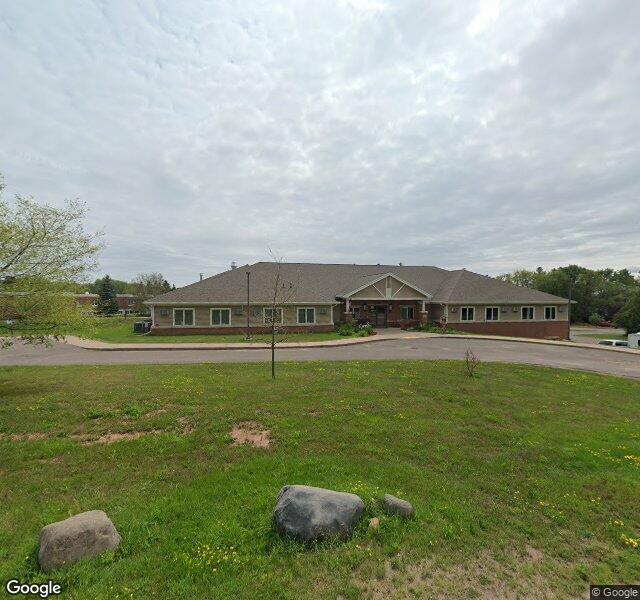
NORTHERN LIGHTS HCC

706 BRATLEY DR, WASHBURN, WI 54891 (715) 373-5621
Non profit - Corporation 50 Beds Independent Data: November 2025 1 Immediate Jeopardy citation
Trust Grade
46/100
#161 of 321 in WI
Last Inspection: July 2025

Inspected within the last 6 months. Data reflects current conditions.

Overview

Northern Lights Health Care Center has received a Trust Grade of D, indicating below-average performance and some concerns about the quality of care provided. It ranks #161 out of 321 facilities in Wisconsin, placing it in the bottom half, but it is the only nursing home in Bayfield County. Unfortunately, the facility is experiencing a worsening trend in quality, with issues increasing from 10 in 2024 to 11 in 2025. While the staffing rating is average with a turnover rate of 52%, it has concerning RN coverage, being lower than 89% of Wisconsin facilities, which may impact the level of care residents receive. Specific incidents of concern include a resident who was able to leave the building unsupervised, raising serious safety issues, and problems with food safety and infection prevention practices that could affect many residents. Overall, while there are some strengths, such as a good quality measures rating, the identified weaknesses are critical to consider.

Trust Score
D
46/100
In Wisconsin
#161/321
Top 50%
Safety Record
High Risk
Review needed
Inspections
Getting Worse
10 → 11 violations
Staff Stability
⚠ Watch
52% turnover. Above average. Higher turnover means staff may not know residents' routines.
Penalties
○ Average
$15,945 in fines. Higher than 67% of Wisconsin facilities. Some compliance issues.
Skilled Nurses
○ Average
Each resident gets 32 minutes of Registered Nurse (RN) attention daily — about average for Wisconsin. RNs are the most trained staff who monitor for health changes.
Violations
⚠ Watch
29 deficiencies on record. Higher than average. Multiple issues found across inspections.
★★★☆☆
3.0
Overall Rating
★★★☆☆
3.0
Staff Levels
★★★★★
5.0
Care Quality
★★☆☆☆
2.0
Inspection Score
Stable
2024: 10 issues
2025: 11 issues

The Good

  • 5-Star Quality Measures · Strong clinical quality outcomes
  • Full Sprinkler Coverage · Fire safety systems throughout facility
  • No fines on record

Facility shows strength in quality measures, fire safety.

The Bad

3-Star Overall Rating

Near Wisconsin average (3.0)

Meets federal standards, typical of most facilities

Staff Turnover: 52%

Near Wisconsin avg (46%)

Higher turnover may affect care consistency

Federal Fines: $15,945

Below median ($33,413)

Minor penalties assessed

The Ugly 29 deficiencies on record

1 life-threatening
Jul 2025 10 deficiencies
CONCERN (D)

Potential for Harm - no one hurt, but risky conditions existed

Report Alleged Abuse (Tag F0609)

Could have caused harm · This affected 1 resident

**NOTE- TERMS IN BRACKETS HAVE BEEN EDITED TO PROTECT CONFIDENTIALITY** Based on record review and interview, the facility did not implement policies and procedures for ensuring the reporting of physi...

Read full inspector narrative →
**NOTE- TERMS IN BRACKETS HAVE BEEN EDITED TO PROTECT CONFIDENTIALITY** Based on record review and interview, the facility did not implement policies and procedures for ensuring the reporting of physical abuse in accordance with section 1150B of the Act when an allegation of physical abuse was not reported immediately, but no later than 2 hours to the administrator and local law enforcement in accordance with state law through established procedures for 1 of 1 resident (R) reviewed (R28).This is evidenced by:Facility policy titled, Abuse, Neglect, and Exploitation, Suspected Crimes, with a reviewed date of 11/2024, states: Procedure: 3. Prevention: a. Staff, families, and residents are encouraged to report incidents of suspected abuse, neglect.5. Investigation: a. Any person who knows or has reasonable cause to suspect that a resident has been or is being abused, neglected, or exploited shall immediately report such knowledge or suspicion to the administrator. b. The administrator, director of nursing, or designee will notify the appropriate regulatory, investigative, or law enforcement agencies immediately, in accordance with state regulations.R28 was admitted to the facility on [DATE], with pertinent diagnoses of hemiplegia and hemiparesis following cerebral infarction affecting left non-dominant side.R28's most recent quarterly Minimum Data Set (MDS) assessment, dated 07/17/25, noted a Brief Interview for Mental Status (BIMS) score of 00, indicating severely impaired cognition. R28 had impaired range of motion (ROM) on both sides in upper and lower extremities.Surveyor reviewed R28's electronic medical record (EMR) and noted the following incident:On 07/04/25 at 12:30 PM, a Certified Nursing Assistant (CNA) reported to the Licensed Practical Nurse (LPN) that while providing cares to R28 in bed, a cut on R28's left eye lid measuring 2 cm was discovered. The cut was cleaned and gauze applied. R28's activated power of attorney (POA), charge nurse, and provider were notified.On 07/08/25, provider responded to monitor for change in vision and infection.-Of note: no additional documentation of incident was noted.On 07/29/25 at 3:14 PM, Surveyor interviewed Director of Nursing (DON) B regarding incident. DON B stated she was on vacation during this time and was unaware of the incident. DON B stated that staff did not follow procedure of notifying the administrator or other leadership to follow-up and investigate. DON B stated that this incident, if brought to her attention, would have been investigated and reported. DON B stated education would be completed with staff.
CONCERN (D)

Potential for Harm - no one hurt, but risky conditions existed

Deficiency F0657 (Tag F0657)

Could have caused harm · This affected 1 resident

**NOTE- TERMS IN BRACKETS HAVE BEEN EDITED TO PROTECT CONFIDENTIALITY** Based on observation, interview and record review, the facility did not ensure care plans were revised to reflect residents' cur...

Read full inspector narrative →
**NOTE- TERMS IN BRACKETS HAVE BEEN EDITED TO PROTECT CONFIDENTIALITY** Based on observation, interview and record review, the facility did not ensure care plans were revised to reflect residents' current needs and to provide the needed direction to staff in providing necessary care and services for 1 of 13 residents (R)(R28) reviewed.R28's care plan interventions to offload heels while in bed was not updated when changed from using heel pads to wedge. This is evidenced by:Facility policy titled, Person-centered Plan of Care - Comprehensive, with a revision date of 01/2023, states: Person-centered Care: Integrated health care services delivered in a setting and manner that is responsive to the individual and their goals, values and preferences, in a system that empowers patients and providers to make effective care plans together. The care plan describes.services that are furnished to attain or maintain the resident's highest practicable physical, mental, and psychosocial well-being. Procedure: 3. Write interventions in terms of staff behavior, e.g., what the staff will do to accomplish an objective.R28 was admitted to the facility on [DATE], with pertinent diagnoses of hemiplegia and hemiparesis following cerebral infarction affecting left non-dominant side.R28's most recent quarterly Minimum Data Set (MDS) assessment, dated 07/17/25, noted a Brief Interview for Mental Status (BIMS) score of 00, indicating severely impaired cognition. R28 had impaired range of motion (ROM) on both sides in upper and lower extremities. R28 required substantial/maximum assist with upper body dressing and rolling left to right. R28 required dependent assist with personal hygiene, sit to lying, lying to sitting, and chair/bed transfers. R28 was noted to be at-risk for pressure injuries with no current skin conditions noted.R28's CNA task list, dated 07/16/24, states: Ensure heel pads are on while in bed every shift. This task was documented as completed every shift.-Of note: R28 was observed in bed with a foam wedge in place to elevate heels off bed. No heel pads were observed on R28 at any time during survey.On 07/29/25 at 5:44 PM, Surveyor interviewed Certified Nursing Assistant (CNA) F regarding R28's heel pads. Surveyor asked CNA F if heel pads were used for R28. CNA F stated yes. Surveyor asked CNA F to show the heel pads. CNA F looked in room and couldn't find them. CNA F stated staff heel pads were used previously, but now a wedge is used because R28 kept pushing the heel pads off. Surveyor asked CNA F when this change occurred. CNA F stated months ago but couldn't recall exactly. Surveyor asked CNA F who is responsible for updating the changes in the CNA care tasks. CNA F stated the nurse.On 07/30/25 at 9:29 AM, Surveyor interviewed CNA D regarding heel pads. CNA D stated R28 used to use heel pads but was transitioned to the wedge a while ago. CNA D could not remember when the transition occurred, but it was some time ago. Surveyor asked why the CNA task documentation shows heel pads were applied every shift. CNA D stated this is marked complete because the wedge is put into place. On 07/30/25 at 10:12 AM, Surveyor interviewed Director of Nursing (DON) B regarding R28's care plan revisions. DON B stated the nurse should have updated R28's care plan when this was changed.
CONCERN (D)

Potential for Harm - no one hurt, but risky conditions existed

Pressure Ulcer Prevention (Tag F0686)

Could have caused harm · This affected 1 resident

**NOTE- TERMS IN BRACKETS HAVE BEEN EDITED TO PROTECT CONFIDENTIALITY** Based on observation, interview and record review, the facility did not promote the prevention of or implement interventions to ...

Read full inspector narrative →
**NOTE- TERMS IN BRACKETS HAVE BEEN EDITED TO PROTECT CONFIDENTIALITY** Based on observation, interview and record review, the facility did not promote the prevention of or implement interventions to prevent pressure injuries for 2 out of 4 residents (R) reviewed for pressure injuries, (R5, R40) resulting in stage II pressure injuries (PI).Findings include: R40 and R5 had open skin areas that were not reported to nursing when observed and documented by Certified Nursing Assistant (CNA) per facility policy and current standards of practice.R40 and R5, who are at risk for developing PI, did not have thorough and adequate skin integrity assessments performed by nursing staff on a weekly basis per facility policy.R40 and R5 did not have a wound care treatment plan consistent with profession standards of practice.R40 and R5 were not repositioned every 2 hours as indicate in their care plans.R40's care plan was not updated promptly to address interventions for a stage II PI.R5's care plan was not updated to address pressure relieving interventions with current use of recliner instead of previously used Broda chair.The facility policy, titled Pressure Injury/Skin Integrity, reviewed November 2024, states in part: Based on the comprehensive assessment of a resident, (the facility) will ensure: A resident receives care, consistent with the professional standards of practice. To prevent pressure injuries and does not develop pressure injuries unless the individuals clinical condition demonstrates that they were unavoidable: and . Routine ongoing documentation should be conducted related to the resident's skin condition and the resident's response to the care and treatment of the skin.The frequency of documentation shall be determined based on the resident's individual needs in accordance with accepted standards of practice, at least weekly.1) All residents admitted to the facility will receive undergo an initial skin assessment within 4 hours of admission and on a weekly basis per bathing schedule.all incontinent residents receive peri-care with application of barrier ointment/cream with each incontinent episode.2) Wound rounds will be completed weekly by a licensed nurse. 3) Weekly documentation of wounds is completed by a licensed nurse.Interventions will be implemented to mitigate the risk for potential skin breakdown, based on individual risk factors, and may include but are not limited to:a. The use of pressure redistribution devices. b. Interventions should be documented in the residents' medical record, including the resident-centered plan of care.Routine ongoing documentation should be conducted relating to the resident's skin condition and the resident's response to care and treatment of the skin. The frequency of documentation shall be determined based on the resident's individual needs in accordance with acceptable standards of practice, at least weekly.All Clinical Staff will have education provided during their orientation process as well as on a minimum of an annual basis related to, but not limited to wound care techniques, pressure injury prevention, and appropriate wound care/monitoring documentation.Example 1R40 was admitted to the facility on [DATE] with diagnosis that includes Alzheimer's disease, heart disease with heart failure, hypotension, weakness, history of falls, and candidiasis of the skin and nails.R40's most recent Minimum Data Set (MDS) dated [DATE] indicated R40 had a Brief Interview for Mental Status (BIMs) of 6/15, indicating severe cognition impairment. R40's MDS also indicated R40 is at risk for developing PIs, is incontinent of bowel and bladder, had no open skin areas, and is dependent with all cares and repositioning.R40's care plan, date initiated 03/27/24, states, in part:.At risk for skin breakdown r/t reduced mobility and need for assistance with repositioning. Also, at risk due to bowel and bladder incontinence. Currently right buttock excoriation being treated. Healed as of 11/22/2024 and revision of care plan on 01/02/25.interventions include, in part: Will have clean, dry, intact skin through next review date, barrier cream on with each incontinence change, Follow community skin protocol. Staff will keep skin as clean and dry as possible and minimize exposure to moisture. Will also keep linens clean and dry, Incontinence care with incontinent brief changes, observe skin with AM/PM cares and with toileting for redness, rashes, open areas, pain, swelling and report them to team leader. Weekly skin check. Lotion to dry skin. Review skin concerns with MD. Report any new or abnormal skin concerns such as bruises, open areas, reddened areas, tender areas, cuts or abrasions.Pressure reduction cushion in wheelchair (initiated on 3/27/24).Pressure reduction mattress on bed (initiated 3/27/24).Reposition on all rounds in bed and chair & PRN. Use lift sheet when assisting with bed mobility to avoid shearing skin during repositioning (initiated on 3/27/24) .Encourage physical activity, mobility, and ROM to maximal potential to help reduce breakdown.Provide nutritional supplements as recommended to help maintain good skin condition. Offer and encourage fluids during and between meals to help maintain good hydration. Reposition Resident on all rounds and as needed. Requires documentation. Skin Observation.Record review indicated R40's skin assessments/weekly skin checks performed by nursing staff, on 07/06/25 and 07/13/25 are documented No Skin Issues Noted. On 07/19/25 and 07/27/25 is documented redness to groin and buttock.On 07/30/25, Surveyor reviewed Certified Nursing Assistant (CNA) tasks charting which indicated R40 had skin tear on 07/01/25, 07/02/25, 07/11/25, 07/14/25, 07/15/25, 07/16/25, 07/18/25, 07/21/25, 07/23/25, 07/25/25, 07/27/29, and 07/29/25. CNA tasks charting indicates R40 had open skin area on 07/2/25, 07/03/25, 07/04/25, 07/06/25, 07/09/25, 07/10/25, 07/13/25, 07/15/25, 07/16/25, 07/17/25, 07/18/25, 07/24/25, 07/28/25, and 07/29/25.On 07/28/25 at 10:55 AM, Surveyor observed CNAs don gowns and gloves prior to entering R40's room to provide care. Surveyor did not note any signage on R40's door nor did matrix indicate why a gown would be required for cares. Surveyor was unable to observe or interview at that time as to why CNAs donned gowns.On 07/28/2025 at 11:13 AM, Surveyor interviewed CNA K who reported they donned gowns to provide incontinence cares to R40 because R40 has an open skin area on right buttock.On 07/29/25 at 8:44 AM, Surveyor observed CNAs K and H provide incontinence care and reposition R40. Survey observed CNAs provide incontinence cares for R40. R40 had an open skin area with pink, moist tissue noted on right buttock. Per Surveyor's observation, this wound met the National Pressure Injury Advisory Panel of a stage II PI. The size appeared to be approximately 1cm in diameter, no rolled edges noted. R5 denied pain to wound area. CNA K wiped open skin area with a premoistened cleansing cloth, applied A & D to open wound, and applied baby powder to inside of R40's adult brief. CNA K reported the wound nurse was aware of R40's open skin area and told the CNAs to continue applying barrier cream to buttocks. On 07/29/25 at 8:54 AM, Surveyor interviewed CNA K, who reported open sore on R40's buttocks had been reported to RN G and the wound nurse about a week ago. CNA K reported RN G told her because R40's open skin area gets worse then gets better again, they do not need to do dressing on R40's open skin areas, and the CNAs were told to continue to apply barrier cream to open area. CNA H was present during interview and confirmed these statements.Applying barrier cream and baby powder, and leaving PI open to air, is not considered acceptable treatment in the current standards of practice for a stage II PI.On 07/29/25 at 10:40 AM, Surveyor interviewed Licensed Practical Nurse (LPN) L, who reported recently taking over for RN G. LPN L stated in report from RN G, LPN L was told R40 has a wound on right buttock, and it was taken care of. When Surveyor asked what that meant, LPN L stated it meant the wound nurse was notified.On 07/29/25 at 10:49 AM, Surveyor interviewed Director of Nursing (DON) B, who reported she was made aware of R40's wound yesterday and there is a call to the provider and wound care nurse. DON B reported her expectation for a resident with a PI is that there would be wound care orders. Surveyor stated there are no orders or nursing documentation of R40's PI. DON B reported her expectation would be for a CNA that found any open skin area is that it would be reported to the nurse in charge, assessed immediately, staged by the wound care nurse, and treatment orders be put into place. Surveyor asked DON B if she thought applying A&D ointment to open skin and leaving uncovered is an acceptable treatment for R40's open skin area. DON B reported she doesn't know without having seen it.On 07/29/25 at 10:32 PM, Surveyor observed R40 in bed asleep in a semi-Fowlers position with neck pillow behind his head. Surveyor interviewed CNA M, who reported R40 was last repositioned by the PM shift staff around 9 PM, but it is not documented exactly when. CNA M reported he will do checking for incontinence changes and repositioning at midnight.On 07/30/25 at 12:14 AM, Surveyor interviewed CNA M, who reported R40 was repositioned at 11:30 pm and R40 is repositioned about every 2 hours. This would have been 2 and a half hours since R40 was repositioned. CNA charting indicated repositioning is done every 2 hours per CNA's initials. CNAs do not document a specific time done.On 07/30/25, Surveyor reviewed documentation from RN G from 07/29/25, Resident has open area to right inner buttocks and excoriation to left buttocks. Area cleansed and barrier cream applied per order. SBAR written for (provider) to review. Wound nurse notified. Voice message left for Power of Attorney (POA) to call back for update. Surveyor did not find an updated order for wound treatment in R40's medical record.On 07/30/2025 at 10:28 AM, Surveyor interviewed RN G regarding R40's open skin area. RN G reported she was unaware of R40's PI until on 07/28/25 and she didn't get a chance to document until 07/29/25. RN G reported her expectations are that CNAs report any skin changes immediately and they should be providing incontinence cares and reposition R40 every 2 hours.On 07/30/25 at 11:50 AM, Surveyor interviewed DON B, who reported R40 does have a PI, she was told it was looked at by wound care nurse, that it is a stage II, and facility is working on getting orders for treating it. DON B reported the expectation is that all residents who require assistance with repositioning get repositioned at least every 2 hours (current standards of practice for a resident with a PI would be to reposition every hour) incontinence cares are performed every 2 hours and as needed and that any open skin areas or changes in skin observed by a CNA are to be reported to nursing staff immediately. DON B reported the CNA tasks charting is not reviewed by nursing staff. DON B stated the process for all residents would be that CNAs report any skin changes to the nursing staff. The expectation is that nursing staff would follow up immediately with any reported changes in resident's skin condition and that the nurse be assessing skin areas thoroughly every week, documenting, and reporting any open skin area immediately to the provider to obtain an order for wound care treatment on that day, or if at night, immediately the next day, to notify the Power of Attorney, the Registered Dietician, and the Wound Care Nurse for wound care assessment to be added to the weekly schedule. DON B verbalized this does not seem to have happened with R40's PI and DON B plans to follow up with wound care nurse. DON B does believe the wound care nurse did look at R40's PI and is not sure why there is not documentation of this yet in R40's medical record. Example 2 R5 was admitted to the facility on [DATE] with diagnosis that includes history of transient ischemic attack and cerebral infarction, hemiplegia and hemiparesis affecting left side, weakness, spinal stenosis.R5's most recent Minimum Data Set (MDS) dated [DATE] indicates R5 had a BIMS of 7/15 indicating severe cognition impairment, was at risk for developing PIs, and that R5 is dependent with all cares and repositioning.R5's care plan, dated 5/26/25, states, in part: At Risk for impaired skin integrity including skin tears, bruising AND/OR pressure R/T non-ambulatory interventions include, in part:.Will have clean, dry, intact skin through next review date. Assist / Encourage Pressure Relief as needed / accepted.Follow community skin protocol, Incontinence care with incontinent brief changes. Observe skin with AM/PM cares and with toileting for redness, rashes, open areas, pain, swelling and report them to team leader. pay close attention to. where there may be added pressure. Weekly skin check. Lotion to dry skin. Review skin concerns with MD. Pressure reduction cushion in Broda chair (initiated on 3/22/24, revised on 5/21/25) Pressure reduction mattress on bed (initiated on 1/21/25) , Reposition Q 2 hours in bed and chair & as needed (PRN) (initiated 3/22/24) .Turn & Reposition Resident on routine rounds and as needed.Record review indicated R5's skin assessments/weekly skin checks performed on 07/01/25, 07/08/25, 07/15/25, and 07/22/25 documented No Skin Issues Noted and signed by RN G and on 07/29/25 also is documented No Skin Issue Noted and signed by LPN L.On 07/30/25, Surveyor reviewed CNA tasks charting in which indicated R5 had open skin area on 07/15/25, 07/23/25, 07/24/25, 07/25/25, and 07/29/25.On 07/29/25 at 10:32 PM, Surveyor observed R5 in bed asleep in a semi-Fowlers position. Surveyor interviewed CNA M, who reported R5 was last repositioned by PM shift around 9 PM but it is not documented exactly when. CNA M reported he will do checking for incontinence changes and repositioning at midnight.On 07/30/25 at 12:14 AM, Surveyor interviewed CNA M, who reported R5 was repositioned at 11:30 pm and R5 is repositioned about every 2 hours. This would have been 2 and a half hours since R5 was repositioned. CNA charting indicated repositioning is done every 2 hours per CNA's initials. CNAs do not document a specific time done. On 07/30/25 at 10:07 AM, Surveyor observed R5's personal cares and noted R5 had an open skin area with pink, moist tissue on his right upper buttock. Per Surveyor's observation, this wound meets the National Pressure Injury Advisory Panel of a stage II PI. Area was approximately 1.5cm x 1cm in size. R5 had barrier cream with powder caked on it around edges. R5 denied pain to wound area. R5 has a pressure reduction air mattress on his bed. R5 does not have any cushion in his recliner. Surveyor had a prior observation of R5 in recliner a large portion of the day. There was no Broda chair as indicated in R5's care plan, in R5's room.On 07/30/25 at 10:15 AM, Surveyor interviewed CNA N who reported R5 has had the skin tear for about a week. Surveyor asked which nurse CNA N reported it to; CNA N stated he works various shifts and has reported it to various nurses. CNA N stated 3-4 different nurses have looked at it. CNAs were instructed to put barrier cream on R5 buttocks/ perineal area. CNA N reported R5 is supposed to be checked for incontinence and repositioned every 2 hours. CNA N stated they try to check and reposition R5 every 2 hours but sometimes they get busy with other residents. On 07/30/2025 at 10:18 AM, Surveyor observed RN G don gloves and gown. RN G looked at wound and reported it is an open skin area. RN G attempted to scrape dried on paste of powder and barrier cream from around wound edges. Immediately after, Surveyor interviewed RN G, who reported she was not made aware of open skin area on R5 and R5's wound was not found on nurse's weekly skin check performed on 7/29/25 by RN G. RN G reported CNAs are supposed to reposition R5 every 2 hours and notify RN with any skin changes.On 07/30/25 at 11:50 AM, Surveyor interviewed DON B and asked DON B what the expectations are for repositioning residents who are at risk for skin breakdown. DON B reported the expectation is that all residents requiring assistance with repositioning are repositioned every 2 hours, incontinence cares are performed every 2 hours and as needed and that any open skin areas or changes in skin observed by a CNA it is to be reported to nursing staff immediately. DON B reported the CNA tasks charting is not reviewed by nursing staff. The expectation is that staff would follow up with any reported changes in skin condition and be assessing skin areas thoroughly weekly, documenting, and reporting any open skin area immediately to the provider in order to obtain an order for wound care treatment on that day, or if at night, immediately the next day, to notify the Power of Attorney, the Registered Dietician, and the Wound Care Nurse for wound care assessment to be added to the weekly schedule.DON B reported the care plan for R5 had not been updated to have a pressure relieving device in R5's recliner chair instead of Broda chair, as R5 no longer requires a Broda chair, and the PI was not reported or identified until today.DON B reported R40 should have had wound care orders immediately after open skin had been noted. DON B is unsure why the CNA documentation is marked as open skin areas, but this is not noted in RN charting or reviewed by the RNs for both R40 and R5. DON B stated the process would be that CNAs report any skin changes to the nursing staff. The expectation is that nursing staff would follow up immediately with any reported changes in resident's skin condition and that the nurse be assessing skin areas thoroughly every week, documenting, and reporting any open skin area immediately to the provider to obtain an order for wound care treatment on that day, or if at night, immediately the next day, to notify the Power of Attorney, the Registered Dietician, and the Wound Care Nurse for wound care assessment to be added to the weekly schedule.
CONCERN (D)

Potential for Harm - no one hurt, but risky conditions existed

Deficiency F0688 (Tag F0688)

Could have caused harm · This affected 1 resident

**NOTE- TERMS IN BRACKETS HAVE BEEN EDITED TO PROTECT CONFIDENTIALITY** Based on interview and record review, the facility did not ensure a resident with limited mobility receives appropriate restorat...

Read full inspector narrative →
**NOTE- TERMS IN BRACKETS HAVE BEEN EDITED TO PROTECT CONFIDENTIALITY** Based on interview and record review, the facility did not ensure a resident with limited mobility receives appropriate restorative services, and assistance to maintain or improve mobility with the maximum practicable independence for 1 out of 5 residents (R)(R28).R28's passive range of motion (PROM) exercises and application of palm guard was not completed as ordered. This is evidenced by:R28 was admitted to the facility on [DATE], with pertinent diagnoses of hemiplegia and hemiparesis following cerebral infarction affecting left non-dominant side.R28's most recent quarterly Minimum Data Set (MDS) assessment, dated 07/17/25, noted a Brief Interview for Mental Status (BIMS) score of 00, indicating severely impaired cognition. R28 had impaired range of motion (ROM) on both sides in upper and lower extremities.R28's care plan, dated 06/27/25, with a target date of 07/23/25, states: Actual deficit with ADLs with interventions of cleanse left palm and then apply palm guard.R28's care plan, dated 06/27/25, with a target date of 07/23/25, states: Functional maintenance program: passive range of motion to upper extremities with interventions to focus on elbow, fingers, thumb, and shoulder every shift.R28's CNA care task record for 07/2025, noted PROM was not completed on: 07/01, 07/07, 07/11, 07/12, 07/15, 07/18, 07/23, and 07/28.R28's CNA care task record for 07/2025, noted cleansing of left palm and wrist guard placement was not completed on: 07/01, 07/11, 07/15, and 07/28.On 07/29/25 at 11:13 AM, Surveyor interviewed Certified Nursing Assistant (CNA) D regarding PROM and palm guard. CNA D stated staff try to complete PROM exercises with residents, but do not always have the time. CNA D stated a dedicated restorative nursing aide was established about a month ago to help with PROM. Surveyor asked about R28's palm guard. CNA D stated it is supposed to be applied in the morning, but not all staff follow the care plan.On 07/30/25 at 7:02 AM, Surveyor interviewed Director of Nursing (DON) B regarding PROM exercises and application of R28's palm guard. DON B stated that a dedicated restorative nurse aide was established about 3-4 weeks ago to complete PROM exercises for residents. DON B stated these cares should have been completed for R28.
CONCERN (D)

Potential for Harm - no one hurt, but risky conditions existed

Tube Feeding (Tag F0693)

Could have caused harm · This affected 1 resident

**NOTE- TERMS IN BRACKETS HAVE BEEN EDITED TO PROTECT CONFIDENTIALITY** Based on interview and record review, the facility did not ensure residents who were fed by enteral means received the appropria...

Read full inspector narrative →
**NOTE- TERMS IN BRACKETS HAVE BEEN EDITED TO PROTECT CONFIDENTIALITY** Based on interview and record review, the facility did not ensure residents who were fed by enteral means received the appropriate treatment and services to prevent complications for 2 of 2 residents (R)(R28 and R5) reviewed.R28 was not given enteral feeding as ordered and assessment was not completed per current standard of care.R5's assessment was not completed per standard of care. This is evidenced by: Facility policy titled, “Gastrostomy Tube – Administration of Medications,” with a revision date of 10/2022, states: “Medications administered via tube will be done following current standards of practice and with a physician’s order. Procedure: 5. Check for correct placement of tube.” The National Institute of Health, 2023, recommends the position of a feeding tube be checked by measuring the visible tube length and comparing it to the length documented during x-ray verification. Older methods, including observing aspirated GI contents or the administration of air with a syringe while auscultating are unreliable and should no longer be used to verify placement. Example 1 R28 was admitted to the facility on [DATE], with pertinent diagnoses of hemiplegia and hemiparesis following cerebral infarction affecting left non-dominant side, dysphagia, gastrostomy status, and mild protein-calorie malnutrition. R28’s most recent quarterly Minimum Data Set (MDS) assessment, dated 07/17/25, noted a Brief Interview for Mental Status (BIMS) score of 00, indicating severely impaired cognition. R28 has a feeding tube in place. R28’s care plan, dated 05/02/24, with a target date of 07/23/25, states: “Feeding tube: at risk for complications with interventions to check for tube placement & gastric contents/residual volume per facility protocol and record.” R28’s orders: 02/24/25 Enteral Feed four times a day Nutren 1.5 liquid 200 ml via PEG tube, via gravity through syringe. Do not push. Flush with 60 ml water before and after each feed. 06/05/25 Check G tube placement every shift prior to medications/feedings. On 07/29/25 at 10:37 AM, Surveyor observed Licensed Practical Nurse (LPN) C administer R28’s enteral feeding. Prior to feeding, Surveyor observed LPN C place stethoscope on R28’s abdomen and connect syringe to the feeding tube. Surveyor asked LPN C what was being done. LPN C stated she was verifying placement of feeding tube by pushing air in and listening for air entering the stomach. Surveyor asked LPN C if this was the facility’s current practice for verifying placement. LPN C stated yes. Surveyor observed LPN C pour the enteral nutrition formula into a graduate container and measured out 240 ml. Surveyor asked LPN C if all 240 ml would be administered. LPN C stated yes. Surveyor observed LPN C pour approximately 60 ml of formula, attached the plunger, and connected syringe to R28’s feeding tube. LPN C then began to push the formula into R28’s feeding tube. Surveyor asked LPN C if R28’s enteral feeding was supposed to be pushed. LPN C stated yes. Surveyor informed LPN C the order stated to give by gravity and do not push. LPN C stopped the feeding and stated, “It does? Well then I guess I just made an error. I just reviewed this order with the nurse before coming in here.” Surveyor asked LPN C what the ordered feeding amount was. LPN C stated 240 ml. Surveyor showed LPN C the order noted in R28’s electronic medical record (EMR) stating 200 ml. LPN C stated she thought it said 240 ml. LPN C then removed the plunger and fed remaining formula via gravity for a total of 200 ml. On 07/30/25 at 7:02 AM, Surveyor interviewed Director of Nursing (DON) B regarding tube feeding observation. DON B stated nursing staff were trained to verify feeding tube placement by auscultating for air and was unaware the current standard of practice had changed regarding this. DON B stated she had been made aware by LPN C regarding the error in administering the formula via push instead of gravity. DON B stated that nursing staff would be educated to verify orders prior to tube feeding to ensure this error did not occur again. Example 2 R5 admitted to the facility on [DATE]. Diagnoses included dysphagia after stroke with gastrostomy tube (G-tube) for feeding purposes. MDS assessment, completed on 05/08/25, confirmed R5 scored 07/15 during BIMS, indicating a cognitive impairment. R5’s care plan included: NUTRITION/HYDRATION: Actual/At Risk and/or Potential for Complications with Nutrition/Hydration due to recent CVA (stroke) with need for tube feeding. 03/22/2024 -Pleasure feeding: nectar liquids by spoon or pureed diet with cold textures such as applesauce or pudding with safe swallow strategies; small bites (1/2 spoonful), single bites; sit up 90° for oral intake; supervision and assistance with eating; cue for double swallows; if cough noted, instruct to clear throat or wet voice; wait 30 minutes prior to laying down after oral intakes. 01/03/2025 -Tube Feedings / Flushes Per Facility Protocol Registered Dietician/MD orders: Elevate head of bed during and after tube feeding administration. Check residuals before tube feeding administration. Observe / Monitor / Document signs and symptoms of tube feeding intolerance. Observe / Monitor / Document S&S of dehydration. Notify MD/RD of concerns as needed. 03/22/2024 FEEDING TUBE: Potential for Complications with tube feeding. Tube Feeding Placed due to recent CVA. 01/21/2025 -Check for tube placement & gastric contents/residual volume per facility protocol and record. Hold feeding if >200 cc aspirated. 03/22/2024 -Keep HOB elevated 45° during and at least 30 minutes after tube feed. 03/22/2024 R5’s physician orders included: -Flush tube with 20ml of water between each medication. -Flush G-Tube with 75 ml of water before feeding. -Nutren 1.5 liquid; 275cc each feeding, four times a day provide feeding via gravity. On 07/30/25 at 8:26 AM, R5 was lying in his bed. RN G told R5 she was going to administer his tube feeding and medications. R5 nodded his head yes. RN G elevated R5’s head of bed to 45°. R5 stated he was doing well, and he had no complaints of pain. R5 told Surveyor RN G was, “great.” Surveyor observed RN G place her stethoscope on R5’s abdomen near his G-tube and insert air into the tube with a syringe. Surveyor asked RN G if it was the facility’s policy to auscultate to verify placement a G-tube, RN G stated, “Yes.” Surveyor asked RN G if the facility had provided education that auscultating to determine placement of a G-tube was no longer a standard of practice. RN G stated she was not aware.
CONCERN (D)

Potential for Harm - no one hurt, but risky conditions existed

Deficiency F0697 (Tag F0697)

Could have caused harm · This affected 1 resident

**NOTE- TERMS IN BRACKETS HAVE BEEN EDITED TO PROTECT CONFIDENTIALITY** Based on observation, interview, and record review, the facility did not recognize and manage pain for 1 of 1 resident reviewed ...

Read full inspector narrative →
**NOTE- TERMS IN BRACKETS HAVE BEEN EDITED TO PROTECT CONFIDENTIALITY** Based on observation, interview, and record review, the facility did not recognize and manage pain for 1 of 1 resident reviewed (R53) in order to help attain or maintain highest practicable level of well-being and to prevent or manage pain.The facility failed to recognize and treat R53's pain and implement pain interventions.Findings include:Facility policy titled, Pain Management, last revised May 2025, reads in part: The community will identify, monitor, and evaluate residents' pain .residents are screened for pain regularly through observing the resident during daily care and/or observing for signs and symptoms of pain.for the resident who has difficulty communicating, physical signs such as grimacing, restlessness, moaning/groaning.will be monitored.any identified pain issues at the time of admission will be addressed on the baseline care plan. Facility policy titled, Person-centered Plan of Care-Comprehensive, last revised January 2023, reads in part: The community will develop a person-centered plan of care for each resident. This care plan includes measurable objectives and timetables designed to meet the resident's medical, nursing, mental, and psychosocial needs. Identify needs, problems. of resident based on.past history.R53 was admitted to the facility on [DATE], with diagnoses including dementia, repeated falls, other specified fracture of right pubis, and chronic pain.Minimum Data Set (MDS) on 07/22/25 documented a Brief Interview for Mental Status (BIMS) score of 3/15 indicating severe cognitive impairment.On 07/28/25 at 2:08 PM, Surveyor observed Certified Nursing Assistant (CNA) D enter R53's room and immediately ask CNA O to grab a Hoyer lift and bring it in R53's room. Surveyor heard resident yelling ow repeatedly from across the hall from her room. On 07/28/25 at 2:12 PM, Surveyor interviewed CNA D. CNA D stated resident had been sliding out of her wheelchair but did not have a fall. CNA D stated R53 yells out like when transferred with the Hoyer lift and that it wasn't new for R53.On 07/29/25 at 9:06 AM, Surveyor heard R53 yelling ow repeatedly once again from across the hall. Surveyor knocked, introduced self, and entered room for observation. CNA D and CNA J were completing lower body dressing. Surveyor observed with permission. Surveyor observed CNA D and CNA J pulling R53's jeans on the rest of the way and placing the sling under R53. Each time R53 was moved from side to side, R53 would yell out ow, ow, ow and had facial grimacing. R53 was guarding her left hip area with left hand. Surveyor observed R53 saying Oh and Ok in response to CNA D's instructions. CNA D informed R53 of everything they were going to do, but when counting to 3 before rolling R53, CNA D started to roll resident with the drawsheet prior to getting to 3. R53 flailed, stiffened their body, pushed back against CNA D, and continued to say ow. Surveyor asked CNA D if R53 always cries out in pain like that. CNA D stated, We aren't entirely sure it's pain or maybe just the act of moving scares her. CNA D stated R53 was admitted to facility for weakness and history of falls at home. CNA D stated they were not aware of any fractures or anything. CNA D showed Surveyor care plan sheets that are in each resident room and stated they follow the information on those sheets. Surveyor reviewed the care sheet for R53 which stated, Impulsive. History of falls. Record review indicated a pain assessment was completed on 07/21/25 indicating no pain present.Surveyor reviewed pain charting history. All but 1 day since admission was marked 0/10 pain and 07/28/25 showed 2/10 pain. Some days the verbal number scale was utilized, while other days the visual dementia scale was used to assess R53 for pain. R53 has physician order for Tylenol as needed for pain but has not been administered since admission.On 07/30/25 at 9:09 AM, Surveyor interviewed Licensed Practical Nurse (LPN) C. LPN C stated some residents are able to verbalize pain. Others that cannot, use the dementia scale and staff watch residents for grimacing and moaning. LPN C stated if the resident is on scheduled pain medication an initial assessment is done right away in the morning and then as needed. If a new case of pain is reported, an as needed pain assessment is completed. LPN C stated if a CNA reports someone is having pain, she would enter the resident room to assess. If there is a frequency of pain, she would report it to the provider, update family, and write it on the report sheet for the next shift. LPN C stated more frequent assessments would also be completed. LPN C stated no one has reported R53 having pain to LPN C.On 07/30/25 at 9:30 AM, Surveyor interviewed Director of Nursing (DON) B. DON B stated her expectations for staff regarding pain management includes completing an assessment anytime a pain medication is administered and follow up with pain level. DON B stated with episodes of new reported pain the provider should be called. DON B stated a pain care plan with interventions for pain should also be in place. DON B stated care plans are created with each new admission and the initial/baseline care plan is on paper. DON B stated the MDS generates the new care plan, and it is modified with changes as needed. The care plan is then reviewed quarterly and as needed. Surveyor informed DON B that R53's care plan did not address pain interventions.
CONCERN (E)

Potential for Harm - no one hurt, but risky conditions existed

Resident Rights (Tag F0550)

Could have caused harm · This affected multiple residents

Based on observation, interview and record review, the facility did not ensure 8 of 9 residents (R30, R29, R13, R18, R9, R16, R26 and R14) were treated with respect and dignity.Facility staff stood ov...

Read full inspector narrative →
Based on observation, interview and record review, the facility did not ensure 8 of 9 residents (R30, R29, R13, R18, R9, R16, R26 and R14) were treated with respect and dignity.Facility staff stood over R9, R16, R18, and R29 while assisting them to eat.Facility did not ensure residents (R30, R26, R13, R14) received meal within a similar time frame as others at the same table.Facility set up R13's meal uncovered at dining room table and R13 was not present.Findings include:Facility policy titled, Dining and Food Service, last revised on 02/15/24, reads in part: The community will enhance the resident's dining experience to promote their quality of life.On 07/28/25 at 12:05 PM, Surveyor observed R30 with no food in front of him at a table with 3 other residents eating (R9, R26, and R2). Surveyor observed R26 put utensil down and stated, Did you order? when speaking to R30. R30 responded with, I think so. R30 received meal at 12:14 PM.On 07/28/25 at 12:12 PM, Surveyor observed Certified Nursing Assistant (CNA) H standing next to R29, providing a bite of food and then moved on to assist another resident. On 07/28/25 at 12:16 PM, Surveyor observed CNA K set up R13's meal on the dining room table uncovered with R13 not present. R13 was brought to the table at 12:19 PM. On 07/28/25 at 12:21 PM, Surveyor observed CNA H standing next to R18 placing food on fork and providing R18 a bite of food.On 07/28/25 at 12:24 PM, Surveyor observed CNA H standing next to R9, cutting up food, and providing R9 with a bite.On 07/28/25 at 12:25 PM, Surveyor observed CNA H walk over to R16. R16 was back away from the table. CNA H assisted R16 closer to the table and assisted R16 with a bite of food and offered a drink while standing next to R16.On 07/29/25 at 7:41 AM, Surveyor observed 5 residents at a shared table (R26, R13, R2, R35, and R14) awaiting breakfast.On 07/29/25 at 7:43 AM, R35 received meal.On 07/29/25 at 7:48 AM, R2 received meal.Survey observed 2 wing carts of food leave the kitchen for delivery to resident rooms. The first cart left the kitchen at 7:49 AM, the second at 7:59 AM. R26, R13, and R14 still had no meal. Surveyor observed Nursing Home Administrator (NHA) A and CNA J sitting in the dining room. Surveyor had to exit the dining observation at this time.On 07/29/25 at 1:27 PM, Surveyor interviewed R21. R21 stated residents do not get their meals at the same time when sharing a table. R21 stated when the meals are delivered depends on when and how many staff are in the dining room for the meal. R21 stated sometimes trays get sent to rooms on the carts and residents must wait for staff to bring them back to the dining room before they can eat.On 07/29/25 at 2:55 PM, Surveyor interviewed NHA A and Director of Nursing (DON) B. Surveyor discussed observations of staff assisting with eating while standing.
CONCERN (F)

Potential for Harm - no one hurt, but risky conditions existed

Food Safety (Tag F0812)

Could have caused harm · This affected most or all residents

Based on observation, interview and record review, the facility did not ensure the safety of food handling in accordance with professional standards for food service safety. The facility practices had...

Read full inspector narrative →
Based on observation, interview and record review, the facility did not ensure the safety of food handling in accordance with professional standards for food service safety. The facility practices had the potential to affect 42 out of 43 residents that eat orally at the facility. A fan in the clean dish washing station, which had notable dust and debris, was blowing on a rack of clean dishes. The cook did not allow the thermometer probe to air dry after cleaning with isopropyl alcohol prior to inserting into foods items intended to be served to residents for lunch. A dietary aide was observed not properly wearing a beard restraint. This is evidenced by: Example 1 The facility policy titled, “Food Safety- Director of Food and Nutrition Services’ Responsibilities” dated 2021, states in part, “5. Employees will follow proper cleaning and sanitizing instructions for all kitchen equipment… 8. Dishwashing guidelines and techniques will be understood by staff and carried out in compliance with state and local health codes.” On 7/28/25 at 9:47 AM, during initial tour of kitchen, Surveyor noted in the clean dish washing area a rack of dishes drying with an industrial-type fan blowing on the clean dishes. Surveyor noted fan had dust-like substance covering the back of the fan. Fan was loud and appeared to be on high. Surveyor interviewed [NAME] P about the fan blowing on the clean dishes on the drying rack. [NAME] P reported there are not usually clean dishes in front of the fan, and he turned the fan off. Example 2 The Food and Drug Administration (FDA) Food Code states in part, “4-901.11 Equipment and Utensils, Air-Drying Required. After cleaning and SANITIZING, EQUIPMENT and UTENSILS: (A) Shall be air-dried or used after adequate draining as specified in the first paragraph of 40 CFR 180.940 Tolerance exemptions for active and inert ingredients for use in antimicrobial formulations (food-contact surface sanitizing solutions), before contact with food. On 7/29/25 at 11:27 PM, Surveyor observed [NAME] Q take the internal temperatures of the foods going from the oven into the warming table for resident’s lunch. Surveyor noted [NAME] Q would wipe probe with probe wipe and immediately put probe into the next food which was regular pork, ground pork, and pureed pork. Surveyor interviewed [NAME] Q, who stated she was not aware she was supposed to wait to allow for chemical to dry after wiping probe and before sticking it into the resident’s food. On 07/29/25 at approximately 12:00 PM, Surveyor interviewed Culinary Director R, who reported understanding the importance of waiting for the chemical to dry after wiping the food probe before immediately putting wiped probe into resident's food. Culinary Director R also reported the fan is not supposed to have been in the dishwashing area. Surveyor noted the fan in the dishwashing area had been removed. Example 3 Facility policy titled, “Employee Sanitary Practices” dated 2021, reads in part: “All employees will…. wear hair restraints (hairnet, hat, and/or beard restraint) to prevent hair from contacting exposed food.” On 07/28/25 at 12:02 PM, Surveyor observed Dietary Aide (DA) I with beard net around neck and not covering beard when entering kitchen. When DA I exited the kitchen a couple minutes later, he had the beard net on the lower part of his chin only. DA I delivered a tray and returned to the kitchen. DA I exited the kitchen the third time with beard net over entire lower face including mouth/mustache.
CONCERN (F)

Potential for Harm - no one hurt, but risky conditions existed

Infection Control (Tag F0880)

Could have caused harm · This affected most or all residents

**NOTE- TERMS IN BRACKETS HAVE BEEN EDITED TO PROTECT CONFIDENTIALITY** Based on observation, interview and record review, the facility did not maintain an infection prevention program designed to pro...

Read full inspector narrative →
**NOTE- TERMS IN BRACKETS HAVE BEEN EDITED TO PROTECT CONFIDENTIALITY** Based on observation, interview and record review, the facility did not maintain an infection prevention program designed to provide a safe and sanitary environment to prevent the transmission of communicable disease and infection for all 43 residents. Findings include: Example 1 The facility policy titled, “Enhanced Barrier Precautions” (EBP) with revised date of April 1, 2024, states, in part: “…Use of Enhanced Barrier Precautions are an infection control intervention designed to reduce transmission of resistant organisms that employs targeted gown and glove use during high contact resident care activities. EBP will be applied, when Contact Precautions do not otherwise apply, to residents with any of the following: Wounds or indwelling medical devices, regardless of Multidrug-resistant organism (MDRO) colonization status… …precautions, including use of gown and gloves, will be used during any high contact resident care activities to include … device care (… urinary catheter…) R5 was admitted on [DATE] with diagnoses that includes obstructive and reflux uropathy and history of urinary tract infection. R5’s orders include Foley catheter care every shift. On 07/30/2025 at 10:05 AM, Survey observed Certified Nursing Assistant (CNA) N emptying R5’s catheter. CNA N had on gloves but did not have on a gown. Surveyor interviewed CNA N about EBP with R5’s indwelling catheter care. CNA N stated he is aware he should be wearing a gown with R5’s catheter care but he doesn’t always do so. On 07/29/25 at 10:49 AM, Surveyor interviewed Director of Nursing (DON) B, who stated her expectation is that a gown and gloves should be worn with cares of residents with an indwelling device such as a catheter. DON B reported the staff recently had a training on infection control and the use of proper protective equipment (PPE). Example 2 The facility policy titled, “Handwashing” revised April 2025, states, in part, “…Alcohol based hand sanitizer should be used: …Before moving from work on a soiled body site to a clean body site on the same patient…” R40 was admitted to the facility on [DATE] with diagnosis that includes Alzheimer’s disease, heart disease with heart failure, hypotension, weakness, history of falls, and candidiasis of the skin and nails. R40’s most recent Minimum Data Set (MDS), dated [DATE], indicated R40 had a Brief Interview for Mental Status (BIMs) of 6/15, indicating severe cognition impairment. R40’s MDS also indicated R40 “is incontinent of bowel and bladder, no open skin areas, and is dependent with all cares and repositioning.” On 07/29/25 at 8:44 AM, Surveyor observed CNA K and H provide incontinence care and repositioned R40. Surveyor observed CNA K perform peri care and wiped stool from R40's buttocks with a premoistened cloth. CNA K did not change gloves after contact with stool and continued to wipe R40's open skin area on upper buttocks with another wipe, and with same gloves, applied barrier cream to R40’s open wounds. CNA K continued to dress R40 with same gloves before removing them. On 07/29/25 at 8:54 AM, Surveyor interviewed CNA K, who reported she did not remove gloves or use hand hygiene after contact with soiled area and before cleaning and applying barrier cream to R40’s open skin areas, and she realized she should have. On 07/29/25 at 10:49 AM, Surveyor interviewed DON B, who stated her expectation is that proper hand hygiene and use of PPE be performed with cares of all residents. DON B reported the staff recently had a training on infection control and the use of proper protective equipment. Example 3 On 07/28/2025 at 12:13 PM, Surveyor observed CNA H assisting multiple residents (R29, R16, R9, and R26) with no hand hygiene in between. On 07/28/2025 at 12:16 PM, Surveyor observed CNA K bring R13 to the dining room table for breakfast and did not offer hand hygiene to R13. CNA K also set up R13’s breakfast touching plate, utensils, and drinks without prior hand hygiene after pushing R13’s wheelchair. Example 4 Facility policy titled, “Linen Handling,” with a revised date of 11/2022, states: “Policy: When handling, storing, processing, and transporting linens, facility personnel use procedures designed to prevent the spread of infection. Procedure: 4. Take soiled linen container/bag to the laundry room when full. 5. Dirty laundry should not be held close to a person’s body.” On 07/29/25 at 8:36 AM, Surveyor observed CNA E exit a resident’s room with dirty clothes and linens in gloved hand. Soiled linens were observed carried in CNA E’s gloved hand; no bag to contain items. CNA E carried items to end of resident hallway and disposed of in soiled linen closet. On 07/29/25 at 10:08 AM, Surveyor observed CNA E exit R28’s room, after providing cares, carrying dirty linens in gloved hand down resident hallway to soiled linen room. The dirty linens were not contained in a bag. On 07/29/25 at 11:13 AM, Surveyor interviewed CNA E regarding observation. Surveyor asked CNA E how staff are trained to transport dirty linens. CNA E stated staff are supposed to use gloves. On 07/30/25 at 7:02 AM, Surveyor interviewed Director of Nursing (DON) B regarding transporting dirty linens. DON B stated that staff are expected to transport dirty linens in a closed bag, away from the body.
MINOR (C)

Minor Issue - procedural, no safety impact

Deficiency F0628 (Tag F0628)

Minor procedural issue · This affected most or all residents

**NOTE- TERMS IN BRACKETS HAVE BEEN EDITED TO PROTECT CONFIDENTIALITY** Based on interview and record review, the facility did not provide a written notice of transfer to include reason for transfer, ...

Read full inspector narrative →
**NOTE- TERMS IN BRACKETS HAVE BEEN EDITED TO PROTECT CONFIDENTIALITY** Based on interview and record review, the facility did not provide a written notice of transfer to include reason for transfer, location of transfer, appeal rights, and name and address (including mail and email) with the telephone number of the Office of the State Long-Term Care Ombudsman for 3 residents of 3 residents (R)(R4, R28, R32) reviewed. The facility did not have a system in place to provide a written notice of transfer. This had the potential to affect all 43 residents that reside in the facility.R4 was transferred to the hospital on [DATE]. No written notice of transfer was documented.R28 was transferred to the hospital on [DATE]. No written notice of transfer was documented.R32 was transferred to the hospital on [DATE] and 07/11/25. No written notice of transfer was documented.This is evidenced by:R4 was admitted to the facility on [DATE], with pertinent diagnoses of cerebral infarction, asthma, Todd's Paralysis, diabetes mellitus type 2, and acute embolism and thrombosis of deep vein of right lower extremity.On 07/15/25, R4 was transferred to the hospital via ambulance with shortness of breath and fever. R4 was admitted to the hospital. R4 has an anticipated return date to the facility on [DATE]. Bed hold notice completed and Ombudsman notified. No documentation of written transfer notice documented.R28 was admitted to the facility on [DATE] with pertinent diagnoses of hemiplegia and hemiparesis following cerebral infarction affecting left non-dominant side, atrial fibrillation, and congestive heart failure.On 01/22/25, R28 was transferred to the hospital via ambulance for fever, altered level of consciousness, and change in blood pressure and pulse. R28 was admitted to the hospital. R28 returned to the facility on [DATE]. Bed hold notice completed and Ombudsman notified. No documentation of written transfer notice documented.R32 was admitted to the facility on [DATE], with pertinent diagnoses of diabetes mellitus type 2, chronic obstructive pulmonary disorder (COPD), and atrial fibrillation.On 10/07/24, R32 was transferred to the hospital via ambulance for nosebleed and shortness of breath. R32 was admitted to the hospital. On 10/18/24, R32 returned to the facility. Bed hold notice completed and Ombudsman notified. No documentation of written transfer notice documented.On 07/11/25, R32 was transferred to the hospital via ambulance for shortness of breath. R32 was admitted to the hospital. On 07/15/25, R32 returned to the facility. Bed hold notice completed and Ombudsman notified. No documentation of written transfer notice documented.On 07/30/25 at 10:46 AM, Surveyor interviewed Director of Nursing (DON) B regarding written notice of transfers. DON B stated being unaware of a requirement to provide a written notice of transfer and the facility did not have a process in place to do so. Surveyor asked how residents were informed of their appeal rights and Ombudsman contact information. DON B did not know for sure, but thought it was included with the bed hold form. DON B stated this process would be reviewed by Quality Assurance Performance Improvement (QAPI).
Jan 2025 1 deficiency 1 IJ
CRITICAL (J) 📢 Someone Reported This

A family member, employee, or ombudsman was alarmed enough to file a formal complaint

Immediate Jeopardy (IJ) - the most serious Medicare violation

Accident Prevention (Tag F0689)

Someone could have died · This affected 1 resident

**NOTE- TERMS IN BRACKETS HAVE BEEN EDITED TO PROTECT CONFIDENTIALITY** Based on observation, interview, and record review, the facility failed to supervise a resident (R1) at risk for elopement, whic...

Read full inspector narrative →
**NOTE- TERMS IN BRACKETS HAVE BEEN EDITED TO PROTECT CONFIDENTIALITY** Based on observation, interview, and record review, the facility failed to supervise a resident (R1) at risk for elopement, which resulted in R1 leaving the building unsupervised, putting R1 at risk for serious injury or death. -The facility did not ensure an unalarmed door was repaired to prevent residents from exiting without staff supervision. -The facility did not ensure R1's whereabouts were checked every 15 minutes as identified on the care plan. -The facility did not increase R1's supervision after R1 successfully eloped from the unalarmed door. The facility's failure to supervise a resident at risk for elopement created a finding of immediate jeopardy that began on 01/02/25. Surveyor notified Nursing Home Administrator (NHA) A of the immediate jeopardy on 01/22/25 at 11:05 AM. The immediate jeopardy was removed on 01/22/25, however, the deficient practice continues at a scope/severity level of E (pattern/potential for harm) as the facility continues to implement its action plan. Findings: The facility policy titled Elopement-Missing Resident reads in part, It is the policy of this community to implement all possible measures to protect/minimize any resident who attempts to elope. 1. Upon admission, all residents will be assessed for risk of elopement. 2. If a resident is found to be at risk for elopement, the care plan will include interventions for the prevention of elopement. 3. If the resident is thought to have eloped, the charge nurse will notify staff to do a room-to-room search. 6. Care plan interventions are documented or revised. 7. An immediate intervention is implemented to prevent further elopement. This may include 15-30 minute checks for at least eight hours, placement to secured unit, or use of Wander Guard. There are four residents (R1, R2, R3, and R4) in the facility who have been assessed as an elopement risk and wear Wanderguards. R1 was admitted on [DATE]. Diagnoses include Alzheimer's disease and dementia. On 11/01/24, R1 scored 04/15 during Brief Interview for Mental Status (BIMS), indicating severe cognitive impairment. R1 is ambulatory without any equipment. R1's care plan included the following: -MOOD/BEHAVIOR; shows increased confusion in evening and shows distress/anxiety related to unreal thoughts. Resident wanders and looks into other resident rooms. -AT RISK FOR FALLS; At risk for fall related to Alzheimer's disease, hypertension, and history of falls. -ELOPEMENT/UNIT PLACEMENT; potential for complications with elopement and/or disruptive behaviors requiring code alert bracelet/secured area related to altered cognitive status. History of wandering and/or attempting to exit facility without staff or family assistance. -INTERVENTIONS: -03/27/24, WanderGuard placement -12/28/24, 15-minute security checks -01/02/25, 1:1 through night shift -01/02/25, HCPOA updated -01/02/25, physical body assessment -01/02/25, WanderGuard function checked -01/02/25, Medical provider updated -01/03/25, medication increase On 01/21/25 at 10:36 AM, Surveyor observed R1 in her room. Surveyor observed R1 was ambulatory and did not require a walker or wheelchair to assist with ambulation. R1 was pleasant and talked with Surveyor. Surveyor determined R1 was not able to be interviewed as she was not able to answer questions accurately due to her diagnoses. R1 was wearing a WanderGuard on her ankle. Surveyor observed R1 during the survey and noted R1 frequently sat in a chair in the common area of the facility near the front doors. On 12/16/24, the facility noted exit door A6 was not shutting properly, and the door was not latching unless it was pulled tightly to ensure it was closed. The facility ordered a new door latch. Signs were placed on door A6, reminding staff to pull the door shut tightly to ensure it is closed. The A6 door is located near the dining room, in a short hallway with two interior doors at each end. There are no resident rooms located in this hallway. A6 door opens directly to the outside of the facility and a keypad is utilized to open door A6. Door A6 is not alarmed. A6 door is used by facility staff to access the garbage dumpster and is used by staff as a smoking area. On 12/26/24, the facility received the part to fix A6 door, but did not repair A6 door. On 12/28/24, R1 eloped out the facility's front door twice within 15 minutes. Both elopements were witnessed by staff, and R1 was immediately brought back into the facility. The facility added 15-minute checks to R1's care plan. The front door is the only door in the facility alarmed with a WanderGuard alarm, which was functioning when R1 exited the building on 12/28/24. On 01/02/25 at 9:50 PM, R1 was observed in the facility common area. At approximately 10:10 PM, staff were unable to locate R1 in the facility. At approximately 10:15 PM, R1 was brought back to the facility by law enforcement. R1 was assessed and noted to not have any injuries. On 01/02/25, the weather was approximately 14 degrees with light snow. R1 was wearing a sweater, long pants, Croc shoes, and no socks. The facility added 15-minute checks and placed R1 on 1:1 through the night. Of note, 15 minute checks were implemented on 12/28/24 when R1 first eloped. This is not increased supervision for R1. The facility investigation noted R1 was found by staff from the assisted living facility (ALF) next door. The ALF staff called law enforcement, and R1 was returned to the skilled nursing facility (SNF). The facility determined R1 exited through A6 door, as this is the only door not alarmed. On 01/22/25 at 9:00 AM, Surveyor walked out A6 door towards the ALF, to determine the path R1 may have taken. The route would have taken R1 down a hill and through an employee parking lot with only one entrance/exit at the opposite end of the parking lot and is not a heavily trafficked area. R1 would have walked approximately 165 feet from the SNF to the ALF where she was found. The doors to the ALF were locked and not able to be opened from the outside. On 01/21/25, Surveyor reviewed the 15-minute checks documentation on R1 and noted from 12/28/24-01/19/25, documentation was not fully completed on 12/29/24, 12/30/24, 12/31/24, 01/01/25, 01/02/25, 01/04/25, 01/10/25, 01/15/25, 01/18/25, 01/19/25. Specifically, 15-minute check documentation was not completed on 01/02/25 from 2:00 PM through 10:30 PM. Staff responsible to complete this on 01/02/25 was Certified Nursing Assistant (CNA) F. The facility provided a copy of a verbal warning given to CNA F on 01/03/25 for failure to complete 15-minute check documentation. On 01/22/25 at 9:28 AM, Surveyor interviewed CNA F. CNA F confirmed she worked the PM shift on 01/02/25 and was responsible for caring for R1. CNA F reported she was not aware R1 had been placed on 15-minute checks, and this is why she did not complete the documentation. CNA F stated she clocked out for work at approximately 10 PM but had observed R1 in the common area of the facility about 10 minutes before her shift ended. CNA F stated she did not hear any alarms around this time. CNA F was made aware R1 had eloped from the facility as Director of Nursing (DON) B had called her after her shift. CNA F stated she was not sure which door R1 exited when she eloped from the facility but thought she may have exited through the front doors, stating, She is always near the front doors and is always looking out. On 01/22/25 at 8:35 AM, Surveyor called local law enforcement to ask about the incident. Surveyor left a voicemail message requesting a return call. On 01/22/25 at 8:39 AM, Surveyor called the ALF to speak with staff about the incident. Surveyor left a voicemail message requesting a return call. On 01/03/25, the facility's maintenance department replaced the latch on A6 door. A6 door continued to not shut properly unless the door was pulled shut. On 01/09/25, the facility had a Safety Huddle meeting regarding A6 door. The facility concluded A6 door needed to be replaced. The Safety Huddle meeting documentation indicated a plan to, Look at purchasing a new door. On 01/10/25, the facility implemented a system to check A6 door daily to ensure it latches shut after opening or closing. Surveyor observed a document posted on the wall next to A6 door, titled A6 Door Latch Checklist. Surveyor requested a copy of this checklist and noted the document was not completed on 01/11/25, 01/12/25, 01/14/25, and 01/15/25. On 01/21/25 at 11:01 AM, Surveyor observed A6 door. Surveyor observed doors at each end of the hallway were open. Surveyor observed signs on A6 door instructing staff to pull the door shut. Surveyor interviewed Maintenance Director (MD) C. MD C reported the door frame is pulling away from the building, so the latch is not the problem, but the door is not square. Surveyor observed MD C needed to forcefully pull on the door to ensure it was closed completely. Surveyor asked MD C to not forcefully pull the door shut and observed that if door A6 is not pulled shut it does not close but rests on the outside of the door frame, stopping the door from closing. Surveyor noted the temperature on this date was -21 degrees. MD C confirmed A6 door could be alarmed with door security alarms. MD C stated the doors at each end of the hall remain open for heating purposes. MD C reported he has reached out to contractors to request an estimate for purchasing a new door but had not received any return calls yet. MD C was aware R1 was at risk for elopement and stated, She walks all over this facility. On 01/21/25 at 12:20 PM, Surveyor interviewed Dietary Manager (DM) D. DM D reported A6 door does not shut all the way and stays open if it is not pulled shut. DM D stated, You really need to pull it shut. DM D confirmed the door is used frequently by staff to access the dumpster. DM D reported MD C told her, in passing, to make sure the door was shut tight. DM D reported she passed this information to her dietary staff. DM D stated the dietary staff have not received any formal education or inservice related to the A6 door or resident elopement. On 01/21/25 at 1:31 PM, Surveyor interviewed NHA A. NHA A reported the facility completed the following related to A6 door: a Safety Huddle meeting to discuss fixing the door, placed signs on the door reminding staff to pull door shut, and daily checks on the door. Surveyor informed NHA A of observations of A6 door indicating the door is still not closing properly, the door is not alarmed, the daily checks were not completed, and there is no current plan for A6 door to be replaced. NHA A stated, I get what you are saying. NHA A confirmed the doors at each end of the hall, where A6 door is located, remain open as ambulatory residents like to walk the facility for exercise, and keeping these doors open allows the residents to walk a circle within the facility. On 01/22/25 at 8:55 AM, Surveyor interviewed NHA A. NHA A stated, We did some things last night. We called a 24/7 locksmith and installed a doorbell alarm on A6 door, another alarm was ordered and will be here tomorrow. Education was provided to PM staff and NOC shift about the new alarm and to keep the two corridor doors closed and locked. Reeducated maintenance department related to A6 door. AM staff to be educated this morning. Surveyor observed the two doors at the end of the hallways where A6 door is located were closed and locked to prevent access to the area. Surveyor reviewed the weather from 01/02/25-01/21/25 and noted the average temperature during this time was -13 degrees. On 01/21/25 at 10:43 AM, Surveyor interviewed Certified Nursing Assistant (CNA) G. CNA G was working on R1's hall on this day and was responsible for R1's care. CNA G reported the staff are updated with any changes at shift change or use a whiteboard for communication. Staff would be updated of residents at risk of elopement or placed on 15-minute checks through these processes. CNA G confirmed the CNAs are responsible for completing the 15-minute check documentation. CNA G stated, I think R1 is still on 15-minute checks. On 01/21/25 at 12:24 PM, Surveyor interviewed CNA E. CNA E stated the facility has not provided any education related to A6 door not closing properly, and staff have been told to make sure it's shut all the way. CNA E confirmed he was aware a resident had eloped from the facility and thought it was R1. CNA E confirmed the facility had not provided any education since R1's elopement on 01/02/25. On 01/22/25 at 9:28 AM, Surveyor interviewed CNA F. CNA F stated she has not received any education or inservice from the facility related to resident elopement or A6 door needing to be replaced. CNA F confirmed the facility has not provided education on what staff should do when a resident elopes from the facility. The facility's failure to supervise a resident at risk for elopement created a reasonable likelihood for serious harm, which created a finding of immediate jeopardy. The facility removed the immediacy on 01/22/25 when they implemented the following: A6 door alarmed. A6 door aligned/adjusted door and hinges. Aligned ANSI strike plate on door jam. Repaired door closer that was not attached to the door. Installed bolts on the screws that were stripped. Adjusted the preload on the door closer. Close/locked off both back hallway doors. Reverse locks so they open with a key. Education with SNF staff regarding residents being on 15-minute checks, purpose of 15 minute checks and further direction that need to be completed on the form. Direct care staff are to complete the form based on the instructions. A6 door audits are checked daily. Maintenance staff has been trained regarding door checks on the A6 door.
May 2024 10 deficiencies
CONCERN (D)

Potential for Harm - no one hurt, but risky conditions existed

Deficiency F0625 (Tag F0625)

Could have caused harm · This affected 1 resident

**NOTE- TERMS IN BRACKETS HAVE BEEN EDITED TO PROTECT CONFIDENTIALITY** Based on interview and record review, the facility failed to ensure that written bed hold notice and reason for transfer requir...

Read full inspector narrative →
**NOTE- TERMS IN BRACKETS HAVE BEEN EDITED TO PROTECT CONFIDENTIALITY** Based on interview and record review, the facility failed to ensure that written bed hold notice and reason for transfer required for facility-initiated transfers was provided to the residents or resident representatives at time of hospital transfer or within 24 hours of transfer for 2 of 2 residents (R19 and R33) reviewed for hospitalization. This is evidenced by: The facility policy, entitled Bedhold with effective date of December 28, 2016, states: In the event a resident is temporarily absent from Northern Lights for hospitalization or therapeutic leave you will be offered the opportunity to reserve your residency this action is known as a bed hold.Northern Lights prior to or at time of temporary discharge will provide the resident or the representative a written notice specific to behold to include duration and financial obligation as well as the readmission process. Example 1 R33 was admitted on [DATE] to facility and at that time had signed and dated a Notice of Bedhold Agreement indicating, No, I do not wish my bed reserved during any absence of one day or more. I realize that if I wish to return I will be put on a waiting list for readmission according to Northern Lights policy. On 05/20/24 at 2:04 PM, Surveyor reviewed R33's medical record which indicated R33 was transferred and admitted to the hospital on [DATE] due to an unresponsive episode and was unable to find a written notice of bed hold and reason for transfer issued to the resident or resident's representative at time of transfer. Example 2 R19 was admitted to facility on 05/03/24 and due to change in condition was transferred and admitted to hospital on [DATE]. On 05/21/24 at 7:11 AM, Surveyor reviewed R19's medical record and was unable to find a written notice of bed hold and reason for transfer issued to the resident or resident's representative at time of transfer. On 05/21/24 at 4:49 PM, Surveyor interviewed Director of Nursing (DON) B who stated that residents sign an agreement upon admission to facility indicating whether they request or decline a bedhold. DON B stated the facility has always done it this way and the facility did not provide a bedhold when change of condition required a transfer to hospital nor documentation supporting reason for transfer for R19 and R33. DON B also indicated that R19 does not have a signed bedhold agreement signed upon admission nor received a bedhold and documentation to support reason for hospital transfer on 05/12/24.
CONCERN (D)

Potential for Harm - no one hurt, but risky conditions existed

ADL Care (Tag F0677)

Could have caused harm · This affected 1 resident

**NOTE- TERMS IN BRACKETS HAVE BEEN EDITED TO PROTECT CONFIDENTIALITY** Example 2 The facility policy entitled, Protocol for Turning and Repositioning, states, Residents who are unable to change thei...

Read full inspector narrative →
**NOTE- TERMS IN BRACKETS HAVE BEEN EDITED TO PROTECT CONFIDENTIALITY** Example 2 The facility policy entitled, Protocol for Turning and Repositioning, states, Residents who are unable to change their position in bed or chair by themselves must be assisted to change positions at least every two hours. The facility policy entitled, Perineal Care, states, It is the policy of [Northern Light Services] to provide perennial cleaning with AM (morning) and PM (evening) cares to those residents who are unable to provide the care for themselves and with every change of incontinence product or incontinence soiled clothing. R29 was admitted to the facility on [DATE], with diagnoses including Alzheimer's disease with late onset, unspecified dementia, other specified disorders of brain, and other specified problems related to psychosocial circumstances. R29's annual minimum data set (MDS) assessment, completed on 04/24/24, indicates R29 is rarely or never understood, has a short term and long-term memory problem. R29 is always incontinent of urine and bowel. R29 is dependent on staff for personal hygiene, requires substantial to maximal assist for all transfers and requires supervision or touching assistance with eating. R29's current care plan problems dated 03/26/24 included the following: Skin integrity: At risk for skin breakdown r/t reduced mobility and bowel/bladder incontinence. Bowel/Bladder: incontinent of bowel and bladder related to reduced mobility and need for assistance with toileting. ADLs: Requires assistance with Activities of Daily Living (ADL) due to current medical conditions and cognitive deficits. Nutrition and hydration dietary needs related to Alzheimer's dementia. R29's care plan interventions include: Bowel and Bladders: Check and change every 2 hours and as needed d/t dementia and reduced ability to communicate need to use the bathroom. Anticipate needs. Eating: Up in wheelchair all meals supervised, and document amount eaten Hygiene: Assist of 1-2 for peri care Transfers: Assist of 1-2 stand and pivot R29's current orders include close supervision for meals. Staff to assist with set up and encourage resident to eat. three times a day with meals On 05/20/24 at 12:20 PM, Surveyor observed staff bring R29 out to Café dining area off the hallway corridor, provided lunch tray and attempted to assist R29 to eat. R29 would not open mouth so staff member left R29 alone with meal tray. No other staff within visual sight of resident On 05/20/24 at 12:35 PM, Surveyor observed R29 pick up fork in right hand then put fork down on tray without attempting to eat. On 05/20/24 at 12:44 PM, Surveyor observed R29 pick up an unopened butter pat container and placed in mouth. A staff member walking past removed butter pat container out of R29's mouth then handed R29 a covered drinking cup with straw and walked away. R29 immediately put cup down on to tray. On 05/20/24 at 12:49 PM, Surveyor observed 2 staff members stop at med cart across hall from Cafe dining area and R29 to converse. Surveyor observed R29 pick up a fork in right hand and put empty fork into mouth. No staff assistance offered and both staff members left area. On 05/20/24 at 12:57 PM, Surveyor observed a staff member walk by and place fork in R29's right hand and encouraged R29 to eat, then walked away. R29 took a drink of fluids from a cup and placed cup down. On 05/20/24 at 1:06 PM, Surveyor continued to observe no staff around, resident picked up paper from straw and began tearing apart straw paper and rolling it between fingers. On 05/20/24 at 1:12 PM, Surveyor observed 2 nurses walk by and stand at Med cart with backs to R29 without observing, encouraging or offering assistance to eat. R29 noted to be making chewing motions, but no observation of R29 placing food into mouth. On 05/20/24 at 1:29 PM, Surveyor observed R29 place a piece of straw paper into mouth and making chewing motions. Surveyor flagged a staff member who alerted nursing staff. On 05/20/24 at 1:34 PM, Surveyor observed RN encourage R29 to open mouth. R29 was not cooperative with opening mouth. RN stated, If [R29] did have something in mouth, it was swallowed. On 05/20/24 at 2:11 PM, Surveyor observed R29 still sitting in small dining area with uneaten meal tray; no staff supervision or assistance to eat was provided. Example 3 On 05/21/24, Surveyor conducted continued observation of R29 for 5.5 hours from 8:31AM until 2:01 PM. On 05/21/24 at 8:31 AM, Surveyor observed CNA C and CNA D transfer R29 to wheelchair from bed after receiving morning cares. On 05/21/24 at 8:52 AM, Surveyor observed staff bring R29 out to Cafe dining area and assisted to eat. On 05/21/24 following breakfast, R29 sat at dining table until staff brought R29 down to exercise group, immediately placed in front of the bird cage after exercise group and then immediately brought to cafe dining area for lunch. On 05/21/24 at 2:01 PM, Surveyor observed CNA D take R29 to room from dining table to lay down for nap after conducting incontinence care. Surveyor observed R29's buttocks to be reddened and with indentions from urine-soaked incontinent product. CNA D confirmed redness and indentions indicating did extra cleansing with wipes and checked pants to ensure urine did not leak through incontinence product. On 05/21/24 at 2:01 PM, Surveyor interviewed CNA D, who confirmed R29 was not repositioned or checked and changed since getting up in wheelchair at 8:31 AM. On 05/21/24 at 2:03 PM, Surveyor interviewed CNA C, who confirmed R29 was not repositioned or checked and changed since getting up into wheelchair at 8:31 AM. On 05/21/24 at 4:49 PM, Surveyor interviewed DON B regarding observation of R29 not being toileted, repositioned, or offered assistance to eat. DON B stated the expectation would be that staff follow individual plan of care and facility policies. Example 3 R16 has medical diagnoses that include, but are not limited to, type 2 diabetes mellitus with diabetic peripheral angiopathy, diabetes mellitus type 2 with polyneuropathy, extended spectrum beta lactimase resistance, urosepsis, obstructive and reflux uropathy, benign prostatic hyperplasia and muscle weakness. R16 also has an above knee left leg amputation and was hospitalized [DATE]- 8/31/23 for urosepsis and cardiac issues. The most recent Minimum Data Set Assessment (MDSA) was a quarterly assessment with an Assessment Reference Date of 4/25/24. According to this assessment, R16 has a Brief Interview of Mental Status (BIMS) of 3, indicating severe cognitive deficit. R16 is dependent on staff for toileting and transfers with the use of a full body mechanical lift. R16 requires maximum assistance of staff for bed mobility and personal hygiene and is incontinent of bladder and bowel. Included in the Comprehensive Care Plan developed for R16, Surveyor noted the following: 1. Requires assistance with ADL (Activities of Daily Living) tasks d/t (due to) current medical conditions and/or cognitive deficits. Date Initiated: 03/31/2024 GOALS: a. Will have needs anticipated and met through next review date. Date Initiated: 03/31/2024; Revision on: 04/30/2024 b. Will be clean, dry, dressed appropriately and maintain ability to participate in ADL's through next review date. Date Initiated: 03/31/2024; Revision on: 04/30/2024 c. Will remain clean, dry and skin intact through next review date. Date Initiated: 03/31/2024; Revision on: 04/30/2024 Interventions for this plan include: - Bed Mobility: Assist 1-2. Bilateral grab bars for positioning and transfers. Date Initiated: 03/31/2024 - Hygiene: Assist 1- Date Initiated: 03/31/2024 - Toilet Use: Assist 1-2 -Date Initiated: 03/31/2024 - Transfers: Assist 2 with Hoyer- Date Initiated: 03/31/2024 2. Incontinent of bowel and bladder r/t reduced mobility, use of diuretics and need for assistance with toileting . Date Initiated: 03/31/2024 Interventions for this plan include: - Incontinence cares with incontinent episodes. Date Initiated: 03/31/2024 - Incontinence supplies include: briefs to prevent clothing from getting soiled. - Check and change every 2 hours at night and as needed. Date Initiated: 3/31/24 There are no directives given to staff on repositioning or toileting throughout the daytime. On 5/20/24: Observation 1 - 9:36 AM, R16 was sitting in wheelchair in front of the television in his room. R16 remained in front of the television until 11:30 AM. - 11:30 AM, R16 propelled self to the Main Dining Room (MDR) in preparation for the meal. There was an activity being conducted in the MDR, but R16 did not participate. Staff gave R16 a cup of coffee to sip on until the meal arrived. - 12:00 PM, R16's spouse arrived to visit and began to eat a sandwich prepared at home, giving R16 1/2 of this to eat. - 12:20 PM - 1:10 PM, R16 was at the noon meal and taken to his room at 1:10 PM by spouse. - 1:55 PM R16 continued to converse with spouse in room; spouse activated the call light as R16 wanted to see a nurse. - At 2:22 PM, Certified Nursing Assistant (CNA) R responded to the call light. R16 was requesting to lay down. CNA R then left the room to acquire the mechanical lift and a second staff person to assist. - 2:26 PM, CNA R and CNA S entered R16's room with a full body mechanical lift and assisted R16 to bed. R16 was incontinent of a large amount of urine and a moderate amount of feces. This was an observation of 4 hours and 50 minutes in which no staff approached R16 to offer or encourage toileting and perineal cleansing. At 3:32 PM, Surveyor interviewed CNA R regarding R16's care needs related to repositioning. CNA R stated R16 should be repositioned and toileted every two hours. 5/21/24: Observation 2 At 6:46 AM, Surveyor observed morning cares for R16 provided by CNA C. Once cares were completed, R16 was assisted to the wheelchair with the full body mechanical lift by CNA C and CNA F. This was at 7:09 AM. CNA C then propelled R16 to the MDR, upon the resident's request. CNA C placed R16 at the table in preparation for the morning meal. - From 7:10 AM - 8:26 AM, R16 was in the MDR eating the morning meal. At 8:26 AM, CNA E assisted R16 back to his room. There were no toileting or position changes offered at this time. R16 went to the television and turned it on and began to watch programming. From 8:26 AM - 11:20 AM, no staff entered R16's room to offer or encourage toileting or a position change. - At 11:20 AM, Registered Nurse (RN) U approached R16 to greet resident. R16 indicated to RN U that he wished to go to the kitchen area, or the MDR. RN U propelled R16 to the MDR and placed at the table in preparation for the noon meal. At 11:22 AM, Surveyor approached CNA C, R16's primary caregiver on this day, and interviewed regarding R16's needs. CNA C stated that R16's cognitive abilities vary from day to day, sometimes is able to assist in the bathing with cues. CNA C stated R16 was to be repositioned and a check and change completed every two hours. Surveyor asked CNA C why R16 was not yet offered repositioning or toileting with personal hygiene since her assisting up in the wheelchair at 7:09 AM. CNA C stated, Honestly, I have been focusing on getting residents up because I don't know when nights last did their rounds. I did not go back and check on him, I should have. We had one aide that didn't come in until 7:30 and one that left at 10:00, and I have North and South halls with the exception of my parents that live down there. I have been busy. Even with the knowledge that R16 had not been repositioned or toileted for this length of time, CNA C did not approach R16 to offer this. Surveyor continued to observe R16. - At 1:06 PM, CNA C and CNA D assisted R16 to bed and provided incontinent cares, for which he was incontinent of both bladder and bowel. This was an observation of 5 hours 57 minutes in which offers or encouragement were not attempted by staff for R16 to have assist with mobility or personal hygiene after being incontinent. On 5/21/24 at 2:58 PM, Surveyor interviewed Director of Nursing (DON) B on the expectations of repositioning and toileting R16. DON B stated R16 should be repositioned and brief changed with incontinence cleansing . every 2 hours, it's the standard. Based on observation, record review and interview, the facility did not provide assistance with activities of daily living (ADL) for residents who are dependent on staff. The facility practice affected 3 of 4 residents observed for ADLs (R5, R29, R16). This is evidenced by: Example 1: R5's most recent comprehensive annual Minimum Data Set (MDS) completed 4/25/24 notes: Dependent on staff for hygiene Range of Motion (ROM) 1/2 Indicating impairment of 1 side upper extremities and 2 sides lower extremities. R5's care plan included the following: Focus: Actual/At risk and/or potential for complications with deficits with ADL's (Activities of Daily Living) related to current medical/physical status Goal: Will have needs anticipated and met through review date Initiated: 3/22/24 with target date of 7/26/24 Will be clean, dry and dressed appropriately and maintain ability to participate in ADL's through next review date. Initiated 3/22/24 with target date 7/26/24 Will remain clean, dry and skin intact through review date, Initiated: 3/22/24 with target date: 7/26/24 Hygiene: 1-2 assist R5's record included Certified Nursing Assistant (CNA) Tasks: Apply palm guard in left hand; on AM and off HS (hour of sleep): wash hand and in between fingers before putting on and after removing; dry thoroughly: Days and Evenings On 5/21/24 at 9:15 AM, Surveyor observed CNA E and CNA F provide morning care for R5. CNA E and F provided R5 peri-care and washing under her arms. CNA E and F transferred R5 to her wheelchair and combed her hair and provided oral care. R5 was transported to the front lobby after cares were completed. CNA E or CNA F did not wash R5's face or hands or provide her with her left hand palm guard. On 5/21/24 at 11:03 AM, Surveyor spoke with CNA E about the observation. CNA F had concluded her shift and was no longer in the building. CNA E expressed morning care should include resident hand washing and face washing. CNA E further expressed she has been a CNA since January 2024 and is aware of the expectation. CNA E indicated R5 depends on staff for hygiene and cannot do it for herself thus she should have. On 5/21/24 at 4:07 PM, Surveyor interviewed Director of Nursing (DON) B about the facility expectation and policy of CNAs washing residents' face and hands during morning care. DON B explained the facility does not have a policy directing staff to wash residents' face and hands during morning care. It is a basic expectation of Certified Nursing Assistants to wash resident face and hands during morning cares and she would expect it to be done. The CNA skills checklist guides CNAs in expected hygiene for dependent residents. CNA training/basic care expectations directs CNAs to do so. It is important for skin integrity and resident hygiene.
CONCERN (D)

Potential for Harm - no one hurt, but risky conditions existed

Quality of Care (Tag F0684)

Could have caused harm · This affected 1 resident

Based on observations, interviews and record reviews, the facility did not ensure 1 of 2 residents reviewed for wounds (R16) received the necessary treatment and services to promote healing of existin...

Read full inspector narrative →
Based on observations, interviews and record reviews, the facility did not ensure 1 of 2 residents reviewed for wounds (R16) received the necessary treatment and services to promote healing of existing skin integrity impairment according to current standards of practice when not repositioned and nursing staff did not follow infection control practices during wound care. This is evidenced by: The Wound Care Education Institute (WCEI), 2018, directs the caregiver for Non-Sterile dressing changes in the following manner: The purpose of non-sterile dressings is to protect open wounds from contamination and absorb drainage . 5. wash hands and apply gloves .9. Remove soiled dressing .10. Remove gloves, wash hands, apply new gloves .12. Clean wound with normal saline or prescribed cleanser. 13. Pat tissue surrounding the wound with dry 4 x 4 gauze .16. Remove gloves, wash hands, apply new gloves . 18. Apply prescribed topical agent to wound. 19. Apply wound dressing . 23. Discard gloves . 24. Wash hands . The facility Protocol for Turing and Repositioning was reviewed. This protocol was not dated. According to this protocol, .Residents who are unable to change their position in bed or chair by themselves must be assisted to change positions at least every two hours . R16 has medical diagnoses that include, but are not limited to, type 2 diabetes mellitus with diabetic peripheral angiopathy, diabetes mellitus type 2 with polyneuropathy, hypertensive heart disease with heart failure, chronic systolic (congestive) heart failure, atherosclerotic heart disease of native artery, ventricular tachycardia, venous insufficiency-chronic peripheral, hypotension and muscle weakness. R16 also has an above knee left leg amputation. The most recent Minimum Data Set Assessment (MDSA) was a quarterly assessment with an Assessment Reference Date of 4/25/24. According to this assessment, R16 has a Brief Interview of Mental Status (BIMS) of 3, indicating severe cognitive deficit. R16 is dependent on staff for toileting and transfers with the use of a full body mechanical lift. R16 requires maximum assistance of staff for bed mobility and personal hygiene and is incontinent of bladder and bowel. Included in the Comprehensive Care Plan developed for R16, Surveyor noted the following: 1. Impairment of abscess on left buttock and excoriation to right buttock. At risk for skin breakdown r/t (related to) decreased mobility secondary to amputation and dx (Diagnosis) of Type II DM (diabetes mellitus) Date Initiated: 03/31/2024 GOALS: a. Will have clean, dry, intact skin through next review date. Date Initiated: 03/31/2024 Revision on: 04/30/2024 Target Date: 07/26/2024 Interventions for this problem include: - Assist / Encourage Pressure Relief as needed / accepted. Date Initiated: 03/31/2024 - Pressure reduction cushion in W/C (wheel chair) Roho. Date Initiated: 03/31/2024 - Pressure reduction mattress on bed. Date Initiated: 03/31/2024 2. Requires assistance with ADL (Activities of Daily Living) tasks d/t (due to) current medical conditions and/or cognitive deficits. Date Initiated: 03/31/2024 GOALS: b. Will be clean, dry, dressed appropriately and maintain ability to participate in ADL's through next review date. Date Initiated: 03/31/2024; Revision on: 04/30/2024 c. Will remain clean, dry and skin intact through next review date. Date Initiated: 03/31/2024; Revision on: 04/30/2024 Interventions for this plan include: - Non-ambulatory r/t below the knee amputation -Date Initiated: 03/31/2024 - Bed Mobility: Assist 1-2. Bilateral grab bars for positioning and transfers. Date Initiated: 03/31/2024 - Hygiene: Assist 1- Date Initiated: 03/31/2024 - Toilet Use: Assist 1-2 -Date Initiated: 03/31/2024 - Transfers: Assist 2 with Hoyer- Date Initiated: 03/31/2024 3. Incontinent of bowel and bladder r/t reduced mobility, use of diuretics and need for assistance with toileting . Date Initiated: 03/31/2024 Interventions for this plan include: - Incontinence cares with incontinent episodes. Date Initiated: 03/31/2024 - Incontinence supplies include: briefs to prevent clothing from getting soiled. - Check and change every 2 hours at night and as needed. Date Initiated: 3/31/24 There are no directives given to staff on repositioning or toileting throughout the daytime. R16 has an abscess on the left buttock region that goes back as far as 2019, that started as a small pimple-like growth with a pinpoint open area and progressed to tracking between two open areas. These areas have opened and healed numerous times over the past few years. However, there is substantial scarring of R16's buttocks and coccygeal region as a result of this opening and closure, making the entire area fragile and prone to reopening. R16 was observed to lay on a Proactive Protekt Aire 1500 adjustable alternating Pressure Overlay mattress. According to the manufacturer's manual, this overlay . provides non-powered pressure redistribution and is appropriate for all stages of wound prevention when used in conjunction with a comprehensive wound prevention management plan . The most recent diagnosis was made on 1/4/24 when R16 was seen at the local hospital and diagnosed with Hidradenitis suppurativa of the buttock region. This is a chronic inflammatory skin condition of follicular occlusion with lesions, including deep-seated nodules and abscesses, draining skin tunnels (also called sinus tracts or fistulae), and fibrotic scars. These lesions most commonly occur in skin folds or in regions anywhere where there is skin to skin contact, such as the axillary, groin, perianal, perineal, and breast regions. Orders at that time included an antibiotic cleanser as well as to keep the area clean and minimize pressure to the buttocks. The most recent treatment orders were dated 2/9/24, Clean wounds on coccyx with wound cleanser, apply Santyl and small foam dressing. The most recent assessment of the wound was completed on 5/20/24 by Registered Nurse (RN) N. The assessment was as follows: Wound #1: Located on the left inner buttock/groin region nearest the anus (Perianal region). This area measured 2.0 cm (centimeters) L (length) x 0.5 cm W (width) x 0.2 cm D (deep). Wound #2: Left inner buttock/groin region slightly above wound #1: measured 0.2 cm L x 0.2 cm W x 0.1 cm D. Wound #4 right inner buttocks/groin region (Perianal) that measured 0.2 cm L x 0.2 cm W x 0.1 cm D. Note: Wound #3 was located on the right buttocks/groin region and had healed over on 4/23/24. Observation 1 On 5/20/24: - 9:36 AM, R16 was sitting in wheelchair in front of the television in his room. R16 remained in front of the television until 11:30 AM. - 11:30 AM, R16 propelled self to the Main Dining Room (MDR) in preparation for the meal. There was an activity being conducted in the MDR, but R16 did not participate. Staff gave R16 a cup of coffee to sip on until the meal arrived. - 12:00 PM, R16's spouse arrived to visit and began to eat a sandwich prepared at home, giving R16 1/2 of this to eat. - 12:20 PM, beverages were passed by dietary staff and R16 was given a small can of Shasta root beer. - 12:42 PM, R16 was served the meal of pork, baked potato and asparagus. R16's spouse remained during the meal, giving assistance as needed. - 1:10 PM, R16 was taken out of the MDR by spouse and taken to his room, where they continued to visit. - 1:55 PM, R16 continued to converse with spouse in room; spouse activated the call light as R16 wanted to see a nurse. - At 2:22 PM, Certified Nursing Assistant (CNA) R responded to the call light. R16 was requesting to lie down. CNA R then left the room to acquire the mechanical lift and a second staff person to assist. - 2:26 PM, CNA R and CNA S entered R16's room with a full body mechanical lift and assisted R16 to bed. R16 was incontinent of both bladder and bowel. This was an observation of 4 hours and 50 minutes in which no staff approached R16 to offer or encourage a position change off of the open sores. At 3:32 PM, Surveyor interviewed CNA R regarding R16's care needs related to repositioning. CNA R stated that R16's sores on his buttocks are long-standing and come and go. CNA R stated R16 should be repositioned and toileted every two hours. Observation 2 5/21/24: At 6:46 AM, Surveyor observed morning cares for R16 provided by CNA C. Once cares were completed, R16 was assisted to the wheelchair with the full body mechanical lift by CNA C and CNA F. This was at 7:09 AM. CNA C then propelled R16 to the MDR, upon the resident's request. CNA C placed R16 at the table in preparation for the morning meal. - 7:30 AM R16 was given a cup of coffee by dietary staff. - 7:59 AM, Dietary staff passed out beverages to the residents in the MDR. R16 was served the meal, consisting of 8 ounces milk, two 4 ounce glasses of orange juice, coffee, a breakfast sandwich (Fried egg, sausage and cheese in an English muffin) and a bowl of hot cereal. R16 shook some pepper on the egg and began to eat. - 8:23 AM, R16 ate 100% and drank 100% without any issues. - 8:26 CNA E assisted R16 back to his room. There were no toileting or position changes offered at this time. R16 went to the television and turned it on and began to watch programming. From 8:26 AM - 11:20 AM, no staff entered R16's room to offer or encourage toileting or a position change. - At 11:20 AM, RN U approached R16 to greet resident. R16 indicated to RN U that he wished to go to the kitchen area, or the MDR. RN U propelled R16 to the MDR and placed at the table in preparation for the noon meal. At 11:22 AM, Surveyor approached CNA C, R16's primary caregiver on this day, and interviewed regarding R16's needs. CNA C stated that R16's cognitive abilities vary from day to day, sometimes is able to assist in the bathing with cues. CNA C stated R16 was to be repositioned every two hours. Surveyor asked CNA C why R16 was not yet offered repositioning since assisting R16 up in the wheelchair at 7:09 AM. CNA C stated, Honestly, I have been focusing on getting residents up because I don't know when nights last did their rounds. I did not go back and check on him, I should have. We had one aide that didn't come in until 7:30 and one that left at 10:00, and I have North and South halls with the exception of my parents that live down there. I have been busy. Even with the knowledge that R16 had not been repositioned for this length of time, CNA C did not approach R16 to offer repositioning. Surveyor continued to observe R16. - At 1:06 PM, CNA C and CNA D assisted R16 to bed and provided incontinent cares, for which he was incontinent of both bladder and bowel. This was an observation of 5 hours 57 minutes in which offers or encouragement were not attempted by staff for R16 to reposition. Immediately following staff providing incontinent cares, Licensed Practical Nurse (LPN) O entered the room to complete the treatment to R16's wounds. The following was observed: - LPN O washed her hands and donned a pair of gloves. LPN O then removed the old dressing. LPN O did not remove her soiled gloves and wash or sanitize her hands. With the same gloves on from removing the old dressing, LPN O picked up the bottle of SeaClens wound cleanser and sprayed the wounds. LPN O then took clean 4x4 gauze pads and patted the wounds dry. R16 had extensive scarring encompassing the left groin and inner buttocks regions. There were two slitted areas on the inner left buttock/cleft region, near the anus and one additional slit on the right side of this area. There was a red/purple discoloration that extended from the anal region up into the left gluteus/coccyx region that measured approximately 5 centimeters (cm) wide x 3 cm length. Within this area, there is old scarring from previously healed wounds. Below the redness in the cleft and just above the coccyx is a slit or divot area approximately. 2 cm L x .5 cm w open area. - After cleansing the wounds, LPN O did not remove the gloves and sanitize or wash her hands. Instead, LPN O applied Santyl ointment to the center of a Mepilex gauze dressing and then applied this dressing to the red/purple discolored area. LPN O then removed her gloves and covered R16, attached the call light to the sheet and washed her hands. Immediately following at 1:24 PM, Surveyor asked LPN O what directive she was given for the application of the Santyl ointment as it wasn't applied in the wounds but over an area of intact skin. Surveyor explained that Santyl ointment is a chemical debridement and should be placed into the wounds to remove slough and bioburden. LPN O stated, The wound nurse wants us to place the dressing on the gluteal or red areas. I don't know. That's what we are supposed to do. Surveyor then asked LPN O what education she has had related to hand hygiene during a treatment of wounds. LPN O stated, I wash before doing anything and remove the old dressing. Then I should change my gloves and wash the wound. Then I should apply the new dressing and remove my gloves and wash or sanitize my hands. On 5/21/24 at 2:58 PM, Surveyor interviewed Director of Nursing (DON) B on the expectations of repositioning R16. DON B stated R16 should be repositioned . every 2 hours, it's the standard. Surveyor then asked DON B the expectations of hand hygiene during a treatment. DON B stated, The nurse should wash and don gloves upon entering the room and remove the old dressing, then remove the gloves and wash or sanitize and don new gloves. Then the nurse should cleanse the wound and take off gloves and sanitize or wash again and put on new gloves. Then put on the new dressing. Once finished, they should remove the gloves and wash or sanitize again. Every time they switch gloves, they should wash or sanitize their hands. On 05/22/24 at 9:00 AM, Surveyor interviewed RN N via telephone. RN N stated R16 has had the abscess for a long time and it repeatedly opens and closes. RN N stated, at one point the wound tunneled and is considered a full thickness wound. The observations made above were explained to RN N and asked if her directive was to place the Santyl on the discolored area on the buttocks. RN N stated, No, it should always go into the wound itself. It doesn't do anything on intact skin. That would explain why it isn't healing. When asked what the risks are for R16 with no repositioning, RN N stated, Well, the wounds will get worse or new ones could develop.
CONCERN (D)

Potential for Harm - no one hurt, but risky conditions existed

Pressure Ulcer Prevention (Tag F0686)

Could have caused harm · This affected 1 resident

**NOTE- TERMS IN BRACKETS HAVE BEEN EDITED TO PROTECT CONFIDENTIALITY** Based on observations, interviews and record reviews, the facility did not ensure 1 of 2 residents reviewed for wounds (R89) rec...

Read full inspector narrative →
**NOTE- TERMS IN BRACKETS HAVE BEEN EDITED TO PROTECT CONFIDENTIALITY** Based on observations, interviews and record reviews, the facility did not ensure 1 of 2 residents reviewed for wounds (R89) received the necessary treatment and services to promote healing of existing Stage IV pressure injuries (PIs), according to current standards of practice. - R89 has three Stage IV and two Stage II PI's. Two continuous observations were conducted by the surveyors in which R89 was not offered or encouraged to reposition or offload the buttocks in order to redistribute pressure over the area to allow for healing; - A new wound developed and was given an incorrect anatomical location; - The wound nurse inaccurately staged the wounds; and - Registered Nurse (RN) P completed dressing changes on the wound and did not practice appropriate hand hygiene and completed the treatment inaccurately. This is evidenced by: R89 has medical diagnoses that include but are not limited to paraplegia at thoracic 7-10, hypertensive heart disease, depression, neuromuscular dysfunction of the bladder, neurogenic bowel, chronic pain, acquired absence of the right leg above the knee, carrier of Methicillin Resistance Staphylococcus Aureus and Cauda Equina Syndrome, which occurs when the nerve roots in the lumbar spine are compressed, cutting off sensation and movement. R89's admission Minimum Data Set Assessment (MDSA) was dated 4/9/24. According to this MDSA, R89 has a Brief Interview of Mental Status of 15, indicating full cognitive function. R89 has no behavior or mood indices. This assessment also indicates that R89 requires partial to moderate assistance of staff for toileting and substantial to maximum assistance with dressing upper and lower body and rolling left to right in bed. R89 is totally dependent on staff for transfers with the use of a full body mechanical lift. Included in the care plan developed for R89 were the following: 1. SKIN INTEGRITY: Actual/At Risk and/or Potential for Complications with impaired skin integrity including skin tears, bruising AND/OR pressure R/T (related to) current medical/physical status. Has medications/dx (diagnoses) that can/may affect skin integrity. Resident was admitted with an open groin wound. Date initiated: 04/09/2024; Revision on: 04/13/2024 The goals written for this problem were: · Will be free of serious complications r/t (related to) current skin status through next review date. Date initiated: 04/09/2024; Revision on: 04/13/2024 · Will have improvement in current pressure injury through next review date. Date initiated: 04/09/2024; Revision on: 04/13/2024 Interventions to assist R89 to meet the above goals included: - Provide wound care as ordered. Monitor wound weekly and as needed. Update physician if wound is not healing or worsening. Monitor for pain r/t wound and wound care. Date initiated: 04/13/2024 - Medications, Labs and Treatments as ordered. Date initiated: 04/07/2024 - Assist / Encourage Pressure Relief as needed / accepted. Date initiated: 04/07/2024 - Float heel Date initiated: 04/09/2024; Revision on: 05/20/2024 - Observe skin with morning and evening cares and with toileting for redness, rashes, open areas, pain, swelling and report them to team leader. Weekly skin check. Lotion to dry skin. Review skin concerns with MD. Date initiated: 04/07/2024 - Follow community skin protocol. Date initiated: 04/07/2024 - Incontinence care with incontinent brief changes. Date initiated: 04/09/2024 - Pressure reduction mattress on bed. Date initiated: 04/09/2024 - Reposition in bed every two hours and as needed. Date initiated: 5/20/24 2. ADL: Actual/At Risk and/or Potential for Complications with Deficit's with ADL's R/T current medical / physical status. Has meds/dx that can/may affect ADL's. Date Initiated: 04/07/2024; Revision on: 04/12/2024 Interventions for this problem included: - Bed mobility: 1-assist Date Initiated: 04/07/2024; Revision on: 04/12/2024 - Transfers: Hoyer with 2-assist Date Initiated: 04/07/2024; Revision on: 04/12/2024 R89 slept on a low air loss mattress, Group 2 (Drive Med Aire variable pressure.) The manufacturer's instructions indicate this overlay is appropriate for all stages of PIs. The most recent Braden Scale Screening Tools, which evaluates an individual's risk for the development of PIs, was dated 5/14/24 and scored R89 a 16. Scores of 15-18 indicates a mild risk for the development of PIs. R89's wounds were then reviewed. According to the Medical Record, R89 admitted to the facility on [DATE] from home with these wounds, but the first assessment was completed on 4/9/24, or one week after admission. The wounds were identified as follows: - Wound #1: Located to the perianal region and identified as R89's groin. This open wound measured 3.0 cm (centimeters) L (length) x 6.2 cm W (width) x 1.5 cm D (depth); There was no stage given; wound base was noted as having 75% granulation. - Wound #2: Open area on right buttock, body chart also identifies this area to the groin; date of onset 4/3/24 listed as other not PI; 2.0 cm L x 2.8 cm w x 0.6 cm D;' 50% granulation tissue with minimum serous drainage; surrounding tissue intact; undermining/tunneling is present and unable to visualize extent. - Wound #3: identified this wound on the body diagram as the left lower front leg, or upper shin. 2.0 cm L x 2.0 cm W x >0.1 cm D; 75% granulation and 25% slough. On 4/16/24 a new wound appeared: Wound #4: Wound to right side posterior scrotum Area appears red with open tears is in line with the edges of brief that is altered by spouse, recommended using a different brief, same was refused. 2.5 cm L x 3.2 cm W x 0.1 cm D R89 was hospitalized from [DATE] - 5/13/24 for fever and nausea and was diagnosed with a urinary tract infection. Of note: R89 sees the wound clinic for the wounds. The most recent assessment by the wound clinic was dated 5/14/24 and the wounds were staged as follows: - Right Ischium: Stage IV - Scrotum: Stage IV - Left malleolus: Stage IV - Midline scrotum: Stage II - Posterior left thigh: Stage II The most recent assessments were dated 5/20/24 and revealed the following: - Wound #1 (Perianal): 2.0 cm L x 3.0 cm W x 4.0 cm D with 75% granulation and minimum Serosanguineous (Thin, Watery, Pale, Red/Pink) drainage. The wound nurse identified this as a Stage II PI. - Wound #2 (Right buttock): 2.0 cm L x 1.5 cm W x 0.8 cm D, with 50% granulation and minimum serosanguineous drainage. The wound nurse identified this as a Stage II PI. - Wound #3 (Left shin): 0.8 cm L x 0.8 cm W x 0.3 cm D Stage II with 100% granulation and minimum serosanguineous drainage. The wound nurse identified this wound as a Stage II. - Wound #4 (Right posterior scrotum): 1.0 cm L x 1.0 cm W x 0.1 cm D with 75% granulation and minimum serosanguineous drainage surrounding tissue intact. Per wound clinic to continue with the Calazime generously On 5/20/24 another new wound developed (#5) to the right upper posterior thigh. The assessment stated, Wound is in line with wound tape that is manipulated daily during dressing changes for another wound in close proximity. This wound was described as excoriation and measured 1.0 cm L x 1.5 cm W x 0.1 cm D with 100 % granulation and minimum serosanguineous drainage. OBSERVATIONS/INTERVIEWS: OBSERVATION 1 On 5/21/24 at 6:40 AM, R89 was noted to be in bed with the room dark. R89 was asleep and lying on his back. R89 remained this way until 7:58 AM, when the morning meal was delivered by Certified Nursing Assistant (CNA) C. There was no repositioning completed at that time. CNA C placed the meal tray on R89's table, elevated the head of the bed and adjusted the pillow behind R89's head. At that time, Surveyor interviewed R89 on repositioning. R89 stated that staff come in the room . about once a night and roll me. Other than that, I lay on my back the majority of the night . Also noted with the interview, R89's left foot was resting on a foam cushion, with the outer ankle against the foam. This is an area of breakdown and was not floating, as directed in the plan of care. - From 7:58 AM - 8:59 AM, no staff entered the room to remove the meal tray or offer to reposition him. R89's spouse arrived for a visit. - At 9:13 AM, RN Registered Nurse (RN) P entered R89's room to complete the treatments to the PIs. The following was observed: RN P washed her hands and placed paper toweling on the over bed table and a basket of supplies, including Vashe wound cleanser. RN P then donned a pair of gloves. - RN P then uncovered R89 and removed the foam pad under the left foot and repositioned the left leg to reveal a wound to the left outer ankle bone (malleolus). This wound was lying directly against the foam pad and was not floating. Note: This wound was not identified in any of the weekly assessments. There also was no wound on the left shin, as previously identified in the 5/20/24 assessment. - RN P removed the dressing from the outer ankle bone to reveal a wound approximately 0.5 cm diameter. RN P then removed the soiled gloves, and without sanitizing or washing her hands, donned a fresh pair. RN P then proceeded to apply skin prep solution around the wound. Without removing the now soiled gloves, RN P proceeded to apply Omnicide antimicrobial gel to the PI. RN N removed her gloves and again, without sanitizing or washing her hands, donned a new pair. - RN P then cut a piece of Conva foam to fit the area and placed this over the top of the wound, then initialed and dated a piece of tape and placed this over the foam. RN P removed these gloves and without sanitizing or washing her hands, donned a fresh pair. RN P opened the top drawer of R89's dresser and pulled out a heel protector and a protective leg sleeve and placed these on R89's left foot and leg. RN P then removed the gloves and sanitized her hands. RN P then cleansed R89's front perineum with wet wipes and removed the brief from under the resident. RN P then removed the gloves, sanitized her hands and donned a fresh pair of gloves. At 9:27 AM, RN P rolled R89 onto the left side in order to complete the dressing changes to the posterior wounds. Note this was 2 hours 47 minutes (6:40 AM - 9:27 AM) of R89 lying on his back with pressure applied directly to these PIs. Surveyor observed R89 to have a large abdominal pad dressing on the right gluteus which contained a moderate amount of shadowing of blood. RN P cleansed R89's buttocks with wet wipes prior to removing the dressing. RN P removed the soiled dressing to reveal four wounds: R89 had one large dark pink to red shiny area, containing scar tissue and excoriation on the left gluteus that extends down into the groin and contains four open areas: 1. posterior thigh 2. Inner perianal area (Stage IV) linear wound 3. Slightly inferior to #2 was another smaller linear wound, stage IV 4. base of the scrotum red and beefy stage II RN P washed off old white cream remnants from the posterior thigh wound. RN P removed her gloves and sanitized her hands. - RN P then removed packing from the two perianal wounds. Without removing gloves and sanitizing or washing hands, RN P sprayed the wounds with Vashe (acetic acid) wound cleanser and gently patted dry. RN P then removed the gloves and sanitized her hands and donned a fresh pair of gloves. - RN P then applied skin prep to the closed skin surrounding the PIs. RN P removed her gloves and donned a clean pair without first sanitizing or washing her hands. - RN P then cut two pieces of Iodoform and placed one piece into each PI (Wound 2 and wound 3), noted above. - Without removing the gloves, RN P picked up the tube of Calazime cream and applied to skin surrounding the PI and the posterior scrotum. RN P then removed the gloves and donned a fresh pair of gloves and covered the PIs with an abdominal pad and taped into place. RN P then removed her gloves and sanitized her hands. Note: Per orders dated 4/18/24: These are for the two open wounds in the perianal region: - One wound was Cleanser: Acetic Acid. Use prior to each dressing change. Peri-wound care: Adapt no sting protective wipe/Apply protective wipe to peri-wound skin. Primary dressing: Ioplex Iodophor foam dressing 6x9 inches/ Cut a tongue of the Ioplex and have it lay flat on the bottom of the wound bed in the pocket. It is to cover the whole base of the wound but not to fill the cavity. - The second groin/Perianal wound which was inferior to the one above was Cleanser: Acetic Acid. Use prior to each dressing change. Peri-wound care: Adapt no sting protective wipe/Apply protective wipe to peri-wound skin. Topical: Omnicide Antimicrobial gel/Apply a thin layer to the wound bed. Primary dressing: Aquacel foam non-adhesive dressing. This observation indicated the wrong treatment was given to the inferior PI. At 9:48 AM, RN P removed her gloves and placed a clean brief under R89. RN P then positioned the resident onto the back and washed her hands. OBSERVATION 2 At 11:18 AM, R89 was assisted into the motorized wheelchair by CNA C. Surveyor continued to observe R89 for repositioning offers by staff. At 1:34 PM, Surveyor approached RN P and interviewed her regarding her knowledge of hand hygiene with dressing changes. RN P stated, The basics, I guess. Wash hands with entering the room, place sanitizer on the table, sanitize in between, I mean, exchange gloves in between and wash when all finished. At 2:58 PM, Surveyor interviewed Director of Nursing (DON) B and asked what R89's repositioning needs were. DON B stated, [R89's] repositioning is very specific every two hours, nurses are to document on him that they have seen in different position or they repositioned him themselves. Surveyor asked DON B what the expectation of hand hygiene during a dressing change was. DON B replied, Staff enter the room and wash their hands and wash or sanitize. Switching of gloves and sanitizing should be done after removing the old dressing, when they wash the wound, when they do the treatment and again when applying the new dressing. At 5:50 PM, R89 was still up in his wheelchair. Surveyor entered the room to interview R89, who also had his spouse visiting at that time (Family V). Note: This was 6 hours 30 minutes from when R89 was placed into the chair. R89 was asked if staff offered him a position change since he was assisted to the wheelchair at 11:18 AM. R89 stated, Nobody. No, nobody has come in. R89 was asked if he was able to activate the call light to ask for help. R89 stated, No. I didn't. I have done so in the past and still had to wait up from anywhere to 45 minutes to an hour for them to answer the light. I have just given up asking. Family V was present in the room and stated, I had his wounds nearly healed up when I took care of him at home . I am a retired nurse and know the dangers of not repositioning off the wounds . R89 stated, I am concerned. The sores were getting better, then I had to go to the hospital and they got worse and a new one appeared. I am concerned about them not healing. I have heard of people getting bedsores and infection going to their blood. I don't want that happening to me. Resident was encouraged to activate his call light to be repositioned and/or laid down and positioned off the pressure injuries. R89 stated, They don't reposition me. I am lucky if they come in once during the night and lay me on the side. I don't have any feeling down there, so I lose track of time. At 6:10 PM, Surveyor approached DON B once again and explained the situation of being up 6 hours and 30 minutes in the chair. DON B immediately called staff and ordered R89 be repositioned. On 5/22/24 at 9:00 AM, Surveyor interviewed RN N (Wound Nurse) via telephone as she was unavailable in-person during the survey, regarding her assessments of R89's wounds. Surveyor asked RN N what she would stage a wound if tunneling was present, as in R89's two groin wounds. RN N stated, That is a IV, I agree with you. Initially upon admission, it looked like a Stage II, then he went to the wound clinic and they did debridement on it and when he came back, it was worse. The reason I put it as a Stage II was because he had it for years, and that is what it looked like to me. I put what I saw as opposed to what the wound clinic had on paper. Surveyor then asked if an assessment was completed of the left outer ankle or malleolus wound. RN N indicated that she had been assessing the outer ankle. Surveyor informed RN N that an assessment of the left shin was done but was unable to locate an ankle wound assessment. RN N stated, No, that should be the ankle not the shin. I will correct that when I come back. I must have put the wrong location on the body diagram assessment. He has no wounds on the shin. Surveyor then asked what the risks are for extensive time periods of no repositioning. RN N replied, Well the pressure injuries will get worse and new ones could develop. Surveyor then explained the observations made with no repositioning R89. RN N stated, Well, that would explain no healing.
CONCERN (D)

Potential for Harm - no one hurt, but risky conditions existed

Medication Errors (Tag F0758)

Could have caused harm · This affected 1 resident

**NOTE- TERMS IN BRACKETS HAVE BEEN EDITED TO PROTECT CONFIDENTIALITY** Based on record review and interview, 2 of 5 residents (R11 and R14) reviewed for unnecessary medications were not comprehensive...

Read full inspector narrative →
**NOTE- TERMS IN BRACKETS HAVE BEEN EDITED TO PROTECT CONFIDENTIALITY** Based on record review and interview, 2 of 5 residents (R11 and R14) reviewed for unnecessary medications were not comprehensively assessed or adequately monitored for sleep disturbance with use of medications to promote sleep This is evidenced by: Surveyor requested and received the facility policy titled Psychotropic Medication Use dated April 28, 2021. The policy in part read: Procedure: ~The facility will make every effort to comply with state and federal regulations related to the use of psychopharmacological medications in long term care facility . ~The facility supports the goal of determining the underlying cause of residents having difficulty sleeping so the appropriate treatment of environmental or medical interventions can be utilized prior to psychopharmacological medication use. ~Nursing: Monitors psychotropic drug use daily. Example 1 R11 was admitted [DATE] with diagnosis that includes insomnia, unspecified. R11's admission Minimum Data Set (MDS) dated [DATE] notes resident understands, is understood and is cognitively intact. R11's at risk medications include antidepressant. Surveyor reviewed R11's physician orders and noted the following: ~Trazodone Oral Tablet 100 MG (milligrams) Give 100 mg by mouth at bedtime related to Insomnia, Unspecified Active 5/2/2024 Surveyor reviewed R11's medical record and noted: ~Sleep Assessment none present in record. ~Sleep Monitoring none present in record Surveyor reviewed R11's care plan and noted the following: Focus: Sleep Disturbance: Resident has dx (diagnosis) of insomnia and sleep apnea. Date Initiated: 5/11/24 Goal: Will be free of pharmacological interventions for sleep disturbance through next review date. Will report feeling well rested upon rising through next review date. Target Date: 8/08/24 Interventions: Med's / Labs / Treatments as ordered / accepted. Observe / Monitor / Document hours of sleep daily or per protocol. Allow to rise naturally in the morning. Avoid excessive food, fluid, or caffeine intake prior to bedtime. Dim the lights and limit extraneous noises at nighttime. Encourage / Assist participation in daytime activities of interest to promote restful sleep at nighttime. Encourage / Assist to maintain a consistent sleep-wake routine. Limit napping during the day to promote restful sleep at nighttime. Update provider for ongoing sleep disturbance(s). R11's care plan was developed for sleep disturbance without proper assessment of resident individual needs or monitoring to evaluate whether the medication was effective. Example 2 Surveyor reviewed R14's record and noted the following: R14's admission MDS dated [DATE] notes she understands, is understood and is cognitively intact. R14's at risk medications included antidepressant. R14's physician orders included: ~Trazodone Oral Tablet 50 MG Give 12.5 mg via PEG-Tube at bedtime related to Insomnia , unspecified: Active: 4/1/2024 A comprehensive sleep assessment was not located in R14's medical record. The medical record did not show any sleep monitoring to determine if the medication was effective. R14's care plan read: Problem: I am at risk for sleep disturbance r/t (related to) Insomnia: Edited: 3/21/24 Goal: I will report feeling rested, not show s/s (signs or symptoms) of sleep deprivation and I will remain free of adverse reactions r/t (related to) my use of sleep enhancing medications through review date: Long term goal target date: 6/21/24 Approach: Encourage me to become involved with activities during the day so I am more tired at bedtime I am on a supplement to promote sleep. Monitor for effectiveness and and update my physician as needed I am on an antidepressant medication to promote sleep. Monitor for effectiveness and adverse effects such as increased lethargy. somnolence, depression, nightmares or restlessness and update my physician as needed. Provide me a quiet environment to help avoid sleep interruption. Update my physician if sleep I have sleep complaints such as over-sleeping, difficulty falling asleep R14's care plan was developed for sleep disturbance without proper assessment of resident individual needs or monitoring to evaluate whether the medication was effective. On 5/21/24 at 4:11 PM, Surveyor interviewed Director of Nursing (DON) B regarding the facility process for comprehensively assessing resident sleep disturbance and monitoring for effectiveness of medications used to promote sleep. DON B explained the facility process is to conduct 72 hour sleep monitoring upon a resident admission. If there are noted sleep difficulties a sleep assessment needs to be completed to identify resident specific difficulties. The information gathered is to be forwarded to the Minimum Data Set (MDS) nurse to complete a sleep assessment and put sleep monitoring in place. This was not done for R11 or R14. No sleep assessment was completed thus DON B is not sure how a care plan got written without proper assessment and monitoring being put in place.
CONCERN (D)

Potential for Harm - no one hurt, but risky conditions existed

Infection Control (Tag F0880)

Could have caused harm · This affected 1 resident

**NOTE- TERMS IN BRACKETS HAVE BEEN EDITED TO PROTECT CONFIDENTIALITY** Based on observation, record review and interview, staff did not perform hand hygiene when warranted when providing care to 1 of...

Read full inspector narrative →
**NOTE- TERMS IN BRACKETS HAVE BEEN EDITED TO PROTECT CONFIDENTIALITY** Based on observation, record review and interview, staff did not perform hand hygiene when warranted when providing care to 1 of 6 residents observed for care (R5). Certified Nursing Assistants (CNA) E and F did not perform hand hygiene when warranted when providing morning care to R5. This is evidenced by: Surveyor requested and received the facility policy tiled Alcohol Based Hand Rub dated most recently as June 23, 2020. The policy in part read: Policy: It is the policy of Northern Lights Health Care to promote and maintain infection control standards to prevent the spread of infection. Procedure: ~Alcohol Based Hand Rub (ABHR) may be used to clean hands in those situations when soap and water is unavailable, with limited resident contact or while performing tasks with a resident and the ability to wash hands at a sink is not possible. ~ABHR significantly reduce the number of microorganisms on skin, are fast acting . ~ABHR should not take the place of handwashing rather they can act as a sensible strategy to reduce the number of microorganisms . Surveyor requested and received the facility policy tiled Handwashing dated most recently as June 23, 2020. The policy in part read: Policy: All personnel working in the facility are required to wash their hands before and after resident contact, before and after performing any procedure, between glove changes . Surveyor reviewed R5's record and noted her most annual comprehensive MDS dated [DATE] notes she is dependent on staff for bed mobility, transfer, hygiene and bathing. R5 is always incontinent of bowel and bladder. On 5/21/24 at 9:15 AM, Surveyor observed CNA E and F assist R5 with morning care. CNA E pulled R5's privacy curtain and proceeded to the sink to fill a basin with water. CNA E did not perform hand hygiene. CNA F donned gloves without performing hand hygiene. CNA E removed a floor mat in front of R5's bed and brought the basin of water to R5's bedside table. CNA F obtained a brief and shirt for R5. CNA E removed gloves and stepped out of room for washcloths and returned and donned gloves without performing hand hygiene. CNA E performed peri-care for R5 as CNA F assisted with rolling R5 side to side in bed. CNA F removed her gloves and exited the room to obtain garbage bags. CNA F did not perform hand hygiene with removal of gloves. CNA F returned with garbage bags and went to R5's bathroom washing her hands and donning gloves. CNA E and F continued with R5's peri-care rolling her side to side in bed with CNA E washing R5's peri area and buttocks. CNA E informed Surveyor R5's brief was wet with urine. CNA E proceeded to place a clean brief, clean pants and clean socks without removing her gloves, performing hand hygiene or donning clean gloves. CNA E continued with same contaminated gloved hands to remove R5's shirt and wash under her arms. CNA F retrieved the hoyer lift, removed her gloves and performed hand hygiene. CNA E donned a clean shirt on R5 and assisted CNA F to place the hoyer sling under R5. CNA F removed her gloves with no hand hygiene to retrieve a different sling. CNA E and F transferred R5 to her wheelchair with hoyer lift. CNA F removed her gloves and got a brush to brush R5's hair. No hand hygiene was done when CNA F removed her gloves. CNA E spilled water to the floor from basin, wiped the water from floor, wiped R5's bedside table and rinsesd R5's basin. CNA E removed her gloves and tied up the garbage. CNA F washed her hands and proceeded to brush R5's teeth. CNA E brought R5 water in glass without performing hand hygiene. CNA E and F performed hand hygiene and exited the room with R5. On 5/21/24 at 11:02 AM, Surveyor interviewed CNA E about the observation and hand hygiene expectation. CNA E expressed it is expected to wash hands before donning gloves, when removing gloves and after resident peri care, All the time, every time .should have washed my hands. On 5/21/24 at 4:08 PM, Surveyor interviewed Director of Nursing (DON) B about the observation and expectation for hand hygiene. DON B explained it is expected for staff to perform hand hygiene prior to donning gloves, when removing gloves and after peri care. DON B would expect staff to remove gloves, wash hands and don clean gloves before proceeding. Hand hygiene is important to prevent the spread of infection.
CONCERN (E)

Potential for Harm - no one hurt, but risky conditions existed

Deficiency F0688 (Tag F0688)

Could have caused harm · This affected multiple residents

Based on observation, record review and interview, the facility did not implement restorative and Functional Maintenance Programs (FMP) in attempt to improve or maintain residents' functional abilitie...

Read full inspector narrative →
Based on observation, record review and interview, the facility did not implement restorative and Functional Maintenance Programs (FMP) in attempt to improve or maintain residents' functional abilities. The facility practice has the potential to affect 13 of 39 sampled and supplemental sampled residents (R5, R21, R12, R25, R15, R22, R9, R28, R30, R32, R17, R27 and R16). This is evidenced by: The facility restorative program was reviewed. According to this program, The goal of a Restorative Nursing Program is to ensure that a resident's abilities in activities of daily living do not diminish unless circumstances of the individual's clinical condition demonstrate that diminution was unavoidable . Example 1 Surveyor observed R5 throughout survey in various locations including in bed in her room, in the front lobby and in the dining room for meals. At no time did Surveyor observe a palm protector device in her left hand that was contracted. On 5/21/24 at 9:15 AM, Surveyor observed Certified Nursing Assistants (CNA)s E and F assist R5 with morning care with R5 in bed. CNA E and F performed peri care, washed under R5's arms and dressed her in bed before transferring her to her wheelchair. CNA E or F did not perform range of motion exercise of R5's upper extremities or place a palm protector in R5's left hand. R5 was transported to the front lobby. Subsequently Surveyor observed R5 in the lobby and in the dining room with no palm protector in place. On 5/21/24 at 11:03 AM, Surveyor spoke with CNA E about R5's joint limitations and any devices R5 may have to aid her with her limitations. CNA E expressed she has been a CNA since January and was not aware of any devices R5 has that staff should be applying. Surveyor asked CNA E if R5 has a palm protector that should be applied by staff. CNA E expressed she was not aware of any palm protector staff should apply. CNA E and Surveyor went to R5's room, and CNA E attempted to locate a palm protector that could not be located in R5's room. Surveyor reviewed R5's medical recorded and noted the following: R5's most recent annual comprehensive MDS (Minimum Data Set) dated 4/25/24 was compared to her previous comprehensive Annual MDS completed 5/28/23. Surveyor noted: R5 understands and is understood. R5 is cognitively intact as compared to her previous MDS which noted mild impairment. R5 experiences hallucinations and has behavioral indicators. R5 Is dependent on staff for bed mobility, transfer, hygiene and bathing. She has range of motion (ROM) impairment on 1 upper extremity and both lower extremities as compared to 1 upper and lower extremity. R5 is always incontinent. R5's care plan does not address FMPs or palm protector device for her left hand. R5's CNA care card does not address her palm protector or FMP for ROM. The CNA Care tasks indicated: Apply palm guard in left hand; ON AM, OFF HS; wash hand and in between fingers before putting on and after removing; dry thoroughly. R5's physician orders included: 3/26/24: OT eval related to use of hand brace 4/12/24: Palm Guard to be placed on left hand AM, off at HS (hour of sleep) daily. Nurse to ensure this is being done. Two times a day R5's most recent Occupational Therapy/ OT Evaluation dated 4/09/24 noted: Diagnosis: Hemiplegia and hemiparesis following unspecified cardiovascular disease affecting left non-dominant side, weakness, pain in left arm. Current referral: .referred to OT services following a nursing report of worsening left wrist and elbow tone Medical Hx (history) hemiplegia and hemiparesis following unspecified cerebrovascular disease affecting left non-dominant side, personal history of Covid 19, unilateral osteoarthritis of right knee Contracture: functional limitations requiring orthotic Intervention: Pt (Patient) presenting with a flexed elbow, wrist and digits. Location: left hand and wrist. Reason for skilled service: Nursing staff reeducated on FMP and following through, evaluation only due to PROM and splinting, FMP already in place for pt for this issue. PROM (passive range of motion) completed on left elbow, wrist and digits, severe tone present in elbow and wrist. Pt unable to tolerate supination, presenting in guarded flexed position. Elbow extended in 90 degrees. Palm guard placed in pt's hand, FMP reviewed for pt to wear daily, nursing staff not following through with previous FMP. R5's FMP read: I have FMPs in place for left hand skin check/hygiene r/t contracture and BLE (both lower extremities), BUE (both upper extremities) PROM (passive range of motion). Goal: I will participate in my FMP's as recommended by nursing and/or therapy . Approach: Nursing staff will be monitoring my FMPs for effectiveness and will alter as needed for best results Staff will encourage me to participate in my BUE and BLE PROM FMP, which will help increase my strength and prevent contractures. 4/09/24: Please place white palm guard in left hand during the day. Perform gentle finger, wrist and elbow PROM as patient can tolerate. Surveyor requested data collection showing R5's FMP programs were completed for the past 6 months as none could be located in her medical record. Surveyor was provided Point of Care History dated 2/01/24-2/29/24. The data collection shows R5 refused her FMP on 4 of 29 days and 25 of 29 days there is no data. No other data was provided by the facility showing R5 had been offered her FMPs. On 05/21/24 at 4:37 PM, Surveyor spoke with Director of Nursing (DON) B about R5's lack of data collection showing R5 had been provided her FMPs. DON B expressed the facility has no formal restorative program in place. The facility is aware of concerns related to FMPs not being implemented but no formal quality improvement plan has yet been developed. R5 had FMP in place for a splint or brace much longer than the dated program of 4/09/24. Staff were reeducated after her OT evaluation on R5's FMPs including the palm protector. R5's FMPs were not on her care plan or care card to prompt staff to complete the programs. On 05/22/24 at 10:59 AM, Surveyor interviewed Occupational Therapist (OTR) G about R5's therapy evaluations, R5's FMPs and whether or not R5 had experienced any decline in her joints due to her programs not being completed. OTR G indicated she is a contracted employee and has been working at the facility since June 2023. OTR G expressed R5 has been dependent on staff for care and a hoyer lift transfer since she has been on staff. OTR further expressed R5 has done some basic therapy in past and her left upper extremity does not tolerate passive range of motion well due to her impairments and type of impairment of cognition. R5 was not fond of therapy. R5 FMPs carry over with nursing staff to complete. The last OT evaluation on 4/09/24 OTR G chose to put a palm protector in place versus her splint that was discontinued from nursing due to complaints from resident. The palm guard is to keep R5's left hand in a neutral state to prevent further decline. There is no restorative program here and there is a nursing shortage thus no restorative programs are being done by staff. ROM programs are not being completed. The programs were not added to resident care plans as the facility transitioned to point click care electronic medical record. Staff would not know residents have FMPs if not in their plan of care. Therapy communicated the 4/09/24 update to the cart nurse and 2 CNAs but are now doing electronic submission of programs in attempt to make sure the programs are getting on residents' care plans. Surveyor asked OTR G how the lack of implementation of FMP affected R5. OTR G responded R5 could potentially continue to have decline if her FMPs are not carried through. OTR G confirmed R5 is to have PROM of her upper and lower extremities and a palm guard in place. The palm protector is more of a comfort measure as R5 has no functional movement in her left arm. OTR G expressed many residents are affected by lack of implementation of their FMPs; it has been a chronic subject. The facility is so short staffed there is no restorative aide option. On 05/22/24 at 11:39 AM, Surveyor interviewed Assistant Director of Nursing (ADON) W who is a Registered Nurse and oversees the restorative programs about repeat deficiency from last year related to lack of restorative and FMPs not being done at the facility. ADON W explained after last year a full sweep was done in house of residents and their programs. When residents came off therapy, programs were discussed and were put in Matrix electronic record. When the facility changed to Point Click Care medical record not all residents' programs were transcribed and transferred from Matrix to Point Click Care. ADON W further expressed she investigated last night and discovered 16 residents had their programs carried over from Matrix to Point Click Care when they transferred electronic record at the end of March. The facility identified 12 residents that their programs were not migrated from electronic medical record system Matrix to Point Click Care when the facility changed programs. The programs were not added to care plans. The certified nursing assistants staff would not know these residents have programs to implement them. Example 2 R21 has FMP in place as follows: Problem: I have FMPS in place for upper body dressing and hygiene, LUE (left upper extremity) ROM (range of motion) . Goal: I will participate in my FMP's as recommended by nursing and/or therapy through my review date. Approach: Nursing staff will be monitoring my FMP's for effectiveness and will alter as needed for best results Staff will encourage me to participate in the exercise class provided by the facility which includes ROM exercises. This will help increase my strength and flexibility as well as provide social interaction. Staff will encourage me to participate in my left upper extremity ROM FMP which will help increase my strength and prevent contracture's. It may also help reduce my falls and/or complications related to immobility. Staff will be encouraging me to participate in performing upper body dressing and hygiene per my FMP. This will help me to increase or maintain some independence with ADL's. R21's care plan did not include her FMPs until brought to the attention of the facility by Surveyor on 5/21/24, at which time ADON W updated R21's care plan. Example 3 R12 has FMP in place as follows: Problem: I have FMP in place for ROM (range of motion) and ambulation. Goal: I will participate in my FMP's as recommended by nursing and/or therapy through my review date. Approach: Nursing staff will monitor distance ambulated for FMP Staff will encourage me to participate in my ambulation FMP, which will help me increase my strength and endurance. It may also help reduce my falls and/or complications related to immobility. Ambulate with resident as tolerated, increasing distance as tolerated. Staff will encourage me to participate in my ROM FMP which will help increase my strength and prevent contracture's. It may also help reduce my falls and/or complications related to immobility. AROM (active range of motion): ankle pumps, seated hip flexion, knee extension, seated hip abduction with thera band. Nursing staff will be monitoring my FMP for effectiveness and will alter as needed for best results. R12's care plan did not include her FMPs until brought to the attention of the facility on 5/21/24, at which time ADON W updated R12's care plan. Example 4 R25 has FMP in place that read: Goal: I will participate in my FMP as recommended by nursing and/or therapy through review date. Target date: 6/08/24 Approaches: When repositioning resident encourage resident to utilize assist rails for self repositioning. Nursing staff will be monitoring my FMP's for effectiveness and will alter as needed for best results. Staff will encourage me to participate in my FMP to sit on edge of bed for core strength (be flat do not raise hob (head of bed) This will help increase strength and flexibility. Staff will encourage me to participate in my ROM FMP which will help increase my strength and prevent contracture's. It may also help reduce falls and/or complications related to immobility. R25's care plan did not include his FMPs until brought to the attention of the facility on 5/21/24, at which time ADON W updated R25's care plan. Example 5 R15 has FMP in place that read: Goal: I will participate in my FMP as recommended by nursing and/or therapy. Approach: Nursing staff will be monitoring my FMP's for effectiveness and will alter as needed for best results. Staff will be encouraging me to participate in performing upper body dressing and hygiene per my my FMP. This will help me to increase or maintain some independence with ADL's. R15's care plan did not include his FMP. Example 6 R22's FMP read: Goal: I will participate in my FMP as recommended by nursing and/or therapy. Approach: Nursing staff will be monitoring my FMP's for effectiveness and will alter as needed for best results. Staff will encourage me to participate in my BLE ROM FMP, which will help increase my strength and prevent contracture's. It may also help reduce falls and/or complications related to immobility. Staff will be encouraging me to participate in performing upper body dressing and hygiene per my FMP. This will help me to increase or maintain some independence with ADL's. R22's care plan did not include his FMP. Example 7 R9's FMP read: Goal: I will participate in my FMP as recommended by nursing and/or therapy. Approach: Nursing staff will be monitoring my FMP's for effectiveness and will alter as needed for best results. Staff will encourage me to participate in my BLE ROM FMP, which will help increase my strength and prevent contracture's. It may also help reduce falls and/or complications related to immobility. Staff will be encouraging me to participate in performing upper body dressing and hygiene per my FMP. This will help me to increase or maintain some independence with ADL's. R9's care plan did not include his FMP. Example 8 R28's FMP read: Goal: I will participate in my FMP as recommended by nursing and/or therapy. Approach: Resident should be encouraged to sit up in WC (wheel chair) with goal of at least 2 hours at a time Vision: Impaired vision, wears glasses. Nursing staff will be monitoring my FMP's for effectiveness and will alter as needed for best results. Staff will be encouraging to participate in performing upper body dressing and hygiene per my FMP. This will help me to increase or maintain some independence with ADL's. R28's care plan did not include his FMP. Example 9 R30's FMP indicated: I have an FMP in place for upper body dressing and AROM (active range of motion) of BLE Goal: I will participate in my FMP as recommended by nursing and/or therapy. Approach: Nursing staff will be monitoring my FMP's for effectiveness and will alter as needed for best results. Staff will encourage me to participate in my AROM FMP, which will help increase my strength and prevent contracture's. It may also help reduce falls and/or complications related to immobility. Staff will be encouraging me to participate in performing upper body dressing and hygiene per my FMP. This will help me to increase or maintain some independence with ADL's. R30's care plan did not include his FMP. Example 10 R32 FMP read: I have FMP's in place for ambulation and upper body dressing. Goal: I will participate in my FMP as recommended by nursing and/or therapy. Approach: Bilateral upper extremity AROM, progress as tolerated in relation to strengthening. Nursing staff will be monitoring my FMP's for effectiveness and will alter as needed for best results. Staff will encourage me to participate in my BLE AROM FMP, which will help increase my strength and prevent contracture's. It may also help reduce falls and/or complications related to immobility. I will remain free from falls or injury during my ambulation FMP Staff will encourage me to participate in my ambulation FMP, which will help increase my strength and endurance. It may also help me reduce falls and/or complications related to immobility. R32's care plan did not include his FMP. Example 11 R17's FMP read: I have FMP's in place for upper body dressing and hygiene and ambulation. Goal: I will participate in my FMP as recommended by nursing and/or therapy. Approach: Nursing staff will be monitoring my FMP's for effectiveness and will alter as needed for best results. I will remain free from falls or injury during my ambulation FMP Staff will encourage me to participate in my ambulation FMP, which will help increase my strength and endurance. It may also help me reduce falls and/or complications related to immobility. Staff will be encouraging me to participate in performing upper body dressing and hygiene per my FMP. This will help me to increase or maintain some independence with ADL's. R17's care plan did not include his FMP. Example 12 R27's FMP read: I have FMP's in place for upper body dressing and hygiene, ambulation and up in wheelchair for lunch. Goal: I will participate in my FMP as recommended by nursing and/or therapy. Approach: Nursing staff will be monitoring my FMP's for effectiveness and will alter as needed for best results. Staff will encourage me to participate in the exercise class provided by the facility which includes ROM exercises. This will help increase my strength and flexibility as well as provide social interaction. Staff will be encouraging me to participate in performing upper body dressing and hygiene per my FMP. This will help me to increase or maintain some independence with ADL's. R27's care plan did not include his FMP. Example 13 R16 has medical diagnoses that include, but are not limited to, type 2 diabetes mellitus with diabetic peripheral angiopathy, diabetes mellitus type 2 with polyneuropathy, hypertensive heart disease with heart failure, chronic systolic (congestive) heart failure, atherosclerotic heart disease of native artery, ventricular tachycardia, venous insufficiency-chronic peripheral, hypotension and muscle weakness. R16 also has an above knee left leg amputation. The most recent Minimum Data Set Assessment (MDSA) was a quarterly assessment with an Assessment Reference Date of 4/25/24. According to this assessment, R16 has a Brief Interview of Mental Status (BIMS) of 3, indicating severe cognitive deficit. R16 is dependent on staff for toileting and transfers with the use of a full body mechanical lift. R16 requires maximum assistance of staff for bed mobility and personal hygiene and is incontinent of bladder and bowel. Included in the Comprehensive Care plan for R16 were the following: 1. ADL (Activities of Daily Living): Requires assistance with ADL tasks d/t (due to) current medical conditions and/or cognitive deficits. Date Initiated: 03/31/2024 Interventions include: - OT (Occupational Therapy) as ordered. Follow OT Recommendations as able / accepted. Date Initiated: 03/31/2024 - PT (Physical Therapy) as ordered. Follow PT Recommendations as able / accepted. Date Initiated: 03/31/2024 2. RESTORATIVE / FUNCTIONAL PROGRAM: Communication, Upper body Dressing /Grooming, PROM (Passive Range of Motion) Date Initiated: 03/31/2024; Revision on: 03/31/2024 Goals include: - Will maintain current functional level through next review. Date Initiated: 03/31/2024 Revision on: 04/30/2024 - Will participate in FMPs (Functional Maintenance Plans) as recommended by nursing and/or therapy through the review date. Date Initiated: 03/31/2024; Revision on: 04/30/2024 Interventions for this plan include: - Restorative / Functional Program: Encourage / Assist / Document - Communication. Encourage resident to use verbal communication, speak slowly and minimize frustration r/t communication difficulties Date Initiated: 03/31/2024; Revision on: 03/31/2024 - Restorative / Functional Program: Encourage / Assist / Document - Encourage resident to assist in upper body Dressing / Grooming to the maximum of potential Date Initiated: 03/31/2024; Revision on: 03/31/2024 - Restorative / Functional Program: Encourage / Assist / Document - PROM (Passive Range of Motion). Encourage elevation of right leg above level of heart for 30 minutes, 6 times daily, pumping right ankle several times. Date Initiated: 03/31/2024; Revision on: 03/31/2024 - Encourage participation in program - notify nurse unit manager and/or therapy of any barriers r/t program. - Notify PT/OT/ST (Speech Therapy) if noted increase / decrease in functional level as needed. Date Initiated: 05/21/2024 R16 also has a separate restorative plan of care dated 5/25/23, and last reviewed on 2/3/24, which states, I have FMP's (Functional Maintenance Program) in place for upper body dressing and hygiene and ROM (Range of Motion). The goals written for this plan included: 1. I will participate in my FMPs as recommended by nursing and/or therapy through the review date. The target date for this goal was 5/3/24. Approaches for this plan include: 1. Staff will encourage me to participate in mu RLE (Right lower extremity) ROM FMP of elevating right leg ABOVE level of heart for 30 minutes, 5-6 times daily and pump right ankle several times when sitting upright. It will help increase strength and prevent contractures. Start date 5/25/23. Frequency in which staff were to implement is written as Twice a day; Days 0600 AM - 0200 PM and Evenings 0200 PM - 10:00 PM 2. Nursing staff will be monitoring my FMPs for effectiveness and will alter as needed for best results. Start date 5/25/23. 3. Staff will be encouraging me to participate in performing upper body dressing and hygiene per my FMP. This will help me to increase or maintain some independence with ADL's (Activities of daily living.) Start date 5/25/23. The frequency for this approach was twice a day, day shift and evening shift. Surveyor reviewed documentation for the past nearly four months completed by staff, related to the implementation of R16's restorative plan and noted the following: February 2024: to be done twice daily, 15-30 minutes - Number of minutes for dressing and grooming: received once on day shift and received 20 times on evening shift, or a total of 21 times out of 58 opportunities. - Number of minutes for passive range of motion: received 6 times on day shift and 20 times on evening shift, for a total of 26 times out of 58 opportunities; day shift documented not observed 6 times - Number of minutes for active range of motion: documented as being give 6 times on day shift and 22 times on evening shift, for a total of 28 times out of 58 opportunities. Day shift documented not observed 6 times. March 2024: to be done twice daily, 15-30 minutes - Number of minutes for dressing and grooming: received 2 times on day shift and 14 times on evening shift or a total of 16 times out of 62 opportunities. - Number of minutes for passive range of motion: Received 4 times on day shift and 21 times on evening shift with 1 refusal for a total of 26 opportunities out of 62. - Number of minutes for active range of motion: Received 4 times on day shift and 17 times on evening shift with one evening shift noted as resident refused for a total of 22 opportunities out of 62. April 2024: to be done twice daily, 15-30 minutes - Number of minutes for dressing and grooming: did not receive on either shift or 60 opportunities not completed. - Number of minutes for passive range of motion: 0 times on both shifts for a total of 60 opportunities in which it was not completed - Number of minutes for active range of motion: not given on either shift for a total of 60 missed opportunities May 1-22: (22 days or 44 opportunities) to be done twice daily, 15-30 minutes - Number of minutes for dressing and grooming: did not receive on either shift or 44 opportunities in which it was not completed. - Number of minutes for passive range of motion: did not receive on either shift for a total of 44 opportunities in which it was not completed. - Number of minutes for active range of motion: not given on either shift for a total of 44 opportunities missed. On 5/20/24: Observation 1 Surveyor completed a continuous observation for R16 from 9:36 AM - 2:26 PM. During this continuous observation, R16 was not encouraged nor attempts made to engage in any aspect of the restorative program. At 2:26 PM, R16 was assisted to bed for incontinence care. R16 was then assisted back into the wheelchair. Again, there were no attempts made by staff to encourage or engage R16 in the restorative program. 5/21/24: Observation 2 At 6:46 AM, Surveyor observed morning cares for R16 provided by CNA C. Once cares were completed, R16 was assisted to the wheelchair with the full body mechanical lift by CNA C and CNA F. This was at 7:09 AM. CNA C then propelled R16 to the MDR (Main Dining Room), upon the resident's request. CNA C placed R16 at the table in preparation for the morning meal. R16 remained in the MDR until meal was completed at 8:26 AM, when R16 was assisted back to his room. R16 remained in his room without any staff engagement until 11:20 AM, when he was taken to the MDR for the noon meal. R16 remained in the MDR until meal completion at 12:24 PM, when R16 was taken back to his room. At 1:06 PM, R16 was assisted to bed to receive incontinence care. During this entire day shift, no staff approached to encourage or attempt to engage R16 in the restorative program. On 5/22/24 at 8:15 AM, Surveyor approached CNA Q and asked what her knowledge of R16's restorative plan was. CNA Q stated, Sometimes the one leg, I move it up and down and left to right, arms he works on with propelling his wheelchair. If he looks like he needs it I will do his arms, but I try to do his leg each time I take care of him . I try to do it in the morning with ADLs but sometimes when he lays down, I will do some. At 8:30 AM on this same date, Surveyor interviewed CNA C and asked what her knowledge of R16's restorative program was. CNA C stated, I do his lower right leg. He has free range of the upper extremities. I do hip flexion and extension, raise the right leg 3-4 times as I am getting dressed. I work on flexing and extending knee and do ankle pumps. CNA C was asked why it was not observed when Surveyor observed cares that morning given by her. CNA C stated, All I can say is that I try to do a little as I am dressing him. He doesn't have an FMP to follow. Surveyor then pointed out that R16 actually does have an FMP to follow and showed it to her. CNA C stated, Oh, I guess I wasn't aware he had one. At 8:38 AM, Surveyor interviewed DON B regarding the restorative program. DON B stated the facility was cited heavy on the previous recertification survey and the plan was to initiate a restorative program; however, the facility never did get the program initiated. DON B stated, We are in process of developing one. We have an experienced CNA starting next week, she will go through the training with therapies and be responsible to do the restorative programs. DON B further indicated that the facility has no performance improvement plan in place at the current time. On 5/22/24 at 1:18 PM, Surveyor interviewed ADON W, who oversees the restorative programming and asked her to explain the documentation. ADON W stated, If it was documented as not observed it wasn't completed. A check mark indicates that the task was completed by the certified nursing assistants (CNAs). We had issues when we first transferred over from Matrix care electronic records to the Point Click Care system about a month or two ago. Many residents' restorative programs didn't transfer over, but [R16's] did. The blanks indicate they just didn't do it. I guess I need to do some training with the CNAs.
CONCERN (E)

Potential for Harm - no one hurt, but risky conditions existed

Deficiency F0725 (Tag F0725)

Could have caused harm · This affected multiple residents

Example 2 Meal Assistance R29 is dependent on staff for assistance with meals. On 05/20/24 at 12:20 PM, Surveyor observed staff bring R29 out to Café dining area off the hallway corridor, provi...

Read full inspector narrative →
Example 2 Meal Assistance R29 is dependent on staff for assistance with meals. On 05/20/24 at 12:20 PM, Surveyor observed staff bring R29 out to Café dining area off the hallway corridor, provided lunch tray and attempted to assist R29 to eat. R29 would not open mouth so staff member left R29 alone with meal tray. No other staff within visual sight of resident On 05/20/24 at 12:35 PM, Surveyor observed R29 pick up fork in right hand then put fork down on tray without attempting to eat. On 05/20/24 at 12:44 PM, Surveyor observed R29 pick up an unopened butter pat container and placed in mouth. A staff member walking past removed butter pat container out of R29's mouth then handed R29 a covered drinking cup with straw and walked away. R29 immediately put cup down on tray. On 05/20/24 at 12:49 PM, Surveyor observed 2 staff members stop at med cart across hall from Cafe dining area and R29 to converse. Surveyor observed R29 pick up a fork in right hand and put empty fork into mouth. No staff assistance offered and both staff members left area. On 05/20/24 at12:57 PM, Surveyor observed a staff member walked by and place fork in R29's right hand and encouraged R29 to eat then walked away. R29 took a drink of fluids from a cup and placed cup down. On 05/20/24 at 1:06 PM, Surveyor continued to observe no staff around. Resident picked up paper from straw and began tearing apart straw paper and rolling it between fingers. On 05/20/24 at 1:12 PM, Surveyor observed 2 nurses walk by and stand at med cart with backs to R29 without observing, encouraging or offering assistance to eat. R29 noted to be making chewing motions, but no observation of R29 placing food into mouth. On 05/20/24 at 1:29 PM, Surveyor observed R29 place a piece of straw paper into mouth and making chewing motions. Surveyor flagged a staff member who alerted nursing staff. On 05/20/24 at 1:34 PM, Surveyor observed RN encourage R29 to open mouth. R29 was not cooperative with opening mouth. RN stated If R29 did have something in mouth, it was swallowed. On 05/20/24 at 2:11 PM, Surveyor observed R29 still sitting in small dining area with uneaten meal tray; no staff supervision or assistance to eat was provided. Example 3 Repositioning/personal hygiene On 05/21/24, Surveyor conducted continued observation of R29 for 5.5 hours from 8:31 AM until 2:01 PM. On 05/21/24 at 2:01 PM, Surveyor interviewed CNA D, who confirmed R29 was not repositioned nor checked and changed since getting up in wheelchair at 8:31 AM. On 05/21/24 at 2:03 PM, Surveyor interviewed CNA C, who confirmed R29 was not repositioned nor checked and changed since getting up into wheelchair at 8:31 AM. Of note, one CNA didn't come in until 7:30 a.m. on day shift today and one that left at 10:00 a.m., leaving the facility short staffed. Refer to F677 for more detail Example 4 R89 has three Stage IV and two Stage II PI's. Two continuous observations were conducted by the surveyors in which R89 was not offered or encouraged to reposition or offload the buttocks in order to redistribute pressure over the area to allow for healing. These observations were as follows (Refer to F686 for details): 1. On 5/21/24 at 6:40 AM, R89 was noted to be in bed with the room dark. R89 was asleep and lying on his back. R89 remained this way until 7:58 AM, when the morning meal was delivered by Certified Nursing Assistant (CNA) C. There was no repositioning completed at that time. CNA C placed the meal tray on R89's table, elevated the head of the bed and adjusted the pillow behind R89's head. At that time, Surveyor interviewed R89 on repositioning. R89 stated that staff come in the room . about once a night and roll me. Other than that, I lay on my back the majority of the night . - From 7:58 AM - 8:59 AM, no staff entered the room to remove the meal tray or offer to reposition him. R89's spouse arrived for a visit. - At 9:13 AM, Registered Nurse (RN) P entered R89's room to complete the treatments to the wounds. RN P first completed a treatment to R89's left outer ankle and then rolled R89 off the back and onto the left side at 9:27 AM. This was a time period of 2 hours 47 minutes in which R89 laid directly on three Stage IV Pressure Injuries without attempts made by staff to change the resident's position. 2. On 5/21/24 at 11:18 AM, R89 was assisted into the motorized wheelchair by CNA C. Surveyor continued to observe R89 for repositioning offers by staff. At 2:58 PM, Surveyor approached Director of Nursing (DON) B and asked what R89's repositioning needs were. DON B stated, [R89's] repositioning is very specific every two hours, nurses are to document on him that they have seen in different position or they repositioned him themselves. At 5:50 PM, R89 was still up in his wheelchair. Surveyor entered the room to interview R89, who also had his spouse visiting at that time (Family V). Note: This was 6 hours 30 minutes from when R89 was placed into the chair. R89 was asked if staff offered him a position change since he was assisted to the wheelchair at 11:18 AM. R89 stated, Nobody. No, nobody has come in. R89 was asked if he was able to activate the call light to ask for help. R89 stated, No. I didn't. I have done so in the past and still had to wait up from anywhere to 45 minutes to an hour for them to answer the light. I have just given up asking. Family V was present in the room and stated, I had his wounds nearly healed up when I took care of him at home . I am a retired nurse and know the dangers of not repositioning off the wounds . R89 was encouraged to activate his call light and insist he be repositioned and/or laid down and positioned off the sores. R89 stated, They don't reposition me. I am lucky if they come in once during the night and lay me on the side. I don't have any feeling down there, so I lose track of time. Refer to F686 for more detail Example 5 R16 has a perianal abscess with three open areas extending from the abscess. Two continuous observations were conducted by the surveyors in which R16 was not offered or encouraged to reposition or offload the buttocks in order to redistribute pressure over the area to allow for healing or provide toileting/incontinence care. (Refer to F684 and F690 for details) The observations were: 1. 5/20/24 from 9:36 AM - 2:26 PM (4 hours 50 minutes) 2. 5/21/24 from 7:09 AM when R16 was assisted to the wheelchair - 1:06 PM (5 hours 57 minutes) On 5/21/24 at 11:22 AM, Surveyor approached CNA C, R16's primary caregiver on this day, and interviewed regarding R16's needs. CNA C stated that R16's cognitive abilities vary from day to day, sometimes is able to assist in the bathing with cues. CNA C stated R16 was to be repositioned and he is to be checked and changed every two hours. Surveyor asked CNA C why R16 was not yet offered repositioning since her assisting up in the wheelchair at 7:09 AM. CNA C stated, Honestly, I have been focusing on getting residents up because I don't know when nights last did their rounds. I did not go back and check on him, I should have. We had one aide that didn't come in until 7:30 and one that left at 10:00, and I have North and South halls with the exception of my parents that live down there. I have been busy. Even with the knowledge that R16 had not been repositioned for this length of time, CNA C did not approach R16 to offer this until 1:06 PM. Refer to F684 for more detail On 05/21/24 01:42 PM, Surveyor interviewed Licensed Practical Nurse (LPN) O. LPN O stated, Staffing is a problem. I am always helping the certified nursing assistants (CNAs). The staffing is low for CNAs, it has been that way since the last year or so, it has not changed. There is not enough staff to answer lights, toilet residents, reposition residents. Sometimes there will be two nurses and two aides. If the nurses do not help, the aides are on their own. In the morning we can get about 10 people up, and a CNA will come in about 9 or 10, but we need them here early in the morning to help get people up. Those 10 people will be done eating breakfast, by the time more help comes in. There would be more people up and eating in the dining room if we had more staff. I know the facility is trying and they have increased the CNA wage and it is very good, but there are no staff in the community. We don't ask for time off because there is not enough staff. I feel burnt out every day. DON (Director of Nursing) and ADON (Assistant Director of Nursing) help and work on the floor when they can. Example 1 Restorative Services R5's Functional Maintenance Programs (FMP) for range of motion and placing a palm protector in her left hand during waking hours was not implemented by staff. Occupational Therapist (OTR) G indicated there are not enough certified nursing staff for resident FMPs to be implemented. The facility identified FMPs were not being implemented by staff for R5, R21, R12, R25, R15, R22, R9, R28, R30, R32, R17, and R27. Two days of observations were made in which staff did not encourage or attempt to engage R16 in his written restorative program. On 05/22/24 at 10:59 AM, Surveyor interviewed OTR G about R5's therapy evaluations, her FMPs and whether or not R5 had experienced any decline in her joints due to her programs not being completed. OTR G indicated ROM programs are not being completed. OTR G expressed many residents are affected by lack of implementation of their FMP's; it has been a chronic subject. The facility is so short staffed there is no restorative aide option. On 05/21/24 at 4:37 PM, Surveyor interviewed Director of Nursing (DON) B about R5's FMPs and the overall lack of a restorative program. DON B expressed the facility has no formal restorative program in place. There are not enough staff to dedicate a staff for restoratives. The facility is aware of the concern, but no formal quality improvement plan has yet been developed. Refer to F688 for more detail Based on observation, interview and record review, the facility did not provide sufficient staffing to ensure residents attain or maintain the highest practicable physical, mental, and psychosocial well-being. This has the potential to affect 14 of 39 residents (R5, R21, R12, R25, R15, R22, R9, R28, R30, R32, R17, R27, R16, and R89) that reside in the facility. Findings: The Facility Assessment read in part .Average daily census is 44-50. Based on the facility's resident population and their needs for care and support, the Director of Nursing (DON) is responsible for ensuring appropriate numbers of clinical staff to effectively meet the needs of residents. Nursing staff is evaluated at the beginning of each shift and adjusted as needed to meet the care needs and acuity of the resident population. Number of staff to meet resident needs: licensed nurses to provide direct care, 5-6 total average per day. Nurse aides, 12-15 average per day. On 05/22/24, Surveyor reviewed nurse staff schedules and daily posting data for the survey period. The schedule for nursing staff included many partial shifts. Surveyor converted the total average staff per day to average hours per day to ensure accuracy. Based on the facility's assessment, licensed nurses to provide direct care converted to 40-48 hours per day and nurse aides converted to 96-120 hours per day. On 05/20/24, the facility scheduled 66.5 hours/day of nurse aide staff. This is 29.5 hours less than what the facility assessment has determined is needed to meet resident needs. On 05/21/24, the facility scheduled 94 hours/day of nurse aide staff. This is 2 hours less than what the facility determined is needed.
CONCERN (F)

Potential for Harm - no one hurt, but risky conditions existed

Food Safety (Tag F0812)

Could have caused harm · This affected most or all residents

Based on observation, staff interview and record review, the facility did not ensure food was stored and served under sanitary conditions. This practice had the potential to affect all 39 residents (R...

Read full inspector narrative →
Based on observation, staff interview and record review, the facility did not ensure food was stored and served under sanitary conditions. This practice had the potential to affect all 39 residents (R) residing in the facility. -Chocolate milk expired on 05/15/24, five days prior to observation. -Dishwasher temperature logs were not completed. -Internal dishwasher temperatures were not routinely checked. -During tray line service in the kitchen, the maintenance director and a roofer carrying a ladder, entered the kitchen without hairnets. The roofer used the ladder to remove a ceiling tile in the kitchen and view the ceiling above, while speaking with the maintenance director. The roofer then replaced the ceiling tile and exited the kitchen. -A dietary aide did not wear hairnet appropriately. -The cook touched ready to eat food with contaminated gloved hands. Findings: Facility policy related to food storage, stated in part .Perishable foods with expiration dates should be used prior to the use by date on the package. Facility policy titled Employee Sanitary Practices, stated in part .Wear hair restraints, hairnet, hat, and/or beard restraint. Facility policy titled Food Safety and Sanitation, stated in part .Hair restraints are required and should cover all hair on head. [NAME] nets are required when facial hair is visible. Facility policy titled Bare Hand Contact with Food and the Use of Plastic Gloves, stated in part .Gloved hands are considered a food contact surface that can become contaminated or soiled. If used, single use gloves shall be used for only one task, used for no other purpose, and discarded when damaged or soiled. Gloves are just like hands. They get soiled. Anytime a contaminated surface is touched, the gloves must be changed, and hands must be washed: after handling soiled trays or dishes, after handling anything soiled, after handling packages, any time a contaminated surface is touched. On 05/20/24 at 9:05 AM, Surveyor completed an initial tour of the kitchen. Surveyor observed individual chocolate milk containers in the line cooler. The line cooler is used for tray line service. The expiration date on the chocolate milk containers was 05/15/24. Surveyor interviewed Culinary Director H. Culinary Director H stated the chocolate milk should be disposed of and removed the chocolate milk from the cooler. Culinary Director H reported it is the responsibility of all dietary staff to ensure items are disposed of once expired. During the initial tour of the kitchen, Surveyor observed dishwasher temperature logs for hot water sanitizing dishwasher. Surveyor observed temperatures logs were completed through 05/14/24. There were no documented temperatures from 05/15/24-05/20/24. Surveyor interviewed Culinary Director H. Culinary Director H reported the expectation is dishwasher temperatures are to be taken and logged at each meal. Culinary Director H was not able to state why the logs were not completed, and reported she would be providing education to the dietary staff. On 05/20/24 at 11:34 AM, Surveyor observed Culinary Aide K complete dishwashing. During observation Surveyor noted a bag of high temperature dish machine test strips pinned to a corkboard in the dish room. Surveyor noted the test strips had an expiration date of 2022. Surveyor interviewed Culinary Aide K. Culinary Aide K had been employed at the facility for three days and was unsure what the strips were used for. Surveyor interviewed Culinary Aide L. Culinary Aide L was also unsure what the test strips were used for, and stated she thought they were for testing the sanitization buckets. Surveyor observed Culinary Aide L wearing a hairnet, with long hair exposed on the sides and the back of the hairnet. Culinary Aide L was assisting with preparation for tray line service. On 05/20/24 at 11:41 AM, Surveyor observed dietary staff preparing tray line service for lunch meal. The facility's steam table with food items was confined to the kitchen, and dietary staff completed tray line service in the kitchen. Surveyor observed Plant Operations Director (POD) I enter the kitchen without a hairnet or beard net. POD I walked through the kitchen to a back exit/entrance. POD I returned to the kitchen with a roofer (the facility was completing roofing work during the survey) and a ladder. POD I and the roofer set up the ladder approximately 12 feet from the tray line service area and the steam table containing food items. The roofer used the ladder to remove a ceiling tile in the kitchen and observe the ceiling above. Nursing Home Administrator (NHA) A entered the kitchen wearing a hairnet. NHA A observed POD I and the roofer in the kitchen. After obtaining items, NHA A exited the kitchen. Surveyor did not observe NHA A speak with POD I. The roofer then replaced the ceiling tile, removed the ladder, and POD I and roofer exited the kitchen. Surveyor interviewed [NAME] J. [NAME] J stated, This is not routine. On 05/20/24 at 11:44 AM, Surveyor observed [NAME] J serving items from the steam table. [NAME] J was wearing disposable gloves. Surveyor observed [NAME] J with gloved hands use all utensils on the steam table to serve food, place gloved hands on the steam table counter covered with spilled food, used gloved hands to push food cart to service line, with gloved hands opened a cooler door and obtained a carton of sour cream. Surveyor observed [NAME] J did not remove gloves or wash hands. Surveyor observed [NAME] J hold pork tenderloin with one gloved hand and remove grill pin with utensil. Surveyor observed [NAME] J hold baked potato with gloved hand and cut the potato open with a knife. Surveyor observed [NAME] J serve pork tenderloin and baked potatoes in this same manner for five plates before removing her gloves, washing her hands, and donning a new pair of disposable gloves. On 05/20/24 at 2:21 PM, Surveyor interviewed Culinary Director H. Culinary Director H reported internal dish machine temperatures were not being completed, and she would begin staff education and create a weekly temperature log. Culinary Director H stated the expectation is for anyone entering the kitchen to wear a hairnet, and hairnets to be worn appropriately, covering all hair with no hair exposed. Culinary Director H reported she is usually in the kitchen during tray line service but was unavailable on this date. Culinary Director H stated staff should have instructed POD I to complete maintenance work at a different time, and stated had she been present she would have instructed POD I and the roofer to leave the kitchen during tray line service. Culinary Director H reported during food service, staff should be using utensils to serve food and should not be touching ready to eat food items. Culinary Director H stated she would complete staff education regarding this. On 05/20/24 at 4:03 PM, Surveyor interviewed Nursing Home Administrator (NHA) A. NHA A reported NHA A did witness POD I and the roofer in the kitchen during meal service and acknowledged he did not address POD I during the incident. NHA A confirmed maintenance should not be completed in the kitchen during food service. NHA A stated he would educate POD I regarding wearing hairnet and beard net, and appropriate times to conduct maintenance in the kitchen.
CONCERN (F)

Potential for Harm - no one hurt, but risky conditions existed

Staffing Data (Tag F0851)

Could have caused harm · This affected most or all residents

Based on interview and record review, the facility did not ensure the mandatory staffing data submitted was complete, accurate, and auditable. This has the potential to affect all 39 residents residin...

Read full inspector narrative →
Based on interview and record review, the facility did not ensure the mandatory staffing data submitted was complete, accurate, and auditable. This has the potential to affect all 39 residents residing in the facility. Findings: Surveyor reviewed the facility's Payroll Based Journal (PBJ) Staffing reports for Quarter 3 2023, Quarter 4 2023, and Quarter 1 2024. On 05/21/24 at 12:15 PM, Surveyor interviewed Human Resources staff (HR) M. HR M reported she could not provide payroll data for Quarter 3 2023, as the facility had switched payroll systems in July 2023, and she no longer had access to the previous system. HR M was able to provide payroll data for Quarter 4 2023 and Quarter 1 2024. Surveyor noted PBJ for Quarter 3 2023, triggered for, Failed to have Licensed Nursing Coverage 24 hours/day. Surveyor reviewed infraction dates for 04/22/23, 04/23/23, 05/06/23, 05/07/23, 05/14/23, 05/20/23, 05/28/23, 06/03/23, 06/04/23, 06/17/23, 06/23/23, and 06/25/23. Surveyor reviewed schedules for Quarter 3 2023 and noted licensed nursing staff was scheduled for all shifts for all infraction dates. Surveyor noted PBJ data for Quarter 4 2023, triggered for, Excessively Low Weekend Staffing, No RN Hours, Failed to have Licensed Nursing Coverage 24 hours/day. Surveyor reviewed infractions dates for 07/01/23, 07/02/23, 07/08/23, 07/15/23, 07/23/23, 07/29/23, 07/30/23, 08/06/23, 08/12/23, 08/13/23, 08/19/23, 08/20/23, 08/26/23, 08/27/23, 09/02/23, 09/03/23, 09/09/23, 09/10/23, 09/17/23, 09/23/23, 09/24/23, and 09/30/23. Surveyor reviewed schedules and payroll data and noted RN hours were appropriate and licensed nursing staff was scheduled for all shifts for all infraction dates. Surveyor reviewed staffing hours and noted hours worked were consistent during the week and weekends. Surveyor noted PBJ data for Quarter 1 2024, triggered for, Excessively Low Weekend Staffing. Surveyor reviewed schedules and payroll data and noted hours worked were consistent during the week and the weekends. This most recent quarter is reported accurately. On 05/22/24 at 1:38 PM, Surveyor interviewed Director of Nursing (DON) B. DON B reported the facility was aware of the inaccurate PBJ data submitted. On 04/12/24, the facility implemented a performance improvement plan for PBJ submission as part of Quality Assurance and Performance Improvement (QAPI). DON B confirmed the facility does not use agency staff, but it was identified that existing staff were not being coded correctly when data was submitted. Based on the facility's assessment with an average census of 44-50 residents, licensed nurses to provide direct care are scheduled for 40-48 hours per day, and nurse aides scheduled for 96-120 hours per day. Surveyor reviewed the facility's schedules and daily postings from 04/12/24-05/22/24 and noted the facility is scheduling adequate staff based on census and facility assessment. The facility corrected inaccurate PBJ reporting on 04/12/24 and is in compliance with regulatory requirements. This was cited as past non-compliance.
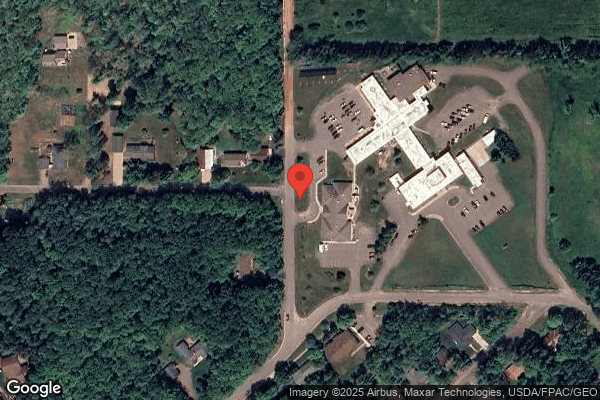
May 2023 8 deficiencies
CONCERN (D) 📢 Someone Reported This

A family member, employee, or ombudsman was alarmed enough to file a formal complaint

Potential for Harm - no one hurt, but risky conditions existed

Free from Abuse/Neglect (Tag F0600)

Could have caused harm · This affected 1 resident

**NOTE- TERMS IN BRACKETS HAVE BEEN EDITED TO PROTECT CONFIDENTIALITY** Based on record review and interviews, the facility did not ensure residents were free from resident-to-resident abuse. The faci...

Read full inspector narrative →
**NOTE- TERMS IN BRACKETS HAVE BEEN EDITED TO PROTECT CONFIDENTIALITY** Based on record review and interviews, the facility did not ensure residents were free from resident-to-resident abuse. The facility did not evaluate incidents of resident-to-resident altercations in attempt to prevent further abuse. The facility did not evaluate Resident (R) 29's incidents of verbal and physical altercations with peers and provide evidence of interventions to prevent future occurrences. This is evidenced by: The facility policy, entitled Abuse Investigations, dated 06/02/2021, states: Within 24 Hours: The facility will take all necessary actions as a result of the investigation, including analyzing the occurrence to determine the reason that the abuse occurred, and what changed needed to be made to prevent further occurrences. Defining how the care systems and process will be changed to protect residents. Training staff about changes made as a result of the investigation and reporting The facility failed to analyze and update the care plan for resident-to-resident altercations. 1. R29 was admitted to the facility on [DATE], and has diagnoses that include major depressive disorder, anxiety disorder, and mild cognitive impairment of uncertain or unknown cause. R29's Minimum Data Set (MDS) assessment, dated 3/24/23 (most recent quarterly assessment) and 12/22/22 (most recent annual assessment), indicated that R29's Brief Interview for Mental Status (BIMS) dropped from a score of 15 to a score of 8, R29 is able to understand and be understood, has depressive mood symptoms, has consistent physical behavior directed towards others, and verbal symptoms directed towards others. Surveyor reviewed R29's care plan and noticed, Problem: Resident has verbal behavioral symptoms directed toward others (e.g., threatening others, screaming at others, cursing at others). Goal: Resident will not threaten, scream at, or curse at other residents, visitors, and/or staff. Dated 3/25/2023 with a target date of 6/28/2023. Approach: Assess whether the behavior endangers the resident and/or others. Intervene if necessary. Surveyor reviewed R29's Progress Notes with the following noted: 01/05/2023 6:16 PM: R29 took the other resident's food and threw it on the floor. Writer then took resident and started to bring her to her room, resident then threw coffee onto writer. Resident continued yelling at other residents and telling them they could not go into the day room, could not go into the TV lounge, could not sit in the cafe and that they were not allowed to walk down the hallway to their own rooms. 02/10/2023 7:29: R29 harassing other resident, grabbing and following around building. Asked several times by other residents and staff to leave other resident alone, other resident was getting upset at her actions. Resident refuses. 02/21/2023 10:12 PM: R29 belligerent with other residents. Slammed tissue box onto table. R29 escorted to her room. R29 returned to the lobby and was attempting to redirect one of the same residents. R29 again escorted back to her room. 02/25/2023 9:40 PM: R29 belligerent and bossy towards other residents, other residents noted to display anxiety and nervousness around R29. Other residents were removed from area. 02/27/2023 6:01 PM: R29 in cafe yelling at two other residents. She then told a different resident to put your hand on the table so I can slap it. Go ahead you know how to do this we've done it before. Intervened with resident and asked her to move away from the table. 03/08/2023 04:42 PM: R29 yelling, swearing at other residents in cafe area. Making demanding statements that other residents leave the area, pick up garbage and stop talking. 04/04/2023 02:31 PM: Behaviors: R29 has been intrusive by entering rooms without permission, Small arguments with staff and a couple other residents today. Distracted with activities. 04/07/2023 03:07 PM: Behavior: R29 wheeled herself up to another resident and started swearing at her for no apparent reason, in front of secretary desk. Secretary reminded R29 that we don't speak to other people like that and ask her to move herself away from person she was swearing at. 04/16/2023 05:10 PM: Resident to resident interaction: R29 gives open palm smack/tap on arm to other resident in hallway to dining room with her right hand to left arm as other resident was being wheeled in, when asked for reason why, resident states she's known him since they were kids and was just saying hello. R29 prior to this was calm and in a good mood. As an intervention, R29 was removed from dinning room and brought to room, has since come down to cafe area and is chatting with other residents. R29 remains in a good mood at this time. Reminded that such behaviors are not appropriate even with non-aggressive intent, and asked to not touch others. Other resident voices no complaints, no marks found on arm. R29 does voice some verbal aggression to CNA who removed resident from dinning room, has not made further statements since. DON updated. 05/04/2023 2:16 AM: R29 came out to lobby w/o wheelchair at 2145, yelling Where'd she go? What are you doing? What's that? Resident continued with behavior, started rolling up and down the halls, started going into rooms and when staff intervened resident then started pounding on doors and walls and yelling at other residents. Staff removed resident calmly from the area and let her know this was inappropriate behavior and that she needed to head to her room for the night so everyone could sleep. Resident continued yelling and swearing for a few more minutes but staff continued to calmly redirect her and then resident made her way down to her room and went to bed at 11:15 PM, and has been in bed since that time. Although R29's record shows 10 incidents of verbal and/or physical aggression directed to other residents there is no evidence that facility evaluated the incidents related to R29 in attempt to prevent further verbal and physical abuse towards others. On 5/10/2023 at 8:41 AM, Surveyor interviewed Licensed Practical Nurse (LPN) G, about R29's behaviors directed towards other residents and approaches staff should use when these incidents occur. Whatever you try she will yell throwing food, if you talk quietly she will think you are hiding things, the best course of action is removing the resident that R29 is having issues with from R29's line of sight, you really have to try everything in the book to try and help. When the Surveyor asked about the process LPN G only mentioned the initial process of diverting R29 when agitated. On 5/10/2023 at 9:50 AM, Surveyor interviewed Social Services (SS) H. When asked what the SS H would expect when a resident-to-resident altercation occurs SS H replied, Expectation would be immediate separation and tasks to distract residents and to educate staff. SS H did not mention any other approaches for other staff to use when R29 is exhibiting behaviors towards other residents. On 5/10/2023, at 11:59 AM, Surveyor interviewed Nursing Home Administrator (NHA) A about expectations during resident-to-resident altercations. NHA A stated they would expect immediate interventions to separate the residents. They would expect an assessment of the resident and interventions to prevent future abuse. They need to educate the staff on the procedure after a resident-to-resident altercation past the immediate separation. NHA A also stated, It is a systems issue, we need to fix.
CONCERN (D)

Potential for Harm - no one hurt, but risky conditions existed

Deficiency F0637 (Tag F0637)

Could have caused harm · This affected 1 resident

Based on observation, record review and interview, the facility did not complete a significant change in status Minimum Data set (MDS) assessment for 1 resident (R) (R37) of 3 sampled residents. The f...

Read full inspector narrative →
Based on observation, record review and interview, the facility did not complete a significant change in status Minimum Data set (MDS) assessment for 1 resident (R) (R37) of 3 sampled residents. The facility completed an admission MDS assessment for R37 on 3/13/23. R37 had a decline in Section G (activities of daily living {ADL}) and H (bladder/bowel) since admission. According to the Resident Assessment Instrument (RAI) manual, a significant change in status should be completed when the resident has more than one area of change (decline or improve) and the care plan changed to manage these conditions. The facility should have completed a significant change in status MDS assessment for R37. This is evidenced by: R37 was admitted to the nursing home on 3/13/23, due to Alzheimer's disease with late onset and other specified disorders of brain Note: Brain, Mass. Surveyor compared R37's admission MDS with current condition based on observation and interviews and noted the following: Section G, R37 was able to walk in room and corridor independently without support. During survey resident required assist with 2 staff members. Section G, R37 was able to move on and off unit independently without support. During survey resident was in a wheelchair and unable to move without staff assist. Section G, R37, was able to eat with supervision and set up. During survey required cueing to total assist to eat. Section G, R37, was able to use toilet with supervision and support of 1. During survey required total assist with 2 staff members. Section G, R37 was able to transfer independently with set up support. During survey resident required assisted with 2 staff members. Section G, R37 was able to dress with limited assist with support of 1 staff member. During survey required extensive assist to dress. Section G, R37 was able to complete personal hygiene with supervision with assist of 1 staff member. During survey required extensive assist with assist of 2 staff members. Section H, R37 was coded as occasionally incontinent of urine. During survey resident was frequently incontinent of urine. On 05/08/23 at 9:39 AM, Surveyor observed R37 in wheelchair being pushed by a staff member to cafe area in wheelchair without any assistance from R37. On 05/08/23 at 12:01 PM, Surveyor observed R37 sitting in wheelchair in cafe area with husband who was assisting her to eat and handing her a glass and cueing to drink. On 05/09/23 at 1:15 PM, Surveyor observed CNA E and CNA F taking R37 to bathroom. R37 was able to stand independently with cueing, required both staff members to steady and guide to take steps towards toilet. R37 was resistive to sitting on toilet and required total assist of 1 staff member to steady R37 while the other staff member proceeded to change R37's incontinence product which was saturated with urine and provide peri care. On 05/09/23 at 1:18 PM, Surveyor observed R37 being transferred from bed to wheelchair with assist of 2 staff to steady and guide to take steps and cueing to sit in wheelchair. R37 was then taken in wheelchair to cafe with total assist of 1 staff member. On 05/09/23 at 8:50 AM, Surveyor interviewed LPN C. LPN C stated R37 has settled in nicely since admission. At the beginning she would strike out but has gotten more into a routine. She has declined since admission as she was very unsteady when she came in and would try to walk and believes she had a couple of falls. She pretty much only goes places in building assisted with staff in wheelchair. On 05/10/23 at 10:44 AM, Surveyor interviewed CNA D regarding R37's activities of daily living (ADL) needs. CNA D indicated that resident is 1:1 during cares and they usually have 2 staff members, due to unsteadiness and her tendency to be combative. CNA D indicated that with dressing, R37 requires limited assist with upper dressing, but staff totally dress the lower body. CNA D indicated that R37 requires extensive assist with personal hygiene and limited assist with eating. CNA D did state that she felt this is how resident was since admission. On 05/10/23 at 9:53 AM, Surveyor interviewed DON B regarding significant changes and how they are identified and completed. DON B stated that the MDS nurse is offsite. DON B will review progress notes, is involved in all residents' cares, and when she identifies a concern, she emails the MDS Nurse who will access the resident's chart and determine if it meets criteria and completes as warranted and update the care plan. The MDS nurse will email DON B to let her know when she has completed the task so a new care plan can be printed. Surveyor asked DON B if she felt R37 had a decline since admission, and she indicated that she felt resident had a decline in April when she was treated for a urinary tract infection (UTI) but seems to have improved since. DON B had not contacted MDS nurse regarding potential decline in condition to complete a significant change MDS.
CONCERN (D)

Potential for Harm - no one hurt, but risky conditions existed

Deficiency F0655 (Tag F0655)

Could have caused harm · This affected 1 resident

**NOTE- TERMS IN BRACKETS HAVE BEEN EDITED TO PROTECT CONFIDENTIALITY** Based on observation, interview and record review, the facility did not develop and implement a baseline care plan that included...

Read full inspector narrative →
**NOTE- TERMS IN BRACKETS HAVE BEEN EDITED TO PROTECT CONFIDENTIALITY** Based on observation, interview and record review, the facility did not develop and implement a baseline care plan that included instructions needed to provide effective and person-centered care for 1 of 3 residents (R144). R144's baseline care plan did not identify treatment for right extremity arm sling, including parameters when sling should be applied or removed and correct placement of sling. This is evidenced by: R144 was admitted to the facility on [DATE], after brief hospitalization following a fall at home, resulting in fracture of right upper arm, and fracture of left wrist. R144 was admitted with left wrist cast and right extremity sling. Minimum Data Set (MDS), dated [DATE], confirmed R144 scored 14/15 during Brief Interview for Mental Status (BIMS), indicating intact cognition. R144 is her own decision maker. On 5/8/23 at 12:26 PM, Surveyor observed R144 in her room, sitting in her wheelchair. R144 had a sling on her right arm and a cast on her left wrist. R144 reported she has limited use of her left hand and no use of her right arm. R144 reported that over the weekend her right hand had been resting on her lap for several hours, causing it to become swollen and painful. R144 reported that occupational therapy (OT) provided massage and nursing staff provided pain management. R144 reported that her hand became swollen and painful due to her sling not being placed correctly and her arm being in a dependent position. R144 reported that she always wears the arm sling, and that it is not taken off. R144 was unsure if facility staff were placing arm sling correctly. Surveyor reviewed R144's baseline care plan, which included statement for special need: left wrist fracture and right arm sling. No further documentation or information regarding special need of device. Reviewed physician orders dated 5/3/23. Noted orders for physical therapy (PT) and OT evaluation and treatment. No orders noted regarding arm sling. 5/9/23 at 9:45 AM, interview with Licensed Practical Nurse (LPN) G, reported that Certified Nursing Assistants (CNAs) are responsible to apply assistive devices during cares. Director of Nursing (DON) B joined in the interview and reported that when a resident is admitted with a sling or device, therapy will provide an assessment. After assessment, DON B places pictures in resident room to provide education to resident and staff of how to properly use device. DON B reported that pictures are placed within a few days of admission. Surveyor and DON B observed that there were no pictures or instructions in R144's room. Surveyor requested documentation from PT and OT evaluations. On 5/9/23 at 10:35 AM, Director of Rehab J reported that she reviewed R144's record and confirmed that she could not locate physician orders or therapy follow-up for parameters, positioning, or education/staff training of R144's sling. Director of Therapy J stated that it would be an expectation to have a sling/device care plan for CNAs, after this amount of time since admission.
CONCERN (D)

Potential for Harm - no one hurt, but risky conditions existed

Quality of Care (Tag F0684)

Could have caused harm · This affected 1 resident

**NOTE- TERMS IN BRACKETS HAVE BEEN EDITED TO PROTECT CONFIDENTIALITY** Based on observation, interviews and record reviews, the facility did not ensure quality of care was provided for 1 of 2 residen...

Read full inspector narrative →
**NOTE- TERMS IN BRACKETS HAVE BEEN EDITED TO PROTECT CONFIDENTIALITY** Based on observation, interviews and record reviews, the facility did not ensure quality of care was provided for 1 of 2 residents (R144). R144's care plan did not identify treatment for right extremity arm sling. Sling was not placed correctly, resulting in pain, bruising, edema, and new order to apply tubigrip (an elastic tubular bandage) to right extremity. This is evidenced by: R144 was admitted to the facility on [DATE], after brief hospitalization following a fall at home, resulting in fracture of right upper arm, and fracture of left wrist. R144 was admitted with left wrist cast and right extremity sling. Minimum Data Set (MDS), dated [DATE], confirmed R144 scored 14/15 during Brief Interview for Mental Status (BIMS), indicating intact cognition. R144 is her own decision maker. On 5/8/23 at 12:26 PM, Surveyor observed R144 in her room, sitting in her wheelchair. R144 had a sling on her right arm and a cast on her left wrist. R144 reported she has limited use of her left hand and no use of her right arm. R144 reported that over the weekend her right hand had been resting on her lap for several hours, causing it to become swollen and painful. R144 reported that occupational therapy (OT) provided massage and nursing staff provided pain management. R144 reported that her hand became swollen and painful due to her sling not being placed correctly and her arm being in a dependent position. R144 reported that she always wears the arm sling, and that it is not taken off. R144 was unsure if facility staff were placing arm sling correctly. Surveyor reviewed R144's baseline care plan, which included statement for special need: left wrist fracture and right arm sling. No further documentation or information regarding special need of device. Reviewed physician orders dated 5/3/23. Noted orders for physical therapy (PT) and OT evaluation and treatment. No orders noted regarding arm sling. Reviewed R144's medication administration record. Order for Tylenol 1000 mg 3x daily, and Tramadol (narcotic) PRN (as needed) for pain: -5/3/23, admission, no requests for PRN pain medication -5/4/23, requested 1x -5/5/23, requested 1x -5/6/23, requested 2x -5/7/23, requested 2x -5/8/23, requested 1x On 5/9/23 at 9:45 AM, interview with Licensed Practical Nurse (LPN) G, reported that Certified Nursing Assistants (CNAs) are responsible to apply assistive devices during cares. Director of Nursing (DON) B joined in the interview and reported that when a resident is admitted with a sling or device, therapy will provide an assessment. After assessment, DON B places pictures in resident room to provide education to resident and staff of how to properly use device. DON B reported that pictures are placed within a few days of admission. Surveyor and DON B observed that there were no pictures or instructions in R144's room. DON B stated that she would need to discuss with director of therapy why pictures were not placed in R144's room. On 5/9/23 at 10:03 AM, interview with physical therapist, reported that information regarding arm sling should be directed to OT. Surveyor requested documentation from OT evaluations. Reviewed OT notes, reads in part: -5/3/23, OT evaluation completed. Completed education on sling placement. R144 cannot push off surfaces due to non-weight bearing in both arms. -5/5/23, R144 reports that she had a shower last night and sling was not put on right. R144 anxious and tearful this morning. -5/8/23, R144 tearful and reported that she had a rough weekend. R144 has increased bruising to right upper extremity that appears to be from dependent positioning. Facilitated massage for edema management as R144 has new onset pitting edema from shoulder to digits. Writer provided tubigrip and care planned. R144 did not have brace on correctly. On 5/9/23 at 10:04 AM, interview with CNA E, reported that information is shared verbally in a report regarding new admission and care for a sling. CNA E stated that if she did not know how to care for a resident's device, she would ask a nurse. CNA E stated that she has not completed cares with R144, so she is not familiar with R144's sling. CNA E confirmed that she has not been provided training on how to care for, remove, apply, or position R144's arm sling. On 5/9/23 at 10:05 AM, interview with CNA L, reported that when she has provided cares for R144, she has only assisted with care from the waist down as therapy has assisted resident with care from the waist up. CNA L was not familiar with R144's arm splint. CNA L confirmed that she has not been provided training on how to care for, remove, apply or position R144's arm sling. On 5/9/23 at 10:35 AM, interview with Certified Occupational Therapy Assistant (COTA) K. COTA K reported that she was not the individual that assessed R144 at time of admission. COTA K stated that staff should follow physician orders regarding sling as R144 was admitted from hospital with arm sling. On 5/9/23 at 11:08 AM, Director of Rehab J reported that she reviewed R144's record and confirmed that she could not locate physician orders or therapy follow-up for parameters, positioning, or education/staff training of R144's sling. Director of Therapy J stated that it would be an expectation to have a sling/device care plan for CNAs, after this amount of time since admission.
CONCERN (D)

Potential for Harm - no one hurt, but risky conditions existed

Accident Prevention (Tag F0689)

Could have caused harm · This affected 1 resident

**NOTE- TERMS IN BRACKETS HAVE BEEN EDITED TO PROTECT CONFIDENTIALITY** Based on observation, interview and record review, the facility did not ensure residents received adequate interventions to prev...

Read full inspector narrative →
**NOTE- TERMS IN BRACKETS HAVE BEEN EDITED TO PROTECT CONFIDENTIALITY** Based on observation, interview and record review, the facility did not ensure residents received adequate interventions to prevent accidents. R35 sustained six falls since admission; there were no new interventions added to R35's plan of care to prevent falls. This is evidenced by: A review of the facility Fall Management Policy. dated April 28, 2021, stated, in part: .6. Identify root cause of fall. 7. Review fall prevention interventions and modify plan of care. 8. Communicate to all shifts that resident has fallen and newly implemented interventions. 11. All falls will be reviewed at management meetings and any further interventions that may be beneficial will be identified and care plan updated. R35 admitted to facility on 11/8/23 after fall at home resulting in fracture of right-side collar bone and multiple ribs. Minimum Data Set (MDS) confirmed R35 scored 5/15 during Brief Interview for Mental Status (BIMS), indicating severe cognitive impairment. Rx has an activated Power of Attorney (POA) to assist with health care decisions. 11/15/22, MDS functional status: R35 required assistance of one with all activities of daily living (ADLs). Balance, unsteady but able to stabilize. 2/15/23, MDS functional status: R35 required assistance of one with bed mobility, supervision for transfers, ambulation, and locomotion. Extensive assistance with dressing, toileting, and personal hygiene. Balance, steady at all times with impairment to one side. R35's care plan included: 11/17/22: Risk for falls related to right clavicle fracture, right rib fractures, Parkinson's disease, dementia, and anxiety. Approaches, all dated 11/17/23: -Move to a quiet environment when anxious or agitated, as I am more likely to fall. -Limited range of motion (ROM) to right upper extremity causes unsteady gait and difficulty with transfers and ambulation. -Keep call light close and within reach. -Prescribed medications which can increase fall risk. -Monitor for unsafe situations and modify care plan to limit risk for falls and subsequent injury. -Provide mobility assistance. -Provide proper footwear. -Remind to call for assistance. Reviewed fall risk assessments. No fall risk assessment located prior to 1/23/23. 5/8-fall risk assessment, high fall risk 2/8-fall risk assessment, high fall risk 1/23-fall risk assessment, high fall risk Reviewed R35's falls since admission: 11/16/22: R35 was found flat on back on floor on window side of bed. R35 presented with no obvious injury. R35 is able and does ambulate independently she did not have walker with her at the time. She has had prior falls most recent while in the hospital on 11/05 and prior fall was 10/29. Request for grip strips on side of bed near window completed. Surveyor did not observe grip strips at R35's bedside, did observe a mat on floor next to bed. Mat next to bed is not in R35's care plan. Surveyor reviewed care plan for new interventions, noted all falls interventions added on 11/17/23. Noted that grip strips were not added to care plan. 12/1/22: R35 with witnessed fall in room. R35 attempted to self-transfer into bed. CNA was just outside door when resident fell. CNA reports resident did not hit head and landed on her bottom and then down onto right side. No injuries found. Immediate intervention: Assess for injury (none noted), assist resident up from floor and to bed. Surveyor reviewed care plan for new intervention. No new interventions added to care plan. 1/8/23: R35 found on floor lying next to her bed. CNA reported that R35 fell out of bed and hit her head. Immediate intervention: Assess for injuries, none noted. Updated physician. R35 sent to ER related to possibly hitting head. Surveyor reviewed care plan for new intervention. No new intervention added to care plan. 1/23/23: R35 found on floor facedown with chest/head elevated on walker between bed and side table. R35 assisted into bed to lay down, R35 teary and has scared look on face. R35 denies pain or injury, denies hitting head. Redness and scuffing noted on chest where R35 was on walker. R35 slipped over recently taken off shoes and fell forward with the walker. Immediate intervention: Assess for injury (redness/abrasion to chest), assist resident up from floor, remind resident to be aware of surroundings. Surveyor reviewed care plan for new interventions. No new intervention added to care plan. 3/30/23: R35 noted to be walking down the hall utilizing her 2 wheeled walker. R35 was witnessed to get her feet tangled in the walker and went down to the floor onto her knees prior to staff being able to intervene. R35 then attempted to grab the nearby EZ-stand lift and attempted to pull herself up but was unable to due to the walker being under and around her legs. R35 tends to be impulsive and does not always utilize walker appropriately. Immediate intervention: R35 assisted up from floor and into a chair, assessed for injuries (none noted), walker removed from area. Care plan reviewed. Therapy eval and treat initiated to determine if walker continues to be necessary or has become a hazard. Surveyor reviewed care plan for new interventions, no new interventions added. Reviewed physical therapy (PT) evaluation, indicated that R35 is safe with walker and no PT treatment orders recommended. 4/4/23: R35 found by staff to be lying on the floor of her room next to the bed. [NAME] sitting on opposite side of room. R35 reports that she attempted to lie down in bed and slipped. Immediate intervention: Assist resident up from floor, assess for injury (right forehead hematoma), initiate neuro checks (questionable pupil response), send to ER for evaluation. It is noted that R35 has no traction left on her tennis shoes, call placed to POA requesting that a new pair of shoes be provided. Surveyor reviewed care plan for new interventions, no new interventions added. No indication in record, of new shoes provided to R35. Review of PT records confirmed that R35 participated in PT from 12/1/22-12/21/22 and was discharged with recommendation for a walking program with staff. Review of occupational therapy (OT) records confirmed R35 participated in OT from 12/5/22-1/20/23 and was discharged with recommendation for a functional maintenance program (FMP). Surveyor was unable to locate R35's care plan interventions for a walking program with staff or FMP. On 5/9/23 at 1:18 PM, interview with Certified Nursing Assistant (CNA) E, reported that R35 does not have a care plan for FMP or restorative program. CNA E stated that resident [NAME] are kept in each resident closet. Noted that R35's [NAME] did not include restorative, FMP tasks, or fall interventions. On 05/09/23 02:51 PM, interview with Director of Nursing (DON) B, stated that root cause analysis is documented in R35's record, if she selected the box marked care plan reviewed, then she reviewed resident's care plan. DON B stated fall process is that investigation would be completed through staff and resident interviews to determine cause and then provide appropriate intervention.
CONCERN (D)

Potential for Harm - no one hurt, but risky conditions existed

Infection Control (Tag F0880)

Could have caused harm · This affected 1 resident

**NOTE- TERMS IN BRACKETS HAVE BEEN EDITED TO PROTECT CONFIDENTIALITY** Based on observation, interview and record review, the facility did not ensure that its staff demonstrates proper disposal of sh...

Read full inspector narrative →
**NOTE- TERMS IN BRACKETS HAVE BEEN EDITED TO PROTECT CONFIDENTIALITY** Based on observation, interview and record review, the facility did not ensure that its staff demonstrates proper disposal of sharps to prevent the spread of disease and infections for 1 of 3 residents (R) observed, R12. The nurse discarded a used lancet, a needle device for obtaining a blood sample, in a standard garbage at the resident's bedside. Findings include: The facility policy, entitled Sharps Disposal, states in part, .2. Contaminated sharps will be discarded into containers that are: a. Closable, b. Puncture resistant, c. Leakproof on side and bottom, d. Labeled or color-coded in accordance with our established labeling system, and e. Impermeable and capable of maintaining impermeability through final waste disposal. The facility form, entitled Competency Assessment Obtaining a Fingerstick Glucose Level, states in part, 16. Dispose of the lancet in the sharps disposal container. R12 was admitted to the facility on [DATE], and has diagnoses that include, in part, type 1 diabetes mellitus. R12 has a physician order to obtain blood sugars with meals. On 05/09/23 at 7:08 AM, Surveyor observed LPN C check R12's blood sugar. LPN C discarded lancet in garbage can at R12'a bedside. Surveyor asked LPN C what she did incorrectly, and the reply was that LPN C did not know. Surveyor explained the lancets should be discarded in sharps container. LPN C agreed and did retrieve the used sharps lancet and discarded it in labeled appropriate sharps container. On 05/09/23 at 9:38 AM, Surveyor interviewed NHA A who explained that the expectation for staff is to discard all sharps in sharps containers as noted in the policy.
CONCERN (E)

Potential for Harm - no one hurt, but risky conditions existed

Deficiency F0688 (Tag F0688)

Could have caused harm · This affected multiple residents

**NOTE- TERMS IN BRACKETS HAVE BEEN EDITED TO PROTECT CONFIDENTIALITY** Based on observations, interviews and record reviews, the facility did not ensure residents received appropriate treatment and s...

Read full inspector narrative →
**NOTE- TERMS IN BRACKETS HAVE BEEN EDITED TO PROTECT CONFIDENTIALITY** Based on observations, interviews and record reviews, the facility did not ensure residents received appropriate treatment and services to maintain or prevent further reduction in range of motion (ROM). This had the potential to affect all residents (R) that have a functional maintenance program (FMP) or restorative need. The facility did not provide services or treatment for residents (R35, R18, R36, R13, R28, R1, R9, R14, R2, R5, R145, R31, R25, R4), identified with a need for FMP or restorative program. This is evidenced by: R35 admitted to facility on 11/8/23 after fall at home resulting in fracture of right-side collar bone and multiple ribs. R35 admitted with right arm sling. Minimum Data Set (MDS) confirmed R35 scored 5/15 during Brief Interview for Mental Status (BIMS), indicating severe cognitive impairment. R35 has an activated Power of Attorney (POA) to assist with health care decisions. R35's care plan included: 11/17/22: Limited ROM to right upper extremity. Encourage ROM to all extremities to prevent contractures. Brace to right upper extremity. Assistance of one with transfers and ambulation with walker or wheelchair. During Survey period of 5/8/23-5/10/23, there were no observations of R35 with a brace to right upper extremity. Record review indicated that R35 had six falls since admission. Review of physical therapy (PT) records confirmed that R35 participated in PT from 12/1/22-12/21/22 and was discharged with recommendation for a walking program with staff. Review of occupational therapy (OT) records confirmed R35 participated in OT from 12/5/22-1/20/23 and was discharged with recommendation for a FMP. Surveyor was unable to locate R35's care plan interventions for a walking program with staff or FMP. On 5/9/23 at 1:18 PM, interview with Certified Nursing Assistant (CNA) E, reported that R35 does not have a care plan for restorative or FMP. CNA E reported that R35 does not have a brace for right upper extremity. CNA E stated that resident [NAME] are kept in each resident closet. Noted that R35's [NAME] did not include restorative, FMP tasks, or brace to right upper extremity. On 5/10/23 9:20, interview with CNA E, stated Director of Nursing (DON) B directed the facility's restorative program, however facility has not been doing a restorative program for several months and that they are transitioning to a new program. Restorative program was discontinued due to lack of staffing. On 5/10/23 at 11:27 AM, interview with DON B, stated that the facility has not had a restorative program due to lack of restorative aides. Facility is transitioning to FMP that has not been fully implemented. DON B stated at the beginning of 2023, facility ended restorative aide's responsibilities, and required her assistance as a CNA as facility was experiencing low CNA staffing. In March of 2023, DON B held a meeting with nursing staff updating that facility would end restorative program and implement FMP. CNAs would be responsible to complete and document FMP tasks. DON B stated that she would be able to provide evidence that restorative or FMP tasks were being completed. Surveyor requested documentation of all residents required to have a restorative or FMP. DON B provided: -Resident list and highlighted 13/40 residents identified with care plan for restorative or FMP. -9/13 residents had FMP care plans. -DON B indicated that 4/13 residents without FMP care plans, routinely participated in exercise group activity. Reviewed care plans for residents indicated with FMP: -R18, 5/9/21: FMP, scalp retraction and shoulder flexion, 3 sets of 10 reps. Twice daily. -R36, 3/18/23: FMP, encourage to use NuStep around 10 AM. 3/27/23: FMP, assist R36 to use bike in dining area for 10-15 minutes once daily. -R13, 12/28/21: Staff will encourage me to participate in my ambulation restorative program, ambulate with R13 as tolerated. Nursing staff will be monitoring my restorative programs for effectiveness and will alter as needed for best results. -R28, 3/27/23: FMP, perform ROM to all extremities twice daily. Encourage R28 to sit on edge of bed for core strength once daily. -R1, 3/18/23: FMP, ambulate with hemi-walker distance as tolerated once daily. -R9, 4/1/23: FMP, ambulate to lounge for all meals twice daily. -R14, 6/19/21: FMP, ambulation 3x daily with assist of one, 150-200 feet. -R2, 3/19/23: FMP, provide ROM to upper and lower extremities twice daily. -R5, 8/28/21: Palm guard to left hand 2-4 hours daily; provide gentle ROM to wrist and elbow during cares. Reviewed care plans for R145, R31, R25, and R4 as facility indicated need for restorative/FMP or participation in exercise group activity. Unable to locate restorative, FMP or exercise program care plan. On 5/10/23 at 12:54 PM, interview with R13. R13's care plan indicated that staff would encourage her to participate in ambulation program. R13 stated that she does not need staff assistance and that she walks all over the facility. Surveyors observed R13 over the Survey period, ambulating with walker independently. On 5/10/23 at 12:58 PM, interview with R14. R14's care plan indicated that she would ambulate with staff assistance 150-200 feet three times daily. R14 stated that she is not doing this. Surveyors did not observe R14 ambulating with staff, during the Survey period. Surveyor requested documentation that restorative or FMP tasks were completed as indicated in care plan. Facility was unable to provide this. On 5/10/23 at 1:04 PM, interview with CNA E, reported that FMP tasks are not in the computer charting system and CNAs do not document FMPs. On 5/10/23 at 1:14 PM, interview with Nursing Home Administrator (NHA) A, reported that when FMPs are entered in the computer system, the section to provide CNAs with access to document FMP tasks is not being selected, therefore the tasks are not transferring to CNA charting system.
CONCERN (E)

Potential for Harm - no one hurt, but risky conditions existed

Deficiency F0883 (Tag F0883)

Could have caused harm · This affected multiple residents

**NOTE- TERMS IN BRACKETS HAVE BEEN EDITED TO PROTECT CONFIDENTIALITY** Based on record review and interview, the facility did not ensure that each resident was assessed for eligibility and offered a ...

Read full inspector narrative →
**NOTE- TERMS IN BRACKETS HAVE BEEN EDITED TO PROTECT CONFIDENTIALITY** Based on record review and interview, the facility did not ensure that each resident was assessed for eligibility and offered a pneumococcal immunization to prevent pneumonia for 2 of 5 residents (R) reviewed for immunizations. R18 and R39. Findings include: Facility policy titled; Pneumococcal Vaccine dated 09/26/20 states that all residents will be offered a pneumococcal vaccine per CDC recommendations to aid in preventing pneumococcal infections. Per current CDC guidelines, adults aged 65 or older should receive a pneumococcal vaccination. 1. Upon admission residents will be assessed for eligibility to receive and be offered the vaccine within 30 days unless medically contraindicated or the resident has already been vaccinated. 2. If refused, education will be provided and will be documented indicating education provided and date of refusal. R18 is a [AGE] year-old male with diagnoses that include diabetes, heart disease, and muscle weakness who was admitted on [DATE]. R18 has a Power or Attorney (POA) that makes the health care decisions due to R18 being cognitively impaired. R39 is a [AGE] year-old male with diagnoses that include lung cancer, congestive heart failure, and mini strokes who was admitted on [DATE]. R39 is cognitively intact and makes own decisions. On 05/09/23, Surveyor reviewed R18 and R39's records. There was no evidence of R18 or R39 being assessed, receiving, having had, or declining a pneumococcal immunization. On 5/10/23 at 10:22 a.m., Surveyor interviewed R18's POA I via phone, who stated she could not recall staff asking permission or receiving education for R18 to receive a pneumococcal vaccination but would like R18 to receive one if deemed eligible. On 05/10/23 at 10:00 a.m., Surveyor interviewed R39 who stated he was not offered a vaccination for pneumonia but would be interested in receiving it if doctor and son thought it would be best. R18 and R39's Physician standing orders under the heading Infection Control/Immunizations state, the facility may administer immunizations according to the Center for Disease Control (CDC) guidelines as directed by the facility Medical Director: a. Pneumococcal Polysaccharide Vaccine, and b. Pneumococcal 13-valent Conjugate. On 05/09/23 at 4:12 p.m., Surveyor spoke with NHA A, who is also the facility' infection prevention and control nurse, who stated that she looked in R18 and R39's records, looked on the Wisconsin immunizations registry and was unable to find any documentation of education provided, vaccine accepted or denied. NHA A acknowledged noncompliance with the pneumococcal immunization regulation.
Understanding Severity Codes (click to expand)
Life-Threatening (Immediate Jeopardy)
J - Isolated K - Pattern L - Widespread
Actual Harm
G - Isolated H - Pattern I - Widespread
Potential for Harm
D - Isolated E - Pattern F - Widespread
No Harm (Minor)
A - Isolated B - Pattern C - Widespread

Questions to Ask on Your Visit

  • "What changes have you made since the serious inspection findings?"
  • "Can I speak with families of current residents?"
  • "What's your RN coverage like on weekends and overnight?"

Our Honest Assessment

Strengths
  • • Licensed and certified facility. Meets minimum state requirements.
Concerns
  • • Multiple safety concerns identified: 1 life-threatening violation(s). Review inspection reports carefully.
  • • 29 deficiencies on record, including 1 critical (life-threatening) violation. These warrant careful review before choosing this facility.
  • • $15,945 in fines. Above average for Wisconsin. Some compliance problems on record.
  • • Grade D (46/100). Below average facility with significant concerns.
Bottom line: Trust Score of 46/100 indicates significant concerns. Thoroughly evaluate alternatives.

About This Facility

What is Northern Lights Hcc's CMS Rating?

CMS assigns NORTHERN LIGHTS HCC an overall rating of 3 out of 5 stars, which is considered average nationally. Within Wisconsin, this rating places the facility higher than 0% of the state's 100 nursing homes. This mid-range rating indicates the facility meets federal standards but may have areas for improvement.

How is Northern Lights Hcc Staffed?

CMS rates NORTHERN LIGHTS HCC's staffing level at 3 out of 5 stars, which is average compared to other nursing homes. Staff turnover is 52%, compared to the Wisconsin average of 46%.

What Have Inspectors Found at Northern Lights Hcc?

State health inspectors documented 29 deficiencies at NORTHERN LIGHTS HCC during 2023 to 2025. These included: 1 Immediate Jeopardy (the most serious level, indicating potential for serious harm or death), 27 with potential for harm, and 1 minor or isolated issues. Immediate Jeopardy findings are rare and represent the most serious regulatory concerns. They require immediate corrective action.

Who Owns and Operates Northern Lights Hcc?

NORTHERN LIGHTS HCC is owned by a non-profit organization. Non-profit facilities reinvest revenue into operations rather than distributing to shareholders. The facility operates independently rather than as part of a larger chain. With 50 certified beds and approximately 44 residents (about 88% occupancy), it is a smaller facility located in WASHBURN, Wisconsin.

How Does Northern Lights Hcc Compare to Other Wisconsin Nursing Homes?

Compared to the 100 nursing homes in Wisconsin, NORTHERN LIGHTS HCC's overall rating (3 stars) matches the state average, staff turnover (52%) is near the state average of 46%, and health inspection rating (2 stars) is below the national benchmark.

What Should Families Ask When Visiting Northern Lights Hcc?

Based on this facility's data, families visiting should ask: "What changes have been made since the serious inspection findings, and how are you preventing similar issues?" "Can I visit during a mealtime to observe dining assistance and food quality?" "How do you handle medical emergencies, and what is your hospital transfer rate?" "Can I speak with family members of current residents about their experience?" These questions are particularly relevant given the facility's Immediate Jeopardy citations.

Is Northern Lights Hcc Safe?

Based on CMS inspection data, NORTHERN LIGHTS HCC has documented safety concerns. Inspectors have issued 1 Immediate Jeopardy citation (the most serious violation level indicating risk of serious injury or death). The facility has a 3-star overall rating and ranks #1 of 100 nursing homes in Wisconsin. Families considering this facility should ask detailed questions about what corrective actions have been taken since these incidents.

Do Nurses at Northern Lights Hcc Stick Around?

NORTHERN LIGHTS HCC has a staff turnover rate of 52%, which is 6 percentage points above the Wisconsin average of 46%. Moderate turnover is common in nursing homes, but families should still ask about staff tenure and how the facility maintains care continuity when employees leave.

Was Northern Lights Hcc Ever Fined?

NORTHERN LIGHTS HCC has been fined $15,945 across 1 penalty action. This is below the Wisconsin average of $33,238. While any fine indicates a compliance issue, fines under $50,000 are relatively common and typically reflect isolated problems that were subsequently corrected. Families should ask what specific issues led to these fines and confirm they've been resolved.

Is Northern Lights Hcc on Any Federal Watch List?

NORTHERN LIGHTS HCC is not on any federal watch list. The most significant is the Special Focus Facility (SFF) program, which identifies the bottom 1% of nursing homes nationally based on persistent, serious quality problems. Not being on this list means the facility has avoided the pattern of deficiencies that triggers enhanced federal oversight. This is a positive indicator, though families should still review the facility's inspection history directly.