MARQUARDT MEMORIAL MANOR
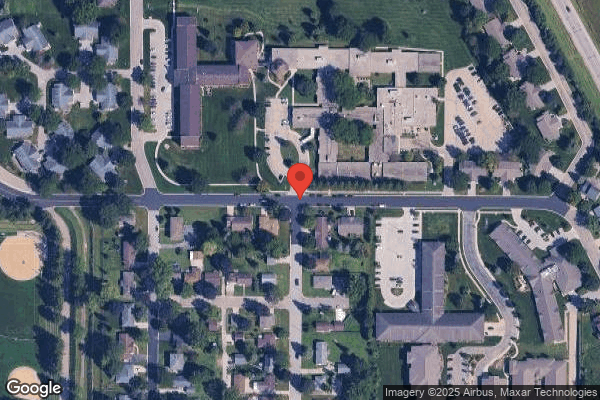
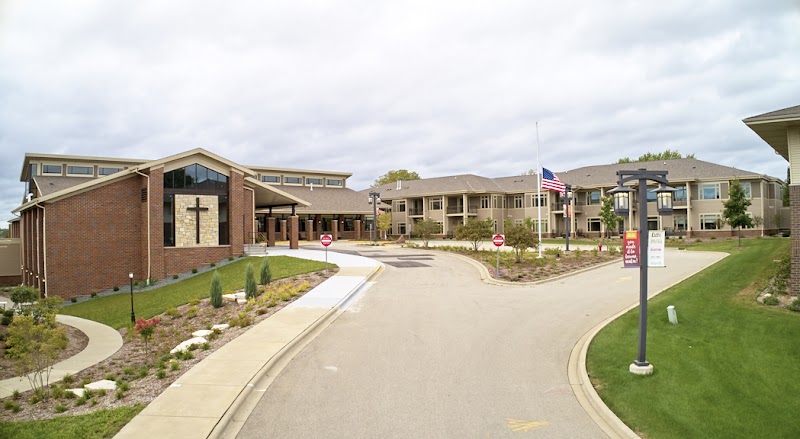
1020 HILL ST, WATERTOWN, WI 53098 (920) 261-0400
Non profit - Corporation 140 Beds Independent Data: November 2025
Trust Grade
15/100
#294 of 321 in WI
Last Inspection: September 2024

Within standard 12-15 month inspection cycle. Federal law requires annual inspections.

Overview

Marquardt Memorial Manor has received a Trust Grade of F, indicating a poor quality of care with significant concerns. It ranks #294 out of 321 nursing homes in Wisconsin, placing it in the bottom half of facilities statewide, and #9 out of 10 in Dodge County, suggesting limited options for better care nearby. The facility's trend is improving, as it has reduced its number of issues from 10 in 2024 to 4 in 2025. Staffing is rated at 2/5 stars, with a turnover rate of 56%, which is about average compared to the state. However, the facility was fined $40,480, which is concerning, and highlights ongoing compliance issues. In terms of RN coverage, it provides average levels, meaning residents may not receive as much specialized nursing attention as needed. Specific incidents include a resident who fell and suffered a major injury due to inadequate supervision and another resident who developed pressure injuries because the necessary assessments were not conducted. While there are some improvements in reducing issues, families should carefully consider these serious concerns when evaluating this facility for their loved ones.

Trust Score
F
15/100
In Wisconsin
#294/321
Bottom 9%
Safety Record
High Risk
Review needed
Inspections
Getting Better
10 → 4 violations
Staff Stability
⚠ Watch
56% turnover. Above average. Higher turnover means staff may not know residents' routines.
Penalties
○ Average
$40,480 in fines. Higher than 61% of Wisconsin facilities. Some compliance issues.
Skilled Nurses
✓ Good
Each resident gets 43 minutes of Registered Nurse (RN) attention daily — more than average for Wisconsin. RNs are trained to catch health problems early.
Violations
⚠ Watch
31 deficiencies on record. Higher than average. Multiple issues found across inspections.
★☆☆☆☆
1.0
Overall Rating
★★☆☆☆
2.0
Staff Levels
★☆☆☆☆
1.0
Care Quality
★★☆☆☆
2.0
Inspection Score
Stable
2024: 10 issues
2025: 4 issues

The Good

  • Full Sprinkler Coverage · Fire safety systems throughout facility
  • No fines on record

Facility shows strength in fire safety.

The Bad

1-Star Overall Rating

Below Wisconsin average (3.0)

Significant quality concerns identified by CMS

Staff Turnover: 56%

10pts above Wisconsin avg (46%)

Frequent staff changes - ask about care continuity

Federal Fines: $40,480

Above median ($33,413)

Moderate penalties - review what triggered them

Staff turnover is elevated (56%)

8 points above Wisconsin average of 48%

The Ugly 31 deficiencies on record

3 actual harm
Apr 2025 2 deficiencies 1 Harm
SERIOUS (G) 📢 Someone Reported This

A family member, employee, or ombudsman was alarmed enough to file a formal complaint

Actual Harm - a resident was hurt due to facility failures

Accident Prevention (Tag F0689)

A resident was harmed · This affected 1 resident

**NOTE- TERMS IN BRACKETS HAVE BEEN EDITED TO PROTECT CONFIDENTIALITY** Based on observation, interview, and record review, the facility did not ensure 2 of 3 residents (R3 and R1) reviewed for accide...

Read full inspector narrative →
**NOTE- TERMS IN BRACKETS HAVE BEEN EDITED TO PROTECT CONFIDENTIALITY** Based on observation, interview, and record review, the facility did not ensure 2 of 3 residents (R3 and R1) reviewed for accidents received adequate supervision and assistance devices to prevent accidents. R3 is being cited at severity level 3 (actual harm). R3 experienced a fall with major injury. Surveyor observed fall interventions not in place. The facility did not complete a root cause analysis for 12 falls and did not implement appropriate interventions for R1's falls. Evidenced by: The facility policy, Falls, reviewed 12/5/24, states, in part; .Prevention measures are put in place to reduce the occurrence of falls and risk of injury from falls .c. A licensed nurse will determine the individuals' risk for falls and individualized care needs. If the individual is at risk for falls, then create a falls care plan .b. The care plan will be updated with an identified intervention . Example 1: R3 was admitted to the facility on [DATE] with diagnoses including stroke, diabetes, anxiety disorder, adult failure to thrive, expressive language disorder, depression, weakness, and muscle weakness. R3's most recent Minimum Data Set (MDS) with Assessment Reference Date (ARD) of 1/30/25, indicates R3 has a Brief Interview for Mental Status (BIMS) score of 08 indicating R3 is mildly impaired. R3 has an activated power of attorney. R3's Care Plan (CP) states, in part; .The resident is moderate risk for falls r/t deconditioning, gait/balance problems, incontinence, seizure disorder, 1/31/25. Risk of falls/falls with injury will be minimized 2/6/25 .Interventions: Anticipate and meet the resident's needs 1/30/25 .Be sure the resident's call light is within reach and encourage the resident to use it for assistance as needed. The resident needs prompt response to all requests for assistance 1/30/25 .Bed against wall 2/11/25 .Educate the resident/family/caregivers about safety reminders and what to do if a fall occurs 1/30/25 .ensure that the resident is wearing appropriate footwear- shoes, or non-skid socks when ambulating, transferring or mobilizing in w/c (wheelchair) 1/31/25 .Follow facility fall protocol 1/30/25 .PT/OT evaluate and treat as ordered or PRN 1/30/25 .Side rail on exit side of bed 2/13/25 .The resident needs a safe environment with: even floors free from spills and/or clutter; adequate, glare-free light; a working and reachable call light, personal items within reach 1/30/25 .TOILET USE: The resident is totally dependent on 2 staff for toilet use/bedpan/check and change q 2-3 hr (every two to three hours) and prn (as needed) initiated 1/24/25, revision 2/10/25 .TRANSFER: 2A (two assist) with hoyer lift (full body lift) 1/24/25 . R3's fall report states, in part; .2/7/25, location: Resident's room. Nursing Description: CNA (Certified Nursing Assistant) was on the resident's L (left) side of bed, rolling resident to the right side of bed (his strong side) to wash him up. CNA reported that he thought the resident was holding on, but then the resident rolled onto the floor on his back. CNA notified the nurse. Description: Resident neuro checks started .New intervention: Staff education provided about checking care plans before taking care of residents to ensure safety. Bed against wall. Side rail on exit side of bed. Resident sent to ED for evaluation for R (right) hip pain, x-ray results show R hip fx. Surgical nailing of R hip done Notes Recommend side railings and using 2 assist with cares. (Of note: R3's CP indicates R3 is totally dependent on two (2) staff for toilet use/bedpan/check and change q 2-3 hr and prn initiated 1/24/25, revision 2/10/25 .TRANSFER: 2A with hoyer lift (full body lift) 1/24/25 .) Nursing Progress Note, states, in part; .2/7/25 .At this time resident c/o pain to CNA, to which they came to nurses station to report his is 10/10. Was reported to writer that res had a fall around 2000-ish (~8:00PM). Entered res room and told res that the sheet is going to be rolled off to exam bilateral legs. Bilateral (legs) are stiff like sticks, res has pain to Rt (right) hip rated 10/10 but can't bend legs d/t stroke with no deformity rotation or shortening noticed. Just had pain At this time PM nurse explained about res fall and now Rt hip pain, to which APNP (Advanced Practice Nurse Practitioner) ordered to send res to be seeing [sic] in ER . R3's CNA Kardex states, in part; .Bed Mobility .Bed against wall .Toileting .TOILET USE the resident is totally dependent on 2 staff for toilet use/bedpan/check and change q 2-3 hr and prn . On 4/10/25 at 2:30 PM, CNA C (Certified Nursing Assistant) indicated he was the CNA that was in R3's bedroom at the time of R3's fall on 2/7/25. CNA C indicated he was assisting R3 in cleaning up, rolled R3 towards the window (left side of resident) while standing behind resident on right side. CNA C indicated prior to fall CNA C was repositioning resident with 1 staff and that CNAC had done this many times. CNA C indicated R3 rolled on the floor and that CNA C immediately called for the nurse. CNA C indicated R3 was pretty new to the facility during this time and that this was his only fall. CNA C indicated CNA C did receive education after the incident. CNA C indicated the education was about the fall, what not to do in the future, following care plans, and new interventions for R3. CNA C indicated new interventions in place are 2 staff at all times and side rail on side of bed for resident to utilize when rolling. CNA C and Surveyor walked into R3's bedroom. R3's bedroom door had been closed. Surveyor observed R3's call light on the ground and R3's bed positioned in the middle of bedroom. CNA C indicated R3 was unable to call for anyone because call light was on ground. Surveyor asked CNA C if call light should be within reach. CNA C indicated it should be near resident. (Of note: R3's bed was not against the wall and the call light was not within reach per R3's care plan.) On 4/10/25 at 4:49 PM, Director of Nursing B (DON) indicated CNA C's education was regarding following and checking care plans prior to assisting residents. DON B indicated the education was also regarding the concern that CNA C rolled R3 away from CNA C. DON B indicated she could provide education documentation. Surveyor reviewed CNA's education. DON B provided documentation of education that was provided to all staff that work with R3 and documentation from All Staff meeting in February as well. (Of note: Surveyor observed R3's care plan not being followed on 4/10/25) On 4/10/25 at 6:20 PM, Director of Nursing B (DON) indicated she would expect that fall interventions to be followed and in place. DON B indicated she would expect call lights to be within resident reach. DON B indicated R3's bed had been moved right after the fall. DON B indicated R3's bed is no longer against the wall. (Of note: R3's bed against the wall remains on R3's care plan and CNA Kardex.) The facility failed to ensure residents assistance devices are in place to prevent accidents. Example 2: R1 admitted to the facility on [DATE] with diagnoses including lymphocytic leukemia (a type of blood cancer), dementia, and right hip fracture. R1's 12/7/24 Brief Interview for Mental Status (BIMS) had a score of 8, indicating R1's cognition is moderately impaired. R1's comprehensive care plan includes the following: Focus: R1 has an ADL self-care performance deficit (initiated on 12/3/24 and revised on 3/11/25). Interventions: Bed mobility: 1 assist (initiated on 12/3/24 and revised on 2/18/25). Toilet use: 1 assist, urinal within reach (initiated on 12/3/24 and revised on 2/18/25). Transfer: pivot transfer with assist of 1, front wheeled walker and gait belt (initiated on 12/3/24 and revised on 2/12/25). Wheelchair for distance (initiated on 12/3/24). Focus: R1 has impaired cognitive function related to Dementia (initiated 1/4/25). Interventions: Anticipate and meet needs (initiated on 1/4/25). Focus: R1 uses psychotropic medications related to Dementia with behaviors (initiated 12/31/24 and revised on 3/11/25). Interventions: Monitor/document/report PRN (As Needed) and adverse reactions of psychotropic medications: unsteady gait, shuffling gait, and frequent falls (initiated on 12/31/24). Focus: R1 is at risk for falls related to need for assist with mobility, balance concerns, impulsivity, and poor safety awareness (initiated on 12/3/24 and revised on 3/11/25). Interventions: Be sure the resident's call light is within reach and encourage the resident to use it for assistance (initiated on 12/3/24 and revised on 3/10/25). Encourage the resident to participate in activities that promote exercise, physical activity for strengthening and improved mobility (initiated on 12/3/24). Ensure that the resident is wearing appropriate footwear when ambulating, transferring or mobilizing in wheelchair (initiated on 12/3/24). Follow facility fall protocol (initiated on 12/3/24). PT/OT (Physical Therapy/Occupational Therapy) evaluate and treat as ordered and PRN (As Needed) (initiated on 12/3/24). The resident needs a safe environment with even floors free from spills and/or clutter; adequate, glare-free light; a working and reachable call light, the bed in low position at night; personal items within reach (initiated on 12/3/24). NOC (night) shift to offer toileting 4:00 AM - 6:00 AM as well as NOC rounds (initiated on 1/12/25 and revised on 2/17/25). Offer toileting upon rising, before/after meals, at HS (Hours of Sleep/bedtime), and PRN (initiated 1/14/25). Visual cues placed in resident's room to remind resident to call for assistance (initiated on 1/19/25). Don't leave resident unattended while awake in room, bathroom (use privacy curtain), church, activities, nurses station, and/or dining room (initiated 1/23/25). Encourage resident to be in room only during sleeping hours (initiated on 2/17/25). HS (Hours of Sleep/bedtime) Seroquel (antipsychotic medication) increased (initiated on 2/21/25). Ensure resident is wearing grippy socks while in bed (initiated 2/26/25). Resident's room moved closer to nurse's station (initiated on 2/28/25). Incident 1 R1's incident report dated 12/11/24 includes the following: Unwitnessed fall on 12/11/24 at 7:10 AM. Location: Resident's room. Nursing Description: Staff found resident on floor in room. Resident Description: Resident combative and unable to answer. Description of Action Taken: Nurse tried to assess both hips, appeared all was wnl (Within Normal Limits). Sent out to the ER (Emergency Room). New Intervention: offer and encourage toileting every 2 hours and as needed. Notes: Resident was alert but yelling, and swinging at staff. Yelled yes to paibn [sic]. Other: He is Easy stand (Mechanical lift used to aid in transferring residents). He was in bed transferred self. [NAME] is across room, and call light is on bed. He usually yells if don't answer is [sic] light when he is using it Staff normally anticipate his needs ahead time. R1's 12/11/24 after visit summary from the Emergency Department states, in part: He (R1) has had x-rays done and we are seeing an acute mildly displaced subtrochanteric periprosthetic fracture of the proximal left femur .nonsurgical. He will be sent back to the nursing facility with outpatient clinic follow up with orthopedics. On 4/10/25 at 5:00 PM, Surveyor interviewed DON B (Director of Nursing) regarding R1's fall (incident 1). DON B indicated a root cause analysis is performed using a QA (Quality Assurance) form. DON B indicated a root cause is only done when there is an injury. Surveyor asked about the root cause for R1's fall on 12/11/24 that resulted in a left femur fracture. DON B indicated there was not one. Surveyor asked DON B what the facility's process for toileting residents with dementia. DON B indicated the standard of practice is to offer toileting every 2 hours and as needed. Surveyor asked DON B if she would consider the intervention offer and encourage toileting every 2 hours and as needed an appropriate intervention for a fall since that is the standard and was already being done for R1. DON B indicated it was not an appropriate intervention. Of note, there was no intervention placed on the care plan following this fall. Incident 2 R1's incident report dated 1/8/25 includes the following: Unwitnessed fall on 1/8/25 at 5:30 AM. Nursing Description: Resident found in room lying supine (lying face upward) on the floor. Legs pointed toward the toilet, torso in front of the door. New intervention: Offer toileting with every NOC (night) round while awake. Education: Recommended resident use call light to ask for help with transfers rather than do them unassisted. On 4/10/24 at 5:00 PM, Surveyor interviewed DON B regarding R1's fall. DON B indicated a root cause analysis was not completed. DON B indicated that offering toileting on night rounds is a standard of practice and not a new intervention. DON B indicated this is not an appropriate intervention. Incident 3 R1's incident report dated 1/12/25 includes the following: Unwitnessed fall on 1/12/25 at 8:30 AM. Nursing Description: Res (R1) calling out. Observed res (R1) sitting on buttocks outside bathroom door. No shoes. Had brief and t-shirt on. Res attempting to self-transfer to toilet. No injury noted. Resident Description: Resident was requesting to use toilet. Description of Action Take: 2 assist with hoyer off floor. CNA (Certified Nursing Assistant) toileted and put him in his recliner. Neuro checks started. NOC shift to offer toileting 4:00 AM - 6:00 AM. On 4/10/25 at 5:00 PM, Surveyor interviewed DON B regarding night shift rounds. DON B indicated staff offer toileting on rounds as a standard of practice. DON B indicated offering toileting between 4:00 AM and 6:00 AM would not be a new intervention as staff should have been doing this as a standard of practice already. Incident 4 R1's incident report dated 1/14/25 includes the following: Unwitnessed fall on 1/14/25 at 6:25 AM. Nursing Description: Resident found on floor at 6:25 AM. Resident was incontinent of urine. No injury observed. VSS (Vital signs stable). Neurological checks initiated. Resident Description: Resident is unaware of what happened. Description of Action Taken: Resident transferred into wheelchair. New intervention: Offer toileting upon rising, before/after meals, at HS (hours of sleep), and PRN (As needed). On 4/10/25 at 5:00 PM, Surveyor interviewed DON B. DON B indicated offering toileting upon rising, before/after meals, at HS, and PRN is standard of practice and staff should have already been doing this. DON B indicated this would not be considered a new intervention for R1. Incident 5 R1's incident report dated 1/23/25 includes the following: Unwitnessed fall on 1/23/25 at 1:45 AM. Nursing Description: Resident found in his room lying on the floor in the supine position near his BR (Bathroom). Description of Action Taken: Encouraged resident to use his call light to ask for assistance when needing to use the BR. New intervention: Don't leave resident unattended while awake in room, bathroom (use privacy curtain), church, activities, nurses station, and/or dining room. Incident 6 R1's incident report dated 2/16/25 includes the following: Unwitnessed fall on 2/16/25 at 3:00 PM. Nursing Description: Resident found laying on his back in the middle of room. Active rom (Range of Motion) and able to move all extremities. No injuries noted. New intervention: Resident assisted into w/c (wheelchair) with 2 assist and gait belt transferred with some shakiness. Encourage resident to be in room only during sleeping hours. Of note, the previous intervention added on 1/23/25 states Don't leave resident unattended while awake in room, bathroom (use privacy curtain), church, activities, nurses station, and/or dining room. Incident 7 R1's incident report dated 2/20/25 includes the following: Unwitnessed fall on 2/20/25 at 4:30 AM. Nursing Description: Found lying on LT (left) side on floor at FOB (Foot of Bed). Description of Action Taken: Assisted back to bed. Reminded resident to use call light for assistance. New intervention: HS (Hours of sleep) Seroquel (antipsychotic medication) increased. Fall mat on exit side of bed. Of note, the intervention fall mat on exit side of bed was not added to the care plan. Incident 8 R1's incident report dated 2/25/25 includes the following: Unwitnessed fall on 2/25/25 at 12:00 AM. Nursing Description: CNAs came to nurses station 1 to inform the nurses about a fall. Observed resident whit [sic] his knees to chest, and then resident put himself laid [sic] on the ground on his back. Observed w/c between the foot of the bed, and walker was between TV, that is on dresser and the closet. He was barefooted. Called light within reach clipped to her [sic] bedsheet but not on. Res then does not follow directions. Res was yelling I have to pee I need the bucket. New intervention: Ensure grippy socks are on while resident is in bed. Incident 9 R1's incident report dated 2/27/25 includes the following: Witnessed fall on 2/27/25 at 3:50 PM. Location: Lounge. Nursing Description: Res was put in recliner as res appeared tired/restless. He appeared relaxed in the beginning but shortly after being put in the recliner, he moved himself towards the foot of the recliner and rolled onto the floor. Res noted to be lying on his back on the floor. New intervention: Room was moved closer to nurses station. Of note, this fall occurred in the lounge while being supervised. R1 was not in his room at the time of the fall. Incident 10 R1's incident report dated 3/4/25 includes the following: Unwitnessed fall on 3/4/25 at 8:00 PM. Nursing Description: Resident had unwitnessed fall. CNA found resident sitting on the floor in his room at 8pm [sic]. Of note, no new intervention was added. Incident 11 R1's incident report dated 3/6/25 includes the following: Unwitnessed fall on 3/6/25 at 4:00 AM. Nursing Description: Resident found lying on his Rt (Right) side propped up on Rt elbow at Rt side of his bed. Resident states he hit his head and has a headache. Description of Action Taken: New intervention: Resident signed onto hospice 3/7/25. Incident 12 R1's incident report dated 3/19/25 includes the following: Unwitnessed fall on 3/19/25 at 6:15 AM. Nursing Description: Nurse was in room (room number) and heard R1 yelling. Nurse went in his room right away he was on floor facing the door with the bed on left side and wheelchair tipped on its side. He was holding his head up. New intervention: Offer toileting at 6:00 AM. Of note, R1 has previous interventions of being toileted on night rounds and toileting between 4:00 AM and 6:00 AM. On 4/10/25 at 5:00 PM, Surveyor interviewed DON B regarding R1's falls. DON B indicated during the facility's morning meeting, the interdisciplinary team reviews all facility falls. DON B indicated during this meeting; interventions are reviewed along with staff statements regarding the fall. DON B indicated a root cause analysis is completed if a fall results in injury. Surveyor asked DON B if the interdisciplinary team had noticed R1 had repeated falls with no new interventions being put in place when the interdisciplinary team discussed falls in their morning meeting. DON B stated it probably didn't come up in the morning meeting. Of note, the facility did not find a root cause for the continued falls for R1. The facility did not implement or add to the care plan appropriate interventions to prevent further falls from occurring.
CONCERN (D) 📢 Someone Reported This

A family member, employee, or ombudsman was alarmed enough to file a formal complaint

Potential for Harm - no one hurt, but risky conditions existed

Infection Control (Tag F0880)

Could have caused harm · This affected 1 resident

**NOTE- TERMS IN BRACKETS HAVE BEEN EDITED TO PROTECT CONFIDENTIALITY** Based on observations, interviews, and record review, the facility failed to establish and maintain an infection prevention and ...

Read full inspector narrative →
**NOTE- TERMS IN BRACKETS HAVE BEEN EDITED TO PROTECT CONFIDENTIALITY** Based on observations, interviews, and record review, the facility failed to establish and maintain an infection prevention and control program designed to provide a safe, sanitary, and comfortable environment and to help prevent the development and transmission of communicable diseases and infections, for 1 of 1 resident (R4) reviewed for transmission-based precautions. R4 had a sign posted on his door that he was under isolation for droplet precautions; however, a staff member entered R4's room without following the droplet precaution protocol, wearing the appropriate PPE (Personal Protective Equipment) or performing hand hygiene per standards of practice. This is evidenced by: Facility policy, titled Infection Prevention and Control Program dated 6/14/17, with last review date of 5/8/25, states, in part: Policy: To prevent the development and transmission of disease and infection, the organization will follow the Infection Prevention and Control Program procedures below. Procedure: 1. Prevention and Surveillance. The facility will: . ii. Prevent and control outbreaks and cross-contamination using transmission-based precautions in addition to standard precautions; . v. Utilize hand hygiene practices consistent with accepted standards of practice; to reduce the spread of infections and prevent cross-contamination; . 2. Identification: i. Standard and transmission-based precautions are to be followed to prevent the spread of infections, use the Center for Disease Control Guideline (CDC) for Isolation Precautions to determine precautions . 5. Controlling Infections and Communicable Diseases: . ii. Signage will be posted per current CDC recommendations. 6. Education: i. All staff will receive mandatory education/training about Infection Control upon hire, and annually . R4 was admitted to the facility on [DATE]. R4's Nursing Progress Notes include the following: On 5/11/25 at 8:59 PM, Res (resident) has a non-productive cough and nasal congestion. Lungs clear to auscultation. See VS (vital signs) section also. On 5/13/25 at 12:26 AM, Wheezing noted. Fluids encouraged. On 5/13/25 at 8:50 AM, On NOC (overnight) shift he had a 100.5 temp but was given ice and Tylenol. Currently has a temp of 98.4 and is 92% on 4L (liters of oxygen). Swabbed for influenza. Pending results. Notified POA (Power of Attorney). On 5/13/25 at 4:06 PM, Has occasional cough noted. Fluids encouraged. On 5/14/25 at 2:28 AM, Resident sleeping well with O2 (oxygen) and HOB (head of bed) elevated CXR (chest x-ray) results sent ., orders received. See also VS section. On 5/14/25 at 6:47 AM, Influenza swab taken to lab. On 5/14/25, an order was received for R4 for Levofloxacin Oral Tablet 750 mg (milligram). Give 1 tablet my mouth in the morning for pneumonia. Start Levofloxacin 750 mg daily po (by mouth) for 5 days. On 5/15/25 at 8:21 PM, Auscultated diminished lung sounds throughout . 3L per nasal canula. Scheduled Duo neb given x1 this shift. Continues on antibiotic for pleural effusion (a collection of fluid around the lungs); no side effects noted. On 5/20/25 at 11:48 AM, Surveyor observed that R4 had a Droplet Precaution sign on his door that indicated everyone must hand hygiene when entering and leaving the room and wear a mask when entering the room. Surveyor observed CNA D (Certified Nursing Assistant) enter R4's without wearing a mask or performing hand hygiene. On 5/20/25 at 11:55 AM, Surveyor observed CNA D enter R4's room and deliver his lunch tray without wearing a mask or performing hand hygiene. On 5/20/25 at 12:33 PM, Surveyor interviewed LPN F (Licensed Practical Nurse) what staff should be doing if a resident is on droplet precautions. LPN F stated that staff should be wearing a mask when they go in and using hand sanitizer when they go in and out. On 5/20/25 at 12:38 PM, Surveyor interviewed LPN G and asked her what staff should be doing if a resident is on droplet precautions. LPN G stated that staff should be wearing a mask and gloves and hand hygiene when they go in and out. Surveyor asked LPN G if staff should be doing this every time they enter and exit a room that is under isolation. LPN G stated yes, every time. On 5/20/25 at 12:41 PM, Surveyor interviewed CNA D and asked him what staff should be doing if a resident on droplet precautions. CNA D stated masking and wearing goggles. Surveyor asked CNA D if these precautions should be in place every time when entering a room that is under isolation. CNA D stated that the precautions only needed to be implemented when doing cares with a resident. On 5/20/25 at 12:43 PM, Surveyor interviewed CNA H and asked her what staff should be doing if a resident is on droplet precautions. CNA H stated that they need to wear gown, mask and gloves every time when going in the room. On 5/20/25 at 12:47 PM, Surveyor interviewed MT I (Med Tech) and asked her what staff should be doing if a resident is on droplet precautions. MT I stated that they should use PPE such as gown, gloves and mask every time when going in the room. On 5/20/25 at 2:40 PM, Surveyor interviewed DON B (Director of Nursing) and asked her what her expectation was for staff when entering the room of a resident on droplet precautions. DON B stated that it was her expectation that staff mask every time they enter the room and gloves if they are providing cares to the resident. On 5/20/25 at 3:25 PM, Surveyor interviewed NHA A (Nursing Home Administrator) and asked her if she expected staff to follow the droplet precaution policy, including performing hand hygiene when entering and exiting the room, and wearing a mask every time when entering the room. NHA A stated that today at lunch time there were extra staff helping hand out lunch trays, so it was possible one of the managers entered a precaution room without following the droplet precaution guidelines. NHA A indicated that R4 was supposed to have been taken off precautions on 5/18/25. Surveyor asked if all staff, including managers, would see a Droplet Precaution sign on a resident's door should they follow the Infection Control policy? NHA A stated that it is difficult with all these different precautions and the signs can be sign numbing for staff.
Mar 2025 2 deficiencies
CONCERN (D) 📢 Someone Reported This

A family member, employee, or ombudsman was alarmed enough to file a formal complaint

Potential for Harm - no one hurt, but risky conditions existed

Deficiency F0740 (Tag F0740)

Could have caused harm · This affected 1 resident

**NOTE- TERMS IN BRACKETS HAVE BEEN EDITED TO PROTECT CONFIDENTIALITY** Example 3 R4 was a short-term admission to the facility. R4 had the following diagnosis: alcohol use, nicotine dependence, type ...

Read full inspector narrative →
**NOTE- TERMS IN BRACKETS HAVE BEEN EDITED TO PROTECT CONFIDENTIALITY** Example 3 R4 was a short-term admission to the facility. R4 had the following diagnosis: alcohol use, nicotine dependence, type 2 diabetes mellitus with ketoacidosis (buildup of acids in the blood to levels that can be life threatening) and neuropathy (nerve damage or dysfunction), and epilepsy (seizures). R4 had the diagnosis of alcohol use upon admission to the facility. R4's Discharge summary dated [DATE]: .# Alcohol use disorder, # Alcohol withdrawal, initially reported last drink was a week ago, but alcohol found in his bag on admission which was thrown away. Became somewhat tremulous (slight shaking) later c/f (concern for) withdrawal. Received symptom-triggered phenobarbital (medication used to treat epilepsy and for alcohol withdrawal) per CIWA (Clinical Institute Withdrawal Assessment) briefly, though CIWA scores quickly down trended prompting discontinuation of protocol. Also received IV thiamine repletion and transitioned to thiamine 100 mg (milligrams) daily on which he was discharged . It is important to note that the facility should have read this document and been aware of R4's alcohol issues. R4's History and Physical dated [DATE]: . alcohol use disorder, T2DM (type 2 diabetes mellitus) on insulin, seizure disorder, HTN (hypertension- high blood pressure), asthma, presenting with recurrent nausea and vomiting. He reports this started around 5 days ago where he started vomiting repeatedly and couldn't keep anything down including water .He has generalized upper abdominal pain that is mild and really worse when vomiting mostly. No diarrhea .Has been drinking less, around a pint of vodka every 3-4 days but last drink was last Wednesday .# Severe alcohol use disorder, - Initially told me last drink was a week ago, but alcohol found in his bag and thrown away, - Became somewhat tremulous later so will start CIWA protocol with phenobarbital .Alcohol use: comment: Quit just after Christmas. 12/07 . It is important to note that the facility should have read this document and been aware of R4's alcohol issues. R4's Provider progress notes thoroughly document that R4 went through alcohol withdrawal in the hospital prior to being admitted to the facility. R4's Provider Progress Notes: [DATE] .APNP (Advanced Practice Nurse Practitioner) .hospitalized .from 12/31 - 1/3 for nausea, vomiting, diarrhea. Was found to be in DKA (diabetic ketoacidosis) s/p (status post) treatment with insulin gtt (drip) and IVF (intravenous fluids- directly into vein). He did go through alcohol withdrawal during hospitalization which was felt to be contributing to nausea and diarrhea .***Social History*** History of alcoholism Current every day smoker?1 PPD (packs per day) x 20 years Denies illicit drug use .* F17.200 - NICOTINE DEPENDENCE, UNSPECIFIED, UNCOMPLICATED *: Encourage cessation. has been smoking at facility, nicotine patch d/c'd (discontinued) 1/6; * F10.90 - ALCOHOL USE, UNSPECIFIED, UNCOMPLICATED *: Complicated by withdrawal during hospitalization. Continue vitamin supplementation. No alcohol to be administered while at facility . [DATE] .MD (Medical Doctor) .alcoholism, nicotine abuse .He did go through alcohol withdrawal during hospitalization which was felt to be contributing to nausea and diarrhea .tobacco abuse .***Social History*** History of alcoholism Current every day smoker?1 PPD x 20 years Denies illicit drug use .* F17.200 - NICOTINE DEPENDENCE, UNSPECIFIED, UNCOMPLICATED *: Encourage cessation. has been smoking at facility, nicotine patch d/c'd 1/6; * F10.90 - ALCOHOL USE, UNSPECIFIED, UNCOMPLICATED *: Complicated by withdrawal during hospitalization. Continue vitamin supplementation. No alcohol to be administered while at facility . [DATE] .APNP .* F10.90 - ALCOHOL USE, UNSPECIFIED, UNCOMPLICATED *: Complicated by withdrawal during hospitalization. Continue vitamin supplementation. No alcohol to be administered while at facility . [DATE] .APNP .He does continue to go outside to smoke .* F10.90 - ALCOHOL USE, UNSPECIFIED, UNCOMPLICATED *: Complicated by withdrawal during hospitalization. Continue vitamin supplementation. No alcohol to be administered while at facility . [DATE] .APNP .We discussed that given his continued smoking particularly in very cold weather, this is not ideal for his asthma .* F10.90 - ALCOHOL USE, UNSPECIFIED, UNCOMPLICATED *: Complicated by withdrawal during hospitalization. Continue vitamin supplementation. No alcohol to be administered while at facility . [DATE] .APNP .* F10.90 - ALCOHOL USE, UNSPECIFIED, UNCOMPLICATED *: Complicated by withdrawal during hospitalization. Continue vitamin supplementation. No alcohol to be administered while at facility . [DATE] .APNP .* F10.90 - ALCOHOL USE, UNSPECIFIED, UNCOMPLICATED *: Complicated by withdrawal during hospitalization. Continue vitamin supplementation. No alcohol to be administered while at facility . [DATE] .APNP .* F10.90 - ALCOHOL USE, UNSPECIFIED, UNCOMPLICATED *: Complicated by withdrawal during hospitalization. Continue vitamin supplementation. No alcohol to be administered while at facility . [DATE] .APNP .Per staff, he has been smoking every 30-60 minutes. We did discuss cessation today. He tells me he is working on it and historically was smoked 2 packs/day and has weaned himself down to 1 pack/day. he does not plan to wean any further .* F10.90 - ALCOHOL USE, UNSPECIFIED, UNCOMPLICATED *: Complicated by withdrawal during hospitalization. Continue vitamin supplementation. No alcohol to be administered while at facility . [DATE] .MD .Continues to smoke but yet is down to about 1 pack a day from 2 packs/day .* F10.90 - ALCOHOL USE, UNSPECIFIED, UNCOMPLICATED *: Complicated by withdrawal during hospitalization. Continue vitamin supplementation. No alcohol to be administered while at facility. [DATE]?reports the patient drinking again. He has been hanging out with another resident speck that he is using again. We have seen direct reports of him and taking. Encourage cessation . [DATE] .APNP .* F10.90 - ALCOHOL USE, UNSPECIFIED, UNCOMPLICATED *: Complicated by withdrawal during hospitalization. Continue vitamin supplementation. No alcohol to be administered while at facility . [DATE] .APNP .* F10.90 - ALCOHOL USE, UNSPECIFIED, UNCOMPLICATED *: Complicated by withdrawal during hospitalization. Continue vitamin supplementation. No alcohol to be administered while at facility . [DATE] .APNP .alcoholism, nicotine abuse .He did go through alcohol withdrawal during hospitalization which was felt to be contributing to nausea and diarrhea .continues to smoke .* F10.90 - ALCOHOL USE, UNSPECIFIED, UNCOMPLICATED *: Complicated by withdrawal during hospitalization. Continue vitamin supplementation. No alcohol to be administered while at facility .* F17.200 - NICOTINE DEPENDENCE, UNSPECIFIED, UNCOMPLICATED *: Encourage cessation. has been smoking at facility, nicotine patch d/c'd 1/6 . It is also important to note that on [DATE] MD Provider documented reports of R4 drinking again at the facility. On [DATE] at 4:04 PM, Surveyor interviewed DON B (Director of Nursing). Surveyor asked DON B if R4 should have a care plan for his diagnosis of alcohol use, DON B stated, wasn't aware he was drinking. Surveyor asked DON B who reviews the Provider notes after they have seen the resident(s), DON B said not sure that anyone does, they talk to us. It is important to note that on [DATE] MD Provider documented reports of R4 drinking again at the facility. Based on observation, interview and record review, the facility did not provide behavioral health services to ensure a resident received the highest practicable mental and psychosocial well-being. The facility did not create a comprehensive assessment and plan of care to address substance use disorder (SUD) for 3 of 3 residents (R1, R4, and R5) reviewed for SUDs. R1 had cocaine use, regularly drank alcohol while in the facility and had a history of cannabis use. R1 did not have an assessment or comprehensive person-centered care plan for R1's SUD and did not have timely interventions for R1's SUD. R5 regularly drank alcohol while in the facility and did not have a care plan with interventions for SUD. R4 did not have a care plan in place for his diagnosis of alcohol use. This is evidenced by: The facility policy titled Comprehensive Person-Centered Care Plan, dated [DATE], states in full: I. Policy: The Comprehensive Person-Centered Care Plan will reflect the individual's needs and preferences to facilitate care. II. Procedure: A. Within 48 hours after admission: a Baseline Care Plan will be completed and reviewed with Individual and/or Individual Representative. B. Within 21 consecutive days after admission, and in correlation with the Minimum Data Set (MDS), a comprehensive assessment will be completed, and a written care plan will be developed based on the individuals' history, preferences, and assessments from appropriate disciplines and the physician's evaluation and orders. C. Care Plan shall be reviewed and revised quarterly, upon change of condition, and/or as needed. D. Individual and/or Individual Representative and direct care staff will participate in development of the comprehensive person-centered care plan. Example 1 R1 admitted to the facility on [DATE] with diagnoses that include alcohol use, cannabis use, anxiety disorder, major depressive disorder, and falls in the setting of acute alcohol intoxication. R1's Brief Interview for Mental Status (BIMS) on [DATE] has a score of 15, indicating R1 is cognitively intact. R1's admission comprehensive assessment MDS, dated [DATE], does not include the diagnoses for SUD. R1's quarterly MDS assessment, dated [DATE], includes the diagnoses for cannabis use and alcohol use, unspecified with intoxication. R1's Discharge Summary Instructions, from the hospital to the facility, dated [DATE], states in part: Pt (Patient, R1) endorses plan to follow up on outpatient AODA (Alcohol and Other Drug Abuse)/mental health resources. R1's NP (Nurse Practitioner) progress note, dated [DATE], states in part: Type: SNF (Skilled Nursing Facility) Initial Visit.was hospitalized following fall on 8/29. He was intoxicated at time of arrival to ER. He was admitted due to his group home being unwilling to take him back due to inability to meet his needs.he is quite irritable and is very focused on pain medication. He is very persistent that he wants a stronger medication for pain. History of cocaine and marijuana use. No alcohol to be administered in facility. Supportive cares. R1's nurses' progress notes include the following: [DATE] 8:00 PM Resident went back to station 2 in his motorized wheelchair, drunk. [DATE] 9:40 PM Resident is drunk and keeps on cursing to the CNA's (Certified Nursing Assistant) who are helping him. [DATE] 9:47 PM The nurse from AM shifts already talked to him to sign out the resident temporary release if he is going out. Resident is drunk again in the afternoon. Screaming to change his shirt because it always goes up to his belly, which the CNA assisted him . I asked one CNA to go with me to look for the resident. We saw him in [Gas Station] buying alcohol and stuff. He told me that he is an adult, his own self and no one can tell him what to do. He is also cursing me saying the F word. I just told him to at least sign out at the nursing station when going out and left. The incident was reported to the DON (Director of Nursing). {sic} [DATE] 10:28 PM Res (R1) at 2230 had gotten back from [Gas Station] to which res had been drinking beers as well. [DATE] 3:33 AM Resident was sitting in his wheelchair making loud vocalizations and noises for the first 3 hours of the night, as he had been drinking alcoholic beverages. R1's Psych Initial Evaluation by NP (Nurse Practitioner), dated [DATE], states in part: Pt (Patient, R1) is lying sideways on bed, and has difficulty raising himself up. He is very floppy appearing. He does not have ETOH breath, but staff suspects he may be in a drunkened [sic] state, as this is how he often presents when intoxicated. He states he has been drinking since age of 12yo. (Years Old). He has h/o (History Of) substance use disorder including opiates and cannabis. Behaviors - reckless, poor impulse control, poor judgement. He has been agreeable to be off opioid, he has agreed to be on naltrexone to cut alcohol cravings. Current alcohol abuse. History of cocaine and marijuana use. Discussed alcohol use reduction; discuss Naltrexone for minimizing craving - pt is opened to this. Avoid alcohol in facility. Significant factor in falls and discharge from his current group home. Per staff, has been leaving facility to obtain alcohol and drinking until intoxicated. Large contributor to frequent falling. Was evaluated by psych today. R1's physician orders include the following: Targeted Behavior: ETOH (Alcohol) issues/seeking. Y if occurred. N if no behavior occurred every shift. Frequency: how often behavior occurred. Intensity: how resident responded to redirection. Intensity Code: 0=Did Not Occur; 1=Easily Altered; 2=Difficult to Redirect. Describe interventions in Progress Note. Start date [DATE]. Of note, the facility was aware of R1's alcohol use in the facility in [DATE], and this is the first order placed for monitoring. Naltrexone HCL (Pain) Oral Capsule 4.5 MG give 1 capsule by mouth in the morning for pain, alcohol abuse. Start date [DATE]. Discontinued [DATE]. Naltrexone HCL 50 MG, give 50 mg by mouth in the morning for pain, alcohol abuse. Start date [DATE]. Discontinued [DATE]. Naltrexone HCL 50 MG, give 1 tablet by mouth in the morning for pain, alcohol desire. Start date [DATE]. Of note, R1's physician orders do not include AODA/mental health referrals. R1's Medication Administration Record (MAR) for [DATE] includes the following: Naltrexone HCL 4.5 MG, Give 1 capsule by mouth in the morning for pain, alcohol abuse. Start date [DATE]. Discontinue date [DATE]. For the dates of [DATE] through [DATE], R1's MAR is marked with a 16. 16 indicates the medication was unavailable. Of note, Naltrexone HCL 4.5 MG was not given to R1 during this time. Naltrexone HCL 50 MG, give 50 mg by mouth in the morning for pain, alcohol abuse. Start date [DATE]. For the dates of [DATE] through [DATE], R1's MAR is signed as given. Of note, the first dose of Naltrexone given to R1 was [DATE], 14 days after being ordered by the NP. R1's Nurses' progress notes include the following: [DATE] 5:54 PM Resident noted to be drinking found in bathroom between sink and toilet. [DATE] 2:48 PM Note text: PSYCHOACTIVE MEDICATION & BEHAVIOR COMMITTEE: Team reviewed resident's mood, behavior, medication, diagnoses, targeted behavior and PHQ-9 assessment (Screening tool for depression in adults). Diagnoses and targeted behavior clarified. Resident self directs leisure time. Resident's family and careteam [sic] is involved and supportive. His naltrexone was recently increased; team is monitoring his response. [DATE] 3:45 AM At 0110 (1:10 AM), after drinking several alcoholic beverages, and being intoxicated, resident was heard calling for help. [DATE] at 2:32 AM Resident has been drinking alcoholic beverages and has been intoxicated throughout the night. He has been loud, swearing and yelling. Difficult to redirect. [DATE] 11:45 AM Writer reviewed Risk vs Benefits with resident in relation to increase in falls related to intoxication. Resident gave verbal consent for Risk vs Benefits. Writer offered and given resources for AODA, and resident declined. Of note, this is the first documented attempt to give R1 resources for AODA, over four months after R1's admission on [DATE]. [DATE] 3:50 AM Seen resident drunk on his motorized wheelchair outside the facility door. Writer told him it is dangerous to go out in his current state, but the resident said he is his own self and an adult. [DATE] 4:30 AM Saw the resident under the sink of his room lying on his right side. Noted right ear is bleeding (small amount). Helped resident to position properly before calling CNA for help. Cleansed the wound on the right ear, neuro checks done. Help resident back to bed. Resident is drunk. [DATE] 8:52 PM at approx. (approximately) 1900 (7:00 PM) writer was notified by staff: Upon entering resident room med tech (CNA that can administer medications) noted a white powdery substance in a pile with a credit card on his bedside table, which he hastily tried to cover up. Resident also noted to have a white powder all over hisnose [sic] as well. Writer was then notified. Writer then calling on-call (DON B, Director of Nursing). Per instructions called the non-emergent police number to report incident. Officer then came to talk to resident. Resident admitting to police that substance was in-fact cocaine. Police then seized substance and everything that the substance touched. Resident table then wiped down and returned to room. Officer then left building. Approx 2010, resident then left premise again, returning about 2045 (8:45 PM). Resident placed on 15-minute checks. Admin (Nursing Home Administrator NHA A), DON B, & MD (Medical Doctor), all aware of incident. Continue to monitor [DATE] 10:12 AM SW (Social Worker) lm (Left message) for [Supplemental Insurance] CM (Case Manager) and RN (Registered Nurse) that SW needs a return call asap (As Soon As Possible) [DATE] 4:50 PM SW spoke with resident's CM regarding update on incident from 2.4.25 and d/c (Discharge) planning. Call was ended suddenly. Of note, this is the first documented attempt to seek alternate placement for R1. [DATE] 12:19 PM SW spoke with with [sic] [Case Manager], regarding incident and placement. [Case Manager] reports that team was working on d/c planning to an apartment .SW and Exec Dir (Executive Director) cont (Continue) conversation with [Case Manager] about d/c. [Case Manager] will contact treatment facility and other d/c placements and return call to SW and/or Exec Dir. [DATE] 4:31 AM Resident has been awake all night and on 15-minute checks. At 3:00 AM, writer heard resident yelling. Writer went to resident's room and found him lying on his side on the floor with a cigarette in his mouth .Resident was intoxicated due to drinking 6 beers tonight .He still continues to self-transfer unless staff anticipate that he may need help to and from the toilet. [DATE] 9:00 AM NP Progress note .per nursing, they have been doing Q15 (Every 15) minute checks to monitor mentation. Do not feel this is necessary at this time, can d/c (discontinue) and resume routing monitoring. [DATE] 9:26 AM IDT (Interdisciplinary Team) reviewed, and 15-minute checks discontinued at this time. Police dept (Department) referred him to APS (Adult Protective Services). R1's Psych Follow Up progress note by NP, dated [DATE], states in part: Patient upset that he recently received a 30-day notice for active cocaine and alcohol use inside the facility. [DATE] 6:30 AM Nurse progress note at 12:55 AM one of the CNAs came to writer due to resident having blue lips. Writer arrived at residents room and observed him on the toilet leaning to his right side, right arm hanging down, eyes were fixed and dilated, no pulse, and not breathing . Resident is a full code . CPR (Cardiopulmonary Resuscitation) was started .Coroner pronounced at 3:23 AM. Coroner and policeman left with body on stretcher at 5:55 AM. R1's comprehensive care plan, printed [DATE], does not include a plan of care for alcohol, cannabis or cocaine use. There are no interventions for R1's SUD. On [DATE] at 10:40 AM, Surveyor interviewed CNA C regarding resident's interventions for SUD. CNA C indicated any interventions would be on the Kardex. CNA C indicated she was unaware of any interventions for SUD. Of note, the Kardex is the CNA's care plan and the interventions on the Kardex would come directly from the resident's care plan, which does not contain interventions for R1's SUD. On [DATE] at 2:00 PM, Surveyor interviewed LPN D (Licensed Practical Nurse) regarding R1's SUD. LPN D indicated R1 sleeps most of the day and goes to the bar or Kwik Trip in the evening and drinks alcohol. LPN D indicated R1 did discuss his history of drug use and told LPN D he could get drugs anytime he wanted. LPN D indicated she did not believe R1. Surveyor asked LPN D what interventions were in place for R1's SUD, and LPN D indicated after R1 was found with cocaine on [DATE], the facility implemented 15-minute checks for a couple of days. LPN D indicated there were no other interventions for R1's SUD. On [DATE] at 2:16 PM, Surveyor interviewed RN F (Registered Nurse) regarding R1's SUD. RN F indicated he works in the evenings. RN F indicated R1 would start drinking around 7:00 PM and would be drunk by 10:00 PM. RN F indicated he had talked to his supervisors regarding R1's SUD. RN F indicated there was nothing RN F could do about R1's SUD because R1 was his own person. RN F indicated there were no interventions for R1's SUD. Example 2 R5 admitted to the facility on [DATE] with diagnoses that include alcohol use. R5's Brief Interview for Mental Status, dated [DATE], has a score of 15, indicating R5 is cognitively intact. R5's physician orders include an order stating May have alcohol locked in safe and consume independently dated [DATE]. R5's comprehensive care plan does not include a plan of care for R5's alcohol use. On [DATE] at 10:30 AM, Surveyor interviewed R5. Surveyor observed a large [NAME] jar on R5's bedside table. The [NAME] jar was full of clear liquid. Surveyor asked R5 what he was drinking from the [NAME] jar. R5 stated Vodka. R5 indicated he has alcohol delivered to the facility and the alcohol is kept in his locked safe. When surveyor asked how R5 gets the alcohol from his safe, R5 indicated staff will open the safe for him and give him his alcohol. On [DATE] at 10:18 AM, Surveyor interviewed LPN D regarding R5's alcohol use. LPN D indicated R5 drinks 1 liter of vodka daily. LPN D indicated R5 is encouraged to keep his alcohol locked in the safe in his room. LPN D indicated R5 seldom drinks until he passes out, but he has. Surveyor asked LPN D what she would do in a situation where a resident passed out due to drinking too much alcohol, LPN D indicated she would notify the resident's doctor. On [DATE] at 3:30 PM, Surveyor interviewed DLCS E (Director of Life Coach Services) regarding SUD. DLCS E indicated if a resident has SUD, the resident will have a care plan with interventions put in place. DLCS E indicated the interventions would include services offered to the resident and how to care for the resident. DLCS E indicated a care plan would be initiated upon knowledge of SUD. DLCS E indicated R1, R4, and R5 should have had care plans in place for their SUD and did not. On [DATE] at 4:00 PM, NHA A (Nursing Home Administrator) indicated the facility does not have a SUD policy. On [DATE] at 4:00 PM, Surveyor interviewed DON B (Director of Nursing) regarding SUD. DON B indicated if a resident has SUD, a care plan should be in place, and it would be personalized to the resident. Surveyor asked DON B if an assessment should be completed on a resident who is intoxicated or under the influence of drugs or alcohol, DON B indicated there is often a progress note made but not an assessment. DON B indicated R1, R4, and R5 should have had care plans with interventions in place for SUD and did not.
CONCERN (E) 📢 Someone Reported This

A family member, employee, or ombudsman was alarmed enough to file a formal complaint

Potential for Harm - no one hurt, but risky conditions existed

Deficiency F0838 (Tag F0838)

Could have caused harm · This affected multiple residents

Based on interview and record review, the facility did not ensure the facility wide assessment developed by the facility included all relevant details to ensure the facility provided care and services...

Read full inspector narrative →
Based on interview and record review, the facility did not ensure the facility wide assessment developed by the facility included all relevant details to ensure the facility provided care and services to residents to meet their individual needs within the facility's identified resources. This has the potential to affect 9 residents (R5, R6, R7, R8, R9, R10, R11, R12, and R13) currently residing in the facility with a substance use disorder (SUD) diagnosis. The facility assessment must reflect the resident population and resources needed to care for this population. Nine residents had a diagnosis of SUD however the facility did not address the resources needed to care for these residents. R5 has a diagnosis of alcohol abuse. R6 has a diagnosis of alochol dependence with alcohol induced persisting dementia. R7 has a diagnosis of alochol abuse. R8 has a diagnosis of alcohol dependence. R9 has a diagnosis of alcohol dependence. R10 has a diagnosis of alcohol dependence. R11 has a diagnosis of alcohol abuse. R12 has a diagnosis of alcohol abuse. R13 has a diagnosis of cannabis use. The facility assessment does not include the following: • The evaluation of the SUD resident population. • The physical and behavioral health needs within the SUD resident population. • The staff competencies, education, training, and skill sets necessary to provide the type of care needed for the SUD resident population. This is evidenced by: According to National Institute of Mental Health (www.nimh.nih.gov), Substance use disorder (SUD) is a treatable mental disorder that affects a person's brain and behavior, leading to their inability to control their use of substances like legal or illegal drugs, alcohol, or medications. The facility document titled Facility Assessment, reviewed 2/28/25, states in part: Resident profile: .our facility has a comprehensive process in place to assess resident needs and determine the care and services required. The interdisciplinary team (IDT) has established Standard Work around the Admissions Capabilities. Any condition listed in the Able to Meet Needs category (Green Light) is one in which staff have the competencies to manage, and the facility has the supplies, equipment, and inventory at hand to meet the resident's needs. Any condition listed in the Review to Meet Needs category (Yellow Light) is one in which the Referral Specialist will consult with the IDT to ensure that the appropriate equipment and supplies are in house and/or the appropriate training has been executed to ensure staff competencies and inventory are at hand to meet the resident's needs. Facility increases in Yellow Light category referrals will trigger the need to drive internal controls to support the identified categories to be safely converted into the Green Light list. admission capabilities: Able to Meet Needs category does not list SUD as a Green Light. Review to Meet Needs category includes illicit drug user and behaviors as a Yellow Light. Of note, under the facility admission capabilities, SUD is not listed. Resident Population Characteristics: SUD is not listed as being part of the Resident Population Characteristics. Conditions, physical and cognitive disabilities, and other pertinent facts: SUD is not listed as a condition under this category. Staff Education, Training and Competencies: The facility enlists a competency-based approach to determine the knowledge and skill required among staff to ensure residents are able to maintain or attain their highest practicable physical, functional, mental, and psychosocial well-being and meet current professional standards of practice. Additional competencies are determined according to the amount of resident interaction required by the job role, job specific knowledge, skill and abilities and those needed to care for the resident population. In instances of a resident admission with care needs not previously offered at the facility, the interdisciplinary team reviews and updates facility staff training, competencies, resources and supplies required to provide care. Policies and Procedures for Provision of Care: Policies and procedures for care are reviewed and updated at least annually and as needed with the introduction of new resident care needs, new technology or equipment or a change in the physical plant or environmental hazards. On 3/6/25 at 4:00 PM, NHA A (Nursing Home Administrator) notified surveyors the facility does not have a SUD policy and procedure. According to the National Institute on Alcohol Abuse and Alcoholism (www.niaa.nih.gov) combining alcohol with certain medications can increase the risk of adverse events, including falls and fatal overdoses. Alcohol can alter the metabolism and pharmacological effects of many common medications and can alter the absorption and metabolism of alcohol. People aged 65 and older are at particularly high risk for harm. On 3/6/25 at 10:18 AM, Surveyor interviewed LPN D (Licensed Practical Nurse) regarding SUDs. LPN D indicated she had not been given education, training, or completed competencies regarding the care of residents with SUD. Surveyor asked LPN D if there were medications that may interact with alcohol consumption and LPN D could not give any examples. On 3/6/25 at 2:16 PM, Surveyor interviewed RN F (Registered Nurse) regarding SUDs. RN F indicated he had not been given education, training, or completed competencies regarding the care of residents with SUD. RN F indicated he does not have experience with alcohol and medication interactions. On 3/6/25 at 4:00 PM, Surveyor interviewed DON B (Director of Nursing) regarding the facility's ability to care for residents with SUD. DON B indicated the facility would address SUD when the facility is made aware of the substance use. DON B indicated there is no education, training, or competencies for the staff regarding SUD. DON B indicated there is not an assessment for when a resident is under the influence of a substance. DON B indicated staff are not given education regarding medications that may interact with alcohol use. DON B indicated staff have not been provided education or trained on withdrawal symptoms or overdoses. On 3/6/25, NHA A gave surveyors a list of 9 residents who reside in the facility and have a diagnosis of SUD. The facility did not evaluate their SUD resident population. The facility does not have a policy or procedure in place to ensure the proper care for residents with SUD, including their physical and behavioral health needs. The facility assessment does not include education, training, or competencies related to residents with SUD.
Sept 2024 8 deficiencies 2 Harm
SERIOUS (G)

Actual Harm - a resident was hurt due to facility failures

Pressure Ulcer Prevention (Tag F0686)

A resident was harmed · This affected 1 resident

**NOTE- TERMS IN BRACKETS HAVE BEEN EDITED TO PROTECT CONFIDENTIALITY** Based on the comprehensive assessment of a resident, the facility must ensure that residents receive care, consistent with profe...

Read full inspector narrative →
**NOTE- TERMS IN BRACKETS HAVE BEEN EDITED TO PROTECT CONFIDENTIALITY** Based on the comprehensive assessment of a resident, the facility must ensure that residents receive care, consistent with professional standards of practice, to prevent pressure injuries and do not develop pressure injuries unless the individual's clinical condition demonstrates that they were unavoidable for 1 of 3 (R24) residents reviewed for pressure injuries. R24 had a Controlled Ankle Movement (CAM) boot applied for an ankle fracture. The facility did not implement interventions to remove the boot and assess her skin. R24 developed unstageable pressure injuries to her left heel and top of foot. Findings include: R24 admitted to the facility on [DATE] and has diagnoses that include End Stage Renal Disease, dependence on renal dialysis, Peripheral Vascular Disease (PVD), absence of left leg below knee, osteomyelitis, Hypertensive Heart and Chronic Kidney Disease with Heart Failure, Atherosclerotic Heart Disease, chronic Congestive Heart Failure, Atrial Fibrillation, Osteoporosis. The facility Pressure Injury Prevention and Managing Skin Integrity Policy and Procedure reviewed 8/10/23 documents (in part) . . I. Policy: Prevention measures are put in place to reduce the occurrence of pressure injuries. II. Procedure: 1. Risk Assessment a. Upon admission: Braden Scale will be completed to evaluate individual's risk for developing a pressure injury at admission, and weekly for four weeks for all new admissions. b. Re-evaluation: Braden Scale will be completed upon change of condition and quarterly. c. Based on the individual's Braden Scale score, pressure reduction interventions will be implemented by nursing and documented in the individual's medical record. 2. Identify Interventions and Care Plan a. Identify Interventions i. The care and intervention for any identified skin breakdown or wound is intended to prevent any further advancement of the wound or additional skin breakdown. 1. There will be collaboration with the interdisciplinary team (IDT) regarding the presence of breakdown and the intervention plan. 2. When indicated, a referral to additional resources (ie Wound Care Specialist, Registered Dietician, Physical Therapist, Occupational Therapist) may occur. 3. Identification of risk factors present or acquired that compromise skin integrity will be considered. b. Care Plan i. In developing a plan of care, the following will be considered: 1. Individual Pressure Injury History 2. Cognitive changes or impairment of the individual 5. Risk for pressure ulcer development (Braden Scale). 3. Skin checks a. Skin check will be done upon admission, readmission or as clinically indicated. b. While providing routine care, a licensed nurse is to monitor the skin condition of each individual weekly and document the skin check in the medical record. R24's Braden score dated 7/9/23 documented a score of 15, at risk for pressure injuries. R24 had a previous unstageable pressure injury with osteomyelitis to her right heel dating back to 2022. R24's Quarterly Minimum Data Set (MDS) dated [DATE] documents bed mobility and transfer as extensive 1 person assist. R24's Care Plan documents: Potential for skin breakdown/pressure ulcer development r/t (related to) need for assist with mobility, HTN (Hypertension), HLD (Hyperlipidemia) PRN (as needed) narcotic, Anemia, anti-platelet use, wound healing needs, anxiety/depression with psychotropic medication, PVD, Lymphedema and incontinence - initiated 10/17/22, revised 8/7/24. Use of CAM boot was added as revision on 10/11/23. Interventions include: Educate the resident/family caregivers as to causes of skin breakdown; including transfer/positioning requirements, importance of taking care during ambulating/mobility, good nutrition and frequent repositioning - 10/17/22. Follow facility policies/protocols for the prevention/treatment of skin breakdown - 10/17/22. Monitor/document/report PRN any changes in skin status; appearance, color, wound healing, s/sx (signs or symptoms) of infection, wound size (length x width x depth), stage - 10/17/22. RestQ mattress - 6/2/23. Bilateral heel boots at all times as resident tolerates, or float heels while in bed - 11/9/22. Staff to assist with turning and repositioning - 4/1/24. Teach resident/family the importance of changing positions for prevention of pressure ulcers. Encourage small frequent position changes - 4/1/24 The resident requires a pressure relieving/reducing device on bed/chair - 10/17/22. Surveyor noted no revisions to the care plan regarding removal of the CAM boot or increased monitoring of R24's skin underneath the boot. On 9/24/24 at 1:55 PM, Surveyor asked Consultant-C for information regarding R24's left heel pressure injury, and when it was identified. Consultant-C advised Surveyor the facility began utilizing new program in April and will have to do some research. Consultant returned and advised Surveyor she determined R24's left heel pressure injury goes back to October 2023 and advised Surveyor where to locate documentation in the electronic health record. Surveyor asked for documentation of the initial comprehensive assessment and measurements when the pressure injury was identified and asked if she had knowledge of how the pressure injury developed. Consultant-C stated: I want to say it was from her boot (Consultant-C looked at Nursing Home Administrator (NHA)-A), right? NHA-A stated: I believe so. Surveyor was unable to locate information regarding R24's CAM boot and asked the facility for information; when it was applied and why. After much record review and multiple discussions with the facility, Surveyor was provided an Orthopedics consult dated 9/19/23 which documented: Patient presents to orthopedics with left ankle fracture. Xrays repeated today and show fracture in similar position as previous images. Discussed non-operative treatment with pt (patient). Use tubigrip and elevate as much as possible for swelling/pain. CAM boot in place at all times except for hygiene and icing. On 9/24/24 at 2:30 PM, Consultant-C advised Surveyor the Wound Advance Practice Nurse Practitioner (APNP) and facility wound nurse do wound rounds together and document, therefore some entries are by the APNP and some are by the wound nurse. Consultant-C advised Surveyor documentation confirms the left heel pressure injury was identified on 10/11/23. Surveyor review of R24's progress notes noted the first documentation regarding R24's left heel pressure injury on 10/11/23 which documented: 10/11/23 Wound Care Follow up APNP. Wound assessed and noted to have new area to dorsal aspect of left foot with ruptured blister, skin intact. Treatment plan discussed with treatment nurse and patient. Left heel unstageable Pressure injury Measuring 3.9 cm (centimeters) x 4 cm with 100% eschar, no drainage, periulcer skin intact blanchable redness. Status: Stable. Plan: Betadine daily. Stage 2 pressure injury to left dorsal foot, blister Measuring 3 cm x 4 cm, 100% epithelial, blister flush to skin without fluid. Scant serous drainage, peri ulcer skin with blanchable redness. 10/25/23 Wound Care Follow up APNP. Left heel unstageable pressure injury measuring 4.5 cm x 3.9 cm with 100% eschar, no drainage, peri skin intact blanchable redness. Status: Stable. Stage 2 pressure injury to left dorsal foot measuring 3 cm x 4 cm, 100% eschar, periulcer skin with blanchable redness. Status: Stable. Surveyor noted the wound documentation on 10/25/23 incorrectly documented the left dorsal foot pressure injury as a stage 2 with 100% eschar, it should have been staged unstageable. Review of R24's October, 2023 Treatment Administration Record (TAR) documented: Left Heel: Skin prep daily in the evening for DPTI (Deep Tissue Injury) - Start Date 10/5/23 which was signed out as completed. Surveyor noted documentation indicated the pressure injury was present as early as 10/5/23 and not identified on 10/11/23 as previously reported by Consultant-C. On 9/24/24 at 3:00 PM, during the daily exit meeting, the facility was notified that documentation revealed evidence R24's left heel pressure injury was present as early as 10/5/23 as evidenced by documentation and treatment implemented on the TAR. Surveyor asked for documentation of a comprehensive assessment and measurements of the pressure injury prior to those completed on 10/11/23. On 9/24/24 at 3:45 PM, Surveyor was provided an orthopedic consult dated 10/3/23 which documented: Patient seen in orthopedics clinic. Developing pressure ulcer to L (left) heel. Skin irritation noted to anterior ankle. Old boot removed. Placed heel-bo pad to heel and wrapped with ace wrap. Fit patient for larger size boot with extra padding to protect skin. Staff should examine skin and provide wound care at least Once daily. Frequently reposition to take pressure off heel. OK to remove boot at rest to prevent ulcer to heel. OK to open/remove boot for icing. NWB (Non-Weight Bearing) LLE (Left Lower Extremity). Surveyor was provided the facility 24 hour board documentation for 10/5/23 which documented R24's left heel Deep Tissue Injury (DTI) to include measurements 3 x 4.3. Consultant-C pointed out there was writing at the bottom of the page, which Consultant-C explained indicates someone must have done an audit, but noted nothing was documented for R24. The facility also provided a text message communication between the facility and the Wound APNP which read: Wed, [DATE]:00 PM (R24) just returned. Her right heel is resolved, left heel has DPTI. Can I use skin prep to left heel? She has a broken left ankle in a cam boot. Surveyor noted there was no evidence the facility completed comprehensive assessment of R24's left heel pressure injury when identified by ortho on 10/3/23. A comprehensive assessment was not completed until she was seen by the Wound APNP on 10/11/23 which documented the left heel unstageable pressure injury and left dorsal foot stage 2 pressure injury. On 9/25/24 at 10:19 AM, Surveyor spoke with Consultant-C. Surveyor asked if R24's care plan was revised to include increased monitoring of the skin under the boot. Consultant-C stated: I hope so. Surveyor noted R24 was issued a CAM boot on 9/19/23. No revisions were made to the care plan to include the CAM boot. The boot was ordered to be worn at all times except for hygiene and icing. The care plan was not revised to include increased monitoring of R24's skin under the boot. R24 was determined to be at risk for pressure injuries and had an actual pressure injury to her right heel dating back to 2022. The facility continued with only weekly skin checks. The most recent skin check on 9/29/23 included no documentation of abnormalities. R24 was followed by the facility wound nurse and Wound APNP weekly and subsequently seen by an outside wound clinic. Treatment was adjusted accordingly and completed as ordered. Despite this, R24's wounds failed to heal, and subsequent testing was completed. 12/28/23 Radiology report: Critical lower limb ischemia. Left - mild stenoses of the proximal and distal superficial femoral artery. Multifocal high grade 70-80 percent stenoses of the above knee popliteal artery. There is three vessel runoff, but there are also high grade stenoses of the tibioperoneal trunk and proximal anterior tibial artery. 2/28/24 Peripheral intervention - Critical limb ischemia. Diagnosis: PVD. LLE angiogram, lower extremity nonhealing wounds. Chronic renal insufficiency on dialysis who has had wounds on her left foot that have not healed. She had abnormal noninvasive studies showering severe disease in her left SFA (Superficial Femoral Artery) anterior tib, tibioperoneal trunk. 7/11/24 LLE angiography: The left SFA shows that there has about a 20% proximal lesion over the course of 1 centimeter. The left popliteal has a 10% mild stenosis and a 30-40% stenosis at the joint in the P2 section, this is over the course of about 2 cm. The anterior dorsalis pedis does not feed the pedal loop. The Tibioperoneal trunk has a 30% proximal lesion over the course of 1-2 cm. Conclusion: Severe single-vessel below the knee stenosis. The SFA has mild proximal disease. The popliteal artery has mild to moderate disease. The anterior tibial has severe proximal disease. The dorsalis pedis does not feed the pedal loop. The tibioperoneal trunk has mild proximal disease. The posterior tib has an irregular course but no focal stenosis, peroneal artery is normal. Hospital Medicine Progress note dated 7/18/24 documents: Chronic LLE foot ulcer. Boot in September of last year that caused some irritation and subsequent ulcerations to the top of her left foot. These have now been present for several months without healing. She has a history of prior vascular disease with prior stenting. On 9/25/24 at 12:09 PM, Surveyor advised Consultant-C of concern R24 was issued a CAM boot to be worn at all times. The care plan was not revised to include increased monitoring of R24's skin under the boot. R24 developed unstageable pressure injuries on her left foot. Consultant reported she is aware of the concern. On 9/26/24 at 7:59 AM, Surveyor spoke with Consultant-C and advised of the following concerns: R24 was determined to be at risk for pressure injuries and had an actual pressure injury to her right heel dating back to 2022. The facility continued with only weekly skin checks. R24 was issued a CAM boot on 9/19/23. The boot was ordered to be worn at all times except for hygiene and icing. No revisions were made to the care plan to include the CAM boot and the care plan was not revised to include increased monitoring of R24's skin under the boot. R24 developed unstageable pressure injuries to her left foot, which were identified by ortho on 10/3/23. A comprehensive assessment of the pressure injuries was not completed until she was seen by the APNP on 10/11/23. In addition, the 10/25/23 assessment of R24's dorsal foot pressure injury was incorrect. Documentation indicated it was stage 2 with 100% eschar was present, which would indicate the pressure injury was unstageable. Consultant-C stated: I know, I understand the concern. I just want you to know we did a complete skin sweep last night for any/all residents with any type of boots, splints, or binders - everything was in place and no areas were found.
SERIOUS (G) 📢 Someone Reported This

A family member, employee, or ombudsman was alarmed enough to file a formal complaint

Actual Harm - a resident was hurt due to facility failures

Accident Prevention (Tag F0689)

A resident was harmed · This affected 1 resident

**NOTE- TERMS IN BRACKETS HAVE BEEN EDITED TO PROTECT CONFIDENTIALITY** Based on interview, and record review the facility did not ensure each resident received adequate supervision and assistance dev...

Read full inspector narrative →
**NOTE- TERMS IN BRACKETS HAVE BEEN EDITED TO PROTECT CONFIDENTIALITY** Based on interview, and record review the facility did not ensure each resident received adequate supervision and assistance devices to prevent accidents for 2 (R10 and R222) of 5 residents reviewed. *R10 had an unwitnessed fall on 11/25/2023 and did not have neurological checks completed as scheduled per the facility policy. R10's Fall Risk Care Plan was not updated after R10's fall on 11/25/2023. On 1/19/2024, R10 was transferred by Certified Nursing Assistant (CNA)-W with a Sara Steady (an assistive device used for transferring residents). CNA-W did not have assistance from another staff member when R10's care plan documented 2 assist should be used with transferring R10. R10 fell from the Sara Steady and fractured R10's left tibia. R10 was hospitalized from [DATE] through 1/22/2024 and required a Closed reduction of R10's left leg while under sedation. *R222 had a fall on 6/6/2024 that the facility did not thoroughly investigate. Findings include: The facility policy entitled, Falls, with a review date of 6/13/2023, documents, in part: Prevention measures are put in place to reduce the occurrence of falls and risk of injury from falls . Licensed nurse completes electronic documentation of the Fall Incident Report. The care plan will be updated with an identified intervention. Registered Nurse reviews and completes the fall assessment and interventions. Fall follow-up assessments completed as indicated . The Interdisciplinary Team (IDT) will review Fall incident report and utilize root cause analysis to make further recommendations. Director of Nursing (or designee) and Executive Director to review and sign Fall incident Report. Quality Assurance and Process Improvement Committee reviews facility fall incidents and trends . The facility policy entitled, Safe Individual Handling Program, with a review date of 6/13/2023, documents, in part: . Transfer Assessment-Individuals will be assessed according to ability per transfer and movement objective criteria. Nursing will perform this assessment in collaboration with therapy as applicable. Once the assessment is completed, the appropriate transfer status will be determined. Care Plan-Individual specific transfer status will be addressed on the Care Plan to include specific equipment type if applicable. All staff to transfer according to the Care Plan unless it is determined by the Registered Nurse (RN)/ Licensed Practical Nurse (LPN)/ Certified Nursing Assistant (CNA) at the time that the transfer is not a safe transfer for either the individual or the staff member . Employee Training-Employees will be trained upon hire and when deemed appropriate. Training to include: Safe Individual Handling Policy Overview . Proper transfer techniques using the equipment with return demonstration . The facility policy entitled, Neurological Observation, with a review date of 6/13/2023, documents, in part: Licensed nurse will monitor and record an individual's Neurological status as indicated . Neurological observation is to be done per the following Neurological Check Schedule, unless otherwise specified by a physician order: At the time of event. Every 15 minutes x4. [Every] 30 minutes x4. [Every] 1-hour x4. [Every] 4 hours x4. Then every shift up to 72 hours . Notify the provider of any changes in neurological status . 1.) R10 was admitted to the facility on [DATE] with diagnoses that include Hemiplegia and Hemiparesis affecting Left side following a stroke, Cerebral edema, Dementia, Depression, Anxiety, Osteoporosis, Muscle weakness, and Presence of Left artificial Knee Joint. R10's admission Minimum Data Set (MDS) assessment, dated 11/22/2023, documents R10 has a Brief Interview for Mental Status (BIMS) score of 14, indicating that R10 is cognitively intact. R10 requires substantial/maximal assistance for transfers. R10's Care Area Assessment (CAA) for falls dated 11/22/2023, documents . [R10] has balance issues with transitions due to hemiplegia [status post stroke]. [R10] is [wheelchair] bound. [R10] needs assist with all mobility. [R10] continues at risk [related to] weakness, hemiplegia [status post stroke], anti-depressant use, dementia, depression, anxiety, [Osteoporosis], [Osteoarthritis], and chronic pain syndrome. R10's fall risk assessment dated [DATE], documents a fall risk score of 10, indicating that R10 is at a high risk for falls. R10's At risk for falls care plan includes, in part, the following interventions initiated on 11/20/23: Anticipate and meet the resident's needs. Be sure the resident's call light is within reach and encourage the resident to use it for assistance. Educate the resident/family/caregivers about safety reminders and what to do if a fall occurs. Ensure that the resident is wearing appropriate footwear shoes, or non-skid socks when transferring or mobilizing in [wheelchair]. Follow facility fall protocol. R10's ADL (activities of daily living) care plan includes, in part, the following intervention initiated on 11/20/23: 2 [assist] sit-to-stand transfers. R10's progress note, dated 11/25/2023 at 8:46 AM, documents, in part: [R10] had an unwitnessed fall at [6 AM] . [Vital Signs within normal limits]. Neuro-check initiated per protocol . Surveyor reviewed R10's 11/25/23 fall investigation completed by the facility. R10 was attempting to sit at the edge of the bed without assistance. R10 then slid out of bed onto the floor onto R10's buttock. R10 did not obtain an injury due to this fall. The fall investigation documented a new intervention: wheelchair to be left at bedside with brakes locked to help prevent future falls. Surveyor reviewed R10's care plan. This new intervention was not added to R10's care plan. On 9/26/2024 at 7:35 AM, Surveyor interviewed Assistant Director of Nursing (ADON)-B. Surveyor asked if R10's care plan had an intervention added after R10's fall on 11/25/2023. ADON-B stated that the care plan was not updated. ADON-B stated that it is an expectation that an intervention should have been added to R10's care plan after the 11/25/2023 fall. On 1/19/2024, R10 had another fall. R10's late entry progress note, dated 1/19/2024 at 8:56 PM, documents, in part: CNA came to the writer to report [resident] is on the floor. [Writer] entered the room to observed that the [NAME] steady lift was in front/between the [resident] and [wheelchair] was by the bed (back of [wheelchair] facing bed) and the brakes were on . [R10's] [left] leg contracted with knee/thigh is bent away from body and when touching/trying to straight leg [resident] yelling in pain but when not touched/moved [resident] was not in pain . The fall was witnessed by CNA who was moving [resident] from toilet to [resident's] [wheelchair] . CNA was putting [resident] in [NAME] steady lift and when trying to put the 2 seats down so [resident] can sit, [resident] was impatient and when CNA tried to move the 2 seats together [resident] was on the floor and a cracking noise was heard and CNA called for help. After writer assessed [resident], to which [resident] was placed into bed with 4 staff members with Hoyer lift . R10's progress note, dated 1/19/2024 at 8:24 PM, documents: [7:41 PM]- [Resident's sister/Power of attorney] was called informed of [R10's] fall and going to [Emergency Room]. [8:24 PM]- received the copy of the result of the x-ray of the [left] leg. [8:39 PM]-911 was called. [8:44 PM]- EMS (emergency medical services) here and was given report. [8:51 PM]-[R10] on stretcher with EMS and have left the facility. R10 was taken to the ER and was hospitalized from [DATE] until 1/22/24. R10's Hospital Discharge summary dated [DATE] documents: Brought in by EMS from nursing home for left leg pain. Patient is non-ambulatory, and injury likely happened while transferring. She was found to have a left knee proximal tibia periprosthetic fracture, prosthetic dislocation. She underwent closed reduction under sedation 1/20/24. Surveyor reviewed R10's fall investigation completed by the facility. CNA-W's undated witness statement documents: Was getting resident off the toilet while using the [NAME] Steady. After washing her bottom and putting the brief and [R10's] pants on, [R10] was ready to go to [R10's] chair. While [R10] was standing, I pulled the [NAME] Steady out of the bathroom while [R10] was standing on it. [R10] started to go down slowly, went behind [R10] to help ease [R10] to the ground. Realized I didn't put the seat down for [R10] to sit. Never used or seen a [NAME] Steady before. Did ask and only got told how to use it. Surveyor notes CNA-W was unavailable for interview. On 9/25/24 at 9:39 AM, Surveyor interviewed, CNA-X. CNA-X stated that CNA-X was not in the room when the fall occurred but was working at the time of R10's fall. CNA-X stated that CNA-W told CNA-X that CNA-W forgot to put the seat to the Sara Steady down during R10's transfer and that is why R10 fell. Surveyor asked what R10's transfer status was at the time of the fall. CNA-X stated that R10 required 2 assist with the Sara Steady. Surveyor asked if CNA-W asked CNA-X for help. CNA-X stated CNA-X was not asked to help transfer R10. CNA-X stated that they work as a team, and they were doing the best they could. Surveyor asked if CNA-X was trained to use the Sara Steady. CNA-X stated that CNA-X was trained, and that CNA-X had trained CNA-W on how to use the Sara Steady days before the fall occurred. CNA-X stated that the fall was a complete accident. On 9/25/24 at 2:01 PM, Surveyor interviewed Physical Therapist (PT)-V. Surveyor asked what R10's transfer status was prior to R10's fall on 1/1/9/2024. PT-V stated that PT-V recommended using the Sara Steady with 2 assists for all transfers. PT-V stated that PT-V always recommends 2 assist when using the Sara Steady. Included in R10's fall investigation was the following time line completed by ADON-B on 1/22/2024: 1045: Obtained written statement from [CNA-W]. 1047: [CNA-W] didn't know how to find [NAME] in [EMR]. [CNA-W] did state she had log in. When writer had [CNA-W] log into [EMR], [CNA-W] did not have access to [facility], only had access to [assisted living facility]. Writer changed location to ALL and then [facility] but there was no access for [CNA-W] to see [facility]. [CNA-W] stated [CNA-W] did message [Scheduler-G] on Saturday to request access. 1054: Spoke with [CNA-X] and [CNA-W]. [CNA-X] stated [CNA-X] did show [CNA-W] how to use the Sara Steady. [CNA-W] then stated she did not remember this. 1055: Had [CNA-X] demonstrate use of Sara Steady and no concerns noted. 1056: [CNA-W] reenacted transfer. [CNA-W] showed writer unlocking breaks after [R10] stood. Pulling Sara Steady back out of the bathroom and letting [R10] know that there was a bump in the threshold. When [CNA-W] had the Sara Steady over the threshold, [CNA-W] stopped the machine. [CNA-W] said [R10] started to sit at this time and [CNA-W] realized [CNA-W] had not put the paddles in place. [CNA-W] went around the machine and assisted [R10] to the ground. Then went to get help. 1123: Writer called [name of staff] who created a ticket to expand [CNA-W] access [in EMR] . On 9/25/2024 at 10:45 AM, Surveyor interviewed ADON-B. Surveyor asked about R10's fall on 1/19/2024. ADON-B stated that through the investigation, ADON-B recognized that R10's transfer was not completed as care-planned. Surveyor asked what R10's transfer status was prior to R10's fall on 1/19/2024. ADON-B stated they would get back to Surveyor. Surveyor asked when staff are trained on the Sara Steady and lifts. ADON-B stated that staff are trained on Sara Steady and lifts during orientation. In addition, staff are trained on who to go to with any questions. On 9/26/24 at 7:35 AM, ADON-B returned to Surveyor. ADON-B stated that the facility identified errors in R10's transfer. R10 should have been assisted by 2 staff members and staff should have put the seat of the Sara Steady down. ADON-B indicated that CNA-W had been trained on how to use the Sara Steady during orientation, the week prior to R10's fall on 1/19/2024. ADON-B stated that ADON-B educated CNA-W about how to get into the CNA [NAME]/Care plan the week prior to R10's fall on 1/19/2024. ADON-B stated that the Sara Steady was removed from the floor until all staff members were re-trained. Surveyor reviewed the Facility QAPI (Quality Assurance and Performance Improvement) Meeting notes dated 1/22/2024 which documents, in part: . Identified concern: Staff used the Sara Steady incorrectly by not putting the butt paddles down to prevent a fall and did not follow the care plan. What we did: What corrective action will be accomplished for those residents found to have been affected by the deficient practice. ~Resident will be reassessed for transfers upon return. How will you identify other residents having the potential to be affected by the same deficient practice and what corrective action will be taken. ~All other residents using Sara Steady were assessed for appropriateness and to ensure not care planned for 2 person assist. What measures will be put into place or what systemic changes will be made to ensure that the deficient practice does not recur. ~Staff member that did the transfer was re-educated and asked to re-enact how she used the lift and following the care plan. ~All CNA staff were re-educated before working next shift on use of Sara Steady and following the care plan. How do you plan to monitor performance to make sure that solution is sustained. ~Audits of those using a Sara Steady transfer will be audited for 4 weeks then frequency determined. When will this be completed. ~1/22/2024. This plan was discussed, developed, and reviewed by the QAPI team (Sign below including Medical Director). Surveyor reviewed the weekly audit outlined in the QAPI plan. For each week of the audit, the following was documented: No patients currently using the Sara Steady. On 9/26/24 at 10:53 AM, Surveyor notified Nursing Home Administrator (NHA)-A of the concerns regarding R10's fall. R10 was transferred with one assist when the care plan indicated that R10 should be transferred with 2 assist. CNA-W did not use the Sara Steady properly and did not put the seat down while transferring R10. NHA-A stated that the facility recognized the issues regarding R10's fall and developed a QAPI plan. NHA-A indicated that this fall should qualify as past-non-compliance. Surveyor explained that because there was non-compliance related to falls after R10's fall, that this accident does not qualify for past-non-compliance. No further information was provided. 2.) R222 was admitted to the facility on [DATE] from the hospital with a primary diagnosis of encounter for surgical aftercare following surgery on the digestive system; and other diagnoses which include, in part, pneumonitis, muscle weakness, and polyneuropathy. R222's discharge Minimum Data Set (MDS) with an assessment reference date of 6/27/24 indicated R222 had a Brief Interview for Mental Status score of 13 (fully intact memory). R222 is able to make decisions for themselves. R222's MDS showed that no behaviors were noted. For toileting R222 requires supervision or touching assistance, is occasionally incontinent of bladder and always continent bowel. The MDS noted one fall since admission. On 09/26/24, at 08:21 AM, Surveyor reviewed R222's care plan and noted the following: R222 is at risk for falls r/t (related to) weakness post hospitalization for Ileocecal mass with resection and Aspiration Pneumonia with hypoxic respiratory failure, need for assist with mobility, Neuropathy, HTN (hypertension), OA (open area), Hyperthyroidism, balance concerns, and translocation. Date Initiated: 05/30/2024 R222 had a goal of: Risk of falls/falls with injury will be minimized Date Initiated: 05/30/2024 Target Date: 08/26/2024. Interventions include: o Be sure The resident's call light is within reach and encourage the resident to use it for assistance Date Initiated: 05/30/2024 o Encourage resident to use call light when feeling weak and/or during the night. Date Initiated: 06/06/2024 o Encourage the resident to participate in activities that promote exercise, physical activity for strengthening and improved mobility Date Initiated: 05/30/2024 o Ensure that The resident is wearing appropriate footwear when ambulating, transferring or mobilizing in w/c. Date Initiated: 05/30/2024 Revision on: 06/28/2024 o Follow facility fall protocol. Date Initiated: 05/30/2024 o PT/OT evaluate and treat as ordered or PRN. Date Initiated: 05/30/2024 o The resident needs a safe environment with even floors free from spills and/or clutter; adequate, glare-free light; a working and reachable call light, the bed in low position at night; Personal items within reach Date Initiated: 05/30/2024 R222's activities of daily living care plan notes the following pertinent interventions: o TOILET USE: 1A Date Initiated: 05/30/2024 o TRANSFER/AMB (ambulation): Up ad lib in room and hall with FWW post cares during waking hours Date Initiated: 05/30/2024 On 09/24/24, at 12:50 PM, Surveyor reviewed a progress note written on 6/6/2024, at 06:11am, At 0605am Pt sent to (name of hospital) (sic) Ambulance for unwitnessed fall and c/o (complaints of) neck pain. Surveyor requested fall investigation information from the Facility and reviewed it. There was a Witness Statement Form completed by Licensed Practical Nurse (LPN)-M CNA found (R222) on floor. (R222) laying face down facing side bed. C/O neck and lt (left) knee pain. Night Staff stated (R222's) independent we don't check her, (R222) stated this was at about midnight, found her at 0535. On 09/25/24, at 07:44 AM, Surveyor interviewed LPN-M and asked about the fall. LPN-M remembers hearing about it but was not at the Facility at midnight. Surveyor reminded LPN-M that they wrote a statement as resident was sent out at 5:35am when they were there. LPN-M states they wrote down what staff told them. On 09/25/24, at 12:58 PM, Surveyor interviewed Nurse Supervisor (NS)-F who stated that is what was reported to them, that the day shift certified nursing assistant found R222 laying on stomach. R222 had been getting up to go to the bathroom and fell. Surveyor asked how long the resident was on the floor before being discovered. NS-F was not sure how long R222 laid on the floor. NS-F stated that rounding is done on a schedule. Night shift should have checked on R222. NS-F stated that night shift should do rounds at least twice during the shift. After this fall the action taken by NS-F was that they verbally talked to night shift about rounding and peeking on residents. On 09/25/24, at 02:20 PM, Surveyor spoke with LPN-M again to see if anything was remembered about the fall. LPN-M stated being 90 percent certain R222's door was open so staff should have seen the resident. LPN-M remembers R222 did not tell staff not to check on them. On 09/25/24, at 03:13 PM, NS-F followed up with Surveyor that in conclusion they don't know how long R222 was on the floor. NS-F states that on the 24-hour board for 6/5/24 it is written that R222 is up ad lib and check on at night, fall happened then that night and education was done on 7/2/2024. Surveyor was given the written education staff were to read and sign off on. The education was staff should be checking and changing resident throughout their shift and PRN, ex: beginning, middle, and end of shift. If a resident is sleeping, please wake up resident to offer a check and change (unless a resident specifically doesn't want to be woken up, ex: on NOC shift and have a sign on door). If resident refuses at time of offer, re-approach at a different time, or ask the resident around which time would work better. If resident still refusing, let your floor nurse know so it can be documented accordingly. On 09/26/24, at 08:02 AM, Surveyor interviewed Certified Nursing Assistant (CNA)-J who wrote statement that they found R222 on the floor. CNA-J remembers hearing R222 yelling so walked into room and found R222 laying on stomach on the floor by bed. R222 did not say how long there. CNA went and got nurse, did notice R222 had rug burn on knee. On 09/26/24, at 09:17 AM, CNA-J followed up with Surveyor and stated that the door was shut, R222 liked the door shut. Surveyor asked if that meant R222 should not have been checked on to which CNA-J responded R222 should have been checked on a couple times at night. Surveyor reviewed the form Fall Data Collection Tool. Many lines were left blank. For instance, Time of Fall, Last time resident had a wellness check, Last time resident was toileted were all not completed. Surveyor notes there was no documentation provided as to when R222 had last been checked on. There was no documentation as to whether door was open or shut. On 09/26/24, at 09:24 AM, Surveyor interviewed CNA-I who was working the unit on the night of the fall. CNA-I states had checked on R222 between 1:30-2am. R222 had been pressing light all night and CNA-I was going in each time light was pressed. Between 2:00-5:30am they were answering call lights and busy, but at 2:00am R222 was asleep in bed. CNA-I stated they sat with R222 till emergency medical services arrived and that R222 stated had been on floor awhile, had been on floor since midnight and was in pain. A new Witness Statement Form was provided to the Surveyor dated 9/26/2024, at 9:19am, written by NS-F as a verbal over the phone interview of CNA-I. Writer called (CNA-I) who was working on 6/6 when (R222) fell. (CNA-I) reports resident was on her call light a few times that night. Resident was checked on at these times. Last toilet check was at 1:30-2am due to doing rounds/answering lights. CNA did peek head into resident's room frequently. On 09/26/24, at 11:02 AM, Surveyor interviewed Occupational Therapist (OT)-U who reviewed therapy notes and stated that from 5/30/24 to 6/4/24, R222 was a stand by assist, per the notes on 6/5/24 and 6/6/24 cannot be sure, but starting 6/7/24 R222 was switched to up at lib with walker. On 09/26/24, at 11:25 AM, Surveyor spoke with Nursing Home Administrator-A and Regional Consultant-C regarding fall concerns for R222 as there was a lack of thorough investigation. The last time R222 was checked on was not documented, so how long on floor cannot be determined. No additional information was provided.
CONCERN (D)

Potential for Harm - no one hurt, but risky conditions existed

Deficiency F0604 (Tag F0604)

Could have caused harm · This affected 1 resident

**NOTE- TERMS IN BRACKETS HAVE BEEN EDITED TO PROTECT CONFIDENTIALITY** Based on observation, record review and staff interviews, the facility did not ensure 1 out of 1 residents ( R27) reviewed for t...

Read full inspector narrative →
**NOTE- TERMS IN BRACKETS HAVE BEEN EDITED TO PROTECT CONFIDENTIALITY** Based on observation, record review and staff interviews, the facility did not ensure 1 out of 1 residents ( R27) reviewed for the use of a physical restraint, conducted a comprehensive assessment and developed a plan of care for the continued use of the physical restraint. R27 has an abdominal binder in place at all times which cannot be removed easily by R27 and restricts R27's freedom of movement or normal access to her body. The facility did not provide evidence that the use of the abdominal restraint is the least restrictive alternative and did not ensure that it was used for the least amount of time and did not document on-going re-evaluation of the need for the abdominal binder. Findings include: R27 was originally admitted to the facility on [DATE] with diagnosis that included Spastic Quadriplegic Cerebral Palsy (CP), Developmental Disorder of speech and language, severe intellectual disabilities, and Dysphasia. R27 has a gastronomy tube (g-tube) in place to assist in meeting nutritional needs because R27 does not receive anything by mouth due to diagnosis of dysphagia. Surveyor conducted a review of the Physician Orders for R27. On 3/9/23 and order was received to, please order abdominal binder for patient to be worn at times of increased agitation so she does not pull her g-tube out . On 4/17/24 a physician order was received for R27, to have abdominal binder in place at all times. Every shift for prevention of G tube removal Check skin integrity under binder Q shift. Behavior Note dated 4/18/24 at 9:33 a.m. documents that R27 rests in bed during her feedings. R27 is NPO (nothing by mouth) and sometimes pulls out her tube; abdominal binders are ordered. On 5/24/24, Nurse Practitioner conducted a monthly follow-up visit and documented that R27 was seen up in wheelchair. Non-verbal, offers no information. She appears comfortable. No obvious signs of hunger or thirst. Care discussed with nursing who reports she has been doing well recently. Historically she frequently self removes her G tube though staff notes she has not removed in > (greater than) 1 month. no other concerns noted. On 7/29/2024 at 9:36 p.m., Nursing note documents that R27 removed/pulled out g-tube while hooked up to feeding, abd (abdominal) binder was previously in place. Writer replaced g tube, no issues. Placement verified; air injected and heard with auscultation. Surveyor conducted a review of the most recent annual MDS (Minimum Data Set), dated 7/17/24. The following was noted: (R27) is severely impaired in cognitive skills for daily decision making. Section P0100 Physical Restraints-does not document that any restraints are being used for R27. On 9/24/24 at 7:42 a.m., Surveyor observed that R27 had the abdominal binder in place during the medication pass. 09/25/24 08:03 AM Surveyor conducted an interview with Nursing Home Administrator (NHA)-A regarding R27's use of the abdominal binder. NHA-A stated that they did not conduct a restraint assessment as they don't consider it a restraint because it does not restrict R27's movement. NHA-A stated that they have a physician order for the use and do document on it weekly for the behavior note for specialized services. Surveyor stated that the abdominal binder does restrict access to R27's body and NHA-A stated that it was there to slow down R27's movements. R27 fidgets a lot and it was thought of more as a safety device. NHA-A stated that they can complete a restraint assessment if needed. Surveyor also clarified that the use of the abdominal binder is not on the plan of care for R27. On 09/25/24 at 02:42 PM Surveyor requested to review the facility's policy on restraint use. NHA-A stated the facility does not have a policy and procedure regarding the use of restraints. 09/26/24 08:32 AM the facility provided Surveyor with a copy of R27's plan of care that documents R27 has potential for skin breakdown/pressure ulcer due to need for assist with mobility, contractures, Quadriplegic spastic CP, bladder and bowel incontinence. Malnutrition, g-tube, history of ulcers. Interventions include: Abdominal binder in place to maintain g-tube placement. Date initiated 4/17/24. It was noted that there was no where else in the plan of care that documented why the abdominal binder was in use, how long the abdominal binder should be used and alternative interventions that had previously been used that may have been less restrictive. As of the time of exit on 9/26/24, no additional information was provided as to why the facility did not comprehensively assess the use of the physical restraint (abdominal binder) and then develop a plan of care based on the outcome of the assessment for its continued use.
CONCERN (D)

Potential for Harm - no one hurt, but risky conditions existed

Quality of Care (Tag F0684)

Could have caused harm · This affected 1 resident

**NOTE- TERMS IN BRACKETS HAVE BEEN EDITED TO PROTECT CONFIDENTIALITY** Based on interview, and record review the facility did not ensure each resident received neurological checks following unwitness...

Read full inspector narrative →
**NOTE- TERMS IN BRACKETS HAVE BEEN EDITED TO PROTECT CONFIDENTIALITY** Based on interview, and record review the facility did not ensure each resident received neurological checks following unwitnessed falls as indicated in facility policy for adequate supervision and assistance devices to prevent accidents for 3 (R10, R35, and R66) of 5 residents reviewed. *R10 had an unwitnessed fall on 11/25/2023 and did not have neurological checks completed as scheduled per the facility policy. *R35 had several unwitnessed falls on 9/10/2024 and did not have neurological checks completed as scheduled per the facility policy. *R66 had unwitnessed falls on 8/5/2024, 8/17/2024 and 8/22/2024. R66 did not have neurological checks completed as scheduled per the facility policy. Findings include: The facility policy entitled, Neurological Observation, with a review date of 6/13/2023, documents, in part: Licensed nurse will monitor and record an individual's Neurological status as indicated . Neurological observation is to be done per the following Neurological Check Schedule, unless otherwise specified by a physician order: At the time of event. Every 15 minutes x4. [Every] 30 minutes x4. [Every] 1-hour x4. [Every] 4 hours x4. Then every shift up to 72 hours . Notify the provider of any changes in neurological status . 1.) R10 was admitted to the facility on [DATE] with diagnoses that include Hemiplegia and Hemiparesis affecting Left side following a stroke, Cerebral edema, Dementia, Depression, Anxiety, Osteoporosis, Muscle weakness, and Presence of Left artificial Knee Joint. R10's admission Minimum Data Set (MDS) assessment, dated 11/22/2023, documents R10 has a Brief Interview for Mental Status (BIMS) score of 14, indicating that R10 is cognitively intact. R10 requires substantial/maximal assistance for transfers. R10's Care Area Assessment (CAA) for falls dated 11/22/2023, documents . [R10] has balance issues with transitions due to hemiplegia [status post stroke]. [R10] is [wheelchair] bound. [R10] needs assist with all mobility. [R10] continues at risk [related to] weakness, hemiplegia [status post stroke], anti-depressant use, dementia, depression, anxiety, [Osteoporosis], [Osteoarthritis], and chronic pain syndrome. R10's fall risk assessment dated [DATE], documents a fall risk score of 10, indicating that R10 is at a high risk for falls. R10's At risk for falls care plan includes, in part, the following interventions initiated on 11/20/23: Anticipate and meet the resident's needs. Be sure the resident's call light is within reach and encourage the resident to use it for assistance. Educate the resident/family/caregivers about safety reminders and what to do if a fall occurs. Ensure that the resident is wearing appropriate footwear shoes, or non-skid socks when transferring or mobilizing in [wheelchair]. Follow facility fall protocol. R10's ADL (activities of daily living) care plan includes, in part, the following intervention initiated on 11/20/23: 2 [assist] sit-to-stand transfers. R10's progress note, dated 11/25/2023 at 8:46 AM, documents, in part: [R10] had an unwitnessed fall at [6 AM] . [Vital Signs within normal limits]. Neuro-check initiated per protocol . Surveyor reviewed R10's Neuro-checks starting on 11/25/2023. Surveyor noted that staff completed an initial evaluation, every 15 minutes x4 evaluations, and every 30 minutes x4 evaluations per the facility policy. Staff did not complete 2 of 4, every 1-hour evaluations. Staff did not complete 3 out of the 4, every 4-hour evaluations. Staff did not complete 5 out of the 9, every 8-hour evaluations. Surveyor noted that staff missed a total of 10 out of 26 opportunities to complete R10's neuro-checks. On 9/26/24 at 7:53 AM, Surveyor interviewed Registered Nurse (RN)-N. Surveyor asked what is expected of staff if a resident has an unwitnessed fall. RN-N stated that the staff member who finds the resident should stay with the resident and get another staff member to get help and alert the nurse. Staff will do vitals and start neuro checks. The RN will assess the resident and determine if it is safe to move the resident. The nurse will notify the doctor, power-of-attorney if applicable, hospice if applicable, and other family members if applicable. RN-N stated that witness statements are then filled out and a nurse's note is entered. Surveyor asked what the neuro-check policy is for an unwitnessed fall. RN-N stated an initial evaluation, every 15 minutes x4, every 30 minutes x4, every hour x4, every 4 hours x4 and every 8 hours for 3 days. Surveyor asked if all the neuro-checks should be completed. RN-N stated yes. On 9/26/2024 at 7:35 AM, Surveyor interviewed Assistant Director of Nursing (ADON)-B. Surveyor informed ADON-B that according to R10's electronic medical record (EMR), there were multiple gaps in documentation of R10's neuro-check after R10's fall on 11/25/2023. ADON-B indicated that staff could do neuro-check in the computer, but they are typically done on paper and the paper documentation is scanned into the EMR. Surveyor asked if R10 had a paper copy of the completed neuro-checks scanned into the EMR. ADON-B stated that the paper copy was not scanned into R10's EMR. 2.) R35 was admitted to the facility on [DATE] from the hospital with a primary diagnosis of alcohol dependence with alcohol-induced persisting dementia; and other diagnoses which include, in part, encounter for palliative care, epilepsy, and anxiety disorder. R35's quarterly Minimum Data Set (MDS) with an assessment reference date of 9/9/24 indicated R35 had a Brief Interview for Mental Status score of 13 (fully intact memory). R35 makes self understood and understands others. No behaviors were noted during the look back period. R35's upper extremity has an impairment on one side, the lower extremities have no impairment. R35 is always continent of bowel and bladder. R35 has the following care plan for falls: The resident is Moderate risk for falls r/t Deconditioning, Gait/balance problems, Dementia, Hx falls. Date Initiated: 05/01/2023 Revision on: 07/24/2023 Goal: o Risk of falls/falls with injury will be minimized Date Initiated: 05/01/2023 Revision on: 09/03/2024 Target Date: 12/08/2024 Interventions: o Anticipate and meet The resident's needs. Date Initiated: 05/01/2023 o Be sure The resident's call light is within reach and encourage the resident to use it for assistance as needed. The resident needs prompt response to all requests for assistance. Date Initiated: 05/01/2023 o Educate the resident/family/caregivers about safety reminders and what to do if a fall occurs. Date Initiated: 05/01/2023 o Ensure that the resident is wearing appropriate footwear, or non-skid socks when ambulating, transferring or mobilizing in w/c. Date Initiated: 05/01/2023 Revision on: 09/10/2024 o Fall mat on both sides of bed. Date Initiated: 09/10/2024 o Follow facility fall protocol. Date Initiated: 05/01/2023 o Offer toileting upon rising, before/after meals, at bedtime, and PRN. Date Initiated: 09/11/2024 o The resident needs a safe environment with: even floors free from spills and/or clutter; adequate, glare-free light; a working and reachable call light, handrails on walls, personal items within reach. Date Initiated: 05/01/2023 Revision on: 05/04/2023 On 09/23/24, at 11:31 AM, Surveyor reviewed a progress note made by the Nurse Practitioner (NP)-Y on 09/10/2024, at 03:45 PM for the date of service. Seen today for nursing concern of new left sided weakness and falls. Patient seen today laying in bed post fall. Hospice nurse at bedside who reported patient unable to talk, increased anxiety, and urinary retention. Foley placed per hospice protocol with immediate return of 500cc clear yellow urine. Patient alert but disoriented at time of visit. Able to verbalize needs at this time. Denies pain. Complains of constipation and left sided weakness. verbalizes my left side isn't working. Per hospice RN, his sx seem a bit improved at time of visit than her last assessment. Discussed likely secondary to TIA. Hospice nurse at bedside, updated brother and family on change of condition who wish to continue comfort measures only. no plans for ER eval. continue hospice. On 09/26/24, at 12:05 PM, Surveyor reviewed a late entry progress note made by the Hospice Registered Nurse (RN)-N effective 9/10/24 at 13:40, created 9/26/24: Resident had multiple falls, 0615 unwitnessed, 0745 witnessed, 1005 unwitnessed, and 1140 witnessed. 0615 fall resident had abrasions to face and bilateral knees. Hospice visited resident and performed assessment. Hospice RN notified family of multiple falls. Hospice RN gave order to insert foley catheter. Foley catheter inserted with Hospice RN. Foley catheter patent and draining clear, yellow urine. NP notified of above falls and new onset of left sided weakness and assessment completed by NP. Order obtained to discontinue neurological checks and obtain VS Q shift x 48 hours. On 09/24/24, at 02:00 PM, Surveyor reviewed form Fall Data Collection Tool provided by the Facility and the fall information in the electronic medical record for the fall investigations on 9/10/2024 when R35 fell and was found on the floor at 6:15am, 7:45am, 10:10am and 11am. When R35 fell at 6:15am they were found by the bed and no call light was on. R35 was last checked at 5:30am per the report, resident states they fell at 4:00am and reports hitting head. R35 was found lying on ground on the right side, states did hit head and there were red marks on head and knees. On 09/25/24, at 10:22 AM, Surveyor interviewed RN-N about R35 hitting head and neurological checks not being completed. Per RN-N they initiated them but got an order from NP-W to do vitals instead. On 09/25/24, at 12:50 PM, Surveyor interviewed Nurse Supervisor RN-F who stated that they discontinued the neurological checks since R35 is on hospice. They got an order from NP-W to do vitals each shift for 48 hours. RN-F thinks because R35 is hospice, just wants comfort and staff not in room so much for neurological checks. Surveyor notes the order from NP-Y for Check VS Q shift x 48 hours d/t multiple falls on 9/10/2024 was entered into the electronic medical record at 1:33pm, R35 was found on the floor at 6:15am when the initial neurological check was done. Several hours passed before the order was obtained hence neurological checks should have been completed until that point. On 09/25/24, at 01:23 PM, Surveyor spoke with Nursing Home Administrator-A, Regional Consultant-C and RN-F and shared the concern that R35 was found at 6:15am with red marks on head and neurological checks were not completed until the NP order was received. No additional information was provided. On 09/26/24, at 09:11 AM, RN-F followed up with Surveyor that Facility did the first 15 minute check, not sure why stopped. 3.) R66 was admitted to the facility on [DATE] from the hospital with a primary diagnosis of encounter for surgical aftercare following surgery on the digestive system; and other diagnoses which include, in part, non-st elevation myocardial infarction, difficulty in walking, dysphagia, and muscle weakness. Surveyor reviewed the fall information provided by Facility for R66. On 8/5/2024, R66 had an unwitnessed fall and neurological checks were initiated. Surveyor looked at the handwritten form and compared it to the assessments documented in the electronic health record and notes that four of the scheduled checks were not completed (6:15am, 6:30am, 7:30am and 8:00am). On 8/17/2024, R66 had an unwitnessed fall and neurological checks were initiated. Surveyor looked at the handwritten form and compared it to the assessments documented in the electronic health record and notes that three of the scheduled checks were not completed (Q8: PM, NOC and PM, numbers 3, 4 and 6). On 8/22/2024, R66 had an unwitnessed fall and neurological checks were initiated. Surveyor looked at the handwritten form and compared it to the assessments documented in the electronic health record and notes that four of the scheduled checks were not completed (9:45am, 1:45pm, for Q8: AM and PM, numbers 3 and 4). On 09/26/24, at 11:25 AM, Surveyor spoke with Nursing Home Administrator-A and Regional Consultant-C regarding concern that R66 had some scheduled neurological checks not completed according to schedule. No additional information was provided.
CONCERN (D)

Potential for Harm - no one hurt, but risky conditions existed

Deficiency F0698 (Tag F0698)

Could have caused harm · This affected 1 resident

**NOTE- TERMS IN BRACKETS HAVE BEEN EDITED TO PROTECT CONFIDENTIALITY** Based on interviews and record review the facility did not ensure that residents who require dialysis receive such services, con...

Read full inspector narrative →
**NOTE- TERMS IN BRACKETS HAVE BEEN EDITED TO PROTECT CONFIDENTIALITY** Based on interviews and record review the facility did not ensure that residents who require dialysis receive such services, consistent with professional standards of practice, including the ongoing assessment of the resident's condition and monitoring for complications before and after dialysis treatments received at a certified dialysis facility for 1 of 1 (R24) residents reviewed for dialysis. The facility did not implement interventions to assess and document care of R24's Arteriorvenous (AV) fistula including auscultation/palpation of the AV fistula (pulse, bruit and thrill) to assure adequate blood flow. Findings include: R24 admitted to the facility on [DATE] and has diagnoses that include End Stage Renal Disease, dependence on renal dialysis, Peripheral Vascular Disease, Hypertensive Heart and Chronic Kidney Disease with Heart Failure, Atherosclerotic Heart Disease, Chronic Congestive Heart Failure and Atrial Fibrillation. The facility Dialysis Policy and Procedure reviewed 7/13/21 documents (in part) . . Policy: The care for a individual receiving dialysis will be coordinated and communicated between the Skilled Nursing Facility (SNF) staff and the relevant dialysis staff. Procedure: A. An individual care plan will be developed/revised in the SNF in collaboration with information provided by the relevant dialysis facility. Individual record will reflect up to, and including: 1. Identification of individualized risk factors and potential complications related to dialysis; 3. Medical status including status of comorbid conditions, frequency of vital signs, weights, and monitoring fluids as ordered. B. Individual record will reflect the coordination and collaboration with the relevant dialysis facility including exchange of pertinent information before, during, and post dialysis including emergency protocol contact information. R24's care plan focus area initiated 10/17/22 documents: Needs dialysis r/t (related to) ESRD (End Stage Renal Disease). Fistula LUE (Left Upper Extremity). Interventions include: Do not draw blood or take B/P (Blood Pressure) in arm with graft. Encourage resident to go for the scheduled dialysis appointments. Monitor labs and report to doctor as needed. Monitor/document/report PRN (As Needed) any s/sx (signs or symptoms) of infection to access site: Redness, Swelling, warmth or drainage. Monitor/document/report PRN for s/sx of renal insufficiency: Changes in level of consciousness, changes in skin turgor, oral mucosa, changes in heart and lung sounds. Monitor/document/report PRN new/worsening peripheral edema, changes in weight. R24's current (September 2024) Medication Administration Record (MAR) documents: Monitor dialysis site for s/sx of infection or bleeding daily (specify site location) one time a day at 6:00 AM. No blood pressure or lab draws from L (left) arm r/t dialysis fistula every shift. On 9/24/24 at 9:06 AM, R24 reported she receives dialysis three times weekly on Monday, Wednesday and Friday. R24 reported staff really don't look at the access site, the only time it is looked at is when she goes to dialysis. R24 reported she doesn't ask staff to look at it, but she takes the bandage off herself, and if it bleeds, she calls staff and they change it. R24 then reported staff change the bandage once or twice a week. On 9/24/24 at 11:15 AM, Assistant Director of Nursing (ADON)-B advised Surveyor where to find R24's dialysis communication forms in the electronic health record. Surveyor noted a section for staff to complete before dialysis and a section for dialysis center staff to complete after dialysis. Surveyor asked ADON-B what is the expectation when R24 returns from dialysis. ADON-B reported the completed form is scanned in. Surveyor asked if the nurses do an assessment upon R24's return from dialysis. ADON-B stated: No, she's pretty stable. Surveyor where to find documentation staff is assessing R24's AV Fistula. ADON-B stated: You mean like the bruit? Surveyor stated: Yes, checking the bruit and thrill. ADON-B reported she was not sure, and would have to look into it. Surveyor asked if it is the expectation nurses should be assessing R24's fistula bruit/thrill to assure adequate blood flow. ADON-B stated: Yes, I would think daily, but at least after she returns from dialysis. Surveyor located no evidence the facility is assessing R24's AV fistula (pulse, bruit and thrill) to assure adequate blood flow. On 9/25/24 at 3:30 PM, during the daily exit meeting with the facility, Surveyor advised of concern there is no evidence the facility is assessing and monitoring R24's AV Fistula to ensure adequate blood flow. ADON-B reported she is not able to find evidence or documentation.
CONCERN (D)

Potential for Harm - no one hurt, but risky conditions existed

Deficiency F0883 (Tag F0883)

Could have caused harm · This affected 1 resident

**NOTE- TERMS IN BRACKETS HAVE BEEN EDITED TO PROTECT CONFIDENTIALITY** Based on interview and record review, the facility did not ensure medical records contained documentation related to Pneumococca...

Read full inspector narrative →
**NOTE- TERMS IN BRACKETS HAVE BEEN EDITED TO PROTECT CONFIDENTIALITY** Based on interview and record review, the facility did not ensure medical records contained documentation related to Pneumococcal immunizations for 1 (R67) of 5 residents reviewed for immunizations. R67's medical record does not contain any documentation as to whether R67 was offered, received, or declined the Pneumococcal immunization. Findings include: The facility policy entitled, Infection Control-Individual Immunizations, with a review date of 9/20/2023, documents, in part: Prophylactic immunizations will be offered to individuals to promote the absence of Health Care Acquired Infections . Upon admission, the organization will verify the individual's immunization status, update Primary Care Provider (PCP) as indicated and administer immunizations as ordered. Individual will be offered immunizations based upon the Center for Disease Control (CDC) recommendations and guidelines and as prescribed by their PCP. Other prophylactic treatments or immunizations will be offered to individuals per medical director recommendations, as indicated . Immunization consent and or refusal shall be documented within the Electronic Medical Record (EMR). R67 was admitted to the facility on [DATE]. R67 is [AGE] years old. R67's physician orders with a start date of 8/9/2024 document: Ok to give Pneumonia vaccination according to the WIR (Wisconsin Immunization Registry) guidelines. Surveyor reviewed R67's electronic medical record and was unable to locate whether R67 was offered, received, or declined the Pneumonia immunization. On 9/26/2024 at 10:10 AM, Surveyor interviewed Assistant Director of Nursing (ADON)-B about individual resident immunizations. ADON-B stated that ADON-B completes a monthly audit of resident immunizations. During the monthly audit, ADON-B will identify residents who are eligible for immunizations. Surveyor asked about R67's immunization record. ADON-B stated R67 does not have an immunization record in R67's EMR and R67 does not have an immunization record on the WIR (Wisconsin Immunization Registry). Surveyor asked if R67 had been offered the pneumonia immunization. ADON-B stated that R67 was not in the facility when ADON-B completed the last immunization audit and R67 has not been offered the immunization. ADON-B stated that the facility has an influenza immunization clinic coming up and R67 has been offered an influenza immunization. Surveyor asked if resident immunizations are addressed on admission. ADON-B stated, not yet, but it is a work in progress. ADON-B stated the facility has hired two new supervisor positions that will start to help with the admission process. Surveyor noted R67 was admitted on [DATE] and did not have his immunization record addressed until after Surveyor brought this to the facilities attention on 9/26/2024. On 9/26/24 at 10:53 AM, Surveyor informed Nursing Home Administrator (NHA)-A that R67's EMR did not document whether R67 was offered, received, or declined the Pneumonia immunization. No additional information was provided as to why R67's medical record did not contain any documentation as to whether R67 was offered, received, or declined the Pneumococcal immunization.
CONCERN (D)

Potential for Harm - no one hurt, but risky conditions existed

Deficiency F0887 (Tag F0887)

Could have caused harm · This affected 1 resident

**NOTE- TERMS IN BRACKETS HAVE BEEN EDITED TO PROTECT CONFIDENTIALITY** Based on interview and record review, the facility did not ensure medical records contained documentation related to COVID-19 im...

Read full inspector narrative →
**NOTE- TERMS IN BRACKETS HAVE BEEN EDITED TO PROTECT CONFIDENTIALITY** Based on interview and record review, the facility did not ensure medical records contained documentation related to COVID-19 immunizations for 1 (R67) of 5 residents reviewed for immunizations. R67's medical record does not contain any documentation as to whether R67 was offered, received, or declined the COVID-19 immunization. Findings include: The facility policy entitled, Infection Control-Individual Immunizations, with a review date of 9/20/2023, documents, in part: Prophylactic immunizations will be offered to individuals to promote the absence of Health Care Acquired Infections . Upon admission, the organization will verify the individual's immunization status, update Primary Care Provider (PCP) as indicated and administer immunizations as ordered. Individual will be offered immunizations based upon the Center for Disease Control (CDC) recommendations and guidelines and as prescribed by their PCP. Other prophylactic treatments or immunizations will be offered to individuals per medical director recommendations, as indicated . Immunization consent and or refusal shall be documented within the Electronic Medical Record (EMR). R67 was admitted to the facility on [DATE]. R67 is [AGE] years old. Surveyor reviewed R67's electronic medical record and was unable to locate whether R67 was offered, received, or declined the COVID-19 immunizations. On 9/26/2024 at 10:10 AM, Surveyor interviewed Assistant Director of Nursing (ADON)-B about individual resident immunizations. ADON-B stated that ADON-B completes a monthly audit of resident immunizations. During the monthly audit, ADON-B will identify residents who are eligible for immunizations. Surveyor asked if COVID-19 was included in the audit. ADON-B indicated that COVID-19 was included in the audit. Surveyor asked about R67's immunization record. ADON-B stated R67 does not have an immunization record in R67's EMR and R67 does not have an immunization record on the WIR (Wisconsin Immunization Registry). Surveyor asked if R67 had been offered the COVID-19 immunization. ADON-B stated that R67 was not in the facility when ADON-B completed the last immunization audit and R67 has not been offered the immunization. Surveyor asked if resident immunizations are addressed on admission. ADON-B stated, not yet, but it is a work in progress. ADON-B stated the facility has hired two new supervisor positions that will start to help with the admission process. Surveyor noted R67 was admitted on [DATE] and did not have his immunization record addressed until after Surveyor brought this to the facilities attention on 9/26/2024. On 9/26/24 at 10:53 AM, Surveyor informed Nursing Home Administrator (NHA)-A that R67's EMR did not document whether R67 was offered, received, or declined the COVID-19 immunization. No additional information was provided as to why R67's medical record did not document whether R67 was offered, received, or declined the COVID-19 immunization.
CONCERN (F)

Potential for Harm - no one hurt, but risky conditions existed

Food Safety (Tag F0812)

Could have caused harm · This affected most or all residents

**NOTE- TERMS IN BRACKETS HAVE BEEN EDITED TO PROTECT CONFIDENTIALITY** Based on observation, interview, and record review, the Facility did not ensure food was prepared and served in a sanitary manne...

Read full inspector narrative →
**NOTE- TERMS IN BRACKETS HAVE BEEN EDITED TO PROTECT CONFIDENTIALITY** Based on observation, interview, and record review, the Facility did not ensure food was prepared and served in a sanitary manner. -Proper dishwashing rinse cycle temperatures were not obtained on the dish washing machine gauge or the manual gauge that was run though the dishwashing machine. There was no evidence or observations that sanitizing temperature was reached by the dishmachine and the dishmachine was observed to not properly sanitize the dishware through the high temperature cycle. -Cook-R was observed grabbing ready to eat food with gloved hands, after touching non-sanitized food surfaces, and placing the ready to eat food on plates for residents to eat. [NAME] was observed not changing gloves and washing hands after touching non-sanitized food surfaces. This practice has the potential to affect 76 of 76 residents residing in the facility. Findings include: 1.) The Facility Policy and Procedure titled, Manual Dishwashing with no dates, documents: Policy: All flatware, serving dishes, and Cookware will be washed, rinsed, and sanitized after each use. Dish machines will be checked prior to meals to assure proper functioning and appropriate temperatures for cleaning and sanitation. Procedure: 1. Prior to use, run the machine until verification of proper temperatures and machine function is made . The Facility Policy and Procedure titled, Recording Dish Machine Temperatures with no dates, documents: Policy: Dishwashing staff will monitor and record dish machine temperatures to assure proper sanitizing of dishes. Procedure: . 2. The food service manager will train dishwashing staff to monitor dish machine temperatures throughout the dishwashing process . 5. Dishwashing staff will be trained to report any problem with dish machine to the food service manager as soon as they occur. 6. The food service manager will promptly assess any dish machine problems and take action immediately to assure sanitation of dishes. On 09/25/24 at 09:34 AM, Surveyor observed as dietary staff used the dish machine to clean and sanitize dishes. Surveyor observed the wash and rinse cycle gauge read 160 degrees Fahrenheit each. Surveyor noted that the rinse cycle should read 180 degrees Fahrenheit for sanitation of dishware to occur per the gauges on the dishmachine. Surveyor interviewed Regional Manager (RM)-S about the sanitizing temperatures in the dishmachine. RM-S informed Surveyor that the dishmachine rinse cycle needed to hit 180 degrees on rinse cycle for the surface temp of the dishes. A gauge was put in the dish rack and run through a cycle and it showed 150 degrees on the gauge first time through and 155 degrees when put through in it's own rack a second time. RM-S stopped dish activity and told Surveyor they would work on problem. On 09/25/24 at 10:15 AM, RM-S followed up with Surveyor and informed that the machine was drained and restarted and now is hitting the correct temperature. On 09/25/24 at 10:47 AM, RM-S let Surveyor know that [NAME] was called about the rinse water not heating and that staff needed to turn on and off to reactivate the machine. RM-S informed Surveyor that the dishmachine was needed to keep running as the facility did not have a three compartment sink to use because maintenance took the nozzle off sprayer off the sink. On 09/25/24 at 01:34 PM, Surveyor returned to dish washing area and observed staff cleaning lunch dishes. Per Dietary Aide-Q some dishes just went through, and the dishmachine is now is draining and will be reset. On 09/25/24 at 01:39 PM, Dietary Aide-Q told Surveyor that the rinse cycle reached the correct temperature once today and hasn't gone back since. On 09/25/24 at 01:39 PM, Surveyor observed the dishmachine with Dietary Manager-T as the gauge showed 166 degrees, then 167 degrees as racks were sent through. Staff continued to re-attempt getting machine to temperature and at 01:43 PM and 01:45 PM it was observed to reach 164 degrees Fahrenheit during the rinse cycle. Manager-T left to call RM-S. On 09/25/24 at 03:11 PM, Surveyor returned to the dishwashing area to follow up and Dietary Aide-Q told Surveyor that it still was not up to temperature and showed the picture taken of the one time it did reach temperature. Surveyor notes staff were still running dishes and putting them away upon entrance to the room. On 09/25/24 at 03:22 PM, Surveyor told Assistant Director of Nursing-B, Nursing Home Administrator (NHA)-A, and Regional Consultant-C of the concern with the dish machine not hitting the correct rinse temperature to sanitize dishware and that despite this staff continued to use it to wash and sanitize dishware. On 09/26/24 at 07:25 AM, NHA-A told Surveyor [NAME] was out yesterday and the dishwasher needed some parts and that until those come in and machine is up and running the Facility would be using Styrofoam dishware. 2.) The Facility Policy and Procedure titled, Hand Washing with no dates, documents: Policy: Staff will wash hands frequently as needed throughout the day following proper hand washing procedure (and surrogate prosthetic devices washing procedures as appropriate) . Encourage hand washing instead of the use of chemical sanitizing gels or lotions . Procedure: Cleans hands and exposed portions of arms (or surrogate prosthetic devices) immediately before engaging in food preparation including working with exposed food. 1. When to wash hands: . -During food preparations, as often as necessary to remove soil and contamination and to prevent cross contamination when changing tasks . -Before donning gloves for working with food -After engaging in other activities that contaminate hands . The Facility Policy and Procedure titled, Gloves with no dates, documents: Policy: Plastic gloves will be worn when handling food directly with hands to ensure that bacteria are not transferred from the food handler's hands to the food product being served. Bare hand contact with food is prohibited. Procedure: . 2. Staff appropriately use utensils such as gloves, tongs, deli paper and spatulas to prevent food borne illness . 6. Remember gloves are just like hands. They get soiled. Anytime a contaminated surface is touched, the gloves must be changed . -After handling anything soiled . -Anytime you touch any contaminated surface . 7. Wash hands after removing the gloves. On 09/25/24 at 11:07 AM, Surveyor observed meal service in the kitchen that serves all food to residents. Surveyor observed Cook-R touch the microwave with gloved hands to remove chicken strips on a plate, then touch the chicken strips to cut up wearing the same gloves. On 09/25/24 at 11:18 AM, Surveyor observed Cook-R wiping nose on arm and continue to plate food. On 09/25/24 at 11:23 AM, Surveyor observed Cook-R touch a potato chunk, with the same gloves as started with, to move over for vegetable. On 09/25/24 at 11:26 AM, Surveyor observed Cook-R touch a potato chunk again to move over, with the same gloves on. On 09/25/24 at 11:27 AM, Surveyor observed Cook-R take gloves off and go into the walk in cooler. On 09/25/24 at 11:28 AM, Cook-R put on new gloves, no hand washing occurred. On 09/25/24 at 11:33 AM, Surveyor observed Cook-R grab a hamburger bun from a bag and place on plate with same gloves. On 09/25/24 at 11:37 AM, Surveyor observed Cook-R take a hot dog bun out of bag and place onto plate after touching microwave door to put hot dog inside. On 09/25/24 at 11:40 AM, Surveyor observed Cook-R lay a meal ticket, given by staff in dining room, directly onto plate then add food items to plate. On 09/25/24 at 11:41 AM, Surveyor observed Cook-R take gloves off and put new ones one without hand washing. On 09/25/24 at 03:22 PM, Surveyor told Assistant Director of Nursing-B, Nursing Home Administrator-A, and Regional Consultant-C of the concern with the hand hygiene during the lunch time service. No additional information was provided.
Feb 2024 2 deficiencies
CONCERN (D) 📢 Someone Reported This

A family member, employee, or ombudsman was alarmed enough to file a formal complaint

Potential for Harm - no one hurt, but risky conditions existed

Free from Abuse/Neglect (Tag F0600)

Could have caused harm · This affected 1 resident

**NOTE- TERMS IN BRACKETS HAVE BEEN EDITED TO PROTECT CONFIDENTIALITY** Based on interview, record review and review of the facility's incident investigation report, the facility failed to protect one...

Read full inspector narrative →
**NOTE- TERMS IN BRACKETS HAVE BEEN EDITED TO PROTECT CONFIDENTIALITY** Based on interview, record review and review of the facility's incident investigation report, the facility failed to protect one of 16 sampled residents' (Resident (R) 1) right to be free from neglect when the facility failed to provide timely and appropriate toileting services. Specifically, R1 was told to urinate in her brief and was left on the bedpan for one hour which resulted in R1 being neglected. Findings include: Review of R1's undated admission Record, located in the resident's Electronic Medical Record (EMR) under the Profile tab revealed R1 was admitted on [DATE] and discharged on 11/23/23. admission diagnoses included muscle weakness, Parkinson's' disease, and osteoarthritis. Review of R1's admission Minimum Data Set (MDS) with an Assessment Reference Date (ARD) of 11/21/23 indicated R1 had a Brief Interview for Mental Status (BIMS) score of 15 out of 15 which indicated R1 was cognitively intact. R1 was dependent on staff for bed mobility and toileting and had no rejection of care behavior documented. Review of R1's Urinary Continence Evaluation dated 11/22/23 located in the resident's EMR (Electronic Medical Record) under the Assessments tab revealed R1 was occasionally incontinent due to urgency with the use of diuretic medication and was aware of the need to void. The Urinary Continence Evaluation documented the appropriate type of intervention was absorbent products and external collection devices (bedpans). R1 required extensive assistance with toileting. Review of R1's Comprehensive Care Plan dated 11/14/23 located in the resident's EMR under the Care Plan tab indicated [Residents name] has the potential for urge/stress bladder incontinence related to the need for assist with toileting. Review of the facility document titled, Misconduct Incident Report, dated 11/27/23 and provided by the Director of Nursing (DON) indicated R1 reported a Certified Nursing Assistant (CNA) told her to urinate in her brief when she asked to use the bedpan. She also reported she had been left on the bedpan for three hours. R1 did not recall the day that she was left on the bedpan. Continued review of the Misconduct Incident Report included a typed Summary signed by the Administrator indicated, On 11/20/23 [R1's Name] reported she had concerns of being told to urinate in her brief and not being offered the bedpan. She stated that she was left on the bedpan for three hours . denies abuse but feels 'a little neglected' . facility interviewed staff and found that a CNA admitted that she left her on the bedpan for no more than an hour on 11/17/23 as she was busy following up with other resident needs .the facility also discovered the CNA who told the resident to urinate in her brief on 11/16/23. The CNA was educated that night and the CNA apologized to R1. During an interview on 02/20/24 at 2:35 PM, CNA1 agreed that she told R1 to urinate in her brief. CNA1 stated she had been educated and agreed it was neglect. CNA2, who left R1 on the bedpan for an hour was no longer employed by the facility and was not available for interview. Review of the facility's incident investigation documents revealed interviews with staff confirmed R1 had been left on the bedpan for one hour. R1 required a two-person assist for placement on and off the bedpan. During an interview on 02/20/24 at 2:35 PM, the DON stated both CNA1 and CNA2 had been educated on abuse and neglect. Review of the facility's policy titled Abuse, Neglect, Mistreatment and Misappropriation of Resident Property review date 11/08/23, indicated It is the policy of the facility that each individual will be free from 'Abuse' .individuals will be protected from abuse, neglect and harm while they are residing at the facility .no abuse or harm of any type will be tolerated .neglect is the failure of the facility, it's employees or service providers to provide goods and services to a resident that are necessary to avoid physical harm, pain, mental anguish, or emotional distress.
CONCERN (F) 📢 Someone Reported This

A family member, employee, or ombudsman was alarmed enough to file a formal complaint

Potential for Harm - no one hurt, but risky conditions existed

Food Safety (Tag F0812)

Could have caused harm · This affected most or all residents

Based on interview, review of facility food temperature logs, and facility policy review, the facility failed to ensure potentially hazardous foods (PHF) such as meat, eggs and dairy were tested for s...

Read full inspector narrative →
Based on interview, review of facility food temperature logs, and facility policy review, the facility failed to ensure potentially hazardous foods (PHF) such as meat, eggs and dairy were tested for safe food temperatures prior to distribution to the residents. Specifically, hot, and cold food temperatures were not taken on 69 meals during a 90-day period. This deficient practice had the potential to affect the health of 80 of 83 residents at the facility. Findings include: Review of food temperature logs provided by the facility dated 11/12/23 through 02/19/24 revealed food temperatures had not been taken for 69 meals, primarily the dinner meal. The food temperatures had not been taken at breakfast, lunch, or dinner on nine days during that period. During an interview on 02/20/24 at 11:00 AM, the Dietary Manager (DM) stated the facility kitchen cooks breakfast; however, the lunch and dinner meals were cooked offsite and transported to the facility for distribution. The DM stated the food was placed in metal containers, put into heated boxes, and transported to the facility kitchen where the food was then placed on a steam table. The DM stated the food temperatures should have been taken when the food was removed from the boxes, prior to placing the food on the steam table. The DM reviewed the food temperature logs and noted the missing temperatures. The DM stated the failure of staff to take and record food temperatures had been an ongoing problem. During an interview on 02/20/24 at 3:30 PM, the Registered Dietitian (RD) stated she was not aware the food was not being tested for temperature when delivered to the facility. The RD provided the menus for the meals on the days the temperatures were not taken. The meals included eggs, beef, pork, poultry, fish, dairy, seafood, fruits, and vegetables. Review of the facility's undated policy titled, Temperature and Recording indicated All hot food items must be cooked to appropriate temperatures, held, and served at a temperature of at least 135 degrees Fahrenheit (F) .41 degrees (F) for cold foods . temperatures should be taken periodically . during the portioning, transporting and delivery process until received by the individual recipient . transport of prepared meals will be by the (FacilityName) Village Transport vehicle .once the food is received at the health center .the food is removed . to be placed on the serving line and the temperature is taken and recorded.
Nov 2023 3 deficiencies
CONCERN (D) 📢 Someone Reported This

A family member, employee, or ombudsman was alarmed enough to file a formal complaint

Potential for Harm - no one hurt, but risky conditions existed

Investigate Abuse (Tag F0610)

Could have caused harm · This affected 1 resident

**NOTE- TERMS IN BRACKETS HAVE BEEN EDITED TO PROTECT CONFIDENTIALITY** Based on record review and staff interview, the facility did not ensure an allegation of abuse was thoroughly investigated for 1...

Read full inspector narrative →
**NOTE- TERMS IN BRACKETS HAVE BEEN EDITED TO PROTECT CONFIDENTIALITY** Based on record review and staff interview, the facility did not ensure an allegation of abuse was thoroughly investigated for 1 Residents (R2) of 11 residents reviewed. R2 reported an allegation of abuse on 9/21/23 and 9/22/23. The facility did not thoroughly investigate the allegations reported to rule out abuse. Findings include: The facility policy titled Abuse, Neglect, Misappropriation of resident Property last reviewed on 11/8/23 included the following: .It is the policy of this facility that reports of abuse are promptly and thoroughly investigated through the organization's Quality Assurance Program Improvement (QAPI) incident report and investigation process. The investigation is the process used to try to determine what happened. The designed facility personnel will begin investigation immediately. A root cause investigation and analysis will be completed. The information gathered is given to administration.The investigation will include who was involved, resident statements, resident roommate statement (if applicable), involved staff and witness statement of events, a description of the resident's behavior and environment at the time of the incident, injuries, observation of resident and staff behavior during the investigation and environmental considerations . On 11/20/23, Surveyor reviewed two facility reported investigations (FRIs) submitted to the State Agency (SA). R2 was admitted to the facility on [DATE] with diagnoses to include a history of Schizophrenia and Quadriplegic. R2 Brief Interview of Mental Status (BIMS), dated 8/17/23, is a 6 of 15 which indicates severe cognitive impairment. R2 was their own decision maker. R2's medical records included a nursing note dated 9/21/23, including R2 calling 911 to report allegation of staff abuse and concerns of a broken wrist. R2 emergency room summary and X-ray results did not indicate a fracture. On 9/22/23, R2 called 911 to report staff not assisting R2 with breakfast. One FRI, dated 9/22/23, included an allegation of staff throwing a remote control at R2 which was also a reported concern during second call placed to 911 on 9/22/23. On 9/21/23, the facility submitted an initial misconduct report for allegation of abuse, and the final investigation was submitted on 9/28/23 to the SA. Surveyor reviewed the investigation and found it did not include staff interviews of staff on working schedule for date of allegation. On 9/22/23, the facility submitted an initial misconduct report for allegation of abuse, and a final investigation was submitted on 9/29/23 to the SA. Surveyor reviewed investigation which did not include any staff interviews regarding allegations. On 11/20/23 at 10:38 AM, Surveyor interviewed CNA N (Certified Nursing Assistant) who was not interviewed regarding incidents with R2 and has not had recent training on abuse. On 11/20/23 at 10:58 AM, Surveyor interviewed LPN O (Licensed Practical Nurse) who was in the room at time of alleged abuse regarding a broken arm. The facility did not interview LPN O regarding missing breakfast or regarding staff throwing a remote at R2. LPN O also explained they have not received recent education regarding abuse and neglect. On 11/20/23 at 11:36 AM, Surveyor interviewed SW P (Social Worker) who explained they were not completely involved with the two investigations regarding R2 but verified what was in the file and what was submitted to the SA was the full investigation for both investigations for R2. SW P did not know of any education or training implemented after each incident. On 11/20/23 at 1:37 PM, Surveyor interviewed DON B (Director of Nursing) who explained they would look for education related to both incidents but if it was not in the file, it was not done. DON B could not speak for the missing interviews. On 11/20/23 at 1:39 PM, Surveyor interviewed Assistant NHA Q (Assistant Nursing Home Administrator) who explained they could not recall the second CNA in the room with the named CNA who was alleged to have thrown the remote but remembers interviewing the alleged CNA who was working their last shift at the facility that day. Assistant NHA Q could not explain why the interviews were not in the file and verified they did not receive interviews from other staff outside of the three named staff in both investigations. Assistant NHA Q also could not recall if education regarding abuse was completed for either incident, or if new abuse training was complete.
CONCERN (D) 📢 Someone Reported This

A family member, employee, or ombudsman was alarmed enough to file a formal complaint

Potential for Harm - no one hurt, but risky conditions existed

Accident Prevention (Tag F0689)

Could have caused harm · This affected 1 resident

**NOTE- TERMS IN BRACKETS HAVE BEEN EDITED TO PROTECT CONFIDENTIALITY** Based on observation, interview, and record review, the facility did not ensure adequate supervision and safety to prevent accid...

Read full inspector narrative →
**NOTE- TERMS IN BRACKETS HAVE BEEN EDITED TO PROTECT CONFIDENTIALITY** Based on observation, interview, and record review, the facility did not ensure adequate supervision and safety to prevent accidents from occurring for 1 of 4 residents reviewed (R7) for 2 assist with full body lifts and 1 of 3 (R4) reviewed for wandering. R7 transfer status is care planned as two-assist with full body lift. R7 reported to surveyor that when she is transferred it is completed by Family Member J and a Certified Nursing Assistant (CNA). R4 entered R6's room while she was awake in bed and was touching her legs below the knee and shin area. R6 stated R4 would not leave her room and he made her feel creepy. R4 has a history of wandering and was wandering repeatedly prior to this incident. R4's care plan does not reflect wandering and interventions. This is evidenced by the facility policy Safe Individual Handling Program, with a review date of 6/13/23, indicates, in part: Policy: The organization will adopt the Safe Individual Handling Program as outlined below. Procedure: .B. Care Plan. 1. Individual-specific transfer status will be addressed on the Care Plan to include specific equipment type if applicable. 2. All staff to transfer according to the Care Plan unless it is determined by the Registered Nurse (RN)/Licensed Practical Nurse (LPN)/Certified Nursing Assistant (CNA) at the time that the transfer is not a safe transfer for either the individual or the staff member .The individual will then then be transferred by the safest means until reassessment by nursing or therapy. A registered nurse will be contacted for further review . R7 was originally admitted to the facility on [DATE] with diagnoses that include, in part: Functional Quadriplegia (complete immobility due to severe disability or frailty from another medical condition without injury to the brain or spinal cord), Multiple Sclerosis, and Spastic Diplegic Cerebral Palsy. R7's quarterly Minimum Data Set (MDS) documents the following, in part: 6/14/23 assessment: Section C: A BIMS (Brief Interview for Mental Status) of 15, indicating R7 is cognitively intact. Of note, the 9/13/23 assessment does not indicate a BIMS score. 9/13/23 assessment: Section G: .Transfer 3/3 (Extensive assistance/Two+ persons physical assist) . R7's care plan includes, in part: Focus: R7 has limited mobility due to progressive MS (Multiple Sclerosis) with contractures of UE/LE (Upper Extremity/Lower Extremity). Date Initiated/Revision on: 9/26/20. Goal: R7 will transfer safely with full body lift .Date Initiated: 9/26/20. Revision on: 9/13/23 .Interventions: 2A (Two assist) with full body lift for transfers .Date Initiated: 9/26/20. Revision on: 5/16/23 . On 11/20/23 at approximately 11:55 AM, Surveyor interviewed R7. R7's family member was present and R7 indicated interview could take place with family member present. Surveyor asked R7 how many people assist when she is transferred with the full body lift. R7 indicated Family Member J and a CNA. Surveyor asked if the DON (Director of Nursing) and NHA (Nursing Home Administrator) were aware of Family Member J assisting with the full body lift. Family Member J indicated they were. Surveyor asked Family Member J what the DON and the NHA had told him about assisting with the lift. Family Member J indicated he was told that he could assist with anything for R7. Family Member J indicated that he doesn't run the full body lift and that he helps to guide R7 after staff has her in the sling. Surveyor asked Family Member J if the facility had provided any type of training for him assisting with the lift. Family Member J indicated they had not. Family Member J indicated there isn't enough staff for two people and that it's easier for him to help, it doesn't bother him, and why shouldn't he be able to assist when he knows how to help R7. R7 asked Surveyor not to complain about Family Member J assisting with the lift as she likes him to help, and it makes her more comfortable to have him help. Family Member J indicated that if Surveyor told anyone that they would deny it and say they didn't say anything. On 11/20/23 at 2:55 PM, Surveyor interviewed CNA K and asked how R7 transfers. CNA K indicated with the Hoyer (full body lift) and 2 staff. Surveyor asked CNA K if Family Member J has ever assisted. CNA K indicated that Family Member J will roll R7, and staff will put the sling under R7, and Family Member J will hook R7 up to the Hoyer and when they are putting the Hoyer up, he will try to help guide R7 when they go to the chair. CNA K indicated that Family Member J never runs the controls. CNA K indicated that she does not like it when family assists because if they get hurt that is on the facility. CNA K indicated when she first started at the facility, and she would ask for help with R7 she was told that Family Member J would help. CNA K indicated she was not okay with that so she has another staff member come in, but Family Member J will say I got it, to the second person. Surveyor asked CNA K if she ever reported her concerns with Family Member J assisting to administration. CNA K indicated no and that she thought they knew. On 11/20/23 at 4:50 PM, Surveyor interviewed DON B and asked what cares Family Member J helps R7 with. DON B indicated, during incontinent cares he can help hold her over and he can help feed her. Surveyor asked DON B if she was aware of Family Member J assisting with the Hoyer (full body) lift. DON B indicated she was not. Surveyor asked DON B if Family Member J was provided any training to assist. DON B indicated he was not. DON B indicated that the manufacturer's guidelines for their lifts note they can be completed with one caregiver and did provide this written information to the surveyor. Surveyor asked DON B if R7's care plan indicates that R7's transfer status is a two-assist with full body lift can they transfer with one. DON B indicated, no. Surveyor asked DON B if Family Member J should be the 2nd person for a two-assist transfer. DON B indicated, no. Example 2 This facility does not have a policy and procedure regarding wandering. R4 was admitted on [DATE] with diagnoses that include Dementia with behavioral disturbance, bipolar disorder current episode manic severe with psychotic features, and anxiety. R4 has an Activated Power of Attorney for Health Care (APOAHC). R4's Significant Change Minimum Data Set (MDS), dated [DATE], indicates that R4 is severely cognitively impaired, and requires limited assist with one staff physical assistance with bed mobility, transfers, walking in the corridor/on unit/off unit, eating, and extensive two-person assist with toileting and hygiene. R4's comprehensive care plan, dated 6/8/23, indicates the following: (Date Initiated 6/8/23) The resident has impaired cognitive function/dementia or impaired thought processes r/t (related to) Dementia.Activated POA (Power of Attorney) to assist with decision making. Resident has a history of wandering and has been easily redirectable. (Date Initiated 6/8/23) Cue, reorient and supervise as needed. (Date Initiated 7/19/23) When resident is observed ambulating past nurses' station, dayroom, resident room, into different hallways, increase monitoring for safety, redirect to diversional activity. (Date Initiated 7/19/23) When resident is seen walking in halls wearing his hat and/or jacket, assist him to the courtyard to enjoy the outdoors. Certified Nursing Assistant (CNA) Care Plan/[NAME], dated 11/21/23, includes the following: Mobility/Ambulation: When resident is observed ambulating past nurses' station, dayroom, resident room, into different hallways, increase monitoring for safety, redirect to diversional activity. Transfer: The resident is able to: Independent. Bed Mobility: The resident is able to: Independent. On 11/11/23 at 8:00 PM, RN M (Registered Nurse) documented the following Progress Note in R6's record is as follows: Staff reported that a male resident walked into resident's room. This frightened resident, and she was noted to be sitting on the side of her bed shaking. Resident stated, He shouldn't be allowed to wander around at all. Writer explained that staff redirected resident back to his room and will continue to keep a close eye on him. It is noted that this resident received PRN (as needed) Lorazepam and re-directed back to room a couple of times previous to this interaction occurring. Writer apologized and was able to calm resident down some. Writer called maintenance and had them place a strip over her door (similar to a Stop sign but is a piece of fabric stretched across the doorway) to prevent resident from coming into her room. Resident was thankful for this intervention. CNA assisted resident to the bathroom and back to bed. Resident's door closed at this time. Will continue to monitor. Surveyor attempted to contact RN M (Registered Nurse) and was unable to connect. On 11/21/23 at 8:30 AM, Surveyor spoke with CNA L (Certified Nursing Assistant). Surveyor asked CNA L, are there any residents that wander into other residents' rooms. CNA L stated, yes, about 1 week ago, R4 went into a female resident's room and touched her legs. Surveyor asked CNA L, who was the female resident. CNA L stated, R6. CNA L stated, R6's room was moved the next day. CNA L stated, she was unaware if there were issues prior to this incident. CNA L stated, R4 used to work at a group home and would do bed checks at night and we think that's why he was doing this to R6. CNA L stated, R4 is independent walking. Surveyor asked CNA L, were any other interventions put in place. CNA L stated she works the AM shift and is unsure. On 11/21/23 at 8:37 AM, Surveyor spoke with R6. Surveyor asked R6 if she feels safe at the facility. R6 stated, That's a yes and a no. R6 stated, when she was in a different room on the 400 hall she stated, I had a visitor I wasn't comfortable with. R6 stated, it was R4, and she proceeded to describe him. R6 stated, he was standing at the foot end of my bed and touching my legs. Surveyor asked R6 if she could show me where R4 touched her. R6 demonstrated that R4 touched her below her knees and on her shins. R6 stated, staff told her R4 was trained to do this in his previous job to make sure nobody else was in the bed. R6 stated, He upset me, you can't do that, you can't be here! R6 stated, she moved to a different room after this incident. Surveyor asked R6, do you feel safe now. R6 stated, yes, but if she hears a noise, she pops up in bed, listens and looks. R6 is unaware of other interventions to prevent reoccurrence. On 11/21/23 at 3:28 PM, Surveyor asked DON B (Director of Nursing) is it acceptable for residents to wander into other resident rooms (uninvited). DON B stated, well we can't stop them from wandering and staff monitor them as much as they can. This is their home. Surveyor asked DON B, does R4 wander into other resident rooms. DON B stated, I know he has once, that what has been reported. Surveyor asked DON B, what resident room did he enter uninvited. DON B stated, it was R6's room, we talked to R6 and moved her room (Requested 11/13/23, Moved 11/14/23). DON B added, she was not harmed and there was no need to report. Surveyor asked DON B, what interventions were added. DON B stated a strip across her door and moving her room to a different hallway. Surveyor asked DON B, is it acceptable for residents to wander into other resident rooms uninvited. DON B stated, we can't stop R4 from moving about the facility, this is his home. Surveyor shared with DON B that this is also R6's home and she has a right to privacy, dignity, to make the choice of who enters her room and to feel safe. The facility failed to ensure other residents don't enter other residents' rooms uninvited and infringe on the rights of the other resident involved. A reasonable person would not want a stranger walking into their home and touching them while in bed.
CONCERN (F) 📢 Someone Reported This

A family member, employee, or ombudsman was alarmed enough to file a formal complaint

Potential for Harm - no one hurt, but risky conditions existed

Food Safety (Tag F0812)

Could have caused harm · This affected most or all residents

Based on observation, interview, and record review, the facility failed to store, prepare, distribute, and serve food in accordance with professional standards for food service safety. This has the po...

Read full inspector narrative →
Based on observation, interview, and record review, the facility failed to store, prepare, distribute, and serve food in accordance with professional standards for food service safety. This has the potential to affect all 86 residents. Surveyor observed dishwasher temperature logs not meeting manufacture requirement for sanitation. The facility did not have a practice to monitor and report findings of the dishwasher temperature logs. Surveyor observed the kitchen sink, dishwashing sink, and floors to be not cleaned properly; in addition to cobwebs with dead bugs and peeling paint, therefore causing an unsanitary environment. Surveyor observed staff without hairnets and hairnets not worn properly. This is evidenced by: Example 1 The Wisconsin Food Code 2022 documents at section 4-501.110 Mechanical Ware washing Equipment, Wash Solution Temperature. (A) The temperature of the wash solution in spray type ware washers that use hot water to sanitize may not be less than: (1) For a stationary rack, single temperature machine, 74°C (165°F); (2) For a stationary rack, dual temperature machine, 66°C (160°F); (3) For a single tank, conveyor, dual temperature machine, 71°C (160°F); or (4) For a multi-tank, conveyor, multi-temperature machine, 66°C (150°F). The facility policy, entitled Recording Dish Machine Temperatures, undated, states in part, Policy: Dishwashing staff will monitor and record dish machine temperatures to assure proper sanitizing of dishes. Procedure: 1. The food service manager will provide the dishwashing staff with a log to be posted near the dish machine. 2. The food service manager will train dishwashing staff to monitor dish machine temperatures throughout the dishwashing process. 3. Staff will be trained to record dish machine temperatures for the wash and rinse cycles at each meal. 4. The food service manager will spot check this log to assure temperatures are appropriate and staff is actually monitoring dish machine temperatures. 5. Dishwashing staff will be trained to report any problem with the dish machine to the food service manager as soon as they occur. 6. The food service manager will promptly assess any dish machine problems and take action immediately to assure sanitation of dishes . The manufacturer guidelines for EC-LW Conveyor Dish machine, undated, states in part, . Wash . high-temp (temperature) 160 degrees . The facility temperature dishwashing log for 11/1/23-11/20/23 was reviewed. The morning wash temperatures reached 160 degrees or above 5 out of 20 recordings, resulting in 15 unsafe washing temperatures. The afternoon wash temperatures reached 160 degrees or above 8 out of 19 recordings, resulting in 11 unsafe washing temperatures. On 11/21/23 at 9:01 AM, Surveyor observed the dishwashing line with DM F (Dietary Manager). Surveyor asked DM F the current washing temperature on the dishwashing machine, he indicated 155 degrees. Surveyor asked DM F if 155 degrees was a sanitary temperature, he indicated it was. Surveyor reviewed the dishwashing temperature log with DM F and indicated the wash temperature should be 160 degrees. Surveyor asked DM F if a system is in place for monitoring and reporting unsafe temperatures, he indicated a system needed to be put in place for reporting and that he should have been watching the temperatures. DM F called the dishwasher technician after the interview for service of the dishwasher. On 11/21/23 at 2:50 PM, Surveyor interviewed DD C (Dietary Director). DD C indicated the dishwasher technician had found a lever inside the machine was not working; it was fixed, the dishes were rewashed, and the report was provided to the Surveyor. Example 2 The facility policy, entitled Cleaning, undated, states in part, . 3. All food surfaces will be cleaned at the end of each food preparation session . The facility policy, entitled Cleaning, undated, states in part, . 10. A cleaning schedule will assign staff to specific equipment to be cleaned during the corresponding week to ensure a weekly inspection and review of all equipment . Surveyor reviewed the deep cleaning kitchen schedule from 11/6/23-11/19/23. The week of 11/6/23-11/12/23 documents 36 out of 139 opportunities of completed kitchen cleaning tasks performed, resulting in 103 uncompleted tasks. The week of 11/13/23-11/19/23 documents 26 out of 139 opportunities of completed kitchen cleaning tasks performed, resulting in 113 uncompleted tasks. On 11/20/23 at 10:32 AM, during the initial kitchen tour with DM F (Dietary Manager), Surveyor observed 2 flies around a wall drain pipe about 2 feet off the floor within 4 inches of the bread rack storage. The drain pipe was covered in cobwebs with dead flies. A piece of wall covering material located just under the pipe of approximately 12 inches by 12 inches was loose fitting and not sealed. DM F indicated the juice machine used to be hooked up to the pipeline and that a maintenance request was submitted over 8 months ago and has not been repaired. Surveyor observed the kitchen environment with DM F. The surrounding walls had peeling paint observed by the hand washing sink, the two walls along the bread storage and the wall by the three-compartment sink; the wall outlet had gray matter and bugs; the floor had food crumbs and paint chips; and the hand washing sink had peeling paint above it with splatters of an unknown substance. Surveyor observed a corner of the floor and wall joint at the base of the three-compartment sink with approximate 8 inches by 6 inches in size area of crumbling cement exposure on the floor. DM F indicated the wall outlet had dust and dead bugs, the wall has too much moisture with the cement coming down, paint chips on the floor that was just previously swept the evening prior and that the dirt and paint keep coming off, no matter how hard they clean. Surveyor observed the three-compartment sink with food particles and dishes set on top of the food particles, the tray line sink with copious amounts of food substance around and in the sink when the tray line had just finished. Surveyor asked DM F if the sinks were clean, he indicated it definitely needed some work. On 11/20/23 at 10:32 AM, during the initial kitchen tour, Surveyor observed active flies with [NAME] H. [NAME] H indicated they have been calling them drain flies, they are the worst in the dish room, and that they rinse with vinegar. [NAME] H further indicated she cleans under the bread rack every night and is informed that she needs to clean harder. On 11/20/23 at 10:32 AM, during the initial kitchen tour, Surveyor asked DD C (Dietary Director) to describe the handwashing sink, joining wall and drainpipe, DD C indicated the kitchen furnishings are old and original, the paint is old. Surveyor asked DD C if the kitchen is a clean and sanitary environment, he indicated there is room for improvement. DD C further indicated he calls maintenance and leaves a voicemail for maintenance concerns and does not receive an acknowledgement of addressing those concerns. DD C indicated he has reported the drainpipe, and the flies by leaving a message and has reported directly in a meeting. On 11/21/23 at 8:56 AM, Surveyor observed cobwebs on the ceiling to the wall, of approximately 2 feet in length located above the bread storage with [NAME] G. Surveyor asked [NAME] G, when a deep cleaning was last done in the kitchen, she indicated she was informed that they do not clean above an arm's reach. On 11/21/23 at 9:01 AM, Surveyor interviewed DM F, provided copies of the deep cleaning schedule, and asked if deep cleaning is being performed. DM F indicated they were doing it months ago and had to send it to the state agency but now that area is lacking, and the staff need to be retrained. On 11/21/23 at 9:44 AM, Surveyor interviewed Hskg I (Housekeeping). Surveyor asked Hskg I if any deep cleaning is done in the kitchen, she indicated that they do not go in the kitchen, and they strictly only do the resident rooms. On 11/21/23 at 10:22 AM, Surveyor interviewed LM D (Lead Maintenance). LM D indicated a maintenance software system is used for staff to submit maintenance needs; some staff will call the nonemergent phone number. Surveyor asked LM D about the maintenance responsibilities in the kitchen, he indicated leaks, the fire hoods and that the equipment is working properly, and the ceiling vents. LM D indicated that if there were any wallpaper or painting the work would be contracted. Surveyor and LM D toured the kitchen together. Discussion was held of the observation of the cobwebs with dead bugs on the drainpipe with the Surveyor and LM D. LM D indicated he did not know the drainpipe needed repair and should be resealed and caulked. LM D indicated the kitchen staff should be cleaning the cobwebs on the ceiling, the painting he indicated he would take care of as the Surveyor pointed to the peeling of the paint chips on the floor. LM D indicated they have a floor cleaner and does not recall the last time the kitchen floor had been deep cleaned. LM D indicated he observed the kitchen with the pest control company in August and felt the cause of the flies was from a cleaning issue. Example 3 The facility policy, entitled Dress Code, undated, states in part, . 4. Hair should be worn off shoulders, kept clean, covered, and secured with hairnet. Men with facial hair such as mustache, beard, goatee etc. must wear beard net to cover . On 11/20/23 at 10:32 AM, during the initial kitchen tour, Surveyor observed Dishwasher E with a baseball cap on and hair to the length of the bottom of the neck. Surveyor asked Dishwasher E if he should have had a hairnet to contain his hair and indicated he should. On 11/20/23 at 10:32 AM, during the initial kitchen tour, Surveyor observed DM F (Dietary Manager) with a hairnet and no beard net for his facial hair and mustache. Surveyor asked DM F if she should have a beard net on and he indicated he should and applied a beard net. On 1/21/23 at 2:30 PM, Surveyor interviewed DON B (Director of Nursing). Surveyor updated the findings of the cleanliness and maintenance concerns of the kitchen. DON B indicated the kitchen should be clean and sanitary, hairnets should be worn and had been informed by DD C (Dietary Director) of the dishwashing temperatures. DON B stated to the Surveyor, It is an old building, this is their home, I have bugs in my home, most people don't keep their house this clean.
Jun 2023 10 deficiencies
CONCERN (D) 📢 Someone Reported This

A family member, employee, or ombudsman was alarmed enough to file a formal complaint

Potential for Harm - no one hurt, but risky conditions existed

Grievances (Tag F0585)

Could have caused harm · This affected 1 resident

**NOTE- TERMS IN BRACKETS HAVE BEEN EDITED TO PROTECT CONFIDENTIALITY** Based on staff and resident interview, and record review, the facility did not thoroughly investigate and resolve a grievance fo...

Read full inspector narrative →
**NOTE- TERMS IN BRACKETS HAVE BEEN EDITED TO PROTECT CONFIDENTIALITY** Based on staff and resident interview, and record review, the facility did not thoroughly investigate and resolve a grievance for 1 Resident (R) (R180) of 21 sampled residents. On 6/17/23, R180 reported care concerns to staff. Staff did not follow the facility's grievance process. R180's grievance was not thoroughly investigated or resolved. Findings include: An undated Receipt of Grievance form was provided to Surveyor as the facility's policy and contained the following information: This guide will be used to take notes through-out the investigation of a grievance. It will become the source of information used to complete a report for the Quality Assurance Committee .It was generated for the sole purpose of improving the quality of services provided to our residents, patients, and clients. The form contained sections that included: Describe concern using factual terms; Investigation Findings; Resolution Description; and Resident/Representative Update Given. On 6/26/23, Surveyor reviewed R180's medical record. R180 was admitted to the facility on [DATE] with diagnoses to include right ankle and foot fractures, diabetes mellitus and Alzheimer's disease. R180's Minimum Data Set (MDS) assessment, dated 6/20/23, contained a Brief Interview for Mental Status (BIMS) score of 6 out of 15 which indicated R180 had severe cognitive impairment. A Power of Attorney for Healthcare (POAHC) document, dated 6/12/23 and activated 6/13/23, indicated R180's POAHC was responsible for R180's healthcare decisions. R180's plan of care included the following: Follow MD orders for weight bearing status and follow up. NWB RLE (non-weight bearing right lower extremity). On 6/26/23 at 7:47 PM, Surveyor interviewed R180 who stated two Certified Nursing Assistants (CNAs) put R180 on a bed pan and they never came back for an hour and a half. R180 tried to remove the bedpan, stood at the side of the bed in the process and was yelled at by staff for doing so. R180 stated, (Staff's gender) was a nasty bitch. R180 felt sitting that long on a bedpan was abusive. R180 signed a paper on 6/26/23 something about abuse, but because nothing happened since the incident, R180 put no on the form regarding abuse. R180 stated the staff who yelled at R180 was not in R180's room since the incident. On 6/28/23, Surveyor reviewed the facility's file regarding R180. The file included a document, dated 6/17/23, that contained the following information: Received call from floor nurse mid-day, stating R180 was upset that R180 sat on the bedpan for 1-1/2 hours .the CNA made R180 wait and wouldn't clean R180 up after a bowel movement. This occurred after R180's family left for lunch. Floor nurse spoke to family, and de-escalated the situation. I followed up with conversation with CNA assigned to R180's care. R180 stated another nursing assistant assisted R180 with AM cares, and R180 was in R180's wheelchair. At approximately 12:40 PM, CNA-O and CNA-P assisted R180 into bed via Hoyer lift to use the bed pan. CNA-O made sure R180 had the call light prior to leaving the room and indicated R180 said it would be awhile .CNA-O answered two call lights and provided resident care before CNA-O returned to R180's room. CNA-P relieved CNA-O from resident care so CNA-O could answer R180's call light and remove the bedpan. CNA-O observed R180 sitting at the end of the bed with legs dangling off the bed. R180's pants were up and CNA-O observed a bedpan that contained urine on a chair approximately 2 feet from the bed. CNA-O re-educated R180 about calling for assistance, and offered to help with cares. R180 declined perineal care, but wanted help repositioning in bed. CNA-O boosted R180 in bed, cleaned the bedpan, provided R180's bedside table and call light and exited the room .Interviewed CNA-P who stated at approximately 12:30 PM, CNA-P assisted CNA-O with a Hoyer transfer in another resident's room. At approximately 1:00 PM, CNA-P saw another call light activated, entered the room and relieved CNA-O so CNA-O could answer R180's light and remove the bedpan. On 6/28/23 at 8:15 AM, Surveyor interviewed Licensed Practical Nurse (LPN)-R who worked the 6/17/23 AM shift on R180's unit. LPN-R verified LPN-R was the floor nurse mentioned in the above document. LPN-R went to R180's room sometime after lunch and R180 said it was going horribly and asked if LPN-R could change R180's outfit. LPN-R and two CNAs (not CNA-O) assisted R180. LPN-R stated there were two little spots of bowel movement on R180's clothing one on shirt and one on pants. R180 told LPN-R that R180 didn't want to ask CNA-O to help change R180's clothing because CNA-O was having a bad day and R180 didn't want to be a pest. LPN-R reassured R180 CNA-O would not return to R180's room that day and called the on-call nurse. LPN-R stated R180 did not express abuse concerns to LPN-R. On 6/28/23 at 8:59 AM, Surveyor interviewed Spouse (SP)-Q, was was visiting R180, who was R180's POAHC. SP-Q stated SP-Q was not at the facility when the incident occurred, but heard about it from R180 and other family members. R180 stated, I'll tell you what happened. R180 indicated two staff assisted R180 onto the bedpan and stated, They didn't come back when I pushed the button .The bedpan was stuck to my butt. It was painful. I tried to stand up to get unstuck. I had poo all over me and my clothes. That (staff's gender) came in and yelled at me 'What are you doing up?!' R180 stated R180 stood beside the bed, hung on and tried to only put weight on R180's good leg. R180 stated, (Staff's gender)' was nasty and rude .yelled at me .said, 'You're not supposed to get out of bed, not supposed to be standing up!' I felt like I couldn't protect myself. (Staff's gender) scared the shit out of me. I'm an RN (Registered Nurse). I've worked in nursing homes. I've never treated a patient like that. On 6/28/23 at 10:13 AM, Surveyor interviewed Nurse Manager (NM)-S who completed the 6/17/23 interview document. NM-S stated, I didn't write down exact time, but was closer to end of day shift when the LPN called me. NM-S indicated NM-S thought LPN-R had the issue sorted out with family and was told R180's family called NHA (Nursing Home Administrator)-A. NM-S spoke with CNA involved in the incident and reiterated the details in the document. When asked if NM-S interviewed R180, NM-S stated, No, I did not because it was my understanding that the situation was going to have a different point person. NM-S spoke with NHA-A on 6/17/23 and stated, My understanding of the conversation was that I was to follow-up with staff and (NHA-A) would follow up with the rest. On 6/28/23 at 12:10 PM, Surveyor interviewed NHA-A who stated R180's family contacted NHA-A swearing and threatening and told NHA-A That (expletive CNA) better not (expletive) come into that room again . NHA-A asked NM-S to get more information. NHA-A indicated CNA-O gave R180 the You're not supposed to do that kind of talk when R180 was standing at the bedside and stated R180 had no issue with CNA-O. NHA-A stated the facility did not use the formal grievance process and did not complete a Receipt of Grievance form because the family complained, not R180. NHA-A spoke with R180 one or two days after the incident and asked how things were in general. R180 did not bring up the incident and NHA-A thought R180 was not upset by the incident. NHA-A verified the only investigation for R180's grievance was NM-S' interview document. NHA-A stated, Based on that (NM-S's interview), I saw it as a customer service grievance. Nobody ever used the word abuse or neglect to me.
CONCERN (D)

Potential for Harm - no one hurt, but risky conditions existed

Deficiency F0645 (Tag F0645)

Could have caused harm · This affected 1 resident

**NOTE- TERMS IN BRACKETS HAVE BEEN EDITED TO PROTECT CONFIDENTIALITY** 2. On 6/27/23, Surveyor reviewed R71's medical record. R71 was admitted to the facility on [DATE] with diagnoses that included d...

Read full inspector narrative →
**NOTE- TERMS IN BRACKETS HAVE BEEN EDITED TO PROTECT CONFIDENTIALITY** 2. On 6/27/23, Surveyor reviewed R71's medical record. R71 was admitted to the facility on [DATE] with diagnoses that included depression and dementia. Surveyor noted R71's medical record did not contain a PASRR Level II Screen. A PASRR Level I Screen, dated 5/18/23, indicated R71 had diagnoses of mental illness (MI), including depression. The Level I Screen indicated R71 received Zoloft (an anti-depressant medication) within the last six months. The document was signed by Referral Specialist (RS)-N. No further documentation or information was noted in R71's medical record. On 6/28/23 at 10:49 AM, Surveyor interviewed RS-N who confirmed R71 did not have a PASRR Level II Screen and had a serious mental illness. RS-N stated the facility's PASRR process for new residents with a diagnosis of mental illness was to complete a PASRR Level I Screen, submit for a county exemption form, and after 30 days, submit a Level II Screen. RS-N confirmed R71 was at the facility for more than 30 days and RN-S did not submit a Level II Screen. On 6/29/23 at 6:57 AM, Surveyor interviewed Director of Nursing (DON)-B who stated the facility did not have a PASRR policy and referred Surveyor to RS-N. Based on staff interview and record review, the facility did not ensure a resident suspected of having a mental illness and/or intellectual/developmental disability was screened through the Pre-admission Screen and Resident Review (PASRR) Level II process to determine if nursing home placement was appropriate and if specialized services were required for 2 Residents (R) (R26 and R71) of 21 sampled residents. The facility did not complete a PASRR Level II Screen for R26. The facility did not complete a PASRR Level II Screen for R71. Findings include: The State of Wisconsin Department of Health Services form F-22191 titled Preadmission Screen and Resident Review (PASRR) Level I Screen, dated 7/2017, contains the following information: Under these sections, nursing facilities must not admit any new resident who is suspected of having a serious mental illness or a developmental disability unless the State mental health authority/State developmental disability authority or designee has evaluated the person and determined if the person needs nursing facility placement and if the person needs specialized services .If a nursing facility admits a resident without completion of the appropriate screen(s), then the facility is in violation of the statutory requirement .If a Level II Screen is required, then the information on this (Level I) form is matched with information from the person's Level II Screen to ensure that the facility, the Department's designee/contractor and the Department has complied with all applicable federal statutes and regulations . 1. On 6/27/23, Surveyor reviewed R26's medical record. R26 was admitted to the facility on [DATE] with diagnoses that included bipolar disorder and anxiety. R26's medical record did not contain a PASRR Level II Screen. A PASRR Level I Screen, dated 4/28/23, indicated R26 had diagnoses of mental illness (MI), including bipolar disorder and anxiety. The Level I Screen indicated R26 received Buspar (an anti-anxiety medication) within the last six months. The document was signed by Social Worker (SW)-U. R26's medical record also included a county review of nursing home referrals with a 30 day hospital discharge exemption from the Level II. No further documentation or information was noted in R26's medical record On 6/27/23 at 2:54 PM, Surveyor interviewed SW-U who stated the PASRR Level II should have been sent for R26 because R26 had a mental illness and received treatment. SW-U stated SW-U was training new staff to manage the PASSR process which is why R26 was missed.
CONCERN (D) 📢 Someone Reported This

A family member, employee, or ombudsman was alarmed enough to file a formal complaint

Potential for Harm - no one hurt, but risky conditions existed

ADL Care (Tag F0677)

Could have caused harm · This affected 1 resident

**NOTE- TERMS IN BRACKETS HAVE BEEN EDITED TO PROTECT CONFIDENTIALITY** Based on observation, staff and resident interview, and record review, the facility did not ensure 1 Resident (R) (R26) of 4 res...

Read full inspector narrative →
**NOTE- TERMS IN BRACKETS HAVE BEEN EDITED TO PROTECT CONFIDENTIALITY** Based on observation, staff and resident interview, and record review, the facility did not ensure 1 Resident (R) (R26) of 4 residents reviewed for activities of daily living (ADLs) was provided AM and PM cares. R26 was not provided AM and PM cares daily which caused discomfort to R26's groin and buttocks. Findings include: In accordance with standard of care for personal hygiene of a dependent resident. [NAME], S., Fuzy, J., & [NAME], S. (2018). Heartman's Nursing Assistant Care long-term care and home care includes: CNA (Certified Nursing Assistant) may provide help with personal care and assist residents daily with these tasks. Personal care provides an opportunity for the CNA to observe a resident's skin . On 6/27/23, Surveyor reviewed R26's medical record. R26 was admitted to the facility on [DATE] with diagnoses to include history of urinary tract infection (UTI), pressure ulcer of sacral region stage 2, moisture-associated skin damage (MASD) to bilateral buttocks, urinary retention with a chronic indwelling catheter, and diabetes. R26's most recent UTI was 5/9/23. R26's Minimum Data Set (MDS) assessment, dated 5/8/23, contained a Brief Interview for Mental Status (BIMS) score of 15 out of 15 which indicated R26 was not cognitively impaired. The MDS also indicated R26 was dependent on staff for toileting, transfers, and personal hygiene. On 6/27/23 at 9:29 AM, Surveyor interviewed R26 who stated R26 wanted catheter care on a regular basis. R26 stated R26 wanted R26's periarea washed and kept clean and stated, If I am lucky, I will be cleaned up every few days. R26 confirmed R26 received a weekly shower. R26's ADL plan of care indicated R26 required the assistance of 1 staff for personal hygiene and the assistance of 2 staff for transfers and toileting. R26's ADLs were not documented as completed on 20 of 26 days in June of 2023. The dates included: 6/2, 6/4, 6/5, 6/7, 6/8, 6/9, 6/10, 6/11, 6/12, 6/13, 6/14, 6/15, 6/16, 6/17, 6/18, 6/19, 6/21, 6/23, 6/24, and 6/26. On 6/28/23 at 8:23 AM, Surveyor noted R26's door was closed. Surveyor knocked and was let in by Certified Nursing Assistant (CNA)-V who was getting R26 up for the day. Surveyor requested to observe cares and noted R26 was in a gown in bed with a sit-to-stand lift next to the bed. CNA-V stated CNA-V put Tubigrips and gripper socks on R26, but didn't provide care yet. CNA-V entered the bathroom, turned on the water, and noted there were no wash cloths. When CNA-V stated CNA-V was going to leave the room and get wash cloths, R26 stated R26's groin was sore and needed a treatment. CNA-V opened R26's brief and noted the area was red. Surveyor noted R26's brief contained dark drainage and R26 had a red, swollen and odorous groin. CNA-V left the room to retrieve wash cloths and report the condition of R26's groin to Licensed Practical Nurse (LPN)-R. When CNA-V and LPN-R returned to the room, LPN-R looked at R26's groin and stated yeast infection treatment was needed. CNA-V could not find soap in R26's room and asked LPN-R to retrieve soap for cares. When LPN-R returned with soap, CNA-V started care. When CNA-V washed R26's abdominal fold, Surveyor noted the wash cloth contained dark matter. When R26 was rolled to the right side, Surveyor noted R26's buttocks were red and scattered with superficial open areas. R26 stated the areas burned and itched. CNA-V stated CNA-V usually worked as a Medication Technician and verified cares should be completed in the morning and evening. On 6/28/23 at 11:41 AM, Surveyor interviewed Nurse Manager (NM)-C who verified cares should be completed each shift along with catheter care and incontinence care. On 6/28/23 at 2:21 PM, Surveyor interviewed Director of Nursing (DON)-B who stated DON-B expected staff to complete care on dependent residents every morning and evening. DON-B also verified staff should document that care was provided.
CONCERN (D)

Potential for Harm - no one hurt, but risky conditions existed

Quality of Care (Tag F0684)

Could have caused harm · This affected 1 resident

**NOTE- TERMS IN BRACKETS HAVE BEEN EDITED TO PROTECT CONFIDENTIALITY** Based on observation, staff and resident interview, and record review, the facility did not ensure care and treatment was provid...

Read full inspector narrative →
**NOTE- TERMS IN BRACKETS HAVE BEEN EDITED TO PROTECT CONFIDENTIALITY** Based on observation, staff and resident interview, and record review, the facility did not ensure care and treatment was provided in accordance with professional standards of practice for 1 Resident (R) (R26) of 4 sampled residents. R26 was admitted to the facility with skin damage and was not provided treatment according to physician orders. Findings include: From 6/26/23 through 6/29/23, Surveyor reviewed R26's medical record. R26 had diagnoses to include history of urinary tract infection (UTI) (last infection 5/9/23), pressure ulcer of sacral region stage 2, moisture-associated skin damage (MASD) to bilateral buttocks, urinary retention with a chronic indwelling catheter, and diabetes. R26's Minimum Data Set (MDS) assessment, dated 5/8/23, contained a Brief Interview for Mental Status (BIMS) score of 15 out of 15 which indicated R26 did not have cognitive impairment. The MDS also indicated R26 had no unhealed pressure injuries. R26 was admitted to the facility on [DATE], discharged to the hospital on 4/29/23, and readmitted to the facility on [DATE]. R26's Admit/Readmit Screener, dated 4/28/23, contained the following information: Right buttock pressure 4 centimeters (cm) by 4 cm unstageable. Left buttock pressure 4 cm by 4 cm stage 1. Sacrum pressure 4 cm by 2 cm by 2 cm unstageable. R26's medical record did not indicate the physician was updated on the condition of R26's buttocks or sacrum or that a treatment order was in place on 4/28/23 or 4/29/23. R26's hospital Discharge summary, dated [DATE], contained the following information: Stage 2 ulcer bilateral buttocks. Present on admission. Continue wound care. R26's Admit/Readmit Screener, dated 5/1/23, contained the following information: Sacrum pressure 2 cm by 2 cm unstageable. Barrier cream twice daily and as need for soiling/toileting. R26's medical record did not contain further skin assessments or skin documentation until a wound care provider visit on 5/3/23. A physician order, dated 5/1/23, stated: Nystatin powder (bulk) apply topically twice a day until 5/5/23 for fungal yeast infection. A wound care noted, dated 5/3/23, contained the following information: Shearing injury to the right buttock partial thickness wound measuring 1 cm by 1 cm by 1 cm. The base is red and there is a scant amount of serosanguineous drainage. Periwound intact and blanchable. No signs or symptoms of infection. Plan: Antifungal powder followed by zinc oxide every shift. Encourage R26 to lay side-to-side in bed. Surveyor reviewed R26's Treatment Administration Record (TAR) and noted the Nystatin treatment was not completed on 5/1/23 and 5/2/23. Surveyor also noted R26's medical record did not contain an order for barrier cream twice daily as indicated in the Admit/Readmit Screener. R26's TAR contained a physician order, dated 5/3/23 with a discontinue date of 5/31/23, for antifungal and zinc mixture three times daily. On 5/24/23, the physician changed R26's order from antifungal with zinc to zinc oxide paste three times daily for fragile skin. On 5/31/23, the physician ordered to continue the zinc oxide paste three times daily for fragile skin. Surveyor noted R26's TAR did not reflect the order changes on 5/24/23 and 5/31/23 and on 5/31/23, all treatment orders were discontinued. Surveyor also noted there was no documentation on the status of R26's buttock or sacrum from 5/31/23 through 6/28/23. On 6/27/23 at 9:29 AM, Surveyor interviewed R26 who stated R26 had a treatment for R26's buttocks, but staff did not always complete the treatment. R26 told staff on multiple occasions R26 had discomfort and stated R26 had a skin infection since admission. R26 also stated R26's buttocks were sore and burned. On 6/28/23 at 8:23 AM, Surveyor noted R26's door closed. Surveyor knocked and was let in by CNA-V who stated CNA-V was providing morning care. Surveyor requested to observe cares. When CNA-V stated CNA-V needed to leave the room to get wash cloths, R26 stated R26's groin was sore and needed a treatment. When CNA-V opened R26's brief, Surveyor noted the brief contained brown drainage and R26's groin was red, swollen, inflamed, and odorous. CNA-V left the room to obtain wash cloths and report the condition of R26's groin to Licensed Practical Nurse (LPN-R). When CNA-V and LPN-R returned to the room, LPN-R confirmed R26's groin was red, inflamed and had a yeasty odor. LPN-R indicated a yeast infection treatment was needed. During the provision of care, Surveyor observed a dark matter on the wash cloth after CNA-V cleansed R26's abdominal fold. Surveyor also observed R26 grimace in discomfort when R26's genitals/groin were cleansed. CNA-V and LPN-R removed the adhesive sticker that stabilized R26's catheter and noted red and swollen skin irritation where the Foley pushed against R26's left inner thigh. When R26 was rolled to the right side, Surveyor noted R26's buttocks were red and contained multiple superficial open areas. R26 stated the areas burned and itched. CNA-V cleansed R26's buttocks and applied barrier cream and a clean brief. Surveyor noted R26's medical record did not contain a treatment to the left thigh for catheter-associated skin irritation. On 6/28/23 at 11:46 AM, Surveyor interviewed Nurse Manager (NM)-C who provided documentation from the wound care consultant, but no in-house skin documentation. NM-C stated nursing staff chart by exception when there are skin issues and stated R26's skin concerns from 4/28/23 through 6/28/23 were discussed in length. NM-C verified changes to R26's skin should have been documented and the physician should have been updated. On 6/28/23 at 12:18 PM, Surveyor interviewed R26 who stated since staff didn't wash R26 daily and complete R26's buttocks treatment, R26 feared retaliation. Surveyor observed a pink foam dressing on R26's right hand and a skin tear and steri-strip on R26's left forearm. R26's medical record did not contain documentation related to the dressing, steri-strip, or injuries to R26's right hand and left forearm. Surveyor also noted R26 did not have a treatment in place to monitor the areas or change the dressing. On 6/28/23 at 2:21 PM, Surveyor interviewed Director of Nursing (DON)-B who stated when a wound is identified, staff email DON-B who works with the wound care nurse practitioner. DON-B documents wound changes, notifies the physician, and obtains the appropriate orders. DON-B stated staff did not inform DON-B that R26 had a reddened groin, open areas on the buttocks and reddened areas under R26's catheter device. DON-B stated if zinc oxide was ordered, nurses should complete the licensed treatment and document in R26's TAR. DON-B stated R26 had a history of a sacral pressure injury, but did not have open skin to the sacrum while in the facility. DON-B stated R26's buttocks were treated for MASD and yeast, not pressure injuries, and healed on or around 5/31/23. DON-B felt the physician orders were incorrect on 5/31/23 and stated although R26 had fragile skin and was at risk for further skin issues, the facility opted to not provide zinc for prevention. On 6/29/23 at 10:51 AM, Surveyor interviewed LPN-R who stated since admission, R26 had on and off skin peeling and irritation that staff continued to treat. LPN-R stated R26 perspired frequently which produced a lot of moisture. LPN-R could not recall if and when R26's buttocks opened and closed because R26 was admitted months ago.
CONCERN (D)

Potential for Harm - no one hurt, but risky conditions existed

Pressure Ulcer Prevention (Tag F0686)

Could have caused harm · This affected 1 resident

**NOTE- TERMS IN BRACKETS HAVE BEEN EDITED TO PROTECT CONFIDENTIALITY** Based on observation, staff and resident interview, and record review, the facility did not ensure the provision of care and tre...

Read full inspector narrative →
**NOTE- TERMS IN BRACKETS HAVE BEEN EDITED TO PROTECT CONFIDENTIALITY** Based on observation, staff and resident interview, and record review, the facility did not ensure the provision of care and treatment to prevent the development or worsening of pressure injuries for 1 Resident (R) (R35) of 7 sampled residents. R35's had a facility-acquired unstageable pressure injury on the right heel. R35 was observed in bed on multiple occasions with both heels in direct contact with the mattress. Findings include: The facility's Pressure Injury Prevention and Managing Skin Integrity policy, dated 6/24/22, contained the following information: 2. Identify Interventions and Care Plan, a. Identify Interventions i. The care and intervention for any identified skin breakdown or wound is intended to prevent any further advancement of the wound or additional skin breakdown . R35 was admitted to the facility on [DATE] with diagnoses that included end-stage renal disease (ESRD) and muscle weakness. R35's Minimum Data Set (MDS) assessment, dated 4/14/23, contained a Brief Interview for Mental Status (BIMS) score of 15 out of 15 which indicated R35 had intact cognition. The MDS also indicated R35 required assistance with activities of daily living (ADLs) and had a facility-acquired unstageable pressure injury on the right heel. On 6/27/23 at 9:43 AM, Surveyor interviewed R35 who stated R35 had a pressure injury on the right heel. R35 indicated staff were supposed to elevate R35's heels off the mattress and stated, But they never do. I remind them. I told them my heels are not supposed to touch the mattress or the pillow. Surveyor noted R35 was in bed and both heels were in direct contact with the mattress. Surveyor did not observe pillows on the bottom of the bed or on the floor near the bed. On 6/27/23 at 9:44 AM, Surveyor and Medication Assistant (MA)-F observed R35 in bed and noted R35's heels were in direct contact with the mattress. When Surveyor asked MA-F if R35's heels should be floated or in protective boots, MA-F stated, Ideally, they should be. I'll do it now. MA-F retrieved two pillows from a chair to float R35's heels. R35 was agreeable to having R35's heels floated. On 6/27/23 at 2:37 PM, Surveyor interviewed Registered Nurse (RN)-G who stated R35's care plan interventions included offloading R35's heels with boots or pillows. RN-G and Surveyor entered R35's room, observed R35 in bed, and noted R35's right heel was in direct contact with the mattress and R35's left heel rested on a pillow. RN-G requested the assistance of another staff to reposition R35 and offloaded R35's heels with two pillows. R35 was agreeable to having R35's heels offloaded. On 6/28/23 at 7:22 AM, Surveyor observed R35 in bed noted R35's left heel was in direct contact with the mattress and R35's right heel rested on a pillow. R35 stated R35 could not independently elevate R35's legs or elevate R35's heels with pillows. R35 stated staff were in R35's room at approximately 2:00 AM to change R35, but did not check or elevate R35's heels. On 6/29/23 at 7:01 AM, Surveyor interviewed Director of Nursing (DON)-B who stated R35 had a Rest-Q mattress that was appropriate for up to a stage 4 pressure injury. When Surveyor indicated R35's care plan contained an intervention to use bilateral heel boots or float heels, DON-B verified R35's heels should be floated to offload pressure, but stated R35 kicked out the pillows. Surveyor informed DON-B that Surveyor observed R35 in bed without pillows on or near the bed to offload R35's heels. On 6/29/23 at 8:42 AM, Nursing Home Administrator (NHA)-A provided Surveyor Rest-Q mattress manufacturer's information. On 6/29/23 at 8:46 AM, Surveyor interviewed Comfortex Rest-Q Mattress Representative (MR)-H who stated the Rest-Q mattress reduces pressure across the body surface and indicated a small amount of pressure will lead to a pressure injury. MR-H indicated if something isn't working, the facility should add another intervention and stated, The Rest-Q does not replace repositioning.
CONCERN (D)

Potential for Harm - no one hurt, but risky conditions existed

Incontinence Care (Tag F0690)

Could have caused harm · This affected 1 resident

**NOTE- TERMS IN BRACKETS HAVE BEEN EDITED TO PROTECT CONFIDENTIALITY** 3. On 6/28/23, Surveyor reviewed R47's medical record. R47 was admitted to the facility on [DATE] with diagnoses to include hist...

Read full inspector narrative →
**NOTE- TERMS IN BRACKETS HAVE BEEN EDITED TO PROTECT CONFIDENTIALITY** 3. On 6/28/23, Surveyor reviewed R47's medical record. R47 was admitted to the facility on [DATE] with diagnoses to include history of chronic urinary tract infection, urinary incontinence and indwelling catheter for wound healing. R47's most recent UTI was in May of 2023. On 6/28/23 at 9:15 AM, Surveyor observed CNA-M and CNA-T perform catheter care for R47. Prior to emptying R47's drainage bag, CNA-M placed the drainage bag on the floor without a protective barrier and did not use an alcohol wipe to disinfect the drainage spout before or after emptying the urine into a graduated cylinder. CNA-M then placed the drainage bag in a basin. CNA-M disposed of the urine in the sink and rinsed the cylinder. On 6/28/23, Surveyor interviewed CNA-T who verified R47's drainage bag was placed on the floor without a protective barrier. CNA-T stated the drainage bag contained a broken hook and CNA-T was unable to hook the bag on R47's bed. On 6/28/23 at 11:39 AM, Surveyor interviewed NM-C who verified drainage bags should not be on the floor without a protective barrier. 2. On 6/27/23, Surveyor reviewed R26's medical record. R26 was admitted to the facility on [DATE] with diagnoses to include history of urinary tract infection (UTI), moisture-associated skin damage (MASD) to bilateral buttocks and urinary retention with a chronic indwelling catheter. R26's most recent UTI was 5/9/23. R26's MDS assessment, dated 5/8/23, contained a BIMS score of 15 out of 15 which indicated R26 had intact cognition. On 6/27/23 at 9:29 AM, Surveyor interviewed R26 who stated R26 wanted catheter care on a regular basis. Surveyor noted R26's uncovered catheter drainage bag was on the floor on the right side of R26's wheelchair. R26 stated the drainage bag was on the floor or underneath R26's wheelchair at times and was always uncovered. On 6/27/23 at 1:59 PM, Surveyor noted R26's drainage bag was hung on the left armrest of R26's wheelchair above the bladder. The tubing contained clear yellow urine. On 6/28/23 at 7:22 AM, Surveyor noted R26's drainage bag was hung on the left side of R26's bed. The drainage spout was not connected to the bag and was pointed toward the ground. The bag was not covered with a barrier for protection. During a care observation on 6/28/23 at 8:23 AM, Surveyor noted R26's drainage bag spout was in contact with the floor. Surveyor observed Licensed Practical Nurse (LPN)-R drain the bag and replace the spout without disinfecting the spout prior to or after draining the bag. On 6/28/23 at 8:36 AM, Surveyor interviewed LPN-R who stated the catheter bags were faulty and, at times, the spouts fell off the bag and opened. LPN-R thought new drainage bags were ordered. When Surveyor asked about disinfecting the spout with an alcohol wipe, LPN-R was not aware of that process. At that time, Certified Nursing Assistant (CNA)-V verified staff should have cleansed the drainage bag that was in contact with the floor and disinfected the spout with an alcohol wipe. On 6/28/23 at 9:03 AM, Surveyor interviewed CNA-V who stated staff should put a protective cover over R26's drainage bag. When CNA-V could not locate a protective cover in R26's room or elsewhere in the facility, CNA-V placed a pillowcase over the bag until a protective cover was obtained. On 6/28/23 at 11:41 AM, Surveyor interviewed Nurse Manager (NM)-C who verified the facility did not have a policy and procedure for cleaning and caring for catheters and used a standard of practice to train staff during annual training. NM-C confirmed the facility did not train staff to to disinfect a contaminated spout with an alcohol wipe before or after draining the bag and verified that should be done to prevent infection. On 6/28/23 at 2:21 PM, Surveyor interviewed DON-B who was not aware the facility had faulty drainage bags and was unsure if the facility ordered new drainage bags. DON-B verified drainage bags should not be on the floor or hung above the bladder and verified the importance of disinfecting a contaminated spout with an alcohol wipe. Based on observation, staff and resident interview, and record review, the facility did not ensure 1 Resident (R) (R74) of 3 sampled residents received care in accordance with their prescribed bowel program and did not provide services to prevent urinary tract infections (UTIs) for 2 (R26 and R47) of 5 residents with urinary catheters. R74's bowel program contained an intervention to sit on a commode to promote gravity evacuation of R74's bowel every AM shift. The intervention was not consistently followed. R26's catheter drainage bag spout was not disinfected with an alcohol wipe before or after staff emptied the drainage bag and the bag was placed on the floor without a protective barrier. R47's catheter drainage bag spout was not disinfected with an alcohol wipe before or after staff emptied the drainage bag and the bag was placed on the floor without a protective barrier. Findings include: The facility's Bowel and Bladder Management policy, dated 6/24/22, contained the following information: Nursing staff will assist individuals in identifying appropriate treatment and services to relieve bowel incontinence or constipation .Staff will adopt a person-centered interdisciplinary care plan and implement interventions/approaches to bowel and bladder management to meet the goals of the individual. 1. R74 was admitted to the facility on [DATE] following a hospital stay. R74 had a spinal injury and neurogenic bowel. R74's Minimum Data Set (MDS) assessment, dated 6/13/23, contained a Brief Interview for Mental Status (BIMS) score of 13 out of 15 which indicated R74 had intact cognition. The MDS also indicated R74 was dependent on staff for toileting needs. On 6/26/23 at 7:15 PM, Surveyor interviewed R74 who stated R74 had a bowel program that was not followed like it was in the hospital. R74 stated R74's bowel program was the focus of concern for R74 who went daily in the hospital where the program was followed. Surveyor noted R74 did not have a commode in R74's room R74's bowel evacuation record did not include documentation of bowel movements on 6/11/23, 6/15/23, 6/19/23, 6/21/23, 6/22/23, 6/23/23, 6/25/23, and 6/26/23. R74's physician ordered bowel program, revised 6/26/23, stated R74 was to begin with a laxative at 6:00 AM, a suppository at 7:45 AM, and be on the commode at 8:00 AM. A physician note, dated 6/9/23, indicated R74 did not have the exact bowel regimen at the facility that R74 had prior to admission. A physician note, dated 6/12/23, indicated R74 was constipated with abdominal distension and told the physician if R74 could use a commode, R74 could maybe have a bowel movement. A physician note, dated 6/16/23, indicated R74 had issues with having bowel movements and the facility did not complete R74's bowel regimen like it was completed in the hospital. The physician spoke with Director of Nursing (DON)-B who stated the facility would provide R74 with a commode. A physician note, dated 6/20/23, indicated R74 complained of abdominal pain that was likely related to constipation from poor adherence to R74's bowel regimen. The note also indicated staff were made aware that R74 still did not have a commode. On 6/28/23 at 1:00 PM, Surveyor interviewed DON-B who stated a commode was ordered and received for R74 on 6/27/23. On 6/28/23 at 1:17 PM, Surveyor interviewed Central Supply (CS)-D who indicated the commode was ordered on 6/27/23 and stated, Typically, when I order something from (supply company) it comes within 2 hours. I ordered it yesterday and it came yesterday. CS-D stated CS-D received the order to obtain a commode from Nurse Manager (NM)-C on 6/27/23. On 6/28/23 at 1:22 PM, Surveyor interviewed NM-C who verified NM-C asked CS-D to order a commode on 6/27/23 and stated, I have no excuse as to why it was ordered now as opposed to when (R74) first admitted . On 6/28/23 at 2:16 PM, Surveyor reviewed physician progress notes, dated 6/16/23 and 6/20/23, with NM-C in which the physician stated the physician spoke with DON-B on 6/16/23 and nursing staff on 6/20/23 regarding a commode for R74. NM-C was not aware the physician spoke with nursing staff on 6/20/23 and was unsure why the commode wasn't ordered sooner. On 6/28/23 at 2:48 PM, Surveyor interviewed R74 who stated, It took a while of complaining to get the commode. I'm not sure why it took so long. On 6/28/23 at 2:55 PM, Surveyor reviewed physician progress notes, dated 6/16/23 and 6/20/23, with DON-B who did not recall a conversation with the physician on 6/16/23 or any other date. DON-B stated DON-B thought therapy was ordering the commode. On 6/28/23 at 3:15 PM, Surveyor interviewed Physical Therapy Assistant (PTA)-E who stated a commode was discussed with the interdisciplinary team (IDT) the week prior. PTA-E thought the commode was ordered and stated, Maybe it got missed last week.
CONCERN (D)

Potential for Harm - no one hurt, but risky conditions existed

Tube Feeding (Tag F0693)

Could have caused harm · This affected 1 resident

**NOTE- TERMS IN BRACKETS HAVE BEEN EDITED TO PROTECT CONFIDENTIALITY** Based on observation, staff interview, and record review, the facility did not ensure 1 Resident (R) (R1) of 1 sampled resident ...

Read full inspector narrative →
**NOTE- TERMS IN BRACKETS HAVE BEEN EDITED TO PROTECT CONFIDENTIALITY** Based on observation, staff interview, and record review, the facility did not ensure 1 Resident (R) (R1) of 1 sampled resident who was fed by enteral means received the appropriate treatment and services to prevent complications of enteral feeding. R1's enteral feed bag was not changed after 24 hours as ordered. In addition, the enteral nutrition (EN) formula was labeled Jevity after R1's tube feeding (TF) order was changed to Glucerna. Findings include: The American Society for Parenteral and Enteral Nutrition, Enteral Nutrition Practice Recommendations (Volume 41, Issue 1, January 2017, 15-103) indicates a label should be affixed to all enteral nutrition delivery systems and contains the following information: Include all the critical elements of the EN order on the EN label: patient identifiers, formula type, enteral delivery site (route and access), administration method and type, and volume and frequency of water flushes. Standardize the labels for all EN formula containers, bags, or syringes to include who prepared the formula, date/time it was prepared, and date/time it was started. Express clearly and accurately on all EN labels in any healthcare environment what the patient was ordered. Given changes to administration rates/volumes, consider patient-specific labels. From 6/26/23 to 6/29/23, Surveyor reviewed R1's medical record. R1 was most recently admitted to the facility on [DATE] with diagnoses to include diabetes mellitus type 2, developmental disorder of speech and language, adult failure to thrive, dysphagia (difficulty swallowing), and history of other diseases of the digestive system. R1 had a guardian and an order for continuous EN and nothing by mouth (NPO). On 6/26/23 at 7:51 PM, Surveyor observed R1's TF pump running at 15 milliliters per hour (ml/hr). R1's TF bag was labeled with the following information: R1's room number, 6/26 (date), 15 ml/hr (rate), the nurse's initials (not legible to Surveyor), 1545 (3:45 PM), and Jevity (TF formula). On 6/27/23 at 8:59 AM, Surveyor reviewed R1's TF order which contained the following information: Enteral Feed every shift Enteral Feeding: Formula: Jevity 1.5 Rate 15 ml/hour continuous, HOB (head of bed) at 30 degrees while enteral feeding running. Enteral Feed four times a day 180 ml water flush. Change tubing and enteral feeding bag every 24 hours. Date bag and tubing. On 6/28/23 at 7:30 AM, Surveyor noted R1's TF bag was labeled with the following information: R1's room number, 6/26, 15 ml/hr, the nurse's initials, 1545, and Jevity. Surveyor noted the information was the same information contained on the TF bag Surveyor observed on 6/26/23 at 7:51 PM. Surveyor also noted the time pump was beeping and the tube feeding was on hold. Surveyor also observed a box of Jevity 1.5 calorie 8-ounce cartons in R1's room. On 6/28/23 at 8:23 AM, Surveyor interviewed Licensed Practical Nurse (LPN)-W who stated R1's continuous TF was on hold because there was a new order to increase R1's TF rate to 40 ml/hour hour. On 6/28/23 at 8:31 AM, Surveyor and LPN-W observed R1's TF bag. LPN-W confirmed the bag was labeled with the following information: 6/26, 15 ml/hr, the nurse's initials, 1545, and Jevity and verified the bag was labeled incorrectly. LPN-W also verified R1's TF was running at 40 ml/hr. LPN-W stated R1's TF bag should have been changed after 24 hours and labeled to reflect R1's current order. On 6/28/23 at 10:08 AM, Surveyor interviewed Nurse Manager (NM)-C who verified continuous TF bags should be changed every 24 hours. On 6/28/23 at 10:23 AM, Surveyor interviewed NM-S who verified TF bags should be changed daily and stated R1 had a new order that started on the 6/27/23 AM shift to increase R1's TF rate 10 ml every shift. NM-S confirmed R1's TF formula should be Glucerna. Per an additional interview with NM-S at 11:18 AM, NM-S stated if R1's TF bag was labeled Jevity, then one would assume the TF formula was Jevity. On 6/28/23 at 12:58 PM, Surveyor reviewed a nutrition/dietary note written by Registered Dietician (RD)-X on 6/27/23 at 11:08 AM that stated the following: R1 re-admitted following hospitalization with sepsis with acute cholecystitis (gallbladder inflammation) status post laparoscopic cholecystectomy (gall bladder removal) on 6/21. Returned with order for trickle TF of Jevity 1.5 at 15 ml/hour providing 540 kcals (kilocalories), 23 g (grams) protein and 274 ml free water with 180 ml four times a day flushes .Meds/labs reviewed; low albumin 1.7 result of inflammation (versus) nutritional status. Appropriate to change formula to Glucerna 1.5 related to diabetes mellitus .Start Glucerna 1.5 ml at 20 ml/hour and increase every 8 hours by 10 ml until goal rate of 50 ml/hour is achieved to provide 1800 kcal, 99 g protein and 911 ml free water (resumption of previous TF regimen) .Nurse Practitioner updated/approves orders. On 6/29/23 at 6:57 AM, Surveyor interviewed Director of Nursing (DON)-B who stated the facility did not have a policy for enteral feeding. DON-B stated nurses should ensure TF bags are labeled correctly with the most current order, the correct formula, and the correct rate. DON-B also verified TF bags should be changed every 24 hours. On 6/29/23 at 9:52 AM, Surveyor interviewed RD-X who verified R1 had a new order for Glucerna with a rate of 20 ml/hr and to increase by 10 ml every 8 hours until the goal rate of 50 ml/hr. Per RD-X, R1's formula was changed to Glucerna due to R1's diabetes diagnosis. RD-X stated RD-X expected a resident on Glucerna to have their TF bag labeled Glucerna and changed every 24 hours.
CONCERN (E)

Potential for Harm - no one hurt, but risky conditions existed

Deficiency F0883 (Tag F0883)

Could have caused harm · This affected multiple residents

**NOTE- TERMS IN BRACKETS HAVE BEEN EDITED TO PROTECT CONFIDENTIALITY** Based on staff interview and record review, the facility did not ensure 4 Residents (R26, R57, R58 and R67) of 5 residents revie...

Read full inspector narrative →
**NOTE- TERMS IN BRACKETS HAVE BEEN EDITED TO PROTECT CONFIDENTIALITY** Based on staff interview and record review, the facility did not ensure 4 Residents (R26, R57, R58 and R67) of 5 residents reviewed for immunizations were offered a pneumococcal vaccine. R26's medical record did not contain documentation that R26 was offered or declined a pneumococcal vaccination. R57's medical record did not contain documentation that R57 was offered or declined the Prevnar 20 vaccine. R58's medical record did not contain documentation that R58 was offered or declined a pneumococcal vaccination. R67's medical record did not contain documentation that R67 was offered or declined the Prevnar 20 vaccine. Findings include: The facility's Individual Immunizations policy, dated 7/22/22, contained the following information: 1a. Upon admission, the organization will verify the individual's immunization status, update Primary Care Provider (PCP) as indicated, and administer immunizations as ordered. b. Individual will be offered immunizations based upon the Centers for Disease Control and Prevention (CDC) recommendations and guidelines and as prescribed by their PCP. 2a. Vaccination Information Sheet (VIS) will be provided and reviewed with individuals including benefits, risks, and potential side effects associated with vaccination. 3b. Immunization consent and/or refusal shall be documented within the electronic medical record. Abbreviations (www.cdc.gov): PCV13: 13-valent pneumococcal conjugate vaccine (Prevnar13®) PCV15: 15-valent pneumococcal conjugate vaccine (Vaxneuvance®) PCV20: 20-valent pneumococcal conjugate vaccine (Prevnar 20®) PPSV23: 23-valent pneumococcal polysaccharide vaccine (Pneumovax23®) The most recent CDC recommendations for pneumococcal vaccinations indicate: For adults 65 years or older who have not received a prior vaccination, the CDC recommends: Give 1 dose of PCV20 or give 1 dose of PCV15 and PPSV23 dose should be administered at least 1 year after; If only received PPSV23, the CDC recommends: Give 1 dose of PCV15 or PCV20. The PCV15 or PCV20 dose should be administered at least 1 year after the most recent PPSV23 vaccination; If received PCV13 at any age and PPSV23 at less than 65 years, the CDC recommends: Give 1 dose of PCV20 at least 5 years after the most recent vaccination. Regardless of if PCV15 or PCV20 is given, an additional dose of PPSV23 is not recommended since they already received it. 1. R26 was admitted to the facility on [DATE] and was [AGE] years old. Between 6/26/23 and 6/29/23, Surveyor reviewed R26's medical record for influenza and pneumococcal vaccination. R26's medical record did not contain documentation that R26 was offered, received or declined a pneumococcal vaccine. On 6/29/23, Surveyor requested documentation that R26 was offered, received or declined a pneumococcal vaccine. The facility did not provide documentation. 2. R57 was admitted to the facility on [DATE] and was [AGE] years old. Between 6/26/23 and 6/29/23, Surveyor reviewed R57's medical record for influenza and pneumococcal vaccination. R57's medical record indicated R57 received Prevnar 13 on 10/21/15 and Pneumovax dose 1 on 9/30/17. According to the CDC guidelines, R57 was eligible to receive Prevnar 20. R57's medical record did not indicate R57 was offered, received or declined the Prevnar 20 vaccine. On 6/29/23, Surveyor requested documentation that R57 was offered, received or declined the Prevnar 20 vaccine. The facility did not provide documentation. 3. R58 was admitted to the facility on [DATE] and was [AGE] years old. Between 6/26/23 and 6/29/23, Surveyor reviewed R58's medical record for influenza and pneumococcal vaccination. R58's medical record did not contain documentation that R58 was offered, received or declined a pneumococcal vaccine. On 6/29/23, Surveyor requested documentation that R58 was offered, received or declined a pneumococcal vaccine. The facility did not provide documentation. 4. R67 was admitted to the facility on [DATE] and was [AGE] years old. Between 6/26/23 and 6/29/23, Surveyor reviewed R67's medical record for influenza and pneumococcal vaccination. R67's medical record indicated R67 received Prevnar 13 on 1/15/16 and Pneumovax dose 1 on 7/28/2003. According to the CDC guidelines, R67 was eligible to receive Prevnar 20. R67's medical record did not indicate R67 was offered, received or declined the Prevnar 20 vaccine. On 6/29/23, Surveyor requested documentation that R67 was offered, received or declined the Prevnar 20 vaccine. The facility did not provide documentation. On 6/29/23 at 9:00 AM, Surveyor interviewed Nurse Manager (NM)-C, who was also the facility's Infection Preventionist. NM-C stated the facility did not document the administration or declination of vaccines on paper. NM-C stated vaccines were offered verbally, and resident education was provided verbally. NM-C stated if a resident is offered a vaccine, the resident's acceptance or denial is documented under an immunization tab in the resident's electronic medical record. NM-C confirmed the facility did not offer the Prevnar 20 vaccine and did not have policies for influenza and pneumococcal vaccinations. On 6/29/23 at 6:57 AM, Surveyor interviewed Director of Nursing (DON)-B who confirmed the facility did not have influenza and pneumococcal vaccination policies. DON-B stated the facility did not have policies to address specific immunizations and confirmed if an acceptance or declination was not documented under the immunization tab in a resident's medical record, the facility did not offer the immunization.
CONCERN (E)

Potential for Harm - no one hurt, but risky conditions existed

Deficiency F0887 (Tag F0887)

Could have caused harm · This affected multiple residents

**NOTE- TERMS IN BRACKETS HAVE BEEN EDITED TO PROTECT CONFIDENTIALITY** Based on staff interview and record review, the facility did not ensure 4 residents (R) (R7, R26, R58 and R67) of 5 residents re...

Read full inspector narrative →
**NOTE- TERMS IN BRACKETS HAVE BEEN EDITED TO PROTECT CONFIDENTIALITY** Based on staff interview and record review, the facility did not ensure 4 residents (R) (R7, R26, R58 and R67) of 5 residents reviewed for immunizations were provided education regarding the risks and benefits of COVID-19 immunization and either received or did not receive the vaccine due to medical contraindications or refusal. R7 did not receive a COVID-19 vaccine. R7's medical record did not indicate the facility provided education regarding the risks and benefits of the vaccine, or that R7 was not immunized due to medical contraindications or refusal. R26 did not receive a COVID-19 vaccine. R26's medical record did not indicate the facility provided education regarding the risks and benefits of the vaccine, or that R26 was not immunized due to medical contraindications or refusal. R58 did not receive a COVID-19 vaccine. R58's medical record did not indicate the facility provided education regarding the risks and benefits of the vaccine, or that R58 was not immunized due to medical contraindications or refusal. R67 did not receive a COVID-19 vaccine. R67's medical record did not indicate the facility provided education regarding the risks and benefits of the vaccine, or that R67 was not immunized due to medical contraindications or refusal. Findings include: The Centers for Disease Control and Prevention (CDC) document titled COVID-19 Risks and Information for Older Adults, last reviewed 5/11/23, contained the following information: Older adults (especially those aged 50 years and older) are more likely than younger people to get very sick from COVID-19. The risk increases with age. This means they are more likely to need hospitalization, intensive care, or a ventilator to help them breathe, or they could die. Most COVID-19 deaths occur in people older than 65. Other factors can also make you more likely to get very sick from COVID-19. These include not getting vaccinated or having underlying medical conditions like chronic lung disease, heart disease, or a weakened immune system. Often, the more health conditions you have, the higher your risk of becoming very sick if you get COVID-19. The facility's Infection Control, Individual Immunizations policy, dated 7/22/23, contained the following information: Prophylactic immunizations will be offered to individuals to promote the absence of Health Care Acquired Infections. Procedure: 1. Immunization a. Upon admission, the organization will verify the individual's immunization status, update Primary Care Provider (PCP) as indicated, and administer immunizations as ordered. b. Individual will be offered immunizations based upon the CDC recommendations and guidelines as prescribed by their PCP .2. Education a. Vaccination Information Sheet (VIS) will be provided and reviewed with individuals including benefits, risks, and potential side effects associated with vaccination. 3. Documentation a. Immunizations administered in house shall be reported to Wisconsin Immunization Registry (WIR). b. Immunization consent and or refusal shall be documented within the electronic medical record. R7 was admitted to the facility on [DATE]. R7's medical record did not indicate R7 was offered, received or declined a COVID-19 vaccine. R26 was admitted to the facility on [DATE]. R26's medical record did not indicate R26 was offered, received or declined a COVID-19 vaccine. R58 was admitted to the facility on [DATE]. R58's medical record did not indicate R58 was offered, received or declined a COVID-19 vaccine. R67 was admitted to the facility on [DATE]. R67's medical record did not indicate R67 was offered, received or declined a COVID-19 vaccine. On 6/29/23 at 9:00 AM, Surveyor interviewed Nurse Manager (NM)-C who was also the facility's Infection Preventionist. NM-C stated the facility did not document vaccine acceptance or refusal on paper. NM-C stated vaccines were offered verbally, and education was provided verbally. Per NM-C, if a resident is offered a vaccine, the resident's acceptance or denial is documented under an immunization tab in the resident's electronic medical record. NM-C stated the facility offers COVID-19 vaccines quarterly so they do not waste opened bottles of unused vaccine. Per NM-C, the COVID-19 vaccine was last offered to residents 6 months ago. On 6/29/23 at 6:57 AM, Surveyor interviewed Director of Nursing (DON)-B who stated the facility did not have policies for specific immunizations and if a resident's acceptance or declination is not documented under the immunization tab, the facility did not offer the immunization.
CONCERN (F)

Potential for Harm - no one hurt, but risky conditions existed

Food Safety (Tag F0812)

Could have caused harm · This affected most or all residents

Based on observation, staff interview, and record review, the facility did not ensure food was stored and prepared in a sanitary manner. This practice had the potential to affect 78 of 80 residents wh...

Read full inspector narrative →
Based on observation, staff interview, and record review, the facility did not ensure food was stored and prepared in a sanitary manner. This practice had the potential to affect 78 of 80 residents who resided in the facility (two residents received nutrition exclusively via tube feeding). Staff did not test Quaternary sanitizing solution per manufacturer's instructions. The facility did not ensure food-contact and non-food contact equipment was clean and dry for storage or use. The facility did not have a practice to monitor and document dishwashing wash and rinse cycle temperatures Findings include: Dietary Manager (DM)-J stated the facility followed the Wisconsin Food Code 2022. 1. Sanitizing Solution A package insert for Quaternary test strips used by the facility indicated the sanitizing solution should be between 65 and 75 degrees Fahrenheit (F) at the time of testing. Eco Lab instructions: For sanitization of equipment in food processing plants, restaurants, remove gross food particles and excess soil by a pre-flush or pre-scrape, wash with a good detergent or compatible cleaner, rinse equipment thoroughly with clear water, then rinse equipment with a sanitizing solution of 1 (ounce) product to 4 gallons of water (200 parts per million (PPM)). All surfaces must be exposed to the sanitizing solution for a period of not less than 1 minute. Allow equipment to drain thoroughly and air dry. During an initial tour of the kitchen on 6/26/23 beginning at 6:00 PM, Surveyor observed labeled sanitizing buckets on the prep counter and in the three-compartment sink that contained dish cloths and sanitizing solution. Surveyor reviewed the facility's Bucket/Sink Sanitization Test Strip log and noted parts per million >200 for AM, lunch, and supper columns documented on the form. Surveyor noted no other columns on the form. The bottom of the Bucket/Sink Sanitization Test Strip log form indicated: Make a sanitizer bucket to wash tables, counters and chairs after each meal. Three-compartment sinks are to be used to wash, rinse and sanitize all dishware. Sanitizer solutions must be tested and monitored within proper levels. Dietary Aide (DA)-I verified the facility used Eco Lab Quaternary sanitizer for both the three-compartment sink and sanitizing buckets. DA-I verified staff used Hydrion Quaternary test strips to test the sanitizing solution, but did not know the dwell time for the solution. Surveyor and DA-I verified the Hydrion Quaternary test strip instructions indicated the sanitizing solution when mixed with water should be between 65-75 degrees F when tested for PPM. DA-I verified staff do not test the water temperature prior to testing the sanitizing solution. During the initial tour, DA-I stated the facility prepared breakfast and a la carte meals and the campus production kitchen prepared all other meals. On 6/26/23 at 6:30 PM, Surveyor toured the production kitchen where lunch and supper were cooked and brought to the facility for service. Surveyor interviewed Dietary Manager (DM)-J who stated DM-J and DM-K oversaw the facility's kitchen and campus production kitchen. DM-J verified the facility used Eco Lab Quaternary solution to wash dishes in the three-compartment sink and in the buckets used to sanitize dining room tables and chairs, kitchen prep areas, and equipment. DM-J indicated the temperature of the water for the sanitizing solution was not checked prior to checking PPM and did not know the manufacturer's instructions stated to test the water temperature. On 6/28/23 at 6:18 AM, Surveyor interviewed [NAME] (CK)-L who stated CK-L used the three-compartment sink to wash lunch dishes and the sanitizing buckets to clean surfaces and equipment. CK-L was not aware the Hydrion Quaternary Test Strip instructions stated to test the water temperature prior to checking PPM. 2. Cleanliness The Wisconsin Food Code 2022 documents at 4-601.11 Equipment, Food-Contact Surfaces, Nonfood-Contact Surfaces, and Utensils. (A) Equipment food-contact surfaces and utensils shall be clean to sight and touch. (B) The food-contact surfaces of cooking equipment and pans shall be kept free of encrusted grease deposits and other soil accumulations. The Wisconsin Food Code 2022 documents at 4-602.12 Cooking and Baking Equipment. (A) food-contact surfaces of cooking and baking equipment shall be cleaned at least every 24 hours. The Wisconsin Food Code 2022 documents at 4-602.13 Nonfood-Contact Surfaces. Nonfood-contact surfaces of equipment shall be cleaned at a frequency necessary to preclude accumulation of soil residues. During an initial tour of the kitchen on 6/26/23 beginning at 6:00 PM, Surveyor and DA-I observed the top oven of the double oven and noted dark brown and black streaks on the inside of the doors that obscured the view through the window. The top oven also contained piles of black charred and burned food particles. DA-I stated the bottom oven of the double oven was broke and unused. Surveyor and DA-I noted the bottom oven contained piles of charred food particles, greasy matter, and brown and black streaks on the inside of the doors that obscured the view through the window. Surveyor and DA-I verified the stove/oven contained greasy, black and green food matter, and dirt on the oven door, handles, and around each knob. The front of the oven contained what appeared to be white and yellow food particles. Surveyor and DA-I also verified the griddle contained dried white, yellow and orange food or liquid spills that covered the side wall. Surveyor and DA-I verified the ice maker had white scaled on crust around the outside and inside of the door. DA-I was unsure who was responsible for cleaning the ice maker and stated the facility did not have a cleaning list or schedule. During a tour of the campus production kitchen on 6/26/23 at 6:30 PM, Surveyor and DM-J verified the double ovens contained grease and black charred piles of food particles. DM-J confirmed the food particles were likely more than a day old and stated the ovens were not cleaned as often as they should be. DM-J also verified the production kitchen and facility kitchen did not have cleaning schedules. On 6/27/23, Surveyor observed the dining room refrigerator which contained juice, milk and snack items for residents. The refrigerator contained white and cream colored spills. The shelving units contained red and yellow spills and the freezer contained an orange, sticky spill with 10 dead bugs. The bottom of the freezer also contained pieces of cardboard. On 6/28/23 at 6:18 AM, Surveyor and DM-K verified the top oven of the double oven had dark brown and black streaks on the inside of the doors, the top oven contained piles of black charred and burned food particles, and the bottom oven contained piles of charred food particles, greasy matter, and brown and black streaks on the inside of the doors. DA-K verified the kitchen did not have a cleaning schedule. On 6/28/23 at 2:41 PM, Surveyor and DM-J verified the dining room refrigerator contained white and cream colored spills, the shelving units contained red and yellow spills, the freezer contained an orange sticky spill with 10 dead bugs, and the bottom of the freezer contained pieces of cardboard. DM-J indicated the condition of the refrigerator and freezer was gross. 3 Dishwasher Temperature Monitoring The Wisconsin Food Code 2022 documents at section 4-501.110 Mechanical Warewashing Equipment, Wash Solution Temperature. (A) The temperature of the wash solution in spray type warewashers that use hot water to sanitize may not be less than: (1) For a stationary rack, single temperature machine, 74°C (165°F); (2) For a stationary rack, dual temperature machine, 66°C (160°F); (3) For a single tank, conveyor, dual temperature machine, 71°C (160°F); or (4) For a multi-tank, conveyor, multi-temperature machine, 66°C (150°F). During an initial tour of the kitchen on 6/26/23 beginning at 6:00 PM, Surveyor observed staff use the dishwashing machine. DA-I stated staff used a disc thermometer to obtain temperatures during dishwashing. Surveyor and DA-I reviewed the June 2023 Machine Test Strip log. Test strips attached to the log indicated a temperature of 160 degrees F in the AM and PM columns of the form. Surveyor and DA-I noted internal test strips were attached to the form for 6/1/23 through 6/13/23. On 6/14/23, an internal test strip attached to the log under the AM column indicated the internal temperature was 160 F. The PM column contained a written temperature of 154.7 F. On 6/15/23, the AM temperature was not documented. The PM temperature was 149.9 F. From 6/16/23 through 6/26/23, 19 of 22 documented dishwashing cycles contained temperatures below 160 F. Surveyor and DA-I verified the wash temperature should reach 160 F and the rinse cycle should reach 180 F. During a tour of the campus production kitchen on 6/26/23 at 6:30 PM, Surveyor interviewed DM-J who verified the facility and production kitchens used disc thermometers to obtain wash temperatures once on each AM and PM shift. DM-J indicated no other temperatures were obtained throughout the wash and rinse cycles. DM-J stated a surface temperature of 160 F was sufficient per the Wisconsin Food Code and both kitchens followed the same process for temperature monitoring. DM-J was unsure how staff ensured the rinse cycle reached 180 F per the manufacturer's recommendation and the Wisconsin Food Code. On 6/28/23 at 6:18 AM, Surveyor interviewed DM-K who verified staff used a disc thermometer to obtain wash temperatures for one cycle on both the AM and PM shifts and documented the temperatures on the Machine Test Strip log. DM-K confirmed no other temperatures were obtained and was unsure how staff ensured the rinse cycle reached 180 F per the manufacturer's recommendation and the Wisconsin Food Code.
Jun 2022 4 deficiencies
CONCERN (D)

Potential for Harm - no one hurt, but risky conditions existed

Deficiency F0687 (Tag F0687)

Could have caused harm · This affected 1 resident

**NOTE- TERMS IN BRACKETS HAVE BEEN EDITED TO PROTECT CONFIDENTIALITY** Based on observation, interview, and record review, the facility did not provide foot care per standard of practice for 1 Reside...

Read full inspector narrative →
**NOTE- TERMS IN BRACKETS HAVE BEEN EDITED TO PROTECT CONFIDENTIALITY** Based on observation, interview, and record review, the facility did not provide foot care per standard of practice for 1 Resident (R) (R72) of 1 resident reviewed. R72 had an order from the wound clinic for left heel boot on at all times/Multiplodus Splint. The order was not included on the care plan in R72's Electronic Health Record (EHR), and there were no observations of the boot/splint being applied to resident during the survey. Findings include: R72 was admitted to the facility on [DATE]. R72 admitted to the facility from the hospital. R72 had been residing at a group home prior to the hospital admission. Hospital discharge notes dated 3/24/22 indicate R72 was admitted due to a left foot wound with cellulitis. Per wound clinic notes, the left foot wound is a non-pressure chronic ulcer of the left heel. R72 received a wound vac in the hospital and was continuing to go to the wound clinic weekly for care of the wound. R72 had the staff assessment completed for the Brief Interview of Mental Status (BIMS) exam. This indicated that R72 is severely impaired. R72 also had diagnoses: Unspecified Intellectual Disability, Developmental Disorder of Speech and Language, and Impaired fasting Glucose. On 6/6/22 at 2:30 PM, Surveyor observed R72 in R72's room in R72's wheelchair and had a narrow bandage around R72's left ankle and no coverage on R72's wound. R72 was not wearing a boot. On 6/7/22 at 8:51 AM, Surveyor observed R72 in room in R72's wheelchair. R72 was observed to have no bandage on R72's left foot and there was a blue boot on the floor near the wheelchair. The blue boot was not on R72's foot. On 6/7/22 at 1:35 PM, Surveyor observed R72 lying in bed and R72's entire left foot was wrapped and there was no boot on R72's foot. On 6/7/22 at 3:05 PM, Surveyor observed R72 lying in bed with no boots on and heels hanging off of the end of the bed. Between 6/6/22 and 6/8/22, Surveyor reviewed R72's Electronic Health Record (EHR) which indicated: ~4/6/22: Wound clinic notes: .apply foam boot to protect heel from pressure. PT (patient) wear all day and all night. ~5/4/22: Wound clinic notes: .wrote prescription for multipodus splint to be supplied to patient and he is to wear it day and night to relieve pressure on his heel. ~5/4/22: Facility Progress note indicated: Nurses note: Res returned from wound clinic appointment. No new orders. Multipodus splint is on order from therapy. Treatment done today at some point. ~5/11/22: Wound clinic notes: .continue foam boot for pressure relieve. ~6/2/22: Wound clinic notes: . has also had foam heel pressure relief bootie on at all times. He is nonverbal but facility where he is residing has not forwarded any comments or concerns in regards to his wound. Surveyor could not locate an order for the boot/splint in R72's EHR and there was no indication on R72's care plan for use of the boot/splint that was ordered by the wound clinic. On 6/7/22 at 4:46 PM, Surveyor interviewed Director of Nursing (DON-B) who confirmed there was no order for R72's boot and the care plan was not updated. DON-B indicated that the order was put into R72's EHR and the care plan had been updated. DON-B also indicated that DON-B spoke with staff who indicated that R72 tends to rub foot on the bed and the dressing gets removed as well as kicks off the boot and DON-B was not aware of this. DON-B Indicated that the order / monitoring now includes to document if R72 rubs off the dressing or kicks off the boot.
CONCERN (D)

Potential for Harm - no one hurt, but risky conditions existed

Deficiency F0700 (Tag F0700)

Could have caused harm · This affected 1 resident

**NOTE- TERMS IN BRACKETS HAVE BEEN EDITED TO PROTECT CONFIDENTIALITY** Based on observation, interview, and record review the facility did not ensure use of bedrails were assessed, risk vs benefit st...

Read full inspector narrative →
**NOTE- TERMS IN BRACKETS HAVE BEEN EDITED TO PROTECT CONFIDENTIALITY** Based on observation, interview, and record review the facility did not ensure use of bedrails were assessed, risk vs benefit statement was received, and care planned for 1 of 1 resident reviewed for use of bedrails. R56 used bilateral 1/2 bedrails and the facility did not have a process in place to ensure assessments and risk vs benefit statements were completed. Findings include: R56 was admitted to the facility on [DATE] with related diagnoses that included: chronic pain, polyneuropathy, edema, muscle weakness, depression, bipolar disorder, morbid obesity, diabetes mellitus type 2, anxiety disorder. R56's most recent Brief Interview of Mental Status Score (A brief verbal test that gives an indication of one's cognitive functioning) on 5/6/22 was 15/15 which indicated that R56 was cognitively intact. R56 indicated that R56 prefers to spend R56's time in bed and was not observed out of bed for the duration of this recertification survey. On 6/6/22 at 10:36 AM, during initial screening, Surveyor noted R56 was in a bariatric bed and had bilateral 1/2 bedrails up. At this time, R56 indicated R56 used the rails for positioning. On 6/7/22, Surveyor reviewed R56's Electronic Health Record (EHR) and did not note any assessment for use of rails or risk vs benefit statement. On 6/7/22 at 4:21 PM, Director of Nursing (DON-B) visually confirmed with surveyor that R56's bedrails were indeed 1/2 rails. DON-B indicated that the bed R56 was in was a bariatric bed and the bed was a rental bed. DON-B indicated the facility did not have a policy for bedrail use and was not aware of an assessment for bedrails. DON-B indicated there was no risk and benefit statement the facility used for resident use of rails. On 6/8/22 at 7:25 AM, DON-B provided a copy of a siderail assessment that DON-B had completed on 6/7/22 and indicated that DON-B had found the siderail assessment in the system. DON-B confirmed the facility did not have a policy on how often the assessment should be completed. The siderail assessment also did not have a risk vs benefit statement provided to R56. DON-B indicated that DON-B was forwarding the information up to the folks that created policy for review and a process would be put in place. Surveyor provided related Center for Medicare and Medicaid Services (CMS) guidance on federal tags related to requirements for resident use of bedrails.
CONCERN (E)

Potential for Harm - no one hurt, but risky conditions existed

Deficiency F0657 (Tag F0657)

Could have caused harm · This affected multiple residents

Based on Resident (R) interviews, staff interview, and record review, the facility did not ensure residents and the resident's representative(s) were offered participation in quarterly care conference...

Read full inspector narrative →
Based on Resident (R) interviews, staff interview, and record review, the facility did not ensure residents and the resident's representative(s) were offered participation in quarterly care conferences for 4 (R23, R34, R54 and R73) of 4 sampled residents reviewed for care conferences. The facility did not invite or hold quarterly care conferences for R23, R34, R54, and R73. Findings include: 1. On 6/6/22 at 11:06 AM, Surveyor interviewed R23 who denied being invited to participate in care conferences quarterly. R23 verbalized R23 did not feel involved in care planning. R23 indicated R23 left the building for dialysis on Tuesday, Thursdays, and Saturdays from approximately 6:00 AM through Noon. From 6/6/22 through 6/8/22, Surveyor reviewed R23's medical record which documented R23's Power of Attorney (PO) was activated. Medical record confirmed R23's dialysis days as Tuesday, Thursdays, and Saturdays. Surveyor reviewed care conference notes 6/6/21 through 6/7/22. Two care conferences were documented. Care conference note, dated 4/7/22, documented R23 and family declined to attend meeting. Social Worker (SW)-E was the only documented attendee. Care conference note, dated 8/26/21, documented R23 and family declined to attend meeting. SW-E was only documented attendee. Surveyor noted 4/7/22 and 8/26/21 were Thursday AM meetings when R23 was scheduled dialysis and conferences were not documented once per quarter. On 6/07/22 at 2:58 PM, Surveyor interviewed SW-E regarding how care conferences process at facility. SW-E explained SW-E got a list of residents due for Minimum Data Set (MDS) assessments from the MDS coordinator. SW-E then sent out an invite with questionnaire to a resident's decision maker and/or family. At time of interview, SW-E provided copy of Resident Care Planning Conference invitation letter. Letter documented Thursday mornings as time set aside for care conferences. Letter explained only 20 minutes were set aside for care conference so questionnaire was to be filled out in an effort to plan efficiently. Surveyor noted letter did not include availability to reschedule or meet via phone or virtual platform. SW-E explained letter was sent three to four weeks in advance to family or decision maker only. SW-E verified letter did not address rescheduling or alternate meeting types. SW-E verified the invitation letter is not provided to residents regardless of if resident was responsible for decision making or not. SW-E explained SW-E personally verbally invited residents to care conferences some time after letters are sent in mail to family or decision maker. SW-E verified care conferences should happen quarterly but SW-E explained SW-E was operating as an emergency nurse aide so care conferences got behind. SW-E indicated that an alternative date and time would be offered when SW-E met with R23 to invite R23 to care conference but that would happen after the initial invitation letter was sent to R23's decision maker. SW-E verified R23 was scheduled dialysis on Thursday mornings, which is the time set aside for facility care conferences. 2. On 6/7/22 at 8:42 AM, Surveyor interviewed R34. R34 denied being offered or having a care conference at facility. From 6/6/22 through 6/8/22, Surveyor reviewed R34's medical record which documented R34 did not have an activated POA and R34 was responsible for own health care decision making. Surveyor reviewed care conference notes from 6/6/21 through 6/7/22. Care conference note, dated 4/14/22, documented R34 and R34's family were invited to care conference but declined to attend. SW-E was the only documented attendee. Care conference note, dated 10/25/21, did not document R34 and/or R34's resident representatives being invited to participate in care conference. SW-E was the only documented attendee. Surveyor noted care conferences were not documented each quarter. On 6/07/22 at 2:58 PM, Surveyor interviewed SW-E regarding how care conferences process at facility. SW-E explained SW-E got a list of residents due for Minimum Data Set (MDS) assessments from the MDS coordinator. SW-E then sent out an invite with questionnaire to a resident's decision maker and/or family. At time of interview, SW-E provided copy of Resident Care Planning Conference invitation letter. Letter documented Thursday mornings as time set aside for care conferences. Letter explained only 20 minutes were set aside for care conference so questionnaire was to be filled out in an effort to plan efficiently. Surveyor noted letter did not include availability to reschedule or meet via phone or virtual platform. SW-E explained letter was sent three to four weeks in advance to family or decision maker only. SW-E verified letter did not address rescheduling or alternate meeting types. SW-E verified the invitation letter is not provided to residents regardless of if resident was responsible for decision making or not. SW-E explained SW-E personally verbally invited residents to care conferences some time after letters are sent in mail to family or decision maker. SW-E verified care conferences should happen quarterly but SW-E explained SW-E was operating as an emergency nurse aide so care conferences got behind. 3. On 6/6/22 at 4:23 PM, Surveyor interviewed R54 who could not recall being invited to a care conference. From 6/6/22 through 6/8/22, Surveyor reviewed R54's medical record which documented R54 did not have an activated POA and R54 was responsible for own decision making. Surveyor reviewed care conference notes from 6/6/21 through 6/7/22. Care conference note, dated 2/3/22 documented R54 and R54's spouse were invited but chose not to attend care conference. SW-E was only documented attendee. Care conference note, dated 7/30/21, documented R54 attended care conference with spouse. Surveyor noted care conferences were not documented each quarter. On 6/07/22 at 2:58 PM, Surveyor interviewed SW-E regarding how care conferences process at facility. SW-E explained SW-E got a list of residents due for Minimum Data Set (MDS) assessments from the MDS coordinator. SW-E then sent out an invite with questionnaire to a resident's decision maker and/or family. At time of interview, SW-E provided copy of Resident Care Planning Conference invitation letter. Letter documented Thursday mornings as time set aside for care conferences. Letter explained only 20 minutes were set aside for care conference so questionnaire was to be filled out in an effort to plan efficiently. Surveyor noted letter did not include availability to reschedule or meet via phone or virtual platform. SW-E explained letter was sent three to four weeks in advance to family or decision maker only. SW-E verified letter did not address rescheduling or alternate meeting types. SW-E verified the invitation letter is not provided to residents regardless of if resident was responsible for decision making or not. SW-E explained SW-E personally verbally invited residents to care conferences some time after letters are sent in mail to family or decision maker. SW-E verified care conferences should happen quarterly but SW-E explained SW-E was operating as an emergency nurse aide so care conferences got behind. On 6/7/22 at 3:10 PM, SW-E explained to surveyor that R54 had moods and didn't like people in R54's room more than a few minutes. SW-E indicated SW-E was the only staff member required to attend care conferences. 4. From 6/6/22 through 6/8/22, Surveyor reviewed R73's medical record which documented R73 did not have an activated POA and R73 was responsible for own decision making. Surveyor reviewed care conference documentation from 6/6/21 through 6/7/22. Care conference note, dated 9/2/21, documented R73 and family were invited but declined to attend care conference. SW-E was only documented attendee. Care conference note, dated 6/10/21 documented R73 and family were invited but declined to attend care conference. Previous SW was only documented attendee. Surveyor noted care conferences were not documented quarterly and R73 was last invited to a care conference nine months prior to investigation. On 6/07/22 at 2:58 PM, Surveyor interviewed SW-E regarding how care conferences process at facility. SW-E explained SW-E got a list of residents due for Minimum Data Set (MDS) assessments from the MDS coordinator. SW-E then sent out an invite with questionnaire to a resident's decision maker and/or family. At time of interview, SW-E provided copy of Resident Care Planning Conference invitation letter. Letter documented Thursday mornings as time set aside for care conferences. Letter explained only 20 minutes were set aside for care conference so questionnaire was to be filled out in an effort to plan efficiently. Surveyor noted letter did not include availability to reschedule or meet via phone or virtual platform. SW-E explained letter was sent three to four weeks in advance to family or decision maker only. SW-E verified letter did not address rescheduling or alternate meeting types. SW-E verified the invitation letter is not provided to residents regardless of if resident was responsible for decision making or not. SW-E explained SW-E personally verbally invited residents to care conferences some time after letters are sent in mail to family or decision maker. SW-E verified care conferences should happen quarterly but SW-E explained SW-E was operating as an emergency nurse aide so care conferences got behind.
CONCERN (E)

Potential for Harm - no one hurt, but risky conditions existed

ADL Care (Tag F0677)

Could have caused harm · This affected multiple residents

**NOTE- TERMS IN BRACKETS HAVE BEEN EDITED TO PROTECT CONFIDENTIALITY** Based on observation, Resident (R) interviews, staff interviews, and record review, the facility did not ensure timely and thoro...

Read full inspector narrative →
**NOTE- TERMS IN BRACKETS HAVE BEEN EDITED TO PROTECT CONFIDENTIALITY** Based on observation, Resident (R) interviews, staff interviews, and record review, the facility did not ensure timely and thorough assistance with Activities of Daily Living (ADL) care and/or assistance with scheduled bath or showers for 8 (R22, R56, R2, R41, R23, R34, R73, and R29) of 22 sampled and supplemental sampled residents. R22 waited 22 minutes for assistance off the commode. R56 waited 38 minutes for assistance to be provided with incontinence care. R2 did not receive weekly showers as scheduled. R41 did not receive weekly showers as scheduled. Facility did not provide and assist R23 with a bath or shower 4 of 9 weeks reviewed. Facility did not provide and assist R34 with a bath or shower 6 of 9 weeks reviewed. Facility did not provide and assist R73 with a bath or shower 5 of 9 weeks reviewed. CNAs (Certified Nursing Assistants) provided cares for R29 and did not change water in basin or change wash cloths before providing peri care during the entire process of cares. Findings include: Delayed Provision of Care 1. On 6/6/22 through 6/8/22, Surveyor reviewed R22's medical record. R22's MDS (Minimum Data Set,) dated 3/25/22, indicated R22 had a BIMS (Brief Interview of Mental Status) (A brief verbal test that gives an indication of one's cognitive functioning) score of 15 out of 15, which indicated R22 had no cognitive impairment. R22's MDS indicated R22 was dependent on staff for toileting transfers. On 6/6/22 at 2:14 PM, Surveyor interviewed R22 as part of the initial pool process. R22 discussed long call light wait times and indicated PM shift was the worst. R22 stated when they were sitting on the commode for more than 20 minutes, legs begin to fall asleep. R22 verified they usually will sit on the commode for 30 minutes before staff provide assistance. On 6/7/22 at 4:05 PM, Surveyor observed R22's call light on and resident sitting on the commode. On 6/7/22 at 4:27 PM, Surveyor observed a staff member enter R22's room and provide assistance. On 6/7/22 at 5:03 PM, Surveyor interviewed R22 regarding sitting on commode with call light on for 22 minutes. R22 verified they were on the commode for close to 30 minutes until staff provided assistance. R22 verbalized to surveyor that they had spoken to multiple staff members regarding not wanting to sit on the commode for more than 20 minutes because legs will start to go numb and causes discomfort. R22 verified while sitting on commode today feet went numb and back was getting sore. 2. R56 was admitted to the facility on [DATE] with related diagnoses that included: chronic pain, polyneuropathy, edema, muscle weakness, depression, bipolar disorder, morbid obesity, Diabetes Mellitus Type 2, and anxiety disorder. R56's most recent BIMS on 5/6/22 was 15/15 which indicated that R56 was cognitively intact. On 6/6/22 at 10:53 AM, Surveyor interviewed R56 who indicated that call light times can be very long and R56 waits a long time to be cleaned up (more than 30 minutes and up to hours) and often times staff will turn the call light off prior to completing cares and forget to come back. R56 indicated to Surveyor that R56 was wet from urine and had not been provided incontinence care since the night prior. On 6/6/22 at 11:01 AM, Surveyor observed R56 push the call light while Surveyor was speaking to R56. On 6/6/22 at 11:35 AM, Surveyor observed CNA-C enter R56's room. The call light was turned off and CNA-C exited the room. On 6/6/22 at 11:36 AM, Surveyor interviewed R56 who indicated staff told R56 that staff had to go to find someone to assist and then would be back to provide incontinence care for R56. On 6/6/22 at 11:39 AM, Surveyor observed CNA-C and Registered Nurse (RN-G) enter R56's room to complete cares. On 6/06/22 at 11:53 AM, Surveyor interviewed RN-G after exiting R56's room regarding the call light wait time of 38 minutes. RN-G indicated there were only 3 CNA's for the 100, 200, and 300 wing today and there were supposed to be 5. RN-G indicated that RN-G had offered to change R56 twice this morning and R56 refused. RN-G also indicated staff were assisting in another room due to a fall and staff can only do what they can do. On 6/06/22 at 11:55 AM, Surveyor interviewed CNA-C who indicated that CNA-C worked usually as a Med Tech but was helping out this morning because there were call-ins and only 3 staff for the 100, 200, 300 wings. CNA-C indicated CNA-C indicated it was very busy as there was a fall and other things that were happening so it did take a long time to get to R56. On 6/8/22 at 1:12 PM, Surveyor interviewed Director of Nursing (DON-B) who indicated that the expectation of staff to answer call lights would be 20-30 minutes and residents are informed of this upon admission. Infrequent Bathing Assistance 3. R2 was admitted to the facility on [DATE] and had related diagnoses that included: Cerebral Palsy (CP), Chronic Obstructive Pulmonary Disease (COPD), anxiety, depression, contracture of muscle (left upper arm), and aphasia. R2 had a Brief Interview of Mental Status (BIMS) Score of 14/15 which indicated that R2 was cognitively intact. R2 had related care plans that indicated: R2 requires assistance with Activities of daily living related to weakness with CP, and COPD. Non-amb baseline status. No male caregivers for personal cares. Poorly motivated to get Out of Bed (OOB). Approaches indicated: Resident prefers a bath; 1A (Assist) Bed Mobility; 1A STS (Sit to Stand) transfer. No ambulation On 6/6/22 at 2:03 PM, Surveyor interviewed R2 who indicated that R2 had not had a bath in 2 weeks and staff don't do much with R2. R2 indicated R2 would like to have a bath. Between 6/6/22 and 6/7/22, Surveyor reviewed R2's bath record which showed that R2's last bath was on 5/18/22 and R2 required total dependence. On 6/7/22 at 11:04 AM, Surveyor interviewed Director of Nursing (DON-B) who provided bath sheets for R2 and indicated that was all the documentation on R2's baths. DON-B indicated that staff can also document baths / showers on paper sheets, though DON-B could not find any paper sheets for R2. DON-B indicated that staff do carry phones so staff can more easily document however, it was difficult to get agency staff to document baths. 4. R41 was admitted to the facility on [DATE] with related diagnoses that included: ESRD (End Stage Renal Disease), chronic pain, dorsalgia (severe pain in the back), acquired absence of right leg below the knee, need for assistance with personal cares, and muscle weakness. R41 had a BIMS score of 15/15 on the MDS dated [DATE]. On 6/7/22 at 7:31 AM, Surveyor interviewed R41 as part of the Long Term Care Survey Process and R41 indicated that R41 had been getting baths regularly but recently but then baths stopped, had not received a bath in a couple of weeks, and wanted one. On 6/7/22, Surveyor reviewed R41's Bathing record in R41's EHR and noted bathing documentation in the past 30 days revealed R41 had received a bath on 5/9, 5/11, 5/12, 5/15, 5/18, 5/20, and 5/22. The last bath provided to R41 was 5/22/22. On 6/7/22 at 11:04 AM, Surveyor interviewed Director of Nursing (DON-B) who provided physical copies of R41's bath sheets and indicated there was no more documentation on R41's baths. DON-B indicated that staff can also document baths/showers on paper sheets, though DON-B could not find any paper sheets for R2. DON-B indicated that staff do carry phones so staff can more easily document however, it was difficult to get agency staff to document baths. Personal Cares Standard of Practice Not Followed 8. R29 was admitted to facility on 10/22/19 with the diagnosis of idiopathic hydrocephalus, dementia, palliative care and osteoarthritis. R29's MDS dated [DATE] indicated that R29 was totally dependent for bed mobility, transfers, dressing and hygiene. Facility follows Lippincott Nursing standards of procedure for Bed baths. These standards indicate that after washing residents front side: * Change the bath water * Remove and discard gloves and perform hand hygiene * Put on new gloves * Roll patient to side or stomach * Wash, rinse and dry patients back and buttocks * Wash the anal area from front to back to avoid contaminating the perineum. Rinse and dry area well * Remove and discard gloves * Perform hand hygiene and change bath water again * Put on new gloves * Turn patient onto back and wash genital area thoroughly but gently, using a different section of the washcloth for each downward stroke. Wash from front to back, avoiding the anal area. Rinse thoroughly and pat dry. On 6/8/22 at 10:46 AM Surveyor observed cares on R29 with CNA-C and CNA-D. CNA-C and CNA-D both washed hands and donned gloves. CNA-C prepped wash basin, wash cloths, brief, pad and garbage bags at bedside table and R29's bed. CNA-C raised bed with remote, then began washing R29's face with clean wash cloth. CNA-C washed R29's eyes then forehead and neck. CNA-D removed R29's shirt partially, then CNA-C removed R29's oxygen tubing and set tubing on chair next to bed. CNA-C then removed R29's shirt the rest of the way. CNA-C then washed R29's hands then rinsed and dried. CNA-C then washed R29's breast area and then under breasts, then rinsed and dried. CNA-C then applied powder under R29's breast. CNA-C then washed under R29's armpits, rinsed then dried. CNA-C and CNA-D removed gloves sanitized and donned new gloves. CNA-C put new shirt on R29 and oxygen tubing back on. CNA-C lowered head of bed then began removing soiled brief and tucked upper protion of soiled brief between R29's legs. with the same wash cloth and same water from basin cleansed peri area front to back, folded and washed again. CNA-C then with the same rinse cloth cleansed peri area, folded cloth and rinsed again. CNA-C then dried peri area. CNA-C and CNA-D then assisted R29 to her side. CNA-C removed soiled brief and old pad. CNA-C with the same wash cloth cleansed buttocks area, folded cloth and cleansed again. CNA-C then rinsed buttock area with the same wash cloth then dried with towel. CNA-C and CNA-D removed gloves sanitized hands and donned new gloves. CNA-C and CNA-C then put on new bief and new pad under R29. Assisted R29 with free floating heels and covered with blanket. On 6/8/22 Surveyor interviewed CNA-C. CNA-C indicated that they would normally change water in the basin and change wash cloths before addressing peri care, but did not have anymore wash cloths in the room to change with. 5. On 6/6/22 at 11:11 AM, Surveyor interviewed R23 who complained staff were not providing a bed bath on Sundays as scheduled. Surveyor observed R23's hair was not combed and appeared greasy. R23 explained R23's required staff assistance for bathing and R23's hair was most recently washed just over two weeks prior to interview. R23 explained that R23 was younger than most residents at the facility and used to taking a bath or shower every day. R23 said, I thought it was crappy when R23 admitted to facility and learned daily showers weren't provided. R23 verbalized that the facility said showers were once a week at facility. R23 complained that R23 felt R23's hair looked slick and wet because it was so greasy. From 6/6/22 through 6/8/22, Surveyor reviewed R23's medical record which documented R23's most recent MDS assessment, dated 3/28/22 documented R23's level of assistance was not assessed but R23 required one assistant. Bathing documentation between 4/1/22 and 6/8/22 revealed R23 was provided and assisted with bathing two weeks in April 2022, three weeks in May 2022, and no bathing in June 2022 through end date of investigation (6/8/22). On 6/8/22 at 10:34 AM, Surveyor interviewed CNA-F regarding R23's bathing. CNA-F indicated R23 was provided with bed baths. CNA-F alleged R23's hair appeared greasy because R23 often ran hands through hair and played with hair. CNA-F indicated R23 was bathed more frequently than documented but it wasn't charted because CNA-F sometimes was distracted or approached in the middle of charting and may have missed charting. 6. On 6/7/22 at 8:35 AM, Surveyor interviewed R34 who indicated R34 had limited range of motion and couldn't even brush own hair independently. From 6/6/22 through 6/8/22, Surveyor reviewed R34's medical record which documented R34's most recent MDS assessment, dated 4/7/22, documented bathing did not occur. Bathing documentation between 4/1/22 and 6/8/22 revealed R34 was provided and assisted with bathing two weeks in April 2022, one week in May 2022, and no bathing in June 2022 through end date of investigation (6/8/22). On 6/8/22 at 10:34 AM Surveyor interviewed CNA-F who explained R34 was likely bathed more often but bathing wasn't charted because CNA-F sometimes was distracted or approached in the middle of charting and may have missed charting. CNA-F could not verbalize the most recent date R34 was assisted with bathing. 7. From 6/6/22 through 6/8/22, Surveyor reviewed R73's medical record which documented R73's most recent MDS assessment, dated 5/23/22, did not assess the level of assistance needed but documented R73 required one assistant for bathing. Bathing documentation between 4/1/22 and 6/8/22 revealed R73 was provided and assisted with bathing three weeks in April 2022, one week in May 2022, and no bathing in June 2022 through end date of investigation (6/8/22). Between R73's 2/22/22 and 5/23/22 MDS assessments, R73 had declines in both mobility and dressing. On 6/8/22 at 10:35 AM, CNA-F revealed to Surveyor that R73 was scheduled PM bathing so CNA-F could not speak to why R73's bathing was documented so infrequently.
Understanding Severity Codes (click to expand)
Life-Threatening (Immediate Jeopardy)
J - Isolated K - Pattern L - Widespread
Actual Harm
G - Isolated H - Pattern I - Widespread
Potential for Harm
D - Isolated E - Pattern F - Widespread
No Harm (Minor)
A - Isolated B - Pattern C - Widespread

Questions to Ask on Your Visit

  • "Why is there high staff turnover? How do you retain staff?"
  • "Can I speak with families of current residents?"
  • "What's your RN coverage like on weekends and overnight?"

Our Honest Assessment

Strengths
  • • Licensed and certified facility. Meets minimum state requirements.
Concerns
  • • Multiple safety concerns identified: 3 harm violation(s), $40,480 in fines, Payment denial on record. Review inspection reports carefully.
  • • 31 deficiencies on record, including 3 serious (caused harm) violations. Ask about corrective actions taken.
  • • $40,480 in fines. Higher than 94% of Wisconsin facilities, suggesting repeated compliance issues.
  • • Grade F (15/100). Below average facility with significant concerns.
Bottom line: Trust Score of 15/100 indicates significant concerns. Thoroughly evaluate alternatives.

About This Facility

What is Marquardt Memorial Manor's CMS Rating?

CMS assigns MARQUARDT MEMORIAL MANOR an overall rating of 1 out of 5 stars, which is considered much below average nationally. Within Wisconsin, this rating places the facility higher than 0% of the state's 100 nursing homes. A rating at this level reflects concerns identified through health inspections, staffing assessments, or quality measures that families should carefully consider.
How is Marquardt Memorial Manor Staffed?

CMS rates MARQUARDT MEMORIAL MANOR's staffing level at 2 out of 5 stars, which is below average compared to other nursing homes. Staff turnover is 56%, which is 10 percentage points above the Wisconsin average of 46%. High turnover can affect care consistency as new staff learn residents' individual needs.

What Have Inspectors Found at Marquardt Memorial Manor?

State health inspectors documented 31 deficiencies at MARQUARDT MEMORIAL MANOR during 2022 to 2025. These included: 3 that caused actual resident harm and 28 with potential for harm. Deficiencies causing actual harm indicate documented cases where residents experienced negative health consequences.
Who Owns and Operates Marquardt Memorial Manor?

MARQUARDT MEMORIAL MANOR is owned by a non-profit organization. Non-profit facilities reinvest revenue into operations rather than distributing to shareholders. The facility operates independently rather than as part of a larger chain. With 140 certified beds and approximately 76 residents (about 54% occupancy), it is a mid-sized facility located in WATERTOWN, Wisconsin.
How Does Marquardt Memorial Manor Compare to Other Wisconsin Nursing Homes?

Compared to the 100 nursing homes in Wisconsin, MARQUARDT MEMORIAL MANOR's overall rating (1 stars) is below the state average of 3.0, staff turnover (56%) is significantly higher than the state average of 46%, and health inspection rating (2 stars) is below the national benchmark.

What Should Families Ask When Visiting Marquardt Memorial Manor?

Based on this facility's data, families visiting should ask: "How do you ensure continuity of care given staff turnover, and what is your staff retention strategy?" "Can you walk me through typical staffing levels on day, evening, and night shifts?" "Can I visit during a mealtime to observe dining assistance and food quality?" "How do you handle medical emergencies, and what is your hospital transfer rate?" These questions are particularly relevant given the facility's high staff turnover rate and the below-average staffing rating.

Is Marquardt Memorial Manor Safe?

Based on CMS inspection data, MARQUARDT MEMORIAL MANOR has a clean safety record: no substantiated abuse findings (meaning no confirmed cases of resident harm), no Immediate Jeopardy citations (the most serious violation level indicating risk of serious injury or death), and is not on the Special Focus Facility watch list (a federal program monitoring the lowest-performing 1% of nursing homes). The facility has a 1-star overall rating and ranks #100 of 100 nursing homes in Wisconsin. While no facility is perfect, families should still ask about staff-to-resident ratios and recent inspection results during their visit.

Do Nurses at Marquardt Memorial Manor Stick Around?

Staff turnover at MARQUARDT MEMORIAL MANOR is high. At 56%, the facility is 10 percentage points above the Wisconsin average of 46%. High turnover means new staff may not know residents' individual needs, medications, or preferences. It can also be disorienting for residents, especially those with dementia who rely on familiar faces. Families should ask: What is causing the turnover? What retention programs are in place? How do you ensure care continuity during staff transitions?

Was Marquardt Memorial Manor Ever Fined?

MARQUARDT MEMORIAL MANOR has been fined $40,480 across 1 penalty action. The Wisconsin average is $33,484. While any fine indicates a compliance issue, fines under $50,000 are relatively common and typically reflect isolated problems that were subsequently corrected. Families should ask what specific issues led to these fines and confirm they've been resolved.

Is Marquardt Memorial Manor on Any Federal Watch List?

MARQUARDT MEMORIAL MANOR is not on any federal watch list. The most significant is the Special Focus Facility (SFF) program, which identifies the bottom 1% of nursing homes nationally based on persistent, serious quality problems. Not being on this list means the facility has avoided the pattern of deficiencies that triggers enhanced federal oversight. This is a positive indicator, though families should still review the facility's inspection history directly.