St John's Health Sage Living
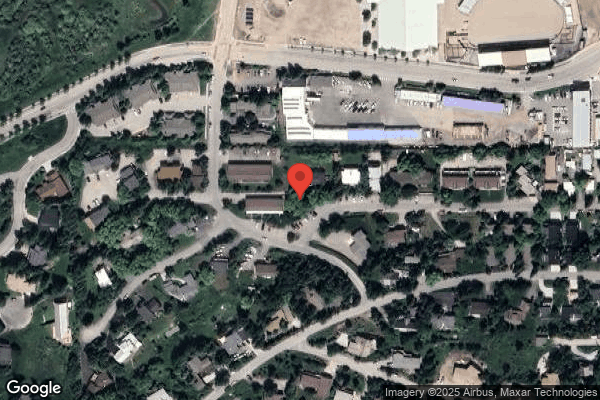
625 East Broadway, Building b, Jackson, WY 83001 (307) 739-7661
Government - Hospital district 60 Beds Independent Data: November 2025
Trust Grade
90/100
#4 of 33 in WY
Last Inspection: May 2025

Inspected within the last 6 months. Data reflects current conditions.

Overview

St John's Health Sage Living in Jackson, Wyoming, has received an excellent Trust Grade of A, indicating it is highly recommended among nursing homes. It ranks #4 out of 33 facilities in Wyoming, placing it in the top half, and is the only option in Teton County. However, the facility's trend is worsening, with reported issues increasing from 1 in 2024 to 2 in 2025. Staffing is a strength with a 4/5 rating and an impressive turnover rate of 0%, significantly lower than the state average, while they also boast more RN coverage than all other Wyoming facilities. On the downside, there have been concerning incidents, such as a cook failing to properly log food temperatures, which is essential for safety, and another incident where a cook did not follow proper hand hygiene procedures, risking cross-contamination. Additionally, there was a serious allegation of misappropriation involving a resident's missing checks, which led to the arrest of an employee.

Trust Score
A
90/100
In Wyoming
#4/33
Top 12%
Safety Record
Low Risk
No red flags
Inspections
Getting Worse
1 → 2 violations
Staff Stability
○ Average
Turnover data not reported for this facility.
Penalties
✓ Good
No fines on record. Clean compliance history, better than most Wyoming facilities.
Skilled Nurses
✓ Good
Each resident gets 99 minutes of Registered Nurse (RN) attention daily — more than 97% of Wyoming nursing homes. RNs are the most trained staff who catch health problems before they become serious.
Violations
✓ Good
Only 5 deficiencies on record. Cleaner than most facilities. Minor issues only.
★★★★★
5.0
Overall Rating
★★★★☆
4.0
Staff Levels
★★★★☆
4.0
Care Quality
★★★★★
5.0
Inspection Score
Stable
2024: 1 issues
2025: 2 issues

The Good

  • 4-Star Staffing Rating · Above-average nurse staffing levels
  • 4-Star Quality Measures · Strong clinical quality outcomes
  • Full Sprinkler Coverage · Fire safety systems throughout facility
  • No fines on record

Facility shows strength in staffing levels, quality measures, fire safety.

The Bad

No Significant Concerns Identified

This facility shows no red flags. Among Wyoming's 100 nursing homes, only 0% achieve this.

The Ugly 5 deficiencies on record

May 2025 2 deficiencies
CONCERN (D) 📢 Someone Reported This

A family member, employee, or ombudsman was alarmed enough to file a formal complaint

Potential for Harm - no one hurt, but risky conditions existed

Deficiency F0602 (Tag F0602)

Could have caused harm · This affected 1 resident

Based on facility incident review, staff interview, resident representative interview, and policy and procedure review, the facility failed to ensure residents were free from misappropriation or explo...

Read full inspector narrative →
Based on facility incident review, staff interview, resident representative interview, and policy and procedure review, the facility failed to ensure residents were free from misappropriation or exploitation for 1 of 3 sample residents (#16) reviewed for allegations of misappropriation. The findings were: 1. Review of the facility incident report showed resident #16 reported on 1/22/25 s/he was missing four checks and $2,000 from his/her bank account. The resident's POA sent images of the cashed checks to the administrator. The checks had phone numbers written in the endorsement area, which the administrator checked against employee records. One of the phone numbers matched a hospital employee who sometimes worked in the facility. The administrator then contacted law enforcement who interviewed and arrested the employee. The hospital terminated the employee. The facility notified all residents and their representatives of the incident and employee's termination via a letter dated 1/24/25. Further review showed no evidence the missing money was returned to the resident. 2. Interview with the facility administrator on 5/7/25 at 3:33 PM confirmed resident #16 reported that s/he was missing some checks on 1/22/25. The administrator investigated the situation and determined that the phone number on some of the checks matched an employee. He revealed he contacted law enforcement and the employee was arrested. He revealed the employee was terminated at that time. The administrator advised resident #16 to keep his/her checkbook in the safe in the resident's room going forward. Interview with administrator on 5/8/25 at 10:07 AM revealed the facility's investigation did not identify any shortcomings on their part, and there was no process improvement plan put in place related to the incident. 3. Interview with resident #16's representative on 5/7/25 at 2:31 PM revealed s/he discovered four $500 checks that had been cashed from the resident's account that s/he did not recognize. S/he revealed s/he called the resident who then discovered that four checks were missing from his/her checkbook. S/he revealed the resident notified the facility administrator who contacted the police. The POA stated, Luckily, I caught it quickly and revealed the theft did not affect the resident's ability to get anything s/he needed. 4. Review of the facility policy titled Residents free from abuse/neglect provided by the facility administrator on 5/7/25 showed .[Resident rights] include freedom from abuse and protection from misappropriation of property. If a resident has been mistreated, we will investigate promptly and report all suspected violations to the proper authorities and Each resident has access to a secure safe inside or connected to their bedroom .
CONCERN (E)

Potential for Harm - no one hurt, but risky conditions existed

Food Safety (Tag F0812)

Could have caused harm · This affected multiple residents

**NOTE- TERMS IN BRACKETS HAVE BEEN EDITED TO PROTECT CONFIDENTIALITY** Based on observation, staff interview, review of the dishwasher manufacturer's instructions, and facility policy and procedure r...

Read full inspector narrative →
**NOTE- TERMS IN BRACKETS HAVE BEEN EDITED TO PROTECT CONFIDENTIALITY** Based on observation, staff interview, review of the dishwasher manufacturer's instructions, and facility policy and procedure review, the facility failed to monitor and record the internal temperature of foods and failed to ensure a sanitary environment in 1 of 1 kitchen. The census was 47. The findings were: 1. Regarding recording food temperatures in the food preparation area: a. Observation on 5/7/25 starting at 9:51 AM showed cook #1 took the temperature of mashed potatoes, and did not log the temperature before he placed the food into the holding cart. He then removed the mixed vegetables and split pea soup he had previously cooked out of the holding oven, covered with plastic wrap and foil, labeled with the date, and placed them into the holding cart to be taken to the dining rooms without obtaining the temperature of the food prior to lunch service. b. Interview on 5/7/25 at 10:21 AM with cook #1 revealed he checked the temperature of each dish after he cooked it, but he did not keep a temperature log, and stated we should do that but we don't. Further interview revealed he expected the temperatures of the meats to be from 165 to 167 degrees Fahrenheit (F), and vegetables from 152 to 154 degrees F. c. Interview on 5/7/25 at 10:49 with the CDM confirmed he did not require the staff to keep a log of food temperatures because he was unsure if it would be accurate. Further interview revealed he would do what you want us to do. d. Review of the 12/20/2023 facility policy titled Food Preparation provided by the facility administration on 5/8/25 showed .K. Metal-stem, numerically scaled indicating thermometers, accurate to +2 degrees F are provided and used to ensure proper temperatures of potentially hazardous foods. e. According to Food Code 2022, U.S. Public Health Service . Records must be maintained to verify that the critical limits required for food safety are being met. Records provide a check for both the operator and the regulator in determining that monitoring and corrective actions have taken place . 2. Regarding temperature logs of the dishwasher: a. Observation on 5/7/25 starting at 9:54 AM showed the facility used a [NAME] AM 15 chemical sanitizing dish machine. Review of the dishwashing machine's manufacturer's instructions showed the minimum temperature of the wash and rinse water was 120 degrees F, with a recommended temperature of 140 degrees F. b. Interview on 5/7/25 at 10:36 AM with cook #1 revealed the staff did not keep a temperature log of the dishwasher or check sanitizer level in the dishwasher or 3-compartment sink, and he stated we should do that. Further interview revealed the temperature of the dish machine should be at least 120 degrees F. c. Interview on 5/7/25 at 10:49 AM with the CDM revealed that the dishwasher chemically sanitized the dishes, and the staff did not need to monitor it, because Ecolab monitored the equipment and dishwasher sanitizer levels once a month and made any adjustments needed. Further interview revealed he would do what you want us to do. d. Interview on 5/8/25 at 10:15 AM with the CDM revealed he was unable to locate the records from Ecolab due to failed communication with them after an employee quit and changed the email without letting the dietary manager know of the change. e. Review of the 8/9/23 facility policy titled Warewashing provided by the administrator on 5/8/25 showed .C. The dish machine temperature and the sanitizer levels will be monitored to assure they maintain the correct temperature and levels. The dish machine shall maintain a temperature of 120 degrees and the sanitizer approximately 50 ppm.G. The dish washers will record the sanitizer levels at least daily to assure accuracy. These records will be kept on file for a minimum of three years. H. Any noted discrepancies are to be brought to the attention of the Food Service Manager or charge person immediately. I. The dish machine will be inspected monthly to assure proper function. These inspection forms will also be kept on file for three years.J. In the advent of any mal functioning [sic], proper steps will be taken to assure the adequacy of sanitation of service ware. f. According to the FDA 20220 Food Code showed 4-703.11 Hot Water and Chemical, Efficacious sanitization depends on warewashing being conducted within certain parameters. Time is a parameter applicable to both chemical and hot water sanitization. The time hot water or chemicals contact utensils or food-contact surfaces must be sufficient to destroy pathogens that may remain on surfaces after cleaning. Other parameters, such as rinse pressure, temperature, and chemical concentration are used in combination with time to achieve sanitization. When surface temperatures of utensils passing through warewashing machines using hot water for sanitizing do not reach the required 71ºC (160ºF), it is important to understand the factors affecting the decreased surface temperature. A comparison should be made between the machine manufacturer's operating instructions and the machine's actual wash and rinse temperatures and final rinse pressure. The actual temperatures and rinse pressure should be consistent with the machine manufacturer's operating instructions and within limits specified in §§ 4-501.112 and 4-501.113. If either the temperature or pressure of the final rinse spray is higher than the specified upper limit, spray droplets may disperse and begin to vaporize resulting in less heat delivery to utensil surfaces. Temperatures below the specified limit will not convey the needed heat to surfaces. Pressures below the specified limit will result in incomplete coverage of the heat-conveying sanitizing rinse across utensil surfaces.
Feb 2024 1 deficiency
CONCERN (D)

Potential for Harm - no one hurt, but risky conditions existed

Deficiency F0883 (Tag F0883)

Could have caused harm · This affected 1 resident

**NOTE- TERMS IN BRACKETS HAVE BEEN EDITED TO PROTECT CONFIDENTIALITY** Based on medical record review, staff interview, and review of facility policies and CDC immunization recommendations, the facil...

Read full inspector narrative →
**NOTE- TERMS IN BRACKETS HAVE BEEN EDITED TO PROTECT CONFIDENTIALITY** Based on medical record review, staff interview, and review of facility policies and CDC immunization recommendations, the facility failed to ensure residents were offered pneumococcal immunizations based on CDC recommendations for 2 of 5 sample residents (#2, #21) reviewed for immunizations. The findings were: 1. Review of the medical record showed resident #2 was [AGE] years old. Further review showed the resident received the following pneumococcal vaccines: pneumococcal 23 polyvalent on 10/18/06 and pneumococcal 13 valent conjugate on 9/24/15. There lacked evidence the resident was offered a pneumococcal immunization since the last administration in 2015. 2. Review of the medical record showed resident #21 was [AGE] years old. Further review showed the resident received the following pneumococcal vaccines: Pneumovax 23 on 9/28/12 and Prevnar 13 on 2/25/15. There lacked evidence the resident was offered a pneumococcal immunization since the last administration in 2015. 3. During an interview on 2/8/24 at 9:57 AM the DON stated the facility followed CDC recommendations for immunizations and confirmed there was no evidence residents #2 or #21 were offered pneumococcal immunizations in accordance with CDC recommendations. 4. Review of the facility's policy Influenza & Pneumococcal Immunization, approved 9/22/21, showed .Eligible residents and patients will be offered the opportunity to receive the vaccines as per CDC guidelines and .The Sage Living will follow the CDC standard for pneumococcal vaccination of adults which includes both the pneumococcal conjugate vaccine (Prevnar-13, PCV13) and the pneumococcal polysaccharide vaccine (Pneumovax 23, PPSV23). 5. Review of Adult Immunization Schedule by Age by CDC located at https://www.cdc.gov/vaccines/schedules/hcp/adult.html (accessed 2/8/24) showed individuals 65 years or older who previously received both PCV13 and PPSV23, and the PPSV23 was received at age [AGE] years or older, should receive one dose of PCV20 at least 5 years after the pneumococcal vaccine dose.
Jan 2023 2 deficiencies
CONCERN (D)

Potential for Harm - no one hurt, but risky conditions existed

Deficiency F0761 (Tag F0761)

Could have caused harm · This affected 1 resident

Based on observation, staff interview and review of facility policies, the facility failed to ensure medications were kept secure for 1 of 3 medication carts. The findings were: 1. Observation of the ...

Read full inspector narrative →
Based on observation, staff interview and review of facility policies, the facility failed to ensure medications were kept secure for 1 of 3 medication carts. The findings were: 1. Observation of the medication cart used for Paintbrush Place on 1/9/23 at 6 PM showed the medication cart was located in the hall with one of the drawers open approximately three inches. There were no staff in the area. There was a resident ambulating with a walker in the hall near the cart. 2. An interview with the Director of Nursing (DON) on 1/12/23 at 9:29 AM revealed the expectation of the facility was the medication cart would not be unlocked unless the nurse was in the immediate vicinity. The drawer being left open was not an acceptable condition. 3. Review of the facility policy titled Medication Management - Storage & Security dated 11/28/22 showed Medication carts must be locked or stored in a manner that prevents unauthorized access (i.e. directly supervised/monitored by authorized personnel with legal access to the medications) when not in use.
CONCERN (E)

Potential for Harm - no one hurt, but risky conditions existed

Food Safety (Tag F0812)

Could have caused harm · This affected multiple residents

Based on observation, staff interview, and review of facility policies and the 2022 Food Code, the facility failed to ensure hand hygiene and gloving was done in accordance with accepted standards to ...

Read full inspector narrative →
Based on observation, staff interview, and review of facility policies and the 2022 Food Code, the facility failed to ensure hand hygiene and gloving was done in accordance with accepted standards to minimize cross contamination during 1 of 1 observations of meal preparation in the kitchen. The findings were: 1. Observation in the kitchen on 1/11/23 from 3:45 PM until 4:22 PM showed cook #1 was preparing food for the evening meal. The cook wore the same pair of gloves for the duration of the observation (no hand hygiene or changing of gloves). During the observation, the cook was observed to touch potentially contaminated surfaces, such as a cardboard box, the handles of the refrigerator, the handles of the fryer baskets and handles to drawers with his gloved hands. Then the cook used his hands, with the same gloves on, to hold down cooked breaded chicken breasts while he cut them in half with a knife. He then used the same gloved hands to put the chicken in pans on the steam table. 2. During an interview on 1/12/23 at 8:59 AM the dietary manager stated cook #1 was a newer employee. He stated staff were instructed to wash their hands frequently during meal preparation and they followed any state guidelines regarding gloves and hand hygiene. He confirmed cook #1 should have removed the gloves and performed hand hygiene after touching potentially contaminated surfaces. 3. Review of the facility's policy Maintenance of Sanitation and Infection Control (approved 10/1/2020) showed .The manager is responsible for supervising sanitation, housecleaning procedures and personnel in such a manner to create and maintain an environment that is safe for the storage, preparation and serving of food and which meets the standards established by federal, state and local regulations .The Food Service department is inspected annually by the CMS to assure compliance with US FDA Food Code and federal OBRA regulations. 4. Review of the 2022 Food Code by the U.S. Food and Drug Administration showed 2-301.14 When to Wash. Food employees shall clean their hands and exposed portions of their arms as specified under 2-301.12 immediately before engaging in food preparation including working with exposed food, clean equipment and utensils, and unwrapped single-service and single-use articles and: .(E) After handling soiled equipment or utensils; (F) During food preparation, as often as necessary to remove soil and contamination and to prevent cross contamination when changing tasks; .(H) Before donning gloves to initiation a task that involves working with food; and (I) After engaging in other activities that contaminate the hands.
Understanding Severity Codes (click to expand)
Life-Threatening (Immediate Jeopardy)
J - Isolated K - Pattern L - Widespread
Actual Harm
G - Isolated H - Pattern I - Widespread
Potential for Harm
D - Isolated E - Pattern F - Widespread
No Harm (Minor)
A - Isolated B - Pattern C - Widespread

Questions to Ask on Your Visit

  • "Can I speak with families of current residents?"
  • "What's your RN coverage like on weekends and overnight?"

Our Honest Assessment

Strengths
  • • Grade A (90/100). Above average facility, better than most options in Wyoming.
  • • No major safety red flags. No abuse findings, life-threatening violations, or SFF status.
  • • No fines on record. Clean compliance history, better than most Wyoming facilities.
  • • Only 5 deficiencies on record. Cleaner than most facilities. Minor issues only.
Concerns
  • • No significant concerns identified. This facility shows no red flags across CMS ratings, staff turnover, or federal penalties.
Bottom line: Generally positive indicators. Standard due diligence and a personal visit recommended.

About This Facility

What is St John'S Health Sage Living's CMS Rating?

CMS assigns St John's Health Sage Living an overall rating of 5 out of 5 stars, which is considered much above average nationally. Within Wyoming, this rating places the facility higher than 99% of the state's 100 nursing homes. This rating reflects solid performance across the metrics CMS uses to evaluate nursing home quality.

How is St John'S Health Sage Living Staffed?

CMS rates St John's Health Sage Living's staffing level at 4 out of 5 stars, which is above average compared to other nursing homes.

What Have Inspectors Found at St John'S Health Sage Living?

State health inspectors documented 5 deficiencies at St John's Health Sage Living during 2023 to 2025. These included: 5 with potential for harm.

Who Owns and Operates St John'S Health Sage Living?

St John's Health Sage Living is owned by a government entity. Government-operated facilities are typically run by state, county, or municipal agencies. The facility operates independently rather than as part of a larger chain. With 60 certified beds and approximately 47 residents (about 78% occupancy), it is a smaller facility located in Jackson, Wyoming.

How Does St John'S Health Sage Living Compare to Other Wyoming Nursing Homes?

Compared to the 100 nursing homes in Wyoming, St John's Health Sage Living's overall rating (5 stars) is above the state average of 3.0 and health inspection rating (5 stars) is much above the national benchmark.

What Should Families Ask When Visiting St John'S Health Sage Living?

Based on this facility's data, families visiting should ask: "Can I visit during a mealtime to observe dining assistance and food quality?" "How do you handle medical emergencies, and what is your hospital transfer rate?" "Can I speak with family members of current residents about their experience?"

Is St John'S Health Sage Living Safe?

Based on CMS inspection data, St John's Health Sage Living has a clean safety record: no substantiated abuse findings (meaning no confirmed cases of resident harm), no Immediate Jeopardy citations (the most serious violation level indicating risk of serious injury or death), and is not on the Special Focus Facility watch list (a federal program monitoring the lowest-performing 1% of nursing homes). The facility has a 5-star overall rating and ranks #1 of 100 nursing homes in Wyoming. While no facility is perfect, families should still ask about staff-to-resident ratios and recent inspection results during their visit.

Do Nurses at St John'S Health Sage Living Stick Around?

St John's Health Sage Living has not reported staff turnover data to CMS. Staff turnover matters because consistent caregivers learn residents' individual needs, medications, and preferences. When staff frequently change, this institutional knowledge is lost. Families should ask the facility directly about their staff retention rates and average employee tenure.

Was St John'S Health Sage Living Ever Fined?

St John's Health Sage Living has no federal fines on record. CMS issues fines when nursing homes fail to meet care standards or don't correct problems found during inspections. The absence of fines suggests the facility has either maintained compliance or corrected any issues before penalties were assessed. This is a positive indicator, though families should still review recent inspection reports for the full picture.

Is St John'S Health Sage Living on Any Federal Watch List?

St John's Health Sage Living is not on any federal watch list. The most significant is the Special Focus Facility (SFF) program, which identifies the bottom 1% of nursing homes nationally based on persistent, serious quality problems. Not being on this list means the facility has avoided the pattern of deficiencies that triggers enhanced federal oversight. This is a positive indicator, though families should still review the facility's inspection history directly.