Powell Valley Care Center
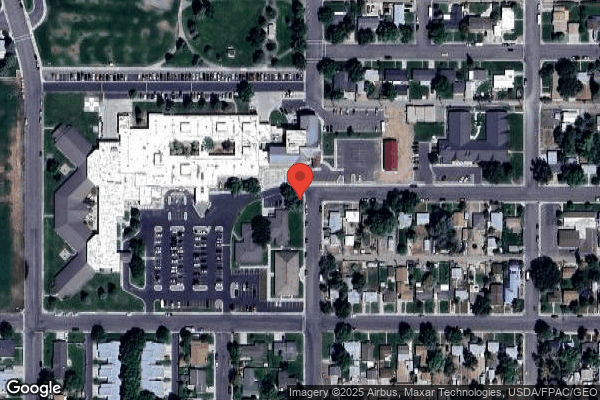
777 Avenue H, Powell, WY 82435 (307) 754-1107
Government - Hospital district 100 Beds Independent Data: November 2025
Trust Grade
73/100
#12 of 33 in WY
Last Inspection: January 2025

Within standard 12-15 month inspection cycle. Federal law requires annual inspections.

Overview

Powell Valley Care Center has received a Trust Grade of B, indicating it is a good choice for families, as it is solidly above average. It ranks #12 out of 33 nursing homes in Wyoming, placing it in the top half of facilities in the state, and is #2 out of 2 in Park County, meaning there's only one local option that ranks higher. The facility is improving, with issues decreasing from 5 in 2023 to just 1 in 2025. Staffing is a strength here, with a perfect 5/5 star rating and a turnover rate of 36%, significantly lower than the state average, which suggests that staff are experienced and familiar with the residents' needs. However, there have been some concerning incidents, including a serious case where a resident with severe cognitive impairment suffered fractures due to inadequate transfer assistance, and another incident where a resident did not receive the necessary therapy services despite needing substantial assistance for daily activities. Overall, while there are strengths in staffing and a good trust grade, families should be aware of the recent incidents affecting resident safety and care.

Trust Score
B
73/100
In Wyoming
#12/33
Top 36%
Safety Record
Moderate
Needs review
Inspections
Getting Better
5 → 1 violations
Staff Stability
○ Average
36% turnover. Near Wyoming's 48% average. Typical for the industry.
Penalties
○ Average
$8,190 in fines. Higher than 61% of Wyoming facilities. Some compliance issues.
Skilled Nurses
✓ Good
Each resident gets 114 minutes of Registered Nurse (RN) attention daily — more than 97% of Wyoming nursing homes. RNs are the most trained staff who catch health problems before they become serious.
Violations
○ Average
6 deficiencies on record. Average for a facility this size. Mostly minor or procedural issues.
★★★★☆
4.0
Overall Rating
★★★★★
5.0
Staff Levels
★☆☆☆☆
1.0
Care Quality
★★★★★
5.0
Inspection Score
Stable
2023: 5 issues
2025: 1 issues

The Good

  • 5-Star Staffing Rating · Excellent nurse staffing levels
  • Full Sprinkler Coverage · Fire safety systems throughout facility
  • No fines on record
  • Staff turnover below average (36%)

    12 points below Wyoming average of 48%

Facility shows strength in staffing levels, fire safety.

The Bad

Staff Turnover: 36%

Near Wyoming avg (46%)

Typical for the industry

Federal Fines: $8,190

Below median ($33,413)

Minor penalties assessed

The Ugly 6 deficiencies on record

1 actual harm
Jan 2025 1 deficiency
CONCERN (D)

Potential for Harm - no one hurt, but risky conditions existed

Deficiency F0676 (Tag F0676)

Could have caused harm · This affected 1 resident

**NOTE- TERMS IN BRACKETS HAVE BEEN EDITED TO PROTECT CONFIDENTIALITY** Based on medical record review, staff interview, and policy and procedure review, the facility failed to ensure residents receiv...

Read full inspector narrative →
**NOTE- TERMS IN BRACKETS HAVE BEEN EDITED TO PROTECT CONFIDENTIALITY** Based on medical record review, staff interview, and policy and procedure review, the facility failed to ensure residents received services to maintain or improve their ability to carry out activities of daily living for 1 of 3 residents (#21) reviewed for activities of daily living. The findings were: 1. Review of the quarterly MDS assessment dated [DATE] showed resident #21 had short-term and long-term memory problems and diagnoses which included Alzheimer's disease. The review showed the resident required substantial/maximal assistance with oral hygiene, toileting hygiene, upper and lower body dressing, rolling left and right, sitting to standing, sitting to lying, lying to sitting, and transfers. Further review showed during the look-back period the resident had 2 or more falls with no injury, a fall with minor injury, and did not receive therapy services or restorative nursing programs. Review of the ADL self-care performance deficit care plan last revised on 11/26/24 showed .restorative staff to encourage and assist me with walking. Weather and behaviors permitting I would like to go outside. Three times a week as tolerated . The following concerns were identified: a. Review of the resident's record from 1/1/25 to 1/30/25 showed a restorative task for active range of motion and a program for ambulation two to three times per week. Further review showed no evidence the ambulation program was performed, offered, or refused and the active range of motion was only performed once, on 1/22/25, during the 30-day period. b. Interview with the restorative nurse on 1/31/25 at 8:37 AM revealed restorative CNAs should offer restorative programs 2 to 3 times per week and should document refusals. The restorative nurse revealed she tries to evaluate programs quarterly with the MDS assessments and she may have forgotten to change the resident's program to as needed. Further interview revealed sometimes restorative aides got pulled to work the floor if there was an opening; however, that was not an issue during the last 30 days. 2. Review of the policy titled Restorative Program dated 2/2024 showed .Maintenance and restorative programs will be provided to residents as indicated by the resident's comprehensive assessment: I. To ensure the resident receives the care and services because he/she is unable to perform Activities of Daily Living, (ADL) independently. II. To promote resident wellness and maintenance or restoration of ADL functions .
Dec 2023 3 deficiencies 1 Harm
SERIOUS (G)

Actual Harm - a resident was hurt due to facility failures

Accident Prevention (Tag F0689)

A resident was harmed · This affected 1 resident

**NOTE- TERMS IN BRACKETS HAVE BEEN EDITED TO PROTECT CONFIDENTIALITY** Based on medical record review, staff interview, and policy and procedure review, the facility failed to implement interventions...

Read full inspector narrative →
**NOTE- TERMS IN BRACKETS HAVE BEEN EDITED TO PROTECT CONFIDENTIALITY** Based on medical record review, staff interview, and policy and procedure review, the facility failed to implement interventions to ensure resident safety for 1 of 3 sample residents (#100) reviewed for falls. This failure resulted in actual harm to resident #100 who sustained fractures and was hospitalized . The findings were: 1. Review of the significant change MDS assessment dated [DATE] showed resident #100 had a brief interview for mental status (BIMS) score of 3 out 15, which indicated severe cognitive impairment, and diagnoses which included non-Alzheimer's dementia and anxiety disorder. Further review showed the resident required extensive physical assistance of 2 or more people for transfers and extensive physical assistance of 1 person for toileting and personal hygiene. Review of the self-care deficit care plan last revised on [DATE] showed interventions which included .Transfer: I recently sustained major injury post fall and am now an extensive/total assist of two staff members at all times. Staff may use Sara lift [sit-to-stand type mechanical lift] for transfer with two person assist or staff can pivot transfer me as tolerated by me . Review of the mobility deficit care plan last revised on [DATE] showed and intervention of .Transfer: I am no longer able to transfer independently with my four wheeled walker. I am currently using a wheelchair related to recent injury . which was revised on [DATE]. Review of the care plan titled I am a high risk for falls r/t [related to] memory impairment and history of falls care plan last revised on [DATE] showed interventions which included .Ensure that I am wearing appropriate footwear (specify and describe correct client footwear i.e. brown leather shoes, tartan bedroom slippers, black non-skid socks) when up ambulating . The following concerns were identified: a. Review of a progress note dated [DATE] and timed 7:41 PM showed the resident had a fall that day at 6:30 PM, had been assisted to the bathroom by 1 staff without a mechanical lift or gait belt, and the resident was not wearing any footwear. Further review showed the resident had complaints of bilateral knee pain. b. Review of a progress note dated [DATE] and timed 11:15 PM showed the emergency room nurse contacted the facility to notify them of the resident transfer by helicopter flight to [NAME] due to bilateral displaced femur fractures. c. Review of a progress note dated [DATE] and timed 3:51 PM showed the resident's representatives had decided a non-operative care approach with a focus on comfort. Further review showed the resident was placed on comfort measures and was being medically stabilized for return to the facility at an unknown date. d. Review of a progress note dated [DATE] and timed 9:15 AM showed the resident was given Morphine IR (pain medication) 15 mg and transferred to the facility without immobilizers and with a Foley catheter present. e. Review of a progress note dated [DATE] and timed 11:36 AM showed the resident returned to the facility with several new wounds which included 2 skin tears, 2 deep tissue injuries on his/her left buttocks/coccyx, a deep tissue injury to his/her right gluteal fold, and a deep tissue injury to his/her right mid back. f. Review of a progress note dated [DATE] and timed 3:46 PM showed the resident was pronounced deceased at 11:55 AM. g. Review of a root cause analysis provided by the administrator on [DATE] showed [Resident] s/p [status post] fall on [DATE] at 1830 [6:30 PM], assisted fall. [S/he] was transferred to ER. [S/he] X-ray [sic] results stated comminuted periprostehetic [sic] fractures distal right femur with displacement of the right total knee prosthesis and boney fragments posteriorly and comminuted displaced periprostehetic [sic] fracture distal left femoral shaft with the prosthesis and distal femur displaced medially. Large joint effusion and prepatellar swelling Under the section describe what happened the document showed [Resident name] was being assisted with toileting by the CNA, resident was trying to sit on the toilet, and slid off the toilet and onto the floor. Legs were bent under and to the side of [him/her], assessment completed noted deformity to right knee prior to moving, 911 called to sent [sic] to ER. Further review showed the statement of cause included the resident was not wearing socks or shoes, a gait belt was not used, the staff member was not aware of the resident's transfer status, and the resident's care plan was not followed. 2. Interview with CNA #1 on [DATE] at 6:07 PM confirmed she assisted resident #100 to the bathroom without assistance on [DATE], a gait belt or mechanical lift was not used, and the resident was not wearing any footwear. Further interview revealed the resident attempted to stand without assistance, fell to the ground, and reported pain in his/her legs. 3. Interview with the infection preventionist, DON, restorative nurse, MDS coordinator, nurse manager #1, and the administrator on [DATE] at 8:37 AM revealed resident #100 was very independent prior to a fall on [DATE] which resulted in a fibula fracture. Following the [DATE] fall, the resident had a decline in ability and required a mechanical lift for transfers. During the 2 months prior to the [DATE] fall, the residents was able to transfer with a sit-to stand type mechanical lift transfer or a gait belt and stand and pivot procedure; however, the resident required 2 staff members for all transfers. They confirmed the resident declined after the fall on [DATE] and passed away on [DATE]. Further interview revealed staff were expected to use a gait belt for all physically assisted transfers, were expected to identify the resident's transfer status prior to transfer, and follow the resident's care plan when assisting residents. 4. Review of the Gait Belt procedure last revised [DATE] showed .1. A gait belt must be used by all nursing staff in the following situations: a. When transferring residents who are cooperative, able to bear weight, partially independent. b. When assisting a patient/resident to the floor, or off of the floor if a fall occurred. c. When ambulating with patient/resident who requires a minimum of stand by assistance . 5. Review of the policy titled Care Plan: Initiating Individualized Patient/Resident Care Plans last revised on [DATE] showed Nurses caring for the patient/resident are responsible for ensuring that the multi-disciplinary plan of care is implemented and updated as appropriate .
CONCERN (D)

Potential for Harm - no one hurt, but risky conditions existed

Comprehensive Care Plan (Tag F0656)

Could have caused harm · This affected 1 resident

**NOTE- TERMS IN BRACKETS HAVE BEEN EDITED TO PROTECT CONFIDENTIALITY** Based on medical record review, staff interview, and policy and procedure review, the facility failed to ensure care plans were ...

Read full inspector narrative →
**NOTE- TERMS IN BRACKETS HAVE BEEN EDITED TO PROTECT CONFIDENTIALITY** Based on medical record review, staff interview, and policy and procedure review, the facility failed to ensure care plans were implemented for 1 of 3 sample residents (#100) with falls. The findings were: 1. Review of the significant change MDS assessment dated [DATE] showed resident #100 had a brief interview for mental status (BIMS) score of 3 out 15, which indicated severe cognitive impairment, and diagnoses which included non-Alzheimer's dementia and anxiety disorder. Further review showed the resident required extensive physical assistance of 2 or more people for transfers and extensive physical assistance of 1 person for toileting and personal hygiene. Review of the self-care deficit care plan last revised on 8/10/23 showed interventions which included .Transfer: I recently sustained major injury post fall and am now an extensive/total assist of two staff members at all times. Staff may use Sara lift [sit-to-stand type mechanical lift] for transfer with two person assist or staff can pivot transfer me as tolerated by me . Review of the mobility deficit care plan last revised on 8/10/23 showed and intervention of .Transfer: I am no longer able to transfer independently with my four wheeled walker. I am currently using a wheelchair related to recent injury . which was revised on 5/11/23. Review of the care plan titled I am a high risk for falls r/t [related to] memory impairment and history of falls care plan last revised on 5/17/23 showed interventions which included .Ensure that I am wearing appropriate footwear (specify and describe correct client footwear i.e. brown leather shoes, tartan bedroom slippers, black non-skid socks) when up ambulating . The following concerns were identified: a. Review of a progress note dated 11/11/23 and timed 7:41 PM showed the resident had a fall that day at 6:30 PM, had been assisted to the bathroom by 1 staff member without a mechanical lift or gait belt, and the resident was not wearing any footwear. Further review showed the resident had complaints of bilateral knee pain. b. Review of a root cause analysis provided by the administrator on 12/6/23 showed [Resident] s/p [status post] fall on 11/11/2023 at 1830 [6:30 PM], assisted fall. [S/he] was transferred to ER. [S/he] X-ray [sic] results stated comminuted periprostehetic [sic] fractures distal right femur with displacement of the right total knee prosthesis and boney fragments posteriorly and comminuted displaced periprostehetic [sic] fracture distal left femoral shaft with the prosthesis and distal femur displaced medially. Large joint effusion and prepatellar swelling Under the section describe what happened the document showed [Resident name] was being assisted with toileting by the CNA, resident was trying to sit on the toilet, and slid off the toilet and onto the floor. Legs were bent under and to the side of [him/her], assessment completed noted deformity to right knee prior to moving, 911 called to sent [sic] to ER. Further review showed the statement of cause included the resident was not wearing socks or shoes, a gait belt was not used, the staff member was not aware of the resident's transfer status, and the resident's care plan was not followed. c. Interview with CNA #1 on 12/6/23 at 6:07 PM confirmed she assisted resident #100 to the bathroom without assistance on 11/11/23, a gait belt or mechanical lift was not used, and the resident was not wearing any footwear. 2. Interview with the infection preventionist, DON, restorative nurse, MDS coordinator, nurse manager #1, and the administrator on 12/7/23 at 8:37 AM revealed resident #100 was able to transfer with a sit-to stand type mechanical lift transfer or a gait belt stand and pivot procedure; however, the resident required 2 staff members for all transfers. Further interview revealed staff were expected to use a gait belt for all physically assisted transfers, were expected to identify the resident's transfer status prior to transfer, and were expected to follow the resident's care plan when assisting residents. 3. Review of the policy titled Care Plan: Initiating Individualized Patient/Resident Care Plans last revised on August 2020 showed Nurses caring for the patient/resident are responsible for ensuring that the multi-disciplinary plan of care is implemented and updated as appropriate .
CONCERN (D)

Potential for Harm - no one hurt, but risky conditions existed

Medication Errors (Tag F0758)

Could have caused harm · This affected 1 resident

**NOTE- TERMS IN BRACKETS HAVE BEEN EDITED TO PROTECT CONFIDENTIALITY** Based on observation, medical record review, staff interview, and policy and procedure review, the facility failed to ensure as ...

Read full inspector narrative →
**NOTE- TERMS IN BRACKETS HAVE BEEN EDITED TO PROTECT CONFIDENTIALITY** Based on observation, medical record review, staff interview, and policy and procedure review, the facility failed to ensure as needed (PRN) orders for psychotropic medications were limited to 14 days for 1 of 5 sample residents (#42) and failed to ensure appropriate target symptoms were identified and monitored, and gradual dose reductions were performed for 1 of 5 sample residents (#4) reviewed for unnecessary medications. The findings were: 1. Review of the quarterly MDS assessment dated [DATE] showed resident #42 had a brief interview for mental status score (BIMS) score of 15 out of 15, which indicated the resident was cognitively intact, and had diagnoses which included non-alzheimer's dementia. Further review showed the resident had behaviors of delusions and hallucinations and received an antidepressant medication. The following concerns were identified: a. Review of the physician's orders showed the resident received an order for Ativan (antianxiety) 0.5 mg as needed one time per day for body spasms on 11/21/23 and no stop date or physician's rationale was indicated. b. Observation of the medication administration on 12/6/23 at 8:45 AM showed RN #1 administered Ativan 0.5 milligrams (mg) by mouth, 15 days after the Ativan order was obtained. c. Review of the November 2023 medication administration record (MAR) showed the Ativan 0.5 mg order was started on 11/21/23 and administered to the resident on 11/30/23. Review of the December 2023 MAR showed the Ativan 0.5 mg was administered to the resident on 12/6/23. d. Interview with RN #1 on 12/7/23 at 8:30 AM revealed she was unaware PRN Ativan should not exceed a 14 day duration and confirmed she administered the medication to the resident on 12/6/23. Interview with the RN on 12/7/23 at 8:50 AM revealed she spoke with the resident's physician and the physician was aware of a 14 day rule; however, the physician had not received a notice to change the order as of that time. e. Interview with the DON and nurse manager #1 on 12/7/23 at 9:35 AM revealed there was no evidence a request was sent to the physician for a stop date or a physician rationale for the long term use of the as needed Ativan order. 2. Review of the quarterly MDS assessment dated [DATE] showed resident #4 had a BIMS score of 8 out 15, which indicated moderate cognitive impairment, and diagnoses which included anxiety disorder and depression. Further review showed the resident had a patient health questionaire-9 (PHQ-9) score of zero, which indicated no depression symptoms, and no behaviors were exhibited. Review of the physician orders showed the resident received sertraline (anti-depressant) 150 mg by mouth daily for depression related to other specified anxiety and trazadone (anti-depressant) 75 mg by mouth at bedtime for insomnia. The following concerns were identified: a. Review of the care plan last revised on 11/30/22 showed I'm having psychosocial well-being problem [sic] r/t [related to] s/s [signs and symptoms] of depression and interventions which included Monitor/document/report PRN [as needed] adverse reactions to antidepressant therapy: change in behavior/mood/cognition; hallucinations/delusions; social isolation, suicidal thoughts, withdrawal; decline in ADL ability, continence, no voiding; constipation, fecal impaction, diarrhea; gait changes, rigid muscles, balance probs [problems], movement problems, tremors, muscle cramps, falls; dizziness/vertigo; fatigue, insomnia; appetite loss, wt [weight] loss, n/v [nausea/vomiting], dry mouth, dry eyes .Not being able to see or hear very well is hard and makes me sad. Please be patient with me and speak up when talking .Social services to monitor my mood/behavior every quarter and as needed . Further review showed no specific target symptoms were identified for the use of sertraline or trazadone. b. Review of the I use two antidepressant medications r/t [related to] depression and insomnia care plan last revised on 5/31/23 showed interventions which included Monitor/document/report PRN [as needed] adverse reactions to antidepressant therapy: change in behavior/mood/cognition; hallucinations/delusions; social isolation, suicidal thoughts, withdrawal; decline in ADL ability, continence, no voiding; constipation, fecal impaction, diarrhea; gait changes, rigid muscles, balance probs [problems], movement problems, tremors, muscle cramps, falls; dizziness/vertigo; fatigue, insomnia; appetite loss, wt [weight] loss, n/v [nausea/vomiting], dry mouth, dry eyes .Not being able to see or hear very well is hard and makes me sad. Please be patient with me and speak up when talking .Social services to monitor my mood/behavior every quarter and as needed . and no specific target symptoms were identified for the use of sertraline or trazadone. Further review showed follow guidelines for GDR [gradual dose reduction] attempts unless contraindicated by my physician. b. Review of the physician orders for December 2023 showed .Behaviors-Monitor for the following: (specify) itching, picking at skin, restlessness (agitation), hitting, increase in complaints, biting, kicking, spitting, cussing, racial slurs, elopement, stealing, delusions, hallucinations, psychosis, aggression, refusing care. For antidepressant use. There was no evidence of behavior monitoring related to the use of trazadone. c. Review of a pharmacy services communication dated 5/3/23 showed .This note is in reference to you resident, [resident's name], who is currently on the anxiolytic/hypnotic medication trazadone 75 mg po [by mouth] at bedtime for insomnia. Please review and indicate below if you think we could trial a lower dose or if [s/he] should remain where [s/he] is at . A facility RN added In talking with [resident's name] [s/he] doesn't want any changes to this as [s/he] feels this helps [him/her] sleep at night and feels the current dose is effective . Further review showed the physician marked a box which stated I consider a dosage reduction to be clinically contraindicated; however, the rationale section was not completed. d. Review of a pharmacy services communication dated 5/3/236/2/22 and signed by the physician on 7/25/23 showed This note is in reference to your resident, [resident's name] who is currently on Sertraline 100 mg daily for depression. Please review and indicate below if you think we could trial a lower dose or if [s/he] should remain where [s/he] is . A facility RN added In talking with [resident's name] [s/he] feels this medication is helping [him/her] and [s/he] doesn't want any changes made to it. Also [resident's name]'s Sertraline was increased to 150 mg [by mouth] daily on 5/25/23. No changes are requested at this time. Further review showed the physician marked a box which stated I consider a dosage reduction to be clinically contraindicated; however, the rationale section was not completed. e. Interview with the DON, infection preventionist, MDS coordinator, social services/recreation coordinator, and nurse manager on 12/7/23 at 9:36 AM revealed the pharmacy sends the communication to the nursing facility, it was reviewed and updated, and sent to the doctor. Staff members talk to the resident and evaluate how they feel about the medication and add the information to the communication. The revealed the target symptoms the resident displayed were tearfulness and negative self-talk. They revealed the resident used trazadone for insomnia and had the insomnia related to a response in changes resulted in difficulty sleeping because s/he gets upset; however, they did not monitor the resident's difficulty sleeping or specific sleeping patterns and they confirmed the care plan indicated insomnia may be an adverse reaction of anti-depressant therapy. Further interview confirmed the facility did not monitor resident specific identified target symptoms for the use of psychotropic medications or the medication effectiveness, and confirmed the physician did not provide a resident specific rationale for not performing a gradual dose reduction. 3. Review of the policy titled Monthly Resident Drug Regimen Review dated October 2017 showed .Management of Psychotropic Drugs and Gradual Dose Reductions (GDR) .C. Each resident must be evaluated by the attending physician to determine whether a GDR is clinically contraindicated. If a GDR is clinically contraindicated the physician is required to document this specifically in the medical record .B. Antidepressants 1 .After the first year, a tapering should be attempted annually, unless clinically contraindicated. The tapering may be considered clinically contraindicated if: 2. The continued use is in accordance with relevant current standards of practice and the physician has documented the clinical rationale why an attempted dose reduction would be likely to impair the resident's function or cause psychiatric instability by exacerbating an underlying medical or psychiatric disorder, or 3. The resident's target symptoms returned or worsened after the most recent attempt at tapering the dose within the facility and the physician has documented the clinical rationale for why an attempted dose reduction at that time would be likely to impair the resident's function or cause psychiatric instability by exacerbating an underlying medical or psychiatric disorder . Further review showed .III, Orders for psychotropic drugs as needed or PRN A. All PRN orders for antidepressants, anxiolytics, or hypnotics will have a limited duration of 14 days. PRN orders for these medications will be discontinued 14 days from the date written. 1. If the resident's primary care providers believes [sic] a PRN order for longer than 14 days is needed or appropriate, the physician can extend the order beyond 14 days by documenting their rationale on the order and the resident's medical record .
Nov 2023 1 deficiency
CONCERN (D) 📢 Someone Reported This

A family member, employee, or ombudsman was alarmed enough to file a formal complaint

Potential for Harm - no one hurt, but risky conditions existed

Free from Abuse/Neglect (Tag F0600)

Could have caused harm · This affected 1 resident

**NOTE- TERMS IN BRACKETS HAVE BEEN EDITED TO PROTECT CONFIDENTIALITY** Based on observation, medical record review, staff interview, facility incident report review, and facility policy review, the f...

Read full inspector narrative →
**NOTE- TERMS IN BRACKETS HAVE BEEN EDITED TO PROTECT CONFIDENTIALITY** Based on observation, medical record review, staff interview, facility incident report review, and facility policy review, the facility failed to protect the resident's right to be free from physical and mental abuse by residents for 1 of 3 sample residents (#7) reviewed for abuse allegations. The findings were: 1. Review of the admission MDS assessment dated [DATE] showed resident #7 had a BIMS score of 4 out of 15, which indicated severe cognitive impairment, and diagnoses which included Alzheimer's disease, non-Alzheimer's dementia, anxiety disorder, and depression. The following concerns were identified related to one incident of abuse: a. Review of the facility incident report dated 10/25/23 and timed 6:40 PM showed resident #5 had removed a puppy from the room of resident #7. When the stuffed animal was returned to resident #7 in his/her room, resident #5 returned to the room and staff found resident #5 with his/her hands around resident #7's throat and coffee had been spilled on resident #7. Further review showed the residents were separated and neither had noted injuries. b. Review of the nursing progress note for resident #7 dated 10/25/23 and timed 7:08 PM showed resident #7 was sitting in a recliner when resident #5 came up to [him/her] and placed his/her hands on resident #7's throat. The note indicated resident #7 screamed for help and no physical injury was noted; however, resident #7 continued to be shaken by the incident. c. Review of the nursing progress note for resident #5 dated 10/25/23 and timed 7:13 PM showed resident #5 had entered resident #7's room and removed a stuffed puppy. The puppy was carried into the common area where resident #7 observed resident #5 with the puppy and asked for it. The puppy was retrieved and given to resident #7; however, 10 minutes later resident #7 yelled s/he was being choked and needed help. Staff found resident #5 with his/her left hand on resident #7's throat, right hand grabbing resident #7's left wrist, and screaming at resident #7. After releasing resident #7, it was noted the resident's throat was red. 2. Interview with nurse #2 on 11/14/23 at 2 PM confirmed resident #5 wandered which resulted in resident to resident altercations at times and the residents in the secure unit had their favorite stuffed animal or blanket which can cause negative interactions. 3. Interview with the facility administrator on 11/14/23 at 4:15 PM confirmed the altercation occurred and revealed it seemed much worse at the time of occurrence than it really was. Further interview revealed neither resident remembered the incident two hours later. 4. Review of the facility policy and procedure titled Abuse: Recognizing and Reporting dated 3/2023 showed .Abuse is identified as physical abuse, sexual abuse, mistreatment, neglect, or misappropriation of patient/resident property .VULNERABLE ADULT ABUSE .I. Inspect injured vulnerable adult patient's/resident's body upon admission and throughout the course of care for evidence of physical and/or sexual abuse, for unexplained signs and symptoms that might include bruises, welts, abrasions, contusions, lacerations, punctures, burns, scalding, bone fractures, sprains, dislocations, subdural hemorrhage, retinal hemorrhage, brain damage, internal injuries, poisoning, malnutrition (deliberately intended), freezing, or exposure. II. Describe, on the medical record, all unexplained bruises, lacerations, etc., as to location and state of healing .
Mar 2023 1 deficiency
CONCERN (D) 📢 Someone Reported This

A family member, employee, or ombudsman was alarmed enough to file a formal complaint

Potential for Harm - no one hurt, but risky conditions existed

Report Alleged Abuse (Tag F0609)

Could have caused harm · This affected 1 resident

Based on medical record review, facility investigation record review, staff interview and review of the State Agency incident report logs, the facility failed to report allegations of abuse for 1 of 8...

Read full inspector narrative →
Based on medical record review, facility investigation record review, staff interview and review of the State Agency incident report logs, the facility failed to report allegations of abuse for 1 of 8 allegations (affecting residents #3 and #4) reviewed. The findings were: Review of the nursing progress notes dated 2/15/23 at 9:30 PM showed [resident #3] was found in the hallway with [his/her] hand up a resident's shirt. Review of the facility investigation showed the contact occurred in the hall and the video surveillance (which could not be accessed by the investigative team for nearly 2 days) recorded the interaction of the two residents meeting in the hall lasted less than 10 seconds. The video did not confirm any sexual contact occurred. The reporting CNA did not have a clear view, and could state only that it looked like resident #3 had his/her hand up resident #4's shirt. Further investigation review showed the investigative team concluded that contact of a sexual nature had not occurred. Resident #3 was moved to a room on another hall as a protective precaution. The following concerns were identified: a. Review of the State Agency incident report logs failed to show evidence the allegation was reported. b. Interview with the facility Administrator on 3/7/23 at 5:10 PM revealed the allegation had not been reported because there was no visible harm to either resident and the investigative team determined there had not been abuse. The administrator confirmed the regulation required all alleged violations involving abuse be reported no later than 2 hours after the allegation was made, and that had not been done.
Understanding Severity Codes (click to expand)
Life-Threatening (Immediate Jeopardy)
J - Isolated K - Pattern L - Widespread
Actual Harm
G - Isolated H - Pattern I - Widespread
Potential for Harm
D - Isolated E - Pattern F - Widespread
No Harm (Minor)
A - Isolated B - Pattern C - Widespread

Questions to Ask on Your Visit

  • "Can I speak with families of current residents?"
  • "What's your RN coverage like on weekends and overnight?"

Our Honest Assessment

Strengths
  • • 36% turnover. Below Wyoming's 48% average. Good staff retention means consistent care.
Concerns
  • • 6 deficiencies on record, including 1 serious (caused harm) violation. Ask about corrective actions taken.
Bottom line: Mixed indicators with Trust Score of 73/100. Visit in person and ask pointed questions.

About This Facility

What is Powell Valley Care Center's CMS Rating?

CMS assigns Powell Valley Care Center an overall rating of 4 out of 5 stars, which is considered above average nationally. Within Wyoming, this rating places the facility higher than 99% of the state's 100 nursing homes. This rating reflects solid performance across the metrics CMS uses to evaluate nursing home quality.

How is Powell Valley Care Center Staffed?

CMS rates Powell Valley Care Center's staffing level at 5 out of 5 stars, which is much above average compared to other nursing homes. Staff turnover is 36%, compared to the Wyoming average of 46%. This relatively stable workforce can support continuity of care.

What Have Inspectors Found at Powell Valley Care Center?

State health inspectors documented 6 deficiencies at Powell Valley Care Center during 2023 to 2025. These included: 1 that caused actual resident harm and 5 with potential for harm. Deficiencies causing actual harm indicate documented cases where residents experienced negative health consequences.

Who Owns and Operates Powell Valley Care Center?

Powell Valley Care Center is owned by a government entity. Government-operated facilities are typically run by state, county, or municipal agencies. The facility operates independently rather than as part of a larger chain. With 100 certified beds and approximately 43 residents (about 43% occupancy), it is a mid-sized facility located in Powell, Wyoming.

How Does Powell Valley Care Center Compare to Other Wyoming Nursing Homes?

Compared to the 100 nursing homes in Wyoming, Powell Valley Care Center's overall rating (4 stars) is above the state average of 3.0, staff turnover (36%) is near the state average of 46%, and health inspection rating (5 stars) is much above the national benchmark.

What Should Families Ask When Visiting Powell Valley Care Center?

Based on this facility's data, families visiting should ask: "Can I visit during a mealtime to observe dining assistance and food quality?" "How do you handle medical emergencies, and what is your hospital transfer rate?" "Can I speak with family members of current residents about their experience?"

Is Powell Valley Care Center Safe?

Based on CMS inspection data, Powell Valley Care Center has a clean safety record: no substantiated abuse findings (meaning no confirmed cases of resident harm), no Immediate Jeopardy citations (the most serious violation level indicating risk of serious injury or death), and is not on the Special Focus Facility watch list (a federal program monitoring the lowest-performing 1% of nursing homes). The facility has a 4-star overall rating and ranks #1 of 100 nursing homes in Wyoming. While no facility is perfect, families should still ask about staff-to-resident ratios and recent inspection results during their visit.

Do Nurses at Powell Valley Care Center Stick Around?

Powell Valley Care Center has a staff turnover rate of 36%, which is about average for Wyoming nursing homes (state average: 46%). Moderate turnover is common in nursing homes, but families should still ask about staff tenure and how the facility maintains care continuity when employees leave.

Was Powell Valley Care Center Ever Fined?

Powell Valley Care Center has been fined $8,190 across 1 penalty action. This is below the Wyoming average of $33,161. While any fine indicates a compliance issue, fines under $50,000 are relatively common and typically reflect isolated problems that were subsequently corrected. Families should ask what specific issues led to these fines and confirm they've been resolved.

Is Powell Valley Care Center on Any Federal Watch List?

Powell Valley Care Center is not on any federal watch list. The most significant is the Special Focus Facility (SFF) program, which identifies the bottom 1% of nursing homes nationally based on persistent, serious quality problems. Not being on this list means the facility has avoided the pattern of deficiencies that triggers enhanced federal oversight. This is a positive indicator, though families should still review the facility's inspection history directly.