MCGUFFEY HEALTH & REHABILITATION CENTER
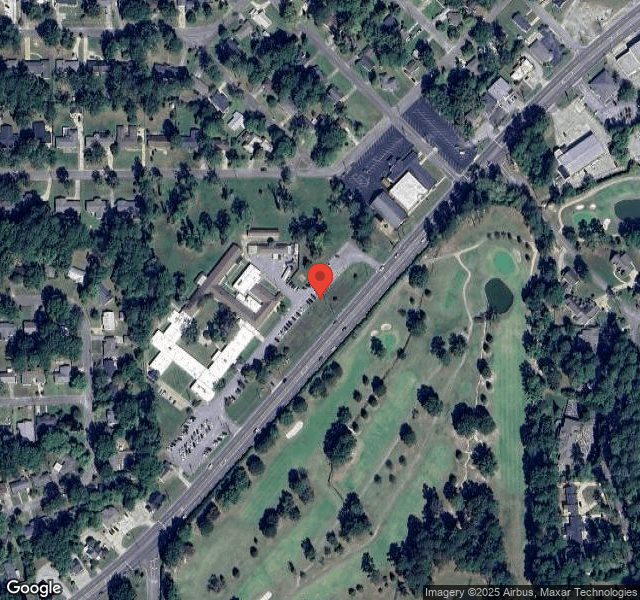

2301 RAINBOW DRIVE, GADSDEN, AL 35999 (256) 543-3467
For profit - Corporation 209 Beds Independent Data: November 2025
Trust Grade
80/100
#64 of 223 in AL
Last Inspection: May 2021

Over 2 years since last inspection. Current conditions may differ from available data.

Overview

McGuffey Health & Rehabilitation Center has a Trust Grade of B+, which indicates it's above average and recommended for families considering care options. It ranks #64 out of 223 nursing homes in Alabama, placing it in the top half, and is the best option among six facilities in Etowah County. The facility's performance is stable, with consistent issues over the past few years, showing no significant improvements or declines. Staffing is rated 4 out of 5 stars, with a turnover rate that matches the state average at 48%, suggesting that while staff are experienced, there is room for improvement in retention. It's worth noting that there have been no fines reported, which is a positive sign, but there have been some concerns identified during inspections, including failures in hand hygiene practices among staff that could risk infection for residents. Overall, while McGuffey Health & Rehabilitation Center has strengths in its ranking and staffing, families should be aware of the concerns related to hygiene practices.

Trust Score
B+
80/100
In Alabama
#64/223
Top 28%
Safety Record
Low Risk
No red flags
Inspections
Holding Steady
2 → 2 violations
Staff Stability
⚠ Watch
48% turnover. Above average. Higher turnover means staff may not know residents' routines.
Penalties
✓ Good
No fines on record. Clean compliance history, better than most Alabama facilities.
Skilled Nurses
○ Average
Each resident gets 32 minutes of Registered Nurse (RN) attention daily — about average for Alabama. RNs are the most trained staff who monitor for health changes.
Violations
○ Average
7 deficiencies on record. Average for a facility this size. Mostly minor or procedural issues.
★★★★☆
4.0
Overall Rating
★★★★☆
4.0
Staff Levels
★★★☆☆
3.0
Care Quality
★★★★☆
4.0
Inspection Score
Stable
2020: 2 issues
2021: 2 issues

The Good

  • 4-Star Staffing Rating · Above-average nurse staffing levels
  • Full Sprinkler Coverage · Fire safety systems throughout facility
  • No fines on record

Facility shows strength in staffing levels, fire safety.

The Bad

Staff Turnover: 48%

Near Alabama avg (46%)

Higher turnover may affect care consistency

The Ugly 7 deficiencies on record

May 2021 2 deficiencies
CONCERN (D)

Potential for Harm - no one hurt, but risky conditions existed

Pressure Ulcer Prevention (Tag F0686)

Could have caused harm · This affected 1 resident

**NOTE- TERMS IN BRACKETS HAVE BEEN EDITED TO PROTECT CONFIDENTIALITY** Based on observation, interviews, record review, and review of [NAME] and [NAME], Fundamentals of Nursing, the facility failed t...

Read full inspector narrative →
**NOTE- TERMS IN BRACKETS HAVE BEEN EDITED TO PROTECT CONFIDENTIALITY** Based on observation, interviews, record review, and review of [NAME] and [NAME], Fundamentals of Nursing, the facility failed to ensure: A licensed staff washed her hands and changed gloves after removing the soiled dressing from the wound before cleaning the wound for Resident Identifier (RI) #119. This affected RI #119, one of three opportunities of wound care observation. Findings Include: A review of [NAME] and [NAME] Fundamentals of Nursing ninth edition, chapter 48, page 1225 revealed . Implementation 1. Perform hand hygiene. Open sterile packages and topical solution containers as necessary. 2. Remove bed linen and patient's gown as necessary to expose ulcer and surrounding skin. Keep remaining parts covered and apply clean gloves. 3. Clean ulcer thoroughly with normal saline or cleaning agent. 4. Remove gloves perform hand hygiene and apply clean or sterile gloves. 5. Apply topical agents as prescribed. RI #119 was admitted on [DATE] and readmitted on [DATE]. On 5/26/21 at 10:47 AM, Employee Identifier (EI) #1, Licensed Practical Nurse (LPN), Treatment Nurse was observed performing wound care. EI #1, gathered needed supplies. EI #3 assisted with wound care. EI #3 washed her hands with soap and water donned gloves, cleaned area on bedside table for supplies. EI #1 washed her hands with soap and water and donned gloves, gathered supplies, opened kerlix and 4 x 4s placed on the clean table. EI #1 sprayed wound cleanser on 4x4s, applied Medihoney to 4x4, EI #3 assisted in holding extremity up for EI #1. EI #1 used scissors to cut off the old dressing, that was dated 5/25/21. EI #1 removed the old dressing and threw it in the trash. EI #1 described the wound, she stated, yellow slough and the surrounding skin was dried with yellow skin and redness. EI #1 with the same gloves she removed the old dressing EI #1 cleaned the wound with wound cleanser-soaked gauze and then dried the wound with gauze. EI #1 applied the treatment and wrapped with kerlix. EI #1 then removed her gloves and washed her hands with soap and water. EI #1 dated the tape and applied it to the kerlix. On 5/26/21 at 11:35 AM, an interview with EI #1 was conducted. EI #1 was asked, when should gloves be changed during wound care. EI #1 replied, when you go in the room wash hands, put gloves on, take the dressing off, take off gloves, wash hands and/or use hand sanitize, then apply gloves, clean the wound, take off gloves, then wash hands, put on gloves, apply the dressing and cover with gauze, take off gloves then wash hands or sanitize, then put the tape on, wash hands again leave room. EI #1 was asked, when should hands be washed during dressing change. EI #1 replied, the same as the last question, when you go in the room wash hands, put gloves on, take the dressing off, take off gloves, wash hands and/or use hand sanitize, then apply gloves, clean wound, take off gloves, then wash hands, put on gloves, apply the dressing and cover, take off gloves then wash hands or sanitize, then put the tape on wash hands again leave room. EI #1 was asked, what was the policy for washing hands during wound care. EI #1 replied, she would have to look it up, wash hands before entering the room, before any care, put on gloves, remove dressing, remove gloves wash hands don gloves apply dressing, remove gloves wash hands. EI #1 was asked, what was the harm of not changing gloves and washing hands during wound care. EI #1 replied, infection. On 5/27/21 at 11:59 AM, an interview was conducted with EI #2, Registered Nurse (RN), Infection Preventionist. EI #2 was asked, when was hand hygiene indicated. EI #2 replied, literally before and after everything you do, before shift, before and after bathroom, before and after resident care and in between if indicated during that care period, before and after any resident contact, coming back from break EI #2 was asked, when should you change gloves when changing a dressing on a wound. EI #2 replied, before care, when changing soiled dressing remove gloves wash hands don new gloves and then after treatment was complete. EI #2 was asked, what was the risk of not washing hands after taking off the soiled dressing. EI #2 replied, cross contamination, we do not want dirty on the clean. EI #2 was asked, when should Staff remove the old dressing and clean the wound with the same gloves. EI #2 replied, never. EI #2 was asked, when were gloves indicated. EI #2 replied, anytime handling bodily fluids, blood, mucus membranes, doing personal care, contact or droplet isolation precautions, and during any treatments or wound care.
CONCERN (D)

Potential for Harm - no one hurt, but risky conditions existed

Incontinence Care (Tag F0690)

Could have caused harm · This affected 1 resident

**NOTE- TERMS IN BRACKETS HAVE BEEN EDITED TO PROTECT CONFIDENTIALITY** Based on observation, interviews, record review, and review of facility policy titled Perineal Care the facility failed to ensur...

Read full inspector narrative →
**NOTE- TERMS IN BRACKETS HAVE BEEN EDITED TO PROTECT CONFIDENTIALITY** Based on observation, interviews, record review, and review of facility policy titled Perineal Care the facility failed to ensure: 1) Certified Nursing Assistant (CNA) used soap while cleaning perineal area for Resident Identifier (RI) #97 during incontinent care 2) CNA changed gloves after removing soiled brief and cleaning resident's perineal area and before applying clean brief. This affected one of one resident observed during incontinent care. Findings Include: A review of a facility policy titled Perineal Care with an effective date of 12/19/07 revealed . Purpose . The purposes of this procedure are to provide cleanliness and comfort to the resident, to prevent infections . Infection Control Protocol and Safety 1) Wash your hands thoroughly with soap and water at the following intervals as indicated: a) Before the procedure . c) Anytime they become soiled with . body fluids . e) Whenever in doubt . 3) Maintain clean technique . Steps in the Procedure . 2) Wash and dry your hands thoroughly . 6) Raise the gown or lower pajamas. 7) Put on gloves. 9) For a . resident: a) Wet washcloth and apply soap or skin cleansing agent b) Wash perineal area, wiping front to back . 12) Remove gloves and discard . Wash and dry . hands . 13) Reposition the bed covers. Make resident comfortable. RI #97 was admitted to the facility on [DATE] and re-admitted last on 11/04/2020 and had diagnosis that included Unspecified urinary incontinence. Laboratory results for RI #97 revealed Laboratory Results . Collected . 1/28/2021 . Type . Urine . Culture Urine (Final Result) . Urine Culture . > (greater than) 100,000 CFU/mL(Colony-forming units per milliliter) Escherichia coli (AA) Panic. A Physician's Order for RI #97 dated 1/30/2021 revealed Amikacin Sulfate 500MG/2ML (500 milligrams/two milliliter) Solution . injection intramuscular twice per day . For: Complicated Urinary Tract Infection . Laboratory results for RI #97 revealed Laboratory Results . Collected . 2/19/2021 . Culture Urine (Finale Result) . Urine Culture . >100,000 CFU/mL Enterococcus faecalis (A) (Abnormal). A Physician's Order for RI #97 dated 2/21/2021 revealed Doxycycline Hyclate 100 MG Capsule . For: Urinary Tract Infection . Laboratory results for RI #97 revealed Laboratory Results . Collected . 4/8/2021 . Culture Urine (Finale Result) . Urine Culture . > (greater than) 100,000 CFU/mL Proteus mirabilis (A) Abnormal . A Physician's Order for RI #97 dated 4/13/2021 revealed (Bactrim DS) Sulfamethoxazole-Trimethoprim 800MG-160MG Tablet . For: Urinary Tract Infection. On 5/25/21 at 1:04 PM an interview was conducted with RI #97's sponsor. RI #97's sponsor reported the resident had several Urinary Tract Infections (UTI) recently and the most recent was within the past four months. On 5/25/21 at 4:52 PM an observation was made of Employee Identifier (EI) #5, CNA, performing incontinent care for RI #97. EI #5 was assisted by EI #6, CNA. EI #5 gathered supplies and donned gloves. EI #5 performed task while EI #6 assisted with positioning RI #97. EI #5 unfastened and removed the soiled brief. EI #5 did not change gloves or perform hand hygiene. EI #6 wet a cloth washcloth at the sink and passed to EI #5. No soap was added to the washcloth. E I#5 used the washcloth to clean RI #97's perineal area. EI #5 did not change gloves or perform hand hygiene. EI #5 applied a clean brief to RI #97. RI #97 was repositioned, and brief secured. EI #5 positioned the resident and removed gloves and washed her hands. On 5/26/21 at 10:30 AM an interview was conducted with EI #7, Registered Nurse (RN). EI #7 was asked, when did RI #97 have a UTI in 2021. EI #7 checked RI #97's medications and replied, on 1/30/21 RI #97 started antibiotics for UTI, on 2/21/21 the antibiotic was changed to Doxycycline, on 2/22/21 it was changed to Ciprofloxacin and on 4/13/21 RI #97 started Bactrim for UTI. EI #7 was asked, in general, what were possible causes for recurrent UTIs. EI #7 replied, incontinence, decreased fluid intake, poor hygiene, and inappropriate peri-care technique. On 5/26/21 at 3:43 PM an interview was conducted with EI #6, CNA. EI #6 was asked, during the surveyor's observation of incontinent care on 5/25/21, when did EI #5 change her gloves. EI #6 replied, she knew EI #5 put gloves on at the beginning and took them off at the end, but she did not remember if she changed gloves in between. EI #6 was asked, what did EI #5 use to clean RI #97's perineal area. EI #6 replied, a washcloth and water. EI #6 was asked, during incontinent care, when should gloves be changed. EI #6 replied, after the dirty brief was removed and before the clean brief was placed. EI #6 was asked, during incontinent care, what should be used to clean resident's perineal area. EI #6 replied, soap and water and dry; the soap and water then dry was repeated for each area. On 5/26/21 at 3:49 PM an interview was conducted with EI #5, CNA. EI #5 was asked, during surveyor's observation of incontinent care of RI #97, how did she clean RI #97's perineal area. EI #5 replied, with a wet washcloth that did not have soap on it. EI #5 was asked, when did she change her gloves. EI #5 replied, she was supposed to change her gloves after she finished cleaning him/her up and before she applied the clean brief. EI #5 was asked, did she change her gloves at that time. EI #5 replied, no, she knew she should have, but did not. On 5/26/21 at 4:23 PM a follow-up interview was conducted with EI #7. EI #7 was asked, what should be used to clean RI #97's perineal area. EI #7 replied, they used a mild soap with water and a cloth rag. EI #7 was asked, when should staff only use water and a cloth rag to clean while providing incontinent care. EI #7 replied, she thought that was the general practice if only providing incontinent care and soap should be used daily during bathing. On 5/26/21 at 4:56 PM an interview was conducted with EI #4, RN, Director of Nursing. EI #4 was asked, who was responsible for ensuring staff provide incontinent care per policy and standards of practice. EI #4 replied, the CNA was the direct patient care provider and they worked under a charge nurse. EI #4 was asked, when should staff change gloves during incontinent care. EI #4 replied, the staff should don gloves, clean front perineal area, roll resident to side, clean the resident's back side, roll soiled brief under the resident, change gloves, and apply clean brief. EI #4 was asked, what was used to clean a resident's perineal area during incontinent care. EI #4 replied, soap and water. EI #4 was asked, when should soap and water not be used to clean a resident during incontinent care. EI #4 replied, she could not think of a reason staff would not use soap and water. EI #4 was asked, what would the harm be when staff provide incontinent care without using soap and water or peri-wash. EI #4 replied, the possibility of infection.
Mar 2020 2 deficiencies
CONCERN (D)

Potential for Harm - no one hurt, but risky conditions existed

Food Safety (Tag F0812)

Could have caused harm · This affected 1 resident

**NOTE- TERMS IN BRACKETS HAVE BEEN EDITED TO PROTECT CONFIDENTIALITY** Based on observations, interviews, record review, review of the 2017 U.S. (United States) Public Health Service Food Code, and r...

Read full inspector narrative →
**NOTE- TERMS IN BRACKETS HAVE BEEN EDITED TO PROTECT CONFIDENTIALITY** Based on observations, interviews, record review, review of the 2017 U.S. (United States) Public Health Service Food Code, and review of a facility policy titled Hand Hygiene, the facility failed to ensure: 1) a Certified Nursing Assistant (CNA) washed hands when filling water pitchers with ice for Resident Identifier (RI) #s 35 and 100; and 2) CNAs did not touch food and utensils with bare hands when assisting RI #125 and RI #74 with meal set-up and/or feeding. These findings affected four of 157 total residents residing in the facility. Findings include: 1) A review of a facility policy titled, Hand Hygiene, with a revision date of 2/29/2020, revealed . 1) All personnel shall follow our established hand hygiene procedures to prevent the spread of infection and disease to other personnel, patients, and visitors. 2) Employees must perform hand hygiene procedures, either using an alcohol based hand rub or handwashing under the following conditions . After handling items potentially contaminated with . secretions . After removing gloves . RI #100 was readmitted to the facility on [DATE]. RI #35 was readmitted to the facility on [DATE]. On 03/10/2020 at 11:02 a.m., the surveyor observed Employee Identifier (EI) #1, a CNA, on Hall 500. EI #1 put gloves on both of her hands prior to entering RI #35's room, picked up RI #35's water pitcher from the bedside table, walked outside of RI #35's room with the water pitcher in her left gloved hand. EI #1 opened the lid of the ice chest with her right gloved hand, and picked up the ice scoop to fill RI #35's water pitcher with ice. EI #1 did not remove her gloves and wash or use hand sanitizer prior to entering or leaving RI # 35's room with the water pitcher. EI #1 reentered RI #35's room and placed the water pitcher on RI #35's bedside table. EI #1 did not remove her gloves or wash her hands prior to leaving the RI # 35's room. EI #1 then entered RI #100's room with the same gloves on from RI #35's room. RI #1 did not remove her gloves or wash her hands prior to entering RI #100's room. EI #1 picked up RI #100's water pitcher, walked out of RI #100's room with the water pitcher in her left gloved hand, opened the ice chest lid with her right gloved hand. EI #1 reentered RI #100's room with the same gloves on. EI #1 placed the water pitcher on the bedside table of RI #100 with her left gloved hand. On 3/10/2020 at 2:57 p.m., the surveyor conducted an interview with EI #1, a CNA. EI # 1 was asked what she should have done prior to leaving RI # 35's and RI #100's rooms with the water pitchers to fill them with ice, and prior to re-entering their rooms with the water pitchers. EI #1 stated she should have removed her gloves and washed her hands prior to leaving their rooms with the water pitchers and again before re-entering their rooms. EI #1 was asked what would be the concern if a CNA did not remove her gloves and wash or sanitize her hands when entering resident rooms and filling their water pitchers with ice. EI #1 stated it could cause contamination, illness, sickness, or infection to a resident or herself. On 3/10/2020 at 2:57 p.m., the surveyor conducted an interview with EI #2, Infection Control Preventionist/Director of Nursing/Registered Nurse. EI #2 was asked what should a CNA do prior to leaving a resident's room with the water pitcher to fill it with ice and prior to re-entering the resident's room with the water pitcher. EI #2 replied that she should have removed her gloves and washed her hands or used hand sanitizer. EI #2 was asked what would be the concern if a CNA did not remove her gloves and wash or use hand sanitizer on her hands. EI #2 stated the CNA could transport any kind of organism from one area to another or one resident to another resident. 2) The FDA 2017 Food Code included the following: . 3-301.11 Preventing Contamination from Hands . bare hand contact with ready-to-eat foods can contribute to the transmission of foodborne illness . critical factors in reducing food borne illness . no bare hand contact. . highly susceptible populations include persons who are immunocompromised . the elderly . may not use alternatives to the no bare hands contact with ready-to-eat food . RI #125 was admitted to the facility on [DATE] with diagnoses to include, Dementia without Behavioral Disturbance and Parkinson's Disease. A review of RI #125's Quarterly Minimum Data Set (MDS) assessment dated [DATE], revealed RI #125 had severe cognitive impairment and required extensive assistance of one person for eating. On 03/10/2020 at 11:56 a.m., the surveyor observed EI #5, CNA, pick up a piece of garlic bread with her bare hand and feed it to RI #125 during a meal observation in the dining room. An interview was conducted with EI #5 on 03/11/2020 at 02:30 p.m EI #5 was asked if she touched RI #125's garlic bread with her bare hands while feeding him/her lunch on 03/10/2020. EI #5 stated yes. EI #5 was asked if she continued to feed the resident the garlic bread after touching it with her bare hands. EI #5 stated yes. EI #5 was asked if she should have touched the garlic bread with her bare hands. EI #5 stated no. EI #5 was asked what the potential harm was in touching bread with her bare hands. EI #5 stated cross contamination. An interview was conducted with EI #2, Infection Control Preventionist/Director of Nursing/Registered Nurse, on 03/11/2020 at 6:25 p.m EI #2 was asked when should staff touch a resident's garlic bread with bare hands. EI #2 stated never. EI #2 was asked why should you not touch a resident's garlic bread with your bare hands. EI #2 stated you would not want to contaminate the resident's food with anything on your hands. EI #2 was asked should staff ever touch a resident's food with their bare hands. EI #2 stated no. EI #2 was asked what the potential harm is in touching bread with your bare hands. EI #2 stated cross contamination. RI #74 was admitted to the facility on [DATE] with diagnoses to include, Dementia without Behavioral Disturbance and Parkinson's Disease. A review of RI #74's Significant Change in Status Minimum Data Set (MDS) assessment dated [DATE], revealed RI #74 had severe cognitive impairment and required extensive assistance of one person for eating. On 03/11/2020 at 05:09 p.m., the surveyor observed EI #6 , A CNA, setting up a meal tray for RI #74. EI #6 was observed to take the paper wrapping off the straw and place it into RI #74's sweet tea touching the top of the straw with her bare hand. After RI #74 drank the tea, EI #6 was observed to place the same straw in RI #74's milk. An interview was conducted with EI #6 on 03/11/2020 at 05:58 p.m EI #6 was asked if she used her bare hands to put the straw in RI #74's sweet tea. EI #6 stated yes. EI #6 was asked if she should have used her bare hands. EI #6 stated no. EI #6 was asked why she should not have used her bare hands. EI #6 stated germs. EI #6 was asked what the potential harm is in touching the top of the straw that goes into the resident's mouth with your bare hands. EI #6 stated cross contamination.
CONCERN (D)

Potential for Harm - no one hurt, but risky conditions existed

Infection Control (Tag F0880)

Could have caused harm · This affected 1 resident

**NOTE- TERMS IN BRACKETS HAVE BEEN EDITED TO PROTECT CONFIDENTIALITY** Based on observations, interviews, record review, and review of a facility policy titled Hand Hygiene, the facility failed to en...

Read full inspector narrative →
**NOTE- TERMS IN BRACKETS HAVE BEEN EDITED TO PROTECT CONFIDENTIALITY** Based on observations, interviews, record review, and review of a facility policy titled Hand Hygiene, the facility failed to ensure a Licensed Nurse did not use gloves that were placed on top of the vanity sink in Resident Identifier (RI) #39's room to administer RI #39's oral medication inhaler. Further, the Licensed nurse did not wash or sanitize her hands prior to putting on another pair of gloves. This affected one of four residents and one of three Licensed Nurses observed during medication administration pass. Findings include: A review of a facility policy titled, Hand Hygiene, with a revision date of 2/29/2020, revealed . 1) All personnel shall follow our established hand hygiene procedures to prevent the spread of infection and disease to other personnel, patients, and visitors. 2) Employees must perform hand hygiene procedures, either using an alcohol based hand rub or handwashing under the following conditions . After handling items potentially contaminated with . secretions . After removing gloves . RI #39 was readmitted to the facility on [DATE] with the diagnoses to include Dementia, Acute and Chronic Respiratory Failure with Hypoxia, Chronic Obstructive Pulmonary Disease and Xeropthalmia (Extremely Dry Eyes). On 3/12/2020 beginning at 8:14 a.m., the surveyor observed EI #3, a Licensed Practical Nurse (LPN), during medication administration pass for RI #39. EI #3 applied gloves to her hands that had been placed on top of the vanity sink in RI #39's room prior to administering RI #39's oral medication inhaler. EI #3 did not wash or sanitize her hands after she removed her gloves and prior to putting on another pair of gloves, then administered RI #39's eye drops. On 3/12/2020 at 11:48 a.m., an interview was conducted with EI #3, a LPN. EI #3 was asked where did you get the gloves that you put on after you washed and dried your hands at RI #39's sink, and prior to administering RI #39's oral medication inhaler. EI #3 stated she picked the gloves up from the top of the vanity sink in RI #39's room. EI #3 further stated she should have put on a clean pair of gloves. EI #3 was asked why she put on the gloves from the top of the vanity sink in RI #39's. EI #3 stated she was nervous. When asked what the concern in this was, #3 stated it could cause cross contamination and could cause an infection to a resident or herself. EI #3 was asked what she should have done after giving RI #39's oral medication inhaler, prior to putting on another pair of gloves to administer RI #39's eye drop medication. EI #3 stated she should have washed or sanitized her hands because it could cause an infection to the staff, visitors, residents and herself. On 3/12/2020 at 12:16 p.m., an interview was conducted with EI #4, Director of Clinical Services. EI #4 was asked what would be the concern if a Licensed Nurse did not wash or sanitize her hands after she gave RI #39's oral medication inhaler, prior to putting on a new pair of gloves. EI #4 stated it was a potential for contamination. EI #4 was asked what would be the concern if a Licensed Nurse put on gloves from the top of the vanity sink in RI #39's room, prior to administering RI #39's oral medication inhaler. EI #4 stated it was a potential for contamination. EI #4 was asked what the facility's Hand Washing Policy stated should be done after touching the environment in a resident's room and after removing gloves. EI #4 stated you should perform hand hygiene.
Feb 2019 3 deficiencies
CONCERN (D)

Potential for Harm - no one hurt, but risky conditions existed

Deficiency F0554 (Tag F0554)

Could have caused harm · This affected 1 resident

**NOTE- TERMS IN BRACKETS HAVE BEEN EDITED TO PROTECT CONFIDENTIALITY** Based on observation, record review, interview, and review of the facility policy titled Self Administration of Medication, the ...

Read full inspector narrative →
**NOTE- TERMS IN BRACKETS HAVE BEEN EDITED TO PROTECT CONFIDENTIALITY** Based on observation, record review, interview, and review of the facility policy titled Self Administration of Medication, the facility failed to ensure an order was in place in accordance with facility policy specifying Resident Identifier (RI) #31 could self-administer medication before a Licensed Practical Nurse (LPN) left medication at RI #31's bedside to be administered at a later time. This affected one of eight residents observed for medication administration. Findings include: Review of the facility's policy titled Self Administration of Medication, effective 7/05/2010, revealed the following: . General Guidelines 1) A resident may not be permitted to administer or retain any medication in his/her room unless so ordered, in writing, by the attending physician. 3) Should the resident's attending physician permit the resident to administer his/her medication(s), the following conditions will apply: a) The physician's order must be signed and dated prior to self-administration . RI #31 was admitted to the facility on [DATE]. Review of RI #31's 02/2019 PHYSICIAN ORDERS revealed no order for RI #31 to self-administer medications. On 02/06/19 at 12:34 PM, RI #31 was observed in his/her room eating lunch. A medication cup was observed sitting on the overbed table with three tablets and two gel caps . RI #31 stated, The nurse (Employee Identifier (EI) #5), Licensed Practical Nurse /LPN) left them for me to take. The Surveyor asked what the medications were, and RI #31 stated, Tramadol, stool softener and Potassium. I guess I will take them after I eat. On 02/06/2019 at 6:18 PM, EI #5, LPN, stated the medication cup contained Tramadol, Potassium, and Colace. When asked if RI #31 had been assessed to self administer medications, EI #5 said no. On 02/07/2019 at 5:24 PM, EI #1, the Director of Nursing (DON), stated RI #31 was not assessed for self-administration of medication. EI #1 further stated RI #1 also did not have a physician's order for self-administration.
CONCERN (D)

Potential for Harm - no one hurt, but risky conditions existed

Deficiency F0658 (Tag F0658)

Could have caused harm · This affected 1 resident

**NOTE- TERMS IN BRACKETS HAVE BEEN EDITED TO PROTECT CONFIDENTIALITY** Based on observation, record review, interviews, and review of Potter and [NAME] Fundamentals of Nursing, Ninth Edition, the fac...

Read full inspector narrative →
**NOTE- TERMS IN BRACKETS HAVE BEEN EDITED TO PROTECT CONFIDENTIALITY** Based on observation, record review, interviews, and review of Potter and [NAME] Fundamentals of Nursing, Ninth Edition, the facility failed to ensure Resident Identifier (RI) #71's intravenous (IV) access site was dated/timed and initialed. This affected one of two residents in the facility with IVs. Findings include: Review of Potter and [NAME] Fundamentals of Nursing, Ninth Edition, copyright 2017, Chapter 42, page 976, revealed the following: .Skill 42-1 INITIATING INTRAVENOUS THERAPY . Step . 24. Include date and time of IV insertion . and your initials . RI #71 was re-admitted to the facility on [DATE]. RI #71's February 2019 Physician Orders listed orders for IV Meropenem and IV Vancomycin (both antibiotics). On 2/05/19 at 10:45 AM RI #71's IV access site in the right hand was observed with no date anywhere on the IV or the tape that was in place to secure it. On 2/05/19 at 3:53 PM, Employee Identifier (EI) # 2, Registered Nurse (RN)/Infection Preventionist, stated the Licensed Practical Nurses (LPNs) and RNs were responsible for IV insertion. EI #2 further stated the IV access site should be labeled with the date it was inserted and the initials of the person that inserted it. EI #2 was asked to observe RI #71's IV access site, and was then asked if it was dated. EI #2 said it was not. EI #2 also confirmed RI #71's IV access site was not initialed by the person that inserted it. On 2/05/19 at 4:30 PM an interview was conducted with EI #6, an LPN. EI #6 said she administered RI #71's IV antibiotics on 2/05/19. EI #6 said she observed a clean dressing on RI #71's IV access site, but confirmed it was not dated. EI #2 said when she noticed the missing date, she should have changed the dressing, and dated and initialed it. EI #3, RN/Charge Nurse, was interviewed on 2/06/19 at 5:36 PM. EI #3 said the concern with not having a date on the IV access site, would be that staff would not know when it needed to be rotated. EI #3 said the facility's policy was to rotate the IV access site every three days.
CONCERN (D)

Potential for Harm - no one hurt, but risky conditions existed

Infection Control (Tag F0880)

Could have caused harm · This affected 1 resident

Based on observation, interview, and review of a facility policy titled Hand washing, the facility failed to ensure a Licensed Practical Nurse (LPN) did not use her bare, wet hands to turn the water f...

Read full inspector narrative →
Based on observation, interview, and review of a facility policy titled Hand washing, the facility failed to ensure a Licensed Practical Nurse (LPN) did not use her bare, wet hands to turn the water faucet off, after washing her hands, then return to the medication cart to continue medication administration. This was observed with one of three nurses observed during medication administration. Findings include: Review of the facility policy titled Hand washing, revised 11/28/2016, revealed the following: Policy: Staff involved in direct resident contact will perform proper hand hygiene procedures to prevent the spread of infection . Procedure: .4. Hand hygiene when using soap and water: . f. Use towel to turn off the faucet. On 02/06/2019 at 4:54 PM, Employee Identifier (EI) #5, LPN, dispensed and administered three medications to Resident Identifier (RI) #79. EI #5 then washed her hands, but turned the faucet off using bare hands. After exiting RI #79's room, EI #5 returned to the medication cart to resume medication pass. On 02/06/2019 at 06:30 PM, during an interview with EI #5, LPN, the surveyor asked how she washed her hands after administering RI #79's oral medications. EI #5 said she turned the faucet off with her bare hands. EI #5 said the facility's policy said to turn the faucet off using a paper towel. The surveyor asked why that should be done. EI #5 said because there could be germs on the faucet. The surveyor asked what was the potential harm in turning the faucet off with bare hands after washing her hands. EI #5 said recontamination. EI #5 confirmed that she returned to the medication cart to resume medication pass after exiting RI #79's room. On 02/07/19 at 5:10 PM, EI #2, Infection Preventionist, was asked how hands should be washed. EI #2 discussed all of the steps involved in proper hand hygiene. EI #2 specified staff should use a paper towel to dry their hands, then discard that one. She said staff should then utilize another paper towel to turn the faucet off. EI #2 said staff should not use bare, washed hands to turn the faucet off, because it could contaminate their hands, and could pass germs on to the next patient.
Understanding Severity Codes (click to expand)
Life-Threatening (Immediate Jeopardy)
J - Isolated K - Pattern L - Widespread
Actual Harm
G - Isolated H - Pattern I - Widespread
Potential for Harm
D - Isolated E - Pattern F - Widespread
No Harm (Minor)
A - Isolated B - Pattern C - Widespread

Questions to Ask on Your Visit

  • "Can I speak with families of current residents?"
  • "What's your RN coverage like on weekends and overnight?"

Our Honest Assessment

Strengths
  • • Grade B+ (80/100). Above average facility, better than most options in Alabama.
  • • No major safety red flags. No abuse findings, life-threatening violations, or SFF status.
  • • No fines on record. Clean compliance history, better than most Alabama facilities.
Concerns
  • • No significant concerns identified. This facility shows no red flags across CMS ratings, staff turnover, or federal penalties.
Bottom line: Generally positive indicators. Standard due diligence and a personal visit recommended.

About This Facility

What is Mcguffey Health & Rehabilitation Center's CMS Rating?

CMS assigns MCGUFFEY HEALTH & REHABILITATION CENTER an overall rating of 4 out of 5 stars, which is considered above average nationally. Within Alabama, this rating places the facility higher than 99% of the state's 100 nursing homes. This rating reflects solid performance across the metrics CMS uses to evaluate nursing home quality.

How is Mcguffey Health & Rehabilitation Center Staffed?

CMS rates MCGUFFEY HEALTH & REHABILITATION CENTER's staffing level at 4 out of 5 stars, which is above average compared to other nursing homes. Staff turnover is 48%, compared to the Alabama average of 46%.

What Have Inspectors Found at Mcguffey Health & Rehabilitation Center?

State health inspectors documented 7 deficiencies at MCGUFFEY HEALTH & REHABILITATION CENTER during 2019 to 2021. These included: 7 with potential for harm.

Who Owns and Operates Mcguffey Health & Rehabilitation Center?

MCGUFFEY HEALTH & REHABILITATION CENTER is owned by a for-profit company. For-profit facilities operate as businesses with obligations to shareholders or private owners. The facility operates independently rather than as part of a larger chain. With 209 certified beds and approximately 171 residents (about 82% occupancy), it is a large facility located in GADSDEN, Alabama.
How Does Mcguffey Health & Rehabilitation Center Compare to Other Alabama Nursing Homes?

Compared to the 100 nursing homes in Alabama, MCGUFFEY HEALTH & REHABILITATION CENTER's overall rating (4 stars) is above the state average of 3.0, staff turnover (48%) is near the state average of 46%, and health inspection rating (4 stars) is above the national benchmark.

What Should Families Ask When Visiting Mcguffey Health & Rehabilitation Center?

Based on this facility's data, families visiting should ask: "Can I visit during a mealtime to observe dining assistance and food quality?" "How do you handle medical emergencies, and what is your hospital transfer rate?" "Can I speak with family members of current residents about their experience?"

Is Mcguffey Health & Rehabilitation Center Safe?

Based on CMS inspection data, MCGUFFEY HEALTH & REHABILITATION CENTER has a clean safety record: no substantiated abuse findings (meaning no confirmed cases of resident harm), no Immediate Jeopardy citations (the most serious violation level indicating risk of serious injury or death), and is not on the Special Focus Facility watch list (a federal program monitoring the lowest-performing 1% of nursing homes). The facility has a 4-star overall rating and ranks #1 of 100 nursing homes in Alabama. While no facility is perfect, families should still ask about staff-to-resident ratios and recent inspection results during their visit.

Do Nurses at Mcguffey Health & Rehabilitation Center Stick Around?

MCGUFFEY HEALTH & REHABILITATION CENTER has a staff turnover rate of 48%, which is about average for Alabama nursing homes (state average: 46%). Moderate turnover is common in nursing homes, but families should still ask about staff tenure and how the facility maintains care continuity when employees leave.

Was Mcguffey Health & Rehabilitation Center Ever Fined?

MCGUFFEY HEALTH & REHABILITATION CENTER has no federal fines on record. CMS issues fines when nursing homes fail to meet care standards or don't correct problems found during inspections. The absence of fines suggests the facility has either maintained compliance or corrected any issues before penalties were assessed. This is a positive indicator, though families should still review recent inspection reports for the full picture.

Is Mcguffey Health & Rehabilitation Center on Any Federal Watch List?

MCGUFFEY HEALTH & REHABILITATION CENTER is not on any federal watch list. The most significant is the Special Focus Facility (SFF) program, which identifies the bottom 1% of nursing homes nationally based on persistent, serious quality problems. Not being on this list means the facility has avoided the pattern of deficiencies that triggers enhanced federal oversight. This is a positive indicator, though families should still review the facility's inspection history directly.