HANCEVILLE NURSING & REHAB CENTER, INC
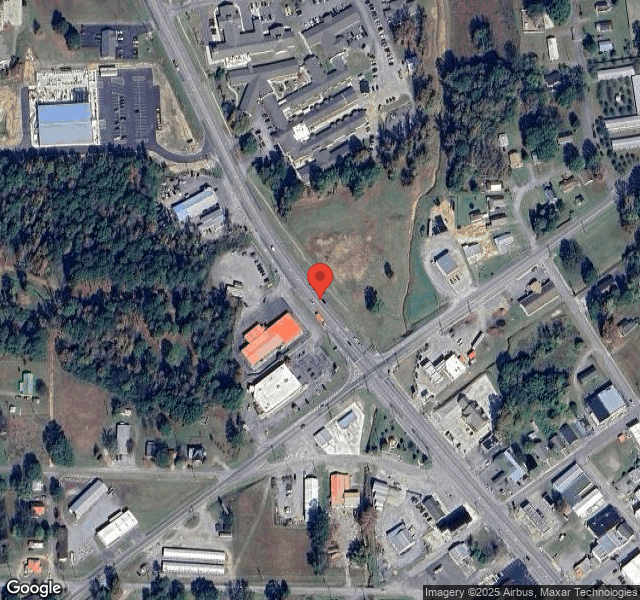

420 MAIN STREET NE, HANCEVILLE, AL 35077 (256) 352-6481
For profit - Corporation 208 Beds Independent Data: November 2025
Trust Grade
90/100
#19 of 223 in AL
Last Inspection: October 2019

Over 2 years since last inspection. Current conditions may differ from available data.

Overview

Hanceville Nursing & Rehab Center, Inc has received a Trust Grade of A, indicating excellent quality and a strong recommendation for families considering this facility. It ranks #19 out of 223 nursing homes in Alabama, placing it in the top half of the state, and is the best option among four local facilities in Cullman County. The facility is notable for its improving trend, with a decrease in issues from three in 2017 to just one in 2019. Staffing is a strength here, with a perfect 5/5 star rating and only 36% turnover, which is significantly lower than the state average of 48%. On a positive note, Hanceville has no fines on record, which suggests good compliance with regulations, and it boasts higher RN coverage than many other facilities. However, there have been concerns noted in the past, such as failure to properly maintain the outside grease bin and not following medication administration orders for specific residents. While these issues are not life-threatening, they highlight areas for continued improvement. Overall, Hanceville Nursing & Rehab Center offers a solid option for families, balancing strengths in staffing and compliance with some past concerns that are being addressed.

Trust Score
A
90/100
In Alabama
#19/223
Top 8%
Safety Record
Low Risk
No red flags
Inspections
Getting Better
3 → 1 violations
Staff Stability
○ Average
36% turnover. Near Alabama's 48% average. Typical for the industry.
Penalties
✓ Good
No fines on record. Clean compliance history, better than most Alabama facilities.
Skilled Nurses
○ Average
Each resident gets 39 minutes of Registered Nurse (RN) attention daily — about average for Alabama. RNs are the most trained staff who monitor for health changes.
Violations
✓ Good
Only 4 deficiencies on record. Cleaner than most facilities. Minor issues only.
★★★★★
5.0
Overall Rating
★★★★★
5.0
Staff Levels
★★★☆☆
3.0
Care Quality
★★★★★
5.0
Inspection Score
Stable
2017: 3 issues
2019: 1 issues

The Good

  • 5-Star Staffing Rating · Excellent nurse staffing levels
  • Full Sprinkler Coverage · Fire safety systems throughout facility
  • No fines on record
  • Staff turnover below average (36%)

    12 points below Alabama average of 48%

Facility shows strength in staffing levels, fire safety.

The Bad

Staff Turnover: 36%

10pts below Alabama avg (46%)

Typical for the industry

The Ugly 4 deficiencies on record

Oct 2019 1 deficiency
CONCERN (D)

Potential for Harm - no one hurt, but risky conditions existed

Pharmacy Services (Tag F0755)

Could have caused harm · This affected 1 resident

Based on interview, review of the facility's Non-Controlled CERTIFICATE OF INVENTORY AND DESTRUCTION forms and review of a facility policy titled, Drug destruction, the facility failed to ensure the N...

Read full inspector narrative →
Based on interview, review of the facility's Non-Controlled CERTIFICATE OF INVENTORY AND DESTRUCTION forms and review of a facility policy titled, Drug destruction, the facility failed to ensure the Non-Controlled CERTIFICATE OF INVENTORY AND DESTRUCTION forms contained the two required signatures. This deficient practice affected September 2018, October 2018, January 2019 and August 2019, four of twelve months of Non-Controlled CERTIFICATE OF INVENTORY AND DESTRUCTION forms reviewed. Findings Include: A review of a facility policy titled, Drug destruction, dated 12/03/2018, revealed: . 5. A Non-Controlled Medication Destruction Record must be maintained for all non-controlled drugs destroyed . The following information shall be included on this record: . h. The signature of the consultant pharmacist destroying the medications; and i. The signature of the person(s) witnessing the destruction of the medications. Review of the CERTIFICATE OF INVENTORY AND DESTRUCTION forms for the Non-Controlled drugs, dated September 8, 2018, revealed seven sheets with one signature; September 9, 2018, revealed one sheet with one signature, October 14, 2018, revealed one sheet with one signature, January 1, 2019, revealed one sheet with one signature and August 25, 2019, revealed one sheet with one signature. On 10/03/2019 at 12:04 p.m., the surveyor conducted an interview with Employee Identifier (EI) #1, the Registered Nurse (RN) Assistant Director of Nursing (ADON). EI #1 was asked, when reviewing the Non-Controlled CERTIFICATE OF INVENTORY AND DESTRUCTION forms for the dates of January 1, 2019; August 25, 2019; September 8, 2018; September 9, 2018 and October 14, 2018, how many signatures were noted on the forms. EI #1 said one. EI #1 was asked how many signatures should be on the Non-Controlled CERTIFICATE OF INVENTORY AND DESTRUCTION forms. EI #1 said two. EI #1 was asked why was there only one signature on the CERTIFICATE OF INVENTORY AND DESTRUCTION forms. EI #1 said with the volume of papers, the sheets may not have been seen.
Jul 2017 3 deficiencies
CONCERN (D)

Potential for Harm - no one hurt, but risky conditions existed

Deficiency F0281 (Tag F0281)

Could have caused harm · This affected 1 resident

**NOTE- TERMS IN BRACKETS HAVE BEEN EDITED TO PROTECT CONFIDENTIALITY** Based on medication pass observation, staff interview, medical record review and a review of [NAME] and Perry's FUNDAMENTALS OF ...

Read full inspector narrative →
**NOTE- TERMS IN BRACKETS HAVE BEEN EDITED TO PROTECT CONFIDENTIALITY** Based on medication pass observation, staff interview, medical record review and a review of [NAME] and Perry's FUNDAMENTALS OF NURSING, the facility failed to ensure Employee Identifier (EI) #5 followed physician's orders for Resident Identifier (RI) #31's order for Miralax. This deficient practice affected RI #31, one of four residents and EI #5, one of three nurses observed during medication administration. Findings Include: Review of [NAME] and Perry's, FUNDAMENTALS OF NURSING, NINTH EDITION, UNIT V, CHAPTER 32, Foundations for Nursing Practice, Medication Administration, pages 626, 658 and 659, revealed: .Standards Standards are actions that ensure safe nursing practice . To prevent medication errors, follow the six rights of medication administration consistently every time you administer medications . 2. The right dose . SKILL 32-1 ADMINISTERING ORAL MEDICATIONS . STEP . i. Stay until patient completely takes all medications by their prescribed route . RATIONALE . You are responsible for ensuring that patient receives ordered dosage . RI #31 was originally admitted to the facility on [DATE] and was readmitted on [DATE], with a diagnosis of Dementia. Review of RI #31's physician orders dated 7/1/2017 through 7/31/2017, revealed: . POLYETHYLENE GLYCOL 3350 POWD, Generic for: MIRALAX POWDER MIX 1 SCOOP (17 GM) (grams) WITH 8 OZ (ounces) OF FLUIDS AND DRINK BY MOUTH ONCE DAILY. DX (diagnosis): BOWEL REGULARITY On 07/13/2017 at 10:00 a.m. during medication pass observation, the surveyor observed EI #5, LPN (Licensed Practical Nurse) administer medications to RI #31. EI #5 measured eight ounces of water in a clear plastic, graduated cup. The surveyor observed EI #5 measure 17 grams of Miralax into the lid from the container of Miralax and pour the medication into the cup containing eight ounces of water. EI #5 inserted a straw into the cup and stirred the mixture. EI #5 knocked on RI #31's door and entered the room with medications. EI #5 handed the plastic cup with the Miralax mixture to RI #31 to drink. Approximately one-half of the Miralax mixture was left in the cup. RI #31 handed the cup containing the remaining Miralax mixture back to EI #5. EI #5 entered RI #31's bathroom and poured the mixture into the sink and then washed her hands. On 07/13/2017 at 10:48 a.m. in an interview with EI #5, the surveyor asked, what was in the cup she provided to RI #31. EI #5 replied, Miralax was in the cup of 8 oz. of water, the Miralax was 17 gms. The surveyor asked EI #5, did RI #31 consume all the substance/liquid in the cup. EI #5 said, No, half. The surveyor asked, did RI #31 receive the prescribed dosage of Miralax if RI #31 consumed half of the water that it was dissolved in. EI #5 answered, No. EI #5 was asked, would that be considered a medication error. EI #5 said, It should be.
CONCERN (D)

Potential for Harm - no one hurt, but risky conditions existed

Deficiency F0441 (Tag F0441)

Could have caused harm · This affected 1 resident

**NOTE- TERMS IN BRACKETS HAVE BEEN EDITED TO PROTECT CONFIDENTIALITY** Based on observations, interviews, medical record review, a review of the facility's policy titled, Incontinent Resident - Care ...

Read full inspector narrative →
**NOTE- TERMS IN BRACKETS HAVE BEEN EDITED TO PROTECT CONFIDENTIALITY** Based on observations, interviews, medical record review, a review of the facility's policy titled, Incontinent Resident - Care of and [NAME] and Perry's FUNDAMENTALS OF NURSING, the facility failed to ensure a Certified Nursing Assistant (CNA), Employee Identifier (EI) #2, washed her hands and changed her gloves after cleaning the front perineal area and before cleaning Resident Identifier (RI) #8's buttocks. Further, the facility failed to ensure a CNA, EI #3, washed her hands and changed her gloves before applying barrier cream to RI #8's buttocks. This affected one of two residents observed during incontinence care. Findings Include: A review of the facility's policy titled, Incontinent Resident - Care of with a revision date of 1/20/2016, revealed: . PROCEDURE: . 2. Clean downward from front to back with one stroke. Use a clean wipe for each stroke. 5. Wash hands and apply new gloves. 6. Clean the rectal area; . A review of [NAME] and Perry's FUNDAMENTALS OF NURSING NINTH EDITION,Unit V (5), page 458, revealed: . the WHO (World Health Organization)(2009) recommend the following hand hygiene guidelines: 1. When hands are visibly dirty, when hands are soiled with blood or other body fluids, . 3 .After contact with body fluids or excretions, . When moving from a contaminated to a clean body site during care . RI #8 was admitted to the facility on [DATE], with a diagnosis to include Alzheimer's Disease. During an incontinence care observation for RI #8 on 7/12/2017 at 11:44 a.m., a CNA, EI #2, did not wash her hands and change her gloves after cleaning the front perineal area and before cleaning the buttocks. Further, EI #3 did not wash her hands and change her gloves after cleaning RI #8's buttocks and prior to applying barrier cream. An interview was conducted on 7/12/2017 at 3:10 p.m., with EI #2 and EI #3. EI #2 was asked when should hands be washed and gloves changed during incontinence care. EI #2 stated, After touching anything dirty. EI #2 was asked what should be done after cleaning the front perineal area and before cleaning the buttocks. EI #2 stated, Wash your hands and change your gloves. EI #2 was asked what was the potential for harm in not washing hands and changing gloves. EI #2 replied, Spread of infection. EI #3 was asked what should be done after cleaning the buttocks and before applying barrier cream. EI #3 stated, Wash your hands and change gloves. EI #3 was asked if she did that. EI #3 said, I don't think so. EI #3 was asked what was the potential for harm in not washing hands and changing gloves before applying barrier cream during incontinence care. EI #3 replied, UTI (urinary tract infection). An interview was conducted on 7/13/2017 at 8:36 a.m., with EI #4, a Licensed Practical Nurse/ Infection Control Nurse. EI #4 was asked when should hands be washed and gloves changed during incontinence care. EI #4 stated, When going from one area to another, anytime you change your gloves, at the beginning of a skill and after a skill. EI #4 was asked what must be done after cleaning the front perineal area and before cleaning the buttocks. EI #4 stated, Wash your hands and apply new gloves. EI #4 was asked what should be done after cleaning the buttocks and before applying barrier cream. EI #4 stated, Wash your hands and apply new gloves. EI #4 was asked what was the potential for harm in not washing hands and changing gloves before applying barrier cream during incontinence care. EI #4 replied, Risk of contamination.
CONCERN (F)

Potential for Harm - no one hurt, but risky conditions existed

Deficiency F0372 (Tag F0372)

Could have caused harm · This affected most or all residents

Based on observation, interview and review of the Food Code 2013, the facility failed to ensure the outside grease bin was free of grease build up on the outside of the bin and free of debris on the i...

Read full inspector narrative →
Based on observation, interview and review of the Food Code 2013, the facility failed to ensure the outside grease bin was free of grease build up on the outside of the bin and free of debris on the inside of the bin. This was observed on 7/11/17, and had the potential to affect all residents residing in the facility. Findings Include: The Food Code U.S. Public Health Service FDA 2013 states: .5-501.116 Cleaning Receptacles. (B) Soiled receptacles and waste handling units for REFUSE, recyclables, and returnables shall be cleaned at a frequency necessary to prevent them from developing a buildup of soil or becoming attractants for insects and rodents. On 7/11/17 at 2:28 p.m., the Surveyor along with Employee Identifier (EI) #1, Dietary Manager, observed the outside grease bin. The bin was dirty and had black grease build up on the outside of the bin and debris on the inside of the bin. On 7/12/17 at 3:30 p.m., an interview was conducted with EI #1. EI #1 was asked if the outside grease bin should be free of grease build up on the outside of the bin. EI #1 replied she was unsure because it had never been brought up before. EI #1 was asked if the inside of the grease bin should be free of debris. EI #1 replied she could see the purpose to allow for proper drainage. EI #1 was asked what was the potential harm of the grease bin having grease build up on the outside and debris on the inside. EI #1 responded it could attract pests.
Understanding Severity Codes (click to expand)
Life-Threatening (Immediate Jeopardy)
J - Isolated K - Pattern L - Widespread
Actual Harm
G - Isolated H - Pattern I - Widespread
Potential for Harm
D - Isolated E - Pattern F - Widespread
No Harm (Minor)
A - Isolated B - Pattern C - Widespread

Questions to Ask on Your Visit

  • "Can I speak with families of current residents?"
  • "What's your RN coverage like on weekends and overnight?"

Our Honest Assessment

Strengths
  • • Grade A (90/100). Above average facility, better than most options in Alabama.
  • • No major safety red flags. No abuse findings, life-threatening violations, or SFF status.
  • • No fines on record. Clean compliance history, better than most Alabama facilities.
  • • Only 4 deficiencies on record. Cleaner than most facilities. Minor issues only.
Concerns
  • • No significant concerns identified. This facility shows no red flags across CMS ratings, staff turnover, or federal penalties.
Bottom line: Generally positive indicators. Standard due diligence and a personal visit recommended.

About This Facility

What is Hanceville Nursing & Rehab Center, Inc's CMS Rating?

CMS assigns HANCEVILLE NURSING & REHAB CENTER, INC an overall rating of 5 out of 5 stars, which is considered much above average nationally. Within Alabama, this rating places the facility higher than 99% of the state's 100 nursing homes. This rating reflects solid performance across the metrics CMS uses to evaluate nursing home quality.

How is Hanceville Nursing & Rehab Center, Inc Staffed?

CMS rates HANCEVILLE NURSING & REHAB CENTER, INC's staffing level at 5 out of 5 stars, which is much above average compared to other nursing homes. Staff turnover is 36%, compared to the Alabama average of 46%. This relatively stable workforce can support continuity of care.

What Have Inspectors Found at Hanceville Nursing & Rehab Center, Inc?

State health inspectors documented 4 deficiencies at HANCEVILLE NURSING & REHAB CENTER, INC during 2017 to 2019. These included: 4 with potential for harm.

Who Owns and Operates Hanceville Nursing & Rehab Center, Inc?

HANCEVILLE NURSING & REHAB CENTER, INC is owned by a for-profit company. For-profit facilities operate as businesses with obligations to shareholders or private owners. The facility operates independently rather than as part of a larger chain. With 208 certified beds and approximately 191 residents (about 92% occupancy), it is a large facility located in HANCEVILLE, Alabama.
How Does Hanceville Nursing & Rehab Center, Inc Compare to Other Alabama Nursing Homes?

Compared to the 100 nursing homes in Alabama, HANCEVILLE NURSING & REHAB CENTER, INC's overall rating (5 stars) is above the state average of 3.0, staff turnover (36%) is significantly lower than the state average of 46%, and health inspection rating (5 stars) is much above the national benchmark.

What Should Families Ask When Visiting Hanceville Nursing & Rehab Center, Inc?

Based on this facility's data, families visiting should ask: "Can I visit during a mealtime to observe dining assistance and food quality?" "How do you handle medical emergencies, and what is your hospital transfer rate?" "Can I speak with family members of current residents about their experience?"

Is Hanceville Nursing & Rehab Center, Inc Safe?

Based on CMS inspection data, HANCEVILLE NURSING & REHAB CENTER, INC has a clean safety record: no substantiated abuse findings (meaning no confirmed cases of resident harm), no Immediate Jeopardy citations (the most serious violation level indicating risk of serious injury or death), and is not on the Special Focus Facility watch list (a federal program monitoring the lowest-performing 1% of nursing homes). The facility has a 5-star overall rating and ranks #1 of 100 nursing homes in Alabama. While no facility is perfect, families should still ask about staff-to-resident ratios and recent inspection results during their visit.

Do Nurses at Hanceville Nursing & Rehab Center, Inc Stick Around?

HANCEVILLE NURSING & REHAB CENTER, INC has a staff turnover rate of 36%, which is about average for Alabama nursing homes (state average: 46%). Moderate turnover is common in nursing homes, but families should still ask about staff tenure and how the facility maintains care continuity when employees leave.

Was Hanceville Nursing & Rehab Center, Inc Ever Fined?

HANCEVILLE NURSING & REHAB CENTER, INC has no federal fines on record. CMS issues fines when nursing homes fail to meet care standards or don't correct problems found during inspections. The absence of fines suggests the facility has either maintained compliance or corrected any issues before penalties were assessed. This is a positive indicator, though families should still review recent inspection reports for the full picture.

Is Hanceville Nursing & Rehab Center, Inc on Any Federal Watch List?

HANCEVILLE NURSING & REHAB CENTER, INC is not on any federal watch list. The most significant is the Special Focus Facility (SFF) program, which identifies the bottom 1% of nursing homes nationally based on persistent, serious quality problems. Not being on this list means the facility has avoided the pattern of deficiencies that triggers enhanced federal oversight. This is a positive indicator, though families should still review the facility's inspection history directly.