MARENGO NURSING HOME
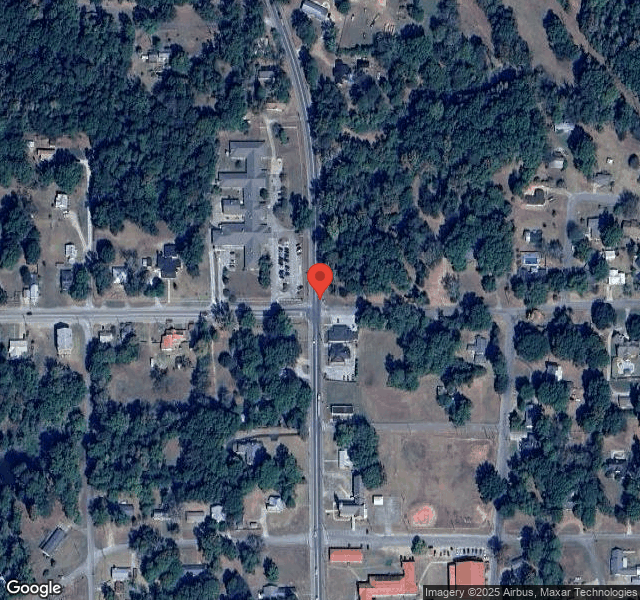

608 NORTH MAIN STREET, LINDEN, AL 36748 (334) 295-8631
Non profit - Other 78 Beds Independent Data: November 2025
Trust Grade
80/100
#63 of 223 in AL
Last Inspection: January 2022

Over 2 years since last inspection. Current conditions may differ from available data.

Overview

Marengo Nursing Home in Linden, Alabama has a Trust Grade of B+, which means it is recommended and performs above average compared to other facilities. It ranks #63 out of 223 nursing homes in Alabama, placing it in the top half, but it is the second out of two facilities in Marengo County, indicating limited local options. The facility is improving, having reduced its issues from five in 2019 to just one in 2022, and it has a solid staffing rating with a turnover of 37%, lower than the state average. However, there are concerns regarding RN coverage, which is less than 77% of state facilities, and past inspection findings included issues like not properly observing a resident during a nebulizer treatment and cleaning deficiencies that could potentially affect food safety. Overall, while Marengo Nursing Home has strengths in staffing and improvement trends, families should be aware of its RN coverage and the specific incidents noted by inspectors.

Trust Score
B+
80/100
In Alabama
#63/223
Top 28%
Safety Record
Low Risk
No red flags
Inspections
Getting Better
5 → 1 violations
Staff Stability
○ Average
37% turnover. Near Alabama's 48% average. Typical for the industry.
Penalties
✓ Good
No fines on record. Clean compliance history, better than most Alabama facilities.
Skilled Nurses
○ Average
Each resident gets 34 minutes of Registered Nurse (RN) attention daily — about average for Alabama. RNs are the most trained staff who monitor for health changes.
Violations
○ Average
6 deficiencies on record. Average for a facility this size. Mostly minor or procedural issues.
★★★★☆
4.0
Overall Rating
★★★★☆
4.0
Staff Levels
★★★★☆
4.0
Care Quality
★★★★☆
4.0
Inspection Score
Stable
2019: 5 issues
2022: 1 issues

The Good

  • 4-Star Staffing Rating · Above-average nurse staffing levels
  • 4-Star Quality Measures · Strong clinical quality outcomes
  • Full Sprinkler Coverage · Fire safety systems throughout facility
  • No fines on record
  • Staff turnover below average (37%)

    11 points below Alabama average of 48%

Facility shows strength in staffing levels, quality measures, fire safety.

The Bad

Staff Turnover: 37%

Near Alabama avg (46%)

Typical for the industry

The Ugly 6 deficiencies on record

Jan 2022 1 deficiency
CONCERN (D)

Potential for Harm - no one hurt, but risky conditions existed

Deficiency F0561 (Tag F0561)

Could have caused harm · This affected 1 resident

**NOTE- TERMS IN BRACKETS HAVE BEEN EDITED TO PROTECT CONFIDENTIALITY** Based on observations, interviews, record review and review of facility policies titled Nebulizer Therapy and SELF-ADMINISTRATIO...

Read full inspector narrative →
**NOTE- TERMS IN BRACKETS HAVE BEEN EDITED TO PROTECT CONFIDENTIALITY** Based on observations, interviews, record review and review of facility policies titled Nebulizer Therapy and SELF-ADMINISTRATION OF MEDICATIONS, the facility failed to ensure the licensed nurses remained with Resident Identifier (RI) #39, a resident not assessed to self-administer his/her nebulizer breathing treatment, when RI #39 received nebulizer treatments on 01/03/2022 and on 01/05/2022. This deficient practice affected RI #39; one of one sampled resident observed receiving a nebulizer breathing treatment. Findings Include: RI #39 was admitted to the facility on [DATE], and has diagnosis to include Shortness of Breath. Review of a facility policy titled Nebulizer Therapy, with an implemented date of 05/2020, revealed the following: Policy: It is the policy of this facility for nebulizer treatments, once ordered, to be administered by nursing staff as directed . Policy Explanation and Compliance Guidelines: Care of the Resident . 14. Observe resident during the procedure . Review of a second undated facility policy titled SELF-ADMINISTRATION OF MEDICATIONS, revealed the following: If a resident requests to self-administer medications, the care plan team will meet and discuss the ability of that resident to know his/her medications, dosages and times. RI #39's January 2022 Physician's Orders revealed RI #39 was receiving the nebulizer treatment, Ipratropium/Albuterol 0.5-3 milligrams/3 milliliters three times a day. On 01/03/2022 at 5:18 PM, RI #39 was observed holding a hand-help nebulizer while receiving his/her nebulizer treatment. There was no licensed staff in the room at this time. On 01/05/2022 at 1:48 PM, the surveyor observed Employee Identifier (EI) #2, an LPN (Licensed Practical Nurse) prepare to administer RI #39's nebulizer treatment. EI #2 opened a vial of Ipratropium/Albuterol solution, poured the solution in the reservoir of RI #39's handheld nebulizer, and handed the handheld nebulizer to RI #39. EI #2 then turned on the nebulizer machine and informed RI #39 she would be back in 15 minutes. On 01/05/2022 at 2:10 PM, EI #2 re-entered RI #39's room, cleaned the mouthpiece on the handheld nebulizer and stored the handheld nebulizer in a plastic bag. On 01/06/2022 at 11:29 AM, the surveyor conducted an interview with EI #2. The surveyor asked EI #2 what should the nurse do concerning the resident when a nebulizer treatment was administered. EI #2 said the nurse should stay there and make sure the resident was getting the medication. The surveyor asked EI #2 had RI #39 been assessed to self-administer his/her breathing treatment. EI #2 said she did not think RI #39 had been assessed to self-administer him/herself the breathing treatment. When asked why she did not stay with RI #39 the entire time on yesterday when RI #39 received the nebulizer treatment, EI #2 said RI #39 was the type that liked to do for him/herself. EI #2 said she knew she should have stayed with RI #39 the entire time. On 01/06/2022 at 2:01 PM, the surveyor conducted an interview with EI #1, the Director of Nursing. The surveyor asked EI #1 what should the nurse do concerning the resident when a nebulizer treatment was being administered. EI #1 said the nurse needs to stay in the room with the resident. When asked had the care plan team meet to assess RI #39 for self-administering of his/her breathing treatments, EI #1 said he did not think so.
May 2019 5 deficiencies
CONCERN (D)

Potential for Harm - no one hurt, but risky conditions existed

Assessment Accuracy (Tag F0641)

Could have caused harm · This affected 1 resident

**NOTE- TERMS IN BRACKETS HAVE BEEN EDITED TO PROTECT CONFIDENTIALITY** (3) EI #42 was admitted to the facility on [DATE] and readmitted [DATE], with diagnoses including Vascular Dementia with Behavio...

Read full inspector narrative →
**NOTE- TERMS IN BRACKETS HAVE BEEN EDITED TO PROTECT CONFIDENTIALITY** (3) EI #42 was admitted to the facility on [DATE] and readmitted [DATE], with diagnoses including Vascular Dementia with Behavioral Disturbance, Essential (primary) Hypertension and Type 2 Diabetes Mellitus without complications. A review of RI # 42's Quarterly MDS assessment, with an ARD of 12/12/18, did not identify RI #42 as having a restraint during this assessment period. RI #42 was observed sitting in a geri-chair with a lap tray on three of the four days during survey tour. On 05/08/19 at 10:21 a.m., the surveyor conducted an interview with EI#3, Restorative Nurse. The surveyor asked EI #3 what type of restraint was being used for RI #42. EI #3 said RI #42 had a geri chair with a tray. The surveyor asked EI #3 what should have been coded on RI #42's Quarterly MDS assessment dated [DATE], under the restraint section. EI #3 said chair prevents rising should have been documented. The surveyor asked EI #3 why was RI #42's Quarterly MDS assessment not coded for restraints. EI #3 said it had to be an oversight. The surveyor asked EI #3 should this Quarterly MDS assessment have been coded for restraints. EI #3 said yes it should have. Based on observations, interviews, record review and review of a facility policy titled, Resident Assessment Using the MDS (Minimum Data Set), the facility failed to ensure: (1) Resident Identifier (RI) #16 was coded as having a Urinary Tract Infection (UTI) on his/her 04/18/19, Significant Change (SC) MDS assessment, (2) RI #34 was coded as being admitted with pressures ulcers on one area of his/her 11/21/18, admission MDS assessment; and (3) RI #42's Quarterly MDS assessment, dated 12/12/18, coded the resident as having a restraint. These deficient practices affected RI #'s 16, 34 and 42, three of 22 sampled residents whose MDS assessments were reviewed. Findings Include: (1) An undated facility policy titled, Resident Assessment Using the MDS revealed the following: Policy Every resident will be assessed using the Minimum Data Set (MDS) according to guidelines set forth in the Resident Assessment Instrument (RAI) manual . Completing the MDS . 2. During this assessment period, various persons will gather assessment data on the resident to complete all sections of the MDS . In addition, the clinical record during this 7-day period is also utilized to gather data including (but not limited to) nursing notes, medication/treatment records, lab results, physician notes, and demographic information . RI #16 was admitted to the facility on [DATE], with a diagnosis of Heart Failure. A review of RI #16's April 2019 Physician's Orders documented the following: . 4/11/19 - incontinence, pelvic pain, malodeordous (malodorous) urine - U/A (Urinalysis) c (with) C & S (Culture and Sensitivity) R/T (related to) above symptoms . A review of RI #16's urine culture results dated 04/14/19, reveled RI #16 had Escherichia Coli in his/her urine. A review of RI #16's April 2019 Physician's Orders documented the following: . 4/15/19 Bactrim DS (Double Strength) 1 po (by mouth) x (times) 10 days for growth of E. Coli in urine . A review of RI #16's SC MDS assessment, with an Assessment Reference Date (ARD) of 04/18/19, did not identify RI #16 as having a UTI during this assessment period. On 05/08/19 at 12:13 p.m., the surveyor conducted an interview with Employee Identifier (EI) #2, the RN (Registered Nurse) MDS/Coordinator. The surveyor asked EI #2 when was RI #16's last MDS assessment completed. EI #2 said on 04/18/19, and it was a Significant Change MDS. The surveyor asked EI #2 how many days can she look back on an MDS assessment to see if the resident has had a UTI. EI #2 said 30. The surveyor asked EI #2, according to RI #16's physician orders and labs, did RI #16 have a UTI during this assessment period. EI #2 said she assumed it was Asymptotic Bacteremia and that was why she did not code RI #16 as having a UTI during the 04/18/19, SC MDS assessment. The surveyor asked EI #2 should RI #16 have been coded on the MDS assessment as having a UTI. EI #2 said looking at the symptoms of incontinence and pelvic pain on 04/11/19, yes. When asked was the SC MDS assessment dated [DATE], an accurate assessment, EI #2 said no. (2) RI #34 was admitted to the facility on [DATE], and readmitted on [DATE], with a diagnosis of Pressure Ulcer to the Right Ankle, Left Heel, Right Heel and Left Ankle. A review of RI #34's admission MDS assessment, with an ARD of 11/21/18, did not identify RI #34 as having pressure ulcer under the Determination of Pressure Ulcer/Injury Risk section on the MDS during this assessment period. On 05/07/19 at 2:46 p.m., the surveyor observed Employee Identifier (EI) #7, the LPN (Licensed Practical Nurse)/Treatment Nurse provide treatments to RI #34's right outer ankle, right outer heel and left outer ankle. EI #7 said RI #34 was admitted with the pressure ulcers. On 05/08/19 at 1:05 p.m., the surveyor conducted an interview with EI #3, LPN, the Restorative Nurse . The surveyor asked EI #3 was RI #34 admitted with any pressure ulcers. EI #3 said yes. The surveyor asked EI #3 should RI #34 have been coded on his/her 11/21/19, admission MDS assessment as having pressure ulcers. EI #3 said yes. The surveyor asked EI #3, looking at the 11/21/19, admission MDS assessment, was he/she coded as having pressure ulcers under the determination section. EI #3 said no. When asked was this an accurate assessment, EI #3 said it would not be.
CONCERN (D)

Potential for Harm - no one hurt, but risky conditions existed

Deficiency F0657 (Tag F0657)

Could have caused harm · This affected 1 resident

**NOTE- TERMS IN BRACKETS HAVE BEEN EDITED TO PROTECT CONFIDENTIALITY** Based on interviews, record review and review of a facility policy titled,THE CARE PLANNING TEAM, the facility failed to ensure:...

Read full inspector narrative →
**NOTE- TERMS IN BRACKETS HAVE BEEN EDITED TO PROTECT CONFIDENTIALITY** Based on interviews, record review and review of a facility policy titled,THE CARE PLANNING TEAM, the facility failed to ensure: 1) Resident Identifier (RI) #34 had a Quarterly Minimum Data Set (MDS) assessment completed when the assessment was due; and 2) a Quarterly care plan meeting was scheduled for RI #34 when the meeting was due. These deficient practices affected RI #34, one of 22 sampled residents whose care plan meetings and MDS assessments were reviewed. Findings Include: A review of an undated facility policy titled THE CARE PLANNING TEAM revealed the following: . Residents will be evaluated by the team at ninety (90) day intervals and a quarterly MDS done to provide basis for care plan changes . Cognitive residents are invited to quarterly care plan meetings and informed of their medical condition . If a resident is not cognitive, sponsors are informed of any changes and also invited (through mailing bills) to the care plan (meeting). All sponsors are invited to the care plan (meeting) and are informed of any changes as they occur. RI #34 was admitted to the facility on [DATE], and readmitted on [DATE]. A review of RI #34's admission MDS assessment, with an Assessment Reference Date (ARD) of 11/21/18, assessed RI #34 as scoring an 11 on the Brief Interview for Mental Status during this assessment period, which indicated RI #34 was moderately cognitively impaired for daily decision making. During record review, the surveyor discovered the February 2019 Quarterly MDS assessment was not completed. On 05/06/19 at 9:26 a.m., RI #34 stated to the surveyor he/she had not been to a care plan meeting since being admitted to the facility. On 05/07/19 at 5:32 p.m., the surveyor conducted an interview with Employee Identifier (EI) #2, the RN (Registered Nurse) MDS/Coordinator. The surveyor asked EI #2 what was the date of RI #34's current admission. EI #2 said 11/14/18. The surveyor asked EI #2 had RI #34 had a care plan meeting since that date. EI #2 said no. The surveyor asked EI #2 how often should care plan meetings be held. EI #2 said Quarterly. When asked when should RI #34 have had a care plan meeting, EI #2 said in February of 2019. The surveyor asked EI #2 what were care plan meetings held for. EI #2 said to make sure the facility was providing the care appropriate for the resident and to let staff know what needed to be done. The surveyor asked EI #2 why was a care plan meeting not held for RI #34. EI #2 said her system for notifying herself that a care plan meeting was due was not done. The surveyor asked EI #2 was there a MDS assessment not completed as well. EI #2 said yes, the February 2019 Quarterly MDS assessment was not completed.
CONCERN (D)

Potential for Harm - no one hurt, but risky conditions existed

Pharmacy Services (Tag F0755)

Could have caused harm · This affected 1 resident

Based on observations, interviews, record review and a review of a facility policy titled, Destruction Of Medication, the facility failed to ensure all of the non-controlled medication drug sheets for...

Read full inspector narrative →
Based on observations, interviews, record review and a review of a facility policy titled, Destruction Of Medication, the facility failed to ensure all of the non-controlled medication drug sheets for the month of June 2018, had the required signatures. This deficient practice affected one of the 12 months of non-controlled drug sheets reviewed. Findings Include: An undated facility policy titled, Destruction Of Medication revealed the following: .(B) All permanently discontinued medications except control drugs, will be listed on a disposition form with the following information: . Signature of Director of Nursing or Assistant Director of Nursing and Pharmacist . The facility provided drug destruction binders containing non-controlled and controlled drug sheets for the surveyor to review from May 2018 until April 2019. The surveyor found not all the non-controlled drug sheets for June 2018, had the required signatures. On 05/08/19 at 2:23 p.m., the surveyor conducted an interview with Employee Identifier (EI) #1, Director of Nursing (DON). The surveyor asked EI #1 who was responsible for signing the non-controlled drug sheets. EI #1 said he, the Assistant Director of Nursing (ADON) and the pharmacist was. EI #1 said a registered nurse could sign if he or the ADON were not available. The surveyor asked EI #1 should there be two signatures on the sheets. EI #1 said yes it should. The surveyor asked EI #1 how many signatures were noted on the non-controlled drug sheets for June 25 and June 26, 2018. EI #1 said there was one signature.
CONCERN (F)

Potential for Harm - no one hurt, but risky conditions existed

Food Safety (Tag F0812)

Could have caused harm · This affected most or all residents

Based on observation, interviews, the 2017 Food Code, review of the facility policies titled, MACHINE WAREWASHING, WASTE DISPOSAL and Cleaning of Ice Machine, the facility failed to ensure: (1) dust l...

Read full inspector narrative →
Based on observation, interviews, the 2017 Food Code, review of the facility policies titled, MACHINE WAREWASHING, WASTE DISPOSAL and Cleaning of Ice Machine, the facility failed to ensure: (1) dust like particles were not present on the ice maker vents on two of four days of the survey, (2) staff did not move a meal tray in an up and down motion over the dishes/meal trays after rinsing in order to dry them; and (3) the area on the inside of the recycle bin was free of garbage and debris. This had the potential to affect 69 of the 73 residents who received the lunch meal from the kitchen on 05/07/19. Findings Include: (1) A review of the facility policy titled, Cleaning of Ice Machine with a revised date of 3/18, revealed: Purpose: To distribute clean ice to residents .by keeping the ice free of potential harmful microorganisms . Procedure: . Maintenance will check the air filters monthly and clean as needed . A review of the 2017 U.S. (United States) Public Health Service Food Code revealed: .4-6 CLEANING OF EQUIPMENT AND UTENSILS .4-601.11 . NonFOOD-CONTACT SURFACES of EQUIPMENT shall be kept free of an accumulation of dust, dirt, FOOD residue, and other debris . On 05/05/19 at 5:24 PM, during the surveyor's initial tour of the kitchen, there were dust like particles on the vent of the ice maker. On 05/07/19 at 9:50 AM, the surveyor conducted an interview with Employee Identifier (EI) #4, Dietary Manager. The surveyor asked EI #4 what was on the ice maker vents. EI #4 said it was some dust on the edge of the vents. The surveyor asked EI #4 what was next to the ice maker. EI #4 said it was bread. The surveyor asked EI #4 what was stacked next to the bread. EI #4 said dishes. The surveyor asked EI #4 what did that have the potential for. EI #4 said getting dust on the bread bags and on the bottom of the dishes. The surveyor asked EI #4 what were the concerns when the bread bags were opened. EI #4 said if dust was on the bread bags, it was possible for dust to get onto the bread. On 05/08/19 at 12:48 PM, the surveyor conducted an interview with EI #6, Environmental Supervisor. The surveyor asked EI #6 how often was the ice maker vent system cleaned. EI #6 said every three months and it was done from an outside vendor every six months. The surveyor asked EI #6 had the vents on the ice maker been cleaned during the survey. EI #6 said yes. The surveyor asked EI #6 what was the reason for the cleaning. EI #6 said it was brought to his attention by the supervisor that the ice maker vents needed cleaning. The surveyor asked EI #6 what did he remove from the vents while cleaning. EI #6 said he removed the old filters, replaced them with new filters and cleaned the vents. The surveyor asked EI #6 what did he remove from the vents. EI #6 said lint. (2) A review of facility policy titled, Machine Warewashing with a review date of 1/19, revealed: . PROCEDURE: . 4. d. All dishes, glassware, and silverware are air dried . On 05/07/19 at 9:53 AM, the surveyor observed EI #5, Dietary Worker, with a meal tray using an up and down movement over the other meal trays/dishes. At this time, the surveyor asked EI #4 what was EI #5 doing with the meal tray. EI #4 said EI #5 was fanning the trays trying to get the water to dry. The surveyor asked EI #4 how were the trays/dishes supposed to be dried. EI #4 said they were to air dry. The surveyor asked EI #4 what were the concerns with drying the trays by fanning them (using an up and down movement over trays/dishes). EI #4 said fan particles. On 05/07/19 at 10:17 AM, the surveyor conducted an interview with EI #5. The surveyor asked EI #5 what was she doing with the meal tray moving it up and down over the other meal trays/dishes. EI #5 said fanning the trays dry. The surveyor asked EI #5 how were the meal trays/dishes supposed to dry. EI #5 said they were supposed to air dry. The surveyor asked EI #5 what was air drying. EI #5 said that was when the dishes were standing stationary. The surveyor asked EI #5 what were the concerns with drying the meal trays/dishes with another meal tray. EI #5 said by fanning it, it could get particles on the dishes. (3) A review of a facility policy titled, Waste Disposal with a reviewed date 01/19, revealed: .PROCEDURE: . 4. Outside storage areas are: . d. Kept clean of garbage and debris . A review of the 2017 U. S. Public Health Service Food Code revealed: .5-501.112 Outside Storage Prohibitions.(B) .Cardboard or other packaging material . may be stored outside .if it is stored so that it does not create a rodent harborage problem . On 05/07/19 at 10:32 AM, the surveyor observed a drink top with a straw, blue [NAME] Krispie wrapper, plastic bags, styrofoam cups, two wood pallets and multiple cardboard pieces on the ground around the recycle bin. On 05/07/19 at 11:11 AM, the surveyor conducted an interview with EI #4. The surveyor asked EI #4 what was this (pointing inside of the recycle box bin). EI #4 said pallets on the ground, four rubber gloves, several pieces of plastic bags, three stryofoam cups, several pieces of cardboard and one blue [NAME] Krispies wrapper. On 05/08/19 at 12:48 PM, during an interview with EI #6, the surveyor asked how would he identify the pallets on the ground, four rubber gloves, several pieces of plastic bags, three Styrofoam cups, several pieces of cardboard on the inside and one blue [NAME] Krispies wrapper. EI #6 said it was disposal waste that was left behind on 05/06/19, from the one that picked up all of the recycling. The surveyor asked EI #6 what was used to stack the waste on. EI #6 said pallets.
MINOR (C)

Minor Issue - procedural, no safety impact

Staffing Information (Tag F0732)

Minor procedural issue · This affected most or all residents

Based on observations, interview and review of a facility policy titled, Nurse Staffing Posting Information, the facility failed to ensure the DAILY STAFFING AND RESIDENT CENSUS form contained the nam...

Read full inspector narrative →
Based on observations, interview and review of a facility policy titled, Nurse Staffing Posting Information, the facility failed to ensure the DAILY STAFFING AND RESIDENT CENSUS form contained the name of the facility on four of four days of the survey. This deficient practice had the potential to affect all 73 residents residing in the facility. Findings Include: 05/05/19 at 5:21 p.m., the surveyor observed the DAILY STAFFING AND RESIDENT CENSUS form without the facility name on it. On 05/06/19 at 9:03 a.m., the DAILY STAFFING AND RESIDENT CENSUS form did not have the facility name on it. On 05/07/19 at 8:56 a.m., the DAILY STAFFING AND RESIDENT CENSUS form did not have the facility name on it. On 05/08/19 at 7:52 a.m., the DAILY STAFFING AND RESIDENT CENSUS form remained without the name of the facility on it. On 05/08/19 at 1:28 p.m., the surveyor conducted an interview with Employee Identifier (EI) #1, the Director of Nursing (DON). The surveyor asked EI #1 who was responsible for ensuring the nurse staff posting was posted daily. EI #2 said he did it mostly through the week. The surveyor asked EI #1 what information should be on the form. EI #1 said the number of RNs (Registered Nurses), LPNs (Licensed Practical Nurses), and CNAs (Certified Nursing Assistants), how many there were on each shift, how many hours they work and the daily census. The surveyor asked EI #2 what information did he not see on the facility's Daily Staffing and Resident Census form. EI #2 said the facility name. On 05/08/19 at 2:00 p.m., the facility presented to the survey team a facility policy titled Nurse Staffing Posting Information with an implemented date of 05/08/19, and a copyright date of 2018, which revealed the following: . Policy Explanation and Compliance Guidelines: 1. The nurse staffing information will be posted on a daily basis and will contain the following information: a. Facility name .
Understanding Severity Codes (click to expand)
Life-Threatening (Immediate Jeopardy)
J - Isolated K - Pattern L - Widespread
Actual Harm
G - Isolated H - Pattern I - Widespread
Potential for Harm
D - Isolated E - Pattern F - Widespread
No Harm (Minor)
A - Isolated B - Pattern C - Widespread

Questions to Ask on Your Visit

  • "Can I speak with families of current residents?"
  • "What's your RN coverage like on weekends and overnight?"

Our Honest Assessment

Strengths
  • • Grade B+ (80/100). Above average facility, better than most options in Alabama.
  • • No major safety red flags. No abuse findings, life-threatening violations, or SFF status.
  • • No fines on record. Clean compliance history, better than most Alabama facilities.
  • • 37% turnover. Below Alabama's 48% average. Good staff retention means consistent care.
Concerns
  • • No significant concerns identified. This facility shows no red flags across CMS ratings, staff turnover, or federal penalties.
Bottom line: Generally positive indicators. Standard due diligence and a personal visit recommended.

About This Facility

What is Marengo's CMS Rating?

CMS assigns MARENGO NURSING HOME an overall rating of 4 out of 5 stars, which is considered above average nationally. Within Alabama, this rating places the facility higher than 99% of the state's 100 nursing homes. This rating reflects solid performance across the metrics CMS uses to evaluate nursing home quality.

How is Marengo Staffed?

CMS rates MARENGO NURSING HOME's staffing level at 4 out of 5 stars, which is above average compared to other nursing homes. Staff turnover is 37%, compared to the Alabama average of 46%. This relatively stable workforce can support continuity of care.

What Have Inspectors Found at Marengo?

State health inspectors documented 6 deficiencies at MARENGO NURSING HOME during 2019 to 2022. These included: 5 with potential for harm and 1 minor or isolated issues.

Who Owns and Operates Marengo?

MARENGO NURSING HOME is owned by a non-profit organization. Non-profit facilities reinvest revenue into operations rather than distributing to shareholders. The facility operates independently rather than as part of a larger chain. With 78 certified beds and approximately 62 residents (about 79% occupancy), it is a smaller facility located in LINDEN, Alabama.

How Does Marengo Compare to Other Alabama Nursing Homes?

Compared to the 100 nursing homes in Alabama, MARENGO NURSING HOME's overall rating (4 stars) is above the state average of 3.0, staff turnover (37%) is near the state average of 46%, and health inspection rating (4 stars) is above the national benchmark.

What Should Families Ask When Visiting Marengo?

Based on this facility's data, families visiting should ask: "Can I visit during a mealtime to observe dining assistance and food quality?" "How do you handle medical emergencies, and what is your hospital transfer rate?" "Can I speak with family members of current residents about their experience?"

Is Marengo Safe?

Based on CMS inspection data, MARENGO NURSING HOME has a clean safety record: no substantiated abuse findings (meaning no confirmed cases of resident harm), no Immediate Jeopardy citations (the most serious violation level indicating risk of serious injury or death), and is not on the Special Focus Facility watch list (a federal program monitoring the lowest-performing 1% of nursing homes). The facility has a 4-star overall rating and ranks #1 of 100 nursing homes in Alabama. While no facility is perfect, families should still ask about staff-to-resident ratios and recent inspection results during their visit.

Do Nurses at Marengo Stick Around?

MARENGO NURSING HOME has a staff turnover rate of 37%, which is about average for Alabama nursing homes (state average: 46%). Moderate turnover is common in nursing homes, but families should still ask about staff tenure and how the facility maintains care continuity when employees leave.

Was Marengo Ever Fined?

MARENGO NURSING HOME has no federal fines on record. CMS issues fines when nursing homes fail to meet care standards or don't correct problems found during inspections. The absence of fines suggests the facility has either maintained compliance or corrected any issues before penalties were assessed. This is a positive indicator, though families should still review recent inspection reports for the full picture.

Is Marengo on Any Federal Watch List?

MARENGO NURSING HOME is not on any federal watch list. The most significant is the Special Focus Facility (SFF) program, which identifies the bottom 1% of nursing homes nationally based on persistent, serious quality problems. Not being on this list means the facility has avoided the pattern of deficiencies that triggers enhanced federal oversight. This is a positive indicator, though families should still review the facility's inspection history directly.