DIVERSICARE OF MARION
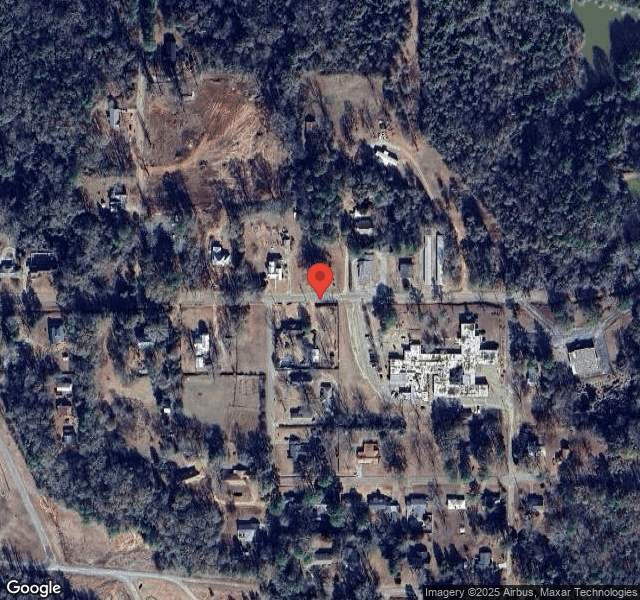
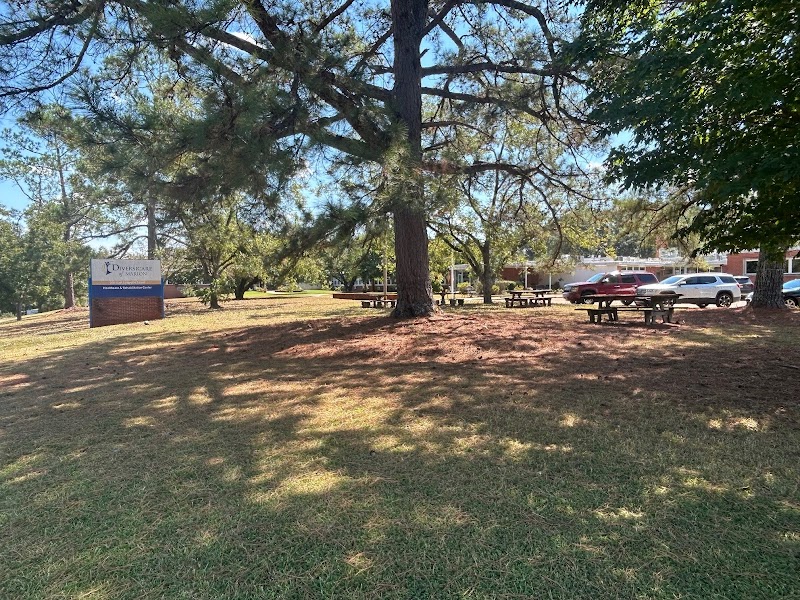
505 EAST LAFAYETTE STREET, MARION, AL 36756 (334) 683-9696
For profit - Corporation 71 Beds DIVERSICARE HEALTHCARE Data: November 2025
Trust Grade
90/100
#15 of 223 in AL
Last Inspection: August 2022

Over 2 years since last inspection. Current conditions may differ from available data.

Overview

Diversicare of Marion has received a Trust Grade of A, indicating excellent quality and a highly recommended facility for care. It ranks #15 out of 223 nursing homes in Alabama, placing it in the top half of facilities statewide, and is the best option among the two homes in Perry County. The facility's trend is improving, with the number of issues found decreasing from two in 2021 to one in 2022. Staffing is rated as average with a turnover rate of 42%, which is better than the state average of 48%, suggesting some staff stability. Notably, the facility has no fines, which is a positive sign, but it does have some areas for improvement, including incidents where residents were not offered their preferred bathing options and failures in coordinating necessary evaluations for mental health assessments. Overall, while Diversicare of Marion has strong ratings and no fines, there are concerns regarding resident choice and proper assessment procedures that families should consider.

Trust Score
A
90/100
In Alabama
#15/223
Top 6%
Safety Record
Low Risk
No red flags
Inspections
Getting Better
2 → 1 violations
Staff Stability
○ Average
42% turnover. Near Alabama's 48% average. Typical for the industry.
Penalties
✓ Good
No fines on record. Clean compliance history, better than most Alabama facilities.
Skilled Nurses
⚠ Watch
Each resident gets only 26 minutes of Registered Nurse (RN) attention daily — below average for Alabama. Fewer RN minutes means fewer trained eyes watching for problems.
Violations
✓ Good
Only 5 deficiencies on record. Cleaner than most facilities. Minor issues only.
★★★★★
5.0
Overall Rating
★★★☆☆
3.0
Staff Levels
★★★★★
5.0
Care Quality
★★★★☆
4.0
Inspection Score
Stable
2021: 2 issues
2022: 1 issues

The Good

  • 5-Star Quality Measures · Strong clinical quality outcomes
  • Full Sprinkler Coverage · Fire safety systems throughout facility
  • No fines on record
  • Staff turnover below average (42%)

    6 points below Alabama average of 48%

Facility shows strength in quality measures, fire safety.

The Bad

Staff Turnover: 42%

Near Alabama avg (46%)

Typical for the industry

Chain: DIVERSICARE HEALTHCARE

Part of a multi-facility chain

Ask about local staffing decisions and management

The Ugly 5 deficiencies on record

Aug 2022 1 deficiency
CONCERN (D)

Potential for Harm - no one hurt, but risky conditions existed

Deficiency F0561 (Tag F0561)

Could have caused harm · This affected 1 resident

**NOTE- TERMS IN BRACKETS HAVE BEEN EDITED TO PROTECT CONFIDENTIALITY** Based on interviews, record review, and review of a facility policy titled, Rights of Nursing Facility Residents, the facility f...

Read full inspector narrative →
**NOTE- TERMS IN BRACKETS HAVE BEEN EDITED TO PROTECT CONFIDENTIALITY** Based on interviews, record review, and review of a facility policy titled, Rights of Nursing Facility Residents, the facility failed to ensure Resident Identifier (RI) #56 was offered a bathing method other than bed baths to promote the resident's right to choose. This deficient practice affected RI #56, one of two sampled residents for choices. Findings include: Review of a facility policy titled, Rights of Nursing Facility Residents, dated 05/01/2012, revealed, . every nursing facility resident had the right . To receive all care necessary to have the highest possible level of health. RI #56 was admitted to the facility on [DATE]. RI #56 has diagnoses to include traumatic brain injury. Review of an annual Minimum Data Set (MDS), dated [DATE], revealed RI #56 had a Brief Interview for Mental Status (BIMS) score of 7, indicating moderate cognitive impairment. The MDS indicated the resident considered it very important to be able to choose between a tub bath, shower, bed bath, or sponge bath. The MDS revealed the resident required limited assistance with transfers and was totally dependent on staff for bathing and personal hygiene. Review of a Bathing Task sheet, dated 08/02/2022 through 08/13/2022, revealed the resident received a full bed bath or partial bath each day except on 8/6/22. There was no evidence to indicate whirlpools, showers, or tub baths were provided for RI #56. During an interview on 08/13/2022 at 11:45 AM, RI #56 revealed he/she had not had a shower or bath since admission to the facility. RI #56 indicated he/she had been in the facility about a year, and no shower or bath had been offered. During an interview on 08/15/2022 at 3:13 PM, RI #56 denied ever refusing a shower and indicated that a shower had never been offered. During an interview on 08/15/2022 at 3:50 PM, Employee Identifier (EI) #2, the Director of Clinical Services (DCS), indicated EI #6, the CNA assigned to RI #56, admitted that she gave the resident a good bed bath but had not offered to shower RI #56. During an interview on 08/16/2022 at 12:47 PM, EI #6 stated the resident got a complete bed bath every other day. EI #6 stated she would have to have another CNA's assistance to transfer the RI #56 for a shower. EI #6 stated she had never asked for help to transfer the resident to a shower chair but indicated it would be possible for the RI #56 to have a shower. During a follow-up interview on 08/16/2022 at 1:15 PM, EI #2 revealed her expectation was for staff to offer RI #56 a shower. During an interview on 08/16/2022 at 1:26 PM, EI #1, the Administrator, indicated she expected a shower to be offered even if it might be refused.
Apr 2021 2 deficiencies
CONCERN (D)

Potential for Harm - no one hurt, but risky conditions existed

PASARR Coordination (Tag F0644)

Could have caused harm · This affected 1 resident

**NOTE- TERMS IN BRACKETS HAVE BEEN EDITED TO PROTECT CONFIDENTIALITY** Based on interview and record review, the facility failed to coordinate assessments with the Preadmission Screening and Resident...

Read full inspector narrative →
**NOTE- TERMS IN BRACKETS HAVE BEEN EDITED TO PROTECT CONFIDENTIALITY** Based on interview and record review, the facility failed to coordinate assessments with the Preadmission Screening and Resident Review (PASARR) program by failing to update a level I screen when a new diagnosis of a mental disorder was added after admission which resulted in a level II evaluation not being completed for one (1) (Resident #30) of three (3) residents reviewed for PASARR out of 17 sampled residents. The findings include: Review of the medical record for Resident #30 revealed he/she was admitted to the facility on [DATE]. Diagnoses included but were not limited to Anemia, Type II Diabetes Mellitus, Chronic Kidney Disease, Diabetic Cataract, Diabetic Foot Ulcer, Alcohol Dependence, Cocaine Abuse, Orthostatic Hypotension, Chronic Obstructive Pulmonary Disease, and a Stage 4 Pressure Ulcer. Diagnoses of Schizophrenia, Mood Disorder and Osteoarthritis were added on 1/14/2020, the day after admission to the facility. Review of the Level I PASARR Screening and Results document for Resident #30 revealed it was completed on 1/13/2020 by hospital staff prior to admission. This screen did not note a diagnosis of mental disorder or intellectual disability. The document determined there was no need for a level II evaluation. Review of the medical record for Resident #30 revealed diagnoses of Schizophrenia and Mood Disorder were added on 1/14/2020 after admission to the facility. There was no updated level I PASARR completed after the diagnoses of Schizophrenia was added to the medical diagnoses list for Resident #30. As stated on the State of Alabama Department of Mental Health PASRR Level I Screen and Results for Mental Illness (MI)/Intellectual Disability (ID)/Related Condition (RC), Schizophrenia is listed as a qualifying diagnosis that could require a level II evaluation to determine eligibility for services for residents with mental disorders and intellectual disabilities. On 4/6/21 at 2:00 p.m., an interview with the Social Services Director, he/she stated he/she was unaware of the diagnosis of Schizophrenia for Resident #30. He/She stated an updated level I PASARR should have been completed as required to determine if a resident would need a referral for level II services with a new diagnosis of Schizophrenia. On 4/8/21 at 10:30 a.m. during an interview with the Administrator, he/she stated the facility was aware there was a problem with the proper completion of PASARR referrals. He/She stated the Social Services Director needed some additional training on the proper procedure as he/she was new to the position. He/She stated the facility had not developed an improvement plan related to completion of PASARR but would be doing that in the near future which would include the education of the Social Services Director.
CONCERN (D)

Potential for Harm - no one hurt, but risky conditions existed

Deficiency F0645 (Tag F0645)

Could have caused harm · This affected 1 resident

**NOTE- TERMS IN BRACKETS HAVE BEEN EDITED TO PROTECT CONFIDENTIALITY** Based on interview and record review, the facility failed to complete a level II Pre-admission Screening and Record Review (PASA...

Read full inspector narrative →
**NOTE- TERMS IN BRACKETS HAVE BEEN EDITED TO PROTECT CONFIDENTIALITY** Based on interview and record review, the facility failed to complete a level II Pre-admission Screening and Record Review (PASARR) evaluation as required when a level I screening determined a level II to be necessary for one (1) (Resident #40) of three (3) reviewed for PASARR out of 17 sampled residents. The findings include: Review of the medical record for Resident #40 revealed he/she was admitted to the facility on [DATE] with a recent readmission date of 1/24/2020. Diagnoses included but are not limited to Orthopedic Aftercare for Surgical Amputation, Right Above the Knee Amputation, Delusional Disorders, Mood Disorder, Psychosis, Gastro-esophageal Reflux Disease (GERD), Type II Diabetes Mellitus, Urine Retention, Atrial Fibrillation, Osteoarthritis, Falls, Chronic Obstructive Pulmonary Disease (COPD), Anxiety Disorder, and Restless Leg Syndrome. Review of the PASARR file for Resident #40 revealed a level I PASARR was completed on 6/18/19, prior to admission and did not require a level II evaluation. On 1/24/2020 when Resident #40 was readmitted to the facility after a hospitalization, he/she was admitted to short term rehab which did not require a level I screen. When Resident #40 converted to long term care and had a serious mental health diagnosis of Generalized Anxiety Disorder, a level I screen was required and completed. The level I screen, dated 5/18/2020, determined After a Quality Assurance Review, this Nursing Facility (NF) applicant requires a Level II Evaluation before admission in a Medicaid Certified NF to determine the need for NF services and eligibility. As a referral source (employee name) is responsible for completing an accurate level I screening based on the available medical records. A Level II evaluation is due to a short term to long term placement change and a serious mental health diagnosis of Generalized Anxiety Disorder. This is a Non-Medicaid recipient for long term care that must met 2 medical criteria. This NF applicant is currently in the nursing home. Evaluation Type: MI (Mental Illness); Partial Review PAS. Level II Due Date: 5/28/2020. However, there was no level II evaluation in Resident #40's medical record. On 4/6/21 at 2:00 p.m., during an interview with the Social Services Director, he/she stated he/she was unaware a level II PASARR had been recommended for Resident #40. He/She stated the level I was received by the front office and someone must have been placed the level I in the medical record without notifying him/her. He/She stated the level II evaluation should have been completed since the level I screen determined it was necessary. On 4/8/21 at 10:30 a.m. during an interview with the Administrator, he/she stated the facility was aware there was a problem with the proper completion of PASARR referrals. He/She stated the Social Services Director needed some additional training on the proper procedure as he/she was new to the position. He/She stated the facility had not developed an improvement plan related to completion of PASARR but would be doing that in the near future which would include the education of the Social Services Director.
Feb 2019 2 deficiencies
CONCERN (D)

Potential for Harm - no one hurt, but risky conditions existed

Deficiency F0694 (Tag F0694)

Could have caused harm · This affected 1 resident

**NOTE- TERMS IN BRACKETS HAVE BEEN EDITED TO PROTECT CONFIDENTIALITY** Based on observation, record review, interview, and review of a facility policy titled, I.V. (Intravenous)insertion &routine car...

Read full inspector narrative →
**NOTE- TERMS IN BRACKETS HAVE BEEN EDITED TO PROTECT CONFIDENTIALITY** Based on observation, record review, interview, and review of a facility policy titled, I.V. (Intravenous)insertion &routine care of I.V. site, the facility failed to ensure Resident Identifier (RI) #150's IV site was changed every 72 hours. Further, the facility failed to ensure RI #150's IV access site was dated, timed, and initialed. This affected one of one resident in the facility with IV access. Findings include: Review of a facility policy titled, I.V. insertion &routine care of I.V. site, dated 01/01/12, revealed: Policy: It is the policy of [NAME] County Nursing Home to initiate Intravenous therapy as the physician orders to establish or maintain a fluid or electrolyte balance, administer medications or administer fluids to keep the vein open. Procedure: Starting an I.V. . i.) Label the IV site with the date, time, and your initials. l.) . I.V. sites should be changed every 72 hours or PRN (as needed) complications . RI # 150 was admitted to the facility on [DATE] with diagnoses that included Elevated [NAME] Blood Cell Count, unspecified and Cellulitis of Unspecified Finger. Review of RI #150's February 2019 Physician Orders revealed orders for an IV antibiotic, as well as an order to change the IV access site every 72 hours. RI #150's TREATMENT RECORD for February 2019 documented the IV access site was to be changed every 72 hours, on 2/3/19, 2/6/19, 2/9/19, and 2/12/19. However, the only date initialed as having the site changed as ordered was 2/6/19. All other dates were blank. An observation was made on 02/11/19 at 4:33 p.m RI #150 was observed with an IV in the left hand, with gauze and tape around the IV site. There was no date or time of when the IV was inserted anywhere on the site. A second observation was made on 02/12/19 at 8:57 a.m An IV was observed in RI #150's left hand. The IV was visible under clear tape with a piece of gauze under the IV catheter. There was no date or time of insertion visualized on the site. A third observation was made on 02/13/19 at 3:23 p.m. An IV was observed in the top of the RI #150's left hand, with a piece of gauze under the catheter and clear tape on top of it. There was no date, time or initials documented. During an interview on 02/13/19 at 04:54 PM, with Employee Identifier (EI) # 3, Director of Nursing, the surveyor asked how often the facility's policy specified an IV site should be changed. EI # 3 replied, every 72 hours and as needed. EI # 3 also said RI #150 had a physician's order to change the IV site every 72 hours and as needed. When asked if the site was changed every 72 hours for RI #150, EI # 3 replied, according to the documentation, no. EI # 3 was asked, what is the potential concern of not changing the site every 72 hours. EI # 3 replied, infection. EI #3 further stated after inserting and taping an IV catheter down, the nurse should date, time, and initial the IV access site. When asked how staff would know the last time the IV access site was changed if it was not labeled with a date, time, and initials, EI #3 said refer to the Treatment Record.
CONCERN (D)

Potential for Harm - no one hurt, but risky conditions existed

Infection Control (Tag F0880)

Could have caused harm · This affected 1 resident

**NOTE- TERMS IN BRACKETS HAVE BEEN EDITED TO PROTECT CONFIDENTIALITY** Based on observation, interviews, and review of a facility policy titled, Medication Administration General Guidelines, the faci...

Read full inspector narrative →
**NOTE- TERMS IN BRACKETS HAVE BEEN EDITED TO PROTECT CONFIDENTIALITY** Based on observation, interviews, and review of a facility policy titled, Medication Administration General Guidelines, the facility failed to ensure a licensed nurse washed her hands after putting Resident Identifier (RI) #11's medication and water cups in the garbage can, prior to putting on a pair of gloves for eye drop administration. Further, the gloves applied by the licensed nurse were stored in the left pocket of her uniform top. This deficient practice affected one of one resident observed receiving an eye drop medication and one of five licensed nurses observed during medication administration pass. Findings Include: A review of a facility policy titled, Medication Administration General Guidelines dated 2/07/2017, revealed, . 11 . Gloves should be applied after washing hands before administration of . ophthalmic . medications . RI #11 was admitted to the facility on [DATE] for the diagnosis of Unspecified Glaucoma. A review of RI #11's Physician Orders with a start date of 3/01/2018 revealed: .Cosopt (Generic: Dorzolamide HCL/Timolol Maleate) eye drops 22.3-6.8 solution one drop into left eye twice daily . On 2/13/19 at 8:11 a.m., the surveyor observed Employee Identifier (EI) #1, a Licensed Practical Nurse, during a medication administration pass. The surveyor observed EI #1 put a pair of gloves in the left pocket of her uniform top. After administering oral medications to RI #11, EI #1 threw the medication and water cup in the garbage can. She did not wash hands, and proceeded to apply the pair of gloves from her pocket. EI #1 then administered RI #11's eye drops. On 2/13/19 at 8:46 a.m., an interview was conducted with EI #1, a Licensed Practical Nurse. EI #1 was asked what did you do after giving RI #11's medication by mouth, prior to putting eye drop medication in RI #11's left eye. EI #1 stated she took the gloves out of her left pocket of the uniform and put the gloves on her hands without washing her hands first. EI #1 was asked why she had not washed her hands prior to putting on her gloves, after giving RI #11 the medication by mouth, and prior to putting eye drop medication in RI #11's left eye. EI #1 stated she forgot to wash her hands. EI #1 was asked what was the potential harm in not washing hands prior to putting on gloves after giving medication by mouth, and prior to putting eye drop medication in RI #11's left eye. EI #1 replied that it could transfer germs to the resident's eye. EI #1 was also asked why she put the gloves in the left pocket of her uniform top. EI #1 stated she just put them in her pocket without thinking. EI #1 was asked what was the potential harm in putting gloves in a uniform pocket. EI #1 stated it could cause an infection to a resident, due to contamination of the gloves in the uniform pocket. On 2/13/19 at 10:02 a.m., an interview was conducted with EI #2, a Registered Nurse and Infection Control Preventionist. EI #2 was asked what was the potential harm in a licensed nurse not washing hands, prior to putting on gloves after giving medication by mouth, and prior to putting eye drop medication in a resident's eye. EI #2 stated the licensed nurse could spread germs which could cause infection to the resident or herself. EI # 2 was asked what the facility's policy was on hand washing. EI #2 stated you should wash your hands before and after a procedure, and if hands become soiled or contaminated. EI #2 was asked what was the potential harm in a licensed nurse putting gloves in the pocket of their uniform top. EI #2 stated it could spread an infection to a resident.
Understanding Severity Codes (click to expand)
Life-Threatening (Immediate Jeopardy)
J - Isolated K - Pattern L - Widespread
Actual Harm
G - Isolated H - Pattern I - Widespread
Potential for Harm
D - Isolated E - Pattern F - Widespread
No Harm (Minor)
A - Isolated B - Pattern C - Widespread

Questions to Ask on Your Visit

  • "Can I speak with families of current residents?"
  • "What's your RN coverage like on weekends and overnight?"

Our Honest Assessment

Strengths
  • • Grade A (90/100). Above average facility, better than most options in Alabama.
  • • No major safety red flags. No abuse findings, life-threatening violations, or SFF status.
  • • No fines on record. Clean compliance history, better than most Alabama facilities.
  • • Only 5 deficiencies on record. Cleaner than most facilities. Minor issues only.
Concerns
  • • No significant concerns identified. This facility shows no red flags across CMS ratings, staff turnover, or federal penalties.
Bottom line: Generally positive indicators. Standard due diligence and a personal visit recommended.

About This Facility

What is Diversicare Of Marion's CMS Rating?

CMS assigns DIVERSICARE OF MARION an overall rating of 5 out of 5 stars, which is considered much above average nationally. Within Alabama, this rating places the facility higher than 99% of the state's 100 nursing homes. This rating reflects solid performance across the metrics CMS uses to evaluate nursing home quality.

How is Diversicare Of Marion Staffed?

CMS rates DIVERSICARE OF MARION's staffing level at 3 out of 5 stars, which is average compared to other nursing homes. Staff turnover is 42%, compared to the Alabama average of 46%. This relatively stable workforce can support continuity of care. RN turnover specifically is 67%, which is notably high. RNs provide skilled clinical oversight, so turnover in this role can affect medical care quality.

What Have Inspectors Found at Diversicare Of Marion?

State health inspectors documented 5 deficiencies at DIVERSICARE OF MARION during 2019 to 2022. These included: 5 with potential for harm.

Who Owns and Operates Diversicare Of Marion?

DIVERSICARE OF MARION is owned by a for-profit company. For-profit facilities operate as businesses with obligations to shareholders or private owners. The facility is operated by DIVERSICARE HEALTHCARE, a chain that manages multiple nursing homes. With 71 certified beds and approximately 63 residents (about 89% occupancy), it is a smaller facility located in MARION, Alabama.

How Does Diversicare Of Marion Compare to Other Alabama Nursing Homes?

Compared to the 100 nursing homes in Alabama, DIVERSICARE OF MARION's overall rating (5 stars) is above the state average of 3.0, staff turnover (42%) is near the state average of 46%, and health inspection rating (4 stars) is above the national benchmark.

What Should Families Ask When Visiting Diversicare Of Marion?

Based on this facility's data, families visiting should ask: "Can I visit during a mealtime to observe dining assistance and food quality?" "How do you handle medical emergencies, and what is your hospital transfer rate?" "Can I speak with family members of current residents about their experience?"

Is Diversicare Of Marion Safe?

Based on CMS inspection data, DIVERSICARE OF MARION has a clean safety record: no substantiated abuse findings (meaning no confirmed cases of resident harm), no Immediate Jeopardy citations (the most serious violation level indicating risk of serious injury or death), and is not on the Special Focus Facility watch list (a federal program monitoring the lowest-performing 1% of nursing homes). The facility has a 5-star overall rating and ranks #1 of 100 nursing homes in Alabama. While no facility is perfect, families should still ask about staff-to-resident ratios and recent inspection results during their visit.

Do Nurses at Diversicare Of Marion Stick Around?

DIVERSICARE OF MARION has a staff turnover rate of 42%, which is about average for Alabama nursing homes (state average: 46%). Moderate turnover is common in nursing homes, but families should still ask about staff tenure and how the facility maintains care continuity when employees leave.

Was Diversicare Of Marion Ever Fined?

DIVERSICARE OF MARION has no federal fines on record. CMS issues fines when nursing homes fail to meet care standards or don't correct problems found during inspections. The absence of fines suggests the facility has either maintained compliance or corrected any issues before penalties were assessed. This is a positive indicator, though families should still review recent inspection reports for the full picture.

Is Diversicare Of Marion on Any Federal Watch List?

DIVERSICARE OF MARION is not on any federal watch list. The most significant is the Special Focus Facility (SFF) program, which identifies the bottom 1% of nursing homes nationally based on persistent, serious quality problems. Not being on this list means the facility has avoided the pattern of deficiencies that triggers enhanced federal oversight. This is a positive indicator, though families should still review the facility's inspection history directly.