ALLEN HEALTH AND REHABILITATION
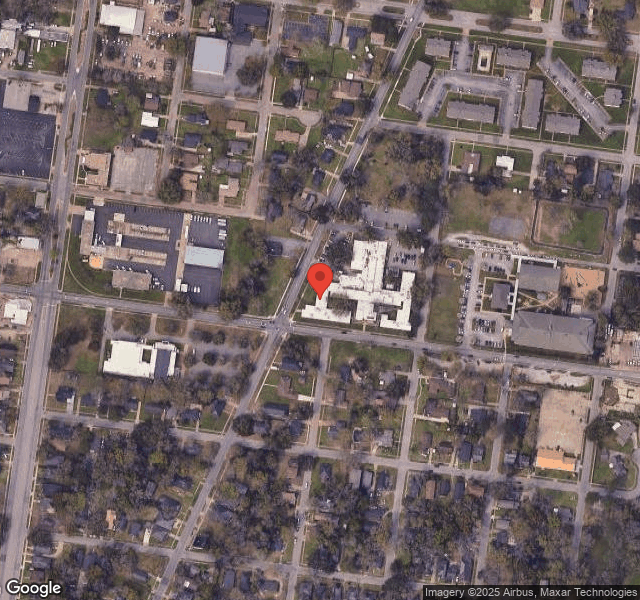

735 SOUTH WASHINGTON AVENUE, MOBILE, AL 36603 (251) 433-2642
Non profit - Corporation 119 Beds NOLAND HEALTH Data: November 2025
Trust Grade
70/100
#79 of 223 in AL
Last Inspection: February 2020

Over 2 years since last inspection. Current conditions may differ from available data.

Overview

Allen Health and Rehabilitation in Mobile, Alabama has a Trust Grade of B, which indicates it is a good choice for families considering nursing home options. With a state ranking of #79 out of 223 facilities, they are in the top half, while their county ranking of #9 out of 16 suggests that only one local facility is better. The facility is trending positively, with fewer issues reported in recent years, dropping from 3 concerns in 2019 to 2 in 2020. Staffing is a strong point, with a 4 out of 5-star rating and a lower turnover rate of 43%, which is better than the state average. However, there have been some concerns, such as improper food handling practices and medication destruction documentation issues, alongside maintenance problems like rusted toilet bolts and unsanitary conditions in bathrooms. On a positive note, they have had no fines, indicating compliance with regulations. Overall, while there are areas for improvement, Allen Health and Rehabilitation shows a commitment to enhancing care for residents.

Trust Score
B
70/100
In Alabama
#79/223
Top 35%
Safety Record
Low Risk
No red flags
Inspections
Getting Better
3 → 2 violations
Staff Stability
○ Average
43% turnover. Near Alabama's 48% average. Typical for the industry.
Penalties
✓ Good
No fines on record. Clean compliance history, better than most Alabama facilities.
Skilled Nurses
○ Average
Each resident gets 41 minutes of Registered Nurse (RN) attention daily — about average for Alabama. RNs are the most trained staff who monitor for health changes.
Violations
○ Average
9 deficiencies on record. Average for a facility this size. Mostly minor or procedural issues.
★★★☆☆
3.0
Overall Rating
★★★★☆
4.0
Staff Levels
★★☆☆☆
2.0
Care Quality
★★★☆☆
3.0
Inspection Score
Stable
2019: 3 issues
2020: 2 issues

The Good

  • 4-Star Staffing Rating · Above-average nurse staffing levels
  • Full Sprinkler Coverage · Fire safety systems throughout facility
  • No fines on record
  • Staff turnover below average (43%)

    5 points below Alabama average of 48%

Facility shows strength in staffing levels, fire safety.

The Bad

3-Star Overall Rating

Near Alabama average (2.9)

Meets federal standards, typical of most facilities

Staff Turnover: 43%

Near Alabama avg (46%)

Typical for the industry

Chain: NOLAND HEALTH

Part of a multi-facility chain

Ask about local staffing decisions and management

The Ugly 9 deficiencies on record

Feb 2020 2 deficiencies
CONCERN (D)

Potential for Harm - no one hurt, but risky conditions existed

Comprehensive Care Plan (Tag F0656)

Could have caused harm · This affected 1 resident

**NOTE- TERMS IN BRACKETS HAVE BEEN EDITED TO PROTECT CONFIDENTIALITY** Based on record review, interviews, a facility policy titled Care Plans, the facility failed to update the care plan with interv...

Read full inspector narrative →
**NOTE- TERMS IN BRACKETS HAVE BEEN EDITED TO PROTECT CONFIDENTIALITY** Based on record review, interviews, a facility policy titled Care Plans, the facility failed to update the care plan with interventions for Resident Identifier (RI) #87's decline in food and fluid intake. This affected RI #87 one of one residents reviewed for decline in nutritional and fluid intake. Findings Include: A review of a facility policy titled Care Plans with an effective date of 5/2018 revealed: . PROCESS: . b. Comprehensive Plan of Care - .The person centered care plan should be reviewed . with significant change of condition, or whenever a change is needed. RI #87 was admitted to the facility on [DATE] with diagnoses to include Dysphasia, oropharyngeal phase and Unspecified dementia without behavioral disturbance. A review of a facility form titled Oral Intake monitor Roster dated 1/27/2020 thru 2/15/2020 revealed Oral Intake Measurement . Breakfast . Breakfast Fluid Intake . Oral Intake Measurement Lunch . Lunch Fluid Intake . Oral Intake Measurement Supper . Supper Fluid Intake . with daily fluid intake varying 120 cc to 1200 cc. A review of RI #87's Care Plan revealed Problem Onset: 1/27/2020 . has the potential for alteration in weight/nutrition/hydration . Approaches .Registered Dietitian to review as needed . The Care Plan did not reveal interventions after 1/27/20 related to resident's poor acceptance of, nor interventions to improve fluid and nutrition needs. On 2/20/20 at 5:47 PM, an interview was conducted with Employee Identifier (EI) #3, Registered Dietitian. EI #3 was asked what was RI #87's assessment needs for fluid and food. EI #3 replied, 1425 to 1710 milliliters a day. EI #3 was asked what time frame was RI #87's weight loss. EI #3 replied, loss from 1/28/20 to 2/11/20 was 5% (percent). EI #3 was asked, when was RI #87 reassessed again. EI #3 replied, RI #87 was not documented on, but the group did discuss RI #87. EI #3 was asked, because there was a weight loss of 5% what was done. EI #3 replied, she had not documented on RI #87, at that point, a FEES study was ordered which RI #87 had refused. EI #3 was asked, what date was the FEES study ordered. EI #3 replied, she thought it was ordered 1/30/20, not necessarily the date it would be done. EI #3 was asked, when was there a change in food and fluid acceptance. EI #3 replied, RI #87 had started pocketing food but she did not know exact date. EI #3 was asked, where in RI #87's record did it reflect a weight loss cause. EI #3 replied, it was not documented. EI #3 was asked if RI #87 should have had documentation. EI #3 replied, there was not time frame for documentation but interventions should have been placed. EI #3 and the surveyor reviewed the care plan then EI #3 was asked, what was the date of interventions. EI #3 replied, 1/27/20 on admission. EI #3 was asked, where were new interventions placed and tried. EI #3 replied, she did not see any. EI #3 was asked if the care plan reflected new interventions. EI #3 replied, as far as supplements or other interventions, no. EI #3 was asked, who was responsible for new interventions. EI #3 replied, anyone, typically she would do that for calories, proteins and fluids. EI #3 was asked, where in the record did it reflect weight change. EI #3 replied, the weight sheet and RI #87 was a significant loss. EI #3 was asked, where in the record would it reflect ongoing interventions due to poor food and fluid acceptance. EI #3 replied, the care plan. EI #3 was asked had there been ongoing interventions placed. EI #3 replied, no there was nothing, it did say offer snacks and she was not sure where they would be documented. EI #3 was asked, what was the harm in care plans not updated to reflect changes and interventions. EI #3 replied, for all to look at as a team and if the care plan was not updated the team would not know what to look for. On 2/21/20 at 10:31 AM, an interview was conducted with EI #2, Director of Nursing, (DON). EI #2 was asked, what type care RI #87 required. EI #2 replied, RI #87 was admitted for therapy, however, did not participate, EI #2 continued that RI #87 came on a regular diet and was helped by the staff to eat. EI #2 was asked, how long was it known of RI #87's poor acceptance of adequate fluids. EI #2 replied, she was not sure on the date; RI #87 was observed in the assist dining room pocketing food and was not swallowing. EI #2 was asked, in #87's record was it documented about further interventions to increase fluid intake. EI #2 replied, it was not captured in the care plan. EI #2 continued with a reply stating they did things but failed to add to care plan; however, other things were done. EI #2 said RI #87 was placed in assisted dining, snacks were offered, the family helped because they did not want to make a decision about tube placement. EI #2 said, lack of documenting it in the record seemed to be an issue. EI #2 was asked, how many times had the care plan been updated. EI #2 replied, once on 2/6/20, nectar thick liquids was added. EI #2 was asked, what was the harm of not updating RI #87's care plan and documenting. EI #2 replied, they failed to capture the care that was actually provided and if they do not update interventions staff may not know what to follow.
CONCERN (D)

Potential for Harm - no one hurt, but risky conditions existed

Deficiency F0761 (Tag F0761)

Could have caused harm · This affected 1 resident

Based on an observation and interviews the facility failed to ensure that a locked narcotic box in one of the medication room refrigerators was affixed and permanently attached to prevent removal. Th...

Read full inspector narrative →
Based on an observation and interviews the facility failed to ensure that a locked narcotic box in one of the medication room refrigerators was affixed and permanently attached to prevent removal. This was observed on 2/20/20 and affected one of three medication rooms observed. Findings Include: On 2/20/20 at 4:34 PM, the surveyor made an observation, along with the unit nurse, of the locked narcotic medication box on the east unit. The surveyor observed in the locked medication room the locked narcotic medication box within the locked refrigerator. The narcotic box was attached to a shelf in the refrigerator that was not anchored or permanently affixed. The whole shelf containing the locked narcotic medications box could be removed from the refrigerator. The locked box contained 11 vials of 2 milligrams /1 milliliter Ativan. On 02/20/20 at 4:41 PM, Employee Identifier (EI) # 9, LPN (Licensed Practical Nurse) was interviewed. EI #9 was asked, what did the locked narcotic box contain. EI #9 replied, 11 vials of 1 milligram Ativan for a resident. EI #9 was asked, where was this refrigerator located. EI #9 replied, east med room. EI #9 was asked, how was the locked narcotic box anchored. EI #9 replied, it was anchored on a shelf with some bolts but the shelf was not anchored or permanently affixed. EI #9 was asked why was the shelf not bolted and permanently affixed. EI #9 replied, she did not know, maintenance missed it she guessed. EI #9 was asked, why was that a problem. EI #9 replied, the shelf could be removed from refrigerator and taken away with the locked narcotic box attached to the shelf. EI #9 was asked, who had access to the medication room. EI #9 replied, center east and east nurses. EI #9 was asked, when did nurses access that box. EI #9 replied, for as needed orders for the resident. EI #9 was asked, why would this be a problem to not be permanently attached within the refrigerator. EI #9 replied, someone if they wanted to could walk out with the shelf containing the locked narcotics. On 02/20/20 at 5:47 PM, an interview was conducted with EI #2, Director of Nursing, regarding the narcotic box in the refrigerator. EI #2 was asked, how was the locked narcotic box anchored. EI #2 replied, it was anchored to the shelf but the shelf was not permanently affixed to the refrigerator. EI #2 was asked, where was the refrigerator located. EI #2 replied, east medication room EI #2 was asked, what did the locked narcotic box contain. EI #2 replied, 11 vials of 2 mg per 1 milliliters of Ativan; five in one bag, five in a second bag, and one in a third bag. EI #2 was asked, who had access to the medication room. EI # 2 replied, center east and east nurses. EI #2 was asked, when did nurses access that box. EI #2 replied, when nurses were counting or needed something. EI # 2 was asked, why was it not anchored. EI #2 replied, they replaced that box as it was cracked but when replaced it was not affixed to the shelf permanently. EI #2 was asked, what was the potential harm in having the locked narcotic box on a shelf that was not permanently affixed to the refrigerator. EI #2 replied, if someone had a key to the med room and key to refrigerator they could access.
Jan 2019 3 deficiencies
CONCERN (D)

Potential for Harm - no one hurt, but risky conditions existed

Assessment Accuracy (Tag F0641)

Could have caused harm · This affected 1 resident

**NOTE- TERMS IN BRACKETS HAVE BEEN EDITED TO PROTECT CONFIDENTIALITY** Based on observations, interviews and record review, the facility failed to ensure: 1) Resident Identifier (RI) #9 was accuratel...

Read full inspector narrative →
**NOTE- TERMS IN BRACKETS HAVE BEEN EDITED TO PROTECT CONFIDENTIALITY** Based on observations, interviews and record review, the facility failed to ensure: 1) Resident Identifier (RI) #9 was accurately assessed under Section M 0100 on RI #9's 11/06/18 Significant Change (SC) MDS (Minimum Data Set) assessment as having Pressure Ulcers (PU); and 2) RI# 77 was accurately assessed under Section M 0100 on RI #77's 01/11/19 admission MDS assessment as having a PU. These deficient practices affected RI #9 and #77, two of 25 sampled residents whose MDS assessments were reviewed. Findings Include: 1) RI #9 was admitted to the facility on [DATE], with a diagnosis of Multiple Sclerosis. RI #9's admission body audit, dated 07/09/18, revealed RI #9 was admitted with PU's to the left and right scapula, back of the right arm and the sacrum area. A review of RI #9's SC MDS assessment, with an Assessment Reference Date (ARD) of 11/06/18, did not identify RI #9 as having a PU under Section M 0100 during this assessment period. On 01/30/19 at 2:47 p.m., the surveyor observed Employee Identifier (EI) #3, the treatment nurse, provide wound care to RI #9's right thumb, left and right scapula, sacrum and right ischium PU's. On 01/31/19 at 12:47 p.m., the surveyor conducted an interview with EI #2, the RN (Registered Nurse) MDS Manager. The surveyor asked EI #2 did RI #9 have any PU's. EI #2 said, according to RI #9's SC MDS dated [DATE], yes. The surveyor asked EI #2 should Section M 0100 on the MDS assessment be checked. EI #2 said yes. The surveyor asked EI #2 who was responsible for completing that section of the MDS. EI #2 said the treatment nurse. When asked would this be an accurate assessment, EI #2 replied no because it was not marked that RI #9 had a PU. 2) RI #77 was admitted to the facility on [DATE], with a diagnoses of Unspecified Skin Changes. RI #77's admission body audit, dated 01/04/19, revealed RI #77 was admitted with a PU to sacrum area. A review of RI #77's admission MDS assessment, with an ARD of 01/11/19, did not identify RI #77 as having a PU under Section M 0100 during this assessment period. On 01/30/19 at 9:33 a.m., the surveyor observed EI #3 provide wound care to RI #77's sacral wound PU. On 01/31/19 at 1:00 p.m., the surveyor conducted an interview with EI #2. The surveyor asked EI #2 was RI #77 admitted with the PU. EI #2 said yes. The surveyor asked EI #2, on RI #77's admission MDS assessment dated [DATE], should RI #77 be coded as having the PU. EI #2 said yes. The surveyor asked EI #2, under Section M 0100, was RI #77 coded as having the PU. EI #2 said no. The surveyor asked EI #2 would this be an accurate assessment. EI #2 said no because it was not marked that RI #77 had a PU. On 01/31/19 at 1:21 p.m., the surveyor conducted an interview with EI #3, the treatment nurse. EI #3 said on RI #9's SC MDS assessment dated [DATE], and on RI #77's admission MDS assessment dated [DATE], Section M 0100 should have been checked. When asked why the sections were not checked, EI #3 said it probably was an oversight on her part.
CONCERN (E)

Potential for Harm - no one hurt, but risky conditions existed

Pharmacy Services (Tag F0755)

Could have caused harm · This affected multiple residents

Based on interview, record review and review of a facility policy titled Disposal of Medications Non-Controlled Medication Destruction, the facility failed to ensure the Non-Controlled Packet Medicati...

Read full inspector narrative →
Based on interview, record review and review of a facility policy titled Disposal of Medications Non-Controlled Medication Destruction, the facility failed to ensure the Non-Controlled Packet Medication Destruction forms contained the required signatures. This affected four of 11 months (January, February, May, and November of 2018) of the Non-Controlled Packet Medication Destruction forms reviewed. Finding Include: A facility policy titled Disposal of Medications Non-Controlled Medication Destruction, dated 03/11, revealed: . Procedures . 3. The registered nurse and/or pharmacist witnessing the destruction, or their preparation for environmental service pickup, ensures that the following information is entered on the Record of Medication Destruction form . : J. Signatures of witnesses, two witnesses required for non-controlled substances . On 01/31/19 at 2:02 p.m., the surveyor conducted an interview with Employee Identifier (EI) #1, the Director of Nursing (DON). The surveyor asked EI #1, according to the facility's policy, how many signatures should there be on the Non- Controlled Packet Medication Destruction forms. EI #1 said two. A review of the Non-Controlled Packet Medication Destruction forms was made with EI #1. She was asked how many forms for the months had only one signature. EI #1 replied, January 2018, revealed 18 of 25 forms only had one signature, February 2018, one of 33 Non-Controlled Packet Medication Destruction forms only had one signature, May 2018, one of 13 of the Non-Controlled Packet Medication Destruction forms only had one signature, and November 2018, seven of 21 Non-Controlled Packet Medication Destruction forms only had one signature.
CONCERN (F)

Potential for Harm - no one hurt, but risky conditions existed

Food Safety (Tag F0812)

Could have caused harm · This affected most or all residents

Based on observations, interview, and review of the 2017 U.S. (United States) Public Health Service Food Code, the facility failed to ensure: 1) the flour bin had a date of when the flour was placed ...

Read full inspector narrative →
Based on observations, interview, and review of the 2017 U.S. (United States) Public Health Service Food Code, the facility failed to ensure: 1) the flour bin had a date of when the flour was placed in the bin and a date to be used by on. This was observed on 01/28/19, during the initial tour of the facility. 2) food particles were not left on the meat slicer, as observed on 01/31/19. These deficient practices had the potential to affect 86 of 86 residents receiving meals from the kitchen. Findings Include: 1) On 01/28/19 at 5:33 p.m., during the initial tour of the kitchen, the surveyor observed the flour bin to not have a date or use by date on the bin. On 01/28/19 at 5:42 p.m., the surveyor asked the Dietary Manager (DM), Employee Identifier (EI) #4, when was the flour placed in the flour bin. EI #4 said on the 24 th of January, last Thursday. The surveyor asked EI #4 should there be a date when the flour was placed in the bin and a use by date on the bin. EI #4 said yes. On 01/31/19 at 09:49 a.m., the surveyor conducted an interview with EI #4. The surveyor asked EI #4 why should there be a date when the flour was placed in the bin and a date when it should be used by. EI #4 said so expired products would not be used. When asked what was there a potential for when expired products were used, EI #4 replied sickness. 2) A review of the 2017 U.S. Public Health Service Food Code revealed: . 4-6 CLEANING OF EQUIPMENT AND UTENSILS . 4-601.11 Equipment, Food-Contact Surfaces . (A) EQUIPMENT FOOD-CONTACT SURFACES . shall be clean to sight . On 01/30/19 at 10:33 a.m., the surveyor observed food looking particles on the base of the meat slicer. The surveyor asked EI #4 what did it look like was on the meat slicer. EI #4 said food looking particles. The surveyor asked EI #4 when was the meat slicer last used. EI #4 said on yesterday. The surveyor asked EI #4 how often was the meat slicer cleaned. EI #4 said every time it was used. When asked what she thought happened for food particles to still be on the meat slicer (after it had been cleaned), EI #4 replied who ever cleaned it probably just missed it. On 01/31/19 at 09:53 a.m., the surveyor conducted a second interview with EI #4. The surveyor asked EI #4 should there have been any food particles left on the meat slicer if it had been cleaned. EI #4 said no, there should have been none left on the slicer at all. When asked why there should be no food particles left on the meat slicer, EI #4 replied, because equipment should be stored clean.
Dec 2017 4 deficiencies
CONCERN (D)

Potential for Harm - no one hurt, but risky conditions existed

Deficiency F0711 (Tag F0711)

Could have caused harm · This affected 1 resident

**NOTE- TERMS IN BRACKETS HAVE BEEN EDITED TO PROTECT CONFIDENTIALITY** Based on record reviews, interviews, and review of a facility policy titled, Policy: Catheters, Urinary: Catheterization., the f...

Read full inspector narrative →
**NOTE- TERMS IN BRACKETS HAVE BEEN EDITED TO PROTECT CONFIDENTIALITY** Based on record reviews, interviews, and review of a facility policy titled, Policy: Catheters, Urinary: Catheterization., the facility failed to obtain a physician's order for use of a urinary catheter. This affected RI (Resident Identifier) #66, one of twenty-one residents whose orders were reviewed. Findings Include: A review of a facility policy titled, Policy: Catheters, Urinary, with an effective date of 11/16, revealed: . Policy: Catheters, Urinary: Catheterization, . STANDARD: a physician's order should be obtained for the use of any catheter. A review of RI #66's medical record revealed a re-admission date of 9/12/17 with diagnoses to include Retention of Urine, Type II Diabetes Mellitus, and Congestive Heart Failure. A review of the Significant Change MDS (Minimum Data Set) assessment for RI #66, dated 11/21/17, revealed the resident was assessed as having a urinary catheter in use. A review of the December 2017 physician's orders for RI #66 revealed there was no order for a urinary catheter. During an interview on 12/21/17 at 3:43 p.m., with EI (Employee Identifier) #2, an LPN (Licensed Practical Nurse), the Physician's orders for RI #66 were reviewed with the surveyor. EI #2 was asked what did the physician's order indicate for RI #66's catheter. EI #2 answered there was not an order. EI #2 was asked how long had RI #66 had a urinary catheter. EI #2 answered it had been since she (EI #2) had been working at the facility, which was three months and ten days. EI #2 was asked what was the facility policy regarding having a physician's order for the use of a urinary catheter. EI #2 answered there had to be a physician's order to have a catheter or take it out. EI #2 was asked what was the concern of not having a physician's order for use of a urinary catheter. EI #2 answered it (a physician's order) was required and she would call for clarification. During an interview on 12/21/17 at 6:17 p.m., with EI #4, the RN (Registered Nurse)/Quality Assurance Coordinator, the physician's orders for RI #66 were reviewed with the surveyor. EI #4 was asked what did the physician's order indicate for RI #66's catheter. EI #4 answered she did not see a physician's order. EI #4 was asked how long had RI #66 had a urinary catheter and she answered since admission [DATE]). EI #4 was asked what was the facility policy regarding having a physician's order for the use of a urinary catheter. EI #4 answered that they must have a diagnosis and an order for catheter use. EI #4 was asked what was the concern of not having a physicians order for use of a urinary catheter. EI #4 answered providing care without an order.
CONCERN (D)

Potential for Harm - no one hurt, but risky conditions existed

Drug Regimen Review (Tag F0756)

Could have caused harm · This affected 1 resident

**NOTE- TERMS IN BRACKETS HAVE BEEN EDITED TO PROTECT CONFIDENTIALITY** Based on record reviews, interview, and review of a facility document titled, PHYSICIAN RECOMMENDATIONS, the facility failed to ...

Read full inspector narrative →
**NOTE- TERMS IN BRACKETS HAVE BEEN EDITED TO PROTECT CONFIDENTIALITY** Based on record reviews, interview, and review of a facility document titled, PHYSICIAN RECOMMENDATIONS, the facility failed to ensure a pharmacy recommendation of dose reduction form was completed by the medical doctor or designee. This affected RI (Resident Identifier) #4, one of six residents whose psychotropic meds were reviewed. Findings Include: A review of a facility document titled, PHYSICIAN RECOMMENDATIONS, revealed the following directions for completion: . Please evaluate the current dose and consider a gradual taper to ensure this resident is using the lowest possible effective/optimal dose. The comments below may assist you in the documentation process. Please check the appropriate response and add additional information as requested: . A review of the medical record revealed RI #4 was re-admitted to the facility on [DATE], with diagnoses to include Vascular Dementia without Behavioral Disturbance, Congestive Heart Failure, and Adjustment Disorder with Anxiety. A review of the Annual MDS (Minimum Data Set) assessment for RI #4, dated 12/12/17, revealed a BIMS (Brief Interview for Mental Status) score of 15 out of a possible 15. This score indicated RI #4 was cognitively intact for daily decision making skills. RI #4 was assessed as needing moderate to extensive assistance of one person for ADLs (Activities of Daily Living). A review of the December 2017 physician's orders revealed an order for: . ZYPREXA 5 MG (Milligrams) TABLET one daily . A review of RI #4's physician recommedations for dose reduction form with a print date of 9/17/17, revealed none of the pre-filled comments were checked, nor any other explanation for refusing to attempt a gradual dose reduction. The DISAGREE box was checked with no explanation/rationale. During an interview on 12/21/17 at 6:23 p.m., EI (Employee Identifier) #4, the RN (Registered Nurse)/Quality Assurance Coordinator, the Pharmacy initiated physician recommendation for RI #4 was reviewed with the surveyor. EI #4 was asked what rationale was given for declining the dose reduction of Zyprexa for RI #4 on 9/17. EI #4 answered none was checked. EI #4 was asked if a rationale should have been provided and she answered yes. EI #4 was asked what was the facility policy for providing a rationale for declining a pharmacist recommended dose reduction. EI #4 answered documentation of the rationale on the pharmacy recommendation form.
CONCERN (D)

Potential for Harm - no one hurt, but risky conditions existed

Medication Errors (Tag F0758)

Could have caused harm · This affected 1 resident

**NOTE- TERMS IN BRACKETS HAVE BEEN EDITED TO PROTECT CONFIDENTIALITY** Based on record reviews, interview, and review of the facility policy titled, Medication Monitoring Medication Management, the f...

Read full inspector narrative →
**NOTE- TERMS IN BRACKETS HAVE BEEN EDITED TO PROTECT CONFIDENTIALITY** Based on record reviews, interview, and review of the facility policy titled, Medication Monitoring Medication Management, the facility failed to provide evidence of monitoring of the efficacy and potential side effects of psychotropic drugs. This affected RI (Resident Identifier) #s 4, 50, and 83, three of six residents whose psychotropic medications were reviewed. Findings Include: A review of the facility policy titled, Medication Monitoring Medication Management, with a copyright date of 2007, revealed: . In order to optimize the therapeutic benefit of medication therapy and minimize or prevent potential adverse consequences, facility staff, the attending physician/prescriber, and the consultant pharmacist perform ongoing monitoring for appropriate, effective, and safe medication use. When selecting medications and non-pharmacological interventions, members of the interdisciplinary team participate in the care process to identify, assess, address, advocate for, monitor, and communicate the resident's needs and changes in condition. PROCEDURES The interdisciplinary team reviews the resident's medication regimen for efficacy and actual or potential medication-related problems on an ongoing basis. g. Monitoring of potential for adverse consequences: Tools are available for monitoring adverse medication consequences such as the Abnormal Involuntary Movement Scale (AIMS), Dyskinesia Identification System - Condensed User Scale (DISCUS), and other behavioral interventions monitoring tools and flow records. The nursing center assures that residents are being adequately monitored for adverse consequences . 1. A review of the medical record revealed RI #4 was re-admitted to the facility on [DATE] with diagnoses to include Vascular Dementia without Behavioral Disturbance, Congestive Heart Failure, and Adjustment Disorder with Anxiety. A review of the Annual MDS (Minimum Data Set) assessment, dated 12/12/17, for RI #4 revealed a BIMS (Brief Interview for Mental Status) score of 15 out of a possible 15. This score indicated RI #4 was cognitively intact for daily decision making skills. RI #4 was assessed as needing limited to extensive assistance of one person for ADLs (Activities of Daily Living). A review of the December 2017 physician's orders for RI #4 revealed an order for: . ZYPREXA 5 MG (Milligrams) TABLET one daily . A review of the December Medication Administration Record for RI #4 provided no documentation of the monitoring of efficacy or possible adverse consequences of antipsychotic medications. A review of the nurse's notes from 8/4/17 through 12/21/17 for RI #4 provided no documentation of the monitoring of efficacy or possible adverse consequences of antipsychotic medications. 2. A review of the medical record revealed RI #50 was re-admitted to the facility on [DATE] with diagnoses to include Vascular Dementia without Behavioral Disturbance, Major Depressive Disorder, and Adjustment Disorder with Anxiety. A review of the Quarterly MDS assessment, dated 11/08/17, for RI #50 revealed a BIMS score of 15 out of a possible 15. This score indicated RI #50 was cognitively intact for daily decision making skills. RI #50 was assessed as needing limited to extensive assistance of one person for ADLs. A review of the December 2017 physician's orders for RI #50 revealed an order for: . SEROQUEL 25 MG TABLET BY MOUTH EVERY NIGHT AT BEDTIME FOR DEMENTIA WITH ANXIETY . A review of the December Medication Administration Record for RI #50 provided no documentation of the monitoring of efficacy or possible adverse consequences of antipsychotic medications. A review of the nurse's notes from 8/2/17 through 12/20/17 for RI #50 provided no documentation of the monitoring of efficacy or possible adverse consequences of antipsychotic medications. 3. A review of the medical record revealed RI #83 was re-admitted to the facility on [DATE] with diagnoses to include Situational Type Phobia, Anxiety Disorder due to known Physiological Condition, and Adjustment Disorder with Depressed Mood. A review of the Quarterly MDS assessment, dated 11/29/17, for RI #83 revealed a BIMS score of 10 out of a possible 15. This score indicated RI #83 was moderately impaired for daily decision making skills. RI #83 was assessed as needing only set-up for meals and was independent with ADLs. A review of the December 2017 physician's orders for RI #83 revealed an order for: . Seroquel 50 mg by mouth @ (at) HS (bedtime) . Seroquel 25 mg in the a.m. A review of the December 2017 Medication Administration Record for RI #83 provided no documentation of the monitoring of efficacy or possible adverse consequences of antipsychotic medications. A review of the nurse's notes from 8/1/17 through 12/6/17 for RI #83 provided no documentation of the monitoring of efficacy or possible adverse consequences of antipsychotic medications. During an interview on 12/21/17 at 6:01 p.m., with EI #4, the RN (Registered Nurse)/Quality Assurance Coordinator, the medical records were searched for documentation of the efficacy and potential side effects of psychotropic drugs for RI #s 4, 50, and 83. EI #4 was asked what documentation she could provide for the monitoring of the efficacy and potential side effects of psychotropic drugs for RI #s 4, 50, and 83. EI #4 answered charting by exception for adverse reactions, communicated to the physician. EI #4 was asked what about the efficacy and she answered it would be in the behavior logs and charting by exception. EI #4 was asked what did the pharmacy policy recommend to monitor and how. EI #4 answered Anticholinergic effects, Neurolyptic Syndrome, Cardiac Arrythmias, falls, and Akathisia and tools are available for monitoring adverse medication consequences. EI #4 was asked where that had been done and again she answered they charted to exception. EI #4 was asked how monitoring could be verified without documentation. EI #4 answered by following the plan of care and documenting adverse observations. EI #4 was asked what was the concern of no documentation of the monitoring of the efficacy and potential side effects of psychotropic drugs for RI #s 4, 50, and 83. EI #4 answered all staff were to observe for changes, but nurses assess. EI #4 was asked how were signs of involuntary movements addressed and she answered with the assessments by the nurse during observations.
CONCERN (E)

Potential for Harm - no one hurt, but risky conditions existed

Safe Environment (Tag F0584)

Could have caused harm · This affected multiple residents

Based on observations, interview, and review of a facility policy titled, JOB DESCRIPTION, the facility failed to ensure the following were not observed during the survey: 1) uncapped rusted toilet bo...

Read full inspector narrative →
Based on observations, interview, and review of a facility policy titled, JOB DESCRIPTION, the facility failed to ensure the following were not observed during the survey: 1) uncapped rusted toilet bolts in RL (Room Locator) #s: 1, 2, 3, 4, 6, 7, 8, 9, 12, 13, 14, and East Unit resident bathroom, found on 2 of 3 Units; 2) dry green substance observed on pipes behind toilet in resident bathrooms in RL #s: 6, 8, and 1; 3) a loose faucet appliance in RL #14; 4) broken tiles in tubroom on East Unit; 5) a shower room on East Unit had black substance on the faucet plate; there was a black, green, and pink substance on the shower floor/wall; and pieces of white plastic bag was tied on the handrail in the shower; 6) an area of sheetrock was broken above the baseboard outside the East Unit shower; 7) the floor under the a/c (air conditioner) unit was missing tiles and there was a broken baseboard tile near the a/c unit of RL #10; 8) a thick yellow substance on a metal device attached to the wall was observed in resident bathroom, RL #7; 9) missing sheet rock in an open hall storage area of East Unit; 10) chipped and peeling paint on 2 windows near Nurses Station on East Unit; 11) a sharps container was full in a shower room of the East Unit; 12) a toilet chair seat was rusted in a East Unit resident bathroom; 13) a black strip of flooring on the East Unit near the Nurses Station and the Resident Dining Room was found dirty and had torn areas of flooring; and 14) the floors had a gray/black substance under the a/c unit of RL #5 and 9. This was observed in RL #s 1-14, on two of three units in the facility. Findings Include: A review of a facility's document titled, JOB DESCRIPTION, dated 11/11/13, revealed: Job Title Director of Maintenance . Summary of Duties Maintain the grounds, facilities, and equipment for the Community in a safe and efficient manner in accordance with established policies and procedures and applicable federal, state, and local standards, guidelines, and regulations . Essential Job Functions . 2. Maintain the grounds, facilities, and equipment in good repair, ensuring safe, clean, and orderly environment. 5. Schedule routine maintenance and repair on the facility and equipment. 6. Make inspections of all facility functions to assure that quality control measures are continually maintained. Report findings to appropriate individuals. The facility uses contract housekeeping services. A review of the Housekeeper Job Description, not dated, revealed: . Areas: (room numbers), locker room, shower rooms, whirlpool room, utility room, storage room, nourishment room, nurse manager office, nurses station area, med room, central . During the initial tour of the facility on 12/19/17, observations were made of resident rooms, bathrooms, shower rooms, and residential areas. On 12/19/17 at 3:37 p.m., a shower room on the Central East Unit, was observed with a strong smell of mildew. The white hand-held shower head was observed with a black slimy substance. There were 2 clear plastic cups observed in the recessed shelf area of the shower with an orange substance at the bottom of both cups. There were 3 wash cloths and a harness hanging on the towel rack. On the floor and wall of the shower, there was a black substance observed. There was a nearly empty bottle of Suave shampoo lying on top of the wash cloths that were on the towel rack. There was a padded shower chair in the shower room. In the East Unit resident bathroom, a toilet chair was over the toilet and had rusted areas on the metal frame of the toilet seat. There were 1 1/2 (inch) uncapped rusted toilet bolts on both sides of the toilet base. At 5:10 p.m. on 12/19/17, EI (Employee Identifier) #1, the Maintenance Director, and EI #5, the Administrator, spoke with the surveyor. EI #1 stated staff were not using the shower on the Central East Unit. EI #5 stated she had been at the facility for 16 years and during those years, staff did not use the shower on Central East Unit. At 4:30 p.m. on 12/19/17, RL #11 was observed with a dry green substance all over the top of the pipe and running down the sides of the pipe located behind the toilet. The metal hand rail bolted to the wall next to the toilet had a dry green substance and corrosion at the end of the hand rail. The surface was rough with raised corroded areas. The hose attached to the wall behind the toilet had a dry green substance on the handle and at the end of the spray nozzle. At 4:33 p.m. on 12/19/17, RL #13 had uncapped rusted toilet bolts 1/2 tall on both sides of the toilet base. The piping behind the toilet had a dry green substance on the top and sides of the pipe. At 4:42 p.m. on 12/19/17, RL #9 had uncapped 1/2 toilet bolts on both sides of the toilet base. There was a gray/brown substance on the floor under the a/c unit and rust stains were observed on the floor under the a/c unit. There was black strip flooring that runs along East Dining Room and near the Nurses Station and Soiled Utility room that was observed dirty and had broken/missing areas/patches along the black strip. At 4:48 p.m. on 12/19/17, the flooring under the a/c unit of RL #5 was observed. The flooring under the a/c unit was dirty with a brown/black substance on the floor. There was a missing tile piece on the wall to the side and below the a/c unit. On 12/21/17 at 8:20 a.m., the tub room on the East Unit had missing floor tiles around the edge of the whirlpool tub. The East Unit shower room was observed for the following: peeling paint on the door, floor dirty with black marks; black, green and pink substance on the floor of the shower; walls with black substance; a sharps container in the shower room was full; pieces of plastic bag was tied around a shower handle; and the shower faucet back plate had a black substance on it. In the doorway of the shower room, there were black anti-slip strips that were torn and jagged. Outside of the shower room, the wall between the floor molding and lower wall bumper pad had a 2 x (by) 12 to 14 long hole in the sheetrock. On 12/21/17 at 8:20 a.m., the following observations were made by another surveyor: RL #12 was observed with uncapped rusted toilet bolts on both sides of the toilet base; a glove was observed on the floor of the bathroom; the sink faucet appliance in RL #14 lifted up when the handle was turned; there were uncapped rusted toilet bolts on both sides of the toilet base; RL #8 had uncapped rusted toilet bolts on both sides of the toilet base. There was a dry green substance on the pipe behind the toilet; RL #6 had uncapped rusted toilet bolts on both sides of the toilet base. There was a dry green substance on the pipe behind the toilet. On 12/21/17 at 8:24 a.m., RL #7 was observed with water on the floor near the a/c unit. The water was seen coming from under the a/c unit onto the floor area. There was 3x 4 area of missing tiles under the a/c unit. Other observations made in RL #7 were: uncapped rusted toilet bolts on both sides of the toilet base; a dry green substance on the pipe behind the toilet; a metal piece on the wall near the toilet and under the soap dispenser had a very thick sticky yellow substance covering it. At 8:28 a.m. on 12/21/17, the area on the hall of the East Unit where geri-chairs and linen carts, were stored, a 4'10 high area of the outer corner wall was missing sheet rock. Across from the nurses station on the East Unit were 2 windows with chipped and peeling paint. On 12/21/17 at 8:40 a.m., the floor of RL #10 had missing tiles under the a/c unit. There was a broken tile baseboard located near the edge of the a/c unit. On 12/21/17 at 10:10 a.m., RL #s 1, 2, 3, and 4 were observed with 3/4 uncovered, rusted toilet bolts on both sides of the toilet base. On 12/21/17 at 1:40 p.m., EI #1 was interviewed and was asked who was responsible for the maintenance of resident rooms and residential areas. EI #1 stated he was, maintenance. When asked how often areas were checked for condition, EI #1 stated he was always looking and staff will let him know if something needs to be fixed. EI #1 was asked who was responsible for cleaning resident areas and EI #1 stated housekeeping. EI #1 further stated that if something needed to be repaired or replaced, maintenance does it. EI #1 was asked how often were residential areas cleaned and he stated daily. When asked what was the concern of resident rooms and residential areas not being clean, EI #1 stated the resident areas need to be clean for residents' health. EI #1 was asked what was the concern of residential areas not being in good repair. EI #1 stated the areas need to be safe and this was their home and the facility wanted it to look nice. EI #1 stated he didn't want anyone to get hurt, it's for their safety. At 1:55 p.m., the surveyor toured the areas of concern with EI #1 and he verbalized understanding of the areas of concern and indicated they would begin repairing and fixing the concerns immediately.
Understanding Severity Codes (click to expand)
Life-Threatening (Immediate Jeopardy)
J - Isolated K - Pattern L - Widespread
Actual Harm
G - Isolated H - Pattern I - Widespread
Potential for Harm
D - Isolated E - Pattern F - Widespread
No Harm (Minor)
A - Isolated B - Pattern C - Widespread

Questions to Ask on Your Visit

  • "Can I speak with families of current residents?"
  • "What's your RN coverage like on weekends and overnight?"

Our Honest Assessment

Strengths
  • • No major safety red flags. No abuse findings, life-threatening violations, or SFF status.
  • • No fines on record. Clean compliance history, better than most Alabama facilities.
  • • 43% turnover. Below Alabama's 48% average. Good staff retention means consistent care.
Concerns
  • • No major red flags. Standard due diligence and a personal visit recommended.
Bottom line: Mixed indicators with Trust Score of 70/100. Visit in person and ask pointed questions.

About This Facility

What is Allen's CMS Rating?

CMS assigns ALLEN HEALTH AND REHABILITATION an overall rating of 3 out of 5 stars, which is considered average nationally. Within Alabama, this rating places the facility higher than 99% of the state's 100 nursing homes. This mid-range rating indicates the facility meets federal standards but may have areas for improvement.

How is Allen Staffed?

CMS rates ALLEN HEALTH AND REHABILITATION's staffing level at 4 out of 5 stars, which is above average compared to other nursing homes. Staff turnover is 43%, compared to the Alabama average of 46%. This relatively stable workforce can support continuity of care.

What Have Inspectors Found at Allen?

State health inspectors documented 9 deficiencies at ALLEN HEALTH AND REHABILITATION during 2017 to 2020. These included: 9 with potential for harm.

Who Owns and Operates Allen?

ALLEN HEALTH AND REHABILITATION is owned by a non-profit organization. Non-profit facilities reinvest revenue into operations rather than distributing to shareholders. The facility is operated by NOLAND HEALTH, a chain that manages multiple nursing homes. With 119 certified beds and approximately 82 residents (about 69% occupancy), it is a mid-sized facility located in MOBILE, Alabama.

How Does Allen Compare to Other Alabama Nursing Homes?

Compared to the 100 nursing homes in Alabama, ALLEN HEALTH AND REHABILITATION's overall rating (3 stars) is above the state average of 2.9, staff turnover (43%) is near the state average of 46%, and health inspection rating (3 stars) is at the national benchmark.

What Should Families Ask When Visiting Allen?

Based on this facility's data, families visiting should ask: "Can I visit during a mealtime to observe dining assistance and food quality?" "How do you handle medical emergencies, and what is your hospital transfer rate?" "Can I speak with family members of current residents about their experience?"

Is Allen Safe?

Based on CMS inspection data, ALLEN HEALTH AND REHABILITATION has a clean safety record: no substantiated abuse findings (meaning no confirmed cases of resident harm), no Immediate Jeopardy citations (the most serious violation level indicating risk of serious injury or death), and is not on the Special Focus Facility watch list (a federal program monitoring the lowest-performing 1% of nursing homes). The facility has a 3-star overall rating and ranks #1 of 100 nursing homes in Alabama. While no facility is perfect, families should still ask about staff-to-resident ratios and recent inspection results during their visit.

Do Nurses at Allen Stick Around?

ALLEN HEALTH AND REHABILITATION has a staff turnover rate of 43%, which is about average for Alabama nursing homes (state average: 46%). Moderate turnover is common in nursing homes, but families should still ask about staff tenure and how the facility maintains care continuity when employees leave.

Was Allen Ever Fined?

ALLEN HEALTH AND REHABILITATION has no federal fines on record. CMS issues fines when nursing homes fail to meet care standards or don't correct problems found during inspections. The absence of fines suggests the facility has either maintained compliance or corrected any issues before penalties were assessed. This is a positive indicator, though families should still review recent inspection reports for the full picture.

Is Allen on Any Federal Watch List?

ALLEN HEALTH AND REHABILITATION is not on any federal watch list. The most significant is the Special Focus Facility (SFF) program, which identifies the bottom 1% of nursing homes nationally based on persistent, serious quality problems. Not being on this list means the facility has avoided the pattern of deficiencies that triggers enhanced federal oversight. This is a positive indicator, though families should still review the facility's inspection history directly.