CROWNE HEALTH CARE OF MOBILE
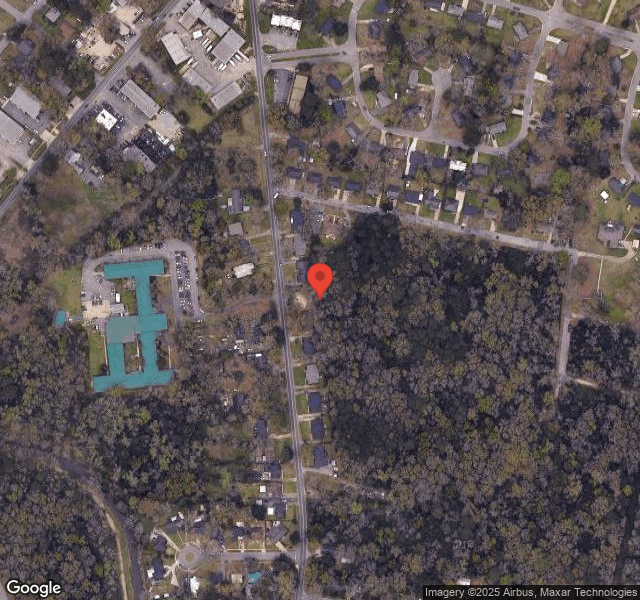

954 NAVCO ROAD, MOBILE, AL 36605 (251) 473-8684
For profit - Corporation 148 Beds CROWNE HEALTH CARE Data: November 2025
Trust Grade
83/100
#46 of 223 in AL
Last Inspection: September 2019

Over 2 years since last inspection. Current conditions may differ from available data.

Overview

Crowne Health Care of Mobile has received a Trust Grade of B+, meaning it is above average and recommended for families considering care options. It ranks #46 out of 223 facilities in Alabama, placing it in the top half of the state, and #5 out of 16 in Mobile County, indicating that only four local facilities are better. However, the facility is currently experiencing a worsening trend, with issues increasing from 3 in 2018 to 4 in 2019. Staffing is a strong point, with a perfect 5/5 star rating and a turnover rate of 30%, which is significantly better than the state average of 48%. There have been no fines recorded, which is a positive sign, but the RN coverage is concerning, as it is lower than that of 79% of Alabama facilities, meaning residents may not receive as much nursing attention as needed. Specific incidents noted during inspections include a failure to properly store clean meal trays and dishes, which could impact food safety for residents, and a situation where a nurse did not date and initial a resident's wound dressings, potentially affecting wound care management. Additionally, the facility did not promptly address a resident's grievance, which raises concerns about their responsiveness to resident needs. Overall, while Crowne Health Care has strengths in staffing and no fines, there are significant areas needing improvement regarding care practices and resident concerns.

Trust Score
B+
83/100
In Alabama
#46/223
Top 20%
Safety Record
Low Risk
No red flags
Inspections
Getting Worse
3 → 4 violations
Staff Stability
✓ Good
30% annual turnover. Excellent stability, 18 points below Alabama's 48% average. Staff who stay learn residents' needs.
Penalties
✓ Good
No fines on record. Clean compliance history, better than most Alabama facilities.
Skilled Nurses
○ Average
Each resident gets 32 minutes of Registered Nurse (RN) attention daily — about average for Alabama. RNs are the most trained staff who monitor for health changes.
Violations
○ Average
8 deficiencies on record. Average for a facility this size. Mostly minor or procedural issues.
★★★★☆
4.0
Overall Rating
★★★★★
5.0
Staff Levels
★★☆☆☆
2.0
Care Quality
★★★☆☆
3.0
Inspection Score
Stable
2018: 3 issues
2019: 4 issues

The Good

  • 5-Star Staffing Rating · Excellent nurse staffing levels
  • Low Staff Turnover (30%) · Staff stability means consistent care
  • Full Sprinkler Coverage · Fire safety systems throughout facility
  • No fines on record
  • Staff turnover is low (30%)

    18 points below Alabama average of 48%

Facility shows strength in staffing levels, staff retention, fire safety.

The Bad

Chain: CROWNE HEALTH CARE

Part of a multi-facility chain

Ask about local staffing decisions and management

The Ugly 8 deficiencies on record

Sept 2019 4 deficiencies
CONCERN (D)

Potential for Harm - no one hurt, but risky conditions existed

Resident Rights (Tag F0550)

Could have caused harm · This affected 1 resident

**NOTE- TERMS IN BRACKETS HAVE BEEN EDITED TO PROTECT CONFIDENTIALITY** Based on observations, record review and interviews, the facility failed to ensure Employee Identifier (EI) #5, the treatment nu...

Read full inspector narrative →
**NOTE- TERMS IN BRACKETS HAVE BEEN EDITED TO PROTECT CONFIDENTIALITY** Based on observations, record review and interviews, the facility failed to ensure Employee Identifier (EI) #5, the treatment nurse, did not date and initial Resident Identifier (RI) #67's dressings after the dressings had been placed over the resident's wounds during the wound care observation on 09/18/19. This affected RI #67, one of one residents observed for wound care. Findings Include: RI #67 was admitted to the facility on [DATE] and readmitted on [DATE], with the diagnosis of Pressure Ulcers. On 09/18/19 at 11:11 a.m., the surveyor observed EI #5 provide wound care for RI #67. EI #5 removed the dressings from RI #67's left ischial and sacrum areas, provided wound care to both wounds, covered the wounds with border foam dressings, then wrote the date and initialed the dressings with a black marker. EI #5 then cut the dressing from RI #67's left lower extremity, provided wound care to RI #67's left heel and left lateral ankle, covered the wounds and wrapped them with Kling wrap. After wrapping with Kling wrap, EI #5 placed silicone tape over the wrap and wrote the date and initialed the dressing with a black marker. EI #5 proceeded to clean the wound to RI #67's right inner knee, provided wound care, placed a border foam dressings over the wound then wrote the date and initialed the dressing with a black marker. EI #5 cut the dressing from RI #67's right lower extremity, provided wound care to the wounds on the right lower extremity, covered the wounds with Kling wrap, placed silicone tape over the Kling wrap then wrote the date and initialed the dressing with a black marker. On 09/19/19 at 11:57 a.m., the surveyor conducted an interview with EI #5. The surveyor asked EI #5 what should she have done before placing the dressings over RI #67's wounds. EI #5 said she should have put the date on the dressings prior to putting the dressings on RI #67's wounds. On 09/19/19 at 12:08 p.m., the surveyor conducted an interview with EI #6, the Licensed Practical Nurse (LPN)/Infection Control Nurse. When asked what should the treatment nurse have done before placing the dressings on RI #67's wounds, EI #6 said the dressings should have already been dated.
CONCERN (D)

Potential for Harm - no one hurt, but risky conditions existed

Grievances (Tag F0585)

Could have caused harm · This affected 1 resident

**NOTE- TERMS IN BRACKETS HAVE BEEN EDITED TO PROTECT CONFIDENTIALITY** Based on interviews, record review, a facility policy titled, Grievances/Concerns and review of Resident Identifier (RI) #644's ...

Read full inspector narrative →
**NOTE- TERMS IN BRACKETS HAVE BEEN EDITED TO PROTECT CONFIDENTIALITY** Based on interviews, record review, a facility policy titled, Grievances/Concerns and review of Resident Identifier (RI) #644's RESIDENT /SPONSOR CARE PLAN INPUT SHEET, the facility failed to promptly ensure a Grievance/Concern Report was initiated when RI #644's sponsor brought a concern/grievance to the facility on [DATE]. This affected RI #644, one of two residents sampled for grievances. Findings Include: RI #644 was admitted to the facility on [DATE]. Review of a facility policy titled, Grievances/Concerns with a revised date of 11/16, revealed the following: . POLICY: . The Facility will promptly investigate grievances/concerns . in an effort to seek a resolution . PROCEDURES: . 2. The Facility's Social Services Director will serve as the designated Grievance Official with the responsibility for overseeing the grievance process; receiving and tracking grievances through to their conclusion . 7. Upon any grievance/concern . either the individual making the grievance/concern of the Facility staff member receiving the complaint is responsible for initiating the Grievance/Concern Report, detailing the concern . 8. the Grievance Official will distribute the Grievance/Concern Report to the appropriate department or individual for investigation and intervention . 11. The Grievance Official or designee will maintain all Grievance/Concern Reports . 14. All Grievance/Concern Reports will be recorded on the Facility's Grievance/Concern Log . A review of RI #644's RESIDENT/SPONSOR CARE PLAN INPUT SHEET dated 05/14/19, documented: . Resident/Sponsor Concerns: Family came to facility and saw resident hunched over with requests to be put back in bed .Was grievance form filled out? Yes was checked on the sheet. A review of the facility's Grievance /Concern Log for May 2019, revealed there was no evidence a Grievance/Concern report had been completed when RI #644's sponsor brought their grievance/concern to the facility on [DATE]. On 09/19/19 at 11:48 a.m., the surveyor conducted an interview with Employee Identifier (EI) #3, the Director of Social Services. The surveyor asked EI #3 who would have filed out the Grievance/Concern report from the 05/14/19 meeting concerning RI #644. EI #3 said that would have been him. The surveyor asked EI #3 what was the purpose for filling out a Grievance/Concern report. EI #3 said the purpose was to address any concerns with the residents or sponsors to improve their stay at the facility. When asked if he was able to locate a Grievance/Concern report for RI #644, EI #3 said no. On 09/19/19 at 12:29 p.m., the surveyor conducted an interview with EI #2, the Director of Nursing (DON). The surveyor asked EI #2 what was the time frame for responding to a person's grievance. EI #2 said the grievance should be written up immediately and an investigation started. When asked if she recalled any Grievance/Concern report being completed for RI #644, EI #2 said no. This deficiency was written as a result of the investigation of complaint/report #AL00036346.
CONCERN (D)

Potential for Harm - no one hurt, but risky conditions existed

Pressure Ulcer Prevention (Tag F0686)

Could have caused harm · This affected 1 resident

**NOTE- TERMS IN BRACKETS HAVE BEEN EDITED TO PROTECT CONFIDENTIALITY** Based on observation, record review and interviews, the facility failed to ensure Employee Identifier (EI) #5, the treatment nur...

Read full inspector narrative →
**NOTE- TERMS IN BRACKETS HAVE BEEN EDITED TO PROTECT CONFIDENTIALITY** Based on observation, record review and interviews, the facility failed to ensure Employee Identifier (EI) #5, the treatment nurse, cleaned/sanitized a pair of scissors after removing the scissors from the pocket of her uniform, and before using the scissors to cut a Kling wrap that was on the inside of Resident Identifier (RI) #67's sacral pressure ulcer during the wound care observation on 09/18/19. This affected RI #67, one of one residents observed for wound care. Findings Include: RI #67 was admitted to the facility on [DATE] and readmitted on [DATE], with the diagnosis of Pressure Ulcers. RI #67's Quarterly Minimum Data Set (MDS) assessment with an Assessment Reference Date (ARD) of 08/01/19, identified RI #67 as having pressure ulcers during this assessment period. On 09/18/19 at 11:11 a.m., the surveyor observed EI #5, the treatment nurse, provide wound care to RI #67's sacrum wound. After removing the dressing from RI #67's sacrum wound, EI #5 provided wound care to the area, removed a pair of scissors from the left pocket of her uniform and without cleaning/sanitizing the scissors, cut a Kling wrap, placing the cut wrap in a cup. EI #5 poured Vashe solution over the cut Kling wrap then placed the cut Kling wrap in RI #67 sacrum wound bed. On 09/19/19 at 11:57 a.m., the surveyor conducted an interview with EI #5. The surveyor asked EI #5 when she provided wound care for RI #67 on 09/18/19, where did she remove the scissors from. EI #5 said her pocket. The surveyor asked EI #5 were the pockets considered a clean or dirty area. EI #5 said dirty. When asked what was there a potential for when using an item from a dirty area to perform wound care with, EI #5 said potential for contamination and infection. On 09/19/19 at 12:08 p.m., the surveyor conducted an interview with EI #6, the Licensed Practical Nurse (LPN)/Infection Control Nurse. The surveyor asked EI #6 what were the pockets of a uniform considered. EI #6 said dirty. When asked what was there a potential for when scissors removed from the pocket of a uniform were used when providing wound care to a resident, EI #6 said infection.
CONCERN (D)

Potential for Harm - no one hurt, but risky conditions existed

Pharmacy Services (Tag F0755)

Could have caused harm · This affected 1 resident

Based on an interview, review of Non-Controlled Record of Medication Destruction forms and a review of a facility policy titled, Disposal of Medications, Non-Controlled Medication Destruction, the fac...

Read full inspector narrative →
Based on an interview, review of Non-Controlled Record of Medication Destruction forms and a review of a facility policy titled, Disposal of Medications, Non-Controlled Medication Destruction, the facility failed to ensure the May 2019, June 2019, and August 2019, Non-Controlled Record of Medication Destruction forms contained the two required signatures. This was noted on three of the nine months of Non-Controlled Record of Medication Destruction forms reviewed. Findings Include: A review of a facility policy titled, Disposal of Medications, Non-Controlled Medication Destruction, dated 01/12, revealed: .3. The registered nurse and/or pharmacist witnessing the destruction, or their preparation for environmental service pickup, ensures that the following is entered on the Record of Medication Destruction form .J. Signature of witnesses, two witnesses required for non-controlled substances . Review of the Record of Medication Destruction forms for Non-Controlled drugs dated May 2019, June 2019 and August 2019, revealed only one signature. On 09/19/2019 at 10:37 a.m., the surveyor conducted an interview with Employee Identifier (EI) #2, the Director of Nursing (DON). EI #2 was asked when reviewing the Non-Controlled Record of Medication Destruction forms for the months of May, June and August (all for 2019), how many signatures were noted. EI #2 said one. EI #2 was asked how many signatures were required for the Non-Controlled Record of Medication Destruction forms. EI #2 said two. EI #2 was asked why two signatures were not on the Non-Controlled Record of Medication Destruction forms. EI #2 said she failed to sign them.
Aug 2018 3 deficiencies
CONCERN (D)

Potential for Harm - no one hurt, but risky conditions existed

Deficiency F0658 (Tag F0658)

Could have caused harm · This affected 1 resident

**NOTE- TERMS IN BRACKETS HAVE BEEN EDITED TO PROTECT CONFIDENTIALITY** Based on observations, interviews, medical record review, and review of the facility's procedure titled Procedure for Diet/Suppl...

Read full inspector narrative →
**NOTE- TERMS IN BRACKETS HAVE BEEN EDITED TO PROTECT CONFIDENTIALITY** Based on observations, interviews, medical record review, and review of the facility's procedure titled Procedure for Diet/Supplement/Thickener Orders Matching the Dietary Tray Card and Matching the Tray Served, the facility failed to ensure Resident Identifier (RI) #48's physician's orders for double portions with all meals was followed. This affected one of 41 sampled residents whose physician's orders were reviewed. Findings Include: A review of the facility's procedure titled, Procedure for Diet/Supplement/Thickener Orders Matching the Dietary Tray Card and Matching the Tray Served, dated 12/12, revealed the following: . 5. The CNA (Certified Nursing Assistant) serving a meal tray makes sure the tray card matches the food served on the tray and/or obtains any items not served per the tray card. RI #48 was re-admitted to the facility on [DATE] with diagnoses including: Aphasia, Contracture of Left and Right hand, Gastro-esophageal Reflux Disease without Esophagitis and Unspecified Sequelae of Unspecified Cerebrovascular Disease. A review of RI #48's current Annual Minimum Data Set (MDS) assessment, dated 06/09/18, revealed RI #48 had short and long term memory loss and was moderately impaired in cognitive skills for daily decision making. The MDS also documented RI #48 required total assistance with Activities of Daily Living. A review of RI #48's August 2018's Physician's Orders revealed the following: . Order Date 8/20/15 . Orders MECHANICAL SOFT DIET - DOUBLE PORTIONS WITH ALL MEALS . A review of RI #48's tray card revealed the following: . DIET: .Double Portion . On 08/15/18 at 1:05 PM, RI #48's lunch meal was observed. RI #48's tray card reflected orders for a mechanical soft diet with double portions. RI #48's tray contained the following items: one milk, one tea, one vanilla ice cream, one small bowl of grits, small portion of chopped fish, one small bowl of slaw approximately three quarters of the way full, and a bowl of cobbler approximately three quarters of the way full. RI #48 was fed the meal by Employee Identifier (EI) #4, Certified Nursing Assistant (CNA), and RI #48 consumed 100% of each item on the tray, except for the slaw. On 08/15/18 at 1:12 PM, during an interview with EI #4, the surveyor asked which food items were provided to RI #48 in a double portion. EI #4 stated, None of (his/her) food. The surveyor asked what does the tray card document that the resident should receive. EI #4 stated the tray card reflected mechanical soft diet with double portions. On 08/16/18 at 1:20 PM, the following items were observed on RI #48's tray during lunch: two milks, small bowl of fried okra, two small bowls of fruit, red beans and rice (covering one third of the plate), a small serving of ground sausage, and one slice of buttered garlic bread. On 08/16/18 at 1:32 PM, during an interview with EI #5, Kitchen Manager, the surveyor reviewed the tray card with EI #5 and asked what the resident should receive on his/her trays for breakfast/lunch/dinner. EI #5 stated, Double portions mechanical soft. EI #5 said the bowl of grits the resident received with lunch on 8/15/18 was four ounces. EI #5 also stated the fruit, if filled to the rim of the bowl, was four ounces. The surveyor informed EI #5 of what RI #48 received for lunch on 08/15/18 and 08/16/18, and asked if the resident received double portions for both lunch meals. EI #5 stated, No, (he/she) did not. EI #5 stated, I was standing and observing when the aide asked me if everything was double portions on the resident's lunch tray for today, and I said double everything, and the aide requested it. The surveyor asked what happened. EI #5 stated when she went back to observe the line, RI #48's extra servings were still on top of the steam line where the plates were issued out. The surveyor asked who was responsible to ensure the residents received what had been recommended based on their tray cards. EI #5 said the Dietary Manager and the Kitchen Manager. The surveyor asked what was the potential harm when tray cards are not followed and the residents did not receive what had been recommended. EI #5 said weight loss.
CONCERN (D)

Potential for Harm - no one hurt, but risky conditions existed

Deficiency F0692 (Tag F0692)

Could have caused harm · This affected 1 resident

**NOTE- TERMS IN BRACKETS HAVE BEEN EDITED TO PROTECT CONFIDENTIALITY** Based on observations, interviews, medical record review, and review of the facility's procedure titled Procedure for Diet/Suppl...

Read full inspector narrative →
**NOTE- TERMS IN BRACKETS HAVE BEEN EDITED TO PROTECT CONFIDENTIALITY** Based on observations, interviews, medical record review, and review of the facility's procedure titled Procedure for Diet/Supplement/Thickener Orders Matching the Dietary Tray Card and Matching the Tray Served, the facility failed to ensure Resident Identifier (RI) #48 received double portions with all meals, which created the potential for altered nutritional status. This affected one of eight sampled residents reviewed for nutrition. Findings Include: A review of the facility's procedure titled, Procedure for Diet/Supplement/Thickener Orders Matching the Dietary Tray Card and Matching the Tray Served, dated 12/12, revealed the following: . 5. The CNA (Certified Nursing Assistant) serving a meal tray makes sure the tray card matches the food served on the tray and/or obtains any items not served per the tray card. RI #48 was re-admitted to the facility on [DATE] with diagnoses including: Aphasia, Contracture of Left and Right hand, Gastro-esophageal Reflux Disease without Esophagitis and Unspecified Sequelae of Unspecified Cerebrovascular Disease. A review of RI #48's current Annual Minimum Data Set (MDS) assessment, dated 06/09/18, revealed RI #48 had short and long term memory loss and was moderately impaired in cognitive skills for daily decision making. The MDS also documented RI #48 required total assistance with Activities of Daily Living. A review of RI #48's August 2018's Physician's Orders revealed the following: . Order Date 8/20/15 . Orders MECHANICAL SOFT DIET - DOUBLE PORTIONS WITH ALL MEALS . A review of RI #48's tray card revealed the following: . DIET: .Double Portion . On 08/15/18 at 1:05 PM, RI #48's lunch meal was observed. RI #48's tray card reflected orders for a mechanical soft diet with double portions. RI #48's tray contained the following items: one milk, one tea, one vanilla ice cream, one small bowl of grits, small portion of chopped fish, one small bowl of slaw approximately three quarters of the way full, and a bowl of cobbler approximately three quarters of the way full. RI #48 was fed the meal by Employee Identifier (EI) #4, Certified Nursing Assistant (CNA), and RI #48 consumed 100% of each item on the tray, except for the slaw. On 08/15/18 at 1:12 PM, during an interview with EI #4, the surveyor asked which food items were provided to RI #48 in a double portion. EI #4 stated, None of (his/her) food. The surveyor asked what does the tray card document that the resident should receive. EI #4 stated the tray card reflected mechanical soft diet with double portions. On 08/16/18 at 1:20 PM, the following items were observed on RI #48's tray during lunch: two milks, small bowl of fried okra, two small bowls of fruit, red beans and rice (covering one third of the plate), a small serving of ground sausage, and one slice of buttered garlic bread. On 08/16/18 at 1:32 PM, during an interview with EI #5, Kitchen Manager, the surveyor reviewed the tray card with EI #5 and asked what the resident should receive on his/her trays for breakfast/lunch/dinner. EI #5 stated, Double portions mechanical soft. EI #5 said the bowl of grits the resident received with lunch on 8/15/18 was four ounces. EI #5 also stated the fruit, if filled to the rim of the bowl, was four ounces. The surveyor informed EI #5 of what RI #48 received for lunch on 08/15/18 and 08/16/18, and asked if the resident received double portions for both lunch meals. EI #5 stated, No, (he/she) did not. EI #5 stated, I was standing and observing when the aide asked me if everything was double portions on the resident's lunch tray for today, and I said double everything, and the aide requested it. The surveyor asked what happened. EI #5 stated when she went back to observe the line, RI #48's extra servings were still on top of the steam line where the plates were issued out. The surveyor asked who was responsible to ensure the residents received what had been recommended based on their tray cards. EI #5 said the Dietary Manager and the Kitchen Manager. The surveyor asked what was the potential harm when tray cards are not followed and the residents did not receive what had been recommended. EI #5 said weight loss.
CONCERN (D)

Potential for Harm - no one hurt, but risky conditions existed

Infection Control (Tag F0880)

Could have caused harm · This affected 1 resident

**NOTE- TERMS IN BRACKETS HAVE BEEN EDITED TO PROTECT CONFIDENTIALITY** Based on observation, interview, medical record review and a review of the facility's policies titled, Incontinent Care ., Glove...

Read full inspector narrative →
**NOTE- TERMS IN BRACKETS HAVE BEEN EDITED TO PROTECT CONFIDENTIALITY** Based on observation, interview, medical record review and a review of the facility's policies titled, Incontinent Care ., Glove Use and Hand Hygiene, the facility failed to ensure licensed staff washed her hands after removing soiled gloves and before leaving the room while performing incontinence care. Further, licensed staff contaminated the disposable wipes container with soiled gloves while performing incontinence care. This affected Resident Identifier (RI) #43, one of one resident observed during incontinence care. Findings Include: A review of the facility's policy titled, Incontinent Care ., with a revised date of 12/2012, revealed the following: . PROCEDURE: . 9. Remove and dispose of gloves, wash hands. Apply clean gloves . 12. Remove gloves and wash hands prior to leaving the room. A review of the facility's policy titled, Glove Use, with a revised date of 3/2017, revealed the following: . PROCEDURE: . 9. Hand washing is necessary when gloves are removed. A review of the facility's policy titled, Hand Hygiene, with a revised date of 3/2017, revealed the following: Purpose: Hand hygiene is recommended to reduce the transmission of infection to residents . Procedure: . 3. Perform hand hygiene . after gloves are removed . RI #43 was readmitted to the facility on [DATE] with diagnoses including: Persistent Vegetative State, Other Sequelae following Unspecified Cerebrovascular Disease and Urinary Tract Infection. A review of RI #43's Significant Change Minimum Data Set assessment, dated 06/04/2018, revealed RI #43 was totally dependent on staff for toileting and personal hygiene needs. On 08/15/18 at 6:15 PM, the following was observed during incontinent care: Employee Identifier (EI) #7, Licensed Practical Nurse/LPN/Treatment Nurse, removed her gloves after wiping stool from RI #43's buttock and applied a new pair of gloves. EI #7 did not wash her hands after removing soiled gloves. EI #7 removed wipes from the wipe dispenser with soiled gloves. EI #7 wiped stool from RI #43's buttocks, removed her gloves and exited the resident's room to obtain additional supplies. EI #7 did not wash her hands prior to leaving the resident's room. On 08/15/18 at 6:40 PM, during an interview with EI #7, the surveyor asked what should be done after gloves are removed. EI #7 stated, Wash your hands. The surveyor asked was that what she had done every time. EI #7 stated, No. The surveyor asked after wiping stool, and removing gloves, what should be done before leaving the room to go get more supplies. EI #7 stated, Wash my hands. the surveyor asked was that what she had done. EI #7 stated, No, I know I didn't. The surveyor asked what should be done to prevent contaminating the wipes dispenser. EI #7 stated, Should have pulled enough out from the start. The surveyor asked what was the potential for harm. EI #7 stated, Infection. On 08/15/18 at 12:25 PM, during an interview with EI #8, Registered Nurse/Infection Control, the surveyor asked during incontinence care, what should be done after wiping stool from the buttocks and removing gloves. EI #8 stated, Wash your hands. The surveyor asked during incontinence care, after wiping stool and removing gloves, what should be done when you leave the room to go get more supplies. EI #8 stated, Wash your hands, anytime you remove gloves, wash your hands. The surveyor asked during incontinence care, what should be done to prevent contaminating the wipes dispenser. EI #8 stated, Have clean field set up, can pull out several wipes and place them on the clean field. If run out of wipes, remove gloves, wash hands and can go back to dispenser. The surveyor asked what was the potential for harm. EI #8 stated, Don't want to cross contaminate, keep dirty and clean separated.
Jun 2017 1 deficiency
CONCERN (F)

Potential for Harm - no one hurt, but risky conditions existed

Deficiency F0371 (Tag F0371)

Could have caused harm · This affected most or all residents

Based on observations, interview, a review of the facility policy titled, Dish Clearing and Cleaning Safety, a review of an undated/untitled facility policy, and a review of the 2013 Food Code, the fa...

Read full inspector narrative →
Based on observations, interview, a review of the facility policy titled, Dish Clearing and Cleaning Safety, a review of an undated/untitled facility policy, and a review of the 2013 Food Code, the facility failed to ensure: 1) a total of 120 meal trays were not observed wet and stored on top of each other in a clean area of the kitchen and 2) a dinner plate with a chipped area on the rim of it and four dinner plates with rough edges were stored on a shelf in the kitchen. These failures had the potential to effect all 128 residents receiving meals from the dietary department. Findings Include: 1) A review of an undated/untitled facility policy revealed the following: . Procedure: .10 . Remove the dishes, inspect for cleanliness and dryness, and put them away if clean . A review of the Food and Drug Administration Food Code 2013, Chapter 4 Protection of Clean Items, page 148, revealed the following: . Drying 4-901.11 Equipment and Utensils, Air-Drying Required. . After cleaning and SANITIZING, EQUIPMENT and UTENSILS: (A) Shall be air-dried . During the initial tour of the kitchen on 6/20/2017 beginning at 10:35 a.m., meal trays were observed wet. EI (Employee Identifier) #1, the Dietary Manager, and the surveyor counted 120 trays that were wet. During the interview with EI #1 on 6/22/2017, at 3:45 p.m., EI #1 was asked why did the meal trays have water on them and were wet nesting. EI #1 said the staff did not let them completely dry. EI #1 was asked had the trays been washed. EI #1 answered yes and then he rewashed them again and let them completely dry in the dish room. EI #1 was asked who was responsible for making sure meal trays were dried before storing them. EI #1 said the person that is pulling the trays. EI #1 was asked what was the facility's policy on storing dishes and trays after they had been washed. EI #1 said to allow them to dry before storing them. EI #1 was further asked what was the concern and the potential negative outcome with trays wet nesting. EI #1 said bacterial growth could cause the residents to get sick and affect them all. 2) A review of a facility policy titled, Dish Clearing and Cleaning Safety with a copyright date of 2013, revealed: . 5. Any broken or chipped dishes or glassware will be carefully removed from service and discarded. During the initial tour of the kitchen on 6/20/2017, beginning at 10:35 a.m., a dinner plate with a chipped area was observed on a shelf in the kitchen. Four plates with rough edges were observed in the same area. During the interview with EI #1 on 6/22/2017, at 3:45 p.m., EI #1 was asked could he explain why the dishes were found in the condition observed. EI #1 answered wear and tear. EI #1 was asked who was responsible for making sure residents dinner plates were in good condition, free of chips, and rough edges. EI #1 said the person pulling the dishes. EI #1 was asked could he explain why those dishes were on the shelf. EI #1 said no. EI #1 was asked what was the facility's policy on the condition of dinnerware for the residents. EI #1 answered any chips or frayed edges should be removed and reported to the Dietary Manager or the kitchen manager. EI #1 was asked what was the concern of serving resident on a plate with a chip on it or frayed edges. EI #1 said they could get cuts, skin tears, and the plates could harbor bacteria.
Understanding Severity Codes (click to expand)
Life-Threatening (Immediate Jeopardy)
J - Isolated K - Pattern L - Widespread
Actual Harm
G - Isolated H - Pattern I - Widespread
Potential for Harm
D - Isolated E - Pattern F - Widespread
No Harm (Minor)
A - Isolated B - Pattern C - Widespread

Questions to Ask on Your Visit

  • "Can I speak with families of current residents?"
  • "What's your RN coverage like on weekends and overnight?"

Our Honest Assessment

Strengths
  • • Grade B+ (83/100). Above average facility, better than most options in Alabama.
  • • No major safety red flags. No abuse findings, life-threatening violations, or SFF status.
  • • No fines on record. Clean compliance history, better than most Alabama facilities.
  • • 30% annual turnover. Excellent stability, 18 points below Alabama's 48% average. Staff who stay learn residents' needs.
Concerns
  • • No significant concerns identified. This facility shows no red flags across CMS ratings, staff turnover, or federal penalties.
Bottom line: Generally positive indicators. Standard due diligence and a personal visit recommended.

About This Facility

What is Crowne Health Care Of Mobile's CMS Rating?

CMS assigns CROWNE HEALTH CARE OF MOBILE an overall rating of 4 out of 5 stars, which is considered above average nationally. Within Alabama, this rating places the facility higher than 99% of the state's 100 nursing homes. This rating reflects solid performance across the metrics CMS uses to evaluate nursing home quality.
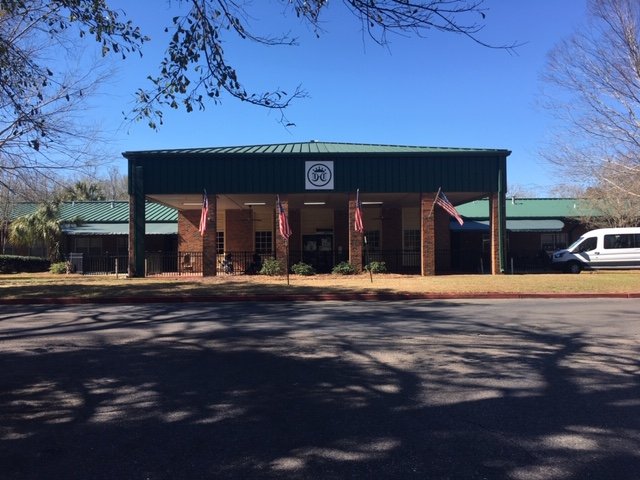
How is Crowne Health Care Of Mobile Staffed?

CMS rates CROWNE HEALTH CARE OF MOBILE's staffing level at 5 out of 5 stars, which is much above average compared to other nursing homes. Staff turnover is 30%, compared to the Alabama average of 46%. This relatively stable workforce can support continuity of care.

What Have Inspectors Found at Crowne Health Care Of Mobile?

State health inspectors documented 8 deficiencies at CROWNE HEALTH CARE OF MOBILE during 2017 to 2019. These included: 8 with potential for harm.
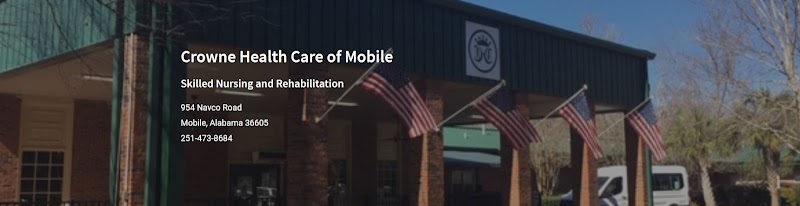
Who Owns and Operates Crowne Health Care Of Mobile?

CROWNE HEALTH CARE OF MOBILE is owned by a for-profit company. For-profit facilities operate as businesses with obligations to shareholders or private owners. The facility is operated by CROWNE HEALTH CARE, a chain that manages multiple nursing homes. With 148 certified beds and approximately 134 residents (about 91% occupancy), it is a mid-sized facility located in MOBILE, Alabama.
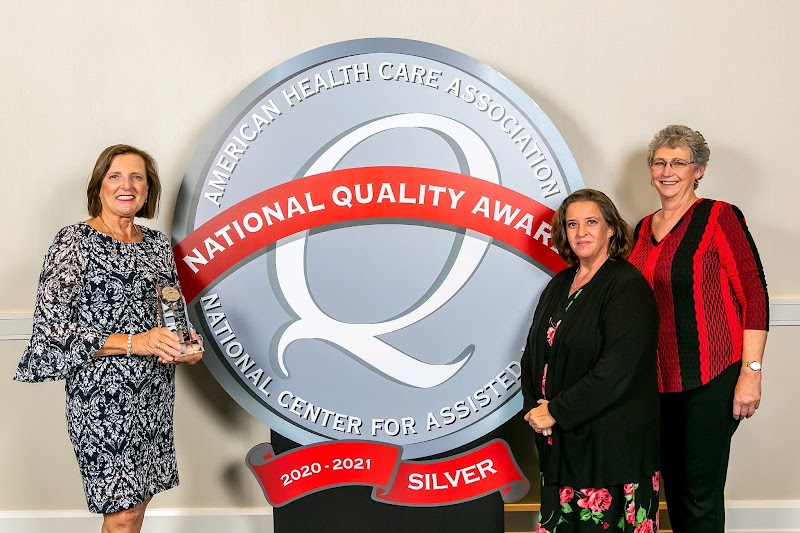
How Does Crowne Health Care Of Mobile Compare to Other Alabama Nursing Homes?

Compared to the 100 nursing homes in Alabama, CROWNE HEALTH CARE OF MOBILE's overall rating (4 stars) is above the state average of 3.0, staff turnover (30%) is significantly lower than the state average of 46%, and health inspection rating (3 stars) is at the national benchmark.

What Should Families Ask When Visiting Crowne Health Care Of Mobile?

Based on this facility's data, families visiting should ask: "Can I visit during a mealtime to observe dining assistance and food quality?" "How do you handle medical emergencies, and what is your hospital transfer rate?" "Can I speak with family members of current residents about their experience?"

Is Crowne Health Care Of Mobile Safe?

Based on CMS inspection data, CROWNE HEALTH CARE OF MOBILE has a clean safety record: no substantiated abuse findings (meaning no confirmed cases of resident harm), no Immediate Jeopardy citations (the most serious violation level indicating risk of serious injury or death), and is not on the Special Focus Facility watch list (a federal program monitoring the lowest-performing 1% of nursing homes). The facility has a 4-star overall rating and ranks #1 of 100 nursing homes in Alabama. While no facility is perfect, families should still ask about staff-to-resident ratios and recent inspection results during their visit.

Do Nurses at Crowne Health Care Of Mobile Stick Around?

Staff at CROWNE HEALTH CARE OF MOBILE tend to stick around. With a turnover rate of 30%, the facility is 16 percentage points below the Alabama average of 46%. Low turnover is a positive sign. It means caregivers have time to learn each resident's needs, medications, and personal preferences. Consistent staff also notice subtle changes in a resident's condition more quickly. Registered Nurse turnover is also low at 21%, meaning experienced RNs are available to handle complex medical needs.

Was Crowne Health Care Of Mobile Ever Fined?

CROWNE HEALTH CARE OF MOBILE has no federal fines on record. CMS issues fines when nursing homes fail to meet care standards or don't correct problems found during inspections. The absence of fines suggests the facility has either maintained compliance or corrected any issues before penalties were assessed. This is a positive indicator, though families should still review recent inspection reports for the full picture.

Is Crowne Health Care Of Mobile on Any Federal Watch List?

CROWNE HEALTH CARE OF MOBILE is not on any federal watch list. The most significant is the Special Focus Facility (SFF) program, which identifies the bottom 1% of nursing homes nationally based on persistent, serious quality problems. Not being on this list means the facility has avoided the pattern of deficiencies that triggers enhanced federal oversight. This is a positive indicator, though families should still review the facility's inspection history directly.