JOHN KNOX MANOR INC I I
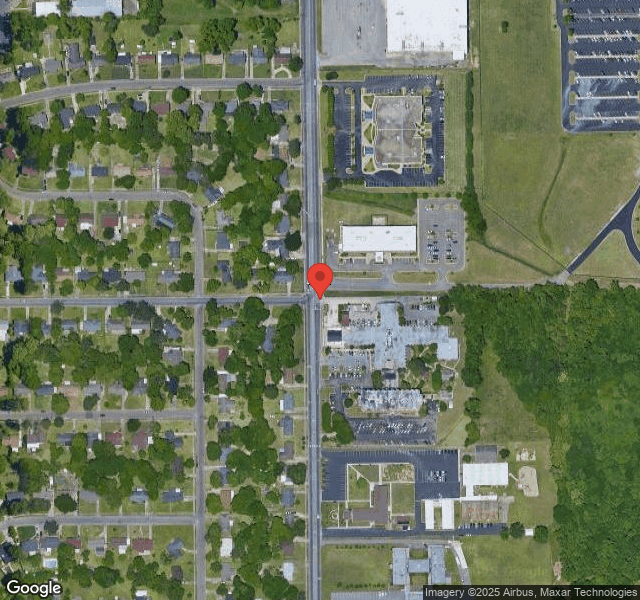

4401 NARROW LANE ROAD, MONTGOMERY, AL 36116 (334) 281-6336
Non profit - Corporation 98 Beds Independent Data: November 2025
Trust Grade
55/100
#165 of 223 in AL
Last Inspection: January 2024

Within standard 12-15 month inspection cycle. Federal law requires annual inspections.

Overview

John Knox Manor Inc in Montgomery, Alabama has a Trust Grade of C, which means it is average and falls in the middle of the pack compared to other nursing homes. It ranks #165 out of 223 facilities in Alabama, placing it in the bottom half, and #6 out of 8 in Montgomery County, indicating that only one other local option is considered better. Unfortunately, the facility is worsening, with issues increasing from 1 in 2018 to 3 in 2024. Staffing has a stable rating of 3 out of 5 stars, but the turnover rate is concerning at 68%, which is higher than the state average of 48%. There have been no fines, which is a positive sign, and the RN coverage is average, meaning residents receive standard nursing care. However, there are specific concerns; for example, staff did not properly prevent cross-contamination in the kitchen, which could lead to foodborne illnesses, and a nurse failed to wash her hands after touching a dirty item before administering medications, risking infection. Overall, while there are some strengths, such as the absence of fines, the facility has significant areas that need improvement.

Trust Score
C
55/100
In Alabama
#165/223
Bottom 27%
Safety Record
Low Risk
No red flags
Inspections
Getting Worse
1 → 3 violations
Staff Stability
⚠ Watch
68% turnover. Above average. Higher turnover means staff may not know residents' routines.
Penalties
✓ Good
No fines on record. Clean compliance history, better than most Alabama facilities.
Skilled Nurses
✓ Good
Each resident gets 42 minutes of Registered Nurse (RN) attention daily — more than average for Alabama. RNs are trained to catch health problems early.
Violations
✓ Good
Only 4 deficiencies on record. Cleaner than most facilities. Minor issues only.
★★☆☆☆
2.0
Overall Rating
★★★☆☆
3.0
Staff Levels
★☆☆☆☆
1.0
Care Quality
★★★☆☆
3.0
Inspection Score
Stable
2018: 1 issues
2024: 3 issues

The Good

  • Full Sprinkler Coverage · Fire safety systems throughout facility
  • No fines on record

Facility shows strength in fire safety.

The Bad

2-Star Overall Rating

Below Alabama average (2.9)

Below average - review inspection findings carefully

Staff Turnover: 68%

22pts above Alabama avg (46%)

Frequent staff changes - ask about care continuity

Staff turnover is elevated (68%)

20 points above Alabama average of 48%

The Ugly 4 deficiencies on record

Jan 2024 3 deficiencies
CONCERN (D)

Potential for Harm - no one hurt, but risky conditions existed

Assessment Accuracy (Tag F0641)

Could have caused harm · This affected 1 resident

**NOTE- TERMS IN BRACKETS HAVE BEEN EDITED TO PROTECT CONFIDENTIALITY** Based on interviews, residents' medical records, and the Centers for Medicare and Medicaid Services Long-Term Care Facility Resi...

Read full inspector narrative →
**NOTE- TERMS IN BRACKETS HAVE BEEN EDITED TO PROTECT CONFIDENTIALITY** Based on interviews, residents' medical records, and the Centers for Medicare and Medicaid Services Long-Term Care Facility Resident Assessment Instrument 3.0 User's Manuals, the facility failed to ensure Section J of RI #43's discharge MDS assessment with an ARD of 09/28/2023 was accurately coded to reflect a fall during the assessment period and Section N of Resident Identifier (RI) #19's quarterly Minimum Data Set (MDS) with an Assessment Reference Date (ARD) of 11/23/2023 was accurately coded to reflect the medications received during the assessment period. This had the potential to affect two of 17 sampled residents whose MDS assessments were reviewed. Findings include: 1.) The Centers for Medicare & Medicaid Services Long-Term Care Facility Resident Assessment Instrument 3.0 User's Manual Version 1.17.1 October 2019 Section J documented Section J1800: Any Falls Since admission or Reentry or Prior Assessments . Coding Instructions . Code 1, yes if the resident has fallen since the last assessment . RI #43 was admitted to the facility on [DATE] and re-admitted on [DATE] and a diagnosis of History of Falling with onset date of 09/06/2022. A facility Incident Report dated 08/21/2023 documented that RI #43 was found on his/her right side on the floor in front of his/her door. A review of RI #43's MDS assessment dates revealed RI #43 had an Annual MDS with an ARD date of 07/13/2023 and the next assessment was the Discharge MDS with ARD of 09/28/2023. Section J of RI #43's Discharge MDS with an ARD of 09/28/2023 indicated RI #43 had not fallen since the last assessment under section J1800. On 01/03/2024 at 4:30 PM an interview was conducted with the Assistant Director of Nursing (ADON). The ADON reported that RI #43 had a fall on 08/21/2023. On 01/03/2024 at 5:38 PM an interview was conducted with the Registered Nurse (RN) #7, the acting MDS Coordinator. RN #7 said RI #43's fall was not coded accurately because it was an oversight. On 01/03/2024 at 5:50 PM an interview was conducted with the Corporate Nurse (CN), RN. The CN stated RI #43's fall should be coded in section J1800 on the MDS assessment. She said it should have been coded on the 09/28/2023 MDS assessment, but it was not. In a follow-up interview on 01/04/2023 at 9:11 AM with the CN. The CN stated the MDS Coordinator was responsible for coding falls on MDS assessments. The CN stated the negative outcome of not coding RI #43's fall on the MDS assessment could be an inaccuracy of the care plan. 2.) The Centers for Medicare &Medicaid Services Long-Term Care Facility Resident Assessment Instrument 3.0 User's Manual Version 1.18.11 October 2023 Section N documented: . N0415: High-Risk Drug Classes: Use and Indication .E. Anticoagulant ( . warfarin, heparin, or low-molecular weight heparin) . Do not code antiplatelet medications such as aspirin . or clopidogrel as N0415E, Anticoagulant. N0415I1Check if an antiplatelet medication (e.g., aspirin . clopidogrel) was taken by the resident at any time during the 7-day observation period (or since admission/entry or reentry if less than 7 days). N015I2 Check if there is an indication noted for all antiplatelet medications taken by the resident any time during the observation period (or since admission/entry or reentry if less than 7 days) . RI #19 was admitted to the facility on [DATE]. Section N of RI #19's quarterly MDS assessment with an ARD of 11/23/2023 documented the use of anticoagulant medication and did not document the use of antiplatelet medication. On 01/04/2024 at 4:00 PM a review of RI #19's November 2023 physician orders revealed an order for aspirin and clopidogrel but no order was found for anticoagulants that would need to be coded on the MDS assessment. A search of RI #19's orders revealed an active order for clopidogrel 75 milligram (mg) with start date of 08/01/2023 and aspirin 81 mg, also with a start date of 08/01/2023. On 01/04/2024 at 4:17 PM, an interview was conducted with the RN #7. RN #7 said RI #19's quarterly MDS, with an ARD of 11/23/2023, had been inaccurately coded for the use of anticoagulant medication. RN #7 said RI #19 had not received anticoagulant medication but was prescribed aspirin and clopidogrel which were classified as antiplatelet medication. RN #7 said that the MDS should be coded to reflect the use of antiplatelet medication to ensure the resident received appropriate care.
CONCERN (D)

Potential for Harm - no one hurt, but risky conditions existed

Infection Control (Tag F0880)

Could have caused harm · This affected 1 resident

**NOTE- TERMS IN BRACKETS HAVE BEEN EDITED TO PROTECT CONFIDENTIALITY** Based on observations, interviews, residents' medical records, the facility policy titled Handwashing/Hygiene, and the Center fo...

Read full inspector narrative →
**NOTE- TERMS IN BRACKETS HAVE BEEN EDITED TO PROTECT CONFIDENTIALITY** Based on observations, interviews, residents' medical records, the facility policy titled Handwashing/Hygiene, and the Center for Disease Control (CDC) Core Infection Prevention and Control Practices for Safe Healthcare Delivery in All Settings the facility failed to ensure Licensed Practical Nurse (LPN) #9, did not create the potential for cross-contamination when she picked up a straw from the floor, placed the straw on the medication cart, and then without performing hand hygiene administered medications to Resident Identifier (RI) #314. Further, after another staff member discarded the dirty straw and before the medication cart was cleaned or disinfected, LPN #9 dropped a tablet on the surface of the medication cart where the straw from the floor had been placed while preparing medications for RI #46 and placed the medication in medication cup along with other medications and took the medication to RI #46. This deficient practice had the potential to affect two of 58 residents residing in the facility. Findings include: The facility policy titled, Handwashing/Hygiene, with an effective date of 10/01/2022 documented: Policy Statement Handwashing is the most effective means of preventing and controlling the spread of infection . Policy Interpretation and Implementation . When to use Alcohol Based Hand Rubs (ABHR) . 6. Before handling medication . The CDC's Core Infection Prevention and Control Practices for Safe Healthcare Delivery in All Settings with a revised date of 11/29/2022 documented . Core Practice Category . Standard Precautions . Core Practices . Use Standard Precautions to care for all patients in all settings. Standard Precautions include: . 5c . Medication Safety . 2. Use aseptic technique when preparing and administering medications . RI #314 was admitted to the facility 12/15/2023 and had a diagnosis of Dementia. RI #46 was admitted to the facility on [DATE] and had a diagnosis of Dementia. On 01/04/2024 at 09:25 AM, LPN #9 was observed with a water cup, straw, and pill cup in her left hand. LPN #9 dropped the straw on the floor, picked up the straw with her right hand, placed the straw on the medication cart, and retrieved another straw from the cart. LPN #9 continued without washing or sanitizing her hands and took the medications, the cup of water, and the straw into RI #314's room. LPN #9 placed the medication cup, water cup, and the straw on the resident's bedside table. LPN #9 picked up the straw with her right hand and opened the straw without washing her hands and put the straw in the water cup and then administered the medications to RI #314. LPN #9 performed hand hygiene and exited the room. On 01/04/2024 at 09:27 AM LPN #9 remained in RI #314's room and LPN #8 was observed as she took the straw from the medication cart and threw the straw in the trash. LPN #8 did not clean or disinfect the medication cart after throwing away the straw. On 01/04/2024 at 09:33 LPN #9 began dispensing pills from medication cards and dropped one pill on the medication cart where the dirty straw had been placed. LPN #9 picked the pill up and put it in the medication cup. LPN #9 finished dispensing the medications and entered RI #46's room to administer the medications. On 01/04/2024 at 09:39 AM, an interview was conducted with LPN #9. LPN #9 stated after she picked up the straw off the floor she did not wash or sanitize her hands before administering medications to RI #314 because she did not think to wash her hands after picking up the straw off the floor. LPN #9 said that there was a risk of contamination when she did not wash her hands after picking up the straw off the floor and before administering medication to RI #314. LPN #9 stated that she did not wash or sanitize the medication cart before pulling the medications for RI #46. LPN #9 stated she did not think to wash or sanitize the cart after the dirty straw was on the medication cart. LPN #9 stated there was a risk of contamination when the medication cart was not sanitized after the straw had been placed on the cart. LPN #9 said that the medication cart should have been cleaned with a sanitizing wipe. On 01/04/2024 at 09:47 AM, an interview was conducted with LPN #8. LPN #8 stated she saw LPN #9 pick up the straw off the floor and put it on the medication cart and did not see LPN #9 perform hand hygiene after picking the up from the floor. LPN #8 said that she put the straw in the trash and no one cleaned the medication cart after the straw had been on the cart. LPN #8 stated there was a risk of contamination from dirty to clean. LPN #8 stated the medication cart should have been sanitized before pulling medication and before passing any more medications. On 01/04/2024 at 10:38 AM, an interview was conducted with Registered Nurse #7, the Infection Control Nurse/Infection Preventionist (IP). The IP said if a staff member picked up a straw from the floor the staff member should throw the straw in trash and wash their hands. The IP stated that a straw from the floor should never be placed on the medication cart. The IP said the nurse should have discarded the straw, washed her hands, gotten a new straw, administered the medications, and then washed her hands. The IP said there was a risk of infection when the nurse picked the straw from the floor, put it on the medication cart, then got a new straw, put the straw in the resident's water cup, and administered medication to a resident without washing her hands. The IP said once the straw from the floor had been placed on the medication cart, the straw should have been discarded and the surface of medication cart should have been sanitized. The IP stated there was a risk of infection when the nurse picked up a straw from the floor, put the straw on the medication cart, pulled medications, popped a pill out of a medication card onto the medication cart, and then placed the pill in a medication cup without sanitizing the medication cart top.
CONCERN (F)

Potential for Harm - no one hurt, but risky conditions existed

Food Safety (Tag F0812)

Could have caused harm · This affected most or all residents

Based on observations, interviews, the 2022 United States (U.S.) Food and Drug Administration (FDA) Food Code, and the facility's policies titled Ovens/Cleaning, Mixer Cleaning, Holding Temperatures, ...

Read full inspector narrative →
Based on observations, interviews, the 2022 United States (U.S.) Food and Drug Administration (FDA) Food Code, and the facility's policies titled Ovens/Cleaning, Mixer Cleaning, Holding Temperatures, and Dish Washing Area; the facility failed to prevent the potential for cross-contamination and foodborne illness as evidenced by: Direct connections existed between the sewage system and the drains of the dish machine, the three-compartment sink, and two preparation sinks; Two oven door handles had a greasy residue to touch; A standing mixer had batter residue on the upper interior housing; On 01/02/2024 a half-full gallon container of whole milk with an expiration date of 12/22/2023 was observed in the reach-in refrigerator; The resident nourishment refrigerators on the three units (East, West, and North) used temperature logs with a temperature range of 36 to 46 degrees Fahrenheit (°F), instead of 41°F or less; The final rinse temperature of the dish machine exceeded 194°F and reached 202°F; which resulted in the Plate Simulator Thermometer Puck only reaching 149.7°F, instead of 160°F, the minimum plate surface temperature for sanitizing. This had the potential to affect 58 of 58 residents who received meals from the facility's kitchen. Findings include: An undated facility policy titled Ovens/Cleaning revealed . Purpose To ensure that the ovens are clean and free from build-up of grease . Policy . Ovens should be cleaned . daily as spills occur. The facility's policy titled Policy for Mixer Cleaning, dated 06/17/2002 revealed . Purpose - To ensure that the mixer is maintained in a clean and sanitized condition. Procedure: . 3. Wipe machine with soapy cloth including . underside of shaft. An undated facility policy titled HOLDING TEMPERATURES revealed . Policy: The wholesomeness of food must be safeguarded through safe and sanitary practices which includes effective control of food temperatures at all times . Procedure: . 3. Proper holding temperatures for equipment include: Refrigerators 36-40 degrees Freezers 10-0 degrees Dish Machine Rinse 180 degrees . 4. Equipment temperatures will be recorded daily . An undated facility policy titled Dish Washing Area revealed . Mechanical Dish Washing: To ensure effective dish washing, all equipment must be functioning at optimum levels. Procedures: . Rinse Temperature: The rinse temperature must be maintained at a minimum of 180 degrees Fahrenheit during a minimum rinse cycle of twelve seconds. The 2022 U.S. Food and Drug Administration Food Code included the following: . 3-501.16 Time/Temperature Control for Safety Food, Hot and Cold Holding. (A) . TIME/TEMPERATURE CONTROL FOR SAFETY FOOD shall be maintained: . (2) At 5°[degrees] C [Centigrade/Celsius] (41°F) or less. 3-501.18 Ready-to-Eat, Time/Temperature Control for Safety Food, Disposition. (A) A FOOD specified . shall be discarded if it: (1) Exceeds the . time . specified . or (3) Is inappropriately marked with a date or day . 4-501.112 Mechanical Warewashing Equipment, Hot Water Sanitization Temperatures. (A) . in a mechanical operation, the temperature of the fresh hot water SANITIZING rinse as it enters the manifold may not be more than 90°C (194°F), or less than: . (2) For all other machines, 82°C (180°F). 4-601.11 Equipment, Food-Contact Surfaces, Nonfood-Contact Surfaces, and Utensils. (A) EQUIPMENT FOOD-CONTACT SURFACES and UTENSILS shall be clean to sight and touch. (C) NonFOOD-CONTACT SURFACES of EQUIPMENT shall be kept free of an accumulation of dust, dirt, FOOD residue, and other debris. 5-402.11 Backflow Prevention. (A) . a direct connection may not exist between the SEWAGE system and a drain originating from EQUIPMENT in which FOOD, portable EQUIPMENT, or UTENSILS are placed. [Annex 3, pages 172-173] 4-501.112 Mechanical Warewashing Equipment, Hot Water Sanitization Temperatures. The temperature of hot water delivered from a warewasher sanitizing rinse manifold must be maintained according to the equipment manufacturer's specifications and temperature limits specified in this section to ensure surfaces of multiuse utensils such as kitchenware and tableware accumulate enough heat to destroy pathogens that may remain on such surfaces after cleaning. The surface temperature must reach at least 71ºC (160ºF) as measured by an irreversible registering temperature measuring device to affect sanitization. When the sanitizing rinse temperature exceeds 90ºC (194ºF) at the manifold, the water becomes volatile and begins to vaporize reducing its ability to convey sufficient heat to utensil surfaces. The lower temperature limits of 74ºC (165ºF) for a stationary rack, single temperature machine, and 82ºC (180ºF) for other machines are based on the sanitizing rinse contact time required to achieve the 71ºC (160ºF) utensil surface temperature. The initial kitchen observation was conducted with the Dietary Manager (DM) on 01/02/2024. On 01/02/2024 at 3:58 PM, two oven door handles on the stove had a greasy residue upon touch. On 01/02/2024 at 4:03 PM, the meat preparation sink's drain pipe was observed to extend into a floor drain. On 01/02/2024 at 4:05 PM, the dish machine's drain pipe was observed to extend into a floor drain. Also, the drain pipe from the three-compartment sink extended into a floor drain. On 01/02/2024 at 4:13 PM, the vegetable preparation sink was observed to have a p-trap drain that was plumbed into the wall with no air gap. On 01/02/2024 at 4:16 PM the standing mixer was observed to have small remnants of pink and yellow batter on the upper, inner housing of the standing mixer. On 01/02/2024 at 4:22 PM, a half-full gallon container of whole milk, dated 12/22/2023 by the manufacturer, was observed inside the reach-in refrigerator. On 01/03/2024 at 4:46 PM, the Director of Maintenance (DOM) was interviewed in the kitchen area during drain observations with DM in attendance. The DOM said the drain under the three-compartment sink must be re-plumbed. The DOM said the vegetable preparation sink's drain did not have a back-flow device. The DOM said the dish machine's drain pipe and the meat preparation sink's drain pipe could be corrected. The DOM further said the problem with a drain extending into a floor drain was the potential for back-up and cross-contamination. On 01/03/2024 at 5:43 PM, the [NAME] Wing nourishment refrigerator was observed. The temperature record or log posted on the front of the refrigerator for January 2024 was a pharmacy refrigerator log, which included: . (Temp range = 36-46 degrees) . On 01/04/2024 at 9:25 AM, East Wing nourishment refrigerator was observed. The temperature record posted on the front of the refrigerator for January 2024 was a pharmacy refrigerator log, which included: . (Temp range = 36-46 degrees) . In addition, the January 2024 temperature record had the following temperatures recorded: 44°F for January 3 and 46°F for January 4. Inside the refrigerator were: six pre-packaged individual portions of gelatin desserts, two pre-packaged individual portions of cranberry juice, and two pre-packaged individual portions of honey-thick cranberry juice. On 01/04/2024 at 9:30 AM, the North Wing nourishment refrigerator was observed. The temperature record posted on the front of the refrigerator for January 2024 was a pharmacy refrigerator log, which included: . (Temp range = 36-46 degrees) . On 01/04/2024 at 10:00 AM a direct observation of the dishwashing process began. A plate surface temperature monitoring device (Plate Simulator Thermometer Puck) was placed in the dish machine by the Dietary Aide (DA). The DA said she used it to check and then record the plate surface temperature before beginning dishwashing each morning. She said it took a few runs of the machine for the Plate Simulator Thermometer Puck to reach temperature. The DA said she had already completed the check earlier and it had reached the minimum 160°F that was required. The recorded temperature of the Plate Simulator Thermometer Puck was 162°F. At 10:05 AM, the Plate Simulator Thermometer Puck had been run through the Dish Machine three times. The Plate Simulator Thermometer Puck's temperature had reached 149.7°F and the Dish Machine's final rinse temperature had reached 204°F. At 10:09 AM the DOM arrived and began to assess the dish machine problem with the DM in attendance. The DOM said he thought the higher the temperature, the better. At 11:00 AM, the DM provided copies of dishwashing temperature records. The Daily Kitchen Monitors had the dish machine's wash temperatures recorded, but not the final rinse temperatures. The Plate Simulator Thermometer Puck only recorded the simulated plate surface sanitizing temperatures. Per the DM, records were not kept of the dish machine's final rinses' temperatures. On 01/04/2024 at 3:20 PM, the DM was interviewed. The DM said the problem with the drain pipes from the dishwashing machine, the meat preparation sink, and the three-compartment sink extending into the floor drains was that, if there was a backflow, it could come up the drain and cause cross-contamination. The DM further said backflow could occur inside the drain of the vegetable preparation sink and then back-up into the sink, since it did not have a backflow prevention device. The DM said the oven door handles having sticky, oily residue meant they were not clean and cross-contamination could be a problem. The DM also said the standing mixer was not properly cleaned and cross-contamination could be a problem. The DM said the out of date gallon of whole milk found in the reach-in refrigerator could have been spoiled and it should have been discarded on the 22nd of December. The DM said the temperature log being used for the nourishment refrigerators was based on recommended temperatures for medicines; not recommended food refrigeration temperatures, which would have a range of 32°F to 41°F. The DM said the dish machine final rinse was too hot and reached 202°F which was too hot for dishwashing. The DM further said the final rinse should be 180°F to 194°F, because water turned to steam when hotter than 194°F. The DM additionally said if the plate simulator did not reach 160°F something was wrong with the final rinse temperature. The DM said the Plate Simulator Thermometer Puck was used to ensure the dish machine was sanitizing the dishes properly. The DM said it was important to sanitize the dishes to prevent cross-contamination and illness. On 01/04/2024 at 3:51 PM, the Registered Dietitian (RD) was interviewed via phone. The RD said food preparation sinks had to have an air gap. The RD also said there was the potential for back-up into the vegetable preparation sink since it did not have a backflow prevention device. The RD said oily residue on the oven door handles could cause one's hand to slip and potentially lead to an accident. The RD said the visible remainders of white and pink batter on the standing mixer could fall into something being mixed and then there would be something in the mixture that should not be in there. The RD said the gallon of whole milk, dated 12/22/2023, potentially could have been used and they should not use out-of-date milk. When asked the problem with a pharmacy refrigerator log being used for the nourishment refrigerator's temperature log, so that temperatures of 44°F and 46°F were recorded without concern; the RD said 44°F and 46°F were not within the acceptable temperature range.
Nov 2018 1 deficiency
CONCERN (D)

Potential for Harm - no one hurt, but risky conditions existed

Infection Control (Tag F0880)

Could have caused harm · This affected 1 resident

**NOTE- TERMS IN BRACKETS HAVE BEEN EDITED TO PROTECT CONFIDENTIALITY** Based on observation, interview, record review and a facility policy titled, Administering Medications through a Small Volume (H...

Read full inspector narrative →
**NOTE- TERMS IN BRACKETS HAVE BEEN EDITED TO PROTECT CONFIDENTIALITY** Based on observation, interview, record review and a facility policy titled, Administering Medications through a Small Volume (Handheld) Nebulizer, the facility failed to ensure licensed staff did not remove a nebulizer medication for Resident Identifier (RI) #48 from the medication cart and place it in her uniform pocket. This was observed on 11/7/18 and affected one of five nurses observed for medication pass. Findings Include: A review of a facility policy titled, Administering Medications through a Small Volume (Handheld) Nebulizer, dated November 2016 revealed, Purpose The purpose of this procedure is to safely and aseptically administer aerosolized particles of medication into the resident's airway.Steps .1. Assemble equipment and supplies on the resident's overbed table. RI #48 was admitted to the facility on [DATE]. RI #48's diagnoses included Bronchial Spasm. A review of RI #48's Physician Orders dated 11/7/18 revealed: . (DuoNeb) Ipratropium-Albuterol 0. 5MG (milligram)/ 3 ML (milliliter) . Solution Dose: 1 ml inhalation four times per day . On 11/07/18 at 8:30 AM Employee Identifier (EI ) #2, Licensed Practical Nurse, was observed giving RI #48 the AM medication. EI #2 prepared the medications and removed the vial of Ipratropium-(Iprat) Albuterol from the box in the medication cart and placed it in her uniform pocket. EI #2 went in RI #48's room and gave the by mouth medications. EI #2 then removed the mask and container for the nebulizer medication from the plastic bag, then removed the Ipratropium vial from her pocket and poured the medication in the nebulizer container. EI #2 administered the medication treatment to RI #48. On 11/7/18 at 9:05 AM, an interview was conducted with EI #2. EI #2 was asked what was the policy on where to place medication once it was removed from the medication cart. EI #2 replied, it should be placed on a barrier on the overbed table. EI #2 was asked where did she put the Ipratropium vial when she removed it from the medication cart. EI #2 replied, in her pocket. EI #2 was asked if the uniform pocket was clean or dirty. EI #2 replied, dirty. EI #2 was asked what would the risk be of placing the Ipratropium vial in her pocket before giving the medication. EI #2 replied, infection control issue, something from her pocket could get on the vial. On 11/08/18 at 8:52 AM an interview was conducted with EI #1, Registered Nurse, Infection Control. EI #1 was asked what was the policy on where the nurse should place Iprat medication when removing it from the medication cart. EI #1 replied, either place it in the nebulizer cup or place the vial on a barrier on the overbed table. EI #1 was asked when should a nurse put an Iprat vial she removed from the medication cart in her pocket. EI #1 replied, never. EI #1 was asked would the uniform pocket be clean or dirty. EI #1 replied, dirty. EI #1 was asked what would the risk be of a nurse removing an Iprat vial from the medication cart and placing it in her pocket before giving the medication to a resident. EI #1 replied, if the nurse had any germs in her pocket, which most likely would, it could be transferred to the resident.
Understanding Severity Codes (click to expand)
Life-Threatening (Immediate Jeopardy)
J - Isolated K - Pattern L - Widespread
Actual Harm
G - Isolated H - Pattern I - Widespread
Potential for Harm
D - Isolated E - Pattern F - Widespread
No Harm (Minor)
A - Isolated B - Pattern C - Widespread

Questions to Ask on Your Visit

  • "Why is there high staff turnover? How do you retain staff?"
  • "Can I speak with families of current residents?"
  • "What's your RN coverage like on weekends and overnight?"

Our Honest Assessment

Strengths
  • • No major safety red flags. No abuse findings, life-threatening violations, or SFF status.
  • • No fines on record. Clean compliance history, better than most Alabama facilities.
  • • Only 4 deficiencies on record. Cleaner than most facilities. Minor issues only.
Concerns
  • • Grade C (55/100). Below average facility with significant concerns.
  • • 68% turnover. Above average. Higher turnover means staff may not know residents' routines.
Bottom line: Mixed indicators with Trust Score of 55/100. Visit in person and ask pointed questions.

About This Facility

What is John Knox Manor Inc I I's CMS Rating?

CMS assigns JOHN KNOX MANOR INC I I an overall rating of 2 out of 5 stars, which is considered below average nationally. Within Alabama, this rating places the facility higher than 0% of the state's 100 nursing homes. A rating at this level reflects concerns identified through health inspections, staffing assessments, or quality measures that families should carefully consider.

How is John Knox Manor Inc I I Staffed?

CMS rates JOHN KNOX MANOR INC I I's staffing level at 3 out of 5 stars, which is average compared to other nursing homes. Staff turnover is 68%, which is 22 percentage points above the Alabama average of 46%. High turnover can affect care consistency as new staff learn residents' individual needs. RN turnover specifically is 82%, which is notably high. RNs provide skilled clinical oversight, so turnover in this role can affect medical care quality.

What Have Inspectors Found at John Knox Manor Inc I I?

State health inspectors documented 4 deficiencies at JOHN KNOX MANOR INC I I during 2018 to 2024. These included: 4 with potential for harm.
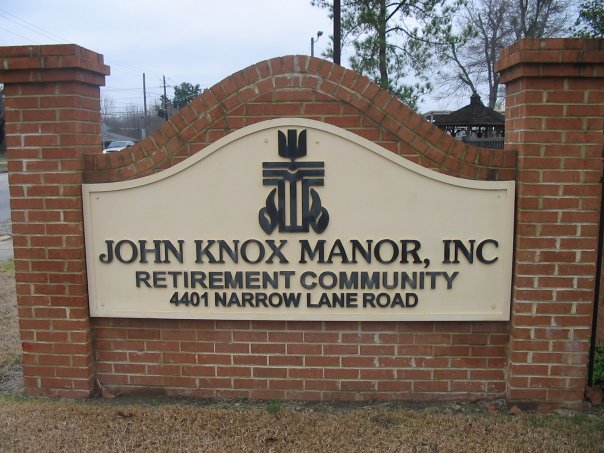
Who Owns and Operates John Knox Manor Inc I I?

JOHN KNOX MANOR INC I I is owned by a non-profit organization. Non-profit facilities reinvest revenue into operations rather than distributing to shareholders. The facility operates independently rather than as part of a larger chain. With 98 certified beds and approximately 61 residents (about 62% occupancy), it is a smaller facility located in MONTGOMERY, Alabama.

How Does John Knox Manor Inc I I Compare to Other Alabama Nursing Homes?

Compared to the 100 nursing homes in Alabama, JOHN KNOX MANOR INC I I's overall rating (2 stars) is below the state average of 2.9, staff turnover (68%) is significantly higher than the state average of 46%, and health inspection rating (3 stars) is at the national benchmark.

What Should Families Ask When Visiting John Knox Manor Inc I I?

Based on this facility's data, families visiting should ask: "How do you ensure continuity of care given staff turnover, and what is your staff retention strategy?" "Can I visit during a mealtime to observe dining assistance and food quality?" "How do you handle medical emergencies, and what is your hospital transfer rate?" "Can I speak with family members of current residents about their experience?" These questions are particularly relevant given the facility's high staff turnover rate.

Is John Knox Manor Inc I I Safe?

Based on CMS inspection data, JOHN KNOX MANOR INC I I has a clean safety record: no substantiated abuse findings (meaning no confirmed cases of resident harm), no Immediate Jeopardy citations (the most serious violation level indicating risk of serious injury or death), and is not on the Special Focus Facility watch list (a federal program monitoring the lowest-performing 1% of nursing homes). The facility has a 2-star overall rating and ranks #100 of 100 nursing homes in Alabama. While no facility is perfect, families should still ask about staff-to-resident ratios and recent inspection results during their visit.

Do Nurses at John Knox Manor Inc I I Stick Around?

Staff turnover at JOHN KNOX MANOR INC I I is high. At 68%, the facility is 22 percentage points above the Alabama average of 46%. Registered Nurse turnover is particularly concerning at 82%. RNs handle complex medical decisions and coordinate care — frequent RN changes can directly impact care quality. High turnover means new staff may not know residents' individual needs, medications, or preferences. It can also be disorienting for residents, especially those with dementia who rely on familiar faces. Families should ask: What is causing the turnover? What retention programs are in place? How do you ensure care continuity during staff transitions?

Was John Knox Manor Inc I I Ever Fined?

JOHN KNOX MANOR INC I I has no federal fines on record. CMS issues fines when nursing homes fail to meet care standards or don't correct problems found during inspections. The absence of fines suggests the facility has either maintained compliance or corrected any issues before penalties were assessed. This is a positive indicator, though families should still review recent inspection reports for the full picture.

Is John Knox Manor Inc I I on Any Federal Watch List?

JOHN KNOX MANOR INC I I is not on any federal watch list. The most significant is the Special Focus Facility (SFF) program, which identifies the bottom 1% of nursing homes nationally based on persistent, serious quality problems. Not being on this list means the facility has avoided the pattern of deficiencies that triggers enhanced federal oversight. This is a positive indicator, though families should still review the facility's inspection history directly.