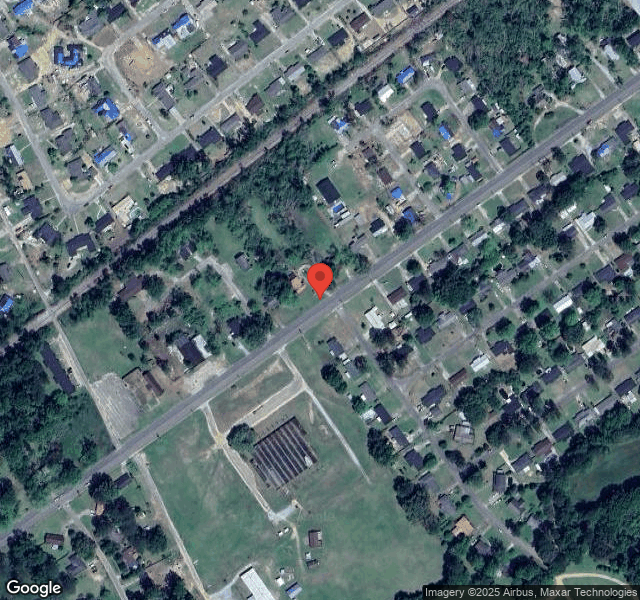

PARK PLACE

100 PARK PLACE, SELMA, AL 36701 (334) 872-3471
For profit - Corporation 103 Beds DIVERSICARE HEALTHCARE Data: November 2025
Trust Grade
70/100
#131 of 223 in AL
Last Inspection: April 2022

Over 2 years since last inspection. Current conditions may differ from available data.

Overview

Park Place in Selma, Alabama, has a Trust Grade of B, which means it's considered a good option for care, though not among the very best. It ranks #131 out of 223 facilities in Alabama, placing it in the bottom half, but it is the top choice among three nursing homes in Dallas County. The facility is currently worsening, with the number of issues identified increasing from four in 2019 to five in 2022. Staffing is a relative strength, with a turnover rate of 35%, which is better than the state average of 48%, indicating that employees tend to stay longer and build relationships with the residents. While there have been no fines, which is a positive sign, the facility has been cited for several concerns, including failing to hold required Quality Assurance meetings with a medical director present and not properly managing food safety, such as not labeling food with expiration dates. Additionally, they did not complete a necessary resident assessment after a resident's discharge from hospice services. Overall, while there are strengths in staffing and no fines, the facility must address these compliance issues to improve care quality.

Trust Score
B
70/100
In Alabama
#131/223
Bottom 42%
Safety Record
Low Risk
No red flags
Inspections
Getting Worse
4 → 5 violations
Staff Stability
○ Average
35% turnover. Near Alabama's 48% average. Typical for the industry.
Penalties
✓ Good
No fines on record. Clean compliance history, better than most Alabama facilities.
Skilled Nurses
⚠ Watch
Each resident gets only 25 minutes of Registered Nurse (RN) attention daily — below average for Alabama. Fewer RN minutes means fewer trained eyes watching for problems.
Violations
⚠ Watch
11 deficiencies on record. Higher than average. Multiple issues found across inspections.
★★★☆☆
3.0
Overall Rating
★★★☆☆
3.0
Staff Levels
★★★★★
5.0
Care Quality
★★☆☆☆
2.0
Inspection Score
Stable
2019: 4 issues
2022: 5 issues

The Good

  • 5-Star Quality Measures · Strong clinical quality outcomes
  • Full Sprinkler Coverage · Fire safety systems throughout facility
  • No fines on record
  • Staff turnover below average (35%)

    13 points below Alabama average of 48%

Facility shows strength in quality measures, fire safety.

The Bad

3-Star Overall Rating

Near Alabama average (2.9)

Meets federal standards, typical of most facilities

Staff Turnover: 35%

11pts below Alabama avg (46%)

Typical for the industry

Chain: DIVERSICARE HEALTHCARE

Part of a multi-facility chain

Ask about local staffing decisions and management

The Ugly 11 deficiencies on record

Apr 2022 5 deficiencies
CONCERN (D)

Potential for Harm - no one hurt, but risky conditions existed

Deficiency F0637 (Tag F0637)

Could have caused harm · This affected 1 resident

**NOTE- TERMS IN BRACKETS HAVE BEEN EDITED TO PROTECT CONFIDENTIALITY** Based on record review, interviews, and review of the Centers for Medicare & Medicaid Services (CMS) Long-Term Care Facility Res...

Read full inspector narrative →
**NOTE- TERMS IN BRACKETS HAVE BEEN EDITED TO PROTECT CONFIDENTIALITY** Based on record review, interviews, and review of the Centers for Medicare & Medicaid Services (CMS) Long-Term Care Facility Resident Assessment Instrument (RAI) 3.0 User's Manual, the facility failed to ensure a comprehensive Significant Change in Status Minimum Data Set (MDS) was completed within fourteen days of Resident Identifier (RI) #55's discharge from hospice services. This affected RI #55, one of one resident reviewed for hospice services. Findings include: Review of the Centers for Medicare & Medicaid Services (CMS) Long-Term Care Facility Resident Assessment Instrument (RAI) 3.0 User's Manual revealed the following: .CH (Chapter) 3: MDS Items [A] . Coding Tips and Special Populations · If a nursing home resident elects the hospice benefit, the nursing home is required to complete an MDS significant change in status assessment (SCSA). The nursing home is required to complete a SCSA when they come off the hospice benefit (revoke) . RI #55 was most recently readmitted to the facility on [DATE] and had diagnoses which included an Unstageable Pressure Ulcer to the Sacrum, Diabetes, Dementia without Behavioral Disturbance, Acute Kidney Failure, Congestive Heart Failure (CHF), and Dysphagia (difficulty swallowing) with Gastrostomy Status (feeding tube). A review of a Visit Note Report, dated 10/29/2021, revealed RI #55 was discharged from hospice services due to .NO LONGER TERMINALLY ILL . A review of RI #55's Order Summary Report, printed 03/11/2022, revealed no current orders for hospice services. However, review of RI #55's MDS assessments revealed no Significant Change in Status MDS assessment had been completed following RI #55's discharge from hospice. During an interview with Employee Identifier (EI) #14, Director of Clinical Operations, on 03/10/2022 at 11:01 AM, EI #14 stated RI #55 was discharged from hospice services in October or November of 2021. EI #14 stated an MDS should have been done at that time. During an interview with EI #3, one of the MDS Coordinators, on 03/11/2022 at 9:47 AM, EI #3 indicated a significant change MDS should be completed when a resident was admitted to or discharged from hospice services. EI #3 stated they checked the census for any payor source changes to indicate if an MDS needed to be completed. EI #3 stated RI #55 was a Pro bono case for the hospice company, so when hospice services were discontinued, RI #55's payor source did not change; therefore, EI #3 did not know to complete a significant change MDS. EI #3 stated this needed to be done so that the resident's status could be updated and their plan of care adjusted.
CONCERN (D)

Potential for Harm - no one hurt, but risky conditions existed

Medication Errors (Tag F0758)

Could have caused harm · This affected 1 resident

**NOTE- TERMS IN BRACKETS HAVE BEEN EDITED TO PROTECT CONFIDENTIALITY** Based on interviews, record review, and review of a policy titled, Psychotropic Medication Use, the facility failed to attempt a...

Read full inspector narrative →
**NOTE- TERMS IN BRACKETS HAVE BEEN EDITED TO PROTECT CONFIDENTIALITY** Based on interviews, record review, and review of a policy titled, Psychotropic Medication Use, the facility failed to attempt a gradual dose reduction (GDR) for Resident Identifier (RI) #90, one of five residents reviewed for unnecessary medications. Findings included: A review of the Psychotropic Medication Use policy, dated 12/01/2007, revealed, .Facility should ensure that the ordering physician reviews the medication plan and considers a GDR of psychotropic medications for the purpose of finding the lowest effective dose unless a GDR is clinically contraindicated. Physician should document the clinical rationale for why any additional attempted dose reduction at that time would be likely to impair the resident's function or increase distressed behavior . A review of an admission Record revealed the facility admitted RI #90 with diagnoses that included Dementia Without Behavioral Disturbance, Delusional Disorders, Anxiety Disorder, Major Depressive Disorder, and Arthritis. A review of RI #90's Annual Minimum Data Set (MDS), dated [DATE], revealed a Brief Interview for Mental Status (BIMS) score of three out of fifteen, indicating severe cognitive impairment. Per the MDS, RI #90 exhibited no physical or verbal behaviors directed toward others or any other behavioral symptoms not directed toward others. The MDS indicated RI #90 received an antipsychotic medication in the seven days prior to assessment and a GDR had not been attempted. A review of RI #90's March 2022 Physician Orders revealed RI #90 had current orders to receive Seroquel 25 mg in the morning and at night, both ordered on 02/23/2021. A review of RI #90's medical record on 03/08/2022 revealed no attempted GDR from 02/23/2021 to 03/08/2022. There was no physician documentation as to why a GDR was clinically contraindicated. During an interview on 03/08/2022 at 9:15 AM, Employee Identifier (EI) #9, Licensed Practical Nurse (LPN), stated RI #90 did not have any behaviors. During an interview on 03/08/2022 at 9:33 AM, EI #6, LPN, stated RI #90 did not have any behaviors. During an interview on 03/08/2022 at 11:00 AM, EI #12, LPN, stated RI #90 mostly stayed to themselves and did not have any behaviors towards others. During an interview on 03/08/2022 at 3:55 PM, EI #15, Pharmacist, stated that when a resident was on a psychotropic, a GDR should be attempted at least twice in the first year of use, not in the same quarter, and then at least annually. Per EI #15, if a GDR was clinically contraindicated, the physician should document it in progress notes or on the monthly medication reviews from the pharmacist. During an interview on 03/10/2022 at 8:45 AM, EI #16, Certified Nurse Aide, stated RI #90 did not have any behaviors but reacted if another resident was bothering them. EI #16 then stated RI #90 had no behaviors toward staff and did not instigate anything with other residents. During an interview on 03/10/2022 at 8:55 AM, EI #10, Psychiatrist, stated they did not do a GDR because RI #90 had intermittent behaviors. EI #10 further stated RI #90 was agitated and paranoid, noting any GDR documentation would be in EI #10's progress notes. A review of RI #90's Psychiatrist's Progress Notes revealed no documented rationale as to why a GDR for Seroquel had not been attempted since the 02/23/2021 start date. During an interview on 03/10/2022 at 9:05 AM, EI #3, MDS nurse, stated that when completing the MDS, EI #3 checked yes under antipsychotic medication review when a resident received an antipsychotic on a routine basis. EI #3, then checked no when a GDR was not attempted. When asked where it was documented that attempting a GDR on RI #90's Seroquel was clinically contraindicated, EI #3 stated there was no physician documentation. During an interview on 03/10/2022 at 11:20 AM, EI #2, Director of Nursing, stated she followed the pharmacist's recommendations when it came to psychotropic use and initiated GDRs twice in the first year of use. Per EI #2, the psychiatrist made a note if a GDR had been done in the past or was contraindicated to try again. EI #2, then stated it was important to follow the GDR process because of the risk of psychotropic side effects, and EI #2 did not want residents to be dependent on medications. During an interview on 03/10/2022 at 1:15 PM, EI #1, Administrator, stated GDRs should be attempted with psychotropic use, but was unsure of how often. EI #1 then stated the psychiatrist did not like to adjust psychotropic medications. EI #1 further stated a GDR should at least be attempted to reduce polypharmacy because psychotropics have side effects with long-term usage and should be used as a last resort. During an interview on 03/10/2022 at 1:45 PM, EI #14, Director of Clinical Operations, stated she expected facility staff to use psychotropics when needed and to attempt GDRs for psychotropics. EI #14 further stated it was important to prevent the facility from using unnecessary drugs and overmedicating residents.
CONCERN (D)

Potential for Harm - no one hurt, but risky conditions existed

Unnecessary Medications (Tag F0759)

Could have caused harm · This affected 1 resident

Based on observations, record review, interviews, and a review of the facility policy titled, Medication Administration, the facility failed to ensure a medication administration error rate of less th...

Read full inspector narrative →
Based on observations, record review, interviews, and a review of the facility policy titled, Medication Administration, the facility failed to ensure a medication administration error rate of less than 5%. The facility had 3 errors out of thirty-one opportunities, resulting in a medication error rate of 9.68%. Medication errors were observed for Resident Identifier (RI) #294, one of four residents reviewed who received medication administration from Employee Identifier (EI) #30, a Licensed Practical Nurse, one of four nurses observed passing medications. Findings include: A review of the facility's policy and procedure titled, Medication Administration, last revised 05/2004, indicated, Medications are administered in accordance with written orders of the attending physician . Prior to administration of each medication, the medication and dosage schedule on the residents ESR [Electronic Signature Record] is compared with the medication label. If the label and ESR are different and the container is not flagged to indicate a change in directions or if there is any other reason to question the dosage or directions, the physician's orders are checked for the correct dosage schedule. The admission Record indicated RI #294 had diagnoses which included Essential (Primary) Hypertension and Other Pulmonary Embolism (blood clot in lung) without Acute Cor Pulmonale (enlargement of a chamber in the heart which can result in heart failure). A review of RI #294's Medication Administration Record dated 03/01/2022 through 03/31/2022 indicated the resident was scheduled to receive the following medications at 8:00 AM: - duloxetine 30 milligrams (mg); one capsule - escitalopram 20 mg; one tablet - Losartan 50 mg; one tablet - omeprazole 40 mg; one capsule - Toprol XL 50 mg; one tablet - apixaban (Eliquis) 5 mg; one tablet - budesonide-formoterol fumarate aerosol 160-4.5 micrograms per actuation (mcg/act); two inhalations On 03/09/2022 at 8:01 AM, EI #30 was observed preparing and administering medication to RI #294. EI #30 obtained RI #294's medications from two plastic bags in the bottom drawer of the medication cart and stated the resident was a new admission and these medications were from the resident's home. A bottle of medication removed from the bag was Losartan/HCTZ (hydrochlorothiazide) 50-12.5 mg. EI #30 removed one pill from the bottle and gave it to the resident. The resident's medical record did not include an order for Losartan with HCTZ to be administered. EI #30 did not remove a bottle of Toprol XL or a budesonide inhaler from the bag and administer them to the resident. This resulted in a total of three medication errors for RI #294. During an interview with EI #30 on 03/09/2022 at 12:59 PM, EI #30 stated she did not realize the bottle of Losartan contained HCTZ until later and that she needed to get a clarification order from the physician. EI #30 stated she thought she had given the Toprol XL and the budesonide inhaler. When asked to see the inhaler, EI #30 was unable to locate it in the bags in the bottom drawer, then located the inhaler in a bag labeled with the resident's name in the second drawer of the medication cart. When reminded that she had pulled all the resident's 8:00 AM medications from the plastic bags in the bottom drawer, EI #30 stated she gave all the medications. During an interview with EI #18, a Registered Nurse (RN), on 03/11/2022 at 1:32 PM, EI #18 stated when passing medications, the nurse should follow the five rights which included the right resident, right medications, right dose, right time and right route. EI #18 stated if a medication was not available, the pharmacy should be called right away and sometimes it could be delivered in time for that medication pass; if not, then a note should be put in the chart and the physician notified During an interview with EI #2, the Director of Nursing (DON), on 03/11/2022 at 1:52 PM, EI #2 stated the nurses should be following the five rights of medication administration, which included the right resident, right dose, right form, right medications, and right time. EI #2 stated if a medication was not available, the nurse was to reach out to the pharmacist if it was not available in the emergency medication kit. EI #2 stated the nurse should not be using a resident's medications from home, especially if they were not ordered at the facility. During an interview with EI #24, an RN, on 03/11/2022 at 2:48 PM, EI #24 stated the nurses should always follow the five rights of medication administration to prevent medication errors and that these included the right resident, medication, time, dose and route.
CONCERN (D)

Potential for Harm - no one hurt, but risky conditions existed

Deficiency F0808 (Tag F0808)

Could have caused harm · This affected 1 resident

**NOTE- TERMS IN BRACKETS HAVE BEEN EDITED TO PROTECT CONFIDENTIALITY** Based on interviews, record reviews, document review, and review of the facility's policy, Physician's Orders, the facility fail...

Read full inspector narrative →
**NOTE- TERMS IN BRACKETS HAVE BEEN EDITED TO PROTECT CONFIDENTIALITY** Based on interviews, record reviews, document review, and review of the facility's policy, Physician's Orders, the facility failed to ensure Resident Identifier (RI) #244's diet orders were changed from regular to pureed upon readmission to the facility on [DATE]. This affected RI #244, one of three sampled residents reviewed for therapeutic diets. Findings include: A review of the facility policy titled, Physician Orders dated 08/01/2001, revealed, .It is the policy of this facility to have written physician orders for all therapeutic diets and texture modifications served to residents. Change in a diet order, diet orders changed by the physician should be transmitted in writing from nursing to dietary indicating a Change in Diet Order . A review RI #244's admission Record revealed RI #244 was admitted to the facility on [DATE] with diagnoses including Gastritis, Personal History of Malignant Neoplasm of Tongue, Cognitive Communication Deficit, Type 2 Diabetes with Foot Ulcer, Peripheral Vascular Disease, Osteomyelitis Left Ankle, and Gangrene, Unspecified. Review of a discharge Minimum Data Set assessment (MDS) dated [DATE] and an entry MDS dated [DATE] revealed RI #244 was discharged from the facility to the hospital on [DATE] and returned on 08/23/2021. Review of RI #244's Order Summary Report that listed current orders at the time of his/her final discharge from the facility revealed a diet order, dated 08/06/2021, for a mechanical soft diet with ground meat texture. Review of hospital discharge/transfer orders from RI #244's readmission to the facility on [DATE], revealed RI #244's diet orders had been changed to pureed texture. However, there were no new orders or changes at the facility to reflect RI #244's need for the pureed therapeutic diet orders. An interview on 03/09/2022 at 9:47 AM with Employee Identifier (EI) #11, Licensed Practical Nurse (LPN), revealed the Admissions Coordinator entered in new orders for readmissions and brought the charts to the morning meetings, and staff compared the old orders with the new to ensure it all matched. An interview on 03/10/2022 at 11:01 AM with EI #38, Former Admissions Coordinator, stated she would have been the person responsible for reconciling orders in August 2021 when RI #244 was readmitted , but she could not guarantee she was working on 08/23/2021 during RI #244's readmission. EI #38 stated staff should have reviewed the orders the following day in the morning meeting to catch that the orders were or were not changed. An interview on 03/11/2022 at 1:50 PM with EI #2, the Director of Nursing (DON), revealed that after a resident was readmitted to the facility, nursing staff put in the new orders and the Interdisciplinary Team (IDT) reviewed the orders to ensure the correct orders were in place. EI #2 stated she expected staff to verify that correct orders were in place and being followed. An interview on 03/11/2022 at 4:45 PM with EI #1, Administrator, revealed she expected staff to follow discharge orders from the hospital and that order reconciliation should be caught in the morning meetings. This deficiency was cited as a result of AL00041724.
CONCERN (F)

Potential for Harm - no one hurt, but risky conditions existed

Deficiency F0868 (Tag F0868)

Could have caused harm · This affected most or all residents

Based on interviews and review of a document titled, [Facility Name] QAPI [Quality Assurance Performance Improvement] Plan, the facility failed to ensure the QAPI committee was composed of the require...

Read full inspector narrative →
Based on interviews and review of a document titled, [Facility Name] QAPI [Quality Assurance Performance Improvement] Plan, the facility failed to ensure the QAPI committee was composed of the required committee members. Specifically, the facility failed to provide evidence that a Medical Director (MD) or designee participated as a required QAPI committee member at least quarterly. Findings include: A review of the [Facility Name] QAPI Plan, dated 02/2017, revealed that QAPI membership included the MD, Administrator, and the Director of Nursing at a minimum. A review of the facility's QAPI Meeting sign-in sheets revealed an MD had not signed as present during a meeting since 07/16/2021. QAPI meetings beyond July of 2021 occurred on 08/20/2021, 09/23/2021, 10/21/2021, 11/23/2021, 12/28/2021, 01/25/2022, and 02/25/2022 with no evidence of at least quarterly attendance by an MD or designee. During an interview on 03/11/2022 at 12:15 PM, Employee Identifier (EI) #28, Medical Director, stated he had just started as the MD for the facility two months prior and had not yet attended a QAPI meeting. EI #28 stated a QAPI meeting had not come due since he became the MD. EI #28 noted he preferred to hold QAPI meetings monthly, but stated they needed to be held quarterly at a minimum. EI #28 stated he expected the facility to discuss different quality measures and any identified issues. Per EI #28, it was important to review quality measures and identified issues at each QAPI meeting to take care of the residents, prevent infections, make sure the needs of all residents were met. During an interview on 03/11/2022 at 4:25 PM, EI #14, Director of Clinical Operations, stated she expected EI #1, Administrator, to run QAPI and for the interdisciplinary team to participate. Per EI #14, QAPI's purpose was to review any identified issues, put improvement plans in place, and monitor improvements. EI #14 stated the MD should participate in QAPI meetings at least quarterly. During an interview on 03/11/2022 at 4:50 PM, EI #2, Director of Nursing, stated the department heads and the individual functioning in the capacity of MD participated in the QAPI meetings. Per EI #2, the current MD started in December of 2021 and had not yet attended a QAPI meeting. EI #2 noted the previous MD resigned in October of 2021 and no MD had attended a QAPI meeting since then. During an interview on 03/11/2022 at 5:03 PM, EI #1 stated QAPI met at least monthly with an ad hoc meeting added if something new was identified. Per EI #1, QAPI's purpose was to track and trend issues for a proactive rather than reactive response. EI #1 confirmed that an MD had not signed into or physically attended a QAPI meeting since July of 2021, noting the previous MD was notified of issues discussed during post-July of 2021 QAPI meetings telephonically. EI #1 stated such phone calls with the previous MD had not been documented.
May 2019 4 deficiencies
CONCERN (D)

Potential for Harm - no one hurt, but risky conditions existed

Report Alleged Abuse (Tag F0609)

Could have caused harm · This affected 1 resident

**NOTE- TERMS IN BRACKETS HAVE BEEN EDITED TO PROTECT CONFIDENTIALITY** Based on interviews, medical record review, review of a facility policy titled, Abuse, Neglect, Misappropriation, Exploitation P...

Read full inspector narrative →
**NOTE- TERMS IN BRACKETS HAVE BEEN EDITED TO PROTECT CONFIDENTIALITY** Based on interviews, medical record review, review of a facility policy titled, Abuse, Neglect, Misappropriation, Exploitation Policy and facility reported incidents, the facility failed to timely report three reported incidents to the State Agency. These incidents involved Resident Identifier (RI) #26, #60, #243 and #244. This deficient practice affected three of six allegations of abuse that were reviewed. Findings Include: A review of the facility policy titled, Abuse, Neglect, Misappropriation, Exploitation Policy with an effective date of 01/19, revealed: .Purpose: To prohibit and prevent abuse, neglect .and to ensure reporting .of alleged violations (to include injuries of unknown source .) in accordance with Federal and State Laws . Injuries of Unknown Source: When both of the following criteria are met: the source of the injury was not observed by any person or the source of the injury could not be explained by the resident; and the injury is suspicious because of the extent of the injury or the location of the injury (e.g. [for example] the injury is located in an area not generally vulnerable to trauma) . 7. Reporting/Response Alleged violations/violations will be reported to the Administrator, designee immediately. Immediately reporting all alleged violations to the Administrator, designee, state agency .within specified timeframes . When .all alleged violations-immediately but not later than 1. 2 hours if the alleged violation involves abuse or results in serious bodily injury 2. 24 hours if the alleged violation does not involve abuse and does not result in serious bodily injury . 1) RI # 26 was admitted to the facility on [DATE], with diagnoses including but not limited to Unspecified Dementia With Behavioral Disturbance, Dysphagia and Muscle Weakness. RI #26 was observed to have a bruise to the left thigh of unknown origin on 4/07/19. This was reported to Employee Identifier (EI) #3, Registered Nurse (RN) Treatment Nurse on 04/07/19 at 2:24 p.m. This injury of unknown origin was reported to the State Agency on 04/15/19 at 4:10 p.m. 2) RI #60 was originally admitted to the facility on [DATE] and readmitted on [DATE], with diagnoses including but not limited to Unspecified Dementia Without Behavioral Disturbance, Muscle Weakness and Type Two Diabetes Mellitus Without Complications. RI #243 was originally admitted to the facility on [DATE] and readmitted on [DATE], with diagnoses including but not limited to Unspecified Dementia Without Behavioral Disturbance and Mood Disorder. RI #60 was struck on the head and hand by RI #243 on 12/03/18 at 10:30 p. m. This incident was reported to the State Agency on 12/04/18 at 9:51 a.m. 3) RI #244 was admitted to the facility on [DATE], with diagnoses including but not limited to Heart Failure Unspecified, Anxiety Disorder Unspecified and Essential Primary Hypertension. The facility was made aware RI #243 was left sitting on the toilet on 11/06/18 at 6:15 a.m. This incident was reported to the State Agency on 11/07/18 at 12:43 p.m. On 5/15/19 at 1:49 p.m., the surveyor conducted an interview with EI #4, RN. EI #4 was asked if she was familiar with RI #26. EI # 4 said yes she was. EI #4 was asked if she was the assigned nurse for RI #26 on 4/7/19, EI #4 said she was. EI #4 was asked what happened to RI #26 on 4/7/19. EI #4 said she was down the hall giving medications and doing vital signs. EI #4 said she was made aware of bruising to RI #26's thigh by EI #3, who was also the supervisor on that day. EI #4 said she went to assess the site. EI #3 said she also did vital signs,called the doctor and made the family aware. EI #4 was asked who else did she make aware of the bruising. EI #4 said those were the only ones and the supervisor was aware because she was the one that told her. EI #4 was asked what time did this happen. EI #4 said 7:15 a.m. EI #4 was asked when she did your assessment, what were the findings. EI #4 said RI #26 had a reddish purple bruise to the upper inner aspect of the left thigh. EI #4 was asked what treatment was started. EI #4 said there was no treatment, but they monitored the site and the pain level. EI # 4 was asked what did RI #26 say happened. EI #4 said RI #26 was not able to reveal how the bruising was made. EI #4 said the bruising was noted during morning care. EI #4 was asked who was the abuse coordinator. EI #4 said the administrator was the abuse coordinator. On 5/15/19 at 2:24 p.m., the surveyor conducted an interview with EI #3. EI #3 was asked if she was the supervisor on 4/7/19. EI #3 said she was. EI #3 was asked if she was made aware of the incident involving RI #26. EI #3 said yes, the certified nursing assistant made her aware the area was found during morning care, but she went to assess the area herself. EI #3 was asked what were her findings. EI #3 said she assessed bruising to RI #26's thigh. EI #3 was asked who did she make aware of this bruising to RI #26's thigh area. EI #3 said she told EI #4 to fill out an incident report. EI #3 was asked who was the abuse coordinator. EI #3 said the administrator. EI #3 was asked did she make the abuse coordinator aware of this incident on 4/7/19. EI #3 said no. EI # 3 was asked had she had an abuse in-service. EI #3 said yes. EI # 3 was asked should this incident have been reported to the state. EI #3 said she did not think at the time it was abuse. EI #3 was asked did the abuse in-service talk about injury of unknown origins. EI #3 said she did not remember. On 5/16/19 at 11:36 a.m., the surveyor conducted an interview with EI #1, Administrator. EI#1 was asked who was the abuse coordinator for that facility. EI #1 said he was. EI #1 was asked did the facility have a policy describing abuse and the reporting requirements. EI #1 said they used the abuse and fraud policy, 2019 version. EI #1 was asked how often were abuse in-services conducted. EI #1 said upon hire, semi-annually and as needed. EI #1 was asked how was he made aware of a resident having an incident. EI #1 said through the phone, reports, EMAR (Electronic Medication Administration Record) and person to person. EI #1 was asked who was responsible for reporting required incidents to the State Agency. EI #1 said he was. EI #1 was asked what system was set up to ensure the required information was being reported. EI #1 said they will send him a text or phone message and he will submit the information from his phone wherever he was through the portal. EI #1 was asked if he was aware of the required reporting time frame of each type of incidents that the facility may encounter. EI #1 said he was. EI #1 was asked why was the incident involving RI #243 and RI # 60 not reported in a timely manner. EI #1 said he was not notified in a timely manner. EI #1 was asked why was the incident involving RI #244 not reported in a timely manner. EI #1 said we reported it when we were made aware of the incident. EI # 1 was asked why was the incident involving RI #26 not reported in a timely manner. EI #1 said due to when it was first discovered, it did not appear suspicious in nature. EI#1 was asked what caused the team to suspect this injury was suspicious in nature. EI#1 said new information became available and when it was reassessed it looked like a hand print.
CONCERN (D)

Potential for Harm - no one hurt, but risky conditions existed

Assessment Accuracy (Tag F0641)

Could have caused harm · This affected 1 resident

**NOTE- TERMS IN BRACKETS HAVE BEEN EDITED TO PROTECT CONFIDENTIALITY** 3) RI #20 was admitted to the facility on [DATE], with diagnoses including but not limited to Cerebral Infarction, Dysphasia Fol...

Read full inspector narrative →
**NOTE- TERMS IN BRACKETS HAVE BEEN EDITED TO PROTECT CONFIDENTIALITY** 3) RI #20 was admitted to the facility on [DATE], with diagnoses including but not limited to Cerebral Infarction, Dysphasia Following Non-traumatic Intracerebral Hemorrhage, and Essential Primary Hypertension. On 5/15/19 at 5:29 p.m., a review of RI #20's Quarterly MDS assessment, dated 03/05/19, revealed the resident was coded as using an anticoagulation medication during the assessment period. A review of RI #20's medication profile revealed RI #20 was receiving Plavix (an antiplatelet medication) 75 mg daily. On 05/16/19 at 8:40 a.m., the surveyor conducted an interview with EI #2. EI #2 was asked who was responsible for ensuring RI #20's Quarterly MDS assessment, dated 03/05/19, was coded correctly. EI #2 said she was. EI #2 was asked what was coded on RI #20's Quarterly MDS assessment for anticoagulation. EI #2 said it was coded that RI #20 had received anticoagulation medication in the seven day look back period. EI #2 was asked when reviewing RI #20's medication profile, was there a medication listed as a anticoagulation medication. EI #2 said there was not for anticoagulation, but antiplatelet. EI #2 was asked if this Quarterly MDS assessment for anticoagulation was a correct assessment. EI #2 said everything except RI #20 did not receive anticoagulation. Based on interviews and review of residents' medical records, the facility failed to accurately code the Minimum Data Set (MDS) assessment of Resident Identifier (RI) #3, #16 and #20. This deficient practice affected RI #3, #16, and #20, three of 30 sampled residents. Findings Include: 1) RI #3 was admitted to the facility on [DATE], with a diagnosis of Cerebral Infarction Due to Embolism of Right Middle Cerebral Artery. RI #3's Order Summary Report dated 05/16/19, revealed the resident was ordered to be on a NPO (nothing by mouth) diet on 12/13/17, and ordered to receive enteral feedings of Jevity 1.5 five times a day on 03/22/18. RI #3's Quarterly MDS, dated [DATE], coded RI #3 as receiving parenteral/IV (intravenous) feedings, rather than enteral tube feedings. During an interview on 05/16/19 at 11:00 a.m., Employee Identifier (EI) #2, Registered Nurse (RN)/MDS Coordinator, validated this coding as an error. 2) RI #16 was re-admitted to the facility on [DATE], with End Stage Renal Disease and Essential Hypertension. RI #16's Order Summary Report dated 05/16/19, revealed the resident was ordered Plavix 75 mg (milligram) on 07/03/18. Plavix is considered an antiplatelet medication. RI #16's Quarterly MDS assessment, dated 02/27/19, coded RI #16 as receiving an anticoagulation medication. An anticoagulant medication could not be found in the RI #16's current physician orders. On 05/16/19 at 8:49 a.m., the surveyor conducted an interview with EI #2. EI #2 was asked who was responsible for ensuring RI #16's Quarterly MDS assessment, dated 02/27/19, was coded correctly. EI #2 said she was. EI #2 was asked what was coded on RI #16's 02/27/19 Quarterly MDS assessment for anticoagulation. EI #2 said it was coded for receiving an anticoagulation medication in the seven day look back period. EI #2 was asked when reviewing RI #16's medication profile, was there a medication listed for anticoagulation. EI #2 said not for anticoagulation, but an antiplatelet. EI #2 was asked would this Quarterly MDS assessment be a correct assessment. EI #2 said everything was correct, except for anticoagulation.
CONCERN (D)

Potential for Harm - no one hurt, but risky conditions existed

ADL Care (Tag F0677)

Could have caused harm · This affected 1 resident

**NOTE- TERMS IN BRACKETS HAVE BEEN EDITED TO PROTECT CONFIDENTIALITY** Based on observation, interview, medical record review, and a review of [NAME] and Perry's, FUNDAMENTALS OF NURSING, the facilit...

Read full inspector narrative →
**NOTE- TERMS IN BRACKETS HAVE BEEN EDITED TO PROTECT CONFIDENTIALITY** Based on observation, interview, medical record review, and a review of [NAME] and Perry's, FUNDAMENTALS OF NURSING, the facility failed to ensure nursing staff wiped the perineal area and buttocks up toward the back during incontinence care for Resident Identifier (RI) #21. This affected one of one resident observed during incontinence care. Findings Include: A review of [NAME] and Perry's, FUNDAMENTALS OF NURSING, Ninth Edition, pages 858 and 859 revealed: . SKILL 40-1 BATHING AND PERINEAL CARE . STEP . (5) Clean buttocks and anus, washing front to back .Cleaning motion prevents contamination perineal area with fecal matter or microorganisms . RI #21 was admitted to the facility on [DATE], with a diagnosis of Alzheimer's Disease. On 5/16/19 at 8:30 a.m., Employee Identifier (EI) #7, Certified Nursing Assistant (CNA) was observed wiping from the top of the buttocks, near RI #21's lower back, down toward the perineal area, four times while cleaning the buttocks. RI #21 had an incontinent bowel movement. An interview was conducted on 5/16/19 at 9:32 a.m. with EI #7. EI #7 was asked, while doing incontinence care and cleaning the buttocks, which way is staff supposed to wipe. EI #7 stated, Up from the (perineal area). (Another Staff member) told me I wiped the wrong way. EI #7 was asked, did she recall doing that. EI #7 stated, Yes. EI #7 was asked, what was the potential for harm. EI #7 stated, Bacterial infection.
CONCERN (D)

Potential for Harm - no one hurt, but risky conditions existed

Infection Control (Tag F0880)

Could have caused harm · This affected 1 resident

**NOTE- TERMS IN BRACKETS HAVE BEEN EDITED TO PROTECT CONFIDENTIALITY** Based on observation, interview, medical record review, and a review of [NAME] and Perry's FUNDAMENTALS OF NURSING, the facility...

Read full inspector narrative →
**NOTE- TERMS IN BRACKETS HAVE BEEN EDITED TO PROTECT CONFIDENTIALITY** Based on observation, interview, medical record review, and a review of [NAME] and Perry's FUNDAMENTALS OF NURSING, the facility failed to ensure nursing staff disposed of the perineal wash bottle after it was handled with the same gloved hand used to remove stool from Resident Identifier (RI) #21's buttocks. This affected one of one resident observed for during incontinence care. Findings Include: A review of [NAME] and Perry's FUNDAMENTALS OF NURSING Ninth Edition, page 443 revealed: CHAPTER 29 . Reservoir. A reservoir is a place where microorganisms survive, multiply, and await transfer to a susceptible host. Humans can transmit microorganisms . inanimate objects can also be reservoirs for infectious organisms. RI #21 was admitted to the facility on [DATE], with a diagnosis of Alzheimer's Disease. On 5/16/19 at 8:30 a.m., the surveyor observed Employee Identifier (EI) #7, a Certified Nursing Assistant (CNA), touch the perineal wash bottle with the same gloved hand she used to wipe stool from RI #21's buttocks during incontinence care. EI #7 did not dispose of the bottle. On 5/16/19 at 9:32 a.m., the surveyor asked EI #7, while performing incontinence care, what happens to the perineal wash bottle after it had been touched with the same contaminated gloves used to clean stool from RI #21's buttocks. EI #7 stated, It gets contaminated. The surveyor asked EI #7 what was the potential for harm. EI #7 stated, Bacterial Infection.
May 2018 2 deficiencies
CONCERN (D)

Potential for Harm - no one hurt, but risky conditions existed

Comprehensive Care Plan (Tag F0656)

Could have caused harm · This affected 1 resident

**NOTE- TERMS IN BRACKETS HAVE BEEN EDITED TO PROTECT CONFIDENTIALITY** Based on observation, interview and record review, the facility failed to ensure a care plan was developed for the use of Reside...

Read full inspector narrative →
**NOTE- TERMS IN BRACKETS HAVE BEEN EDITED TO PROTECT CONFIDENTIALITY** Based on observation, interview and record review, the facility failed to ensure a care plan was developed for the use of Resident Identifier (RI) #46's oxygen. This deficient practice affected RI #46, one of 35 sampled residents whose plans of care were reviewed. Findings Include: RI #46 was admitted to the facility on [DATE], with diagnoses of Chronic Systolic Congestive Heart Failure and Wheezing. An admission Minimum Data Set (MDS) assessment, with an Assessment Reference Date (ARD) of 03/22/18, revealed RI #46 was using oxygen during this assessment period. RI #46's May 2018 Physician Orders documented: . 02 via (by way of) Nasal cannula at 2 L (liters)/min (minute) . On 05/17/18 at 9:04 a.m., the surveyor observed RI #46's using his/her oxygen. On 05/17/18 at 2:54 p.m., the surveyor conducted an interview with Employee Identifier (EI) #1, the Registered Nurse/Assessment Coordinator. The surveyor asked EI #1 was RI #46 receiving oxygen. EI #1 said yes. The surveyor asked EI #1 was RI #46 care planned for the use of the oxygen. EI #1 said no. The surveyor asked EI #1, when a resident is receiving oxygen therapy, should they be care planned for the use of the oxygen. EI #1 replied, yes. When asked what would be the rational for a care plan, EI #1 said it was the plan of care to be used by everyone who is taking care of the resident.
CONCERN (F)

Potential for Harm - no one hurt, but risky conditions existed

Food Safety (Tag F0812)

Could have caused harm · This affected most or all residents

Based on observations, interview, and review of a facility policy titled, Refrigerated Storage, the facility to ensure: 1) food items in the walk in cooler were labeled with an open and use by date; a...

Read full inspector narrative →
Based on observations, interview, and review of a facility policy titled, Refrigerated Storage, the facility to ensure: 1) food items in the walk in cooler were labeled with an open and use by date; and 2) a bag of sliced roast beef was discarded after the use by date. These deficient practices had the potential to affect all 93 residents receiving meals from dietary: Findings Include: A review of a facility policy titled, Refrigerated Storage, with an effective date of 01/01/017 revealed: . POLICY It is the policy of this center to store, prepare, and serve food in accordance with federal, state, and local sanitary codes. PROCEDURE . 3. All foods should be . labeled and dated. All foods will be checked to assure that foods (including leftovers) will be consumed by their safe use by dates . or discarded . On 05/16/18 at 8:05 a.m., Employee Identifier(EI) #2, the Dietary Supervisor accompanied the surveyor during the initial tour of the kitchen. In the walk in freezer, the surveyor observed the following: (1) a bag (Ziploc) of grated cheddar cheese on the shelf with no open or use by date; (2) a bag (Ziploc) with three blocks of cheddar cheese; and (3) a bag (Ziploc) that contained roast beef (slices), and was labeled open date 5/11/18-use by 5/13/18. An interview was conducted on 05/17/18 at 1:53 p.m.,with EI #2. EI #2 was asked, on 05/16/18 during the tour of the kitchen, what food items in the walk in cooler did not have an open and use by date. EI #2 said sliced and grated cheddar cheese. EI #2 was asked what food item in the walk in cooler should have been discarded. EI #2 said the sliced roast beef with the open date of 5/11/18, and a use by date of 5/13/18. EI #2 was asked when should food items be labeled. EI #2 said when a food item is opened, it is dated with an open date, the name of the food item and a used by date. EI #2 was asked when should food items be discarded. EI #2 said any sandwich meat should be discarded 7 days after opening, or the expiration date on it, which ever one comes first. EI #2 was asked what was the potential harm to residents when food items are not labeled or discarded (by the use by date). EI #2 replied, if you do not take the proper precautions when handling food, it can make residents sick or a food borne illness.
Understanding Severity Codes (click to expand)
Life-Threatening (Immediate Jeopardy)
J - Isolated K - Pattern L - Widespread
Actual Harm
G - Isolated H - Pattern I - Widespread
Potential for Harm
D - Isolated E - Pattern F - Widespread
No Harm (Minor)
A - Isolated B - Pattern C - Widespread

Questions to Ask on Your Visit

  • "Can I speak with families of current residents?"
  • "What's your RN coverage like on weekends and overnight?"

Our Honest Assessment

Strengths
  • • No major safety red flags. No abuse findings, life-threatening violations, or SFF status.
  • • No fines on record. Clean compliance history, better than most Alabama facilities.
  • • 35% turnover. Below Alabama's 48% average. Good staff retention means consistent care.
Concerns
  • • 11 deficiencies on record. Higher than average. Multiple issues found across inspections.
Bottom line: Mixed indicators with Trust Score of 70/100. Visit in person and ask pointed questions.

About This Facility

What is Park Place's CMS Rating?

CMS assigns PARK PLACE an overall rating of 3 out of 5 stars, which is considered average nationally. Within Alabama, this rating places the facility higher than 99% of the state's 100 nursing homes. This mid-range rating indicates the facility meets federal standards but may have areas for improvement.

How is Park Place Staffed?

CMS rates PARK PLACE's staffing level at 3 out of 5 stars, which is average compared to other nursing homes. Staff turnover is 35%, compared to the Alabama average of 46%. This relatively stable workforce can support continuity of care.

What Have Inspectors Found at Park Place?

State health inspectors documented 11 deficiencies at PARK PLACE during 2018 to 2022. These included: 11 with potential for harm.

Who Owns and Operates Park Place?

PARK PLACE is owned by a for-profit company. For-profit facilities operate as businesses with obligations to shareholders or private owners. The facility is operated by DIVERSICARE HEALTHCARE, a chain that manages multiple nursing homes. With 103 certified beds and approximately 98 residents (about 95% occupancy), it is a mid-sized facility located in SELMA, Alabama.

How Does Park Place Compare to Other Alabama Nursing Homes?

Compared to the 100 nursing homes in Alabama, PARK PLACE's overall rating (3 stars) is above the state average of 2.9, staff turnover (35%) is significantly lower than the state average of 46%, and health inspection rating (2 stars) is below the national benchmark.

What Should Families Ask When Visiting Park Place?

Based on this facility's data, families visiting should ask: "Can I visit during a mealtime to observe dining assistance and food quality?" "How do you handle medical emergencies, and what is your hospital transfer rate?" "Can I speak with family members of current residents about their experience?"

Is Park Place Safe?

Based on CMS inspection data, PARK PLACE has a clean safety record: no substantiated abuse findings (meaning no confirmed cases of resident harm), no Immediate Jeopardy citations (the most serious violation level indicating risk of serious injury or death), and is not on the Special Focus Facility watch list (a federal program monitoring the lowest-performing 1% of nursing homes). The facility has a 3-star overall rating and ranks #1 of 100 nursing homes in Alabama. While no facility is perfect, families should still ask about staff-to-resident ratios and recent inspection results during their visit.

Do Nurses at Park Place Stick Around?

PARK PLACE has a staff turnover rate of 35%, which is about average for Alabama nursing homes (state average: 46%). Moderate turnover is common in nursing homes, but families should still ask about staff tenure and how the facility maintains care continuity when employees leave.

Was Park Place Ever Fined?

PARK PLACE has no federal fines on record. CMS issues fines when nursing homes fail to meet care standards or don't correct problems found during inspections. The absence of fines suggests the facility has either maintained compliance or corrected any issues before penalties were assessed. This is a positive indicator, though families should still review recent inspection reports for the full picture.

Is Park Place on Any Federal Watch List?

PARK PLACE is not on any federal watch list. The most significant is the Special Focus Facility (SFF) program, which identifies the bottom 1% of nursing homes nationally based on persistent, serious quality problems. Not being on this list means the facility has avoided the pattern of deficiencies that triggers enhanced federal oversight. This is a positive indicator, though families should still review the facility's inspection history directly.